window.__IS_SSR__=true
window.__INITIAL_STATE__={
"attachmentsReducer": {
"audio_0": {
"type": "attachments",
"id": "audio_0",
"imgSizes": {
"kqedFullSize": {
"file": "https://ww2.kqed.org/news/wp-content/themes/KQED-unified/img/audio_bgs/background0.jpg"
}
}
},
"audio_1": {
"type": "attachments",
"id": "audio_1",
"imgSizes": {
"kqedFullSize": {
"file": "https://ww2.kqed.org/news/wp-content/themes/KQED-unified/img/audio_bgs/background1.jpg"
}
}
},
"audio_2": {
"type": "attachments",
"id": "audio_2",
"imgSizes": {
"kqedFullSize": {
"file": "https://ww2.kqed.org/news/wp-content/themes/KQED-unified/img/audio_bgs/background2.jpg"
}
}
},
"audio_3": {
"type": "attachments",
"id": "audio_3",
"imgSizes": {
"kqedFullSize": {
"file": "https://ww2.kqed.org/news/wp-content/themes/KQED-unified/img/audio_bgs/background3.jpg"
}
}
},
"audio_4": {
"type": "attachments",
"id": "audio_4",
"imgSizes": {
"kqedFullSize": {
"file": "https://ww2.kqed.org/news/wp-content/themes/KQED-unified/img/audio_bgs/background4.jpg"
}
}
},
"placeholder": {
"type": "attachments",
"id": "placeholder",
"imgSizes": {
"thumbnail": {
"file": "https://cdn.kqed.org/wp-content/uploads/2024/12/KQED-Default-Image-816638274-2000x1333-1-160x107.jpg",
"width": 160,
"height": 107,
"mimeType": "image/jpeg"
},
"medium": {
"file": "https://cdn.kqed.org/wp-content/uploads/2024/12/KQED-Default-Image-816638274-2000x1333-1-800x533.jpg",
"width": 800,
"height": 533,
"mimeType": "image/jpeg"
},
"medium_large": {
"file": "https://cdn.kqed.org/wp-content/uploads/2024/12/KQED-Default-Image-816638274-2000x1333-1-768x512.jpg",
"width": 768,
"height": 512,
"mimeType": "image/jpeg"
},
"large": {
"file": "https://cdn.kqed.org/wp-content/uploads/2024/12/KQED-Default-Image-816638274-2000x1333-1-1020x680.jpg",
"width": 1020,
"height": 680,
"mimeType": "image/jpeg"
},
"1536x1536": {
"file": "https://cdn.kqed.org/wp-content/uploads/2024/12/KQED-Default-Image-816638274-2000x1333-1-1536x1024.jpg",
"width": 1536,
"height": 1024,
"mimeType": "image/jpeg"
},
"fd-lrg": {
"file": "https://cdn.kqed.org/wp-content/uploads/2024/12/KQED-Default-Image-816638274-2000x1333-1-1536x1024.jpg",
"width": 1536,
"height": 1024,
"mimeType": "image/jpeg"
},
"fd-med": {
"file": "https://cdn.kqed.org/wp-content/uploads/2024/12/KQED-Default-Image-816638274-2000x1333-1-1020x680.jpg",
"width": 1020,
"height": 680,
"mimeType": "image/jpeg"
},
"fd-sm": {
"file": "https://cdn.kqed.org/wp-content/uploads/2024/12/KQED-Default-Image-816638274-2000x1333-1-800x533.jpg",
"width": 800,
"height": 533,
"mimeType": "image/jpeg"
},
"post-thumbnail": {
"file": "https://cdn.kqed.org/wp-content/uploads/2024/12/KQED-Default-Image-816638274-2000x1333-1-672x372.jpg",
"width": 672,
"height": 372,
"mimeType": "image/jpeg"
},
"twentyfourteen-full-width": {
"file": "https://cdn.kqed.org/wp-content/uploads/2024/12/KQED-Default-Image-816638274-2000x1333-1-1038x576.jpg",
"width": 1038,
"height": 576,
"mimeType": "image/jpeg"
},
"xxsmall": {
"file": "https://cdn.kqed.org/wp-content/uploads/2024/12/KQED-Default-Image-816638274-2000x1333-1-160x107.jpg",
"width": 160,
"height": 107,
"mimeType": "image/jpeg"
},
"xsmall": {
"file": "https://cdn.kqed.org/wp-content/uploads/2024/12/KQED-Default-Image-816638274-2000x1333-1-672x372.jpg",
"width": 672,
"height": 372,
"mimeType": "image/jpeg"
},
"small": {
"file": "https://cdn.kqed.org/wp-content/uploads/2024/12/KQED-Default-Image-816638274-2000x1333-1-672x372.jpg",
"width": 672,
"height": 372,
"mimeType": "image/jpeg"
},
"xlarge": {
"file": "https://cdn.kqed.org/wp-content/uploads/2024/12/KQED-Default-Image-816638274-2000x1333-1-1020x680.jpg",
"width": 1020,
"height": 680,
"mimeType": "image/jpeg"
},
"full-width": {
"file": "https://cdn.kqed.org/wp-content/uploads/2024/12/KQED-Default-Image-816638274-2000x1333-1-1920x1280.jpg",
"width": 1920,
"height": 1280,
"mimeType": "image/jpeg"
},
"guest-author-32": {
"file": "https://cdn.kqed.org/wp-content/uploads/2025/01/KQED-Default-Image-816638274-1333x1333-1-160x160.jpg",
"width": 32,
"height": 32,
"mimeType": "image/jpeg"
},
"guest-author-50": {
"file": "https://cdn.kqed.org/wp-content/uploads/2025/01/KQED-Default-Image-816638274-1333x1333-1-160x160.jpg",
"width": 50,
"height": 50,
"mimeType": "image/jpeg"
},
"guest-author-64": {
"file": "https://cdn.kqed.org/wp-content/uploads/2025/01/KQED-Default-Image-816638274-1333x1333-1-160x160.jpg",
"width": 64,
"height": 64,
"mimeType": "image/jpeg"
},
"guest-author-96": {
"file": "https://cdn.kqed.org/wp-content/uploads/2025/01/KQED-Default-Image-816638274-1333x1333-1-160x160.jpg",
"width": 96,
"height": 96,
"mimeType": "image/jpeg"
},
"guest-author-128": {
"file": "https://cdn.kqed.org/wp-content/uploads/2025/01/KQED-Default-Image-816638274-1333x1333-1-160x160.jpg",
"width": 128,
"height": 128,
"mimeType": "image/jpeg"
},
"detail": {
"file": "https://cdn.kqed.org/wp-content/uploads/2025/01/KQED-Default-Image-816638274-1333x1333-1-160x160.jpg",
"width": 160,
"height": 160,
"mimeType": "image/jpeg"
},
"kqedFullSize": {
"file": "https://cdn.kqed.org/wp-content/uploads/2024/12/KQED-Default-Image-816638274-2000x1333-1.jpg",
"width": 2000,
"height": 1333
}
}
},
"news_12064639": {
"type": "attachments",
"id": "news_12064639",
"meta": {
"index": "attachments_1716263798",
"site": "news",
"id": "12064639",
"found": true
},
"title": "251119-MICROSOFT GAZA PROTEST-MD-08-KQED",
"publishDate": 1763510975,
"status": "inherit",
"parent": 0,
"modified": 1763579037,
"caption": "Karla F. and other pro-Palestinian protesters rally outside of the Microsoft Ignite conference in San Francisco to call on the company to cut ties with the Israel military and government on Nov. 18, 2025.",
"credit": "Martin do Nascimento/KQED",
"altTag": null,
"description": null,
"imgSizes": {
"thumbnail": {
"file": "https://cdn.kqed.org/wp-content/uploads/sites/10/2025/11/251119-MICROSOFT-GAZA-PROTEST-MD-08-KQED-160x107.jpg",
"width": 160,
"height": 107,
"mimeType": "image/jpeg"
},
"1536x1536": {
"file": "https://cdn.kqed.org/wp-content/uploads/sites/10/2025/11/251119-MICROSOFT-GAZA-PROTEST-MD-08-KQED-1536x1025.jpg",
"width": 1536,
"height": 1025,
"mimeType": "image/jpeg"
},
"post-thumbnail": {
"file": "https://cdn.kqed.org/wp-content/uploads/sites/10/2025/11/251119-MICROSOFT-GAZA-PROTEST-MD-08-KQED-672x372.jpg",
"width": 672,
"height": 372,
"mimeType": "image/jpeg"
},
"twentyfourteen-full-width": {
"file": "https://cdn.kqed.org/wp-content/uploads/sites/10/2025/11/251119-MICROSOFT-GAZA-PROTEST-MD-08-KQED-1038x576.jpg",
"width": 1038,
"height": 576,
"mimeType": "image/jpeg"
},
"npr-cds-wide": {
"file": "https://cdn.kqed.org/wp-content/uploads/sites/10/2025/11/251119-MICROSOFT-GAZA-PROTEST-MD-08-KQED-1200x675.jpg",
"width": 1200,
"height": 675,
"mimeType": "image/jpeg"
},
"kqedFullSize": {
"file": "https://cdn.kqed.org/wp-content/uploads/sites/10/2025/11/251119-MICROSOFT-GAZA-PROTEST-MD-08-KQED.jpg",
"width": 2000,
"height": 1334
}
},
"isLoading": false,
"fetchFailed": false
},
"news_12064522": {
"type": "attachments",
"id": "news_12064522",
"meta": {
"index": "attachments_1716263798",
"site": "news",
"id": "12064522",
"found": true
},
"title": "251117-STANFORDTRIAL-JG-7_qed",
"publishDate": 1763426345,
"status": "inherit",
"parent": 12064351,
"modified": 1763426356,
"caption": "Germán González, who is one of five pro-Palestinian protesters going to trial for breaking into the Stanford University president’s office, speaks to a group of supporters outside the Hall of Justice in San José on Monday, Nov. 17, 2025.",
"credit": "Joseph Geha/KQED",
"altTag": null,
"description": null,
"imgSizes": {
"thumbnail": {
"file": "https://cdn.kqed.org/wp-content/uploads/sites/10/2025/11/251117-STANFORDTRIAL-JG-7_qed-160x107.jpg",
"width": 160,
"height": 107,
"mimeType": "image/jpeg"
},
"1536x1536": {
"file": "https://cdn.kqed.org/wp-content/uploads/sites/10/2025/11/251117-STANFORDTRIAL-JG-7_qed-1536x1024.jpg",
"width": 1536,
"height": 1024,
"mimeType": "image/jpeg"
},
"post-thumbnail": {
"file": "https://cdn.kqed.org/wp-content/uploads/sites/10/2025/11/251117-STANFORDTRIAL-JG-7_qed-672x372.jpg",
"width": 672,
"height": 372,
"mimeType": "image/jpeg"
},
"twentyfourteen-full-width": {
"file": "https://cdn.kqed.org/wp-content/uploads/sites/10/2025/11/251117-STANFORDTRIAL-JG-7_qed-1038x576.jpg",
"width": 1038,
"height": 576,
"mimeType": "image/jpeg"
},
"npr-cds-wide": {
"file": "https://cdn.kqed.org/wp-content/uploads/sites/10/2025/11/251117-STANFORDTRIAL-JG-7_qed-1200x675.jpg",
"width": 1200,
"height": 675,
"mimeType": "image/jpeg"
},
"kqedFullSize": {
"file": "https://cdn.kqed.org/wp-content/uploads/sites/10/2025/11/251117-STANFORDTRIAL-JG-7_qed.jpg",
"width": 1999,
"height": 1333
}
},
"isLoading": false,
"fetchFailed": false
},
"news_11975873": {
"type": "attachments",
"id": "news_11975873",
"meta": {
"index": "attachments_1716263798",
"site": "news",
"id": "11975873",
"found": true
},
"parent": 11984807,
"imgSizes": {
"twentyfourteen-full-width": {
"file": "https://cdn.kqed.org/wp-content/uploads/sites/10/2024/02/240214-GOLDEN-GATE-BRIDGE-PROTEST-JCL-02-KQED-1038x576.jpg",
"width": 1038,
"mimeType": "image/jpeg",
"height": 576
},
"thumbnail": {
"file": "https://cdn.kqed.org/wp-content/uploads/sites/10/2024/02/240214-GOLDEN-GATE-BRIDGE-PROTEST-JCL-02-KQED-160x107.jpg",
"width": 160,
"mimeType": "image/jpeg",
"height": 107
},
"post-thumbnail": {
"file": "https://cdn.kqed.org/wp-content/uploads/sites/10/2024/02/240214-GOLDEN-GATE-BRIDGE-PROTEST-JCL-02-KQED-672x372.jpg",
"width": 672,
"mimeType": "image/jpeg",
"height": 372
},
"kqedFullSize": {
"file": "https://cdn.kqed.org/wp-content/uploads/sites/10/2024/02/240214-GOLDEN-GATE-BRIDGE-PROTEST-JCL-02-KQED.jpg",
"width": 2000,
"height": 1333
},
"large": {
"file": "https://cdn.kqed.org/wp-content/uploads/sites/10/2024/02/240214-GOLDEN-GATE-BRIDGE-PROTEST-JCL-02-KQED-1020x680.jpg",
"width": 1020,
"mimeType": "image/jpeg",
"height": 680
},
"1536x1536": {
"file": "https://cdn.kqed.org/wp-content/uploads/sites/10/2024/02/240214-GOLDEN-GATE-BRIDGE-PROTEST-JCL-02-KQED-1536x1024.jpg",
"width": 1536,
"mimeType": "image/jpeg",
"height": 1024
},
"full-width": {
"file": "https://cdn.kqed.org/wp-content/uploads/sites/10/2024/02/240214-GOLDEN-GATE-BRIDGE-PROTEST-JCL-02-KQED-1920x1280.jpg",
"width": 1920,
"mimeType": "image/jpeg",
"height": 1280
},
"medium": {
"file": "https://cdn.kqed.org/wp-content/uploads/sites/10/2024/02/240214-GOLDEN-GATE-BRIDGE-PROTEST-JCL-02-KQED-800x533.jpg",
"width": 800,
"mimeType": "image/jpeg",
"height": 533
}
},
"publishDate": 1707932164,
"modified": 1714680829,
"caption": "Protestors block traffic on the Golden Gate Bridge on Feb. 14, 2024.",
"description": null,
"title": "240214-GOLDEN GATE BRIDGE PROTEST-JCL-02-KQED",
"credit": "Juan Carlos Lara/KQED",
"status": "inherit",
"altTag": null,
"isLoading": false,
"fetchFailed": false
},
"news_12062264": {
"type": "attachments",
"id": "news_12062264",
"meta": {
"index": "attachments_1716263798",
"site": "news",
"id": "12062264",
"found": true
},
"title": "Israeli-Forces-Uproot-Olive-Trees-in-West-Bank",
"publishDate": 1761846502,
"status": "inherit",
"parent": 12062258,
"modified": 1761846594,
"caption": "A man stands near a fenced area in Umm al-Khair, Masafer Yatta, south of Hebron, West Bank, on Oct. 8, 2025. Israeli forces have uprooted about 150 olive trees and placed barbed wire near Palestinian lands and homes in the area. ",
"credit": "Mosab Shawer/Middle East Images/AFP via Getty Images",
"altTag": null,
"description": null,
"imgSizes": {
"thumbnail": {
"file": "https://cdn.kqed.org/wp-content/uploads/sites/10/2025/10/Eid-Al-Hathaleen-Getty-160x107.jpg",
"width": 160,
"height": 107,
"mimeType": "image/jpeg"
},
"1536x1536": {
"file": "https://cdn.kqed.org/wp-content/uploads/sites/10/2025/10/Eid-Al-Hathaleen-Getty-1536x1024.jpg",
"width": 1536,
"height": 1024,
"mimeType": "image/jpeg"
},
"post-thumbnail": {
"file": "https://cdn.kqed.org/wp-content/uploads/sites/10/2025/10/Eid-Al-Hathaleen-Getty-672x372.jpg",
"width": 672,
"height": 372,
"mimeType": "image/jpeg"
},
"twentyfourteen-full-width": {
"file": "https://cdn.kqed.org/wp-content/uploads/sites/10/2025/10/Eid-Al-Hathaleen-Getty-1038x576.jpg",
"width": 1038,
"height": 576,
"mimeType": "image/jpeg"
},
"npr-cds-wide": {
"file": "https://cdn.kqed.org/wp-content/uploads/sites/10/2025/10/Eid-Al-Hathaleen-Getty-1600x900.jpg",
"width": 1600,
"height": 900,
"mimeType": "image/jpeg"
},
"kqedFullSize": {
"file": "https://cdn.kqed.org/wp-content/uploads/sites/10/2025/10/Eid-Al-Hathaleen-Getty.jpg",
"width": 2000,
"height": 1333
}
},
"isLoading": false,
"fetchFailed": false
},
"news_12030960": {
"type": "attachments",
"id": "news_12030960",
"meta": {
"index": "attachments_1716263798",
"site": "news",
"id": "12030960",
"found": true
},
"title": "uc-berkeley-malak-afaneh-handout_qed",
"publishDate": 1741801339,
"status": "inherit",
"parent": 12030938,
"modified": 1741801426,
"caption": "A third-year UC Berkeley law student speaks during a protest at the university on May 7, 2024.",
"credit": "Courtesy of Malak Afaneh",
"altTag": null,
"description": null,
"imgSizes": {
"medium": {
"file": "https://cdn.kqed.org/wp-content/uploads/sites/10/2025/03/uc-berkeley-malak-afaneh-handout_qed-800x533.jpg",
"width": 800,
"height": 533,
"mimeType": "image/jpeg"
},
"large": {
"file": "https://cdn.kqed.org/wp-content/uploads/sites/10/2025/03/uc-berkeley-malak-afaneh-handout_qed-1020x680.jpg",
"width": 1020,
"height": 680,
"mimeType": "image/jpeg"
},
"thumbnail": {
"file": "https://cdn.kqed.org/wp-content/uploads/sites/10/2025/03/uc-berkeley-malak-afaneh-handout_qed-160x107.jpg",
"width": 160,
"height": 107,
"mimeType": "image/jpeg"
},
"1536x1536": {
"file": "https://cdn.kqed.org/wp-content/uploads/sites/10/2025/03/uc-berkeley-malak-afaneh-handout_qed-1536x1024.jpg",
"width": 1536,
"height": 1024,
"mimeType": "image/jpeg"
},
"post-thumbnail": {
"file": "https://cdn.kqed.org/wp-content/uploads/sites/10/2025/03/uc-berkeley-malak-afaneh-handout_qed-672x372.jpg",
"width": 672,
"height": 372,
"mimeType": "image/jpeg"
},
"twentyfourteen-full-width": {
"file": "https://cdn.kqed.org/wp-content/uploads/sites/10/2025/03/uc-berkeley-malak-afaneh-handout_qed-1038x576.jpg",
"width": 1038,
"height": 576,
"mimeType": "image/jpeg"
},
"full-width": {
"file": "https://cdn.kqed.org/wp-content/uploads/sites/10/2025/03/uc-berkeley-malak-afaneh-handout_qed-1920x1280.jpg",
"width": 1920,
"height": 1280,
"mimeType": "image/jpeg"
},
"kqedFullSize": {
"file": "https://cdn.kqed.org/wp-content/uploads/sites/10/2025/03/uc-berkeley-malak-afaneh-handout_qed.jpg",
"width": 2000,
"height": 1333
}
},
"isLoading": false,
"fetchFailed": false
},
"news_12014213": {
"type": "attachments",
"id": "news_12014213",
"meta": {
"index": "attachments_1716263798",
"site": "news",
"id": "12014213",
"found": true
},
"title": "Stanford campus on May 30, 2023.",
"publishDate": 1731521794,
"status": "inherit",
"parent": 0,
"modified": 1733786946,
"caption": "Stanford University campus on May 30, 2023.",
"credit": "Beth LaBerge/KQED",
"altTag": null,
"description": null,
"imgSizes": {
"medium": {
"file": "https://cdn.kqed.org/wp-content/uploads/sites/10/2024/11/005_KQED_StanfordGradUnion_05302023_qed-800x533.jpg",
"width": 800,
"height": 533,
"mimeType": "image/jpeg"
},
"large": {
"file": "https://cdn.kqed.org/wp-content/uploads/sites/10/2024/11/005_KQED_StanfordGradUnion_05302023_qed-1020x680.jpg",
"width": 1020,
"height": 680,
"mimeType": "image/jpeg"
},
"thumbnail": {
"file": "https://cdn.kqed.org/wp-content/uploads/sites/10/2024/11/005_KQED_StanfordGradUnion_05302023_qed-160x107.jpg",
"width": 160,
"height": 107,
"mimeType": "image/jpeg"
},
"1536x1536": {
"file": "https://cdn.kqed.org/wp-content/uploads/sites/10/2024/11/005_KQED_StanfordGradUnion_05302023_qed-1536x1024.jpg",
"width": 1536,
"height": 1024,
"mimeType": "image/jpeg"
},
"post-thumbnail": {
"file": "https://cdn.kqed.org/wp-content/uploads/sites/10/2024/11/005_KQED_StanfordGradUnion_05302023_qed-672x372.jpg",
"width": 672,
"height": 372,
"mimeType": "image/jpeg"
},
"twentyfourteen-full-width": {
"file": "https://cdn.kqed.org/wp-content/uploads/sites/10/2024/11/005_KQED_StanfordGradUnion_05302023_qed-1038x576.jpg",
"width": 1038,
"height": 576,
"mimeType": "image/jpeg"
},
"full-width": {
"file": "https://cdn.kqed.org/wp-content/uploads/sites/10/2024/11/005_KQED_StanfordGradUnion_05302023_qed-1920x1280.jpg",
"width": 1920,
"height": 1280,
"mimeType": "image/jpeg"
},
"kqedFullSize": {
"file": "https://cdn.kqed.org/wp-content/uploads/sites/10/2024/11/005_KQED_StanfordGradUnion_05302023_qed.jpg",
"width": 2000,
"height": 1333
}
},
"isLoading": false,
"fetchFailed": false
},
"news_12058349": {
"type": "attachments",
"id": "news_12058349",
"meta": {
"index": "attachments_1716263798",
"site": "news",
"id": "12058349",
"found": true
},
"title": "US-POLITICS-CONGRESS",
"publishDate": 1759411519,
"status": "inherit",
"parent": 12058348,
"modified": 1759411556,
"caption": "Signs placed by staff at a closed campground in the Joshua Tree National Park after the federal government's partial shutdown caused park rangers to stay home and campgrounds to be shut, at the park in California, on January 3, 2019. US President Donald Trump warned the US federal government may not fully reopen any time soon, as he stood firm on his demand for billions of dollars in funding for a border wall with Mexico. ",
"credit": "Photo by Mark RALSTON / AFP",
"altTag": null,
"description": null,
"imgSizes": {
"medium": {
"file": "https://cdn.kqed.org/wp-content/uploads/sites/10/2025/10/GettyImages-1076675240-2000x1381.jpg",
"width": 2000,
"height": 1381,
"mimeType": "image/jpeg"
},
"large": {
"file": "https://cdn.kqed.org/wp-content/uploads/sites/10/2025/10/GettyImages-1076675240-2000x1381.jpg",
"width": 2000,
"height": 1381,
"mimeType": "image/jpeg"
},
"thumbnail": {
"file": "https://cdn.kqed.org/wp-content/uploads/sites/10/2025/10/GettyImages-1076675240-160x110.jpg",
"width": 160,
"height": 110,
"mimeType": "image/jpeg"
},
"1536x1536": {
"file": "https://cdn.kqed.org/wp-content/uploads/sites/10/2025/10/GettyImages-1076675240-1536x1061.jpg",
"width": 1536,
"height": 1061,
"mimeType": "image/jpeg"
},
"2048x2048": {
"file": "https://cdn.kqed.org/wp-content/uploads/sites/10/2025/10/GettyImages-1076675240-2048x1414.jpg",
"width": 2048,
"height": 1414,
"mimeType": "image/jpeg"
},
"post-thumbnail": {
"file": "https://cdn.kqed.org/wp-content/uploads/sites/10/2025/10/GettyImages-1076675240-672x372.jpg",
"width": 672,
"height": 372,
"mimeType": "image/jpeg"
},
"twentyfourteen-full-width": {
"file": "https://cdn.kqed.org/wp-content/uploads/sites/10/2025/10/GettyImages-1076675240-1038x576.jpg",
"width": 1038,
"height": 576,
"mimeType": "image/jpeg"
},
"full-width": {
"file": "https://cdn.kqed.org/wp-content/uploads/sites/10/2025/10/GettyImages-1076675240-2000x1381.jpg",
"width": 2000,
"height": 1381,
"mimeType": "image/jpeg"
},
"kqedFullSize": {
"file": "https://cdn.kqed.org/wp-content/uploads/sites/10/2025/10/GettyImages-1076675240-scaled.jpg",
"width": 2560,
"height": 1768
}
},
"isLoading": false,
"fetchFailed": false
},
"news_12056822": {
"type": "attachments",
"id": "news_12056822",
"meta": {
"index": "attachments_1716263798",
"site": "news",
"id": "12056822",
"found": true
},
"title": "250919-GAZA PROTEST OAKLAND-MD-03-KQED",
"publishDate": 1758302018,
"status": "inherit",
"parent": 0,
"modified": 1758302749,
"caption": "Traffic is backed up on an 880 offramp as Pro-Palestinian activists block an intersection on Seventh Street in West Oakland on Sept. 19, 2025.",
"credit": "Martin do Nascimento/KQED",
"altTag": null,
"description": null,
"imgSizes": {
"thumbnail": {
"file": "https://cdn.kqed.org/wp-content/uploads/sites/10/2025/09/250919-GAZA-PROTEST-OAKLAND-MD-03-KQED-160x107.jpg",
"width": 160,
"height": 107,
"mimeType": "image/jpeg"
},
"1536x1536": {
"file": "https://cdn.kqed.org/wp-content/uploads/sites/10/2025/09/250919-GAZA-PROTEST-OAKLAND-MD-03-KQED-1536x1025.jpg",
"width": 1536,
"height": 1025,
"mimeType": "image/jpeg"
},
"post-thumbnail": {
"file": "https://cdn.kqed.org/wp-content/uploads/sites/10/2025/09/250919-GAZA-PROTEST-OAKLAND-MD-03-KQED-672x372.jpg",
"width": 672,
"height": 372,
"mimeType": "image/jpeg"
},
"twentyfourteen-full-width": {
"file": "https://cdn.kqed.org/wp-content/uploads/sites/10/2025/09/250919-GAZA-PROTEST-OAKLAND-MD-03-KQED-1038x576.jpg",
"width": 1038,
"height": 576,
"mimeType": "image/jpeg"
},
"kqedFullSize": {
"file": "https://cdn.kqed.org/wp-content/uploads/sites/10/2025/09/250919-GAZA-PROTEST-OAKLAND-MD-03-KQED.jpg",
"width": 2000,
"height": 1334
}
},
"isLoading": false,
"fetchFailed": false
},
"news_12008663": {
"type": "attachments",
"id": "news_12008663",
"meta": {
"index": "attachments_1716263798",
"site": "news",
"id": "12008663",
"found": true
},
"title": "241008-UCB CAMPUS WALKOUT-MD-09-KQED",
"publishDate": 1728431201,
"status": "inherit",
"parent": 12032046,
"modified": 1742415507,
"caption": "A walkout and rally for Gaza and Lebanon at the University of California, Berkeley, on Oct. 8, 2024.",
"credit": "Martin do Nascimento/KQED",
"altTag": null,
"description": null,
"imgSizes": {
"medium": {
"file": "https://cdn.kqed.org/wp-content/uploads/sites/10/2024/10/241008-UCB-CAMPUS-WALKOUT-MD-09-KQED-800x533.jpg",
"width": 800,
"height": 533,
"mimeType": "image/jpeg"
},
"large": {
"file": "https://cdn.kqed.org/wp-content/uploads/sites/10/2024/10/241008-UCB-CAMPUS-WALKOUT-MD-09-KQED-1020x680.jpg",
"width": 1020,
"height": 680,
"mimeType": "image/jpeg"
},
"thumbnail": {
"file": "https://cdn.kqed.org/wp-content/uploads/sites/10/2024/10/241008-UCB-CAMPUS-WALKOUT-MD-09-KQED-160x107.jpg",
"width": 160,
"height": 107,
"mimeType": "image/jpeg"
},
"1536x1536": {
"file": "https://cdn.kqed.org/wp-content/uploads/sites/10/2024/10/241008-UCB-CAMPUS-WALKOUT-MD-09-KQED-1536x1024.jpg",
"width": 1536,
"height": 1024,
"mimeType": "image/jpeg"
},
"post-thumbnail": {
"file": "https://cdn.kqed.org/wp-content/uploads/sites/10/2024/10/241008-UCB-CAMPUS-WALKOUT-MD-09-KQED-672x372.jpg",
"width": 672,
"height": 372,
"mimeType": "image/jpeg"
},
"twentyfourteen-full-width": {
"file": "https://cdn.kqed.org/wp-content/uploads/sites/10/2024/10/241008-UCB-CAMPUS-WALKOUT-MD-09-KQED-1038x576.jpg",
"width": 1038,
"height": 576,
"mimeType": "image/jpeg"
},
"full-width": {
"file": "https://cdn.kqed.org/wp-content/uploads/sites/10/2024/10/241008-UCB-CAMPUS-WALKOUT-MD-09-KQED-1920x1280.jpg",
"width": 1920,
"height": 1280,
"mimeType": "image/jpeg"
},
"kqedFullSize": {
"file": "https://cdn.kqed.org/wp-content/uploads/sites/10/2024/10/241008-UCB-CAMPUS-WALKOUT-MD-09-KQED.jpg",
"width": 2000,
"height": 1333
}
},
"isLoading": false,
"fetchFailed": false
},
"news_12042885": {
"type": "attachments",
"id": "news_12042885",
"meta": {
"index": "attachments_1716263798",
"site": "news",
"id": "12042885",
"found": true
},
"title": "Stanford University Hunger Strike",
"publishDate": 1749144329,
"status": "inherit",
"parent": 12042881,
"modified": 1749150182,
"caption": "Owen Martin, right, listens to Shaykh Alauddin Elbakri speak at White Memorial Plaza in Stanford, California, on Monday, May 19, 2025. Several Stanford University students have been on a hunger strike for more than a week, pledging not to eat until the university agrees to divest from companies that they say are supporting Israel’s war in Gaza.",
"credit": "Estefany Gonzalez for KQED",
"altTag": null,
"description": null,
"imgSizes": {
"medium": {
"file": "https://cdn.kqed.org/wp-content/uploads/sites/10/2025/06/05192025_StanfordHungerStrike_EG030_qed-800x533.jpg",
"width": 800,
"height": 533,
"mimeType": "image/jpeg"
},
"large": {
"file": "https://cdn.kqed.org/wp-content/uploads/sites/10/2025/06/05192025_StanfordHungerStrike_EG030_qed-1020x680.jpg",
"width": 1020,
"height": 680,
"mimeType": "image/jpeg"
},
"thumbnail": {
"file": "https://cdn.kqed.org/wp-content/uploads/sites/10/2025/06/05192025_StanfordHungerStrike_EG030_qed-160x107.jpg",
"width": 160,
"height": 107,
"mimeType": "image/jpeg"
},
"1536x1536": {
"file": "https://cdn.kqed.org/wp-content/uploads/sites/10/2025/06/05192025_StanfordHungerStrike_EG030_qed-1536x1024.jpg",
"width": 1536,
"height": 1024,
"mimeType": "image/jpeg"
},
"post-thumbnail": {
"file": "https://cdn.kqed.org/wp-content/uploads/sites/10/2025/06/05192025_StanfordHungerStrike_EG030_qed-672x372.jpg",
"width": 672,
"height": 372,
"mimeType": "image/jpeg"
},
"twentyfourteen-full-width": {
"file": "https://cdn.kqed.org/wp-content/uploads/sites/10/2025/06/05192025_StanfordHungerStrike_EG030_qed-1038x576.jpg",
"width": 1038,
"height": 576,
"mimeType": "image/jpeg"
},
"full-width": {
"file": "https://cdn.kqed.org/wp-content/uploads/sites/10/2025/06/05192025_StanfordHungerStrike_EG030_qed-1920x1280.jpg",
"width": 1920,
"height": 1280,
"mimeType": "image/jpeg"
},
"kqedFullSize": {
"file": "https://cdn.kqed.org/wp-content/uploads/sites/10/2025/06/05192025_StanfordHungerStrike_EG030_qed.jpg",
"width": 2000,
"height": 1333
}
},
"isLoading": false,
"fetchFailed": false
},
"news_12041614": {
"type": "attachments",
"id": "news_12041614",
"meta": {
"index": "attachments_1716263798",
"site": "news",
"id": "12041614",
"found": true
},
"title": "npr.brightspotcdn copy",
"publishDate": 1748117524,
"status": "inherit",
"parent": 12041613,
"modified": 1748117558,
"caption": "Mahmoud Khalil has asked an immigration judge to grant him asylum, saying he feared being targeted by Israel if he's deported to Syria or Algeria.",
"credit": "Spencer Platt/Getty Images",
"altTag": null,
"description": null,
"imgSizes": {
"medium": {
"file": "https://cdn.kqed.org/wp-content/uploads/sites/10/2025/05/npr.brightspotcdn-copy-15-800x533.jpg",
"width": 800,
"height": 533,
"mimeType": "image/jpeg"
},
"large": {
"file": "https://cdn.kqed.org/wp-content/uploads/sites/10/2025/05/npr.brightspotcdn-copy-15-1020x680.jpg",
"width": 1020,
"height": 680,
"mimeType": "image/jpeg"
},
"thumbnail": {
"file": "https://cdn.kqed.org/wp-content/uploads/sites/10/2025/05/npr.brightspotcdn-copy-15-160x107.jpg",
"width": 160,
"height": 107,
"mimeType": "image/jpeg"
},
"1536x1536": {
"file": "https://cdn.kqed.org/wp-content/uploads/sites/10/2025/05/npr.brightspotcdn-copy-15-1536x1024.jpg",
"width": 1536,
"height": 1024,
"mimeType": "image/jpeg"
},
"post-thumbnail": {
"file": "https://cdn.kqed.org/wp-content/uploads/sites/10/2025/05/npr.brightspotcdn-copy-15-672x372.jpg",
"width": 672,
"height": 372,
"mimeType": "image/jpeg"
},
"twentyfourteen-full-width": {
"file": "https://cdn.kqed.org/wp-content/uploads/sites/10/2025/05/npr.brightspotcdn-copy-15-1038x576.jpg",
"width": 1038,
"height": 576,
"mimeType": "image/jpeg"
},
"kqedFullSize": {
"file": "https://cdn.kqed.org/wp-content/uploads/sites/10/2025/05/npr.brightspotcdn-copy-15.jpg",
"width": 1800,
"height": 1200
}
},
"isLoading": false,
"fetchFailed": false
},
"news_12040877": {
"type": "attachments",
"id": "news_12040877",
"meta": {
"index": "attachments_1716263798",
"site": "news",
"id": "12040877",
"found": true
},
"title": "Stanford University Hunger Strike",
"publishDate": 1747759054,
"status": "inherit",
"parent": 0,
"modified": 1747773632,
"caption": "People listen as Shaykh Alauddin Elbakri leads a prayer at White Memorial Plaza in Stanford, California, on Monday, May 19, 2025. Several Stanford University students have been on a hunger strike for more than a week, pledging not to eat until the university agrees to divest from companies that they say are supporting Israel’s war in Gaza.",
"credit": "Estefany Gonzalez for KQED",
"altTag": null,
"description": null,
"imgSizes": {
"medium": {
"file": "https://cdn.kqed.org/wp-content/uploads/sites/10/2025/05/05192025_STANFORDHUNGERSTRIKE_EG044-KQED-800x533.jpg",
"width": 800,
"height": 533,
"mimeType": "image/jpeg"
},
"large": {
"file": "https://cdn.kqed.org/wp-content/uploads/sites/10/2025/05/05192025_STANFORDHUNGERSTRIKE_EG044-KQED-1020x680.jpg",
"width": 1020,
"height": 680,
"mimeType": "image/jpeg"
},
"thumbnail": {
"file": "https://cdn.kqed.org/wp-content/uploads/sites/10/2025/05/05192025_STANFORDHUNGERSTRIKE_EG044-KQED-160x107.jpg",
"width": 160,
"height": 107,
"mimeType": "image/jpeg"
},
"1536x1536": {
"file": "https://cdn.kqed.org/wp-content/uploads/sites/10/2025/05/05192025_STANFORDHUNGERSTRIKE_EG044-KQED-1536x1024.jpg",
"width": 1536,
"height": 1024,
"mimeType": "image/jpeg"
},
"post-thumbnail": {
"file": "https://cdn.kqed.org/wp-content/uploads/sites/10/2025/05/05192025_STANFORDHUNGERSTRIKE_EG044-KQED-672x372.jpg",
"width": 672,
"height": 372,
"mimeType": "image/jpeg"
},
"twentyfourteen-full-width": {
"file": "https://cdn.kqed.org/wp-content/uploads/sites/10/2025/05/05192025_STANFORDHUNGERSTRIKE_EG044-KQED-1038x576.jpg",
"width": 1038,
"height": 576,
"mimeType": "image/jpeg"
},
"full-width": {
"file": "https://cdn.kqed.org/wp-content/uploads/sites/10/2025/05/05192025_STANFORDHUNGERSTRIKE_EG044-KQED-1920x1280.jpg",
"width": 1920,
"height": 1280,
"mimeType": "image/jpeg"
},
"kqedFullSize": {
"file": "https://cdn.kqed.org/wp-content/uploads/sites/10/2025/05/05192025_STANFORDHUNGERSTRIKE_EG044-KQED.jpg",
"width": 2000,
"height": 1333
}
},
"isLoading": false,
"fetchFailed": false
}
},
"audioPlayerReducer": {
"postId": "stream_live",
"isPaused": true,
"isPlaying": false,
"pfsActive": false,
"pledgeModalIsOpen": true,
"playerDrawerIsOpen": false,
"liveAudioPlayStartedAt": 0,
"liveAudioPlayContext": ""
},
"authorsReducer": {
"byline_news_12041613": {
"type": "authors",
"id": "byline_news_12041613",
"meta": {
"override": true
},
"slug": "byline_news_12041613",
"name": "\u003ca href=\"https://www.npr.org/people/427718118/adrian-florido\">Adrian Florido\u003c/a>, NPR",
"isLoading": false
},
"kmizuguchi": {
"type": "authors",
"id": "11739",
"meta": {
"index": "authors_1716337520",
"id": "11739",
"found": true
},
"name": "Keith Mizuguchi",
"firstName": "Keith",
"lastName": "Mizuguchi",
"slug": "kmizuguchi",
"email": "kmizuguchi@kqed.org",
"display_author_email": false,
"staff_mastheads": [],
"title": "KQED Contributor",
"bio": null,
"avatar": "https://secure.gravatar.com/avatar/64d8a7de0723d4099b9fe4e915136103febcc20809abce228ee4415bcb237023?s=600&d=blank&r=g",
"twitter": null,
"bluesky": null,
"facebook": null,
"instagram": null,
"linkedin": null,
"sites": [
{
"site": "news",
"roles": [
"editor"
]
},
{
"site": "science",
"roles": [
"editor"
]
}
],
"headData": {
"title": "Keith Mizuguchi | KQED",
"description": "KQED Contributor",
"ogImgSrc": "https://secure.gravatar.com/avatar/64d8a7de0723d4099b9fe4e915136103febcc20809abce228ee4415bcb237023?s=600&d=blank&r=g",
"twImgSrc": "https://secure.gravatar.com/avatar/64d8a7de0723d4099b9fe4e915136103febcc20809abce228ee4415bcb237023?s=600&d=blank&r=g"
},
"isLoading": false,
"link": "/author/kmizuguchi"
},
"jlara": {
"type": "authors",
"id": "11761",
"meta": {
"index": "authors_1716337520",
"id": "11761",
"found": true
},
"name": "Juan Carlos Lara",
"firstName": "Juan Carlos",
"lastName": "Lara",
"slug": "jlara",
"email": "jlara@kqed.org",
"display_author_email": false,
"staff_mastheads": [],
"title": "KQED Contributor",
"bio": null,
"avatar": "https://secure.gravatar.com/avatar/19e2052b9b05657c5ff2af2121846e9c?s=600&d=blank&r=g",
"twitter": null,
"facebook": null,
"instagram": null,
"linkedin": null,
"sites": [
{
"site": "arts",
"roles": [
"editor"
]
},
{
"site": "news",
"roles": [
"editor"
]
},
{
"site": "forum",
"roles": [
"editor"
]
},
{
"site": "liveblog",
"roles": [
"contributor"
]
}
],
"headData": {
"title": "Juan Carlos Lara | KQED",
"description": "KQED Contributor",
"ogImgSrc": "https://secure.gravatar.com/avatar/19e2052b9b05657c5ff2af2121846e9c?s=600&d=blank&r=g",
"twImgSrc": "https://secure.gravatar.com/avatar/19e2052b9b05657c5ff2af2121846e9c?s=600&d=blank&r=g"
},
"isLoading": false,
"link": "/author/jlara"
},
"jgeha": {
"type": "authors",
"id": "11906",
"meta": {
"index": "authors_1716337520",
"id": "11906",
"found": true
},
"name": "Joseph Geha",
"firstName": "Joseph",
"lastName": "Geha",
"slug": "jgeha",
"email": "jgeha@kqed.org",
"display_author_email": false,
"staff_mastheads": [
"news",
"science"
],
"title": "KQED Contributor",
"bio": null,
"avatar": "https://secure.gravatar.com/avatar/ea84d2b6dd93d6369d453edf19dd583f117cd1759d2d9c9c92f9de77017354fe?s=600&d=blank&r=g",
"twitter": null,
"bluesky": null,
"facebook": null,
"instagram": null,
"linkedin": null,
"sites": [
{
"site": "news",
"roles": [
"editor"
]
},
{
"site": "liveblog",
"roles": [
"author"
]
}
],
"headData": {
"title": "Joseph Geha | KQED",
"description": "KQED Contributor",
"ogImgSrc": "https://secure.gravatar.com/avatar/ea84d2b6dd93d6369d453edf19dd583f117cd1759d2d9c9c92f9de77017354fe?s=600&d=blank&r=g",
"twImgSrc": "https://secure.gravatar.com/avatar/ea84d2b6dd93d6369d453edf19dd583f117cd1759d2d9c9c92f9de77017354fe?s=600&d=blank&r=g"
},
"isLoading": false,
"link": "/author/jgeha"
},
"kdebenedetti": {
"type": "authors",
"id": "11913",
"meta": {
"index": "authors_1716337520",
"id": "11913",
"found": true
},
"name": "Katie DeBenedetti",
"firstName": "Katie",
"lastName": "DeBenedetti",
"slug": "kdebenedetti",
"email": "kdebenedetti@kqed.org",
"display_author_email": false,
"staff_mastheads": [
"news",
"science"
],
"title": "KQED Contributor",
"bio": "Katie DeBenedetti is a digital reporter covering daily news for the Express Desk. Prior to joining KQED as a culture reporting intern in January 2024, she covered education and city government for the Napa Valley Register.",
"avatar": "https://secure.gravatar.com/avatar/6e31073cb8f7e4214ab03f42771d0f45?s=600&d=blank&r=g",
"twitter": null,
"facebook": null,
"instagram": null,
"linkedin": null,
"sites": [
{
"site": "news",
"roles": [
"author"
]
},
{
"site": "science",
"roles": [
"author"
]
},
{
"site": "liveblog",
"roles": [
"author"
]
}
],
"headData": {
"title": "Katie DeBenedetti | KQED",
"description": "KQED Contributor",
"ogImgSrc": "https://secure.gravatar.com/avatar/6e31073cb8f7e4214ab03f42771d0f45?s=600&d=blank&r=g",
"twImgSrc": "https://secure.gravatar.com/avatar/6e31073cb8f7e4214ab03f42771d0f45?s=600&d=blank&r=g"
},
"isLoading": false,
"link": "/author/kdebenedetti"
},
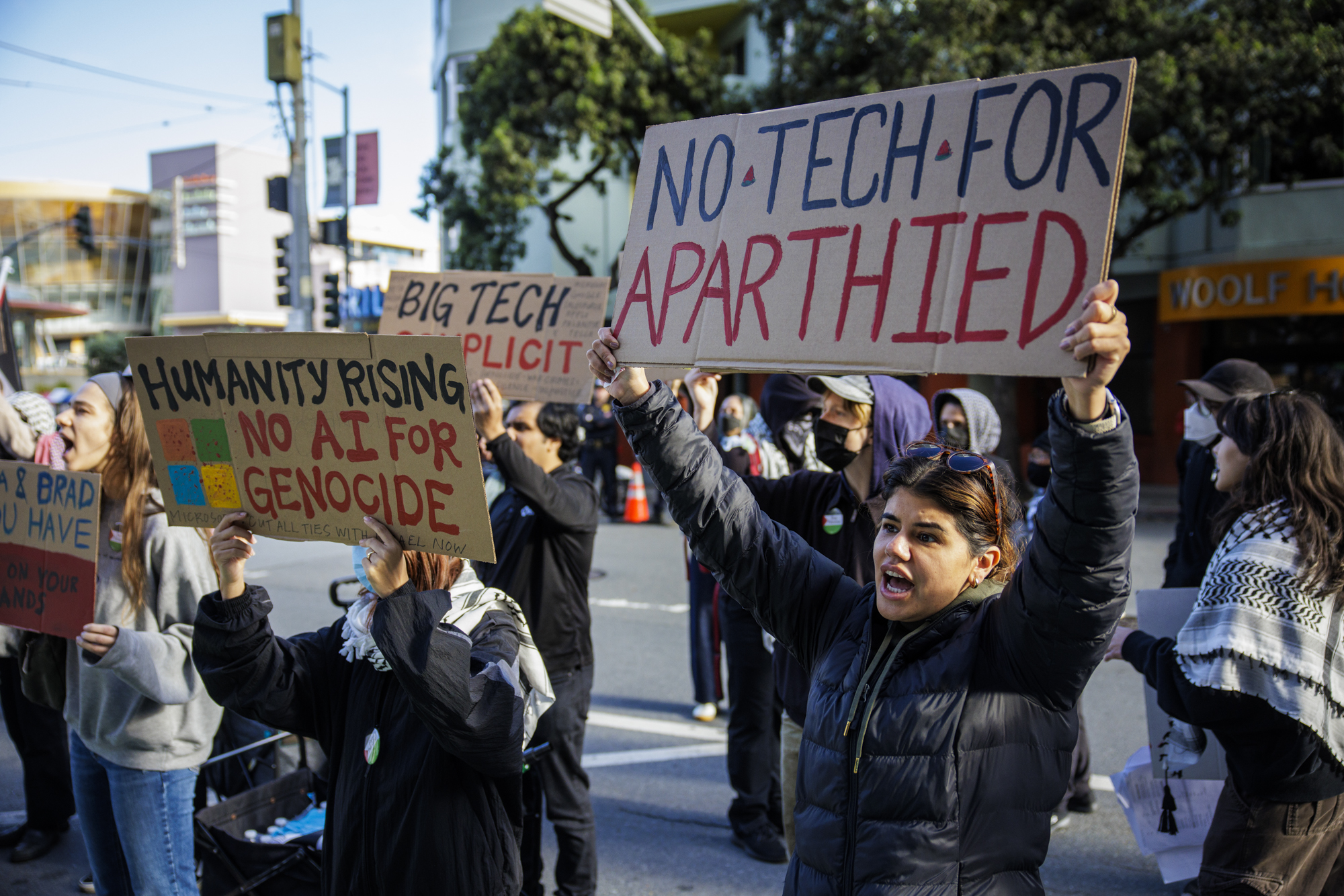
"emanoukian": {
"type": "authors",
"id": "11925",
"meta": {
"index": "authors_1716337520",
"id": "11925",
"found": true
},
"name": "Elize Manoukian",
"firstName": "Elize",
"lastName": "Manoukian",
"slug": "emanoukian",
"email": "emanoukian@KQED.org",
"display_author_email": false,
"staff_mastheads": [
"news"
],
"title": "Digital News Editor",
"bio": "Elize Manoukian is an award-winning audio producer and Senior Editor on the Express Desk, KQED's digital news platform. Her work has appeared on KPFA, Interlochen Public Radio, Oregon Public Broadcast, the New York Daily News, LA Times and the San Diego Union-Tribune.",
"avatar": "https://secure.gravatar.com/avatar/4525f1a8e46ccb30933b32653d9772064cfefe3fa655eb45b3b3a80341f6bdad?s=600&d=blank&r=g",
"twitter": null,
"bluesky": null,
"facebook": null,
"instagram": null,
"linkedin": null,
"sites": [
{
"site": "arts",
"roles": [
"editor"
]
},
{
"site": "news",
"roles": [
"editor"
]
},
{
"site": "science",
"roles": [
"editor"
]
}
],
"headData": {
"title": "Elize Manoukian | KQED",
"description": "Digital News Editor",
"ogImgSrc": "https://secure.gravatar.com/avatar/4525f1a8e46ccb30933b32653d9772064cfefe3fa655eb45b3b3a80341f6bdad?s=600&d=blank&r=g",
"twImgSrc": "https://secure.gravatar.com/avatar/4525f1a8e46ccb30933b32653d9772064cfefe3fa655eb45b3b3a80341f6bdad?s=600&d=blank&r=g"
},
"isLoading": false,
"link": "/author/emanoukian"
},
"aaliahmad": {
"type": "authors",
"id": "11986",
"meta": {
"index": "authors_1716337520",
"id": "11986",
"found": true
},
"name": "Ayah Ali-Ahmad",
"firstName": "Ayah",
"lastName": "Ali-Ahmad",
"slug": "aaliahmad",
"email": "aaliahmad@KQED.org",
"display_author_email": false,
"staff_mastheads": [],
"title": "KQED Contributor",
"bio": null,
"avatar": "https://secure.gravatar.com/avatar/1cf54f187a5e1064b2cfef3f3d2f1e4f93e453395d56912aca6382a6071ec3ed?s=600&d=blank&r=g",
"twitter": "ayahaliahmad",
"bluesky": null,
"facebook": null,
"instagram": null,
"linkedin": null,
"sites": [
{
"site": "news",
"roles": [
"subscriber"
]
}
],
"headData": {
"title": "Ayah Ali-Ahmad | KQED",
"description": "KQED Contributor",
"ogImgSrc": "https://secure.gravatar.com/avatar/1cf54f187a5e1064b2cfef3f3d2f1e4f93e453395d56912aca6382a6071ec3ed?s=600&d=blank&r=g",
"twImgSrc": "https://secure.gravatar.com/avatar/1cf54f187a5e1064b2cfef3f3d2f1e4f93e453395d56912aca6382a6071ec3ed?s=600&d=blank&r=g"
},
"isLoading": false,
"link": "/author/aaliahmad"
}
},
"pagesReducer": {
"news_tag_pro-palestinian-protest": {
"type": "terms",
"id": "news_33647",
"meta": {
"index": "terms_1716263798",
"site": "news",
"id": "33647",
"score": 10.403188
},
"featImg": null,
"name": "pro-palestinian protest",
"description": null,
"taxonomy": "tag",
"headData": {
"twImgId": null,
"twTitle": null,
"ogTitle": null,
"ogImgId": null,
"twDescription": null,
"description": null,
"title": "pro-palestinian protest Archives | KQED News",
"ogDescription": null
},
"ttid": 33664,
"slug": "pro-palestinian-protest",
"isLoading": false,
"title": "pro-palestinian protest",
"pageMeta": {
"site": "news",
"WpPageTemplate": "page-topic-editorial",
"currentPage": 2
},
"blocks": [
{
"blockName": "kqed/post-list",
"attrs": {
"layout": "cardArticle2",
"query": "posts/news?tag=pro-palestinian-protest",
"seeMore": false,
"paginated": true,
"page": 2
}
},
{
"blockName": "kqed/ad"
}
]
}
},
"pfsSessionReducer": {},
"postsReducer": {
"stream_live": {
"type": "live",
"id": "stream_live",
"audioUrl": "https://streams.kqed.org/kqedradio",
"title": "Live Stream",
"excerpt": "Live Stream information currently unavailable.",
"link": "/radio",
"featImg": "",
"label": {
"name": "KQED Live",
"link": "/"
}
},
"stream_kqedNewscast": {
"type": "posts",
"id": "stream_kqedNewscast",
"audioUrl": "https://www.kqed.org/.stream/anon/radio/RDnews/newscast.mp3?_=1",
"title": "KQED Newscast",
"featImg": "",
"label": {
"name": "88.5 FM",
"link": "/"
}
},
"news_12064555": {
"type": "posts",
"id": "news_12064555",
"meta": {
"index": "posts_1716263798",
"site": "news",
"id": "12064555",
"score": null,
"sort": [
1763577014000
]
},
"guestAuthors": [],
"slug": "protests-at-microsoft-conference-target-tech-giants-ties-with-israeli-military",
"title": "Protests at Microsoft Conference Target Tech Giant’s Ties With Israeli Military",
"publishDate": 1763577014,
"format": "standard",
"headTitle": "Protests at Microsoft Conference Target Tech Giant’s Ties With Israeli Military | KQED",
"labelTerm": {
"site": "news"
},
"content": "\u003cp>Protestors gathered outside \u003ca href=\"https://www.kqed.org/news/tag/san-francisco\">San Francisco\u003c/a>’s George Moscone Center on Tuesday at \u003ca href=\"https://www.kqed.org/news/tag/microsoft\">Microsoft\u003c/a>’s largest annual conference to demand that the tech giant cut all remaining ties with the Israeli military.\u003c/p>\n\u003cp>The group of former and current Microsoft workers descended on Microsoft Ignite, which had attracted over 15,000 attendees to showcase the company’s latest cloud and Artificial Intelligence innovations.\u003c/p>\n\u003cp>Organized by the group No Azure for Apartheid, the demonstrators claim that despite recent policy changes, Microsoft continues to provide essential cloud computing services supporting Israel’s military operations in Gaza and the West Bank.\u003c/p>\n\u003cp>[ad fullwidth]\u003c/p>\n\u003cp>“Microsoft thinks that they can pacify us with these half measures,” said Joe Lopez, a former engineer who disrupted CEO Satya Nadella’s keynote speech in May. “We are here until Microsoft cuts all ties with Israel.”\u003c/p>\n\u003cp>After reports surfaced that the company’s technology was being used for mass surveillance of Palestinians, Microsoft reportedly cut off access to some of its services for Unit 8200, an Israeli military intelligence unit. It also introduced a new internal reporting mechanism for employees to flag practices that they believe may violate company policies.\u003c/p>\n\u003cfigure id=\"attachment_12064638\" class=\"wp-caption aligncenter\" style=\"max-width: 2000px\">\u003cimg loading=\"lazy\" decoding=\"async\" class=\"size-full wp-image-12064638\" src=\"https://cdn.kqed.org/wp-content/uploads/sites/10/2025/11/251119-MICROSOFT-GAZA-PROTEST-MD-07-KQED.jpg\" alt=\"\" width=\"2000\" height=\"1334\" srcset=\"https://cdn.kqed.org/wp-content/uploads/sites/10/2025/11/251119-MICROSOFT-GAZA-PROTEST-MD-07-KQED.jpg 2000w, https://cdn.kqed.org/wp-content/uploads/sites/10/2025/11/251119-MICROSOFT-GAZA-PROTEST-MD-07-KQED-160x107.jpg 160w, https://cdn.kqed.org/wp-content/uploads/sites/10/2025/11/251119-MICROSOFT-GAZA-PROTEST-MD-07-KQED-1536x1025.jpg 1536w\" sizes=\"auto, (max-width: 2000px) 100vw, 2000px\">\u003cfigcaption class=\"wp-caption-text\">Former Microsoft employee Hossam Nasr leads pro-Palestinian protesters rallying outside of the Microsoft Ignite conference in San Francisco in chants and calling on the company to cut ties with the Israeli military and government on Nov. 18, 2025. \u003ccite>(Martin do Nascimento/KQED)\u003c/cite>\u003c/figcaption>\u003c/figure>\n\u003cp>But the protesters argued that this step was insufficient, claiming the company still maintains contracts with other branches of the Israeli military and government.\u003c/p>\n\u003cp>They also called attention to Microsoft Azure, a cloud computing platform that allows clients to rent powerful computing and storage capacity over the internet.\u003c/p>\n\u003cp>Organizer and former Microsoft worker Hossam Nasr explained that modern military operations require massive data processing for surveillance and AI targeting systems, capabilities that the Israeli government cannot maintain without external support from major tech firms.[aside postID=news_12064351 hero='https://cdn.kqed.org/wp-content/uploads/sites/10/2025/11/251117-STANFORDTRIAL-JG-7_qed.jpg']He referred to cloud and AI services as “the bombs and bullets of the 21st century.”\u003c/p>\n\u003cp>“The Israeli military would not have been able to be as destructive, as deadly, as brutal in its genocide in Gaza, if it were not for the technology provided by Microsoft,” Nasr said.\u003c/p>\n\u003cp>Before the rally unfolded outside the conference center, there was a disruption inside — Microsoft employee Patrick Fort interrupted CEO Judson Althoff’s opening keynote speech and resigned in protest.\u003c/p>\n\u003cp>Fort, a senior software engineer who had been at Microsoft for seven years, worked on systems supporting the Azure platform. He said he sent a mass resignation email to his colleagues before standing up in the bleachers to shout at Althoff. He was then escorted out by personnel.\u003c/p>\n\u003cp>“I recognize that my work at Microsoft, my labor, is enabling the genocide in some small way,” Fort told KQED shortly after leaving the venue. “The only way I saw to effectively stop that was to leave.”\u003c/p>\n\u003cfigure id=\"attachment_12064642\" class=\"wp-caption aligncenter\" style=\"max-width: 2000px\">\u003cimg loading=\"lazy\" decoding=\"async\" class=\"size-full wp-image-12064642\" src=\"https://cdn.kqed.org/wp-content/uploads/sites/10/2025/11/251119-MICROSOFT-GAZA-PROTEST-MD-09-KQED.jpg\" alt=\"\" width=\"2000\" height=\"1334\" srcset=\"https://cdn.kqed.org/wp-content/uploads/sites/10/2025/11/251119-MICROSOFT-GAZA-PROTEST-MD-09-KQED.jpg 2000w, https://cdn.kqed.org/wp-content/uploads/sites/10/2025/11/251119-MICROSOFT-GAZA-PROTEST-MD-09-KQED-160x107.jpg 160w, https://cdn.kqed.org/wp-content/uploads/sites/10/2025/11/251119-MICROSOFT-GAZA-PROTEST-MD-09-KQED-1536x1025.jpg 1536w\" sizes=\"auto, (max-width: 2000px) 100vw, 2000px\">\u003cfigcaption class=\"wp-caption-text\">Patrick Fort and other pro-Palestinian protesters rally outside of the Microsoft Ignite conference in San Francisco to call on the company to cut ties with the Israel military and government on Nov. 18, 2025. \u003ccite>(Martin do Nascimento/KQED)\u003c/cite>\u003c/figcaption>\u003c/figure>\n\u003cp>In a statement responding to Monday’s protest, a Microsoft spokesperson said that “appropriate teams are engaged to help minimize these disruptions.”\u003c/p>\n\u003cp>“We respect the right to peaceful assembly and ask that it be done in a way that does not cause business disruption,” the statement read.\u003c/p>\n\u003cp>Fort acknowledged that for many tech workers, the conflict can feel distant, but he urged his former colleagues to consider the downstream effects of the software they build.\u003c/p>\n\u003cp>“We all have to draw a line for what our work enables,” Fort said. “Ultimately, I believe that we, as individuals, have to think more than just [about] our own self-interest.”\u003c/p>\n\u003cp>\u003c/p>\n",
"blocks": [],
"excerpt": "The former and current workers claim Microsoft continues to provide essential cloud computing services supporting Israel’s military operations in Gaza and the West Bank.",
"status": "publish",
"parent": 0,
"modified": 1763581685,
"stats": {
"hasAudio": false,
"hasVideo": false,
"hasChartOrMap": false,
"iframeSrcs": [],
"hasGoogleForm": false,
"hasGallery": false,
"hasHearkenModule": false,
"hasPolis": false,
"paragraphCount": 18,
"wordCount": 674
},
"headData": {
"title": "Protests at Microsoft Conference Target Tech Giant’s Ties With Israeli Military | KQED",
"description": "The former and current workers claim Microsoft continues to provide essential cloud computing services supporting Israel’s military operations in Gaza and the West Bank.",
"ogTitle": "",
"ogDescription": "",
"ogImgId": "",
"twTitle": "",
"twDescription": "",
"twImgId": "",
"schema": {
"@context": "https://schema.org",
"@type": "NewsArticle",
"headline": "Protests at Microsoft Conference Target Tech Giant’s Ties With Israeli Military",
"datePublished": "2025-11-19T10:30:14-08:00",
"dateModified": "2025-11-19T11:48:05-08:00",
"image": "https://cdn.kqed.org/wp-content/uploads/2020/02/KQED-OG-Image@1x.png",
"isAccessibleForFree": "True",
"publisher": {
"@type": "NewsMediaOrganization",
"@id": "https://www.kqed.org/#organization",
"name": "KQED",
"logo": "https://cdn.kqed.org/wp-content/uploads/2020/02/KQED-OG-Image@1x.png",
"url": "https://www.kqed.org",
"sameAs": [
"https://www.facebook.com/KQED",
"https://twitter.com/KQED",
"https://www.instagram.com/kqed/",
"https://www.tiktok.com/@kqedofficial",
"https://www.linkedin.com/company/kqed",
"https://www.youtube.com/channel/UCeC0IOo7i1P_61zVUWbJ4nw"
]
}
}
},
"primaryCategory": {
"termId": 8,
"slug": "news",
"name": "News"
},
"sticky": false,
"nprStoryId": "kqed-12064555",
"templateType": "standard",
"featuredImageType": "standard",
"excludeFromSiteSearch": "Include",
"showOnAuthorArchivePages": "No",
"articleAge": "0",
"path": "/news/12064555/protests-at-microsoft-conference-target-tech-giants-ties-with-israeli-military",
"audioTrackLength": null,
"parsedContent": [
{
"type": "contentString",
"content": "\u003cdiv class=\"post-body\">\u003cp>\u003cp>Protestors gathered outside \u003ca href=\"https://www.kqed.org/news/tag/san-francisco\">San Francisco\u003c/a>’s George Moscone Center on Tuesday at \u003ca href=\"https://www.kqed.org/news/tag/microsoft\">Microsoft\u003c/a>’s largest annual conference to demand that the tech giant cut all remaining ties with the Israeli military.\u003c/p>\n\u003cp>The group of former and current Microsoft workers descended on Microsoft Ignite, which had attracted over 15,000 attendees to showcase the company’s latest cloud and Artificial Intelligence innovations.\u003c/p>\n\u003cp>Organized by the group No Azure for Apartheid, the demonstrators claim that despite recent policy changes, Microsoft continues to provide essential cloud computing services supporting Israel’s military operations in Gaza and the West Bank.\u003c/p>\n\u003cp>\u003c/p>\u003c/div>",
"attributes": {
"named": {},
"numeric": []
}
},
{
"type": "component",
"content": "",
"name": "ad",
"attributes": {
"named": {
"label": "fullwidth"
},
"numeric": [
"fullwidth"
]
}
},
{
"type": "contentString",
"content": "\u003cdiv class=\"post-body\">\u003cp>\u003c/p>\n\u003cp>“Microsoft thinks that they can pacify us with these half measures,” said Joe Lopez, a former engineer who disrupted CEO Satya Nadella’s keynote speech in May. “We are here until Microsoft cuts all ties with Israel.”\u003c/p>\n\u003cp>After reports surfaced that the company’s technology was being used for mass surveillance of Palestinians, Microsoft reportedly cut off access to some of its services for Unit 8200, an Israeli military intelligence unit. It also introduced a new internal reporting mechanism for employees to flag practices that they believe may violate company policies.\u003c/p>\n\u003cfigure id=\"attachment_12064638\" class=\"wp-caption aligncenter\" style=\"max-width: 2000px\">\u003cimg loading=\"lazy\" decoding=\"async\" class=\"size-full wp-image-12064638\" src=\"https://cdn.kqed.org/wp-content/uploads/sites/10/2025/11/251119-MICROSOFT-GAZA-PROTEST-MD-07-KQED.jpg\" alt=\"\" width=\"2000\" height=\"1334\" srcset=\"https://cdn.kqed.org/wp-content/uploads/sites/10/2025/11/251119-MICROSOFT-GAZA-PROTEST-MD-07-KQED.jpg 2000w, https://cdn.kqed.org/wp-content/uploads/sites/10/2025/11/251119-MICROSOFT-GAZA-PROTEST-MD-07-KQED-160x107.jpg 160w, https://cdn.kqed.org/wp-content/uploads/sites/10/2025/11/251119-MICROSOFT-GAZA-PROTEST-MD-07-KQED-1536x1025.jpg 1536w\" sizes=\"auto, (max-width: 2000px) 100vw, 2000px\">\u003cfigcaption class=\"wp-caption-text\">Former Microsoft employee Hossam Nasr leads pro-Palestinian protesters rallying outside of the Microsoft Ignite conference in San Francisco in chants and calling on the company to cut ties with the Israeli military and government on Nov. 18, 2025. \u003ccite>(Martin do Nascimento/KQED)\u003c/cite>\u003c/figcaption>\u003c/figure>\n\u003cp>But the protesters argued that this step was insufficient, claiming the company still maintains contracts with other branches of the Israeli military and government.\u003c/p>\n\u003cp>They also called attention to Microsoft Azure, a cloud computing platform that allows clients to rent powerful computing and storage capacity over the internet.\u003c/p>\n\u003cp>Organizer and former Microsoft worker Hossam Nasr explained that modern military operations require massive data processing for surveillance and AI targeting systems, capabilities that the Israeli government cannot maintain without external support from major tech firms.\u003c/p>\u003c/div>",
"attributes": {
"named": {},
"numeric": []
}
},
{
"type": "component",
"content": "",
"name": "aside",
"attributes": {
"named": {
"postid": "news_12064351",
"hero": "https://cdn.kqed.org/wp-content/uploads/sites/10/2025/11/251117-STANFORDTRIAL-JG-7_qed.jpg",
"label": ""
},
"numeric": []
}
},
{
"type": "contentString",
"content": "\u003cdiv class=\"post-body\">\u003cp>He referred to cloud and AI services as “the bombs and bullets of the 21st century.”\u003c/p>\n\u003cp>“The Israeli military would not have been able to be as destructive, as deadly, as brutal in its genocide in Gaza, if it were not for the technology provided by Microsoft,” Nasr said.\u003c/p>\n\u003cp>Before the rally unfolded outside the conference center, there was a disruption inside — Microsoft employee Patrick Fort interrupted CEO Judson Althoff’s opening keynote speech and resigned in protest.\u003c/p>\n\u003cp>Fort, a senior software engineer who had been at Microsoft for seven years, worked on systems supporting the Azure platform. He said he sent a mass resignation email to his colleagues before standing up in the bleachers to shout at Althoff. He was then escorted out by personnel.\u003c/p>\n\u003cp>“I recognize that my work at Microsoft, my labor, is enabling the genocide in some small way,” Fort told KQED shortly after leaving the venue. “The only way I saw to effectively stop that was to leave.”\u003c/p>\n\u003cfigure id=\"attachment_12064642\" class=\"wp-caption aligncenter\" style=\"max-width: 2000px\">\u003cimg loading=\"lazy\" decoding=\"async\" class=\"size-full wp-image-12064642\" src=\"https://cdn.kqed.org/wp-content/uploads/sites/10/2025/11/251119-MICROSOFT-GAZA-PROTEST-MD-09-KQED.jpg\" alt=\"\" width=\"2000\" height=\"1334\" srcset=\"https://cdn.kqed.org/wp-content/uploads/sites/10/2025/11/251119-MICROSOFT-GAZA-PROTEST-MD-09-KQED.jpg 2000w, https://cdn.kqed.org/wp-content/uploads/sites/10/2025/11/251119-MICROSOFT-GAZA-PROTEST-MD-09-KQED-160x107.jpg 160w, https://cdn.kqed.org/wp-content/uploads/sites/10/2025/11/251119-MICROSOFT-GAZA-PROTEST-MD-09-KQED-1536x1025.jpg 1536w\" sizes=\"auto, (max-width: 2000px) 100vw, 2000px\">\u003cfigcaption class=\"wp-caption-text\">Patrick Fort and other pro-Palestinian protesters rally outside of the Microsoft Ignite conference in San Francisco to call on the company to cut ties with the Israel military and government on Nov. 18, 2025. \u003ccite>(Martin do Nascimento/KQED)\u003c/cite>\u003c/figcaption>\u003c/figure>\n\u003cp>In a statement responding to Monday’s protest, a Microsoft spokesperson said that “appropriate teams are engaged to help minimize these disruptions.”\u003c/p>\n\u003cp>“We respect the right to peaceful assembly and ask that it be done in a way that does not cause business disruption,” the statement read.\u003c/p>\n\u003cp>Fort acknowledged that for many tech workers, the conflict can feel distant, but he urged his former colleagues to consider the downstream effects of the software they build.\u003c/p>\n\u003cp>“We all have to draw a line for what our work enables,” Fort said. “Ultimately, I believe that we, as individuals, have to think more than just [about] our own self-interest.”\u003c/p>\n\u003cp>\u003c/p>\n\u003c/div>\u003c/p>",
"attributes": {
"named": {},
"numeric": []
}
}
],
"link": "/news/12064555/protests-at-microsoft-conference-target-tech-giants-ties-with-israeli-military",
"authors": [
"11986"
],
"categories": [
"news_31795",
"news_28250",
"news_8",
"news_13",
"news_248"
],
"tags": [
"news_1386",
"news_6631",
"news_33333",
"news_3952",
"news_17968",
"news_33647",
"news_38"
],
"featImg": "news_12064639",
"label": "news"
},
"news_12064351": {
"type": "posts",
"id": "news_12064351",
"meta": {
"index": "posts_1716263798",
"site": "news",
"id": "12064351",
"score": null,
"sort": [
1763426841000
]
},
"guestAuthors": [],
"slug": "stanford-protesters-negotiating-plea-deals-as-trial-begins",
"title": "Stanford Protesters Negotiating Plea Deals as Trial Begins",
"publishDate": 1763426841,
"format": "standard",
"headTitle": "Stanford Protesters Negotiating Plea Deals as Trial Begins | KQED",
"labelTerm": {
"site": "news"
},
"content": "\u003cp>Nearly a year and a half after a group of \u003ca href=\"https://www.kqed.org/news/tag/pro-palestinian-protest\">pro-Palestinian protesters\u003c/a> were arrested for breaking into and vandalizing the \u003ca href=\"https://www.kqed.org/news/tag/stanford-university\">Stanford University\u003c/a> president’s office, a trial is set to get underway.\u003c/p>\n\u003cp>A group of five protesters is scheduled to go to trial on Nov. 24. They face felony vandalism and conspiracy charges stemming from a grand jury indictment.\u003c/p>\n\u003cp>While hundreds of students have been arrested at college campuses across the country for protest-related activity since the war in \u003ca href=\"https://www.kqed.org/news/tag/gaza\">Gaza\u003c/a> began, few of the cases have progressed this far. Attorneys for the defendants and their supporters have accused the Santa Clara County District Attorney’s Office of seeking overly harsh punishment to quell further protests and speech.\u003c/p>\n\u003cp>[ad fullwidth]\u003c/p>\n\u003cp>On Monday morning, three other protesters told the court they intend to take a deal offered to them by a judge, which would require them to plead guilty to misdemeanors, a plan opposed by prosecutors. Three other protesters recently enrolled in mental health diversion programs.\u003c/p>\n\u003cp>The details of the misdemeanor deal remain vague for now, but attorneys for those defendants said it would likely include a path for their clients to ultimately have the charges dismissed.\u003c/p>\n\u003cp>EmilyRose Johns, an attorney representing Cameron Pennington, said the deal would likely require her client to perform community service and avoid any criminal behavior for a certain amount of time.\u003c/p>\n\u003cfigure id=\"attachment_12064524\" class=\"wp-caption aligncenter\" style=\"max-width: 2000px\">\u003cimg loading=\"lazy\" decoding=\"async\" class=\"size-full wp-image-12064524\" src=\"https://cdn.kqed.org/wp-content/uploads/sites/10/2025/11/251117-STANFORDTRIAL-JG-2_qed.jpg\" alt=\"\" width=\"2000\" height=\"1333\" srcset=\"https://cdn.kqed.org/wp-content/uploads/sites/10/2025/11/251117-STANFORDTRIAL-JG-2_qed.jpg 2000w, https://cdn.kqed.org/wp-content/uploads/sites/10/2025/11/251117-STANFORDTRIAL-JG-2_qed-160x107.jpg 160w, https://cdn.kqed.org/wp-content/uploads/sites/10/2025/11/251117-STANFORDTRIAL-JG-2_qed-1536x1024.jpg 1536w\" sizes=\"auto, (max-width: 2000px) 100vw, 2000px\">\u003cfigcaption class=\"wp-caption-text\">Hunter Taylor-Black, center, one of five pro-Palestinian protesters going to trial for breaking into the Stanford University president’s office, speaks to a group of supporters outside the Hall of Justice in San José on Monday, Nov. 17, 2025. \u003ccite>(Joseph Geha/KQED)\u003c/cite>\u003c/figcaption>\u003c/figure>\n\u003cp>“The court has indicated that if they’re successful, it may ultimately allow withdrawal of the plea and a diversion deal, which would mean that the clients have no conviction history,” Johns told KQED after a court hearing on Monday.\u003c/p>\n\u003cp>Prosecutors from the Santa Clara County District Attorney’s Office oppose the deal, which attorneys said was offered late last week to all the defendants by Judge Deborah Ryan, following private discussions between attorneys and Ryan in court chambers.\u003c/p>\n\u003cp>A spokesperson for the District Attorney’s Office didn’t respond to a request for comment on Monday afternoon.\u003c/p>\n\u003cp>“The judge is the current arbiter of justice. The judge is the person who decides what is just and appropriate and can dismiss cases over the district attorney’s objection and can make court offers to clients over the district attorney’s objection,” Johns said.[aside postID=news_12035346 hero='https://cdn.kqed.org/wp-content/uploads/sites/10/2024/06/240605-STANFORD-JG-10-KQED-1020x680.jpg']“The reason that misdemeanors are even on the table is that Judge Ryan has indicated that she didn’t believe this resembled felony conduct,” Johns said.\u003c/p>\n\u003cp>The case stems from a June 5, 2024, action by a group of a dozen protesters, mostly made up of current or former Stanford students at the time, who broke into the president’s office in the early morning hours and barricaded themselves inside before being arrested.\u003c/p>\n\u003cp>The group said on social media at the time they wanted Stanford leaders to “address their role in enabling and profiting from the ongoing genocide in Gaza.” It came amid a series of larger campus demonstrations aimed at pressuring the school to divest from companies that support Israel’s military bombardment in Gaza.\u003c/p>\n\u003cp>District Attorney Jeff Rosen said in April, when he brought initial felony charges against the group, that they “crossed the clear and bright line between dissent and destruction.”\u003c/p>\n\u003cp>Kaiden Wang, one of the defendants who intends to take the court deal, said the group’s actions fit into a legacy of protest in the region.\u003c/p>\n\u003cp>“I think that our action is part of the long history of activism in the Bay Area,” Wang said. “The Bay Area seems to be one of the earliest brewing grounds for these types of actions and these kinds of resistance towards systems of oppression.”\u003c/p>\n\u003cfigure id=\"attachment_11989555\" class=\"wp-caption aligncenter\" style=\"max-width: 2000px\">\u003cimg loading=\"lazy\" decoding=\"async\" class=\"size-full wp-image-11989555\" src=\"https://cdn.kqed.org/wp-content/uploads/sites/10/2024/06/240605-STANFORD-JG-15-1-e1744310968489.jpg\" alt=\"\" width=\"2000\" height=\"1333\">\u003cfigcaption class=\"wp-caption-text\">Building 10 at Stanford University, where pro-Palestinian protesters broke into the university president’s office and occupied it before being arrested on Wednesday, June 5, 2024. \u003ccite>(Joseph Geha/KQED)\u003c/cite>\u003c/figcaption>\u003c/figure>\n\u003cp>The protesters who intend to take the deal, as well as those who are headed to trial, will all still have to contend with the issue of a $329,000 claim for restitution by Stanford for damages caused by the group.\u003c/p>\n\u003cp>Tony Brass, an attorney representing Hunter Taylor-Black, who is proceeding to trial, said Stanford has refused to talk with attorneys about the figure, which could amount to “crippling debt” for some of the protesters.\u003c/p>\n\u003cp>Brass said the number could increase or decrease after a restitution hearing, and Stanford’s lack of engagement on the topic makes it hard to know what consequences his client and others may face, and is part of the reason they are going to trial.\u003c/p>\n\u003cp>Stanford did not immediately respond to a request for comment.\u003c/p>\n\u003cp>“What they’re trying to avoid is unknown consequences, unfair consequences, extreme consequences. And this could all be clarified,” he said.\u003c/p>\n\u003cfigure id=\"attachment_12064526\" class=\"wp-caption aligncenter\" style=\"max-width: 1999px\">\u003cimg loading=\"lazy\" decoding=\"async\" class=\"size-full wp-image-12064526\" src=\"https://cdn.kqed.org/wp-content/uploads/sites/10/2025/11/251117-STANFORDTRIAL-JG-1_qed.jpg\" alt=\"\" width=\"1999\" height=\"1333\" srcset=\"https://cdn.kqed.org/wp-content/uploads/sites/10/2025/11/251117-STANFORDTRIAL-JG-1_qed.jpg 1999w, https://cdn.kqed.org/wp-content/uploads/sites/10/2025/11/251117-STANFORDTRIAL-JG-1_qed-160x107.jpg 160w, https://cdn.kqed.org/wp-content/uploads/sites/10/2025/11/251117-STANFORDTRIAL-JG-1_qed-1536x1024.jpg 1536w\" sizes=\"auto, (max-width: 1999px) 100vw, 1999px\">\u003cfigcaption class=\"wp-caption-text\">A group of supporters gathered for a rally outside the Hall of Justice in San José on Nov. 17, 2025, after a court hearing for a group of pro-Palestinian protesters indicted for breaking into the Stanford University president’s office. \u003ccite>(Joseph Geha/KQED)\u003c/cite>\u003c/figcaption>\u003c/figure>\n\u003cp>One other protester, Jack Richardson, served as a witness for prosecutors in the grand jury and is now enrolled in a youth deferred judgment program.\u003c/p>\n\u003cp>Brass and other attorneys have also taken issue with the district attorney’s motions asking a judge to ban any mention of the word “genocide” from the trial. In those filings, the DA’s office said the word “genocide” is “inflammatory” and would prejudice the case.\u003c/p>\n\u003cp>Rosen’s office also filed motions asking to exclude the motives behind the actions of the protesters, saying the defense will likely “attempt to use this trial as another form of protest,” instead of focusing on guilt or innocence.[aside postID=news_12063531 hero='https://cdn.kqed.org/wp-content/uploads/sites/10/2024/02/240214-GOLDEN-GATE-BRIDGE-PROTEST-JCL-02-KQED-1020x680.jpg']“What matters is only that they agreed to occupy the building and that vandalism was necessary to accomplish the occupation. Their reasons for doing so have no relevance to the issues the jury will be asked to decide,” the filings say. “While such evidence might be relevant at sentencing, it serves no purpose at jury trial.”\u003c/p>\n\u003cp>The DA’s filings said the defense will attempt to “make this proceeding an extension of the June 5, 2024, political protest by falsely accusing Stanford University of supporting genocide.”\u003c/p>\n\u003cp>Brass said those motions show Rosen is trying to “present this trial completely sanitized,” without full context.\u003c/p>\n\u003cp>“These students were acting for a greater good. And their inaction was something they, out of a sense of conscience, couldn’t live with,” Brass said. “They had to draw more attention to it, had to amplify their voice, and this is what they did.”\u003c/p>\n\u003cp>He also noted that the protesters went into the building when it was empty and did not harm anyone or threaten anyone.\u003c/p>\n\u003cp>Maya Burke, one of the protesters going to trial, said the motions trying to limit the scope of the defendant’s arguments are “alarming.”\u003c/p>\n\u003cp>Burke said they are seeking justice.\u003c/p>\n\u003cp>“There are war crimes on,” Burke said, “and I would hope to see that acknowledged in the court and acknowledged in public.”\u003c/p>\n\u003cp>[ad floatright]\u003c/p>\n",
"blocks": [],
"excerpt": "While some of the former students seek deals, five are expected to go to trial. ",
"status": "publish",
"parent": 0,
"modified": 1764010223,
"stats": {
"hasAudio": false,
"hasVideo": false,
"hasChartOrMap": false,
"iframeSrcs": [],
"hasGoogleForm": false,
"hasGallery": false,
"hasHearkenModule": false,
"hasPolis": false,
"paragraphCount": 32,
"wordCount": 1316
},
"headData": {
"title": "Stanford Protesters Negotiating Plea Deals as Trial Begins | KQED",
"description": "While some of the former students seek deals, five are expected to go to trial. ",
"ogTitle": "",
"ogDescription": "",
"ogImgId": "",
"twTitle": "",
"twDescription": "",
"twImgId": "",
"schema": {
"@context": "https://schema.org",
"@type": "NewsArticle",
"headline": "Stanford Protesters Negotiating Plea Deals as Trial Begins",
"datePublished": "2025-11-17T16:47:21-08:00",
"dateModified": "2025-11-24T10:50:23-08:00",
"image": "https://cdn.kqed.org/wp-content/uploads/2020/02/KQED-OG-Image@1x.png",
"isAccessibleForFree": "True",
"publisher": {
"@type": "NewsMediaOrganization",
"@id": "https://www.kqed.org/#organization",
"name": "KQED",
"logo": "https://cdn.kqed.org/wp-content/uploads/2020/02/KQED-OG-Image@1x.png",
"url": "https://www.kqed.org",
"sameAs": [
"https://www.facebook.com/KQED",
"https://twitter.com/KQED",
"https://www.instagram.com/kqed/",
"https://www.tiktok.com/@kqedofficial",
"https://www.linkedin.com/company/kqed",
"https://www.youtube.com/channel/UCeC0IOo7i1P_61zVUWbJ4nw"
]
}
}
},
"primaryCategory": {
"termId": 34167,
"slug": "criminal-justice",
"name": "Criminal Justice"
},
"audioUrl": "https://traffic.omny.fm/d/clips/0af137ef-751e-4b19-a055-aaef00d2d578/ffca7e9f-6831-41c5-bcaf-aaef00f5a073/ba6f9650-0f5d-4a22-a0f3-b39f011e317d/audio.mp3",
"sticky": false,
"nprStoryId": "kqed-12064351",
"templateType": "standard",
"featuredImageType": "standard",
"excludeFromSiteSearch": "Include",
"articleAge": "0",
"path": "/news/12064351/stanford-protesters-negotiating-plea-deals-as-trial-begins",
"audioTrackLength": null,
"parsedContent": [
{
"type": "contentString",
"content": "\u003cdiv class=\"post-body\">\u003cp>\u003cp>Nearly a year and a half after a group of \u003ca href=\"https://www.kqed.org/news/tag/pro-palestinian-protest\">pro-Palestinian protesters\u003c/a> were arrested for breaking into and vandalizing the \u003ca href=\"https://www.kqed.org/news/tag/stanford-university\">Stanford University\u003c/a> president’s office, a trial is set to get underway.\u003c/p>\n\u003cp>A group of five protesters is scheduled to go to trial on Nov. 24. They face felony vandalism and conspiracy charges stemming from a grand jury indictment.\u003c/p>\n\u003cp>While hundreds of students have been arrested at college campuses across the country for protest-related activity since the war in \u003ca href=\"https://www.kqed.org/news/tag/gaza\">Gaza\u003c/a> began, few of the cases have progressed this far. Attorneys for the defendants and their supporters have accused the Santa Clara County District Attorney’s Office of seeking overly harsh punishment to quell further protests and speech.\u003c/p>\n\u003cp>\u003c/p>\u003c/div>",
"attributes": {
"named": {},
"numeric": []
}
},
{
"type": "component",
"content": "",
"name": "ad",
"attributes": {
"named": {
"label": "fullwidth"
},
"numeric": [
"fullwidth"
]
}
},
{
"type": "contentString",
"content": "\u003cdiv class=\"post-body\">\u003cp>\u003c/p>\n\u003cp>On Monday morning, three other protesters told the court they intend to take a deal offered to them by a judge, which would require them to plead guilty to misdemeanors, a plan opposed by prosecutors. Three other protesters recently enrolled in mental health diversion programs.\u003c/p>\n\u003cp>The details of the misdemeanor deal remain vague for now, but attorneys for those defendants said it would likely include a path for their clients to ultimately have the charges dismissed.\u003c/p>\n\u003cp>EmilyRose Johns, an attorney representing Cameron Pennington, said the deal would likely require her client to perform community service and avoid any criminal behavior for a certain amount of time.\u003c/p>\n\u003cfigure id=\"attachment_12064524\" class=\"wp-caption aligncenter\" style=\"max-width: 2000px\">\u003cimg loading=\"lazy\" decoding=\"async\" class=\"size-full wp-image-12064524\" src=\"https://cdn.kqed.org/wp-content/uploads/sites/10/2025/11/251117-STANFORDTRIAL-JG-2_qed.jpg\" alt=\"\" width=\"2000\" height=\"1333\" srcset=\"https://cdn.kqed.org/wp-content/uploads/sites/10/2025/11/251117-STANFORDTRIAL-JG-2_qed.jpg 2000w, https://cdn.kqed.org/wp-content/uploads/sites/10/2025/11/251117-STANFORDTRIAL-JG-2_qed-160x107.jpg 160w, https://cdn.kqed.org/wp-content/uploads/sites/10/2025/11/251117-STANFORDTRIAL-JG-2_qed-1536x1024.jpg 1536w\" sizes=\"auto, (max-width: 2000px) 100vw, 2000px\">\u003cfigcaption class=\"wp-caption-text\">Hunter Taylor-Black, center, one of five pro-Palestinian protesters going to trial for breaking into the Stanford University president’s office, speaks to a group of supporters outside the Hall of Justice in San José on Monday, Nov. 17, 2025. \u003ccite>(Joseph Geha/KQED)\u003c/cite>\u003c/figcaption>\u003c/figure>\n\u003cp>“The court has indicated that if they’re successful, it may ultimately allow withdrawal of the plea and a diversion deal, which would mean that the clients have no conviction history,” Johns told KQED after a court hearing on Monday.\u003c/p>\n\u003cp>Prosecutors from the Santa Clara County District Attorney’s Office oppose the deal, which attorneys said was offered late last week to all the defendants by Judge Deborah Ryan, following private discussions between attorneys and Ryan in court chambers.\u003c/p>\n\u003cp>A spokesperson for the District Attorney’s Office didn’t respond to a request for comment on Monday afternoon.\u003c/p>\n\u003cp>“The judge is the current arbiter of justice. The judge is the person who decides what is just and appropriate and can dismiss cases over the district attorney’s objection and can make court offers to clients over the district attorney’s objection,” Johns said.\u003c/p>\u003c/div>",
"attributes": {
"named": {},
"numeric": []
}
},
{
"type": "component",
"content": "",
"name": "aside",
"attributes": {
"named": {
"postid": "news_12035346",
"hero": "https://cdn.kqed.org/wp-content/uploads/sites/10/2024/06/240605-STANFORD-JG-10-KQED-1020x680.jpg",
"label": ""
},
"numeric": []
}
},
{
"type": "contentString",
"content": "\u003cdiv class=\"post-body\">\u003cp>“The reason that misdemeanors are even on the table is that Judge Ryan has indicated that she didn’t believe this resembled felony conduct,” Johns said.\u003c/p>\n\u003cp>The case stems from a June 5, 2024, action by a group of a dozen protesters, mostly made up of current or former Stanford students at the time, who broke into the president’s office in the early morning hours and barricaded themselves inside before being arrested.\u003c/p>\n\u003cp>The group said on social media at the time they wanted Stanford leaders to “address their role in enabling and profiting from the ongoing genocide in Gaza.” It came amid a series of larger campus demonstrations aimed at pressuring the school to divest from companies that support Israel’s military bombardment in Gaza.\u003c/p>\n\u003cp>District Attorney Jeff Rosen said in April, when he brought initial felony charges against the group, that they “crossed the clear and bright line between dissent and destruction.”\u003c/p>\n\u003cp>Kaiden Wang, one of the defendants who intends to take the court deal, said the group’s actions fit into a legacy of protest in the region.\u003c/p>\n\u003cp>“I think that our action is part of the long history of activism in the Bay Area,” Wang said. “The Bay Area seems to be one of the earliest brewing grounds for these types of actions and these kinds of resistance towards systems of oppression.”\u003c/p>\n\u003cfigure id=\"attachment_11989555\" class=\"wp-caption aligncenter\" style=\"max-width: 2000px\">\u003cimg loading=\"lazy\" decoding=\"async\" class=\"size-full wp-image-11989555\" src=\"https://cdn.kqed.org/wp-content/uploads/sites/10/2024/06/240605-STANFORD-JG-15-1-e1744310968489.jpg\" alt=\"\" width=\"2000\" height=\"1333\">\u003cfigcaption class=\"wp-caption-text\">Building 10 at Stanford University, where pro-Palestinian protesters broke into the university president’s office and occupied it before being arrested on Wednesday, June 5, 2024. \u003ccite>(Joseph Geha/KQED)\u003c/cite>\u003c/figcaption>\u003c/figure>\n\u003cp>The protesters who intend to take the deal, as well as those who are headed to trial, will all still have to contend with the issue of a $329,000 claim for restitution by Stanford for damages caused by the group.\u003c/p>\n\u003cp>Tony Brass, an attorney representing Hunter Taylor-Black, who is proceeding to trial, said Stanford has refused to talk with attorneys about the figure, which could amount to “crippling debt” for some of the protesters.\u003c/p>\n\u003cp>Brass said the number could increase or decrease after a restitution hearing, and Stanford’s lack of engagement on the topic makes it hard to know what consequences his client and others may face, and is part of the reason they are going to trial.\u003c/p>\n\u003cp>Stanford did not immediately respond to a request for comment.\u003c/p>\n\u003cp>“What they’re trying to avoid is unknown consequences, unfair consequences, extreme consequences. And this could all be clarified,” he said.\u003c/p>\n\u003cfigure id=\"attachment_12064526\" class=\"wp-caption aligncenter\" style=\"max-width: 1999px\">\u003cimg loading=\"lazy\" decoding=\"async\" class=\"size-full wp-image-12064526\" src=\"https://cdn.kqed.org/wp-content/uploads/sites/10/2025/11/251117-STANFORDTRIAL-JG-1_qed.jpg\" alt=\"\" width=\"1999\" height=\"1333\" srcset=\"https://cdn.kqed.org/wp-content/uploads/sites/10/2025/11/251117-STANFORDTRIAL-JG-1_qed.jpg 1999w, https://cdn.kqed.org/wp-content/uploads/sites/10/2025/11/251117-STANFORDTRIAL-JG-1_qed-160x107.jpg 160w, https://cdn.kqed.org/wp-content/uploads/sites/10/2025/11/251117-STANFORDTRIAL-JG-1_qed-1536x1024.jpg 1536w\" sizes=\"auto, (max-width: 1999px) 100vw, 1999px\">\u003cfigcaption class=\"wp-caption-text\">A group of supporters gathered for a rally outside the Hall of Justice in San José on Nov. 17, 2025, after a court hearing for a group of pro-Palestinian protesters indicted for breaking into the Stanford University president’s office. \u003ccite>(Joseph Geha/KQED)\u003c/cite>\u003c/figcaption>\u003c/figure>\n\u003cp>One other protester, Jack Richardson, served as a witness for prosecutors in the grand jury and is now enrolled in a youth deferred judgment program.\u003c/p>\n\u003cp>Brass and other attorneys have also taken issue with the district attorney’s motions asking a judge to ban any mention of the word “genocide” from the trial. In those filings, the DA’s office said the word “genocide” is “inflammatory” and would prejudice the case.\u003c/p>\n\u003cp>Rosen’s office also filed motions asking to exclude the motives behind the actions of the protesters, saying the defense will likely “attempt to use this trial as another form of protest,” instead of focusing on guilt or innocence.\u003c/p>\u003c/div>",
"attributes": {
"named": {},
"numeric": []
}
},
{
"type": "component",
"content": "",
"name": "aside",
"attributes": {
"named": {
"postid": "news_12063531",
"hero": "https://cdn.kqed.org/wp-content/uploads/sites/10/2024/02/240214-GOLDEN-GATE-BRIDGE-PROTEST-JCL-02-KQED-1020x680.jpg",
"label": ""
},
"numeric": []
}
},
{
"type": "contentString",
"content": "\u003cdiv class=\"post-body\">\u003cp>“What matters is only that they agreed to occupy the building and that vandalism was necessary to accomplish the occupation. Their reasons for doing so have no relevance to the issues the jury will be asked to decide,” the filings say. “While such evidence might be relevant at sentencing, it serves no purpose at jury trial.”\u003c/p>\n\u003cp>The DA’s filings said the defense will attempt to “make this proceeding an extension of the June 5, 2024, political protest by falsely accusing Stanford University of supporting genocide.”\u003c/p>\n\u003cp>Brass said those motions show Rosen is trying to “present this trial completely sanitized,” without full context.\u003c/p>\n\u003cp>“These students were acting for a greater good. And their inaction was something they, out of a sense of conscience, couldn’t live with,” Brass said. “They had to draw more attention to it, had to amplify their voice, and this is what they did.”\u003c/p>\n\u003cp>He also noted that the protesters went into the building when it was empty and did not harm anyone or threaten anyone.\u003c/p>\n\u003cp>Maya Burke, one of the protesters going to trial, said the motions trying to limit the scope of the defendant’s arguments are “alarming.”\u003c/p>\n\u003cp>Burke said they are seeking justice.\u003c/p>\n\u003cp>“There are war crimes on,” Burke said, “and I would hope to see that acknowledged in the court and acknowledged in public.”\u003c/p>\n\u003cp>\u003c/p>\u003c/div>",
"attributes": {
"named": {},
"numeric": []
}
},
{
"type": "component",
"content": "",
"name": "ad",
"attributes": {
"named": {
"label": "floatright"
},
"numeric": [
"floatright"
]
}
},
{
"type": "contentString",
"content": "\u003cdiv class=\"post-body\">\u003cp>\u003c/p>\n\u003c/div>\u003c/p>",
"attributes": {
"named": {},
"numeric": []
}
}
],
"link": "/news/12064351/stanford-protesters-negotiating-plea-deals-as-trial-begins",
"authors": [
"11906"
],
"categories": [
"news_34167",
"news_6188",
"news_28250",
"news_8"
],
"tags": [
"news_17725",
"news_6631",
"news_33333",
"news_19954",
"news_33647",
"news_21285",
"news_178",
"news_1928"
],
"featImg": "news_12064522",
"label": "news"
},
"news_12063531": {
"type": "posts",
"id": "news_12063531",
"meta": {
"index": "posts_1716263798",
"site": "news",
"id": "12063531",
"score": null,
"sort": [
1762617624000
]
},
"guestAuthors": [],
"slug": "golden-gate-bridge-agency-drops-163k-restitution-claim-against-pro-palestinian-protesters",
"title": "Golden Gate Bridge Agency Drops $163K Restitution Claim Against Pro-Palestinian Protesters",
"publishDate": 1762617624,
"format": "standard",
"headTitle": "Golden Gate Bridge Agency Drops $163K Restitution Claim Against Pro-Palestinian Protesters | KQED",
"labelTerm": {
"site": "news"
},
"content": "\u003cp>The agency that operates the Golden Gate Bridge has withdrawn its nearly $163,000 restitution claim against \u003ca href=\"https://www.kqed.org/news/11982940/protesters-shut-down-880-freeway-in-oakland-as-part-of-economic-blockade-for-gaza\">activists who blocked the bridge\u003c/a> for hours in April last year as part of a pro-Palestinian protest.\u003c/p>\n\u003cp>The Golden Gate Bridge, Highway and Transportation District filed the claim to cover the estimated loss of toll revenue after protesters shut down the bridge for roughly four hours on April 15, 2024.\u003c/p>\n\u003cp>The claim appeared to mark the first time that bridge operators sought financial compensation for a traffic disruption, sparking accusations that the protesters were being retaliated against for their support of Palestinians and their criticism of the United States military support for Israel.\u003c/p>\n\u003cp>[ad fullwidth]\u003c/p>\n\u003cp>A spokesperson for the bridge district confirmed that the claim had been withdrawn but declined to comment.\u003c/p>\n\u003cp>On Friday morning, lawyers representing the activists announced the withdrawal in San Francisco Superior Court and said they had reached agreements with six of the nine individuals who filed restitution claims, mostly for the wages lost due to being stuck on the bridge.\u003c/p>\n\u003cp>Judge Brian J. Stretch ultimately found that protesters would have to collectively pay just under $5,300 to the nine people for the losses they incurred. Divided among the 16 defendants who had agreed to a diversion program, which includes paying restitution, Stretch said the total would come out to $331.16 per person.\u003c/p>\n\u003cfigure id=\"attachment_11975875\" class=\"wp-caption aligncenter\" style=\"max-width: 2000px\">\u003cimg loading=\"lazy\" decoding=\"async\" class=\"size-full wp-image-11975875\" src=\"https://cdn.kqed.org/wp-content/uploads/sites/10/2024/02/240214-GOLDEN-GATE-BRIDGE-PROTEST-JCL-04-KQED.jpg\" alt=\"\" width=\"2000\" height=\"1333\" srcset=\"https://cdn.kqed.org/wp-content/uploads/sites/10/2024/02/240214-GOLDEN-GATE-BRIDGE-PROTEST-JCL-04-KQED.jpg 2000w, https://cdn.kqed.org/wp-content/uploads/sites/10/2024/02/240214-GOLDEN-GATE-BRIDGE-PROTEST-JCL-04-KQED-800x533.jpg 800w, https://cdn.kqed.org/wp-content/uploads/sites/10/2024/02/240214-GOLDEN-GATE-BRIDGE-PROTEST-JCL-04-KQED-1020x680.jpg 1020w, https://cdn.kqed.org/wp-content/uploads/sites/10/2024/02/240214-GOLDEN-GATE-BRIDGE-PROTEST-JCL-04-KQED-160x107.jpg 160w, https://cdn.kqed.org/wp-content/uploads/sites/10/2024/02/240214-GOLDEN-GATE-BRIDGE-PROTEST-JCL-04-KQED-1536x1024.jpg 1536w, https://cdn.kqed.org/wp-content/uploads/sites/10/2024/02/240214-GOLDEN-GATE-BRIDGE-PROTEST-JCL-04-KQED-1920x1280.jpg 1920w\" sizes=\"auto, (max-width: 2000px) 100vw, 2000px\">\u003cfigcaption class=\"wp-caption-text\">Protesters block traffic on the Golden Gate Bridge on Feb. 14, 2024. \u003ccite>(Juan Carlos Lara/KQED)\u003c/cite>\u003c/figcaption>\u003c/figure>\n\u003cp>“Individually and as a group, it’s a win for people to get cases dismissed, but it’s not a win in terms of what’s going on in the world,” said Bobbie Stein, a lawyer representing one of the protesters. “This district attorney’s office has aggressively prosecuted these cases where people were exercising their First Amendment rights, their dissent and their outrage over the genocide that’s taking place in Gaza.”\u003c/p>\n\u003cp>In the days immediately following the protest, San Francisco District Attorney Brooke Jenkins \u003ca href=\"https://x.com/BrookeJenkinsSF/status/1780616603954204930\">posted to social media\u003c/a>, encouraging people affected by the shutdown to seek potential compensation.\u003c/p>\n\u003cp>Activists and their supporters accused the district attorney of targeting the protesters for their support of Palestinians and using the restitution process against them. They also compared their case to \u003ca href=\"https://www.kqed.org/news/12058280/stanford-pro-palestine-protestors-indicted-for-barricading-presidents-office\">Stanford pro-Palestinian protesters also facing restitution\u003c/a> claims for barricading themselves inside the university president’s office in June last year.\u003c/p>\n\u003cp>“I think it is a calculated tactic to weaponize restitution, to chill people’s First Amendment rights, to chill people’s actions, to make them think, ‘No, I better not do that because I’m going to be liable for so much money. I can’t afford to exercise my rights,’” Stein said.[aside postID=news_12062192 hero='https://cdn.kqed.org/wp-content/uploads/sites/10/2025/03/uc-berkeley-malak-afaneh-handout_qed-1020x680.jpg']EmilyRose Johns, another defense attorney in the case, said the outreach from Jenkins encouraged people to be more “imaginative.”\u003c/p>\n\u003cp>“What happened as a result of the overzealous solicitation for individuals who have claims for restitution is that people became very creative in how they evaluated their losses and their harm,” Johns said. “What we endeavored to do in this hearing is to understand the actual economic loss that people suffered.”\u003c/p>\n\u003cp>The district attorney’s office declined to comment.\u003c/p>\n\u003cp>With the restitution claims settled, the defendants who accepted the court’s diversion offers have one less barrier left to closing their cases.\u003c/p>\n\u003cp>Of the 10 remaining activists who were arrested, two declined the option of diversion and opted to take their cases to trial. The remaining eight face more serious charges, including felony conspiracy, and lawyers said the closure of the restitution issue could help them as well.\u003c/p>\n\u003cp>Nearly a year ago, lawyers for the activists sought to reduce the felony charges to misdemeanors.\u003c/p>\n\u003cp>Judge Brendan P. Conroy said at the time that he might have considered downgrading the charges, but didn’t because of the restitution amount.\u003c/p>\n\u003cp>“I’m hoping that with the settlement of restitution claims that there won’t be a barrier to reducing the felony cases to misdemeanors,” Stein said.\u003c/p>\n\u003cp>\u003c/p>\n",
"blocks": [],
"excerpt": "The Golden Gate Bridge District’s decision to drop its restitution claim ends a dispute that had drawn criticism from activists who said San Francisco officials were punishing protesters for their pro-Palestinian stance and attempting to deter future demonstrations.",
"status": "publish",
"parent": 0,
"modified": 1762567380,
"stats": {
"hasAudio": false,
"hasVideo": false,
"hasChartOrMap": false,
"iframeSrcs": [],
"hasGoogleForm": false,
"hasGallery": false,
"hasHearkenModule": false,
"hasPolis": false,
"paragraphCount": 19,
"wordCount": 713
},
"headData": {
"title": "Golden Gate Bridge Agency Drops $163K Restitution Claim Against Pro-Palestinian Protesters | KQED",
"description": "The Golden Gate Bridge District’s decision to drop its restitution claim ends a dispute that had drawn criticism from activists who said San Francisco officials were punishing protesters for their pro-Palestinian stance and attempting to deter future demonstrations.",
"ogTitle": "",
"ogDescription": "",
"ogImgId": "",
"twTitle": "",
"twDescription": "",
"twImgId": "",
"schema": {
"@context": "https://schema.org",
"@type": "NewsArticle",
"headline": "Golden Gate Bridge Agency Drops $163K Restitution Claim Against Pro-Palestinian Protesters",
"datePublished": "2025-11-08T08:00:24-08:00",
"dateModified": "2025-11-07T18:03:00-08:00",
"image": "https://cdn.kqed.org/wp-content/uploads/2020/02/KQED-OG-Image@1x.png",
"isAccessibleForFree": "True",
"publisher": {
"@type": "NewsMediaOrganization",
"@id": "https://www.kqed.org/#organization",
"name": "KQED",
"logo": "https://cdn.kqed.org/wp-content/uploads/2020/02/KQED-OG-Image@1x.png",
"url": "https://www.kqed.org",
"sameAs": [
"https://www.facebook.com/KQED",
"https://twitter.com/KQED",
"https://www.instagram.com/kqed/",
"https://www.tiktok.com/@kqedofficial",
"https://www.linkedin.com/company/kqed",
"https://www.youtube.com/channel/UCeC0IOo7i1P_61zVUWbJ4nw"
]
}
}
},
"primaryCategory": {
"termId": 8,
"slug": "news",
"name": "News"
},
"sticky": false,
"templateType": "standard",
"featuredImageType": "standard",
"excludeFromSiteSearch": "Include",
"articleAge": "0",
"path": "/news/12063531/golden-gate-bridge-agency-drops-163k-restitution-claim-against-pro-palestinian-protesters",
"audioTrackLength": null,
"parsedContent": [
{
"type": "contentString",
"content": "\u003cdiv class=\"post-body\">\u003cp>\u003cp>The agency that operates the Golden Gate Bridge has withdrawn its nearly $163,000 restitution claim against \u003ca href=\"https://www.kqed.org/news/11982940/protesters-shut-down-880-freeway-in-oakland-as-part-of-economic-blockade-for-gaza\">activists who blocked the bridge\u003c/a> for hours in April last year as part of a pro-Palestinian protest.\u003c/p>\n\u003cp>The Golden Gate Bridge, Highway and Transportation District filed the claim to cover the estimated loss of toll revenue after protesters shut down the bridge for roughly four hours on April 15, 2024.\u003c/p>\n\u003cp>The claim appeared to mark the first time that bridge operators sought financial compensation for a traffic disruption, sparking accusations that the protesters were being retaliated against for their support of Palestinians and their criticism of the United States military support for Israel.\u003c/p>\n\u003cp>\u003c/p>\u003c/div>",
"attributes": {
"named": {},
"numeric": []
}
},
{
"type": "component",
"content": "",
"name": "ad",
"attributes": {
"named": {
"label": "fullwidth"
},
"numeric": [
"fullwidth"
]
}
},
{
"type": "contentString",
"content": "\u003cdiv class=\"post-body\">\u003cp>\u003c/p>\n\u003cp>A spokesperson for the bridge district confirmed that the claim had been withdrawn but declined to comment.\u003c/p>\n\u003cp>On Friday morning, lawyers representing the activists announced the withdrawal in San Francisco Superior Court and said they had reached agreements with six of the nine individuals who filed restitution claims, mostly for the wages lost due to being stuck on the bridge.\u003c/p>\n\u003cp>Judge Brian J. Stretch ultimately found that protesters would have to collectively pay just under $5,300 to the nine people for the losses they incurred. Divided among the 16 defendants who had agreed to a diversion program, which includes paying restitution, Stretch said the total would come out to $331.16 per person.\u003c/p>\n\u003cfigure id=\"attachment_11975875\" class=\"wp-caption aligncenter\" style=\"max-width: 2000px\">\u003cimg loading=\"lazy\" decoding=\"async\" class=\"size-full wp-image-11975875\" src=\"https://cdn.kqed.org/wp-content/uploads/sites/10/2024/02/240214-GOLDEN-GATE-BRIDGE-PROTEST-JCL-04-KQED.jpg\" alt=\"\" width=\"2000\" height=\"1333\" srcset=\"https://cdn.kqed.org/wp-content/uploads/sites/10/2024/02/240214-GOLDEN-GATE-BRIDGE-PROTEST-JCL-04-KQED.jpg 2000w, https://cdn.kqed.org/wp-content/uploads/sites/10/2024/02/240214-GOLDEN-GATE-BRIDGE-PROTEST-JCL-04-KQED-800x533.jpg 800w, https://cdn.kqed.org/wp-content/uploads/sites/10/2024/02/240214-GOLDEN-GATE-BRIDGE-PROTEST-JCL-04-KQED-1020x680.jpg 1020w, https://cdn.kqed.org/wp-content/uploads/sites/10/2024/02/240214-GOLDEN-GATE-BRIDGE-PROTEST-JCL-04-KQED-160x107.jpg 160w, https://cdn.kqed.org/wp-content/uploads/sites/10/2024/02/240214-GOLDEN-GATE-BRIDGE-PROTEST-JCL-04-KQED-1536x1024.jpg 1536w, https://cdn.kqed.org/wp-content/uploads/sites/10/2024/02/240214-GOLDEN-GATE-BRIDGE-PROTEST-JCL-04-KQED-1920x1280.jpg 1920w\" sizes=\"auto, (max-width: 2000px) 100vw, 2000px\">\u003cfigcaption class=\"wp-caption-text\">Protesters block traffic on the Golden Gate Bridge on Feb. 14, 2024. \u003ccite>(Juan Carlos Lara/KQED)\u003c/cite>\u003c/figcaption>\u003c/figure>\n\u003cp>“Individually and as a group, it’s a win for people to get cases dismissed, but it’s not a win in terms of what’s going on in the world,” said Bobbie Stein, a lawyer representing one of the protesters. “This district attorney’s office has aggressively prosecuted these cases where people were exercising their First Amendment rights, their dissent and their outrage over the genocide that’s taking place in Gaza.”\u003c/p>\n\u003cp>In the days immediately following the protest, San Francisco District Attorney Brooke Jenkins \u003ca href=\"https://x.com/BrookeJenkinsSF/status/1780616603954204930\">posted to social media\u003c/a>, encouraging people affected by the shutdown to seek potential compensation.\u003c/p>\n\u003cp>Activists and their supporters accused the district attorney of targeting the protesters for their support of Palestinians and using the restitution process against them. They also compared their case to \u003ca href=\"https://www.kqed.org/news/12058280/stanford-pro-palestine-protestors-indicted-for-barricading-presidents-office\">Stanford pro-Palestinian protesters also facing restitution\u003c/a> claims for barricading themselves inside the university president’s office in June last year.\u003c/p>\n\u003cp>“I think it is a calculated tactic to weaponize restitution, to chill people’s First Amendment rights, to chill people’s actions, to make them think, ‘No, I better not do that because I’m going to be liable for so much money. I can’t afford to exercise my rights,’” Stein said.\u003c/p>\u003c/div>",
"attributes": {
"named": {},
"numeric": []
}
},
{
"type": "component",
"content": "",
"name": "aside",
"attributes": {
"named": {
"postid": "news_12062192",
"hero": "https://cdn.kqed.org/wp-content/uploads/sites/10/2025/03/uc-berkeley-malak-afaneh-handout_qed-1020x680.jpg",
"label": ""
},
"numeric": []
}
},
{
"type": "contentString",
"content": "\u003cdiv class=\"post-body\">\u003cp>EmilyRose Johns, another defense attorney in the case, said the outreach from Jenkins encouraged people to be more “imaginative.”\u003c/p>\n\u003cp>“What happened as a result of the overzealous solicitation for individuals who have claims for restitution is that people became very creative in how they evaluated their losses and their harm,” Johns said. “What we endeavored to do in this hearing is to understand the actual economic loss that people suffered.”\u003c/p>\n\u003cp>The district attorney’s office declined to comment.\u003c/p>\n\u003cp>With the restitution claims settled, the defendants who accepted the court’s diversion offers have one less barrier left to closing their cases.\u003c/p>\n\u003cp>Of the 10 remaining activists who were arrested, two declined the option of diversion and opted to take their cases to trial. The remaining eight face more serious charges, including felony conspiracy, and lawyers said the closure of the restitution issue could help them as well.\u003c/p>\n\u003cp>Nearly a year ago, lawyers for the activists sought to reduce the felony charges to misdemeanors.\u003c/p>\n\u003cp>Judge Brendan P. Conroy said at the time that he might have considered downgrading the charges, but didn’t because of the restitution amount.\u003c/p>\n\u003cp>“I’m hoping that with the settlement of restitution claims that there won’t be a barrier to reducing the felony cases to misdemeanors,” Stein said.\u003c/p>\n\u003cp>\u003c/p>\n\u003c/div>\u003c/p>",
"attributes": {
"named": {},
"numeric": []
}
}
],
"link": "/news/12063531/golden-gate-bridge-agency-drops-163k-restitution-claim-against-pro-palestinian-protesters",
"authors": [
"11761"
],
"categories": [
"news_6188",
"news_8",
"news_13"
],
"tags": [
"news_27626",
"news_6631",
"news_1276",
"news_33333",
"news_19954",
"news_17968",
"news_33647",
"news_745",
"news_38"
],
"featImg": "news_11975873",
"label": "news"
},
"news_12062258": {
"type": "posts",
"id": "news_12062258",
"meta": {
"index": "posts_1716263798",
"site": "news",
"id": "12062258",
"score": null,
"sort": [
1761859993000
]
},
"guestAuthors": [],
"slug": "a-village-with-close-ties-to-the-bay-area-facing-demolition-in-the-west-bank",
"title": "A Village With Close Ties to the Bay Area, Facing Demolition in the West Bank",
"publishDate": 1761859993,
"format": "standard",
"headTitle": "A Village With Close Ties to the Bay Area, Facing Demolition in the West Bank | KQED",
"labelTerm": {
"site": "news"
},
"content": "\u003cp>For nearly 10 years, progressive \u003ca href=\"https://www.kqed.org/news/tag/bay-area\">Bay Area\u003c/a> Jewish groups have maintained close ties with a Palestinian village in the occupied West Bank — providing support, facilitating \u003ca href=\"https://www.kqed.org/news/12043918/feds-detain-2-palestinian-men-at-sfo-in-us-to-speak-at-interfaith-gathering\">faith-based cultural exchanges\u003c/a> and spreading awareness about encroaching settler violence.\u003c/p>\n\u003cp>Following reports of Israel’s plans to demolish the village, Umm al-Khair, advocates are now calling for its protection.\u003c/p>\n\u003cp>“This is an unjust takeover,” said Seth Morrison, a member of the Face-to-Face Jewish-Palestinian Reparations Alliance, based out of Kehilla Community Synagogue in Piedmont, and a leader in the Bay Area’s Jewish Voice for Peace.\u003c/p>\n\u003cp>[ad fullwidth]\u003c/p>\n\u003cp>“It is essential that the Israeli Embassy know that many Americans, both Jewish and non-Jewish, are aware of this criminal action and are demanding that it change,” Morrison said.\u003c/p>\n\u003cp>On Tuesday, Israeli government and military personnel delivered 13 demolition orders and one stop-work order to Umm al-Khair, according to Chase Carter, communications director of the Center for Jewish Nonviolence. The orders included plans to dismantle a community center — “a central hub for everyone in the community, men, women and children” — as well as the center’s playground, 11 homes and a greenhouse. The stop-work order paused construction on a new house.\u003c/p>\n\u003cp>“If these demolition orders go through, the entire community is at risk of being forcibly displaced, permanently,” said Carter, whose organization has brought people from the Bay Area, including members of Kehilla Community Synagogue, to visit Umm al-Khair and other villages in the region.\u003c/p>\n\u003cfigure id=\"attachment_12062243\" class=\"wp-caption alignleft\" style=\"max-width: 1200px\">\u003cimg loading=\"lazy\" decoding=\"async\" class=\"size-full wp-image-12062243\" src=\"https://cdn.kqed.org/wp-content/uploads/sites/10/2025/10/251030-Umm-al-Khair-03-KQED.jpg\" alt=\"\" width=\"1200\" height=\"1600\" srcset=\"https://cdn.kqed.org/wp-content/uploads/sites/10/2025/10/251030-Umm-al-Khair-03-KQED.jpg 1200w, https://cdn.kqed.org/wp-content/uploads/sites/10/2025/10/251030-Umm-al-Khair-03-KQED-160x213.jpg 160w, https://cdn.kqed.org/wp-content/uploads/sites/10/2025/10/251030-Umm-al-Khair-03-KQED-1152x1536.jpg 1152w\" sizes=\"auto, (max-width: 1200px) 100vw, 1200px\">\u003cfigcaption class=\"wp-caption-text\">Residents took photos of the alleged demolition orders and stop-work order, delivered by Israeli Civil Administration employees and Israeli soldiers, on Oct. 28, 2025. \u003ccite>(Courtesy of residents of Umm al-Khair)\u003c/cite>\u003c/figcaption>\u003c/figure>\n\u003cp>“A core community of [the region] and of the nonviolent civil resistance movement, that is connected to so many of us here in the Bay Area, will be gone,” Carter said. “And that is a huge blow to our movement and solidarity activists that are trying to stay steadfast in the struggle to bring peace and justice to the region.”\u003c/p>\n\u003cp>Neither the Israeli government nor the Israeli Consul General of San Francisco responded to requests for comment.\u003c/p>\n\u003cp>In a \u003ca href=\"https://www.youtube.com/shorts/8IgggCoLZ8c\">video\u003c/a> posted Tuesday on YouTube, Eid Al-Hathaleen, an activist who lives in Umm al-Khair, said residents were given four days to appeal the orders in Israeli court. Lawyers for residents, Morrison told KQED on Thursday, said the “cases will be extremely hard,” and the likelihood of “stopping the demolitions legally is less than 20%.”\u003c/p>\n\u003cp>“I am extremely troubled by reports that the Israeli Government has resumed the demolition of Palestinian homes in Umm al-Khair,” Rep. Lateefah Simon, D-Oakland, said in a statement. “No one should live under the threat of demolition, displacement, or death. I call on the State Department to use all available levers to stop the killing and displacement of Palestinians in the West Bank.”\u003c/p>\n\u003cp>The residents of Umm al-Khair first took refuge among the rural, olive tree-dotted landscape of the South Hebron Hills in 1948, after \u003ca href=\"https://www.haaretz.com/2011-11-11/ty-article/west-bank-settlement-is-outdoing-its-neighboring-bedouin-village/0000017f-e545-df5f-a17f-ffdf19140000\">losing\u003c/a> their homes during the creation of the state of Israel. They purchased the land from Palestinians in the nearby city of Yatta and built a small agrarian community. Israel conquered the land during the Six-Day War in 1967 and has occupied it since.\u003c/p>\n\u003cp>In 1980, Israel set up a settlement, Carmel, abutting the village. The U.N. Security Council has condemned these settlements as a violation of \u003ca href=\"http://news.bbc.co.uk/2/hi/middle_east/1682640.stm\">international law\u003c/a>, which Israel has disputed. Carmel, which has grown to engulf Umm al-Khair, has drawn international \u003ca href=\"https://www.nytimes.com/2010/07/01/opinion/01kristof.html?_r=2\">criticism\u003c/a> for its expansion into neighboring communities and for the stark disparities in living conditions between the village and the settlement.\u003c/p>\n\u003cfigure id=\"attachment_12062242\" class=\"wp-caption aligncenter\" style=\"max-width: 1600px\">\u003cimg loading=\"lazy\" decoding=\"async\" class=\"size-full wp-image-12062242\" src=\"https://cdn.kqed.org/wp-content/uploads/sites/10/2025/10/251030-Umm-al-Khair-02-KQED.jpg\" alt=\"\" width=\"1600\" height=\"1200\" srcset=\"https://cdn.kqed.org/wp-content/uploads/sites/10/2025/10/251030-Umm-al-Khair-02-KQED.jpg 1600w, https://cdn.kqed.org/wp-content/uploads/sites/10/2025/10/251030-Umm-al-Khair-02-KQED-160x120.jpg 160w, https://cdn.kqed.org/wp-content/uploads/sites/10/2025/10/251030-Umm-al-Khair-02-KQED-1536x1152.jpg 1536w\" sizes=\"auto, (max-width: 1600px) 100vw, 1600px\">\u003cfigcaption class=\"wp-caption-text\">Israeli Civil Administration employees and Israeli army personnel delivered the alleged demolition orders and stop-work order to Umm al-Khair residents on Oct. 28, 2025. \u003ccite>(Courtesy of Umm al-Khair residents)\u003c/cite>\u003c/figcaption>\u003c/figure>\n\u003cp>Kehilla Rabbi Emeritus David Cooper, who has visited the village multiple times since 2016, said tensions between the growing settlement and the Palestinian residents of Umm al-Khair ratcheted up after Hamas’ attacks on Israel on Oct. 7, 2023.\u003c/p>\n\u003cp>Learning that Umm al-Khair was set to be demolished felt like discovering that a “next-door neighbor’s house” was being torn down, he said.\u003c/p>\n\u003cp>“No authority, no reason, nothing. … The neighborhood next to me is being erased,” Cooper said. “It feels as immediate as that to me, and there is no justification for it whatsoever.”[aside postID=news_12061703 hero='https://cdn.kqed.org/wp-content/uploads/sites/10/2025/10/SamiHamdiGetty.jpg']Kehilla’s connection with the village began with a series of trips organized by the Center for Jewish Nonviolence to conduct what Cooper called “nonviolent co-resistance work.” The congregation and the Jewish-Palestinian reparations group organized multiple delegations to visit Umm al-Khair, and they meet monthly with residents of the village on Zoom.\u003c/p>\n\u003cp>Eid Al-Hathaleen and his cousin Awdah were Umm al-Khair’s primary points of contact with the Bay Area. Earlier this year, the congregation invited them to the U.S. as part of an inter-faith humanitarian mission that made headlines when the activists, both of whom held visitor visas, were detained at \u003ca href=\"https://www.kqed.org/news/12043918/feds-detain-2-palestinian-men-at-sfo-in-us-to-speak-at-interfaith-gathering\">San Francisco International Airport by U.S. immigration agents\u003c/a>. Despite outcry from their local sponsors and from officials, the men were refused entry and sent home the next day.\u003c/p>\n\u003cp>One month later, Awdah Al-Hathaleen, a prominent activist featured in the Oscar-winning documentary \u003cem>No Other Land\u003c/em>, \u003ca href=\"https://www.kqed.org/news/12050131/activists-mourn-palestinian-man-killed-in-west-bank-after-being-denied-entry-at-sfo\">was killed by an Israeli settler\u003c/a>. In the Bay Area, his friends and allies mourned the loss and worried about what it signaled for the village’s future.\u003c/p>\n\u003cp>“The situation was already bad before October 2023, but it escalated dramatically after,” Philip Weintraub, another Kehilla member, told KQED in July. “We’re most fearful for the survival of the village — that was most important to Awdah — the protection and safety of the residents of Umm Al-Khair.”\u003c/p>\n\u003cfigure id=\"attachment_12062245\" class=\"wp-caption aligncenter\" style=\"max-width: 1600px\">\u003cimg loading=\"lazy\" decoding=\"async\" class=\"size-full wp-image-12062245\" src=\"https://cdn.kqed.org/wp-content/uploads/sites/10/2025/10/251030-Umm-al-Khair-05-KQED.jpg\" alt=\"\" width=\"1600\" height=\"1200\" srcset=\"https://cdn.kqed.org/wp-content/uploads/sites/10/2025/10/251030-Umm-al-Khair-05-KQED.jpg 1600w, https://cdn.kqed.org/wp-content/uploads/sites/10/2025/10/251030-Umm-al-Khair-05-KQED-160x120.jpg 160w, https://cdn.kqed.org/wp-content/uploads/sites/10/2025/10/251030-Umm-al-Khair-05-KQED-1536x1152.jpg 1536w\" sizes=\"auto, (max-width: 1600px) 100vw, 1600px\">\u003cfigcaption class=\"wp-caption-text\">Israeli army personnel delivered demolition orders on Tuesday, Oct. 28, 2025, for more than a dozen structures in Umm al-Khair, including a greenhouse that activists said was essential for sustaining the village. \u003ccite>(Courtesy of Umm al-Khair residents)\u003c/cite>\u003c/figcaption>\u003c/figure>\n\u003cp>This week’s demolition orders follow a temporary injunction \u003ca href=\"https://peacenow.org.il/en/peace-now-to-court-settlers-flout-injunction-move-into-illegal-outpost-near-palestinian-village-of-umm-al-kheir\">issued\u003c/a> earlier this month by the Jerusalem District Court forbidding settlers from inhabiting seven prefabricated homes just steps from Umm al-Khair, on the grounds that the houses were built without authorization and in violation of zoning designations, according to reporting from the \u003ca href=\"https://www.timesofisrael.com/liveblog_entry/israel-issues-demolition-orders-for-13-buildings-in-west-bank-palestinian-hamlet/\">\u003cem>Times of Israel\u003c/em>.\u003c/a> This notice has been violated, and the homes are occupied, the report said.\u003c/p>\n\u003cp>Last week, President Donald Trump said in an \u003ca href=\"https://time.com/7327689/trump-israel-gaza-deal-interview-transcript/\">interview\u003c/a> with \u003cem>Time Magazine\u003c/em> that any Israeli attempt to annex parts of the occupied West Bank will not be tolerated.\u003c/p>\n\u003cp>“It won’t happen because I gave my word to the Arab countries,” he said, in a conversation about the administration’s role in the fragile Gaza ceasefire deal. “Israel would lose all of its support from the United States if that happened.”\u003c/p>\n\u003cfigure id=\"attachment_12062247\" class=\"wp-caption aligncenter\" style=\"max-width: 1600px\">\u003cimg loading=\"lazy\" decoding=\"async\" class=\"size-full wp-image-12062247\" src=\"https://cdn.kqed.org/wp-content/uploads/sites/10/2025/10/251030-Umm-al-Khair-07-KQED.jpg\" alt=\"\" width=\"1600\" height=\"1200\" srcset=\"https://cdn.kqed.org/wp-content/uploads/sites/10/2025/10/251030-Umm-al-Khair-07-KQED.jpg 1600w, https://cdn.kqed.org/wp-content/uploads/sites/10/2025/10/251030-Umm-al-Khair-07-KQED-160x120.jpg 160w, https://cdn.kqed.org/wp-content/uploads/sites/10/2025/10/251030-Umm-al-Khair-07-KQED-1536x1152.jpg 1536w\" sizes=\"auto, (max-width: 1600px) 100vw, 1600px\">\u003cfigcaption class=\"wp-caption-text\">Israeli army personnel brought the alleged demolition orders along with Civil Administration employees on Tuesday, Oct. 28, in Umm al-Khair, a village in the West Bank. \u003ccite>(Photos courtesy of Umm al-Khair residents)\u003c/cite>\u003c/figcaption>\u003c/figure>\n\u003cp>The day before the interview was published, however, the Israeli Knesset, or parliament, voted in favor of annexing land in the West Bank.\u003c/p>\n\u003cp>And from June 18 to Sept. 25, Israeli authorities have approved the construction of 20,000 new housing units in the West Bank, according to a U.N. \u003ca href=\"https://english.wafa.ps/Pages/Details/161860\">report\u003c/a>.\u003c/p>\n\u003cp>Despite the Trump administration’s assurances, Morrison said the situation in Umm al-Khair tells another story.\u003c/p>\n\u003cp>“Unfortunately, what is happening is de facto an annexation. Since the Gaza genocide started, settler violence against Palestinians has increased a hundredfold,” he said. “Numerous people have been killed, they’ve taken over more land, they’ve built more illegal settlements. And this is part of that initiative.”\u003c/p>\n\u003cp>[ad floatright]\u003c/p>\n",
"blocks": [],
"excerpt": "A resident of the Palestinian village of Umm al-Khair, who was turned away from SFO in June, posted a video on social media of Israel’s demolition orders.",
"status": "publish",
"parent": 0,
"modified": 1761861859,
"stats": {
"hasAudio": false,
"hasVideo": false,
"hasChartOrMap": false,
"iframeSrcs": [],
"hasGoogleForm": false,
"hasGallery": false,
"hasHearkenModule": false,
"hasPolis": false,
"paragraphCount": 27,
"wordCount": 1381
},
"headData": {
"title": "A Village With Close Ties to the Bay Area, Facing Demolition in the West Bank | KQED",
"description": "A resident of the Palestinian village of Umm al-Khair, who was turned away from SFO in June, posted a video on social media of Israel’s demolition orders.",
"ogTitle": "",
"ogDescription": "",
"ogImgId": "",
"twTitle": "",
"twDescription": "",
"twImgId": "",
"schema": {
"@context": "https://schema.org",
"@type": "NewsArticle",
"headline": "A Village With Close Ties to the Bay Area, Facing Demolition in the West Bank",
"datePublished": "2025-10-30T14:33:13-07:00",
"dateModified": "2025-10-30T15:04:19-07:00",
"image": "https://cdn.kqed.org/wp-content/uploads/2020/02/KQED-OG-Image@1x.png",
"isAccessibleForFree": "True",
"publisher": {
"@type": "NewsMediaOrganization",
"@id": "https://www.kqed.org/#organization",
"name": "KQED",
"logo": "https://cdn.kqed.org/wp-content/uploads/2020/02/KQED-OG-Image@1x.png",
"url": "https://www.kqed.org",
"sameAs": [
"https://www.facebook.com/KQED",
"https://twitter.com/KQED",
"https://www.instagram.com/kqed/",
"https://www.tiktok.com/@kqedofficial",
"https://www.linkedin.com/company/kqed",
"https://www.youtube.com/channel/UCeC0IOo7i1P_61zVUWbJ4nw"
]
}
}
},
"primaryCategory": {
"termId": 8,
"slug": "news",
"name": "News"
},
"sticky": false,
"nprStoryId": "kqed-12062258",
"templateType": "standard",
"featuredImageType": "standard",
"excludeFromSiteSearch": "Include",
"articleAge": "0",
"path": "/news/12062258/a-village-with-close-ties-to-the-bay-area-facing-demolition-in-the-west-bank",
"audioTrackLength": null,
"parsedContent": [
{
"type": "contentString",
"content": "\u003cdiv class=\"post-body\">\u003cp>\u003cp>For nearly 10 years, progressive \u003ca href=\"https://www.kqed.org/news/tag/bay-area\">Bay Area\u003c/a> Jewish groups have maintained close ties with a Palestinian village in the occupied West Bank — providing support, facilitating \u003ca href=\"https://www.kqed.org/news/12043918/feds-detain-2-palestinian-men-at-sfo-in-us-to-speak-at-interfaith-gathering\">faith-based cultural exchanges\u003c/a> and spreading awareness about encroaching settler violence.\u003c/p>\n\u003cp>Following reports of Israel’s plans to demolish the village, Umm al-Khair, advocates are now calling for its protection.\u003c/p>\n\u003cp>“This is an unjust takeover,” said Seth Morrison, a member of the Face-to-Face Jewish-Palestinian Reparations Alliance, based out of Kehilla Community Synagogue in Piedmont, and a leader in the Bay Area’s Jewish Voice for Peace.\u003c/p>\n\u003cp>\u003c/p>\u003c/div>",
"attributes": {
"named": {},
"numeric": []
}
},
{
"type": "component",
"content": "",
"name": "ad",
"attributes": {
"named": {
"label": "fullwidth"
},
"numeric": [
"fullwidth"
]
}
},
{
"type": "contentString",
"content": "\u003cdiv class=\"post-body\">\u003cp>\u003c/p>\n\u003cp>“It is essential that the Israeli Embassy know that many Americans, both Jewish and non-Jewish, are aware of this criminal action and are demanding that it change,” Morrison said.\u003c/p>\n\u003cp>On Tuesday, Israeli government and military personnel delivered 13 demolition orders and one stop-work order to Umm al-Khair, according to Chase Carter, communications director of the Center for Jewish Nonviolence. The orders included plans to dismantle a community center — “a central hub for everyone in the community, men, women and children” — as well as the center’s playground, 11 homes and a greenhouse. The stop-work order paused construction on a new house.\u003c/p>\n\u003cp>“If these demolition orders go through, the entire community is at risk of being forcibly displaced, permanently,” said Carter, whose organization has brought people from the Bay Area, including members of Kehilla Community Synagogue, to visit Umm al-Khair and other villages in the region.\u003c/p>\n\u003cfigure id=\"attachment_12062243\" class=\"wp-caption alignleft\" style=\"max-width: 1200px\">\u003cimg loading=\"lazy\" decoding=\"async\" class=\"size-full wp-image-12062243\" src=\"https://cdn.kqed.org/wp-content/uploads/sites/10/2025/10/251030-Umm-al-Khair-03-KQED.jpg\" alt=\"\" width=\"1200\" height=\"1600\" srcset=\"https://cdn.kqed.org/wp-content/uploads/sites/10/2025/10/251030-Umm-al-Khair-03-KQED.jpg 1200w, https://cdn.kqed.org/wp-content/uploads/sites/10/2025/10/251030-Umm-al-Khair-03-KQED-160x213.jpg 160w, https://cdn.kqed.org/wp-content/uploads/sites/10/2025/10/251030-Umm-al-Khair-03-KQED-1152x1536.jpg 1152w\" sizes=\"auto, (max-width: 1200px) 100vw, 1200px\">\u003cfigcaption class=\"wp-caption-text\">Residents took photos of the alleged demolition orders and stop-work order, delivered by Israeli Civil Administration employees and Israeli soldiers, on Oct. 28, 2025. \u003ccite>(Courtesy of residents of Umm al-Khair)\u003c/cite>\u003c/figcaption>\u003c/figure>\n\u003cp>“A core community of [the region] and of the nonviolent civil resistance movement, that is connected to so many of us here in the Bay Area, will be gone,” Carter said. “And that is a huge blow to our movement and solidarity activists that are trying to stay steadfast in the struggle to bring peace and justice to the region.”\u003c/p>\n\u003cp>Neither the Israeli government nor the Israeli Consul General of San Francisco responded to requests for comment.\u003c/p>\n\u003cp>In a \u003ca href=\"https://www.youtube.com/shorts/8IgggCoLZ8c\">video\u003c/a> posted Tuesday on YouTube, Eid Al-Hathaleen, an activist who lives in Umm al-Khair, said residents were given four days to appeal the orders in Israeli court. Lawyers for residents, Morrison told KQED on Thursday, said the “cases will be extremely hard,” and the likelihood of “stopping the demolitions legally is less than 20%.”\u003c/p>\n\u003cp>“I am extremely troubled by reports that the Israeli Government has resumed the demolition of Palestinian homes in Umm al-Khair,” Rep. Lateefah Simon, D-Oakland, said in a statement. “No one should live under the threat of demolition, displacement, or death. I call on the State Department to use all available levers to stop the killing and displacement of Palestinians in the West Bank.”\u003c/p>\n\u003cp>The residents of Umm al-Khair first took refuge among the rural, olive tree-dotted landscape of the South Hebron Hills in 1948, after \u003ca href=\"https://www.haaretz.com/2011-11-11/ty-article/west-bank-settlement-is-outdoing-its-neighboring-bedouin-village/0000017f-e545-df5f-a17f-ffdf19140000\">losing\u003c/a> their homes during the creation of the state of Israel. They purchased the land from Palestinians in the nearby city of Yatta and built a small agrarian community. Israel conquered the land during the Six-Day War in 1967 and has occupied it since.\u003c/p>\n\u003cp>In 1980, Israel set up a settlement, Carmel, abutting the village. The U.N. Security Council has condemned these settlements as a violation of \u003ca href=\"http://news.bbc.co.uk/2/hi/middle_east/1682640.stm\">international law\u003c/a>, which Israel has disputed. Carmel, which has grown to engulf Umm al-Khair, has drawn international \u003ca href=\"https://www.nytimes.com/2010/07/01/opinion/01kristof.html?_r=2\">criticism\u003c/a> for its expansion into neighboring communities and for the stark disparities in living conditions between the village and the settlement.\u003c/p>\n\u003cfigure id=\"attachment_12062242\" class=\"wp-caption aligncenter\" style=\"max-width: 1600px\">\u003cimg loading=\"lazy\" decoding=\"async\" class=\"size-full wp-image-12062242\" src=\"https://cdn.kqed.org/wp-content/uploads/sites/10/2025/10/251030-Umm-al-Khair-02-KQED.jpg\" alt=\"\" width=\"1600\" height=\"1200\" srcset=\"https://cdn.kqed.org/wp-content/uploads/sites/10/2025/10/251030-Umm-al-Khair-02-KQED.jpg 1600w, https://cdn.kqed.org/wp-content/uploads/sites/10/2025/10/251030-Umm-al-Khair-02-KQED-160x120.jpg 160w, https://cdn.kqed.org/wp-content/uploads/sites/10/2025/10/251030-Umm-al-Khair-02-KQED-1536x1152.jpg 1536w\" sizes=\"auto, (max-width: 1600px) 100vw, 1600px\">\u003cfigcaption class=\"wp-caption-text\">Israeli Civil Administration employees and Israeli army personnel delivered the alleged demolition orders and stop-work order to Umm al-Khair residents on Oct. 28, 2025. \u003ccite>(Courtesy of Umm al-Khair residents)\u003c/cite>\u003c/figcaption>\u003c/figure>\n\u003cp>Kehilla Rabbi Emeritus David Cooper, who has visited the village multiple times since 2016, said tensions between the growing settlement and the Palestinian residents of Umm al-Khair ratcheted up after Hamas’ attacks on Israel on Oct. 7, 2023.\u003c/p>\n\u003cp>Learning that Umm al-Khair was set to be demolished felt like discovering that a “next-door neighbor’s house” was being torn down, he said.\u003c/p>\n\u003cp>“No authority, no reason, nothing. … The neighborhood next to me is being erased,” Cooper said. “It feels as immediate as that to me, and there is no justification for it whatsoever.”\u003c/p>\u003c/div>",
"attributes": {
"named": {},
"numeric": []
}
},
{
"type": "component",
"content": "",
"name": "aside",
"attributes": {
"named": {
"postid": "news_12061703",
"hero": "https://cdn.kqed.org/wp-content/uploads/sites/10/2025/10/SamiHamdiGetty.jpg",
"label": ""
},
"numeric": []
}
},
{
"type": "contentString",
"content": "\u003cdiv class=\"post-body\">\u003cp>Kehilla’s connection with the village began with a series of trips organized by the Center for Jewish Nonviolence to conduct what Cooper called “nonviolent co-resistance work.” The congregation and the Jewish-Palestinian reparations group organized multiple delegations to visit Umm al-Khair, and they meet monthly with residents of the village on Zoom.\u003c/p>\n\u003cp>Eid Al-Hathaleen and his cousin Awdah were Umm al-Khair’s primary points of contact with the Bay Area. Earlier this year, the congregation invited them to the U.S. as part of an inter-faith humanitarian mission that made headlines when the activists, both of whom held visitor visas, were detained at \u003ca href=\"https://www.kqed.org/news/12043918/feds-detain-2-palestinian-men-at-sfo-in-us-to-speak-at-interfaith-gathering\">San Francisco International Airport by U.S. immigration agents\u003c/a>. Despite outcry from their local sponsors and from officials, the men were refused entry and sent home the next day.\u003c/p>\n\u003cp>One month later, Awdah Al-Hathaleen, a prominent activist featured in the Oscar-winning documentary \u003cem>No Other Land\u003c/em>, \u003ca href=\"https://www.kqed.org/news/12050131/activists-mourn-palestinian-man-killed-in-west-bank-after-being-denied-entry-at-sfo\">was killed by an Israeli settler\u003c/a>. In the Bay Area, his friends and allies mourned the loss and worried about what it signaled for the village’s future.\u003c/p>\n\u003cp>“The situation was already bad before October 2023, but it escalated dramatically after,” Philip Weintraub, another Kehilla member, told KQED in July. “We’re most fearful for the survival of the village — that was most important to Awdah — the protection and safety of the residents of Umm Al-Khair.”\u003c/p>\n\u003cfigure id=\"attachment_12062245\" class=\"wp-caption aligncenter\" style=\"max-width: 1600px\">\u003cimg loading=\"lazy\" decoding=\"async\" class=\"size-full wp-image-12062245\" src=\"https://cdn.kqed.org/wp-content/uploads/sites/10/2025/10/251030-Umm-al-Khair-05-KQED.jpg\" alt=\"\" width=\"1600\" height=\"1200\" srcset=\"https://cdn.kqed.org/wp-content/uploads/sites/10/2025/10/251030-Umm-al-Khair-05-KQED.jpg 1600w, https://cdn.kqed.org/wp-content/uploads/sites/10/2025/10/251030-Umm-al-Khair-05-KQED-160x120.jpg 160w, https://cdn.kqed.org/wp-content/uploads/sites/10/2025/10/251030-Umm-al-Khair-05-KQED-1536x1152.jpg 1536w\" sizes=\"auto, (max-width: 1600px) 100vw, 1600px\">\u003cfigcaption class=\"wp-caption-text\">Israeli army personnel delivered demolition orders on Tuesday, Oct. 28, 2025, for more than a dozen structures in Umm al-Khair, including a greenhouse that activists said was essential for sustaining the village. \u003ccite>(Courtesy of Umm al-Khair residents)\u003c/cite>\u003c/figcaption>\u003c/figure>\n\u003cp>This week’s demolition orders follow a temporary injunction \u003ca href=\"https://peacenow.org.il/en/peace-now-to-court-settlers-flout-injunction-move-into-illegal-outpost-near-palestinian-village-of-umm-al-kheir\">issued\u003c/a> earlier this month by the Jerusalem District Court forbidding settlers from inhabiting seven prefabricated homes just steps from Umm al-Khair, on the grounds that the houses were built without authorization and in violation of zoning designations, according to reporting from the \u003ca href=\"https://www.timesofisrael.com/liveblog_entry/israel-issues-demolition-orders-for-13-buildings-in-west-bank-palestinian-hamlet/\">\u003cem>Times of Israel\u003c/em>.\u003c/a> This notice has been violated, and the homes are occupied, the report said.\u003c/p>\n\u003cp>Last week, President Donald Trump said in an \u003ca href=\"https://time.com/7327689/trump-israel-gaza-deal-interview-transcript/\">interview\u003c/a> with \u003cem>Time Magazine\u003c/em> that any Israeli attempt to annex parts of the occupied West Bank will not be tolerated.\u003c/p>\n\u003cp>“It won’t happen because I gave my word to the Arab countries,” he said, in a conversation about the administration’s role in the fragile Gaza ceasefire deal. “Israel would lose all of its support from the United States if that happened.”\u003c/p>\n\u003cfigure id=\"attachment_12062247\" class=\"wp-caption aligncenter\" style=\"max-width: 1600px\">\u003cimg loading=\"lazy\" decoding=\"async\" class=\"size-full wp-image-12062247\" src=\"https://cdn.kqed.org/wp-content/uploads/sites/10/2025/10/251030-Umm-al-Khair-07-KQED.jpg\" alt=\"\" width=\"1600\" height=\"1200\" srcset=\"https://cdn.kqed.org/wp-content/uploads/sites/10/2025/10/251030-Umm-al-Khair-07-KQED.jpg 1600w, https://cdn.kqed.org/wp-content/uploads/sites/10/2025/10/251030-Umm-al-Khair-07-KQED-160x120.jpg 160w, https://cdn.kqed.org/wp-content/uploads/sites/10/2025/10/251030-Umm-al-Khair-07-KQED-1536x1152.jpg 1536w\" sizes=\"auto, (max-width: 1600px) 100vw, 1600px\">\u003cfigcaption class=\"wp-caption-text\">Israeli army personnel brought the alleged demolition orders along with Civil Administration employees on Tuesday, Oct. 28, in Umm al-Khair, a village in the West Bank. \u003ccite>(Photos courtesy of Umm al-Khair residents)\u003c/cite>\u003c/figcaption>\u003c/figure>\n\u003cp>The day before the interview was published, however, the Israeli Knesset, or parliament, voted in favor of annexing land in the West Bank.\u003c/p>\n\u003cp>And from June 18 to Sept. 25, Israeli authorities have approved the construction of 20,000 new housing units in the West Bank, according to a U.N. \u003ca href=\"https://english.wafa.ps/Pages/Details/161860\">report\u003c/a>.\u003c/p>\n\u003cp>Despite the Trump administration’s assurances, Morrison said the situation in Umm al-Khair tells another story.\u003c/p>\n\u003cp>“Unfortunately, what is happening is de facto an annexation. Since the Gaza genocide started, settler violence against Palestinians has increased a hundredfold,” he said. “Numerous people have been killed, they’ve taken over more land, they’ve built more illegal settlements. And this is part of that initiative.”\u003c/p>\n\u003cp>\u003c/p>\u003c/div>",
"attributes": {
"named": {},
"numeric": []
}
},
{
"type": "component",
"content": "",
"name": "ad",
"attributes": {
"named": {
"label": "floatright"
},
"numeric": [
"floatright"
]
}
},
{
"type": "contentString",
"content": "\u003cdiv class=\"post-body\">\u003cp>\u003c/p>\n\u003c/div>\u003c/p>",
"attributes": {
"named": {},
"numeric": []
}
}
],
"link": "/news/12062258/a-village-with-close-ties-to-the-bay-area-facing-demolition-in-the-west-bank",
"authors": [
"11925"
],
"categories": [
"news_6266",
"news_1169",
"news_8",
"news_13"
],
"tags": [
"news_6631",
"news_33333",
"news_33647",
"news_2767",
"news_451"
],
"featImg": "news_12062264",
"label": "news"
},
"news_12062192": {
"type": "posts",
"id": "news_12062192",
"meta": {
"index": "posts_1716263798",
"site": "news",
"id": "12062192",
"score": null,
"sort": [
1761857996000
]
},
"guestAuthors": [],
"slug": "uc-berkeley-law-school-says-school-likely-violated-civil-rights-of-pro-palestinian-protesters",
"title": "Law Students Say UC Berkeley Likely Violated Civil Rights of Pro-Palestinian Protesters",
"publishDate": 1761857996,
"format": "standard",
"headTitle": "Law Students Say UC Berkeley Likely Violated Civil Rights of Pro-Palestinian Protesters | KQED",
"labelTerm": {
"site": "news"
},
"content": "\u003cp>\u003ca href=\"https://www.kqed.org/news/tag/uc-berkeley\">UC Berkeley\u003c/a> likely violated federal civil rights law in its response to pro-Palestinian protests over the past two years, according to a new \u003ca href=\"https://static1.squarespace.com/static/548748b1e4b083fc03ebf70e/t/69038e405b5a3e7d70225824/1761840704073/PALA+Report_final.pdf\">report\u003c/a> by Berkeley law school students.\u003c/p>\n\u003cp>In the report, published Thursday, the Palestine Advocacy Legal Assistance Project found that the university repressed pro-Palestinian speech and failed to support or protect Palestinian students who were harassed or assaulted as a result of their activism.\u003c/p>\n\u003cp>“UC Berkeley’s administration has responded to this mobilization for Gaza by repressing pro-Palestinian speech and punishing Palestinian students and their allies for their activism,” the report’s authors wrote.\u003c/p>\n\u003cp>[ad fullwidth]\u003c/p>\n\u003cp>The report said that the university’s actions — or in some cases, inaction — likely violated Title VI of the Civil Rights Act, which prohibits discrimination against race, color or national origin.\u003c/p>\n\u003cp>“An institution need not directly discriminate to violate Title VI. It may also violate Title VI if it demonstrates deliberate indifference to a “hostile environment” created by peer-to-peer harassment,” the report authors wrote.\u003c/p>\n\u003cp>Israel’s bombing of Gaza as part of the country’s war with Hamas and killing of nearly \u003ca href=\"https://www.unrwa.org/resources/reports/unrwa-situation-report-194-situation-gaza-strip-and-west-bank-including-east-jerusalem\">70,000 \u003c/a>Palestinians has sparked widespread protests on Berkeley’s campus and led to several confrontations between pro-Palestinian activists and Jewish groups, supporters of Israel and faculty members.\u003c/p>\n\u003cfigure id=\"attachment_12008661\" class=\"wp-caption aligncenter\" style=\"max-width: 2000px\">\u003cimg loading=\"lazy\" decoding=\"async\" class=\"size-full wp-image-12008661\" src=\"https://cdn.kqed.org/wp-content/uploads/sites/10/2024/10/241008-UCB-CAMPUS-WALKOUT-MD-07-KQED.jpg\" alt=\"\" width=\"2000\" height=\"1333\" srcset=\"https://cdn.kqed.org/wp-content/uploads/sites/10/2024/10/241008-UCB-CAMPUS-WALKOUT-MD-07-KQED.jpg 2000w, https://cdn.kqed.org/wp-content/uploads/sites/10/2024/10/241008-UCB-CAMPUS-WALKOUT-MD-07-KQED-800x533.jpg 800w, https://cdn.kqed.org/wp-content/uploads/sites/10/2024/10/241008-UCB-CAMPUS-WALKOUT-MD-07-KQED-1020x680.jpg 1020w, https://cdn.kqed.org/wp-content/uploads/sites/10/2024/10/241008-UCB-CAMPUS-WALKOUT-MD-07-KQED-160x107.jpg 160w, https://cdn.kqed.org/wp-content/uploads/sites/10/2024/10/241008-UCB-CAMPUS-WALKOUT-MD-07-KQED-1536x1024.jpg 1536w, https://cdn.kqed.org/wp-content/uploads/sites/10/2024/10/241008-UCB-CAMPUS-WALKOUT-MD-07-KQED-1920x1280.jpg 1920w\" sizes=\"auto, (max-width: 2000px) 100vw, 2000px\">\u003cfigcaption class=\"wp-caption-text\">Students cheer at a rally for Gaza and Lebanon at the University of California, Berkeley, on Oct. 8, 2024. \u003ccite>(Martin do Nascimento/KQED)\u003c/cite>\u003c/figcaption>\u003c/figure>\n\u003cp>As the number of clashes has grown, groups across the ideological spectrum have increased calls for university administrators to intervene, and many have accused the university of failing to take sufficient action.\u003c/p>\n\u003cp>In March, the Department of Justice began investigating the UC system \u003ca href=\"https://www.kqed.org/news/12029887/trump-doj-investigate-university-california-over-antisemitism-allegations\">for violations of civil rights law r\u003c/a>elated to employees facing antisemitism.\u003c/p>\n\u003cp>Campus Jewish groups are \u003ca href=\"https://www.kqed.org/news/11969165/lawsuit-intensifies-spotlight-on-free-speech-controversies-at-uc-berkeley\">also suing the university\u003c/a> for failing to intervene after several student groups implemented bylaws stating that they would not allow supporters of Zionism to speak at their events. Those groups said that the policy does not discriminate against Jewish students, but critics said that those policies disproportionately affect Jewish people.[aside postID=news_12061703 hero='https://cdn.kqed.org/wp-content/uploads/sites/10/2025/10/SamiHamdiGetty.jpg']The university also faced backlash for its decision in September to hand over the names of 160 students and faculty \u003ca href=\"https://www.kqed.org/news/12055827/uc-berkeley-gives-trump-administration-160-names-in-antisemitism-investigation\">accused of antisemitism to the federal government\u003c/a>, as part of the Trump administration’s broader investigations into reports of bullying and \u003ca href=\"https://www.kqed.org/news/11978998/uc-berkeley-jewish-community-members-march-on-campus-amid-rising-tensions\">harassment of Jewish students on campus\u003c/a>. The report’s main finding notably mirrors these accusations by arguing that the university deliberately allowed a hostile environment towards pro-Palestinian demonstrators.\u003c/p>\n\u003cp>“UC Berkeley has and will maintain an unwavering commitment to Free Speech for all, and to doing all that we can so that every student feels safe and a true sense of belonging regardless of their identity, origins or beliefs,” Assistant Vice Chancellor Dan Mogulof said. “The campus also continues to urge anyone who has witnessed or has been subject to alleged identity-based discrimination and/or harassment to report to our Office for the Prevention of Harassment and Discrimination.”\u003c/p>\n\u003cp>Thursday’s report cited several incidents where authors said the university failed to intervene.\u003c/p>\n\u003cp>When protesters blocked part of Sather Gate in early 2024, they faced “daily harassment and sometimes physical violence,” the report said.\u003c/p>\n\u003cfigure id=\"attachment_11978960\" class=\"wp-caption aligncenter\" style=\"max-width: 2000px\">\u003cimg loading=\"lazy\" decoding=\"async\" class=\"size-full wp-image-11978960\" src=\"https://cdn.kqed.org/wp-content/uploads/sites/10/2024/03/240311-JEWISHPROTEST-JY-05-KQED.jpg\" alt=\"A sign blocks passage through an ornate gateway.\" width=\"2000\" height=\"1333\" srcset=\"https://cdn.kqed.org/wp-content/uploads/sites/10/2024/03/240311-JEWISHPROTEST-JY-05-KQED.jpg 2000w, https://cdn.kqed.org/wp-content/uploads/sites/10/2024/03/240311-JEWISHPROTEST-JY-05-KQED-800x533.jpg 800w, https://cdn.kqed.org/wp-content/uploads/sites/10/2024/03/240311-JEWISHPROTEST-JY-05-KQED-1020x680.jpg 1020w, https://cdn.kqed.org/wp-content/uploads/sites/10/2024/03/240311-JEWISHPROTEST-JY-05-KQED-160x107.jpg 160w, https://cdn.kqed.org/wp-content/uploads/sites/10/2024/03/240311-JEWISHPROTEST-JY-05-KQED-1536x1024.jpg 1536w, https://cdn.kqed.org/wp-content/uploads/sites/10/2024/03/240311-JEWISHPROTEST-JY-05-KQED-1920x1280.jpg 1920w\" sizes=\"auto, (max-width: 2000px) 100vw, 2000px\">\u003cfigcaption class=\"wp-caption-text\">A large pro-Palestine sign held by students blocks the central entrance to Sather Gate on the Berkeley campus. Both walkways on either side remained open. \u003ccite>(Juliana Yamada/KQED)\u003c/cite>\u003c/figcaption>\u003c/figure>\n\u003cp>One person reportedly became aggressive, threatened protesters’ lives and brandished a knife. That person was placed on a week-long restraining order, the report said, but protesters didn’t press charges, and once the order expired, the man returned.\u003c/p>\n\u003cp>In April of 2024, during a dinner for law students hosted by \u003ca href=\"https://www.kqed.org/news/11982697/confrontation-at-uc-berkeley-law-school-deans-home-highlights-campus-tensions\">Dean of Berkeley Law Erwin Chemerinsky and his wife,\u003c/a> law professor Catherine Fisk, a Muslim student addressed the group with a microphone to talk about the plight of Palestinian students and the last night of Ramadan.\u003c/p>\n\u003cp>Chemerinsky and Fisk repeatedly asked the student to leave, with Fisk also seemingly attempting to take the microphone from the student’s hands. The University later opened a\u003ca href=\"https://www.kqed.org/news/11985245/uc-berkeley-opens-civil-rights-investigation-into-confrontation-at-deans-home\"> civil rights investigation into Fisk\u003c/a>, on behalf of the student.\u003c/p>\n\u003cp>The report accused Chemerinsky of aiming to chill student protest through a statement he made following that incident.\u003c/p>\n\u003cfigure id=\"attachment_12042500\" class=\"wp-caption aligncenter\" style=\"max-width: 2000px\">\u003cimg loading=\"lazy\" decoding=\"async\" class=\"size-full wp-image-12042500\" src=\"https://cdn.kqed.org/wp-content/uploads/sites/10/2025/06/ErwinChemerinskyGetty.jpg\" alt=\"\" width=\"2000\" height=\"1373\" srcset=\"https://cdn.kqed.org/wp-content/uploads/sites/10/2025/06/ErwinChemerinskyGetty.jpg 2000w, https://cdn.kqed.org/wp-content/uploads/sites/10/2025/06/ErwinChemerinskyGetty-800x549.jpg 800w, https://cdn.kqed.org/wp-content/uploads/sites/10/2025/06/ErwinChemerinskyGetty-1020x700.jpg 1020w, https://cdn.kqed.org/wp-content/uploads/sites/10/2025/06/ErwinChemerinskyGetty-160x110.jpg 160w, https://cdn.kqed.org/wp-content/uploads/sites/10/2025/06/ErwinChemerinskyGetty-1536x1054.jpg 1536w, https://cdn.kqed.org/wp-content/uploads/sites/10/2025/06/ErwinChemerinskyGetty-1920x1318.jpg 1920w\" sizes=\"auto, (max-width: 2000px) 100vw, 2000px\">\u003cfigcaption class=\"wp-caption-text\">UC Berkeley law school dean Erwin Chemerinsky at his home in Oakland, California, on Jan. 19, 2021. \u003ccite>(Carlos Avila Gonzalez/The San Francisco Chronicle via Getty Images)\u003c/cite>\u003c/figcaption>\u003c/figure>\n\u003cp>“He wrote that any similar disruptions would be reported to student conduct and noted that student conduct violations are reported to the bar association — a clear threat to protestors’ ability to practice law after they graduate,” the report stated.\u003c/p>\n\u003cp>“The Fisk incident happened right before I entered in the fall of ‘24,” said Oton De Souza, a second-year law student and one of the authors. “I remember during orientation, it was a very somber moment where Dean Chemerinsky was talking about free speech, but then it turned very cold when he talked about disruption and how that would lead into student conduct [reports].”\u003c/p>\n\u003cp>While the university has encouraged all community members to report harassment or discrimination, the report also found that Berkeley did not fully investigate some of those reports.\u003c/p>\n\u003cp>“PALA interviewed a lot of these students who went through this process from the pro-Palestine advocacy side,” De Souza said. “A lot of their requests directly to the university weren’t listened to, and ultimately, some of them just fizzled out and the university never followed up on it.”\u003c/p>\n\u003cp>\u003cem>\u003cstrong>Correction, Nov. 4:\u003c/strong> An earlier version of this story misstated the number of Palestinian civilians killed in Gaza. The story said that nearly 70,000 Palestinian civilians had been killed. That figure represents the total number of Palestinians killed, according to United Nations estimates, and not all were civilians. The story has been updated to remove the word “civilians.”\u003c/em>\u003c/p>\n\u003cp>\u003c/p>\n",
"blocks": [],
"excerpt": "The report found that the university failed to protect students’ rights to free speech and perpetuated anti-Arab racism in the treatment of demonstrators on campus.",
"status": "publish",
"parent": 0,
"modified": 1762304625,
"stats": {
"hasAudio": false,
"hasVideo": false,
"hasChartOrMap": false,
"iframeSrcs": [],
"hasGoogleForm": false,
"hasGallery": false,
"hasHearkenModule": false,
"hasPolis": false,
"paragraphCount": 23,
"wordCount": 1028
},
"headData": {
"title": "Law Students Say UC Berkeley Likely Violated Civil Rights of Pro-Palestinian Protesters | KQED",
"description": "The report found that the university failed to protect students’ rights to free speech and perpetuated anti-Arab racism in the treatment of demonstrators on campus.",
"ogTitle": "",
"ogDescription": "",
"ogImgId": "",
"twTitle": "",
"twDescription": "",
"twImgId": "",
"schema": {
"@context": "https://schema.org",
"@type": "NewsArticle",
"headline": "Law Students Say UC Berkeley Likely Violated Civil Rights of Pro-Palestinian Protesters",
"datePublished": "2025-10-30T13:59:56-07:00",
"dateModified": "2025-11-04T17:03:45-08:00",
"image": "https://cdn.kqed.org/wp-content/uploads/2020/02/KQED-OG-Image@1x.png",
"isAccessibleForFree": "True",
"publisher": {
"@type": "NewsMediaOrganization",
"@id": "https://www.kqed.org/#organization",
"name": "KQED",
"logo": "https://cdn.kqed.org/wp-content/uploads/2020/02/KQED-OG-Image@1x.png",
"url": "https://www.kqed.org",
"sameAs": [
"https://www.facebook.com/KQED",
"https://twitter.com/KQED",
"https://www.instagram.com/kqed/",
"https://www.tiktok.com/@kqedofficial",
"https://www.linkedin.com/company/kqed",
"https://www.youtube.com/channel/UCeC0IOo7i1P_61zVUWbJ4nw"
]
}
}
},
"primaryCategory": {
"termId": 6188,
"slug": "law-and-justice",
"name": "Law and Justice"
},
"sticky": false,
"nprStoryId": "kqed-12062192",
"templateType": "standard",
"featuredImageType": "standard",
"excludeFromSiteSearch": "Include",
"articleAge": "0",
"path": "/news/12062192/uc-berkeley-law-school-says-school-likely-violated-civil-rights-of-pro-palestinian-protesters",
"audioTrackLength": null,
"parsedContent": [
{
"type": "contentString",
"content": "\u003cdiv class=\"post-body\">\u003cp>\u003cp>\u003ca href=\"https://www.kqed.org/news/tag/uc-berkeley\">UC Berkeley\u003c/a> likely violated federal civil rights law in its response to pro-Palestinian protests over the past two years, according to a new \u003ca href=\"https://static1.squarespace.com/static/548748b1e4b083fc03ebf70e/t/69038e405b5a3e7d70225824/1761840704073/PALA+Report_final.pdf\">report\u003c/a> by Berkeley law school students.\u003c/p>\n\u003cp>In the report, published Thursday, the Palestine Advocacy Legal Assistance Project found that the university repressed pro-Palestinian speech and failed to support or protect Palestinian students who were harassed or assaulted as a result of their activism.\u003c/p>\n\u003cp>“UC Berkeley’s administration has responded to this mobilization for Gaza by repressing pro-Palestinian speech and punishing Palestinian students and their allies for their activism,” the report’s authors wrote.\u003c/p>\n\u003cp>\u003c/p>\u003c/div>",
"attributes": {
"named": {},
"numeric": []
}
},
{
"type": "component",
"content": "",
"name": "ad",
"attributes": {
"named": {
"label": "fullwidth"
},
"numeric": [
"fullwidth"
]
}
},
{
"type": "contentString",
"content": "\u003cdiv class=\"post-body\">\u003cp>\u003c/p>\n\u003cp>The report said that the university’s actions — or in some cases, inaction — likely violated Title VI of the Civil Rights Act, which prohibits discrimination against race, color or national origin.\u003c/p>\n\u003cp>“An institution need not directly discriminate to violate Title VI. It may also violate Title VI if it demonstrates deliberate indifference to a “hostile environment” created by peer-to-peer harassment,” the report authors wrote.\u003c/p>\n\u003cp>Israel’s bombing of Gaza as part of the country’s war with Hamas and killing of nearly \u003ca href=\"https://www.unrwa.org/resources/reports/unrwa-situation-report-194-situation-gaza-strip-and-west-bank-including-east-jerusalem\">70,000 \u003c/a>Palestinians has sparked widespread protests on Berkeley’s campus and led to several confrontations between pro-Palestinian activists and Jewish groups, supporters of Israel and faculty members.\u003c/p>\n\u003cfigure id=\"attachment_12008661\" class=\"wp-caption aligncenter\" style=\"max-width: 2000px\">\u003cimg loading=\"lazy\" decoding=\"async\" class=\"size-full wp-image-12008661\" src=\"https://cdn.kqed.org/wp-content/uploads/sites/10/2024/10/241008-UCB-CAMPUS-WALKOUT-MD-07-KQED.jpg\" alt=\"\" width=\"2000\" height=\"1333\" srcset=\"https://cdn.kqed.org/wp-content/uploads/sites/10/2024/10/241008-UCB-CAMPUS-WALKOUT-MD-07-KQED.jpg 2000w, https://cdn.kqed.org/wp-content/uploads/sites/10/2024/10/241008-UCB-CAMPUS-WALKOUT-MD-07-KQED-800x533.jpg 800w, https://cdn.kqed.org/wp-content/uploads/sites/10/2024/10/241008-UCB-CAMPUS-WALKOUT-MD-07-KQED-1020x680.jpg 1020w, https://cdn.kqed.org/wp-content/uploads/sites/10/2024/10/241008-UCB-CAMPUS-WALKOUT-MD-07-KQED-160x107.jpg 160w, https://cdn.kqed.org/wp-content/uploads/sites/10/2024/10/241008-UCB-CAMPUS-WALKOUT-MD-07-KQED-1536x1024.jpg 1536w, https://cdn.kqed.org/wp-content/uploads/sites/10/2024/10/241008-UCB-CAMPUS-WALKOUT-MD-07-KQED-1920x1280.jpg 1920w\" sizes=\"auto, (max-width: 2000px) 100vw, 2000px\">\u003cfigcaption class=\"wp-caption-text\">Students cheer at a rally for Gaza and Lebanon at the University of California, Berkeley, on Oct. 8, 2024. \u003ccite>(Martin do Nascimento/KQED)\u003c/cite>\u003c/figcaption>\u003c/figure>\n\u003cp>As the number of clashes has grown, groups across the ideological spectrum have increased calls for university administrators to intervene, and many have accused the university of failing to take sufficient action.\u003c/p>\n\u003cp>In March, the Department of Justice began investigating the UC system \u003ca href=\"https://www.kqed.org/news/12029887/trump-doj-investigate-university-california-over-antisemitism-allegations\">for violations of civil rights law r\u003c/a>elated to employees facing antisemitism.\u003c/p>\n\u003cp>Campus Jewish groups are \u003ca href=\"https://www.kqed.org/news/11969165/lawsuit-intensifies-spotlight-on-free-speech-controversies-at-uc-berkeley\">also suing the university\u003c/a> for failing to intervene after several student groups implemented bylaws stating that they would not allow supporters of Zionism to speak at their events. Those groups said that the policy does not discriminate against Jewish students, but critics said that those policies disproportionately affect Jewish people.\u003c/p>\u003c/div>",
"attributes": {
"named": {},
"numeric": []
}
},
{
"type": "component",
"content": "",
"name": "aside",
"attributes": {
"named": {
"postid": "news_12061703",
"hero": "https://cdn.kqed.org/wp-content/uploads/sites/10/2025/10/SamiHamdiGetty.jpg",
"label": ""
},
"numeric": []
}
},
{
"type": "contentString",
"content": "\u003cdiv class=\"post-body\">\u003cp>The university also faced backlash for its decision in September to hand over the names of 160 students and faculty \u003ca href=\"https://www.kqed.org/news/12055827/uc-berkeley-gives-trump-administration-160-names-in-antisemitism-investigation\">accused of antisemitism to the federal government\u003c/a>, as part of the Trump administration’s broader investigations into reports of bullying and \u003ca href=\"https://www.kqed.org/news/11978998/uc-berkeley-jewish-community-members-march-on-campus-amid-rising-tensions\">harassment of Jewish students on campus\u003c/a>. The report’s main finding notably mirrors these accusations by arguing that the university deliberately allowed a hostile environment towards pro-Palestinian demonstrators.\u003c/p>\n\u003cp>“UC Berkeley has and will maintain an unwavering commitment to Free Speech for all, and to doing all that we can so that every student feels safe and a true sense of belonging regardless of their identity, origins or beliefs,” Assistant Vice Chancellor Dan Mogulof said. “The campus also continues to urge anyone who has witnessed or has been subject to alleged identity-based discrimination and/or harassment to report to our Office for the Prevention of Harassment and Discrimination.”\u003c/p>\n\u003cp>Thursday’s report cited several incidents where authors said the university failed to intervene.\u003c/p>\n\u003cp>When protesters blocked part of Sather Gate in early 2024, they faced “daily harassment and sometimes physical violence,” the report said.\u003c/p>\n\u003cfigure id=\"attachment_11978960\" class=\"wp-caption aligncenter\" style=\"max-width: 2000px\">\u003cimg loading=\"lazy\" decoding=\"async\" class=\"size-full wp-image-11978960\" src=\"https://cdn.kqed.org/wp-content/uploads/sites/10/2024/03/240311-JEWISHPROTEST-JY-05-KQED.jpg\" alt=\"A sign blocks passage through an ornate gateway.\" width=\"2000\" height=\"1333\" srcset=\"https://cdn.kqed.org/wp-content/uploads/sites/10/2024/03/240311-JEWISHPROTEST-JY-05-KQED.jpg 2000w, https://cdn.kqed.org/wp-content/uploads/sites/10/2024/03/240311-JEWISHPROTEST-JY-05-KQED-800x533.jpg 800w, https://cdn.kqed.org/wp-content/uploads/sites/10/2024/03/240311-JEWISHPROTEST-JY-05-KQED-1020x680.jpg 1020w, https://cdn.kqed.org/wp-content/uploads/sites/10/2024/03/240311-JEWISHPROTEST-JY-05-KQED-160x107.jpg 160w, https://cdn.kqed.org/wp-content/uploads/sites/10/2024/03/240311-JEWISHPROTEST-JY-05-KQED-1536x1024.jpg 1536w, https://cdn.kqed.org/wp-content/uploads/sites/10/2024/03/240311-JEWISHPROTEST-JY-05-KQED-1920x1280.jpg 1920w\" sizes=\"auto, (max-width: 2000px) 100vw, 2000px\">\u003cfigcaption class=\"wp-caption-text\">A large pro-Palestine sign held by students blocks the central entrance to Sather Gate on the Berkeley campus. Both walkways on either side remained open. \u003ccite>(Juliana Yamada/KQED)\u003c/cite>\u003c/figcaption>\u003c/figure>\n\u003cp>One person reportedly became aggressive, threatened protesters’ lives and brandished a knife. That person was placed on a week-long restraining order, the report said, but protesters didn’t press charges, and once the order expired, the man returned.\u003c/p>\n\u003cp>In April of 2024, during a dinner for law students hosted by \u003ca href=\"https://www.kqed.org/news/11982697/confrontation-at-uc-berkeley-law-school-deans-home-highlights-campus-tensions\">Dean of Berkeley Law Erwin Chemerinsky and his wife,\u003c/a> law professor Catherine Fisk, a Muslim student addressed the group with a microphone to talk about the plight of Palestinian students and the last night of Ramadan.\u003c/p>\n\u003cp>Chemerinsky and Fisk repeatedly asked the student to leave, with Fisk also seemingly attempting to take the microphone from the student’s hands. The University later opened a\u003ca href=\"https://www.kqed.org/news/11985245/uc-berkeley-opens-civil-rights-investigation-into-confrontation-at-deans-home\"> civil rights investigation into Fisk\u003c/a>, on behalf of the student.\u003c/p>\n\u003cp>The report accused Chemerinsky of aiming to chill student protest through a statement he made following that incident.\u003c/p>\n\u003cfigure id=\"attachment_12042500\" class=\"wp-caption aligncenter\" style=\"max-width: 2000px\">\u003cimg loading=\"lazy\" decoding=\"async\" class=\"size-full wp-image-12042500\" src=\"https://cdn.kqed.org/wp-content/uploads/sites/10/2025/06/ErwinChemerinskyGetty.jpg\" alt=\"\" width=\"2000\" height=\"1373\" srcset=\"https://cdn.kqed.org/wp-content/uploads/sites/10/2025/06/ErwinChemerinskyGetty.jpg 2000w, https://cdn.kqed.org/wp-content/uploads/sites/10/2025/06/ErwinChemerinskyGetty-800x549.jpg 800w, https://cdn.kqed.org/wp-content/uploads/sites/10/2025/06/ErwinChemerinskyGetty-1020x700.jpg 1020w, https://cdn.kqed.org/wp-content/uploads/sites/10/2025/06/ErwinChemerinskyGetty-160x110.jpg 160w, https://cdn.kqed.org/wp-content/uploads/sites/10/2025/06/ErwinChemerinskyGetty-1536x1054.jpg 1536w, https://cdn.kqed.org/wp-content/uploads/sites/10/2025/06/ErwinChemerinskyGetty-1920x1318.jpg 1920w\" sizes=\"auto, (max-width: 2000px) 100vw, 2000px\">\u003cfigcaption class=\"wp-caption-text\">UC Berkeley law school dean Erwin Chemerinsky at his home in Oakland, California, on Jan. 19, 2021. \u003ccite>(Carlos Avila Gonzalez/The San Francisco Chronicle via Getty Images)\u003c/cite>\u003c/figcaption>\u003c/figure>\n\u003cp>“He wrote that any similar disruptions would be reported to student conduct and noted that student conduct violations are reported to the bar association — a clear threat to protestors’ ability to practice law after they graduate,” the report stated.\u003c/p>\n\u003cp>“The Fisk incident happened right before I entered in the fall of ‘24,” said Oton De Souza, a second-year law student and one of the authors. “I remember during orientation, it was a very somber moment where Dean Chemerinsky was talking about free speech, but then it turned very cold when he talked about disruption and how that would lead into student conduct [reports].”\u003c/p>\n\u003cp>While the university has encouraged all community members to report harassment or discrimination, the report also found that Berkeley did not fully investigate some of those reports.\u003c/p>\n\u003cp>“PALA interviewed a lot of these students who went through this process from the pro-Palestine advocacy side,” De Souza said. “A lot of their requests directly to the university weren’t listened to, and ultimately, some of them just fizzled out and the university never followed up on it.”\u003c/p>\n\u003cp>\u003cem>\u003cstrong>Correction, Nov. 4:\u003c/strong> An earlier version of this story misstated the number of Palestinian civilians killed in Gaza. The story said that nearly 70,000 Palestinian civilians had been killed. That figure represents the total number of Palestinians killed, according to United Nations estimates, and not all were civilians. The story has been updated to remove the word “civilians.”\u003c/em>\u003c/p>\n\u003cp>\u003c/p>\n\u003c/div>\u003c/p>",
"attributes": {
"named": {},
"numeric": []
}
}
],
"link": "/news/12062192/uc-berkeley-law-school-says-school-likely-violated-civil-rights-of-pro-palestinian-protesters",
"authors": [
"11761"
],
"categories": [
"news_31795",
"news_18540",
"news_6188",
"news_28250",
"news_8"
],
"tags": [
"news_4750",
"news_20013",
"news_6631",
"news_33333",
"news_19954",
"news_33440",
"news_33647",
"news_17597"
],
"featImg": "news_12030960",
"label": "news"
},
"news_12059265": {
"type": "posts",
"id": "news_12059265",
"meta": {
"index": "posts_1716263798",
"site": "news",
"id": "12059265",
"score": null,
"sort": [
1760124696000
]
},
"guestAuthors": [],
"slug": "california-journalist-others-on-2nd-gaza-aid-flotilla-released-from-israeli-captivity",
"title": "California Journalist, Others on Second Gaza Aid Flotilla Released From Israeli Prison",
"publishDate": 1760124696,
"format": "standard",
"headTitle": "California Journalist, Others on Second Gaza Aid Flotilla Released From Israeli Prison | KQED",
"labelTerm": {
"site": "news"
},
"content": "\u003cp>Less than a week after Israeli forces \u003ca href=\"https://www.kqed.org/news/12058820/ca-families-officials-call-for-release-of-us-citizens-detained-with-gaza-aid-flotilla\">intercepted a global flotilla\u003c/a> attempting to deliver aid to \u003ca href=\"https://www.kqed.org/news/tag/gaza\">Gaza\u003c/a> and detained hundreds of participants, a second contingent of international activists, medical workers and journalists was captured on Wednesday — including a California-based journalist reporting on the barriers to covering the ongoing war.\u003c/p>\n\u003cp>Emily Wilder, a Stanford University graduate and former reporter for Santa Rosa’s \u003cem>Press Democrat\u003c/em>, had joined the second flotilla as a reporter for \u003cem>Jewish Currents\u003c/em>, a left-leaning magazine based in New York. Israel deported her to Istanbul on Friday alongside many others from the flotilla, \u003ca href=\"https://x.com/JewishCurrents/status/1976650360530804938\">according to \u003cem>Jewish Currents\u003c/em>\u003c/a>, and U.S. Rep. Jimmy Gomez \u003ca href=\"https://x.com/RepJimmyGomez/status/1976653231326638395\">said\u003c/a> she “is on her way home\u003cem>.\u003c/em>”\u003c/p>\n\u003cp>One of Wilder’s goals was to shed light on the struggle journalists are facing to report on the war and conditions in Gaza from the ground, two years after Israel blocked foreign journalists from accessing the region, \u003cem>Jewish Currents\u003c/em> associate editor Mari Cohen said.\u003c/p>\n\u003cp>[ad fullwidth]\u003c/p>\n\u003cp>“There was a specific call for media and medical workers to join [the flotilla] with the idea … for there to be an opportunity for journalists to cover Gaza on the ground,” Cohen said. “She went on this mission partly for the sake of this broader coverage — to cover the Israeli blockade of Gaza.”\u003c/p>\n\u003cp>Her release came as Israeli forces began pulling back from Gaza after Prime Minister Benjamin Netanyahu’s cabinet \u003ca href=\"https://www.npr.org/2025/10/10/nx-s1-5567998/israeli-forces-begin-pullback-in-gaza-after-government-agrees-to-ceasefire-plan\">approved phase one of a ceasefire deal\u003c/a> that would end the two-year war. Many details remain unknown, but NPR reported that as of midday Friday in Gaza, Israeli forces had retreated to an agreed-upon line and airstrikes had ceased. The deal, brokered by the Trump administration, would mean the release of Israeli hostages in Gaza next week.\u003c/p>\n\u003cfigure id=\"attachment_12059497\" class=\"wp-caption aligncenter\" style=\"max-width: 2000px\">\u003cimg loading=\"lazy\" decoding=\"async\" class=\"size-full wp-image-12059497\" src=\"https://cdn.kqed.org/wp-content/uploads/sites/10/2025/10/GazaFlotillaGetty-1.jpg\" alt=\"\" width=\"2000\" height=\"1333\" srcset=\"https://cdn.kqed.org/wp-content/uploads/sites/10/2025/10/GazaFlotillaGetty-1.jpg 2000w, https://cdn.kqed.org/wp-content/uploads/sites/10/2025/10/GazaFlotillaGetty-1-160x107.jpg 160w, https://cdn.kqed.org/wp-content/uploads/sites/10/2025/10/GazaFlotillaGetty-1-1536x1024.jpg 1536w\" sizes=\"auto, (max-width: 2000px) 100vw, 2000px\">\u003cfigcaption class=\"wp-caption-text\">A vessel of the Gaza-bound flotilla is tugged toward the port of Ashdod in southern Israel on Oct. 8, 2025. The Israeli Navy intercepted an international aid flotilla on its way to Gaza in the Mediterranean Sea on Wednesday, the Israeli Foreign Ministry said in a statement. \u003ccite>(Jamal Awad/Xinhua via Getty Images)\u003c/cite>\u003c/figcaption>\u003c/figure>\n\u003cp>Wilder, a freelance journalist based in Los Angeles, was aboard the Conscience, a 100-person boat that set sail on Sept. 30 with a\u003ca href=\"https://www.instagram.com/p/DPjOfGTAB4M/?img_index=2\"> fleet of international ships\u003c/a> carrying humanitarian aid days after the high-profile Global Sumud Flotilla. Both were part of an ongoing movement to break Israel’s yearslong blockade of Gaza.\u003c/p>\n\u003cp>Throughout Wilder’s career, much of her work has focused on social justice, including reporting on the ongoing conflict in the Middle East, according to Alana Minkler, a former coworker and close friend.\u003c/p>\n\u003cp>“I know her as someone who is very brave and fearless, and also just very committed to reporting about the conditions in Gaza,” said Minkler, who worked with Wilder at the \u003cem>Press Democrat \u003c/em>from 2021 to 2022.\u003c/p>\n\u003cp>Minkler met Wilder when they were both interns at the Phoenix-based \u003cem>Arizona Republic, \u003c/em>covering the Black Lives Matter protests following George Floyd’s murder in 2020.[aside postID=news_12058820 hero='https://cdn.kqed.org/wp-content/uploads/sites/10/2025/10/GazaFlotillaGetty.jpg']“She’s always been incredibly dedicated to covering social justice and human rights issues across the world and in her own communities,” Minkler said.\u003c/p>\n\u003cp>Minkler said she wasn’t surprised to hear that Wilder would be joining the flotilla last month.\u003c/p>\n\u003cp>“Emily was already aware of a lot of the backlash that a lot of journalists, including herself, have faced when reporting on these issues,” she told KQED.\u003c/p>\n\u003cp>In 2021, Wilder was hired as a news associate for the \u003cem>Associated Press\u003c/em> but was fired after a little more than two weeks over “violations of its social media policy that took place after she became an employee.”\u003c/p>\n\u003cp>At the time, the organization \u003ca href=\"https://apnews.com/article/middle-east-journalists-797ea15c03fadff692ced0f6dfc4281c\">reported on its decision\u003c/a>, citing in its coverage a number of posts Wilder had retweeted on the social media platform X, then known as Twitter, that were “sympathetic to Palestinians in the current Gaza conflict,” including a video in which demonstrators chanted “Free Palestine!”\u003c/p>\n\u003cp>Wilder’s termination came days after a student group at Stanford blasted the AP on social media, calling it biased against Israel for hiring her, since she had formerly been a “leader” in pro-Palestinian student organizations at the university.\u003c/p>\n\u003cp>According to Cohen, Wilder had brought the idea to join the Conscience to \u003cem>Jewish Currents\u003c/em>, in part to bring attention to the difficulty and danger of reporting on the war and conflict in Gaza generally. Throughout her time on the boat, which set off Sept. 30, Wilder shared updates from the journey via social media that the outlet was re-sharing.\u003c/p>\n\u003cfigure id=\"attachment_11956028\" class=\"wp-caption aligncenter\" style=\"max-width: 2000px\">\u003cimg loading=\"lazy\" decoding=\"async\" class=\"size-full wp-image-11956028\" src=\"https://cdn.kqed.org/wp-content/uploads/sites/10/2023/07/230719-STANFORD-GETTY-DM-KQED.jpg\" alt=\"An ornate sandstone-colored building with a series of arches sitting on a brick plaza.\" width=\"2000\" height=\"1320\" srcset=\"https://cdn.kqed.org/wp-content/uploads/sites/10/2023/07/230719-STANFORD-GETTY-DM-KQED.jpg 2000w, https://cdn.kqed.org/wp-content/uploads/sites/10/2023/07/230719-STANFORD-GETTY-DM-KQED-800x528.jpg 800w, https://cdn.kqed.org/wp-content/uploads/sites/10/2023/07/230719-STANFORD-GETTY-DM-KQED-1020x673.jpg 1020w, https://cdn.kqed.org/wp-content/uploads/sites/10/2023/07/230719-STANFORD-GETTY-DM-KQED-160x106.jpg 160w, https://cdn.kqed.org/wp-content/uploads/sites/10/2023/07/230719-STANFORD-GETTY-DM-KQED-1536x1014.jpg 1536w, https://cdn.kqed.org/wp-content/uploads/sites/10/2023/07/230719-STANFORD-GETTY-DM-KQED-1920x1267.jpg 1920w\" sizes=\"auto, (max-width: 2000px) 100vw, 2000px\">\u003cfigcaption class=\"wp-caption-text\">The arches of the Main Quadrangle buildings on the campus of Stanford University in Palo Alto on Oct. 2, 2021. \u003ccite>(David Madison/Getty Images)\u003c/cite>\u003c/figcaption>\u003c/figure>\n\u003cp>Up until the day before the Conscience was intercepted, Cohen said they were in touch daily, discussing what reporting would come out of the endeavor. She said she last heard from Wilder the afternoon before Israeli military forces intercepted the Conscience.\u003c/p>\n\u003cp>“She went to bed and we knew that it was possible the following morning,” Cohen said. “The next time I got updates and was in communication with her family was that evening when we saw on the live feed [streamed from the ship] that they were being intercepted and that they were on the deck and wearing life jackets and putting their hands up and preparing for arrest.”\u003c/p>\n\u003cp>Cohen said the detainees were taken to Israel’s Ashdod Port and were held in Ketziot Prison, like members of the Global Sumud Flotilla were last week.\u003c/p>\n\u003cp>While most of the more than 400 people detained as part of that fleet have now been deported, \u003ca href=\"https://www.instagram.com/p/DPlhCZvAs1T/\">according to organizers\u003c/a>, many Americans remained in custody for nearly a week, where they \u003ca href=\"https://www.kqed.org/news/12058820/ca-families-officials-call-for-release-of-us-citizens-detained-with-gaza-aid-flotilla\">reportedly went without food, water and medication\u003c/a> and had to sleep in overcrowded cells and on floors with little support from the U.S. government.[aside postID=news_12059351 hero='https://cdn.kqed.org/wp-content/uploads/sites/10/2025/10/68e5df0e9817d.jpg']San Francisco resident Sidney Hollar, whose son Logan Hollarsmith was among the American detainees from the Global Sumud Flotilla, told KQED that she struggled to get support from state and federal lawmakers despite repeated attempts, and that “the U.S. Embassy offered no help [to detainees] when they were deported.”\u003c/p>\n\u003cp>Cohen said it appears the Embassy was responding more quickly to support detainees from the Conscience and had visited Wilder, who they said was safe.\u003c/p>\n\u003cp>She was deported to Turkey on Friday morning and would be flying back to Los Angeles from there, according to Minkler.\u003c/p>\n\u003cp>Cohen said that while the magazine’s decision to send Wilder on the flotilla might have been different after hearing reports of the treatment of Global Sumud Flotilla participants, “it was her decision and something she wanted to do.”\u003c/p>\n\u003cp>“One of the reasons that Emily went on this trip was to shed light on the conditions of the free press and trying to report on these issues in Gaza,” Minkler said.\u003c/p>\n\u003cp>Israeli attacks have killed at least 245 media workers since the war began two years ago, according to lists published by Palestinian journalists. The United Nations has reported a similar number killed. More have been taken into captivity.\u003c/p>\n\u003cp>“I can’t speak for Emily, but she really wanted to raise awareness about the need to have journalism in the ongoing conflict,” Minkler said. “Emily would not want this story to be about Emily. This is about what she was trying to cover as a journalist, which is the conditions in Palestine and about these efforts to deliver humanitarian aid.”\u003c/p>\n\u003cp>\u003cem>KQED’s \u003c/em>\u003ca href=\"https://www.kqed.org/author/jlara\">\u003cem>Juan Carlos Lara\u003c/em>\u003c/a>\u003cem> contributed to this report.\u003c/em>\u003c/p>\n\u003cp>[ad floatright]\u003c/p>\n",
"blocks": [],
"excerpt": "Emily Wilder, a Stanford graduate and former Press Democrat journalist, was reporting for Jewish Currents on the barriers to covering Israel’s war in Gaza.",
"status": "publish",
"parent": 0,
"modified": 1760133158,
"stats": {
"hasAudio": false,
"hasVideo": false,
"hasChartOrMap": false,
"iframeSrcs": [],
"hasGoogleForm": false,
"hasGallery": false,
"hasHearkenModule": false,
"hasPolis": false,
"paragraphCount": 28,
"wordCount": 1330
},
"headData": {
"title": "California Journalist, Others on Second Gaza Aid Flotilla Released From Israeli Prison | KQED",
"description": "Emily Wilder, a Stanford graduate and former Press Democrat journalist, was reporting for Jewish Currents on the barriers to covering Israel’s war in Gaza.",
"ogTitle": "",
"ogDescription": "",
"ogImgId": "",
"twTitle": "",
"twDescription": "",
"twImgId": "",
"schema": {
"@context": "https://schema.org",
"@type": "NewsArticle",
"headline": "California Journalist, Others on Second Gaza Aid Flotilla Released From Israeli Prison",
"datePublished": "2025-10-10T12:31:36-07:00",
"dateModified": "2025-10-10T14:52:38-07:00",
"image": "https://cdn.kqed.org/wp-content/uploads/2020/02/KQED-OG-Image@1x.png",
"isAccessibleForFree": "True",
"publisher": {
"@type": "NewsMediaOrganization",
"@id": "https://www.kqed.org/#organization",
"name": "KQED",
"logo": "https://cdn.kqed.org/wp-content/uploads/2020/02/KQED-OG-Image@1x.png",
"url": "https://www.kqed.org",
"sameAs": [
"https://www.facebook.com/KQED",
"https://twitter.com/KQED",
"https://www.instagram.com/kqed/",
"https://www.tiktok.com/@kqedofficial",
"https://www.linkedin.com/company/kqed",
"https://www.youtube.com/channel/UCeC0IOo7i1P_61zVUWbJ4nw"
]
}
}
},
"primaryCategory": {
"termId": 13,
"slug": "politics",
"name": "Politics"
},
"sticky": false,
"nprStoryId": "kqed-12059265",
"templateType": "standard",
"featuredImageType": "standard",
"excludeFromSiteSearch": "Include",
"articleAge": "0",
"path": "/news/12059265/california-journalist-others-on-2nd-gaza-aid-flotilla-released-from-israeli-captivity",
"audioTrackLength": null,
"parsedContent": [
{
"type": "contentString",
"content": "\u003cdiv class=\"post-body\">\u003cp>\u003cp>Less than a week after Israeli forces \u003ca href=\"https://www.kqed.org/news/12058820/ca-families-officials-call-for-release-of-us-citizens-detained-with-gaza-aid-flotilla\">intercepted a global flotilla\u003c/a> attempting to deliver aid to \u003ca href=\"https://www.kqed.org/news/tag/gaza\">Gaza\u003c/a> and detained hundreds of participants, a second contingent of international activists, medical workers and journalists was captured on Wednesday — including a California-based journalist reporting on the barriers to covering the ongoing war.\u003c/p>\n\u003cp>Emily Wilder, a Stanford University graduate and former reporter for Santa Rosa’s \u003cem>Press Democrat\u003c/em>, had joined the second flotilla as a reporter for \u003cem>Jewish Currents\u003c/em>, a left-leaning magazine based in New York. Israel deported her to Istanbul on Friday alongside many others from the flotilla, \u003ca href=\"https://x.com/JewishCurrents/status/1976650360530804938\">according to \u003cem>Jewish Currents\u003c/em>\u003c/a>, and U.S. Rep. Jimmy Gomez \u003ca href=\"https://x.com/RepJimmyGomez/status/1976653231326638395\">said\u003c/a> she “is on her way home\u003cem>.\u003c/em>”\u003c/p>\n\u003cp>One of Wilder’s goals was to shed light on the struggle journalists are facing to report on the war and conditions in Gaza from the ground, two years after Israel blocked foreign journalists from accessing the region, \u003cem>Jewish Currents\u003c/em> associate editor Mari Cohen said.\u003c/p>\n\u003cp>\u003c/p>\u003c/div>",
"attributes": {
"named": {},
"numeric": []
}
},
{
"type": "component",
"content": "",
"name": "ad",
"attributes": {
"named": {
"label": "fullwidth"
},
"numeric": [
"fullwidth"
]
}
},
{
"type": "contentString",
"content": "\u003cdiv class=\"post-body\">\u003cp>\u003c/p>\n\u003cp>“There was a specific call for media and medical workers to join [the flotilla] with the idea … for there to be an opportunity for journalists to cover Gaza on the ground,” Cohen said. “She went on this mission partly for the sake of this broader coverage — to cover the Israeli blockade of Gaza.”\u003c/p>\n\u003cp>Her release came as Israeli forces began pulling back from Gaza after Prime Minister Benjamin Netanyahu’s cabinet \u003ca href=\"https://www.npr.org/2025/10/10/nx-s1-5567998/israeli-forces-begin-pullback-in-gaza-after-government-agrees-to-ceasefire-plan\">approved phase one of a ceasefire deal\u003c/a> that would end the two-year war. Many details remain unknown, but NPR reported that as of midday Friday in Gaza, Israeli forces had retreated to an agreed-upon line and airstrikes had ceased. The deal, brokered by the Trump administration, would mean the release of Israeli hostages in Gaza next week.\u003c/p>\n\u003cfigure id=\"attachment_12059497\" class=\"wp-caption aligncenter\" style=\"max-width: 2000px\">\u003cimg loading=\"lazy\" decoding=\"async\" class=\"size-full wp-image-12059497\" src=\"https://cdn.kqed.org/wp-content/uploads/sites/10/2025/10/GazaFlotillaGetty-1.jpg\" alt=\"\" width=\"2000\" height=\"1333\" srcset=\"https://cdn.kqed.org/wp-content/uploads/sites/10/2025/10/GazaFlotillaGetty-1.jpg 2000w, https://cdn.kqed.org/wp-content/uploads/sites/10/2025/10/GazaFlotillaGetty-1-160x107.jpg 160w, https://cdn.kqed.org/wp-content/uploads/sites/10/2025/10/GazaFlotillaGetty-1-1536x1024.jpg 1536w\" sizes=\"auto, (max-width: 2000px) 100vw, 2000px\">\u003cfigcaption class=\"wp-caption-text\">A vessel of the Gaza-bound flotilla is tugged toward the port of Ashdod in southern Israel on Oct. 8, 2025. The Israeli Navy intercepted an international aid flotilla on its way to Gaza in the Mediterranean Sea on Wednesday, the Israeli Foreign Ministry said in a statement. \u003ccite>(Jamal Awad/Xinhua via Getty Images)\u003c/cite>\u003c/figcaption>\u003c/figure>\n\u003cp>Wilder, a freelance journalist based in Los Angeles, was aboard the Conscience, a 100-person boat that set sail on Sept. 30 with a\u003ca href=\"https://www.instagram.com/p/DPjOfGTAB4M/?img_index=2\"> fleet of international ships\u003c/a> carrying humanitarian aid days after the high-profile Global Sumud Flotilla. Both were part of an ongoing movement to break Israel’s yearslong blockade of Gaza.\u003c/p>\n\u003cp>Throughout Wilder’s career, much of her work has focused on social justice, including reporting on the ongoing conflict in the Middle East, according to Alana Minkler, a former coworker and close friend.\u003c/p>\n\u003cp>“I know her as someone who is very brave and fearless, and also just very committed to reporting about the conditions in Gaza,” said Minkler, who worked with Wilder at the \u003cem>Press Democrat \u003c/em>from 2021 to 2022.\u003c/p>\n\u003cp>Minkler met Wilder when they were both interns at the Phoenix-based \u003cem>Arizona Republic, \u003c/em>covering the Black Lives Matter protests following George Floyd’s murder in 2020.\u003c/p>\u003c/div>",
"attributes": {
"named": {},
"numeric": []
}
},
{
"type": "component",
"content": "",
"name": "aside",
"attributes": {
"named": {
"postid": "news_12058820",
"hero": "https://cdn.kqed.org/wp-content/uploads/sites/10/2025/10/GazaFlotillaGetty.jpg",
"label": ""
},
"numeric": []
}
},
{
"type": "contentString",
"content": "\u003cdiv class=\"post-body\">\u003cp>“She’s always been incredibly dedicated to covering social justice and human rights issues across the world and in her own communities,” Minkler said.\u003c/p>\n\u003cp>Minkler said she wasn’t surprised to hear that Wilder would be joining the flotilla last month.\u003c/p>\n\u003cp>“Emily was already aware of a lot of the backlash that a lot of journalists, including herself, have faced when reporting on these issues,” she told KQED.\u003c/p>\n\u003cp>In 2021, Wilder was hired as a news associate for the \u003cem>Associated Press\u003c/em> but was fired after a little more than two weeks over “violations of its social media policy that took place after she became an employee.”\u003c/p>\n\u003cp>At the time, the organization \u003ca href=\"https://apnews.com/article/middle-east-journalists-797ea15c03fadff692ced0f6dfc4281c\">reported on its decision\u003c/a>, citing in its coverage a number of posts Wilder had retweeted on the social media platform X, then known as Twitter, that were “sympathetic to Palestinians in the current Gaza conflict,” including a video in which demonstrators chanted “Free Palestine!”\u003c/p>\n\u003cp>Wilder’s termination came days after a student group at Stanford blasted the AP on social media, calling it biased against Israel for hiring her, since she had formerly been a “leader” in pro-Palestinian student organizations at the university.\u003c/p>\n\u003cp>According to Cohen, Wilder had brought the idea to join the Conscience to \u003cem>Jewish Currents\u003c/em>, in part to bring attention to the difficulty and danger of reporting on the war and conflict in Gaza generally. Throughout her time on the boat, which set off Sept. 30, Wilder shared updates from the journey via social media that the outlet was re-sharing.\u003c/p>\n\u003cfigure id=\"attachment_11956028\" class=\"wp-caption aligncenter\" style=\"max-width: 2000px\">\u003cimg loading=\"lazy\" decoding=\"async\" class=\"size-full wp-image-11956028\" src=\"https://cdn.kqed.org/wp-content/uploads/sites/10/2023/07/230719-STANFORD-GETTY-DM-KQED.jpg\" alt=\"An ornate sandstone-colored building with a series of arches sitting on a brick plaza.\" width=\"2000\" height=\"1320\" srcset=\"https://cdn.kqed.org/wp-content/uploads/sites/10/2023/07/230719-STANFORD-GETTY-DM-KQED.jpg 2000w, https://cdn.kqed.org/wp-content/uploads/sites/10/2023/07/230719-STANFORD-GETTY-DM-KQED-800x528.jpg 800w, https://cdn.kqed.org/wp-content/uploads/sites/10/2023/07/230719-STANFORD-GETTY-DM-KQED-1020x673.jpg 1020w, https://cdn.kqed.org/wp-content/uploads/sites/10/2023/07/230719-STANFORD-GETTY-DM-KQED-160x106.jpg 160w, https://cdn.kqed.org/wp-content/uploads/sites/10/2023/07/230719-STANFORD-GETTY-DM-KQED-1536x1014.jpg 1536w, https://cdn.kqed.org/wp-content/uploads/sites/10/2023/07/230719-STANFORD-GETTY-DM-KQED-1920x1267.jpg 1920w\" sizes=\"auto, (max-width: 2000px) 100vw, 2000px\">\u003cfigcaption class=\"wp-caption-text\">The arches of the Main Quadrangle buildings on the campus of Stanford University in Palo Alto on Oct. 2, 2021. \u003ccite>(David Madison/Getty Images)\u003c/cite>\u003c/figcaption>\u003c/figure>\n\u003cp>Up until the day before the Conscience was intercepted, Cohen said they were in touch daily, discussing what reporting would come out of the endeavor. She said she last heard from Wilder the afternoon before Israeli military forces intercepted the Conscience.\u003c/p>\n\u003cp>“She went to bed and we knew that it was possible the following morning,” Cohen said. “The next time I got updates and was in communication with her family was that evening when we saw on the live feed [streamed from the ship] that they were being intercepted and that they were on the deck and wearing life jackets and putting their hands up and preparing for arrest.”\u003c/p>\n\u003cp>Cohen said the detainees were taken to Israel’s Ashdod Port and were held in Ketziot Prison, like members of the Global Sumud Flotilla were last week.\u003c/p>\n\u003cp>While most of the more than 400 people detained as part of that fleet have now been deported, \u003ca href=\"https://www.instagram.com/p/DPlhCZvAs1T/\">according to organizers\u003c/a>, many Americans remained in custody for nearly a week, where they \u003ca href=\"https://www.kqed.org/news/12058820/ca-families-officials-call-for-release-of-us-citizens-detained-with-gaza-aid-flotilla\">reportedly went without food, water and medication\u003c/a> and had to sleep in overcrowded cells and on floors with little support from the U.S. government.\u003c/p>\u003c/div>",
"attributes": {
"named": {},
"numeric": []
}
},
{
"type": "component",
"content": "",
"name": "aside",
"attributes": {
"named": {
"postid": "news_12059351",
"hero": "https://cdn.kqed.org/wp-content/uploads/sites/10/2025/10/68e5df0e9817d.jpg",
"label": ""
},
"numeric": []
}
},
{
"type": "contentString",
"content": "\u003cdiv class=\"post-body\">\u003cp>San Francisco resident Sidney Hollar, whose son Logan Hollarsmith was among the American detainees from the Global Sumud Flotilla, told KQED that she struggled to get support from state and federal lawmakers despite repeated attempts, and that “the U.S. Embassy offered no help [to detainees] when they were deported.”\u003c/p>\n\u003cp>Cohen said it appears the Embassy was responding more quickly to support detainees from the Conscience and had visited Wilder, who they said was safe.\u003c/p>\n\u003cp>She was deported to Turkey on Friday morning and would be flying back to Los Angeles from there, according to Minkler.\u003c/p>\n\u003cp>Cohen said that while the magazine’s decision to send Wilder on the flotilla might have been different after hearing reports of the treatment of Global Sumud Flotilla participants, “it was her decision and something she wanted to do.”\u003c/p>\n\u003cp>“One of the reasons that Emily went on this trip was to shed light on the conditions of the free press and trying to report on these issues in Gaza,” Minkler said.\u003c/p>\n\u003cp>Israeli attacks have killed at least 245 media workers since the war began two years ago, according to lists published by Palestinian journalists. The United Nations has reported a similar number killed. More have been taken into captivity.\u003c/p>\n\u003cp>“I can’t speak for Emily, but she really wanted to raise awareness about the need to have journalism in the ongoing conflict,” Minkler said. “Emily would not want this story to be about Emily. This is about what she was trying to cover as a journalist, which is the conditions in Palestine and about these efforts to deliver humanitarian aid.”\u003c/p>\n\u003cp>\u003cem>KQED’s \u003c/em>\u003ca href=\"https://www.kqed.org/author/jlara\">\u003cem>Juan Carlos Lara\u003c/em>\u003c/a>\u003cem> contributed to this report.\u003c/em>\u003c/p>\n\u003cp>\u003c/p>\u003c/div>",
"attributes": {
"named": {},
"numeric": []
}
},
{
"type": "component",
"content": "",
"name": "ad",
"attributes": {
"named": {
"label": "floatright"
},
"numeric": [
"floatright"
]
}
},
{
"type": "contentString",
"content": "\u003cdiv class=\"post-body\">\u003cp>\u003c/p>\n\u003c/div>\u003c/p>",
"attributes": {
"named": {},
"numeric": []
}
}
],
"link": "/news/12059265/california-journalist-others-on-2nd-gaza-aid-flotilla-released-from-israeli-captivity",
"authors": [
"11913"
],
"categories": [
"news_31795",
"news_28250",
"news_8",
"news_13"
],
"tags": [
"news_6631",
"news_33333",
"news_33440",
"news_17968",
"news_33647",
"news_178",
"news_1928"
],
"featImg": "news_12014213",
"label": "news"
},
"news_12058348": {
"type": "posts",
"id": "news_12058348",
"meta": {
"index": "posts_1716263798",
"site": "news",
"id": "12058348",
"score": null,
"sort": [
1759433616000
]
},
"guestAuthors": [],
"slug": "joshua-tree-national-park-nonprofit-concerned-about-latest-government-shutdown",
"title": "Joshua Tree National Park Nonprofit Concerned About Latest Government Shutdown",
"publishDate": 1759433616,
"format": "audio",
"headTitle": "Joshua Tree National Park Nonprofit Concerned About Latest Government Shutdown | KQED",
"labelTerm": {},
"content": "\u003cp>\u003cb>Here are the morning’s top stories on Thursday, October 2, 2025…\u003c/b>\u003c/p>\n\u003cul>\n\u003cli style=\"font-weight: 400\">\u003cspan style=\"font-weight: 400\">During the last federal government shutdown in late 2018 and early 2019, national parks here in California were greatly impacted. Some shut down completely, meaning a significant loss in potential revenue. Others remained open, but were not fully staffed. That includes \u003c/span>\u003ca href=\"https://www.npr.org/2018/12/29/680787463/fallout-grows-as-partial-government-shutdown-drags-on-into-new-year\">\u003cspan style=\"font-weight: 400\">Joshua Tree National Park\u003c/span>\u003c/a>\u003cspan style=\"font-weight: 400\"> in Southern California. Vehicles drove off-road, causing major damage to sensitive areas, and trash piled up, scattered around the park. Volunteer groups helped maintain and clean up the park during and after the shutdown.\u003c/span>\u003c/li>\n\u003cli>Santa Clara County prosecutors have secured \u003ca href=\"https://www.kqed.org/news/12058280/stanford-pro-palestine-protestors-indicted-for-barricading-presidents-office\">a grand jury indictment\u003c/a> against 11 pro-Palestinian Stanford University protestors who barricaded themselves in the campus president’s office in 2024.\u003c/li>\n\u003c/ul>\n\u003ch2>\u003cstrong>Joshua Tree National Park Remains Open, But Shutdown Raises Concerns\u003c/strong>\u003c/h2>\n\u003cp>Once the federal government shutdown took effect, the \u003ca href=\"https://www.kqed.org/news/tag/national-parks-service\">National Park Service\u003c/a> shared a last-minute contingency plan that would keep many park sites open, but without full staffing. According to an \u003ca href=\"https://www.kqed.org/news/12058137/government-shutdown-2025-national-parks-planning-memo\">internal NPS memo obtained by KQED\u003c/a>, national park sites that \u003cem>can\u003c/em> be made physically inaccessible to the public will be closed off. But all other NPS sites, including those with roads and trails that are accessible to the public, will now remain open according to the memo.\u003c/p>\n\u003cp>Joshua Tree National Park will remain open, with law enforcement and maintenance staff on hand. But as the shutdown goes on, it’s unclear how long the park will be staffed. During the last shutdown in late 2018 and early 2019, the park struggled with vandalism, trash and overall, a lot of destruction. “The visitors centers are closed,” said John Lauretig, executive director of the nonprofit \u003ca href=\"http://www.friendsofjosh.org/\">Friends of Joshua Tree National Park\u003c/a> said at the time. “All the bathrooms are still open, but they’re not being maintained right now by the Park Service. So the local community has rallied together and started cleaning the bathrooms and restocking the toilet paper.”\u003c/p>\n\u003cp>Friends of Joshua Tree is once again watching the shutdown closely. Kenji Haroutunian is executive director of the nonprofit. “I think that will require some of the community to step up, including Friends of Joshua Tree, to support the skeleton crew that’s likely to be in place for the foreseeable future until there’s a funding bill that’s passed,” he said.\u003c/p>\n\u003ch2 class=\"routes-Site-routes-Post-Title-__Title__title\">\u003ca href=\"https://www.kqed.org/news/12058280/stanford-pro-palestine-protestors-indicted-for-barricading-presidents-office\">\u003cstrong>Stanford Pro-Palestine Protestors Indicted For Barricading President’s Office\u003c/strong>\u003c/a>\u003c/h2>\n\u003cp>A Santa Clara County grand jury has indicted a group of pro-Palestinian Stanford University students on felony vandalism and trespassing charges, stemming from a June 2024 incident in which they broke into the campus president’s office and \u003ca href=\"https://www.kqed.org/news/11989050/pro-palestinian-stanford-protesters-detained-after-occupying-presidents-office\">barricaded\u003c/a> themselves.\u003c/p>\n\u003cp>[ad fullwidth]\u003c/p>\n\u003cp>Prosecutors with the District Attorney’s office secured the indictment against 11 students on Sept. 29, pushing the case toward a trial and rankling defense attorneys who say the move shunts key elements of a thus far public prosecution into secrecy.\u003c/p>\n\u003cp>“They made this a very public case. They decided to charge felonies, they decided to hold a press conference, they decided to seek national media coverage of this charging decision,” Jeff Wozniak, a defense attorney in the case, told KQED on Wednesday. “And now to hold a secret non-public hearing to secure an indictment is just outrageous to me.”\u003c/p>\n\u003cp>\u003c/p>\n\u003cp>The group of students were previously arraigned on identical felony charges from the DA’s office in the spring, a little less than a year after their action, which marked one piece of a broader campaign pushing Stanford to divest from companies or industries supporting Israel’s military offensive of Gaza.\u003c/p>\n\n",
"blocks": [],
"excerpt": "The park was trashed during the last shutdown in 2018-2019.",
"status": "publish",
"parent": 0,
"modified": 1759433616,
"stats": {
"hasAudio": false,
"hasVideo": false,
"hasChartOrMap": false,
"iframeSrcs": [],
"hasGoogleForm": false,
"hasGallery": false,
"hasHearkenModule": false,
"hasPolis": false,
"paragraphCount": 10,
"wordCount": 616
},
"headData": {
"title": "Joshua Tree National Park Nonprofit Concerned About Latest Government Shutdown | KQED",
"description": "The park was trashed during the last shutdown in 2018-2019.",
"ogTitle": "",
"ogDescription": "",
"ogImgId": "",
"twTitle": "",
"twDescription": "",
"twImgId": "",
"schema": {
"@context": "https://schema.org",
"@type": "NewsArticle",
"headline": "Joshua Tree National Park Nonprofit Concerned About Latest Government Shutdown",
"datePublished": "2025-10-02T12:33:36-07:00",
"dateModified": "2025-10-02T12:33:36-07:00",
"image": "https://cdn.kqed.org/wp-content/uploads/2020/02/KQED-OG-Image@1x.png",
"isAccessibleForFree": "True",
"publisher": {
"@type": "NewsMediaOrganization",
"@id": "https://www.kqed.org/#organization",
"name": "KQED",
"logo": "https://cdn.kqed.org/wp-content/uploads/2020/02/KQED-OG-Image@1x.png",
"url": "https://www.kqed.org",
"sameAs": [
"https://www.facebook.com/KQED",
"https://twitter.com/KQED",
"https://www.instagram.com/kqed/",
"https://www.tiktok.com/@kqedofficial",
"https://www.linkedin.com/company/kqed",
"https://www.youtube.com/channel/UCeC0IOo7i1P_61zVUWbJ4nw"
]
}
}
},
"primaryCategory": {
"termId": 33520,
"slug": "podcast",
"name": "Podcast"
},
"source": "The California Report",
"sourceUrl": "https://www.kqed.org/news/tag/tcrarchive/",
"audioUrl": "https://www.podtrac.com/pts/redirect.mp3/chrt.fm/track/G6C7C3/traffic.megaphone.fm/KQINC8010326999.mp3?updated=1759413507",
"sticky": false,
"nprStoryId": "kqed-12058348",
"templateType": "standard",
"featuredImageType": "standard",
"excludeFromSiteSearch": "Include",
"articleAge": "0",
"path": "/news/12058348/joshua-tree-national-park-nonprofit-concerned-about-latest-government-shutdown",
"audioTrackLength": null,
"parsedContent": [
{
"type": "contentString",
"content": "\u003cdiv class=\"post-body\">\u003cp>\u003cp>\u003cb>Here are the morning’s top stories on Thursday, October 2, 2025…\u003c/b>\u003c/p>\n\u003cul>\n\u003cli style=\"font-weight: 400\">\u003cspan style=\"font-weight: 400\">During the last federal government shutdown in late 2018 and early 2019, national parks here in California were greatly impacted. Some shut down completely, meaning a significant loss in potential revenue. Others remained open, but were not fully staffed. That includes \u003c/span>\u003ca href=\"https://www.npr.org/2018/12/29/680787463/fallout-grows-as-partial-government-shutdown-drags-on-into-new-year\">\u003cspan style=\"font-weight: 400\">Joshua Tree National Park\u003c/span>\u003c/a>\u003cspan style=\"font-weight: 400\"> in Southern California. Vehicles drove off-road, causing major damage to sensitive areas, and trash piled up, scattered around the park. Volunteer groups helped maintain and clean up the park during and after the shutdown.\u003c/span>\u003c/li>\n\u003cli>Santa Clara County prosecutors have secured \u003ca href=\"https://www.kqed.org/news/12058280/stanford-pro-palestine-protestors-indicted-for-barricading-presidents-office\">a grand jury indictment\u003c/a> against 11 pro-Palestinian Stanford University protestors who barricaded themselves in the campus president’s office in 2024.\u003c/li>\n\u003c/ul>\n\u003ch2>\u003cstrong>Joshua Tree National Park Remains Open, But Shutdown Raises Concerns\u003c/strong>\u003c/h2>\n\u003cp>Once the federal government shutdown took effect, the \u003ca href=\"https://www.kqed.org/news/tag/national-parks-service\">National Park Service\u003c/a> shared a last-minute contingency plan that would keep many park sites open, but without full staffing. According to an \u003ca href=\"https://www.kqed.org/news/12058137/government-shutdown-2025-national-parks-planning-memo\">internal NPS memo obtained by KQED\u003c/a>, national park sites that \u003cem>can\u003c/em> be made physically inaccessible to the public will be closed off. But all other NPS sites, including those with roads and trails that are accessible to the public, will now remain open according to the memo.\u003c/p>\n\u003cp>Joshua Tree National Park will remain open, with law enforcement and maintenance staff on hand. But as the shutdown goes on, it’s unclear how long the park will be staffed. During the last shutdown in late 2018 and early 2019, the park struggled with vandalism, trash and overall, a lot of destruction. “The visitors centers are closed,” said John Lauretig, executive director of the nonprofit \u003ca href=\"http://www.friendsofjosh.org/\">Friends of Joshua Tree National Park\u003c/a> said at the time. “All the bathrooms are still open, but they’re not being maintained right now by the Park Service. So the local community has rallied together and started cleaning the bathrooms and restocking the toilet paper.”\u003c/p>\n\u003cp>Friends of Joshua Tree is once again watching the shutdown closely. Kenji Haroutunian is executive director of the nonprofit. “I think that will require some of the community to step up, including Friends of Joshua Tree, to support the skeleton crew that’s likely to be in place for the foreseeable future until there’s a funding bill that’s passed,” he said.\u003c/p>\n\u003ch2 class=\"routes-Site-routes-Post-Title-__Title__title\">\u003ca href=\"https://www.kqed.org/news/12058280/stanford-pro-palestine-protestors-indicted-for-barricading-presidents-office\">\u003cstrong>Stanford Pro-Palestine Protestors Indicted For Barricading President’s Office\u003c/strong>\u003c/a>\u003c/h2>\n\u003cp>A Santa Clara County grand jury has indicted a group of pro-Palestinian Stanford University students on felony vandalism and trespassing charges, stemming from a June 2024 incident in which they broke into the campus president’s office and \u003ca href=\"https://www.kqed.org/news/11989050/pro-palestinian-stanford-protesters-detained-after-occupying-presidents-office\">barricaded\u003c/a> themselves.\u003c/p>\n\u003cp>\u003c/p>\u003c/div>",
"attributes": {
"named": {},
"numeric": []
}
},
{
"type": "component",
"content": "",
"name": "ad",
"attributes": {
"named": {
"label": "fullwidth"
},
"numeric": [
"fullwidth"
]
}
},
{
"type": "contentString",
"content": "\u003cdiv class=\"post-body\">\u003cp>\u003c/p>\n\u003cp>Prosecutors with the District Attorney’s office secured the indictment against 11 students on Sept. 29, pushing the case toward a trial and rankling defense attorneys who say the move shunts key elements of a thus far public prosecution into secrecy.\u003c/p>\n\u003cp>“They made this a very public case. They decided to charge felonies, they decided to hold a press conference, they decided to seek national media coverage of this charging decision,” Jeff Wozniak, a defense attorney in the case, told KQED on Wednesday. “And now to hold a secret non-public hearing to secure an indictment is just outrageous to me.”\u003c/p>\n\u003cp>\u003c/p>\n\u003cp>The group of students were previously arraigned on identical felony charges from the DA’s office in the spring, a little less than a year after their action, which marked one piece of a broader campaign pushing Stanford to divest from companies or industries supporting Israel’s military offensive of Gaza.\u003c/p>\n\n\u003c/div>\u003c/p>",
"attributes": {
"named": {},
"numeric": []
}
}
],
"link": "/news/12058348/joshua-tree-national-park-nonprofit-concerned-about-latest-government-shutdown",
"authors": [
"11739"
],
"programs": [
"news_72"
],
"categories": [
"news_33520",
"news_34018"
],
"tags": [
"news_24796",
"news_21370",
"news_2715",
"news_33647",
"news_1928",
"news_21998",
"news_21268"
],
"featImg": "news_12058349",
"label": "source_news_12058348"
},
"news_12056787": {
"type": "posts",
"id": "news_12056787",
"meta": {
"index": "posts_1716263798",
"site": "news",
"id": "12056787",
"score": null,
"sort": [
1758301688000
]
},
"guestAuthors": [],
"slug": "protesters-try-to-block-port-of-oakland-after-report-of-military-shipments-to-israel",
"title": "Protesters Try to Block Port of Oakland After Report of Military Shipments to Israel",
"publishDate": 1758301688,
"format": "standard",
"headTitle": "Protesters Try to Block Port of Oakland After Report of Military Shipments to Israel | KQED",
"labelTerm": {
"site": "news"
},
"content": "\u003cp>Hundreds of protesters tried to block the \u003ca href=\"https://www.kqed.org/news/tag/port-of-oakland\">Port of Oakland\u003c/a> on Friday morning, calling for the international shipping hub to cease reported shipments of military equipment to Israel.\u003c/p>\n\u003cp>The protest comes weeks after a \u003ca href=\"https://www.kqed.org/news/12053637/palestinian-activists-urge-oakland-to-stop-military-shipments-to-israel\">report by the Palestinian Youth Movement\u003c/a> claimed to have uncovered records that show that Oakland San Francisco Bay Airport, run by the port, has been a pass-through for hundreds of shipments of military equipment headed for Israel.\u003c/p>\n\u003cp>Shipping documents obtained by PYM and viewed by KQED showed at least 280 shipments of military equipment this year, including replacement parts for the U.S.-made F-35 fighter jets, which Israel has used in aerial bombardments of Gaza. Nearly all were bound for Nevatim Airbase, where Israel stations its F-35 fleet.\u003c/p>\n\u003cp>[ad fullwidth]\u003c/p>\n\u003cp>“We, the people of the Bay Area, do not want to and will not allow that to continue to happen,” said a protester who requested anonymity for fear of retaliation.\u003c/p>\n\u003cp>Hundreds gathered at the Huey P. Newton sculpture on Mandela Parkway at 6 a.m. to call on the port to cease the shipments and express solidarity for the Global Sumud Flotilla, a cohort of boats loaded with food and aid headed to Gaza. The fleet carrying pro-Palestinian activists, including Greta Thunberg, set sail from Barcelona last week and is expected to reach Gaza in the next few days.\u003c/p>\n\u003cfigure id=\"attachment_12056821\" class=\"wp-caption aligncenter\" style=\"max-width: 2000px\">\u003cimg loading=\"lazy\" decoding=\"async\" class=\"size-full wp-image-12056821\" src=\"https://cdn.kqed.org/wp-content/uploads/sites/10/2025/09/250919-GAZA-PROTEST-OAKLAND-MD-02-KQED.jpg\" alt=\"\" width=\"2000\" height=\"1333\" srcset=\"https://cdn.kqed.org/wp-content/uploads/sites/10/2025/09/250919-GAZA-PROTEST-OAKLAND-MD-02-KQED.jpg 2000w, https://cdn.kqed.org/wp-content/uploads/sites/10/2025/09/250919-GAZA-PROTEST-OAKLAND-MD-02-KQED-160x107.jpg 160w, https://cdn.kqed.org/wp-content/uploads/sites/10/2025/09/250919-GAZA-PROTEST-OAKLAND-MD-02-KQED-1536x1024.jpg 1536w\" sizes=\"auto, (max-width: 2000px) 100vw, 2000px\">\u003cfigcaption class=\"wp-caption-text\">Pro-Palestinian activists block an intersection on Seventh Street in West Oakland near the 880 freeway on Sept. 19, 2025.. \u003ccite>(Martin do Nascimento/KQED)\u003c/cite>\u003c/figcaption>\u003c/figure>\n\u003cp>The Oakland activists said they are joining a global call from Italian dockworkers to hold up shipments if the flotilla is not allowed onto Gaza’s shores.\u003c/p>\n\u003cp>The group marched to the Seventh Street northbound exit of Interstate 880, where they attempted to block semi-trucks headed for the port’s access.\u003c/p>\n\u003cp>Protesters donning keffiyehs and raising Palestinian flags circled around the intersection, blocking traffic, and wrote “Let Gaza Live” in large, white letters in its center. By 8:30 a.m., rows of cars and trucks were backed up exiting the freeway in both directions, but they did not appear to be causing significant traffic on the freeway itself.\u003c/p>\n\u003cp>A separate fleet of about a dozen kayakers protesting the port’s shipments to Israel also paddled into its inner harbor early Friday, though protesters on land said the two groups were not affiliated.[aside postID=news_12056544 hero='https://cdn.kqed.org/wp-content/uploads/sites/10/2025/09/250918-Oakland-Arms-Folo-JCL-01-KQED.jpg']Port of Oakland officials told KQED that as of 7:30 a.m., all of its terminal operations were proceeding normally.\u003c/p>\n\u003cp>“We have visibility of a small group of kayaks in the Inner Harbor, but there is no security threat or impact to vessel traffic for maritime operations, including S.F. Bay Ferry service,” spokesperson Matthew Davis said.\u003c/p>\n\u003cp>Davis said that the crowd had dispersed by 9 a.m. and that no service interruptions resulted from the “peaceful assembly.”\u003c/p>\n\u003cp>“All labor has reported to the marine terminals and truck traffic has been operating smoothly all morning,” he said via email.\u003c/p>\n\u003cp>According to the Palestinian Youth Movement’s report put out in August, the military shipments to Israel appeared to be traveling through the port from the Oakland San Francisco Bay Airport via FedEx. On Thursday, hundreds of protesters \u003ca href=\"https://www.kqed.org/news/12056544/bay-area-groups-call-for-end-of-military-shipments-to-israel-from-oakland-airport\">rallied outside the airport\u003c/a>, demanding it stop transporting the cargo as well.\u003c/p>\n\u003cp>Airport spokesperson Kaley Skantz said it is “legally required to accommodate federally authorized air traffic, including air cargo arranged by the U.S. government and/or private air cargo providers, including FedEx.”\u003c/p>\n\u003cp>“FedEx has a long-term ground lease with the Port of Oakland and is the largest air cargo carrier operating at the airport,” Skantz said in a statement. “All of FedEx’s flight and loading operations are carried out by FedEx employees directly in areas that FedEx exclusively controls.”\u003c/p>\n\u003cp>\u003c/p>\n",
"blocks": [],
"excerpt": "A port spokesperson said operations were proceeding normally. The protest comes weeks after a report by the Palestinian Youth Movement about shipments of military equipment headed for Israel.",
"status": "publish",
"parent": 0,
"modified": 1758303848,
"stats": {
"hasAudio": false,
"hasVideo": false,
"hasChartOrMap": false,
"iframeSrcs": [],
"hasGoogleForm": false,
"hasGallery": false,
"hasHearkenModule": false,
"hasPolis": false,
"paragraphCount": 17,
"wordCount": 672
},
"headData": {
"title": "Protesters Try to Block Port of Oakland After Report of Military Shipments to Israel | KQED",
"description": "A port spokesperson said operations were proceeding normally. The protest comes weeks after a report by the Palestinian Youth Movement about shipments of military equipment headed for Israel.",
"ogTitle": "",
"ogDescription": "",
"ogImgId": "",
"twTitle": "",
"twDescription": "",
"twImgId": "",
"schema": {
"@context": "https://schema.org",
"@type": "NewsArticle",
"headline": "Protesters Try to Block Port of Oakland After Report of Military Shipments to Israel",
"datePublished": "2025-09-19T10:08:08-07:00",
"dateModified": "2025-09-19T10:44:08-07:00",
"image": "https://cdn.kqed.org/wp-content/uploads/2020/02/KQED-OG-Image@1x.png",
"isAccessibleForFree": "True",
"publisher": {
"@type": "NewsMediaOrganization",
"@id": "https://www.kqed.org/#organization",
"name": "KQED",
"logo": "https://cdn.kqed.org/wp-content/uploads/2020/02/KQED-OG-Image@1x.png",
"url": "https://www.kqed.org",
"sameAs": [
"https://www.facebook.com/KQED",
"https://twitter.com/KQED",
"https://www.instagram.com/kqed/",
"https://www.tiktok.com/@kqedofficial",
"https://www.linkedin.com/company/kqed",
"https://www.youtube.com/channel/UCeC0IOo7i1P_61zVUWbJ4nw"
]
}
}
},
"primaryCategory": {
"termId": 13,
"slug": "politics",
"name": "Politics"
},
"sticky": false,
"nprStoryId": "kqed-12056787",
"templateType": "standard",
"featuredImageType": "standard",
"excludeFromSiteSearch": "Include",
"articleAge": "0",
"path": "/news/12056787/protesters-try-to-block-port-of-oakland-after-report-of-military-shipments-to-israel",
"audioTrackLength": null,
"parsedContent": [
{
"type": "contentString",
"content": "\u003cdiv class=\"post-body\">\u003cp>\u003cp>Hundreds of protesters tried to block the \u003ca href=\"https://www.kqed.org/news/tag/port-of-oakland\">Port of Oakland\u003c/a> on Friday morning, calling for the international shipping hub to cease reported shipments of military equipment to Israel.\u003c/p>\n\u003cp>The protest comes weeks after a \u003ca href=\"https://www.kqed.org/news/12053637/palestinian-activists-urge-oakland-to-stop-military-shipments-to-israel\">report by the Palestinian Youth Movement\u003c/a> claimed to have uncovered records that show that Oakland San Francisco Bay Airport, run by the port, has been a pass-through for hundreds of shipments of military equipment headed for Israel.\u003c/p>\n\u003cp>Shipping documents obtained by PYM and viewed by KQED showed at least 280 shipments of military equipment this year, including replacement parts for the U.S.-made F-35 fighter jets, which Israel has used in aerial bombardments of Gaza. Nearly all were bound for Nevatim Airbase, where Israel stations its F-35 fleet.\u003c/p>\n\u003cp>\u003c/p>\u003c/div>",
"attributes": {
"named": {},
"numeric": []
}
},
{
"type": "component",
"content": "",
"name": "ad",
"attributes": {
"named": {
"label": "fullwidth"
},
"numeric": [
"fullwidth"
]
}
},
{
"type": "contentString",
"content": "\u003cdiv class=\"post-body\">\u003cp>\u003c/p>\n\u003cp>“We, the people of the Bay Area, do not want to and will not allow that to continue to happen,” said a protester who requested anonymity for fear of retaliation.\u003c/p>\n\u003cp>Hundreds gathered at the Huey P. Newton sculpture on Mandela Parkway at 6 a.m. to call on the port to cease the shipments and express solidarity for the Global Sumud Flotilla, a cohort of boats loaded with food and aid headed to Gaza. The fleet carrying pro-Palestinian activists, including Greta Thunberg, set sail from Barcelona last week and is expected to reach Gaza in the next few days.\u003c/p>\n\u003cfigure id=\"attachment_12056821\" class=\"wp-caption aligncenter\" style=\"max-width: 2000px\">\u003cimg loading=\"lazy\" decoding=\"async\" class=\"size-full wp-image-12056821\" src=\"https://cdn.kqed.org/wp-content/uploads/sites/10/2025/09/250919-GAZA-PROTEST-OAKLAND-MD-02-KQED.jpg\" alt=\"\" width=\"2000\" height=\"1333\" srcset=\"https://cdn.kqed.org/wp-content/uploads/sites/10/2025/09/250919-GAZA-PROTEST-OAKLAND-MD-02-KQED.jpg 2000w, https://cdn.kqed.org/wp-content/uploads/sites/10/2025/09/250919-GAZA-PROTEST-OAKLAND-MD-02-KQED-160x107.jpg 160w, https://cdn.kqed.org/wp-content/uploads/sites/10/2025/09/250919-GAZA-PROTEST-OAKLAND-MD-02-KQED-1536x1024.jpg 1536w\" sizes=\"auto, (max-width: 2000px) 100vw, 2000px\">\u003cfigcaption class=\"wp-caption-text\">Pro-Palestinian activists block an intersection on Seventh Street in West Oakland near the 880 freeway on Sept. 19, 2025.. \u003ccite>(Martin do Nascimento/KQED)\u003c/cite>\u003c/figcaption>\u003c/figure>\n\u003cp>The Oakland activists said they are joining a global call from Italian dockworkers to hold up shipments if the flotilla is not allowed onto Gaza’s shores.\u003c/p>\n\u003cp>The group marched to the Seventh Street northbound exit of Interstate 880, where they attempted to block semi-trucks headed for the port’s access.\u003c/p>\n\u003cp>Protesters donning keffiyehs and raising Palestinian flags circled around the intersection, blocking traffic, and wrote “Let Gaza Live” in large, white letters in its center. By 8:30 a.m., rows of cars and trucks were backed up exiting the freeway in both directions, but they did not appear to be causing significant traffic on the freeway itself.\u003c/p>\n\u003cp>A separate fleet of about a dozen kayakers protesting the port’s shipments to Israel also paddled into its inner harbor early Friday, though protesters on land said the two groups were not affiliated.\u003c/p>\u003c/div>",
"attributes": {
"named": {},
"numeric": []
}
},
{
"type": "component",
"content": "",
"name": "aside",
"attributes": {
"named": {
"postid": "news_12056544",
"hero": "https://cdn.kqed.org/wp-content/uploads/sites/10/2025/09/250918-Oakland-Arms-Folo-JCL-01-KQED.jpg",
"label": ""
},
"numeric": []
}
},
{
"type": "contentString",
"content": "\u003cdiv class=\"post-body\">\u003cp>Port of Oakland officials told KQED that as of 7:30 a.m., all of its terminal operations were proceeding normally.\u003c/p>\n\u003cp>“We have visibility of a small group of kayaks in the Inner Harbor, but there is no security threat or impact to vessel traffic for maritime operations, including S.F. Bay Ferry service,” spokesperson Matthew Davis said.\u003c/p>\n\u003cp>Davis said that the crowd had dispersed by 9 a.m. and that no service interruptions resulted from the “peaceful assembly.”\u003c/p>\n\u003cp>“All labor has reported to the marine terminals and truck traffic has been operating smoothly all morning,” he said via email.\u003c/p>\n\u003cp>According to the Palestinian Youth Movement’s report put out in August, the military shipments to Israel appeared to be traveling through the port from the Oakland San Francisco Bay Airport via FedEx. On Thursday, hundreds of protesters \u003ca href=\"https://www.kqed.org/news/12056544/bay-area-groups-call-for-end-of-military-shipments-to-israel-from-oakland-airport\">rallied outside the airport\u003c/a>, demanding it stop transporting the cargo as well.\u003c/p>\n\u003cp>Airport spokesperson Kaley Skantz said it is “legally required to accommodate federally authorized air traffic, including air cargo arranged by the U.S. government and/or private air cargo providers, including FedEx.”\u003c/p>\n\u003cp>“FedEx has a long-term ground lease with the Port of Oakland and is the largest air cargo carrier operating at the airport,” Skantz said in a statement. “All of FedEx’s flight and loading operations are carried out by FedEx employees directly in areas that FedEx exclusively controls.”\u003c/p>\n\u003cp>\u003c/p>\n\u003c/div>\u003c/p>",
"attributes": {
"named": {},
"numeric": []
}
}
],
"link": "/news/12056787/protesters-try-to-block-port-of-oakland-after-report-of-military-shipments-to-israel",
"authors": [
"11913",
"11761"
],
"categories": [
"news_28250",
"news_8",
"news_13"
],
"tags": [
"news_27626",
"news_6631",
"news_33333",
"news_34054",
"news_17968",
"news_33647",
"news_745"
],
"featImg": "news_12056822",
"label": "news"
},
"news_12046971": {
"type": "posts",
"id": "news_12046971",
"meta": {
"index": "posts_1716263798",
"site": "news",
"id": "12046971",
"score": null,
"sort": [
1751574616000
]
},
"guestAuthors": [],
"slug": "uc-caves-to-trump-pressure-and-bans-israel-boycotts",
"title": "UC Caves to Trump Pressure and Bans Israel Boycotts",
"publishDate": 1751574616,
"format": "standard",
"headTitle": "UC Caves to Trump Pressure and Bans Israel Boycotts | KQED",
"labelTerm": {
"site": "news"
},
"content": "\u003cp>\u003ca href=\"https://www.kqed.org/news/tag/university-of-california\">University of California\u003c/a> student governments are banned from boycotting Israel, the university system told campus presidents on Wednesday in an apparent concession to the \u003ca href=\"https://www.kqed.org/news/tag/donald-trump\">Trump\u003c/a> administration’s effort to crack down on pro-Palestinian movements on university campuses.\u003c/p>\n\u003cp>UC President Michael Drake told chancellors in a letter that their campuses have an obligation to make financial decisions that are “grounded in sound business practices,” prohibiting them from boycotting companies based on associations with particular countries.\u003c/p>\n\u003cp>The letter applies to all countries, but comes after the U.S. Department of Health and Human Services and National Science Foundation sent notices to federal grantees in May with updated guidelines prohibiting recipients of new grants from engaging in boycotts of Israel.\u003c/p>\n\u003cp>[ad fullwidth]\u003c/p>\n\u003cp>Since the war in Gaza began in October 2023, UC student governments, including at Berkeley and Davis campuses, have been among \u003ca href=\"https://uscpr.org/activist-resource/boycott-divestment-and-sanctions/bdswins/\">dozens\u003c/a> of campus organizations at universities throughout the U.S. that have passed legislation boycotting Israeli companies and those that supply weapons or surveillance technology to the nation as part of the Boycott, Divestment and Sanctions movement.\u003c/p>\n\u003cp>The letter said existing UC policy prohibits these kinds of boycotts, since universities and their student governments are required to include competitive bidding in their financial and business decisions.\u003c/p>\n\u003cfigure id=\"attachment_12035711\" class=\"wp-caption aligncenter\" style=\"max-width: 2000px\">\u003cimg loading=\"lazy\" decoding=\"async\" class=\"size-full wp-image-12035711\" src=\"https://cdn.kqed.org/wp-content/uploads/sites/10/2025/04/UCLAProtestGetty.jpg\" alt=\"\" width=\"2000\" height=\"1333\" srcset=\"https://cdn.kqed.org/wp-content/uploads/sites/10/2025/04/UCLAProtestGetty.jpg 2000w, https://cdn.kqed.org/wp-content/uploads/sites/10/2025/04/UCLAProtestGetty-800x533.jpg 800w, https://cdn.kqed.org/wp-content/uploads/sites/10/2025/04/UCLAProtestGetty-1020x680.jpg 1020w, https://cdn.kqed.org/wp-content/uploads/sites/10/2025/04/UCLAProtestGetty-160x107.jpg 160w, https://cdn.kqed.org/wp-content/uploads/sites/10/2025/04/UCLAProtestGetty-1536x1024.jpg 1536w, https://cdn.kqed.org/wp-content/uploads/sites/10/2025/04/UCLAProtestGetty-1920x1280.jpg 1920w\" sizes=\"auto, (max-width: 2000px) 100vw, 2000px\">\u003cfigcaption class=\"wp-caption-text\">Pro-Palestine protesters attempt to block a counterprotester with an Israeli flag at UCLA on Tuesday, March 11, 2025, in Los Angeles. Attendees rallied to protest ICE’s detainment of Mahmoud Khalil, a Palestinian activist who led protests at Columbia University last year. \u003ccite>(Juliana Yamada/Los Angeles Times via Getty Images)\u003c/cite>\u003c/figcaption>\u003c/figure>\n\u003cp>“The right of individuals and groups to express their views on public matters is distinct from the responsibility of University entities to conduct their financial affairs in a manner consistent with University policy and applicable law,” Drake’s letter reads. “This letter reaffirms both.”\u003c/p>\n\u003cp>Abigail Verino, the president of the Associated Students of the University of California at UC Berkeley, said in a statement that her office was committed to upholding the decisions made by the student body. In May 2024, the organization passed legislation divesting from companies it said contribute to genocide in Gaza with little opposition.\u003c/p>\n\u003cp>The university has been at the forefront of pro-Palestinian student-activist movements, earning it a spot on the list of schools the Trump administration is \u003ca href=\"https://www.kqed.org/news/12034221/trump-administration-subpoenas-uc-faculty-information-antisemitism-investigation\">currently probing over claims of antisemitism\u003c/a>, along with Stanford, Columbia, Harvard and others. UC Berkeley Chancellor Rich Lyons is among three university chancellors who have been called to speak at a congressional committee hearing on antisemitism this month.[aside postID=news_12034707 hero='https://cdn.kqed.org/wp-content/uploads/sites/10/2024/10/241008-UCB-CAMPUS-WALKOUT-MD-04-KQED-1020x680.jpg']“We take seriously our responsibility to reflect student voices, especially when they concern matters of conscience and global justice,” Verino wrote in her email to KQED. “We’re navigating this moment thoughtfully and deliberately.”\u003c/p>\n\u003cp>Earlier this year, UC Davis suspended its law school’s student association after it passed legislation banning the use of student funds for businesses that are part of the BDS movement’s list of companies that fund Israel and vowing not to approve funding requests for events featuring speakers they say represent the Israeli government.\u003c/p>\n\u003cp>In March, the university took control of the law student association’s $40,000 annual budget over the new regulations.\u003c/p>\n\u003cp>Dov Baum, the director of corporate accountability for American Friends Service Committee, an organization supporting the university BDS movement, said the recent change to the grant eligibility policy represents a larger aim of the Trump administration to stifle free speech.\u003c/p>\n\u003cp>“I think we all see how the Trump administration is trying to crack down on universities, just like other authoritarian regimes are trying to crack down on locations where independent free thoughts can happen, and universities are one such place,” she said.\u003c/p>\n\u003cfigure id=\"attachment_12008670\" class=\"wp-caption aligncenter\" style=\"max-width: 2000px\">\u003cimg loading=\"lazy\" decoding=\"async\" class=\"size-full wp-image-12008670\" src=\"https://cdn.kqed.org/wp-content/uploads/sites/10/2024/10/241008-UCB-CAMPUS-WALKOUT-MD-11-KQED.jpg\" alt=\"\" width=\"2000\" height=\"1333\" srcset=\"https://cdn.kqed.org/wp-content/uploads/sites/10/2024/10/241008-UCB-CAMPUS-WALKOUT-MD-11-KQED.jpg 2000w, https://cdn.kqed.org/wp-content/uploads/sites/10/2024/10/241008-UCB-CAMPUS-WALKOUT-MD-11-KQED-800x533.jpg 800w, https://cdn.kqed.org/wp-content/uploads/sites/10/2024/10/241008-UCB-CAMPUS-WALKOUT-MD-11-KQED-1020x680.jpg 1020w, https://cdn.kqed.org/wp-content/uploads/sites/10/2024/10/241008-UCB-CAMPUS-WALKOUT-MD-11-KQED-160x107.jpg 160w, https://cdn.kqed.org/wp-content/uploads/sites/10/2024/10/241008-UCB-CAMPUS-WALKOUT-MD-11-KQED-1536x1024.jpg 1536w, https://cdn.kqed.org/wp-content/uploads/sites/10/2024/10/241008-UCB-CAMPUS-WALKOUT-MD-11-KQED-1920x1280.jpg 1920w\" sizes=\"auto, (max-width: 2000px) 100vw, 2000px\">\u003cfigcaption class=\"wp-caption-text\">A student holds a sign that reads “Divest” at a walkout and rally for Gaza and Lebanon at the University of California, Berkeley on Oct. 8, 2024. \u003ccite>(Martin do Nascimento/KQED)\u003c/cite>\u003c/figcaption>\u003c/figure>\n\u003cp>Baum said that the administration’s focus on activism that opposes Israel is especially effective, since BDS has been divisive, even among progressives.\u003c/p>\n\u003cp>“Historically in this country, there was a big movement of what we call PEPs — ‘progressives except Palestine.’ People who believe in human rights and equality and liberation, but somehow leave behind the Palestinians,” she said.\u003c/p>\n\u003cp>The new grant conditions from the National Science Foundation also warned that grants would not be provided to entities that operate any programs that promote diversity, equity and inclusion, but the letter from Drake does not discuss DEI efforts.\u003c/p>\n\u003cp>The university system had pulled back some diversity initiatives, including a requirement that applicants for faculty positions submit diversity statements, which \u003ca href=\"https://ucop.edu/communications/_files/2025-03-20-provost-ltr-re-diversity-statements.pdf\">the UC’s Board of Regents discontinued in March\u003c/a>, but its diversity statement and information, as well as the UC Office of the President’s \u003ca href=\"https://diversity.universityofcalifornia.edu/\">Equity, Diversity and Inclusion department\u003c/a> are still in place.\u003c/p>\n\u003cp>Baum said she understood that there was significant political pressure on universities to comply with the Trump administration, especially given their reliance on financial funding for research efforts. The UC received more than $4 billion — more than half of its total research budget — in research funding from federal agencies in 2024, according to university data.\u003c/p>\n\u003cp>“They are willing to compromise, especially when it comes to issues around Palestine. This is where, usually, progressives compromise, unfortunately,” she told KQED.\u003c/p>\n\u003cp>\u003c/p>\n",
"blocks": [],
"excerpt": "Since the war in Gaza began in October 2023, UC student governments have been among dozens of campus groups boycotting weapons manufacturers and Israeli companies.",
"status": "publish",
"parent": 0,
"modified": 1751574329,
"stats": {
"hasAudio": false,
"hasVideo": false,
"hasChartOrMap": false,
"iframeSrcs": [],
"hasGoogleForm": false,
"hasGallery": false,
"hasHearkenModule": false,
"hasPolis": false,
"paragraphCount": 20,
"wordCount": 931
},
"headData": {
"title": "UC Caves to Trump Pressure and Bans Israel Boycotts | KQED",
"description": "Since the war in Gaza began in October 2023, UC student governments have been among dozens of campus groups boycotting weapons manufacturers and Israeli companies.",
"ogTitle": "",
"ogDescription": "",
"ogImgId": "",
"twTitle": "",
"twDescription": "",
"twImgId": "",
"schema": {
"@context": "https://schema.org",
"@type": "NewsArticle",
"headline": "UC Caves to Trump Pressure and Bans Israel Boycotts",
"datePublished": "2025-07-03T13:30:16-07:00",
"dateModified": "2025-07-03T13:25:29-07:00",
"image": "https://cdn.kqed.org/wp-content/uploads/2020/02/KQED-OG-Image@1x.png",
"isAccessibleForFree": "True",
"publisher": {
"@type": "NewsMediaOrganization",
"@id": "https://www.kqed.org/#organization",
"name": "KQED",
"logo": "https://cdn.kqed.org/wp-content/uploads/2020/02/KQED-OG-Image@1x.png",
"url": "https://www.kqed.org",
"sameAs": [
"https://www.facebook.com/KQED",
"https://twitter.com/KQED",
"https://www.instagram.com/kqed/",
"https://www.tiktok.com/@kqedofficial",
"https://www.linkedin.com/company/kqed",
"https://www.youtube.com/channel/UCeC0IOo7i1P_61zVUWbJ4nw"
]
}
}
},
"primaryCategory": {
"termId": 8,
"slug": "news",
"name": "News"
},
"sticky": false,
"templateType": "standard",
"featuredImageType": "standard",
"excludeFromSiteSearch": "Include",
"articleAge": "0",
"path": "/news/12046971/uc-caves-to-trump-pressure-and-bans-israel-boycotts",
"audioTrackLength": null,
"parsedContent": [
{
"type": "contentString",
"content": "\u003cdiv class=\"post-body\">\u003cp>\u003cp>\u003ca href=\"https://www.kqed.org/news/tag/university-of-california\">University of California\u003c/a> student governments are banned from boycotting Israel, the university system told campus presidents on Wednesday in an apparent concession to the \u003ca href=\"https://www.kqed.org/news/tag/donald-trump\">Trump\u003c/a> administration’s effort to crack down on pro-Palestinian movements on university campuses.\u003c/p>\n\u003cp>UC President Michael Drake told chancellors in a letter that their campuses have an obligation to make financial decisions that are “grounded in sound business practices,” prohibiting them from boycotting companies based on associations with particular countries.\u003c/p>\n\u003cp>The letter applies to all countries, but comes after the U.S. Department of Health and Human Services and National Science Foundation sent notices to federal grantees in May with updated guidelines prohibiting recipients of new grants from engaging in boycotts of Israel.\u003c/p>\n\u003cp>\u003c/p>\u003c/div>",
"attributes": {
"named": {},
"numeric": []
}
},
{
"type": "component",
"content": "",
"name": "ad",
"attributes": {
"named": {
"label": "fullwidth"
},
"numeric": [
"fullwidth"
]
}
},
{
"type": "contentString",
"content": "\u003cdiv class=\"post-body\">\u003cp>\u003c/p>\n\u003cp>Since the war in Gaza began in October 2023, UC student governments, including at Berkeley and Davis campuses, have been among \u003ca href=\"https://uscpr.org/activist-resource/boycott-divestment-and-sanctions/bdswins/\">dozens\u003c/a> of campus organizations at universities throughout the U.S. that have passed legislation boycotting Israeli companies and those that supply weapons or surveillance technology to the nation as part of the Boycott, Divestment and Sanctions movement.\u003c/p>\n\u003cp>The letter said existing UC policy prohibits these kinds of boycotts, since universities and their student governments are required to include competitive bidding in their financial and business decisions.\u003c/p>\n\u003cfigure id=\"attachment_12035711\" class=\"wp-caption aligncenter\" style=\"max-width: 2000px\">\u003cimg loading=\"lazy\" decoding=\"async\" class=\"size-full wp-image-12035711\" src=\"https://cdn.kqed.org/wp-content/uploads/sites/10/2025/04/UCLAProtestGetty.jpg\" alt=\"\" width=\"2000\" height=\"1333\" srcset=\"https://cdn.kqed.org/wp-content/uploads/sites/10/2025/04/UCLAProtestGetty.jpg 2000w, https://cdn.kqed.org/wp-content/uploads/sites/10/2025/04/UCLAProtestGetty-800x533.jpg 800w, https://cdn.kqed.org/wp-content/uploads/sites/10/2025/04/UCLAProtestGetty-1020x680.jpg 1020w, https://cdn.kqed.org/wp-content/uploads/sites/10/2025/04/UCLAProtestGetty-160x107.jpg 160w, https://cdn.kqed.org/wp-content/uploads/sites/10/2025/04/UCLAProtestGetty-1536x1024.jpg 1536w, https://cdn.kqed.org/wp-content/uploads/sites/10/2025/04/UCLAProtestGetty-1920x1280.jpg 1920w\" sizes=\"auto, (max-width: 2000px) 100vw, 2000px\">\u003cfigcaption class=\"wp-caption-text\">Pro-Palestine protesters attempt to block a counterprotester with an Israeli flag at UCLA on Tuesday, March 11, 2025, in Los Angeles. Attendees rallied to protest ICE’s detainment of Mahmoud Khalil, a Palestinian activist who led protests at Columbia University last year. \u003ccite>(Juliana Yamada/Los Angeles Times via Getty Images)\u003c/cite>\u003c/figcaption>\u003c/figure>\n\u003cp>“The right of individuals and groups to express their views on public matters is distinct from the responsibility of University entities to conduct their financial affairs in a manner consistent with University policy and applicable law,” Drake’s letter reads. “This letter reaffirms both.”\u003c/p>\n\u003cp>Abigail Verino, the president of the Associated Students of the University of California at UC Berkeley, said in a statement that her office was committed to upholding the decisions made by the student body. In May 2024, the organization passed legislation divesting from companies it said contribute to genocide in Gaza with little opposition.\u003c/p>\n\u003cp>The university has been at the forefront of pro-Palestinian student-activist movements, earning it a spot on the list of schools the Trump administration is \u003ca href=\"https://www.kqed.org/news/12034221/trump-administration-subpoenas-uc-faculty-information-antisemitism-investigation\">currently probing over claims of antisemitism\u003c/a>, along with Stanford, Columbia, Harvard and others. UC Berkeley Chancellor Rich Lyons is among three university chancellors who have been called to speak at a congressional committee hearing on antisemitism this month.\u003c/p>\u003c/div>",
"attributes": {
"named": {},
"numeric": []
}
},
{
"type": "component",
"content": "",
"name": "aside",
"attributes": {
"named": {
"postid": "news_12034707",
"hero": "https://cdn.kqed.org/wp-content/uploads/sites/10/2024/10/241008-UCB-CAMPUS-WALKOUT-MD-04-KQED-1020x680.jpg",
"label": ""
},
"numeric": []
}
},
{
"type": "contentString",
"content": "\u003cdiv class=\"post-body\">\u003cp>“We take seriously our responsibility to reflect student voices, especially when they concern matters of conscience and global justice,” Verino wrote in her email to KQED. “We’re navigating this moment thoughtfully and deliberately.”\u003c/p>\n\u003cp>Earlier this year, UC Davis suspended its law school’s student association after it passed legislation banning the use of student funds for businesses that are part of the BDS movement’s list of companies that fund Israel and vowing not to approve funding requests for events featuring speakers they say represent the Israeli government.\u003c/p>\n\u003cp>In March, the university took control of the law student association’s $40,000 annual budget over the new regulations.\u003c/p>\n\u003cp>Dov Baum, the director of corporate accountability for American Friends Service Committee, an organization supporting the university BDS movement, said the recent change to the grant eligibility policy represents a larger aim of the Trump administration to stifle free speech.\u003c/p>\n\u003cp>“I think we all see how the Trump administration is trying to crack down on universities, just like other authoritarian regimes are trying to crack down on locations where independent free thoughts can happen, and universities are one such place,” she said.\u003c/p>\n\u003cfigure id=\"attachment_12008670\" class=\"wp-caption aligncenter\" style=\"max-width: 2000px\">\u003cimg loading=\"lazy\" decoding=\"async\" class=\"size-full wp-image-12008670\" src=\"https://cdn.kqed.org/wp-content/uploads/sites/10/2024/10/241008-UCB-CAMPUS-WALKOUT-MD-11-KQED.jpg\" alt=\"\" width=\"2000\" height=\"1333\" srcset=\"https://cdn.kqed.org/wp-content/uploads/sites/10/2024/10/241008-UCB-CAMPUS-WALKOUT-MD-11-KQED.jpg 2000w, https://cdn.kqed.org/wp-content/uploads/sites/10/2024/10/241008-UCB-CAMPUS-WALKOUT-MD-11-KQED-800x533.jpg 800w, https://cdn.kqed.org/wp-content/uploads/sites/10/2024/10/241008-UCB-CAMPUS-WALKOUT-MD-11-KQED-1020x680.jpg 1020w, https://cdn.kqed.org/wp-content/uploads/sites/10/2024/10/241008-UCB-CAMPUS-WALKOUT-MD-11-KQED-160x107.jpg 160w, https://cdn.kqed.org/wp-content/uploads/sites/10/2024/10/241008-UCB-CAMPUS-WALKOUT-MD-11-KQED-1536x1024.jpg 1536w, https://cdn.kqed.org/wp-content/uploads/sites/10/2024/10/241008-UCB-CAMPUS-WALKOUT-MD-11-KQED-1920x1280.jpg 1920w\" sizes=\"auto, (max-width: 2000px) 100vw, 2000px\">\u003cfigcaption class=\"wp-caption-text\">A student holds a sign that reads “Divest” at a walkout and rally for Gaza and Lebanon at the University of California, Berkeley on Oct. 8, 2024. \u003ccite>(Martin do Nascimento/KQED)\u003c/cite>\u003c/figcaption>\u003c/figure>\n\u003cp>Baum said that the administration’s focus on activism that opposes Israel is especially effective, since BDS has been divisive, even among progressives.\u003c/p>\n\u003cp>“Historically in this country, there was a big movement of what we call PEPs — ‘progressives except Palestine.’ People who believe in human rights and equality and liberation, but somehow leave behind the Palestinians,” she said.\u003c/p>\n\u003cp>The new grant conditions from the National Science Foundation also warned that grants would not be provided to entities that operate any programs that promote diversity, equity and inclusion, but the letter from Drake does not discuss DEI efforts.\u003c/p>\n\u003cp>The university system had pulled back some diversity initiatives, including a requirement that applicants for faculty positions submit diversity statements, which \u003ca href=\"https://ucop.edu/communications/_files/2025-03-20-provost-ltr-re-diversity-statements.pdf\">the UC’s Board of Regents discontinued in March\u003c/a>, but its diversity statement and information, as well as the UC Office of the President’s \u003ca href=\"https://diversity.universityofcalifornia.edu/\">Equity, Diversity and Inclusion department\u003c/a> are still in place.\u003c/p>\n\u003cp>Baum said she understood that there was significant political pressure on universities to comply with the Trump administration, especially given their reliance on financial funding for research efforts. The UC received more than $4 billion — more than half of its total research budget — in research funding from federal agencies in 2024, according to university data.\u003c/p>\n\u003cp>“They are willing to compromise, especially when it comes to issues around Palestine. This is where, usually, progressives compromise, unfortunately,” she told KQED.\u003c/p>\n\u003cp>\u003c/p>\n\u003c/div>\u003c/p>",
"attributes": {
"named": {},
"numeric": []
}
}
],
"link": "/news/12046971/uc-caves-to-trump-pressure-and-bans-israel-boycotts",
"authors": [
"11913"
],
"categories": [
"news_31795",
"news_18540",
"news_8",
"news_13"
],
"tags": [
"news_18538",
"news_20013",
"news_34377",
"news_6631",
"news_1741",
"news_33333",
"news_17968",
"news_33647",
"news_22646",
"news_206"
],
"featImg": "news_12008663",
"label": "news"
},
"news_12042881": {
"type": "posts",
"id": "news_12042881",
"meta": {
"index": "posts_1716263798",
"site": "news",
"id": "12042881",
"score": null,
"sort": [
1749150017000
]
},
"guestAuthors": [],
"slug": "as-stanford-hunger-strike-over-gaza-ends-students-say-protests-will-resume-next-year",
"title": "As Stanford Hunger Strike Over Gaza Ends, Students Say Protests Will Resume Next Year",
"publishDate": 1749150017,
"format": "standard",
"headTitle": "As Stanford Hunger Strike Over Gaza Ends, Students Say Protests Will Resume Next Year | KQED",
"labelTerm": {
"site": "news"
},
"content": "\u003cp>Students at \u003ca href=\"https://www.kqed.org/news/tag/stanford\">Stanford University\u003c/a> have ended what they say is the longest university \u003ca href=\"https://www.kqed.org/news/12040753/at-stanford-growing-pro-palestinian-hunger-strike-silence-from-university\">hunger strike in solidarity with Palestine\u003c/a> in U.S. history.\u003c/p>\n\u003cp>More than three dozen students, staff and alumni have participated in the 24-day effort, which was launched in May in \u003ca href=\"https://www.kqed.org/news/12039733/california-students-hunger-strike-gaza-spreads-stanford\">solidarity with Palestinians at risk of starving in Gaza\u003c/a> due to Israel’s \u003ca href=\"https://www.npr.org/2025/05/11/nx-s1-5389740/10-weeks-into-israels-aid-blockade-in-gaza-desperate-families-grind-lentils-for-flour\">monthslong blockade of aid\u003c/a> to the region.\u003c/p>\n\u003cp>The strike began after \u003ca href=\"https://www.kqed.org/news/12038896/student-hunger-strikers-want-sf-states-divestment-deal-to-spread-across-csu-system\">similar movements took root across California State University\u003c/a> campuses in the Bay Area, calling for university leaders to meet protesters’ demands to divest from companies they say fund Israel’s war in Gaza and take actions meant to ensure campus free speech.\u003c/p>\n\u003cp>[ad fullwidth]\u003c/p>\n\u003cp>Despite a goal to continue until administrators agreed to negotiate, the protesters announced they would end their effort following the final day of classes, calling the school’s failure to meet with them “shameful.”\u003c/p>\n\u003cp>“We are stopping the hunger strike, but that doesn’t mean we’re going to stop pushing for what we want in general,” said Yousef Helal, a first-year master’s student who participated in the strike. “It just means we’re going to seek different methods and we’ll do whatever we need to do until we meet our demands and until we can guarantee peace and safety for every Palestinian.”\u003c/p>\n\u003cfigure id=\"attachment_12042883\" class=\"wp-caption aligncenter\" style=\"max-width: 2000px\">\u003cimg loading=\"lazy\" decoding=\"async\" class=\"size-full wp-image-12042883\" src=\"https://cdn.kqed.org/wp-content/uploads/sites/10/2025/06/05192025_StanfordHungerStrike_EG004_qed.jpg\" alt=\"\" width=\"2000\" height=\"1333\" srcset=\"https://cdn.kqed.org/wp-content/uploads/sites/10/2025/06/05192025_StanfordHungerStrike_EG004_qed.jpg 2000w, https://cdn.kqed.org/wp-content/uploads/sites/10/2025/06/05192025_StanfordHungerStrike_EG004_qed-800x533.jpg 800w, https://cdn.kqed.org/wp-content/uploads/sites/10/2025/06/05192025_StanfordHungerStrike_EG004_qed-1020x680.jpg 1020w, https://cdn.kqed.org/wp-content/uploads/sites/10/2025/06/05192025_StanfordHungerStrike_EG004_qed-160x107.jpg 160w, https://cdn.kqed.org/wp-content/uploads/sites/10/2025/06/05192025_StanfordHungerStrike_EG004_qed-1536x1024.jpg 1536w, https://cdn.kqed.org/wp-content/uploads/sites/10/2025/06/05192025_StanfordHungerStrike_EG004_qed-1920x1280.jpg 1920w\" sizes=\"auto, (max-width: 2000px) 100vw, 2000px\">\u003cfigcaption class=\"wp-caption-text\">A person writes “Gaza is starving” at White Memorial Plaza in Stanford, California, on May 19, 2025. Several Stanford University students have been on a hunger strike for more than a week, pledging not to eat until the university agrees to divest from companies that they say are supporting Israel’s war in Gaza. \u003ccite>(Estefany Gonzalez for KQED)\u003c/cite>\u003c/figcaption>\u003c/figure>\n\u003cp>In addition to making Stanford’s investments public and divesting from companies that provide surveillance technology and weapons to Israel, the hunger strikers also called for the school to roll back strict protest regulations put in place last fall, to urge the Santa Clara County district attorney to drop charges against a dozen people linked to a protest on campus last June and to denounce the Trump administration’s targeting of pro-Palestinian student activists.\u003c/p>\n\u003cp>The strike took place in waves, with about a dozen protesters at a time refusing food for about a week in solidarity. Some participated for at least 10 days, Helal said. Others had to end their protest early due to severe health impacts, according to a health professional supporting the strikers.\u003c/p>\n\u003cp>Throughout, “the administration has refused to talk to us at all,” Helal said. “Their students are literally at their doorsteps, two minutes away from the president’s office, starving, suffering … It’s very shameful.”[aside postID=news_12040753 hero='https://cdn.kqed.org/wp-content/uploads/sites/10/2025/05/05192025_STANFORDHUNGERSTRIKE_EG044-KQED-1020x680.jpg']In a statement last month, Stanford spokesperson Luisa Rapport said the university respects the rights of students to express their views in ways “within the limits of the university’s viewpoint-neutral time, place, and manner rules.”\u003c/p>\n\u003cp>“We have urged them to consider forms of expression that do not jeopardize their health and well-being,” she said via email.\u003c/p>\n\u003cp>The end of the strike reflects a year of growing hostility between pro-Palestinian protesters and administrators on Stanford’s campus, strikers said.\u003c/p>\n\u003cp>Stanford was among more than 130 schools across the country whose students spent weeks \u003ca href=\"https://www.kqed.org/news/11984203/pro-palestinian-protests-sweep-california-college-campuses-amid-israel-hamas-war\">camped out on their campuses last spring\u003c/a>, bringing attention to U.S. support for Israel and pressuring their universities to pull financial investments from companies that supply weapons or surveillance technology to the country.\u003c/p>\n\u003cp>After a group of protesters\u003ca href=\"https://www.kqed.org/news/11989050/pro-palestinian-stanford-protesters-detained-after-occupying-presidents-office\"> occupied the university president’s office\u003c/a> in June and refused to leave until they were arrested, administrators shut down Stanford’s encampment.\u003c/p>\n\u003cp>Twelve of the protesters face\u003ca href=\"https://www.kqed.org/news/12035346/santa-clara-da-charges-12-pro-palestinian-protesters-took-over-stanford-university-presidents-office\"> felony vandalism and trespassing charges\u003c/a>. (In March, the Santa Clara County district attorney \u003ca href=\"https://www.kqed.org/news/12030271/stanford-journalist-can-finally-breathe-after-avoiding-charges-for-reporting-on-protest\">declined to charge a student journalist\u003c/a> who was also arrested while covering the demonstration.)\u003c/p>\n\u003cfigure id=\"attachment_12042884\" class=\"wp-caption aligncenter\" style=\"max-width: 2000px\">\u003cimg loading=\"lazy\" decoding=\"async\" class=\"size-full wp-image-12042884\" src=\"https://cdn.kqed.org/wp-content/uploads/sites/10/2025/06/05192025_StanfordHungerStrike_EG008_qed.jpg\" alt=\"\" width=\"2000\" height=\"1333\" srcset=\"https://cdn.kqed.org/wp-content/uploads/sites/10/2025/06/05192025_StanfordHungerStrike_EG008_qed.jpg 2000w, https://cdn.kqed.org/wp-content/uploads/sites/10/2025/06/05192025_StanfordHungerStrike_EG008_qed-800x533.jpg 800w, https://cdn.kqed.org/wp-content/uploads/sites/10/2025/06/05192025_StanfordHungerStrike_EG008_qed-1020x680.jpg 1020w, https://cdn.kqed.org/wp-content/uploads/sites/10/2025/06/05192025_StanfordHungerStrike_EG008_qed-160x107.jpg 160w, https://cdn.kqed.org/wp-content/uploads/sites/10/2025/06/05192025_StanfordHungerStrike_EG008_qed-1536x1024.jpg 1536w, https://cdn.kqed.org/wp-content/uploads/sites/10/2025/06/05192025_StanfordHungerStrike_EG008_qed-1920x1280.jpg 1920w\" sizes=\"auto, (max-width: 2000px) 100vw, 2000px\">\u003cfigcaption class=\"wp-caption-text\">Mark Allen Cu, 21, a third-year student at Stanford University, stands for a portrait at White Memorial Plaza in Stanford, California, on Monday, May 19, 2025. Cu is one of the several Stanford University students participating in a hunger strike, pledging not to eat until the university agrees to divest from companies that they say are supporting Israel’s war in Gaza. \u003ccite>(Estefany Gonzalez for KQED)\u003c/cite>\u003c/figcaption>\u003c/figure>\n\u003cp>Just before the current academic year began, the university announced updated “freedom of expression” policies, including a new requirement that demonstrators remove face coverings when asked and a clarification of their camping policy, requiring that tents and structures be removed overnight regardless of whether people are present.\u003c/p>\n\u003cp>“We’ve had one major rally where we marched here from White Plaza around the main quad and back, and within five minutes, you saw administrators swarming, asking us to disperse, threatening to send the police to come and disperse us,” first-year Owen Martin told KQED in May. He said the relationship between the protesters and the school had changed since the previous spring, when he visited the encampment during a campus tour.[aside postID=news_12042393 hero='https://cdn.kqed.org/wp-content/uploads/sites/10/2025/06/BoulderColoradoAttackGetty-1020x680.jpg']Other students said they felt like the protests were held to a “double standard” by the school.\u003c/p>\n\u003cp>In the fall, the university also declined to take action on students’ requests to make its investments public and divest from companies protesters have said were benefiting Israel’s war in Gaza, citing their interest that the school’s massive endowment remain unpolitical and confidential.\u003c/p>\n\u003cp>“Just as the University does not take positions on partisan or political issues, the Trustees maintain a strong presumption against using the endowment as an instrument to advance any particular social or political agenda,” the Board of Trustees’ Special Committee on Investment Responsibility said in a statement in October.\u003c/p>\n\u003cp>Helal said Stanford Students for Justice in Palestine plans to find new ways to put pressure on the administration next fall. Throughout the summer, Stanford’s Students for Justice in Palestine will be holding an online “summer school” focused on the history of the Israeli-Palestinian conflict and U.S. involvement.\u003c/p>\n\u003cp>“We’re really trying to keep the energy high,” he said. “While maybe the hunger strike wasn’t as effective as we had hoped, that only means that we have to find other methods, and we will continue to push. We will not stop, we will not be scared into silence.”\u003c/p>\n\u003cp>[ad floatright]\u003c/p>\n",
"blocks": [],
"excerpt": "Three dozen students and staff ended their Stanford hunger strike in solidarity with Palestinians at risk of starving in Gaza, after the university refused to negotiate.",
"status": "publish",
"parent": 0,
"modified": 1749152362,
"stats": {
"hasAudio": false,
"hasVideo": false,
"hasChartOrMap": false,
"iframeSrcs": [],
"hasGoogleForm": false,
"hasGallery": false,
"hasHearkenModule": false,
"hasPolis": false,
"paragraphCount": 21,
"wordCount": 1124
},
"headData": {
"title": "As Stanford Hunger Strike Over Gaza Ends, Students Say Protests Will Resume Next Year | KQED",
"description": "Three dozen students and staff ended their Stanford hunger strike in solidarity with Palestinians at risk of starving in Gaza, after the university refused to negotiate.",
"ogTitle": "",
"ogDescription": "",
"ogImgId": "",
"twTitle": "",
"twDescription": "",
"twImgId": "",
"schema": {
"@context": "https://schema.org",
"@type": "NewsArticle",
"headline": "As Stanford Hunger Strike Over Gaza Ends, Students Say Protests Will Resume Next Year",
"datePublished": "2025-06-05T12:00:17-07:00",
"dateModified": "2025-06-05T12:39:22-07:00",
"image": "https://cdn.kqed.org/wp-content/uploads/2020/02/KQED-OG-Image@1x.png",
"isAccessibleForFree": "True",
"publisher": {
"@type": "NewsMediaOrganization",
"@id": "https://www.kqed.org/#organization",
"name": "KQED",
"logo": "https://cdn.kqed.org/wp-content/uploads/2020/02/KQED-OG-Image@1x.png",
"url": "https://www.kqed.org",
"sameAs": [
"https://www.facebook.com/KQED",
"https://twitter.com/KQED",
"https://www.instagram.com/kqed/",
"https://www.tiktok.com/@kqedofficial",
"https://www.linkedin.com/company/kqed",
"https://www.youtube.com/channel/UCeC0IOo7i1P_61zVUWbJ4nw"
]
}
}
},
"sticky": false,
"nprStoryId": "kqed-12042881",
"templateType": "standard",
"featuredImageType": "standard",
"excludeFromSiteSearch": "Include",
"articleAge": "0",
"path": "/news/12042881/as-stanford-hunger-strike-over-gaza-ends-students-say-protests-will-resume-next-year",
"audioTrackLength": null,
"parsedContent": [
{
"type": "contentString",
"content": "\u003cdiv class=\"post-body\">\u003cp>\u003cp>Students at \u003ca href=\"https://www.kqed.org/news/tag/stanford\">Stanford University\u003c/a> have ended what they say is the longest university \u003ca href=\"https://www.kqed.org/news/12040753/at-stanford-growing-pro-palestinian-hunger-strike-silence-from-university\">hunger strike in solidarity with Palestine\u003c/a> in U.S. history.\u003c/p>\n\u003cp>More than three dozen students, staff and alumni have participated in the 24-day effort, which was launched in May in \u003ca href=\"https://www.kqed.org/news/12039733/california-students-hunger-strike-gaza-spreads-stanford\">solidarity with Palestinians at risk of starving in Gaza\u003c/a> due to Israel’s \u003ca href=\"https://www.npr.org/2025/05/11/nx-s1-5389740/10-weeks-into-israels-aid-blockade-in-gaza-desperate-families-grind-lentils-for-flour\">monthslong blockade of aid\u003c/a> to the region.\u003c/p>\n\u003cp>The strike began after \u003ca href=\"https://www.kqed.org/news/12038896/student-hunger-strikers-want-sf-states-divestment-deal-to-spread-across-csu-system\">similar movements took root across California State University\u003c/a> campuses in the Bay Area, calling for university leaders to meet protesters’ demands to divest from companies they say fund Israel’s war in Gaza and take actions meant to ensure campus free speech.\u003c/p>\n\u003cp>\u003c/p>\u003c/div>",
"attributes": {
"named": {},
"numeric": []
}
},
{
"type": "component",
"content": "",
"name": "ad",
"attributes": {
"named": {
"label": "fullwidth"
},
"numeric": [
"fullwidth"
]
}
},
{
"type": "contentString",
"content": "\u003cdiv class=\"post-body\">\u003cp>\u003c/p>\n\u003cp>Despite a goal to continue until administrators agreed to negotiate, the protesters announced they would end their effort following the final day of classes, calling the school’s failure to meet with them “shameful.”\u003c/p>\n\u003cp>“We are stopping the hunger strike, but that doesn’t mean we’re going to stop pushing for what we want in general,” said Yousef Helal, a first-year master’s student who participated in the strike. “It just means we’re going to seek different methods and we’ll do whatever we need to do until we meet our demands and until we can guarantee peace and safety for every Palestinian.”\u003c/p>\n\u003cfigure id=\"attachment_12042883\" class=\"wp-caption aligncenter\" style=\"max-width: 2000px\">\u003cimg loading=\"lazy\" decoding=\"async\" class=\"size-full wp-image-12042883\" src=\"https://cdn.kqed.org/wp-content/uploads/sites/10/2025/06/05192025_StanfordHungerStrike_EG004_qed.jpg\" alt=\"\" width=\"2000\" height=\"1333\" srcset=\"https://cdn.kqed.org/wp-content/uploads/sites/10/2025/06/05192025_StanfordHungerStrike_EG004_qed.jpg 2000w, https://cdn.kqed.org/wp-content/uploads/sites/10/2025/06/05192025_StanfordHungerStrike_EG004_qed-800x533.jpg 800w, https://cdn.kqed.org/wp-content/uploads/sites/10/2025/06/05192025_StanfordHungerStrike_EG004_qed-1020x680.jpg 1020w, https://cdn.kqed.org/wp-content/uploads/sites/10/2025/06/05192025_StanfordHungerStrike_EG004_qed-160x107.jpg 160w, https://cdn.kqed.org/wp-content/uploads/sites/10/2025/06/05192025_StanfordHungerStrike_EG004_qed-1536x1024.jpg 1536w, https://cdn.kqed.org/wp-content/uploads/sites/10/2025/06/05192025_StanfordHungerStrike_EG004_qed-1920x1280.jpg 1920w\" sizes=\"auto, (max-width: 2000px) 100vw, 2000px\">\u003cfigcaption class=\"wp-caption-text\">A person writes “Gaza is starving” at White Memorial Plaza in Stanford, California, on May 19, 2025. Several Stanford University students have been on a hunger strike for more than a week, pledging not to eat until the university agrees to divest from companies that they say are supporting Israel’s war in Gaza. \u003ccite>(Estefany Gonzalez for KQED)\u003c/cite>\u003c/figcaption>\u003c/figure>\n\u003cp>In addition to making Stanford’s investments public and divesting from companies that provide surveillance technology and weapons to Israel, the hunger strikers also called for the school to roll back strict protest regulations put in place last fall, to urge the Santa Clara County district attorney to drop charges against a dozen people linked to a protest on campus last June and to denounce the Trump administration’s targeting of pro-Palestinian student activists.\u003c/p>\n\u003cp>The strike took place in waves, with about a dozen protesters at a time refusing food for about a week in solidarity. Some participated for at least 10 days, Helal said. Others had to end their protest early due to severe health impacts, according to a health professional supporting the strikers.\u003c/p>\n\u003cp>Throughout, “the administration has refused to talk to us at all,” Helal said. “Their students are literally at their doorsteps, two minutes away from the president’s office, starving, suffering … It’s very shameful.”\u003c/p>\u003c/div>",
"attributes": {
"named": {},
"numeric": []
}
},
{
"type": "component",
"content": "",
"name": "aside",
"attributes": {
"named": {
"postid": "news_12040753",
"hero": "https://cdn.kqed.org/wp-content/uploads/sites/10/2025/05/05192025_STANFORDHUNGERSTRIKE_EG044-KQED-1020x680.jpg",
"label": ""
},
"numeric": []
}
},
{
"type": "contentString",
"content": "\u003cdiv class=\"post-body\">\u003cp>In a statement last month, Stanford spokesperson Luisa Rapport said the university respects the rights of students to express their views in ways “within the limits of the university’s viewpoint-neutral time, place, and manner rules.”\u003c/p>\n\u003cp>“We have urged them to consider forms of expression that do not jeopardize their health and well-being,” she said via email.\u003c/p>\n\u003cp>The end of the strike reflects a year of growing hostility between pro-Palestinian protesters and administrators on Stanford’s campus, strikers said.\u003c/p>\n\u003cp>Stanford was among more than 130 schools across the country whose students spent weeks \u003ca href=\"https://www.kqed.org/news/11984203/pro-palestinian-protests-sweep-california-college-campuses-amid-israel-hamas-war\">camped out on their campuses last spring\u003c/a>, bringing attention to U.S. support for Israel and pressuring their universities to pull financial investments from companies that supply weapons or surveillance technology to the country.\u003c/p>\n\u003cp>After a group of protesters\u003ca href=\"https://www.kqed.org/news/11989050/pro-palestinian-stanford-protesters-detained-after-occupying-presidents-office\"> occupied the university president’s office\u003c/a> in June and refused to leave until they were arrested, administrators shut down Stanford’s encampment.\u003c/p>\n\u003cp>Twelve of the protesters face\u003ca href=\"https://www.kqed.org/news/12035346/santa-clara-da-charges-12-pro-palestinian-protesters-took-over-stanford-university-presidents-office\"> felony vandalism and trespassing charges\u003c/a>. (In March, the Santa Clara County district attorney \u003ca href=\"https://www.kqed.org/news/12030271/stanford-journalist-can-finally-breathe-after-avoiding-charges-for-reporting-on-protest\">declined to charge a student journalist\u003c/a> who was also arrested while covering the demonstration.)\u003c/p>\n\u003cfigure id=\"attachment_12042884\" class=\"wp-caption aligncenter\" style=\"max-width: 2000px\">\u003cimg loading=\"lazy\" decoding=\"async\" class=\"size-full wp-image-12042884\" src=\"https://cdn.kqed.org/wp-content/uploads/sites/10/2025/06/05192025_StanfordHungerStrike_EG008_qed.jpg\" alt=\"\" width=\"2000\" height=\"1333\" srcset=\"https://cdn.kqed.org/wp-content/uploads/sites/10/2025/06/05192025_StanfordHungerStrike_EG008_qed.jpg 2000w, https://cdn.kqed.org/wp-content/uploads/sites/10/2025/06/05192025_StanfordHungerStrike_EG008_qed-800x533.jpg 800w, https://cdn.kqed.org/wp-content/uploads/sites/10/2025/06/05192025_StanfordHungerStrike_EG008_qed-1020x680.jpg 1020w, https://cdn.kqed.org/wp-content/uploads/sites/10/2025/06/05192025_StanfordHungerStrike_EG008_qed-160x107.jpg 160w, https://cdn.kqed.org/wp-content/uploads/sites/10/2025/06/05192025_StanfordHungerStrike_EG008_qed-1536x1024.jpg 1536w, https://cdn.kqed.org/wp-content/uploads/sites/10/2025/06/05192025_StanfordHungerStrike_EG008_qed-1920x1280.jpg 1920w\" sizes=\"auto, (max-width: 2000px) 100vw, 2000px\">\u003cfigcaption class=\"wp-caption-text\">Mark Allen Cu, 21, a third-year student at Stanford University, stands for a portrait at White Memorial Plaza in Stanford, California, on Monday, May 19, 2025. Cu is one of the several Stanford University students participating in a hunger strike, pledging not to eat until the university agrees to divest from companies that they say are supporting Israel’s war in Gaza. \u003ccite>(Estefany Gonzalez for KQED)\u003c/cite>\u003c/figcaption>\u003c/figure>\n\u003cp>Just before the current academic year began, the university announced updated “freedom of expression” policies, including a new requirement that demonstrators remove face coverings when asked and a clarification of their camping policy, requiring that tents and structures be removed overnight regardless of whether people are present.\u003c/p>\n\u003cp>“We’ve had one major rally where we marched here from White Plaza around the main quad and back, and within five minutes, you saw administrators swarming, asking us to disperse, threatening to send the police to come and disperse us,” first-year Owen Martin told KQED in May. He said the relationship between the protesters and the school had changed since the previous spring, when he visited the encampment during a campus tour.\u003c/p>\u003c/div>",
"attributes": {
"named": {},
"numeric": []
}
},
{
"type": "component",
"content": "",
"name": "aside",
"attributes": {
"named": {
"postid": "news_12042393",
"hero": "https://cdn.kqed.org/wp-content/uploads/sites/10/2025/06/BoulderColoradoAttackGetty-1020x680.jpg",
"label": ""
},
"numeric": []
}
},
{
"type": "contentString",
"content": "\u003cdiv class=\"post-body\">\u003cp>Other students said they felt like the protests were held to a “double standard” by the school.\u003c/p>\n\u003cp>In the fall, the university also declined to take action on students’ requests to make its investments public and divest from companies protesters have said were benefiting Israel’s war in Gaza, citing their interest that the school’s massive endowment remain unpolitical and confidential.\u003c/p>\n\u003cp>“Just as the University does not take positions on partisan or political issues, the Trustees maintain a strong presumption against using the endowment as an instrument to advance any particular social or political agenda,” the Board of Trustees’ Special Committee on Investment Responsibility said in a statement in October.\u003c/p>\n\u003cp>Helal said Stanford Students for Justice in Palestine plans to find new ways to put pressure on the administration next fall. Throughout the summer, Stanford’s Students for Justice in Palestine will be holding an online “summer school” focused on the history of the Israeli-Palestinian conflict and U.S. involvement.\u003c/p>\n\u003cp>“We’re really trying to keep the energy high,” he said. “While maybe the hunger strike wasn’t as effective as we had hoped, that only means that we have to find other methods, and we will continue to push. We will not stop, we will not be scared into silence.”\u003c/p>\n\u003cp>\u003c/p>\u003c/div>",
"attributes": {
"named": {},
"numeric": []
}
},
{
"type": "component",
"content": "",
"name": "ad",
"attributes": {
"named": {
"label": "floatright"
},
"numeric": [
"floatright"
]
}
},
{
"type": "contentString",
"content": "\u003cdiv class=\"post-body\">\u003cp>\u003c/p>\n\u003c/div>\u003c/p>",
"attributes": {
"named": {},
"numeric": []
}
}
],
"link": "/news/12042881/as-stanford-hunger-strike-over-gaza-ends-students-say-protests-will-resume-next-year",
"authors": [
"11913"
],
"categories": [
"news_18540",
"news_28250",
"news_8",
"news_13"
],
"tags": [
"news_1386",
"news_20013",
"news_27626",
"news_6631",
"news_1925",
"news_33333",
"news_17968",
"news_33647",
"news_178",
"news_1928",
"news_2759"
],
"featImg": "news_12042885",
"label": "news"
},
"news_12041613": {
"type": "posts",
"id": "news_12041613",
"meta": {
"index": "posts_1716263798",
"site": "news",
"id": "12041613",
"score": null,
"sort": [
1748120402000
]
},
"guestAuthors": [],
"slug": "mahmoud-khalil-told-a-judge-his-deportation-could-be-a-death-sentence-heres-why",
"title": "Mahmoud Khalil Told a Judge His Deportation Could Be a Death Sentence. Here's Why",
"publishDate": 1748120402,
"format": "standard",
"headTitle": "Mahmoud Khalil Told a Judge His Deportation Could Be a Death Sentence. Here’s Why | KQED",
"labelTerm": {
"term": 253,
"site": "news"
},
"content": "\u003cp>JENA, La. — The immigration judge was looking out over her courtroom. Mahmoud Khalil was sitting at a table next to his lawyers as they tried to convince her not to order him deported to the Middle East.\u003c/p>\n\u003cp>“His life is at stake, your honor,” one of them, Marc Van Der Hout, told the judge.\u003c/p>\n\u003cp>Khalil was focused and stern. But he kept getting distracted. His wife was sitting in the public gallery a few feet away, cradling their tiny newborn son, Deen. The baby was cooing. Everyone could hear. And each time, Khalil couldn’t resist a smile.\u003c/p>\n\u003cp>[ad fullwidth]\u003c/p>\n\u003cp>It was a touch of levity in a courtroom otherwise heavy with the gravity of what was being discussed: Khalil’s fear that if he’s deported, the state of Israel might try to kill him.\u003c/p>\n\u003cp>Last month, Judge Jamee Comans ruled that \u003ca href=\"https://www.npr.org/2025/04/11/nx-s1-5361208/mahmoud-khalil-deported-judge-rubio-antisemitism-immigration-court\">\u003cu>Khalil could be deported \u003c/u>\u003c/a>because as an immigration judge she had no authority to question Secretary of State Marco Rubio’s determination that his pro-Palestinian activism at Columbia University was antisemitic and threatened U.S. foreign policy goals. Unless his lawyers believed he qualified for special protection like asylum, the judge said, she would order him expelled either to Syria, where he was born and raised in a camp for Palestinian refugees, or to Algeria, which gave him a passport because of his mother’s ancestry.\u003c/p>\n\u003cp>[aside postID=news_12041473 hero='https://cdn.kqed.org/wp-content/uploads/sites/10/2018/12/gettyimages-888870656-e9acdd0cdcb80ec5cd16b8a05023e4e5664f30fb-1020x765.jpg']\u003c/p>\n\u003cp>On Thursday, over 10 grueling hours behind the barbed wire of the Central Louisiana ICE Processing Center, where Khalil is being held, his lawyers called on experts via videoconference to convince the judge to grant him asylum and set him free. Here’s the heart of their argument: The Trump administration’s false, they say, and public accusations that Khalil is an anti-Semite and terrorist sympathizer have turned him into a high profile critic of Israel known around the world. Because of that, he said he fears that if he is deported to the Middle East, Israel could come after him.\u003c/p>\n\u003cp>“It could range from assassination, kidnapping, torture,” Khalil said during more than three hours of testimony that recalled key moments in his life, from his earliest memory in a Palestinian refugee camp near Damascus, Syria, to missing the birth of his son last month because he was locked up at the detention center 1,400 miles from his home in New York.\u003c/p>\n\u003cp>President Trump, Secretary of State Rubio, and other government officials “mislabeled me a terrorist, a terrorist sympathizer or a Hamas supporter, which couldn’t be further from the truth. I advocate for human rights. I never engaged in antisemitic activities,” Khalil said.\u003c/p>\n\u003cp>He challenged the government lawyers sitting a few feet from him to offer any evidence to the contrary. “I became, not by choice, a celebrity – someone who has a target on his back by these mislabels. This means wherever I go in the world, I will have that target.”\u003c/p>\n\u003cp>Judge Comans said it would be several weeks before she makes a decision on Khalil’s asylum claim. But whatever she decides will not be the final word on his fate. A federal judge in the Northeast has temporarily blocked the government from deporting him while he considers whether it violated Khalil’s constitutional right to free speech. Khalil’s lawyers are pursuing every legal option to stop his deportation and restore his green card, and have said they’ll go all the way to the Supreme Court if necessary.\u003c/p>\n\u003cfigure id=\"attachment_12041615\" class=\"wp-caption aligncenter\" style=\"max-width: 1800px\">\u003cimg loading=\"lazy\" decoding=\"async\" class=\"size-full wp-image-12041615\" src=\"https://cdn.kqed.org/wp-content/uploads/sites/10/2025/05/npr.brightspotcdn-copy-16.jpg\" alt=\"\" width=\"1800\" height=\"1350\" srcset=\"https://cdn.kqed.org/wp-content/uploads/sites/10/2025/05/npr.brightspotcdn-copy-16.jpg 1800w, https://cdn.kqed.org/wp-content/uploads/sites/10/2025/05/npr.brightspotcdn-copy-16-800x600.jpg 800w, https://cdn.kqed.org/wp-content/uploads/sites/10/2025/05/npr.brightspotcdn-copy-16-1020x765.jpg 1020w, https://cdn.kqed.org/wp-content/uploads/sites/10/2025/05/npr.brightspotcdn-copy-16-160x120.jpg 160w, https://cdn.kqed.org/wp-content/uploads/sites/10/2025/05/npr.brightspotcdn-copy-16-1536x1152.jpg 1536w\" sizes=\"auto, (max-width: 1800px) 100vw, 1800px\">\u003cfigcaption class=\"wp-caption-text\">Mahmoud Khalil has been appearing in an immigration court at the Central Louisiana ICE Processing Center, where he’s been held since immigration agents arrested him in New York on March 8. \u003ccite>(Adrian Florido/NPR)\u003c/cite>\u003c/figcaption>\u003c/figure>\n\u003cp>During Thursday’s asylum hearing, his lawyers questioned several experts on the Middle East about why they thought Khalil would be at risk if he’s sent back there.\u003c/p>\n\u003cp>“The U.S. has called him a pro-Hamas agent,” said Muriam Haleh Davis, a professor of the Middle East at U.C. Santa Cruz. She said Israel has historically targeted Hamas collaborators for assassination.\u003c/p>\n\u003cp>Khaled Elgindy, an expert on Israeli-Palestinian affairs at Georgetown University, told the court that Khalil’s newly elevated profile as a critic of Israel’s bombardment of Gaza puts him at risk of harm or arrest.\u003c/p>\n\u003cp>Khalil has achieved an ability to sway Americans, Elgindy said, so “he is a direct and potent threat to Israel’s objectives. If he can be targeted by the United States government, then certainly the Israelis would perceive him in a similar light.”\u003c/p>\n\u003cp>Lisa Wedeen, a Syria expert at the University of Chicago, testified about the ease with which, if it wanted to, Israel could target Khalil there, given Syria’s political instability and Israel’s recent expansion of the territory it controls in the country.\u003c/p>\n\u003cp>“My biggest worry is that they’ll disappear him,” Wedeen said, because of “the latitude and impunity with which Israel is able to operate in Syria.”\u003c/p>\n\u003cp>During his testimony, Khalil said that in addition to fearing Israel, he’s also concerned that if he returns to Syria, he could be targeted by former operatives of Bashar al-Assad who’ve remained in the country since Assad’s government fell last December. Khalil, who is now 30, said he organized protests against Assad as a teenager in Syria and fled the country in 2013 after two cousins he often protested with were arrested.\u003c/p>\n\u003cp>The Department of Homeland Security did not call any witnesses of its own to challenge Khalil’s claim of fear. Whether it submitted written testimony is unclear.\u003c/p>\n\u003cp>But when he cross-examined Khalil, Numa Metoyer, a lawyer for the department, asked questions probing the level of danger Khalil would actually face.\u003c/p>\n\u003cp>If he feared deportation to Syria, Metoyer asked him, why had he visited the country in January?\u003c/p>\n\u003cp>“Before March 8 was different than after March 8,” Khalil said, referring to the date ICE agents arrested him, leading President Trump to \u003ca href=\"https://x.com/POTUS/status/1899178095535350258\">\u003cu>call him\u003c/u>\u003c/a> a “Radical Foreign Pro-Hamas Student.”\u003c/p>\n\u003cp>“Because attention was brought to you here in this case, now you have been targeted by the Israeli government?” Metoyer asked.\u003c/p>\n\u003cp>The Department of Homeland Security did not immediately respond to questions about Khalil’s asylum claim. After the hearing, his lawyers said they hoped the judge will consider it “with an open mind.”\u003c/p>\n\u003cp>During his testimony, Khalil did too.\u003c/p>\n\u003cp>“Although I have no faith in the immigration system,” he said, “I hope that my presence here is not merely a formality.”\u003c/p>\n\u003cp>[ad floatright]\u003c/p>\n",
"blocks": [],
"excerpt": "Mahmoud Khalil — whom a judge ruled could be deported last month — fears that if he's deported, the state of Israel might try to kill him.",
"status": "publish",
"parent": 0,
"modified": 1748118317,
"stats": {
"hasAudio": false,
"hasVideo": false,
"hasChartOrMap": false,
"iframeSrcs": [],
"hasGoogleForm": false,
"hasGallery": false,
"hasHearkenModule": false,
"hasPolis": false,
"paragraphCount": 28,
"wordCount": 1163
},
"headData": {
"title": "Mahmoud Khalil Told a Judge His Deportation Could Be a Death Sentence. Here's Why | KQED",
"description": "Mahmoud Khalil — whom a judge ruled could be deported last month — fears that if he's deported, the state of Israel might try to kill him.",
"ogTitle": "",
"ogDescription": "",
"ogImgId": "",
"twTitle": "",
"twDescription": "",
"twImgId": "",
"schema": {
"@context": "https://schema.org",
"@type": "NewsArticle",
"headline": "Mahmoud Khalil Told a Judge His Deportation Could Be a Death Sentence. Here's Why",
"datePublished": "2025-05-24T14:00:02-07:00",
"dateModified": "2025-05-24T13:25:17-07:00",
"image": "https://cdn.kqed.org/wp-content/uploads/2020/02/KQED-OG-Image@1x.png",
"isAccessibleForFree": "True",
"publisher": {
"@type": "NewsMediaOrganization",
"@id": "https://www.kqed.org/#organization",
"name": "KQED",
"logo": "https://cdn.kqed.org/wp-content/uploads/2020/02/KQED-OG-Image@1x.png",
"url": "https://www.kqed.org",
"sameAs": [
"https://www.facebook.com/KQED",
"https://twitter.com/KQED",
"https://www.instagram.com/kqed/",
"https://www.tiktok.com/@kqedofficial",
"https://www.linkedin.com/company/kqed",
"https://www.youtube.com/channel/UCeC0IOo7i1P_61zVUWbJ4nw"
]
}
}
},
"sticky": false,
"nprByline": "\u003ca href=\"https://www.npr.org/people/427718118/adrian-florido\">Adrian Florido\u003c/a>, NPR",
"templateType": "standard",
"featuredImageType": "standard",
"excludeFromSiteSearch": "Include",
"showOnAuthorArchivePages": "No",
"articleAge": "0",
"path": "/news/12041613/mahmoud-khalil-told-a-judge-his-deportation-could-be-a-death-sentence-heres-why",
"audioTrackLength": null,
"parsedContent": [
{
"type": "contentString",
"content": "\u003cdiv class=\"post-body\">\u003cp>\u003cp>JENA, La. — The immigration judge was looking out over her courtroom. Mahmoud Khalil was sitting at a table next to his lawyers as they tried to convince her not to order him deported to the Middle East.\u003c/p>\n\u003cp>“His life is at stake, your honor,” one of them, Marc Van Der Hout, told the judge.\u003c/p>\n\u003cp>Khalil was focused and stern. But he kept getting distracted. His wife was sitting in the public gallery a few feet away, cradling their tiny newborn son, Deen. The baby was cooing. Everyone could hear. And each time, Khalil couldn’t resist a smile.\u003c/p>\n\u003cp>\u003c/p>\u003c/div>",
"attributes": {
"named": {},
"numeric": []
}
},
{
"type": "component",
"content": "",
"name": "ad",
"attributes": {
"named": {
"label": "fullwidth"
},
"numeric": [
"fullwidth"
]
}
},
{
"type": "contentString",
"content": "\u003cdiv class=\"post-body\">\u003cp>\u003c/p>\n\u003cp>It was a touch of levity in a courtroom otherwise heavy with the gravity of what was being discussed: Khalil’s fear that if he’s deported, the state of Israel might try to kill him.\u003c/p>\n\u003cp>Last month, Judge Jamee Comans ruled that \u003ca href=\"https://www.npr.org/2025/04/11/nx-s1-5361208/mahmoud-khalil-deported-judge-rubio-antisemitism-immigration-court\">\u003cu>Khalil could be deported \u003c/u>\u003c/a>because as an immigration judge she had no authority to question Secretary of State Marco Rubio’s determination that his pro-Palestinian activism at Columbia University was antisemitic and threatened U.S. foreign policy goals. Unless his lawyers believed he qualified for special protection like asylum, the judge said, she would order him expelled either to Syria, where he was born and raised in a camp for Palestinian refugees, or to Algeria, which gave him a passport because of his mother’s ancestry.\u003c/p>\n\u003cp>\u003c/p>\u003c/div>",
"attributes": {
"named": {},
"numeric": []
}
},
{
"type": "component",
"content": "",
"name": "aside",
"attributes": {
"named": {
"postid": "news_12041473",
"hero": "https://cdn.kqed.org/wp-content/uploads/sites/10/2018/12/gettyimages-888870656-e9acdd0cdcb80ec5cd16b8a05023e4e5664f30fb-1020x765.jpg",
"label": ""
},
"numeric": []
}
},
{
"type": "contentString",
"content": "\u003cdiv class=\"post-body\">\u003cp>\u003c/p>\n\u003cp>On Thursday, over 10 grueling hours behind the barbed wire of the Central Louisiana ICE Processing Center, where Khalil is being held, his lawyers called on experts via videoconference to convince the judge to grant him asylum and set him free. Here’s the heart of their argument: The Trump administration’s false, they say, and public accusations that Khalil is an anti-Semite and terrorist sympathizer have turned him into a high profile critic of Israel known around the world. Because of that, he said he fears that if he is deported to the Middle East, Israel could come after him.\u003c/p>\n\u003cp>“It could range from assassination, kidnapping, torture,” Khalil said during more than three hours of testimony that recalled key moments in his life, from his earliest memory in a Palestinian refugee camp near Damascus, Syria, to missing the birth of his son last month because he was locked up at the detention center 1,400 miles from his home in New York.\u003c/p>\n\u003cp>President Trump, Secretary of State Rubio, and other government officials “mislabeled me a terrorist, a terrorist sympathizer or a Hamas supporter, which couldn’t be further from the truth. I advocate for human rights. I never engaged in antisemitic activities,” Khalil said.\u003c/p>\n\u003cp>He challenged the government lawyers sitting a few feet from him to offer any evidence to the contrary. “I became, not by choice, a celebrity – someone who has a target on his back by these mislabels. This means wherever I go in the world, I will have that target.”\u003c/p>\n\u003cp>Judge Comans said it would be several weeks before she makes a decision on Khalil’s asylum claim. But whatever she decides will not be the final word on his fate. A federal judge in the Northeast has temporarily blocked the government from deporting him while he considers whether it violated Khalil’s constitutional right to free speech. Khalil’s lawyers are pursuing every legal option to stop his deportation and restore his green card, and have said they’ll go all the way to the Supreme Court if necessary.\u003c/p>\n\u003cfigure id=\"attachment_12041615\" class=\"wp-caption aligncenter\" style=\"max-width: 1800px\">\u003cimg loading=\"lazy\" decoding=\"async\" class=\"size-full wp-image-12041615\" src=\"https://cdn.kqed.org/wp-content/uploads/sites/10/2025/05/npr.brightspotcdn-copy-16.jpg\" alt=\"\" width=\"1800\" height=\"1350\" srcset=\"https://cdn.kqed.org/wp-content/uploads/sites/10/2025/05/npr.brightspotcdn-copy-16.jpg 1800w, https://cdn.kqed.org/wp-content/uploads/sites/10/2025/05/npr.brightspotcdn-copy-16-800x600.jpg 800w, https://cdn.kqed.org/wp-content/uploads/sites/10/2025/05/npr.brightspotcdn-copy-16-1020x765.jpg 1020w, https://cdn.kqed.org/wp-content/uploads/sites/10/2025/05/npr.brightspotcdn-copy-16-160x120.jpg 160w, https://cdn.kqed.org/wp-content/uploads/sites/10/2025/05/npr.brightspotcdn-copy-16-1536x1152.jpg 1536w\" sizes=\"auto, (max-width: 1800px) 100vw, 1800px\">\u003cfigcaption class=\"wp-caption-text\">Mahmoud Khalil has been appearing in an immigration court at the Central Louisiana ICE Processing Center, where he’s been held since immigration agents arrested him in New York on March 8. \u003ccite>(Adrian Florido/NPR)\u003c/cite>\u003c/figcaption>\u003c/figure>\n\u003cp>During Thursday’s asylum hearing, his lawyers questioned several experts on the Middle East about why they thought Khalil would be at risk if he’s sent back there.\u003c/p>\n\u003cp>“The U.S. has called him a pro-Hamas agent,” said Muriam Haleh Davis, a professor of the Middle East at U.C. Santa Cruz. She said Israel has historically targeted Hamas collaborators for assassination.\u003c/p>\n\u003cp>Khaled Elgindy, an expert on Israeli-Palestinian affairs at Georgetown University, told the court that Khalil’s newly elevated profile as a critic of Israel’s bombardment of Gaza puts him at risk of harm or arrest.\u003c/p>\n\u003cp>Khalil has achieved an ability to sway Americans, Elgindy said, so “he is a direct and potent threat to Israel’s objectives. If he can be targeted by the United States government, then certainly the Israelis would perceive him in a similar light.”\u003c/p>\n\u003cp>Lisa Wedeen, a Syria expert at the University of Chicago, testified about the ease with which, if it wanted to, Israel could target Khalil there, given Syria’s political instability and Israel’s recent expansion of the territory it controls in the country.\u003c/p>\n\u003cp>“My biggest worry is that they’ll disappear him,” Wedeen said, because of “the latitude and impunity with which Israel is able to operate in Syria.”\u003c/p>\n\u003cp>During his testimony, Khalil said that in addition to fearing Israel, he’s also concerned that if he returns to Syria, he could be targeted by former operatives of Bashar al-Assad who’ve remained in the country since Assad’s government fell last December. Khalil, who is now 30, said he organized protests against Assad as a teenager in Syria and fled the country in 2013 after two cousins he often protested with were arrested.\u003c/p>\n\u003cp>The Department of Homeland Security did not call any witnesses of its own to challenge Khalil’s claim of fear. Whether it submitted written testimony is unclear.\u003c/p>\n\u003cp>But when he cross-examined Khalil, Numa Metoyer, a lawyer for the department, asked questions probing the level of danger Khalil would actually face.\u003c/p>\n\u003cp>If he feared deportation to Syria, Metoyer asked him, why had he visited the country in January?\u003c/p>\n\u003cp>“Before March 8 was different than after March 8,” Khalil said, referring to the date ICE agents arrested him, leading President Trump to \u003ca href=\"https://x.com/POTUS/status/1899178095535350258\">\u003cu>call him\u003c/u>\u003c/a> a “Radical Foreign Pro-Hamas Student.”\u003c/p>\n\u003cp>“Because attention was brought to you here in this case, now you have been targeted by the Israeli government?” Metoyer asked.\u003c/p>\n\u003cp>The Department of Homeland Security did not immediately respond to questions about Khalil’s asylum claim. After the hearing, his lawyers said they hoped the judge will consider it “with an open mind.”\u003c/p>\n\u003cp>During his testimony, Khalil did too.\u003c/p>\n\u003cp>“Although I have no faith in the immigration system,” he said, “I hope that my presence here is not merely a formality.”\u003c/p>\n\u003cp>\u003c/p>\u003c/div>",
"attributes": {
"named": {},
"numeric": []
}
},
{
"type": "component",
"content": "",
"name": "ad",
"attributes": {
"named": {
"label": "floatright"
},
"numeric": [
"floatright"
]
}
},
{
"type": "contentString",
"content": "\u003cdiv class=\"post-body\">\u003cp>\u003c/p>\n\u003c/div>\u003c/p>",
"attributes": {
"named": {},
"numeric": []
}
}
],
"link": "/news/12041613/mahmoud-khalil-told-a-judge-his-deportation-could-be-a-death-sentence-heres-why",
"authors": [
"byline_news_12041613"
],
"categories": [
"news_1169",
"news_6188",
"news_8",
"news_13"
],
"tags": [
"news_18123",
"news_34007",
"news_27924",
"news_20202",
"news_20584",
"news_33647",
"news_22646"
],
"affiliates": [
"news_253"
],
"featImg": "news_12041614",
"label": "news_253"
},
"news_12040753": {
"type": "posts",
"id": "news_12040753",
"meta": {
"index": "posts_1716263798",
"site": "news",
"id": "12040753",
"score": null,
"sort": [
1747832417000
]
},
"guestAuthors": [],
"slug": "at-stanford-growing-pro-palestinian-hunger-strike-silence-from-university",
"title": "At Stanford, a Growing Pro-Palestinian Hunger Strike Gets Silence From the University",
"publishDate": 1747832417,
"format": "standard",
"headTitle": "At Stanford, a Growing Pro-Palestinian Hunger Strike Gets Silence From the University | KQED",
"labelTerm": {
"site": "news"
},
"content": "\u003cp>In the center of \u003ca href=\"https://www.kqed.org/news/tag/stanford\">Stanford\u003c/a>’s campus on Monday evening, students biked to and from class, lounged outside the coffeehouse and passed through in white dresses and red sashes, taking pictures to commemorate graduation in a few short weeks.\u003c/p>\n\u003cp>Among them, 100 or so students, faculty, staff and community members wrapped in keffiyehs gathered to support a growing group of protesters on a\u003ca href=\"https://www.kqed.org/news/12039733/california-students-hunger-strike-gaza-spreads-stanford\"> hunger strike\u003c/a> in solidarity with Palestinians at risk of starving in Gaza.\u003c/p>\n\u003cp>The movement started with 15 students, faculty and staff members who pledged May 12 to stop eating until Stanford’s administration meets their demands, \u003ca href=\"https://www.kqed.org/news/12038896/student-hunger-strikers-want-sf-states-divestment-deal-to-spread-across-csu-system\">following a hunger strike\u003c/a> that spread across the California State University system the week prior. A dozen more joined the Stanford strike this week, pushing the university to divest from companies that they say are supporting Israel’s war in Gaza and take actions to ensure campus free speech.\u003c/p>\n\u003cp>[ad fullwidth]\u003c/p>\n\u003cp>So far, the university has said it does not plan to negotiate with the strikers. In the fall, it declined to meet students’ divestment demands, and it said it keeps specific investments and endowment strategies private to ensure “continued and robust financial support.”\u003c/p>\n\u003cp>The protesters gather nightly on the grassy White Plaza, which has become the \u003ca href=\"https://www.kqed.org/news/11984203/pro-palestinian-protests-sweep-california-college-campuses-amid-israel-hamas-war\">de facto home base for pro-Palestinian campus demonstrations\u003c/a> since October 2023. This escalation from the protests that Stanford students have held since the war began comes at the tail end of a school year that many told KQED has been wrought with increasing hostility from the university’s administration.\u003c/p>\n\u003cp>Enforcement of new protest guidelines, the Santa Clara County district attorney’s felony charges against Stanford protesters and a lack of movement on their divestment demands have pushed hunger strikers to this point of desperation, they said.\u003c/p>\n\u003cfigure id=\"attachment_12040872\" class=\"wp-caption aligncenter\" style=\"max-width: 2000px\">\u003cimg loading=\"lazy\" decoding=\"async\" class=\"wp-image-12040872 size-full\" src=\"https://cdn.kqed.org/wp-content/uploads/sites/10/2025/05/05192025_STANFORDHUNGERSTRIKE_EG007-KQED.jpg\" alt=\"\" width=\"2000\" height=\"1333\" srcset=\"https://cdn.kqed.org/wp-content/uploads/sites/10/2025/05/05192025_STANFORDHUNGERSTRIKE_EG007-KQED.jpg 2000w, https://cdn.kqed.org/wp-content/uploads/sites/10/2025/05/05192025_STANFORDHUNGERSTRIKE_EG007-KQED-800x533.jpg 800w, https://cdn.kqed.org/wp-content/uploads/sites/10/2025/05/05192025_STANFORDHUNGERSTRIKE_EG007-KQED-1020x680.jpg 1020w, https://cdn.kqed.org/wp-content/uploads/sites/10/2025/05/05192025_STANFORDHUNGERSTRIKE_EG007-KQED-160x107.jpg 160w, https://cdn.kqed.org/wp-content/uploads/sites/10/2025/05/05192025_STANFORDHUNGERSTRIKE_EG007-KQED-1536x1024.jpg 1536w, https://cdn.kqed.org/wp-content/uploads/sites/10/2025/05/05192025_STANFORDHUNGERSTRIKE_EG007-KQED-1920x1280.jpg 1920w\" sizes=\"auto, (max-width: 2000px) 100vw, 2000px\">\u003cfigcaption class=\"wp-caption-text\">A sign with student demands is displayed at the intake table at White Memorial Plaza in Stanford, California, on Monday, May 19, 2025. \u003ccite>(Estefany Gonzalez for KQED)\u003c/cite>\u003c/figcaption>\u003c/figure>\n\u003cp>“The university seems to think that they can put their fingers in their ears and ignore us, but we’re here to show them that they can’t do that,” said Owen Martin, a first-year student who has been part of the strike since last week. “Clearly, Stanford doesn’t seem to care that the companies they’re investing in are causing the mass starvation and death of thousands upon thousands of people, but maybe they’ll care that students are starving on their campus.”\u003c/p>\n\u003cp>Martin said he felt called to join the hunger strike because of its parallel to Israel’s 11-week blockade of food and aid to Gaza. Israeli officials \u003ca href=\"https://www.bbc.com/news/articles/c3d4kz8p00eo\">announced Monday\u003c/a> amid mounting international pressure that they had allowed five aid trucks into Gaza to prevent starvation, but the United Nations said it would only be a “drop in [the] ocean.”\u003c/p>\n\u003cp>“I sort of think of my own ancestors,” said Martin, who is Irish American. “We came here during the most severe man-made famine in history at the time, the Great Irish Famine, and now the same thing is happening to our brothers and sisters in Gaza.”[aside postID=news_12039733 hero='https://cdn.kqed.org/wp-content/uploads/sites/10/2025/05/240425-StanfordGazaProtest-036-BL_qed-1020x680.jpg']Since last week, Martin said he has lost more than 10% of his body weight and experienced extreme dips in his blood glucose levels. On Monday, medical staffers supplied him and other strikers with a plastic bag full of vitamins and a 10-gram glucose tablet, with instructions to take it in an emergency situation.\u003c/p>\n\u003cp>“I don’t want to have to do any permanent damage to my body … but I’m prepared to stand for my brothers and sisters,” Martin told KQED.\u003c/p>\n\u003cp>Last spring, Stanford was among more than 130 schools across the country whose students built nests of tents, tarps, blankets, Palestinian flags and large banners and spent weeks camped out on their campuses, bringing attention to U.S. support for Israel and pressuring their universities to pull financial investments from companies that supply weapons or surveillance technology to the country.\u003c/p>\n\u003cp>After a group of protesters \u003ca href=\"https://www.kqed.org/news/11989050/pro-palestinian-stanford-protesters-detained-after-occupying-presidents-office\">occupied the university president’s office\u003c/a> in June and refused to leave until they were arrested, administrators shut down Stanford’s encampment and later updated “freedom of expression” policies with a new policy requiring demonstrators to remove face coverings when asked a clarification of the camping policy, requiring that tents and structures be removed overnight regardless of whether people are present.\u003c/p>\n\u003cfigure id=\"attachment_12040875\" class=\"wp-caption aligncenter\" style=\"max-width: 2000px\">\u003cimg loading=\"lazy\" decoding=\"async\" class=\"wp-image-12040875 size-full\" src=\"https://cdn.kqed.org/wp-content/uploads/sites/10/2025/05/05192025_STANFORDHUNGERSTRIKE_EG037-KQED.jpg\" alt=\"\" width=\"2000\" height=\"1333\" srcset=\"https://cdn.kqed.org/wp-content/uploads/sites/10/2025/05/05192025_STANFORDHUNGERSTRIKE_EG037-KQED.jpg 2000w, https://cdn.kqed.org/wp-content/uploads/sites/10/2025/05/05192025_STANFORDHUNGERSTRIKE_EG037-KQED-800x533.jpg 800w, https://cdn.kqed.org/wp-content/uploads/sites/10/2025/05/05192025_STANFORDHUNGERSTRIKE_EG037-KQED-1020x680.jpg 1020w, https://cdn.kqed.org/wp-content/uploads/sites/10/2025/05/05192025_STANFORDHUNGERSTRIKE_EG037-KQED-160x107.jpg 160w, https://cdn.kqed.org/wp-content/uploads/sites/10/2025/05/05192025_STANFORDHUNGERSTRIKE_EG037-KQED-1536x1024.jpg 1536w, https://cdn.kqed.org/wp-content/uploads/sites/10/2025/05/05192025_STANFORDHUNGERSTRIKE_EG037-KQED-1920x1280.jpg 1920w\" sizes=\"auto, (max-width: 2000px) 100vw, 2000px\">\u003cfigcaption class=\"wp-caption-text\">Shaykh Alauddin Elbakri leads a prayer at White Memorial Plaza in Stanford, California, on May 19, 2025. \u003ccite>(Estefany Gonzalez for KQED)\u003c/cite>\u003c/figcaption>\u003c/figure>\n\u003cp>Now, 12 protesters face felony charges for the occupation of the president’s office, and other student activists have rallied around them.\u003c/p>\n\u003cp>Martin said that since he arrived on campus in the fall, there’s been a feeling of hostility between protesters and the administration.\u003c/p>\n\u003cp>“We’ve had one major rally where we marched here from White Plaza around the main quad and back, and within five minutes, you saw administrators swarming, asking us to disperse, threatening to send the police to come and disperse us,” he said.\u003c/p>\n\u003cp>Brian Liu, a graduate student studying computational and mathematical engineering, has also felt a shift.\u003c/p>\n\u003cp>“I’ve felt more of a double standard,” he told KQED on Monday.\u003c/p>\n\u003cfigure id=\"attachment_12040871\" class=\"wp-caption aligncenter\" style=\"max-width: 2000px\">\u003cimg loading=\"lazy\" decoding=\"async\" class=\"size-full wp-image-12040871\" src=\"https://cdn.kqed.org/wp-content/uploads/sites/10/2025/05/05192025_STANFORDHUNGERSTRIKE_EG003-KQED.jpg\" alt=\"\" width=\"2000\" height=\"1333\" srcset=\"https://cdn.kqed.org/wp-content/uploads/sites/10/2025/05/05192025_STANFORDHUNGERSTRIKE_EG003-KQED.jpg 2000w, https://cdn.kqed.org/wp-content/uploads/sites/10/2025/05/05192025_STANFORDHUNGERSTRIKE_EG003-KQED-800x533.jpg 800w, https://cdn.kqed.org/wp-content/uploads/sites/10/2025/05/05192025_STANFORDHUNGERSTRIKE_EG003-KQED-1020x680.jpg 1020w, https://cdn.kqed.org/wp-content/uploads/sites/10/2025/05/05192025_STANFORDHUNGERSTRIKE_EG003-KQED-160x107.jpg 160w, https://cdn.kqed.org/wp-content/uploads/sites/10/2025/05/05192025_STANFORDHUNGERSTRIKE_EG003-KQED-1536x1024.jpg 1536w, https://cdn.kqed.org/wp-content/uploads/sites/10/2025/05/05192025_STANFORDHUNGERSTRIKE_EG003-KQED-1920x1280.jpg 1920w\" sizes=\"auto, (max-width: 2000px) 100vw, 2000px\">\u003cfigcaption class=\"wp-caption-text\">Brian Liu, 25, a second-year graduate student at Stanford University, stands for a portrait at White Memorial Plaza on May 19, 2025. Liu is one of the several Stanford University students who have been on a hunger strike, pledging not to eat until the university agrees to divest from companies that they say are supporting Israel’s war in Gaza. \u003ccite>(Estefany Gonzalez for KQED)\u003c/cite>\u003c/figcaption>\u003c/figure>\n\u003cp>While Liu said he’s often seen party details or advocacy messages chalked by fraternities and clubs stay on campus bike paths for weeks, “whenever [it’s] something that we talk about Palestine and bringing attention to the people whom Israel kills in Palestine, there’s immediate suspicion if there’s any university agent who walks over.”\u003c/p>\n\u003cp>“And even if no one asks immediately, [the messages] usually get washed away or erased within just a few days,” Liu said.\u003c/p>\n\u003cp>On Monday evening, students kneeled on the sidewalks surrounding White Plaza, drawing Palestinian flags and writing messages in colorful chalk. One student wrote “There is no clean water in Gaza” in block letters.\u003c/p>\n\u003cp>Liu, who has also been a part of the strike since last week, said that as a member of Stanford’s Graduate Student Council, he’s been invited to have discussions with administrators about the ongoing conflict, and has been told repeatedly that they welcome engagement from students. Now, he said, they’re refusing.\u003c/p>\n\u003cfigure id=\"attachment_12040873\" class=\"wp-caption aligncenter\" style=\"max-width: 2000px\">\u003cimg loading=\"lazy\" decoding=\"async\" class=\"wp-image-12040873 size-full\" src=\"https://cdn.kqed.org/wp-content/uploads/sites/10/2025/05/05192025_STANFORDHUNGERSTRIKE_EG013-KQED.jpg\" alt=\"\" width=\"2000\" height=\"1333\" srcset=\"https://cdn.kqed.org/wp-content/uploads/sites/10/2025/05/05192025_STANFORDHUNGERSTRIKE_EG013-KQED.jpg 2000w, https://cdn.kqed.org/wp-content/uploads/sites/10/2025/05/05192025_STANFORDHUNGERSTRIKE_EG013-KQED-800x533.jpg 800w, https://cdn.kqed.org/wp-content/uploads/sites/10/2025/05/05192025_STANFORDHUNGERSTRIKE_EG013-KQED-1020x680.jpg 1020w, https://cdn.kqed.org/wp-content/uploads/sites/10/2025/05/05192025_STANFORDHUNGERSTRIKE_EG013-KQED-160x107.jpg 160w, https://cdn.kqed.org/wp-content/uploads/sites/10/2025/05/05192025_STANFORDHUNGERSTRIKE_EG013-KQED-1536x1024.jpg 1536w, https://cdn.kqed.org/wp-content/uploads/sites/10/2025/05/05192025_STANFORDHUNGERSTRIKE_EG013-KQED-1920x1280.jpg 1920w\" sizes=\"auto, (max-width: 2000px) 100vw, 2000px\">\u003cfigcaption class=\"wp-caption-text\">Brian Liu holds a packet of supplements medical staff provided after getting his blood pressure checked at a pop-up station at White Memorial Plaza on May 19, 2025. \u003ccite>(Estefany Gonzalez for KQED)\u003c/cite>\u003c/figcaption>\u003c/figure>\n\u003cp>“So far, they’ve been taking a completely opposite stance, and that’s very hypocritical,” Liu said. “We want them to apply the same standards to us and allow us to engage with them as well.”\u003c/p>\n\u003cp>Liu said Stanford has a history of sit-ins against the Vietnam War and apartheid South Africa that led to \u003ca href=\"https://www.kqed.org/news/12039733/california-students-hunger-strike-gaza-spreads-stanford\">campus policy changes\u003c/a> — and added that choosing not to see the June action as the same is shortsighted.\u003c/p>\n\u003cp>“Today, we celebrate those protests of the past,” he said. “We hope that the university can learn its lessons from the past, and not wait until decades later to celebrate things that happened like last year’s occupation of the president’s office, but really take action now.”[aside postID=news_12035346 hero='https://cdn.kqed.org/wp-content/uploads/sites/10/2024/06/240605-STANFORD-JG-10-KQED-1020x680.jpg']On Monday, another dozen students joined Liu, Martin and others who are continuing their action into a second week. Some of the original participants have had to end their strikes because of medical reasons.\u003c/p>\n\u003cp>“I’ve been really galvanized by seeing so many people make that sacrifice for their bodies to really call [administration] to the forefront,” Max Allen Cu, a third-year student joining the strike this week, told KQED.\u003c/p>\n\u003cp>Cu said the university can feel very insulated, and students often don’t see all of the issues happening outside of their inner world on campus.\u003c/p>\n\u003cp>“There is such an important reason to bring this fight to campus because I really do believe that Gaza and Palestine are our campus,” he said. “We really want everyone here at Stanford’s campus to understand that Gaza and Palestine are the center of not only our education, but also the ways that we look at life and politics.”\u003c/p>\n\u003cp>He and other strikers plan to continue to meet at White Plaza just before sunset each day that the strike continues. As of now, there doesn’t seem to be an end in sight.\u003c/p>\n\u003cp>“We all want to end the hunger strike, but we know that our hunger for justice for our siblings in Palestine is greater than the hunger we are feeling physically,” Liu said. “Looking back, you don’t want to say that you were silent in the face of a genocide.”\u003c/p>\n\u003cp>[ad floatright]\u003c/p>\n",
"blocks": [],
"excerpt": "A dozen more protesters have joined the Stanford hunger strike in solidarity with Palestinians at risk of starving in Gaza. So far, the university has said it does not plan to negotiate.",
"status": "publish",
"parent": 0,
"modified": 1747790214,
"stats": {
"hasAudio": false,
"hasVideo": false,
"hasChartOrMap": false,
"iframeSrcs": [],
"hasGoogleForm": false,
"hasGallery": false,
"hasHearkenModule": false,
"hasPolis": false,
"paragraphCount": 31,
"wordCount": 1615
},
"headData": {
"title": "At Stanford, a Growing Pro-Palestinian Hunger Strike Gets Silence From the University | KQED",
"description": "A dozen more protesters have joined the Stanford hunger strike in solidarity with Palestinians at risk of starving in Gaza. So far, the university has said it does not plan to negotiate.",
"ogTitle": "",
"ogDescription": "",
"ogImgId": "",
"twTitle": "",
"twDescription": "",
"twImgId": "",
"schema": {
"@context": "https://schema.org",
"@type": "NewsArticle",
"headline": "At Stanford, a Growing Pro-Palestinian Hunger Strike Gets Silence From the University",
"datePublished": "2025-05-21T06:00:17-07:00",
"dateModified": "2025-05-20T18:16:54-07:00",
"image": "https://cdn.kqed.org/wp-content/uploads/2020/02/KQED-OG-Image@1x.png",
"isAccessibleForFree": "True",
"publisher": {
"@type": "NewsMediaOrganization",
"@id": "https://www.kqed.org/#organization",
"name": "KQED",
"logo": "https://cdn.kqed.org/wp-content/uploads/2020/02/KQED-OG-Image@1x.png",
"url": "https://www.kqed.org",
"sameAs": [
"https://www.facebook.com/KQED",
"https://twitter.com/KQED",
"https://www.instagram.com/kqed/",
"https://www.tiktok.com/@kqedofficial",
"https://www.linkedin.com/company/kqed",
"https://www.youtube.com/channel/UCeC0IOo7i1P_61zVUWbJ4nw"
]
}
}
},
"sticky": false,
"templateType": "standard",
"featuredImageType": "standard",
"excludeFromSiteSearch": "Include",
"articleAge": "0",
"path": "/news/12040753/at-stanford-growing-pro-palestinian-hunger-strike-silence-from-university",
"audioTrackLength": null,
"parsedContent": [
{
"type": "contentString",
"content": "\u003cdiv class=\"post-body\">\u003cp>\u003cp>In the center of \u003ca href=\"https://www.kqed.org/news/tag/stanford\">Stanford\u003c/a>’s campus on Monday evening, students biked to and from class, lounged outside the coffeehouse and passed through in white dresses and red sashes, taking pictures to commemorate graduation in a few short weeks.\u003c/p>\n\u003cp>Among them, 100 or so students, faculty, staff and community members wrapped in keffiyehs gathered to support a growing group of protesters on a\u003ca href=\"https://www.kqed.org/news/12039733/california-students-hunger-strike-gaza-spreads-stanford\"> hunger strike\u003c/a> in solidarity with Palestinians at risk of starving in Gaza.\u003c/p>\n\u003cp>The movement started with 15 students, faculty and staff members who pledged May 12 to stop eating until Stanford’s administration meets their demands, \u003ca href=\"https://www.kqed.org/news/12038896/student-hunger-strikers-want-sf-states-divestment-deal-to-spread-across-csu-system\">following a hunger strike\u003c/a> that spread across the California State University system the week prior. A dozen more joined the Stanford strike this week, pushing the university to divest from companies that they say are supporting Israel’s war in Gaza and take actions to ensure campus free speech.\u003c/p>\n\u003cp>\u003c/p>\u003c/div>",
"attributes": {
"named": {},
"numeric": []
}
},
{
"type": "component",
"content": "",
"name": "ad",
"attributes": {
"named": {
"label": "fullwidth"
},
"numeric": [
"fullwidth"
]
}
},
{
"type": "contentString",
"content": "\u003cdiv class=\"post-body\">\u003cp>\u003c/p>\n\u003cp>So far, the university has said it does not plan to negotiate with the strikers. In the fall, it declined to meet students’ divestment demands, and it said it keeps specific investments and endowment strategies private to ensure “continued and robust financial support.”\u003c/p>\n\u003cp>The protesters gather nightly on the grassy White Plaza, which has become the \u003ca href=\"https://www.kqed.org/news/11984203/pro-palestinian-protests-sweep-california-college-campuses-amid-israel-hamas-war\">de facto home base for pro-Palestinian campus demonstrations\u003c/a> since October 2023. This escalation from the protests that Stanford students have held since the war began comes at the tail end of a school year that many told KQED has been wrought with increasing hostility from the university’s administration.\u003c/p>\n\u003cp>Enforcement of new protest guidelines, the Santa Clara County district attorney’s felony charges against Stanford protesters and a lack of movement on their divestment demands have pushed hunger strikers to this point of desperation, they said.\u003c/p>\n\u003cfigure id=\"attachment_12040872\" class=\"wp-caption aligncenter\" style=\"max-width: 2000px\">\u003cimg loading=\"lazy\" decoding=\"async\" class=\"wp-image-12040872 size-full\" src=\"https://cdn.kqed.org/wp-content/uploads/sites/10/2025/05/05192025_STANFORDHUNGERSTRIKE_EG007-KQED.jpg\" alt=\"\" width=\"2000\" height=\"1333\" srcset=\"https://cdn.kqed.org/wp-content/uploads/sites/10/2025/05/05192025_STANFORDHUNGERSTRIKE_EG007-KQED.jpg 2000w, https://cdn.kqed.org/wp-content/uploads/sites/10/2025/05/05192025_STANFORDHUNGERSTRIKE_EG007-KQED-800x533.jpg 800w, https://cdn.kqed.org/wp-content/uploads/sites/10/2025/05/05192025_STANFORDHUNGERSTRIKE_EG007-KQED-1020x680.jpg 1020w, https://cdn.kqed.org/wp-content/uploads/sites/10/2025/05/05192025_STANFORDHUNGERSTRIKE_EG007-KQED-160x107.jpg 160w, https://cdn.kqed.org/wp-content/uploads/sites/10/2025/05/05192025_STANFORDHUNGERSTRIKE_EG007-KQED-1536x1024.jpg 1536w, https://cdn.kqed.org/wp-content/uploads/sites/10/2025/05/05192025_STANFORDHUNGERSTRIKE_EG007-KQED-1920x1280.jpg 1920w\" sizes=\"auto, (max-width: 2000px) 100vw, 2000px\">\u003cfigcaption class=\"wp-caption-text\">A sign with student demands is displayed at the intake table at White Memorial Plaza in Stanford, California, on Monday, May 19, 2025. \u003ccite>(Estefany Gonzalez for KQED)\u003c/cite>\u003c/figcaption>\u003c/figure>\n\u003cp>“The university seems to think that they can put their fingers in their ears and ignore us, but we’re here to show them that they can’t do that,” said Owen Martin, a first-year student who has been part of the strike since last week. “Clearly, Stanford doesn’t seem to care that the companies they’re investing in are causing the mass starvation and death of thousands upon thousands of people, but maybe they’ll care that students are starving on their campus.”\u003c/p>\n\u003cp>Martin said he felt called to join the hunger strike because of its parallel to Israel’s 11-week blockade of food and aid to Gaza. Israeli officials \u003ca href=\"https://www.bbc.com/news/articles/c3d4kz8p00eo\">announced Monday\u003c/a> amid mounting international pressure that they had allowed five aid trucks into Gaza to prevent starvation, but the United Nations said it would only be a “drop in [the] ocean.”\u003c/p>\n\u003cp>“I sort of think of my own ancestors,” said Martin, who is Irish American. “We came here during the most severe man-made famine in history at the time, the Great Irish Famine, and now the same thing is happening to our brothers and sisters in Gaza.”\u003c/p>\u003c/div>",
"attributes": {
"named": {},
"numeric": []
}
},
{
"type": "component",
"content": "",
"name": "aside",
"attributes": {
"named": {
"postid": "news_12039733",
"hero": "https://cdn.kqed.org/wp-content/uploads/sites/10/2025/05/240425-StanfordGazaProtest-036-BL_qed-1020x680.jpg",
"label": ""
},
"numeric": []
}
},
{
"type": "contentString",
"content": "\u003cdiv class=\"post-body\">\u003cp>Since last week, Martin said he has lost more than 10% of his body weight and experienced extreme dips in his blood glucose levels. On Monday, medical staffers supplied him and other strikers with a plastic bag full of vitamins and a 10-gram glucose tablet, with instructions to take it in an emergency situation.\u003c/p>\n\u003cp>“I don’t want to have to do any permanent damage to my body … but I’m prepared to stand for my brothers and sisters,” Martin told KQED.\u003c/p>\n\u003cp>Last spring, Stanford was among more than 130 schools across the country whose students built nests of tents, tarps, blankets, Palestinian flags and large banners and spent weeks camped out on their campuses, bringing attention to U.S. support for Israel and pressuring their universities to pull financial investments from companies that supply weapons or surveillance technology to the country.\u003c/p>\n\u003cp>After a group of protesters \u003ca href=\"https://www.kqed.org/news/11989050/pro-palestinian-stanford-protesters-detained-after-occupying-presidents-office\">occupied the university president’s office\u003c/a> in June and refused to leave until they were arrested, administrators shut down Stanford’s encampment and later updated “freedom of expression” policies with a new policy requiring demonstrators to remove face coverings when asked a clarification of the camping policy, requiring that tents and structures be removed overnight regardless of whether people are present.\u003c/p>\n\u003cfigure id=\"attachment_12040875\" class=\"wp-caption aligncenter\" style=\"max-width: 2000px\">\u003cimg loading=\"lazy\" decoding=\"async\" class=\"wp-image-12040875 size-full\" src=\"https://cdn.kqed.org/wp-content/uploads/sites/10/2025/05/05192025_STANFORDHUNGERSTRIKE_EG037-KQED.jpg\" alt=\"\" width=\"2000\" height=\"1333\" srcset=\"https://cdn.kqed.org/wp-content/uploads/sites/10/2025/05/05192025_STANFORDHUNGERSTRIKE_EG037-KQED.jpg 2000w, https://cdn.kqed.org/wp-content/uploads/sites/10/2025/05/05192025_STANFORDHUNGERSTRIKE_EG037-KQED-800x533.jpg 800w, https://cdn.kqed.org/wp-content/uploads/sites/10/2025/05/05192025_STANFORDHUNGERSTRIKE_EG037-KQED-1020x680.jpg 1020w, https://cdn.kqed.org/wp-content/uploads/sites/10/2025/05/05192025_STANFORDHUNGERSTRIKE_EG037-KQED-160x107.jpg 160w, https://cdn.kqed.org/wp-content/uploads/sites/10/2025/05/05192025_STANFORDHUNGERSTRIKE_EG037-KQED-1536x1024.jpg 1536w, https://cdn.kqed.org/wp-content/uploads/sites/10/2025/05/05192025_STANFORDHUNGERSTRIKE_EG037-KQED-1920x1280.jpg 1920w\" sizes=\"auto, (max-width: 2000px) 100vw, 2000px\">\u003cfigcaption class=\"wp-caption-text\">Shaykh Alauddin Elbakri leads a prayer at White Memorial Plaza in Stanford, California, on May 19, 2025. \u003ccite>(Estefany Gonzalez for KQED)\u003c/cite>\u003c/figcaption>\u003c/figure>\n\u003cp>Now, 12 protesters face felony charges for the occupation of the president’s office, and other student activists have rallied around them.\u003c/p>\n\u003cp>Martin said that since he arrived on campus in the fall, there’s been a feeling of hostility between protesters and the administration.\u003c/p>\n\u003cp>“We’ve had one major rally where we marched here from White Plaza around the main quad and back, and within five minutes, you saw administrators swarming, asking us to disperse, threatening to send the police to come and disperse us,” he said.\u003c/p>\n\u003cp>Brian Liu, a graduate student studying computational and mathematical engineering, has also felt a shift.\u003c/p>\n\u003cp>“I’ve felt more of a double standard,” he told KQED on Monday.\u003c/p>\n\u003cfigure id=\"attachment_12040871\" class=\"wp-caption aligncenter\" style=\"max-width: 2000px\">\u003cimg loading=\"lazy\" decoding=\"async\" class=\"size-full wp-image-12040871\" src=\"https://cdn.kqed.org/wp-content/uploads/sites/10/2025/05/05192025_STANFORDHUNGERSTRIKE_EG003-KQED.jpg\" alt=\"\" width=\"2000\" height=\"1333\" srcset=\"https://cdn.kqed.org/wp-content/uploads/sites/10/2025/05/05192025_STANFORDHUNGERSTRIKE_EG003-KQED.jpg 2000w, https://cdn.kqed.org/wp-content/uploads/sites/10/2025/05/05192025_STANFORDHUNGERSTRIKE_EG003-KQED-800x533.jpg 800w, https://cdn.kqed.org/wp-content/uploads/sites/10/2025/05/05192025_STANFORDHUNGERSTRIKE_EG003-KQED-1020x680.jpg 1020w, https://cdn.kqed.org/wp-content/uploads/sites/10/2025/05/05192025_STANFORDHUNGERSTRIKE_EG003-KQED-160x107.jpg 160w, https://cdn.kqed.org/wp-content/uploads/sites/10/2025/05/05192025_STANFORDHUNGERSTRIKE_EG003-KQED-1536x1024.jpg 1536w, https://cdn.kqed.org/wp-content/uploads/sites/10/2025/05/05192025_STANFORDHUNGERSTRIKE_EG003-KQED-1920x1280.jpg 1920w\" sizes=\"auto, (max-width: 2000px) 100vw, 2000px\">\u003cfigcaption class=\"wp-caption-text\">Brian Liu, 25, a second-year graduate student at Stanford University, stands for a portrait at White Memorial Plaza on May 19, 2025. Liu is one of the several Stanford University students who have been on a hunger strike, pledging not to eat until the university agrees to divest from companies that they say are supporting Israel’s war in Gaza. \u003ccite>(Estefany Gonzalez for KQED)\u003c/cite>\u003c/figcaption>\u003c/figure>\n\u003cp>While Liu said he’s often seen party details or advocacy messages chalked by fraternities and clubs stay on campus bike paths for weeks, “whenever [it’s] something that we talk about Palestine and bringing attention to the people whom Israel kills in Palestine, there’s immediate suspicion if there’s any university agent who walks over.”\u003c/p>\n\u003cp>“And even if no one asks immediately, [the messages] usually get washed away or erased within just a few days,” Liu said.\u003c/p>\n\u003cp>On Monday evening, students kneeled on the sidewalks surrounding White Plaza, drawing Palestinian flags and writing messages in colorful chalk. One student wrote “There is no clean water in Gaza” in block letters.\u003c/p>\n\u003cp>Liu, who has also been a part of the strike since last week, said that as a member of Stanford’s Graduate Student Council, he’s been invited to have discussions with administrators about the ongoing conflict, and has been told repeatedly that they welcome engagement from students. Now, he said, they’re refusing.\u003c/p>\n\u003cfigure id=\"attachment_12040873\" class=\"wp-caption aligncenter\" style=\"max-width: 2000px\">\u003cimg loading=\"lazy\" decoding=\"async\" class=\"wp-image-12040873 size-full\" src=\"https://cdn.kqed.org/wp-content/uploads/sites/10/2025/05/05192025_STANFORDHUNGERSTRIKE_EG013-KQED.jpg\" alt=\"\" width=\"2000\" height=\"1333\" srcset=\"https://cdn.kqed.org/wp-content/uploads/sites/10/2025/05/05192025_STANFORDHUNGERSTRIKE_EG013-KQED.jpg 2000w, https://cdn.kqed.org/wp-content/uploads/sites/10/2025/05/05192025_STANFORDHUNGERSTRIKE_EG013-KQED-800x533.jpg 800w, https://cdn.kqed.org/wp-content/uploads/sites/10/2025/05/05192025_STANFORDHUNGERSTRIKE_EG013-KQED-1020x680.jpg 1020w, https://cdn.kqed.org/wp-content/uploads/sites/10/2025/05/05192025_STANFORDHUNGERSTRIKE_EG013-KQED-160x107.jpg 160w, https://cdn.kqed.org/wp-content/uploads/sites/10/2025/05/05192025_STANFORDHUNGERSTRIKE_EG013-KQED-1536x1024.jpg 1536w, https://cdn.kqed.org/wp-content/uploads/sites/10/2025/05/05192025_STANFORDHUNGERSTRIKE_EG013-KQED-1920x1280.jpg 1920w\" sizes=\"auto, (max-width: 2000px) 100vw, 2000px\">\u003cfigcaption class=\"wp-caption-text\">Brian Liu holds a packet of supplements medical staff provided after getting his blood pressure checked at a pop-up station at White Memorial Plaza on May 19, 2025. \u003ccite>(Estefany Gonzalez for KQED)\u003c/cite>\u003c/figcaption>\u003c/figure>\n\u003cp>“So far, they’ve been taking a completely opposite stance, and that’s very hypocritical,” Liu said. “We want them to apply the same standards to us and allow us to engage with them as well.”\u003c/p>\n\u003cp>Liu said Stanford has a history of sit-ins against the Vietnam War and apartheid South Africa that led to \u003ca href=\"https://www.kqed.org/news/12039733/california-students-hunger-strike-gaza-spreads-stanford\">campus policy changes\u003c/a> — and added that choosing not to see the June action as the same is shortsighted.\u003c/p>\n\u003cp>“Today, we celebrate those protests of the past,” he said. “We hope that the university can learn its lessons from the past, and not wait until decades later to celebrate things that happened like last year’s occupation of the president’s office, but really take action now.”\u003c/p>\u003c/div>",
"attributes": {
"named": {},
"numeric": []
}
},
{
"type": "component",
"content": "",
"name": "aside",
"attributes": {
"named": {
"postid": "news_12035346",
"hero": "https://cdn.kqed.org/wp-content/uploads/sites/10/2024/06/240605-STANFORD-JG-10-KQED-1020x680.jpg",
"label": ""
},
"numeric": []
}
},
{
"type": "contentString",
"content": "\u003cdiv class=\"post-body\">\u003cp>On Monday, another dozen students joined Liu, Martin and others who are continuing their action into a second week. Some of the original participants have had to end their strikes because of medical reasons.\u003c/p>\n\u003cp>“I’ve been really galvanized by seeing so many people make that sacrifice for their bodies to really call [administration] to the forefront,” Max Allen Cu, a third-year student joining the strike this week, told KQED.\u003c/p>\n\u003cp>Cu said the university can feel very insulated, and students often don’t see all of the issues happening outside of their inner world on campus.\u003c/p>\n\u003cp>“There is such an important reason to bring this fight to campus because I really do believe that Gaza and Palestine are our campus,” he said. “We really want everyone here at Stanford’s campus to understand that Gaza and Palestine are the center of not only our education, but also the ways that we look at life and politics.”\u003c/p>\n\u003cp>He and other strikers plan to continue to meet at White Plaza just before sunset each day that the strike continues. As of now, there doesn’t seem to be an end in sight.\u003c/p>\n\u003cp>“We all want to end the hunger strike, but we know that our hunger for justice for our siblings in Palestine is greater than the hunger we are feeling physically,” Liu said. “Looking back, you don’t want to say that you were silent in the face of a genocide.”\u003c/p>\n\u003cp>\u003c/p>\u003c/div>",
"attributes": {
"named": {},
"numeric": []
}
},
{
"type": "component",
"content": "",
"name": "ad",
"attributes": {
"named": {
"label": "floatright"
},
"numeric": [
"floatright"
]
}
},
{
"type": "contentString",
"content": "\u003cdiv class=\"post-body\">\u003cp>\u003c/p>\n\u003c/div>\u003c/p>",
"attributes": {
"named": {},
"numeric": []
}
}
],
"link": "/news/12040753/at-stanford-growing-pro-palestinian-hunger-strike-silence-from-university",
"authors": [
"11913"
],
"categories": [
"news_31795",
"news_18540",
"news_8",
"news_13"
],
"tags": [
"news_18538",
"news_20013",
"news_27626",
"news_6631",
"news_1925",
"news_33333",
"news_17968",
"news_33647",
"news_178",
"news_1928",
"news_2792"
],
"featImg": "news_12040877",
"label": "news"
}
},
"podcastsReducer": {
"isFetching": false,
"fetchFailed": false,
"hasFetched": false,
"podcasts": {}
},
"radioProgramsReducer": {
"isFetching": false,
"fetchFailed": false,
"hasFetched": false,
"radioPrograms": {}
},
"radioSearchSegmentsReducer": {},
"programsReducer": {
"all-things-considered": {
"id": "all-things-considered",
"title": "All Things Considered",
"info": "Every weekday, \u003cem>All Things Considered\u003c/em> hosts Robert Siegel, Audie Cornish, Ari Shapiro, and Kelly McEvers present the program's trademark mix of news, interviews, commentaries, reviews, and offbeat features. Michel Martin hosts on the weekends.",
"airtime": "MON-FRI 1pm-2pm, 4:30pm-6:30pm\u003cbr />SAT-SUN 5pm-6pm",
"imageSrc": "https://cdn.kqed.org/wp-content/uploads/2024/04/All-Things-Considered-Podcast-Tile-360x360-1.jpg",
"officialWebsiteLink": "https://www.npr.org/programs/all-things-considered/",
"meta": {
"site": "news",
"source": "npr"
},
"link": "/radio/program/all-things-considered"
},
"american-suburb-podcast": {
"id": "american-suburb-podcast",
"title": "American Suburb: The Podcast",
"tagline": "The flip side of gentrification, told through one town",
"info": "Gentrification is changing cities across America, forcing people from neighborhoods they have long called home. Call them the displaced. Now those priced out of the Bay Area are looking for a better life in an unlikely place. American Suburb follows this migration to one California town along the Delta, 45 miles from San Francisco. But is this once sleepy suburb ready for them?",
"imageSrc": "https://cdn.kqed.org/wp-content/uploads/2024/04/American-Suburb-Podcast-Tile-703x703-1.jpg",
"officialWebsiteLink": "/news/series/american-suburb-podcast",
"meta": {
"site": "news",
"source": "kqed",
"order": 19
},
"link": "/news/series/american-suburb-podcast/",
"subscribe": {
"npr": "https://rpb3r.app.goo.gl/RBrW",
"apple": "https://itunes.apple.com/WebObjects/MZStore.woa/wa/viewPodcast?mt=2&id=1287748328",
"tuneIn": "https://tunein.com/radio/American-Suburb-p1086805/",
"rss": "https://ww2.kqed.org/news/series/american-suburb-podcast/feed/podcast",
"google": "https://podcasts.google.com/feed/aHR0cHM6Ly9mZWVkcy5tZWdhcGhvbmUuZm0vS1FJTkMzMDExODgxNjA5"
}
},
"baycurious": {
"id": "baycurious",
"title": "Bay Curious",
"tagline": "Exploring the Bay Area, one question at a time",
"info": "KQED’s new podcast, Bay Curious, gets to the bottom of the mysteries — both profound and peculiar — that give the Bay Area its unique identity. And we’ll do it with your help! You ask the questions. You decide what Bay Curious investigates. And you join us on the journey to find the answers.",
"imageSrc": "https://cdn.kqed.org/wp-content/uploads/2024/04/Bay-Curious-Podcast-Tile-703x703-1.jpg",
"imageAlt": "KQED Bay Curious",
"officialWebsiteLink": "/news/series/baycurious",
"meta": {
"site": "news",
"source": "kqed",
"order": 3
},
"link": "/podcasts/baycurious",
"subscribe": {
"apple": "https://podcasts.apple.com/us/podcast/bay-curious/id1172473406",
"npr": "https://www.npr.org/podcasts/500557090/bay-curious",
"rss": "https://ww2.kqed.org/news/category/bay-curious-podcast/feed/podcast",
"amazon": "https://music.amazon.com/podcasts/9a90d476-aa04-455d-9a4c-0871ed6216d4/bay-curious",
"stitcher": "https://www.stitcher.com/podcast/kqed/bay-curious",
"spotify": "https://open.spotify.com/show/6O76IdmhixfijmhTZLIJ8k"
}
},
"bbc-world-service": {
"id": "bbc-world-service",
"title": "BBC World Service",
"info": "The day's top stories from BBC News compiled twice daily in the week, once at weekends.",
"airtime": "MON-FRI 9pm-10pm, TUE-FRI 1am-2am",
"imageSrc": "https://cdn.kqed.org/wp-content/uploads/2024/04/BBC-World-Service-Podcast-Tile-360x360-1.jpg",
"officialWebsiteLink": "https://www.bbc.co.uk/sounds/play/live:bbc_world_service",
"meta": {
"site": "news",
"source": "BBC World Service"
},
"link": "/radio/program/bbc-world-service",
"subscribe": {
"apple": "https://itunes.apple.com/us/podcast/global-news-podcast/id135067274?mt=2",
"tuneIn": "https://tunein.com/radio/BBC-World-Service-p455581/",
"rss": "https://podcasts.files.bbci.co.uk/p02nq0gn.rss"
}
},
"californiareport": {
"id": "californiareport",
"title": "The California Report",
"tagline": "California, day by day",
"info": "KQED’s statewide radio news program providing daily coverage of issues, trends and public policy decisions.",
"imageSrc": "https://cdn.kqed.org/wp-content/uploads/2024/04/The-California-Report-Podcast-Tile-703x703-1.jpg",
"imageAlt": "KQED The California Report",
"officialWebsiteLink": "/californiareport",
"meta": {
"site": "news",
"source": "kqed",
"order": 8
},
"link": "/californiareport",
"subscribe": {
"apple": "https://podcasts.apple.com/us/podcast/kqeds-the-california-report/id79681292",
"amazon": "https://music.amazon.com/podcasts/26099305-72af-4542-9dde-ac1807fe36d5/kqed-s-the-california-report",
"npr": "https://www.npr.org/podcasts/432285393/the-california-report",
"stitcher": "https://www.stitcher.com/podcast/kqedfm-kqeds-the-california-report-podcast-8838",
"rss": "https://ww2.kqed.org/news/tag/tcram/feed/podcast"
}
},
"californiareportmagazine": {
"id": "californiareportmagazine",
"title": "The California Report Magazine",
"tagline": "Your state, your stories",
"info": "Every week, The California Report Magazine takes you on a road trip for the ears: to visit the places and meet the people who make California unique. The in-depth storytelling podcast from the California Report.",
"airtime": "FRI 4:30pm-5pm, 6:30pm-7pm, 11pm-11:30pm",
"imageSrc": "https://cdn.kqed.org/wp-content/uploads/2024/04/The-California-Report-Magazine-Podcast-Tile-703x703-1.jpg",
"imageAlt": "KQED The California Report Magazine",
"officialWebsiteLink": "/californiareportmagazine",
"meta": {
"site": "news",
"source": "kqed",
"order": 10
},
"link": "/californiareportmagazine",
"subscribe": {
"apple": "https://podcasts.apple.com/us/podcast/the-california-report-magazine/id1314750545",
"google": "https://podcasts.google.com/feed/aHR0cHM6Ly9mZWVkcy5tZWdhcGhvbmUuZm0vS1FJTkM3NjkwNjk1OTAz",
"npr": "https://www.npr.org/podcasts/564733126/the-california-report-magazine",
"stitcher": "https://www.stitcher.com/podcast/kqed/the-california-report-magazine",
"rss": "https://ww2.kqed.org/news/tag/tcrmag/feed/podcast"
}
},
"city-arts": {
"id": "city-arts",
"title": "City Arts & Lectures",
"info": "A one-hour radio program to hear celebrated writers, artists and thinkers address contemporary ideas and values, often discussing the creative process. Please note: tapes or transcripts are not available",
"imageSrc": "https://ww2.kqed.org/radio/wp-content/uploads/sites/50/2018/05/cityartsandlecture-300x300.jpg",
"officialWebsiteLink": "https://www.cityarts.net/",
"airtime": "SUN 1pm-2pm, TUE 10pm, WED 1am",
"meta": {
"site": "news",
"source": "City Arts & Lectures"
},
"link": "https://www.cityarts.net",
"subscribe": {
"tuneIn": "https://tunein.com/radio/City-Arts-and-Lectures-p692/",
"rss": "https://www.cityarts.net/feed/"
}
},
"closealltabs": {
"id": "closealltabs",
"title": "Close All Tabs",
"tagline": "Your irreverent guide to the trends redefining our world",
"info": "Close All Tabs breaks down how digital culture shapes our world through thoughtful insights and irreverent humor.",
"imageSrc": "https://cdn.kqed.org/wp-content/uploads/2025/02/CAT_2_Tile-scaled.jpg",
"imageAlt": "KQED Close All Tabs",
"officialWebsiteLink": "/podcasts/closealltabs",
"meta": {
"site": "news",
"source": "kqed",
"order": 1
},
"link": "/podcasts/closealltabs",
"subscribe": {
"apple": "https://podcasts.apple.com/us/podcast/close-all-tabs/id214663465",
"rss": "https://feeds.megaphone.fm/KQINC6993880386",
"amazon": "https://music.amazon.com/podcasts/92d9d4ac-67a3-4eed-b10a-fb45d45b1ef2/close-all-tabs",
"spotify": "https://open.spotify.com/show/6LAJFHnGK1pYXYzv6SIol6?si=deb0cae19813417c"
}
},
"code-switch-life-kit": {
"id": "code-switch-life-kit",
"title": "Code Switch / Life Kit",
"info": "\u003cem>Code Switch\u003c/em>, which listeners will hear in the first part of the hour, has fearless and much-needed conversations about race. Hosted by journalists of color, the show tackles the subject of race head-on, exploring how it impacts every part of society — from politics and pop culture to history, sports and more.\u003cbr />\u003cbr />\u003cem>Life Kit\u003c/em>, which will be in the second part of the hour, guides you through spaces and feelings no one prepares you for — from finances to mental health, from workplace microaggressions to imposter syndrome, from relationships to parenting. The show features experts with real world experience and shares their knowledge. Because everyone needs a little help being human.\u003cbr />\u003cbr />\u003ca href=\"https://www.npr.org/podcasts/510312/codeswitch\">\u003cem>Code Switch\u003c/em> offical site and podcast\u003c/a>\u003cbr />\u003ca href=\"https://www.npr.org/lifekit\">\u003cem>Life Kit\u003c/em> offical site and podcast\u003c/a>\u003cbr />",
"airtime": "SUN 9pm-10pm",
"imageSrc": "https://cdn.kqed.org/wp-content/uploads/2024/04/Code-Switch-Life-Kit-Podcast-Tile-360x360-1.jpg",
"meta": {
"site": "radio",
"source": "npr"
},
"link": "/radio/program/code-switch-life-kit",
"subscribe": {
"apple": "https://podcasts.apple.com/podcast/1112190608?mt=2&at=11l79Y&ct=nprdirectory",
"google": "https://podcasts.google.com/feed/aHR0cHM6Ly93d3cubnByLm9yZy9yc3MvcG9kY2FzdC5waHA_aWQ9NTEwMzEy",
"spotify": "https://open.spotify.com/show/3bExJ9JQpkwNhoHvaIIuyV",
"rss": "https://feeds.npr.org/510312/podcast.xml"
}
},
"commonwealth-club": {
"id": "commonwealth-club",
"title": "Commonwealth Club of California Podcast",
"info": "The Commonwealth Club of California is the nation's oldest and largest public affairs forum. As a non-partisan forum, The Club brings to the public airwaves diverse viewpoints on important topics. The Club's weekly radio broadcast - the oldest in the U.S., dating back to 1924 - is carried across the nation on public radio stations and is now podcasting. Our website archive features audio of our recent programs, as well as selected speeches from our long and distinguished history. This podcast feed is usually updated twice a week and is always un-edited.",
"airtime": "THU 10pm, FRI 1am",
"imageSrc": "https://cdn.kqed.org/wp-content/uploads/2024/04/Commonwealth-Club-Podcast-Tile-360x360-1.jpg",
"officialWebsiteLink": "https://www.commonwealthclub.org/podcasts",
"meta": {
"site": "news",
"source": "Commonwealth Club of California"
},
"link": "/radio/program/commonwealth-club",
"subscribe": {
"apple": "https://itunes.apple.com/us/podcast/commonwealth-club-of-california-podcast/id976334034?mt=2",
"google": "https://podcasts.google.com/feed/aHR0cDovL3d3dy5jb21tb253ZWFsdGhjbHViLm9yZy9hdWRpby9wb2RjYXN0L3dlZWtseS54bWw",
"tuneIn": "https://tunein.com/radio/Commonwealth-Club-of-California-p1060/"
}
},
"forum": {
"id": "forum",
"title": "Forum",
"tagline": "The conversation starts here",
"info": "KQED’s live call-in program discussing local, state, national and international issues, as well as in-depth interviews.",
"airtime": "MON-FRI 9am-11am, 10pm-11pm",
"imageSrc": "https://cdn.kqed.org/wp-content/uploads/2024/04/Forum-Podcast-Tile-703x703-1.jpg",
"imageAlt": "KQED Forum with Mina Kim and Alexis Madrigal",
"officialWebsiteLink": "/forum",
"meta": {
"site": "news",
"source": "kqed",
"order": 9
},
"link": "/forum",
"subscribe": {
"apple": "https://podcasts.apple.com/us/podcast/kqeds-forum/id73329719",
"google": "https://podcasts.google.com/feed/aHR0cHM6Ly9mZWVkcy5tZWdhcGhvbmUuZm0vS1FJTkM5NTU3MzgxNjMz",
"npr": "https://www.npr.org/podcasts/432307980/forum",
"stitcher": "https://www.stitcher.com/podcast/kqedfm-kqeds-forum-podcast",
"rss": "https://feeds.megaphone.fm/KQINC9557381633"
}
},
"freakonomics-radio": {
"id": "freakonomics-radio",
"title": "Freakonomics Radio",
"info": "Freakonomics Radio is a one-hour award-winning podcast and public-radio project hosted by Stephen Dubner, with co-author Steve Levitt as a regular guest. It is produced in partnership with WNYC.",
"imageSrc": "https://ww2.kqed.org/news/wp-content/uploads/sites/10/2018/05/freakonomicsRadio.png",
"officialWebsiteLink": "http://freakonomics.com/",
"airtime": "SUN 1am-2am, SAT 3pm-4pm",
"meta": {
"site": "radio",
"source": "WNYC"
},
"link": "/radio/program/freakonomics-radio",
"subscribe": {
"npr": "https://rpb3r.app.goo.gl/4s8b",
"apple": "https://itunes.apple.com/us/podcast/freakonomics-radio/id354668519",
"tuneIn": "https://tunein.com/podcasts/WNYC-Podcasts/Freakonomics-Radio-p272293/",
"rss": "https://feeds.feedburner.com/freakonomicsradio"
}
},
"fresh-air": {
"id": "fresh-air",
"title": "Fresh Air",
"info": "Hosted by Terry Gross, \u003cem>Fresh Air from WHYY\u003c/em> is the Peabody Award-winning weekday magazine of contemporary arts and issues. One of public radio's most popular programs, Fresh Air features intimate conversations with today's biggest luminaries.",
"airtime": "MON-FRI 7pm-8pm",
"imageSrc": "https://cdn.kqed.org/wp-content/uploads/2024/04/Fresh-Air-Podcast-Tile-360x360-1.jpg",
"officialWebsiteLink": "https://www.npr.org/programs/fresh-air/",
"meta": {
"site": "radio",
"source": "npr"
},
"link": "/radio/program/fresh-air",
"subscribe": {
"npr": "https://rpb3r.app.goo.gl/4s8b",
"apple": "https://itunes.apple.com/WebObjects/MZStore.woa/wa/viewPodcast?s=143441&mt=2&id=214089682&at=11l79Y&ct=nprdirectory",
"tuneIn": "https://tunein.com/radio/Fresh-Air-p17/",
"rss": "https://feeds.npr.org/381444908/podcast.xml"
}
},
"here-and-now": {
"id": "here-and-now",
"title": "Here & Now",
"info": "A live production of NPR and WBUR Boston, in collaboration with stations across the country, Here & Now reflects the fluid world of news as it's happening in the middle of the day, with timely, in-depth news, interviews and conversation. Hosted by Robin Young, Jeremy Hobson and Tonya Mosley.",
"airtime": "MON-THU 11am-12pm",
"imageSrc": "https://cdn.kqed.org/wp-content/uploads/2024/04/Here-And-Now-Podcast-Tile-360x360-1.jpg",
"officialWebsiteLink": "http://www.wbur.org/hereandnow",
"meta": {
"site": "news",
"source": "npr"
},
"link": "/radio/program/here-and-now",
"subsdcribe": {
"apple": "https://itunes.apple.com/WebObjects/MZStore.woa/wa/viewPodcast?mt=2&id=426698661",
"tuneIn": "https://tunein.com/radio/Here--Now-p211/",
"rss": "https://feeds.npr.org/510051/podcast.xml"
}
},
"hidden-brain": {
"id": "hidden-brain",
"title": "Hidden Brain",
"info": "Shankar Vedantam uses science and storytelling to reveal the unconscious patterns that drive human behavior, shape our choices and direct our relationships.",
"imageSrc": "https://ww2.kqed.org/radio/wp-content/uploads/sites/50/2018/05/hiddenbrain.jpg",
"officialWebsiteLink": "https://www.npr.org/series/423302056/hidden-brain",
"airtime": "SUN 7pm-8pm",
"meta": {
"site": "news",
"source": "NPR"
},
"link": "/radio/program/hidden-brain",
"subscribe": {
"apple": "https://itunes.apple.com/us/podcast/hidden-brain/id1028908750?mt=2",
"tuneIn": "https://tunein.com/podcasts/Science-Podcasts/Hidden-Brain-p787503/",
"rss": "https://feeds.npr.org/510308/podcast.xml"
}
},
"how-i-built-this": {
"id": "how-i-built-this",
"title": "How I Built This with Guy Raz",
"info": "Guy Raz dives into the stories behind some of the world's best known companies. How I Built This weaves a narrative journey about innovators, entrepreneurs and idealists—and the movements they built.",
"imageSrc": "https://ww2.kqed.org/news/wp-content/uploads/sites/10/2018/05/howIBuiltThis.png",
"officialWebsiteLink": "https://www.npr.org/podcasts/510313/how-i-built-this",
"airtime": "SUN 7:30pm-8pm",
"meta": {
"site": "news",
"source": "npr"
},
"link": "/radio/program/how-i-built-this",
"subscribe": {
"npr": "https://rpb3r.app.goo.gl/3zxy",
"apple": "https://itunes.apple.com/us/podcast/how-i-built-this-with-guy-raz/id1150510297?mt=2",
"tuneIn": "https://tunein.com/podcasts/Arts--Culture-Podcasts/How-I-Built-This-p910896/",
"rss": "https://feeds.npr.org/510313/podcast.xml"
}
},
"hyphenacion": {
"id": "hyphenacion",
"title": "Hyphenación",
"tagline": "Where conversation and cultura meet",
"info": "What kind of no sabo word is Hyphenación? For us, it’s about living within a hyphenation. Like being a third-gen Mexican-American from the Texas border now living that Bay Area Chicano life. Like Xorje! Each week we bring together a couple of hyphenated Latinos to talk all about personal life choices: family, careers, relationships, belonging … everything is on the table. ",
"imageSrc": "https://cdn.kqed.org/wp-content/uploads/2025/03/Hyphenacion_FinalAssets_PodcastTile.png",
"imageAlt": "KQED Hyphenación",
"officialWebsiteLink": "/podcasts/hyphenacion",
"meta": {
"site": "news",
"source": "kqed",
"order": 15
},
"link": "/podcasts/hyphenacion",
"subscribe": {
"apple": "https://podcasts.apple.com/us/podcast/hyphenaci%C3%B3n/id1191591838",
"spotify": "https://open.spotify.com/show/2p3Fifq96nw9BPcmFdIq0o?si=39209f7b25774f38",
"youtube": "https://www.youtube.com/c/kqedarts",
"amazon": "https://music.amazon.com/podcasts/6c3dd23c-93fb-4aab-97ba-1725fa6315f1/hyphenaci%C3%B3n",
"rss": "https://feeds.megaphone.fm/KQINC2275451163"
}
},
"jerrybrown": {
"id": "jerrybrown",
"title": "The Political Mind of Jerry Brown",
"tagline": "Lessons from a lifetime in politics",
"info": "The Political Mind of Jerry Brown brings listeners the wisdom of the former Governor, Mayor, and presidential candidate. Scott Shafer interviewed Brown for more than 40 hours, covering the former governor's life and half-century in the political game – and Brown has some lessons he'd like to share. ",
"imageSrc": "https://cdn.kqed.org/wp-content/uploads/2024/04/The-Political-Mind-of-Jerry-Brown-Podcast-Tile-703x703-1.jpg",
"imageAlt": "KQED The Political Mind of Jerry Brown",
"officialWebsiteLink": "/podcasts/jerrybrown",
"meta": {
"site": "news",
"source": "kqed",
"order": 18
},
"link": "/podcasts/jerrybrown",
"subscribe": {
"npr": "https://www.npr.org/podcasts/790253322/the-political-mind-of-jerry-brown",
"apple": "https://itunes.apple.com/us/podcast/id1492194549",
"rss": "https://ww2.kqed.org/news/series/jerrybrown/feed/podcast/",
"tuneIn": "http://tun.in/pjGcK",
"stitcher": "https://www.stitcher.com/podcast/kqed/the-political-mind-of-jerry-brown",
"spotify": "https://open.spotify.com/show/54C1dmuyFyKMFttY6X2j6r?si=K8SgRCoISNK6ZbjpXrX5-w",
"amazon": "https://music.amazon.com/podcasts/44420f75-3b0e-4301-ab3b-16da6b09e543/the-political-mind-of-jerry-brown"
}
},
"latino-usa": {
"id": "latino-usa",
"title": "Latino USA",
"airtime": "MON 1am-2am, SUN 6pm-7pm",
"info": "Latino USA, the radio journal of news and culture, is the only national, English-language radio program produced from a Latino perspective.",
"imageSrc": "https://ww2.kqed.org/radio/wp-content/uploads/sites/50/2018/04/latinoUsa.jpg",
"officialWebsiteLink": "http://latinousa.org/",
"meta": {
"site": "news",
"source": "npr"
},
"link": "/radio/program/latino-usa",
"subscribe": {
"npr": "https://rpb3r.app.goo.gl/xtTd",
"apple": "https://itunes.apple.com/WebObjects/MZStore.woa/wa/viewPodcast?s=143441&mt=2&id=79681317&at=11l79Y&ct=nprdirectory",
"tuneIn": "https://tunein.com/radio/Latino-USA-p621/",
"rss": "https://feeds.npr.org/510016/podcast.xml"
}
},
"marketplace": {
"id": "marketplace",
"title": "Marketplace",
"info": "Our flagship program, helmed by Kai Ryssdal, examines what the day in money delivered, through stories, conversations, newsworthy numbers and more. Updated Monday through Friday at about 3:30 p.m. PT.",
"airtime": "MON-FRI 4pm-4:30pm, MON-WED 6:30pm-7pm",
"imageSrc": "https://cdn.kqed.org/wp-content/uploads/2024/04/Marketplace-Podcast-Tile-360x360-1.jpg",
"officialWebsiteLink": "https://www.marketplace.org/",
"meta": {
"site": "news",
"source": "American Public Media"
},
"link": "/radio/program/marketplace",
"subscribe": {
"apple": "https://itunes.apple.com/WebObjects/MZStore.woa/wa/viewPodcast?s=143441&mt=2&id=201853034&at=11l79Y&ct=nprdirectory",
"tuneIn": "https://tunein.com/radio/APM-Marketplace-p88/",
"rss": "https://feeds.publicradio.org/public_feeds/marketplace-pm/rss/rss"
}
},
"masters-of-scale": {
"id": "masters-of-scale",
"title": "Masters of Scale",
"info": "Masters of Scale is an original podcast in which LinkedIn co-founder and Greylock Partner Reid Hoffman sets out to describe and prove theories that explain how great entrepreneurs take their companies from zero to a gazillion in ingenious fashion.",
"airtime": "Every other Wednesday June 12 through October 16 at 8pm (repeats Thursdays at 2am)",
"imageSrc": "https://cdn.kqed.org/wp-content/uploads/2024/04/Masters-of-Scale-Podcast-Tile-360x360-1.jpg",
"officialWebsiteLink": "https://mastersofscale.com/",
"meta": {
"site": "radio",
"source": "WaitWhat"
},
"link": "/radio/program/masters-of-scale",
"subscribe": {
"apple": "http://mastersofscale.app.link/",
"rss": "https://rss.art19.com/masters-of-scale"
}
},
"mindshift": {
"id": "mindshift",
"title": "MindShift",
"tagline": "A podcast about the future of learning and how we raise our kids",
"info": "The MindShift podcast explores the innovations in education that are shaping how kids learn. Hosts Ki Sung and Katrina Schwartz introduce listeners to educators, researchers, parents and students who are developing effective ways to improve how kids learn. We cover topics like how fed-up administrators are developing surprising tactics to deal with classroom disruptions; how listening to podcasts are helping kids develop reading skills; the consequences of overparenting; and why interdisciplinary learning can engage students on all ends of the traditional achievement spectrum. This podcast is part of the MindShift education site, a division of KQED News. KQED is an NPR/PBS member station based in San Francisco. You can also visit the MindShift website for episodes and supplemental blog posts or tweet us \u003ca href=\"https://twitter.com/MindShiftKQED\">@MindShiftKQED\u003c/a> or visit us at \u003ca href=\"/mindshift\">MindShift.KQED.org\u003c/a>",
"imageSrc": "https://cdn.kqed.org/wp-content/uploads/2024/04/Mindshift-Podcast-Tile-703x703-1.jpg",
"imageAlt": "KQED MindShift: How We Will Learn",
"officialWebsiteLink": "/mindshift/",
"meta": {
"site": "news",
"source": "kqed",
"order": 12
},
"link": "/podcasts/mindshift",
"subscribe": {
"apple": "https://podcasts.apple.com/us/podcast/mindshift-podcast/id1078765985",
"google": "https://podcasts.google.com/feed/aHR0cHM6Ly9mZWVkcy5tZWdhcGhvbmUuZm0vS1FJTkM1NzY0NjAwNDI5",
"npr": "https://www.npr.org/podcasts/464615685/mind-shift-podcast",
"stitcher": "https://www.stitcher.com/podcast/kqed/stories-teachers-share",
"spotify": "https://open.spotify.com/show/0MxSpNYZKNprFLCl7eEtyx"
}
},
"morning-edition": {
"id": "morning-edition",
"title": "Morning Edition",
"info": "\u003cem>Morning Edition\u003c/em> takes listeners around the country and the world with multi-faceted stories and commentaries every weekday. Hosts Steve Inskeep, David Greene and Rachel Martin bring you the latest breaking news and features to prepare you for the day.",
"airtime": "MON-FRI 3am-9am",
"imageSrc": "https://cdn.kqed.org/wp-content/uploads/2024/04/Morning-Edition-Podcast-Tile-360x360-1.jpg",
"officialWebsiteLink": "https://www.npr.org/programs/morning-edition/",
"meta": {
"site": "news",
"source": "npr"
},
"link": "/radio/program/morning-edition"
},
"onourwatch": {
"id": "onourwatch",
"title": "On Our Watch",
"tagline": "Deeply-reported investigative journalism",
"info": "For decades, the process for how police police themselves has been inconsistent – if not opaque. In some states, like California, these proceedings were completely hidden. After a new police transparency law unsealed scores of internal affairs files, our reporters set out to examine these cases and the shadow world of police discipline. On Our Watch brings listeners into the rooms where officers are questioned and witnesses are interrogated to find out who this system is really protecting. Is it the officers, or the public they've sworn to serve?",
"imageSrc": "https://cdn.kqed.org/wp-content/uploads/2024/04/On-Our-Watch-Podcast-Tile-703x703-1.jpg",
"imageAlt": "On Our Watch from NPR and KQED",
"officialWebsiteLink": "/podcasts/onourwatch",
"meta": {
"site": "news",
"source": "kqed",
"order": 11
},
"link": "/podcasts/onourwatch",
"subscribe": {
"apple": "https://podcasts.apple.com/podcast/id1567098962",
"google": "https://podcasts.google.com/feed/aHR0cHM6Ly9mZWVkcy5ucHIub3JnLzUxMDM2MC9wb2RjYXN0LnhtbD9zYz1nb29nbGVwb2RjYXN0cw",
"npr": "https://rpb3r.app.goo.gl/onourwatch",
"spotify": "https://open.spotify.com/show/0OLWoyizopu6tY1XiuX70x",
"tuneIn": "https://tunein.com/radio/On-Our-Watch-p1436229/",
"stitcher": "https://www.stitcher.com/show/on-our-watch",
"rss": "https://feeds.npr.org/510360/podcast.xml"
}
},
"on-the-media": {
"id": "on-the-media",
"title": "On The Media",
"info": "Our weekly podcast explores how the media 'sausage' is made, casts an incisive eye on fluctuations in the marketplace of ideas, and examines threats to the freedom of information and expression in America and abroad. For one hour a week, the show tries to lift the veil from the process of \"making media,\" especially news media, because it's through that lens that we see the world and the world sees us",
"airtime": "SUN 2pm-3pm, MON 12am-1am",
"imageSrc": "https://ww2.kqed.org/radio/wp-content/uploads/sites/50/2018/04/onTheMedia.png",
"officialWebsiteLink": "https://www.wnycstudios.org/shows/otm",
"meta": {
"site": "news",
"source": "wnyc"
},
"link": "/radio/program/on-the-media",
"subscribe": {
"apple": "https://itunes.apple.com/us/podcast/on-the-media/id73330715?mt=2",
"tuneIn": "https://tunein.com/radio/On-the-Media-p69/",
"rss": "http://feeds.wnyc.org/onthemedia"
}
},
"pbs-newshour": {
"id": "pbs-newshour",
"title": "PBS NewsHour",
"info": "Analysis, background reports and updates from the PBS NewsHour putting today's news in context.",
"airtime": "MON-FRI 3pm-4pm",
"imageSrc": "https://cdn.kqed.org/wp-content/uploads/2024/04/PBS-News-Hour-Podcast-Tile-360x360-1.jpg",
"officialWebsiteLink": "https://www.pbs.org/newshour/",
"meta": {
"site": "news",
"source": "pbs"
},
"link": "/radio/program/pbs-newshour",
"subscribe": {
"apple": "https://itunes.apple.com/us/podcast/pbs-newshour-full-show/id394432287?mt=2",
"tuneIn": "https://tunein.com/radio/PBS-NewsHour---Full-Show-p425698/",
"rss": "https://www.pbs.org/newshour/feeds/rss/podcasts/show"
}
},
"perspectives": {
"id": "perspectives",
"title": "Perspectives",
"tagline": "KQED's series of daily listener commentaries since 1991",
"info": "KQED's series of daily listener commentaries since 1991.",
"imageSrc": "https://cdn.kqed.org/wp-content/uploads/2025/01/Perspectives_Tile_Final.jpg",
"imageAlt": "KQED Perspectives",
"officialWebsiteLink": "/perspectives/",
"meta": {
"site": "radio",
"source": "kqed",
"order": 14
},
"link": "/perspectives",
"subscribe": {
"apple": "https://podcasts.apple.com/us/podcast/id73801135",
"npr": "https://www.npr.org/podcasts/432309616/perspectives",
"rss": "https://ww2.kqed.org/perspectives/category/perspectives/feed/",
"google": "https://podcasts.google.com/feed/aHR0cHM6Ly93dzIua3FlZC5vcmcvcGVyc3BlY3RpdmVzL2NhdGVnb3J5L3BlcnNwZWN0aXZlcy9mZWVkLw"
}
},
"planet-money": {
"id": "planet-money",
"title": "Planet Money",
"info": "The economy explained. Imagine you could call up a friend and say, Meet me at the bar and tell me what's going on with the economy. Now imagine that's actually a fun evening.",
"airtime": "SUN 3pm-4pm",
"imageSrc": "https://ww2.kqed.org/radio/wp-content/uploads/sites/50/2018/04/planetmoney.jpg",
"officialWebsiteLink": "https://www.npr.org/sections/money/",
"meta": {
"site": "news",
"source": "npr"
},
"link": "/radio/program/planet-money",
"subscribe": {
"npr": "https://rpb3r.app.goo.gl/M4f5",
"apple": "https://itunes.apple.com/us/podcast/planet-money/id290783428?mt=2",
"tuneIn": "https://tunein.com/podcasts/Business--Economics-Podcasts/Planet-Money-p164680/",
"rss": "https://feeds.npr.org/510289/podcast.xml"
}
},
"politicalbreakdown": {
"id": "politicalbreakdown",
"title": "Political Breakdown",
"tagline": "Politics from a personal perspective",
"info": "Political Breakdown is a new series that explores the political intersection of California and the nation. Each week hosts Scott Shafer and Marisa Lagos are joined with a new special guest to unpack politics -- with personality — and offer an insider’s glimpse at how politics happens.",
"airtime": "THU 6:30pm-7pm",
"imageSrc": "https://cdn.kqed.org/wp-content/uploads/2024/04/Political-Breakdown-2024-Podcast-Tile-703x703-1.jpg",
"imageAlt": "KQED Political Breakdown",
"officialWebsiteLink": "/podcasts/politicalbreakdown",
"meta": {
"site": "radio",
"source": "kqed",
"order": 5
},
"link": "/podcasts/politicalbreakdown",
"subscribe": {
"apple": "https://podcasts.apple.com/us/podcast/political-breakdown/id1327641087",
"amazon": "https://music.amazon.com/podcasts/e0c2d153-ad36-4c8d-901d-f1da6a724824/political-breakdown",
"npr": "https://www.npr.org/podcasts/572155894/political-breakdown",
"stitcher": "https://www.stitcher.com/podcast/kqed/political-breakdown",
"spotify": "https://open.spotify.com/show/07RVyIjIdk2WDuVehvBMoN",
"rss": "https://ww2.kqed.org/news/tag/political-breakdown/feed/podcast"
}
},
"possible": {
"id": "possible",
"title": "Possible",
"info": "Possible is hosted by entrepreneur Reid Hoffman and writer Aria Finger. Together in Possible, Hoffman and Finger lead enlightening discussions about building a brighter collective future. The show features interviews with visionary guests like Trevor Noah, Sam Altman and Janette Sadik-Khan. Possible paints an optimistic portrait of the world we can create through science, policy, business, art and our shared humanity. It asks: What if everything goes right for once? How can we get there? Each episode also includes a short fiction story generated by advanced AI GPT-4, serving as a thought-provoking springboard to speculate how humanity could leverage technology for good.",
"airtime": "SUN 2pm",
"imageSrc": "https://cdn.kqed.org/wp-content/uploads/2024/04/Possible-Podcast-Tile-360x360-1.jpg",
"officialWebsiteLink": "https://www.possible.fm/",
"meta": {
"site": "news",
"source": "Possible"
},
"link": "/radio/program/possible",
"subscribe": {
"apple": "https://podcasts.apple.com/us/podcast/possible/id1677184070",
"spotify": "https://open.spotify.com/show/730YpdUSNlMyPQwNnyjp4k"
}
},
"pri-the-world": {
"id": "pri-the-world",
"title": "PRI's The World: Latest Edition",
"info": "Each weekday, host Marco Werman and his team of producers bring you the world's most interesting stories in an hour of radio that reminds us just how small our planet really is.",
"airtime": "MON-FRI 2pm-3pm",
"imageSrc": "https://cdn.kqed.org/wp-content/uploads/2024/04/The-World-Podcast-Tile-360x360-1.jpg",
"officialWebsiteLink": "https://www.pri.org/programs/the-world",
"meta": {
"site": "news",
"source": "PRI"
},
"link": "/radio/program/pri-the-world",
"subscribe": {
"apple": "https://itunes.apple.com/us/podcast/pris-the-world-latest-edition/id278196007?mt=2",
"tuneIn": "https://tunein.com/podcasts/News--Politics-Podcasts/PRIs-The-World-p24/",
"rss": "http://feeds.feedburner.com/pri/theworld"
}
},
"radiolab": {
"id": "radiolab",
"title": "Radiolab",
"info": "A two-time Peabody Award-winner, Radiolab is an investigation told through sounds and stories, and centered around one big idea. In the Radiolab world, information sounds like music and science and culture collide. Hosted by Jad Abumrad and Robert Krulwich, the show is designed for listeners who demand skepticism, but appreciate wonder. WNYC Studios is the producer of other leading podcasts including Freakonomics Radio, Death, Sex & Money, On the Media and many more.",
"airtime": "SUN 12am-1am, SAT 2pm-3pm",
"imageSrc": "https://ww2.kqed.org/radio/wp-content/uploads/sites/50/2018/04/radiolab1400.png",
"officialWebsiteLink": "https://www.wnycstudios.org/shows/radiolab/",
"meta": {
"site": "science",
"source": "WNYC"
},
"link": "/radio/program/radiolab",
"subscribe": {
"apple": "https://itunes.apple.com/us/podcast/radiolab/id152249110?mt=2",
"tuneIn": "https://tunein.com/radio/RadioLab-p68032/",
"rss": "https://feeds.wnyc.org/radiolab"
}
},
"reveal": {
"id": "reveal",
"title": "Reveal",
"info": "Created by The Center for Investigative Reporting and PRX, Reveal is public radios first one-hour weekly radio show and podcast dedicated to investigative reporting. Credible, fact based and without a partisan agenda, Reveal combines the power and artistry of driveway moment storytelling with data-rich reporting on critically important issues. The result is stories that inform and inspire, arming our listeners with information to right injustices, hold the powerful accountable and improve lives.Reveal is hosted by Al Letson and showcases the award-winning work of CIR and newsrooms large and small across the nation. In a radio and podcast market crowded with choices, Reveal focuses on important and often surprising stories that illuminate the world for our listeners.",
"airtime": "SAT 4pm-5pm",
"imageSrc": "https://ww2.kqed.org/radio/wp-content/uploads/sites/50/2018/04/reveal300px.png",
"officialWebsiteLink": "https://www.revealnews.org/episodes/",
"meta": {
"site": "news",
"source": "npr"
},
"link": "/radio/program/reveal",
"subscribe": {
"apple": "https://itunes.apple.com/us/podcast/reveal/id886009669",
"tuneIn": "https://tunein.com/radio/Reveal-p679597/",
"rss": "http://feeds.revealradio.org/revealpodcast"
}
},
"rightnowish": {
"id": "rightnowish",
"title": "Rightnowish",
"tagline": "Art is where you find it",
"info": "Rightnowish digs into life in the Bay Area right now… ish. Journalist Pendarvis Harshaw takes us to galleries painted on the sides of liquor stores in West Oakland. We'll dance in warehouses in the Bayview, make smoothies with kids in South Berkeley, and listen to classical music in a 1984 Cutlass Supreme in Richmond. Every week, Pen talks to movers and shakers about how the Bay Area shapes what they create, and how they shape the place we call home.",
"imageSrc": "https://cdn.kqed.org/wp-content/uploads/2024/04/Rightnowish-Podcast-Tile-500x500-1.jpg",
"imageAlt": "KQED Rightnowish with Pendarvis Harshaw",
"officialWebsiteLink": "/podcasts/rightnowish",
"meta": {
"site": "arts",
"source": "kqed",
"order": 16
},
"link": "/podcasts/rightnowish",
"subscribe": {
"npr": "https://www.npr.org/podcasts/721590300/rightnowish",
"rss": "https://ww2.kqed.org/arts/programs/rightnowish/feed/podcast",
"apple": "https://podcasts.apple.com/us/podcast/rightnowish/id1482187648",
"stitcher": "https://www.stitcher.com/podcast/kqed/rightnowish",
"google": "https://podcasts.google.com/feed/aHR0cHM6Ly9mZWVkcy5tZWdhcGhvbmUuZm0vS1FJTkMxMjU5MTY3NDc4",
"spotify": "https://open.spotify.com/show/7kEJuafTzTVan7B78ttz1I"
}
},
"science-friday": {
"id": "science-friday",
"title": "Science Friday",
"info": "Science Friday is a weekly science talk show, broadcast live over public radio stations nationwide. Each week, the show focuses on science topics that are in the news and tries to bring an educated, balanced discussion to bear on the scientific issues at hand. Panels of expert guests join host Ira Flatow, a veteran science journalist, to discuss science and to take questions from listeners during the call-in portion of the program.",
"airtime": "FRI 11am-1pm",
"imageSrc": "https://cdn.kqed.org/wp-content/uploads/2024/04/Science-Friday-Podcast-Tile-360x360-1.jpg",
"officialWebsiteLink": "https://www.wnycstudios.org/shows/science-friday",
"meta": {
"site": "news",
"source": "npr"
},
"link": "/radio/program/science-friday",
"subscribe": {
"apple": "https://itunes.apple.com/WebObjects/MZStore.woa/wa/viewPodcast?s=143441&mt=2&id=73329284&at=11l79Y&ct=nprdirectory",
"tuneIn": "https://tunein.com/radio/Science-Friday-p394/",
"rss": "http://feeds.wnyc.org/science-friday"
}
},
"snap-judgment": {
"id": "snap-judgment",
"title": "Snap Judgment",
"tagline": "Real stories with killer beats",
"info": "The Snap Judgment radio show and podcast mixes real stories with killer beats to produce cinematic, dramatic radio. Snap's musical brand of storytelling dares listeners to see the world through the eyes of another. This is storytelling... with a BEAT!! Snap first aired on public radio stations nationwide in July 2010. Today, Snap Judgment airs on over 450 public radio stations and is brought to the airwaves by KQED & PRX.",
"airtime": "SAT 1pm-2pm, 9pm-10pm",
"imageSrc": "https://cdn.kqed.org/wp-content/uploads/2024/05/Snap-Judgment-Podcast-Tile-703x703-1.jpg",
"imageAlt": "KQED Snap Judgment",
"officialWebsiteLink": "https://snapjudgment.org",
"meta": {
"site": "arts",
"source": "kqed",
"order": 4
},
"link": "https://snapjudgment.org",
"subscribe": {
"apple": "https://podcasts.apple.com/us/podcast/snap-judgment/id283657561",
"npr": "https://www.npr.org/podcasts/449018144/snap-judgment",
"stitcher": "https://www.pandora.com/podcast/snap-judgment/PC:241?source=stitcher-sunset",
"spotify": "https://open.spotify.com/show/3Cct7ZWmxHNAtLgBTqjC5v",
"rss": "https://snap.feed.snapjudgment.org/"
}
},
"soldout": {
"id": "soldout",
"title": "SOLD OUT: Rethinking Housing in America",
"tagline": "A new future for housing",
"info": "Sold Out: Rethinking Housing in America",
"imageSrc": "https://cdn.kqed.org/wp-content/uploads/2024/04/Sold-Out-Podcast-Tile-703x703-1.jpg",
"imageAlt": "KQED Sold Out: Rethinking Housing in America",
"officialWebsiteLink": "/podcasts/soldout",
"meta": {
"site": "news",
"source": "kqed",
"order": 13
},
"link": "/podcasts/soldout",
"subscribe": {
"npr": "https://www.npr.org/podcasts/911586047/s-o-l-d-o-u-t-a-new-future-for-housing",
"apple": "https://podcasts.apple.com/us/podcast/introducing-sold-out-rethinking-housing-in-america/id1531354937",
"rss": "https://feeds.megaphone.fm/soldout",
"spotify": "https://open.spotify.com/show/38dTBSk2ISFoPiyYNoKn1X",
"stitcher": "https://www.stitcher.com/podcast/kqed/sold-out-rethinking-housing-in-america",
"tunein": "https://tunein.com/radio/SOLD-OUT-Rethinking-Housing-in-America-p1365871/"
}
},
"spooked": {
"id": "spooked",
"title": "Spooked",
"tagline": "True-life supernatural stories",
"info": "",
"imageSrc": "https://cdn.kqed.org/wp-content/uploads/2024/10/Spooked-Podcast-Tile-703x703-1.jpg",
"imageAlt": "KQED Spooked",
"officialWebsiteLink": "https://spookedpodcast.org/",
"meta": {
"site": "news",
"source": "kqed",
"order": 7
},
"link": "https://spookedpodcast.org/",
"subscribe": {
"apple": "https://podcasts.apple.com/us/podcast/spooked/id1279361017",
"npr": "https://www.npr.org/podcasts/549547848/snap-judgment-presents-spooked",
"spotify": "https://open.spotify.com/show/76571Rfl3m7PLJQZKQIGCT",
"rss": "https://feeds.simplecast.com/TBotaapn"
}
},
"tech-nation": {
"id": "tech-nation",
"title": "Tech Nation Radio Podcast",
"info": "Tech Nation is a weekly public radio program, hosted by Dr. Moira Gunn. Founded in 1993, it has grown from a simple interview show to a multi-faceted production, featuring conversations with noted technology and science leaders, and a weekly science and technology-related commentary.",
"airtime": "FRI 10pm",
"imageSrc": "https://cdn.kqed.org/wp-content/uploads/2024/04/Tech-Nation-Radio-Podcast-Tile-360x360-1.jpg",
"officialWebsiteLink": "http://technation.podomatic.com/",
"meta": {
"site": "science",
"source": "Tech Nation Media"
},
"link": "/radio/program/tech-nation",
"subscribe": {
"rss": "https://technation.podomatic.com/rss2.xml"
}
},
"ted-radio-hour": {
"id": "ted-radio-hour",
"title": "TED Radio Hour",
"info": "The TED Radio Hour is a journey through fascinating ideas, astonishing inventions, fresh approaches to old problems, and new ways to think and create.",
"airtime": "SUN 3pm-4pm, SAT 10pm-11pm",
"imageSrc": "https://ww2.kqed.org/radio/wp-content/uploads/sites/50/2018/04/tedRadioHour.jpg",
"officialWebsiteLink": "https://www.npr.org/programs/ted-radio-hour/?showDate=2018-06-22",
"meta": {
"site": "news",
"source": "npr"
},
"link": "/radio/program/ted-radio-hour",
"subscribe": {
"npr": "https://rpb3r.app.goo.gl/8vsS",
"apple": "https://itunes.apple.com/WebObjects/MZStore.woa/wa/viewPodcast?s=143441&mt=2&id=523121474&at=11l79Y&ct=nprdirectory",
"tuneIn": "https://tunein.com/radio/TED-Radio-Hour-p418021/",
"rss": "https://feeds.npr.org/510298/podcast.xml"
}
},
"thebay": {
"id": "thebay",
"title": "The Bay",
"tagline": "Local news to keep you rooted",
"info": "Host Devin Katayama walks you through the biggest story of the day with reporters and newsmakers.",
"imageSrc": "https://cdn.kqed.org/wp-content/uploads/2024/04/The-Bay-Podcast-Tile-703x703-1.jpg",
"imageAlt": "KQED The Bay",
"officialWebsiteLink": "/podcasts/thebay",
"meta": {
"site": "radio",
"source": "kqed",
"order": 2
},
"link": "/podcasts/thebay",
"subscribe": {
"apple": "https://podcasts.apple.com/us/podcast/the-bay/id1350043452",
"amazon": "https://music.amazon.com/podcasts/d800ea4c-7a2c-42f2-b861-edaf78a5db0b/the-bay",
"npr": "https://www.npr.org/podcasts/586725995/the-bay",
"stitcher": "https://www.stitcher.com/podcast/kqed/the-bay",
"spotify": "https://open.spotify.com/show/4BIKBKIujizLHlIlBNaAqQ",
"rss": "https://feeds.megaphone.fm/KQINC8259786327"
}
},
"thelatest": {
"id": "thelatest",
"title": "The Latest",
"tagline": "Trusted local news in real time",
"info": "",
"imageSrc": "https://cdn.kqed.org/wp-content/uploads/2025/05/The-Latest-2025-Podcast-Tile-703x703-1.jpg",
"imageAlt": "KQED The Latest",
"officialWebsiteLink": "/thelatest",
"meta": {
"site": "news",
"source": "kqed",
"order": 6
},
"link": "/thelatest",
"subscribe": {
"apple": "https://podcasts.apple.com/us/podcast/the-latest-from-kqed/id1197721799",
"npr": "https://www.npr.org/podcasts/1257949365/the-latest-from-k-q-e-d",
"spotify": "https://open.spotify.com/show/5KIIXMgM9GTi5AepwOYvIZ?si=bd3053fec7244dba",
"rss": "https://feeds.megaphone.fm/KQINC9137121918"
}
},
"theleap": {
"id": "theleap",
"title": "The Leap",
"tagline": "What if you closed your eyes, and jumped?",
"info": "Stories about people making dramatic, risky changes, told by award-winning public radio reporter Judy Campbell.",
"imageSrc": "https://cdn.kqed.org/wp-content/uploads/2024/04/The-Leap-Podcast-Tile-703x703-1.jpg",
"imageAlt": "KQED The Leap",
"officialWebsiteLink": "/podcasts/theleap",
"meta": {
"site": "news",
"source": "kqed",
"order": 17
},
"link": "/podcasts/theleap",
"subscribe": {
"apple": "https://podcasts.apple.com/us/podcast/the-leap/id1046668171",
"npr": "https://www.npr.org/podcasts/447248267/the-leap",
"stitcher": "https://www.stitcher.com/podcast/kqed/the-leap",
"spotify": "https://open.spotify.com/show/3sSlVHHzU0ytLwuGs1SD1U",
"rss": "https://ww2.kqed.org/news/programs/the-leap/feed/podcast"
}
},
"the-moth-radio-hour": {
"id": "the-moth-radio-hour",
"title": "The Moth Radio Hour",
"info": "Since its launch in 1997, The Moth has presented thousands of true stories, told live and without notes, to standing-room-only crowds worldwide. Moth storytellers stand alone, under a spotlight, with only a microphone and a roomful of strangers. The storyteller and the audience embark on a high-wire act of shared experience which is both terrifying and exhilarating. Since 2008, The Moth podcast has featured many of our favorite stories told live on Moth stages around the country. For information on all of our programs and live events, visit themoth.org.",
"airtime": "SAT 8pm-9pm and SUN 11am-12pm",
"imageSrc": "https://ww2.kqed.org/radio/wp-content/uploads/sites/50/2018/04/theMoth.jpg",
"officialWebsiteLink": "https://themoth.org/",
"meta": {
"site": "arts",
"source": "prx"
},
"link": "/radio/program/the-moth-radio-hour",
"subscribe": {
"apple": "https://itunes.apple.com/us/podcast/the-moth-podcast/id275699983?mt=2",
"tuneIn": "https://tunein.com/radio/The-Moth-p273888/",
"rss": "http://feeds.themoth.org/themothpodcast"
}
},
"the-new-yorker-radio-hour": {
"id": "the-new-yorker-radio-hour",
"title": "The New Yorker Radio Hour",
"info": "The New Yorker Radio Hour is a weekly program presented by the magazine's editor, David Remnick, and produced by WNYC Studios and The New Yorker. Each episode features a diverse mix of interviews, profiles, storytelling, and an occasional burst of humor inspired by the magazine, and shaped by its writers, artists, and editors. This isn't a radio version of a magazine, but something all its own, reflecting the rich possibilities of audio storytelling and conversation. Theme music for the show was composed and performed by Merrill Garbus of tUnE-YArDs.",
"airtime": "SAT 10am-11am",
"imageSrc": "https://cdn.kqed.org/wp-content/uploads/2024/04/The-New-Yorker-Podcast-Tile-360x360-1.jpg",
"officialWebsiteLink": "https://www.wnycstudios.org/shows/tnyradiohour",
"meta": {
"site": "arts",
"source": "WNYC"
},
"link": "/radio/program/the-new-yorker-radio-hour",
"subscribe": {
"apple": "https://itunes.apple.com/us/podcast/id1050430296",
"tuneIn": "https://tunein.com/podcasts/WNYC-Podcasts/New-Yorker-Radio-Hour-p803804/",
"rss": "https://feeds.feedburner.com/newyorkerradiohour"
}
},
"the-sam-sanders-show": {
"id": "the-sam-sanders-show",
"title": "The Sam Sanders Show",
"info": "One of public radio's most dynamic voices, Sam Sanders helped launch The NPR Politics Podcast and hosted NPR's hit show It's Been A Minute. Now, the award-winning host returns with something brand new, The Sam Sanders Show. Every week, Sam Sanders and friends dig into the culture that shapes our lives: what's driving the biggest trends, how artists really think, and even the memes you can't stop scrolling past. Sam is beloved for his way of unpacking the world and bringing you up close to fresh currents and engaging conversations. The Sam Sanders Show is smart, funny and always a good time.",
"airtime": "FRI 12-1pm AND SAT 11am-12pm",
"imageSrc": "https://cdn.kqed.org/wp-content/uploads/2025/11/The-Sam-Sanders-Show-Podcast-Tile-400x400-1.jpg",
"officialWebsiteLink": "https://www.kcrw.com/shows/the-sam-sanders-show/latest",
"meta": {
"site": "arts",
"source": "KCRW"
},
"link": "https://www.kcrw.com/shows/the-sam-sanders-show/latest",
"subscribe": {
"rss": "https://feed.cdnstream1.com/zjb/feed/download/ac/28/59/ac28594c-e1d0-4231-8728-61865cdc80e8.xml"
}
},
"the-splendid-table": {
"id": "the-splendid-table",
"title": "The Splendid Table",
"info": "\u003cem>The Splendid Table\u003c/em> hosts our nation's conversations about cooking, sustainability and food culture.",
"imageSrc": "https://cdn.kqed.org/wp-content/uploads/2024/04/The-Splendid-Table-Podcast-Tile-360x360-1.jpg",
"officialWebsiteLink": "https://www.splendidtable.org/",
"airtime": "SUN 10-11 pm",
"meta": {
"site": "radio",
"source": "npr"
},
"link": "/radio/program/the-splendid-table"
},
"this-american-life": {
"id": "this-american-life",
"title": "This American Life",
"info": "This American Life is a weekly public radio show, heard by 2.2 million people on more than 500 stations. Another 2.5 million people download the weekly podcast. It is hosted by Ira Glass, produced in collaboration with Chicago Public Media, delivered to stations by PRX The Public Radio Exchange, and has won all of the major broadcasting awards.",
"airtime": "SAT 12pm-1pm, 7pm-8pm",
"imageSrc": "https://ww2.kqed.org/radio/wp-content/uploads/sites/50/2018/04/thisAmericanLife.png",
"officialWebsiteLink": "https://www.thisamericanlife.org/",
"meta": {
"site": "news",
"source": "wbez"
},
"link": "/radio/program/this-american-life",
"subscribe": {
"apple": "https://itunes.apple.com/WebObjects/MZStore.woa/wa/viewPodcast?s=143441&mt=2&id=201671138&at=11l79Y&ct=nprdirectory",
"rss": "https://www.thisamericanlife.org/podcast/rss.xml"
}
},
"tinydeskradio": {
"id": "tinydeskradio",
"title": "Tiny Desk Radio",
"info": "We're bringing the best of Tiny Desk to the airwaves, only on public radio.",
"airtime": "SUN 8pm and SAT 9pm",
"imageSrc": "https://cdn.kqed.org/wp-content/uploads/2025/04/300x300-For-Member-Station-Logo-Tiny-Desk-Radio-@2x.png",
"officialWebsiteLink": "https://www.npr.org/series/g-s1-52030/tiny-desk-radio",
"meta": {
"site": "news",
"source": "npr"
},
"link": "/radio/program/tinydeskradio",
"subscribe": {
"rss": "https://feeds.npr.org/g-s1-52030/rss.xml"
}
},
"wait-wait-dont-tell-me": {
"id": "wait-wait-dont-tell-me",
"title": "Wait Wait... Don't Tell Me!",
"info": "Peter Sagal and Bill Kurtis host the weekly NPR News quiz show alongside some of the best and brightest news and entertainment personalities.",
"airtime": "SUN 10am-11am, SAT 11am-12pm, SAT 6pm-7pm",
"imageSrc": "https://cdn.kqed.org/wp-content/uploads/2024/04/Wait-Wait-Podcast-Tile-300x300-1.jpg",
"officialWebsiteLink": "https://www.npr.org/programs/wait-wait-dont-tell-me/",
"meta": {
"site": "news",
"source": "npr"
},
"link": "/radio/program/wait-wait-dont-tell-me",
"subscribe": {
"npr": "https://rpb3r.app.goo.gl/Xogv",
"apple": "https://itunes.apple.com/WebObjects/MZStore.woa/wa/viewPodcast?s=143441&mt=2&id=121493804&at=11l79Y&ct=nprdirectory",
"tuneIn": "https://tunein.com/radio/Wait-Wait-Dont-Tell-Me-p46/",
"rss": "https://feeds.npr.org/344098539/podcast.xml"
}
},
"weekend-edition-saturday": {
"id": "weekend-edition-saturday",
"title": "Weekend Edition Saturday",
"info": "Weekend Edition Saturday wraps up the week's news and offers a mix of analysis and features on a wide range of topics, including arts, sports, entertainment, and human interest stories. The two-hour program is hosted by NPR's Peabody Award-winning Scott Simon.",
"airtime": "SAT 5am-10am",
"imageSrc": "https://cdn.kqed.org/wp-content/uploads/2024/04/Weekend-Edition-Podcast-Tile-360x360-1.jpg",
"officialWebsiteLink": "https://www.npr.org/programs/weekend-edition-saturday/",
"meta": {
"site": "news",
"source": "npr"
},
"link": "/radio/program/weekend-edition-saturday"
},
"weekend-edition-sunday": {
"id": "weekend-edition-sunday",
"title": "Weekend Edition Sunday",
"info": "Weekend Edition Sunday features interviews with newsmakers, artists, scientists, politicians, musicians, writers, theologians and historians. The program has covered news events from Nelson Mandela's 1990 release from a South African prison to the capture of Saddam Hussein.",
"airtime": "SUN 5am-10am",
"imageSrc": "https://cdn.kqed.org/wp-content/uploads/2024/04/Weekend-Edition-Podcast-Tile-360x360-1.jpg",
"officialWebsiteLink": "https://www.npr.org/programs/weekend-edition-sunday/",
"meta": {
"site": "news",
"source": "npr"
},
"link": "/radio/program/weekend-edition-sunday"
}
},
"racesReducer": {},
"racesGenElectionReducer": {},
"racesGenElection2026Reducer": {},
"radioSchedulesReducer": {},
"listsReducer": {
"posts/news?tag=pro-palestinian-protest": {
"isFetching": false,
"latestQuery": {
"from": 12,
"size": 12
},
"vitalsOnly": false,
"totalRequested": 12,
"isLoading": false,
"isLoadingMore": true,
"total": {
"value": 83,
"relation": "eq"
},
"items": [
"news_12064555",
"news_12064351",
"news_12063531",
"news_12062258",
"news_12062192",
"news_12059265",
"news_12058348",
"news_12056787",
"news_12046971",
"news_12042881",
"news_12041613",
"news_12040753"
],
"complete": true
}
},
"recallGuideReducer": {
"intros": {},
"policy": {},
"candidates": {}
},
"savedArticleReducer": {
"articles": [],
"status": {}
},
"newslettersReducer": {
"isFetching": false,
"fetchFailed": false,
"hasFetched": false,
"newsletters": {},
"isSubscribing": false,
"isUnsubscribing": false,
"subscribedNewsletters": {}
},
"termsReducer": {
"about": {
"name": "About",
"type": "terms",
"id": "about",
"slug": "about",
"link": "/about",
"taxonomy": "site"
},
"arts": {
"name": "Arts & Culture",
"grouping": [
"arts",
"pop",
"trulyca"
],
"description": "KQED Arts provides daily in-depth coverage of the Bay Area's music, art, film, performing arts, literature and arts news, as well as cultural commentary and criticism.",
"type": "terms",
"id": "arts",
"slug": "arts",
"link": "/arts",
"taxonomy": "site"
},
"artschool": {
"name": "Art School",
"parent": "arts",
"type": "terms",
"id": "artschool",
"slug": "artschool",
"link": "/artschool",
"taxonomy": "site"
},
"bayareabites": {
"name": "KQED food",
"grouping": [
"food",
"bayareabites",
"checkplease"
],
"parent": "food",
"type": "terms",
"id": "bayareabites",
"slug": "bayareabites",
"link": "/food",
"taxonomy": "site"
},
"bayareahiphop": {
"name": "Bay Area Hiphop",
"type": "terms",
"id": "bayareahiphop",
"slug": "bayareahiphop",
"link": "/bayareahiphop",
"taxonomy": "site"
},
"campaign21": {
"name": "Campaign 21",
"type": "terms",
"id": "campaign21",
"slug": "campaign21",
"link": "/campaign21",
"taxonomy": "site"
},
"careers": {
"name": "Careers",
"type": "terms",
"id": "careers",
"slug": "careers",
"link": "/careers",
"taxonomy": "site"
},
"checkplease": {
"name": "KQED food",
"grouping": [
"food",
"bayareabites",
"checkplease"
],
"parent": "food",
"type": "terms",
"id": "checkplease",
"slug": "checkplease",
"link": "/food",
"taxonomy": "site"
},
"education": {
"name": "Education",
"grouping": [
"education"
],
"type": "terms",
"id": "education",
"slug": "education",
"link": "/education",
"taxonomy": "site"
},
"elections": {
"name": "Elections",
"type": "terms",
"id": "elections",
"slug": "elections",
"link": "/elections",
"taxonomy": "site"
},
"events": {
"name": "Events",
"type": "terms",
"id": "events",
"slug": "events",
"link": "/events",
"taxonomy": "site"
},
"event": {
"name": "Event",
"alias": "events",
"type": "terms",
"id": "event",
"slug": "event",
"link": "/event",
"taxonomy": "site"
},
"filmschoolshorts": {
"name": "Film School Shorts",
"type": "terms",
"id": "filmschoolshorts",
"slug": "filmschoolshorts",
"link": "/filmschoolshorts",
"taxonomy": "site"
},
"food": {
"name": "KQED food",
"grouping": [
"food",
"bayareabites",
"checkplease"
],
"type": "terms",
"id": "food",
"slug": "food",
"link": "/food",
"taxonomy": "site"
},
"forum": {
"name": "Forum",
"relatedContentQuery": "posts/forum?",
"parent": "news",
"type": "terms",
"id": "forum",
"slug": "forum",
"link": "/forum",
"taxonomy": "site"
},
"futureofyou": {
"name": "Future of You",
"grouping": [
"science",
"futureofyou"
],
"parent": "science",
"type": "terms",
"id": "futureofyou",
"slug": "futureofyou",
"link": "/futureofyou",
"taxonomy": "site"
},
"jpepinheart": {
"name": "KQED food",
"relatedContentQuery": "posts/food,bayareabites,checkplease",
"parent": "food",
"type": "terms",
"id": "jpepinheart",
"slug": "jpepinheart",
"link": "/food",
"taxonomy": "site"
},
"liveblog": {
"name": "Live Blog",
"type": "terms",
"id": "liveblog",
"slug": "liveblog",
"link": "/liveblog",
"taxonomy": "site"
},
"livetv": {
"name": "Live TV",
"parent": "tv",
"type": "terms",
"id": "livetv",
"slug": "livetv",
"link": "/livetv",
"taxonomy": "site"
},
"lowdown": {
"name": "The Lowdown",
"relatedContentQuery": "posts/lowdown?",
"parent": "news",
"type": "terms",
"id": "lowdown",
"slug": "lowdown",
"link": "/lowdown",
"taxonomy": "site"
},
"mindshift": {
"name": "Mindshift",
"parent": "news",
"description": "MindShift explores the future of education by highlighting the innovative – and sometimes counterintuitive – ways educators and parents are helping all children succeed.",
"type": "terms",
"id": "mindshift",
"slug": "mindshift",
"link": "/mindshift",
"taxonomy": "site"
},
"news": {
"name": "News",
"grouping": [
"news",
"forum"
],
"type": "terms",
"id": "news",
"slug": "news",
"link": "/news",
"taxonomy": "site"
},
"newsletters": {
"name": "newsletters",
"type": "terms",
"id": "newsletters",
"slug": "newsletters",
"link": "/newsletters",
"taxonomy": "site"
},
"perspectives": {
"name": "Perspectives",
"parent": "radio",
"type": "terms",
"id": "perspectives",
"slug": "perspectives",
"link": "/perspectives",
"taxonomy": "site"
},
"podcasts": {
"name": "Podcasts",
"type": "terms",
"id": "podcasts",
"slug": "podcasts",
"link": "/podcasts",
"taxonomy": "site"
},
"pop": {
"name": "Pop",
"parent": "arts",
"type": "terms",
"id": "pop",
"slug": "pop",
"link": "/pop",
"taxonomy": "site"
},
"pressroom": {
"name": "Pressroom",
"type": "terms",
"id": "pressroom",
"slug": "pressroom",
"link": "/pressroom",
"taxonomy": "site"
},
"quest": {
"name": "Quest",
"parent": "science",
"type": "terms",
"id": "quest",
"slug": "quest",
"link": "/quest",
"taxonomy": "site"
},
"radio": {
"name": "Radio",
"grouping": [
"forum",
"perspectives"
],
"description": "Listen to KQED Public Radio – home of Forum and The California Report – on 88.5 FM in San Francisco, 89.3 FM in Sacramento, 88.3 FM in Santa Rosa and 88.1 FM in Martinez.",
"type": "terms",
"id": "radio",
"slug": "radio",
"link": "/radio",
"taxonomy": "site"
},
"root": {
"name": "KQED",
"image": "https://ww2.kqed.org/app/uploads/2020/02/KQED-OG-Image@1x.png",
"imageWidth": 1200,
"imageHeight": 630,
"headData": {
"title": "KQED | News, Radio, Podcasts, TV | Public Media for Northern California",
"description": "KQED provides public radio, television, and independent reporting on issues that matter to the Bay Area. We’re the NPR and PBS member station for Northern California."
},
"type": "terms",
"id": "root",
"slug": "root",
"link": "/root",
"taxonomy": "site"
},
"science": {
"name": "Science",
"grouping": [
"science",
"futureofyou"
],
"description": "KQED Science brings you award-winning science and environment coverage from the Bay Area and beyond.",
"type": "terms",
"id": "science",
"slug": "science",
"link": "/science",
"taxonomy": "site"
},
"stateofhealth": {
"name": "State of Health",
"parent": "science",
"type": "terms",
"id": "stateofhealth",
"slug": "stateofhealth",
"link": "/stateofhealth",
"taxonomy": "site"
},
"support": {
"name": "Support",
"type": "terms",
"id": "support",
"slug": "support",
"link": "/support",
"taxonomy": "site"
},
"thedolist": {
"name": "The Do List",
"parent": "arts",
"type": "terms",
"id": "thedolist",
"slug": "thedolist",
"link": "/thedolist",
"taxonomy": "site"
},
"trulyca": {
"name": "Truly CA",
"grouping": [
"arts",
"pop",
"trulyca"
],
"parent": "arts",
"type": "terms",
"id": "trulyca",
"slug": "trulyca",
"link": "/trulyca",
"taxonomy": "site"
},
"tv": {
"name": "TV",
"type": "terms",
"id": "tv",
"slug": "tv",
"link": "/tv",
"taxonomy": "site"
},
"voterguide": {
"name": "Voter Guide",
"parent": "elections",
"alias": "elections",
"type": "terms",
"id": "voterguide",
"slug": "voterguide",
"link": "/voterguide",
"taxonomy": "site"
},
"guiaelectoral": {
"name": "Guia Electoral",
"parent": "elections",
"alias": "elections",
"type": "terms",
"id": "guiaelectoral",
"slug": "guiaelectoral",
"link": "/guiaelectoral",
"taxonomy": "site"
},
"news_tag_pro-palestinian-protest": {
"isLoading": true
},
"news_33647": {
"type": "terms",
"id": "news_33647",
"meta": {
"index": "terms_1716263798",
"site": "news",
"id": "33647",
"found": true
},
"relationships": {},
"featImg": null,
"name": "pro-palestinian protest",
"description": null,
"taxonomy": "tag",
"headData": {
"twImgId": null,
"twTitle": null,
"ogTitle": null,
"ogImgId": null,
"twDescription": null,
"description": null,
"title": "pro-palestinian protest Archives | KQED News",
"ogDescription": null
},
"ttid": 33664,
"slug": "pro-palestinian-protest",
"isLoading": false,
"link": "/news/tag/pro-palestinian-protest"
},
"source_news_12058348": {
"type": "terms",
"id": "source_news_12058348",
"meta": {
"override": true
},
"name": "The California Report",
"link": "https://www.kqed.org/news/tag/tcrarchive/",
"isLoading": false
},
"news_31795": {
"type": "terms",
"id": "news_31795",
"meta": {
"index": "terms_1716263798",
"site": "news",
"id": "31795",
"found": true
},
"relationships": {},
"featImg": null,
"name": "California",
"description": null,
"taxonomy": "category",
"headData": {
"twImgId": null,
"twTitle": null,
"ogTitle": null,
"ogImgId": null,
"twDescription": null,
"description": null,
"title": "California Archives | KQED News",
"ogDescription": null
},
"ttid": 31812,
"slug": "california",
"isLoading": false,
"link": "/news/category/california"
},
"news_28250": {
"type": "terms",
"id": "news_28250",
"meta": {
"index": "terms_1716263798",
"site": "news",
"id": "28250",
"found": true
},
"relationships": {},
"featImg": null,
"name": "Local",
"description": null,
"taxonomy": "category",
"headData": {
"twImgId": null,
"twTitle": null,
"ogTitle": null,
"ogImgId": null,
"twDescription": null,
"description": null,
"title": "Local Archives | KQED News",
"ogDescription": null
},
"ttid": 28267,
"slug": "local",
"isLoading": false,
"link": "/news/category/local"
},
"news_8": {
"type": "terms",
"id": "news_8",
"meta": {
"index": "terms_1716263798",
"site": "news",
"id": "8",
"found": true
},
"relationships": {},
"featImg": null,
"name": "News",
"description": null,
"taxonomy": "category",
"headData": {
"twImgId": null,
"twTitle": null,
"ogTitle": null,
"ogImgId": null,
"twDescription": null,
"description": null,
"title": "News Archives | KQED News",
"ogDescription": null
},
"ttid": 8,
"slug": "news",
"isLoading": false,
"link": "/news/category/news"
},
"news_13": {
"type": "terms",
"id": "news_13",
"meta": {
"index": "terms_1716263798",
"site": "news",
"id": "13",
"found": true
},
"relationships": {},
"name": "Politics",
"slug": "politics",
"taxonomy": "category",
"description": null,
"featImg": null,
"headData": {
"title": "Politics | KQED News",
"description": null,
"ogTitle": null,
"ogDescription": null,
"ogImgId": null,
"twTitle": null,
"twDescription": null,
"twImgId": null
},
"ttid": 13,
"isLoading": false,
"link": "/news/category/politics"
},
"news_248": {
"type": "terms",
"id": "news_248",
"meta": {
"index": "terms_1716263798",
"site": "news",
"id": "248",
"found": true
},
"relationships": {},
"featImg": null,
"name": "Technology",
"description": null,
"taxonomy": "category",
"headData": {
"twImgId": null,
"twTitle": null,
"ogTitle": null,
"ogImgId": null,
"twDescription": null,
"description": null,
"title": "Technology Archives | KQED News",
"ogDescription": null
},
"ttid": 256,
"slug": "technology",
"isLoading": false,
"link": "/news/category/technology"
},
"news_1386": {
"type": "terms",
"id": "news_1386",
"meta": {
"index": "terms_1716263798",
"site": "news",
"id": "1386",
"found": true
},
"relationships": {},
"featImg": null,
"name": "Bay Area",
"description": null,
"taxonomy": "tag",
"headData": {
"twImgId": null,
"twTitle": null,
"ogTitle": null,
"ogImgId": null,
"twDescription": null,
"description": null,
"title": "Bay Area Archives | KQED News",
"ogDescription": null
},
"ttid": 1398,
"slug": "bay-area",
"isLoading": false,
"link": "/news/tag/bay-area"
},
"news_6631": {
"type": "terms",
"id": "news_6631",
"meta": {
"index": "terms_1716263798",
"site": "news",
"id": "6631",
"found": true
},
"relationships": {},
"featImg": null,
"name": "Gaza",
"description": null,
"taxonomy": "tag",
"headData": {
"twImgId": null,
"twTitle": null,
"ogTitle": null,
"ogImgId": null,
"twDescription": null,
"description": null,
"title": "Gaza Archives | KQED News",
"ogDescription": null
},
"ttid": 6655,
"slug": "gaza",
"isLoading": false,
"link": "/news/tag/gaza"
},
"news_33333": {
"type": "terms",
"id": "news_33333",
"meta": {
"index": "terms_1716263798",
"site": "news",
"id": "33333",
"found": true
},
"relationships": {},
"featImg": null,
"name": "Israel-Hamas War",
"description": null,
"taxonomy": "tag",
"headData": {
"twImgId": null,
"twTitle": null,
"ogTitle": null,
"ogImgId": null,
"twDescription": null,
"description": null,
"title": "Israel-Hamas War Archives | KQED News",
"ogDescription": null
},
"ttid": 33350,
"slug": "israel-hamas-war",
"isLoading": false,
"link": "/news/tag/israel-hamas-war"
},
"news_3952": {
"type": "terms",
"id": "news_3952",
"meta": {
"index": "terms_1716263798",
"site": "news",
"id": "3952",
"found": true
},
"relationships": {},
"featImg": null,
"name": "Microsoft",
"description": null,
"taxonomy": "tag",
"headData": {
"twImgId": null,
"twTitle": null,
"ogTitle": null,
"ogImgId": null,
"twDescription": null,
"description": null,
"title": "Microsoft Archives | KQED News",
"ogDescription": null
},
"ttid": 3971,
"slug": "microsoft",
"isLoading": false,
"link": "/news/tag/microsoft"
},
"news_17968": {
"type": "terms",
"id": "news_17968",
"meta": {
"index": "terms_1716263798",
"site": "news",
"id": "17968",
"found": true
},
"relationships": {},
"name": "Politics",
"slug": "politics",
"taxonomy": "tag",
"description": null,
"featImg": null,
"headData": {
"title": "Politics | KQED News",
"description": null,
"ogTitle": null,
"ogDescription": null,
"ogImgId": null,
"twTitle": null,
"twDescription": null,
"twImgId": null
},
"ttid": 18002,
"isLoading": false,
"link": "/news/tag/politics"
},
"news_38": {
"type": "terms",
"id": "news_38",
"meta": {
"index": "terms_1716263798",
"site": "news",
"id": "38",
"found": true
},
"relationships": {},
"featImg": null,
"name": "San Francisco",
"description": null,
"taxonomy": "tag",
"headData": {
"twImgId": null,
"twTitle": null,
"ogTitle": null,
"ogImgId": null,
"twDescription": null,
"description": null,
"title": "San Francisco Archives | KQED News",
"ogDescription": null
},
"ttid": 58,
"slug": "san-francisco",
"isLoading": false,
"link": "/news/tag/san-francisco"
},
"news_33734": {
"type": "terms",
"id": "news_33734",
"meta": {
"index": "terms_1716263798",
"site": "news",
"id": "33734",
"found": true
},
"relationships": {},
"featImg": null,
"name": "Local Politics",
"description": null,
"taxonomy": "interest",
"headData": {
"twImgId": null,
"twTitle": null,
"ogTitle": null,
"ogImgId": null,
"twDescription": null,
"description": null,
"title": "Local Politics Archives | KQED News",
"ogDescription": null
},
"ttid": 33751,
"slug": "local-politics",
"isLoading": false,
"link": "/news/interest/local-politics"
},
"news_33733": {
"type": "terms",
"id": "news_33733",
"meta": {
"index": "terms_1716263798",
"site": "news",
"id": "33733",
"found": true
},
"relationships": {},
"featImg": null,
"name": "News",
"description": null,
"taxonomy": "interest",
"headData": {
"twImgId": null,
"twTitle": null,
"ogTitle": null,
"ogImgId": null,
"twDescription": null,
"description": null,
"title": "News Archives | KQED News",
"ogDescription": null
},
"ttid": 33750,
"slug": "news",
"isLoading": false,
"link": "/news/interest/news"
},
"news_33729": {
"type": "terms",
"id": "news_33729",
"meta": {
"index": "terms_1716263798",
"site": "news",
"id": "33729",
"found": true
},
"relationships": {},
"featImg": null,
"name": "San Francisco",
"description": null,
"taxonomy": "interest",
"headData": {
"twImgId": null,
"twTitle": null,
"ogTitle": null,
"ogImgId": null,
"twDescription": null,
"description": null,
"title": "San Francisco Archives | KQED News",
"ogDescription": null
},
"ttid": 33746,
"slug": "san-francisco",
"isLoading": false,
"link": "/news/interest/san-francisco"
},
"news_34167": {
"type": "terms",
"id": "news_34167",
"meta": {
"index": "terms_1716263798",
"site": "news",
"id": "34167",
"found": true
},
"relationships": {},
"name": "Criminal Justice",
"slug": "criminal-justice",
"taxonomy": "category",
"description": null,
"featImg": null,
"headData": {
"title": "Criminal Justice Archives | KQED News",
"description": null,
"ogTitle": null,
"ogDescription": null,
"ogImgId": null,
"twTitle": null,
"twDescription": null,
"twImgId": null
},
"ttid": 34184,
"isLoading": false,
"link": "/news/category/criminal-justice"
},
"news_6188": {
"type": "terms",
"id": "news_6188",
"meta": {
"index": "terms_1716263798",
"site": "news",
"id": "6188",
"found": true
},
"relationships": {},
"featImg": null,
"name": "Law and Justice",
"description": null,
"taxonomy": "category",
"headData": {
"twImgId": null,
"twTitle": null,
"ogTitle": null,
"ogImgId": null,
"twDescription": null,
"description": null,
"title": "Law and Justice Archives | KQED News",
"ogDescription": null
},
"ttid": 6212,
"slug": "law-and-justice",
"isLoading": false,
"link": "/news/category/law-and-justice"
},
"news_17725": {
"type": "terms",
"id": "news_17725",
"meta": {
"index": "terms_1716263798",
"site": "news",
"id": "17725",
"found": true
},
"relationships": {},
"featImg": null,
"name": "criminal justice",
"description": null,
"taxonomy": "tag",
"headData": {
"twImgId": null,
"twTitle": null,
"ogTitle": null,
"ogImgId": null,
"twDescription": null,
"description": null,
"title": "criminal justice Archives | KQED News",
"ogDescription": null
},
"ttid": 17759,
"slug": "criminal-justice",
"isLoading": false,
"link": "/news/tag/criminal-justice"
},
"news_19954": {
"type": "terms",
"id": "news_19954",
"meta": {
"index": "terms_1716263798",
"site": "news",
"id": "19954",
"found": true
},
"relationships": {},
"featImg": null,
"name": "Law and Justice",
"description": null,
"taxonomy": "tag",
"headData": {
"twImgId": null,
"twTitle": null,
"ogTitle": null,
"ogImgId": null,
"twDescription": null,
"description": null,
"title": "Law and Justice Archives | KQED News",
"ogDescription": null
},
"ttid": 19971,
"slug": "law-and-justice",
"isLoading": false,
"link": "/news/tag/law-and-justice"
},
"news_21285": {
"type": "terms",
"id": "news_21285",
"meta": {
"index": "terms_1716263798",
"site": "news",
"id": "21285",
"found": true
},
"relationships": {},
"featImg": null,
"name": "South Bay",
"description": null,
"taxonomy": "tag",
"headData": {
"twImgId": null,
"twTitle": null,
"ogTitle": null,
"ogImgId": null,
"twDescription": null,
"description": null,
"title": "South Bay Archives | KQED News",
"ogDescription": null
},
"ttid": 21302,
"slug": "south-bay",
"isLoading": false,
"link": "/news/tag/south-bay"
},
"news_178": {
"type": "terms",
"id": "news_178",
"meta": {
"index": "terms_1716263798",
"site": "news",
"id": "178",
"found": true
},
"relationships": {},
"featImg": null,
"name": "Stanford",
"description": null,
"taxonomy": "tag",
"headData": {
"twImgId": null,
"twTitle": null,
"ogTitle": null,
"ogImgId": null,
"twDescription": null,
"description": null,
"title": "Stanford Archives | KQED News",
"ogDescription": null
},
"ttid": 185,
"slug": "stanford",
"isLoading": false,
"link": "/news/tag/stanford"
},
"news_1928": {
"type": "terms",
"id": "news_1928",
"meta": {
"index": "terms_1716263798",
"site": "news",
"id": "1928",
"found": true
},
"relationships": {},
"featImg": null,
"name": "Stanford University",
"description": null,
"taxonomy": "tag",
"headData": {
"twImgId": null,
"twTitle": null,
"ogTitle": null,
"ogImgId": null,
"twDescription": null,
"description": null,
"title": "Stanford University Archives | KQED News",
"ogDescription": null
},
"ttid": 1943,
"slug": "stanford-university",
"isLoading": false,
"link": "/news/tag/stanford-university"
},
"news_33745": {
"type": "terms",
"id": "news_33745",
"meta": {
"index": "terms_1716263798",
"site": "news",
"id": "33745",
"found": true
},
"relationships": {},
"featImg": null,
"name": "Criminal Justice",
"description": null,
"taxonomy": "interest",
"headData": {
"twImgId": null,
"twTitle": null,
"ogTitle": null,
"ogImgId": null,
"twDescription": null,
"description": null,
"title": "Criminal Justice Archives | KQED News",
"ogDescription": null
},
"ttid": 33762,
"slug": "criminal-justice",
"isLoading": false,
"link": "/news/interest/criminal-justice"
},
"news_33731": {
"type": "terms",
"id": "news_33731",
"meta": {
"index": "terms_1716263798",
"site": "news",
"id": "33731",
"found": true
},
"relationships": {},
"featImg": null,
"name": "South Bay",
"description": null,
"taxonomy": "interest",
"headData": {
"twImgId": null,
"twTitle": null,
"ogTitle": null,
"ogImgId": null,
"twDescription": null,
"description": null,
"title": "South Bay Archives | KQED News",
"ogDescription": null
},
"ttid": 33748,
"slug": "south-bay",
"isLoading": false,
"link": "/news/interest/south-bay"
},
"news_27626": {
"type": "terms",
"id": "news_27626",
"meta": {
"index": "terms_1716263798",
"site": "news",
"id": "27626",
"found": true
},
"relationships": {},
"featImg": null,
"name": "featured-news",
"description": null,
"taxonomy": "tag",
"headData": {
"twImgId": null,
"twTitle": null,
"ogTitle": null,
"ogImgId": null,
"twDescription": null,
"description": null,
"title": "featured-news Archives | KQED News",
"ogDescription": null
},
"ttid": 27643,
"slug": "featured-news",
"isLoading": false,
"link": "/news/tag/featured-news"
},
"news_1276": {
"type": "terms",
"id": "news_1276",
"meta": {
"index": "terms_1716263798",
"site": "news",
"id": "1276",
"found": true
},
"relationships": {},
"featImg": null,
"name": "Golden Gate Bridge",
"description": null,
"taxonomy": "tag",
"headData": {
"twImgId": null,
"twTitle": null,
"ogTitle": null,
"ogImgId": null,
"twDescription": null,
"description": null,
"title": "Golden Gate Bridge Archives | KQED News",
"ogDescription": null
},
"ttid": 1288,
"slug": "golden-gate-bridge",
"isLoading": false,
"link": "/news/tag/golden-gate-bridge"
},
"news_745": {
"type": "terms",
"id": "news_745",
"meta": {
"index": "terms_1716263798",
"site": "news",
"id": "745",
"found": true
},
"relationships": {},
"featImg": null,
"name": "protests",
"description": null,
"taxonomy": "tag",
"headData": {
"twImgId": null,
"twTitle": null,
"ogTitle": null,
"ogImgId": null,
"twDescription": null,
"description": null,
"title": "protests Archives | KQED News",
"ogDescription": null
},
"ttid": 754,
"slug": "protests",
"isLoading": false,
"link": "/news/tag/protests"
},
"news_6266": {
"type": "terms",
"id": "news_6266",
"meta": {
"index": "terms_1716263798",
"site": "news",
"id": "6266",
"found": true
},
"relationships": {},
"featImg": null,
"name": "Housing",
"description": null,
"taxonomy": "category",
"headData": {
"twImgId": null,
"twTitle": null,
"ogTitle": null,
"ogImgId": null,
"twDescription": null,
"description": null,
"title": "Housing Archives | KQED News",
"ogDescription": null
},
"ttid": 6290,
"slug": "housing",
"isLoading": false,
"link": "/news/category/housing"
},
"news_1169": {
"type": "terms",
"id": "news_1169",
"meta": {
"index": "terms_1716263798",
"site": "news",
"id": "1169",
"found": true
},
"relationships": {},
"featImg": null,
"name": "Immigration",
"description": null,
"taxonomy": "category",
"headData": {
"twImgId": null,
"twTitle": null,
"ogTitle": null,
"ogImgId": null,
"twDescription": null,
"description": null,
"title": "Immigration Archives | KQED News",
"ogDescription": null
},
"ttid": 1180,
"slug": "immigration",
"isLoading": false,
"link": "/news/category/immigration"
},
"news_2767": {
"type": "terms",
"id": "news_2767",
"meta": {
"index": "terms_1716263798",
"site": "news",
"id": "2767",
"found": true
},
"relationships": {},
"featImg": null,
"name": "San Francisco international Airport",
"description": null,
"taxonomy": "tag",
"headData": {
"twImgId": null,
"twTitle": null,
"ogTitle": null,
"ogImgId": null,
"twDescription": null,
"description": null,
"title": "San Francisco international Airport Archives | KQED News",
"ogDescription": null
},
"ttid": 2785,
"slug": "san-francisco-international-airport",
"isLoading": false,
"link": "/news/tag/san-francisco-international-airport"
},
"news_451": {
"type": "terms",
"id": "news_451",
"meta": {
"index": "terms_1716263798",
"site": "news",
"id": "451",
"found": true
},
"relationships": {},
"featImg": null,
"name": "SFO",
"description": null,
"taxonomy": "tag",
"headData": {
"twImgId": null,
"twTitle": null,
"ogTitle": null,
"ogImgId": null,
"twDescription": null,
"description": null,
"title": "SFO Archives | KQED News",
"ogDescription": null
},
"ttid": 460,
"slug": "sfo",
"isLoading": false,
"link": "/news/tag/sfo"
},
"news_18540": {
"type": "terms",
"id": "news_18540",
"meta": {
"index": "terms_1716263798",
"site": "news",
"id": "18540",
"found": true
},
"relationships": {},
"featImg": null,
"name": "Education",
"description": null,
"taxonomy": "category",
"headData": {
"twImgId": null,
"twTitle": null,
"ogTitle": null,
"ogImgId": null,
"twDescription": null,
"description": null,
"title": "Education Archives | KQED News",
"ogDescription": null
},
"ttid": 2595,
"slug": "education",
"isLoading": false,
"link": "/news/category/education"
},
"news_4750": {
"type": "terms",
"id": "news_4750",
"meta": {
"index": "terms_1716263798",
"site": "news",
"id": "4750",
"found": true
},
"relationships": {},
"featImg": null,
"name": "civil rights",
"description": null,
"taxonomy": "tag",
"headData": {
"twImgId": null,
"twTitle": null,
"ogTitle": null,
"ogImgId": null,
"twDescription": null,
"description": null,
"title": "civil rights Archives | KQED News",
"ogDescription": null
},
"ttid": 4769,
"slug": "civil-rights",
"isLoading": false,
"link": "/news/tag/civil-rights"
},
"news_20013": {
"type": "terms",
"id": "news_20013",
"meta": {
"index": "terms_1716263798",
"site": "news",
"id": "20013",
"found": true
},
"relationships": {},
"featImg": null,
"name": "education",
"description": null,
"taxonomy": "tag",
"headData": {
"twImgId": null,
"twTitle": null,
"ogTitle": null,
"ogImgId": null,
"twDescription": null,
"description": null,
"title": "education Archives | KQED News",
"ogDescription": null
},
"ttid": 20030,
"slug": "education",
"isLoading": false,
"link": "/news/tag/education"
},
"news_33440": {
"type": "terms",
"id": "news_33440",
"meta": {
"index": "terms_1716263798",
"site": "news",
"id": "33440",
"found": true
},
"relationships": {},
"featImg": null,
"name": "Palestinians",
"description": null,
"taxonomy": "tag",
"headData": {
"twImgId": null,
"twTitle": null,
"ogTitle": null,
"ogImgId": null,
"twDescription": null,
"description": null,
"title": "Palestinians Archives | KQED News",
"ogDescription": null
},
"ttid": 33457,
"slug": "palestinians",
"isLoading": false,
"link": "/news/tag/palestinians"
},
"news_17597": {
"type": "terms",
"id": "news_17597",
"meta": {
"index": "terms_1716263798",
"site": "news",
"id": "17597",
"found": true
},
"relationships": {},
"featImg": null,
"name": "UC Berkeley",
"description": null,
"taxonomy": "tag",
"headData": {
"twImgId": null,
"twTitle": null,
"ogTitle": null,
"ogImgId": null,
"twDescription": null,
"description": null,
"title": "UC Berkeley Archives | KQED News",
"ogDescription": null
},
"ttid": 17631,
"slug": "uc-berkeley",
"isLoading": false,
"link": "/news/tag/uc-berkeley"
},
"news_33742": {
"type": "terms",
"id": "news_33742",
"meta": {
"index": "terms_1716263798",
"site": "news",
"id": "33742",
"found": true
},
"relationships": {},
"featImg": null,
"name": "Berkeley",
"description": null,
"taxonomy": "interest",
"headData": {
"twImgId": null,
"twTitle": null,
"ogTitle": null,
"ogImgId": null,
"twDescription": null,
"description": null,
"title": "Berkeley Archives | KQED News",
"ogDescription": null
},
"ttid": 33759,
"slug": "berkeley",
"isLoading": false,
"link": "/news/interest/berkeley"
},
"news_33746": {
"type": "terms",
"id": "news_33746",
"meta": {
"index": "terms_1716263798",
"site": "news",
"id": "33746",
"found": true
},
"relationships": {},
"featImg": null,
"name": "Education",
"description": null,
"taxonomy": "interest",
"headData": {
"twImgId": null,
"twTitle": null,
"ogTitle": null,
"ogImgId": null,
"twDescription": null,
"description": null,
"title": "Education Archives | KQED News",
"ogDescription": null
},
"ttid": 33763,
"slug": "education",
"isLoading": false,
"link": "/news/interest/education"
},
"news_33738": {
"type": "terms",
"id": "news_33738",
"meta": {
"index": "terms_1716263798",
"site": "news",
"id": "33738",
"found": true
},
"relationships": {},
"featImg": null,
"name": "California",
"description": null,
"taxonomy": "interest",
"headData": {
"twImgId": null,
"twTitle": null,
"ogTitle": null,
"ogImgId": null,
"twDescription": null,
"description": null,
"title": "California Archives | KQED News",
"ogDescription": null
},
"ttid": 33755,
"slug": "california",
"isLoading": false,
"link": "/news/interest/california"
},
"news_72": {
"type": "terms",
"id": "news_72",
"meta": {
"index": "terms_1716263798",
"site": "news",
"id": "72",
"found": true
},
"relationships": {},
"featImg": "https://ww2.kqed.org/app/uploads/sites/10/2014/10/TCR-2-Logo-Web-Banners-03.png",
"name": "The California Report",
"description": null,
"taxonomy": "program",
"headData": {
"twImgId": null,
"twTitle": null,
"ogTitle": null,
"ogImgId": null,
"twDescription": null,
"description": null,
"title": "The California Report Archives | KQED News",
"ogDescription": null
},
"ttid": 6969,
"slug": "the-california-report",
"isLoading": false,
"link": "/news/program/the-california-report"
},
"news_33520": {
"type": "terms",
"id": "news_33520",
"meta": {
"index": "terms_1716263798",
"site": "news",
"id": "33520",
"found": true
},
"relationships": {},
"featImg": null,
"name": "Podcast",
"description": null,
"taxonomy": "category",
"headData": {
"twImgId": null,
"twTitle": null,
"ogTitle": null,
"ogImgId": null,
"twDescription": null,
"description": null,
"title": "Podcast Archives | KQED News",
"ogDescription": null
},
"ttid": 33537,
"slug": "podcast",
"isLoading": false,
"link": "/news/category/podcast"
},
"news_34018": {
"type": "terms",
"id": "news_34018",
"meta": {
"index": "terms_1716263798",
"site": "news",
"id": "34018",
"found": true
},
"relationships": {},
"featImg": null,
"name": "tcr",
"description": null,
"taxonomy": "category",
"headData": {
"twImgId": null,
"twTitle": null,
"ogTitle": null,
"ogImgId": null,
"twDescription": null,
"description": null,
"title": "tcr Archives | KQED News",
"ogDescription": null
},
"ttid": 34035,
"slug": "tcr",
"isLoading": false,
"link": "/news/category/tcr"
},
"news_24796": {
"type": "terms",
"id": "news_24796",
"meta": {
"index": "terms_1716263798",
"site": "news",
"id": "24796",
"found": true
},
"relationships": {},
"featImg": null,
"name": "Federal government shutdown",
"description": null,
"taxonomy": "tag",
"headData": {
"twImgId": null,
"twTitle": null,
"ogTitle": null,
"ogImgId": null,
"twDescription": null,
"description": null,
"title": "Federal government shutdown Archives | KQED News",
"ogDescription": null
},
"ttid": 24813,
"slug": "federal-government-shutdown",
"isLoading": false,
"link": "/news/tag/federal-government-shutdown"
},
"news_21370": {
"type": "terms",
"id": "news_21370",
"meta": {
"index": "terms_1716263798",
"site": "news",
"id": "21370",
"found": true
},
"relationships": {},
"featImg": null,
"name": "Joshua Tree National Park",
"description": null,
"taxonomy": "tag",
"headData": {
"twImgId": null,
"twTitle": null,
"ogTitle": null,
"ogImgId": null,
"twDescription": null,
"description": null,
"title": "Joshua Tree National Park Archives | KQED News",
"ogDescription": null
},
"ttid": 21387,
"slug": "joshua-tree-national-park",
"isLoading": false,
"link": "/news/tag/joshua-tree-national-park"
},
"news_2715": {
"type": "terms",
"id": "news_2715",
"meta": {
"index": "terms_1716263798",
"site": "news",
"id": "2715",
"found": true
},
"relationships": {},
"featImg": null,
"name": "national parks",
"description": null,
"taxonomy": "tag",
"headData": {
"twImgId": null,
"twTitle": null,
"ogTitle": null,
"ogImgId": null,
"twDescription": null,
"description": null,
"title": "national parks Archives | KQED News",
"ogDescription": null
},
"ttid": 2733,
"slug": "national-parks",
"isLoading": false,
"link": "/news/tag/national-parks"
},
"news_21998": {
"type": "terms",
"id": "news_21998",
"meta": {
"index": "terms_1716263798",
"site": "news",
"id": "21998",
"found": true
},
"relationships": {},
"featImg": null,
"name": "TCRAM",
"description": null,
"taxonomy": "tag",
"headData": {
"twImgId": null,
"twTitle": null,
"ogTitle": null,
"ogImgId": null,
"twDescription": null,
"description": null,
"title": "TCRAM Archives | KQED News",
"ogDescription": null
},
"ttid": 22015,
"slug": "tcram",
"isLoading": false,
"link": "/news/tag/tcram"
},
"news_21268": {
"type": "terms",
"id": "news_21268",
"meta": {
"index": "terms_1716263798",
"site": "news",
"id": "21268",
"found": true
},
"relationships": {},
"featImg": null,
"name": "tcrarchive",
"description": null,
"taxonomy": "tag",
"headData": {
"twImgId": null,
"twTitle": null,
"ogTitle": null,
"ogImgId": null,
"twDescription": null,
"description": null,
"title": "tcrarchive Archives | KQED News",
"ogDescription": null
},
"ttid": 21285,
"slug": "tcrarchive",
"isLoading": false,
"link": "/news/tag/tcrarchive"
},
"news_34054": {
"type": "terms",
"id": "news_34054",
"meta": {
"index": "terms_1716263798",
"site": "news",
"id": "34054",
"found": true
},
"relationships": {},
"featImg": null,
"name": "oakland",
"description": null,
"taxonomy": "tag",
"headData": {
"twImgId": null,
"twTitle": null,
"ogTitle": null,
"ogImgId": null,
"twDescription": null,
"description": null,
"title": "oakland Archives | KQED News",
"ogDescription": null
},
"ttid": 34071,
"slug": "oakland",
"isLoading": false,
"link": "/news/tag/oakland"
},
"news_33730": {
"type": "terms",
"id": "news_33730",
"meta": {
"index": "terms_1716263798",
"site": "news",
"id": "33730",
"found": true
},
"relationships": {},
"featImg": null,
"name": "Oakland",
"description": null,
"taxonomy": "interest",
"headData": {
"twImgId": null,
"twTitle": null,
"ogTitle": null,
"ogImgId": null,
"twDescription": null,
"description": null,
"title": "Oakland Archives | KQED News",
"ogDescription": null
},
"ttid": 33747,
"slug": "oakland",
"isLoading": false,
"link": "/news/interest/oakland"
},
"news_18538": {
"type": "terms",
"id": "news_18538",
"meta": {
"index": "terms_1716263798",
"site": "news",
"id": "18538",
"found": true
},
"relationships": {},
"featImg": null,
"name": "California",
"description": null,
"taxonomy": "tag",
"headData": {
"twImgId": null,
"twTitle": null,
"ogTitle": null,
"ogImgId": null,
"twDescription": null,
"description": null,
"title": "California Archives | KQED News",
"ogDescription": null
},
"ttid": 31,
"slug": "california",
"isLoading": false,
"link": "/news/tag/california"
},
"news_34377": {
"type": "terms",
"id": "news_34377",
"meta": {
"index": "terms_1716263798",
"site": "news",
"id": "34377",
"found": true
},
"relationships": {},
"name": "featured-politics",
"slug": "featured-politics",
"taxonomy": "tag",
"description": null,
"featImg": null,
"headData": {
"title": "featured-politics Archives | KQED News",
"description": null,
"ogTitle": null,
"ogDescription": null,
"ogImgId": null,
"twTitle": null,
"twDescription": null,
"twImgId": null
},
"ttid": 34394,
"isLoading": false,
"link": "/news/tag/featured-politics"
},
"news_1741": {
"type": "terms",
"id": "news_1741",
"meta": {
"index": "terms_1716263798",
"site": "news",
"id": "1741",
"found": true
},
"relationships": {},
"featImg": null,
"name": "Israel",
"description": null,
"taxonomy": "tag",
"headData": {
"twImgId": null,
"twTitle": null,
"ogTitle": null,
"ogImgId": null,
"twDescription": null,
"description": null,
"title": "Israel Archives | KQED News",
"ogDescription": null
},
"ttid": 1753,
"slug": "israel",
"isLoading": false,
"link": "/news/tag/israel"
},
"news_22646": {
"type": "terms",
"id": "news_22646",
"meta": {
"index": "terms_1716263798",
"site": "news",
"id": "22646",
"found": true
},
"relationships": {},
"featImg": null,
"name": "student activism",
"description": null,
"taxonomy": "tag",
"headData": {
"twImgId": null,
"twTitle": null,
"ogTitle": null,
"ogImgId": null,
"twDescription": null,
"description": null,
"title": "student activism Archives | KQED News",
"ogDescription": null
},
"ttid": 22663,
"slug": "student-activism",
"isLoading": false,
"link": "/news/tag/student-activism"
},
"news_206": {
"type": "terms",
"id": "news_206",
"meta": {
"index": "terms_1716263798",
"site": "news",
"id": "206",
"found": true
},
"relationships": {},
"featImg": null,
"name": "University of California",
"description": null,
"taxonomy": "tag",
"headData": {
"twImgId": null,
"twTitle": null,
"ogTitle": null,
"ogImgId": null,
"twDescription": null,
"description": null,
"title": "University of California Archives | KQED News",
"ogDescription": null
},
"ttid": 214,
"slug": "university-of-california",
"isLoading": false,
"link": "/news/tag/university-of-california"
},
"news_1925": {
"type": "terms",
"id": "news_1925",
"meta": {
"index": "terms_1716263798",
"site": "news",
"id": "1925",
"found": true
},
"relationships": {},
"featImg": null,
"name": "hunger strike",
"description": null,
"taxonomy": "tag",
"headData": {
"twImgId": null,
"twTitle": null,
"ogTitle": null,
"ogImgId": null,
"twDescription": null,
"description": null,
"title": "hunger strike Archives | KQED News",
"ogDescription": null
},
"ttid": 1940,
"slug": "hunger-strike",
"isLoading": false,
"link": "/news/tag/hunger-strike"
},
"news_2759": {
"type": "terms",
"id": "news_2759",
"meta": {
"index": "terms_1716263798",
"site": "news",
"id": "2759",
"found": true
},
"relationships": {},
"featImg": null,
"name": "Strike",
"description": null,
"taxonomy": "tag",
"headData": {
"twImgId": null,
"twTitle": null,
"ogTitle": null,
"ogImgId": null,
"twDescription": null,
"description": null,
"title": "Strike Archives | KQED News",
"ogDescription": null
},
"ttid": 2777,
"slug": "strike",
"isLoading": false,
"link": "/news/tag/strike"
},
"news_18123": {
"type": "terms",
"id": "news_18123",
"meta": {
"index": "terms_1716263798",
"site": "news",
"id": "18123",
"found": true
},
"relationships": {},
"featImg": null,
"name": "deportation",
"description": null,
"taxonomy": "tag",
"headData": {
"twImgId": null,
"twTitle": null,
"ogTitle": null,
"ogImgId": null,
"twDescription": null,
"description": null,
"title": "deportation Archives | KQED News",
"ogDescription": null
},
"ttid": 18157,
"slug": "deportation",
"isLoading": false,
"link": "/news/tag/deportation"
},
"news_34007": {
"type": "terms",
"id": "news_34007",
"meta": {
"index": "terms_1716263798",
"site": "news",
"id": "34007",
"found": true
},
"relationships": {},
"featImg": null,
"name": "Hamas-Israel war",
"description": null,
"taxonomy": "tag",
"headData": {
"twImgId": null,
"twTitle": null,
"ogTitle": null,
"ogImgId": null,
"twDescription": null,
"description": null,
"title": "Hamas-Israel war Archives | KQED News",
"ogDescription": null
},
"ttid": 34024,
"slug": "hamas-israel-war",
"isLoading": false,
"link": "/news/tag/hamas-israel-war"
},
"news_27924": {
"type": "terms",
"id": "news_27924",
"meta": {
"index": "terms_1716263798",
"site": "news",
"id": "27924",
"found": true
},
"relationships": {},
"featImg": null,
"name": "immigrant students",
"description": null,
"taxonomy": "tag",
"headData": {
"twImgId": null,
"twTitle": null,
"ogTitle": null,
"ogImgId": null,
"twDescription": null,
"description": null,
"title": "immigrant students Archives | KQED News",
"ogDescription": null
},
"ttid": 27941,
"slug": "immigrant-students",
"isLoading": false,
"link": "/news/tag/immigrant-students"
},
"news_20202": {
"type": "terms",
"id": "news_20202",
"meta": {
"index": "terms_1716263798",
"site": "news",
"id": "20202",
"found": true
},
"relationships": {},
"featImg": null,
"name": "immigration",
"description": null,
"taxonomy": "tag",
"headData": {
"twImgId": null,
"twTitle": null,
"ogTitle": null,
"ogImgId": null,
"twDescription": null,
"description": null,
"title": "immigration Archives | KQED News",
"ogDescription": null
},
"ttid": 20219,
"slug": "immigration",
"isLoading": false,
"link": "/news/tag/immigration"
},
"news_20584": {
"type": "terms",
"id": "news_20584",
"meta": {
"index": "terms_1716263798",
"site": "news",
"id": "20584",
"found": true
},
"relationships": {},
"featImg": null,
"name": "immigration detention",
"description": null,
"taxonomy": "tag",
"headData": {
"twImgId": null,
"twTitle": null,
"ogTitle": null,
"ogImgId": null,
"twDescription": null,
"description": null,
"title": "immigration detention Archives | KQED News",
"ogDescription": null
},
"ttid": 20601,
"slug": "immigration-detention",
"isLoading": false,
"link": "/news/tag/immigration-detention"
},
"news_253": {
"type": "terms",
"id": "news_253",
"meta": {
"index": "terms_1716263798",
"site": "news",
"id": "253",
"found": true
},
"relationships": {},
"featImg": null,
"name": "NPR",
"description": null,
"taxonomy": "affiliate",
"headData": {
"twImgId": null,
"twTitle": null,
"ogTitle": null,
"ogImgId": null,
"twDescription": null,
"description": "KQED is the NPR station for the Bay Area, providing award-winning news, programming, and community engagement.",
"title": "NPR Archives - Get the Latest News and Reports from California | KQED",
"ogDescription": null
},
"ttid": 7083,
"slug": "npr",
"isLoading": false,
"link": "/news/affiliate/npr"
},
"news_33748": {
"type": "terms",
"id": "news_33748",
"meta": {
"index": "terms_1716263798",
"site": "news",
"id": "33748",
"found": true
},
"relationships": {},
"featImg": null,
"name": "Immigration",
"description": null,
"taxonomy": "interest",
"headData": {
"twImgId": null,
"twTitle": null,
"ogTitle": null,
"ogImgId": null,
"twDescription": null,
"description": null,
"title": "Immigration Archives | KQED News",
"ogDescription": null
},
"ttid": 33765,
"slug": "immigration",
"isLoading": false,
"link": "/news/interest/immigration"
},
"news_2792": {
"type": "terms",
"id": "news_2792",
"meta": {
"index": "terms_1716263798",
"site": "news",
"id": "2792",
"found": true
},
"relationships": {},
"featImg": null,
"name": "UCLA",
"description": null,
"taxonomy": "tag",
"headData": {
"twImgId": null,
"twTitle": null,
"ogTitle": null,
"ogImgId": null,
"twDescription": null,
"description": null,
"title": "UCLA Archives | KQED News",
"ogDescription": null
},
"ttid": 2810,
"slug": "ucla",
"isLoading": false,
"link": "/news/tag/ucla"
}
},
"userPermissionsReducer": {
"wpLoggedIn": false
},
"eventsReducer": {},
"fssReducer": {},
"tvDailyScheduleReducer": {},
"tvWeeklyScheduleReducer": {},
"tvPrimetimeScheduleReducer": {},
"tvMonthlyScheduleReducer": {},
"userAccountReducer": {
"user": {
"email": null,
"emailStatus": "EMAIL_UNVALIDATED",
"loggedStatus": "LOGGED_OUT",
"loggingChecked": false,
"articles": [],
"firstName": null,
"lastName": null,
"phoneNumber": null,
"fetchingMembership": false,
"membershipError": false,
"memberships": [
{
"id": null,
"startDate": null,
"firstName": null,
"lastName": null,
"familyNumber": null,
"memberNumber": null,
"memberSince": null,
"expirationDate": null,
"pfsEligible": false,
"isSustaining": false,
"membershipLevel": "Prospect",
"membershipStatus": "Non Member",
"lastGiftDate": null,
"renewalDate": null,
"lastDonationAmount": null
}
]
},
"authModal": {
"isOpen": false,
"view": "LANDING_VIEW"
},
"error": null
},
"youthMediaReducer": {},
"checkPleaseReducer": {
"filterData": {
"region": {
"key": "Restaurant Region",
"filters": [
"Any Region"
]
},
"cuisine": {
"key": "Restaurant Cuisine",
"filters": [
"Any Cuisine"
]
}
},
"restaurantDataById": {},
"restaurantIdsSorted": [],
"error": null
},
"userAgentReducer": {
"userAgent": "Mozilla/5.0 AppleWebKit/537.36 (KHTML, like Gecko; compatible; ClaudeBot/1.0; +claudebot@anthropic.com)",
"isBot": true
},
"requestOutcomesReducer": {
"notFound": []
}
}