window.__IS_SSR__=true
window.__INITIAL_STATE__={
"attachmentsReducer": {
"audio_0": {
"type": "attachments",
"id": "audio_0",
"imgSizes": {
"kqedFullSize": {
"file": "https://ww2.kqed.org/news/wp-content/themes/KQED-unified/img/audio_bgs/background0.jpg"
}
}
},
"audio_1": {
"type": "attachments",
"id": "audio_1",
"imgSizes": {
"kqedFullSize": {
"file": "https://ww2.kqed.org/news/wp-content/themes/KQED-unified/img/audio_bgs/background1.jpg"
}
}
},
"audio_2": {
"type": "attachments",
"id": "audio_2",
"imgSizes": {
"kqedFullSize": {
"file": "https://ww2.kqed.org/news/wp-content/themes/KQED-unified/img/audio_bgs/background2.jpg"
}
}
},
"audio_3": {
"type": "attachments",
"id": "audio_3",
"imgSizes": {
"kqedFullSize": {
"file": "https://ww2.kqed.org/news/wp-content/themes/KQED-unified/img/audio_bgs/background3.jpg"
}
}
},
"audio_4": {
"type": "attachments",
"id": "audio_4",
"imgSizes": {
"kqedFullSize": {
"file": "https://ww2.kqed.org/news/wp-content/themes/KQED-unified/img/audio_bgs/background4.jpg"
}
}
},
"placeholder": {
"type": "attachments",
"id": "placeholder",
"imgSizes": {
"thumbnail": {
"file": "https://cdn.kqed.org/wp-content/uploads/2024/12/KQED-Default-Image-816638274-2000x1333-1-160x107.jpg",
"width": 160,
"height": 107,
"mimeType": "image/jpeg"
},
"medium": {
"file": "https://cdn.kqed.org/wp-content/uploads/2024/12/KQED-Default-Image-816638274-2000x1333-1-800x533.jpg",
"width": 800,
"height": 533,
"mimeType": "image/jpeg"
},
"medium_large": {
"file": "https://cdn.kqed.org/wp-content/uploads/2024/12/KQED-Default-Image-816638274-2000x1333-1-768x512.jpg",
"width": 768,
"height": 512,
"mimeType": "image/jpeg"
},
"large": {
"file": "https://cdn.kqed.org/wp-content/uploads/2024/12/KQED-Default-Image-816638274-2000x1333-1-1020x680.jpg",
"width": 1020,
"height": 680,
"mimeType": "image/jpeg"
},
"1536x1536": {
"file": "https://cdn.kqed.org/wp-content/uploads/2024/12/KQED-Default-Image-816638274-2000x1333-1-1536x1024.jpg",
"width": 1536,
"height": 1024,
"mimeType": "image/jpeg"
},
"fd-lrg": {
"file": "https://cdn.kqed.org/wp-content/uploads/2024/12/KQED-Default-Image-816638274-2000x1333-1-1536x1024.jpg",
"width": 1536,
"height": 1024,
"mimeType": "image/jpeg"
},
"fd-med": {
"file": "https://cdn.kqed.org/wp-content/uploads/2024/12/KQED-Default-Image-816638274-2000x1333-1-1020x680.jpg",
"width": 1020,
"height": 680,
"mimeType": "image/jpeg"
},
"fd-sm": {
"file": "https://cdn.kqed.org/wp-content/uploads/2024/12/KQED-Default-Image-816638274-2000x1333-1-800x533.jpg",
"width": 800,
"height": 533,
"mimeType": "image/jpeg"
},
"post-thumbnail": {
"file": "https://cdn.kqed.org/wp-content/uploads/2024/12/KQED-Default-Image-816638274-2000x1333-1-672x372.jpg",
"width": 672,
"height": 372,
"mimeType": "image/jpeg"
},
"twentyfourteen-full-width": {
"file": "https://cdn.kqed.org/wp-content/uploads/2024/12/KQED-Default-Image-816638274-2000x1333-1-1038x576.jpg",
"width": 1038,
"height": 576,
"mimeType": "image/jpeg"
},
"xxsmall": {
"file": "https://cdn.kqed.org/wp-content/uploads/2024/12/KQED-Default-Image-816638274-2000x1333-1-160x107.jpg",
"width": 160,
"height": 107,
"mimeType": "image/jpeg"
},
"xsmall": {
"file": "https://cdn.kqed.org/wp-content/uploads/2024/12/KQED-Default-Image-816638274-2000x1333-1-672x372.jpg",
"width": 672,
"height": 372,
"mimeType": "image/jpeg"
},
"small": {
"file": "https://cdn.kqed.org/wp-content/uploads/2024/12/KQED-Default-Image-816638274-2000x1333-1-672x372.jpg",
"width": 672,
"height": 372,
"mimeType": "image/jpeg"
},
"xlarge": {
"file": "https://cdn.kqed.org/wp-content/uploads/2024/12/KQED-Default-Image-816638274-2000x1333-1-1020x680.jpg",
"width": 1020,
"height": 680,
"mimeType": "image/jpeg"
},
"full-width": {
"file": "https://cdn.kqed.org/wp-content/uploads/2024/12/KQED-Default-Image-816638274-2000x1333-1-1920x1280.jpg",
"width": 1920,
"height": 1280,
"mimeType": "image/jpeg"
},
"guest-author-32": {
"file": "https://cdn.kqed.org/wp-content/uploads/2025/01/KQED-Default-Image-816638274-1333x1333-1-160x160.jpg",
"width": 32,
"height": 32,
"mimeType": "image/jpeg"
},
"guest-author-50": {
"file": "https://cdn.kqed.org/wp-content/uploads/2025/01/KQED-Default-Image-816638274-1333x1333-1-160x160.jpg",
"width": 50,
"height": 50,
"mimeType": "image/jpeg"
},
"guest-author-64": {
"file": "https://cdn.kqed.org/wp-content/uploads/2025/01/KQED-Default-Image-816638274-1333x1333-1-160x160.jpg",
"width": 64,
"height": 64,
"mimeType": "image/jpeg"
},
"guest-author-96": {
"file": "https://cdn.kqed.org/wp-content/uploads/2025/01/KQED-Default-Image-816638274-1333x1333-1-160x160.jpg",
"width": 96,
"height": 96,
"mimeType": "image/jpeg"
},
"guest-author-128": {
"file": "https://cdn.kqed.org/wp-content/uploads/2025/01/KQED-Default-Image-816638274-1333x1333-1-160x160.jpg",
"width": 128,
"height": 128,
"mimeType": "image/jpeg"
},
"detail": {
"file": "https://cdn.kqed.org/wp-content/uploads/2025/01/KQED-Default-Image-816638274-1333x1333-1-160x160.jpg",
"width": 160,
"height": 160,
"mimeType": "image/jpeg"
},
"kqedFullSize": {
"file": "https://cdn.kqed.org/wp-content/uploads/2024/12/KQED-Default-Image-816638274-2000x1333-1.jpg",
"width": 2000,
"height": 1333
}
}
},
"news_11876712": {
"type": "attachments",
"id": "news_11876712",
"meta": {
"index": "attachments_1716263798",
"site": "news",
"id": "11876712",
"found": true
},
"parent": 11876711,
"imgSizes": {
"twentyfourteen-full-width": {
"file": "https://ww2.kqed.org/app/uploads/sites/10/2021/06/californa_maternalhealth-01-1024x576.jpeg",
"width": 1024,
"mimeType": "image/jpeg",
"height": 576
},
"thumbnail": {
"file": "https://ww2.kqed.org/app/uploads/sites/10/2021/06/californa_maternalhealth-01-160x107.jpeg",
"width": 160,
"mimeType": "image/jpeg",
"height": 107
},
"post-thumbnail": {
"file": "https://ww2.kqed.org/app/uploads/sites/10/2021/06/californa_maternalhealth-01-672x372.jpeg",
"width": 672,
"mimeType": "image/jpeg",
"height": 372
},
"kqedFullSize": {
"file": "https://ww2.kqed.org/app/uploads/sites/10/2021/06/californa_maternalhealth-01.jpeg",
"width": 1024,
"height": 683
},
"large": {
"file": "https://ww2.kqed.org/app/uploads/sites/10/2021/06/californa_maternalhealth-01-1020x680.jpeg",
"width": 1020,
"mimeType": "image/jpeg",
"height": 680
},
"medium": {
"file": "https://ww2.kqed.org/app/uploads/sites/10/2021/06/californa_maternalhealth-01-800x534.jpeg",
"width": 800,
"mimeType": "image/jpeg",
"height": 534
}
},
"publishDate": 1622830599,
"modified": 1622833811,
"caption": "State lawmakers are seeking a slate of health proposals for low-income families and children, including ending the pink tax and creating a universal basic income pilot program for low-income new parents.",
"description": "State lawmakers are seeking a slate of health proposals for low-income families and children, including ending the pink tax and creating a universal basic income pilot program for low-income new parents.",
"title": "californa_maternalhealth-01",
"credit": "KHN Illustration/Getty Images",
"status": "inherit",
"altTag": null,
"isLoading": false,
"fetchFailed": false
},
"news_11790801": {
"type": "attachments",
"id": "news_11790801",
"meta": {
"index": "attachments_1716263798",
"site": "news",
"id": "11790801",
"found": true
},
"parent": 11790733,
"imgSizes": {
"apple_news_ca_landscape_5_5": {
"file": "https://ww2.kqed.org/app/uploads/sites/10/2019/12/Marijuana-THC-Pregnancy-Test-Moms-1044x783.jpg",
"width": 1044,
"mimeType": "image/jpeg",
"height": 783
},
"apple_news_ca_square_4_0": {
"file": "https://ww2.kqed.org/app/uploads/sites/10/2019/12/Marijuana-THC-Pregnancy-Test-Moms-470x470.jpg",
"width": 470,
"mimeType": "image/jpeg",
"height": 470
},
"twentyfourteen-full-width": {
"file": "https://ww2.kqed.org/app/uploads/sites/10/2019/12/Marijuana-THC-Pregnancy-Test-Moms-1038x576.jpg",
"width": 1038,
"mimeType": "image/jpeg",
"height": 576
},
"thumbnail": {
"file": "https://ww2.kqed.org/app/uploads/sites/10/2019/12/Marijuana-THC-Pregnancy-Test-Moms-160x107.jpg",
"width": 160,
"mimeType": "image/jpeg",
"height": 107
},
"post-thumbnail": {
"file": "https://ww2.kqed.org/app/uploads/sites/10/2019/12/Marijuana-THC-Pregnancy-Test-Moms-672x372.jpg",
"width": 672,
"mimeType": "image/jpeg",
"height": 372
},
"kqedFullSize": {
"file": "https://ww2.kqed.org/app/uploads/sites/10/2019/12/Marijuana-THC-Pregnancy-Test-Moms.jpg",
"width": 1920,
"height": 1280
},
"apple_news_ca_landscape_4_7": {
"file": "https://ww2.kqed.org/app/uploads/sites/10/2019/12/Marijuana-THC-Pregnancy-Test-Moms-632x474.jpg",
"width": 632,
"mimeType": "image/jpeg",
"height": 474
},
"large": {
"file": "https://ww2.kqed.org/app/uploads/sites/10/2019/12/Marijuana-THC-Pregnancy-Test-Moms-1020x680.jpg",
"width": 1020,
"mimeType": "image/jpeg",
"height": 680
},
"complete_open_graph": {
"file": "https://ww2.kqed.org/app/uploads/sites/10/2019/12/Marijuana-THC-Pregnancy-Test-Moms-1200x800.jpg",
"width": 1200,
"mimeType": "image/jpeg",
"height": 800
},
"apple_news_ca_landscape_4_0": {
"file": "https://ww2.kqed.org/app/uploads/sites/10/2019/12/Marijuana-THC-Pregnancy-Test-Moms-536x402.jpg",
"width": 536,
"mimeType": "image/jpeg",
"height": 402
},
"apple_news_ca_portrait_12_9": {
"file": "https://ww2.kqed.org/app/uploads/sites/10/2019/12/Marijuana-THC-Pregnancy-Test-Moms-1122x1280.jpg",
"width": 1122,
"mimeType": "image/jpeg",
"height": 1280
},
"medium": {
"file": "https://ww2.kqed.org/app/uploads/sites/10/2019/12/Marijuana-THC-Pregnancy-Test-Moms-800x533.jpg",
"width": 800,
"mimeType": "image/jpeg",
"height": 533
},
"apple_news_ca_portrait_4_0": {
"file": "https://ww2.kqed.org/app/uploads/sites/10/2019/12/Marijuana-THC-Pregnancy-Test-Moms-354x472.jpg",
"width": 354,
"mimeType": "image/jpeg",
"height": 472
},
"apple_news_ca_portrait_9_7": {
"file": "https://ww2.kqed.org/app/uploads/sites/10/2019/12/Marijuana-THC-Pregnancy-Test-Moms-840x1120.jpg",
"width": 840,
"mimeType": "image/jpeg",
"height": 1120
},
"apple_news_ca_landscape_12_9": {
"file": "https://ww2.kqed.org/app/uploads/sites/10/2019/12/Marijuana-THC-Pregnancy-Test-Moms-1832x1280.jpg",
"width": 1832,
"mimeType": "image/jpeg",
"height": 1280
},
"apple_news_ca_square_9_7": {
"file": "https://ww2.kqed.org/app/uploads/sites/10/2019/12/Marijuana-THC-Pregnancy-Test-Moms-1104x1104.jpg",
"width": 1104,
"mimeType": "image/jpeg",
"height": 1104
},
"apple_news_ca_portrait_4_7": {
"file": "https://ww2.kqed.org/app/uploads/sites/10/2019/12/Marijuana-THC-Pregnancy-Test-Moms-414x552.jpg",
"width": 414,
"mimeType": "image/jpeg",
"height": 552
},
"apple_news_ca_square_12_9": {
"file": "https://ww2.kqed.org/app/uploads/sites/10/2019/12/Marijuana-THC-Pregnancy-Test-Moms-1472x1280.jpg",
"width": 1472,
"mimeType": "image/jpeg",
"height": 1280
},
"apple_news_ca_portrait_5_5": {
"file": "https://ww2.kqed.org/app/uploads/sites/10/2019/12/Marijuana-THC-Pregnancy-Test-Moms-687x916.jpg",
"width": 687,
"mimeType": "image/jpeg",
"height": 916
},
"full-width": {
"file": "https://ww2.kqed.org/app/uploads/sites/10/2019/12/Marijuana-THC-Pregnancy-Test-Moms-1920x1280.jpg",
"width": 1920,
"mimeType": "image/jpeg",
"height": 1280
},
"apple_news_ca_square_4_7": {
"file": "https://ww2.kqed.org/app/uploads/sites/10/2019/12/Marijuana-THC-Pregnancy-Test-Moms-550x550.jpg",
"width": 550,
"mimeType": "image/jpeg",
"height": 550
},
"apple_news_ca_landscape_9_7": {
"file": "https://ww2.kqed.org/app/uploads/sites/10/2019/12/Marijuana-THC-Pregnancy-Test-Moms-1376x1032.jpg",
"width": 1376,
"mimeType": "image/jpeg",
"height": 1032
},
"apple_news_ca_square_5_5": {
"file": "https://ww2.kqed.org/app/uploads/sites/10/2019/12/Marijuana-THC-Pregnancy-Test-Moms-912x912.jpg",
"width": 912,
"mimeType": "image/jpeg",
"height": 912
}
},
"publishDate": 1576107951,
"modified": 1576108091,
"caption": "Studies have indicated that a rising number of mothers-to-be have turned to marijuana products for relief from morning sickness and headaches, though its effectiveness has not been backed by science.",
"description": "Studies have indicated that a rising number of mothers-to-be have turned to marijuana products for relief from morning sickness and headaches, though its effectiveness has not been backed by science.",
"title": "Marijuana-THC-Pregnancy-Test-Moms",
"credit": "Getty Images",
"status": "inherit",
"isLoading": false,
"fetchFailed": false
},
"news_11775882": {
"type": "attachments",
"id": "news_11775882",
"meta": {
"index": "attachments_1716263798",
"site": "news",
"id": "11775882",
"found": true
},
"parent": 11775881,
"imgSizes": {
"apple_news_ca_landscape_5_5": {
"file": "https://ww2.kqed.org/app/uploads/sites/10/2019/09/dsc26202-40dda4a2860496d147cd3409117cf5a1e9abb421-1-1044x783.jpg",
"width": 1044,
"mimeType": "image/jpeg",
"height": 783
},
"apple_news_ca_square_4_0": {
"file": "https://ww2.kqed.org/app/uploads/sites/10/2019/09/dsc26202-40dda4a2860496d147cd3409117cf5a1e9abb421-1-470x470.jpg",
"width": 470,
"mimeType": "image/jpeg",
"height": 470
},
"twentyfourteen-full-width": {
"file": "https://ww2.kqed.org/app/uploads/sites/10/2019/09/dsc26202-40dda4a2860496d147cd3409117cf5a1e9abb421-1-1038x576.jpg",
"width": 1038,
"mimeType": "image/jpeg",
"height": 576
},
"thumbnail": {
"file": "https://ww2.kqed.org/app/uploads/sites/10/2019/09/dsc26202-40dda4a2860496d147cd3409117cf5a1e9abb421-1-160x120.jpg",
"width": 160,
"mimeType": "image/jpeg",
"height": 120
},
"post-thumbnail": {
"file": "https://ww2.kqed.org/app/uploads/sites/10/2019/09/dsc26202-40dda4a2860496d147cd3409117cf5a1e9abb421-1-672x372.jpg",
"width": 672,
"mimeType": "image/jpeg",
"height": 372
},
"kqedFullSize": {
"file": "https://ww2.kqed.org/app/uploads/sites/10/2019/09/dsc26202-40dda4a2860496d147cd3409117cf5a1e9abb421-1-e1569184542441.jpg",
"width": 1920,
"height": 1438
},
"apple_news_ca_landscape_4_7": {
"file": "https://ww2.kqed.org/app/uploads/sites/10/2019/09/dsc26202-40dda4a2860496d147cd3409117cf5a1e9abb421-1-632x474.jpg",
"width": 632,
"mimeType": "image/jpeg",
"height": 474
},
"large": {
"file": "https://ww2.kqed.org/app/uploads/sites/10/2019/09/dsc26202-40dda4a2860496d147cd3409117cf5a1e9abb421-1-1020x764.jpg",
"width": 1020,
"mimeType": "image/jpeg",
"height": 764
},
"complete_open_graph": {
"file": "https://ww2.kqed.org/app/uploads/sites/10/2019/09/dsc26202-40dda4a2860496d147cd3409117cf5a1e9abb421-1-1200x899.jpg",
"width": 1200,
"mimeType": "image/jpeg",
"height": 899
},
"apple_news_ca_landscape_4_0": {
"file": "https://ww2.kqed.org/app/uploads/sites/10/2019/09/dsc26202-40dda4a2860496d147cd3409117cf5a1e9abb421-1-536x402.jpg",
"width": 536,
"mimeType": "image/jpeg",
"height": 402
},
"apple_news_ca_portrait_12_9": {
"file": "https://ww2.kqed.org/app/uploads/sites/10/2019/09/dsc26202-40dda4a2860496d147cd3409117cf5a1e9abb421-1-1122x1496.jpg",
"width": 1122,
"mimeType": "image/jpeg",
"height": 1496
},
"medium": {
"file": "https://ww2.kqed.org/app/uploads/sites/10/2019/09/dsc26202-40dda4a2860496d147cd3409117cf5a1e9abb421-1-800x599.jpg",
"width": 800,
"mimeType": "image/jpeg",
"height": 599
},
"apple_news_ca_portrait_4_0": {
"file": "https://ww2.kqed.org/app/uploads/sites/10/2019/09/dsc26202-40dda4a2860496d147cd3409117cf5a1e9abb421-1-354x472.jpg",
"width": 354,
"mimeType": "image/jpeg",
"height": 472
},
"apple_news_ca_portrait_9_7": {
"file": "https://ww2.kqed.org/app/uploads/sites/10/2019/09/dsc26202-40dda4a2860496d147cd3409117cf5a1e9abb421-1-840x1120.jpg",
"width": 840,
"mimeType": "image/jpeg",
"height": 1120
},
"apple_news_ca_landscape_12_9": {
"file": "https://ww2.kqed.org/app/uploads/sites/10/2019/09/dsc26202-40dda4a2860496d147cd3409117cf5a1e9abb421-1-1832x1374.jpg",
"width": 1832,
"mimeType": "image/jpeg",
"height": 1374
},
"apple_news_ca_square_9_7": {
"file": "https://ww2.kqed.org/app/uploads/sites/10/2019/09/dsc26202-40dda4a2860496d147cd3409117cf5a1e9abb421-1-1104x1104.jpg",
"width": 1104,
"mimeType": "image/jpeg",
"height": 1104
},
"apple_news_ca_portrait_4_7": {
"file": "https://ww2.kqed.org/app/uploads/sites/10/2019/09/dsc26202-40dda4a2860496d147cd3409117cf5a1e9abb421-1-414x552.jpg",
"width": 414,
"mimeType": "image/jpeg",
"height": 552
},
"apple_news_ca_square_12_9": {
"file": "https://ww2.kqed.org/app/uploads/sites/10/2019/09/dsc26202-40dda4a2860496d147cd3409117cf5a1e9abb421-1-1472x1472.jpg",
"width": 1472,
"mimeType": "image/jpeg",
"height": 1472
},
"apple_news_ca_portrait_5_5": {
"file": "https://ww2.kqed.org/app/uploads/sites/10/2019/09/dsc26202-40dda4a2860496d147cd3409117cf5a1e9abb421-1-687x916.jpg",
"width": 687,
"mimeType": "image/jpeg",
"height": 916
},
"full-width": {
"file": "https://ww2.kqed.org/app/uploads/sites/10/2019/09/dsc26202-40dda4a2860496d147cd3409117cf5a1e9abb421-1-1920x1438.jpg",
"width": 1920,
"mimeType": "image/jpeg",
"height": 1438
},
"apple_news_ca_square_4_7": {
"file": "https://ww2.kqed.org/app/uploads/sites/10/2019/09/dsc26202-40dda4a2860496d147cd3409117cf5a1e9abb421-1-550x550.jpg",
"width": 550,
"mimeType": "image/jpeg",
"height": 550
},
"apple_news_ca_landscape_9_7": {
"file": "https://ww2.kqed.org/app/uploads/sites/10/2019/09/dsc26202-40dda4a2860496d147cd3409117cf5a1e9abb421-1-1376x1032.jpg",
"width": 1376,
"mimeType": "image/jpeg",
"height": 1032
},
"apple_news_ca_square_5_5": {
"file": "https://ww2.kqed.org/app/uploads/sites/10/2019/09/dsc26202-40dda4a2860496d147cd3409117cf5a1e9abb421-1-912x912.jpg",
"width": 912,
"mimeType": "image/jpeg",
"height": 912
}
},
"publishDate": 1569183204,
"modified": 1569184536,
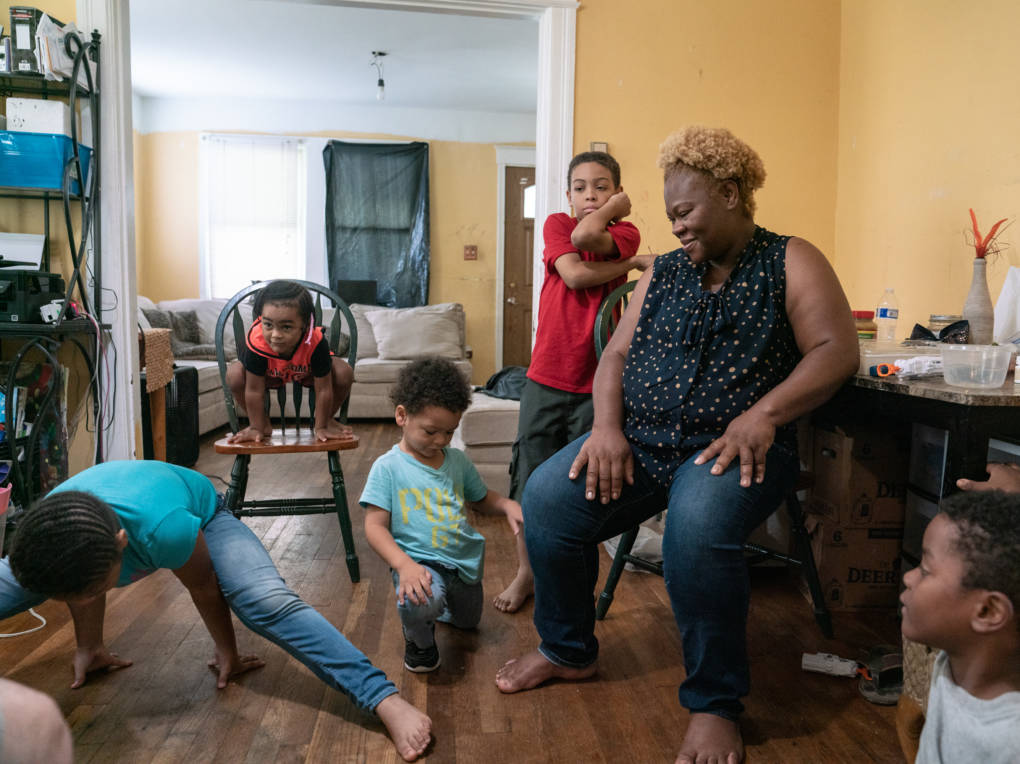
"caption": "Bridget Desmukes (center) and her husband, Jeffrey, love having a big, active family. \"The kids are always climbing on things, flipping all the time — it's not dull,\" she says, laughing. Because Desmukes had developed preeclampsia in a previous pregnancy, her OB-GYN recommended low-dose aspirin at her first prenatal appointment this past spring.",
"description": "Bridget Desmukes (center) and her husband, Jeffrey, love having a big, active family. \"The kids are always climbing on things, flipping all the time — it's not dull,\" she says, laughing. Because Desmukes had developed preeclampsia in a previous pregnancy, her OB-GYN recommended low-dose aspirin at her first prenatal appointment this past spring.",
"title": "Bridget Desmukes (center) and her husband, Jeffrey, love having a big, active family. \"The kids are always climbing on things, flipping all the time — it's not dull,\" she says, laughing. Because Desmukes had developed preeclampsia in a previous pregnancy, her OB-GYN recommended low-dose aspirin at her first prenatal appointment this past spring.",
"credit": "Ryan Kellman/NPR",
"status": "inherit",
"isLoading": false,
"fetchFailed": false
},
"news_11767857": {
"type": "attachments",
"id": "news_11767857",
"meta": {
"index": "attachments_1716263798",
"site": "news",
"id": "11767857",
"found": true
},
"parent": 11767839,
"imgSizes": {
"apple_news_ca_landscape_5_5": {
"file": "https://ww2.kqed.org/app/uploads/sites/10/2019/08/RS13988_iStock_000016287227_Large-1044x783.jpg",
"width": 1044,
"mimeType": "image/jpeg",
"height": 783
},
"apple_news_ca_square_4_0": {
"file": "https://ww2.kqed.org/app/uploads/sites/10/2019/08/RS13988_iStock_000016287227_Large-470x470.jpg",
"width": 470,
"mimeType": "image/jpeg",
"height": 470
},
"twentyfourteen-full-width": {
"file": "https://ww2.kqed.org/app/uploads/sites/10/2019/08/RS13988_iStock_000016287227_Large-1038x576.jpg",
"width": 1038,
"mimeType": "image/jpeg",
"height": 576
},
"thumbnail": {
"file": "https://ww2.kqed.org/app/uploads/sites/10/2019/08/RS13988_iStock_000016287227_Large-160x106.jpg",
"width": 160,
"mimeType": "image/jpeg",
"height": 106
},
"post-thumbnail": {
"file": "https://ww2.kqed.org/app/uploads/sites/10/2019/08/RS13988_iStock_000016287227_Large-672x372.jpg",
"width": 672,
"mimeType": "image/jpeg",
"height": 372
},
"kqedFullSize": {
"file": "https://ww2.kqed.org/app/uploads/sites/10/2019/08/RS13988_iStock_000016287227_Large-e1565907652467.jpg",
"width": 1920,
"height": 1275
},
"apple_news_ca_landscape_4_7": {
"file": "https://ww2.kqed.org/app/uploads/sites/10/2019/08/RS13988_iStock_000016287227_Large-632x474.jpg",
"width": 632,
"mimeType": "image/jpeg",
"height": 474
},
"large": {
"file": "https://ww2.kqed.org/app/uploads/sites/10/2019/08/RS13988_iStock_000016287227_Large-1020x677.jpg",
"width": 1020,
"mimeType": "image/jpeg",
"height": 677
},
"complete_open_graph": {
"file": "https://ww2.kqed.org/app/uploads/sites/10/2019/08/RS13988_iStock_000016287227_Large-1200x797.jpg",
"width": 1200,
"mimeType": "image/jpeg",
"height": 797
},
"apple_news_ca_landscape_4_0": {
"file": "https://ww2.kqed.org/app/uploads/sites/10/2019/08/RS13988_iStock_000016287227_Large-536x402.jpg",
"width": 536,
"mimeType": "image/jpeg",
"height": 402
},
"apple_news_ca_portrait_12_9": {
"file": "https://ww2.kqed.org/app/uploads/sites/10/2019/08/RS13988_iStock_000016287227_Large-1122x1496.jpg",
"width": 1122,
"mimeType": "image/jpeg",
"height": 1496
},
"medium": {
"file": "https://ww2.kqed.org/app/uploads/sites/10/2019/08/RS13988_iStock_000016287227_Large-800x531.jpg",
"width": 800,
"mimeType": "image/jpeg",
"height": 531
},
"apple_news_ca_portrait_4_0": {
"file": "https://ww2.kqed.org/app/uploads/sites/10/2019/08/RS13988_iStock_000016287227_Large-354x472.jpg",
"width": 354,
"mimeType": "image/jpeg",
"height": 472
},
"apple_news_ca_portrait_9_7": {
"file": "https://ww2.kqed.org/app/uploads/sites/10/2019/08/RS13988_iStock_000016287227_Large-840x1120.jpg",
"width": 840,
"mimeType": "image/jpeg",
"height": 1120
},
"apple_news_ca_landscape_12_9": {
"file": "https://ww2.kqed.org/app/uploads/sites/10/2019/08/RS13988_iStock_000016287227_Large-1832x1374.jpg",
"width": 1832,
"mimeType": "image/jpeg",
"height": 1374
},
"apple_news_ca_square_9_7": {
"file": "https://ww2.kqed.org/app/uploads/sites/10/2019/08/RS13988_iStock_000016287227_Large-1104x1104.jpg",
"width": 1104,
"mimeType": "image/jpeg",
"height": 1104
},
"apple_news_ca_portrait_4_7": {
"file": "https://ww2.kqed.org/app/uploads/sites/10/2019/08/RS13988_iStock_000016287227_Large-414x552.jpg",
"width": 414,
"mimeType": "image/jpeg",
"height": 552
},
"apple_news_ca_square_12_9": {
"file": "https://ww2.kqed.org/app/uploads/sites/10/2019/08/RS13988_iStock_000016287227_Large-1472x1472.jpg",
"width": 1472,
"mimeType": "image/jpeg",
"height": 1472
},
"apple_news_ca_portrait_5_5": {
"file": "https://ww2.kqed.org/app/uploads/sites/10/2019/08/RS13988_iStock_000016287227_Large-687x916.jpg",
"width": 687,
"mimeType": "image/jpeg",
"height": 916
},
"full-width": {
"file": "https://ww2.kqed.org/app/uploads/sites/10/2019/08/RS13988_iStock_000016287227_Large-1920x1275.jpg",
"width": 1920,
"mimeType": "image/jpeg",
"height": 1275
},
"apple_news_ca_square_4_7": {
"file": "https://ww2.kqed.org/app/uploads/sites/10/2019/08/RS13988_iStock_000016287227_Large-550x550.jpg",
"width": 550,
"mimeType": "image/jpeg",
"height": 550
},
"apple_news_ca_landscape_9_7": {
"file": "https://ww2.kqed.org/app/uploads/sites/10/2019/08/RS13988_iStock_000016287227_Large-1376x1032.jpg",
"width": 1376,
"mimeType": "image/jpeg",
"height": 1032
},
"apple_news_ca_square_5_5": {
"file": "https://ww2.kqed.org/app/uploads/sites/10/2019/08/RS13988_iStock_000016287227_Large-912x912.jpg",
"width": 912,
"mimeType": "image/jpeg",
"height": 912
}
},
"publishDate": 1565907615,
"modified": 1565907867,
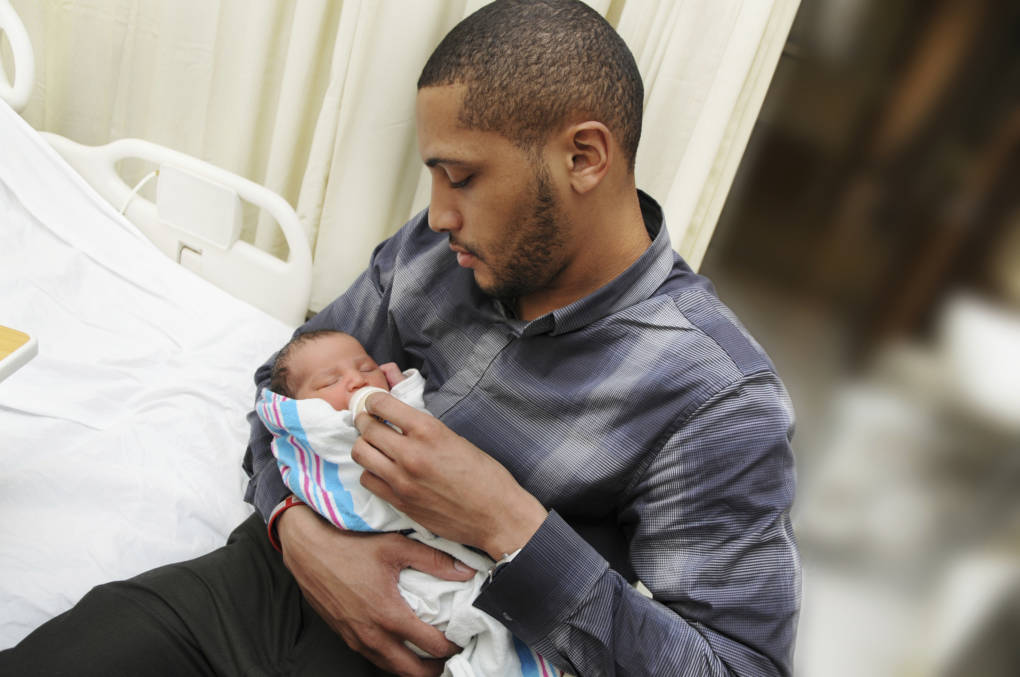
"caption": "A father with his newborn baby. Under an expansion of California's paid family leave law, which goes into effect July 1, 2020, workers will be able to take up to eight weeks off with partial pay to bond with a new baby. ",
"description": null,
"title": "RS13988_iStock_000016287227_Large",
"credit": "iStock",
"status": "inherit",
"isLoading": false,
"fetchFailed": false
},
"news_11760948": {
"type": "attachments",
"id": "news_11760948",
"meta": {
"index": "attachments_1716263798",
"site": "news",
"id": "11760948",
"found": true
},
"parent": 11760903,
"imgSizes": {
"apple_news_ca_landscape_5_5": {
"file": "https://ww2.kqed.org/app/uploads/sites/10/2019/07/RS38060_BLACK-MOTHERS-PHOTO-2-qut-1044x783.jpg",
"width": 1044,
"mimeType": "image/jpeg",
"height": 783
},
"apple_news_ca_square_4_0": {
"file": "https://ww2.kqed.org/app/uploads/sites/10/2019/07/RS38060_BLACK-MOTHERS-PHOTO-2-qut-470x470.jpg",
"width": 470,
"mimeType": "image/jpeg",
"height": 470
},
"twentyfourteen-full-width": {
"file": "https://ww2.kqed.org/app/uploads/sites/10/2019/07/RS38060_BLACK-MOTHERS-PHOTO-2-qut-1038x576.jpg",
"width": 1038,
"mimeType": "image/jpeg",
"height": 576
},
"thumbnail": {
"file": "https://ww2.kqed.org/app/uploads/sites/10/2019/07/RS38060_BLACK-MOTHERS-PHOTO-2-qut-160x107.jpg",
"width": 160,
"mimeType": "image/jpeg",
"height": 107
},
"post-thumbnail": {
"file": "https://ww2.kqed.org/app/uploads/sites/10/2019/07/RS38060_BLACK-MOTHERS-PHOTO-2-qut-672x372.jpg",
"width": 672,
"mimeType": "image/jpeg",
"height": 372
},
"kqedFullSize": {
"file": "https://ww2.kqed.org/app/uploads/sites/10/2019/07/RS38060_BLACK-MOTHERS-PHOTO-2-qut.jpg",
"width": 1920,
"height": 1279
},
"apple_news_ca_landscape_4_7": {
"file": "https://ww2.kqed.org/app/uploads/sites/10/2019/07/RS38060_BLACK-MOTHERS-PHOTO-2-qut-632x474.jpg",
"width": 632,
"mimeType": "image/jpeg",
"height": 474
},
"large": {
"file": "https://ww2.kqed.org/app/uploads/sites/10/2019/07/RS38060_BLACK-MOTHERS-PHOTO-2-qut-1020x679.jpg",
"width": 1020,
"mimeType": "image/jpeg",
"height": 679
},
"complete_open_graph": {
"file": "https://ww2.kqed.org/app/uploads/sites/10/2019/07/RS38060_BLACK-MOTHERS-PHOTO-2-qut-1200x799.jpg",
"width": 1200,
"mimeType": "image/jpeg",
"height": 799
},
"apple_news_ca_landscape_4_0": {
"file": "https://ww2.kqed.org/app/uploads/sites/10/2019/07/RS38060_BLACK-MOTHERS-PHOTO-2-qut-536x402.jpg",
"width": 536,
"mimeType": "image/jpeg",
"height": 402
},
"apple_news_ca_portrait_12_9": {
"file": "https://ww2.kqed.org/app/uploads/sites/10/2019/07/RS38060_BLACK-MOTHERS-PHOTO-2-qut-1122x1279.jpg",
"width": 1122,
"mimeType": "image/jpeg",
"height": 1279
},
"medium": {
"file": "https://ww2.kqed.org/app/uploads/sites/10/2019/07/RS38060_BLACK-MOTHERS-PHOTO-2-qut-800x533.jpg",
"width": 800,
"mimeType": "image/jpeg",
"height": 533
},
"apple_news_ca_portrait_4_0": {
"file": "https://ww2.kqed.org/app/uploads/sites/10/2019/07/RS38060_BLACK-MOTHERS-PHOTO-2-qut-354x472.jpg",
"width": 354,
"mimeType": "image/jpeg",
"height": 472
},
"apple_news_ca_portrait_9_7": {
"file": "https://ww2.kqed.org/app/uploads/sites/10/2019/07/RS38060_BLACK-MOTHERS-PHOTO-2-qut-840x1120.jpg",
"width": 840,
"mimeType": "image/jpeg",
"height": 1120
},
"apple_news_ca_landscape_12_9": {
"file": "https://ww2.kqed.org/app/uploads/sites/10/2019/07/RS38060_BLACK-MOTHERS-PHOTO-2-qut-1832x1279.jpg",
"width": 1832,
"mimeType": "image/jpeg",
"height": 1279
},
"apple_news_ca_square_9_7": {
"file": "https://ww2.kqed.org/app/uploads/sites/10/2019/07/RS38060_BLACK-MOTHERS-PHOTO-2-qut-1104x1104.jpg",
"width": 1104,
"mimeType": "image/jpeg",
"height": 1104
},
"apple_news_ca_portrait_4_7": {
"file": "https://ww2.kqed.org/app/uploads/sites/10/2019/07/RS38060_BLACK-MOTHERS-PHOTO-2-qut-414x552.jpg",
"width": 414,
"mimeType": "image/jpeg",
"height": 552
},
"apple_news_ca_square_12_9": {
"file": "https://ww2.kqed.org/app/uploads/sites/10/2019/07/RS38060_BLACK-MOTHERS-PHOTO-2-qut-1472x1279.jpg",
"width": 1472,
"mimeType": "image/jpeg",
"height": 1279
},
"apple_news_ca_portrait_5_5": {
"file": "https://ww2.kqed.org/app/uploads/sites/10/2019/07/RS38060_BLACK-MOTHERS-PHOTO-2-qut-687x916.jpg",
"width": 687,
"mimeType": "image/jpeg",
"height": 916
},
"full-width": {
"file": "https://ww2.kqed.org/app/uploads/sites/10/2019/07/RS38060_BLACK-MOTHERS-PHOTO-2-qut-1920x1279.jpg",
"width": 1920,
"mimeType": "image/jpeg",
"height": 1279
},
"apple_news_ca_square_4_7": {
"file": "https://ww2.kqed.org/app/uploads/sites/10/2019/07/RS38060_BLACK-MOTHERS-PHOTO-2-qut-550x550.jpg",
"width": 550,
"mimeType": "image/jpeg",
"height": 550
},
"apple_news_ca_landscape_9_7": {
"file": "https://ww2.kqed.org/app/uploads/sites/10/2019/07/RS38060_BLACK-MOTHERS-PHOTO-2-qut-1376x1032.jpg",
"width": 1376,
"mimeType": "image/jpeg",
"height": 1032
},
"apple_news_ca_square_5_5": {
"file": "https://ww2.kqed.org/app/uploads/sites/10/2019/07/RS38060_BLACK-MOTHERS-PHOTO-2-qut-912x912.jpg",
"width": 912,
"mimeType": "image/jpeg",
"height": 912
}
},
"publishDate": 1562968453,
"modified": 1563227331,
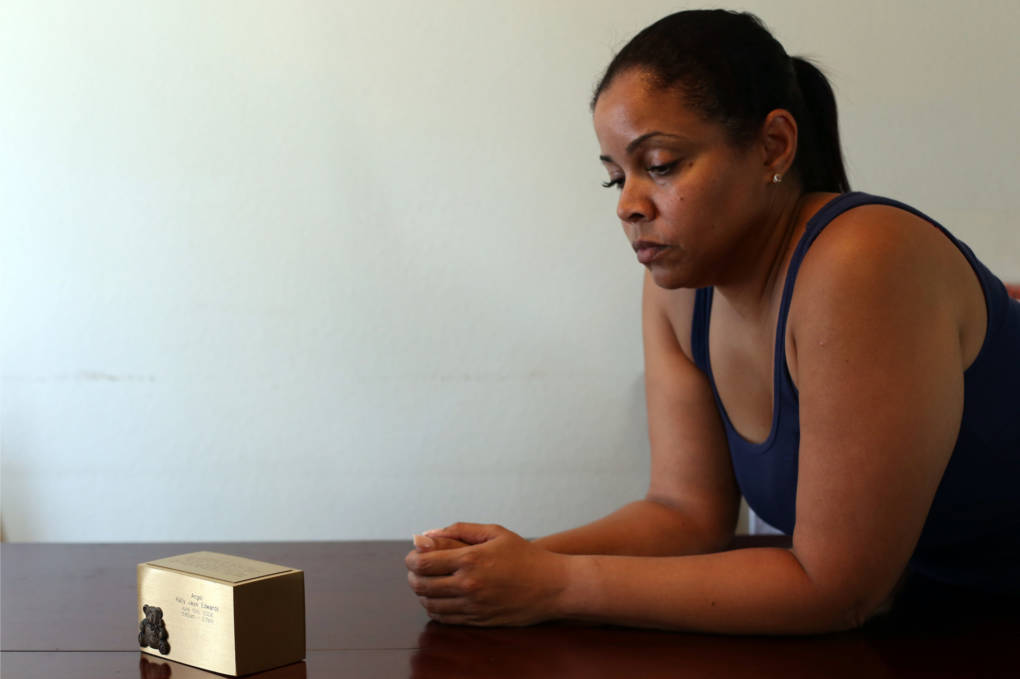
"caption": "Bettye Jean Ford with her first child Kally's ashes. Ms. Ford said when she lost her baby, she was determined to take Kally home with her. ",
"description": "Bettye Jean Ford with her first child Kally's ashes. Ms. Ford said when she lost her baby, she was determined to take Kally home with her. ",
"title": "RS38060_BLACK MOTHERS PHOTO 2-qut",
"credit": "Iris Schneider/CALmatters",
"status": "inherit",
"isLoading": false,
"fetchFailed": false
},
"news_11700419": {
"type": "attachments",
"id": "news_11700419",
"meta": {
"index": "attachments_1716263798",
"site": "news",
"id": "11700419",
"found": true
},
"parent": 11700111,
"imgSizes": {
"small": {
"file": "https://ww2.kqed.org/app/uploads/sites/10/2018/10/RS32431_0M6A0108-qut-520x347.jpg",
"width": 520,
"mimeType": "image/jpeg",
"height": 347
},
"twentyfourteen-full-width": {
"file": "https://ww2.kqed.org/app/uploads/sites/10/2018/10/RS32431_0M6A0108-qut-1038x576.jpg",
"width": 1038,
"mimeType": "image/jpeg",
"height": 576
},
"thumbnail": {
"file": "https://ww2.kqed.org/app/uploads/sites/10/2018/10/RS32431_0M6A0108-qut-160x107.jpg",
"width": 160,
"mimeType": "image/jpeg",
"height": 107
},
"fd-sm": {
"file": "https://ww2.kqed.org/app/uploads/sites/10/2018/10/RS32431_0M6A0108-qut-960x640.jpg",
"width": 960,
"mimeType": "image/jpeg",
"height": 640
},
"post-thumbnail": {
"file": "https://ww2.kqed.org/app/uploads/sites/10/2018/10/RS32431_0M6A0108-qut-672x372.jpg",
"width": 672,
"mimeType": "image/jpeg",
"height": 372
},
"xsmall": {
"file": "https://ww2.kqed.org/app/uploads/sites/10/2018/10/RS32431_0M6A0108-qut-375x250.jpg",
"width": 375,
"mimeType": "image/jpeg",
"height": 250
},
"kqedFullSize": {
"file": "https://ww2.kqed.org/app/uploads/sites/10/2018/10/RS32431_0M6A0108-qut.jpg",
"width": 1920,
"height": 1280
},
"large": {
"file": "https://ww2.kqed.org/app/uploads/sites/10/2018/10/RS32431_0M6A0108-qut-1020x680.jpg",
"width": 1020,
"mimeType": "image/jpeg",
"height": 680
},
"xlarge": {
"file": "https://ww2.kqed.org/app/uploads/sites/10/2018/10/RS32431_0M6A0108-qut-1180x787.jpg",
"width": 1180,
"mimeType": "image/jpeg",
"height": 787
},
"complete_open_graph": {
"file": "https://ww2.kqed.org/app/uploads/sites/10/2018/10/RS32431_0M6A0108-qut-1200x800.jpg",
"width": 1200,
"mimeType": "image/jpeg",
"height": 800
},
"guest-author-50": {
"file": "https://ww2.kqed.org/app/uploads/sites/10/2018/10/RS32431_0M6A0108-qut-50x50.jpg",
"width": 50,
"mimeType": "image/jpeg",
"height": 50
},
"guest-author-96": {
"file": "https://ww2.kqed.org/app/uploads/sites/10/2018/10/RS32431_0M6A0108-qut-96x96.jpg",
"width": 96,
"mimeType": "image/jpeg",
"height": 96
},
"medium": {
"file": "https://ww2.kqed.org/app/uploads/sites/10/2018/10/RS32431_0M6A0108-qut-800x533.jpg",
"width": 800,
"mimeType": "image/jpeg",
"height": 533
},
"guest-author-64": {
"file": "https://ww2.kqed.org/app/uploads/sites/10/2018/10/RS32431_0M6A0108-qut-64x64.jpg",
"width": 64,
"mimeType": "image/jpeg",
"height": 64
},
"guest-author-32": {
"file": "https://ww2.kqed.org/app/uploads/sites/10/2018/10/RS32431_0M6A0108-qut-32x32.jpg",
"width": 32,
"mimeType": "image/jpeg",
"height": 32
},
"fd-lrg": {
"file": "https://ww2.kqed.org/app/uploads/sites/10/2018/10/RS32431_0M6A0108-qut-1920x1280.jpg",
"width": 1920,
"mimeType": "image/jpeg",
"height": 1280
},
"fd-med": {
"file": "https://ww2.kqed.org/app/uploads/sites/10/2018/10/RS32431_0M6A0108-qut-1180x787.jpg",
"width": 1180,
"mimeType": "image/jpeg",
"height": 787
},
"full-width": {
"file": "https://ww2.kqed.org/app/uploads/sites/10/2018/10/RS32431_0M6A0108-qut-1920x1280.jpg",
"width": 1920,
"mimeType": "image/jpeg",
"height": 1280
},
"detail": {
"file": "https://ww2.kqed.org/app/uploads/sites/10/2018/10/RS32431_0M6A0108-qut-150x150.jpg",
"width": 150,
"mimeType": "image/jpeg",
"height": 150
},
"guest-author-128": {
"file": "https://ww2.kqed.org/app/uploads/sites/10/2018/10/RS32431_0M6A0108-qut-128x128.jpg",
"width": 128,
"mimeType": "image/jpeg",
"height": 128
},
"xxsmall": {
"file": "https://ww2.kqed.org/app/uploads/sites/10/2018/10/RS32431_0M6A0108-qut-240x160.jpg",
"width": 240,
"mimeType": "image/jpeg",
"height": 160
}
},
"publishDate": 1540245609,
"modified": 1540245652,
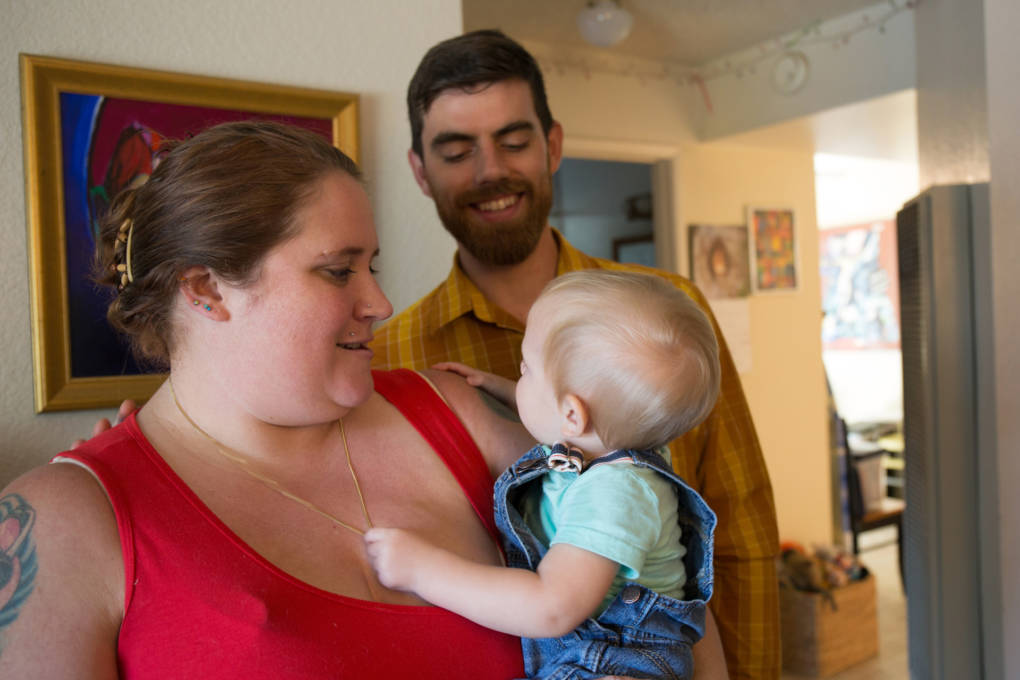
"caption": "Nicole and Ben Veum, with 10-month-old Adrian",
"description": null,
"title": "RS32431_0M6A0108-qut",
"credit": "Adam Grossberg/KQED",
"status": "inherit",
"isLoading": false,
"fetchFailed": false
},
"futureofyou_442044": {
"type": "attachments",
"id": "futureofyou_442044",
"meta": {
"index": "attachments_1716263798",
"site": "futureofyou",
"id": "442044",
"found": true
},
"parent": 442039,
"imgSizes": {
"small": {
"file": "https://ww2.kqed.org/app/uploads/sites/13/2018/05/iStock-669294168-520x347.jpg",
"width": 520,
"mimeType": "image/jpeg",
"height": 347
},
"twentyfourteen-full-width": {
"file": "https://ww2.kqed.org/app/uploads/sites/13/2018/05/iStock-669294168-1038x576.jpg",
"width": 1038,
"mimeType": "image/jpeg",
"height": 576
},
"thumbnail": {
"file": "https://ww2.kqed.org/app/uploads/sites/13/2018/05/iStock-669294168-160x107.jpg",
"width": 160,
"mimeType": "image/jpeg",
"height": 107
},
"fd-sm": {
"file": "https://ww2.kqed.org/app/uploads/sites/13/2018/05/iStock-669294168-960x640.jpg",
"width": 960,
"mimeType": "image/jpeg",
"height": 640
},
"post-thumbnail": {
"file": "https://ww2.kqed.org/app/uploads/sites/13/2018/05/iStock-669294168-672x372.jpg",
"width": 672,
"mimeType": "image/jpeg",
"height": 372
},
"xsmall": {
"file": "https://ww2.kqed.org/app/uploads/sites/13/2018/05/iStock-669294168-375x250.jpg",
"width": 375,
"mimeType": "image/jpeg",
"height": 250
},
"kqedFullSize": {
"file": "https://ww2.kqed.org/app/uploads/sites/13/2018/05/iStock-669294168.jpg",
"width": 5265,
"height": 3511
},
"large": {
"file": "https://ww2.kqed.org/app/uploads/sites/13/2018/05/iStock-669294168-1020x680.jpg",
"width": 1020,
"mimeType": "image/jpeg",
"height": 680
},
"xlarge": {
"file": "https://ww2.kqed.org/app/uploads/sites/13/2018/05/iStock-669294168-1180x787.jpg",
"width": 1180,
"mimeType": "image/jpeg",
"height": 787
},
"complete_open_graph": {
"file": "https://ww2.kqed.org/app/uploads/sites/13/2018/05/iStock-669294168-1200x800.jpg",
"width": 1200,
"mimeType": "image/jpeg",
"height": 800
},
"guest-author-50": {
"file": "https://ww2.kqed.org/app/uploads/sites/13/2018/05/iStock-669294168-50x50.jpg",
"width": 50,
"mimeType": "image/jpeg",
"height": 50
},
"guest-author-96": {
"file": "https://ww2.kqed.org/app/uploads/sites/13/2018/05/iStock-669294168-96x96.jpg",
"width": 96,
"mimeType": "image/jpeg",
"height": 96
},
"medium": {
"file": "https://ww2.kqed.org/app/uploads/sites/13/2018/05/iStock-669294168-800x533.jpg",
"width": 800,
"mimeType": "image/jpeg",
"height": 533
},
"guest-author-64": {
"file": "https://ww2.kqed.org/app/uploads/sites/13/2018/05/iStock-669294168-64x64.jpg",
"width": 64,
"mimeType": "image/jpeg",
"height": 64
},
"guest-author-32": {
"file": "https://ww2.kqed.org/app/uploads/sites/13/2018/05/iStock-669294168-32x32.jpg",
"width": 32,
"mimeType": "image/jpeg",
"height": 32
},
"fd-lrg": {
"file": "https://ww2.kqed.org/app/uploads/sites/13/2018/05/iStock-669294168-1920x1280.jpg",
"width": 1920,
"mimeType": "image/jpeg",
"height": 1280
},
"fd-med": {
"file": "https://ww2.kqed.org/app/uploads/sites/13/2018/05/iStock-669294168-1180x787.jpg",
"width": 1180,
"mimeType": "image/jpeg",
"height": 787
},
"full-width": {
"file": "https://ww2.kqed.org/app/uploads/sites/13/2018/05/iStock-669294168-1920x1280.jpg",
"width": 1920,
"mimeType": "image/jpeg",
"height": 1280
},
"detail": {
"file": "https://ww2.kqed.org/app/uploads/sites/13/2018/05/iStock-669294168-150x150.jpg",
"width": 150,
"mimeType": "image/jpeg",
"height": 150
},
"medium_large": {
"file": "https://ww2.kqed.org/app/uploads/sites/13/2018/05/iStock-669294168-768x512.jpg",
"width": 768,
"mimeType": "image/jpeg",
"height": 512
},
"guest-author-128": {
"file": "https://ww2.kqed.org/app/uploads/sites/13/2018/05/iStock-669294168-128x128.jpg",
"width": 128,
"mimeType": "image/jpeg",
"height": 128
},
"xxsmall": {
"file": "https://ww2.kqed.org/app/uploads/sites/13/2018/05/iStock-669294168-240x160.jpg",
"width": 240,
"mimeType": "image/jpeg",
"height": 160
}
},
"publishDate": 1527193950,
"modified": 1527194575,
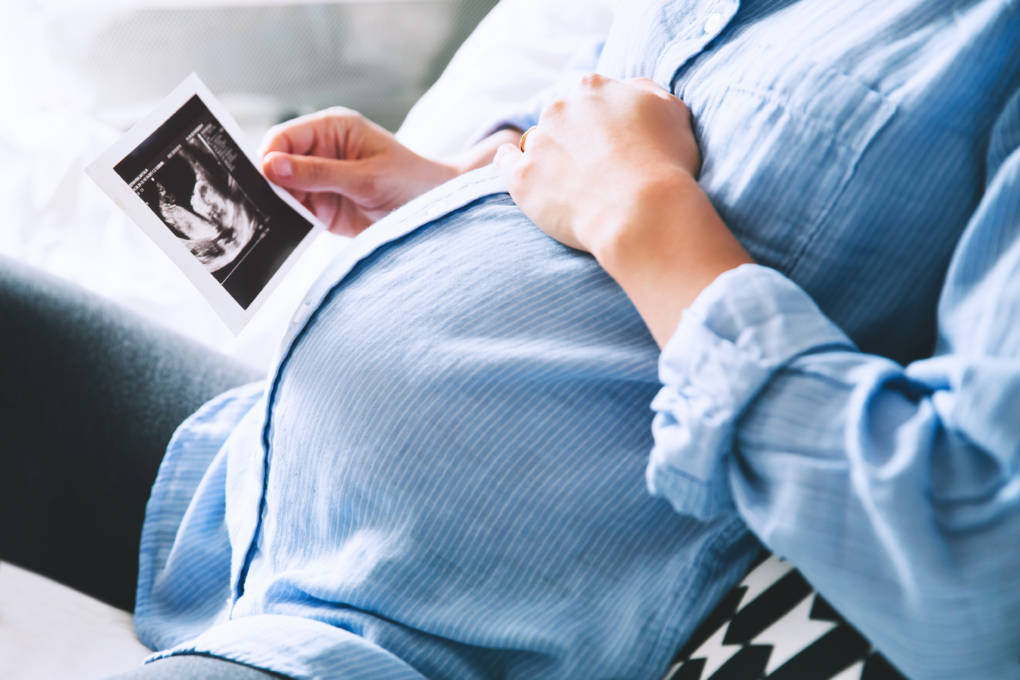
"caption": "Researchers say a new test for pregnant women is more than 80 percent accurate in predicting preterm births, the leading cause of death for children under 5 in the United States.",
"description": null,
"title": "Beautiful pregnant woman at home.",
"credit": "iStock",
"status": "inherit",
"isLoading": false,
"fetchFailed": false
},
"news_11675566": {
"type": "attachments",
"id": "news_11675566",
"meta": {
"index": "attachments_1716263798",
"site": "news",
"id": "11675566",
"found": true
},
"parent": 11669155,
"imgSizes": {
"small": {
"file": "https://ww2.kqed.org/app/uploads/sites/10/2018/05/fresno-story-520x390.jpg",
"width": 520,
"mimeType": "image/jpeg",
"height": 390
},
"twentyfourteen-full-width": {
"file": "https://ww2.kqed.org/app/uploads/sites/10/2018/05/fresno-story-1038x576.jpg",
"width": 1038,
"mimeType": "image/jpeg",
"height": 576
},
"thumbnail": {
"file": "https://ww2.kqed.org/app/uploads/sites/10/2018/05/fresno-story-160x120.jpg",
"width": 160,
"mimeType": "image/jpeg",
"height": 120
},
"fd-sm": {
"file": "https://ww2.kqed.org/app/uploads/sites/10/2018/05/fresno-story-960x720.jpg",
"width": 960,
"mimeType": "image/jpeg",
"height": 720
},
"post-thumbnail": {
"file": "https://ww2.kqed.org/app/uploads/sites/10/2018/05/fresno-story-672x372.jpg",
"width": 672,
"mimeType": "image/jpeg",
"height": 372
},
"xsmall": {
"file": "https://ww2.kqed.org/app/uploads/sites/10/2018/05/fresno-story-375x281.jpg",
"width": 375,
"mimeType": "image/jpeg",
"height": 281
},
"kqedFullSize": {
"file": "https://ww2.kqed.org/app/uploads/sites/10/2018/05/fresno-story-e1529346352275.jpg",
"width": 1920,
"height": 1440
},
"large": {
"file": "https://ww2.kqed.org/app/uploads/sites/10/2018/05/fresno-story-1020x765.jpg",
"width": 1020,
"mimeType": "image/jpeg",
"height": 765
},
"xlarge": {
"file": "https://ww2.kqed.org/app/uploads/sites/10/2018/05/fresno-story-1180x885.jpg",
"width": 1180,
"mimeType": "image/jpeg",
"height": 885
},
"complete_open_graph": {
"file": "https://ww2.kqed.org/app/uploads/sites/10/2018/05/fresno-story-1200x900.jpg",
"width": 1200,
"mimeType": "image/jpeg",
"height": 900
},
"guest-author-50": {
"file": "https://ww2.kqed.org/app/uploads/sites/10/2018/05/fresno-story-50x50.jpg",
"width": 50,
"mimeType": "image/jpeg",
"height": 50
},
"guest-author-96": {
"file": "https://ww2.kqed.org/app/uploads/sites/10/2018/05/fresno-story-96x96.jpg",
"width": 96,
"mimeType": "image/jpeg",
"height": 96
},
"medium": {
"file": "https://ww2.kqed.org/app/uploads/sites/10/2018/05/fresno-story-800x600.jpg",
"width": 800,
"mimeType": "image/jpeg",
"height": 600
},
"guest-author-64": {
"file": "https://ww2.kqed.org/app/uploads/sites/10/2018/05/fresno-story-64x64.jpg",
"width": 64,
"mimeType": "image/jpeg",
"height": 64
},
"guest-author-32": {
"file": "https://ww2.kqed.org/app/uploads/sites/10/2018/05/fresno-story-32x32.jpg",
"width": 32,
"mimeType": "image/jpeg",
"height": 32
},
"fd-lrg": {
"file": "https://ww2.kqed.org/app/uploads/sites/10/2018/05/fresno-story-1920x1440.jpg",
"width": 1920,
"mimeType": "image/jpeg",
"height": 1440
},
"fd-med": {
"file": "https://ww2.kqed.org/app/uploads/sites/10/2018/05/fresno-story-1180x885.jpg",
"width": 1180,
"mimeType": "image/jpeg",
"height": 885
},
"full-width": {
"file": "https://ww2.kqed.org/app/uploads/sites/10/2018/05/fresno-story-1920x1440.jpg",
"width": 1920,
"mimeType": "image/jpeg",
"height": 1440
},
"detail": {
"file": "https://ww2.kqed.org/app/uploads/sites/10/2018/05/fresno-story-150x150.jpg",
"width": 150,
"mimeType": "image/jpeg",
"height": 150
},
"guest-author-128": {
"file": "https://ww2.kqed.org/app/uploads/sites/10/2018/05/fresno-story-128x128.jpg",
"width": 128,
"mimeType": "image/jpeg",
"height": 128
},
"xxsmall": {
"file": "https://ww2.kqed.org/app/uploads/sites/10/2018/05/fresno-story-240x180.jpg",
"width": 240,
"mimeType": "image/jpeg",
"height": 180
}
},
"publishDate": 1529346319,
"modified": 1529346341,
"caption": "Amanda leans foward to talk to her daughter, Maci, in the neonatal intensive care unit of a Fresno hospital.",
"description": null,
"title": "fresno-story",
"credit": "Rachel Cassandra/KQED",
"status": "inherit",
"isLoading": false,
"fetchFailed": false
},
"stateofhealth_362852": {
"type": "attachments",
"id": "stateofhealth_362852",
"meta": {
"index": "attachments_1716263798",
"site": "stateofhealth",
"id": "362852",
"found": true
},
"parent": 362850,
"imgSizes": {
"small": {
"file": "https://ww2.kqed.org/app/uploads/sites/27/2018/03/Wendy-Root-Askew-520x390.jpg",
"width": 520,
"mimeType": "image/jpeg",
"height": 390
},
"twentyfourteen-full-width": {
"file": "https://ww2.kqed.org/app/uploads/sites/27/2018/03/Wendy-Root-Askew-1038x576.jpg",
"width": 1038,
"mimeType": "image/jpeg",
"height": 576
},
"thumbnail": {
"file": "https://ww2.kqed.org/app/uploads/sites/27/2018/03/Wendy-Root-Askew-160x120.jpg",
"width": 160,
"mimeType": "image/jpeg",
"height": 120
},
"fd-sm": {
"file": "https://ww2.kqed.org/app/uploads/sites/27/2018/03/Wendy-Root-Askew-960x720.jpg",
"width": 960,
"mimeType": "image/jpeg",
"height": 720
},
"post-thumbnail": {
"file": "https://ww2.kqed.org/app/uploads/sites/27/2018/03/Wendy-Root-Askew-672x372.jpg",
"width": 672,
"mimeType": "image/jpeg",
"height": 372
},
"xsmall": {
"file": "https://ww2.kqed.org/app/uploads/sites/27/2018/03/Wendy-Root-Askew-375x281.jpg",
"width": 375,
"mimeType": "image/jpeg",
"height": 281
},
"kqedFullSize": {
"file": "https://ww2.kqed.org/app/uploads/sites/27/2018/03/Wendy-Root-Askew-e1519951941887.jpg",
"width": 1920,
"height": 1440
},
"large": {
"file": "https://ww2.kqed.org/app/uploads/sites/27/2018/03/Wendy-Root-Askew-1020x765.jpg",
"width": 1020,
"mimeType": "image/jpeg",
"height": 765
},
"xlarge": {
"file": "https://ww2.kqed.org/app/uploads/sites/27/2018/03/Wendy-Root-Askew-1180x885.jpg",
"width": 1180,
"mimeType": "image/jpeg",
"height": 885
},
"guest-author-50": {
"file": "https://ww2.kqed.org/app/uploads/sites/27/2018/03/Wendy-Root-Askew-50x50.jpg",
"width": 50,
"mimeType": "image/jpeg",
"height": 50
},
"guest-author-96": {
"file": "https://ww2.kqed.org/app/uploads/sites/27/2018/03/Wendy-Root-Askew-96x96.jpg",
"width": 96,
"mimeType": "image/jpeg",
"height": 96
},
"medium": {
"file": "https://ww2.kqed.org/app/uploads/sites/27/2018/03/Wendy-Root-Askew-800x600.jpg",
"width": 800,
"mimeType": "image/jpeg",
"height": 600
},
"guest-author-64": {
"file": "https://ww2.kqed.org/app/uploads/sites/27/2018/03/Wendy-Root-Askew-64x64.jpg",
"width": 64,
"mimeType": "image/jpeg",
"height": 64
},
"guest-author-32": {
"file": "https://ww2.kqed.org/app/uploads/sites/27/2018/03/Wendy-Root-Askew-32x32.jpg",
"width": 32,
"mimeType": "image/jpeg",
"height": 32
},
"fd-lrg": {
"file": "https://ww2.kqed.org/app/uploads/sites/27/2018/03/Wendy-Root-Askew-1920x1440.jpg",
"width": 1920,
"mimeType": "image/jpeg",
"height": 1440
},
"fd-med": {
"file": "https://ww2.kqed.org/app/uploads/sites/27/2018/03/Wendy-Root-Askew-1180x885.jpg",
"width": 1180,
"mimeType": "image/jpeg",
"height": 885
},
"full-width": {
"file": "https://ww2.kqed.org/app/uploads/sites/27/2018/03/Wendy-Root-Askew-1920x1440.jpg",
"width": 1920,
"mimeType": "image/jpeg",
"height": 1440
},
"detail": {
"file": "https://ww2.kqed.org/app/uploads/sites/27/2018/03/Wendy-Root-Askew-150x150.jpg",
"width": 150,
"mimeType": "image/jpeg",
"height": 150
},
"medium_large": {
"file": "https://ww2.kqed.org/app/uploads/sites/27/2018/03/Wendy-Root-Askew-768x576.jpg",
"width": 768,
"mimeType": "image/jpeg",
"height": 576
},
"guest-author-128": {
"file": "https://ww2.kqed.org/app/uploads/sites/27/2018/03/Wendy-Root-Askew-128x128.jpg",
"width": 128,
"mimeType": "image/jpeg",
"height": 128
},
"xxsmall": {
"file": "https://ww2.kqed.org/app/uploads/sites/27/2018/03/Wendy-Root-Askew-240x180.jpg",
"width": 240,
"mimeType": "image/jpeg",
"height": 180
}
},
"publishDate": 1519951917,
"modified": 1519952132,
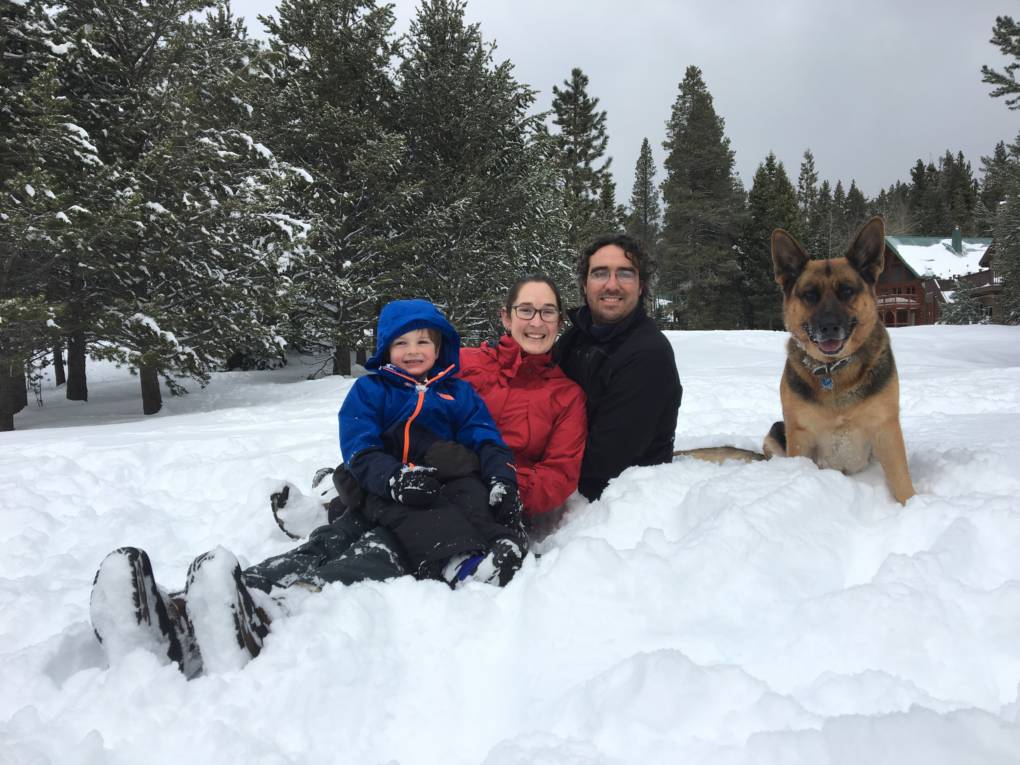
"caption": "Wendy Root Askew struggled with postpartum anxiety after her son was born. She is pictured here with her husband Dominick, and their son and dog on vacation in 2015.",
"description": null,
"title": "Wendy Root Askew",
"credit": "Courtesy of Wendy Root Askew",
"status": "inherit",
"isLoading": false,
"fetchFailed": false
},
"news_11644960": {
"type": "attachments",
"id": "news_11644960",
"meta": {
"index": "attachments_1716263798",
"site": "news",
"id": "11644960",
"found": true
},
"parent": 11644951,
"imgSizes": {
"small": {
"file": "https://ww2.kqed.org/app/uploads/sites/10/2018/01/Sauter-520x405.jpg",
"width": 520,
"mimeType": "image/jpeg",
"height": 405
},
"twentyfourteen-full-width": {
"file": "https://ww2.kqed.org/app/uploads/sites/10/2018/01/Sauter-1038x576.jpg",
"width": 1038,
"mimeType": "image/jpeg",
"height": 576
},
"thumbnail": {
"file": "https://ww2.kqed.org/app/uploads/sites/10/2018/01/Sauter-160x125.jpg",
"width": 160,
"mimeType": "image/jpeg",
"height": 125
},
"fd-sm": {
"file": "https://ww2.kqed.org/app/uploads/sites/10/2018/01/Sauter-960x748.jpg",
"width": 960,
"mimeType": "image/jpeg",
"height": 748
},
"post-thumbnail": {
"file": "https://ww2.kqed.org/app/uploads/sites/10/2018/01/Sauter-672x372.jpg",
"width": 672,
"mimeType": "image/jpeg",
"height": 372
},
"xsmall": {
"file": "https://ww2.kqed.org/app/uploads/sites/10/2018/01/Sauter-375x292.jpg",
"width": 375,
"mimeType": "image/jpeg",
"height": 292
},
"kqedFullSize": {
"file": "https://ww2.kqed.org/app/uploads/sites/10/2018/01/Sauter.jpg",
"width": 1920,
"height": 1496
},
"large": {
"file": "https://ww2.kqed.org/app/uploads/sites/10/2018/01/Sauter-1020x795.jpg",
"width": 1020,
"mimeType": "image/jpeg",
"height": 795
},
"xlarge": {
"file": "https://ww2.kqed.org/app/uploads/sites/10/2018/01/Sauter-1180x919.jpg",
"width": 1180,
"mimeType": "image/jpeg",
"height": 919
},
"guest-author-50": {
"file": "https://ww2.kqed.org/app/uploads/sites/10/2018/01/Sauter-50x50.jpg",
"width": 50,
"mimeType": "image/jpeg",
"height": 50
},
"guest-author-96": {
"file": "https://ww2.kqed.org/app/uploads/sites/10/2018/01/Sauter-96x96.jpg",
"width": 96,
"mimeType": "image/jpeg",
"height": 96
},
"medium": {
"file": "https://ww2.kqed.org/app/uploads/sites/10/2018/01/Sauter-800x623.jpg",
"width": 800,
"mimeType": "image/jpeg",
"height": 623
},
"guest-author-64": {
"file": "https://ww2.kqed.org/app/uploads/sites/10/2018/01/Sauter-64x64.jpg",
"width": 64,
"mimeType": "image/jpeg",
"height": 64
},
"guest-author-32": {
"file": "https://ww2.kqed.org/app/uploads/sites/10/2018/01/Sauter-32x32.jpg",
"width": 32,
"mimeType": "image/jpeg",
"height": 32
},
"fd-lrg": {
"file": "https://ww2.kqed.org/app/uploads/sites/10/2018/01/Sauter-1920x1496.jpg",
"width": 1920,
"mimeType": "image/jpeg",
"height": 1496
},
"fd-med": {
"file": "https://ww2.kqed.org/app/uploads/sites/10/2018/01/Sauter-1180x919.jpg",
"width": 1180,
"mimeType": "image/jpeg",
"height": 919
},
"full-width": {
"file": "https://ww2.kqed.org/app/uploads/sites/10/2018/01/Sauter-1920x1496.jpg",
"width": 1920,
"mimeType": "image/jpeg",
"height": 1496
},
"detail": {
"file": "https://ww2.kqed.org/app/uploads/sites/10/2018/01/Sauter-150x150.jpg",
"width": 150,
"mimeType": "image/jpeg",
"height": 150
},
"guest-author-128": {
"file": "https://ww2.kqed.org/app/uploads/sites/10/2018/01/Sauter-128x128.jpg",
"width": 128,
"mimeType": "image/jpeg",
"height": 128
},
"xxsmall": {
"file": "https://ww2.kqed.org/app/uploads/sites/10/2018/01/Sauter-240x187.jpg",
"width": 240,
"mimeType": "image/jpeg",
"height": 187
}
},
"publishDate": 1517257776,
"modified": 1517257814,
"caption": "When Jenna Sauter's youngest son, Axel, tested positive for THC — marijuana's active ingredient — after he was born, she got a home visit from local social services. Sauter says she and her friends don't smoke near their children.",
"description": "When Jenna Sauter's youngest son, Axel, tested positive for THC — marijuana's active ingredient — after he was born, she got a home visit from local social services. Sauter says she and her friends don't smoke near their children.",
"title": "Sauter",
"credit": "Sarah Varney/Kaiser Health News",
"status": "inherit",
"isLoading": false,
"fetchFailed": false
},
"news_11622376": {
"type": "attachments",
"id": "news_11622376",
"meta": {
"index": "attachments_1716263798",
"site": "news",
"id": "11622376",
"found": true
},
"parent": 11622370,
"imgSizes": {
"small": {
"file": "https://ww2.kqed.org/app/uploads/sites/10/2017/10/Nicole-and-baby-520x390.jpg",
"width": 520,
"mimeType": "image/jpeg",
"height": 390
},
"twentyfourteen-full-width": {
"file": "https://ww2.kqed.org/app/uploads/sites/10/2017/10/Nicole-and-baby-1038x576.jpg",
"width": 1038,
"mimeType": "image/jpeg",
"height": 576
},
"thumbnail": {
"file": "https://ww2.kqed.org/app/uploads/sites/10/2017/10/Nicole-and-baby-160x120.jpg",
"width": 160,
"mimeType": "image/jpeg",
"height": 120
},
"fd-sm": {
"file": "https://ww2.kqed.org/app/uploads/sites/10/2017/10/Nicole-and-baby-960x720.jpg",
"width": 960,
"mimeType": "image/jpeg",
"height": 720
},
"post-thumbnail": {
"file": "https://ww2.kqed.org/app/uploads/sites/10/2017/10/Nicole-and-baby-672x372.jpg",
"width": 672,
"mimeType": "image/jpeg",
"height": 372
},
"xsmall": {
"file": "https://ww2.kqed.org/app/uploads/sites/10/2017/10/Nicole-and-baby-375x281.jpg",
"width": 375,
"mimeType": "image/jpeg",
"height": 281
},
"kqedFullSize": {
"file": "https://ww2.kqed.org/app/uploads/sites/10/2017/10/Nicole-and-baby-e1507691732502.jpg",
"width": 1920,
"height": 1440
},
"large": {
"file": "https://ww2.kqed.org/app/uploads/sites/10/2017/10/Nicole-and-baby-1020x765.jpg",
"width": 1020,
"mimeType": "image/jpeg",
"height": 765
},
"xlarge": {
"file": "https://ww2.kqed.org/app/uploads/sites/10/2017/10/Nicole-and-baby-1180x885.jpg",
"width": 1180,
"mimeType": "image/jpeg",
"height": 885
},
"guest-author-50": {
"file": "https://ww2.kqed.org/app/uploads/sites/10/2017/10/Nicole-and-baby-50x50.jpg",
"width": 50,
"mimeType": "image/jpeg",
"height": 50
},
"guest-author-96": {
"file": "https://ww2.kqed.org/app/uploads/sites/10/2017/10/Nicole-and-baby-96x96.jpg",
"width": 96,
"mimeType": "image/jpeg",
"height": 96
},
"medium": {
"file": "https://ww2.kqed.org/app/uploads/sites/10/2017/10/Nicole-and-baby-800x600.jpg",
"width": 800,
"mimeType": "image/jpeg",
"height": 600
},
"guest-author-64": {
"file": "https://ww2.kqed.org/app/uploads/sites/10/2017/10/Nicole-and-baby-64x64.jpg",
"width": 64,
"mimeType": "image/jpeg",
"height": 64
},
"guest-author-32": {
"file": "https://ww2.kqed.org/app/uploads/sites/10/2017/10/Nicole-and-baby-32x32.jpg",
"width": 32,
"mimeType": "image/jpeg",
"height": 32
},
"fd-lrg": {
"file": "https://ww2.kqed.org/app/uploads/sites/10/2017/10/Nicole-and-baby-1920x1440.jpg",
"width": 1920,
"mimeType": "image/jpeg",
"height": 1440
},
"fd-med": {
"file": "https://ww2.kqed.org/app/uploads/sites/10/2017/10/Nicole-and-baby-1180x885.jpg",
"width": 1180,
"mimeType": "image/jpeg",
"height": 885
},
"full-width": {
"file": "https://ww2.kqed.org/app/uploads/sites/10/2017/10/Nicole-and-baby-1920x1440.jpg",
"width": 1920,
"mimeType": "image/jpeg",
"height": 1440
},
"detail": {
"file": "https://ww2.kqed.org/app/uploads/sites/10/2017/10/Nicole-and-baby-150x150.jpg",
"width": 150,
"mimeType": "image/jpeg",
"height": 150
},
"guest-author-128": {
"file": "https://ww2.kqed.org/app/uploads/sites/10/2017/10/Nicole-and-baby-128x128.jpg",
"width": 128,
"mimeType": "image/jpeg",
"height": 128
},
"xxsmall": {
"file": "https://ww2.kqed.org/app/uploads/sites/10/2017/10/Nicole-and-baby-240x180.jpg",
"width": 240,
"mimeType": "image/jpeg",
"height": 180
}
},
"publishDate": 1507691703,
"modified": 1507692140,
"caption": "Nicole Veum was in labor when she was evacuated from the hospital in Santa Rosa on Monday.",
"description": null,
"title": "Nicole and baby",
"credit": "April Dembosky",
"status": "inherit",
"isLoading": false,
"fetchFailed": false
}
},
"audioPlayerReducer": {
"postId": "stream_live",
"isPaused": true,
"isPlaying": false,
"pfsActive": false,
"pledgeModalIsOpen": true,
"playerDrawerIsOpen": false,
"liveAudioPlayStartedAt": 0,
"liveAudioPlayContext": ""
},
"authorsReducer": {
"byline_news_11876711": {
"type": "authors",
"id": "byline_news_11876711",
"meta": {
"override": true
},
"slug": "byline_news_11876711",
"name": "\u003ca href=\"https://californiahealthline.org/news/author/anna-almendrala/\">Anna Almendrala\u003c/a>",
"isLoading": false
},
"byline_news_11775881": {
"type": "authors",
"id": "byline_news_11775881",
"meta": {
"override": true
},
"slug": "byline_news_11775881",
"name": "\u003ca href= \"https://www.npr.org/people/349308023/selena-simmons-duffin\"> Selena Simmons-Duffin \u003ca/> \u003cbr>NPR",
"isLoading": false
},
"byline_news_11767839": {
"type": "authors",
"id": "byline_news_11767839",
"meta": {
"override": true
},
"slug": "byline_news_11767839",
"name": "\u003ca href=\"https://calmatters.org/author/laurel-rosenhall/\">Lauren Rosenhall\u003c/a>\u003cbr>CalMatters",
"isLoading": false
},
"byline_news_11760903": {
"type": "authors",
"id": "byline_news_11760903",
"meta": {
"override": true
},
"slug": "byline_news_11760903",
"name": "Adria Watson \u003cbr>CALmatters",
"isLoading": false
},
"byline_news_11669155": {
"type": "authors",
"id": "byline_news_11669155",
"meta": {
"override": true
},
"slug": "byline_news_11669155",
"name": "Rachel Cassandra",
"isLoading": false
},
"byline_news_11644951": {
"type": "authors",
"id": "byline_news_11644951",
"meta": {
"override": true
},
"slug": "byline_news_11644951",
"name": "Sarah Varney",
"isLoading": false
},
"kqednewsstaffandwires": {
"type": "authors",
"id": "237",
"meta": {
"index": "authors_1716337520",
"id": "237",
"found": true
},
"name": "KQED News Staff and Wires",
"firstName": "KQED News Staff and Wires",
"lastName": null,
"slug": "kqednewsstaffandwires",
"email": "onlinenewsstaff@kqed.org",
"display_author_email": false,
"staff_mastheads": [],
"title": null,
"bio": null,
"avatar": "https://secure.gravatar.com/avatar/72295af8ebbfbd19a4948f5271285664?s=600&d=blank&r=g",
"twitter": null,
"facebook": null,
"instagram": null,
"linkedin": null,
"sites": [
{
"site": "arts",
"roles": [
"contributor"
]
},
{
"site": "news",
"roles": [
"contributor"
]
},
{
"site": "lowdown",
"roles": [
"author"
]
},
{
"site": "stateofhealth",
"roles": [
"contributor"
]
},
{
"site": "food",
"roles": [
"author"
]
}
],
"headData": {
"title": "KQED News Staff and Wires | KQED",
"description": null,
"ogImgSrc": "https://secure.gravatar.com/avatar/72295af8ebbfbd19a4948f5271285664?s=600&d=blank&r=g",
"twImgSrc": "https://secure.gravatar.com/avatar/72295af8ebbfbd19a4948f5271285664?s=600&d=blank&r=g"
},
"isLoading": false,
"link": "/author/kqednewsstaffandwires"
},
"adembosky": {
"type": "authors",
"id": "3205",
"meta": {
"index": "authors_1716337520",
"id": "3205",
"found": true
},
"name": "April Dembosky",
"firstName": "April",
"lastName": "Dembosky",
"slug": "adembosky",
"email": "adembosky@kqed.org",
"display_author_email": false,
"staff_mastheads": [
"news",
"science"
],
"title": "KQED Health Correspondent",
"bio": "April Dembosky is the health correspondent for KQED News and a regular contributor to NPR. She specializes in covering altered states of mind, from postpartum depression to methamphetamine-induced psychosis to the insanity defense. Her investigative series on insurance companies sidestepping mental health laws won multiple awards, including first place in beat reporting from the national Association of Health Care Journalists. She is the recipient of numerous other prizes and fellowships, including a national Edward R. Murrow award for investigative reporting, a Society of Professional Journalists award for long-form storytelling, and a Carter Center Fellowship for Mental Health Journalism.\r\n\r\nDembosky reported and produced \u003cem>Soundtrack of Silence\u003c/em>, an audio documentary about music and memory that is currently being made into a feature film by Paramount Pictures.\r\n\r\nBefore joining KQED in 2013, Dembosky covered technology and Silicon Valley for \u003cem>The Financial Times of London,\u003c/em> and contributed business and arts stories to \u003cem>Marketplace \u003c/em>and \u003cem>The New York Times.\u003c/em> She got her undergraduate degree in philosophy from Smith College and her master's in journalism from the University of California, Berkeley. She is a classically trained violinist and proud alum of the first symphony orchestra at Burning Man.",
"avatar": "https://secure.gravatar.com/avatar/d6593cd737b732102fe0b6250b5351c2d3bc9b2987566514aa3c9a106494d684?s=600&d=blank&r=g",
"twitter": "adembosky",
"bluesky": null,
"facebook": null,
"instagram": null,
"linkedin": null,
"sites": [
{
"site": "arts",
"roles": [
"author"
]
},
{
"site": "news",
"roles": [
"editor"
]
},
{
"site": "futureofyou",
"roles": [
"author"
]
},
{
"site": "stateofhealth",
"roles": [
"editor"
]
},
{
"site": "science",
"roles": [
"editor"
]
},
{
"site": "forum",
"roles": [
"editor"
]
}
],
"headData": {
"title": "April Dembosky | KQED",
"description": "KQED Health Correspondent",
"ogImgSrc": "https://secure.gravatar.com/avatar/d6593cd737b732102fe0b6250b5351c2d3bc9b2987566514aa3c9a106494d684?s=600&d=blank&r=g",
"twImgSrc": "https://secure.gravatar.com/avatar/d6593cd737b732102fe0b6250b5351c2d3bc9b2987566514aa3c9a106494d684?s=600&d=blank&r=g"
},
"isLoading": false,
"link": "/author/adembosky"
},
"aahmed": {
"type": "authors",
"id": "11428",
"meta": {
"index": "authors_1716337520",
"id": "11428",
"found": true
},
"name": "Amel Ahmed",
"firstName": "Amel",
"lastName": "Ahmed",
"slug": "aahmed",
"email": "aahmed@kqed.org",
"display_author_email": false,
"staff_mastheads": [],
"title": "KQED Contributor",
"bio": "Amel Ahmed is a reporter for KQED. Prior to joining KQED, Amel worked at Al Jazeera America, Al Jazeera English, Democracy Now! and Punched Productions. She also helped produce \u003cem>Changing Face of Harlem\u003c/em>, a documentary that tracked gentrification in Harlem over a period of ten years. She is a 2013 graduate of Brooklyn Law School and is currently researching war on terror prosecutions for an upcoming book.",
"avatar": "https://secure.gravatar.com/avatar/c8b48ebc98e770640f3013c470d23f3e?s=600&d=blank&r=g",
"twitter": "amelscript",
"facebook": null,
"instagram": null,
"linkedin": null,
"sites": [
{
"site": "futureofyou",
"roles": []
},
{
"site": "science",
"roles": []
}
],
"headData": {
"title": "Amel Ahmed | KQED",
"description": "KQED Contributor",
"ogImgSrc": "https://secure.gravatar.com/avatar/c8b48ebc98e770640f3013c470d23f3e?s=600&d=blank&r=g",
"twImgSrc": "https://secure.gravatar.com/avatar/c8b48ebc98e770640f3013c470d23f3e?s=600&d=blank&r=g"
},
"isLoading": false,
"link": "/author/aahmed"
}
},
"pagesReducer": {
"news_tag_pregnancy": {
"type": "terms",
"id": "news_21771",
"meta": {
"index": "terms_1716263798",
"site": "news",
"id": "21771",
"score": 8.559023
},
"featImg": null,
"name": "pregnancy",
"description": null,
"taxonomy": "tag",
"headData": {
"twImgId": null,
"twTitle": null,
"ogTitle": null,
"ogImgId": null,
"twDescription": null,
"description": null,
"title": "pregnancy Archives | KQED News",
"ogDescription": null
},
"ttid": 21788,
"slug": "pregnancy",
"isLoading": false,
"title": "pregnancy",
"pageMeta": {
"site": "news",
"WpPageTemplate": "page-topic-editorial",
"currentPage": 2
},
"blocks": [
{
"blockName": "kqed/post-list",
"attrs": {
"layout": "cardArticle2",
"query": "posts/news?tag=pregnancy",
"seeMore": false,
"paginated": true,
"page": 2
}
},
{
"blockName": "kqed/ad"
}
]
}
},
"pfsSessionReducer": {},
"postsReducer": {
"stream_live": {
"type": "live",
"id": "stream_live",
"audioUrl": "https://streams.kqed.org/kqedradio",
"title": "Live Stream",
"excerpt": "Live Stream information currently unavailable.",
"link": "/radio",
"featImg": "",
"label": {
"name": "KQED Live",
"link": "/"
}
},
"stream_kqedNewscast": {
"type": "posts",
"id": "stream_kqedNewscast",
"audioUrl": "https://www.kqed.org/.stream/anon/radio/RDnews/newscast.mp3?_=1",
"title": "KQED Newscast",
"featImg": "",
"label": {
"name": "88.5 FM",
"link": "/"
}
},
"news_11876711": {
"type": "posts",
"id": "news_11876711",
"meta": {
"index": "posts_1716263798",
"site": "news",
"id": "11876711",
"score": null,
"sort": [
1622833910000
]
},
"guestAuthors": [],
"slug": "low-income-families-could-get-more-benefits-with-california-budget-surplus",
"title": "Low-Income Families Could Get More Benefits With California Budget Surplus",
"publishDate": 1622833910,
"format": "standard",
"headTitle": "Low-Income Families Could Get More Benefits With California Budget Surplus | KQED",
"labelTerm": {},
"content": "\u003cp>Amid a pandemic that has pushed millions of \u003ca href=\"https://www.census.gov/library/stories/2021/03/moms-work-and-the-pandemic.html\" target=\"_blank\" rel=\"noopener noreferrer\">mothers out of the workplace\u003c/a>, caused \u003ca href=\"https://www.latimes.com/california/story/2021-05-24/obamacare-made-iuds-affordable-one-reason-behind-californias-covid-baby-bust\" target=\"_blank\" rel=\"noopener noreferrer\">fertility rates to plunge\u003c/a> and \u003ca href=\"https://jamanetwork.com/journals/jamapediatrics/fullarticle/2779182\" target=\"_blank\" rel=\"noopener noreferrer\">heightened the risk of death for pregnant women\u003c/a>, Gov. Gavin Newsom and state Democratic lawmakers are seeking a slate of health proposals for low-income families and children.\u003c/p>\n\u003cp>Newsom, a self-described feminist and the father of four young children, has long advocated family-friendly health and economic policies. Flush with a projected \u003ca href=\"https://www.kqed.org/news/11874125/californias-historic-budget-surplus-is-it-76-billion-or-38-billion\" target=\"_blank\" rel=\"noopener noreferrer\">budget surplus of $75.7 billion\u003c/a>, state politicians have come up with myriad legislative and budget proposals to make poorer families healthier and wealthier.\u003c/p>\n\u003cp>[pullquote size=\"medium\" align=\"right\" citation=\"Assemblymember Cristina Garcia (D-Bell Gardens)\"]‘We don’t need to balance the budget on half of the population that has a uterus.’[/pullquote]They include ending sales taxes on \u003ca href=\"https://esd.dof.ca.gov/dofpublic/public/trailerBill/pdf/414\" target=\"_blank\" rel=\"noopener noreferrer\">menstrual products and diapers\u003c/a>; adding benefits such as doulas and early childhood trauma screenings to Medi-Cal, the state’s Medicaid program; allowing pregnant women to retain Medi-Cal coverage for a year after giving birth; and a pilot program to provide a universal basic income to low-income new parents.\u003c/p>\n\u003cp>“COVID-19 laid inequity bare for all to see,” Assemblymember Wendy Carrillo (D-Los Angeles) said in a written statement. She is the co-author of Senate Bill 65, led by Sen. Nancy Skinner (D-Berkeley), which would pour hundreds of millions of dollars into family and health care programs annually, focusing on minority groups that Carrillo said were “pushed out of the social safety net by the prior White House.”\u003c/p>\n\u003cp>Newsom and the Democratic-controlled legislature are unified on major health care and social safety-net expansions, which would direct billions in health benefits and cash assistance to the state’s most vulnerable residents and low-income parents. Legislative Democrats for years have pushed a progressive agenda to help struggling parents and families, featuring proposals like those to permanently end taxes on menstrual products and diapers — \u003ca href=\"https://lao.ca.gov/Publications/Report/4040\" target=\"_blank\" rel=\"noopener noreferrer\">expected to cost the state millions\u003c/a>.\u003c/p>\n\u003cp>[ad fullwidth]\u003c/p>\n\u003cp>“We don’t need to balance the budget on half of the population that has a uterus,” said Assemblymember Cristina Garcia (D-Bell Gardens), who has \u003ca href=\"https://www.politico.com/states/california/story/2019/05/07/newsom-to-unveil-may-budget-thursday-with-focus-on-low-income-families-1009021\" target=\"_blank\" rel=\"noopener noreferrer\">for years sought an end\u003c/a> to the “pink tax” on diapers and menstrual products.\u003c/p>\n\u003cp>Skinner, chair of the Senate budget committee, is among the powerful lawmakers who’ve put forward legislation to make childbirth safer and parenthood more affordable. Her bill, which cleared the Senate and was up for consideration this week in the state Assembly, has several features that would dramatically expand maternal health care (transgender men also get pregnant and give birth).\u003c/p>\n\u003cp>[aside tag='childbirth' label='Maternity in California']Before the pandemic, Medi-Cal covered mothers only up to 60 days after their pregnancies ended unless their income fell below a certain line or they had a mental health diagnosis. Skinner’s bill, part of a \u003ca href=\"https://www.kff.org/womens-health-policy/issue-brief/expanding-postpartum-medicaid-coverage/\" target=\"_blank\" rel=\"noopener noreferrer\">broader national push\u003c/a> to improve birth outcomes, would expand full Medi-Cal coverage to 12 months after the end of a pregnancy. Other \u003ca href=\"https://leginfo.legislature.ca.gov/faces/billTextClient.xhtml?bill_id=202120220SB65\" target=\"_blank\" rel=\"noopener noreferrer\">parts of the bill\u003c/a> would intensify state reporting and reviews of fetal and pregnancy-related deaths and severe maternal morbidity, expand housing benefits for families that have a pregnant member, and increase training programs for midwives.\u003c/p>\n\u003cp>Newsom’s $268 billion budget blueprint includes about $200 million a year to fully implement the expansion of Medi-Cal coverage for new mothers, with matching dollars from the federal government until those funds expire in 2027. If the expansion were not renewed, the state would revert to previous Medi-Cal qualifications.\u003c/p>\n\u003cp>\u003ca href=\"https://www.chcf.org/publication/2019-edition-maternity-care-in-california/\" target=\"_blank\" rel=\"noopener noreferrer\">Medi-Cal covered 45% of all births\u003c/a> in California in 2017, the last year for which data could be found.\u003c/p>\n\u003cp>“Not all postpartum issues end at 60 days, and when patients lose insurance, we can’t address them in the usual way,” said Dr. Yen Truong, an OB-GYN who works with the American College of Obstetricians and Gynecologists on legislative issues in California.\u003c/p>\n\u003cp>About half of pregnancy-related deaths occur during the pregnancy or on the day of delivery, but about 12% take place \u003ca href=\"https://www.cdc.gov/mmwr/volumes/68/wr/mm6818e1.htm\" target=\"_blank\" rel=\"noopener noreferrer\">between seven weeks and a year\u003c/a> after giving birth, according to the Centers for Disease Control and Prevention.\u003c/p>\n\u003cp>The U.S. had 17.4 early maternal deaths per 100,000 live births in 2018, according to the most recent CDC data with state figures. California’s rate, \u003ca href=\"https://www.cdc.gov/nchs/maternal-mortality/MMR-2018-State-Data-508.pdf\" target=\"_blank\" rel=\"noopener noreferrer\">11.7 per 100,000\u003c/a>, was among the lowest in the nation, but the state collects data on maternal deaths in a way that could result in underestimates.\u003c/p>\n\u003cp>California’s overall numbers also obscure stark racial disparities. Statewide, Black infants averaged \u003ca href=\"https://www.cdph.ca.gov/Programs/CHSI/CDPH%20Document%20Library/CHSP_2021_ADA_FINAL.pdf\" target=\"_blank\" rel=\"noopener noreferrer\">7.8 deaths per 1,000 live births\u003c/a>, compared with an average of three deaths among white babies. Data from 2013 from \u003ca href=\"http://publichealth.lacounty.gov/owh/docs/DataReport/2017-HealthIndicatorsforWomeninLACounty.pdf\" target=\"_blank\" rel=\"noopener noreferrer\">Los Angeles County\u003c/a> showed Black women had pregnancy-related deaths at rates more than four times as high as the overall rate in the state’s largest county.\u003c/p>\n\u003cp>“Given our state’s wealth and medical advancements, this is unacceptable,” Skinner, vice chair of the Legislative Women’s Caucus, said in a news release.\u003c/p>\n\u003cp>Democrats also appear unified on another aspect of Skinner’s bill: a pilot program to test a universal basic income program for struggling families. The bill would give $1,000 a month to low-income expectant and new parents with kids under 2 years old in counties that decide to participate. Newsom has also proposed \u003ca href=\"http://www.ebudget.ca.gov/2021-22/pdf/Revised/BudgetSummary/HealthandHumanServices.pdf\" target=\"_blank\" rel=\"noopener noreferrer\">$35 million over five years\u003c/a> for pilot programs for universal basic income.\u003c/p>\n\u003cp>[pullquote size=\"medium\" align=\"right\" citation=\"Rose Kapolczynski, a campaign consultant\"]‘The budget surplus is allowing many things that were called impossible to be possible, and that includes health care bills.’[/pullquote]These issues could play well, especially among women, and improve Newsom’s standing going into a \u003ca href=\"https://www.kqed.org/news/11875264/new-poll-shows-support-idling-for-newsom-recall-effort\" target=\"_blank\" rel=\"noopener noreferrer\">recall election\u003c/a> later this year, said Rose Kapolczynski, a longtime campaign consultant to former U.S. Sen. Barbara Boxer who has worked on reproductive health care issues in Sacramento.\u003c/p>\n\u003cp>Indefinitely rescinding sales taxes on diapers and menstrual products — the taxes have been \u003ca href=\"https://www.kcra.com/article/sales-tax-for-tampons-diapers-eliminated-in-california-for-2-years/30463779\" target=\"_blank\" rel=\"noopener noreferrer\">temporarily lifted since early last year\u003c/a> — is a particular no-brainer because of its bipartisan appeal, she said.\u003c/p>\n\u003cp>“It’s hard for Republicans to attack something that is a tax cut, and sales taxes are regressive, so progressives would like it,” Kapolczynski said.\u003c/p>\n\u003cp>As for Medi-Cal expansions, Kapolczynski said that even though it wouldn’t affect most Californians, the pandemic has made health care even more important to voters. “The budget surplus is allowing many things that were called impossible to be possible, and that includes health care bills,” she said.\u003c/p>\n\u003cp>[aside tag=\"california-budget\" label=\"More California budget coverage\"]Investing in California’s young families could help close the racial gap in maternal and infant mortality, said \u003ca href=\"https://www.bwwla.org/nourbese-flint-ma/\" target=\"_blank\" rel=\"noopener noreferrer\">Nourbese Flint\u003c/a>, executive director of the Black Women for Wellness Action Project, which endorsed Skinner’s bill.\u003c/p>\n\u003cp>Flint is especially excited about the possibility of covering doulas through Medi-Cal. Doulas, trained as emotional and physical supports for women in pregnancy and postpartum, have been linked to \u003ca href=\"https://www.ncbi.nlm.nih.gov/pmc/articles/PMC5538578/\" target=\"_blank\" rel=\"noopener noreferrer\">lower odds of cesarean births\u003c/a> and \u003ca href=\"https://www.ncbi.nlm.nih.gov/pmc/articles/PMC1595013/\" target=\"_blank\" rel=\"noopener noreferrer\">greater satisfaction with the birth experience\u003c/a>. If doulas saved Medi-Cal money by reducing cesarean births, that could enable the state to renegotiate payments for labor and delivery, according to \u003ca href=\"http://analyses.chbrp.com/document/view.php?id=1496\" target=\"_blank\" rel=\"noopener noreferrer\">an analysis by the independent California Health Benefits Review Program\u003c/a>. Under Newsom’s proposed budget, Medi-Cal coverage of doulas would cost about \u003ca href=\"http://www.ebudget.ca.gov/2021-22/pdf/Revised/BudgetSummary/HealthandHumanServices.pdf\" target=\"_blank\" rel=\"noopener noreferrer\">$4.4 million a year\u003c/a>.\u003c/p>\n\u003cp>California’s would become the first Medicaid program to include “full spectrum” doula coverage, meaning it would include care for women who have abortions, miscarriages and stillbirths, said Amy Chen, a senior attorney at the \u003ca href=\"https://healthlaw.org/about/\" target=\"_blank\" rel=\"noopener noreferrer\">National Health Law Program\u003c/a>.\u003c/p>\n\u003cp>“California has always led the country and been a little bit in front of where our federal government is when it comes to covering folks,” Flint said.\u003c/p>\n\u003cp>\u003cem>California Healthline correspondent Angela Hart contributed to this report.\u003c/em>\u003c/p>\n\u003cp>[ad floatright]\u003c/p>\n\u003cp>\u003cem>This story was produced by \u003ca href=\"https://khn.org/about-us/\" target=\"_blank\" rel=\"noopener noreferrer\">KHN\u003c/a> (Kaiser Health News), a national newsroom that produces in-depth journalism about health issues. Together with Policy Analysis and Polling, KHN is one of the three major operating programs at KFF (Kaiser Family Foundation). \u003ca href=\"https://www.kff.org/about-us/\" target=\"_blank\" rel=\"noopener noreferrer\">KFF\u003c/a> is an endowed nonprofit organization providing information on health issues to the nation.\u003c/em>\u003c/p>\n\n",
"blocks": [],
"excerpt": "State lawmakers are seeking a slate of health proposals for low-income families and children, including ending the pink tax and creating a universal basic income pilot program for low-income new parents.",
"status": "publish",
"parent": 0,
"modified": 1726006338,
"stats": {
"hasAudio": false,
"hasVideo": false,
"hasChartOrMap": false,
"iframeSrcs": [],
"hasGoogleForm": false,
"hasGallery": false,
"hasHearkenModule": false,
"hasPolis": false,
"paragraphCount": 28,
"wordCount": 1397
},
"headData": {
"title": "Low-Income Families Could Get More Benefits With California Budget Surplus | KQED",
"description": "State lawmakers are seeking a slate of health proposals for low-income families and children, including ending the pink tax and creating a universal basic income pilot program for low-income new parents.",
"ogTitle": "",
"ogDescription": "",
"ogImgId": "",
"twTitle": "",
"twDescription": "",
"twImgId": "",
"schema": {
"@context": "https://schema.org",
"@type": "NewsArticle",
"headline": "Low-Income Families Could Get More Benefits With California Budget Surplus",
"datePublished": "2021-06-04T12:11:50-07:00",
"dateModified": "2024-09-10T15:12:18-07:00",
"image": "https://cdn.kqed.org/wp-content/uploads/2020/02/KQED-OG-Image@1x.png",
"isAccessibleForFree": "True",
"publisher": {
"@type": "NewsMediaOrganization",
"@id": "https://www.kqed.org/#organization",
"name": "KQED",
"logo": "https://cdn.kqed.org/wp-content/uploads/2020/02/KQED-OG-Image@1x.png",
"url": "https://www.kqed.org",
"sameAs": [
"https://www.facebook.com/KQED",
"https://twitter.com/KQED",
"https://www.instagram.com/kqed/",
"https://www.tiktok.com/@kqedofficial",
"https://www.linkedin.com/company/kqed",
"https://www.youtube.com/channel/UCeC0IOo7i1P_61zVUWbJ4nw"
]
}
}
},
"source": "California Healthline",
"sourceUrl": "https://californiahealthline.org/",
"sticky": false,
"nprByline": "\u003ca href=\"https://californiahealthline.org/news/author/anna-almendrala/\">Anna Almendrala\u003c/a>",
"path": "/news/11876711/low-income-families-could-get-more-benefits-with-california-budget-surplus",
"audioTrackLength": null,
"parsedContent": [
{
"type": "contentString",
"content": "\u003cdiv class=\"post-body\">\u003cp>\u003cp>Amid a pandemic that has pushed millions of \u003ca href=\"https://www.census.gov/library/stories/2021/03/moms-work-and-the-pandemic.html\" target=\"_blank\" rel=\"noopener noreferrer\">mothers out of the workplace\u003c/a>, caused \u003ca href=\"https://www.latimes.com/california/story/2021-05-24/obamacare-made-iuds-affordable-one-reason-behind-californias-covid-baby-bust\" target=\"_blank\" rel=\"noopener noreferrer\">fertility rates to plunge\u003c/a> and \u003ca href=\"https://jamanetwork.com/journals/jamapediatrics/fullarticle/2779182\" target=\"_blank\" rel=\"noopener noreferrer\">heightened the risk of death for pregnant women\u003c/a>, Gov. Gavin Newsom and state Democratic lawmakers are seeking a slate of health proposals for low-income families and children.\u003c/p>\n\u003cp>Newsom, a self-described feminist and the father of four young children, has long advocated family-friendly health and economic policies. Flush with a projected \u003ca href=\"https://www.kqed.org/news/11874125/californias-historic-budget-surplus-is-it-76-billion-or-38-billion\" target=\"_blank\" rel=\"noopener noreferrer\">budget surplus of $75.7 billion\u003c/a>, state politicians have come up with myriad legislative and budget proposals to make poorer families healthier and wealthier.\u003c/p>\n\u003cp>\u003c/p>\u003c/div>",
"attributes": {
"named": {},
"numeric": []
}
},
{
"type": "component",
"content": "‘We don’t need to balance the budget on half of the population that has a uterus.’",
"name": "pullquote",
"attributes": {
"named": {
"size": "medium",
"align": "right",
"citation": "Assemblymember Cristina Garcia (D-Bell Gardens)",
"label": ""
},
"numeric": []
}
},
{
"type": "contentString",
"content": "\u003cdiv class=\"post-body\">\u003cp>They include ending sales taxes on \u003ca href=\"https://esd.dof.ca.gov/dofpublic/public/trailerBill/pdf/414\" target=\"_blank\" rel=\"noopener noreferrer\">menstrual products and diapers\u003c/a>; adding benefits such as doulas and early childhood trauma screenings to Medi-Cal, the state’s Medicaid program; allowing pregnant women to retain Medi-Cal coverage for a year after giving birth; and a pilot program to provide a universal basic income to low-income new parents.\u003c/p>\n\u003cp>“COVID-19 laid inequity bare for all to see,” Assemblymember Wendy Carrillo (D-Los Angeles) said in a written statement. She is the co-author of Senate Bill 65, led by Sen. Nancy Skinner (D-Berkeley), which would pour hundreds of millions of dollars into family and health care programs annually, focusing on minority groups that Carrillo said were “pushed out of the social safety net by the prior White House.”\u003c/p>\n\u003cp>Newsom and the Democratic-controlled legislature are unified on major health care and social safety-net expansions, which would direct billions in health benefits and cash assistance to the state’s most vulnerable residents and low-income parents. Legislative Democrats for years have pushed a progressive agenda to help struggling parents and families, featuring proposals like those to permanently end taxes on menstrual products and diapers — \u003ca href=\"https://lao.ca.gov/Publications/Report/4040\" target=\"_blank\" rel=\"noopener noreferrer\">expected to cost the state millions\u003c/a>.\u003c/p>\n\u003cp>\u003c/p>\u003c/div>",
"attributes": {
"named": {},
"numeric": []
}
},
{
"type": "component",
"content": "",
"name": "ad",
"attributes": {
"named": {
"label": "fullwidth"
},
"numeric": [
"fullwidth"
]
}
},
{
"type": "contentString",
"content": "\u003cdiv class=\"post-body\">\u003cp>\u003c/p>\n\u003cp>“We don’t need to balance the budget on half of the population that has a uterus,” said Assemblymember Cristina Garcia (D-Bell Gardens), who has \u003ca href=\"https://www.politico.com/states/california/story/2019/05/07/newsom-to-unveil-may-budget-thursday-with-focus-on-low-income-families-1009021\" target=\"_blank\" rel=\"noopener noreferrer\">for years sought an end\u003c/a> to the “pink tax” on diapers and menstrual products.\u003c/p>\n\u003cp>Skinner, chair of the Senate budget committee, is among the powerful lawmakers who’ve put forward legislation to make childbirth safer and parenthood more affordable. Her bill, which cleared the Senate and was up for consideration this week in the state Assembly, has several features that would dramatically expand maternal health care (transgender men also get pregnant and give birth).\u003c/p>\n\u003cp>\u003c/p>\u003c/div>",
"attributes": {
"named": {},
"numeric": []
}
},
{
"type": "component",
"content": "",
"name": "aside",
"attributes": {
"named": {
"tag": "childbirth",
"label": "Maternity in California "
},
"numeric": []
}
},
{
"type": "contentString",
"content": "\u003cdiv class=\"post-body\">\u003cp>Before the pandemic, Medi-Cal covered mothers only up to 60 days after their pregnancies ended unless their income fell below a certain line or they had a mental health diagnosis. Skinner’s bill, part of a \u003ca href=\"https://www.kff.org/womens-health-policy/issue-brief/expanding-postpartum-medicaid-coverage/\" target=\"_blank\" rel=\"noopener noreferrer\">broader national push\u003c/a> to improve birth outcomes, would expand full Medi-Cal coverage to 12 months after the end of a pregnancy. Other \u003ca href=\"https://leginfo.legislature.ca.gov/faces/billTextClient.xhtml?bill_id=202120220SB65\" target=\"_blank\" rel=\"noopener noreferrer\">parts of the bill\u003c/a> would intensify state reporting and reviews of fetal and pregnancy-related deaths and severe maternal morbidity, expand housing benefits for families that have a pregnant member, and increase training programs for midwives.\u003c/p>\n\u003cp>Newsom’s $268 billion budget blueprint includes about $200 million a year to fully implement the expansion of Medi-Cal coverage for new mothers, with matching dollars from the federal government until those funds expire in 2027. If the expansion were not renewed, the state would revert to previous Medi-Cal qualifications.\u003c/p>\n\u003cp>\u003ca href=\"https://www.chcf.org/publication/2019-edition-maternity-care-in-california/\" target=\"_blank\" rel=\"noopener noreferrer\">Medi-Cal covered 45% of all births\u003c/a> in California in 2017, the last year for which data could be found.\u003c/p>\n\u003cp>“Not all postpartum issues end at 60 days, and when patients lose insurance, we can’t address them in the usual way,” said Dr. Yen Truong, an OB-GYN who works with the American College of Obstetricians and Gynecologists on legislative issues in California.\u003c/p>\n\u003cp>About half of pregnancy-related deaths occur during the pregnancy or on the day of delivery, but about 12% take place \u003ca href=\"https://www.cdc.gov/mmwr/volumes/68/wr/mm6818e1.htm\" target=\"_blank\" rel=\"noopener noreferrer\">between seven weeks and a year\u003c/a> after giving birth, according to the Centers for Disease Control and Prevention.\u003c/p>\n\u003cp>The U.S. had 17.4 early maternal deaths per 100,000 live births in 2018, according to the most recent CDC data with state figures. California’s rate, \u003ca href=\"https://www.cdc.gov/nchs/maternal-mortality/MMR-2018-State-Data-508.pdf\" target=\"_blank\" rel=\"noopener noreferrer\">11.7 per 100,000\u003c/a>, was among the lowest in the nation, but the state collects data on maternal deaths in a way that could result in underestimates.\u003c/p>\n\u003cp>California’s overall numbers also obscure stark racial disparities. Statewide, Black infants averaged \u003ca href=\"https://www.cdph.ca.gov/Programs/CHSI/CDPH%20Document%20Library/CHSP_2021_ADA_FINAL.pdf\" target=\"_blank\" rel=\"noopener noreferrer\">7.8 deaths per 1,000 live births\u003c/a>, compared with an average of three deaths among white babies. Data from 2013 from \u003ca href=\"http://publichealth.lacounty.gov/owh/docs/DataReport/2017-HealthIndicatorsforWomeninLACounty.pdf\" target=\"_blank\" rel=\"noopener noreferrer\">Los Angeles County\u003c/a> showed Black women had pregnancy-related deaths at rates more than four times as high as the overall rate in the state’s largest county.\u003c/p>\n\u003cp>“Given our state’s wealth and medical advancements, this is unacceptable,” Skinner, vice chair of the Legislative Women’s Caucus, said in a news release.\u003c/p>\n\u003cp>Democrats also appear unified on another aspect of Skinner’s bill: a pilot program to test a universal basic income program for struggling families. The bill would give $1,000 a month to low-income expectant and new parents with kids under 2 years old in counties that decide to participate. Newsom has also proposed \u003ca href=\"http://www.ebudget.ca.gov/2021-22/pdf/Revised/BudgetSummary/HealthandHumanServices.pdf\" target=\"_blank\" rel=\"noopener noreferrer\">$35 million over five years\u003c/a> for pilot programs for universal basic income.\u003c/p>\n\u003cp>\u003c/p>\u003c/div>",
"attributes": {
"named": {},
"numeric": []
}
},
{
"type": "component",
"content": "‘The budget surplus is allowing many things that were called impossible to be possible, and that includes health care bills.’",
"name": "pullquote",
"attributes": {
"named": {
"size": "medium",
"align": "right",
"citation": "Rose Kapolczynski, a campaign consultant",
"label": ""
},
"numeric": []
}
},
{
"type": "contentString",
"content": "\u003cdiv class=\"post-body\">\u003cp>These issues could play well, especially among women, and improve Newsom’s standing going into a \u003ca href=\"https://www.kqed.org/news/11875264/new-poll-shows-support-idling-for-newsom-recall-effort\" target=\"_blank\" rel=\"noopener noreferrer\">recall election\u003c/a> later this year, said Rose Kapolczynski, a longtime campaign consultant to former U.S. Sen. Barbara Boxer who has worked on reproductive health care issues in Sacramento.\u003c/p>\n\u003cp>Indefinitely rescinding sales taxes on diapers and menstrual products — the taxes have been \u003ca href=\"https://www.kcra.com/article/sales-tax-for-tampons-diapers-eliminated-in-california-for-2-years/30463779\" target=\"_blank\" rel=\"noopener noreferrer\">temporarily lifted since early last year\u003c/a> — is a particular no-brainer because of its bipartisan appeal, she said.\u003c/p>\n\u003cp>“It’s hard for Republicans to attack something that is a tax cut, and sales taxes are regressive, so progressives would like it,” Kapolczynski said.\u003c/p>\n\u003cp>As for Medi-Cal expansions, Kapolczynski said that even though it wouldn’t affect most Californians, the pandemic has made health care even more important to voters. “The budget surplus is allowing many things that were called impossible to be possible, and that includes health care bills,” she said.\u003c/p>\n\u003cp>\u003c/p>\u003c/div>",
"attributes": {
"named": {},
"numeric": []
}
},
{
"type": "component",
"content": "",
"name": "aside",
"attributes": {
"named": {
"tag": "california-budget",
"label": "More California budget coverage "
},
"numeric": []
}
},
{
"type": "contentString",
"content": "\u003cdiv class=\"post-body\">\u003cp>Investing in California’s young families could help close the racial gap in maternal and infant mortality, said \u003ca href=\"https://www.bwwla.org/nourbese-flint-ma/\" target=\"_blank\" rel=\"noopener noreferrer\">Nourbese Flint\u003c/a>, executive director of the Black Women for Wellness Action Project, which endorsed Skinner’s bill.\u003c/p>\n\u003cp>Flint is especially excited about the possibility of covering doulas through Medi-Cal. Doulas, trained as emotional and physical supports for women in pregnancy and postpartum, have been linked to \u003ca href=\"https://www.ncbi.nlm.nih.gov/pmc/articles/PMC5538578/\" target=\"_blank\" rel=\"noopener noreferrer\">lower odds of cesarean births\u003c/a> and \u003ca href=\"https://www.ncbi.nlm.nih.gov/pmc/articles/PMC1595013/\" target=\"_blank\" rel=\"noopener noreferrer\">greater satisfaction with the birth experience\u003c/a>. If doulas saved Medi-Cal money by reducing cesarean births, that could enable the state to renegotiate payments for labor and delivery, according to \u003ca href=\"http://analyses.chbrp.com/document/view.php?id=1496\" target=\"_blank\" rel=\"noopener noreferrer\">an analysis by the independent California Health Benefits Review Program\u003c/a>. Under Newsom’s proposed budget, Medi-Cal coverage of doulas would cost about \u003ca href=\"http://www.ebudget.ca.gov/2021-22/pdf/Revised/BudgetSummary/HealthandHumanServices.pdf\" target=\"_blank\" rel=\"noopener noreferrer\">$4.4 million a year\u003c/a>.\u003c/p>\n\u003cp>California’s would become the first Medicaid program to include “full spectrum” doula coverage, meaning it would include care for women who have abortions, miscarriages and stillbirths, said Amy Chen, a senior attorney at the \u003ca href=\"https://healthlaw.org/about/\" target=\"_blank\" rel=\"noopener noreferrer\">National Health Law Program\u003c/a>.\u003c/p>\n\u003cp>“California has always led the country and been a little bit in front of where our federal government is when it comes to covering folks,” Flint said.\u003c/p>\n\u003cp>\u003cem>California Healthline correspondent Angela Hart contributed to this report.\u003c/em>\u003c/p>\n\u003cp>\u003c/p>\u003c/div>",
"attributes": {
"named": {},
"numeric": []
}
},
{
"type": "component",
"content": "",
"name": "ad",
"attributes": {
"named": {
"label": "floatright"
},
"numeric": [
"floatright"
]
}
},
{
"type": "contentString",
"content": "\u003cdiv class=\"post-body\">\u003cp>\u003c/p>\n\u003cp>\u003cem>This story was produced by \u003ca href=\"https://khn.org/about-us/\" target=\"_blank\" rel=\"noopener noreferrer\">KHN\u003c/a> (Kaiser Health News), a national newsroom that produces in-depth journalism about health issues. Together with Policy Analysis and Polling, KHN is one of the three major operating programs at KFF (Kaiser Family Foundation). \u003ca href=\"https://www.kff.org/about-us/\" target=\"_blank\" rel=\"noopener noreferrer\">KFF\u003c/a> is an endowed nonprofit organization providing information on health issues to the nation.\u003c/em>\u003c/p>\n\n\u003c/div>\u003c/p>",
"attributes": {
"named": {},
"numeric": []
}
}
],
"link": "/news/11876711/low-income-families-could-get-more-benefits-with-california-budget-surplus",
"authors": [
"byline_news_11876711"
],
"categories": [
"news_457",
"news_8"
],
"tags": [
"news_29447",
"news_402",
"news_18543",
"news_21771"
],
"featImg": "news_11876712",
"label": "source_news_11876711"
},
"news_11790733": {
"type": "posts",
"id": "news_11790733",
"meta": {
"index": "posts_1716263798",
"site": "news",
"id": "11790733",
"score": null,
"sort": [
1576114189000
]
},
"parent": 0,
"labelTerm": {
"site": "news",
"term": 72
},
"blocks": [],
"publishDate": 1576114189,
"format": "standard",
"disqusTitle": "Is THC a Health Risk to Pregnant Women? California Just Decided It Is",
"title": "Is THC a Health Risk to Pregnant Women? California Just Decided It Is",
"headTitle": "The California Report | KQED News",
"content": "\u003cp>Scientists appointed by Gov. Gavin Newsom voted on Wednesday to put both cannabis smoke and THC — the psychoactive compound in marijuana — on the state's list of \"reproductive toxicants.\"\u003c/p>\n\u003cp>The panel of scientists with the California Office of Environmental Health Hazard Assessment (OEHHA) met in Sacramento to wrestle with the reliability and accuracy of dense research studies, and to consider whether to declare marijuana's potent, high-inducing chemical a health risk to pregnant women and require warnings for pot products legally sold in California.\u003c/p>\n\u003cp>Surveys have indicated that a rising number of mothers-to-be have turned to marijuana products for relief from morning sickness and headaches, though its effectiveness has not been backed by science.\u003c/p>\n\u003cp>The panel's finding means THC will now join hundreds of other chemicals judged to cause cancer or birth defects that California requires to carry warning labels, such as arsenic and lead.\u003c/p>\n\u003cp>But don't expect to see developmental toxicity warnings for expectant mothers on cannabis just yet.\u003c/p>\n\u003cp>\"There is a one-year grace period before any warnings are required, and several things could happen in that one-year period,\" said Sam Delson, deputy director of OEHHA. \"One, we can seek to determine a level of exposure that does not cause a significant health risk and therefore does not require warnings. We can also work to develop special warnings that address the unique characteristics of these substances and the specific health effects.\"\u003c/p>\n\u003cp>[ad fullwidth]\u003c/p>\n\u003cp>The panel delved into numerous studies examining whether cannabis use during pregnancy can be linked to low birth weight, early deliveries, infant mortality or cognitive or other health problems with children.\u003c/p>\n\u003cp>They debated whether studies were sufficiently comprehensive and scientifically sound to make judgments about the effects of THC and pregnancy. Some studies didn't make clear how frequently a mother used cannabis during pregnancy or what products were being used. Others didn't account for instances when mothers were using marijuana and tobacco, and whether that could skew the results.\u003c/p>\n\u003cp>Because some studies included only tests on animals, such as mice or rats, the panel discussed whether those results could be used to consider the effects on people. In other cases, studies relied on self-reporting by new mothers, putting the reliability of the information in doubt.\u003c/p>\n\u003cp>Cannabis industry officials say too little sound research is available on THC to support the panel's move, and warn that it could make marijuana companies a target for lawsuits with unverified claims of injuries from pot use during pregnancy.\u003c/p>\n\u003cp>“That seems like an open-ended checkbook. How do we defend ourselves?\" said Los Angeles dispensary owner Jerred Kiloh, who heads the United Cannabis Business Association, an industry group.\u003c/p>\n\u003cp>[aside postID=news_11644951 hero='https://ww2.kqed.org/wp-content/uploads/sites/10/2018/01/Sauter-1180x919.jpg']\u003c/p>\n\u003cp>The review was carried out under the umbrella of the Safe Drinking Water and Toxic Enforcement Act, better known as Proposition 65. It requires warning labels for chemicals judged as dangerous and allows residents, advocacy groups and attorneys to sue on behalf of the state and collect a portion of civil penalties for failure to provide warnings.\u003c/p>\n\u003cp>The 1986 law has been credited with weeding out cancer-causing chemicals from products but also faulted for setting the stage for legal shakedowns.\u003c/p>\n\u003cp>Lawyers looking for a quick buck will say \"give us $10,000 or we are going to take you into a long court case,\" Kiloh said.\u003c/p>\n\u003cp>The California Cannabis Industry Association echoed that fear, noting that pot's standing as an illegal drug at the federal level has choked off research by government agencies. Those studies are needed to determine if THC poses health risks for pregnant women, the group said.\u003c/p>\n\u003cp>“Good policy and consumer protections are based on facts and data,” spokesman Josh Drayton said.\u003c/p>\n\u003cp>Since 2009, California has listed marijuana smoke as being known to cause cancer, similar to tobacco smoke.\u003c/p>\n\u003cp>The U.S. surgeon general warned in August that smoking marijuana is dangerous for pregnant women and their developing babies. Mainstream medicine advises against pot use in pregnancy because of studies suggesting it might cause premature birth, low birth weight or other health problems, but many of those studies were in animals or had findings that were open to dispute.\u003c/p>\n\u003cp>The National Institute on Drug Abuse is paying for several studies on marijuana use during pregnancy.\u003c/p>\n\u003cp>Now that the California panel has declared pot a risk for pregnant women, it's not clear what the immediate impact will be on the state's legal pot industry.\u003c/p>\n\u003cp>Presumably, packaging will need to be changed over time to carry warning labels for pregnant women. But such requirements would likely take additional steps by agencies that oversee marijuana regulation and packaging.\u003c/p>\n\u003cp>Even products containing CBD, a trendy ingredient extracted from marijuana or hemp, can contain trace amounts of THC.\u003c/p>\n\u003cp>\u003cem>This post includes reporting from The Associated Press's Michael R. Blood, and KQED's Peter Jon Shuler and David Marks.\u003c/em>\u003c/p>\n\u003cp>\u003c/p>\n",
"disqusIdentifier": "11790733 https://ww2.kqed.org/news/?p=11790733",
"disqusUrl": "https://ww2.kqed.org/news/2019/12/11/is-thc-a-health-risk-to-pregnant-women-california-just-decided-it-is/",
"stats": {
"hasVideo": false,
"hasChartOrMap": false,
"hasAudio": false,
"hasPolis": false,
"wordCount": 832,
"hasGoogleForm": false,
"hasGallery": false,
"hasHearkenModule": false,
"iframeSrcs": [],
"paragraphCount": 26
},
"modified": 1576175250,
"excerpt": "A panel of scientists appointed by Gov. Gavin Newsom voted on Wednesday to put both cannabis smoke and THC on the state’s list of 'reproductive toxicants.'",
"headData": {
"twImgId": "",
"twTitle": "",
"ogTitle": "",
"ogImgId": "",
"twDescription": "",
"description": "A panel of scientists appointed by Gov. Gavin Newsom voted on Wednesday to put both cannabis smoke and THC on the state’s list of 'reproductive toxicants.'",
"title": "Is THC a Health Risk to Pregnant Women? California Just Decided It Is | KQED",
"ogDescription": "",
"schema": {
"@context": "https://schema.org",
"@type": "NewsArticle",
"headline": "Is THC a Health Risk to Pregnant Women? California Just Decided It Is",
"datePublished": "2019-12-11T17:29:49-08:00",
"dateModified": "2019-12-12T10:27:30-08:00",
"image": "https://cdn.kqed.org/wp-content/uploads/2020/02/KQED-OG-Image@1x.png",
"isAccessibleForFree": "True",
"publisher": {
"@type": "NewsMediaOrganization",
"@id": "https://www.kqed.org/#organization",
"name": "KQED",
"logo": "https://cdn.kqed.org/wp-content/uploads/2020/02/KQED-OG-Image@1x.png",
"url": "https://www.kqed.org",
"sameAs": [
"https://www.facebook.com/KQED",
"https://twitter.com/KQED",
"https://www.instagram.com/kqed/",
"https://www.tiktok.com/@kqedofficial",
"https://www.linkedin.com/company/kqed",
"https://www.youtube.com/channel/UCeC0IOo7i1P_61zVUWbJ4nw"
]
}
}
},
"guestAuthors": [],
"slug": "is-thc-a-health-risk-to-pregnant-women-california-just-decided-it-is",
"status": "publish",
"audioTrackLength": 80,
"path": "/news/11790733/is-thc-a-health-risk-to-pregnant-women-california-just-decided-it-is",
"audioUrl": "https://www.kqed.org/.stream/anon/radio/tcr/2019/12/ShulerTHC.mp3",
"audioDuration": 80000,
"parsedContent": [
{
"type": "contentString",
"content": "\u003cdiv class=\"post-body\">\u003cp>\u003cp>Scientists appointed by Gov. Gavin Newsom voted on Wednesday to put both cannabis smoke and THC — the psychoactive compound in marijuana — on the state's list of \"reproductive toxicants.\"\u003c/p>\n\u003cp>The panel of scientists with the California Office of Environmental Health Hazard Assessment (OEHHA) met in Sacramento to wrestle with the reliability and accuracy of dense research studies, and to consider whether to declare marijuana's potent, high-inducing chemical a health risk to pregnant women and require warnings for pot products legally sold in California.\u003c/p>\n\u003cp>Surveys have indicated that a rising number of mothers-to-be have turned to marijuana products for relief from morning sickness and headaches, though its effectiveness has not been backed by science.\u003c/p>\n\u003cp>The panel's finding means THC will now join hundreds of other chemicals judged to cause cancer or birth defects that California requires to carry warning labels, such as arsenic and lead.\u003c/p>\n\u003cp>But don't expect to see developmental toxicity warnings for expectant mothers on cannabis just yet.\u003c/p>\n\u003cp>\"There is a one-year grace period before any warnings are required, and several things could happen in that one-year period,\" said Sam Delson, deputy director of OEHHA. \"One, we can seek to determine a level of exposure that does not cause a significant health risk and therefore does not require warnings. We can also work to develop special warnings that address the unique characteristics of these substances and the specific health effects.\"\u003c/p>\n\u003cp>\u003c/p>\u003c/div>",
"attributes": {
"named": {},
"numeric": []
}
},
{
"type": "component",
"content": "",
"name": "ad",
"attributes": {
"named": {
"label": "fullwidth"
},
"numeric": [
"fullwidth"
]
}
},
{
"type": "contentString",
"content": "\u003cdiv class=\"post-body\">\u003cp>\u003c/p>\n\u003cp>The panel delved into numerous studies examining whether cannabis use during pregnancy can be linked to low birth weight, early deliveries, infant mortality or cognitive or other health problems with children.\u003c/p>\n\u003cp>They debated whether studies were sufficiently comprehensive and scientifically sound to make judgments about the effects of THC and pregnancy. Some studies didn't make clear how frequently a mother used cannabis during pregnancy or what products were being used. Others didn't account for instances when mothers were using marijuana and tobacco, and whether that could skew the results.\u003c/p>\n\u003cp>Because some studies included only tests on animals, such as mice or rats, the panel discussed whether those results could be used to consider the effects on people. In other cases, studies relied on self-reporting by new mothers, putting the reliability of the information in doubt.\u003c/p>\n\u003cp>Cannabis industry officials say too little sound research is available on THC to support the panel's move, and warn that it could make marijuana companies a target for lawsuits with unverified claims of injuries from pot use during pregnancy.\u003c/p>\n\u003cp>“That seems like an open-ended checkbook. How do we defend ourselves?\" said Los Angeles dispensary owner Jerred Kiloh, who heads the United Cannabis Business Association, an industry group.\u003c/p>\n\u003cp>\u003c/p>\u003c/div>",
"attributes": {
"named": {},
"numeric": []
}
},
{
"type": "component",
"content": "",
"name": "aside",
"attributes": {
"named": {
"postid": "news_11644951",
"hero": "https://ww2.kqed.org/wp-content/uploads/sites/10/2018/01/Sauter-1180x919.jpg",
"label": ""
},
"numeric": []
}
},
{
"type": "contentString",
"content": "\u003cdiv class=\"post-body\">\u003cp>\u003c/p>\n\u003cp>The review was carried out under the umbrella of the Safe Drinking Water and Toxic Enforcement Act, better known as Proposition 65. It requires warning labels for chemicals judged as dangerous and allows residents, advocacy groups and attorneys to sue on behalf of the state and collect a portion of civil penalties for failure to provide warnings.\u003c/p>\n\u003cp>The 1986 law has been credited with weeding out cancer-causing chemicals from products but also faulted for setting the stage for legal shakedowns.\u003c/p>\n\u003cp>Lawyers looking for a quick buck will say \"give us $10,000 or we are going to take you into a long court case,\" Kiloh said.\u003c/p>\n\u003cp>The California Cannabis Industry Association echoed that fear, noting that pot's standing as an illegal drug at the federal level has choked off research by government agencies. Those studies are needed to determine if THC poses health risks for pregnant women, the group said.\u003c/p>\n\u003cp>“Good policy and consumer protections are based on facts and data,” spokesman Josh Drayton said.\u003c/p>\n\u003cp>Since 2009, California has listed marijuana smoke as being known to cause cancer, similar to tobacco smoke.\u003c/p>\n\u003cp>The U.S. surgeon general warned in August that smoking marijuana is dangerous for pregnant women and their developing babies. Mainstream medicine advises against pot use in pregnancy because of studies suggesting it might cause premature birth, low birth weight or other health problems, but many of those studies were in animals or had findings that were open to dispute.\u003c/p>\n\u003cp>The National Institute on Drug Abuse is paying for several studies on marijuana use during pregnancy.\u003c/p>\n\u003cp>Now that the California panel has declared pot a risk for pregnant women, it's not clear what the immediate impact will be on the state's legal pot industry.\u003c/p>\n\u003cp>Presumably, packaging will need to be changed over time to carry warning labels for pregnant women. But such requirements would likely take additional steps by agencies that oversee marijuana regulation and packaging.\u003c/p>\n\u003cp>Even products containing CBD, a trendy ingredient extracted from marijuana or hemp, can contain trace amounts of THC.\u003c/p>\n\u003cp>\u003cem>This post includes reporting from The Associated Press's Michael R. Blood, and KQED's Peter Jon Shuler and David Marks.\u003c/em>\u003c/p>\n\u003cp>\u003c/p>\n\u003c/div>\u003c/p>",
"attributes": {
"named": {},
"numeric": []
}
}
],
"link": "/news/11790733/is-thc-a-health-risk-to-pregnant-women-california-just-decided-it-is",
"authors": [
"237"
],
"programs": [
"news_72"
],
"categories": [
"news_457",
"news_8",
"news_13",
"news_356"
],
"tags": [
"news_19963",
"news_102",
"news_21771",
"news_19921",
"news_26775",
"news_24859"
],
"featImg": "news_11790801",
"label": "news_72"
},
"news_11775881": {
"type": "posts",
"id": "news_11775881",
"meta": {
"index": "posts_1716263798",
"site": "news",
"id": "11775881",
"score": null,
"sort": [
1569186664000
]
},
"guestAuthors": [],
"slug": "a-daily-baby-aspirin-could-help-many-pregnancies-and-save-lives",
"title": "A Daily Baby Aspirin Could Help Many Pregnancies And Save Lives",
"publishDate": 1569186664,
"format": "standard",
"headTitle": "A Daily Baby Aspirin Could Help Many Pregnancies And Save Lives | KQED",
"labelTerm": {},
"content": "\u003cp>Bridget Desmukes was surprised when \u003ca href=\"https://www.hopkinsmedicine.org/profiles/results/directory/profile/6263239/rita-driggers\" target=\"_blank\" rel=\"noopener\">Dr. Rita Driggers\u003c/a>, Desmukes’ OB-GYN in Washington, D.C., recommended low-dose aspirin at her first prenatal appointment this past spring. She knew about daily low-dose aspirin being prescribed to people recovering from a heart attack or stroke. But for pregnant women?\u003c/p>\n\u003cp>In a past pregnancy, Desmukes, who is now 42, had developed preeclampsia, a potentially serious complication that involves high blood pressure. A small amount of daily aspirin, it turns out, can significantly cut the risk of developing preeclampsia in pregnancy. It’s currently recommended for many pregnant women by two influential groups — the \u003ca href=\"https://acog.org/Clinical-Guidance-and-Publications/Committee-Opinions/Committee-on-Obstetric-Practice/Low-Dose-Aspirin-Use-During-Pregnancy?IsMobileSet=false\" target=\"_blank\" rel=\"noopener\">American College of Obstetricians and Gynecologists\u003c/a> and the \u003ca href=\"https://www.uspreventiveservicestaskforce.org/Page/Document/RecommendationStatementFinal/low-dose-aspirin-use-for-the-prevention-of-morbidity-and-mortality-from-preeclampsia-preventive-medication\" target=\"_blank\" rel=\"noopener\">U.S. Preventive Services Task Force\u003c/a>, an independent panel of experts commissioned by the federal government.\u003c/p>\n\u003cp>The challenge, some OB-GYNs believe, is getting the word out to women who are at risk that the low-dose aspirin regimen is something that could benefit them. In that way, Desmukes and her husband, Jeffrey, were lucky to hear about it early in her pregnancy.\u003c/p>\n\u003cp>She says her doctor, an associate professor at Johns Hopkins School of Medicine, “explained to us that because of my age and the fact that I had a history of preeclampsia, aspirin would be recommended for me to take. Just precautionarily — to keep the flow of nutrients and oxygen and everything to the baby and help it continue to thrive and grow.”\u003c/p>\n\u003cfigure id=\"attachment_11775892\" class=\"wp-caption aligncenter\" style=\"max-width: 800px\">\u003cimg loading=\"lazy\" decoding=\"async\" class=\"size-medium wp-image-11775892\" src=\"https://ww2.kqed.org/news/wp-content/uploads/sites/10/2019/09/aprin_2_custom-d7da3fdb07319c6661a38386c1662a4d8c2a26bd-s800-c85-800x387.jpg\" alt=\"A photo of Bridget Desmukes, next to a photo of her hand, holding a baby aspirin. \" width=\"800\" height=\"387\" srcset=\"https://cdn.kqed.org/wp-content/uploads/sites/10/2019/09/aprin_2_custom-d7da3fdb07319c6661a38386c1662a4d8c2a26bd-s800-c85.jpg 800w, https://cdn.kqed.org/wp-content/uploads/sites/10/2019/09/aprin_2_custom-d7da3fdb07319c6661a38386c1662a4d8c2a26bd-s800-c85-160x77.jpg 160w\" sizes=\"(max-width: 800px) 100vw, 800px\">\u003cfigcaption class=\"wp-caption-text\">As an older mom with a history of preeclampsia, Desmukes is considered at high risk for developing the condition again. She’s a nurse by training and knows the risks, so she agreed with her OB-GYN that taking a single baby aspirin daily is a good idea. “Just precautionarily,” she says, “to keep the flow of nutrients and oxygen … to the baby.” \u003ccite>(Ryan Kellman/NPR)\u003c/cite>\u003c/figcaption>\u003c/figure>\n\u003cp>Desmukes says at first she was hesitant. A nurse by training, she knows any medicine can have side effects and says she prefers a “holistic” approach to her own health. But she also knows the risks of preeclampsia, and how it can be fatal — it’s a leading cause of the \u003ca href=\"https://www.npr.org/series/543928389/lost-mothers\">high maternal mortality rate in the U.S\u003c/a>. And as a black woman, Desmukes’ risk of dying in childbirth is elevated; maternal mortality rates among black women in the U.S. are about three times those of white women.\u003c/p>\n\u003cp>[ad fullwidth]\u003c/p>\n\u003cp>She did some research, thought about it, and decided to take the aspirin. She is due in November, and so far everything’s going well — no signs of hypertension.\u003c/p>\n\u003cp>\u003cstrong>How it works\u003c/strong>\u003c/p>\n\u003cp>The cause of preeclampsia in a pregnant woman \u003ca href=\"https://www.nichd.nih.gov/health/topics/preeclampsia/conditioninfo/causes\" target=\"_blank\" rel=\"noopener\">is still unknown\u003c/a>, but the mechanism of danger is clear: Her blood vessels constrict, which means, among other things, blood can’t flow easily to her kidneys or brain or uterus. \u003ca href=\"https://www.preeclampsia.org/health-information/sign-symptoms\" target=\"_blank\" rel=\"noopener\">Telltale signs\u003c/a> include a terrible headache and swollen hands and feet.\u003c/p>\n\u003cp>“What aspirin does is relax blood vessels, [which] lowers the blood pressure, but also improves blood flow to the baby, to the kidneys, and to the brain, lowering the chance that the woman would have any complications to her pregnancy that would affect either her or her baby,” says \u003ca href=\"https://www.bmc.org/about-us/directory/doctor/jodi-f-abbott-md-msc-mhcm\" target=\"_blank\" rel=\"noopener\">Dr. Jodi Abbott\u003c/a>, an OB-GYN who specializes in treating high-risk pregnancies at Boston Medical Center and is also an associate professor at Boston University School of Medicine.\u003c/p>\n\u003cp>Prenatal aspirin can \u003ca href=\"https://www.uspreventiveservicestaskforce.org/Page/Document/final-evidence-summary51/low-dose-aspirin-use-for-the-prevention-of-morbidity-and-mortality-from-preeclampsia-preventive-medication#results\" target=\"_blank\" rel=\"noopener\">cut the risk\u003c/a> of preeclampsia by 24%, according to a \u003ca href=\"https://www.uspreventiveservicestaskforce.org/Page/Document/RecommendationStatementFinal/low-dose-aspirin-use-for-the-prevention-of-morbidity-and-mortality-from-preeclampsia-preventive-medication\" target=\"_blank\" rel=\"noopener\">comprehensive review\u003c/a> of the scientific evidence by the USPSTF in 2014. That guidance described the harms of taking low-dose aspirin in pregnancy as “no greater than small.”\u003c/p>\n\u003cp>“It’s been shown to be very safe,” says \u003ca href=\"https://www.bmc.org/about-us/directory/doctor/nyia-l-noel-md-mph\" target=\"_blank\" rel=\"noopener\">Dr. Nyia Noel\u003c/a>, who is Abbott’s co-director of the \u003ca href=\"https://www.prenatalaspirin.com/\" target=\"_blank\" rel=\"noopener\">Prenatal Aspirin Project\u003c/a>, an initiative at BMC created to increase implementation of the task force’s recommendations. “Things that people worry about — such as bleeding in pregnancy or something called placental abruption, which is early separation of the placenta — have not shown to be increased in women on low-dose aspirin.”\u003c/p>\n\u003cp>Now, this is not like taking aspirin for pain relief — that’s a much higher dose, usually 325 mg per pill, and one or two pills every four to six hours. In contrast, low-dose aspirin tablets are about 81 mg. They’re usually cheap and can be prescribed — they’re often covered by insurance — or bought over the counter.\u003c/p>\n\u003cp>Noel says for her, telling women about the benefits of prenatal aspirin is personal. African American women are \u003ca href=\"https://www.uspreventiveservicestaskforce.org/Page/Document/RecommendationStatementFinal/preeclampsia-screening1#clinical-considerations\" target=\"_blank\" rel=\"noopener\">more likely than white women\u003c/a> to develop preeclampsia, and they’re more likely to die from it.\u003c/p>\n\u003cp>“This topic is very important to me — as a black woman — but also as a black obstetrician-gynecologist in the service of women of color every day,” she says. “I’ve experienced what feels like one degree of separation between myself and women just like me that have died or almost died from preeclampsia,” Noel says. “So I really feel aspirin is not the only thing, but it is a step, and women should really feel empowered to speak with their providers about this.”\u003c/p>\n\u003cp>\u003cstrong>Aspirin coming to a prenatal vitamin near you?\u003c/strong>\u003c/p>\n\u003cp>Any woman pregnant with twins or triplets, or who has diabetes or hypertension, or who has had preeclampsia before, is considered at \u003ca href=\"https://acog.org/Clinical-Guidance-and-Publications/Committee-Opinions/Committee-on-Obstetric-Practice/Low-Dose-Aspirin-Use-During-Pregnancy?IsMobileSet=false\">high risk\u003c/a> of the condition and should talk to her doctor about taking low-dose aspirin, Abbott says.\u003c/p>\n\u003cp>Beyond that group of “high risk” characteristics, there are the moderate risk factors — like being pregnant with a first baby, or being obese, or over 35, or African American. Having two or more of those characteristics means low-dose aspirin should be considered for you, too, the guidelines suggest.\u003c/p>\n\u003cp>Abbott says when you add up the women in all those categories, it equals a whole lot of people.\u003c/p>\n\u003cp>“Eighty-six percent of our patients [at Boston Medical Center] would be eligible for aspirin based on those criteria,” Abbott says. “When you look at a number like 86% you can understand why I would be in favor — as a public health initiative — of all pregnant women getting it.”\u003c/p>\n\u003cp>As Abbott sees it, screening for all those risk factors means someone who could benefit will inevitably get missed. And since she doesn’t see significant downsides to low-dose aspirin, she thinks it should just go to everybody who’s pregnant.\u003c/p>\n\u003cp>“My suspicion — if I had to guess ahead 10 years — is that you’ll be able to buy, included in your prenatal vitamin, low-dose aspirin,” she says.\u003c/p>\n\u003cp>\u003cstrong>The need for research on the universal question\u003c/strong>\u003c/p>\n\u003cp>But not everyone is convinced — at least at this point — that every pregnant woman should take aspirin. Count \u003ca href=\"https://feinstein.northwell.edu/institutes-researchers/our-researchers/karina-davidson-phd\" target=\"_blank\" rel=\"noopener\">Karina Davidson\u003c/a> among them. She’s the senior vice president for research at Northwell Health and a member of the U.S. Preventive Services Task Force panel that reviewed the evidence on this issue in 2014.\u003c/p>\n\u003cp>“We know that aspirin prevents the devastating consequences of preeclampsia and of many of the hypertensive disorders of pregnancy for those who are at risk,” she says. “For those who are at risk, we absolutely want both clinicians and patients to know they should be discussing whether aspirin is right for them to help them minimize their exposure — and their infants’ exposure — to those devastating consequences.”\u003c/p>\n\u003cp>Still, that group’s current \u003ca href=\"https://www.uspreventiveservicestaskforce.org/Page/Document/final-evidence-summary51/low-dose-aspirin-use-for-the-prevention-of-morbidity-and-mortality-from-preeclampsia-preventive-medication\" target=\"_blank\" rel=\"noopener\">recommendations\u003c/a> stop short of advising prenatal aspirin for all.\u003c/p>\n\u003cp>“We have a very specific mandate, which is that we make recommendations based on evidence,” Davidson says. “When we looked in 2014 we found little evidence that existed that in average-risk populations there was benefit.” In other words, there needs to be a benefit to taking aspirin for women currently considered at low risk of developing preeclampsia — not just the absence of significant harm.\u003c/p>\n\u003cp>In June, the task force began looking to see whether new research has been done since 2014 that would make the group want to change its prenatal aspirin guidance, but \u003ca href=\"https://www.uspreventiveservicestaskforce.org/Page/Document/draft-research-plan/aspirin-use-to-prevent-preeclampsia-and-related-morbidity-and-mortality-preventive-medication1\" target=\"_blank\" rel=\"noopener\">that review\u003c/a> won’t be finished for several years.\u003c/p>\n\u003cp>\u003cstrong>Dr. Google, and other barriers\u003c/strong>\u003c/p>\n\u003cp>Boston Medical Center’s Prenatal Aspirin Project began in 2017 with the goal of getting the word out about the benefits of low-dose aspirin in pregnancy for eligible women and researching the barriers to implementing the task force’s recommendations.\u003c/p>\n\u003cp>Through focus groups, leaders of the project found most of their patients had never heard of preeclampsia. “We also found that they had been told it’s not safe to take medications in pregnancy or that aspirin can be dangerous and you shouldn’t take it,” Abbott says. “[Or they would] go to the pharmacy and the pharmacist would tell them that aspirin was unsafe in pregnancy.”\u003c/p>\n\u003cp>Abbott believes pharmacists may have not been aware of the prenatal aspirin recommendations from the past few years or may have been thinking of the guidance that \u003ca href=\"https://www.mayoclinic.org/healthy-lifestyle/pregnancy-week-by-week/expert-answers/headaches-during-pregnancy/faq-20058265\" target=\"_blank\" rel=\"noopener\">pregnant women take Tylenol\u003c/a> (rather than aspirin) for headaches.\u003c/p>\n\u003cp>The team at the Prenatal Aspirin Project ended up reaching out to big commercial pharmacies — CVS, Walgreens and Walmart — and got them to remove warnings on prenatal aspirin prescriptions. After having some patients tell them “I got a prescription, but I’m going to Google it before I take it,” members of the project team also worked to bump up their Google rankings so the project’s advice would appear above information that might be outdated.\u003c/p>\n\u003cp>Eliminating these barriers is important, Abbott says. “Everybody deserves a healthy baby and a healthy mother, and we’re failing at that right now,” she says. “This is really an opportunity for all women — but especially for women of color — to be able to claim back some power over their ability to have healthy pregnancies and healthy children.”\u003c/p>\n\u003cp>Of course, low-dose aspirin isn’t the only answer to the country’s high rate of maternal mortality. “There are certainly other things to be addressed — structural barriers, structural racism involved in the disparities that exist,” says Noel.\u003c/p>\n\u003cp>[ad floatright]\u003c/p>\n\u003cp>This tiny pill isn’t going to fix all of that. However, Noel says, it has great potential to reduce the number of cases of preeclampsia, a condition that is killing a lot of women.\u003c/p>\n\u003cdiv class=\"fullattribution\">Copyright 2019 NPR. To see more, visit \u003ca href=\"http://www.npr.org\" target=\"_blank\" rel=\"noopener\">www.npr.org\u003c/a>.\u003cimg decoding=\"async\" src=\"https://www.google-analytics.com/__utm.gif?utmac=UA-5828686-4&utmdt=A+Daily+Baby+Aspirin+Could+Help+Many+Pregnancies+And+Save+Lives&utme=8(APIKey)9(MDAxOTAwOTE4MDEyMTkxMDAzNjczZDljZA004)\">\u003c/div>\n\n",
"blocks": [],
"excerpt": "Pregnant women at high or even moderate risk of developing the life-threatening condition preeclampsia should consider taking a very small dose of aspirin daily to prevent it, doctors say.",
"status": "publish",
"parent": 0,
"modified": 1726007518,
"stats": {
"hasAudio": false,
"hasVideo": false,
"hasChartOrMap": false,
"iframeSrcs": [],
"hasGoogleForm": false,
"hasGallery": false,
"hasHearkenModule": false,
"hasPolis": false,
"paragraphCount": 37,
"wordCount": 1803
},
"headData": {
"title": "A Daily Baby Aspirin Could Help Many Pregnancies And Save Lives | KQED",
"description": "Pregnant women at high or even moderate risk of developing the life-threatening condition preeclampsia should consider taking a very small dose of aspirin daily to prevent it, doctors say.",
"ogTitle": "",
"ogDescription": "",
"ogImgId": "",
"twTitle": "",
"twDescription": "",
"twImgId": "",
"schema": {
"@context": "https://schema.org",
"@type": "NewsArticle",
"headline": "A Daily Baby Aspirin Could Help Many Pregnancies And Save Lives",
"datePublished": "2019-09-22T14:11:04-07:00",
"dateModified": "2024-09-10T15:31:58-07:00",
"image": "https://cdn.kqed.org/wp-content/uploads/2020/02/KQED-OG-Image@1x.png",
"isAccessibleForFree": "True",
"publisher": {
"@type": "NewsMediaOrganization",
"@id": "https://www.kqed.org/#organization",
"name": "KQED",
"logo": "https://cdn.kqed.org/wp-content/uploads/2020/02/KQED-OG-Image@1x.png",
"url": "https://www.kqed.org",
"sameAs": [
"https://www.facebook.com/KQED",
"https://twitter.com/KQED",
"https://www.instagram.com/kqed/",
"https://www.tiktok.com/@kqedofficial",
"https://www.linkedin.com/company/kqed",
"https://www.youtube.com/channel/UCeC0IOo7i1P_61zVUWbJ4nw"
]
}
}
},
"source": "NPR",
"sourceUrl": "www.npr.org",
"sticky": false,
"nprImageCredit": "Ryan Kellman",
"nprByline": "\u003ca href= \"https://www.npr.org/people/349308023/selena-simmons-duffin\"> Selena Simmons-Duffin \u003ca/> \u003cbr>NPR",
"nprImageAgency": "NPR",
"nprStoryId": "753433968",
"nprApiLink": "http://api.npr.org/query?id=753433968&apiKey=MDAxOTAwOTE4MDEyMTkxMDAzNjczZDljZA004",
"nprHtmlLink": "https://www.npr.org/sections/health-shots/2019/09/16/753433968/a-daily-baby-aspirin-could-help-many-pregnancies-and-save-lives?ft=nprml&f=753433968",
"nprRetrievedStory": "1",
"nprPubDate": "Tue, 17 Sep 2019 10:37:00 -0400",
"nprStoryDate": "Mon, 16 Sep 2019 05:02:00 -0400",
"nprLastModifiedDate": "Tue, 17 Sep 2019 10:37:11 -0400",
"nprAudio": "https://ondemand.npr.org/anon.npr-mp3/npr/me/2019/09/20190916_me_a_daily_baby_aspirin_could_help_many_pregnancies_and_save_lives.mp3?orgId=1&topicId=1128&d=376&p=3&story=753433968&ft=nprml&f=753433968",
"nprAudioM3u": "http://api.npr.org/m3u/1761126925-f5505a.m3u?orgId=1&topicId=1128&d=376&p=3&story=753433968&ft=nprml&f=753433968",
"audioTrackLength": 376,
"path": "/news/11775881/a-daily-baby-aspirin-could-help-many-pregnancies-and-save-lives",
"audioUrl": "https://ondemand.npr.org/anon.npr-mp3/npr/me/2019/09/20190916_me_a_daily_baby_aspirin_could_help_many_pregnancies_and_save_lives.mp3?orgId=1&topicId=1128&d=376&p=3&story=753433968&ft=nprml&f=753433968",
"parsedContent": [
{
"type": "contentString",
"content": "\u003cdiv class=\"post-body\">\u003cp>\u003cp>Bridget Desmukes was surprised when \u003ca href=\"https://www.hopkinsmedicine.org/profiles/results/directory/profile/6263239/rita-driggers\" target=\"_blank\" rel=\"noopener\">Dr. Rita Driggers\u003c/a>, Desmukes’ OB-GYN in Washington, D.C., recommended low-dose aspirin at her first prenatal appointment this past spring. She knew about daily low-dose aspirin being prescribed to people recovering from a heart attack or stroke. But for pregnant women?\u003c/p>\n\u003cp>In a past pregnancy, Desmukes, who is now 42, had developed preeclampsia, a potentially serious complication that involves high blood pressure. A small amount of daily aspirin, it turns out, can significantly cut the risk of developing preeclampsia in pregnancy. It’s currently recommended for many pregnant women by two influential groups — the \u003ca href=\"https://acog.org/Clinical-Guidance-and-Publications/Committee-Opinions/Committee-on-Obstetric-Practice/Low-Dose-Aspirin-Use-During-Pregnancy?IsMobileSet=false\" target=\"_blank\" rel=\"noopener\">American College of Obstetricians and Gynecologists\u003c/a> and the \u003ca href=\"https://www.uspreventiveservicestaskforce.org/Page/Document/RecommendationStatementFinal/low-dose-aspirin-use-for-the-prevention-of-morbidity-and-mortality-from-preeclampsia-preventive-medication\" target=\"_blank\" rel=\"noopener\">U.S. Preventive Services Task Force\u003c/a>, an independent panel of experts commissioned by the federal government.\u003c/p>\n\u003cp>The challenge, some OB-GYNs believe, is getting the word out to women who are at risk that the low-dose aspirin regimen is something that could benefit them. In that way, Desmukes and her husband, Jeffrey, were lucky to hear about it early in her pregnancy.\u003c/p>\n\u003cp>She says her doctor, an associate professor at Johns Hopkins School of Medicine, “explained to us that because of my age and the fact that I had a history of preeclampsia, aspirin would be recommended for me to take. Just precautionarily — to keep the flow of nutrients and oxygen and everything to the baby and help it continue to thrive and grow.”\u003c/p>\n\u003cfigure id=\"attachment_11775892\" class=\"wp-caption aligncenter\" style=\"max-width: 800px\">\u003cimg loading=\"lazy\" decoding=\"async\" class=\"size-medium wp-image-11775892\" src=\"https://ww2.kqed.org/news/wp-content/uploads/sites/10/2019/09/aprin_2_custom-d7da3fdb07319c6661a38386c1662a4d8c2a26bd-s800-c85-800x387.jpg\" alt=\"A photo of Bridget Desmukes, next to a photo of her hand, holding a baby aspirin. \" width=\"800\" height=\"387\" srcset=\"https://cdn.kqed.org/wp-content/uploads/sites/10/2019/09/aprin_2_custom-d7da3fdb07319c6661a38386c1662a4d8c2a26bd-s800-c85.jpg 800w, https://cdn.kqed.org/wp-content/uploads/sites/10/2019/09/aprin_2_custom-d7da3fdb07319c6661a38386c1662a4d8c2a26bd-s800-c85-160x77.jpg 160w\" sizes=\"(max-width: 800px) 100vw, 800px\">\u003cfigcaption class=\"wp-caption-text\">As an older mom with a history of preeclampsia, Desmukes is considered at high risk for developing the condition again. She’s a nurse by training and knows the risks, so she agreed with her OB-GYN that taking a single baby aspirin daily is a good idea. “Just precautionarily,” she says, “to keep the flow of nutrients and oxygen … to the baby.” \u003ccite>(Ryan Kellman/NPR)\u003c/cite>\u003c/figcaption>\u003c/figure>\n\u003cp>Desmukes says at first she was hesitant. A nurse by training, she knows any medicine can have side effects and says she prefers a “holistic” approach to her own health. But she also knows the risks of preeclampsia, and how it can be fatal — it’s a leading cause of the \u003ca href=\"https://www.npr.org/series/543928389/lost-mothers\">high maternal mortality rate in the U.S\u003c/a>. And as a black woman, Desmukes’ risk of dying in childbirth is elevated; maternal mortality rates among black women in the U.S. are about three times those of white women.\u003c/p>\n\u003cp>\u003c/p>\u003c/div>",
"attributes": {
"named": {},
"numeric": []
}
},
{
"type": "component",
"content": "",
"name": "ad",
"attributes": {
"named": {
"label": "fullwidth"
},
"numeric": [
"fullwidth"
]
}
},
{
"type": "contentString",
"content": "\u003cdiv class=\"post-body\">\u003cp>\u003c/p>\n\u003cp>She did some research, thought about it, and decided to take the aspirin. She is due in November, and so far everything’s going well — no signs of hypertension.\u003c/p>\n\u003cp>\u003cstrong>How it works\u003c/strong>\u003c/p>\n\u003cp>The cause of preeclampsia in a pregnant woman \u003ca href=\"https://www.nichd.nih.gov/health/topics/preeclampsia/conditioninfo/causes\" target=\"_blank\" rel=\"noopener\">is still unknown\u003c/a>, but the mechanism of danger is clear: Her blood vessels constrict, which means, among other things, blood can’t flow easily to her kidneys or brain or uterus. \u003ca href=\"https://www.preeclampsia.org/health-information/sign-symptoms\" target=\"_blank\" rel=\"noopener\">Telltale signs\u003c/a> include a terrible headache and swollen hands and feet.\u003c/p>\n\u003cp>“What aspirin does is relax blood vessels, [which] lowers the blood pressure, but also improves blood flow to the baby, to the kidneys, and to the brain, lowering the chance that the woman would have any complications to her pregnancy that would affect either her or her baby,” says \u003ca href=\"https://www.bmc.org/about-us/directory/doctor/jodi-f-abbott-md-msc-mhcm\" target=\"_blank\" rel=\"noopener\">Dr. Jodi Abbott\u003c/a>, an OB-GYN who specializes in treating high-risk pregnancies at Boston Medical Center and is also an associate professor at Boston University School of Medicine.\u003c/p>\n\u003cp>Prenatal aspirin can \u003ca href=\"https://www.uspreventiveservicestaskforce.org/Page/Document/final-evidence-summary51/low-dose-aspirin-use-for-the-prevention-of-morbidity-and-mortality-from-preeclampsia-preventive-medication#results\" target=\"_blank\" rel=\"noopener\">cut the risk\u003c/a> of preeclampsia by 24%, according to a \u003ca href=\"https://www.uspreventiveservicestaskforce.org/Page/Document/RecommendationStatementFinal/low-dose-aspirin-use-for-the-prevention-of-morbidity-and-mortality-from-preeclampsia-preventive-medication\" target=\"_blank\" rel=\"noopener\">comprehensive review\u003c/a> of the scientific evidence by the USPSTF in 2014. That guidance described the harms of taking low-dose aspirin in pregnancy as “no greater than small.”\u003c/p>\n\u003cp>“It’s been shown to be very safe,” says \u003ca href=\"https://www.bmc.org/about-us/directory/doctor/nyia-l-noel-md-mph\" target=\"_blank\" rel=\"noopener\">Dr. Nyia Noel\u003c/a>, who is Abbott’s co-director of the \u003ca href=\"https://www.prenatalaspirin.com/\" target=\"_blank\" rel=\"noopener\">Prenatal Aspirin Project\u003c/a>, an initiative at BMC created to increase implementation of the task force’s recommendations. “Things that people worry about — such as bleeding in pregnancy or something called placental abruption, which is early separation of the placenta — have not shown to be increased in women on low-dose aspirin.”\u003c/p>\n\u003cp>Now, this is not like taking aspirin for pain relief — that’s a much higher dose, usually 325 mg per pill, and one or two pills every four to six hours. In contrast, low-dose aspirin tablets are about 81 mg. They’re usually cheap and can be prescribed — they’re often covered by insurance — or bought over the counter.\u003c/p>\n\u003cp>Noel says for her, telling women about the benefits of prenatal aspirin is personal. African American women are \u003ca href=\"https://www.uspreventiveservicestaskforce.org/Page/Document/RecommendationStatementFinal/preeclampsia-screening1#clinical-considerations\" target=\"_blank\" rel=\"noopener\">more likely than white women\u003c/a> to develop preeclampsia, and they’re more likely to die from it.\u003c/p>\n\u003cp>“This topic is very important to me — as a black woman — but also as a black obstetrician-gynecologist in the service of women of color every day,” she says. “I’ve experienced what feels like one degree of separation between myself and women just like me that have died or almost died from preeclampsia,” Noel says. “So I really feel aspirin is not the only thing, but it is a step, and women should really feel empowered to speak with their providers about this.”\u003c/p>\n\u003cp>\u003cstrong>Aspirin coming to a prenatal vitamin near you?\u003c/strong>\u003c/p>\n\u003cp>Any woman pregnant with twins or triplets, or who has diabetes or hypertension, or who has had preeclampsia before, is considered at \u003ca href=\"https://acog.org/Clinical-Guidance-and-Publications/Committee-Opinions/Committee-on-Obstetric-Practice/Low-Dose-Aspirin-Use-During-Pregnancy?IsMobileSet=false\">high risk\u003c/a> of the condition and should talk to her doctor about taking low-dose aspirin, Abbott says.\u003c/p>\n\u003cp>Beyond that group of “high risk” characteristics, there are the moderate risk factors — like being pregnant with a first baby, or being obese, or over 35, or African American. Having two or more of those characteristics means low-dose aspirin should be considered for you, too, the guidelines suggest.\u003c/p>\n\u003cp>Abbott says when you add up the women in all those categories, it equals a whole lot of people.\u003c/p>\n\u003cp>“Eighty-six percent of our patients [at Boston Medical Center] would be eligible for aspirin based on those criteria,” Abbott says. “When you look at a number like 86% you can understand why I would be in favor — as a public health initiative — of all pregnant women getting it.”\u003c/p>\n\u003cp>As Abbott sees it, screening for all those risk factors means someone who could benefit will inevitably get missed. And since she doesn’t see significant downsides to low-dose aspirin, she thinks it should just go to everybody who’s pregnant.\u003c/p>\n\u003cp>“My suspicion — if I had to guess ahead 10 years — is that you’ll be able to buy, included in your prenatal vitamin, low-dose aspirin,” she says.\u003c/p>\n\u003cp>\u003cstrong>The need for research on the universal question\u003c/strong>\u003c/p>\n\u003cp>But not everyone is convinced — at least at this point — that every pregnant woman should take aspirin. Count \u003ca href=\"https://feinstein.northwell.edu/institutes-researchers/our-researchers/karina-davidson-phd\" target=\"_blank\" rel=\"noopener\">Karina Davidson\u003c/a> among them. She’s the senior vice president for research at Northwell Health and a member of the U.S. Preventive Services Task Force panel that reviewed the evidence on this issue in 2014.\u003c/p>\n\u003cp>“We know that aspirin prevents the devastating consequences of preeclampsia and of many of the hypertensive disorders of pregnancy for those who are at risk,” she says. “For those who are at risk, we absolutely want both clinicians and patients to know they should be discussing whether aspirin is right for them to help them minimize their exposure — and their infants’ exposure — to those devastating consequences.”\u003c/p>\n\u003cp>Still, that group’s current \u003ca href=\"https://www.uspreventiveservicestaskforce.org/Page/Document/final-evidence-summary51/low-dose-aspirin-use-for-the-prevention-of-morbidity-and-mortality-from-preeclampsia-preventive-medication\" target=\"_blank\" rel=\"noopener\">recommendations\u003c/a> stop short of advising prenatal aspirin for all.\u003c/p>\n\u003cp>“We have a very specific mandate, which is that we make recommendations based on evidence,” Davidson says. “When we looked in 2014 we found little evidence that existed that in average-risk populations there was benefit.” In other words, there needs to be a benefit to taking aspirin for women currently considered at low risk of developing preeclampsia — not just the absence of significant harm.\u003c/p>\n\u003cp>In June, the task force began looking to see whether new research has been done since 2014 that would make the group want to change its prenatal aspirin guidance, but \u003ca href=\"https://www.uspreventiveservicestaskforce.org/Page/Document/draft-research-plan/aspirin-use-to-prevent-preeclampsia-and-related-morbidity-and-mortality-preventive-medication1\" target=\"_blank\" rel=\"noopener\">that review\u003c/a> won’t be finished for several years.\u003c/p>\n\u003cp>\u003cstrong>Dr. Google, and other barriers\u003c/strong>\u003c/p>\n\u003cp>Boston Medical Center’s Prenatal Aspirin Project began in 2017 with the goal of getting the word out about the benefits of low-dose aspirin in pregnancy for eligible women and researching the barriers to implementing the task force’s recommendations.\u003c/p>\n\u003cp>Through focus groups, leaders of the project found most of their patients had never heard of preeclampsia. “We also found that they had been told it’s not safe to take medications in pregnancy or that aspirin can be dangerous and you shouldn’t take it,” Abbott says. “[Or they would] go to the pharmacy and the pharmacist would tell them that aspirin was unsafe in pregnancy.”\u003c/p>\n\u003cp>Abbott believes pharmacists may have not been aware of the prenatal aspirin recommendations from the past few years or may have been thinking of the guidance that \u003ca href=\"https://www.mayoclinic.org/healthy-lifestyle/pregnancy-week-by-week/expert-answers/headaches-during-pregnancy/faq-20058265\" target=\"_blank\" rel=\"noopener\">pregnant women take Tylenol\u003c/a> (rather than aspirin) for headaches.\u003c/p>\n\u003cp>The team at the Prenatal Aspirin Project ended up reaching out to big commercial pharmacies — CVS, Walgreens and Walmart — and got them to remove warnings on prenatal aspirin prescriptions. After having some patients tell them “I got a prescription, but I’m going to Google it before I take it,” members of the project team also worked to bump up their Google rankings so the project’s advice would appear above information that might be outdated.\u003c/p>\n\u003cp>Eliminating these barriers is important, Abbott says. “Everybody deserves a healthy baby and a healthy mother, and we’re failing at that right now,” she says. “This is really an opportunity for all women — but especially for women of color — to be able to claim back some power over their ability to have healthy pregnancies and healthy children.”\u003c/p>\n\u003cp>Of course, low-dose aspirin isn’t the only answer to the country’s high rate of maternal mortality. “There are certainly other things to be addressed — structural barriers, structural racism involved in the disparities that exist,” says Noel.\u003c/p>\n\u003cp>\u003c/p>\u003c/div>",
"attributes": {
"named": {},
"numeric": []
}
},
{
"type": "component",
"content": "",
"name": "ad",
"attributes": {
"named": {
"label": "floatright"
},
"numeric": [
"floatright"
]
}
},
{
"type": "contentString",
"content": "\u003cdiv class=\"post-body\">\u003cp>\u003c/p>\n\u003cp>This tiny pill isn’t going to fix all of that. However, Noel says, it has great potential to reduce the number of cases of preeclampsia, a condition that is killing a lot of women.\u003c/p>\n\u003cdiv class=\"fullattribution\">Copyright 2019 NPR. To see more, visit \u003ca href=\"http://www.npr.org\" target=\"_blank\" rel=\"noopener\">www.npr.org\u003c/a>.\u003cimg decoding=\"async\" src=\"https://www.google-analytics.com/__utm.gif?utmac=UA-5828686-4&utmdt=A+Daily+Baby+Aspirin+Could+Help+Many+Pregnancies+And+Save+Lives&utme=8(APIKey)9(MDAxOTAwOTE4MDEyMTkxMDAzNjczZDljZA004)\">\u003c/div>\n\n\u003c/div>\u003c/p>",
"attributes": {
"named": {},
"numeric": []
}
}
],
"link": "/news/11775881/a-daily-baby-aspirin-could-help-many-pregnancies-and-save-lives",
"authors": [
"byline_news_11775881"
],
"categories": [
"news_457",
"news_8",
"news_356"
],
"tags": [
"news_18543",
"news_21771"
],
"featImg": "news_11775882",
"label": "source_news_11775881"
},
"news_11767839": {
"type": "posts",
"id": "news_11767839",
"meta": {
"index": "posts_1716263798",
"site": "news",
"id": "11767839",
"score": null,
"sort": [
1565908354000
]
},
"guestAuthors": [],
"slug": "pregnant-or-trying-heres-how-to-get-the-most-out-of-californias-new-paid-family-leave-law",
"title": "Pregnant or Trying? Here’s How to Get the Most out of California’s New Paid Family Leave Law",
"publishDate": 1565908354,
"format": "standard",
"headTitle": "Pregnant or Trying? Here’s How to Get the Most out of California’s New Paid Family Leave Law | KQED",
"labelTerm": {},
"content": "\u003cp>California recently approved a \u003ca href=\"https://calmatters.org/economy/2019/01/newsom-paid-family-leave-proposal-analyzed/\">longer paid family leave\u003c/a>, allowing workers whose pregnancies fall on the right side of the new law to take up to eight weeks off with partial pay to bond with a new baby. How’s that going to work? We asked the experts and read the fine print to help you figure it out now, before you’re too sleep deprived to think straight.\u003c/p>\n\u003cp>The ovulation calendar, that part’s on you.\u003c/p>\n\u003ch3>I’m about to have or adopt a baby. Do I get the longer paid leave?\u003c/h3>\n\u003cp>Probably not. The new eight-week plan kicks in on July 1, 2020. If you file a claim to take paid family leave before that date, you will likely be put on the current plan that allows for six weeks of paid leave, according to Loree Levy, deputy director of the Employment Development Department. She said the rules are still being finalized, but that’s how she expects it will work.\u003c/p>\n\u003cp>Remember: Paid family leave is on top of the six weeks of\u003ca href=\"https://www.dfeh.ca.gov/resources/frequently-asked-questions/employment-faqs/pregnancy-disability-leave-faqs/\"> disability pay\u003c/a> that women can get after childbirth.\u003c/p>\n\u003ch3>Can I take six weeks of paid family leave now and get two more weeks after July 1, 2020?\u003c/h3>\n\u003cp>Probably not, Levy said. Again, the rules aren’t final but that’s her expectation based on how changes have been made in the past.\u003c/p>\n\u003ch3>Does my baby have to be born after July 1, 2020, for me to take eight weeks of paid leave?\u003c/h3>\n\u003cp>Probably not. Whether you get six or eight weeks of paid leave will likely depend on the “effective date” you enter on the paperwork you file with the state, not when your baby is born or adopted. Same caveat as above: The rules are still in the works.\u003c/p>\n\u003cp>[aside label=\"related coverage\" tag=\"family-leave\"]\u003c/p>\n\u003cp>A glimmer of good news for families expecting a baby in the spring: If your baby is born before July 1 and you can wait to start taking paid leave, you may be able to get eight weeks of paid leave by putting a July 1, 2020, effective date on your claim.\u003c/p>\n\u003ch3>I’m not pregnant but my partner is. Do I get eight weeks of paid leave too?\u003c/h3>\n\u003cp>Yes. Both parents can take up to eight weeks of paid family leave.\u003c/p>\n\u003ch4>How much will I get paid?\u003c/h4>\n\u003cp>About 60% to 70% of your normal wages, \u003ca href=\"https://www.edd.ca.gov/Disability/Calculating_PFL_Benefit_Payment_Amounts.htm\">depending on your income\u003c/a>. Gov. Gavin Newsom has put together a task force to study how to increase that to 90% for low-income workers, but it hasn’t yet come up with a plan.\u003c/p>\n\u003cp>Some employers may allow you to take vacation time or provide other benefits to get your paycheck up to 100%, said Sebastian Chilco, an employment attorney with Littler, a law firm in San Francisco. Though you can file for paid family leave through the state without telling your employer, he recommends letting your company know so you can find out what other benefits are available.\u003c/p>\n\u003cp>“It’s a lot easier to deal with things in advance,” Chilco said.\u003c/p>\n\u003ch3>How do I know if I qualify for paid family leave?\u003c/h3>\n\u003cp>You need to have paid into the State Disability Insurance fund in the last five to 18 months. In general, this is a program for private sector workers, though some government employees also participate. Check your pay stub for payments to “CASDI” and \u003ca href=\"https://www.edd.ca.gov/Disability/Am_I_Eligible_for_PFL_Benefits.htm\" target=\"_blank\" rel=\"noopener\">click here\u003c/a> for more details.\u003c/p>\n\u003cp>\u003c!-- iframe plugin v.4.3 wordpress.org/plugins/iframe/ -->\u003cbr>\n\u003ciframe loading=\"lazy\" src=\"https://e.infogram.com/c01df46d-aa66-4d56-bc4b-5041f4eac695?src=embed\" title=\"paid family leave\" width=\"800\" height=\"850\" scrolling=\"no\" frameborder=\"0\" style=\"border:none;\" allowfullscreen=\"allowfullscreen\" class=\"iframe-class\">\u003c/iframe>\u003c/p>\n\u003ch3>Does my employer have to let me take the longer leave if I want it?\u003c/h3>\n\u003cp>Only in certain circumstances. If you have worked at your company for at least 26 hours a week over the last year \u003cem>and\u003c/em> your worksite has at least 20 employees, your employer has to hold your job for you while you take baby-bonding leave.\u003c/p>\n\u003cp>But smaller companies are not required to hold your job for you. That means about 25% of California workers are paying into the leave system but could be fired if they take it, said Jenna Gerry, an attorney at Legal Aid at Work.\u003c/p>\n\u003cp>Her group supported \u003ca href=\"http://leginfo.legislature.ca.gov/faces/billNavClient.xhtml?bill_id=201920200SB135\" target=\"_blank\" rel=\"noopener\">a bill\u003c/a> this year that would have aligned the rules “so if you qualify for paid family leave you also qualify for the right to take time off and return to your job after your leave,” Gerry said. The bill stalled, but advocates plan to try again next year.\u003c/p>\n\u003ch3>I thought Gov. Newsom proposed six months of paid leave for new parents. Why are you talking about eight weeks?\u003c/h3>\n\u003cp>It’s true that Newsom proposed six months of paid leave, saying in January that “there is no substitute for parents spending time with their children.”\u003c/p>\n\u003cp>[ad fullwidth]\u003c/p>\n\u003cp>But his idea is that each baby in California will be \u003ca href=\"https://calmatters.org/economy/2019/01/newsom-paid-family-leave-proposal-analyzed/\">cared for by a parent or close family member for six months\u003c/a>, not that each worker will get six months of paid leave. Newsom’s plan envisions two family members each taking two to four months off to care for their baby. So for two-parent families, the new eight-week paid leave gets pretty close to that goal. If one parent is the birth mother who also takes six weeks of pregnancy disability pay, the family would get 22 weeks of paid time off, or about five and a half months.\u003c/p>\n\u003cp>Newsom’s task force is studying how California could structure a paid leave plan that would allow six months of family care for every baby. It’s expected to make recommendations in November.\u003c/p>\n\u003ch3>Who’s paying for all this?\u003c/h3>\n\u003cp>You are, if you’re among the 95% of California workers who pay into the State Disability Insurance fund through a 1% tax on your paycheck. The state is lowering the amount of money held in the fund’s reserves to cover the cost of the additional two weeks of leave.\u003c/p>\n\u003ch3>Paid leave isn’t just for parents, though — right?\u003c/h3>\n\u003cp>Right. You can take six weeks of paid family leave to care for a seriously ill child, parent, parent-in-law, grandparent, grandchild, sibling, spouse or registered domestic partner. And that increases to eight weeks on July 1, 2020. But the job protection rules are a little different than they are for people taking leave to bond with a baby.\u003c/p>\n\u003cp>\u003ca href=\"http://calmatters.org/\">CalMatters.org\u003c/a> is a nonprofit, nonpartisan media venture explaining California policies and politics.\u003c/p>\n\u003cp>[ad floatright]\u003c/p>\n",
"blocks": [],
"excerpt": "Gov. Gavin Newsom just expanded California's paid family leave law. Will you and your baby make the most of it?\r\n",
"status": "publish",
"parent": 0,
"modified": 1721122569,
"stats": {
"hasAudio": false,
"hasVideo": false,
"hasChartOrMap": true,
"iframeSrcs": [
"https://e.infogram.com/c01df46d-aa66-4d56-bc4b-5041f4eac695"
],
"hasGoogleForm": false,
"hasGallery": false,
"hasHearkenModule": false,
"hasPolis": false,
"paragraphCount": 25,
"wordCount": 1091
},
"headData": {
"title": "Pregnant or Trying? Here’s How to Get the Most out of California’s New Paid Family Leave Law | KQED",
"description": "Gov. Gavin Newsom just expanded California's paid family leave law. Will you and your baby make the most of it?\r\n",
"ogTitle": "",
"ogDescription": "",
"ogImgId": "",
"twTitle": "",
"twDescription": "",
"twImgId": "",
"schema": {
"@context": "https://schema.org",
"@type": "NewsArticle",
"headline": "Pregnant or Trying? Here’s How to Get the Most out of California’s New Paid Family Leave Law",
"datePublished": "2019-08-15T15:32:34-07:00",
"dateModified": "2024-07-16T02:36:09-07:00",
"image": "https://cdn.kqed.org/wp-content/uploads/2020/02/KQED-OG-Image@1x.png",
"isAccessibleForFree": "True",
"publisher": {
"@type": "NewsMediaOrganization",
"@id": "https://www.kqed.org/#organization",
"name": "KQED",
"logo": "https://cdn.kqed.org/wp-content/uploads/2020/02/KQED-OG-Image@1x.png",
"url": "https://www.kqed.org",
"sameAs": [
"https://www.facebook.com/KQED",
"https://twitter.com/KQED",
"https://www.instagram.com/kqed/",
"https://www.tiktok.com/@kqedofficial",
"https://www.linkedin.com/company/kqed",
"https://www.youtube.com/channel/UCeC0IOo7i1P_61zVUWbJ4nw"
]
}
}
},
"source": "CalMatters",
"sourceUrl": "https://calmatters.org/",
"sticky": false,
"nprByline": "\u003ca href=\"https://calmatters.org/author/laurel-rosenhall/\">Lauren Rosenhall\u003c/a>\u003cbr>CalMatters",
"path": "/news/11767839/pregnant-or-trying-heres-how-to-get-the-most-out-of-californias-new-paid-family-leave-law",
"audioTrackLength": null,
"parsedContent": [
{
"type": "contentString",
"content": "\u003cdiv class=\"post-body\">\u003cp>\u003cp>California recently approved a \u003ca href=\"https://calmatters.org/economy/2019/01/newsom-paid-family-leave-proposal-analyzed/\">longer paid family leave\u003c/a>, allowing workers whose pregnancies fall on the right side of the new law to take up to eight weeks off with partial pay to bond with a new baby. How’s that going to work? We asked the experts and read the fine print to help you figure it out now, before you’re too sleep deprived to think straight.\u003c/p>\n\u003cp>The ovulation calendar, that part’s on you.\u003c/p>\n\u003ch3>I’m about to have or adopt a baby. Do I get the longer paid leave?\u003c/h3>\n\u003cp>Probably not. The new eight-week plan kicks in on July 1, 2020. If you file a claim to take paid family leave before that date, you will likely be put on the current plan that allows for six weeks of paid leave, according to Loree Levy, deputy director of the Employment Development Department. She said the rules are still being finalized, but that’s how she expects it will work.\u003c/p>\n\u003cp>Remember: Paid family leave is on top of the six weeks of\u003ca href=\"https://www.dfeh.ca.gov/resources/frequently-asked-questions/employment-faqs/pregnancy-disability-leave-faqs/\"> disability pay\u003c/a> that women can get after childbirth.\u003c/p>\n\u003ch3>Can I take six weeks of paid family leave now and get two more weeks after July 1, 2020?\u003c/h3>\n\u003cp>Probably not, Levy said. Again, the rules aren’t final but that’s her expectation based on how changes have been made in the past.\u003c/p>\n\u003ch3>Does my baby have to be born after July 1, 2020, for me to take eight weeks of paid leave?\u003c/h3>\n\u003cp>Probably not. Whether you get six or eight weeks of paid leave will likely depend on the “effective date” you enter on the paperwork you file with the state, not when your baby is born or adopted. Same caveat as above: The rules are still in the works.\u003c/p>\n\u003cp>\u003c/p>\u003c/div>",
"attributes": {
"named": {},
"numeric": []
}
},
{
"type": "component",
"content": "",
"name": "aside",
"attributes": {
"named": {
"label": "related coverage ",
"tag": "family-leave"
},
"numeric": []
}
},
{
"type": "contentString",
"content": "\u003cdiv class=\"post-body\">\u003cp>\u003c/p>\n\u003cp>A glimmer of good news for families expecting a baby in the spring: If your baby is born before July 1 and you can wait to start taking paid leave, you may be able to get eight weeks of paid leave by putting a July 1, 2020, effective date on your claim.\u003c/p>\n\u003ch3>I’m not pregnant but my partner is. Do I get eight weeks of paid leave too?\u003c/h3>\n\u003cp>Yes. Both parents can take up to eight weeks of paid family leave.\u003c/p>\n\u003ch4>How much will I get paid?\u003c/h4>\n\u003cp>About 60% to 70% of your normal wages, \u003ca href=\"https://www.edd.ca.gov/Disability/Calculating_PFL_Benefit_Payment_Amounts.htm\">depending on your income\u003c/a>. Gov. Gavin Newsom has put together a task force to study how to increase that to 90% for low-income workers, but it hasn’t yet come up with a plan.\u003c/p>\n\u003cp>Some employers may allow you to take vacation time or provide other benefits to get your paycheck up to 100%, said Sebastian Chilco, an employment attorney with Littler, a law firm in San Francisco. Though you can file for paid family leave through the state without telling your employer, he recommends letting your company know so you can find out what other benefits are available.\u003c/p>\n\u003cp>“It’s a lot easier to deal with things in advance,” Chilco said.\u003c/p>\n\u003ch3>How do I know if I qualify for paid family leave?\u003c/h3>\n\u003cp>You need to have paid into the State Disability Insurance fund in the last five to 18 months. In general, this is a program for private sector workers, though some government employees also participate. Check your pay stub for payments to “CASDI” and \u003ca href=\"https://www.edd.ca.gov/Disability/Am_I_Eligible_for_PFL_Benefits.htm\" target=\"_blank\" rel=\"noopener\">click here\u003c/a> for more details.\u003c/p>\n\u003cp>\u003c!-- iframe plugin v.4.3 wordpress.org/plugins/iframe/ -->\u003cbr>\n\u003ciframe loading=\"lazy\" src=\"https://e.infogram.com/c01df46d-aa66-4d56-bc4b-5041f4eac695?src=embed\" title=\"paid family leave\" width=\"800\" height=\"850\" scrolling=\"no\" frameborder=\"0\" style=\"border:none;\" allowfullscreen=\"allowfullscreen\" class=\"iframe-class\">\u003c/iframe>\u003c/p>\n\u003ch3>Does my employer have to let me take the longer leave if I want it?\u003c/h3>\n\u003cp>Only in certain circumstances. If you have worked at your company for at least 26 hours a week over the last year \u003cem>and\u003c/em> your worksite has at least 20 employees, your employer has to hold your job for you while you take baby-bonding leave.\u003c/p>\n\u003cp>But smaller companies are not required to hold your job for you. That means about 25% of California workers are paying into the leave system but could be fired if they take it, said Jenna Gerry, an attorney at Legal Aid at Work.\u003c/p>\n\u003cp>Her group supported \u003ca href=\"http://leginfo.legislature.ca.gov/faces/billNavClient.xhtml?bill_id=201920200SB135\" target=\"_blank\" rel=\"noopener\">a bill\u003c/a> this year that would have aligned the rules “so if you qualify for paid family leave you also qualify for the right to take time off and return to your job after your leave,” Gerry said. The bill stalled, but advocates plan to try again next year.\u003c/p>\n\u003ch3>I thought Gov. Newsom proposed six months of paid leave for new parents. Why are you talking about eight weeks?\u003c/h3>\n\u003cp>It’s true that Newsom proposed six months of paid leave, saying in January that “there is no substitute for parents spending time with their children.”\u003c/p>\n\u003cp>\u003c/p>\u003c/div>",
"attributes": {
"named": {},
"numeric": []
}
},
{
"type": "component",
"content": "",
"name": "ad",
"attributes": {
"named": {
"label": "fullwidth"
},
"numeric": [
"fullwidth"
]
}
},
{
"type": "contentString",
"content": "\u003cdiv class=\"post-body\">\u003cp>\u003c/p>\n\u003cp>But his idea is that each baby in California will be \u003ca href=\"https://calmatters.org/economy/2019/01/newsom-paid-family-leave-proposal-analyzed/\">cared for by a parent or close family member for six months\u003c/a>, not that each worker will get six months of paid leave. Newsom’s plan envisions two family members each taking two to four months off to care for their baby. So for two-parent families, the new eight-week paid leave gets pretty close to that goal. If one parent is the birth mother who also takes six weeks of pregnancy disability pay, the family would get 22 weeks of paid time off, or about five and a half months.\u003c/p>\n\u003cp>Newsom’s task force is studying how California could structure a paid leave plan that would allow six months of family care for every baby. It’s expected to make recommendations in November.\u003c/p>\n\u003ch3>Who’s paying for all this?\u003c/h3>\n\u003cp>You are, if you’re among the 95% of California workers who pay into the State Disability Insurance fund through a 1% tax on your paycheck. The state is lowering the amount of money held in the fund’s reserves to cover the cost of the additional two weeks of leave.\u003c/p>\n\u003ch3>Paid leave isn’t just for parents, though — right?\u003c/h3>\n\u003cp>Right. You can take six weeks of paid family leave to care for a seriously ill child, parent, parent-in-law, grandparent, grandchild, sibling, spouse or registered domestic partner. And that increases to eight weeks on July 1, 2020. But the job protection rules are a little different than they are for people taking leave to bond with a baby.\u003c/p>\n\u003cp>\u003ca href=\"http://calmatters.org/\">CalMatters.org\u003c/a> is a nonprofit, nonpartisan media venture explaining California policies and politics.\u003c/p>\n\u003cp>\u003c/p>\u003c/div>",
"attributes": {
"named": {},
"numeric": []
}
},
{
"type": "component",
"content": "",
"name": "ad",
"attributes": {
"named": {
"label": "floatright"
},
"numeric": [
"floatright"
]
}
},
{
"type": "contentString",
"content": "\u003cdiv class=\"post-body\">\u003cp>\u003c/p>\n\u003c/div>\u003c/p>",
"attributes": {
"named": {},
"numeric": []
}
}
],
"link": "/news/11767839/pregnant-or-trying-heres-how-to-get-the-most-out-of-californias-new-paid-family-leave-law",
"authors": [
"byline_news_11767839"
],
"programs": [
"news_72"
],
"categories": [
"news_457",
"news_8"
],
"tags": [
"news_18919",
"news_19542",
"news_19904",
"news_25405",
"news_21771",
"news_17041"
],
"featImg": "news_11767857",
"label": "source_news_11767839"
},
"news_11760903": {
"type": "posts",
"id": "news_11760903",
"meta": {
"index": "posts_1716263798",
"site": "news",
"id": "11760903",
"score": null,
"sort": [
1563037209000
]
},
"guestAuthors": [],
"slug": "a-black-mother-told-not-to-scream-in-labor-asks-can-california-fix-racism-in-maternity-care",
"title": "A Black Mother Told Not to Scream in Labor Asks: Can California Fix Racism in Maternity Care?",
"publishDate": 1563037209,
"format": "standard",
"headTitle": "A Black Mother Told Not to Scream in Labor Asks: Can California Fix Racism in Maternity Care? | KQED",
"labelTerm": {},
"content": "\u003cp>Bettye Jean Ford was in her second trimester when the pressure she had been feeling in her abdomen for weeks turned to excruciating pain. She rushed to a Los Angeles emergency room, where she was diagnosed with a urinary tract infection and sent home with antibiotics. Still cramping severely, the first-time expectant mother spent the next 24 hours trying to sleep.\u003c/p>\n\u003cp>The next morning, her obstetrician found her dilated and sent her to the hospital next door where an ultrasound confirmed she was in labor. Rather than being admitted, she was sent back to the clinic with paperwork to finish.\u003c/p>\n\u003cp>Finally, at 23 weeks and six days, Ford gave birth to a premature baby girl while a nurse told her to close her mouth so as not to scream while pushing. After delivery, the new mother was sedated; her child, whom she had named Kally, had died by the time she awoke.\u003c/p>\n\u003cp>That was 2006. Since then, California has worked hard to improve health care for pregnant women—so hard, in fact, that the state is now often held up as a national success story in improving maternal outcomes.\u003c/p>\n\u003cp>But for African American mothers, that improvement has remained elusive. \u003ca href=\"https://www.youtube.com/watch?v=FSjHIr1Z7kc&feature=youtu.be\">Statewide\u003c/a> as well as \u003ca href=\"https://www.cdc.gov/mmwr/volumes/68/wr/mm6818e1.htm?s_cid=mm6818e1_w\">nationally\u003c/a>, black women are substantially more likely than white women to suffer life-threatening complications during pregnancy, give birth prematurely, die in childbirth and lose their babies.\u003c/p>\n\u003cp>\u003c!-- iframe plugin v.4.3 wordpress.org/plugins/iframe/ -->\u003cbr>\n\u003ciframe loading=\"lazy\" src=\"https://e.infogram.com/8e172bc0-8640-4937-9869-c974fddc198a?src=embed\" title=\"Maternal Morbidity\" width=\"800\" height=\"752\" scrolling=\"no\" frameborder=\"0\" style=\"border:none;\" allowfullscreen=\"allowfullscreen\" class=\"iframe-class\">\u003c/iframe>\u003cbr>\n Mortality rates among black infants in California are triple those of white infants, according to state birth records. California Department of Public Health statistics show the rate of preterm births among black mothers to be nearly twice that of white mothers, and the rate of maternal mortality to be quadruple, in part because of complications from underestimated or undiagnosed cardiovascular conditions.\u003c/p>\n\u003cp>A host of factors underlie this health gap, but studies consistently point to an ugly one: the persistence of racial bias in perinatal care \u003ca href=\"https://www.ncbi.nlm.nih.gov/pmc/articles/PMC2847630/\">for women of color\u003c/a>.\u003c/p>\n\u003cp>[aside tag='childbirth' label='Maternity in California']Even when studies control for socioeconomic differences, the health care experience for black mothers is particularly—and often lethally—inadequate compared to that of other ethnic groups, not to mention traumatizing.\u003c/p>\n\u003cp>“Giving birth was horrible,” said Ford. “It was just an awful experience emotionally, physically.”\u003c/p>\n\u003cp>Democratic state Sen. Holly Mitchell—who represents Los Angeles, where Ford still lives—is carrying \u003ca href=\"https://leginfo.legislature.ca.gov/faces/billStatusClient.xhtml?bill_id=201920200SB464\">legislation\u003c/a> that would make California the first state to mandate implicit bias training for obstetricians, delivery nurses and other perinatal health care providers at hospitals and birthing centers. \u003ca href=\"https://leginfo.legislature.ca.gov/faces/billTextClient.xhtml?bill_id=201920200SB464\">Senate Bill 464\u003c/a> would require that providers be taught to spot bias, to communicate across identities and be educated on how racial bias impacts maternal and infant health.\u003c/p>\n\u003cp>Mitchell’s bill, called the Dignity in Pregnancy and Childbirth Act, would also require maternal deaths to be registered more consistently on death certificates by requiring coroners to list whether a woman was pregnant at the time of her death or in the year preceding.\u003c/p>\n\u003cp>Advocacy groups including \u003ca href=\"https://www.bwwla.org/aboutus/\">Black Women for Wellness\u003c/a> and\u003ca href=\"https://wclp.org/about-us/\"> The Western Center on Law and Poverty\u003c/a>, an anti-poverty organization, sponsored the bill after noticing how racial discrimination persists in medicine regardless of a patient’s ability to pay. The issue has also drawn national attention.\u003c/p>\n\u003cfigure id=\"attachment_11760930\" class=\"wp-caption aligncenter\" style=\"max-width: 800px\">\u003cimg loading=\"lazy\" decoding=\"async\" class=\"size-medium wp-image-11760930\" src=\"https://ww2.kqed.org/news/wp-content/uploads/sites/10/2019/07/RS38059_BLACK-MOTHERS-PHOTO-1-qut-800x533.jpg\" alt=\"\" width=\"800\" height=\"533\" srcset=\"https://cdn.kqed.org/wp-content/uploads/sites/10/2019/07/RS38059_BLACK-MOTHERS-PHOTO-1-qut-800x533.jpg 800w, https://cdn.kqed.org/wp-content/uploads/sites/10/2019/07/RS38059_BLACK-MOTHERS-PHOTO-1-qut-160x107.jpg 160w, https://cdn.kqed.org/wp-content/uploads/sites/10/2019/07/RS38059_BLACK-MOTHERS-PHOTO-1-qut-1020x680.jpg 1020w, https://cdn.kqed.org/wp-content/uploads/sites/10/2019/07/RS38059_BLACK-MOTHERS-PHOTO-1-qut-1200x800.jpg 1200w, https://cdn.kqed.org/wp-content/uploads/sites/10/2019/07/RS38059_BLACK-MOTHERS-PHOTO-1-qut.jpg 1920w\" sizes=\"(max-width: 800px) 100vw, 800px\">\u003cfigcaption class=\"wp-caption-text\">Bettye Jean Ford holds the tiny urn containing the ashes of her first child Kally. Complications Ford says she wasn’t warned of resulted in a birth so premature that the child died within hours. \u003ccite>(Iris Schneider/CALmatters)\u003c/cite>\u003c/figcaption>\u003c/figure>\n\u003cp>Tennis star \u003ca href=\"https://www.cnn.com/2018/02/20/opinions/protect-mother-pregnancy-williams-opinion/index.html\">Serena Williams\u003c/a> underscored the dangers facing pregnant black women in sharing her labor and delivery experience. Singer Beyoncé echoed her concerns. And in Congress, California Sen. Kamala Harris, a presidential contender, has proposed the \u003ca href=\"https://www.harris.senate.gov/imo/media/doc/ERN18510.pdf\">Maternal Care Access and Reducing Emergencies (CARE) Act\u003c/a>, which would provide $125 million to train for the detection of high-risk pregnancies.\u003c/p>\n\u003cp>Nourbese Flint, policy director at Black Women for Wellness, said supporters of SB 464 drew inspiration in part from Harris’ legislation. Just as civil rights advocates have initiated tough conversations about race in the classroom or in the criminal justice system, she said, moms and nurses believe it’s time to have “the talk” about the doctor’s office.\u003c/p>\n\u003cp>“Delivering a baby is probably a moment in time when you feel the most vulnerable,” Mitchell said. “And to have to layer on top concerns about whether or not your health care provider sees you, hears you, listens to you—is an unfair burden black women are bearing.”\u003c/p>\n\u003cp>Though the bill has influential supporters, including nurses and MomsRising, a multicultural organization with more than 1 million members, physicians say the bill is too abstract and unwieldy to implement.\u003c/p>\n\u003cp>“It’s not a question of whether this training is needed, just how best to do it,” said Anthony York, spokesman for the influential California Medical Association.\u003c/p>\n\u003cp>\u003c!-- iframe plugin v.4.3 wordpress.org/plugins/iframe/ -->\u003cbr>\n\u003ciframe loading=\"lazy\" src=\"https://e.infogram.com/b5579ce1-479e-4be4-b5d1-f4570b28592c?src=embed\" title=\"Physicians by race\" width=\"800\" height=\"817\" scrolling=\"no\" frameborder=\"0\" style=\"border:none;\" allowfullscreen=\"allowfullscreen\" class=\"iframe-class\">\u003c/iframe>\u003cbr>\n Doctors don’t dispute there’s discrimination. A \u003ca href=\"https://www.pnas.org/content/113/16/4296\">2016 University of Virginia\u003c/a> study found biological myths about black patients still persist among white medical students, such as the notions that African Americans have less sensitive nerve endings, can tolerate more pain and have thicker skin. In other \u003ca href=\"https://www.medscape.com/features/slideshow/lifestyle/2017/womens-health#page=11\">surveys\u003c/a>, one in seven ob/gyns said that a patient’s race impacted treatment.\u003c/p>\n\u003cp>But while the California Hospital Association supported the bill after requesting technical changes, doctors have called Mitchell’s bill unenforceable since \u003ca href=\"https://calmatters.org/economy/2019/06/california-dynamex-gig-worker-classification-independent-contractors-uber-lyft-strippers-truckers-freelancers/\">physicians are not employees\u003c/a>.\u003c/p>\n\u003cp>Researchers agree that a physicans’ employment status is an obstacle.\u003c/p>\n\u003cp>[pullquote size='medium' align='right' citation='Monica McLemore, reproductive health researcher at UCSF']‘I think we’ve done a real disservice where you have a health care workforce that does not live, work, play, pray, thrive in the same communities where they actually provide care.’[/pullquote] Doctors throughout the state contract with hospitals so they don’t receive the same oversight or accountability as an employee would, and they cannot be disciplined or rewarded for biased care, said Monica McLemore, a reproductive health researcher at University of California, San Francisco, who has focused on \u003ca href=\"https://reproductive-health-journal.biomedcentral.com/track/pdf/10.1186/s12978-019-0729-2\">inequality and mistreatment during pregnancy and childbirth\u003c/a>.\u003c/p>\n\u003cp>“The same institutions and mechanisms that we use for accountability within organizations don’t exist for contract individuals,” she said. “There’s no established mechanisms to be able to enforce whether or not individuals actually deal with their own bias.”\u003c/p>\n\u003cp>McLemore said that, despite the legislation’s good intentions, it’s naive to believe systemic change will occur by leaving the implementation of implicit bias training up to health care facilities. A better solution, she said, would be more diversity in the health care workforce, with a push similar to campaigns for more \u003ca href=\"https://hechingerreport.org/whats-wrong-white-teachers/\">teachers who reflect the students in their classrooms.\u003c/a>\u003c/p>\n\u003cp>[ad fullwidth]\u003cbr>\nA 2018 \u003ca href=\"https://www.chcf.org/wp-content/uploads/2018/06/CAPhysicianSupply2018.pdf\">report\u003c/a> by the California Health Care Foundation found that Latinos and African Americans are profoundly underrepresented in the state’s physician workforce. Latinos, for instance, make up 38% of California’s population but only 5% of the state’s active physicians. African Americans make up 3% of the physician workforce, compared to 6% of the state population. And while the proportion of white doctors largely mirrors the rest of the state, Asians are overly represented in the field, with twice their share of the population.\u003c/p>\n\u003cp>“I think we’ve done a real disservice where you have a health care workforce that does not live, work, play, pray, thrive in the same communities where they actually provide care,” McLemore said.\u003c/p>\n\u003cp>And without buy-in from doctors, advocates say, California will continue to have a tough time making experiences like Ford’s a thing of the past for women of all races.\u003c/p>\n\u003cfigure id=\"attachment_11760958\" class=\"wp-caption alignnone\" style=\"max-width: 800px\">\u003cimg loading=\"lazy\" decoding=\"async\" class=\"size-medium wp-image-11760958\" src=\"https://ww2.kqed.org/news/wp-content/uploads/sites/10/2019/07/RS38061_BLACK-MOTHERS-PHOTO-3-qut-800x533.jpg\" alt=\"\" width=\"800\" height=\"533\" srcset=\"https://cdn.kqed.org/wp-content/uploads/sites/10/2019/07/RS38061_BLACK-MOTHERS-PHOTO-3-qut-800x533.jpg 800w, https://cdn.kqed.org/wp-content/uploads/sites/10/2019/07/RS38061_BLACK-MOTHERS-PHOTO-3-qut-160x107.jpg 160w, https://cdn.kqed.org/wp-content/uploads/sites/10/2019/07/RS38061_BLACK-MOTHERS-PHOTO-3-qut-1020x680.jpg 1020w, https://cdn.kqed.org/wp-content/uploads/sites/10/2019/07/RS38061_BLACK-MOTHERS-PHOTO-3-qut-1200x800.jpg 1200w, https://cdn.kqed.org/wp-content/uploads/sites/10/2019/07/RS38061_BLACK-MOTHERS-PHOTO-3-qut.jpg 1920w\" sizes=\"(max-width: 800px) 100vw, 800px\">\u003cfigcaption class=\"wp-caption-text\">Bettye Jean Ford at home with her 11-year-old daughter, Skylar, June 21, 2019. Skylar was born a year and a day after the due date of Ford’s first child. \u003ccite>(Iris Schneider/CALmatters)\u003c/cite>\u003c/figcaption>\u003c/figure>\n\u003cp>Since the\u003ca href=\"https://www.cmqcc.org/who-we-are\"> California Maternal Quality of Care Collaborative\u003c/a> was adopted in 2006 to improve health outcomes for mothers and infants in California, the overall maternal mortality rate in the state has declined 55%—far better than most of the U.S. In 2017, the national maternal mortality rate was 21.6 deaths per 100,000 live births compared to 8.7 deaths per 100,000 live births in California.\u003c/p>\n\u003cp>Women of color, however, continue to face worse outcomes.\u003c/p>\n\u003cp>“While we have been somewhat successful, we can’t really be jumping for joy yet,” said Holly Smith of the California Nurse-Midwives Association, which supports mandating racial bias training.\u003c/p>\n\u003cp>During Ford’s preterm delivery, for example, she was unaware that black women are \u003ca href=\"http://www.nationalpartnership.org/our-work/health/reports/black-womens-maternal-health.html\">three times more likely\u003c/a> than white women to have fibroids, which can have a harmful impact on \u003ca href=\"https://www.ncbi.nlm.nih.gov/pmc/articles/PMC3874080/\">fertility and pregnancy\u003c/a>. Ford said her doctor never warned her that the ones resting on her uterus could complicate her own childbirth.\u003c/p>\n\u003cp>[aside tag='women-of-color' label='More on women of color']\u003c/p>\n\u003cp>When Ford did get pregnant again, she took extra precautions fearing she would have to relive her trauma. It wasn’t until she was 27 weeks along that she and her husband felt comfortable enough to bring the crib intended for her first daughter back into their home.\u003c/p>\n\u003cp>A year and one day after Kally’s due date, Ford gave birth to her daughter Skylar, who is now 11.\u003c/p>\n\u003cp>“I really appreciate every day with my daughter,” says the therapist, who sought help to cope with her own grief and anger. “But I have a niece and a goddaughter who were born right around the time that Kally was born. So watching the three of these girls grow up, I always have this feeling of like there should be one more.”\u003c/p>\n\u003cp>Her first born, she said, is never far from memory. Her remains rest in a tiny urn at Ford’s home.\u003c/p>\n\u003cp>\u003ca href=\"http://calmatters.org/\">\u003cem>CALmatters.org\u003c/em>\u003c/a>\u003cem> is a nonprofit, nonpartisan media venture explaining California policies and politics.\u003c/em>\u003c/p>\n\u003cp>[ad floatright]\u003c/p>\n",
"blocks": [],
"excerpt": "A host of factors underlie the maternal health gap between black and white women, but studies consistently point to an ugly one: the persistence of racial bias.",
"status": "publish",
"parent": 0,
"modified": 1726008551,
"stats": {
"hasAudio": false,
"hasVideo": false,
"hasChartOrMap": true,
"iframeSrcs": [
"https://e.infogram.com/8e172bc0-8640-4937-9869-c974fddc198a",
"https://e.infogram.com/b5579ce1-479e-4be4-b5d1-f4570b28592c"
],
"hasGoogleForm": false,
"hasGallery": false,
"hasHearkenModule": false,
"hasPolis": false,
"paragraphCount": 37,
"wordCount": 1710
},
"headData": {
"title": "A Black Mother Told Not to Scream in Labor Asks: Can California Fix Racism in Maternity Care? | KQED",
"description": "A host of factors underlie the maternal health gap between black and white women, but studies consistently point to an ugly one: the persistence of racial bias.",
"ogTitle": "",
"ogDescription": "",
"ogImgId": "",
"twTitle": "",
"twDescription": "",
"twImgId": "",
"schema": {
"@context": "https://schema.org",
"@type": "NewsArticle",
"headline": "A Black Mother Told Not to Scream in Labor Asks: Can California Fix Racism in Maternity Care?",
"datePublished": "2019-07-13T10:00:09-07:00",
"dateModified": "2024-09-10T15:49:11-07:00",
"image": "https://cdn.kqed.org/wp-content/uploads/2020/02/KQED-OG-Image@1x.png",
"isAccessibleForFree": "True",
"publisher": {
"@type": "NewsMediaOrganization",
"@id": "https://www.kqed.org/#organization",
"name": "KQED",
"logo": "https://cdn.kqed.org/wp-content/uploads/2020/02/KQED-OG-Image@1x.png",
"url": "https://www.kqed.org",
"sameAs": [
"https://www.facebook.com/KQED",
"https://twitter.com/KQED",
"https://www.instagram.com/kqed/",
"https://www.tiktok.com/@kqedofficial",
"https://www.linkedin.com/company/kqed",
"https://www.youtube.com/channel/UCeC0IOo7i1P_61zVUWbJ4nw"
]
}
}
},
"source": "CALmatters",
"sourceUrl": "https://calmatters.org/",
"sticky": false,
"nprByline": "Adria Watson \u003cbr>CALmatters",
"path": "/news/11760903/a-black-mother-told-not-to-scream-in-labor-asks-can-california-fix-racism-in-maternity-care",
"audioTrackLength": null,
"parsedContent": [
{
"type": "contentString",
"content": "\u003cdiv class=\"post-body\">\u003cp>\u003cp>Bettye Jean Ford was in her second trimester when the pressure she had been feeling in her abdomen for weeks turned to excruciating pain. She rushed to a Los Angeles emergency room, where she was diagnosed with a urinary tract infection and sent home with antibiotics. Still cramping severely, the first-time expectant mother spent the next 24 hours trying to sleep.\u003c/p>\n\u003cp>The next morning, her obstetrician found her dilated and sent her to the hospital next door where an ultrasound confirmed she was in labor. Rather than being admitted, she was sent back to the clinic with paperwork to finish.\u003c/p>\n\u003cp>Finally, at 23 weeks and six days, Ford gave birth to a premature baby girl while a nurse told her to close her mouth so as not to scream while pushing. After delivery, the new mother was sedated; her child, whom she had named Kally, had died by the time she awoke.\u003c/p>\n\u003cp>That was 2006. Since then, California has worked hard to improve health care for pregnant women—so hard, in fact, that the state is now often held up as a national success story in improving maternal outcomes.\u003c/p>\n\u003cp>But for African American mothers, that improvement has remained elusive. \u003ca href=\"https://www.youtube.com/watch?v=FSjHIr1Z7kc&feature=youtu.be\">Statewide\u003c/a> as well as \u003ca href=\"https://www.cdc.gov/mmwr/volumes/68/wr/mm6818e1.htm?s_cid=mm6818e1_w\">nationally\u003c/a>, black women are substantially more likely than white women to suffer life-threatening complications during pregnancy, give birth prematurely, die in childbirth and lose their babies.\u003c/p>\n\u003cp>\u003c!-- iframe plugin v.4.3 wordpress.org/plugins/iframe/ -->\u003cbr>\n\u003ciframe loading=\"lazy\" src=\"https://e.infogram.com/8e172bc0-8640-4937-9869-c974fddc198a?src=embed\" title=\"Maternal Morbidity\" width=\"800\" height=\"752\" scrolling=\"no\" frameborder=\"0\" style=\"border:none;\" allowfullscreen=\"allowfullscreen\" class=\"iframe-class\">\u003c/iframe>\u003cbr>\n Mortality rates among black infants in California are triple those of white infants, according to state birth records. California Department of Public Health statistics show the rate of preterm births among black mothers to be nearly twice that of white mothers, and the rate of maternal mortality to be quadruple, in part because of complications from underestimated or undiagnosed cardiovascular conditions.\u003c/p>\n\u003cp>A host of factors underlie this health gap, but studies consistently point to an ugly one: the persistence of racial bias in perinatal care \u003ca href=\"https://www.ncbi.nlm.nih.gov/pmc/articles/PMC2847630/\">for women of color\u003c/a>.\u003c/p>\n\u003cp>\u003c/p>\u003c/div>",
"attributes": {
"named": {},
"numeric": []
}
},
{
"type": "component",
"content": "",
"name": "aside",
"attributes": {
"named": {
"tag": "childbirth",
"label": "Maternity in California "
},
"numeric": []
}
},
{
"type": "contentString",
"content": "\u003cdiv class=\"post-body\">\u003cp>Even when studies control for socioeconomic differences, the health care experience for black mothers is particularly—and often lethally—inadequate compared to that of other ethnic groups, not to mention traumatizing.\u003c/p>\n\u003cp>“Giving birth was horrible,” said Ford. “It was just an awful experience emotionally, physically.”\u003c/p>\n\u003cp>Democratic state Sen. Holly Mitchell—who represents Los Angeles, where Ford still lives—is carrying \u003ca href=\"https://leginfo.legislature.ca.gov/faces/billStatusClient.xhtml?bill_id=201920200SB464\">legislation\u003c/a> that would make California the first state to mandate implicit bias training for obstetricians, delivery nurses and other perinatal health care providers at hospitals and birthing centers. \u003ca href=\"https://leginfo.legislature.ca.gov/faces/billTextClient.xhtml?bill_id=201920200SB464\">Senate Bill 464\u003c/a> would require that providers be taught to spot bias, to communicate across identities and be educated on how racial bias impacts maternal and infant health.\u003c/p>\n\u003cp>Mitchell’s bill, called the Dignity in Pregnancy and Childbirth Act, would also require maternal deaths to be registered more consistently on death certificates by requiring coroners to list whether a woman was pregnant at the time of her death or in the year preceding.\u003c/p>\n\u003cp>Advocacy groups including \u003ca href=\"https://www.bwwla.org/aboutus/\">Black Women for Wellness\u003c/a> and\u003ca href=\"https://wclp.org/about-us/\"> The Western Center on Law and Poverty\u003c/a>, an anti-poverty organization, sponsored the bill after noticing how racial discrimination persists in medicine regardless of a patient’s ability to pay. The issue has also drawn national attention.\u003c/p>\n\u003cfigure id=\"attachment_11760930\" class=\"wp-caption aligncenter\" style=\"max-width: 800px\">\u003cimg loading=\"lazy\" decoding=\"async\" class=\"size-medium wp-image-11760930\" src=\"https://ww2.kqed.org/news/wp-content/uploads/sites/10/2019/07/RS38059_BLACK-MOTHERS-PHOTO-1-qut-800x533.jpg\" alt=\"\" width=\"800\" height=\"533\" srcset=\"https://cdn.kqed.org/wp-content/uploads/sites/10/2019/07/RS38059_BLACK-MOTHERS-PHOTO-1-qut-800x533.jpg 800w, https://cdn.kqed.org/wp-content/uploads/sites/10/2019/07/RS38059_BLACK-MOTHERS-PHOTO-1-qut-160x107.jpg 160w, https://cdn.kqed.org/wp-content/uploads/sites/10/2019/07/RS38059_BLACK-MOTHERS-PHOTO-1-qut-1020x680.jpg 1020w, https://cdn.kqed.org/wp-content/uploads/sites/10/2019/07/RS38059_BLACK-MOTHERS-PHOTO-1-qut-1200x800.jpg 1200w, https://cdn.kqed.org/wp-content/uploads/sites/10/2019/07/RS38059_BLACK-MOTHERS-PHOTO-1-qut.jpg 1920w\" sizes=\"(max-width: 800px) 100vw, 800px\">\u003cfigcaption class=\"wp-caption-text\">Bettye Jean Ford holds the tiny urn containing the ashes of her first child Kally. Complications Ford says she wasn’t warned of resulted in a birth so premature that the child died within hours. \u003ccite>(Iris Schneider/CALmatters)\u003c/cite>\u003c/figcaption>\u003c/figure>\n\u003cp>Tennis star \u003ca href=\"https://www.cnn.com/2018/02/20/opinions/protect-mother-pregnancy-williams-opinion/index.html\">Serena Williams\u003c/a> underscored the dangers facing pregnant black women in sharing her labor and delivery experience. Singer Beyoncé echoed her concerns. And in Congress, California Sen. Kamala Harris, a presidential contender, has proposed the \u003ca href=\"https://www.harris.senate.gov/imo/media/doc/ERN18510.pdf\">Maternal Care Access and Reducing Emergencies (CARE) Act\u003c/a>, which would provide $125 million to train for the detection of high-risk pregnancies.\u003c/p>\n\u003cp>Nourbese Flint, policy director at Black Women for Wellness, said supporters of SB 464 drew inspiration in part from Harris’ legislation. Just as civil rights advocates have initiated tough conversations about race in the classroom or in the criminal justice system, she said, moms and nurses believe it’s time to have “the talk” about the doctor’s office.\u003c/p>\n\u003cp>“Delivering a baby is probably a moment in time when you feel the most vulnerable,” Mitchell said. “And to have to layer on top concerns about whether or not your health care provider sees you, hears you, listens to you—is an unfair burden black women are bearing.”\u003c/p>\n\u003cp>Though the bill has influential supporters, including nurses and MomsRising, a multicultural organization with more than 1 million members, physicians say the bill is too abstract and unwieldy to implement.\u003c/p>\n\u003cp>“It’s not a question of whether this training is needed, just how best to do it,” said Anthony York, spokesman for the influential California Medical Association.\u003c/p>\n\u003cp>\u003c!-- iframe plugin v.4.3 wordpress.org/plugins/iframe/ -->\u003cbr>\n\u003ciframe loading=\"lazy\" src=\"https://e.infogram.com/b5579ce1-479e-4be4-b5d1-f4570b28592c?src=embed\" title=\"Physicians by race\" width=\"800\" height=\"817\" scrolling=\"no\" frameborder=\"0\" style=\"border:none;\" allowfullscreen=\"allowfullscreen\" class=\"iframe-class\">\u003c/iframe>\u003cbr>\n Doctors don’t dispute there’s discrimination. A \u003ca href=\"https://www.pnas.org/content/113/16/4296\">2016 University of Virginia\u003c/a> study found biological myths about black patients still persist among white medical students, such as the notions that African Americans have less sensitive nerve endings, can tolerate more pain and have thicker skin. In other \u003ca href=\"https://www.medscape.com/features/slideshow/lifestyle/2017/womens-health#page=11\">surveys\u003c/a>, one in seven ob/gyns said that a patient’s race impacted treatment.\u003c/p>\n\u003cp>But while the California Hospital Association supported the bill after requesting technical changes, doctors have called Mitchell’s bill unenforceable since \u003ca href=\"https://calmatters.org/economy/2019/06/california-dynamex-gig-worker-classification-independent-contractors-uber-lyft-strippers-truckers-freelancers/\">physicians are not employees\u003c/a>.\u003c/p>\n\u003cp>Researchers agree that a physicans’ employment status is an obstacle.\u003c/p>\n\u003cp>\u003c/p>\u003c/div>",
"attributes": {
"named": {},
"numeric": []
}
},
{
"type": "component",
"content": "‘I think we’ve done a real disservice where you have a health care workforce that does not live, work, play, pray, thrive in the same communities where they actually provide care.’",
"name": "pullquote",
"attributes": {
"named": {
"size": "medium",
"align": "right",
"citation": "Monica McLemore, reproductive health researcher at UCSF",
"label": ""
},
"numeric": []
}
},
{
"type": "contentString",
"content": "\u003cdiv class=\"post-body\">\u003cp> Doctors throughout the state contract with hospitals so they don’t receive the same oversight or accountability as an employee would, and they cannot be disciplined or rewarded for biased care, said Monica McLemore, a reproductive health researcher at University of California, San Francisco, who has focused on \u003ca href=\"https://reproductive-health-journal.biomedcentral.com/track/pdf/10.1186/s12978-019-0729-2\">inequality and mistreatment during pregnancy and childbirth\u003c/a>.\u003c/p>\n\u003cp>“The same institutions and mechanisms that we use for accountability within organizations don’t exist for contract individuals,” she said. “There’s no established mechanisms to be able to enforce whether or not individuals actually deal with their own bias.”\u003c/p>\n\u003cp>McLemore said that, despite the legislation’s good intentions, it’s naive to believe systemic change will occur by leaving the implementation of implicit bias training up to health care facilities. A better solution, she said, would be more diversity in the health care workforce, with a push similar to campaigns for more \u003ca href=\"https://hechingerreport.org/whats-wrong-white-teachers/\">teachers who reflect the students in their classrooms.\u003c/a>\u003c/p>\n\u003cp>\u003c/p>\u003c/div>",
"attributes": {
"named": {},
"numeric": []
}
},
{
"type": "component",
"content": "",
"name": "ad",
"attributes": {
"named": {
"label": "fullwidth"
},
"numeric": [
"fullwidth"
]
}
},
{
"type": "contentString",
"content": "\u003cdiv class=\"post-body\">\u003cp>\u003cbr>\nA 2018 \u003ca href=\"https://www.chcf.org/wp-content/uploads/2018/06/CAPhysicianSupply2018.pdf\">report\u003c/a> by the California Health Care Foundation found that Latinos and African Americans are profoundly underrepresented in the state’s physician workforce. Latinos, for instance, make up 38% of California’s population but only 5% of the state’s active physicians. African Americans make up 3% of the physician workforce, compared to 6% of the state population. And while the proportion of white doctors largely mirrors the rest of the state, Asians are overly represented in the field, with twice their share of the population.\u003c/p>\n\u003cp>“I think we’ve done a real disservice where you have a health care workforce that does not live, work, play, pray, thrive in the same communities where they actually provide care,” McLemore said.\u003c/p>\n\u003cp>And without buy-in from doctors, advocates say, California will continue to have a tough time making experiences like Ford’s a thing of the past for women of all races.\u003c/p>\n\u003cfigure id=\"attachment_11760958\" class=\"wp-caption alignnone\" style=\"max-width: 800px\">\u003cimg loading=\"lazy\" decoding=\"async\" class=\"size-medium wp-image-11760958\" src=\"https://ww2.kqed.org/news/wp-content/uploads/sites/10/2019/07/RS38061_BLACK-MOTHERS-PHOTO-3-qut-800x533.jpg\" alt=\"\" width=\"800\" height=\"533\" srcset=\"https://cdn.kqed.org/wp-content/uploads/sites/10/2019/07/RS38061_BLACK-MOTHERS-PHOTO-3-qut-800x533.jpg 800w, https://cdn.kqed.org/wp-content/uploads/sites/10/2019/07/RS38061_BLACK-MOTHERS-PHOTO-3-qut-160x107.jpg 160w, https://cdn.kqed.org/wp-content/uploads/sites/10/2019/07/RS38061_BLACK-MOTHERS-PHOTO-3-qut-1020x680.jpg 1020w, https://cdn.kqed.org/wp-content/uploads/sites/10/2019/07/RS38061_BLACK-MOTHERS-PHOTO-3-qut-1200x800.jpg 1200w, https://cdn.kqed.org/wp-content/uploads/sites/10/2019/07/RS38061_BLACK-MOTHERS-PHOTO-3-qut.jpg 1920w\" sizes=\"(max-width: 800px) 100vw, 800px\">\u003cfigcaption class=\"wp-caption-text\">Bettye Jean Ford at home with her 11-year-old daughter, Skylar, June 21, 2019. Skylar was born a year and a day after the due date of Ford’s first child. \u003ccite>(Iris Schneider/CALmatters)\u003c/cite>\u003c/figcaption>\u003c/figure>\n\u003cp>Since the\u003ca href=\"https://www.cmqcc.org/who-we-are\"> California Maternal Quality of Care Collaborative\u003c/a> was adopted in 2006 to improve health outcomes for mothers and infants in California, the overall maternal mortality rate in the state has declined 55%—far better than most of the U.S. In 2017, the national maternal mortality rate was 21.6 deaths per 100,000 live births compared to 8.7 deaths per 100,000 live births in California.\u003c/p>\n\u003cp>Women of color, however, continue to face worse outcomes.\u003c/p>\n\u003cp>“While we have been somewhat successful, we can’t really be jumping for joy yet,” said Holly Smith of the California Nurse-Midwives Association, which supports mandating racial bias training.\u003c/p>\n\u003cp>During Ford’s preterm delivery, for example, she was unaware that black women are \u003ca href=\"http://www.nationalpartnership.org/our-work/health/reports/black-womens-maternal-health.html\">three times more likely\u003c/a> than white women to have fibroids, which can have a harmful impact on \u003ca href=\"https://www.ncbi.nlm.nih.gov/pmc/articles/PMC3874080/\">fertility and pregnancy\u003c/a>. Ford said her doctor never warned her that the ones resting on her uterus could complicate her own childbirth.\u003c/p>\n\u003cp>\u003c/p>\u003c/div>",
"attributes": {
"named": {},
"numeric": []
}
},
{
"type": "component",
"content": "",
"name": "aside",
"attributes": {
"named": {
"tag": "women-of-color",
"label": "More on women of color "
},
"numeric": []
}
},
{
"type": "contentString",
"content": "\u003cdiv class=\"post-body\">\u003cp>\u003c/p>\n\u003cp>When Ford did get pregnant again, she took extra precautions fearing she would have to relive her trauma. It wasn’t until she was 27 weeks along that she and her husband felt comfortable enough to bring the crib intended for her first daughter back into their home.\u003c/p>\n\u003cp>A year and one day after Kally’s due date, Ford gave birth to her daughter Skylar, who is now 11.\u003c/p>\n\u003cp>“I really appreciate every day with my daughter,” says the therapist, who sought help to cope with her own grief and anger. “But I have a niece and a goddaughter who were born right around the time that Kally was born. So watching the three of these girls grow up, I always have this feeling of like there should be one more.”\u003c/p>\n\u003cp>Her first born, she said, is never far from memory. Her remains rest in a tiny urn at Ford’s home.\u003c/p>\n\u003cp>\u003ca href=\"http://calmatters.org/\">\u003cem>CALmatters.org\u003c/em>\u003c/a>\u003cem> is a nonprofit, nonpartisan media venture explaining California policies and politics.\u003c/em>\u003c/p>\n\u003cp>\u003c/p>\u003c/div>",
"attributes": {
"named": {},
"numeric": []
}
},
{
"type": "component",
"content": "",
"name": "ad",
"attributes": {
"named": {
"label": "floatright"
},
"numeric": [
"floatright"
]
}
},
{
"type": "contentString",
"content": "\u003cdiv class=\"post-body\">\u003cp>\u003c/p>\n\u003c/div>\u003c/p>",
"attributes": {
"named": {},
"numeric": []
}
}
],
"link": "/news/11760903/a-black-mother-told-not-to-scream-in-labor-asks-can-california-fix-racism-in-maternity-care",
"authors": [
"byline_news_11760903"
],
"programs": [
"news_72"
],
"categories": [
"news_457",
"news_8"
],
"tags": [
"news_18543",
"news_4",
"news_21771",
"news_19216"
],
"affiliates": [
"news_18481"
],
"featImg": "news_11760948",
"label": "source_news_11760903"
},
"news_11700111": {
"type": "posts",
"id": "news_11700111",
"meta": {
"index": "posts_1716263798",
"site": "news",
"id": "11700111",
"score": null,
"sort": [
1540278313000
]
},
"guestAuthors": [],
"slug": "women-recovering-from-opioid-addiction-wary-of-painkillers-during-childbirth",
"title": "Some Women Recovering From Opioid Addiction Wary of Painkillers During Childbirth",
"publishDate": 1540278313,
"format": "audio",
"headTitle": "Some Women Recovering From Opioid Addiction Wary of Painkillers During Childbirth | KQED",
"labelTerm": {
"term": 72,
"site": "news"
},
"content": "\u003cp>When she was in her early 20s, Nicole Veum says she made a lot of mistakes.\u003c/p>\n\u003cp>“I was really sad and I didn’t want to feel my feelings,” she said. “I turned to the most natural way I could find to cover that all up, and I started using drugs: prescription pills, heroin for a little bit of time.”\u003c/p>\n\u003cp>Her family got her into treatment. She’d been sober for nine years when she and her husband decided to have a baby. This was something she wanted to feel.\u003c/p>\n\u003cp>She told her doctor if she needed an epidural, she didn’t want any fentanyl in it. She didn’t want to feel high.\u003c/p>\n\u003cp>“’Cause I remembered seeing other friends, they’d used it, and they were feeling good and stuff,” she said. “I didn’t want that to be a part of my story.”\u003c/p>\n\u003cp>[ad fullwidth]\u003c/p>\n\u003cp>Epidurals are usually a mix of two types of medications: a numbing agent, usually from the lidocaine family, and a painkiller, usually fentanyl. The amount of fentanyl is limited, and little passes into the bloodstream, experts say, but if a woman doesn’t want the fentanyl, it’s easy to formulate an epidural solution without it. Doctors either use a substitute medication or up the concentration of the numbing agent.\u003c/p>\n\u003cp>“There’s no medical reason why someone should be forced to be exposed to opioids if they don’t want to,” said Kelly Pfeifer, a family doctor and addiction expert who now works as director of high-value care at the California Health Care Foundation.\u003c/p>\n\u003cp>Especially for women who are in active treatment for opioid addiction and taking methadone or Suboxone, Pfeifer said there’s another issue to be wary of: Some other narcotics commonly used for pain during labor can immediately reverse the effects of those treatments.\u003c/p>\n\u003cp>“Suddenly, you’re in the middle of labor, which is already painful, and now you’re in the middle of the worst withdrawal of your life,” she said.\u003c/p>\n\u003cp>For Nicole Veum, it was the worst wildfire in California history that \u003ca href=\"https://www.kqed.org/news/11622370/giving-birth-is-hard-enough-now-try-it-in-the-middle-of-a-wildfire\" target=\"_blank\" rel=\"noopener\">interrupted her birth plan\u003c/a>. She was in active labor when the October 2017 wildfires broke out. Those blazes swept through the North Bay and parts of Northern California, burning more than 5,000 homes and killing 44 people.\u003c/p>\n\u003cp>“There was a ton of smoke in the hospital, like, you could visibly see it outside and smell it,” she said.\u003c/p>\n\u003cp>Nurses said everybody had to evacuate. Veum was transferred to another hospital five miles away. And the special instructions for her epidural got lost in the chaos.\u003c/p>\n\u003cp>“Then when they went to change the drug, I saw the tube said fentanyl on it, and by that point I was starting to feel, feel the itchies,” she said, referring to one of the signs that she could feel the opioid in her body.\u003c/p>\n\u003cp>Most women without a history of addiction wouldn’t experience this, said Jennifer Lucero, chief of obstetric anesthesiology at the UCSF Medical Center. Anytime a woman who is not in recovery asks for an epidural without fentanyl, usually out of concern for the baby, Lucero explains why it’s there.\u003c/p>\n\u003cfigure id=\"attachment_11700436\" class=\"wp-caption aligncenter\" style=\"max-width: 800px\">\u003cimg loading=\"lazy\" decoding=\"async\" class=\"size-medium wp-image-11700436\" src=\"https://ww2.kqed.org/news/wp-content/uploads/sites/10/2018/10/RS32433_0M6A0122-qut-800x533.jpg\" alt=\"\" width=\"800\" height=\"533\" srcset=\"https://cdn.kqed.org/wp-content/uploads/sites/10/2018/10/RS32433_0M6A0122-qut-800x533.jpg 800w, https://cdn.kqed.org/wp-content/uploads/sites/10/2018/10/RS32433_0M6A0122-qut-160x107.jpg 160w, https://cdn.kqed.org/wp-content/uploads/sites/10/2018/10/RS32433_0M6A0122-qut-1020x680.jpg 1020w, https://cdn.kqed.org/wp-content/uploads/sites/10/2018/10/RS32433_0M6A0122-qut-1200x800.jpg 1200w, https://cdn.kqed.org/wp-content/uploads/sites/10/2018/10/RS32433_0M6A0122-qut.jpg 1920w, https://cdn.kqed.org/wp-content/uploads/sites/10/2018/10/RS32433_0M6A0122-qut-1180x787.jpg 1180w, https://cdn.kqed.org/wp-content/uploads/sites/10/2018/10/RS32433_0M6A0122-qut-960x640.jpg 960w, https://cdn.kqed.org/wp-content/uploads/sites/10/2018/10/RS32433_0M6A0122-qut-240x160.jpg 240w, https://cdn.kqed.org/wp-content/uploads/sites/10/2018/10/RS32433_0M6A0122-qut-375x250.jpg 375w, https://cdn.kqed.org/wp-content/uploads/sites/10/2018/10/RS32433_0M6A0122-qut-520x347.jpg 520w\" sizes=\"(max-width: 800px) 100vw, 800px\">\u003cfigcaption class=\"wp-caption-text\">Nicole and Ben Veum with 10-month-old Adrian. \u003ccite>(Adam Grossberg/KQED)\u003c/cite>\u003c/figcaption>\u003c/figure>\n\u003cp>The fentanyl allows the anesthesiologist to balance out the numbing agent in the solution, she says, so women don’t have as much pain from the contractions, but they can still feel the pressure, and move their legs a bit or shift in bed during labor. When she explains the trade off, and assures women that the opioid will have no effect on their fetus, most of them opt to keep it in the epidural solution.\u003c/p>\n\u003cp>But there are other ways doctors have been trying to cut down on opioids in labor and delivery, namely what they prescribe for after the birth. For years, women who had a normal, vaginal birth were sent home with a 30-day supply of Norco, Percocet or other opioid.\u003c/p>\n\u003cp>“And they would not use it and it’d just be sitting in the bathroom cabinet,” Lucero said. “Some people would think they’re supposed to take them all.”\u003c/p>\n\u003cp>Studies show that even after \u003ca href=\"https://www.mayoclinic.org/diseases-conditions/prescription-drug-abuse/in-depth/how-to-use-opioids-safely/art-20360373\">five days of opioid use\u003c/a>, the chance of long-term dependence rises steeply; \u003ca href=\"https://www.uptodate.com/contents/prescription-of-opioids-for-acute-pain-in-opioid-naive-patients\">every week\u003c/a> of opioid use increases the risk of misuse by 20 percent. While most people who get a bottle of pills when leaving the hospital won’t develop an addiction, some will – about 0.6 percent.\u003c/p>\n\u003cp>Now, doctors are trying to prescribe limited amounts of opioids only to women who have had a cesarean section.\u003c/p>\n\u003cp>Women like Nicole Veum. After another 12 hours of labor at the new hospital with little progress, Veum agreed to a C-section. And doctors sent her home with a bottle of Percocet. They told her, if she was worried, to have her husband or a friend hold on to the bottle and control the dosage.\u003c/p>\n\u003cp>Addiction expert Dr. Kelly Pfeifer said, in a situation like this, just a few pills, or even ibuprofen, would’ve been fine.\u003c/p>\n\u003cp>“Any parent will tell you there’s nothing more stressful than the first week of being a parent and having a baby and being in sleep deprivation,” Pfeifer said. “And here you have a little bottle of Vicodin that you used to turn to to make you feel better when you’re stressed.”\u003c/p>\n\u003cp>First the fires. Then the fentanyl in her epidural, then the Percocet. It was Veum’s first test seeing how her sobriety and motherhood would line up.\u003c/p>\n\u003cp>She called a friend who’s also in recovery and talked it all through. She said the Percocet could have sent her down a rabbit hole, but it didn’t. She was fine leaving that behind.\u003c/p>\n\u003cp>[ad floatright]\u003c/p>\n\u003cp>“I was OK. I was OK with it. It was just something that happened,” she says as her baby, now 1, played with a new toy. “A lot of people metaphorically felt it as a baby coming out of the ash, the life coming from the ashes. And I feel that. I feel like it was a big time for our community and me personally to be reborn in some way.”\u003c/p>\n\n",
"blocks": [],
"excerpt": "“There’s no medical reason why someone should be forced to be exposed to opioids if they don’t want to,” said Kelly Pfeifer, a family doctor and addiction expert.",
"status": "publish",
"parent": 0,
"modified": 1721117468,
"stats": {
"hasAudio": false,
"hasVideo": false,
"hasChartOrMap": false,
"iframeSrcs": [],
"hasGoogleForm": false,
"hasGallery": false,
"hasHearkenModule": false,
"hasPolis": false,
"paragraphCount": 27,
"wordCount": 1087
},
"headData": {
"title": "Some Women Recovering From Opioid Addiction Wary of Painkillers During Childbirth | KQED",
"description": "“There’s no medical reason why someone should be forced to be exposed to opioids if they don’t want to,” said Kelly Pfeifer, a family doctor and addiction expert.",
"ogTitle": "",
"ogDescription": "",
"ogImgId": "",
"twTitle": "",
"twDescription": "",
"twImgId": "",
"schema": {
"@context": "https://schema.org",
"@type": "NewsArticle",
"headline": "Some Women Recovering From Opioid Addiction Wary of Painkillers During Childbirth",
"datePublished": "2018-10-23T00:05:13-07:00",
"dateModified": "2024-07-16T01:11:08-07:00",
"image": "https://cdn.kqed.org/wp-content/uploads/2020/02/KQED-OG-Image@1x.png",
"isAccessibleForFree": "True",
"publisher": {
"@type": "NewsMediaOrganization",
"@id": "https://www.kqed.org/#organization",
"name": "KQED",
"logo": "https://cdn.kqed.org/wp-content/uploads/2020/02/KQED-OG-Image@1x.png",
"url": "https://www.kqed.org",
"sameAs": [
"https://www.facebook.com/KQED",
"https://twitter.com/KQED",
"https://www.instagram.com/kqed/",
"https://www.tiktok.com/@kqedofficial",
"https://www.linkedin.com/company/kqed",
"https://www.youtube.com/channel/UCeC0IOo7i1P_61zVUWbJ4nw"
]
}
}
},
"audioUrl": "https://www.kqed.org/.stream/anon/radio/tcr/2018/10/TCRAM20181024DemboskyOpioidMothers.mp3",
"sticky": false,
"audioTrackLength": 157,
"path": "/news/11700111/women-recovering-from-opioid-addiction-wary-of-painkillers-during-childbirth",
"audioDuration": 173000,
"parsedContent": [
{
"type": "contentString",
"content": "\u003cdiv class=\"post-body\">\u003cp>\u003cp>When she was in her early 20s, Nicole Veum says she made a lot of mistakes.\u003c/p>\n\u003cp>“I was really sad and I didn’t want to feel my feelings,” she said. “I turned to the most natural way I could find to cover that all up, and I started using drugs: prescription pills, heroin for a little bit of time.”\u003c/p>\n\u003cp>Her family got her into treatment. She’d been sober for nine years when she and her husband decided to have a baby. This was something she wanted to feel.\u003c/p>\n\u003cp>She told her doctor if she needed an epidural, she didn’t want any fentanyl in it. She didn’t want to feel high.\u003c/p>\n\u003cp>“’Cause I remembered seeing other friends, they’d used it, and they were feeling good and stuff,” she said. “I didn’t want that to be a part of my story.”\u003c/p>\n\u003cp>\u003c/p>\u003c/div>",
"attributes": {
"named": {},
"numeric": []
}
},
{
"type": "component",
"content": "",
"name": "ad",
"attributes": {
"named": {
"label": "fullwidth"
},
"numeric": [
"fullwidth"
]
}
},
{
"type": "contentString",
"content": "\u003cdiv class=\"post-body\">\u003cp>\u003c/p>\n\u003cp>Epidurals are usually a mix of two types of medications: a numbing agent, usually from the lidocaine family, and a painkiller, usually fentanyl. The amount of fentanyl is limited, and little passes into the bloodstream, experts say, but if a woman doesn’t want the fentanyl, it’s easy to formulate an epidural solution without it. Doctors either use a substitute medication or up the concentration of the numbing agent.\u003c/p>\n\u003cp>“There’s no medical reason why someone should be forced to be exposed to opioids if they don’t want to,” said Kelly Pfeifer, a family doctor and addiction expert who now works as director of high-value care at the California Health Care Foundation.\u003c/p>\n\u003cp>Especially for women who are in active treatment for opioid addiction and taking methadone or Suboxone, Pfeifer said there’s another issue to be wary of: Some other narcotics commonly used for pain during labor can immediately reverse the effects of those treatments.\u003c/p>\n\u003cp>“Suddenly, you’re in the middle of labor, which is already painful, and now you’re in the middle of the worst withdrawal of your life,” she said.\u003c/p>\n\u003cp>For Nicole Veum, it was the worst wildfire in California history that \u003ca href=\"https://www.kqed.org/news/11622370/giving-birth-is-hard-enough-now-try-it-in-the-middle-of-a-wildfire\" target=\"_blank\" rel=\"noopener\">interrupted her birth plan\u003c/a>. She was in active labor when the October 2017 wildfires broke out. Those blazes swept through the North Bay and parts of Northern California, burning more than 5,000 homes and killing 44 people.\u003c/p>\n\u003cp>“There was a ton of smoke in the hospital, like, you could visibly see it outside and smell it,” she said.\u003c/p>\n\u003cp>Nurses said everybody had to evacuate. Veum was transferred to another hospital five miles away. And the special instructions for her epidural got lost in the chaos.\u003c/p>\n\u003cp>“Then when they went to change the drug, I saw the tube said fentanyl on it, and by that point I was starting to feel, feel the itchies,” she said, referring to one of the signs that she could feel the opioid in her body.\u003c/p>\n\u003cp>Most women without a history of addiction wouldn’t experience this, said Jennifer Lucero, chief of obstetric anesthesiology at the UCSF Medical Center. Anytime a woman who is not in recovery asks for an epidural without fentanyl, usually out of concern for the baby, Lucero explains why it’s there.\u003c/p>\n\u003cfigure id=\"attachment_11700436\" class=\"wp-caption aligncenter\" style=\"max-width: 800px\">\u003cimg loading=\"lazy\" decoding=\"async\" class=\"size-medium wp-image-11700436\" src=\"https://ww2.kqed.org/news/wp-content/uploads/sites/10/2018/10/RS32433_0M6A0122-qut-800x533.jpg\" alt=\"\" width=\"800\" height=\"533\" srcset=\"https://cdn.kqed.org/wp-content/uploads/sites/10/2018/10/RS32433_0M6A0122-qut-800x533.jpg 800w, https://cdn.kqed.org/wp-content/uploads/sites/10/2018/10/RS32433_0M6A0122-qut-160x107.jpg 160w, https://cdn.kqed.org/wp-content/uploads/sites/10/2018/10/RS32433_0M6A0122-qut-1020x680.jpg 1020w, https://cdn.kqed.org/wp-content/uploads/sites/10/2018/10/RS32433_0M6A0122-qut-1200x800.jpg 1200w, https://cdn.kqed.org/wp-content/uploads/sites/10/2018/10/RS32433_0M6A0122-qut.jpg 1920w, https://cdn.kqed.org/wp-content/uploads/sites/10/2018/10/RS32433_0M6A0122-qut-1180x787.jpg 1180w, https://cdn.kqed.org/wp-content/uploads/sites/10/2018/10/RS32433_0M6A0122-qut-960x640.jpg 960w, https://cdn.kqed.org/wp-content/uploads/sites/10/2018/10/RS32433_0M6A0122-qut-240x160.jpg 240w, https://cdn.kqed.org/wp-content/uploads/sites/10/2018/10/RS32433_0M6A0122-qut-375x250.jpg 375w, https://cdn.kqed.org/wp-content/uploads/sites/10/2018/10/RS32433_0M6A0122-qut-520x347.jpg 520w\" sizes=\"(max-width: 800px) 100vw, 800px\">\u003cfigcaption class=\"wp-caption-text\">Nicole and Ben Veum with 10-month-old Adrian. \u003ccite>(Adam Grossberg/KQED)\u003c/cite>\u003c/figcaption>\u003c/figure>\n\u003cp>The fentanyl allows the anesthesiologist to balance out the numbing agent in the solution, she says, so women don’t have as much pain from the contractions, but they can still feel the pressure, and move their legs a bit or shift in bed during labor. When she explains the trade off, and assures women that the opioid will have no effect on their fetus, most of them opt to keep it in the epidural solution.\u003c/p>\n\u003cp>But there are other ways doctors have been trying to cut down on opioids in labor and delivery, namely what they prescribe for after the birth. For years, women who had a normal, vaginal birth were sent home with a 30-day supply of Norco, Percocet or other opioid.\u003c/p>\n\u003cp>“And they would not use it and it’d just be sitting in the bathroom cabinet,” Lucero said. “Some people would think they’re supposed to take them all.”\u003c/p>\n\u003cp>Studies show that even after \u003ca href=\"https://www.mayoclinic.org/diseases-conditions/prescription-drug-abuse/in-depth/how-to-use-opioids-safely/art-20360373\">five days of opioid use\u003c/a>, the chance of long-term dependence rises steeply; \u003ca href=\"https://www.uptodate.com/contents/prescription-of-opioids-for-acute-pain-in-opioid-naive-patients\">every week\u003c/a> of opioid use increases the risk of misuse by 20 percent. While most people who get a bottle of pills when leaving the hospital won’t develop an addiction, some will – about 0.6 percent.\u003c/p>\n\u003cp>Now, doctors are trying to prescribe limited amounts of opioids only to women who have had a cesarean section.\u003c/p>\n\u003cp>Women like Nicole Veum. After another 12 hours of labor at the new hospital with little progress, Veum agreed to a C-section. And doctors sent her home with a bottle of Percocet. They told her, if she was worried, to have her husband or a friend hold on to the bottle and control the dosage.\u003c/p>\n\u003cp>Addiction expert Dr. Kelly Pfeifer said, in a situation like this, just a few pills, or even ibuprofen, would’ve been fine.\u003c/p>\n\u003cp>“Any parent will tell you there’s nothing more stressful than the first week of being a parent and having a baby and being in sleep deprivation,” Pfeifer said. “And here you have a little bottle of Vicodin that you used to turn to to make you feel better when you’re stressed.”\u003c/p>\n\u003cp>First the fires. Then the fentanyl in her epidural, then the Percocet. It was Veum’s first test seeing how her sobriety and motherhood would line up.\u003c/p>\n\u003cp>She called a friend who’s also in recovery and talked it all through. She said the Percocet could have sent her down a rabbit hole, but it didn’t. She was fine leaving that behind.\u003c/p>\n\u003cp>\u003c/p>\u003c/div>",
"attributes": {
"named": {},
"numeric": []
}
},
{
"type": "component",
"content": "",
"name": "ad",
"attributes": {
"named": {
"label": "floatright"
},
"numeric": [
"floatright"
]
}
},
{
"type": "contentString",
"content": "\u003cdiv class=\"post-body\">\u003cp>\u003c/p>\n\u003cp>“I was OK. I was OK with it. It was just something that happened,” she says as her baby, now 1, played with a new toy. “A lot of people metaphorically felt it as a baby coming out of the ash, the life coming from the ashes. And I feel that. I feel like it was a big time for our community and me personally to be reborn in some way.”\u003c/p>\n\n\u003c/div>\u003c/p>",
"attributes": {
"named": {},
"numeric": []
}
}
],
"link": "/news/11700111/women-recovering-from-opioid-addiction-wary-of-painkillers-during-childbirth",
"authors": [
"3205"
],
"programs": [
"news_72"
],
"categories": [
"news_457",
"news_8"
],
"tags": [
"news_21434",
"news_19542",
"news_18543",
"news_22774",
"news_21771",
"news_17041"
],
"featImg": "news_11700419",
"label": "news_72"
},
"futureofyou_442039": {
"type": "posts",
"id": "futureofyou_442039",
"meta": {
"index": "posts_1716263798",
"site": "futureofyou",
"id": "442039",
"score": null,
"sort": [
1528822825000
]
},
"parent": 0,
"labelTerm": {
"site": "futureofyou"
},
"blocks": [],
"publishDate": 1528822825,
"format": "standard",
"disqusTitle": "New Blood Tests Promise to Better Predict Early Labor",
"title": "New Blood Tests Promise to Better Predict Early Labor",
"headTitle": "KQED Future of You | KQED Science",
"content": "\u003cp>Two new blood tests promise pregnant women an easier, more affordable way of predicting their risk for an premature delivery. The blood tests, developed by\u003ca href=\"http://med.stanford.edu/\" target=\"_blank\" rel=\"noopener\"> Stanford University School of Medicine\u003c/a> and \u003ca href=\"https://www.ucsf.edu/\" target=\"_blank\" rel=\"noopener\">UC San Francisco\u003c/a>, look for specific biomarkers in the mother's bloodstream.[contextly_sidebar id=\"A9EcAExSSebnSiay0So2km8e4YnmN7OM\"]\u003c/p>\n\u003cp>Preterm delivery, which occurs when a baby is born before the 37th week of pregnancy, is the leading cause of death for children under 5 in the United States.\u003c/p>\n\u003cp>The \u003ca href=\"http://science.sciencemag.org/content/360/6393/1133\" target=\"_blank\" rel=\"noopener\">Stanford-led study\u003c/a>, predicts the risk of preterm birth using fetal RNA found in the mother's blood, while the \u003ca href=\"https://www.nature.com/articles/s41372-018-0112-0\" target=\"_blank\" rel=\"noopener\">UCSF study\u003c/a> focuses on inflammation markers.\u003c/p>\n\u003cp>There is currently one blood test on the market that screens for preterm risk, but it comes with serious limitations, according to \u003ca href=\"https://profiles.ucsf.edu/laura.jelliffe-pawlowski\" target=\"_blank\" rel=\"noopener\">Laura Jelliffe-Pawlowski\u003c/a>, co-author of the UCSF study and director of the \u003ca href=\"https://pretermbirth.ucsf.edu/\" target=\"_blank\" rel=\"noopener\">UCSF California Preterm Birth Initiative\u003c/a>. The costly test screens only for spontaneous preterm births. About three quarters of preterm births occur spontaneously while 25 percent are induced due to medical complications.\u003c/p>\n\u003caside class=\"pullquote alignright\">'We want to make sure that we're developing something that has the potential to help all women, including those most in need.’\u003ccite>Laura Jelliffe-Pawlowski, UCSF \u003c/cite>\u003c/aside>\n\u003cp>But for practitioners like \u003ca href=\"https://www.ucsfhealth.org/juan.gonzalez-velez\" target=\"_blank\" rel=\"noopener\">Dr. Juan Gonzalez\u003c/a>, a perinatologist at UCSF Medical Center, knowing whether a pregnancy is high-risk is not all that helpful without being able to adequately treat the problem.\u003c/p>\n\u003cp>[ad fullwidth]\u003c/p>\n\u003cp>\"A patient can have a positive result but we need to know which intervention is the right intervention. This is a great finding but now we need those next steps, which are studies that focus on interventions. That's the part we don’t really know.\"\u003c/p>\n\u003cp>\u003ca href=\"https://www.mayoclinic.org/biographies/butler-tobah-yvonne-s-m-d/bio-20113896\" target=\"_blank\" rel=\"noopener\">Dr. Yvonne Butler Tobah\u003c/a>, a Mayo obstetrician, called the developments \"groundbreaking\" but warned that further research is required before it can be instituted clinically.\u003c/p>\n\u003cp>\u003cstrong>Causes of Preterm Birth\u003c/strong>\u003c/p>\n\u003cp>The causes of pre-term birth are not well understood, but doctors look for certain traits associated with the risk, according to\u003c/p>\n\u003cp>\"So we know things like hypertension and diabetes are associated with preterm birth,\" says Jelliffe-Pawlowski. \"And also the kinds of things that the test picks up, like inflammation, is associated with preterm birth.\"[contextly_sidebar id=\"CpQ3Oc4MfPMthrebKJEmSP9wVqLfobiI\"]\u003c/p>\n\u003cp>The UCSF study also looked at income and age of the pregnant women, two factors that exert an independent influence on bodily inflammation and placenta function, according to Jelliffe-Pawlowski. Mothers over the age of 34 are found to be at higher risk of inflammation levels.\u003c/p>\n\u003cp>An underlying infection, exposure to environmental toxins, stress, or chronic ailments like diabetes, can all trigger an inflammatory response in pregnant women, a condition that has potential to induce an early pregnancy.\u003c/p>\n\u003cp>A subset of women who test positive for preterm risk have a severe pregnancy complication called preeclampsia. The potentially fatal condition is characterized by high blood pressure and organ failure in the mother.\u003c/p>\n\u003cp>\u003cb>Treatments are Limited\u003c/b>\u003c/p>\n\u003cp>Current medical treatments are typically limited to cases of preeclampsia, and involve taking aspirin, which Jelliffe-Pawlowski says reduces the occurrence of preeclampsia by up to 30 percent.\u003c/p>\n\u003cp>For women with a prior history of preterm delivery, there is a progesterone supplement that is currently offered to decrease the risk, according to Tobah.\u003c/p>\n\u003cp>\"Prior preterm birth confers about a two fold increased risk,\" she said.\u003c/p>\n\u003cp>But outside of this limited category of high-risk pregnancies, there isn't much doctors can recommend in the way of decreasing preterm risk -- outside of bed rest, according to Gonzalez.\u003c/p>\n\u003cp>And preeclampsia comprises just 15 percent of all preterm births, making preventative care for the great majority of preterm cases all the more urgent, says Gonzalez.\u003c/p>\n\u003cp>\"Before doctors start running these tests, we really need to know what are we going to tell these women besides, 'You’re at risk,'\" he says.[contextly_sidebar id=\"FTcRs64SRm7xpizZAGK2uc0iQv1HNynr\"]\u003c/p>\n\u003cp>But for the researchers involved in both studies, affordability and accessibility played an important role in the tests' development.\u003c/p>\n\u003cp>\"While the current available treatments are not great, I do think they have some effect,\" says co-author \u003ca href=\"https://profiles.stanford.edu/mads-melbye\" target=\"_blank\" rel=\"noopener\">Mads Melbye\u003c/a>, a professor in medical epidemiology at the University of Copenhagen, Denmark. \"For instance, if you know a woman is likely to deliver a preterm baby, you would likely refer her to a specialized hospital. And certainly the knowledge alone is important.\"\u003c/p>\n\u003cp>For Jelliffe-Pawlowski, helping pregnant women in disadvantaged communities was a huge motivator for developing the test.\u003c/p>\n\u003cp>\"What we hear from women in the community, particularly black and Latina women, is what's really important to them, is knowing their risk,\" says Jelliffe-Pawlowski. \"It's not necessary that we fix it, but there's an opportunity to communicate risk with women so they can be taken care of appropriately.\"\u003c/p>\n\u003cp>And Melbye says accurate tests are important, since inaccurate estimates can lead to unnecessary treatments such as the induction of labor or Cesarean sections.\u003c/p>\n\u003cp>\u003cstrong>Measuring Risk Through RNA\u003c/strong>\u003c/p>\n\u003cp>The Stanford-led study, published last week in the journal Science, measured cell-free fetal RNA in the mothers' bloodstream to determine the due date and preterm risk.\u003c/p>\n\u003cp>The researchers compared the blood results of women who had healthy pregnancies with those found to be at high risk for preterm delivery. They accurately predicted six of eight preterm cases and wrongly classified only one of 26 full-term cases.\u003c/p>\n\u003cp>But the Stanford test is a pilot study based on a limited number of women.[contextly_sidebar id=\"RsEfYdBoZW1b667qNhE5ZxykfR7kWICL\"]\u003c/p>\n\u003cp>\"The next step will be to apply the findings to large clinical trials,\" says Melbye. \"The study is just the first in a series of studies that allows us to look at the different outcomes of pregnancy. The hope is that it will lead to healthier and safer pregnancies.\"\u003c/p>\n\u003cp>\u003cstrong>Measuring Risk Through Inflammation\u003c/strong>\u003c/p>\n\u003cp>The UCSF test focused on 63 biomarkers in the mother's bloodstream related to inflammation and placenta function. From there, researchers narrowed the test down to 25 biomarkers that together help to predict the chances of an early pregnancy.\u003c/p>\n\u003cp>The study, published in the May issue of \u003ca href=\"https://www.nature.com/articles/s41372-018-0112-0\">\u003ci>Journal of Perinatology\u003c/i>\u003c/a>, is more than 80 percent accurate in predicting preterm births in women who are between 15 and 20 weeks pregnant.\u003c/p>\n\u003cp>In cases of high risk pregnancies, the test was nearly 90 percent accurate.[contextly_sidebar id=\"7E5bGDPvRlmxjV4ypvKH5ngagVo4ise4\"]\u003c/p>\n\u003cp>The UCSF test, which took five years to develop, is based on ten years of research by Jelliffe-Pawlowski's team. Researchers took blood samples from 400 women during their second trimester.\u003c/p>\n\u003cp>Researchers hope their blood tests will lead to better preventative treatments for women found to be at high risk of preterm birth.\u003c/p>\n\u003cp>[ad floatright]\u003c/p>\n\u003cp>\"We want to make sure that we're developing something that has the potential to help all women, including those most in need,\" says Jelliffe-Pawlowski.\u003c/p>\n\n",
"disqusIdentifier": "442039 https://ww2.kqed.org/futureofyou/?p=442039",
"disqusUrl": "https://ww2.kqed.org/futureofyou/2018/06/12/new-blood-tests-promise-to-better-predict-early-labor/",
"stats": {
"hasVideo": false,
"hasChartOrMap": false,
"hasAudio": false,
"hasPolis": false,
"wordCount": 1144,
"hasGoogleForm": false,
"hasGallery": false,
"hasHearkenModule": false,
"iframeSrcs": [],
"paragraphCount": 39
},
"modified": 1528505692,
"excerpt": "There is currently one blood test on the market that screens for preterm risk, but it comes with serious limitations. Now, two new tests hold the promise that pregnant women will have an easier, more affordable way.",
"headData": {
"twImgId": "",
"twTitle": "",
"ogTitle": "",
"ogImgId": "",
"twDescription": "",
"description": "There is currently one blood test on the market that screens for preterm risk, but it comes with serious limitations. Now, two new tests hold the promise that pregnant women will have an easier, more affordable way.",
"title": "New Blood Tests Promise to Better Predict Early Labor | KQED",
"ogDescription": "",
"schema": {
"@context": "https://schema.org",
"@type": "Article",
"headline": "New Blood Tests Promise to Better Predict Early Labor",
"datePublished": "2018-06-12T10:00:25-07:00",
"dateModified": "2018-06-08T17:54:52-07:00",
"image": "https://cdn.kqed.org/wp-content/uploads/2020/02/KQED-OG-Image@1x.png"
}
},
"guestAuthors": [],
"slug": "new-blood-tests-promise-to-better-predict-early-labor",
"status": "publish",
"path": "/futureofyou/442039/new-blood-tests-promise-to-better-predict-early-labor",
"audioTrackLength": null,
"parsedContent": [
{
"type": "contentString",
"content": "\u003cdiv class=\"post-body\">\u003cp>\u003cp>Two new blood tests promise pregnant women an easier, more affordable way of predicting their risk for an premature delivery. The blood tests, developed by\u003ca href=\"http://med.stanford.edu/\" target=\"_blank\" rel=\"noopener\"> Stanford University School of Medicine\u003c/a> and \u003ca href=\"https://www.ucsf.edu/\" target=\"_blank\" rel=\"noopener\">UC San Francisco\u003c/a>, look for specific biomarkers in the mother's bloodstream.\u003c/p>\u003cp>\u003c/p>\u003cp>\u003c/p>\n\u003cp>Preterm delivery, which occurs when a baby is born before the 37th week of pregnancy, is the leading cause of death for children under 5 in the United States.\u003c/p>\n\u003cp>The \u003ca href=\"http://science.sciencemag.org/content/360/6393/1133\" target=\"_blank\" rel=\"noopener\">Stanford-led study\u003c/a>, predicts the risk of preterm birth using fetal RNA found in the mother's blood, while the \u003ca href=\"https://www.nature.com/articles/s41372-018-0112-0\" target=\"_blank\" rel=\"noopener\">UCSF study\u003c/a> focuses on inflammation markers.\u003c/p>\n\u003cp>There is currently one blood test on the market that screens for preterm risk, but it comes with serious limitations, according to \u003ca href=\"https://profiles.ucsf.edu/laura.jelliffe-pawlowski\" target=\"_blank\" rel=\"noopener\">Laura Jelliffe-Pawlowski\u003c/a>, co-author of the UCSF study and director of the \u003ca href=\"https://pretermbirth.ucsf.edu/\" target=\"_blank\" rel=\"noopener\">UCSF California Preterm Birth Initiative\u003c/a>. The costly test screens only for spontaneous preterm births. About three quarters of preterm births occur spontaneously while 25 percent are induced due to medical complications.\u003c/p>\n\u003caside class=\"pullquote alignright\">'We want to make sure that we're developing something that has the potential to help all women, including those most in need.’\u003ccite>Laura Jelliffe-Pawlowski, UCSF \u003c/cite>\u003c/aside>\n\u003cp>But for practitioners like \u003ca href=\"https://www.ucsfhealth.org/juan.gonzalez-velez\" target=\"_blank\" rel=\"noopener\">Dr. Juan Gonzalez\u003c/a>, a perinatologist at UCSF Medical Center, knowing whether a pregnancy is high-risk is not all that helpful without being able to adequately treat the problem.\u003c/p>\n\u003cp>\u003c/p>\u003c/div>",
"attributes": {
"named": {},
"numeric": []
}
},
{
"type": "component",
"content": "",
"name": "ad",
"attributes": {
"named": {
"label": "fullwidth"
},
"numeric": [
"fullwidth"
]
}
},
{
"type": "contentString",
"content": "\u003cdiv class=\"post-body\">\u003cp>\u003c/p>\n\u003cp>\"A patient can have a positive result but we need to know which intervention is the right intervention. This is a great finding but now we need those next steps, which are studies that focus on interventions. That's the part we don’t really know.\"\u003c/p>\n\u003cp>\u003ca href=\"https://www.mayoclinic.org/biographies/butler-tobah-yvonne-s-m-d/bio-20113896\" target=\"_blank\" rel=\"noopener\">Dr. Yvonne Butler Tobah\u003c/a>, a Mayo obstetrician, called the developments \"groundbreaking\" but warned that further research is required before it can be instituted clinically.\u003c/p>\n\u003cp>\u003cstrong>Causes of Preterm Birth\u003c/strong>\u003c/p>\n\u003cp>The causes of pre-term birth are not well understood, but doctors look for certain traits associated with the risk, according to\u003c/p>\n\u003cp>\"So we know things like hypertension and diabetes are associated with preterm birth,\" says Jelliffe-Pawlowski. \"And also the kinds of things that the test picks up, like inflammation, is associated with preterm birth.\"\u003c/p>\u003cp>\u003c/p>\u003cp>\u003c/p>\n\u003cp>The UCSF study also looked at income and age of the pregnant women, two factors that exert an independent influence on bodily inflammation and placenta function, according to Jelliffe-Pawlowski. Mothers over the age of 34 are found to be at higher risk of inflammation levels.\u003c/p>\n\u003cp>An underlying infection, exposure to environmental toxins, stress, or chronic ailments like diabetes, can all trigger an inflammatory response in pregnant women, a condition that has potential to induce an early pregnancy.\u003c/p>\n\u003cp>A subset of women who test positive for preterm risk have a severe pregnancy complication called preeclampsia. The potentially fatal condition is characterized by high blood pressure and organ failure in the mother.\u003c/p>\n\u003cp>\u003cb>Treatments are Limited\u003c/b>\u003c/p>\n\u003cp>Current medical treatments are typically limited to cases of preeclampsia, and involve taking aspirin, which Jelliffe-Pawlowski says reduces the occurrence of preeclampsia by up to 30 percent.\u003c/p>\n\u003cp>For women with a prior history of preterm delivery, there is a progesterone supplement that is currently offered to decrease the risk, according to Tobah.\u003c/p>\n\u003cp>\"Prior preterm birth confers about a two fold increased risk,\" she said.\u003c/p>\n\u003cp>But outside of this limited category of high-risk pregnancies, there isn't much doctors can recommend in the way of decreasing preterm risk -- outside of bed rest, according to Gonzalez.\u003c/p>\n\u003cp>And preeclampsia comprises just 15 percent of all preterm births, making preventative care for the great majority of preterm cases all the more urgent, says Gonzalez.\u003c/p>\n\u003cp>\"Before doctors start running these tests, we really need to know what are we going to tell these women besides, 'You’re at risk,'\" he says.\u003c/p>\u003cp>\u003c/p>\u003cp>\u003c/p>\n\u003cp>But for the researchers involved in both studies, affordability and accessibility played an important role in the tests' development.\u003c/p>\n\u003cp>\"While the current available treatments are not great, I do think they have some effect,\" says co-author \u003ca href=\"https://profiles.stanford.edu/mads-melbye\" target=\"_blank\" rel=\"noopener\">Mads Melbye\u003c/a>, a professor in medical epidemiology at the University of Copenhagen, Denmark. \"For instance, if you know a woman is likely to deliver a preterm baby, you would likely refer her to a specialized hospital. And certainly the knowledge alone is important.\"\u003c/p>\n\u003cp>For Jelliffe-Pawlowski, helping pregnant women in disadvantaged communities was a huge motivator for developing the test.\u003c/p>\n\u003cp>\"What we hear from women in the community, particularly black and Latina women, is what's really important to them, is knowing their risk,\" says Jelliffe-Pawlowski. \"It's not necessary that we fix it, but there's an opportunity to communicate risk with women so they can be taken care of appropriately.\"\u003c/p>\n\u003cp>And Melbye says accurate tests are important, since inaccurate estimates can lead to unnecessary treatments such as the induction of labor or Cesarean sections.\u003c/p>\n\u003cp>\u003cstrong>Measuring Risk Through RNA\u003c/strong>\u003c/p>\n\u003cp>The Stanford-led study, published last week in the journal Science, measured cell-free fetal RNA in the mothers' bloodstream to determine the due date and preterm risk.\u003c/p>\n\u003cp>The researchers compared the blood results of women who had healthy pregnancies with those found to be at high risk for preterm delivery. They accurately predicted six of eight preterm cases and wrongly classified only one of 26 full-term cases.\u003c/p>\n\u003cp>But the Stanford test is a pilot study based on a limited number of women.\u003c/p>\u003cp>\u003c/p>\u003cp>\u003c/p>\n\u003cp>\"The next step will be to apply the findings to large clinical trials,\" says Melbye. \"The study is just the first in a series of studies that allows us to look at the different outcomes of pregnancy. The hope is that it will lead to healthier and safer pregnancies.\"\u003c/p>\n\u003cp>\u003cstrong>Measuring Risk Through Inflammation\u003c/strong>\u003c/p>\n\u003cp>The UCSF test focused on 63 biomarkers in the mother's bloodstream related to inflammation and placenta function. From there, researchers narrowed the test down to 25 biomarkers that together help to predict the chances of an early pregnancy.\u003c/p>\n\u003cp>The study, published in the May issue of \u003ca href=\"https://www.nature.com/articles/s41372-018-0112-0\">\u003ci>Journal of Perinatology\u003c/i>\u003c/a>, is more than 80 percent accurate in predicting preterm births in women who are between 15 and 20 weeks pregnant.\u003c/p>\n\u003cp>In cases of high risk pregnancies, the test was nearly 90 percent accurate.\u003c/p>\u003cp>\u003c/p>\u003cp>\u003c/p>\n\u003cp>The UCSF test, which took five years to develop, is based on ten years of research by Jelliffe-Pawlowski's team. Researchers took blood samples from 400 women during their second trimester.\u003c/p>\n\u003cp>Researchers hope their blood tests will lead to better preventative treatments for women found to be at high risk of preterm birth.\u003c/p>\n\u003cp>\u003c/p>\u003c/div>",
"attributes": {
"named": {},
"numeric": []
}
},
{
"type": "component",
"content": "",
"name": "ad",
"attributes": {
"named": {
"label": "floatright"
},
"numeric": [
"floatright"
]
}
},
{
"type": "contentString",
"content": "\u003cdiv class=\"post-body\">\u003cp>\u003c/p>\n\u003cp>\"We want to make sure that we're developing something that has the potential to help all women, including those most in need,\" says Jelliffe-Pawlowski.\u003c/p>\n\n\u003c/div>\u003c/p>",
"attributes": {
"named": {},
"numeric": []
}
}
],
"link": "/futureofyou/442039/new-blood-tests-promise-to-better-predict-early-labor",
"authors": [
"11428"
],
"categories": [
"futureofyou_1060",
"futureofyou_73"
],
"tags": [
"futureofyou_221",
"futureofyou_1283",
"futureofyou_164",
"futureofyou_520"
],
"featImg": "futureofyou_442044",
"label": "futureofyou"
},
"news_11669155": {
"type": "posts",
"id": "news_11669155",
"meta": {
"index": "posts_1716263798",
"site": "news",
"id": "11669155",
"score": null,
"sort": [
1526688185000
]
},
"guestAuthors": [],
"slug": "it-controls-you-9-months-with-a-fresno-mother-battling-addiction-and-homelessness",
"title": "'It Controls You’: 9 Months With a Fresno Mother Battling Addiction and Homelessness",
"publishDate": 1526688185,
"format": "audio",
"headTitle": "‘It Controls You’: 9 Months With a Fresno Mother Battling Addiction and Homelessness | KQED",
"labelTerm": {
"term": 72,
"site": "news"
},
"content": "\u003cp>\u003cem>\u003ca href=\"http://itunes.apple.com/us/podcast/the-california-report-magazine/id1314750545?mt=2\" target=\"_blank\" rel=\"noopener\">Listen to this and more in-depth storytelling by subscribing to The California Report Magazine podcast.\u003c/a>\u003c/em>\u003c/p>\n\u003cp>\u003cem>When I first met Amanda at a needle exchange program in Fresno late last year, she agreed to let me document her life. She had three kids, and she was homeless. But she didn’t want people to know her last name because she’s a sex worker, and she’s addicted to methamphetamine and heroin. Below is an account of the nine months I spent with her.\u003c/em>\u003c/p>\n\u003cp>[dropcap]O[/dropcap]ne night as we sit in my car, Amanda tells me about the first time she tried heroin. It was three years ago, when she was 28, right after her boyfriend died in a motorcycle accident.\u003c/p>\n\u003cp>“I felt really, really good,” she said. “I felt really relaxed. Calm. Everything was just not a worry in the world.”\u003c/p>\n\u003cp>Amanda has been anxious and depressed for much of her life. Not only did she experience the trauma of her boyfriend’s death, but she was also sexually abused as a child. Amanda has been using methamphetamine since she was 14.\u003c/p>\n\u003cp>[ad fullwidth]\u003c/p>\n\u003cp>“It’s really hard for people to understand why people who are addicted to drugs can’t stop,” I tell her. Then I ask if she can help people understand what it’s like.\u003c/p>\n\u003cp>“It controls you,” she says.\u003c/p>\n\u003cp>“The drug controls you. … I’m not really good at answering that question ’cause I ask myself that. ‘Why couldn’t I just stop?’ ”\u003c/p>\n\u003cp>I ask Amanda to describe herself. She says, “I’m 5’4” 131 pounds, bluish-gray eyes, curly hair, I’m chubby. I have freckles.”\u003c/p>\n\u003cp>Amanda has the names of her three children tattooed on her ankle. She usually wears glittery eye shadow and keeps her nails painted.\u003c/p>\n\u003cp>A couple of weeks after I meet Amanda, she brings me to the motel where she’s staying. It’s a few miles from downtown Fresno, on a street filled with other motels.\u003c/p>\n\u003cfigure id=\"attachment_11669164\" class=\"wp-caption aligncenter\" style=\"max-width: 800px\">\u003cimg loading=\"lazy\" decoding=\"async\" class=\"size-medium wp-image-11669164\" src=\"https://ww2.kqed.org/news/wp-content/uploads/sites/10/2018/05/02-RS31005_02-moteldrive-qut-800x600.jpg\" alt='Amanda often stays in one of these motels on \"Motel Row\" in Fresno.' width=\"800\" height=\"600\" srcset=\"https://cdn.kqed.org/wp-content/uploads/sites/10/2018/05/02-RS31005_02-moteldrive-qut-800x600.jpg 800w, https://cdn.kqed.org/wp-content/uploads/sites/10/2018/05/02-RS31005_02-moteldrive-qut-160x120.jpg 160w, https://cdn.kqed.org/wp-content/uploads/sites/10/2018/05/02-RS31005_02-moteldrive-qut-1020x765.jpg 1020w, https://cdn.kqed.org/wp-content/uploads/sites/10/2018/05/02-RS31005_02-moteldrive-qut-1200x900.jpg 1200w, https://cdn.kqed.org/wp-content/uploads/sites/10/2018/05/02-RS31005_02-moteldrive-qut.jpg 1920w, https://cdn.kqed.org/wp-content/uploads/sites/10/2018/05/02-RS31005_02-moteldrive-qut-1180x885.jpg 1180w, https://cdn.kqed.org/wp-content/uploads/sites/10/2018/05/02-RS31005_02-moteldrive-qut-960x720.jpg 960w, https://cdn.kqed.org/wp-content/uploads/sites/10/2018/05/02-RS31005_02-moteldrive-qut-240x180.jpg 240w, https://cdn.kqed.org/wp-content/uploads/sites/10/2018/05/02-RS31005_02-moteldrive-qut-375x281.jpg 375w, https://cdn.kqed.org/wp-content/uploads/sites/10/2018/05/02-RS31005_02-moteldrive-qut-520x390.jpg 520w\" sizes=\"auto, (max-width: 800px) 100vw, 800px\">\u003cfigcaption class=\"wp-caption-text\">Amanda often stays in one of these motels on “Motel Row” in Fresno. \u003ccite>(Rachel Cassandra/KQED)\u003c/cite>\u003c/figcaption>\u003c/figure>\n\u003cp>Amanda is sitting on her bed, showing me photos on her cracked smartphone. There are a few burn holes in the blanket. And on the side table there’s a plastic cup with cigarette butts floating in brown water. She shows me pictures of her three kids.\u003c/p>\n\u003cp>When she shows me one of her son, she says, “He looks just like me. It blows me away.” We laugh at the app she’s using to add funny animations to their faces.\u003c/p>\n\u003cp>“Is your mom excited to be a grandma again?” I ask.\u003c/p>\n\u003cp>“Yeah, she is but she isn’t,” Amanda says. “At first she was, you know, pissed off. She’s still a little bit pissed off.” Amanda’s mother is upset because Amanda is pregnant again.\u003c/p>\n\u003cfigure id=\"attachment_11669166\" class=\"wp-caption aligncenter\" style=\"max-width: 800px\">\u003cimg loading=\"lazy\" decoding=\"async\" class=\"size-medium wp-image-11669166\" src=\"https://ww2.kqed.org/news/wp-content/uploads/sites/10/2018/05/03-RS31006_03-amanda-motel-qut-800x600.jpg\" alt=\"When Amanda can't afford to pay for this motel room, she sleeps in her car. \" width=\"800\" height=\"600\" srcset=\"https://cdn.kqed.org/wp-content/uploads/sites/10/2018/05/03-RS31006_03-amanda-motel-qut-800x600.jpg 800w, https://cdn.kqed.org/wp-content/uploads/sites/10/2018/05/03-RS31006_03-amanda-motel-qut-160x120.jpg 160w, https://cdn.kqed.org/wp-content/uploads/sites/10/2018/05/03-RS31006_03-amanda-motel-qut-1020x765.jpg 1020w, https://cdn.kqed.org/wp-content/uploads/sites/10/2018/05/03-RS31006_03-amanda-motel-qut-1200x900.jpg 1200w, https://cdn.kqed.org/wp-content/uploads/sites/10/2018/05/03-RS31006_03-amanda-motel-qut-1180x885.jpg 1180w, https://cdn.kqed.org/wp-content/uploads/sites/10/2018/05/03-RS31006_03-amanda-motel-qut-960x720.jpg 960w, https://cdn.kqed.org/wp-content/uploads/sites/10/2018/05/03-RS31006_03-amanda-motel-qut-240x180.jpg 240w, https://cdn.kqed.org/wp-content/uploads/sites/10/2018/05/03-RS31006_03-amanda-motel-qut-375x281.jpg 375w, https://cdn.kqed.org/wp-content/uploads/sites/10/2018/05/03-RS31006_03-amanda-motel-qut-520x390.jpg 520w, https://cdn.kqed.org/wp-content/uploads/sites/10/2018/05/03-RS31006_03-amanda-motel-qut.jpg 1333w\" sizes=\"auto, (max-width: 800px) 100vw, 800px\">\u003cfigcaption class=\"wp-caption-text\">When Amanda can’t afford to pay for this motel room, she sleeps in her car. \u003ccite>(Rachel Cassandra/KQED)\u003c/cite>\u003c/figcaption>\u003c/figure>\n\u003cp>Amanda’s children live with their fathers. She still has legal custody of them, but she doesn’t feel like she can take care of them now. While she was visiting her kids one day, Amanda says her 4-year-old daughter rifled through her makeup bag, where Amanda had stashed two dirty “rigs,” or syringes.\u003c/p>\n\u003cp>Her daughter had pulled them out of the bag and Amanda warned her that they were really sharp. Three days later Amanda got an angry phone call from her daughter’s father. His mother was watching the girl, and she had a rig in her makeup bag.\u003c/p>\n\u003cp>“Her little makeup bag I gave her because she wanted to be like her mommy,” Amanda says, crying. “ ‘Cause I had one in mine, she wanted one in hers.”\u003c/p>\n\u003cp>With this pregnancy, Amanda didn’t find out until she was 19 weeks along, during an unrelated doctor’s visit. When she went to see an OB/GYN afterward, the doctor was upset with her because she was so far along in the pregnancy. Amanda could already feel the baby moving in her stomach.\u003c/p>\n\u003cp>The doctor referred Amanda to a methadone clinic so that she could stop using heroin. Methadone is a synthetic opioid considered safer than street opiates. It has fewer ups and downs. The doctor told her if she didn’t stop using before the baby was born, Child Protective Services (CPS) could open up a case and place the baby with a foster family, something Amanda adamantly doesn’t want. So, her plan is to get on methadone and get off drugs before her baby is born.\u003c/p>\n\u003cfigure id=\"attachment_11669168\" class=\"wp-caption aligncenter\" style=\"max-width: 800px\">\u003cimg loading=\"lazy\" decoding=\"async\" class=\"size-medium wp-image-11669168\" src=\"https://ww2.kqed.org/news/wp-content/uploads/sites/10/2018/05/05-RS31008_05-AmandaPreg-qut-800x600.jpg\" alt=\"Amanda, pregnant, standing outside a methadone clinic in Fresno.\" width=\"800\" height=\"600\" srcset=\"https://cdn.kqed.org/wp-content/uploads/sites/10/2018/05/05-RS31008_05-AmandaPreg-qut-800x600.jpg 800w, https://cdn.kqed.org/wp-content/uploads/sites/10/2018/05/05-RS31008_05-AmandaPreg-qut-160x120.jpg 160w, https://cdn.kqed.org/wp-content/uploads/sites/10/2018/05/05-RS31008_05-AmandaPreg-qut-1020x765.jpg 1020w, https://cdn.kqed.org/wp-content/uploads/sites/10/2018/05/05-RS31008_05-AmandaPreg-qut-1200x900.jpg 1200w, https://cdn.kqed.org/wp-content/uploads/sites/10/2018/05/05-RS31008_05-AmandaPreg-qut.jpg 1920w, https://cdn.kqed.org/wp-content/uploads/sites/10/2018/05/05-RS31008_05-AmandaPreg-qut-1180x885.jpg 1180w, https://cdn.kqed.org/wp-content/uploads/sites/10/2018/05/05-RS31008_05-AmandaPreg-qut-960x720.jpg 960w, https://cdn.kqed.org/wp-content/uploads/sites/10/2018/05/05-RS31008_05-AmandaPreg-qut-240x180.jpg 240w, https://cdn.kqed.org/wp-content/uploads/sites/10/2018/05/05-RS31008_05-AmandaPreg-qut-375x281.jpg 375w, https://cdn.kqed.org/wp-content/uploads/sites/10/2018/05/05-RS31008_05-AmandaPreg-qut-520x390.jpg 520w\" sizes=\"auto, (max-width: 800px) 100vw, 800px\">\u003cfigcaption class=\"wp-caption-text\">Amanda, pregnant, standing outside a methadone clinic in Fresno. \u003ccite>(Rachel Cassandra/KQED)\u003c/cite>\u003c/figcaption>\u003c/figure>\n\u003cp>Amanda’s mother recently confronted her about her ability to take care of a newborn.\u003c/p>\n\u003cp>Her mother said, “You can’t take care of this baby. If you don’t pay rent tomorrow, you’re on the street. You can’t be on the street with the baby.”\u003c/p>\n\u003cp>Amanda agrees that all of that is true.\u003c/p>\n\u003cp>“I don’t know what to even do with the baby anymore,” she says. “I really, really, don’t want to lose this baby.” She cries.\u003c/p>\n\u003cp>When Amanda is seven months pregnant, she starts dosing on methadone. At the clinic, they give her a cherry-flavored liquid that she must drink in front of them. She’ll have to go to the clinic every day to dose.\u003c/p>\n\u003cp>A month later, Amanda is still dosing on methadone but continuing to use heroin. And she’s still making money through sex work.\u003c/p>\n\u003cp>She’s in bed in her motel room because she’s had high blood pressure and she’s been bleeding.\u003c/p>\n\u003cp>“There could be something horribly wrong with my baby right now,” she says. She tells me she’s terrified to go to the hospital, though, because she doesn’t want them to induce labor. She knows the baby, a girl, would test positive for drugs and CPS would get involved.\u003c/p>\n\u003cp>“I don’t want them to take her because of that, but I don’t want her to die or something,” she says. “I shouldn’t be bleeding right now at all.”\u003c/p>\n\u003cp>Finally, I convince Amanda to go to the doctor. She says the bleeding is likely the placenta separating from the uterus. That could be because of her heroin use. Amanda will need to come in twice a week for fetal monitoring.\u003c/p>\n\u003cp>A couple of weeks later, Amanda has lost some weight. She’s continuing to use heroin.\u003c/p>\n\u003cp>Amanda calls it “black,” short for black tar heroin. She tells me how the baby reacts to the drugs. “If I do dose [on methadone] or if I do a shot of black, she’s like, ‘Woo,’ like crazy with me,” she says. “It’s sad but it’s true. She has to have it. You can tell it makes her feel better.”\u003c/p>\n\u003cp>Throughout the pregnancy, Amanda talks about the baby “needing” heroin. And in a way, it’s true. At this point, the biggest risk to the fetus is not heroin itself, but heroin withdrawal. The baby could be born premature or even die.\u003c/p>\n\u003cp>When Amanda is 8½ months pregnant, she starts having contractions and goes to the hospital with her boyfriend, Twin. She’s in the high-risk wing of the pregnancy ward. Twin feeds her ice chips and her labor progresses normally. The labor lasts several hours.\u003c/p>\n\u003cfigure id=\"attachment_11669167\" class=\"wp-caption aligncenter\" style=\"max-width: 800px\">\u003cimg loading=\"lazy\" decoding=\"async\" class=\"size-medium wp-image-11669167\" src=\"https://ww2.kqed.org/news/wp-content/uploads/sites/10/2018/05/04-RS31007_04-amandahand-qut-800x600.jpg\" alt=\"Amanda's hand, soon after the birth of her daughter Maci, while still in the hospital.\" width=\"800\" height=\"600\" srcset=\"https://cdn.kqed.org/wp-content/uploads/sites/10/2018/05/04-RS31007_04-amandahand-qut-800x600.jpg 800w, https://cdn.kqed.org/wp-content/uploads/sites/10/2018/05/04-RS31007_04-amandahand-qut-160x120.jpg 160w, https://cdn.kqed.org/wp-content/uploads/sites/10/2018/05/04-RS31007_04-amandahand-qut-1020x765.jpg 1020w, https://cdn.kqed.org/wp-content/uploads/sites/10/2018/05/04-RS31007_04-amandahand-qut-1200x900.jpg 1200w, https://cdn.kqed.org/wp-content/uploads/sites/10/2018/05/04-RS31007_04-amandahand-qut.jpg 1920w, https://cdn.kqed.org/wp-content/uploads/sites/10/2018/05/04-RS31007_04-amandahand-qut-1180x885.jpg 1180w, https://cdn.kqed.org/wp-content/uploads/sites/10/2018/05/04-RS31007_04-amandahand-qut-960x720.jpg 960w, https://cdn.kqed.org/wp-content/uploads/sites/10/2018/05/04-RS31007_04-amandahand-qut-240x180.jpg 240w, https://cdn.kqed.org/wp-content/uploads/sites/10/2018/05/04-RS31007_04-amandahand-qut-375x281.jpg 375w, https://cdn.kqed.org/wp-content/uploads/sites/10/2018/05/04-RS31007_04-amandahand-qut-520x390.jpg 520w\" sizes=\"auto, (max-width: 800px) 100vw, 800px\">\u003cfigcaption class=\"wp-caption-text\">Amanda’s hand, soon after the birth of her daughter, Maci, while still in the hospital. \u003ccite>(Rachel Cassandra/KQED)\u003c/cite>\u003c/figcaption>\u003c/figure>\n\u003cp>Amanda’s baby girl is born. Amanda names her Maci. Immediately, the nurses put the baby on a scale. She’s 5 pounds, 8 ounces. They ink her feet with black and stamp them on the birth certificate.\u003c/p>\n\u003cp>The doctor tells Amanda the baby was born healthy.\u003c/p>\n\u003cp>“Her lungs are OK,” Amanda says, “hearts OK, belly’s soft. I wonder what that means. That’s what the doctor said.”\u003c/p>\n\u003cp>Maci is staying in the hospital’s NICU, neonatal intensive care unit, for a few days. She’s being watched carefully for signs of withdrawal, which can be yawning, shaking, persistent sucking, or spitting up. Amanda can hold her and care for her in the NICU. She can also get permission to take the baby to her room to care for her there as well.\u003c/p>\n\u003cp>When Maci is 3 days old, she starts having symptoms of withdrawal from heroin — spitting up and shaking. The doctors start Maci on methadone treatment, which is normal for babies born dependent on opiates.\u003c/p>\n\u003cp>Because Amanda admitted to using drugs in the hospital, CPS opens up a case and Amanda has to go to family court. There the judge orders Maci to stay with a foster family until Amanda can prove that she’s ready to be a stable parent. In the meantime, she’ll have drug testing and supervised visits with Maci.\u003c/p>\n\u003cfigure id=\"attachment_11669169\" class=\"wp-caption aligncenter\" style=\"max-width: 800px\">\u003cimg loading=\"lazy\" decoding=\"async\" class=\"size-medium wp-image-11669169\" src=\"https://ww2.kqed.org/news/wp-content/uploads/sites/10/2018/05/06-RS31009_06-IMG_3649-qut-800x1067.jpg\" alt=\"Amanda mixes up methamphetamine and heroin before injecting it.\" width=\"800\" height=\"1067\" srcset=\"https://cdn.kqed.org/wp-content/uploads/sites/10/2018/05/06-RS31009_06-IMG_3649-qut-800x1067.jpg 800w, https://cdn.kqed.org/wp-content/uploads/sites/10/2018/05/06-RS31009_06-IMG_3649-qut-160x213.jpg 160w, https://cdn.kqed.org/wp-content/uploads/sites/10/2018/05/06-RS31009_06-IMG_3649-qut-1020x1360.jpg 1020w, https://cdn.kqed.org/wp-content/uploads/sites/10/2018/05/06-RS31009_06-IMG_3649-qut-900x1200.jpg 900w, https://cdn.kqed.org/wp-content/uploads/sites/10/2018/05/06-RS31009_06-IMG_3649-qut.jpg 1920w, https://cdn.kqed.org/wp-content/uploads/sites/10/2018/05/06-RS31009_06-IMG_3649-qut-1180x1573.jpg 1180w, https://cdn.kqed.org/wp-content/uploads/sites/10/2018/05/06-RS31009_06-IMG_3649-qut-960x1280.jpg 960w, https://cdn.kqed.org/wp-content/uploads/sites/10/2018/05/06-RS31009_06-IMG_3649-qut-240x320.jpg 240w, https://cdn.kqed.org/wp-content/uploads/sites/10/2018/05/06-RS31009_06-IMG_3649-qut-375x500.jpg 375w, https://cdn.kqed.org/wp-content/uploads/sites/10/2018/05/06-RS31009_06-IMG_3649-qut-520x693.jpg 520w\" sizes=\"auto, (max-width: 800px) 100vw, 800px\">\u003cfigcaption class=\"wp-caption-text\">Amanda mixes up methamphetamine and heroin before injecting it. \u003ccite>(Rachel Cassandra/KQED)\u003c/cite>\u003c/figcaption>\u003c/figure>\n\u003cp>Maci is 2½ weeks old, and is living with her foster family.\u003c/p>\n\u003cp>I meet Amanda at her motel room. Right away, she goes into the bathroom and starts preparing a shot of heroin. I’m nervous watching Amanda shoot up. I’ve been carrying naloxone — a treatment for opiate overdose — since I met her, just in case.\u003c/p>\n\u003cp>After Amanda shoots up, we sit by the windows of her room, which look out onto the back parking lot.\u003c/p>\n\u003cp>She tells me last week she was sleeping in her car, and that she was still bleeding from the birth. She also says her milk came in.\u003c/p>\n\u003cp>“Yeah, it was like pouring,” she says. “It was just sad. That’s just something I dealt with being a mother. I miss her so much.”\u003c/p>\n\u003cp>Amanda and her boyfriend, Twin, are allowed to visit Maci twice a week for one hour. The visits are in a living-room-style space at a CPS office. A social worker supervises. I ask Amanda what she did with Maci.\u003c/p>\n\u003cp>“Held her,” she says. “And fed her. And changed her poopy diaper. She pooped.”\u003c/p>\n\u003cp>“And what was that like?” I ask.\u003c/p>\n\u003cp>“It was OK,” she says. “I don’t know how to explain it. I don’t know. It was awesome. But it went by really fast.”\u003c/p>\n\u003cp>Maci is still taking methadone, but being weaned off slowly. Amanda is waiting for her next court date, where the judge will order her to go into rehab.\u003c/p>\n\u003cp>[ad floatright]\u003c/p>\n\u003cp>When that happens, CPS will cover the costs. Amanda has until August to start making major changes in her life, or else Maci’s foster family can adopt her.\u003c/p>\n\n",
"blocks": [],
"excerpt": "Amanda is a sex worker addicted to heroin. She’s also a mother struggling to stay off the street. Reporter Rachel Cassandra spent nine months interviewing her and documenting her life.",
"status": "publish",
"parent": 0,
"modified": 1737658260,
"stats": {
"hasAudio": false,
"hasVideo": false,
"hasChartOrMap": false,
"iframeSrcs": [],
"hasGoogleForm": false,
"hasGallery": false,
"hasHearkenModule": false,
"hasPolis": false,
"paragraphCount": 53,
"wordCount": 1913
},
"headData": {
"title": "'It Controls You’: 9 Months With a Fresno Mother Battling Addiction and Homelessness | KQED",
"description": "Amanda is a sex worker addicted to heroin. She’s also a mother struggling to stay off the street. Reporter Rachel Cassandra spent nine months interviewing her and documenting her life.",
"ogTitle": "",
"ogDescription": "",
"ogImgId": "",
"twTitle": "",
"twDescription": "",
"twImgId": "",
"schema": {
"@context": "https://schema.org",
"@type": "NewsArticle",
"headline": "'It Controls You’: 9 Months With a Fresno Mother Battling Addiction and Homelessness",
"datePublished": "2018-05-18T17:03:05-07:00",
"dateModified": "2025-01-23T10:51:00-08:00",
"image": "https://cdn.kqed.org/wp-content/uploads/2020/02/KQED-OG-Image@1x.png",
"isAccessibleForFree": "True",
"publisher": {
"@type": "NewsMediaOrganization",
"@id": "https://www.kqed.org/#organization",
"name": "KQED",
"logo": "https://cdn.kqed.org/wp-content/uploads/2020/02/KQED-OG-Image@1x.png",
"url": "https://www.kqed.org",
"sameAs": [
"https://www.facebook.com/KQED",
"https://twitter.com/KQED",
"https://www.instagram.com/kqed/",
"https://www.tiktok.com/@kqedofficial",
"https://www.linkedin.com/company/kqed",
"https://www.youtube.com/channel/UCeC0IOo7i1P_61zVUWbJ4nw"
]
}
}
},
"audioUrl": "https://www.kqed.org/.stream/anon/radio/tcrmag/2018/05/CassandraHomelessFresnoMom.mp3",
"sticky": false,
"nprByline": "Rachel Cassandra",
"path": "/news/11669155/it-controls-you-9-months-with-a-fresno-mother-battling-addiction-and-homelessness",
"audioDuration": 678000,
"audioTrackLength": null,
"parsedContent": [
{
"type": "contentString",
"content": "\u003cdiv class=\"post-body\">\u003cp>\u003cp>\u003cem>\u003ca href=\"http://itunes.apple.com/us/podcast/the-california-report-magazine/id1314750545?mt=2\" target=\"_blank\" rel=\"noopener\">Listen to this and more in-depth storytelling by subscribing to The California Report Magazine podcast.\u003c/a>\u003c/em>\u003c/p>\n\u003cp>\u003cem>When I first met Amanda at a needle exchange program in Fresno late last year, she agreed to let me document her life. She had three kids, and she was homeless. But she didn’t want people to know her last name because she’s a sex worker, and she’s addicted to methamphetamine and heroin. Below is an account of the nine months I spent with her.\u003c/em>\u003c/p>\n\u003cp>\u003c/p>\u003cp>\u003cspan class=\"utils-parseShortcode-shortcodes-__dropcapShortcode__dropcap\">O\u003c/span>\u003c/p>\u003cp>ne night as we sit in my car, Amanda tells me about the first time she tried heroin. It was three years ago, when she was 28, right after her boyfriend died in a motorcycle accident.\u003c/p>\n\u003cp>“I felt really, really good,” she said. “I felt really relaxed. Calm. Everything was just not a worry in the world.”\u003c/p>\n\u003cp>Amanda has been anxious and depressed for much of her life. Not only did she experience the trauma of her boyfriend’s death, but she was also sexually abused as a child. Amanda has been using methamphetamine since she was 14.\u003c/p>\n\u003cp>\u003c/p>\u003c/div>",
"attributes": {
"named": {},
"numeric": []
}
},
{
"type": "component",
"content": "",
"name": "ad",
"attributes": {
"named": {
"label": "fullwidth"
},
"numeric": [
"fullwidth"
]
}
},
{
"type": "contentString",
"content": "\u003cdiv class=\"post-body\">\u003cp>\u003c/p>\n\u003cp>“It’s really hard for people to understand why people who are addicted to drugs can’t stop,” I tell her. Then I ask if she can help people understand what it’s like.\u003c/p>\n\u003cp>“It controls you,” she says.\u003c/p>\n\u003cp>“The drug controls you. … I’m not really good at answering that question ’cause I ask myself that. ‘Why couldn’t I just stop?’ ”\u003c/p>\n\u003cp>I ask Amanda to describe herself. She says, “I’m 5’4” 131 pounds, bluish-gray eyes, curly hair, I’m chubby. I have freckles.”\u003c/p>\n\u003cp>Amanda has the names of her three children tattooed on her ankle. She usually wears glittery eye shadow and keeps her nails painted.\u003c/p>\n\u003cp>A couple of weeks after I meet Amanda, she brings me to the motel where she’s staying. It’s a few miles from downtown Fresno, on a street filled with other motels.\u003c/p>\n\u003cfigure id=\"attachment_11669164\" class=\"wp-caption aligncenter\" style=\"max-width: 800px\">\u003cimg loading=\"lazy\" decoding=\"async\" class=\"size-medium wp-image-11669164\" src=\"https://ww2.kqed.org/news/wp-content/uploads/sites/10/2018/05/02-RS31005_02-moteldrive-qut-800x600.jpg\" alt='Amanda often stays in one of these motels on \"Motel Row\" in Fresno.' width=\"800\" height=\"600\" srcset=\"https://cdn.kqed.org/wp-content/uploads/sites/10/2018/05/02-RS31005_02-moteldrive-qut-800x600.jpg 800w, https://cdn.kqed.org/wp-content/uploads/sites/10/2018/05/02-RS31005_02-moteldrive-qut-160x120.jpg 160w, https://cdn.kqed.org/wp-content/uploads/sites/10/2018/05/02-RS31005_02-moteldrive-qut-1020x765.jpg 1020w, https://cdn.kqed.org/wp-content/uploads/sites/10/2018/05/02-RS31005_02-moteldrive-qut-1200x900.jpg 1200w, https://cdn.kqed.org/wp-content/uploads/sites/10/2018/05/02-RS31005_02-moteldrive-qut.jpg 1920w, https://cdn.kqed.org/wp-content/uploads/sites/10/2018/05/02-RS31005_02-moteldrive-qut-1180x885.jpg 1180w, https://cdn.kqed.org/wp-content/uploads/sites/10/2018/05/02-RS31005_02-moteldrive-qut-960x720.jpg 960w, https://cdn.kqed.org/wp-content/uploads/sites/10/2018/05/02-RS31005_02-moteldrive-qut-240x180.jpg 240w, https://cdn.kqed.org/wp-content/uploads/sites/10/2018/05/02-RS31005_02-moteldrive-qut-375x281.jpg 375w, https://cdn.kqed.org/wp-content/uploads/sites/10/2018/05/02-RS31005_02-moteldrive-qut-520x390.jpg 520w\" sizes=\"auto, (max-width: 800px) 100vw, 800px\">\u003cfigcaption class=\"wp-caption-text\">Amanda often stays in one of these motels on “Motel Row” in Fresno. \u003ccite>(Rachel Cassandra/KQED)\u003c/cite>\u003c/figcaption>\u003c/figure>\n\u003cp>Amanda is sitting on her bed, showing me photos on her cracked smartphone. There are a few burn holes in the blanket. And on the side table there’s a plastic cup with cigarette butts floating in brown water. She shows me pictures of her three kids.\u003c/p>\n\u003cp>When she shows me one of her son, she says, “He looks just like me. It blows me away.” We laugh at the app she’s using to add funny animations to their faces.\u003c/p>\n\u003cp>“Is your mom excited to be a grandma again?” I ask.\u003c/p>\n\u003cp>“Yeah, she is but she isn’t,” Amanda says. “At first she was, you know, pissed off. She’s still a little bit pissed off.” Amanda’s mother is upset because Amanda is pregnant again.\u003c/p>\n\u003cfigure id=\"attachment_11669166\" class=\"wp-caption aligncenter\" style=\"max-width: 800px\">\u003cimg loading=\"lazy\" decoding=\"async\" class=\"size-medium wp-image-11669166\" src=\"https://ww2.kqed.org/news/wp-content/uploads/sites/10/2018/05/03-RS31006_03-amanda-motel-qut-800x600.jpg\" alt=\"When Amanda can't afford to pay for this motel room, she sleeps in her car. \" width=\"800\" height=\"600\" srcset=\"https://cdn.kqed.org/wp-content/uploads/sites/10/2018/05/03-RS31006_03-amanda-motel-qut-800x600.jpg 800w, https://cdn.kqed.org/wp-content/uploads/sites/10/2018/05/03-RS31006_03-amanda-motel-qut-160x120.jpg 160w, https://cdn.kqed.org/wp-content/uploads/sites/10/2018/05/03-RS31006_03-amanda-motel-qut-1020x765.jpg 1020w, https://cdn.kqed.org/wp-content/uploads/sites/10/2018/05/03-RS31006_03-amanda-motel-qut-1200x900.jpg 1200w, https://cdn.kqed.org/wp-content/uploads/sites/10/2018/05/03-RS31006_03-amanda-motel-qut-1180x885.jpg 1180w, https://cdn.kqed.org/wp-content/uploads/sites/10/2018/05/03-RS31006_03-amanda-motel-qut-960x720.jpg 960w, https://cdn.kqed.org/wp-content/uploads/sites/10/2018/05/03-RS31006_03-amanda-motel-qut-240x180.jpg 240w, https://cdn.kqed.org/wp-content/uploads/sites/10/2018/05/03-RS31006_03-amanda-motel-qut-375x281.jpg 375w, https://cdn.kqed.org/wp-content/uploads/sites/10/2018/05/03-RS31006_03-amanda-motel-qut-520x390.jpg 520w, https://cdn.kqed.org/wp-content/uploads/sites/10/2018/05/03-RS31006_03-amanda-motel-qut.jpg 1333w\" sizes=\"auto, (max-width: 800px) 100vw, 800px\">\u003cfigcaption class=\"wp-caption-text\">When Amanda can’t afford to pay for this motel room, she sleeps in her car. \u003ccite>(Rachel Cassandra/KQED)\u003c/cite>\u003c/figcaption>\u003c/figure>\n\u003cp>Amanda’s children live with their fathers. She still has legal custody of them, but she doesn’t feel like she can take care of them now. While she was visiting her kids one day, Amanda says her 4-year-old daughter rifled through her makeup bag, where Amanda had stashed two dirty “rigs,” or syringes.\u003c/p>\n\u003cp>Her daughter had pulled them out of the bag and Amanda warned her that they were really sharp. Three days later Amanda got an angry phone call from her daughter’s father. His mother was watching the girl, and she had a rig in her makeup bag.\u003c/p>\n\u003cp>“Her little makeup bag I gave her because she wanted to be like her mommy,” Amanda says, crying. “ ‘Cause I had one in mine, she wanted one in hers.”\u003c/p>\n\u003cp>With this pregnancy, Amanda didn’t find out until she was 19 weeks along, during an unrelated doctor’s visit. When she went to see an OB/GYN afterward, the doctor was upset with her because she was so far along in the pregnancy. Amanda could already feel the baby moving in her stomach.\u003c/p>\n\u003cp>The doctor referred Amanda to a methadone clinic so that she could stop using heroin. Methadone is a synthetic opioid considered safer than street opiates. It has fewer ups and downs. The doctor told her if she didn’t stop using before the baby was born, Child Protective Services (CPS) could open up a case and place the baby with a foster family, something Amanda adamantly doesn’t want. So, her plan is to get on methadone and get off drugs before her baby is born.\u003c/p>\n\u003cfigure id=\"attachment_11669168\" class=\"wp-caption aligncenter\" style=\"max-width: 800px\">\u003cimg loading=\"lazy\" decoding=\"async\" class=\"size-medium wp-image-11669168\" src=\"https://ww2.kqed.org/news/wp-content/uploads/sites/10/2018/05/05-RS31008_05-AmandaPreg-qut-800x600.jpg\" alt=\"Amanda, pregnant, standing outside a methadone clinic in Fresno.\" width=\"800\" height=\"600\" srcset=\"https://cdn.kqed.org/wp-content/uploads/sites/10/2018/05/05-RS31008_05-AmandaPreg-qut-800x600.jpg 800w, https://cdn.kqed.org/wp-content/uploads/sites/10/2018/05/05-RS31008_05-AmandaPreg-qut-160x120.jpg 160w, https://cdn.kqed.org/wp-content/uploads/sites/10/2018/05/05-RS31008_05-AmandaPreg-qut-1020x765.jpg 1020w, https://cdn.kqed.org/wp-content/uploads/sites/10/2018/05/05-RS31008_05-AmandaPreg-qut-1200x900.jpg 1200w, https://cdn.kqed.org/wp-content/uploads/sites/10/2018/05/05-RS31008_05-AmandaPreg-qut.jpg 1920w, https://cdn.kqed.org/wp-content/uploads/sites/10/2018/05/05-RS31008_05-AmandaPreg-qut-1180x885.jpg 1180w, https://cdn.kqed.org/wp-content/uploads/sites/10/2018/05/05-RS31008_05-AmandaPreg-qut-960x720.jpg 960w, https://cdn.kqed.org/wp-content/uploads/sites/10/2018/05/05-RS31008_05-AmandaPreg-qut-240x180.jpg 240w, https://cdn.kqed.org/wp-content/uploads/sites/10/2018/05/05-RS31008_05-AmandaPreg-qut-375x281.jpg 375w, https://cdn.kqed.org/wp-content/uploads/sites/10/2018/05/05-RS31008_05-AmandaPreg-qut-520x390.jpg 520w\" sizes=\"auto, (max-width: 800px) 100vw, 800px\">\u003cfigcaption class=\"wp-caption-text\">Amanda, pregnant, standing outside a methadone clinic in Fresno. \u003ccite>(Rachel Cassandra/KQED)\u003c/cite>\u003c/figcaption>\u003c/figure>\n\u003cp>Amanda’s mother recently confronted her about her ability to take care of a newborn.\u003c/p>\n\u003cp>Her mother said, “You can’t take care of this baby. If you don’t pay rent tomorrow, you’re on the street. You can’t be on the street with the baby.”\u003c/p>\n\u003cp>Amanda agrees that all of that is true.\u003c/p>\n\u003cp>“I don’t know what to even do with the baby anymore,” she says. “I really, really, don’t want to lose this baby.” She cries.\u003c/p>\n\u003cp>When Amanda is seven months pregnant, she starts dosing on methadone. At the clinic, they give her a cherry-flavored liquid that she must drink in front of them. She’ll have to go to the clinic every day to dose.\u003c/p>\n\u003cp>A month later, Amanda is still dosing on methadone but continuing to use heroin. And she’s still making money through sex work.\u003c/p>\n\u003cp>She’s in bed in her motel room because she’s had high blood pressure and she’s been bleeding.\u003c/p>\n\u003cp>“There could be something horribly wrong with my baby right now,” she says. She tells me she’s terrified to go to the hospital, though, because she doesn’t want them to induce labor. She knows the baby, a girl, would test positive for drugs and CPS would get involved.\u003c/p>\n\u003cp>“I don’t want them to take her because of that, but I don’t want her to die or something,” she says. “I shouldn’t be bleeding right now at all.”\u003c/p>\n\u003cp>Finally, I convince Amanda to go to the doctor. She says the bleeding is likely the placenta separating from the uterus. That could be because of her heroin use. Amanda will need to come in twice a week for fetal monitoring.\u003c/p>\n\u003cp>A couple of weeks later, Amanda has lost some weight. She’s continuing to use heroin.\u003c/p>\n\u003cp>Amanda calls it “black,” short for black tar heroin. She tells me how the baby reacts to the drugs. “If I do dose [on methadone] or if I do a shot of black, she’s like, ‘Woo,’ like crazy with me,” she says. “It’s sad but it’s true. She has to have it. You can tell it makes her feel better.”\u003c/p>\n\u003cp>Throughout the pregnancy, Amanda talks about the baby “needing” heroin. And in a way, it’s true. At this point, the biggest risk to the fetus is not heroin itself, but heroin withdrawal. The baby could be born premature or even die.\u003c/p>\n\u003cp>When Amanda is 8½ months pregnant, she starts having contractions and goes to the hospital with her boyfriend, Twin. She’s in the high-risk wing of the pregnancy ward. Twin feeds her ice chips and her labor progresses normally. The labor lasts several hours.\u003c/p>\n\u003cfigure id=\"attachment_11669167\" class=\"wp-caption aligncenter\" style=\"max-width: 800px\">\u003cimg loading=\"lazy\" decoding=\"async\" class=\"size-medium wp-image-11669167\" src=\"https://ww2.kqed.org/news/wp-content/uploads/sites/10/2018/05/04-RS31007_04-amandahand-qut-800x600.jpg\" alt=\"Amanda's hand, soon after the birth of her daughter Maci, while still in the hospital.\" width=\"800\" height=\"600\" srcset=\"https://cdn.kqed.org/wp-content/uploads/sites/10/2018/05/04-RS31007_04-amandahand-qut-800x600.jpg 800w, https://cdn.kqed.org/wp-content/uploads/sites/10/2018/05/04-RS31007_04-amandahand-qut-160x120.jpg 160w, https://cdn.kqed.org/wp-content/uploads/sites/10/2018/05/04-RS31007_04-amandahand-qut-1020x765.jpg 1020w, https://cdn.kqed.org/wp-content/uploads/sites/10/2018/05/04-RS31007_04-amandahand-qut-1200x900.jpg 1200w, https://cdn.kqed.org/wp-content/uploads/sites/10/2018/05/04-RS31007_04-amandahand-qut.jpg 1920w, https://cdn.kqed.org/wp-content/uploads/sites/10/2018/05/04-RS31007_04-amandahand-qut-1180x885.jpg 1180w, https://cdn.kqed.org/wp-content/uploads/sites/10/2018/05/04-RS31007_04-amandahand-qut-960x720.jpg 960w, https://cdn.kqed.org/wp-content/uploads/sites/10/2018/05/04-RS31007_04-amandahand-qut-240x180.jpg 240w, https://cdn.kqed.org/wp-content/uploads/sites/10/2018/05/04-RS31007_04-amandahand-qut-375x281.jpg 375w, https://cdn.kqed.org/wp-content/uploads/sites/10/2018/05/04-RS31007_04-amandahand-qut-520x390.jpg 520w\" sizes=\"auto, (max-width: 800px) 100vw, 800px\">\u003cfigcaption class=\"wp-caption-text\">Amanda’s hand, soon after the birth of her daughter, Maci, while still in the hospital. \u003ccite>(Rachel Cassandra/KQED)\u003c/cite>\u003c/figcaption>\u003c/figure>\n\u003cp>Amanda’s baby girl is born. Amanda names her Maci. Immediately, the nurses put the baby on a scale. She’s 5 pounds, 8 ounces. They ink her feet with black and stamp them on the birth certificate.\u003c/p>\n\u003cp>The doctor tells Amanda the baby was born healthy.\u003c/p>\n\u003cp>“Her lungs are OK,” Amanda says, “hearts OK, belly’s soft. I wonder what that means. That’s what the doctor said.”\u003c/p>\n\u003cp>Maci is staying in the hospital’s NICU, neonatal intensive care unit, for a few days. She’s being watched carefully for signs of withdrawal, which can be yawning, shaking, persistent sucking, or spitting up. Amanda can hold her and care for her in the NICU. She can also get permission to take the baby to her room to care for her there as well.\u003c/p>\n\u003cp>When Maci is 3 days old, she starts having symptoms of withdrawal from heroin — spitting up and shaking. The doctors start Maci on methadone treatment, which is normal for babies born dependent on opiates.\u003c/p>\n\u003cp>Because Amanda admitted to using drugs in the hospital, CPS opens up a case and Amanda has to go to family court. There the judge orders Maci to stay with a foster family until Amanda can prove that she’s ready to be a stable parent. In the meantime, she’ll have drug testing and supervised visits with Maci.\u003c/p>\n\u003cfigure id=\"attachment_11669169\" class=\"wp-caption aligncenter\" style=\"max-width: 800px\">\u003cimg loading=\"lazy\" decoding=\"async\" class=\"size-medium wp-image-11669169\" src=\"https://ww2.kqed.org/news/wp-content/uploads/sites/10/2018/05/06-RS31009_06-IMG_3649-qut-800x1067.jpg\" alt=\"Amanda mixes up methamphetamine and heroin before injecting it.\" width=\"800\" height=\"1067\" srcset=\"https://cdn.kqed.org/wp-content/uploads/sites/10/2018/05/06-RS31009_06-IMG_3649-qut-800x1067.jpg 800w, https://cdn.kqed.org/wp-content/uploads/sites/10/2018/05/06-RS31009_06-IMG_3649-qut-160x213.jpg 160w, https://cdn.kqed.org/wp-content/uploads/sites/10/2018/05/06-RS31009_06-IMG_3649-qut-1020x1360.jpg 1020w, https://cdn.kqed.org/wp-content/uploads/sites/10/2018/05/06-RS31009_06-IMG_3649-qut-900x1200.jpg 900w, https://cdn.kqed.org/wp-content/uploads/sites/10/2018/05/06-RS31009_06-IMG_3649-qut.jpg 1920w, https://cdn.kqed.org/wp-content/uploads/sites/10/2018/05/06-RS31009_06-IMG_3649-qut-1180x1573.jpg 1180w, https://cdn.kqed.org/wp-content/uploads/sites/10/2018/05/06-RS31009_06-IMG_3649-qut-960x1280.jpg 960w, https://cdn.kqed.org/wp-content/uploads/sites/10/2018/05/06-RS31009_06-IMG_3649-qut-240x320.jpg 240w, https://cdn.kqed.org/wp-content/uploads/sites/10/2018/05/06-RS31009_06-IMG_3649-qut-375x500.jpg 375w, https://cdn.kqed.org/wp-content/uploads/sites/10/2018/05/06-RS31009_06-IMG_3649-qut-520x693.jpg 520w\" sizes=\"auto, (max-width: 800px) 100vw, 800px\">\u003cfigcaption class=\"wp-caption-text\">Amanda mixes up methamphetamine and heroin before injecting it. \u003ccite>(Rachel Cassandra/KQED)\u003c/cite>\u003c/figcaption>\u003c/figure>\n\u003cp>Maci is 2½ weeks old, and is living with her foster family.\u003c/p>\n\u003cp>I meet Amanda at her motel room. Right away, she goes into the bathroom and starts preparing a shot of heroin. I’m nervous watching Amanda shoot up. I’ve been carrying naloxone — a treatment for opiate overdose — since I met her, just in case.\u003c/p>\n\u003cp>After Amanda shoots up, we sit by the windows of her room, which look out onto the back parking lot.\u003c/p>\n\u003cp>She tells me last week she was sleeping in her car, and that she was still bleeding from the birth. She also says her milk came in.\u003c/p>\n\u003cp>“Yeah, it was like pouring,” she says. “It was just sad. That’s just something I dealt with being a mother. I miss her so much.”\u003c/p>\n\u003cp>Amanda and her boyfriend, Twin, are allowed to visit Maci twice a week for one hour. The visits are in a living-room-style space at a CPS office. A social worker supervises. I ask Amanda what she did with Maci.\u003c/p>\n\u003cp>“Held her,” she says. “And fed her. And changed her poopy diaper. She pooped.”\u003c/p>\n\u003cp>“And what was that like?” I ask.\u003c/p>\n\u003cp>“It was OK,” she says. “I don’t know how to explain it. I don’t know. It was awesome. But it went by really fast.”\u003c/p>\n\u003cp>Maci is still taking methadone, but being weaned off slowly. Amanda is waiting for her next court date, where the judge will order her to go into rehab.\u003c/p>\n\u003cp>\u003c/p>\u003c/div>",
"attributes": {
"named": {},
"numeric": []
}
},
{
"type": "component",
"content": "",
"name": "ad",
"attributes": {
"named": {
"label": "floatright"
},
"numeric": [
"floatright"
]
}
},
{
"type": "contentString",
"content": "\u003cdiv class=\"post-body\">\u003cp>\u003c/p>\n\u003cp>When that happens, CPS will cover the costs. Amanda has until August to start making major changes in her life, or else Maci’s foster family can adopt her.\u003c/p>\n\n\u003c/div>\u003c/p>",
"attributes": {
"named": {},
"numeric": []
}
}
],
"link": "/news/11669155/it-controls-you-9-months-with-a-fresno-mother-battling-addiction-and-homelessness",
"authors": [
"byline_news_11669155"
],
"programs": [
"news_72"
],
"categories": [
"news_457",
"news_8",
"news_33520"
],
"tags": [
"news_21434",
"news_37",
"news_23278",
"news_19743",
"news_22774",
"news_21771"
],
"featImg": "news_11675566",
"label": "news_72"
},
"stateofhealth_362850": {
"type": "posts",
"id": "stateofhealth_362850",
"meta": {
"index": "posts_1716263798",
"site": "stateofhealth",
"id": "362850",
"score": null,
"sort": [
1520240430000
]
},
"parent": 0,
"labelTerm": {
"site": "stateofhealth"
},
"blocks": [],
"publishDate": 1520240430,
"format": "audio",
"disqusTitle": "To Screen or Not to Screen? Doctors Debate Post Partum Depression Testing",
"title": "To Screen or Not to Screen? Doctors Debate Post Partum Depression Testing",
"headTitle": "State of Health | KQED News",
"content": "\u003cp>Lawmakers will begin debate next month on a bill that would require doctors to screen new moms for mental health problems – once while they’re pregnant and again, after giving birth.\u003c/p>\n\u003cp>But a lot of doctors don’t like the idea. Many obstetricians and pediatricians are afraid to screen new moms for depression and anxiety.\u003c/p>\n\u003cp>“What are you going to do with those people who screen positive?” said Laura Sirott, an OB/GYN who practices in Pasadena. “Some providers have nowhere to send them.”\u003c/p>\n\u003cp>Of women who screen positive for postpartum depression, 78 percent don’t get mental health treatment, according to a \u003ca href=\"https://www.ncbi.nlm.nih.gov/pmc/articles/PMC4618720/\" target=\"_blank\" rel=\"noopener\">2015 study review\u003c/a> published in the journal \u003cem>Obstetrics & Gynecology\u003c/em>. Dr. Sirott’s patients have told her the range of reasons why they don’t take her up on a referral to a psychologist.\u003c/p>\n\u003cp>“Oh, they don’t take my insurance. Or my insurance pays for three visits. I can’t take time off of work to go to those visits. It’s a three-month wait to get in to that person,” she said.\u003c/p>\n\u003cp>[ad fullwidth]\u003c/p>\n\u003cp>And, it’s hard to find a psychiatrist who is trained in the complexities of prescribing medications to pregnant or breastfeeding women, and who is willing to treat them, especially in rural areas.\u003c/p>\n\u003cp>“So it’s very frustrating to ask patients about a problem and then not have any way to solve that problem,” Sirott said.\u003c/p>\n\u003cp>But moms are frustrated, too. After the baby comes, no one asks about them anymore. Wendy Root Askew struggled for years to get pregnant, and when she finally did, her anxiety got worse. She couldn’t stop worrying that something would go wrong.\u003c/p>\n\u003cp>“And then after I had my son, I would have these dreams where someone would come to the door and they would say ‘Well, you know, we’re just going to wait two weeks to see if you get to keep your baby or not,’” she said. “And it really impacted my ability to bond with him.”\u003c/p>\n\u003cp>She likes the bill, \u003ca href=\"http://leginfo.legislature.ca.gov/faces/billTextClient.xhtml?bill_id=201720180AB2193\" target=\"_blank\" rel=\"noopener\">AB 2193\u003c/a>, because it goes beyond mandated screening. It requires health insurance companies to set up case management programs to help moms find a therapist, and to connect obstetricians or pediatricians with a psychiatric expert.\u003c/p>\n\u003cp>“Just like we have case management programs for patients who have diabetes or sleep issues or back pain, a case management program requires the insurance company to take some ownership of making sure their patients are getting the treatment they need to be healthy,” said Root Askew, who is now advocating for the bill on behalf of the group \u003ca href=\"https://www.2020mom.org/\" target=\"_blank\" rel=\"noopener\">2020 Mom\u003c/a>.\u003c/p>\n\u003cp>Health insurance companies haven’t taken a position on the legislation. It’s unclear how much it will cost them to comply, because some already have infrastructure in place for case management programs and some don’t. But there is consensus among insurers and health advocates that such programs save money in the long run.\u003c/p>\n\u003cp>“The sooner that you can get good treatment for a mom, the less expensive that condition will be to manage over the course of the woman’s life and over the course of that child’s life,” Root Askew said.\u003c/p>\n\u003cp>Doctors still have their objections. Under the bill, they could be disciplined for not screening. And screening takes time. Sometimes a doctor asks a mom how she’s sleeping, and she’s in tears for the next 30 minutes.\u003c/p>\n\u003cp>The health care system, and the incentives, aren’t set up for this, said Dr. Sirott.\u003c/p>\n\u003cp>“Currently, I get six dollars for screening a patient,” she said. “By the time I put it on a piece of paper and print it, it’s not worth it.”\u003c/p>\n\u003cp>And it’s not clear it’s worth it to the patients either. Four other states – Illinois, Massachusetts, New Jersey, and West Virginia – have tried mandated screening, and it made no difference in patient outcomes, according to \u003ca href=\"https://ps.psychiatryonline.org/doi/10.1176/appi.ps.201300505?code=ps-site\" target=\"_blank\" rel=\"noopener\">a study\u003c/a> published in \u003cem>Psychiatric Services\u003c/em> in 2015.\u003c/p>\n\u003cp>Even with California’s extra requirements on insurance companies to facilitate care, women could still face high co-pays or limits on therapy sessions. Or, they’re so overwhelmed caring for a newborn, they never leave the house.\u003c/p>\n\u003cp>What does seem to work, according to the study, is when nurses or mental health providers visit new moms at home.\u003c/p>\n\u003cp>“Despite abundant good will, there is no evidence that state policies are addressing this great need,” the study authors wrote.\u003c/p>\n\u003cp>But supporters of the proposed bill say doctors need to start somewhere. Screening is the first step in recognizing the full scope of the problem, said Mountain View psychiatrist \u003ca href=\"https://www.elcaminohospital.org/doctors/nirmaljit-dhami\" target=\"_blank\" rel=\"noopener\">Nirmaljit Dhami\u003c/a>, adding that women should be screened on an ongoing basis throughout pregnancy and for a year after birth, not just once or twice as the bill requires.\u003c/p>\n\u003cp>\u003c/p>\n\u003cp>“I often tell doctors that if you don't know that somebody is suicidal it doesn't mean that their suicidality will go away,” she said. “If you don't ask, the risk is the same.”\u003c/p>\n\n",
"disqusIdentifier": "362850 https://ww2.kqed.org/stateofhealth/?p=362850",
"disqusUrl": "https://ww2.kqed.org/stateofhealth/2018/03/05/to-screen-or-not-to-screen-doctors-debate-post-partum-depression-testing/",
"stats": {
"hasVideo": false,
"hasChartOrMap": false,
"hasAudio": false,
"hasPolis": false,
"wordCount": 891,
"hasGoogleForm": false,
"hasGallery": false,
"hasHearkenModule": false,
"iframeSrcs": [],
"paragraphCount": 24
},
"modified": 1521474114,
"excerpt": "A proposed bill would require doctors to screen new moms for depression, and require health insurers to help them get care.",
"headData": {
"twImgId": "",
"twTitle": "",
"ogTitle": "",
"ogImgId": "",
"twDescription": "",
"description": "A proposed bill would require doctors to screen new moms for depression, and require health insurers to help them get care.",
"title": "To Screen or Not to Screen? Doctors Debate Post Partum Depression Testing | KQED",
"ogDescription": "",
"schema": {
"@context": "https://schema.org",
"@type": "Article",
"headline": "To Screen or Not to Screen? Doctors Debate Post Partum Depression Testing",
"datePublished": "2018-03-05T01:00:30-08:00",
"dateModified": "2018-03-19T08:41:54-07:00",
"image": "https://cdn.kqed.org/wp-content/uploads/2020/02/KQED-OG-Image@1x.png"
}
},
"guestAuthors": [],
"slug": "to-screen-or-not-to-screen-doctors-debate-post-partum-depression-testing",
"status": "publish",
"audioUrl": "https://www.kqed.org/.stream/anon/radio/tcr/2018/03/MandatedPostPartumScreeningDembosky.mp3",
"path": "/stateofhealth/362850/to-screen-or-not-to-screen-doctors-debate-post-partum-depression-testing",
"audioTrackLength": null,
"parsedContent": [
{
"type": "contentString",
"content": "\u003cdiv class=\"post-body\">\u003cp>\u003cp>Lawmakers will begin debate next month on a bill that would require doctors to screen new moms for mental health problems – once while they’re pregnant and again, after giving birth.\u003c/p>\n\u003cp>But a lot of doctors don’t like the idea. Many obstetricians and pediatricians are afraid to screen new moms for depression and anxiety.\u003c/p>\n\u003cp>“What are you going to do with those people who screen positive?” said Laura Sirott, an OB/GYN who practices in Pasadena. “Some providers have nowhere to send them.”\u003c/p>\n\u003cp>Of women who screen positive for postpartum depression, 78 percent don’t get mental health treatment, according to a \u003ca href=\"https://www.ncbi.nlm.nih.gov/pmc/articles/PMC4618720/\" target=\"_blank\" rel=\"noopener\">2015 study review\u003c/a> published in the journal \u003cem>Obstetrics & Gynecology\u003c/em>. Dr. Sirott’s patients have told her the range of reasons why they don’t take her up on a referral to a psychologist.\u003c/p>\n\u003cp>“Oh, they don’t take my insurance. Or my insurance pays for three visits. I can’t take time off of work to go to those visits. It’s a three-month wait to get in to that person,” she said.\u003c/p>\n\u003cp>\u003c/p>\u003c/div>",
"attributes": {
"named": {},
"numeric": []
}
},
{
"type": "component",
"content": "",
"name": "ad",
"attributes": {
"named": {
"label": "fullwidth"
},
"numeric": [
"fullwidth"
]
}
},
{
"type": "contentString",
"content": "\u003cdiv class=\"post-body\">\u003cp>\u003c/p>\n\u003cp>And, it’s hard to find a psychiatrist who is trained in the complexities of prescribing medications to pregnant or breastfeeding women, and who is willing to treat them, especially in rural areas.\u003c/p>\n\u003cp>“So it’s very frustrating to ask patients about a problem and then not have any way to solve that problem,” Sirott said.\u003c/p>\n\u003cp>But moms are frustrated, too. After the baby comes, no one asks about them anymore. Wendy Root Askew struggled for years to get pregnant, and when she finally did, her anxiety got worse. She couldn’t stop worrying that something would go wrong.\u003c/p>\n\u003cp>“And then after I had my son, I would have these dreams where someone would come to the door and they would say ‘Well, you know, we’re just going to wait two weeks to see if you get to keep your baby or not,’” she said. “And it really impacted my ability to bond with him.”\u003c/p>\n\u003cp>She likes the bill, \u003ca href=\"http://leginfo.legislature.ca.gov/faces/billTextClient.xhtml?bill_id=201720180AB2193\" target=\"_blank\" rel=\"noopener\">AB 2193\u003c/a>, because it goes beyond mandated screening. It requires health insurance companies to set up case management programs to help moms find a therapist, and to connect obstetricians or pediatricians with a psychiatric expert.\u003c/p>\n\u003cp>“Just like we have case management programs for patients who have diabetes or sleep issues or back pain, a case management program requires the insurance company to take some ownership of making sure their patients are getting the treatment they need to be healthy,” said Root Askew, who is now advocating for the bill on behalf of the group \u003ca href=\"https://www.2020mom.org/\" target=\"_blank\" rel=\"noopener\">2020 Mom\u003c/a>.\u003c/p>\n\u003cp>Health insurance companies haven’t taken a position on the legislation. It’s unclear how much it will cost them to comply, because some already have infrastructure in place for case management programs and some don’t. But there is consensus among insurers and health advocates that such programs save money in the long run.\u003c/p>\n\u003cp>“The sooner that you can get good treatment for a mom, the less expensive that condition will be to manage over the course of the woman’s life and over the course of that child’s life,” Root Askew said.\u003c/p>\n\u003cp>Doctors still have their objections. Under the bill, they could be disciplined for not screening. And screening takes time. Sometimes a doctor asks a mom how she’s sleeping, and she’s in tears for the next 30 minutes.\u003c/p>\n\u003cp>The health care system, and the incentives, aren’t set up for this, said Dr. Sirott.\u003c/p>\n\u003cp>“Currently, I get six dollars for screening a patient,” she said. “By the time I put it on a piece of paper and print it, it’s not worth it.”\u003c/p>\n\u003cp>And it’s not clear it’s worth it to the patients either. Four other states – Illinois, Massachusetts, New Jersey, and West Virginia – have tried mandated screening, and it made no difference in patient outcomes, according to \u003ca href=\"https://ps.psychiatryonline.org/doi/10.1176/appi.ps.201300505?code=ps-site\" target=\"_blank\" rel=\"noopener\">a study\u003c/a> published in \u003cem>Psychiatric Services\u003c/em> in 2015.\u003c/p>\n\u003cp>Even with California’s extra requirements on insurance companies to facilitate care, women could still face high co-pays or limits on therapy sessions. Or, they’re so overwhelmed caring for a newborn, they never leave the house.\u003c/p>\n\u003cp>What does seem to work, according to the study, is when nurses or mental health providers visit new moms at home.\u003c/p>\n\u003cp>“Despite abundant good will, there is no evidence that state policies are addressing this great need,” the study authors wrote.\u003c/p>\n\u003cp>But supporters of the proposed bill say doctors need to start somewhere. Screening is the first step in recognizing the full scope of the problem, said Mountain View psychiatrist \u003ca href=\"https://www.elcaminohospital.org/doctors/nirmaljit-dhami\" target=\"_blank\" rel=\"noopener\">Nirmaljit Dhami\u003c/a>, adding that women should be screened on an ongoing basis throughout pregnancy and for a year after birth, not just once or twice as the bill requires.\u003c/p>\n\u003cp>\u003c/p>\n\u003cp>“I often tell doctors that if you don't know that somebody is suicidal it doesn't mean that their suicidality will go away,” she said. “If you don't ask, the risk is the same.”\u003c/p>\n\n\u003c/div>\u003c/p>",
"attributes": {
"named": {},
"numeric": []
}
}
],
"link": "/stateofhealth/362850/to-screen-or-not-to-screen-doctors-debate-post-partum-depression-testing",
"authors": [
"3205"
],
"categories": [
"stateofhealth_2442",
"stateofhealth_3012",
"stateofhealth_14"
],
"tags": [
"stateofhealth_3067",
"stateofhealth_2582",
"stateofhealth_2947",
"stateofhealth_2808",
"stateofhealth_28",
"stateofhealth_3229",
"stateofhealth_3212",
"stateofhealth_68",
"stateofhealth_3230",
"stateofhealth_2519",
"stateofhealth_3228"
],
"featImg": "stateofhealth_362852",
"label": "stateofhealth"
},
"news_11644951": {
"type": "posts",
"id": "news_11644951",
"meta": {
"index": "posts_1716263798",
"site": "news",
"id": "11644951",
"score": null,
"sort": [
1517258419000
]
},
"parent": 0,
"labelTerm": {},
"blocks": [],
"publishDate": 1517258419,
"format": "standard",
"disqusTitle": "Is Smoking Pot While Pregnant Safe for the Baby?",
"title": "Is Smoking Pot While Pregnant Safe for the Baby?",
"headTitle": "The California Report | KQED News",
"content": "\u003cp>Two-year-old Maverick Hawkins sits on a red plastic car in his grandmother's living room in the picturesque town of Nevada City, in the foothills of the Sierra Nevada. His play pal, Delilah Smith, a fellow 2-year-old, snacks on hummus and cashews and delights over the sounds of her Princess Peppa stuffie.\u003c/p>\n\u003cp>It's playtime for the kids of the provocatively named Facebook group \"Pot Smoking Moms Who Cuss Sometimes.\"\u003c/p>\n\u003cp>Maverick's mother, Jenna Sauter, started the group after he was born. \"I was a new mom, a young mom — I was 22 — and I was just feeling really lonely in the house, taking care of him,\" she says. She wanted to reach out to other mothers but didn't want to hide her marijuana use.\u003c/p>\n\u003cp>\"I wanted friends who I could be open with,\" Sauter says — \"like I enjoy going to the river and I like to maybe smoke a joint at the river.\"\u003c/p>\n\u003cp>There are nearly 2,600 members now in the Facebook group. Marijuana, which became legal for recreational use in California earlier this month, is seen by many group members as an all-natural and seemingly harmless \u003ca href=\"https://nccih.nih.gov/health/marijuana\">remedy\u003c/a> for everything from morning sickness to post-partum depression.\u003c/p>\n\u003cp>[ad fullwidth]\u003c/p>\n\u003cp>[contextly_sidebar id=\"NuB65HVzQ10DqaQfxGZchP8z8Z1ntujK\"]\u003c/p>\n\u003cp>Delilah Smith's mom, Andria, is 21 and a week away from her due date with her second child. She took umbrage when an emergency room physician recently suggested she take \"half a Norco\" -- a pill akin to Vicodin, an opioid-based painkiller -- for her excruciating back pain.\u003c/p>\n\u003cp>Smith is disdainful. \"She was like, 'We know more about Norco and blah, blah, blah and what it can do to you, but we don't that much about marijuana,' \" Smith says.\u003c/p>\n\u003cp>\"I was like, 'Test me!' I was like, 'Observe me. My kid could count to 10 before she was even 2 by herself, and I smoked pot throughout my whole pregnancy. She's not stupid! There is no third eye growing.' \"\u003c/p>\n\u003cp>The number of women in the United States who use marijuana during pregnancy has been difficult to gauge, partly because some women are reluctant to tell their doctors. At least 24 states consider substance use during pregnancy a form of child abuse, so divulging such information can have serious consequences.\u003c/p>\n\u003cp>Still, a number of \u003ca href=\"https://jamanetwork.com/journals/jama/fullarticle/2594398\">studies\u003c/a> nationally suggest there has been a sharp jump in pot use among pregnant women, especially among younger mothers.\u003c/p>\n\u003cp>\u003c!-- iframe plugin v.4.3 wordpress.org/plugins/iframe/ -->\u003cbr>\n\u003ciframe src=\"https://www.npr.org/player/embed/580535951/581503207\" width=\"100%\" height=\"290\" frameborder=\"0\" scrolling=\"no\" title=\"NPR embedded audio player\" class=\"iframe-class\">\u003c/iframe>\u003c/p>\n\u003cp>Smith and Sauter both told their doctors of their marijuana use, and after they gave birth, their babies were tested for signs of marijuana's chief active ingredient, \u003ca href=\"https://www.ncbi.nlm.nih.gov/pmc/articles/PMC2731700/\">THC\u003c/a>.\u003cstrong>\u003cbr>\n\u003c/strong>\u003c/p>\n\u003cp>Researchers say psychoactive compounds in marijuana easily \u003ca href=\"https://www.acog.org/Clinical-Guidance-and-Publications/Committee-Opinions/Committee-on-Obstetric-Practice/Marijuana-Use-During-Pregnancy-and-Lactation\">cross the placenta\u003c/a>, exposing the fetus to perhaps 10 percent of the THC — tetrahydrocannabinol — that the mother receives, and higher concentrations if the mom uses pot repeatedly.\u003c/p>\n\u003cp>\u003ca href=\"https://obgyn.ucsf.edu/gynecology/dana-r-gossett-md-msci\">Dr. Dana Gossett\u003c/a>, a research obstetrician and gynecologist at the University of California, San Francisco who also treats patients, says studies show marijuana \u003ca href=\"http://www.ajog.org/article/S0002-9378(17)30679-8/pdf\">increases the risk of stillbirth\u003c/a> and adversely affects how a baby's brain develops.\u003c/p>\n\u003cp>Gossett cites some \u003ca href=\"https://www.acog.org/Clinical-Guidance-and-Publications/Committee-Opinions/Committee-on-Obstetric-Practice/Marijuana-Use-During-Pregnancy-and-Lactation\">research\u003c/a> that suggests children exposed to marijuana while growing in the womb can have poorer performance on visual-motor coordination — tasks like catching a ball or solving visual problems like puzzles.\u003c/p>\n\u003cp>And studies also show, she says, these kids may have behavioral problems at higher rates than other children by the age of 14, and are at greater risk for initiating marijuana use.\u003c/p>\n\u003cp>\"That is biologically plausible,\" Gossett says, \"because the effects of THC in the brain may actually prime that child for addictive behavior, not just to marijuana but to alcohol as well.\"\u003c/p>\n\u003cfigure id=\"attachment_11644953\" class=\"wp-caption aligncenter\" style=\"max-width: 800px\">\u003cimg class=\"wp-image-11644953 size-medium\" src=\"https://ww2.kqed.org/news/wp-content/uploads/sites/10/2018/01/moms-2-82c62d9bb65cbb62feea2b9210906a7f0ce442ba-800x600.jpg\" alt=\"Andria Smith (L) with her daughter Delilah Smith (C) and Jenna Sauter's son, Maverick Hawkins, in Nevada City. The mothers are both members of the Facebook group "Pot Smoking Moms Who Cuss Sometimes."\" width=\"800\" height=\"600\">\u003cfigcaption class=\"wp-caption-text\">Andria Smith (L) with her daughter, Delilah Smith, (C) and Jenna Sauter's son, Maverick Hawkins, in Nevada City. The mothers are both members of the Facebook group \"Pot Smoking Moms Who Cuss Sometimes.\" \u003ccite>(Sarah Varney/Kaiser Health News)\u003c/cite>\u003c/figcaption>\u003c/figure>\n\u003cp>There has been little research on the effects of THC passed to a baby via breastfeeding. But because there isn't enough evidence to determine the risk, the American College of Obstetricians and Gynecologists \u003ca href=\"https://www.acog.org/Clinical-Guidance-and-Publications/Committee-Opinions/Committee-on-Obstetric-Practice/Marijuana-Use-During-Pregnancy-and-Lactation\">discourages marijuana use during pregnancy\u003c/a>, and warns breastfeeding moms to avoid eating or smoking marijuana or inhaling its secondhand smoke — since some amount of THC, just like alcohol, can pass into the baby that way.\u003c/p>\n\u003cp>To Andria Smith's point that her daughter, Delilah, is just as smart as her peers, studies do show that, in general, children exposed to marijuana in utero don't score worse on reading or mathematics as they get older.\u003c/p>\n\u003cp>After their babies tested positive for THC, Sauter and Smith were visited at home by county social service workers, who gave the women information about the effects of marijuana use during pregnancy and breastfeeding.\u003c/p>\n\u003cp>Sauter says she and her friends don't smoke near their children, nor do they spend their days stoned to oblivion.\u003c/p>\n\u003cp>\"It's not like being totally out of it,\" Sauter says. \"I'm completely aware of my surroundings. I'm watching my kid, watching my friends' kids. I'm hanging out. You totally know what's going on.\"\u003c/p>\n\u003cp>Sauter says many parents she knows are uncertain if they can get in trouble using pot now in California. Indeed, child protection laws in most states remain at odds with liberal marijuana laws. Some moms on the Facebook page will not go to the doctor — even when they're sick.\u003c/p>\n\u003cp>\"They don't want to get tested,\" Sauter says. \"And that's dangerous. We should be able to be open about it. Because if something does go wrong, we've got to know.\"\u003c/p>\n\u003cp>[contextly_sidebar id=\"USMQrqcMRYyk4w4VqNoOVCsIByZBJ4vg\"]\u003c/p>\n\u003cp>ACOG does not endorse mandatory testing for THC in pregnant women or newborn babies — out of concern that women could be jailed or have their babies taken from them. Instead, the organization urges obstetricians to ask pregnant women about drug use during prenatal visits, counseling these patients against substance use and helping them alleviate their nausea, back pain or post-partum depression with medications deemed safe by federal drug regulators.\u003c/p>\n\u003cp>But with \u003ca href=\"http://www.governing.com/gov-data/state-marijuana-laws-map-medical-recreational.html\">recreational cannabis now legal\u003c/a> in at least eight states and the District of Columbia, physicians like Gossett are worried that newborns and young children, whose brains are rapidly developing, constructing billions of neural connections, will come to know the world in an altered state.\u003c/p>\n\u003cp>[ad floatright]\u003c/p>\n\u003cp>\"They're learning what things look like and how things move and how to respond to the world,\" Gossett says. Marijuana's psychotropic effects, she adds, will change \"a child's ability to interpret the world around him.\"\u003c/p>\n\u003cdiv class=\"fullattribution\">Copyright 2018 Kaiser Health News. To see more, visit \u003ca href=\"http://www.kaiserhealthnews.org/\">Kaiser Health News\u003c/a>.\u003cimg src=\"https://www.google-analytics.com/__utm.gif?utmac=UA-5828686-4&utmdt=Is+Smoking+Pot+While+Pregnant+Safe+For+The+Baby%3F&utme=8(APIKey)9(MDAxOTAwOTE4MDEyMTkxMDAzNjczZDljZA004)\">\u003c/div>\n\n",
"disqusIdentifier": "11644951 https://ww2.kqed.org/news/?p=11644951",
"disqusUrl": "https://ww2.kqed.org/news/2018/01/29/is-smoking-pot-while-pregnant-safe-for-the-baby/",
"stats": {
"hasVideo": false,
"hasChartOrMap": false,
"hasAudio": false,
"hasPolis": false,
"wordCount": 1105,
"hasGoogleForm": false,
"hasGallery": false,
"hasHearkenModule": false,
"iframeSrcs": [],
"paragraphCount": 31
},
"modified": 1517275467,
"excerpt": "Adults in a growing number of states can now legally use marijuana without a doctor's prescription. But obstetricians worry pregnant women don't realize the drug could hurt their kids.",
"headData": {
"twImgId": "",
"twTitle": "",
"ogTitle": "",
"ogImgId": "",
"twDescription": "",
"description": "Adults in a growing number of states can now legally use marijuana without a doctor's prescription. But obstetricians worry pregnant women don't realize the drug could hurt their kids.",
"title": "Is Smoking Pot While Pregnant Safe for the Baby? | KQED",
"ogDescription": "",
"schema": {
"@context": "https://schema.org",
"@type": "NewsArticle",
"headline": "Is Smoking Pot While Pregnant Safe for the Baby?",
"datePublished": "2018-01-29T12:40:19-08:00",
"dateModified": "2018-01-29T17:24:27-08:00",
"image": "https://cdn.kqed.org/wp-content/uploads/2020/02/KQED-OG-Image@1x.png",
"isAccessibleForFree": "True",
"publisher": {
"@type": "NewsMediaOrganization",
"@id": "https://www.kqed.org/#organization",
"name": "KQED",
"logo": "https://cdn.kqed.org/wp-content/uploads/2020/02/KQED-OG-Image@1x.png",
"url": "https://www.kqed.org",
"sameAs": [
"https://www.facebook.com/KQED",
"https://twitter.com/KQED",
"https://www.instagram.com/kqed/",
"https://www.tiktok.com/@kqedofficial",
"https://www.linkedin.com/company/kqed",
"https://www.youtube.com/channel/UCeC0IOo7i1P_61zVUWbJ4nw"
]
}
}
},
"guestAuthors": [],
"slug": "is-smoking-pot-while-pregnant-safe-for-the-baby",
"status": "publish",
"nprApiLink": "http://api.npr.org/query?id=580535951&apiKey=MDAxOTAwOTE4MDEyMTkxMDAzNjczZDljZA004",
"nprStoryDate": "Mon, 29 Jan 2018 04:59:00 -0500",
"nprLastModifiedDate": "Mon, 29 Jan 2018 14:31:18 -0500",
"nprHtmlLink": "https://www.npr.org/sections/health-shots/2018/01/29/580535951/is-smoking-pot-while-pregnant-safe-for-the-baby?ft=nprml&f=580535951",
"nprAudio": "https://ondemand.npr.org/anon.npr-mp3/npr/me/2018/01/20180129_me_is_smoking_pot_while_pregnant_safe_for_the_baby.mp3?orgId=105043435&topicId=1128&d=250&p=3&story=580535951&ft=nprml&f=580535951",
"nprImageAgency": "Sarah Varney/Kaiser Health News",
"source": "NPR",
"nprAudioM3u": "http://api.npr.org/m3u/1581503207-52ae0b.m3u?orgId=105043435&topicId=1128&d=250&p=3&story=580535951&ft=nprml&f=580535951",
"nprStoryId": "580535951",
"sourceUrl": "https://www.npr.org/",
"nprByline": "Sarah Varney",
"nprRetrievedStory": "1",
"nprPubDate": "Mon, 29 Jan 2018 14:31:00 -0500",
"path": "/news/11644951/is-smoking-pot-while-pregnant-safe-for-the-baby",
"audioUrl": "https://ondemand.npr.org/anon.npr-mp3/npr/me/2018/01/20180129_me_is_smoking_pot_while_pregnant_safe_for_the_baby.mp3?orgId=105043435&topicId=1128&d=250&p=3&story=580535951&ft=nprml&f=580535951",
"audioTrackLength": null,
"parsedContent": [
{
"type": "contentString",
"content": "\u003cdiv class=\"post-body\">\u003cp>\u003cp>Two-year-old Maverick Hawkins sits on a red plastic car in his grandmother's living room in the picturesque town of Nevada City, in the foothills of the Sierra Nevada. His play pal, Delilah Smith, a fellow 2-year-old, snacks on hummus and cashews and delights over the sounds of her Princess Peppa stuffie.\u003c/p>\n\u003cp>It's playtime for the kids of the provocatively named Facebook group \"Pot Smoking Moms Who Cuss Sometimes.\"\u003c/p>\n\u003cp>Maverick's mother, Jenna Sauter, started the group after he was born. \"I was a new mom, a young mom — I was 22 — and I was just feeling really lonely in the house, taking care of him,\" she says. She wanted to reach out to other mothers but didn't want to hide her marijuana use.\u003c/p>\n\u003cp>\"I wanted friends who I could be open with,\" Sauter says — \"like I enjoy going to the river and I like to maybe smoke a joint at the river.\"\u003c/p>\n\u003cp>There are nearly 2,600 members now in the Facebook group. Marijuana, which became legal for recreational use in California earlier this month, is seen by many group members as an all-natural and seemingly harmless \u003ca href=\"https://nccih.nih.gov/health/marijuana\">remedy\u003c/a> for everything from morning sickness to post-partum depression.\u003c/p>\n\u003cp>\u003c/p>\u003c/div>",
"attributes": {
"named": {},
"numeric": []
}
},
{
"type": "component",
"content": "",
"name": "ad",
"attributes": {
"named": {
"label": "fullwidth"
},
"numeric": [
"fullwidth"
]
}
},
{
"type": "contentString",
"content": "\u003cdiv class=\"post-body\">\u003cp>\u003c/p>\n\u003cp>\u003c/p>\u003cp>\u003c/p>\u003cp>\u003c/p>\n\u003cp>Delilah Smith's mom, Andria, is 21 and a week away from her due date with her second child. She took umbrage when an emergency room physician recently suggested she take \"half a Norco\" -- a pill akin to Vicodin, an opioid-based painkiller -- for her excruciating back pain.\u003c/p>\n\u003cp>Smith is disdainful. \"She was like, 'We know more about Norco and blah, blah, blah and what it can do to you, but we don't that much about marijuana,' \" Smith says.\u003c/p>\n\u003cp>\"I was like, 'Test me!' I was like, 'Observe me. My kid could count to 10 before she was even 2 by herself, and I smoked pot throughout my whole pregnancy. She's not stupid! There is no third eye growing.' \"\u003c/p>\n\u003cp>The number of women in the United States who use marijuana during pregnancy has been difficult to gauge, partly because some women are reluctant to tell their doctors. At least 24 states consider substance use during pregnancy a form of child abuse, so divulging such information can have serious consequences.\u003c/p>\n\u003cp>Still, a number of \u003ca href=\"https://jamanetwork.com/journals/jama/fullarticle/2594398\">studies\u003c/a> nationally suggest there has been a sharp jump in pot use among pregnant women, especially among younger mothers.\u003c/p>\n\u003cp>\u003c!-- iframe plugin v.4.3 wordpress.org/plugins/iframe/ -->\u003cbr>\n\u003ciframe src=\"https://www.npr.org/player/embed/580535951/581503207\" width=\"100%\" height=\"290\" frameborder=\"0\" scrolling=\"no\" title=\"NPR embedded audio player\" class=\"iframe-class\">\u003c/iframe>\u003c/p>\n\u003cp>Smith and Sauter both told their doctors of their marijuana use, and after they gave birth, their babies were tested for signs of marijuana's chief active ingredient, \u003ca href=\"https://www.ncbi.nlm.nih.gov/pmc/articles/PMC2731700/\">THC\u003c/a>.\u003cstrong>\u003cbr>\n\u003c/strong>\u003c/p>\n\u003cp>Researchers say psychoactive compounds in marijuana easily \u003ca href=\"https://www.acog.org/Clinical-Guidance-and-Publications/Committee-Opinions/Committee-on-Obstetric-Practice/Marijuana-Use-During-Pregnancy-and-Lactation\">cross the placenta\u003c/a>, exposing the fetus to perhaps 10 percent of the THC — tetrahydrocannabinol — that the mother receives, and higher concentrations if the mom uses pot repeatedly.\u003c/p>\n\u003cp>\u003ca href=\"https://obgyn.ucsf.edu/gynecology/dana-r-gossett-md-msci\">Dr. Dana Gossett\u003c/a>, a research obstetrician and gynecologist at the University of California, San Francisco who also treats patients, says studies show marijuana \u003ca href=\"http://www.ajog.org/article/S0002-9378(17)30679-8/pdf\">increases the risk of stillbirth\u003c/a> and adversely affects how a baby's brain develops.\u003c/p>\n\u003cp>Gossett cites some \u003ca href=\"https://www.acog.org/Clinical-Guidance-and-Publications/Committee-Opinions/Committee-on-Obstetric-Practice/Marijuana-Use-During-Pregnancy-and-Lactation\">research\u003c/a> that suggests children exposed to marijuana while growing in the womb can have poorer performance on visual-motor coordination — tasks like catching a ball or solving visual problems like puzzles.\u003c/p>\n\u003cp>And studies also show, she says, these kids may have behavioral problems at higher rates than other children by the age of 14, and are at greater risk for initiating marijuana use.\u003c/p>\n\u003cp>\"That is biologically plausible,\" Gossett says, \"because the effects of THC in the brain may actually prime that child for addictive behavior, not just to marijuana but to alcohol as well.\"\u003c/p>\n\u003cfigure id=\"attachment_11644953\" class=\"wp-caption aligncenter\" style=\"max-width: 800px\">\u003cimg class=\"wp-image-11644953 size-medium\" src=\"https://ww2.kqed.org/news/wp-content/uploads/sites/10/2018/01/moms-2-82c62d9bb65cbb62feea2b9210906a7f0ce442ba-800x600.jpg\" alt=\"Andria Smith (L) with her daughter Delilah Smith (C) and Jenna Sauter's son, Maverick Hawkins, in Nevada City. The mothers are both members of the Facebook group "Pot Smoking Moms Who Cuss Sometimes."\" width=\"800\" height=\"600\">\u003cfigcaption class=\"wp-caption-text\">Andria Smith (L) with her daughter, Delilah Smith, (C) and Jenna Sauter's son, Maverick Hawkins, in Nevada City. The mothers are both members of the Facebook group \"Pot Smoking Moms Who Cuss Sometimes.\" \u003ccite>(Sarah Varney/Kaiser Health News)\u003c/cite>\u003c/figcaption>\u003c/figure>\n\u003cp>There has been little research on the effects of THC passed to a baby via breastfeeding. But because there isn't enough evidence to determine the risk, the American College of Obstetricians and Gynecologists \u003ca href=\"https://www.acog.org/Clinical-Guidance-and-Publications/Committee-Opinions/Committee-on-Obstetric-Practice/Marijuana-Use-During-Pregnancy-and-Lactation\">discourages marijuana use during pregnancy\u003c/a>, and warns breastfeeding moms to avoid eating or smoking marijuana or inhaling its secondhand smoke — since some amount of THC, just like alcohol, can pass into the baby that way.\u003c/p>\n\u003cp>To Andria Smith's point that her daughter, Delilah, is just as smart as her peers, studies do show that, in general, children exposed to marijuana in utero don't score worse on reading or mathematics as they get older.\u003c/p>\n\u003cp>After their babies tested positive for THC, Sauter and Smith were visited at home by county social service workers, who gave the women information about the effects of marijuana use during pregnancy and breastfeeding.\u003c/p>\n\u003cp>Sauter says she and her friends don't smoke near their children, nor do they spend their days stoned to oblivion.\u003c/p>\n\u003cp>\"It's not like being totally out of it,\" Sauter says. \"I'm completely aware of my surroundings. I'm watching my kid, watching my friends' kids. I'm hanging out. You totally know what's going on.\"\u003c/p>\n\u003cp>Sauter says many parents she knows are uncertain if they can get in trouble using pot now in California. Indeed, child protection laws in most states remain at odds with liberal marijuana laws. Some moms on the Facebook page will not go to the doctor — even when they're sick.\u003c/p>\n\u003cp>\"They don't want to get tested,\" Sauter says. \"And that's dangerous. We should be able to be open about it. Because if something does go wrong, we've got to know.\"\u003c/p>\n\u003cp>\u003c/p>\u003cp>\u003c/p>\u003cp>\u003c/p>\n\u003cp>ACOG does not endorse mandatory testing for THC in pregnant women or newborn babies — out of concern that women could be jailed or have their babies taken from them. Instead, the organization urges obstetricians to ask pregnant women about drug use during prenatal visits, counseling these patients against substance use and helping them alleviate their nausea, back pain or post-partum depression with medications deemed safe by federal drug regulators.\u003c/p>\n\u003cp>But with \u003ca href=\"http://www.governing.com/gov-data/state-marijuana-laws-map-medical-recreational.html\">recreational cannabis now legal\u003c/a> in at least eight states and the District of Columbia, physicians like Gossett are worried that newborns and young children, whose brains are rapidly developing, constructing billions of neural connections, will come to know the world in an altered state.\u003c/p>\n\u003cp>\u003c/p>\u003c/div>",
"attributes": {
"named": {},
"numeric": []
}
},
{
"type": "component",
"content": "",
"name": "ad",
"attributes": {
"named": {
"label": "floatright"
},
"numeric": [
"floatright"
]
}
},
{
"type": "contentString",
"content": "\u003cdiv class=\"post-body\">\u003cp>\u003c/p>\n\u003cp>\"They're learning what things look like and how things move and how to respond to the world,\" Gossett says. Marijuana's psychotropic effects, she adds, will change \"a child's ability to interpret the world around him.\"\u003c/p>\n\u003cdiv class=\"fullattribution\">Copyright 2018 Kaiser Health News. To see more, visit \u003ca href=\"http://www.kaiserhealthnews.org/\">Kaiser Health News\u003c/a>.\u003cimg src=\"https://www.google-analytics.com/__utm.gif?utmac=UA-5828686-4&utmdt=Is+Smoking+Pot+While+Pregnant+Safe+For+The+Baby%3F&utme=8(APIKey)9(MDAxOTAwOTE4MDEyMTkxMDAzNjczZDljZA004)\">\u003c/div>\n\n\u003c/div>\u003c/p>",
"attributes": {
"named": {},
"numeric": []
}
}
],
"link": "/news/11644951/is-smoking-pot-while-pregnant-safe-for-the-baby",
"authors": [
"byline_news_11644951"
],
"programs": [
"news_6944",
"news_72"
],
"categories": [
"news_457",
"news_8",
"news_356"
],
"tags": [
"news_102",
"news_21771"
],
"affiliates": [
"news_253"
],
"featImg": "news_11644960",
"label": "source_news_11644951"
},
"news_11622370": {
"type": "posts",
"id": "news_11622370",
"meta": {
"index": "posts_1716263798",
"site": "news",
"id": "11622370",
"score": null,
"sort": [
1507697759000
]
},
"guestAuthors": [],
"slug": "giving-birth-is-hard-enough-now-try-it-in-the-middle-of-a-wildfire",
"title": "Giving Birth Is Hard Enough. Now Try It in the Middle of a Wildfire.",
"publishDate": 1507697759,
"format": "audio",
"headTitle": "Giving Birth Is Hard Enough. Now Try It in the Middle of a Wildfire. | KQED",
"labelTerm": {
"term": 72,
"site": "news"
},
"content": "\u003cp>Nicole and Ben Veum had been waiting and waiting for their baby to arrive. Nicole’s due date came and went. Her doctor called her into the hospital — Sutter Santa Rosa Regional Hospital — to induce labor. That was Friday.\u003c/p>\n\u003cp>“So we were very excited at that point,” she said. “And then day after day after day, with not a whole lot of progress.”\u003c/p>\n\u003cp>They tried three different ways of inducing labor. Then, on the third day, with the third attempt, it started working.\u003c/p>\n\u003cp>“And then finally I am in a great rhythm,” she said. “We’re all excited. They’re talking about breaking my water.”\u003c/p>\n\u003cp>[contextly_sidebar id=”qaPk63b1ejoXiMMNr8YdeEUPcyxIekdN”]\u003c/p>\n\u003cp>Her contractions were coming strong, every four to five minutes.\u003c/p>\n\u003cp>[ad fullwidth]\u003c/p>\n\u003cp>“Things are rolling,” Ben said. “We’re getting good checks from the nurses. We started to get in the mood to play some music — a little bit of opera.”\u003c/p>\n\u003cp>They just turned on Pavarotti when the hospital power went out. The generators came on. And the smoke outside the building started to creep inside.\u003c/p>\n\u003cp>“There was a ton of smoke in the hospital,” Nicole said. “You could see it and smell it.”\u003c/p>\n\u003cfigure id=\"attachment_11622596\" class=\"wp-caption aligncenter\" style=\"max-width: 800px\">\u003cimg loading=\"lazy\" decoding=\"async\" src=\"https://ww2.kqed.org/news/wp-content/uploads/sites/10/2017/10/BabyBirth-800x600.jpg\" alt=\"Nicole and Ben Veum and baby Adrian.\" width=\"800\" height=\"600\" class=\"size-medium wp-image-11622596\" srcset=\"https://cdn.kqed.org/wp-content/uploads/sites/10/2017/10/BabyBirth-800x600.jpg 800w, https://cdn.kqed.org/wp-content/uploads/sites/10/2017/10/BabyBirth-160x120.jpg 160w, https://cdn.kqed.org/wp-content/uploads/sites/10/2017/10/BabyBirth-1020x765.jpg 1020w, https://cdn.kqed.org/wp-content/uploads/sites/10/2017/10/BabyBirth.jpg 1920w, https://cdn.kqed.org/wp-content/uploads/sites/10/2017/10/BabyBirth-1180x885.jpg 1180w, https://cdn.kqed.org/wp-content/uploads/sites/10/2017/10/BabyBirth-960x720.jpg 960w, https://cdn.kqed.org/wp-content/uploads/sites/10/2017/10/BabyBirth-240x180.jpg 240w, https://cdn.kqed.org/wp-content/uploads/sites/10/2017/10/BabyBirth-375x281.jpg 375w, https://cdn.kqed.org/wp-content/uploads/sites/10/2017/10/BabyBirth-520x390.jpg 520w\" sizes=\"(max-width: 800px) 100vw, 800px\">\u003cfigcaption class=\"wp-caption-text\">Nicole and Ben Veum and baby Adrian. \u003ccite>(April Dembosky/KQED)\u003c/cite>\u003c/figcaption>\u003c/figure>\n\u003cp>The nurses said the buildings around the hospital were on fire and they had to evacuate everyone. Eighty patients from Sutter and another 130 patients from Kaiser were transferred to other hospitals in the area on Monday, including Santa Rosa Memorial and Kaiser San Rafael.\u003c/p>\n\u003cp>Nicole Veum had just received an epidural when the evacuation orders came through.\u003c/p>\n\u003cp>“I couldn’t walk or move, which was just not cool,” she said. “I didn’t like that part. I felt really vulnerable.”\u003c/p>\n\u003cp>The staff gave Nicole medication to stop her contractions.\u003c/p>\n\u003cp>[contextly_sidebar id=”uGxGSsXGQxiFVAqKPqRBLB1laFgSQ1ve”]\u003c/p>\n\u003cp>“We were like ‘Noooo.’ It was the worst news,” she said. “To have tried for three days and then OK, here’s the shot that’s going to end all of that.”\u003c/p>\n\u003cp>Then, Nicole had to wait again. For an ambulance.\u003c/p>\n\u003cp>It was hours before dawn, and Nicole lay on a gurney by the docking bay, feeling paralyzed, in a line of would-be evacuees. There were so many patients that needed to be transported, and by the time her turn came, she had to share the ride with another woman in labor and a third with a newborn in her arms. That left no room for her husband.\u003c/p>\n\u003cp>“The charge nurse explained that ‘This is a disaster. We’re following disaster protocol and no spouses or birth teams or anything are going along on the ambulance,’” Ben said. “And there was a part of me briefly that was like – but I’m a dad. I’m going to be a dad. This is us.”\u003c/p>\n\u003cp>Ben waited for the bus, and was soon reunited with Nicole at Santa Rosa Memorial. But by that point, her labor was again at a stand still.\u003c/p>\n\u003cp>[contextly_sidebar id=”q9NLa0ZP8yZcE8zveM7DZgZMouQUNHtv”]\u003c/p>\n\u003cp>They gave it another 12 hours, then agreed to a C-section. Monday evening, Nicole gave birth to a healthy baby boy, named Adrian Veum. Their friends had some suggestions for a middle name.\u003c/p>\n\u003cp>“They wanted us to call him Adrian Fuego Veum, or Blaze Veum,” she said.\u003c/p>\n\u003cp>\u003c/p>\n\u003cp>But Nicole is a big Los Angeles baseball fan, and she and Ben decided to stick with their original name plan: Adrian Dodger Veum.\u003c/p>\n\n",
"blocks": [],
"excerpt": "As she was going into labor, Nicole Veum says the nurses said the buildings around the hospital were on fire and they had to evacuate everyone. ",
"status": "publish",
"parent": 0,
"modified": 1726009315,
"stats": {
"hasAudio": false,
"hasVideo": false,
"hasChartOrMap": false,
"iframeSrcs": [],
"hasGoogleForm": false,
"hasGallery": false,
"hasHearkenModule": false,
"hasPolis": false,
"paragraphCount": 25,
"wordCount": 617
},
"headData": {
"title": "Giving Birth Is Hard Enough. Now Try It in the Middle of a Wildfire. | KQED",
"description": "As she was going into labor, Nicole Veum says the nurses said the buildings around the hospital were on fire and they had to evacuate everyone. ",
"ogTitle": "",
"ogDescription": "",
"ogImgId": "",
"twTitle": "",
"twDescription": "",
"twImgId": "",
"schema": {
"@context": "https://schema.org",
"@type": "NewsArticle",
"headline": "Giving Birth Is Hard Enough. Now Try It in the Middle of a Wildfire.",
"datePublished": "2017-10-10T21:55:59-07:00",
"dateModified": "2024-09-10T16:01:55-07:00",
"image": "https://cdn.kqed.org/wp-content/uploads/2020/02/KQED-OG-Image@1x.png",
"isAccessibleForFree": "True",
"publisher": {
"@type": "NewsMediaOrganization",
"@id": "https://www.kqed.org/#organization",
"name": "KQED",
"logo": "https://cdn.kqed.org/wp-content/uploads/2020/02/KQED-OG-Image@1x.png",
"url": "https://www.kqed.org",
"sameAs": [
"https://www.facebook.com/KQED",
"https://twitter.com/KQED",
"https://www.instagram.com/kqed/",
"https://www.tiktok.com/@kqedofficial",
"https://www.linkedin.com/company/kqed",
"https://www.youtube.com/channel/UCeC0IOo7i1P_61zVUWbJ4nw"
]
}
}
},
"audioUrl": "https://www.kqed.org/.stream/anon/radio/tcr/2017/10/DemboskyFireBaby.mp3",
"sticky": false,
"path": "/news/11622370/giving-birth-is-hard-enough-now-try-it-in-the-middle-of-a-wildfire",
"audioTrackLength": null,
"parsedContent": [
{
"type": "contentString",
"content": "\u003cdiv class=\"post-body\">\u003cp>\u003cp>Nicole and Ben Veum had been waiting and waiting for their baby to arrive. Nicole’s due date came and went. Her doctor called her into the hospital — Sutter Santa Rosa Regional Hospital — to induce labor. That was Friday.\u003c/p>\n\u003cp>“So we were very excited at that point,” she said. “And then day after day after day, with not a whole lot of progress.”\u003c/p>\n\u003cp>They tried three different ways of inducing labor. Then, on the third day, with the third attempt, it started working.\u003c/p>\n\u003cp>“And then finally I am in a great rhythm,” she said. “We’re all excited. They’re talking about breaking my water.”\u003c/p>\n\u003cp>\u003c/p>\u003cp>\u003c/p>\u003cp>\u003c/p>\n\u003cp>Her contractions were coming strong, every four to five minutes.\u003c/p>\n\u003cp>\u003c/p>\u003c/div>",
"attributes": {
"named": {},
"numeric": []
}
},
{
"type": "component",
"content": "",
"name": "ad",
"attributes": {
"named": {
"label": "fullwidth"
},
"numeric": [
"fullwidth"
]
}
},
{
"type": "contentString",
"content": "\u003cdiv class=\"post-body\">\u003cp>\u003c/p>\n\u003cp>“Things are rolling,” Ben said. “We’re getting good checks from the nurses. We started to get in the mood to play some music — a little bit of opera.”\u003c/p>\n\u003cp>They just turned on Pavarotti when the hospital power went out. The generators came on. And the smoke outside the building started to creep inside.\u003c/p>\n\u003cp>“There was a ton of smoke in the hospital,” Nicole said. “You could see it and smell it.”\u003c/p>\n\u003cfigure id=\"attachment_11622596\" class=\"wp-caption aligncenter\" style=\"max-width: 800px\">\u003cimg loading=\"lazy\" decoding=\"async\" src=\"https://ww2.kqed.org/news/wp-content/uploads/sites/10/2017/10/BabyBirth-800x600.jpg\" alt=\"Nicole and Ben Veum and baby Adrian.\" width=\"800\" height=\"600\" class=\"size-medium wp-image-11622596\" srcset=\"https://cdn.kqed.org/wp-content/uploads/sites/10/2017/10/BabyBirth-800x600.jpg 800w, https://cdn.kqed.org/wp-content/uploads/sites/10/2017/10/BabyBirth-160x120.jpg 160w, https://cdn.kqed.org/wp-content/uploads/sites/10/2017/10/BabyBirth-1020x765.jpg 1020w, https://cdn.kqed.org/wp-content/uploads/sites/10/2017/10/BabyBirth.jpg 1920w, https://cdn.kqed.org/wp-content/uploads/sites/10/2017/10/BabyBirth-1180x885.jpg 1180w, https://cdn.kqed.org/wp-content/uploads/sites/10/2017/10/BabyBirth-960x720.jpg 960w, https://cdn.kqed.org/wp-content/uploads/sites/10/2017/10/BabyBirth-240x180.jpg 240w, https://cdn.kqed.org/wp-content/uploads/sites/10/2017/10/BabyBirth-375x281.jpg 375w, https://cdn.kqed.org/wp-content/uploads/sites/10/2017/10/BabyBirth-520x390.jpg 520w\" sizes=\"(max-width: 800px) 100vw, 800px\">\u003cfigcaption class=\"wp-caption-text\">Nicole and Ben Veum and baby Adrian. \u003ccite>(April Dembosky/KQED)\u003c/cite>\u003c/figcaption>\u003c/figure>\n\u003cp>The nurses said the buildings around the hospital were on fire and they had to evacuate everyone. Eighty patients from Sutter and another 130 patients from Kaiser were transferred to other hospitals in the area on Monday, including Santa Rosa Memorial and Kaiser San Rafael.\u003c/p>\n\u003cp>Nicole Veum had just received an epidural when the evacuation orders came through.\u003c/p>\n\u003cp>“I couldn’t walk or move, which was just not cool,” she said. “I didn’t like that part. I felt really vulnerable.”\u003c/p>\n\u003cp>The staff gave Nicole medication to stop her contractions.\u003c/p>\n\u003cp>\u003c/p>\u003cp>\u003c/p>\u003cp>\u003c/p>\n\u003cp>“We were like ‘Noooo.’ It was the worst news,” she said. “To have tried for three days and then OK, here’s the shot that’s going to end all of that.”\u003c/p>\n\u003cp>Then, Nicole had to wait again. For an ambulance.\u003c/p>\n\u003cp>It was hours before dawn, and Nicole lay on a gurney by the docking bay, feeling paralyzed, in a line of would-be evacuees. There were so many patients that needed to be transported, and by the time her turn came, she had to share the ride with another woman in labor and a third with a newborn in her arms. That left no room for her husband.\u003c/p>\n\u003cp>“The charge nurse explained that ‘This is a disaster. We’re following disaster protocol and no spouses or birth teams or anything are going along on the ambulance,’” Ben said. “And there was a part of me briefly that was like – but I’m a dad. I’m going to be a dad. This is us.”\u003c/p>\n\u003cp>Ben waited for the bus, and was soon reunited with Nicole at Santa Rosa Memorial. But by that point, her labor was again at a stand still.\u003c/p>\n\u003cp>\u003c/p>\u003cp>\u003c/p>\u003cp>\u003c/p>\n\u003cp>They gave it another 12 hours, then agreed to a C-section. Monday evening, Nicole gave birth to a healthy baby boy, named Adrian Veum. Their friends had some suggestions for a middle name.\u003c/p>\n\u003cp>“They wanted us to call him Adrian Fuego Veum, or Blaze Veum,” she said.\u003c/p>\n\u003cp>\u003c/p>\n\u003cp>But Nicole is a big Los Angeles baseball fan, and she and Ben decided to stick with their original name plan: Adrian Dodger Veum.\u003c/p>\n\n\u003c/div>\u003c/p>",
"attributes": {
"named": {},
"numeric": []
}
}
],
"link": "/news/11622370/giving-birth-is-hard-enough-now-try-it-in-the-middle-of-a-wildfire",
"authors": [
"3205"
],
"programs": [
"news_6944",
"news_72"
],
"categories": [
"news_457",
"news_8"
],
"tags": [
"news_212",
"news_18543",
"news_21770",
"news_19904",
"news_21771",
"news_474",
"news_17286",
"news_4463"
],
"featImg": "news_11622376",
"label": "news_72"
}
},
"podcastsReducer": {
"isFetching": false,
"fetchFailed": false,
"hasFetched": false,
"podcasts": {}
},
"radioProgramsReducer": {
"isFetching": false,
"fetchFailed": false,
"hasFetched": false,
"radioPrograms": {}
},
"radioSearchSegmentsReducer": {},
"programsReducer": {
"all-things-considered": {
"id": "all-things-considered",
"title": "All Things Considered",
"info": "Every weekday, \u003cem>All Things Considered\u003c/em> hosts Robert Siegel, Audie Cornish, Ari Shapiro, and Kelly McEvers present the program's trademark mix of news, interviews, commentaries, reviews, and offbeat features. Michel Martin hosts on the weekends.",
"airtime": "MON-FRI 1pm-2pm, 4:30pm-6:30pm\u003cbr />SAT-SUN 5pm-6pm",
"imageSrc": "https://cdn.kqed.org/wp-content/uploads/2024/04/All-Things-Considered-Podcast-Tile-360x360-1.jpg",
"officialWebsiteLink": "https://www.npr.org/programs/all-things-considered/",
"meta": {
"site": "news",
"source": "npr"
},
"link": "/radio/program/all-things-considered"
},
"american-suburb-podcast": {
"id": "american-suburb-podcast",
"title": "American Suburb: The Podcast",
"tagline": "The flip side of gentrification, told through one town",
"info": "Gentrification is changing cities across America, forcing people from neighborhoods they have long called home. Call them the displaced. Now those priced out of the Bay Area are looking for a better life in an unlikely place. American Suburb follows this migration to one California town along the Delta, 45 miles from San Francisco. But is this once sleepy suburb ready for them?",
"imageSrc": "https://cdn.kqed.org/wp-content/uploads/2024/04/American-Suburb-Podcast-Tile-703x703-1.jpg",
"officialWebsiteLink": "/news/series/american-suburb-podcast",
"meta": {
"site": "news",
"source": "kqed",
"order": 19
},
"link": "/news/series/american-suburb-podcast/",
"subscribe": {
"npr": "https://rpb3r.app.goo.gl/RBrW",
"apple": "https://itunes.apple.com/WebObjects/MZStore.woa/wa/viewPodcast?mt=2&id=1287748328",
"tuneIn": "https://tunein.com/radio/American-Suburb-p1086805/",
"rss": "https://ww2.kqed.org/news/series/american-suburb-podcast/feed/podcast",
"google": "https://podcasts.google.com/feed/aHR0cHM6Ly9mZWVkcy5tZWdhcGhvbmUuZm0vS1FJTkMzMDExODgxNjA5"
}
},
"baycurious": {
"id": "baycurious",
"title": "Bay Curious",
"tagline": "Exploring the Bay Area, one question at a time",
"info": "KQED’s new podcast, Bay Curious, gets to the bottom of the mysteries — both profound and peculiar — that give the Bay Area its unique identity. And we’ll do it with your help! You ask the questions. You decide what Bay Curious investigates. And you join us on the journey to find the answers.",
"imageSrc": "https://cdn.kqed.org/wp-content/uploads/2024/04/Bay-Curious-Podcast-Tile-703x703-1.jpg",
"imageAlt": "KQED Bay Curious",
"officialWebsiteLink": "/news/series/baycurious",
"meta": {
"site": "news",
"source": "kqed",
"order": 3
},
"link": "/podcasts/baycurious",
"subscribe": {
"apple": "https://podcasts.apple.com/us/podcast/bay-curious/id1172473406",
"npr": "https://www.npr.org/podcasts/500557090/bay-curious",
"rss": "https://ww2.kqed.org/news/category/bay-curious-podcast/feed/podcast",
"amazon": "https://music.amazon.com/podcasts/9a90d476-aa04-455d-9a4c-0871ed6216d4/bay-curious",
"stitcher": "https://www.stitcher.com/podcast/kqed/bay-curious",
"spotify": "https://open.spotify.com/show/6O76IdmhixfijmhTZLIJ8k"
}
},
"bbc-world-service": {
"id": "bbc-world-service",
"title": "BBC World Service",
"info": "The day's top stories from BBC News compiled twice daily in the week, once at weekends.",
"airtime": "MON-FRI 9pm-10pm, TUE-FRI 1am-2am",
"imageSrc": "https://cdn.kqed.org/wp-content/uploads/2024/04/BBC-World-Service-Podcast-Tile-360x360-1.jpg",
"officialWebsiteLink": "https://www.bbc.co.uk/sounds/play/live:bbc_world_service",
"meta": {
"site": "news",
"source": "BBC World Service"
},
"link": "/radio/program/bbc-world-service",
"subscribe": {
"apple": "https://itunes.apple.com/us/podcast/global-news-podcast/id135067274?mt=2",
"tuneIn": "https://tunein.com/radio/BBC-World-Service-p455581/",
"rss": "https://podcasts.files.bbci.co.uk/p02nq0gn.rss"
}
},
"californiareport": {
"id": "californiareport",
"title": "The California Report",
"tagline": "California, day by day",
"info": "KQED’s statewide radio news program providing daily coverage of issues, trends and public policy decisions.",
"imageSrc": "https://cdn.kqed.org/wp-content/uploads/2024/04/The-California-Report-Podcast-Tile-703x703-1.jpg",
"imageAlt": "KQED The California Report",
"officialWebsiteLink": "/californiareport",
"meta": {
"site": "news",
"source": "kqed",
"order": 8
},
"link": "/californiareport",
"subscribe": {
"apple": "https://podcasts.apple.com/us/podcast/kqeds-the-california-report/id79681292",
"amazon": "https://music.amazon.com/podcasts/26099305-72af-4542-9dde-ac1807fe36d5/kqed-s-the-california-report",
"npr": "https://www.npr.org/podcasts/432285393/the-california-report",
"stitcher": "https://www.stitcher.com/podcast/kqedfm-kqeds-the-california-report-podcast-8838",
"rss": "https://ww2.kqed.org/news/tag/tcram/feed/podcast"
}
},
"californiareportmagazine": {
"id": "californiareportmagazine",
"title": "The California Report Magazine",
"tagline": "Your state, your stories",
"info": "Every week, The California Report Magazine takes you on a road trip for the ears: to visit the places and meet the people who make California unique. The in-depth storytelling podcast from the California Report.",
"airtime": "FRI 4:30pm-5pm, 6:30pm-7pm, 11pm-11:30pm",
"imageSrc": "https://cdn.kqed.org/wp-content/uploads/2024/04/The-California-Report-Magazine-Podcast-Tile-703x703-1.jpg",
"imageAlt": "KQED The California Report Magazine",
"officialWebsiteLink": "/californiareportmagazine",
"meta": {
"site": "news",
"source": "kqed",
"order": 10
},
"link": "/californiareportmagazine",
"subscribe": {
"apple": "https://podcasts.apple.com/us/podcast/the-california-report-magazine/id1314750545",
"google": "https://podcasts.google.com/feed/aHR0cHM6Ly9mZWVkcy5tZWdhcGhvbmUuZm0vS1FJTkM3NjkwNjk1OTAz",
"npr": "https://www.npr.org/podcasts/564733126/the-california-report-magazine",
"stitcher": "https://www.stitcher.com/podcast/kqed/the-california-report-magazine",
"rss": "https://ww2.kqed.org/news/tag/tcrmag/feed/podcast"
}
},
"city-arts": {
"id": "city-arts",
"title": "City Arts & Lectures",
"info": "A one-hour radio program to hear celebrated writers, artists and thinkers address contemporary ideas and values, often discussing the creative process. Please note: tapes or transcripts are not available",
"imageSrc": "https://ww2.kqed.org/radio/wp-content/uploads/sites/50/2018/05/cityartsandlecture-300x300.jpg",
"officialWebsiteLink": "https://www.cityarts.net/",
"airtime": "SUN 1pm-2pm, TUE 10pm, WED 1am",
"meta": {
"site": "news",
"source": "City Arts & Lectures"
},
"link": "https://www.cityarts.net",
"subscribe": {
"tuneIn": "https://tunein.com/radio/City-Arts-and-Lectures-p692/",
"rss": "https://www.cityarts.net/feed/"
}
},
"closealltabs": {
"id": "closealltabs",
"title": "Close All Tabs",
"tagline": "Your irreverent guide to the trends redefining our world",
"info": "Close All Tabs breaks down how digital culture shapes our world through thoughtful insights and irreverent humor.",
"imageSrc": "https://cdn.kqed.org/wp-content/uploads/2025/02/CAT_2_Tile-scaled.jpg",
"imageAlt": "KQED Close All Tabs",
"officialWebsiteLink": "/podcasts/closealltabs",
"meta": {
"site": "news",
"source": "kqed",
"order": 1
},
"link": "/podcasts/closealltabs",
"subscribe": {
"apple": "https://podcasts.apple.com/us/podcast/close-all-tabs/id214663465",
"rss": "https://feeds.megaphone.fm/KQINC6993880386",
"amazon": "https://music.amazon.com/podcasts/92d9d4ac-67a3-4eed-b10a-fb45d45b1ef2/close-all-tabs",
"spotify": "https://open.spotify.com/show/6LAJFHnGK1pYXYzv6SIol6?si=deb0cae19813417c"
}
},
"code-switch-life-kit": {
"id": "code-switch-life-kit",
"title": "Code Switch / Life Kit",
"info": "\u003cem>Code Switch\u003c/em>, which listeners will hear in the first part of the hour, has fearless and much-needed conversations about race. Hosted by journalists of color, the show tackles the subject of race head-on, exploring how it impacts every part of society — from politics and pop culture to history, sports and more.\u003cbr />\u003cbr />\u003cem>Life Kit\u003c/em>, which will be in the second part of the hour, guides you through spaces and feelings no one prepares you for — from finances to mental health, from workplace microaggressions to imposter syndrome, from relationships to parenting. The show features experts with real world experience and shares their knowledge. Because everyone needs a little help being human.\u003cbr />\u003cbr />\u003ca href=\"https://www.npr.org/podcasts/510312/codeswitch\">\u003cem>Code Switch\u003c/em> offical site and podcast\u003c/a>\u003cbr />\u003ca href=\"https://www.npr.org/lifekit\">\u003cem>Life Kit\u003c/em> offical site and podcast\u003c/a>\u003cbr />",
"airtime": "SUN 9pm-10pm",
"imageSrc": "https://cdn.kqed.org/wp-content/uploads/2024/04/Code-Switch-Life-Kit-Podcast-Tile-360x360-1.jpg",
"meta": {
"site": "radio",
"source": "npr"
},
"link": "/radio/program/code-switch-life-kit",
"subscribe": {
"apple": "https://podcasts.apple.com/podcast/1112190608?mt=2&at=11l79Y&ct=nprdirectory",
"google": "https://podcasts.google.com/feed/aHR0cHM6Ly93d3cubnByLm9yZy9yc3MvcG9kY2FzdC5waHA_aWQ9NTEwMzEy",
"spotify": "https://open.spotify.com/show/3bExJ9JQpkwNhoHvaIIuyV",
"rss": "https://feeds.npr.org/510312/podcast.xml"
}
},
"commonwealth-club": {
"id": "commonwealth-club",
"title": "Commonwealth Club of California Podcast",
"info": "The Commonwealth Club of California is the nation's oldest and largest public affairs forum. As a non-partisan forum, The Club brings to the public airwaves diverse viewpoints on important topics. The Club's weekly radio broadcast - the oldest in the U.S., dating back to 1924 - is carried across the nation on public radio stations and is now podcasting. Our website archive features audio of our recent programs, as well as selected speeches from our long and distinguished history. This podcast feed is usually updated twice a week and is always un-edited.",
"airtime": "THU 10pm, FRI 1am",
"imageSrc": "https://cdn.kqed.org/wp-content/uploads/2024/04/Commonwealth-Club-Podcast-Tile-360x360-1.jpg",
"officialWebsiteLink": "https://www.commonwealthclub.org/podcasts",
"meta": {
"site": "news",
"source": "Commonwealth Club of California"
},
"link": "/radio/program/commonwealth-club",
"subscribe": {
"apple": "https://itunes.apple.com/us/podcast/commonwealth-club-of-california-podcast/id976334034?mt=2",
"google": "https://podcasts.google.com/feed/aHR0cDovL3d3dy5jb21tb253ZWFsdGhjbHViLm9yZy9hdWRpby9wb2RjYXN0L3dlZWtseS54bWw",
"tuneIn": "https://tunein.com/radio/Commonwealth-Club-of-California-p1060/"
}
},
"forum": {
"id": "forum",
"title": "Forum",
"tagline": "The conversation starts here",
"info": "KQED’s live call-in program discussing local, state, national and international issues, as well as in-depth interviews.",
"airtime": "MON-FRI 9am-11am, 10pm-11pm",
"imageSrc": "https://cdn.kqed.org/wp-content/uploads/2024/04/Forum-Podcast-Tile-703x703-1.jpg",
"imageAlt": "KQED Forum with Mina Kim and Alexis Madrigal",
"officialWebsiteLink": "/forum",
"meta": {
"site": "news",
"source": "kqed",
"order": 9
},
"link": "/forum",
"subscribe": {
"apple": "https://podcasts.apple.com/us/podcast/kqeds-forum/id73329719",
"google": "https://podcasts.google.com/feed/aHR0cHM6Ly9mZWVkcy5tZWdhcGhvbmUuZm0vS1FJTkM5NTU3MzgxNjMz",
"npr": "https://www.npr.org/podcasts/432307980/forum",
"stitcher": "https://www.stitcher.com/podcast/kqedfm-kqeds-forum-podcast",
"rss": "https://feeds.megaphone.fm/KQINC9557381633"
}
},
"freakonomics-radio": {
"id": "freakonomics-radio",
"title": "Freakonomics Radio",
"info": "Freakonomics Radio is a one-hour award-winning podcast and public-radio project hosted by Stephen Dubner, with co-author Steve Levitt as a regular guest. It is produced in partnership with WNYC.",
"imageSrc": "https://ww2.kqed.org/news/wp-content/uploads/sites/10/2018/05/freakonomicsRadio.png",
"officialWebsiteLink": "http://freakonomics.com/",
"airtime": "SUN 1am-2am, SAT 3pm-4pm",
"meta": {
"site": "radio",
"source": "WNYC"
},
"link": "/radio/program/freakonomics-radio",
"subscribe": {
"npr": "https://rpb3r.app.goo.gl/4s8b",
"apple": "https://itunes.apple.com/us/podcast/freakonomics-radio/id354668519",
"tuneIn": "https://tunein.com/podcasts/WNYC-Podcasts/Freakonomics-Radio-p272293/",
"rss": "https://feeds.feedburner.com/freakonomicsradio"
}
},
"fresh-air": {
"id": "fresh-air",
"title": "Fresh Air",
"info": "Hosted by Terry Gross, \u003cem>Fresh Air from WHYY\u003c/em> is the Peabody Award-winning weekday magazine of contemporary arts and issues. One of public radio's most popular programs, Fresh Air features intimate conversations with today's biggest luminaries.",
"airtime": "MON-FRI 7pm-8pm",
"imageSrc": "https://cdn.kqed.org/wp-content/uploads/2024/04/Fresh-Air-Podcast-Tile-360x360-1.jpg",
"officialWebsiteLink": "https://www.npr.org/programs/fresh-air/",
"meta": {
"site": "radio",
"source": "npr"
},
"link": "/radio/program/fresh-air",
"subscribe": {
"npr": "https://rpb3r.app.goo.gl/4s8b",
"apple": "https://itunes.apple.com/WebObjects/MZStore.woa/wa/viewPodcast?s=143441&mt=2&id=214089682&at=11l79Y&ct=nprdirectory",
"tuneIn": "https://tunein.com/radio/Fresh-Air-p17/",
"rss": "https://feeds.npr.org/381444908/podcast.xml"
}
},
"here-and-now": {
"id": "here-and-now",
"title": "Here & Now",
"info": "A live production of NPR and WBUR Boston, in collaboration with stations across the country, Here & Now reflects the fluid world of news as it's happening in the middle of the day, with timely, in-depth news, interviews and conversation. Hosted by Robin Young, Jeremy Hobson and Tonya Mosley.",
"airtime": "MON-THU 11am-12pm",
"imageSrc": "https://cdn.kqed.org/wp-content/uploads/2024/04/Here-And-Now-Podcast-Tile-360x360-1.jpg",
"officialWebsiteLink": "http://www.wbur.org/hereandnow",
"meta": {
"site": "news",
"source": "npr"
},
"link": "/radio/program/here-and-now",
"subsdcribe": {
"apple": "https://itunes.apple.com/WebObjects/MZStore.woa/wa/viewPodcast?mt=2&id=426698661",
"tuneIn": "https://tunein.com/radio/Here--Now-p211/",
"rss": "https://feeds.npr.org/510051/podcast.xml"
}
},
"hidden-brain": {
"id": "hidden-brain",
"title": "Hidden Brain",
"info": "Shankar Vedantam uses science and storytelling to reveal the unconscious patterns that drive human behavior, shape our choices and direct our relationships.",
"imageSrc": "https://ww2.kqed.org/radio/wp-content/uploads/sites/50/2018/05/hiddenbrain.jpg",
"officialWebsiteLink": "https://www.npr.org/series/423302056/hidden-brain",
"airtime": "SUN 7pm-8pm",
"meta": {
"site": "news",
"source": "NPR"
},
"link": "/radio/program/hidden-brain",
"subscribe": {
"apple": "https://itunes.apple.com/us/podcast/hidden-brain/id1028908750?mt=2",
"tuneIn": "https://tunein.com/podcasts/Science-Podcasts/Hidden-Brain-p787503/",
"rss": "https://feeds.npr.org/510308/podcast.xml"
}
},
"how-i-built-this": {
"id": "how-i-built-this",
"title": "How I Built This with Guy Raz",
"info": "Guy Raz dives into the stories behind some of the world's best known companies. How I Built This weaves a narrative journey about innovators, entrepreneurs and idealists—and the movements they built.",
"imageSrc": "https://ww2.kqed.org/news/wp-content/uploads/sites/10/2018/05/howIBuiltThis.png",
"officialWebsiteLink": "https://www.npr.org/podcasts/510313/how-i-built-this",
"airtime": "SUN 7:30pm-8pm",
"meta": {
"site": "news",
"source": "npr"
},
"link": "/radio/program/how-i-built-this",
"subscribe": {
"npr": "https://rpb3r.app.goo.gl/3zxy",
"apple": "https://itunes.apple.com/us/podcast/how-i-built-this-with-guy-raz/id1150510297?mt=2",
"tuneIn": "https://tunein.com/podcasts/Arts--Culture-Podcasts/How-I-Built-This-p910896/",
"rss": "https://feeds.npr.org/510313/podcast.xml"
}
},
"hyphenacion": {
"id": "hyphenacion",
"title": "Hyphenación",
"tagline": "Where conversation and cultura meet",
"info": "What kind of no sabo word is Hyphenación? For us, it’s about living within a hyphenation. Like being a third-gen Mexican-American from the Texas border now living that Bay Area Chicano life. Like Xorje! Each week we bring together a couple of hyphenated Latinos to talk all about personal life choices: family, careers, relationships, belonging … everything is on the table. ",
"imageSrc": "https://cdn.kqed.org/wp-content/uploads/2025/03/Hyphenacion_FinalAssets_PodcastTile.png",
"imageAlt": "KQED Hyphenación",
"officialWebsiteLink": "/podcasts/hyphenacion",
"meta": {
"site": "news",
"source": "kqed",
"order": 15
},
"link": "/podcasts/hyphenacion",
"subscribe": {
"apple": "https://podcasts.apple.com/us/podcast/hyphenaci%C3%B3n/id1191591838",
"spotify": "https://open.spotify.com/show/2p3Fifq96nw9BPcmFdIq0o?si=39209f7b25774f38",
"youtube": "https://www.youtube.com/c/kqedarts",
"amazon": "https://music.amazon.com/podcasts/6c3dd23c-93fb-4aab-97ba-1725fa6315f1/hyphenaci%C3%B3n",
"rss": "https://feeds.megaphone.fm/KQINC2275451163"
}
},
"jerrybrown": {
"id": "jerrybrown",
"title": "The Political Mind of Jerry Brown",
"tagline": "Lessons from a lifetime in politics",
"info": "The Political Mind of Jerry Brown brings listeners the wisdom of the former Governor, Mayor, and presidential candidate. Scott Shafer interviewed Brown for more than 40 hours, covering the former governor's life and half-century in the political game – and Brown has some lessons he'd like to share. ",
"imageSrc": "https://cdn.kqed.org/wp-content/uploads/2024/04/The-Political-Mind-of-Jerry-Brown-Podcast-Tile-703x703-1.jpg",
"imageAlt": "KQED The Political Mind of Jerry Brown",
"officialWebsiteLink": "/podcasts/jerrybrown",
"meta": {
"site": "news",
"source": "kqed",
"order": 18
},
"link": "/podcasts/jerrybrown",
"subscribe": {
"npr": "https://www.npr.org/podcasts/790253322/the-political-mind-of-jerry-brown",
"apple": "https://itunes.apple.com/us/podcast/id1492194549",
"rss": "https://ww2.kqed.org/news/series/jerrybrown/feed/podcast/",
"tuneIn": "http://tun.in/pjGcK",
"stitcher": "https://www.stitcher.com/podcast/kqed/the-political-mind-of-jerry-brown",
"spotify": "https://open.spotify.com/show/54C1dmuyFyKMFttY6X2j6r?si=K8SgRCoISNK6ZbjpXrX5-w",
"amazon": "https://music.amazon.com/podcasts/44420f75-3b0e-4301-ab3b-16da6b09e543/the-political-mind-of-jerry-brown"
}
},
"latino-usa": {
"id": "latino-usa",
"title": "Latino USA",
"airtime": "MON 1am-2am, SUN 6pm-7pm",
"info": "Latino USA, the radio journal of news and culture, is the only national, English-language radio program produced from a Latino perspective.",
"imageSrc": "https://ww2.kqed.org/radio/wp-content/uploads/sites/50/2018/04/latinoUsa.jpg",
"officialWebsiteLink": "http://latinousa.org/",
"meta": {
"site": "news",
"source": "npr"
},
"link": "/radio/program/latino-usa",
"subscribe": {
"npr": "https://rpb3r.app.goo.gl/xtTd",
"apple": "https://itunes.apple.com/WebObjects/MZStore.woa/wa/viewPodcast?s=143441&mt=2&id=79681317&at=11l79Y&ct=nprdirectory",
"tuneIn": "https://tunein.com/radio/Latino-USA-p621/",
"rss": "https://feeds.npr.org/510016/podcast.xml"
}
},
"marketplace": {
"id": "marketplace",
"title": "Marketplace",
"info": "Our flagship program, helmed by Kai Ryssdal, examines what the day in money delivered, through stories, conversations, newsworthy numbers and more. Updated Monday through Friday at about 3:30 p.m. PT.",
"airtime": "MON-FRI 4pm-4:30pm, MON-WED 6:30pm-7pm",
"imageSrc": "https://cdn.kqed.org/wp-content/uploads/2024/04/Marketplace-Podcast-Tile-360x360-1.jpg",
"officialWebsiteLink": "https://www.marketplace.org/",
"meta": {
"site": "news",
"source": "American Public Media"
},
"link": "/radio/program/marketplace",
"subscribe": {
"apple": "https://itunes.apple.com/WebObjects/MZStore.woa/wa/viewPodcast?s=143441&mt=2&id=201853034&at=11l79Y&ct=nprdirectory",
"tuneIn": "https://tunein.com/radio/APM-Marketplace-p88/",
"rss": "https://feeds.publicradio.org/public_feeds/marketplace-pm/rss/rss"
}
},
"masters-of-scale": {
"id": "masters-of-scale",
"title": "Masters of Scale",
"info": "Masters of Scale is an original podcast in which LinkedIn co-founder and Greylock Partner Reid Hoffman sets out to describe and prove theories that explain how great entrepreneurs take their companies from zero to a gazillion in ingenious fashion.",
"airtime": "Every other Wednesday June 12 through October 16 at 8pm (repeats Thursdays at 2am)",
"imageSrc": "https://cdn.kqed.org/wp-content/uploads/2024/04/Masters-of-Scale-Podcast-Tile-360x360-1.jpg",
"officialWebsiteLink": "https://mastersofscale.com/",
"meta": {
"site": "radio",
"source": "WaitWhat"
},
"link": "/radio/program/masters-of-scale",
"subscribe": {
"apple": "http://mastersofscale.app.link/",
"rss": "https://rss.art19.com/masters-of-scale"
}
},
"mindshift": {
"id": "mindshift",
"title": "MindShift",
"tagline": "A podcast about the future of learning and how we raise our kids",
"info": "The MindShift podcast explores the innovations in education that are shaping how kids learn. Hosts Ki Sung and Katrina Schwartz introduce listeners to educators, researchers, parents and students who are developing effective ways to improve how kids learn. We cover topics like how fed-up administrators are developing surprising tactics to deal with classroom disruptions; how listening to podcasts are helping kids develop reading skills; the consequences of overparenting; and why interdisciplinary learning can engage students on all ends of the traditional achievement spectrum. This podcast is part of the MindShift education site, a division of KQED News. KQED is an NPR/PBS member station based in San Francisco. You can also visit the MindShift website for episodes and supplemental blog posts or tweet us \u003ca href=\"https://twitter.com/MindShiftKQED\">@MindShiftKQED\u003c/a> or visit us at \u003ca href=\"/mindshift\">MindShift.KQED.org\u003c/a>",
"imageSrc": "https://cdn.kqed.org/wp-content/uploads/2024/04/Mindshift-Podcast-Tile-703x703-1.jpg",
"imageAlt": "KQED MindShift: How We Will Learn",
"officialWebsiteLink": "/mindshift/",
"meta": {
"site": "news",
"source": "kqed",
"order": 12
},
"link": "/podcasts/mindshift",
"subscribe": {
"apple": "https://podcasts.apple.com/us/podcast/mindshift-podcast/id1078765985",
"google": "https://podcasts.google.com/feed/aHR0cHM6Ly9mZWVkcy5tZWdhcGhvbmUuZm0vS1FJTkM1NzY0NjAwNDI5",
"npr": "https://www.npr.org/podcasts/464615685/mind-shift-podcast",
"stitcher": "https://www.stitcher.com/podcast/kqed/stories-teachers-share",
"spotify": "https://open.spotify.com/show/0MxSpNYZKNprFLCl7eEtyx"
}
},
"morning-edition": {
"id": "morning-edition",
"title": "Morning Edition",
"info": "\u003cem>Morning Edition\u003c/em> takes listeners around the country and the world with multi-faceted stories and commentaries every weekday. Hosts Steve Inskeep, David Greene and Rachel Martin bring you the latest breaking news and features to prepare you for the day.",
"airtime": "MON-FRI 3am-9am",
"imageSrc": "https://cdn.kqed.org/wp-content/uploads/2024/04/Morning-Edition-Podcast-Tile-360x360-1.jpg",
"officialWebsiteLink": "https://www.npr.org/programs/morning-edition/",
"meta": {
"site": "news",
"source": "npr"
},
"link": "/radio/program/morning-edition"
},
"onourwatch": {
"id": "onourwatch",
"title": "On Our Watch",
"tagline": "Deeply-reported investigative journalism",
"info": "For decades, the process for how police police themselves has been inconsistent – if not opaque. In some states, like California, these proceedings were completely hidden. After a new police transparency law unsealed scores of internal affairs files, our reporters set out to examine these cases and the shadow world of police discipline. On Our Watch brings listeners into the rooms where officers are questioned and witnesses are interrogated to find out who this system is really protecting. Is it the officers, or the public they've sworn to serve?",
"imageSrc": "https://cdn.kqed.org/wp-content/uploads/2024/04/On-Our-Watch-Podcast-Tile-703x703-1.jpg",
"imageAlt": "On Our Watch from NPR and KQED",
"officialWebsiteLink": "/podcasts/onourwatch",
"meta": {
"site": "news",
"source": "kqed",
"order": 11
},
"link": "/podcasts/onourwatch",
"subscribe": {
"apple": "https://podcasts.apple.com/podcast/id1567098962",
"google": "https://podcasts.google.com/feed/aHR0cHM6Ly9mZWVkcy5ucHIub3JnLzUxMDM2MC9wb2RjYXN0LnhtbD9zYz1nb29nbGVwb2RjYXN0cw",
"npr": "https://rpb3r.app.goo.gl/onourwatch",
"spotify": "https://open.spotify.com/show/0OLWoyizopu6tY1XiuX70x",
"tuneIn": "https://tunein.com/radio/On-Our-Watch-p1436229/",
"stitcher": "https://www.stitcher.com/show/on-our-watch",
"rss": "https://feeds.npr.org/510360/podcast.xml"
}
},
"on-the-media": {
"id": "on-the-media",
"title": "On The Media",
"info": "Our weekly podcast explores how the media 'sausage' is made, casts an incisive eye on fluctuations in the marketplace of ideas, and examines threats to the freedom of information and expression in America and abroad. For one hour a week, the show tries to lift the veil from the process of \"making media,\" especially news media, because it's through that lens that we see the world and the world sees us",
"airtime": "SUN 2pm-3pm, MON 12am-1am",
"imageSrc": "https://ww2.kqed.org/radio/wp-content/uploads/sites/50/2018/04/onTheMedia.png",
"officialWebsiteLink": "https://www.wnycstudios.org/shows/otm",
"meta": {
"site": "news",
"source": "wnyc"
},
"link": "/radio/program/on-the-media",
"subscribe": {
"apple": "https://itunes.apple.com/us/podcast/on-the-media/id73330715?mt=2",
"tuneIn": "https://tunein.com/radio/On-the-Media-p69/",
"rss": "http://feeds.wnyc.org/onthemedia"
}
},
"pbs-newshour": {
"id": "pbs-newshour",
"title": "PBS NewsHour",
"info": "Analysis, background reports and updates from the PBS NewsHour putting today's news in context.",
"airtime": "MON-FRI 3pm-4pm",
"imageSrc": "https://cdn.kqed.org/wp-content/uploads/2024/04/PBS-News-Hour-Podcast-Tile-360x360-1.jpg",
"officialWebsiteLink": "https://www.pbs.org/newshour/",
"meta": {
"site": "news",
"source": "pbs"
},
"link": "/radio/program/pbs-newshour",
"subscribe": {
"apple": "https://itunes.apple.com/us/podcast/pbs-newshour-full-show/id394432287?mt=2",
"tuneIn": "https://tunein.com/radio/PBS-NewsHour---Full-Show-p425698/",
"rss": "https://www.pbs.org/newshour/feeds/rss/podcasts/show"
}
},
"perspectives": {
"id": "perspectives",
"title": "Perspectives",
"tagline": "KQED's series of daily listener commentaries since 1991",
"info": "KQED's series of daily listener commentaries since 1991.",
"imageSrc": "https://cdn.kqed.org/wp-content/uploads/2025/01/Perspectives_Tile_Final.jpg",
"imageAlt": "KQED Perspectives",
"officialWebsiteLink": "/perspectives/",
"meta": {
"site": "radio",
"source": "kqed",
"order": 14
},
"link": "/perspectives",
"subscribe": {
"apple": "https://podcasts.apple.com/us/podcast/id73801135",
"npr": "https://www.npr.org/podcasts/432309616/perspectives",
"rss": "https://ww2.kqed.org/perspectives/category/perspectives/feed/",
"google": "https://podcasts.google.com/feed/aHR0cHM6Ly93dzIua3FlZC5vcmcvcGVyc3BlY3RpdmVzL2NhdGVnb3J5L3BlcnNwZWN0aXZlcy9mZWVkLw"
}
},
"planet-money": {
"id": "planet-money",
"title": "Planet Money",
"info": "The economy explained. Imagine you could call up a friend and say, Meet me at the bar and tell me what's going on with the economy. Now imagine that's actually a fun evening.",
"airtime": "SUN 3pm-4pm",
"imageSrc": "https://ww2.kqed.org/radio/wp-content/uploads/sites/50/2018/04/planetmoney.jpg",
"officialWebsiteLink": "https://www.npr.org/sections/money/",
"meta": {
"site": "news",
"source": "npr"
},
"link": "/radio/program/planet-money",
"subscribe": {
"npr": "https://rpb3r.app.goo.gl/M4f5",
"apple": "https://itunes.apple.com/us/podcast/planet-money/id290783428?mt=2",
"tuneIn": "https://tunein.com/podcasts/Business--Economics-Podcasts/Planet-Money-p164680/",
"rss": "https://feeds.npr.org/510289/podcast.xml"
}
},
"politicalbreakdown": {
"id": "politicalbreakdown",
"title": "Political Breakdown",
"tagline": "Politics from a personal perspective",
"info": "Political Breakdown is a new series that explores the political intersection of California and the nation. Each week hosts Scott Shafer and Marisa Lagos are joined with a new special guest to unpack politics -- with personality — and offer an insider’s glimpse at how politics happens.",
"airtime": "THU 6:30pm-7pm",
"imageSrc": "https://cdn.kqed.org/wp-content/uploads/2024/04/Political-Breakdown-2024-Podcast-Tile-703x703-1.jpg",
"imageAlt": "KQED Political Breakdown",
"officialWebsiteLink": "/podcasts/politicalbreakdown",
"meta": {
"site": "radio",
"source": "kqed",
"order": 5
},
"link": "/podcasts/politicalbreakdown",
"subscribe": {
"apple": "https://podcasts.apple.com/us/podcast/political-breakdown/id1327641087",
"amazon": "https://music.amazon.com/podcasts/e0c2d153-ad36-4c8d-901d-f1da6a724824/political-breakdown",
"npr": "https://www.npr.org/podcasts/572155894/political-breakdown",
"stitcher": "https://www.stitcher.com/podcast/kqed/political-breakdown",
"spotify": "https://open.spotify.com/show/07RVyIjIdk2WDuVehvBMoN",
"rss": "https://ww2.kqed.org/news/tag/political-breakdown/feed/podcast"
}
},
"possible": {
"id": "possible",
"title": "Possible",
"info": "Possible is hosted by entrepreneur Reid Hoffman and writer Aria Finger. Together in Possible, Hoffman and Finger lead enlightening discussions about building a brighter collective future. The show features interviews with visionary guests like Trevor Noah, Sam Altman and Janette Sadik-Khan. Possible paints an optimistic portrait of the world we can create through science, policy, business, art and our shared humanity. It asks: What if everything goes right for once? How can we get there? Each episode also includes a short fiction story generated by advanced AI GPT-4, serving as a thought-provoking springboard to speculate how humanity could leverage technology for good.",
"airtime": "SUN 2pm",
"imageSrc": "https://cdn.kqed.org/wp-content/uploads/2024/04/Possible-Podcast-Tile-360x360-1.jpg",
"officialWebsiteLink": "https://www.possible.fm/",
"meta": {
"site": "news",
"source": "Possible"
},
"link": "/radio/program/possible",
"subscribe": {
"apple": "https://podcasts.apple.com/us/podcast/possible/id1677184070",
"spotify": "https://open.spotify.com/show/730YpdUSNlMyPQwNnyjp4k"
}
},
"pri-the-world": {
"id": "pri-the-world",
"title": "PRI's The World: Latest Edition",
"info": "Each weekday, host Marco Werman and his team of producers bring you the world's most interesting stories in an hour of radio that reminds us just how small our planet really is.",
"airtime": "MON-FRI 2pm-3pm",
"imageSrc": "https://cdn.kqed.org/wp-content/uploads/2024/04/The-World-Podcast-Tile-360x360-1.jpg",
"officialWebsiteLink": "https://www.pri.org/programs/the-world",
"meta": {
"site": "news",
"source": "PRI"
},
"link": "/radio/program/pri-the-world",
"subscribe": {
"apple": "https://itunes.apple.com/us/podcast/pris-the-world-latest-edition/id278196007?mt=2",
"tuneIn": "https://tunein.com/podcasts/News--Politics-Podcasts/PRIs-The-World-p24/",
"rss": "http://feeds.feedburner.com/pri/theworld"
}
},
"radiolab": {
"id": "radiolab",
"title": "Radiolab",
"info": "A two-time Peabody Award-winner, Radiolab is an investigation told through sounds and stories, and centered around one big idea. In the Radiolab world, information sounds like music and science and culture collide. Hosted by Jad Abumrad and Robert Krulwich, the show is designed for listeners who demand skepticism, but appreciate wonder. WNYC Studios is the producer of other leading podcasts including Freakonomics Radio, Death, Sex & Money, On the Media and many more.",
"airtime": "SUN 12am-1am, SAT 2pm-3pm",
"imageSrc": "https://ww2.kqed.org/radio/wp-content/uploads/sites/50/2018/04/radiolab1400.png",
"officialWebsiteLink": "https://www.wnycstudios.org/shows/radiolab/",
"meta": {
"site": "science",
"source": "WNYC"
},
"link": "/radio/program/radiolab",
"subscribe": {
"apple": "https://itunes.apple.com/us/podcast/radiolab/id152249110?mt=2",
"tuneIn": "https://tunein.com/radio/RadioLab-p68032/",
"rss": "https://feeds.wnyc.org/radiolab"
}
},
"reveal": {
"id": "reveal",
"title": "Reveal",
"info": "Created by The Center for Investigative Reporting and PRX, Reveal is public radios first one-hour weekly radio show and podcast dedicated to investigative reporting. Credible, fact based and without a partisan agenda, Reveal combines the power and artistry of driveway moment storytelling with data-rich reporting on critically important issues. The result is stories that inform and inspire, arming our listeners with information to right injustices, hold the powerful accountable and improve lives.Reveal is hosted by Al Letson and showcases the award-winning work of CIR and newsrooms large and small across the nation. In a radio and podcast market crowded with choices, Reveal focuses on important and often surprising stories that illuminate the world for our listeners.",
"airtime": "SAT 4pm-5pm",
"imageSrc": "https://ww2.kqed.org/radio/wp-content/uploads/sites/50/2018/04/reveal300px.png",
"officialWebsiteLink": "https://www.revealnews.org/episodes/",
"meta": {
"site": "news",
"source": "npr"
},
"link": "/radio/program/reveal",
"subscribe": {
"apple": "https://itunes.apple.com/us/podcast/reveal/id886009669",
"tuneIn": "https://tunein.com/radio/Reveal-p679597/",
"rss": "http://feeds.revealradio.org/revealpodcast"
}
},
"rightnowish": {
"id": "rightnowish",
"title": "Rightnowish",
"tagline": "Art is where you find it",
"info": "Rightnowish digs into life in the Bay Area right now… ish. Journalist Pendarvis Harshaw takes us to galleries painted on the sides of liquor stores in West Oakland. We'll dance in warehouses in the Bayview, make smoothies with kids in South Berkeley, and listen to classical music in a 1984 Cutlass Supreme in Richmond. Every week, Pen talks to movers and shakers about how the Bay Area shapes what they create, and how they shape the place we call home.",
"imageSrc": "https://cdn.kqed.org/wp-content/uploads/2024/04/Rightnowish-Podcast-Tile-500x500-1.jpg",
"imageAlt": "KQED Rightnowish with Pendarvis Harshaw",
"officialWebsiteLink": "/podcasts/rightnowish",
"meta": {
"site": "arts",
"source": "kqed",
"order": 16
},
"link": "/podcasts/rightnowish",
"subscribe": {
"npr": "https://www.npr.org/podcasts/721590300/rightnowish",
"rss": "https://ww2.kqed.org/arts/programs/rightnowish/feed/podcast",
"apple": "https://podcasts.apple.com/us/podcast/rightnowish/id1482187648",
"stitcher": "https://www.stitcher.com/podcast/kqed/rightnowish",
"google": "https://podcasts.google.com/feed/aHR0cHM6Ly9mZWVkcy5tZWdhcGhvbmUuZm0vS1FJTkMxMjU5MTY3NDc4",
"spotify": "https://open.spotify.com/show/7kEJuafTzTVan7B78ttz1I"
}
},
"science-friday": {
"id": "science-friday",
"title": "Science Friday",
"info": "Science Friday is a weekly science talk show, broadcast live over public radio stations nationwide. Each week, the show focuses on science topics that are in the news and tries to bring an educated, balanced discussion to bear on the scientific issues at hand. Panels of expert guests join host Ira Flatow, a veteran science journalist, to discuss science and to take questions from listeners during the call-in portion of the program.",
"airtime": "FRI 11am-1pm",
"imageSrc": "https://cdn.kqed.org/wp-content/uploads/2024/04/Science-Friday-Podcast-Tile-360x360-1.jpg",
"officialWebsiteLink": "https://www.wnycstudios.org/shows/science-friday",
"meta": {
"site": "news",
"source": "npr"
},
"link": "/radio/program/science-friday",
"subscribe": {
"apple": "https://itunes.apple.com/WebObjects/MZStore.woa/wa/viewPodcast?s=143441&mt=2&id=73329284&at=11l79Y&ct=nprdirectory",
"tuneIn": "https://tunein.com/radio/Science-Friday-p394/",
"rss": "http://feeds.wnyc.org/science-friday"
}
},
"snap-judgment": {
"id": "snap-judgment",
"title": "Snap Judgment",
"tagline": "Real stories with killer beats",
"info": "The Snap Judgment radio show and podcast mixes real stories with killer beats to produce cinematic, dramatic radio. Snap's musical brand of storytelling dares listeners to see the world through the eyes of another. This is storytelling... with a BEAT!! Snap first aired on public radio stations nationwide in July 2010. Today, Snap Judgment airs on over 450 public radio stations and is brought to the airwaves by KQED & PRX.",
"airtime": "SAT 1pm-2pm, 9pm-10pm",
"imageSrc": "https://cdn.kqed.org/wp-content/uploads/2024/05/Snap-Judgment-Podcast-Tile-703x703-1.jpg",
"imageAlt": "KQED Snap Judgment",
"officialWebsiteLink": "https://snapjudgment.org",
"meta": {
"site": "arts",
"source": "kqed",
"order": 4
},
"link": "https://snapjudgment.org",
"subscribe": {
"apple": "https://podcasts.apple.com/us/podcast/snap-judgment/id283657561",
"npr": "https://www.npr.org/podcasts/449018144/snap-judgment",
"stitcher": "https://www.pandora.com/podcast/snap-judgment/PC:241?source=stitcher-sunset",
"spotify": "https://open.spotify.com/show/3Cct7ZWmxHNAtLgBTqjC5v",
"rss": "https://snap.feed.snapjudgment.org/"
}
},
"soldout": {
"id": "soldout",
"title": "SOLD OUT: Rethinking Housing in America",
"tagline": "A new future for housing",
"info": "Sold Out: Rethinking Housing in America",
"imageSrc": "https://cdn.kqed.org/wp-content/uploads/2024/04/Sold-Out-Podcast-Tile-703x703-1.jpg",
"imageAlt": "KQED Sold Out: Rethinking Housing in America",
"officialWebsiteLink": "/podcasts/soldout",
"meta": {
"site": "news",
"source": "kqed",
"order": 13
},
"link": "/podcasts/soldout",
"subscribe": {
"npr": "https://www.npr.org/podcasts/911586047/s-o-l-d-o-u-t-a-new-future-for-housing",
"apple": "https://podcasts.apple.com/us/podcast/introducing-sold-out-rethinking-housing-in-america/id1531354937",
"rss": "https://feeds.megaphone.fm/soldout",
"spotify": "https://open.spotify.com/show/38dTBSk2ISFoPiyYNoKn1X",
"stitcher": "https://www.stitcher.com/podcast/kqed/sold-out-rethinking-housing-in-america",
"tunein": "https://tunein.com/radio/SOLD-OUT-Rethinking-Housing-in-America-p1365871/"
}
},
"spooked": {
"id": "spooked",
"title": "Spooked",
"tagline": "True-life supernatural stories",
"info": "",
"imageSrc": "https://cdn.kqed.org/wp-content/uploads/2024/10/Spooked-Podcast-Tile-703x703-1.jpg",
"imageAlt": "KQED Spooked",
"officialWebsiteLink": "https://spookedpodcast.org/",
"meta": {
"site": "news",
"source": "kqed",
"order": 7
},
"link": "https://spookedpodcast.org/",
"subscribe": {
"apple": "https://podcasts.apple.com/us/podcast/spooked/id1279361017",
"npr": "https://www.npr.org/podcasts/549547848/snap-judgment-presents-spooked",
"spotify": "https://open.spotify.com/show/76571Rfl3m7PLJQZKQIGCT",
"rss": "https://feeds.simplecast.com/TBotaapn"
}
},
"tech-nation": {
"id": "tech-nation",
"title": "Tech Nation Radio Podcast",
"info": "Tech Nation is a weekly public radio program, hosted by Dr. Moira Gunn. Founded in 1993, it has grown from a simple interview show to a multi-faceted production, featuring conversations with noted technology and science leaders, and a weekly science and technology-related commentary.",
"airtime": "FRI 10pm",
"imageSrc": "https://cdn.kqed.org/wp-content/uploads/2024/04/Tech-Nation-Radio-Podcast-Tile-360x360-1.jpg",
"officialWebsiteLink": "http://technation.podomatic.com/",
"meta": {
"site": "science",
"source": "Tech Nation Media"
},
"link": "/radio/program/tech-nation",
"subscribe": {
"rss": "https://technation.podomatic.com/rss2.xml"
}
},
"ted-radio-hour": {
"id": "ted-radio-hour",
"title": "TED Radio Hour",
"info": "The TED Radio Hour is a journey through fascinating ideas, astonishing inventions, fresh approaches to old problems, and new ways to think and create.",
"airtime": "SUN 3pm-4pm, SAT 10pm-11pm",
"imageSrc": "https://ww2.kqed.org/radio/wp-content/uploads/sites/50/2018/04/tedRadioHour.jpg",
"officialWebsiteLink": "https://www.npr.org/programs/ted-radio-hour/?showDate=2018-06-22",
"meta": {
"site": "news",
"source": "npr"
},
"link": "/radio/program/ted-radio-hour",
"subscribe": {
"npr": "https://rpb3r.app.goo.gl/8vsS",
"apple": "https://itunes.apple.com/WebObjects/MZStore.woa/wa/viewPodcast?s=143441&mt=2&id=523121474&at=11l79Y&ct=nprdirectory",
"tuneIn": "https://tunein.com/radio/TED-Radio-Hour-p418021/",
"rss": "https://feeds.npr.org/510298/podcast.xml"
}
},
"thebay": {
"id": "thebay",
"title": "The Bay",
"tagline": "Local news to keep you rooted",
"info": "Host Devin Katayama walks you through the biggest story of the day with reporters and newsmakers.",
"imageSrc": "https://cdn.kqed.org/wp-content/uploads/2024/04/The-Bay-Podcast-Tile-703x703-1.jpg",
"imageAlt": "KQED The Bay",
"officialWebsiteLink": "/podcasts/thebay",
"meta": {
"site": "radio",
"source": "kqed",
"order": 2
},
"link": "/podcasts/thebay",
"subscribe": {
"apple": "https://podcasts.apple.com/us/podcast/the-bay/id1350043452",
"amazon": "https://music.amazon.com/podcasts/d800ea4c-7a2c-42f2-b861-edaf78a5db0b/the-bay",
"npr": "https://www.npr.org/podcasts/586725995/the-bay",
"stitcher": "https://www.stitcher.com/podcast/kqed/the-bay",
"spotify": "https://open.spotify.com/show/4BIKBKIujizLHlIlBNaAqQ",
"rss": "https://feeds.megaphone.fm/KQINC8259786327"
}
},
"thelatest": {
"id": "thelatest",
"title": "The Latest",
"tagline": "Trusted local news in real time",
"info": "",
"imageSrc": "https://cdn.kqed.org/wp-content/uploads/2025/05/The-Latest-2025-Podcast-Tile-703x703-1.jpg",
"imageAlt": "KQED The Latest",
"officialWebsiteLink": "/thelatest",
"meta": {
"site": "news",
"source": "kqed",
"order": 6
},
"link": "/thelatest",
"subscribe": {
"apple": "https://podcasts.apple.com/us/podcast/the-latest-from-kqed/id1197721799",
"npr": "https://www.npr.org/podcasts/1257949365/the-latest-from-k-q-e-d",
"spotify": "https://open.spotify.com/show/5KIIXMgM9GTi5AepwOYvIZ?si=bd3053fec7244dba",
"rss": "https://feeds.megaphone.fm/KQINC9137121918"
}
},
"theleap": {
"id": "theleap",
"title": "The Leap",
"tagline": "What if you closed your eyes, and jumped?",
"info": "Stories about people making dramatic, risky changes, told by award-winning public radio reporter Judy Campbell.",
"imageSrc": "https://cdn.kqed.org/wp-content/uploads/2024/04/The-Leap-Podcast-Tile-703x703-1.jpg",
"imageAlt": "KQED The Leap",
"officialWebsiteLink": "/podcasts/theleap",
"meta": {
"site": "news",
"source": "kqed",
"order": 17
},
"link": "/podcasts/theleap",
"subscribe": {
"apple": "https://podcasts.apple.com/us/podcast/the-leap/id1046668171",
"npr": "https://www.npr.org/podcasts/447248267/the-leap",
"stitcher": "https://www.stitcher.com/podcast/kqed/the-leap",
"spotify": "https://open.spotify.com/show/3sSlVHHzU0ytLwuGs1SD1U",
"rss": "https://ww2.kqed.org/news/programs/the-leap/feed/podcast"
}
},
"the-moth-radio-hour": {
"id": "the-moth-radio-hour",
"title": "The Moth Radio Hour",
"info": "Since its launch in 1997, The Moth has presented thousands of true stories, told live and without notes, to standing-room-only crowds worldwide. Moth storytellers stand alone, under a spotlight, with only a microphone and a roomful of strangers. The storyteller and the audience embark on a high-wire act of shared experience which is both terrifying and exhilarating. Since 2008, The Moth podcast has featured many of our favorite stories told live on Moth stages around the country. For information on all of our programs and live events, visit themoth.org.",
"airtime": "SAT 8pm-9pm and SUN 11am-12pm",
"imageSrc": "https://ww2.kqed.org/radio/wp-content/uploads/sites/50/2018/04/theMoth.jpg",
"officialWebsiteLink": "https://themoth.org/",
"meta": {
"site": "arts",
"source": "prx"
},
"link": "/radio/program/the-moth-radio-hour",
"subscribe": {
"apple": "https://itunes.apple.com/us/podcast/the-moth-podcast/id275699983?mt=2",
"tuneIn": "https://tunein.com/radio/The-Moth-p273888/",
"rss": "http://feeds.themoth.org/themothpodcast"
}
},
"the-new-yorker-radio-hour": {
"id": "the-new-yorker-radio-hour",
"title": "The New Yorker Radio Hour",
"info": "The New Yorker Radio Hour is a weekly program presented by the magazine's editor, David Remnick, and produced by WNYC Studios and The New Yorker. Each episode features a diverse mix of interviews, profiles, storytelling, and an occasional burst of humor inspired by the magazine, and shaped by its writers, artists, and editors. This isn't a radio version of a magazine, but something all its own, reflecting the rich possibilities of audio storytelling and conversation. Theme music for the show was composed and performed by Merrill Garbus of tUnE-YArDs.",
"airtime": "SAT 10am-11am",
"imageSrc": "https://cdn.kqed.org/wp-content/uploads/2024/04/The-New-Yorker-Podcast-Tile-360x360-1.jpg",
"officialWebsiteLink": "https://www.wnycstudios.org/shows/tnyradiohour",
"meta": {
"site": "arts",
"source": "WNYC"
},
"link": "/radio/program/the-new-yorker-radio-hour",
"subscribe": {
"apple": "https://itunes.apple.com/us/podcast/id1050430296",
"tuneIn": "https://tunein.com/podcasts/WNYC-Podcasts/New-Yorker-Radio-Hour-p803804/",
"rss": "https://feeds.feedburner.com/newyorkerradiohour"
}
},
"the-sam-sanders-show": {
"id": "the-sam-sanders-show",
"title": "The Sam Sanders Show",
"info": "One of public radio's most dynamic voices, Sam Sanders helped launch The NPR Politics Podcast and hosted NPR's hit show It's Been A Minute. Now, the award-winning host returns with something brand new, The Sam Sanders Show. Every week, Sam Sanders and friends dig into the culture that shapes our lives: what's driving the biggest trends, how artists really think, and even the memes you can't stop scrolling past. Sam is beloved for his way of unpacking the world and bringing you up close to fresh currents and engaging conversations. The Sam Sanders Show is smart, funny and always a good time.",
"airtime": "FRI 12-1pm AND SAT 11am-12pm",
"imageSrc": "https://cdn.kqed.org/wp-content/uploads/2025/11/The-Sam-Sanders-Show-Podcast-Tile-400x400-1.jpg",
"officialWebsiteLink": "https://www.kcrw.com/shows/the-sam-sanders-show/latest",
"meta": {
"site": "arts",
"source": "KCRW"
},
"link": "https://www.kcrw.com/shows/the-sam-sanders-show/latest",
"subscribe": {
"rss": "https://feed.cdnstream1.com/zjb/feed/download/ac/28/59/ac28594c-e1d0-4231-8728-61865cdc80e8.xml"
}
},
"the-splendid-table": {
"id": "the-splendid-table",
"title": "The Splendid Table",
"info": "\u003cem>The Splendid Table\u003c/em> hosts our nation's conversations about cooking, sustainability and food culture.",
"imageSrc": "https://cdn.kqed.org/wp-content/uploads/2024/04/The-Splendid-Table-Podcast-Tile-360x360-1.jpg",
"officialWebsiteLink": "https://www.splendidtable.org/",
"airtime": "SUN 10-11 pm",
"meta": {
"site": "radio",
"source": "npr"
},
"link": "/radio/program/the-splendid-table"
},
"this-american-life": {
"id": "this-american-life",
"title": "This American Life",
"info": "This American Life is a weekly public radio show, heard by 2.2 million people on more than 500 stations. Another 2.5 million people download the weekly podcast. It is hosted by Ira Glass, produced in collaboration with Chicago Public Media, delivered to stations by PRX The Public Radio Exchange, and has won all of the major broadcasting awards.",
"airtime": "SAT 12pm-1pm, 7pm-8pm",
"imageSrc": "https://ww2.kqed.org/radio/wp-content/uploads/sites/50/2018/04/thisAmericanLife.png",
"officialWebsiteLink": "https://www.thisamericanlife.org/",
"meta": {
"site": "news",
"source": "wbez"
},
"link": "/radio/program/this-american-life",
"subscribe": {
"apple": "https://itunes.apple.com/WebObjects/MZStore.woa/wa/viewPodcast?s=143441&mt=2&id=201671138&at=11l79Y&ct=nprdirectory",
"rss": "https://www.thisamericanlife.org/podcast/rss.xml"
}
},
"tinydeskradio": {
"id": "tinydeskradio",
"title": "Tiny Desk Radio",
"info": "We're bringing the best of Tiny Desk to the airwaves, only on public radio.",
"airtime": "SUN 8pm and SAT 9pm",
"imageSrc": "https://cdn.kqed.org/wp-content/uploads/2025/04/300x300-For-Member-Station-Logo-Tiny-Desk-Radio-@2x.png",
"officialWebsiteLink": "https://www.npr.org/series/g-s1-52030/tiny-desk-radio",
"meta": {
"site": "news",
"source": "npr"
},
"link": "/radio/program/tinydeskradio",
"subscribe": {
"rss": "https://feeds.npr.org/g-s1-52030/rss.xml"
}
},
"wait-wait-dont-tell-me": {
"id": "wait-wait-dont-tell-me",
"title": "Wait Wait... Don't Tell Me!",
"info": "Peter Sagal and Bill Kurtis host the weekly NPR News quiz show alongside some of the best and brightest news and entertainment personalities.",
"airtime": "SUN 10am-11am, SAT 11am-12pm, SAT 6pm-7pm",
"imageSrc": "https://cdn.kqed.org/wp-content/uploads/2024/04/Wait-Wait-Podcast-Tile-300x300-1.jpg",
"officialWebsiteLink": "https://www.npr.org/programs/wait-wait-dont-tell-me/",
"meta": {
"site": "news",
"source": "npr"
},
"link": "/radio/program/wait-wait-dont-tell-me",
"subscribe": {
"npr": "https://rpb3r.app.goo.gl/Xogv",
"apple": "https://itunes.apple.com/WebObjects/MZStore.woa/wa/viewPodcast?s=143441&mt=2&id=121493804&at=11l79Y&ct=nprdirectory",
"tuneIn": "https://tunein.com/radio/Wait-Wait-Dont-Tell-Me-p46/",
"rss": "https://feeds.npr.org/344098539/podcast.xml"
}
},
"weekend-edition-saturday": {
"id": "weekend-edition-saturday",
"title": "Weekend Edition Saturday",
"info": "Weekend Edition Saturday wraps up the week's news and offers a mix of analysis and features on a wide range of topics, including arts, sports, entertainment, and human interest stories. The two-hour program is hosted by NPR's Peabody Award-winning Scott Simon.",
"airtime": "SAT 5am-10am",
"imageSrc": "https://cdn.kqed.org/wp-content/uploads/2024/04/Weekend-Edition-Podcast-Tile-360x360-1.jpg",
"officialWebsiteLink": "https://www.npr.org/programs/weekend-edition-saturday/",
"meta": {
"site": "news",
"source": "npr"
},
"link": "/radio/program/weekend-edition-saturday"
},
"weekend-edition-sunday": {
"id": "weekend-edition-sunday",
"title": "Weekend Edition Sunday",
"info": "Weekend Edition Sunday features interviews with newsmakers, artists, scientists, politicians, musicians, writers, theologians and historians. The program has covered news events from Nelson Mandela's 1990 release from a South African prison to the capture of Saddam Hussein.",
"airtime": "SUN 5am-10am",
"imageSrc": "https://cdn.kqed.org/wp-content/uploads/2024/04/Weekend-Edition-Podcast-Tile-360x360-1.jpg",
"officialWebsiteLink": "https://www.npr.org/programs/weekend-edition-sunday/",
"meta": {
"site": "news",
"source": "npr"
},
"link": "/radio/program/weekend-edition-sunday"
}
},
"racesReducer": {},
"racesGenElectionReducer": {},
"racesGenElection2026Reducer": {},
"racesGenElection2026PresidentialReducer": {},
"radioSchedulesReducer": {},
"listsReducer": {
"posts/news?tag=pregnancy": {
"isFetching": false,
"latestQuery": {
"from": 12,
"size": 12
},
"vitalsOnly": false,
"totalRequested": 11,
"isLoading": false,
"isLoadingMore": true,
"total": {
"value": 23,
"relation": "eq"
},
"items": [
"news_11876711",
"news_11790733",
"news_11775881",
"news_11767839",
"news_11760903",
"news_11700111",
"futureofyou_442039",
"news_11669155",
"stateofhealth_362850",
"news_11644951",
"news_11622370"
],
"complete": true
}
},
"recallGuideReducer": {
"intros": {},
"policy": {},
"candidates": {}
},
"savedArticleReducer": {
"articles": [],
"status": {}
},
"newslettersReducer": {
"isFetching": false,
"fetchFailed": false,
"hasFetched": false,
"newsletters": {},
"isSubscribing": false,
"isUnsubscribing": false,
"subscribedNewsletters": {}
},
"termsReducer": {
"about": {
"name": "About",
"type": "terms",
"id": "about",
"slug": "about",
"link": "/about",
"taxonomy": "site"
},
"arts": {
"name": "Arts & Culture",
"grouping": [
"arts",
"pop",
"trulyca"
],
"description": "KQED Arts provides daily in-depth coverage of the Bay Area's music, art, film, performing arts, literature and arts news, as well as cultural commentary and criticism.",
"type": "terms",
"id": "arts",
"slug": "arts",
"link": "/arts",
"taxonomy": "site"
},
"artschool": {
"name": "Art School",
"parent": "arts",
"type": "terms",
"id": "artschool",
"slug": "artschool",
"link": "/artschool",
"taxonomy": "site"
},
"bayareabites": {
"name": "KQED food",
"grouping": [
"food",
"bayareabites",
"checkplease"
],
"parent": "food",
"type": "terms",
"id": "bayareabites",
"slug": "bayareabites",
"link": "/food",
"taxonomy": "site"
},
"bayareahiphop": {
"name": "Bay Area Hiphop",
"type": "terms",
"id": "bayareahiphop",
"slug": "bayareahiphop",
"link": "/bayareahiphop",
"taxonomy": "site"
},
"campaign21": {
"name": "Campaign 21",
"type": "terms",
"id": "campaign21",
"slug": "campaign21",
"link": "/campaign21",
"taxonomy": "site"
},
"careers": {
"name": "Careers",
"type": "terms",
"id": "careers",
"slug": "careers",
"link": "/careers",
"taxonomy": "site"
},
"checkplease": {
"name": "KQED food",
"grouping": [
"food",
"bayareabites",
"checkplease"
],
"parent": "food",
"type": "terms",
"id": "checkplease",
"slug": "checkplease",
"link": "/food",
"taxonomy": "site"
},
"education": {
"name": "Education",
"grouping": [
"education"
],
"type": "terms",
"id": "education",
"slug": "education",
"link": "/education",
"taxonomy": "site"
},
"elections": {
"name": "Elections",
"type": "terms",
"id": "elections",
"slug": "elections",
"link": "/elections",
"taxonomy": "site"
},
"events": {
"name": "Events",
"type": "terms",
"id": "events",
"slug": "events",
"link": "/events",
"taxonomy": "site"
},
"event": {
"name": "Event",
"alias": "events",
"type": "terms",
"id": "event",
"slug": "event",
"link": "/event",
"taxonomy": "site"
},
"filmschoolshorts": {
"name": "Film School Shorts",
"type": "terms",
"id": "filmschoolshorts",
"slug": "filmschoolshorts",
"link": "/filmschoolshorts",
"taxonomy": "site"
},
"food": {
"name": "KQED food",
"grouping": [
"food",
"bayareabites",
"checkplease"
],
"type": "terms",
"id": "food",
"slug": "food",
"link": "/food",
"taxonomy": "site"
},
"forum": {
"name": "Forum",
"relatedContentQuery": "posts/forum?",
"parent": "news",
"type": "terms",
"id": "forum",
"slug": "forum",
"link": "/forum",
"taxonomy": "site"
},
"futureofyou": {
"name": "Future of You",
"grouping": [
"science",
"futureofyou"
],
"parent": "science",
"type": "terms",
"id": "futureofyou",
"slug": "futureofyou",
"link": "/futureofyou",
"taxonomy": "site"
},
"jpepinheart": {
"name": "KQED food",
"relatedContentQuery": "posts/food,bayareabites,checkplease",
"parent": "food",
"type": "terms",
"id": "jpepinheart",
"slug": "jpepinheart",
"link": "/food",
"taxonomy": "site"
},
"liveblog": {
"name": "Live Blog",
"type": "terms",
"id": "liveblog",
"slug": "liveblog",
"link": "/liveblog",
"taxonomy": "site"
},
"livetv": {
"name": "Live TV",
"parent": "tv",
"type": "terms",
"id": "livetv",
"slug": "livetv",
"link": "/livetv",
"taxonomy": "site"
},
"lowdown": {
"name": "The Lowdown",
"relatedContentQuery": "posts/lowdown?",
"parent": "news",
"type": "terms",
"id": "lowdown",
"slug": "lowdown",
"link": "/lowdown",
"taxonomy": "site"
},
"mindshift": {
"name": "Mindshift",
"parent": "news",
"description": "MindShift explores the future of education by highlighting the innovative – and sometimes counterintuitive – ways educators and parents are helping all children succeed.",
"type": "terms",
"id": "mindshift",
"slug": "mindshift",
"link": "/mindshift",
"taxonomy": "site"
},
"news": {
"name": "News",
"grouping": [
"news",
"forum"
],
"type": "terms",
"id": "news",
"slug": "news",
"link": "/news",
"taxonomy": "site"
},
"newsletters": {
"name": "newsletters",
"type": "terms",
"id": "newsletters",
"slug": "newsletters",
"link": "/newsletters",
"taxonomy": "site"
},
"perspectives": {
"name": "Perspectives",
"parent": "radio",
"type": "terms",
"id": "perspectives",
"slug": "perspectives",
"link": "/perspectives",
"taxonomy": "site"
},
"podcasts": {
"name": "Podcasts",
"type": "terms",
"id": "podcasts",
"slug": "podcasts",
"link": "/podcasts",
"taxonomy": "site"
},
"pop": {
"name": "Pop",
"parent": "arts",
"type": "terms",
"id": "pop",
"slug": "pop",
"link": "/pop",
"taxonomy": "site"
},
"pressroom": {
"name": "Pressroom",
"type": "terms",
"id": "pressroom",
"slug": "pressroom",
"link": "/pressroom",
"taxonomy": "site"
},
"quest": {
"name": "Quest",
"parent": "science",
"type": "terms",
"id": "quest",
"slug": "quest",
"link": "/quest",
"taxonomy": "site"
},
"radio": {
"name": "Radio",
"grouping": [
"forum",
"perspectives"
],
"description": "Listen to KQED Public Radio – home of Forum and The California Report – on 88.5 FM in San Francisco, 89.3 FM in Sacramento, 88.3 FM in Santa Rosa and 88.1 FM in Martinez.",
"type": "terms",
"id": "radio",
"slug": "radio",
"link": "/radio",
"taxonomy": "site"
},
"root": {
"name": "KQED",
"image": "https://ww2.kqed.org/app/uploads/2020/02/KQED-OG-Image@1x.png",
"imageWidth": 1200,
"imageHeight": 630,
"headData": {
"title": "KQED | News, Radio, Podcasts, TV | Public Media for Northern California",
"description": "KQED provides public radio, television, and independent reporting on issues that matter to the Bay Area. We’re the NPR and PBS member station for Northern California."
},
"type": "terms",
"id": "root",
"slug": "root",
"link": "/root",
"taxonomy": "site"
},
"science": {
"name": "Science",
"grouping": [
"science",
"futureofyou"
],
"description": "KQED Science brings you award-winning science and environment coverage from the Bay Area and beyond.",
"type": "terms",
"id": "science",
"slug": "science",
"link": "/science",
"taxonomy": "site"
},
"stateofhealth": {
"name": "State of Health",
"parent": "science",
"type": "terms",
"id": "stateofhealth",
"slug": "stateofhealth",
"link": "/stateofhealth",
"taxonomy": "site"
},
"support": {
"name": "Support",
"type": "terms",
"id": "support",
"slug": "support",
"link": "/support",
"taxonomy": "site"
},
"thedolist": {
"name": "The Do List",
"parent": "arts",
"type": "terms",
"id": "thedolist",
"slug": "thedolist",
"link": "/thedolist",
"taxonomy": "site"
},
"trulyca": {
"name": "Truly CA",
"grouping": [
"arts",
"pop",
"trulyca"
],
"parent": "arts",
"type": "terms",
"id": "trulyca",
"slug": "trulyca",
"link": "/trulyca",
"taxonomy": "site"
},
"tv": {
"name": "TV",
"type": "terms",
"id": "tv",
"slug": "tv",
"link": "/tv",
"taxonomy": "site"
},
"voterguide": {
"name": "Voter Guide",
"parent": "elections",
"alias": "elections",
"type": "terms",
"id": "voterguide",
"slug": "voterguide",
"link": "/voterguide",
"taxonomy": "site"
},
"guiaelectoral": {
"name": "Guia Electoral",
"parent": "elections",
"alias": "elections",
"type": "terms",
"id": "guiaelectoral",
"slug": "guiaelectoral",
"link": "/guiaelectoral",
"taxonomy": "site"
},
"news_tag_pregnancy": {
"isLoading": true
},
"news_21771": {
"type": "terms",
"id": "news_21771",
"meta": {
"index": "terms_1716263798",
"site": "news",
"id": "21771",
"found": true
},
"relationships": {},
"featImg": null,
"name": "pregnancy",
"description": null,
"taxonomy": "tag",
"headData": {
"twImgId": null,
"twTitle": null,
"ogTitle": null,
"ogImgId": null,
"twDescription": null,
"description": null,
"title": "pregnancy Archives | KQED News",
"ogDescription": null
},
"ttid": 21788,
"slug": "pregnancy",
"isLoading": false,
"link": "/news/tag/pregnancy"
},
"source_news_11876711": {
"type": "terms",
"id": "source_news_11876711",
"meta": {
"override": true
},
"name": "California Healthline",
"link": "https://californiahealthline.org/",
"isLoading": false
},
"source_news_11775881": {
"type": "terms",
"id": "source_news_11775881",
"meta": {
"override": true
},
"name": "NPR",
"link": "www.npr.org",
"isLoading": false
},
"source_news_11767839": {
"type": "terms",
"id": "source_news_11767839",
"meta": {
"override": true
},
"name": "CalMatters",
"link": "https://calmatters.org/",
"isLoading": false
},
"source_news_11760903": {
"type": "terms",
"id": "source_news_11760903",
"meta": {
"override": true
},
"name": "CALmatters",
"link": "https://calmatters.org/",
"isLoading": false
},
"source_news_11644951": {
"type": "terms",
"id": "source_news_11644951",
"meta": {
"override": true
},
"name": "NPR",
"link": "https://www.npr.org/",
"isLoading": false
},
"news_457": {
"type": "terms",
"id": "news_457",
"meta": {
"index": "terms_1716263798",
"site": "news",
"id": "457",
"found": true
},
"relationships": {},
"featImg": null,
"name": "Health",
"description": null,
"taxonomy": "category",
"headData": {
"twImgId": null,
"twTitle": null,
"ogTitle": null,
"ogImgId": null,
"twDescription": null,
"description": null,
"title": "Health Archives | KQED News",
"ogDescription": null
},
"ttid": 16998,
"slug": "health",
"isLoading": false,
"link": "/news/category/health"
},
"news_8": {
"type": "terms",
"id": "news_8",
"meta": {
"index": "terms_1716263798",
"site": "news",
"id": "8",
"found": true
},
"relationships": {},
"featImg": null,
"name": "News",
"description": null,
"taxonomy": "category",
"headData": {
"twImgId": null,
"twTitle": null,
"ogTitle": null,
"ogImgId": null,
"twDescription": null,
"description": null,
"title": "News Archives | KQED News",
"ogDescription": null
},
"ttid": 8,
"slug": "news",
"isLoading": false,
"link": "/news/category/news"
},
"news_29447": {
"type": "terms",
"id": "news_29447",
"meta": {
"index": "terms_1716263798",
"site": "news",
"id": "29447",
"found": true
},
"relationships": {},
"featImg": null,
"name": "budget surplus",
"description": null,
"taxonomy": "tag",
"headData": {
"twImgId": null,
"twTitle": null,
"ogTitle": null,
"ogImgId": null,
"twDescription": null,
"description": null,
"title": "budget surplus Archives | KQED News",
"ogDescription": null
},
"ttid": 29464,
"slug": "budget-surplus",
"isLoading": false,
"link": "/news/tag/budget-surplus"
},
"news_402": {
"type": "terms",
"id": "news_402",
"meta": {
"index": "terms_1716263798",
"site": "news",
"id": "402",
"found": true
},
"relationships": {},
"featImg": null,
"name": "California budget",
"description": null,
"taxonomy": "tag",
"headData": {
"twImgId": null,
"twTitle": null,
"ogTitle": null,
"ogImgId": null,
"twDescription": null,
"description": null,
"title": "California budget Archives | KQED News",
"ogDescription": null
},
"ttid": 410,
"slug": "california-budget",
"isLoading": false,
"link": "/news/tag/california-budget"
},
"news_18543": {
"type": "terms",
"id": "news_18543",
"meta": {
"index": "terms_1716263798",
"site": "news",
"id": "18543",
"found": true
},
"relationships": {},
"featImg": null,
"name": "Health",
"description": null,
"taxonomy": "tag",
"headData": {
"twImgId": null,
"twTitle": null,
"ogTitle": null,
"ogImgId": null,
"twDescription": null,
"description": null,
"title": "Health Archives | KQED News",
"ogDescription": null
},
"ttid": 466,
"slug": "health",
"isLoading": false,
"link": "/news/tag/health"
},
"news_72": {
"type": "terms",
"id": "news_72",
"meta": {
"index": "terms_1716263798",
"site": "news",
"id": "72",
"found": true
},
"relationships": {},
"featImg": "https://ww2.kqed.org/app/uploads/sites/10/2014/10/TCR-2-Logo-Web-Banners-03.png",
"name": "The California Report",
"description": null,
"taxonomy": "program",
"headData": {
"twImgId": null,
"twTitle": null,
"ogTitle": null,
"ogImgId": null,
"twDescription": null,
"description": null,
"title": "The California Report Archives | KQED News",
"ogDescription": null
},
"ttid": 6969,
"slug": "the-california-report",
"isLoading": false,
"link": "/news/program/the-california-report"
},
"news_13": {
"type": "terms",
"id": "news_13",
"meta": {
"index": "terms_1716263798",
"site": "news",
"id": "13",
"found": true
},
"relationships": {},
"name": "Politics",
"slug": "politics",
"taxonomy": "category",
"description": null,
"featImg": null,
"headData": {
"title": "Politics | KQED News",
"description": null,
"ogTitle": null,
"ogDescription": null,
"ogImgId": null,
"twTitle": null,
"twDescription": null,
"twImgId": null
},
"ttid": 13,
"isLoading": false,
"link": "/news/category/politics"
},
"news_356": {
"type": "terms",
"id": "news_356",
"meta": {
"index": "terms_1716263798",
"site": "news",
"id": "356",
"found": true
},
"relationships": {},
"featImg": null,
"name": "Science",
"description": null,
"taxonomy": "category",
"headData": {
"twImgId": null,
"twTitle": null,
"ogTitle": null,
"ogImgId": null,
"twDescription": null,
"description": null,
"title": "Science Archives | KQED News",
"ogDescription": null
},
"ttid": 364,
"slug": "science",
"isLoading": false,
"link": "/news/category/science"
},
"news_19963": {
"type": "terms",
"id": "news_19963",
"meta": {
"index": "terms_1716263798",
"site": "news",
"id": "19963",
"found": true
},
"relationships": {},
"featImg": null,
"name": "Cannabis",
"description": null,
"taxonomy": "tag",
"headData": {
"twImgId": null,
"twTitle": null,
"ogTitle": null,
"ogImgId": null,
"twDescription": null,
"description": null,
"title": "Cannabis Archives | KQED News",
"ogDescription": null
},
"ttid": 19980,
"slug": "cannabis",
"isLoading": false,
"link": "/news/tag/cannabis"
},
"news_102": {
"type": "terms",
"id": "news_102",
"meta": {
"index": "terms_1716263798",
"site": "news",
"id": "102",
"found": true
},
"relationships": {},
"featImg": null,
"name": "marijuana",
"description": null,
"taxonomy": "tag",
"headData": {
"twImgId": null,
"twTitle": null,
"ogTitle": null,
"ogImgId": null,
"twDescription": null,
"description": null,
"title": "marijuana Archives | KQED News",
"ogDescription": null
},
"ttid": 106,
"slug": "marijuana",
"isLoading": false,
"link": "/news/tag/marijuana"
},
"news_19921": {
"type": "terms",
"id": "news_19921",
"meta": {
"index": "terms_1716263798",
"site": "news",
"id": "19921",
"found": true
},
"relationships": {},
"featImg": null,
"name": "Proposition 65",
"description": null,
"taxonomy": "tag",
"headData": {
"twImgId": null,
"twTitle": null,
"ogTitle": null,
"ogImgId": null,
"twDescription": null,
"description": null,
"title": "Proposition 65 Archives | KQED News",
"ogDescription": null
},
"ttid": 19938,
"slug": "proposition-65",
"isLoading": false,
"link": "/news/tag/proposition-65"
},
"news_26775": {
"type": "terms",
"id": "news_26775",
"meta": {
"index": "terms_1716263798",
"site": "news",
"id": "26775",
"found": true
},
"relationships": {},
"featImg": null,
"name": "SEG_TS",
"description": null,
"taxonomy": "tag",
"headData": {
"twImgId": null,
"twTitle": null,
"ogTitle": null,
"ogImgId": null,
"twDescription": null,
"description": null,
"title": "SEG_TS Archives | KQED News",
"ogDescription": null
},
"ttid": 26792,
"slug": "seg_ts",
"isLoading": false,
"link": "/news/tag/seg_ts"
},
"news_24859": {
"type": "terms",
"id": "news_24859",
"meta": {
"index": "terms_1716263798",
"site": "news",
"id": "24859",
"found": true
},
"relationships": {},
"featImg": null,
"name": "THC",
"description": null,
"taxonomy": "tag",
"headData": {
"twImgId": null,
"twTitle": null,
"ogTitle": null,
"ogImgId": null,
"twDescription": null,
"description": null,
"title": "THC Archives | KQED News",
"ogDescription": null
},
"ttid": 24876,
"slug": "thc",
"isLoading": false,
"link": "/news/tag/thc"
},
"news_18919": {
"type": "terms",
"id": "news_18919",
"meta": {
"index": "terms_1716263798",
"site": "news",
"id": "18919",
"found": true
},
"relationships": {},
"featImg": null,
"name": "family leave",
"description": null,
"taxonomy": "tag",
"headData": {
"twImgId": null,
"twTitle": null,
"ogTitle": null,
"ogImgId": null,
"twDescription": null,
"description": null,
"title": "family leave Archives | KQED News",
"ogDescription": null
},
"ttid": 18936,
"slug": "family-leave",
"isLoading": false,
"link": "/news/tag/family-leave"
},
"news_19542": {
"type": "terms",
"id": "news_19542",
"meta": {
"index": "terms_1716263798",
"site": "news",
"id": "19542",
"found": true
},
"relationships": {},
"featImg": null,
"name": "featured",
"description": null,
"taxonomy": "tag",
"headData": {
"twImgId": null,
"twTitle": null,
"ogTitle": null,
"ogImgId": null,
"twDescription": null,
"description": null,
"title": "featured Archives | KQED News",
"ogDescription": null
},
"ttid": 19559,
"slug": "featured",
"isLoading": false,
"link": "/news/tag/featured"
},
"news_19904": {
"type": "terms",
"id": "news_19904",
"meta": {
"index": "terms_1716263798",
"site": "news",
"id": "19904",
"found": true
},
"relationships": {},
"name": "Labor",
"slug": "labor",
"taxonomy": "tag",
"description": null,
"featImg": null,
"headData": {
"title": "Labor | KQED News",
"description": null,
"ogTitle": null,
"ogDescription": null,
"ogImgId": null,
"twTitle": null,
"twDescription": null,
"twImgId": null
},
"ttid": 19921,
"isLoading": false,
"link": "/news/tag/labor"
},
"news_25405": {
"type": "terms",
"id": "news_25405",
"meta": {
"index": "terms_1716263798",
"site": "news",
"id": "25405",
"found": true
},
"relationships": {},
"featImg": null,
"name": "Paid Family Leave",
"description": null,
"taxonomy": "tag",
"headData": {
"twImgId": null,
"twTitle": null,
"ogTitle": null,
"ogImgId": null,
"twDescription": null,
"description": null,
"title": "Paid Family Leave Archives | KQED News",
"ogDescription": null
},
"ttid": 25422,
"slug": "paid-family-leave",
"isLoading": false,
"link": "/news/tag/paid-family-leave"
},
"news_17041": {
"type": "terms",
"id": "news_17041",
"meta": {
"index": "terms_1716263798",
"site": "news",
"id": "17041",
"found": true
},
"relationships": {},
"featImg": null,
"name": "the-california-report-featured",
"description": null,
"taxonomy": "tag",
"headData": {
"twImgId": null,
"twTitle": null,
"ogTitle": null,
"ogImgId": null,
"twDescription": null,
"description": null,
"title": "the-california-report-featured Archives | KQED News",
"ogDescription": null
},
"ttid": 17067,
"slug": "the-california-report-featured",
"isLoading": false,
"link": "/news/tag/the-california-report-featured"
},
"news_4": {
"type": "terms",
"id": "news_4",
"meta": {
"index": "terms_1716263798",
"site": "news",
"id": "4",
"found": true
},
"relationships": {},
"featImg": null,
"name": "los angeles",
"description": null,
"taxonomy": "tag",
"headData": {
"twImgId": null,
"twTitle": null,
"ogTitle": null,
"ogImgId": null,
"twDescription": null,
"description": null,
"title": "los angeles Archives | KQED News",
"ogDescription": null
},
"ttid": 4,
"slug": "los-angeles",
"isLoading": false,
"link": "/news/tag/los-angeles"
},
"news_19216": {
"type": "terms",
"id": "news_19216",
"meta": {
"index": "terms_1716263798",
"site": "news",
"id": "19216",
"found": true
},
"relationships": {},
"featImg": null,
"name": "racism",
"description": null,
"taxonomy": "tag",
"headData": {
"twImgId": null,
"twTitle": null,
"ogTitle": null,
"ogImgId": null,
"twDescription": null,
"description": null,
"title": "racism Archives | KQED News",
"ogDescription": null
},
"ttid": 19233,
"slug": "racism",
"isLoading": false,
"link": "/news/tag/racism"
},
"news_18481": {
"type": "terms",
"id": "news_18481",
"meta": {
"index": "terms_1716263798",
"site": "news",
"id": "18481",
"found": true
},
"relationships": {},
"featImg": null,
"name": "CALmatters",
"description": null,
"taxonomy": "affiliate",
"headData": {
"twImgId": null,
"twTitle": null,
"ogTitle": null,
"ogImgId": null,
"twDescription": null,
"description": null,
"title": "CALmatters Archives | KQED Arts",
"ogDescription": null
},
"ttid": 18515,
"slug": "calmatters",
"isLoading": false,
"link": "/news/affiliate/calmatters"
},
"news_21434": {
"type": "terms",
"id": "news_21434",
"meta": {
"index": "terms_1716263798",
"site": "news",
"id": "21434",
"found": true
},
"relationships": {},
"featImg": null,
"name": "addiction",
"description": null,
"taxonomy": "tag",
"headData": {
"twImgId": null,
"twTitle": null,
"ogTitle": null,
"ogImgId": null,
"twDescription": null,
"description": null,
"title": "addiction Archives | KQED News",
"ogDescription": null
},
"ttid": 21451,
"slug": "addiction",
"isLoading": false,
"link": "/news/tag/addiction"
},
"news_22774": {
"type": "terms",
"id": "news_22774",
"meta": {
"index": "terms_1716263798",
"site": "news",
"id": "22774",
"found": true
},
"relationships": {},
"featImg": null,
"name": "opioids",
"description": null,
"taxonomy": "tag",
"headData": {
"twImgId": null,
"twTitle": null,
"ogTitle": null,
"ogImgId": null,
"twDescription": null,
"description": null,
"title": "opioids Archives | KQED News",
"ogDescription": null
},
"ttid": 22791,
"slug": "opioids",
"isLoading": false,
"link": "/news/tag/opioids"
},
"futureofyou_1060": {
"type": "terms",
"id": "futureofyou_1060",
"meta": {
"index": "terms_1716263798",
"site": "futureofyou",
"id": "1060",
"found": true
},
"relationships": {},
"featImg": null,
"name": "DIY Health",
"description": null,
"taxonomy": "category",
"headData": {
"twImgId": null,
"twTitle": null,
"ogTitle": null,
"ogImgId": null,
"twDescription": null,
"description": null,
"title": "DIY Health Archives | KQED Arts",
"ogDescription": null
},
"ttid": 1060,
"slug": "diy-health",
"isLoading": false,
"link": "/futureofyou/category/diy-health"
},
"futureofyou_73": {
"type": "terms",
"id": "futureofyou_73",
"meta": {
"index": "terms_1716263798",
"site": "futureofyou",
"id": "73",
"found": true
},
"relationships": {},
"featImg": null,
"name": "KQED News",
"description": null,
"taxonomy": "category",
"headData": {
"twImgId": null,
"twTitle": null,
"ogTitle": null,
"ogImgId": null,
"twDescription": null,
"description": null,
"title": "KQED News Archives | KQED Arts",
"ogDescription": null
},
"ttid": 73,
"slug": "kqed-news",
"isLoading": false,
"link": "/futureofyou/category/kqed-news"
},
"futureofyou_221": {
"type": "terms",
"id": "futureofyou_221",
"meta": {
"index": "terms_1716263798",
"site": "futureofyou",
"id": "221",
"found": true
},
"relationships": {},
"featImg": null,
"name": "baby",
"description": null,
"taxonomy": "tag",
"headData": {
"twImgId": null,
"twTitle": null,
"ogTitle": null,
"ogImgId": null,
"twDescription": null,
"description": null,
"title": "baby Archives | KQED Arts",
"ogDescription": null
},
"ttid": 221,
"slug": "baby",
"isLoading": false,
"link": "/futureofyou/tag/baby"
},
"futureofyou_1283": {
"type": "terms",
"id": "futureofyou_1283",
"meta": {
"index": "terms_1716263798",
"site": "futureofyou",
"id": "1283",
"found": true
},
"relationships": {},
"featImg": null,
"name": "blood pressure",
"description": null,
"taxonomy": "tag",
"headData": {
"twImgId": null,
"twTitle": null,
"ogTitle": null,
"ogImgId": null,
"twDescription": null,
"description": null,
"title": "blood pressure Archives | KQED Arts",
"ogDescription": null
},
"ttid": 1283,
"slug": "blood-pressure",
"isLoading": false,
"link": "/futureofyou/tag/blood-pressure"
},
"futureofyou_164": {
"type": "terms",
"id": "futureofyou_164",
"meta": {
"index": "terms_1716263798",
"site": "futureofyou",
"id": "164",
"found": true
},
"relationships": {},
"featImg": null,
"name": "blood tests",
"description": null,
"taxonomy": "tag",
"headData": {
"twImgId": null,
"twTitle": null,
"ogTitle": null,
"ogImgId": null,
"twDescription": null,
"description": null,
"title": "blood tests Archives | KQED Arts",
"ogDescription": null
},
"ttid": 164,
"slug": "blood-tests",
"isLoading": false,
"link": "/futureofyou/tag/blood-tests"
},
"futureofyou_520": {
"type": "terms",
"id": "futureofyou_520",
"meta": {
"index": "terms_1716263798",
"site": "futureofyou",
"id": "520",
"found": true
},
"relationships": {},
"featImg": null,
"name": "pregnancy",
"description": null,
"taxonomy": "tag",
"headData": {
"twImgId": null,
"twTitle": null,
"ogTitle": null,
"ogImgId": null,
"twDescription": null,
"description": null,
"title": "pregnancy Archives | KQED Arts",
"ogDescription": null
},
"ttid": 520,
"slug": "pregnancy",
"isLoading": false,
"link": "/futureofyou/tag/pregnancy"
},
"news_33520": {
"type": "terms",
"id": "news_33520",
"meta": {
"index": "terms_1716263798",
"site": "news",
"id": "33520",
"found": true
},
"relationships": {},
"featImg": null,
"name": "Podcast",
"description": null,
"taxonomy": "category",
"headData": {
"twImgId": null,
"twTitle": null,
"ogTitle": null,
"ogImgId": null,
"twDescription": null,
"description": null,
"title": "Podcast Archives | KQED News",
"ogDescription": null
},
"ttid": 33537,
"slug": "podcast",
"isLoading": false,
"link": "/news/category/podcast"
},
"news_37": {
"type": "terms",
"id": "news_37",
"meta": {
"index": "terms_1716263798",
"site": "news",
"id": "37",
"found": true
},
"relationships": {},
"featImg": null,
"name": "Fresno",
"description": null,
"taxonomy": "tag",
"headData": {
"twImgId": null,
"twTitle": null,
"ogTitle": null,
"ogImgId": null,
"twDescription": null,
"description": null,
"title": "Fresno Archives | KQED News",
"ogDescription": null
},
"ttid": 37,
"slug": "fresno",
"isLoading": false,
"link": "/news/tag/fresno"
},
"news_23278": {
"type": "terms",
"id": "news_23278",
"meta": {
"index": "terms_1716263798",
"site": "news",
"id": "23278",
"found": true
},
"relationships": {},
"name": "heroin",
"slug": "heroin",
"taxonomy": "tag",
"description": null,
"featImg": null,
"headData": {
"title": "heroin | KQED News",
"description": null,
"ogTitle": null,
"ogDescription": null,
"ogImgId": null,
"twTitle": null,
"twDescription": null,
"twImgId": null,
"metaRobotsNoIndex": "noindex"
},
"ttid": 23295,
"isLoading": false,
"link": "/news/tag/heroin"
},
"news_19743": {
"type": "terms",
"id": "news_19743",
"meta": {
"index": "terms_1716263798",
"site": "news",
"id": "19743",
"found": true
},
"relationships": {},
"featImg": null,
"name": "motherhood",
"description": null,
"taxonomy": "tag",
"headData": {
"twImgId": null,
"twTitle": null,
"ogTitle": null,
"ogImgId": null,
"twDescription": null,
"description": null,
"title": "motherhood Archives | KQED News",
"ogDescription": null
},
"ttid": 19760,
"slug": "motherhood",
"isLoading": false,
"link": "/news/tag/motherhood"
},
"stateofhealth_2442": {
"type": "terms",
"id": "stateofhealth_2442",
"meta": {
"index": "terms_1716263798",
"site": "stateofhealth",
"id": "2442",
"found": true
},
"relationships": {},
"featImg": null,
"name": "Health Insurance",
"description": null,
"taxonomy": "category",
"headData": {
"twImgId": null,
"twTitle": null,
"ogTitle": null,
"ogImgId": null,
"twDescription": null,
"description": null,
"title": "Health Insurance Archives | KQED Arts",
"ogDescription": null
},
"ttid": 2453,
"slug": "health-insurance",
"isLoading": false,
"link": "/stateofhealth/category/health-insurance"
},
"stateofhealth_3012": {
"type": "terms",
"id": "stateofhealth_3012",
"meta": {
"index": "terms_1716263798",
"site": "stateofhealth",
"id": "3012",
"found": true
},
"relationships": {},
"featImg": null,
"name": "Mental Health",
"description": null,
"taxonomy": "category",
"headData": {
"twImgId": null,
"twTitle": null,
"ogTitle": null,
"ogImgId": null,
"twDescription": null,
"description": null,
"title": "Mental Health Archives | KQED Arts",
"ogDescription": null
},
"ttid": 3021,
"slug": "mental-health",
"isLoading": false,
"link": "/stateofhealth/category/mental-health"
},
"stateofhealth_14": {
"type": "terms",
"id": "stateofhealth_14",
"meta": {
"index": "terms_1716263798",
"site": "stateofhealth",
"id": "14",
"found": true
},
"relationships": {},
"featImg": null,
"name": "Policy",
"description": "Actions by people in power – lawmakers, regulators and the like – can make a difference to your health, for better or for worse. We keep you informed",
"taxonomy": "category",
"headData": {
"twImgId": null,
"twTitle": null,
"ogTitle": null,
"ogImgId": null,
"twDescription": null,
"description": "Actions by people in power – lawmakers, regulators and the like – can make a difference to your health, for better or for worse. We keep you informed",
"title": "Policy Archives | KQED Arts",
"ogDescription": null
},
"ttid": 14,
"slug": "policy",
"isLoading": false,
"link": "/stateofhealth/category/policy"
},
"stateofhealth_3067": {
"type": "terms",
"id": "stateofhealth_3067",
"meta": {
"index": "terms_1716263798",
"site": "stateofhealth",
"id": "3067",
"found": true
},
"relationships": {},
"featImg": null,
"name": "anxiety",
"description": null,
"taxonomy": "tag",
"headData": {
"twImgId": null,
"twTitle": null,
"ogTitle": null,
"ogImgId": null,
"twDescription": null,
"description": null,
"title": "anxiety Archives | KQED Arts",
"ogDescription": null
},
"ttid": 3076,
"slug": "anxiety",
"isLoading": false,
"link": "/stateofhealth/tag/anxiety"
},
"stateofhealth_2582": {
"type": "terms",
"id": "stateofhealth_2582",
"meta": {
"index": "terms_1716263798",
"site": "stateofhealth",
"id": "2582",
"found": true
},
"relationships": {},
"featImg": null,
"name": "Depression",
"description": null,
"taxonomy": "tag",
"headData": {
"twImgId": null,
"twTitle": null,
"ogTitle": null,
"ogImgId": null,
"twDescription": null,
"description": null,
"title": "Depression Archives | KQED Arts",
"ogDescription": null
},
"ttid": 2591,
"slug": "depression",
"isLoading": false,
"link": "/stateofhealth/tag/depression"
},
"stateofhealth_2947": {
"type": "terms",
"id": "stateofhealth_2947",
"meta": {
"index": "terms_1716263798",
"site": "stateofhealth",
"id": "2947",
"found": true
},
"relationships": {},
"featImg": null,
"name": "Doctors",
"description": null,
"taxonomy": "tag",
"headData": {
"twImgId": null,
"twTitle": null,
"ogTitle": null,
"ogImgId": null,
"twDescription": null,
"description": null,
"title": "Doctors Archives | KQED Arts",
"ogDescription": null
},
"ttid": 2956,
"slug": "doctors",
"isLoading": false,
"link": "/stateofhealth/tag/doctors"
},
"stateofhealth_2808": {
"type": "terms",
"id": "stateofhealth_2808",
"meta": {
"index": "terms_1716263798",
"site": "stateofhealth",
"id": "2808",
"found": true
},
"relationships": {},
"featImg": null,
"name": "featured",
"description": null,
"taxonomy": "tag",
"headData": {
"twImgId": null,
"twTitle": null,
"ogTitle": null,
"ogImgId": null,
"twDescription": null,
"description": null,
"title": "featured Archives | KQED Arts",
"ogDescription": null
},
"ttid": 2817,
"slug": "featured",
"isLoading": false,
"link": "/stateofhealth/tag/featured"
},
"stateofhealth_28": {
"type": "terms",
"id": "stateofhealth_28",
"meta": {
"index": "terms_1716263798",
"site": "stateofhealth",
"id": "28",
"found": true
},
"relationships": {},
"featImg": null,
"name": "health insurance",
"description": null,
"taxonomy": "tag",
"headData": {
"twImgId": null,
"twTitle": null,
"ogTitle": null,
"ogImgId": null,
"twDescription": null,
"description": null,
"title": "health insurance Archives | KQED Arts",
"ogDescription": null
},
"ttid": 28,
"slug": "health-insurance",
"isLoading": false,
"link": "/stateofhealth/tag/health-insurance"
},
"stateofhealth_3229": {
"type": "terms",
"id": "stateofhealth_3229",
"meta": {
"index": "terms_1716263798",
"site": "stateofhealth",
"id": "3229",
"found": true
},
"relationships": {},
"featImg": null,
"name": "legislation",
"description": null,
"taxonomy": "tag",
"headData": {
"twImgId": null,
"twTitle": null,
"ogTitle": null,
"ogImgId": null,
"twDescription": null,
"description": null,
"title": "legislation Archives | KQED Arts",
"ogDescription": null
},
"ttid": 3238,
"slug": "legislation",
"isLoading": false,
"link": "/stateofhealth/tag/legislation"
},
"stateofhealth_3212": {
"type": "terms",
"id": "stateofhealth_3212",
"meta": {
"index": "terms_1716263798",
"site": "stateofhealth",
"id": "3212",
"found": true
},
"relationships": {},
"featImg": null,
"name": "maternal mental health",
"description": null,
"taxonomy": "tag",
"headData": {
"twImgId": null,
"twTitle": null,
"ogTitle": null,
"ogImgId": null,
"twDescription": null,
"description": null,
"title": "maternal mental health Archives | KQED Arts",
"ogDescription": null
},
"ttid": 3221,
"slug": "maternal-mental-health",
"isLoading": false,
"link": "/stateofhealth/tag/maternal-mental-health"
},
"stateofhealth_68": {
"type": "terms",
"id": "stateofhealth_68",
"meta": {
"index": "terms_1716263798",
"site": "stateofhealth",
"id": "68",
"found": true
},
"relationships": {},
"featImg": null,
"name": "Mental Health",
"description": null,
"taxonomy": "tag",
"headData": {
"twImgId": null,
"twTitle": null,
"ogTitle": null,
"ogImgId": null,
"twDescription": null,
"description": null,
"title": "Mental Health Archives | KQED Arts",
"ogDescription": null
},
"ttid": 68,
"slug": "mental-health",
"isLoading": false,
"link": "/stateofhealth/tag/mental-health"
},
"stateofhealth_3230": {
"type": "terms",
"id": "stateofhealth_3230",
"meta": {
"index": "terms_1716263798",
"site": "stateofhealth",
"id": "3230",
"found": true
},
"relationships": {},
"featImg": null,
"name": "mental health counseling",
"description": null,
"taxonomy": "tag",
"headData": {
"twImgId": null,
"twTitle": null,
"ogTitle": null,
"ogImgId": null,
"twDescription": null,
"description": null,
"title": "mental health counseling Archives | KQED Arts",
"ogDescription": null
},
"ttid": 3239,
"slug": "mental-health-counseling",
"isLoading": false,
"link": "/stateofhealth/tag/mental-health-counseling"
},
"stateofhealth_2519": {
"type": "terms",
"id": "stateofhealth_2519",
"meta": {
"index": "terms_1716263798",
"site": "stateofhealth",
"id": "2519",
"found": true
},
"relationships": {},
"featImg": null,
"name": "News",
"description": null,
"taxonomy": "tag",
"headData": {
"twImgId": null,
"twTitle": null,
"ogTitle": null,
"ogImgId": null,
"twDescription": null,
"description": null,
"title": "News Archives | KQED Arts",
"ogDescription": null
},
"ttid": 2528,
"slug": "news",
"isLoading": false,
"link": "/stateofhealth/tag/news"
},
"stateofhealth_3228": {
"type": "terms",
"id": "stateofhealth_3228",
"meta": {
"index": "terms_1716263798",
"site": "stateofhealth",
"id": "3228",
"found": true
},
"relationships": {},
"featImg": null,
"name": "postpartum",
"description": null,
"taxonomy": "tag",
"headData": {
"twImgId": null,
"twTitle": null,
"ogTitle": null,
"ogImgId": null,
"twDescription": null,
"description": null,
"title": "postpartum Archives | KQED Arts",
"ogDescription": null
},
"ttid": 3237,
"slug": "postpartum",
"isLoading": false,
"link": "/stateofhealth/tag/postpartum"
},
"news_6944": {
"type": "terms",
"id": "news_6944",
"meta": {
"index": "terms_1716263798",
"site": "news",
"id": "6944",
"found": true
},
"relationships": {},
"featImg": "https://ww2.kqed.org/app/uploads/sites/10/2014/10/News-Fix-Logo-Web-Banners-04.png",
"name": "News Fix",
"description": null,
"taxonomy": "program",
"headData": {
"twImgId": null,
"twTitle": null,
"ogTitle": null,
"ogImgId": null,
"twDescription": null,
"description": "The News Fix is a daily news podcast from KQED that breaks down the latest headlines and provides in-depth analysis of the stories that matter to the Bay Area.",
"title": "News Fix - Daily Dose of Bay Area News | KQED",
"ogDescription": null
},
"ttid": 6968,
"slug": "news-fix",
"isLoading": false,
"link": "/news/program/news-fix"
},
"news_253": {
"type": "terms",
"id": "news_253",
"meta": {
"index": "terms_1716263798",
"site": "news",
"id": "253",
"found": true
},
"relationships": {},
"featImg": null,
"name": "NPR",
"description": null,
"taxonomy": "affiliate",
"headData": {
"twImgId": null,
"twTitle": null,
"ogTitle": null,
"ogImgId": null,
"twDescription": null,
"description": "KQED is the NPR station for the Bay Area, providing award-winning news, programming, and community engagement.",
"title": "NPR Archives - Get the Latest News and Reports from California | KQED",
"ogDescription": null
},
"ttid": 7083,
"slug": "npr",
"isLoading": false,
"link": "/news/affiliate/npr"
},
"news_212": {
"type": "terms",
"id": "news_212",
"meta": {
"index": "terms_1716263798",
"site": "news",
"id": "212",
"found": true
},
"relationships": {},
"featImg": null,
"name": "Fire",
"description": null,
"taxonomy": "tag",
"headData": {
"twImgId": null,
"twTitle": null,
"ogTitle": null,
"ogImgId": null,
"twDescription": null,
"description": null,
"title": "Fire Archives | KQED News",
"ogDescription": null
},
"ttid": 220,
"slug": "fire",
"isLoading": false,
"link": "/news/tag/fire"
},
"news_21770": {
"type": "terms",
"id": "news_21770",
"meta": {
"index": "terms_1716263798",
"site": "news",
"id": "21770",
"found": true
},
"relationships": {},
"featImg": null,
"name": "hospital",
"description": null,
"taxonomy": "tag",
"headData": {
"twImgId": null,
"twTitle": null,
"ogTitle": null,
"ogImgId": null,
"twDescription": null,
"description": null,
"title": "hospital Archives | KQED News",
"ogDescription": null
},
"ttid": 21787,
"slug": "hospital",
"isLoading": false,
"link": "/news/tag/hospital"
},
"news_474": {
"type": "terms",
"id": "news_474",
"meta": {
"index": "terms_1716263798",
"site": "news",
"id": "474",
"found": true
},
"relationships": {},
"featImg": null,
"name": "Santa Rosa",
"description": null,
"taxonomy": "tag",
"headData": {
"twImgId": null,
"twTitle": null,
"ogTitle": null,
"ogImgId": null,
"twDescription": null,
"description": null,
"title": "Santa Rosa Archives | KQED News",
"ogDescription": null
},
"ttid": 483,
"slug": "santa-rosa",
"isLoading": false,
"link": "/news/tag/santa-rosa"
},
"news_17286": {
"type": "terms",
"id": "news_17286",
"meta": {
"index": "terms_1716263798",
"site": "news",
"id": "17286",
"found": true
},
"relationships": {},
"featImg": null,
"name": "tcr",
"description": null,
"taxonomy": "tag",
"headData": {
"twImgId": null,
"twTitle": null,
"ogTitle": null,
"ogImgId": null,
"twDescription": null,
"description": null,
"title": "tcr Archives | KQED News",
"ogDescription": null
},
"ttid": 17318,
"slug": "tcr",
"isLoading": false,
"link": "/news/tag/tcr"
},
"news_4463": {
"type": "terms",
"id": "news_4463",
"meta": {
"index": "terms_1716263798",
"site": "news",
"id": "4463",
"found": true
},
"relationships": {},
"featImg": null,
"name": "wildfires",
"description": null,
"taxonomy": "tag",
"headData": {
"twImgId": null,
"twTitle": null,
"ogTitle": null,
"ogImgId": null,
"twDescription": null,
"description": null,
"title": "wildfires Archives | KQED News",
"ogDescription": null
},
"ttid": 4482,
"slug": "wildfires",
"isLoading": false,
"link": "/news/tag/wildfires"
}
},
"userPermissionsReducer": {
"wpLoggedIn": false
},
"eventsReducer": {},
"fssReducer": {},
"tvDailyScheduleReducer": {},
"tvWeeklyScheduleReducer": {},
"tvPrimetimeScheduleReducer": {},
"tvMonthlyScheduleReducer": {},
"userAccountReducer": {
"user": {
"email": null,
"emailStatus": "EMAIL_UNVALIDATED",
"loggedStatus": "LOGGED_OUT",
"loggingChecked": false,
"articles": [],
"firstName": null,
"lastName": null,
"phoneNumber": null,
"fetchingMembership": false,
"membershipError": false,
"memberships": [
{
"id": null,
"startDate": null,
"firstName": null,
"lastName": null,
"familyNumber": null,
"memberNumber": null,
"memberSince": null,
"expirationDate": null,
"pfsEligible": false,
"isSustaining": false,
"membershipLevel": "Prospect",
"membershipStatus": "Non Member",
"lastGiftDate": null,
"renewalDate": null,
"lastDonationAmount": null
}
]
},
"authModal": {
"isOpen": false,
"view": "LANDING_VIEW"
},
"error": null
},
"youthMediaReducer": {},
"checkPleaseReducer": {
"filterData": {
"region": {
"key": "Restaurant Region",
"filters": [
"Any Region"
]
},
"cuisine": {
"key": "Restaurant Cuisine",
"filters": [
"Any Cuisine"
]
}
},
"restaurantDataById": {},
"restaurantIdsSorted": [],
"error": null
},
"userAgentReducer": {
"userAgent": "Mozilla/5.0 AppleWebKit/537.36 (KHTML, like Gecko; compatible; ClaudeBot/1.0; +claudebot@anthropic.com)",
"isBot": true
},
"requestOutcomesReducer": {
"notFound": []
}
}