window.__IS_SSR__=true
window.__INITIAL_STATE__={
"attachmentsReducer": {
"audio_0": {
"type": "attachments",
"id": "audio_0",
"imgSizes": {
"kqedFullSize": {
"file": "https://ww2.kqed.org/news/wp-content/themes/KQED-unified/img/audio_bgs/background0.jpg"
}
}
},
"audio_1": {
"type": "attachments",
"id": "audio_1",
"imgSizes": {
"kqedFullSize": {
"file": "https://ww2.kqed.org/news/wp-content/themes/KQED-unified/img/audio_bgs/background1.jpg"
}
}
},
"audio_2": {
"type": "attachments",
"id": "audio_2",
"imgSizes": {
"kqedFullSize": {
"file": "https://ww2.kqed.org/news/wp-content/themes/KQED-unified/img/audio_bgs/background2.jpg"
}
}
},
"audio_3": {
"type": "attachments",
"id": "audio_3",
"imgSizes": {
"kqedFullSize": {
"file": "https://ww2.kqed.org/news/wp-content/themes/KQED-unified/img/audio_bgs/background3.jpg"
}
}
},
"audio_4": {
"type": "attachments",
"id": "audio_4",
"imgSizes": {
"kqedFullSize": {
"file": "https://ww2.kqed.org/news/wp-content/themes/KQED-unified/img/audio_bgs/background4.jpg"
}
}
},
"placeholder": {
"type": "attachments",
"id": "placeholder",
"imgSizes": {
"thumbnail": {
"file": "https://cdn.kqed.org/wp-content/uploads/2024/12/KQED-Default-Image-816638274-2000x1333-1-160x107.jpg",
"width": 160,
"height": 107,
"mimeType": "image/jpeg"
},
"medium": {
"file": "https://cdn.kqed.org/wp-content/uploads/2024/12/KQED-Default-Image-816638274-2000x1333-1-800x533.jpg",
"width": 800,
"height": 533,
"mimeType": "image/jpeg"
},
"medium_large": {
"file": "https://cdn.kqed.org/wp-content/uploads/2024/12/KQED-Default-Image-816638274-2000x1333-1-768x512.jpg",
"width": 768,
"height": 512,
"mimeType": "image/jpeg"
},
"large": {
"file": "https://cdn.kqed.org/wp-content/uploads/2024/12/KQED-Default-Image-816638274-2000x1333-1-1020x680.jpg",
"width": 1020,
"height": 680,
"mimeType": "image/jpeg"
},
"1536x1536": {
"file": "https://cdn.kqed.org/wp-content/uploads/2024/12/KQED-Default-Image-816638274-2000x1333-1-1536x1024.jpg",
"width": 1536,
"height": 1024,
"mimeType": "image/jpeg"
},
"fd-lrg": {
"file": "https://cdn.kqed.org/wp-content/uploads/2024/12/KQED-Default-Image-816638274-2000x1333-1-1536x1024.jpg",
"width": 1536,
"height": 1024,
"mimeType": "image/jpeg"
},
"fd-med": {
"file": "https://cdn.kqed.org/wp-content/uploads/2024/12/KQED-Default-Image-816638274-2000x1333-1-1020x680.jpg",
"width": 1020,
"height": 680,
"mimeType": "image/jpeg"
},
"fd-sm": {
"file": "https://cdn.kqed.org/wp-content/uploads/2024/12/KQED-Default-Image-816638274-2000x1333-1-800x533.jpg",
"width": 800,
"height": 533,
"mimeType": "image/jpeg"
},
"post-thumbnail": {
"file": "https://cdn.kqed.org/wp-content/uploads/2024/12/KQED-Default-Image-816638274-2000x1333-1-672x372.jpg",
"width": 672,
"height": 372,
"mimeType": "image/jpeg"
},
"twentyfourteen-full-width": {
"file": "https://cdn.kqed.org/wp-content/uploads/2024/12/KQED-Default-Image-816638274-2000x1333-1-1038x576.jpg",
"width": 1038,
"height": 576,
"mimeType": "image/jpeg"
},
"xxsmall": {
"file": "https://cdn.kqed.org/wp-content/uploads/2024/12/KQED-Default-Image-816638274-2000x1333-1-160x107.jpg",
"width": 160,
"height": 107,
"mimeType": "image/jpeg"
},
"xsmall": {
"file": "https://cdn.kqed.org/wp-content/uploads/2024/12/KQED-Default-Image-816638274-2000x1333-1-672x372.jpg",
"width": 672,
"height": 372,
"mimeType": "image/jpeg"
},
"small": {
"file": "https://cdn.kqed.org/wp-content/uploads/2024/12/KQED-Default-Image-816638274-2000x1333-1-672x372.jpg",
"width": 672,
"height": 372,
"mimeType": "image/jpeg"
},
"xlarge": {
"file": "https://cdn.kqed.org/wp-content/uploads/2024/12/KQED-Default-Image-816638274-2000x1333-1-1020x680.jpg",
"width": 1020,
"height": 680,
"mimeType": "image/jpeg"
},
"full-width": {
"file": "https://cdn.kqed.org/wp-content/uploads/2024/12/KQED-Default-Image-816638274-2000x1333-1-1920x1280.jpg",
"width": 1920,
"height": 1280,
"mimeType": "image/jpeg"
},
"guest-author-32": {
"file": "https://cdn.kqed.org/wp-content/uploads/2025/01/KQED-Default-Image-816638274-1333x1333-1-160x160.jpg",
"width": 32,
"height": 32,
"mimeType": "image/jpeg"
},
"guest-author-50": {
"file": "https://cdn.kqed.org/wp-content/uploads/2025/01/KQED-Default-Image-816638274-1333x1333-1-160x160.jpg",
"width": 50,
"height": 50,
"mimeType": "image/jpeg"
},
"guest-author-64": {
"file": "https://cdn.kqed.org/wp-content/uploads/2025/01/KQED-Default-Image-816638274-1333x1333-1-160x160.jpg",
"width": 64,
"height": 64,
"mimeType": "image/jpeg"
},
"guest-author-96": {
"file": "https://cdn.kqed.org/wp-content/uploads/2025/01/KQED-Default-Image-816638274-1333x1333-1-160x160.jpg",
"width": 96,
"height": 96,
"mimeType": "image/jpeg"
},
"guest-author-128": {
"file": "https://cdn.kqed.org/wp-content/uploads/2025/01/KQED-Default-Image-816638274-1333x1333-1-160x160.jpg",
"width": 128,
"height": 128,
"mimeType": "image/jpeg"
},
"detail": {
"file": "https://cdn.kqed.org/wp-content/uploads/2025/01/KQED-Default-Image-816638274-1333x1333-1-160x160.jpg",
"width": 160,
"height": 160,
"mimeType": "image/jpeg"
},
"kqedFullSize": {
"file": "https://cdn.kqed.org/wp-content/uploads/2024/12/KQED-Default-Image-816638274-2000x1333-1.jpg",
"width": 2000,
"height": 1333
}
}
},
"news_119704": {
"type": "attachments",
"id": "news_119704",
"meta": {
"index": "attachments_1716263798",
"site": "news",
"id": "119704",
"found": true
},
"parent": 119671,
"imgSizes": {
"kqedFullSize": {
"file": "https://ww2.kqed.org/app/uploads/sites/10/2013/12/RS5102_56531571-scr-e1385954353186.jpg",
"width": 640,
"height": 427
}
},
"publishDate": 1385954287,
"modified": 1385954287,
"caption": "State Capitol, Sacramento (David Paul Morris/Getty Images). ",
"description": null,
"title": "State Capitol",
"credit": null,
"status": "inherit",
"isLoading": false,
"fetchFailed": false
},
"news_134492": {
"type": "attachments",
"id": "news_134492",
"meta": {
"index": "attachments_1716263798",
"site": "news",
"id": "134492",
"found": true
},
"parent": 134475,
"imgSizes": {
"kqedFullSize": {
"file": "https://ww2.kqed.org/app/uploads/sites/10/2014/04/699487712_efff9943f2_o.jpg",
"width": 1537,
"height": 1024
}
},
"publishDate": 1398717113,
"modified": 1398717113,
"caption": "“A cell phone is, in essence, a portal into the most private and sensitive information in our lives,\" Stanford Law Professor Jeff Fisher. (Pieter Ouwerkerk/Flickr)",
"description": "“A cell phone is, in essence, a portal into the most private and sensitive information in our lives,\" Stanford Law Professor Jeff Fisher. (Pieter Ouwerkerk/Flickr)",
"title": "699487712_efff9943f2_o",
"credit": null,
"status": "inherit",
"isLoading": false,
"fetchFailed": false
},
"news_133881": {
"type": "attachments",
"id": "news_133881",
"meta": {
"index": "attachments_1716263798",
"site": "news",
"id": "133881",
"found": true
},
"parent": 133840,
"imgSizes": {
"kqedFullSize": {
"file": "https://ww2.kqed.org/app/uploads/sites/10/2014/04/brown.jpg",
"width": 640,
"height": 360
}
},
"publishDate": 1398391848,
"modified": 1398391848,
"caption": "Gov. Jerry Brown. (Monica Lam/KQED)",
"description": "Gov. Jerry Brown. (Monica Lam/KQED)",
"title": "brown",
"credit": null,
"status": "inherit",
"isLoading": false,
"fetchFailed": false
},
"news_14868": {
"type": "attachments",
"id": "news_14868",
"meta": {
"index": "attachments_1716263798",
"site": "news",
"id": "14868",
"found": true
},
"parent": 14847,
"imgSizes": {
"kqedFullSize": {
"file": "https://ww2.kqed.org/app/uploads/sites/10/2011/01/AP110131121268-1-e1383178284638.jpg",
"width": 640,
"height": 561
}
},
"publishDate": 1296526446,
"modified": 1296526446,
"caption": "Gov. Jerry Brown. (Steve Yeater/AP)",
"description": null,
"title": "Jerry Brown",
"credit": null,
"status": "inherit",
"isLoading": false,
"fetchFailed": false
},
"news_129606": {
"type": "attachments",
"id": "news_129606",
"meta": {
"index": "attachments_1716263798",
"site": "news",
"id": "129606",
"found": true
},
"parent": 129604,
"imgSizes": {
"kqedFullSize": {
"file": "https://ww2.kqed.org/app/uploads/sites/10/2014/03/RS9326_photo-e1395783122565.jpg",
"width": 640,
"height": 533
}
},
"publishDate": 1395032718,
"modified": 1395032718,
"caption": "Assemblyman Tim Donnelly saw broad support at the California Republican convention. (Scott Detrow/KQED)",
"description": "Assemblyman Tim Donnelly saw broad support at the California Republican convention. (Scott Detrow/KQED)",
"title": "Tim Donnelly-Republican",
"credit": null,
"status": "inherit",
"isLoading": false,
"fetchFailed": false
},
"news_126089": {
"type": "attachments",
"id": "news_126089",
"meta": {
"index": "attachments_1716263798",
"site": "news",
"id": "126089",
"found": true
},
"parent": 126084,
"imgSizes": {
"kqedFullSize": {
"file": "https://ww2.kqed.org/app/uploads/sites/10/2014/02/85264431-e1392941741391.jpg",
"width": 640,
"height": 427
}
},
"publishDate": 1392223552,
"modified": 1392223552,
"caption": "California Supreme Court Associate Justice Joyce Kennard, during 2009 arguments over state's same-sex marriage ban, Proposition 8. (Getty Images)",
"description": "California Supreme Court Associate Justice Joyce Kennard, during 2009 arguments over state's same-sex marriage ban, Proposition 8. (Getty Images)",
"title": "Joyce Kennard-California Supreme Court",
"credit": null,
"status": "inherit",
"isLoading": false,
"fetchFailed": false
},
"news_121939": {
"type": "attachments",
"id": "news_121939",
"meta": {
"index": "attachments_1716263798",
"site": "news",
"id": "121939",
"found": true
},
"parent": 121931,
"imgSizes": {
"kqedFullSize": {
"file": "https://ww2.kqed.org/app/uploads/sites/10/2013/12/RS7953_185719392-scr-e1387918479608.jpg",
"width": 640,
"height": 422
}
},
"publishDate": 1387918439,
"modified": 1387918439,
"caption": "Gov. Jerry Brown (Jim Watson/AFP/Getty Images)",
"description": "Gov. Jerry Brown (Jim Watson/AFP/Getty Images)",
"title": "RS7953_185719392-scr",
"credit": null,
"status": "inherit",
"isLoading": false,
"fetchFailed": false
},
"news_99672": {
"type": "attachments",
"id": "news_99672",
"meta": {
"index": "attachments_1716263798",
"site": "news",
"id": "99672",
"found": true
},
"parent": 99603,
"imgSizes": {
"kqedFullSize": {
"file": "https://ww2.kqed.org/app/uploads/sites/10/2013/06/NSA.jpg-e1376089449125.jpg",
"width": 640,
"height": 512
}
},
"publishDate": 1371080426,
"modified": 1371080426,
"caption": "NSA headquarters in Fort Meade, Maryland. (NSA vis Getty Images)",
"description": null,
"title": "NSA.jpg",
"credit": null,
"status": "inherit",
"isLoading": false,
"fetchFailed": false
},
"news_123857": {
"type": "attachments",
"id": "news_123857",
"meta": {
"index": "attachments_1716263798",
"site": "news",
"id": "123857",
"found": true
},
"parent": 123729,
"imgSizes": {
"kqedFullSize": {
"file": "https://ww2.kqed.org/app/uploads/sites/10/2014/01/RS8267_harmeetdhillon-scr.jpg",
"width": 850,
"height": 638
}
},
"publishDate": 1389998076,
"modified": 1389998076,
"caption": "Harmeet Dhillon, who heads the Republican Party in San Francisco, says the GOP is working to increase the numbers of women running for office.",
"description": "Harmeet Dhillon, who heads the Republican Party in San Francisco, says the GOP is working to increase the numbers of women running for office.",
"title": "Harmeet Dhillon",
"credit": null,
"status": "inherit",
"isLoading": false,
"fetchFailed": false
},
"news_122122": {
"type": "attachments",
"id": "news_122122",
"meta": {
"index": "attachments_1716263798",
"site": "news",
"id": "122122",
"found": true
},
"parent": 122095,
"imgSizes": {
"kqedFullSize": {
"file": "https://ww2.kqed.org/app/uploads/sites/10/2013/12/7349033638_b857a7977d_z.jpg",
"width": 640,
"height": 438
}
},
"publishDate": 1388193773,
"modified": 1388193773,
"caption": "Mountain lions will get more protections in 2014. (princecody / Flickr)",
"description": "Mountain lions will get more protections in 2014. (princecody / Flickr)",
"title": "7349033638_b857a7977d_z",
"credit": null,
"status": "inherit",
"isLoading": false,
"fetchFailed": false
},
"news_116053": {
"type": "attachments",
"id": "news_116053",
"meta": {
"index": "attachments_1716263798",
"site": "news",
"id": "116053",
"found": true
},
"parent": 115911,
"imgSizes": {
"kqedFullSize": {
"file": "https://ww2.kqed.org/app/uploads/sites/10/2013/10/ann-ravel-640.jpg",
"width": 640,
"height": 360
}
},
"publishDate": 1382740537,
"modified": 1487547000,
"caption": "Ann Ravel resigned on Sunday from her post on the Federal Election Commission.",
"description": null,
"title": "ann-ravel-640",
"credit": "KQED Newsroom",
"status": "inherit",
"isLoading": false,
"fetchFailed": false
},
"news_115292": {
"type": "attachments",
"id": "news_115292",
"meta": {
"index": "attachments_1716263798",
"site": "news",
"id": "115292",
"found": true
},
"parent": 115263,
"imgSizes": {
"kqedFullSize": {
"file": "https://ww2.kqed.org/app/uploads/sites/10/2013/10/RS6975_172765550-hpf.jpg",
"width": 640,
"height": 425
}
},
"publishDate": 1382046586,
"modified": 1382046586,
"caption": null,
"description": null,
"title": "Dollars ",
"credit": null,
"status": "inherit",
"isLoading": false,
"fetchFailed": false
}
},
"audioPlayerReducer": {
"postId": "stream_live",
"isPaused": true,
"isPlaying": false,
"pfsActive": false,
"pledgeModalIsOpen": true,
"playerDrawerIsOpen": false,
"liveAudioPlayStartedAt": 0,
"liveAudioPlayContext": ""
},
"authorsReducer": {
"danbrekke": {
"type": "authors",
"id": "222",
"meta": {
"index": "authors_1716337520",
"id": "222",
"found": true
},
"name": "Dan Brekke",
"firstName": "Dan",
"lastName": "Brekke",
"slug": "danbrekke",
"email": "dbrekke@kqed.org",
"display_author_email": true,
"staff_mastheads": [
"news",
"science"
],
"title": "KQED Editor and Reporter",
"bio": "Dan Brekke is a reporter and editor for KQED News, responsible for coverage of topics ranging from California water issues to the Bay Area's transportation challenges. In a newsroom career that began in Chicago in 1972, Dan has worked for \u003cem>The San Francisco Examiner,\u003c/em> Wired and TechTV and has been published in The New York Times, The New York Times Magazine, Business 2.0, Salon and elsewhere.\r\n\r\nSince joining KQED in 2007, Dan has reported, edited and produced both radio and online features and breaking news pieces. He has shared as both editor and reporter in four Society of Professional Journalists Norcal Excellence in Journalism awards and one Edward R. Murrow regional award. He was chosen for a spring 2017 residency at the Mesa Refuge to advance his research on California salmon.\r\n\r\nEmail Dan at: \u003ca href=\"mailto:dbrekke@kqed.org\">dbrekke@kqed.org\u003c/a>\r\n\r\n\u003cstrong>Twitter:\u003c/strong> \u003ca href=\"https://twitter.com/danbrekke\" rel=\"noopener noreferrer\">twitter.com/danbrekke\u003c/a>\r\n\u003cstrong>Facebook:\u003c/strong> \u003ca href=\"https://www.facebook.com/danbrekke\" rel=\"noopener noreferrer\">www.facebook.com/danbrekke\u003c/a>\r\n\u003cstrong>LinkedIn:\u003c/strong> \u003ca href=\"https://www.linkedin.com/in/danbrekke\" rel=\"noopener noreferrer\">www.linkedin.com/in/danbrekke\u003c/a>",
"avatar": "https://secure.gravatar.com/avatar/c8126230345efca3f7aa89b1a402be45?s=600&d=mm&r=g",
"twitter": "danbrekke",
"facebook": null,
"instagram": "https://www.instagram.com/dan.brekke/",
"linkedin": "https://www.linkedin.com/in/danbrekke/",
"sites": [
{
"site": "news",
"roles": [
"administrator",
"create_posts"
]
},
{
"site": "stateofhealth",
"roles": [
"editor"
]
},
{
"site": "science",
"roles": [
"editor"
]
},
{
"site": "quest",
"roles": [
"contributor"
]
},
{
"site": "food",
"roles": [
"contributor"
]
},
{
"site": "forum",
"roles": [
"contributor"
]
},
{
"site": "liveblog",
"roles": [
"editor"
]
}
],
"headData": {
"title": "Dan Brekke | KQED",
"description": "KQED Editor and Reporter",
"ogImgSrc": "https://secure.gravatar.com/avatar/c8126230345efca3f7aa89b1a402be45?s=600&d=mm&r=g",
"twImgSrc": "https://secure.gravatar.com/avatar/c8126230345efca3f7aa89b1a402be45?s=600&d=mm&r=g"
},
"isLoading": false,
"link": "/author/danbrekke"
},
"jmyers": {
"type": "authors",
"id": "232",
"meta": {
"index": "authors_1716337520",
"id": "232",
"found": true
},
"name": "John Myers",
"firstName": "John",
"lastName": "Myers",
"slug": "jmyers",
"email": "jmyers@kqed.org",
"display_author_email": false,
"staff_mastheads": [],
"title": null,
"bio": "John Myers is Senior Editor of KQED's new California Politics and Government Desk. A veteran of almost two decades of political coverage, he was KQED's longest serving statehouse bureau chief and recently was political editor for Sacramento's ABC affiliate, News10 (KXTV). John was moderator of the only 2014 gubernatorial debate, and was named by \u003cem>The Washington Post\u003c/em> to two \"Best Of\" lists: the 2015 list of top state politics reporters and 2014's list of America's most influential statehouse reporters.",
"avatar": "https://secure.gravatar.com/avatar/c0ac98482caf0b8229a792662b38722a?s=600&d=blank&r=g",
"twitter": "johnmyers",
"facebook": null,
"instagram": null,
"linkedin": null,
"sites": [
{
"site": "news",
"roles": [
"subscriber"
]
}
],
"headData": {
"title": "John Myers | KQED",
"description": null,
"ogImgSrc": "https://secure.gravatar.com/avatar/c0ac98482caf0b8229a792662b38722a?s=600&d=blank&r=g",
"twImgSrc": "https://secure.gravatar.com/avatar/c0ac98482caf0b8229a792662b38722a?s=600&d=blank&r=g"
},
"isLoading": false,
"link": "/author/jmyers"
},
"kqednewsstaffandwires": {
"type": "authors",
"id": "237",
"meta": {
"index": "authors_1716337520",
"id": "237",
"found": true
},
"name": "KQED News Staff and Wires",
"firstName": "KQED News Staff and Wires",
"lastName": null,
"slug": "kqednewsstaffandwires",
"email": "onlinenewsstaff@kqed.org",
"display_author_email": false,
"staff_mastheads": [],
"title": null,
"bio": null,
"avatar": "https://secure.gravatar.com/avatar/72295af8ebbfbd19a4948f5271285664?s=600&d=blank&r=g",
"twitter": null,
"facebook": null,
"instagram": null,
"linkedin": null,
"sites": [
{
"site": "arts",
"roles": [
"contributor"
]
},
{
"site": "news",
"roles": [
"contributor"
]
},
{
"site": "lowdown",
"roles": [
"author"
]
},
{
"site": "stateofhealth",
"roles": [
"contributor"
]
},
{
"site": "food",
"roles": [
"author"
]
}
],
"headData": {
"title": "KQED News Staff and Wires | KQED",
"description": null,
"ogImgSrc": "https://secure.gravatar.com/avatar/72295af8ebbfbd19a4948f5271285664?s=600&d=blank&r=g",
"twImgSrc": "https://secure.gravatar.com/avatar/72295af8ebbfbd19a4948f5271285664?s=600&d=blank&r=g"
},
"isLoading": false,
"link": "/author/kqednewsstaffandwires"
},
"scottshafer": {
"type": "authors",
"id": "255",
"meta": {
"index": "authors_1716337520",
"id": "255",
"found": true
},
"name": "Scott Shafer",
"firstName": "Scott",
"lastName": "Shafer",
"slug": "scottshafer",
"email": "sshafer@kqed.org",
"display_author_email": false,
"staff_mastheads": [
"news"
],
"title": "KQED Contributor",
"bio": "Scott Shafer is a senior editor with the KQED Politics and Government desk. He is co-host of Political Breakdown, the award-winning radio show and podcast with a personal take on the world of politics. Scott came to KQED in 1998 to host the statewide\u003cem> California Report\u003c/em>. Prior to that he had extended stints in politics and government\u003cem>.\u003c/em> He uses that inside experience at KQED in his, reporting, hosting and analysis for the politics desk. Scott collaborated \u003cem>Political Breakdown a\u003c/em>nd on \u003cem>The Political Mind of Jerry Brown, \u003c/em>an eight-part series about the life and extraordinary political career of the former governor. For fun, he plays water polo with the San Francisco Tsunami.",
"avatar": "https://secure.gravatar.com/avatar/a62ebae45b79d7aed1a39a0e3bf68104?s=600&d=blank&r=g",
"twitter": "scottshafer",
"bluesky": null,
"facebook": null,
"instagram": null,
"linkedin": null,
"sites": [
{
"site": "news",
"roles": [
"editor"
]
},
{
"site": "stateofhealth",
"roles": [
"author"
]
},
{
"site": "science",
"roles": [
"author"
]
},
{
"site": "forum",
"roles": [
"subscriber"
]
},
{
"site": "liveblog",
"roles": [
"author"
]
}
],
"headData": {
"title": "Scott Shafer | KQED",
"description": "KQED Contributor",
"ogImgSrc": "https://secure.gravatar.com/avatar/a62ebae45b79d7aed1a39a0e3bf68104?s=600&d=blank&r=g",
"twImgSrc": "https://secure.gravatar.com/avatar/a62ebae45b79d7aed1a39a0e3bf68104?s=600&d=blank&r=g"
},
"isLoading": false,
"link": "/author/scottshafer"
},
"sdetrow": {
"type": "authors",
"id": "256",
"meta": {
"index": "authors_1716337520",
"id": "256",
"found": true
},
"name": "Scott Detrow",
"firstName": "Scott",
"lastName": "Detrow",
"slug": "sdetrow",
"email": "sdetrow@kqed.org",
"display_author_email": false,
"staff_mastheads": [],
"title": null,
"bio": "Sacramento bureau chief Scott Detrow covers state government, politics and policy for KQED News and its statewide news program, The California Report.",
"avatar": "https://secure.gravatar.com/avatar/3271d0c151ba26452e3417f5ac251c30?s=600&d=blank&r=g",
"twitter": null,
"facebook": null,
"instagram": null,
"linkedin": null,
"sites": [
{
"site": "news",
"roles": [
"subscriber"
]
},
{
"site": "science",
"roles": [
"subscriber"
]
}
],
"headData": {
"title": "Scott Detrow | KQED",
"description": null,
"ogImgSrc": "https://secure.gravatar.com/avatar/3271d0c151ba26452e3417f5ac251c30?s=600&d=blank&r=g",
"twImgSrc": "https://secure.gravatar.com/avatar/3271d0c151ba26452e3417f5ac251c30?s=600&d=blank&r=g"
},
"isLoading": false,
"link": "/author/sdetrow"
}
},
"pagesReducer": {
"news_tag_politics": {
"type": "terms",
"id": "news_17968",
"meta": {
"index": "terms_1716263798",
"site": "news",
"id": "17968",
"score": 8.005292
},
"name": "Politics",
"slug": "politics",
"taxonomy": "tag",
"description": null,
"featImg": null,
"headData": {
"title": "Politics | KQED News",
"description": null,
"ogTitle": null,
"ogDescription": null,
"ogImgId": null,
"twTitle": null,
"twDescription": null,
"twImgId": null
},
"ttid": 18002,
"isLoading": false,
"title": "Politics",
"pageMeta": {
"site": "news",
"WpPageTemplate": "page-topic-editorial",
"currentPage": 274
},
"blocks": [
{
"blockName": "kqed/post-list",
"attrs": {
"layout": "cardArticle2",
"query": "posts/news?tag=politics",
"seeMore": false,
"paginated": true,
"page": 274
}
},
{
"blockName": "kqed/ad"
}
]
}
},
"pfsSessionReducer": {},
"postsReducer": {
"stream_live": {
"type": "live",
"id": "stream_live",
"audioUrl": "https://streams.kqed.org/kqedradio",
"title": "Live Stream",
"excerpt": "Live Stream information currently unavailable.",
"link": "/radio",
"featImg": "",
"label": {
"name": "KQED Live",
"link": "/"
}
},
"stream_kqedNewscast": {
"type": "posts",
"id": "stream_kqedNewscast",
"audioUrl": "https://www.kqed.org/.stream/anon/radio/RDnews/newscast.mp3?_=1",
"title": "KQED Newscast",
"featImg": "",
"label": {
"name": "88.5 FM",
"link": "/"
}
},
"news_135447": {
"type": "posts",
"id": "news_135447",
"meta": {
"index": "posts_1716263798",
"site": "news",
"id": "135447",
"score": null,
"sort": [
1399584196000
]
},
"guestAuthors": [],
"slug": "brown-legislature-reach-deal-on-rainy-day-fund",
"title": "Brown, Legislature Reach Deal on Rainy Day Fund",
"publishDate": 1399584196,
"format": "aside",
"headTitle": "Brown, Legislature Reach Deal on Rainy Day Fund | KQED",
"labelTerm": {
"term": 6944,
"site": "news"
},
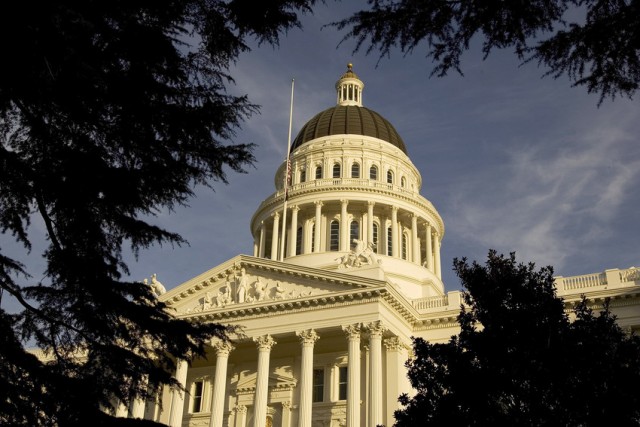
"content": "\u003cfigure id=\"attachment_119704\" class=\"wp-caption alignleft\" style=\"max-width: 640px\">\u003ca href=\"http://ww2.kqed.org/news/wp-content/uploads/sites/10/2013/12/RS5102_56531571-scr-e1385954353186.jpg\">\u003cimg loading=\"lazy\" decoding=\"async\" class=\"size-medium wp-image-119704\" src=\"http://ww2.kqed.org/news/wp-content/uploads/sites/10/2013/12/RS5102_56531571-scr-640x426.jpg\" alt=\"State Capitol, Sacramento (David Paul Morris/Getty Images). \" width=\"640\" height=\"426\">\u003c/a>\u003cfigcaption class=\"wp-caption-text\">State Capitol, Sacramento (David Paul Morris/Getty Images)\u003c/figcaption>\u003c/figure>\n\u003cp>Few things have been as contentious in California budget circles over the past decade or more than whether lawmakers need new restrictions on how much money they can spend in any given year. After all, aren’t they supposed to be mindful stewards of taxpayer dollars without extra rules?\u003c/p>\n\u003cp>Yes, sure. But today Gov. Jerry Brown \u003ca href=\"http://gov.ca.gov/home.php\" target=\"_blank\" rel=\"noopener\">announced an agreement\u003c/a> with both Republicans and Democrats in the Legislature to place a new — ostensibly better — version of a formal budget reserve on the November ballot.\u003c/p>\n\u003cp>Brown rolled out his own ideas for a rainy day fund with his budget in January, and called a special legislative session on the issue a few weeks ago. And all of these efforts were aimed at crafting a plan that would replace an existing rainy day measure on the November ballot, one crafted in a controversial budget deal with Gov. Arnold Schwarzenegger in 2010.\u003c/p>\n\u003cp>The new plan uses Brown’s idea of skimming off capital gains tax revenues that are considered abnormally high. Whereas the governor wanted to set aside any of these volatile revenues that are more than 6.5 percent above the state’s general fund revenues, legislative sources say the compromise plan would start stashing away only capital gains dollars that are 8 percent above general fund tax dollars.\u003c/p>\n\u003cp>That may not seem like a big deal, but here’s why it is: It allows more money, potentially billions of dollars, to be spent in each annual state budget. And that was a key demand of some legislative Democrats and Democrat-aligned interest groups, who all felt Brown’s proposal was too stringent.\u003c/p>\n\u003caside class=\"pullquote alignleft\">The key question now is whether there are the votes in the Legislature to make all this happen.\u003c/aside>\n\u003cp>The new proposal would also allow more of the reserve fund cash to be used to pay off state government debt. Capitol watchers had suggested Brown’s plan might require money to be put in the proverbial piggy bank even when huge unfunded liabilities of the state were growing. The proposal also retains a requirement in Brown’s earlier plan that would cap the rainy day fund at 10 percent of the state’s general fund revenue in any given year.\u003c/p>\n\u003cp>[ad fullwidth]\u003c/p>\n\u003cp>The key question now is whether there are the votes in the Legislature to make all this happen. Keep in mind that it takes a supermajority of both the Assembly and Senate to place a state constitutional amendment on the ballot.\u003c/p>\n\u003cp>For starters, that raises the question of whether Republicans will sign on. Historically, GOP legislators in Sacramento have wanted more than just a strict reserve fund; They’ve wanted an actual cap on annual state spending levels. Their last, perhaps best, chance at a spending cap evaporated in the fall of 2003, when the newly elected Schwarzenegger cut a deal with Democrats to place a pretty mild rainy day fund on the ballot — one voters approved in March 2004 as Proposition 58.\u003c/p>\n\u003cp>Republicans generally liked the existing ballot measure’s reserve fund requirements, and will have to get something in the details of this purported deal that has teeth in it. But then that endangers the support of liberal Democrats in the Legislature, who would prefer to have very few restrictions on funding a state government that — they argue — has been underfunded for much of the past decade.\u003c/p>\n\u003cp>One person, in particular, who probably had extra motivation to resolve the gentle-but-real disagreements over a rainy day budget reserve: Assembly Speaker John Pérez, D-Los Angeles.\u003c/p>\n\u003cp>\u003c/p>\n\u003cp>Pérez will hand over the reins of power next week, and is locked in a Democrat-versus-Democrat battle for state controller on the June 3 ballot. A plan for more fiscal prudence could no doubt help him in that political campaign.\u003c/p>\n\n",
"blocks": [],
"excerpt": "Ballot measure would require state to create a budget reserve by setting aside surplus tax dollars. ",
"status": "publish",
"parent": 0,
"modified": 1721106385,
"stats": {
"hasAudio": false,
"hasVideo": false,
"hasChartOrMap": false,
"iframeSrcs": [],
"hasGoogleForm": false,
"hasGallery": false,
"hasHearkenModule": false,
"hasPolis": false,
"paragraphCount": 13,
"wordCount": 658
},
"headData": {
"title": "Brown, Legislature Reach Deal on Rainy Day Fund | KQED",
"description": "Ballot measure would require state to create a budget reserve by setting aside surplus tax dollars. ",
"ogTitle": "",
"ogDescription": "",
"ogImgId": "",
"twTitle": "",
"twDescription": "",
"twImgId": "",
"schema": {
"@context": "https://schema.org",
"@type": "NewsArticle",
"headline": "Brown, Legislature Reach Deal on Rainy Day Fund",
"datePublished": "2014-05-08T14:23:16-07:00",
"dateModified": "2024-07-15T22:06:25-07:00",
"image": "https://cdn.kqed.org/wp-content/uploads/2020/02/KQED-OG-Image@1x.png",
"isAccessibleForFree": "True",
"publisher": {
"@type": "NewsMediaOrganization",
"@id": "https://www.kqed.org/#organization",
"name": "KQED",
"logo": "https://cdn.kqed.org/wp-content/uploads/2020/02/KQED-OG-Image@1x.png",
"url": "https://www.kqed.org",
"sameAs": [
"https://www.facebook.com/KQED",
"https://twitter.com/KQED",
"https://www.instagram.com/kqed/",
"https://www.tiktok.com/@kqedofficial",
"https://www.linkedin.com/company/kqed",
"https://www.youtube.com/channel/UCeC0IOo7i1P_61zVUWbJ4nw"
]
}
}
},
"sticky": false,
"customPermalink": "governor-jerry-brown-reaches-deal-with-legislature-on-budget-reserve/",
"path": "/news/135447/brown-legislature-reach-deal-on-rainy-day-fund",
"audioTrackLength": null,
"parsedContent": [
{
"type": "contentString",
"content": "\u003cdiv class=\"post-body\">\u003cp>\u003cfigure id=\"attachment_119704\" class=\"wp-caption alignleft\" style=\"max-width: 640px\">\u003ca href=\"http://ww2.kqed.org/news/wp-content/uploads/sites/10/2013/12/RS5102_56531571-scr-e1385954353186.jpg\">\u003cimg loading=\"lazy\" decoding=\"async\" class=\"size-medium wp-image-119704\" src=\"http://ww2.kqed.org/news/wp-content/uploads/sites/10/2013/12/RS5102_56531571-scr-640x426.jpg\" alt=\"State Capitol, Sacramento (David Paul Morris/Getty Images). \" width=\"640\" height=\"426\">\u003c/a>\u003cfigcaption class=\"wp-caption-text\">State Capitol, Sacramento (David Paul Morris/Getty Images)\u003c/figcaption>\u003c/figure>\n\u003cp>Few things have been as contentious in California budget circles over the past decade or more than whether lawmakers need new restrictions on how much money they can spend in any given year. After all, aren’t they supposed to be mindful stewards of taxpayer dollars without extra rules?\u003c/p>\n\u003cp>Yes, sure. But today Gov. Jerry Brown \u003ca href=\"http://gov.ca.gov/home.php\" target=\"_blank\" rel=\"noopener\">announced an agreement\u003c/a> with both Republicans and Democrats in the Legislature to place a new — ostensibly better — version of a formal budget reserve on the November ballot.\u003c/p>\n\u003cp>Brown rolled out his own ideas for a rainy day fund with his budget in January, and called a special legislative session on the issue a few weeks ago. And all of these efforts were aimed at crafting a plan that would replace an existing rainy day measure on the November ballot, one crafted in a controversial budget deal with Gov. Arnold Schwarzenegger in 2010.\u003c/p>\n\u003cp>The new plan uses Brown’s idea of skimming off capital gains tax revenues that are considered abnormally high. Whereas the governor wanted to set aside any of these volatile revenues that are more than 6.5 percent above the state’s general fund revenues, legislative sources say the compromise plan would start stashing away only capital gains dollars that are 8 percent above general fund tax dollars.\u003c/p>\n\u003cp>That may not seem like a big deal, but here’s why it is: It allows more money, potentially billions of dollars, to be spent in each annual state budget. And that was a key demand of some legislative Democrats and Democrat-aligned interest groups, who all felt Brown’s proposal was too stringent.\u003c/p>\n\u003caside class=\"pullquote alignleft\">The key question now is whether there are the votes in the Legislature to make all this happen.\u003c/aside>\n\u003cp>The new proposal would also allow more of the reserve fund cash to be used to pay off state government debt. Capitol watchers had suggested Brown’s plan might require money to be put in the proverbial piggy bank even when huge unfunded liabilities of the state were growing. The proposal also retains a requirement in Brown’s earlier plan that would cap the rainy day fund at 10 percent of the state’s general fund revenue in any given year.\u003c/p>\n\u003cp>\u003c/p>\u003c/div>",
"attributes": {
"named": {},
"numeric": []
}
},
{
"type": "component",
"content": "",
"name": "ad",
"attributes": {
"named": {
"label": "fullwidth"
},
"numeric": [
"fullwidth"
]
}
},
{
"type": "contentString",
"content": "\u003cdiv class=\"post-body\">\u003cp>\u003c/p>\n\u003cp>The key question now is whether there are the votes in the Legislature to make all this happen. Keep in mind that it takes a supermajority of both the Assembly and Senate to place a state constitutional amendment on the ballot.\u003c/p>\n\u003cp>For starters, that raises the question of whether Republicans will sign on. Historically, GOP legislators in Sacramento have wanted more than just a strict reserve fund; They’ve wanted an actual cap on annual state spending levels. Their last, perhaps best, chance at a spending cap evaporated in the fall of 2003, when the newly elected Schwarzenegger cut a deal with Democrats to place a pretty mild rainy day fund on the ballot — one voters approved in March 2004 as Proposition 58.\u003c/p>\n\u003cp>Republicans generally liked the existing ballot measure’s reserve fund requirements, and will have to get something in the details of this purported deal that has teeth in it. But then that endangers the support of liberal Democrats in the Legislature, who would prefer to have very few restrictions on funding a state government that — they argue — has been underfunded for much of the past decade.\u003c/p>\n\u003cp>One person, in particular, who probably had extra motivation to resolve the gentle-but-real disagreements over a rainy day budget reserve: Assembly Speaker John Pérez, D-Los Angeles.\u003c/p>\n\u003cp>\u003c/p>\n\u003cp>Pérez will hand over the reins of power next week, and is locked in a Democrat-versus-Democrat battle for state controller on the June 3 ballot. A plan for more fiscal prudence could no doubt help him in that political campaign.\u003c/p>\n\n\u003c/div>\u003c/p>",
"attributes": {
"named": {},
"numeric": []
}
}
],
"link": "/news/135447/brown-legislature-reach-deal-on-rainy-day-fund",
"authors": [
"232"
],
"programs": [
"news_6944"
],
"categories": [
"news_8"
],
"tags": [
"news_402",
"news_30",
"news_1052",
"news_17968",
"news_17102",
"news_70"
],
"featImg": "news_119704",
"label": "news_6944"
},
"news_134475": {
"type": "posts",
"id": "news_134475",
"meta": {
"index": "posts_1716263798",
"site": "news",
"id": "134475",
"score": null,
"sort": [
1398871502000
]
},
"guestAuthors": [],
"slug": "are-warrantless-cellphone-searches-constitutional-court-to-decide",
"title": "Update: Supreme Court Hears Arguments on Cellphone Searches",
"publishDate": 1398871502,
"format": "aside",
"headTitle": "Update: Supreme Court Hears Arguments on Cellphone Searches | KQED",
"labelTerm": {
"term": 6944,
"site": "news"
},
"content": "\u003cfigure id=\"attachment_134492\" class=\"wp-caption alignright\" style=\"max-width: 400px\">\u003ca href=\"http://ww2.kqed.org/news/wp-content/uploads/sites/10/2014/04/699487712_efff9943f2_o.jpg\">\u003cimg loading=\"lazy\" decoding=\"async\" class=\"wp-image-134492\" src=\"http://ww2.kqed.org/news/wp-content/uploads/sites/10/2014/04/699487712_efff9943f2_o-640x426.jpg\" alt=\"Roughly 90% of adults in the United States have cellphones. (Pieter Ouwerkerk/Flickr)\" width=\"400\" height=\"266\">\u003c/a>\u003cfigcaption class=\"wp-caption-text\">Roughly 90 percent of adults in the United States have cellphones. (Pieter Ouwerkerk/Flickr)\u003c/figcaption>\u003c/figure>\n\u003cp>\u003cstrong>Update Wednesday, April 30: \u003c/strong> The two-hour oral arguments in Riley v. California at the Supreme Court on Tuesday were, according to press accounts, lively.\u003c/p>\n\u003cp>The more liberal justices (Kagan, Sotomayor, Breyer and Ginsburg) seemed most concerned about warrantless searches of cellphones.\u003c/p>\n\u003cp>“People carry their lives on cellphones,” said Justice Kagan at one point.\u003c/p>\n\u003cp>Justice Anthony Kennedy, who is often the SCOTUS tiebreaker, and Justice Antonin Scalia both indicated interest in some kind of “middle ground” decision.\u003c/p>\n\u003cp>“It seems absurd you should be able to search that person’s iPhone because of an arrest for a minor crime,” Scalia said. Those kinds of comments suggested an ultimate decision short of a “bright line” all-or-nothing ruling, such as “you must have a warrant to search a cell phone at any time for any reason.”\u003c/p>\n\u003cp>[ad fullwidth]\u003c/p>\n\u003cp>The justices, who are sometimes portrayed as “less than with it” when it comes to technology (will there ever be cameras in the courtroom?) seemed to go out of their way to show their hipness.\u003c/p>\n\u003cp>Chief Justice John Roberts wondered if some data on cellphones might not be legally protected, given how public it already is. “What about something (from) Facebook or Twitter? The privacy interest in a Facebook account is at least diminished,” he said. Someone out there is sure to have “liked” that comment.\u003c/p>\n\u003cp>Here’s some of the coverage of the arguments:\u003c/p>\n\u003cul>\n\u003cli>\u003cstrong>SCOTUSBlog:\u003c/strong> \u003ca href=\"http://www.scotusblog.com/2014/04/argument-analysis-limiting-a-search-sure-but-how/\" target=\"_blank\" rel=\"noopener\">Argument analysis: Limiting a search? Sure, but how?\u003c/a>\u003c/li>\n\u003cli>\u003cstrong>NPR’s Nina Totenberg:\u003c/strong> \u003ca href=\"http://www.npr.org/2014/04/29/308068253/supreme-court-considers-where-lines-drawn-in-cell-phone-searches?utm_campaign=storyshare&utm_source=share&utm_medium=twitter\" target=\"_blank\" rel=\"noopener\">Court struggles to adapt modern technology to traditional legal rules\u003c/a>\u003c/li>\n\u003cli>\u003cstrong>New York Times:\u003c/strong> \u003ca href=\"http://www.nytimes.com/2014/04/30/us/justices-seem-torn-on-cellphone-warrants.html?ref=us&_r=1\" target=\"_blank\" rel=\"noopener\">Justices Appear Divided on Cellphone Warrants\u003c/a>\u003c/li>\n\u003cli>\u003cstrong>Truthdig: \u003c/strong>\u003ca href=\"http://www.truthdig.com/report/item/two_felons_could_force_the_supreme_court_to_protect_privacy_in_the_digital_\" target=\"_blank\" rel=\"noopener\">Two felons could force the Supreme Court to protect privacy in the digital age\u003c/a>\u003c/li>\n\u003c/ul>\n\u003cp>A ruling on the issue is expected by the end of June.\u003c/p>\n\u003cp>\u003cstrong>Original post (Monday, April 28):\u003c/strong> Early one morning in 2009, college student David Riley was pulled over by San Diego police. Riley’s plates had expired tags and he was driving with a suspended license.\u003c/p>\n\u003cp>In the course of searching his car, the police found two concealed and loaded handguns.\u003c/p>\n\u003cp>Riley was placed under arrest and the officer took a Samsung smartphone from his pocket. That phone — and everything stored on it — was later searched by the police without a warrant. The contents of the phone were used to connect Riley to gang activity, leading to several charges, including attempted murder. He was sentenced to 15 years to life.\u003c/p>\n\u003cp>\u003ca href=\"http://www.law.stanford.edu/profile/jeffrey-l-fisher\" target=\"_blank\" rel=\"noopener\">Stanford Law Professor Jeff Fisher\u003c/a>, who is Riley’s attorney, explains that police “found photographs and videos of Mr. Riley near a red car — a car that had been involved in an altercation where shots were fired.”\u003c/p>\n\u003cp>His conviction and the warrantless phone search were later upheld by the California Supreme Court, which had previously ruled that such searches are constitutional. Now Riley is asking the U.S. Supreme Court to declare that such searches violate the Fourth Amendment’s ban on “unreasonable searches and seizures.” The case will be heard Tuesday.\u003c/p>\n\u003cp>\u003ciframe loading=\"lazy\" src=\"https://w.soundcloud.com/player/?url=https%3A//api.soundcloud.com/tracks/146960041&color=ff5500&auto_play=false&hide_related=false&show_artwork=true\" width=\"100%\" height=\"166\" frameborder=\"no\" scrolling=\"no\">\u003c/iframe>\u003c/p>\n\u003cp>“A cellphone is, in essence, a portal into the most private and sensitive information in our lives,” Fisher says. “Our work, our personal life, our banking, our medical records — all the way down the line.”\u003c/p>\n\u003cp>In its \u003ca href=\"http://www.volokh.com/wp-content/uploads/2013/08/Riley-cert-petition-final-1.pdf\" target=\"_blank\" rel=\"noopener\">brief to the Supreme Court\u003c/a>, the government contends the Fourth Amendment \u003cem>allows\u003c/em> the search of objects found on someone arrested, including a cellphone. That information, they argue, “is not different in kind from wallets, address books, personal papers and other items that have long been subject to examination.”\u003c/p>\n\u003caside class=\"pullquote alignleft\">‘A cellphone is, in essence, a portal into the most private and sensitive information in our lives.’\u003ccite>— Professor Jeff Fisher\u003cbr>\nStanford Law School\u003c/cite>\u003c/aside>\n\u003cp>Law enforcement groups agree. Richard Littlehale represents the \u003ca href=\"https://www.ascia.org\" target=\"_blank\" rel=\"noopener\">Association of State Criminal Investigative Agencies\u003c/a>, part of a consortium of groups asking the court to uphold these searches. Littlehale says that in the future more and more evidence is going to be found in digital formats. Unless police are allowed to immediately search a smartphone, he says, evidence could be lost forever.\u003c/p>\n\u003cp>“We need to get out there more and explain why we need these records and make our case to the courts and make our case to the public that this evidence is important in our quest to protect them,” Littlehale says.\u003c/p>\n\u003cp>Privacy advocates say the fear of losing potential evidence is overblown, arguing that there are ways to preserve the information on cellphones until the police have a search warrant. They argue that the amount and sensitivity of information stored on cellphones require a higher level of privacy.\u003c/p>\n\u003cp>In addition to \u003ca href=\"http://www.scotusblog.com/case-files/cases/riley-v-california/\" target=\"_blank\" rel=\"noopener\">Riley v. California\u003c/a>, the Supreme Court on Tuesday will also hear a second case, \u003ca href=\"http://media.ca1.uscourts.gov/pdf.opinions/11-1792P-01A.pdf\" target=\"_blank\" rel=\"noopener\">U.S. v. Wurie\u003c/a>, arising from a 2007 Boston case in which police searched the call log of a flip phone, leading to gun and drug charges. Last year, a federal appeals court ruled that evidence was obtained illegally, the opposite finding to the California case.\u003c/p>\n\u003cp>The pervasiveness of mobile phones — nine out of 10 adults in the U.S. have cellphones — make these cases the most important in the Supreme Court’s criminal docket this term, according to UC Hastings Law Professor Rory Little.\u003c/p>\n\u003cp>“These cases have been sort of brewing for years,” Little says. “How’s the Fourth Amendment going to be applied in the 21st century when the framers had no conception of any of the technology that we now have to deal with?”\u003c/p>\n\u003cp>Unlike some issues, Little says, this one may not break along the usual liberal-conservative lines. For example, conservative Justice Antonin Scalia often expresses concern about law enforcement’s encroachment on personal privacy.\u003c/p>\n\u003cp>In the end, Little says, the court may not issue a sweeping decision. “My prediction is they will move incrementally. They won’t decide a case which then decides every issue for the future.”\u003c/p>\n\u003cp>\u003cem>Watch Scott Shafer’s interview with UC Hastings Law Professor Rory Little and San Jose Mercury News Reporter Michelle Quinn, on “KQED Newsroom.”\u003c/em>\u003c/p>\n\u003cdiv class=\"single-video\">[youtube http://www.youtube.com/watch?v=4hEaiqvOutk&w=560&h=315]\u003c/div>\n\u003cp>[ad floatright]\u003c/p>\n\u003cp>\u003cem>\u003ca href=\"http://www.kqed.org/tv/programs/newsroom/\" target=\"_blank\" rel=\"noopener\">KQED NEWSROOM\u003c/a> is a weekly news magazine program on television, radio and online. Watch Fridays at 8 p.m. on KQED Public Television 9, listen on Sundays at 6 p.m. on KQED Public Radio 88.5 FM and watch on demand \u003ca href=\"http://www.kqed.org/tv/programs/newsroom/\" target=\"_blank\" rel=\"noopener\">here\u003c/a>.\u003c/em>\u003c/p>\n\n",
"blocks": [],
"excerpt": "At issue: Whether sifting through phone contents without court OK violates ban on unreasonable searches.",
"status": "publish",
"parent": 0,
"modified": 1721106961,
"stats": {
"hasAudio": true,
"hasVideo": true,
"hasChartOrMap": false,
"iframeSrcs": [],
"hasGoogleForm": false,
"hasGallery": false,
"hasHearkenModule": false,
"hasPolis": false,
"paragraphCount": 29,
"wordCount": 1122
},
"headData": {
"title": "Update: Supreme Court Hears Arguments on Cellphone Searches | KQED",
"description": "At issue: Whether sifting through phone contents without court OK violates ban on unreasonable searches.",
"ogTitle": "",
"ogDescription": "",
"ogImgId": "",
"twTitle": "",
"twDescription": "",
"twImgId": "",
"schema": {
"@context": "https://schema.org",
"@type": "NewsArticle",
"headline": "Update: Supreme Court Hears Arguments on Cellphone Searches",
"datePublished": "2014-04-30T08:25:02-07:00",
"dateModified": "2024-07-15T22:16:01-07:00",
"image": "https://cdn.kqed.org/wp-content/uploads/2020/02/KQED-OG-Image@1x.png",
"isAccessibleForFree": "True",
"publisher": {
"@type": "NewsMediaOrganization",
"@id": "https://www.kqed.org/#organization",
"name": "KQED",
"logo": "https://cdn.kqed.org/wp-content/uploads/2020/02/KQED-OG-Image@1x.png",
"url": "https://www.kqed.org",
"sameAs": [
"https://www.facebook.com/KQED",
"https://twitter.com/KQED",
"https://www.instagram.com/kqed/",
"https://www.tiktok.com/@kqedofficial",
"https://www.linkedin.com/company/kqed",
"https://www.youtube.com/channel/UCeC0IOo7i1P_61zVUWbJ4nw"
]
}
}
},
"sticky": false,
"customPermalink": "us-supreme-court-hears-case-on-warrantless-cellphone-searches/",
"path": "/news/134475/are-warrantless-cellphone-searches-constitutional-court-to-decide",
"audioTrackLength": null,
"parsedContent": [
{
"type": "contentString",
"content": "\u003cdiv class=\"post-body\">\u003cp>\u003cfigure id=\"attachment_134492\" class=\"wp-caption alignright\" style=\"max-width: 400px\">\u003ca href=\"http://ww2.kqed.org/news/wp-content/uploads/sites/10/2014/04/699487712_efff9943f2_o.jpg\">\u003cimg loading=\"lazy\" decoding=\"async\" class=\"wp-image-134492\" src=\"http://ww2.kqed.org/news/wp-content/uploads/sites/10/2014/04/699487712_efff9943f2_o-640x426.jpg\" alt=\"Roughly 90% of adults in the United States have cellphones. (Pieter Ouwerkerk/Flickr)\" width=\"400\" height=\"266\">\u003c/a>\u003cfigcaption class=\"wp-caption-text\">Roughly 90 percent of adults in the United States have cellphones. (Pieter Ouwerkerk/Flickr)\u003c/figcaption>\u003c/figure>\n\u003cp>\u003cstrong>Update Wednesday, April 30: \u003c/strong> The two-hour oral arguments in Riley v. California at the Supreme Court on Tuesday were, according to press accounts, lively.\u003c/p>\n\u003cp>The more liberal justices (Kagan, Sotomayor, Breyer and Ginsburg) seemed most concerned about warrantless searches of cellphones.\u003c/p>\n\u003cp>“People carry their lives on cellphones,” said Justice Kagan at one point.\u003c/p>\n\u003cp>Justice Anthony Kennedy, who is often the SCOTUS tiebreaker, and Justice Antonin Scalia both indicated interest in some kind of “middle ground” decision.\u003c/p>\n\u003cp>“It seems absurd you should be able to search that person’s iPhone because of an arrest for a minor crime,” Scalia said. Those kinds of comments suggested an ultimate decision short of a “bright line” all-or-nothing ruling, such as “you must have a warrant to search a cell phone at any time for any reason.”\u003c/p>\n\u003cp>\u003c/p>\u003c/div>",
"attributes": {
"named": {},
"numeric": []
}
},
{
"type": "component",
"content": "",
"name": "ad",
"attributes": {
"named": {
"label": "fullwidth"
},
"numeric": [
"fullwidth"
]
}
},
{
"type": "contentString",
"content": "\u003cdiv class=\"post-body\">\u003cp>\u003c/p>\n\u003cp>The justices, who are sometimes portrayed as “less than with it” when it comes to technology (will there ever be cameras in the courtroom?) seemed to go out of their way to show their hipness.\u003c/p>\n\u003cp>Chief Justice John Roberts wondered if some data on cellphones might not be legally protected, given how public it already is. “What about something (from) Facebook or Twitter? The privacy interest in a Facebook account is at least diminished,” he said. Someone out there is sure to have “liked” that comment.\u003c/p>\n\u003cp>Here’s some of the coverage of the arguments:\u003c/p>\n\u003cul>\n\u003cli>\u003cstrong>SCOTUSBlog:\u003c/strong> \u003ca href=\"http://www.scotusblog.com/2014/04/argument-analysis-limiting-a-search-sure-but-how/\" target=\"_blank\" rel=\"noopener\">Argument analysis: Limiting a search? Sure, but how?\u003c/a>\u003c/li>\n\u003cli>\u003cstrong>NPR’s Nina Totenberg:\u003c/strong> \u003ca href=\"http://www.npr.org/2014/04/29/308068253/supreme-court-considers-where-lines-drawn-in-cell-phone-searches?utm_campaign=storyshare&utm_source=share&utm_medium=twitter\" target=\"_blank\" rel=\"noopener\">Court struggles to adapt modern technology to traditional legal rules\u003c/a>\u003c/li>\n\u003cli>\u003cstrong>New York Times:\u003c/strong> \u003ca href=\"http://www.nytimes.com/2014/04/30/us/justices-seem-torn-on-cellphone-warrants.html?ref=us&_r=1\" target=\"_blank\" rel=\"noopener\">Justices Appear Divided on Cellphone Warrants\u003c/a>\u003c/li>\n\u003cli>\u003cstrong>Truthdig: \u003c/strong>\u003ca href=\"http://www.truthdig.com/report/item/two_felons_could_force_the_supreme_court_to_protect_privacy_in_the_digital_\" target=\"_blank\" rel=\"noopener\">Two felons could force the Supreme Court to protect privacy in the digital age\u003c/a>\u003c/li>\n\u003c/ul>\n\u003cp>A ruling on the issue is expected by the end of June.\u003c/p>\n\u003cp>\u003cstrong>Original post (Monday, April 28):\u003c/strong> Early one morning in 2009, college student David Riley was pulled over by San Diego police. Riley’s plates had expired tags and he was driving with a suspended license.\u003c/p>\n\u003cp>In the course of searching his car, the police found two concealed and loaded handguns.\u003c/p>\n\u003cp>Riley was placed under arrest and the officer took a Samsung smartphone from his pocket. That phone — and everything stored on it — was later searched by the police without a warrant. The contents of the phone were used to connect Riley to gang activity, leading to several charges, including attempted murder. He was sentenced to 15 years to life.\u003c/p>\n\u003cp>\u003ca href=\"http://www.law.stanford.edu/profile/jeffrey-l-fisher\" target=\"_blank\" rel=\"noopener\">Stanford Law Professor Jeff Fisher\u003c/a>, who is Riley’s attorney, explains that police “found photographs and videos of Mr. Riley near a red car — a car that had been involved in an altercation where shots were fired.”\u003c/p>\n\u003cp>His conviction and the warrantless phone search were later upheld by the California Supreme Court, which had previously ruled that such searches are constitutional. Now Riley is asking the U.S. Supreme Court to declare that such searches violate the Fourth Amendment’s ban on “unreasonable searches and seizures.” The case will be heard Tuesday.\u003c/p>\n\u003cp>\u003ciframe loading=\"lazy\" src=\"https://w.soundcloud.com/player/?url=https%3A//api.soundcloud.com/tracks/146960041&color=ff5500&auto_play=false&hide_related=false&show_artwork=true\" width=\"100%\" height=\"166\" frameborder=\"no\" scrolling=\"no\">\u003c/iframe>\u003c/p>\n\u003cp>“A cellphone is, in essence, a portal into the most private and sensitive information in our lives,” Fisher says. “Our work, our personal life, our banking, our medical records — all the way down the line.”\u003c/p>\n\u003cp>In its \u003ca href=\"http://www.volokh.com/wp-content/uploads/2013/08/Riley-cert-petition-final-1.pdf\" target=\"_blank\" rel=\"noopener\">brief to the Supreme Court\u003c/a>, the government contends the Fourth Amendment \u003cem>allows\u003c/em> the search of objects found on someone arrested, including a cellphone. That information, they argue, “is not different in kind from wallets, address books, personal papers and other items that have long been subject to examination.”\u003c/p>\n\u003caside class=\"pullquote alignleft\">‘A cellphone is, in essence, a portal into the most private and sensitive information in our lives.’\u003ccite>— Professor Jeff Fisher\u003cbr>\nStanford Law School\u003c/cite>\u003c/aside>\n\u003cp>Law enforcement groups agree. Richard Littlehale represents the \u003ca href=\"https://www.ascia.org\" target=\"_blank\" rel=\"noopener\">Association of State Criminal Investigative Agencies\u003c/a>, part of a consortium of groups asking the court to uphold these searches. Littlehale says that in the future more and more evidence is going to be found in digital formats. Unless police are allowed to immediately search a smartphone, he says, evidence could be lost forever.\u003c/p>\n\u003cp>“We need to get out there more and explain why we need these records and make our case to the courts and make our case to the public that this evidence is important in our quest to protect them,” Littlehale says.\u003c/p>\n\u003cp>Privacy advocates say the fear of losing potential evidence is overblown, arguing that there are ways to preserve the information on cellphones until the police have a search warrant. They argue that the amount and sensitivity of information stored on cellphones require a higher level of privacy.\u003c/p>\n\u003cp>In addition to \u003ca href=\"http://www.scotusblog.com/case-files/cases/riley-v-california/\" target=\"_blank\" rel=\"noopener\">Riley v. California\u003c/a>, the Supreme Court on Tuesday will also hear a second case, \u003ca href=\"http://media.ca1.uscourts.gov/pdf.opinions/11-1792P-01A.pdf\" target=\"_blank\" rel=\"noopener\">U.S. v. Wurie\u003c/a>, arising from a 2007 Boston case in which police searched the call log of a flip phone, leading to gun and drug charges. Last year, a federal appeals court ruled that evidence was obtained illegally, the opposite finding to the California case.\u003c/p>\n\u003cp>The pervasiveness of mobile phones — nine out of 10 adults in the U.S. have cellphones — make these cases the most important in the Supreme Court’s criminal docket this term, according to UC Hastings Law Professor Rory Little.\u003c/p>\n\u003cp>“These cases have been sort of brewing for years,” Little says. “How’s the Fourth Amendment going to be applied in the 21st century when the framers had no conception of any of the technology that we now have to deal with?”\u003c/p>\n\u003cp>Unlike some issues, Little says, this one may not break along the usual liberal-conservative lines. For example, conservative Justice Antonin Scalia often expresses concern about law enforcement’s encroachment on personal privacy.\u003c/p>\n\u003cp>In the end, Little says, the court may not issue a sweeping decision. “My prediction is they will move incrementally. They won’t decide a case which then decides every issue for the future.”\u003c/p>\n\u003cp>\u003cem>Watch Scott Shafer’s interview with UC Hastings Law Professor Rory Little and San Jose Mercury News Reporter Michelle Quinn, on “KQED Newsroom.”\u003c/em>\u003c/p>\n\u003cdiv class=\"single-video\">\u003c/p>\u003cp>\u003cspan class='utils-parseShortcode-shortcodes-__youtubeShortcode__embedYoutube'>\n \u003cspan class='utils-parseShortcode-shortcodes-__youtubeShortcode__embedYoutubeInside'>\n \u003ciframe\n loading='lazy'\n class='utils-parseShortcode-shortcodes-__youtubeShortcode__youtubePlayer'\n type='text/html'\n src='//www.youtube.com/embed/4hEaiqvOutk'\n title='//www.youtube.com/embed/4hEaiqvOutk'\n allowfullscreen='true'\n style='border:0;'>\u003c/iframe>\n \u003c/span>\n \u003c/span>\u003c/p>\u003cp>\u003c/div>\n\u003cp>\u003c/p>\u003c/div>",
"attributes": {
"named": {},
"numeric": []
}
},
{
"type": "component",
"content": "",
"name": "ad",
"attributes": {
"named": {
"label": "floatright"
},
"numeric": [
"floatright"
]
}
},
{
"type": "contentString",
"content": "\u003cdiv class=\"post-body\">\u003cp>\u003c/p>\n\u003cp>\u003cem>\u003ca href=\"http://www.kqed.org/tv/programs/newsroom/\" target=\"_blank\" rel=\"noopener\">KQED NEWSROOM\u003c/a> is a weekly news magazine program on television, radio and online. Watch Fridays at 8 p.m. on KQED Public Television 9, listen on Sundays at 6 p.m. on KQED Public Radio 88.5 FM and watch on demand \u003ca href=\"http://www.kqed.org/tv/programs/newsroom/\" target=\"_blank\" rel=\"noopener\">here\u003c/a>.\u003c/em>\u003c/p>\n\n\u003c/div>\u003c/p>",
"attributes": {
"named": {},
"numeric": []
}
}
],
"link": "/news/134475/are-warrantless-cellphone-searches-constitutional-court-to-decide",
"authors": [
"255"
],
"programs": [
"news_6944"
],
"categories": [
"news_6188",
"news_248"
],
"tags": [
"news_17725",
"news_116",
"news_17968",
"news_4950",
"news_1631",
"news_1172"
],
"featImg": "news_134492",
"label": "news_6944"
},
"news_134552": {
"type": "posts",
"id": "news_134552",
"meta": {
"index": "posts_1716263798",
"site": "news",
"id": "134552",
"score": null,
"sort": [
1398791416000
]
},
"guestAuthors": [],
"slug": "brown-makes-pitch-for-rainy-day-fund",
"title": "Brown Makes Pitch for Rainy Day Fund",
"publishDate": 1398791416,
"format": "aside",
"headTitle": "Brown Makes Pitch for Rainy Day Fund | KQED",
"labelTerm": {
"term": 6944,
"site": "news"
},
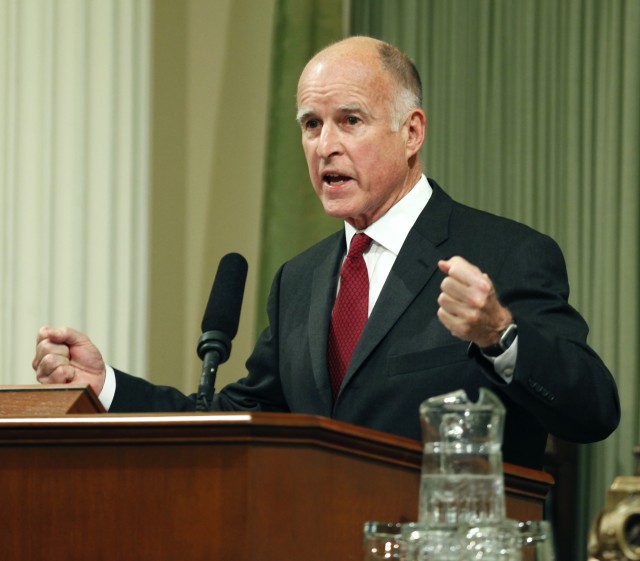
"content": "\u003cfigure id=\"attachment_133881\" class=\"wp-caption alignright\" style=\"max-width: 640px\">\u003ca href=\"http://ww2.kqed.org/news/wp-content/uploads/sites/10/2014/04/brown.jpg\">\u003cimg loading=\"lazy\" decoding=\"async\" class=\"size-full wp-image-133881\" src=\"http://ww2.kqed.org/news/wp-content/uploads/sites/10/2014/04/brown.jpg\" alt=\"Gov. Jerry Brown at the Governor's Mansion. (Monica Lam/KQED)\" width=\"640\" height=\"360\">\u003c/a>\u003cfigcaption class=\"wp-caption-text\">Gov. Jerry Brown at the Governor’s Mansion. (Monica Lam/KQED)\u003c/figcaption>\u003c/figure>\n\u003cp>Gov. Jerry Brown made a rare appearance before a legislative committee Monday afternoon to lobby for his plan to require the state to save some excess tax dollars in a revamped rainy day fund.\u003c/p>\n\u003cp>Brown has made the proposal, which would be submitted to voters as a constitutional amendment this November, a top fiscal priority. He highlighted the plan in his January State of the State address and further elevated the issue \u003ca href=\"http://www.californiareport.org/archive/R201404250850/a\">by calling the Legislature into special session\u003c/a> earlier this month\u003c/p>\n\u003cp>Brown argues that by trying to capture funds \u003ca href=\"http://ww2.kqed.org/news/2014/02/11/125893/gov-brown-rainy-day-fund\">from periodic spikes in capital gains tax revenue\u003c/a>, the plan could smooth out the deep deficits that have hit California when the economy weakens. Before the Assembly Budget Committee on Monday, he said that stability is worth the cost of forgoing several billions of dollars’ worth of spending on state programs.\u003c/p>\n\u003cp>“There is some curb, because if you don’t curb you’ll go back into this constant recurrence of debt,” Brown said. “Boom and bust, red and black.”\u003c/p>\n\u003cp>\u003ca href=\"http://gov.ca.gov/docs/4.14.14_State_Reserve_Policy.pdf\" target=\"_blank\" rel=\"noopener\">The Brown proposal \u003c/a>would replace California’s current rainy day fund, which has been virtually ignored by governors and lawmakers since 2007. And it would bump a competing proposal, approved by the Legislature in 2010, off the November ballot. \u003c/p>\n\u003caside class=\"pullquote alignleft\">‘There is some curb, because if you don’t curb you’ll go back into this constant recurrence of debt. Boom and bust, red and black.’\u003ccite>— Gov. Jerry Brown\u003c/cite>\u003c/aside>\n\u003cp>Under the governor’s plan, whenever capital gains taxes make up more than 6.5 percent of the state’s general fund revenue, the excess would be steered into a reserve account. That account would max out at 10 percent of general fund tax proceeds. The proposal would allow the state to use some of that account to pay down debts and other liabilities, and it would set up a new reserve account to support school funding.\u003c/p>\n\u003cp>[ad fullwidth]\u003c/p>\n\u003cp>Both Democrats and Republicans on the Assembly budget panel voiced support for a new rainy day fund. (The panel asked Brown just one question during his hourlong appearance.) Republican enthusiasm for Brown’s cautious fiscal approach underscored the difficulty GOP opponents face in this year’s election. In fact, Assemblywoman Diane Harkey, an Orange County Republican, may have inadvertently shown just how little faith the party has in challengers Tim Donnelly and Neel Kashkari when she said that she trusted Brown’s approach to governing, but worried “he will only be here for another term.”\u003c/p>\n\u003cp>Regardless, GOP lawmakers do want to make some changes to how the fund’s money could be tapped in future years. Brown’s plan would only require a simple majority vote to spend reserve money.\u003c/p>\n\u003cp>“There’s been some conversation about requiring a two-thirds vote,” said committee vice chair Jeff Gorell, a Republican from Ventura County. “There’s some logic to that,” he said, pointing out that “urgency” legislation currently requires a supermajority. Gorell added that a higher threshold would force governors and lawmakers to cut spending as much as possible before tapping emergency funds.\u003c/p>\n\u003cp>Brown said he’s willing to consider a higher vote threshold.\u003c/p>\n\u003cp>“The Legislature could also define the conditions that would permit withdrawal,” he said. “I think we ought to explore both. Both a vote threshold, and a specification that these conditions — one, two, or three — must occur, or no money comes out.”\u003c/p>\n\u003cp>The appearance had its share of Brownisms. When the governor made his pitch for the revamped rainy day fund in January, he handed out playing cards featuring his popular corgi, Sutter. Brown returned to the dog theme Monday, saying, “This is kind of a set of bones for our backyard. Because we don’t know what we’ll need to chew on if capital gains go awry.”\u003c/p>\n\u003cp>And Brown ended with this thought: “I was just thinking, where will I be in 11 years? I added it up. I’ll be 87. So I don’t know what office I’ll be holding then, but it probably won’t be in Sacramento. But that still gives me a lot of scope.”\u003c/p>\n\u003cp>\u003c/p>\n\u003cp>White House-watchers, take note.\u003c/p>\n\n",
"blocks": [],
"excerpt": "In rare appearance before legislative panel, governor promotes plan for expanded budget reserve fund. ",
"status": "publish",
"parent": 0,
"modified": 1721106390,
"stats": {
"hasAudio": false,
"hasVideo": false,
"hasChartOrMap": false,
"iframeSrcs": [],
"hasGoogleForm": false,
"hasGallery": false,
"hasHearkenModule": false,
"hasPolis": false,
"paragraphCount": 16,
"wordCount": 744
},
"headData": {
"title": "Brown Makes Pitch for Rainy Day Fund | KQED",
"description": "In rare appearance before legislative panel, governor promotes plan for expanded budget reserve fund. ",
"ogTitle": "",
"ogDescription": "",
"ogImgId": "",
"twTitle": "",
"twDescription": "",
"twImgId": "",
"schema": {
"@context": "https://schema.org",
"@type": "NewsArticle",
"headline": "Brown Makes Pitch for Rainy Day Fund",
"datePublished": "2014-04-29T10:10:16-07:00",
"dateModified": "2024-07-15T22:06:30-07:00",
"image": "https://cdn.kqed.org/wp-content/uploads/2020/02/KQED-OG-Image@1x.png",
"isAccessibleForFree": "True",
"publisher": {
"@type": "NewsMediaOrganization",
"@id": "https://www.kqed.org/#organization",
"name": "KQED",
"logo": "https://cdn.kqed.org/wp-content/uploads/2020/02/KQED-OG-Image@1x.png",
"url": "https://www.kqed.org",
"sameAs": [
"https://www.facebook.com/KQED",
"https://twitter.com/KQED",
"https://www.instagram.com/kqed/",
"https://www.tiktok.com/@kqedofficial",
"https://www.linkedin.com/company/kqed",
"https://www.youtube.com/channel/UCeC0IOo7i1P_61zVUWbJ4nw"
]
}
}
},
"sticky": false,
"customPermalink": "jerry-brown-makes-pitch-for-rainy-day-fund/",
"path": "/news/134552/brown-makes-pitch-for-rainy-day-fund",
"audioTrackLength": null,
"parsedContent": [
{
"type": "contentString",
"content": "\u003cdiv class=\"post-body\">\u003cp>\u003cfigure id=\"attachment_133881\" class=\"wp-caption alignright\" style=\"max-width: 640px\">\u003ca href=\"http://ww2.kqed.org/news/wp-content/uploads/sites/10/2014/04/brown.jpg\">\u003cimg loading=\"lazy\" decoding=\"async\" class=\"size-full wp-image-133881\" src=\"http://ww2.kqed.org/news/wp-content/uploads/sites/10/2014/04/brown.jpg\" alt=\"Gov. Jerry Brown at the Governor's Mansion. (Monica Lam/KQED)\" width=\"640\" height=\"360\">\u003c/a>\u003cfigcaption class=\"wp-caption-text\">Gov. Jerry Brown at the Governor’s Mansion. (Monica Lam/KQED)\u003c/figcaption>\u003c/figure>\n\u003cp>Gov. Jerry Brown made a rare appearance before a legislative committee Monday afternoon to lobby for his plan to require the state to save some excess tax dollars in a revamped rainy day fund.\u003c/p>\n\u003cp>Brown has made the proposal, which would be submitted to voters as a constitutional amendment this November, a top fiscal priority. He highlighted the plan in his January State of the State address and further elevated the issue \u003ca href=\"http://www.californiareport.org/archive/R201404250850/a\">by calling the Legislature into special session\u003c/a> earlier this month\u003c/p>\n\u003cp>Brown argues that by trying to capture funds \u003ca href=\"http://ww2.kqed.org/news/2014/02/11/125893/gov-brown-rainy-day-fund\">from periodic spikes in capital gains tax revenue\u003c/a>, the plan could smooth out the deep deficits that have hit California when the economy weakens. Before the Assembly Budget Committee on Monday, he said that stability is worth the cost of forgoing several billions of dollars’ worth of spending on state programs.\u003c/p>\n\u003cp>“There is some curb, because if you don’t curb you’ll go back into this constant recurrence of debt,” Brown said. “Boom and bust, red and black.”\u003c/p>\n\u003cp>\u003ca href=\"http://gov.ca.gov/docs/4.14.14_State_Reserve_Policy.pdf\" target=\"_blank\" rel=\"noopener\">The Brown proposal \u003c/a>would replace California’s current rainy day fund, which has been virtually ignored by governors and lawmakers since 2007. And it would bump a competing proposal, approved by the Legislature in 2010, off the November ballot. \u003c/p>\n\u003caside class=\"pullquote alignleft\">‘There is some curb, because if you don’t curb you’ll go back into this constant recurrence of debt. Boom and bust, red and black.’\u003ccite>— Gov. Jerry Brown\u003c/cite>\u003c/aside>\n\u003cp>Under the governor’s plan, whenever capital gains taxes make up more than 6.5 percent of the state’s general fund revenue, the excess would be steered into a reserve account. That account would max out at 10 percent of general fund tax proceeds. The proposal would allow the state to use some of that account to pay down debts and other liabilities, and it would set up a new reserve account to support school funding.\u003c/p>\n\u003cp>\u003c/p>\u003c/div>",
"attributes": {
"named": {},
"numeric": []
}
},
{
"type": "component",
"content": "",
"name": "ad",
"attributes": {
"named": {
"label": "fullwidth"
},
"numeric": [
"fullwidth"
]
}
},
{
"type": "contentString",
"content": "\u003cdiv class=\"post-body\">\u003cp>\u003c/p>\n\u003cp>Both Democrats and Republicans on the Assembly budget panel voiced support for a new rainy day fund. (The panel asked Brown just one question during his hourlong appearance.) Republican enthusiasm for Brown’s cautious fiscal approach underscored the difficulty GOP opponents face in this year’s election. In fact, Assemblywoman Diane Harkey, an Orange County Republican, may have inadvertently shown just how little faith the party has in challengers Tim Donnelly and Neel Kashkari when she said that she trusted Brown’s approach to governing, but worried “he will only be here for another term.”\u003c/p>\n\u003cp>Regardless, GOP lawmakers do want to make some changes to how the fund’s money could be tapped in future years. Brown’s plan would only require a simple majority vote to spend reserve money.\u003c/p>\n\u003cp>“There’s been some conversation about requiring a two-thirds vote,” said committee vice chair Jeff Gorell, a Republican from Ventura County. “There’s some logic to that,” he said, pointing out that “urgency” legislation currently requires a supermajority. Gorell added that a higher threshold would force governors and lawmakers to cut spending as much as possible before tapping emergency funds.\u003c/p>\n\u003cp>Brown said he’s willing to consider a higher vote threshold.\u003c/p>\n\u003cp>“The Legislature could also define the conditions that would permit withdrawal,” he said. “I think we ought to explore both. Both a vote threshold, and a specification that these conditions — one, two, or three — must occur, or no money comes out.”\u003c/p>\n\u003cp>The appearance had its share of Brownisms. When the governor made his pitch for the revamped rainy day fund in January, he handed out playing cards featuring his popular corgi, Sutter. Brown returned to the dog theme Monday, saying, “This is kind of a set of bones for our backyard. Because we don’t know what we’ll need to chew on if capital gains go awry.”\u003c/p>\n\u003cp>And Brown ended with this thought: “I was just thinking, where will I be in 11 years? I added it up. I’ll be 87. So I don’t know what office I’ll be holding then, but it probably won’t be in Sacramento. But that still gives me a lot of scope.”\u003c/p>\n\u003cp>\u003c/p>\n\u003cp>White House-watchers, take note.\u003c/p>\n\n\u003c/div>\u003c/p>",
"attributes": {
"named": {},
"numeric": []
}
}
],
"link": "/news/134552/brown-makes-pitch-for-rainy-day-fund",
"authors": [
"256"
],
"programs": [
"news_6944"
],
"categories": [
"news_8"
],
"tags": [
"news_1759",
"news_2704",
"news_152",
"news_30",
"news_17968",
"news_17102",
"news_70"
],
"featImg": "news_133881",
"label": "news_6944"
},
"news_132888": {
"type": "posts",
"id": "news_132888",
"meta": {
"index": "posts_1716263798",
"site": "news",
"id": "132888",
"score": null,
"sort": [
1397743245000
]
},
"guestAuthors": [],
"slug": "brown-calls-special-session-for-rainy-day-fund-plan",
"title": "Brown Calls Special Session For Rainy Day Fund Plan",
"publishDate": 1397743245,
"format": "aside",
"headTitle": "Brown Calls Special Session For Rainy Day Fund Plan | KQED",
"labelTerm": {
"term": 6944,
"site": "news"
},
"content": "\u003cfigure id=\"attachment_69484\" class=\"wp-caption alignleft\" style=\"max-width: 300px\">\u003ca href=\"http://ww2.kqed.org/news/2012/07/03/gov-jerry-brown-asks-for-more-time-on-ca-pensions/jerry-brown-7/\" rel=\"attachment wp-att-69484\">\u003cimg loading=\"lazy\" decoding=\"async\" class=\"size-full wp-image-69484 \" src=\"http://ww2.kqed.org/news/wp-content/uploads/sites/10/2012/07/jerry-brown.jpg\" alt=\"Gov. Jerry Brown (Getty Images)\" width=\"300\" height=\"300\">\u003c/a>\u003cfigcaption class=\"wp-caption-text\">Gov. Jerry Brown (Getty Images)\u003c/figcaption>\u003c/figure>\n\u003cp>Gov. Jerry Brown is putting one of his top budget priorities front and center, by \u003ca href=\"http://cert1.mail-west.com/mjOyjwB/c7r/1jOgtmyuzjanm/khkc77yeci482/jOqvnqjOb/821/nrvjqjg87/8q3otp?_c=d%7Cze7pzanwmhlzgt%7C12878twdwiea3d8&_ce=1397686457.0c02f4cd3d4d03616b7fec3d863b7fdc\">calling for a special legislative session\u003c/a> focusing on rewriting California’s rainy day fund laws.\u003c/p>\n\u003cp>Brown wants to lessen the impact of future budget deficits by forcing the state to sock away extra tax revenue. His proposal focuses on the most volatile area of revenue: capital gains taxes.\u003c/p>\n\u003cp>Brown’s finance director, Michael Cohen, said the governor is calling the special session because he’d like to see debate on the proposal wrap up before mid-May, when lawmakers focus on passing the budget. But putting a constitutional amendment on the ballot requires a two-thirds vote, so this is one of those rare times where Republican legislators will have real leverage in Sacramento.\u003c/p>\n\u003cp>And Republican leaders are making it clear that, while they like the idea of saving more money, they still have a lot of questions about Brown’s plan.\u003c/p>\n\u003cp>“We want a strong ‘locked box’ that protects taxpayers’ monies instead of a ‘piggy bank’ that can be raided on the whim of the majority party’s desire to spend,” said Senate Minority Leader Bob Huff, pointing out Brown’s plan would require only a simple majority to spend the stored-up fund money.\u003c/p>\n\u003cp>[ad fullwidth]\u003c/p>\n\u003cp>\u003ciframe loading=\"lazy\" width=\"100%\" height=\"166\" scrolling=\"no\" frameborder=\"no\" src=\"https://w.soundcloud.com/player/?url=https%3A//api.soundcloud.com/tracks/145185715&color=ff5500&auto_play=false&hide_related=false&show_artwork=true\">\u003c/iframe>\u003c/p>\n\u003cp>\u003c/p>\n\u003cp>\u003ca href=\"http://ww2.kqed.org/news/2014/02/11/125893/gov-brown-rainy-dawy-fund\">In February, we took a detailed look at Brown’s proposal\u003c/a> — and how capital gains taxes can hijack California budgets:\u003c/p>\n\u003cblockquote>\u003cp>Capital gains tax revenue dropped by $7 billion during the last recession – that’s more than what this year’s budget would spend on all human services programs.\u003c/p>\n\u003cp>How does one area of revenue play such a big role in California’s budget health? It’s really a problem caused by the top 1 percent of the income tax bracket. “The personal income tax makes up about two-thirds of the state’s general fund,” said Sisney. “And the fraction of the personal income tax that’s paid by the 1 percent of returns with the most income has often been around 40 percent, or even more.”\u003c/p>\u003c/blockquote>\n\n",
"blocks": [],
"excerpt": "Governor's proposal focuses on capital gains taxes, the most volatile area of revenue. ",
"status": "publish",
"parent": 0,
"modified": 1721106395,
"stats": {
"hasAudio": true,
"hasVideo": false,
"hasChartOrMap": false,
"iframeSrcs": [],
"hasGoogleForm": false,
"hasGallery": false,
"hasHearkenModule": false,
"hasPolis": false,
"paragraphCount": 11,
"wordCount": 374
},
"headData": {
"title": "Brown Calls Special Session For Rainy Day Fund Plan | KQED",
"description": "Governor's proposal focuses on capital gains taxes, the most volatile area of revenue. ",
"ogTitle": "",
"ogDescription": "",
"ogImgId": "",
"twTitle": "",
"twDescription": "",
"twImgId": "",
"schema": {
"@context": "https://schema.org",
"@type": "NewsArticle",
"headline": "Brown Calls Special Session For Rainy Day Fund Plan",
"datePublished": "2014-04-17T07:00:45-07:00",
"dateModified": "2024-07-15T22:06:35-07:00",
"image": "https://cdn.kqed.org/wp-content/uploads/2020/02/KQED-OG-Image@1x.png",
"isAccessibleForFree": "True",
"publisher": {
"@type": "NewsMediaOrganization",
"@id": "https://www.kqed.org/#organization",
"name": "KQED",
"logo": "https://cdn.kqed.org/wp-content/uploads/2020/02/KQED-OG-Image@1x.png",
"url": "https://www.kqed.org",
"sameAs": [
"https://www.facebook.com/KQED",
"https://twitter.com/KQED",
"https://www.instagram.com/kqed/",
"https://www.tiktok.com/@kqedofficial",
"https://www.linkedin.com/company/kqed",
"https://www.youtube.com/channel/UCeC0IOo7i1P_61zVUWbJ4nw"
]
}
}
},
"sticky": false,
"customPermalink": "2014/04/16/132888/",
"path": "/news/132888/brown-calls-special-session-for-rainy-day-fund-plan",
"audioTrackLength": null,
"parsedContent": [
{
"type": "contentString",
"content": "\u003cdiv class=\"post-body\">\u003cp>\u003cfigure id=\"attachment_69484\" class=\"wp-caption alignleft\" style=\"max-width: 300px\">\u003ca href=\"http://ww2.kqed.org/news/2012/07/03/gov-jerry-brown-asks-for-more-time-on-ca-pensions/jerry-brown-7/\" rel=\"attachment wp-att-69484\">\u003cimg loading=\"lazy\" decoding=\"async\" class=\"size-full wp-image-69484 \" src=\"http://ww2.kqed.org/news/wp-content/uploads/sites/10/2012/07/jerry-brown.jpg\" alt=\"Gov. Jerry Brown (Getty Images)\" width=\"300\" height=\"300\">\u003c/a>\u003cfigcaption class=\"wp-caption-text\">Gov. Jerry Brown (Getty Images)\u003c/figcaption>\u003c/figure>\n\u003cp>Gov. Jerry Brown is putting one of his top budget priorities front and center, by \u003ca href=\"http://cert1.mail-west.com/mjOyjwB/c7r/1jOgtmyuzjanm/khkc77yeci482/jOqvnqjOb/821/nrvjqjg87/8q3otp?_c=d%7Cze7pzanwmhlzgt%7C12878twdwiea3d8&_ce=1397686457.0c02f4cd3d4d03616b7fec3d863b7fdc\">calling for a special legislative session\u003c/a> focusing on rewriting California’s rainy day fund laws.\u003c/p>\n\u003cp>Brown wants to lessen the impact of future budget deficits by forcing the state to sock away extra tax revenue. His proposal focuses on the most volatile area of revenue: capital gains taxes.\u003c/p>\n\u003cp>Brown’s finance director, Michael Cohen, said the governor is calling the special session because he’d like to see debate on the proposal wrap up before mid-May, when lawmakers focus on passing the budget. But putting a constitutional amendment on the ballot requires a two-thirds vote, so this is one of those rare times where Republican legislators will have real leverage in Sacramento.\u003c/p>\n\u003cp>And Republican leaders are making it clear that, while they like the idea of saving more money, they still have a lot of questions about Brown’s plan.\u003c/p>\n\u003cp>“We want a strong ‘locked box’ that protects taxpayers’ monies instead of a ‘piggy bank’ that can be raided on the whim of the majority party’s desire to spend,” said Senate Minority Leader Bob Huff, pointing out Brown’s plan would require only a simple majority to spend the stored-up fund money.\u003c/p>\n\u003cp>\u003c/p>\u003c/div>",
"attributes": {
"named": {},
"numeric": []
}
},
{
"type": "component",
"content": "",
"name": "ad",
"attributes": {
"named": {
"label": "fullwidth"
},
"numeric": [
"fullwidth"
]
}
},
{
"type": "contentString",
"content": "\u003cdiv class=\"post-body\">\u003cp>\u003c/p>\n\u003cp>\u003ciframe loading=\"lazy\" width=\"100%\" height=\"166\" scrolling=\"no\" frameborder=\"no\" src=\"https://w.soundcloud.com/player/?url=https%3A//api.soundcloud.com/tracks/145185715&color=ff5500&auto_play=false&hide_related=false&show_artwork=true\">\u003c/iframe>\u003c/p>\n\u003cp>\u003c/p>\n\u003cp>\u003ca href=\"http://ww2.kqed.org/news/2014/02/11/125893/gov-brown-rainy-dawy-fund\">In February, we took a detailed look at Brown’s proposal\u003c/a> — and how capital gains taxes can hijack California budgets:\u003c/p>\n\u003cblockquote>\u003cp>Capital gains tax revenue dropped by $7 billion during the last recession – that’s more than what this year’s budget would spend on all human services programs.\u003c/p>\n\u003cp>How does one area of revenue play such a big role in California’s budget health? It’s really a problem caused by the top 1 percent of the income tax bracket. “The personal income tax makes up about two-thirds of the state’s general fund,” said Sisney. “And the fraction of the personal income tax that’s paid by the 1 percent of returns with the most income has often been around 40 percent, or even more.”\u003c/p>\u003c/blockquote>\n\n\u003c/div>\u003c/p>",
"attributes": {
"named": {},
"numeric": []
}
}
],
"link": "/news/132888/brown-calls-special-session-for-rainy-day-fund-plan",
"authors": [
"256"
],
"programs": [
"news_6944"
],
"categories": [
"news_8"
],
"tags": [
"news_30",
"news_17968",
"news_95",
"news_71"
],
"featImg": "news_14868",
"label": "news_6944"
},
"news_129604": {
"type": "posts",
"id": "news_129604",
"meta": {
"index": "posts_1716263798",
"site": "news",
"id": "129604",
"score": null,
"sort": [
1395070271000
]
},
"guestAuthors": [],
"slug": "state-gop-convention-calls-for-inclusion-and-hard-line-rhetoric",
"title": "State GOP Convention: Calls for Inclusion vs. Hard-Line Rhetoric",
"publishDate": 1395070271,
"format": "aside",
"headTitle": "State GOP Convention: Calls for Inclusion vs. Hard-Line Rhetoric | KQED",
"labelTerm": {
"term": 6944,
"site": "news"
},
"content": "\u003cfigure id=\"attachment_129606\" class=\"wp-caption alignright\" style=\"max-width: 400px\">\u003ca href=\"http://ww2.kqed.org/news/wp-content/uploads/sites/10/2014/03/RS9326_photo.jpg\">\u003cimg loading=\"lazy\" decoding=\"async\" class=\"size-medium wp-image-129606\" src=\"http://ww2.kqed.org/news/wp-content/uploads/sites/10/2014/03/RS9326_photo-640x532.jpg\" alt=\"Assemblyman Tim Donnelly saw broad support at the California Republican convention. (Scott Detrow/KQED)\" width=\"400\" height=\"320\">\u003c/a>\u003cfigcaption class=\"wp-caption-text\">Assemblyman Tim Donnelly saw broad support at the California Republican convention. (Scott Detrow/KQED)\u003c/figcaption>\u003c/figure>\n\u003cp>San Diego’s new mayor, Kevin Faulconer, was everyone’s favorite man at the Republican convention this weekend.\u003c/p>\n\u003cp>\u003ca href=\"http://www.californiareport.org/archive/R201402120850/a\">Faulconer prevailed in last month’s special election\u003c/a> to replace disgraced ex-mayor Bob Filner. That’s despite the fact Democratic voters outnumber Republicans in San Diego by 14 percentage points. And if you didn’t know that fact heading into the three-day event in Burlingame, Republican leaders did their best to make sure those stats were drilled into your head by the time you left.\u003c/p>\n\u003cp>The San Diego win is the latest sign that California Republicans may be regaining their pulse. Addressing the convention on Friday night, Faulconer told delegates, “Not only winning but winning big — I think it sent a great message. That we have the formula.”\u003c/p>\n\u003caside class=\"pullquote alignleft\">‘That message of inclusion, it will work in cities and counties across this great state of California.’\u003ccite>— Kevin Faulconer,\u003cbr>\nMayor of San Diego\u003c/cite>\u003c/aside>\n\u003cp>“Not only does it work in San Diego,” he said, “but ladies and gentlemen, it will work. That message of inclusion, it will work in cities and counties across this great state of California.”\u003c/p>\n\u003cp>Faulconer’s formula for Republican success is simple: Focus on economic issues, with some good-government reforms thrown in, too, and then bring that message to minority communities the party has typically ignored.\u003c/p>\n\u003cp>[ad fullwidth]\u003c/p>\n\u003cp>\u003cstrong>Breaking the Supermajority\u003c/strong>\u003c/p>\n\u003cp>Republicans are confident that approach will help them increase their contingents in the Assembly and Senate from the current one-third level That would end the Democrats’ ability to raise taxes and put constitutional amendments on the ballot without a single Republican vote.\u003c/p>\n\u003cp>A big part of that effort is a relatively new program called California Trailblazers, which, as the organization’s CEO Jessica Patterson put it, recruited a slate of candidates that “represents … what California looks like.” Republicans touted these new recruits, among them several Asian and Latino faces, at a Friday event.\u003c/p>\n\u003cp>“The first thing that we did when we started this cycle out, was we wanted to make sure we were finding candidates that represent their communities and match their districts and could win races,” Patterson said.\u003c/p>\n\u003cp>The program doesn’t just find candidates. It trains them, too. “Everything from how to put together a political plan to a fundraising plan. Your overall communications strategy. How to file for office,” she said.\u003c/p>\n\u003cp>The GOP needs to gain two Assembly seats and one Senate seat to break the Democrats’ two-thirds hold. (Though Democrats have already temporarily lost their supermajority in the Senate, with Sens. Ron Calderon and Rod Wright on paid leave to deal with legal problems.)\u003c/p>\n\u003cp>\u003cstrong>Kashkari vs. Donnelly\u003c/strong>\u003c/p>\n\u003cp>Republican leaders wanted to keep the focus on their modest goals this weekend. That’s understandable, given the substantial hurdles the party is still facing on the state level. Republicans may not even field a candidate in several statewide races this fall. And with Gov. Jerry Brown boasting 60 percent approval ratings and a massive campaign war chest, the GOP would need a series of small miracles to begin to compete in the gubernatorial race.\u003c/p>\n\u003cp>But nevertheless, there is a campaign for governor this year, and the party’s two leading candidates spent the weekend working hard.\u003c/p>\n\u003cfigure id=\"attachment_129607\" class=\"wp-caption alignright\" style=\"max-width: 400px\">\u003ca href=\"http://ww2.kqed.org/news/wp-content/uploads/sites/10/2014/03/RS9327_photo.jpg\">\u003cimg loading=\"lazy\" decoding=\"async\" class=\"size-thumbnail wp-image-129607\" src=\"http://ww2.kqed.org/news/wp-content/uploads/sites/10/2014/03/RS9327_photo-300x300.jpg\" alt=\"Former U.S. Treasury official Neel Kashkari speaks to campaign volunteers. (Scott Detrow) \" width=\"400\" height=\"300\">\u003c/a>\u003cfigcaption class=\"wp-caption-text\">Former U.S. Treasury official Neel Kashkari speaks to campaign volunteers. (Scott Detrow)\u003c/figcaption>\u003c/figure>\n\u003cp>\u003ca href=\"http://ww2.kqed.org/news/2014/02/21/127359/neel-kashkari-governor-race-california-gop?__utma=34673459.1410119761.1360953620.1394236828.1395032216.179&__utmb=34673459.5.10.1395032220&__utmc=34673459&__utmx=-&__utmz=34673459.1395032220.179.102.utmcsr=google%7Cutmccn=(organic)%7Cutmcmd=organic%7Cutmctr=(not%20provided)&__utmv=-&__utmk=76279063\">Former U.S. Treasury official Neel Kashkari \u003c/a>framed himself as the man to rebuild the state’s Republican Party. “I want to make it the young party, the party of ideas. The party of hard work,” he told a flock of campaign volunteers during a Saturday afternoon event. “The diverse party. Everyone is welcome.”\u003c/p>\n\u003cp>Kashkari has worked hard to brand himself as the young, cool candidate in the race. In contrast to the 75-year-old Brown and the conservative Assemblyman Tim Donnelly, Kashkari is the guy who uses emoji icons in his tweets and pauses speeches to post Instagram pictures. He threw a big party Saturday night, and made sure to tell his campaign volunteers that the band would be playing Michael Jackson music.\u003c/p>\n\u003cp>But at a convention full of conservative activists, many people didn’t want to rebuild or rebrand the Republican Party. It was Donnelly, not Kashkari, who won the biggest applause of the weekend. The Tea Party favorite heard loud cheers when he called Brown a “Marxist-progressive parading as a Democrat, “ railed against gun control and decried \u003ca href=\"http://ww2.kqed.org/news/2014/01/29/124733/new-transgender-students-bill-tested-in-manteca-school\">a law signed last year allowing transgender students to use the facilities of their choice.\u003c/a>\u003c/p>\n\u003cp>Donnelly dismissed Kashkari as just the latest in a long line of watered-down Republican candidates.\u003c/p>\n\u003cp>“All right, let’s look at the pathway that got us where we are as a party: to less than a third of the electorate,” he told reporters. “We put up moderate billionaires who are not effective campaigners and don’t connect with people’s hearts and minds. They didn’t take the tough stands. The controversial stands.”\u003c/p>\n\u003cp>Kashkari has raised hundreds of thousands more dollars than Donnelly and has the backing of most of the party’s establishment. That doesn’t bother Donnelly.\u003c/p>\n\u003cp>“I will have the evangelicals. I will have people who identify them as Tea Party,” he said. “I will have people who identify themselves as libertarian.”\u003c/p>\n\u003cp>Neither candidate has begun running television ads yet, with 11 weeks to go before the primary.\u003c/p>\n\u003cp>\u003c/p>\n\u003cp>\u003ciframe loading=\"lazy\" src=\"https://w.soundcloud.com/player/?url=https%3A//api.soundcloud.com/tracks/140045750&color=ff5500&auto_play=false&hide_related=false&show_artwork=true\" frameborder=\"no\" scrolling=\"no\" width=\"100%\" height=\"166\">\u003c/iframe>\u003c/p>\n\n",
"blocks": [],
"excerpt": "Moderate Neel Kashkari and conservative Tim Donnelly battle for support at weekend party meeting. ",
"status": "publish",
"parent": 0,
"modified": 1721103247,
"stats": {
"hasAudio": true,
"hasVideo": false,
"hasChartOrMap": false,
"iframeSrcs": [],
"hasGoogleForm": false,
"hasGallery": false,
"hasHearkenModule": false,
"hasPolis": false,
"paragraphCount": 25,
"wordCount": 952
},
"headData": {
"title": "State GOP Convention: Calls for Inclusion vs. Hard-Line Rhetoric | KQED",
"description": "Moderate Neel Kashkari and conservative Tim Donnelly battle for support at weekend party meeting. ",
"ogTitle": "",
"ogDescription": "",
"ogImgId": "",
"twTitle": "",
"twDescription": "",
"twImgId": "",
"schema": {
"@context": "https://schema.org",
"@type": "NewsArticle",
"headline": "State GOP Convention: Calls for Inclusion vs. Hard-Line Rhetoric",
"datePublished": "2014-03-17T08:31:11-07:00",
"dateModified": "2024-07-15T21:14:07-07:00",
"image": "https://cdn.kqed.org/wp-content/uploads/2020/02/KQED-OG-Image@1x.png",
"isAccessibleForFree": "True",
"publisher": {
"@type": "NewsMediaOrganization",
"@id": "https://www.kqed.org/#organization",
"name": "KQED",
"logo": "https://cdn.kqed.org/wp-content/uploads/2020/02/KQED-OG-Image@1x.png",
"url": "https://www.kqed.org",
"sameAs": [
"https://www.facebook.com/KQED",
"https://twitter.com/KQED",
"https://www.instagram.com/kqed/",
"https://www.tiktok.com/@kqedofficial",
"https://www.linkedin.com/company/kqed",
"https://www.youtube.com/channel/UCeC0IOo7i1P_61zVUWbJ4nw"
]
}
}
},
"sticky": false,
"customPermalink": "2014/03/16/california-republican-convention-kashkari-donnelly-battle-for-support/",
"path": "/news/129604/state-gop-convention-calls-for-inclusion-and-hard-line-rhetoric",
"audioTrackLength": null,
"parsedContent": [
{
"type": "contentString",
"content": "\u003cdiv class=\"post-body\">\u003cp>\u003cfigure id=\"attachment_129606\" class=\"wp-caption alignright\" style=\"max-width: 400px\">\u003ca href=\"http://ww2.kqed.org/news/wp-content/uploads/sites/10/2014/03/RS9326_photo.jpg\">\u003cimg loading=\"lazy\" decoding=\"async\" class=\"size-medium wp-image-129606\" src=\"http://ww2.kqed.org/news/wp-content/uploads/sites/10/2014/03/RS9326_photo-640x532.jpg\" alt=\"Assemblyman Tim Donnelly saw broad support at the California Republican convention. (Scott Detrow/KQED)\" width=\"400\" height=\"320\">\u003c/a>\u003cfigcaption class=\"wp-caption-text\">Assemblyman Tim Donnelly saw broad support at the California Republican convention. (Scott Detrow/KQED)\u003c/figcaption>\u003c/figure>\n\u003cp>San Diego’s new mayor, Kevin Faulconer, was everyone’s favorite man at the Republican convention this weekend.\u003c/p>\n\u003cp>\u003ca href=\"http://www.californiareport.org/archive/R201402120850/a\">Faulconer prevailed in last month’s special election\u003c/a> to replace disgraced ex-mayor Bob Filner. That’s despite the fact Democratic voters outnumber Republicans in San Diego by 14 percentage points. And if you didn’t know that fact heading into the three-day event in Burlingame, Republican leaders did their best to make sure those stats were drilled into your head by the time you left.\u003c/p>\n\u003cp>The San Diego win is the latest sign that California Republicans may be regaining their pulse. Addressing the convention on Friday night, Faulconer told delegates, “Not only winning but winning big — I think it sent a great message. That we have the formula.”\u003c/p>\n\u003caside class=\"pullquote alignleft\">‘That message of inclusion, it will work in cities and counties across this great state of California.’\u003ccite>— Kevin Faulconer,\u003cbr>\nMayor of San Diego\u003c/cite>\u003c/aside>\n\u003cp>“Not only does it work in San Diego,” he said, “but ladies and gentlemen, it will work. That message of inclusion, it will work in cities and counties across this great state of California.”\u003c/p>\n\u003cp>Faulconer’s formula for Republican success is simple: Focus on economic issues, with some good-government reforms thrown in, too, and then bring that message to minority communities the party has typically ignored.\u003c/p>\n\u003cp>\u003c/p>\u003c/div>",
"attributes": {
"named": {},
"numeric": []
}
},
{
"type": "component",
"content": "",
"name": "ad",
"attributes": {
"named": {
"label": "fullwidth"
},
"numeric": [
"fullwidth"
]
}
},
{
"type": "contentString",
"content": "\u003cdiv class=\"post-body\">\u003cp>\u003c/p>\n\u003cp>\u003cstrong>Breaking the Supermajority\u003c/strong>\u003c/p>\n\u003cp>Republicans are confident that approach will help them increase their contingents in the Assembly and Senate from the current one-third level That would end the Democrats’ ability to raise taxes and put constitutional amendments on the ballot without a single Republican vote.\u003c/p>\n\u003cp>A big part of that effort is a relatively new program called California Trailblazers, which, as the organization’s CEO Jessica Patterson put it, recruited a slate of candidates that “represents … what California looks like.” Republicans touted these new recruits, among them several Asian and Latino faces, at a Friday event.\u003c/p>\n\u003cp>“The first thing that we did when we started this cycle out, was we wanted to make sure we were finding candidates that represent their communities and match their districts and could win races,” Patterson said.\u003c/p>\n\u003cp>The program doesn’t just find candidates. It trains them, too. “Everything from how to put together a political plan to a fundraising plan. Your overall communications strategy. How to file for office,” she said.\u003c/p>\n\u003cp>The GOP needs to gain two Assembly seats and one Senate seat to break the Democrats’ two-thirds hold. (Though Democrats have already temporarily lost their supermajority in the Senate, with Sens. Ron Calderon and Rod Wright on paid leave to deal with legal problems.)\u003c/p>\n\u003cp>\u003cstrong>Kashkari vs. Donnelly\u003c/strong>\u003c/p>\n\u003cp>Republican leaders wanted to keep the focus on their modest goals this weekend. That’s understandable, given the substantial hurdles the party is still facing on the state level. Republicans may not even field a candidate in several statewide races this fall. And with Gov. Jerry Brown boasting 60 percent approval ratings and a massive campaign war chest, the GOP would need a series of small miracles to begin to compete in the gubernatorial race.\u003c/p>\n\u003cp>But nevertheless, there is a campaign for governor this year, and the party’s two leading candidates spent the weekend working hard.\u003c/p>\n\u003cfigure id=\"attachment_129607\" class=\"wp-caption alignright\" style=\"max-width: 400px\">\u003ca href=\"http://ww2.kqed.org/news/wp-content/uploads/sites/10/2014/03/RS9327_photo.jpg\">\u003cimg loading=\"lazy\" decoding=\"async\" class=\"size-thumbnail wp-image-129607\" src=\"http://ww2.kqed.org/news/wp-content/uploads/sites/10/2014/03/RS9327_photo-300x300.jpg\" alt=\"Former U.S. Treasury official Neel Kashkari speaks to campaign volunteers. (Scott Detrow) \" width=\"400\" height=\"300\">\u003c/a>\u003cfigcaption class=\"wp-caption-text\">Former U.S. Treasury official Neel Kashkari speaks to campaign volunteers. (Scott Detrow)\u003c/figcaption>\u003c/figure>\n\u003cp>\u003ca href=\"http://ww2.kqed.org/news/2014/02/21/127359/neel-kashkari-governor-race-california-gop?__utma=34673459.1410119761.1360953620.1394236828.1395032216.179&__utmb=34673459.5.10.1395032220&__utmc=34673459&__utmx=-&__utmz=34673459.1395032220.179.102.utmcsr=google%7Cutmccn=(organic)%7Cutmcmd=organic%7Cutmctr=(not%20provided)&__utmv=-&__utmk=76279063\">Former U.S. Treasury official Neel Kashkari \u003c/a>framed himself as the man to rebuild the state’s Republican Party. “I want to make it the young party, the party of ideas. The party of hard work,” he told a flock of campaign volunteers during a Saturday afternoon event. “The diverse party. Everyone is welcome.”\u003c/p>\n\u003cp>Kashkari has worked hard to brand himself as the young, cool candidate in the race. In contrast to the 75-year-old Brown and the conservative Assemblyman Tim Donnelly, Kashkari is the guy who uses emoji icons in his tweets and pauses speeches to post Instagram pictures. He threw a big party Saturday night, and made sure to tell his campaign volunteers that the band would be playing Michael Jackson music.\u003c/p>\n\u003cp>But at a convention full of conservative activists, many people didn’t want to rebuild or rebrand the Republican Party. It was Donnelly, not Kashkari, who won the biggest applause of the weekend. The Tea Party favorite heard loud cheers when he called Brown a “Marxist-progressive parading as a Democrat, “ railed against gun control and decried \u003ca href=\"http://ww2.kqed.org/news/2014/01/29/124733/new-transgender-students-bill-tested-in-manteca-school\">a law signed last year allowing transgender students to use the facilities of their choice.\u003c/a>\u003c/p>\n\u003cp>Donnelly dismissed Kashkari as just the latest in a long line of watered-down Republican candidates.\u003c/p>\n\u003cp>“All right, let’s look at the pathway that got us where we are as a party: to less than a third of the electorate,” he told reporters. “We put up moderate billionaires who are not effective campaigners and don’t connect with people’s hearts and minds. They didn’t take the tough stands. The controversial stands.”\u003c/p>\n\u003cp>Kashkari has raised hundreds of thousands more dollars than Donnelly and has the backing of most of the party’s establishment. That doesn’t bother Donnelly.\u003c/p>\n\u003cp>“I will have the evangelicals. I will have people who identify them as Tea Party,” he said. “I will have people who identify themselves as libertarian.”\u003c/p>\n\u003cp>Neither candidate has begun running television ads yet, with 11 weeks to go before the primary.\u003c/p>\n\u003cp>\u003c/p>\n\u003cp>\u003ciframe loading=\"lazy\" src=\"https://w.soundcloud.com/player/?url=https%3A//api.soundcloud.com/tracks/140045750&color=ff5500&auto_play=false&hide_related=false&show_artwork=true\" frameborder=\"no\" scrolling=\"no\" width=\"100%\" height=\"166\">\u003c/iframe>\u003c/p>\n\n\u003c/div>\u003c/p>",
"attributes": {
"named": {},
"numeric": []
}
}
],
"link": "/news/129604/state-gop-convention-calls-for-inclusion-and-hard-line-rhetoric",
"authors": [
"256"
],
"programs": [
"news_6944"
],
"categories": [
"news_13"
],
"tags": [
"news_3037",
"news_5973",
"news_5532",
"news_17968",
"news_1170"
],
"featImg": "news_129606",
"label": "news_6944"
},
"news_126084": {
"type": "posts",
"id": "news_126084",
"meta": {
"index": "posts_1716263798",
"site": "news",
"id": "126084",
"score": null,
"sort": [
1392223789000
]
},
"guestAuthors": [],
"slug": "justice-joyce-kennard-retiring-from-states-high-court",
"title": "Justice Joyce Kennard Retiring from State's High Court",
"publishDate": 1392223789,
"format": "aside",
"headTitle": "Justice Joyce Kennard Retiring from State’s High Court | KQED",
"labelTerm": {
"term": 6944,
"site": "news"
},
"content": "\u003cfigure id=\"attachment_126089\" class=\"wp-caption aligncenter\" style=\"max-width: 640px\">\u003ca href=\"http://ww2.kqed.org/news/wp-content/uploads/sites/10/2014/02/85264431.jpg\">\u003cimg loading=\"lazy\" decoding=\"async\" class=\"size-medium wp-image-126089\" src=\"http://ww2.kqed.org/news/wp-content/uploads/sites/10/2014/02/85264431-640x426.jpg\" alt=\"California Supreme Court Associate Justice Joyce Kennard, during 2009 arguments over state's same-sex marriage ban, Proposition 8. (Getty Images)\" width=\"640\" height=\"426\">\u003c/a>\u003cfigcaption class=\"wp-caption-text\">California Supreme Court Associate Justice Joyce Kennard, during 2009 arguments over state’s same-sex marriage ban, Proposition 8. (Getty Images)\u003c/figcaption>\u003c/figure>\n\u003cp>\u003ca href=\"http://www.courts.ca.gov/5760.htm\" target=\"_blank\" rel=\"noopener\">Joyce Kennard, an associate justice on the California Supreme Court\u003c/a> who is the tribunal’s longest-serving member, has announced she’ll step down in April.\u003c/p>\n\u003caside class=\"pullquote alignleft\">‘I’ve been wedded to my work, working seven days a week. … I’d like to finally make time for my long-neglected friends.’\u003ccite>Joyce Kennard,\u003cbr>\nRetiring California Supreme Court Justice\u003c/cite>\u003c/aside>\n\u003cp>Kennard, 72, informed Gov. Jerry Brown of her decision on Tuesday. She \u003ca href=\"http://www.mercurynews.com/crime-courts/ci_25117048/california-supreme-court-justice-joyce-kennard-retiring\" target=\"_blank\" rel=\"noopener\">told legal affairs reporter Howard Mintz of the San Jose Mercury News\u003c/a>: “It is with a heavy heart I’m saying goodbye. … April 5 will be 25 years. That’s a quarter of a century. That’s a long, long time.” She sounded the same theme \u003ca href=\"http://www.sfgate.com/default/article/Joyce-Kennard-to-retire-from-California-Supreme-5225997.php\" target=\"_blank\" rel=\"noopener\">in an interview with the San Francisco Chronicle’s Bob Egelko\u003c/a>: “I think it’s time to start a new chapter. I’ve been wedded to my work, working seven days a week. … I’d like to finally make time for my long-neglected friends.”\u003c/p>\n\u003cp>\u003ca href=\"http://governors.library.ca.gov/35-deukmejian.html\" target=\"_blank\" rel=\"noopener\">Republican Gov. George Deukmejian\u003c/a> appointed her to the court in 1989. Here’s how the Los Angeles Times’ legal affairs reporter, Maura Dolan, \u003ca href=\"http://www.latimes.com/local/lanow/la-me-ln-joyce-kennard-retires-20140211,0,5498215.story\" target=\"_blank\" rel=\"noopener\">briefly sizes up\u003c/a> Kennard’s life and career:\u003c/p>\n\u003cblockquote>\u003cp>… She has been regarded as a highly independent judge, often siding with the underdog, and is one of the court’s most vocal members during oral arguments.\u003c/p>\n\u003cp>Kennard was born in Indonesia to parents who were of Dutch, Indonesian, Chinese and German descent and suffered an impoverished childhood. She was confined to an internment camp on the Indonesian island of Java during the Japanese occupation of the region. A tumor required doctors to amputate her right leg above the knee when she was in her teens, and she walks with a prosthesis and a cane.\u003c/p>\n\u003cp>At 20, she moved to the U.S. and landed work as a secretary. With a $5,000 bequest from her mother and scholarships, she started her formal education at Pasadena City College and earned her law degree and a master’s degree in public administration from USC. She was hired as a deputy attorney general for the state before being appointed as a jurist, moving from Los Angeles County’s Municipal Court to Superior Court to a court of appeal and finally to the California Supreme Court. …\u003c/p>\n\u003cp>… Deukmejian appointed Kennard to the court after he helped spearhead a campaign to oust \u003ca href=\"http://cschs.org/02_history/images_c/02_c_bird.html\" target=\"_blank\" rel=\"noopener\">Chief Justice Rose Bird\u003c/a> and two other liberal justices. But Kennard’s decision-making did not reflect Deukmejian’s conservative views. She enjoyed a behind-the-scenes friendship with the late Bird and voted so often with the liberal late \u003ca href=\"http://cschs.org/02_history/images_c/02_c_mosk.html\" target=\"_blank\" rel=\"noopener\">Justice Stanley Mosk \u003c/a>that the pair were dubbed “the odd couple.”\u003c/p>\n\u003cp>She frequently ruled in favor of gay rights, joining the 4-3 majority that overturned California’s ban on same-sex marriage in 2008. She also showed a willingness to rule for defendants over prosecutors and workers over employers.\u003c/p>\u003c/blockquote>\n\u003cp>The Merc’s Howard Mintz added this context:\u003c/p>\n\u003cblockquote>\u003cp>Former Chief Justice Ronald George, who spent many years on the court with Kennard, agreed with the assessment of legal scholars who’ve long described her as unpredictable and independent.\u003c/p>\n\u003cp>“She certainly did not have any specific agenda or particular dogma she adhered to,” George said. …\u003c/p>\n\u003cp>… Kennard was famous for interjecting questions during oral arguments before the Supreme Court, often turning them into lengthy speeches before pointing her finger at a lawyer and demanding an answer. She was unpredictable in her rulings, and would come down on the more liberal side of social issues before the court. …\u003c/p>\n\u003cp>… Among her other notable cases was a 2002 ruling in which she found against Nike, concluding that businesses could be held liable for public statements regarding labor practices as commercial business speech.\u003c/p>\u003c/blockquote>\n\u003cp>And the Chronicle’s Egelko says:\u003c/p>\n\u003cblockquote>\u003cp>In a lone dissent from a 1993 ruling upholding surrogate-motherhood contracts in California, Kennard chided the all-male majority and said a pregnant woman “is more than a mere container or breeding animal; she is a conscious agent of creation.”\u003c/p>\n\u003cp>She was later part of moderate-to-liberal majorities that struck down a state law requiring parental consent for minors’ abortions and California’s ban on same-sex marriage. …\u003c/p>\n\u003cp>… She also wrote majority opinions upholding a state campaign finance disclosure law and allowing the victim of a rape by a police officer to sue the city.\u003c/p>\u003c/blockquote>\n\u003cp>In a statement, Brown said, “”The state and its people have been well served by Justice Kennard, and her independence and intellectual fortitude have left a lasting mark on the court.”\u003c/p>\n\u003cp>[ad fullwidth]\u003c/p>\n\u003cp>\u003c/p>\n\u003cp>The governor, who in 2011 appointed \u003ca href=\"http://www.courts.ca.gov/15450.htm\" target=\"_blank\" rel=\"noopener\">former UC Berkeley Law Professor Goodwin Liu\u003c/a>, will get to name his second justice to the court.\u003c/p>\n\n",
"blocks": [],
"excerpt": "Tribunal's longest-serving member departs after career that defied expectations of conservative backers.",
"status": "publish",
"parent": 0,
"modified": 1721149730,
"stats": {
"hasAudio": false,
"hasVideo": false,
"hasChartOrMap": false,
"iframeSrcs": [],
"hasGoogleForm": false,
"hasGallery": false,
"hasHearkenModule": false,
"hasPolis": false,
"paragraphCount": 21,
"wordCount": 849
},
"headData": {
"title": "Justice Joyce Kennard Retiring from State's High Court | KQED",
"description": "Tribunal's longest-serving member departs after career that defied expectations of conservative backers.",
"ogTitle": "",
"ogDescription": "",
"ogImgId": "",
"twTitle": "",
"twDescription": "",
"twImgId": "",
"schema": {
"@context": "https://schema.org",
"@type": "NewsArticle",
"headline": "Justice Joyce Kennard Retiring from State's High Court",
"datePublished": "2014-02-12T08:49:49-08:00",
"dateModified": "2024-07-16T10:08:50-07:00",
"image": "https://cdn.kqed.org/wp-content/uploads/2020/02/KQED-OG-Image@1x.png",
"isAccessibleForFree": "True",
"publisher": {
"@type": "NewsMediaOrganization",
"@id": "https://www.kqed.org/#organization",
"name": "KQED",
"logo": "https://cdn.kqed.org/wp-content/uploads/2020/02/KQED-OG-Image@1x.png",
"url": "https://www.kqed.org",
"sameAs": [
"https://www.facebook.com/KQED",
"https://twitter.com/KQED",
"https://www.instagram.com/kqed/",
"https://www.tiktok.com/@kqedofficial",
"https://www.linkedin.com/company/kqed",
"https://www.youtube.com/channel/UCeC0IOo7i1P_61zVUWbJ4nw"
]
}
}
},
"sticky": false,
"customPermalink": "2014/02/12/california-supreme-court-justice-joyce-kennard-to-retire/",
"path": "/news/126084/justice-joyce-kennard-retiring-from-states-high-court",
"audioTrackLength": null,
"parsedContent": [
{
"type": "contentString",
"content": "\u003cdiv class=\"post-body\">\u003cp>\u003cfigure id=\"attachment_126089\" class=\"wp-caption aligncenter\" style=\"max-width: 640px\">\u003ca href=\"http://ww2.kqed.org/news/wp-content/uploads/sites/10/2014/02/85264431.jpg\">\u003cimg loading=\"lazy\" decoding=\"async\" class=\"size-medium wp-image-126089\" src=\"http://ww2.kqed.org/news/wp-content/uploads/sites/10/2014/02/85264431-640x426.jpg\" alt=\"California Supreme Court Associate Justice Joyce Kennard, during 2009 arguments over state's same-sex marriage ban, Proposition 8. (Getty Images)\" width=\"640\" height=\"426\">\u003c/a>\u003cfigcaption class=\"wp-caption-text\">California Supreme Court Associate Justice Joyce Kennard, during 2009 arguments over state’s same-sex marriage ban, Proposition 8. (Getty Images)\u003c/figcaption>\u003c/figure>\n\u003cp>\u003ca href=\"http://www.courts.ca.gov/5760.htm\" target=\"_blank\" rel=\"noopener\">Joyce Kennard, an associate justice on the California Supreme Court\u003c/a> who is the tribunal’s longest-serving member, has announced she’ll step down in April.\u003c/p>\n\u003caside class=\"pullquote alignleft\">‘I’ve been wedded to my work, working seven days a week. … I’d like to finally make time for my long-neglected friends.’\u003ccite>Joyce Kennard,\u003cbr>\nRetiring California Supreme Court Justice\u003c/cite>\u003c/aside>\n\u003cp>Kennard, 72, informed Gov. Jerry Brown of her decision on Tuesday. She \u003ca href=\"http://www.mercurynews.com/crime-courts/ci_25117048/california-supreme-court-justice-joyce-kennard-retiring\" target=\"_blank\" rel=\"noopener\">told legal affairs reporter Howard Mintz of the San Jose Mercury News\u003c/a>: “It is with a heavy heart I’m saying goodbye. … April 5 will be 25 years. That’s a quarter of a century. That’s a long, long time.” She sounded the same theme \u003ca href=\"http://www.sfgate.com/default/article/Joyce-Kennard-to-retire-from-California-Supreme-5225997.php\" target=\"_blank\" rel=\"noopener\">in an interview with the San Francisco Chronicle’s Bob Egelko\u003c/a>: “I think it’s time to start a new chapter. I’ve been wedded to my work, working seven days a week. … I’d like to finally make time for my long-neglected friends.”\u003c/p>\n\u003cp>\u003ca href=\"http://governors.library.ca.gov/35-deukmejian.html\" target=\"_blank\" rel=\"noopener\">Republican Gov. George Deukmejian\u003c/a> appointed her to the court in 1989. Here’s how the Los Angeles Times’ legal affairs reporter, Maura Dolan, \u003ca href=\"http://www.latimes.com/local/lanow/la-me-ln-joyce-kennard-retires-20140211,0,5498215.story\" target=\"_blank\" rel=\"noopener\">briefly sizes up\u003c/a> Kennard’s life and career:\u003c/p>\n\u003cblockquote>\u003cp>… She has been regarded as a highly independent judge, often siding with the underdog, and is one of the court’s most vocal members during oral arguments.\u003c/p>\n\u003cp>Kennard was born in Indonesia to parents who were of Dutch, Indonesian, Chinese and German descent and suffered an impoverished childhood. She was confined to an internment camp on the Indonesian island of Java during the Japanese occupation of the region. A tumor required doctors to amputate her right leg above the knee when she was in her teens, and she walks with a prosthesis and a cane.\u003c/p>\n\u003cp>At 20, she moved to the U.S. and landed work as a secretary. With a $5,000 bequest from her mother and scholarships, she started her formal education at Pasadena City College and earned her law degree and a master’s degree in public administration from USC. She was hired as a deputy attorney general for the state before being appointed as a jurist, moving from Los Angeles County’s Municipal Court to Superior Court to a court of appeal and finally to the California Supreme Court. …\u003c/p>\n\u003cp>… Deukmejian appointed Kennard to the court after he helped spearhead a campaign to oust \u003ca href=\"http://cschs.org/02_history/images_c/02_c_bird.html\" target=\"_blank\" rel=\"noopener\">Chief Justice Rose Bird\u003c/a> and two other liberal justices. But Kennard’s decision-making did not reflect Deukmejian’s conservative views. She enjoyed a behind-the-scenes friendship with the late Bird and voted so often with the liberal late \u003ca href=\"http://cschs.org/02_history/images_c/02_c_mosk.html\" target=\"_blank\" rel=\"noopener\">Justice Stanley Mosk \u003c/a>that the pair were dubbed “the odd couple.”\u003c/p>\n\u003cp>She frequently ruled in favor of gay rights, joining the 4-3 majority that overturned California’s ban on same-sex marriage in 2008. She also showed a willingness to rule for defendants over prosecutors and workers over employers.\u003c/p>\u003c/blockquote>\n\u003cp>The Merc’s Howard Mintz added this context:\u003c/p>\n\u003cblockquote>\u003cp>Former Chief Justice Ronald George, who spent many years on the court with Kennard, agreed with the assessment of legal scholars who’ve long described her as unpredictable and independent.\u003c/p>\n\u003cp>“She certainly did not have any specific agenda or particular dogma she adhered to,” George said. …\u003c/p>\n\u003cp>… Kennard was famous for interjecting questions during oral arguments before the Supreme Court, often turning them into lengthy speeches before pointing her finger at a lawyer and demanding an answer. She was unpredictable in her rulings, and would come down on the more liberal side of social issues before the court. …\u003c/p>\n\u003cp>… Among her other notable cases was a 2002 ruling in which she found against Nike, concluding that businesses could be held liable for public statements regarding labor practices as commercial business speech.\u003c/p>\u003c/blockquote>\n\u003cp>And the Chronicle’s Egelko says:\u003c/p>\n\u003cblockquote>\u003cp>In a lone dissent from a 1993 ruling upholding surrogate-motherhood contracts in California, Kennard chided the all-male majority and said a pregnant woman “is more than a mere container or breeding animal; she is a conscious agent of creation.”\u003c/p>\n\u003cp>She was later part of moderate-to-liberal majorities that struck down a state law requiring parental consent for minors’ abortions and California’s ban on same-sex marriage. …\u003c/p>\n\u003cp>… She also wrote majority opinions upholding a state campaign finance disclosure law and allowing the victim of a rape by a police officer to sue the city.\u003c/p>\u003c/blockquote>\n\u003cp>In a statement, Brown said, “”The state and its people have been well served by Justice Kennard, and her independence and intellectual fortitude have left a lasting mark on the court.”\u003c/p>\n\u003cp>\u003c/p>\u003c/div>",
"attributes": {
"named": {},
"numeric": []
}
},
{
"type": "component",
"content": "",
"name": "ad",
"attributes": {
"named": {
"label": "fullwidth"
},
"numeric": [
"fullwidth"
]
}
},
{
"type": "contentString",
"content": "\u003cdiv class=\"post-body\">\u003cp>\u003c/p>\n\u003cp>\u003c/p>\n\u003cp>The governor, who in 2011 appointed \u003ca href=\"http://www.courts.ca.gov/15450.htm\" target=\"_blank\" rel=\"noopener\">former UC Berkeley Law Professor Goodwin Liu\u003c/a>, will get to name his second justice to the court.\u003c/p>\n\n\u003c/div>\u003c/p>",
"attributes": {
"named": {},
"numeric": []
}
}
],
"link": "/news/126084/justice-joyce-kennard-retiring-from-states-high-court",
"authors": [
"222"
],
"programs": [
"news_6944"
],
"categories": [
"news_6188"
],
"tags": [
"news_548",
"news_30",
"news_17968"
],
"featImg": "news_126089",
"label": "news_6944"
},
"news_125893": {
"type": "posts",
"id": "news_125893",
"meta": {
"index": "posts_1716263798",
"site": "news",
"id": "125893",
"score": null,
"sort": [
1392153483000
]
},
"guestAuthors": [],
"slug": "browns-rainy-day-fund-is-latest-try-to-fix-major-budget-problem",
"title": "Gov. Brown's Rainy Day Fund Is Latest Try to Fix Major Budget Problem",
"publishDate": 1392153483,
"format": "aside",
"headTitle": "Gov. Brown’s Rainy Day Fund Is Latest Try to Fix Major Budget Problem | KQED",
"labelTerm": {
"term": 6944,
"site": "news"
},
"content": "\u003cfigure id=\"attachment_84293\" class=\"wp-caption alignright\" style=\"max-width: 300px\">\u003ca href=\"http://ww2.kqed.org/news/2012/12/31/jerry-brown-seeks-big-agenda-while-restraining-democrats/jerrybrown-4/\" rel=\"attachment wp-att-84293\">\u003cimg loading=\"lazy\" decoding=\"async\" class=\"size-full wp-image-84293 \" src=\"http://ww2.kqed.org/news/wp-content/uploads/sites/10/2012/12/JerryBrown.jpg\" alt=\"Gov. Jerry Brown (Kevork Djansezian/Getty Images)\" width=\"300\" height=\"249\">\u003c/a>\u003cfigcaption class=\"wp-caption-text\">Gov. Jerry Brown (Kevork Djansezian/Getty Images)\u003c/figcaption>\u003c/figure>\n\u003cp>Sacramento may be breathing a sigh of relief after this week’s heavy rain — but Gov. Jerry Brown is focused on another sort of rainy day issue.\u003c/p>\n\u003cp>A key plank in Brown’s 2014 agenda would force the state to save extra tax revenue and spend it only during deficit years.\u003c/p>\n\u003cp>The governor’s proposed rainy day fund is the latest attempt to try and fix a major problem that has held the state’s budget process hostage over the last two decades.\u003c/p>\n\u003cfigure id=\"attachment_125894\" class=\"wp-caption aligncenter\" style=\"max-width: 640px\">\u003ca href=\"http://ww2.kqed.org/news/wp-content/uploads/sites/10/2014/02/capgainsgraphic.jpg\">\u003cimg loading=\"lazy\" decoding=\"async\" src=\"http://ww2.kqed.org/news/wp-content/uploads/sites/10/2014/02/capgainsgraphic-640x395.jpg\" alt=\"Capital gains reported on California income tax returns, 1970-2011. (California Department of Finance)\" width=\"640\" height=\"395\" class=\"size-medium wp-image-125894\">\u003c/a>\u003cfigcaption class=\"wp-caption-text\">Capital gains reported on California income tax returns, 1970-2011. (California Department of Finance)\u003c/figcaption>\u003c/figure>\n\u003cp>The problem is illustrated by the chart showing capital gains reported by California taxpayers over the last several decades. Jason Sisney of the Legislative Analyst’s Office described it as “a roller-coaster ride. Steep climbs and fast drops.” Assembly Speaker John Perez had another definition: “That looks like atrial fibrillation.”\u003c/p>\n\u003cp>That roller coaster — or whatever you want to call it — plays a major role in determining how much money the state has to spend on programs each year. “When the market does not do well, this part of our revenue structure declines rapidly,” explained Sisney. “When the market does well, as it’s been doing lately, it climbs very rapidly.”\u003c/p>\n\u003cp>[ad fullwidth]\u003c/p>\n\u003cp>Capital gains tax revenue dropped by $7 billion during the last recession – that’s more than what this year’s budget would spend on all human services programs.\u003c/p>\n\u003cp>How does one area of revenue play such a big role in California’s budget health? It’s really a problem caused by the top 1 percent of the income tax bracket. “The personal income tax makes up about two-thirds of the state’s general fund,” said Sisney. “And the fraction of the personal income tax that’s paid by the 1 percent of returns with the most income has often been around 40 percent, or even more.”\u003c/p>\n\u003cp>One reason the top 1 percent of taxpayers accounts for 40 percent\u003cem> \u003c/em>of the income tax California takes in each year is because the state taxes higher earners at higher rates. And these extremely rich people have been earning a lot more in recent decades. They also make most of their money off stock market earnings and real estate sales, as opposed to a regular paycheck — thus the capital gains fluctuations.\u003c/p>\n\u003cp>\u003ciframe loading=\"lazy\" src=\"https://w.soundcloud.com/player/?url=https%3A//api.soundcloud.com/tracks/134302299&color=ff5500&auto_play=false&hide_related=false&show_artwork=true\" frameborder=\"no\" scrolling=\"no\" width=\"100%\" height=\"166\">\u003c/iframe>\u003c/p>\n\u003cp>Gov. Brown’s plan is to prevent lawmakers from spending all of that tax revenue in the flush years. If capital gains revenues swell beyond 6.5 percent of California’s budget, the proposal would sock away anything over that into a rainy day fund.\u003c/p>\n\u003cp>\u003ca href=\"http://ww2.kqed.org/news/2013/05/08/96580/\">The proposal initially came from Assembly Speaker John Perez\u003c/a>. “When we have these wild fluctuations, if we didn’t establish a meaningful rainy day fund like the one we’re proposing, what you have is massive cuts as the ones we saw over the last couple years,” said Perez. “Huge impacts on local governments. Huge impacts on education. Huge impact on doing business with the state.”\u003c/p>\n\u003cp>\u003cstrong>A broader approach\u003c/strong>\u003c/p>\n\u003cp>Perez said if his plan had been in place before the last recession, it would have reduced the state’s shortfall by half. Not everyone is so optimistic, though.\u003c/p>\n\u003cp>Gerry Parsky \u003ca href=\"http://articles.latimes.com/2009/sep/30/local/me-taxes30\">led the last major effort to try and fix this problem\u003c/a>. He chaired a 2009 commission on tax volatility put together by then-Gov. Arnold Schwarzenegger. \u003ca href=\"http://www.cotce.ca.gov/documents/reports/documents/Commission_on_the_21st_Century_Economy-Final_Report.pdf\">Its proposed solution was much more drastic\u003c/a>: flatten out the income tax brackets so wealthy earners aren’t paying much more than everyone else, and completely rewrite California’s commercial and sales taxes.\u003c/p>\n\u003cp>Parsky said he’s “very skeptical “ of the latest rainy day fund proposal. “It’s impossible to deal adequately with volatility without changing the mix of the personal income tax, the corporate tax and the sales tax,” he said. “You certainly can’t do it with what I would call a weak rainy day fund.” Weak, said Parsky, because income tax would still account for two-thirds of the state’s tax revenue, and it would still be rocketing up and down.\u003c/p>\n\u003cp>But Perez said he and Brown aren’t interested in flattening out income taxes. “In essence what (Parsky) is suggesting is, ‘Let’s tax middle-class families more and let’s tax the wealthy less’. And I don’t think that that is good policy or good politics,” said Perez.\u003c/p>\n\u003cp>\u003cstrong>War of the Rainy Day Funds\u003c/strong>\u003c/p>\n\u003cp>A rainy day fund isn’t a new idea. In fact, voters approved one a decade ago. But it went into effect just before the last recession, so it never really got a chance to work. Governors can opt out of contributing money to it, which is what both Brown and Schwarzenegger have done since 2007. (Brown’s latest budget proposal would contribute more than $1 million to the fund, though.)\u003c/p>\n\u003cp>There’s actually another new rainy day plan on this year’s fall ballot as well. It was drafted as part of the 2010 budget deal – Schwarzenegger’s last — and then delayed. This ballot measure would make it more difficult to avoid payments. It determines excess tax revenue by averaging out the last 20 California budgets.\u003c/p>\n\u003cp>Brown spokesman H.D. Palmer said that approach wouldn’t really fix the problem of volatile tax revenue. That’s why Brown and Perez want to replace it with their new plan, “so we believe that what’s on the ballot currently is an improvement over what current law is now. We think that this proposal deals with the issue of the fluctuations of the state’s revenue in a much better manner,” said Palmer.\u003c/p>\n\u003cp>\u003c/p>\n\u003cp>Brown wants his rainy day fund proposal on the November ballot. It would be a constitutional amendment, so that means two-thirds of the Assembly and Senate need to OK the plan by the end of June.\u003c/p>\n\n",
"blocks": [],
"excerpt": "Governor's proposal would force state to save some extra tax revenue for deficit years.",
"status": "publish",
"parent": 0,
"modified": 1721106399,
"stats": {
"hasAudio": true,
"hasVideo": false,
"hasChartOrMap": false,
"iframeSrcs": [],
"hasGoogleForm": false,
"hasGallery": false,
"hasHearkenModule": false,
"hasPolis": false,
"paragraphCount": 23,
"wordCount": 1057
},
"headData": {
"title": "Gov. Brown's Rainy Day Fund Is Latest Try to Fix Major Budget Problem | KQED",
"description": "Governor's proposal would force state to save some extra tax revenue for deficit years.",
"ogTitle": "",
"ogDescription": "",
"ogImgId": "",
"twTitle": "",
"twDescription": "",
"twImgId": "",
"schema": {
"@context": "https://schema.org",
"@type": "NewsArticle",
"headline": "Gov. Brown's Rainy Day Fund Is Latest Try to Fix Major Budget Problem",
"datePublished": "2014-02-11T13:18:03-08:00",
"dateModified": "2024-07-15T22:06:39-07:00",
"image": "https://cdn.kqed.org/wp-content/uploads/2020/02/KQED-OG-Image@1x.png",
"isAccessibleForFree": "True",
"publisher": {
"@type": "NewsMediaOrganization",
"@id": "https://www.kqed.org/#organization",
"name": "KQED",
"logo": "https://cdn.kqed.org/wp-content/uploads/2020/02/KQED-OG-Image@1x.png",
"url": "https://www.kqed.org",
"sameAs": [
"https://www.facebook.com/KQED",
"https://twitter.com/KQED",
"https://www.instagram.com/kqed/",
"https://www.tiktok.com/@kqedofficial",
"https://www.linkedin.com/company/kqed",
"https://www.youtube.com/channel/UCeC0IOo7i1P_61zVUWbJ4nw"
]
}
}
},
"sticky": false,
"customPermalink": "2014/02/11/125893/gov-brown-rainy-dawy-fund/",
"path": "/news/125893/browns-rainy-day-fund-is-latest-try-to-fix-major-budget-problem",
"audioTrackLength": null,
"parsedContent": [
{
"type": "contentString",
"content": "\u003cdiv class=\"post-body\">\u003cp>\u003cfigure id=\"attachment_84293\" class=\"wp-caption alignright\" style=\"max-width: 300px\">\u003ca href=\"http://ww2.kqed.org/news/2012/12/31/jerry-brown-seeks-big-agenda-while-restraining-democrats/jerrybrown-4/\" rel=\"attachment wp-att-84293\">\u003cimg loading=\"lazy\" decoding=\"async\" class=\"size-full wp-image-84293 \" src=\"http://ww2.kqed.org/news/wp-content/uploads/sites/10/2012/12/JerryBrown.jpg\" alt=\"Gov. Jerry Brown (Kevork Djansezian/Getty Images)\" width=\"300\" height=\"249\">\u003c/a>\u003cfigcaption class=\"wp-caption-text\">Gov. Jerry Brown (Kevork Djansezian/Getty Images)\u003c/figcaption>\u003c/figure>\n\u003cp>Sacramento may be breathing a sigh of relief after this week’s heavy rain — but Gov. Jerry Brown is focused on another sort of rainy day issue.\u003c/p>\n\u003cp>A key plank in Brown’s 2014 agenda would force the state to save extra tax revenue and spend it only during deficit years.\u003c/p>\n\u003cp>The governor’s proposed rainy day fund is the latest attempt to try and fix a major problem that has held the state’s budget process hostage over the last two decades.\u003c/p>\n\u003cfigure id=\"attachment_125894\" class=\"wp-caption aligncenter\" style=\"max-width: 640px\">\u003ca href=\"http://ww2.kqed.org/news/wp-content/uploads/sites/10/2014/02/capgainsgraphic.jpg\">\u003cimg loading=\"lazy\" decoding=\"async\" src=\"http://ww2.kqed.org/news/wp-content/uploads/sites/10/2014/02/capgainsgraphic-640x395.jpg\" alt=\"Capital gains reported on California income tax returns, 1970-2011. (California Department of Finance)\" width=\"640\" height=\"395\" class=\"size-medium wp-image-125894\">\u003c/a>\u003cfigcaption class=\"wp-caption-text\">Capital gains reported on California income tax returns, 1970-2011. (California Department of Finance)\u003c/figcaption>\u003c/figure>\n\u003cp>The problem is illustrated by the chart showing capital gains reported by California taxpayers over the last several decades. Jason Sisney of the Legislative Analyst’s Office described it as “a roller-coaster ride. Steep climbs and fast drops.” Assembly Speaker John Perez had another definition: “That looks like atrial fibrillation.”\u003c/p>\n\u003cp>That roller coaster — or whatever you want to call it — plays a major role in determining how much money the state has to spend on programs each year. “When the market does not do well, this part of our revenue structure declines rapidly,” explained Sisney. “When the market does well, as it’s been doing lately, it climbs very rapidly.”\u003c/p>\n\u003cp>\u003c/p>\u003c/div>",
"attributes": {
"named": {},
"numeric": []
}
},
{
"type": "component",
"content": "",
"name": "ad",
"attributes": {
"named": {
"label": "fullwidth"
},
"numeric": [
"fullwidth"
]
}
},
{
"type": "contentString",
"content": "\u003cdiv class=\"post-body\">\u003cp>\u003c/p>\n\u003cp>Capital gains tax revenue dropped by $7 billion during the last recession – that’s more than what this year’s budget would spend on all human services programs.\u003c/p>\n\u003cp>How does one area of revenue play such a big role in California’s budget health? It’s really a problem caused by the top 1 percent of the income tax bracket. “The personal income tax makes up about two-thirds of the state’s general fund,” said Sisney. “And the fraction of the personal income tax that’s paid by the 1 percent of returns with the most income has often been around 40 percent, or even more.”\u003c/p>\n\u003cp>One reason the top 1 percent of taxpayers accounts for 40 percent\u003cem> \u003c/em>of the income tax California takes in each year is because the state taxes higher earners at higher rates. And these extremely rich people have been earning a lot more in recent decades. They also make most of their money off stock market earnings and real estate sales, as opposed to a regular paycheck — thus the capital gains fluctuations.\u003c/p>\n\u003cp>\u003ciframe loading=\"lazy\" src=\"https://w.soundcloud.com/player/?url=https%3A//api.soundcloud.com/tracks/134302299&color=ff5500&auto_play=false&hide_related=false&show_artwork=true\" frameborder=\"no\" scrolling=\"no\" width=\"100%\" height=\"166\">\u003c/iframe>\u003c/p>\n\u003cp>Gov. Brown’s plan is to prevent lawmakers from spending all of that tax revenue in the flush years. If capital gains revenues swell beyond 6.5 percent of California’s budget, the proposal would sock away anything over that into a rainy day fund.\u003c/p>\n\u003cp>\u003ca href=\"http://ww2.kqed.org/news/2013/05/08/96580/\">The proposal initially came from Assembly Speaker John Perez\u003c/a>. “When we have these wild fluctuations, if we didn’t establish a meaningful rainy day fund like the one we’re proposing, what you have is massive cuts as the ones we saw over the last couple years,” said Perez. “Huge impacts on local governments. Huge impacts on education. Huge impact on doing business with the state.”\u003c/p>\n\u003cp>\u003cstrong>A broader approach\u003c/strong>\u003c/p>\n\u003cp>Perez said if his plan had been in place before the last recession, it would have reduced the state’s shortfall by half. Not everyone is so optimistic, though.\u003c/p>\n\u003cp>Gerry Parsky \u003ca href=\"http://articles.latimes.com/2009/sep/30/local/me-taxes30\">led the last major effort to try and fix this problem\u003c/a>. He chaired a 2009 commission on tax volatility put together by then-Gov. Arnold Schwarzenegger. \u003ca href=\"http://www.cotce.ca.gov/documents/reports/documents/Commission_on_the_21st_Century_Economy-Final_Report.pdf\">Its proposed solution was much more drastic\u003c/a>: flatten out the income tax brackets so wealthy earners aren’t paying much more than everyone else, and completely rewrite California’s commercial and sales taxes.\u003c/p>\n\u003cp>Parsky said he’s “very skeptical “ of the latest rainy day fund proposal. “It’s impossible to deal adequately with volatility without changing the mix of the personal income tax, the corporate tax and the sales tax,” he said. “You certainly can’t do it with what I would call a weak rainy day fund.” Weak, said Parsky, because income tax would still account for two-thirds of the state’s tax revenue, and it would still be rocketing up and down.\u003c/p>\n\u003cp>But Perez said he and Brown aren’t interested in flattening out income taxes. “In essence what (Parsky) is suggesting is, ‘Let’s tax middle-class families more and let’s tax the wealthy less’. And I don’t think that that is good policy or good politics,” said Perez.\u003c/p>\n\u003cp>\u003cstrong>War of the Rainy Day Funds\u003c/strong>\u003c/p>\n\u003cp>A rainy day fund isn’t a new idea. In fact, voters approved one a decade ago. But it went into effect just before the last recession, so it never really got a chance to work. Governors can opt out of contributing money to it, which is what both Brown and Schwarzenegger have done since 2007. (Brown’s latest budget proposal would contribute more than $1 million to the fund, though.)\u003c/p>\n\u003cp>There’s actually another new rainy day plan on this year’s fall ballot as well. It was drafted as part of the 2010 budget deal – Schwarzenegger’s last — and then delayed. This ballot measure would make it more difficult to avoid payments. It determines excess tax revenue by averaging out the last 20 California budgets.\u003c/p>\n\u003cp>Brown spokesman H.D. Palmer said that approach wouldn’t really fix the problem of volatile tax revenue. That’s why Brown and Perez want to replace it with their new plan, “so we believe that what’s on the ballot currently is an improvement over what current law is now. We think that this proposal deals with the issue of the fluctuations of the state’s revenue in a much better manner,” said Palmer.\u003c/p>\n\u003cp>\u003c/p>\n\u003cp>Brown wants his rainy day fund proposal on the November ballot. It would be a constitutional amendment, so that means two-thirds of the Assembly and Senate need to OK the plan by the end of June.\u003c/p>\n\n\u003c/div>\u003c/p>",
"attributes": {
"named": {},
"numeric": []
}
}
],
"link": "/news/125893/browns-rainy-day-fund-is-latest-try-to-fix-major-budget-problem",
"authors": [
"256"
],
"programs": [
"news_6944"
],
"categories": [
"news_1758"
],
"tags": [
"news_30",
"news_17968",
"news_71"
],
"featImg": "news_121939",
"label": "news_6944"
},
"news_124528": {
"type": "posts",
"id": "news_124528",
"meta": {
"index": "posts_1716263798",
"site": "news",
"id": "124528",
"score": null,
"sort": [
1390862801000
]
},
"guestAuthors": [],
"slug": "feds-make-deal-with-net-firms-over-disclosure-of-user-info",
"title": "Feds Make Deal With Net Firms Over Disclosure of User Info",
"publishDate": 1390862801,
"format": "aside",
"headTitle": "Feds Make Deal With Net Firms Over Disclosure of User Info | KQED",
"labelTerm": {
"term": 6944,
"site": "news"
},
"content": "\u003cfigure id=\"attachment_99672\" class=\"wp-caption aligncenter\" style=\"max-width: 640px\">\u003ca href=\"http://ww2.kqed.org/news/wp-content/uploads/sites/10/2013/06/NSA.jpg-e1376089449125.jpg\">\u003cimg loading=\"lazy\" decoding=\"async\" class=\"size-full wp-image-99672\" src=\"http://ww2.kqed.org/news/wp-content/uploads/sites/10/2013/06/NSA.jpg-e1376089449125.jpg\" alt=\"NSA headquarters in Fort Meade, Maryland. (NSA vis Getty Images)\" width=\"640\" height=\"512\">\u003c/a>\u003cfigcaption class=\"wp-caption-text\">NSA headquarters in Fort Meade, Md. (NSA vis Getty Images)\u003c/figcaption>\u003c/figure>\n\u003cp>\u003cstrong>\u003ca href=\"https://twitter.com/jessejholland\" target=\"_blank\" rel=\"noopener\">Jesse J. Holland\u003c/a>\u003cbr>\nAssociated Press\u003c/strong>\u003c/p>\n\u003cp>WASHINGTON — The government and leading Internet companies on Monday announced a compromise that will allow those companies to reveal how often they are ordered to turn over customer information in national security investigations.\u003c/p>\n\u003cp>The \u003ca href=\"http://www.justice.gov/opa/pr/2014/January/14-ag-081.html\" target=\"_blank\" rel=\"noopener\">Justice Department said\u003c/a> it had reached agreements with Google, Microsoft, Yahoo, Facebook and LinkedIn that would put an end to those companies’ legal challenges before the Foreign Intelligence Surveillance Court. The companies had asked judges to allow them to disclose data on national security orders the companies have received under the Foreign Intelligence Surveillance Act.\u003c/p>\n\u003cp>The delivery of customer information to the government from Internet companies has been under examination following leaks about \u003ca href=\"http://www.nsa.gov/\" target=\"_blankl\" rel=\"noopener\">National Security Agency\u003c/a> surveillance by \u003ca href=\"http://www.npr.org/templates/archives/archive.php?thingId=190293264\" target=\"_blank\" rel=\"noopener\">former NSA systems analyst Edward Snowden\u003c/a>.\u003c/p>\n\u003cp>Some of those companies were among several U.S. Internet businesses identified as giving the NSA access to customer data under \u003ca href=\"http://www.theverge.com/2013/7/17/4517480/nsa-spying-prism-surveillance-cheat-sheet\" target=\"_blank\" rel=\"noopener\">the program known as PRISM\u003c/a>. But the companies had said they wanted to make the disclosures in order to correct inaccuracies in news reports and to calm public speculation about the scope of the companies’ cooperation with the government. The providers wanted to show that only a tiny fraction of their customers’ accounts have been subject to legal orders.\u003c/p>\n\u003cp>[ad fullwidth]\u003c/p>\n\u003cp>The government had opposed those requests, but reached a deal with the companies late last week.\u003c/p>\n\u003cp>“Permitting disclosure of this aggregate data addresses an important area of concern to communications providers and the public,” Attorney General Eric Holder and Director of National Intelligence James Clapper said in a joint statement.\u003c/p>\n\u003cp>Following the Snowden leaks, the FBI allowed communications providers to report in a limited way the number of orders for data they received from the government and the number of accounts affected by such orders. However, the FBI agreed to disclosure only of a single, aggregate number of criminal and national security-related orders to the companies from all U.S. governmental entities, plus local and state entities.\u003c/p>\n\u003cp>Under the compromise announced Monday, Internet companies will be able to report the number of criminal-related orders from the government. They also will be able to release, rounded to the nearest thousand, the number of secret national security-related orders from government investigators; the number of national security-related orders from the FISA court and the number of customers those orders affected, and whether those orders were for just email addresses or covered additional information.\u003c/p>\n\u003cp>The companies can also choose a simplified reporting process that allows them to report the number of criminal-related orders, and then national security or intelligence orders in increments of 250 and the total number of customers targeted, also in groups of 250.\u003c/p>\n\u003cp>“These new reporting methods enable communications providers to make public more information than ever before about the orders that they have received to provide data to the government,” Deputy Attorney General James M. Cole said in a letter to the five Internet companies.\u003c/p>\n\u003cp>\u003c/p>\n\u003cp>The companies will have to delay releasing the number of national security orders by six months. They also had to promise that if they come up with new technology or new forms of communication, they are not able to reveal that the government can tap into that new technology for two years.\u003c/p>\n\n",
"blocks": [],
"excerpt": "Companies can now report roughly how many demands for user data the NSA and other agencies are making. ",
"status": "publish",
"parent": 0,
"modified": 1721106185,
"stats": {
"hasAudio": false,
"hasVideo": false,
"hasChartOrMap": false,
"iframeSrcs": [],
"hasGoogleForm": false,
"hasGallery": false,
"hasHearkenModule": false,
"hasPolis": false,
"paragraphCount": 14,
"wordCount": 555
},
"headData": {
"title": "Feds Make Deal With Net Firms Over Disclosure of User Info | KQED",
"description": "Companies can now report roughly how many demands for user data the NSA and other agencies are making. ",
"ogTitle": "",
"ogDescription": "",
"ogImgId": "",
"twTitle": "",
"twDescription": "",
"twImgId": "",
"schema": {
"@context": "https://schema.org",
"@type": "NewsArticle",
"headline": "Feds Make Deal With Net Firms Over Disclosure of User Info",
"datePublished": "2014-01-27T14:46:41-08:00",
"dateModified": "2024-07-15T22:03:05-07:00",
"image": "https://cdn.kqed.org/wp-content/uploads/2020/02/KQED-OG-Image@1x.png",
"isAccessibleForFree": "True",
"publisher": {
"@type": "NewsMediaOrganization",
"@id": "https://www.kqed.org/#organization",
"name": "KQED",
"logo": "https://cdn.kqed.org/wp-content/uploads/2020/02/KQED-OG-Image@1x.png",
"url": "https://www.kqed.org",
"sameAs": [
"https://www.facebook.com/KQED",
"https://twitter.com/KQED",
"https://www.instagram.com/kqed/",
"https://www.tiktok.com/@kqedofficial",
"https://www.linkedin.com/company/kqed",
"https://www.youtube.com/channel/UCeC0IOo7i1P_61zVUWbJ4nw"
]
}
}
},
"sticky": false,
"customPermalink": "2014/01/27/124528/",
"path": "/news/124528/feds-make-deal-with-net-firms-over-disclosure-of-user-info",
"audioTrackLength": null,
"parsedContent": [
{
"type": "contentString",
"content": "\u003cdiv class=\"post-body\">\u003cp>\u003cfigure id=\"attachment_99672\" class=\"wp-caption aligncenter\" style=\"max-width: 640px\">\u003ca href=\"http://ww2.kqed.org/news/wp-content/uploads/sites/10/2013/06/NSA.jpg-e1376089449125.jpg\">\u003cimg loading=\"lazy\" decoding=\"async\" class=\"size-full wp-image-99672\" src=\"http://ww2.kqed.org/news/wp-content/uploads/sites/10/2013/06/NSA.jpg-e1376089449125.jpg\" alt=\"NSA headquarters in Fort Meade, Maryland. (NSA vis Getty Images)\" width=\"640\" height=\"512\">\u003c/a>\u003cfigcaption class=\"wp-caption-text\">NSA headquarters in Fort Meade, Md. (NSA vis Getty Images)\u003c/figcaption>\u003c/figure>\n\u003cp>\u003cstrong>\u003ca href=\"https://twitter.com/jessejholland\" target=\"_blank\" rel=\"noopener\">Jesse J. Holland\u003c/a>\u003cbr>\nAssociated Press\u003c/strong>\u003c/p>\n\u003cp>WASHINGTON — The government and leading Internet companies on Monday announced a compromise that will allow those companies to reveal how often they are ordered to turn over customer information in national security investigations.\u003c/p>\n\u003cp>The \u003ca href=\"http://www.justice.gov/opa/pr/2014/January/14-ag-081.html\" target=\"_blank\" rel=\"noopener\">Justice Department said\u003c/a> it had reached agreements with Google, Microsoft, Yahoo, Facebook and LinkedIn that would put an end to those companies’ legal challenges before the Foreign Intelligence Surveillance Court. The companies had asked judges to allow them to disclose data on national security orders the companies have received under the Foreign Intelligence Surveillance Act.\u003c/p>\n\u003cp>The delivery of customer information to the government from Internet companies has been under examination following leaks about \u003ca href=\"http://www.nsa.gov/\" target=\"_blankl\" rel=\"noopener\">National Security Agency\u003c/a> surveillance by \u003ca href=\"http://www.npr.org/templates/archives/archive.php?thingId=190293264\" target=\"_blank\" rel=\"noopener\">former NSA systems analyst Edward Snowden\u003c/a>.\u003c/p>\n\u003cp>Some of those companies were among several U.S. Internet businesses identified as giving the NSA access to customer data under \u003ca href=\"http://www.theverge.com/2013/7/17/4517480/nsa-spying-prism-surveillance-cheat-sheet\" target=\"_blank\" rel=\"noopener\">the program known as PRISM\u003c/a>. But the companies had said they wanted to make the disclosures in order to correct inaccuracies in news reports and to calm public speculation about the scope of the companies’ cooperation with the government. The providers wanted to show that only a tiny fraction of their customers’ accounts have been subject to legal orders.\u003c/p>\n\u003cp>\u003c/p>\u003c/div>",
"attributes": {
"named": {},
"numeric": []
}
},
{
"type": "component",
"content": "",
"name": "ad",
"attributes": {
"named": {
"label": "fullwidth"
},
"numeric": [
"fullwidth"
]
}
},
{
"type": "contentString",
"content": "\u003cdiv class=\"post-body\">\u003cp>\u003c/p>\n\u003cp>The government had opposed those requests, but reached a deal with the companies late last week.\u003c/p>\n\u003cp>“Permitting disclosure of this aggregate data addresses an important area of concern to communications providers and the public,” Attorney General Eric Holder and Director of National Intelligence James Clapper said in a joint statement.\u003c/p>\n\u003cp>Following the Snowden leaks, the FBI allowed communications providers to report in a limited way the number of orders for data they received from the government and the number of accounts affected by such orders. However, the FBI agreed to disclosure only of a single, aggregate number of criminal and national security-related orders to the companies from all U.S. governmental entities, plus local and state entities.\u003c/p>\n\u003cp>Under the compromise announced Monday, Internet companies will be able to report the number of criminal-related orders from the government. They also will be able to release, rounded to the nearest thousand, the number of secret national security-related orders from government investigators; the number of national security-related orders from the FISA court and the number of customers those orders affected, and whether those orders were for just email addresses or covered additional information.\u003c/p>\n\u003cp>The companies can also choose a simplified reporting process that allows them to report the number of criminal-related orders, and then national security or intelligence orders in increments of 250 and the total number of customers targeted, also in groups of 250.\u003c/p>\n\u003cp>“These new reporting methods enable communications providers to make public more information than ever before about the orders that they have received to provide data to the government,” Deputy Attorney General James M. Cole said in a letter to the five Internet companies.\u003c/p>\n\u003cp>\u003c/p>\n\u003cp>The companies will have to delay releasing the number of national security orders by six months. They also had to promise that if they come up with new technology or new forms of communication, they are not able to reveal that the government can tap into that new technology for two years.\u003c/p>\n\n\u003c/div>\u003c/p>",
"attributes": {
"named": {},
"numeric": []
}
}
],
"link": "/news/124528/feds-make-deal-with-net-firms-over-disclosure-of-user-info",
"authors": [
"237"
],
"programs": [
"news_6944"
],
"categories": [
"news_8",
"news_248"
],
"tags": [
"news_4492",
"news_249",
"news_93",
"news_1445",
"news_3952",
"news_4481",
"news_17968",
"news_351"
],
"featImg": "news_99672",
"label": "news_6944"
},
"news_123729": {
"type": "posts",
"id": "news_123729",
"meta": {
"index": "posts_1716263798",
"site": "news",
"id": "123729",
"score": null,
"sort": [
1390005003000
]
},
"guestAuthors": [],
"slug": "women-in-california-politics-a-gender-gap-in-ambition",
"title": "Women in California Politics: 'A Gender Gap in Ambition'?",
"publishDate": 1390005003,
"format": "aside",
"headTitle": "Women in California Politics: ‘A Gender Gap in Ambition’? | KQED",
"labelTerm": {
"term": 6944,
"site": "news"
},
"content": "\u003cfigure id=\"attachment_123857\" class=\"wp-caption alignright\" style=\"max-width: 300px\">\u003ca href=\"http://ww2.kqed.org/news/wp-content/uploads/sites/10/2014/01/RS8267_harmeetdhillon-scr.jpg\">\u003cimg loading=\"lazy\" decoding=\"async\" class=\"size-thumbnail wp-image-123857\" src=\"http://ww2.kqed.org/news/wp-content/uploads/sites/10/2014/01/RS8267_harmeetdhillon-scr-300x300.jpg\" alt=\"Harmeet Dhillon, who heads the Republican Party in San Francisco, says the GOP is working to increase the numbers of women running for office.\" width=\"300\" height=\"300\">\u003c/a>\u003cfigcaption class=\"wp-caption-text\">Harmeet Dhillon, who heads the Republican Party in San Francisco, says the GOP is working to increase the numbers of women running for office.\u003c/figcaption>\u003c/figure>\n\u003cp>The election landscape in California was shaken up this week. Two veteran members of the state’s House delegation announced their retirements. Republican Buck McKeon, whose district runs north of Los Angeles, is stepping aside after more than two decades in Congress. And Bay Area Democrat George Miller is calling it quits after 40 years.\u003c/p>\n\u003cp>Within hours of Miller’s announcement, Contra Costa County state Sen. Mark DeSaulnier declared his intention to run for Miller’s seat.\u003c/p>\n\u003cp>“It was a day for me to get started on replacing him, which has been a lifelong hope that I could do,” DeSaulnier says.\u003c/p>\n\u003cp>His quick decision and one by two men already lined up to take McKeon’s seat underscored a truth about politics, what some call a “gender gap in political ambition.”\u003c/p>\n\u003cp>“I think it really does exist,” says Cassandra Pye. “I think that men are just more ambitious in this realm than women are.”\u003c/p>\n\u003cp>[ad fullwidth]\u003c/p>\n\u003cp>Pye is a Sacramento Republican who was political director for the California Chamber of Commerce for 12 years and then served in Gov. Arnold Schwarzenegger’s administration.\u003c/p>\n\u003caside class=\"pullquote alignleft\">‘We are parents and caregivers, and some of us (have) aging parents that we take care of along with children. Those are things that men don’t have to consider I think in the same way.’\u003cbr>\n\u003ccite>— Carol Kim,\u003cbr>\nSan Diego City Council candidate\u003c/cite>\u003c/aside>\n\u003cp>“You know, you’ll say to a man ‘You oughta think about running for city council.’ And he’ll say, ‘Huh — think I should.’ ” Pye says. “Women, we have learned, No.1, don’t think they’re qualified for a host of reasons. And, No.2, don’t do it unless they’re asked.”\u003c/p>\n\u003cp>Two decades ago, a contentious confirmation hearing for U.S. Supreme Court nominee Clarence Thomas got the attention of women when Thomas accuser Anita Hill faced days of grilling from a Senate Judiciary Committee that was all male.\u003c/p>\n\u003cp>That launched what became known in 1992 as the Year of the Woman, a political groundswell that swept Barbara Boxer and Dianne Feinstein into the U.S. Senate. But that tide is receding, at least in California. And it’s not just at the State Capitol. A recent survey by the public affairs firm Grassroots Lab found that among California’s mayors and city council members, three out of four are men.\u003c/p>\n\u003cp>One group working to reverse that trend is Emerge California, a nonprofit that recruits, trains and helps Democratic women run for office.\u003c/p>\n\u003cp>At an Emerge training event in San Francisco recently, Executive Director Kimberly Ellis expressed dismay that less than 30 percent of state legislators are women. She says increasing the numbers of elected women isn’t just about parity.\u003c/p>\n\u003cp>“We are really interested in changing the tenor and culture of politics. But more importantly, we’re interested in changing the policy outcomes and the legislation,” Ellis says.\u003c/p>\n\u003cp>She believes female politicians are reliable advocates for things like gun control, women’s health care or children’s issues. They’re also, she says, less likely to engage in winner-take-all politics and more likely to compromise.\u003c/p>\n\u003cp>An Emerge class member who’s eager to try is first-time candidate Carol Kim. The former schoolteacher is running for the San Diego City Council. She notes that women have to be especially good multitaskers to also run for office.\u003c/p>\n\u003cp>“We are parents and caregivers and some of us (have) aging parents that we take care of along with children,” Kim notes. “Those are things that men don’t have to consider, I think, in the same way.”\u003c/p>\n\u003cp>Another potential barrier, says former L.A. City Controller Wendy Greuel, is money. Greuel waged an intense campaign for mayor of Los Angeles last year, losing in a runoff to City Councilman Eric Garcetti. Greuel raised millions for her race, but she says women generally face barriers to fundraising.\u003c/p>\n\u003caside class=\"pullquote alignleft\">‘I had everything from, ‘What does her hair look like today? What is she wearing? Can she be a good mom and a good elected official? Can she get the job done?’ Those aren’t questions that are asked of the others.’\u003cbr>\n\u003ccite>— Wendy Greuel,\u003cbr>\nFormer L.A. mayoral candidate\u003c/cite>\u003c/aside>\n\u003cp>“I talked to a lot of men, I said, ‘How come you easily can raise X amount — 10,000, 20,000, and get people together to do that,’ ” Greuel remembers. “And they said, ‘Because men are used to the quid pro quo. I give you, you give me.’ ”\u003c/p>\n\u003cp>As Hillary Clinton and Sarah Palin can attest, the media cover male and female candidates differently. You might think that would have changed by now, but Greuel says not at all.\u003c/p>\n\u003cp>“I know as a candidate for mayor I had everything from, ‘What does her hair look like today? What is she wearing? Can she be a good mom and a good elected official? Can she get the job done? Is she tough enough?’ Those aren’t questions that are asked of the others,” she says.\u003c/p>\n\u003cp>The gender gap in California politics is especially acute in the GOP. Of the 18 women in the state’s congressional delegation, not one is a Republican. The situation in Sacramento is similar.\u003c/p>\n\u003cp>Four years ago, Republicans nominated two women at the top of their ticket. But Meg Whitman and Carly Fiorina were unique — two corporate CEOs making their first run for office. Both lost.\u003c/p>\n\u003cp>Harmeet Dhillon, chair of the Republican Party in San Francisco, says now the party is actively developing a deeper bench.\u003c/p>\n\u003cp>“What the party has learned — and what the party is doing — is we are running women for fire board, school board, supervisor, you know, city council, mayor, city attorney,” Dhillon says. “And those are the steppingstones to Assembly, Senate, Congress.\u003c/p>\n\u003cp>In addition to fielding credible candidates, Pye, who is now a Republican communications executive, says her party needs a new image.\u003c/p>\n\u003cp>“The brand, the party label itself is broken,” she says. “And it’s going to take a little time, I think, before you start to see women support candidates who are Republicans anyway. And in some cases support Republican women.”\u003c/p>\n\u003cp>With so many legislative seats opening up in Sacramento due to term limits, women see a historic opportunity to narrow that gender gap in the next two election cycles.\u003c/p>\n\u003cp>Mary Hughes directs Close the Gap California, another group working to elect progressive women.\u003c/p>\n\u003cp>“This is our window of opportunity,” Hughes notes. “We get to take very seriously these open seats and move progressive women into them, or those opportunities are lost. But that opportunity is very small.”\u003c/p>\n\u003cp>Of course any winning campaign takes money. At the end of the month, first lady Michelle Obama will join Rep. Nancy Pelosi at a political fundraiser for women in San Francisco.\u003c/p>\n\u003cp>[ad floatright]\u003c/p>\n\u003cp>\u003ciframe loading=\"lazy\" width=\"100%\" height=\"166\" scrolling=\"no\" frameborder=\"no\" src=\"https://w.soundcloud.com/player/?url=https%3A//api.soundcloud.com/tracks/130072436&color=ff6600&auto_play=false&show_artwork=true\">\u003c/iframe>\u003c/p>\n\n",
"blocks": [],
"excerpt": "Analysts ponder a long-term decline in the number of women in office -- and how to reverse the trend.",
"status": "publish",
"parent": 0,
"modified": 1721106143,
"stats": {
"hasAudio": true,
"hasVideo": false,
"hasChartOrMap": false,
"iframeSrcs": [],
"hasGoogleForm": false,
"hasGallery": false,
"hasHearkenModule": false,
"hasPolis": false,
"paragraphCount": 32,
"wordCount": 1236
},
"headData": {
"title": "Women in California Politics: 'A Gender Gap in Ambition'? | KQED",
"description": "Analysts ponder a long-term decline in the number of women in office -- and how to reverse the trend.",
"ogTitle": "",
"ogDescription": "",
"ogImgId": "",
"twTitle": "",
"twDescription": "",
"twImgId": "",
"schema": {
"@context": "https://schema.org",
"@type": "NewsArticle",
"headline": "Women in California Politics: 'A Gender Gap in Ambition'?",
"datePublished": "2014-01-17T16:30:03-08:00",
"dateModified": "2024-07-15T22:02:23-07:00",
"image": "https://cdn.kqed.org/wp-content/uploads/2020/02/KQED-OG-Image@1x.png",
"isAccessibleForFree": "True",
"publisher": {
"@type": "NewsMediaOrganization",
"@id": "https://www.kqed.org/#organization",
"name": "KQED",
"logo": "https://cdn.kqed.org/wp-content/uploads/2020/02/KQED-OG-Image@1x.png",
"url": "https://www.kqed.org",
"sameAs": [
"https://www.facebook.com/KQED",
"https://twitter.com/KQED",
"https://www.instagram.com/kqed/",
"https://www.tiktok.com/@kqedofficial",
"https://www.linkedin.com/company/kqed",
"https://www.youtube.com/channel/UCeC0IOo7i1P_61zVUWbJ4nw"
]
}
}
},
"sticky": false,
"customPermalink": "2014/01/16/why-do-so-few-women-enter-politics/",
"path": "/news/123729/women-in-california-politics-a-gender-gap-in-ambition",
"audioTrackLength": null,
"parsedContent": [
{
"type": "contentString",
"content": "\u003cdiv class=\"post-body\">\u003cp>\u003cfigure id=\"attachment_123857\" class=\"wp-caption alignright\" style=\"max-width: 300px\">\u003ca href=\"http://ww2.kqed.org/news/wp-content/uploads/sites/10/2014/01/RS8267_harmeetdhillon-scr.jpg\">\u003cimg loading=\"lazy\" decoding=\"async\" class=\"size-thumbnail wp-image-123857\" src=\"http://ww2.kqed.org/news/wp-content/uploads/sites/10/2014/01/RS8267_harmeetdhillon-scr-300x300.jpg\" alt=\"Harmeet Dhillon, who heads the Republican Party in San Francisco, says the GOP is working to increase the numbers of women running for office.\" width=\"300\" height=\"300\">\u003c/a>\u003cfigcaption class=\"wp-caption-text\">Harmeet Dhillon, who heads the Republican Party in San Francisco, says the GOP is working to increase the numbers of women running for office.\u003c/figcaption>\u003c/figure>\n\u003cp>The election landscape in California was shaken up this week. Two veteran members of the state’s House delegation announced their retirements. Republican Buck McKeon, whose district runs north of Los Angeles, is stepping aside after more than two decades in Congress. And Bay Area Democrat George Miller is calling it quits after 40 years.\u003c/p>\n\u003cp>Within hours of Miller’s announcement, Contra Costa County state Sen. Mark DeSaulnier declared his intention to run for Miller’s seat.\u003c/p>\n\u003cp>“It was a day for me to get started on replacing him, which has been a lifelong hope that I could do,” DeSaulnier says.\u003c/p>\n\u003cp>His quick decision and one by two men already lined up to take McKeon’s seat underscored a truth about politics, what some call a “gender gap in political ambition.”\u003c/p>\n\u003cp>“I think it really does exist,” says Cassandra Pye. “I think that men are just more ambitious in this realm than women are.”\u003c/p>\n\u003cp>\u003c/p>\u003c/div>",
"attributes": {
"named": {},
"numeric": []
}
},
{
"type": "component",
"content": "",
"name": "ad",
"attributes": {
"named": {
"label": "fullwidth"
},
"numeric": [
"fullwidth"
]
}
},
{
"type": "contentString",
"content": "\u003cdiv class=\"post-body\">\u003cp>\u003c/p>\n\u003cp>Pye is a Sacramento Republican who was political director for the California Chamber of Commerce for 12 years and then served in Gov. Arnold Schwarzenegger’s administration.\u003c/p>\n\u003caside class=\"pullquote alignleft\">‘We are parents and caregivers, and some of us (have) aging parents that we take care of along with children. Those are things that men don’t have to consider I think in the same way.’\u003cbr>\n\u003ccite>— Carol Kim,\u003cbr>\nSan Diego City Council candidate\u003c/cite>\u003c/aside>\n\u003cp>“You know, you’ll say to a man ‘You oughta think about running for city council.’ And he’ll say, ‘Huh — think I should.’ ” Pye says. “Women, we have learned, No.1, don’t think they’re qualified for a host of reasons. And, No.2, don’t do it unless they’re asked.”\u003c/p>\n\u003cp>Two decades ago, a contentious confirmation hearing for U.S. Supreme Court nominee Clarence Thomas got the attention of women when Thomas accuser Anita Hill faced days of grilling from a Senate Judiciary Committee that was all male.\u003c/p>\n\u003cp>That launched what became known in 1992 as the Year of the Woman, a political groundswell that swept Barbara Boxer and Dianne Feinstein into the U.S. Senate. But that tide is receding, at least in California. And it’s not just at the State Capitol. A recent survey by the public affairs firm Grassroots Lab found that among California’s mayors and city council members, three out of four are men.\u003c/p>\n\u003cp>One group working to reverse that trend is Emerge California, a nonprofit that recruits, trains and helps Democratic women run for office.\u003c/p>\n\u003cp>At an Emerge training event in San Francisco recently, Executive Director Kimberly Ellis expressed dismay that less than 30 percent of state legislators are women. She says increasing the numbers of elected women isn’t just about parity.\u003c/p>\n\u003cp>“We are really interested in changing the tenor and culture of politics. But more importantly, we’re interested in changing the policy outcomes and the legislation,” Ellis says.\u003c/p>\n\u003cp>She believes female politicians are reliable advocates for things like gun control, women’s health care or children’s issues. They’re also, she says, less likely to engage in winner-take-all politics and more likely to compromise.\u003c/p>\n\u003cp>An Emerge class member who’s eager to try is first-time candidate Carol Kim. The former schoolteacher is running for the San Diego City Council. She notes that women have to be especially good multitaskers to also run for office.\u003c/p>\n\u003cp>“We are parents and caregivers and some of us (have) aging parents that we take care of along with children,” Kim notes. “Those are things that men don’t have to consider, I think, in the same way.”\u003c/p>\n\u003cp>Another potential barrier, says former L.A. City Controller Wendy Greuel, is money. Greuel waged an intense campaign for mayor of Los Angeles last year, losing in a runoff to City Councilman Eric Garcetti. Greuel raised millions for her race, but she says women generally face barriers to fundraising.\u003c/p>\n\u003caside class=\"pullquote alignleft\">‘I had everything from, ‘What does her hair look like today? What is she wearing? Can she be a good mom and a good elected official? Can she get the job done?’ Those aren’t questions that are asked of the others.’\u003cbr>\n\u003ccite>— Wendy Greuel,\u003cbr>\nFormer L.A. mayoral candidate\u003c/cite>\u003c/aside>\n\u003cp>“I talked to a lot of men, I said, ‘How come you easily can raise X amount — 10,000, 20,000, and get people together to do that,’ ” Greuel remembers. “And they said, ‘Because men are used to the quid pro quo. I give you, you give me.’ ”\u003c/p>\n\u003cp>As Hillary Clinton and Sarah Palin can attest, the media cover male and female candidates differently. You might think that would have changed by now, but Greuel says not at all.\u003c/p>\n\u003cp>“I know as a candidate for mayor I had everything from, ‘What does her hair look like today? What is she wearing? Can she be a good mom and a good elected official? Can she get the job done? Is she tough enough?’ Those aren’t questions that are asked of the others,” she says.\u003c/p>\n\u003cp>The gender gap in California politics is especially acute in the GOP. Of the 18 women in the state’s congressional delegation, not one is a Republican. The situation in Sacramento is similar.\u003c/p>\n\u003cp>Four years ago, Republicans nominated two women at the top of their ticket. But Meg Whitman and Carly Fiorina were unique — two corporate CEOs making their first run for office. Both lost.\u003c/p>\n\u003cp>Harmeet Dhillon, chair of the Republican Party in San Francisco, says now the party is actively developing a deeper bench.\u003c/p>\n\u003cp>“What the party has learned — and what the party is doing — is we are running women for fire board, school board, supervisor, you know, city council, mayor, city attorney,” Dhillon says. “And those are the steppingstones to Assembly, Senate, Congress.\u003c/p>\n\u003cp>In addition to fielding credible candidates, Pye, who is now a Republican communications executive, says her party needs a new image.\u003c/p>\n\u003cp>“The brand, the party label itself is broken,” she says. “And it’s going to take a little time, I think, before you start to see women support candidates who are Republicans anyway. And in some cases support Republican women.”\u003c/p>\n\u003cp>With so many legislative seats opening up in Sacramento due to term limits, women see a historic opportunity to narrow that gender gap in the next two election cycles.\u003c/p>\n\u003cp>Mary Hughes directs Close the Gap California, another group working to elect progressive women.\u003c/p>\n\u003cp>“This is our window of opportunity,” Hughes notes. “We get to take very seriously these open seats and move progressive women into them, or those opportunities are lost. But that opportunity is very small.”\u003c/p>\n\u003cp>Of course any winning campaign takes money. At the end of the month, first lady Michelle Obama will join Rep. Nancy Pelosi at a political fundraiser for women in San Francisco.\u003c/p>\n\u003cp>\u003c/p>\u003c/div>",
"attributes": {
"named": {},
"numeric": []
}
},
{
"type": "component",
"content": "",
"name": "ad",
"attributes": {
"named": {
"label": "floatright"
},
"numeric": [
"floatright"
]
}
},
{
"type": "contentString",
"content": "\u003cdiv class=\"post-body\">\u003cp>\u003c/p>\n\u003cp>\u003ciframe loading=\"lazy\" width=\"100%\" height=\"166\" scrolling=\"no\" frameborder=\"no\" src=\"https://w.soundcloud.com/player/?url=https%3A//api.soundcloud.com/tracks/130072436&color=ff6600&auto_play=false&show_artwork=true\">\u003c/iframe>\u003c/p>\n\n\u003c/div>\u003c/p>",
"attributes": {
"named": {},
"numeric": []
}
}
],
"link": "/news/123729/women-in-california-politics-a-gender-gap-in-ambition",
"authors": [
"255"
],
"programs": [
"news_6944"
],
"categories": [
"news_13"
],
"tags": [
"news_851",
"news_17968",
"news_2833"
],
"featImg": "news_123857",
"label": "news_6944"
},
"news_122095": {
"type": "posts",
"id": "news_122095",
"meta": {
"index": "posts_1716263798",
"site": "news",
"id": "122095",
"score": null,
"sort": [
1388415607000
]
},
"guestAuthors": [],
"slug": "highlights-of-californias-new-laws-come-january-1",
"title": "Highlights of California's New Laws in 2014",
"publishDate": 1388415607,
"format": "aside",
"headTitle": "Highlights of California’s New Laws in 2014 | KQED",
"labelTerm": {
"term": 6944,
"site": "news"
},
"content": "\u003cfigure id=\"attachment_122122\" class=\"wp-caption alignnone\" style=\"max-width: 640px\">\u003ca href=\"http://ww2.kqed.org/news/2013/12/27/draft-new-laws-o-rama/7349033638_b857a7977d_z/\" rel=\"attachment wp-att-122122\">\u003cimg loading=\"lazy\" decoding=\"async\" class=\"size-full wp-image-122122\" src=\"http://ww2.kqed.org/news/wp-content/uploads/sites/10/2013/12/7349033638_b857a7977d_z.jpg\" alt=\"Mountain lions will get more protections in 2014. (princecody / Flickr)\" width=\"640\" height=\"438\">\u003c/a>\u003cfigcaption class=\"wp-caption-text\">Mountain lions will gain more protections in 2014. (princecody / Flickr)\u003c/figcaption>\u003c/figure>\n\u003cp>Gun owners will face tougher restrictions, bobcats and mountain lions will gain more protections on January 1. And in certain circumstances, children will be able to have more than two parents.\u003c/p>\n\u003cp>Those are just some of the hundreds of changes that kick in on Wednesday, when new California laws take effect.\u003c/p>\n\u003cp>\u003cstrong>\u003c/strong>\u003cstrong>Gun control\u003c/strong>\u003c/p>\n\u003cp>The most far-reaching gun bills in front of lawmakers this year didn’t make it into law. \u003ca href=\"http://www.sfgate.com/news/article/Jerry-Brown-signs-11-gun-related-laws-vetoes-4889448.php\">Gov. Brown vetoed a measure\u003c/a> banning detachable magazines on rifles, and lawmakers failed to pass a bill \u003ca href=\"http://ww2.kqed.org/news/2013/07/02/inside-california-cities-ammunition-laws/\">requiring background checks for ammunition purchases.\u003c/a>\u003c/p>\n\u003caside class=\"pullquote alignleft\">‘We think that more gun owners seeing that this is the law — hey, you can’t put your gun in a place where your child might gain access to it — will incentivize them to follow the law, and result in fewer accidents.’\u003c/aside>\n\u003cp>But 11 new laws will impact firearms owners. One measure requires people to keep their guns locked, if they live with someone who’s barred from owning a weapon because of a criminal or mental health record.\u003c/p>\n\u003cp>[ad fullwidth]\u003c/p>\n\u003cp>Another law puts tougher penalties on parents who don’t stow their weapons properly. Cody Jacobs, a staff attorney with the gun control-focused Law Center to Prevent Gun Violence, pointed out the measure also requires gun stores to post more warnings about proper gun storage in homes with children.\u003c/p>\n\u003cp>“And so we think that more gun owners seeing that this is the law — hey, you can’t put your gun in a place where your child might gain access to it — we think that will incentivize them to follow the law, and result in fewer accidents,” Jacobs said.\u003c/p>\n\u003cp>Rifles will come under more scrutiny, too. Potential buyers will now need to pass a safety test before they buy long guns. Until now, those tests had only been required for handguns. The state will also start compiling a database of rifle and shotgun purchases. That development has many gun owners agitated, \u003ca href=\"http://www.sacbee.com/2013/12/16/6003230/california-gun-owners-warily-eye.html\">as the Sacramento Bee reported earlier this month.\u003c/a>\u003c/p>\n\u003cp>\u003cstrong>Protections for undocumented immigrants\u003c/strong>\u003c/p>\n\u003cp>California’s undocumented immigrants will face fewer deportation threats when 2014 begins, too.\u003c/p>\n\u003cp>Beginning this week, local police will be barred from turning undocumented immigrants over to federal authorities, except under specific circumstances. But while the so-called TRUST Act got most of the attention in Sacramento this year, it’s not the only new law protecting undocumented immigrants.\u003c/p>\n\u003cp>Supervisors will be banned from threatening to report an undocumented employee, if the worker is raising legitimate complaints about unfair wages, hours or other workplace rights covered by California’s Labor Code. The state will be able to suspend or revoke a business’ license for reporting an undocumented immigrant simply out of retaliation.\u003c/p>\n\u003cp>The new laws are part of a broader push to increase whistle-blower protections at private companies.\u003c/p>\n\u003cp>The most high-profile new measure affecting undocumented immigrants is a law that allows them to apply for and receive driver’s licenses. It doesn’t actually kick in until 2015. But immigration advocates are urging the state to immediately stop impounding the cars of undocumented immigrants caught driving without licenses.\u003c/p>\n\u003cp>\u003cstrong>Three or more parents\u003c/strong>\u003c/p>\n\u003cp>Two new laws affecting children generated plenty of “only in California” headlines when they passed this year. SB 274 allows the possibility for more than two adults to be named as the parents of a child. Like many new laws, this was a response to a specific circumstance.\u003ca href=\"http://articles.latimes.com/2013/oct/04/local/la-me-brown-bills-parents-20131005\"> As the Los Angeles Times explained when Brown signed the measure:\u003c/a>\u003c/p>\n\u003cblockquote>\u003cp>The bill was partially a reaction to a 2011 court decision involving a lesbian couple that briefly ended their relationship, according to (Senator Mark) Leno’s office. One of the women was impregnated by a man before the women resumed their relationship. A fight broke out, putting one of the women in the hospital and the other in jail, but the daughter was sent to foster care because her biological father did not have parental rights.\u003c/p>\u003c/blockquote>\n\u003cp>The new law is meant to keep children falling into that sort of situation out of the foster care system.\u003c/p>\n\u003cp>\u003ca href=\"http://www.slate.com/blogs/xx_factor/2013/10/08/jerry_brown_signs_law_that_allows_children_more_than_two_legal_parents_conservatives.html\">While a handful of socially conservative groups raised complaints\u003c/a> that the new law further erodes the traditional definition of a family, the measure didn’t stir up too much controversy. That wasn’t the case with a new law \u003ca href=\"http://blogs.kqed.org/stateofhealth/2013/08/12/transgender-students-rights-bill-on-governors-desk/\">allowing transgender students to self-identify their gender\u003c/a> in California schools, and use the facilities or play on the sports teams of their choice.\u003c/p>\n\u003cp>The new law is already the focus of a referendum campaign. Organizers say they’ve already gathered the signatures needed to put the repeal measure on next year’s ballot.\u003c/p>\n\u003cp>\u003cstrong>Big win for bobcats (and mountain lions. … and eventually condors)\u003c/strong>\u003c/p>\n\u003cp>2014 will bring a handful of new environmental protections, too. Chief among them: two laws granting increased protection to California’s bobcats and mountain lions. Beginning Wednesday, hunters will be banned from trapping bobcats near Joshua Tree National Park. Similar protections will follow soon at other national and state parks with bobcat populations.\u003c/p>\n\u003cp>That’s a response to hunters setting up shop just outside the park’s borders to trap bobcats. “The bobcats don’t know where the boundaries are,” bill sponsor Richard Bloom, an Assembly Democrat,\u003ca href=\"http://www.californiareport.org/archive/R201305300850/b\"> told KQED in May. \u003c/a>\u003c/p>\n\u003cp>\u003ca href=\"http://www.fieldandstream.com/blogs/field-notes/2013/09/new-california-law-protects-mountain-lions-populated-areas\">Another law limits when game wardens\u003c/a> can shoot and kill mountain lions that wander into populated areas.\u003c/p>\n\u003cp>2013’s most high-impact environmental law, a statewide ban on lead bullets, won’t fully kick in until 2019. \u003ca href=\"http://science.kqed.org/quest/audio/with-condors-on-the-brink-california-considers-a-lead-bullet-ban-for-hunters/\">It’s meant to protect condors\u003c/a> and other wild animals that eat lead bullet fragments.\u003c/p>\n\u003cp>\u003cem>Listen to the radio report:\u003c/em>\u003c/p>\n\u003cp>\u003c/p>\n\u003cp>\u003ciframe loading=\"lazy\" src=\"https://w.soundcloud.com/player/?url=https%3A//api.soundcloud.com/tracks/126778978&color=ff6600&auto_play=false&show_artwork=true\" frameborder=\"no\" scrolling=\"no\" width=\"100%\" height=\"166\">\u003c/iframe>\u003c/p>\n\n",
"blocks": [],
"excerpt": "From gun control to mountain lions, a few of the many changes taking effect in the new year.",
"status": "publish",
"parent": 0,
"modified": 1721105984,
"stats": {
"hasAudio": true,
"hasVideo": false,
"hasChartOrMap": false,
"iframeSrcs": [],
"hasGoogleForm": false,
"hasGallery": false,
"hasHearkenModule": false,
"hasPolis": false,
"paragraphCount": 29,
"wordCount": 979
},
"headData": {
"title": "Highlights of California's New Laws in 2014 | KQED",
"description": "From gun control to mountain lions, a few of the many changes taking effect in the new year.",
"ogTitle": "",
"ogDescription": "",
"ogImgId": "",
"twTitle": "",
"twDescription": "",
"twImgId": "",
"schema": {
"@context": "https://schema.org",
"@type": "NewsArticle",
"headline": "Highlights of California's New Laws in 2014",
"datePublished": "2013-12-30T07:00:07-08:00",
"dateModified": "2024-07-15T21:59:44-07:00",
"image": "https://cdn.kqed.org/wp-content/uploads/2020/02/KQED-OG-Image@1x.png",
"isAccessibleForFree": "True",
"publisher": {
"@type": "NewsMediaOrganization",
"@id": "https://www.kqed.org/#organization",
"name": "KQED",
"logo": "https://cdn.kqed.org/wp-content/uploads/2020/02/KQED-OG-Image@1x.png",
"url": "https://www.kqed.org",
"sameAs": [
"https://www.facebook.com/KQED",
"https://twitter.com/KQED",
"https://www.instagram.com/kqed/",
"https://www.tiktok.com/@kqedofficial",
"https://www.linkedin.com/company/kqed",
"https://www.youtube.com/channel/UCeC0IOo7i1P_61zVUWbJ4nw"
]
}
}
},
"sticky": false,
"customPermalink": "2013/12/27/California-new-laws-2014/",
"path": "/news/122095/highlights-of-californias-new-laws-come-january-1",
"audioTrackLength": null,
"parsedContent": [
{
"type": "contentString",
"content": "\u003cdiv class=\"post-body\">\u003cp>\u003cfigure id=\"attachment_122122\" class=\"wp-caption alignnone\" style=\"max-width: 640px\">\u003ca href=\"http://ww2.kqed.org/news/2013/12/27/draft-new-laws-o-rama/7349033638_b857a7977d_z/\" rel=\"attachment wp-att-122122\">\u003cimg loading=\"lazy\" decoding=\"async\" class=\"size-full wp-image-122122\" src=\"http://ww2.kqed.org/news/wp-content/uploads/sites/10/2013/12/7349033638_b857a7977d_z.jpg\" alt=\"Mountain lions will get more protections in 2014. (princecody / Flickr)\" width=\"640\" height=\"438\">\u003c/a>\u003cfigcaption class=\"wp-caption-text\">Mountain lions will gain more protections in 2014. (princecody / Flickr)\u003c/figcaption>\u003c/figure>\n\u003cp>Gun owners will face tougher restrictions, bobcats and mountain lions will gain more protections on January 1. And in certain circumstances, children will be able to have more than two parents.\u003c/p>\n\u003cp>Those are just some of the hundreds of changes that kick in on Wednesday, when new California laws take effect.\u003c/p>\n\u003cp>\u003cstrong>\u003c/strong>\u003cstrong>Gun control\u003c/strong>\u003c/p>\n\u003cp>The most far-reaching gun bills in front of lawmakers this year didn’t make it into law. \u003ca href=\"http://www.sfgate.com/news/article/Jerry-Brown-signs-11-gun-related-laws-vetoes-4889448.php\">Gov. Brown vetoed a measure\u003c/a> banning detachable magazines on rifles, and lawmakers failed to pass a bill \u003ca href=\"http://ww2.kqed.org/news/2013/07/02/inside-california-cities-ammunition-laws/\">requiring background checks for ammunition purchases.\u003c/a>\u003c/p>\n\u003caside class=\"pullquote alignleft\">‘We think that more gun owners seeing that this is the law — hey, you can’t put your gun in a place where your child might gain access to it — will incentivize them to follow the law, and result in fewer accidents.’\u003c/aside>\n\u003cp>But 11 new laws will impact firearms owners. One measure requires people to keep their guns locked, if they live with someone who’s barred from owning a weapon because of a criminal or mental health record.\u003c/p>\n\u003cp>\u003c/p>\u003c/div>",
"attributes": {
"named": {},
"numeric": []
}
},
{
"type": "component",
"content": "",
"name": "ad",
"attributes": {
"named": {
"label": "fullwidth"
},
"numeric": [
"fullwidth"
]
}
},
{
"type": "contentString",
"content": "\u003cdiv class=\"post-body\">\u003cp>\u003c/p>\n\u003cp>Another law puts tougher penalties on parents who don’t stow their weapons properly. Cody Jacobs, a staff attorney with the gun control-focused Law Center to Prevent Gun Violence, pointed out the measure also requires gun stores to post more warnings about proper gun storage in homes with children.\u003c/p>\n\u003cp>“And so we think that more gun owners seeing that this is the law — hey, you can’t put your gun in a place where your child might gain access to it — we think that will incentivize them to follow the law, and result in fewer accidents,” Jacobs said.\u003c/p>\n\u003cp>Rifles will come under more scrutiny, too. Potential buyers will now need to pass a safety test before they buy long guns. Until now, those tests had only been required for handguns. The state will also start compiling a database of rifle and shotgun purchases. That development has many gun owners agitated, \u003ca href=\"http://www.sacbee.com/2013/12/16/6003230/california-gun-owners-warily-eye.html\">as the Sacramento Bee reported earlier this month.\u003c/a>\u003c/p>\n\u003cp>\u003cstrong>Protections for undocumented immigrants\u003c/strong>\u003c/p>\n\u003cp>California’s undocumented immigrants will face fewer deportation threats when 2014 begins, too.\u003c/p>\n\u003cp>Beginning this week, local police will be barred from turning undocumented immigrants over to federal authorities, except under specific circumstances. But while the so-called TRUST Act got most of the attention in Sacramento this year, it’s not the only new law protecting undocumented immigrants.\u003c/p>\n\u003cp>Supervisors will be banned from threatening to report an undocumented employee, if the worker is raising legitimate complaints about unfair wages, hours or other workplace rights covered by California’s Labor Code. The state will be able to suspend or revoke a business’ license for reporting an undocumented immigrant simply out of retaliation.\u003c/p>\n\u003cp>The new laws are part of a broader push to increase whistle-blower protections at private companies.\u003c/p>\n\u003cp>The most high-profile new measure affecting undocumented immigrants is a law that allows them to apply for and receive driver’s licenses. It doesn’t actually kick in until 2015. But immigration advocates are urging the state to immediately stop impounding the cars of undocumented immigrants caught driving without licenses.\u003c/p>\n\u003cp>\u003cstrong>Three or more parents\u003c/strong>\u003c/p>\n\u003cp>Two new laws affecting children generated plenty of “only in California” headlines when they passed this year. SB 274 allows the possibility for more than two adults to be named as the parents of a child. Like many new laws, this was a response to a specific circumstance.\u003ca href=\"http://articles.latimes.com/2013/oct/04/local/la-me-brown-bills-parents-20131005\"> As the Los Angeles Times explained when Brown signed the measure:\u003c/a>\u003c/p>\n\u003cblockquote>\u003cp>The bill was partially a reaction to a 2011 court decision involving a lesbian couple that briefly ended their relationship, according to (Senator Mark) Leno’s office. One of the women was impregnated by a man before the women resumed their relationship. A fight broke out, putting one of the women in the hospital and the other in jail, but the daughter was sent to foster care because her biological father did not have parental rights.\u003c/p>\u003c/blockquote>\n\u003cp>The new law is meant to keep children falling into that sort of situation out of the foster care system.\u003c/p>\n\u003cp>\u003ca href=\"http://www.slate.com/blogs/xx_factor/2013/10/08/jerry_brown_signs_law_that_allows_children_more_than_two_legal_parents_conservatives.html\">While a handful of socially conservative groups raised complaints\u003c/a> that the new law further erodes the traditional definition of a family, the measure didn’t stir up too much controversy. That wasn’t the case with a new law \u003ca href=\"http://blogs.kqed.org/stateofhealth/2013/08/12/transgender-students-rights-bill-on-governors-desk/\">allowing transgender students to self-identify their gender\u003c/a> in California schools, and use the facilities or play on the sports teams of their choice.\u003c/p>\n\u003cp>The new law is already the focus of a referendum campaign. Organizers say they’ve already gathered the signatures needed to put the repeal measure on next year’s ballot.\u003c/p>\n\u003cp>\u003cstrong>Big win for bobcats (and mountain lions. … and eventually condors)\u003c/strong>\u003c/p>\n\u003cp>2014 will bring a handful of new environmental protections, too. Chief among them: two laws granting increased protection to California’s bobcats and mountain lions. Beginning Wednesday, hunters will be banned from trapping bobcats near Joshua Tree National Park. Similar protections will follow soon at other national and state parks with bobcat populations.\u003c/p>\n\u003cp>That’s a response to hunters setting up shop just outside the park’s borders to trap bobcats. “The bobcats don’t know where the boundaries are,” bill sponsor Richard Bloom, an Assembly Democrat,\u003ca href=\"http://www.californiareport.org/archive/R201305300850/b\"> told KQED in May. \u003c/a>\u003c/p>\n\u003cp>\u003ca href=\"http://www.fieldandstream.com/blogs/field-notes/2013/09/new-california-law-protects-mountain-lions-populated-areas\">Another law limits when game wardens\u003c/a> can shoot and kill mountain lions that wander into populated areas.\u003c/p>\n\u003cp>2013’s most high-impact environmental law, a statewide ban on lead bullets, won’t fully kick in until 2019. \u003ca href=\"http://science.kqed.org/quest/audio/with-condors-on-the-brink-california-considers-a-lead-bullet-ban-for-hunters/\">It’s meant to protect condors\u003c/a> and other wild animals that eat lead bullet fragments.\u003c/p>\n\u003cp>\u003cem>Listen to the radio report:\u003c/em>\u003c/p>\n\u003cp>\u003c/p>\n\u003cp>\u003ciframe loading=\"lazy\" src=\"https://w.soundcloud.com/player/?url=https%3A//api.soundcloud.com/tracks/126778978&color=ff6600&auto_play=false&show_artwork=true\" frameborder=\"no\" scrolling=\"no\" width=\"100%\" height=\"166\">\u003c/iframe>\u003c/p>\n\n\u003c/div>\u003c/p>",
"attributes": {
"named": {},
"numeric": []
}
}
],
"link": "/news/122095/highlights-of-californias-new-laws-come-january-1",
"authors": [
"256"
],
"programs": [
"news_6944"
],
"categories": [
"news_1169",
"news_6188",
"news_8"
],
"tags": [
"news_18538",
"news_2865",
"news_17968",
"news_95"
],
"featImg": "news_122122",
"label": "news_6944"
},
"news_115911": {
"type": "posts",
"id": "news_115911",
"meta": {
"index": "posts_1716263798",
"site": "news",
"id": "115911",
"score": null,
"sort": [
1382742055000
]
},
"guestAuthors": [],
"slug": "californias-top-political-watchdog-leaves-with-a-bang",
"title": "California's Top Political Watchdog Leaves With a Bang",
"publishDate": 1382742055,
"format": "aside",
"headTitle": "California’s Top Political Watchdog Leaves With a Bang | KQED",
"labelTerm": {
"term": 6944,
"site": "news"
},
"content": "\u003cp>[youtube http://www.youtube.com/watch?v=TpQLyxqllPs&w=640&h=480]\u003c/p>\n\u003cp>As California’s top political watchdog, Ann Ravel has racked up several impressive victories. And as Ravel steps down this week as chair of the \u003ca href=\"http://www.fppc.ca.gov/\" target=\"_blank\" rel=\"noopener\">California Fair Political Practices Commission\u003c/a>, she’s going out with a bang. In the past few weeks Ravel has:\u003c/p>\n\u003cul>\n\u003cli>Spearheaded formation of the \u003ca href=\"http://fppc.ca.gov/SUNCenter/\" target=\"_blank\" rel=\"noopener\">SUN Center\u003c/a>, a national online clearinghouse for campaign-finance disclosure forms, campaign investigations and more.\u003c/li>\n\u003cli>Celebrated Gov. Jerry Brown’s signature on two pieces of FPPC-sponsored legislation: one establishing the first-ever statewide electronic disclosure system for state, local and federal elected officials, the other expanding the agency’s authority to provide conflict-of-interest advice and enforcement.\u003c/li>\n\u003cli>Leveled a $40,500 fine against three well-known Sacramento political operatives for failing to register as lobbyists.\u003c/li>\n\u003c/ul>\n\u003cp>The final feather in Ravel’s cap came Thursday, when the FPPC announced a \u003ca href=\"http://ww2.kqed.org/news/2013/10/24/fppc-fine-campaign-money-laundering-case\" target=\"_blank\" rel=\"noopener\">record $1 million fine\u003c/a> against two out-of-state nonprofit organizations that funneled $15 million into California just before the 2012 election.\u003c!--more-->\u003c/p>\n\u003cp>Ravel’s reaction to that last-minute contribution defined her tenure at the FPPC. When a shadowy Arizona group made that $11 million political contribution to defeat Gov. Brown’s tax-hike ballot measure Prop. 30 and to help defeat the anti-labor Prop. 32, Ravel threw the FPPC’s investigative powers into overdrive.\u003c/p>\n\u003cp>She went all the way to the state Supreme Court to find out who was the true source of the money. Days before the election the justices unanimously ordered the group \u003ca href=\"http://arl-national.org/\" target=\"_blank\" rel=\"noopener\">Americans for Responsible Leadership\u003c/a> to reveal the source of its funds. (The group complied, but its disclosure only revealed two other organizations that had the money before it was funneled to California, leaving many questions unanswered.) Americans for Responsible Leadership and the Center to Protect Patients’ Rights, another group with links to conservative activists Charles and David Koch, will pay the $1 million fine. The FPPC is also trying to force the recipients of the illegal cash to turn it over to the state, as required by California law.\u003c/p>\n\u003cp>[ad fullwidth]\u003c/p>\n\u003cp>The settlement is the largest for a case of campaign money laundering in California elections history.\u003c/p>\n\u003cp>With that piece of business wrapped up, Ravel heads for Washington, D.C., where she’ll serve as President Obama’s newest Democratic appointee to the \u003ca href=\"http://www.fec.gov/\" target=\"_blank\" rel=\"noopener\">Federal Election Commission\u003c/a> (FEC).\u003c/p>\n\u003cp>“I’m sorry she’s leaving,” said Kim Alexander, president of the \u003ca href=\"http://www.calvoter.org/\" target=\"_blank\" rel=\"noopener\">California Voter Foundation\u003c/a>. “What she’s created shows real initiative.” Alexander called the nationwide SUN Center “fantastic and innovative,” adding, “I don’t know of any state or local disclosure agency executive who’s done anything like that before. I’m hoping she’ll be able to continue being involved in this at the FEC.”\u003c/p>\n\u003cp>Compared to California, where the Fair Political Practices Commission is dominated by Democratic appointees (not to mention Democratic dominance of the Legislature and every statewide office including governor), Ravel might not need her running shoes. In fact, critics say the FEC has been standing in place for years, pretty much gridlocked by design, with three Democrats, three Republicans and four votes needed for any FEC action.\u003c/p>\n\u003cp>Ravel says she hopes that her confirmation, along with a new Republican nominee, by the unanimous consent of the U.S. Senate signals a new era of cooperation at the FEC. Others are less sanguine about that. But Ravel will need that kind of optimism to avoid getting ground down by the partisan mill of D.C. politics.\u003c/p>\n\u003cp>\u003cstrong>Also on KQED’s News Fix:\u003c/strong> \u003ca href=\"http://ww2.kqed.org/news/2013/10/24/fppc-fine-campaign-money-laundering-case\" target=\"_blank\" rel=\"noopener\">FPPC Levies Fines in Epic Campaign Money-Laundering Case\u003c/a>\u003c/p>\n\u003cp>\u003c/p>\n\u003cp>\u003cem>KQED’s Scott Shafer spoke with Ann Ravel for \u003ca href=\"http://www.kqed.org/tv/programs/newsroom/\" target=\"_blank\" rel=\"noopener\">\u003cstrong>KQED NEWSROOM\u003c/strong>\u003c/a>, a weekly news magazine program on television, radio and online\u003cstrong>\u003c/strong>. Tune in to KQED Public Television 9 on Friday, Oct. 25, at 8 p.m. to see the entire program. Listen to a rebroadcast at KQED Public Radio 88.5 FM on Sunday, Oct. 27, at 6 p.m.\u003c/em>\u003c/p>\n\n",
"blocks": [],
"excerpt": "Ann Ravel, fresh off several campaign finance victories, heads off to the Federal Election Commission.",
"status": "publish",
"parent": 0,
"modified": 1721105618,
"stats": {
"hasAudio": false,
"hasVideo": true,
"hasChartOrMap": false,
"iframeSrcs": [],
"hasGoogleForm": false,
"hasGallery": false,
"hasHearkenModule": false,
"hasPolis": false,
"paragraphCount": 14,
"wordCount": 691
},
"headData": {
"title": "California's Top Political Watchdog Leaves With a Bang | KQED",
"description": "Ann Ravel, fresh off several campaign finance victories, heads off to the Federal Election Commission.",
"ogTitle": "",
"ogDescription": "",
"ogImgId": "",
"twTitle": "",
"twDescription": "",
"twImgId": "",
"schema": {
"@context": "https://schema.org",
"@type": "NewsArticle",
"headline": "California's Top Political Watchdog Leaves With a Bang",
"datePublished": "2013-10-25T16:00:55-07:00",
"dateModified": "2024-07-15T21:53:38-07:00",
"image": "https://cdn.kqed.org/wp-content/uploads/2020/02/KQED-OG-Image@1x.png",
"isAccessibleForFree": "True",
"publisher": {
"@type": "NewsMediaOrganization",
"@id": "https://www.kqed.org/#organization",
"name": "KQED",
"logo": "https://cdn.kqed.org/wp-content/uploads/2020/02/KQED-OG-Image@1x.png",
"url": "https://www.kqed.org",
"sameAs": [
"https://www.facebook.com/KQED",
"https://twitter.com/KQED",
"https://www.instagram.com/kqed/",
"https://www.tiktok.com/@kqedofficial",
"https://www.linkedin.com/company/kqed",
"https://www.youtube.com/channel/UCeC0IOo7i1P_61zVUWbJ4nw"
]
}
}
},
"sticky": false,
"customPermalink": "2013/10/24/californias-top-political-watchdog-leaves-with-a-bang/",
"path": "/news/115911/californias-top-political-watchdog-leaves-with-a-bang",
"audioTrackLength": null,
"parsedContent": [
{
"type": "contentString",
"content": "\u003cdiv class=\"post-body\">\u003cp>\u003cp>\u003c/p>\u003cp>\u003cspan class='utils-parseShortcode-shortcodes-__youtubeShortcode__embedYoutube'>\n \u003cspan class='utils-parseShortcode-shortcodes-__youtubeShortcode__embedYoutubeInside'>\n \u003ciframe\n loading='lazy'\n class='utils-parseShortcode-shortcodes-__youtubeShortcode__youtubePlayer'\n type='text/html'\n src='//www.youtube.com/embed/TpQLyxqllPs'\n title='//www.youtube.com/embed/TpQLyxqllPs'\n allowfullscreen='true'\n style='border:0;'>\u003c/iframe>\n \u003c/span>\n \u003c/span>\u003c/p>\u003cp>\u003c/p>\n\u003cp>As California’s top political watchdog, Ann Ravel has racked up several impressive victories. And as Ravel steps down this week as chair of the \u003ca href=\"http://www.fppc.ca.gov/\" target=\"_blank\" rel=\"noopener\">California Fair Political Practices Commission\u003c/a>, she’s going out with a bang. In the past few weeks Ravel has:\u003c/p>\n\u003cul>\n\u003cli>Spearheaded formation of the \u003ca href=\"http://fppc.ca.gov/SUNCenter/\" target=\"_blank\" rel=\"noopener\">SUN Center\u003c/a>, a national online clearinghouse for campaign-finance disclosure forms, campaign investigations and more.\u003c/li>\n\u003cli>Celebrated Gov. Jerry Brown’s signature on two pieces of FPPC-sponsored legislation: one establishing the first-ever statewide electronic disclosure system for state, local and federal elected officials, the other expanding the agency’s authority to provide conflict-of-interest advice and enforcement.\u003c/li>\n\u003cli>Leveled a $40,500 fine against three well-known Sacramento political operatives for failing to register as lobbyists.\u003c/li>\n\u003c/ul>\n\u003cp>The final feather in Ravel’s cap came Thursday, when the FPPC announced a \u003ca href=\"http://ww2.kqed.org/news/2013/10/24/fppc-fine-campaign-money-laundering-case\" target=\"_blank\" rel=\"noopener\">record $1 million fine\u003c/a> against two out-of-state nonprofit organizations that funneled $15 million into California just before the 2012 election.\u003c!--more-->\u003c/p>\n\u003cp>Ravel’s reaction to that last-minute contribution defined her tenure at the FPPC. When a shadowy Arizona group made that $11 million political contribution to defeat Gov. Brown’s tax-hike ballot measure Prop. 30 and to help defeat the anti-labor Prop. 32, Ravel threw the FPPC’s investigative powers into overdrive.\u003c/p>\n\u003cp>She went all the way to the state Supreme Court to find out who was the true source of the money. Days before the election the justices unanimously ordered the group \u003ca href=\"http://arl-national.org/\" target=\"_blank\" rel=\"noopener\">Americans for Responsible Leadership\u003c/a> to reveal the source of its funds. (The group complied, but its disclosure only revealed two other organizations that had the money before it was funneled to California, leaving many questions unanswered.) Americans for Responsible Leadership and the Center to Protect Patients’ Rights, another group with links to conservative activists Charles and David Koch, will pay the $1 million fine. The FPPC is also trying to force the recipients of the illegal cash to turn it over to the state, as required by California law.\u003c/p>\n\u003cp>\u003c/p>\u003c/div>",
"attributes": {
"named": {},
"numeric": []
}
},
{
"type": "component",
"content": "",
"name": "ad",
"attributes": {
"named": {
"label": "fullwidth"
},
"numeric": [
"fullwidth"
]
}
},
{
"type": "contentString",
"content": "\u003cdiv class=\"post-body\">\u003cp>\u003c/p>\n\u003cp>The settlement is the largest for a case of campaign money laundering in California elections history.\u003c/p>\n\u003cp>With that piece of business wrapped up, Ravel heads for Washington, D.C., where she’ll serve as President Obama’s newest Democratic appointee to the \u003ca href=\"http://www.fec.gov/\" target=\"_blank\" rel=\"noopener\">Federal Election Commission\u003c/a> (FEC).\u003c/p>\n\u003cp>“I’m sorry she’s leaving,” said Kim Alexander, president of the \u003ca href=\"http://www.calvoter.org/\" target=\"_blank\" rel=\"noopener\">California Voter Foundation\u003c/a>. “What she’s created shows real initiative.” Alexander called the nationwide SUN Center “fantastic and innovative,” adding, “I don’t know of any state or local disclosure agency executive who’s done anything like that before. I’m hoping she’ll be able to continue being involved in this at the FEC.”\u003c/p>\n\u003cp>Compared to California, where the Fair Political Practices Commission is dominated by Democratic appointees (not to mention Democratic dominance of the Legislature and every statewide office including governor), Ravel might not need her running shoes. In fact, critics say the FEC has been standing in place for years, pretty much gridlocked by design, with three Democrats, three Republicans and four votes needed for any FEC action.\u003c/p>\n\u003cp>Ravel says she hopes that her confirmation, along with a new Republican nominee, by the unanimous consent of the U.S. Senate signals a new era of cooperation at the FEC. Others are less sanguine about that. But Ravel will need that kind of optimism to avoid getting ground down by the partisan mill of D.C. politics.\u003c/p>\n\u003cp>\u003cstrong>Also on KQED’s News Fix:\u003c/strong> \u003ca href=\"http://ww2.kqed.org/news/2013/10/24/fppc-fine-campaign-money-laundering-case\" target=\"_blank\" rel=\"noopener\">FPPC Levies Fines in Epic Campaign Money-Laundering Case\u003c/a>\u003c/p>\n\u003cp>\u003c/p>\n\u003cp>\u003cem>KQED’s Scott Shafer spoke with Ann Ravel for \u003ca href=\"http://www.kqed.org/tv/programs/newsroom/\" target=\"_blank\" rel=\"noopener\">\u003cstrong>KQED NEWSROOM\u003c/strong>\u003c/a>, a weekly news magazine program on television, radio and online\u003cstrong>\u003c/strong>. Tune in to KQED Public Television 9 on Friday, Oct. 25, at 8 p.m. to see the entire program. Listen to a rebroadcast at KQED Public Radio 88.5 FM on Sunday, Oct. 27, at 6 p.m.\u003c/em>\u003c/p>\n\n\u003c/div>\u003c/p>",
"attributes": {
"named": {},
"numeric": []
}
}
],
"link": "/news/115911/californias-top-political-watchdog-leaves-with-a-bang",
"authors": [
"255"
],
"programs": [
"news_6944"
],
"categories": [
"news_13"
],
"tags": [
"news_4303",
"news_23394",
"news_17968",
"news_2027"
],
"featImg": "news_116053",
"label": "news_6944"
},
"news_115263": {
"type": "posts",
"id": "news_115263",
"meta": {
"index": "posts_1716263798",
"site": "news",
"id": "115263",
"score": null,
"sort": [
1382047096000
]
},
"guestAuthors": [],
"slug": "controller-tells-cities-agencies-hand-over-your-spending-info",
"title": "Controller Tells Cities, Agencies: Hand Over Your Spending Info",
"publishDate": 1382047096,
"format": "aside",
"headTitle": "Controller Tells Cities, Agencies: Hand Over Your Spending Info | KQED",
"labelTerm": {
"term": 6944,
"site": "news"
},
"content": "\u003cp>\u003ca href=\"http://ww2.kqed.org/news/2013/10/17/115263/rs6975_172765550-hpf/\" rel=\"attachment wp-att-115292\">\u003cimg loading=\"lazy\" decoding=\"async\" class=\"aligncenter size-full wp-image-115292\" src=\"http://ww2.kqed.org/news/wp-content/uploads/sites/10/2013/10/RS6975_172765550-hpf.jpg\" alt=\"Dollars \" width=\"640\" height=\"425\">\u003c/a>The State Controller’s office is scolding more than 100 local governments and special districts for failing to turn over financial data — including detailed information on employee salaries — as required by state law.\u003c/p>\n\u003cp>Sasha Khokha, the Central Valley bureau chief for KQED’s The California Report, says the controller has called out 126 agencies for being more than a year late with financial disclosures. The delinquent governments are mostly small water, fire and utility districts, but also include the Bay Area Air Quality Management District. And nine cities, including bankrupt Stockton and the Kern county oil town of Taft, population 6,900.\u003c/p>\n\u003cp>Local governments have long been required to send financial reports to the state. But after the scandal in the city of Bell over inflated salaries, they now have to include more detailed information about employee wages and benefits, too.\u003c/p>\n\u003cp>The salary data from agencies across the state goes into the controller’s public pay website, \u003ca href=\"http://www.publicpay.ca.gov/\" target=\"_blank\" rel=\"noopener\">Government Compensation in California\u003c/a>. The site contains lots of juicy tidbits about who’s making what in government service, including the unnamed \u003ca href=\"http://www.publicpay.ca.gov/Reports/PositionDetail.aspx?employeeid=3994519\" target=\"_blank\" rel=\"noopener\">Beverly Hills cop\u003c/a> who cleared $433,000 in 2011 (most of that in a lump-sum payment, presumably on retirement) or the \u003ca href=\"http://www.publicpay.ca.gov/Reports/PositionDetail.aspx?employeeid=4647170\" target=\"_blank\" rel=\"noopener\">former city manage\u003c/a>r in Indian Wells, Riverside County, who made $677,000 (a payment that \u003ca href=\"http://www.publicpay.ca.gov/Reports/PositionDetail.aspx?employeeid=3994519\" target=\"_blank\" rel=\"noopener\">included $446,000 in “other pay,”\u003c/a> mostly from a severance package that paid him an extra year’s salary).\u003c/p>\n\u003cp>Jacob Roper, a spokesman for the State Controller John Chiang, says the 126 agencies on the list are all more than a year late with their financial reports. “This is very valuable data,” Roper said. “The taxpayers, the policymakers, the leaders in these local governments, really get a disservice if this information isn’t provided to them.”\u003c/p>\n\u003cp>[ad fullwidth]\u003c/p>\n\u003cp>Taft City Manager Craig Jones says the city is late because of some staff changes in the accounting department at City Hall. He says Taft has nothing to hide.\u003c/p>\n\u003cp>“We are a very small city and we have limited staff,” Jones said. “We definitely don’t like making the naughty list for any reason, so we’re working very diligently to compile the information.”\u003c/p>\n\u003cp>Connie Cochran, public information officer for Stockton, says the city has already acknowledged that it’s tardy in filing financial data with the controller. She says the city will file the overdue reports by the end of the year.\u003c/p>\n\u003cp>\u003cstrong>Here’s the audio for Sasha Khokha’s story:\u003c/strong>\u003c/p>\n\u003cp>\u003c/p>\n\u003cp>\u003ciframe loading=\"lazy\" src=\"https://w.soundcloud.com/player/?url=https%3A//api.soundcloud.com/tracks/115818024\" frameborder=\"no\" scrolling=\"no\" width=\"100%\" height=\"166\">\u003c/iframe>\u003c/p>\n\n",
"blocks": [],
"excerpt": "More than 100 agencies are late filing reports, some of which details the salaries of public employees. ",
"status": "publish",
"parent": 0,
"modified": 1721105543,
"stats": {
"hasAudio": true,
"hasVideo": false,
"hasChartOrMap": false,
"iframeSrcs": [],
"hasGoogleForm": false,
"hasGallery": false,
"hasHearkenModule": false,
"hasPolis": false,
"paragraphCount": 12,
"wordCount": 429
},
"headData": {
"title": "Controller Tells Cities, Agencies: Hand Over Your Spending Info | KQED",
"description": "More than 100 agencies are late filing reports, some of which details the salaries of public employees. ",
"ogTitle": "",
"ogDescription": "",
"ogImgId": "",
"twTitle": "",
"twDescription": "",
"twImgId": "",
"schema": {
"@context": "https://schema.org",
"@type": "NewsArticle",
"headline": "Controller Tells Cities, Agencies: Hand Over Your Spending Info",
"datePublished": "2013-10-17T14:58:16-07:00",
"dateModified": "2024-07-15T21:52:23-07:00",
"image": "https://cdn.kqed.org/wp-content/uploads/2020/02/KQED-OG-Image@1x.png",
"isAccessibleForFree": "True",
"publisher": {
"@type": "NewsMediaOrganization",
"@id": "https://www.kqed.org/#organization",
"name": "KQED",
"logo": "https://cdn.kqed.org/wp-content/uploads/2020/02/KQED-OG-Image@1x.png",
"url": "https://www.kqed.org",
"sameAs": [
"https://www.facebook.com/KQED",
"https://twitter.com/KQED",
"https://www.instagram.com/kqed/",
"https://www.tiktok.com/@kqedofficial",
"https://www.linkedin.com/company/kqed",
"https://www.youtube.com/channel/UCeC0IOo7i1P_61zVUWbJ4nw"
]
}
}
},
"sticky": false,
"customPermalink": "2013/10/17/115263/",
"path": "/news/115263/controller-tells-cities-agencies-hand-over-your-spending-info",
"audioTrackLength": null,
"parsedContent": [
{
"type": "contentString",
"content": "\u003cdiv class=\"post-body\">\u003cp>\u003cp>\u003ca href=\"http://ww2.kqed.org/news/2013/10/17/115263/rs6975_172765550-hpf/\" rel=\"attachment wp-att-115292\">\u003cimg loading=\"lazy\" decoding=\"async\" class=\"aligncenter size-full wp-image-115292\" src=\"http://ww2.kqed.org/news/wp-content/uploads/sites/10/2013/10/RS6975_172765550-hpf.jpg\" alt=\"Dollars \" width=\"640\" height=\"425\">\u003c/a>The State Controller’s office is scolding more than 100 local governments and special districts for failing to turn over financial data — including detailed information on employee salaries — as required by state law.\u003c/p>\n\u003cp>Sasha Khokha, the Central Valley bureau chief for KQED’s The California Report, says the controller has called out 126 agencies for being more than a year late with financial disclosures. The delinquent governments are mostly small water, fire and utility districts, but also include the Bay Area Air Quality Management District. And nine cities, including bankrupt Stockton and the Kern county oil town of Taft, population 6,900.\u003c/p>\n\u003cp>Local governments have long been required to send financial reports to the state. But after the scandal in the city of Bell over inflated salaries, they now have to include more detailed information about employee wages and benefits, too.\u003c/p>\n\u003cp>The salary data from agencies across the state goes into the controller’s public pay website, \u003ca href=\"http://www.publicpay.ca.gov/\" target=\"_blank\" rel=\"noopener\">Government Compensation in California\u003c/a>. The site contains lots of juicy tidbits about who’s making what in government service, including the unnamed \u003ca href=\"http://www.publicpay.ca.gov/Reports/PositionDetail.aspx?employeeid=3994519\" target=\"_blank\" rel=\"noopener\">Beverly Hills cop\u003c/a> who cleared $433,000 in 2011 (most of that in a lump-sum payment, presumably on retirement) or the \u003ca href=\"http://www.publicpay.ca.gov/Reports/PositionDetail.aspx?employeeid=4647170\" target=\"_blank\" rel=\"noopener\">former city manage\u003c/a>r in Indian Wells, Riverside County, who made $677,000 (a payment that \u003ca href=\"http://www.publicpay.ca.gov/Reports/PositionDetail.aspx?employeeid=3994519\" target=\"_blank\" rel=\"noopener\">included $446,000 in “other pay,”\u003c/a> mostly from a severance package that paid him an extra year’s salary).\u003c/p>\n\u003cp>Jacob Roper, a spokesman for the State Controller John Chiang, says the 126 agencies on the list are all more than a year late with their financial reports. “This is very valuable data,” Roper said. “The taxpayers, the policymakers, the leaders in these local governments, really get a disservice if this information isn’t provided to them.”\u003c/p>\n\u003cp>\u003c/p>\u003c/div>",
"attributes": {
"named": {},
"numeric": []
}
},
{
"type": "component",
"content": "",
"name": "ad",
"attributes": {
"named": {
"label": "fullwidth"
},
"numeric": [
"fullwidth"
]
}
},
{
"type": "contentString",
"content": "\u003cdiv class=\"post-body\">\u003cp>\u003c/p>\n\u003cp>Taft City Manager Craig Jones says the city is late because of some staff changes in the accounting department at City Hall. He says Taft has nothing to hide.\u003c/p>\n\u003cp>“We are a very small city and we have limited staff,” Jones said. “We definitely don’t like making the naughty list for any reason, so we’re working very diligently to compile the information.”\u003c/p>\n\u003cp>Connie Cochran, public information officer for Stockton, says the city has already acknowledged that it’s tardy in filing financial data with the controller. She says the city will file the overdue reports by the end of the year.\u003c/p>\n\u003cp>\u003cstrong>Here’s the audio for Sasha Khokha’s story:\u003c/strong>\u003c/p>\n\u003cp>\u003c/p>\n\u003cp>\u003ciframe loading=\"lazy\" src=\"https://w.soundcloud.com/player/?url=https%3A//api.soundcloud.com/tracks/115818024\" frameborder=\"no\" scrolling=\"no\" width=\"100%\" height=\"166\">\u003c/iframe>\u003c/p>\n\n\u003c/div>\u003c/p>",
"attributes": {
"named": {},
"numeric": []
}
}
],
"link": "/news/115263/controller-tells-cities-agencies-hand-over-your-spending-info",
"authors": [
"222"
],
"programs": [
"news_6944"
],
"categories": [
"news_8"
],
"tags": [
"news_152",
"news_592",
"news_17968",
"news_4969"
],
"featImg": "news_115292",
"label": "news_6944"
}
},
"podcastsReducer": {
"isFetching": false,
"fetchFailed": false,
"hasFetched": false,
"podcasts": {}
},
"radioProgramsReducer": {
"isFetching": false,
"fetchFailed": false,
"hasFetched": false,
"radioPrograms": {}
},
"radioSearchSegmentsReducer": {},
"programsReducer": {
"all-things-considered": {
"id": "all-things-considered",
"title": "All Things Considered",
"info": "Every weekday, \u003cem>All Things Considered\u003c/em> hosts Robert Siegel, Audie Cornish, Ari Shapiro, and Kelly McEvers present the program's trademark mix of news, interviews, commentaries, reviews, and offbeat features. Michel Martin hosts on the weekends.",
"airtime": "MON-FRI 1pm-2pm, 4:30pm-6:30pm\u003cbr />SAT-SUN 5pm-6pm",
"imageSrc": "https://cdn.kqed.org/wp-content/uploads/2024/04/All-Things-Considered-Podcast-Tile-360x360-1.jpg",
"officialWebsiteLink": "https://www.npr.org/programs/all-things-considered/",
"meta": {
"site": "news",
"source": "npr"
},
"link": "/radio/program/all-things-considered"
},
"american-suburb-podcast": {
"id": "american-suburb-podcast",
"title": "American Suburb: The Podcast",
"tagline": "The flip side of gentrification, told through one town",
"info": "Gentrification is changing cities across America, forcing people from neighborhoods they have long called home. Call them the displaced. Now those priced out of the Bay Area are looking for a better life in an unlikely place. American Suburb follows this migration to one California town along the Delta, 45 miles from San Francisco. But is this once sleepy suburb ready for them?",
"imageSrc": "https://cdn.kqed.org/wp-content/uploads/2024/04/American-Suburb-Podcast-Tile-703x703-1.jpg",
"officialWebsiteLink": "/news/series/american-suburb-podcast",
"meta": {
"site": "news",
"source": "kqed",
"order": 19
},
"link": "/news/series/american-suburb-podcast/",
"subscribe": {
"npr": "https://rpb3r.app.goo.gl/RBrW",
"apple": "https://itunes.apple.com/WebObjects/MZStore.woa/wa/viewPodcast?mt=2&id=1287748328",
"tuneIn": "https://tunein.com/radio/American-Suburb-p1086805/",
"rss": "https://ww2.kqed.org/news/series/american-suburb-podcast/feed/podcast",
"google": "https://podcasts.google.com/feed/aHR0cHM6Ly9mZWVkcy5tZWdhcGhvbmUuZm0vS1FJTkMzMDExODgxNjA5"
}
},
"baycurious": {
"id": "baycurious",
"title": "Bay Curious",
"tagline": "Exploring the Bay Area, one question at a time",
"info": "KQED’s new podcast, Bay Curious, gets to the bottom of the mysteries — both profound and peculiar — that give the Bay Area its unique identity. And we’ll do it with your help! You ask the questions. You decide what Bay Curious investigates. And you join us on the journey to find the answers.",
"imageSrc": "https://cdn.kqed.org/wp-content/uploads/2024/04/Bay-Curious-Podcast-Tile-703x703-1.jpg",
"imageAlt": "KQED Bay Curious",
"officialWebsiteLink": "/news/series/baycurious",
"meta": {
"site": "news",
"source": "kqed",
"order": 3
},
"link": "/podcasts/baycurious",
"subscribe": {
"apple": "https://podcasts.apple.com/us/podcast/bay-curious/id1172473406",
"npr": "https://www.npr.org/podcasts/500557090/bay-curious",
"rss": "https://ww2.kqed.org/news/category/bay-curious-podcast/feed/podcast",
"amazon": "https://music.amazon.com/podcasts/9a90d476-aa04-455d-9a4c-0871ed6216d4/bay-curious",
"stitcher": "https://www.stitcher.com/podcast/kqed/bay-curious",
"spotify": "https://open.spotify.com/show/6O76IdmhixfijmhTZLIJ8k"
}
},
"bbc-world-service": {
"id": "bbc-world-service",
"title": "BBC World Service",
"info": "The day's top stories from BBC News compiled twice daily in the week, once at weekends.",
"airtime": "MON-FRI 9pm-10pm, TUE-FRI 1am-2am",
"imageSrc": "https://cdn.kqed.org/wp-content/uploads/2024/04/BBC-World-Service-Podcast-Tile-360x360-1.jpg",
"officialWebsiteLink": "https://www.bbc.co.uk/sounds/play/live:bbc_world_service",
"meta": {
"site": "news",
"source": "BBC World Service"
},
"link": "/radio/program/bbc-world-service",
"subscribe": {
"apple": "https://itunes.apple.com/us/podcast/global-news-podcast/id135067274?mt=2",
"tuneIn": "https://tunein.com/radio/BBC-World-Service-p455581/",
"rss": "https://podcasts.files.bbci.co.uk/p02nq0gn.rss"
}
},
"californiareport": {
"id": "californiareport",
"title": "The California Report",
"tagline": "California, day by day",
"info": "KQED’s statewide radio news program providing daily coverage of issues, trends and public policy decisions.",
"imageSrc": "https://cdn.kqed.org/wp-content/uploads/2024/04/The-California-Report-Podcast-Tile-703x703-1.jpg",
"imageAlt": "KQED The California Report",
"officialWebsiteLink": "/californiareport",
"meta": {
"site": "news",
"source": "kqed",
"order": 8
},
"link": "/californiareport",
"subscribe": {
"apple": "https://podcasts.apple.com/us/podcast/kqeds-the-california-report/id79681292",
"amazon": "https://music.amazon.com/podcasts/26099305-72af-4542-9dde-ac1807fe36d5/kqed-s-the-california-report",
"npr": "https://www.npr.org/podcasts/432285393/the-california-report",
"stitcher": "https://www.stitcher.com/podcast/kqedfm-kqeds-the-california-report-podcast-8838",
"rss": "https://ww2.kqed.org/news/tag/tcram/feed/podcast"
}
},
"californiareportmagazine": {
"id": "californiareportmagazine",
"title": "The California Report Magazine",
"tagline": "Your state, your stories",
"info": "Every week, The California Report Magazine takes you on a road trip for the ears: to visit the places and meet the people who make California unique. The in-depth storytelling podcast from the California Report.",
"airtime": "FRI 4:30pm-5pm, 6:30pm-7pm, 11pm-11:30pm",
"imageSrc": "https://cdn.kqed.org/wp-content/uploads/2024/04/The-California-Report-Magazine-Podcast-Tile-703x703-1.jpg",
"imageAlt": "KQED The California Report Magazine",
"officialWebsiteLink": "/californiareportmagazine",
"meta": {
"site": "news",
"source": "kqed",
"order": 10
},
"link": "/californiareportmagazine",
"subscribe": {
"apple": "https://podcasts.apple.com/us/podcast/the-california-report-magazine/id1314750545",
"google": "https://podcasts.google.com/feed/aHR0cHM6Ly9mZWVkcy5tZWdhcGhvbmUuZm0vS1FJTkM3NjkwNjk1OTAz",
"npr": "https://www.npr.org/podcasts/564733126/the-california-report-magazine",
"stitcher": "https://www.stitcher.com/podcast/kqed/the-california-report-magazine",
"rss": "https://ww2.kqed.org/news/tag/tcrmag/feed/podcast"
}
},
"city-arts": {
"id": "city-arts",
"title": "City Arts & Lectures",
"info": "A one-hour radio program to hear celebrated writers, artists and thinkers address contemporary ideas and values, often discussing the creative process. Please note: tapes or transcripts are not available",
"imageSrc": "https://ww2.kqed.org/radio/wp-content/uploads/sites/50/2018/05/cityartsandlecture-300x300.jpg",
"officialWebsiteLink": "https://www.cityarts.net/",
"airtime": "SUN 1pm-2pm, TUE 10pm, WED 1am",
"meta": {
"site": "news",
"source": "City Arts & Lectures"
},
"link": "https://www.cityarts.net",
"subscribe": {
"tuneIn": "https://tunein.com/radio/City-Arts-and-Lectures-p692/",
"rss": "https://www.cityarts.net/feed/"
}
},
"closealltabs": {
"id": "closealltabs",
"title": "Close All Tabs",
"tagline": "Your irreverent guide to the trends redefining our world",
"info": "Close All Tabs breaks down how digital culture shapes our world through thoughtful insights and irreverent humor.",
"imageSrc": "https://cdn.kqed.org/wp-content/uploads/2025/02/CAT_2_Tile-scaled.jpg",
"imageAlt": "KQED Close All Tabs",
"officialWebsiteLink": "/podcasts/closealltabs",
"meta": {
"site": "news",
"source": "kqed",
"order": 1
},
"link": "/podcasts/closealltabs",
"subscribe": {
"apple": "https://podcasts.apple.com/us/podcast/close-all-tabs/id214663465",
"rss": "https://feeds.megaphone.fm/KQINC6993880386",
"amazon": "https://music.amazon.com/podcasts/92d9d4ac-67a3-4eed-b10a-fb45d45b1ef2/close-all-tabs",
"spotify": "https://open.spotify.com/show/6LAJFHnGK1pYXYzv6SIol6?si=deb0cae19813417c"
}
},
"code-switch-life-kit": {
"id": "code-switch-life-kit",
"title": "Code Switch / Life Kit",
"info": "\u003cem>Code Switch\u003c/em>, which listeners will hear in the first part of the hour, has fearless and much-needed conversations about race. Hosted by journalists of color, the show tackles the subject of race head-on, exploring how it impacts every part of society — from politics and pop culture to history, sports and more.\u003cbr />\u003cbr />\u003cem>Life Kit\u003c/em>, which will be in the second part of the hour, guides you through spaces and feelings no one prepares you for — from finances to mental health, from workplace microaggressions to imposter syndrome, from relationships to parenting. The show features experts with real world experience and shares their knowledge. Because everyone needs a little help being human.\u003cbr />\u003cbr />\u003ca href=\"https://www.npr.org/podcasts/510312/codeswitch\">\u003cem>Code Switch\u003c/em> offical site and podcast\u003c/a>\u003cbr />\u003ca href=\"https://www.npr.org/lifekit\">\u003cem>Life Kit\u003c/em> offical site and podcast\u003c/a>\u003cbr />",
"airtime": "SUN 9pm-10pm",
"imageSrc": "https://cdn.kqed.org/wp-content/uploads/2024/04/Code-Switch-Life-Kit-Podcast-Tile-360x360-1.jpg",
"meta": {
"site": "radio",
"source": "npr"
},
"link": "/radio/program/code-switch-life-kit",
"subscribe": {
"apple": "https://podcasts.apple.com/podcast/1112190608?mt=2&at=11l79Y&ct=nprdirectory",
"google": "https://podcasts.google.com/feed/aHR0cHM6Ly93d3cubnByLm9yZy9yc3MvcG9kY2FzdC5waHA_aWQ9NTEwMzEy",
"spotify": "https://open.spotify.com/show/3bExJ9JQpkwNhoHvaIIuyV",
"rss": "https://feeds.npr.org/510312/podcast.xml"
}
},
"commonwealth-club": {
"id": "commonwealth-club",
"title": "Commonwealth Club of California Podcast",
"info": "The Commonwealth Club of California is the nation's oldest and largest public affairs forum. As a non-partisan forum, The Club brings to the public airwaves diverse viewpoints on important topics. The Club's weekly radio broadcast - the oldest in the U.S., dating back to 1924 - is carried across the nation on public radio stations and is now podcasting. Our website archive features audio of our recent programs, as well as selected speeches from our long and distinguished history. This podcast feed is usually updated twice a week and is always un-edited.",
"airtime": "THU 10pm, FRI 1am",
"imageSrc": "https://cdn.kqed.org/wp-content/uploads/2024/04/Commonwealth-Club-Podcast-Tile-360x360-1.jpg",
"officialWebsiteLink": "https://www.commonwealthclub.org/podcasts",
"meta": {
"site": "news",
"source": "Commonwealth Club of California"
},
"link": "/radio/program/commonwealth-club",
"subscribe": {
"apple": "https://itunes.apple.com/us/podcast/commonwealth-club-of-california-podcast/id976334034?mt=2",
"google": "https://podcasts.google.com/feed/aHR0cDovL3d3dy5jb21tb253ZWFsdGhjbHViLm9yZy9hdWRpby9wb2RjYXN0L3dlZWtseS54bWw",
"tuneIn": "https://tunein.com/radio/Commonwealth-Club-of-California-p1060/"
}
},
"forum": {
"id": "forum",
"title": "Forum",
"tagline": "The conversation starts here",
"info": "KQED’s live call-in program discussing local, state, national and international issues, as well as in-depth interviews.",
"airtime": "MON-FRI 9am-11am, 10pm-11pm",
"imageSrc": "https://cdn.kqed.org/wp-content/uploads/2024/04/Forum-Podcast-Tile-703x703-1.jpg",
"imageAlt": "KQED Forum with Mina Kim and Alexis Madrigal",
"officialWebsiteLink": "/forum",
"meta": {
"site": "news",
"source": "kqed",
"order": 9
},
"link": "/forum",
"subscribe": {
"apple": "https://podcasts.apple.com/us/podcast/kqeds-forum/id73329719",
"google": "https://podcasts.google.com/feed/aHR0cHM6Ly9mZWVkcy5tZWdhcGhvbmUuZm0vS1FJTkM5NTU3MzgxNjMz",
"npr": "https://www.npr.org/podcasts/432307980/forum",
"stitcher": "https://www.stitcher.com/podcast/kqedfm-kqeds-forum-podcast",
"rss": "https://feeds.megaphone.fm/KQINC9557381633"
}
},
"freakonomics-radio": {
"id": "freakonomics-radio",
"title": "Freakonomics Radio",
"info": "Freakonomics Radio is a one-hour award-winning podcast and public-radio project hosted by Stephen Dubner, with co-author Steve Levitt as a regular guest. It is produced in partnership with WNYC.",
"imageSrc": "https://ww2.kqed.org/news/wp-content/uploads/sites/10/2018/05/freakonomicsRadio.png",
"officialWebsiteLink": "http://freakonomics.com/",
"airtime": "SUN 1am-2am, SAT 3pm-4pm",
"meta": {
"site": "radio",
"source": "WNYC"
},
"link": "/radio/program/freakonomics-radio",
"subscribe": {
"npr": "https://rpb3r.app.goo.gl/4s8b",
"apple": "https://itunes.apple.com/us/podcast/freakonomics-radio/id354668519",
"tuneIn": "https://tunein.com/podcasts/WNYC-Podcasts/Freakonomics-Radio-p272293/",
"rss": "https://feeds.feedburner.com/freakonomicsradio"
}
},
"fresh-air": {
"id": "fresh-air",
"title": "Fresh Air",
"info": "Hosted by Terry Gross, \u003cem>Fresh Air from WHYY\u003c/em> is the Peabody Award-winning weekday magazine of contemporary arts and issues. One of public radio's most popular programs, Fresh Air features intimate conversations with today's biggest luminaries.",
"airtime": "MON-FRI 7pm-8pm",
"imageSrc": "https://cdn.kqed.org/wp-content/uploads/2024/04/Fresh-Air-Podcast-Tile-360x360-1.jpg",
"officialWebsiteLink": "https://www.npr.org/programs/fresh-air/",
"meta": {
"site": "radio",
"source": "npr"
},
"link": "/radio/program/fresh-air",
"subscribe": {
"npr": "https://rpb3r.app.goo.gl/4s8b",
"apple": "https://itunes.apple.com/WebObjects/MZStore.woa/wa/viewPodcast?s=143441&mt=2&id=214089682&at=11l79Y&ct=nprdirectory",
"tuneIn": "https://tunein.com/radio/Fresh-Air-p17/",
"rss": "https://feeds.npr.org/381444908/podcast.xml"
}
},
"here-and-now": {
"id": "here-and-now",
"title": "Here & Now",
"info": "A live production of NPR and WBUR Boston, in collaboration with stations across the country, Here & Now reflects the fluid world of news as it's happening in the middle of the day, with timely, in-depth news, interviews and conversation. Hosted by Robin Young, Jeremy Hobson and Tonya Mosley.",
"airtime": "MON-THU 11am-12pm",
"imageSrc": "https://cdn.kqed.org/wp-content/uploads/2024/04/Here-And-Now-Podcast-Tile-360x360-1.jpg",
"officialWebsiteLink": "http://www.wbur.org/hereandnow",
"meta": {
"site": "news",
"source": "npr"
},
"link": "/radio/program/here-and-now",
"subsdcribe": {
"apple": "https://itunes.apple.com/WebObjects/MZStore.woa/wa/viewPodcast?mt=2&id=426698661",
"tuneIn": "https://tunein.com/radio/Here--Now-p211/",
"rss": "https://feeds.npr.org/510051/podcast.xml"
}
},
"hidden-brain": {
"id": "hidden-brain",
"title": "Hidden Brain",
"info": "Shankar Vedantam uses science and storytelling to reveal the unconscious patterns that drive human behavior, shape our choices and direct our relationships.",
"imageSrc": "https://ww2.kqed.org/radio/wp-content/uploads/sites/50/2018/05/hiddenbrain.jpg",
"officialWebsiteLink": "https://www.npr.org/series/423302056/hidden-brain",
"airtime": "SUN 7pm-8pm",
"meta": {
"site": "news",
"source": "NPR"
},
"link": "/radio/program/hidden-brain",
"subscribe": {
"apple": "https://itunes.apple.com/us/podcast/hidden-brain/id1028908750?mt=2",
"tuneIn": "https://tunein.com/podcasts/Science-Podcasts/Hidden-Brain-p787503/",
"rss": "https://feeds.npr.org/510308/podcast.xml"
}
},
"how-i-built-this": {
"id": "how-i-built-this",
"title": "How I Built This with Guy Raz",
"info": "Guy Raz dives into the stories behind some of the world's best known companies. How I Built This weaves a narrative journey about innovators, entrepreneurs and idealists—and the movements they built.",
"imageSrc": "https://ww2.kqed.org/news/wp-content/uploads/sites/10/2018/05/howIBuiltThis.png",
"officialWebsiteLink": "https://www.npr.org/podcasts/510313/how-i-built-this",
"airtime": "SUN 7:30pm-8pm",
"meta": {
"site": "news",
"source": "npr"
},
"link": "/radio/program/how-i-built-this",
"subscribe": {
"npr": "https://rpb3r.app.goo.gl/3zxy",
"apple": "https://itunes.apple.com/us/podcast/how-i-built-this-with-guy-raz/id1150510297?mt=2",
"tuneIn": "https://tunein.com/podcasts/Arts--Culture-Podcasts/How-I-Built-This-p910896/",
"rss": "https://feeds.npr.org/510313/podcast.xml"
}
},
"hyphenacion": {
"id": "hyphenacion",
"title": "Hyphenación",
"tagline": "Where conversation and cultura meet",
"info": "What kind of no sabo word is Hyphenación? For us, it’s about living within a hyphenation. Like being a third-gen Mexican-American from the Texas border now living that Bay Area Chicano life. Like Xorje! Each week we bring together a couple of hyphenated Latinos to talk all about personal life choices: family, careers, relationships, belonging … everything is on the table. ",
"imageSrc": "https://cdn.kqed.org/wp-content/uploads/2025/03/Hyphenacion_FinalAssets_PodcastTile.png",
"imageAlt": "KQED Hyphenación",
"officialWebsiteLink": "/podcasts/hyphenacion",
"meta": {
"site": "news",
"source": "kqed",
"order": 15
},
"link": "/podcasts/hyphenacion",
"subscribe": {
"apple": "https://podcasts.apple.com/us/podcast/hyphenaci%C3%B3n/id1191591838",
"spotify": "https://open.spotify.com/show/2p3Fifq96nw9BPcmFdIq0o?si=39209f7b25774f38",
"youtube": "https://www.youtube.com/c/kqedarts",
"amazon": "https://music.amazon.com/podcasts/6c3dd23c-93fb-4aab-97ba-1725fa6315f1/hyphenaci%C3%B3n",
"rss": "https://feeds.megaphone.fm/KQINC2275451163"
}
},
"jerrybrown": {
"id": "jerrybrown",
"title": "The Political Mind of Jerry Brown",
"tagline": "Lessons from a lifetime in politics",
"info": "The Political Mind of Jerry Brown brings listeners the wisdom of the former Governor, Mayor, and presidential candidate. Scott Shafer interviewed Brown for more than 40 hours, covering the former governor's life and half-century in the political game – and Brown has some lessons he'd like to share. ",
"imageSrc": "https://cdn.kqed.org/wp-content/uploads/2024/04/The-Political-Mind-of-Jerry-Brown-Podcast-Tile-703x703-1.jpg",
"imageAlt": "KQED The Political Mind of Jerry Brown",
"officialWebsiteLink": "/podcasts/jerrybrown",
"meta": {
"site": "news",
"source": "kqed",
"order": 18
},
"link": "/podcasts/jerrybrown",
"subscribe": {
"npr": "https://www.npr.org/podcasts/790253322/the-political-mind-of-jerry-brown",
"apple": "https://itunes.apple.com/us/podcast/id1492194549",
"rss": "https://ww2.kqed.org/news/series/jerrybrown/feed/podcast/",
"tuneIn": "http://tun.in/pjGcK",
"stitcher": "https://www.stitcher.com/podcast/kqed/the-political-mind-of-jerry-brown",
"spotify": "https://open.spotify.com/show/54C1dmuyFyKMFttY6X2j6r?si=K8SgRCoISNK6ZbjpXrX5-w",
"amazon": "https://music.amazon.com/podcasts/44420f75-3b0e-4301-ab3b-16da6b09e543/the-political-mind-of-jerry-brown"
}
},
"latino-usa": {
"id": "latino-usa",
"title": "Latino USA",
"airtime": "MON 1am-2am, SUN 6pm-7pm",
"info": "Latino USA, the radio journal of news and culture, is the only national, English-language radio program produced from a Latino perspective.",
"imageSrc": "https://ww2.kqed.org/radio/wp-content/uploads/sites/50/2018/04/latinoUsa.jpg",
"officialWebsiteLink": "http://latinousa.org/",
"meta": {
"site": "news",
"source": "npr"
},
"link": "/radio/program/latino-usa",
"subscribe": {
"npr": "https://rpb3r.app.goo.gl/xtTd",
"apple": "https://itunes.apple.com/WebObjects/MZStore.woa/wa/viewPodcast?s=143441&mt=2&id=79681317&at=11l79Y&ct=nprdirectory",
"tuneIn": "https://tunein.com/radio/Latino-USA-p621/",
"rss": "https://feeds.npr.org/510016/podcast.xml"
}
},
"marketplace": {
"id": "marketplace",
"title": "Marketplace",
"info": "Our flagship program, helmed by Kai Ryssdal, examines what the day in money delivered, through stories, conversations, newsworthy numbers and more. Updated Monday through Friday at about 3:30 p.m. PT.",
"airtime": "MON-FRI 4pm-4:30pm, MON-WED 6:30pm-7pm",
"imageSrc": "https://cdn.kqed.org/wp-content/uploads/2024/04/Marketplace-Podcast-Tile-360x360-1.jpg",
"officialWebsiteLink": "https://www.marketplace.org/",
"meta": {
"site": "news",
"source": "American Public Media"
},
"link": "/radio/program/marketplace",
"subscribe": {
"apple": "https://itunes.apple.com/WebObjects/MZStore.woa/wa/viewPodcast?s=143441&mt=2&id=201853034&at=11l79Y&ct=nprdirectory",
"tuneIn": "https://tunein.com/radio/APM-Marketplace-p88/",
"rss": "https://feeds.publicradio.org/public_feeds/marketplace-pm/rss/rss"
}
},
"masters-of-scale": {
"id": "masters-of-scale",
"title": "Masters of Scale",
"info": "Masters of Scale is an original podcast in which LinkedIn co-founder and Greylock Partner Reid Hoffman sets out to describe and prove theories that explain how great entrepreneurs take their companies from zero to a gazillion in ingenious fashion.",
"airtime": "Every other Wednesday June 12 through October 16 at 8pm (repeats Thursdays at 2am)",
"imageSrc": "https://cdn.kqed.org/wp-content/uploads/2024/04/Masters-of-Scale-Podcast-Tile-360x360-1.jpg",
"officialWebsiteLink": "https://mastersofscale.com/",
"meta": {
"site": "radio",
"source": "WaitWhat"
},
"link": "/radio/program/masters-of-scale",
"subscribe": {
"apple": "http://mastersofscale.app.link/",
"rss": "https://rss.art19.com/masters-of-scale"
}
},
"mindshift": {
"id": "mindshift",
"title": "MindShift",
"tagline": "A podcast about the future of learning and how we raise our kids",
"info": "The MindShift podcast explores the innovations in education that are shaping how kids learn. Hosts Ki Sung and Katrina Schwartz introduce listeners to educators, researchers, parents and students who are developing effective ways to improve how kids learn. We cover topics like how fed-up administrators are developing surprising tactics to deal with classroom disruptions; how listening to podcasts are helping kids develop reading skills; the consequences of overparenting; and why interdisciplinary learning can engage students on all ends of the traditional achievement spectrum. This podcast is part of the MindShift education site, a division of KQED News. KQED is an NPR/PBS member station based in San Francisco. You can also visit the MindShift website for episodes and supplemental blog posts or tweet us \u003ca href=\"https://twitter.com/MindShiftKQED\">@MindShiftKQED\u003c/a> or visit us at \u003ca href=\"/mindshift\">MindShift.KQED.org\u003c/a>",
"imageSrc": "https://cdn.kqed.org/wp-content/uploads/2024/04/Mindshift-Podcast-Tile-703x703-1.jpg",
"imageAlt": "KQED MindShift: How We Will Learn",
"officialWebsiteLink": "/mindshift/",
"meta": {
"site": "news",
"source": "kqed",
"order": 12
},
"link": "/podcasts/mindshift",
"subscribe": {
"apple": "https://podcasts.apple.com/us/podcast/mindshift-podcast/id1078765985",
"google": "https://podcasts.google.com/feed/aHR0cHM6Ly9mZWVkcy5tZWdhcGhvbmUuZm0vS1FJTkM1NzY0NjAwNDI5",
"npr": "https://www.npr.org/podcasts/464615685/mind-shift-podcast",
"stitcher": "https://www.stitcher.com/podcast/kqed/stories-teachers-share",
"spotify": "https://open.spotify.com/show/0MxSpNYZKNprFLCl7eEtyx"
}
},
"morning-edition": {
"id": "morning-edition",
"title": "Morning Edition",
"info": "\u003cem>Morning Edition\u003c/em> takes listeners around the country and the world with multi-faceted stories and commentaries every weekday. Hosts Steve Inskeep, David Greene and Rachel Martin bring you the latest breaking news and features to prepare you for the day.",
"airtime": "MON-FRI 3am-9am",
"imageSrc": "https://cdn.kqed.org/wp-content/uploads/2024/04/Morning-Edition-Podcast-Tile-360x360-1.jpg",
"officialWebsiteLink": "https://www.npr.org/programs/morning-edition/",
"meta": {
"site": "news",
"source": "npr"
},
"link": "/radio/program/morning-edition"
},
"onourwatch": {
"id": "onourwatch",
"title": "On Our Watch",
"tagline": "Deeply-reported investigative journalism",
"info": "For decades, the process for how police police themselves has been inconsistent – if not opaque. In some states, like California, these proceedings were completely hidden. After a new police transparency law unsealed scores of internal affairs files, our reporters set out to examine these cases and the shadow world of police discipline. On Our Watch brings listeners into the rooms where officers are questioned and witnesses are interrogated to find out who this system is really protecting. Is it the officers, or the public they've sworn to serve?",
"imageSrc": "https://cdn.kqed.org/wp-content/uploads/2024/04/On-Our-Watch-Podcast-Tile-703x703-1.jpg",
"imageAlt": "On Our Watch from NPR and KQED",
"officialWebsiteLink": "/podcasts/onourwatch",
"meta": {
"site": "news",
"source": "kqed",
"order": 11
},
"link": "/podcasts/onourwatch",
"subscribe": {
"apple": "https://podcasts.apple.com/podcast/id1567098962",
"google": "https://podcasts.google.com/feed/aHR0cHM6Ly9mZWVkcy5ucHIub3JnLzUxMDM2MC9wb2RjYXN0LnhtbD9zYz1nb29nbGVwb2RjYXN0cw",
"npr": "https://rpb3r.app.goo.gl/onourwatch",
"spotify": "https://open.spotify.com/show/0OLWoyizopu6tY1XiuX70x",
"tuneIn": "https://tunein.com/radio/On-Our-Watch-p1436229/",
"stitcher": "https://www.stitcher.com/show/on-our-watch",
"rss": "https://feeds.npr.org/510360/podcast.xml"
}
},
"on-the-media": {
"id": "on-the-media",
"title": "On The Media",
"info": "Our weekly podcast explores how the media 'sausage' is made, casts an incisive eye on fluctuations in the marketplace of ideas, and examines threats to the freedom of information and expression in America and abroad. For one hour a week, the show tries to lift the veil from the process of \"making media,\" especially news media, because it's through that lens that we see the world and the world sees us",
"airtime": "SUN 2pm-3pm, MON 12am-1am",
"imageSrc": "https://ww2.kqed.org/radio/wp-content/uploads/sites/50/2018/04/onTheMedia.png",
"officialWebsiteLink": "https://www.wnycstudios.org/shows/otm",
"meta": {
"site": "news",
"source": "wnyc"
},
"link": "/radio/program/on-the-media",
"subscribe": {
"apple": "https://itunes.apple.com/us/podcast/on-the-media/id73330715?mt=2",
"tuneIn": "https://tunein.com/radio/On-the-Media-p69/",
"rss": "http://feeds.wnyc.org/onthemedia"
}
},
"pbs-newshour": {
"id": "pbs-newshour",
"title": "PBS NewsHour",
"info": "Analysis, background reports and updates from the PBS NewsHour putting today's news in context.",
"airtime": "MON-FRI 3pm-4pm",
"imageSrc": "https://cdn.kqed.org/wp-content/uploads/2024/04/PBS-News-Hour-Podcast-Tile-360x360-1.jpg",
"officialWebsiteLink": "https://www.pbs.org/newshour/",
"meta": {
"site": "news",
"source": "pbs"
},
"link": "/radio/program/pbs-newshour",
"subscribe": {
"apple": "https://itunes.apple.com/us/podcast/pbs-newshour-full-show/id394432287?mt=2",
"tuneIn": "https://tunein.com/radio/PBS-NewsHour---Full-Show-p425698/",
"rss": "https://www.pbs.org/newshour/feeds/rss/podcasts/show"
}
},
"perspectives": {
"id": "perspectives",
"title": "Perspectives",
"tagline": "KQED's series of daily listener commentaries since 1991",
"info": "KQED's series of daily listener commentaries since 1991.",
"imageSrc": "https://cdn.kqed.org/wp-content/uploads/2025/01/Perspectives_Tile_Final.jpg",
"imageAlt": "KQED Perspectives",
"officialWebsiteLink": "/perspectives/",
"meta": {
"site": "radio",
"source": "kqed",
"order": 14
},
"link": "/perspectives",
"subscribe": {
"apple": "https://podcasts.apple.com/us/podcast/id73801135",
"npr": "https://www.npr.org/podcasts/432309616/perspectives",
"rss": "https://ww2.kqed.org/perspectives/category/perspectives/feed/",
"google": "https://podcasts.google.com/feed/aHR0cHM6Ly93dzIua3FlZC5vcmcvcGVyc3BlY3RpdmVzL2NhdGVnb3J5L3BlcnNwZWN0aXZlcy9mZWVkLw"
}
},
"planet-money": {
"id": "planet-money",
"title": "Planet Money",
"info": "The economy explained. Imagine you could call up a friend and say, Meet me at the bar and tell me what's going on with the economy. Now imagine that's actually a fun evening.",
"airtime": "SUN 3pm-4pm",
"imageSrc": "https://ww2.kqed.org/radio/wp-content/uploads/sites/50/2018/04/planetmoney.jpg",
"officialWebsiteLink": "https://www.npr.org/sections/money/",
"meta": {
"site": "news",
"source": "npr"
},
"link": "/radio/program/planet-money",
"subscribe": {
"npr": "https://rpb3r.app.goo.gl/M4f5",
"apple": "https://itunes.apple.com/us/podcast/planet-money/id290783428?mt=2",
"tuneIn": "https://tunein.com/podcasts/Business--Economics-Podcasts/Planet-Money-p164680/",
"rss": "https://feeds.npr.org/510289/podcast.xml"
}
},
"politicalbreakdown": {
"id": "politicalbreakdown",
"title": "Political Breakdown",
"tagline": "Politics from a personal perspective",
"info": "Political Breakdown is a new series that explores the political intersection of California and the nation. Each week hosts Scott Shafer and Marisa Lagos are joined with a new special guest to unpack politics -- with personality — and offer an insider’s glimpse at how politics happens.",
"airtime": "THU 6:30pm-7pm",
"imageSrc": "https://cdn.kqed.org/wp-content/uploads/2024/04/Political-Breakdown-2024-Podcast-Tile-703x703-1.jpg",
"imageAlt": "KQED Political Breakdown",
"officialWebsiteLink": "/podcasts/politicalbreakdown",
"meta": {
"site": "radio",
"source": "kqed",
"order": 5
},
"link": "/podcasts/politicalbreakdown",
"subscribe": {
"apple": "https://podcasts.apple.com/us/podcast/political-breakdown/id1327641087",
"amazon": "https://music.amazon.com/podcasts/e0c2d153-ad36-4c8d-901d-f1da6a724824/political-breakdown",
"npr": "https://www.npr.org/podcasts/572155894/political-breakdown",
"stitcher": "https://www.stitcher.com/podcast/kqed/political-breakdown",
"spotify": "https://open.spotify.com/show/07RVyIjIdk2WDuVehvBMoN",
"rss": "https://ww2.kqed.org/news/tag/political-breakdown/feed/podcast"
}
},
"possible": {
"id": "possible",
"title": "Possible",
"info": "Possible is hosted by entrepreneur Reid Hoffman and writer Aria Finger. Together in Possible, Hoffman and Finger lead enlightening discussions about building a brighter collective future. The show features interviews with visionary guests like Trevor Noah, Sam Altman and Janette Sadik-Khan. Possible paints an optimistic portrait of the world we can create through science, policy, business, art and our shared humanity. It asks: What if everything goes right for once? How can we get there? Each episode also includes a short fiction story generated by advanced AI GPT-4, serving as a thought-provoking springboard to speculate how humanity could leverage technology for good.",
"airtime": "SUN 2pm",
"imageSrc": "https://cdn.kqed.org/wp-content/uploads/2024/04/Possible-Podcast-Tile-360x360-1.jpg",
"officialWebsiteLink": "https://www.possible.fm/",
"meta": {
"site": "news",
"source": "Possible"
},
"link": "/radio/program/possible",
"subscribe": {
"apple": "https://podcasts.apple.com/us/podcast/possible/id1677184070",
"spotify": "https://open.spotify.com/show/730YpdUSNlMyPQwNnyjp4k"
}
},
"pri-the-world": {
"id": "pri-the-world",
"title": "PRI's The World: Latest Edition",
"info": "Each weekday, host Marco Werman and his team of producers bring you the world's most interesting stories in an hour of radio that reminds us just how small our planet really is.",
"airtime": "MON-FRI 2pm-3pm",
"imageSrc": "https://cdn.kqed.org/wp-content/uploads/2024/04/The-World-Podcast-Tile-360x360-1.jpg",
"officialWebsiteLink": "https://www.pri.org/programs/the-world",
"meta": {
"site": "news",
"source": "PRI"
},
"link": "/radio/program/pri-the-world",
"subscribe": {
"apple": "https://itunes.apple.com/us/podcast/pris-the-world-latest-edition/id278196007?mt=2",
"tuneIn": "https://tunein.com/podcasts/News--Politics-Podcasts/PRIs-The-World-p24/",
"rss": "http://feeds.feedburner.com/pri/theworld"
}
},
"radiolab": {
"id": "radiolab",
"title": "Radiolab",
"info": "A two-time Peabody Award-winner, Radiolab is an investigation told through sounds and stories, and centered around one big idea. In the Radiolab world, information sounds like music and science and culture collide. Hosted by Jad Abumrad and Robert Krulwich, the show is designed for listeners who demand skepticism, but appreciate wonder. WNYC Studios is the producer of other leading podcasts including Freakonomics Radio, Death, Sex & Money, On the Media and many more.",
"airtime": "SUN 12am-1am, SAT 2pm-3pm",
"imageSrc": "https://ww2.kqed.org/radio/wp-content/uploads/sites/50/2018/04/radiolab1400.png",
"officialWebsiteLink": "https://www.wnycstudios.org/shows/radiolab/",
"meta": {
"site": "science",
"source": "WNYC"
},
"link": "/radio/program/radiolab",
"subscribe": {
"apple": "https://itunes.apple.com/us/podcast/radiolab/id152249110?mt=2",
"tuneIn": "https://tunein.com/radio/RadioLab-p68032/",
"rss": "https://feeds.wnyc.org/radiolab"
}
},
"reveal": {
"id": "reveal",
"title": "Reveal",
"info": "Created by The Center for Investigative Reporting and PRX, Reveal is public radios first one-hour weekly radio show and podcast dedicated to investigative reporting. Credible, fact based and without a partisan agenda, Reveal combines the power and artistry of driveway moment storytelling with data-rich reporting on critically important issues. The result is stories that inform and inspire, arming our listeners with information to right injustices, hold the powerful accountable and improve lives.Reveal is hosted by Al Letson and showcases the award-winning work of CIR and newsrooms large and small across the nation. In a radio and podcast market crowded with choices, Reveal focuses on important and often surprising stories that illuminate the world for our listeners.",
"airtime": "SAT 4pm-5pm",
"imageSrc": "https://ww2.kqed.org/radio/wp-content/uploads/sites/50/2018/04/reveal300px.png",
"officialWebsiteLink": "https://www.revealnews.org/episodes/",
"meta": {
"site": "news",
"source": "npr"
},
"link": "/radio/program/reveal",
"subscribe": {
"apple": "https://itunes.apple.com/us/podcast/reveal/id886009669",
"tuneIn": "https://tunein.com/radio/Reveal-p679597/",
"rss": "http://feeds.revealradio.org/revealpodcast"
}
},
"rightnowish": {
"id": "rightnowish",
"title": "Rightnowish",
"tagline": "Art is where you find it",
"info": "Rightnowish digs into life in the Bay Area right now… ish. Journalist Pendarvis Harshaw takes us to galleries painted on the sides of liquor stores in West Oakland. We'll dance in warehouses in the Bayview, make smoothies with kids in South Berkeley, and listen to classical music in a 1984 Cutlass Supreme in Richmond. Every week, Pen talks to movers and shakers about how the Bay Area shapes what they create, and how they shape the place we call home.",
"imageSrc": "https://cdn.kqed.org/wp-content/uploads/2024/04/Rightnowish-Podcast-Tile-500x500-1.jpg",
"imageAlt": "KQED Rightnowish with Pendarvis Harshaw",
"officialWebsiteLink": "/podcasts/rightnowish",
"meta": {
"site": "arts",
"source": "kqed",
"order": 16
},
"link": "/podcasts/rightnowish",
"subscribe": {
"npr": "https://www.npr.org/podcasts/721590300/rightnowish",
"rss": "https://ww2.kqed.org/arts/programs/rightnowish/feed/podcast",
"apple": "https://podcasts.apple.com/us/podcast/rightnowish/id1482187648",
"stitcher": "https://www.stitcher.com/podcast/kqed/rightnowish",
"google": "https://podcasts.google.com/feed/aHR0cHM6Ly9mZWVkcy5tZWdhcGhvbmUuZm0vS1FJTkMxMjU5MTY3NDc4",
"spotify": "https://open.spotify.com/show/7kEJuafTzTVan7B78ttz1I"
}
},
"science-friday": {
"id": "science-friday",
"title": "Science Friday",
"info": "Science Friday is a weekly science talk show, broadcast live over public radio stations nationwide. Each week, the show focuses on science topics that are in the news and tries to bring an educated, balanced discussion to bear on the scientific issues at hand. Panels of expert guests join host Ira Flatow, a veteran science journalist, to discuss science and to take questions from listeners during the call-in portion of the program.",
"airtime": "FRI 11am-1pm",
"imageSrc": "https://cdn.kqed.org/wp-content/uploads/2024/04/Science-Friday-Podcast-Tile-360x360-1.jpg",
"officialWebsiteLink": "https://www.wnycstudios.org/shows/science-friday",
"meta": {
"site": "news",
"source": "npr"
},
"link": "/radio/program/science-friday",
"subscribe": {
"apple": "https://itunes.apple.com/WebObjects/MZStore.woa/wa/viewPodcast?s=143441&mt=2&id=73329284&at=11l79Y&ct=nprdirectory",
"tuneIn": "https://tunein.com/radio/Science-Friday-p394/",
"rss": "http://feeds.wnyc.org/science-friday"
}
},
"snap-judgment": {
"id": "snap-judgment",
"title": "Snap Judgment",
"tagline": "Real stories with killer beats",
"info": "The Snap Judgment radio show and podcast mixes real stories with killer beats to produce cinematic, dramatic radio. Snap's musical brand of storytelling dares listeners to see the world through the eyes of another. This is storytelling... with a BEAT!! Snap first aired on public radio stations nationwide in July 2010. Today, Snap Judgment airs on over 450 public radio stations and is brought to the airwaves by KQED & PRX.",
"airtime": "SAT 1pm-2pm, 9pm-10pm",
"imageSrc": "https://cdn.kqed.org/wp-content/uploads/2024/05/Snap-Judgment-Podcast-Tile-703x703-1.jpg",
"imageAlt": "KQED Snap Judgment",
"officialWebsiteLink": "https://snapjudgment.org",
"meta": {
"site": "arts",
"source": "kqed",
"order": 4
},
"link": "https://snapjudgment.org",
"subscribe": {
"apple": "https://podcasts.apple.com/us/podcast/snap-judgment/id283657561",
"npr": "https://www.npr.org/podcasts/449018144/snap-judgment",
"stitcher": "https://www.pandora.com/podcast/snap-judgment/PC:241?source=stitcher-sunset",
"spotify": "https://open.spotify.com/show/3Cct7ZWmxHNAtLgBTqjC5v",
"rss": "https://snap.feed.snapjudgment.org/"
}
},
"soldout": {
"id": "soldout",
"title": "SOLD OUT: Rethinking Housing in America",
"tagline": "A new future for housing",
"info": "Sold Out: Rethinking Housing in America",
"imageSrc": "https://cdn.kqed.org/wp-content/uploads/2024/04/Sold-Out-Podcast-Tile-703x703-1.jpg",
"imageAlt": "KQED Sold Out: Rethinking Housing in America",
"officialWebsiteLink": "/podcasts/soldout",
"meta": {
"site": "news",
"source": "kqed",
"order": 13
},
"link": "/podcasts/soldout",
"subscribe": {
"npr": "https://www.npr.org/podcasts/911586047/s-o-l-d-o-u-t-a-new-future-for-housing",
"apple": "https://podcasts.apple.com/us/podcast/introducing-sold-out-rethinking-housing-in-america/id1531354937",
"rss": "https://feeds.megaphone.fm/soldout",
"spotify": "https://open.spotify.com/show/38dTBSk2ISFoPiyYNoKn1X",
"stitcher": "https://www.stitcher.com/podcast/kqed/sold-out-rethinking-housing-in-america",
"tunein": "https://tunein.com/radio/SOLD-OUT-Rethinking-Housing-in-America-p1365871/"
}
},
"spooked": {
"id": "spooked",
"title": "Spooked",
"tagline": "True-life supernatural stories",
"info": "",
"imageSrc": "https://cdn.kqed.org/wp-content/uploads/2024/10/Spooked-Podcast-Tile-703x703-1.jpg",
"imageAlt": "KQED Spooked",
"officialWebsiteLink": "https://spookedpodcast.org/",
"meta": {
"site": "news",
"source": "kqed",
"order": 7
},
"link": "https://spookedpodcast.org/",
"subscribe": {
"apple": "https://podcasts.apple.com/us/podcast/spooked/id1279361017",
"npr": "https://www.npr.org/podcasts/549547848/snap-judgment-presents-spooked",
"spotify": "https://open.spotify.com/show/76571Rfl3m7PLJQZKQIGCT",
"rss": "https://feeds.simplecast.com/TBotaapn"
}
},
"tech-nation": {
"id": "tech-nation",
"title": "Tech Nation Radio Podcast",
"info": "Tech Nation is a weekly public radio program, hosted by Dr. Moira Gunn. Founded in 1993, it has grown from a simple interview show to a multi-faceted production, featuring conversations with noted technology and science leaders, and a weekly science and technology-related commentary.",
"airtime": "FRI 10pm",
"imageSrc": "https://cdn.kqed.org/wp-content/uploads/2024/04/Tech-Nation-Radio-Podcast-Tile-360x360-1.jpg",
"officialWebsiteLink": "http://technation.podomatic.com/",
"meta": {
"site": "science",
"source": "Tech Nation Media"
},
"link": "/radio/program/tech-nation",
"subscribe": {
"rss": "https://technation.podomatic.com/rss2.xml"
}
},
"ted-radio-hour": {
"id": "ted-radio-hour",
"title": "TED Radio Hour",
"info": "The TED Radio Hour is a journey through fascinating ideas, astonishing inventions, fresh approaches to old problems, and new ways to think and create.",
"airtime": "SUN 3pm-4pm, SAT 10pm-11pm",
"imageSrc": "https://ww2.kqed.org/radio/wp-content/uploads/sites/50/2018/04/tedRadioHour.jpg",
"officialWebsiteLink": "https://www.npr.org/programs/ted-radio-hour/?showDate=2018-06-22",
"meta": {
"site": "news",
"source": "npr"
},
"link": "/radio/program/ted-radio-hour",
"subscribe": {
"npr": "https://rpb3r.app.goo.gl/8vsS",
"apple": "https://itunes.apple.com/WebObjects/MZStore.woa/wa/viewPodcast?s=143441&mt=2&id=523121474&at=11l79Y&ct=nprdirectory",
"tuneIn": "https://tunein.com/radio/TED-Radio-Hour-p418021/",
"rss": "https://feeds.npr.org/510298/podcast.xml"
}
},
"thebay": {
"id": "thebay",
"title": "The Bay",
"tagline": "Local news to keep you rooted",
"info": "Host Devin Katayama walks you through the biggest story of the day with reporters and newsmakers.",
"imageSrc": "https://cdn.kqed.org/wp-content/uploads/2024/04/The-Bay-Podcast-Tile-703x703-1.jpg",
"imageAlt": "KQED The Bay",
"officialWebsiteLink": "/podcasts/thebay",
"meta": {
"site": "radio",
"source": "kqed",
"order": 2
},
"link": "/podcasts/thebay",
"subscribe": {
"apple": "https://podcasts.apple.com/us/podcast/the-bay/id1350043452",
"amazon": "https://music.amazon.com/podcasts/d800ea4c-7a2c-42f2-b861-edaf78a5db0b/the-bay",
"npr": "https://www.npr.org/podcasts/586725995/the-bay",
"stitcher": "https://www.stitcher.com/podcast/kqed/the-bay",
"spotify": "https://open.spotify.com/show/4BIKBKIujizLHlIlBNaAqQ",
"rss": "https://feeds.megaphone.fm/KQINC8259786327"
}
},
"thelatest": {
"id": "thelatest",
"title": "The Latest",
"tagline": "Trusted local news in real time",
"info": "",
"imageSrc": "https://cdn.kqed.org/wp-content/uploads/2025/05/The-Latest-2025-Podcast-Tile-703x703-1.jpg",
"imageAlt": "KQED The Latest",
"officialWebsiteLink": "/thelatest",
"meta": {
"site": "news",
"source": "kqed",
"order": 6
},
"link": "/thelatest",
"subscribe": {
"apple": "https://podcasts.apple.com/us/podcast/the-latest-from-kqed/id1197721799",
"npr": "https://www.npr.org/podcasts/1257949365/the-latest-from-k-q-e-d",
"spotify": "https://open.spotify.com/show/5KIIXMgM9GTi5AepwOYvIZ?si=bd3053fec7244dba",
"rss": "https://feeds.megaphone.fm/KQINC9137121918"
}
},
"theleap": {
"id": "theleap",
"title": "The Leap",
"tagline": "What if you closed your eyes, and jumped?",
"info": "Stories about people making dramatic, risky changes, told by award-winning public radio reporter Judy Campbell.",
"imageSrc": "https://cdn.kqed.org/wp-content/uploads/2024/04/The-Leap-Podcast-Tile-703x703-1.jpg",
"imageAlt": "KQED The Leap",
"officialWebsiteLink": "/podcasts/theleap",
"meta": {
"site": "news",
"source": "kqed",
"order": 17
},
"link": "/podcasts/theleap",
"subscribe": {
"apple": "https://podcasts.apple.com/us/podcast/the-leap/id1046668171",
"npr": "https://www.npr.org/podcasts/447248267/the-leap",
"stitcher": "https://www.stitcher.com/podcast/kqed/the-leap",
"spotify": "https://open.spotify.com/show/3sSlVHHzU0ytLwuGs1SD1U",
"rss": "https://ww2.kqed.org/news/programs/the-leap/feed/podcast"
}
},
"the-moth-radio-hour": {
"id": "the-moth-radio-hour",
"title": "The Moth Radio Hour",
"info": "Since its launch in 1997, The Moth has presented thousands of true stories, told live and without notes, to standing-room-only crowds worldwide. Moth storytellers stand alone, under a spotlight, with only a microphone and a roomful of strangers. The storyteller and the audience embark on a high-wire act of shared experience which is both terrifying and exhilarating. Since 2008, The Moth podcast has featured many of our favorite stories told live on Moth stages around the country. For information on all of our programs and live events, visit themoth.org.",
"airtime": "SAT 8pm-9pm and SUN 11am-12pm",
"imageSrc": "https://ww2.kqed.org/radio/wp-content/uploads/sites/50/2018/04/theMoth.jpg",
"officialWebsiteLink": "https://themoth.org/",
"meta": {
"site": "arts",
"source": "prx"
},
"link": "/radio/program/the-moth-radio-hour",
"subscribe": {
"apple": "https://itunes.apple.com/us/podcast/the-moth-podcast/id275699983?mt=2",
"tuneIn": "https://tunein.com/radio/The-Moth-p273888/",
"rss": "http://feeds.themoth.org/themothpodcast"
}
},
"the-new-yorker-radio-hour": {
"id": "the-new-yorker-radio-hour",
"title": "The New Yorker Radio Hour",
"info": "The New Yorker Radio Hour is a weekly program presented by the magazine's editor, David Remnick, and produced by WNYC Studios and The New Yorker. Each episode features a diverse mix of interviews, profiles, storytelling, and an occasional burst of humor inspired by the magazine, and shaped by its writers, artists, and editors. This isn't a radio version of a magazine, but something all its own, reflecting the rich possibilities of audio storytelling and conversation. Theme music for the show was composed and performed by Merrill Garbus of tUnE-YArDs.",
"airtime": "SAT 10am-11am",
"imageSrc": "https://cdn.kqed.org/wp-content/uploads/2024/04/The-New-Yorker-Podcast-Tile-360x360-1.jpg",
"officialWebsiteLink": "https://www.wnycstudios.org/shows/tnyradiohour",
"meta": {
"site": "arts",
"source": "WNYC"
},
"link": "/radio/program/the-new-yorker-radio-hour",
"subscribe": {
"apple": "https://itunes.apple.com/us/podcast/id1050430296",
"tuneIn": "https://tunein.com/podcasts/WNYC-Podcasts/New-Yorker-Radio-Hour-p803804/",
"rss": "https://feeds.feedburner.com/newyorkerradiohour"
}
},
"the-sam-sanders-show": {
"id": "the-sam-sanders-show",
"title": "The Sam Sanders Show",
"info": "One of public radio's most dynamic voices, Sam Sanders helped launch The NPR Politics Podcast and hosted NPR's hit show It's Been A Minute. Now, the award-winning host returns with something brand new, The Sam Sanders Show. Every week, Sam Sanders and friends dig into the culture that shapes our lives: what's driving the biggest trends, how artists really think, and even the memes you can't stop scrolling past. Sam is beloved for his way of unpacking the world and bringing you up close to fresh currents and engaging conversations. The Sam Sanders Show is smart, funny and always a good time.",
"airtime": "FRI 12-1pm AND SAT 11am-12pm",
"imageSrc": "https://cdn.kqed.org/wp-content/uploads/2025/11/The-Sam-Sanders-Show-Podcast-Tile-400x400-1.jpg",
"officialWebsiteLink": "https://www.kcrw.com/shows/the-sam-sanders-show/latest",
"meta": {
"site": "arts",
"source": "KCRW"
},
"link": "https://www.kcrw.com/shows/the-sam-sanders-show/latest",
"subscribe": {
"rss": "https://feed.cdnstream1.com/zjb/feed/download/ac/28/59/ac28594c-e1d0-4231-8728-61865cdc80e8.xml"
}
},
"the-splendid-table": {
"id": "the-splendid-table",
"title": "The Splendid Table",
"info": "\u003cem>The Splendid Table\u003c/em> hosts our nation's conversations about cooking, sustainability and food culture.",
"imageSrc": "https://cdn.kqed.org/wp-content/uploads/2024/04/The-Splendid-Table-Podcast-Tile-360x360-1.jpg",
"officialWebsiteLink": "https://www.splendidtable.org/",
"airtime": "SUN 10-11 pm",
"meta": {
"site": "radio",
"source": "npr"
},
"link": "/radio/program/the-splendid-table"
},
"this-american-life": {
"id": "this-american-life",
"title": "This American Life",
"info": "This American Life is a weekly public radio show, heard by 2.2 million people on more than 500 stations. Another 2.5 million people download the weekly podcast. It is hosted by Ira Glass, produced in collaboration with Chicago Public Media, delivered to stations by PRX The Public Radio Exchange, and has won all of the major broadcasting awards.",
"airtime": "SAT 12pm-1pm, 7pm-8pm",
"imageSrc": "https://ww2.kqed.org/radio/wp-content/uploads/sites/50/2018/04/thisAmericanLife.png",
"officialWebsiteLink": "https://www.thisamericanlife.org/",
"meta": {
"site": "news",
"source": "wbez"
},
"link": "/radio/program/this-american-life",
"subscribe": {
"apple": "https://itunes.apple.com/WebObjects/MZStore.woa/wa/viewPodcast?s=143441&mt=2&id=201671138&at=11l79Y&ct=nprdirectory",
"rss": "https://www.thisamericanlife.org/podcast/rss.xml"
}
},
"tinydeskradio": {
"id": "tinydeskradio",
"title": "Tiny Desk Radio",
"info": "We're bringing the best of Tiny Desk to the airwaves, only on public radio.",
"airtime": "SUN 8pm and SAT 9pm",
"imageSrc": "https://cdn.kqed.org/wp-content/uploads/2025/04/300x300-For-Member-Station-Logo-Tiny-Desk-Radio-@2x.png",
"officialWebsiteLink": "https://www.npr.org/series/g-s1-52030/tiny-desk-radio",
"meta": {
"site": "news",
"source": "npr"
},
"link": "/radio/program/tinydeskradio",
"subscribe": {
"rss": "https://feeds.npr.org/g-s1-52030/rss.xml"
}
},
"wait-wait-dont-tell-me": {
"id": "wait-wait-dont-tell-me",
"title": "Wait Wait... Don't Tell Me!",
"info": "Peter Sagal and Bill Kurtis host the weekly NPR News quiz show alongside some of the best and brightest news and entertainment personalities.",
"airtime": "SUN 10am-11am, SAT 11am-12pm, SAT 6pm-7pm",
"imageSrc": "https://cdn.kqed.org/wp-content/uploads/2024/04/Wait-Wait-Podcast-Tile-300x300-1.jpg",
"officialWebsiteLink": "https://www.npr.org/programs/wait-wait-dont-tell-me/",
"meta": {
"site": "news",
"source": "npr"
},
"link": "/radio/program/wait-wait-dont-tell-me",
"subscribe": {
"npr": "https://rpb3r.app.goo.gl/Xogv",
"apple": "https://itunes.apple.com/WebObjects/MZStore.woa/wa/viewPodcast?s=143441&mt=2&id=121493804&at=11l79Y&ct=nprdirectory",
"tuneIn": "https://tunein.com/radio/Wait-Wait-Dont-Tell-Me-p46/",
"rss": "https://feeds.npr.org/344098539/podcast.xml"
}
},
"weekend-edition-saturday": {
"id": "weekend-edition-saturday",
"title": "Weekend Edition Saturday",
"info": "Weekend Edition Saturday wraps up the week's news and offers a mix of analysis and features on a wide range of topics, including arts, sports, entertainment, and human interest stories. The two-hour program is hosted by NPR's Peabody Award-winning Scott Simon.",
"airtime": "SAT 5am-10am",
"imageSrc": "https://cdn.kqed.org/wp-content/uploads/2024/04/Weekend-Edition-Podcast-Tile-360x360-1.jpg",
"officialWebsiteLink": "https://www.npr.org/programs/weekend-edition-saturday/",
"meta": {
"site": "news",
"source": "npr"
},
"link": "/radio/program/weekend-edition-saturday"
},
"weekend-edition-sunday": {
"id": "weekend-edition-sunday",
"title": "Weekend Edition Sunday",
"info": "Weekend Edition Sunday features interviews with newsmakers, artists, scientists, politicians, musicians, writers, theologians and historians. The program has covered news events from Nelson Mandela's 1990 release from a South African prison to the capture of Saddam Hussein.",
"airtime": "SUN 5am-10am",
"imageSrc": "https://cdn.kqed.org/wp-content/uploads/2024/04/Weekend-Edition-Podcast-Tile-360x360-1.jpg",
"officialWebsiteLink": "https://www.npr.org/programs/weekend-edition-sunday/",
"meta": {
"site": "news",
"source": "npr"
},
"link": "/radio/program/weekend-edition-sunday"
}
},
"racesReducer": {},
"racesGenElectionReducer": {},
"racesGenElection2026Reducer": {},
"radioSchedulesReducer": {},
"listsReducer": {
"posts/news?tag=politics": {
"isFetching": false,
"latestQuery": {
"from": 3276,
"size": 12
},
"vitalsOnly": false,
"totalRequested": 12,
"isLoading": false,
"isLoadingMore": true,
"total": {
"value": 3316,
"relation": "eq"
},
"items": [
"news_135447",
"news_134475",
"news_134552",
"news_132888",
"news_129604",
"news_126084",
"news_125893",
"news_124528",
"news_123729",
"news_122095",
"news_115911",
"news_115263"
],
"complete": true
}
},
"recallGuideReducer": {
"intros": {},
"policy": {},
"candidates": {}
},
"savedArticleReducer": {
"articles": [],
"status": {}
},
"newslettersReducer": {
"isFetching": false,
"fetchFailed": false,
"hasFetched": false,
"newsletters": {},
"isSubscribing": false,
"isUnsubscribing": false,
"subscribedNewsletters": {}
},
"termsReducer": {
"about": {
"name": "About",
"type": "terms",
"id": "about",
"slug": "about",
"link": "/about",
"taxonomy": "site"
},
"arts": {
"name": "Arts & Culture",
"grouping": [
"arts",
"pop",
"trulyca"
],
"description": "KQED Arts provides daily in-depth coverage of the Bay Area's music, art, film, performing arts, literature and arts news, as well as cultural commentary and criticism.",
"type": "terms",
"id": "arts",
"slug": "arts",
"link": "/arts",
"taxonomy": "site"
},
"artschool": {
"name": "Art School",
"parent": "arts",
"type": "terms",
"id": "artschool",
"slug": "artschool",
"link": "/artschool",
"taxonomy": "site"
},
"bayareabites": {
"name": "KQED food",
"grouping": [
"food",
"bayareabites",
"checkplease"
],
"parent": "food",
"type": "terms",
"id": "bayareabites",
"slug": "bayareabites",
"link": "/food",
"taxonomy": "site"
},
"bayareahiphop": {
"name": "Bay Area Hiphop",
"type": "terms",
"id": "bayareahiphop",
"slug": "bayareahiphop",
"link": "/bayareahiphop",
"taxonomy": "site"
},
"campaign21": {
"name": "Campaign 21",
"type": "terms",
"id": "campaign21",
"slug": "campaign21",
"link": "/campaign21",
"taxonomy": "site"
},
"careers": {
"name": "Careers",
"type": "terms",
"id": "careers",
"slug": "careers",
"link": "/careers",
"taxonomy": "site"
},
"checkplease": {
"name": "KQED food",
"grouping": [
"food",
"bayareabites",
"checkplease"
],
"parent": "food",
"type": "terms",
"id": "checkplease",
"slug": "checkplease",
"link": "/food",
"taxonomy": "site"
},
"education": {
"name": "Education",
"grouping": [
"education"
],
"type": "terms",
"id": "education",
"slug": "education",
"link": "/education",
"taxonomy": "site"
},
"elections": {
"name": "Elections",
"type": "terms",
"id": "elections",
"slug": "elections",
"link": "/elections",
"taxonomy": "site"
},
"events": {
"name": "Events",
"type": "terms",
"id": "events",
"slug": "events",
"link": "/events",
"taxonomy": "site"
},
"event": {
"name": "Event",
"alias": "events",
"type": "terms",
"id": "event",
"slug": "event",
"link": "/event",
"taxonomy": "site"
},
"filmschoolshorts": {
"name": "Film School Shorts",
"type": "terms",
"id": "filmschoolshorts",
"slug": "filmschoolshorts",
"link": "/filmschoolshorts",
"taxonomy": "site"
},
"food": {
"name": "KQED food",
"grouping": [
"food",
"bayareabites",
"checkplease"
],
"type": "terms",
"id": "food",
"slug": "food",
"link": "/food",
"taxonomy": "site"
},
"forum": {
"name": "Forum",
"relatedContentQuery": "posts/forum?",
"parent": "news",
"type": "terms",
"id": "forum",
"slug": "forum",
"link": "/forum",
"taxonomy": "site"
},
"futureofyou": {
"name": "Future of You",
"grouping": [
"science",
"futureofyou"
],
"parent": "science",
"type": "terms",
"id": "futureofyou",
"slug": "futureofyou",
"link": "/futureofyou",
"taxonomy": "site"
},
"jpepinheart": {
"name": "KQED food",
"relatedContentQuery": "posts/food,bayareabites,checkplease",
"parent": "food",
"type": "terms",
"id": "jpepinheart",
"slug": "jpepinheart",
"link": "/food",
"taxonomy": "site"
},
"liveblog": {
"name": "Live Blog",
"type": "terms",
"id": "liveblog",
"slug": "liveblog",
"link": "/liveblog",
"taxonomy": "site"
},
"livetv": {
"name": "Live TV",
"parent": "tv",
"type": "terms",
"id": "livetv",
"slug": "livetv",
"link": "/livetv",
"taxonomy": "site"
},
"lowdown": {
"name": "The Lowdown",
"relatedContentQuery": "posts/lowdown?",
"parent": "news",
"type": "terms",
"id": "lowdown",
"slug": "lowdown",
"link": "/lowdown",
"taxonomy": "site"
},
"mindshift": {
"name": "Mindshift",
"parent": "news",
"description": "MindShift explores the future of education by highlighting the innovative – and sometimes counterintuitive – ways educators and parents are helping all children succeed.",
"type": "terms",
"id": "mindshift",
"slug": "mindshift",
"link": "/mindshift",
"taxonomy": "site"
},
"news": {
"name": "News",
"grouping": [
"news",
"forum"
],
"type": "terms",
"id": "news",
"slug": "news",
"link": "/news",
"taxonomy": "site"
},
"newsletters": {
"name": "newsletters",
"type": "terms",
"id": "newsletters",
"slug": "newsletters",
"link": "/newsletters",
"taxonomy": "site"
},
"perspectives": {
"name": "Perspectives",
"parent": "radio",
"type": "terms",
"id": "perspectives",
"slug": "perspectives",
"link": "/perspectives",
"taxonomy": "site"
},
"podcasts": {
"name": "Podcasts",
"type": "terms",
"id": "podcasts",
"slug": "podcasts",
"link": "/podcasts",
"taxonomy": "site"
},
"pop": {
"name": "Pop",
"parent": "arts",
"type": "terms",
"id": "pop",
"slug": "pop",
"link": "/pop",
"taxonomy": "site"
},
"pressroom": {
"name": "Pressroom",
"type": "terms",
"id": "pressroom",
"slug": "pressroom",
"link": "/pressroom",
"taxonomy": "site"
},
"quest": {
"name": "Quest",
"parent": "science",
"type": "terms",
"id": "quest",
"slug": "quest",
"link": "/quest",
"taxonomy": "site"
},
"radio": {
"name": "Radio",
"grouping": [
"forum",
"perspectives"
],
"description": "Listen to KQED Public Radio – home of Forum and The California Report – on 88.5 FM in San Francisco, 89.3 FM in Sacramento, 88.3 FM in Santa Rosa and 88.1 FM in Martinez.",
"type": "terms",
"id": "radio",
"slug": "radio",
"link": "/radio",
"taxonomy": "site"
},
"root": {
"name": "KQED",
"image": "https://ww2.kqed.org/app/uploads/2020/02/KQED-OG-Image@1x.png",
"imageWidth": 1200,
"imageHeight": 630,
"headData": {
"title": "KQED | News, Radio, Podcasts, TV | Public Media for Northern California",
"description": "KQED provides public radio, television, and independent reporting on issues that matter to the Bay Area. We’re the NPR and PBS member station for Northern California."
},
"type": "terms",
"id": "root",
"slug": "root",
"link": "/root",
"taxonomy": "site"
},
"science": {
"name": "Science",
"grouping": [
"science",
"futureofyou"
],
"description": "KQED Science brings you award-winning science and environment coverage from the Bay Area and beyond.",
"type": "terms",
"id": "science",
"slug": "science",
"link": "/science",
"taxonomy": "site"
},
"stateofhealth": {
"name": "State of Health",
"parent": "science",
"type": "terms",
"id": "stateofhealth",
"slug": "stateofhealth",
"link": "/stateofhealth",
"taxonomy": "site"
},
"support": {
"name": "Support",
"type": "terms",
"id": "support",
"slug": "support",
"link": "/support",
"taxonomy": "site"
},
"thedolist": {
"name": "The Do List",
"parent": "arts",
"type": "terms",
"id": "thedolist",
"slug": "thedolist",
"link": "/thedolist",
"taxonomy": "site"
},
"trulyca": {
"name": "Truly CA",
"grouping": [
"arts",
"pop",
"trulyca"
],
"parent": "arts",
"type": "terms",
"id": "trulyca",
"slug": "trulyca",
"link": "/trulyca",
"taxonomy": "site"
},
"tv": {
"name": "TV",
"type": "terms",
"id": "tv",
"slug": "tv",
"link": "/tv",
"taxonomy": "site"
},
"voterguide": {
"name": "Voter Guide",
"parent": "elections",
"alias": "elections",
"type": "terms",
"id": "voterguide",
"slug": "voterguide",
"link": "/voterguide",
"taxonomy": "site"
},
"guiaelectoral": {
"name": "Guia Electoral",
"parent": "elections",
"alias": "elections",
"type": "terms",
"id": "guiaelectoral",
"slug": "guiaelectoral",
"link": "/guiaelectoral",
"taxonomy": "site"
},
"news_tag_politics": {
"isLoading": true
},
"news_17968": {
"type": "terms",
"id": "news_17968",
"meta": {
"index": "terms_1716263798",
"site": "news",
"id": "17968",
"found": true
},
"relationships": {},
"name": "Politics",
"slug": "politics",
"taxonomy": "tag",
"description": null,
"featImg": null,
"headData": {
"title": "Politics | KQED News",
"description": null,
"ogTitle": null,
"ogDescription": null,
"ogImgId": null,
"twTitle": null,
"twDescription": null,
"twImgId": null
},
"ttid": 18002,
"isLoading": false,
"link": "/news/tag/politics"
},
"news_6944": {
"type": "terms",
"id": "news_6944",
"meta": {
"index": "terms_1716263798",
"site": "news",
"id": "6944",
"found": true
},
"relationships": {},
"featImg": "https://ww2.kqed.org/app/uploads/sites/10/2014/10/News-Fix-Logo-Web-Banners-04.png",
"name": "News Fix",
"description": null,
"taxonomy": "program",
"headData": {
"twImgId": null,
"twTitle": null,
"ogTitle": null,
"ogImgId": null,
"twDescription": null,
"description": "The News Fix is a daily news podcast from KQED that breaks down the latest headlines and provides in-depth analysis of the stories that matter to the Bay Area.",
"title": "News Fix - Daily Dose of Bay Area News | KQED",
"ogDescription": null
},
"ttid": 6968,
"slug": "news-fix",
"isLoading": false,
"link": "/news/program/news-fix"
},
"news_8": {
"type": "terms",
"id": "news_8",
"meta": {
"index": "terms_1716263798",
"site": "news",
"id": "8",
"found": true
},
"relationships": {},
"featImg": null,
"name": "News",
"description": null,
"taxonomy": "category",
"headData": {
"twImgId": null,
"twTitle": null,
"ogTitle": null,
"ogImgId": null,
"twDescription": null,
"description": null,
"title": "News Archives | KQED News",
"ogDescription": null
},
"ttid": 8,
"slug": "news",
"isLoading": false,
"link": "/news/category/news"
},
"news_402": {
"type": "terms",
"id": "news_402",
"meta": {
"index": "terms_1716263798",
"site": "news",
"id": "402",
"found": true
},
"relationships": {},
"featImg": null,
"name": "California budget",
"description": null,
"taxonomy": "tag",
"headData": {
"twImgId": null,
"twTitle": null,
"ogTitle": null,
"ogImgId": null,
"twDescription": null,
"description": null,
"title": "California budget Archives | KQED News",
"ogDescription": null
},
"ttid": 410,
"slug": "california-budget",
"isLoading": false,
"link": "/news/tag/california-budget"
},
"news_30": {
"type": "terms",
"id": "news_30",
"meta": {
"index": "terms_1716263798",
"site": "news",
"id": "30",
"found": true
},
"relationships": {},
"featImg": null,
"name": "Jerry Brown",
"description": null,
"taxonomy": "tag",
"headData": {
"twImgId": null,
"twTitle": null,
"ogTitle": null,
"ogImgId": null,
"twDescription": null,
"description": null,
"title": "Jerry Brown Archives | KQED News",
"ogDescription": null
},
"ttid": 30,
"slug": "jerry-brown",
"isLoading": false,
"link": "/news/tag/jerry-brown"
},
"news_1052": {
"type": "terms",
"id": "news_1052",
"meta": {
"index": "terms_1716263798",
"site": "news",
"id": "1052",
"found": true
},
"relationships": {},
"featImg": null,
"name": "John Perez",
"description": null,
"taxonomy": "tag",
"headData": {
"twImgId": null,
"twTitle": null,
"ogTitle": null,
"ogImgId": null,
"twDescription": null,
"description": null,
"title": "John Perez Archives | KQED News",
"ogDescription": null
},
"ttid": 1063,
"slug": "john-perez",
"isLoading": false,
"link": "/news/tag/john-perez"
},
"news_17102": {
"type": "terms",
"id": "news_17102",
"meta": {
"index": "terms_1716263798",
"site": "news",
"id": "17102",
"found": true
},
"relationships": {},
"featImg": null,
"name": "Proposition 2",
"description": "Proposition 2 has passed, and California will overhaul its rainy day fund to pay down more debt and provide a bigger buffer against future state budget shortfalls. Get \u003ca href=\"http://vote.sos.ca.gov/returns/maps/ballot-measures/prop/2/\" target=\"_blank\">detailed election results\u003c/a> for Proposition 2 from the secretary of state.",
"taxonomy": "tag",
"headData": {
"twImgId": null,
"twTitle": null,
"ogTitle": null,
"ogImgId": null,
"twDescription": null,
"description": "Proposition 2 has passed, and California will overhaul its rainy day fund to pay down more debt and provide a bigger buffer against future state budget shortfalls. Get detailed election results for Proposition 2 from the secretary of state.",
"title": "Proposition 2 Archives | KQED News",
"ogDescription": null
},
"ttid": 17131,
"slug": "proposition-2",
"isLoading": false,
"link": "/news/tag/proposition-2"
},
"news_70": {
"type": "terms",
"id": "news_70",
"meta": {
"index": "terms_1716263798",
"site": "news",
"id": "70",
"found": true
},
"relationships": {},
"featImg": null,
"name": "state budget",
"description": null,
"taxonomy": "tag",
"headData": {
"twImgId": null,
"twTitle": null,
"ogTitle": null,
"ogImgId": null,
"twDescription": null,
"description": null,
"title": "state budget Archives | KQED News",
"ogDescription": null
},
"ttid": 71,
"slug": "state-budget",
"isLoading": false,
"link": "/news/tag/state-budget"
},
"news_6188": {
"type": "terms",
"id": "news_6188",
"meta": {
"index": "terms_1716263798",
"site": "news",
"id": "6188",
"found": true
},
"relationships": {},
"featImg": null,
"name": "Law and Justice",
"description": null,
"taxonomy": "category",
"headData": {
"twImgId": null,
"twTitle": null,
"ogTitle": null,
"ogImgId": null,
"twDescription": null,
"description": null,
"title": "Law and Justice Archives | KQED News",
"ogDescription": null
},
"ttid": 6212,
"slug": "law-and-justice",
"isLoading": false,
"link": "/news/category/law-and-justice"
},
"news_248": {
"type": "terms",
"id": "news_248",
"meta": {
"index": "terms_1716263798",
"site": "news",
"id": "248",
"found": true
},
"relationships": {},
"featImg": null,
"name": "Technology",
"description": null,
"taxonomy": "category",
"headData": {
"twImgId": null,
"twTitle": null,
"ogTitle": null,
"ogImgId": null,
"twDescription": null,
"description": null,
"title": "Technology Archives | KQED News",
"ogDescription": null
},
"ttid": 256,
"slug": "technology",
"isLoading": false,
"link": "/news/category/technology"
},
"news_17725": {
"type": "terms",
"id": "news_17725",
"meta": {
"index": "terms_1716263798",
"site": "news",
"id": "17725",
"found": true
},
"relationships": {},
"featImg": null,
"name": "criminal justice",
"description": null,
"taxonomy": "tag",
"headData": {
"twImgId": null,
"twTitle": null,
"ogTitle": null,
"ogImgId": null,
"twDescription": null,
"description": null,
"title": "criminal justice Archives | KQED News",
"ogDescription": null
},
"ttid": 17759,
"slug": "criminal-justice",
"isLoading": false,
"link": "/news/tag/criminal-justice"
},
"news_116": {
"type": "terms",
"id": "news_116",
"meta": {
"index": "terms_1716263798",
"site": "news",
"id": "116",
"found": true
},
"relationships": {},
"featImg": null,
"name": "police",
"description": null,
"taxonomy": "tag",
"headData": {
"twImgId": null,
"twTitle": null,
"ogTitle": null,
"ogImgId": null,
"twDescription": null,
"description": null,
"title": "police Archives | KQED News",
"ogDescription": null
},
"ttid": 120,
"slug": "police",
"isLoading": false,
"link": "/news/tag/police"
},
"news_4950": {
"type": "terms",
"id": "news_4950",
"meta": {
"index": "terms_1716263798",
"site": "news",
"id": "4950",
"found": true
},
"relationships": {},
"featImg": null,
"name": "smartphones",
"description": null,
"taxonomy": "tag",
"headData": {
"twImgId": null,
"twTitle": null,
"ogTitle": null,
"ogImgId": null,
"twDescription": null,
"description": null,
"title": "smartphones Archives | KQED News",
"ogDescription": null
},
"ttid": 4969,
"slug": "smartphones",
"isLoading": false,
"link": "/news/tag/smartphones"
},
"news_1631": {
"type": "terms",
"id": "news_1631",
"meta": {
"index": "terms_1716263798",
"site": "news",
"id": "1631",
"found": true
},
"relationships": {},
"name": "Technology",
"slug": "technology",
"taxonomy": "tag",
"description": null,
"featImg": null,
"headData": {
"title": "Technology | KQED News",
"description": null,
"ogTitle": null,
"ogDescription": null,
"ogImgId": null,
"twTitle": null,
"twDescription": null,
"twImgId": null
},
"ttid": 1643,
"isLoading": false,
"link": "/news/tag/technology"
},
"news_1172": {
"type": "terms",
"id": "news_1172",
"meta": {
"index": "terms_1716263798",
"site": "news",
"id": "1172",
"found": true
},
"relationships": {},
"featImg": null,
"name": "U.S. Supreme Court",
"description": null,
"taxonomy": "tag",
"headData": {
"twImgId": null,
"twTitle": null,
"ogTitle": null,
"ogImgId": null,
"twDescription": null,
"description": null,
"title": "U.S. Supreme Court Archives | KQED News",
"ogDescription": null
},
"ttid": 1183,
"slug": "u-s-supreme-court",
"isLoading": false,
"link": "/news/tag/u-s-supreme-court"
},
"news_1759": {
"type": "terms",
"id": "news_1759",
"meta": {
"index": "terms_1716263798",
"site": "news",
"id": "1759",
"found": true
},
"relationships": {},
"featImg": null,
"name": "budget",
"description": null,
"taxonomy": "tag",
"headData": {
"twImgId": null,
"twTitle": null,
"ogTitle": null,
"ogImgId": null,
"twDescription": null,
"description": null,
"title": "budget Archives | KQED News",
"ogDescription": null
},
"ttid": 1772,
"slug": "budget",
"isLoading": false,
"link": "/news/tag/budget"
},
"news_2704": {
"type": "terms",
"id": "news_2704",
"meta": {
"index": "terms_1716263798",
"site": "news",
"id": "2704",
"found": true
},
"relationships": {},
"featImg": null,
"name": "California Legislature",
"description": null,
"taxonomy": "tag",
"headData": {
"twImgId": null,
"twTitle": null,
"ogTitle": null,
"ogImgId": null,
"twDescription": null,
"description": null,
"title": "California Legislature Archives | KQED News",
"ogDescription": null
},
"ttid": 2722,
"slug": "california-legislature",
"isLoading": false,
"link": "/news/tag/california-legislature"
},
"news_152": {
"type": "terms",
"id": "news_152",
"meta": {
"index": "terms_1716263798",
"site": "news",
"id": "152",
"found": true
},
"relationships": {},
"featImg": null,
"name": "Government",
"description": null,
"taxonomy": "tag",
"headData": {
"twImgId": null,
"twTitle": null,
"ogTitle": null,
"ogImgId": null,
"twDescription": null,
"description": null,
"title": "Government Archives | KQED News",
"ogDescription": null
},
"ttid": 159,
"slug": "government",
"isLoading": false,
"link": "/news/tag/government"
},
"news_95": {
"type": "terms",
"id": "news_95",
"meta": {
"index": "terms_1716263798",
"site": "news",
"id": "95",
"found": true
},
"relationships": {},
"featImg": null,
"name": "Sacramento",
"description": null,
"taxonomy": "tag",
"headData": {
"twImgId": null,
"twTitle": null,
"ogTitle": null,
"ogImgId": null,
"twDescription": null,
"description": null,
"title": "Sacramento Archives | KQED News",
"ogDescription": null
},
"ttid": 411,
"slug": "sacramento",
"isLoading": false,
"link": "/news/tag/sacramento"
},
"news_71": {
"type": "terms",
"id": "news_71",
"meta": {
"index": "terms_1716263798",
"site": "news",
"id": "71",
"found": true
},
"relationships": {},
"featImg": null,
"name": "State Budget",
"description": null,
"taxonomy": "tag",
"headData": {
"twImgId": null,
"twTitle": null,
"ogTitle": null,
"ogImgId": null,
"twDescription": null,
"description": null,
"title": "State Budget Archives | KQED News",
"ogDescription": null
},
"ttid": 72,
"slug": "state-budget-2",
"isLoading": false,
"link": "/news/tag/state-budget-2"
},
"news_13": {
"type": "terms",
"id": "news_13",
"meta": {
"index": "terms_1716263798",
"site": "news",
"id": "13",
"found": true
},
"relationships": {},
"name": "Politics",
"slug": "politics",
"taxonomy": "category",
"description": null,
"featImg": null,
"headData": {
"title": "Politics | KQED News",
"description": null,
"ogTitle": null,
"ogDescription": null,
"ogImgId": null,
"twTitle": null,
"twDescription": null,
"twImgId": null
},
"ttid": 13,
"isLoading": false,
"link": "/news/category/politics"
},
"news_3037": {
"type": "terms",
"id": "news_3037",
"meta": {
"index": "terms_1716263798",
"site": "news",
"id": "3037",
"found": true
},
"relationships": {},
"featImg": null,
"name": "GOP",
"description": null,
"taxonomy": "tag",
"headData": {
"twImgId": null,
"twTitle": null,
"ogTitle": null,
"ogImgId": null,
"twDescription": null,
"description": null,
"title": "GOP Archives | KQED News",
"ogDescription": null
},
"ttid": 3055,
"slug": "gop",
"isLoading": false,
"link": "/news/tag/gop"
},
"news_5973": {
"type": "terms",
"id": "news_5973",
"meta": {
"index": "terms_1716263798",
"site": "news",
"id": "5973",
"found": true
},
"relationships": {},
"featImg": null,
"name": "Kevin Faulconer",
"description": null,
"taxonomy": "tag",
"headData": {
"twImgId": null,
"twTitle": null,
"ogTitle": null,
"ogImgId": null,
"twDescription": null,
"description": null,
"title": "Kevin Faulconer Archives | KQED News",
"ogDescription": null
},
"ttid": 5997,
"slug": "kevin-faulconer",
"isLoading": false,
"link": "/news/tag/kevin-faulconer"
},
"news_5532": {
"type": "terms",
"id": "news_5532",
"meta": {
"index": "terms_1716263798",
"site": "news",
"id": "5532",
"found": true
},
"relationships": {},
"featImg": null,
"name": "Neel Kashkari",
"description": null,
"taxonomy": "tag",
"headData": {
"twImgId": null,
"twTitle": null,
"ogTitle": null,
"ogImgId": null,
"twDescription": null,
"description": null,
"title": "Neel Kashkari Archives | KQED News",
"ogDescription": null
},
"ttid": 5555,
"slug": "neel-kashkari",
"isLoading": false,
"link": "/news/tag/neel-kashkari"
},
"news_1170": {
"type": "terms",
"id": "news_1170",
"meta": {
"index": "terms_1716263798",
"site": "news",
"id": "1170",
"found": true
},
"relationships": {},
"featImg": null,
"name": "Tim Donnelly",
"description": null,
"taxonomy": "tag",
"headData": {
"twImgId": null,
"twTitle": null,
"ogTitle": null,
"ogImgId": null,
"twDescription": null,
"description": null,
"title": "Tim Donnelly Archives | KQED News",
"ogDescription": null
},
"ttid": 1181,
"slug": "tim-donnelly",
"isLoading": false,
"link": "/news/tag/tim-donnelly"
},
"news_548": {
"type": "terms",
"id": "news_548",
"meta": {
"index": "terms_1716263798",
"site": "news",
"id": "548",
"found": true
},
"relationships": {},
"featImg": null,
"name": "California Supreme Court",
"description": null,
"taxonomy": "tag",
"headData": {
"twImgId": null,
"twTitle": null,
"ogTitle": null,
"ogImgId": null,
"twDescription": null,
"description": null,
"title": "California Supreme Court Archives | KQED News",
"ogDescription": null
},
"ttid": 557,
"slug": "california-supreme-court",
"isLoading": false,
"link": "/news/tag/california-supreme-court"
},
"news_1758": {
"type": "terms",
"id": "news_1758",
"meta": {
"index": "terms_1716263798",
"site": "news",
"id": "1758",
"found": true
},
"relationships": {},
"featImg": null,
"name": "Economy",
"description": null,
"taxonomy": "category",
"headData": {
"twImgId": null,
"twTitle": null,
"ogTitle": null,
"ogImgId": null,
"twDescription": null,
"description": "Full coverage of the economy",
"title": "Economy Archives | KQED News",
"ogDescription": null
},
"ttid": 2648,
"slug": "economy",
"isLoading": false,
"link": "/news/category/economy"
},
"news_4492": {
"type": "terms",
"id": "news_4492",
"meta": {
"index": "terms_1716263798",
"site": "news",
"id": "4492",
"found": true
},
"relationships": {},
"featImg": null,
"name": "Edward Snowden",
"description": null,
"taxonomy": "tag",
"headData": {
"twImgId": null,
"twTitle": null,
"ogTitle": null,
"ogImgId": null,
"twDescription": null,
"description": null,
"title": "Edward Snowden Archives | KQED News",
"ogDescription": null
},
"ttid": 4511,
"slug": "edward-snowden",
"isLoading": false,
"link": "/news/tag/edward-snowden"
},
"news_249": {
"type": "terms",
"id": "news_249",
"meta": {
"index": "terms_1716263798",
"site": "news",
"id": "249",
"found": true
},
"relationships": {},
"featImg": null,
"name": "Facebook",
"description": null,
"taxonomy": "tag",
"headData": {
"twImgId": null,
"twTitle": null,
"ogTitle": null,
"ogImgId": null,
"twDescription": null,
"description": null,
"title": "Facebook Archives | KQED News",
"ogDescription": null
},
"ttid": 257,
"slug": "facebook",
"isLoading": false,
"link": "/news/tag/facebook"
},
"news_93": {
"type": "terms",
"id": "news_93",
"meta": {
"index": "terms_1716263798",
"site": "news",
"id": "93",
"found": true
},
"relationships": {},
"featImg": null,
"name": "Google",
"description": null,
"taxonomy": "tag",
"headData": {
"twImgId": null,
"twTitle": null,
"ogTitle": null,
"ogImgId": null,
"twDescription": null,
"description": null,
"title": "Google Archives | KQED News",
"ogDescription": null
},
"ttid": 96,
"slug": "google",
"isLoading": false,
"link": "/news/tag/google"
},
"news_1445": {
"type": "terms",
"id": "news_1445",
"meta": {
"index": "terms_1716263798",
"site": "news",
"id": "1445",
"found": true
},
"relationships": {},
"featImg": null,
"name": "LinkedIn",
"description": null,
"taxonomy": "tag",
"headData": {
"twImgId": null,
"twTitle": null,
"ogTitle": null,
"ogImgId": null,
"twDescription": null,
"description": null,
"title": "LinkedIn Archives | KQED News",
"ogDescription": null
},
"ttid": 1457,
"slug": "linkedin",
"isLoading": false,
"link": "/news/tag/linkedin"
},
"news_3952": {
"type": "terms",
"id": "news_3952",
"meta": {
"index": "terms_1716263798",
"site": "news",
"id": "3952",
"found": true
},
"relationships": {},
"featImg": null,
"name": "Microsoft",
"description": null,
"taxonomy": "tag",
"headData": {
"twImgId": null,
"twTitle": null,
"ogTitle": null,
"ogImgId": null,
"twDescription": null,
"description": null,
"title": "Microsoft Archives | KQED News",
"ogDescription": null
},
"ttid": 3971,
"slug": "microsoft",
"isLoading": false,
"link": "/news/tag/microsoft"
},
"news_4481": {
"type": "terms",
"id": "news_4481",
"meta": {
"index": "terms_1716263798",
"site": "news",
"id": "4481",
"found": true
},
"relationships": {},
"featImg": null,
"name": "NSA",
"description": null,
"taxonomy": "tag",
"headData": {
"twImgId": null,
"twTitle": null,
"ogTitle": null,
"ogImgId": null,
"twDescription": null,
"description": null,
"title": "NSA Archives | KQED News",
"ogDescription": null
},
"ttid": 4500,
"slug": "nsa",
"isLoading": false,
"link": "/news/tag/nsa"
},
"news_351": {
"type": "terms",
"id": "news_351",
"meta": {
"index": "terms_1716263798",
"site": "news",
"id": "351",
"found": true
},
"relationships": {},
"featImg": null,
"name": "Yahoo!",
"description": null,
"taxonomy": "tag",
"headData": {
"twImgId": null,
"twTitle": null,
"ogTitle": null,
"ogImgId": null,
"twDescription": null,
"description": null,
"title": "Yahoo! Archives | KQED News",
"ogDescription": null
},
"ttid": 359,
"slug": "yahoo",
"isLoading": false,
"link": "/news/tag/yahoo"
},
"news_851": {
"type": "terms",
"id": "news_851",
"meta": {
"index": "terms_1716263798",
"site": "news",
"id": "851",
"found": true
},
"relationships": {},
"featImg": null,
"name": "Gender Issues",
"description": null,
"taxonomy": "tag",
"headData": {
"twImgId": null,
"twTitle": null,
"ogTitle": null,
"ogImgId": null,
"twDescription": null,
"description": null,
"title": "Gender Issues Archives | KQED News",
"ogDescription": null
},
"ttid": 861,
"slug": "gender-issues",
"isLoading": false,
"link": "/news/tag/gender-issues"
},
"news_2833": {
"type": "terms",
"id": "news_2833",
"meta": {
"index": "terms_1716263798",
"site": "news",
"id": "2833",
"found": true
},
"relationships": {},
"featImg": null,
"name": "women",
"description": null,
"taxonomy": "tag",
"headData": {
"twImgId": null,
"twTitle": null,
"ogTitle": null,
"ogImgId": null,
"twDescription": null,
"description": null,
"title": "women Archives | KQED News",
"ogDescription": null
},
"ttid": 2851,
"slug": "women",
"isLoading": false,
"link": "/news/tag/women"
},
"news_1169": {
"type": "terms",
"id": "news_1169",
"meta": {
"index": "terms_1716263798",
"site": "news",
"id": "1169",
"found": true
},
"relationships": {},
"featImg": null,
"name": "Immigration",
"description": null,
"taxonomy": "category",
"headData": {
"twImgId": null,
"twTitle": null,
"ogTitle": null,
"ogImgId": null,
"twDescription": null,
"description": null,
"title": "Immigration Archives | KQED News",
"ogDescription": null
},
"ttid": 1180,
"slug": "immigration",
"isLoading": false,
"link": "/news/category/immigration"
},
"news_18538": {
"type": "terms",
"id": "news_18538",
"meta": {
"index": "terms_1716263798",
"site": "news",
"id": "18538",
"found": true
},
"relationships": {},
"featImg": null,
"name": "California",
"description": null,
"taxonomy": "tag",
"headData": {
"twImgId": null,
"twTitle": null,
"ogTitle": null,
"ogImgId": null,
"twDescription": null,
"description": null,
"title": "California Archives | KQED News",
"ogDescription": null
},
"ttid": 31,
"slug": "california",
"isLoading": false,
"link": "/news/tag/california"
},
"news_2865": {
"type": "terms",
"id": "news_2865",
"meta": {
"index": "terms_1716263798",
"site": "news",
"id": "2865",
"found": true
},
"relationships": {},
"featImg": null,
"name": "Gun Issues",
"description": null,
"taxonomy": "tag",
"headData": {
"twImgId": null,
"twTitle": null,
"ogTitle": null,
"ogImgId": null,
"twDescription": null,
"description": null,
"title": "Gun Issues Archives | KQED News",
"ogDescription": null
},
"ttid": 2883,
"slug": "gun-issues",
"isLoading": false,
"link": "/news/tag/gun-issues"
},
"news_4303": {
"type": "terms",
"id": "news_4303",
"meta": {
"index": "terms_1716263798",
"site": "news",
"id": "4303",
"found": true
},
"relationships": {},
"name": "Ann Ravel",
"slug": "ann-ravel",
"taxonomy": "tag",
"description": null,
"featImg": null,
"headData": {
"title": "Ann Ravel | KQED News",
"description": null,
"ogTitle": null,
"ogDescription": null,
"ogImgId": null,
"twTitle": null,
"twDescription": null,
"twImgId": null,
"metaRobotsNoIndex": "noindex"
},
"ttid": 4322,
"isLoading": false,
"link": "/news/tag/ann-ravel"
},
"news_23394": {
"type": "terms",
"id": "news_23394",
"meta": {
"index": "terms_1716263798",
"site": "news",
"id": "23394",
"found": true
},
"relationships": {},
"featImg": null,
"name": "elections",
"description": null,
"taxonomy": "tag",
"headData": {
"twImgId": null,
"twTitle": null,
"ogTitle": null,
"ogImgId": null,
"twDescription": null,
"description": null,
"title": "elections Archives | KQED News",
"ogDescription": null
},
"ttid": 23411,
"slug": "elections",
"isLoading": false,
"link": "/news/tag/elections"
},
"news_2027": {
"type": "terms",
"id": "news_2027",
"meta": {
"index": "terms_1716263798",
"site": "news",
"id": "2027",
"found": true
},
"relationships": {},
"featImg": null,
"name": "voting",
"description": null,
"taxonomy": "tag",
"headData": {
"twImgId": null,
"twTitle": null,
"ogTitle": null,
"ogImgId": null,
"twDescription": null,
"description": null,
"title": "voting Archives | KQED News",
"ogDescription": null
},
"ttid": 2042,
"slug": "voting",
"isLoading": false,
"link": "/news/tag/voting"
},
"news_592": {
"type": "terms",
"id": "news_592",
"meta": {
"index": "terms_1716263798",
"site": "news",
"id": "592",
"found": true
},
"relationships": {},
"featImg": null,
"name": "John Chiang",
"description": null,
"taxonomy": "tag",
"headData": {
"twImgId": null,
"twTitle": null,
"ogTitle": null,
"ogImgId": null,
"twDescription": null,
"description": null,
"title": "John Chiang Archives | KQED News",
"ogDescription": null
},
"ttid": 601,
"slug": "john-chiang",
"isLoading": false,
"link": "/news/tag/john-chiang"
},
"news_4969": {
"type": "terms",
"id": "news_4969",
"meta": {
"index": "terms_1716263798",
"site": "news",
"id": "4969",
"found": true
},
"relationships": {},
"featImg": null,
"name": "state controller",
"description": null,
"taxonomy": "tag",
"headData": {
"twImgId": null,
"twTitle": null,
"ogTitle": null,
"ogImgId": null,
"twDescription": null,
"description": null,
"title": "state controller Archives | KQED News",
"ogDescription": null
},
"ttid": 4988,
"slug": "state-controller",
"isLoading": false,
"link": "/news/tag/state-controller"
}
},
"userPermissionsReducer": {
"wpLoggedIn": false
},
"eventsReducer": {},
"fssReducer": {},
"tvDailyScheduleReducer": {},
"tvWeeklyScheduleReducer": {},
"tvPrimetimeScheduleReducer": {},
"tvMonthlyScheduleReducer": {},
"userAccountReducer": {
"user": {
"email": null,
"emailStatus": "EMAIL_UNVALIDATED",
"loggedStatus": "LOGGED_OUT",
"loggingChecked": false,
"articles": [],
"firstName": null,
"lastName": null,
"phoneNumber": null,
"fetchingMembership": false,
"membershipError": false,
"memberships": [
{
"id": null,
"startDate": null,
"firstName": null,
"lastName": null,
"familyNumber": null,
"memberNumber": null,
"memberSince": null,
"expirationDate": null,
"pfsEligible": false,
"isSustaining": false,
"membershipLevel": "Prospect",
"membershipStatus": "Non Member",
"lastGiftDate": null,
"renewalDate": null,
"lastDonationAmount": null
}
]
},
"authModal": {
"isOpen": false,
"view": "LANDING_VIEW"
},
"error": null
},
"youthMediaReducer": {},
"checkPleaseReducer": {
"filterData": {
"region": {
"key": "Restaurant Region",
"filters": [
"Any Region"
]
},
"cuisine": {
"key": "Restaurant Cuisine",
"filters": [
"Any Cuisine"
]
}
},
"restaurantDataById": {},
"restaurantIdsSorted": [],
"error": null
},
"userAgentReducer": {
"userAgent": "Mozilla/5.0 AppleWebKit/537.36 (KHTML, like Gecko; compatible; ClaudeBot/1.0; +claudebot@anthropic.com)",
"isBot": true
},
"requestOutcomesReducer": {
"notFound": []
}
}