Witness the Bay Area through captivating images and compelling narratives. Explore the latest visually-driven storytelling by KQED and immerse yourself in the heart of our community.
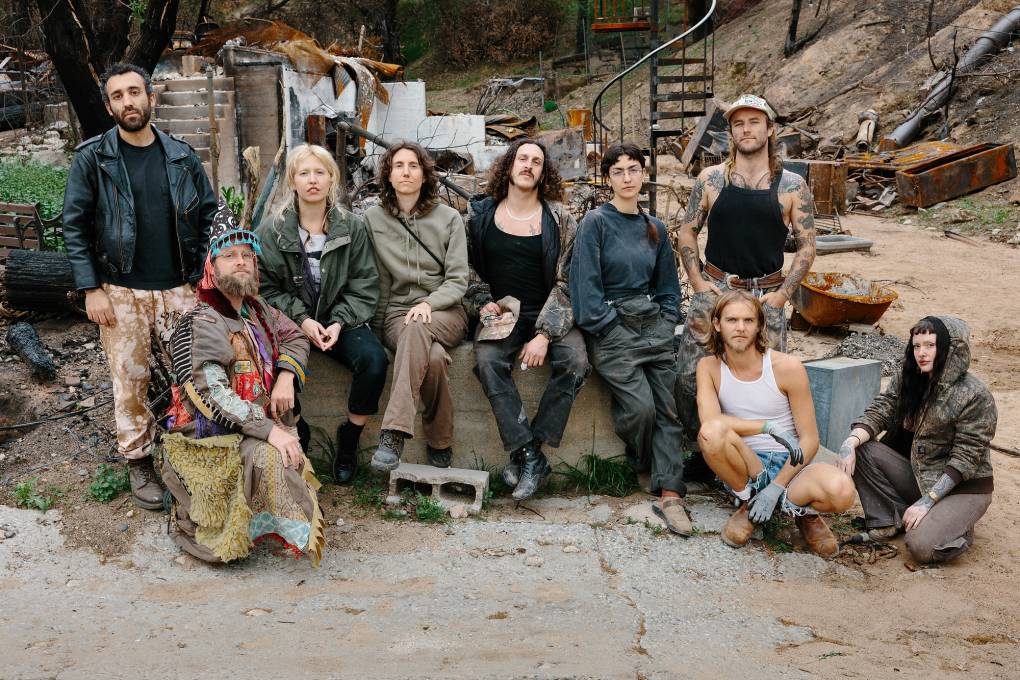
Stories of LA’s Zorthian Ranch, ‘A Portal to a Different Way of Life,’ Damaged in the Eaton Fire
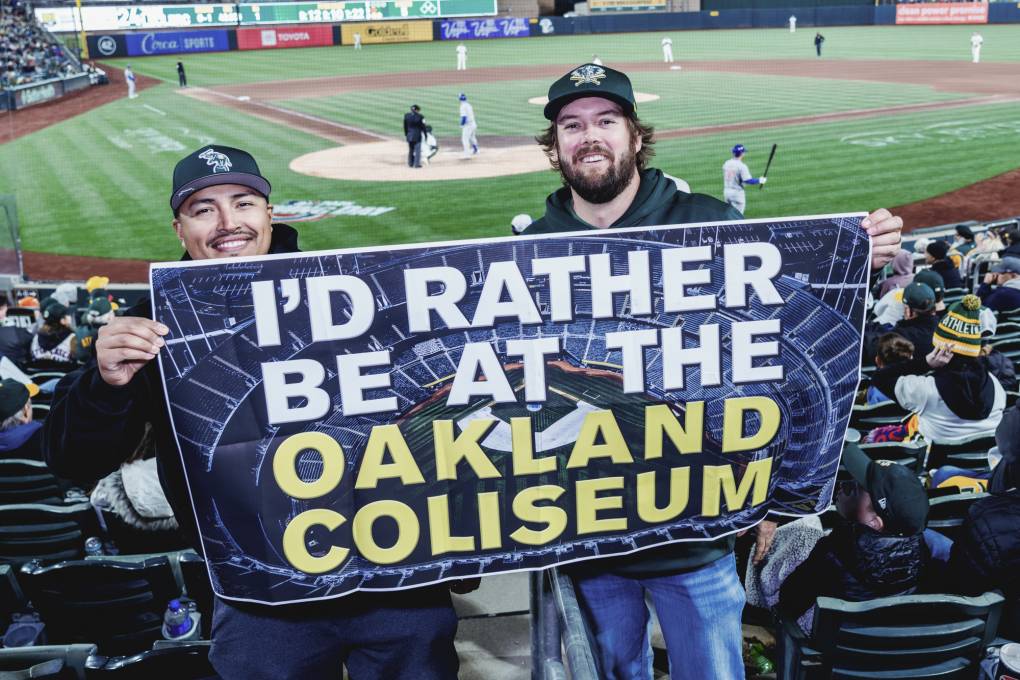
At a Surreal A’s Opener in Sacramento, Fans Are Ready to Have Hearts Broken Again
The SF Barber That Welcomes All Trans People Into His Shop
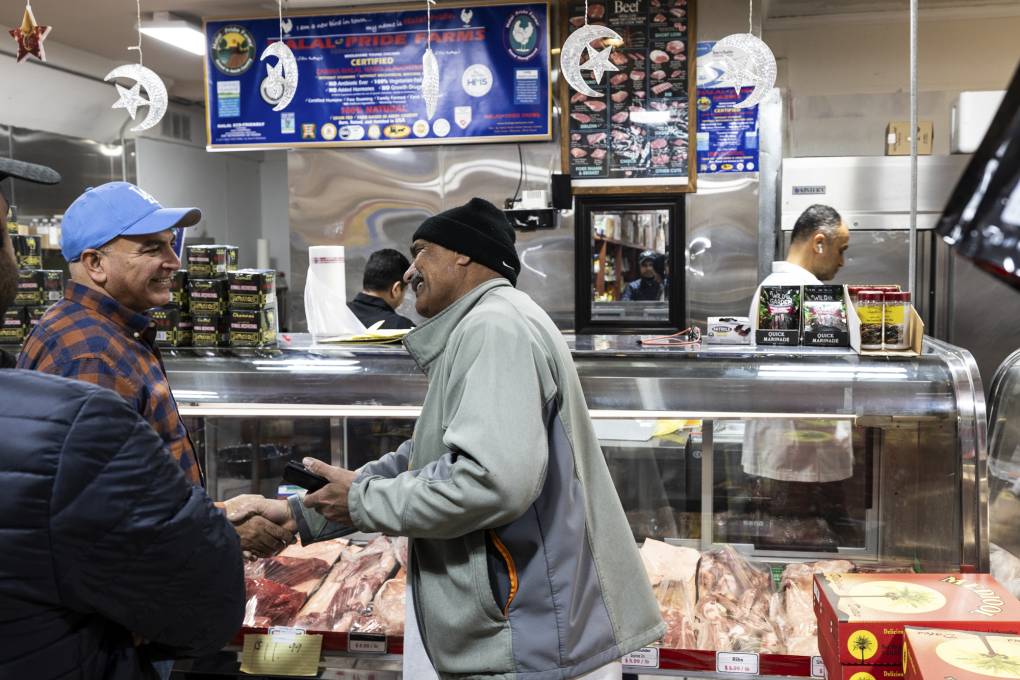
In San Mateo County, This Market Is a Community Destination for Food, Faith and Ramadan Staples
Frustrated Democrats Push for ‘Wartime Leaders’ at Bakersfield Town Hall
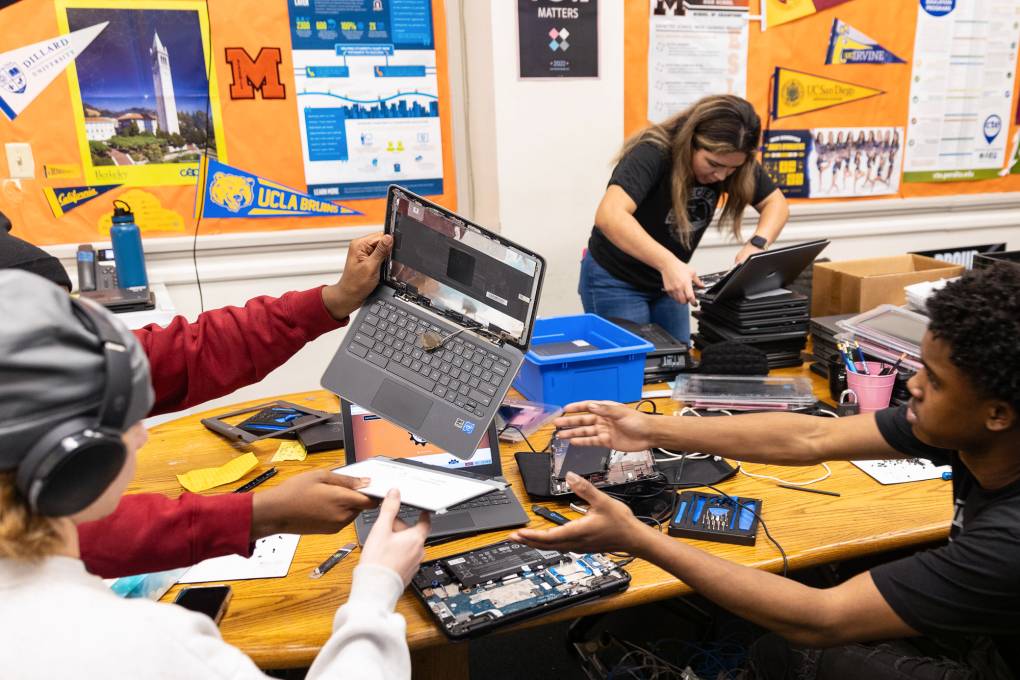
When Oakland Students’ Laptops Break, Their Peers Get Paid To Fix Them
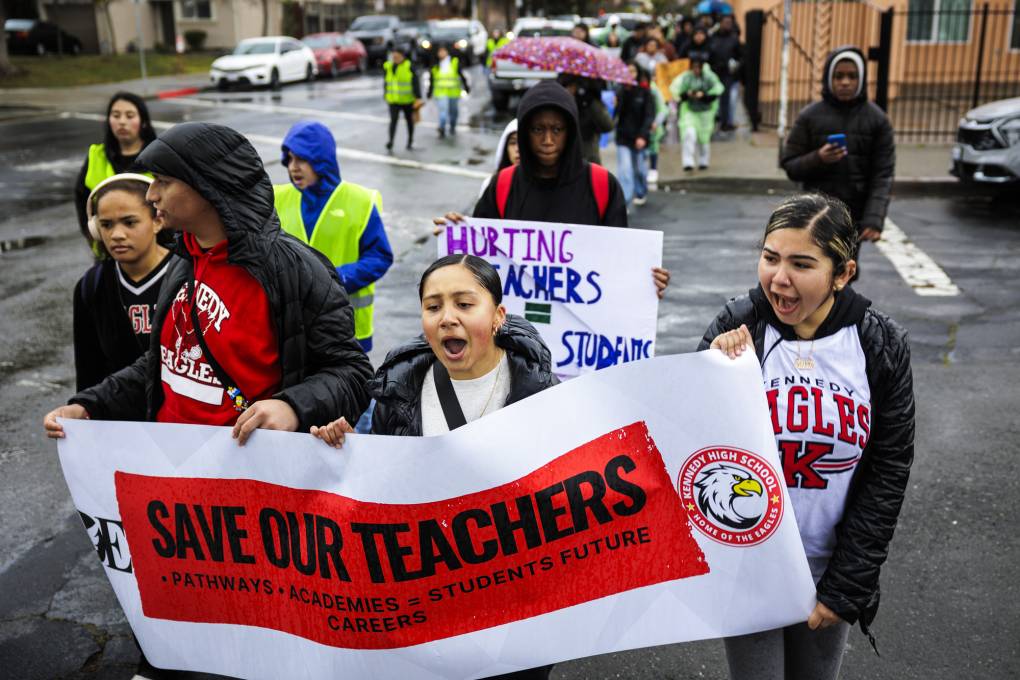
'Our Education Matters': Richmond High Schoolers Rally Against Teacher Layoffs
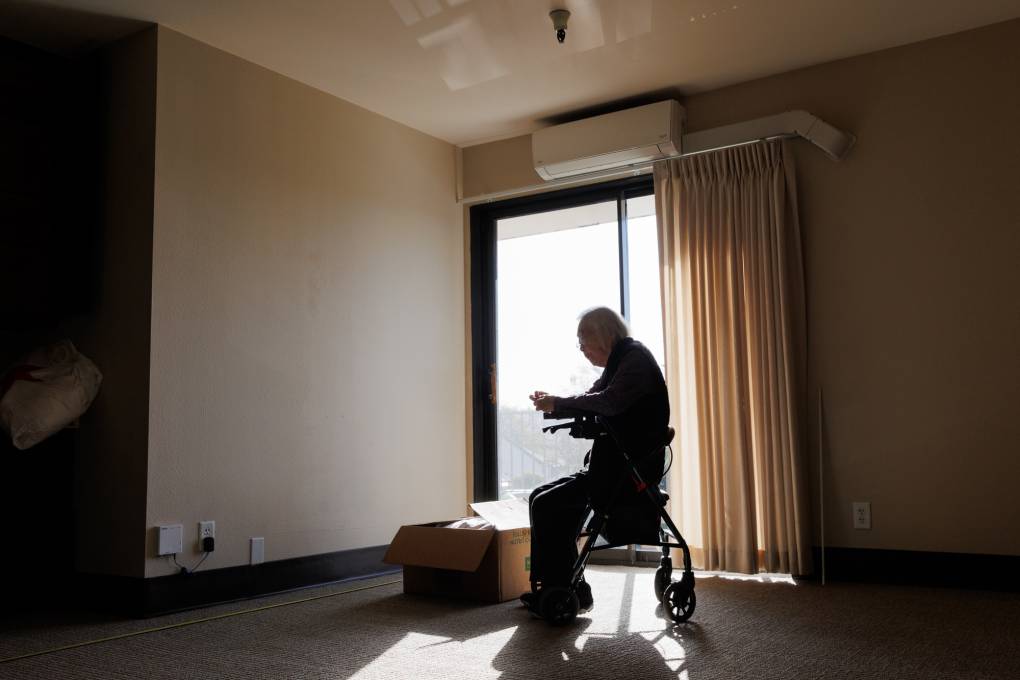
‘Like Family’: Japanese American Seniors and Caregivers Say Goodbye to J-Sei Home
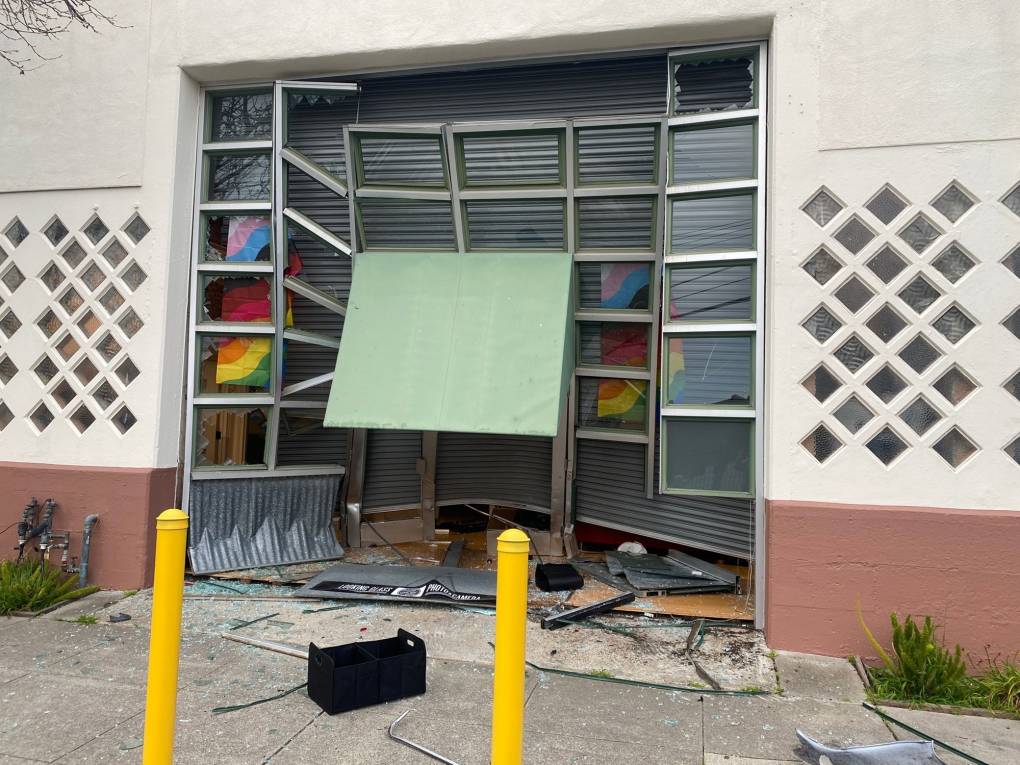
Bay Area Photo Community Rallies Around Beloved Berkeley Shop After Smash-and-Grab
San Francisco Celebrates the Lunar New Year With Iconic Chinatown Parade
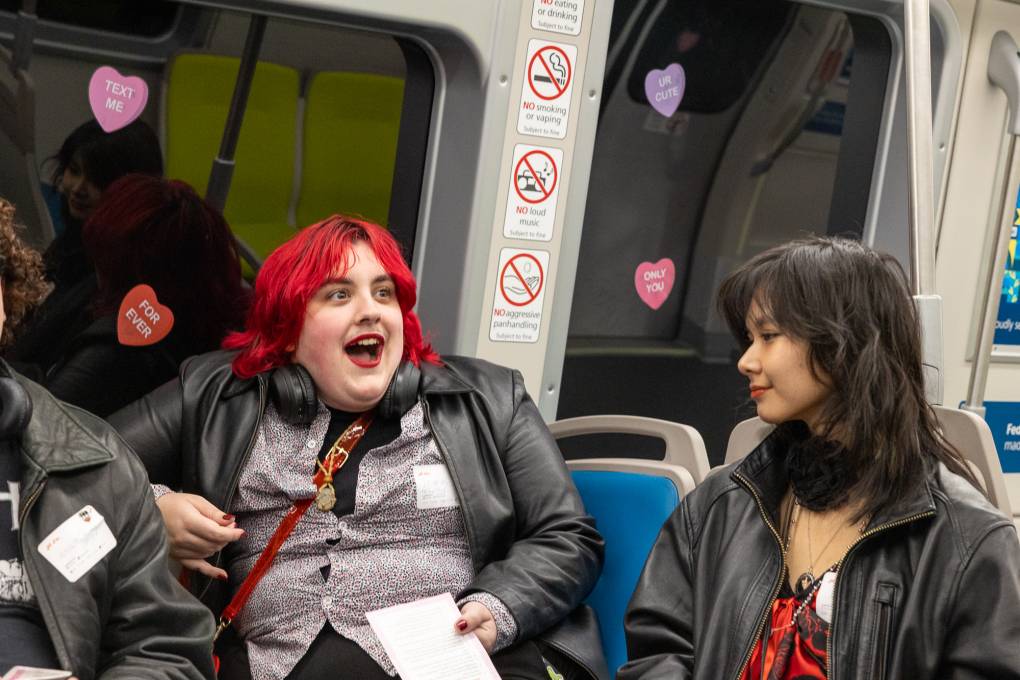
BART's 1st-Ever Speed Dating 'Valentraine' Event Gives Riders a Shot at Love
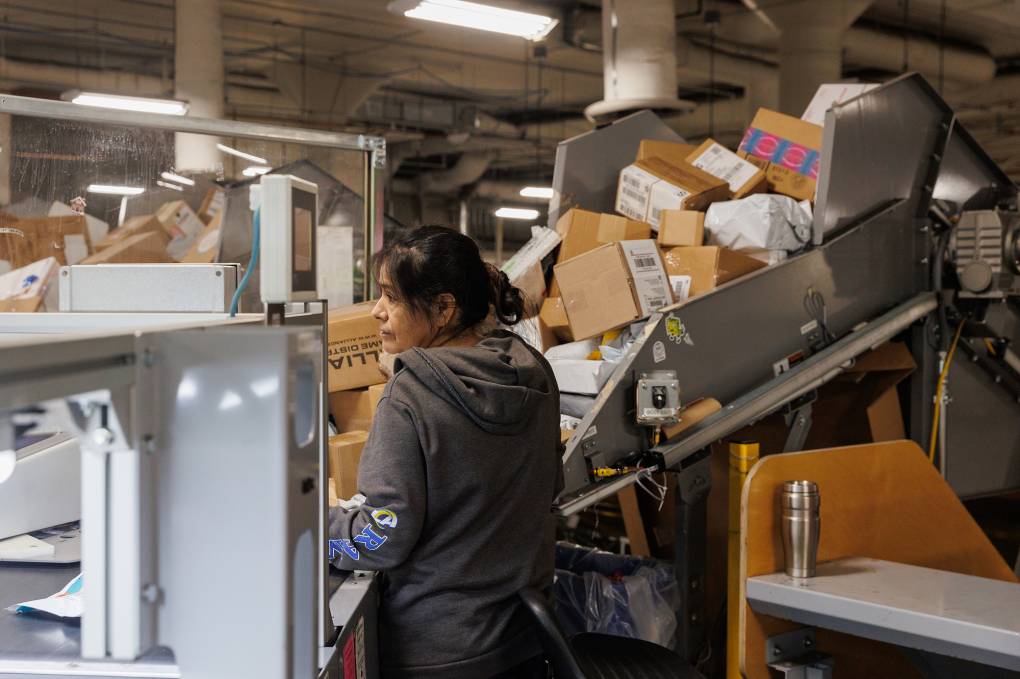
The Holiday Rush in Photos: ‘Every Day Is Christmas’ at This Oakland Postal Service Center
window.__IS_SSR__=true
window.__INITIAL_STATE__={
"attachmentsReducer": {
"audio_0": {
"type": "attachments",
"id": "audio_0",
"imgSizes": {
"kqedFullSize": {
"file": "https://ww2.kqed.org/news/wp-content/themes/KQED-unified/img/audio_bgs/background0.jpg"
}
}
},
"audio_1": {
"type": "attachments",
"id": "audio_1",
"imgSizes": {
"kqedFullSize": {
"file": "https://ww2.kqed.org/news/wp-content/themes/KQED-unified/img/audio_bgs/background1.jpg"
}
}
},
"audio_2": {
"type": "attachments",
"id": "audio_2",
"imgSizes": {
"kqedFullSize": {
"file": "https://ww2.kqed.org/news/wp-content/themes/KQED-unified/img/audio_bgs/background2.jpg"
}
}
},
"audio_3": {
"type": "attachments",
"id": "audio_3",
"imgSizes": {
"kqedFullSize": {
"file": "https://ww2.kqed.org/news/wp-content/themes/KQED-unified/img/audio_bgs/background3.jpg"
}
}
},
"audio_4": {
"type": "attachments",
"id": "audio_4",
"imgSizes": {
"kqedFullSize": {
"file": "https://ww2.kqed.org/news/wp-content/themes/KQED-unified/img/audio_bgs/background4.jpg"
}
}
},
"placeholder": {
"type": "attachments",
"id": "placeholder",
"imgSizes": {
"thumbnail": {
"file": "https://cdn.kqed.org/wp-content/uploads/2024/12/KQED-Default-Image-816638274-2000x1333-1-160x107.jpg",
"width": 160,
"height": 107,
"mimeType": "image/jpeg"
},
"medium": {
"file": "https://cdn.kqed.org/wp-content/uploads/2024/12/KQED-Default-Image-816638274-2000x1333-1-800x533.jpg",
"width": 800,
"height": 533,
"mimeType": "image/jpeg"
},
"medium_large": {
"file": "https://cdn.kqed.org/wp-content/uploads/2024/12/KQED-Default-Image-816638274-2000x1333-1-768x512.jpg",
"width": 768,
"height": 512,
"mimeType": "image/jpeg"
},
"large": {
"file": "https://cdn.kqed.org/wp-content/uploads/2024/12/KQED-Default-Image-816638274-2000x1333-1-1020x680.jpg",
"width": 1020,
"height": 680,
"mimeType": "image/jpeg"
},
"1536x1536": {
"file": "https://cdn.kqed.org/wp-content/uploads/2024/12/KQED-Default-Image-816638274-2000x1333-1-1536x1024.jpg",
"width": 1536,
"height": 1024,
"mimeType": "image/jpeg"
},
"fd-lrg": {
"file": "https://cdn.kqed.org/wp-content/uploads/2024/12/KQED-Default-Image-816638274-2000x1333-1-1536x1024.jpg",
"width": 1536,
"height": 1024,
"mimeType": "image/jpeg"
},
"fd-med": {
"file": "https://cdn.kqed.org/wp-content/uploads/2024/12/KQED-Default-Image-816638274-2000x1333-1-1020x680.jpg",
"width": 1020,
"height": 680,
"mimeType": "image/jpeg"
},
"fd-sm": {
"file": "https://cdn.kqed.org/wp-content/uploads/2024/12/KQED-Default-Image-816638274-2000x1333-1-800x533.jpg",
"width": 800,
"height": 533,
"mimeType": "image/jpeg"
},
"post-thumbnail": {
"file": "https://cdn.kqed.org/wp-content/uploads/2024/12/KQED-Default-Image-816638274-2000x1333-1-672x372.jpg",
"width": 672,
"height": 372,
"mimeType": "image/jpeg"
},
"twentyfourteen-full-width": {
"file": "https://cdn.kqed.org/wp-content/uploads/2024/12/KQED-Default-Image-816638274-2000x1333-1-1038x576.jpg",
"width": 1038,
"height": 576,
"mimeType": "image/jpeg"
},
"xxsmall": {
"file": "https://cdn.kqed.org/wp-content/uploads/2024/12/KQED-Default-Image-816638274-2000x1333-1-160x107.jpg",
"width": 160,
"height": 107,
"mimeType": "image/jpeg"
},
"xsmall": {
"file": "https://cdn.kqed.org/wp-content/uploads/2024/12/KQED-Default-Image-816638274-2000x1333-1-672x372.jpg",
"width": 672,
"height": 372,
"mimeType": "image/jpeg"
},
"small": {
"file": "https://cdn.kqed.org/wp-content/uploads/2024/12/KQED-Default-Image-816638274-2000x1333-1-672x372.jpg",
"width": 672,
"height": 372,
"mimeType": "image/jpeg"
},
"xlarge": {
"file": "https://cdn.kqed.org/wp-content/uploads/2024/12/KQED-Default-Image-816638274-2000x1333-1-1020x680.jpg",
"width": 1020,
"height": 680,
"mimeType": "image/jpeg"
},
"full-width": {
"file": "https://cdn.kqed.org/wp-content/uploads/2024/12/KQED-Default-Image-816638274-2000x1333-1-1920x1280.jpg",
"width": 1920,
"height": 1280,
"mimeType": "image/jpeg"
},
"guest-author-32": {
"file": "https://cdn.kqed.org/wp-content/uploads/2025/01/KQED-Default-Image-816638274-1333x1333-1-160x160.jpg",
"width": 32,
"height": 32,
"mimeType": "image/jpeg"
},
"guest-author-50": {
"file": "https://cdn.kqed.org/wp-content/uploads/2025/01/KQED-Default-Image-816638274-1333x1333-1-160x160.jpg",
"width": 50,
"height": 50,
"mimeType": "image/jpeg"
},
"guest-author-64": {
"file": "https://cdn.kqed.org/wp-content/uploads/2025/01/KQED-Default-Image-816638274-1333x1333-1-160x160.jpg",
"width": 64,
"height": 64,
"mimeType": "image/jpeg"
},
"guest-author-96": {
"file": "https://cdn.kqed.org/wp-content/uploads/2025/01/KQED-Default-Image-816638274-1333x1333-1-160x160.jpg",
"width": 96,
"height": 96,
"mimeType": "image/jpeg"
},
"guest-author-128": {
"file": "https://cdn.kqed.org/wp-content/uploads/2025/01/KQED-Default-Image-816638274-1333x1333-1-160x160.jpg",
"width": 128,
"height": 128,
"mimeType": "image/jpeg"
},
"detail": {
"file": "https://cdn.kqed.org/wp-content/uploads/2025/01/KQED-Default-Image-816638274-1333x1333-1-160x160.jpg",
"width": 160,
"height": 160,
"mimeType": "image/jpeg"
},
"kqedFullSize": {
"file": "https://cdn.kqed.org/wp-content/uploads/2024/12/KQED-Default-Image-816638274-2000x1333-1.jpg",
"width": 2000,
"height": 1333
}
}
},
"news_12034237": {
"type": "attachments",
"id": "news_12034237",
"meta": {
"index": "attachments_1716263798",
"site": "news",
"id": "12034237",
"found": true
},
"title": "20250328_Zorthian-Ranch_SK_17",
"publishDate": 1743617233,
"status": "inherit",
"parent": 0,
"modified": 1744306755,
"caption": "Residents and volunteers at Zorthian Ranch on March 28 in Altadena, California. From left to right: Sam Anderson, Robert “Blobbie” Kirkhuff, Tara Zorthian, Caroline Zorthian, Ian Rosenzweig, Aslan Scardina, Billie Grey Heck (back), Moses Hamborg (front), and Solange Stefanelli. After the Eaton Fire blazed through Altadena, past and present residents of Zorthian Ranch, a bohemian art colony in the Los Angeles foothills, shared stories of the Ranch’s transformative “magic,” and witnessed the wildfire’s destruction. ",
"credit": "Stella Kalinina for KQED",
"altTag": null,
"description": null,
"imgSizes": {
"medium": {
"file": "https://cdn.kqed.org/wp-content/uploads/sites/10/2025/04/20250328_Zorthian-Ranch_SK_17-800x534.jpg",
"width": 800,
"height": 534,
"mimeType": "image/jpeg"
},
"large": {
"file": "https://cdn.kqed.org/wp-content/uploads/sites/10/2025/04/20250328_Zorthian-Ranch_SK_17-1020x680.jpg",
"width": 1020,
"height": 680,
"mimeType": "image/jpeg"
},
"thumbnail": {
"file": "https://cdn.kqed.org/wp-content/uploads/sites/10/2025/04/20250328_Zorthian-Ranch_SK_17-160x107.jpg",
"width": 160,
"height": 107,
"mimeType": "image/jpeg"
},
"1536x1536": {
"file": "https://cdn.kqed.org/wp-content/uploads/sites/10/2025/04/20250328_Zorthian-Ranch_SK_17-1536x1025.jpg",
"width": 1536,
"height": 1025,
"mimeType": "image/jpeg"
},
"post-thumbnail": {
"file": "https://cdn.kqed.org/wp-content/uploads/sites/10/2025/04/20250328_Zorthian-Ranch_SK_17-672x372.jpg",
"width": 672,
"height": 372,
"mimeType": "image/jpeg"
},
"twentyfourteen-full-width": {
"file": "https://cdn.kqed.org/wp-content/uploads/sites/10/2025/04/20250328_Zorthian-Ranch_SK_17-1038x576.jpg",
"width": 1038,
"height": 576,
"mimeType": "image/jpeg"
},
"full-width": {
"file": "https://cdn.kqed.org/wp-content/uploads/sites/10/2025/04/20250328_Zorthian-Ranch_SK_17-1920x1281.jpg",
"width": 1920,
"height": 1281,
"mimeType": "image/jpeg"
},
"kqedFullSize": {
"file": "https://cdn.kqed.org/wp-content/uploads/sites/10/2025/04/20250328_Zorthian-Ranch_SK_17.jpg",
"width": 2000,
"height": 1334
}
},
"isLoading": false,
"fetchFailed": false
},
"news_12033965": {
"type": "attachments",
"id": "news_12033965",
"meta": {
"index": "attachments_1716263798",
"site": "news",
"id": "12033965",
"found": true
},
"title": "OAKLAND A’S SEASON HOME OPENER",
"publishDate": 1743523816,
"status": "inherit",
"parent": 0,
"modified": 1743536877,
"caption": "Tyler Hogan and Chuy Vill display a poster during Oakland A’s season home opener at Sutter Health Park in West Sacramento, California, on Monday, March 31, 2025.",
"credit": "Andri Tambunan for KQED",
"altTag": null,
"description": null,
"imgSizes": {
"medium": {
"file": "https://cdn.kqed.org/wp-content/uploads/sites/10/2025/04/230331-OAKLAND_AS_SEASON_OPENER_AT_382-KQED-800x533.jpg",
"width": 800,
"height": 533,
"mimeType": "image/jpeg"
},
"large": {
"file": "https://cdn.kqed.org/wp-content/uploads/sites/10/2025/04/230331-OAKLAND_AS_SEASON_OPENER_AT_382-KQED-1020x680.jpg",
"width": 1020,
"height": 680,
"mimeType": "image/jpeg"
},
"thumbnail": {
"file": "https://cdn.kqed.org/wp-content/uploads/sites/10/2025/04/230331-OAKLAND_AS_SEASON_OPENER_AT_382-KQED-160x107.jpg",
"width": 160,
"height": 107,
"mimeType": "image/jpeg"
},
"1536x1536": {
"file": "https://cdn.kqed.org/wp-content/uploads/sites/10/2025/04/230331-OAKLAND_AS_SEASON_OPENER_AT_382-KQED-1536x1024.jpg",
"width": 1536,
"height": 1024,
"mimeType": "image/jpeg"
},
"post-thumbnail": {
"file": "https://cdn.kqed.org/wp-content/uploads/sites/10/2025/04/230331-OAKLAND_AS_SEASON_OPENER_AT_382-KQED-672x372.jpg",
"width": 672,
"height": 372,
"mimeType": "image/jpeg"
},
"twentyfourteen-full-width": {
"file": "https://cdn.kqed.org/wp-content/uploads/sites/10/2025/04/230331-OAKLAND_AS_SEASON_OPENER_AT_382-KQED-1038x576.jpg",
"width": 1038,
"height": 576,
"mimeType": "image/jpeg"
},
"full-width": {
"file": "https://cdn.kqed.org/wp-content/uploads/sites/10/2025/04/230331-OAKLAND_AS_SEASON_OPENER_AT_382-KQED-1920x1280.jpg",
"width": 1920,
"height": 1280,
"mimeType": "image/jpeg"
},
"kqedFullSize": {
"file": "https://cdn.kqed.org/wp-content/uploads/sites/10/2025/04/230331-OAKLAND_AS_SEASON_OPENER_AT_382-KQED.jpg",
"width": 2000,
"height": 1333
}
},
"isLoading": false,
"fetchFailed": false
},
"news_12033647": {
"type": "attachments",
"id": "news_12033647",
"meta": {
"index": "attachments_1716263798",
"site": "news",
"id": "12033647",
"found": true
},
"title": "20250326_SFBarber_GC-15_qed",
"publishDate": 1743203866,
"status": "inherit",
"parent": 12033501,
"modified": 1743203921,
"caption": "Santana 'Twinks' Vasquez cuts Angel Filimoehala’s hair at Steel and Strand barbershop in San Francisco on March 26, 2025. ",
"credit": "Gina Castro/KQED",
"altTag": null,
"description": null,
"imgSizes": {
"medium": {
"file": "https://cdn.kqed.org/wp-content/uploads/sites/10/2025/03/20250326_SFBarber_GC-15_qed-800x533.jpg",
"width": 800,
"height": 533,
"mimeType": "image/jpeg"
},
"large": {
"file": "https://cdn.kqed.org/wp-content/uploads/sites/10/2025/03/20250326_SFBarber_GC-15_qed-1020x680.jpg",
"width": 1020,
"height": 680,
"mimeType": "image/jpeg"
},
"thumbnail": {
"file": "https://cdn.kqed.org/wp-content/uploads/sites/10/2025/03/20250326_SFBarber_GC-15_qed-160x107.jpg",
"width": 160,
"height": 107,
"mimeType": "image/jpeg"
},
"1536x1536": {
"file": "https://cdn.kqed.org/wp-content/uploads/sites/10/2025/03/20250326_SFBarber_GC-15_qed-1536x1024.jpg",
"width": 1536,
"height": 1024,
"mimeType": "image/jpeg"
},
"post-thumbnail": {
"file": "https://cdn.kqed.org/wp-content/uploads/sites/10/2025/03/20250326_SFBarber_GC-15_qed-672x372.jpg",
"width": 672,
"height": 372,
"mimeType": "image/jpeg"
},
"twentyfourteen-full-width": {
"file": "https://cdn.kqed.org/wp-content/uploads/sites/10/2025/03/20250326_SFBarber_GC-15_qed-1038x576.jpg",
"width": 1038,
"height": 576,
"mimeType": "image/jpeg"
},
"full-width": {
"file": "https://cdn.kqed.org/wp-content/uploads/sites/10/2025/03/20250326_SFBarber_GC-15_qed-1920x1280.jpg",
"width": 1920,
"height": 1280,
"mimeType": "image/jpeg"
},
"kqedFullSize": {
"file": "https://cdn.kqed.org/wp-content/uploads/sites/10/2025/03/20250326_SFBarber_GC-15_qed.jpg",
"width": 2000,
"height": 1333
}
},
"isLoading": false,
"fetchFailed": false
},
"news_12030660": {
"type": "attachments",
"id": "news_12030660",
"meta": {
"index": "attachments_1716263798",
"site": "news",
"id": "12030660",
"found": true
},
"title": "20250308_BESANS-MARKET_DMB_00963-KQED",
"publishDate": 1741647858,
"status": "inherit",
"parent": 0,
"modified": 1743099554,
"caption": "Customers greet each other at Besan's International Market in San Bruno on Saturday, March 8, 2025. Besan's is a halal butcher, take-out restaurant and market in San Bruno, California. A go-to spot year-round for local Arab, North African, South Asian and Middle Eastern communities, the shop is especially busy during Ramadan, when customers shop for iftar meals and the coming Eid al-fitr holiday.",
"credit": "David M. Barreda/KQED",
"altTag": null,
"description": null,
"imgSizes": {
"medium": {
"file": "https://cdn.kqed.org/wp-content/uploads/sites/10/2025/03/20250308_BESANS-MARKET_DMB_00963-KQED-800x533.jpg",
"width": 800,
"height": 533,
"mimeType": "image/jpeg"
},
"large": {
"file": "https://cdn.kqed.org/wp-content/uploads/sites/10/2025/03/20250308_BESANS-MARKET_DMB_00963-KQED-1020x680.jpg",
"width": 1020,
"height": 680,
"mimeType": "image/jpeg"
},
"thumbnail": {
"file": "https://cdn.kqed.org/wp-content/uploads/sites/10/2025/03/20250308_BESANS-MARKET_DMB_00963-KQED-160x107.jpg",
"width": 160,
"height": 107,
"mimeType": "image/jpeg"
},
"1536x1536": {
"file": "https://cdn.kqed.org/wp-content/uploads/sites/10/2025/03/20250308_BESANS-MARKET_DMB_00963-KQED-1536x1024.jpg",
"width": 1536,
"height": 1024,
"mimeType": "image/jpeg"
},
"post-thumbnail": {
"file": "https://cdn.kqed.org/wp-content/uploads/sites/10/2025/03/20250308_BESANS-MARKET_DMB_00963-KQED-672x372.jpg",
"width": 672,
"height": 372,
"mimeType": "image/jpeg"
},
"twentyfourteen-full-width": {
"file": "https://cdn.kqed.org/wp-content/uploads/sites/10/2025/03/20250308_BESANS-MARKET_DMB_00963-KQED-1038x576.jpg",
"width": 1038,
"height": 576,
"mimeType": "image/jpeg"
},
"full-width": {
"file": "https://cdn.kqed.org/wp-content/uploads/sites/10/2025/03/20250308_BESANS-MARKET_DMB_00963-KQED-1920x1280.jpg",
"width": 1920,
"height": 1280,
"mimeType": "image/jpeg"
},
"kqedFullSize": {
"file": "https://cdn.kqed.org/wp-content/uploads/sites/10/2025/03/20250308_BESANS-MARKET_DMB_00963-KQED.jpg",
"width": 2000,
"height": 1333
}
},
"isLoading": false,
"fetchFailed": false
},
"news_12033027": {
"type": "attachments",
"id": "news_12033027",
"meta": {
"index": "attachments_1716263798",
"site": "news",
"id": "12033027",
"found": true
},
"title": "250323-DEM-TOWN-HALLS-MD-21-KQED-5",
"publishDate": 1742942254,
"status": "inherit",
"parent": 0,
"modified": 1742942310,
"caption": "Rep. Ro Khanna holds a town hall meeting at the MLK Community Center in Bakersfield on March 23, 2025, the first of three town hall events Khanna was set to hold in Republican-held congressional districts across the state.",
"credit": "Martin do Nascimento/KQED",
"altTag": null,
"description": null,
"imgSizes": {
"medium": {
"file": "https://cdn.kqed.org/wp-content/uploads/sites/10/2025/03/250323-DEM-TOWN-HALLS-MD-21-KQED-5-800x533.jpg",
"width": 800,
"height": 533,
"mimeType": "image/jpeg"
},
"large": {
"file": "https://cdn.kqed.org/wp-content/uploads/sites/10/2025/03/250323-DEM-TOWN-HALLS-MD-21-KQED-5-1020x680.jpg",
"width": 1020,
"height": 680,
"mimeType": "image/jpeg"
},
"thumbnail": {
"file": "https://cdn.kqed.org/wp-content/uploads/sites/10/2025/03/250323-DEM-TOWN-HALLS-MD-21-KQED-5-160x107.jpg",
"width": 160,
"height": 107,
"mimeType": "image/jpeg"
},
"1536x1536": {
"file": "https://cdn.kqed.org/wp-content/uploads/sites/10/2025/03/250323-DEM-TOWN-HALLS-MD-21-KQED-5-1536x1024.jpg",
"width": 1536,
"height": 1024,
"mimeType": "image/jpeg"
},
"post-thumbnail": {
"file": "https://cdn.kqed.org/wp-content/uploads/sites/10/2025/03/250323-DEM-TOWN-HALLS-MD-21-KQED-5-672x372.jpg",
"width": 672,
"height": 372,
"mimeType": "image/jpeg"
},
"twentyfourteen-full-width": {
"file": "https://cdn.kqed.org/wp-content/uploads/sites/10/2025/03/250323-DEM-TOWN-HALLS-MD-21-KQED-5-1038x576.jpg",
"width": 1038,
"height": 576,
"mimeType": "image/jpeg"
},
"full-width": {
"file": "https://cdn.kqed.org/wp-content/uploads/sites/10/2025/03/250323-DEM-TOWN-HALLS-MD-21-KQED-5-1920x1280.jpg",
"width": 1920,
"height": 1280,
"mimeType": "image/jpeg"
},
"kqedFullSize": {
"file": "https://cdn.kqed.org/wp-content/uploads/sites/10/2025/03/250323-DEM-TOWN-HALLS-MD-21-KQED-5.jpg",
"width": 2000,
"height": 1333
}
},
"isLoading": false,
"fetchFailed": false
},
"news_12028939": {
"type": "attachments",
"id": "news_12028939",
"meta": {
"index": "attachments_1716263798",
"site": "news",
"id": "12028939",
"found": true
},
"title": "At McClymonds High School in Oakland on Feb. 6, 2025.",
"publishDate": 1740672046,
"status": "inherit",
"parent": 0,
"modified": 1740672401,
"caption": "At McClymonds High School in Oakland on Feb. 6, 2025.",
"credit": "Gina Castro/KQED",
"altTag": null,
"description": null,
"imgSizes": {
"medium": {
"file": "https://cdn.kqed.org/wp-content/uploads/sites/10/2025/02/20250206_OUSDChromebooks_GC-33-800x533.jpg",
"width": 800,
"height": 533,
"mimeType": "image/jpeg"
},
"large": {
"file": "https://cdn.kqed.org/wp-content/uploads/sites/10/2025/02/20250206_OUSDChromebooks_GC-33-1020x680.jpg",
"width": 1020,
"height": 680,
"mimeType": "image/jpeg"
},
"thumbnail": {
"file": "https://cdn.kqed.org/wp-content/uploads/sites/10/2025/02/20250206_OUSDChromebooks_GC-33-160x107.jpg",
"width": 160,
"height": 107,
"mimeType": "image/jpeg"
},
"1536x1536": {
"file": "https://cdn.kqed.org/wp-content/uploads/sites/10/2025/02/20250206_OUSDChromebooks_GC-33-1536x1024.jpg",
"width": 1536,
"height": 1024,
"mimeType": "image/jpeg"
},
"post-thumbnail": {
"file": "https://cdn.kqed.org/wp-content/uploads/sites/10/2025/02/20250206_OUSDChromebooks_GC-33-672x372.jpg",
"width": 672,
"height": 372,
"mimeType": "image/jpeg"
},
"twentyfourteen-full-width": {
"file": "https://cdn.kqed.org/wp-content/uploads/sites/10/2025/02/20250206_OUSDChromebooks_GC-33-1038x576.jpg",
"width": 1038,
"height": 576,
"mimeType": "image/jpeg"
},
"full-width": {
"file": "https://cdn.kqed.org/wp-content/uploads/sites/10/2025/02/20250206_OUSDChromebooks_GC-33-1920x1280.jpg",
"width": 1920,
"height": 1280,
"mimeType": "image/jpeg"
},
"kqedFullSize": {
"file": "https://cdn.kqed.org/wp-content/uploads/sites/10/2025/02/20250206_OUSDChromebooks_GC-33.jpg",
"width": 2000,
"height": 1333
}
},
"isLoading": false,
"fetchFailed": false
},
"news_12028936": {
"type": "attachments",
"id": "news_12028936",
"meta": {
"index": "attachments_1716263798",
"site": "news",
"id": "12028936",
"found": true
},
"title": "20250206_OUSDChromebooks_GC-19",
"publishDate": 1740672029,
"status": "inherit",
"parent": 12028948,
"modified": 1741035054,
"caption": "David Anderson, a junior at McClymonds High School, holds a Chromebook’s bezel in Oakland on Feb. 6, 2025. David is one of three paid interns at McClymonds High, under Oakland Unified’s student-led Chromebook repair program, where students are hired to repair the devices during the school year.",
"credit": "Gina Castro/KQED",
"altTag": null,
"description": null,
"imgSizes": {
"medium": {
"file": "https://cdn.kqed.org/wp-content/uploads/sites/10/2025/02/20250206_OUSDChromebooks_GC-19-800x533.jpg",
"width": 800,
"height": 533,
"mimeType": "image/jpeg"
},
"large": {
"file": "https://cdn.kqed.org/wp-content/uploads/sites/10/2025/02/20250206_OUSDChromebooks_GC-19-1020x680.jpg",
"width": 1020,
"height": 680,
"mimeType": "image/jpeg"
},
"thumbnail": {
"file": "https://cdn.kqed.org/wp-content/uploads/sites/10/2025/02/20250206_OUSDChromebooks_GC-19-160x107.jpg",
"width": 160,
"height": 107,
"mimeType": "image/jpeg"
},
"1536x1536": {
"file": "https://cdn.kqed.org/wp-content/uploads/sites/10/2025/02/20250206_OUSDChromebooks_GC-19-1536x1024.jpg",
"width": 1536,
"height": 1024,
"mimeType": "image/jpeg"
},
"post-thumbnail": {
"file": "https://cdn.kqed.org/wp-content/uploads/sites/10/2025/02/20250206_OUSDChromebooks_GC-19-672x372.jpg",
"width": 672,
"height": 372,
"mimeType": "image/jpeg"
},
"twentyfourteen-full-width": {
"file": "https://cdn.kqed.org/wp-content/uploads/sites/10/2025/02/20250206_OUSDChromebooks_GC-19-1038x576.jpg",
"width": 1038,
"height": 576,
"mimeType": "image/jpeg"
},
"full-width": {
"file": "https://cdn.kqed.org/wp-content/uploads/sites/10/2025/02/20250206_OUSDChromebooks_GC-19-1920x1280.jpg",
"width": 1920,
"height": 1280,
"mimeType": "image/jpeg"
},
"kqedFullSize": {
"file": "https://cdn.kqed.org/wp-content/uploads/sites/10/2025/02/20250206_OUSDChromebooks_GC-19.jpg",
"width": 2000,
"height": 1333
}
},
"isLoading": false,
"fetchFailed": false
},
"news_12031311": {
"type": "attachments",
"id": "news_12031311",
"meta": {
"index": "attachments_1716263798",
"site": "news",
"id": "12031311",
"found": true
},
"title": "240312-RICHMOND WALKOUT-MD-01-KQED-1",
"publishDate": 1741908035,
"status": "inherit",
"parent": 0,
"modified": 1741965238,
"caption": "Valerie Aquino (center) and Xitlali Gomez (right) and other students from Richmond's John F. Kennedy High School stage a walkout and march to the West Contra Costa Unified School District Offices to protest impending layoffs as part of cuts to the district's budget in Richmond on March 12, 2025.",
"credit": "Martin do Nascimento/KQED",
"altTag": null,
"description": null,
"imgSizes": {
"medium": {
"file": "https://cdn.kqed.org/wp-content/uploads/sites/10/2025/03/240312-RICHMOND-WALKOUT-MD-01-KQED-1-800x533.jpg",
"width": 800,
"height": 533,
"mimeType": "image/jpeg"
},
"large": {
"file": "https://cdn.kqed.org/wp-content/uploads/sites/10/2025/03/240312-RICHMOND-WALKOUT-MD-01-KQED-1-1020x680.jpg",
"width": 1020,
"height": 680,
"mimeType": "image/jpeg"
},
"thumbnail": {
"file": "https://cdn.kqed.org/wp-content/uploads/sites/10/2025/03/240312-RICHMOND-WALKOUT-MD-01-KQED-1-160x107.jpg",
"width": 160,
"height": 107,
"mimeType": "image/jpeg"
},
"1536x1536": {
"file": "https://cdn.kqed.org/wp-content/uploads/sites/10/2025/03/240312-RICHMOND-WALKOUT-MD-01-KQED-1-1536x1024.jpg",
"width": 1536,
"height": 1024,
"mimeType": "image/jpeg"
},
"post-thumbnail": {
"file": "https://cdn.kqed.org/wp-content/uploads/sites/10/2025/03/240312-RICHMOND-WALKOUT-MD-01-KQED-1-672x372.jpg",
"width": 672,
"height": 372,
"mimeType": "image/jpeg"
},
"twentyfourteen-full-width": {
"file": "https://cdn.kqed.org/wp-content/uploads/sites/10/2025/03/240312-RICHMOND-WALKOUT-MD-01-KQED-1-1038x576.jpg",
"width": 1038,
"height": 576,
"mimeType": "image/jpeg"
},
"full-width": {
"file": "https://cdn.kqed.org/wp-content/uploads/sites/10/2025/03/240312-RICHMOND-WALKOUT-MD-01-KQED-1-1920x1280.jpg",
"width": 1920,
"height": 1280,
"mimeType": "image/jpeg"
},
"kqedFullSize": {
"file": "https://cdn.kqed.org/wp-content/uploads/sites/10/2025/03/240312-RICHMOND-WALKOUT-MD-01-KQED-1.jpg",
"width": 2000,
"height": 1333
}
},
"isLoading": false,
"fetchFailed": false
},
"news_12027414": {
"type": "attachments",
"id": "news_12027414",
"meta": {
"index": "attachments_1716263798",
"site": "news",
"id": "12027414",
"found": true
},
"title": "20241215-JSEI-JY-917",
"publishDate": 1739804952,
"status": "inherit",
"parent": 12025613,
"modified": 1741375858,
"caption": "Grace Aikawa looks around at her empty room at her new care facility in Castro Valley, California, on Sunday, Dec. 15, 2024.",
"credit": "Juliana Yamada/KQED",
"altTag": null,
"description": null,
"imgSizes": {
"medium": {
"file": "https://cdn.kqed.org/wp-content/uploads/sites/10/2025/02/20241215-JSEI-JY-917-800x533.jpg",
"width": 800,
"height": 533,
"mimeType": "image/jpeg"
},
"large": {
"file": "https://cdn.kqed.org/wp-content/uploads/sites/10/2025/02/20241215-JSEI-JY-917-1020x680.jpg",
"width": 1020,
"height": 680,
"mimeType": "image/jpeg"
},
"thumbnail": {
"file": "https://cdn.kqed.org/wp-content/uploads/sites/10/2025/02/20241215-JSEI-JY-917-160x107.jpg",
"width": 160,
"height": 107,
"mimeType": "image/jpeg"
},
"1536x1536": {
"file": "https://cdn.kqed.org/wp-content/uploads/sites/10/2025/02/20241215-JSEI-JY-917-1536x1024.jpg",
"width": 1536,
"height": 1024,
"mimeType": "image/jpeg"
},
"post-thumbnail": {
"file": "https://cdn.kqed.org/wp-content/uploads/sites/10/2025/02/20241215-JSEI-JY-917-672x372.jpg",
"width": 672,
"height": 372,
"mimeType": "image/jpeg"
},
"twentyfourteen-full-width": {
"file": "https://cdn.kqed.org/wp-content/uploads/sites/10/2025/02/20241215-JSEI-JY-917-1038x576.jpg",
"width": 1038,
"height": 576,
"mimeType": "image/jpeg"
},
"full-width": {
"file": "https://cdn.kqed.org/wp-content/uploads/sites/10/2025/02/20241215-JSEI-JY-917-1920x1280.jpg",
"width": 1920,
"height": 1280,
"mimeType": "image/jpeg"
},
"kqedFullSize": {
"file": "https://cdn.kqed.org/wp-content/uploads/sites/10/2025/02/20241215-JSEI-JY-917.jpg",
"width": 2000,
"height": 1333
}
},
"isLoading": false,
"fetchFailed": false
},
"news_12027614": {
"type": "attachments",
"id": "news_12027614",
"meta": {
"index": "attachments_1716263798",
"site": "news",
"id": "12027614",
"found": true
},
"title": "BerkeleyPhotoStore4",
"publishDate": 1739922278,
"status": "inherit",
"parent": 0,
"modified": 1739989683,
"caption": "A vehicle rammed the front doors of Looking Glass Photo & Camera four times before breaking into the store.",
"credit": "Courtesy Looking Glass Photo & Camera",
"altTag": null,
"description": null,
"imgSizes": {
"medium": {
"file": "https://cdn.kqed.org/wp-content/uploads/sites/10/2025/02/BerkeleyPhotoStore4-800x600.jpg",
"width": 800,
"height": 600,
"mimeType": "image/jpeg"
},
"large": {
"file": "https://cdn.kqed.org/wp-content/uploads/sites/10/2025/02/BerkeleyPhotoStore4-1020x765.jpg",
"width": 1020,
"height": 765,
"mimeType": "image/jpeg"
},
"thumbnail": {
"file": "https://cdn.kqed.org/wp-content/uploads/sites/10/2025/02/BerkeleyPhotoStore4-160x120.jpg",
"width": 160,
"height": 120,
"mimeType": "image/jpeg"
},
"1536x1536": {
"file": "https://cdn.kqed.org/wp-content/uploads/sites/10/2025/02/BerkeleyPhotoStore4-1536x1152.jpg",
"width": 1536,
"height": 1152,
"mimeType": "image/jpeg"
},
"post-thumbnail": {
"file": "https://cdn.kqed.org/wp-content/uploads/sites/10/2025/02/BerkeleyPhotoStore4-672x372.jpg",
"width": 672,
"height": 372,
"mimeType": "image/jpeg"
},
"twentyfourteen-full-width": {
"file": "https://cdn.kqed.org/wp-content/uploads/sites/10/2025/02/BerkeleyPhotoStore4-1038x576.jpg",
"width": 1038,
"height": 576,
"mimeType": "image/jpeg"
},
"full-width": {
"file": "https://cdn.kqed.org/wp-content/uploads/sites/10/2025/02/BerkeleyPhotoStore4-1920x1440.jpg",
"width": 1920,
"height": 1440,
"mimeType": "image/jpeg"
},
"kqedFullSize": {
"file": "https://cdn.kqed.org/wp-content/uploads/sites/10/2025/02/BerkeleyPhotoStore4.jpg",
"width": 2000,
"height": 1500
}
},
"isLoading": false,
"fetchFailed": false
},
"news_12027372": {
"type": "attachments",
"id": "news_12027372",
"meta": {
"index": "attachments_1716263798",
"site": "news",
"id": "12027372",
"found": true
},
"title": "250215-ChineseNewYear-24-BL",
"publishDate": 1739729104,
"status": "inherit",
"parent": 0,
"modified": 1739742386,
"caption": "Leung's White Crane Lion and Dragon Dance Association carry a dragon during the finale of the Chinese New Year Parade in San Francisco on Feb. 15, 2025.",
"credit": "Beth LaBerge/KQED",
"altTag": "Several people carry a decorative dragon.",
"description": null,
"imgSizes": {
"medium": {
"file": "https://cdn.kqed.org/wp-content/uploads/sites/10/2025/02/250215-ChineseNewYear-24-BL-800x533.jpg",
"width": 800,
"height": 533,
"mimeType": "image/jpeg"
},
"large": {
"file": "https://cdn.kqed.org/wp-content/uploads/sites/10/2025/02/250215-ChineseNewYear-24-BL-1020x680.jpg",
"width": 1020,
"height": 680,
"mimeType": "image/jpeg"
},
"thumbnail": {
"file": "https://cdn.kqed.org/wp-content/uploads/sites/10/2025/02/250215-ChineseNewYear-24-BL-160x107.jpg",
"width": 160,
"height": 107,
"mimeType": "image/jpeg"
},
"1536x1536": {
"file": "https://cdn.kqed.org/wp-content/uploads/sites/10/2025/02/250215-ChineseNewYear-24-BL-1536x1024.jpg",
"width": 1536,
"height": 1024,
"mimeType": "image/jpeg"
},
"post-thumbnail": {
"file": "https://cdn.kqed.org/wp-content/uploads/sites/10/2025/02/250215-ChineseNewYear-24-BL-672x372.jpg",
"width": 672,
"height": 372,
"mimeType": "image/jpeg"
},
"twentyfourteen-full-width": {
"file": "https://cdn.kqed.org/wp-content/uploads/sites/10/2025/02/250215-ChineseNewYear-24-BL-1038x576.jpg",
"width": 1038,
"height": 576,
"mimeType": "image/jpeg"
},
"full-width": {
"file": "https://cdn.kqed.org/wp-content/uploads/sites/10/2025/02/250215-ChineseNewYear-24-BL-1920x1280.jpg",
"width": 1920,
"height": 1280,
"mimeType": "image/jpeg"
},
"kqedFullSize": {
"file": "https://cdn.kqed.org/wp-content/uploads/sites/10/2025/02/250215-ChineseNewYear-24-BL.jpg",
"width": 2000,
"height": 1333
}
},
"isLoading": false,
"fetchFailed": false
},
"news_12027304": {
"type": "attachments",
"id": "news_12027304",
"meta": {
"index": "attachments_1716263798",
"site": "news",
"id": "12027304",
"found": true
},
"title": "20250214_Valentraine_DMB_00737",
"publishDate": 1739640185,
"status": "inherit",
"parent": 0,
"modified": 1739653660,
"caption": "Icarus Kranzke (left) of San Francisco, talks with Dani, no last name given in the train car reserved for those aged 18 to 21 at BART’s 'Valentraine' speed dating event, Friday, Feb. 14, 2025. Kranzke, a self-professed BART lover, said they were excited to meet other public transportation lovers at the event.",
"credit": "David M. Barreda/KQED",
"altTag": null,
"description": null,
"imgSizes": {
"medium": {
"file": "https://cdn.kqed.org/wp-content/uploads/sites/10/2025/02/20250214_Valentraine_DMB_00737-800x533.jpg",
"width": 800,
"height": 533,
"mimeType": "image/jpeg"
},
"large": {
"file": "https://cdn.kqed.org/wp-content/uploads/sites/10/2025/02/20250214_Valentraine_DMB_00737-1020x680.jpg",
"width": 1020,
"height": 680,
"mimeType": "image/jpeg"
},
"thumbnail": {
"file": "https://cdn.kqed.org/wp-content/uploads/sites/10/2025/02/20250214_Valentraine_DMB_00737-160x107.jpg",
"width": 160,
"height": 107,
"mimeType": "image/jpeg"
},
"1536x1536": {
"file": "https://cdn.kqed.org/wp-content/uploads/sites/10/2025/02/20250214_Valentraine_DMB_00737-1536x1024.jpg",
"width": 1536,
"height": 1024,
"mimeType": "image/jpeg"
},
"post-thumbnail": {
"file": "https://cdn.kqed.org/wp-content/uploads/sites/10/2025/02/20250214_Valentraine_DMB_00737-672x372.jpg",
"width": 672,
"height": 372,
"mimeType": "image/jpeg"
},
"twentyfourteen-full-width": {
"file": "https://cdn.kqed.org/wp-content/uploads/sites/10/2025/02/20250214_Valentraine_DMB_00737-1038x576.jpg",
"width": 1038,
"height": 576,
"mimeType": "image/jpeg"
},
"full-width": {
"file": "https://cdn.kqed.org/wp-content/uploads/sites/10/2025/02/20250214_Valentraine_DMB_00737-1920x1280.jpg",
"width": 1920,
"height": 1280,
"mimeType": "image/jpeg"
},
"kqedFullSize": {
"file": "https://cdn.kqed.org/wp-content/uploads/sites/10/2025/02/20250214_Valentraine_DMB_00737.jpg",
"width": 2000,
"height": 1333
}
},
"isLoading": false,
"fetchFailed": false
},
"news_12019737": {
"type": "attachments",
"id": "news_12019737",
"meta": {
"index": "attachments_1716263798",
"site": "news",
"id": "12019737",
"found": true
},
"title": "20241223-USPSHoliday-JY-021",
"publishDate": 1735019074,
"status": "inherit",
"parent": 0,
"modified": 1735084855,
"caption": "USPS clerk Maria Maldonado processes packages at her station during the holiday rush at the Processing and Distribution Center in Oakland, on Monday, Dec. 23, 2024.",
"credit": "Juliana Yamada/KQED",
"altTag": null,
"description": null,
"imgSizes": {
"medium": {
"file": "https://cdn.kqed.org/wp-content/uploads/sites/10/2024/12/20241223-USPSHoliday-JY-021-800x533.jpg",
"width": 800,
"height": 533,
"mimeType": "image/jpeg"
},
"large": {
"file": "https://cdn.kqed.org/wp-content/uploads/sites/10/2024/12/20241223-USPSHoliday-JY-021-1020x679.jpg",
"width": 1020,
"height": 679,
"mimeType": "image/jpeg"
},
"thumbnail": {
"file": "https://cdn.kqed.org/wp-content/uploads/sites/10/2024/12/20241223-USPSHoliday-JY-021-160x107.jpg",
"width": 160,
"height": 107,
"mimeType": "image/jpeg"
},
"1536x1536": {
"file": "https://cdn.kqed.org/wp-content/uploads/sites/10/2024/12/20241223-USPSHoliday-JY-021-1536x1023.jpg",
"width": 1536,
"height": 1023,
"mimeType": "image/jpeg"
},
"post-thumbnail": {
"file": "https://cdn.kqed.org/wp-content/uploads/sites/10/2024/12/20241223-USPSHoliday-JY-021-672x372.jpg",
"width": 672,
"height": 372,
"mimeType": "image/jpeg"
},
"twentyfourteen-full-width": {
"file": "https://cdn.kqed.org/wp-content/uploads/sites/10/2024/12/20241223-USPSHoliday-JY-021-1038x576.jpg",
"width": 1038,
"height": 576,
"mimeType": "image/jpeg"
},
"full-width": {
"file": "https://cdn.kqed.org/wp-content/uploads/sites/10/2024/12/20241223-USPSHoliday-JY-021-1920x1279.jpg",
"width": 1920,
"height": 1279,
"mimeType": "image/jpeg"
},
"kqedFullSize": {
"file": "https://cdn.kqed.org/wp-content/uploads/sites/10/2024/12/20241223-USPSHoliday-JY-021.jpg",
"width": 2000,
"height": 1332
}
},
"isLoading": false,
"fetchFailed": false
}
},
"audioPlayerReducer": {
"postId": "stream_live",
"isPaused": true,
"isPlaying": false,
"pfsActive": false,
"pledgeModalIsOpen": true,
"playerDrawerIsOpen": false,
"liveAudioPlayStartedAt": 0,
"liveAudioPlayContext": ""
},
"authorsReducer": {
"gmarzorati": {
"type": "authors",
"id": "227",
"meta": {
"index": "authors_1716337520",
"id": "227",
"found": true
},
"name": "Guy Marzorati",
"firstName": "Guy",
"lastName": "Marzorati",
"slug": "gmarzorati",
"email": "gmarzorati@KQED.org",
"display_author_email": true,
"staff_mastheads": [
"news"
],
"title": "Correspondent",
"bio": "Guy Marzorati is a correspondent on KQED's California Politics and Government Desk, based in San Jose. A graduate of Santa Clara University, Guy joined KQED in 2013. He reports on state and local politics and produces KQED's digital voter guide.",
"avatar": "https://secure.gravatar.com/avatar/e7038b8dbfd55b104369b76b1cd0b9de?s=600&d=blank&r=g",
"twitter": "guymarzorati",
"facebook": null,
"instagram": null,
"linkedin": null,
"sites": [
{
"site": "",
"roles": [
"editor"
]
},
{
"site": "news",
"roles": [
"editor"
]
},
{
"site": "science",
"roles": [
"editor"
]
},
{
"site": "forum",
"roles": [
"editor"
]
},
{
"site": "elections",
"roles": [
"editor"
]
},
{
"site": "liveblog",
"roles": [
"editor"
]
}
],
"headData": {
"title": "Guy Marzorati | KQED",
"description": "Correspondent",
"ogImgSrc": "https://secure.gravatar.com/avatar/e7038b8dbfd55b104369b76b1cd0b9de?s=600&d=blank&r=g",
"twImgSrc": "https://secure.gravatar.com/avatar/e7038b8dbfd55b104369b76b1cd0b9de?s=600&d=blank&r=g"
},
"isLoading": false,
"link": "/author/gmarzorati"
},
"lmorehouse": {
"type": "authors",
"id": "3229",
"meta": {
"index": "authors_1716337520",
"id": "3229",
"found": true
},
"name": "Lisa Morehouse",
"firstName": "Lisa",
"lastName": "Morehouse",
"slug": "lmorehouse",
"email": "morehouse.lisa@gmail.com",
"display_author_email": false,
"staff_mastheads": [],
"title": "KQED Contributor",
"bio": "Lisa Morehouse is an award-winning public radio and print journalist, who has filed for National Public Radio, American Public Media, KQED Public Radio, Edutopia, and McSweeney’s. Her reporting has taken her from Samoan traveling circuses to Mississippi Delta classrooms to the homes of Lao refugees in rural Iowa. In addition to reporting, she teaches radio production to at-risk youth in the Bay Area. Her series \u003ca href=\"http://afterthegoldrushradio.com/\">After the Gold Rush\u003c/a> featured the changing industries, populations and identities of rural towns throughout California. She’s now producing \u003ca href=\"http://www.californiafoodways.com/\">California Foodways\u003c/a>, a series exploring the intersections of food, culture, economics, history and labor. Follow along on the \u003ca href=\"https://www.facebook.com/californiafoodways?ref=hl\">Facebook page\u003c/a> or on Twitter @cafoodways.",
"avatar": "https://secure.gravatar.com/avatar/dae74b002a6e256f39abb19d6f5acaea?s=600&d=blank&r=g",
"twitter": null,
"facebook": null,
"instagram": null,
"linkedin": null,
"sites": [
{
"site": "",
"roles": [
"editor"
]
},
{
"site": "news",
"roles": [
"author"
]
}
],
"headData": {
"title": "Lisa Morehouse | KQED",
"description": "KQED Contributor",
"ogImgSrc": "https://secure.gravatar.com/avatar/dae74b002a6e256f39abb19d6f5acaea?s=600&d=blank&r=g",
"twImgSrc": "https://secure.gravatar.com/avatar/dae74b002a6e256f39abb19d6f5acaea?s=600&d=blank&r=g"
},
"isLoading": false,
"link": "/author/lmorehouse"
},
"blaberge": {
"type": "authors",
"id": "11667",
"meta": {
"index": "authors_1716337520",
"id": "11667",
"found": true
},
"name": "Beth LaBerge",
"firstName": "Beth",
"lastName": "LaBerge",
"slug": "blaberge",
"email": "blaberge@KQED.org",
"display_author_email": true,
"staff_mastheads": [
"news"
],
"title": "Photographer, News",
"bio": "Beth LaBerge is a visual journalist for \u003ca href=\"https://www.kqed.org/news\">KQED News\u003c/a>.",
"avatar": "https://secure.gravatar.com/avatar/ce49ecd7a1306685637b45a1f6f5dedfc4ae9481966eb596fea5160466dd6319?s=600&d=blank&r=g",
"twitter": null,
"bluesky": null,
"facebook": null,
"instagram": "https://www.instagram.com/bethlaberge/",
"linkedin": null,
"sites": [
{
"site": "arts",
"roles": [
"editor",
"manage_categories"
]
},
{
"site": "news",
"roles": [
"editor",
"edit_plugins",
"manage_categories"
]
},
{
"site": "science",
"roles": [
"editor",
"contributor",
"author",
"manage_categories"
]
},
{
"site": "perspectives",
"roles": [
"editor"
]
},
{
"site": "liveblog",
"roles": [
"editor"
]
}
],
"headData": {
"title": "Beth LaBerge | KQED",
"description": "Photographer, News",
"ogImgSrc": "https://secure.gravatar.com/avatar/ce49ecd7a1306685637b45a1f6f5dedfc4ae9481966eb596fea5160466dd6319?s=600&d=blank&r=g",
"twImgSrc": "https://secure.gravatar.com/avatar/ce49ecd7a1306685637b45a1f6f5dedfc4ae9481966eb596fea5160466dd6319?s=600&d=blank&r=g"
},
"isLoading": false,
"link": "/author/blaberge"
},
"ccabreralomeli": {
"type": "authors",
"id": "11708",
"meta": {
"index": "authors_1716337520",
"id": "11708",
"found": true
},
"name": "Carlos Cabrera-Lomelí",
"firstName": "Carlos",
"lastName": "Cabrera-Lomelí",
"slug": "ccabreralomeli",
"email": "ccabreralomeli@KQED.org",
"display_author_email": true,
"staff_mastheads": [
"news"
],
"title": "Community Reporter",
"bio": "Carlos Cabrera-Lomelí is a community reporter with KQED's digital engagement team. He also reports and co-produces for KQED's bilingual news hub KQED en Español. He grew up in San Francisco's Mission District and has previously worked with Univision, 48 Hills and REFORMA in Mexico City.",
"avatar": "https://secure.gravatar.com/avatar/c309be9665e484f887b818c89e273ecc673004f426f36b24d00a4d813a2e0518?s=600&d=blank&r=g",
"twitter": "@LomeliCabrera",
"bluesky": null,
"facebook": null,
"instagram": null,
"linkedin": null,
"sites": [
{
"site": "arts",
"roles": [
"editor"
]
},
{
"site": "news",
"roles": [
"editor"
]
},
{
"site": "about",
"roles": [
"editor"
]
},
{
"site": "science",
"roles": [
"editor"
]
},
{
"site": "perspectives",
"roles": [
"editor"
]
},
{
"site": "elections",
"roles": [
"editor"
]
},
{
"site": "liveblog",
"roles": [
"contributor"
]
}
],
"headData": {
"title": "Carlos Cabrera-Lomelí | KQED",
"description": "Community Reporter",
"ogImgSrc": "https://secure.gravatar.com/avatar/c309be9665e484f887b818c89e273ecc673004f426f36b24d00a4d813a2e0518?s=600&d=blank&r=g",
"twImgSrc": "https://secure.gravatar.com/avatar/c309be9665e484f887b818c89e273ecc673004f426f36b24d00a4d813a2e0518?s=600&d=blank&r=g"
},
"isLoading": false,
"link": "/author/ccabreralomeli"
},
"jlara": {
"type": "authors",
"id": "11761",
"meta": {
"index": "authors_1716337520",
"id": "11761",
"found": true
},
"name": "Juan Carlos Lara",
"firstName": "Juan Carlos",
"lastName": "Lara",
"slug": "jlara",
"email": "jlara@kqed.org",
"display_author_email": false,
"staff_mastheads": [],
"title": "KQED Contributor",
"bio": null,
"avatar": "https://secure.gravatar.com/avatar/19e2052b9b05657c5ff2af2121846e9c?s=600&d=blank&r=g",
"twitter": null,
"facebook": null,
"instagram": null,
"linkedin": null,
"sites": [
{
"site": "arts",
"roles": [
"editor"
]
},
{
"site": "news",
"roles": [
"editor"
]
},
{
"site": "forum",
"roles": [
"editor"
]
},
{
"site": "liveblog",
"roles": [
"contributor"
]
}
],
"headData": {
"title": "Juan Carlos Lara | KQED",
"description": "KQED Contributor",
"ogImgSrc": "https://secure.gravatar.com/avatar/19e2052b9b05657c5ff2af2121846e9c?s=600&d=blank&r=g",
"twImgSrc": "https://secure.gravatar.com/avatar/19e2052b9b05657c5ff2af2121846e9c?s=600&d=blank&r=g"
},
"isLoading": false,
"link": "/author/jlara"
},
"adahlstromeckman": {
"type": "authors",
"id": "11785",
"meta": {
"index": "authors_1716337520",
"id": "11785",
"found": true
},
"name": "Azul Dahlstrom-Eckman",
"firstName": "Azul",
"lastName": "Dahlstrom-Eckman",
"slug": "adahlstromeckman",
"email": "adahlstrom-eckman@kqed.org",
"display_author_email": true,
"staff_mastheads": [],
"title": "Reporter",
"bio": "Azul is a reporter for KQED focusing on transportation and features. He joined KQED in 2021 as an alumna of KALW's Audio Academy radio journalism training program.",
"avatar": "https://secure.gravatar.com/avatar/9cb750298435add7815a777f55bf1f46845c1386bb8452555c60a7b820b5aba3?s=600&d=blank&r=g",
"twitter": "@zuliemann",
"bluesky": "@azul415.bsky.social",
"facebook": null,
"instagram": null,
"linkedin": null,
"sites": [
{
"site": "arts",
"roles": [
"editor"
]
},
{
"site": "news",
"roles": [
"editor"
]
},
{
"site": "science",
"roles": [
"editor"
]
},
{
"site": "liveblog",
"roles": [
"author"
]
}
],
"headData": {
"title": "Azul Dahlstrom-Eckman | KQED",
"description": "Reporter",
"ogImgSrc": "https://secure.gravatar.com/avatar/9cb750298435add7815a777f55bf1f46845c1386bb8452555c60a7b820b5aba3?s=600&d=blank&r=g",
"twImgSrc": "https://secure.gravatar.com/avatar/9cb750298435add7815a777f55bf1f46845c1386bb8452555c60a7b820b5aba3?s=600&d=blank&r=g"
},
"isLoading": false,
"link": "/author/adahlstromeckman"
},
"jyamada": {
"type": "authors",
"id": "11876",
"meta": {
"index": "authors_1716337520",
"id": "11876",
"found": true
},
"name": "Juliana Yamada",
"firstName": "Juliana",
"lastName": "Yamada",
"slug": "jyamada",
"email": "julianayamada@kqed.org",
"display_author_email": false,
"staff_mastheads": [],
"title": "KQED Photojournalist",
"bio": null,
"avatar": "https://secure.gravatar.com/avatar/cf3070075b6f3d12aac4e1e40079b3ba5fd828442b579f0ce48c293178a5f269?s=600&d=blank&r=g",
"twitter": "julianayphoto",
"bluesky": null,
"facebook": null,
"instagram": "https://www.instagram.com/julianayamadaphoto/",
"linkedin": null,
"sites": [
{
"site": "arts",
"roles": [
"editor"
]
},
{
"site": "news",
"roles": [
"editor"
]
},
{
"site": "science",
"roles": [
"editor"
]
},
{
"site": "perspectives",
"roles": [
"editor"
]
}
],
"headData": {
"title": "Juliana Yamada | KQED",
"description": "KQED Photojournalist",
"ogImgSrc": "https://secure.gravatar.com/avatar/cf3070075b6f3d12aac4e1e40079b3ba5fd828442b579f0ce48c293178a5f269?s=600&d=blank&r=g",
"twImgSrc": "https://secure.gravatar.com/avatar/cf3070075b6f3d12aac4e1e40079b3ba5fd828442b579f0ce48c293178a5f269?s=600&d=blank&r=g"
},
"isLoading": false,
"link": "/author/jyamada"
},
"gcastro": {
"type": "authors",
"id": "11908",
"meta": {
"index": "authors_1716337520",
"id": "11908",
"found": true
},
"name": "Gina Castro",
"firstName": "Gina",
"lastName": "Castro",
"slug": "gcastro",
"email": "gcastro@kqed.org",
"display_author_email": false,
"staff_mastheads": [
"news"
],
"title": "KQED Contributor",
"bio": null,
"avatar": "https://secure.gravatar.com/avatar/27b36c9ac0b86aced91deb0fc63fc510307488fa6761ac6062ac2eb798ed123f?s=600&d=blank&r=g",
"twitter": null,
"bluesky": null,
"facebook": null,
"instagram": null,
"linkedin": null,
"sites": [
{
"site": "arts",
"roles": [
"editor"
]
},
{
"site": "news",
"roles": [
"editor"
]
},
{
"site": "science",
"roles": [
"editor"
]
}
],
"headData": {
"title": "Gina Castro | KQED",
"description": "KQED Contributor",
"ogImgSrc": "https://secure.gravatar.com/avatar/27b36c9ac0b86aced91deb0fc63fc510307488fa6761ac6062ac2eb798ed123f?s=600&d=blank&r=g",
"twImgSrc": "https://secure.gravatar.com/avatar/27b36c9ac0b86aced91deb0fc63fc510307488fa6761ac6062ac2eb798ed123f?s=600&d=blank&r=g"
},
"isLoading": false,
"link": "/author/gcastro"
},
"kdebenedetti": {
"type": "authors",
"id": "11913",
"meta": {
"index": "authors_1716337520",
"id": "11913",
"found": true
},
"name": "Katie DeBenedetti",
"firstName": "Katie",
"lastName": "DeBenedetti",
"slug": "kdebenedetti",
"email": "kdebenedetti@kqed.org",
"display_author_email": false,
"staff_mastheads": [
"news",
"science"
],
"title": "KQED Contributor",
"bio": "Katie DeBenedetti is a digital reporter covering daily news for the Express Desk. Prior to joining KQED as a culture reporting intern in January 2024, she covered education and city government for the Napa Valley Register.",
"avatar": "https://secure.gravatar.com/avatar/6e31073cb8f7e4214ab03f42771d0f45?s=600&d=blank&r=g",
"twitter": null,
"facebook": null,
"instagram": null,
"linkedin": null,
"sites": [
{
"site": "news",
"roles": [
"author"
]
},
{
"site": "science",
"roles": [
"author"
]
},
{
"site": "liveblog",
"roles": [
"author"
]
}
],
"headData": {
"title": "Katie DeBenedetti | KQED",
"description": "KQED Contributor",
"ogImgSrc": "https://secure.gravatar.com/avatar/6e31073cb8f7e4214ab03f42771d0f45?s=600&d=blank&r=g",
"twImgSrc": "https://secure.gravatar.com/avatar/6e31073cb8f7e4214ab03f42771d0f45?s=600&d=blank&r=g"
},
"isLoading": false,
"link": "/author/kdebenedetti"
},
"dbarreda": {
"type": "authors",
"id": "11933",
"meta": {
"index": "authors_1716337520",
"id": "11933",
"found": true
},
"name": "David M. Barreda",
"firstName": "David M.",
"lastName": "Barreda",
"slug": "dbarreda",
"email": "dbarreda@kqed.org",
"display_author_email": false,
"staff_mastheads": [],
"title": "KQED Photojournalist and Photo Editor",
"bio": null,
"avatar": "https://secure.gravatar.com/avatar/a04eda7b1670aec0811c6666c072677f?s=600&d=blank&r=g",
"twitter": "inkaman",
"facebook": null,
"instagram": "http://instagram.com/inkaman",
"linkedin": "https://www.linkedin.com/in/davidbarreda",
"sites": [
{
"site": "arts",
"roles": [
"editor",
"manage_categories"
]
},
{
"site": "news",
"roles": [
"editor",
"manage_categories"
]
},
{
"site": "science",
"roles": [
"editor",
"manage_categories"
]
}
],
"headData": {
"title": "David M. Barreda | KQED",
"description": "KQED Photojournalist and Photo Editor",
"ogImgSrc": "https://secure.gravatar.com/avatar/a04eda7b1670aec0811c6666c072677f?s=600&d=blank&r=g",
"twImgSrc": "https://secure.gravatar.com/avatar/a04eda7b1670aec0811c6666c072677f?s=600&d=blank&r=g"
},
"isLoading": false,
"link": "/author/dbarreda"
},
"skennedy": {
"type": "authors",
"id": "11935",
"meta": {
"index": "authors_1716337520",
"id": "11935",
"found": true
},
"name": "Samantha Kennedy",
"firstName": "Samantha",
"lastName": "Kennedy",
"slug": "skennedy",
"email": "SKennedy@kqed.org",
"display_author_email": false,
"staff_mastheads": [],
"title": "KQED Contributor",
"bio": null,
"avatar": "https://secure.gravatar.com/avatar/adc7b14bf1e801793202a156ecc864d4ad505b0fd63162a2f3da0e5ba57222d0?s=600&d=blank&r=g",
"twitter": null,
"bluesky": null,
"facebook": null,
"instagram": null,
"linkedin": null,
"sites": [
{
"site": "arts",
"roles": [
"author"
]
},
{
"site": "news",
"roles": [
"editor"
]
},
{
"site": "science",
"roles": [
"editor"
]
}
],
"headData": {
"title": "Samantha Kennedy | KQED",
"description": "KQED Contributor",
"ogImgSrc": "https://secure.gravatar.com/avatar/adc7b14bf1e801793202a156ecc864d4ad505b0fd63162a2f3da0e5ba57222d0?s=600&d=blank&r=g",
"twImgSrc": "https://secure.gravatar.com/avatar/adc7b14bf1e801793202a156ecc864d4ad505b0fd63162a2f3da0e5ba57222d0?s=600&d=blank&r=g"
},
"isLoading": false,
"link": "/author/skennedy"
},
"lbassouni": {
"type": "authors",
"id": "11948",
"meta": {
"index": "authors_1716337520",
"id": "11948",
"found": true
},
"name": "Leenah Bassouni",
"firstName": "Leenah",
"lastName": "Bassouni",
"slug": "lbassouni",
"email": "leenahb@berkeley.edu",
"display_author_email": false,
"staff_mastheads": [
"news"
],
"title": "KQED Contributor",
"bio": null,
"avatar": "https://secure.gravatar.com/avatar/64a2cd0590ddcdcf6367140eee225cca?s=600&d=blank&r=g",
"twitter": null,
"facebook": null,
"instagram": null,
"linkedin": null,
"sites": [
{
"site": "news",
"roles": [
"author"
]
}
],
"headData": {
"title": "Leenah Bassouni | KQED",
"description": "KQED Contributor",
"ogImgSrc": "https://secure.gravatar.com/avatar/64a2cd0590ddcdcf6367140eee225cca?s=600&d=blank&r=g",
"twImgSrc": "https://secure.gravatar.com/avatar/64a2cd0590ddcdcf6367140eee225cca?s=600&d=blank&r=g"
},
"isLoading": false,
"link": "/author/lbassouni"
},
"sanderson": {
"type": "authors",
"id": "11950",
"meta": {
"index": "authors_1716337520",
"id": "11950",
"found": true
},
"name": "Sam Anderson",
"firstName": "Sam",
"lastName": "Anderson",
"slug": "sanderson",
"email": "slamgranderson@gmail.com",
"display_author_email": false,
"staff_mastheads": [
"news"
],
"title": "KQED Contributor",
"bio": null,
"avatar": "https://secure.gravatar.com/avatar/58292cf434866ec105080154a9a64cd1?s=600&d=blank&r=g",
"twitter": null,
"facebook": null,
"instagram": null,
"linkedin": null,
"sites": [
{
"site": "news",
"roles": [
"author"
]
}
],
"headData": {
"title": "Sam Anderson | KQED",
"description": "KQED Contributor",
"ogImgSrc": "https://secure.gravatar.com/avatar/58292cf434866ec105080154a9a64cd1?s=600&d=blank&r=g",
"twImgSrc": "https://secure.gravatar.com/avatar/58292cf434866ec105080154a9a64cd1?s=600&d=blank&r=g"
},
"isLoading": false,
"link": "/author/sanderson"
}
},
"pagesReducer": {
"news_tag_photography": {
"type": "terms",
"id": "news_2672",
"meta": {
"index": "terms_1716263798",
"site": "news",
"id": "2672",
"score": 8.282925
},
"featImg": null,
"name": "Photography",
"description": "Witness the Bay Area through captivating images and compelling narratives. Explore the latest visually-driven storytelling by KQED and immerse yourself in the heart of our community.",
"taxonomy": "tag",
"headData": {
"twImgId": null,
"twTitle": null,
"ogTitle": null,
"ogImgId": null,
"twDescription": null,
"description": "Witness the Bay Area through captivating images and compelling narratives. Explore the latest visually-driven storytelling by KQED and immerse yourself in the heart of our community.",
"title": "Photography Archives | KQED News",
"ogDescription": null
},
"ttid": 2689,
"slug": "photography",
"isLoading": false,
"title": "Photography",
"pageMeta": {
"site": "news",
"WpPageTemplate": "page-topic-editorial",
"currentPage": 7
},
"blocks": [
{
"blockName": "kqed/company-paragraph",
"content": "Witness the Bay Area through captivating images and compelling narratives. Explore the latest visually-driven storytelling by KQED and immerse yourself in the heart of our community."
},
{
"blockName": "kqed/post-list",
"attrs": {
"layout": "cardArticle2",
"query": "posts/news?tag=photography",
"seeMore": false,
"paginated": true,
"page": 7
}
},
{
"blockName": "kqed/ad"
}
]
}
},
"pfsSessionReducer": {},
"postsReducer": {
"stream_live": {
"type": "live",
"id": "stream_live",
"audioUrl": "https://streams.kqed.org/kqedradio",
"title": "Live Stream",
"excerpt": "Live Stream information currently unavailable.",
"link": "/radio",
"featImg": "",
"label": {
"name": "KQED Live",
"link": "/"
}
},
"stream_kqedNewscast": {
"type": "posts",
"id": "stream_kqedNewscast",
"audioUrl": "https://www.kqed.org/.stream/anon/radio/RDnews/newscast.mp3?_=1",
"title": "KQED Newscast",
"featImg": "",
"label": {
"name": "88.5 FM",
"link": "/"
}
},
"news_12034277": {
"type": "posts",
"id": "news_12034277",
"meta": {
"index": "posts_1716263798",
"site": "news",
"id": "12034277",
"score": null,
"sort": [
1743782442000
]
},
"guestAuthors": [],
"slug": "stories-of-las-zorthian-ranch-a-portal-to-a-different-way-of-life-damaged-in-eaton-fire",
"title": "Stories of LA’s Zorthian Ranch, ‘A Portal to a Different Way of Life,’ Damaged in the Eaton Fire",
"publishDate": 1743782442,
"format": "standard",
"headTitle": "Stories of LA’s Zorthian Ranch, ‘A Portal to a Different Way of Life,’ Damaged in the Eaton Fire | KQED",
"labelTerm": {
"term": 26731,
"site": "news"
},
"content": "\u003cp>“It woke you up in a way where you felt your humanity and you felt the humanity of the people around you. You understood what it felt like to really love people.”\u003c/p>\n\u003cp>I can’t stop thinking about this line from my friend Tara Zorthian. I was interviewing her about her former home, the Zorthian Ranch, which burned down in\u003ca href=\"https://www.kqed.org/news/12033286/in-fire-scarred-altadena-these-residents-refused-to-leave\"> the Eaton Canyon fire\u003c/a>.\u003c/p>\n\u003cp>I was searching to capture the meaning of a place that is impossible to define.\u003c/p>\n\u003cp>[ad fullwidth]\u003c/p>\n\u003cp>It’s a ranch. An artist community. A homestead. A portal to a different way of life. But there’s something else going on there. A sense of magic, hidden in the mountains, that reveals itself to those who leave behind the trappings of modern urban life and surrender to the silliest, most whimsical, most open version of themselves.\u003c/p>\n\u003cp>I have witnessed this place transform people. It even happened to me, a journalist from New Jersey with a rather serious disposition. I only lived at the Ranch for a matter of months, but have been a visitor for much longer. And during that time, I unlocked a new version of myself that I didn’t know existed.\u003c/p>\n\u003cfigure id=\"attachment_12034244\" class=\"wp-caption aligncenter\" style=\"max-width: 2560px\">\u003ca href=\"https://cdn.kqed.org/wp-content/uploads/sites/10/2025/04/20250328_Zorthian-Ranch_SK_06_duo-scaled.jpg\">\u003cimg loading=\"lazy\" decoding=\"async\" class=\"size-full wp-image-12034244\" src=\"https://cdn.kqed.org/wp-content/uploads/sites/10/2025/04/20250328_Zorthian-Ranch_SK_06_duo-scaled.jpg\" alt=\"\" width=\"2560\" height=\"1585\" srcset=\"https://cdn.kqed.org/wp-content/uploads/sites/10/2025/04/20250328_Zorthian-Ranch_SK_06_duo-scaled.jpg 2560w, https://cdn.kqed.org/wp-content/uploads/sites/10/2025/04/20250328_Zorthian-Ranch_SK_06_duo-800x495.jpg 800w, https://cdn.kqed.org/wp-content/uploads/sites/10/2025/04/20250328_Zorthian-Ranch_SK_06_duo-1020x632.jpg 1020w, https://cdn.kqed.org/wp-content/uploads/sites/10/2025/04/20250328_Zorthian-Ranch_SK_06_duo-160x99.jpg 160w, https://cdn.kqed.org/wp-content/uploads/sites/10/2025/04/20250328_Zorthian-Ranch_SK_06_duo-1536x951.jpg 1536w, https://cdn.kqed.org/wp-content/uploads/sites/10/2025/04/20250328_Zorthian-Ranch_SK_06_duo-2048x1268.jpg 2048w, https://cdn.kqed.org/wp-content/uploads/sites/10/2025/04/20250328_Zorthian-Ranch_SK_06_duo-1920x1189.jpg 1920w\" sizes=\"auto, (max-width: 2560px) 100vw, 2560px\">\u003c/a>\u003cfigcaption class=\"wp-caption-text\">(Left) Writer Sam Anderson outside a burned out bus at Zorthian Ranch on March 28 in Altadena, California. (Right) One of the burned vehicles on the ranch. \u003ccite>(Stella Kalinina for KQED)\u003c/cite>\u003c/figcaption>\u003c/figure>\n\u003cp>The first time I came to the Ranch was in 2019 for a volunteer workday. As my tiny Volkswagen rattled across the precarious bridge and up the windy dirt road, I felt nervous with anticipation. What is this place? How does it possibly exist among the dense urban sprawl of \u003ca href=\"https://www.kqed.org/news/tag/los-angeles-county\">Los Angeles\u003c/a>?\u003c/p>\n\u003cp>I arrived at the top of the road to find a rambling property filled with strange buildings and objects. Art was everywhere. It was like nothing I had ever seen before.\u003c/p>\n\u003cp>I joined a group of twenty or so people engaged in some form of toiling. I can’t remember what we did that day – probably pulled weeds or tossed some rocks into a pile or something similar. It was a sweltering summer day and by the afternoon everyone was covered in dirt and sweat.\u003c/p>\n\u003cp>What’s emblazoned in my memory forever is what happened after the work was done. Everyone stripped completely naked and jumped in the pool. Music turned on. Drinks appeared. A raucous party began.\u003c/p>\n\u003cp>The pool was perched on top of a mountain with a panoramic view of Los Angeles. As the sun began to set over the hills, brilliant shades of orange and pink blazed across the sky and I had an indescribable feeling that I tapped into something special. What was this community I had encountered, filled with such creative, brilliant people?\u003c/p>\n\u003cp>[aside postID=news_12033286 hero='https://cdn.kqed.org/wp-content/uploads/sites/10/2025/03/20250312_Stay-Behinds_JB_00010-1020x680.jpg']\u003c/p>\n\u003cp>I came back as frequently as I could, driven by some deep impulse that what I experienced there was magic. I couldn’t quite define the feeling, but I knew I wanted more of it.\u003c/p>\n\u003cp>Over the next five years, I got to know the place and its people in a more intimate way. Words are a poor substitute for what I experienced there, but it involved strange art performances, puppet shows,\u003ca href=\"https://slamgranderson.substack.com/p/zorthian-ranch-pizza-party\"> pizza parties\u003c/a> and surrealist dinners, costumes and music of all types, deep conversations, sleepovers with friends, staying up all night until the sunrise and a profound sense of love and belonging.\u003c/p>\n\u003cp>Like Tara said, it woke you up. You felt your humanity. You understood what it meant to really love people.\u003c/p>\n\u003cp>My experience is but a small fraction of what the Zorthian Ranch really was — and is.\u003c/p>\n\u003cp>The Ranch has been around for nearly a century. It was founded by Jirayr Zorthian, a refugee from the Armenian genocide, who over the years developed a unique space that was both homestead and social scene. It became a magnet for bohemian artists in the ’50s and ’60s. It hosted countless parties, shows and performances, and over the years what happened to me — the discovery of magic within myself — happened to hundreds, if not thousands of people.\u003c/p>\n\u003cfigure id=\"attachment_12034239\" class=\"wp-caption aligncenter\" style=\"max-width: 2000px\">\u003ca href=\"https://cdn.kqed.org/wp-content/uploads/sites/10/2025/04/20250328_Zorthian-Ranch_SK_23.jpg\">\u003cimg loading=\"lazy\" decoding=\"async\" class=\"size-full wp-image-12034239\" src=\"https://cdn.kqed.org/wp-content/uploads/sites/10/2025/04/20250328_Zorthian-Ranch_SK_23.jpg\" alt=\"\" width=\"2000\" height=\"1334\" srcset=\"https://cdn.kqed.org/wp-content/uploads/sites/10/2025/04/20250328_Zorthian-Ranch_SK_23.jpg 2000w, https://cdn.kqed.org/wp-content/uploads/sites/10/2025/04/20250328_Zorthian-Ranch_SK_23-800x534.jpg 800w, https://cdn.kqed.org/wp-content/uploads/sites/10/2025/04/20250328_Zorthian-Ranch_SK_23-1020x680.jpg 1020w, https://cdn.kqed.org/wp-content/uploads/sites/10/2025/04/20250328_Zorthian-Ranch_SK_23-160x107.jpg 160w, https://cdn.kqed.org/wp-content/uploads/sites/10/2025/04/20250328_Zorthian-Ranch_SK_23-1536x1025.jpg 1536w, https://cdn.kqed.org/wp-content/uploads/sites/10/2025/04/20250328_Zorthian-Ranch_SK_23-1920x1281.jpg 1920w\" sizes=\"auto, (max-width: 2000px) 100vw, 2000px\">\u003c/a>\u003cfigcaption class=\"wp-caption-text\">Tara Zorthian, a granddaughter of founder Jirayr Zorthian, at Zorthian Ranch on March 28 in Altadena, California. She lived on the ranch for eight years before moving away two years ago. The Eaton fire destroyed several structures as well as vegetation on the Ranch. \u003ccite>(Stella Kalinina for KQED)\u003c/cite>\u003c/figcaption>\u003c/figure>\n\u003cp>The cliche is that you don’t know what you got till it’s gone. But I think we did know. All of us who lived, visited and participated in the Ranch came away with a sense of how special it was.\u003c/p>\n\u003cp>In the course of producing this non-narrated radio piece, I set out to capture that sense of specialness. And I knew that would be a challenge from the outset.\u003c/p>\n\u003cp>For starters, the 20 people who used to live here are now displaced. The community has scattered. Where previously I could simply show up and find several people to talk to, now I had to go about tracking them down to the various friend’s houses (and couches) where they were staying.\u003c/p>\n\u003cp>Another challenge was trying to wrap my arms around such a sprawling subject. I understood that ultimately, any attempt to tell the entire story of the Zorthian Ranch in a single piece would be doomed to failure. I myself had actually tried — and failed — before. Along with a colleague of mine, I set out to uncover the fate of The Phantasmagoria of Military Intelligence Training, which is the most enduring mystery of the Zorthian Ranch.\u003c/p>\n\u003cp>The story goes that Jirayr Zorthian created his greatest artwork of all time — a true masterpiece — in the form of a 157-foot mural that was first installed at the Pentagon, then possibly shuffled around other military locations, before it was lost forever.[aside postID=news_12029129 hero='https://cdn.kqed.org/wp-content/uploads/sites/10/2025/02/0A4A3428-1020x680.jpg']The piece depicted the training and recruitment process of the military in not uncritical terms (could that be a motivation behind its disappearance?) and while the original has never been found, there is at least\u003ca href=\"https://www.youtube.com/watch?v=LOFV1Mp1Nc4\"> a video\u003c/a> documenting what it looked like.\u003c/p>\n\u003cp>Suffice it to say my documentary about this missing art piece didn’t pan out. But the particular rabbit hole it sent me down — playfully referred to as “the Zortex” by those who live here — only reinforced my enduring fascination with the place.\u003c/p>\n\u003cp>Several talented individuals have contributed to telling the story of the Zorthian Ranch, and while no one’s produced a truly definitive documentary about the place, there are several great attempts currently available to view (\u003ca href=\"https://www.youtube.com/watch?v=kQ-GOuEZBUk\">such as this one, directed by Elisabeth de LeDoulx)\u003c/a>.\u003c/p>\n\u003cp>In typical Zorthian fashion, it becomes not about the efforts of one individual, but rather a collective effort spanning decades to document our own community, and articulate why it matters.\u003c/p>\n\u003cp>In my own small way, I hope to contribute to those efforts. But where most efforts to tell this story have been celebratory, this one is a tragedy.\u003c/p>\n\u003cfigure id=\"attachment_12034252\" class=\"wp-caption aligncenter\" style=\"max-width: 2000px\">\u003ca href=\"https://cdn.kqed.org/wp-content/uploads/sites/10/2025/04/20250328_Zorthian-Ranch_SK_05.jpg\">\u003cimg loading=\"lazy\" decoding=\"async\" class=\"size-full wp-image-12034252\" src=\"https://cdn.kqed.org/wp-content/uploads/sites/10/2025/04/20250328_Zorthian-Ranch_SK_05.jpg\" alt=\"\" width=\"2000\" height=\"1334\" srcset=\"https://cdn.kqed.org/wp-content/uploads/sites/10/2025/04/20250328_Zorthian-Ranch_SK_05.jpg 2000w, https://cdn.kqed.org/wp-content/uploads/sites/10/2025/04/20250328_Zorthian-Ranch_SK_05-800x534.jpg 800w, https://cdn.kqed.org/wp-content/uploads/sites/10/2025/04/20250328_Zorthian-Ranch_SK_05-1020x680.jpg 1020w, https://cdn.kqed.org/wp-content/uploads/sites/10/2025/04/20250328_Zorthian-Ranch_SK_05-160x107.jpg 160w, https://cdn.kqed.org/wp-content/uploads/sites/10/2025/04/20250328_Zorthian-Ranch_SK_05-1536x1025.jpg 1536w, https://cdn.kqed.org/wp-content/uploads/sites/10/2025/04/20250328_Zorthian-Ranch_SK_05-1920x1281.jpg 1920w\" sizes=\"auto, (max-width: 2000px) 100vw, 2000px\">\u003c/a>\u003cfigcaption class=\"wp-caption-text\">Zorthian community members volunteer to clean up the rubble that remains after Eaton Fire destroyed The Barn, photographed on March 28, 2025 in Altadena, California. The Barn is where art shows and classes used to be held on the Ranch. \u003ccite>(Stella Kalinina for KQED)\u003c/cite>\u003c/figcaption>\u003c/figure>\n\u003cp>Interviewing members of the community in the aftermath of this fire was a difficult and emotional experience for everyone involved. But in spite of the grim circumstances, I am surprised at how much cohesion emerged from what appeared to be a rather difficult and chaotic subject.\u003c/p>\n\u003cp>Themes like community, friendship, and love rose to the surface.\u003c/p>\n\u003cp>Now, after spending the last few weeks trying to document that ethereal feeling I experienced in my first visit to the Ranch in 2019, I’ve arrived at a simpler explanation for why it all matters.\u003c/p>\n\u003cp>The Ranch was a space where community could gather. Where artists, musicians and performers could live for very low rent. Where humans could coexist and care for the land and the plants and animals that call it home, like our ancestors did.\u003c/p>\n\u003cp>In a way, life at the Ranch couldn’t be more simple. But in a city that often feels trapped in the vice of late stage capitalism, the Ranch became a radical idea.\u003c/p>\n\u003cfigure id=\"attachment_12034235\" class=\"wp-caption aligncenter\" style=\"max-width: 2000px\">\u003ca href=\"https://cdn.kqed.org/wp-content/uploads/sites/10/2025/04/20250328_Zorthian-Ranch_SK_11.jpg\">\u003cimg loading=\"lazy\" decoding=\"async\" class=\"size-full wp-image-12034235\" src=\"https://cdn.kqed.org/wp-content/uploads/sites/10/2025/04/20250328_Zorthian-Ranch_SK_11.jpg\" alt=\"\" width=\"2000\" height=\"1334\" srcset=\"https://cdn.kqed.org/wp-content/uploads/sites/10/2025/04/20250328_Zorthian-Ranch_SK_11.jpg 2000w, https://cdn.kqed.org/wp-content/uploads/sites/10/2025/04/20250328_Zorthian-Ranch_SK_11-800x534.jpg 800w, https://cdn.kqed.org/wp-content/uploads/sites/10/2025/04/20250328_Zorthian-Ranch_SK_11-1020x680.jpg 1020w, https://cdn.kqed.org/wp-content/uploads/sites/10/2025/04/20250328_Zorthian-Ranch_SK_11-160x107.jpg 160w, https://cdn.kqed.org/wp-content/uploads/sites/10/2025/04/20250328_Zorthian-Ranch_SK_11-1536x1025.jpg 1536w, https://cdn.kqed.org/wp-content/uploads/sites/10/2025/04/20250328_Zorthian-Ranch_SK_11-1920x1281.jpg 1920w\" sizes=\"auto, (max-width: 2000px) 100vw, 2000px\">\u003c/a>\u003cfigcaption class=\"wp-caption-text\">What remains of the kitchen in Julia Zorthian and Gunner Sixx’s home, photographed on March 28, 2025 in Altadena, California. \u003ccite>(Stella Kalinina for KQED)\u003c/cite>\u003c/figcaption>\u003c/figure>\n\u003cfigure id=\"attachment_12034245\" class=\"wp-caption aligncenter\" style=\"max-width: 2560px\">\u003ca href=\"https://ww2.kqed.org/app/uploads/sites/10/2025/04/20250328_Zorthian-Ranch_SK_30_duo-scaled.jpg\">\u003cimg loading=\"lazy\" decoding=\"async\" class=\"size-full wp-image-12034245\" src=\"https://ww2.kqed.org/app/uploads/sites/10/2025/04/20250328_Zorthian-Ranch_SK_30_duo-scaled.jpg\" alt=\"\" width=\"2560\" height=\"1585\">\u003c/a>\u003cfigcaption class=\"wp-caption-text\">(Left) The former site of The Barn at Zorthian Ranch on March 28 in Altadena, California. The Barn is where art shows and classes were held before the fire. (Right) Robert “Blobbie” Kirkhuff among the ruins of the Watchtower at Zorthian Ranch. The Watchtower was his home before the Eaton fire destroyed it. The skyline of downtown Los Angeles is visible in the background. \u003ccite>(Stella Kalinina for KQED)\u003c/cite>\u003c/figcaption>\u003c/figure>\n\u003cp>What happens when you create a space for community to live and gather together, to be in harmony with nature and to create and cultivate our own resources, both materially and spiritually?\u003c/p>\n\u003cp>The answer is magic. And unfortunately, that kind of magic is not available to very many people these days.\u003c/p>\n\u003cp>The devastating fire that destroyed Altadena — and most of the Zorthian Ranch — exposed the fragility of so many broken systems in the Western way of life: the lack of affordable housing or any real social safety net, the way we’ve ravaged our ecosystem and ignored Indigenous knowledge around fire, the lack of access to green open spaces for city dwellers and the difficulty of sourcing local and sustainable food products.\u003c/p>\n\u003cp>[aside postID=news_12020872 hero='https://cdn.kqed.org/wp-content/uploads/sites/10/2025/01/GettyImages-2193000280-1020x653.jpg']\u003c/p>\n\u003cp>But among the most important gaps in our current way of life is cultivating places to gather together, with the people you love, and experience what it is to be a human in communion with other humans.\u003c/p>\n\u003cp>In that way, the Zorthian Ranch is more than a place in \u003ca href=\"https://www.kqed.org/news/12026093/they-want-to-rebuild-after-the-eaton-fire-but-first-comes-the-struggle-to-survive\">Altadena\u003c/a>. It’s an idea. And ideas cannot be destroyed by fire.\u003c/p>\n\u003cp>My hope is that by sharing stories about places like the Ranch, we keep alive the idea that cultivating spaces for community to gather together in love and creativity is among the most important things we will ever do in our lifetimes.\u003c/p>\n\u003cp>I’m excited to watch how the Zorthians choose to rebuild. If you want to help contribute to those efforts, you can\u003ca href=\"https://www.gofundme.com/f/Support-zorthian-ranch\"> support their fundraiser\u003c/a>.\u003c/p>\n\u003cp>Now, this place that transformed the lives of so many people is undergoing a great transformation of its own. Jirayr’s son Alan is steadfast in his commitment to rebuilding. Cleanup efforts are ongoing, and some residents have already begun to move back to the Ranch.\u003c/p>\n\u003cp>And if the past is any indication, the future of the Zorthian Ranch will be something special to behold.\u003c/p>\n\u003cp>[ad floatright]\u003c/p>\n",
"blocks": [],
"excerpt": "After the Eaton Fire blazed through Altadena, past and present residents of Zorthian Ranch, a bohemian art colony in the Los Angeles foothills, shared stories of the Ranch’s transformative “magic,” and witnessed the wildfire’s destruction.",
"status": "publish",
"parent": 0,
"modified": 1761267217,
"stats": {
"hasAudio": false,
"hasVideo": false,
"hasChartOrMap": false,
"iframeSrcs": [],
"hasGoogleForm": false,
"hasGallery": false,
"hasHearkenModule": false,
"hasPolis": false,
"paragraphCount": 42,
"wordCount": 1868
},
"headData": {
"title": "Stories of LA’s Zorthian Ranch, ‘A Portal to a Different Way of Life,’ Damaged in the Eaton Fire | KQED",
"description": "After the Eaton Fire blazed through Altadena, past and present residents of Zorthian Ranch, a bohemian art colony in the Los Angeles foothills, shared stories of the Ranch’s transformative “magic,” and witnessed the wildfire’s destruction.",
"ogTitle": "",
"ogDescription": "",
"ogImgId": "",
"twTitle": "",
"twDescription": "",
"twImgId": "",
"schema": {
"@context": "https://schema.org",
"@type": "NewsArticle",
"headline": "Stories of LA’s Zorthian Ranch, ‘A Portal to a Different Way of Life,’ Damaged in the Eaton Fire",
"datePublished": "2025-04-04T09:00:42-07:00",
"dateModified": "2025-10-23T17:53:37-07:00",
"image": "https://cdn.kqed.org/wp-content/uploads/2020/02/KQED-OG-Image@1x.png",
"isAccessibleForFree": "True",
"publisher": {
"@type": "NewsMediaOrganization",
"@id": "https://www.kqed.org/#organization",
"name": "KQED",
"logo": "https://cdn.kqed.org/wp-content/uploads/2020/02/KQED-OG-Image@1x.png",
"url": "https://www.kqed.org",
"sameAs": [
"https://www.facebook.com/KQED",
"https://twitter.com/KQED",
"https://www.instagram.com/kqed/",
"https://www.tiktok.com/@kqedofficial",
"https://www.linkedin.com/company/kqed",
"https://www.youtube.com/channel/UCeC0IOo7i1P_61zVUWbJ4nw"
]
}
}
},
"primaryCategory": {
"termId": 8,
"slug": "news",
"name": "News"
},
"audioUrl": "https://traffic.omny.fm/d/clips/0af137ef-751e-4b19-a055-aaef00d2d578/ffca7e9f-6831-41c5-bcaf-aaef00f5a073/3c6ce6c2-d6f8-4a14-ba65-b2b30182f08d/audio.mp3",
"sticky": false,
"nprStoryId": "kqed-12034277",
"templateType": "standard",
"featuredImageType": "standard",
"excludeFromSiteSearch": "Include",
"showOnAuthorArchivePages": "No",
"articleAge": "0",
"path": "/news/12034277/stories-of-las-zorthian-ranch-a-portal-to-a-different-way-of-life-damaged-in-eaton-fire",
"audioTrackLength": null,
"parsedContent": [
{
"type": "contentString",
"content": "\u003cdiv class=\"post-body\">\u003cp>\u003cp>“It woke you up in a way where you felt your humanity and you felt the humanity of the people around you. You understood what it felt like to really love people.”\u003c/p>\n\u003cp>I can’t stop thinking about this line from my friend Tara Zorthian. I was interviewing her about her former home, the Zorthian Ranch, which burned down in\u003ca href=\"https://www.kqed.org/news/12033286/in-fire-scarred-altadena-these-residents-refused-to-leave\"> the Eaton Canyon fire\u003c/a>.\u003c/p>\n\u003cp>I was searching to capture the meaning of a place that is impossible to define.\u003c/p>\n\u003cp>\u003c/p>\u003c/div>",
"attributes": {
"named": {},
"numeric": []
}
},
{
"type": "component",
"content": "",
"name": "ad",
"attributes": {
"named": {
"label": "fullwidth"
},
"numeric": [
"fullwidth"
]
}
},
{
"type": "contentString",
"content": "\u003cdiv class=\"post-body\">\u003cp>\u003c/p>\n\u003cp>It’s a ranch. An artist community. A homestead. A portal to a different way of life. But there’s something else going on there. A sense of magic, hidden in the mountains, that reveals itself to those who leave behind the trappings of modern urban life and surrender to the silliest, most whimsical, most open version of themselves.\u003c/p>\n\u003cp>I have witnessed this place transform people. It even happened to me, a journalist from New Jersey with a rather serious disposition. I only lived at the Ranch for a matter of months, but have been a visitor for much longer. And during that time, I unlocked a new version of myself that I didn’t know existed.\u003c/p>\n\u003cfigure id=\"attachment_12034244\" class=\"wp-caption aligncenter\" style=\"max-width: 2560px\">\u003ca href=\"https://cdn.kqed.org/wp-content/uploads/sites/10/2025/04/20250328_Zorthian-Ranch_SK_06_duo-scaled.jpg\">\u003cimg loading=\"lazy\" decoding=\"async\" class=\"size-full wp-image-12034244\" src=\"https://cdn.kqed.org/wp-content/uploads/sites/10/2025/04/20250328_Zorthian-Ranch_SK_06_duo-scaled.jpg\" alt=\"\" width=\"2560\" height=\"1585\" srcset=\"https://cdn.kqed.org/wp-content/uploads/sites/10/2025/04/20250328_Zorthian-Ranch_SK_06_duo-scaled.jpg 2560w, https://cdn.kqed.org/wp-content/uploads/sites/10/2025/04/20250328_Zorthian-Ranch_SK_06_duo-800x495.jpg 800w, https://cdn.kqed.org/wp-content/uploads/sites/10/2025/04/20250328_Zorthian-Ranch_SK_06_duo-1020x632.jpg 1020w, https://cdn.kqed.org/wp-content/uploads/sites/10/2025/04/20250328_Zorthian-Ranch_SK_06_duo-160x99.jpg 160w, https://cdn.kqed.org/wp-content/uploads/sites/10/2025/04/20250328_Zorthian-Ranch_SK_06_duo-1536x951.jpg 1536w, https://cdn.kqed.org/wp-content/uploads/sites/10/2025/04/20250328_Zorthian-Ranch_SK_06_duo-2048x1268.jpg 2048w, https://cdn.kqed.org/wp-content/uploads/sites/10/2025/04/20250328_Zorthian-Ranch_SK_06_duo-1920x1189.jpg 1920w\" sizes=\"auto, (max-width: 2560px) 100vw, 2560px\">\u003c/a>\u003cfigcaption class=\"wp-caption-text\">(Left) Writer Sam Anderson outside a burned out bus at Zorthian Ranch on March 28 in Altadena, California. (Right) One of the burned vehicles on the ranch. \u003ccite>(Stella Kalinina for KQED)\u003c/cite>\u003c/figcaption>\u003c/figure>\n\u003cp>The first time I came to the Ranch was in 2019 for a volunteer workday. As my tiny Volkswagen rattled across the precarious bridge and up the windy dirt road, I felt nervous with anticipation. What is this place? How does it possibly exist among the dense urban sprawl of \u003ca href=\"https://www.kqed.org/news/tag/los-angeles-county\">Los Angeles\u003c/a>?\u003c/p>\n\u003cp>I arrived at the top of the road to find a rambling property filled with strange buildings and objects. Art was everywhere. It was like nothing I had ever seen before.\u003c/p>\n\u003cp>I joined a group of twenty or so people engaged in some form of toiling. I can’t remember what we did that day – probably pulled weeds or tossed some rocks into a pile or something similar. It was a sweltering summer day and by the afternoon everyone was covered in dirt and sweat.\u003c/p>\n\u003cp>What’s emblazoned in my memory forever is what happened after the work was done. Everyone stripped completely naked and jumped in the pool. Music turned on. Drinks appeared. A raucous party began.\u003c/p>\n\u003cp>The pool was perched on top of a mountain with a panoramic view of Los Angeles. As the sun began to set over the hills, brilliant shades of orange and pink blazed across the sky and I had an indescribable feeling that I tapped into something special. What was this community I had encountered, filled with such creative, brilliant people?\u003c/p>\n\u003cp>\u003c/p>\u003c/div>",
"attributes": {
"named": {},
"numeric": []
}
},
{
"type": "component",
"content": "",
"name": "aside",
"attributes": {
"named": {
"postid": "news_12033286",
"hero": "https://cdn.kqed.org/wp-content/uploads/sites/10/2025/03/20250312_Stay-Behinds_JB_00010-1020x680.jpg",
"label": ""
},
"numeric": []
}
},
{
"type": "contentString",
"content": "\u003cdiv class=\"post-body\">\u003cp>\u003c/p>\n\u003cp>I came back as frequently as I could, driven by some deep impulse that what I experienced there was magic. I couldn’t quite define the feeling, but I knew I wanted more of it.\u003c/p>\n\u003cp>Over the next five years, I got to know the place and its people in a more intimate way. Words are a poor substitute for what I experienced there, but it involved strange art performances, puppet shows,\u003ca href=\"https://slamgranderson.substack.com/p/zorthian-ranch-pizza-party\"> pizza parties\u003c/a> and surrealist dinners, costumes and music of all types, deep conversations, sleepovers with friends, staying up all night until the sunrise and a profound sense of love and belonging.\u003c/p>\n\u003cp>Like Tara said, it woke you up. You felt your humanity. You understood what it meant to really love people.\u003c/p>\n\u003cp>My experience is but a small fraction of what the Zorthian Ranch really was — and is.\u003c/p>\n\u003cp>The Ranch has been around for nearly a century. It was founded by Jirayr Zorthian, a refugee from the Armenian genocide, who over the years developed a unique space that was both homestead and social scene. It became a magnet for bohemian artists in the ’50s and ’60s. It hosted countless parties, shows and performances, and over the years what happened to me — the discovery of magic within myself — happened to hundreds, if not thousands of people.\u003c/p>\n\u003cfigure id=\"attachment_12034239\" class=\"wp-caption aligncenter\" style=\"max-width: 2000px\">\u003ca href=\"https://cdn.kqed.org/wp-content/uploads/sites/10/2025/04/20250328_Zorthian-Ranch_SK_23.jpg\">\u003cimg loading=\"lazy\" decoding=\"async\" class=\"size-full wp-image-12034239\" src=\"https://cdn.kqed.org/wp-content/uploads/sites/10/2025/04/20250328_Zorthian-Ranch_SK_23.jpg\" alt=\"\" width=\"2000\" height=\"1334\" srcset=\"https://cdn.kqed.org/wp-content/uploads/sites/10/2025/04/20250328_Zorthian-Ranch_SK_23.jpg 2000w, https://cdn.kqed.org/wp-content/uploads/sites/10/2025/04/20250328_Zorthian-Ranch_SK_23-800x534.jpg 800w, https://cdn.kqed.org/wp-content/uploads/sites/10/2025/04/20250328_Zorthian-Ranch_SK_23-1020x680.jpg 1020w, https://cdn.kqed.org/wp-content/uploads/sites/10/2025/04/20250328_Zorthian-Ranch_SK_23-160x107.jpg 160w, https://cdn.kqed.org/wp-content/uploads/sites/10/2025/04/20250328_Zorthian-Ranch_SK_23-1536x1025.jpg 1536w, https://cdn.kqed.org/wp-content/uploads/sites/10/2025/04/20250328_Zorthian-Ranch_SK_23-1920x1281.jpg 1920w\" sizes=\"auto, (max-width: 2000px) 100vw, 2000px\">\u003c/a>\u003cfigcaption class=\"wp-caption-text\">Tara Zorthian, a granddaughter of founder Jirayr Zorthian, at Zorthian Ranch on March 28 in Altadena, California. She lived on the ranch for eight years before moving away two years ago. The Eaton fire destroyed several structures as well as vegetation on the Ranch. \u003ccite>(Stella Kalinina for KQED)\u003c/cite>\u003c/figcaption>\u003c/figure>\n\u003cp>The cliche is that you don’t know what you got till it’s gone. But I think we did know. All of us who lived, visited and participated in the Ranch came away with a sense of how special it was.\u003c/p>\n\u003cp>In the course of producing this non-narrated radio piece, I set out to capture that sense of specialness. And I knew that would be a challenge from the outset.\u003c/p>\n\u003cp>For starters, the 20 people who used to live here are now displaced. The community has scattered. Where previously I could simply show up and find several people to talk to, now I had to go about tracking them down to the various friend’s houses (and couches) where they were staying.\u003c/p>\n\u003cp>Another challenge was trying to wrap my arms around such a sprawling subject. I understood that ultimately, any attempt to tell the entire story of the Zorthian Ranch in a single piece would be doomed to failure. I myself had actually tried — and failed — before. Along with a colleague of mine, I set out to uncover the fate of The Phantasmagoria of Military Intelligence Training, which is the most enduring mystery of the Zorthian Ranch.\u003c/p>\n\u003cp>The story goes that Jirayr Zorthian created his greatest artwork of all time — a true masterpiece — in the form of a 157-foot mural that was first installed at the Pentagon, then possibly shuffled around other military locations, before it was lost forever.\u003c/p>\u003c/div>",
"attributes": {
"named": {},
"numeric": []
}
},
{
"type": "component",
"content": "",
"name": "aside",
"attributes": {
"named": {
"postid": "news_12029129",
"hero": "https://cdn.kqed.org/wp-content/uploads/sites/10/2025/02/0A4A3428-1020x680.jpg",
"label": ""
},
"numeric": []
}
},
{
"type": "contentString",
"content": "\u003cdiv class=\"post-body\">\u003cp>The piece depicted the training and recruitment process of the military in not uncritical terms (could that be a motivation behind its disappearance?) and while the original has never been found, there is at least\u003ca href=\"https://www.youtube.com/watch?v=LOFV1Mp1Nc4\"> a video\u003c/a> documenting what it looked like.\u003c/p>\n\u003cp>Suffice it to say my documentary about this missing art piece didn’t pan out. But the particular rabbit hole it sent me down — playfully referred to as “the Zortex” by those who live here — only reinforced my enduring fascination with the place.\u003c/p>\n\u003cp>Several talented individuals have contributed to telling the story of the Zorthian Ranch, and while no one’s produced a truly definitive documentary about the place, there are several great attempts currently available to view (\u003ca href=\"https://www.youtube.com/watch?v=kQ-GOuEZBUk\">such as this one, directed by Elisabeth de LeDoulx)\u003c/a>.\u003c/p>\n\u003cp>In typical Zorthian fashion, it becomes not about the efforts of one individual, but rather a collective effort spanning decades to document our own community, and articulate why it matters.\u003c/p>\n\u003cp>In my own small way, I hope to contribute to those efforts. But where most efforts to tell this story have been celebratory, this one is a tragedy.\u003c/p>\n\u003cfigure id=\"attachment_12034252\" class=\"wp-caption aligncenter\" style=\"max-width: 2000px\">\u003ca href=\"https://cdn.kqed.org/wp-content/uploads/sites/10/2025/04/20250328_Zorthian-Ranch_SK_05.jpg\">\u003cimg loading=\"lazy\" decoding=\"async\" class=\"size-full wp-image-12034252\" src=\"https://cdn.kqed.org/wp-content/uploads/sites/10/2025/04/20250328_Zorthian-Ranch_SK_05.jpg\" alt=\"\" width=\"2000\" height=\"1334\" srcset=\"https://cdn.kqed.org/wp-content/uploads/sites/10/2025/04/20250328_Zorthian-Ranch_SK_05.jpg 2000w, https://cdn.kqed.org/wp-content/uploads/sites/10/2025/04/20250328_Zorthian-Ranch_SK_05-800x534.jpg 800w, https://cdn.kqed.org/wp-content/uploads/sites/10/2025/04/20250328_Zorthian-Ranch_SK_05-1020x680.jpg 1020w, https://cdn.kqed.org/wp-content/uploads/sites/10/2025/04/20250328_Zorthian-Ranch_SK_05-160x107.jpg 160w, https://cdn.kqed.org/wp-content/uploads/sites/10/2025/04/20250328_Zorthian-Ranch_SK_05-1536x1025.jpg 1536w, https://cdn.kqed.org/wp-content/uploads/sites/10/2025/04/20250328_Zorthian-Ranch_SK_05-1920x1281.jpg 1920w\" sizes=\"auto, (max-width: 2000px) 100vw, 2000px\">\u003c/a>\u003cfigcaption class=\"wp-caption-text\">Zorthian community members volunteer to clean up the rubble that remains after Eaton Fire destroyed The Barn, photographed on March 28, 2025 in Altadena, California. The Barn is where art shows and classes used to be held on the Ranch. \u003ccite>(Stella Kalinina for KQED)\u003c/cite>\u003c/figcaption>\u003c/figure>\n\u003cp>Interviewing members of the community in the aftermath of this fire was a difficult and emotional experience for everyone involved. But in spite of the grim circumstances, I am surprised at how much cohesion emerged from what appeared to be a rather difficult and chaotic subject.\u003c/p>\n\u003cp>Themes like community, friendship, and love rose to the surface.\u003c/p>\n\u003cp>Now, after spending the last few weeks trying to document that ethereal feeling I experienced in my first visit to the Ranch in 2019, I’ve arrived at a simpler explanation for why it all matters.\u003c/p>\n\u003cp>The Ranch was a space where community could gather. Where artists, musicians and performers could live for very low rent. Where humans could coexist and care for the land and the plants and animals that call it home, like our ancestors did.\u003c/p>\n\u003cp>In a way, life at the Ranch couldn’t be more simple. But in a city that often feels trapped in the vice of late stage capitalism, the Ranch became a radical idea.\u003c/p>\n\u003cfigure id=\"attachment_12034235\" class=\"wp-caption aligncenter\" style=\"max-width: 2000px\">\u003ca href=\"https://cdn.kqed.org/wp-content/uploads/sites/10/2025/04/20250328_Zorthian-Ranch_SK_11.jpg\">\u003cimg loading=\"lazy\" decoding=\"async\" class=\"size-full wp-image-12034235\" src=\"https://cdn.kqed.org/wp-content/uploads/sites/10/2025/04/20250328_Zorthian-Ranch_SK_11.jpg\" alt=\"\" width=\"2000\" height=\"1334\" srcset=\"https://cdn.kqed.org/wp-content/uploads/sites/10/2025/04/20250328_Zorthian-Ranch_SK_11.jpg 2000w, https://cdn.kqed.org/wp-content/uploads/sites/10/2025/04/20250328_Zorthian-Ranch_SK_11-800x534.jpg 800w, https://cdn.kqed.org/wp-content/uploads/sites/10/2025/04/20250328_Zorthian-Ranch_SK_11-1020x680.jpg 1020w, https://cdn.kqed.org/wp-content/uploads/sites/10/2025/04/20250328_Zorthian-Ranch_SK_11-160x107.jpg 160w, https://cdn.kqed.org/wp-content/uploads/sites/10/2025/04/20250328_Zorthian-Ranch_SK_11-1536x1025.jpg 1536w, https://cdn.kqed.org/wp-content/uploads/sites/10/2025/04/20250328_Zorthian-Ranch_SK_11-1920x1281.jpg 1920w\" sizes=\"auto, (max-width: 2000px) 100vw, 2000px\">\u003c/a>\u003cfigcaption class=\"wp-caption-text\">What remains of the kitchen in Julia Zorthian and Gunner Sixx’s home, photographed on March 28, 2025 in Altadena, California. \u003ccite>(Stella Kalinina for KQED)\u003c/cite>\u003c/figcaption>\u003c/figure>\n\u003cfigure id=\"attachment_12034245\" class=\"wp-caption aligncenter\" style=\"max-width: 2560px\">\u003ca href=\"https://ww2.kqed.org/app/uploads/sites/10/2025/04/20250328_Zorthian-Ranch_SK_30_duo-scaled.jpg\">\u003cimg loading=\"lazy\" decoding=\"async\" class=\"size-full wp-image-12034245\" src=\"https://ww2.kqed.org/app/uploads/sites/10/2025/04/20250328_Zorthian-Ranch_SK_30_duo-scaled.jpg\" alt=\"\" width=\"2560\" height=\"1585\">\u003c/a>\u003cfigcaption class=\"wp-caption-text\">(Left) The former site of The Barn at Zorthian Ranch on March 28 in Altadena, California. The Barn is where art shows and classes were held before the fire. (Right) Robert “Blobbie” Kirkhuff among the ruins of the Watchtower at Zorthian Ranch. The Watchtower was his home before the Eaton fire destroyed it. The skyline of downtown Los Angeles is visible in the background. \u003ccite>(Stella Kalinina for KQED)\u003c/cite>\u003c/figcaption>\u003c/figure>\n\u003cp>What happens when you create a space for community to live and gather together, to be in harmony with nature and to create and cultivate our own resources, both materially and spiritually?\u003c/p>\n\u003cp>The answer is magic. And unfortunately, that kind of magic is not available to very many people these days.\u003c/p>\n\u003cp>The devastating fire that destroyed Altadena — and most of the Zorthian Ranch — exposed the fragility of so many broken systems in the Western way of life: the lack of affordable housing or any real social safety net, the way we’ve ravaged our ecosystem and ignored Indigenous knowledge around fire, the lack of access to green open spaces for city dwellers and the difficulty of sourcing local and sustainable food products.\u003c/p>\n\u003cp>\u003c/p>\u003c/div>",
"attributes": {
"named": {},
"numeric": []
}
},
{
"type": "component",
"content": "",
"name": "aside",
"attributes": {
"named": {
"postid": "news_12020872",
"hero": "https://cdn.kqed.org/wp-content/uploads/sites/10/2025/01/GettyImages-2193000280-1020x653.jpg",
"label": ""
},
"numeric": []
}
},
{
"type": "contentString",
"content": "\u003cdiv class=\"post-body\">\u003cp>\u003c/p>\n\u003cp>But among the most important gaps in our current way of life is cultivating places to gather together, with the people you love, and experience what it is to be a human in communion with other humans.\u003c/p>\n\u003cp>In that way, the Zorthian Ranch is more than a place in \u003ca href=\"https://www.kqed.org/news/12026093/they-want-to-rebuild-after-the-eaton-fire-but-first-comes-the-struggle-to-survive\">Altadena\u003c/a>. It’s an idea. And ideas cannot be destroyed by fire.\u003c/p>\n\u003cp>My hope is that by sharing stories about places like the Ranch, we keep alive the idea that cultivating spaces for community to gather together in love and creativity is among the most important things we will ever do in our lifetimes.\u003c/p>\n\u003cp>I’m excited to watch how the Zorthians choose to rebuild. If you want to help contribute to those efforts, you can\u003ca href=\"https://www.gofundme.com/f/Support-zorthian-ranch\"> support their fundraiser\u003c/a>.\u003c/p>\n\u003cp>Now, this place that transformed the lives of so many people is undergoing a great transformation of its own. Jirayr’s son Alan is steadfast in his commitment to rebuilding. Cleanup efforts are ongoing, and some residents have already begun to move back to the Ranch.\u003c/p>\n\u003cp>And if the past is any indication, the future of the Zorthian Ranch will be something special to behold.\u003c/p>\n\u003cp>\u003c/p>\u003c/div>",
"attributes": {
"named": {},
"numeric": []
}
},
{
"type": "component",
"content": "",
"name": "ad",
"attributes": {
"named": {
"label": "floatright"
},
"numeric": [
"floatright"
]
}
},
{
"type": "contentString",
"content": "\u003cdiv class=\"post-body\">\u003cp>\u003c/p>\n\u003c/div>\u003c/p>",
"attributes": {
"named": {},
"numeric": []
}
}
],
"link": "/news/12034277/stories-of-las-zorthian-ranch-a-portal-to-a-different-way-of-life-damaged-in-eaton-fire",
"authors": [
"11950"
],
"programs": [
"news_72",
"news_26731"
],
"categories": [
"news_8"
],
"tags": [
"news_17909",
"news_20257",
"news_32662",
"news_18538",
"news_19204",
"news_255",
"news_34878",
"news_27626",
"news_4",
"news_17996",
"news_2672",
"news_4463"
],
"featImg": "news_12034237",
"label": "news_26731"
},
"news_12033785": {
"type": "posts",
"id": "news_12033785",
"meta": {
"index": "posts_1716263798",
"site": "news",
"id": "12033785",
"score": null,
"sort": [
1743535142000
]
},
"guestAuthors": [],
"slug": "surreal-as-opener-sacramento-fans-ready-hearts-broken-again",
"title": "At a Surreal A’s Opener in Sacramento, Fans Are Ready to Have Hearts Broken Again",
"publishDate": 1743535142,
"format": "standard",
"headTitle": "At a Surreal A’s Opener in Sacramento, Fans Are Ready to Have Hearts Broken Again | KQED",
"labelTerm": {
"site": "news"
},
"content": "\u003cp>\u003cem>Updated 1:56 p.m. Tuesday\u003c/em>\u003c/p>\n\u003cp>WEST SACRAMENTO — Every year, \u003ca href=\"https://www.kqed.org/news/12033938/as-welcomed-by-thousands-for-home-opener-in-west-sacramento\">opening day\u003c/a> brings baseball fans the joy of reuniting with their team after a long winter and the renewed hope of a fresh season. One like this, however, doesn’t happen very often.\u003c/p>\n\u003cp>From the capital region and beyond, fans streamed into Sutter Health Park in West Sacramento on Monday night to see the Athletics’ home opener — the first of what’s expected to be a \u003ca href=\"https://www.kqed.org/news/11982386/what-the-as-temporary-move-to-sacramento-means-for-fans\">three-season stay\u003c/a> at the minor league ballpark.\u003c/p>\n\u003cp>A line had already formed three hours before first pitch, and an audible cheer rang out as the gates opened for the sold-out matchup with the Chicago Cubs.\u003c/p>\n\u003cp>[ad fullwidth]\u003c/p>\n\u003cp>“ I grew up 20 minutes from the stadium that we’re playing at tonight, so it’s pretty surreal, and I couldn’t miss it,” said John Metz, a lifelong A’s fan who was raised in Elk Grove and Tracy.\u003c/p>\n\u003cp>This time, he flew in from his home in Seattle.\u003c/p>\n\u003cp>“ The drums, Stomper fun zones, being a little kid running the bases, Moneyball teams, all of it. I love it,” Metz said.\u003c/p>\n\u003cfigure id=\"attachment_12033964\" class=\"wp-caption aligncenter\" style=\"max-width: 2000px\">\u003cimg loading=\"lazy\" decoding=\"async\" class=\"wp-image-12033964 size-full\" src=\"https://cdn.kqed.org/wp-content/uploads/sites/10/2025/04/230331-OAKLAND_AS_SEASON_OPENER_AT_361-KQED.jpg\" alt=\"\" width=\"2000\" height=\"1333\" srcset=\"https://cdn.kqed.org/wp-content/uploads/sites/10/2025/04/230331-OAKLAND_AS_SEASON_OPENER_AT_361-KQED.jpg 2000w, https://cdn.kqed.org/wp-content/uploads/sites/10/2025/04/230331-OAKLAND_AS_SEASON_OPENER_AT_361-KQED-800x533.jpg 800w, https://cdn.kqed.org/wp-content/uploads/sites/10/2025/04/230331-OAKLAND_AS_SEASON_OPENER_AT_361-KQED-1020x680.jpg 1020w, https://cdn.kqed.org/wp-content/uploads/sites/10/2025/04/230331-OAKLAND_AS_SEASON_OPENER_AT_361-KQED-160x107.jpg 160w, https://cdn.kqed.org/wp-content/uploads/sites/10/2025/04/230331-OAKLAND_AS_SEASON_OPENER_AT_361-KQED-1536x1024.jpg 1536w, https://cdn.kqed.org/wp-content/uploads/sites/10/2025/04/230331-OAKLAND_AS_SEASON_OPENER_AT_361-KQED-1920x1280.jpg 1920w\" sizes=\"auto, (max-width: 2000px) 100vw, 2000px\">\u003cfigcaption class=\"wp-caption-text\">The Tower Bridge is illuminated in the background during the Oakland A’s season home opener at Sutter Health Park in West Sacramento on March 31, 2025. \u003ccite>(Andri Tambunan for KQED)\u003c/cite>\u003c/figcaption>\u003c/figure>\n\u003cp>Katie White said she drove from South Lake Tahoe in a snowstorm to make it to the game with her husband and 3-year-old daughter. She empathized with \u003ca href=\"https://www.kqed.org/liveblog/lastoaklandasgame\">A’s fans from the Bay Area who are upset about the team’s move\u003c/a>, but like many here, she just wanted to enjoy opening day.\u003c/p>\n\u003cp>“I think we can only really take the opportunity that we’ve been given here and try and keep supporting them wherever they’re moving through as a team,” White said.\u003c/p>\n\u003cp>The A’s are set to play in West Sacramento for at least the next three seasons, while the team builds a $1.75 billion, 33,000-seat stadium in Las Vegas.[aside postID=news_12033094 hero='https://cdn.kqed.org/wp-content/uploads/sites/10/2025/03/20250327_As-Vendor-Fund_DMB_00007-1020x680.jpg']Construction of the proposed stadium \u003ca href=\"https://www.mlb.com/news/athletics-las-vegas-ballpark-agreements-approved\">gained momentum in December\u003c/a>, after the Las Vegas Stadium Authority approved the lease, non-relocation, development and community benefits agreements for the project. The team expects to break ground this spring, with the hopes of having its new home ready for the 2028 season.\u003c/p>\n\u003cp>In the meantime, the A’s will share a home at Sutter Health Park with the Giants’ Triple-A affiliate, the Sacramento River Cats. With a maximum capacity of just above 14,000 — a far cry from the Oakland Coliseum’s 63,000 — there’s no mistaking this for a major league ballpark.\u003c/p>\n\u003cp>Instead of outfield bleachers, there’s a lawn area where people can lie out on blankets or bring their own folding chairs. Picnic tables pepper other parts of the stadium. And the smaller venue means fans are close to the action — children have a great chance of enticing a player to toss them a ball during warmups, and from the lawn, it wouldn’t be difficult to carry on a conversation with the bullpen.\u003c/p>\n\u003cp>Among the excitement of a new home opener, some of the \u003ca href=\"https://www.kqed.org/arts/13955419/oakland-as-athletics-booker-ruiz-wristbandgate\">fan protests\u003c/a> that became a hallmark of the A’s last season in Oakland continued. Chants of “Sell the team!” rang out during the game, which started badly for the A’s and only got worse in an 18-3 blowout loss.\u003c/p>\n\u003cfigure id=\"attachment_12033952\" class=\"wp-caption aligncenter\" style=\"max-width: 2000px\">\u003cimg loading=\"lazy\" decoding=\"async\" class=\"wp-image-12033952 size-full\" src=\"https://cdn.kqed.org/wp-content/uploads/sites/10/2025/04/230331-OAKLAND_AS_SEASON_OPENER_AT_135-KQED.jpg\" alt=\"\" width=\"2000\" height=\"1333\" srcset=\"https://cdn.kqed.org/wp-content/uploads/sites/10/2025/04/230331-OAKLAND_AS_SEASON_OPENER_AT_135-KQED.jpg 2000w, https://cdn.kqed.org/wp-content/uploads/sites/10/2025/04/230331-OAKLAND_AS_SEASON_OPENER_AT_135-KQED-800x533.jpg 800w, https://cdn.kqed.org/wp-content/uploads/sites/10/2025/04/230331-OAKLAND_AS_SEASON_OPENER_AT_135-KQED-1020x680.jpg 1020w, https://cdn.kqed.org/wp-content/uploads/sites/10/2025/04/230331-OAKLAND_AS_SEASON_OPENER_AT_135-KQED-160x107.jpg 160w, https://cdn.kqed.org/wp-content/uploads/sites/10/2025/04/230331-OAKLAND_AS_SEASON_OPENER_AT_135-KQED-1536x1024.jpg 1536w, https://cdn.kqed.org/wp-content/uploads/sites/10/2025/04/230331-OAKLAND_AS_SEASON_OPENER_AT_135-KQED-1920x1280.jpg 1920w\" sizes=\"auto, (max-width: 2000px) 100vw, 2000px\">\u003cfigcaption class=\"wp-caption-text\">Caty Hung poses for a portrait during the Oakland A’s season home opener at Sutter Health Park in West Sacramento on March 31, 2025. \u003ccite>(Andri Tambunan for KQED)\u003c/cite>\u003c/figcaption>\u003c/figure>\n\u003cp>Caty Hung drove up from the Bay Area to cheer on the team but wore a shirt that said, “I’d rather be at the Oakland Coliseum.”\u003c/p>\n\u003cp>“ I love the players, and I love this team, but I don’t love the ownership and the way that this club has been managed,” she said.\u003c/p>\n\u003cp>Hung was born in November 2001, and five months later, her parents brought her to opening day at the Coliseum.\u003c/p>\n\u003cp>“ I thought I was going to raise my kids at the Coliseum, too,” Hung said.\u003c/p>\n\u003cfigure id=\"attachment_12033953\" class=\"wp-caption aligncenter\" style=\"max-width: 2000px\">\u003cimg loading=\"lazy\" decoding=\"async\" class=\"size-full wp-image-12033953\" src=\"https://cdn.kqed.org/wp-content/uploads/sites/10/2025/04/230331-OAKLAND_AS_SEASON_OPENER_AT_136-KQED.jpg\" alt=\"\" width=\"2000\" height=\"1333\" srcset=\"https://cdn.kqed.org/wp-content/uploads/sites/10/2025/04/230331-OAKLAND_AS_SEASON_OPENER_AT_136-KQED.jpg 2000w, https://cdn.kqed.org/wp-content/uploads/sites/10/2025/04/230331-OAKLAND_AS_SEASON_OPENER_AT_136-KQED-800x533.jpg 800w, https://cdn.kqed.org/wp-content/uploads/sites/10/2025/04/230331-OAKLAND_AS_SEASON_OPENER_AT_136-KQED-1020x680.jpg 1020w, https://cdn.kqed.org/wp-content/uploads/sites/10/2025/04/230331-OAKLAND_AS_SEASON_OPENER_AT_136-KQED-160x107.jpg 160w, https://cdn.kqed.org/wp-content/uploads/sites/10/2025/04/230331-OAKLAND_AS_SEASON_OPENER_AT_136-KQED-1536x1024.jpg 1536w, https://cdn.kqed.org/wp-content/uploads/sites/10/2025/04/230331-OAKLAND_AS_SEASON_OPENER_AT_136-KQED-1920x1280.jpg 1920w\" sizes=\"auto, (max-width: 2000px) 100vw, 2000px\">\u003cfigcaption class=\"wp-caption-text\">Baseball fans anticipate to catch a foul ball as the Chicago Cubs warm up before the playing against the Oakland A’s at their season home opener at Sutter Health Park in West Sacramento on March 31, 2025. \u003ccite>(Andri Tambunan for KQED)\u003c/cite>\u003c/figcaption>\u003c/figure>\n\u003cp>Now, she’s wrestling with what it means to be an A’s fan when the team no longer represents her hometown. She’s preparing for \u003ca href=\"https://www.kqed.org/news/12004485/oakland-as-athletics-leaving-last-games\">another round of heartbreak\u003c/a> when the team heads to Las Vegas and feels the pain that Sacramento-area fans may soon experience.\u003c/p>\n\u003cp>“ I think it’s awesome that the Sactown people are excited about this, but they’re going to go through the same thing,” Hung said. “They’re probably going to get attached to our guys for three years, and then they’re going to be ripped out from under the rug.”\u003c/p>\n\u003cp>The move to West Sacramento — and, ultimately, Las Vegas — has been a long time in the making.\u003c/p>\n\u003cp>In 2023, the team \u003ca href=\"https://www.kqed.org/news/11947211/oakland-mayor-says-as-fans-deserve-better-after-team-announces-deal-to-buy-vegas-stadium\">signed a binding agreement to purchase land for a ballpark in Las Vegas\u003c/a>, ending its years-long search for a new stadium that saw ideas floated for Fremont, San José and the Howard Terminal site at the Port of Oakland. That year, then-Oakland Mayor Sheng Thao accused the team of “using the city of Oakland as leverage” to get a better deal on a stadium in Las Vegas.\u003c/p>\n\u003cfigure id=\"attachment_12033945\" class=\"wp-caption aligncenter\" style=\"max-width: 2000px\">\u003cimg loading=\"lazy\" decoding=\"async\" class=\"size-full wp-image-12033945\" src=\"https://cdn.kqed.org/wp-content/uploads/sites/10/2025/04/230331-OAKLAND_AS_SEASON_OPENER_AT_44-KQED.jpg\" alt=\"\" width=\"2000\" height=\"1333\" srcset=\"https://cdn.kqed.org/wp-content/uploads/sites/10/2025/04/230331-OAKLAND_AS_SEASON_OPENER_AT_44-KQED.jpg 2000w, https://cdn.kqed.org/wp-content/uploads/sites/10/2025/04/230331-OAKLAND_AS_SEASON_OPENER_AT_44-KQED-800x533.jpg 800w, https://cdn.kqed.org/wp-content/uploads/sites/10/2025/04/230331-OAKLAND_AS_SEASON_OPENER_AT_44-KQED-1020x680.jpg 1020w, https://cdn.kqed.org/wp-content/uploads/sites/10/2025/04/230331-OAKLAND_AS_SEASON_OPENER_AT_44-KQED-160x107.jpg 160w, https://cdn.kqed.org/wp-content/uploads/sites/10/2025/04/230331-OAKLAND_AS_SEASON_OPENER_AT_44-KQED-1536x1024.jpg 1536w, https://cdn.kqed.org/wp-content/uploads/sites/10/2025/04/230331-OAKLAND_AS_SEASON_OPENER_AT_44-KQED-1920x1280.jpg 1920w\" sizes=\"auto, (max-width: 2000px) 100vw, 2000px\">\u003cfigcaption class=\"wp-caption-text\">Mel Switzer poses for a portrait before the start of the Oakland A’s season home opener at Sutter Health Park in West Sacramento on March 31, 2025. \u003ccite>(Andri Tambunan for KQED)\u003c/cite>\u003c/figcaption>\u003c/figure>\n\u003cp>Lovingly dubbed “\u003ca href=\"https://www.kqed.org/news/12006567/photos-fans-flood-coliseum-to-bid-emotional-farewell-at-as-last-game-in-oakland\">Baseball’s Last Dive Bar\u003c/a>,” the no-frills, brutalist Coliseum had played home to the A’s since 1968. Despite the lack of flashy aesthetics, the team awarded its fans many memorable moments, including winning the World Series three years in a row, from 1972 to 1974, and showcasing some of the greats in baseball, including the “Man of Steal” \u003ca href=\"https://www.kqed.org/news/12006231/how-oakland-style-empowered-as-great-rickey-henderson-and-other-athletes\">Rickey Henderson\u003c/a>, the all-time record holder for most stolen bases in a career.\u003c/p>\n\u003cp>At Monday’s game, some Sacramento area fans expressed hope that, against all odds, the A’s would stay in West Sacramento to make more memories here.\u003c/p>\n\u003cp>“We’ve got to make sure that they stay here in Sacramento area because moving to Las Vegas is a bad idea,” said Mel Switzer, who was also at the A’s opening day at the Coliseum in 1968 but now lives outside Sacramento in Lincoln. “I think it’s a great fit. The only thing [A’s owner John Fisher] has to do is sell the team to the right owner. It could happen. It really could.”\u003c/p>\n\u003cp>Many Bay Area A’s fans have a less rosy outlook. After being burned by the team once, they have accepted that the team is set to leave the state.\u003c/p>\n\u003cp>“I mean, it is what it is,” said Ron Coffee Jr. of Vacaville, who said he cried when the A’s played their last game at the Coliseum. “It’s sad, but I’ll still be an A’s fan.”\u003c/p>\n\u003cp>\u003cem>A correction was made to this story at 1:56 p.m., April 1, 2025, to update the spelling of Caty Hung’s name. \u003c/em>\u003c/p>\n\u003cp>[ad floatright]\u003c/p>\n",
"blocks": [],
"excerpt": "After leaving Oakland, the Athletics kicked off a planned three-season stay at Sutter Health Park in West Sacramento, drawing mixed emotions from fans. ",
"status": "publish",
"parent": 0,
"modified": 1743541086,
"stats": {
"hasAudio": false,
"hasVideo": false,
"hasChartOrMap": false,
"iframeSrcs": [],
"hasGoogleForm": false,
"hasGallery": false,
"hasHearkenModule": false,
"hasPolis": false,
"paragraphCount": 29,
"wordCount": 1337
},
"headData": {
"title": "At a Surreal A’s Opener in Sacramento, Fans Are Ready to Have Hearts Broken Again | KQED",
"description": "After leaving Oakland, the Athletics kicked off a planned three-season stay at Sutter Health Park in West Sacramento, drawing mixed emotions from fans. ",
"ogTitle": "",
"ogDescription": "",
"ogImgId": "",
"twTitle": "",
"twDescription": "",
"twImgId": "",
"schema": {
"@context": "https://schema.org",
"@type": "NewsArticle",
"headline": "At a Surreal A’s Opener in Sacramento, Fans Are Ready to Have Hearts Broken Again",
"datePublished": "2025-04-01T12:19:02-07:00",
"dateModified": "2025-04-01T13:58:06-07:00",
"image": "https://cdn.kqed.org/wp-content/uploads/2020/02/KQED-OG-Image@1x.png",
"isAccessibleForFree": "True",
"publisher": {
"@type": "NewsMediaOrganization",
"@id": "https://www.kqed.org/#organization",
"name": "KQED",
"logo": "https://cdn.kqed.org/wp-content/uploads/2020/02/KQED-OG-Image@1x.png",
"url": "https://www.kqed.org",
"sameAs": [
"https://www.facebook.com/KQED",
"https://twitter.com/KQED",
"https://www.instagram.com/kqed/",
"https://www.tiktok.com/@kqedofficial",
"https://www.linkedin.com/company/kqed",
"https://www.youtube.com/channel/UCeC0IOo7i1P_61zVUWbJ4nw"
]
}
}
},
"audioUrl": "https://traffic.omny.fm/d/clips/0af137ef-751e-4b19-a055-aaef00d2d578/ffca7e9f-6831-41c5-bcaf-aaef00f5a073/803ec114-e262-444c-b3bd-b2b201242cdd/audio.mp3",
"sticky": false,
"nprStoryId": "kqed-12033785",
"templateType": "standard",
"featuredImageType": "standard",
"excludeFromSiteSearch": "Include",
"articleAge": "0",
"path": "/news/12033785/surreal-as-opener-sacramento-fans-ready-hearts-broken-again",
"audioTrackLength": null,
"parsedContent": [
{
"type": "contentString",
"content": "\u003cdiv class=\"post-body\">\u003cp>\u003cp>\u003cem>Updated 1:56 p.m. Tuesday\u003c/em>\u003c/p>\n\u003cp>WEST SACRAMENTO — Every year, \u003ca href=\"https://www.kqed.org/news/12033938/as-welcomed-by-thousands-for-home-opener-in-west-sacramento\">opening day\u003c/a> brings baseball fans the joy of reuniting with their team after a long winter and the renewed hope of a fresh season. One like this, however, doesn’t happen very often.\u003c/p>\n\u003cp>From the capital region and beyond, fans streamed into Sutter Health Park in West Sacramento on Monday night to see the Athletics’ home opener — the first of what’s expected to be a \u003ca href=\"https://www.kqed.org/news/11982386/what-the-as-temporary-move-to-sacramento-means-for-fans\">three-season stay\u003c/a> at the minor league ballpark.\u003c/p>\n\u003cp>A line had already formed three hours before first pitch, and an audible cheer rang out as the gates opened for the sold-out matchup with the Chicago Cubs.\u003c/p>\n\u003cp>\u003c/p>\u003c/div>",
"attributes": {
"named": {},
"numeric": []
}
},
{
"type": "component",
"content": "",
"name": "ad",
"attributes": {
"named": {
"label": "fullwidth"
},
"numeric": [
"fullwidth"
]
}
},
{
"type": "contentString",
"content": "\u003cdiv class=\"post-body\">\u003cp>\u003c/p>\n\u003cp>“ I grew up 20 minutes from the stadium that we’re playing at tonight, so it’s pretty surreal, and I couldn’t miss it,” said John Metz, a lifelong A’s fan who was raised in Elk Grove and Tracy.\u003c/p>\n\u003cp>This time, he flew in from his home in Seattle.\u003c/p>\n\u003cp>“ The drums, Stomper fun zones, being a little kid running the bases, Moneyball teams, all of it. I love it,” Metz said.\u003c/p>\n\u003cfigure id=\"attachment_12033964\" class=\"wp-caption aligncenter\" style=\"max-width: 2000px\">\u003cimg loading=\"lazy\" decoding=\"async\" class=\"wp-image-12033964 size-full\" src=\"https://cdn.kqed.org/wp-content/uploads/sites/10/2025/04/230331-OAKLAND_AS_SEASON_OPENER_AT_361-KQED.jpg\" alt=\"\" width=\"2000\" height=\"1333\" srcset=\"https://cdn.kqed.org/wp-content/uploads/sites/10/2025/04/230331-OAKLAND_AS_SEASON_OPENER_AT_361-KQED.jpg 2000w, https://cdn.kqed.org/wp-content/uploads/sites/10/2025/04/230331-OAKLAND_AS_SEASON_OPENER_AT_361-KQED-800x533.jpg 800w, https://cdn.kqed.org/wp-content/uploads/sites/10/2025/04/230331-OAKLAND_AS_SEASON_OPENER_AT_361-KQED-1020x680.jpg 1020w, https://cdn.kqed.org/wp-content/uploads/sites/10/2025/04/230331-OAKLAND_AS_SEASON_OPENER_AT_361-KQED-160x107.jpg 160w, https://cdn.kqed.org/wp-content/uploads/sites/10/2025/04/230331-OAKLAND_AS_SEASON_OPENER_AT_361-KQED-1536x1024.jpg 1536w, https://cdn.kqed.org/wp-content/uploads/sites/10/2025/04/230331-OAKLAND_AS_SEASON_OPENER_AT_361-KQED-1920x1280.jpg 1920w\" sizes=\"auto, (max-width: 2000px) 100vw, 2000px\">\u003cfigcaption class=\"wp-caption-text\">The Tower Bridge is illuminated in the background during the Oakland A’s season home opener at Sutter Health Park in West Sacramento on March 31, 2025. \u003ccite>(Andri Tambunan for KQED)\u003c/cite>\u003c/figcaption>\u003c/figure>\n\u003cp>Katie White said she drove from South Lake Tahoe in a snowstorm to make it to the game with her husband and 3-year-old daughter. She empathized with \u003ca href=\"https://www.kqed.org/liveblog/lastoaklandasgame\">A’s fans from the Bay Area who are upset about the team’s move\u003c/a>, but like many here, she just wanted to enjoy opening day.\u003c/p>\n\u003cp>“I think we can only really take the opportunity that we’ve been given here and try and keep supporting them wherever they’re moving through as a team,” White said.\u003c/p>\n\u003cp>The A’s are set to play in West Sacramento for at least the next three seasons, while the team builds a $1.75 billion, 33,000-seat stadium in Las Vegas.\u003c/p>\u003c/div>",
"attributes": {
"named": {},
"numeric": []
}
},
{
"type": "component",
"content": "",
"name": "aside",
"attributes": {
"named": {
"postid": "news_12033094",
"hero": "https://cdn.kqed.org/wp-content/uploads/sites/10/2025/03/20250327_As-Vendor-Fund_DMB_00007-1020x680.jpg",
"label": ""
},
"numeric": []
}
},
{
"type": "contentString",
"content": "\u003cdiv class=\"post-body\">\u003cp>Construction of the proposed stadium \u003ca href=\"https://www.mlb.com/news/athletics-las-vegas-ballpark-agreements-approved\">gained momentum in December\u003c/a>, after the Las Vegas Stadium Authority approved the lease, non-relocation, development and community benefits agreements for the project. The team expects to break ground this spring, with the hopes of having its new home ready for the 2028 season.\u003c/p>\n\u003cp>In the meantime, the A’s will share a home at Sutter Health Park with the Giants’ Triple-A affiliate, the Sacramento River Cats. With a maximum capacity of just above 14,000 — a far cry from the Oakland Coliseum’s 63,000 — there’s no mistaking this for a major league ballpark.\u003c/p>\n\u003cp>Instead of outfield bleachers, there’s a lawn area where people can lie out on blankets or bring their own folding chairs. Picnic tables pepper other parts of the stadium. And the smaller venue means fans are close to the action — children have a great chance of enticing a player to toss them a ball during warmups, and from the lawn, it wouldn’t be difficult to carry on a conversation with the bullpen.\u003c/p>\n\u003cp>Among the excitement of a new home opener, some of the \u003ca href=\"https://www.kqed.org/arts/13955419/oakland-as-athletics-booker-ruiz-wristbandgate\">fan protests\u003c/a> that became a hallmark of the A’s last season in Oakland continued. Chants of “Sell the team!” rang out during the game, which started badly for the A’s and only got worse in an 18-3 blowout loss.\u003c/p>\n\u003cfigure id=\"attachment_12033952\" class=\"wp-caption aligncenter\" style=\"max-width: 2000px\">\u003cimg loading=\"lazy\" decoding=\"async\" class=\"wp-image-12033952 size-full\" src=\"https://cdn.kqed.org/wp-content/uploads/sites/10/2025/04/230331-OAKLAND_AS_SEASON_OPENER_AT_135-KQED.jpg\" alt=\"\" width=\"2000\" height=\"1333\" srcset=\"https://cdn.kqed.org/wp-content/uploads/sites/10/2025/04/230331-OAKLAND_AS_SEASON_OPENER_AT_135-KQED.jpg 2000w, https://cdn.kqed.org/wp-content/uploads/sites/10/2025/04/230331-OAKLAND_AS_SEASON_OPENER_AT_135-KQED-800x533.jpg 800w, https://cdn.kqed.org/wp-content/uploads/sites/10/2025/04/230331-OAKLAND_AS_SEASON_OPENER_AT_135-KQED-1020x680.jpg 1020w, https://cdn.kqed.org/wp-content/uploads/sites/10/2025/04/230331-OAKLAND_AS_SEASON_OPENER_AT_135-KQED-160x107.jpg 160w, https://cdn.kqed.org/wp-content/uploads/sites/10/2025/04/230331-OAKLAND_AS_SEASON_OPENER_AT_135-KQED-1536x1024.jpg 1536w, https://cdn.kqed.org/wp-content/uploads/sites/10/2025/04/230331-OAKLAND_AS_SEASON_OPENER_AT_135-KQED-1920x1280.jpg 1920w\" sizes=\"auto, (max-width: 2000px) 100vw, 2000px\">\u003cfigcaption class=\"wp-caption-text\">Caty Hung poses for a portrait during the Oakland A’s season home opener at Sutter Health Park in West Sacramento on March 31, 2025. \u003ccite>(Andri Tambunan for KQED)\u003c/cite>\u003c/figcaption>\u003c/figure>\n\u003cp>Caty Hung drove up from the Bay Area to cheer on the team but wore a shirt that said, “I’d rather be at the Oakland Coliseum.”\u003c/p>\n\u003cp>“ I love the players, and I love this team, but I don’t love the ownership and the way that this club has been managed,” she said.\u003c/p>\n\u003cp>Hung was born in November 2001, and five months later, her parents brought her to opening day at the Coliseum.\u003c/p>\n\u003cp>“ I thought I was going to raise my kids at the Coliseum, too,” Hung said.\u003c/p>\n\u003cfigure id=\"attachment_12033953\" class=\"wp-caption aligncenter\" style=\"max-width: 2000px\">\u003cimg loading=\"lazy\" decoding=\"async\" class=\"size-full wp-image-12033953\" src=\"https://cdn.kqed.org/wp-content/uploads/sites/10/2025/04/230331-OAKLAND_AS_SEASON_OPENER_AT_136-KQED.jpg\" alt=\"\" width=\"2000\" height=\"1333\" srcset=\"https://cdn.kqed.org/wp-content/uploads/sites/10/2025/04/230331-OAKLAND_AS_SEASON_OPENER_AT_136-KQED.jpg 2000w, https://cdn.kqed.org/wp-content/uploads/sites/10/2025/04/230331-OAKLAND_AS_SEASON_OPENER_AT_136-KQED-800x533.jpg 800w, https://cdn.kqed.org/wp-content/uploads/sites/10/2025/04/230331-OAKLAND_AS_SEASON_OPENER_AT_136-KQED-1020x680.jpg 1020w, https://cdn.kqed.org/wp-content/uploads/sites/10/2025/04/230331-OAKLAND_AS_SEASON_OPENER_AT_136-KQED-160x107.jpg 160w, https://cdn.kqed.org/wp-content/uploads/sites/10/2025/04/230331-OAKLAND_AS_SEASON_OPENER_AT_136-KQED-1536x1024.jpg 1536w, https://cdn.kqed.org/wp-content/uploads/sites/10/2025/04/230331-OAKLAND_AS_SEASON_OPENER_AT_136-KQED-1920x1280.jpg 1920w\" sizes=\"auto, (max-width: 2000px) 100vw, 2000px\">\u003cfigcaption class=\"wp-caption-text\">Baseball fans anticipate to catch a foul ball as the Chicago Cubs warm up before the playing against the Oakland A’s at their season home opener at Sutter Health Park in West Sacramento on March 31, 2025. \u003ccite>(Andri Tambunan for KQED)\u003c/cite>\u003c/figcaption>\u003c/figure>\n\u003cp>Now, she’s wrestling with what it means to be an A’s fan when the team no longer represents her hometown. She’s preparing for \u003ca href=\"https://www.kqed.org/news/12004485/oakland-as-athletics-leaving-last-games\">another round of heartbreak\u003c/a> when the team heads to Las Vegas and feels the pain that Sacramento-area fans may soon experience.\u003c/p>\n\u003cp>“ I think it’s awesome that the Sactown people are excited about this, but they’re going to go through the same thing,” Hung said. “They’re probably going to get attached to our guys for three years, and then they’re going to be ripped out from under the rug.”\u003c/p>\n\u003cp>The move to West Sacramento — and, ultimately, Las Vegas — has been a long time in the making.\u003c/p>\n\u003cp>In 2023, the team \u003ca href=\"https://www.kqed.org/news/11947211/oakland-mayor-says-as-fans-deserve-better-after-team-announces-deal-to-buy-vegas-stadium\">signed a binding agreement to purchase land for a ballpark in Las Vegas\u003c/a>, ending its years-long search for a new stadium that saw ideas floated for Fremont, San José and the Howard Terminal site at the Port of Oakland. That year, then-Oakland Mayor Sheng Thao accused the team of “using the city of Oakland as leverage” to get a better deal on a stadium in Las Vegas.\u003c/p>\n\u003cfigure id=\"attachment_12033945\" class=\"wp-caption aligncenter\" style=\"max-width: 2000px\">\u003cimg loading=\"lazy\" decoding=\"async\" class=\"size-full wp-image-12033945\" src=\"https://cdn.kqed.org/wp-content/uploads/sites/10/2025/04/230331-OAKLAND_AS_SEASON_OPENER_AT_44-KQED.jpg\" alt=\"\" width=\"2000\" height=\"1333\" srcset=\"https://cdn.kqed.org/wp-content/uploads/sites/10/2025/04/230331-OAKLAND_AS_SEASON_OPENER_AT_44-KQED.jpg 2000w, https://cdn.kqed.org/wp-content/uploads/sites/10/2025/04/230331-OAKLAND_AS_SEASON_OPENER_AT_44-KQED-800x533.jpg 800w, https://cdn.kqed.org/wp-content/uploads/sites/10/2025/04/230331-OAKLAND_AS_SEASON_OPENER_AT_44-KQED-1020x680.jpg 1020w, https://cdn.kqed.org/wp-content/uploads/sites/10/2025/04/230331-OAKLAND_AS_SEASON_OPENER_AT_44-KQED-160x107.jpg 160w, https://cdn.kqed.org/wp-content/uploads/sites/10/2025/04/230331-OAKLAND_AS_SEASON_OPENER_AT_44-KQED-1536x1024.jpg 1536w, https://cdn.kqed.org/wp-content/uploads/sites/10/2025/04/230331-OAKLAND_AS_SEASON_OPENER_AT_44-KQED-1920x1280.jpg 1920w\" sizes=\"auto, (max-width: 2000px) 100vw, 2000px\">\u003cfigcaption class=\"wp-caption-text\">Mel Switzer poses for a portrait before the start of the Oakland A’s season home opener at Sutter Health Park in West Sacramento on March 31, 2025. \u003ccite>(Andri Tambunan for KQED)\u003c/cite>\u003c/figcaption>\u003c/figure>\n\u003cp>Lovingly dubbed “\u003ca href=\"https://www.kqed.org/news/12006567/photos-fans-flood-coliseum-to-bid-emotional-farewell-at-as-last-game-in-oakland\">Baseball’s Last Dive Bar\u003c/a>,” the no-frills, brutalist Coliseum had played home to the A’s since 1968. Despite the lack of flashy aesthetics, the team awarded its fans many memorable moments, including winning the World Series three years in a row, from 1972 to 1974, and showcasing some of the greats in baseball, including the “Man of Steal” \u003ca href=\"https://www.kqed.org/news/12006231/how-oakland-style-empowered-as-great-rickey-henderson-and-other-athletes\">Rickey Henderson\u003c/a>, the all-time record holder for most stolen bases in a career.\u003c/p>\n\u003cp>At Monday’s game, some Sacramento area fans expressed hope that, against all odds, the A’s would stay in West Sacramento to make more memories here.\u003c/p>\n\u003cp>“We’ve got to make sure that they stay here in Sacramento area because moving to Las Vegas is a bad idea,” said Mel Switzer, who was also at the A’s opening day at the Coliseum in 1968 but now lives outside Sacramento in Lincoln. “I think it’s a great fit. The only thing [A’s owner John Fisher] has to do is sell the team to the right owner. It could happen. It really could.”\u003c/p>\n\u003cp>Many Bay Area A’s fans have a less rosy outlook. After being burned by the team once, they have accepted that the team is set to leave the state.\u003c/p>\n\u003cp>“I mean, it is what it is,” said Ron Coffee Jr. of Vacaville, who said he cried when the A’s played their last game at the Coliseum. “It’s sad, but I’ll still be an A’s fan.”\u003c/p>\n\u003cp>\u003cem>A correction was made to this story at 1:56 p.m., April 1, 2025, to update the spelling of Caty Hung’s name. \u003c/em>\u003c/p>\n\u003cp>\u003c/p>\u003c/div>",
"attributes": {
"named": {},
"numeric": []
}
},
{
"type": "component",
"content": "",
"name": "ad",
"attributes": {
"named": {
"label": "floatright"
},
"numeric": [
"floatright"
]
}
},
{
"type": "contentString",
"content": "\u003cdiv class=\"post-body\">\u003cp>\u003c/p>\n\u003c/div>\u003c/p>",
"attributes": {
"named": {},
"numeric": []
}
}
],
"link": "/news/12033785/surreal-as-opener-sacramento-fans-ready-hearts-broken-again",
"authors": [
"11785"
],
"categories": [
"news_31795",
"news_8",
"news_10"
],
"tags": [
"news_18203",
"news_33130",
"news_18538",
"news_27626",
"news_34054",
"news_161",
"news_34827",
"news_2672",
"news_95",
"news_34078"
],
"featImg": "news_12033965",
"label": "news"
},
"news_12033501": {
"type": "posts",
"id": "news_12033501",
"meta": {
"index": "posts_1716263798",
"site": "news",
"id": "12033501",
"score": null,
"sort": [
1743429607000
]
},
"guestAuthors": [],
"slug": "the-sf-barber-that-welcomes-all-trans-people-into-his-shop",
"title": "The SF Barber That Welcomes All Trans People Into His Shop",
"publishDate": 1743429607,
"format": "standard",
"headTitle": "The SF Barber That Welcomes All Trans People Into His Shop | KQED",
"labelTerm": {
"site": "news"
},
"content": "\u003cp>“Oh my God — look at this cut!”\u003c/p>\n\u003cp>As soon as he opened his eyes and saw his reflection in the barbershop mirror in front of him, Angel Filimoehala couldn’t help declaring his happiness with the finished result.\u003c/p>\n\u003cp>Turning his head to see his new haircut from different angles, Filimoehala’s grin only kept growing. “I look good,” he said. “I \u003cem>feel\u003c/em> good!”\u003c/p>\n\u003cp>Standing behind him in the Steel & Strand Barbershop in San Francisco’s Mission District was Santana Vasquez — a barber known professionally as Twinkie or Twinks 415 who’s been cutting Filimoehala’s hair for several years.\u003c/p>\n\u003cp>“I feel like a haircut affirms exactly how I want to look,” Filimoehala said. “As a queer person, it is kind of intimidating stepping into spaces like a barbershop. But with Santana, I know I’m good.”\u003c/p>\n\u003cp>[ad fullwidth]\u003c/p>\n\u003cul>\n\u003cli>\u003cstrong>\u003ca href=\"#A\">Jump to: Tips for finding gender-affirming haircuts and grooming\u003c/a>\u003c/strong>\u003c/li>\n\u003c/ul>\n\u003cp>Finishing Filimoehala’s hair with a spray of coconut oil, Vasquez gently brushed the remaining hair from his shoulders. “A lot of my clients, I feel like they’re my family, to be honest,” Vasquez said. “They sit in my chair, and we talk about what’s going on with them in their day-to-day. I’m not going to stay quiet through the whole haircut.”\u003c/p>\n\u003cp>For Vasquez, his barber chair is a safe space for queer people — especially for transgender men like him, who’ve felt anxious or uncomfortable getting their haircut at other barbershops. Earlier in March, he published \u003ca href=\"https://www.instagram.com/twinks415/\">a flyer on his Instagram page\u003c/a> offering free haircuts all month long to trans men. Within a week, the post had already been shared hundreds of times, with dozens of people commenting messages of support.\u003c/p>\n\u003cfigure id=\"attachment_12033467\" class=\"wp-caption aligncenter\" style=\"max-width: 2000px\">\u003cimg loading=\"lazy\" decoding=\"async\" class=\"size-full wp-image-12033467\" src=\"https://cdn.kqed.org/wp-content/uploads/sites/10/2025/03/20250326_SFBarber_GC-12.jpg\" alt=\"\" width=\"2000\" height=\"1333\" srcset=\"https://cdn.kqed.org/wp-content/uploads/sites/10/2025/03/20250326_SFBarber_GC-12.jpg 2000w, https://cdn.kqed.org/wp-content/uploads/sites/10/2025/03/20250326_SFBarber_GC-12-800x533.jpg 800w, https://cdn.kqed.org/wp-content/uploads/sites/10/2025/03/20250326_SFBarber_GC-12-1020x680.jpg 1020w, https://cdn.kqed.org/wp-content/uploads/sites/10/2025/03/20250326_SFBarber_GC-12-160x107.jpg 160w, https://cdn.kqed.org/wp-content/uploads/sites/10/2025/03/20250326_SFBarber_GC-12-1536x1024.jpg 1536w, https://cdn.kqed.org/wp-content/uploads/sites/10/2025/03/20250326_SFBarber_GC-12-1920x1280.jpg 1920w\" sizes=\"auto, (max-width: 2000px) 100vw, 2000px\">\u003cfigcaption class=\"wp-caption-text\">Santana ‘Twinks’ Vasquez cuts Angel Filimoehala’s hair at Steel and Strand barbershop in San Francisco on March 26, 2025. \u003ccite>(Gina Castro/KQED)\u003c/cite>\u003c/figcaption>\u003c/figure>\n\u003cp>“I wanted to open this up for younger trans men that are facing homelessness, that are in the shelter, that don’t have the resources to be able to afford a haircut in San Francisco because prices are super high,” he said, adding that since he published the flyer, people from all over the country — and even abroad — have reached out.\u003c/p>\n\u003cp>“I honestly did not expect the flyer to reach so many people,” he admitted.\u003c/p>\n\u003ch2>\u003cstrong>‘Kind of like community work’\u003c/strong>\u003c/h2>\n\u003cp>For Vasquez, who grew up in the Mission District, it wasn’t always easy to find a place he felt good getting a haircut himself. Beauty salons often weren’t the best option for finding the styles he wanted. Meanwhile, barber shops were usually spaces taken up by \u003ca href=\"https://www.nytimes.com/1994/08/14/nyregion/art-a-meditation-on-masculinity-wrapped-up-in-a-barbershop.html\">cisgender Latino men\u003c/a>.\u003c/p>\n\u003cp>“Damn, you feel like Tupac — ‘all eyes on me,’” he laughed. “It’s scary to walk in such a male-dominated area … you feel that testosterone walking in and everybody’s looking at you, sizing you up.”\u003c/p>\n\u003cp>Also, “they might misgender you,” Vasquez said. “They probably don’t know what [wording] to use.”\u003c/p>\n\u003cp>As a teen, Vasquez would occasionally cut family members’ hair, but it was after he lost a close friend in 2017 that he decided to formally train as a barber. He wanted to become what he never saw growing up: a trans barber of color serving other trans people of color.\u003c/p>\n\u003cfigure id=\"attachment_12033469\" class=\"wp-caption aligncenter\" style=\"max-width: 2000px\">\u003cimg loading=\"lazy\" decoding=\"async\" class=\"size-full wp-image-12033469\" src=\"https://cdn.kqed.org/wp-content/uploads/sites/10/2025/03/20250326_SFBarber_GC-33.jpg\" alt=\"A transgender client at a barber shop gets a beard trim, closeup.\" width=\"2000\" height=\"1333\" srcset=\"https://cdn.kqed.org/wp-content/uploads/sites/10/2025/03/20250326_SFBarber_GC-33.jpg 2000w, https://cdn.kqed.org/wp-content/uploads/sites/10/2025/03/20250326_SFBarber_GC-33-800x533.jpg 800w, https://cdn.kqed.org/wp-content/uploads/sites/10/2025/03/20250326_SFBarber_GC-33-1020x680.jpg 1020w, https://cdn.kqed.org/wp-content/uploads/sites/10/2025/03/20250326_SFBarber_GC-33-160x107.jpg 160w, https://cdn.kqed.org/wp-content/uploads/sites/10/2025/03/20250326_SFBarber_GC-33-1536x1024.jpg 1536w, https://cdn.kqed.org/wp-content/uploads/sites/10/2025/03/20250326_SFBarber_GC-33-1920x1280.jpg 1920w\" sizes=\"auto, (max-width: 2000px) 100vw, 2000px\">\u003cfigcaption class=\"wp-caption-text\">Santana ‘Twinks’ Vasquez cuts Angel Filimoehala’s beard at Steel and Strand barbershop in San Francisco on March 26, 2025. Twinks has been offering free haircuts for the month of March to honor trans visibility. \u003ccite>(Gina Castro/KQED)\u003c/cite>\u003c/figcaption>\u003c/figure>\n\u003cp>“This is your appearance — this is what will make you feel comfortable in your body,” he said. “This haircut can be a haircut for a job interview that you’re trying to get … It can be what helps you get out of the shelter if you’re experiencing homelessness.”\u003c/p>\n\u003cp>Growing up, Vasquez was heavily involved in youth intervention programs like \u003ca href=\"https://mncsf.org/mission-girls-2/\">Mission Girls\u003c/a> and \u003ca href=\"https://mncsf.org/precita-valley-community-center-and-family-resource-center/\">Precita Valley Community Center\u003c/a>. “Doing a lot of community work and coming from the juvenile system helped me shift and form how I am now,” he explained. “I feel like cutting hair is still kind of like community work.”\u003c/p>\n\u003ch2>\u003cstrong>‘Find each other and stick together’\u003c/strong>\u003c/h2>\n\u003cp>By offering free haircuts, Vasquez has met dozens of transgender men living all over the Bay Area and other parts of California. They’ve shared their personal situations and asked to hear about his own experience transitioning. From his barber chair, he’s been able to form a network of support, where he connects transgender men seeking friends and community with each other.\u003c/p>\n\u003cp>Filimoehala is one of these men. “For a really long time, especially with my own transition, I felt really alone,” he said. As someone of mixed Pacific Islander and Latino descent, he said he’s always found it rare to meet another trans person who shared his background and traditions. But he’s met several people through Vasquez, which prompted him to form the \u003ca href=\"https://www.instagram.com/pasifikatransmen_network/\">Pasifika Trans Men Network\u003c/a>, a group for trans masc and trans men in the Pacific Islander community.\u003c/p>\n\u003cp>“There’s a big need for us to find each other and stick together because we don’t really know what the next steps are in terms of what the federal government\u003ca href=\"https://www.kqed.org/news/12029428/how-californians-can-start-changing-names-and-gender-markers-on-government-ids\"> is going to do\u003c/a>,” he said.\u003c/p>\n\u003cfigure id=\"attachment_12033470\" class=\"wp-caption aligncenter\" style=\"max-width: 1600px\">\u003cimg loading=\"lazy\" decoding=\"async\" class=\"size-full wp-image-12033470\" src=\"https://cdn.kqed.org/wp-content/uploads/sites/10/2025/03/20250326_SFBarber_GC-35.jpg\" alt=\"A transgender client at a barber shop gets ready for a haircut with a barber preparing for work.\" width=\"1600\" height=\"2000\" srcset=\"https://cdn.kqed.org/wp-content/uploads/sites/10/2025/03/20250326_SFBarber_GC-35.jpg 1600w, https://cdn.kqed.org/wp-content/uploads/sites/10/2025/03/20250326_SFBarber_GC-35-800x1000.jpg 800w, https://cdn.kqed.org/wp-content/uploads/sites/10/2025/03/20250326_SFBarber_GC-35-1020x1275.jpg 1020w, https://cdn.kqed.org/wp-content/uploads/sites/10/2025/03/20250326_SFBarber_GC-35-160x200.jpg 160w, https://cdn.kqed.org/wp-content/uploads/sites/10/2025/03/20250326_SFBarber_GC-35-1229x1536.jpg 1229w\" sizes=\"auto, (max-width: 1600px) 100vw, 1600px\">\u003cfigcaption class=\"wp-caption-text\">Angel Filimoehala checks out his new haircut at Steel and Strand barbershop in San Francisco on March 26, 2025. \u003ccite>(Gina Castro/KQED)\u003c/cite>\u003c/figcaption>\u003c/figure>\n\u003cp>In the past few months, President Donald \u003ca href=\"https://www.pbs.org/newshour/politics/6-ways-trumps-executive-orders-are-targeting-transgender-people\">Trump’s administration has targeted \u003c/a>the needs and rights of transgender and nonbinary people nationwide. On his first day back in the White House, Trump signed an\u003ca href=\"https://www.whitehouse.gov/presidential-actions/2025/01/defending-women-from-gender-ideology-extremism-and-restoring-biological-truth-to-the-federal-government/\"> executive order\u003c/a> that declares the federal government will only “recognize two sexes, male and female,” and has threatened to cut funding for universities and hospitals that provide gender affirming care to trans minors. The Department of Education has also launched investigations into universities that allow transgender athletes to compete with the team that matches their gender identity — including\u003ca href=\"https://www.kqed.org/news/12025974/federal-officials-investigate-san-jose-state-under-trumps-order-trans-athletes\"> San José State University\u003c/a> in the Bay Area.\u003c/p>\n\u003cp>“They’re trying really hard\u003ca href=\"https://www.kqed.org/news/12032067/here-are-all-the-ways-people-are-disappearing-from-government-websites\"> to erase us\u003c/a>,” Filimoehala said. “To me, that’s crazy because I feel there’s more problems in our country than us being trans.”\u003c/p>\n\u003cp>Meanwhile, Vasquez is still getting messages from folks looking for a free haircut. While he also has to make time for paying customers, he’s now looking at ways he can further extend his services for free in the future. “Money can’t buy community. Money can’t buy real connections with your people,” he said.\u003c/p>\n\u003cp>“This is about getting to know other black and brown trans men and building community in my chair.”\u003c/p>\n\u003cfigure id=\"attachment_12033466\" class=\"wp-caption aligncenter\" style=\"max-width: 2000px\">\u003cimg loading=\"lazy\" decoding=\"async\" class=\"size-full wp-image-12033466\" src=\"https://cdn.kqed.org/wp-content/uploads/sites/10/2025/03/20250326_SFBarber_GC-7.jpg\" alt=\"\" width=\"2000\" height=\"1333\" srcset=\"https://cdn.kqed.org/wp-content/uploads/sites/10/2025/03/20250326_SFBarber_GC-7.jpg 2000w, https://cdn.kqed.org/wp-content/uploads/sites/10/2025/03/20250326_SFBarber_GC-7-800x533.jpg 800w, https://cdn.kqed.org/wp-content/uploads/sites/10/2025/03/20250326_SFBarber_GC-7-1020x680.jpg 1020w, https://cdn.kqed.org/wp-content/uploads/sites/10/2025/03/20250326_SFBarber_GC-7-160x107.jpg 160w, https://cdn.kqed.org/wp-content/uploads/sites/10/2025/03/20250326_SFBarber_GC-7-1536x1024.jpg 1536w, https://cdn.kqed.org/wp-content/uploads/sites/10/2025/03/20250326_SFBarber_GC-7-1920x1280.jpg 1920w\" sizes=\"auto, (max-width: 2000px) 100vw, 2000px\">\u003cfigcaption class=\"wp-caption-text\">Santana ‘Twinks’ Vasquez poses for a photo at Steel and Strand barbershop in San Francisco on March 26, 2025. \u003ccite>(Gina Castro/KQED)\u003c/cite>\u003c/figcaption>\u003c/figure>\n\u003ch2>\u003cstrong>\u003ca id=\"A\">\u003c/a>Tips from Vasquez on finding gender-affirming haircuts and grooming\u003c/strong>\u003c/h2>\n\u003cp>\u003cstrong>Do some research…\u003c/strong>\u003c/p>\n\u003cp>Before going to a barbershop, Vasquez recommended you spend some time on social media looking for the haircut style you want to go for. It’s helpful to know different terms like a fade or taper haircut, he said, but also …\u003c/p>\n\u003cp>\u003cstrong>Don’t be afraid to lean on your barber, too\u003c/strong>\u003c/p>\n\u003cp>“If you go to a barber and are upfront about what you want, but you don’t know how to describe it … your barber will understand and probably think: ‘Let me give them grace, because at least they’re coming in and they’re trying,’” Vasquez said.\u003c/p>\n\u003cp>\u003cstrong>Be upfront about what you want to keep (or lose)\u003c/strong>\u003c/p>\n\u003cp>“When you’re first growing out your beard, it comes out like peach fuzz,” said Vasquez. “Tell your barber or hairdresser, ‘Hey, I’m trying to keep this on the side. Please don’t cut it off.’”\u003c/p>\n\u003cp>“Be upfront because, as barbers, we don’t know if you’re letting it grow out because it’s been a long time since you got a haircut,” he said.\u003c/p>\n\u003cp>[ad floatright]\u003c/p>\n",
"blocks": [],
"excerpt": "On Trans Day of Visibility, we visit Santana ‘Twinks’ Vasquez at Steel & Strand Barbershop in San Francisco, a safe space for queer and transgender people, and where trans men can get a free haircut.",
"status": "publish",
"parent": 0,
"modified": 1743454575,
"stats": {
"hasAudio": false,
"hasVideo": false,
"hasChartOrMap": false,
"iframeSrcs": [],
"hasGoogleForm": false,
"hasGallery": false,
"hasHearkenModule": false,
"hasPolis": false,
"paragraphCount": 31,
"wordCount": 1442
},
"headData": {
"title": "The SF Barber That Welcomes All Trans People Into His Shop | KQED",
"description": "On Trans Day of Visibility, we visit Santana ‘Twinks’ Vasquez at Steel & Strand Barbershop in San Francisco, a safe space for queer and transgender people, and where trans men can get a free haircut.",
"ogTitle": "",
"ogDescription": "",
"ogImgId": "",
"twTitle": "",
"twDescription": "",
"twImgId": "",
"schema": {
"@context": "https://schema.org",
"@type": "NewsArticle",
"headline": "The SF Barber That Welcomes All Trans People Into His Shop",
"datePublished": "2025-03-31T07:00:07-07:00",
"dateModified": "2025-03-31T13:56:15-07:00",
"image": "https://cdn.kqed.org/wp-content/uploads/2020/02/KQED-OG-Image@1x.png",
"isAccessibleForFree": "True",
"publisher": {
"@type": "NewsMediaOrganization",
"@id": "https://www.kqed.org/#organization",
"name": "KQED",
"logo": "https://cdn.kqed.org/wp-content/uploads/2020/02/KQED-OG-Image@1x.png",
"url": "https://www.kqed.org",
"sameAs": [
"https://www.facebook.com/KQED",
"https://twitter.com/KQED",
"https://www.instagram.com/kqed/",
"https://www.tiktok.com/@kqedofficial",
"https://www.linkedin.com/company/kqed",
"https://www.youtube.com/channel/UCeC0IOo7i1P_61zVUWbJ4nw"
]
}
}
},
"sticky": false,
"nprStoryId": "kqed-12033501",
"templateType": "standard",
"featuredImageType": "standard",
"excludeFromSiteSearch": "Include",
"articleAge": "0",
"path": "/news/12033501/the-sf-barber-that-welcomes-all-trans-people-into-his-shop",
"audioTrackLength": null,
"parsedContent": [
{
"type": "contentString",
"content": "\u003cdiv class=\"post-body\">\u003cp>\u003cp>“Oh my God — look at this cut!”\u003c/p>\n\u003cp>As soon as he opened his eyes and saw his reflection in the barbershop mirror in front of him, Angel Filimoehala couldn’t help declaring his happiness with the finished result.\u003c/p>\n\u003cp>Turning his head to see his new haircut from different angles, Filimoehala’s grin only kept growing. “I look good,” he said. “I \u003cem>feel\u003c/em> good!”\u003c/p>\n\u003cp>Standing behind him in the Steel & Strand Barbershop in San Francisco’s Mission District was Santana Vasquez — a barber known professionally as Twinkie or Twinks 415 who’s been cutting Filimoehala’s hair for several years.\u003c/p>\n\u003cp>“I feel like a haircut affirms exactly how I want to look,” Filimoehala said. “As a queer person, it is kind of intimidating stepping into spaces like a barbershop. But with Santana, I know I’m good.”\u003c/p>\n\u003cp>\u003c/p>\u003c/div>",
"attributes": {
"named": {},
"numeric": []
}
},
{
"type": "component",
"content": "",
"name": "ad",
"attributes": {
"named": {
"label": "fullwidth"
},
"numeric": [
"fullwidth"
]
}
},
{
"type": "contentString",
"content": "\u003cdiv class=\"post-body\">\u003cp>\u003c/p>\n\u003cul>\n\u003cli>\u003cstrong>\u003ca href=\"#A\">Jump to: Tips for finding gender-affirming haircuts and grooming\u003c/a>\u003c/strong>\u003c/li>\n\u003c/ul>\n\u003cp>Finishing Filimoehala’s hair with a spray of coconut oil, Vasquez gently brushed the remaining hair from his shoulders. “A lot of my clients, I feel like they’re my family, to be honest,” Vasquez said. “They sit in my chair, and we talk about what’s going on with them in their day-to-day. I’m not going to stay quiet through the whole haircut.”\u003c/p>\n\u003cp>For Vasquez, his barber chair is a safe space for queer people — especially for transgender men like him, who’ve felt anxious or uncomfortable getting their haircut at other barbershops. Earlier in March, he published \u003ca href=\"https://www.instagram.com/twinks415/\">a flyer on his Instagram page\u003c/a> offering free haircuts all month long to trans men. Within a week, the post had already been shared hundreds of times, with dozens of people commenting messages of support.\u003c/p>\n\u003cfigure id=\"attachment_12033467\" class=\"wp-caption aligncenter\" style=\"max-width: 2000px\">\u003cimg loading=\"lazy\" decoding=\"async\" class=\"size-full wp-image-12033467\" src=\"https://cdn.kqed.org/wp-content/uploads/sites/10/2025/03/20250326_SFBarber_GC-12.jpg\" alt=\"\" width=\"2000\" height=\"1333\" srcset=\"https://cdn.kqed.org/wp-content/uploads/sites/10/2025/03/20250326_SFBarber_GC-12.jpg 2000w, https://cdn.kqed.org/wp-content/uploads/sites/10/2025/03/20250326_SFBarber_GC-12-800x533.jpg 800w, https://cdn.kqed.org/wp-content/uploads/sites/10/2025/03/20250326_SFBarber_GC-12-1020x680.jpg 1020w, https://cdn.kqed.org/wp-content/uploads/sites/10/2025/03/20250326_SFBarber_GC-12-160x107.jpg 160w, https://cdn.kqed.org/wp-content/uploads/sites/10/2025/03/20250326_SFBarber_GC-12-1536x1024.jpg 1536w, https://cdn.kqed.org/wp-content/uploads/sites/10/2025/03/20250326_SFBarber_GC-12-1920x1280.jpg 1920w\" sizes=\"auto, (max-width: 2000px) 100vw, 2000px\">\u003cfigcaption class=\"wp-caption-text\">Santana ‘Twinks’ Vasquez cuts Angel Filimoehala’s hair at Steel and Strand barbershop in San Francisco on March 26, 2025. \u003ccite>(Gina Castro/KQED)\u003c/cite>\u003c/figcaption>\u003c/figure>\n\u003cp>“I wanted to open this up for younger trans men that are facing homelessness, that are in the shelter, that don’t have the resources to be able to afford a haircut in San Francisco because prices are super high,” he said, adding that since he published the flyer, people from all over the country — and even abroad — have reached out.\u003c/p>\n\u003cp>“I honestly did not expect the flyer to reach so many people,” he admitted.\u003c/p>\n\u003ch2>\u003cstrong>‘Kind of like community work’\u003c/strong>\u003c/h2>\n\u003cp>For Vasquez, who grew up in the Mission District, it wasn’t always easy to find a place he felt good getting a haircut himself. Beauty salons often weren’t the best option for finding the styles he wanted. Meanwhile, barber shops were usually spaces taken up by \u003ca href=\"https://www.nytimes.com/1994/08/14/nyregion/art-a-meditation-on-masculinity-wrapped-up-in-a-barbershop.html\">cisgender Latino men\u003c/a>.\u003c/p>\n\u003cp>“Damn, you feel like Tupac — ‘all eyes on me,’” he laughed. “It’s scary to walk in such a male-dominated area … you feel that testosterone walking in and everybody’s looking at you, sizing you up.”\u003c/p>\n\u003cp>Also, “they might misgender you,” Vasquez said. “They probably don’t know what [wording] to use.”\u003c/p>\n\u003cp>As a teen, Vasquez would occasionally cut family members’ hair, but it was after he lost a close friend in 2017 that he decided to formally train as a barber. He wanted to become what he never saw growing up: a trans barber of color serving other trans people of color.\u003c/p>\n\u003cfigure id=\"attachment_12033469\" class=\"wp-caption aligncenter\" style=\"max-width: 2000px\">\u003cimg loading=\"lazy\" decoding=\"async\" class=\"size-full wp-image-12033469\" src=\"https://cdn.kqed.org/wp-content/uploads/sites/10/2025/03/20250326_SFBarber_GC-33.jpg\" alt=\"A transgender client at a barber shop gets a beard trim, closeup.\" width=\"2000\" height=\"1333\" srcset=\"https://cdn.kqed.org/wp-content/uploads/sites/10/2025/03/20250326_SFBarber_GC-33.jpg 2000w, https://cdn.kqed.org/wp-content/uploads/sites/10/2025/03/20250326_SFBarber_GC-33-800x533.jpg 800w, https://cdn.kqed.org/wp-content/uploads/sites/10/2025/03/20250326_SFBarber_GC-33-1020x680.jpg 1020w, https://cdn.kqed.org/wp-content/uploads/sites/10/2025/03/20250326_SFBarber_GC-33-160x107.jpg 160w, https://cdn.kqed.org/wp-content/uploads/sites/10/2025/03/20250326_SFBarber_GC-33-1536x1024.jpg 1536w, https://cdn.kqed.org/wp-content/uploads/sites/10/2025/03/20250326_SFBarber_GC-33-1920x1280.jpg 1920w\" sizes=\"auto, (max-width: 2000px) 100vw, 2000px\">\u003cfigcaption class=\"wp-caption-text\">Santana ‘Twinks’ Vasquez cuts Angel Filimoehala’s beard at Steel and Strand barbershop in San Francisco on March 26, 2025. Twinks has been offering free haircuts for the month of March to honor trans visibility. \u003ccite>(Gina Castro/KQED)\u003c/cite>\u003c/figcaption>\u003c/figure>\n\u003cp>“This is your appearance — this is what will make you feel comfortable in your body,” he said. “This haircut can be a haircut for a job interview that you’re trying to get … It can be what helps you get out of the shelter if you’re experiencing homelessness.”\u003c/p>\n\u003cp>Growing up, Vasquez was heavily involved in youth intervention programs like \u003ca href=\"https://mncsf.org/mission-girls-2/\">Mission Girls\u003c/a> and \u003ca href=\"https://mncsf.org/precita-valley-community-center-and-family-resource-center/\">Precita Valley Community Center\u003c/a>. “Doing a lot of community work and coming from the juvenile system helped me shift and form how I am now,” he explained. “I feel like cutting hair is still kind of like community work.”\u003c/p>\n\u003ch2>\u003cstrong>‘Find each other and stick together’\u003c/strong>\u003c/h2>\n\u003cp>By offering free haircuts, Vasquez has met dozens of transgender men living all over the Bay Area and other parts of California. They’ve shared their personal situations and asked to hear about his own experience transitioning. From his barber chair, he’s been able to form a network of support, where he connects transgender men seeking friends and community with each other.\u003c/p>\n\u003cp>Filimoehala is one of these men. “For a really long time, especially with my own transition, I felt really alone,” he said. As someone of mixed Pacific Islander and Latino descent, he said he’s always found it rare to meet another trans person who shared his background and traditions. But he’s met several people through Vasquez, which prompted him to form the \u003ca href=\"https://www.instagram.com/pasifikatransmen_network/\">Pasifika Trans Men Network\u003c/a>, a group for trans masc and trans men in the Pacific Islander community.\u003c/p>\n\u003cp>“There’s a big need for us to find each other and stick together because we don’t really know what the next steps are in terms of what the federal government\u003ca href=\"https://www.kqed.org/news/12029428/how-californians-can-start-changing-names-and-gender-markers-on-government-ids\"> is going to do\u003c/a>,” he said.\u003c/p>\n\u003cfigure id=\"attachment_12033470\" class=\"wp-caption aligncenter\" style=\"max-width: 1600px\">\u003cimg loading=\"lazy\" decoding=\"async\" class=\"size-full wp-image-12033470\" src=\"https://cdn.kqed.org/wp-content/uploads/sites/10/2025/03/20250326_SFBarber_GC-35.jpg\" alt=\"A transgender client at a barber shop gets ready for a haircut with a barber preparing for work.\" width=\"1600\" height=\"2000\" srcset=\"https://cdn.kqed.org/wp-content/uploads/sites/10/2025/03/20250326_SFBarber_GC-35.jpg 1600w, https://cdn.kqed.org/wp-content/uploads/sites/10/2025/03/20250326_SFBarber_GC-35-800x1000.jpg 800w, https://cdn.kqed.org/wp-content/uploads/sites/10/2025/03/20250326_SFBarber_GC-35-1020x1275.jpg 1020w, https://cdn.kqed.org/wp-content/uploads/sites/10/2025/03/20250326_SFBarber_GC-35-160x200.jpg 160w, https://cdn.kqed.org/wp-content/uploads/sites/10/2025/03/20250326_SFBarber_GC-35-1229x1536.jpg 1229w\" sizes=\"auto, (max-width: 1600px) 100vw, 1600px\">\u003cfigcaption class=\"wp-caption-text\">Angel Filimoehala checks out his new haircut at Steel and Strand barbershop in San Francisco on March 26, 2025. \u003ccite>(Gina Castro/KQED)\u003c/cite>\u003c/figcaption>\u003c/figure>\n\u003cp>In the past few months, President Donald \u003ca href=\"https://www.pbs.org/newshour/politics/6-ways-trumps-executive-orders-are-targeting-transgender-people\">Trump’s administration has targeted \u003c/a>the needs and rights of transgender and nonbinary people nationwide. On his first day back in the White House, Trump signed an\u003ca href=\"https://www.whitehouse.gov/presidential-actions/2025/01/defending-women-from-gender-ideology-extremism-and-restoring-biological-truth-to-the-federal-government/\"> executive order\u003c/a> that declares the federal government will only “recognize two sexes, male and female,” and has threatened to cut funding for universities and hospitals that provide gender affirming care to trans minors. The Department of Education has also launched investigations into universities that allow transgender athletes to compete with the team that matches their gender identity — including\u003ca href=\"https://www.kqed.org/news/12025974/federal-officials-investigate-san-jose-state-under-trumps-order-trans-athletes\"> San José State University\u003c/a> in the Bay Area.\u003c/p>\n\u003cp>“They’re trying really hard\u003ca href=\"https://www.kqed.org/news/12032067/here-are-all-the-ways-people-are-disappearing-from-government-websites\"> to erase us\u003c/a>,” Filimoehala said. “To me, that’s crazy because I feel there’s more problems in our country than us being trans.”\u003c/p>\n\u003cp>Meanwhile, Vasquez is still getting messages from folks looking for a free haircut. While he also has to make time for paying customers, he’s now looking at ways he can further extend his services for free in the future. “Money can’t buy community. Money can’t buy real connections with your people,” he said.\u003c/p>\n\u003cp>“This is about getting to know other black and brown trans men and building community in my chair.”\u003c/p>\n\u003cfigure id=\"attachment_12033466\" class=\"wp-caption aligncenter\" style=\"max-width: 2000px\">\u003cimg loading=\"lazy\" decoding=\"async\" class=\"size-full wp-image-12033466\" src=\"https://cdn.kqed.org/wp-content/uploads/sites/10/2025/03/20250326_SFBarber_GC-7.jpg\" alt=\"\" width=\"2000\" height=\"1333\" srcset=\"https://cdn.kqed.org/wp-content/uploads/sites/10/2025/03/20250326_SFBarber_GC-7.jpg 2000w, https://cdn.kqed.org/wp-content/uploads/sites/10/2025/03/20250326_SFBarber_GC-7-800x533.jpg 800w, https://cdn.kqed.org/wp-content/uploads/sites/10/2025/03/20250326_SFBarber_GC-7-1020x680.jpg 1020w, https://cdn.kqed.org/wp-content/uploads/sites/10/2025/03/20250326_SFBarber_GC-7-160x107.jpg 160w, https://cdn.kqed.org/wp-content/uploads/sites/10/2025/03/20250326_SFBarber_GC-7-1536x1024.jpg 1536w, https://cdn.kqed.org/wp-content/uploads/sites/10/2025/03/20250326_SFBarber_GC-7-1920x1280.jpg 1920w\" sizes=\"auto, (max-width: 2000px) 100vw, 2000px\">\u003cfigcaption class=\"wp-caption-text\">Santana ‘Twinks’ Vasquez poses for a photo at Steel and Strand barbershop in San Francisco on March 26, 2025. \u003ccite>(Gina Castro/KQED)\u003c/cite>\u003c/figcaption>\u003c/figure>\n\u003ch2>\u003cstrong>\u003ca id=\"A\">\u003c/a>Tips from Vasquez on finding gender-affirming haircuts and grooming\u003c/strong>\u003c/h2>\n\u003cp>\u003cstrong>Do some research…\u003c/strong>\u003c/p>\n\u003cp>Before going to a barbershop, Vasquez recommended you spend some time on social media looking for the haircut style you want to go for. It’s helpful to know different terms like a fade or taper haircut, he said, but also …\u003c/p>\n\u003cp>\u003cstrong>Don’t be afraid to lean on your barber, too\u003c/strong>\u003c/p>\n\u003cp>“If you go to a barber and are upfront about what you want, but you don’t know how to describe it … your barber will understand and probably think: ‘Let me give them grace, because at least they’re coming in and they’re trying,’” Vasquez said.\u003c/p>\n\u003cp>\u003cstrong>Be upfront about what you want to keep (or lose)\u003c/strong>\u003c/p>\n\u003cp>“When you’re first growing out your beard, it comes out like peach fuzz,” said Vasquez. “Tell your barber or hairdresser, ‘Hey, I’m trying to keep this on the side. Please don’t cut it off.’”\u003c/p>\n\u003cp>“Be upfront because, as barbers, we don’t know if you’re letting it grow out because it’s been a long time since you got a haircut,” he said.\u003c/p>\n\u003cp>\u003c/p>\u003c/div>",
"attributes": {
"named": {},
"numeric": []
}
},
{
"type": "component",
"content": "",
"name": "ad",
"attributes": {
"named": {
"label": "floatright"
},
"numeric": [
"floatright"
]
}
},
{
"type": "contentString",
"content": "\u003cdiv class=\"post-body\">\u003cp>\u003c/p>\n\u003c/div>\u003c/p>",
"attributes": {
"named": {},
"numeric": []
}
}
],
"link": "/news/12033501/the-sf-barber-that-welcomes-all-trans-people-into-his-shop",
"authors": [
"11708"
],
"categories": [
"news_34168",
"news_8"
],
"tags": [
"news_32707",
"news_27626",
"news_20004",
"news_5270",
"news_2672",
"news_34993",
"news_2486"
],
"featImg": "news_12033647",
"label": "news"
},
"news_12029568": {
"type": "posts",
"id": "news_12029568",
"meta": {
"index": "posts_1716263798",
"site": "news",
"id": "12029568",
"score": null,
"sort": [
1743177630000
]
},
"guestAuthors": [],
"slug": "in-san-mateo-county-this-market-is-a-community-destination-for-food-faith-and-ramadan-staples",
"title": "In San Mateo County, This Market Is a Community Destination for Food, Faith and Ramadan Staples",
"publishDate": 1743177630,
"format": "standard",
"headTitle": "In San Mateo County, This Market Is a Community Destination for Food, Faith and Ramadan Staples | KQED",
"labelTerm": {
"term": 26731,
"site": "news"
},
"content": "\u003cp>\u003cem>For her series \u003ca href=\"https://www.kqed.org/californiafoodways\">California Foodways\u003c/a>, Lisa Morehouse is reporting a story about food and farming from each of California’s 58 counties. \u003c/em>\u003c/p>\n\u003cp>This weekend, Muslims \u003ca href=\"https://www.kqed.org/news/tag/california\">around California\u003c/a> will celebrate Eid al-fitr to mark the end of the \u003ca href=\"https://www.kqed.org/news/tag/ramadan\">holy month of Ramadan\u003c/a>. For the past month, observers have fasted from dawn to dusk. And though fasting is a big part of Ramadan, so is food.\u003c/p>\n\u003cp>All month long, all across the state, markets have been central to Ramadan. Not only do they supply the ingredients for the holiday, they also connect people from all ethnicities who follow Islam.\u003c/p>\n\u003cp>[ad fullwidth]\u003c/p>\n\u003cp>One such place is \u003ca href=\"https://www.besanmarket.com/\">Besan’s International\u003c/a> Market in San Bruno, right under the flight path of San Francisco International Airport. It’s essentially three businesses in one: a Halal butcher in the back, a kitchen for take-out and catering and a market that carries Arab, Middle Eastern and South Asian goods, from staples to snacks.\u003c/p>\n\u003cp>Owner Thaher Shehadeh said the days around the beginning of Ramadan are some of his busiest of the year.\u003c/p>\n\u003cfigure id=\"attachment_12030656\" class=\"wp-caption aligncenter\" style=\"max-width: 2000px\">\u003ca href=\"https://cdn.kqed.org/wp-content/uploads/sites/10/2025/03/20250308_BESANS-MARKET_DMB_00369-KQED.jpg\">\u003cimg loading=\"lazy\" decoding=\"async\" class=\"size-full wp-image-12030656\" src=\"https://cdn.kqed.org/wp-content/uploads/sites/10/2025/03/20250308_BESANS-MARKET_DMB_00369-KQED.jpg\" alt=\"\" width=\"2000\" height=\"1334\" srcset=\"https://cdn.kqed.org/wp-content/uploads/sites/10/2025/03/20250308_BESANS-MARKET_DMB_00369-KQED.jpg 2000w, https://cdn.kqed.org/wp-content/uploads/sites/10/2025/03/20250308_BESANS-MARKET_DMB_00369-KQED-800x534.jpg 800w, https://cdn.kqed.org/wp-content/uploads/sites/10/2025/03/20250308_BESANS-MARKET_DMB_00369-KQED-1020x680.jpg 1020w, https://cdn.kqed.org/wp-content/uploads/sites/10/2025/03/20250308_BESANS-MARKET_DMB_00369-KQED-160x107.jpg 160w, https://cdn.kqed.org/wp-content/uploads/sites/10/2025/03/20250308_BESANS-MARKET_DMB_00369-KQED-1536x1025.jpg 1536w, https://cdn.kqed.org/wp-content/uploads/sites/10/2025/03/20250308_BESANS-MARKET_DMB_00369-KQED-1920x1281.jpg 1920w\" sizes=\"auto, (max-width: 2000px) 100vw, 2000px\">\u003c/a>\u003cfigcaption class=\"wp-caption-text\">Shop owner Thaher Shehadeh, left, checks over the stock of groceries. Shehadeh bought the business a decade ago. \u003ccite>(David M. Barreda/KQED)\u003c/cite>\u003c/figcaption>\u003c/figure>\n\u003cp>“I have to be ready for it and prepare for it for months before it starts,” he said, in between fielding calls from customers.\u003c/p>\n\u003cp>The market is stuffed with goods, but it’s as tidy as a library. Because it’s Ramadan, it has even more merchandise than during the rest of the year — especially dates.\u003c/p>\n\u003cp>Boxes of dates from all over the world are stacked waist-high in every available space because it’s traditional to break the Ramadan fast with dates.\u003c/p>\n\u003cp>“We have dates from Palestine,” Shehadeh said. “They’re hard to find. Also from California, of course, one of the best dates we have.”\u003c/p>\n\u003cp>[aside postID=news_12032039 hero='https://cdn.kqed.org/wp-content/uploads/sites/10/2025/03/240410-BilalMahmood-041-BL_qed-1020x680.jpg']\u003c/p>\n\u003cp>Shehadeh supplies other ingredients for Ramadan specialties from Asia to Africa.\u003c/p>\n\u003cp>“In Ramadan, people use a lot of puff pastry and \u003cem>sambusa \u003c/em>and spring rolls,” he said.\u003c/p>\n\u003cp>But he has to have more of everything on hand: more pita, cheese, meat, everything. “People in Ramadan, they fast, but they eat more. I think because people invite each other [over]. You invite four, you cook for eight.”\u003c/p>\n\u003cp>Towards the back of the shop, shelves are stacked with at least 15 kinds of rice — from India, Pakistan, Egypt and Turkey. Shehadeh said that rice is an ingredient customers can get really picky about.\u003c/p>\n\u003cp>In the sweets aisle, he pointed out \u003cem>ma’amoul\u003c/em>, a semolina cookie filled with dates or figs, and \u003cem>baklava\u003c/em> — some made in Jordan, some in Fremont. He stopped in front of a cream biscuit from Yemen that’s been in production for 50 years.\u003c/p>\n\u003cfigure id=\"attachment_12030661\" class=\"wp-caption aligncenter\" style=\"max-width: 2000px\">\u003ca href=\"https://cdn.kqed.org/wp-content/uploads/sites/10/2025/03/20250308_BESANS-MARKET_DMB_01277-KQED.jpg\">\u003cimg loading=\"lazy\" decoding=\"async\" class=\"size-full wp-image-12030661\" src=\"https://cdn.kqed.org/wp-content/uploads/sites/10/2025/03/20250308_BESANS-MARKET_DMB_01277-KQED.jpg\" alt=\"\" width=\"2000\" height=\"1333\" srcset=\"https://cdn.kqed.org/wp-content/uploads/sites/10/2025/03/20250308_BESANS-MARKET_DMB_01277-KQED.jpg 2000w, https://cdn.kqed.org/wp-content/uploads/sites/10/2025/03/20250308_BESANS-MARKET_DMB_01277-KQED-800x533.jpg 800w, https://cdn.kqed.org/wp-content/uploads/sites/10/2025/03/20250308_BESANS-MARKET_DMB_01277-KQED-1020x680.jpg 1020w, https://cdn.kqed.org/wp-content/uploads/sites/10/2025/03/20250308_BESANS-MARKET_DMB_01277-KQED-160x107.jpg 160w, https://cdn.kqed.org/wp-content/uploads/sites/10/2025/03/20250308_BESANS-MARKET_DMB_01277-KQED-1536x1024.jpg 1536w, https://cdn.kqed.org/wp-content/uploads/sites/10/2025/03/20250308_BESANS-MARKET_DMB_01277-KQED-1920x1280.jpg 1920w\" sizes=\"auto, (max-width: 2000px) 100vw, 2000px\">\u003c/a>\u003cfigcaption class=\"wp-caption-text\">Grape leaves, pickled olives and oils are on display in the window. \u003ccite>(David M. Barreda/KQED)\u003c/cite>\u003c/figcaption>\u003c/figure>\n\u003cp>“At least three generations, the same shape, the same taste. Just [a] very simple thing,” Shehadeh said. “But it reminds people of their childhood back home, and they have memories with the food.”\u003c/p>\n\u003cp>From the bottom shelf of the candy section, he picks up a glass jar holding candies shaped like fruit, something he remembers from when he was about six years old. “Back then, not many snacks were available where I grew up,” he said.\u003c/p>\n\u003cp>Shehadeh moved here from Palestine in the early 1990s, when he was 22 years old.\u003c/p>\n\u003cp>“The first time I came here, for me it was a culture shock,” he said.\u003c/p>\n\u003cp>He left a place where people socialized a lot. He said it was absolutely expected that people would knock on your door at any time. Here, he said, the expectation is privacy.\u003c/p>\n\u003cp>[aside postID=news_12029560 hero='https://cdn.kqed.org/wp-content/uploads/sites/10/2024/12/CSRM_39595_p-1020x679.jpg']\u003c/p>\n\u003cp>But during Ramadan, people gather: to worship, to be in community and to step away from material life.\u003c/p>\n\u003cp>San Mateo County is home to the largest \u003ca href=\"https://statisticalatlas.com/county/California/San-Mateo-County/Ancestry\">percentage\u003c/a> of Arabs of all faiths in the state of California. Even though it’s a small part of the total population, the \u003ca href=\"https://www.thearda.com/us-religion/census/congregational-membership?y=2020&y2=0&t=0&c=06081\">number\u003c/a> of Muslims here tripled in the last 15 years.\u003c/p>\n\u003cp>Shehadeh said that when he moved to the U.S. from Palestine, he worked for UPS for years. Since he purchased Besan’s from a family friend 10 years ago, Shehadeh has made sure the store reflects the community. He even closes up shop for an hour on Fridays so he and other Muslims in the neighborhood can pray together.\u003c/p>\n\u003cp>As he gave a tour of Besan’s, Shehadeh received a call from a friend who’s not a strict Muslim. When he hung up, Shehadeh said with a laugh, “Some people call me to ask me, ‘When is Ramadan?’”\u003c/p>\n\u003cp>That’s a fair question. Ramadan follows the lunar calendar, starting after the sighting of the new moon, which is the subject of an annual debate. The holiday moves up about ten days every year.\u003c/p>\n\u003cfigure id=\"attachment_12030665\" class=\"wp-caption aligncenter\" style=\"max-width: 2000px\">\u003ca href=\"https://cdn.kqed.org/wp-content/uploads/sites/10/2025/03/20250308_BESANS-MARKET_DMB_04292-KQED.jpg\">\u003cimg loading=\"lazy\" decoding=\"async\" class=\"size-full wp-image-12030665\" src=\"https://cdn.kqed.org/wp-content/uploads/sites/10/2025/03/20250308_BESANS-MARKET_DMB_04292-KQED.jpg\" alt=\"\" width=\"2000\" height=\"1333\" srcset=\"https://cdn.kqed.org/wp-content/uploads/sites/10/2025/03/20250308_BESANS-MARKET_DMB_04292-KQED.jpg 2000w, https://cdn.kqed.org/wp-content/uploads/sites/10/2025/03/20250308_BESANS-MARKET_DMB_04292-KQED-800x533.jpg 800w, https://cdn.kqed.org/wp-content/uploads/sites/10/2025/03/20250308_BESANS-MARKET_DMB_04292-KQED-1020x680.jpg 1020w, https://cdn.kqed.org/wp-content/uploads/sites/10/2025/03/20250308_BESANS-MARKET_DMB_04292-KQED-160x107.jpg 160w, https://cdn.kqed.org/wp-content/uploads/sites/10/2025/03/20250308_BESANS-MARKET_DMB_04292-KQED-1536x1024.jpg 1536w, https://cdn.kqed.org/wp-content/uploads/sites/10/2025/03/20250308_BESANS-MARKET_DMB_04292-KQED-1920x1280.jpg 1920w\" sizes=\"auto, (max-width: 2000px) 100vw, 2000px\">\u003c/a>\u003cfigcaption class=\"wp-caption-text\">Employees (left to right) Rachid Mouhaya, Arif Shehadeh and Mahmood Al Nasr prepare to break fast behind the deli counter. \u003ccite>(David M. Barreda/KQED)\u003c/cite>\u003c/figcaption>\u003c/figure>\n\u003cp>Souad Elibrami said shopping in a store like this brings her back to Morocco. “When you come to the Arabic store, you feel like your country,” she said. “Everyone is celebrating Ramadan, and I like it.”\u003c/p>\n\u003cp>She comes to Besan’s every month for staples: meat, chicken and semolina. For Ramadan, she’s preparing special dishes from her hometown of Casablanca.\u003c/p>\n\u003cp>“We make \u003cem>chebakia\u003c/em>,” Elibrami said, of a dessert made from deep-fried strips of dough rolled into the shape of a rose. “We make soup, \u003cem>harira\u003c/em>, and sometimes \u003cem>tagine\u003c/em>,” she added.\u003c/p>\n\u003cp>Besan’s isn’t just about tapping into nostalgia. Shehadeh keeps his eye on what’s trending on social media. He knows what his community wants, like Salaam Cola, for example.\u003c/p>\n\u003cfigure id=\"attachment_12030658\" class=\"wp-caption aligncenter\" style=\"max-width: 2000px\">\u003ca href=\"https://cdn.kqed.org/wp-content/uploads/sites/10/2025/03/20250308_BESANS-MARKET_DMB_00865-KQED.jpg\">\u003cimg loading=\"lazy\" decoding=\"async\" class=\"size-full wp-image-12030658\" src=\"https://cdn.kqed.org/wp-content/uploads/sites/10/2025/03/20250308_BESANS-MARKET_DMB_00865-KQED.jpg\" alt=\"\" width=\"2000\" height=\"1334\" srcset=\"https://cdn.kqed.org/wp-content/uploads/sites/10/2025/03/20250308_BESANS-MARKET_DMB_00865-KQED.jpg 2000w, https://cdn.kqed.org/wp-content/uploads/sites/10/2025/03/20250308_BESANS-MARKET_DMB_00865-KQED-800x534.jpg 800w, https://cdn.kqed.org/wp-content/uploads/sites/10/2025/03/20250308_BESANS-MARKET_DMB_00865-KQED-1020x680.jpg 1020w, https://cdn.kqed.org/wp-content/uploads/sites/10/2025/03/20250308_BESANS-MARKET_DMB_00865-KQED-160x107.jpg 160w, https://cdn.kqed.org/wp-content/uploads/sites/10/2025/03/20250308_BESANS-MARKET_DMB_00865-KQED-1536x1025.jpg 1536w, https://cdn.kqed.org/wp-content/uploads/sites/10/2025/03/20250308_BESANS-MARKET_DMB_00865-KQED-1920x1281.jpg 1920w\" sizes=\"auto, (max-width: 2000px) 100vw, 2000px\">\u003c/a>\u003cfigcaption class=\"wp-caption-text\">Shoppers stroll the aisles as sunset nears. \u003ccite>(David M. Barreda/KQED)\u003c/cite>\u003c/figcaption>\u003c/figure>\n\u003cp>“That’s just a regular replacement for Coca-Cola, but it’s Turkish,” Shehadeh explained. “People who are boycotting Coca-Cola, they buy this.”\u003c/p>\n\u003cp>Pro-Palestinian activists have long scrutinized Coca-Cola’s operations in the Atarot Settlement Industrial Zone in Israeli-occupied Palestinian territory. \u003ca href=\"https://www.palestine-studies.org/en/node/1649529#endnote-019\">Israel forcibly removes\u003c/a> Palestinian communities in order to build settlements like Atarot. The United Nations has called such Israeli settlements a “\u003ca href=\"https://www.un.org/unispal/document/israeli-settlements-in-the-occupied-palestinian-territory-including-east-jerusalem-and-the-occupied-syrian-golan-report-of-the-secretary-general/\">flagrant\u003c/a>” violation of international law.\u003c/p>\n\u003cp>In opposition to Israel’s occupation of Palestine and their \u003ca href=\"https://www.nytimes.com/live/2025/03/17/world/israel-gaza-airstrikes#tuesday-was-one-of-the-wars-deadlier-days-gaza-officials-say\">ongoing\u003c/a> bombardment in Gaza, global boycotts against reportedly complicit companies have surged. Coca-Cola and other U.S. megabrands like McDonald’s, Starbucks and KFC have all experienced a \u003ca href=\"https://washingtonpost.com/national-security/2024/08/12/coca-cola-boycott-israel-gaza/\">decline \u003c/a>in sales in regions that have had Palestine-related boycotts, the \u003cem>Washington Post\u003c/em> reported.\u003c/p>\n\u003cp>[aside postID=news_12033099 hero='https://cdn.kqed.org/wp-content/uploads/sites/10/2025/03/GettyImages-1399231798.jpg']\u003c/p>\n\u003cp>Toward the back of the shop, a man navigated one of Besan’s narrow aisles, carrying a whole frozen lamb on his shoulder. Shehadeh explained that people can source their meat elsewhere and bring it here to be butchered.\u003c/p>\n\u003cp>“Of course, we have halal fresh meat,” he said, explaining that the meat has been butchered by Islamic guidelines.\u003c/p>\n\u003cp>In shops like this, the relationship between butchers and customers is special: butchers need to have options for every budget and every background. It’s the most crowded corner of the store, with a growing line of people placing and picking up orders. Butcher Rachid Mouhaya took the order of one man ordering 12 pounds of goat meat.\u003c/p>\n\u003cp>“He needs shoulder; he doesn’t like leg,” Mouhaya explained. “He wants something more juicy. Maybe he’s going to cook something like \u003cem>biryani\u003c/em>. I mean, he’s Indian.” Arab customers may want different cuts, different meats for dishes like \u003cem>maqluba, \u003c/em>he explained.\u003c/p>\n\u003cfigure id=\"attachment_12030662\" class=\"wp-caption aligncenter\" style=\"max-width: 2000px\">\u003ca href=\"https://cdn.kqed.org/wp-content/uploads/sites/10/2025/03/20250308_BESANS-MARKET_DMB_01537-KQED.jpg\">\u003cimg loading=\"lazy\" decoding=\"async\" class=\"size-full wp-image-12030662\" src=\"https://cdn.kqed.org/wp-content/uploads/sites/10/2025/03/20250308_BESANS-MARKET_DMB_01537-KQED.jpg\" alt=\"\" width=\"2000\" height=\"1333\" srcset=\"https://cdn.kqed.org/wp-content/uploads/sites/10/2025/03/20250308_BESANS-MARKET_DMB_01537-KQED.jpg 2000w, https://cdn.kqed.org/wp-content/uploads/sites/10/2025/03/20250308_BESANS-MARKET_DMB_01537-KQED-800x533.jpg 800w, https://cdn.kqed.org/wp-content/uploads/sites/10/2025/03/20250308_BESANS-MARKET_DMB_01537-KQED-1020x680.jpg 1020w, https://cdn.kqed.org/wp-content/uploads/sites/10/2025/03/20250308_BESANS-MARKET_DMB_01537-KQED-160x107.jpg 160w, https://cdn.kqed.org/wp-content/uploads/sites/10/2025/03/20250308_BESANS-MARKET_DMB_01537-KQED-1536x1024.jpg 1536w, https://cdn.kqed.org/wp-content/uploads/sites/10/2025/03/20250308_BESANS-MARKET_DMB_01537-KQED-1920x1280.jpg 1920w\" sizes=\"auto, (max-width: 2000px) 100vw, 2000px\">\u003c/a>\u003cfigcaption class=\"wp-caption-text\">Kamal Boussaid cuts a quartered lamb in the walk-in cooler. Born in Algeria, Boussaid worked in a butcher shop in Brooklyn’s Bay Ridge neighborhood for years before getting married and moving to the Bay Area. \u003ccite>(David M. Barreda/KQED)\u003c/cite>\u003c/figcaption>\u003c/figure>\n\u003cp>Mouhaya said he’s worked at Besan’s for four years and has been breaking down animals since he was a teenager, learning from butchers in Morocco and France. After he came to the Bay Area, he worked at halal butcher shops and at Indian and Pakistani restaurants while getting his Master in Business Administration.\u003c/p>\n\u003cp>Another customer approached the butcher counter to pick up an order. Joe Akhmed said he’s from Uzbekistan and was buying for the Central Asian restaurant Sofiya in San Francisco.\u003c/p>\n\u003cp>During Ramadan, the butcher counter is especially busy, but Mouhaya said he loves this time of year. He cooks for others and gets invited over. It’s a month of reflection, salvation and community.\u003c/p>\n\u003cfigure id=\"attachment_12032523\" class=\"wp-caption aligncenter\" style=\"max-width: 2000px\">\u003ca href=\"https://cdn.kqed.org/wp-content/uploads/sites/10/2025/03/20250308_Besans-Market_DMB_03105.jpg\">\u003cimg loading=\"lazy\" decoding=\"async\" class=\"size-full wp-image-12032523\" src=\"https://cdn.kqed.org/wp-content/uploads/sites/10/2025/03/20250308_Besans-Market_DMB_03105.jpg\" alt=\"\" width=\"2000\" height=\"1334\" srcset=\"https://cdn.kqed.org/wp-content/uploads/sites/10/2025/03/20250308_Besans-Market_DMB_03105.jpg 2000w, https://cdn.kqed.org/wp-content/uploads/sites/10/2025/03/20250308_Besans-Market_DMB_03105-800x534.jpg 800w, https://cdn.kqed.org/wp-content/uploads/sites/10/2025/03/20250308_Besans-Market_DMB_03105-1020x680.jpg 1020w, https://cdn.kqed.org/wp-content/uploads/sites/10/2025/03/20250308_Besans-Market_DMB_03105-160x107.jpg 160w, https://cdn.kqed.org/wp-content/uploads/sites/10/2025/03/20250308_Besans-Market_DMB_03105-1536x1025.jpg 1536w, https://cdn.kqed.org/wp-content/uploads/sites/10/2025/03/20250308_Besans-Market_DMB_03105-1920x1281.jpg 1920w\" sizes=\"auto, (max-width: 2000px) 100vw, 2000px\">\u003c/a>\u003cfigcaption class=\"wp-caption-text\">Shehadeh stands in the afternoon sun along San Mateo Avenue in San Bruno. During Ramadan, he generally leaves the store before sundown so he can break fast with his family. \u003ccite>(David M. Barreda/KQED)\u003c/cite>\u003c/figcaption>\u003c/figure>\n\u003cp>Shehadeh agreed. He said he’s proud to run this business that brings his neighbors closer together.\u003c/p>\n\u003cp>“I’m glad I can be part of it,” he said, supplying the community with the ingredients to gather and observe.\u003c/p>\n\u003cp>This time of year, those things become more important. But for Shehadeh, Ramadan boils down to one thing: “To me, it’s my chance to go closer to my Creator,” he said.\u003c/p>\n\u003cp>And in this shop, you can just feel a kind of communion — of faith, food and togetherness.\u003c/p>\n\u003cp>[ad floatright]\u003c/p>\n",
"blocks": [],
"excerpt": "Besan’s International Market in San Bruno supplies the Bay Area’s Islamic community with essential ingredients for the holy month of Ramadan and unites a wide variety of shoppers with food that feels like home. ",
"status": "publish",
"parent": 0,
"modified": 1743208559,
"stats": {
"hasAudio": false,
"hasVideo": false,
"hasChartOrMap": false,
"iframeSrcs": [],
"hasGoogleForm": false,
"hasGallery": false,
"hasHearkenModule": false,
"hasPolis": false,
"paragraphCount": 47,
"wordCount": 1669
},
"headData": {
"title": "In San Mateo County, This Market Is a Community Destination for Food, Faith and Ramadan Staples | KQED",
"description": "Besan’s International Market in San Bruno supplies the Bay Area’s Islamic community with essential ingredients for the holy month of Ramadan and unites a wide variety of shoppers with food that feels like home. ",
"ogTitle": "",
"ogDescription": "",
"ogImgId": "",
"twTitle": "",
"twDescription": "",
"twImgId": "",
"schema": {
"@context": "https://schema.org",
"@type": "NewsArticle",
"headline": "In San Mateo County, This Market Is a Community Destination for Food, Faith and Ramadan Staples",
"datePublished": "2025-03-28T09:00:30-07:00",
"dateModified": "2025-03-28T17:35:59-07:00",
"image": "https://cdn.kqed.org/wp-content/uploads/2020/02/KQED-OG-Image@1x.png",
"isAccessibleForFree": "True",
"publisher": {
"@type": "NewsMediaOrganization",
"@id": "https://www.kqed.org/#organization",
"name": "KQED",
"logo": "https://cdn.kqed.org/wp-content/uploads/2020/02/KQED-OG-Image@1x.png",
"url": "https://www.kqed.org",
"sameAs": [
"https://www.facebook.com/KQED",
"https://twitter.com/KQED",
"https://www.instagram.com/kqed/",
"https://www.tiktok.com/@kqedofficial",
"https://www.linkedin.com/company/kqed",
"https://www.youtube.com/channel/UCeC0IOo7i1P_61zVUWbJ4nw"
]
}
}
},
"audioUrl": "https://traffic.omny.fm/d/clips/0af137ef-751e-4b19-a055-aaef00d2d578/ffca7e9f-6831-41c5-bcaf-aaef00f5a073/adba767a-11b7-48a8-99cf-b2ad01388d1c/audio.mp3",
"sticky": false,
"nprStoryId": "kqed-12029568",
"templateType": "standard",
"featuredImageType": "standard",
"excludeFromSiteSearch": "Include",
"showOnAuthorArchivePages": "No",
"articleAge": "0",
"path": "/news/12029568/in-san-mateo-county-this-market-is-a-community-destination-for-food-faith-and-ramadan-staples",
"audioTrackLength": null,
"parsedContent": [
{
"type": "contentString",
"content": "\u003cdiv class=\"post-body\">\u003cp>\u003cp>\u003cem>For her series \u003ca href=\"https://www.kqed.org/californiafoodways\">California Foodways\u003c/a>, Lisa Morehouse is reporting a story about food and farming from each of California’s 58 counties. \u003c/em>\u003c/p>\n\u003cp>This weekend, Muslims \u003ca href=\"https://www.kqed.org/news/tag/california\">around California\u003c/a> will celebrate Eid al-fitr to mark the end of the \u003ca href=\"https://www.kqed.org/news/tag/ramadan\">holy month of Ramadan\u003c/a>. For the past month, observers have fasted from dawn to dusk. And though fasting is a big part of Ramadan, so is food.\u003c/p>\n\u003cp>All month long, all across the state, markets have been central to Ramadan. Not only do they supply the ingredients for the holiday, they also connect people from all ethnicities who follow Islam.\u003c/p>\n\u003cp>\u003c/p>\u003c/div>",
"attributes": {
"named": {},
"numeric": []
}
},
{
"type": "component",
"content": "",
"name": "ad",
"attributes": {
"named": {
"label": "fullwidth"
},
"numeric": [
"fullwidth"
]
}
},
{
"type": "contentString",
"content": "\u003cdiv class=\"post-body\">\u003cp>\u003c/p>\n\u003cp>One such place is \u003ca href=\"https://www.besanmarket.com/\">Besan’s International\u003c/a> Market in San Bruno, right under the flight path of San Francisco International Airport. It’s essentially three businesses in one: a Halal butcher in the back, a kitchen for take-out and catering and a market that carries Arab, Middle Eastern and South Asian goods, from staples to snacks.\u003c/p>\n\u003cp>Owner Thaher Shehadeh said the days around the beginning of Ramadan are some of his busiest of the year.\u003c/p>\n\u003cfigure id=\"attachment_12030656\" class=\"wp-caption aligncenter\" style=\"max-width: 2000px\">\u003ca href=\"https://cdn.kqed.org/wp-content/uploads/sites/10/2025/03/20250308_BESANS-MARKET_DMB_00369-KQED.jpg\">\u003cimg loading=\"lazy\" decoding=\"async\" class=\"size-full wp-image-12030656\" src=\"https://cdn.kqed.org/wp-content/uploads/sites/10/2025/03/20250308_BESANS-MARKET_DMB_00369-KQED.jpg\" alt=\"\" width=\"2000\" height=\"1334\" srcset=\"https://cdn.kqed.org/wp-content/uploads/sites/10/2025/03/20250308_BESANS-MARKET_DMB_00369-KQED.jpg 2000w, https://cdn.kqed.org/wp-content/uploads/sites/10/2025/03/20250308_BESANS-MARKET_DMB_00369-KQED-800x534.jpg 800w, https://cdn.kqed.org/wp-content/uploads/sites/10/2025/03/20250308_BESANS-MARKET_DMB_00369-KQED-1020x680.jpg 1020w, https://cdn.kqed.org/wp-content/uploads/sites/10/2025/03/20250308_BESANS-MARKET_DMB_00369-KQED-160x107.jpg 160w, https://cdn.kqed.org/wp-content/uploads/sites/10/2025/03/20250308_BESANS-MARKET_DMB_00369-KQED-1536x1025.jpg 1536w, https://cdn.kqed.org/wp-content/uploads/sites/10/2025/03/20250308_BESANS-MARKET_DMB_00369-KQED-1920x1281.jpg 1920w\" sizes=\"auto, (max-width: 2000px) 100vw, 2000px\">\u003c/a>\u003cfigcaption class=\"wp-caption-text\">Shop owner Thaher Shehadeh, left, checks over the stock of groceries. Shehadeh bought the business a decade ago. \u003ccite>(David M. Barreda/KQED)\u003c/cite>\u003c/figcaption>\u003c/figure>\n\u003cp>“I have to be ready for it and prepare for it for months before it starts,” he said, in between fielding calls from customers.\u003c/p>\n\u003cp>The market is stuffed with goods, but it’s as tidy as a library. Because it’s Ramadan, it has even more merchandise than during the rest of the year — especially dates.\u003c/p>\n\u003cp>Boxes of dates from all over the world are stacked waist-high in every available space because it’s traditional to break the Ramadan fast with dates.\u003c/p>\n\u003cp>“We have dates from Palestine,” Shehadeh said. “They’re hard to find. Also from California, of course, one of the best dates we have.”\u003c/p>\n\u003cp>\u003c/p>\u003c/div>",
"attributes": {
"named": {},
"numeric": []
}
},
{
"type": "component",
"content": "",
"name": "aside",
"attributes": {
"named": {
"postid": "news_12032039",
"hero": "https://cdn.kqed.org/wp-content/uploads/sites/10/2025/03/240410-BilalMahmood-041-BL_qed-1020x680.jpg",
"label": ""
},
"numeric": []
}
},
{
"type": "contentString",
"content": "\u003cdiv class=\"post-body\">\u003cp>\u003c/p>\n\u003cp>Shehadeh supplies other ingredients for Ramadan specialties from Asia to Africa.\u003c/p>\n\u003cp>“In Ramadan, people use a lot of puff pastry and \u003cem>sambusa \u003c/em>and spring rolls,” he said.\u003c/p>\n\u003cp>But he has to have more of everything on hand: more pita, cheese, meat, everything. “People in Ramadan, they fast, but they eat more. I think because people invite each other [over]. You invite four, you cook for eight.”\u003c/p>\n\u003cp>Towards the back of the shop, shelves are stacked with at least 15 kinds of rice — from India, Pakistan, Egypt and Turkey. Shehadeh said that rice is an ingredient customers can get really picky about.\u003c/p>\n\u003cp>In the sweets aisle, he pointed out \u003cem>ma’amoul\u003c/em>, a semolina cookie filled with dates or figs, and \u003cem>baklava\u003c/em> — some made in Jordan, some in Fremont. He stopped in front of a cream biscuit from Yemen that’s been in production for 50 years.\u003c/p>\n\u003cfigure id=\"attachment_12030661\" class=\"wp-caption aligncenter\" style=\"max-width: 2000px\">\u003ca href=\"https://cdn.kqed.org/wp-content/uploads/sites/10/2025/03/20250308_BESANS-MARKET_DMB_01277-KQED.jpg\">\u003cimg loading=\"lazy\" decoding=\"async\" class=\"size-full wp-image-12030661\" src=\"https://cdn.kqed.org/wp-content/uploads/sites/10/2025/03/20250308_BESANS-MARKET_DMB_01277-KQED.jpg\" alt=\"\" width=\"2000\" height=\"1333\" srcset=\"https://cdn.kqed.org/wp-content/uploads/sites/10/2025/03/20250308_BESANS-MARKET_DMB_01277-KQED.jpg 2000w, https://cdn.kqed.org/wp-content/uploads/sites/10/2025/03/20250308_BESANS-MARKET_DMB_01277-KQED-800x533.jpg 800w, https://cdn.kqed.org/wp-content/uploads/sites/10/2025/03/20250308_BESANS-MARKET_DMB_01277-KQED-1020x680.jpg 1020w, https://cdn.kqed.org/wp-content/uploads/sites/10/2025/03/20250308_BESANS-MARKET_DMB_01277-KQED-160x107.jpg 160w, https://cdn.kqed.org/wp-content/uploads/sites/10/2025/03/20250308_BESANS-MARKET_DMB_01277-KQED-1536x1024.jpg 1536w, https://cdn.kqed.org/wp-content/uploads/sites/10/2025/03/20250308_BESANS-MARKET_DMB_01277-KQED-1920x1280.jpg 1920w\" sizes=\"auto, (max-width: 2000px) 100vw, 2000px\">\u003c/a>\u003cfigcaption class=\"wp-caption-text\">Grape leaves, pickled olives and oils are on display in the window. \u003ccite>(David M. Barreda/KQED)\u003c/cite>\u003c/figcaption>\u003c/figure>\n\u003cp>“At least three generations, the same shape, the same taste. Just [a] very simple thing,” Shehadeh said. “But it reminds people of their childhood back home, and they have memories with the food.”\u003c/p>\n\u003cp>From the bottom shelf of the candy section, he picks up a glass jar holding candies shaped like fruit, something he remembers from when he was about six years old. “Back then, not many snacks were available where I grew up,” he said.\u003c/p>\n\u003cp>Shehadeh moved here from Palestine in the early 1990s, when he was 22 years old.\u003c/p>\n\u003cp>“The first time I came here, for me it was a culture shock,” he said.\u003c/p>\n\u003cp>He left a place where people socialized a lot. He said it was absolutely expected that people would knock on your door at any time. Here, he said, the expectation is privacy.\u003c/p>\n\u003cp>\u003c/p>\u003c/div>",
"attributes": {
"named": {},
"numeric": []
}
},
{
"type": "component",
"content": "",
"name": "aside",
"attributes": {
"named": {
"postid": "news_12029560",
"hero": "https://cdn.kqed.org/wp-content/uploads/sites/10/2024/12/CSRM_39595_p-1020x679.jpg",
"label": ""
},
"numeric": []
}
},
{
"type": "contentString",
"content": "\u003cdiv class=\"post-body\">\u003cp>\u003c/p>\n\u003cp>But during Ramadan, people gather: to worship, to be in community and to step away from material life.\u003c/p>\n\u003cp>San Mateo County is home to the largest \u003ca href=\"https://statisticalatlas.com/county/California/San-Mateo-County/Ancestry\">percentage\u003c/a> of Arabs of all faiths in the state of California. Even though it’s a small part of the total population, the \u003ca href=\"https://www.thearda.com/us-religion/census/congregational-membership?y=2020&y2=0&t=0&c=06081\">number\u003c/a> of Muslims here tripled in the last 15 years.\u003c/p>\n\u003cp>Shehadeh said that when he moved to the U.S. from Palestine, he worked for UPS for years. Since he purchased Besan’s from a family friend 10 years ago, Shehadeh has made sure the store reflects the community. He even closes up shop for an hour on Fridays so he and other Muslims in the neighborhood can pray together.\u003c/p>\n\u003cp>As he gave a tour of Besan’s, Shehadeh received a call from a friend who’s not a strict Muslim. When he hung up, Shehadeh said with a laugh, “Some people call me to ask me, ‘When is Ramadan?’”\u003c/p>\n\u003cp>That’s a fair question. Ramadan follows the lunar calendar, starting after the sighting of the new moon, which is the subject of an annual debate. The holiday moves up about ten days every year.\u003c/p>\n\u003cfigure id=\"attachment_12030665\" class=\"wp-caption aligncenter\" style=\"max-width: 2000px\">\u003ca href=\"https://cdn.kqed.org/wp-content/uploads/sites/10/2025/03/20250308_BESANS-MARKET_DMB_04292-KQED.jpg\">\u003cimg loading=\"lazy\" decoding=\"async\" class=\"size-full wp-image-12030665\" src=\"https://cdn.kqed.org/wp-content/uploads/sites/10/2025/03/20250308_BESANS-MARKET_DMB_04292-KQED.jpg\" alt=\"\" width=\"2000\" height=\"1333\" srcset=\"https://cdn.kqed.org/wp-content/uploads/sites/10/2025/03/20250308_BESANS-MARKET_DMB_04292-KQED.jpg 2000w, https://cdn.kqed.org/wp-content/uploads/sites/10/2025/03/20250308_BESANS-MARKET_DMB_04292-KQED-800x533.jpg 800w, https://cdn.kqed.org/wp-content/uploads/sites/10/2025/03/20250308_BESANS-MARKET_DMB_04292-KQED-1020x680.jpg 1020w, https://cdn.kqed.org/wp-content/uploads/sites/10/2025/03/20250308_BESANS-MARKET_DMB_04292-KQED-160x107.jpg 160w, https://cdn.kqed.org/wp-content/uploads/sites/10/2025/03/20250308_BESANS-MARKET_DMB_04292-KQED-1536x1024.jpg 1536w, https://cdn.kqed.org/wp-content/uploads/sites/10/2025/03/20250308_BESANS-MARKET_DMB_04292-KQED-1920x1280.jpg 1920w\" sizes=\"auto, (max-width: 2000px) 100vw, 2000px\">\u003c/a>\u003cfigcaption class=\"wp-caption-text\">Employees (left to right) Rachid Mouhaya, Arif Shehadeh and Mahmood Al Nasr prepare to break fast behind the deli counter. \u003ccite>(David M. Barreda/KQED)\u003c/cite>\u003c/figcaption>\u003c/figure>\n\u003cp>Souad Elibrami said shopping in a store like this brings her back to Morocco. “When you come to the Arabic store, you feel like your country,” she said. “Everyone is celebrating Ramadan, and I like it.”\u003c/p>\n\u003cp>She comes to Besan’s every month for staples: meat, chicken and semolina. For Ramadan, she’s preparing special dishes from her hometown of Casablanca.\u003c/p>\n\u003cp>“We make \u003cem>chebakia\u003c/em>,” Elibrami said, of a dessert made from deep-fried strips of dough rolled into the shape of a rose. “We make soup, \u003cem>harira\u003c/em>, and sometimes \u003cem>tagine\u003c/em>,” she added.\u003c/p>\n\u003cp>Besan’s isn’t just about tapping into nostalgia. Shehadeh keeps his eye on what’s trending on social media. He knows what his community wants, like Salaam Cola, for example.\u003c/p>\n\u003cfigure id=\"attachment_12030658\" class=\"wp-caption aligncenter\" style=\"max-width: 2000px\">\u003ca href=\"https://cdn.kqed.org/wp-content/uploads/sites/10/2025/03/20250308_BESANS-MARKET_DMB_00865-KQED.jpg\">\u003cimg loading=\"lazy\" decoding=\"async\" class=\"size-full wp-image-12030658\" src=\"https://cdn.kqed.org/wp-content/uploads/sites/10/2025/03/20250308_BESANS-MARKET_DMB_00865-KQED.jpg\" alt=\"\" width=\"2000\" height=\"1334\" srcset=\"https://cdn.kqed.org/wp-content/uploads/sites/10/2025/03/20250308_BESANS-MARKET_DMB_00865-KQED.jpg 2000w, https://cdn.kqed.org/wp-content/uploads/sites/10/2025/03/20250308_BESANS-MARKET_DMB_00865-KQED-800x534.jpg 800w, https://cdn.kqed.org/wp-content/uploads/sites/10/2025/03/20250308_BESANS-MARKET_DMB_00865-KQED-1020x680.jpg 1020w, https://cdn.kqed.org/wp-content/uploads/sites/10/2025/03/20250308_BESANS-MARKET_DMB_00865-KQED-160x107.jpg 160w, https://cdn.kqed.org/wp-content/uploads/sites/10/2025/03/20250308_BESANS-MARKET_DMB_00865-KQED-1536x1025.jpg 1536w, https://cdn.kqed.org/wp-content/uploads/sites/10/2025/03/20250308_BESANS-MARKET_DMB_00865-KQED-1920x1281.jpg 1920w\" sizes=\"auto, (max-width: 2000px) 100vw, 2000px\">\u003c/a>\u003cfigcaption class=\"wp-caption-text\">Shoppers stroll the aisles as sunset nears. \u003ccite>(David M. Barreda/KQED)\u003c/cite>\u003c/figcaption>\u003c/figure>\n\u003cp>“That’s just a regular replacement for Coca-Cola, but it’s Turkish,” Shehadeh explained. “People who are boycotting Coca-Cola, they buy this.”\u003c/p>\n\u003cp>Pro-Palestinian activists have long scrutinized Coca-Cola’s operations in the Atarot Settlement Industrial Zone in Israeli-occupied Palestinian territory. \u003ca href=\"https://www.palestine-studies.org/en/node/1649529#endnote-019\">Israel forcibly removes\u003c/a> Palestinian communities in order to build settlements like Atarot. The United Nations has called such Israeli settlements a “\u003ca href=\"https://www.un.org/unispal/document/israeli-settlements-in-the-occupied-palestinian-territory-including-east-jerusalem-and-the-occupied-syrian-golan-report-of-the-secretary-general/\">flagrant\u003c/a>” violation of international law.\u003c/p>\n\u003cp>In opposition to Israel’s occupation of Palestine and their \u003ca href=\"https://www.nytimes.com/live/2025/03/17/world/israel-gaza-airstrikes#tuesday-was-one-of-the-wars-deadlier-days-gaza-officials-say\">ongoing\u003c/a> bombardment in Gaza, global boycotts against reportedly complicit companies have surged. Coca-Cola and other U.S. megabrands like McDonald’s, Starbucks and KFC have all experienced a \u003ca href=\"https://washingtonpost.com/national-security/2024/08/12/coca-cola-boycott-israel-gaza/\">decline \u003c/a>in sales in regions that have had Palestine-related boycotts, the \u003cem>Washington Post\u003c/em> reported.\u003c/p>\n\u003cp>\u003c/p>\u003c/div>",
"attributes": {
"named": {},
"numeric": []
}
},
{
"type": "component",
"content": "",
"name": "aside",
"attributes": {
"named": {
"postid": "news_12033099",
"hero": "https://cdn.kqed.org/wp-content/uploads/sites/10/2025/03/GettyImages-1399231798.jpg",
"label": ""
},
"numeric": []
}
},
{
"type": "contentString",
"content": "\u003cdiv class=\"post-body\">\u003cp>\u003c/p>\n\u003cp>Toward the back of the shop, a man navigated one of Besan’s narrow aisles, carrying a whole frozen lamb on his shoulder. Shehadeh explained that people can source their meat elsewhere and bring it here to be butchered.\u003c/p>\n\u003cp>“Of course, we have halal fresh meat,” he said, explaining that the meat has been butchered by Islamic guidelines.\u003c/p>\n\u003cp>In shops like this, the relationship between butchers and customers is special: butchers need to have options for every budget and every background. It’s the most crowded corner of the store, with a growing line of people placing and picking up orders. Butcher Rachid Mouhaya took the order of one man ordering 12 pounds of goat meat.\u003c/p>\n\u003cp>“He needs shoulder; he doesn’t like leg,” Mouhaya explained. “He wants something more juicy. Maybe he’s going to cook something like \u003cem>biryani\u003c/em>. I mean, he’s Indian.” Arab customers may want different cuts, different meats for dishes like \u003cem>maqluba, \u003c/em>he explained.\u003c/p>\n\u003cfigure id=\"attachment_12030662\" class=\"wp-caption aligncenter\" style=\"max-width: 2000px\">\u003ca href=\"https://cdn.kqed.org/wp-content/uploads/sites/10/2025/03/20250308_BESANS-MARKET_DMB_01537-KQED.jpg\">\u003cimg loading=\"lazy\" decoding=\"async\" class=\"size-full wp-image-12030662\" src=\"https://cdn.kqed.org/wp-content/uploads/sites/10/2025/03/20250308_BESANS-MARKET_DMB_01537-KQED.jpg\" alt=\"\" width=\"2000\" height=\"1333\" srcset=\"https://cdn.kqed.org/wp-content/uploads/sites/10/2025/03/20250308_BESANS-MARKET_DMB_01537-KQED.jpg 2000w, https://cdn.kqed.org/wp-content/uploads/sites/10/2025/03/20250308_BESANS-MARKET_DMB_01537-KQED-800x533.jpg 800w, https://cdn.kqed.org/wp-content/uploads/sites/10/2025/03/20250308_BESANS-MARKET_DMB_01537-KQED-1020x680.jpg 1020w, https://cdn.kqed.org/wp-content/uploads/sites/10/2025/03/20250308_BESANS-MARKET_DMB_01537-KQED-160x107.jpg 160w, https://cdn.kqed.org/wp-content/uploads/sites/10/2025/03/20250308_BESANS-MARKET_DMB_01537-KQED-1536x1024.jpg 1536w, https://cdn.kqed.org/wp-content/uploads/sites/10/2025/03/20250308_BESANS-MARKET_DMB_01537-KQED-1920x1280.jpg 1920w\" sizes=\"auto, (max-width: 2000px) 100vw, 2000px\">\u003c/a>\u003cfigcaption class=\"wp-caption-text\">Kamal Boussaid cuts a quartered lamb in the walk-in cooler. Born in Algeria, Boussaid worked in a butcher shop in Brooklyn’s Bay Ridge neighborhood for years before getting married and moving to the Bay Area. \u003ccite>(David M. Barreda/KQED)\u003c/cite>\u003c/figcaption>\u003c/figure>\n\u003cp>Mouhaya said he’s worked at Besan’s for four years and has been breaking down animals since he was a teenager, learning from butchers in Morocco and France. After he came to the Bay Area, he worked at halal butcher shops and at Indian and Pakistani restaurants while getting his Master in Business Administration.\u003c/p>\n\u003cp>Another customer approached the butcher counter to pick up an order. Joe Akhmed said he’s from Uzbekistan and was buying for the Central Asian restaurant Sofiya in San Francisco.\u003c/p>\n\u003cp>During Ramadan, the butcher counter is especially busy, but Mouhaya said he loves this time of year. He cooks for others and gets invited over. It’s a month of reflection, salvation and community.\u003c/p>\n\u003cfigure id=\"attachment_12032523\" class=\"wp-caption aligncenter\" style=\"max-width: 2000px\">\u003ca href=\"https://cdn.kqed.org/wp-content/uploads/sites/10/2025/03/20250308_Besans-Market_DMB_03105.jpg\">\u003cimg loading=\"lazy\" decoding=\"async\" class=\"size-full wp-image-12032523\" src=\"https://cdn.kqed.org/wp-content/uploads/sites/10/2025/03/20250308_Besans-Market_DMB_03105.jpg\" alt=\"\" width=\"2000\" height=\"1334\" srcset=\"https://cdn.kqed.org/wp-content/uploads/sites/10/2025/03/20250308_Besans-Market_DMB_03105.jpg 2000w, https://cdn.kqed.org/wp-content/uploads/sites/10/2025/03/20250308_Besans-Market_DMB_03105-800x534.jpg 800w, https://cdn.kqed.org/wp-content/uploads/sites/10/2025/03/20250308_Besans-Market_DMB_03105-1020x680.jpg 1020w, https://cdn.kqed.org/wp-content/uploads/sites/10/2025/03/20250308_Besans-Market_DMB_03105-160x107.jpg 160w, https://cdn.kqed.org/wp-content/uploads/sites/10/2025/03/20250308_Besans-Market_DMB_03105-1536x1025.jpg 1536w, https://cdn.kqed.org/wp-content/uploads/sites/10/2025/03/20250308_Besans-Market_DMB_03105-1920x1281.jpg 1920w\" sizes=\"auto, (max-width: 2000px) 100vw, 2000px\">\u003c/a>\u003cfigcaption class=\"wp-caption-text\">Shehadeh stands in the afternoon sun along San Mateo Avenue in San Bruno. During Ramadan, he generally leaves the store before sundown so he can break fast with his family. \u003ccite>(David M. Barreda/KQED)\u003c/cite>\u003c/figcaption>\u003c/figure>\n\u003cp>Shehadeh agreed. He said he’s proud to run this business that brings his neighbors closer together.\u003c/p>\n\u003cp>“I’m glad I can be part of it,” he said, supplying the community with the ingredients to gather and observe.\u003c/p>\n\u003cp>This time of year, those things become more important. But for Shehadeh, Ramadan boils down to one thing: “To me, it’s my chance to go closer to my Creator,” he said.\u003c/p>\n\u003cp>And in this shop, you can just feel a kind of communion — of faith, food and togetherness.\u003c/p>\n\u003cp>\u003c/p>\u003c/div>",
"attributes": {
"named": {},
"numeric": []
}
},
{
"type": "component",
"content": "",
"name": "ad",
"attributes": {
"named": {
"label": "floatright"
},
"numeric": [
"floatright"
]
}
},
{
"type": "contentString",
"content": "\u003cdiv class=\"post-body\">\u003cp>\u003c/p>\n\u003c/div>\u003c/p>",
"attributes": {
"named": {},
"numeric": []
}
}
],
"link": "/news/12029568/in-san-mateo-county-this-market-is-a-community-destination-for-food-faith-and-ramadan-staples",
"authors": [
"3229",
"11948"
],
"programs": [
"news_72",
"news_26731"
],
"series": [
"news_17045"
],
"categories": [
"news_29992",
"news_31795",
"news_8",
"news_33520"
],
"tags": [
"news_1386",
"news_18538",
"news_27626",
"news_17996",
"news_29475",
"news_1259",
"news_2672",
"news_28426",
"news_1767",
"news_22018"
],
"featImg": "news_12030660",
"label": "news_26731"
},
"news_12032718": {
"type": "posts",
"id": "news_12032718",
"meta": {
"index": "posts_1716263798",
"site": "news",
"id": "12032718",
"score": null,
"sort": [
1742833334000
]
},
"guestAuthors": [],
"slug": "frustrated-democrats-push-wartime-leaders-bakersfield-town-hall",
"title": "Frustrated Democrats Push for ‘Wartime Leaders’ at Bakersfield Town Hall",
"publishDate": 1742833334,
"format": "standard",
"headTitle": "Frustrated Democrats Push for ‘Wartime Leaders’ at Bakersfield Town Hall | KQED",
"labelTerm": {
"site": "news"
},
"content": "\u003cp>BAKERSFIELD — Erlinda Carrillo is already exhausted by the first two months of \u003ca href=\"https://www.kqed.org/news/tag/donald-trump\">President Donald Trump’s\u003c/a> second term.\u003c/p>\n\u003cp>Her daughter lost her job at a scientific research institute after the Trump administration canceled its government contract. She’s worried layoffs at the Department of Veterans Affairs will \u003ca href=\"https://www.kqed.org/news/12031166/federal-judge-in-sf-orders-trump-administration-to-reverse-mass-firings-at-6-agencies\">affect care for her brother\u003c/a>, a Vietnam War veteran. And she’s concerned about her Social Security benefits \u003ca href=\"https://www.npr.org/2025/03/22/nx-s1-5320263/social-security-administration-changes-identity-office\">amid cost-cutting\u003c/a> at the Social Security Administration.\u003c/p>\n\u003cp>“I’m tired of all of the backlash that we’re actually getting due to Donald Trump,” she said.\u003c/p>\n\u003cp>[ad fullwidth]\u003c/p>\n\u003cp>Carillo and her husband, Mitch, went looking for inspiration in the gym of a Bakersfield community center, \u003ca href=\"https://www.kqed.org/news/12032453/rep-ro-khanna-on-how-democrats-should-fight-back\">where Rep. Ro Khanna\u003c/a> held a town hall meeting on Sunday — hundreds of miles from his Silicon Valley district.\u003c/p>\n\u003cp>It was part of a day-long barnstorming tour of meetings in three districts represented by California Republicans for Khanna, a Democrat. Khanna mocked Republicans for not holding in-person town halls and denounced the GOP budget framework that could set the table for cuts to Medicaid.\u003c/p>\n\u003cfigure id=\"attachment_12032694\" class=\"wp-caption aligncenter\" style=\"max-width: 2000px\">\u003cimg loading=\"lazy\" decoding=\"async\" class=\"wp-image-12032694 size-full\" src=\"https://cdn.kqed.org/wp-content/uploads/sites/10/2025/03/250323-DEM-TOWN-HALLS-MD-12-KQED-1.jpg\" alt=\"\" width=\"2000\" height=\"1333\" srcset=\"https://cdn.kqed.org/wp-content/uploads/sites/10/2025/03/250323-DEM-TOWN-HALLS-MD-12-KQED-1.jpg 2000w, https://cdn.kqed.org/wp-content/uploads/sites/10/2025/03/250323-DEM-TOWN-HALLS-MD-12-KQED-1-800x533.jpg 800w, https://cdn.kqed.org/wp-content/uploads/sites/10/2025/03/250323-DEM-TOWN-HALLS-MD-12-KQED-1-1020x680.jpg 1020w, https://cdn.kqed.org/wp-content/uploads/sites/10/2025/03/250323-DEM-TOWN-HALLS-MD-12-KQED-1-160x107.jpg 160w, https://cdn.kqed.org/wp-content/uploads/sites/10/2025/03/250323-DEM-TOWN-HALLS-MD-12-KQED-1-1536x1024.jpg 1536w, https://cdn.kqed.org/wp-content/uploads/sites/10/2025/03/250323-DEM-TOWN-HALLS-MD-12-KQED-1-1920x1280.jpg 1920w\" sizes=\"auto, (max-width: 2000px) 100vw, 2000px\">\u003cfigcaption class=\"wp-caption-text\">Audrey Chavez (center) listens at a town hall meeting with Rep. Ro Khanna at the MLK Community Center in Bakersfield on March 23, 2025. \u003ccite>(Martin do Nascimento/KQED)\u003c/cite>\u003c/figcaption>\u003c/figure>\n\u003cp>He also got a taste of the rising frustration among Democratic voters who have criticized party leaders for lacking vitality and vision in their response to Trump.\u003c/p>\n\u003cp>Dispirited Democrats made up much of the crowd in Bakersfield. They \u003ca href=\"https://www.npr.org/2025/03/13/nx-s1-5327600/house-democrats-outrage-spending\">reserved particular criticism\u003c/a> for Senate Minority Leader Chuck Schumer, who led nine Democrats in voting for a Republican-authored budget resolution to avoid a government shutdown earlier this month.\u003c/p>\n\u003cp>“When is the Democratic Party going to set aside its peacetime leaders and bring up some wartime leaders?” Darren Bly asked Khanna. “Because that’s what we need.”[aside postID=news_12032453 hero='https://cdn.kqed.org/wp-content/uploads/sites/10/2024/01/GettyImages-1394023104-1020x680.jpg']Khanna reiterated his stance that the party’s “old guard needs to step aside,” and said, “If the party is letting us down, it’s time to rebuild the party.”\u003c/p>\n\u003cp>“If you are not fighting and marching and organizing, then you don’t understand the moment,” he continued. “We need Democratic leaders who are going to be with the people in the fight.”\u003c/p>\n\u003cp>A \u003ca href=\"https://www.documentcloud.org/documents/25597409-nbc-march-2025-poll/?q=stick&mode=document#document/p16\">recent NBC poll\u003c/a> found that 20% of Democratic voters have negative views of the party. Unlike in 2017, when most Democratic voters hoped their party would pursue compromise and consensus in Congress, the survey found 65% of Democratic voters want House Democrats to stick to their positions, even if it leads to gridlock in Washington.\u003c/p>\n\u003cp>“That’s what we want to see,” said Mitch Carillo, pointing to Khanna as he paced the makeshift stage answering questions. “They were mentioning the old guard in the Democratic Party, and they’ve done some really great things, but it’s time to step aside and let’s let this younger generation come in and see what they can do.”\u003c/p>\n\u003cp>“Because the Republicans aren’t playing fair, they’re not playing by the rule book, I mean, whatever it takes to win, they’ll do,” Carillo added. “The Democrats don’t have an answer for that. I think people like Ro Khanna do have an answer.”\u003c/p>\n\u003cfigure id=\"attachment_12032696\" class=\"wp-caption aligncenter\" style=\"max-width: 2000px\">\u003cimg loading=\"lazy\" decoding=\"async\" class=\"size-full wp-image-12032696\" src=\"https://cdn.kqed.org/wp-content/uploads/sites/10/2025/03/250323-DEM-TOWN-HALLS-MD-14-KQED-1.jpg\" alt=\"\" width=\"2000\" height=\"1333\" srcset=\"https://cdn.kqed.org/wp-content/uploads/sites/10/2025/03/250323-DEM-TOWN-HALLS-MD-14-KQED-1.jpg 2000w, https://cdn.kqed.org/wp-content/uploads/sites/10/2025/03/250323-DEM-TOWN-HALLS-MD-14-KQED-1-800x533.jpg 800w, https://cdn.kqed.org/wp-content/uploads/sites/10/2025/03/250323-DEM-TOWN-HALLS-MD-14-KQED-1-1020x680.jpg 1020w, https://cdn.kqed.org/wp-content/uploads/sites/10/2025/03/250323-DEM-TOWN-HALLS-MD-14-KQED-1-160x107.jpg 160w, https://cdn.kqed.org/wp-content/uploads/sites/10/2025/03/250323-DEM-TOWN-HALLS-MD-14-KQED-1-1536x1024.jpg 1536w, https://cdn.kqed.org/wp-content/uploads/sites/10/2025/03/250323-DEM-TOWN-HALLS-MD-14-KQED-1-1920x1280.jpg 1920w\" sizes=\"auto, (max-width: 2000px) 100vw, 2000px\">\u003cfigcaption class=\"wp-caption-text\">(From center right) Connie Wright, Sally MacGuire and Ali Ramirez applaud and cheer at a town hall meeting with Rep. Ro Khanna at the MLK Community Center in Bakersfield on March 23, 2025. \u003ccite>(Martin do Nascimento/KQED)\u003c/cite>\u003c/figcaption>\u003c/figure>\n\u003cp>In the short-term, Khanna is hoping strategic organizing efforts can strong-arm the Republican votes needed to block potential cuts to Medicaid, which covers health care for Americans with low incomes, disabilities or who live in nursing homes. His choice of the 22nd District was no accident: Two-thirds of residents receive health coverage through Medicaid, according to the California Budget & Policy Center.\u003c/p>\n\u003cp>“We need three Republicans — three Republicans — to prevent the cuts to Medicaid,” Khanna told the crowd on Sunday.\u003c/p>\n\u003cp>The district’s representative, David Valadao, said in a speech on the House floor last month that he has heard from many constituents “who tell me the only way they can afford health care is through programs like Medicaid.”\u003c/p>\n\u003cp>“I will not support a final reconciliation bill that risks leaving them behind,” he said.\u003c/p>\n\u003cfigure id=\"attachment_12032695\" class=\"wp-caption aligncenter\" style=\"max-width: 2000px\">\u003cimg loading=\"lazy\" decoding=\"async\" class=\"wp-image-12032695 size-full\" src=\"https://cdn.kqed.org/wp-content/uploads/sites/10/2025/03/250323-DEM-TOWN-HALLS-MD-13-KQED-1.jpg\" alt=\"\" width=\"2000\" height=\"1333\" srcset=\"https://cdn.kqed.org/wp-content/uploads/sites/10/2025/03/250323-DEM-TOWN-HALLS-MD-13-KQED-1.jpg 2000w, https://cdn.kqed.org/wp-content/uploads/sites/10/2025/03/250323-DEM-TOWN-HALLS-MD-13-KQED-1-800x533.jpg 800w, https://cdn.kqed.org/wp-content/uploads/sites/10/2025/03/250323-DEM-TOWN-HALLS-MD-13-KQED-1-1020x680.jpg 1020w, https://cdn.kqed.org/wp-content/uploads/sites/10/2025/03/250323-DEM-TOWN-HALLS-MD-13-KQED-1-160x107.jpg 160w, https://cdn.kqed.org/wp-content/uploads/sites/10/2025/03/250323-DEM-TOWN-HALLS-MD-13-KQED-1-1536x1024.jpg 1536w, https://cdn.kqed.org/wp-content/uploads/sites/10/2025/03/250323-DEM-TOWN-HALLS-MD-13-KQED-1-1920x1280.jpg 1920w\" sizes=\"auto, (max-width: 2000px) 100vw, 2000px\">\u003cfigcaption class=\"wp-caption-text\">Dawna Sodders-Simpson holds a sign at a town hall meeting with Rep. Ro Khanna at the MLK Community Center in Bakersfield on March 23, 2025. \u003ccite>(Martin do Nascimento/KQED)\u003c/cite>\u003c/figcaption>\u003c/figure>\n\u003cp>As part of a budget roadmap that will allow the party to renew their 2017 tax cut law, Republicans set a target of $880 billion in cuts to programs under the House Committee on Energy and Commerce. An \u003ca href=\"https://www.cbo.gov/system/files/2025-03/61235-Boyle-Pallone.pdf\">analysis released\u003c/a> by the nonpartisan Congressional Budget Office found that it would be impossible for Republicans to achieve that benchmark without cutting Medicaid, which accounts for $8.2 trillion of the $8.8 trillion in spending under that committee’s jurisdiction.\u003c/p>\n\u003cp>Russell Paul, a doctor in Bakersfield, said it would be heartbreaking if cuts led to patients being unable to afford care.\u003c/p>\n\u003cp>Paul, who was invited to the town hall by a coworker, heaped his own share of criticism on the Democratic Party.\u003c/p>\n\u003cp>“When we get young people like [Alexandria Ocasio-Cortez] or very progressive people like Bernie Sanders speaking truth to power, we try to marginalize them so we seem more mainstream,” he said. “This is sort of my start in becoming more active and trying to push back against what’s going on in our country.”\u003c/p>\n\u003cp>\u003c/p>\n",
"blocks": [],
"excerpt": "Khanna barnstormed through three districts represented by California Republicans on Sunday, getting a taste of the rising frustration among Democratic voters. ",
"status": "publish",
"parent": 0,
"modified": 1744822710,
"stats": {
"hasAudio": false,
"hasVideo": false,
"hasChartOrMap": false,
"iframeSrcs": [],
"hasGoogleForm": false,
"hasGallery": false,
"hasHearkenModule": false,
"hasPolis": false,
"paragraphCount": 22,
"wordCount": 981
},
"headData": {
"title": "Frustrated Democrats Push for ‘Wartime Leaders’ at Bakersfield Town Hall | KQED",
"description": "Khanna barnstormed through three districts represented by California Republicans on Sunday, getting a taste of the rising frustration among Democratic voters. ",
"ogTitle": "",
"ogDescription": "",
"ogImgId": "",
"twTitle": "",
"twDescription": "",
"twImgId": "",
"schema": {
"@context": "https://schema.org",
"@type": "NewsArticle",
"headline": "Frustrated Democrats Push for ‘Wartime Leaders’ at Bakersfield Town Hall",
"datePublished": "2025-03-24T09:22:14-07:00",
"dateModified": "2025-04-16T09:58:30-07:00",
"image": "https://cdn.kqed.org/wp-content/uploads/2020/02/KQED-OG-Image@1x.png",
"isAccessibleForFree": "True",
"publisher": {
"@type": "NewsMediaOrganization",
"@id": "https://www.kqed.org/#organization",
"name": "KQED",
"logo": "https://cdn.kqed.org/wp-content/uploads/2020/02/KQED-OG-Image@1x.png",
"url": "https://www.kqed.org",
"sameAs": [
"https://www.facebook.com/KQED",
"https://twitter.com/KQED",
"https://www.instagram.com/kqed/",
"https://www.tiktok.com/@kqedofficial",
"https://www.linkedin.com/company/kqed",
"https://www.youtube.com/channel/UCeC0IOo7i1P_61zVUWbJ4nw"
]
}
}
},
"audioUrl": "https://traffic.omny.fm/d/clips/0af137ef-751e-4b19-a055-aaef00d2d578/ffca7e9f-6831-41c5-bcaf-aaef00f5a073/705b898b-3a42-4bdd-b39e-b2aa010aff7a/audio.mp3",
"sticky": false,
"nprStoryId": "kqed-12032718",
"templateType": "standard",
"featuredImageType": "standard",
"excludeFromSiteSearch": "Include",
"articleAge": "0",
"path": "/news/12032718/frustrated-democrats-push-wartime-leaders-bakersfield-town-hall",
"audioTrackLength": null,
"parsedContent": [
{
"type": "contentString",
"content": "\u003cdiv class=\"post-body\">\u003cp>\u003cp>BAKERSFIELD — Erlinda Carrillo is already exhausted by the first two months of \u003ca href=\"https://www.kqed.org/news/tag/donald-trump\">President Donald Trump’s\u003c/a> second term.\u003c/p>\n\u003cp>Her daughter lost her job at a scientific research institute after the Trump administration canceled its government contract. She’s worried layoffs at the Department of Veterans Affairs will \u003ca href=\"https://www.kqed.org/news/12031166/federal-judge-in-sf-orders-trump-administration-to-reverse-mass-firings-at-6-agencies\">affect care for her brother\u003c/a>, a Vietnam War veteran. And she’s concerned about her Social Security benefits \u003ca href=\"https://www.npr.org/2025/03/22/nx-s1-5320263/social-security-administration-changes-identity-office\">amid cost-cutting\u003c/a> at the Social Security Administration.\u003c/p>\n\u003cp>“I’m tired of all of the backlash that we’re actually getting due to Donald Trump,” she said.\u003c/p>\n\u003cp>\u003c/p>\u003c/div>",
"attributes": {
"named": {},
"numeric": []
}
},
{
"type": "component",
"content": "",
"name": "ad",
"attributes": {
"named": {
"label": "fullwidth"
},
"numeric": [
"fullwidth"
]
}
},
{
"type": "contentString",
"content": "\u003cdiv class=\"post-body\">\u003cp>\u003c/p>\n\u003cp>Carillo and her husband, Mitch, went looking for inspiration in the gym of a Bakersfield community center, \u003ca href=\"https://www.kqed.org/news/12032453/rep-ro-khanna-on-how-democrats-should-fight-back\">where Rep. Ro Khanna\u003c/a> held a town hall meeting on Sunday — hundreds of miles from his Silicon Valley district.\u003c/p>\n\u003cp>It was part of a day-long barnstorming tour of meetings in three districts represented by California Republicans for Khanna, a Democrat. Khanna mocked Republicans for not holding in-person town halls and denounced the GOP budget framework that could set the table for cuts to Medicaid.\u003c/p>\n\u003cfigure id=\"attachment_12032694\" class=\"wp-caption aligncenter\" style=\"max-width: 2000px\">\u003cimg loading=\"lazy\" decoding=\"async\" class=\"wp-image-12032694 size-full\" src=\"https://cdn.kqed.org/wp-content/uploads/sites/10/2025/03/250323-DEM-TOWN-HALLS-MD-12-KQED-1.jpg\" alt=\"\" width=\"2000\" height=\"1333\" srcset=\"https://cdn.kqed.org/wp-content/uploads/sites/10/2025/03/250323-DEM-TOWN-HALLS-MD-12-KQED-1.jpg 2000w, https://cdn.kqed.org/wp-content/uploads/sites/10/2025/03/250323-DEM-TOWN-HALLS-MD-12-KQED-1-800x533.jpg 800w, https://cdn.kqed.org/wp-content/uploads/sites/10/2025/03/250323-DEM-TOWN-HALLS-MD-12-KQED-1-1020x680.jpg 1020w, https://cdn.kqed.org/wp-content/uploads/sites/10/2025/03/250323-DEM-TOWN-HALLS-MD-12-KQED-1-160x107.jpg 160w, https://cdn.kqed.org/wp-content/uploads/sites/10/2025/03/250323-DEM-TOWN-HALLS-MD-12-KQED-1-1536x1024.jpg 1536w, https://cdn.kqed.org/wp-content/uploads/sites/10/2025/03/250323-DEM-TOWN-HALLS-MD-12-KQED-1-1920x1280.jpg 1920w\" sizes=\"auto, (max-width: 2000px) 100vw, 2000px\">\u003cfigcaption class=\"wp-caption-text\">Audrey Chavez (center) listens at a town hall meeting with Rep. Ro Khanna at the MLK Community Center in Bakersfield on March 23, 2025. \u003ccite>(Martin do Nascimento/KQED)\u003c/cite>\u003c/figcaption>\u003c/figure>\n\u003cp>He also got a taste of the rising frustration among Democratic voters who have criticized party leaders for lacking vitality and vision in their response to Trump.\u003c/p>\n\u003cp>Dispirited Democrats made up much of the crowd in Bakersfield. They \u003ca href=\"https://www.npr.org/2025/03/13/nx-s1-5327600/house-democrats-outrage-spending\">reserved particular criticism\u003c/a> for Senate Minority Leader Chuck Schumer, who led nine Democrats in voting for a Republican-authored budget resolution to avoid a government shutdown earlier this month.\u003c/p>\n\u003cp>“When is the Democratic Party going to set aside its peacetime leaders and bring up some wartime leaders?” Darren Bly asked Khanna. “Because that’s what we need.”\u003c/p>\u003c/div>",
"attributes": {
"named": {},
"numeric": []
}
},
{
"type": "component",
"content": "",
"name": "aside",
"attributes": {
"named": {
"postid": "news_12032453",
"hero": "https://cdn.kqed.org/wp-content/uploads/sites/10/2024/01/GettyImages-1394023104-1020x680.jpg",
"label": ""
},
"numeric": []
}
},
{
"type": "contentString",
"content": "\u003cdiv class=\"post-body\">\u003cp>Khanna reiterated his stance that the party’s “old guard needs to step aside,” and said, “If the party is letting us down, it’s time to rebuild the party.”\u003c/p>\n\u003cp>“If you are not fighting and marching and organizing, then you don’t understand the moment,” he continued. “We need Democratic leaders who are going to be with the people in the fight.”\u003c/p>\n\u003cp>A \u003ca href=\"https://www.documentcloud.org/documents/25597409-nbc-march-2025-poll/?q=stick&mode=document#document/p16\">recent NBC poll\u003c/a> found that 20% of Democratic voters have negative views of the party. Unlike in 2017, when most Democratic voters hoped their party would pursue compromise and consensus in Congress, the survey found 65% of Democratic voters want House Democrats to stick to their positions, even if it leads to gridlock in Washington.\u003c/p>\n\u003cp>“That’s what we want to see,” said Mitch Carillo, pointing to Khanna as he paced the makeshift stage answering questions. “They were mentioning the old guard in the Democratic Party, and they’ve done some really great things, but it’s time to step aside and let’s let this younger generation come in and see what they can do.”\u003c/p>\n\u003cp>“Because the Republicans aren’t playing fair, they’re not playing by the rule book, I mean, whatever it takes to win, they’ll do,” Carillo added. “The Democrats don’t have an answer for that. I think people like Ro Khanna do have an answer.”\u003c/p>\n\u003cfigure id=\"attachment_12032696\" class=\"wp-caption aligncenter\" style=\"max-width: 2000px\">\u003cimg loading=\"lazy\" decoding=\"async\" class=\"size-full wp-image-12032696\" src=\"https://cdn.kqed.org/wp-content/uploads/sites/10/2025/03/250323-DEM-TOWN-HALLS-MD-14-KQED-1.jpg\" alt=\"\" width=\"2000\" height=\"1333\" srcset=\"https://cdn.kqed.org/wp-content/uploads/sites/10/2025/03/250323-DEM-TOWN-HALLS-MD-14-KQED-1.jpg 2000w, https://cdn.kqed.org/wp-content/uploads/sites/10/2025/03/250323-DEM-TOWN-HALLS-MD-14-KQED-1-800x533.jpg 800w, https://cdn.kqed.org/wp-content/uploads/sites/10/2025/03/250323-DEM-TOWN-HALLS-MD-14-KQED-1-1020x680.jpg 1020w, https://cdn.kqed.org/wp-content/uploads/sites/10/2025/03/250323-DEM-TOWN-HALLS-MD-14-KQED-1-160x107.jpg 160w, https://cdn.kqed.org/wp-content/uploads/sites/10/2025/03/250323-DEM-TOWN-HALLS-MD-14-KQED-1-1536x1024.jpg 1536w, https://cdn.kqed.org/wp-content/uploads/sites/10/2025/03/250323-DEM-TOWN-HALLS-MD-14-KQED-1-1920x1280.jpg 1920w\" sizes=\"auto, (max-width: 2000px) 100vw, 2000px\">\u003cfigcaption class=\"wp-caption-text\">(From center right) Connie Wright, Sally MacGuire and Ali Ramirez applaud and cheer at a town hall meeting with Rep. Ro Khanna at the MLK Community Center in Bakersfield on March 23, 2025. \u003ccite>(Martin do Nascimento/KQED)\u003c/cite>\u003c/figcaption>\u003c/figure>\n\u003cp>In the short-term, Khanna is hoping strategic organizing efforts can strong-arm the Republican votes needed to block potential cuts to Medicaid, which covers health care for Americans with low incomes, disabilities or who live in nursing homes. His choice of the 22nd District was no accident: Two-thirds of residents receive health coverage through Medicaid, according to the California Budget & Policy Center.\u003c/p>\n\u003cp>“We need three Republicans — three Republicans — to prevent the cuts to Medicaid,” Khanna told the crowd on Sunday.\u003c/p>\n\u003cp>The district’s representative, David Valadao, said in a speech on the House floor last month that he has heard from many constituents “who tell me the only way they can afford health care is through programs like Medicaid.”\u003c/p>\n\u003cp>“I will not support a final reconciliation bill that risks leaving them behind,” he said.\u003c/p>\n\u003cfigure id=\"attachment_12032695\" class=\"wp-caption aligncenter\" style=\"max-width: 2000px\">\u003cimg loading=\"lazy\" decoding=\"async\" class=\"wp-image-12032695 size-full\" src=\"https://cdn.kqed.org/wp-content/uploads/sites/10/2025/03/250323-DEM-TOWN-HALLS-MD-13-KQED-1.jpg\" alt=\"\" width=\"2000\" height=\"1333\" srcset=\"https://cdn.kqed.org/wp-content/uploads/sites/10/2025/03/250323-DEM-TOWN-HALLS-MD-13-KQED-1.jpg 2000w, https://cdn.kqed.org/wp-content/uploads/sites/10/2025/03/250323-DEM-TOWN-HALLS-MD-13-KQED-1-800x533.jpg 800w, https://cdn.kqed.org/wp-content/uploads/sites/10/2025/03/250323-DEM-TOWN-HALLS-MD-13-KQED-1-1020x680.jpg 1020w, https://cdn.kqed.org/wp-content/uploads/sites/10/2025/03/250323-DEM-TOWN-HALLS-MD-13-KQED-1-160x107.jpg 160w, https://cdn.kqed.org/wp-content/uploads/sites/10/2025/03/250323-DEM-TOWN-HALLS-MD-13-KQED-1-1536x1024.jpg 1536w, https://cdn.kqed.org/wp-content/uploads/sites/10/2025/03/250323-DEM-TOWN-HALLS-MD-13-KQED-1-1920x1280.jpg 1920w\" sizes=\"auto, (max-width: 2000px) 100vw, 2000px\">\u003cfigcaption class=\"wp-caption-text\">Dawna Sodders-Simpson holds a sign at a town hall meeting with Rep. Ro Khanna at the MLK Community Center in Bakersfield on March 23, 2025. \u003ccite>(Martin do Nascimento/KQED)\u003c/cite>\u003c/figcaption>\u003c/figure>\n\u003cp>As part of a budget roadmap that will allow the party to renew their 2017 tax cut law, Republicans set a target of $880 billion in cuts to programs under the House Committee on Energy and Commerce. An \u003ca href=\"https://www.cbo.gov/system/files/2025-03/61235-Boyle-Pallone.pdf\">analysis released\u003c/a> by the nonpartisan Congressional Budget Office found that it would be impossible for Republicans to achieve that benchmark without cutting Medicaid, which accounts for $8.2 trillion of the $8.8 trillion in spending under that committee’s jurisdiction.\u003c/p>\n\u003cp>Russell Paul, a doctor in Bakersfield, said it would be heartbreaking if cuts led to patients being unable to afford care.\u003c/p>\n\u003cp>Paul, who was invited to the town hall by a coworker, heaped his own share of criticism on the Democratic Party.\u003c/p>\n\u003cp>“When we get young people like [Alexandria Ocasio-Cortez] or very progressive people like Bernie Sanders speaking truth to power, we try to marginalize them so we seem more mainstream,” he said. “This is sort of my start in becoming more active and trying to push back against what’s going on in our country.”\u003c/p>\n\u003cp>\u003c/p>\n\u003c/div>\u003c/p>",
"attributes": {
"named": {},
"numeric": []
}
}
],
"link": "/news/12032718/frustrated-democrats-push-wartime-leaders-bakersfield-town-hall",
"authors": [
"227"
],
"categories": [
"news_31795",
"news_8",
"news_13"
],
"tags": [
"news_5563",
"news_18538",
"news_20251",
"news_176",
"news_1323",
"news_34377",
"news_18543",
"news_35118",
"news_20666",
"news_2672",
"news_17968",
"news_6238"
],
"featImg": "news_12033027",
"label": "news"
},
"news_12028948": {
"type": "posts",
"id": "news_12028948",
"meta": {
"index": "posts_1716263798",
"site": "news",
"id": "12028948",
"score": null,
"sort": [
1742144447000
]
},
"guestAuthors": [],
"slug": "oakland-students-repair-school-laptops-hands-on-tech-program",
"title": "When Oakland Students’ Laptops Break, Their Peers Get Paid To Fix Them",
"publishDate": 1742144447,
"format": "standard",
"headTitle": "When Oakland Students’ Laptops Break, Their Peers Get Paid To Fix Them | KQED",
"labelTerm": {
"site": "news"
},
"content": "\u003cp>David Anderson has a knack for fixing computers. He’s gotten a lot of practice at McClymonds High School in \u003ca href=\"https://www.kqed.org/news/tag/west-oakland\">West Oakland\u003c/a>.\u003c/p>\n\u003cp>On a recent afternoon, the 17-year-old junior quickly replaced a screen. There were laptops from all over the school district marked with sticky notes with messages such as “charger not working” or “screen cracked.”\u003c/p>\n\u003cp>“ You get to learn the layout of a computer and how they work,” Anderson said. “It gives people the skills to actually repair their own things.”\u003c/p>\n\u003cp>[ad fullwidth]\u003c/p>\n\u003cp>Anderson is one of three paid student interns at McClymonds High School who help repair and maintain the 41,000 Chromebooks used by more than 33,000 Oakland Unified School District students.\u003c/p>\n\u003cp>The program, called OUSD Tech Repair Hub, started in the summer of 2021 as the district navigated remote learning in response to COVID-19, which the World Health Organization \u003ca href=\"https://www.kqed.org/news/11864254/march-11-2020-the-day-everything-changed\">declared a global pandemic\u003c/a> five years ago Tuesday.\u003c/p>\n\u003cfigure id=\"attachment_12028942\" class=\"wp-caption aligncenter\" style=\"max-width: 2000px\">\u003ca href=\"https://cdn.kqed.org/wp-content/uploads/sites/10/2025/02/20250211_OUSDChromebooks_GC-2.jpg\">\u003cimg loading=\"lazy\" decoding=\"async\" class=\"size-full wp-image-12028942\" src=\"https://cdn.kqed.org/wp-content/uploads/sites/10/2025/02/20250211_OUSDChromebooks_GC-2.jpg\" alt=\"\" width=\"2000\" height=\"1333\" srcset=\"https://cdn.kqed.org/wp-content/uploads/sites/10/2025/02/20250211_OUSDChromebooks_GC-2.jpg 2000w, https://cdn.kqed.org/wp-content/uploads/sites/10/2025/02/20250211_OUSDChromebooks_GC-2-800x533.jpg 800w, https://cdn.kqed.org/wp-content/uploads/sites/10/2025/02/20250211_OUSDChromebooks_GC-2-1020x680.jpg 1020w, https://cdn.kqed.org/wp-content/uploads/sites/10/2025/02/20250211_OUSDChromebooks_GC-2-160x107.jpg 160w, https://cdn.kqed.org/wp-content/uploads/sites/10/2025/02/20250211_OUSDChromebooks_GC-2-1536x1024.jpg 1536w, https://cdn.kqed.org/wp-content/uploads/sites/10/2025/02/20250211_OUSDChromebooks_GC-2-1920x1280.jpg 1920w\" sizes=\"auto, (max-width: 2000px) 100vw, 2000px\">\u003c/a>\u003cfigcaption class=\"wp-caption-text\">David Anderson, a junior at McClymonds High School, works through a stack of broken Chromebooks at his job as one of three paid interns at his high school under Oakland Unified’s student-led Chromebook repair program, where students are hired to repair the devices during the school year. \u003ccite>(Gina Castro/KQED)\u003c/cite>\u003c/figcaption>\u003c/figure>\n\u003cfigure id=\"attachment_12028951\" class=\"wp-caption aligncenter\" style=\"max-width: 2000px\">\u003ca href=\"https://cdn.kqed.org/wp-content/uploads/sites/10/2025/02/20250206_OUSDChromebooks_GC-29_duo.jpg\">\u003cimg loading=\"lazy\" decoding=\"async\" class=\"size-full wp-image-12028951\" src=\"https://cdn.kqed.org/wp-content/uploads/sites/10/2025/02/20250206_OUSDChromebooks_GC-29_duo.jpg\" alt=\"\" width=\"2000\" height=\"660\" srcset=\"https://cdn.kqed.org/wp-content/uploads/sites/10/2025/02/20250206_OUSDChromebooks_GC-29_duo.jpg 2000w, https://cdn.kqed.org/wp-content/uploads/sites/10/2025/02/20250206_OUSDChromebooks_GC-29_duo-800x264.jpg 800w, https://cdn.kqed.org/wp-content/uploads/sites/10/2025/02/20250206_OUSDChromebooks_GC-29_duo-1020x337.jpg 1020w, https://cdn.kqed.org/wp-content/uploads/sites/10/2025/02/20250206_OUSDChromebooks_GC-29_duo-160x53.jpg 160w, https://cdn.kqed.org/wp-content/uploads/sites/10/2025/02/20250206_OUSDChromebooks_GC-29_duo-1536x507.jpg 1536w, https://cdn.kqed.org/wp-content/uploads/sites/10/2025/02/20250206_OUSDChromebooks_GC-29_duo-1920x634.jpg 1920w\" sizes=\"auto, (max-width: 2000px) 100vw, 2000px\">\u003c/a>\u003cfigcaption class=\"wp-caption-text\">The district maintains 41,000 Chromebooks, many of them repaired by students. \u003ccite>(Gina Castro/KQED)\u003c/cite>\u003c/figcaption>\u003c/figure>\n\u003cfigure id=\"attachment_12028933\" class=\"wp-caption aligncenter\" style=\"max-width: 2000px\">\u003ca href=\"https://cdn.kqed.org/wp-content/uploads/sites/10/2025/02/20250206_OUSDChromebooks_GC-7.jpg\">\u003cimg loading=\"lazy\" decoding=\"async\" class=\"size-full wp-image-12028933\" src=\"https://cdn.kqed.org/wp-content/uploads/sites/10/2025/02/20250206_OUSDChromebooks_GC-7.jpg\" alt=\"\" width=\"2000\" height=\"1333\" srcset=\"https://cdn.kqed.org/wp-content/uploads/sites/10/2025/02/20250206_OUSDChromebooks_GC-7.jpg 2000w, https://cdn.kqed.org/wp-content/uploads/sites/10/2025/02/20250206_OUSDChromebooks_GC-7-800x533.jpg 800w, https://cdn.kqed.org/wp-content/uploads/sites/10/2025/02/20250206_OUSDChromebooks_GC-7-1020x680.jpg 1020w, https://cdn.kqed.org/wp-content/uploads/sites/10/2025/02/20250206_OUSDChromebooks_GC-7-160x107.jpg 160w, https://cdn.kqed.org/wp-content/uploads/sites/10/2025/02/20250206_OUSDChromebooks_GC-7-1536x1024.jpg 1536w, https://cdn.kqed.org/wp-content/uploads/sites/10/2025/02/20250206_OUSDChromebooks_GC-7-1920x1280.jpg 1920w\" sizes=\"auto, (max-width: 2000px) 100vw, 2000px\">\u003c/a>\u003cfigcaption class=\"wp-caption-text\">A Chromebook with a removed bezel is ready to be repaired by one of the students who work up to eight hours a week during the school year and receive $18/hr. \u003ccite>(Gina Castro/KQED)\u003c/cite>\u003c/figcaption>\u003c/figure>\n\u003cp>OUSD’s Technology Services teach the student interns, who are paid $18 an hour, to repair keyboards, screens and batteries. The program also relies heavily on peer-to-peer education, with more experienced students teaching those who are new to the program.\u003c/p>\n\u003cp>https://www.youtube.com/watch?v=4SDnOjqusgA\u003c/p>\n\u003cp>The students at McClymonds work during their free periods for up to eight hours a week during the school year. The district also operates repair hubs at Oakland High School and Fremont High School. According to OUSD, the hubs have repaired over 800 devices so far this school year.\u003c/p>\n\u003cfigure id=\"attachment_12028943\" class=\"wp-caption aligncenter\" style=\"max-width: 2000px\">\u003ca href=\"https://cdn.kqed.org/wp-content/uploads/sites/10/2025/02/20250211_OUSDChromebooks_GC-11.jpg\">\u003cimg loading=\"lazy\" decoding=\"async\" class=\"size-full wp-image-12028943\" src=\"https://cdn.kqed.org/wp-content/uploads/sites/10/2025/02/20250211_OUSDChromebooks_GC-11.jpg\" alt=\"\" width=\"2000\" height=\"1333\" srcset=\"https://cdn.kqed.org/wp-content/uploads/sites/10/2025/02/20250211_OUSDChromebooks_GC-11.jpg 2000w, https://cdn.kqed.org/wp-content/uploads/sites/10/2025/02/20250211_OUSDChromebooks_GC-11-800x533.jpg 800w, https://cdn.kqed.org/wp-content/uploads/sites/10/2025/02/20250211_OUSDChromebooks_GC-11-1020x680.jpg 1020w, https://cdn.kqed.org/wp-content/uploads/sites/10/2025/02/20250211_OUSDChromebooks_GC-11-160x107.jpg 160w, https://cdn.kqed.org/wp-content/uploads/sites/10/2025/02/20250211_OUSDChromebooks_GC-11-1536x1024.jpg 1536w, https://cdn.kqed.org/wp-content/uploads/sites/10/2025/02/20250211_OUSDChromebooks_GC-11-1920x1280.jpg 1920w\" sizes=\"auto, (max-width: 2000px) 100vw, 2000px\">\u003c/a>\u003cfigcaption class=\"wp-caption-text\">From left, interns David Anderson and Gavin Armstrong, along with Colleen Piper, a college readiness manager, and Samantha Nuñez, an IT program manager, organize stacks of Chromebooks that need to be repaired. \u003ccite>(Gina Castro/KQED)\u003c/cite>\u003c/figcaption>\u003c/figure>\n\u003cfigure id=\"attachment_12028946\" class=\"wp-caption aligncenter\" style=\"max-width: 2000px\">\u003ca href=\"https://cdn.kqed.org/wp-content/uploads/sites/10/2025/02/20250211_OUSDChromebooks_GC-19.jpg\">\u003cimg loading=\"lazy\" decoding=\"async\" class=\"size-full wp-image-12028946\" src=\"https://cdn.kqed.org/wp-content/uploads/sites/10/2025/02/20250211_OUSDChromebooks_GC-19.jpg\" alt=\"\" width=\"2000\" height=\"1348\" srcset=\"https://cdn.kqed.org/wp-content/uploads/sites/10/2025/02/20250211_OUSDChromebooks_GC-19.jpg 2000w, https://cdn.kqed.org/wp-content/uploads/sites/10/2025/02/20250211_OUSDChromebooks_GC-19-800x539.jpg 800w, https://cdn.kqed.org/wp-content/uploads/sites/10/2025/02/20250211_OUSDChromebooks_GC-19-1020x687.jpg 1020w, https://cdn.kqed.org/wp-content/uploads/sites/10/2025/02/20250211_OUSDChromebooks_GC-19-160x108.jpg 160w, https://cdn.kqed.org/wp-content/uploads/sites/10/2025/02/20250211_OUSDChromebooks_GC-19-1536x1035.jpg 1536w, https://cdn.kqed.org/wp-content/uploads/sites/10/2025/02/20250211_OUSDChromebooks_GC-19-1920x1294.jpg 1920w\" sizes=\"auto, (max-width: 2000px) 100vw, 2000px\">\u003c/a>\u003cfigcaption class=\"wp-caption-text\">From left, interns and high school juniors Gavin Armstrong and David Anderson look at a broken Chromebook during their free period. This internship programs helps reduce OUSD’s carbon footprint in addition to saving the district money with each repair. \u003ccite>(Gina Castro/KQED)\u003c/cite>\u003c/figcaption>\u003c/figure>\n\u003cp>During the summer, the program employs 15 interns who work 30 hours a week.\u003c/p>\n\u003cp>“ We always thought that this was something that students would be able to do, and it frees up OUSD’s Tech Services to do more complicated repairs,” said Sam Berg, OUSD’s computer science coordinator.\u003c/p>\n\u003cp>Berg estimates the program saves OUSD about $240 for every Chromebook repair. The program also helps reduce OUSD’s carbon footprint. When a Chromebook breaks, the interns harvest reusable parts to be used to keep other Chromebooks in service.\u003c/p>\n\u003cfigure id=\"attachment_12028960\" class=\"wp-caption aligncenter\" style=\"max-width: 2000px\">\u003ca href=\"https://cdn.kqed.org/wp-content/uploads/sites/10/2025/02/20250211_OUSDChromebooks_GC-14_duo.jpg\">\u003cimg loading=\"lazy\" decoding=\"async\" class=\"wp-image-12028960 size-full\" src=\"https://cdn.kqed.org/wp-content/uploads/sites/10/2025/02/20250211_OUSDChromebooks_GC-14_duo.jpg\" alt=\"\" width=\"2000\" height=\"1235\" srcset=\"https://cdn.kqed.org/wp-content/uploads/sites/10/2025/02/20250211_OUSDChromebooks_GC-14_duo.jpg 2000w, https://cdn.kqed.org/wp-content/uploads/sites/10/2025/02/20250211_OUSDChromebooks_GC-14_duo-800x494.jpg 800w, https://cdn.kqed.org/wp-content/uploads/sites/10/2025/02/20250211_OUSDChromebooks_GC-14_duo-1020x630.jpg 1020w, https://cdn.kqed.org/wp-content/uploads/sites/10/2025/02/20250211_OUSDChromebooks_GC-14_duo-160x99.jpg 160w, https://cdn.kqed.org/wp-content/uploads/sites/10/2025/02/20250211_OUSDChromebooks_GC-14_duo-1536x948.jpg 1536w, https://cdn.kqed.org/wp-content/uploads/sites/10/2025/02/20250211_OUSDChromebooks_GC-14_duo-1920x1186.jpg 1920w\" sizes=\"auto, (max-width: 2000px) 100vw, 2000px\">\u003c/a>\u003cfigcaption class=\"wp-caption-text\">California is one of several states that have passed “right-to-repair” legislation in recent years. \u003ccite>(Gina Castro/KQED)\u003c/cite>\u003c/figcaption>\u003c/figure>\n\u003cfigure id=\"attachment_12028936\" class=\"wp-caption aligncenter\" style=\"max-width: 2000px\">\u003ca href=\"https://cdn.kqed.org/wp-content/uploads/sites/10/2025/02/20250206_OUSDChromebooks_GC-19.jpg\">\u003cimg loading=\"lazy\" decoding=\"async\" class=\"size-full wp-image-12028936\" src=\"https://cdn.kqed.org/wp-content/uploads/sites/10/2025/02/20250206_OUSDChromebooks_GC-19.jpg\" alt=\"\" width=\"2000\" height=\"1333\" srcset=\"https://cdn.kqed.org/wp-content/uploads/sites/10/2025/02/20250206_OUSDChromebooks_GC-19.jpg 2000w, https://cdn.kqed.org/wp-content/uploads/sites/10/2025/02/20250206_OUSDChromebooks_GC-19-800x533.jpg 800w, https://cdn.kqed.org/wp-content/uploads/sites/10/2025/02/20250206_OUSDChromebooks_GC-19-1020x680.jpg 1020w, https://cdn.kqed.org/wp-content/uploads/sites/10/2025/02/20250206_OUSDChromebooks_GC-19-160x107.jpg 160w, https://cdn.kqed.org/wp-content/uploads/sites/10/2025/02/20250206_OUSDChromebooks_GC-19-1536x1024.jpg 1536w, https://cdn.kqed.org/wp-content/uploads/sites/10/2025/02/20250206_OUSDChromebooks_GC-19-1920x1280.jpg 1920w\" sizes=\"auto, (max-width: 2000px) 100vw, 2000px\">\u003c/a>\u003cfigcaption class=\"wp-caption-text\">Anderson says his internship with the \u003cspan style=\"font-weight: 400\">OUSD Tech Repair Hub\u003c/span> “\u003cspan style=\"font-weight: 400\">gives people the skills to actually repair their own things.”\u003c/span> \u003ccite>(Gina Castro/KQED)\u003c/cite>\u003c/figcaption>\u003c/figure>\n\u003cp>Last June, California joined a small but growing list of states that have passed \u003ca href=\"https://www.kqed.org/news/11976367/bay-areas-fix-it-culture-thrives-as-right-to-repair-law-takes-effect-soon\">“right-to-repair” legislation\u003c/a>. The law is boosting programs like OUSD’s by requiring manufacturers of appliances and electronics to provide consumers with parts, tools, and information needed for repairs.\u003c/p>\n\u003cp>Nehemiah Cody, a senior at McClymonds, will be the school’s eighth intern to graduate from the program. He said the internship has inspired him to consider pursuing biomedical engineering in college.\u003c/p>\n\u003cp>“This internship opened a lot of doors for me,” Cody, 17, said. “ Anytime I see something broken, I feel like I can fix it.”\u003c/p>\n\u003cp>\u003c/p>\n",
"blocks": [],
"excerpt": "Oakland Unified students in a paid tech internship repair school laptops, saving OUSD $240 per fix and supporting 41,000 Chromebooks for more than 33,000 students.",
"status": "publish",
"parent": 0,
"modified": 1742142101,
"stats": {
"hasAudio": false,
"hasVideo": true,
"hasChartOrMap": false,
"iframeSrcs": [],
"hasGoogleForm": false,
"hasGallery": false,
"hasHearkenModule": false,
"hasPolis": false,
"paragraphCount": 15,
"wordCount": 698
},
"headData": {
"title": "When Oakland Students’ Laptops Break, Their Peers Get Paid To Fix Them | KQED",
"description": "Oakland Unified students in a paid tech internship repair school laptops, saving OUSD $240 per fix and supporting 41,000 Chromebooks for more than 33,000 students.",
"ogTitle": "",
"ogDescription": "",
"ogImgId": "news_12028936",
"twTitle": "",
"twDescription": "",
"twImgId": "news_12028936",
"schema": {
"@context": "https://schema.org",
"@type": "NewsArticle",
"headline": "When Oakland Students’ Laptops Break, Their Peers Get Paid To Fix Them",
"datePublished": "2025-03-16T10:00:47-07:00",
"dateModified": "2025-03-16T09:21:41-07:00",
"image": "https://cdn.kqed.org/wp-content/uploads/2020/02/KQED-OG-Image@1x.png",
"isAccessibleForFree": "True",
"publisher": {
"@type": "NewsMediaOrganization",
"@id": "https://www.kqed.org/#organization",
"name": "KQED",
"logo": "https://cdn.kqed.org/wp-content/uploads/2020/02/KQED-OG-Image@1x.png",
"url": "https://www.kqed.org",
"sameAs": [
"https://www.facebook.com/KQED",
"https://twitter.com/KQED",
"https://www.instagram.com/kqed/",
"https://www.tiktok.com/@kqedofficial",
"https://www.linkedin.com/company/kqed",
"https://www.youtube.com/channel/UCeC0IOo7i1P_61zVUWbJ4nw"
]
}
}
},
"audioUrl": "https://traffic.omny.fm/d/clips/0af137ef-751e-4b19-a055-aaef00d2d578/ffca7e9f-6831-4[…]f-aaef00f5a073/b3c369ed-3478-4593-b560-b29e01058d87/audio.mp3",
"sticky": false,
"nprStoryId": "kqed-12028948",
"templateType": "standard",
"featuredImageType": "standard",
"excludeFromSiteSearch": "Include",
"articleAge": "0",
"path": "/news/12028948/oakland-students-repair-school-laptops-hands-on-tech-program",
"audioTrackLength": null,
"parsedContent": [
{
"type": "contentString",
"content": "\u003cdiv class=\"post-body\">\u003cp>\u003cp>David Anderson has a knack for fixing computers. He’s gotten a lot of practice at McClymonds High School in \u003ca href=\"https://www.kqed.org/news/tag/west-oakland\">West Oakland\u003c/a>.\u003c/p>\n\u003cp>On a recent afternoon, the 17-year-old junior quickly replaced a screen. There were laptops from all over the school district marked with sticky notes with messages such as “charger not working” or “screen cracked.”\u003c/p>\n\u003cp>“ You get to learn the layout of a computer and how they work,” Anderson said. “It gives people the skills to actually repair their own things.”\u003c/p>\n\u003cp>\u003c/p>\u003c/div>",
"attributes": {
"named": {},
"numeric": []
}
},
{
"type": "component",
"content": "",
"name": "ad",
"attributes": {
"named": {
"label": "fullwidth"
},
"numeric": [
"fullwidth"
]
}
},
{
"type": "contentString",
"content": "\u003cdiv class=\"post-body\">\u003cp>\u003c/p>\n\u003cp>Anderson is one of three paid student interns at McClymonds High School who help repair and maintain the 41,000 Chromebooks used by more than 33,000 Oakland Unified School District students.\u003c/p>\n\u003cp>The program, called OUSD Tech Repair Hub, started in the summer of 2021 as the district navigated remote learning in response to COVID-19, which the World Health Organization \u003ca href=\"https://www.kqed.org/news/11864254/march-11-2020-the-day-everything-changed\">declared a global pandemic\u003c/a> five years ago Tuesday.\u003c/p>\n\u003cfigure id=\"attachment_12028942\" class=\"wp-caption aligncenter\" style=\"max-width: 2000px\">\u003ca href=\"https://cdn.kqed.org/wp-content/uploads/sites/10/2025/02/20250211_OUSDChromebooks_GC-2.jpg\">\u003cimg loading=\"lazy\" decoding=\"async\" class=\"size-full wp-image-12028942\" src=\"https://cdn.kqed.org/wp-content/uploads/sites/10/2025/02/20250211_OUSDChromebooks_GC-2.jpg\" alt=\"\" width=\"2000\" height=\"1333\" srcset=\"https://cdn.kqed.org/wp-content/uploads/sites/10/2025/02/20250211_OUSDChromebooks_GC-2.jpg 2000w, https://cdn.kqed.org/wp-content/uploads/sites/10/2025/02/20250211_OUSDChromebooks_GC-2-800x533.jpg 800w, https://cdn.kqed.org/wp-content/uploads/sites/10/2025/02/20250211_OUSDChromebooks_GC-2-1020x680.jpg 1020w, https://cdn.kqed.org/wp-content/uploads/sites/10/2025/02/20250211_OUSDChromebooks_GC-2-160x107.jpg 160w, https://cdn.kqed.org/wp-content/uploads/sites/10/2025/02/20250211_OUSDChromebooks_GC-2-1536x1024.jpg 1536w, https://cdn.kqed.org/wp-content/uploads/sites/10/2025/02/20250211_OUSDChromebooks_GC-2-1920x1280.jpg 1920w\" sizes=\"auto, (max-width: 2000px) 100vw, 2000px\">\u003c/a>\u003cfigcaption class=\"wp-caption-text\">David Anderson, a junior at McClymonds High School, works through a stack of broken Chromebooks at his job as one of three paid interns at his high school under Oakland Unified’s student-led Chromebook repair program, where students are hired to repair the devices during the school year. \u003ccite>(Gina Castro/KQED)\u003c/cite>\u003c/figcaption>\u003c/figure>\n\u003cfigure id=\"attachment_12028951\" class=\"wp-caption aligncenter\" style=\"max-width: 2000px\">\u003ca href=\"https://cdn.kqed.org/wp-content/uploads/sites/10/2025/02/20250206_OUSDChromebooks_GC-29_duo.jpg\">\u003cimg loading=\"lazy\" decoding=\"async\" class=\"size-full wp-image-12028951\" src=\"https://cdn.kqed.org/wp-content/uploads/sites/10/2025/02/20250206_OUSDChromebooks_GC-29_duo.jpg\" alt=\"\" width=\"2000\" height=\"660\" srcset=\"https://cdn.kqed.org/wp-content/uploads/sites/10/2025/02/20250206_OUSDChromebooks_GC-29_duo.jpg 2000w, https://cdn.kqed.org/wp-content/uploads/sites/10/2025/02/20250206_OUSDChromebooks_GC-29_duo-800x264.jpg 800w, https://cdn.kqed.org/wp-content/uploads/sites/10/2025/02/20250206_OUSDChromebooks_GC-29_duo-1020x337.jpg 1020w, https://cdn.kqed.org/wp-content/uploads/sites/10/2025/02/20250206_OUSDChromebooks_GC-29_duo-160x53.jpg 160w, https://cdn.kqed.org/wp-content/uploads/sites/10/2025/02/20250206_OUSDChromebooks_GC-29_duo-1536x507.jpg 1536w, https://cdn.kqed.org/wp-content/uploads/sites/10/2025/02/20250206_OUSDChromebooks_GC-29_duo-1920x634.jpg 1920w\" sizes=\"auto, (max-width: 2000px) 100vw, 2000px\">\u003c/a>\u003cfigcaption class=\"wp-caption-text\">The district maintains 41,000 Chromebooks, many of them repaired by students. \u003ccite>(Gina Castro/KQED)\u003c/cite>\u003c/figcaption>\u003c/figure>\n\u003cfigure id=\"attachment_12028933\" class=\"wp-caption aligncenter\" style=\"max-width: 2000px\">\u003ca href=\"https://cdn.kqed.org/wp-content/uploads/sites/10/2025/02/20250206_OUSDChromebooks_GC-7.jpg\">\u003cimg loading=\"lazy\" decoding=\"async\" class=\"size-full wp-image-12028933\" src=\"https://cdn.kqed.org/wp-content/uploads/sites/10/2025/02/20250206_OUSDChromebooks_GC-7.jpg\" alt=\"\" width=\"2000\" height=\"1333\" srcset=\"https://cdn.kqed.org/wp-content/uploads/sites/10/2025/02/20250206_OUSDChromebooks_GC-7.jpg 2000w, https://cdn.kqed.org/wp-content/uploads/sites/10/2025/02/20250206_OUSDChromebooks_GC-7-800x533.jpg 800w, https://cdn.kqed.org/wp-content/uploads/sites/10/2025/02/20250206_OUSDChromebooks_GC-7-1020x680.jpg 1020w, https://cdn.kqed.org/wp-content/uploads/sites/10/2025/02/20250206_OUSDChromebooks_GC-7-160x107.jpg 160w, https://cdn.kqed.org/wp-content/uploads/sites/10/2025/02/20250206_OUSDChromebooks_GC-7-1536x1024.jpg 1536w, https://cdn.kqed.org/wp-content/uploads/sites/10/2025/02/20250206_OUSDChromebooks_GC-7-1920x1280.jpg 1920w\" sizes=\"auto, (max-width: 2000px) 100vw, 2000px\">\u003c/a>\u003cfigcaption class=\"wp-caption-text\">A Chromebook with a removed bezel is ready to be repaired by one of the students who work up to eight hours a week during the school year and receive $18/hr. \u003ccite>(Gina Castro/KQED)\u003c/cite>\u003c/figcaption>\u003c/figure>\n\u003cp>OUSD’s Technology Services teach the student interns, who are paid $18 an hour, to repair keyboards, screens and batteries. The program also relies heavily on peer-to-peer education, with more experienced students teaching those who are new to the program.\u003c/p>\u003c/p>\u003cp>\u003cspan class='utils-parseShortcode-shortcodes-__youtubeShortcode__embedYoutube'>\n \u003cspan class='utils-parseShortcode-shortcodes-__youtubeShortcode__embedYoutubeInside'>\n \u003ciframe\n loading='lazy'\n class='utils-parseShortcode-shortcodes-__youtubeShortcode__youtubePlayer'\n type='text/html'\n src='//www.youtube.com/embed/4SDnOjqusgA'\n title='//www.youtube.com/embed/4SDnOjqusgA'\n allowfullscreen='true'\n style='border:0;'>\u003c/iframe>\n \u003c/span>\n \u003c/span>\u003c/p>\u003cp>\u003cp>The students at McClymonds work during their free periods for up to eight hours a week during the school year. The district also operates repair hubs at Oakland High School and Fremont High School. According to OUSD, the hubs have repaired over 800 devices so far this school year.\u003c/p>\n\u003cfigure id=\"attachment_12028943\" class=\"wp-caption aligncenter\" style=\"max-width: 2000px\">\u003ca href=\"https://cdn.kqed.org/wp-content/uploads/sites/10/2025/02/20250211_OUSDChromebooks_GC-11.jpg\">\u003cimg loading=\"lazy\" decoding=\"async\" class=\"size-full wp-image-12028943\" src=\"https://cdn.kqed.org/wp-content/uploads/sites/10/2025/02/20250211_OUSDChromebooks_GC-11.jpg\" alt=\"\" width=\"2000\" height=\"1333\" srcset=\"https://cdn.kqed.org/wp-content/uploads/sites/10/2025/02/20250211_OUSDChromebooks_GC-11.jpg 2000w, https://cdn.kqed.org/wp-content/uploads/sites/10/2025/02/20250211_OUSDChromebooks_GC-11-800x533.jpg 800w, https://cdn.kqed.org/wp-content/uploads/sites/10/2025/02/20250211_OUSDChromebooks_GC-11-1020x680.jpg 1020w, https://cdn.kqed.org/wp-content/uploads/sites/10/2025/02/20250211_OUSDChromebooks_GC-11-160x107.jpg 160w, https://cdn.kqed.org/wp-content/uploads/sites/10/2025/02/20250211_OUSDChromebooks_GC-11-1536x1024.jpg 1536w, https://cdn.kqed.org/wp-content/uploads/sites/10/2025/02/20250211_OUSDChromebooks_GC-11-1920x1280.jpg 1920w\" sizes=\"auto, (max-width: 2000px) 100vw, 2000px\">\u003c/a>\u003cfigcaption class=\"wp-caption-text\">From left, interns David Anderson and Gavin Armstrong, along with Colleen Piper, a college readiness manager, and Samantha Nuñez, an IT program manager, organize stacks of Chromebooks that need to be repaired. \u003ccite>(Gina Castro/KQED)\u003c/cite>\u003c/figcaption>\u003c/figure>\n\u003cfigure id=\"attachment_12028946\" class=\"wp-caption aligncenter\" style=\"max-width: 2000px\">\u003ca href=\"https://cdn.kqed.org/wp-content/uploads/sites/10/2025/02/20250211_OUSDChromebooks_GC-19.jpg\">\u003cimg loading=\"lazy\" decoding=\"async\" class=\"size-full wp-image-12028946\" src=\"https://cdn.kqed.org/wp-content/uploads/sites/10/2025/02/20250211_OUSDChromebooks_GC-19.jpg\" alt=\"\" width=\"2000\" height=\"1348\" srcset=\"https://cdn.kqed.org/wp-content/uploads/sites/10/2025/02/20250211_OUSDChromebooks_GC-19.jpg 2000w, https://cdn.kqed.org/wp-content/uploads/sites/10/2025/02/20250211_OUSDChromebooks_GC-19-800x539.jpg 800w, https://cdn.kqed.org/wp-content/uploads/sites/10/2025/02/20250211_OUSDChromebooks_GC-19-1020x687.jpg 1020w, https://cdn.kqed.org/wp-content/uploads/sites/10/2025/02/20250211_OUSDChromebooks_GC-19-160x108.jpg 160w, https://cdn.kqed.org/wp-content/uploads/sites/10/2025/02/20250211_OUSDChromebooks_GC-19-1536x1035.jpg 1536w, https://cdn.kqed.org/wp-content/uploads/sites/10/2025/02/20250211_OUSDChromebooks_GC-19-1920x1294.jpg 1920w\" sizes=\"auto, (max-width: 2000px) 100vw, 2000px\">\u003c/a>\u003cfigcaption class=\"wp-caption-text\">From left, interns and high school juniors Gavin Armstrong and David Anderson look at a broken Chromebook during their free period. This internship programs helps reduce OUSD’s carbon footprint in addition to saving the district money with each repair. \u003ccite>(Gina Castro/KQED)\u003c/cite>\u003c/figcaption>\u003c/figure>\n\u003cp>During the summer, the program employs 15 interns who work 30 hours a week.\u003c/p>\n\u003cp>“ We always thought that this was something that students would be able to do, and it frees up OUSD’s Tech Services to do more complicated repairs,” said Sam Berg, OUSD’s computer science coordinator.\u003c/p>\n\u003cp>Berg estimates the program saves OUSD about $240 for every Chromebook repair. The program also helps reduce OUSD’s carbon footprint. When a Chromebook breaks, the interns harvest reusable parts to be used to keep other Chromebooks in service.\u003c/p>\n\u003cfigure id=\"attachment_12028960\" class=\"wp-caption aligncenter\" style=\"max-width: 2000px\">\u003ca href=\"https://cdn.kqed.org/wp-content/uploads/sites/10/2025/02/20250211_OUSDChromebooks_GC-14_duo.jpg\">\u003cimg loading=\"lazy\" decoding=\"async\" class=\"wp-image-12028960 size-full\" src=\"https://cdn.kqed.org/wp-content/uploads/sites/10/2025/02/20250211_OUSDChromebooks_GC-14_duo.jpg\" alt=\"\" width=\"2000\" height=\"1235\" srcset=\"https://cdn.kqed.org/wp-content/uploads/sites/10/2025/02/20250211_OUSDChromebooks_GC-14_duo.jpg 2000w, https://cdn.kqed.org/wp-content/uploads/sites/10/2025/02/20250211_OUSDChromebooks_GC-14_duo-800x494.jpg 800w, https://cdn.kqed.org/wp-content/uploads/sites/10/2025/02/20250211_OUSDChromebooks_GC-14_duo-1020x630.jpg 1020w, https://cdn.kqed.org/wp-content/uploads/sites/10/2025/02/20250211_OUSDChromebooks_GC-14_duo-160x99.jpg 160w, https://cdn.kqed.org/wp-content/uploads/sites/10/2025/02/20250211_OUSDChromebooks_GC-14_duo-1536x948.jpg 1536w, https://cdn.kqed.org/wp-content/uploads/sites/10/2025/02/20250211_OUSDChromebooks_GC-14_duo-1920x1186.jpg 1920w\" sizes=\"auto, (max-width: 2000px) 100vw, 2000px\">\u003c/a>\u003cfigcaption class=\"wp-caption-text\">California is one of several states that have passed “right-to-repair” legislation in recent years. \u003ccite>(Gina Castro/KQED)\u003c/cite>\u003c/figcaption>\u003c/figure>\n\u003cfigure id=\"attachment_12028936\" class=\"wp-caption aligncenter\" style=\"max-width: 2000px\">\u003ca href=\"https://cdn.kqed.org/wp-content/uploads/sites/10/2025/02/20250206_OUSDChromebooks_GC-19.jpg\">\u003cimg loading=\"lazy\" decoding=\"async\" class=\"size-full wp-image-12028936\" src=\"https://cdn.kqed.org/wp-content/uploads/sites/10/2025/02/20250206_OUSDChromebooks_GC-19.jpg\" alt=\"\" width=\"2000\" height=\"1333\" srcset=\"https://cdn.kqed.org/wp-content/uploads/sites/10/2025/02/20250206_OUSDChromebooks_GC-19.jpg 2000w, https://cdn.kqed.org/wp-content/uploads/sites/10/2025/02/20250206_OUSDChromebooks_GC-19-800x533.jpg 800w, https://cdn.kqed.org/wp-content/uploads/sites/10/2025/02/20250206_OUSDChromebooks_GC-19-1020x680.jpg 1020w, https://cdn.kqed.org/wp-content/uploads/sites/10/2025/02/20250206_OUSDChromebooks_GC-19-160x107.jpg 160w, https://cdn.kqed.org/wp-content/uploads/sites/10/2025/02/20250206_OUSDChromebooks_GC-19-1536x1024.jpg 1536w, https://cdn.kqed.org/wp-content/uploads/sites/10/2025/02/20250206_OUSDChromebooks_GC-19-1920x1280.jpg 1920w\" sizes=\"auto, (max-width: 2000px) 100vw, 2000px\">\u003c/a>\u003cfigcaption class=\"wp-caption-text\">Anderson says his internship with the \u003cspan style=\"font-weight: 400\">OUSD Tech Repair Hub\u003c/span> “\u003cspan style=\"font-weight: 400\">gives people the skills to actually repair their own things.”\u003c/span> \u003ccite>(Gina Castro/KQED)\u003c/cite>\u003c/figcaption>\u003c/figure>\n\u003cp>Last June, California joined a small but growing list of states that have passed \u003ca href=\"https://www.kqed.org/news/11976367/bay-areas-fix-it-culture-thrives-as-right-to-repair-law-takes-effect-soon\">“right-to-repair” legislation\u003c/a>. The law is boosting programs like OUSD’s by requiring manufacturers of appliances and electronics to provide consumers with parts, tools, and information needed for repairs.\u003c/p>\n\u003cp>Nehemiah Cody, a senior at McClymonds, will be the school’s eighth intern to graduate from the program. He said the internship has inspired him to consider pursuing biomedical engineering in college.\u003c/p>\n\u003cp>“This internship opened a lot of doors for me,” Cody, 17, said. “ Anytime I see something broken, I feel like I can fix it.”\u003c/p>\n\u003cp>\u003c/p>\n\u003c/div>\u003c/p>",
"attributes": {
"named": {},
"numeric": []
}
}
],
"link": "/news/12028948/oakland-students-repair-school-laptops-hands-on-tech-program",
"authors": [
"11785",
"11908"
],
"categories": [
"news_18540",
"news_8",
"news_248"
],
"tags": [
"news_18352",
"news_20013",
"news_27626",
"news_34054",
"news_1826",
"news_3366",
"news_2672",
"news_1631"
],
"featImg": "news_12028939",
"label": "news"
},
"news_12030935": {
"type": "posts",
"id": "news_12030935",
"meta": {
"index": "posts_1716263798",
"site": "news",
"id": "12030935",
"score": null,
"sort": [
1741863632000
]
},
"guestAuthors": [],
"slug": "our-education-matters-richmond-high-schoolers-rally-against-teacher-layoffs",
"title": "'Our Education Matters': Richmond High Schoolers Rally Against Teacher Layoffs",
"publishDate": 1741863632,
"format": "standard",
"headTitle": "‘Our Education Matters’: Richmond High Schoolers Rally Against Teacher Layoffs | KQED",
"labelTerm": {
"site": "news"
},
"content": "\u003cp>Over a hundred students from at least two \u003ca href=\"https://www.kqed.org/news/tag/richmond\">Richmond\u003c/a> high schools walked out of class on Wednesday and marched to the school district’s office to protest millions of dollars in budget cuts.\u003c/p>\n\u003cp>The action came just a day after students at John F. Kennedy High School walked out, calling on the West Contra Costa Unified School District to halt $13 million in cuts over the next two years.\u003c/p>\n\u003cp>[ad fullwidth]\u003c/p>\n\u003cp>“Honestly, we’re fighting for the future,” Julissa Blandon, a senior at Kennedy High, told KQED. “I’m going to be leaving, and I’m going to see all my fellow lowerclassmen suffer. That just doesn’t stand with me.”\u003c/p>\n\u003cp>The West Contra Costa school board voted last month to \u003ca href=\"https://www.kqed.org/news/12029232/west-contra-costa-compromises-on-eliminating-staff-but-student-services-could-face-cuts\">move forward with cuts\u003c/a> to over 150 positions as part of its multi-year plan to maintain local control of its finances. The vote saved eight positions but left the district in further fiscal uncertainty, requiring more than $1 million in alternative cuts, interim Superintendent Kim Moses said in a Feb. 27 statement.\u003c/p>\n\u003cp>\u003ca href=\"https://cdn.kqed.org/wp-content/uploads/sites/10/2025/03/Copy-of-KQED-side-by-side-downpage-image-13.jpg\">\u003cimg loading=\"lazy\" decoding=\"async\" class=\"size-full wp-image-12031128\" src=\"https://cdn.kqed.org/wp-content/uploads/sites/10/2025/03/Copy-of-KQED-side-by-side-downpage-image-13.jpg\" alt=\"\" width=\"2500\" height=\"833\" srcset=\"https://cdn.kqed.org/wp-content/uploads/sites/10/2025/03/Copy-of-KQED-side-by-side-downpage-image-13.jpg 2500w, https://cdn.kqed.org/wp-content/uploads/sites/10/2025/03/Copy-of-KQED-side-by-side-downpage-image-13-800x267.jpg 800w, https://cdn.kqed.org/wp-content/uploads/sites/10/2025/03/Copy-of-KQED-side-by-side-downpage-image-13-1020x340.jpg 1020w, https://cdn.kqed.org/wp-content/uploads/sites/10/2025/03/Copy-of-KQED-side-by-side-downpage-image-13-160x53.jpg 160w, https://cdn.kqed.org/wp-content/uploads/sites/10/2025/03/Copy-of-KQED-side-by-side-downpage-image-13-1536x512.jpg 1536w, https://cdn.kqed.org/wp-content/uploads/sites/10/2025/03/Copy-of-KQED-side-by-side-downpage-image-13-2048x682.jpg 2048w, https://cdn.kqed.org/wp-content/uploads/sites/10/2025/03/Copy-of-KQED-side-by-side-downpage-image-13-1920x640.jpg 1920w\" sizes=\"auto, (max-width: 2500px) 100vw, 2500px\">\u003c/a>\u003c/p>\n\u003cfigure id=\"attachment_12031026\" class=\"wp-caption aligncenter\" style=\"max-width: 2000px\">\u003cimg loading=\"lazy\" decoding=\"async\" class=\"wp-image-12031026 size-full\" src=\"https://cdn.kqed.org/wp-content/uploads/sites/10/2025/03/240312-RICHMOND-WALKOUT-MD-09-KQED.jpg\" alt=\"\" width=\"2000\" height=\"1333\" srcset=\"https://cdn.kqed.org/wp-content/uploads/sites/10/2025/03/240312-RICHMOND-WALKOUT-MD-09-KQED.jpg 2000w, https://cdn.kqed.org/wp-content/uploads/sites/10/2025/03/240312-RICHMOND-WALKOUT-MD-09-KQED-800x533.jpg 800w, https://cdn.kqed.org/wp-content/uploads/sites/10/2025/03/240312-RICHMOND-WALKOUT-MD-09-KQED-1020x680.jpg 1020w, https://cdn.kqed.org/wp-content/uploads/sites/10/2025/03/240312-RICHMOND-WALKOUT-MD-09-KQED-160x107.jpg 160w, https://cdn.kqed.org/wp-content/uploads/sites/10/2025/03/240312-RICHMOND-WALKOUT-MD-09-KQED-1536x1024.jpg 1536w, https://cdn.kqed.org/wp-content/uploads/sites/10/2025/03/240312-RICHMOND-WALKOUT-MD-09-KQED-1920x1280.jpg 1920w\" sizes=\"auto, (max-width: 2000px) 100vw, 2000px\">\u003cfigcaption class=\"wp-caption-text\">Students from Richmond’s John F. Kennedy High School stage a walkout and rally in front of the West Contra Costa Unified School District offices to protest impending layoffs as part of cuts to the district’s budget in Richmond on March 12, 2025. \u003ccite>(Martin do Nascimento/KQED)\u003c/cite>\u003c/figcaption>\u003c/figure>\n\u003cp>On Wednesday, students from Kennedy and Richmond High schools marched over two miles in the rain from Kennedy on Cutting Boulevard to district offices on Bissell Avenue, receiving honks of approval from passing cars and drawing residents out of their homes. Students and former Richmond City Councilmember Melvin Willis led chants while some held signs saying “Our Education Matters.”\u003c/p>\n\u003cp>Cuts would be especially harmful to Kennedy, Blandon said. The school is over 90% students of color, and many have low income, according to state data. She said the cuts would eliminate almost 20 teachers from the school’s college and career pathways.\u003c/p>\n\u003cp>Union officials have also said the reductions, which have already resulted in $19 million being cut for this school year, are unnecessary and “a direct attack on our classrooms, our educators, and our students’ future.”\u003c/p>\n\u003cfigure id=\"attachment_12031023\" class=\"wp-caption aligncenter\" style=\"max-width: 2000px\">\u003ca href=\"https://cdn.kqed.org/wp-content/uploads/sites/10/2025/03/240312-RICHMOND-WALKOUT-MD-02-KQED.jpg\">\u003cimg loading=\"lazy\" decoding=\"async\" class=\"size-full wp-image-12031023\" src=\"https://cdn.kqed.org/wp-content/uploads/sites/10/2025/03/240312-RICHMOND-WALKOUT-MD-02-KQED.jpg\" alt=\"\" width=\"2000\" height=\"1333\" srcset=\"https://cdn.kqed.org/wp-content/uploads/sites/10/2025/03/240312-RICHMOND-WALKOUT-MD-02-KQED.jpg 2000w, https://cdn.kqed.org/wp-content/uploads/sites/10/2025/03/240312-RICHMOND-WALKOUT-MD-02-KQED-800x533.jpg 800w, https://cdn.kqed.org/wp-content/uploads/sites/10/2025/03/240312-RICHMOND-WALKOUT-MD-02-KQED-1020x680.jpg 1020w, https://cdn.kqed.org/wp-content/uploads/sites/10/2025/03/240312-RICHMOND-WALKOUT-MD-02-KQED-160x107.jpg 160w, https://cdn.kqed.org/wp-content/uploads/sites/10/2025/03/240312-RICHMOND-WALKOUT-MD-02-KQED-1536x1024.jpg 1536w, https://cdn.kqed.org/wp-content/uploads/sites/10/2025/03/240312-RICHMOND-WALKOUT-MD-02-KQED-1920x1280.jpg 1920w\" sizes=\"auto, (max-width: 2000px) 100vw, 2000px\">\u003c/a>\u003cfigcaption class=\"wp-caption-text\">Students from Richmond’s John F. Kennedy High School rally outside the West Contra Costa Unified School District offices in Richmond on March 12, 2025. \u003ccite>(Martin do Nascimento/KQED)\u003c/cite>\u003c/figcaption>\u003c/figure>\n\u003cp>The United Teachers of Richmond, which represents educators throughout the district, said last month during a Richmond City Council \u003ca href=\"https://ccpulse.org/2025/02/27/teachers-union-asks-richmond-to-look-at-wccusd-finances-richmond-honors-black-nine-officers/\">meeting\u003c/a> that WCCUSD was “stockpiling reserves” instead of funding schools. Moses said at a Feb. 5 meeting on UTR’s reserves comments that their numbers were “not an accuracy in our reality.”\u003c/p>\n\u003cp>In a Wednesday statement, the district said it was aware of the walkout and respects students’ right to express themselves and issues they care about.\u003c/p>\n\u003cp>“However, our top priority is ensuring their safety,” the statement said. “This walkout is not a school-sponsored event, and we have encouraged students to remain on campus, where we have provided safe spaces for discussion. We urge students to engage in peaceful and safe forms of expressions that do not put themselves or others at risk.”\u003c/p>\n\u003cp>\u003c/p>\n",
"blocks": [],
"excerpt": "The second protest of the week by Richmond high school students called on the West Contra Costa Unified School District to halt cuts over the next two years.",
"status": "publish",
"parent": 0,
"modified": 1744030784,
"stats": {
"hasAudio": false,
"hasVideo": false,
"hasChartOrMap": false,
"iframeSrcs": [],
"hasGoogleForm": false,
"hasGallery": false,
"hasHearkenModule": false,
"hasPolis": false,
"paragraphCount": 13,
"wordCount": 549
},
"headData": {
"title": "'Our Education Matters': Richmond High Schoolers Rally Against Teacher Layoffs | KQED",
"description": "The second protest of the week by Richmond high school students called on the West Contra Costa Unified School District to halt cuts over the next two years.",
"ogTitle": "",
"ogDescription": "",
"ogImgId": "",
"twTitle": "",
"twDescription": "",
"twImgId": "",
"schema": {
"@context": "https://schema.org",
"@type": "NewsArticle",
"headline": "'Our Education Matters': Richmond High Schoolers Rally Against Teacher Layoffs",
"datePublished": "2025-03-13T04:00:32-07:00",
"dateModified": "2025-04-07T05:59:44-07:00",
"image": "https://cdn.kqed.org/wp-content/uploads/2020/02/KQED-OG-Image@1x.png",
"isAccessibleForFree": "True",
"publisher": {
"@type": "NewsMediaOrganization",
"@id": "https://www.kqed.org/#organization",
"name": "KQED",
"logo": "https://cdn.kqed.org/wp-content/uploads/2020/02/KQED-OG-Image@1x.png",
"url": "https://www.kqed.org",
"sameAs": [
"https://www.facebook.com/KQED",
"https://twitter.com/KQED",
"https://www.instagram.com/kqed/",
"https://www.tiktok.com/@kqedofficial",
"https://www.linkedin.com/company/kqed",
"https://www.youtube.com/channel/UCeC0IOo7i1P_61zVUWbJ4nw"
]
}
}
},
"sticky": false,
"nprStoryId": "kqed-12030935",
"templateType": "standard",
"featuredImageType": "standard",
"excludeFromSiteSearch": "Include",
"articleAge": "0",
"path": "/news/12030935/our-education-matters-richmond-high-schoolers-rally-against-teacher-layoffs",
"audioTrackLength": null,
"parsedContent": [
{
"type": "contentString",
"content": "\u003cdiv class=\"post-body\">\u003cp>\u003cp>Over a hundred students from at least two \u003ca href=\"https://www.kqed.org/news/tag/richmond\">Richmond\u003c/a> high schools walked out of class on Wednesday and marched to the school district’s office to protest millions of dollars in budget cuts.\u003c/p>\n\u003cp>The action came just a day after students at John F. Kennedy High School walked out, calling on the West Contra Costa Unified School District to halt $13 million in cuts over the next two years.\u003c/p>\n\u003cp>\u003c/p>\u003c/div>",
"attributes": {
"named": {},
"numeric": []
}
},
{
"type": "component",
"content": "",
"name": "ad",
"attributes": {
"named": {
"label": "fullwidth"
},
"numeric": [
"fullwidth"
]
}
},
{
"type": "contentString",
"content": "\u003cdiv class=\"post-body\">\u003cp>\u003c/p>\n\u003cp>“Honestly, we’re fighting for the future,” Julissa Blandon, a senior at Kennedy High, told KQED. “I’m going to be leaving, and I’m going to see all my fellow lowerclassmen suffer. That just doesn’t stand with me.”\u003c/p>\n\u003cp>The West Contra Costa school board voted last month to \u003ca href=\"https://www.kqed.org/news/12029232/west-contra-costa-compromises-on-eliminating-staff-but-student-services-could-face-cuts\">move forward with cuts\u003c/a> to over 150 positions as part of its multi-year plan to maintain local control of its finances. The vote saved eight positions but left the district in further fiscal uncertainty, requiring more than $1 million in alternative cuts, interim Superintendent Kim Moses said in a Feb. 27 statement.\u003c/p>\n\u003cp>\u003ca href=\"https://cdn.kqed.org/wp-content/uploads/sites/10/2025/03/Copy-of-KQED-side-by-side-downpage-image-13.jpg\">\u003cimg loading=\"lazy\" decoding=\"async\" class=\"size-full wp-image-12031128\" src=\"https://cdn.kqed.org/wp-content/uploads/sites/10/2025/03/Copy-of-KQED-side-by-side-downpage-image-13.jpg\" alt=\"\" width=\"2500\" height=\"833\" srcset=\"https://cdn.kqed.org/wp-content/uploads/sites/10/2025/03/Copy-of-KQED-side-by-side-downpage-image-13.jpg 2500w, https://cdn.kqed.org/wp-content/uploads/sites/10/2025/03/Copy-of-KQED-side-by-side-downpage-image-13-800x267.jpg 800w, https://cdn.kqed.org/wp-content/uploads/sites/10/2025/03/Copy-of-KQED-side-by-side-downpage-image-13-1020x340.jpg 1020w, https://cdn.kqed.org/wp-content/uploads/sites/10/2025/03/Copy-of-KQED-side-by-side-downpage-image-13-160x53.jpg 160w, https://cdn.kqed.org/wp-content/uploads/sites/10/2025/03/Copy-of-KQED-side-by-side-downpage-image-13-1536x512.jpg 1536w, https://cdn.kqed.org/wp-content/uploads/sites/10/2025/03/Copy-of-KQED-side-by-side-downpage-image-13-2048x682.jpg 2048w, https://cdn.kqed.org/wp-content/uploads/sites/10/2025/03/Copy-of-KQED-side-by-side-downpage-image-13-1920x640.jpg 1920w\" sizes=\"auto, (max-width: 2500px) 100vw, 2500px\">\u003c/a>\u003c/p>\n\u003cfigure id=\"attachment_12031026\" class=\"wp-caption aligncenter\" style=\"max-width: 2000px\">\u003cimg loading=\"lazy\" decoding=\"async\" class=\"wp-image-12031026 size-full\" src=\"https://cdn.kqed.org/wp-content/uploads/sites/10/2025/03/240312-RICHMOND-WALKOUT-MD-09-KQED.jpg\" alt=\"\" width=\"2000\" height=\"1333\" srcset=\"https://cdn.kqed.org/wp-content/uploads/sites/10/2025/03/240312-RICHMOND-WALKOUT-MD-09-KQED.jpg 2000w, https://cdn.kqed.org/wp-content/uploads/sites/10/2025/03/240312-RICHMOND-WALKOUT-MD-09-KQED-800x533.jpg 800w, https://cdn.kqed.org/wp-content/uploads/sites/10/2025/03/240312-RICHMOND-WALKOUT-MD-09-KQED-1020x680.jpg 1020w, https://cdn.kqed.org/wp-content/uploads/sites/10/2025/03/240312-RICHMOND-WALKOUT-MD-09-KQED-160x107.jpg 160w, https://cdn.kqed.org/wp-content/uploads/sites/10/2025/03/240312-RICHMOND-WALKOUT-MD-09-KQED-1536x1024.jpg 1536w, https://cdn.kqed.org/wp-content/uploads/sites/10/2025/03/240312-RICHMOND-WALKOUT-MD-09-KQED-1920x1280.jpg 1920w\" sizes=\"auto, (max-width: 2000px) 100vw, 2000px\">\u003cfigcaption class=\"wp-caption-text\">Students from Richmond’s John F. Kennedy High School stage a walkout and rally in front of the West Contra Costa Unified School District offices to protest impending layoffs as part of cuts to the district’s budget in Richmond on March 12, 2025. \u003ccite>(Martin do Nascimento/KQED)\u003c/cite>\u003c/figcaption>\u003c/figure>\n\u003cp>On Wednesday, students from Kennedy and Richmond High schools marched over two miles in the rain from Kennedy on Cutting Boulevard to district offices on Bissell Avenue, receiving honks of approval from passing cars and drawing residents out of their homes. Students and former Richmond City Councilmember Melvin Willis led chants while some held signs saying “Our Education Matters.”\u003c/p>\n\u003cp>Cuts would be especially harmful to Kennedy, Blandon said. The school is over 90% students of color, and many have low income, according to state data. She said the cuts would eliminate almost 20 teachers from the school’s college and career pathways.\u003c/p>\n\u003cp>Union officials have also said the reductions, which have already resulted in $19 million being cut for this school year, are unnecessary and “a direct attack on our classrooms, our educators, and our students’ future.”\u003c/p>\n\u003cfigure id=\"attachment_12031023\" class=\"wp-caption aligncenter\" style=\"max-width: 2000px\">\u003ca href=\"https://cdn.kqed.org/wp-content/uploads/sites/10/2025/03/240312-RICHMOND-WALKOUT-MD-02-KQED.jpg\">\u003cimg loading=\"lazy\" decoding=\"async\" class=\"size-full wp-image-12031023\" src=\"https://cdn.kqed.org/wp-content/uploads/sites/10/2025/03/240312-RICHMOND-WALKOUT-MD-02-KQED.jpg\" alt=\"\" width=\"2000\" height=\"1333\" srcset=\"https://cdn.kqed.org/wp-content/uploads/sites/10/2025/03/240312-RICHMOND-WALKOUT-MD-02-KQED.jpg 2000w, https://cdn.kqed.org/wp-content/uploads/sites/10/2025/03/240312-RICHMOND-WALKOUT-MD-02-KQED-800x533.jpg 800w, https://cdn.kqed.org/wp-content/uploads/sites/10/2025/03/240312-RICHMOND-WALKOUT-MD-02-KQED-1020x680.jpg 1020w, https://cdn.kqed.org/wp-content/uploads/sites/10/2025/03/240312-RICHMOND-WALKOUT-MD-02-KQED-160x107.jpg 160w, https://cdn.kqed.org/wp-content/uploads/sites/10/2025/03/240312-RICHMOND-WALKOUT-MD-02-KQED-1536x1024.jpg 1536w, https://cdn.kqed.org/wp-content/uploads/sites/10/2025/03/240312-RICHMOND-WALKOUT-MD-02-KQED-1920x1280.jpg 1920w\" sizes=\"auto, (max-width: 2000px) 100vw, 2000px\">\u003c/a>\u003cfigcaption class=\"wp-caption-text\">Students from Richmond’s John F. Kennedy High School rally outside the West Contra Costa Unified School District offices in Richmond on March 12, 2025. \u003ccite>(Martin do Nascimento/KQED)\u003c/cite>\u003c/figcaption>\u003c/figure>\n\u003cp>The United Teachers of Richmond, which represents educators throughout the district, said last month during a Richmond City Council \u003ca href=\"https://ccpulse.org/2025/02/27/teachers-union-asks-richmond-to-look-at-wccusd-finances-richmond-honors-black-nine-officers/\">meeting\u003c/a> that WCCUSD was “stockpiling reserves” instead of funding schools. Moses said at a Feb. 5 meeting on UTR’s reserves comments that their numbers were “not an accuracy in our reality.”\u003c/p>\n\u003cp>In a Wednesday statement, the district said it was aware of the walkout and respects students’ right to express themselves and issues they care about.\u003c/p>\n\u003cp>“However, our top priority is ensuring their safety,” the statement said. “This walkout is not a school-sponsored event, and we have encouraged students to remain on campus, where we have provided safe spaces for discussion. We urge students to engage in peaceful and safe forms of expressions that do not put themselves or others at risk.”\u003c/p>\n\u003cp>\u003c/p>\n\u003c/div>\u003c/p>",
"attributes": {
"named": {},
"numeric": []
}
}
],
"link": "/news/12030935/our-education-matters-richmond-high-schoolers-rally-against-teacher-layoffs",
"authors": [
"11935"
],
"categories": [
"news_31795",
"news_18540",
"news_8"
],
"tags": [
"news_3854",
"news_1467",
"news_20013",
"news_19904",
"news_352",
"news_2672",
"news_745",
"news_579",
"news_2044",
"news_27458"
],
"featImg": "news_12031311",
"label": "news"
},
"news_12027418": {
"type": "posts",
"id": "news_12027418",
"meta": {
"index": "posts_1716263798",
"site": "news",
"id": "12027418",
"score": null,
"sort": [
1741525230000
]
},
"guestAuthors": [],
"slug": "japanese-american-seniors-caregivers-say-goodbye-j-sei-home",
"title": "‘Like Family’: Japanese American Seniors and Caregivers Say Goodbye to J-Sei Home",
"publishDate": 1741525230,
"format": "standard",
"headTitle": "‘Like Family’: Japanese American Seniors and Caregivers Say Goodbye to J-Sei Home | KQED",
"labelTerm": {
"site": "news"
},
"content": "\u003cp>\u003cem>\u003cstrong>[This is the first story of a two-part project that explores the influence and importance of culture in end-of-life care. \u003ca href=\"https://www.kqed.org/news/12025613/j-sei-home-closes-after-30-years-leaving-bay-area-japanese-seniors-in-need\">Part two will be published Monday\u003c/a>.] \u003c/strong>\u003c/em>\u003c/p>\n\u003cp>J-Sei Home was a 14-bed residential care facility for the elderly geared toward \u003ca href=\"https://www.kqed.org/news/tag/japanese-americans\">Japanese Americans\u003c/a> in Hayward, California.\u003c/p>\n\u003cp>The residents ate Japanese meals, walked through the Japanese garden, watched Japanese TV programs, celebrated Japanese holidays and spoke Japanese with the staff. Residents were embraced by the tight-knit community of caregivers and staff, whether they lived there for seven years or nine months.\u003c/p>\n\u003cp>In October 2024, J-Sei Home announced that it was closing because of financial instability. Families had five months to find new facilities for their loved ones. By the end of January, J-Sei Home was empty.\u003c/p>\n\u003cp>Photographer \u003ca href=\"https://www.julianayamada.com/\">Juliana Yamada\u003c/a> spent 13 months documenting the lives of the facility’s residents and staff.\u003c/p>\n\u003cp>[ad fullwidth]\u003c/p>\n\u003ch2>Grace Aikawa, 96\u003c/h2>\n\u003cfigure id=\"attachment_12027417\" class=\"wp-caption aligncenter\" style=\"max-width: 2000px\">\u003ca href=\"https://cdn.kqed.org/wp-content/uploads/sites/10/2025/02/jsei_JY_278.jpg\">\u003cimg loading=\"lazy\" decoding=\"async\" class=\"wp-image-12027417 size-full\" src=\"https://cdn.kqed.org/wp-content/uploads/sites/10/2025/02/jsei_JY_278.jpg\" alt=\"\" width=\"2000\" height=\"1333\" srcset=\"https://cdn.kqed.org/wp-content/uploads/sites/10/2025/02/jsei_JY_278.jpg 2000w, https://cdn.kqed.org/wp-content/uploads/sites/10/2025/02/jsei_JY_278-800x533.jpg 800w, https://cdn.kqed.org/wp-content/uploads/sites/10/2025/02/jsei_JY_278-1020x680.jpg 1020w, https://cdn.kqed.org/wp-content/uploads/sites/10/2025/02/jsei_JY_278-160x107.jpg 160w, https://cdn.kqed.org/wp-content/uploads/sites/10/2025/02/jsei_JY_278-1536x1024.jpg 1536w, https://cdn.kqed.org/wp-content/uploads/sites/10/2025/02/jsei_JY_278-1920x1280.jpg 1920w\" sizes=\"auto, (max-width: 2000px) 100vw, 2000px\">\u003c/a>\u003cfigcaption class=\"wp-caption-text\">Grace Aikawa poses for a portrait in the garden at J-Sei Home in Hayward, California, last October. That month, the board announced they were closing the facility due to financial instability. \u003ccite>(Juliana Yamada/KQED)\u003c/cite>\u003c/figcaption>\u003c/figure>\n\u003cp>Grace Aikawa was born in 1928 in San José, California, but grew up more than 100 miles north in the town of Loomis, a commercial and cultural center for Japanese families.\u003c/p>\n\u003cp>When Executive Order 9066 was signed during World War II, Aikawa and her family were forcibly relocated, and she spent her high school years at the Granada War Relocation Center, commonly known as Camp Amache, in eastern Colorado. Aikawa and her husband raised four children in the Oakland hills, where she lived until moving to J-Sei Home in March 2024.\u003c/p>\n\u003cfigure id=\"attachment_12027416\" class=\"wp-caption aligncenter\" style=\"max-width: 2000px\">\u003cimg loading=\"lazy\" decoding=\"async\" class=\"wp-image-12027416 size-full\" src=\"https://cdn.kqed.org/wp-content/uploads/sites/10/2025/02/jsei_JY_147.jpg\" alt=\"\" width=\"2000\" height=\"1333\" srcset=\"https://cdn.kqed.org/wp-content/uploads/sites/10/2025/02/jsei_JY_147.jpg 2000w, https://cdn.kqed.org/wp-content/uploads/sites/10/2025/02/jsei_JY_147-800x533.jpg 800w, https://cdn.kqed.org/wp-content/uploads/sites/10/2025/02/jsei_JY_147-1020x680.jpg 1020w, https://cdn.kqed.org/wp-content/uploads/sites/10/2025/02/jsei_JY_147-160x107.jpg 160w, https://cdn.kqed.org/wp-content/uploads/sites/10/2025/02/jsei_JY_147-1536x1024.jpg 1536w, https://cdn.kqed.org/wp-content/uploads/sites/10/2025/02/jsei_JY_147-1920x1280.jpg 1920w\" sizes=\"auto, (max-width: 2000px) 100vw, 2000px\">\u003cfigcaption class=\"wp-caption-text\">Administrator Ron Salvador shows new resident Grace Aikawa the view from her room as she moves into J-Sei Home in Hayward, California, on Wednesday, March 27, 2024. \u003ccite>(Juliana Yamada/KQED)\u003c/cite>\u003c/figcaption>\u003c/figure>\n\u003cp>Aikawa quickly made friends at J-Sei Home and settled into her activities and habits. She and her next-door neighbor Emiko Roaden, 93, took walks in the yard together after each meal, feeding the stray cats kibble and scraps of meat or fish. Aikawa spent days working on puzzles or crocheting in front of the TV.\u003c/p>\n\u003cp>She spent most evenings with fellow resident Sawako Issacs, watching \u003cem>Jeopardy\u003c/em> and \u003cem>Wheel of Fortune\u003c/em> while the rest of the house got ready for bed. Aikawa’s daughter, Kim Aikawa-Olin, said her mom loved living in the community and was fortunate to move into the same new facility as Roaden — once again as next-door neighbors.\u003c/p>\n\u003cfigure id=\"attachment_12027421\" class=\"wp-caption aligncenter\" style=\"max-width: 2000px\">\u003cimg loading=\"lazy\" decoding=\"async\" class=\"size-full wp-image-12027421\" src=\"https://cdn.kqed.org/wp-content/uploads/sites/10/2025/02/20241215-JSEI-JY-966_duo.jpg\" alt=\"\" width=\"2000\" height=\"660\" srcset=\"https://cdn.kqed.org/wp-content/uploads/sites/10/2025/02/20241215-JSEI-JY-966_duo.jpg 2000w, https://cdn.kqed.org/wp-content/uploads/sites/10/2025/02/20241215-JSEI-JY-966_duo-800x264.jpg 800w, https://cdn.kqed.org/wp-content/uploads/sites/10/2025/02/20241215-JSEI-JY-966_duo-1020x337.jpg 1020w, https://cdn.kqed.org/wp-content/uploads/sites/10/2025/02/20241215-JSEI-JY-966_duo-160x53.jpg 160w, https://cdn.kqed.org/wp-content/uploads/sites/10/2025/02/20241215-JSEI-JY-966_duo-1536x507.jpg 1536w, https://cdn.kqed.org/wp-content/uploads/sites/10/2025/02/20241215-JSEI-JY-966_duo-1920x634.jpg 1920w\" sizes=\"auto, (max-width: 2000px) 100vw, 2000px\">\u003cfigcaption class=\"wp-caption-text\">(Left) Caregivers Nida Maagma, left, and Imelda Merritt, center, cry as resident Aikawa, right, moves out of J-Sei Home in December 2024. Aikawa lived at J-Sei Home for only about nine months. (Right) Aikawa’s family helps move her into her new care facility in the Castro Valley. \u003ccite>(Juliana Yamada/KQED)\u003c/cite>\u003c/figcaption>\u003c/figure>\n\u003cfigure id=\"attachment_12027411\" class=\"wp-caption aligncenter\" style=\"max-width: 2000px\">\u003cimg loading=\"lazy\" decoding=\"async\" class=\"size-full wp-image-12027411\" src=\"https://cdn.kqed.org/wp-content/uploads/sites/10/2025/02/20241215-JSEI-JY-026.jpg\" alt=\"\" width=\"2000\" height=\"1333\" srcset=\"https://cdn.kqed.org/wp-content/uploads/sites/10/2025/02/20241215-JSEI-JY-026.jpg 2000w, https://cdn.kqed.org/wp-content/uploads/sites/10/2025/02/20241215-JSEI-JY-026-800x533.jpg 800w, https://cdn.kqed.org/wp-content/uploads/sites/10/2025/02/20241215-JSEI-JY-026-1020x680.jpg 1020w, https://cdn.kqed.org/wp-content/uploads/sites/10/2025/02/20241215-JSEI-JY-026-160x107.jpg 160w, https://cdn.kqed.org/wp-content/uploads/sites/10/2025/02/20241215-JSEI-JY-026-1536x1024.jpg 1536w, https://cdn.kqed.org/wp-content/uploads/sites/10/2025/02/20241215-JSEI-JY-026-1920x1280.jpg 1920w\" sizes=\"auto, (max-width: 2000px) 100vw, 2000px\">\u003cfigcaption class=\"wp-caption-text\">From left to right: Karen Aikawa-Simkover, Kim Aikawa-Olin and Mark Aikawa prepare to move the final boxes of their mother’s belongings out of J-Sei Home. \u003ccite>(Juliana Yamada/KQED)\u003c/cite>\u003c/figcaption>\u003c/figure>\n\u003cfigure id=\"attachment_12027412\" class=\"wp-caption aligncenter\" style=\"max-width: 800px\">\u003cimg loading=\"lazy\" decoding=\"async\" class=\"wp-image-12027412 size-medium\" src=\"https://cdn.kqed.org/wp-content/uploads/sites/10/2025/02/20241215-JSEI-JY-528-800x533.jpg\" alt=\"\" width=\"800\" height=\"533\" srcset=\"https://cdn.kqed.org/wp-content/uploads/sites/10/2025/02/20241215-JSEI-JY-528-800x533.jpg 800w, https://cdn.kqed.org/wp-content/uploads/sites/10/2025/02/20241215-JSEI-JY-528-1020x680.jpg 1020w, https://cdn.kqed.org/wp-content/uploads/sites/10/2025/02/20241215-JSEI-JY-528-160x107.jpg 160w, https://cdn.kqed.org/wp-content/uploads/sites/10/2025/02/20241215-JSEI-JY-528-1536x1024.jpg 1536w, https://cdn.kqed.org/wp-content/uploads/sites/10/2025/02/20241215-JSEI-JY-528-1920x1280.jpg 1920w, https://cdn.kqed.org/wp-content/uploads/sites/10/2025/02/20241215-JSEI-JY-528.jpg 2000w\" sizes=\"auto, (max-width: 800px) 100vw, 800px\">\u003cfigcaption class=\"wp-caption-text\">Aikawa holds hands with her friend and neighbor Sawako Issacs, 91, as they watch TV together for the last time before Aikawa moved out of J-Sei Home. The two watched TV together nightly, often being the last two residents awake. \u003ccite>(Juliana Yamada/KQED)\u003c/cite>\u003c/figcaption>\u003c/figure>\n\u003ch2>Kazue Granich, 101\u003c/h2>\n\u003cfigure id=\"attachment_12027424\" class=\"wp-caption aligncenter\" style=\"max-width: 2000px\">\u003cimg loading=\"lazy\" decoding=\"async\" class=\"size-full wp-image-12027424\" src=\"https://cdn.kqed.org/wp-content/uploads/sites/10/2025/02/jsei_JY_126.jpg\" alt=\"\" width=\"2000\" height=\"1333\" srcset=\"https://cdn.kqed.org/wp-content/uploads/sites/10/2025/02/jsei_JY_126.jpg 2000w, https://cdn.kqed.org/wp-content/uploads/sites/10/2025/02/jsei_JY_126-800x533.jpg 800w, https://cdn.kqed.org/wp-content/uploads/sites/10/2025/02/jsei_JY_126-1020x680.jpg 1020w, https://cdn.kqed.org/wp-content/uploads/sites/10/2025/02/jsei_JY_126-160x107.jpg 160w, https://cdn.kqed.org/wp-content/uploads/sites/10/2025/02/jsei_JY_126-1536x1024.jpg 1536w, https://cdn.kqed.org/wp-content/uploads/sites/10/2025/02/jsei_JY_126-1920x1280.jpg 1920w\" sizes=\"auto, (max-width: 2000px) 100vw, 2000px\">\u003cfigcaption class=\"wp-caption-text\">Caregiver Amparo Chow helps Kazue Granich, 101, eat lunch at J-Sei Home on Friday, March 15, 2024. \u003ccite>(Juliana Yamada/KQED)\u003c/cite>\u003c/figcaption>\u003c/figure>\n\u003cp>Kazue Granich was J-Sei Home’s oldest resident and, possibly, the shortest at just shy of 5 feet tall. She lived there for over seven years.\u003c/p>\n\u003cp>Born and raised on the Big Island of Hawaii, Granich obtained her bachelor’s degree from the University of Hawaii before earning a master’s degree at Columbia University. She and her husband, Michael, had three children and moved to the Bay Area in the early 1950s.\u003c/p>\n\u003cfigure id=\"attachment_12027426\" class=\"wp-caption aligncenter\" style=\"max-width: 2000px\">\u003cimg loading=\"lazy\" decoding=\"async\" class=\"size-full wp-image-12027426\" src=\"https://cdn.kqed.org/wp-content/uploads/sites/10/2025/02/20241219-JSEI-JY-130.jpg\" alt=\"\" width=\"2000\" height=\"1333\" srcset=\"https://cdn.kqed.org/wp-content/uploads/sites/10/2025/02/20241219-JSEI-JY-130.jpg 2000w, https://cdn.kqed.org/wp-content/uploads/sites/10/2025/02/20241219-JSEI-JY-130-800x533.jpg 800w, https://cdn.kqed.org/wp-content/uploads/sites/10/2025/02/20241219-JSEI-JY-130-1020x680.jpg 1020w, https://cdn.kqed.org/wp-content/uploads/sites/10/2025/02/20241219-JSEI-JY-130-160x107.jpg 160w, https://cdn.kqed.org/wp-content/uploads/sites/10/2025/02/20241219-JSEI-JY-130-1536x1024.jpg 1536w, https://cdn.kqed.org/wp-content/uploads/sites/10/2025/02/20241219-JSEI-JY-130-1920x1280.jpg 1920w\" sizes=\"auto, (max-width: 2000px) 100vw, 2000px\">\u003cfigcaption class=\"wp-caption-text\">Caregiver Rose Velasco, left, and son Charles Granich, right, help Kazue Granich to the car as she moves out of J-Sei Home in December 2024. Granich lived at J-Sei Home for seven years but had to find a new home when the facility announced its closure. \u003ccite>(Juliana Yamada/KQED)\u003c/cite>\u003c/figcaption>\u003c/figure>\n\u003cp>Granich was a special education teacher for the majority of her career and loved teaching and learning new arts and crafts. She was an avid swimmer at the Berkeley YMCA.\u003c/p>\n\u003cp>While at J-Sei Home, Granich was normally in her designated recliner in the living room, watching the other residents or resting. In the past few years, she has become less conversational. However, she would become instantly animated during visits with her children.\u003c/p>\n\u003cfigure id=\"attachment_12027425\" class=\"wp-caption aligncenter\" style=\"max-width: 2000px\">\u003cimg loading=\"lazy\" decoding=\"async\" class=\"size-full wp-image-12027425\" src=\"https://cdn.kqed.org/wp-content/uploads/sites/10/2025/02/jsei_JY_133.jpg\" alt=\"\" width=\"2000\" height=\"1333\" srcset=\"https://cdn.kqed.org/wp-content/uploads/sites/10/2025/02/jsei_JY_133.jpg 2000w, https://cdn.kqed.org/wp-content/uploads/sites/10/2025/02/jsei_JY_133-800x533.jpg 800w, https://cdn.kqed.org/wp-content/uploads/sites/10/2025/02/jsei_JY_133-1020x680.jpg 1020w, https://cdn.kqed.org/wp-content/uploads/sites/10/2025/02/jsei_JY_133-160x107.jpg 160w, https://cdn.kqed.org/wp-content/uploads/sites/10/2025/02/jsei_JY_133-1536x1024.jpg 1536w, https://cdn.kqed.org/wp-content/uploads/sites/10/2025/02/jsei_JY_133-1920x1280.jpg 1920w\" sizes=\"auto, (max-width: 2000px) 100vw, 2000px\">\u003cfigcaption class=\"wp-caption-text\">Kazi Okamoto, 9, and Momo Okamoto, 8, play with a recliner chair next to Granich in the living room at J-Sei Home. The Okamotos’ mother, Hiroko, is one of the caregivers at J-Sei Home. \u003ccite>(Juliana Yamada/KQED)\u003c/cite>\u003c/figcaption>\u003c/figure>\n\u003cp>While Granich isn’t a woman of many words, she was J-Sei Home’s loudest karaoke singer. Once or twice a week, caregiver Fumi Tsuchiya would lead the residents in karaoke through the J-Sei songbook. Granich would belt the lyrics to “You are My Sunshine” and “Somewhere Over the Rainbow.”\u003c/p>\n\u003cfigure id=\"attachment_12027422\" class=\"wp-caption aligncenter\" style=\"max-width: 2560px\">\u003cimg loading=\"lazy\" decoding=\"async\" class=\"wp-image-12027422 size-full\" src=\"https://cdn.kqed.org/wp-content/uploads/sites/10/2025/02/jsei_JY_173_duo-scaled.jpg\" alt=\"\" width=\"2560\" height=\"845\" srcset=\"https://cdn.kqed.org/wp-content/uploads/sites/10/2025/02/jsei_JY_173_duo-scaled.jpg 2560w, https://cdn.kqed.org/wp-content/uploads/sites/10/2025/02/jsei_JY_173_duo-800x264.jpg 800w, https://cdn.kqed.org/wp-content/uploads/sites/10/2025/02/jsei_JY_173_duo-1020x337.jpg 1020w, https://cdn.kqed.org/wp-content/uploads/sites/10/2025/02/jsei_JY_173_duo-160x53.jpg 160w, https://cdn.kqed.org/wp-content/uploads/sites/10/2025/02/jsei_JY_173_duo-1536x507.jpg 1536w, https://cdn.kqed.org/wp-content/uploads/sites/10/2025/02/jsei_JY_173_duo-2048x676.jpg 2048w, https://cdn.kqed.org/wp-content/uploads/sites/10/2025/02/jsei_JY_173_duo-1920x634.jpg 1920w\" sizes=\"auto, (max-width: 2560px) 100vw, 2560px\">\u003cfigcaption class=\"wp-caption-text\">(Left) Caregiver Fumi Tsuchiya sings karaoke with Granich at J-Sei Home last year. Granich preferred singing karaoke to conversations most days. (Right) Granich is helped into the car by caregiver Hiroko Okamoto, left, and her son Charles, right, as she moves out of J-Sei Home. \u003ccite>(Juliana Yamada/KQED)\u003c/cite>\u003c/figcaption>\u003c/figure>\n\u003cfigure id=\"attachment_12027423\" class=\"wp-caption aligncenter\" style=\"max-width: 2000px\">\u003cimg loading=\"lazy\" decoding=\"async\" class=\"wp-image-12027423 size-full\" src=\"https://cdn.kqed.org/wp-content/uploads/sites/10/2025/02/20250130-JSeiHome-JY-711.jpg\" alt=\"\" width=\"2000\" height=\"1333\" srcset=\"https://cdn.kqed.org/wp-content/uploads/sites/10/2025/02/20250130-JSeiHome-JY-711.jpg 2000w, https://cdn.kqed.org/wp-content/uploads/sites/10/2025/02/20250130-JSeiHome-JY-711-800x533.jpg 800w, https://cdn.kqed.org/wp-content/uploads/sites/10/2025/02/20250130-JSeiHome-JY-711-1020x680.jpg 1020w, https://cdn.kqed.org/wp-content/uploads/sites/10/2025/02/20250130-JSeiHome-JY-711-160x107.jpg 160w, https://cdn.kqed.org/wp-content/uploads/sites/10/2025/02/20250130-JSeiHome-JY-711-1536x1024.jpg 1536w, https://cdn.kqed.org/wp-content/uploads/sites/10/2025/02/20250130-JSeiHome-JY-711-1920x1280.jpg 1920w\" sizes=\"auto, (max-width: 2000px) 100vw, 2000px\">\u003cfigcaption class=\"wp-caption-text\">Sandy Granich, right, sits with her mother, Kazue Granich, at RN Loving Care Home in El Cerrito, California, in January 2025. Her mother has been less engaged and talkative since leaving J-Sei Home. \u003ccite>(Juliana Yamada/KQED)\u003c/cite>\u003c/figcaption>\u003c/figure>\n\u003ch2>Emiko Roaden, 93\u003c/h2>\n\u003cfigure id=\"attachment_12027429\" class=\"wp-caption aligncenter\" style=\"max-width: 2000px\">\u003cimg loading=\"lazy\" decoding=\"async\" class=\"wp-image-12027429 size-full\" src=\"https://cdn.kqed.org/wp-content/uploads/sites/10/2025/02/jsei_JY_195_duo.jpg\" alt=\"\" width=\"2000\" height=\"1339\" srcset=\"https://cdn.kqed.org/wp-content/uploads/sites/10/2025/02/jsei_JY_195_duo.jpg 2000w, https://cdn.kqed.org/wp-content/uploads/sites/10/2025/02/jsei_JY_195_duo-800x536.jpg 800w, https://cdn.kqed.org/wp-content/uploads/sites/10/2025/02/jsei_JY_195_duo-1020x683.jpg 1020w, https://cdn.kqed.org/wp-content/uploads/sites/10/2025/02/jsei_JY_195_duo-160x107.jpg 160w, https://cdn.kqed.org/wp-content/uploads/sites/10/2025/02/jsei_JY_195_duo-1536x1028.jpg 1536w, https://cdn.kqed.org/wp-content/uploads/sites/10/2025/02/jsei_JY_195_duo-1920x1285.jpg 1920w\" sizes=\"auto, (max-width: 2000px) 100vw, 2000px\">\u003cfigcaption class=\"wp-caption-text\">(Clockwise from top left) Emiko Roaden’s old photos are displayed in her room. Roaden holds a photo of her younger self, wearing a dress she made. Roaden was a skilled seamstress, making many clothes for herself throughout her life. Photos from Roaden’s past are on display on a wooden shelf. A wedding day photograph of Roaden and her late husband Don circa 1963. \u003ccite>(Juliana Yamada/KQED)\u003c/cite>\u003c/figcaption>\u003c/figure>\n\u003cp>Emiko Roaden was the fashionista of J-Sei Home. Originally from Hakata, a ward in Fukuoka, Japan, Roaden moved to the United States in 1938.\u003c/p>\n\u003cp>[aside postID=news_12021919 hero='https://cdn.kqed.org/wp-content/uploads/sites/10/2025/01/20250115_JapaneseAmericanActivism_GC-47-1020x680.jpg']\u003c/p>\n\u003cp>In 1963, she married her husband, Don, and they bought a house in San Leandro, where they lived for more than 50 years. Roaden was a skilled seamstress and homemaker, keeping a meticulous home and garden, according to Craig Wenger, her best friend’s son.\u003c/p>\n\u003cp>She moved to J-Sei Home in 2023 after Don passed away. Her closet was filled with sweaters she had knitted and crocheted and a jewelry collection that spanned decades, much of which her husband had carved and polished. Photos from her life decorated her room.\u003c/p>\n\u003cp>She was always proud to show photos of her husband and her younger self, including photographs showcasing her handmade clothing. Roaden loved taking walks in the yard at J-Sei Home and was thrilled to gain a walking partner when Grace Aikawa moved in. She and Aikawa became close.\u003c/p>\n\u003cp>When J-Sei Home announced its closure, the two were lucky enough to move into a new care facility together in Castro Valley.\u003c/p>\n\u003ch2>Ruth Fukuchi, 90\u003c/h2>\n\u003cfigure id=\"attachment_12027444\" class=\"wp-caption aligncenter\" style=\"max-width: 2000px\">\u003cimg loading=\"lazy\" decoding=\"async\" class=\"wp-image-12027444 size-full\" src=\"https://cdn.kqed.org/wp-content/uploads/sites/10/2025/02/jsei_JY_270.jpg\" alt=\"\" width=\"2000\" height=\"1333\" srcset=\"https://cdn.kqed.org/wp-content/uploads/sites/10/2025/02/jsei_JY_270.jpg 2000w, https://cdn.kqed.org/wp-content/uploads/sites/10/2025/02/jsei_JY_270-800x533.jpg 800w, https://cdn.kqed.org/wp-content/uploads/sites/10/2025/02/jsei_JY_270-1020x680.jpg 1020w, https://cdn.kqed.org/wp-content/uploads/sites/10/2025/02/jsei_JY_270-160x107.jpg 160w, https://cdn.kqed.org/wp-content/uploads/sites/10/2025/02/jsei_JY_270-1536x1024.jpg 1536w, https://cdn.kqed.org/wp-content/uploads/sites/10/2025/02/jsei_JY_270-1920x1280.jpg 1920w\" sizes=\"auto, (max-width: 2000px) 100vw, 2000px\">\u003cfigcaption class=\"wp-caption-text\">Resident Ruth Fukuchi, 90, poses for a portrait at J-Sei Home in October 2024. \u003ccite>(Juliana Yamada/KQED)\u003c/cite>\u003c/figcaption>\u003c/figure>\n\u003cp>Ruth Fukuchi was 8 when her family was incarcerated at the Poston War Relocation Center in Arizona during World War II. Fukuchi earned a degree in microbiology from UC Berkeley, becoming a successful microbiologist in Berkeley and Richmond.\u003c/p>\n\u003cp>She and her husband, Tak, raised two children, Cathy Fukuchi-Wong and Matt Fukuchi. Fukuchi developed vascular dementia in her later years and eventually needed more care than her family could offer.\u003c/p>\n\u003cfigure id=\"attachment_12027438\" class=\"wp-caption aligncenter\" style=\"max-width: 2000px\">\u003cimg loading=\"lazy\" decoding=\"async\" class=\"size-full wp-image-12027438\" src=\"https://cdn.kqed.org/wp-content/uploads/sites/10/2025/02/jsei_JY_167_duo.jpg\" alt=\"\" width=\"2000\" height=\"660\" srcset=\"https://cdn.kqed.org/wp-content/uploads/sites/10/2025/02/jsei_JY_167_duo.jpg 2000w, https://cdn.kqed.org/wp-content/uploads/sites/10/2025/02/jsei_JY_167_duo-800x264.jpg 800w, https://cdn.kqed.org/wp-content/uploads/sites/10/2025/02/jsei_JY_167_duo-1020x337.jpg 1020w, https://cdn.kqed.org/wp-content/uploads/sites/10/2025/02/jsei_JY_167_duo-160x53.jpg 160w, https://cdn.kqed.org/wp-content/uploads/sites/10/2025/02/jsei_JY_167_duo-1536x507.jpg 1536w, https://cdn.kqed.org/wp-content/uploads/sites/10/2025/02/jsei_JY_167_duo-1920x634.jpg 1920w\" sizes=\"auto, (max-width: 2000px) 100vw, 2000px\">\u003cfigcaption class=\"wp-caption-text\">(Left) Cathy Fukuchi-Wong speaks to her mother, Ruth Fukuchi, during a visit at J Sei Home in May 2024. Fukuchi-Wong drove from Marin almost every day to visit her mother because she said she knew she wasn’t “getting more days with her, but less.” (Right) Fukuchi flips through a book of tulips at J-Sei Home. While other residents watch TV, Fukuchi often reads newspapers, magazines and books. \u003ccite>(Juliana Yamada/KQED)\u003c/cite>\u003c/figcaption>\u003c/figure>\n\u003cp>J-Sei Home was an obvious choice for Fukuchi’s children, as their family has been involved with the organization for generations. Fukuchi moved to J-Sei Home in 2021 and remained there until her death on Dec. 29, 2024.\u003c/p>\n\u003cp>The caregivers and staff compassionately helped Fukuchi with her basic needs. Fukuchi-Wong said the care meant everything to their family. “I don’t think you can get this sort of family feeling anywhere else.”\u003c/p>\n\u003cfigure id=\"attachment_12027442\" class=\"wp-caption aligncenter\" style=\"max-width: 2000px\">\u003cimg loading=\"lazy\" decoding=\"async\" class=\"size-full wp-image-12027442\" src=\"https://cdn.kqed.org/wp-content/uploads/sites/10/2025/02/jsei_JY_223.jpg\" alt=\"\" width=\"2000\" height=\"1333\" srcset=\"https://cdn.kqed.org/wp-content/uploads/sites/10/2025/02/jsei_JY_223.jpg 2000w, https://cdn.kqed.org/wp-content/uploads/sites/10/2025/02/jsei_JY_223-800x533.jpg 800w, https://cdn.kqed.org/wp-content/uploads/sites/10/2025/02/jsei_JY_223-1020x680.jpg 1020w, https://cdn.kqed.org/wp-content/uploads/sites/10/2025/02/jsei_JY_223-160x107.jpg 160w, https://cdn.kqed.org/wp-content/uploads/sites/10/2025/02/jsei_JY_223-1536x1024.jpg 1536w, https://cdn.kqed.org/wp-content/uploads/sites/10/2025/02/jsei_JY_223-1920x1280.jpg 1920w\" sizes=\"auto, (max-width: 2000px) 100vw, 2000px\">\u003cfigcaption class=\"wp-caption-text\">J-Sei Home caregiver Fumi Tsuchiya helps Ruth Fukuchi out of her wheelchair before bed on Friday, Aug. 9, 2024. Fukuchi relied completely on the J-Sei staff for daily tasks. \u003ccite>(Juliana Yamada/KQED)\u003c/cite>\u003c/figcaption>\u003c/figure>\n\u003cfigure id=\"attachment_12027437\" class=\"wp-caption aligncenter\" style=\"max-width: 2560px\">\u003cimg loading=\"lazy\" decoding=\"async\" class=\"size-full wp-image-12027437\" src=\"https://cdn.kqed.org/wp-content/uploads/sites/10/2025/02/jsei_JY_212_duo-scaled.jpg\" alt=\"\" width=\"2560\" height=\"845\" srcset=\"https://cdn.kqed.org/wp-content/uploads/sites/10/2025/02/jsei_JY_212_duo-scaled.jpg 2560w, https://cdn.kqed.org/wp-content/uploads/sites/10/2025/02/jsei_JY_212_duo-800x264.jpg 800w, https://cdn.kqed.org/wp-content/uploads/sites/10/2025/02/jsei_JY_212_duo-1020x337.jpg 1020w, https://cdn.kqed.org/wp-content/uploads/sites/10/2025/02/jsei_JY_212_duo-160x53.jpg 160w, https://cdn.kqed.org/wp-content/uploads/sites/10/2025/02/jsei_JY_212_duo-1536x507.jpg 1536w, https://cdn.kqed.org/wp-content/uploads/sites/10/2025/02/jsei_JY_212_duo-2048x676.jpg 2048w, https://cdn.kqed.org/wp-content/uploads/sites/10/2025/02/jsei_JY_212_duo-1920x634.jpg 1920w\" sizes=\"auto, (max-width: 2560px) 100vw, 2560px\">\u003cfigcaption class=\"wp-caption-text\">(Left) Sonata Hospice licensed vocational nurse Danilo Valle changes a dressing on Fukuchi’s leg at J-Sei Home. (Right) Tsuchiya helps Fukuchi brush her teeth after dinner. \u003ccite>(Juliana Yamada/KQED)\u003c/cite>\u003c/figcaption>\u003c/figure>\n\u003cfigure id=\"attachment_12027441\" class=\"wp-caption aligncenter\" style=\"max-width: 2000px\">\u003cimg loading=\"lazy\" decoding=\"async\" class=\"size-full wp-image-12027441\" src=\"https://cdn.kqed.org/wp-content/uploads/sites/10/2025/02/20241225-JSEI-JY-058.jpg\" alt=\"\" width=\"2000\" height=\"1333\" srcset=\"https://cdn.kqed.org/wp-content/uploads/sites/10/2025/02/20241225-JSEI-JY-058.jpg 2000w, https://cdn.kqed.org/wp-content/uploads/sites/10/2025/02/20241225-JSEI-JY-058-800x533.jpg 800w, https://cdn.kqed.org/wp-content/uploads/sites/10/2025/02/20241225-JSEI-JY-058-1020x680.jpg 1020w, https://cdn.kqed.org/wp-content/uploads/sites/10/2025/02/20241225-JSEI-JY-058-160x107.jpg 160w, https://cdn.kqed.org/wp-content/uploads/sites/10/2025/02/20241225-JSEI-JY-058-1536x1024.jpg 1536w, https://cdn.kqed.org/wp-content/uploads/sites/10/2025/02/20241225-JSEI-JY-058-1920x1280.jpg 1920w\" sizes=\"auto, (max-width: 2000px) 100vw, 2000px\">\u003cfigcaption class=\"wp-caption-text\">Fukuchi-Wong offers her mom tea as she lies in bed at J-Sei Home on Christmas Day 2024. In Fukuchi’s final days, she only wanted to eat Japanese arare, rice crackers, beef donburi or rice bowls, and drink green tea. \u003ccite>(Juliana Yamada/KQED)\u003c/cite>\u003c/figcaption>\u003c/figure>\n\u003cfigure id=\"attachment_12027440\" class=\"wp-caption aligncenter\" style=\"max-width: 2000px\">\u003cimg loading=\"lazy\" decoding=\"async\" class=\"size-full wp-image-12027440\" src=\"https://cdn.kqed.org/wp-content/uploads/sites/10/2025/02/20250130-JSeiHome-JY-1742.jpg\" alt=\"\" width=\"2000\" height=\"1333\" srcset=\"https://cdn.kqed.org/wp-content/uploads/sites/10/2025/02/20250130-JSeiHome-JY-1742.jpg 2000w, https://cdn.kqed.org/wp-content/uploads/sites/10/2025/02/20250130-JSeiHome-JY-1742-800x533.jpg 800w, https://cdn.kqed.org/wp-content/uploads/sites/10/2025/02/20250130-JSeiHome-JY-1742-1020x680.jpg 1020w, https://cdn.kqed.org/wp-content/uploads/sites/10/2025/02/20250130-JSeiHome-JY-1742-160x107.jpg 160w, https://cdn.kqed.org/wp-content/uploads/sites/10/2025/02/20250130-JSeiHome-JY-1742-1536x1024.jpg 1536w, https://cdn.kqed.org/wp-content/uploads/sites/10/2025/02/20250130-JSeiHome-JY-1742-1920x1280.jpg 1920w\" sizes=\"auto, (max-width: 2000px) 100vw, 2000px\">\u003cfigcaption class=\"wp-caption-text\">Mourners lined up to offer flowers and pay their respects to Fukuchi and her family at Sycamore Congregational Church in El Cerrito in January. \u003ccite>(Juliana Yamada/KQED)\u003c/cite>\u003c/figcaption>\u003c/figure>\n\u003cfigure id=\"attachment_12027439\" class=\"wp-caption aligncenter\" style=\"max-width: 2000px\">\u003cimg loading=\"lazy\" decoding=\"async\" class=\"size-full wp-image-12027439\" src=\"https://cdn.kqed.org/wp-content/uploads/sites/10/2025/02/20250130-JSeiHome-JY-1708.jpg\" alt=\"\" width=\"2000\" height=\"1333\" srcset=\"https://cdn.kqed.org/wp-content/uploads/sites/10/2025/02/20250130-JSeiHome-JY-1708.jpg 2000w, https://cdn.kqed.org/wp-content/uploads/sites/10/2025/02/20250130-JSeiHome-JY-1708-800x533.jpg 800w, https://cdn.kqed.org/wp-content/uploads/sites/10/2025/02/20250130-JSeiHome-JY-1708-1020x680.jpg 1020w, https://cdn.kqed.org/wp-content/uploads/sites/10/2025/02/20250130-JSeiHome-JY-1708-160x107.jpg 160w, https://cdn.kqed.org/wp-content/uploads/sites/10/2025/02/20250130-JSeiHome-JY-1708-1536x1024.jpg 1536w, https://cdn.kqed.org/wp-content/uploads/sites/10/2025/02/20250130-JSeiHome-JY-1708-1920x1280.jpg 1920w\" sizes=\"auto, (max-width: 2000px) 100vw, 2000px\">\u003cfigcaption class=\"wp-caption-text\">A “Dear Grammy” sash decorates a wreath of flowers at the memorial service. Fukuchi is survived by three grandchildren: Lauren, Rex and Vanessa. \u003ccite>(Juliana Yamada/KQED)\u003c/cite>\u003c/figcaption>\u003c/figure>\n\u003cp>\u003ci>This piece was made possible by the help of \u003ca href=\"https://www.womenphotograph.com/\" target=\"_blank\" rel=\"noopener\">Women Photograph\u003c/a>.\u003c/i>\u003c/p>\n\u003cp>[ad floatright]\u003c/p>\n",
"blocks": [],
"excerpt": "For more than a year, KQED documented the closure of J-Sei Home, a residential care facility for elderly Japanese Americans in Hayward.",
"status": "publish",
"parent": 0,
"modified": 1741894313,
"stats": {
"hasAudio": false,
"hasVideo": false,
"hasChartOrMap": false,
"iframeSrcs": [],
"hasGoogleForm": false,
"hasGallery": false,
"hasHearkenModule": false,
"hasPolis": false,
"paragraphCount": 27,
"wordCount": 1677
},
"headData": {
"title": "‘Like Family’: Japanese American Seniors and Caregivers Say Goodbye to J-Sei Home | KQED",
"description": "For more than a year, KQED documented the closure of J-Sei Home, a residential care facility for elderly Japanese Americans in Hayward.",
"ogTitle": "",
"ogDescription": "",
"ogImgId": "",
"twTitle": "",
"twDescription": "",
"twImgId": "",
"schema": {
"@context": "https://schema.org",
"@type": "NewsArticle",
"headline": "‘Like Family’: Japanese American Seniors and Caregivers Say Goodbye to J-Sei Home",
"datePublished": "2025-03-09T06:00:30-07:00",
"dateModified": "2025-03-13T12:31:53-07:00",
"image": "https://cdn.kqed.org/wp-content/uploads/2020/02/KQED-OG-Image@1x.png",
"isAccessibleForFree": "True",
"publisher": {
"@type": "NewsMediaOrganization",
"@id": "https://www.kqed.org/#organization",
"name": "KQED",
"logo": "https://cdn.kqed.org/wp-content/uploads/2020/02/KQED-OG-Image@1x.png",
"url": "https://www.kqed.org",
"sameAs": [
"https://www.facebook.com/KQED",
"https://twitter.com/KQED",
"https://www.instagram.com/kqed/",
"https://www.tiktok.com/@kqedofficial",
"https://www.linkedin.com/company/kqed",
"https://www.youtube.com/channel/UCeC0IOo7i1P_61zVUWbJ4nw"
]
}
}
},
"sticky": false,
"nprStoryId": "kqed-12027418",
"templateType": "standard",
"featuredImageType": "standard",
"excludeFromSiteSearch": "Include",
"articleAge": "0",
"path": "/news/12027418/japanese-american-seniors-caregivers-say-goodbye-j-sei-home",
"audioTrackLength": null,
"parsedContent": [
{
"type": "contentString",
"content": "\u003cdiv class=\"post-body\">\u003cp>\u003cp>\u003cem>\u003cstrong>[This is the first story of a two-part project that explores the influence and importance of culture in end-of-life care. \u003ca href=\"https://www.kqed.org/news/12025613/j-sei-home-closes-after-30-years-leaving-bay-area-japanese-seniors-in-need\">Part two will be published Monday\u003c/a>.] \u003c/strong>\u003c/em>\u003c/p>\n\u003cp>J-Sei Home was a 14-bed residential care facility for the elderly geared toward \u003ca href=\"https://www.kqed.org/news/tag/japanese-americans\">Japanese Americans\u003c/a> in Hayward, California.\u003c/p>\n\u003cp>The residents ate Japanese meals, walked through the Japanese garden, watched Japanese TV programs, celebrated Japanese holidays and spoke Japanese with the staff. Residents were embraced by the tight-knit community of caregivers and staff, whether they lived there for seven years or nine months.\u003c/p>\n\u003cp>In October 2024, J-Sei Home announced that it was closing because of financial instability. Families had five months to find new facilities for their loved ones. By the end of January, J-Sei Home was empty.\u003c/p>\n\u003cp>Photographer \u003ca href=\"https://www.julianayamada.com/\">Juliana Yamada\u003c/a> spent 13 months documenting the lives of the facility’s residents and staff.\u003c/p>\n\u003cp>\u003c/p>\u003c/div>",
"attributes": {
"named": {},
"numeric": []
}
},
{
"type": "component",
"content": "",
"name": "ad",
"attributes": {
"named": {
"label": "fullwidth"
},
"numeric": [
"fullwidth"
]
}
},
{
"type": "contentString",
"content": "\u003cdiv class=\"post-body\">\u003cp>\u003c/p>\n\u003ch2>Grace Aikawa, 96\u003c/h2>\n\u003cfigure id=\"attachment_12027417\" class=\"wp-caption aligncenter\" style=\"max-width: 2000px\">\u003ca href=\"https://cdn.kqed.org/wp-content/uploads/sites/10/2025/02/jsei_JY_278.jpg\">\u003cimg loading=\"lazy\" decoding=\"async\" class=\"wp-image-12027417 size-full\" src=\"https://cdn.kqed.org/wp-content/uploads/sites/10/2025/02/jsei_JY_278.jpg\" alt=\"\" width=\"2000\" height=\"1333\" srcset=\"https://cdn.kqed.org/wp-content/uploads/sites/10/2025/02/jsei_JY_278.jpg 2000w, https://cdn.kqed.org/wp-content/uploads/sites/10/2025/02/jsei_JY_278-800x533.jpg 800w, https://cdn.kqed.org/wp-content/uploads/sites/10/2025/02/jsei_JY_278-1020x680.jpg 1020w, https://cdn.kqed.org/wp-content/uploads/sites/10/2025/02/jsei_JY_278-160x107.jpg 160w, https://cdn.kqed.org/wp-content/uploads/sites/10/2025/02/jsei_JY_278-1536x1024.jpg 1536w, https://cdn.kqed.org/wp-content/uploads/sites/10/2025/02/jsei_JY_278-1920x1280.jpg 1920w\" sizes=\"auto, (max-width: 2000px) 100vw, 2000px\">\u003c/a>\u003cfigcaption class=\"wp-caption-text\">Grace Aikawa poses for a portrait in the garden at J-Sei Home in Hayward, California, last October. That month, the board announced they were closing the facility due to financial instability. \u003ccite>(Juliana Yamada/KQED)\u003c/cite>\u003c/figcaption>\u003c/figure>\n\u003cp>Grace Aikawa was born in 1928 in San José, California, but grew up more than 100 miles north in the town of Loomis, a commercial and cultural center for Japanese families.\u003c/p>\n\u003cp>When Executive Order 9066 was signed during World War II, Aikawa and her family were forcibly relocated, and she spent her high school years at the Granada War Relocation Center, commonly known as Camp Amache, in eastern Colorado. Aikawa and her husband raised four children in the Oakland hills, where she lived until moving to J-Sei Home in March 2024.\u003c/p>\n\u003cfigure id=\"attachment_12027416\" class=\"wp-caption aligncenter\" style=\"max-width: 2000px\">\u003cimg loading=\"lazy\" decoding=\"async\" class=\"wp-image-12027416 size-full\" src=\"https://cdn.kqed.org/wp-content/uploads/sites/10/2025/02/jsei_JY_147.jpg\" alt=\"\" width=\"2000\" height=\"1333\" srcset=\"https://cdn.kqed.org/wp-content/uploads/sites/10/2025/02/jsei_JY_147.jpg 2000w, https://cdn.kqed.org/wp-content/uploads/sites/10/2025/02/jsei_JY_147-800x533.jpg 800w, https://cdn.kqed.org/wp-content/uploads/sites/10/2025/02/jsei_JY_147-1020x680.jpg 1020w, https://cdn.kqed.org/wp-content/uploads/sites/10/2025/02/jsei_JY_147-160x107.jpg 160w, https://cdn.kqed.org/wp-content/uploads/sites/10/2025/02/jsei_JY_147-1536x1024.jpg 1536w, https://cdn.kqed.org/wp-content/uploads/sites/10/2025/02/jsei_JY_147-1920x1280.jpg 1920w\" sizes=\"auto, (max-width: 2000px) 100vw, 2000px\">\u003cfigcaption class=\"wp-caption-text\">Administrator Ron Salvador shows new resident Grace Aikawa the view from her room as she moves into J-Sei Home in Hayward, California, on Wednesday, March 27, 2024. \u003ccite>(Juliana Yamada/KQED)\u003c/cite>\u003c/figcaption>\u003c/figure>\n\u003cp>Aikawa quickly made friends at J-Sei Home and settled into her activities and habits. She and her next-door neighbor Emiko Roaden, 93, took walks in the yard together after each meal, feeding the stray cats kibble and scraps of meat or fish. Aikawa spent days working on puzzles or crocheting in front of the TV.\u003c/p>\n\u003cp>She spent most evenings with fellow resident Sawako Issacs, watching \u003cem>Jeopardy\u003c/em> and \u003cem>Wheel of Fortune\u003c/em> while the rest of the house got ready for bed. Aikawa’s daughter, Kim Aikawa-Olin, said her mom loved living in the community and was fortunate to move into the same new facility as Roaden — once again as next-door neighbors.\u003c/p>\n\u003cfigure id=\"attachment_12027421\" class=\"wp-caption aligncenter\" style=\"max-width: 2000px\">\u003cimg loading=\"lazy\" decoding=\"async\" class=\"size-full wp-image-12027421\" src=\"https://cdn.kqed.org/wp-content/uploads/sites/10/2025/02/20241215-JSEI-JY-966_duo.jpg\" alt=\"\" width=\"2000\" height=\"660\" srcset=\"https://cdn.kqed.org/wp-content/uploads/sites/10/2025/02/20241215-JSEI-JY-966_duo.jpg 2000w, https://cdn.kqed.org/wp-content/uploads/sites/10/2025/02/20241215-JSEI-JY-966_duo-800x264.jpg 800w, https://cdn.kqed.org/wp-content/uploads/sites/10/2025/02/20241215-JSEI-JY-966_duo-1020x337.jpg 1020w, https://cdn.kqed.org/wp-content/uploads/sites/10/2025/02/20241215-JSEI-JY-966_duo-160x53.jpg 160w, https://cdn.kqed.org/wp-content/uploads/sites/10/2025/02/20241215-JSEI-JY-966_duo-1536x507.jpg 1536w, https://cdn.kqed.org/wp-content/uploads/sites/10/2025/02/20241215-JSEI-JY-966_duo-1920x634.jpg 1920w\" sizes=\"auto, (max-width: 2000px) 100vw, 2000px\">\u003cfigcaption class=\"wp-caption-text\">(Left) Caregivers Nida Maagma, left, and Imelda Merritt, center, cry as resident Aikawa, right, moves out of J-Sei Home in December 2024. Aikawa lived at J-Sei Home for only about nine months. (Right) Aikawa’s family helps move her into her new care facility in the Castro Valley. \u003ccite>(Juliana Yamada/KQED)\u003c/cite>\u003c/figcaption>\u003c/figure>\n\u003cfigure id=\"attachment_12027411\" class=\"wp-caption aligncenter\" style=\"max-width: 2000px\">\u003cimg loading=\"lazy\" decoding=\"async\" class=\"size-full wp-image-12027411\" src=\"https://cdn.kqed.org/wp-content/uploads/sites/10/2025/02/20241215-JSEI-JY-026.jpg\" alt=\"\" width=\"2000\" height=\"1333\" srcset=\"https://cdn.kqed.org/wp-content/uploads/sites/10/2025/02/20241215-JSEI-JY-026.jpg 2000w, https://cdn.kqed.org/wp-content/uploads/sites/10/2025/02/20241215-JSEI-JY-026-800x533.jpg 800w, https://cdn.kqed.org/wp-content/uploads/sites/10/2025/02/20241215-JSEI-JY-026-1020x680.jpg 1020w, https://cdn.kqed.org/wp-content/uploads/sites/10/2025/02/20241215-JSEI-JY-026-160x107.jpg 160w, https://cdn.kqed.org/wp-content/uploads/sites/10/2025/02/20241215-JSEI-JY-026-1536x1024.jpg 1536w, https://cdn.kqed.org/wp-content/uploads/sites/10/2025/02/20241215-JSEI-JY-026-1920x1280.jpg 1920w\" sizes=\"auto, (max-width: 2000px) 100vw, 2000px\">\u003cfigcaption class=\"wp-caption-text\">From left to right: Karen Aikawa-Simkover, Kim Aikawa-Olin and Mark Aikawa prepare to move the final boxes of their mother’s belongings out of J-Sei Home. \u003ccite>(Juliana Yamada/KQED)\u003c/cite>\u003c/figcaption>\u003c/figure>\n\u003cfigure id=\"attachment_12027412\" class=\"wp-caption aligncenter\" style=\"max-width: 800px\">\u003cimg loading=\"lazy\" decoding=\"async\" class=\"wp-image-12027412 size-medium\" src=\"https://cdn.kqed.org/wp-content/uploads/sites/10/2025/02/20241215-JSEI-JY-528-800x533.jpg\" alt=\"\" width=\"800\" height=\"533\" srcset=\"https://cdn.kqed.org/wp-content/uploads/sites/10/2025/02/20241215-JSEI-JY-528-800x533.jpg 800w, https://cdn.kqed.org/wp-content/uploads/sites/10/2025/02/20241215-JSEI-JY-528-1020x680.jpg 1020w, https://cdn.kqed.org/wp-content/uploads/sites/10/2025/02/20241215-JSEI-JY-528-160x107.jpg 160w, https://cdn.kqed.org/wp-content/uploads/sites/10/2025/02/20241215-JSEI-JY-528-1536x1024.jpg 1536w, https://cdn.kqed.org/wp-content/uploads/sites/10/2025/02/20241215-JSEI-JY-528-1920x1280.jpg 1920w, https://cdn.kqed.org/wp-content/uploads/sites/10/2025/02/20241215-JSEI-JY-528.jpg 2000w\" sizes=\"auto, (max-width: 800px) 100vw, 800px\">\u003cfigcaption class=\"wp-caption-text\">Aikawa holds hands with her friend and neighbor Sawako Issacs, 91, as they watch TV together for the last time before Aikawa moved out of J-Sei Home. The two watched TV together nightly, often being the last two residents awake. \u003ccite>(Juliana Yamada/KQED)\u003c/cite>\u003c/figcaption>\u003c/figure>\n\u003ch2>Kazue Granich, 101\u003c/h2>\n\u003cfigure id=\"attachment_12027424\" class=\"wp-caption aligncenter\" style=\"max-width: 2000px\">\u003cimg loading=\"lazy\" decoding=\"async\" class=\"size-full wp-image-12027424\" src=\"https://cdn.kqed.org/wp-content/uploads/sites/10/2025/02/jsei_JY_126.jpg\" alt=\"\" width=\"2000\" height=\"1333\" srcset=\"https://cdn.kqed.org/wp-content/uploads/sites/10/2025/02/jsei_JY_126.jpg 2000w, https://cdn.kqed.org/wp-content/uploads/sites/10/2025/02/jsei_JY_126-800x533.jpg 800w, https://cdn.kqed.org/wp-content/uploads/sites/10/2025/02/jsei_JY_126-1020x680.jpg 1020w, https://cdn.kqed.org/wp-content/uploads/sites/10/2025/02/jsei_JY_126-160x107.jpg 160w, https://cdn.kqed.org/wp-content/uploads/sites/10/2025/02/jsei_JY_126-1536x1024.jpg 1536w, https://cdn.kqed.org/wp-content/uploads/sites/10/2025/02/jsei_JY_126-1920x1280.jpg 1920w\" sizes=\"auto, (max-width: 2000px) 100vw, 2000px\">\u003cfigcaption class=\"wp-caption-text\">Caregiver Amparo Chow helps Kazue Granich, 101, eat lunch at J-Sei Home on Friday, March 15, 2024. \u003ccite>(Juliana Yamada/KQED)\u003c/cite>\u003c/figcaption>\u003c/figure>\n\u003cp>Kazue Granich was J-Sei Home’s oldest resident and, possibly, the shortest at just shy of 5 feet tall. She lived there for over seven years.\u003c/p>\n\u003cp>Born and raised on the Big Island of Hawaii, Granich obtained her bachelor’s degree from the University of Hawaii before earning a master’s degree at Columbia University. She and her husband, Michael, had three children and moved to the Bay Area in the early 1950s.\u003c/p>\n\u003cfigure id=\"attachment_12027426\" class=\"wp-caption aligncenter\" style=\"max-width: 2000px\">\u003cimg loading=\"lazy\" decoding=\"async\" class=\"size-full wp-image-12027426\" src=\"https://cdn.kqed.org/wp-content/uploads/sites/10/2025/02/20241219-JSEI-JY-130.jpg\" alt=\"\" width=\"2000\" height=\"1333\" srcset=\"https://cdn.kqed.org/wp-content/uploads/sites/10/2025/02/20241219-JSEI-JY-130.jpg 2000w, https://cdn.kqed.org/wp-content/uploads/sites/10/2025/02/20241219-JSEI-JY-130-800x533.jpg 800w, https://cdn.kqed.org/wp-content/uploads/sites/10/2025/02/20241219-JSEI-JY-130-1020x680.jpg 1020w, https://cdn.kqed.org/wp-content/uploads/sites/10/2025/02/20241219-JSEI-JY-130-160x107.jpg 160w, https://cdn.kqed.org/wp-content/uploads/sites/10/2025/02/20241219-JSEI-JY-130-1536x1024.jpg 1536w, https://cdn.kqed.org/wp-content/uploads/sites/10/2025/02/20241219-JSEI-JY-130-1920x1280.jpg 1920w\" sizes=\"auto, (max-width: 2000px) 100vw, 2000px\">\u003cfigcaption class=\"wp-caption-text\">Caregiver Rose Velasco, left, and son Charles Granich, right, help Kazue Granich to the car as she moves out of J-Sei Home in December 2024. Granich lived at J-Sei Home for seven years but had to find a new home when the facility announced its closure. \u003ccite>(Juliana Yamada/KQED)\u003c/cite>\u003c/figcaption>\u003c/figure>\n\u003cp>Granich was a special education teacher for the majority of her career and loved teaching and learning new arts and crafts. She was an avid swimmer at the Berkeley YMCA.\u003c/p>\n\u003cp>While at J-Sei Home, Granich was normally in her designated recliner in the living room, watching the other residents or resting. In the past few years, she has become less conversational. However, she would become instantly animated during visits with her children.\u003c/p>\n\u003cfigure id=\"attachment_12027425\" class=\"wp-caption aligncenter\" style=\"max-width: 2000px\">\u003cimg loading=\"lazy\" decoding=\"async\" class=\"size-full wp-image-12027425\" src=\"https://cdn.kqed.org/wp-content/uploads/sites/10/2025/02/jsei_JY_133.jpg\" alt=\"\" width=\"2000\" height=\"1333\" srcset=\"https://cdn.kqed.org/wp-content/uploads/sites/10/2025/02/jsei_JY_133.jpg 2000w, https://cdn.kqed.org/wp-content/uploads/sites/10/2025/02/jsei_JY_133-800x533.jpg 800w, https://cdn.kqed.org/wp-content/uploads/sites/10/2025/02/jsei_JY_133-1020x680.jpg 1020w, https://cdn.kqed.org/wp-content/uploads/sites/10/2025/02/jsei_JY_133-160x107.jpg 160w, https://cdn.kqed.org/wp-content/uploads/sites/10/2025/02/jsei_JY_133-1536x1024.jpg 1536w, https://cdn.kqed.org/wp-content/uploads/sites/10/2025/02/jsei_JY_133-1920x1280.jpg 1920w\" sizes=\"auto, (max-width: 2000px) 100vw, 2000px\">\u003cfigcaption class=\"wp-caption-text\">Kazi Okamoto, 9, and Momo Okamoto, 8, play with a recliner chair next to Granich in the living room at J-Sei Home. The Okamotos’ mother, Hiroko, is one of the caregivers at J-Sei Home. \u003ccite>(Juliana Yamada/KQED)\u003c/cite>\u003c/figcaption>\u003c/figure>\n\u003cp>While Granich isn’t a woman of many words, she was J-Sei Home’s loudest karaoke singer. Once or twice a week, caregiver Fumi Tsuchiya would lead the residents in karaoke through the J-Sei songbook. Granich would belt the lyrics to “You are My Sunshine” and “Somewhere Over the Rainbow.”\u003c/p>\n\u003cfigure id=\"attachment_12027422\" class=\"wp-caption aligncenter\" style=\"max-width: 2560px\">\u003cimg loading=\"lazy\" decoding=\"async\" class=\"wp-image-12027422 size-full\" src=\"https://cdn.kqed.org/wp-content/uploads/sites/10/2025/02/jsei_JY_173_duo-scaled.jpg\" alt=\"\" width=\"2560\" height=\"845\" srcset=\"https://cdn.kqed.org/wp-content/uploads/sites/10/2025/02/jsei_JY_173_duo-scaled.jpg 2560w, https://cdn.kqed.org/wp-content/uploads/sites/10/2025/02/jsei_JY_173_duo-800x264.jpg 800w, https://cdn.kqed.org/wp-content/uploads/sites/10/2025/02/jsei_JY_173_duo-1020x337.jpg 1020w, https://cdn.kqed.org/wp-content/uploads/sites/10/2025/02/jsei_JY_173_duo-160x53.jpg 160w, https://cdn.kqed.org/wp-content/uploads/sites/10/2025/02/jsei_JY_173_duo-1536x507.jpg 1536w, https://cdn.kqed.org/wp-content/uploads/sites/10/2025/02/jsei_JY_173_duo-2048x676.jpg 2048w, https://cdn.kqed.org/wp-content/uploads/sites/10/2025/02/jsei_JY_173_duo-1920x634.jpg 1920w\" sizes=\"auto, (max-width: 2560px) 100vw, 2560px\">\u003cfigcaption class=\"wp-caption-text\">(Left) Caregiver Fumi Tsuchiya sings karaoke with Granich at J-Sei Home last year. Granich preferred singing karaoke to conversations most days. (Right) Granich is helped into the car by caregiver Hiroko Okamoto, left, and her son Charles, right, as she moves out of J-Sei Home. \u003ccite>(Juliana Yamada/KQED)\u003c/cite>\u003c/figcaption>\u003c/figure>\n\u003cfigure id=\"attachment_12027423\" class=\"wp-caption aligncenter\" style=\"max-width: 2000px\">\u003cimg loading=\"lazy\" decoding=\"async\" class=\"wp-image-12027423 size-full\" src=\"https://cdn.kqed.org/wp-content/uploads/sites/10/2025/02/20250130-JSeiHome-JY-711.jpg\" alt=\"\" width=\"2000\" height=\"1333\" srcset=\"https://cdn.kqed.org/wp-content/uploads/sites/10/2025/02/20250130-JSeiHome-JY-711.jpg 2000w, https://cdn.kqed.org/wp-content/uploads/sites/10/2025/02/20250130-JSeiHome-JY-711-800x533.jpg 800w, https://cdn.kqed.org/wp-content/uploads/sites/10/2025/02/20250130-JSeiHome-JY-711-1020x680.jpg 1020w, https://cdn.kqed.org/wp-content/uploads/sites/10/2025/02/20250130-JSeiHome-JY-711-160x107.jpg 160w, https://cdn.kqed.org/wp-content/uploads/sites/10/2025/02/20250130-JSeiHome-JY-711-1536x1024.jpg 1536w, https://cdn.kqed.org/wp-content/uploads/sites/10/2025/02/20250130-JSeiHome-JY-711-1920x1280.jpg 1920w\" sizes=\"auto, (max-width: 2000px) 100vw, 2000px\">\u003cfigcaption class=\"wp-caption-text\">Sandy Granich, right, sits with her mother, Kazue Granich, at RN Loving Care Home in El Cerrito, California, in January 2025. Her mother has been less engaged and talkative since leaving J-Sei Home. \u003ccite>(Juliana Yamada/KQED)\u003c/cite>\u003c/figcaption>\u003c/figure>\n\u003ch2>Emiko Roaden, 93\u003c/h2>\n\u003cfigure id=\"attachment_12027429\" class=\"wp-caption aligncenter\" style=\"max-width: 2000px\">\u003cimg loading=\"lazy\" decoding=\"async\" class=\"wp-image-12027429 size-full\" src=\"https://cdn.kqed.org/wp-content/uploads/sites/10/2025/02/jsei_JY_195_duo.jpg\" alt=\"\" width=\"2000\" height=\"1339\" srcset=\"https://cdn.kqed.org/wp-content/uploads/sites/10/2025/02/jsei_JY_195_duo.jpg 2000w, https://cdn.kqed.org/wp-content/uploads/sites/10/2025/02/jsei_JY_195_duo-800x536.jpg 800w, https://cdn.kqed.org/wp-content/uploads/sites/10/2025/02/jsei_JY_195_duo-1020x683.jpg 1020w, https://cdn.kqed.org/wp-content/uploads/sites/10/2025/02/jsei_JY_195_duo-160x107.jpg 160w, https://cdn.kqed.org/wp-content/uploads/sites/10/2025/02/jsei_JY_195_duo-1536x1028.jpg 1536w, https://cdn.kqed.org/wp-content/uploads/sites/10/2025/02/jsei_JY_195_duo-1920x1285.jpg 1920w\" sizes=\"auto, (max-width: 2000px) 100vw, 2000px\">\u003cfigcaption class=\"wp-caption-text\">(Clockwise from top left) Emiko Roaden’s old photos are displayed in her room. Roaden holds a photo of her younger self, wearing a dress she made. Roaden was a skilled seamstress, making many clothes for herself throughout her life. Photos from Roaden’s past are on display on a wooden shelf. A wedding day photograph of Roaden and her late husband Don circa 1963. \u003ccite>(Juliana Yamada/KQED)\u003c/cite>\u003c/figcaption>\u003c/figure>\n\u003cp>Emiko Roaden was the fashionista of J-Sei Home. Originally from Hakata, a ward in Fukuoka, Japan, Roaden moved to the United States in 1938.\u003c/p>\n\u003cp>\u003c/p>\u003c/div>",
"attributes": {
"named": {},
"numeric": []
}
},
{
"type": "component",
"content": "",
"name": "aside",
"attributes": {
"named": {
"postid": "news_12021919",
"hero": "https://cdn.kqed.org/wp-content/uploads/sites/10/2025/01/20250115_JapaneseAmericanActivism_GC-47-1020x680.jpg",
"label": ""
},
"numeric": []
}
},
{
"type": "contentString",
"content": "\u003cdiv class=\"post-body\">\u003cp>\u003c/p>\n\u003cp>In 1963, she married her husband, Don, and they bought a house in San Leandro, where they lived for more than 50 years. Roaden was a skilled seamstress and homemaker, keeping a meticulous home and garden, according to Craig Wenger, her best friend’s son.\u003c/p>\n\u003cp>She moved to J-Sei Home in 2023 after Don passed away. Her closet was filled with sweaters she had knitted and crocheted and a jewelry collection that spanned decades, much of which her husband had carved and polished. Photos from her life decorated her room.\u003c/p>\n\u003cp>She was always proud to show photos of her husband and her younger self, including photographs showcasing her handmade clothing. Roaden loved taking walks in the yard at J-Sei Home and was thrilled to gain a walking partner when Grace Aikawa moved in. She and Aikawa became close.\u003c/p>\n\u003cp>When J-Sei Home announced its closure, the two were lucky enough to move into a new care facility together in Castro Valley.\u003c/p>\n\u003ch2>Ruth Fukuchi, 90\u003c/h2>\n\u003cfigure id=\"attachment_12027444\" class=\"wp-caption aligncenter\" style=\"max-width: 2000px\">\u003cimg loading=\"lazy\" decoding=\"async\" class=\"wp-image-12027444 size-full\" src=\"https://cdn.kqed.org/wp-content/uploads/sites/10/2025/02/jsei_JY_270.jpg\" alt=\"\" width=\"2000\" height=\"1333\" srcset=\"https://cdn.kqed.org/wp-content/uploads/sites/10/2025/02/jsei_JY_270.jpg 2000w, https://cdn.kqed.org/wp-content/uploads/sites/10/2025/02/jsei_JY_270-800x533.jpg 800w, https://cdn.kqed.org/wp-content/uploads/sites/10/2025/02/jsei_JY_270-1020x680.jpg 1020w, https://cdn.kqed.org/wp-content/uploads/sites/10/2025/02/jsei_JY_270-160x107.jpg 160w, https://cdn.kqed.org/wp-content/uploads/sites/10/2025/02/jsei_JY_270-1536x1024.jpg 1536w, https://cdn.kqed.org/wp-content/uploads/sites/10/2025/02/jsei_JY_270-1920x1280.jpg 1920w\" sizes=\"auto, (max-width: 2000px) 100vw, 2000px\">\u003cfigcaption class=\"wp-caption-text\">Resident Ruth Fukuchi, 90, poses for a portrait at J-Sei Home in October 2024. \u003ccite>(Juliana Yamada/KQED)\u003c/cite>\u003c/figcaption>\u003c/figure>\n\u003cp>Ruth Fukuchi was 8 when her family was incarcerated at the Poston War Relocation Center in Arizona during World War II. Fukuchi earned a degree in microbiology from UC Berkeley, becoming a successful microbiologist in Berkeley and Richmond.\u003c/p>\n\u003cp>She and her husband, Tak, raised two children, Cathy Fukuchi-Wong and Matt Fukuchi. Fukuchi developed vascular dementia in her later years and eventually needed more care than her family could offer.\u003c/p>\n\u003cfigure id=\"attachment_12027438\" class=\"wp-caption aligncenter\" style=\"max-width: 2000px\">\u003cimg loading=\"lazy\" decoding=\"async\" class=\"size-full wp-image-12027438\" src=\"https://cdn.kqed.org/wp-content/uploads/sites/10/2025/02/jsei_JY_167_duo.jpg\" alt=\"\" width=\"2000\" height=\"660\" srcset=\"https://cdn.kqed.org/wp-content/uploads/sites/10/2025/02/jsei_JY_167_duo.jpg 2000w, https://cdn.kqed.org/wp-content/uploads/sites/10/2025/02/jsei_JY_167_duo-800x264.jpg 800w, https://cdn.kqed.org/wp-content/uploads/sites/10/2025/02/jsei_JY_167_duo-1020x337.jpg 1020w, https://cdn.kqed.org/wp-content/uploads/sites/10/2025/02/jsei_JY_167_duo-160x53.jpg 160w, https://cdn.kqed.org/wp-content/uploads/sites/10/2025/02/jsei_JY_167_duo-1536x507.jpg 1536w, https://cdn.kqed.org/wp-content/uploads/sites/10/2025/02/jsei_JY_167_duo-1920x634.jpg 1920w\" sizes=\"auto, (max-width: 2000px) 100vw, 2000px\">\u003cfigcaption class=\"wp-caption-text\">(Left) Cathy Fukuchi-Wong speaks to her mother, Ruth Fukuchi, during a visit at J Sei Home in May 2024. Fukuchi-Wong drove from Marin almost every day to visit her mother because she said she knew she wasn’t “getting more days with her, but less.” (Right) Fukuchi flips through a book of tulips at J-Sei Home. While other residents watch TV, Fukuchi often reads newspapers, magazines and books. \u003ccite>(Juliana Yamada/KQED)\u003c/cite>\u003c/figcaption>\u003c/figure>\n\u003cp>J-Sei Home was an obvious choice for Fukuchi’s children, as their family has been involved with the organization for generations. Fukuchi moved to J-Sei Home in 2021 and remained there until her death on Dec. 29, 2024.\u003c/p>\n\u003cp>The caregivers and staff compassionately helped Fukuchi with her basic needs. Fukuchi-Wong said the care meant everything to their family. “I don’t think you can get this sort of family feeling anywhere else.”\u003c/p>\n\u003cfigure id=\"attachment_12027442\" class=\"wp-caption aligncenter\" style=\"max-width: 2000px\">\u003cimg loading=\"lazy\" decoding=\"async\" class=\"size-full wp-image-12027442\" src=\"https://cdn.kqed.org/wp-content/uploads/sites/10/2025/02/jsei_JY_223.jpg\" alt=\"\" width=\"2000\" height=\"1333\" srcset=\"https://cdn.kqed.org/wp-content/uploads/sites/10/2025/02/jsei_JY_223.jpg 2000w, https://cdn.kqed.org/wp-content/uploads/sites/10/2025/02/jsei_JY_223-800x533.jpg 800w, https://cdn.kqed.org/wp-content/uploads/sites/10/2025/02/jsei_JY_223-1020x680.jpg 1020w, https://cdn.kqed.org/wp-content/uploads/sites/10/2025/02/jsei_JY_223-160x107.jpg 160w, https://cdn.kqed.org/wp-content/uploads/sites/10/2025/02/jsei_JY_223-1536x1024.jpg 1536w, https://cdn.kqed.org/wp-content/uploads/sites/10/2025/02/jsei_JY_223-1920x1280.jpg 1920w\" sizes=\"auto, (max-width: 2000px) 100vw, 2000px\">\u003cfigcaption class=\"wp-caption-text\">J-Sei Home caregiver Fumi Tsuchiya helps Ruth Fukuchi out of her wheelchair before bed on Friday, Aug. 9, 2024. Fukuchi relied completely on the J-Sei staff for daily tasks. \u003ccite>(Juliana Yamada/KQED)\u003c/cite>\u003c/figcaption>\u003c/figure>\n\u003cfigure id=\"attachment_12027437\" class=\"wp-caption aligncenter\" style=\"max-width: 2560px\">\u003cimg loading=\"lazy\" decoding=\"async\" class=\"size-full wp-image-12027437\" src=\"https://cdn.kqed.org/wp-content/uploads/sites/10/2025/02/jsei_JY_212_duo-scaled.jpg\" alt=\"\" width=\"2560\" height=\"845\" srcset=\"https://cdn.kqed.org/wp-content/uploads/sites/10/2025/02/jsei_JY_212_duo-scaled.jpg 2560w, https://cdn.kqed.org/wp-content/uploads/sites/10/2025/02/jsei_JY_212_duo-800x264.jpg 800w, https://cdn.kqed.org/wp-content/uploads/sites/10/2025/02/jsei_JY_212_duo-1020x337.jpg 1020w, https://cdn.kqed.org/wp-content/uploads/sites/10/2025/02/jsei_JY_212_duo-160x53.jpg 160w, https://cdn.kqed.org/wp-content/uploads/sites/10/2025/02/jsei_JY_212_duo-1536x507.jpg 1536w, https://cdn.kqed.org/wp-content/uploads/sites/10/2025/02/jsei_JY_212_duo-2048x676.jpg 2048w, https://cdn.kqed.org/wp-content/uploads/sites/10/2025/02/jsei_JY_212_duo-1920x634.jpg 1920w\" sizes=\"auto, (max-width: 2560px) 100vw, 2560px\">\u003cfigcaption class=\"wp-caption-text\">(Left) Sonata Hospice licensed vocational nurse Danilo Valle changes a dressing on Fukuchi’s leg at J-Sei Home. (Right) Tsuchiya helps Fukuchi brush her teeth after dinner. \u003ccite>(Juliana Yamada/KQED)\u003c/cite>\u003c/figcaption>\u003c/figure>\n\u003cfigure id=\"attachment_12027441\" class=\"wp-caption aligncenter\" style=\"max-width: 2000px\">\u003cimg loading=\"lazy\" decoding=\"async\" class=\"size-full wp-image-12027441\" src=\"https://cdn.kqed.org/wp-content/uploads/sites/10/2025/02/20241225-JSEI-JY-058.jpg\" alt=\"\" width=\"2000\" height=\"1333\" srcset=\"https://cdn.kqed.org/wp-content/uploads/sites/10/2025/02/20241225-JSEI-JY-058.jpg 2000w, https://cdn.kqed.org/wp-content/uploads/sites/10/2025/02/20241225-JSEI-JY-058-800x533.jpg 800w, https://cdn.kqed.org/wp-content/uploads/sites/10/2025/02/20241225-JSEI-JY-058-1020x680.jpg 1020w, https://cdn.kqed.org/wp-content/uploads/sites/10/2025/02/20241225-JSEI-JY-058-160x107.jpg 160w, https://cdn.kqed.org/wp-content/uploads/sites/10/2025/02/20241225-JSEI-JY-058-1536x1024.jpg 1536w, https://cdn.kqed.org/wp-content/uploads/sites/10/2025/02/20241225-JSEI-JY-058-1920x1280.jpg 1920w\" sizes=\"auto, (max-width: 2000px) 100vw, 2000px\">\u003cfigcaption class=\"wp-caption-text\">Fukuchi-Wong offers her mom tea as she lies in bed at J-Sei Home on Christmas Day 2024. In Fukuchi’s final days, she only wanted to eat Japanese arare, rice crackers, beef donburi or rice bowls, and drink green tea. \u003ccite>(Juliana Yamada/KQED)\u003c/cite>\u003c/figcaption>\u003c/figure>\n\u003cfigure id=\"attachment_12027440\" class=\"wp-caption aligncenter\" style=\"max-width: 2000px\">\u003cimg loading=\"lazy\" decoding=\"async\" class=\"size-full wp-image-12027440\" src=\"https://cdn.kqed.org/wp-content/uploads/sites/10/2025/02/20250130-JSeiHome-JY-1742.jpg\" alt=\"\" width=\"2000\" height=\"1333\" srcset=\"https://cdn.kqed.org/wp-content/uploads/sites/10/2025/02/20250130-JSeiHome-JY-1742.jpg 2000w, https://cdn.kqed.org/wp-content/uploads/sites/10/2025/02/20250130-JSeiHome-JY-1742-800x533.jpg 800w, https://cdn.kqed.org/wp-content/uploads/sites/10/2025/02/20250130-JSeiHome-JY-1742-1020x680.jpg 1020w, https://cdn.kqed.org/wp-content/uploads/sites/10/2025/02/20250130-JSeiHome-JY-1742-160x107.jpg 160w, https://cdn.kqed.org/wp-content/uploads/sites/10/2025/02/20250130-JSeiHome-JY-1742-1536x1024.jpg 1536w, https://cdn.kqed.org/wp-content/uploads/sites/10/2025/02/20250130-JSeiHome-JY-1742-1920x1280.jpg 1920w\" sizes=\"auto, (max-width: 2000px) 100vw, 2000px\">\u003cfigcaption class=\"wp-caption-text\">Mourners lined up to offer flowers and pay their respects to Fukuchi and her family at Sycamore Congregational Church in El Cerrito in January. \u003ccite>(Juliana Yamada/KQED)\u003c/cite>\u003c/figcaption>\u003c/figure>\n\u003cfigure id=\"attachment_12027439\" class=\"wp-caption aligncenter\" style=\"max-width: 2000px\">\u003cimg loading=\"lazy\" decoding=\"async\" class=\"size-full wp-image-12027439\" src=\"https://cdn.kqed.org/wp-content/uploads/sites/10/2025/02/20250130-JSeiHome-JY-1708.jpg\" alt=\"\" width=\"2000\" height=\"1333\" srcset=\"https://cdn.kqed.org/wp-content/uploads/sites/10/2025/02/20250130-JSeiHome-JY-1708.jpg 2000w, https://cdn.kqed.org/wp-content/uploads/sites/10/2025/02/20250130-JSeiHome-JY-1708-800x533.jpg 800w, https://cdn.kqed.org/wp-content/uploads/sites/10/2025/02/20250130-JSeiHome-JY-1708-1020x680.jpg 1020w, https://cdn.kqed.org/wp-content/uploads/sites/10/2025/02/20250130-JSeiHome-JY-1708-160x107.jpg 160w, https://cdn.kqed.org/wp-content/uploads/sites/10/2025/02/20250130-JSeiHome-JY-1708-1536x1024.jpg 1536w, https://cdn.kqed.org/wp-content/uploads/sites/10/2025/02/20250130-JSeiHome-JY-1708-1920x1280.jpg 1920w\" sizes=\"auto, (max-width: 2000px) 100vw, 2000px\">\u003cfigcaption class=\"wp-caption-text\">A “Dear Grammy” sash decorates a wreath of flowers at the memorial service. Fukuchi is survived by three grandchildren: Lauren, Rex and Vanessa. \u003ccite>(Juliana Yamada/KQED)\u003c/cite>\u003c/figcaption>\u003c/figure>\n\u003cp>\u003ci>This piece was made possible by the help of \u003ca href=\"https://www.womenphotograph.com/\" target=\"_blank\" rel=\"noopener\">Women Photograph\u003c/a>.\u003c/i>\u003c/p>\n\u003cp>\u003c/p>\u003c/div>",
"attributes": {
"named": {},
"numeric": []
}
},
{
"type": "component",
"content": "",
"name": "ad",
"attributes": {
"named": {
"label": "floatright"
},
"numeric": [
"floatright"
]
}
},
{
"type": "contentString",
"content": "\u003cdiv class=\"post-body\">\u003cp>\u003c/p>\n\u003c/div>\u003c/p>",
"attributes": {
"named": {},
"numeric": []
}
}
],
"link": "/news/12027418/japanese-american-seniors-caregivers-say-goodbye-j-sei-home",
"authors": [
"11876"
],
"categories": [
"news_223",
"news_1169",
"news_8"
],
"tags": [
"news_1386",
"news_35161",
"news_22960",
"news_22973",
"news_18352",
"news_22072",
"news_460",
"news_27626",
"news_34512",
"news_20202",
"news_17856",
"news_2672",
"news_2923"
],
"featImg": "news_12027414",
"label": "news"
},
"news_12027533": {
"type": "posts",
"id": "news_12027533",
"meta": {
"index": "posts_1716263798",
"site": "news",
"id": "12027533",
"score": null,
"sort": [
1739992452000
]
},
"guestAuthors": [],
"slug": "bay-area-photo-community-rallies-around-beloved-berkeley-shop-after-smash-and-grab",
"title": "Bay Area Photo Community Rallies Around Beloved Berkeley Shop After Smash-and-Grab",
"publishDate": 1739992452,
"format": "standard",
"headTitle": "Bay Area Photo Community Rallies Around Beloved Berkeley Shop After Smash-and-Grab | KQED",
"labelTerm": {
"site": "news"
},
"content": "\u003cp>Jen Waicukauski’s phone blared just after 5:30 a.m. Sunday morning, warning of a break-in at their \u003ca href=\"https://www.kqed.org/news/tag/berkeley\">Berkeley\u003c/a> camera store. Waicukauski and their partner rushed out the door in pajamas, watching through Waicukauski’s phone as burglars hustled cameras, film and equipment out of the store.\u003c/p>\n\u003cp>An hour later, they arrived in front of Looking Glass Photo & Camera, a fixture of the \u003ca href=\"https://www.kqed.org/news/tag/east-bay\">East Bay\u003c/a>’s photography community for more than 50 years. Waicukauski said it looked “like a bomb went off.”\u003c/p>\n\u003cp>“To see [that] the entire front of the building ultimately had been completely destroyed, I burst into tears,” they told KQED.\u003c/p>\n\u003cp>[ad fullwidth]\u003c/p>\n\u003cp>Looking Glass’ dual glass doors, surrounded by a grid of windows, had been rammed in by a vehicle, which pounded into the storefront four times. Shards of glass showered the floor of the main showroom, and inventory left behind was rustled through and knocked off of shelves.\u003c/p>\n\u003cp>“I just wasn’t prepared for that level of damage and then to come in and then see just the sea of glass,” Waicukauski said. “There were just pieces of the building hanging. The glass was still falling.”\u003c/p>\n\u003cfigure id=\"attachment_12027612\" class=\"wp-caption aligncenter\" style=\"max-width: 2000px\">\u003cimg loading=\"lazy\" decoding=\"async\" class=\"size-full wp-image-12027612\" src=\"https://cdn.kqed.org/wp-content/uploads/sites/10/2025/02/BerkeleyPhotoStore3.jpg\" alt=\"\" width=\"2000\" height=\"1500\" srcset=\"https://cdn.kqed.org/wp-content/uploads/sites/10/2025/02/BerkeleyPhotoStore3.jpg 2000w, https://cdn.kqed.org/wp-content/uploads/sites/10/2025/02/BerkeleyPhotoStore3-800x600.jpg 800w, https://cdn.kqed.org/wp-content/uploads/sites/10/2025/02/BerkeleyPhotoStore3-1020x765.jpg 1020w, https://cdn.kqed.org/wp-content/uploads/sites/10/2025/02/BerkeleyPhotoStore3-160x120.jpg 160w, https://cdn.kqed.org/wp-content/uploads/sites/10/2025/02/BerkeleyPhotoStore3-1536x1152.jpg 1536w, https://cdn.kqed.org/wp-content/uploads/sites/10/2025/02/BerkeleyPhotoStore3-1920x1440.jpg 1920w\" sizes=\"auto, (max-width: 2000px) 100vw, 2000px\">\u003cfigcaption class=\"wp-caption-text\">Looking Glass Photo & Camera owner Jen Waicukauski said the store’s main showroom was a sea of glass when they arrived Sunday morning, just an hour after the break-in. \u003ccite>(Courtesy Looking Glass Photo & Camera)\u003c/cite>\u003c/figcaption>\u003c/figure>\n\u003cp>They said the moment was overwhelming — “I just didn’t quite know what to do,” Waicukauski recalled. But almost immediately, people started showing up to help.\u003c/p>\n\u003cp>The next day, the store reopened for business — operating mostly from a temporary back counter — and long-time customers and enthusiasts have raised more than $50,000 to go toward Looking Glass’ recovery.\u003c/p>\n\u003cp>Waicukauski said the support the store has received in the days since has been humbling.\u003c/p>\n\u003cp>“I guess I just never am sure if we deserve all the love that people have given us, so it just means so much to know that what we do actually matters,” Waicukauski said. “I like to think that it does, but when everybody shows up, it’s like, ‘OK, that’s cool, that’s amazing.’”\u003c/p>\n\u003ch2>A challenging path ahead\u003c/h2>\n\u003cp>As a construction crew and employees sifted through the damage on Sunday, the financial reality of the burglary began to set in.\u003c/p>\n\u003cp>“Everybody [was] just starting to calculate in their minds the actual cost of what this is going to take to get up and running again and how much we have lost,” Waicukauski told KQED. “Many of them also know what we’ve been through as a business over the years and just how hard our industry is.”\u003c/p>\n\u003cfigure id=\"attachment_12027569\" class=\"wp-caption aligncenter\" style=\"max-width: 2000px\">\u003cimg loading=\"lazy\" decoding=\"async\" class=\"wp-image-12027569 size-full\" src=\"https://cdn.kqed.org/wp-content/uploads/sites/10/2025/02/BerkeleyPhotoStore1.jpg\" alt=\"\" width=\"2000\" height=\"1500\" srcset=\"https://cdn.kqed.org/wp-content/uploads/sites/10/2025/02/BerkeleyPhotoStore1.jpg 2000w, https://cdn.kqed.org/wp-content/uploads/sites/10/2025/02/BerkeleyPhotoStore1-800x600.jpg 800w, https://cdn.kqed.org/wp-content/uploads/sites/10/2025/02/BerkeleyPhotoStore1-1020x765.jpg 1020w, https://cdn.kqed.org/wp-content/uploads/sites/10/2025/02/BerkeleyPhotoStore1-160x120.jpg 160w, https://cdn.kqed.org/wp-content/uploads/sites/10/2025/02/BerkeleyPhotoStore1-1536x1152.jpg 1536w, https://cdn.kqed.org/wp-content/uploads/sites/10/2025/02/BerkeleyPhotoStore1-1920x1440.jpg 1920w\" sizes=\"auto, (max-width: 2000px) 100vw, 2000px\">\u003cfigcaption class=\"wp-caption-text\">Looking Glass Photo & Camera on Tuesday, Feb. 18, 2025. Hundreds of people have raised more than $52,800 toward its extensive repairs. \u003ccite>(Katie DeBenedetti/KQED )\u003c/cite>\u003c/figcaption>\u003c/figure>\n\u003cp>Looking Glass is one of the only small camera stores still \u003ca href=\"https://www.kqed.org/arts/13970148/pamplemousse-magazine-analog-film-photography-san-francisco\">operating in the Bay Area\u003c/a>, in part because of the slim profit margins on selling cameras. And during the pandemic, other services such as rentals, classes and demos weren’t possible.\u003c/p>\n\u003cp>The store also just finished a move into a new Fifth Street location, which was expensive and interrupted business over the summer. On top of all that, it is in the midst of a transition in its operations, reviving rental services and moving away from demonstrations and displays — which Waicukauski said have gotten more dangerous because of smash-and-grabs like the one that happened Sunday.\u003c/p>\n\u003cp>Still, when workers cleaning the store floated the idea of a GoFundMe page to jumpstart recovery, Waicukauski said they were hesitant.\u003c/p>\n\u003cp>“It’s weird to ask for help. We’ve always asked for the support of our community,” they said. “But to literally go out and do a GoFundMe where you’re asking people for their hard-earned dollars to help us make it through a really tough time?\u003c/p>\n\u003cp>“My partner and I had this conversation where it was, ‘Are we prepared for nobody to really contribute?’ We can’t expect people to do anything, but we can’t not ask for help right now either.”\u003c/p>\n\u003ch2>‘The whole freaking planet is showing up’\u003c/h2>\n\u003cp>Since a fundraiser was started for the store, though, hundreds of people have raised more than $52,800 toward its extensive repairs. A social media page managed by the trust of famed Bay Area photographer \u003ca href=\"https://www.kqed.org/arts/13928843/ansel-adams-in-our-time-de-young-review\">Ansel Adams\u003c/a> amplified the effort, and Waicukauski said people have been showing up in person to place orders and volunteer their time.\u003c/p>\n\u003cp>“The whole freaking planet is showing up right now,” they said. “I cannot believe the way that it has been shared, the people that are just coming in, [asking] ‘What do you have that I can buy?’”\u003c/p>\n\u003cfigure id=\"attachment_12027616\" class=\"wp-caption aligncenter\" style=\"max-width: 2000px\">\u003cimg loading=\"lazy\" decoding=\"async\" class=\"size-full wp-image-12027616\" src=\"https://cdn.kqed.org/wp-content/uploads/sites/10/2025/02/BerkeleyPhotoStore6.jpg\" alt=\"\" width=\"2000\" height=\"1500\" srcset=\"https://cdn.kqed.org/wp-content/uploads/sites/10/2025/02/BerkeleyPhotoStore6.jpg 2000w, https://cdn.kqed.org/wp-content/uploads/sites/10/2025/02/BerkeleyPhotoStore6-800x600.jpg 800w, https://cdn.kqed.org/wp-content/uploads/sites/10/2025/02/BerkeleyPhotoStore6-1020x765.jpg 1020w, https://cdn.kqed.org/wp-content/uploads/sites/10/2025/02/BerkeleyPhotoStore6-160x120.jpg 160w, https://cdn.kqed.org/wp-content/uploads/sites/10/2025/02/BerkeleyPhotoStore6-1536x1152.jpg 1536w, https://cdn.kqed.org/wp-content/uploads/sites/10/2025/02/BerkeleyPhotoStore6-1920x1440.jpg 1920w\" sizes=\"auto, (max-width: 2000px) 100vw, 2000px\">\u003cfigcaption class=\"wp-caption-text\">The inside of Looking Glass Photo & Camera following Sunday morning’s break-in. \u003ccite>(Courtesy Looking Glass Photo & Camera)\u003c/cite>\u003c/figcaption>\u003c/figure>\n\u003cp>Ginger Fierstein, who works at Looking Glass’ film developing partner next door, said the store is a major part of the local photography network.\u003c/p>\n\u003cp>“Looking Glass has done so much to foster community and be this core hub,” she said. “I would see some people come in and just yap to some of the employees.”\u003c/p>\n\u003cp>Photo Lab, where she works, develops all of the film dropped off next door at Looking Glass. Even when the store was in its previous locations further away, Fierstein said people often took the extra step to take their film there.\u003c/p>\n\u003cp>[aside postID=news_12011111 hero='https://cdn.kqed.org/wp-content/uploads/sites/10/2024/10/Annies-Annuals-3-1020x765.jpg']\u003c/p>\n\u003cp>“You can come to the [Photo] Lab directly and get your film back a little faster or your digital scans developed by email instead of USB, but people still loved going to Looking Glass,” she said. “Despite the slight inconvenience, they would make it like a ritual to go there and really build that into a part of their art practice.”\u003c/p>\n\u003cp>Marin Stuart, who interned at the store in 2015, said the community made it worth getting caught in rush hour traffic from El Cerrito to go work at Looking Glass after long days in high school.\u003c/p>\n\u003cp>“I just loved the vibe of the store, a lot of people who came in were characters,” said Stuart, who still makes photographs as part of her job with the city of Eugene, Oregon.\u003c/p>\n\u003cp>“Having the ability to talk to other photographers, the other staff,” she continued. “They were all super kind and nice and all were really invested in my development, both for my career and as a photographer. And so, just getting to chat with them and talk photography with all these different people who were into different kinds of photography all over the place was super cool. And Jen was super pivotal in my growth.”\u003c/p>\n\u003ch2>What’s next\u003c/h2>\n\u003cp>While the first few months in the Fifth Street space have been challenging, Waicukauski said the smash-and-grab hasn’t changed their path for revamping Looking Glass.\u003c/p>\n\u003cp>“It was starting to make sense and starting to look like a sustainable plan moving forward,” they said of the time just before the break-in. “This is feeling like we’ve made the right choice, people are responding to it well, and we’re developing something really kind of cool. A new version of a camera store.”\u003c/p>\n\u003cfigure id=\"attachment_12027570\" class=\"wp-caption aligncenter\" style=\"max-width: 2000px\">\u003cimg loading=\"lazy\" decoding=\"async\" class=\"size-full wp-image-12027570\" src=\"https://cdn.kqed.org/wp-content/uploads/sites/10/2025/02/BerkeleyPhotoStore2.jpg\" alt=\"\" width=\"2000\" height=\"1500\" srcset=\"https://cdn.kqed.org/wp-content/uploads/sites/10/2025/02/BerkeleyPhotoStore2.jpg 2000w, https://cdn.kqed.org/wp-content/uploads/sites/10/2025/02/BerkeleyPhotoStore2-800x600.jpg 800w, https://cdn.kqed.org/wp-content/uploads/sites/10/2025/02/BerkeleyPhotoStore2-1020x765.jpg 1020w, https://cdn.kqed.org/wp-content/uploads/sites/10/2025/02/BerkeleyPhotoStore2-160x120.jpg 160w, https://cdn.kqed.org/wp-content/uploads/sites/10/2025/02/BerkeleyPhotoStore2-1536x1152.jpg 1536w, https://cdn.kqed.org/wp-content/uploads/sites/10/2025/02/BerkeleyPhotoStore2-1920x1440.jpg 1920w\" sizes=\"auto, (max-width: 2000px) 100vw, 2000px\">\u003cfigcaption class=\"wp-caption-text\">Construction workers installed a temporary wall at Looking Glass Photo & Camera after its dual front doors were smashed in during a smash-and-grab on Sunday. \u003ccite>(Katie DeBenedetti/KQED )\u003c/cite>\u003c/figcaption>\u003c/figure>\n\u003cp>That’s going to include a new website reviving Looking Glass’ rentals program, which Waicukauski said will be a top priority as they begin recovery efforts.\u003c/p>\n\u003cp>“Even though [rental equipment] is something that will likely be covered by insurance, I don’t know when that check is coming,” Waicukauski said. “Any money that comes in now will be going towards rebuilding that, which will then get funneled into the other costs that are coming.”\u003c/p>\n\u003cp>They also hope to lean into the relationships a camera store can foster, introducing a community platform meant to help local photographers connect in person. Some of Looking Glass’ classes and workshops have given rise to groups who now photograph together, Waicukauski said, and they hope to host more events like a \u003ca href=\"https://www.lookingglassphoto.com/womens-photo-walk-in-nature.html\">Women’s Photo Walk\u003c/a> in December.\u003c/p>\n\u003cp>“We are working on a way to help people find friends to just go out and take pictures with because it is not safe to do it by yourself — that’s part of it — and it’s also nice to have company and connect around a shared interest,” Waicukauski said.\u003c/p>\n\u003cp>“Having people to go out and do stuff with and having a reliable source to find those people, that’s one of the things that we want to do in a bigger and more meaningful way as we move forward.”\u003c/p>\n\u003cp>[ad floatright]\u003c/p>\n",
"blocks": [],
"excerpt": "Early Sunday, a car rammed through the front of Looking Glass Photo & Camera in a smash-and-grab robbery. Almost immediately, people started showing up to help.\r\n",
"status": "publish",
"parent": 0,
"modified": 1739995771,
"stats": {
"hasAudio": false,
"hasVideo": false,
"hasChartOrMap": false,
"iframeSrcs": [],
"hasGoogleForm": false,
"hasGallery": false,
"hasHearkenModule": false,
"hasPolis": false,
"paragraphCount": 35,
"wordCount": 1567
},
"headData": {
"title": "Bay Area Photo Community Rallies Around Beloved Berkeley Shop After Smash-and-Grab | KQED",
"description": "Early Sunday, a car rammed through the front of Looking Glass Photo & Camera in a smash-and-grab robbery. Almost immediately, people started showing up to help.\r\n",
"ogTitle": "",
"ogDescription": "",
"ogImgId": "",
"twTitle": "",
"twDescription": "",
"twImgId": "",
"schema": {
"@context": "https://schema.org",
"@type": "NewsArticle",
"headline": "Bay Area Photo Community Rallies Around Beloved Berkeley Shop After Smash-and-Grab",
"datePublished": "2025-02-19T11:14:12-08:00",
"dateModified": "2025-02-19T12:09:31-08:00",
"image": "https://cdn.kqed.org/wp-content/uploads/2020/02/KQED-OG-Image@1x.png",
"isAccessibleForFree": "True",
"publisher": {
"@type": "NewsMediaOrganization",
"@id": "https://www.kqed.org/#organization",
"name": "KQED",
"logo": "https://cdn.kqed.org/wp-content/uploads/2020/02/KQED-OG-Image@1x.png",
"url": "https://www.kqed.org",
"sameAs": [
"https://www.facebook.com/KQED",
"https://twitter.com/KQED",
"https://www.instagram.com/kqed/",
"https://www.tiktok.com/@kqedofficial",
"https://www.linkedin.com/company/kqed",
"https://www.youtube.com/channel/UCeC0IOo7i1P_61zVUWbJ4nw"
]
}
}
},
"sticky": false,
"nprStoryId": "kqed-12027533",
"excludeFromSiteSearch": "Include",
"articleAge": "0",
"path": "/news/12027533/bay-area-photo-community-rallies-around-beloved-berkeley-shop-after-smash-and-grab",
"audioTrackLength": null,
"parsedContent": [
{
"type": "contentString",
"content": "\u003cdiv class=\"post-body\">\u003cp>\u003cp>Jen Waicukauski’s phone blared just after 5:30 a.m. Sunday morning, warning of a break-in at their \u003ca href=\"https://www.kqed.org/news/tag/berkeley\">Berkeley\u003c/a> camera store. Waicukauski and their partner rushed out the door in pajamas, watching through Waicukauski’s phone as burglars hustled cameras, film and equipment out of the store.\u003c/p>\n\u003cp>An hour later, they arrived in front of Looking Glass Photo & Camera, a fixture of the \u003ca href=\"https://www.kqed.org/news/tag/east-bay\">East Bay\u003c/a>’s photography community for more than 50 years. Waicukauski said it looked “like a bomb went off.”\u003c/p>\n\u003cp>“To see [that] the entire front of the building ultimately had been completely destroyed, I burst into tears,” they told KQED.\u003c/p>\n\u003cp>\u003c/p>\u003c/div>",
"attributes": {
"named": {},
"numeric": []
}
},
{
"type": "component",
"content": "",
"name": "ad",
"attributes": {
"named": {
"label": "fullwidth"
},
"numeric": [
"fullwidth"
]
}
},
{
"type": "contentString",
"content": "\u003cdiv class=\"post-body\">\u003cp>\u003c/p>\n\u003cp>Looking Glass’ dual glass doors, surrounded by a grid of windows, had been rammed in by a vehicle, which pounded into the storefront four times. Shards of glass showered the floor of the main showroom, and inventory left behind was rustled through and knocked off of shelves.\u003c/p>\n\u003cp>“I just wasn’t prepared for that level of damage and then to come in and then see just the sea of glass,” Waicukauski said. “There were just pieces of the building hanging. The glass was still falling.”\u003c/p>\n\u003cfigure id=\"attachment_12027612\" class=\"wp-caption aligncenter\" style=\"max-width: 2000px\">\u003cimg loading=\"lazy\" decoding=\"async\" class=\"size-full wp-image-12027612\" src=\"https://cdn.kqed.org/wp-content/uploads/sites/10/2025/02/BerkeleyPhotoStore3.jpg\" alt=\"\" width=\"2000\" height=\"1500\" srcset=\"https://cdn.kqed.org/wp-content/uploads/sites/10/2025/02/BerkeleyPhotoStore3.jpg 2000w, https://cdn.kqed.org/wp-content/uploads/sites/10/2025/02/BerkeleyPhotoStore3-800x600.jpg 800w, https://cdn.kqed.org/wp-content/uploads/sites/10/2025/02/BerkeleyPhotoStore3-1020x765.jpg 1020w, https://cdn.kqed.org/wp-content/uploads/sites/10/2025/02/BerkeleyPhotoStore3-160x120.jpg 160w, https://cdn.kqed.org/wp-content/uploads/sites/10/2025/02/BerkeleyPhotoStore3-1536x1152.jpg 1536w, https://cdn.kqed.org/wp-content/uploads/sites/10/2025/02/BerkeleyPhotoStore3-1920x1440.jpg 1920w\" sizes=\"auto, (max-width: 2000px) 100vw, 2000px\">\u003cfigcaption class=\"wp-caption-text\">Looking Glass Photo & Camera owner Jen Waicukauski said the store’s main showroom was a sea of glass when they arrived Sunday morning, just an hour after the break-in. \u003ccite>(Courtesy Looking Glass Photo & Camera)\u003c/cite>\u003c/figcaption>\u003c/figure>\n\u003cp>They said the moment was overwhelming — “I just didn’t quite know what to do,” Waicukauski recalled. But almost immediately, people started showing up to help.\u003c/p>\n\u003cp>The next day, the store reopened for business — operating mostly from a temporary back counter — and long-time customers and enthusiasts have raised more than $50,000 to go toward Looking Glass’ recovery.\u003c/p>\n\u003cp>Waicukauski said the support the store has received in the days since has been humbling.\u003c/p>\n\u003cp>“I guess I just never am sure if we deserve all the love that people have given us, so it just means so much to know that what we do actually matters,” Waicukauski said. “I like to think that it does, but when everybody shows up, it’s like, ‘OK, that’s cool, that’s amazing.’”\u003c/p>\n\u003ch2>A challenging path ahead\u003c/h2>\n\u003cp>As a construction crew and employees sifted through the damage on Sunday, the financial reality of the burglary began to set in.\u003c/p>\n\u003cp>“Everybody [was] just starting to calculate in their minds the actual cost of what this is going to take to get up and running again and how much we have lost,” Waicukauski told KQED. “Many of them also know what we’ve been through as a business over the years and just how hard our industry is.”\u003c/p>\n\u003cfigure id=\"attachment_12027569\" class=\"wp-caption aligncenter\" style=\"max-width: 2000px\">\u003cimg loading=\"lazy\" decoding=\"async\" class=\"wp-image-12027569 size-full\" src=\"https://cdn.kqed.org/wp-content/uploads/sites/10/2025/02/BerkeleyPhotoStore1.jpg\" alt=\"\" width=\"2000\" height=\"1500\" srcset=\"https://cdn.kqed.org/wp-content/uploads/sites/10/2025/02/BerkeleyPhotoStore1.jpg 2000w, https://cdn.kqed.org/wp-content/uploads/sites/10/2025/02/BerkeleyPhotoStore1-800x600.jpg 800w, https://cdn.kqed.org/wp-content/uploads/sites/10/2025/02/BerkeleyPhotoStore1-1020x765.jpg 1020w, https://cdn.kqed.org/wp-content/uploads/sites/10/2025/02/BerkeleyPhotoStore1-160x120.jpg 160w, https://cdn.kqed.org/wp-content/uploads/sites/10/2025/02/BerkeleyPhotoStore1-1536x1152.jpg 1536w, https://cdn.kqed.org/wp-content/uploads/sites/10/2025/02/BerkeleyPhotoStore1-1920x1440.jpg 1920w\" sizes=\"auto, (max-width: 2000px) 100vw, 2000px\">\u003cfigcaption class=\"wp-caption-text\">Looking Glass Photo & Camera on Tuesday, Feb. 18, 2025. Hundreds of people have raised more than $52,800 toward its extensive repairs. \u003ccite>(Katie DeBenedetti/KQED )\u003c/cite>\u003c/figcaption>\u003c/figure>\n\u003cp>Looking Glass is one of the only small camera stores still \u003ca href=\"https://www.kqed.org/arts/13970148/pamplemousse-magazine-analog-film-photography-san-francisco\">operating in the Bay Area\u003c/a>, in part because of the slim profit margins on selling cameras. And during the pandemic, other services such as rentals, classes and demos weren’t possible.\u003c/p>\n\u003cp>The store also just finished a move into a new Fifth Street location, which was expensive and interrupted business over the summer. On top of all that, it is in the midst of a transition in its operations, reviving rental services and moving away from demonstrations and displays — which Waicukauski said have gotten more dangerous because of smash-and-grabs like the one that happened Sunday.\u003c/p>\n\u003cp>Still, when workers cleaning the store floated the idea of a GoFundMe page to jumpstart recovery, Waicukauski said they were hesitant.\u003c/p>\n\u003cp>“It’s weird to ask for help. We’ve always asked for the support of our community,” they said. “But to literally go out and do a GoFundMe where you’re asking people for their hard-earned dollars to help us make it through a really tough time?\u003c/p>\n\u003cp>“My partner and I had this conversation where it was, ‘Are we prepared for nobody to really contribute?’ We can’t expect people to do anything, but we can’t not ask for help right now either.”\u003c/p>\n\u003ch2>‘The whole freaking planet is showing up’\u003c/h2>\n\u003cp>Since a fundraiser was started for the store, though, hundreds of people have raised more than $52,800 toward its extensive repairs. A social media page managed by the trust of famed Bay Area photographer \u003ca href=\"https://www.kqed.org/arts/13928843/ansel-adams-in-our-time-de-young-review\">Ansel Adams\u003c/a> amplified the effort, and Waicukauski said people have been showing up in person to place orders and volunteer their time.\u003c/p>\n\u003cp>“The whole freaking planet is showing up right now,” they said. “I cannot believe the way that it has been shared, the people that are just coming in, [asking] ‘What do you have that I can buy?’”\u003c/p>\n\u003cfigure id=\"attachment_12027616\" class=\"wp-caption aligncenter\" style=\"max-width: 2000px\">\u003cimg loading=\"lazy\" decoding=\"async\" class=\"size-full wp-image-12027616\" src=\"https://cdn.kqed.org/wp-content/uploads/sites/10/2025/02/BerkeleyPhotoStore6.jpg\" alt=\"\" width=\"2000\" height=\"1500\" srcset=\"https://cdn.kqed.org/wp-content/uploads/sites/10/2025/02/BerkeleyPhotoStore6.jpg 2000w, https://cdn.kqed.org/wp-content/uploads/sites/10/2025/02/BerkeleyPhotoStore6-800x600.jpg 800w, https://cdn.kqed.org/wp-content/uploads/sites/10/2025/02/BerkeleyPhotoStore6-1020x765.jpg 1020w, https://cdn.kqed.org/wp-content/uploads/sites/10/2025/02/BerkeleyPhotoStore6-160x120.jpg 160w, https://cdn.kqed.org/wp-content/uploads/sites/10/2025/02/BerkeleyPhotoStore6-1536x1152.jpg 1536w, https://cdn.kqed.org/wp-content/uploads/sites/10/2025/02/BerkeleyPhotoStore6-1920x1440.jpg 1920w\" sizes=\"auto, (max-width: 2000px) 100vw, 2000px\">\u003cfigcaption class=\"wp-caption-text\">The inside of Looking Glass Photo & Camera following Sunday morning’s break-in. \u003ccite>(Courtesy Looking Glass Photo & Camera)\u003c/cite>\u003c/figcaption>\u003c/figure>\n\u003cp>Ginger Fierstein, who works at Looking Glass’ film developing partner next door, said the store is a major part of the local photography network.\u003c/p>\n\u003cp>“Looking Glass has done so much to foster community and be this core hub,” she said. “I would see some people come in and just yap to some of the employees.”\u003c/p>\n\u003cp>Photo Lab, where she works, develops all of the film dropped off next door at Looking Glass. Even when the store was in its previous locations further away, Fierstein said people often took the extra step to take their film there.\u003c/p>\n\u003cp>\u003c/p>\u003c/div>",
"attributes": {
"named": {},
"numeric": []
}
},
{
"type": "component",
"content": "",
"name": "aside",
"attributes": {
"named": {
"postid": "news_12011111",
"hero": "https://cdn.kqed.org/wp-content/uploads/sites/10/2024/10/Annies-Annuals-3-1020x765.jpg",
"label": ""
},
"numeric": []
}
},
{
"type": "contentString",
"content": "\u003cdiv class=\"post-body\">\u003cp>\u003c/p>\n\u003cp>“You can come to the [Photo] Lab directly and get your film back a little faster or your digital scans developed by email instead of USB, but people still loved going to Looking Glass,” she said. “Despite the slight inconvenience, they would make it like a ritual to go there and really build that into a part of their art practice.”\u003c/p>\n\u003cp>Marin Stuart, who interned at the store in 2015, said the community made it worth getting caught in rush hour traffic from El Cerrito to go work at Looking Glass after long days in high school.\u003c/p>\n\u003cp>“I just loved the vibe of the store, a lot of people who came in were characters,” said Stuart, who still makes photographs as part of her job with the city of Eugene, Oregon.\u003c/p>\n\u003cp>“Having the ability to talk to other photographers, the other staff,” she continued. “They were all super kind and nice and all were really invested in my development, both for my career and as a photographer. And so, just getting to chat with them and talk photography with all these different people who were into different kinds of photography all over the place was super cool. And Jen was super pivotal in my growth.”\u003c/p>\n\u003ch2>What’s next\u003c/h2>\n\u003cp>While the first few months in the Fifth Street space have been challenging, Waicukauski said the smash-and-grab hasn’t changed their path for revamping Looking Glass.\u003c/p>\n\u003cp>“It was starting to make sense and starting to look like a sustainable plan moving forward,” they said of the time just before the break-in. “This is feeling like we’ve made the right choice, people are responding to it well, and we’re developing something really kind of cool. A new version of a camera store.”\u003c/p>\n\u003cfigure id=\"attachment_12027570\" class=\"wp-caption aligncenter\" style=\"max-width: 2000px\">\u003cimg loading=\"lazy\" decoding=\"async\" class=\"size-full wp-image-12027570\" src=\"https://cdn.kqed.org/wp-content/uploads/sites/10/2025/02/BerkeleyPhotoStore2.jpg\" alt=\"\" width=\"2000\" height=\"1500\" srcset=\"https://cdn.kqed.org/wp-content/uploads/sites/10/2025/02/BerkeleyPhotoStore2.jpg 2000w, https://cdn.kqed.org/wp-content/uploads/sites/10/2025/02/BerkeleyPhotoStore2-800x600.jpg 800w, https://cdn.kqed.org/wp-content/uploads/sites/10/2025/02/BerkeleyPhotoStore2-1020x765.jpg 1020w, https://cdn.kqed.org/wp-content/uploads/sites/10/2025/02/BerkeleyPhotoStore2-160x120.jpg 160w, https://cdn.kqed.org/wp-content/uploads/sites/10/2025/02/BerkeleyPhotoStore2-1536x1152.jpg 1536w, https://cdn.kqed.org/wp-content/uploads/sites/10/2025/02/BerkeleyPhotoStore2-1920x1440.jpg 1920w\" sizes=\"auto, (max-width: 2000px) 100vw, 2000px\">\u003cfigcaption class=\"wp-caption-text\">Construction workers installed a temporary wall at Looking Glass Photo & Camera after its dual front doors were smashed in during a smash-and-grab on Sunday. \u003ccite>(Katie DeBenedetti/KQED )\u003c/cite>\u003c/figcaption>\u003c/figure>\n\u003cp>That’s going to include a new website reviving Looking Glass’ rentals program, which Waicukauski said will be a top priority as they begin recovery efforts.\u003c/p>\n\u003cp>“Even though [rental equipment] is something that will likely be covered by insurance, I don’t know when that check is coming,” Waicukauski said. “Any money that comes in now will be going towards rebuilding that, which will then get funneled into the other costs that are coming.”\u003c/p>\n\u003cp>They also hope to lean into the relationships a camera store can foster, introducing a community platform meant to help local photographers connect in person. Some of Looking Glass’ classes and workshops have given rise to groups who now photograph together, Waicukauski said, and they hope to host more events like a \u003ca href=\"https://www.lookingglassphoto.com/womens-photo-walk-in-nature.html\">Women’s Photo Walk\u003c/a> in December.\u003c/p>\n\u003cp>“We are working on a way to help people find friends to just go out and take pictures with because it is not safe to do it by yourself — that’s part of it — and it’s also nice to have company and connect around a shared interest,” Waicukauski said.\u003c/p>\n\u003cp>“Having people to go out and do stuff with and having a reliable source to find those people, that’s one of the things that we want to do in a bigger and more meaningful way as we move forward.”\u003c/p>\n\u003cp>\u003c/p>\u003c/div>",
"attributes": {
"named": {},
"numeric": []
}
},
{
"type": "component",
"content": "",
"name": "ad",
"attributes": {
"named": {
"label": "floatright"
},
"numeric": [
"floatright"
]
}
},
{
"type": "contentString",
"content": "\u003cdiv class=\"post-body\">\u003cp>\u003c/p>\n\u003c/div>\u003c/p>",
"attributes": {
"named": {},
"numeric": []
}
}
],
"link": "/news/12027533/bay-area-photo-community-rallies-around-beloved-berkeley-shop-after-smash-and-grab",
"authors": [
"11913"
],
"categories": [
"news_34167",
"news_28250",
"news_8"
],
"tags": [
"news_260",
"news_1386",
"news_129",
"news_22960",
"news_17626",
"news_17725",
"news_27626",
"news_2672",
"news_34195",
"news_27734"
],
"featImg": "news_12027614",
"label": "news"
},
"news_12027348": {
"type": "posts",
"id": "news_12027348",
"meta": {
"index": "posts_1716263798",
"site": "news",
"id": "12027348",
"score": null,
"sort": [
1739742884000
]
},
"guestAuthors": [],
"slug": "san-francisco-celebrates-the-lunar-new-year-with-iconic-chinatown-parade",
"title": "San Francisco Celebrates the Lunar New Year With Iconic Chinatown Parade",
"publishDate": 1739742884,
"format": "image",
"headTitle": "San Francisco Celebrates the Lunar New Year With Iconic Chinatown Parade | KQED",
"labelTerm": {
"site": "news"
},
"content": "\u003cp>Thousands of revelers from throughout the Bay Area and beyond converged on San Francisco’s Chinatown Saturday for Lunar New Year celebrations.\u003c/p>\n\u003cp>The official first day of the Year of the Snake was in late January, but this weekend brought the peak of festivities, culminating in Saturday night’s annual parade along Market Street. The NBA All-Star Weekend also takes place in San Francisco this year, making for a lively weekend in the city at a time when concerns over its revitalization following the COVID-19 pandemic are front of mind.\u003c/p>\n\u003cfigure id=\"attachment_12027371\" class=\"wp-caption aligncenter\" style=\"max-width: 2000px\">\u003ca href=\"https://cdn.kqed.org/wp-content/uploads/sites/10/2025/02/250215-ChineseNewYear-04-BL.jpg\">\u003cimg loading=\"lazy\" decoding=\"async\" class=\"size-full wp-image-12027371\" src=\"https://cdn.kqed.org/wp-content/uploads/sites/10/2025/02/250215-ChineseNewYear-04-BL.jpg\" alt=\"Two people dressed in decorative outfits walk on stilts in the street.\" width=\"2000\" height=\"1333\" srcset=\"https://cdn.kqed.org/wp-content/uploads/sites/10/2025/02/250215-ChineseNewYear-04-BL.jpg 2000w, https://cdn.kqed.org/wp-content/uploads/sites/10/2025/02/250215-ChineseNewYear-04-BL-800x533.jpg 800w, https://cdn.kqed.org/wp-content/uploads/sites/10/2025/02/250215-ChineseNewYear-04-BL-1020x680.jpg 1020w, https://cdn.kqed.org/wp-content/uploads/sites/10/2025/02/250215-ChineseNewYear-04-BL-160x107.jpg 160w, https://cdn.kqed.org/wp-content/uploads/sites/10/2025/02/250215-ChineseNewYear-04-BL-1536x1024.jpg 1536w, https://cdn.kqed.org/wp-content/uploads/sites/10/2025/02/250215-ChineseNewYear-04-BL-1920x1280.jpg 1920w\" sizes=\"auto, (max-width: 2000px) 100vw, 2000px\">\u003c/a>\u003cfigcaption class=\"wp-caption-text\">Members of the Asian Performing Arts Program of San Francisco perform in the Chinese New Year Parade in San Francisco on Feb. 15, 2025. \u003ccite>(Beth LaBerge/KQED)\u003c/cite>\u003c/figcaption>\u003c/figure>\n\u003cp>“The Year of the Snake symbolizes rebirth and renewal,” said Malcolm Yeung, executive director of the Chinatown Community Development Center. “Every year the snake sheds its scales, it puts on new skin and it’s reborn…this was particularly important because this is a moment in which San Francisco and California could always use some rebirth and renewal and we’re really hoping the energy from the Year of the Snake is captured by the city as a whole.”\u003c/p>\n\u003cfigure id=\"attachment_12027370\" class=\"wp-caption aligncenter\" style=\"max-width: 2000px\">\u003ca href=\"https://cdn.kqed.org/wp-content/uploads/sites/10/2025/02/20250215_ChineseNewYearParade_GC-8_duo.jpg\">\u003cimg loading=\"lazy\" decoding=\"async\" class=\"size-full wp-image-12027370\" src=\"https://cdn.kqed.org/wp-content/uploads/sites/10/2025/02/20250215_ChineseNewYearParade_GC-8_duo.jpg\" alt=\"Left: A headshot of a Black woman wearing glasses and a red jacket.Right: Colorful masks and decor piled together on the street.\" width=\"2000\" height=\"790\" srcset=\"https://cdn.kqed.org/wp-content/uploads/sites/10/2025/02/20250215_ChineseNewYearParade_GC-8_duo.jpg 2000w, https://cdn.kqed.org/wp-content/uploads/sites/10/2025/02/20250215_ChineseNewYearParade_GC-8_duo-800x316.jpg 800w, https://cdn.kqed.org/wp-content/uploads/sites/10/2025/02/20250215_ChineseNewYearParade_GC-8_duo-1020x403.jpg 1020w, https://cdn.kqed.org/wp-content/uploads/sites/10/2025/02/20250215_ChineseNewYearParade_GC-8_duo-160x63.jpg 160w, https://cdn.kqed.org/wp-content/uploads/sites/10/2025/02/20250215_ChineseNewYearParade_GC-8_duo-1536x607.jpg 1536w, https://cdn.kqed.org/wp-content/uploads/sites/10/2025/02/20250215_ChineseNewYearParade_GC-8_duo-1920x758.jpg 1920w\" sizes=\"auto, (max-width: 2000px) 100vw, 2000px\">\u003c/a>\u003cfigcaption class=\"wp-caption-text\">(left) Lanai Windsong, of Castro Valley, wears earrings for the Year of the Snake on her way to see the Chinese New Year Parade for her first time in San Francisco. (right) Masks and decor with the Ma Tsu Temple rests on the sidewalk ahead of the Chinese New Year parade. \u003ccite>(Gina Castro/KQED)\u003c/cite>\u003c/figcaption>\u003c/figure>\n\u003cfigure id=\"attachment_12027369\" class=\"wp-caption aligncenter\" style=\"max-width: 2000px\">\u003ca href=\"https://cdn.kqed.org/wp-content/uploads/sites/10/2025/02/20250215_ChineseNewYearParade_GC-9_duo.jpg\">\u003cimg loading=\"lazy\" decoding=\"async\" class=\"size-full wp-image-12027369\" src=\"https://cdn.kqed.org/wp-content/uploads/sites/10/2025/02/20250215_ChineseNewYearParade_GC-9_duo.jpg\" alt=\"Left: A man wearing a red suit poses for a photo while another person holds the camera. Right: A young girl wearing a red and white outfit sits atop a man's shoulders.\" width=\"2000\" height=\"660\" srcset=\"https://cdn.kqed.org/wp-content/uploads/sites/10/2025/02/20250215_ChineseNewYearParade_GC-9_duo.jpg 2000w, https://cdn.kqed.org/wp-content/uploads/sites/10/2025/02/20250215_ChineseNewYearParade_GC-9_duo-800x264.jpg 800w, https://cdn.kqed.org/wp-content/uploads/sites/10/2025/02/20250215_ChineseNewYearParade_GC-9_duo-1020x337.jpg 1020w, https://cdn.kqed.org/wp-content/uploads/sites/10/2025/02/20250215_ChineseNewYearParade_GC-9_duo-160x53.jpg 160w, https://cdn.kqed.org/wp-content/uploads/sites/10/2025/02/20250215_ChineseNewYearParade_GC-9_duo-1536x507.jpg 1536w, https://cdn.kqed.org/wp-content/uploads/sites/10/2025/02/20250215_ChineseNewYearParade_GC-9_duo-1920x634.jpg 1920w\" sizes=\"auto, (max-width: 2000px) 100vw, 2000px\">\u003c/a>\u003cfigcaption class=\"wp-caption-text\">(left) Daniel Callejas, of Pacifica, poses for a photo taken by his friend Jaden De La Cruz, of Visitation Valley, in a Northeast China Big Flower suit on Grant Street in San Francisco. (right) Ziyan You and her father Xuehe You watch the parade on Market Street. \u003ccite>((left) David M. Barreda/KQED; (right) Gina Castro/KQED)\u003c/cite>\u003c/figcaption>\u003c/figure>\n\u003cp>[aside postID=news_12024779 hero='https://cdn.kqed.org/wp-content/uploads/sites/10/2026/01/240224-ChineseNYParade-38-BL_qed-1020x680.jpg'] The parade route began on Second and Market streets and continued for over a mile through Chinatown on Kearny Street. The celebrations continue on Sunday with a street fair on Grant Avenue until 5 p.m. Nearly 100 organizations participated in the parade, with colorful floats, signs and other decorations displayed as onlookers cheered and waved at the performers and dancers. Banners flying over Grant Avenue also acknowledged that this is the first year under new Mayor Daniel Lurie, who ran a campaign as an outsider to local government.\u003c/p>\n\u003cfigure id=\"attachment_12027368\" class=\"wp-caption aligncenter\" style=\"max-width: 2000px\">\u003ca href=\"https://cdn.kqed.org/wp-content/uploads/sites/10/2025/02/20250215_Lunar-Parade_DMB_02000.jpg\">\u003cimg loading=\"lazy\" decoding=\"async\" class=\"size-full wp-image-12027368\" src=\"https://cdn.kqed.org/wp-content/uploads/sites/10/2025/02/20250215_Lunar-Parade_DMB_02000.jpg\" alt=\"A fire truck flashes headlights with a man waving from the top of the vehicle on the street.\" width=\"2000\" height=\"1333\" srcset=\"https://cdn.kqed.org/wp-content/uploads/sites/10/2025/02/20250215_Lunar-Parade_DMB_02000.jpg 2000w, https://cdn.kqed.org/wp-content/uploads/sites/10/2025/02/20250215_Lunar-Parade_DMB_02000-800x533.jpg 800w, https://cdn.kqed.org/wp-content/uploads/sites/10/2025/02/20250215_Lunar-Parade_DMB_02000-1020x680.jpg 1020w, https://cdn.kqed.org/wp-content/uploads/sites/10/2025/02/20250215_Lunar-Parade_DMB_02000-160x107.jpg 160w, https://cdn.kqed.org/wp-content/uploads/sites/10/2025/02/20250215_Lunar-Parade_DMB_02000-1536x1024.jpg 1536w, https://cdn.kqed.org/wp-content/uploads/sites/10/2025/02/20250215_Lunar-Parade_DMB_02000-1920x1280.jpg 1920w\" sizes=\"auto, (max-width: 2000px) 100vw, 2000px\">\u003c/a>\u003cfigcaption class=\"wp-caption-text\">Members of the San Francisco Fire Department turn the corner from Kearney Street to Columbus Ave at the end of the Chinese New Year Parade in San Francisco on Saturday, Feb. 15, 2025. \u003ccite>(David M. Barreda/KQED)\u003c/cite>\u003c/figcaption>\u003c/figure>\n\u003cfigure id=\"attachment_12027366\" class=\"wp-caption aligncenter\" style=\"max-width: 2000px\">\u003ca href=\"https://cdn.kqed.org/wp-content/uploads/sites/10/2025/02/250215-ChineseNewYear-09-BL.jpg\">\u003cimg loading=\"lazy\" decoding=\"async\" class=\"size-full wp-image-12027366\" src=\"https://cdn.kqed.org/wp-content/uploads/sites/10/2025/02/250215-ChineseNewYear-09-BL.jpg\" alt=\"Several women dressed in dance costumes perform on the street.\" width=\"2000\" height=\"1333\" srcset=\"https://cdn.kqed.org/wp-content/uploads/sites/10/2025/02/250215-ChineseNewYear-09-BL.jpg 2000w, https://cdn.kqed.org/wp-content/uploads/sites/10/2025/02/250215-ChineseNewYear-09-BL-800x533.jpg 800w, https://cdn.kqed.org/wp-content/uploads/sites/10/2025/02/250215-ChineseNewYear-09-BL-1020x680.jpg 1020w, https://cdn.kqed.org/wp-content/uploads/sites/10/2025/02/250215-ChineseNewYear-09-BL-160x107.jpg 160w, https://cdn.kqed.org/wp-content/uploads/sites/10/2025/02/250215-ChineseNewYear-09-BL-1536x1024.jpg 1536w, https://cdn.kqed.org/wp-content/uploads/sites/10/2025/02/250215-ChineseNewYear-09-BL-1920x1280.jpg 1920w\" sizes=\"auto, (max-width: 2000px) 100vw, 2000px\">\u003c/a>\u003cfigcaption class=\"wp-caption-text\">Members of Xiaopei Chinese Dance perform in the Chinese New Year Parade in San Francisco. \u003ccite>(Beth LaBerge/KQED)\u003c/cite>\u003c/figcaption>\u003c/figure>\n\u003cfigure id=\"attachment_12027367\" class=\"wp-caption aligncenter\" style=\"max-width: 2000px\">\u003ca href=\"https://cdn.kqed.org/wp-content/uploads/sites/10/2025/02/20250215_ChineseNewYearParade_GC-29.jpg\">\u003cimg loading=\"lazy\" decoding=\"async\" class=\"size-full wp-image-12027367\" src=\"https://cdn.kqed.org/wp-content/uploads/sites/10/2025/02/20250215_ChineseNewYearParade_GC-29.jpg\" alt=\"Two people wearing yellow and holding stands to raise a decorative snake walk in front of a crowd.\" width=\"2000\" height=\"1333\" srcset=\"https://cdn.kqed.org/wp-content/uploads/sites/10/2025/02/20250215_ChineseNewYearParade_GC-29.jpg 2000w, https://cdn.kqed.org/wp-content/uploads/sites/10/2025/02/20250215_ChineseNewYearParade_GC-29-800x533.jpg 800w, https://cdn.kqed.org/wp-content/uploads/sites/10/2025/02/20250215_ChineseNewYearParade_GC-29-1020x680.jpg 1020w, https://cdn.kqed.org/wp-content/uploads/sites/10/2025/02/20250215_ChineseNewYearParade_GC-29-160x107.jpg 160w, https://cdn.kqed.org/wp-content/uploads/sites/10/2025/02/20250215_ChineseNewYearParade_GC-29-1536x1024.jpg 1536w, https://cdn.kqed.org/wp-content/uploads/sites/10/2025/02/20250215_ChineseNewYearParade_GC-29-1920x1280.jpg 1920w\" sizes=\"auto, (max-width: 2000px) 100vw, 2000px\">\u003c/a>\u003cfigcaption class=\"wp-caption-text\">Yau Kung Moon Kung Fu performers walk around holding a snake, for year of the snake, during the Chinese New Year parade. \u003ccite>(Gina Castro/KQED)\u003c/cite>\u003c/figcaption>\u003c/figure>\n\u003cp>A portion of Grant Avenue — where the parade was held until the 1970s — was closed to cars Saturday for the annual Community Street Fair. Attendees completely filled the street for several blocks, filtering in and out of neighborhood shops and stopping at the scores of booths selling snacks and holiday goods.\u003c/p>\n\u003cfigure id=\"attachment_12027365\" class=\"wp-caption aligncenter\" style=\"max-width: 2000px\">\u003ca href=\"https://cdn.kqed.org/wp-content/uploads/sites/10/2025/02/250215-ChineseNewYear-11-BL.jpg\">\u003cimg loading=\"lazy\" decoding=\"async\" class=\"size-full wp-image-12027365\" src=\"https://cdn.kqed.org/wp-content/uploads/sites/10/2025/02/250215-ChineseNewYear-11-BL.jpg\" alt=\"An Asian man and woman sit in a car with flags behind them.\" width=\"2000\" height=\"1333\" srcset=\"https://cdn.kqed.org/wp-content/uploads/sites/10/2025/02/250215-ChineseNewYear-11-BL.jpg 2000w, https://cdn.kqed.org/wp-content/uploads/sites/10/2025/02/250215-ChineseNewYear-11-BL-800x533.jpg 800w, https://cdn.kqed.org/wp-content/uploads/sites/10/2025/02/250215-ChineseNewYear-11-BL-1020x680.jpg 1020w, https://cdn.kqed.org/wp-content/uploads/sites/10/2025/02/250215-ChineseNewYear-11-BL-160x107.jpg 160w, https://cdn.kqed.org/wp-content/uploads/sites/10/2025/02/250215-ChineseNewYear-11-BL-1536x1024.jpg 1536w, https://cdn.kqed.org/wp-content/uploads/sites/10/2025/02/250215-ChineseNewYear-11-BL-1920x1280.jpg 1920w\" sizes=\"auto, (max-width: 2000px) 100vw, 2000px\">\u003c/a>\u003cfigcaption class=\"wp-caption-text\">Grand Marshal Joan Chen rides in a car during the Chinese New Year Parade in San Francisco. \u003ccite>(Beth LaBerge/KQED)\u003c/cite>\u003c/figcaption>\u003c/figure>\n\u003cfigure id=\"attachment_12027364\" class=\"wp-caption aligncenter\" style=\"max-width: 2000px\">\u003ca href=\"https://cdn.kqed.org/wp-content/uploads/sites/10/2025/02/250215-ChineseNewYear-14-BL.jpg\">\u003cimg loading=\"lazy\" decoding=\"async\" class=\"size-full wp-image-12027364\" src=\"https://cdn.kqed.org/wp-content/uploads/sites/10/2025/02/250215-ChineseNewYear-14-BL.jpg\" alt=\"Fireworks explode in the night sky while people on the street look.\" width=\"2000\" height=\"1333\" srcset=\"https://cdn.kqed.org/wp-content/uploads/sites/10/2025/02/250215-ChineseNewYear-14-BL.jpg 2000w, https://cdn.kqed.org/wp-content/uploads/sites/10/2025/02/250215-ChineseNewYear-14-BL-800x533.jpg 800w, https://cdn.kqed.org/wp-content/uploads/sites/10/2025/02/250215-ChineseNewYear-14-BL-1020x680.jpg 1020w, https://cdn.kqed.org/wp-content/uploads/sites/10/2025/02/250215-ChineseNewYear-14-BL-160x107.jpg 160w, https://cdn.kqed.org/wp-content/uploads/sites/10/2025/02/250215-ChineseNewYear-14-BL-1536x1024.jpg 1536w, https://cdn.kqed.org/wp-content/uploads/sites/10/2025/02/250215-ChineseNewYear-14-BL-1920x1280.jpg 1920w\" sizes=\"auto, (max-width: 2000px) 100vw, 2000px\">\u003c/a>\u003cfigcaption class=\"wp-caption-text\">Fireworks go off in Chinatown during the Chinese New Year Parade in San Francisco. \u003ccite>(Beth LaBerge/KQED)\u003c/cite>\u003c/figcaption>\u003c/figure>\n\u003cp>“I think it’s great, especially with the NBA All-Star weekend, there’s a lot more people coming in,” said Evan Wong, a local content creator and videographer selling merchandise from a booth.\u003c/p>\n\u003cp>“For us, it’s kind of like a full circle moment because when we were younger, we used to watch the parade,” Wong said of himself and his business partner. “Then years later, we would be in the parade as lion dancers, and now we’re here at the booth meeting the community.”\u003c/p>\n\u003cfigure id=\"attachment_12027363\" class=\"wp-caption aligncenter\" style=\"max-width: 2000px\">\u003ca href=\"https://cdn.kqed.org/wp-content/uploads/sites/10/2025/02/20250215_Lunar-Parade_DMB_04105.jpg\">\u003cimg loading=\"lazy\" decoding=\"async\" class=\"size-full wp-image-12027363\" src=\"https://cdn.kqed.org/wp-content/uploads/sites/10/2025/02/20250215_Lunar-Parade_DMB_04105.jpg\" alt=\"A large crowd behind metal gates on the street.\" width=\"2000\" height=\"1333\" srcset=\"https://cdn.kqed.org/wp-content/uploads/sites/10/2025/02/20250215_Lunar-Parade_DMB_04105.jpg 2000w, https://cdn.kqed.org/wp-content/uploads/sites/10/2025/02/20250215_Lunar-Parade_DMB_04105-800x533.jpg 800w, https://cdn.kqed.org/wp-content/uploads/sites/10/2025/02/20250215_Lunar-Parade_DMB_04105-1020x680.jpg 1020w, https://cdn.kqed.org/wp-content/uploads/sites/10/2025/02/20250215_Lunar-Parade_DMB_04105-160x107.jpg 160w, https://cdn.kqed.org/wp-content/uploads/sites/10/2025/02/20250215_Lunar-Parade_DMB_04105-1536x1024.jpg 1536w, https://cdn.kqed.org/wp-content/uploads/sites/10/2025/02/20250215_Lunar-Parade_DMB_04105-1920x1280.jpg 1920w\" sizes=\"auto, (max-width: 2000px) 100vw, 2000px\">\u003c/a>\u003cfigcaption class=\"wp-caption-text\">Crowds pack Kearney Street in the Chinese New Year Parade in San Francisco. \u003ccite>(David M. Barreda/KQED)\u003c/cite>\u003c/figcaption>\u003c/figure>\n\u003cfigure id=\"attachment_12027360\" class=\"wp-caption aligncenter\" style=\"max-width: 2020px\">\u003ca href=\"https://cdn.kqed.org/wp-content/uploads/sites/10/2025/02/20250215_Lunar-Parade_DMB_03050_duo.jpg\">\u003cimg loading=\"lazy\" decoding=\"async\" class=\"size-full wp-image-12027360\" src=\"https://cdn.kqed.org/wp-content/uploads/sites/10/2025/02/20250215_Lunar-Parade_DMB_03050_duo.jpg\" alt=\"Left: The remains of empty fireworks on the ground. Right: A snake-printed cape.\" width=\"2020\" height=\"667\" srcset=\"https://cdn.kqed.org/wp-content/uploads/sites/10/2025/02/20250215_Lunar-Parade_DMB_03050_duo.jpg 2020w, https://cdn.kqed.org/wp-content/uploads/sites/10/2025/02/20250215_Lunar-Parade_DMB_03050_duo-800x264.jpg 800w, https://cdn.kqed.org/wp-content/uploads/sites/10/2025/02/20250215_Lunar-Parade_DMB_03050_duo-1020x337.jpg 1020w, https://cdn.kqed.org/wp-content/uploads/sites/10/2025/02/20250215_Lunar-Parade_DMB_03050_duo-160x53.jpg 160w, https://cdn.kqed.org/wp-content/uploads/sites/10/2025/02/20250215_Lunar-Parade_DMB_03050_duo-1536x507.jpg 1536w, https://cdn.kqed.org/wp-content/uploads/sites/10/2025/02/20250215_Lunar-Parade_DMB_03050_duo-1920x634.jpg 1920w\" sizes=\"auto, (max-width: 2020px) 100vw, 2020px\">\u003c/a>\u003cfigcaption class=\"wp-caption-text\">(left) Fireworks on the street near the end of the parade. (right) A snake skin-printed cape nods to the Year of the Snake. \u003ccite>((left) Beth LaBerge/KQED; (right) David M. Barreda/KQED)\u003c/cite>\u003c/figcaption>\u003c/figure>\n\u003cp>Simon Huong grew up in the city and regularly attended the fair and parade.\u003c/p>\n\u003cp>“I moved to the East Bay about seven years ago,” Huong said. “I’m taking my son out to our second fair together just to see and expose him to the culture.”\u003c/p>\n\u003cp>Huong said they planned to watch the parade on television as he’s worried it will be too loud for his 3-year-old.\u003c/p>\n\u003cfigure id=\"attachment_12027361\" class=\"wp-caption aligncenter\" style=\"max-width: 2000px\">\u003ca href=\"https://cdn.kqed.org/wp-content/uploads/sites/10/2025/02/20250215_ChineseNewYearParade_GC-35.jpg\">\u003cimg loading=\"lazy\" decoding=\"async\" class=\"size-full wp-image-12027361\" src=\"https://cdn.kqed.org/wp-content/uploads/sites/10/2025/02/20250215_ChineseNewYearParade_GC-35.jpg\" alt=\"An Asian woman wearing a crown and sash sits next to a man in a red car with several people in the background.\" width=\"2000\" height=\"1333\" srcset=\"https://cdn.kqed.org/wp-content/uploads/sites/10/2025/02/20250215_ChineseNewYearParade_GC-35.jpg 2000w, https://cdn.kqed.org/wp-content/uploads/sites/10/2025/02/20250215_ChineseNewYearParade_GC-35-800x533.jpg 800w, https://cdn.kqed.org/wp-content/uploads/sites/10/2025/02/20250215_ChineseNewYearParade_GC-35-1020x680.jpg 1020w, https://cdn.kqed.org/wp-content/uploads/sites/10/2025/02/20250215_ChineseNewYearParade_GC-35-160x107.jpg 160w, https://cdn.kqed.org/wp-content/uploads/sites/10/2025/02/20250215_ChineseNewYearParade_GC-35-1536x1024.jpg 1536w, https://cdn.kqed.org/wp-content/uploads/sites/10/2025/02/20250215_ChineseNewYearParade_GC-35-1920x1280.jpg 1920w\" sizes=\"auto, (max-width: 2000px) 100vw, 2000px\">\u003c/a>\u003cfigcaption class=\"wp-caption-text\">Miss Chinatown USA 2024 Tara Wong Nash passes in a convertible during the Chinese New Year parade. \u003ccite>(Gina Castro/KQED)\u003c/cite>\u003c/figcaption>\u003c/figure>\n\u003cfigure id=\"attachment_12027362\" class=\"wp-caption aligncenter\" style=\"max-width: 2000px\">\u003ca href=\"https://cdn.kqed.org/wp-content/uploads/sites/10/2025/02/20250215_ChineseNewYearParade_GC-39.jpg\">\u003cimg loading=\"lazy\" decoding=\"async\" class=\"size-full wp-image-12027362\" src=\"https://cdn.kqed.org/wp-content/uploads/sites/10/2025/02/20250215_ChineseNewYearParade_GC-39.jpg\" alt=\"A crowd behind a metal gate reach out to touch a yellow decorative costume on the street.\" width=\"2000\" height=\"1333\" srcset=\"https://cdn.kqed.org/wp-content/uploads/sites/10/2025/02/20250215_ChineseNewYearParade_GC-39.jpg 2000w, https://cdn.kqed.org/wp-content/uploads/sites/10/2025/02/20250215_ChineseNewYearParade_GC-39-800x533.jpg 800w, https://cdn.kqed.org/wp-content/uploads/sites/10/2025/02/20250215_ChineseNewYearParade_GC-39-1020x680.jpg 1020w, https://cdn.kqed.org/wp-content/uploads/sites/10/2025/02/20250215_ChineseNewYearParade_GC-39-160x107.jpg 160w, https://cdn.kqed.org/wp-content/uploads/sites/10/2025/02/20250215_ChineseNewYearParade_GC-39-1536x1024.jpg 1536w, https://cdn.kqed.org/wp-content/uploads/sites/10/2025/02/20250215_ChineseNewYearParade_GC-39-1920x1280.jpg 1920w\" sizes=\"auto, (max-width: 2000px) 100vw, 2000px\">\u003c/a>\u003cfigcaption class=\"wp-caption-text\">West Coast Lion Dance Troupe dancers approach the crowd during the Chinese New Year parade. \u003ccite>(Gina Castro/KQED)\u003c/cite>\u003c/figcaption>\u003c/figure>\n\u003cp>Some visitors expressed hope that the new year will bring new opportunities.\u003c/p>\n\u003cp>“I’m going to be graduating from university this semester, and that’s going to be a bit nerve-wracking,” said Tricia Nguyen, who went to the fair with her mother and her film camera to capture the festivities. “I’m really hoping that a lot of things turn out well, especially with the job market and all.”\u003c/p>\n\u003cfigure id=\"attachment_12027359\" class=\"wp-caption aligncenter\" style=\"max-width: 2000px\">\u003ca href=\"https://cdn.kqed.org/wp-content/uploads/sites/10/2025/02/250215-ChineseNewYear-25-BL.jpg\">\u003cimg loading=\"lazy\" decoding=\"async\" class=\"size-full wp-image-12027359\" src=\"https://cdn.kqed.org/wp-content/uploads/sites/10/2025/02/250215-ChineseNewYear-25-BL.jpg\" alt=\"Fireworks are seen above a string of red lanterns.\" width=\"2000\" height=\"1333\" srcset=\"https://cdn.kqed.org/wp-content/uploads/sites/10/2025/02/250215-ChineseNewYear-25-BL.jpg 2000w, https://cdn.kqed.org/wp-content/uploads/sites/10/2025/02/250215-ChineseNewYear-25-BL-800x533.jpg 800w, https://cdn.kqed.org/wp-content/uploads/sites/10/2025/02/250215-ChineseNewYear-25-BL-1020x680.jpg 1020w, https://cdn.kqed.org/wp-content/uploads/sites/10/2025/02/250215-ChineseNewYear-25-BL-160x107.jpg 160w, https://cdn.kqed.org/wp-content/uploads/sites/10/2025/02/250215-ChineseNewYear-25-BL-1536x1024.jpg 1536w, https://cdn.kqed.org/wp-content/uploads/sites/10/2025/02/250215-ChineseNewYear-25-BL-1920x1280.jpg 1920w\" sizes=\"auto, (max-width: 2000px) 100vw, 2000px\">\u003c/a>\u003cfigcaption class=\"wp-caption-text\">Fireworks go off in Chinatown during the Chinese New Year Parade in San Francisco. \u003ccite>(Beth LaBerge/KQED)\u003c/cite>\u003c/figcaption>\u003c/figure>\n\u003cp>The festivities will continue in San Francisco with events and street fairs in accordance with the moon’s 12 phases through March 2.\u003c/p>\n\u003cp>[ad fullwidth]\u003c/p>\n\u003cp>\u003c/p>\n",
"blocks": [],
"excerpt": "Bay Area residents ushered in the Year of the Snake at San Francisco’s Chinese New Year Parade on Saturday, with actress Joan Chen as grand marshal.",
"status": "publish",
"parent": 0,
"modified": 1741278458,
"stats": {
"hasAudio": false,
"hasVideo": false,
"hasChartOrMap": false,
"iframeSrcs": [],
"hasGoogleForm": false,
"hasGallery": false,
"hasHearkenModule": false,
"hasPolis": false,
"paragraphCount": 15,
"wordCount": 978
},
"headData": {
"title": "San Francisco Celebrates the Lunar New Year With Iconic Chinatown Parade | KQED",
"description": "Bay Area residents ushered in the Year of the Snake at San Francisco’s Chinese New Year Parade on Saturday, with actress Joan Chen as grand marshal.",
"ogTitle": "",
"ogDescription": "",
"ogImgId": "",
"twTitle": "",
"twDescription": "",
"twImgId": "",
"schema": {
"@context": "https://schema.org",
"@type": "NewsArticle",
"headline": "San Francisco Celebrates the Lunar New Year With Iconic Chinatown Parade",
"datePublished": "2025-02-16T13:54:44-08:00",
"dateModified": "2025-03-06T08:27:38-08:00",
"image": "https://cdn.kqed.org/wp-content/uploads/2020/02/KQED-OG-Image@1x.png",
"isAccessibleForFree": "True",
"publisher": {
"@type": "NewsMediaOrganization",
"@id": "https://www.kqed.org/#organization",
"name": "KQED",
"logo": "https://cdn.kqed.org/wp-content/uploads/2020/02/KQED-OG-Image@1x.png",
"url": "https://www.kqed.org",
"sameAs": [
"https://www.facebook.com/KQED",
"https://twitter.com/KQED",
"https://www.instagram.com/kqed/",
"https://www.tiktok.com/@kqedofficial",
"https://www.linkedin.com/company/kqed",
"https://www.youtube.com/channel/UCeC0IOo7i1P_61zVUWbJ4nw"
]
}
}
},
"sticky": false,
"nprStoryId": "kqed-12027348",
"templateType": "standard",
"featuredImageType": "standard",
"excludeFromSiteSearch": "Include",
"articleAge": "0",
"path": "/news/12027348/san-francisco-celebrates-the-lunar-new-year-with-iconic-chinatown-parade",
"audioTrackLength": null,
"parsedContent": [
{
"type": "contentString",
"content": "\u003cdiv class=\"post-body\">\u003cp>\u003cp>Thousands of revelers from throughout the Bay Area and beyond converged on San Francisco’s Chinatown Saturday for Lunar New Year celebrations.\u003c/p>\n\u003cp>The official first day of the Year of the Snake was in late January, but this weekend brought the peak of festivities, culminating in Saturday night’s annual parade along Market Street. The NBA All-Star Weekend also takes place in San Francisco this year, making for a lively weekend in the city at a time when concerns over its revitalization following the COVID-19 pandemic are front of mind.\u003c/p>\n\u003cfigure id=\"attachment_12027371\" class=\"wp-caption aligncenter\" style=\"max-width: 2000px\">\u003ca href=\"https://cdn.kqed.org/wp-content/uploads/sites/10/2025/02/250215-ChineseNewYear-04-BL.jpg\">\u003cimg loading=\"lazy\" decoding=\"async\" class=\"size-full wp-image-12027371\" src=\"https://cdn.kqed.org/wp-content/uploads/sites/10/2025/02/250215-ChineseNewYear-04-BL.jpg\" alt=\"Two people dressed in decorative outfits walk on stilts in the street.\" width=\"2000\" height=\"1333\" srcset=\"https://cdn.kqed.org/wp-content/uploads/sites/10/2025/02/250215-ChineseNewYear-04-BL.jpg 2000w, https://cdn.kqed.org/wp-content/uploads/sites/10/2025/02/250215-ChineseNewYear-04-BL-800x533.jpg 800w, https://cdn.kqed.org/wp-content/uploads/sites/10/2025/02/250215-ChineseNewYear-04-BL-1020x680.jpg 1020w, https://cdn.kqed.org/wp-content/uploads/sites/10/2025/02/250215-ChineseNewYear-04-BL-160x107.jpg 160w, https://cdn.kqed.org/wp-content/uploads/sites/10/2025/02/250215-ChineseNewYear-04-BL-1536x1024.jpg 1536w, https://cdn.kqed.org/wp-content/uploads/sites/10/2025/02/250215-ChineseNewYear-04-BL-1920x1280.jpg 1920w\" sizes=\"auto, (max-width: 2000px) 100vw, 2000px\">\u003c/a>\u003cfigcaption class=\"wp-caption-text\">Members of the Asian Performing Arts Program of San Francisco perform in the Chinese New Year Parade in San Francisco on Feb. 15, 2025. \u003ccite>(Beth LaBerge/KQED)\u003c/cite>\u003c/figcaption>\u003c/figure>\n\u003cp>“The Year of the Snake symbolizes rebirth and renewal,” said Malcolm Yeung, executive director of the Chinatown Community Development Center. “Every year the snake sheds its scales, it puts on new skin and it’s reborn…this was particularly important because this is a moment in which San Francisco and California could always use some rebirth and renewal and we’re really hoping the energy from the Year of the Snake is captured by the city as a whole.”\u003c/p>\n\u003cfigure id=\"attachment_12027370\" class=\"wp-caption aligncenter\" style=\"max-width: 2000px\">\u003ca href=\"https://cdn.kqed.org/wp-content/uploads/sites/10/2025/02/20250215_ChineseNewYearParade_GC-8_duo.jpg\">\u003cimg loading=\"lazy\" decoding=\"async\" class=\"size-full wp-image-12027370\" src=\"https://cdn.kqed.org/wp-content/uploads/sites/10/2025/02/20250215_ChineseNewYearParade_GC-8_duo.jpg\" alt=\"Left: A headshot of a Black woman wearing glasses and a red jacket.Right: Colorful masks and decor piled together on the street.\" width=\"2000\" height=\"790\" srcset=\"https://cdn.kqed.org/wp-content/uploads/sites/10/2025/02/20250215_ChineseNewYearParade_GC-8_duo.jpg 2000w, https://cdn.kqed.org/wp-content/uploads/sites/10/2025/02/20250215_ChineseNewYearParade_GC-8_duo-800x316.jpg 800w, https://cdn.kqed.org/wp-content/uploads/sites/10/2025/02/20250215_ChineseNewYearParade_GC-8_duo-1020x403.jpg 1020w, https://cdn.kqed.org/wp-content/uploads/sites/10/2025/02/20250215_ChineseNewYearParade_GC-8_duo-160x63.jpg 160w, https://cdn.kqed.org/wp-content/uploads/sites/10/2025/02/20250215_ChineseNewYearParade_GC-8_duo-1536x607.jpg 1536w, https://cdn.kqed.org/wp-content/uploads/sites/10/2025/02/20250215_ChineseNewYearParade_GC-8_duo-1920x758.jpg 1920w\" sizes=\"auto, (max-width: 2000px) 100vw, 2000px\">\u003c/a>\u003cfigcaption class=\"wp-caption-text\">(left) Lanai Windsong, of Castro Valley, wears earrings for the Year of the Snake on her way to see the Chinese New Year Parade for her first time in San Francisco. (right) Masks and decor with the Ma Tsu Temple rests on the sidewalk ahead of the Chinese New Year parade. \u003ccite>(Gina Castro/KQED)\u003c/cite>\u003c/figcaption>\u003c/figure>\n\u003cfigure id=\"attachment_12027369\" class=\"wp-caption aligncenter\" style=\"max-width: 2000px\">\u003ca href=\"https://cdn.kqed.org/wp-content/uploads/sites/10/2025/02/20250215_ChineseNewYearParade_GC-9_duo.jpg\">\u003cimg loading=\"lazy\" decoding=\"async\" class=\"size-full wp-image-12027369\" src=\"https://cdn.kqed.org/wp-content/uploads/sites/10/2025/02/20250215_ChineseNewYearParade_GC-9_duo.jpg\" alt=\"Left: A man wearing a red suit poses for a photo while another person holds the camera. Right: A young girl wearing a red and white outfit sits atop a man's shoulders.\" width=\"2000\" height=\"660\" srcset=\"https://cdn.kqed.org/wp-content/uploads/sites/10/2025/02/20250215_ChineseNewYearParade_GC-9_duo.jpg 2000w, https://cdn.kqed.org/wp-content/uploads/sites/10/2025/02/20250215_ChineseNewYearParade_GC-9_duo-800x264.jpg 800w, https://cdn.kqed.org/wp-content/uploads/sites/10/2025/02/20250215_ChineseNewYearParade_GC-9_duo-1020x337.jpg 1020w, https://cdn.kqed.org/wp-content/uploads/sites/10/2025/02/20250215_ChineseNewYearParade_GC-9_duo-160x53.jpg 160w, https://cdn.kqed.org/wp-content/uploads/sites/10/2025/02/20250215_ChineseNewYearParade_GC-9_duo-1536x507.jpg 1536w, https://cdn.kqed.org/wp-content/uploads/sites/10/2025/02/20250215_ChineseNewYearParade_GC-9_duo-1920x634.jpg 1920w\" sizes=\"auto, (max-width: 2000px) 100vw, 2000px\">\u003c/a>\u003cfigcaption class=\"wp-caption-text\">(left) Daniel Callejas, of Pacifica, poses for a photo taken by his friend Jaden De La Cruz, of Visitation Valley, in a Northeast China Big Flower suit on Grant Street in San Francisco. (right) Ziyan You and her father Xuehe You watch the parade on Market Street. \u003ccite>((left) David M. Barreda/KQED; (right) Gina Castro/KQED)\u003c/cite>\u003c/figcaption>\u003c/figure>\n\u003cp>\u003c/p>\u003c/div>",
"attributes": {
"named": {},
"numeric": []
}
},
{
"type": "component",
"content": "",
"name": "aside",
"attributes": {
"named": {
"postid": "news_12024779",
"hero": "https://cdn.kqed.org/wp-content/uploads/sites/10/2026/01/240224-ChineseNYParade-38-BL_qed-1020x680.jpg",
"label": ""
},
"numeric": []
}
},
{
"type": "contentString",
"content": "\u003cdiv class=\"post-body\">\u003cp> The parade route began on Second and Market streets and continued for over a mile through Chinatown on Kearny Street. The celebrations continue on Sunday with a street fair on Grant Avenue until 5 p.m. Nearly 100 organizations participated in the parade, with colorful floats, signs and other decorations displayed as onlookers cheered and waved at the performers and dancers. Banners flying over Grant Avenue also acknowledged that this is the first year under new Mayor Daniel Lurie, who ran a campaign as an outsider to local government.\u003c/p>\n\u003cfigure id=\"attachment_12027368\" class=\"wp-caption aligncenter\" style=\"max-width: 2000px\">\u003ca href=\"https://cdn.kqed.org/wp-content/uploads/sites/10/2025/02/20250215_Lunar-Parade_DMB_02000.jpg\">\u003cimg loading=\"lazy\" decoding=\"async\" class=\"size-full wp-image-12027368\" src=\"https://cdn.kqed.org/wp-content/uploads/sites/10/2025/02/20250215_Lunar-Parade_DMB_02000.jpg\" alt=\"A fire truck flashes headlights with a man waving from the top of the vehicle on the street.\" width=\"2000\" height=\"1333\" srcset=\"https://cdn.kqed.org/wp-content/uploads/sites/10/2025/02/20250215_Lunar-Parade_DMB_02000.jpg 2000w, https://cdn.kqed.org/wp-content/uploads/sites/10/2025/02/20250215_Lunar-Parade_DMB_02000-800x533.jpg 800w, https://cdn.kqed.org/wp-content/uploads/sites/10/2025/02/20250215_Lunar-Parade_DMB_02000-1020x680.jpg 1020w, https://cdn.kqed.org/wp-content/uploads/sites/10/2025/02/20250215_Lunar-Parade_DMB_02000-160x107.jpg 160w, https://cdn.kqed.org/wp-content/uploads/sites/10/2025/02/20250215_Lunar-Parade_DMB_02000-1536x1024.jpg 1536w, https://cdn.kqed.org/wp-content/uploads/sites/10/2025/02/20250215_Lunar-Parade_DMB_02000-1920x1280.jpg 1920w\" sizes=\"auto, (max-width: 2000px) 100vw, 2000px\">\u003c/a>\u003cfigcaption class=\"wp-caption-text\">Members of the San Francisco Fire Department turn the corner from Kearney Street to Columbus Ave at the end of the Chinese New Year Parade in San Francisco on Saturday, Feb. 15, 2025. \u003ccite>(David M. Barreda/KQED)\u003c/cite>\u003c/figcaption>\u003c/figure>\n\u003cfigure id=\"attachment_12027366\" class=\"wp-caption aligncenter\" style=\"max-width: 2000px\">\u003ca href=\"https://cdn.kqed.org/wp-content/uploads/sites/10/2025/02/250215-ChineseNewYear-09-BL.jpg\">\u003cimg loading=\"lazy\" decoding=\"async\" class=\"size-full wp-image-12027366\" src=\"https://cdn.kqed.org/wp-content/uploads/sites/10/2025/02/250215-ChineseNewYear-09-BL.jpg\" alt=\"Several women dressed in dance costumes perform on the street.\" width=\"2000\" height=\"1333\" srcset=\"https://cdn.kqed.org/wp-content/uploads/sites/10/2025/02/250215-ChineseNewYear-09-BL.jpg 2000w, https://cdn.kqed.org/wp-content/uploads/sites/10/2025/02/250215-ChineseNewYear-09-BL-800x533.jpg 800w, https://cdn.kqed.org/wp-content/uploads/sites/10/2025/02/250215-ChineseNewYear-09-BL-1020x680.jpg 1020w, https://cdn.kqed.org/wp-content/uploads/sites/10/2025/02/250215-ChineseNewYear-09-BL-160x107.jpg 160w, https://cdn.kqed.org/wp-content/uploads/sites/10/2025/02/250215-ChineseNewYear-09-BL-1536x1024.jpg 1536w, https://cdn.kqed.org/wp-content/uploads/sites/10/2025/02/250215-ChineseNewYear-09-BL-1920x1280.jpg 1920w\" sizes=\"auto, (max-width: 2000px) 100vw, 2000px\">\u003c/a>\u003cfigcaption class=\"wp-caption-text\">Members of Xiaopei Chinese Dance perform in the Chinese New Year Parade in San Francisco. \u003ccite>(Beth LaBerge/KQED)\u003c/cite>\u003c/figcaption>\u003c/figure>\n\u003cfigure id=\"attachment_12027367\" class=\"wp-caption aligncenter\" style=\"max-width: 2000px\">\u003ca href=\"https://cdn.kqed.org/wp-content/uploads/sites/10/2025/02/20250215_ChineseNewYearParade_GC-29.jpg\">\u003cimg loading=\"lazy\" decoding=\"async\" class=\"size-full wp-image-12027367\" src=\"https://cdn.kqed.org/wp-content/uploads/sites/10/2025/02/20250215_ChineseNewYearParade_GC-29.jpg\" alt=\"Two people wearing yellow and holding stands to raise a decorative snake walk in front of a crowd.\" width=\"2000\" height=\"1333\" srcset=\"https://cdn.kqed.org/wp-content/uploads/sites/10/2025/02/20250215_ChineseNewYearParade_GC-29.jpg 2000w, https://cdn.kqed.org/wp-content/uploads/sites/10/2025/02/20250215_ChineseNewYearParade_GC-29-800x533.jpg 800w, https://cdn.kqed.org/wp-content/uploads/sites/10/2025/02/20250215_ChineseNewYearParade_GC-29-1020x680.jpg 1020w, https://cdn.kqed.org/wp-content/uploads/sites/10/2025/02/20250215_ChineseNewYearParade_GC-29-160x107.jpg 160w, https://cdn.kqed.org/wp-content/uploads/sites/10/2025/02/20250215_ChineseNewYearParade_GC-29-1536x1024.jpg 1536w, https://cdn.kqed.org/wp-content/uploads/sites/10/2025/02/20250215_ChineseNewYearParade_GC-29-1920x1280.jpg 1920w\" sizes=\"auto, (max-width: 2000px) 100vw, 2000px\">\u003c/a>\u003cfigcaption class=\"wp-caption-text\">Yau Kung Moon Kung Fu performers walk around holding a snake, for year of the snake, during the Chinese New Year parade. \u003ccite>(Gina Castro/KQED)\u003c/cite>\u003c/figcaption>\u003c/figure>\n\u003cp>A portion of Grant Avenue — where the parade was held until the 1970s — was closed to cars Saturday for the annual Community Street Fair. Attendees completely filled the street for several blocks, filtering in and out of neighborhood shops and stopping at the scores of booths selling snacks and holiday goods.\u003c/p>\n\u003cfigure id=\"attachment_12027365\" class=\"wp-caption aligncenter\" style=\"max-width: 2000px\">\u003ca href=\"https://cdn.kqed.org/wp-content/uploads/sites/10/2025/02/250215-ChineseNewYear-11-BL.jpg\">\u003cimg loading=\"lazy\" decoding=\"async\" class=\"size-full wp-image-12027365\" src=\"https://cdn.kqed.org/wp-content/uploads/sites/10/2025/02/250215-ChineseNewYear-11-BL.jpg\" alt=\"An Asian man and woman sit in a car with flags behind them.\" width=\"2000\" height=\"1333\" srcset=\"https://cdn.kqed.org/wp-content/uploads/sites/10/2025/02/250215-ChineseNewYear-11-BL.jpg 2000w, https://cdn.kqed.org/wp-content/uploads/sites/10/2025/02/250215-ChineseNewYear-11-BL-800x533.jpg 800w, https://cdn.kqed.org/wp-content/uploads/sites/10/2025/02/250215-ChineseNewYear-11-BL-1020x680.jpg 1020w, https://cdn.kqed.org/wp-content/uploads/sites/10/2025/02/250215-ChineseNewYear-11-BL-160x107.jpg 160w, https://cdn.kqed.org/wp-content/uploads/sites/10/2025/02/250215-ChineseNewYear-11-BL-1536x1024.jpg 1536w, https://cdn.kqed.org/wp-content/uploads/sites/10/2025/02/250215-ChineseNewYear-11-BL-1920x1280.jpg 1920w\" sizes=\"auto, (max-width: 2000px) 100vw, 2000px\">\u003c/a>\u003cfigcaption class=\"wp-caption-text\">Grand Marshal Joan Chen rides in a car during the Chinese New Year Parade in San Francisco. \u003ccite>(Beth LaBerge/KQED)\u003c/cite>\u003c/figcaption>\u003c/figure>\n\u003cfigure id=\"attachment_12027364\" class=\"wp-caption aligncenter\" style=\"max-width: 2000px\">\u003ca href=\"https://cdn.kqed.org/wp-content/uploads/sites/10/2025/02/250215-ChineseNewYear-14-BL.jpg\">\u003cimg loading=\"lazy\" decoding=\"async\" class=\"size-full wp-image-12027364\" src=\"https://cdn.kqed.org/wp-content/uploads/sites/10/2025/02/250215-ChineseNewYear-14-BL.jpg\" alt=\"Fireworks explode in the night sky while people on the street look.\" width=\"2000\" height=\"1333\" srcset=\"https://cdn.kqed.org/wp-content/uploads/sites/10/2025/02/250215-ChineseNewYear-14-BL.jpg 2000w, https://cdn.kqed.org/wp-content/uploads/sites/10/2025/02/250215-ChineseNewYear-14-BL-800x533.jpg 800w, https://cdn.kqed.org/wp-content/uploads/sites/10/2025/02/250215-ChineseNewYear-14-BL-1020x680.jpg 1020w, https://cdn.kqed.org/wp-content/uploads/sites/10/2025/02/250215-ChineseNewYear-14-BL-160x107.jpg 160w, https://cdn.kqed.org/wp-content/uploads/sites/10/2025/02/250215-ChineseNewYear-14-BL-1536x1024.jpg 1536w, https://cdn.kqed.org/wp-content/uploads/sites/10/2025/02/250215-ChineseNewYear-14-BL-1920x1280.jpg 1920w\" sizes=\"auto, (max-width: 2000px) 100vw, 2000px\">\u003c/a>\u003cfigcaption class=\"wp-caption-text\">Fireworks go off in Chinatown during the Chinese New Year Parade in San Francisco. \u003ccite>(Beth LaBerge/KQED)\u003c/cite>\u003c/figcaption>\u003c/figure>\n\u003cp>“I think it’s great, especially with the NBA All-Star weekend, there’s a lot more people coming in,” said Evan Wong, a local content creator and videographer selling merchandise from a booth.\u003c/p>\n\u003cp>“For us, it’s kind of like a full circle moment because when we were younger, we used to watch the parade,” Wong said of himself and his business partner. “Then years later, we would be in the parade as lion dancers, and now we’re here at the booth meeting the community.”\u003c/p>\n\u003cfigure id=\"attachment_12027363\" class=\"wp-caption aligncenter\" style=\"max-width: 2000px\">\u003ca href=\"https://cdn.kqed.org/wp-content/uploads/sites/10/2025/02/20250215_Lunar-Parade_DMB_04105.jpg\">\u003cimg loading=\"lazy\" decoding=\"async\" class=\"size-full wp-image-12027363\" src=\"https://cdn.kqed.org/wp-content/uploads/sites/10/2025/02/20250215_Lunar-Parade_DMB_04105.jpg\" alt=\"A large crowd behind metal gates on the street.\" width=\"2000\" height=\"1333\" srcset=\"https://cdn.kqed.org/wp-content/uploads/sites/10/2025/02/20250215_Lunar-Parade_DMB_04105.jpg 2000w, https://cdn.kqed.org/wp-content/uploads/sites/10/2025/02/20250215_Lunar-Parade_DMB_04105-800x533.jpg 800w, https://cdn.kqed.org/wp-content/uploads/sites/10/2025/02/20250215_Lunar-Parade_DMB_04105-1020x680.jpg 1020w, https://cdn.kqed.org/wp-content/uploads/sites/10/2025/02/20250215_Lunar-Parade_DMB_04105-160x107.jpg 160w, https://cdn.kqed.org/wp-content/uploads/sites/10/2025/02/20250215_Lunar-Parade_DMB_04105-1536x1024.jpg 1536w, https://cdn.kqed.org/wp-content/uploads/sites/10/2025/02/20250215_Lunar-Parade_DMB_04105-1920x1280.jpg 1920w\" sizes=\"auto, (max-width: 2000px) 100vw, 2000px\">\u003c/a>\u003cfigcaption class=\"wp-caption-text\">Crowds pack Kearney Street in the Chinese New Year Parade in San Francisco. \u003ccite>(David M. Barreda/KQED)\u003c/cite>\u003c/figcaption>\u003c/figure>\n\u003cfigure id=\"attachment_12027360\" class=\"wp-caption aligncenter\" style=\"max-width: 2020px\">\u003ca href=\"https://cdn.kqed.org/wp-content/uploads/sites/10/2025/02/20250215_Lunar-Parade_DMB_03050_duo.jpg\">\u003cimg loading=\"lazy\" decoding=\"async\" class=\"size-full wp-image-12027360\" src=\"https://cdn.kqed.org/wp-content/uploads/sites/10/2025/02/20250215_Lunar-Parade_DMB_03050_duo.jpg\" alt=\"Left: The remains of empty fireworks on the ground. Right: A snake-printed cape.\" width=\"2020\" height=\"667\" srcset=\"https://cdn.kqed.org/wp-content/uploads/sites/10/2025/02/20250215_Lunar-Parade_DMB_03050_duo.jpg 2020w, https://cdn.kqed.org/wp-content/uploads/sites/10/2025/02/20250215_Lunar-Parade_DMB_03050_duo-800x264.jpg 800w, https://cdn.kqed.org/wp-content/uploads/sites/10/2025/02/20250215_Lunar-Parade_DMB_03050_duo-1020x337.jpg 1020w, https://cdn.kqed.org/wp-content/uploads/sites/10/2025/02/20250215_Lunar-Parade_DMB_03050_duo-160x53.jpg 160w, https://cdn.kqed.org/wp-content/uploads/sites/10/2025/02/20250215_Lunar-Parade_DMB_03050_duo-1536x507.jpg 1536w, https://cdn.kqed.org/wp-content/uploads/sites/10/2025/02/20250215_Lunar-Parade_DMB_03050_duo-1920x634.jpg 1920w\" sizes=\"auto, (max-width: 2020px) 100vw, 2020px\">\u003c/a>\u003cfigcaption class=\"wp-caption-text\">(left) Fireworks on the street near the end of the parade. (right) A snake skin-printed cape nods to the Year of the Snake. \u003ccite>((left) Beth LaBerge/KQED; (right) David M. Barreda/KQED)\u003c/cite>\u003c/figcaption>\u003c/figure>\n\u003cp>Simon Huong grew up in the city and regularly attended the fair and parade.\u003c/p>\n\u003cp>“I moved to the East Bay about seven years ago,” Huong said. “I’m taking my son out to our second fair together just to see and expose him to the culture.”\u003c/p>\n\u003cp>Huong said they planned to watch the parade on television as he’s worried it will be too loud for his 3-year-old.\u003c/p>\n\u003cfigure id=\"attachment_12027361\" class=\"wp-caption aligncenter\" style=\"max-width: 2000px\">\u003ca href=\"https://cdn.kqed.org/wp-content/uploads/sites/10/2025/02/20250215_ChineseNewYearParade_GC-35.jpg\">\u003cimg loading=\"lazy\" decoding=\"async\" class=\"size-full wp-image-12027361\" src=\"https://cdn.kqed.org/wp-content/uploads/sites/10/2025/02/20250215_ChineseNewYearParade_GC-35.jpg\" alt=\"An Asian woman wearing a crown and sash sits next to a man in a red car with several people in the background.\" width=\"2000\" height=\"1333\" srcset=\"https://cdn.kqed.org/wp-content/uploads/sites/10/2025/02/20250215_ChineseNewYearParade_GC-35.jpg 2000w, https://cdn.kqed.org/wp-content/uploads/sites/10/2025/02/20250215_ChineseNewYearParade_GC-35-800x533.jpg 800w, https://cdn.kqed.org/wp-content/uploads/sites/10/2025/02/20250215_ChineseNewYearParade_GC-35-1020x680.jpg 1020w, https://cdn.kqed.org/wp-content/uploads/sites/10/2025/02/20250215_ChineseNewYearParade_GC-35-160x107.jpg 160w, https://cdn.kqed.org/wp-content/uploads/sites/10/2025/02/20250215_ChineseNewYearParade_GC-35-1536x1024.jpg 1536w, https://cdn.kqed.org/wp-content/uploads/sites/10/2025/02/20250215_ChineseNewYearParade_GC-35-1920x1280.jpg 1920w\" sizes=\"auto, (max-width: 2000px) 100vw, 2000px\">\u003c/a>\u003cfigcaption class=\"wp-caption-text\">Miss Chinatown USA 2024 Tara Wong Nash passes in a convertible during the Chinese New Year parade. \u003ccite>(Gina Castro/KQED)\u003c/cite>\u003c/figcaption>\u003c/figure>\n\u003cfigure id=\"attachment_12027362\" class=\"wp-caption aligncenter\" style=\"max-width: 2000px\">\u003ca href=\"https://cdn.kqed.org/wp-content/uploads/sites/10/2025/02/20250215_ChineseNewYearParade_GC-39.jpg\">\u003cimg loading=\"lazy\" decoding=\"async\" class=\"size-full wp-image-12027362\" src=\"https://cdn.kqed.org/wp-content/uploads/sites/10/2025/02/20250215_ChineseNewYearParade_GC-39.jpg\" alt=\"A crowd behind a metal gate reach out to touch a yellow decorative costume on the street.\" width=\"2000\" height=\"1333\" srcset=\"https://cdn.kqed.org/wp-content/uploads/sites/10/2025/02/20250215_ChineseNewYearParade_GC-39.jpg 2000w, https://cdn.kqed.org/wp-content/uploads/sites/10/2025/02/20250215_ChineseNewYearParade_GC-39-800x533.jpg 800w, https://cdn.kqed.org/wp-content/uploads/sites/10/2025/02/20250215_ChineseNewYearParade_GC-39-1020x680.jpg 1020w, https://cdn.kqed.org/wp-content/uploads/sites/10/2025/02/20250215_ChineseNewYearParade_GC-39-160x107.jpg 160w, https://cdn.kqed.org/wp-content/uploads/sites/10/2025/02/20250215_ChineseNewYearParade_GC-39-1536x1024.jpg 1536w, https://cdn.kqed.org/wp-content/uploads/sites/10/2025/02/20250215_ChineseNewYearParade_GC-39-1920x1280.jpg 1920w\" sizes=\"auto, (max-width: 2000px) 100vw, 2000px\">\u003c/a>\u003cfigcaption class=\"wp-caption-text\">West Coast Lion Dance Troupe dancers approach the crowd during the Chinese New Year parade. \u003ccite>(Gina Castro/KQED)\u003c/cite>\u003c/figcaption>\u003c/figure>\n\u003cp>Some visitors expressed hope that the new year will bring new opportunities.\u003c/p>\n\u003cp>“I’m going to be graduating from university this semester, and that’s going to be a bit nerve-wracking,” said Tricia Nguyen, who went to the fair with her mother and her film camera to capture the festivities. “I’m really hoping that a lot of things turn out well, especially with the job market and all.”\u003c/p>\n\u003cfigure id=\"attachment_12027359\" class=\"wp-caption aligncenter\" style=\"max-width: 2000px\">\u003ca href=\"https://cdn.kqed.org/wp-content/uploads/sites/10/2025/02/250215-ChineseNewYear-25-BL.jpg\">\u003cimg loading=\"lazy\" decoding=\"async\" class=\"size-full wp-image-12027359\" src=\"https://cdn.kqed.org/wp-content/uploads/sites/10/2025/02/250215-ChineseNewYear-25-BL.jpg\" alt=\"Fireworks are seen above a string of red lanterns.\" width=\"2000\" height=\"1333\" srcset=\"https://cdn.kqed.org/wp-content/uploads/sites/10/2025/02/250215-ChineseNewYear-25-BL.jpg 2000w, https://cdn.kqed.org/wp-content/uploads/sites/10/2025/02/250215-ChineseNewYear-25-BL-800x533.jpg 800w, https://cdn.kqed.org/wp-content/uploads/sites/10/2025/02/250215-ChineseNewYear-25-BL-1020x680.jpg 1020w, https://cdn.kqed.org/wp-content/uploads/sites/10/2025/02/250215-ChineseNewYear-25-BL-160x107.jpg 160w, https://cdn.kqed.org/wp-content/uploads/sites/10/2025/02/250215-ChineseNewYear-25-BL-1536x1024.jpg 1536w, https://cdn.kqed.org/wp-content/uploads/sites/10/2025/02/250215-ChineseNewYear-25-BL-1920x1280.jpg 1920w\" sizes=\"auto, (max-width: 2000px) 100vw, 2000px\">\u003c/a>\u003cfigcaption class=\"wp-caption-text\">Fireworks go off in Chinatown during the Chinese New Year Parade in San Francisco. \u003ccite>(Beth LaBerge/KQED)\u003c/cite>\u003c/figcaption>\u003c/figure>\n\u003cp>The festivities will continue in San Francisco with events and street fairs in accordance with the moon’s 12 phases through March 2.\u003c/p>\n\u003cp>\u003c/p>\u003c/div>",
"attributes": {
"named": {},
"numeric": []
}
},
{
"type": "component",
"content": "",
"name": "ad",
"attributes": {
"named": {
"label": "fullwidth"
},
"numeric": [
"fullwidth"
]
}
},
{
"type": "contentString",
"content": "\u003cdiv class=\"post-body\">\u003cp>\u003c/p>\n\u003cp>\u003c/p>\n\u003c/div>\u003c/p>",
"attributes": {
"named": {},
"numeric": []
}
}
],
"link": "/news/12027348/san-francisco-celebrates-the-lunar-new-year-with-iconic-chinatown-parade",
"authors": [
"11761",
"11667",
"11908",
"11933"
],
"categories": [
"news_223",
"news_8"
],
"tags": [
"news_24788",
"news_393",
"news_17653",
"news_31655",
"news_32319",
"news_27626",
"news_24932",
"news_2672",
"news_38",
"news_30076"
],
"featImg": "news_12027372",
"label": "news"
},
"news_12027301": {
"type": "posts",
"id": "news_12027301",
"meta": {
"index": "posts_1716263798",
"site": "news",
"id": "12027301",
"score": null,
"sort": [
1739660448000
]
},
"guestAuthors": [],
"slug": "barts-first-ever-speed-dating-valentraine-event-gives-riders-a-shot-at-love",
"title": "BART's 1st-Ever Speed Dating 'Valentraine' Event Gives Riders a Shot at Love",
"publishDate": 1739660448,
"format": "image",
"headTitle": "BART’s 1st-Ever Speed Dating ‘Valentraine’ Event Gives Riders a Shot at Love | KQED",
"labelTerm": {
"site": "news"
},
"content": "\u003cp>Love was on the minds of many as a solitary train pulled into the Downtown Berkeley BART station just after 7 p.m. Friday. There a few hundred Bay Area singles, ages 18 to 35, were anxiously waiting on the platform for the first-ever BART speed dating event.\u003c/p>\n\u003cp>After it was announced just ten days prior, tickets sold out in about two hours, said Alicia Trost, chief communications officer for BART.\u003c/p>\n\u003cp>Once they boarded the train cars, the crowd was separated by age — 18- to 21-year-olds in the front cars, 21 to 25 in the middle cars, and 25 to 35 toward the back. The train ran nonstop for a two-hour roundtrip ride from downtown Berkeley to the Mission District and back.\u003c/p>\n\u003cfigure id=\"attachment_12027298\" class=\"wp-caption aligncenter\" style=\"max-width: 2000px\">\u003ca href=\"https://cdn.kqed.org/wp-content/uploads/sites/10/2025/02/20250214_Valentraine_DMB_00173.jpg\">\u003cimg loading=\"lazy\" decoding=\"async\" class=\"size-full wp-image-12027298\" src=\"https://cdn.kqed.org/wp-content/uploads/sites/10/2025/02/20250214_Valentraine_DMB_00173.jpg\" alt=\"\" width=\"2000\" height=\"1333\" srcset=\"https://cdn.kqed.org/wp-content/uploads/sites/10/2025/02/20250214_Valentraine_DMB_00173.jpg 2000w, https://cdn.kqed.org/wp-content/uploads/sites/10/2025/02/20250214_Valentraine_DMB_00173-800x533.jpg 800w, https://cdn.kqed.org/wp-content/uploads/sites/10/2025/02/20250214_Valentraine_DMB_00173-1020x680.jpg 1020w, https://cdn.kqed.org/wp-content/uploads/sites/10/2025/02/20250214_Valentraine_DMB_00173-160x107.jpg 160w, https://cdn.kqed.org/wp-content/uploads/sites/10/2025/02/20250214_Valentraine_DMB_00173-1536x1024.jpg 1536w, https://cdn.kqed.org/wp-content/uploads/sites/10/2025/02/20250214_Valentraine_DMB_00173-1920x1280.jpg 1920w\" sizes=\"auto, (max-width: 2000px) 100vw, 2000px\">\u003c/a>\u003cfigcaption class=\"wp-caption-text\">Friends and coworkers Lexi Skelton (center) of Oakland, and Torian Wright (right) of Emeryville, check in for a speed dating event aboard a BART train with BART principal marketing representative Michelle Robertson. Wright heard about the event on Instagram and told Skelton about it. \u003ccite>(David M. Barreda/KQED)\u003c/cite>\u003c/figcaption>\u003c/figure>\n\u003cfigure id=\"attachment_12027317\" class=\"wp-caption aligncenter\" style=\"max-width: 2000px\">\u003ca href=\"https://cdn.kqed.org/wp-content/uploads/sites/10/2025/02/20250214_Valentraine_DMB_00004_duo.jpg\">\u003cimg loading=\"lazy\" decoding=\"async\" class=\"size-full wp-image-12027317\" src=\"https://cdn.kqed.org/wp-content/uploads/sites/10/2025/02/20250214_Valentraine_DMB_00004_duo.jpg\" alt=\"\" width=\"2000\" height=\"660\" srcset=\"https://cdn.kqed.org/wp-content/uploads/sites/10/2025/02/20250214_Valentraine_DMB_00004_duo.jpg 2000w, https://cdn.kqed.org/wp-content/uploads/sites/10/2025/02/20250214_Valentraine_DMB_00004_duo-800x264.jpg 800w, https://cdn.kqed.org/wp-content/uploads/sites/10/2025/02/20250214_Valentraine_DMB_00004_duo-1020x337.jpg 1020w, https://cdn.kqed.org/wp-content/uploads/sites/10/2025/02/20250214_Valentraine_DMB_00004_duo-160x53.jpg 160w, https://cdn.kqed.org/wp-content/uploads/sites/10/2025/02/20250214_Valentraine_DMB_00004_duo-1536x507.jpg 1536w, https://cdn.kqed.org/wp-content/uploads/sites/10/2025/02/20250214_Valentraine_DMB_00004_duo-1920x634.jpg 1920w\" sizes=\"auto, (max-width: 2000px) 100vw, 2000px\">\u003c/a>\u003cfigcaption class=\"wp-caption-text\">BART employee Nequavis Brown (left) directs people to the check-in area for a speed dating event organized by BART, called ‘Valentraine.’ BART distributed a list of ice-breaker questions (right), including, ‘What is your favorite BART memory?’, ‘If you were an alien observing human behavior, what would be the most confusing thing to you?’ and ‘What’s the weirdest thing about you?’ \u003ccite>(David M. Barreda/KQED)\u003c/cite>\u003c/figcaption>\u003c/figure>\n\u003cfigure id=\"attachment_12027318\" class=\"wp-caption aligncenter\" style=\"max-width: 2020px\">\u003ca href=\"https://cdn.kqed.org/wp-content/uploads/sites/10/2025/02/20250214_Valentraine_DMB_00390_duo.jpg\">\u003cimg loading=\"lazy\" decoding=\"async\" class=\"size-full wp-image-12027318\" src=\"https://cdn.kqed.org/wp-content/uploads/sites/10/2025/02/20250214_Valentraine_DMB_00390_duo.jpg\" alt=\"\" width=\"2020\" height=\"667\" srcset=\"https://cdn.kqed.org/wp-content/uploads/sites/10/2025/02/20250214_Valentraine_DMB_00390_duo.jpg 2020w, https://cdn.kqed.org/wp-content/uploads/sites/10/2025/02/20250214_Valentraine_DMB_00390_duo-800x264.jpg 800w, https://cdn.kqed.org/wp-content/uploads/sites/10/2025/02/20250214_Valentraine_DMB_00390_duo-1020x337.jpg 1020w, https://cdn.kqed.org/wp-content/uploads/sites/10/2025/02/20250214_Valentraine_DMB_00390_duo-160x53.jpg 160w, https://cdn.kqed.org/wp-content/uploads/sites/10/2025/02/20250214_Valentraine_DMB_00390_duo-1536x507.jpg 1536w, https://cdn.kqed.org/wp-content/uploads/sites/10/2025/02/20250214_Valentraine_DMB_00390_duo-1920x634.jpg 1920w\" sizes=\"auto, (max-width: 2020px) 100vw, 2020px\">\u003c/a>\u003cfigcaption class=\"wp-caption-text\">Bay Area singles (left) line up to board a BART train for ‘Valentraine.’ Friends Lena (left) and Zara, both of whom declined to share last names, record an interview for BART while waiting to board the train. Lena said that when she first saw the announcement about the Valentine’s night event on BART’s website, she thought it was fake, but later saw it on Instagram and realized it was real. \u003ccite>(David M. Barreda/KQED)\u003c/cite>\u003c/figcaption>\u003c/figure>\n\u003cfigure id=\"attachment_12027321\" class=\"wp-caption aligncenter\" style=\"max-width: 2000px\">\u003ca href=\"https://cdn.kqed.org/wp-content/uploads/sites/10/2025/02/20250214_Valentraine_DMB_00511.jpg\">\u003cimg loading=\"lazy\" decoding=\"async\" class=\"size-full wp-image-12027321\" src=\"https://cdn.kqed.org/wp-content/uploads/sites/10/2025/02/20250214_Valentraine_DMB_00511.jpg\" alt=\"\" width=\"2000\" height=\"1333\" srcset=\"https://cdn.kqed.org/wp-content/uploads/sites/10/2025/02/20250214_Valentraine_DMB_00511.jpg 2000w, https://cdn.kqed.org/wp-content/uploads/sites/10/2025/02/20250214_Valentraine_DMB_00511-800x533.jpg 800w, https://cdn.kqed.org/wp-content/uploads/sites/10/2025/02/20250214_Valentraine_DMB_00511-1020x680.jpg 1020w, https://cdn.kqed.org/wp-content/uploads/sites/10/2025/02/20250214_Valentraine_DMB_00511-160x107.jpg 160w, https://cdn.kqed.org/wp-content/uploads/sites/10/2025/02/20250214_Valentraine_DMB_00511-1536x1024.jpg 1536w, https://cdn.kqed.org/wp-content/uploads/sites/10/2025/02/20250214_Valentraine_DMB_00511-1920x1280.jpg 1920w\" sizes=\"auto, (max-width: 2000px) 100vw, 2000px\">\u003c/a>\u003cfigcaption class=\"wp-caption-text\">The event was the idea of Erica Mitchell (right). \u003ccite>(David M. Barreda/KQED)\u003c/cite>\u003c/figcaption>\u003c/figure>\n\u003cp>The event is the brainchild of Erica Mitchell, who works at a civil engineering firm in Oakland — and is a self-professed public transportation lover — whose father previously worked for BART. She said she got the idea during an interview for a BART commercial back in 2023.\u003c/p>\n\u003cp>As the train pulled away from the platform, cars full of college students, behavioral scientists, animators, fin-tech employees, data engineers, and other public transportation lovers looked to see if any sparks would fly as they headed more than 130 feet under the Bay.\u003c/p>\n\u003cfigure id=\"attachment_12027312\" class=\"wp-caption aligncenter\" style=\"max-width: 2000px\">\u003ca href=\"https://cdn.kqed.org/wp-content/uploads/sites/10/2025/02/20250214_Valentraine_DMB_01637.jpg\">\u003cimg loading=\"lazy\" decoding=\"async\" class=\"size-full wp-image-12027312\" src=\"https://cdn.kqed.org/wp-content/uploads/sites/10/2025/02/20250214_Valentraine_DMB_01637.jpg\" alt=\"\" width=\"2000\" height=\"1333\" srcset=\"https://cdn.kqed.org/wp-content/uploads/sites/10/2025/02/20250214_Valentraine_DMB_01637.jpg 2000w, https://cdn.kqed.org/wp-content/uploads/sites/10/2025/02/20250214_Valentraine_DMB_01637-800x533.jpg 800w, https://cdn.kqed.org/wp-content/uploads/sites/10/2025/02/20250214_Valentraine_DMB_01637-1020x680.jpg 1020w, https://cdn.kqed.org/wp-content/uploads/sites/10/2025/02/20250214_Valentraine_DMB_01637-160x107.jpg 160w, https://cdn.kqed.org/wp-content/uploads/sites/10/2025/02/20250214_Valentraine_DMB_01637-1536x1024.jpg 1536w, https://cdn.kqed.org/wp-content/uploads/sites/10/2025/02/20250214_Valentraine_DMB_01637-1920x1280.jpg 1920w\" sizes=\"auto, (max-width: 2000px) 100vw, 2000px\">\u003c/a>\u003cfigcaption class=\"wp-caption-text\">The crowd was separated by age — 18 to 21 and the front cars, 21 to 25 in the middle cars, and 25 to 35 toward the back. \u003ccite>(David M. Barreda/KQED)\u003c/cite>\u003c/figcaption>\u003c/figure>\n\u003cfigure id=\"attachment_12027303\" class=\"wp-caption aligncenter\" style=\"max-width: 2000px\">\u003ca href=\"https://cdn.kqed.org/wp-content/uploads/sites/10/2025/02/20250214_Valentraine_DMB_00581.jpg\">\u003cimg loading=\"lazy\" decoding=\"async\" class=\"size-full wp-image-12027303\" src=\"https://cdn.kqed.org/wp-content/uploads/sites/10/2025/02/20250214_Valentraine_DMB_00581.jpg\" alt=\"\" width=\"2000\" height=\"1333\" srcset=\"https://cdn.kqed.org/wp-content/uploads/sites/10/2025/02/20250214_Valentraine_DMB_00581.jpg 2000w, https://cdn.kqed.org/wp-content/uploads/sites/10/2025/02/20250214_Valentraine_DMB_00581-800x533.jpg 800w, https://cdn.kqed.org/wp-content/uploads/sites/10/2025/02/20250214_Valentraine_DMB_00581-1020x680.jpg 1020w, https://cdn.kqed.org/wp-content/uploads/sites/10/2025/02/20250214_Valentraine_DMB_00581-160x107.jpg 160w, https://cdn.kqed.org/wp-content/uploads/sites/10/2025/02/20250214_Valentraine_DMB_00581-1536x1024.jpg 1536w, https://cdn.kqed.org/wp-content/uploads/sites/10/2025/02/20250214_Valentraine_DMB_00581-1920x1280.jpg 1920w\" sizes=\"auto, (max-width: 2000px) 100vw, 2000px\">\u003c/a>\u003cfigcaption class=\"wp-caption-text\">The train cars for the first-ever speed dating event aboard BART is decorated with Valentine’s messages on Friday, Feb. 14, 2025. More than 200 people, ages 18–35, RSVP’d to this exclusive event that sold out in 2 hours when tickets went online. \u003ccite>(David M. Barreda/KQED)\u003c/cite>\u003c/figcaption>\u003c/figure>\n\u003cfigure id=\"attachment_12027305\" class=\"wp-caption aligncenter\" style=\"max-width: 2000px\">\u003ca href=\"https://cdn.kqed.org/wp-content/uploads/sites/10/2025/02/20250214_Valentraine_DMB_00826.jpg\">\u003cimg loading=\"lazy\" decoding=\"async\" class=\"size-full wp-image-12027305\" src=\"https://cdn.kqed.org/wp-content/uploads/sites/10/2025/02/20250214_Valentraine_DMB_00826.jpg\" alt=\"\" width=\"2000\" height=\"1333\" srcset=\"https://cdn.kqed.org/wp-content/uploads/sites/10/2025/02/20250214_Valentraine_DMB_00826.jpg 2000w, https://cdn.kqed.org/wp-content/uploads/sites/10/2025/02/20250214_Valentraine_DMB_00826-800x533.jpg 800w, https://cdn.kqed.org/wp-content/uploads/sites/10/2025/02/20250214_Valentraine_DMB_00826-1020x680.jpg 1020w, https://cdn.kqed.org/wp-content/uploads/sites/10/2025/02/20250214_Valentraine_DMB_00826-160x107.jpg 160w, https://cdn.kqed.org/wp-content/uploads/sites/10/2025/02/20250214_Valentraine_DMB_00826-1536x1024.jpg 1536w, https://cdn.kqed.org/wp-content/uploads/sites/10/2025/02/20250214_Valentraine_DMB_00826-1920x1280.jpg 1920w\" sizes=\"auto, (max-width: 2000px) 100vw, 2000px\">\u003c/a>\u003cfigcaption class=\"wp-caption-text\">Raim Arelleno (right) shows his name tag to Isabella Madruga at BART’s ‘Valentraine’ speed dating event on Friday, Feb. 14, 2025. Couples had approximately 10 minutes to get to know each other before rotating around the train car. \u003ccite>(David M. Barreda/KQED)\u003c/cite>\u003c/figcaption>\u003c/figure>\n\u003cfigure id=\"attachment_12027306\" class=\"wp-caption aligncenter\" style=\"max-width: 2000px\">\u003ca href=\"https://cdn.kqed.org/wp-content/uploads/sites/10/2025/02/20250214_Valentraine_DMB_01031.jpg\">\u003cimg loading=\"lazy\" decoding=\"async\" class=\"size-full wp-image-12027306\" src=\"https://cdn.kqed.org/wp-content/uploads/sites/10/2025/02/20250214_Valentraine_DMB_01031.jpg\" alt=\"\" width=\"2000\" height=\"1333\" srcset=\"https://cdn.kqed.org/wp-content/uploads/sites/10/2025/02/20250214_Valentraine_DMB_01031.jpg 2000w, https://cdn.kqed.org/wp-content/uploads/sites/10/2025/02/20250214_Valentraine_DMB_01031-800x533.jpg 800w, https://cdn.kqed.org/wp-content/uploads/sites/10/2025/02/20250214_Valentraine_DMB_01031-1020x680.jpg 1020w, https://cdn.kqed.org/wp-content/uploads/sites/10/2025/02/20250214_Valentraine_DMB_01031-160x107.jpg 160w, https://cdn.kqed.org/wp-content/uploads/sites/10/2025/02/20250214_Valentraine_DMB_01031-1536x1024.jpg 1536w, https://cdn.kqed.org/wp-content/uploads/sites/10/2025/02/20250214_Valentraine_DMB_01031-1920x1280.jpg 1920w\" sizes=\"auto, (max-width: 2000px) 100vw, 2000px\">\u003c/a>\u003cfigcaption class=\"wp-caption-text\">The BART ‘Valentraine’ speed dating event was free apart from the roundtrip fee of $7.10 charged to everyone’s Clipper cards on Friday, Feb. 14, 2025. \u003ccite>(David M. Barreda/KQED)\u003c/cite>\u003c/figcaption>\u003c/figure>\n\u003cfigure id=\"attachment_12027310\" class=\"wp-caption aligncenter\" style=\"max-width: 2000px\">\u003ca href=\"https://cdn.kqed.org/wp-content/uploads/sites/10/2025/02/20250214_Valentraine_DMB_01344.jpg\">\u003cimg loading=\"lazy\" decoding=\"async\" class=\"size-full wp-image-12027310\" src=\"https://cdn.kqed.org/wp-content/uploads/sites/10/2025/02/20250214_Valentraine_DMB_01344.jpg\" alt=\"\" width=\"2000\" height=\"1333\" srcset=\"https://cdn.kqed.org/wp-content/uploads/sites/10/2025/02/20250214_Valentraine_DMB_01344.jpg 2000w, https://cdn.kqed.org/wp-content/uploads/sites/10/2025/02/20250214_Valentraine_DMB_01344-800x533.jpg 800w, https://cdn.kqed.org/wp-content/uploads/sites/10/2025/02/20250214_Valentraine_DMB_01344-1020x680.jpg 1020w, https://cdn.kqed.org/wp-content/uploads/sites/10/2025/02/20250214_Valentraine_DMB_01344-160x107.jpg 160w, https://cdn.kqed.org/wp-content/uploads/sites/10/2025/02/20250214_Valentraine_DMB_01344-1536x1024.jpg 1536w, https://cdn.kqed.org/wp-content/uploads/sites/10/2025/02/20250214_Valentraine_DMB_01344-1920x1280.jpg 1920w\" sizes=\"auto, (max-width: 2000px) 100vw, 2000px\">\u003c/a>\u003cfigcaption class=\"wp-caption-text\">Miranda, no last name given, of San Francisco, writes a message on a BART valentine card to hand to someone she met at the first-ever BART ‘Valentraine’ event on Friday, Feb. 14, 2025. \u003ccite>(David M. Barreda/KQED)\u003c/cite>\u003c/figcaption>\u003c/figure>\n\u003cp>\u003ca href=\"https://cdn.kqed.org/wp-content/uploads/sites/10/2025/02/20250214_Valentraine_DMB_01714.jpg\">\u003cimg loading=\"lazy\" decoding=\"async\" class=\"size-full wp-image-12027314\" src=\"https://cdn.kqed.org/wp-content/uploads/sites/10/2025/02/20250214_Valentraine_DMB_01714.jpg\" alt=\"\" width=\"2000\" height=\"1333\" srcset=\"https://cdn.kqed.org/wp-content/uploads/sites/10/2025/02/20250214_Valentraine_DMB_01714.jpg 2000w, https://cdn.kqed.org/wp-content/uploads/sites/10/2025/02/20250214_Valentraine_DMB_01714-800x533.jpg 800w, https://cdn.kqed.org/wp-content/uploads/sites/10/2025/02/20250214_Valentraine_DMB_01714-1020x680.jpg 1020w, https://cdn.kqed.org/wp-content/uploads/sites/10/2025/02/20250214_Valentraine_DMB_01714-160x107.jpg 160w, https://cdn.kqed.org/wp-content/uploads/sites/10/2025/02/20250214_Valentraine_DMB_01714-1536x1024.jpg 1536w, https://cdn.kqed.org/wp-content/uploads/sites/10/2025/02/20250214_Valentraine_DMB_01714-1920x1280.jpg 1920w\" sizes=\"auto, (max-width: 2000px) 100vw, 2000px\">\u003c/a>\u003c/p>\n\u003cfigure id=\"attachment_12027313\" class=\"wp-caption aligncenter\" style=\"max-width: 2000px\">\u003ca href=\"https://cdn.kqed.org/wp-content/uploads/sites/10/2025/02/20250214_Valentraine_DMB_01692.jpg\">\u003cimg loading=\"lazy\" decoding=\"async\" class=\"size-full wp-image-12027313\" src=\"https://cdn.kqed.org/wp-content/uploads/sites/10/2025/02/20250214_Valentraine_DMB_01692.jpg\" alt=\"\" width=\"2000\" height=\"1333\" srcset=\"https://cdn.kqed.org/wp-content/uploads/sites/10/2025/02/20250214_Valentraine_DMB_01692.jpg 2000w, https://cdn.kqed.org/wp-content/uploads/sites/10/2025/02/20250214_Valentraine_DMB_01692-800x533.jpg 800w, https://cdn.kqed.org/wp-content/uploads/sites/10/2025/02/20250214_Valentraine_DMB_01692-1020x680.jpg 1020w, https://cdn.kqed.org/wp-content/uploads/sites/10/2025/02/20250214_Valentraine_DMB_01692-160x107.jpg 160w, https://cdn.kqed.org/wp-content/uploads/sites/10/2025/02/20250214_Valentraine_DMB_01692-1536x1024.jpg 1536w, https://cdn.kqed.org/wp-content/uploads/sites/10/2025/02/20250214_Valentraine_DMB_01692-1920x1280.jpg 1920w\" sizes=\"auto, (max-width: 2000px) 100vw, 2000px\">\u003c/a>\u003cfigcaption class=\"wp-caption-text\">People mingle on the platform after the first-ever BART ‘Valentraine’ event. \u003ccite>(David M. Barreda/KQED)\u003c/cite>\u003c/figcaption>\u003c/figure>\n\u003cfigure id=\"attachment_12027315\" class=\"wp-caption aligncenter\" style=\"max-width: 2000px\">\u003ca href=\"https://cdn.kqed.org/wp-content/uploads/sites/10/2025/02/20250214_Valentraine_DMB_01768.jpg\">\u003cimg loading=\"lazy\" decoding=\"async\" class=\"size-full wp-image-12027315\" src=\"https://cdn.kqed.org/wp-content/uploads/sites/10/2025/02/20250214_Valentraine_DMB_01768.jpg\" alt=\"\" width=\"2000\" height=\"1333\" srcset=\"https://cdn.kqed.org/wp-content/uploads/sites/10/2025/02/20250214_Valentraine_DMB_01768.jpg 2000w, https://cdn.kqed.org/wp-content/uploads/sites/10/2025/02/20250214_Valentraine_DMB_01768-800x533.jpg 800w, https://cdn.kqed.org/wp-content/uploads/sites/10/2025/02/20250214_Valentraine_DMB_01768-1020x680.jpg 1020w, https://cdn.kqed.org/wp-content/uploads/sites/10/2025/02/20250214_Valentraine_DMB_01768-160x107.jpg 160w, https://cdn.kqed.org/wp-content/uploads/sites/10/2025/02/20250214_Valentraine_DMB_01768-1536x1024.jpg 1536w, https://cdn.kqed.org/wp-content/uploads/sites/10/2025/02/20250214_Valentraine_DMB_01768-1920x1280.jpg 1920w\" sizes=\"auto, (max-width: 2000px) 100vw, 2000px\">\u003c/a>\u003cfigcaption class=\"wp-caption-text\">Valentines Bryan and Ara, no last names given, wait for a northbound train at the Downtown Berkeley Bart station on Friday, Feb. 14, 2025. The couple has been dating for 2 or 3 months and said they were unaware of the BART ‘Valentraine’ speed dating event that was scheduled for the same night. \u003ccite>(David M. Barreda/KQED)\u003c/cite>\u003c/figcaption>\u003c/figure>\n\u003cp>\u003ca href=\"https://cdn.kqed.org/wp-content/uploads/sites/10/2025/02/20250214_Valentraine_DMB_01516.jpg\">\u003cimg loading=\"lazy\" decoding=\"async\" class=\"size-full wp-image-12027311\" src=\"https://cdn.kqed.org/wp-content/uploads/sites/10/2025/02/20250214_Valentraine_DMB_01516.jpg\" alt=\"\" width=\"2000\" height=\"1333\" srcset=\"https://cdn.kqed.org/wp-content/uploads/sites/10/2025/02/20250214_Valentraine_DMB_01516.jpg 2000w, https://cdn.kqed.org/wp-content/uploads/sites/10/2025/02/20250214_Valentraine_DMB_01516-800x533.jpg 800w, https://cdn.kqed.org/wp-content/uploads/sites/10/2025/02/20250214_Valentraine_DMB_01516-1020x680.jpg 1020w, https://cdn.kqed.org/wp-content/uploads/sites/10/2025/02/20250214_Valentraine_DMB_01516-160x107.jpg 160w, https://cdn.kqed.org/wp-content/uploads/sites/10/2025/02/20250214_Valentraine_DMB_01516-1536x1024.jpg 1536w, https://cdn.kqed.org/wp-content/uploads/sites/10/2025/02/20250214_Valentraine_DMB_01516-1920x1280.jpg 1920w\" sizes=\"auto, (max-width: 2000px) 100vw, 2000px\">\u003c/a>\u003c/p>\n\u003cp>[ad fullwidth]\u003c/p>\n\u003cp>\u003cem>Feb. 19: This story has been updated to correct Erica Mitchell’s job title and her father’s employment history with BART.\u003c/em>\u003c/p>\n\u003cp>\u003c/p>\n",
"blocks": [],
"excerpt": "Hundreds of Bay Area singles aged 18–35 took a 2-hour roundtrip speed dating ride from downtown Berkeley to the Mission District and back. \r\n",
"status": "publish",
"parent": 0,
"modified": 1741278512,
"stats": {
"hasAudio": false,
"hasVideo": false,
"hasChartOrMap": false,
"iframeSrcs": [],
"hasGoogleForm": false,
"hasGallery": false,
"hasHearkenModule": false,
"hasPolis": false,
"paragraphCount": 10,
"wordCount": 745
},
"headData": {
"title": "BART's 1st-Ever Speed Dating 'Valentraine' Event Gives Riders a Shot at Love | KQED",
"description": "Hundreds of Bay Area singles aged 18–35 took a 2-hour roundtrip speed dating ride from downtown Berkeley to the Mission District and back. \r\n",
"ogTitle": "",
"ogDescription": "",
"ogImgId": "",
"twTitle": "",
"twDescription": "",
"twImgId": "",
"schema": {
"@context": "https://schema.org",
"@type": "NewsArticle",
"headline": "BART's 1st-Ever Speed Dating 'Valentraine' Event Gives Riders a Shot at Love",
"datePublished": "2025-02-15T15:00:48-08:00",
"dateModified": "2025-03-06T08:28:32-08:00",
"image": "https://cdn.kqed.org/wp-content/uploads/2020/02/KQED-OG-Image@1x.png",
"isAccessibleForFree": "True",
"publisher": {
"@type": "NewsMediaOrganization",
"@id": "https://www.kqed.org/#organization",
"name": "KQED",
"logo": "https://cdn.kqed.org/wp-content/uploads/2020/02/KQED-OG-Image@1x.png",
"url": "https://www.kqed.org",
"sameAs": [
"https://www.facebook.com/KQED",
"https://twitter.com/KQED",
"https://www.instagram.com/kqed/",
"https://www.tiktok.com/@kqedofficial",
"https://www.linkedin.com/company/kqed",
"https://www.youtube.com/channel/UCeC0IOo7i1P_61zVUWbJ4nw"
]
}
}
},
"sticky": false,
"nprStoryId": "kqed-12027301",
"templateType": "standard",
"featuredImageType": "standard",
"excludeFromSiteSearch": "Include",
"articleAge": "0",
"path": "/news/12027301/barts-first-ever-speed-dating-valentraine-event-gives-riders-a-shot-at-love",
"audioTrackLength": null,
"parsedContent": [
{
"type": "contentString",
"content": "\u003cdiv class=\"post-body\">\u003cp>\u003cp>Love was on the minds of many as a solitary train pulled into the Downtown Berkeley BART station just after 7 p.m. Friday. There a few hundred Bay Area singles, ages 18 to 35, were anxiously waiting on the platform for the first-ever BART speed dating event.\u003c/p>\n\u003cp>After it was announced just ten days prior, tickets sold out in about two hours, said Alicia Trost, chief communications officer for BART.\u003c/p>\n\u003cp>Once they boarded the train cars, the crowd was separated by age — 18- to 21-year-olds in the front cars, 21 to 25 in the middle cars, and 25 to 35 toward the back. The train ran nonstop for a two-hour roundtrip ride from downtown Berkeley to the Mission District and back.\u003c/p>\n\u003cfigure id=\"attachment_12027298\" class=\"wp-caption aligncenter\" style=\"max-width: 2000px\">\u003ca href=\"https://cdn.kqed.org/wp-content/uploads/sites/10/2025/02/20250214_Valentraine_DMB_00173.jpg\">\u003cimg loading=\"lazy\" decoding=\"async\" class=\"size-full wp-image-12027298\" src=\"https://cdn.kqed.org/wp-content/uploads/sites/10/2025/02/20250214_Valentraine_DMB_00173.jpg\" alt=\"\" width=\"2000\" height=\"1333\" srcset=\"https://cdn.kqed.org/wp-content/uploads/sites/10/2025/02/20250214_Valentraine_DMB_00173.jpg 2000w, https://cdn.kqed.org/wp-content/uploads/sites/10/2025/02/20250214_Valentraine_DMB_00173-800x533.jpg 800w, https://cdn.kqed.org/wp-content/uploads/sites/10/2025/02/20250214_Valentraine_DMB_00173-1020x680.jpg 1020w, https://cdn.kqed.org/wp-content/uploads/sites/10/2025/02/20250214_Valentraine_DMB_00173-160x107.jpg 160w, https://cdn.kqed.org/wp-content/uploads/sites/10/2025/02/20250214_Valentraine_DMB_00173-1536x1024.jpg 1536w, https://cdn.kqed.org/wp-content/uploads/sites/10/2025/02/20250214_Valentraine_DMB_00173-1920x1280.jpg 1920w\" sizes=\"auto, (max-width: 2000px) 100vw, 2000px\">\u003c/a>\u003cfigcaption class=\"wp-caption-text\">Friends and coworkers Lexi Skelton (center) of Oakland, and Torian Wright (right) of Emeryville, check in for a speed dating event aboard a BART train with BART principal marketing representative Michelle Robertson. Wright heard about the event on Instagram and told Skelton about it. \u003ccite>(David M. Barreda/KQED)\u003c/cite>\u003c/figcaption>\u003c/figure>\n\u003cfigure id=\"attachment_12027317\" class=\"wp-caption aligncenter\" style=\"max-width: 2000px\">\u003ca href=\"https://cdn.kqed.org/wp-content/uploads/sites/10/2025/02/20250214_Valentraine_DMB_00004_duo.jpg\">\u003cimg loading=\"lazy\" decoding=\"async\" class=\"size-full wp-image-12027317\" src=\"https://cdn.kqed.org/wp-content/uploads/sites/10/2025/02/20250214_Valentraine_DMB_00004_duo.jpg\" alt=\"\" width=\"2000\" height=\"660\" srcset=\"https://cdn.kqed.org/wp-content/uploads/sites/10/2025/02/20250214_Valentraine_DMB_00004_duo.jpg 2000w, https://cdn.kqed.org/wp-content/uploads/sites/10/2025/02/20250214_Valentraine_DMB_00004_duo-800x264.jpg 800w, https://cdn.kqed.org/wp-content/uploads/sites/10/2025/02/20250214_Valentraine_DMB_00004_duo-1020x337.jpg 1020w, https://cdn.kqed.org/wp-content/uploads/sites/10/2025/02/20250214_Valentraine_DMB_00004_duo-160x53.jpg 160w, https://cdn.kqed.org/wp-content/uploads/sites/10/2025/02/20250214_Valentraine_DMB_00004_duo-1536x507.jpg 1536w, https://cdn.kqed.org/wp-content/uploads/sites/10/2025/02/20250214_Valentraine_DMB_00004_duo-1920x634.jpg 1920w\" sizes=\"auto, (max-width: 2000px) 100vw, 2000px\">\u003c/a>\u003cfigcaption class=\"wp-caption-text\">BART employee Nequavis Brown (left) directs people to the check-in area for a speed dating event organized by BART, called ‘Valentraine.’ BART distributed a list of ice-breaker questions (right), including, ‘What is your favorite BART memory?’, ‘If you were an alien observing human behavior, what would be the most confusing thing to you?’ and ‘What’s the weirdest thing about you?’ \u003ccite>(David M. Barreda/KQED)\u003c/cite>\u003c/figcaption>\u003c/figure>\n\u003cfigure id=\"attachment_12027318\" class=\"wp-caption aligncenter\" style=\"max-width: 2020px\">\u003ca href=\"https://cdn.kqed.org/wp-content/uploads/sites/10/2025/02/20250214_Valentraine_DMB_00390_duo.jpg\">\u003cimg loading=\"lazy\" decoding=\"async\" class=\"size-full wp-image-12027318\" src=\"https://cdn.kqed.org/wp-content/uploads/sites/10/2025/02/20250214_Valentraine_DMB_00390_duo.jpg\" alt=\"\" width=\"2020\" height=\"667\" srcset=\"https://cdn.kqed.org/wp-content/uploads/sites/10/2025/02/20250214_Valentraine_DMB_00390_duo.jpg 2020w, https://cdn.kqed.org/wp-content/uploads/sites/10/2025/02/20250214_Valentraine_DMB_00390_duo-800x264.jpg 800w, https://cdn.kqed.org/wp-content/uploads/sites/10/2025/02/20250214_Valentraine_DMB_00390_duo-1020x337.jpg 1020w, https://cdn.kqed.org/wp-content/uploads/sites/10/2025/02/20250214_Valentraine_DMB_00390_duo-160x53.jpg 160w, https://cdn.kqed.org/wp-content/uploads/sites/10/2025/02/20250214_Valentraine_DMB_00390_duo-1536x507.jpg 1536w, https://cdn.kqed.org/wp-content/uploads/sites/10/2025/02/20250214_Valentraine_DMB_00390_duo-1920x634.jpg 1920w\" sizes=\"auto, (max-width: 2020px) 100vw, 2020px\">\u003c/a>\u003cfigcaption class=\"wp-caption-text\">Bay Area singles (left) line up to board a BART train for ‘Valentraine.’ Friends Lena (left) and Zara, both of whom declined to share last names, record an interview for BART while waiting to board the train. Lena said that when she first saw the announcement about the Valentine’s night event on BART’s website, she thought it was fake, but later saw it on Instagram and realized it was real. \u003ccite>(David M. Barreda/KQED)\u003c/cite>\u003c/figcaption>\u003c/figure>\n\u003cfigure id=\"attachment_12027321\" class=\"wp-caption aligncenter\" style=\"max-width: 2000px\">\u003ca href=\"https://cdn.kqed.org/wp-content/uploads/sites/10/2025/02/20250214_Valentraine_DMB_00511.jpg\">\u003cimg loading=\"lazy\" decoding=\"async\" class=\"size-full wp-image-12027321\" src=\"https://cdn.kqed.org/wp-content/uploads/sites/10/2025/02/20250214_Valentraine_DMB_00511.jpg\" alt=\"\" width=\"2000\" height=\"1333\" srcset=\"https://cdn.kqed.org/wp-content/uploads/sites/10/2025/02/20250214_Valentraine_DMB_00511.jpg 2000w, https://cdn.kqed.org/wp-content/uploads/sites/10/2025/02/20250214_Valentraine_DMB_00511-800x533.jpg 800w, https://cdn.kqed.org/wp-content/uploads/sites/10/2025/02/20250214_Valentraine_DMB_00511-1020x680.jpg 1020w, https://cdn.kqed.org/wp-content/uploads/sites/10/2025/02/20250214_Valentraine_DMB_00511-160x107.jpg 160w, https://cdn.kqed.org/wp-content/uploads/sites/10/2025/02/20250214_Valentraine_DMB_00511-1536x1024.jpg 1536w, https://cdn.kqed.org/wp-content/uploads/sites/10/2025/02/20250214_Valentraine_DMB_00511-1920x1280.jpg 1920w\" sizes=\"auto, (max-width: 2000px) 100vw, 2000px\">\u003c/a>\u003cfigcaption class=\"wp-caption-text\">The event was the idea of Erica Mitchell (right). \u003ccite>(David M. Barreda/KQED)\u003c/cite>\u003c/figcaption>\u003c/figure>\n\u003cp>The event is the brainchild of Erica Mitchell, who works at a civil engineering firm in Oakland — and is a self-professed public transportation lover — whose father previously worked for BART. She said she got the idea during an interview for a BART commercial back in 2023.\u003c/p>\n\u003cp>As the train pulled away from the platform, cars full of college students, behavioral scientists, animators, fin-tech employees, data engineers, and other public transportation lovers looked to see if any sparks would fly as they headed more than 130 feet under the Bay.\u003c/p>\n\u003cfigure id=\"attachment_12027312\" class=\"wp-caption aligncenter\" style=\"max-width: 2000px\">\u003ca href=\"https://cdn.kqed.org/wp-content/uploads/sites/10/2025/02/20250214_Valentraine_DMB_01637.jpg\">\u003cimg loading=\"lazy\" decoding=\"async\" class=\"size-full wp-image-12027312\" src=\"https://cdn.kqed.org/wp-content/uploads/sites/10/2025/02/20250214_Valentraine_DMB_01637.jpg\" alt=\"\" width=\"2000\" height=\"1333\" srcset=\"https://cdn.kqed.org/wp-content/uploads/sites/10/2025/02/20250214_Valentraine_DMB_01637.jpg 2000w, https://cdn.kqed.org/wp-content/uploads/sites/10/2025/02/20250214_Valentraine_DMB_01637-800x533.jpg 800w, https://cdn.kqed.org/wp-content/uploads/sites/10/2025/02/20250214_Valentraine_DMB_01637-1020x680.jpg 1020w, https://cdn.kqed.org/wp-content/uploads/sites/10/2025/02/20250214_Valentraine_DMB_01637-160x107.jpg 160w, https://cdn.kqed.org/wp-content/uploads/sites/10/2025/02/20250214_Valentraine_DMB_01637-1536x1024.jpg 1536w, https://cdn.kqed.org/wp-content/uploads/sites/10/2025/02/20250214_Valentraine_DMB_01637-1920x1280.jpg 1920w\" sizes=\"auto, (max-width: 2000px) 100vw, 2000px\">\u003c/a>\u003cfigcaption class=\"wp-caption-text\">The crowd was separated by age — 18 to 21 and the front cars, 21 to 25 in the middle cars, and 25 to 35 toward the back. \u003ccite>(David M. Barreda/KQED)\u003c/cite>\u003c/figcaption>\u003c/figure>\n\u003cfigure id=\"attachment_12027303\" class=\"wp-caption aligncenter\" style=\"max-width: 2000px\">\u003ca href=\"https://cdn.kqed.org/wp-content/uploads/sites/10/2025/02/20250214_Valentraine_DMB_00581.jpg\">\u003cimg loading=\"lazy\" decoding=\"async\" class=\"size-full wp-image-12027303\" src=\"https://cdn.kqed.org/wp-content/uploads/sites/10/2025/02/20250214_Valentraine_DMB_00581.jpg\" alt=\"\" width=\"2000\" height=\"1333\" srcset=\"https://cdn.kqed.org/wp-content/uploads/sites/10/2025/02/20250214_Valentraine_DMB_00581.jpg 2000w, https://cdn.kqed.org/wp-content/uploads/sites/10/2025/02/20250214_Valentraine_DMB_00581-800x533.jpg 800w, https://cdn.kqed.org/wp-content/uploads/sites/10/2025/02/20250214_Valentraine_DMB_00581-1020x680.jpg 1020w, https://cdn.kqed.org/wp-content/uploads/sites/10/2025/02/20250214_Valentraine_DMB_00581-160x107.jpg 160w, https://cdn.kqed.org/wp-content/uploads/sites/10/2025/02/20250214_Valentraine_DMB_00581-1536x1024.jpg 1536w, https://cdn.kqed.org/wp-content/uploads/sites/10/2025/02/20250214_Valentraine_DMB_00581-1920x1280.jpg 1920w\" sizes=\"auto, (max-width: 2000px) 100vw, 2000px\">\u003c/a>\u003cfigcaption class=\"wp-caption-text\">The train cars for the first-ever speed dating event aboard BART is decorated with Valentine’s messages on Friday, Feb. 14, 2025. More than 200 people, ages 18–35, RSVP’d to this exclusive event that sold out in 2 hours when tickets went online. \u003ccite>(David M. Barreda/KQED)\u003c/cite>\u003c/figcaption>\u003c/figure>\n\u003cfigure id=\"attachment_12027305\" class=\"wp-caption aligncenter\" style=\"max-width: 2000px\">\u003ca href=\"https://cdn.kqed.org/wp-content/uploads/sites/10/2025/02/20250214_Valentraine_DMB_00826.jpg\">\u003cimg loading=\"lazy\" decoding=\"async\" class=\"size-full wp-image-12027305\" src=\"https://cdn.kqed.org/wp-content/uploads/sites/10/2025/02/20250214_Valentraine_DMB_00826.jpg\" alt=\"\" width=\"2000\" height=\"1333\" srcset=\"https://cdn.kqed.org/wp-content/uploads/sites/10/2025/02/20250214_Valentraine_DMB_00826.jpg 2000w, https://cdn.kqed.org/wp-content/uploads/sites/10/2025/02/20250214_Valentraine_DMB_00826-800x533.jpg 800w, https://cdn.kqed.org/wp-content/uploads/sites/10/2025/02/20250214_Valentraine_DMB_00826-1020x680.jpg 1020w, https://cdn.kqed.org/wp-content/uploads/sites/10/2025/02/20250214_Valentraine_DMB_00826-160x107.jpg 160w, https://cdn.kqed.org/wp-content/uploads/sites/10/2025/02/20250214_Valentraine_DMB_00826-1536x1024.jpg 1536w, https://cdn.kqed.org/wp-content/uploads/sites/10/2025/02/20250214_Valentraine_DMB_00826-1920x1280.jpg 1920w\" sizes=\"auto, (max-width: 2000px) 100vw, 2000px\">\u003c/a>\u003cfigcaption class=\"wp-caption-text\">Raim Arelleno (right) shows his name tag to Isabella Madruga at BART’s ‘Valentraine’ speed dating event on Friday, Feb. 14, 2025. Couples had approximately 10 minutes to get to know each other before rotating around the train car. \u003ccite>(David M. Barreda/KQED)\u003c/cite>\u003c/figcaption>\u003c/figure>\n\u003cfigure id=\"attachment_12027306\" class=\"wp-caption aligncenter\" style=\"max-width: 2000px\">\u003ca href=\"https://cdn.kqed.org/wp-content/uploads/sites/10/2025/02/20250214_Valentraine_DMB_01031.jpg\">\u003cimg loading=\"lazy\" decoding=\"async\" class=\"size-full wp-image-12027306\" src=\"https://cdn.kqed.org/wp-content/uploads/sites/10/2025/02/20250214_Valentraine_DMB_01031.jpg\" alt=\"\" width=\"2000\" height=\"1333\" srcset=\"https://cdn.kqed.org/wp-content/uploads/sites/10/2025/02/20250214_Valentraine_DMB_01031.jpg 2000w, https://cdn.kqed.org/wp-content/uploads/sites/10/2025/02/20250214_Valentraine_DMB_01031-800x533.jpg 800w, https://cdn.kqed.org/wp-content/uploads/sites/10/2025/02/20250214_Valentraine_DMB_01031-1020x680.jpg 1020w, https://cdn.kqed.org/wp-content/uploads/sites/10/2025/02/20250214_Valentraine_DMB_01031-160x107.jpg 160w, https://cdn.kqed.org/wp-content/uploads/sites/10/2025/02/20250214_Valentraine_DMB_01031-1536x1024.jpg 1536w, https://cdn.kqed.org/wp-content/uploads/sites/10/2025/02/20250214_Valentraine_DMB_01031-1920x1280.jpg 1920w\" sizes=\"auto, (max-width: 2000px) 100vw, 2000px\">\u003c/a>\u003cfigcaption class=\"wp-caption-text\">The BART ‘Valentraine’ speed dating event was free apart from the roundtrip fee of $7.10 charged to everyone’s Clipper cards on Friday, Feb. 14, 2025. \u003ccite>(David M. Barreda/KQED)\u003c/cite>\u003c/figcaption>\u003c/figure>\n\u003cfigure id=\"attachment_12027310\" class=\"wp-caption aligncenter\" style=\"max-width: 2000px\">\u003ca href=\"https://cdn.kqed.org/wp-content/uploads/sites/10/2025/02/20250214_Valentraine_DMB_01344.jpg\">\u003cimg loading=\"lazy\" decoding=\"async\" class=\"size-full wp-image-12027310\" src=\"https://cdn.kqed.org/wp-content/uploads/sites/10/2025/02/20250214_Valentraine_DMB_01344.jpg\" alt=\"\" width=\"2000\" height=\"1333\" srcset=\"https://cdn.kqed.org/wp-content/uploads/sites/10/2025/02/20250214_Valentraine_DMB_01344.jpg 2000w, https://cdn.kqed.org/wp-content/uploads/sites/10/2025/02/20250214_Valentraine_DMB_01344-800x533.jpg 800w, https://cdn.kqed.org/wp-content/uploads/sites/10/2025/02/20250214_Valentraine_DMB_01344-1020x680.jpg 1020w, https://cdn.kqed.org/wp-content/uploads/sites/10/2025/02/20250214_Valentraine_DMB_01344-160x107.jpg 160w, https://cdn.kqed.org/wp-content/uploads/sites/10/2025/02/20250214_Valentraine_DMB_01344-1536x1024.jpg 1536w, https://cdn.kqed.org/wp-content/uploads/sites/10/2025/02/20250214_Valentraine_DMB_01344-1920x1280.jpg 1920w\" sizes=\"auto, (max-width: 2000px) 100vw, 2000px\">\u003c/a>\u003cfigcaption class=\"wp-caption-text\">Miranda, no last name given, of San Francisco, writes a message on a BART valentine card to hand to someone she met at the first-ever BART ‘Valentraine’ event on Friday, Feb. 14, 2025. \u003ccite>(David M. Barreda/KQED)\u003c/cite>\u003c/figcaption>\u003c/figure>\n\u003cp>\u003ca href=\"https://cdn.kqed.org/wp-content/uploads/sites/10/2025/02/20250214_Valentraine_DMB_01714.jpg\">\u003cimg loading=\"lazy\" decoding=\"async\" class=\"size-full wp-image-12027314\" src=\"https://cdn.kqed.org/wp-content/uploads/sites/10/2025/02/20250214_Valentraine_DMB_01714.jpg\" alt=\"\" width=\"2000\" height=\"1333\" srcset=\"https://cdn.kqed.org/wp-content/uploads/sites/10/2025/02/20250214_Valentraine_DMB_01714.jpg 2000w, https://cdn.kqed.org/wp-content/uploads/sites/10/2025/02/20250214_Valentraine_DMB_01714-800x533.jpg 800w, https://cdn.kqed.org/wp-content/uploads/sites/10/2025/02/20250214_Valentraine_DMB_01714-1020x680.jpg 1020w, https://cdn.kqed.org/wp-content/uploads/sites/10/2025/02/20250214_Valentraine_DMB_01714-160x107.jpg 160w, https://cdn.kqed.org/wp-content/uploads/sites/10/2025/02/20250214_Valentraine_DMB_01714-1536x1024.jpg 1536w, https://cdn.kqed.org/wp-content/uploads/sites/10/2025/02/20250214_Valentraine_DMB_01714-1920x1280.jpg 1920w\" sizes=\"auto, (max-width: 2000px) 100vw, 2000px\">\u003c/a>\u003c/p>\n\u003cfigure id=\"attachment_12027313\" class=\"wp-caption aligncenter\" style=\"max-width: 2000px\">\u003ca href=\"https://cdn.kqed.org/wp-content/uploads/sites/10/2025/02/20250214_Valentraine_DMB_01692.jpg\">\u003cimg loading=\"lazy\" decoding=\"async\" class=\"size-full wp-image-12027313\" src=\"https://cdn.kqed.org/wp-content/uploads/sites/10/2025/02/20250214_Valentraine_DMB_01692.jpg\" alt=\"\" width=\"2000\" height=\"1333\" srcset=\"https://cdn.kqed.org/wp-content/uploads/sites/10/2025/02/20250214_Valentraine_DMB_01692.jpg 2000w, https://cdn.kqed.org/wp-content/uploads/sites/10/2025/02/20250214_Valentraine_DMB_01692-800x533.jpg 800w, https://cdn.kqed.org/wp-content/uploads/sites/10/2025/02/20250214_Valentraine_DMB_01692-1020x680.jpg 1020w, https://cdn.kqed.org/wp-content/uploads/sites/10/2025/02/20250214_Valentraine_DMB_01692-160x107.jpg 160w, https://cdn.kqed.org/wp-content/uploads/sites/10/2025/02/20250214_Valentraine_DMB_01692-1536x1024.jpg 1536w, https://cdn.kqed.org/wp-content/uploads/sites/10/2025/02/20250214_Valentraine_DMB_01692-1920x1280.jpg 1920w\" sizes=\"auto, (max-width: 2000px) 100vw, 2000px\">\u003c/a>\u003cfigcaption class=\"wp-caption-text\">People mingle on the platform after the first-ever BART ‘Valentraine’ event. \u003ccite>(David M. Barreda/KQED)\u003c/cite>\u003c/figcaption>\u003c/figure>\n\u003cfigure id=\"attachment_12027315\" class=\"wp-caption aligncenter\" style=\"max-width: 2000px\">\u003ca href=\"https://cdn.kqed.org/wp-content/uploads/sites/10/2025/02/20250214_Valentraine_DMB_01768.jpg\">\u003cimg loading=\"lazy\" decoding=\"async\" class=\"size-full wp-image-12027315\" src=\"https://cdn.kqed.org/wp-content/uploads/sites/10/2025/02/20250214_Valentraine_DMB_01768.jpg\" alt=\"\" width=\"2000\" height=\"1333\" srcset=\"https://cdn.kqed.org/wp-content/uploads/sites/10/2025/02/20250214_Valentraine_DMB_01768.jpg 2000w, https://cdn.kqed.org/wp-content/uploads/sites/10/2025/02/20250214_Valentraine_DMB_01768-800x533.jpg 800w, https://cdn.kqed.org/wp-content/uploads/sites/10/2025/02/20250214_Valentraine_DMB_01768-1020x680.jpg 1020w, https://cdn.kqed.org/wp-content/uploads/sites/10/2025/02/20250214_Valentraine_DMB_01768-160x107.jpg 160w, https://cdn.kqed.org/wp-content/uploads/sites/10/2025/02/20250214_Valentraine_DMB_01768-1536x1024.jpg 1536w, https://cdn.kqed.org/wp-content/uploads/sites/10/2025/02/20250214_Valentraine_DMB_01768-1920x1280.jpg 1920w\" sizes=\"auto, (max-width: 2000px) 100vw, 2000px\">\u003c/a>\u003cfigcaption class=\"wp-caption-text\">Valentines Bryan and Ara, no last names given, wait for a northbound train at the Downtown Berkeley Bart station on Friday, Feb. 14, 2025. The couple has been dating for 2 or 3 months and said they were unaware of the BART ‘Valentraine’ speed dating event that was scheduled for the same night. \u003ccite>(David M. Barreda/KQED)\u003c/cite>\u003c/figcaption>\u003c/figure>\n\u003cp>\u003ca href=\"https://cdn.kqed.org/wp-content/uploads/sites/10/2025/02/20250214_Valentraine_DMB_01516.jpg\">\u003cimg loading=\"lazy\" decoding=\"async\" class=\"size-full wp-image-12027311\" src=\"https://cdn.kqed.org/wp-content/uploads/sites/10/2025/02/20250214_Valentraine_DMB_01516.jpg\" alt=\"\" width=\"2000\" height=\"1333\" srcset=\"https://cdn.kqed.org/wp-content/uploads/sites/10/2025/02/20250214_Valentraine_DMB_01516.jpg 2000w, https://cdn.kqed.org/wp-content/uploads/sites/10/2025/02/20250214_Valentraine_DMB_01516-800x533.jpg 800w, https://cdn.kqed.org/wp-content/uploads/sites/10/2025/02/20250214_Valentraine_DMB_01516-1020x680.jpg 1020w, https://cdn.kqed.org/wp-content/uploads/sites/10/2025/02/20250214_Valentraine_DMB_01516-160x107.jpg 160w, https://cdn.kqed.org/wp-content/uploads/sites/10/2025/02/20250214_Valentraine_DMB_01516-1536x1024.jpg 1536w, https://cdn.kqed.org/wp-content/uploads/sites/10/2025/02/20250214_Valentraine_DMB_01516-1920x1280.jpg 1920w\" sizes=\"auto, (max-width: 2000px) 100vw, 2000px\">\u003c/a>\u003c/p>\n\u003cp>\u003c/p>\u003c/div>",
"attributes": {
"named": {},
"numeric": []
}
},
{
"type": "component",
"content": "",
"name": "ad",
"attributes": {
"named": {
"label": "fullwidth"
},
"numeric": [
"fullwidth"
]
}
},
{
"type": "contentString",
"content": "\u003cdiv class=\"post-body\">\u003cp>\u003c/p>\n\u003cp>\u003cem>Feb. 19: This story has been updated to correct Erica Mitchell’s job title and her father’s employment history with BART.\u003c/em>\u003c/p>\n\u003cp>\u003c/p>\n\u003c/div>\u003c/p>",
"attributes": {
"named": {},
"numeric": []
}
}
],
"link": "/news/12027301/barts-first-ever-speed-dating-valentraine-event-gives-riders-a-shot-at-love",
"authors": [
"11933"
],
"categories": [
"news_223",
"news_8",
"news_1397"
],
"tags": [
"news_269",
"news_28161",
"news_27626",
"news_2672",
"news_2301"
],
"featImg": "news_12027304",
"label": "news"
},
"news_12019738": {
"type": "posts",
"id": "news_12019738",
"meta": {
"index": "posts_1716263798",
"site": "news",
"id": "12019738",
"score": null,
"sort": [
1735077306000
]
},
"guestAuthors": [],
"slug": "the-holiday-rush-in-photos-every-day-is-christmas-at-this-oakland-postal-service-center",
"title": "The Holiday Rush in Photos: ‘Every Day Is Christmas’ at This Oakland Postal Service Center",
"publishDate": 1735077306,
"format": "image",
"headTitle": "The Holiday Rush in Photos: ‘Every Day Is Christmas’ at This Oakland Postal Service Center | KQED",
"labelTerm": {
"site": "news"
},
"content": "\u003cp>At the Oakland United States Postal Service Processing and Distribution Center workers have been celebrating Christmas every day since December 1st. Different units within the processing plant hold potlucks during their breaks, so they have a chance to celebrate and share food with each other. The facility feels like it’s Christmas time throughout the year, because of the number of mail that whirs through the system.\u003c/p>\n\u003cfigure id=\"attachment_12019736\" class=\"wp-caption aligncenter\" style=\"max-width: 2560px\">\u003ca href=\"https://cdn.kqed.org/wp-content/uploads/sites/10/2024/12/20241223-USPSHoliday-JY-338_duo-scaled.jpg\">\u003cimg loading=\"lazy\" decoding=\"async\" class=\"size-full wp-image-12019736\" src=\"https://cdn.kqed.org/wp-content/uploads/sites/10/2024/12/20241223-USPSHoliday-JY-338_duo-scaled.jpg\" alt=\"\" width=\"2560\" height=\"844\" srcset=\"https://cdn.kqed.org/wp-content/uploads/sites/10/2024/12/20241223-USPSHoliday-JY-338_duo-scaled.jpg 2560w, https://cdn.kqed.org/wp-content/uploads/sites/10/2024/12/20241223-USPSHoliday-JY-338_duo-800x264.jpg 800w, https://cdn.kqed.org/wp-content/uploads/sites/10/2024/12/20241223-USPSHoliday-JY-338_duo-1020x336.jpg 1020w, https://cdn.kqed.org/wp-content/uploads/sites/10/2024/12/20241223-USPSHoliday-JY-338_duo-160x53.jpg 160w, https://cdn.kqed.org/wp-content/uploads/sites/10/2024/12/20241223-USPSHoliday-JY-338_duo-1536x506.jpg 1536w, https://cdn.kqed.org/wp-content/uploads/sites/10/2024/12/20241223-USPSHoliday-JY-338_duo-2048x675.jpg 2048w, https://cdn.kqed.org/wp-content/uploads/sites/10/2024/12/20241223-USPSHoliday-JY-338_duo-1920x633.jpg 1920w\" sizes=\"auto, (max-width: 2560px) 100vw, 2560px\">\u003c/a>\u003cfigcaption class=\"wp-caption-text\">Left: Rejected letters and cards are stamped with a ‘Happy Holidays’ after processing at the USPS Processing and Distribution Center in Oakland. Mail can be rejected for a variety of reasons, but most commonly due to incorrect address or insufficient postage. Right: USPS clerk Muoi Tang processes letters and holiday cards during the holiday rush. \u003ccite>(Juliana Yamada/KQED)\u003c/cite>\u003c/figcaption>\u003c/figure>\n\u003cp>“Christmas for us, is basically every day,” said senior manager Nancy Canales-Nelson. The sheer volume of mail coming in and being processed is what makes each day feel like Christmas time.\u003c/p>\n\u003cp>Unlike a typical post office, this facility runs 24/7. Over a thousand employees process packages and letters every day of the year.\u003c/p>\n\u003cfigure id=\"attachment_12019743\" class=\"wp-caption aligncenter\" style=\"max-width: 2000px\">\u003ca href=\"https://cdn.kqed.org/wp-content/uploads/sites/10/2024/12/20241223-USPSHoliday-JY-163.jpg\">\u003cimg loading=\"lazy\" decoding=\"async\" class=\"size-full wp-image-12019743\" src=\"https://cdn.kqed.org/wp-content/uploads/sites/10/2024/12/20241223-USPSHoliday-JY-163.jpg\" alt=\"\" width=\"2000\" height=\"1333\" srcset=\"https://cdn.kqed.org/wp-content/uploads/sites/10/2024/12/20241223-USPSHoliday-JY-163.jpg 2000w, https://cdn.kqed.org/wp-content/uploads/sites/10/2024/12/20241223-USPSHoliday-JY-163-800x533.jpg 800w, https://cdn.kqed.org/wp-content/uploads/sites/10/2024/12/20241223-USPSHoliday-JY-163-1020x680.jpg 1020w, https://cdn.kqed.org/wp-content/uploads/sites/10/2024/12/20241223-USPSHoliday-JY-163-160x107.jpg 160w, https://cdn.kqed.org/wp-content/uploads/sites/10/2024/12/20241223-USPSHoliday-JY-163-1536x1024.jpg 1536w, https://cdn.kqed.org/wp-content/uploads/sites/10/2024/12/20241223-USPSHoliday-JY-163-1920x1280.jpg 1920w\" sizes=\"auto, (max-width: 2000px) 100vw, 2000px\">\u003c/a>\u003cfigcaption class=\"wp-caption-text\">USPS workers process packages and letters during the holiday rush. \u003ccite>(Juliana Yamada/KQED)\u003c/cite>\u003c/figcaption>\u003c/figure>\n\u003cfigure id=\"attachment_12019744\" class=\"wp-caption aligncenter\" style=\"max-width: 2000px\">\u003ca href=\"https://cdn.kqed.org/wp-content/uploads/sites/10/2024/12/20241223-USPSHoliday-JY-183_duoB.jpg\">\u003cimg loading=\"lazy\" decoding=\"async\" class=\"size-full wp-image-12019744\" src=\"https://cdn.kqed.org/wp-content/uploads/sites/10/2024/12/20241223-USPSHoliday-JY-183_duoB.jpg\" alt=\"\" width=\"2000\" height=\"660\" srcset=\"https://cdn.kqed.org/wp-content/uploads/sites/10/2024/12/20241223-USPSHoliday-JY-183_duoB.jpg 2000w, https://cdn.kqed.org/wp-content/uploads/sites/10/2024/12/20241223-USPSHoliday-JY-183_duoB-800x264.jpg 800w, https://cdn.kqed.org/wp-content/uploads/sites/10/2024/12/20241223-USPSHoliday-JY-183_duoB-1020x337.jpg 1020w, https://cdn.kqed.org/wp-content/uploads/sites/10/2024/12/20241223-USPSHoliday-JY-183_duoB-160x53.jpg 160w, https://cdn.kqed.org/wp-content/uploads/sites/10/2024/12/20241223-USPSHoliday-JY-183_duoB-1536x507.jpg 1536w, https://cdn.kqed.org/wp-content/uploads/sites/10/2024/12/20241223-USPSHoliday-JY-183_duoB-1920x634.jpg 1920w\" sizes=\"auto, (max-width: 2000px) 100vw, 2000px\">\u003c/a>\u003cfigcaption class=\"wp-caption-text\">Left: USPS clerk Maria Maldonado processes packages at her station during the holiday rush at the Processing and Distribution Center in Oakland, Calif., on Monday, December 23, 2024. Right: Packages and cards stream through the facility 365 days a year. \u003ccite>(Juliana Yamada/KQED)\u003c/cite>\u003c/figcaption>\u003c/figure>\n\u003cp>In December, the facility typically processes hundreds of thousands of parcels every day with three loud, industrial size processing machines on each floor. Bay Area Communications Specialist Kristina Uppal attributes the craze to the continuous rise of online shopping and early Black Friday sales. Three shifts per day of USPS workers keep things running, and ensure presents arrive in time for Christmas.\u003c/p>\n\u003cp>“We connect every piece to every door,” Uppal said. “We definitely give Santa a little extra lift.”\u003c/p>\n\u003cfigure id=\"attachment_12019731\" class=\"wp-caption aligncenter\" style=\"max-width: 2000px\">\u003ca href=\"https://cdn.kqed.org/wp-content/uploads/sites/10/2024/12/20241223-USPSHoliday-JY-426.jpg\">\u003cimg loading=\"lazy\" decoding=\"async\" class=\"size-full wp-image-12019731\" src=\"https://cdn.kqed.org/wp-content/uploads/sites/10/2024/12/20241223-USPSHoliday-JY-426.jpg\" alt=\"\" width=\"2000\" height=\"1332\" srcset=\"https://cdn.kqed.org/wp-content/uploads/sites/10/2024/12/20241223-USPSHoliday-JY-426.jpg 2000w, https://cdn.kqed.org/wp-content/uploads/sites/10/2024/12/20241223-USPSHoliday-JY-426-800x533.jpg 800w, https://cdn.kqed.org/wp-content/uploads/sites/10/2024/12/20241223-USPSHoliday-JY-426-1020x679.jpg 1020w, https://cdn.kqed.org/wp-content/uploads/sites/10/2024/12/20241223-USPSHoliday-JY-426-160x107.jpg 160w, https://cdn.kqed.org/wp-content/uploads/sites/10/2024/12/20241223-USPSHoliday-JY-426-1536x1023.jpg 1536w, https://cdn.kqed.org/wp-content/uploads/sites/10/2024/12/20241223-USPSHoliday-JY-426-1920x1279.jpg 1920w\" sizes=\"auto, (max-width: 2000px) 100vw, 2000px\">\u003c/a>\u003cfigcaption class=\"wp-caption-text\">USPS supervisor Rhonda Blackwood, center, serves food to her colleagues at a holiday potluck during their break. Each unit inside the processing facility has been having potlucks this holiday season during their breaks this month. \u003ccite>(Juliana Yamada/KQED)\u003c/cite>\u003c/figcaption>\u003c/figure>\n\u003cfigure id=\"attachment_12019732\" class=\"wp-caption aligncenter\" style=\"max-width: 2000px\">\u003ca href=\"https://cdn.kqed.org/wp-content/uploads/sites/10/2024/12/20241223-USPSHoliday-JY-587_duo.jpg\">\u003cimg loading=\"lazy\" decoding=\"async\" class=\"size-full wp-image-12019732\" src=\"https://cdn.kqed.org/wp-content/uploads/sites/10/2024/12/20241223-USPSHoliday-JY-587_duo.jpg\" alt=\"\" width=\"2000\" height=\"660\" srcset=\"https://cdn.kqed.org/wp-content/uploads/sites/10/2024/12/20241223-USPSHoliday-JY-587_duo.jpg 2000w, https://cdn.kqed.org/wp-content/uploads/sites/10/2024/12/20241223-USPSHoliday-JY-587_duo-800x264.jpg 800w, https://cdn.kqed.org/wp-content/uploads/sites/10/2024/12/20241223-USPSHoliday-JY-587_duo-1020x337.jpg 1020w, https://cdn.kqed.org/wp-content/uploads/sites/10/2024/12/20241223-USPSHoliday-JY-587_duo-160x53.jpg 160w, https://cdn.kqed.org/wp-content/uploads/sites/10/2024/12/20241223-USPSHoliday-JY-587_duo-1536x507.jpg 1536w, https://cdn.kqed.org/wp-content/uploads/sites/10/2024/12/20241223-USPSHoliday-JY-587_duo-1920x634.jpg 1920w\" sizes=\"auto, (max-width: 2000px) 100vw, 2000px\">\u003c/a>\u003cfigcaption class=\"wp-caption-text\">USPS workers process packages and letters during the holiday rush at the Processing and Distribution Center. \u003ccite>(Juliana Yamada/KQED)\u003c/cite>\u003c/figcaption>\u003c/figure>\n\u003cfigure id=\"attachment_12019730\" class=\"wp-caption alignnone\" style=\"max-width: 2000px\">\u003ca href=\"https://cdn.kqed.org/wp-content/uploads/sites/10/2024/12/20241223-USPSHoliday-JY-605.jpg\">\u003cimg loading=\"lazy\" decoding=\"async\" class=\"size-full wp-image-12019730\" src=\"https://cdn.kqed.org/wp-content/uploads/sites/10/2024/12/20241223-USPSHoliday-JY-605.jpg\" alt=\"\" width=\"2000\" height=\"1332\" srcset=\"https://cdn.kqed.org/wp-content/uploads/sites/10/2024/12/20241223-USPSHoliday-JY-605.jpg 2000w, https://cdn.kqed.org/wp-content/uploads/sites/10/2024/12/20241223-USPSHoliday-JY-605-800x533.jpg 800w, https://cdn.kqed.org/wp-content/uploads/sites/10/2024/12/20241223-USPSHoliday-JY-605-1020x679.jpg 1020w, https://cdn.kqed.org/wp-content/uploads/sites/10/2024/12/20241223-USPSHoliday-JY-605-160x107.jpg 160w, https://cdn.kqed.org/wp-content/uploads/sites/10/2024/12/20241223-USPSHoliday-JY-605-1536x1023.jpg 1536w, https://cdn.kqed.org/wp-content/uploads/sites/10/2024/12/20241223-USPSHoliday-JY-605-1920x1279.jpg 1920w\" sizes=\"auto, (max-width: 2000px) 100vw, 2000px\">\u003c/a>\u003cfigcaption class=\"wp-caption-text\">A USPS worker walks out of the Processing and Distribution Center in Oakland, on Monday, Dec. 23, 2024. \u003ccite>(Juliana Yamada/KQED)\u003c/cite>\u003c/figcaption>\u003c/figure>\n\u003cp>[ad fullwidth]\u003c/p>\u003cp>\u003c/p>\n",
"blocks": [],
"excerpt": "‘We connect every piece to every door,’ Kristina Uppal said. ‘We definitely give Santa a little extra lift.’",
"status": "publish",
"parent": 0,
"modified": 1735116943,
"stats": {
"hasAudio": false,
"hasVideo": false,
"hasChartOrMap": false,
"iframeSrcs": [],
"hasGoogleForm": false,
"hasGallery": false,
"hasHearkenModule": false,
"hasPolis": false,
"paragraphCount": 7,
"wordCount": 404
},
"headData": {
"title": "The Holiday Rush in Photos: ‘Every Day Is Christmas’ at This Oakland Postal Service Center | KQED",
"description": "‘We connect every piece to every door,’ Kristina Uppal said. ‘We definitely give Santa a little extra lift.’",
"ogTitle": "",
"ogDescription": "",
"ogImgId": "",
"twTitle": "",
"twDescription": "",
"twImgId": "",
"schema": {
"@context": "https://schema.org",
"@type": "NewsArticle",
"headline": "The Holiday Rush in Photos: ‘Every Day Is Christmas’ at This Oakland Postal Service Center",
"datePublished": "2024-12-24T13:55:06-08:00",
"dateModified": "2024-12-25T00:55:43-08:00",
"image": "https://cdn.kqed.org/wp-content/uploads/2020/02/KQED-OG-Image@1x.png",
"isAccessibleForFree": "True",
"publisher": {
"@type": "NewsMediaOrganization",
"@id": "https://www.kqed.org/#organization",
"name": "KQED",
"logo": "https://cdn.kqed.org/wp-content/uploads/2020/02/KQED-OG-Image@1x.png",
"url": "https://www.kqed.org",
"sameAs": [
"https://www.facebook.com/KQED",
"https://twitter.com/KQED",
"https://www.instagram.com/kqed/",
"https://www.tiktok.com/@kqedofficial",
"https://www.linkedin.com/company/kqed",
"https://www.youtube.com/channel/UCeC0IOo7i1P_61zVUWbJ4nw"
]
}
}
},
"sticky": false,
"nprStoryId": "kqed-12019738",
"excludeFromSiteSearch": "Include",
"articleAge": "0",
"path": "/news/12019738/the-holiday-rush-in-photos-every-day-is-christmas-at-this-oakland-postal-service-center",
"audioTrackLength": null,
"parsedContent": [
{
"type": "contentString",
"content": "\u003cdiv class=\"post-body\">\u003cp>\u003cp>At the Oakland United States Postal Service Processing and Distribution Center workers have been celebrating Christmas every day since December 1st. Different units within the processing plant hold potlucks during their breaks, so they have a chance to celebrate and share food with each other. The facility feels like it’s Christmas time throughout the year, because of the number of mail that whirs through the system.\u003c/p>\n\u003cfigure id=\"attachment_12019736\" class=\"wp-caption aligncenter\" style=\"max-width: 2560px\">\u003ca href=\"https://cdn.kqed.org/wp-content/uploads/sites/10/2024/12/20241223-USPSHoliday-JY-338_duo-scaled.jpg\">\u003cimg loading=\"lazy\" decoding=\"async\" class=\"size-full wp-image-12019736\" src=\"https://cdn.kqed.org/wp-content/uploads/sites/10/2024/12/20241223-USPSHoliday-JY-338_duo-scaled.jpg\" alt=\"\" width=\"2560\" height=\"844\" srcset=\"https://cdn.kqed.org/wp-content/uploads/sites/10/2024/12/20241223-USPSHoliday-JY-338_duo-scaled.jpg 2560w, https://cdn.kqed.org/wp-content/uploads/sites/10/2024/12/20241223-USPSHoliday-JY-338_duo-800x264.jpg 800w, https://cdn.kqed.org/wp-content/uploads/sites/10/2024/12/20241223-USPSHoliday-JY-338_duo-1020x336.jpg 1020w, https://cdn.kqed.org/wp-content/uploads/sites/10/2024/12/20241223-USPSHoliday-JY-338_duo-160x53.jpg 160w, https://cdn.kqed.org/wp-content/uploads/sites/10/2024/12/20241223-USPSHoliday-JY-338_duo-1536x506.jpg 1536w, https://cdn.kqed.org/wp-content/uploads/sites/10/2024/12/20241223-USPSHoliday-JY-338_duo-2048x675.jpg 2048w, https://cdn.kqed.org/wp-content/uploads/sites/10/2024/12/20241223-USPSHoliday-JY-338_duo-1920x633.jpg 1920w\" sizes=\"auto, (max-width: 2560px) 100vw, 2560px\">\u003c/a>\u003cfigcaption class=\"wp-caption-text\">Left: Rejected letters and cards are stamped with a ‘Happy Holidays’ after processing at the USPS Processing and Distribution Center in Oakland. Mail can be rejected for a variety of reasons, but most commonly due to incorrect address or insufficient postage. Right: USPS clerk Muoi Tang processes letters and holiday cards during the holiday rush. \u003ccite>(Juliana Yamada/KQED)\u003c/cite>\u003c/figcaption>\u003c/figure>\n\u003cp>“Christmas for us, is basically every day,” said senior manager Nancy Canales-Nelson. The sheer volume of mail coming in and being processed is what makes each day feel like Christmas time.\u003c/p>\n\u003cp>Unlike a typical post office, this facility runs 24/7. Over a thousand employees process packages and letters every day of the year.\u003c/p>\n\u003cfigure id=\"attachment_12019743\" class=\"wp-caption aligncenter\" style=\"max-width: 2000px\">\u003ca href=\"https://cdn.kqed.org/wp-content/uploads/sites/10/2024/12/20241223-USPSHoliday-JY-163.jpg\">\u003cimg loading=\"lazy\" decoding=\"async\" class=\"size-full wp-image-12019743\" src=\"https://cdn.kqed.org/wp-content/uploads/sites/10/2024/12/20241223-USPSHoliday-JY-163.jpg\" alt=\"\" width=\"2000\" height=\"1333\" srcset=\"https://cdn.kqed.org/wp-content/uploads/sites/10/2024/12/20241223-USPSHoliday-JY-163.jpg 2000w, https://cdn.kqed.org/wp-content/uploads/sites/10/2024/12/20241223-USPSHoliday-JY-163-800x533.jpg 800w, https://cdn.kqed.org/wp-content/uploads/sites/10/2024/12/20241223-USPSHoliday-JY-163-1020x680.jpg 1020w, https://cdn.kqed.org/wp-content/uploads/sites/10/2024/12/20241223-USPSHoliday-JY-163-160x107.jpg 160w, https://cdn.kqed.org/wp-content/uploads/sites/10/2024/12/20241223-USPSHoliday-JY-163-1536x1024.jpg 1536w, https://cdn.kqed.org/wp-content/uploads/sites/10/2024/12/20241223-USPSHoliday-JY-163-1920x1280.jpg 1920w\" sizes=\"auto, (max-width: 2000px) 100vw, 2000px\">\u003c/a>\u003cfigcaption class=\"wp-caption-text\">USPS workers process packages and letters during the holiday rush. \u003ccite>(Juliana Yamada/KQED)\u003c/cite>\u003c/figcaption>\u003c/figure>\n\u003cfigure id=\"attachment_12019744\" class=\"wp-caption aligncenter\" style=\"max-width: 2000px\">\u003ca href=\"https://cdn.kqed.org/wp-content/uploads/sites/10/2024/12/20241223-USPSHoliday-JY-183_duoB.jpg\">\u003cimg loading=\"lazy\" decoding=\"async\" class=\"size-full wp-image-12019744\" src=\"https://cdn.kqed.org/wp-content/uploads/sites/10/2024/12/20241223-USPSHoliday-JY-183_duoB.jpg\" alt=\"\" width=\"2000\" height=\"660\" srcset=\"https://cdn.kqed.org/wp-content/uploads/sites/10/2024/12/20241223-USPSHoliday-JY-183_duoB.jpg 2000w, https://cdn.kqed.org/wp-content/uploads/sites/10/2024/12/20241223-USPSHoliday-JY-183_duoB-800x264.jpg 800w, https://cdn.kqed.org/wp-content/uploads/sites/10/2024/12/20241223-USPSHoliday-JY-183_duoB-1020x337.jpg 1020w, https://cdn.kqed.org/wp-content/uploads/sites/10/2024/12/20241223-USPSHoliday-JY-183_duoB-160x53.jpg 160w, https://cdn.kqed.org/wp-content/uploads/sites/10/2024/12/20241223-USPSHoliday-JY-183_duoB-1536x507.jpg 1536w, https://cdn.kqed.org/wp-content/uploads/sites/10/2024/12/20241223-USPSHoliday-JY-183_duoB-1920x634.jpg 1920w\" sizes=\"auto, (max-width: 2000px) 100vw, 2000px\">\u003c/a>\u003cfigcaption class=\"wp-caption-text\">Left: USPS clerk Maria Maldonado processes packages at her station during the holiday rush at the Processing and Distribution Center in Oakland, Calif., on Monday, December 23, 2024. Right: Packages and cards stream through the facility 365 days a year. \u003ccite>(Juliana Yamada/KQED)\u003c/cite>\u003c/figcaption>\u003c/figure>\n\u003cp>In December, the facility typically processes hundreds of thousands of parcels every day with three loud, industrial size processing machines on each floor. Bay Area Communications Specialist Kristina Uppal attributes the craze to the continuous rise of online shopping and early Black Friday sales. Three shifts per day of USPS workers keep things running, and ensure presents arrive in time for Christmas.\u003c/p>\n\u003cp>“We connect every piece to every door,” Uppal said. “We definitely give Santa a little extra lift.”\u003c/p>\n\u003cfigure id=\"attachment_12019731\" class=\"wp-caption aligncenter\" style=\"max-width: 2000px\">\u003ca href=\"https://cdn.kqed.org/wp-content/uploads/sites/10/2024/12/20241223-USPSHoliday-JY-426.jpg\">\u003cimg loading=\"lazy\" decoding=\"async\" class=\"size-full wp-image-12019731\" src=\"https://cdn.kqed.org/wp-content/uploads/sites/10/2024/12/20241223-USPSHoliday-JY-426.jpg\" alt=\"\" width=\"2000\" height=\"1332\" srcset=\"https://cdn.kqed.org/wp-content/uploads/sites/10/2024/12/20241223-USPSHoliday-JY-426.jpg 2000w, https://cdn.kqed.org/wp-content/uploads/sites/10/2024/12/20241223-USPSHoliday-JY-426-800x533.jpg 800w, https://cdn.kqed.org/wp-content/uploads/sites/10/2024/12/20241223-USPSHoliday-JY-426-1020x679.jpg 1020w, https://cdn.kqed.org/wp-content/uploads/sites/10/2024/12/20241223-USPSHoliday-JY-426-160x107.jpg 160w, https://cdn.kqed.org/wp-content/uploads/sites/10/2024/12/20241223-USPSHoliday-JY-426-1536x1023.jpg 1536w, https://cdn.kqed.org/wp-content/uploads/sites/10/2024/12/20241223-USPSHoliday-JY-426-1920x1279.jpg 1920w\" sizes=\"auto, (max-width: 2000px) 100vw, 2000px\">\u003c/a>\u003cfigcaption class=\"wp-caption-text\">USPS supervisor Rhonda Blackwood, center, serves food to her colleagues at a holiday potluck during their break. Each unit inside the processing facility has been having potlucks this holiday season during their breaks this month. \u003ccite>(Juliana Yamada/KQED)\u003c/cite>\u003c/figcaption>\u003c/figure>\n\u003cfigure id=\"attachment_12019732\" class=\"wp-caption aligncenter\" style=\"max-width: 2000px\">\u003ca href=\"https://cdn.kqed.org/wp-content/uploads/sites/10/2024/12/20241223-USPSHoliday-JY-587_duo.jpg\">\u003cimg loading=\"lazy\" decoding=\"async\" class=\"size-full wp-image-12019732\" src=\"https://cdn.kqed.org/wp-content/uploads/sites/10/2024/12/20241223-USPSHoliday-JY-587_duo.jpg\" alt=\"\" width=\"2000\" height=\"660\" srcset=\"https://cdn.kqed.org/wp-content/uploads/sites/10/2024/12/20241223-USPSHoliday-JY-587_duo.jpg 2000w, https://cdn.kqed.org/wp-content/uploads/sites/10/2024/12/20241223-USPSHoliday-JY-587_duo-800x264.jpg 800w, https://cdn.kqed.org/wp-content/uploads/sites/10/2024/12/20241223-USPSHoliday-JY-587_duo-1020x337.jpg 1020w, https://cdn.kqed.org/wp-content/uploads/sites/10/2024/12/20241223-USPSHoliday-JY-587_duo-160x53.jpg 160w, https://cdn.kqed.org/wp-content/uploads/sites/10/2024/12/20241223-USPSHoliday-JY-587_duo-1536x507.jpg 1536w, https://cdn.kqed.org/wp-content/uploads/sites/10/2024/12/20241223-USPSHoliday-JY-587_duo-1920x634.jpg 1920w\" sizes=\"auto, (max-width: 2000px) 100vw, 2000px\">\u003c/a>\u003cfigcaption class=\"wp-caption-text\">USPS workers process packages and letters during the holiday rush at the Processing and Distribution Center. \u003ccite>(Juliana Yamada/KQED)\u003c/cite>\u003c/figcaption>\u003c/figure>\n\u003cfigure id=\"attachment_12019730\" class=\"wp-caption alignnone\" style=\"max-width: 2000px\">\u003ca href=\"https://cdn.kqed.org/wp-content/uploads/sites/10/2024/12/20241223-USPSHoliday-JY-605.jpg\">\u003cimg loading=\"lazy\" decoding=\"async\" class=\"size-full wp-image-12019730\" src=\"https://cdn.kqed.org/wp-content/uploads/sites/10/2024/12/20241223-USPSHoliday-JY-605.jpg\" alt=\"\" width=\"2000\" height=\"1332\" srcset=\"https://cdn.kqed.org/wp-content/uploads/sites/10/2024/12/20241223-USPSHoliday-JY-605.jpg 2000w, https://cdn.kqed.org/wp-content/uploads/sites/10/2024/12/20241223-USPSHoliday-JY-605-800x533.jpg 800w, https://cdn.kqed.org/wp-content/uploads/sites/10/2024/12/20241223-USPSHoliday-JY-605-1020x679.jpg 1020w, https://cdn.kqed.org/wp-content/uploads/sites/10/2024/12/20241223-USPSHoliday-JY-605-160x107.jpg 160w, https://cdn.kqed.org/wp-content/uploads/sites/10/2024/12/20241223-USPSHoliday-JY-605-1536x1023.jpg 1536w, https://cdn.kqed.org/wp-content/uploads/sites/10/2024/12/20241223-USPSHoliday-JY-605-1920x1279.jpg 1920w\" sizes=\"auto, (max-width: 2000px) 100vw, 2000px\">\u003c/a>\u003cfigcaption class=\"wp-caption-text\">A USPS worker walks out of the Processing and Distribution Center in Oakland, on Monday, Dec. 23, 2024. \u003ccite>(Juliana Yamada/KQED)\u003c/cite>\u003c/figcaption>\u003c/figure>\n\u003cp>\u003c/p>\u003c/div>",
"attributes": {
"named": {},
"numeric": []
}
},
{
"type": "component",
"content": "",
"name": "ad",
"attributes": {
"named": {
"label": "fullwidth"
},
"numeric": [
"fullwidth"
]
}
},
{
"type": "contentString",
"content": "\u003cdiv class=\"post-body\">\u003cp>\u003c/p>\u003cp>\u003c/p>\n\u003c/div>\u003c/p>",
"attributes": {
"named": {},
"numeric": []
}
}
],
"link": "/news/12019738/the-holiday-rush-in-photos-every-day-is-christmas-at-this-oakland-postal-service-center",
"authors": [
"11876"
],
"categories": [
"news_1758",
"news_28250",
"news_8"
],
"tags": [
"news_27626",
"news_19904",
"news_34054",
"news_2672",
"news_5539"
],
"featImg": "news_12019737",
"label": "news"
}
},
"podcastsReducer": {
"isFetching": false,
"fetchFailed": false,
"hasFetched": false,
"podcasts": {}
},
"radioProgramsReducer": {
"isFetching": false,
"fetchFailed": false,
"hasFetched": false,
"radioPrograms": {}
},
"radioSearchSegmentsReducer": {},
"programsReducer": {
"all-things-considered": {
"id": "all-things-considered",
"title": "All Things Considered",
"info": "Every weekday, \u003cem>All Things Considered\u003c/em> hosts Robert Siegel, Audie Cornish, Ari Shapiro, and Kelly McEvers present the program's trademark mix of news, interviews, commentaries, reviews, and offbeat features. Michel Martin hosts on the weekends.",
"airtime": "MON-FRI 1pm-2pm, 4:30pm-6:30pm\u003cbr />SAT-SUN 5pm-6pm",
"imageSrc": "https://cdn.kqed.org/wp-content/uploads/2024/04/All-Things-Considered-Podcast-Tile-360x360-1.jpg",
"officialWebsiteLink": "https://www.npr.org/programs/all-things-considered/",
"meta": {
"site": "news",
"source": "npr"
},
"link": "/radio/program/all-things-considered"
},
"american-suburb-podcast": {
"id": "american-suburb-podcast",
"title": "American Suburb: The Podcast",
"tagline": "The flip side of gentrification, told through one town",
"info": "Gentrification is changing cities across America, forcing people from neighborhoods they have long called home. Call them the displaced. Now those priced out of the Bay Area are looking for a better life in an unlikely place. American Suburb follows this migration to one California town along the Delta, 45 miles from San Francisco. But is this once sleepy suburb ready for them?",
"imageSrc": "https://cdn.kqed.org/wp-content/uploads/2024/04/American-Suburb-Podcast-Tile-703x703-1.jpg",
"officialWebsiteLink": "/news/series/american-suburb-podcast",
"meta": {
"site": "news",
"source": "kqed",
"order": 19
},
"link": "/news/series/american-suburb-podcast/",
"subscribe": {
"npr": "https://rpb3r.app.goo.gl/RBrW",
"apple": "https://itunes.apple.com/WebObjects/MZStore.woa/wa/viewPodcast?mt=2&id=1287748328",
"tuneIn": "https://tunein.com/radio/American-Suburb-p1086805/",
"rss": "https://ww2.kqed.org/news/series/american-suburb-podcast/feed/podcast",
"google": "https://podcasts.google.com/feed/aHR0cHM6Ly9mZWVkcy5tZWdhcGhvbmUuZm0vS1FJTkMzMDExODgxNjA5"
}
},
"baycurious": {
"id": "baycurious",
"title": "Bay Curious",
"tagline": "Exploring the Bay Area, one question at a time",
"info": "KQED’s new podcast, Bay Curious, gets to the bottom of the mysteries — both profound and peculiar — that give the Bay Area its unique identity. And we’ll do it with your help! You ask the questions. You decide what Bay Curious investigates. And you join us on the journey to find the answers.",
"imageSrc": "https://cdn.kqed.org/wp-content/uploads/2024/04/Bay-Curious-Podcast-Tile-703x703-1.jpg",
"imageAlt": "KQED Bay Curious",
"officialWebsiteLink": "/news/series/baycurious",
"meta": {
"site": "news",
"source": "kqed",
"order": 3
},
"link": "/podcasts/baycurious",
"subscribe": {
"apple": "https://podcasts.apple.com/us/podcast/bay-curious/id1172473406",
"npr": "https://www.npr.org/podcasts/500557090/bay-curious",
"rss": "https://ww2.kqed.org/news/category/bay-curious-podcast/feed/podcast",
"amazon": "https://music.amazon.com/podcasts/9a90d476-aa04-455d-9a4c-0871ed6216d4/bay-curious",
"stitcher": "https://www.stitcher.com/podcast/kqed/bay-curious",
"spotify": "https://open.spotify.com/show/6O76IdmhixfijmhTZLIJ8k"
}
},
"bbc-world-service": {
"id": "bbc-world-service",
"title": "BBC World Service",
"info": "The day's top stories from BBC News compiled twice daily in the week, once at weekends.",
"airtime": "MON-FRI 9pm-10pm, TUE-FRI 1am-2am",
"imageSrc": "https://cdn.kqed.org/wp-content/uploads/2024/04/BBC-World-Service-Podcast-Tile-360x360-1.jpg",
"officialWebsiteLink": "https://www.bbc.co.uk/sounds/play/live:bbc_world_service",
"meta": {
"site": "news",
"source": "BBC World Service"
},
"link": "/radio/program/bbc-world-service",
"subscribe": {
"apple": "https://itunes.apple.com/us/podcast/global-news-podcast/id135067274?mt=2",
"tuneIn": "https://tunein.com/radio/BBC-World-Service-p455581/",
"rss": "https://podcasts.files.bbci.co.uk/p02nq0gn.rss"
}
},
"californiareport": {
"id": "californiareport",
"title": "The California Report",
"tagline": "California, day by day",
"info": "KQED’s statewide radio news program providing daily coverage of issues, trends and public policy decisions.",
"imageSrc": "https://cdn.kqed.org/wp-content/uploads/2024/04/The-California-Report-Podcast-Tile-703x703-1.jpg",
"imageAlt": "KQED The California Report",
"officialWebsiteLink": "/californiareport",
"meta": {
"site": "news",
"source": "kqed",
"order": 8
},
"link": "/californiareport",
"subscribe": {
"apple": "https://podcasts.apple.com/us/podcast/kqeds-the-california-report/id79681292",
"amazon": "https://music.amazon.com/podcasts/26099305-72af-4542-9dde-ac1807fe36d5/kqed-s-the-california-report",
"npr": "https://www.npr.org/podcasts/432285393/the-california-report",
"stitcher": "https://www.stitcher.com/podcast/kqedfm-kqeds-the-california-report-podcast-8838",
"rss": "https://ww2.kqed.org/news/tag/tcram/feed/podcast"
}
},
"californiareportmagazine": {
"id": "californiareportmagazine",
"title": "The California Report Magazine",
"tagline": "Your state, your stories",
"info": "Every week, The California Report Magazine takes you on a road trip for the ears: to visit the places and meet the people who make California unique. The in-depth storytelling podcast from the California Report.",
"airtime": "FRI 4:30pm-5pm, 6:30pm-7pm, 11pm-11:30pm",
"imageSrc": "https://cdn.kqed.org/wp-content/uploads/2024/04/The-California-Report-Magazine-Podcast-Tile-703x703-1.jpg",
"imageAlt": "KQED The California Report Magazine",
"officialWebsiteLink": "/californiareportmagazine",
"meta": {
"site": "news",
"source": "kqed",
"order": 10
},
"link": "/californiareportmagazine",
"subscribe": {
"apple": "https://podcasts.apple.com/us/podcast/the-california-report-magazine/id1314750545",
"google": "https://podcasts.google.com/feed/aHR0cHM6Ly9mZWVkcy5tZWdhcGhvbmUuZm0vS1FJTkM3NjkwNjk1OTAz",
"npr": "https://www.npr.org/podcasts/564733126/the-california-report-magazine",
"stitcher": "https://www.stitcher.com/podcast/kqed/the-california-report-magazine",
"rss": "https://ww2.kqed.org/news/tag/tcrmag/feed/podcast"
}
},
"city-arts": {
"id": "city-arts",
"title": "City Arts & Lectures",
"info": "A one-hour radio program to hear celebrated writers, artists and thinkers address contemporary ideas and values, often discussing the creative process. Please note: tapes or transcripts are not available",
"imageSrc": "https://ww2.kqed.org/radio/wp-content/uploads/sites/50/2018/05/cityartsandlecture-300x300.jpg",
"officialWebsiteLink": "https://www.cityarts.net/",
"airtime": "SUN 1pm-2pm, TUE 10pm, WED 1am",
"meta": {
"site": "news",
"source": "City Arts & Lectures"
},
"link": "https://www.cityarts.net",
"subscribe": {
"tuneIn": "https://tunein.com/radio/City-Arts-and-Lectures-p692/",
"rss": "https://www.cityarts.net/feed/"
}
},
"closealltabs": {
"id": "closealltabs",
"title": "Close All Tabs",
"tagline": "Your irreverent guide to the trends redefining our world",
"info": "Close All Tabs breaks down how digital culture shapes our world through thoughtful insights and irreverent humor.",
"imageSrc": "https://cdn.kqed.org/wp-content/uploads/2025/02/CAT_2_Tile-scaled.jpg",
"imageAlt": "KQED Close All Tabs",
"officialWebsiteLink": "/podcasts/closealltabs",
"meta": {
"site": "news",
"source": "kqed",
"order": 1
},
"link": "/podcasts/closealltabs",
"subscribe": {
"apple": "https://podcasts.apple.com/us/podcast/close-all-tabs/id214663465",
"rss": "https://feeds.megaphone.fm/KQINC6993880386",
"amazon": "https://music.amazon.com/podcasts/92d9d4ac-67a3-4eed-b10a-fb45d45b1ef2/close-all-tabs",
"spotify": "https://open.spotify.com/show/6LAJFHnGK1pYXYzv6SIol6?si=deb0cae19813417c"
}
},
"code-switch-life-kit": {
"id": "code-switch-life-kit",
"title": "Code Switch / Life Kit",
"info": "\u003cem>Code Switch\u003c/em>, which listeners will hear in the first part of the hour, has fearless and much-needed conversations about race. Hosted by journalists of color, the show tackles the subject of race head-on, exploring how it impacts every part of society — from politics and pop culture to history, sports and more.\u003cbr />\u003cbr />\u003cem>Life Kit\u003c/em>, which will be in the second part of the hour, guides you through spaces and feelings no one prepares you for — from finances to mental health, from workplace microaggressions to imposter syndrome, from relationships to parenting. The show features experts with real world experience and shares their knowledge. Because everyone needs a little help being human.\u003cbr />\u003cbr />\u003ca href=\"https://www.npr.org/podcasts/510312/codeswitch\">\u003cem>Code Switch\u003c/em> offical site and podcast\u003c/a>\u003cbr />\u003ca href=\"https://www.npr.org/lifekit\">\u003cem>Life Kit\u003c/em> offical site and podcast\u003c/a>\u003cbr />",
"airtime": "SUN 9pm-10pm",
"imageSrc": "https://cdn.kqed.org/wp-content/uploads/2024/04/Code-Switch-Life-Kit-Podcast-Tile-360x360-1.jpg",
"meta": {
"site": "radio",
"source": "npr"
},
"link": "/radio/program/code-switch-life-kit",
"subscribe": {
"apple": "https://podcasts.apple.com/podcast/1112190608?mt=2&at=11l79Y&ct=nprdirectory",
"google": "https://podcasts.google.com/feed/aHR0cHM6Ly93d3cubnByLm9yZy9yc3MvcG9kY2FzdC5waHA_aWQ9NTEwMzEy",
"spotify": "https://open.spotify.com/show/3bExJ9JQpkwNhoHvaIIuyV",
"rss": "https://feeds.npr.org/510312/podcast.xml"
}
},
"commonwealth-club": {
"id": "commonwealth-club",
"title": "Commonwealth Club of California Podcast",
"info": "The Commonwealth Club of California is the nation's oldest and largest public affairs forum. As a non-partisan forum, The Club brings to the public airwaves diverse viewpoints on important topics. The Club's weekly radio broadcast - the oldest in the U.S., dating back to 1924 - is carried across the nation on public radio stations and is now podcasting. Our website archive features audio of our recent programs, as well as selected speeches from our long and distinguished history. This podcast feed is usually updated twice a week and is always un-edited.",
"airtime": "THU 10pm, FRI 1am",
"imageSrc": "https://cdn.kqed.org/wp-content/uploads/2024/04/Commonwealth-Club-Podcast-Tile-360x360-1.jpg",
"officialWebsiteLink": "https://www.commonwealthclub.org/podcasts",
"meta": {
"site": "news",
"source": "Commonwealth Club of California"
},
"link": "/radio/program/commonwealth-club",
"subscribe": {
"apple": "https://itunes.apple.com/us/podcast/commonwealth-club-of-california-podcast/id976334034?mt=2",
"google": "https://podcasts.google.com/feed/aHR0cDovL3d3dy5jb21tb253ZWFsdGhjbHViLm9yZy9hdWRpby9wb2RjYXN0L3dlZWtseS54bWw",
"tuneIn": "https://tunein.com/radio/Commonwealth-Club-of-California-p1060/"
}
},
"forum": {
"id": "forum",
"title": "Forum",
"tagline": "The conversation starts here",
"info": "KQED’s live call-in program discussing local, state, national and international issues, as well as in-depth interviews.",
"airtime": "MON-FRI 9am-11am, 10pm-11pm",
"imageSrc": "https://cdn.kqed.org/wp-content/uploads/2024/04/Forum-Podcast-Tile-703x703-1.jpg",
"imageAlt": "KQED Forum with Mina Kim and Alexis Madrigal",
"officialWebsiteLink": "/forum",
"meta": {
"site": "news",
"source": "kqed",
"order": 9
},
"link": "/forum",
"subscribe": {
"apple": "https://podcasts.apple.com/us/podcast/kqeds-forum/id73329719",
"google": "https://podcasts.google.com/feed/aHR0cHM6Ly9mZWVkcy5tZWdhcGhvbmUuZm0vS1FJTkM5NTU3MzgxNjMz",
"npr": "https://www.npr.org/podcasts/432307980/forum",
"stitcher": "https://www.stitcher.com/podcast/kqedfm-kqeds-forum-podcast",
"rss": "https://feeds.megaphone.fm/KQINC9557381633"
}
},
"freakonomics-radio": {
"id": "freakonomics-radio",
"title": "Freakonomics Radio",
"info": "Freakonomics Radio is a one-hour award-winning podcast and public-radio project hosted by Stephen Dubner, with co-author Steve Levitt as a regular guest. It is produced in partnership with WNYC.",
"imageSrc": "https://ww2.kqed.org/news/wp-content/uploads/sites/10/2018/05/freakonomicsRadio.png",
"officialWebsiteLink": "http://freakonomics.com/",
"airtime": "SUN 1am-2am, SAT 3pm-4pm",
"meta": {
"site": "radio",
"source": "WNYC"
},
"link": "/radio/program/freakonomics-radio",
"subscribe": {
"npr": "https://rpb3r.app.goo.gl/4s8b",
"apple": "https://itunes.apple.com/us/podcast/freakonomics-radio/id354668519",
"tuneIn": "https://tunein.com/podcasts/WNYC-Podcasts/Freakonomics-Radio-p272293/",
"rss": "https://feeds.feedburner.com/freakonomicsradio"
}
},
"fresh-air": {
"id": "fresh-air",
"title": "Fresh Air",
"info": "Hosted by Terry Gross, \u003cem>Fresh Air from WHYY\u003c/em> is the Peabody Award-winning weekday magazine of contemporary arts and issues. One of public radio's most popular programs, Fresh Air features intimate conversations with today's biggest luminaries.",
"airtime": "MON-FRI 7pm-8pm",
"imageSrc": "https://cdn.kqed.org/wp-content/uploads/2024/04/Fresh-Air-Podcast-Tile-360x360-1.jpg",
"officialWebsiteLink": "https://www.npr.org/programs/fresh-air/",
"meta": {
"site": "radio",
"source": "npr"
},
"link": "/radio/program/fresh-air",
"subscribe": {
"npr": "https://rpb3r.app.goo.gl/4s8b",
"apple": "https://itunes.apple.com/WebObjects/MZStore.woa/wa/viewPodcast?s=143441&mt=2&id=214089682&at=11l79Y&ct=nprdirectory",
"tuneIn": "https://tunein.com/radio/Fresh-Air-p17/",
"rss": "https://feeds.npr.org/381444908/podcast.xml"
}
},
"here-and-now": {
"id": "here-and-now",
"title": "Here & Now",
"info": "A live production of NPR and WBUR Boston, in collaboration with stations across the country, Here & Now reflects the fluid world of news as it's happening in the middle of the day, with timely, in-depth news, interviews and conversation. Hosted by Robin Young, Jeremy Hobson and Tonya Mosley.",
"airtime": "MON-THU 11am-12pm",
"imageSrc": "https://cdn.kqed.org/wp-content/uploads/2024/04/Here-And-Now-Podcast-Tile-360x360-1.jpg",
"officialWebsiteLink": "http://www.wbur.org/hereandnow",
"meta": {
"site": "news",
"source": "npr"
},
"link": "/radio/program/here-and-now",
"subsdcribe": {
"apple": "https://itunes.apple.com/WebObjects/MZStore.woa/wa/viewPodcast?mt=2&id=426698661",
"tuneIn": "https://tunein.com/radio/Here--Now-p211/",
"rss": "https://feeds.npr.org/510051/podcast.xml"
}
},
"hidden-brain": {
"id": "hidden-brain",
"title": "Hidden Brain",
"info": "Shankar Vedantam uses science and storytelling to reveal the unconscious patterns that drive human behavior, shape our choices and direct our relationships.",
"imageSrc": "https://ww2.kqed.org/radio/wp-content/uploads/sites/50/2018/05/hiddenbrain.jpg",
"officialWebsiteLink": "https://www.npr.org/series/423302056/hidden-brain",
"airtime": "SUN 7pm-8pm",
"meta": {
"site": "news",
"source": "NPR"
},
"link": "/radio/program/hidden-brain",
"subscribe": {
"apple": "https://itunes.apple.com/us/podcast/hidden-brain/id1028908750?mt=2",
"tuneIn": "https://tunein.com/podcasts/Science-Podcasts/Hidden-Brain-p787503/",
"rss": "https://feeds.npr.org/510308/podcast.xml"
}
},
"how-i-built-this": {
"id": "how-i-built-this",
"title": "How I Built This with Guy Raz",
"info": "Guy Raz dives into the stories behind some of the world's best known companies. How I Built This weaves a narrative journey about innovators, entrepreneurs and idealists—and the movements they built.",
"imageSrc": "https://ww2.kqed.org/news/wp-content/uploads/sites/10/2018/05/howIBuiltThis.png",
"officialWebsiteLink": "https://www.npr.org/podcasts/510313/how-i-built-this",
"airtime": "SUN 7:30pm-8pm",
"meta": {
"site": "news",
"source": "npr"
},
"link": "/radio/program/how-i-built-this",
"subscribe": {
"npr": "https://rpb3r.app.goo.gl/3zxy",
"apple": "https://itunes.apple.com/us/podcast/how-i-built-this-with-guy-raz/id1150510297?mt=2",
"tuneIn": "https://tunein.com/podcasts/Arts--Culture-Podcasts/How-I-Built-This-p910896/",
"rss": "https://feeds.npr.org/510313/podcast.xml"
}
},
"hyphenacion": {
"id": "hyphenacion",
"title": "Hyphenación",
"tagline": "Where conversation and cultura meet",
"info": "What kind of no sabo word is Hyphenación? For us, it’s about living within a hyphenation. Like being a third-gen Mexican-American from the Texas border now living that Bay Area Chicano life. Like Xorje! Each week we bring together a couple of hyphenated Latinos to talk all about personal life choices: family, careers, relationships, belonging … everything is on the table. ",
"imageSrc": "https://cdn.kqed.org/wp-content/uploads/2025/03/Hyphenacion_FinalAssets_PodcastTile.png",
"imageAlt": "KQED Hyphenación",
"officialWebsiteLink": "/podcasts/hyphenacion",
"meta": {
"site": "news",
"source": "kqed",
"order": 15
},
"link": "/podcasts/hyphenacion",
"subscribe": {
"apple": "https://podcasts.apple.com/us/podcast/hyphenaci%C3%B3n/id1191591838",
"spotify": "https://open.spotify.com/show/2p3Fifq96nw9BPcmFdIq0o?si=39209f7b25774f38",
"youtube": "https://www.youtube.com/c/kqedarts",
"amazon": "https://music.amazon.com/podcasts/6c3dd23c-93fb-4aab-97ba-1725fa6315f1/hyphenaci%C3%B3n",
"rss": "https://feeds.megaphone.fm/KQINC2275451163"
}
},
"jerrybrown": {
"id": "jerrybrown",
"title": "The Political Mind of Jerry Brown",
"tagline": "Lessons from a lifetime in politics",
"info": "The Political Mind of Jerry Brown brings listeners the wisdom of the former Governor, Mayor, and presidential candidate. Scott Shafer interviewed Brown for more than 40 hours, covering the former governor's life and half-century in the political game – and Brown has some lessons he'd like to share. ",
"imageSrc": "https://cdn.kqed.org/wp-content/uploads/2024/04/The-Political-Mind-of-Jerry-Brown-Podcast-Tile-703x703-1.jpg",
"imageAlt": "KQED The Political Mind of Jerry Brown",
"officialWebsiteLink": "/podcasts/jerrybrown",
"meta": {
"site": "news",
"source": "kqed",
"order": 18
},
"link": "/podcasts/jerrybrown",
"subscribe": {
"npr": "https://www.npr.org/podcasts/790253322/the-political-mind-of-jerry-brown",
"apple": "https://itunes.apple.com/us/podcast/id1492194549",
"rss": "https://ww2.kqed.org/news/series/jerrybrown/feed/podcast/",
"tuneIn": "http://tun.in/pjGcK",
"stitcher": "https://www.stitcher.com/podcast/kqed/the-political-mind-of-jerry-brown",
"spotify": "https://open.spotify.com/show/54C1dmuyFyKMFttY6X2j6r?si=K8SgRCoISNK6ZbjpXrX5-w",
"amazon": "https://music.amazon.com/podcasts/44420f75-3b0e-4301-ab3b-16da6b09e543/the-political-mind-of-jerry-brown"
}
},
"latino-usa": {
"id": "latino-usa",
"title": "Latino USA",
"airtime": "MON 1am-2am, SUN 6pm-7pm",
"info": "Latino USA, the radio journal of news and culture, is the only national, English-language radio program produced from a Latino perspective.",
"imageSrc": "https://ww2.kqed.org/radio/wp-content/uploads/sites/50/2018/04/latinoUsa.jpg",
"officialWebsiteLink": "http://latinousa.org/",
"meta": {
"site": "news",
"source": "npr"
},
"link": "/radio/program/latino-usa",
"subscribe": {
"npr": "https://rpb3r.app.goo.gl/xtTd",
"apple": "https://itunes.apple.com/WebObjects/MZStore.woa/wa/viewPodcast?s=143441&mt=2&id=79681317&at=11l79Y&ct=nprdirectory",
"tuneIn": "https://tunein.com/radio/Latino-USA-p621/",
"rss": "https://feeds.npr.org/510016/podcast.xml"
}
},
"marketplace": {
"id": "marketplace",
"title": "Marketplace",
"info": "Our flagship program, helmed by Kai Ryssdal, examines what the day in money delivered, through stories, conversations, newsworthy numbers and more. Updated Monday through Friday at about 3:30 p.m. PT.",
"airtime": "MON-FRI 4pm-4:30pm, MON-WED 6:30pm-7pm",
"imageSrc": "https://cdn.kqed.org/wp-content/uploads/2024/04/Marketplace-Podcast-Tile-360x360-1.jpg",
"officialWebsiteLink": "https://www.marketplace.org/",
"meta": {
"site": "news",
"source": "American Public Media"
},
"link": "/radio/program/marketplace",
"subscribe": {
"apple": "https://itunes.apple.com/WebObjects/MZStore.woa/wa/viewPodcast?s=143441&mt=2&id=201853034&at=11l79Y&ct=nprdirectory",
"tuneIn": "https://tunein.com/radio/APM-Marketplace-p88/",
"rss": "https://feeds.publicradio.org/public_feeds/marketplace-pm/rss/rss"
}
},
"masters-of-scale": {
"id": "masters-of-scale",
"title": "Masters of Scale",
"info": "Masters of Scale is an original podcast in which LinkedIn co-founder and Greylock Partner Reid Hoffman sets out to describe and prove theories that explain how great entrepreneurs take their companies from zero to a gazillion in ingenious fashion.",
"airtime": "Every other Wednesday June 12 through October 16 at 8pm (repeats Thursdays at 2am)",
"imageSrc": "https://cdn.kqed.org/wp-content/uploads/2024/04/Masters-of-Scale-Podcast-Tile-360x360-1.jpg",
"officialWebsiteLink": "https://mastersofscale.com/",
"meta": {
"site": "radio",
"source": "WaitWhat"
},
"link": "/radio/program/masters-of-scale",
"subscribe": {
"apple": "http://mastersofscale.app.link/",
"rss": "https://rss.art19.com/masters-of-scale"
}
},
"mindshift": {
"id": "mindshift",
"title": "MindShift",
"tagline": "A podcast about the future of learning and how we raise our kids",
"info": "The MindShift podcast explores the innovations in education that are shaping how kids learn. Hosts Ki Sung and Katrina Schwartz introduce listeners to educators, researchers, parents and students who are developing effective ways to improve how kids learn. We cover topics like how fed-up administrators are developing surprising tactics to deal with classroom disruptions; how listening to podcasts are helping kids develop reading skills; the consequences of overparenting; and why interdisciplinary learning can engage students on all ends of the traditional achievement spectrum. This podcast is part of the MindShift education site, a division of KQED News. KQED is an NPR/PBS member station based in San Francisco. You can also visit the MindShift website for episodes and supplemental blog posts or tweet us \u003ca href=\"https://twitter.com/MindShiftKQED\">@MindShiftKQED\u003c/a> or visit us at \u003ca href=\"/mindshift\">MindShift.KQED.org\u003c/a>",
"imageSrc": "https://cdn.kqed.org/wp-content/uploads/2024/04/Mindshift-Podcast-Tile-703x703-1.jpg",
"imageAlt": "KQED MindShift: How We Will Learn",
"officialWebsiteLink": "/mindshift/",
"meta": {
"site": "news",
"source": "kqed",
"order": 12
},
"link": "/podcasts/mindshift",
"subscribe": {
"apple": "https://podcasts.apple.com/us/podcast/mindshift-podcast/id1078765985",
"google": "https://podcasts.google.com/feed/aHR0cHM6Ly9mZWVkcy5tZWdhcGhvbmUuZm0vS1FJTkM1NzY0NjAwNDI5",
"npr": "https://www.npr.org/podcasts/464615685/mind-shift-podcast",
"stitcher": "https://www.stitcher.com/podcast/kqed/stories-teachers-share",
"spotify": "https://open.spotify.com/show/0MxSpNYZKNprFLCl7eEtyx"
}
},
"morning-edition": {
"id": "morning-edition",
"title": "Morning Edition",
"info": "\u003cem>Morning Edition\u003c/em> takes listeners around the country and the world with multi-faceted stories and commentaries every weekday. Hosts Steve Inskeep, David Greene and Rachel Martin bring you the latest breaking news and features to prepare you for the day.",
"airtime": "MON-FRI 3am-9am",
"imageSrc": "https://cdn.kqed.org/wp-content/uploads/2024/04/Morning-Edition-Podcast-Tile-360x360-1.jpg",
"officialWebsiteLink": "https://www.npr.org/programs/morning-edition/",
"meta": {
"site": "news",
"source": "npr"
},
"link": "/radio/program/morning-edition"
},
"onourwatch": {
"id": "onourwatch",
"title": "On Our Watch",
"tagline": "Deeply-reported investigative journalism",
"info": "For decades, the process for how police police themselves has been inconsistent – if not opaque. In some states, like California, these proceedings were completely hidden. After a new police transparency law unsealed scores of internal affairs files, our reporters set out to examine these cases and the shadow world of police discipline. On Our Watch brings listeners into the rooms where officers are questioned and witnesses are interrogated to find out who this system is really protecting. Is it the officers, or the public they've sworn to serve?",
"imageSrc": "https://cdn.kqed.org/wp-content/uploads/2024/04/On-Our-Watch-Podcast-Tile-703x703-1.jpg",
"imageAlt": "On Our Watch from NPR and KQED",
"officialWebsiteLink": "/podcasts/onourwatch",
"meta": {
"site": "news",
"source": "kqed",
"order": 11
},
"link": "/podcasts/onourwatch",
"subscribe": {
"apple": "https://podcasts.apple.com/podcast/id1567098962",
"google": "https://podcasts.google.com/feed/aHR0cHM6Ly9mZWVkcy5ucHIub3JnLzUxMDM2MC9wb2RjYXN0LnhtbD9zYz1nb29nbGVwb2RjYXN0cw",
"npr": "https://rpb3r.app.goo.gl/onourwatch",
"spotify": "https://open.spotify.com/show/0OLWoyizopu6tY1XiuX70x",
"tuneIn": "https://tunein.com/radio/On-Our-Watch-p1436229/",
"stitcher": "https://www.stitcher.com/show/on-our-watch",
"rss": "https://feeds.npr.org/510360/podcast.xml"
}
},
"on-the-media": {
"id": "on-the-media",
"title": "On The Media",
"info": "Our weekly podcast explores how the media 'sausage' is made, casts an incisive eye on fluctuations in the marketplace of ideas, and examines threats to the freedom of information and expression in America and abroad. For one hour a week, the show tries to lift the veil from the process of \"making media,\" especially news media, because it's through that lens that we see the world and the world sees us",
"airtime": "SUN 2pm-3pm, MON 12am-1am",
"imageSrc": "https://ww2.kqed.org/radio/wp-content/uploads/sites/50/2018/04/onTheMedia.png",
"officialWebsiteLink": "https://www.wnycstudios.org/shows/otm",
"meta": {
"site": "news",
"source": "wnyc"
},
"link": "/radio/program/on-the-media",
"subscribe": {
"apple": "https://itunes.apple.com/us/podcast/on-the-media/id73330715?mt=2",
"tuneIn": "https://tunein.com/radio/On-the-Media-p69/",
"rss": "http://feeds.wnyc.org/onthemedia"
}
},
"pbs-newshour": {
"id": "pbs-newshour",
"title": "PBS NewsHour",
"info": "Analysis, background reports and updates from the PBS NewsHour putting today's news in context.",
"airtime": "MON-FRI 3pm-4pm",
"imageSrc": "https://cdn.kqed.org/wp-content/uploads/2024/04/PBS-News-Hour-Podcast-Tile-360x360-1.jpg",
"officialWebsiteLink": "https://www.pbs.org/newshour/",
"meta": {
"site": "news",
"source": "pbs"
},
"link": "/radio/program/pbs-newshour",
"subscribe": {
"apple": "https://itunes.apple.com/us/podcast/pbs-newshour-full-show/id394432287?mt=2",
"tuneIn": "https://tunein.com/radio/PBS-NewsHour---Full-Show-p425698/",
"rss": "https://www.pbs.org/newshour/feeds/rss/podcasts/show"
}
},
"perspectives": {
"id": "perspectives",
"title": "Perspectives",
"tagline": "KQED's series of daily listener commentaries since 1991",
"info": "KQED's series of daily listener commentaries since 1991.",
"imageSrc": "https://cdn.kqed.org/wp-content/uploads/2025/01/Perspectives_Tile_Final.jpg",
"imageAlt": "KQED Perspectives",
"officialWebsiteLink": "/perspectives/",
"meta": {
"site": "radio",
"source": "kqed",
"order": 14
},
"link": "/perspectives",
"subscribe": {
"apple": "https://podcasts.apple.com/us/podcast/id73801135",
"npr": "https://www.npr.org/podcasts/432309616/perspectives",
"rss": "https://ww2.kqed.org/perspectives/category/perspectives/feed/",
"google": "https://podcasts.google.com/feed/aHR0cHM6Ly93dzIua3FlZC5vcmcvcGVyc3BlY3RpdmVzL2NhdGVnb3J5L3BlcnNwZWN0aXZlcy9mZWVkLw"
}
},
"planet-money": {
"id": "planet-money",
"title": "Planet Money",
"info": "The economy explained. Imagine you could call up a friend and say, Meet me at the bar and tell me what's going on with the economy. Now imagine that's actually a fun evening.",
"airtime": "SUN 3pm-4pm",
"imageSrc": "https://ww2.kqed.org/radio/wp-content/uploads/sites/50/2018/04/planetmoney.jpg",
"officialWebsiteLink": "https://www.npr.org/sections/money/",
"meta": {
"site": "news",
"source": "npr"
},
"link": "/radio/program/planet-money",
"subscribe": {
"npr": "https://rpb3r.app.goo.gl/M4f5",
"apple": "https://itunes.apple.com/us/podcast/planet-money/id290783428?mt=2",
"tuneIn": "https://tunein.com/podcasts/Business--Economics-Podcasts/Planet-Money-p164680/",
"rss": "https://feeds.npr.org/510289/podcast.xml"
}
},
"politicalbreakdown": {
"id": "politicalbreakdown",
"title": "Political Breakdown",
"tagline": "Politics from a personal perspective",
"info": "Political Breakdown is a new series that explores the political intersection of California and the nation. Each week hosts Scott Shafer and Marisa Lagos are joined with a new special guest to unpack politics -- with personality — and offer an insider’s glimpse at how politics happens.",
"airtime": "THU 6:30pm-7pm",
"imageSrc": "https://cdn.kqed.org/wp-content/uploads/2024/04/Political-Breakdown-2024-Podcast-Tile-703x703-1.jpg",
"imageAlt": "KQED Political Breakdown",
"officialWebsiteLink": "/podcasts/politicalbreakdown",
"meta": {
"site": "radio",
"source": "kqed",
"order": 5
},
"link": "/podcasts/politicalbreakdown",
"subscribe": {
"apple": "https://podcasts.apple.com/us/podcast/political-breakdown/id1327641087",
"amazon": "https://music.amazon.com/podcasts/e0c2d153-ad36-4c8d-901d-f1da6a724824/political-breakdown",
"npr": "https://www.npr.org/podcasts/572155894/political-breakdown",
"stitcher": "https://www.stitcher.com/podcast/kqed/political-breakdown",
"spotify": "https://open.spotify.com/show/07RVyIjIdk2WDuVehvBMoN",
"rss": "https://ww2.kqed.org/news/tag/political-breakdown/feed/podcast"
}
},
"possible": {
"id": "possible",
"title": "Possible",
"info": "Possible is hosted by entrepreneur Reid Hoffman and writer Aria Finger. Together in Possible, Hoffman and Finger lead enlightening discussions about building a brighter collective future. The show features interviews with visionary guests like Trevor Noah, Sam Altman and Janette Sadik-Khan. Possible paints an optimistic portrait of the world we can create through science, policy, business, art and our shared humanity. It asks: What if everything goes right for once? How can we get there? Each episode also includes a short fiction story generated by advanced AI GPT-4, serving as a thought-provoking springboard to speculate how humanity could leverage technology for good.",
"airtime": "SUN 2pm",
"imageSrc": "https://cdn.kqed.org/wp-content/uploads/2024/04/Possible-Podcast-Tile-360x360-1.jpg",
"officialWebsiteLink": "https://www.possible.fm/",
"meta": {
"site": "news",
"source": "Possible"
},
"link": "/radio/program/possible",
"subscribe": {
"apple": "https://podcasts.apple.com/us/podcast/possible/id1677184070",
"spotify": "https://open.spotify.com/show/730YpdUSNlMyPQwNnyjp4k"
}
},
"pri-the-world": {
"id": "pri-the-world",
"title": "PRI's The World: Latest Edition",
"info": "Each weekday, host Marco Werman and his team of producers bring you the world's most interesting stories in an hour of radio that reminds us just how small our planet really is.",
"airtime": "MON-FRI 2pm-3pm",
"imageSrc": "https://cdn.kqed.org/wp-content/uploads/2024/04/The-World-Podcast-Tile-360x360-1.jpg",
"officialWebsiteLink": "https://www.pri.org/programs/the-world",
"meta": {
"site": "news",
"source": "PRI"
},
"link": "/radio/program/pri-the-world",
"subscribe": {
"apple": "https://itunes.apple.com/us/podcast/pris-the-world-latest-edition/id278196007?mt=2",
"tuneIn": "https://tunein.com/podcasts/News--Politics-Podcasts/PRIs-The-World-p24/",
"rss": "http://feeds.feedburner.com/pri/theworld"
}
},
"radiolab": {
"id": "radiolab",
"title": "Radiolab",
"info": "A two-time Peabody Award-winner, Radiolab is an investigation told through sounds and stories, and centered around one big idea. In the Radiolab world, information sounds like music and science and culture collide. Hosted by Jad Abumrad and Robert Krulwich, the show is designed for listeners who demand skepticism, but appreciate wonder. WNYC Studios is the producer of other leading podcasts including Freakonomics Radio, Death, Sex & Money, On the Media and many more.",
"airtime": "SUN 12am-1am, SAT 2pm-3pm",
"imageSrc": "https://ww2.kqed.org/radio/wp-content/uploads/sites/50/2018/04/radiolab1400.png",
"officialWebsiteLink": "https://www.wnycstudios.org/shows/radiolab/",
"meta": {
"site": "science",
"source": "WNYC"
},
"link": "/radio/program/radiolab",
"subscribe": {
"apple": "https://itunes.apple.com/us/podcast/radiolab/id152249110?mt=2",
"tuneIn": "https://tunein.com/radio/RadioLab-p68032/",
"rss": "https://feeds.wnyc.org/radiolab"
}
},
"reveal": {
"id": "reveal",
"title": "Reveal",
"info": "Created by The Center for Investigative Reporting and PRX, Reveal is public radios first one-hour weekly radio show and podcast dedicated to investigative reporting. Credible, fact based and without a partisan agenda, Reveal combines the power and artistry of driveway moment storytelling with data-rich reporting on critically important issues. The result is stories that inform and inspire, arming our listeners with information to right injustices, hold the powerful accountable and improve lives.Reveal is hosted by Al Letson and showcases the award-winning work of CIR and newsrooms large and small across the nation. In a radio and podcast market crowded with choices, Reveal focuses on important and often surprising stories that illuminate the world for our listeners.",
"airtime": "SAT 4pm-5pm",
"imageSrc": "https://ww2.kqed.org/radio/wp-content/uploads/sites/50/2018/04/reveal300px.png",
"officialWebsiteLink": "https://www.revealnews.org/episodes/",
"meta": {
"site": "news",
"source": "npr"
},
"link": "/radio/program/reveal",
"subscribe": {
"apple": "https://itunes.apple.com/us/podcast/reveal/id886009669",
"tuneIn": "https://tunein.com/radio/Reveal-p679597/",
"rss": "http://feeds.revealradio.org/revealpodcast"
}
},
"rightnowish": {
"id": "rightnowish",
"title": "Rightnowish",
"tagline": "Art is where you find it",
"info": "Rightnowish digs into life in the Bay Area right now… ish. Journalist Pendarvis Harshaw takes us to galleries painted on the sides of liquor stores in West Oakland. We'll dance in warehouses in the Bayview, make smoothies with kids in South Berkeley, and listen to classical music in a 1984 Cutlass Supreme in Richmond. Every week, Pen talks to movers and shakers about how the Bay Area shapes what they create, and how they shape the place we call home.",
"imageSrc": "https://cdn.kqed.org/wp-content/uploads/2024/04/Rightnowish-Podcast-Tile-500x500-1.jpg",
"imageAlt": "KQED Rightnowish with Pendarvis Harshaw",
"officialWebsiteLink": "/podcasts/rightnowish",
"meta": {
"site": "arts",
"source": "kqed",
"order": 16
},
"link": "/podcasts/rightnowish",
"subscribe": {
"npr": "https://www.npr.org/podcasts/721590300/rightnowish",
"rss": "https://ww2.kqed.org/arts/programs/rightnowish/feed/podcast",
"apple": "https://podcasts.apple.com/us/podcast/rightnowish/id1482187648",
"stitcher": "https://www.stitcher.com/podcast/kqed/rightnowish",
"google": "https://podcasts.google.com/feed/aHR0cHM6Ly9mZWVkcy5tZWdhcGhvbmUuZm0vS1FJTkMxMjU5MTY3NDc4",
"spotify": "https://open.spotify.com/show/7kEJuafTzTVan7B78ttz1I"
}
},
"science-friday": {
"id": "science-friday",
"title": "Science Friday",
"info": "Science Friday is a weekly science talk show, broadcast live over public radio stations nationwide. Each week, the show focuses on science topics that are in the news and tries to bring an educated, balanced discussion to bear on the scientific issues at hand. Panels of expert guests join host Ira Flatow, a veteran science journalist, to discuss science and to take questions from listeners during the call-in portion of the program.",
"airtime": "FRI 11am-1pm",
"imageSrc": "https://cdn.kqed.org/wp-content/uploads/2024/04/Science-Friday-Podcast-Tile-360x360-1.jpg",
"officialWebsiteLink": "https://www.wnycstudios.org/shows/science-friday",
"meta": {
"site": "news",
"source": "npr"
},
"link": "/radio/program/science-friday",
"subscribe": {
"apple": "https://itunes.apple.com/WebObjects/MZStore.woa/wa/viewPodcast?s=143441&mt=2&id=73329284&at=11l79Y&ct=nprdirectory",
"tuneIn": "https://tunein.com/radio/Science-Friday-p394/",
"rss": "http://feeds.wnyc.org/science-friday"
}
},
"snap-judgment": {
"id": "snap-judgment",
"title": "Snap Judgment",
"tagline": "Real stories with killer beats",
"info": "The Snap Judgment radio show and podcast mixes real stories with killer beats to produce cinematic, dramatic radio. Snap's musical brand of storytelling dares listeners to see the world through the eyes of another. This is storytelling... with a BEAT!! Snap first aired on public radio stations nationwide in July 2010. Today, Snap Judgment airs on over 450 public radio stations and is brought to the airwaves by KQED & PRX.",
"airtime": "SAT 1pm-2pm, 9pm-10pm",
"imageSrc": "https://cdn.kqed.org/wp-content/uploads/2024/05/Snap-Judgment-Podcast-Tile-703x703-1.jpg",
"imageAlt": "KQED Snap Judgment",
"officialWebsiteLink": "https://snapjudgment.org",
"meta": {
"site": "arts",
"source": "kqed",
"order": 4
},
"link": "https://snapjudgment.org",
"subscribe": {
"apple": "https://podcasts.apple.com/us/podcast/snap-judgment/id283657561",
"npr": "https://www.npr.org/podcasts/449018144/snap-judgment",
"stitcher": "https://www.pandora.com/podcast/snap-judgment/PC:241?source=stitcher-sunset",
"spotify": "https://open.spotify.com/show/3Cct7ZWmxHNAtLgBTqjC5v",
"rss": "https://snap.feed.snapjudgment.org/"
}
},
"soldout": {
"id": "soldout",
"title": "SOLD OUT: Rethinking Housing in America",
"tagline": "A new future for housing",
"info": "Sold Out: Rethinking Housing in America",
"imageSrc": "https://cdn.kqed.org/wp-content/uploads/2024/04/Sold-Out-Podcast-Tile-703x703-1.jpg",
"imageAlt": "KQED Sold Out: Rethinking Housing in America",
"officialWebsiteLink": "/podcasts/soldout",
"meta": {
"site": "news",
"source": "kqed",
"order": 13
},
"link": "/podcasts/soldout",
"subscribe": {
"npr": "https://www.npr.org/podcasts/911586047/s-o-l-d-o-u-t-a-new-future-for-housing",
"apple": "https://podcasts.apple.com/us/podcast/introducing-sold-out-rethinking-housing-in-america/id1531354937",
"rss": "https://feeds.megaphone.fm/soldout",
"spotify": "https://open.spotify.com/show/38dTBSk2ISFoPiyYNoKn1X",
"stitcher": "https://www.stitcher.com/podcast/kqed/sold-out-rethinking-housing-in-america",
"tunein": "https://tunein.com/radio/SOLD-OUT-Rethinking-Housing-in-America-p1365871/"
}
},
"spooked": {
"id": "spooked",
"title": "Spooked",
"tagline": "True-life supernatural stories",
"info": "",
"imageSrc": "https://cdn.kqed.org/wp-content/uploads/2024/10/Spooked-Podcast-Tile-703x703-1.jpg",
"imageAlt": "KQED Spooked",
"officialWebsiteLink": "https://spookedpodcast.org/",
"meta": {
"site": "news",
"source": "kqed",
"order": 7
},
"link": "https://spookedpodcast.org/",
"subscribe": {
"apple": "https://podcasts.apple.com/us/podcast/spooked/id1279361017",
"npr": "https://www.npr.org/podcasts/549547848/snap-judgment-presents-spooked",
"spotify": "https://open.spotify.com/show/76571Rfl3m7PLJQZKQIGCT",
"rss": "https://feeds.simplecast.com/TBotaapn"
}
},
"tech-nation": {
"id": "tech-nation",
"title": "Tech Nation Radio Podcast",
"info": "Tech Nation is a weekly public radio program, hosted by Dr. Moira Gunn. Founded in 1993, it has grown from a simple interview show to a multi-faceted production, featuring conversations with noted technology and science leaders, and a weekly science and technology-related commentary.",
"airtime": "FRI 10pm",
"imageSrc": "https://cdn.kqed.org/wp-content/uploads/2024/04/Tech-Nation-Radio-Podcast-Tile-360x360-1.jpg",
"officialWebsiteLink": "http://technation.podomatic.com/",
"meta": {
"site": "science",
"source": "Tech Nation Media"
},
"link": "/radio/program/tech-nation",
"subscribe": {
"rss": "https://technation.podomatic.com/rss2.xml"
}
},
"ted-radio-hour": {
"id": "ted-radio-hour",
"title": "TED Radio Hour",
"info": "The TED Radio Hour is a journey through fascinating ideas, astonishing inventions, fresh approaches to old problems, and new ways to think and create.",
"airtime": "SUN 3pm-4pm, SAT 10pm-11pm",
"imageSrc": "https://ww2.kqed.org/radio/wp-content/uploads/sites/50/2018/04/tedRadioHour.jpg",
"officialWebsiteLink": "https://www.npr.org/programs/ted-radio-hour/?showDate=2018-06-22",
"meta": {
"site": "news",
"source": "npr"
},
"link": "/radio/program/ted-radio-hour",
"subscribe": {
"npr": "https://rpb3r.app.goo.gl/8vsS",
"apple": "https://itunes.apple.com/WebObjects/MZStore.woa/wa/viewPodcast?s=143441&mt=2&id=523121474&at=11l79Y&ct=nprdirectory",
"tuneIn": "https://tunein.com/radio/TED-Radio-Hour-p418021/",
"rss": "https://feeds.npr.org/510298/podcast.xml"
}
},
"thebay": {
"id": "thebay",
"title": "The Bay",
"tagline": "Local news to keep you rooted",
"info": "Host Devin Katayama walks you through the biggest story of the day with reporters and newsmakers.",
"imageSrc": "https://cdn.kqed.org/wp-content/uploads/2024/04/The-Bay-Podcast-Tile-703x703-1.jpg",
"imageAlt": "KQED The Bay",
"officialWebsiteLink": "/podcasts/thebay",
"meta": {
"site": "radio",
"source": "kqed",
"order": 2
},
"link": "/podcasts/thebay",
"subscribe": {
"apple": "https://podcasts.apple.com/us/podcast/the-bay/id1350043452",
"amazon": "https://music.amazon.com/podcasts/d800ea4c-7a2c-42f2-b861-edaf78a5db0b/the-bay",
"npr": "https://www.npr.org/podcasts/586725995/the-bay",
"stitcher": "https://www.stitcher.com/podcast/kqed/the-bay",
"spotify": "https://open.spotify.com/show/4BIKBKIujizLHlIlBNaAqQ",
"rss": "https://feeds.megaphone.fm/KQINC8259786327"
}
},
"thelatest": {
"id": "thelatest",
"title": "The Latest",
"tagline": "Trusted local news in real time",
"info": "",
"imageSrc": "https://cdn.kqed.org/wp-content/uploads/2025/05/The-Latest-2025-Podcast-Tile-703x703-1.jpg",
"imageAlt": "KQED The Latest",
"officialWebsiteLink": "/thelatest",
"meta": {
"site": "news",
"source": "kqed",
"order": 6
},
"link": "/thelatest",
"subscribe": {
"apple": "https://podcasts.apple.com/us/podcast/the-latest-from-kqed/id1197721799",
"npr": "https://www.npr.org/podcasts/1257949365/the-latest-from-k-q-e-d",
"spotify": "https://open.spotify.com/show/5KIIXMgM9GTi5AepwOYvIZ?si=bd3053fec7244dba",
"rss": "https://feeds.megaphone.fm/KQINC9137121918"
}
},
"theleap": {
"id": "theleap",
"title": "The Leap",
"tagline": "What if you closed your eyes, and jumped?",
"info": "Stories about people making dramatic, risky changes, told by award-winning public radio reporter Judy Campbell.",
"imageSrc": "https://cdn.kqed.org/wp-content/uploads/2024/04/The-Leap-Podcast-Tile-703x703-1.jpg",
"imageAlt": "KQED The Leap",
"officialWebsiteLink": "/podcasts/theleap",
"meta": {
"site": "news",
"source": "kqed",
"order": 17
},
"link": "/podcasts/theleap",
"subscribe": {
"apple": "https://podcasts.apple.com/us/podcast/the-leap/id1046668171",
"npr": "https://www.npr.org/podcasts/447248267/the-leap",
"stitcher": "https://www.stitcher.com/podcast/kqed/the-leap",
"spotify": "https://open.spotify.com/show/3sSlVHHzU0ytLwuGs1SD1U",
"rss": "https://ww2.kqed.org/news/programs/the-leap/feed/podcast"
}
},
"the-moth-radio-hour": {
"id": "the-moth-radio-hour",
"title": "The Moth Radio Hour",
"info": "Since its launch in 1997, The Moth has presented thousands of true stories, told live and without notes, to standing-room-only crowds worldwide. Moth storytellers stand alone, under a spotlight, with only a microphone and a roomful of strangers. The storyteller and the audience embark on a high-wire act of shared experience which is both terrifying and exhilarating. Since 2008, The Moth podcast has featured many of our favorite stories told live on Moth stages around the country. For information on all of our programs and live events, visit themoth.org.",
"airtime": "SAT 8pm-9pm and SUN 11am-12pm",
"imageSrc": "https://ww2.kqed.org/radio/wp-content/uploads/sites/50/2018/04/theMoth.jpg",
"officialWebsiteLink": "https://themoth.org/",
"meta": {
"site": "arts",
"source": "prx"
},
"link": "/radio/program/the-moth-radio-hour",
"subscribe": {
"apple": "https://itunes.apple.com/us/podcast/the-moth-podcast/id275699983?mt=2",
"tuneIn": "https://tunein.com/radio/The-Moth-p273888/",
"rss": "http://feeds.themoth.org/themothpodcast"
}
},
"the-new-yorker-radio-hour": {
"id": "the-new-yorker-radio-hour",
"title": "The New Yorker Radio Hour",
"info": "The New Yorker Radio Hour is a weekly program presented by the magazine's editor, David Remnick, and produced by WNYC Studios and The New Yorker. Each episode features a diverse mix of interviews, profiles, storytelling, and an occasional burst of humor inspired by the magazine, and shaped by its writers, artists, and editors. This isn't a radio version of a magazine, but something all its own, reflecting the rich possibilities of audio storytelling and conversation. Theme music for the show was composed and performed by Merrill Garbus of tUnE-YArDs.",
"airtime": "SAT 10am-11am",
"imageSrc": "https://cdn.kqed.org/wp-content/uploads/2024/04/The-New-Yorker-Podcast-Tile-360x360-1.jpg",
"officialWebsiteLink": "https://www.wnycstudios.org/shows/tnyradiohour",
"meta": {
"site": "arts",
"source": "WNYC"
},
"link": "/radio/program/the-new-yorker-radio-hour",
"subscribe": {
"apple": "https://itunes.apple.com/us/podcast/id1050430296",
"tuneIn": "https://tunein.com/podcasts/WNYC-Podcasts/New-Yorker-Radio-Hour-p803804/",
"rss": "https://feeds.feedburner.com/newyorkerradiohour"
}
},
"the-sam-sanders-show": {
"id": "the-sam-sanders-show",
"title": "The Sam Sanders Show",
"info": "One of public radio's most dynamic voices, Sam Sanders helped launch The NPR Politics Podcast and hosted NPR's hit show It's Been A Minute. Now, the award-winning host returns with something brand new, The Sam Sanders Show. Every week, Sam Sanders and friends dig into the culture that shapes our lives: what's driving the biggest trends, how artists really think, and even the memes you can't stop scrolling past. Sam is beloved for his way of unpacking the world and bringing you up close to fresh currents and engaging conversations. The Sam Sanders Show is smart, funny and always a good time.",
"airtime": "FRI 12-1pm AND SAT 11am-12pm",
"imageSrc": "https://cdn.kqed.org/wp-content/uploads/2025/11/The-Sam-Sanders-Show-Podcast-Tile-400x400-1.jpg",
"officialWebsiteLink": "https://www.kcrw.com/shows/the-sam-sanders-show/latest",
"meta": {
"site": "arts",
"source": "KCRW"
},
"link": "https://www.kcrw.com/shows/the-sam-sanders-show/latest",
"subscribe": {
"rss": "https://feed.cdnstream1.com/zjb/feed/download/ac/28/59/ac28594c-e1d0-4231-8728-61865cdc80e8.xml"
}
},
"the-splendid-table": {
"id": "the-splendid-table",
"title": "The Splendid Table",
"info": "\u003cem>The Splendid Table\u003c/em> hosts our nation's conversations about cooking, sustainability and food culture.",
"imageSrc": "https://cdn.kqed.org/wp-content/uploads/2024/04/The-Splendid-Table-Podcast-Tile-360x360-1.jpg",
"officialWebsiteLink": "https://www.splendidtable.org/",
"airtime": "SUN 10-11 pm",
"meta": {
"site": "radio",
"source": "npr"
},
"link": "/radio/program/the-splendid-table"
},
"this-american-life": {
"id": "this-american-life",
"title": "This American Life",
"info": "This American Life is a weekly public radio show, heard by 2.2 million people on more than 500 stations. Another 2.5 million people download the weekly podcast. It is hosted by Ira Glass, produced in collaboration with Chicago Public Media, delivered to stations by PRX The Public Radio Exchange, and has won all of the major broadcasting awards.",
"airtime": "SAT 12pm-1pm, 7pm-8pm",
"imageSrc": "https://ww2.kqed.org/radio/wp-content/uploads/sites/50/2018/04/thisAmericanLife.png",
"officialWebsiteLink": "https://www.thisamericanlife.org/",
"meta": {
"site": "news",
"source": "wbez"
},
"link": "/radio/program/this-american-life",
"subscribe": {
"apple": "https://itunes.apple.com/WebObjects/MZStore.woa/wa/viewPodcast?s=143441&mt=2&id=201671138&at=11l79Y&ct=nprdirectory",
"rss": "https://www.thisamericanlife.org/podcast/rss.xml"
}
},
"tinydeskradio": {
"id": "tinydeskradio",
"title": "Tiny Desk Radio",
"info": "We're bringing the best of Tiny Desk to the airwaves, only on public radio.",
"airtime": "SUN 8pm and SAT 9pm",
"imageSrc": "https://cdn.kqed.org/wp-content/uploads/2025/04/300x300-For-Member-Station-Logo-Tiny-Desk-Radio-@2x.png",
"officialWebsiteLink": "https://www.npr.org/series/g-s1-52030/tiny-desk-radio",
"meta": {
"site": "news",
"source": "npr"
},
"link": "/radio/program/tinydeskradio",
"subscribe": {
"rss": "https://feeds.npr.org/g-s1-52030/rss.xml"
}
},
"wait-wait-dont-tell-me": {
"id": "wait-wait-dont-tell-me",
"title": "Wait Wait... Don't Tell Me!",
"info": "Peter Sagal and Bill Kurtis host the weekly NPR News quiz show alongside some of the best and brightest news and entertainment personalities.",
"airtime": "SUN 10am-11am, SAT 11am-12pm, SAT 6pm-7pm",
"imageSrc": "https://cdn.kqed.org/wp-content/uploads/2024/04/Wait-Wait-Podcast-Tile-300x300-1.jpg",
"officialWebsiteLink": "https://www.npr.org/programs/wait-wait-dont-tell-me/",
"meta": {
"site": "news",
"source": "npr"
},
"link": "/radio/program/wait-wait-dont-tell-me",
"subscribe": {
"npr": "https://rpb3r.app.goo.gl/Xogv",
"apple": "https://itunes.apple.com/WebObjects/MZStore.woa/wa/viewPodcast?s=143441&mt=2&id=121493804&at=11l79Y&ct=nprdirectory",
"tuneIn": "https://tunein.com/radio/Wait-Wait-Dont-Tell-Me-p46/",
"rss": "https://feeds.npr.org/344098539/podcast.xml"
}
},
"weekend-edition-saturday": {
"id": "weekend-edition-saturday",
"title": "Weekend Edition Saturday",
"info": "Weekend Edition Saturday wraps up the week's news and offers a mix of analysis and features on a wide range of topics, including arts, sports, entertainment, and human interest stories. The two-hour program is hosted by NPR's Peabody Award-winning Scott Simon.",
"airtime": "SAT 5am-10am",
"imageSrc": "https://cdn.kqed.org/wp-content/uploads/2024/04/Weekend-Edition-Podcast-Tile-360x360-1.jpg",
"officialWebsiteLink": "https://www.npr.org/programs/weekend-edition-saturday/",
"meta": {
"site": "news",
"source": "npr"
},
"link": "/radio/program/weekend-edition-saturday"
},
"weekend-edition-sunday": {
"id": "weekend-edition-sunday",
"title": "Weekend Edition Sunday",
"info": "Weekend Edition Sunday features interviews with newsmakers, artists, scientists, politicians, musicians, writers, theologians and historians. The program has covered news events from Nelson Mandela's 1990 release from a South African prison to the capture of Saddam Hussein.",
"airtime": "SUN 5am-10am",
"imageSrc": "https://cdn.kqed.org/wp-content/uploads/2024/04/Weekend-Edition-Podcast-Tile-360x360-1.jpg",
"officialWebsiteLink": "https://www.npr.org/programs/weekend-edition-sunday/",
"meta": {
"site": "news",
"source": "npr"
},
"link": "/radio/program/weekend-edition-sunday"
}
},
"racesReducer": {},
"racesGenElectionReducer": {},
"racesGenElection2026Reducer": {},
"radioSchedulesReducer": {},
"listsReducer": {
"posts/news?tag=photography": {
"isFetching": false,
"latestQuery": {
"from": 72,
"size": 12
},
"vitalsOnly": false,
"totalRequested": 12,
"isLoading": false,
"isLoadingMore": true,
"total": {
"value": 176,
"relation": "eq"
},
"items": [
"news_12034277",
"news_12033785",
"news_12033501",
"news_12029568",
"news_12032718",
"news_12028948",
"news_12030935",
"news_12027418",
"news_12027533",
"news_12027348",
"news_12027301",
"news_12019738"
],
"complete": true
}
},
"recallGuideReducer": {
"intros": {},
"policy": {},
"candidates": {}
},
"savedArticleReducer": {
"articles": [],
"status": {}
},
"newslettersReducer": {
"isFetching": false,
"fetchFailed": false,
"hasFetched": false,
"newsletters": {},
"isSubscribing": false,
"isUnsubscribing": false,
"subscribedNewsletters": {}
},
"termsReducer": {
"about": {
"name": "About",
"type": "terms",
"id": "about",
"slug": "about",
"link": "/about",
"taxonomy": "site"
},
"arts": {
"name": "Arts & Culture",
"grouping": [
"arts",
"pop",
"trulyca"
],
"description": "KQED Arts provides daily in-depth coverage of the Bay Area's music, art, film, performing arts, literature and arts news, as well as cultural commentary and criticism.",
"type": "terms",
"id": "arts",
"slug": "arts",
"link": "/arts",
"taxonomy": "site"
},
"artschool": {
"name": "Art School",
"parent": "arts",
"type": "terms",
"id": "artschool",
"slug": "artschool",
"link": "/artschool",
"taxonomy": "site"
},
"bayareabites": {
"name": "KQED food",
"grouping": [
"food",
"bayareabites",
"checkplease"
],
"parent": "food",
"type": "terms",
"id": "bayareabites",
"slug": "bayareabites",
"link": "/food",
"taxonomy": "site"
},
"bayareahiphop": {
"name": "Bay Area Hiphop",
"type": "terms",
"id": "bayareahiphop",
"slug": "bayareahiphop",
"link": "/bayareahiphop",
"taxonomy": "site"
},
"campaign21": {
"name": "Campaign 21",
"type": "terms",
"id": "campaign21",
"slug": "campaign21",
"link": "/campaign21",
"taxonomy": "site"
},
"careers": {
"name": "Careers",
"type": "terms",
"id": "careers",
"slug": "careers",
"link": "/careers",
"taxonomy": "site"
},
"checkplease": {
"name": "KQED food",
"grouping": [
"food",
"bayareabites",
"checkplease"
],
"parent": "food",
"type": "terms",
"id": "checkplease",
"slug": "checkplease",
"link": "/food",
"taxonomy": "site"
},
"education": {
"name": "Education",
"grouping": [
"education"
],
"type": "terms",
"id": "education",
"slug": "education",
"link": "/education",
"taxonomy": "site"
},
"elections": {
"name": "Elections",
"type": "terms",
"id": "elections",
"slug": "elections",
"link": "/elections",
"taxonomy": "site"
},
"events": {
"name": "Events",
"type": "terms",
"id": "events",
"slug": "events",
"link": "/events",
"taxonomy": "site"
},
"event": {
"name": "Event",
"alias": "events",
"type": "terms",
"id": "event",
"slug": "event",
"link": "/event",
"taxonomy": "site"
},
"filmschoolshorts": {
"name": "Film School Shorts",
"type": "terms",
"id": "filmschoolshorts",
"slug": "filmschoolshorts",
"link": "/filmschoolshorts",
"taxonomy": "site"
},
"food": {
"name": "KQED food",
"grouping": [
"food",
"bayareabites",
"checkplease"
],
"type": "terms",
"id": "food",
"slug": "food",
"link": "/food",
"taxonomy": "site"
},
"forum": {
"name": "Forum",
"relatedContentQuery": "posts/forum?",
"parent": "news",
"type": "terms",
"id": "forum",
"slug": "forum",
"link": "/forum",
"taxonomy": "site"
},
"futureofyou": {
"name": "Future of You",
"grouping": [
"science",
"futureofyou"
],
"parent": "science",
"type": "terms",
"id": "futureofyou",
"slug": "futureofyou",
"link": "/futureofyou",
"taxonomy": "site"
},
"jpepinheart": {
"name": "KQED food",
"relatedContentQuery": "posts/food,bayareabites,checkplease",
"parent": "food",
"type": "terms",
"id": "jpepinheart",
"slug": "jpepinheart",
"link": "/food",
"taxonomy": "site"
},
"liveblog": {
"name": "Live Blog",
"type": "terms",
"id": "liveblog",
"slug": "liveblog",
"link": "/liveblog",
"taxonomy": "site"
},
"livetv": {
"name": "Live TV",
"parent": "tv",
"type": "terms",
"id": "livetv",
"slug": "livetv",
"link": "/livetv",
"taxonomy": "site"
},
"lowdown": {
"name": "The Lowdown",
"relatedContentQuery": "posts/lowdown?",
"parent": "news",
"type": "terms",
"id": "lowdown",
"slug": "lowdown",
"link": "/lowdown",
"taxonomy": "site"
},
"mindshift": {
"name": "Mindshift",
"parent": "news",
"description": "MindShift explores the future of education by highlighting the innovative – and sometimes counterintuitive – ways educators and parents are helping all children succeed.",
"type": "terms",
"id": "mindshift",
"slug": "mindshift",
"link": "/mindshift",
"taxonomy": "site"
},
"news": {
"name": "News",
"grouping": [
"news",
"forum"
],
"type": "terms",
"id": "news",
"slug": "news",
"link": "/news",
"taxonomy": "site"
},
"newsletters": {
"name": "newsletters",
"type": "terms",
"id": "newsletters",
"slug": "newsletters",
"link": "/newsletters",
"taxonomy": "site"
},
"perspectives": {
"name": "Perspectives",
"parent": "radio",
"type": "terms",
"id": "perspectives",
"slug": "perspectives",
"link": "/perspectives",
"taxonomy": "site"
},
"podcasts": {
"name": "Podcasts",
"type": "terms",
"id": "podcasts",
"slug": "podcasts",
"link": "/podcasts",
"taxonomy": "site"
},
"pop": {
"name": "Pop",
"parent": "arts",
"type": "terms",
"id": "pop",
"slug": "pop",
"link": "/pop",
"taxonomy": "site"
},
"pressroom": {
"name": "Pressroom",
"type": "terms",
"id": "pressroom",
"slug": "pressroom",
"link": "/pressroom",
"taxonomy": "site"
},
"quest": {
"name": "Quest",
"parent": "science",
"type": "terms",
"id": "quest",
"slug": "quest",
"link": "/quest",
"taxonomy": "site"
},
"radio": {
"name": "Radio",
"grouping": [
"forum",
"perspectives"
],
"description": "Listen to KQED Public Radio – home of Forum and The California Report – on 88.5 FM in San Francisco, 89.3 FM in Sacramento, 88.3 FM in Santa Rosa and 88.1 FM in Martinez.",
"type": "terms",
"id": "radio",
"slug": "radio",
"link": "/radio",
"taxonomy": "site"
},
"root": {
"name": "KQED",
"image": "https://ww2.kqed.org/app/uploads/2020/02/KQED-OG-Image@1x.png",
"imageWidth": 1200,
"imageHeight": 630,
"headData": {
"title": "KQED | News, Radio, Podcasts, TV | Public Media for Northern California",
"description": "KQED provides public radio, television, and independent reporting on issues that matter to the Bay Area. We’re the NPR and PBS member station for Northern California."
},
"type": "terms",
"id": "root",
"slug": "root",
"link": "/root",
"taxonomy": "site"
},
"science": {
"name": "Science",
"grouping": [
"science",
"futureofyou"
],
"description": "KQED Science brings you award-winning science and environment coverage from the Bay Area and beyond.",
"type": "terms",
"id": "science",
"slug": "science",
"link": "/science",
"taxonomy": "site"
},
"stateofhealth": {
"name": "State of Health",
"parent": "science",
"type": "terms",
"id": "stateofhealth",
"slug": "stateofhealth",
"link": "/stateofhealth",
"taxonomy": "site"
},
"support": {
"name": "Support",
"type": "terms",
"id": "support",
"slug": "support",
"link": "/support",
"taxonomy": "site"
},
"thedolist": {
"name": "The Do List",
"parent": "arts",
"type": "terms",
"id": "thedolist",
"slug": "thedolist",
"link": "/thedolist",
"taxonomy": "site"
},
"trulyca": {
"name": "Truly CA",
"grouping": [
"arts",
"pop",
"trulyca"
],
"parent": "arts",
"type": "terms",
"id": "trulyca",
"slug": "trulyca",
"link": "/trulyca",
"taxonomy": "site"
},
"tv": {
"name": "TV",
"type": "terms",
"id": "tv",
"slug": "tv",
"link": "/tv",
"taxonomy": "site"
},
"voterguide": {
"name": "Voter Guide",
"parent": "elections",
"alias": "elections",
"type": "terms",
"id": "voterguide",
"slug": "voterguide",
"link": "/voterguide",
"taxonomy": "site"
},
"guiaelectoral": {
"name": "Guia Electoral",
"parent": "elections",
"alias": "elections",
"type": "terms",
"id": "guiaelectoral",
"slug": "guiaelectoral",
"link": "/guiaelectoral",
"taxonomy": "site"
},
"news_tag_photography": {
"isLoading": true
},
"news_2672": {
"type": "terms",
"id": "news_2672",
"meta": {
"index": "terms_1716263798",
"site": "news",
"id": "2672",
"found": true
},
"relationships": {},
"featImg": null,
"name": "Photography",
"description": "Witness the Bay Area through captivating images and compelling narratives. Explore the latest visually-driven storytelling by KQED and immerse yourself in the heart of our community.",
"taxonomy": "tag",
"headData": {
"twImgId": null,
"twTitle": null,
"ogTitle": null,
"ogImgId": null,
"twDescription": null,
"description": "Witness the Bay Area through captivating images and compelling narratives. Explore the latest visually-driven storytelling by KQED and immerse yourself in the heart of our community.",
"title": "Photography Archives | KQED News",
"ogDescription": null
},
"ttid": 2689,
"slug": "photography",
"isLoading": false,
"link": "/news/tag/photography"
},
"news_72": {
"type": "terms",
"id": "news_72",
"meta": {
"index": "terms_1716263798",
"site": "news",
"id": "72",
"found": true
},
"relationships": {},
"featImg": "https://ww2.kqed.org/app/uploads/sites/10/2014/10/TCR-2-Logo-Web-Banners-03.png",
"name": "The California Report",
"description": null,
"taxonomy": "program",
"headData": {
"twImgId": null,
"twTitle": null,
"ogTitle": null,
"ogImgId": null,
"twDescription": null,
"description": null,
"title": "The California Report Archives | KQED News",
"ogDescription": null
},
"ttid": 6969,
"slug": "the-california-report",
"isLoading": false,
"link": "/news/program/the-california-report"
},
"news_26731": {
"type": "terms",
"id": "news_26731",
"meta": {
"index": "terms_1716263798",
"site": "news",
"id": "26731",
"found": true
},
"relationships": {},
"featImg": null,
"name": "The California Report Magazine",
"description": null,
"taxonomy": "program",
"headData": {
"twImgId": null,
"twTitle": null,
"ogTitle": null,
"ogImgId": null,
"twDescription": null,
"description": null,
"title": "The California Report Magazine Archives | KQED News",
"ogDescription": null
},
"ttid": 26748,
"slug": "the-california-report-magazine",
"isLoading": false,
"link": "/news/program/the-california-report-magazine"
},
"news_8": {
"type": "terms",
"id": "news_8",
"meta": {
"index": "terms_1716263798",
"site": "news",
"id": "8",
"found": true
},
"relationships": {},
"featImg": null,
"name": "News",
"description": null,
"taxonomy": "category",
"headData": {
"twImgId": null,
"twTitle": null,
"ogTitle": null,
"ogImgId": null,
"twDescription": null,
"description": null,
"title": "News Archives | KQED News",
"ogDescription": null
},
"ttid": 8,
"slug": "news",
"isLoading": false,
"link": "/news/category/news"
},
"news_17909": {
"type": "terms",
"id": "news_17909",
"meta": {
"index": "terms_1716263798",
"site": "news",
"id": "17909",
"found": true
},
"relationships": {},
"featImg": null,
"name": "Armenian genocide",
"description": null,
"taxonomy": "tag",
"headData": {
"twImgId": null,
"twTitle": null,
"ogTitle": null,
"ogImgId": null,
"twDescription": null,
"description": null,
"title": "Armenian genocide Archives | KQED News",
"ogDescription": null
},
"ttid": 17943,
"slug": "armenian-genocide",
"isLoading": false,
"link": "/news/tag/armenian-genocide"
},
"news_20257": {
"type": "terms",
"id": "news_20257",
"meta": {
"index": "terms_1716263798",
"site": "news",
"id": "20257",
"found": true
},
"relationships": {},
"featImg": null,
"name": "art",
"description": null,
"taxonomy": "tag",
"headData": {
"twImgId": null,
"twTitle": null,
"ogTitle": null,
"ogImgId": null,
"twDescription": null,
"description": null,
"title": "art Archives | KQED News",
"ogDescription": null
},
"ttid": 20274,
"slug": "art",
"isLoading": false,
"link": "/news/tag/art"
},
"news_32662": {
"type": "terms",
"id": "news_32662",
"meta": {
"index": "terms_1716263798",
"site": "news",
"id": "32662",
"found": true
},
"relationships": {},
"featImg": null,
"name": "arts and culture",
"description": null,
"taxonomy": "tag",
"headData": {
"twImgId": null,
"twTitle": null,
"ogTitle": null,
"ogImgId": null,
"twDescription": null,
"description": null,
"title": "arts and culture Archives | KQED News",
"ogDescription": null
},
"ttid": 32679,
"slug": "arts-and-culture",
"isLoading": false,
"link": "/news/tag/arts-and-culture"
},
"news_18538": {
"type": "terms",
"id": "news_18538",
"meta": {
"index": "terms_1716263798",
"site": "news",
"id": "18538",
"found": true
},
"relationships": {},
"featImg": null,
"name": "California",
"description": null,
"taxonomy": "tag",
"headData": {
"twImgId": null,
"twTitle": null,
"ogTitle": null,
"ogImgId": null,
"twDescription": null,
"description": null,
"title": "California Archives | KQED News",
"ogDescription": null
},
"ttid": 31,
"slug": "california",
"isLoading": false,
"link": "/news/tag/california"
},
"news_19204": {
"type": "terms",
"id": "news_19204",
"meta": {
"index": "terms_1716263798",
"site": "news",
"id": "19204",
"found": true
},
"relationships": {},
"featImg": null,
"name": "climate",
"description": null,
"taxonomy": "tag",
"headData": {
"twImgId": null,
"twTitle": null,
"ogTitle": null,
"ogImgId": null,
"twDescription": null,
"description": null,
"title": "climate Archives | KQED News",
"ogDescription": null
},
"ttid": 19221,
"slug": "climate",
"isLoading": false,
"link": "/news/tag/climate"
},
"news_255": {
"type": "terms",
"id": "news_255",
"meta": {
"index": "terms_1716263798",
"site": "news",
"id": "255",
"found": true
},
"relationships": {},
"featImg": null,
"name": "climate change",
"description": null,
"taxonomy": "tag",
"headData": {
"twImgId": null,
"twTitle": null,
"ogTitle": null,
"ogImgId": null,
"twDescription": null,
"description": null,
"title": "climate change Archives | KQED News",
"ogDescription": null
},
"ttid": 263,
"slug": "climate-change",
"isLoading": false,
"link": "/news/tag/climate-change"
},
"news_34878": {
"type": "terms",
"id": "news_34878",
"meta": {
"index": "terms_1716263798",
"site": "news",
"id": "34878",
"found": true
},
"relationships": {},
"name": "Eaton Fire",
"slug": "eaton-fire",
"taxonomy": "tag",
"description": null,
"featImg": null,
"headData": {
"title": "Eaton Fire | KQED News",
"description": null,
"ogTitle": null,
"ogDescription": null,
"ogImgId": null,
"twTitle": null,
"twDescription": null,
"twImgId": null
},
"ttid": 34895,
"isLoading": false,
"link": "/news/tag/eaton-fire"
},
"news_27626": {
"type": "terms",
"id": "news_27626",
"meta": {
"index": "terms_1716263798",
"site": "news",
"id": "27626",
"found": true
},
"relationships": {},
"featImg": null,
"name": "featured-news",
"description": null,
"taxonomy": "tag",
"headData": {
"twImgId": null,
"twTitle": null,
"ogTitle": null,
"ogImgId": null,
"twDescription": null,
"description": null,
"title": "featured-news Archives | KQED News",
"ogDescription": null
},
"ttid": 27643,
"slug": "featured-news",
"isLoading": false,
"link": "/news/tag/featured-news"
},
"news_4": {
"type": "terms",
"id": "news_4",
"meta": {
"index": "terms_1716263798",
"site": "news",
"id": "4",
"found": true
},
"relationships": {},
"featImg": null,
"name": "los angeles",
"description": null,
"taxonomy": "tag",
"headData": {
"twImgId": null,
"twTitle": null,
"ogTitle": null,
"ogImgId": null,
"twDescription": null,
"description": null,
"title": "los angeles Archives | KQED News",
"ogDescription": null
},
"ttid": 4,
"slug": "los-angeles",
"isLoading": false,
"link": "/news/tag/los-angeles"
},
"news_17996": {
"type": "terms",
"id": "news_17996",
"meta": {
"index": "terms_1716263798",
"site": "news",
"id": "17996",
"found": true
},
"relationships": {},
"featImg": null,
"name": "News",
"description": null,
"taxonomy": "tag",
"headData": {
"twImgId": null,
"twTitle": null,
"ogTitle": null,
"ogImgId": null,
"twDescription": null,
"description": null,
"title": "News Archives | KQED News",
"ogDescription": null
},
"ttid": 18030,
"slug": "news",
"isLoading": false,
"link": "/news/tag/news"
},
"news_4463": {
"type": "terms",
"id": "news_4463",
"meta": {
"index": "terms_1716263798",
"site": "news",
"id": "4463",
"found": true
},
"relationships": {},
"featImg": null,
"name": "wildfires",
"description": null,
"taxonomy": "tag",
"headData": {
"twImgId": null,
"twTitle": null,
"ogTitle": null,
"ogImgId": null,
"twDescription": null,
"description": null,
"title": "wildfires Archives | KQED News",
"ogDescription": null
},
"ttid": 4482,
"slug": "wildfires",
"isLoading": false,
"link": "/news/tag/wildfires"
},
"news_33738": {
"type": "terms",
"id": "news_33738",
"meta": {
"index": "terms_1716263798",
"site": "news",
"id": "33738",
"found": true
},
"relationships": {},
"featImg": null,
"name": "California",
"description": null,
"taxonomy": "interest",
"headData": {
"twImgId": null,
"twTitle": null,
"ogTitle": null,
"ogImgId": null,
"twDescription": null,
"description": null,
"title": "California Archives | KQED News",
"ogDescription": null
},
"ttid": 33755,
"slug": "california",
"isLoading": false,
"link": "/news/interest/california"
},
"news_33733": {
"type": "terms",
"id": "news_33733",
"meta": {
"index": "terms_1716263798",
"site": "news",
"id": "33733",
"found": true
},
"relationships": {},
"featImg": null,
"name": "News",
"description": null,
"taxonomy": "interest",
"headData": {
"twImgId": null,
"twTitle": null,
"ogTitle": null,
"ogImgId": null,
"twDescription": null,
"description": null,
"title": "News Archives | KQED News",
"ogDescription": null
},
"ttid": 33750,
"slug": "news",
"isLoading": false,
"link": "/news/interest/news"
},
"news_31795": {
"type": "terms",
"id": "news_31795",
"meta": {
"index": "terms_1716263798",
"site": "news",
"id": "31795",
"found": true
},
"relationships": {},
"featImg": null,
"name": "California",
"description": null,
"taxonomy": "category",
"headData": {
"twImgId": null,
"twTitle": null,
"ogTitle": null,
"ogImgId": null,
"twDescription": null,
"description": null,
"title": "California Archives | KQED News",
"ogDescription": null
},
"ttid": 31812,
"slug": "california",
"isLoading": false,
"link": "/news/category/california"
},
"news_10": {
"type": "terms",
"id": "news_10",
"meta": {
"index": "terms_1716263798",
"site": "news",
"id": "10",
"found": true
},
"relationships": {},
"featImg": null,
"name": "Sports",
"description": null,
"taxonomy": "category",
"headData": {
"twImgId": null,
"twTitle": null,
"ogTitle": null,
"ogImgId": null,
"twDescription": null,
"description": null,
"title": "Sports Archives | KQED News",
"ogDescription": null
},
"ttid": 10,
"slug": "sports",
"isLoading": false,
"link": "/news/category/sports"
},
"news_18203": {
"type": "terms",
"id": "news_18203",
"meta": {
"index": "terms_1716263798",
"site": "news",
"id": "18203",
"found": true
},
"relationships": {},
"featImg": null,
"name": "baseball",
"description": null,
"taxonomy": "tag",
"headData": {
"twImgId": null,
"twTitle": null,
"ogTitle": null,
"ogImgId": null,
"twDescription": null,
"description": null,
"title": "baseball Archives | KQED News",
"ogDescription": null
},
"ttid": 18237,
"slug": "baseball",
"isLoading": false,
"link": "/news/tag/baseball"
},
"news_33130": {
"type": "terms",
"id": "news_33130",
"meta": {
"index": "terms_1716263798",
"site": "news",
"id": "33130",
"found": true
},
"relationships": {},
"featImg": null,
"name": "Bay Area sports",
"description": null,
"taxonomy": "tag",
"headData": {
"twImgId": null,
"twTitle": null,
"ogTitle": null,
"ogImgId": null,
"twDescription": null,
"description": null,
"title": "Bay Area sports Archives | KQED News",
"ogDescription": null
},
"ttid": 33147,
"slug": "bay-area-sports",
"isLoading": false,
"link": "/news/tag/bay-area-sports"
},
"news_34054": {
"type": "terms",
"id": "news_34054",
"meta": {
"index": "terms_1716263798",
"site": "news",
"id": "34054",
"found": true
},
"relationships": {},
"featImg": null,
"name": "oakland",
"description": null,
"taxonomy": "tag",
"headData": {
"twImgId": null,
"twTitle": null,
"ogTitle": null,
"ogImgId": null,
"twDescription": null,
"description": null,
"title": "oakland Archives | KQED News",
"ogDescription": null
},
"ttid": 34071,
"slug": "oakland",
"isLoading": false,
"link": "/news/tag/oakland"
},
"news_161": {
"type": "terms",
"id": "news_161",
"meta": {
"index": "terms_1716263798",
"site": "news",
"id": "161",
"found": true
},
"relationships": {},
"name": "Oakland As",
"slug": "oakland-as",
"taxonomy": "tag",
"description": null,
"featImg": null,
"headData": {
"title": "Oakland As | KQED News",
"description": null,
"ogTitle": null,
"ogDescription": null,
"ogImgId": null,
"twTitle": null,
"twDescription": null,
"twImgId": null
},
"ttid": 168,
"isLoading": false,
"link": "/news/tag/oakland-as"
},
"news_34827": {
"type": "terms",
"id": "news_34827",
"meta": {
"index": "terms_1716263798",
"site": "news",
"id": "34827",
"found": true
},
"relationships": {},
"name": "oakland athletics",
"slug": "oakland-athletics",
"taxonomy": "tag",
"description": null,
"featImg": null,
"headData": {
"title": "oakland athletics | KQED News",
"description": null,
"ogTitle": null,
"ogDescription": null,
"ogImgId": null,
"twTitle": null,
"twDescription": null,
"twImgId": null
},
"ttid": 34844,
"isLoading": false,
"link": "/news/tag/oakland-athletics"
},
"news_95": {
"type": "terms",
"id": "news_95",
"meta": {
"index": "terms_1716263798",
"site": "news",
"id": "95",
"found": true
},
"relationships": {},
"featImg": null,
"name": "Sacramento",
"description": null,
"taxonomy": "tag",
"headData": {
"twImgId": null,
"twTitle": null,
"ogTitle": null,
"ogImgId": null,
"twDescription": null,
"description": null,
"title": "Sacramento Archives | KQED News",
"ogDescription": null
},
"ttid": 411,
"slug": "sacramento",
"isLoading": false,
"link": "/news/tag/sacramento"
},
"news_34078": {
"type": "terms",
"id": "news_34078",
"meta": {
"index": "terms_1716263798",
"site": "news",
"id": "34078",
"found": true
},
"relationships": {},
"featImg": null,
"name": "sports",
"description": null,
"taxonomy": "tag",
"headData": {
"twImgId": null,
"twTitle": null,
"ogTitle": null,
"ogImgId": null,
"twDescription": null,
"description": null,
"title": "sports Archives | KQED News",
"ogDescription": null
},
"ttid": 34095,
"slug": "sports",
"isLoading": false,
"link": "/news/tag/sports"
},
"news_33749": {
"type": "terms",
"id": "news_33749",
"meta": {
"index": "terms_1716263798",
"site": "news",
"id": "33749",
"found": true
},
"relationships": {},
"featImg": null,
"name": "Entertainment",
"description": null,
"taxonomy": "interest",
"headData": {
"twImgId": null,
"twTitle": null,
"ogTitle": null,
"ogImgId": null,
"twDescription": null,
"description": null,
"title": "Entertainment Archives | KQED News",
"ogDescription": null
},
"ttid": 33766,
"slug": "entertainment",
"isLoading": false,
"link": "/news/interest/entertainment"
},
"news_34168": {
"type": "terms",
"id": "news_34168",
"meta": {
"index": "terms_1716263798",
"site": "news",
"id": "34168",
"found": true
},
"relationships": {},
"name": "Guides and Explainers",
"slug": "guides-and-explainers",
"taxonomy": "category",
"description": null,
"featImg": null,
"headData": {
"title": "Guides and Explainers Archives | KQED News",
"description": null,
"ogTitle": null,
"ogDescription": null,
"ogImgId": null,
"twTitle": null,
"twDescription": null,
"twImgId": null
},
"ttid": 34185,
"isLoading": false,
"link": "/news/category/guides-and-explainers"
},
"news_32707": {
"type": "terms",
"id": "news_32707",
"meta": {
"index": "terms_1716263798",
"site": "news",
"id": "32707",
"found": true
},
"relationships": {},
"featImg": null,
"name": "audience-news",
"description": null,
"taxonomy": "tag",
"headData": {
"twImgId": null,
"twTitle": null,
"ogTitle": null,
"ogImgId": null,
"twDescription": null,
"description": null,
"title": "audience-news Archives | KQED News",
"ogDescription": null
},
"ttid": 32724,
"slug": "audience-news",
"isLoading": false,
"link": "/news/tag/audience-news"
},
"news_20004": {
"type": "terms",
"id": "news_20004",
"meta": {
"index": "terms_1716263798",
"site": "news",
"id": "20004",
"found": true
},
"relationships": {},
"featImg": null,
"name": "LGBTQ",
"description": null,
"taxonomy": "tag",
"headData": {
"twImgId": null,
"twTitle": null,
"ogTitle": null,
"ogImgId": null,
"twDescription": null,
"description": null,
"title": "LGBTQ Archives | KQED News",
"ogDescription": null
},
"ttid": 20021,
"slug": "lgbtq",
"isLoading": false,
"link": "/news/tag/lgbtq"
},
"news_5270": {
"type": "terms",
"id": "news_5270",
"meta": {
"index": "terms_1716263798",
"site": "news",
"id": "5270",
"found": true
},
"relationships": {},
"featImg": null,
"name": "Mission District",
"description": null,
"taxonomy": "tag",
"headData": {
"twImgId": null,
"twTitle": null,
"ogTitle": null,
"ogImgId": null,
"twDescription": null,
"description": null,
"title": "Mission District Archives | KQED News",
"ogDescription": null
},
"ttid": 5292,
"slug": "mission-district",
"isLoading": false,
"link": "/news/tag/mission-district"
},
"news_34993": {
"type": "terms",
"id": "news_34993",
"meta": {
"index": "terms_1716263798",
"site": "news",
"id": "34993",
"found": true
},
"relationships": {},
"name": "trans",
"slug": "trans",
"taxonomy": "tag",
"description": null,
"featImg": null,
"headData": {
"title": "trans | KQED News",
"description": null,
"ogTitle": null,
"ogDescription": null,
"ogImgId": null,
"twTitle": null,
"twDescription": null,
"twImgId": null
},
"ttid": 35010,
"isLoading": false,
"link": "/news/tag/trans"
},
"news_2486": {
"type": "terms",
"id": "news_2486",
"meta": {
"index": "terms_1716263798",
"site": "news",
"id": "2486",
"found": true
},
"relationships": {},
"featImg": null,
"name": "transgender",
"description": null,
"taxonomy": "tag",
"headData": {
"twImgId": null,
"twTitle": null,
"ogTitle": null,
"ogImgId": null,
"twDescription": null,
"description": null,
"title": "transgender Archives | KQED News",
"ogDescription": null
},
"ttid": 2501,
"slug": "transgender",
"isLoading": false,
"link": "/news/tag/transgender"
},
"news_33729": {
"type": "terms",
"id": "news_33729",
"meta": {
"index": "terms_1716263798",
"site": "news",
"id": "33729",
"found": true
},
"relationships": {},
"featImg": null,
"name": "San Francisco",
"description": null,
"taxonomy": "interest",
"headData": {
"twImgId": null,
"twTitle": null,
"ogTitle": null,
"ogImgId": null,
"twDescription": null,
"description": null,
"title": "San Francisco Archives | KQED News",
"ogDescription": null
},
"ttid": 33746,
"slug": "san-francisco",
"isLoading": false,
"link": "/news/interest/san-francisco"
},
"news_17045": {
"type": "terms",
"id": "news_17045",
"meta": {
"index": "terms_1716263798",
"site": "news",
"id": "17045",
"found": true
},
"relationships": {},
"featImg": null,
"name": "California Foodways",
"description": "\u003ca href=\"http://www.californiafoodways.com/\" target=\"_blank\">California Foodways\u003c/a> is a series by independent producer Lisa Morehouse. She's traveling county by county reporting on people and places at the intersection of food, culture, history and economy.\r\n\r\nFollow the series on \u003ca href=\"https://www.facebook.com/californiafoodways\">Facebook\u003c/a> and Twitter \u003ca href=\"https://twitter.com/cafoodways\">@cafoodways.\r\n\u003c/a>\r\n\u003cem>Funded in part by \u003ca href=\"http://www.calhum.org/\">Cal Humanities\u003c/a>.\u003c/em>",
"taxonomy": "series",
"headData": {
"twImgId": null,
"twTitle": null,
"ogTitle": null,
"ogImgId": null,
"twDescription": null,
"description": "California Foodways is a series by independent producer Lisa Morehouse. She's traveling county by county reporting on people and places at the intersection of food, culture, history and economy. Follow the series on Facebook and Twitter @cafoodways. Funded in part by Cal Humanities.",
"title": "California Foodways Archives | KQED News",
"ogDescription": null
},
"ttid": 17073,
"slug": "california-foodways",
"isLoading": false,
"link": "/news/series/california-foodways"
},
"news_29992": {
"type": "terms",
"id": "news_29992",
"meta": {
"index": "terms_1716263798",
"site": "news",
"id": "29992",
"found": true
},
"relationships": {},
"featImg": null,
"name": "Arts",
"description": null,
"taxonomy": "category",
"headData": {
"twImgId": null,
"twTitle": null,
"ogTitle": null,
"ogImgId": null,
"twDescription": null,
"description": null,
"title": "Arts Archives | KQED News",
"ogDescription": null
},
"ttid": 30009,
"slug": "arts",
"isLoading": false,
"link": "/news/category/arts"
},
"news_33520": {
"type": "terms",
"id": "news_33520",
"meta": {
"index": "terms_1716263798",
"site": "news",
"id": "33520",
"found": true
},
"relationships": {},
"featImg": null,
"name": "Podcast",
"description": null,
"taxonomy": "category",
"headData": {
"twImgId": null,
"twTitle": null,
"ogTitle": null,
"ogImgId": null,
"twDescription": null,
"description": null,
"title": "Podcast Archives | KQED News",
"ogDescription": null
},
"ttid": 33537,
"slug": "podcast",
"isLoading": false,
"link": "/news/category/podcast"
},
"news_1386": {
"type": "terms",
"id": "news_1386",
"meta": {
"index": "terms_1716263798",
"site": "news",
"id": "1386",
"found": true
},
"relationships": {},
"featImg": null,
"name": "Bay Area",
"description": null,
"taxonomy": "tag",
"headData": {
"twImgId": null,
"twTitle": null,
"ogTitle": null,
"ogImgId": null,
"twDescription": null,
"description": null,
"title": "Bay Area Archives | KQED News",
"ogDescription": null
},
"ttid": 1398,
"slug": "bay-area",
"isLoading": false,
"link": "/news/tag/bay-area"
},
"news_29475": {
"type": "terms",
"id": "news_29475",
"meta": {
"index": "terms_1716263798",
"site": "news",
"id": "29475",
"found": true
},
"relationships": {},
"featImg": null,
"name": "palestine",
"description": null,
"taxonomy": "tag",
"headData": {
"twImgId": null,
"twTitle": null,
"ogTitle": null,
"ogImgId": null,
"twDescription": null,
"description": null,
"title": "palestine Archives | KQED News",
"ogDescription": null
},
"ttid": 29492,
"slug": "palestine",
"isLoading": false,
"link": "/news/tag/palestine"
},
"news_1259": {
"type": "terms",
"id": "news_1259",
"meta": {
"index": "terms_1716263798",
"site": "news",
"id": "1259",
"found": true
},
"relationships": {},
"featImg": null,
"name": "Peninsula",
"description": null,
"taxonomy": "tag",
"headData": {
"twImgId": null,
"twTitle": null,
"ogTitle": null,
"ogImgId": null,
"twDescription": null,
"description": null,
"title": "Peninsula Archives | KQED News",
"ogDescription": null
},
"ttid": 1271,
"slug": "peninsula",
"isLoading": false,
"link": "/news/tag/peninsula"
},
"news_28426": {
"type": "terms",
"id": "news_28426",
"meta": {
"index": "terms_1716263798",
"site": "news",
"id": "28426",
"found": true
},
"relationships": {},
"featImg": null,
"name": "podcast",
"description": null,
"taxonomy": "tag",
"headData": {
"twImgId": null,
"twTitle": null,
"ogTitle": null,
"ogImgId": null,
"twDescription": null,
"description": null,
"title": "podcast Archives | KQED News",
"ogDescription": null
},
"ttid": 28443,
"slug": "podcast",
"isLoading": false,
"link": "/news/tag/podcast"
},
"news_1767": {
"type": "terms",
"id": "news_1767",
"meta": {
"index": "terms_1716263798",
"site": "news",
"id": "1767",
"found": true
},
"relationships": {},
"featImg": null,
"name": "Ramadan",
"description": null,
"taxonomy": "tag",
"headData": {
"twImgId": null,
"twTitle": null,
"ogTitle": null,
"ogImgId": null,
"twDescription": null,
"description": null,
"title": "Ramadan Archives | KQED News",
"ogDescription": null
},
"ttid": 1781,
"slug": "ramadan",
"isLoading": false,
"link": "/news/tag/ramadan"
},
"news_22018": {
"type": "terms",
"id": "news_22018",
"meta": {
"index": "terms_1716263798",
"site": "news",
"id": "22018",
"found": true
},
"relationships": {},
"featImg": null,
"name": "TCRMag",
"description": null,
"taxonomy": "tag",
"headData": {
"twImgId": null,
"twTitle": null,
"ogTitle": null,
"ogImgId": null,
"twDescription": null,
"description": null,
"title": "TCRMag Archives | KQED News",
"ogDescription": null
},
"ttid": 22035,
"slug": "tcrmag",
"isLoading": false,
"link": "/news/tag/tcrmag"
},
"news_33744": {
"type": "terms",
"id": "news_33744",
"meta": {
"index": "terms_1716263798",
"site": "news",
"id": "33744",
"found": true
},
"relationships": {},
"featImg": null,
"name": "Peninsula",
"description": null,
"taxonomy": "interest",
"headData": {
"twImgId": null,
"twTitle": null,
"ogTitle": null,
"ogImgId": null,
"twDescription": null,
"description": null,
"title": "Peninsula Archives | KQED News",
"ogDescription": null
},
"ttid": 33761,
"slug": "peninsula",
"isLoading": false,
"link": "/news/interest/peninsula"
},
"news_13": {
"type": "terms",
"id": "news_13",
"meta": {
"index": "terms_1716263798",
"site": "news",
"id": "13",
"found": true
},
"relationships": {},
"name": "Politics",
"slug": "politics",
"taxonomy": "category",
"description": null,
"featImg": null,
"headData": {
"title": "Politics | KQED News",
"description": null,
"ogTitle": null,
"ogDescription": null,
"ogImgId": null,
"twTitle": null,
"twDescription": null,
"twImgId": null
},
"ttid": 13,
"isLoading": false,
"link": "/news/category/politics"
},
"news_5563": {
"type": "terms",
"id": "news_5563",
"meta": {
"index": "terms_1716263798",
"site": "news",
"id": "5563",
"found": true
},
"relationships": {},
"featImg": null,
"name": "Bakersfield",
"description": null,
"taxonomy": "tag",
"headData": {
"twImgId": null,
"twTitle": null,
"ogTitle": null,
"ogImgId": null,
"twDescription": null,
"description": null,
"title": "Bakersfield Archives | KQED News",
"ogDescription": null
},
"ttid": 5587,
"slug": "bakersfield",
"isLoading": false,
"link": "/news/tag/bakersfield"
},
"news_20251": {
"type": "terms",
"id": "news_20251",
"meta": {
"index": "terms_1716263798",
"site": "news",
"id": "20251",
"found": true
},
"relationships": {},
"featImg": null,
"name": "California Democrats",
"description": null,
"taxonomy": "tag",
"headData": {
"twImgId": null,
"twTitle": null,
"ogTitle": null,
"ogImgId": null,
"twDescription": null,
"description": null,
"title": "California Democrats Archives | KQED News",
"ogDescription": null
},
"ttid": 20268,
"slug": "california-democrats",
"isLoading": false,
"link": "/news/tag/california-democrats"
},
"news_176": {
"type": "terms",
"id": "news_176",
"meta": {
"index": "terms_1716263798",
"site": "news",
"id": "176",
"found": true
},
"relationships": {},
"featImg": null,
"name": "Democrats",
"description": null,
"taxonomy": "tag",
"headData": {
"twImgId": null,
"twTitle": null,
"ogTitle": null,
"ogImgId": null,
"twDescription": null,
"description": null,
"title": "Democrats Archives | KQED News",
"ogDescription": null
},
"ttid": 183,
"slug": "democrats",
"isLoading": false,
"link": "/news/tag/democrats"
},
"news_1323": {
"type": "terms",
"id": "news_1323",
"meta": {
"index": "terms_1716263798",
"site": "news",
"id": "1323",
"found": true
},
"relationships": {},
"featImg": null,
"name": "Donald Trump",
"description": null,
"taxonomy": "tag",
"headData": {
"twImgId": null,
"twTitle": null,
"ogTitle": null,
"ogImgId": null,
"twDescription": null,
"description": null,
"title": "Donald Trump Archives | KQED News",
"ogDescription": null
},
"ttid": 1335,
"slug": "donald-trump",
"isLoading": false,
"link": "/news/tag/donald-trump"
},
"news_34377": {
"type": "terms",
"id": "news_34377",
"meta": {
"index": "terms_1716263798",
"site": "news",
"id": "34377",
"found": true
},
"relationships": {},
"name": "featured-politics",
"slug": "featured-politics",
"taxonomy": "tag",
"description": null,
"featImg": null,
"headData": {
"title": "featured-politics Archives | KQED News",
"description": null,
"ogTitle": null,
"ogDescription": null,
"ogImgId": null,
"twTitle": null,
"twDescription": null,
"twImgId": null
},
"ttid": 34394,
"isLoading": false,
"link": "/news/tag/featured-politics"
},
"news_18543": {
"type": "terms",
"id": "news_18543",
"meta": {
"index": "terms_1716263798",
"site": "news",
"id": "18543",
"found": true
},
"relationships": {},
"featImg": null,
"name": "Health",
"description": null,
"taxonomy": "tag",
"headData": {
"twImgId": null,
"twTitle": null,
"ogTitle": null,
"ogImgId": null,
"twDescription": null,
"description": null,
"title": "Health Archives | KQED News",
"ogDescription": null
},
"ttid": 466,
"slug": "health",
"isLoading": false,
"link": "/news/tag/health"
},
"news_35118": {
"type": "terms",
"id": "news_35118",
"meta": {
"index": "terms_1716263798",
"site": "news",
"id": "35118",
"found": true
},
"relationships": {},
"name": "health care",
"slug": "health-care",
"taxonomy": "tag",
"description": null,
"featImg": null,
"headData": {
"title": "health care | KQED News",
"description": null,
"ogTitle": null,
"ogDescription": null,
"ogImgId": null,
"twTitle": null,
"twDescription": null,
"twImgId": null
},
"ttid": 35135,
"isLoading": false,
"link": "/news/tag/health-care"
},
"news_20666": {
"type": "terms",
"id": "news_20666",
"meta": {
"index": "terms_1716263798",
"site": "news",
"id": "20666",
"found": true
},
"relationships": {},
"featImg": null,
"name": "Medicaid",
"description": null,
"taxonomy": "tag",
"headData": {
"twImgId": null,
"twTitle": null,
"ogTitle": null,
"ogImgId": null,
"twDescription": null,
"description": null,
"title": "Medicaid Archives | KQED News",
"ogDescription": null
},
"ttid": 20683,
"slug": "medicaid",
"isLoading": false,
"link": "/news/tag/medicaid"
},
"news_17968": {
"type": "terms",
"id": "news_17968",
"meta": {
"index": "terms_1716263798",
"site": "news",
"id": "17968",
"found": true
},
"relationships": {},
"name": "Politics",
"slug": "politics",
"taxonomy": "tag",
"description": null,
"featImg": null,
"headData": {
"title": "Politics | KQED News",
"description": null,
"ogTitle": null,
"ogDescription": null,
"ogImgId": null,
"twTitle": null,
"twDescription": null,
"twImgId": null
},
"ttid": 18002,
"isLoading": false,
"link": "/news/tag/politics"
},
"news_6238": {
"type": "terms",
"id": "news_6238",
"meta": {
"index": "terms_1716263798",
"site": "news",
"id": "6238",
"found": true
},
"relationships": {},
"featImg": null,
"name": "Ro Khanna",
"description": null,
"taxonomy": "tag",
"headData": {
"twImgId": null,
"twTitle": null,
"ogTitle": null,
"ogImgId": null,
"twDescription": null,
"description": null,
"title": "Ro Khanna Archives | KQED News",
"ogDescription": null
},
"ttid": 6262,
"slug": "ro-khanna",
"isLoading": false,
"link": "/news/tag/ro-khanna"
},
"news_33734": {
"type": "terms",
"id": "news_33734",
"meta": {
"index": "terms_1716263798",
"site": "news",
"id": "33734",
"found": true
},
"relationships": {},
"featImg": null,
"name": "Local Politics",
"description": null,
"taxonomy": "interest",
"headData": {
"twImgId": null,
"twTitle": null,
"ogTitle": null,
"ogImgId": null,
"twDescription": null,
"description": null,
"title": "Local Politics Archives | KQED News",
"ogDescription": null
},
"ttid": 33751,
"slug": "local-politics",
"isLoading": false,
"link": "/news/interest/local-politics"
},
"news_18540": {
"type": "terms",
"id": "news_18540",
"meta": {
"index": "terms_1716263798",
"site": "news",
"id": "18540",
"found": true
},
"relationships": {},
"featImg": null,
"name": "Education",
"description": null,
"taxonomy": "category",
"headData": {
"twImgId": null,
"twTitle": null,
"ogTitle": null,
"ogImgId": null,
"twDescription": null,
"description": null,
"title": "Education Archives | KQED News",
"ogDescription": null
},
"ttid": 2595,
"slug": "education",
"isLoading": false,
"link": "/news/category/education"
},
"news_248": {
"type": "terms",
"id": "news_248",
"meta": {
"index": "terms_1716263798",
"site": "news",
"id": "248",
"found": true
},
"relationships": {},
"featImg": null,
"name": "Technology",
"description": null,
"taxonomy": "category",
"headData": {
"twImgId": null,
"twTitle": null,
"ogTitle": null,
"ogImgId": null,
"twDescription": null,
"description": null,
"title": "Technology Archives | KQED News",
"ogDescription": null
},
"ttid": 256,
"slug": "technology",
"isLoading": false,
"link": "/news/category/technology"
},
"news_18352": {
"type": "terms",
"id": "news_18352",
"meta": {
"index": "terms_1716263798",
"site": "news",
"id": "18352",
"found": true
},
"relationships": {},
"featImg": null,
"name": "East Bay",
"description": null,
"taxonomy": "tag",
"headData": {
"twImgId": null,
"twTitle": null,
"ogTitle": null,
"ogImgId": null,
"twDescription": null,
"description": null,
"title": "East Bay Archives | KQED News",
"ogDescription": null
},
"ttid": 18386,
"slug": "east-bay",
"isLoading": false,
"link": "/news/tag/east-bay"
},
"news_20013": {
"type": "terms",
"id": "news_20013",
"meta": {
"index": "terms_1716263798",
"site": "news",
"id": "20013",
"found": true
},
"relationships": {},
"featImg": null,
"name": "education",
"description": null,
"taxonomy": "tag",
"headData": {
"twImgId": null,
"twTitle": null,
"ogTitle": null,
"ogImgId": null,
"twDescription": null,
"description": null,
"title": "education Archives | KQED News",
"ogDescription": null
},
"ttid": 20030,
"slug": "education",
"isLoading": false,
"link": "/news/tag/education"
},
"news_1826": {
"type": "terms",
"id": "news_1826",
"meta": {
"index": "terms_1716263798",
"site": "news",
"id": "1826",
"found": true
},
"relationships": {},
"featImg": null,
"name": "Oakland Unified School District",
"description": null,
"taxonomy": "tag",
"headData": {
"twImgId": null,
"twTitle": null,
"ogTitle": null,
"ogImgId": null,
"twDescription": null,
"description": null,
"title": "Oakland Unified School District Archives | KQED News",
"ogDescription": null
},
"ttid": 1841,
"slug": "oakland-unified-school-district",
"isLoading": false,
"link": "/news/tag/oakland-unified-school-district"
},
"news_3366": {
"type": "terms",
"id": "news_3366",
"meta": {
"index": "terms_1716263798",
"site": "news",
"id": "3366",
"found": true
},
"relationships": {},
"featImg": null,
"name": "OUSD",
"description": null,
"taxonomy": "tag",
"headData": {
"twImgId": null,
"twTitle": null,
"ogTitle": null,
"ogImgId": null,
"twDescription": null,
"description": null,
"title": "OUSD Archives | KQED News",
"ogDescription": null
},
"ttid": 3384,
"slug": "ousd",
"isLoading": false,
"link": "/news/tag/ousd"
},
"news_1631": {
"type": "terms",
"id": "news_1631",
"meta": {
"index": "terms_1716263798",
"site": "news",
"id": "1631",
"found": true
},
"relationships": {},
"name": "Technology",
"slug": "technology",
"taxonomy": "tag",
"description": null,
"featImg": null,
"headData": {
"title": "Technology | KQED News",
"description": null,
"ogTitle": null,
"ogDescription": null,
"ogImgId": null,
"twTitle": null,
"twDescription": null,
"twImgId": null
},
"ttid": 1643,
"isLoading": false,
"link": "/news/tag/technology"
},
"news_33746": {
"type": "terms",
"id": "news_33746",
"meta": {
"index": "terms_1716263798",
"site": "news",
"id": "33746",
"found": true
},
"relationships": {},
"featImg": null,
"name": "Education",
"description": null,
"taxonomy": "interest",
"headData": {
"twImgId": null,
"twTitle": null,
"ogTitle": null,
"ogImgId": null,
"twDescription": null,
"description": null,
"title": "Education Archives | KQED News",
"ogDescription": null
},
"ttid": 33763,
"slug": "education",
"isLoading": false,
"link": "/news/interest/education"
},
"news_33730": {
"type": "terms",
"id": "news_33730",
"meta": {
"index": "terms_1716263798",
"site": "news",
"id": "33730",
"found": true
},
"relationships": {},
"featImg": null,
"name": "Oakland",
"description": null,
"taxonomy": "interest",
"headData": {
"twImgId": null,
"twTitle": null,
"ogTitle": null,
"ogImgId": null,
"twDescription": null,
"description": null,
"title": "Oakland Archives | KQED News",
"ogDescription": null
},
"ttid": 33747,
"slug": "oakland",
"isLoading": false,
"link": "/news/interest/oakland"
},
"news_3854": {
"type": "terms",
"id": "news_3854",
"meta": {
"index": "terms_1716263798",
"site": "news",
"id": "3854",
"found": true
},
"relationships": {},
"featImg": null,
"name": "budget cuts",
"description": null,
"taxonomy": "tag",
"headData": {
"twImgId": null,
"twTitle": null,
"ogTitle": null,
"ogImgId": null,
"twDescription": null,
"description": null,
"title": "budget cuts Archives | KQED News",
"ogDescription": null
},
"ttid": 3873,
"slug": "budget-cuts",
"isLoading": false,
"link": "/news/tag/budget-cuts"
},
"news_1467": {
"type": "terms",
"id": "news_1467",
"meta": {
"index": "terms_1716263798",
"site": "news",
"id": "1467",
"found": true
},
"relationships": {},
"featImg": null,
"name": "Contra Costa County",
"description": null,
"taxonomy": "tag",
"headData": {
"twImgId": null,
"twTitle": null,
"ogTitle": null,
"ogImgId": null,
"twDescription": null,
"description": null,
"title": "Contra Costa County Archives | KQED News",
"ogDescription": null
},
"ttid": 1479,
"slug": "contra-costa-county",
"isLoading": false,
"link": "/news/tag/contra-costa-county"
},
"news_19904": {
"type": "terms",
"id": "news_19904",
"meta": {
"index": "terms_1716263798",
"site": "news",
"id": "19904",
"found": true
},
"relationships": {},
"name": "Labor",
"slug": "labor",
"taxonomy": "tag",
"description": null,
"featImg": null,
"headData": {
"title": "Labor | KQED News",
"description": null,
"ogTitle": null,
"ogDescription": null,
"ogImgId": null,
"twTitle": null,
"twDescription": null,
"twImgId": null
},
"ttid": 19921,
"isLoading": false,
"link": "/news/tag/labor"
},
"news_352": {
"type": "terms",
"id": "news_352",
"meta": {
"index": "terms_1716263798",
"site": "news",
"id": "352",
"found": true
},
"relationships": {},
"featImg": null,
"name": "layoffs",
"description": null,
"taxonomy": "tag",
"headData": {
"twImgId": null,
"twTitle": null,
"ogTitle": null,
"ogImgId": null,
"twDescription": null,
"description": null,
"title": "layoffs Archives | KQED News",
"ogDescription": null
},
"ttid": 360,
"slug": "layoffs",
"isLoading": false,
"link": "/news/tag/layoffs"
},
"news_745": {
"type": "terms",
"id": "news_745",
"meta": {
"index": "terms_1716263798",
"site": "news",
"id": "745",
"found": true
},
"relationships": {},
"featImg": null,
"name": "protests",
"description": null,
"taxonomy": "tag",
"headData": {
"twImgId": null,
"twTitle": null,
"ogTitle": null,
"ogImgId": null,
"twDescription": null,
"description": null,
"title": "protests Archives | KQED News",
"ogDescription": null
},
"ttid": 754,
"slug": "protests",
"isLoading": false,
"link": "/news/tag/protests"
},
"news_579": {
"type": "terms",
"id": "news_579",
"meta": {
"index": "terms_1716263798",
"site": "news",
"id": "579",
"found": true
},
"relationships": {},
"featImg": null,
"name": "Richmond",
"description": null,
"taxonomy": "tag",
"headData": {
"twImgId": null,
"twTitle": null,
"ogTitle": null,
"ogImgId": null,
"twDescription": null,
"description": null,
"title": "Richmond Archives | KQED News",
"ogDescription": null
},
"ttid": 2717,
"slug": "richmond",
"isLoading": false,
"link": "/news/tag/richmond"
},
"news_2044": {
"type": "terms",
"id": "news_2044",
"meta": {
"index": "terms_1716263798",
"site": "news",
"id": "2044",
"found": true
},
"relationships": {},
"featImg": null,
"name": "teachers",
"description": null,
"taxonomy": "tag",
"headData": {
"twImgId": null,
"twTitle": null,
"ogTitle": null,
"ogImgId": null,
"twDescription": null,
"description": null,
"title": "teachers Archives | KQED News",
"ogDescription": null
},
"ttid": 2059,
"slug": "teachers",
"isLoading": false,
"link": "/news/tag/teachers"
},
"news_27458": {
"type": "terms",
"id": "news_27458",
"meta": {
"index": "terms_1716263798",
"site": "news",
"id": "27458",
"found": true
},
"relationships": {},
"featImg": null,
"name": "West Contra Costa Unified School District",
"description": null,
"taxonomy": "tag",
"headData": {
"twImgId": null,
"twTitle": null,
"ogTitle": null,
"ogImgId": null,
"twDescription": null,
"description": null,
"title": "West Contra Costa Unified School District Archives | KQED News",
"ogDescription": null
},
"ttid": 27475,
"slug": "west-contra-costa-unified-school-district",
"isLoading": false,
"link": "/news/tag/west-contra-costa-unified-school-district"
},
"news_223": {
"type": "terms",
"id": "news_223",
"meta": {
"index": "terms_1716263798",
"site": "news",
"id": "223",
"found": true
},
"relationships": {},
"featImg": null,
"name": "Arts and Culture",
"description": null,
"taxonomy": "category",
"headData": {
"twImgId": null,
"twTitle": null,
"ogTitle": null,
"ogImgId": null,
"twDescription": null,
"description": null,
"title": "Arts and Culture Archives | KQED News",
"ogDescription": null
},
"ttid": 231,
"slug": "arts-and-culture",
"isLoading": false,
"link": "/news/category/arts-and-culture"
},
"news_1169": {
"type": "terms",
"id": "news_1169",
"meta": {
"index": "terms_1716263798",
"site": "news",
"id": "1169",
"found": true
},
"relationships": {},
"featImg": null,
"name": "Immigration",
"description": null,
"taxonomy": "category",
"headData": {
"twImgId": null,
"twTitle": null,
"ogTitle": null,
"ogImgId": null,
"twDescription": null,
"description": null,
"title": "Immigration Archives | KQED News",
"ogDescription": null
},
"ttid": 1180,
"slug": "immigration",
"isLoading": false,
"link": "/news/category/immigration"
},
"news_35161": {
"type": "terms",
"id": "news_35161",
"meta": {
"index": "terms_1716263798",
"site": "news",
"id": "35161",
"found": true
},
"relationships": {},
"name": "california re",
"slug": "california-re",
"taxonomy": "tag",
"description": null,
"featImg": null,
"headData": {
"title": "california re | KQED News",
"description": null,
"ogTitle": null,
"ogDescription": null,
"ogImgId": null,
"twTitle": null,
"twDescription": null,
"twImgId": null
},
"ttid": 35178,
"isLoading": false,
"link": "/news/tag/california-re"
},
"news_22960": {
"type": "terms",
"id": "news_22960",
"meta": {
"index": "terms_1716263798",
"site": "news",
"id": "22960",
"found": true
},
"relationships": {},
"featImg": null,
"name": "community",
"description": null,
"taxonomy": "tag",
"headData": {
"twImgId": null,
"twTitle": null,
"ogTitle": null,
"ogImgId": null,
"twDescription": null,
"description": null,
"title": "community Archives | KQED News",
"ogDescription": null
},
"ttid": 22977,
"slug": "community",
"isLoading": false,
"link": "/news/tag/community"
},
"news_22973": {
"type": "terms",
"id": "news_22973",
"meta": {
"index": "terms_1716263798",
"site": "news",
"id": "22973",
"found": true
},
"relationships": {},
"featImg": null,
"name": "culture",
"description": null,
"taxonomy": "tag",
"headData": {
"twImgId": null,
"twTitle": null,
"ogTitle": null,
"ogImgId": null,
"twDescription": null,
"description": null,
"title": "culture Archives | KQED News",
"ogDescription": null
},
"ttid": 22990,
"slug": "culture",
"isLoading": false,
"link": "/news/tag/culture"
},
"news_22072": {
"type": "terms",
"id": "news_22072",
"meta": {
"index": "terms_1716263798",
"site": "news",
"id": "22072",
"found": true
},
"relationships": {},
"featImg": null,
"name": "elderly",
"description": null,
"taxonomy": "tag",
"headData": {
"twImgId": null,
"twTitle": null,
"ogTitle": null,
"ogImgId": null,
"twDescription": null,
"description": null,
"title": "elderly Archives | KQED News",
"ogDescription": null
},
"ttid": 22089,
"slug": "elderly",
"isLoading": false,
"link": "/news/tag/elderly"
},
"news_460": {
"type": "terms",
"id": "news_460",
"meta": {
"index": "terms_1716263798",
"site": "news",
"id": "460",
"found": true
},
"relationships": {},
"featImg": null,
"name": "Emeryville",
"description": null,
"taxonomy": "tag",
"headData": {
"twImgId": null,
"twTitle": null,
"ogTitle": null,
"ogImgId": null,
"twDescription": null,
"description": null,
"title": "Emeryville Archives | KQED News",
"ogDescription": null
},
"ttid": 469,
"slug": "emeryville",
"isLoading": false,
"link": "/news/tag/emeryville"
},
"news_34512": {
"type": "terms",
"id": "news_34512",
"meta": {
"index": "terms_1716263798",
"site": "news",
"id": "34512",
"found": true
},
"relationships": {},
"name": "featured-reparations",
"slug": "featured-reparations",
"taxonomy": "tag",
"description": null,
"featImg": null,
"headData": {
"title": "featured-reparations | KQED News",
"description": null,
"ogTitle": null,
"ogDescription": null,
"ogImgId": null,
"twTitle": null,
"twDescription": null,
"twImgId": null
},
"ttid": 34529,
"isLoading": false,
"link": "/news/tag/featured-reparations"
},
"news_20202": {
"type": "terms",
"id": "news_20202",
"meta": {
"index": "terms_1716263798",
"site": "news",
"id": "20202",
"found": true
},
"relationships": {},
"featImg": null,
"name": "immigration",
"description": null,
"taxonomy": "tag",
"headData": {
"twImgId": null,
"twTitle": null,
"ogTitle": null,
"ogImgId": null,
"twDescription": null,
"description": null,
"title": "immigration Archives | KQED News",
"ogDescription": null
},
"ttid": 20219,
"slug": "immigration",
"isLoading": false,
"link": "/news/tag/immigration"
},
"news_17856": {
"type": "terms",
"id": "news_17856",
"meta": {
"index": "terms_1716263798",
"site": "news",
"id": "17856",
"found": true
},
"relationships": {},
"featImg": null,
"name": "Japanese Americans",
"description": null,
"taxonomy": "tag",
"headData": {
"twImgId": null,
"twTitle": null,
"ogTitle": null,
"ogImgId": null,
"twDescription": null,
"description": null,
"title": "Japanese Americans Archives | KQED News",
"ogDescription": null
},
"ttid": 17890,
"slug": "japanese-americans",
"isLoading": false,
"link": "/news/tag/japanese-americans"
},
"news_2923": {
"type": "terms",
"id": "news_2923",
"meta": {
"index": "terms_1716263798",
"site": "news",
"id": "2923",
"found": true
},
"relationships": {},
"featImg": null,
"name": "reparations",
"description": null,
"taxonomy": "tag",
"headData": {
"twImgId": null,
"twTitle": null,
"ogTitle": null,
"ogImgId": null,
"twDescription": null,
"description": null,
"title": "reparations Archives | KQED News",
"ogDescription": null
},
"ttid": 2941,
"slug": "reparations",
"isLoading": false,
"link": "/news/tag/reparations"
},
"news_33736": {
"type": "terms",
"id": "news_33736",
"meta": {
"index": "terms_1716263798",
"site": "news",
"id": "33736",
"found": true
},
"relationships": {},
"featImg": null,
"name": "Arts and Culture",
"description": null,
"taxonomy": "interest",
"headData": {
"twImgId": null,
"twTitle": null,
"ogTitle": null,
"ogImgId": null,
"twDescription": null,
"description": null,
"title": "Arts and Culture Archives | KQED News",
"ogDescription": null
},
"ttid": 33753,
"slug": "arts-and-culture",
"isLoading": false,
"link": "/news/interest/arts-and-culture"
},
"news_33741": {
"type": "terms",
"id": "news_33741",
"meta": {
"index": "terms_1716263798",
"site": "news",
"id": "33741",
"found": true
},
"relationships": {},
"featImg": null,
"name": "East Bay",
"description": null,
"taxonomy": "interest",
"headData": {
"twImgId": null,
"twTitle": null,
"ogTitle": null,
"ogImgId": null,
"twDescription": null,
"description": null,
"title": "East Bay Archives | KQED News",
"ogDescription": null
},
"ttid": 33758,
"slug": "east-bay",
"isLoading": false,
"link": "/news/interest/east-bay"
},
"news_33748": {
"type": "terms",
"id": "news_33748",
"meta": {
"index": "terms_1716263798",
"site": "news",
"id": "33748",
"found": true
},
"relationships": {},
"featImg": null,
"name": "Immigration",
"description": null,
"taxonomy": "interest",
"headData": {
"twImgId": null,
"twTitle": null,
"ogTitle": null,
"ogImgId": null,
"twDescription": null,
"description": null,
"title": "Immigration Archives | KQED News",
"ogDescription": null
},
"ttid": 33765,
"slug": "immigration",
"isLoading": false,
"link": "/news/interest/immigration"
},
"news_34167": {
"type": "terms",
"id": "news_34167",
"meta": {
"index": "terms_1716263798",
"site": "news",
"id": "34167",
"found": true
},
"relationships": {},
"name": "Criminal Justice",
"slug": "criminal-justice",
"taxonomy": "category",
"description": null,
"featImg": null,
"headData": {
"title": "Criminal Justice Archives | KQED News",
"description": null,
"ogTitle": null,
"ogDescription": null,
"ogImgId": null,
"twTitle": null,
"twDescription": null,
"twImgId": null
},
"ttid": 34184,
"isLoading": false,
"link": "/news/category/criminal-justice"
},
"news_28250": {
"type": "terms",
"id": "news_28250",
"meta": {
"index": "terms_1716263798",
"site": "news",
"id": "28250",
"found": true
},
"relationships": {},
"featImg": null,
"name": "Local",
"description": null,
"taxonomy": "category",
"headData": {
"twImgId": null,
"twTitle": null,
"ogTitle": null,
"ogImgId": null,
"twDescription": null,
"description": null,
"title": "Local Archives | KQED News",
"ogDescription": null
},
"ttid": 28267,
"slug": "local",
"isLoading": false,
"link": "/news/category/local"
},
"news_260": {
"type": "terms",
"id": "news_260",
"meta": {
"index": "terms_1716263798",
"site": "news",
"id": "260",
"found": true
},
"relationships": {},
"featImg": null,
"name": "Alameda County",
"description": null,
"taxonomy": "tag",
"headData": {
"twImgId": null,
"twTitle": null,
"ogTitle": null,
"ogImgId": null,
"twDescription": null,
"description": null,
"title": "Alameda County Archives | KQED News",
"ogDescription": null
},
"ttid": 268,
"slug": "alameda-county",
"isLoading": false,
"link": "/news/tag/alameda-county"
},
"news_129": {
"type": "terms",
"id": "news_129",
"meta": {
"index": "terms_1716263798",
"site": "news",
"id": "129",
"found": true
},
"relationships": {},
"featImg": null,
"name": "Berkeley",
"description": null,
"taxonomy": "tag",
"headData": {
"twImgId": null,
"twTitle": null,
"ogTitle": null,
"ogImgId": null,
"twDescription": null,
"description": null,
"title": "Berkeley Archives | KQED News",
"ogDescription": null
},
"ttid": 133,
"slug": "berkeley",
"isLoading": false,
"link": "/news/tag/berkeley"
},
"news_17626": {
"type": "terms",
"id": "news_17626",
"meta": {
"index": "terms_1716263798",
"site": "news",
"id": "17626",
"found": true
},
"relationships": {},
"featImg": null,
"name": "crime",
"description": null,
"taxonomy": "tag",
"headData": {
"twImgId": null,
"twTitle": null,
"ogTitle": null,
"ogImgId": null,
"twDescription": null,
"description": null,
"title": "crime Archives | KQED News",
"ogDescription": null
},
"ttid": 17660,
"slug": "crime",
"isLoading": false,
"link": "/news/tag/crime"
},
"news_17725": {
"type": "terms",
"id": "news_17725",
"meta": {
"index": "terms_1716263798",
"site": "news",
"id": "17725",
"found": true
},
"relationships": {},
"featImg": null,
"name": "criminal justice",
"description": null,
"taxonomy": "tag",
"headData": {
"twImgId": null,
"twTitle": null,
"ogTitle": null,
"ogImgId": null,
"twDescription": null,
"description": null,
"title": "criminal justice Archives | KQED News",
"ogDescription": null
},
"ttid": 17759,
"slug": "criminal-justice",
"isLoading": false,
"link": "/news/tag/criminal-justice"
},
"news_34195": {
"type": "terms",
"id": "news_34195",
"meta": {
"index": "terms_1716263798",
"site": "news",
"id": "34195",
"found": true
},
"relationships": {},
"name": "retail theft",
"slug": "retail-theft",
"taxonomy": "tag",
"description": null,
"featImg": null,
"headData": {
"title": "retail theft Archives | KQED News",
"description": null,
"ogTitle": null,
"ogDescription": null,
"ogImgId": null,
"twTitle": null,
"twDescription": null,
"twImgId": null
},
"ttid": 34212,
"isLoading": false,
"link": "/news/tag/retail-theft"
},
"news_27734": {
"type": "terms",
"id": "news_27734",
"meta": {
"index": "terms_1716263798",
"site": "news",
"id": "27734",
"found": true
},
"relationships": {},
"featImg": null,
"name": "small businesses",
"description": null,
"taxonomy": "tag",
"headData": {
"twImgId": null,
"twTitle": null,
"ogTitle": null,
"ogImgId": null,
"twDescription": null,
"description": null,
"title": "small businesses Archives | KQED News",
"ogDescription": null
},
"ttid": 27751,
"slug": "small-businesses",
"isLoading": false,
"link": "/news/tag/small-businesses"
},
"news_33742": {
"type": "terms",
"id": "news_33742",
"meta": {
"index": "terms_1716263798",
"site": "news",
"id": "33742",
"found": true
},
"relationships": {},
"featImg": null,
"name": "Berkeley",
"description": null,
"taxonomy": "interest",
"headData": {
"twImgId": null,
"twTitle": null,
"ogTitle": null,
"ogImgId": null,
"twDescription": null,
"description": null,
"title": "Berkeley Archives | KQED News",
"ogDescription": null
},
"ttid": 33759,
"slug": "berkeley",
"isLoading": false,
"link": "/news/interest/berkeley"
},
"news_33745": {
"type": "terms",
"id": "news_33745",
"meta": {
"index": "terms_1716263798",
"site": "news",
"id": "33745",
"found": true
},
"relationships": {},
"featImg": null,
"name": "Criminal Justice",
"description": null,
"taxonomy": "interest",
"headData": {
"twImgId": null,
"twTitle": null,
"ogTitle": null,
"ogImgId": null,
"twDescription": null,
"description": null,
"title": "Criminal Justice Archives | KQED News",
"ogDescription": null
},
"ttid": 33762,
"slug": "criminal-justice",
"isLoading": false,
"link": "/news/interest/criminal-justice"
},
"news_24788": {
"type": "terms",
"id": "news_24788",
"meta": {
"index": "terms_1716263798",
"site": "news",
"id": "24788",
"found": true
},
"relationships": {},
"featImg": null,
"name": "Asian American",
"description": null,
"taxonomy": "tag",
"headData": {
"twImgId": null,
"twTitle": null,
"ogTitle": null,
"ogImgId": null,
"twDescription": null,
"description": null,
"title": "Asian American Archives | KQED News",
"ogDescription": null
},
"ttid": 24805,
"slug": "asian-american",
"isLoading": false,
"link": "/news/tag/asian-american"
},
"news_393": {
"type": "terms",
"id": "news_393",
"meta": {
"index": "terms_1716263798",
"site": "news",
"id": "393",
"found": true
},
"relationships": {},
"featImg": null,
"name": "Chinatown",
"description": null,
"taxonomy": "tag",
"headData": {
"twImgId": null,
"twTitle": null,
"ogTitle": null,
"ogImgId": null,
"twDescription": null,
"description": null,
"title": "Chinatown Archives | KQED News",
"ogDescription": null
},
"ttid": 401,
"slug": "chinatown",
"isLoading": false,
"link": "/news/tag/chinatown"
},
"news_17653": {
"type": "terms",
"id": "news_17653",
"meta": {
"index": "terms_1716263798",
"site": "news",
"id": "17653",
"found": true
},
"relationships": {},
"featImg": null,
"name": "Chinese",
"description": null,
"taxonomy": "tag",
"headData": {
"twImgId": null,
"twTitle": null,
"ogTitle": null,
"ogImgId": null,
"twDescription": null,
"description": null,
"title": "Chinese Archives | KQED News",
"ogDescription": null
},
"ttid": 17687,
"slug": "chinese",
"isLoading": false,
"link": "/news/tag/chinese"
},
"news_31655": {
"type": "terms",
"id": "news_31655",
"meta": {
"index": "terms_1716263798",
"site": "news",
"id": "31655",
"found": true
},
"relationships": {},
"featImg": null,
"name": "Chinese American",
"description": null,
"taxonomy": "tag",
"headData": {
"twImgId": null,
"twTitle": null,
"ogTitle": null,
"ogImgId": null,
"twDescription": null,
"description": null,
"title": "Chinese American Archives | KQED News",
"ogDescription": null
},
"ttid": 31672,
"slug": "chinese-american",
"isLoading": false,
"link": "/news/tag/chinese-american"
},
"news_32319": {
"type": "terms",
"id": "news_32319",
"meta": {
"index": "terms_1716263798",
"site": "news",
"id": "32319",
"found": true
},
"relationships": {},
"featImg": null,
"name": "Chinese Lunar New Year",
"description": null,
"taxonomy": "tag",
"headData": {
"twImgId": null,
"twTitle": null,
"ogTitle": null,
"ogImgId": null,
"twDescription": null,
"description": null,
"title": "Chinese Lunar New Year Archives | KQED News",
"ogDescription": null
},
"ttid": 32336,
"slug": "chinese-lunar-new-year",
"isLoading": false,
"link": "/news/tag/chinese-lunar-new-year"
},
"news_24932": {
"type": "terms",
"id": "news_24932",
"meta": {
"index": "terms_1716263798",
"site": "news",
"id": "24932",
"found": true
},
"relationships": {},
"featImg": null,
"name": "Lunar new year",
"description": null,
"taxonomy": "tag",
"headData": {
"twImgId": null,
"twTitle": null,
"ogTitle": null,
"ogImgId": null,
"twDescription": null,
"description": null,
"title": "Lunar new year Archives | KQED News",
"ogDescription": null
},
"ttid": 24949,
"slug": "lunar-new-year",
"isLoading": false,
"link": "/news/tag/lunar-new-year"
},
"news_38": {
"type": "terms",
"id": "news_38",
"meta": {
"index": "terms_1716263798",
"site": "news",
"id": "38",
"found": true
},
"relationships": {},
"featImg": null,
"name": "San Francisco",
"description": null,
"taxonomy": "tag",
"headData": {
"twImgId": null,
"twTitle": null,
"ogTitle": null,
"ogImgId": null,
"twDescription": null,
"description": null,
"title": "San Francisco Archives | KQED News",
"ogDescription": null
},
"ttid": 58,
"slug": "san-francisco",
"isLoading": false,
"link": "/news/tag/san-francisco"
},
"news_30076": {
"type": "terms",
"id": "news_30076",
"meta": {
"index": "terms_1716263798",
"site": "news",
"id": "30076",
"found": true
},
"relationships": {},
"featImg": null,
"name": "San Francisco Chinatown",
"description": null,
"taxonomy": "tag",
"headData": {
"twImgId": null,
"twTitle": null,
"ogTitle": null,
"ogImgId": null,
"twDescription": null,
"description": null,
"title": "San Francisco Chinatown Archives | KQED News",
"ogDescription": null
},
"ttid": 30093,
"slug": "san-francisco-chinatown",
"isLoading": false,
"link": "/news/tag/san-francisco-chinatown"
},
"news_33740": {
"type": "terms",
"id": "news_33740",
"meta": {
"index": "terms_1716263798",
"site": "news",
"id": "33740",
"found": true
},
"relationships": {},
"featImg": null,
"name": "Events",
"description": null,
"taxonomy": "interest",
"headData": {
"twImgId": null,
"twTitle": null,
"ogTitle": null,
"ogImgId": null,
"twDescription": null,
"description": null,
"title": "Events Archives | KQED News",
"ogDescription": null
},
"ttid": 33757,
"slug": "events",
"isLoading": false,
"link": "/news/interest/events"
},
"news_1397": {
"type": "terms",
"id": "news_1397",
"meta": {
"index": "terms_1716263798",
"site": "news",
"id": "1397",
"found": true
},
"relationships": {},
"featImg": null,
"name": "Transportation",
"description": null,
"taxonomy": "category",
"headData": {
"twImgId": null,
"twTitle": null,
"ogTitle": null,
"ogImgId": null,
"twDescription": null,
"description": null,
"title": "Transportation Archives | KQED News",
"ogDescription": null
},
"ttid": 1409,
"slug": "transportation",
"isLoading": false,
"link": "/news/category/transportation"
},
"news_269": {
"type": "terms",
"id": "news_269",
"meta": {
"index": "terms_1716263798",
"site": "news",
"id": "269",
"found": true
},
"relationships": {},
"featImg": null,
"name": "BART",
"description": null,
"taxonomy": "tag",
"headData": {
"twImgId": null,
"twTitle": null,
"ogTitle": null,
"ogImgId": null,
"twDescription": null,
"description": null,
"title": "BART Archives | KQED News",
"ogDescription": null
},
"ttid": 277,
"slug": "bart",
"isLoading": false,
"link": "/news/tag/bart"
},
"news_28161": {
"type": "terms",
"id": "news_28161",
"meta": {
"index": "terms_1716263798",
"site": "news",
"id": "28161",
"found": true
},
"relationships": {},
"featImg": null,
"name": "dating",
"description": null,
"taxonomy": "tag",
"headData": {
"twImgId": null,
"twTitle": null,
"ogTitle": null,
"ogImgId": null,
"twDescription": null,
"description": null,
"title": "dating Archives | KQED News",
"ogDescription": null
},
"ttid": 28178,
"slug": "dating",
"isLoading": false,
"link": "/news/tag/dating"
},
"news_2301": {
"type": "terms",
"id": "news_2301",
"meta": {
"index": "terms_1716263798",
"site": "news",
"id": "2301",
"found": true
},
"relationships": {},
"featImg": null,
"name": "Valentine's Day",
"description": null,
"taxonomy": "tag",
"headData": {
"twImgId": null,
"twTitle": null,
"ogTitle": null,
"ogImgId": null,
"twDescription": null,
"description": null,
"title": "Valentine's Day Archives | KQED News",
"ogDescription": null
},
"ttid": 2316,
"slug": "valentines-day",
"isLoading": false,
"link": "/news/tag/valentines-day"
},
"news_1758": {
"type": "terms",
"id": "news_1758",
"meta": {
"index": "terms_1716263798",
"site": "news",
"id": "1758",
"found": true
},
"relationships": {},
"featImg": null,
"name": "Economy",
"description": null,
"taxonomy": "category",
"headData": {
"twImgId": null,
"twTitle": null,
"ogTitle": null,
"ogImgId": null,
"twDescription": null,
"description": "Full coverage of the economy",
"title": "Economy Archives | KQED News",
"ogDescription": null
},
"ttid": 2648,
"slug": "economy",
"isLoading": false,
"link": "/news/category/economy"
},
"news_5539": {
"type": "terms",
"id": "news_5539",
"meta": {
"index": "terms_1716263798",
"site": "news",
"id": "5539",
"found": true
},
"relationships": {},
"featImg": null,
"name": "U.S. Postal Service",
"description": null,
"taxonomy": "tag",
"headData": {
"twImgId": null,
"twTitle": null,
"ogTitle": null,
"ogImgId": null,
"twDescription": null,
"description": null,
"title": "U.S. Postal Service Archives | KQED News",
"ogDescription": null
},
"ttid": 5562,
"slug": "u-s-postal-service",
"isLoading": false,
"link": "/news/tag/u-s-postal-service"
}
},
"userPermissionsReducer": {
"wpLoggedIn": false
},
"eventsReducer": {},
"fssReducer": {},
"tvDailyScheduleReducer": {},
"tvWeeklyScheduleReducer": {},
"tvPrimetimeScheduleReducer": {},
"tvMonthlyScheduleReducer": {},
"userAccountReducer": {
"user": {
"email": null,
"emailStatus": "EMAIL_UNVALIDATED",
"loggedStatus": "LOGGED_OUT",
"loggingChecked": false,
"articles": [],
"firstName": null,
"lastName": null,
"phoneNumber": null,
"fetchingMembership": false,
"membershipError": false,
"memberships": [
{
"id": null,
"startDate": null,
"firstName": null,
"lastName": null,
"familyNumber": null,
"memberNumber": null,
"memberSince": null,
"expirationDate": null,
"pfsEligible": false,
"isSustaining": false,
"membershipLevel": "Prospect",
"membershipStatus": "Non Member",
"lastGiftDate": null,
"renewalDate": null,
"lastDonationAmount": null
}
]
},
"authModal": {
"isOpen": false,
"view": "LANDING_VIEW"
},
"error": null
},
"youthMediaReducer": {},
"checkPleaseReducer": {
"filterData": {
"region": {
"key": "Restaurant Region",
"filters": [
"Any Region"
]
},
"cuisine": {
"key": "Restaurant Cuisine",
"filters": [
"Any Cuisine"
]
}
},
"restaurantDataById": {},
"restaurantIdsSorted": [],
"error": null
},
"userAgentReducer": {
"userAgent": "Mozilla/5.0 AppleWebKit/537.36 (KHTML, like Gecko; compatible; ClaudeBot/1.0; +claudebot@anthropic.com)",
"isBot": true
},
"requestOutcomesReducer": {
"notFound": []
}
}