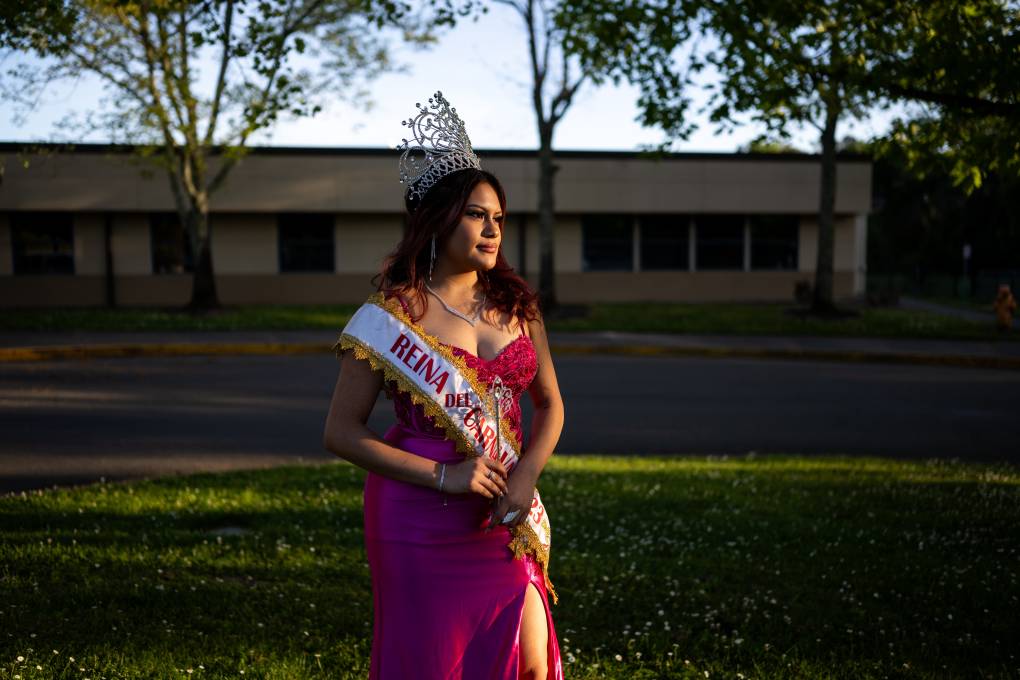
Witness the Bay Area through captivating images and compelling narratives. Explore the latest visually-driven storytelling by KQED and immerse yourself in the heart of our community.
The Year in Photos: The Experiences That Defined 2024 in the Bay Area and Beyond
Photos: Election Night Around the Bay Area
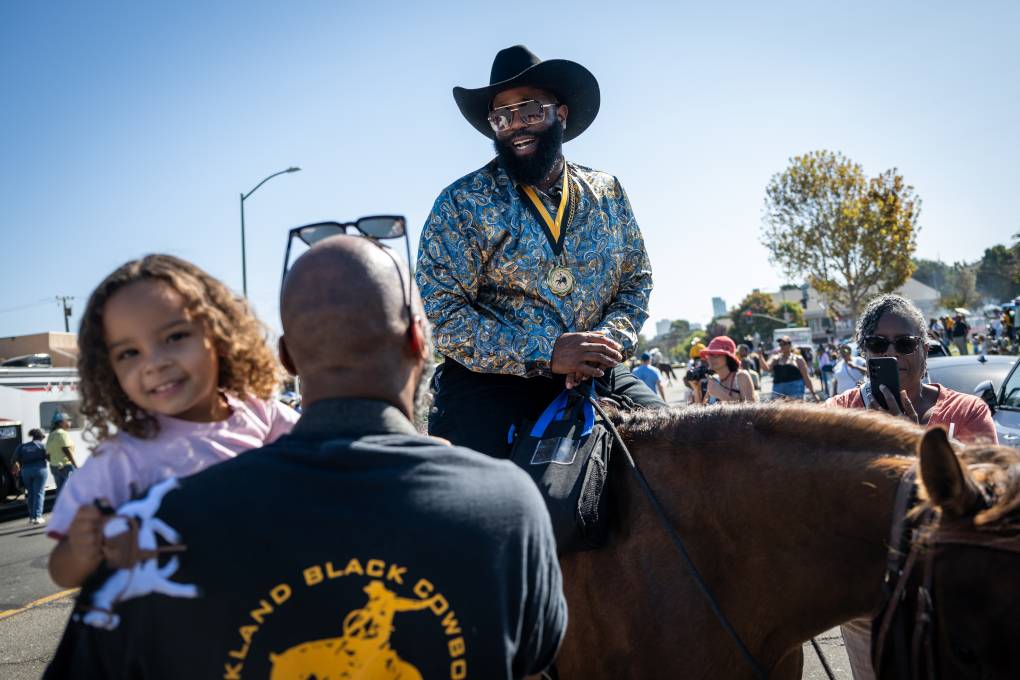
Oakland's Black Cowboy Association Celebrates 50 Years With Parade and Festival
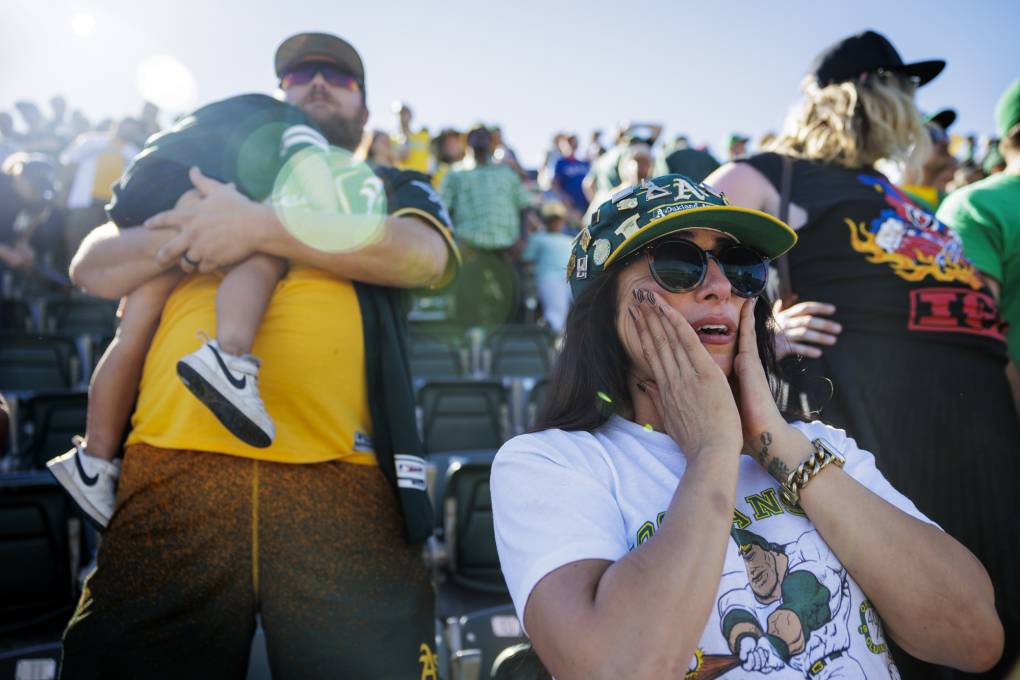
Photos: Fans Flood Coliseum to Bid Emotional Farewell to A's at Last Game in Oakland
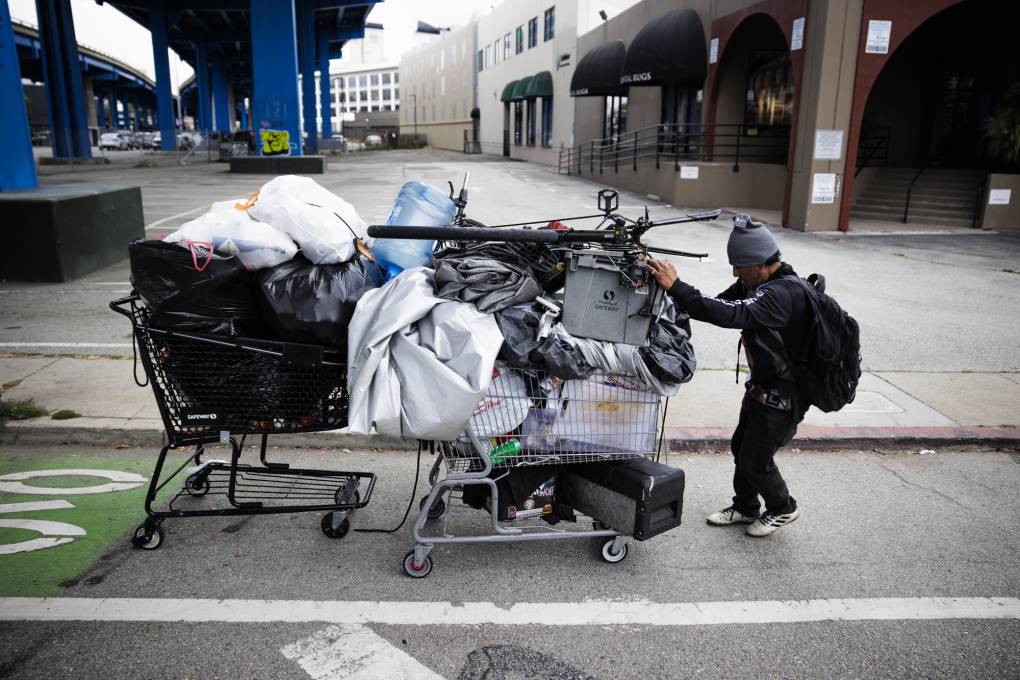
Scenes From San Francisco's Unhoused Encampment Sweeps
Giants and A’s Fans Gather for One Last Battle of the Bay
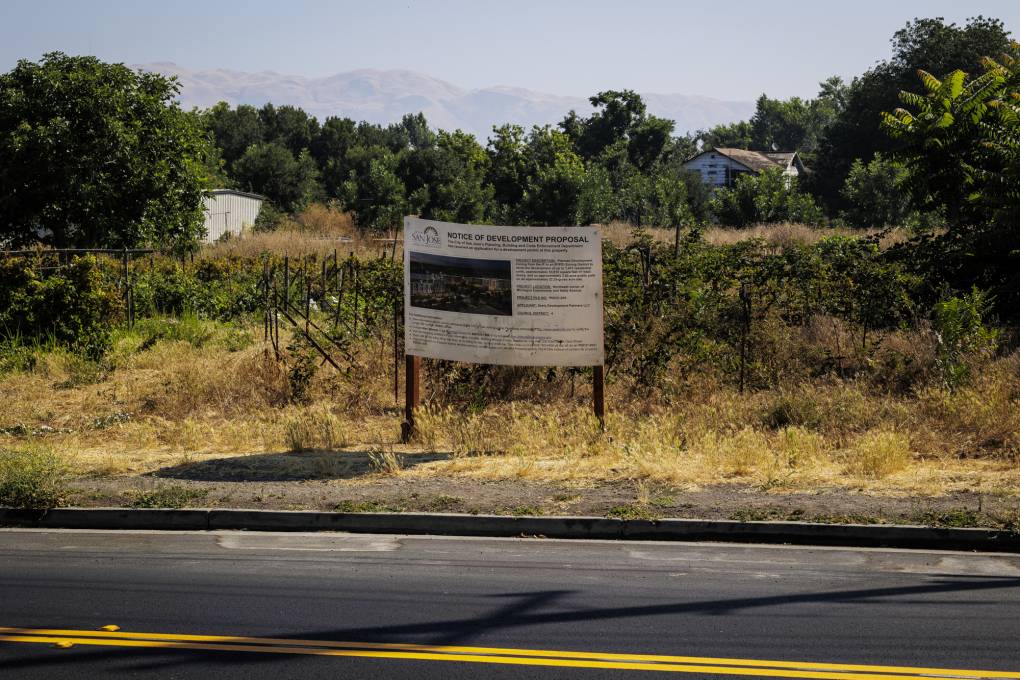
Historic Japanese American Family Farm Is About to Fade Into Much-Needed Housing in San José
For Olivia Rodrigo Fans, Abortion Rights Are Nonnegotiable in 2024
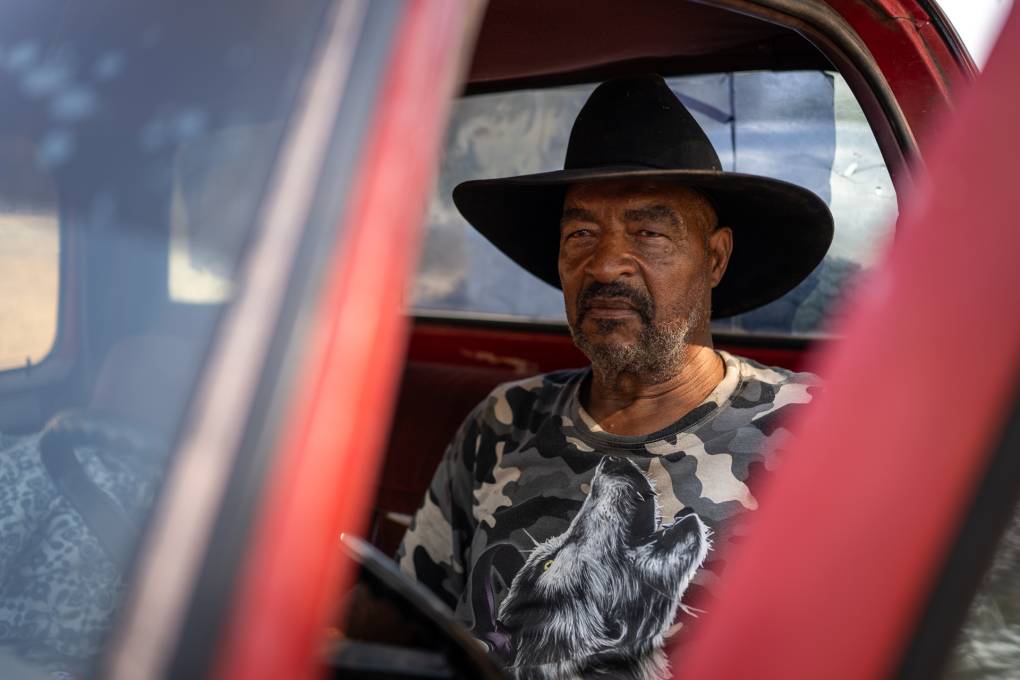
Park Fire Survivor Kenneth Gaines Rebuilds After Losing Everything But His Animals
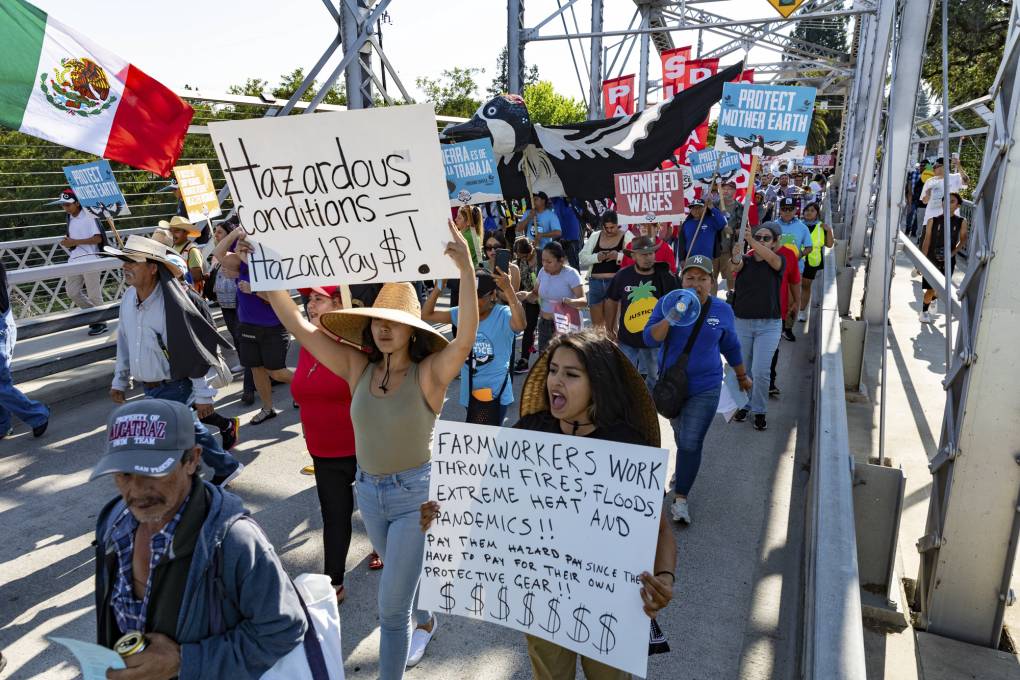
Farmworkers Remain in the Fields During Wildfires. Now, They're Marching for Hazard Pay
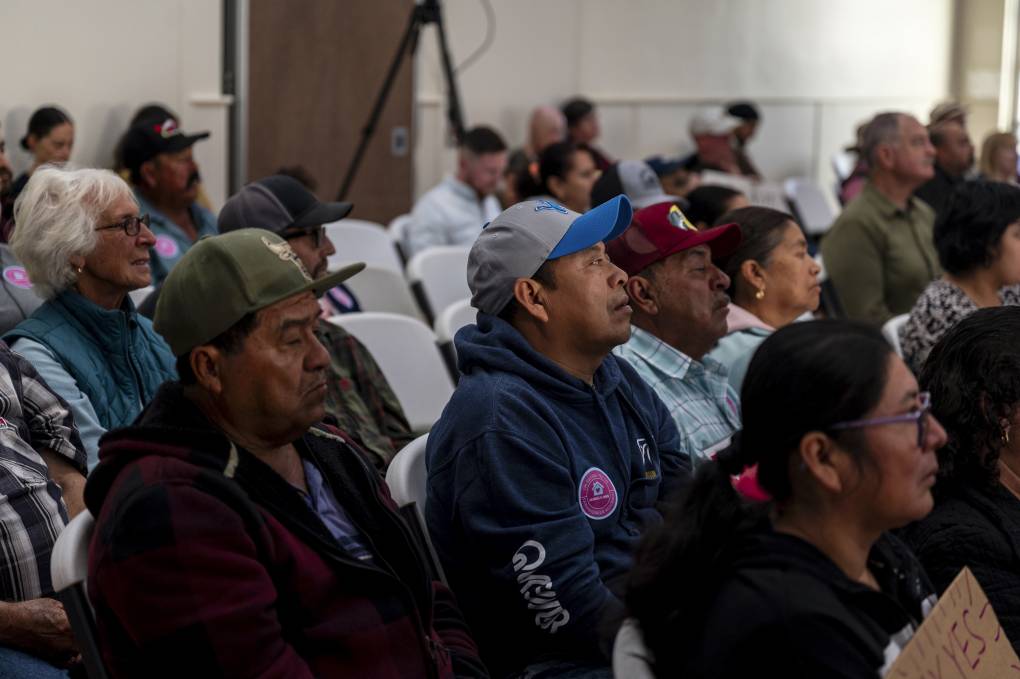
For Half Moon Bay's Aging Farmworkers, New Affordable Housing Projects Offer Opportunity to 'Rest With Dignity'
'Never Felt as Much at Home as I Do Today': For Bay Area's Colombians, Copa América Loss Can't Dent Joy
window.__IS_SSR__=true
window.__INITIAL_STATE__={
"attachmentsReducer": {
"audio_0": {
"type": "attachments",
"id": "audio_0",
"imgSizes": {
"kqedFullSize": {
"file": "https://ww2.kqed.org/news/wp-content/themes/KQED-unified/img/audio_bgs/background0.jpg"
}
}
},
"audio_1": {
"type": "attachments",
"id": "audio_1",
"imgSizes": {
"kqedFullSize": {
"file": "https://ww2.kqed.org/news/wp-content/themes/KQED-unified/img/audio_bgs/background1.jpg"
}
}
},
"audio_2": {
"type": "attachments",
"id": "audio_2",
"imgSizes": {
"kqedFullSize": {
"file": "https://ww2.kqed.org/news/wp-content/themes/KQED-unified/img/audio_bgs/background2.jpg"
}
}
},
"audio_3": {
"type": "attachments",
"id": "audio_3",
"imgSizes": {
"kqedFullSize": {
"file": "https://ww2.kqed.org/news/wp-content/themes/KQED-unified/img/audio_bgs/background3.jpg"
}
}
},
"audio_4": {
"type": "attachments",
"id": "audio_4",
"imgSizes": {
"kqedFullSize": {
"file": "https://ww2.kqed.org/news/wp-content/themes/KQED-unified/img/audio_bgs/background4.jpg"
}
}
},
"placeholder": {
"type": "attachments",
"id": "placeholder",
"imgSizes": {
"thumbnail": {
"file": "https://cdn.kqed.org/wp-content/uploads/2024/12/KQED-Default-Image-816638274-2000x1333-1-160x107.jpg",
"width": 160,
"height": 107,
"mimeType": "image/jpeg"
},
"medium": {
"file": "https://cdn.kqed.org/wp-content/uploads/2024/12/KQED-Default-Image-816638274-2000x1333-1-800x533.jpg",
"width": 800,
"height": 533,
"mimeType": "image/jpeg"
},
"medium_large": {
"file": "https://cdn.kqed.org/wp-content/uploads/2024/12/KQED-Default-Image-816638274-2000x1333-1-768x512.jpg",
"width": 768,
"height": 512,
"mimeType": "image/jpeg"
},
"large": {
"file": "https://cdn.kqed.org/wp-content/uploads/2024/12/KQED-Default-Image-816638274-2000x1333-1-1020x680.jpg",
"width": 1020,
"height": 680,
"mimeType": "image/jpeg"
},
"1536x1536": {
"file": "https://cdn.kqed.org/wp-content/uploads/2024/12/KQED-Default-Image-816638274-2000x1333-1-1536x1024.jpg",
"width": 1536,
"height": 1024,
"mimeType": "image/jpeg"
},
"fd-lrg": {
"file": "https://cdn.kqed.org/wp-content/uploads/2024/12/KQED-Default-Image-816638274-2000x1333-1-1536x1024.jpg",
"width": 1536,
"height": 1024,
"mimeType": "image/jpeg"
},
"fd-med": {
"file": "https://cdn.kqed.org/wp-content/uploads/2024/12/KQED-Default-Image-816638274-2000x1333-1-1020x680.jpg",
"width": 1020,
"height": 680,
"mimeType": "image/jpeg"
},
"fd-sm": {
"file": "https://cdn.kqed.org/wp-content/uploads/2024/12/KQED-Default-Image-816638274-2000x1333-1-800x533.jpg",
"width": 800,
"height": 533,
"mimeType": "image/jpeg"
},
"post-thumbnail": {
"file": "https://cdn.kqed.org/wp-content/uploads/2024/12/KQED-Default-Image-816638274-2000x1333-1-672x372.jpg",
"width": 672,
"height": 372,
"mimeType": "image/jpeg"
},
"twentyfourteen-full-width": {
"file": "https://cdn.kqed.org/wp-content/uploads/2024/12/KQED-Default-Image-816638274-2000x1333-1-1038x576.jpg",
"width": 1038,
"height": 576,
"mimeType": "image/jpeg"
},
"xxsmall": {
"file": "https://cdn.kqed.org/wp-content/uploads/2024/12/KQED-Default-Image-816638274-2000x1333-1-160x107.jpg",
"width": 160,
"height": 107,
"mimeType": "image/jpeg"
},
"xsmall": {
"file": "https://cdn.kqed.org/wp-content/uploads/2024/12/KQED-Default-Image-816638274-2000x1333-1-672x372.jpg",
"width": 672,
"height": 372,
"mimeType": "image/jpeg"
},
"small": {
"file": "https://cdn.kqed.org/wp-content/uploads/2024/12/KQED-Default-Image-816638274-2000x1333-1-672x372.jpg",
"width": 672,
"height": 372,
"mimeType": "image/jpeg"
},
"xlarge": {
"file": "https://cdn.kqed.org/wp-content/uploads/2024/12/KQED-Default-Image-816638274-2000x1333-1-1020x680.jpg",
"width": 1020,
"height": 680,
"mimeType": "image/jpeg"
},
"full-width": {
"file": "https://cdn.kqed.org/wp-content/uploads/2024/12/KQED-Default-Image-816638274-2000x1333-1-1920x1280.jpg",
"width": 1920,
"height": 1280,
"mimeType": "image/jpeg"
},
"guest-author-32": {
"file": "https://cdn.kqed.org/wp-content/uploads/2025/01/KQED-Default-Image-816638274-1333x1333-1-160x160.jpg",
"width": 32,
"height": 32,
"mimeType": "image/jpeg"
},
"guest-author-50": {
"file": "https://cdn.kqed.org/wp-content/uploads/2025/01/KQED-Default-Image-816638274-1333x1333-1-160x160.jpg",
"width": 50,
"height": 50,
"mimeType": "image/jpeg"
},
"guest-author-64": {
"file": "https://cdn.kqed.org/wp-content/uploads/2025/01/KQED-Default-Image-816638274-1333x1333-1-160x160.jpg",
"width": 64,
"height": 64,
"mimeType": "image/jpeg"
},
"guest-author-96": {
"file": "https://cdn.kqed.org/wp-content/uploads/2025/01/KQED-Default-Image-816638274-1333x1333-1-160x160.jpg",
"width": 96,
"height": 96,
"mimeType": "image/jpeg"
},
"guest-author-128": {
"file": "https://cdn.kqed.org/wp-content/uploads/2025/01/KQED-Default-Image-816638274-1333x1333-1-160x160.jpg",
"width": 128,
"height": 128,
"mimeType": "image/jpeg"
},
"detail": {
"file": "https://cdn.kqed.org/wp-content/uploads/2025/01/KQED-Default-Image-816638274-1333x1333-1-160x160.jpg",
"width": 160,
"height": 160,
"mimeType": "image/jpeg"
},
"kqedFullSize": {
"file": "https://cdn.kqed.org/wp-content/uploads/2024/12/KQED-Default-Image-816638274-2000x1333-1.jpg",
"width": 2000,
"height": 1333
}
}
},
"news_12019108": {
"type": "attachments",
"id": "news_12019108",
"meta": {
"index": "attachments_1716263798",
"site": "news",
"id": "12019108",
"found": true
},
"title": "01_240420-CarnavalPutleco-51-BL",
"publishDate": 1734641408,
"status": "inherit",
"parent": 0,
"modified": 1734982650,
"caption": "Cecilia Carlos Montesinos poses before passing the crown to Alejandra Arcos Cisneros, this year's Carnaval Putleco queen, at a coronation event hosted by Comité Pochtlán, a Oaxacan cultural group, at the Healdsburg Community Center on April 20, 2024. ",
"credit": "Beth LaBerge/KQED",
"altTag": null,
"description": null,
"imgSizes": {
"medium": {
"file": "https://cdn.kqed.org/wp-content/uploads/sites/10/2024/12/01_240420-CarnavalPutleco-51-BL-800x533.jpg",
"width": 800,
"height": 533,
"mimeType": "image/jpeg"
},
"large": {
"file": "https://cdn.kqed.org/wp-content/uploads/sites/10/2024/12/01_240420-CarnavalPutleco-51-BL-1020x680.jpg",
"width": 1020,
"height": 680,
"mimeType": "image/jpeg"
},
"thumbnail": {
"file": "https://cdn.kqed.org/wp-content/uploads/sites/10/2024/12/01_240420-CarnavalPutleco-51-BL-160x107.jpg",
"width": 160,
"height": 107,
"mimeType": "image/jpeg"
},
"1536x1536": {
"file": "https://cdn.kqed.org/wp-content/uploads/sites/10/2024/12/01_240420-CarnavalPutleco-51-BL-1536x1024.jpg",
"width": 1536,
"height": 1024,
"mimeType": "image/jpeg"
},
"2048x2048": {
"file": "https://cdn.kqed.org/wp-content/uploads/sites/10/2024/12/01_240420-CarnavalPutleco-51-BL-2048x1365.jpg",
"width": 2048,
"height": 1365,
"mimeType": "image/jpeg"
},
"post-thumbnail": {
"file": "https://cdn.kqed.org/wp-content/uploads/sites/10/2024/12/01_240420-CarnavalPutleco-51-BL-672x372.jpg",
"width": 672,
"height": 372,
"mimeType": "image/jpeg"
},
"twentyfourteen-full-width": {
"file": "https://cdn.kqed.org/wp-content/uploads/sites/10/2024/12/01_240420-CarnavalPutleco-51-BL-1038x576.jpg",
"width": 1038,
"height": 576,
"mimeType": "image/jpeg"
},
"full-width": {
"file": "https://cdn.kqed.org/wp-content/uploads/sites/10/2024/12/01_240420-CarnavalPutleco-51-BL-1920x1280.jpg",
"width": 1920,
"height": 1280,
"mimeType": "image/jpeg"
},
"kqedFullSize": {
"file": "https://cdn.kqed.org/wp-content/uploads/sites/10/2024/12/01_240420-CarnavalPutleco-51-BL-scaled.jpg",
"width": 2560,
"height": 1707
}
},
"isLoading": false,
"fetchFailed": false
},
"news_12012932": {
"type": "attachments",
"id": "news_12012932",
"meta": {
"index": "attachments_1716263798",
"site": "news",
"id": "12012932",
"found": true
},
"title": "241105-ELECTION-NIGHT-LURIE WATCH PARTY-AC-01-KQED",
"publishDate": 1730871827,
"status": "inherit",
"parent": 0,
"modified": 1730879009,
"caption": "The crowd waits for Daniel Lurie to speak at his campaign's election night party at The Chapel in San Francisco on Nov. 5, 2024.",
"credit": "Aryk Copley for KQED",
"altTag": null,
"description": null,
"imgSizes": {
"medium": {
"file": "https://cdn.kqed.org/wp-content/uploads/sites/10/2024/11/241105-ELECTION-NIGHT-LURIE-WATCH-PARTY-AC-01-KQED-800x535.jpg",
"width": 800,
"height": 535,
"mimeType": "image/jpeg"
},
"large": {
"file": "https://cdn.kqed.org/wp-content/uploads/sites/10/2024/11/241105-ELECTION-NIGHT-LURIE-WATCH-PARTY-AC-01-KQED-1020x682.jpg",
"width": 1020,
"height": 682,
"mimeType": "image/jpeg"
},
"thumbnail": {
"file": "https://cdn.kqed.org/wp-content/uploads/sites/10/2024/11/241105-ELECTION-NIGHT-LURIE-WATCH-PARTY-AC-01-KQED-160x107.jpg",
"width": 160,
"height": 107,
"mimeType": "image/jpeg"
},
"1536x1536": {
"file": "https://cdn.kqed.org/wp-content/uploads/sites/10/2024/11/241105-ELECTION-NIGHT-LURIE-WATCH-PARTY-AC-01-KQED-1536x1027.jpg",
"width": 1536,
"height": 1027,
"mimeType": "image/jpeg"
},
"post-thumbnail": {
"file": "https://cdn.kqed.org/wp-content/uploads/sites/10/2024/11/241105-ELECTION-NIGHT-LURIE-WATCH-PARTY-AC-01-KQED-672x372.jpg",
"width": 672,
"height": 372,
"mimeType": "image/jpeg"
},
"twentyfourteen-full-width": {
"file": "https://cdn.kqed.org/wp-content/uploads/sites/10/2024/11/241105-ELECTION-NIGHT-LURIE-WATCH-PARTY-AC-01-KQED-1038x576.jpg",
"width": 1038,
"height": 576,
"mimeType": "image/jpeg"
},
"full-width": {
"file": "https://cdn.kqed.org/wp-content/uploads/sites/10/2024/11/241105-ELECTION-NIGHT-LURIE-WATCH-PARTY-AC-01-KQED-1920x1284.jpg",
"width": 1920,
"height": 1284,
"mimeType": "image/jpeg"
},
"kqedFullSize": {
"file": "https://cdn.kqed.org/wp-content/uploads/sites/10/2024/11/241105-ELECTION-NIGHT-LURIE-WATCH-PARTY-AC-01-KQED.jpg",
"width": 2000,
"height": 1337
}
},
"isLoading": false,
"fetchFailed": false
},
"news_12008172": {
"type": "attachments",
"id": "news_12008172",
"meta": {
"index": "attachments_1716263798",
"site": "news",
"id": "12008172",
"found": true
},
"title": "241005-OaklandBlackCowboyParade-031-BL",
"publishDate": 1728170800,
"status": "inherit",
"parent": 0,
"modified": 1728170828,
"caption": "Samuel Styles, also known as Cowboy Styles, talks to a group gathered after the Oakland Black Cowboy Association parade in Oakland on Oct. 5, 2024.",
"credit": "Beth LaBerge/KQED",
"altTag": null,
"description": null,
"imgSizes": {
"medium": {
"file": "https://cdn.kqed.org/wp-content/uploads/sites/10/2024/10/241005-OaklandBlackCowboyParade-031-BL-800x533.jpg",
"width": 800,
"height": 533,
"mimeType": "image/jpeg"
},
"large": {
"file": "https://cdn.kqed.org/wp-content/uploads/sites/10/2024/10/241005-OaklandBlackCowboyParade-031-BL-1020x680.jpg",
"width": 1020,
"height": 680,
"mimeType": "image/jpeg"
},
"thumbnail": {
"file": "https://cdn.kqed.org/wp-content/uploads/sites/10/2024/10/241005-OaklandBlackCowboyParade-031-BL-160x107.jpg",
"width": 160,
"height": 107,
"mimeType": "image/jpeg"
},
"1536x1536": {
"file": "https://cdn.kqed.org/wp-content/uploads/sites/10/2024/10/241005-OaklandBlackCowboyParade-031-BL-1536x1024.jpg",
"width": 1536,
"height": 1024,
"mimeType": "image/jpeg"
},
"2048x2048": {
"file": "https://cdn.kqed.org/wp-content/uploads/sites/10/2024/10/241005-OaklandBlackCowboyParade-031-BL-2048x1365.jpg",
"width": 2048,
"height": 1365,
"mimeType": "image/jpeg"
},
"post-thumbnail": {
"file": "https://cdn.kqed.org/wp-content/uploads/sites/10/2024/10/241005-OaklandBlackCowboyParade-031-BL-672x372.jpg",
"width": 672,
"height": 372,
"mimeType": "image/jpeg"
},
"twentyfourteen-full-width": {
"file": "https://cdn.kqed.org/wp-content/uploads/sites/10/2024/10/241005-OaklandBlackCowboyParade-031-BL-1038x576.jpg",
"width": 1038,
"height": 576,
"mimeType": "image/jpeg"
},
"full-width": {
"file": "https://cdn.kqed.org/wp-content/uploads/sites/10/2024/10/241005-OaklandBlackCowboyParade-031-BL-1920x1280.jpg",
"width": 1920,
"height": 1280,
"mimeType": "image/jpeg"
},
"kqedFullSize": {
"file": "https://cdn.kqed.org/wp-content/uploads/sites/10/2024/10/241005-OaklandBlackCowboyParade-031-BL-scaled.jpg",
"width": 2560,
"height": 1707
}
},
"isLoading": false,
"fetchFailed": false
},
"news_12006788": {
"type": "attachments",
"id": "news_12006788",
"meta": {
"index": "attachments_1716263798",
"site": "news",
"id": "12006788",
"found": true
},
"title": "240926-LAST A'S HOME GAME-MD-21KQED-5",
"publishDate": 1727408657,
"status": "inherit",
"parent": 0,
"modified": 1727443613,
"caption": "Jenneane Rocha cries at the close of the A's last home game at the Oakland Coliseum in Oakland on Sept. 26, 2024.",
"credit": "Martin do Nascimento/KQED",
"altTag": "A woman with an A's hat has her hands on her cheeks, as a man behind her holds a small child, while standing amid a large crowd at a baseball stadium.",
"description": null,
"imgSizes": {
"medium": {
"file": "https://cdn.kqed.org/wp-content/uploads/sites/10/2024/09/240926-LAST-AS-HOME-GAME-MD-21KQED-5-800x533.jpg",
"width": 800,
"height": 533,
"mimeType": "image/jpeg"
},
"large": {
"file": "https://cdn.kqed.org/wp-content/uploads/sites/10/2024/09/240926-LAST-AS-HOME-GAME-MD-21KQED-5-1020x680.jpg",
"width": 1020,
"height": 680,
"mimeType": "image/jpeg"
},
"thumbnail": {
"file": "https://cdn.kqed.org/wp-content/uploads/sites/10/2024/09/240926-LAST-AS-HOME-GAME-MD-21KQED-5-160x107.jpg",
"width": 160,
"height": 107,
"mimeType": "image/jpeg"
},
"1536x1536": {
"file": "https://cdn.kqed.org/wp-content/uploads/sites/10/2024/09/240926-LAST-AS-HOME-GAME-MD-21KQED-5-1536x1024.jpg",
"width": 1536,
"height": 1024,
"mimeType": "image/jpeg"
},
"post-thumbnail": {
"file": "https://cdn.kqed.org/wp-content/uploads/sites/10/2024/09/240926-LAST-AS-HOME-GAME-MD-21KQED-5-672x372.jpg",
"width": 672,
"height": 372,
"mimeType": "image/jpeg"
},
"twentyfourteen-full-width": {
"file": "https://cdn.kqed.org/wp-content/uploads/sites/10/2024/09/240926-LAST-AS-HOME-GAME-MD-21KQED-5-1038x576.jpg",
"width": 1038,
"height": 576,
"mimeType": "image/jpeg"
},
"full-width": {
"file": "https://cdn.kqed.org/wp-content/uploads/sites/10/2024/09/240926-LAST-AS-HOME-GAME-MD-21KQED-5-1920x1280.jpg",
"width": 1920,
"height": 1280,
"mimeType": "image/jpeg"
},
"kqedFullSize": {
"file": "https://cdn.kqed.org/wp-content/uploads/sites/10/2024/09/240926-LAST-AS-HOME-GAME-MD-21KQED-5.jpg",
"width": 2000,
"height": 1333
}
},
"isLoading": false,
"fetchFailed": false
},
"news_11998571": {
"type": "attachments",
"id": "news_11998571",
"meta": {
"index": "attachments_1716263798",
"site": "news",
"id": "11998571",
"found": true
},
"title": "240801-ENCAMPMENT SWEEPS-MD-02-KQED",
"publishDate": 1722601919,
"status": "inherit",
"parent": 12000938,
"modified": 1732740082,
"caption": "An unhoused man relocates his belongings to a new site in anticipation of an encampment sweep by San Francisco's Department of Public Works near Showplace Square in San Francisco on Aug. 1, 2024.",
"credit": "Martin do Nascimento/KQED",
"altTag": "A person wearing black moves a shopping cart full of belongings.",
"description": null,
"imgSizes": {
"medium": {
"file": "https://cdn.kqed.org/wp-content/uploads/sites/10/2024/08/240801-ENCAMPMENT-SWEEPS-MD-02-KQED-800x533.jpg",
"width": 800,
"height": 533,
"mimeType": "image/jpeg"
},
"large": {
"file": "https://cdn.kqed.org/wp-content/uploads/sites/10/2024/08/240801-ENCAMPMENT-SWEEPS-MD-02-KQED-1020x680.jpg",
"width": 1020,
"height": 680,
"mimeType": "image/jpeg"
},
"thumbnail": {
"file": "https://cdn.kqed.org/wp-content/uploads/sites/10/2024/08/240801-ENCAMPMENT-SWEEPS-MD-02-KQED-160x107.jpg",
"width": 160,
"height": 107,
"mimeType": "image/jpeg"
},
"1536x1536": {
"file": "https://cdn.kqed.org/wp-content/uploads/sites/10/2024/08/240801-ENCAMPMENT-SWEEPS-MD-02-KQED-1536x1024.jpg",
"width": 1536,
"height": 1024,
"mimeType": "image/jpeg"
},
"post-thumbnail": {
"file": "https://cdn.kqed.org/wp-content/uploads/sites/10/2024/08/240801-ENCAMPMENT-SWEEPS-MD-02-KQED-672x372.jpg",
"width": 672,
"height": 372,
"mimeType": "image/jpeg"
},
"twentyfourteen-full-width": {
"file": "https://cdn.kqed.org/wp-content/uploads/sites/10/2024/08/240801-ENCAMPMENT-SWEEPS-MD-02-KQED-1038x576.jpg",
"width": 1038,
"height": 576,
"mimeType": "image/jpeg"
},
"full-width": {
"file": "https://cdn.kqed.org/wp-content/uploads/sites/10/2024/08/240801-ENCAMPMENT-SWEEPS-MD-02-KQED-1920x1280.jpg",
"width": 1920,
"height": 1280,
"mimeType": "image/jpeg"
},
"kqedFullSize": {
"file": "https://cdn.kqed.org/wp-content/uploads/sites/10/2024/08/240801-ENCAMPMENT-SWEEPS-MD-02-KQED.jpg?ver=1722631109",
"width": 2000,
"height": 1333
}
},
"isLoading": false,
"fetchFailed": false
},
"news_12000664": {
"type": "attachments",
"id": "news_12000664",
"meta": {
"index": "attachments_1716263798",
"site": "news",
"id": "12000664",
"found": true
},
"title": "20240818_LastBoB_GC-42_qed",
"publishDate": 1724024340,
"status": "inherit",
"parent": 12000643,
"modified": 1724092619,
"caption": "Fans cheer during the final Battle of the Bay game between the A’s and the Giants at the Oakland Coliseum on Aug. 18, 2024.",
"credit": "Gina Castro/KQED",
"altTag": "Several fans wearing green and orange cheer in the stands.",
"description": null,
"imgSizes": {
"medium": {
"file": "https://cdn.kqed.org/wp-content/uploads/sites/10/2024/08/20240818_LastBoB_GC-42_qed-800x533.jpg",
"width": 800,
"height": 533,
"mimeType": "image/jpeg"
},
"large": {
"file": "https://cdn.kqed.org/wp-content/uploads/sites/10/2024/08/20240818_LastBoB_GC-42_qed-1020x680.jpg",
"width": 1020,
"height": 680,
"mimeType": "image/jpeg"
},
"thumbnail": {
"file": "https://cdn.kqed.org/wp-content/uploads/sites/10/2024/08/20240818_LastBoB_GC-42_qed-160x107.jpg",
"width": 160,
"height": 107,
"mimeType": "image/jpeg"
},
"1536x1536": {
"file": "https://cdn.kqed.org/wp-content/uploads/sites/10/2024/08/20240818_LastBoB_GC-42_qed-1536x1024.jpg",
"width": 1536,
"height": 1024,
"mimeType": "image/jpeg"
},
"post-thumbnail": {
"file": "https://cdn.kqed.org/wp-content/uploads/sites/10/2024/08/20240818_LastBoB_GC-42_qed-672x372.jpg",
"width": 672,
"height": 372,
"mimeType": "image/jpeg"
},
"twentyfourteen-full-width": {
"file": "https://cdn.kqed.org/wp-content/uploads/sites/10/2024/08/20240818_LastBoB_GC-42_qed-1038x576.jpg",
"width": 1038,
"height": 576,
"mimeType": "image/jpeg"
},
"full-width": {
"file": "https://cdn.kqed.org/wp-content/uploads/sites/10/2024/08/20240818_LastBoB_GC-42_qed-1920x1280.jpg",
"width": 1920,
"height": 1280,
"mimeType": "image/jpeg"
},
"kqedFullSize": {
"file": "https://cdn.kqed.org/wp-content/uploads/sites/10/2024/08/20240818_LastBoB_GC-42_qed.jpg",
"width": 2000,
"height": 1333
}
},
"isLoading": false,
"fetchFailed": false
},
"news_11996242": {
"type": "attachments",
"id": "news_11996242",
"meta": {
"index": "attachments_1716263798",
"site": "news",
"id": "11996242",
"found": true
},
"title": "240703-JAPANESE AMERICAN FAMILY FARM-MD-15-KQED",
"publishDate": 1721326800,
"status": "inherit",
"parent": 0,
"modified": 1721326971,
"caption": "A sign announces the proposed development of the Sakauye family farm in San José on July 10, 2024.",
"credit": "Martin do Nascimento/KQED",
"altTag": null,
"description": null,
"imgSizes": {
"medium": {
"file": "https://cdn.kqed.org/wp-content/uploads/sites/10/2024/07/240703-JAPANESE-AMERICAN-FAMILY-FARM-MD-15-KQED-800x533.jpg",
"width": 800,
"height": 533,
"mimeType": "image/jpeg"
},
"large": {
"file": "https://cdn.kqed.org/wp-content/uploads/sites/10/2024/07/240703-JAPANESE-AMERICAN-FAMILY-FARM-MD-15-KQED-1020x680.jpg",
"width": 1020,
"height": 680,
"mimeType": "image/jpeg"
},
"thumbnail": {
"file": "https://cdn.kqed.org/wp-content/uploads/sites/10/2024/07/240703-JAPANESE-AMERICAN-FAMILY-FARM-MD-15-KQED-160x107.jpg",
"width": 160,
"height": 107,
"mimeType": "image/jpeg"
},
"1536x1536": {
"file": "https://cdn.kqed.org/wp-content/uploads/sites/10/2024/07/240703-JAPANESE-AMERICAN-FAMILY-FARM-MD-15-KQED-1536x1024.jpg",
"width": 1536,
"height": 1024,
"mimeType": "image/jpeg"
},
"post-thumbnail": {
"file": "https://cdn.kqed.org/wp-content/uploads/sites/10/2024/07/240703-JAPANESE-AMERICAN-FAMILY-FARM-MD-15-KQED-672x372.jpg",
"width": 672,
"height": 372,
"mimeType": "image/jpeg"
},
"twentyfourteen-full-width": {
"file": "https://cdn.kqed.org/wp-content/uploads/sites/10/2024/07/240703-JAPANESE-AMERICAN-FAMILY-FARM-MD-15-KQED-1038x576.jpg",
"width": 1038,
"height": 576,
"mimeType": "image/jpeg"
},
"full-width": {
"file": "https://cdn.kqed.org/wp-content/uploads/sites/10/2024/07/240703-JAPANESE-AMERICAN-FAMILY-FARM-MD-15-KQED-1920x1280.jpg",
"width": 1920,
"height": 1280,
"mimeType": "image/jpeg"
},
"kqedFullSize": {
"file": "https://cdn.kqed.org/wp-content/uploads/sites/10/2024/07/240703-JAPANESE-AMERICAN-FAMILY-FARM-MD-15-KQED.jpg",
"width": 2000,
"height": 1333
}
},
"isLoading": false,
"fetchFailed": false
},
"news_12063214": {
"type": "attachments",
"id": "news_12063214",
"meta": {
"index": "attachments_1716263798",
"site": "news",
"id": "12063214",
"found": true
},
"title": "20240802_OliviaRodrigo_GC-22_qed",
"publishDate": 1762452903,
"status": "inherit",
"parent": 11999092,
"modified": 1762452919,
"caption": "Olivia Rodrigo performs during her “Guts” World Tour at the Chase Center in San Francisco on August 2, 2024.",
"credit": "Gina Castro/KQED",
"altTag": null,
"description": null,
"imgSizes": {
"thumbnail": {
"file": "https://cdn.kqed.org/wp-content/uploads/sites/10/2024/08/20240802_OliviaRodrigo_GC-22_qed-160x107.jpg",
"width": 160,
"height": 107,
"mimeType": "image/jpeg"
},
"1536x1536": {
"file": "https://cdn.kqed.org/wp-content/uploads/sites/10/2024/08/20240802_OliviaRodrigo_GC-22_qed-1536x1024.jpg",
"width": 1536,
"height": 1024,
"mimeType": "image/jpeg"
},
"post-thumbnail": {
"file": "https://cdn.kqed.org/wp-content/uploads/sites/10/2024/08/20240802_OliviaRodrigo_GC-22_qed-672x372.jpg",
"width": 672,
"height": 372,
"mimeType": "image/jpeg"
},
"twentyfourteen-full-width": {
"file": "https://cdn.kqed.org/wp-content/uploads/sites/10/2024/08/20240802_OliviaRodrigo_GC-22_qed-1038x576.jpg",
"width": 1038,
"height": 576,
"mimeType": "image/jpeg"
},
"npr-cds-wide": {
"file": "https://cdn.kqed.org/wp-content/uploads/sites/10/2024/08/20240802_OliviaRodrigo_GC-22_qed-1200x675.jpg",
"width": 1200,
"height": 675,
"mimeType": "image/jpeg"
},
"kqedFullSize": {
"file": "https://cdn.kqed.org/wp-content/uploads/sites/10/2024/08/20240802_OliviaRodrigo_GC-22_qed.jpg",
"width": 2000,
"height": 1333
}
},
"isLoading": false,
"fetchFailed": false
},
"news_11998355": {
"type": "attachments",
"id": "news_11998355",
"meta": {
"index": "attachments_1716263798",
"site": "news",
"id": "11998355",
"found": true
},
"title": "240729-ParkFireEvacuee-66-BL",
"publishDate": 1722485811,
"status": "inherit",
"parent": 0,
"modified": 1722538871,
"caption": "Kenneth Gaines sits in the truck he evacuated in at a friend's home in Dales, California. He waits to be allowed entry to his property off Highway 36 near Paynes Creek in Tehama County on July 29, 2024, after the Park Fire swept through the area on July 26.",
"credit": "Beth LaBerge/KQED",
"altTag": null,
"description": null,
"imgSizes": {
"medium": {
"file": "https://cdn.kqed.org/wp-content/uploads/sites/10/2024/07/240729-ParkFireEvacuee-66-BL-800x533.jpg",
"width": 800,
"height": 533,
"mimeType": "image/jpeg"
},
"large": {
"file": "https://cdn.kqed.org/wp-content/uploads/sites/10/2024/07/240729-ParkFireEvacuee-66-BL-1020x680.jpg",
"width": 1020,
"height": 680,
"mimeType": "image/jpeg"
},
"thumbnail": {
"file": "https://cdn.kqed.org/wp-content/uploads/sites/10/2024/07/240729-ParkFireEvacuee-66-BL-160x107.jpg",
"width": 160,
"height": 107,
"mimeType": "image/jpeg"
},
"1536x1536": {
"file": "https://cdn.kqed.org/wp-content/uploads/sites/10/2024/07/240729-ParkFireEvacuee-66-BL-1536x1024.jpg",
"width": 1536,
"height": 1024,
"mimeType": "image/jpeg"
},
"post-thumbnail": {
"file": "https://cdn.kqed.org/wp-content/uploads/sites/10/2024/07/240729-ParkFireEvacuee-66-BL-672x372.jpg",
"width": 672,
"height": 372,
"mimeType": "image/jpeg"
},
"twentyfourteen-full-width": {
"file": "https://cdn.kqed.org/wp-content/uploads/sites/10/2024/07/240729-ParkFireEvacuee-66-BL-1038x576.jpg",
"width": 1038,
"height": 576,
"mimeType": "image/jpeg"
},
"kqedFullSize": {
"file": "https://cdn.kqed.org/wp-content/uploads/sites/10/2024/07/240729-ParkFireEvacuee-66-BL.jpg",
"width": 1920,
"height": 1280
}
},
"isLoading": false,
"fetchFailed": false
},
"news_11997800": {
"type": "attachments",
"id": "news_11997800",
"meta": {
"index": "attachments_1716263798",
"site": "news",
"id": "11997800",
"found": true
},
"title": "20240728_FARMWORKERSMARCH_GC-14-KQED",
"publishDate": 1722267741,
"status": "inherit",
"parent": 0,
"modified": 1722295102,
"caption": "Hundreds of farmworkers with North Bay Jobs with Justice and community supporters march on the Healdsburg Memorial Bridge on July 28, 2024, demanding higher wages and disaster pay.",
"credit": "Gina Castro/KQED",
"altTag": null,
"description": null,
"imgSizes": {
"medium": {
"file": "https://cdn.kqed.org/wp-content/uploads/sites/10/2024/07/20240728_FARMWORKERSMARCH_GC-14-KQED-800x533.jpg",
"width": 800,
"height": 533,
"mimeType": "image/jpeg"
},
"large": {
"file": "https://cdn.kqed.org/wp-content/uploads/sites/10/2024/07/20240728_FARMWORKERSMARCH_GC-14-KQED-1020x680.jpg",
"width": 1020,
"height": 680,
"mimeType": "image/jpeg"
},
"thumbnail": {
"file": "https://cdn.kqed.org/wp-content/uploads/sites/10/2024/07/20240728_FARMWORKERSMARCH_GC-14-KQED-160x107.jpg",
"width": 160,
"height": 107,
"mimeType": "image/jpeg"
},
"1536x1536": {
"file": "https://cdn.kqed.org/wp-content/uploads/sites/10/2024/07/20240728_FARMWORKERSMARCH_GC-14-KQED-1536x1024.jpg",
"width": 1536,
"height": 1024,
"mimeType": "image/jpeg"
},
"post-thumbnail": {
"file": "https://cdn.kqed.org/wp-content/uploads/sites/10/2024/07/20240728_FARMWORKERSMARCH_GC-14-KQED-672x372.jpg",
"width": 672,
"height": 372,
"mimeType": "image/jpeg"
},
"twentyfourteen-full-width": {
"file": "https://cdn.kqed.org/wp-content/uploads/sites/10/2024/07/20240728_FARMWORKERSMARCH_GC-14-KQED-1038x576.jpg",
"width": 1038,
"height": 576,
"mimeType": "image/jpeg"
},
"full-width": {
"file": "https://cdn.kqed.org/wp-content/uploads/sites/10/2024/07/20240728_FARMWORKERSMARCH_GC-14-KQED-1920x1280.jpg",
"width": 1920,
"height": 1280,
"mimeType": "image/jpeg"
},
"kqedFullSize": {
"file": "https://cdn.kqed.org/wp-content/uploads/sites/10/2024/07/20240728_FARMWORKERSMARCH_GC-14-KQED.jpg",
"width": 2000,
"height": 1333
}
},
"isLoading": false,
"fetchFailed": false
},
"news_11996915": {
"type": "attachments",
"id": "news_11996915",
"meta": {
"index": "attachments_1716263798",
"site": "news",
"id": "11996915",
"found": true
},
"title": "06.24.2024-HMB Farmer Housing",
"publishDate": 1721761651,
"status": "inherit",
"parent": 0,
"modified": 1721762037,
"caption": "Farmworkers sat in the crowd, often with earpieces to hear live translations, listening to their peers and other Half Moon Bay residents give public comment before the council voted on the appeal of the Half Moon Bay City Council Planning Commission’s decision to approve the building of a five-story affordable housing building at 555 Kelly Ave. on Wednesday, June 26, 2024.",
"credit": "Hiram Alejandro Durán for El Tímpano/CatchLight Local/Report for America corps member",
"altTag": null,
"description": null,
"imgSizes": {
"medium": {
"file": "https://cdn.kqed.org/wp-content/uploads/sites/10/2024/07/06.26.2024-HMB-FARMER-HOUSING-48-KQED-800x532.jpg",
"width": 800,
"height": 532,
"mimeType": "image/jpeg"
},
"large": {
"file": "https://cdn.kqed.org/wp-content/uploads/sites/10/2024/07/06.26.2024-HMB-FARMER-HOUSING-48-KQED-1020x679.jpg",
"width": 1020,
"height": 679,
"mimeType": "image/jpeg"
},
"thumbnail": {
"file": "https://cdn.kqed.org/wp-content/uploads/sites/10/2024/07/06.26.2024-HMB-FARMER-HOUSING-48-KQED-160x106.jpg",
"width": 160,
"height": 106,
"mimeType": "image/jpeg"
},
"1536x1536": {
"file": "https://cdn.kqed.org/wp-content/uploads/sites/10/2024/07/06.26.2024-HMB-FARMER-HOUSING-48-KQED-1536x1022.jpg",
"width": 1536,
"height": 1022,
"mimeType": "image/jpeg"
},
"post-thumbnail": {
"file": "https://cdn.kqed.org/wp-content/uploads/sites/10/2024/07/06.26.2024-HMB-FARMER-HOUSING-48-KQED-672x372.jpg",
"width": 672,
"height": 372,
"mimeType": "image/jpeg"
},
"twentyfourteen-full-width": {
"file": "https://cdn.kqed.org/wp-content/uploads/sites/10/2024/07/06.26.2024-HMB-FARMER-HOUSING-48-KQED-1038x576.jpg",
"width": 1038,
"height": 576,
"mimeType": "image/jpeg"
},
"full-width": {
"file": "https://cdn.kqed.org/wp-content/uploads/sites/10/2024/07/06.26.2024-HMB-FARMER-HOUSING-48-KQED-1920x1278.jpg",
"width": 1920,
"height": 1278,
"mimeType": "image/jpeg"
},
"kqedFullSize": {
"file": "https://cdn.kqed.org/wp-content/uploads/sites/10/2024/07/06.26.2024-HMB-FARMER-HOUSING-48-KQED.jpg",
"width": 2000,
"height": 1331
}
},
"isLoading": false,
"fetchFailed": false
},
"news_11994075": {
"type": "attachments",
"id": "news_11994075",
"meta": {
"index": "attachments_1716263798",
"site": "news",
"id": "11994075",
"found": true
},
"title": "20240714_COPAAMERICAFINAL_GC-6-KQED",
"publishDate": 1721070836,
"status": "inherit",
"parent": 0,
"modified": 1721071192,
"caption": "From left, Santiago López, Santiago López, Allizon Escobar, Brigitte Meléndez and Franny Meléndez pose for a photo outside of La Cantina del Río to watch the Copa America final Argentina vs. Colombia game in San Jose on July 14, 2024.",
"credit": "Gina Castro/KQED",
"altTag": null,
"description": null,
"imgSizes": {
"medium": {
"file": "https://cdn.kqed.org/wp-content/uploads/sites/10/2024/07/20240714_COPAAMERICAFINAL_GC-6-KQED-800x568.jpg",
"width": 800,
"height": 568,
"mimeType": "image/jpeg"
},
"large": {
"file": "https://cdn.kqed.org/wp-content/uploads/sites/10/2024/07/20240714_COPAAMERICAFINAL_GC-6-KQED-1020x724.jpg",
"width": 1020,
"height": 724,
"mimeType": "image/jpeg"
},
"thumbnail": {
"file": "https://cdn.kqed.org/wp-content/uploads/sites/10/2024/07/20240714_COPAAMERICAFINAL_GC-6-KQED-160x114.jpg",
"width": 160,
"height": 114,
"mimeType": "image/jpeg"
},
"1536x1536": {
"file": "https://cdn.kqed.org/wp-content/uploads/sites/10/2024/07/20240714_COPAAMERICAFINAL_GC-6-KQED-1536x1091.jpg",
"width": 1536,
"height": 1091,
"mimeType": "image/jpeg"
},
"post-thumbnail": {
"file": "https://cdn.kqed.org/wp-content/uploads/sites/10/2024/07/20240714_COPAAMERICAFINAL_GC-6-KQED-672x372.jpg",
"width": 672,
"height": 372,
"mimeType": "image/jpeg"
},
"twentyfourteen-full-width": {
"file": "https://cdn.kqed.org/wp-content/uploads/sites/10/2024/07/20240714_COPAAMERICAFINAL_GC-6-KQED-1038x576.jpg",
"width": 1038,
"height": 576,
"mimeType": "image/jpeg"
},
"full-width": {
"file": "https://cdn.kqed.org/wp-content/uploads/sites/10/2024/07/20240714_COPAAMERICAFINAL_GC-6-KQED-1920x1363.jpg",
"width": 1920,
"height": 1363,
"mimeType": "image/jpeg"
},
"kqedFullSize": {
"file": "https://cdn.kqed.org/wp-content/uploads/sites/10/2024/07/20240714_COPAAMERICAFINAL_GC-6-KQED.jpg",
"width": 2000,
"height": 1420
}
},
"isLoading": false,
"fetchFailed": false
}
},
"audioPlayerReducer": {
"postId": "stream_live",
"isPaused": true,
"isPlaying": false,
"pfsActive": false,
"pledgeModalIsOpen": true,
"playerDrawerIsOpen": false,
"liveAudioPlayStartedAt": 0,
"liveAudioPlayContext": ""
},
"authorsReducer": {
"byline_news_11996924": {
"type": "authors",
"id": "byline_news_11996924",
"meta": {
"override": true
},
"slug": "byline_news_11996924",
"name": "\u003ca href=\"https://www.eltimpano.org/author/cgaribay/\">Cassandra Garibay\u003c/a> and \u003ca href=\"https://www.eltimpano.org/author/hiram/\">Hiram Durán\u003c/a>, El Tímpano",
"isLoading": false
},
"kqed": {
"type": "authors",
"id": "236",
"meta": {
"index": "authors_1716337520",
"id": "236",
"found": true
},
"name": "KQED News Staff",
"firstName": "KQED News Staff",
"lastName": null,
"slug": "kqed",
"email": "faq@kqed.org",
"display_author_email": false,
"staff_mastheads": [],
"title": null,
"bio": null,
"avatar": "https://secure.gravatar.com/avatar/ef0e801a68c4c54afa9180db14084167?s=600&d=blank&r=g",
"twitter": null,
"facebook": null,
"instagram": null,
"linkedin": null,
"sites": [
{
"site": "arts",
"roles": [
"contributor"
]
},
{
"site": "news",
"roles": [
"editor"
]
},
{
"site": "futureofyou",
"roles": [
"author"
]
}
],
"headData": {
"title": "KQED News Staff | KQED",
"description": null,
"ogImgSrc": "https://secure.gravatar.com/avatar/ef0e801a68c4c54afa9180db14084167?s=600&d=blank&r=g",
"twImgSrc": "https://secure.gravatar.com/avatar/ef0e801a68c4c54afa9180db14084167?s=600&d=blank&r=g"
},
"isLoading": false,
"link": "/author/kqed"
},
"matthewgreen": {
"type": "authors",
"id": "1263",
"meta": {
"index": "authors_1716337520",
"id": "1263",
"found": true
},
"name": "Matthew Green",
"firstName": "Matthew",
"lastName": "Green",
"slug": "matthewgreen",
"email": "mgreen@kqed.org",
"display_author_email": false,
"staff_mastheads": [],
"title": "KQED Editor/Reporter",
"bio": "Matthew Green is a digital media producer for KQED News. He previously produced \u003ca href=\"http://www.kqed.org/lowdown\">The Lowdown\u003c/a>, KQED’s multimedia news education blog. Matthew's written for numerous Bay Area publications, including the Oakland Tribune and San Francisco Chronicle. He also taught journalism classes at Fremont High School in East Oakland.\r\n\r\nEmail: mgreen@kqed.org; Twitter: @MGreenKQED",
"avatar": "https://secure.gravatar.com/avatar/3bf498d1267ca02c8494f33d8cfc575e?s=600&d=blank&r=g",
"twitter": "MGreenKQED",
"facebook": null,
"instagram": null,
"linkedin": null,
"sites": [
{
"site": "news",
"roles": []
},
{
"site": "lowdown",
"roles": []
},
{
"site": "science",
"roles": []
},
{
"site": "education",
"roles": []
},
{
"site": "quest",
"roles": []
},
{
"site": "liveblog",
"roles": []
}
],
"headData": {
"title": "Matthew Green | KQED",
"description": "KQED Editor/Reporter",
"ogImgSrc": "https://secure.gravatar.com/avatar/3bf498d1267ca02c8494f33d8cfc575e?s=600&d=blank&r=g",
"twImgSrc": "https://secure.gravatar.com/avatar/3bf498d1267ca02c8494f33d8cfc575e?s=600&d=blank&r=g"
},
"isLoading": false,
"link": "/author/matthewgreen"
},
"shossaini": {
"type": "authors",
"id": "3214",
"meta": {
"index": "authors_1716337520",
"id": "3214",
"found": true
},
"name": "Sara Hossaini",
"firstName": "Sara",
"lastName": "Hossaini",
"slug": "shossaini",
"email": "shossaini@kqed.org",
"display_author_email": true,
"staff_mastheads": [
"news"
],
"title": "KQED Reporter",
"bio": "Sara Hossaini came to general assignment reporting at KQED in 2013 after two winters reporting at Wyoming Public Radio. She holds a bachelor's degree in broadcast journalism from the University of Nebraska-Lincoln. Her radio romance began after a bitter breakup with documentary film (Ok, maybe it's still complicated). Her first simultaneous jobs in San Francisco were as Associate Producer on a PBS film series through the Center for Asian American Media and as a butler. She likes to trot, plot and make things with her hands.",
"avatar": "https://secure.gravatar.com/avatar/060e9f56b9554e17942e89f413242774?s=600&d=blank&r=g",
"twitter": "mshossaini",
"facebook": null,
"instagram": null,
"linkedin": null,
"sites": [
{
"site": "news",
"roles": [
"author"
]
},
{
"site": "stateofhealth",
"roles": [
"author"
]
}
],
"headData": {
"title": "Sara Hossaini | KQED",
"description": "KQED Reporter",
"ogImgSrc": "https://secure.gravatar.com/avatar/060e9f56b9554e17942e89f413242774?s=600&d=blank&r=g",
"twImgSrc": "https://secure.gravatar.com/avatar/060e9f56b9554e17942e89f413242774?s=600&d=blank&r=g"
},
"isLoading": false,
"link": "/author/shossaini"
},
"blaberge": {
"type": "authors",
"id": "11667",
"meta": {
"index": "authors_1716337520",
"id": "11667",
"found": true
},
"name": "Beth LaBerge",
"firstName": "Beth",
"lastName": "LaBerge",
"slug": "blaberge",
"email": "blaberge@KQED.org",
"display_author_email": true,
"staff_mastheads": [
"news"
],
"title": "Photographer, News",
"bio": "Beth LaBerge is a visual journalist for \u003ca href=\"https://www.kqed.org/news\">KQED News\u003c/a>.",
"avatar": "https://secure.gravatar.com/avatar/ce49ecd7a1306685637b45a1f6f5dedfc4ae9481966eb596fea5160466dd6319?s=600&d=blank&r=g",
"twitter": null,
"bluesky": null,
"facebook": null,
"instagram": "https://www.instagram.com/bethlaberge/",
"linkedin": null,
"sites": [
{
"site": "arts",
"roles": [
"editor",
"manage_categories"
]
},
{
"site": "news",
"roles": [
"editor",
"edit_plugins",
"manage_categories"
]
},
{
"site": "science",
"roles": [
"editor",
"contributor",
"author",
"manage_categories"
]
},
{
"site": "perspectives",
"roles": [
"editor"
]
},
{
"site": "liveblog",
"roles": [
"editor"
]
}
],
"headData": {
"title": "Beth LaBerge | KQED",
"description": "Photographer, News",
"ogImgSrc": "https://secure.gravatar.com/avatar/ce49ecd7a1306685637b45a1f6f5dedfc4ae9481966eb596fea5160466dd6319?s=600&d=blank&r=g",
"twImgSrc": "https://secure.gravatar.com/avatar/ce49ecd7a1306685637b45a1f6f5dedfc4ae9481966eb596fea5160466dd6319?s=600&d=blank&r=g"
},
"isLoading": false,
"link": "/author/blaberge"
},
"ccabreralomeli": {
"type": "authors",
"id": "11708",
"meta": {
"index": "authors_1716337520",
"id": "11708",
"found": true
},
"name": "Carlos Cabrera-Lomelí",
"firstName": "Carlos",
"lastName": "Cabrera-Lomelí",
"slug": "ccabreralomeli",
"email": "ccabreralomeli@KQED.org",
"display_author_email": true,
"staff_mastheads": [
"news"
],
"title": "Community Reporter",
"bio": "Carlos Cabrera-Lomelí is a community reporter with KQED's digital engagement team. He also reports and co-produces for KQED's bilingual news hub KQED en Español. He grew up in San Francisco's Mission District and has previously worked with Univision, 48 Hills and REFORMA in Mexico City.",
"avatar": "https://secure.gravatar.com/avatar/c309be9665e484f887b818c89e273ecc673004f426f36b24d00a4d813a2e0518?s=600&d=blank&r=g",
"twitter": "@LomeliCabrera",
"bluesky": null,
"facebook": null,
"instagram": null,
"linkedin": null,
"sites": [
{
"site": "arts",
"roles": [
"editor"
]
},
{
"site": "news",
"roles": [
"editor"
]
},
{
"site": "about",
"roles": [
"editor"
]
},
{
"site": "science",
"roles": [
"editor"
]
},
{
"site": "perspectives",
"roles": [
"editor"
]
},
{
"site": "elections",
"roles": [
"editor"
]
},
{
"site": "liveblog",
"roles": [
"contributor"
]
}
],
"headData": {
"title": "Carlos Cabrera-Lomelí | KQED",
"description": "Community Reporter",
"ogImgSrc": "https://secure.gravatar.com/avatar/c309be9665e484f887b818c89e273ecc673004f426f36b24d00a4d813a2e0518?s=600&d=blank&r=g",
"twImgSrc": "https://secure.gravatar.com/avatar/c309be9665e484f887b818c89e273ecc673004f426f36b24d00a4d813a2e0518?s=600&d=blank&r=g"
},
"isLoading": false,
"link": "/author/ccabreralomeli"
},
"jlara": {
"type": "authors",
"id": "11761",
"meta": {
"index": "authors_1716337520",
"id": "11761",
"found": true
},
"name": "Juan Carlos Lara",
"firstName": "Juan Carlos",
"lastName": "Lara",
"slug": "jlara",
"email": "jlara@kqed.org",
"display_author_email": false,
"staff_mastheads": [],
"title": "KQED Contributor",
"bio": null,
"avatar": "https://secure.gravatar.com/avatar/19e2052b9b05657c5ff2af2121846e9c?s=600&d=blank&r=g",
"twitter": null,
"facebook": null,
"instagram": null,
"linkedin": null,
"sites": [
{
"site": "arts",
"roles": [
"editor"
]
},
{
"site": "news",
"roles": [
"editor"
]
},
{
"site": "forum",
"roles": [
"editor"
]
},
{
"site": "liveblog",
"roles": [
"contributor"
]
}
],
"headData": {
"title": "Juan Carlos Lara | KQED",
"description": "KQED Contributor",
"ogImgSrc": "https://secure.gravatar.com/avatar/19e2052b9b05657c5ff2af2121846e9c?s=600&d=blank&r=g",
"twImgSrc": "https://secure.gravatar.com/avatar/19e2052b9b05657c5ff2af2121846e9c?s=600&d=blank&r=g"
},
"isLoading": false,
"link": "/author/jlara"
},
"adahlstromeckman": {
"type": "authors",
"id": "11785",
"meta": {
"index": "authors_1716337520",
"id": "11785",
"found": true
},
"name": "Azul Dahlstrom-Eckman",
"firstName": "Azul",
"lastName": "Dahlstrom-Eckman",
"slug": "adahlstromeckman",
"email": "adahlstrom-eckman@kqed.org",
"display_author_email": true,
"staff_mastheads": [],
"title": "Reporter",
"bio": "Azul is a reporter for KQED focusing on transportation and features. He joined KQED in 2021 as an alumna of KALW's Audio Academy radio journalism training program.",
"avatar": "https://secure.gravatar.com/avatar/9cb750298435add7815a777f55bf1f46845c1386bb8452555c60a7b820b5aba3?s=600&d=blank&r=g",
"twitter": "@zuliemann",
"bluesky": "@azul415.bsky.social",
"facebook": null,
"instagram": null,
"linkedin": null,
"sites": [
{
"site": "arts",
"roles": [
"editor"
]
},
{
"site": "news",
"roles": [
"editor"
]
},
{
"site": "science",
"roles": [
"editor"
]
},
{
"site": "liveblog",
"roles": [
"author"
]
}
],
"headData": {
"title": "Azul Dahlstrom-Eckman | KQED",
"description": "Reporter",
"ogImgSrc": "https://secure.gravatar.com/avatar/9cb750298435add7815a777f55bf1f46845c1386bb8452555c60a7b820b5aba3?s=600&d=blank&r=g",
"twImgSrc": "https://secure.gravatar.com/avatar/9cb750298435add7815a777f55bf1f46845c1386bb8452555c60a7b820b5aba3?s=600&d=blank&r=g"
},
"isLoading": false,
"link": "/author/adahlstromeckman"
},
"sjohnson": {
"type": "authors",
"id": "11840",
"meta": {
"index": "authors_1716337520",
"id": "11840",
"found": true
},
"name": "Sydney Johnson",
"firstName": "Sydney",
"lastName": "Johnson",
"slug": "sjohnson",
"email": "sjohnson@kqed.org",
"display_author_email": false,
"staff_mastheads": [
"news"
],
"title": "KQED Reporter",
"bio": "Sydney Johnson is a general assignment reporter at KQED. She previously reported on public health and city government at the San Francisco Examiner, and before that, she covered statewide education policy for EdSource. Her reporting has won multiple local, state and national awards. Sydney is a graduate of the University of California, Berkeley and lives in San Francisco.",
"avatar": "https://secure.gravatar.com/avatar/97855f2719b72ad6190b7c535fe642c8?s=600&d=blank&r=g",
"twitter": "sydneyfjohnson",
"facebook": null,
"instagram": null,
"linkedin": null,
"sites": [
{
"site": "news",
"roles": [
"editor"
]
}
],
"headData": {
"title": "Sydney Johnson | KQED",
"description": "KQED Reporter",
"ogImgSrc": "https://secure.gravatar.com/avatar/97855f2719b72ad6190b7c535fe642c8?s=600&d=blank&r=g",
"twImgSrc": "https://secure.gravatar.com/avatar/97855f2719b72ad6190b7c535fe642c8?s=600&d=blank&r=g"
},
"isLoading": false,
"link": "/author/sjohnson"
},
"mdonascimento": {
"type": "authors",
"id": "11865",
"meta": {
"index": "authors_1716337520",
"id": "11865",
"found": true
},
"name": "Martin do Nascimento",
"firstName": "Martin",
"lastName": "do Nascimento",
"slug": "mdonascimento",
"email": "mdonascimento@kqed.org",
"display_author_email": false,
"staff_mastheads": [
"news",
"science",
"arts"
],
"title": "KQED Contributor",
"bio": null,
"avatar": "https://secure.gravatar.com/avatar/e5337c4df47f2c1c9af0124a4550094c9ba92a05654bb02aea5e72d902b41744?s=600&d=blank&r=g",
"twitter": null,
"bluesky": null,
"facebook": null,
"instagram": null,
"linkedin": null,
"sites": [
{
"site": "arts",
"roles": [
"manage_categories",
"administrator"
]
},
{
"site": "news",
"roles": [
"manage_categories",
"administrator"
]
},
{
"site": "science",
"roles": [
"manage_categories",
"administrator"
]
},
{
"site": "perspectives",
"roles": [
"administrator"
]
},
{
"site": "liveblog",
"roles": [
"administrator"
]
}
],
"headData": {
"title": "Martin do Nascimento | KQED",
"description": "KQED Contributor",
"ogImgSrc": "https://secure.gravatar.com/avatar/e5337c4df47f2c1c9af0124a4550094c9ba92a05654bb02aea5e72d902b41744?s=600&d=blank&r=g",
"twImgSrc": "https://secure.gravatar.com/avatar/e5337c4df47f2c1c9af0124a4550094c9ba92a05654bb02aea5e72d902b41744?s=600&d=blank&r=g"
},
"isLoading": false,
"link": "/author/mdonascimento"
},
"nkhan": {
"type": "authors",
"id": "11867",
"meta": {
"index": "authors_1716337520",
"id": "11867",
"found": true
},
"name": "Nisa Khan",
"firstName": "Nisa",
"lastName": "Khan",
"slug": "nkhan",
"email": "nkhan@kqed.org",
"display_author_email": false,
"staff_mastheads": [],
"title": "KQED Contributor",
"bio": "Nisa Khan is a reporter for KQED's Audience News Desk. She was formerly a data reporter at Michigan Radio. She earned a Bachelor of Science in Information from the University of Michigan and a Master of Arts in Communication from Stanford University.",
"avatar": "https://secure.gravatar.com/avatar/8720459eef081ff64582b3506b124d58523e80e120704a0cbd9892533c914991?s=600&d=blank&r=g",
"twitter": "mnisakhan",
"bluesky": null,
"facebook": null,
"instagram": null,
"linkedin": null,
"sites": [
{
"site": "arts",
"roles": [
"editor"
]
},
{
"site": "news",
"roles": [
"editor"
]
},
{
"site": "science",
"roles": [
"editor",
"author"
]
},
{
"site": "forum",
"roles": [
"editor"
]
},
{
"site": "liveblog",
"roles": [
"contributor"
]
}
],
"headData": {
"title": "Nisa Khan | KQED",
"description": "KQED Contributor",
"ogImgSrc": "https://secure.gravatar.com/avatar/8720459eef081ff64582b3506b124d58523e80e120704a0cbd9892533c914991?s=600&d=blank&r=g",
"twImgSrc": "https://secure.gravatar.com/avatar/8720459eef081ff64582b3506b124d58523e80e120704a0cbd9892533c914991?s=600&d=blank&r=g"
},
"isLoading": false,
"link": "/author/nkhan"
},
"jgeha": {
"type": "authors",
"id": "11906",
"meta": {
"index": "authors_1716337520",
"id": "11906",
"found": true
},
"name": "Joseph Geha",
"firstName": "Joseph",
"lastName": "Geha",
"slug": "jgeha",
"email": "jgeha@kqed.org",
"display_author_email": false,
"staff_mastheads": [
"news",
"science"
],
"title": "KQED Contributor",
"bio": null,
"avatar": "https://secure.gravatar.com/avatar/ea84d2b6dd93d6369d453edf19dd583f117cd1759d2d9c9c92f9de77017354fe?s=600&d=blank&r=g",
"twitter": null,
"bluesky": null,
"facebook": null,
"instagram": null,
"linkedin": null,
"sites": [
{
"site": "news",
"roles": [
"editor"
]
},
{
"site": "liveblog",
"roles": [
"author"
]
}
],
"headData": {
"title": "Joseph Geha | KQED",
"description": "KQED Contributor",
"ogImgSrc": "https://secure.gravatar.com/avatar/ea84d2b6dd93d6369d453edf19dd583f117cd1759d2d9c9c92f9de77017354fe?s=600&d=blank&r=g",
"twImgSrc": "https://secure.gravatar.com/avatar/ea84d2b6dd93d6369d453edf19dd583f117cd1759d2d9c9c92f9de77017354fe?s=600&d=blank&r=g"
},
"isLoading": false,
"link": "/author/jgeha"
},
"gcastro": {
"type": "authors",
"id": "11908",
"meta": {
"index": "authors_1716337520",
"id": "11908",
"found": true
},
"name": "Gina Castro",
"firstName": "Gina",
"lastName": "Castro",
"slug": "gcastro",
"email": "gcastro@kqed.org",
"display_author_email": false,
"staff_mastheads": [
"news"
],
"title": "KQED Contributor",
"bio": null,
"avatar": "https://secure.gravatar.com/avatar/27b36c9ac0b86aced91deb0fc63fc510307488fa6761ac6062ac2eb798ed123f?s=600&d=blank&r=g",
"twitter": null,
"bluesky": null,
"facebook": null,
"instagram": null,
"linkedin": null,
"sites": [
{
"site": "arts",
"roles": [
"editor"
]
},
{
"site": "news",
"roles": [
"editor"
]
},
{
"site": "science",
"roles": [
"editor"
]
}
],
"headData": {
"title": "Gina Castro | KQED",
"description": "KQED Contributor",
"ogImgSrc": "https://secure.gravatar.com/avatar/27b36c9ac0b86aced91deb0fc63fc510307488fa6761ac6062ac2eb798ed123f?s=600&d=blank&r=g",
"twImgSrc": "https://secure.gravatar.com/avatar/27b36c9ac0b86aced91deb0fc63fc510307488fa6761ac6062ac2eb798ed123f?s=600&d=blank&r=g"
},
"isLoading": false,
"link": "/author/gcastro"
}
},
"pagesReducer": {
"news_tag_photography": {
"type": "terms",
"id": "news_2672",
"meta": {
"index": "terms_1716263798",
"site": "news",
"id": "2672",
"score": 8.282925
},
"featImg": null,
"name": "Photography",
"description": "Witness the Bay Area through captivating images and compelling narratives. Explore the latest visually-driven storytelling by KQED and immerse yourself in the heart of our community.",
"taxonomy": "tag",
"headData": {
"twImgId": null,
"twTitle": null,
"ogTitle": null,
"ogImgId": null,
"twDescription": null,
"description": "Witness the Bay Area through captivating images and compelling narratives. Explore the latest visually-driven storytelling by KQED and immerse yourself in the heart of our community.",
"title": "Photography Archives | KQED News",
"ogDescription": null
},
"ttid": 2689,
"slug": "photography",
"isLoading": false,
"title": "Photography",
"pageMeta": {
"site": "news",
"WpPageTemplate": "page-topic-editorial",
"currentPage": 8
},
"blocks": [
{
"blockName": "kqed/company-paragraph",
"content": "Witness the Bay Area through captivating images and compelling narratives. Explore the latest visually-driven storytelling by KQED and immerse yourself in the heart of our community."
},
{
"blockName": "kqed/post-list",
"attrs": {
"layout": "cardArticle2",
"query": "posts/news?tag=photography",
"seeMore": false,
"paginated": true,
"page": 8
}
},
{
"blockName": "kqed/ad"
}
]
}
},
"pfsSessionReducer": {},
"postsReducer": {
"stream_live": {
"type": "live",
"id": "stream_live",
"audioUrl": "https://streams.kqed.org/kqedradio",
"title": "Live Stream",
"excerpt": "Live Stream information currently unavailable.",
"link": "/radio",
"featImg": "",
"label": {
"name": "KQED Live",
"link": "/"
}
},
"stream_kqedNewscast": {
"type": "posts",
"id": "stream_kqedNewscast",
"audioUrl": "https://www.kqed.org/.stream/anon/radio/RDnews/newscast.mp3?_=1",
"title": "KQED Newscast",
"featImg": "",
"label": {
"name": "88.5 FM",
"link": "/"
}
},
"news_12019271": {
"type": "posts",
"id": "news_12019271",
"meta": {
"index": "posts_1716263798",
"site": "news",
"id": "12019271",
"score": null,
"sort": [
1734955208000
]
},
"guestAuthors": [],
"slug": "the-year-in-photos-the-experiences-that-defined-2024",
"title": "The Year in Photos: The Experiences That Defined 2024 in the Bay Area and Beyond",
"publishDate": 1734955208,
"format": "standard",
"headTitle": "The Year in Photos: The Experiences That Defined 2024 in the Bay Area and Beyond | KQED",
"labelTerm": {
"site": "news"
},
"content": "\u003cp>The staff at KQED have been following the biggest news events of the year, with journalists on site and in conversation with newsmakers and impacted communities. Beyond the airwaves, our photographers have been at events big and small, bringing back captivating images from political races and breaking news stories, as well as community celebrations and some of life’s quieter moments.\u003c/p>\n\u003cp>This collection of images, selected by our photographers, zoom in on the stories you hear, taking you behind the scenes and sharing memorable moments of lives lived throughout the Bay Area. They are a reminder and a testament to the real people behind the voices you hear and read about.\u003c/p>\n\u003cfigure id=\"attachment_12019106\" class=\"wp-caption aligncenter\" style=\"max-width: 2560px\">\u003ca href=\"https://cdn.kqed.org/wp-content/uploads/sites/10/2024/12/02_240224-Chinese-new-year-parade-KSM-1-scaled.jpg\">\u003cimg loading=\"lazy\" decoding=\"async\" class=\"size-full wp-image-12019106\" src=\"https://cdn.kqed.org/wp-content/uploads/sites/10/2024/12/02_240224-Chinese-new-year-parade-KSM-1-scaled.jpg\" alt=\"\" width=\"2560\" height=\"1707\" srcset=\"https://cdn.kqed.org/wp-content/uploads/sites/10/2024/12/02_240224-Chinese-new-year-parade-KSM-1-scaled.jpg 2560w, https://cdn.kqed.org/wp-content/uploads/sites/10/2024/12/02_240224-Chinese-new-year-parade-KSM-1-800x533.jpg 800w, https://cdn.kqed.org/wp-content/uploads/sites/10/2024/12/02_240224-Chinese-new-year-parade-KSM-1-1020x680.jpg 1020w, https://cdn.kqed.org/wp-content/uploads/sites/10/2024/12/02_240224-Chinese-new-year-parade-KSM-1-160x107.jpg 160w, https://cdn.kqed.org/wp-content/uploads/sites/10/2024/12/02_240224-Chinese-new-year-parade-KSM-1-1536x1024.jpg 1536w, https://cdn.kqed.org/wp-content/uploads/sites/10/2024/12/02_240224-Chinese-new-year-parade-KSM-1-2048x1365.jpg 2048w, https://cdn.kqed.org/wp-content/uploads/sites/10/2024/12/02_240224-Chinese-new-year-parade-KSM-1-1920x1280.jpg 1920w\" sizes=\"auto, (max-width: 2560px) 100vw, 2560px\">\u003c/a>\u003cfigcaption class=\"wp-caption-text\">Emily Chin (left) and Louise Owling (right) sit in their parade car before the Chinese New Festival and Parade starts in San Francisco on Feb. 24, 2024. Chin and Owling are members of the Grand Avenue Follies. \u003ccite>(Kathryn Styer Martinez/KQED)\u003c/cite>\u003c/figcaption>\u003c/figure>\n\u003cfigure id=\"attachment_12019105\" class=\"wp-caption aligncenter\" style=\"max-width: 2560px\">\u003ca href=\"https://cdn.kqed.org/wp-content/uploads/sites/10/2024/12/03_240708-WillieMaysCelebration-047-BL-scaled.jpg\">\u003cimg loading=\"lazy\" decoding=\"async\" class=\"size-full wp-image-12019105\" src=\"https://cdn.kqed.org/wp-content/uploads/sites/10/2024/12/03_240708-WillieMaysCelebration-047-BL-scaled.jpg\" alt=\"\" width=\"2560\" height=\"1707\" srcset=\"https://cdn.kqed.org/wp-content/uploads/sites/10/2024/12/03_240708-WillieMaysCelebration-047-BL-scaled.jpg 2560w, https://cdn.kqed.org/wp-content/uploads/sites/10/2024/12/03_240708-WillieMaysCelebration-047-BL-800x533.jpg 800w, https://cdn.kqed.org/wp-content/uploads/sites/10/2024/12/03_240708-WillieMaysCelebration-047-BL-1020x680.jpg 1020w, https://cdn.kqed.org/wp-content/uploads/sites/10/2024/12/03_240708-WillieMaysCelebration-047-BL-160x107.jpg 160w, https://cdn.kqed.org/wp-content/uploads/sites/10/2024/12/03_240708-WillieMaysCelebration-047-BL-1536x1024.jpg 1536w, https://cdn.kqed.org/wp-content/uploads/sites/10/2024/12/03_240708-WillieMaysCelebration-047-BL-2048x1365.jpg 2048w, https://cdn.kqed.org/wp-content/uploads/sites/10/2024/12/03_240708-WillieMaysCelebration-047-BL-1920x1280.jpg 1920w\" sizes=\"auto, (max-width: 2560px) 100vw, 2560px\">\u003c/a>\u003cfigcaption class=\"wp-caption-text\">A video plays about the life of Willie Mays at the beginning of a Celebration of Life for the San Francisco Giants Hall of Famer at Oracle Park in San Francisco on July 8, 2024. \u003ccite>(Beth LaBerge/KQED)\u003c/cite>\u003c/figcaption>\u003c/figure>\n\u003cfigure id=\"attachment_12019104\" class=\"wp-caption aligncenter\" style=\"max-width: 2000px\">\u003ca href=\"https://cdn.kqed.org/wp-content/uploads/sites/10/2024/12/04_240926-LAST-AS-HOME-GAME-MD-23.jpg\">\u003cimg loading=\"lazy\" decoding=\"async\" class=\"size-full wp-image-12019104\" src=\"https://cdn.kqed.org/wp-content/uploads/sites/10/2024/12/04_240926-LAST-AS-HOME-GAME-MD-23.jpg\" alt=\"\" width=\"2000\" height=\"1332\" srcset=\"https://cdn.kqed.org/wp-content/uploads/sites/10/2024/12/04_240926-LAST-AS-HOME-GAME-MD-23.jpg 2000w, https://cdn.kqed.org/wp-content/uploads/sites/10/2024/12/04_240926-LAST-AS-HOME-GAME-MD-23-800x533.jpg 800w, https://cdn.kqed.org/wp-content/uploads/sites/10/2024/12/04_240926-LAST-AS-HOME-GAME-MD-23-1020x679.jpg 1020w, https://cdn.kqed.org/wp-content/uploads/sites/10/2024/12/04_240926-LAST-AS-HOME-GAME-MD-23-160x107.jpg 160w, https://cdn.kqed.org/wp-content/uploads/sites/10/2024/12/04_240926-LAST-AS-HOME-GAME-MD-23-1536x1023.jpg 1536w, https://cdn.kqed.org/wp-content/uploads/sites/10/2024/12/04_240926-LAST-AS-HOME-GAME-MD-23-1920x1279.jpg 1920w\" sizes=\"auto, (max-width: 2000px) 100vw, 2000px\">\u003c/a>\u003cfigcaption class=\"wp-caption-text\">Vanessa Wasczuk-Valencia hugs Gilbert Bañuelos III after the last A’s home game at the Oakland Coliseum in Oakland on Sept. 26, 2024. \u003ccite>(Martin do Nascimento/KQED)\u003c/cite>\u003c/figcaption>\u003c/figure>\n\u003cfigure id=\"attachment_12019103\" class=\"wp-caption aligncenter\" style=\"max-width: 2560px\">\u003ca href=\"https://cdn.kqed.org/wp-content/uploads/sites/10/2024/12/05_240624-THAO-FBI-PRESSER-MD-04-scaled.jpg\">\u003cimg loading=\"lazy\" decoding=\"async\" class=\"size-full wp-image-12019103\" src=\"https://cdn.kqed.org/wp-content/uploads/sites/10/2024/12/05_240624-THAO-FBI-PRESSER-MD-04-scaled.jpg\" alt=\"\" width=\"2560\" height=\"1707\" srcset=\"https://cdn.kqed.org/wp-content/uploads/sites/10/2024/12/05_240624-THAO-FBI-PRESSER-MD-04-scaled.jpg 2560w, https://cdn.kqed.org/wp-content/uploads/sites/10/2024/12/05_240624-THAO-FBI-PRESSER-MD-04-800x533.jpg 800w, https://cdn.kqed.org/wp-content/uploads/sites/10/2024/12/05_240624-THAO-FBI-PRESSER-MD-04-1020x680.jpg 1020w, https://cdn.kqed.org/wp-content/uploads/sites/10/2024/12/05_240624-THAO-FBI-PRESSER-MD-04-160x107.jpg 160w, https://cdn.kqed.org/wp-content/uploads/sites/10/2024/12/05_240624-THAO-FBI-PRESSER-MD-04-1536x1024.jpg 1536w, https://cdn.kqed.org/wp-content/uploads/sites/10/2024/12/05_240624-THAO-FBI-PRESSER-MD-04-2048x1365.jpg 2048w, https://cdn.kqed.org/wp-content/uploads/sites/10/2024/12/05_240624-THAO-FBI-PRESSER-MD-04-1920x1280.jpg 1920w\" sizes=\"auto, (max-width: 2560px) 100vw, 2560px\">\u003c/a>\u003cfigcaption class=\"wp-caption-text\">Oakland Mayor Sheng Thao holds a press conference at Oakland City Hall on June 24, 2024. \u003ccite>(Martin do Nascimento/KQED)\u003c/cite>\u003c/figcaption>\u003c/figure>\n\u003cfigure id=\"attachment_12019101\" class=\"wp-caption aligncenter\" style=\"max-width: 2560px\">\u003ca href=\"https://cdn.kqed.org/wp-content/uploads/sites/10/2024/12/06_240211-LAS-VEGAS-WATCH-PARTY-MD-15-scaled.jpg\">\u003cimg loading=\"lazy\" decoding=\"async\" class=\"size-full wp-image-12019101\" src=\"https://cdn.kqed.org/wp-content/uploads/sites/10/2024/12/06_240211-LAS-VEGAS-WATCH-PARTY-MD-15-scaled.jpg\" alt=\"\" width=\"2560\" height=\"1707\" srcset=\"https://cdn.kqed.org/wp-content/uploads/sites/10/2024/12/06_240211-LAS-VEGAS-WATCH-PARTY-MD-15-scaled.jpg 2560w, https://cdn.kqed.org/wp-content/uploads/sites/10/2024/12/06_240211-LAS-VEGAS-WATCH-PARTY-MD-15-800x533.jpg 800w, https://cdn.kqed.org/wp-content/uploads/sites/10/2024/12/06_240211-LAS-VEGAS-WATCH-PARTY-MD-15-1020x680.jpg 1020w, https://cdn.kqed.org/wp-content/uploads/sites/10/2024/12/06_240211-LAS-VEGAS-WATCH-PARTY-MD-15-160x107.jpg 160w, https://cdn.kqed.org/wp-content/uploads/sites/10/2024/12/06_240211-LAS-VEGAS-WATCH-PARTY-MD-15-1536x1024.jpg 1536w, https://cdn.kqed.org/wp-content/uploads/sites/10/2024/12/06_240211-LAS-VEGAS-WATCH-PARTY-MD-15-2048x1365.jpg 2048w, https://cdn.kqed.org/wp-content/uploads/sites/10/2024/12/06_240211-LAS-VEGAS-WATCH-PARTY-MD-15-1920x1280.jpg 1920w\" sizes=\"auto, (max-width: 2560px) 100vw, 2560px\">\u003c/a>\u003cfigcaption class=\"wp-caption-text\">Daniel Gonzalez grieves at the Biggest Big Game Bash watch party in Downtown Las Vegas after the San Francisco 49ers lost the Super Bowl to the Kansas City Chiefs on Feb. 11, 2024. \u003ccite>(Martin do Nascimento/KQED)\u003c/cite>\u003c/figcaption>\u003c/figure>\n\u003cfigure id=\"attachment_12019100\" class=\"wp-caption aligncenter\" style=\"max-width: 2560px\">\u003ca href=\"https://cdn.kqed.org/wp-content/uploads/sites/10/2024/12/07_240224-ChineseNYParade-20-BL-scaled.jpg\">\u003cimg loading=\"lazy\" decoding=\"async\" class=\"size-full wp-image-12019100\" src=\"https://cdn.kqed.org/wp-content/uploads/sites/10/2024/12/07_240224-ChineseNYParade-20-BL-scaled.jpg\" alt=\"\" width=\"2560\" height=\"1707\" srcset=\"https://cdn.kqed.org/wp-content/uploads/sites/10/2024/12/07_240224-ChineseNYParade-20-BL-scaled.jpg 2560w, https://cdn.kqed.org/wp-content/uploads/sites/10/2024/12/07_240224-ChineseNYParade-20-BL-800x533.jpg 800w, https://cdn.kqed.org/wp-content/uploads/sites/10/2024/12/07_240224-ChineseNYParade-20-BL-1020x680.jpg 1020w, https://cdn.kqed.org/wp-content/uploads/sites/10/2024/12/07_240224-ChineseNYParade-20-BL-160x107.jpg 160w, https://cdn.kqed.org/wp-content/uploads/sites/10/2024/12/07_240224-ChineseNYParade-20-BL-1536x1024.jpg 1536w, https://cdn.kqed.org/wp-content/uploads/sites/10/2024/12/07_240224-ChineseNYParade-20-BL-2048x1366.jpg 2048w, https://cdn.kqed.org/wp-content/uploads/sites/10/2024/12/07_240224-ChineseNYParade-20-BL-1920x1280.jpg 1920w\" sizes=\"auto, (max-width: 2560px) 100vw, 2560px\">\u003c/a>\u003cfigcaption class=\"wp-caption-text\">Dancers perform at the Chinese New Year Parade in San Francisco on Feb. 24, 2024. \u003ccite>(Beth LaBerge/KQED)\u003c/cite>\u003c/figcaption>\u003c/figure>\n\u003cfigure id=\"attachment_12019099\" class=\"wp-caption aligncenter\" style=\"max-width: 2560px\">\u003ca href=\"https://cdn.kqed.org/wp-content/uploads/sites/10/2024/12/08_240401-Peruana-Spaces-KSM-12-scaled.jpg\">\u003cimg loading=\"lazy\" decoding=\"async\" class=\"size-full wp-image-12019099\" src=\"https://cdn.kqed.org/wp-content/uploads/sites/10/2024/12/08_240401-Peruana-Spaces-KSM-12-scaled.jpg\" alt=\"\" width=\"2560\" height=\"1707\" srcset=\"https://cdn.kqed.org/wp-content/uploads/sites/10/2024/12/08_240401-Peruana-Spaces-KSM-12-scaled.jpg 2560w, https://cdn.kqed.org/wp-content/uploads/sites/10/2024/12/08_240401-Peruana-Spaces-KSM-12-800x533.jpg 800w, https://cdn.kqed.org/wp-content/uploads/sites/10/2024/12/08_240401-Peruana-Spaces-KSM-12-1020x680.jpg 1020w, https://cdn.kqed.org/wp-content/uploads/sites/10/2024/12/08_240401-Peruana-Spaces-KSM-12-160x107.jpg 160w, https://cdn.kqed.org/wp-content/uploads/sites/10/2024/12/08_240401-Peruana-Spaces-KSM-12-1536x1024.jpg 1536w, https://cdn.kqed.org/wp-content/uploads/sites/10/2024/12/08_240401-Peruana-Spaces-KSM-12-2048x1365.jpg 2048w, https://cdn.kqed.org/wp-content/uploads/sites/10/2024/12/08_240401-Peruana-Spaces-KSM-12-1920x1280.jpg 1920w\" sizes=\"auto, (max-width: 2560px) 100vw, 2560px\">\u003c/a>\u003cfigcaption class=\"wp-caption-text\">Monica Mendoza (left) secures a falda on her daughter, Gabrielle Poth (right), during marinera class in San Francisco on April 1, 2024. \u003ccite>(Kathryn Styer Martínez/KQED)\u003c/cite>\u003c/figcaption>\u003c/figure>\n\u003cfigure id=\"attachment_12019098\" class=\"wp-caption aligncenter\" style=\"max-width: 2560px\">\u003ca href=\"https://cdn.kqed.org/wp-content/uploads/sites/10/2024/12/09_240917-AamonteHadleyPress-52-BL-scaled.jpg\">\u003cimg loading=\"lazy\" decoding=\"async\" class=\"size-full wp-image-12019098\" src=\"https://cdn.kqed.org/wp-content/uploads/sites/10/2024/12/09_240917-AamonteHadleyPress-52-BL-scaled.jpg\" alt=\"\" width=\"2560\" height=\"1707\" srcset=\"https://cdn.kqed.org/wp-content/uploads/sites/10/2024/12/09_240917-AamonteHadleyPress-52-BL-scaled.jpg 2560w, https://cdn.kqed.org/wp-content/uploads/sites/10/2024/12/09_240917-AamonteHadleyPress-52-BL-800x533.jpg 800w, https://cdn.kqed.org/wp-content/uploads/sites/10/2024/12/09_240917-AamonteHadleyPress-52-BL-1020x680.jpg 1020w, https://cdn.kqed.org/wp-content/uploads/sites/10/2024/12/09_240917-AamonteHadleyPress-52-BL-160x107.jpg 160w, https://cdn.kqed.org/wp-content/uploads/sites/10/2024/12/09_240917-AamonteHadleyPress-52-BL-1536x1024.jpg 1536w, https://cdn.kqed.org/wp-content/uploads/sites/10/2024/12/09_240917-AamonteHadleyPress-52-BL-2048x1365.jpg 2048w, https://cdn.kqed.org/wp-content/uploads/sites/10/2024/12/09_240917-AamonteHadleyPress-52-BL-1920x1280.jpg 1920w\" sizes=\"auto, (max-width: 2560px) 100vw, 2560px\">\u003c/a>\u003cfigcaption class=\"wp-caption-text\">Anthony, 12, Aamonte Hadley’s sibling, listens to speakers during a rally outside of County Jail #2, a jail that houses women, in San Francisco on Sept. 17, 2024, to call for justice for Hadley, who died at the jail on Sept. 2. \u003ccite>(Beth LaBerge/KQED)\u003c/cite>\u003c/figcaption>\u003c/figure>\n\u003cfigure id=\"attachment_12019097\" class=\"wp-caption aligncenter\" style=\"max-width: 2560px\">\u003ca href=\"https://cdn.kqed.org/wp-content/uploads/sites/10/2024/12/10_240405-Beyonce%CC%81Fans-JY-050-scaled.jpg\">\u003cimg loading=\"lazy\" decoding=\"async\" class=\"size-full wp-image-12019097\" src=\"https://cdn.kqed.org/wp-content/uploads/sites/10/2024/12/10_240405-Beyonce%CC%81Fans-JY-050-scaled.jpg\" alt=\"\" width=\"2560\" height=\"1707\" srcset=\"https://cdn.kqed.org/wp-content/uploads/sites/10/2024/12/10_240405-BeyoncéFans-JY-050-scaled.jpg 2560w, https://cdn.kqed.org/wp-content/uploads/sites/10/2024/12/10_240405-BeyoncéFans-JY-050-800x533.jpg 800w, https://cdn.kqed.org/wp-content/uploads/sites/10/2024/12/10_240405-BeyoncéFans-JY-050-1020x680.jpg 1020w, https://cdn.kqed.org/wp-content/uploads/sites/10/2024/12/10_240405-BeyoncéFans-JY-050-160x107.jpg 160w, https://cdn.kqed.org/wp-content/uploads/sites/10/2024/12/10_240405-BeyoncéFans-JY-050-1536x1024.jpg 1536w, https://cdn.kqed.org/wp-content/uploads/sites/10/2024/12/10_240405-BeyoncéFans-JY-050-2048x1365.jpg 2048w, https://cdn.kqed.org/wp-content/uploads/sites/10/2024/12/10_240405-BeyoncéFans-JY-050-1920x1280.jpg 1920w\" sizes=\"auto, (max-width: 2560px) 100vw, 2560px\">\u003c/a>\u003cfigcaption class=\"wp-caption-text\">Bionka Simone performs Beyoncé’s ‘TEXAS HOLD ‘EM’ during Reparations: Cowboy Carter at Oasis in San Francisco on Saturday, April 6, 2024. The monthly all-Black casted drag show drew a sold-out crowd of drag fans and members of the Beyhive on Friday to celebrate the release of Beyoncé’s new album, Cowboy Carter. \u003ccite>(Juliana Yamada/KQED)\u003c/cite>\u003c/figcaption>\u003c/figure>\n\u003cfigure id=\"attachment_12019095\" class=\"wp-caption aligncenter\" style=\"max-width: 2560px\">\u003ca href=\"https://cdn.kqed.org/wp-content/uploads/sites/10/2024/12/11_240408-GERICAULT-MD-19-scaled.jpg\">\u003cimg loading=\"lazy\" decoding=\"async\" class=\"size-full wp-image-12019095\" src=\"https://cdn.kqed.org/wp-content/uploads/sites/10/2024/12/11_240408-GERICAULT-MD-19-scaled.jpg\" alt=\"\" width=\"2560\" height=\"1706\" srcset=\"https://cdn.kqed.org/wp-content/uploads/sites/10/2024/12/11_240408-GERICAULT-MD-19-scaled.jpg 2560w, https://cdn.kqed.org/wp-content/uploads/sites/10/2024/12/11_240408-GERICAULT-MD-19-800x533.jpg 800w, https://cdn.kqed.org/wp-content/uploads/sites/10/2024/12/11_240408-GERICAULT-MD-19-1020x680.jpg 1020w, https://cdn.kqed.org/wp-content/uploads/sites/10/2024/12/11_240408-GERICAULT-MD-19-160x107.jpg 160w, https://cdn.kqed.org/wp-content/uploads/sites/10/2024/12/11_240408-GERICAULT-MD-19-1536x1024.jpg 1536w, https://cdn.kqed.org/wp-content/uploads/sites/10/2024/12/11_240408-GERICAULT-MD-19-2048x1365.jpg 2048w, https://cdn.kqed.org/wp-content/uploads/sites/10/2024/12/11_240408-GERICAULT-MD-19-1920x1280.jpg 1920w\" sizes=\"auto, (max-width: 2560px) 100vw, 2560px\">\u003c/a>\u003cfigcaption class=\"wp-caption-text\">Gericault in Oakland on April 8, 2024. \u003ccite>(Martin do Nascimento/KQED)\u003c/cite>\u003c/figcaption>\u003c/figure>\n\u003cfigure id=\"attachment_12019094\" class=\"wp-caption aligncenter\" style=\"max-width: 2560px\">\u003ca href=\"https://cdn.kqed.org/wp-content/uploads/sites/10/2024/12/12_240507-BootsRiley-12-BL-scaled.jpg\">\u003cimg loading=\"lazy\" decoding=\"async\" class=\"size-full wp-image-12019094\" src=\"https://cdn.kqed.org/wp-content/uploads/sites/10/2024/12/12_240507-BootsRiley-12-BL-scaled.jpg\" alt=\"\" width=\"2560\" height=\"1707\" srcset=\"https://cdn.kqed.org/wp-content/uploads/sites/10/2024/12/12_240507-BootsRiley-12-BL-scaled.jpg 2560w, https://cdn.kqed.org/wp-content/uploads/sites/10/2024/12/12_240507-BootsRiley-12-BL-800x533.jpg 800w, https://cdn.kqed.org/wp-content/uploads/sites/10/2024/12/12_240507-BootsRiley-12-BL-1020x680.jpg 1020w, https://cdn.kqed.org/wp-content/uploads/sites/10/2024/12/12_240507-BootsRiley-12-BL-160x107.jpg 160w, https://cdn.kqed.org/wp-content/uploads/sites/10/2024/12/12_240507-BootsRiley-12-BL-1536x1024.jpg 1536w, https://cdn.kqed.org/wp-content/uploads/sites/10/2024/12/12_240507-BootsRiley-12-BL-2048x1365.jpg 2048w, https://cdn.kqed.org/wp-content/uploads/sites/10/2024/12/12_240507-BootsRiley-12-BL-1920x1280.jpg 1920w\" sizes=\"auto, (max-width: 2560px) 100vw, 2560px\">\u003c/a>\u003cfigcaption class=\"wp-caption-text\">Filmmaker and musician Boots Riley poses for a portrait near San Antonio Park in Oakland on May 7, 2024. \u003ccite>(Beth LaBerge/KQED)\u003c/cite>\u003c/figcaption>\u003c/figure>\n\u003cfigure id=\"attachment_12019092\" class=\"wp-caption aligncenter\" style=\"max-width: 2560px\">\u003ca href=\"https://cdn.kqed.org/wp-content/uploads/sites/10/2024/12/14_240726-ParkFire-148-BL-scaled.jpg\">\u003cimg loading=\"lazy\" decoding=\"async\" class=\"size-full wp-image-12019092\" src=\"https://cdn.kqed.org/wp-content/uploads/sites/10/2024/12/14_240726-ParkFire-148-BL-scaled.jpg\" alt=\"\" width=\"2560\" height=\"1707\" srcset=\"https://cdn.kqed.org/wp-content/uploads/sites/10/2024/12/14_240726-ParkFire-148-BL-scaled.jpg 2560w, https://cdn.kqed.org/wp-content/uploads/sites/10/2024/12/14_240726-ParkFire-148-BL-800x533.jpg 800w, https://cdn.kqed.org/wp-content/uploads/sites/10/2024/12/14_240726-ParkFire-148-BL-1020x680.jpg 1020w, https://cdn.kqed.org/wp-content/uploads/sites/10/2024/12/14_240726-ParkFire-148-BL-160x107.jpg 160w, https://cdn.kqed.org/wp-content/uploads/sites/10/2024/12/14_240726-ParkFire-148-BL-1536x1024.jpg 1536w, https://cdn.kqed.org/wp-content/uploads/sites/10/2024/12/14_240726-ParkFire-148-BL-2048x1365.jpg 2048w, https://cdn.kqed.org/wp-content/uploads/sites/10/2024/12/14_240726-ParkFire-148-BL-1920x1280.jpg 1920w\" sizes=\"auto, (max-width: 2560px) 100vw, 2560px\">\u003c/a>\u003cfigcaption class=\"wp-caption-text\">A firefighter monitors the Park Fire while the fire’s smoke plume can be seen along Highway 32 northeast of Chico on July 26, 2024. \u003ccite>(Beth LaBerge/KQED)\u003c/cite>\u003c/figcaption>\u003c/figure>\n\u003cfigure id=\"attachment_12019091\" class=\"wp-caption aligncenter\" style=\"max-width: 2560px\">\u003ca href=\"https://cdn.kqed.org/wp-content/uploads/sites/10/2024/12/15_240726-ParkFire-137-BL-scaled.jpg\">\u003cimg loading=\"lazy\" decoding=\"async\" class=\"size-full wp-image-12019091\" src=\"https://cdn.kqed.org/wp-content/uploads/sites/10/2024/12/15_240726-ParkFire-137-BL-scaled.jpg\" alt=\"\" width=\"2560\" height=\"1707\" srcset=\"https://cdn.kqed.org/wp-content/uploads/sites/10/2024/12/15_240726-ParkFire-137-BL-scaled.jpg 2560w, https://cdn.kqed.org/wp-content/uploads/sites/10/2024/12/15_240726-ParkFire-137-BL-800x533.jpg 800w, https://cdn.kqed.org/wp-content/uploads/sites/10/2024/12/15_240726-ParkFire-137-BL-1020x680.jpg 1020w, https://cdn.kqed.org/wp-content/uploads/sites/10/2024/12/15_240726-ParkFire-137-BL-160x107.jpg 160w, https://cdn.kqed.org/wp-content/uploads/sites/10/2024/12/15_240726-ParkFire-137-BL-1536x1024.jpg 1536w, https://cdn.kqed.org/wp-content/uploads/sites/10/2024/12/15_240726-ParkFire-137-BL-2048x1365.jpg 2048w, https://cdn.kqed.org/wp-content/uploads/sites/10/2024/12/15_240726-ParkFire-137-BL-1920x1280.jpg 1920w\" sizes=\"auto, (max-width: 2560px) 100vw, 2560px\">\u003c/a>\u003cfigcaption class=\"wp-caption-text\">The Park Fire burns along Highway 32 northeast of Chico on July 26, 2024. \u003ccite>(Beth LaBerge/KQED)\u003c/cite>\u003c/figcaption>\u003c/figure>\n\u003cfigure id=\"attachment_12019089\" class=\"wp-caption aligncenter\" style=\"max-width: 2560px\">\u003ca href=\"https://cdn.kqed.org/wp-content/uploads/sites/10/2024/12/16_240726-ParkFire-25-BL-scaled.jpg\">\u003cimg loading=\"lazy\" decoding=\"async\" class=\"size-full wp-image-12019089\" src=\"https://cdn.kqed.org/wp-content/uploads/sites/10/2024/12/16_240726-ParkFire-25-BL-scaled.jpg\" alt=\"\" width=\"2560\" height=\"1707\" srcset=\"https://cdn.kqed.org/wp-content/uploads/sites/10/2024/12/16_240726-ParkFire-25-BL-scaled.jpg 2560w, https://cdn.kqed.org/wp-content/uploads/sites/10/2024/12/16_240726-ParkFire-25-BL-800x533.jpg 800w, https://cdn.kqed.org/wp-content/uploads/sites/10/2024/12/16_240726-ParkFire-25-BL-1020x680.jpg 1020w, https://cdn.kqed.org/wp-content/uploads/sites/10/2024/12/16_240726-ParkFire-25-BL-160x107.jpg 160w, https://cdn.kqed.org/wp-content/uploads/sites/10/2024/12/16_240726-ParkFire-25-BL-1536x1024.jpg 1536w, https://cdn.kqed.org/wp-content/uploads/sites/10/2024/12/16_240726-ParkFire-25-BL-2048x1365.jpg 2048w, https://cdn.kqed.org/wp-content/uploads/sites/10/2024/12/16_240726-ParkFire-25-BL-1920x1280.jpg 1920w\" sizes=\"auto, (max-width: 2560px) 100vw, 2560px\">\u003c/a>\u003cfigcaption class=\"wp-caption-text\">Nick Gelos, Fire Captain with CalFire at the Gabilan Conservation Camp, holds the fire line on Highway 32 northeast of Chico along with an inmate hand crew in the early morning of July 26, 2024. The crew drove from Monterrey to assist with the Park Fire. \u003ccite>(Beth LaBerge/KQED)\u003c/cite>\u003c/figcaption>\u003c/figure>\n\u003cfigure id=\"attachment_12019087\" class=\"wp-caption aligncenter\" style=\"max-width: 2560px\">\u003ca href=\"https://cdn.kqed.org/wp-content/uploads/sites/10/2024/12/17_240729-ParkFireEvacuee-006-BL-scaled.jpg\">\u003cimg loading=\"lazy\" decoding=\"async\" class=\"size-full wp-image-12019087\" src=\"https://cdn.kqed.org/wp-content/uploads/sites/10/2024/12/17_240729-ParkFireEvacuee-006-BL-scaled.jpg\" alt=\"\" width=\"2560\" height=\"1707\" srcset=\"https://cdn.kqed.org/wp-content/uploads/sites/10/2024/12/17_240729-ParkFireEvacuee-006-BL-scaled.jpg 2560w, https://cdn.kqed.org/wp-content/uploads/sites/10/2024/12/17_240729-ParkFireEvacuee-006-BL-800x533.jpg 800w, https://cdn.kqed.org/wp-content/uploads/sites/10/2024/12/17_240729-ParkFireEvacuee-006-BL-1020x680.jpg 1020w, https://cdn.kqed.org/wp-content/uploads/sites/10/2024/12/17_240729-ParkFireEvacuee-006-BL-160x107.jpg 160w, https://cdn.kqed.org/wp-content/uploads/sites/10/2024/12/17_240729-ParkFireEvacuee-006-BL-1536x1024.jpg 1536w, https://cdn.kqed.org/wp-content/uploads/sites/10/2024/12/17_240729-ParkFireEvacuee-006-BL-2048x1365.jpg 2048w, https://cdn.kqed.org/wp-content/uploads/sites/10/2024/12/17_240729-ParkFireEvacuee-006-BL-1920x1280.jpg 1920w\" sizes=\"auto, (max-width: 2560px) 100vw, 2560px\">\u003c/a>\u003cfigcaption class=\"wp-caption-text\">Ken Coates (left) drives with Kenneth Gaines on an escort with a Tehama County Sheriff’s Search and Rescue team to Gaines’ home on Highway 36 near Payne’s Creek in Tehama County on July 29, 2024, to give food and water to his dogs and sheep. Gaines was notified by a CalFire officer that the animals had survived the Park Fire after he was forced to evacuate without them, but his home was burned. \u003ccite>(Beth LaBerge/KQED)\u003c/cite>\u003c/figcaption>\u003c/figure>\n\u003cfigure id=\"attachment_12019086\" class=\"wp-caption aligncenter\" style=\"max-width: 2560px\">\u003ca href=\"https://cdn.kqed.org/wp-content/uploads/sites/10/2024/12/18_240801-ENCAMPMENT-SWEEPS-MD-03-scaled.jpg\">\u003cimg loading=\"lazy\" decoding=\"async\" class=\"size-full wp-image-12019086\" src=\"https://cdn.kqed.org/wp-content/uploads/sites/10/2024/12/18_240801-ENCAMPMENT-SWEEPS-MD-03-scaled.jpg\" alt=\"\" width=\"2560\" height=\"1707\" srcset=\"https://cdn.kqed.org/wp-content/uploads/sites/10/2024/12/18_240801-ENCAMPMENT-SWEEPS-MD-03-scaled.jpg 2560w, https://cdn.kqed.org/wp-content/uploads/sites/10/2024/12/18_240801-ENCAMPMENT-SWEEPS-MD-03-800x533.jpg 800w, https://cdn.kqed.org/wp-content/uploads/sites/10/2024/12/18_240801-ENCAMPMENT-SWEEPS-MD-03-1020x680.jpg 1020w, https://cdn.kqed.org/wp-content/uploads/sites/10/2024/12/18_240801-ENCAMPMENT-SWEEPS-MD-03-160x107.jpg 160w, https://cdn.kqed.org/wp-content/uploads/sites/10/2024/12/18_240801-ENCAMPMENT-SWEEPS-MD-03-1536x1024.jpg 1536w, https://cdn.kqed.org/wp-content/uploads/sites/10/2024/12/18_240801-ENCAMPMENT-SWEEPS-MD-03-2048x1365.jpg 2048w, https://cdn.kqed.org/wp-content/uploads/sites/10/2024/12/18_240801-ENCAMPMENT-SWEEPS-MD-03-1920x1280.jpg 1920w\" sizes=\"auto, (max-width: 2560px) 100vw, 2560px\">\u003c/a>\u003cfigcaption class=\"wp-caption-text\">Alex Vallardo packs up his belongings in anticipation of an encampment sweep by San Francisco’s Department of Public Works around Showplace Square in San Francisco on Aug. 1, 2024. \u003ccite>(Martin do Nascimento/KQED)\u003c/cite>\u003c/figcaption>\u003c/figure>\n\u003cfigure id=\"attachment_12019085\" class=\"wp-caption aligncenter\" style=\"max-width: 2560px\">\u003ca href=\"https://cdn.kqed.org/wp-content/uploads/sites/10/2024/12/19_20240808_EncampmentSweep_GC-23-scaled.jpg\">\u003cimg loading=\"lazy\" decoding=\"async\" class=\"size-full wp-image-12019085\" src=\"https://cdn.kqed.org/wp-content/uploads/sites/10/2024/12/19_20240808_EncampmentSweep_GC-23-scaled.jpg\" alt=\"\" width=\"2560\" height=\"1717\" srcset=\"https://cdn.kqed.org/wp-content/uploads/sites/10/2024/12/19_20240808_EncampmentSweep_GC-23-scaled.jpg 2560w, https://cdn.kqed.org/wp-content/uploads/sites/10/2024/12/19_20240808_EncampmentSweep_GC-23-800x537.jpg 800w, https://cdn.kqed.org/wp-content/uploads/sites/10/2024/12/19_20240808_EncampmentSweep_GC-23-1020x684.jpg 1020w, https://cdn.kqed.org/wp-content/uploads/sites/10/2024/12/19_20240808_EncampmentSweep_GC-23-160x107.jpg 160w, https://cdn.kqed.org/wp-content/uploads/sites/10/2024/12/19_20240808_EncampmentSweep_GC-23-1536x1030.jpg 1536w, https://cdn.kqed.org/wp-content/uploads/sites/10/2024/12/19_20240808_EncampmentSweep_GC-23-2048x1374.jpg 2048w, https://cdn.kqed.org/wp-content/uploads/sites/10/2024/12/19_20240808_EncampmentSweep_GC-23-1920x1288.jpg 1920w\" sizes=\"auto, (max-width: 2560px) 100vw, 2560px\">\u003c/a>\u003cfigcaption class=\"wp-caption-text\">The encampment sweep begins on Leavenworth Street in San Francisco on Aug. 8, 2024. \u003ccite>(Gina Castro/KQED)\u003c/cite>\u003c/figcaption>\u003c/figure>\n\u003cfigure id=\"attachment_12019084\" class=\"wp-caption aligncenter\" style=\"max-width: 2560px\">\u003ca href=\"https://cdn.kqed.org/wp-content/uploads/sites/10/2024/12/20_240517-TKBilingualLearners-27-BL-scaled.jpg\">\u003cimg loading=\"lazy\" decoding=\"async\" class=\"size-full wp-image-12019084\" src=\"https://cdn.kqed.org/wp-content/uploads/sites/10/2024/12/20_240517-TKBilingualLearners-27-BL-scaled.jpg\" alt=\"\" width=\"2560\" height=\"1707\" srcset=\"https://cdn.kqed.org/wp-content/uploads/sites/10/2024/12/20_240517-TKBilingualLearners-27-BL-scaled.jpg 2560w, https://cdn.kqed.org/wp-content/uploads/sites/10/2024/12/20_240517-TKBilingualLearners-27-BL-800x533.jpg 800w, https://cdn.kqed.org/wp-content/uploads/sites/10/2024/12/20_240517-TKBilingualLearners-27-BL-1020x680.jpg 1020w, https://cdn.kqed.org/wp-content/uploads/sites/10/2024/12/20_240517-TKBilingualLearners-27-BL-160x107.jpg 160w, https://cdn.kqed.org/wp-content/uploads/sites/10/2024/12/20_240517-TKBilingualLearners-27-BL-1536x1024.jpg 1536w, https://cdn.kqed.org/wp-content/uploads/sites/10/2024/12/20_240517-TKBilingualLearners-27-BL-2048x1365.jpg 2048w, https://cdn.kqed.org/wp-content/uploads/sites/10/2024/12/20_240517-TKBilingualLearners-27-BL-1920x1280.jpg 1920w\" sizes=\"auto, (max-width: 2560px) 100vw, 2560px\">\u003c/a>\u003cfigcaption class=\"wp-caption-text\">Teacher Cintya Valdivia sits with transitional kindergarten students during snack time at the International Community School in Oakland on May 17, 2024. \u003ccite>(Beth LaBerge/KQED)\u003c/cite>\u003c/figcaption>\u003c/figure>\n\u003cfigure id=\"attachment_12019083\" class=\"wp-caption aligncenter\" style=\"max-width: 2560px\">\u003ca href=\"https://cdn.kqed.org/wp-content/uploads/sites/10/2024/12/21_240517-TKBilingualLearners-80-BL-scaled.jpg\">\u003cimg loading=\"lazy\" decoding=\"async\" class=\"size-full wp-image-12019083\" src=\"https://cdn.kqed.org/wp-content/uploads/sites/10/2024/12/21_240517-TKBilingualLearners-80-BL-scaled.jpg\" alt=\"\" width=\"2560\" height=\"1707\" srcset=\"https://cdn.kqed.org/wp-content/uploads/sites/10/2024/12/21_240517-TKBilingualLearners-80-BL-scaled.jpg 2560w, https://cdn.kqed.org/wp-content/uploads/sites/10/2024/12/21_240517-TKBilingualLearners-80-BL-800x533.jpg 800w, https://cdn.kqed.org/wp-content/uploads/sites/10/2024/12/21_240517-TKBilingualLearners-80-BL-1020x680.jpg 1020w, https://cdn.kqed.org/wp-content/uploads/sites/10/2024/12/21_240517-TKBilingualLearners-80-BL-160x107.jpg 160w, https://cdn.kqed.org/wp-content/uploads/sites/10/2024/12/21_240517-TKBilingualLearners-80-BL-1536x1024.jpg 1536w, https://cdn.kqed.org/wp-content/uploads/sites/10/2024/12/21_240517-TKBilingualLearners-80-BL-2048x1365.jpg 2048w, https://cdn.kqed.org/wp-content/uploads/sites/10/2024/12/21_240517-TKBilingualLearners-80-BL-1920x1280.jpg 1920w\" sizes=\"auto, (max-width: 2560px) 100vw, 2560px\">\u003c/a>\u003cfigcaption class=\"wp-caption-text\">Transitional kindergarten students play outside during recess at the International Community School in Oakland on May 17, 2024. \u003ccite>(Beth LaBerge/KQED)\u003c/cite>\u003c/figcaption>\u003c/figure>\n\u003cfigure id=\"attachment_12019081\" class=\"wp-caption aligncenter\" style=\"max-width: 2560px\">\u003ca href=\"https://cdn.kqed.org/wp-content/uploads/sites/10/2024/12/22_240523-CarnavalPutleco-13-BL-scaled.jpg\">\u003cimg loading=\"lazy\" decoding=\"async\" class=\"size-full wp-image-12019081\" src=\"https://cdn.kqed.org/wp-content/uploads/sites/10/2024/12/22_240523-CarnavalPutleco-13-BL-scaled.jpg\" alt=\"\" width=\"2560\" height=\"1707\" srcset=\"https://cdn.kqed.org/wp-content/uploads/sites/10/2024/12/22_240523-CarnavalPutleco-13-BL-scaled.jpg 2560w, https://cdn.kqed.org/wp-content/uploads/sites/10/2024/12/22_240523-CarnavalPutleco-13-BL-800x533.jpg 800w, https://cdn.kqed.org/wp-content/uploads/sites/10/2024/12/22_240523-CarnavalPutleco-13-BL-1020x680.jpg 1020w, https://cdn.kqed.org/wp-content/uploads/sites/10/2024/12/22_240523-CarnavalPutleco-13-BL-160x107.jpg 160w, https://cdn.kqed.org/wp-content/uploads/sites/10/2024/12/22_240523-CarnavalPutleco-13-BL-1536x1024.jpg 1536w, https://cdn.kqed.org/wp-content/uploads/sites/10/2024/12/22_240523-CarnavalPutleco-13-BL-2048x1365.jpg 2048w, https://cdn.kqed.org/wp-content/uploads/sites/10/2024/12/22_240523-CarnavalPutleco-13-BL-1920x1280.jpg 1920w\" sizes=\"auto, (max-width: 2560px) 100vw, 2560px\">\u003c/a>\u003cfigcaption class=\"wp-caption-text\">Iván Olivera wears a tiliche alongside the group Carnaval Putleco during the Twilight Parade in Healdsburg on May 23, 2024. \u003ccite>(Beth LaBerge/KQED)\u003c/cite>\u003c/figcaption>\u003c/figure>\n\u003cfigure id=\"attachment_12019080\" class=\"wp-caption aligncenter\" style=\"max-width: 2560px\">\u003ca href=\"https://cdn.kqed.org/wp-content/uploads/sites/10/2024/12/23_240526-CarnavalParade-14-BL-scaled.jpg\">\u003cimg loading=\"lazy\" decoding=\"async\" class=\"size-full wp-image-12019080\" src=\"https://cdn.kqed.org/wp-content/uploads/sites/10/2024/12/23_240526-CarnavalParade-14-BL-scaled.jpg\" alt=\"\" width=\"2560\" height=\"1707\" srcset=\"https://cdn.kqed.org/wp-content/uploads/sites/10/2024/12/23_240526-CarnavalParade-14-BL-scaled.jpg 2560w, https://cdn.kqed.org/wp-content/uploads/sites/10/2024/12/23_240526-CarnavalParade-14-BL-800x533.jpg 800w, https://cdn.kqed.org/wp-content/uploads/sites/10/2024/12/23_240526-CarnavalParade-14-BL-1020x680.jpg 1020w, https://cdn.kqed.org/wp-content/uploads/sites/10/2024/12/23_240526-CarnavalParade-14-BL-160x107.jpg 160w, https://cdn.kqed.org/wp-content/uploads/sites/10/2024/12/23_240526-CarnavalParade-14-BL-1536x1024.jpg 1536w, https://cdn.kqed.org/wp-content/uploads/sites/10/2024/12/23_240526-CarnavalParade-14-BL-2048x1365.jpg 2048w, https://cdn.kqed.org/wp-content/uploads/sites/10/2024/12/23_240526-CarnavalParade-14-BL-1920x1280.jpg 1920w\" sizes=\"auto, (max-width: 2560px) 100vw, 2560px\">\u003c/a>\u003cfigcaption class=\"wp-caption-text\">Cathedral City High School Ballet Folklórico performs during the Carnaval Grand Parade in San Francisco’s Mission District on May 26, 2024. \u003ccite>(Beth LaBerge/KQED)\u003c/cite>\u003c/figcaption>\u003c/figure>\n\u003cfigure id=\"attachment_12019079\" class=\"wp-caption aligncenter\" style=\"max-width: 2560px\">\u003ca href=\"https://cdn.kqed.org/wp-content/uploads/sites/10/2024/12/24_20241211_Tsukuda-Farm-Close_DMB_0881-scaled.jpg\">\u003cimg loading=\"lazy\" decoding=\"async\" class=\"size-full wp-image-12019079\" src=\"https://cdn.kqed.org/wp-content/uploads/sites/10/2024/12/24_20241211_Tsukuda-Farm-Close_DMB_0881-scaled.jpg\" alt=\"\" width=\"2560\" height=\"1707\" srcset=\"https://cdn.kqed.org/wp-content/uploads/sites/10/2024/12/24_20241211_Tsukuda-Farm-Close_DMB_0881-scaled.jpg 2560w, https://cdn.kqed.org/wp-content/uploads/sites/10/2024/12/24_20241211_Tsukuda-Farm-Close_DMB_0881-800x533.jpg 800w, https://cdn.kqed.org/wp-content/uploads/sites/10/2024/12/24_20241211_Tsukuda-Farm-Close_DMB_0881-1020x680.jpg 1020w, https://cdn.kqed.org/wp-content/uploads/sites/10/2024/12/24_20241211_Tsukuda-Farm-Close_DMB_0881-160x107.jpg 160w, https://cdn.kqed.org/wp-content/uploads/sites/10/2024/12/24_20241211_Tsukuda-Farm-Close_DMB_0881-1536x1024.jpg 1536w, https://cdn.kqed.org/wp-content/uploads/sites/10/2024/12/24_20241211_Tsukuda-Farm-Close_DMB_0881-2048x1365.jpg 2048w, https://cdn.kqed.org/wp-content/uploads/sites/10/2024/12/24_20241211_Tsukuda-Farm-Close_DMB_0881-1920x1280.jpg 1920w\" sizes=\"auto, (max-width: 2560px) 100vw, 2560px\">\u003c/a>\u003cfigcaption class=\"wp-caption-text\">The Tsukuda Fruit Stand in San José, on Dec. 11, 2024. The farm stand is offering up its last haul of persimmons to customers old and new in the last week of business before the land they farm is developed with apartments and townhomes. \u003ccite>(David M. Barreda/KQED)\u003c/cite>\u003c/figcaption>\u003c/figure>\n\u003cfigure id=\"attachment_12019078\" class=\"wp-caption aligncenter\" style=\"max-width: 2560px\">\u003ca href=\"https://cdn.kqed.org/wp-content/uploads/sites/10/2024/12/25_241005-OaklandBlackCowboyParade-030-BL-scaled.jpg\">\u003cimg loading=\"lazy\" decoding=\"async\" class=\"size-full wp-image-12019078\" src=\"https://cdn.kqed.org/wp-content/uploads/sites/10/2024/12/25_241005-OaklandBlackCowboyParade-030-BL-scaled.jpg\" alt=\"\" width=\"2560\" height=\"1707\" srcset=\"https://cdn.kqed.org/wp-content/uploads/sites/10/2024/12/25_241005-OaklandBlackCowboyParade-030-BL-scaled.jpg 2560w, https://cdn.kqed.org/wp-content/uploads/sites/10/2024/12/25_241005-OaklandBlackCowboyParade-030-BL-800x533.jpg 800w, https://cdn.kqed.org/wp-content/uploads/sites/10/2024/12/25_241005-OaklandBlackCowboyParade-030-BL-1020x680.jpg 1020w, https://cdn.kqed.org/wp-content/uploads/sites/10/2024/12/25_241005-OaklandBlackCowboyParade-030-BL-160x107.jpg 160w, https://cdn.kqed.org/wp-content/uploads/sites/10/2024/12/25_241005-OaklandBlackCowboyParade-030-BL-1536x1024.jpg 1536w, https://cdn.kqed.org/wp-content/uploads/sites/10/2024/12/25_241005-OaklandBlackCowboyParade-030-BL-2048x1365.jpg 2048w, https://cdn.kqed.org/wp-content/uploads/sites/10/2024/12/25_241005-OaklandBlackCowboyParade-030-BL-1920x1280.jpg 1920w\" sizes=\"auto, (max-width: 2560px) 100vw, 2560px\">\u003c/a>\u003cfigcaption class=\"wp-caption-text\">Earl Riley (center) rides his horse Big Momma alongside Joe Cummings on Ghost during the Oakland Black Cowboy Association parade in Oakland on Oct. 5, 2024. \u003ccite>(Beth LaBerge/KQED)\u003c/cite>\u003c/figcaption>\u003c/figure>\n\u003cp>\u003cem>KQED’s David M. Barreda, Gina Castro, Martin do Nascimento, Beth LaBerge, Kathryn Styer Martínez and Juliana Yamada contributed to this photo essay. You can check out the 2023 year in photos \u003ca href=\"https://www.kqed.org/news/11970292/2023-in-photos-moments-that-shaped-the-bay-area-and-beyond\">here\u003c/a>.\u003c/em>\u003c/p>\n\u003cp>[ad fullwidth]\u003c/p>\u003cp>\u003c/p>\n",
"blocks": [],
"excerpt": "A year-end roundup of some of KQED's most striking photos in 2024.",
"status": "publish",
"parent": 0,
"modified": 1734983117,
"stats": {
"hasAudio": false,
"hasVideo": false,
"hasChartOrMap": false,
"iframeSrcs": [],
"hasGoogleForm": false,
"hasGallery": false,
"hasHearkenModule": false,
"hasPolis": false,
"paragraphCount": 5,
"wordCount": 913
},
"headData": {
"title": "The Year in Photos: The Experiences That Defined 2024 in the Bay Area and Beyond | KQED",
"description": "A year-end roundup of some of KQED's most striking photos in 2024.",
"ogTitle": "",
"ogDescription": "",
"ogImgId": "",
"twTitle": "",
"twDescription": "",
"twImgId": "",
"schema": {
"@context": "https://schema.org",
"@type": "NewsArticle",
"headline": "The Year in Photos: The Experiences That Defined 2024 in the Bay Area and Beyond",
"datePublished": "2024-12-23T04:00:08-08:00",
"dateModified": "2024-12-23T11:45:17-08:00",
"image": "https://cdn.kqed.org/wp-content/uploads/2020/02/KQED-OG-Image@1x.png",
"isAccessibleForFree": "True",
"publisher": {
"@type": "NewsMediaOrganization",
"@id": "https://www.kqed.org/#organization",
"name": "KQED",
"logo": "https://cdn.kqed.org/wp-content/uploads/2020/02/KQED-OG-Image@1x.png",
"url": "https://www.kqed.org",
"sameAs": [
"https://www.facebook.com/KQED",
"https://twitter.com/KQED",
"https://www.instagram.com/kqed/",
"https://www.tiktok.com/@kqedofficial",
"https://www.linkedin.com/company/kqed",
"https://www.youtube.com/channel/UCeC0IOo7i1P_61zVUWbJ4nw"
]
}
}
},
"sticky": false,
"nprStoryId": "kqed-12019271",
"excludeFromSiteSearch": "Include",
"showOnAuthorArchivePages": "No",
"articleAge": "0",
"path": "/news/12019271/the-year-in-photos-the-experiences-that-defined-2024",
"audioTrackLength": null,
"parsedContent": [
{
"type": "contentString",
"content": "\u003cdiv class=\"post-body\">\u003cp>\u003cp>The staff at KQED have been following the biggest news events of the year, with journalists on site and in conversation with newsmakers and impacted communities. Beyond the airwaves, our photographers have been at events big and small, bringing back captivating images from political races and breaking news stories, as well as community celebrations and some of life’s quieter moments.\u003c/p>\n\u003cp>This collection of images, selected by our photographers, zoom in on the stories you hear, taking you behind the scenes and sharing memorable moments of lives lived throughout the Bay Area. They are a reminder and a testament to the real people behind the voices you hear and read about.\u003c/p>\n\u003cfigure id=\"attachment_12019106\" class=\"wp-caption aligncenter\" style=\"max-width: 2560px\">\u003ca href=\"https://cdn.kqed.org/wp-content/uploads/sites/10/2024/12/02_240224-Chinese-new-year-parade-KSM-1-scaled.jpg\">\u003cimg loading=\"lazy\" decoding=\"async\" class=\"size-full wp-image-12019106\" src=\"https://cdn.kqed.org/wp-content/uploads/sites/10/2024/12/02_240224-Chinese-new-year-parade-KSM-1-scaled.jpg\" alt=\"\" width=\"2560\" height=\"1707\" srcset=\"https://cdn.kqed.org/wp-content/uploads/sites/10/2024/12/02_240224-Chinese-new-year-parade-KSM-1-scaled.jpg 2560w, https://cdn.kqed.org/wp-content/uploads/sites/10/2024/12/02_240224-Chinese-new-year-parade-KSM-1-800x533.jpg 800w, https://cdn.kqed.org/wp-content/uploads/sites/10/2024/12/02_240224-Chinese-new-year-parade-KSM-1-1020x680.jpg 1020w, https://cdn.kqed.org/wp-content/uploads/sites/10/2024/12/02_240224-Chinese-new-year-parade-KSM-1-160x107.jpg 160w, https://cdn.kqed.org/wp-content/uploads/sites/10/2024/12/02_240224-Chinese-new-year-parade-KSM-1-1536x1024.jpg 1536w, https://cdn.kqed.org/wp-content/uploads/sites/10/2024/12/02_240224-Chinese-new-year-parade-KSM-1-2048x1365.jpg 2048w, https://cdn.kqed.org/wp-content/uploads/sites/10/2024/12/02_240224-Chinese-new-year-parade-KSM-1-1920x1280.jpg 1920w\" sizes=\"auto, (max-width: 2560px) 100vw, 2560px\">\u003c/a>\u003cfigcaption class=\"wp-caption-text\">Emily Chin (left) and Louise Owling (right) sit in their parade car before the Chinese New Festival and Parade starts in San Francisco on Feb. 24, 2024. Chin and Owling are members of the Grand Avenue Follies. \u003ccite>(Kathryn Styer Martinez/KQED)\u003c/cite>\u003c/figcaption>\u003c/figure>\n\u003cfigure id=\"attachment_12019105\" class=\"wp-caption aligncenter\" style=\"max-width: 2560px\">\u003ca href=\"https://cdn.kqed.org/wp-content/uploads/sites/10/2024/12/03_240708-WillieMaysCelebration-047-BL-scaled.jpg\">\u003cimg loading=\"lazy\" decoding=\"async\" class=\"size-full wp-image-12019105\" src=\"https://cdn.kqed.org/wp-content/uploads/sites/10/2024/12/03_240708-WillieMaysCelebration-047-BL-scaled.jpg\" alt=\"\" width=\"2560\" height=\"1707\" srcset=\"https://cdn.kqed.org/wp-content/uploads/sites/10/2024/12/03_240708-WillieMaysCelebration-047-BL-scaled.jpg 2560w, https://cdn.kqed.org/wp-content/uploads/sites/10/2024/12/03_240708-WillieMaysCelebration-047-BL-800x533.jpg 800w, https://cdn.kqed.org/wp-content/uploads/sites/10/2024/12/03_240708-WillieMaysCelebration-047-BL-1020x680.jpg 1020w, https://cdn.kqed.org/wp-content/uploads/sites/10/2024/12/03_240708-WillieMaysCelebration-047-BL-160x107.jpg 160w, https://cdn.kqed.org/wp-content/uploads/sites/10/2024/12/03_240708-WillieMaysCelebration-047-BL-1536x1024.jpg 1536w, https://cdn.kqed.org/wp-content/uploads/sites/10/2024/12/03_240708-WillieMaysCelebration-047-BL-2048x1365.jpg 2048w, https://cdn.kqed.org/wp-content/uploads/sites/10/2024/12/03_240708-WillieMaysCelebration-047-BL-1920x1280.jpg 1920w\" sizes=\"auto, (max-width: 2560px) 100vw, 2560px\">\u003c/a>\u003cfigcaption class=\"wp-caption-text\">A video plays about the life of Willie Mays at the beginning of a Celebration of Life for the San Francisco Giants Hall of Famer at Oracle Park in San Francisco on July 8, 2024. \u003ccite>(Beth LaBerge/KQED)\u003c/cite>\u003c/figcaption>\u003c/figure>\n\u003cfigure id=\"attachment_12019104\" class=\"wp-caption aligncenter\" style=\"max-width: 2000px\">\u003ca href=\"https://cdn.kqed.org/wp-content/uploads/sites/10/2024/12/04_240926-LAST-AS-HOME-GAME-MD-23.jpg\">\u003cimg loading=\"lazy\" decoding=\"async\" class=\"size-full wp-image-12019104\" src=\"https://cdn.kqed.org/wp-content/uploads/sites/10/2024/12/04_240926-LAST-AS-HOME-GAME-MD-23.jpg\" alt=\"\" width=\"2000\" height=\"1332\" srcset=\"https://cdn.kqed.org/wp-content/uploads/sites/10/2024/12/04_240926-LAST-AS-HOME-GAME-MD-23.jpg 2000w, https://cdn.kqed.org/wp-content/uploads/sites/10/2024/12/04_240926-LAST-AS-HOME-GAME-MD-23-800x533.jpg 800w, https://cdn.kqed.org/wp-content/uploads/sites/10/2024/12/04_240926-LAST-AS-HOME-GAME-MD-23-1020x679.jpg 1020w, https://cdn.kqed.org/wp-content/uploads/sites/10/2024/12/04_240926-LAST-AS-HOME-GAME-MD-23-160x107.jpg 160w, https://cdn.kqed.org/wp-content/uploads/sites/10/2024/12/04_240926-LAST-AS-HOME-GAME-MD-23-1536x1023.jpg 1536w, https://cdn.kqed.org/wp-content/uploads/sites/10/2024/12/04_240926-LAST-AS-HOME-GAME-MD-23-1920x1279.jpg 1920w\" sizes=\"auto, (max-width: 2000px) 100vw, 2000px\">\u003c/a>\u003cfigcaption class=\"wp-caption-text\">Vanessa Wasczuk-Valencia hugs Gilbert Bañuelos III after the last A’s home game at the Oakland Coliseum in Oakland on Sept. 26, 2024. \u003ccite>(Martin do Nascimento/KQED)\u003c/cite>\u003c/figcaption>\u003c/figure>\n\u003cfigure id=\"attachment_12019103\" class=\"wp-caption aligncenter\" style=\"max-width: 2560px\">\u003ca href=\"https://cdn.kqed.org/wp-content/uploads/sites/10/2024/12/05_240624-THAO-FBI-PRESSER-MD-04-scaled.jpg\">\u003cimg loading=\"lazy\" decoding=\"async\" class=\"size-full wp-image-12019103\" src=\"https://cdn.kqed.org/wp-content/uploads/sites/10/2024/12/05_240624-THAO-FBI-PRESSER-MD-04-scaled.jpg\" alt=\"\" width=\"2560\" height=\"1707\" srcset=\"https://cdn.kqed.org/wp-content/uploads/sites/10/2024/12/05_240624-THAO-FBI-PRESSER-MD-04-scaled.jpg 2560w, https://cdn.kqed.org/wp-content/uploads/sites/10/2024/12/05_240624-THAO-FBI-PRESSER-MD-04-800x533.jpg 800w, https://cdn.kqed.org/wp-content/uploads/sites/10/2024/12/05_240624-THAO-FBI-PRESSER-MD-04-1020x680.jpg 1020w, https://cdn.kqed.org/wp-content/uploads/sites/10/2024/12/05_240624-THAO-FBI-PRESSER-MD-04-160x107.jpg 160w, https://cdn.kqed.org/wp-content/uploads/sites/10/2024/12/05_240624-THAO-FBI-PRESSER-MD-04-1536x1024.jpg 1536w, https://cdn.kqed.org/wp-content/uploads/sites/10/2024/12/05_240624-THAO-FBI-PRESSER-MD-04-2048x1365.jpg 2048w, https://cdn.kqed.org/wp-content/uploads/sites/10/2024/12/05_240624-THAO-FBI-PRESSER-MD-04-1920x1280.jpg 1920w\" sizes=\"auto, (max-width: 2560px) 100vw, 2560px\">\u003c/a>\u003cfigcaption class=\"wp-caption-text\">Oakland Mayor Sheng Thao holds a press conference at Oakland City Hall on June 24, 2024. \u003ccite>(Martin do Nascimento/KQED)\u003c/cite>\u003c/figcaption>\u003c/figure>\n\u003cfigure id=\"attachment_12019101\" class=\"wp-caption aligncenter\" style=\"max-width: 2560px\">\u003ca href=\"https://cdn.kqed.org/wp-content/uploads/sites/10/2024/12/06_240211-LAS-VEGAS-WATCH-PARTY-MD-15-scaled.jpg\">\u003cimg loading=\"lazy\" decoding=\"async\" class=\"size-full wp-image-12019101\" src=\"https://cdn.kqed.org/wp-content/uploads/sites/10/2024/12/06_240211-LAS-VEGAS-WATCH-PARTY-MD-15-scaled.jpg\" alt=\"\" width=\"2560\" height=\"1707\" srcset=\"https://cdn.kqed.org/wp-content/uploads/sites/10/2024/12/06_240211-LAS-VEGAS-WATCH-PARTY-MD-15-scaled.jpg 2560w, https://cdn.kqed.org/wp-content/uploads/sites/10/2024/12/06_240211-LAS-VEGAS-WATCH-PARTY-MD-15-800x533.jpg 800w, https://cdn.kqed.org/wp-content/uploads/sites/10/2024/12/06_240211-LAS-VEGAS-WATCH-PARTY-MD-15-1020x680.jpg 1020w, https://cdn.kqed.org/wp-content/uploads/sites/10/2024/12/06_240211-LAS-VEGAS-WATCH-PARTY-MD-15-160x107.jpg 160w, https://cdn.kqed.org/wp-content/uploads/sites/10/2024/12/06_240211-LAS-VEGAS-WATCH-PARTY-MD-15-1536x1024.jpg 1536w, https://cdn.kqed.org/wp-content/uploads/sites/10/2024/12/06_240211-LAS-VEGAS-WATCH-PARTY-MD-15-2048x1365.jpg 2048w, https://cdn.kqed.org/wp-content/uploads/sites/10/2024/12/06_240211-LAS-VEGAS-WATCH-PARTY-MD-15-1920x1280.jpg 1920w\" sizes=\"auto, (max-width: 2560px) 100vw, 2560px\">\u003c/a>\u003cfigcaption class=\"wp-caption-text\">Daniel Gonzalez grieves at the Biggest Big Game Bash watch party in Downtown Las Vegas after the San Francisco 49ers lost the Super Bowl to the Kansas City Chiefs on Feb. 11, 2024. \u003ccite>(Martin do Nascimento/KQED)\u003c/cite>\u003c/figcaption>\u003c/figure>\n\u003cfigure id=\"attachment_12019100\" class=\"wp-caption aligncenter\" style=\"max-width: 2560px\">\u003ca href=\"https://cdn.kqed.org/wp-content/uploads/sites/10/2024/12/07_240224-ChineseNYParade-20-BL-scaled.jpg\">\u003cimg loading=\"lazy\" decoding=\"async\" class=\"size-full wp-image-12019100\" src=\"https://cdn.kqed.org/wp-content/uploads/sites/10/2024/12/07_240224-ChineseNYParade-20-BL-scaled.jpg\" alt=\"\" width=\"2560\" height=\"1707\" srcset=\"https://cdn.kqed.org/wp-content/uploads/sites/10/2024/12/07_240224-ChineseNYParade-20-BL-scaled.jpg 2560w, https://cdn.kqed.org/wp-content/uploads/sites/10/2024/12/07_240224-ChineseNYParade-20-BL-800x533.jpg 800w, https://cdn.kqed.org/wp-content/uploads/sites/10/2024/12/07_240224-ChineseNYParade-20-BL-1020x680.jpg 1020w, https://cdn.kqed.org/wp-content/uploads/sites/10/2024/12/07_240224-ChineseNYParade-20-BL-160x107.jpg 160w, https://cdn.kqed.org/wp-content/uploads/sites/10/2024/12/07_240224-ChineseNYParade-20-BL-1536x1024.jpg 1536w, https://cdn.kqed.org/wp-content/uploads/sites/10/2024/12/07_240224-ChineseNYParade-20-BL-2048x1366.jpg 2048w, https://cdn.kqed.org/wp-content/uploads/sites/10/2024/12/07_240224-ChineseNYParade-20-BL-1920x1280.jpg 1920w\" sizes=\"auto, (max-width: 2560px) 100vw, 2560px\">\u003c/a>\u003cfigcaption class=\"wp-caption-text\">Dancers perform at the Chinese New Year Parade in San Francisco on Feb. 24, 2024. \u003ccite>(Beth LaBerge/KQED)\u003c/cite>\u003c/figcaption>\u003c/figure>\n\u003cfigure id=\"attachment_12019099\" class=\"wp-caption aligncenter\" style=\"max-width: 2560px\">\u003ca href=\"https://cdn.kqed.org/wp-content/uploads/sites/10/2024/12/08_240401-Peruana-Spaces-KSM-12-scaled.jpg\">\u003cimg loading=\"lazy\" decoding=\"async\" class=\"size-full wp-image-12019099\" src=\"https://cdn.kqed.org/wp-content/uploads/sites/10/2024/12/08_240401-Peruana-Spaces-KSM-12-scaled.jpg\" alt=\"\" width=\"2560\" height=\"1707\" srcset=\"https://cdn.kqed.org/wp-content/uploads/sites/10/2024/12/08_240401-Peruana-Spaces-KSM-12-scaled.jpg 2560w, https://cdn.kqed.org/wp-content/uploads/sites/10/2024/12/08_240401-Peruana-Spaces-KSM-12-800x533.jpg 800w, https://cdn.kqed.org/wp-content/uploads/sites/10/2024/12/08_240401-Peruana-Spaces-KSM-12-1020x680.jpg 1020w, https://cdn.kqed.org/wp-content/uploads/sites/10/2024/12/08_240401-Peruana-Spaces-KSM-12-160x107.jpg 160w, https://cdn.kqed.org/wp-content/uploads/sites/10/2024/12/08_240401-Peruana-Spaces-KSM-12-1536x1024.jpg 1536w, https://cdn.kqed.org/wp-content/uploads/sites/10/2024/12/08_240401-Peruana-Spaces-KSM-12-2048x1365.jpg 2048w, https://cdn.kqed.org/wp-content/uploads/sites/10/2024/12/08_240401-Peruana-Spaces-KSM-12-1920x1280.jpg 1920w\" sizes=\"auto, (max-width: 2560px) 100vw, 2560px\">\u003c/a>\u003cfigcaption class=\"wp-caption-text\">Monica Mendoza (left) secures a falda on her daughter, Gabrielle Poth (right), during marinera class in San Francisco on April 1, 2024. \u003ccite>(Kathryn Styer Martínez/KQED)\u003c/cite>\u003c/figcaption>\u003c/figure>\n\u003cfigure id=\"attachment_12019098\" class=\"wp-caption aligncenter\" style=\"max-width: 2560px\">\u003ca href=\"https://cdn.kqed.org/wp-content/uploads/sites/10/2024/12/09_240917-AamonteHadleyPress-52-BL-scaled.jpg\">\u003cimg loading=\"lazy\" decoding=\"async\" class=\"size-full wp-image-12019098\" src=\"https://cdn.kqed.org/wp-content/uploads/sites/10/2024/12/09_240917-AamonteHadleyPress-52-BL-scaled.jpg\" alt=\"\" width=\"2560\" height=\"1707\" srcset=\"https://cdn.kqed.org/wp-content/uploads/sites/10/2024/12/09_240917-AamonteHadleyPress-52-BL-scaled.jpg 2560w, https://cdn.kqed.org/wp-content/uploads/sites/10/2024/12/09_240917-AamonteHadleyPress-52-BL-800x533.jpg 800w, https://cdn.kqed.org/wp-content/uploads/sites/10/2024/12/09_240917-AamonteHadleyPress-52-BL-1020x680.jpg 1020w, https://cdn.kqed.org/wp-content/uploads/sites/10/2024/12/09_240917-AamonteHadleyPress-52-BL-160x107.jpg 160w, https://cdn.kqed.org/wp-content/uploads/sites/10/2024/12/09_240917-AamonteHadleyPress-52-BL-1536x1024.jpg 1536w, https://cdn.kqed.org/wp-content/uploads/sites/10/2024/12/09_240917-AamonteHadleyPress-52-BL-2048x1365.jpg 2048w, https://cdn.kqed.org/wp-content/uploads/sites/10/2024/12/09_240917-AamonteHadleyPress-52-BL-1920x1280.jpg 1920w\" sizes=\"auto, (max-width: 2560px) 100vw, 2560px\">\u003c/a>\u003cfigcaption class=\"wp-caption-text\">Anthony, 12, Aamonte Hadley’s sibling, listens to speakers during a rally outside of County Jail #2, a jail that houses women, in San Francisco on Sept. 17, 2024, to call for justice for Hadley, who died at the jail on Sept. 2. \u003ccite>(Beth LaBerge/KQED)\u003c/cite>\u003c/figcaption>\u003c/figure>\n\u003cfigure id=\"attachment_12019097\" class=\"wp-caption aligncenter\" style=\"max-width: 2560px\">\u003ca href=\"https://cdn.kqed.org/wp-content/uploads/sites/10/2024/12/10_240405-Beyonce%CC%81Fans-JY-050-scaled.jpg\">\u003cimg loading=\"lazy\" decoding=\"async\" class=\"size-full wp-image-12019097\" src=\"https://cdn.kqed.org/wp-content/uploads/sites/10/2024/12/10_240405-Beyonce%CC%81Fans-JY-050-scaled.jpg\" alt=\"\" width=\"2560\" height=\"1707\" srcset=\"https://cdn.kqed.org/wp-content/uploads/sites/10/2024/12/10_240405-BeyoncéFans-JY-050-scaled.jpg 2560w, https://cdn.kqed.org/wp-content/uploads/sites/10/2024/12/10_240405-BeyoncéFans-JY-050-800x533.jpg 800w, https://cdn.kqed.org/wp-content/uploads/sites/10/2024/12/10_240405-BeyoncéFans-JY-050-1020x680.jpg 1020w, https://cdn.kqed.org/wp-content/uploads/sites/10/2024/12/10_240405-BeyoncéFans-JY-050-160x107.jpg 160w, https://cdn.kqed.org/wp-content/uploads/sites/10/2024/12/10_240405-BeyoncéFans-JY-050-1536x1024.jpg 1536w, https://cdn.kqed.org/wp-content/uploads/sites/10/2024/12/10_240405-BeyoncéFans-JY-050-2048x1365.jpg 2048w, https://cdn.kqed.org/wp-content/uploads/sites/10/2024/12/10_240405-BeyoncéFans-JY-050-1920x1280.jpg 1920w\" sizes=\"auto, (max-width: 2560px) 100vw, 2560px\">\u003c/a>\u003cfigcaption class=\"wp-caption-text\">Bionka Simone performs Beyoncé’s ‘TEXAS HOLD ‘EM’ during Reparations: Cowboy Carter at Oasis in San Francisco on Saturday, April 6, 2024. The monthly all-Black casted drag show drew a sold-out crowd of drag fans and members of the Beyhive on Friday to celebrate the release of Beyoncé’s new album, Cowboy Carter. \u003ccite>(Juliana Yamada/KQED)\u003c/cite>\u003c/figcaption>\u003c/figure>\n\u003cfigure id=\"attachment_12019095\" class=\"wp-caption aligncenter\" style=\"max-width: 2560px\">\u003ca href=\"https://cdn.kqed.org/wp-content/uploads/sites/10/2024/12/11_240408-GERICAULT-MD-19-scaled.jpg\">\u003cimg loading=\"lazy\" decoding=\"async\" class=\"size-full wp-image-12019095\" src=\"https://cdn.kqed.org/wp-content/uploads/sites/10/2024/12/11_240408-GERICAULT-MD-19-scaled.jpg\" alt=\"\" width=\"2560\" height=\"1706\" srcset=\"https://cdn.kqed.org/wp-content/uploads/sites/10/2024/12/11_240408-GERICAULT-MD-19-scaled.jpg 2560w, https://cdn.kqed.org/wp-content/uploads/sites/10/2024/12/11_240408-GERICAULT-MD-19-800x533.jpg 800w, https://cdn.kqed.org/wp-content/uploads/sites/10/2024/12/11_240408-GERICAULT-MD-19-1020x680.jpg 1020w, https://cdn.kqed.org/wp-content/uploads/sites/10/2024/12/11_240408-GERICAULT-MD-19-160x107.jpg 160w, https://cdn.kqed.org/wp-content/uploads/sites/10/2024/12/11_240408-GERICAULT-MD-19-1536x1024.jpg 1536w, https://cdn.kqed.org/wp-content/uploads/sites/10/2024/12/11_240408-GERICAULT-MD-19-2048x1365.jpg 2048w, https://cdn.kqed.org/wp-content/uploads/sites/10/2024/12/11_240408-GERICAULT-MD-19-1920x1280.jpg 1920w\" sizes=\"auto, (max-width: 2560px) 100vw, 2560px\">\u003c/a>\u003cfigcaption class=\"wp-caption-text\">Gericault in Oakland on April 8, 2024. \u003ccite>(Martin do Nascimento/KQED)\u003c/cite>\u003c/figcaption>\u003c/figure>\n\u003cfigure id=\"attachment_12019094\" class=\"wp-caption aligncenter\" style=\"max-width: 2560px\">\u003ca href=\"https://cdn.kqed.org/wp-content/uploads/sites/10/2024/12/12_240507-BootsRiley-12-BL-scaled.jpg\">\u003cimg loading=\"lazy\" decoding=\"async\" class=\"size-full wp-image-12019094\" src=\"https://cdn.kqed.org/wp-content/uploads/sites/10/2024/12/12_240507-BootsRiley-12-BL-scaled.jpg\" alt=\"\" width=\"2560\" height=\"1707\" srcset=\"https://cdn.kqed.org/wp-content/uploads/sites/10/2024/12/12_240507-BootsRiley-12-BL-scaled.jpg 2560w, https://cdn.kqed.org/wp-content/uploads/sites/10/2024/12/12_240507-BootsRiley-12-BL-800x533.jpg 800w, https://cdn.kqed.org/wp-content/uploads/sites/10/2024/12/12_240507-BootsRiley-12-BL-1020x680.jpg 1020w, https://cdn.kqed.org/wp-content/uploads/sites/10/2024/12/12_240507-BootsRiley-12-BL-160x107.jpg 160w, https://cdn.kqed.org/wp-content/uploads/sites/10/2024/12/12_240507-BootsRiley-12-BL-1536x1024.jpg 1536w, https://cdn.kqed.org/wp-content/uploads/sites/10/2024/12/12_240507-BootsRiley-12-BL-2048x1365.jpg 2048w, https://cdn.kqed.org/wp-content/uploads/sites/10/2024/12/12_240507-BootsRiley-12-BL-1920x1280.jpg 1920w\" sizes=\"auto, (max-width: 2560px) 100vw, 2560px\">\u003c/a>\u003cfigcaption class=\"wp-caption-text\">Filmmaker and musician Boots Riley poses for a portrait near San Antonio Park in Oakland on May 7, 2024. \u003ccite>(Beth LaBerge/KQED)\u003c/cite>\u003c/figcaption>\u003c/figure>\n\u003cfigure id=\"attachment_12019092\" class=\"wp-caption aligncenter\" style=\"max-width: 2560px\">\u003ca href=\"https://cdn.kqed.org/wp-content/uploads/sites/10/2024/12/14_240726-ParkFire-148-BL-scaled.jpg\">\u003cimg loading=\"lazy\" decoding=\"async\" class=\"size-full wp-image-12019092\" src=\"https://cdn.kqed.org/wp-content/uploads/sites/10/2024/12/14_240726-ParkFire-148-BL-scaled.jpg\" alt=\"\" width=\"2560\" height=\"1707\" srcset=\"https://cdn.kqed.org/wp-content/uploads/sites/10/2024/12/14_240726-ParkFire-148-BL-scaled.jpg 2560w, https://cdn.kqed.org/wp-content/uploads/sites/10/2024/12/14_240726-ParkFire-148-BL-800x533.jpg 800w, https://cdn.kqed.org/wp-content/uploads/sites/10/2024/12/14_240726-ParkFire-148-BL-1020x680.jpg 1020w, https://cdn.kqed.org/wp-content/uploads/sites/10/2024/12/14_240726-ParkFire-148-BL-160x107.jpg 160w, https://cdn.kqed.org/wp-content/uploads/sites/10/2024/12/14_240726-ParkFire-148-BL-1536x1024.jpg 1536w, https://cdn.kqed.org/wp-content/uploads/sites/10/2024/12/14_240726-ParkFire-148-BL-2048x1365.jpg 2048w, https://cdn.kqed.org/wp-content/uploads/sites/10/2024/12/14_240726-ParkFire-148-BL-1920x1280.jpg 1920w\" sizes=\"auto, (max-width: 2560px) 100vw, 2560px\">\u003c/a>\u003cfigcaption class=\"wp-caption-text\">A firefighter monitors the Park Fire while the fire’s smoke plume can be seen along Highway 32 northeast of Chico on July 26, 2024. \u003ccite>(Beth LaBerge/KQED)\u003c/cite>\u003c/figcaption>\u003c/figure>\n\u003cfigure id=\"attachment_12019091\" class=\"wp-caption aligncenter\" style=\"max-width: 2560px\">\u003ca href=\"https://cdn.kqed.org/wp-content/uploads/sites/10/2024/12/15_240726-ParkFire-137-BL-scaled.jpg\">\u003cimg loading=\"lazy\" decoding=\"async\" class=\"size-full wp-image-12019091\" src=\"https://cdn.kqed.org/wp-content/uploads/sites/10/2024/12/15_240726-ParkFire-137-BL-scaled.jpg\" alt=\"\" width=\"2560\" height=\"1707\" srcset=\"https://cdn.kqed.org/wp-content/uploads/sites/10/2024/12/15_240726-ParkFire-137-BL-scaled.jpg 2560w, https://cdn.kqed.org/wp-content/uploads/sites/10/2024/12/15_240726-ParkFire-137-BL-800x533.jpg 800w, https://cdn.kqed.org/wp-content/uploads/sites/10/2024/12/15_240726-ParkFire-137-BL-1020x680.jpg 1020w, https://cdn.kqed.org/wp-content/uploads/sites/10/2024/12/15_240726-ParkFire-137-BL-160x107.jpg 160w, https://cdn.kqed.org/wp-content/uploads/sites/10/2024/12/15_240726-ParkFire-137-BL-1536x1024.jpg 1536w, https://cdn.kqed.org/wp-content/uploads/sites/10/2024/12/15_240726-ParkFire-137-BL-2048x1365.jpg 2048w, https://cdn.kqed.org/wp-content/uploads/sites/10/2024/12/15_240726-ParkFire-137-BL-1920x1280.jpg 1920w\" sizes=\"auto, (max-width: 2560px) 100vw, 2560px\">\u003c/a>\u003cfigcaption class=\"wp-caption-text\">The Park Fire burns along Highway 32 northeast of Chico on July 26, 2024. \u003ccite>(Beth LaBerge/KQED)\u003c/cite>\u003c/figcaption>\u003c/figure>\n\u003cfigure id=\"attachment_12019089\" class=\"wp-caption aligncenter\" style=\"max-width: 2560px\">\u003ca href=\"https://cdn.kqed.org/wp-content/uploads/sites/10/2024/12/16_240726-ParkFire-25-BL-scaled.jpg\">\u003cimg loading=\"lazy\" decoding=\"async\" class=\"size-full wp-image-12019089\" src=\"https://cdn.kqed.org/wp-content/uploads/sites/10/2024/12/16_240726-ParkFire-25-BL-scaled.jpg\" alt=\"\" width=\"2560\" height=\"1707\" srcset=\"https://cdn.kqed.org/wp-content/uploads/sites/10/2024/12/16_240726-ParkFire-25-BL-scaled.jpg 2560w, https://cdn.kqed.org/wp-content/uploads/sites/10/2024/12/16_240726-ParkFire-25-BL-800x533.jpg 800w, https://cdn.kqed.org/wp-content/uploads/sites/10/2024/12/16_240726-ParkFire-25-BL-1020x680.jpg 1020w, https://cdn.kqed.org/wp-content/uploads/sites/10/2024/12/16_240726-ParkFire-25-BL-160x107.jpg 160w, https://cdn.kqed.org/wp-content/uploads/sites/10/2024/12/16_240726-ParkFire-25-BL-1536x1024.jpg 1536w, https://cdn.kqed.org/wp-content/uploads/sites/10/2024/12/16_240726-ParkFire-25-BL-2048x1365.jpg 2048w, https://cdn.kqed.org/wp-content/uploads/sites/10/2024/12/16_240726-ParkFire-25-BL-1920x1280.jpg 1920w\" sizes=\"auto, (max-width: 2560px) 100vw, 2560px\">\u003c/a>\u003cfigcaption class=\"wp-caption-text\">Nick Gelos, Fire Captain with CalFire at the Gabilan Conservation Camp, holds the fire line on Highway 32 northeast of Chico along with an inmate hand crew in the early morning of July 26, 2024. The crew drove from Monterrey to assist with the Park Fire. \u003ccite>(Beth LaBerge/KQED)\u003c/cite>\u003c/figcaption>\u003c/figure>\n\u003cfigure id=\"attachment_12019087\" class=\"wp-caption aligncenter\" style=\"max-width: 2560px\">\u003ca href=\"https://cdn.kqed.org/wp-content/uploads/sites/10/2024/12/17_240729-ParkFireEvacuee-006-BL-scaled.jpg\">\u003cimg loading=\"lazy\" decoding=\"async\" class=\"size-full wp-image-12019087\" src=\"https://cdn.kqed.org/wp-content/uploads/sites/10/2024/12/17_240729-ParkFireEvacuee-006-BL-scaled.jpg\" alt=\"\" width=\"2560\" height=\"1707\" srcset=\"https://cdn.kqed.org/wp-content/uploads/sites/10/2024/12/17_240729-ParkFireEvacuee-006-BL-scaled.jpg 2560w, https://cdn.kqed.org/wp-content/uploads/sites/10/2024/12/17_240729-ParkFireEvacuee-006-BL-800x533.jpg 800w, https://cdn.kqed.org/wp-content/uploads/sites/10/2024/12/17_240729-ParkFireEvacuee-006-BL-1020x680.jpg 1020w, https://cdn.kqed.org/wp-content/uploads/sites/10/2024/12/17_240729-ParkFireEvacuee-006-BL-160x107.jpg 160w, https://cdn.kqed.org/wp-content/uploads/sites/10/2024/12/17_240729-ParkFireEvacuee-006-BL-1536x1024.jpg 1536w, https://cdn.kqed.org/wp-content/uploads/sites/10/2024/12/17_240729-ParkFireEvacuee-006-BL-2048x1365.jpg 2048w, https://cdn.kqed.org/wp-content/uploads/sites/10/2024/12/17_240729-ParkFireEvacuee-006-BL-1920x1280.jpg 1920w\" sizes=\"auto, (max-width: 2560px) 100vw, 2560px\">\u003c/a>\u003cfigcaption class=\"wp-caption-text\">Ken Coates (left) drives with Kenneth Gaines on an escort with a Tehama County Sheriff’s Search and Rescue team to Gaines’ home on Highway 36 near Payne’s Creek in Tehama County on July 29, 2024, to give food and water to his dogs and sheep. Gaines was notified by a CalFire officer that the animals had survived the Park Fire after he was forced to evacuate without them, but his home was burned. \u003ccite>(Beth LaBerge/KQED)\u003c/cite>\u003c/figcaption>\u003c/figure>\n\u003cfigure id=\"attachment_12019086\" class=\"wp-caption aligncenter\" style=\"max-width: 2560px\">\u003ca href=\"https://cdn.kqed.org/wp-content/uploads/sites/10/2024/12/18_240801-ENCAMPMENT-SWEEPS-MD-03-scaled.jpg\">\u003cimg loading=\"lazy\" decoding=\"async\" class=\"size-full wp-image-12019086\" src=\"https://cdn.kqed.org/wp-content/uploads/sites/10/2024/12/18_240801-ENCAMPMENT-SWEEPS-MD-03-scaled.jpg\" alt=\"\" width=\"2560\" height=\"1707\" srcset=\"https://cdn.kqed.org/wp-content/uploads/sites/10/2024/12/18_240801-ENCAMPMENT-SWEEPS-MD-03-scaled.jpg 2560w, https://cdn.kqed.org/wp-content/uploads/sites/10/2024/12/18_240801-ENCAMPMENT-SWEEPS-MD-03-800x533.jpg 800w, https://cdn.kqed.org/wp-content/uploads/sites/10/2024/12/18_240801-ENCAMPMENT-SWEEPS-MD-03-1020x680.jpg 1020w, https://cdn.kqed.org/wp-content/uploads/sites/10/2024/12/18_240801-ENCAMPMENT-SWEEPS-MD-03-160x107.jpg 160w, https://cdn.kqed.org/wp-content/uploads/sites/10/2024/12/18_240801-ENCAMPMENT-SWEEPS-MD-03-1536x1024.jpg 1536w, https://cdn.kqed.org/wp-content/uploads/sites/10/2024/12/18_240801-ENCAMPMENT-SWEEPS-MD-03-2048x1365.jpg 2048w, https://cdn.kqed.org/wp-content/uploads/sites/10/2024/12/18_240801-ENCAMPMENT-SWEEPS-MD-03-1920x1280.jpg 1920w\" sizes=\"auto, (max-width: 2560px) 100vw, 2560px\">\u003c/a>\u003cfigcaption class=\"wp-caption-text\">Alex Vallardo packs up his belongings in anticipation of an encampment sweep by San Francisco’s Department of Public Works around Showplace Square in San Francisco on Aug. 1, 2024. \u003ccite>(Martin do Nascimento/KQED)\u003c/cite>\u003c/figcaption>\u003c/figure>\n\u003cfigure id=\"attachment_12019085\" class=\"wp-caption aligncenter\" style=\"max-width: 2560px\">\u003ca href=\"https://cdn.kqed.org/wp-content/uploads/sites/10/2024/12/19_20240808_EncampmentSweep_GC-23-scaled.jpg\">\u003cimg loading=\"lazy\" decoding=\"async\" class=\"size-full wp-image-12019085\" src=\"https://cdn.kqed.org/wp-content/uploads/sites/10/2024/12/19_20240808_EncampmentSweep_GC-23-scaled.jpg\" alt=\"\" width=\"2560\" height=\"1717\" srcset=\"https://cdn.kqed.org/wp-content/uploads/sites/10/2024/12/19_20240808_EncampmentSweep_GC-23-scaled.jpg 2560w, https://cdn.kqed.org/wp-content/uploads/sites/10/2024/12/19_20240808_EncampmentSweep_GC-23-800x537.jpg 800w, https://cdn.kqed.org/wp-content/uploads/sites/10/2024/12/19_20240808_EncampmentSweep_GC-23-1020x684.jpg 1020w, https://cdn.kqed.org/wp-content/uploads/sites/10/2024/12/19_20240808_EncampmentSweep_GC-23-160x107.jpg 160w, https://cdn.kqed.org/wp-content/uploads/sites/10/2024/12/19_20240808_EncampmentSweep_GC-23-1536x1030.jpg 1536w, https://cdn.kqed.org/wp-content/uploads/sites/10/2024/12/19_20240808_EncampmentSweep_GC-23-2048x1374.jpg 2048w, https://cdn.kqed.org/wp-content/uploads/sites/10/2024/12/19_20240808_EncampmentSweep_GC-23-1920x1288.jpg 1920w\" sizes=\"auto, (max-width: 2560px) 100vw, 2560px\">\u003c/a>\u003cfigcaption class=\"wp-caption-text\">The encampment sweep begins on Leavenworth Street in San Francisco on Aug. 8, 2024. \u003ccite>(Gina Castro/KQED)\u003c/cite>\u003c/figcaption>\u003c/figure>\n\u003cfigure id=\"attachment_12019084\" class=\"wp-caption aligncenter\" style=\"max-width: 2560px\">\u003ca href=\"https://cdn.kqed.org/wp-content/uploads/sites/10/2024/12/20_240517-TKBilingualLearners-27-BL-scaled.jpg\">\u003cimg loading=\"lazy\" decoding=\"async\" class=\"size-full wp-image-12019084\" src=\"https://cdn.kqed.org/wp-content/uploads/sites/10/2024/12/20_240517-TKBilingualLearners-27-BL-scaled.jpg\" alt=\"\" width=\"2560\" height=\"1707\" srcset=\"https://cdn.kqed.org/wp-content/uploads/sites/10/2024/12/20_240517-TKBilingualLearners-27-BL-scaled.jpg 2560w, https://cdn.kqed.org/wp-content/uploads/sites/10/2024/12/20_240517-TKBilingualLearners-27-BL-800x533.jpg 800w, https://cdn.kqed.org/wp-content/uploads/sites/10/2024/12/20_240517-TKBilingualLearners-27-BL-1020x680.jpg 1020w, https://cdn.kqed.org/wp-content/uploads/sites/10/2024/12/20_240517-TKBilingualLearners-27-BL-160x107.jpg 160w, https://cdn.kqed.org/wp-content/uploads/sites/10/2024/12/20_240517-TKBilingualLearners-27-BL-1536x1024.jpg 1536w, https://cdn.kqed.org/wp-content/uploads/sites/10/2024/12/20_240517-TKBilingualLearners-27-BL-2048x1365.jpg 2048w, https://cdn.kqed.org/wp-content/uploads/sites/10/2024/12/20_240517-TKBilingualLearners-27-BL-1920x1280.jpg 1920w\" sizes=\"auto, (max-width: 2560px) 100vw, 2560px\">\u003c/a>\u003cfigcaption class=\"wp-caption-text\">Teacher Cintya Valdivia sits with transitional kindergarten students during snack time at the International Community School in Oakland on May 17, 2024. \u003ccite>(Beth LaBerge/KQED)\u003c/cite>\u003c/figcaption>\u003c/figure>\n\u003cfigure id=\"attachment_12019083\" class=\"wp-caption aligncenter\" style=\"max-width: 2560px\">\u003ca href=\"https://cdn.kqed.org/wp-content/uploads/sites/10/2024/12/21_240517-TKBilingualLearners-80-BL-scaled.jpg\">\u003cimg loading=\"lazy\" decoding=\"async\" class=\"size-full wp-image-12019083\" src=\"https://cdn.kqed.org/wp-content/uploads/sites/10/2024/12/21_240517-TKBilingualLearners-80-BL-scaled.jpg\" alt=\"\" width=\"2560\" height=\"1707\" srcset=\"https://cdn.kqed.org/wp-content/uploads/sites/10/2024/12/21_240517-TKBilingualLearners-80-BL-scaled.jpg 2560w, https://cdn.kqed.org/wp-content/uploads/sites/10/2024/12/21_240517-TKBilingualLearners-80-BL-800x533.jpg 800w, https://cdn.kqed.org/wp-content/uploads/sites/10/2024/12/21_240517-TKBilingualLearners-80-BL-1020x680.jpg 1020w, https://cdn.kqed.org/wp-content/uploads/sites/10/2024/12/21_240517-TKBilingualLearners-80-BL-160x107.jpg 160w, https://cdn.kqed.org/wp-content/uploads/sites/10/2024/12/21_240517-TKBilingualLearners-80-BL-1536x1024.jpg 1536w, https://cdn.kqed.org/wp-content/uploads/sites/10/2024/12/21_240517-TKBilingualLearners-80-BL-2048x1365.jpg 2048w, https://cdn.kqed.org/wp-content/uploads/sites/10/2024/12/21_240517-TKBilingualLearners-80-BL-1920x1280.jpg 1920w\" sizes=\"auto, (max-width: 2560px) 100vw, 2560px\">\u003c/a>\u003cfigcaption class=\"wp-caption-text\">Transitional kindergarten students play outside during recess at the International Community School in Oakland on May 17, 2024. \u003ccite>(Beth LaBerge/KQED)\u003c/cite>\u003c/figcaption>\u003c/figure>\n\u003cfigure id=\"attachment_12019081\" class=\"wp-caption aligncenter\" style=\"max-width: 2560px\">\u003ca href=\"https://cdn.kqed.org/wp-content/uploads/sites/10/2024/12/22_240523-CarnavalPutleco-13-BL-scaled.jpg\">\u003cimg loading=\"lazy\" decoding=\"async\" class=\"size-full wp-image-12019081\" src=\"https://cdn.kqed.org/wp-content/uploads/sites/10/2024/12/22_240523-CarnavalPutleco-13-BL-scaled.jpg\" alt=\"\" width=\"2560\" height=\"1707\" srcset=\"https://cdn.kqed.org/wp-content/uploads/sites/10/2024/12/22_240523-CarnavalPutleco-13-BL-scaled.jpg 2560w, https://cdn.kqed.org/wp-content/uploads/sites/10/2024/12/22_240523-CarnavalPutleco-13-BL-800x533.jpg 800w, https://cdn.kqed.org/wp-content/uploads/sites/10/2024/12/22_240523-CarnavalPutleco-13-BL-1020x680.jpg 1020w, https://cdn.kqed.org/wp-content/uploads/sites/10/2024/12/22_240523-CarnavalPutleco-13-BL-160x107.jpg 160w, https://cdn.kqed.org/wp-content/uploads/sites/10/2024/12/22_240523-CarnavalPutleco-13-BL-1536x1024.jpg 1536w, https://cdn.kqed.org/wp-content/uploads/sites/10/2024/12/22_240523-CarnavalPutleco-13-BL-2048x1365.jpg 2048w, https://cdn.kqed.org/wp-content/uploads/sites/10/2024/12/22_240523-CarnavalPutleco-13-BL-1920x1280.jpg 1920w\" sizes=\"auto, (max-width: 2560px) 100vw, 2560px\">\u003c/a>\u003cfigcaption class=\"wp-caption-text\">Iván Olivera wears a tiliche alongside the group Carnaval Putleco during the Twilight Parade in Healdsburg on May 23, 2024. \u003ccite>(Beth LaBerge/KQED)\u003c/cite>\u003c/figcaption>\u003c/figure>\n\u003cfigure id=\"attachment_12019080\" class=\"wp-caption aligncenter\" style=\"max-width: 2560px\">\u003ca href=\"https://cdn.kqed.org/wp-content/uploads/sites/10/2024/12/23_240526-CarnavalParade-14-BL-scaled.jpg\">\u003cimg loading=\"lazy\" decoding=\"async\" class=\"size-full wp-image-12019080\" src=\"https://cdn.kqed.org/wp-content/uploads/sites/10/2024/12/23_240526-CarnavalParade-14-BL-scaled.jpg\" alt=\"\" width=\"2560\" height=\"1707\" srcset=\"https://cdn.kqed.org/wp-content/uploads/sites/10/2024/12/23_240526-CarnavalParade-14-BL-scaled.jpg 2560w, https://cdn.kqed.org/wp-content/uploads/sites/10/2024/12/23_240526-CarnavalParade-14-BL-800x533.jpg 800w, https://cdn.kqed.org/wp-content/uploads/sites/10/2024/12/23_240526-CarnavalParade-14-BL-1020x680.jpg 1020w, https://cdn.kqed.org/wp-content/uploads/sites/10/2024/12/23_240526-CarnavalParade-14-BL-160x107.jpg 160w, https://cdn.kqed.org/wp-content/uploads/sites/10/2024/12/23_240526-CarnavalParade-14-BL-1536x1024.jpg 1536w, https://cdn.kqed.org/wp-content/uploads/sites/10/2024/12/23_240526-CarnavalParade-14-BL-2048x1365.jpg 2048w, https://cdn.kqed.org/wp-content/uploads/sites/10/2024/12/23_240526-CarnavalParade-14-BL-1920x1280.jpg 1920w\" sizes=\"auto, (max-width: 2560px) 100vw, 2560px\">\u003c/a>\u003cfigcaption class=\"wp-caption-text\">Cathedral City High School Ballet Folklórico performs during the Carnaval Grand Parade in San Francisco’s Mission District on May 26, 2024. \u003ccite>(Beth LaBerge/KQED)\u003c/cite>\u003c/figcaption>\u003c/figure>\n\u003cfigure id=\"attachment_12019079\" class=\"wp-caption aligncenter\" style=\"max-width: 2560px\">\u003ca href=\"https://cdn.kqed.org/wp-content/uploads/sites/10/2024/12/24_20241211_Tsukuda-Farm-Close_DMB_0881-scaled.jpg\">\u003cimg loading=\"lazy\" decoding=\"async\" class=\"size-full wp-image-12019079\" src=\"https://cdn.kqed.org/wp-content/uploads/sites/10/2024/12/24_20241211_Tsukuda-Farm-Close_DMB_0881-scaled.jpg\" alt=\"\" width=\"2560\" height=\"1707\" srcset=\"https://cdn.kqed.org/wp-content/uploads/sites/10/2024/12/24_20241211_Tsukuda-Farm-Close_DMB_0881-scaled.jpg 2560w, https://cdn.kqed.org/wp-content/uploads/sites/10/2024/12/24_20241211_Tsukuda-Farm-Close_DMB_0881-800x533.jpg 800w, https://cdn.kqed.org/wp-content/uploads/sites/10/2024/12/24_20241211_Tsukuda-Farm-Close_DMB_0881-1020x680.jpg 1020w, https://cdn.kqed.org/wp-content/uploads/sites/10/2024/12/24_20241211_Tsukuda-Farm-Close_DMB_0881-160x107.jpg 160w, https://cdn.kqed.org/wp-content/uploads/sites/10/2024/12/24_20241211_Tsukuda-Farm-Close_DMB_0881-1536x1024.jpg 1536w, https://cdn.kqed.org/wp-content/uploads/sites/10/2024/12/24_20241211_Tsukuda-Farm-Close_DMB_0881-2048x1365.jpg 2048w, https://cdn.kqed.org/wp-content/uploads/sites/10/2024/12/24_20241211_Tsukuda-Farm-Close_DMB_0881-1920x1280.jpg 1920w\" sizes=\"auto, (max-width: 2560px) 100vw, 2560px\">\u003c/a>\u003cfigcaption class=\"wp-caption-text\">The Tsukuda Fruit Stand in San José, on Dec. 11, 2024. The farm stand is offering up its last haul of persimmons to customers old and new in the last week of business before the land they farm is developed with apartments and townhomes. \u003ccite>(David M. Barreda/KQED)\u003c/cite>\u003c/figcaption>\u003c/figure>\n\u003cfigure id=\"attachment_12019078\" class=\"wp-caption aligncenter\" style=\"max-width: 2560px\">\u003ca href=\"https://cdn.kqed.org/wp-content/uploads/sites/10/2024/12/25_241005-OaklandBlackCowboyParade-030-BL-scaled.jpg\">\u003cimg loading=\"lazy\" decoding=\"async\" class=\"size-full wp-image-12019078\" src=\"https://cdn.kqed.org/wp-content/uploads/sites/10/2024/12/25_241005-OaklandBlackCowboyParade-030-BL-scaled.jpg\" alt=\"\" width=\"2560\" height=\"1707\" srcset=\"https://cdn.kqed.org/wp-content/uploads/sites/10/2024/12/25_241005-OaklandBlackCowboyParade-030-BL-scaled.jpg 2560w, https://cdn.kqed.org/wp-content/uploads/sites/10/2024/12/25_241005-OaklandBlackCowboyParade-030-BL-800x533.jpg 800w, https://cdn.kqed.org/wp-content/uploads/sites/10/2024/12/25_241005-OaklandBlackCowboyParade-030-BL-1020x680.jpg 1020w, https://cdn.kqed.org/wp-content/uploads/sites/10/2024/12/25_241005-OaklandBlackCowboyParade-030-BL-160x107.jpg 160w, https://cdn.kqed.org/wp-content/uploads/sites/10/2024/12/25_241005-OaklandBlackCowboyParade-030-BL-1536x1024.jpg 1536w, https://cdn.kqed.org/wp-content/uploads/sites/10/2024/12/25_241005-OaklandBlackCowboyParade-030-BL-2048x1365.jpg 2048w, https://cdn.kqed.org/wp-content/uploads/sites/10/2024/12/25_241005-OaklandBlackCowboyParade-030-BL-1920x1280.jpg 1920w\" sizes=\"auto, (max-width: 2560px) 100vw, 2560px\">\u003c/a>\u003cfigcaption class=\"wp-caption-text\">Earl Riley (center) rides his horse Big Momma alongside Joe Cummings on Ghost during the Oakland Black Cowboy Association parade in Oakland on Oct. 5, 2024. \u003ccite>(Beth LaBerge/KQED)\u003c/cite>\u003c/figcaption>\u003c/figure>\n\u003cp>\u003cem>KQED’s David M. Barreda, Gina Castro, Martin do Nascimento, Beth LaBerge, Kathryn Styer Martínez and Juliana Yamada contributed to this photo essay. You can check out the 2023 year in photos \u003ca href=\"https://www.kqed.org/news/11970292/2023-in-photos-moments-that-shaped-the-bay-area-and-beyond\">here\u003c/a>.\u003c/em>\u003c/p>\n\u003cp>\u003c/p>\u003c/div>",
"attributes": {
"named": {},
"numeric": []
}
},
{
"type": "component",
"content": "",
"name": "ad",
"attributes": {
"named": {
"label": "fullwidth"
},
"numeric": [
"fullwidth"
]
}
},
{
"type": "contentString",
"content": "\u003cdiv class=\"post-body\">\u003cp>\u003c/p>\u003cp>\u003c/p>\n\u003c/div>\u003c/p>",
"attributes": {
"named": {},
"numeric": []
}
}
],
"link": "/news/12019271/the-year-in-photos-the-experiences-that-defined-2024",
"authors": [
"236"
],
"categories": [
"news_8"
],
"tags": [
"news_27626",
"news_2672",
"news_34025"
],
"featImg": "news_12019108",
"label": "news"
},
"news_12013021": {
"type": "posts",
"id": "news_12013021",
"meta": {
"index": "posts_1716263798",
"site": "news",
"id": "12013021",
"score": null,
"sort": [
1730883024000
]
},
"guestAuthors": [],
"slug": "photos-election-night-2024-bay-area",
"title": "Photos: Election Night Around the Bay Area",
"publishDate": 1730883024,
"format": "standard",
"headTitle": "Photos: Election Night Around the Bay Area | KQED",
"labelTerm": {
"site": "news"
},
"content": "\u003cp>As the U.S. presidential race unfolded on the national stage, with \u003ca href=\"https://www.npr.org/live-updates/trump-harris-2024-election-results\">former president Donald Trump claiming victory against Vice President Kamala Harris\u003c/a> despite lacking an official call in the race from the Associated Press, the Bay Area nonetheless hummed with watch parties and campaign events for a wide range of often-contentious local races.\u003c/p>\n\u003cp>From the San Francisco mayor’s race to the East Bay’s two recall campaigns and hotly-contested congressional races, KQED’s photographers were there. Scroll down for scenes from the night, and \u003ca href=\"https://www.kqed.org/elections/results\">follow our live results for every California and Bay Area race\u003c/a>.\u003c/p>\n\u003cp>\u003cem>Photos below by Aryk Copley, Beth LaBerge, Camille Cohen, Gina Castro, Joseph Geha and Nisa Khan.\u003c/em>\u003c/p>\n\u003ch2>The San Francisco mayoral race\u003c/h2>\n\u003cp>As of around 10:30 p.m., \u003ca href=\"https://www.kqed.org/liveblog/election-2024#breed-defiant-lurie-optimistic-as-early-results-show-him-leading-sf-mayors-race\">early returns showed former Tipping Point CEO and Levi’s heir Daniel Lurie leading\u003c/a> a crowded roster of candidates vying for San Francisco mayor, including incumbent Mayor London Breed and Board of Supervisors President Aaron Peskin. \u003ca href=\"https://www.kqed.org/elections/results/sanfrancisco/races#mayor\">See live results for the San Francisco mayor’s race\u003c/a>.\u003c/p>\n\u003cfigure id=\"attachment_12012987\" class=\"wp-caption alignnone\" style=\"max-width: 2000px\">\u003cimg loading=\"lazy\" decoding=\"async\" class=\"size-full wp-image-12012987\" src=\"https://cdn.kqed.org/wp-content/uploads/sites/10/2024/11/241105-ELECTION-NIGHT-LURIE-WATCH-PARTY-AC-01-KQED-1.jpg\" alt=\"\" width=\"2000\" height=\"1337\" srcset=\"https://cdn.kqed.org/wp-content/uploads/sites/10/2024/11/241105-ELECTION-NIGHT-LURIE-WATCH-PARTY-AC-01-KQED-1.jpg 2000w, https://cdn.kqed.org/wp-content/uploads/sites/10/2024/11/241105-ELECTION-NIGHT-LURIE-WATCH-PARTY-AC-01-KQED-1-800x535.jpg 800w, https://cdn.kqed.org/wp-content/uploads/sites/10/2024/11/241105-ELECTION-NIGHT-LURIE-WATCH-PARTY-AC-01-KQED-1-1020x682.jpg 1020w, https://cdn.kqed.org/wp-content/uploads/sites/10/2024/11/241105-ELECTION-NIGHT-LURIE-WATCH-PARTY-AC-01-KQED-1-160x107.jpg 160w, https://cdn.kqed.org/wp-content/uploads/sites/10/2024/11/241105-ELECTION-NIGHT-LURIE-WATCH-PARTY-AC-01-KQED-1-1536x1027.jpg 1536w, https://cdn.kqed.org/wp-content/uploads/sites/10/2024/11/241105-ELECTION-NIGHT-LURIE-WATCH-PARTY-AC-01-KQED-1-1920x1284.jpg 1920w\" sizes=\"(max-width: 2000px) 100vw, 2000px\">\u003cfigcaption class=\"wp-caption-text\">Mayoral candidate Daniel Lurie addresses supporters at his election night party at the Chapel in San Francisco on Nov. 5, 2024. \u003ccite>(Aryk Copley for KQED)\u003c/cite>\u003c/figcaption>\u003c/figure>\n\u003cfigure id=\"attachment_12012998\" class=\"wp-caption alignnone\" style=\"max-width: 2000px\">\u003cimg loading=\"lazy\" decoding=\"async\" class=\"size-full wp-image-12012998\" src=\"https://cdn.kqed.org/wp-content/uploads/sites/10/2024/11/241105-ELECTIONNIGHT-18-BL-KQED.jpg\" alt=\"\" width=\"2000\" height=\"1333\" srcset=\"https://cdn.kqed.org/wp-content/uploads/sites/10/2024/11/241105-ELECTIONNIGHT-18-BL-KQED.jpg 2000w, https://cdn.kqed.org/wp-content/uploads/sites/10/2024/11/241105-ELECTIONNIGHT-18-BL-KQED-800x533.jpg 800w, https://cdn.kqed.org/wp-content/uploads/sites/10/2024/11/241105-ELECTIONNIGHT-18-BL-KQED-1020x680.jpg 1020w, https://cdn.kqed.org/wp-content/uploads/sites/10/2024/11/241105-ELECTIONNIGHT-18-BL-KQED-160x107.jpg 160w, https://cdn.kqed.org/wp-content/uploads/sites/10/2024/11/241105-ELECTIONNIGHT-18-BL-KQED-1536x1024.jpg 1536w, https://cdn.kqed.org/wp-content/uploads/sites/10/2024/11/241105-ELECTIONNIGHT-18-BL-KQED-1920x1280.jpg 1920w\" sizes=\"(max-width: 2000px) 100vw, 2000px\">\u003cfigcaption class=\"wp-caption-text\">Mayor London Breed speaks at an election night party at Little Skillet in San Francisco on Nov. 5, 2024. \u003ccite>(Beth LaBerge/KQED)\u003c/cite>\u003c/figcaption>\u003c/figure>\n\u003cfigure id=\"attachment_12012999\" class=\"wp-caption alignnone\" style=\"max-width: 2000px\">\u003cimg loading=\"lazy\" decoding=\"async\" class=\"size-full wp-image-12012999\" src=\"https://cdn.kqed.org/wp-content/uploads/sites/10/2024/11/241105-ELECTIONNIGHT-21-BL-KQED.jpg\" alt=\"\" width=\"2000\" height=\"1333\" srcset=\"https://cdn.kqed.org/wp-content/uploads/sites/10/2024/11/241105-ELECTIONNIGHT-21-BL-KQED.jpg 2000w, https://cdn.kqed.org/wp-content/uploads/sites/10/2024/11/241105-ELECTIONNIGHT-21-BL-KQED-800x533.jpg 800w, https://cdn.kqed.org/wp-content/uploads/sites/10/2024/11/241105-ELECTIONNIGHT-21-BL-KQED-1020x680.jpg 1020w, https://cdn.kqed.org/wp-content/uploads/sites/10/2024/11/241105-ELECTIONNIGHT-21-BL-KQED-160x107.jpg 160w, https://cdn.kqed.org/wp-content/uploads/sites/10/2024/11/241105-ELECTIONNIGHT-21-BL-KQED-1536x1024.jpg 1536w, https://cdn.kqed.org/wp-content/uploads/sites/10/2024/11/241105-ELECTIONNIGHT-21-BL-KQED-1920x1280.jpg 1920w\" sizes=\"(max-width: 2000px) 100vw, 2000px\">\u003cfigcaption class=\"wp-caption-text\">Supporters listen to Mayor London Breed speak at an election night party at Little Skillet in San Francisco on Nov. 5, 2024. \u003ccite>(Beth LaBerge/KQED)\u003c/cite>\u003c/figcaption>\u003c/figure>\n\u003cfigure id=\"attachment_12013002\" class=\"wp-caption alignnone\" style=\"max-width: 2000px\">\u003cimg loading=\"lazy\" decoding=\"async\" class=\"size-full wp-image-12013002\" src=\"https://cdn.kqed.org/wp-content/uploads/sites/10/2024/11/241105-ELECTIONNIGHT-29-BL-KQED.jpg\" alt=\"\" width=\"2000\" height=\"1333\" srcset=\"https://cdn.kqed.org/wp-content/uploads/sites/10/2024/11/241105-ELECTIONNIGHT-29-BL-KQED.jpg 2000w, https://cdn.kqed.org/wp-content/uploads/sites/10/2024/11/241105-ELECTIONNIGHT-29-BL-KQED-800x533.jpg 800w, https://cdn.kqed.org/wp-content/uploads/sites/10/2024/11/241105-ELECTIONNIGHT-29-BL-KQED-1020x680.jpg 1020w, https://cdn.kqed.org/wp-content/uploads/sites/10/2024/11/241105-ELECTIONNIGHT-29-BL-KQED-160x107.jpg 160w, https://cdn.kqed.org/wp-content/uploads/sites/10/2024/11/241105-ELECTIONNIGHT-29-BL-KQED-1536x1024.jpg 1536w, https://cdn.kqed.org/wp-content/uploads/sites/10/2024/11/241105-ELECTIONNIGHT-29-BL-KQED-1920x1280.jpg 1920w\" sizes=\"(max-width: 2000px) 100vw, 2000px\">\u003cfigcaption class=\"wp-caption-text\">Supervisor Aaron Peskin speaks during an election night party at Bimbo’s in San Francisco on Nov. 5, 2024. \u003ccite>(Beth LaBerge/KQED)\u003c/cite>\u003c/figcaption>\u003c/figure>\n\u003cfigure id=\"attachment_12013003\" class=\"wp-caption alignnone\" style=\"max-width: 2000px\">\u003cimg loading=\"lazy\" decoding=\"async\" class=\"size-full wp-image-12013003\" src=\"https://cdn.kqed.org/wp-content/uploads/sites/10/2024/11/241105-ELECTIONNIGHT-30-BL-KQED.jpg\" alt=\"\" width=\"2000\" height=\"1333\" srcset=\"https://cdn.kqed.org/wp-content/uploads/sites/10/2024/11/241105-ELECTIONNIGHT-30-BL-KQED.jpg 2000w, https://cdn.kqed.org/wp-content/uploads/sites/10/2024/11/241105-ELECTIONNIGHT-30-BL-KQED-800x533.jpg 800w, https://cdn.kqed.org/wp-content/uploads/sites/10/2024/11/241105-ELECTIONNIGHT-30-BL-KQED-1020x680.jpg 1020w, https://cdn.kqed.org/wp-content/uploads/sites/10/2024/11/241105-ELECTIONNIGHT-30-BL-KQED-160x107.jpg 160w, https://cdn.kqed.org/wp-content/uploads/sites/10/2024/11/241105-ELECTIONNIGHT-30-BL-KQED-1536x1024.jpg 1536w, https://cdn.kqed.org/wp-content/uploads/sites/10/2024/11/241105-ELECTIONNIGHT-30-BL-KQED-1920x1280.jpg 1920w\" sizes=\"(max-width: 2000px) 100vw, 2000px\">\u003cfigcaption class=\"wp-caption-text\">Vivian Redmond (center) cheers while Supervisor Aaron Peskin speaks at an election night party at Bimbo’s in San Francisco on Nov. 5, 2024. \u003ccite>(Beth LaBerge/KQED)\u003c/cite>\u003c/figcaption>\u003c/figure>\n\u003cfigure id=\"attachment_12012997\" class=\"wp-caption alignnone\" style=\"max-width: 2000px\">\u003cimg loading=\"lazy\" decoding=\"async\" class=\"size-full wp-image-12012997\" src=\"https://cdn.kqed.org/wp-content/uploads/sites/10/2024/11/241105-ELECTION-NIGHT-FARREL-CCL-01-KQED.jpg\" alt=\"\" width=\"2000\" height=\"1334\" srcset=\"https://cdn.kqed.org/wp-content/uploads/sites/10/2024/11/241105-ELECTION-NIGHT-FARREL-CCL-01-KQED.jpg 2000w, https://cdn.kqed.org/wp-content/uploads/sites/10/2024/11/241105-ELECTION-NIGHT-FARREL-CCL-01-KQED-800x534.jpg 800w, https://cdn.kqed.org/wp-content/uploads/sites/10/2024/11/241105-ELECTION-NIGHT-FARREL-CCL-01-KQED-1020x680.jpg 1020w, https://cdn.kqed.org/wp-content/uploads/sites/10/2024/11/241105-ELECTION-NIGHT-FARREL-CCL-01-KQED-160x107.jpg 160w, https://cdn.kqed.org/wp-content/uploads/sites/10/2024/11/241105-ELECTION-NIGHT-FARREL-CCL-01-KQED-1536x1025.jpg 1536w, https://cdn.kqed.org/wp-content/uploads/sites/10/2024/11/241105-ELECTION-NIGHT-FARREL-CCL-01-KQED-1920x1281.jpg 1920w\" sizes=\"(max-width: 2000px) 100vw, 2000px\">\u003cfigcaption class=\"wp-caption-text\">Mayoral candidate Mark Farrell speaks to reporters after conceding the San Francisco mayor’s race on Nov. 5, 2024. \u003ccite>(Carlos Cabrera-Lomeli/KQED)\u003c/cite>\u003c/figcaption>\u003c/figure>\n\u003ch2>Two recall elections in the East Bay\u003c/h2>\n\u003cp>\u003ca href=\"https://www.kqed.org/news/12012651/alameda-county-district-attorney-pamela-price\">The effort to recall Alameda County District Attorney Pamela Price\u003c/a> showed strong support in early returns, in an apparent backlash against progressive criminal justice policies. \u003ca href=\"https://www.kqed.org/elections/results/alameda/races#district-attorney-recall\">See live results for the district attorney recall.\u003c/a>\u003c/p>\n\u003cp>[ad fullwidth]\u003c/p>\n\u003cp>Meanwhile, Oakland Mayor Sheng Thao was defiant even as early voting results showed support for her own recall leading by roughly 64.5% Tuesday evening. Asked by a reporter for her reaction to the returns, she replied tersely: “Next question.” \u003ca href=\"https://www.kqed.org/liveblog/election-2024#oakland-mayor-sheng-thao-remains-defiant-despite-early-returns-supporting-recall\">See live results for the Oakland Mayor Recall.\u003c/a>\u003c/p>\n\u003cfigure id=\"attachment_12012944\" class=\"wp-caption alignnone\" style=\"max-width: 2000px\">\u003cimg loading=\"lazy\" decoding=\"async\" class=\"size-full wp-image-12012944\" src=\"https://cdn.kqed.org/wp-content/uploads/sites/10/2024/11/241105-ELECTION-NIGHT-THAO-PARTY-CC-01-KQED.jpg\" alt=\"\" width=\"2000\" height=\"1334\" srcset=\"https://cdn.kqed.org/wp-content/uploads/sites/10/2024/11/241105-ELECTION-NIGHT-THAO-PARTY-CC-01-KQED.jpg 2000w, https://cdn.kqed.org/wp-content/uploads/sites/10/2024/11/241105-ELECTION-NIGHT-THAO-PARTY-CC-01-KQED-800x534.jpg 800w, https://cdn.kqed.org/wp-content/uploads/sites/10/2024/11/241105-ELECTION-NIGHT-THAO-PARTY-CC-01-KQED-1020x680.jpg 1020w, https://cdn.kqed.org/wp-content/uploads/sites/10/2024/11/241105-ELECTION-NIGHT-THAO-PARTY-CC-01-KQED-160x107.jpg 160w, https://cdn.kqed.org/wp-content/uploads/sites/10/2024/11/241105-ELECTION-NIGHT-THAO-PARTY-CC-01-KQED-1536x1025.jpg 1536w, https://cdn.kqed.org/wp-content/uploads/sites/10/2024/11/241105-ELECTION-NIGHT-THAO-PARTY-CC-01-KQED-1920x1281.jpg 1920w\" sizes=\"(max-width: 2000px) 100vw, 2000px\">\u003cfigcaption class=\"wp-caption-text\">Mayor Sheng Thao fields questions from press at the election watch and recall party at Fluid510 in Oakland on election night, November 5, 2024. \u003ccite>(Camille Cohen for KQED)\u003c/cite>\u003c/figcaption>\u003c/figure>\n\u003cfigure id=\"attachment_12012946\" class=\"wp-caption alignnone\" style=\"max-width: 2000px\">\u003cimg loading=\"lazy\" decoding=\"async\" class=\"size-full wp-image-12012946\" src=\"https://cdn.kqed.org/wp-content/uploads/sites/10/2024/11/241105-ELECTION-NIGHT-THAO-PARTY-CC-03-KQED.jpg\" alt=\"\" width=\"2000\" height=\"1334\" srcset=\"https://cdn.kqed.org/wp-content/uploads/sites/10/2024/11/241105-ELECTION-NIGHT-THAO-PARTY-CC-03-KQED.jpg 2000w, https://cdn.kqed.org/wp-content/uploads/sites/10/2024/11/241105-ELECTION-NIGHT-THAO-PARTY-CC-03-KQED-800x534.jpg 800w, https://cdn.kqed.org/wp-content/uploads/sites/10/2024/11/241105-ELECTION-NIGHT-THAO-PARTY-CC-03-KQED-1020x680.jpg 1020w, https://cdn.kqed.org/wp-content/uploads/sites/10/2024/11/241105-ELECTION-NIGHT-THAO-PARTY-CC-03-KQED-160x107.jpg 160w, https://cdn.kqed.org/wp-content/uploads/sites/10/2024/11/241105-ELECTION-NIGHT-THAO-PARTY-CC-03-KQED-1536x1025.jpg 1536w, https://cdn.kqed.org/wp-content/uploads/sites/10/2024/11/241105-ELECTION-NIGHT-THAO-PARTY-CC-03-KQED-1920x1281.jpg 1920w\" sizes=\"(max-width: 2000px) 100vw, 2000px\">\u003cfigcaption class=\"wp-caption-text\">Community members gather with local democrats as results from the national election roll in, while at Mayor Thao’s election watch and recall party at Fluid510 in Oakland on election night, November 5, 2024. \u003ccite>(Camille Cohen for KQED)\u003c/cite>\u003c/figcaption>\u003c/figure>\n\u003cfigure id=\"attachment_12012884\" class=\"wp-caption alignnone\" style=\"max-width: 2000px\">\u003cimg loading=\"lazy\" decoding=\"async\" class=\"size-full wp-image-12012884\" src=\"https://cdn.kqed.org/wp-content/uploads/sites/10/2024/11/241105-ELECTION-NIGHT-PRICE-RECALL-GC-01-KQED_1.jpg\" alt=\"\" width=\"2000\" height=\"1333\" srcset=\"https://cdn.kqed.org/wp-content/uploads/sites/10/2024/11/241105-ELECTION-NIGHT-PRICE-RECALL-GC-01-KQED_1.jpg 2000w, https://cdn.kqed.org/wp-content/uploads/sites/10/2024/11/241105-ELECTION-NIGHT-PRICE-RECALL-GC-01-KQED_1-800x533.jpg 800w, https://cdn.kqed.org/wp-content/uploads/sites/10/2024/11/241105-ELECTION-NIGHT-PRICE-RECALL-GC-01-KQED_1-1020x680.jpg 1020w, https://cdn.kqed.org/wp-content/uploads/sites/10/2024/11/241105-ELECTION-NIGHT-PRICE-RECALL-GC-01-KQED_1-160x107.jpg 160w, https://cdn.kqed.org/wp-content/uploads/sites/10/2024/11/241105-ELECTION-NIGHT-PRICE-RECALL-GC-01-KQED_1-1536x1024.jpg 1536w, https://cdn.kqed.org/wp-content/uploads/sites/10/2024/11/241105-ELECTION-NIGHT-PRICE-RECALL-GC-01-KQED_1-1920x1280.jpg 1920w\" sizes=\"(max-width: 2000px) 100vw, 2000px\">\u003cfigcaption class=\"wp-caption-text\">Brenda Grisham and Carl Chan, leaders of the campaign to recall Alameda County DA Pamela Price, celebrate after hearing early election results suggesting that Price may be recalled at a watch party on Nov. 5, 2024 \u003ccite>(Gina Castro/KQED)\u003c/cite>\u003c/figcaption>\u003c/figure>\n\u003cfigure id=\"attachment_12012885\" class=\"wp-caption alignnone\" style=\"max-width: 2000px\">\u003cimg loading=\"lazy\" decoding=\"async\" class=\"size-full wp-image-12012885\" src=\"https://cdn.kqed.org/wp-content/uploads/sites/10/2024/11/241105-ELECTION-NIGHT-PRICE-RECALL-GC-01-KQED_2.jpg\" alt=\"\" width=\"2000\" height=\"1333\" srcset=\"https://cdn.kqed.org/wp-content/uploads/sites/10/2024/11/241105-ELECTION-NIGHT-PRICE-RECALL-GC-01-KQED_2.jpg 2000w, https://cdn.kqed.org/wp-content/uploads/sites/10/2024/11/241105-ELECTION-NIGHT-PRICE-RECALL-GC-01-KQED_2-800x533.jpg 800w, https://cdn.kqed.org/wp-content/uploads/sites/10/2024/11/241105-ELECTION-NIGHT-PRICE-RECALL-GC-01-KQED_2-1020x680.jpg 1020w, https://cdn.kqed.org/wp-content/uploads/sites/10/2024/11/241105-ELECTION-NIGHT-PRICE-RECALL-GC-01-KQED_2-160x107.jpg 160w, https://cdn.kqed.org/wp-content/uploads/sites/10/2024/11/241105-ELECTION-NIGHT-PRICE-RECALL-GC-01-KQED_2-1536x1024.jpg 1536w, https://cdn.kqed.org/wp-content/uploads/sites/10/2024/11/241105-ELECTION-NIGHT-PRICE-RECALL-GC-01-KQED_2-1920x1280.jpg 1920w\" sizes=\"(max-width: 2000px) 100vw, 2000px\">\u003cfigcaption class=\"wp-caption-text\">Families of gun violence victims pose for a photo at Buffet Fortuna during a Price Recall watch party in San Leandro on Nov. 5, 2024 \u003ccite>(Gina Castro/KQED)\u003c/cite>\u003c/figcaption>\u003c/figure>\n\u003cfigure id=\"attachment_12012892\" class=\"wp-caption alignnone\" style=\"max-width: 2000px\">\u003cimg loading=\"lazy\" decoding=\"async\" class=\"size-full wp-image-12012892\" src=\"https://cdn.kqed.org/wp-content/uploads/sites/10/2024/11/241105-ELECTION-NIGHT-PRICE-RECALL-GC-01-KQED-3.jpg\" alt=\"\" width=\"2000\" height=\"1333\" srcset=\"https://cdn.kqed.org/wp-content/uploads/sites/10/2024/11/241105-ELECTION-NIGHT-PRICE-RECALL-GC-01-KQED-3.jpg 2000w, https://cdn.kqed.org/wp-content/uploads/sites/10/2024/11/241105-ELECTION-NIGHT-PRICE-RECALL-GC-01-KQED-3-800x533.jpg 800w, https://cdn.kqed.org/wp-content/uploads/sites/10/2024/11/241105-ELECTION-NIGHT-PRICE-RECALL-GC-01-KQED-3-1020x680.jpg 1020w, https://cdn.kqed.org/wp-content/uploads/sites/10/2024/11/241105-ELECTION-NIGHT-PRICE-RECALL-GC-01-KQED-3-160x107.jpg 160w, https://cdn.kqed.org/wp-content/uploads/sites/10/2024/11/241105-ELECTION-NIGHT-PRICE-RECALL-GC-01-KQED-3-1536x1024.jpg 1536w, https://cdn.kqed.org/wp-content/uploads/sites/10/2024/11/241105-ELECTION-NIGHT-PRICE-RECALL-GC-01-KQED-3-1920x1280.jpg 1920w\" sizes=\"(max-width: 2000px) 100vw, 2000px\">\u003cfigcaption class=\"wp-caption-text\">Families of gun violence victims celebrate after hearing early election results suggesting that Alameda County DA Pamela Price may be recalled at a watch party in San Leandro on Nov. 5, 2024. \u003ccite>(Gina Castro/KQED)\u003c/cite>\u003c/figcaption>\u003c/figure>\n\u003ch2>Congressional races around the Bay\u003c/h2>\n\u003cp>Despite \u003ca href=\"https://www.kqed.org/liveblog/election-2024#evan-low-holding-on-to-hope-in-silicon-valley-congressional-race-despite-early-returns-showing-defeat\">Sam Liccardo’s substantial lead\u003c/a> in the race to replace retiring Silicon Valley Congresswoman Anna Eshoo, Evan Low was nowhere near conceding as his election night party wound down Tuesday night. \u003ca href=\"https://www.kqed.org/elections/results/california/congress-12th-district\">See live results for the U.S. House of Representatives, District 12 race.\u003c/a>\u003c/p>\n\u003cp>Former BART board director Lateefah Simon declared victory Tuesday in her race against professor Jennifer Tran for the 12th US Congressional District. \u003ca href=\"https://www.kqed.org/elections/results/california/congress-16th-district\">See live results for the U.S. House of Representatives, District 16 race.\u003c/a>\u003c/p>\n\u003cfigure id=\"attachment_12012977\" class=\"wp-caption alignnone\" style=\"max-width: 2000px\">\u003cimg loading=\"lazy\" decoding=\"async\" class=\"size-full wp-image-12012977\" src=\"https://cdn.kqed.org/wp-content/uploads/sites/10/2024/11/241105-LICCARDO-JG-1-KQED.jpg\" alt=\"\" width=\"2000\" height=\"1333\" srcset=\"https://cdn.kqed.org/wp-content/uploads/sites/10/2024/11/241105-LICCARDO-JG-1-KQED.jpg 2000w, https://cdn.kqed.org/wp-content/uploads/sites/10/2024/11/241105-LICCARDO-JG-1-KQED-800x533.jpg 800w, https://cdn.kqed.org/wp-content/uploads/sites/10/2024/11/241105-LICCARDO-JG-1-KQED-1020x680.jpg 1020w, https://cdn.kqed.org/wp-content/uploads/sites/10/2024/11/241105-LICCARDO-JG-1-KQED-160x107.jpg 160w, https://cdn.kqed.org/wp-content/uploads/sites/10/2024/11/241105-LICCARDO-JG-1-KQED-1536x1024.jpg 1536w, https://cdn.kqed.org/wp-content/uploads/sites/10/2024/11/241105-LICCARDO-JG-1-KQED-1920x1280.jpg 1920w\" sizes=\"(max-width: 2000px) 100vw, 2000px\">\u003cfigcaption class=\"wp-caption-text\">Sam Liccardo, San José’s former mayor and a candidate for Congress, hugs his former intern, Don Ho, during an election night party at Suspiro restaurant at Santana Row in San José on Nov. 5, 2024. \u003ccite>(Joseph Geha/KQED)\u003c/cite>\u003c/figcaption>\u003c/figure>\n\u003cfigure id=\"attachment_12012978\" class=\"wp-caption alignnone\" style=\"max-width: 2000px\">\u003cimg loading=\"lazy\" decoding=\"async\" class=\"size-full wp-image-12012978\" src=\"https://cdn.kqed.org/wp-content/uploads/sites/10/2024/11/241105-LICCARDO-JG-5-KQED.jpg\" alt=\"\" width=\"2000\" height=\"1333\" srcset=\"https://cdn.kqed.org/wp-content/uploads/sites/10/2024/11/241105-LICCARDO-JG-5-KQED.jpg 2000w, https://cdn.kqed.org/wp-content/uploads/sites/10/2024/11/241105-LICCARDO-JG-5-KQED-800x533.jpg 800w, https://cdn.kqed.org/wp-content/uploads/sites/10/2024/11/241105-LICCARDO-JG-5-KQED-1020x680.jpg 1020w, https://cdn.kqed.org/wp-content/uploads/sites/10/2024/11/241105-LICCARDO-JG-5-KQED-160x107.jpg 160w, https://cdn.kqed.org/wp-content/uploads/sites/10/2024/11/241105-LICCARDO-JG-5-KQED-1536x1024.jpg 1536w, https://cdn.kqed.org/wp-content/uploads/sites/10/2024/11/241105-LICCARDO-JG-5-KQED-1920x1280.jpg 1920w\" sizes=\"(max-width: 2000px) 100vw, 2000px\">\u003cfigcaption class=\"wp-caption-text\">Sam Liccardo speaks to the crowd at his election night party in San José at Suspiro restaurant at Santana Row on Nov. 5, 2024. \u003ccite>(Joseph Geha/KQED)\u003c/cite>\u003c/figcaption>\u003c/figure>\n\u003cfigure id=\"attachment_12012952\" class=\"wp-caption alignnone\" style=\"max-width: 2000px\">\u003cimg loading=\"lazy\" decoding=\"async\" class=\"size-full wp-image-12012952\" src=\"https://cdn.kqed.org/wp-content/uploads/sites/10/2024/11/241105-ELECTION-NIGHT-SIMON-PARTY-NK-02-KQED.jpg\" alt=\"\" width=\"2000\" height=\"1333\" srcset=\"https://cdn.kqed.org/wp-content/uploads/sites/10/2024/11/241105-ELECTION-NIGHT-SIMON-PARTY-NK-02-KQED.jpg 2000w, https://cdn.kqed.org/wp-content/uploads/sites/10/2024/11/241105-ELECTION-NIGHT-SIMON-PARTY-NK-02-KQED-800x533.jpg 800w, https://cdn.kqed.org/wp-content/uploads/sites/10/2024/11/241105-ELECTION-NIGHT-SIMON-PARTY-NK-02-KQED-1020x680.jpg 1020w, https://cdn.kqed.org/wp-content/uploads/sites/10/2024/11/241105-ELECTION-NIGHT-SIMON-PARTY-NK-02-KQED-160x107.jpg 160w, https://cdn.kqed.org/wp-content/uploads/sites/10/2024/11/241105-ELECTION-NIGHT-SIMON-PARTY-NK-02-KQED-1536x1024.jpg 1536w, https://cdn.kqed.org/wp-content/uploads/sites/10/2024/11/241105-ELECTION-NIGHT-SIMON-PARTY-NK-02-KQED-1920x1280.jpg 1920w\" sizes=\"(max-width: 2000px) 100vw, 2000px\">\u003cfigcaption class=\"wp-caption-text\">Lateefah Simon takes a selfie with a supporter at an election watch party at Town Fare in Oakland on Nov. 5, 2024. \u003ccite>(Nisa Khan/KQED)\u003c/cite>\u003c/figcaption>\u003c/figure>\n\u003cp>\u003c/p>\n\u003cp>\u003cem>Correction: an earlier version of this story identified Daniel Lurie as CEO of Tipping Point. He is the group’s former CEO.\u003c/em>\u003c/p>\n\n",
"blocks": [],
"excerpt": "From the San Francisco mayor's race to the East Bay's two recall campaigns and hotly-contested congressional races, KQED photographers were there.",
"status": "publish",
"parent": 0,
"modified": 1730929178,
"stats": {
"hasAudio": false,
"hasVideo": false,
"hasChartOrMap": false,
"iframeSrcs": [],
"hasGoogleForm": false,
"hasGallery": false,
"hasHearkenModule": false,
"hasPolis": false,
"paragraphCount": 11,
"wordCount": 791
},
"headData": {
"title": "Photos: Election Night Around the Bay Area | KQED",
"description": "From the San Francisco mayor's race to the East Bay's two recall campaigns and hotly-contested congressional races, KQED photographers were there.",
"ogTitle": "",
"ogDescription": "",
"ogImgId": "",
"twTitle": "",
"twDescription": "",
"twImgId": "",
"schema": {
"@context": "https://schema.org",
"@type": "NewsArticle",
"headline": "Photos: Election Night Around the Bay Area",
"datePublished": "2024-11-06T00:50:24-08:00",
"dateModified": "2024-11-06T13:39:38-08:00",
"image": "https://cdn.kqed.org/wp-content/uploads/2020/02/KQED-OG-Image@1x.png",
"isAccessibleForFree": "True",
"publisher": {
"@type": "NewsMediaOrganization",
"@id": "https://www.kqed.org/#organization",
"name": "KQED",
"logo": "https://cdn.kqed.org/wp-content/uploads/2020/02/KQED-OG-Image@1x.png",
"url": "https://www.kqed.org",
"sameAs": [
"https://www.facebook.com/KQED",
"https://twitter.com/KQED",
"https://www.instagram.com/kqed/",
"https://www.tiktok.com/@kqedofficial",
"https://www.linkedin.com/company/kqed",
"https://www.youtube.com/channel/UCeC0IOo7i1P_61zVUWbJ4nw"
]
}
}
},
"sticky": false,
"nprStoryId": "kqed-12013021",
"excludeFromSiteSearch": "Include",
"articleAge": "0",
"path": "/news/12013021/photos-election-night-2024-bay-area",
"audioTrackLength": null,
"parsedContent": [
{
"type": "contentString",
"content": "\u003cdiv class=\"post-body\">\u003cp>\u003cp>As the U.S. presidential race unfolded on the national stage, with \u003ca href=\"https://www.npr.org/live-updates/trump-harris-2024-election-results\">former president Donald Trump claiming victory against Vice President Kamala Harris\u003c/a> despite lacking an official call in the race from the Associated Press, the Bay Area nonetheless hummed with watch parties and campaign events for a wide range of often-contentious local races.\u003c/p>\n\u003cp>From the San Francisco mayor’s race to the East Bay’s two recall campaigns and hotly-contested congressional races, KQED’s photographers were there. Scroll down for scenes from the night, and \u003ca href=\"https://www.kqed.org/elections/results\">follow our live results for every California and Bay Area race\u003c/a>.\u003c/p>\n\u003cp>\u003cem>Photos below by Aryk Copley, Beth LaBerge, Camille Cohen, Gina Castro, Joseph Geha and Nisa Khan.\u003c/em>\u003c/p>\n\u003ch2>The San Francisco mayoral race\u003c/h2>\n\u003cp>As of around 10:30 p.m., \u003ca href=\"https://www.kqed.org/liveblog/election-2024#breed-defiant-lurie-optimistic-as-early-results-show-him-leading-sf-mayors-race\">early returns showed former Tipping Point CEO and Levi’s heir Daniel Lurie leading\u003c/a> a crowded roster of candidates vying for San Francisco mayor, including incumbent Mayor London Breed and Board of Supervisors President Aaron Peskin. \u003ca href=\"https://www.kqed.org/elections/results/sanfrancisco/races#mayor\">See live results for the San Francisco mayor’s race\u003c/a>.\u003c/p>\n\u003cfigure id=\"attachment_12012987\" class=\"wp-caption alignnone\" style=\"max-width: 2000px\">\u003cimg loading=\"lazy\" decoding=\"async\" class=\"size-full wp-image-12012987\" src=\"https://cdn.kqed.org/wp-content/uploads/sites/10/2024/11/241105-ELECTION-NIGHT-LURIE-WATCH-PARTY-AC-01-KQED-1.jpg\" alt=\"\" width=\"2000\" height=\"1337\" srcset=\"https://cdn.kqed.org/wp-content/uploads/sites/10/2024/11/241105-ELECTION-NIGHT-LURIE-WATCH-PARTY-AC-01-KQED-1.jpg 2000w, https://cdn.kqed.org/wp-content/uploads/sites/10/2024/11/241105-ELECTION-NIGHT-LURIE-WATCH-PARTY-AC-01-KQED-1-800x535.jpg 800w, https://cdn.kqed.org/wp-content/uploads/sites/10/2024/11/241105-ELECTION-NIGHT-LURIE-WATCH-PARTY-AC-01-KQED-1-1020x682.jpg 1020w, https://cdn.kqed.org/wp-content/uploads/sites/10/2024/11/241105-ELECTION-NIGHT-LURIE-WATCH-PARTY-AC-01-KQED-1-160x107.jpg 160w, https://cdn.kqed.org/wp-content/uploads/sites/10/2024/11/241105-ELECTION-NIGHT-LURIE-WATCH-PARTY-AC-01-KQED-1-1536x1027.jpg 1536w, https://cdn.kqed.org/wp-content/uploads/sites/10/2024/11/241105-ELECTION-NIGHT-LURIE-WATCH-PARTY-AC-01-KQED-1-1920x1284.jpg 1920w\" sizes=\"(max-width: 2000px) 100vw, 2000px\">\u003cfigcaption class=\"wp-caption-text\">Mayoral candidate Daniel Lurie addresses supporters at his election night party at the Chapel in San Francisco on Nov. 5, 2024. \u003ccite>(Aryk Copley for KQED)\u003c/cite>\u003c/figcaption>\u003c/figure>\n\u003cfigure id=\"attachment_12012998\" class=\"wp-caption alignnone\" style=\"max-width: 2000px\">\u003cimg loading=\"lazy\" decoding=\"async\" class=\"size-full wp-image-12012998\" src=\"https://cdn.kqed.org/wp-content/uploads/sites/10/2024/11/241105-ELECTIONNIGHT-18-BL-KQED.jpg\" alt=\"\" width=\"2000\" height=\"1333\" srcset=\"https://cdn.kqed.org/wp-content/uploads/sites/10/2024/11/241105-ELECTIONNIGHT-18-BL-KQED.jpg 2000w, https://cdn.kqed.org/wp-content/uploads/sites/10/2024/11/241105-ELECTIONNIGHT-18-BL-KQED-800x533.jpg 800w, https://cdn.kqed.org/wp-content/uploads/sites/10/2024/11/241105-ELECTIONNIGHT-18-BL-KQED-1020x680.jpg 1020w, https://cdn.kqed.org/wp-content/uploads/sites/10/2024/11/241105-ELECTIONNIGHT-18-BL-KQED-160x107.jpg 160w, https://cdn.kqed.org/wp-content/uploads/sites/10/2024/11/241105-ELECTIONNIGHT-18-BL-KQED-1536x1024.jpg 1536w, https://cdn.kqed.org/wp-content/uploads/sites/10/2024/11/241105-ELECTIONNIGHT-18-BL-KQED-1920x1280.jpg 1920w\" sizes=\"(max-width: 2000px) 100vw, 2000px\">\u003cfigcaption class=\"wp-caption-text\">Mayor London Breed speaks at an election night party at Little Skillet in San Francisco on Nov. 5, 2024. \u003ccite>(Beth LaBerge/KQED)\u003c/cite>\u003c/figcaption>\u003c/figure>\n\u003cfigure id=\"attachment_12012999\" class=\"wp-caption alignnone\" style=\"max-width: 2000px\">\u003cimg loading=\"lazy\" decoding=\"async\" class=\"size-full wp-image-12012999\" src=\"https://cdn.kqed.org/wp-content/uploads/sites/10/2024/11/241105-ELECTIONNIGHT-21-BL-KQED.jpg\" alt=\"\" width=\"2000\" height=\"1333\" srcset=\"https://cdn.kqed.org/wp-content/uploads/sites/10/2024/11/241105-ELECTIONNIGHT-21-BL-KQED.jpg 2000w, https://cdn.kqed.org/wp-content/uploads/sites/10/2024/11/241105-ELECTIONNIGHT-21-BL-KQED-800x533.jpg 800w, https://cdn.kqed.org/wp-content/uploads/sites/10/2024/11/241105-ELECTIONNIGHT-21-BL-KQED-1020x680.jpg 1020w, https://cdn.kqed.org/wp-content/uploads/sites/10/2024/11/241105-ELECTIONNIGHT-21-BL-KQED-160x107.jpg 160w, https://cdn.kqed.org/wp-content/uploads/sites/10/2024/11/241105-ELECTIONNIGHT-21-BL-KQED-1536x1024.jpg 1536w, https://cdn.kqed.org/wp-content/uploads/sites/10/2024/11/241105-ELECTIONNIGHT-21-BL-KQED-1920x1280.jpg 1920w\" sizes=\"(max-width: 2000px) 100vw, 2000px\">\u003cfigcaption class=\"wp-caption-text\">Supporters listen to Mayor London Breed speak at an election night party at Little Skillet in San Francisco on Nov. 5, 2024. \u003ccite>(Beth LaBerge/KQED)\u003c/cite>\u003c/figcaption>\u003c/figure>\n\u003cfigure id=\"attachment_12013002\" class=\"wp-caption alignnone\" style=\"max-width: 2000px\">\u003cimg loading=\"lazy\" decoding=\"async\" class=\"size-full wp-image-12013002\" src=\"https://cdn.kqed.org/wp-content/uploads/sites/10/2024/11/241105-ELECTIONNIGHT-29-BL-KQED.jpg\" alt=\"\" width=\"2000\" height=\"1333\" srcset=\"https://cdn.kqed.org/wp-content/uploads/sites/10/2024/11/241105-ELECTIONNIGHT-29-BL-KQED.jpg 2000w, https://cdn.kqed.org/wp-content/uploads/sites/10/2024/11/241105-ELECTIONNIGHT-29-BL-KQED-800x533.jpg 800w, https://cdn.kqed.org/wp-content/uploads/sites/10/2024/11/241105-ELECTIONNIGHT-29-BL-KQED-1020x680.jpg 1020w, https://cdn.kqed.org/wp-content/uploads/sites/10/2024/11/241105-ELECTIONNIGHT-29-BL-KQED-160x107.jpg 160w, https://cdn.kqed.org/wp-content/uploads/sites/10/2024/11/241105-ELECTIONNIGHT-29-BL-KQED-1536x1024.jpg 1536w, https://cdn.kqed.org/wp-content/uploads/sites/10/2024/11/241105-ELECTIONNIGHT-29-BL-KQED-1920x1280.jpg 1920w\" sizes=\"(max-width: 2000px) 100vw, 2000px\">\u003cfigcaption class=\"wp-caption-text\">Supervisor Aaron Peskin speaks during an election night party at Bimbo’s in San Francisco on Nov. 5, 2024. \u003ccite>(Beth LaBerge/KQED)\u003c/cite>\u003c/figcaption>\u003c/figure>\n\u003cfigure id=\"attachment_12013003\" class=\"wp-caption alignnone\" style=\"max-width: 2000px\">\u003cimg loading=\"lazy\" decoding=\"async\" class=\"size-full wp-image-12013003\" src=\"https://cdn.kqed.org/wp-content/uploads/sites/10/2024/11/241105-ELECTIONNIGHT-30-BL-KQED.jpg\" alt=\"\" width=\"2000\" height=\"1333\" srcset=\"https://cdn.kqed.org/wp-content/uploads/sites/10/2024/11/241105-ELECTIONNIGHT-30-BL-KQED.jpg 2000w, https://cdn.kqed.org/wp-content/uploads/sites/10/2024/11/241105-ELECTIONNIGHT-30-BL-KQED-800x533.jpg 800w, https://cdn.kqed.org/wp-content/uploads/sites/10/2024/11/241105-ELECTIONNIGHT-30-BL-KQED-1020x680.jpg 1020w, https://cdn.kqed.org/wp-content/uploads/sites/10/2024/11/241105-ELECTIONNIGHT-30-BL-KQED-160x107.jpg 160w, https://cdn.kqed.org/wp-content/uploads/sites/10/2024/11/241105-ELECTIONNIGHT-30-BL-KQED-1536x1024.jpg 1536w, https://cdn.kqed.org/wp-content/uploads/sites/10/2024/11/241105-ELECTIONNIGHT-30-BL-KQED-1920x1280.jpg 1920w\" sizes=\"(max-width: 2000px) 100vw, 2000px\">\u003cfigcaption class=\"wp-caption-text\">Vivian Redmond (center) cheers while Supervisor Aaron Peskin speaks at an election night party at Bimbo’s in San Francisco on Nov. 5, 2024. \u003ccite>(Beth LaBerge/KQED)\u003c/cite>\u003c/figcaption>\u003c/figure>\n\u003cfigure id=\"attachment_12012997\" class=\"wp-caption alignnone\" style=\"max-width: 2000px\">\u003cimg loading=\"lazy\" decoding=\"async\" class=\"size-full wp-image-12012997\" src=\"https://cdn.kqed.org/wp-content/uploads/sites/10/2024/11/241105-ELECTION-NIGHT-FARREL-CCL-01-KQED.jpg\" alt=\"\" width=\"2000\" height=\"1334\" srcset=\"https://cdn.kqed.org/wp-content/uploads/sites/10/2024/11/241105-ELECTION-NIGHT-FARREL-CCL-01-KQED.jpg 2000w, https://cdn.kqed.org/wp-content/uploads/sites/10/2024/11/241105-ELECTION-NIGHT-FARREL-CCL-01-KQED-800x534.jpg 800w, https://cdn.kqed.org/wp-content/uploads/sites/10/2024/11/241105-ELECTION-NIGHT-FARREL-CCL-01-KQED-1020x680.jpg 1020w, https://cdn.kqed.org/wp-content/uploads/sites/10/2024/11/241105-ELECTION-NIGHT-FARREL-CCL-01-KQED-160x107.jpg 160w, https://cdn.kqed.org/wp-content/uploads/sites/10/2024/11/241105-ELECTION-NIGHT-FARREL-CCL-01-KQED-1536x1025.jpg 1536w, https://cdn.kqed.org/wp-content/uploads/sites/10/2024/11/241105-ELECTION-NIGHT-FARREL-CCL-01-KQED-1920x1281.jpg 1920w\" sizes=\"(max-width: 2000px) 100vw, 2000px\">\u003cfigcaption class=\"wp-caption-text\">Mayoral candidate Mark Farrell speaks to reporters after conceding the San Francisco mayor’s race on Nov. 5, 2024. \u003ccite>(Carlos Cabrera-Lomeli/KQED)\u003c/cite>\u003c/figcaption>\u003c/figure>\n\u003ch2>Two recall elections in the East Bay\u003c/h2>\n\u003cp>\u003ca href=\"https://www.kqed.org/news/12012651/alameda-county-district-attorney-pamela-price\">The effort to recall Alameda County District Attorney Pamela Price\u003c/a> showed strong support in early returns, in an apparent backlash against progressive criminal justice policies. \u003ca href=\"https://www.kqed.org/elections/results/alameda/races#district-attorney-recall\">See live results for the district attorney recall.\u003c/a>\u003c/p>\n\u003cp>\u003c/p>\u003c/div>",
"attributes": {
"named": {},
"numeric": []
}
},
{
"type": "component",
"content": "",
"name": "ad",
"attributes": {
"named": {
"label": "fullwidth"
},
"numeric": [
"fullwidth"
]
}
},
{
"type": "contentString",
"content": "\u003cdiv class=\"post-body\">\u003cp>\u003c/p>\n\u003cp>Meanwhile, Oakland Mayor Sheng Thao was defiant even as early voting results showed support for her own recall leading by roughly 64.5% Tuesday evening. Asked by a reporter for her reaction to the returns, she replied tersely: “Next question.” \u003ca href=\"https://www.kqed.org/liveblog/election-2024#oakland-mayor-sheng-thao-remains-defiant-despite-early-returns-supporting-recall\">See live results for the Oakland Mayor Recall.\u003c/a>\u003c/p>\n\u003cfigure id=\"attachment_12012944\" class=\"wp-caption alignnone\" style=\"max-width: 2000px\">\u003cimg loading=\"lazy\" decoding=\"async\" class=\"size-full wp-image-12012944\" src=\"https://cdn.kqed.org/wp-content/uploads/sites/10/2024/11/241105-ELECTION-NIGHT-THAO-PARTY-CC-01-KQED.jpg\" alt=\"\" width=\"2000\" height=\"1334\" srcset=\"https://cdn.kqed.org/wp-content/uploads/sites/10/2024/11/241105-ELECTION-NIGHT-THAO-PARTY-CC-01-KQED.jpg 2000w, https://cdn.kqed.org/wp-content/uploads/sites/10/2024/11/241105-ELECTION-NIGHT-THAO-PARTY-CC-01-KQED-800x534.jpg 800w, https://cdn.kqed.org/wp-content/uploads/sites/10/2024/11/241105-ELECTION-NIGHT-THAO-PARTY-CC-01-KQED-1020x680.jpg 1020w, https://cdn.kqed.org/wp-content/uploads/sites/10/2024/11/241105-ELECTION-NIGHT-THAO-PARTY-CC-01-KQED-160x107.jpg 160w, https://cdn.kqed.org/wp-content/uploads/sites/10/2024/11/241105-ELECTION-NIGHT-THAO-PARTY-CC-01-KQED-1536x1025.jpg 1536w, https://cdn.kqed.org/wp-content/uploads/sites/10/2024/11/241105-ELECTION-NIGHT-THAO-PARTY-CC-01-KQED-1920x1281.jpg 1920w\" sizes=\"(max-width: 2000px) 100vw, 2000px\">\u003cfigcaption class=\"wp-caption-text\">Mayor Sheng Thao fields questions from press at the election watch and recall party at Fluid510 in Oakland on election night, November 5, 2024. \u003ccite>(Camille Cohen for KQED)\u003c/cite>\u003c/figcaption>\u003c/figure>\n\u003cfigure id=\"attachment_12012946\" class=\"wp-caption alignnone\" style=\"max-width: 2000px\">\u003cimg loading=\"lazy\" decoding=\"async\" class=\"size-full wp-image-12012946\" src=\"https://cdn.kqed.org/wp-content/uploads/sites/10/2024/11/241105-ELECTION-NIGHT-THAO-PARTY-CC-03-KQED.jpg\" alt=\"\" width=\"2000\" height=\"1334\" srcset=\"https://cdn.kqed.org/wp-content/uploads/sites/10/2024/11/241105-ELECTION-NIGHT-THAO-PARTY-CC-03-KQED.jpg 2000w, https://cdn.kqed.org/wp-content/uploads/sites/10/2024/11/241105-ELECTION-NIGHT-THAO-PARTY-CC-03-KQED-800x534.jpg 800w, https://cdn.kqed.org/wp-content/uploads/sites/10/2024/11/241105-ELECTION-NIGHT-THAO-PARTY-CC-03-KQED-1020x680.jpg 1020w, https://cdn.kqed.org/wp-content/uploads/sites/10/2024/11/241105-ELECTION-NIGHT-THAO-PARTY-CC-03-KQED-160x107.jpg 160w, https://cdn.kqed.org/wp-content/uploads/sites/10/2024/11/241105-ELECTION-NIGHT-THAO-PARTY-CC-03-KQED-1536x1025.jpg 1536w, https://cdn.kqed.org/wp-content/uploads/sites/10/2024/11/241105-ELECTION-NIGHT-THAO-PARTY-CC-03-KQED-1920x1281.jpg 1920w\" sizes=\"(max-width: 2000px) 100vw, 2000px\">\u003cfigcaption class=\"wp-caption-text\">Community members gather with local democrats as results from the national election roll in, while at Mayor Thao’s election watch and recall party at Fluid510 in Oakland on election night, November 5, 2024. \u003ccite>(Camille Cohen for KQED)\u003c/cite>\u003c/figcaption>\u003c/figure>\n\u003cfigure id=\"attachment_12012884\" class=\"wp-caption alignnone\" style=\"max-width: 2000px\">\u003cimg loading=\"lazy\" decoding=\"async\" class=\"size-full wp-image-12012884\" src=\"https://cdn.kqed.org/wp-content/uploads/sites/10/2024/11/241105-ELECTION-NIGHT-PRICE-RECALL-GC-01-KQED_1.jpg\" alt=\"\" width=\"2000\" height=\"1333\" srcset=\"https://cdn.kqed.org/wp-content/uploads/sites/10/2024/11/241105-ELECTION-NIGHT-PRICE-RECALL-GC-01-KQED_1.jpg 2000w, https://cdn.kqed.org/wp-content/uploads/sites/10/2024/11/241105-ELECTION-NIGHT-PRICE-RECALL-GC-01-KQED_1-800x533.jpg 800w, https://cdn.kqed.org/wp-content/uploads/sites/10/2024/11/241105-ELECTION-NIGHT-PRICE-RECALL-GC-01-KQED_1-1020x680.jpg 1020w, https://cdn.kqed.org/wp-content/uploads/sites/10/2024/11/241105-ELECTION-NIGHT-PRICE-RECALL-GC-01-KQED_1-160x107.jpg 160w, https://cdn.kqed.org/wp-content/uploads/sites/10/2024/11/241105-ELECTION-NIGHT-PRICE-RECALL-GC-01-KQED_1-1536x1024.jpg 1536w, https://cdn.kqed.org/wp-content/uploads/sites/10/2024/11/241105-ELECTION-NIGHT-PRICE-RECALL-GC-01-KQED_1-1920x1280.jpg 1920w\" sizes=\"(max-width: 2000px) 100vw, 2000px\">\u003cfigcaption class=\"wp-caption-text\">Brenda Grisham and Carl Chan, leaders of the campaign to recall Alameda County DA Pamela Price, celebrate after hearing early election results suggesting that Price may be recalled at a watch party on Nov. 5, 2024 \u003ccite>(Gina Castro/KQED)\u003c/cite>\u003c/figcaption>\u003c/figure>\n\u003cfigure id=\"attachment_12012885\" class=\"wp-caption alignnone\" style=\"max-width: 2000px\">\u003cimg loading=\"lazy\" decoding=\"async\" class=\"size-full wp-image-12012885\" src=\"https://cdn.kqed.org/wp-content/uploads/sites/10/2024/11/241105-ELECTION-NIGHT-PRICE-RECALL-GC-01-KQED_2.jpg\" alt=\"\" width=\"2000\" height=\"1333\" srcset=\"https://cdn.kqed.org/wp-content/uploads/sites/10/2024/11/241105-ELECTION-NIGHT-PRICE-RECALL-GC-01-KQED_2.jpg 2000w, https://cdn.kqed.org/wp-content/uploads/sites/10/2024/11/241105-ELECTION-NIGHT-PRICE-RECALL-GC-01-KQED_2-800x533.jpg 800w, https://cdn.kqed.org/wp-content/uploads/sites/10/2024/11/241105-ELECTION-NIGHT-PRICE-RECALL-GC-01-KQED_2-1020x680.jpg 1020w, https://cdn.kqed.org/wp-content/uploads/sites/10/2024/11/241105-ELECTION-NIGHT-PRICE-RECALL-GC-01-KQED_2-160x107.jpg 160w, https://cdn.kqed.org/wp-content/uploads/sites/10/2024/11/241105-ELECTION-NIGHT-PRICE-RECALL-GC-01-KQED_2-1536x1024.jpg 1536w, https://cdn.kqed.org/wp-content/uploads/sites/10/2024/11/241105-ELECTION-NIGHT-PRICE-RECALL-GC-01-KQED_2-1920x1280.jpg 1920w\" sizes=\"(max-width: 2000px) 100vw, 2000px\">\u003cfigcaption class=\"wp-caption-text\">Families of gun violence victims pose for a photo at Buffet Fortuna during a Price Recall watch party in San Leandro on Nov. 5, 2024 \u003ccite>(Gina Castro/KQED)\u003c/cite>\u003c/figcaption>\u003c/figure>\n\u003cfigure id=\"attachment_12012892\" class=\"wp-caption alignnone\" style=\"max-width: 2000px\">\u003cimg loading=\"lazy\" decoding=\"async\" class=\"size-full wp-image-12012892\" src=\"https://cdn.kqed.org/wp-content/uploads/sites/10/2024/11/241105-ELECTION-NIGHT-PRICE-RECALL-GC-01-KQED-3.jpg\" alt=\"\" width=\"2000\" height=\"1333\" srcset=\"https://cdn.kqed.org/wp-content/uploads/sites/10/2024/11/241105-ELECTION-NIGHT-PRICE-RECALL-GC-01-KQED-3.jpg 2000w, https://cdn.kqed.org/wp-content/uploads/sites/10/2024/11/241105-ELECTION-NIGHT-PRICE-RECALL-GC-01-KQED-3-800x533.jpg 800w, https://cdn.kqed.org/wp-content/uploads/sites/10/2024/11/241105-ELECTION-NIGHT-PRICE-RECALL-GC-01-KQED-3-1020x680.jpg 1020w, https://cdn.kqed.org/wp-content/uploads/sites/10/2024/11/241105-ELECTION-NIGHT-PRICE-RECALL-GC-01-KQED-3-160x107.jpg 160w, https://cdn.kqed.org/wp-content/uploads/sites/10/2024/11/241105-ELECTION-NIGHT-PRICE-RECALL-GC-01-KQED-3-1536x1024.jpg 1536w, https://cdn.kqed.org/wp-content/uploads/sites/10/2024/11/241105-ELECTION-NIGHT-PRICE-RECALL-GC-01-KQED-3-1920x1280.jpg 1920w\" sizes=\"(max-width: 2000px) 100vw, 2000px\">\u003cfigcaption class=\"wp-caption-text\">Families of gun violence victims celebrate after hearing early election results suggesting that Alameda County DA Pamela Price may be recalled at a watch party in San Leandro on Nov. 5, 2024. \u003ccite>(Gina Castro/KQED)\u003c/cite>\u003c/figcaption>\u003c/figure>\n\u003ch2>Congressional races around the Bay\u003c/h2>\n\u003cp>Despite \u003ca href=\"https://www.kqed.org/liveblog/election-2024#evan-low-holding-on-to-hope-in-silicon-valley-congressional-race-despite-early-returns-showing-defeat\">Sam Liccardo’s substantial lead\u003c/a> in the race to replace retiring Silicon Valley Congresswoman Anna Eshoo, Evan Low was nowhere near conceding as his election night party wound down Tuesday night. \u003ca href=\"https://www.kqed.org/elections/results/california/congress-12th-district\">See live results for the U.S. House of Representatives, District 12 race.\u003c/a>\u003c/p>\n\u003cp>Former BART board director Lateefah Simon declared victory Tuesday in her race against professor Jennifer Tran for the 12th US Congressional District. \u003ca href=\"https://www.kqed.org/elections/results/california/congress-16th-district\">See live results for the U.S. House of Representatives, District 16 race.\u003c/a>\u003c/p>\n\u003cfigure id=\"attachment_12012977\" class=\"wp-caption alignnone\" style=\"max-width: 2000px\">\u003cimg loading=\"lazy\" decoding=\"async\" class=\"size-full wp-image-12012977\" src=\"https://cdn.kqed.org/wp-content/uploads/sites/10/2024/11/241105-LICCARDO-JG-1-KQED.jpg\" alt=\"\" width=\"2000\" height=\"1333\" srcset=\"https://cdn.kqed.org/wp-content/uploads/sites/10/2024/11/241105-LICCARDO-JG-1-KQED.jpg 2000w, https://cdn.kqed.org/wp-content/uploads/sites/10/2024/11/241105-LICCARDO-JG-1-KQED-800x533.jpg 800w, https://cdn.kqed.org/wp-content/uploads/sites/10/2024/11/241105-LICCARDO-JG-1-KQED-1020x680.jpg 1020w, https://cdn.kqed.org/wp-content/uploads/sites/10/2024/11/241105-LICCARDO-JG-1-KQED-160x107.jpg 160w, https://cdn.kqed.org/wp-content/uploads/sites/10/2024/11/241105-LICCARDO-JG-1-KQED-1536x1024.jpg 1536w, https://cdn.kqed.org/wp-content/uploads/sites/10/2024/11/241105-LICCARDO-JG-1-KQED-1920x1280.jpg 1920w\" sizes=\"(max-width: 2000px) 100vw, 2000px\">\u003cfigcaption class=\"wp-caption-text\">Sam Liccardo, San José’s former mayor and a candidate for Congress, hugs his former intern, Don Ho, during an election night party at Suspiro restaurant at Santana Row in San José on Nov. 5, 2024. \u003ccite>(Joseph Geha/KQED)\u003c/cite>\u003c/figcaption>\u003c/figure>\n\u003cfigure id=\"attachment_12012978\" class=\"wp-caption alignnone\" style=\"max-width: 2000px\">\u003cimg loading=\"lazy\" decoding=\"async\" class=\"size-full wp-image-12012978\" src=\"https://cdn.kqed.org/wp-content/uploads/sites/10/2024/11/241105-LICCARDO-JG-5-KQED.jpg\" alt=\"\" width=\"2000\" height=\"1333\" srcset=\"https://cdn.kqed.org/wp-content/uploads/sites/10/2024/11/241105-LICCARDO-JG-5-KQED.jpg 2000w, https://cdn.kqed.org/wp-content/uploads/sites/10/2024/11/241105-LICCARDO-JG-5-KQED-800x533.jpg 800w, https://cdn.kqed.org/wp-content/uploads/sites/10/2024/11/241105-LICCARDO-JG-5-KQED-1020x680.jpg 1020w, https://cdn.kqed.org/wp-content/uploads/sites/10/2024/11/241105-LICCARDO-JG-5-KQED-160x107.jpg 160w, https://cdn.kqed.org/wp-content/uploads/sites/10/2024/11/241105-LICCARDO-JG-5-KQED-1536x1024.jpg 1536w, https://cdn.kqed.org/wp-content/uploads/sites/10/2024/11/241105-LICCARDO-JG-5-KQED-1920x1280.jpg 1920w\" sizes=\"(max-width: 2000px) 100vw, 2000px\">\u003cfigcaption class=\"wp-caption-text\">Sam Liccardo speaks to the crowd at his election night party in San José at Suspiro restaurant at Santana Row on Nov. 5, 2024. \u003ccite>(Joseph Geha/KQED)\u003c/cite>\u003c/figcaption>\u003c/figure>\n\u003cfigure id=\"attachment_12012952\" class=\"wp-caption alignnone\" style=\"max-width: 2000px\">\u003cimg loading=\"lazy\" decoding=\"async\" class=\"size-full wp-image-12012952\" src=\"https://cdn.kqed.org/wp-content/uploads/sites/10/2024/11/241105-ELECTION-NIGHT-SIMON-PARTY-NK-02-KQED.jpg\" alt=\"\" width=\"2000\" height=\"1333\" srcset=\"https://cdn.kqed.org/wp-content/uploads/sites/10/2024/11/241105-ELECTION-NIGHT-SIMON-PARTY-NK-02-KQED.jpg 2000w, https://cdn.kqed.org/wp-content/uploads/sites/10/2024/11/241105-ELECTION-NIGHT-SIMON-PARTY-NK-02-KQED-800x533.jpg 800w, https://cdn.kqed.org/wp-content/uploads/sites/10/2024/11/241105-ELECTION-NIGHT-SIMON-PARTY-NK-02-KQED-1020x680.jpg 1020w, https://cdn.kqed.org/wp-content/uploads/sites/10/2024/11/241105-ELECTION-NIGHT-SIMON-PARTY-NK-02-KQED-160x107.jpg 160w, https://cdn.kqed.org/wp-content/uploads/sites/10/2024/11/241105-ELECTION-NIGHT-SIMON-PARTY-NK-02-KQED-1536x1024.jpg 1536w, https://cdn.kqed.org/wp-content/uploads/sites/10/2024/11/241105-ELECTION-NIGHT-SIMON-PARTY-NK-02-KQED-1920x1280.jpg 1920w\" sizes=\"(max-width: 2000px) 100vw, 2000px\">\u003cfigcaption class=\"wp-caption-text\">Lateefah Simon takes a selfie with a supporter at an election watch party at Town Fare in Oakland on Nov. 5, 2024. \u003ccite>(Nisa Khan/KQED)\u003c/cite>\u003c/figcaption>\u003c/figure>\n\u003cp>\u003c/p>\n\u003cp>\u003cem>Correction: an earlier version of this story identified Daniel Lurie as CEO of Tipping Point. He is the group’s former CEO.\u003c/em>\u003c/p>\n\n\u003c/div>\u003c/p>",
"attributes": {
"named": {},
"numeric": []
}
}
],
"link": "/news/12013021/photos-election-night-2024-bay-area",
"authors": [
"236"
],
"categories": [
"news_28250",
"news_8",
"news_13"
],
"tags": [
"news_32839",
"news_2672",
"news_17968"
],
"featImg": "news_12012932",
"label": "news"
},
"news_12008139": {
"type": "posts",
"id": "news_12008139",
"meta": {
"index": "posts_1716263798",
"site": "news",
"id": "12008139",
"score": null,
"sort": [
1728234051000
]
},
"guestAuthors": [],
"slug": "oaklands-black-cowboy-association-celebrates-50-years-with-parade-and-festival",
"title": "Oakland's Black Cowboy Association Celebrates 50 Years With Parade and Festival",
"publishDate": 1728234051,
"format": "standard",
"headTitle": "Oakland’s Black Cowboy Association Celebrates 50 Years With Parade and Festival | KQED",
"labelTerm": {
"site": "news"
},
"content": "\u003cp>The \u003ca href=\"https://www.visitoakland.com/event/obca-50th-annual-black-cowboy-parade-and-festival/32722/#about\">Oakland Black Cowboy Association celebrated 50 years\u003c/a> this weekend as hundreds of Black Oaklanders flocked to De Fremery Park to enjoy music, good food, a shared love of horses and to celebrate and honor the contribution of Black cowboys to the history and settling of the American West.\u003c/p>\n\u003cp>OBCA President Wilbert McAlister said what he likes most about the parade is seeing the community come together.\u003c/p>\n\u003cp>“\u003cb>\u003c/b>The smiles on children’s faces, the smiles on young adults when they see the child happy and in a safe environment. The smiles on grandma … and grandpa, when they see the grandchildren having clean, safe, fun and they’re not worried and nervous and scared,” said McAlister, a grandparent himself.\u003c/p>\n\u003cfigure id=\"attachment_12008150\" class=\"wp-caption aligncenter\" style=\"max-width: 2000px\">\u003cimg loading=\"lazy\" decoding=\"async\" class=\"size-full wp-image-12008150\" src=\"https://cdn.kqed.org/wp-content/uploads/sites/10/2024/10/241005-OaklandBlackCowboyParade-Diptych-01-2000.jpg\" alt=\"\" width=\"2000\" height=\"1333\" srcset=\"https://cdn.kqed.org/wp-content/uploads/sites/10/2024/10/241005-OaklandBlackCowboyParade-Diptych-01-2000.jpg 2000w, https://cdn.kqed.org/wp-content/uploads/sites/10/2024/10/241005-OaklandBlackCowboyParade-Diptych-01-2000-800x533.jpg 800w, https://cdn.kqed.org/wp-content/uploads/sites/10/2024/10/241005-OaklandBlackCowboyParade-Diptych-01-2000-1020x680.jpg 1020w, https://cdn.kqed.org/wp-content/uploads/sites/10/2024/10/241005-OaklandBlackCowboyParade-Diptych-01-2000-160x107.jpg 160w, https://cdn.kqed.org/wp-content/uploads/sites/10/2024/10/241005-OaklandBlackCowboyParade-Diptych-01-2000-1536x1024.jpg 1536w, https://cdn.kqed.org/wp-content/uploads/sites/10/2024/10/241005-OaklandBlackCowboyParade-Diptych-01-2000-1920x1280.jpg 1920w\" sizes=\"(max-width: 2000px) 100vw, 2000px\">\u003cfigcaption class=\"wp-caption-text\">Left: Wilbert McAlister, president of the Oakland Black Cowboy Association, poses for a photo after the OBCA parade. Right: A belt buckle worn by McAlister. \u003ccite>(Beth LaBerge/KQED)\u003c/cite>\u003c/figcaption>\u003c/figure>\n\u003cp>“We have a lot of people out here, and we have the same clean pride. And since I’ve been a president, we just try to keep it going on. And today, it’s a beautiful day,” he added.\u003c/p>\n\u003cfigure id=\"attachment_12008155\" class=\"wp-caption aligncenter\" style=\"max-width: 2000px\">\u003cimg loading=\"lazy\" decoding=\"async\" class=\"size-full wp-image-12008155\" src=\"https://cdn.kqed.org/wp-content/uploads/sites/10/2024/10/241005-OaklandBlackCowboyParade-019-BL.jpg\" alt=\"\" width=\"2000\" height=\"1333\" srcset=\"https://cdn.kqed.org/wp-content/uploads/sites/10/2024/10/241005-OaklandBlackCowboyParade-019-BL.jpg 2000w, https://cdn.kqed.org/wp-content/uploads/sites/10/2024/10/241005-OaklandBlackCowboyParade-019-BL-800x533.jpg 800w, https://cdn.kqed.org/wp-content/uploads/sites/10/2024/10/241005-OaklandBlackCowboyParade-019-BL-1020x680.jpg 1020w, https://cdn.kqed.org/wp-content/uploads/sites/10/2024/10/241005-OaklandBlackCowboyParade-019-BL-160x107.jpg 160w, https://cdn.kqed.org/wp-content/uploads/sites/10/2024/10/241005-OaklandBlackCowboyParade-019-BL-1536x1024.jpg 1536w, https://cdn.kqed.org/wp-content/uploads/sites/10/2024/10/241005-OaklandBlackCowboyParade-019-BL-1920x1280.jpg 1920w\" sizes=\"(max-width: 2000px) 100vw, 2000px\">\u003cfigcaption class=\"wp-caption-text\">Jaelah (left), 12, a member of the Blue Bird Riders from Manteca, rides with her friend Aniyah, 13, during the parade. \u003ccite>(Beth LaBerge/KQED)\u003c/cite>\u003c/figcaption>\u003c/figure>\n\u003cfigure id=\"attachment_12008162\" class=\"wp-caption aligncenter\" style=\"max-width: 2000px\">\u003cimg loading=\"lazy\" decoding=\"async\" class=\"size-full wp-image-12008162\" src=\"https://cdn.kqed.org/wp-content/uploads/sites/10/2024/10/241005-OaklandBlackCowboyParade-012-BL.jpg\" alt=\"\" width=\"2000\" height=\"1333\" srcset=\"https://cdn.kqed.org/wp-content/uploads/sites/10/2024/10/241005-OaklandBlackCowboyParade-012-BL.jpg 2000w, https://cdn.kqed.org/wp-content/uploads/sites/10/2024/10/241005-OaklandBlackCowboyParade-012-BL-800x533.jpg 800w, https://cdn.kqed.org/wp-content/uploads/sites/10/2024/10/241005-OaklandBlackCowboyParade-012-BL-1020x680.jpg 1020w, https://cdn.kqed.org/wp-content/uploads/sites/10/2024/10/241005-OaklandBlackCowboyParade-012-BL-160x107.jpg 160w, https://cdn.kqed.org/wp-content/uploads/sites/10/2024/10/241005-OaklandBlackCowboyParade-012-BL-1536x1024.jpg 1536w, https://cdn.kqed.org/wp-content/uploads/sites/10/2024/10/241005-OaklandBlackCowboyParade-012-BL-1920x1280.jpg 1920w\" sizes=\"(max-width: 2000px) 100vw, 2000px\">\u003cfigcaption class=\"wp-caption-text\">Tolani King (left) cheers as the parade passes. \u003ccite>(Beth LaBerge/KQED)\u003c/cite>\u003c/figcaption>\u003c/figure>\n\u003cfigure id=\"attachment_12008207\" class=\"wp-caption aligncenter\" style=\"max-width: 2000px\">\u003cimg loading=\"lazy\" decoding=\"async\" class=\"size-full wp-image-12008207\" src=\"https://cdn.kqed.org/wp-content/uploads/sites/10/2024/10/241005-OaklandBlackCowboyParade-030-BL_qed.jpg\" alt=\"\" width=\"2000\" height=\"1333\" srcset=\"https://cdn.kqed.org/wp-content/uploads/sites/10/2024/10/241005-OaklandBlackCowboyParade-030-BL_qed.jpg 2000w, https://cdn.kqed.org/wp-content/uploads/sites/10/2024/10/241005-OaklandBlackCowboyParade-030-BL_qed-800x533.jpg 800w, https://cdn.kqed.org/wp-content/uploads/sites/10/2024/10/241005-OaklandBlackCowboyParade-030-BL_qed-1020x680.jpg 1020w, https://cdn.kqed.org/wp-content/uploads/sites/10/2024/10/241005-OaklandBlackCowboyParade-030-BL_qed-160x107.jpg 160w, https://cdn.kqed.org/wp-content/uploads/sites/10/2024/10/241005-OaklandBlackCowboyParade-030-BL_qed-1536x1024.jpg 1536w, https://cdn.kqed.org/wp-content/uploads/sites/10/2024/10/241005-OaklandBlackCowboyParade-030-BL_qed-1920x1280.jpg 1920w\" sizes=\"(max-width: 2000px) 100vw, 2000px\">\u003cfigcaption class=\"wp-caption-text\">Earl Riley (center) rides his horse Big Momma alongside Joe Cummings on Ghost during the parade. \u003ccite>(Beth LaBerge/KQED)\u003c/cite>\u003c/figcaption>\u003c/figure>\n\u003cp>Attendees reflected on the sense of community they’ve worked to preserve over the years and shared their hopes that future generations will keep the scene alive.\u003c/p>\n\u003cp>Melanie Jackson comes from a family of horse enthusiasts and is introducing her 3-year-old daughter to riding as well.\u003c/p>\n\u003cp>“Being able to learn things from both my parents, my mom and my dad have been riding for years and years, and then them passing on that passion to me and being able to just pass that along to my daughter, who’s just a toddler has been great,” Jackson said.\u003c/p>\n\u003cfigure id=\"attachment_12008182\" class=\"wp-caption aligncenter\" style=\"max-width: 2000px\">\u003cimg loading=\"lazy\" decoding=\"async\" class=\"size-full wp-image-12008182\" src=\"https://cdn.kqed.org/wp-content/uploads/sites/10/2024/10/241005-OaklandBlackCowboyParade-039-BL.jpg\" alt=\"\" width=\"2000\" height=\"1333\" srcset=\"https://cdn.kqed.org/wp-content/uploads/sites/10/2024/10/241005-OaklandBlackCowboyParade-039-BL.jpg 2000w, https://cdn.kqed.org/wp-content/uploads/sites/10/2024/10/241005-OaklandBlackCowboyParade-039-BL-800x533.jpg 800w, https://cdn.kqed.org/wp-content/uploads/sites/10/2024/10/241005-OaklandBlackCowboyParade-039-BL-1020x680.jpg 1020w, https://cdn.kqed.org/wp-content/uploads/sites/10/2024/10/241005-OaklandBlackCowboyParade-039-BL-160x107.jpg 160w, https://cdn.kqed.org/wp-content/uploads/sites/10/2024/10/241005-OaklandBlackCowboyParade-039-BL-1536x1024.jpg 1536w, https://cdn.kqed.org/wp-content/uploads/sites/10/2024/10/241005-OaklandBlackCowboyParade-039-BL-1920x1280.jpg 1920w\" sizes=\"(max-width: 2000px) 100vw, 2000px\">\u003cfigcaption class=\"wp-caption-text\">Jade, 3, rides Paloma alongside her mother, Melanie Jackson, during the OBCA parade. \u003ccite>(Beth LaBerge/KQED)\u003c/cite>\u003c/figcaption>\u003c/figure>\n\u003cfigure id=\"attachment_12008205\" class=\"wp-caption aligncenter\" style=\"max-width: 2000px\">\u003cimg loading=\"lazy\" decoding=\"async\" class=\"size-full wp-image-12008205\" src=\"https://cdn.kqed.org/wp-content/uploads/sites/10/2024/10/241005-OaklandBlackCowboyParade-Diptych-02-2.jpg\" alt=\"\" width=\"2000\" height=\"1333\" srcset=\"https://cdn.kqed.org/wp-content/uploads/sites/10/2024/10/241005-OaklandBlackCowboyParade-Diptych-02-2.jpg 2000w, https://cdn.kqed.org/wp-content/uploads/sites/10/2024/10/241005-OaklandBlackCowboyParade-Diptych-02-2-800x533.jpg 800w, https://cdn.kqed.org/wp-content/uploads/sites/10/2024/10/241005-OaklandBlackCowboyParade-Diptych-02-2-1020x680.jpg 1020w, https://cdn.kqed.org/wp-content/uploads/sites/10/2024/10/241005-OaklandBlackCowboyParade-Diptych-02-2-160x107.jpg 160w, https://cdn.kqed.org/wp-content/uploads/sites/10/2024/10/241005-OaklandBlackCowboyParade-Diptych-02-2-1536x1024.jpg 1536w, https://cdn.kqed.org/wp-content/uploads/sites/10/2024/10/241005-OaklandBlackCowboyParade-Diptych-02-2-1920x1280.jpg 1920w\" sizes=\"(max-width: 2000px) 100vw, 2000px\">\u003cfigcaption class=\"wp-caption-text\">Left: Levar, 12, rides Mocha before the Oakland Black Cowboy Association parade in Oakland on Oct. 5, 2024. Right: Kona Wood stands on the back of his horse Whiskey Smoke. \u003ccite>(Beth LaBerge/KQED)\u003c/cite>\u003c/figcaption>\u003c/figure>\n\u003cp>Samuel Styles is an avid horse rider who works with the Oakland Black Cowboy Association and traces his lifelong passion back to a moment over three decades ago.\u003c/p>\n\u003cp>“First time I saw black people on horses was at the Oakland Black Cowboy Parade when I was 5 years old. I’m 38 now,” Styles said.\u003c/p>\n\u003cfigure id=\"attachment_12008186\" class=\"wp-caption aligncenter\" style=\"max-width: 1999px\">\u003cimg loading=\"lazy\" decoding=\"async\" class=\"size-full wp-image-12008186\" src=\"https://cdn.kqed.org/wp-content/uploads/sites/10/2024/10/241005-OaklandBlackCowboyParade-018-BL_qed.jpg\" alt=\"\" width=\"1999\" height=\"1333\" srcset=\"https://cdn.kqed.org/wp-content/uploads/sites/10/2024/10/241005-OaklandBlackCowboyParade-018-BL_qed.jpg 1999w, https://cdn.kqed.org/wp-content/uploads/sites/10/2024/10/241005-OaklandBlackCowboyParade-018-BL_qed-800x533.jpg 800w, https://cdn.kqed.org/wp-content/uploads/sites/10/2024/10/241005-OaklandBlackCowboyParade-018-BL_qed-1020x680.jpg 1020w, https://cdn.kqed.org/wp-content/uploads/sites/10/2024/10/241005-OaklandBlackCowboyParade-018-BL_qed-160x107.jpg 160w, https://cdn.kqed.org/wp-content/uploads/sites/10/2024/10/241005-OaklandBlackCowboyParade-018-BL_qed-1536x1024.jpg 1536w, https://cdn.kqed.org/wp-content/uploads/sites/10/2024/10/241005-OaklandBlackCowboyParade-018-BL_qed-1920x1280.jpg 1920w\" sizes=\"(max-width: 1999px) 100vw, 1999px\">\u003cfigcaption class=\"wp-caption-text\">Samuel Styles (left), aka Cowboy Styles, rides in the parade near De Fremery Park. He’s talking to a member of ‘Shadows of The Knight’ whom Styles said helped block off side streets. \u003ccite>(Beth LaBerge/KQED)\u003c/cite>\u003c/figcaption>\u003c/figure>\n\u003cfigure id=\"attachment_12008187\" class=\"wp-caption aligncenter\" style=\"max-width: 2000px\">\u003cimg loading=\"lazy\" decoding=\"async\" class=\"size-full wp-image-12008187\" src=\"https://cdn.kqed.org/wp-content/uploads/sites/10/2024/10/241005-OaklandBlackCowboyParade-033-BL_qed.jpg\" alt=\"\" width=\"2000\" height=\"1333\" srcset=\"https://cdn.kqed.org/wp-content/uploads/sites/10/2024/10/241005-OaklandBlackCowboyParade-033-BL_qed.jpg 2000w, https://cdn.kqed.org/wp-content/uploads/sites/10/2024/10/241005-OaklandBlackCowboyParade-033-BL_qed-800x533.jpg 800w, https://cdn.kqed.org/wp-content/uploads/sites/10/2024/10/241005-OaklandBlackCowboyParade-033-BL_qed-1020x680.jpg 1020w, https://cdn.kqed.org/wp-content/uploads/sites/10/2024/10/241005-OaklandBlackCowboyParade-033-BL_qed-160x107.jpg 160w, https://cdn.kqed.org/wp-content/uploads/sites/10/2024/10/241005-OaklandBlackCowboyParade-033-BL_qed-1536x1024.jpg 1536w, https://cdn.kqed.org/wp-content/uploads/sites/10/2024/10/241005-OaklandBlackCowboyParade-033-BL_qed-1920x1280.jpg 1920w\" sizes=\"(max-width: 2000px) 100vw, 2000px\">\u003cfigcaption class=\"wp-caption-text\">Samuel Styles holds a medal after riding in the parade. \u003ccite>(Beth LaBerge/KQED)\u003c/cite>\u003c/figcaption>\u003c/figure>\n\u003cfigure id=\"attachment_12008198\" class=\"wp-caption aligncenter\" style=\"max-width: 2000px\">\u003cimg loading=\"lazy\" decoding=\"async\" class=\"size-full wp-image-12008198\" src=\"https://cdn.kqed.org/wp-content/uploads/sites/10/2024/10/241005-OaklandBlackCowboyParade-007-BL_qed.jpg\" alt=\"\" width=\"2000\" height=\"1333\" srcset=\"https://cdn.kqed.org/wp-content/uploads/sites/10/2024/10/241005-OaklandBlackCowboyParade-007-BL_qed.jpg 2000w, https://cdn.kqed.org/wp-content/uploads/sites/10/2024/10/241005-OaklandBlackCowboyParade-007-BL_qed-800x533.jpg 800w, https://cdn.kqed.org/wp-content/uploads/sites/10/2024/10/241005-OaklandBlackCowboyParade-007-BL_qed-1020x680.jpg 1020w, https://cdn.kqed.org/wp-content/uploads/sites/10/2024/10/241005-OaklandBlackCowboyParade-007-BL_qed-160x107.jpg 160w, https://cdn.kqed.org/wp-content/uploads/sites/10/2024/10/241005-OaklandBlackCowboyParade-007-BL_qed-1536x1024.jpg 1536w, https://cdn.kqed.org/wp-content/uploads/sites/10/2024/10/241005-OaklandBlackCowboyParade-007-BL_qed-1920x1280.jpg 1920w\" sizes=\"(max-width: 2000px) 100vw, 2000px\">\u003cfigcaption class=\"wp-caption-text\">A crowd watches as the Oakland Black Cowboy Association parade starts at De Fremery Park. \u003ccite>(Beth LaBerge/KQED)\u003c/cite>\u003c/figcaption>\u003c/figure>\n\u003cp>Styles said that while the parade has become shorter over the years, the celebration has been drawing more people at each parade, with music and horse rides serving as part of the attraction.\u003c/p>\n\u003cp>“\u003cb>\u003c/b>I usually have my family … we’ll come out and we’ll barbecue and be cowboys … just partying, playing music, having a good time, chilling as people kind of disperse amongst the day,” he said.\u003c/p>\n\u003cfigure id=\"attachment_12008183\" class=\"wp-caption aligncenter\" style=\"max-width: 2000px\">\u003cimg loading=\"lazy\" decoding=\"async\" class=\"size-full wp-image-12008183\" src=\"https://cdn.kqed.org/wp-content/uploads/sites/10/2024/10/241005-OaklandBlackCowboyParade-040-BL.jpg\" alt=\"\" width=\"2000\" height=\"1333\" srcset=\"https://cdn.kqed.org/wp-content/uploads/sites/10/2024/10/241005-OaklandBlackCowboyParade-040-BL.jpg 2000w, https://cdn.kqed.org/wp-content/uploads/sites/10/2024/10/241005-OaklandBlackCowboyParade-040-BL-800x533.jpg 800w, https://cdn.kqed.org/wp-content/uploads/sites/10/2024/10/241005-OaklandBlackCowboyParade-040-BL-1020x680.jpg 1020w, https://cdn.kqed.org/wp-content/uploads/sites/10/2024/10/241005-OaklandBlackCowboyParade-040-BL-160x107.jpg 160w, https://cdn.kqed.org/wp-content/uploads/sites/10/2024/10/241005-OaklandBlackCowboyParade-040-BL-1536x1024.jpg 1536w, https://cdn.kqed.org/wp-content/uploads/sites/10/2024/10/241005-OaklandBlackCowboyParade-040-BL-1920x1280.jpg 1920w\" sizes=\"(max-width: 2000px) 100vw, 2000px\">\u003cfigcaption class=\"wp-caption-text\">Oakland mayor Sheng Thao rides in the OBCA parade near De Fremery Park in Oakland on Oct. 5, 2024. \u003ccite>(Beth LaBerge/KQED)\u003c/cite>\u003c/figcaption>\u003c/figure>\n\u003cfigure id=\"attachment_12008196\" class=\"wp-caption aligncenter\" style=\"max-width: 1999px\">\u003cimg loading=\"lazy\" decoding=\"async\" class=\"size-full wp-image-12008196\" src=\"https://cdn.kqed.org/wp-content/uploads/sites/10/2024/10/241005-OaklandBlackCowboyParade-016-BL_qed.jpg\" alt=\"\" width=\"1999\" height=\"1333\" srcset=\"https://cdn.kqed.org/wp-content/uploads/sites/10/2024/10/241005-OaklandBlackCowboyParade-016-BL_qed.jpg 1999w, https://cdn.kqed.org/wp-content/uploads/sites/10/2024/10/241005-OaklandBlackCowboyParade-016-BL_qed-800x533.jpg 800w, https://cdn.kqed.org/wp-content/uploads/sites/10/2024/10/241005-OaklandBlackCowboyParade-016-BL_qed-1020x680.jpg 1020w, https://cdn.kqed.org/wp-content/uploads/sites/10/2024/10/241005-OaklandBlackCowboyParade-016-BL_qed-160x107.jpg 160w, https://cdn.kqed.org/wp-content/uploads/sites/10/2024/10/241005-OaklandBlackCowboyParade-016-BL_qed-1536x1024.jpg 1536w, https://cdn.kqed.org/wp-content/uploads/sites/10/2024/10/241005-OaklandBlackCowboyParade-016-BL_qed-1920x1280.jpg 1920w\" sizes=\"(max-width: 1999px) 100vw, 1999px\">\u003cfigcaption class=\"wp-caption-text\">Pete Taylor rides his horse Bueno during the OBCA parade. \u003ccite>(Beth LaBerge/KQED)\u003c/cite>\u003c/figcaption>\u003c/figure>\n\u003cfigure id=\"attachment_12008175\" class=\"wp-caption aligncenter\" style=\"max-width: 2560px\">\u003cimg loading=\"lazy\" decoding=\"async\" class=\"size-full wp-image-12008175\" src=\"https://cdn.kqed.org/wp-content/uploads/sites/10/2024/10/241005-OaklandBlackCowboyParade-020-BL-scaled.jpg\" alt=\"\" width=\"2560\" height=\"1707\" srcset=\"https://cdn.kqed.org/wp-content/uploads/sites/10/2024/10/241005-OaklandBlackCowboyParade-020-BL-scaled.jpg 2560w, https://cdn.kqed.org/wp-content/uploads/sites/10/2024/10/241005-OaklandBlackCowboyParade-020-BL-800x533.jpg 800w, https://cdn.kqed.org/wp-content/uploads/sites/10/2024/10/241005-OaklandBlackCowboyParade-020-BL-1020x680.jpg 1020w, https://cdn.kqed.org/wp-content/uploads/sites/10/2024/10/241005-OaklandBlackCowboyParade-020-BL-160x107.jpg 160w, https://cdn.kqed.org/wp-content/uploads/sites/10/2024/10/241005-OaklandBlackCowboyParade-020-BL-1536x1024.jpg 1536w, https://cdn.kqed.org/wp-content/uploads/sites/10/2024/10/241005-OaklandBlackCowboyParade-020-BL-2048x1365.jpg 2048w, https://cdn.kqed.org/wp-content/uploads/sites/10/2024/10/241005-OaklandBlackCowboyParade-020-BL-1920x1280.jpg 1920w\" sizes=\"(max-width: 2560px) 100vw, 2560px\">\u003cfigcaption class=\"wp-caption-text\">A group of riders participate in the parade. \u003ccite>(Beth LaBerge/KQED)\u003c/cite>\u003c/figcaption>\u003c/figure>\n\u003cp>Carolyn Jackson calls herself “an avid horseman” who has been at it for over 40 years. She has her own association of Black riders, too, but comes out to the OBCA parade to show support and celebrate a shared passion together.\u003c/p>\n\u003cp>“I am just so glad to see so many Black horsemen,” Jackson said. “I thought that after COVID and the recession, a lot of people got out of it. So I’m very happy to see,e especially younger people,e still trying to keep it alive. I love to see it.”\u003c/p>\n\u003cfigure id=\"attachment_12008188\" class=\"wp-caption aligncenter\" style=\"max-width: 2000px\">\u003cimg loading=\"lazy\" decoding=\"async\" class=\"size-full wp-image-12008188\" src=\"https://cdn.kqed.org/wp-content/uploads/sites/10/2024/10/241005-OaklandBlackCowboyParade-003-BL_qed.jpg\" alt=\"\" width=\"2000\" height=\"1333\" srcset=\"https://cdn.kqed.org/wp-content/uploads/sites/10/2024/10/241005-OaklandBlackCowboyParade-003-BL_qed.jpg 2000w, https://cdn.kqed.org/wp-content/uploads/sites/10/2024/10/241005-OaklandBlackCowboyParade-003-BL_qed-800x533.jpg 800w, https://cdn.kqed.org/wp-content/uploads/sites/10/2024/10/241005-OaklandBlackCowboyParade-003-BL_qed-1020x680.jpg 1020w, https://cdn.kqed.org/wp-content/uploads/sites/10/2024/10/241005-OaklandBlackCowboyParade-003-BL_qed-160x107.jpg 160w, https://cdn.kqed.org/wp-content/uploads/sites/10/2024/10/241005-OaklandBlackCowboyParade-003-BL_qed-1536x1024.jpg 1536w, https://cdn.kqed.org/wp-content/uploads/sites/10/2024/10/241005-OaklandBlackCowboyParade-003-BL_qed-1920x1280.jpg 1920w\" sizes=\"(max-width: 2000px) 100vw, 2000px\">\u003cfigcaption class=\"wp-caption-text\">Mariella, 9, gets her hair done before performing with the dance group Royal Chaos at the OBCA parade. \u003ccite>(Beth LaBerge/KQED)\u003c/cite>\u003c/figcaption>\u003c/figure>\n\u003cfigure id=\"attachment_12008192\" class=\"wp-caption aligncenter\" style=\"max-width: 2000px\">\u003cimg loading=\"lazy\" decoding=\"async\" class=\"size-full wp-image-12008192\" src=\"https://cdn.kqed.org/wp-content/uploads/sites/10/2024/10/241005-OaklandBlackCowboyParade-002-BL_qed.jpg\" alt=\"\" width=\"2000\" height=\"1333\" srcset=\"https://cdn.kqed.org/wp-content/uploads/sites/10/2024/10/241005-OaklandBlackCowboyParade-002-BL_qed.jpg 2000w, https://cdn.kqed.org/wp-content/uploads/sites/10/2024/10/241005-OaklandBlackCowboyParade-002-BL_qed-800x533.jpg 800w, https://cdn.kqed.org/wp-content/uploads/sites/10/2024/10/241005-OaklandBlackCowboyParade-002-BL_qed-1020x680.jpg 1020w, https://cdn.kqed.org/wp-content/uploads/sites/10/2024/10/241005-OaklandBlackCowboyParade-002-BL_qed-160x107.jpg 160w, https://cdn.kqed.org/wp-content/uploads/sites/10/2024/10/241005-OaklandBlackCowboyParade-002-BL_qed-1536x1024.jpg 1536w, https://cdn.kqed.org/wp-content/uploads/sites/10/2024/10/241005-OaklandBlackCowboyParade-002-BL_qed-1920x1280.jpg 1920w\" sizes=\"(max-width: 2000px) 100vw, 2000px\">\u003cfigcaption class=\"wp-caption-text\">Jaelah, 12, a member of the Blue Bird Riders from Manteca, prepares her horse Honey for her friend to ride before the OBCA parade. \u003ccite>(Beth LaBerge/KQED)\u003c/cite>\u003c/figcaption>\u003c/figure>\n\u003cp>In a hopeful sign that the parade will live on, kids lined up by the dozens to get a short ride.\u003c/p>\n\u003cfigure id=\"attachment_12008156\" class=\"wp-caption aligncenter\" style=\"max-width: 2000px\">\u003cimg loading=\"lazy\" decoding=\"async\" class=\"size-full wp-image-12008156\" src=\"https://cdn.kqed.org/wp-content/uploads/sites/10/2024/10/241005-OaklandBlackCowboyParade-006-BL.jpg\" alt=\"\" width=\"2000\" height=\"1333\" srcset=\"https://cdn.kqed.org/wp-content/uploads/sites/10/2024/10/241005-OaklandBlackCowboyParade-006-BL.jpg 2000w, https://cdn.kqed.org/wp-content/uploads/sites/10/2024/10/241005-OaklandBlackCowboyParade-006-BL-800x533.jpg 800w, https://cdn.kqed.org/wp-content/uploads/sites/10/2024/10/241005-OaklandBlackCowboyParade-006-BL-1020x680.jpg 1020w, https://cdn.kqed.org/wp-content/uploads/sites/10/2024/10/241005-OaklandBlackCowboyParade-006-BL-160x107.jpg 160w, https://cdn.kqed.org/wp-content/uploads/sites/10/2024/10/241005-OaklandBlackCowboyParade-006-BL-1536x1024.jpg 1536w, https://cdn.kqed.org/wp-content/uploads/sites/10/2024/10/241005-OaklandBlackCowboyParade-006-BL-1920x1280.jpg 1920w\" sizes=\"(max-width: 2000px) 100vw, 2000px\">\u003cfigcaption class=\"wp-caption-text\">Bryant Johnson rides his horse Cane with his son Bryant Jr. on the back during the Oakland Black Cowboy Association parade in Oakland on Oct. 5, 2024. \u003ccite>(Beth LaBerge/KQED)\u003c/cite>\u003c/figcaption>\u003c/figure>\n\u003cp>Mia Marshall explains how she started out just coming out to enjoy the parade, and after riding the same horse three parades in a row, she ended up becoming a Black cowgirl herself. She loves letting others ride the horses.\u003c/p>\n\u003cp>“\u003cb>\u003c/b>We love doing the parades. We set up shop and let people ride [the horses],” Marshall said. “We’ve gone to elderly facilities because horses are very therapeutic for the elderly, for people with dementia, old-timers, and so forth. And veterans.”\u003c/p>\n\u003cfigure id=\"attachment_12008193\" class=\"wp-caption aligncenter\" style=\"max-width: 2000px\">\u003cimg loading=\"lazy\" decoding=\"async\" class=\"size-full wp-image-12008193\" src=\"https://cdn.kqed.org/wp-content/uploads/sites/10/2024/10/241005-OaklandBlackCowboyParade-027-BL_qed.jpg\" alt=\"\" width=\"2000\" height=\"1333\" srcset=\"https://cdn.kqed.org/wp-content/uploads/sites/10/2024/10/241005-OaklandBlackCowboyParade-027-BL_qed.jpg 2000w, https://cdn.kqed.org/wp-content/uploads/sites/10/2024/10/241005-OaklandBlackCowboyParade-027-BL_qed-800x533.jpg 800w, https://cdn.kqed.org/wp-content/uploads/sites/10/2024/10/241005-OaklandBlackCowboyParade-027-BL_qed-1020x680.jpg 1020w, https://cdn.kqed.org/wp-content/uploads/sites/10/2024/10/241005-OaklandBlackCowboyParade-027-BL_qed-160x107.jpg 160w, https://cdn.kqed.org/wp-content/uploads/sites/10/2024/10/241005-OaklandBlackCowboyParade-027-BL_qed-1536x1024.jpg 1536w, https://cdn.kqed.org/wp-content/uploads/sites/10/2024/10/241005-OaklandBlackCowboyParade-027-BL_qed-1920x1280.jpg 1920w\" sizes=\"(max-width: 2000px) 100vw, 2000px\">\u003cfigcaption class=\"wp-caption-text\">A group of riders participate in the OBCA parade. \u003ccite>(Beth LaBerge/KQED)\u003c/cite>\u003c/figcaption>\u003c/figure>\n\u003cfigure id=\"attachment_12008194\" class=\"wp-caption aligncenter\" style=\"max-width: 1999px\">\u003cimg loading=\"lazy\" decoding=\"async\" class=\"size-full wp-image-12008194\" src=\"https://cdn.kqed.org/wp-content/uploads/sites/10/2024/10/241005-OaklandBlackCowboyParade-021-BL_qed.jpg\" alt=\"\" width=\"1999\" height=\"1333\" srcset=\"https://cdn.kqed.org/wp-content/uploads/sites/10/2024/10/241005-OaklandBlackCowboyParade-021-BL_qed.jpg 1999w, https://cdn.kqed.org/wp-content/uploads/sites/10/2024/10/241005-OaklandBlackCowboyParade-021-BL_qed-800x533.jpg 800w, https://cdn.kqed.org/wp-content/uploads/sites/10/2024/10/241005-OaklandBlackCowboyParade-021-BL_qed-1020x680.jpg 1020w, https://cdn.kqed.org/wp-content/uploads/sites/10/2024/10/241005-OaklandBlackCowboyParade-021-BL_qed-160x107.jpg 160w, https://cdn.kqed.org/wp-content/uploads/sites/10/2024/10/241005-OaklandBlackCowboyParade-021-BL_qed-1536x1024.jpg 1536w, https://cdn.kqed.org/wp-content/uploads/sites/10/2024/10/241005-OaklandBlackCowboyParade-021-BL_qed-1920x1280.jpg 1920w\" sizes=\"(max-width: 1999px) 100vw, 1999px\">\u003cfigcaption class=\"wp-caption-text\">Spectators watch as the parade passes by. \u003ccite>(Beth LaBerge/KQED)\u003c/cite>\u003c/figcaption>\u003c/figure>\n\u003cfigure id=\"attachment_12008195\" class=\"wp-caption aligncenter\" style=\"max-width: 2000px\">\u003cimg loading=\"lazy\" decoding=\"async\" class=\"size-full wp-image-12008195\" src=\"https://cdn.kqed.org/wp-content/uploads/sites/10/2024/10/241005-OaklandBlackCowboyParade-001-BL_qed.jpg\" alt=\"\" width=\"2000\" height=\"1333\" srcset=\"https://cdn.kqed.org/wp-content/uploads/sites/10/2024/10/241005-OaklandBlackCowboyParade-001-BL_qed.jpg 2000w, https://cdn.kqed.org/wp-content/uploads/sites/10/2024/10/241005-OaklandBlackCowboyParade-001-BL_qed-800x533.jpg 800w, https://cdn.kqed.org/wp-content/uploads/sites/10/2024/10/241005-OaklandBlackCowboyParade-001-BL_qed-1020x680.jpg 1020w, https://cdn.kqed.org/wp-content/uploads/sites/10/2024/10/241005-OaklandBlackCowboyParade-001-BL_qed-160x107.jpg 160w, https://cdn.kqed.org/wp-content/uploads/sites/10/2024/10/241005-OaklandBlackCowboyParade-001-BL_qed-1536x1024.jpg 1536w, https://cdn.kqed.org/wp-content/uploads/sites/10/2024/10/241005-OaklandBlackCowboyParade-001-BL_qed-1920x1280.jpg 1920w\" sizes=\"(max-width: 2000px) 100vw, 2000px\">\u003cfigcaption class=\"wp-caption-text\">Trophies sit on top of a vehicle representing Lonnie Scoggins Sr., one of the original members of the Oakland Black Cowboy Association, which was started in 1974, during the OBCA parade. \u003ccite>(Beth LaBerge/KQED)\u003c/cite>\u003c/figcaption>\u003c/figure>\n\u003cp>[ad fullwidth]\u003c/p>\n\u003cp>\u003c/p>\n",
"blocks": [],
"excerpt": "The OBCA marked its 50th anniversary in Oakland with a parade, rides and partying, celebrating the contribution of people of color in the settling of the West.",
"status": "publish",
"parent": 0,
"modified": 1728324392,
"stats": {
"hasAudio": false,
"hasVideo": false,
"hasChartOrMap": false,
"iframeSrcs": [],
"hasGoogleForm": false,
"hasGallery": false,
"hasHearkenModule": false,
"hasPolis": false,
"paragraphCount": 18,
"wordCount": 992
},
"headData": {
"title": "Oakland's Black Cowboy Association Celebrates 50 Years With Parade and Festival | KQED",
"description": "The OBCA marked its 50th anniversary in Oakland with a parade, rides and partying, celebrating the contribution of people of color in the settling of the West.",
"ogTitle": "",
"ogDescription": "",
"ogImgId": "",
"twTitle": "",
"twDescription": "",
"twImgId": "",
"schema": {
"@context": "https://schema.org",
"@type": "NewsArticle",
"headline": "Oakland's Black Cowboy Association Celebrates 50 Years With Parade and Festival",
"datePublished": "2024-10-06T10:00:51-07:00",
"dateModified": "2024-10-07T11:06:32-07:00",
"image": "https://cdn.kqed.org/wp-content/uploads/2020/02/KQED-OG-Image@1x.png",
"isAccessibleForFree": "True",
"publisher": {
"@type": "NewsMediaOrganization",
"@id": "https://www.kqed.org/#organization",
"name": "KQED",
"logo": "https://cdn.kqed.org/wp-content/uploads/2020/02/KQED-OG-Image@1x.png",
"url": "https://www.kqed.org",
"sameAs": [
"https://www.facebook.com/KQED",
"https://twitter.com/KQED",
"https://www.instagram.com/kqed/",
"https://www.tiktok.com/@kqedofficial",
"https://www.linkedin.com/company/kqed",
"https://www.youtube.com/channel/UCeC0IOo7i1P_61zVUWbJ4nw"
]
}
}
},
"sticky": false,
"nprStoryId": "kqed-12008139",
"excludeFromSiteSearch": "Include",
"articleAge": "0",
"path": "/news/12008139/oaklands-black-cowboy-association-celebrates-50-years-with-parade-and-festival",
"audioTrackLength": null,
"parsedContent": [
{
"type": "contentString",
"content": "\u003cdiv class=\"post-body\">\u003cp>\u003cp>The \u003ca href=\"https://www.visitoakland.com/event/obca-50th-annual-black-cowboy-parade-and-festival/32722/#about\">Oakland Black Cowboy Association celebrated 50 years\u003c/a> this weekend as hundreds of Black Oaklanders flocked to De Fremery Park to enjoy music, good food, a shared love of horses and to celebrate and honor the contribution of Black cowboys to the history and settling of the American West.\u003c/p>\n\u003cp>OBCA President Wilbert McAlister said what he likes most about the parade is seeing the community come together.\u003c/p>\n\u003cp>“\u003cb>\u003c/b>The smiles on children’s faces, the smiles on young adults when they see the child happy and in a safe environment. The smiles on grandma … and grandpa, when they see the grandchildren having clean, safe, fun and they’re not worried and nervous and scared,” said McAlister, a grandparent himself.\u003c/p>\n\u003cfigure id=\"attachment_12008150\" class=\"wp-caption aligncenter\" style=\"max-width: 2000px\">\u003cimg loading=\"lazy\" decoding=\"async\" class=\"size-full wp-image-12008150\" src=\"https://cdn.kqed.org/wp-content/uploads/sites/10/2024/10/241005-OaklandBlackCowboyParade-Diptych-01-2000.jpg\" alt=\"\" width=\"2000\" height=\"1333\" srcset=\"https://cdn.kqed.org/wp-content/uploads/sites/10/2024/10/241005-OaklandBlackCowboyParade-Diptych-01-2000.jpg 2000w, https://cdn.kqed.org/wp-content/uploads/sites/10/2024/10/241005-OaklandBlackCowboyParade-Diptych-01-2000-800x533.jpg 800w, https://cdn.kqed.org/wp-content/uploads/sites/10/2024/10/241005-OaklandBlackCowboyParade-Diptych-01-2000-1020x680.jpg 1020w, https://cdn.kqed.org/wp-content/uploads/sites/10/2024/10/241005-OaklandBlackCowboyParade-Diptych-01-2000-160x107.jpg 160w, https://cdn.kqed.org/wp-content/uploads/sites/10/2024/10/241005-OaklandBlackCowboyParade-Diptych-01-2000-1536x1024.jpg 1536w, https://cdn.kqed.org/wp-content/uploads/sites/10/2024/10/241005-OaklandBlackCowboyParade-Diptych-01-2000-1920x1280.jpg 1920w\" sizes=\"(max-width: 2000px) 100vw, 2000px\">\u003cfigcaption class=\"wp-caption-text\">Left: Wilbert McAlister, president of the Oakland Black Cowboy Association, poses for a photo after the OBCA parade. Right: A belt buckle worn by McAlister. \u003ccite>(Beth LaBerge/KQED)\u003c/cite>\u003c/figcaption>\u003c/figure>\n\u003cp>“We have a lot of people out here, and we have the same clean pride. And since I’ve been a president, we just try to keep it going on. And today, it’s a beautiful day,” he added.\u003c/p>\n\u003cfigure id=\"attachment_12008155\" class=\"wp-caption aligncenter\" style=\"max-width: 2000px\">\u003cimg loading=\"lazy\" decoding=\"async\" class=\"size-full wp-image-12008155\" src=\"https://cdn.kqed.org/wp-content/uploads/sites/10/2024/10/241005-OaklandBlackCowboyParade-019-BL.jpg\" alt=\"\" width=\"2000\" height=\"1333\" srcset=\"https://cdn.kqed.org/wp-content/uploads/sites/10/2024/10/241005-OaklandBlackCowboyParade-019-BL.jpg 2000w, https://cdn.kqed.org/wp-content/uploads/sites/10/2024/10/241005-OaklandBlackCowboyParade-019-BL-800x533.jpg 800w, https://cdn.kqed.org/wp-content/uploads/sites/10/2024/10/241005-OaklandBlackCowboyParade-019-BL-1020x680.jpg 1020w, https://cdn.kqed.org/wp-content/uploads/sites/10/2024/10/241005-OaklandBlackCowboyParade-019-BL-160x107.jpg 160w, https://cdn.kqed.org/wp-content/uploads/sites/10/2024/10/241005-OaklandBlackCowboyParade-019-BL-1536x1024.jpg 1536w, https://cdn.kqed.org/wp-content/uploads/sites/10/2024/10/241005-OaklandBlackCowboyParade-019-BL-1920x1280.jpg 1920w\" sizes=\"(max-width: 2000px) 100vw, 2000px\">\u003cfigcaption class=\"wp-caption-text\">Jaelah (left), 12, a member of the Blue Bird Riders from Manteca, rides with her friend Aniyah, 13, during the parade. \u003ccite>(Beth LaBerge/KQED)\u003c/cite>\u003c/figcaption>\u003c/figure>\n\u003cfigure id=\"attachment_12008162\" class=\"wp-caption aligncenter\" style=\"max-width: 2000px\">\u003cimg loading=\"lazy\" decoding=\"async\" class=\"size-full wp-image-12008162\" src=\"https://cdn.kqed.org/wp-content/uploads/sites/10/2024/10/241005-OaklandBlackCowboyParade-012-BL.jpg\" alt=\"\" width=\"2000\" height=\"1333\" srcset=\"https://cdn.kqed.org/wp-content/uploads/sites/10/2024/10/241005-OaklandBlackCowboyParade-012-BL.jpg 2000w, https://cdn.kqed.org/wp-content/uploads/sites/10/2024/10/241005-OaklandBlackCowboyParade-012-BL-800x533.jpg 800w, https://cdn.kqed.org/wp-content/uploads/sites/10/2024/10/241005-OaklandBlackCowboyParade-012-BL-1020x680.jpg 1020w, https://cdn.kqed.org/wp-content/uploads/sites/10/2024/10/241005-OaklandBlackCowboyParade-012-BL-160x107.jpg 160w, https://cdn.kqed.org/wp-content/uploads/sites/10/2024/10/241005-OaklandBlackCowboyParade-012-BL-1536x1024.jpg 1536w, https://cdn.kqed.org/wp-content/uploads/sites/10/2024/10/241005-OaklandBlackCowboyParade-012-BL-1920x1280.jpg 1920w\" sizes=\"(max-width: 2000px) 100vw, 2000px\">\u003cfigcaption class=\"wp-caption-text\">Tolani King (left) cheers as the parade passes. \u003ccite>(Beth LaBerge/KQED)\u003c/cite>\u003c/figcaption>\u003c/figure>\n\u003cfigure id=\"attachment_12008207\" class=\"wp-caption aligncenter\" style=\"max-width: 2000px\">\u003cimg loading=\"lazy\" decoding=\"async\" class=\"size-full wp-image-12008207\" src=\"https://cdn.kqed.org/wp-content/uploads/sites/10/2024/10/241005-OaklandBlackCowboyParade-030-BL_qed.jpg\" alt=\"\" width=\"2000\" height=\"1333\" srcset=\"https://cdn.kqed.org/wp-content/uploads/sites/10/2024/10/241005-OaklandBlackCowboyParade-030-BL_qed.jpg 2000w, https://cdn.kqed.org/wp-content/uploads/sites/10/2024/10/241005-OaklandBlackCowboyParade-030-BL_qed-800x533.jpg 800w, https://cdn.kqed.org/wp-content/uploads/sites/10/2024/10/241005-OaklandBlackCowboyParade-030-BL_qed-1020x680.jpg 1020w, https://cdn.kqed.org/wp-content/uploads/sites/10/2024/10/241005-OaklandBlackCowboyParade-030-BL_qed-160x107.jpg 160w, https://cdn.kqed.org/wp-content/uploads/sites/10/2024/10/241005-OaklandBlackCowboyParade-030-BL_qed-1536x1024.jpg 1536w, https://cdn.kqed.org/wp-content/uploads/sites/10/2024/10/241005-OaklandBlackCowboyParade-030-BL_qed-1920x1280.jpg 1920w\" sizes=\"(max-width: 2000px) 100vw, 2000px\">\u003cfigcaption class=\"wp-caption-text\">Earl Riley (center) rides his horse Big Momma alongside Joe Cummings on Ghost during the parade. \u003ccite>(Beth LaBerge/KQED)\u003c/cite>\u003c/figcaption>\u003c/figure>\n\u003cp>Attendees reflected on the sense of community they’ve worked to preserve over the years and shared their hopes that future generations will keep the scene alive.\u003c/p>\n\u003cp>Melanie Jackson comes from a family of horse enthusiasts and is introducing her 3-year-old daughter to riding as well.\u003c/p>\n\u003cp>“Being able to learn things from both my parents, my mom and my dad have been riding for years and years, and then them passing on that passion to me and being able to just pass that along to my daughter, who’s just a toddler has been great,” Jackson said.\u003c/p>\n\u003cfigure id=\"attachment_12008182\" class=\"wp-caption aligncenter\" style=\"max-width: 2000px\">\u003cimg loading=\"lazy\" decoding=\"async\" class=\"size-full wp-image-12008182\" src=\"https://cdn.kqed.org/wp-content/uploads/sites/10/2024/10/241005-OaklandBlackCowboyParade-039-BL.jpg\" alt=\"\" width=\"2000\" height=\"1333\" srcset=\"https://cdn.kqed.org/wp-content/uploads/sites/10/2024/10/241005-OaklandBlackCowboyParade-039-BL.jpg 2000w, https://cdn.kqed.org/wp-content/uploads/sites/10/2024/10/241005-OaklandBlackCowboyParade-039-BL-800x533.jpg 800w, https://cdn.kqed.org/wp-content/uploads/sites/10/2024/10/241005-OaklandBlackCowboyParade-039-BL-1020x680.jpg 1020w, https://cdn.kqed.org/wp-content/uploads/sites/10/2024/10/241005-OaklandBlackCowboyParade-039-BL-160x107.jpg 160w, https://cdn.kqed.org/wp-content/uploads/sites/10/2024/10/241005-OaklandBlackCowboyParade-039-BL-1536x1024.jpg 1536w, https://cdn.kqed.org/wp-content/uploads/sites/10/2024/10/241005-OaklandBlackCowboyParade-039-BL-1920x1280.jpg 1920w\" sizes=\"(max-width: 2000px) 100vw, 2000px\">\u003cfigcaption class=\"wp-caption-text\">Jade, 3, rides Paloma alongside her mother, Melanie Jackson, during the OBCA parade. \u003ccite>(Beth LaBerge/KQED)\u003c/cite>\u003c/figcaption>\u003c/figure>\n\u003cfigure id=\"attachment_12008205\" class=\"wp-caption aligncenter\" style=\"max-width: 2000px\">\u003cimg loading=\"lazy\" decoding=\"async\" class=\"size-full wp-image-12008205\" src=\"https://cdn.kqed.org/wp-content/uploads/sites/10/2024/10/241005-OaklandBlackCowboyParade-Diptych-02-2.jpg\" alt=\"\" width=\"2000\" height=\"1333\" srcset=\"https://cdn.kqed.org/wp-content/uploads/sites/10/2024/10/241005-OaklandBlackCowboyParade-Diptych-02-2.jpg 2000w, https://cdn.kqed.org/wp-content/uploads/sites/10/2024/10/241005-OaklandBlackCowboyParade-Diptych-02-2-800x533.jpg 800w, https://cdn.kqed.org/wp-content/uploads/sites/10/2024/10/241005-OaklandBlackCowboyParade-Diptych-02-2-1020x680.jpg 1020w, https://cdn.kqed.org/wp-content/uploads/sites/10/2024/10/241005-OaklandBlackCowboyParade-Diptych-02-2-160x107.jpg 160w, https://cdn.kqed.org/wp-content/uploads/sites/10/2024/10/241005-OaklandBlackCowboyParade-Diptych-02-2-1536x1024.jpg 1536w, https://cdn.kqed.org/wp-content/uploads/sites/10/2024/10/241005-OaklandBlackCowboyParade-Diptych-02-2-1920x1280.jpg 1920w\" sizes=\"(max-width: 2000px) 100vw, 2000px\">\u003cfigcaption class=\"wp-caption-text\">Left: Levar, 12, rides Mocha before the Oakland Black Cowboy Association parade in Oakland on Oct. 5, 2024. Right: Kona Wood stands on the back of his horse Whiskey Smoke. \u003ccite>(Beth LaBerge/KQED)\u003c/cite>\u003c/figcaption>\u003c/figure>\n\u003cp>Samuel Styles is an avid horse rider who works with the Oakland Black Cowboy Association and traces his lifelong passion back to a moment over three decades ago.\u003c/p>\n\u003cp>“First time I saw black people on horses was at the Oakland Black Cowboy Parade when I was 5 years old. I’m 38 now,” Styles said.\u003c/p>\n\u003cfigure id=\"attachment_12008186\" class=\"wp-caption aligncenter\" style=\"max-width: 1999px\">\u003cimg loading=\"lazy\" decoding=\"async\" class=\"size-full wp-image-12008186\" src=\"https://cdn.kqed.org/wp-content/uploads/sites/10/2024/10/241005-OaklandBlackCowboyParade-018-BL_qed.jpg\" alt=\"\" width=\"1999\" height=\"1333\" srcset=\"https://cdn.kqed.org/wp-content/uploads/sites/10/2024/10/241005-OaklandBlackCowboyParade-018-BL_qed.jpg 1999w, https://cdn.kqed.org/wp-content/uploads/sites/10/2024/10/241005-OaklandBlackCowboyParade-018-BL_qed-800x533.jpg 800w, https://cdn.kqed.org/wp-content/uploads/sites/10/2024/10/241005-OaklandBlackCowboyParade-018-BL_qed-1020x680.jpg 1020w, https://cdn.kqed.org/wp-content/uploads/sites/10/2024/10/241005-OaklandBlackCowboyParade-018-BL_qed-160x107.jpg 160w, https://cdn.kqed.org/wp-content/uploads/sites/10/2024/10/241005-OaklandBlackCowboyParade-018-BL_qed-1536x1024.jpg 1536w, https://cdn.kqed.org/wp-content/uploads/sites/10/2024/10/241005-OaklandBlackCowboyParade-018-BL_qed-1920x1280.jpg 1920w\" sizes=\"(max-width: 1999px) 100vw, 1999px\">\u003cfigcaption class=\"wp-caption-text\">Samuel Styles (left), aka Cowboy Styles, rides in the parade near De Fremery Park. He’s talking to a member of ‘Shadows of The Knight’ whom Styles said helped block off side streets. \u003ccite>(Beth LaBerge/KQED)\u003c/cite>\u003c/figcaption>\u003c/figure>\n\u003cfigure id=\"attachment_12008187\" class=\"wp-caption aligncenter\" style=\"max-width: 2000px\">\u003cimg loading=\"lazy\" decoding=\"async\" class=\"size-full wp-image-12008187\" src=\"https://cdn.kqed.org/wp-content/uploads/sites/10/2024/10/241005-OaklandBlackCowboyParade-033-BL_qed.jpg\" alt=\"\" width=\"2000\" height=\"1333\" srcset=\"https://cdn.kqed.org/wp-content/uploads/sites/10/2024/10/241005-OaklandBlackCowboyParade-033-BL_qed.jpg 2000w, https://cdn.kqed.org/wp-content/uploads/sites/10/2024/10/241005-OaklandBlackCowboyParade-033-BL_qed-800x533.jpg 800w, https://cdn.kqed.org/wp-content/uploads/sites/10/2024/10/241005-OaklandBlackCowboyParade-033-BL_qed-1020x680.jpg 1020w, https://cdn.kqed.org/wp-content/uploads/sites/10/2024/10/241005-OaklandBlackCowboyParade-033-BL_qed-160x107.jpg 160w, https://cdn.kqed.org/wp-content/uploads/sites/10/2024/10/241005-OaklandBlackCowboyParade-033-BL_qed-1536x1024.jpg 1536w, https://cdn.kqed.org/wp-content/uploads/sites/10/2024/10/241005-OaklandBlackCowboyParade-033-BL_qed-1920x1280.jpg 1920w\" sizes=\"(max-width: 2000px) 100vw, 2000px\">\u003cfigcaption class=\"wp-caption-text\">Samuel Styles holds a medal after riding in the parade. \u003ccite>(Beth LaBerge/KQED)\u003c/cite>\u003c/figcaption>\u003c/figure>\n\u003cfigure id=\"attachment_12008198\" class=\"wp-caption aligncenter\" style=\"max-width: 2000px\">\u003cimg loading=\"lazy\" decoding=\"async\" class=\"size-full wp-image-12008198\" src=\"https://cdn.kqed.org/wp-content/uploads/sites/10/2024/10/241005-OaklandBlackCowboyParade-007-BL_qed.jpg\" alt=\"\" width=\"2000\" height=\"1333\" srcset=\"https://cdn.kqed.org/wp-content/uploads/sites/10/2024/10/241005-OaklandBlackCowboyParade-007-BL_qed.jpg 2000w, https://cdn.kqed.org/wp-content/uploads/sites/10/2024/10/241005-OaklandBlackCowboyParade-007-BL_qed-800x533.jpg 800w, https://cdn.kqed.org/wp-content/uploads/sites/10/2024/10/241005-OaklandBlackCowboyParade-007-BL_qed-1020x680.jpg 1020w, https://cdn.kqed.org/wp-content/uploads/sites/10/2024/10/241005-OaklandBlackCowboyParade-007-BL_qed-160x107.jpg 160w, https://cdn.kqed.org/wp-content/uploads/sites/10/2024/10/241005-OaklandBlackCowboyParade-007-BL_qed-1536x1024.jpg 1536w, https://cdn.kqed.org/wp-content/uploads/sites/10/2024/10/241005-OaklandBlackCowboyParade-007-BL_qed-1920x1280.jpg 1920w\" sizes=\"(max-width: 2000px) 100vw, 2000px\">\u003cfigcaption class=\"wp-caption-text\">A crowd watches as the Oakland Black Cowboy Association parade starts at De Fremery Park. \u003ccite>(Beth LaBerge/KQED)\u003c/cite>\u003c/figcaption>\u003c/figure>\n\u003cp>Styles said that while the parade has become shorter over the years, the celebration has been drawing more people at each parade, with music and horse rides serving as part of the attraction.\u003c/p>\n\u003cp>“\u003cb>\u003c/b>I usually have my family … we’ll come out and we’ll barbecue and be cowboys … just partying, playing music, having a good time, chilling as people kind of disperse amongst the day,” he said.\u003c/p>\n\u003cfigure id=\"attachment_12008183\" class=\"wp-caption aligncenter\" style=\"max-width: 2000px\">\u003cimg loading=\"lazy\" decoding=\"async\" class=\"size-full wp-image-12008183\" src=\"https://cdn.kqed.org/wp-content/uploads/sites/10/2024/10/241005-OaklandBlackCowboyParade-040-BL.jpg\" alt=\"\" width=\"2000\" height=\"1333\" srcset=\"https://cdn.kqed.org/wp-content/uploads/sites/10/2024/10/241005-OaklandBlackCowboyParade-040-BL.jpg 2000w, https://cdn.kqed.org/wp-content/uploads/sites/10/2024/10/241005-OaklandBlackCowboyParade-040-BL-800x533.jpg 800w, https://cdn.kqed.org/wp-content/uploads/sites/10/2024/10/241005-OaklandBlackCowboyParade-040-BL-1020x680.jpg 1020w, https://cdn.kqed.org/wp-content/uploads/sites/10/2024/10/241005-OaklandBlackCowboyParade-040-BL-160x107.jpg 160w, https://cdn.kqed.org/wp-content/uploads/sites/10/2024/10/241005-OaklandBlackCowboyParade-040-BL-1536x1024.jpg 1536w, https://cdn.kqed.org/wp-content/uploads/sites/10/2024/10/241005-OaklandBlackCowboyParade-040-BL-1920x1280.jpg 1920w\" sizes=\"(max-width: 2000px) 100vw, 2000px\">\u003cfigcaption class=\"wp-caption-text\">Oakland mayor Sheng Thao rides in the OBCA parade near De Fremery Park in Oakland on Oct. 5, 2024. \u003ccite>(Beth LaBerge/KQED)\u003c/cite>\u003c/figcaption>\u003c/figure>\n\u003cfigure id=\"attachment_12008196\" class=\"wp-caption aligncenter\" style=\"max-width: 1999px\">\u003cimg loading=\"lazy\" decoding=\"async\" class=\"size-full wp-image-12008196\" src=\"https://cdn.kqed.org/wp-content/uploads/sites/10/2024/10/241005-OaklandBlackCowboyParade-016-BL_qed.jpg\" alt=\"\" width=\"1999\" height=\"1333\" srcset=\"https://cdn.kqed.org/wp-content/uploads/sites/10/2024/10/241005-OaklandBlackCowboyParade-016-BL_qed.jpg 1999w, https://cdn.kqed.org/wp-content/uploads/sites/10/2024/10/241005-OaklandBlackCowboyParade-016-BL_qed-800x533.jpg 800w, https://cdn.kqed.org/wp-content/uploads/sites/10/2024/10/241005-OaklandBlackCowboyParade-016-BL_qed-1020x680.jpg 1020w, https://cdn.kqed.org/wp-content/uploads/sites/10/2024/10/241005-OaklandBlackCowboyParade-016-BL_qed-160x107.jpg 160w, https://cdn.kqed.org/wp-content/uploads/sites/10/2024/10/241005-OaklandBlackCowboyParade-016-BL_qed-1536x1024.jpg 1536w, https://cdn.kqed.org/wp-content/uploads/sites/10/2024/10/241005-OaklandBlackCowboyParade-016-BL_qed-1920x1280.jpg 1920w\" sizes=\"(max-width: 1999px) 100vw, 1999px\">\u003cfigcaption class=\"wp-caption-text\">Pete Taylor rides his horse Bueno during the OBCA parade. \u003ccite>(Beth LaBerge/KQED)\u003c/cite>\u003c/figcaption>\u003c/figure>\n\u003cfigure id=\"attachment_12008175\" class=\"wp-caption aligncenter\" style=\"max-width: 2560px\">\u003cimg loading=\"lazy\" decoding=\"async\" class=\"size-full wp-image-12008175\" src=\"https://cdn.kqed.org/wp-content/uploads/sites/10/2024/10/241005-OaklandBlackCowboyParade-020-BL-scaled.jpg\" alt=\"\" width=\"2560\" height=\"1707\" srcset=\"https://cdn.kqed.org/wp-content/uploads/sites/10/2024/10/241005-OaklandBlackCowboyParade-020-BL-scaled.jpg 2560w, https://cdn.kqed.org/wp-content/uploads/sites/10/2024/10/241005-OaklandBlackCowboyParade-020-BL-800x533.jpg 800w, https://cdn.kqed.org/wp-content/uploads/sites/10/2024/10/241005-OaklandBlackCowboyParade-020-BL-1020x680.jpg 1020w, https://cdn.kqed.org/wp-content/uploads/sites/10/2024/10/241005-OaklandBlackCowboyParade-020-BL-160x107.jpg 160w, https://cdn.kqed.org/wp-content/uploads/sites/10/2024/10/241005-OaklandBlackCowboyParade-020-BL-1536x1024.jpg 1536w, https://cdn.kqed.org/wp-content/uploads/sites/10/2024/10/241005-OaklandBlackCowboyParade-020-BL-2048x1365.jpg 2048w, https://cdn.kqed.org/wp-content/uploads/sites/10/2024/10/241005-OaklandBlackCowboyParade-020-BL-1920x1280.jpg 1920w\" sizes=\"(max-width: 2560px) 100vw, 2560px\">\u003cfigcaption class=\"wp-caption-text\">A group of riders participate in the parade. \u003ccite>(Beth LaBerge/KQED)\u003c/cite>\u003c/figcaption>\u003c/figure>\n\u003cp>Carolyn Jackson calls herself “an avid horseman” who has been at it for over 40 years. She has her own association of Black riders, too, but comes out to the OBCA parade to show support and celebrate a shared passion together.\u003c/p>\n\u003cp>“I am just so glad to see so many Black horsemen,” Jackson said. “I thought that after COVID and the recession, a lot of people got out of it. So I’m very happy to see,e especially younger people,e still trying to keep it alive. I love to see it.”\u003c/p>\n\u003cfigure id=\"attachment_12008188\" class=\"wp-caption aligncenter\" style=\"max-width: 2000px\">\u003cimg loading=\"lazy\" decoding=\"async\" class=\"size-full wp-image-12008188\" src=\"https://cdn.kqed.org/wp-content/uploads/sites/10/2024/10/241005-OaklandBlackCowboyParade-003-BL_qed.jpg\" alt=\"\" width=\"2000\" height=\"1333\" srcset=\"https://cdn.kqed.org/wp-content/uploads/sites/10/2024/10/241005-OaklandBlackCowboyParade-003-BL_qed.jpg 2000w, https://cdn.kqed.org/wp-content/uploads/sites/10/2024/10/241005-OaklandBlackCowboyParade-003-BL_qed-800x533.jpg 800w, https://cdn.kqed.org/wp-content/uploads/sites/10/2024/10/241005-OaklandBlackCowboyParade-003-BL_qed-1020x680.jpg 1020w, https://cdn.kqed.org/wp-content/uploads/sites/10/2024/10/241005-OaklandBlackCowboyParade-003-BL_qed-160x107.jpg 160w, https://cdn.kqed.org/wp-content/uploads/sites/10/2024/10/241005-OaklandBlackCowboyParade-003-BL_qed-1536x1024.jpg 1536w, https://cdn.kqed.org/wp-content/uploads/sites/10/2024/10/241005-OaklandBlackCowboyParade-003-BL_qed-1920x1280.jpg 1920w\" sizes=\"(max-width: 2000px) 100vw, 2000px\">\u003cfigcaption class=\"wp-caption-text\">Mariella, 9, gets her hair done before performing with the dance group Royal Chaos at the OBCA parade. \u003ccite>(Beth LaBerge/KQED)\u003c/cite>\u003c/figcaption>\u003c/figure>\n\u003cfigure id=\"attachment_12008192\" class=\"wp-caption aligncenter\" style=\"max-width: 2000px\">\u003cimg loading=\"lazy\" decoding=\"async\" class=\"size-full wp-image-12008192\" src=\"https://cdn.kqed.org/wp-content/uploads/sites/10/2024/10/241005-OaklandBlackCowboyParade-002-BL_qed.jpg\" alt=\"\" width=\"2000\" height=\"1333\" srcset=\"https://cdn.kqed.org/wp-content/uploads/sites/10/2024/10/241005-OaklandBlackCowboyParade-002-BL_qed.jpg 2000w, https://cdn.kqed.org/wp-content/uploads/sites/10/2024/10/241005-OaklandBlackCowboyParade-002-BL_qed-800x533.jpg 800w, https://cdn.kqed.org/wp-content/uploads/sites/10/2024/10/241005-OaklandBlackCowboyParade-002-BL_qed-1020x680.jpg 1020w, https://cdn.kqed.org/wp-content/uploads/sites/10/2024/10/241005-OaklandBlackCowboyParade-002-BL_qed-160x107.jpg 160w, https://cdn.kqed.org/wp-content/uploads/sites/10/2024/10/241005-OaklandBlackCowboyParade-002-BL_qed-1536x1024.jpg 1536w, https://cdn.kqed.org/wp-content/uploads/sites/10/2024/10/241005-OaklandBlackCowboyParade-002-BL_qed-1920x1280.jpg 1920w\" sizes=\"(max-width: 2000px) 100vw, 2000px\">\u003cfigcaption class=\"wp-caption-text\">Jaelah, 12, a member of the Blue Bird Riders from Manteca, prepares her horse Honey for her friend to ride before the OBCA parade. \u003ccite>(Beth LaBerge/KQED)\u003c/cite>\u003c/figcaption>\u003c/figure>\n\u003cp>In a hopeful sign that the parade will live on, kids lined up by the dozens to get a short ride.\u003c/p>\n\u003cfigure id=\"attachment_12008156\" class=\"wp-caption aligncenter\" style=\"max-width: 2000px\">\u003cimg loading=\"lazy\" decoding=\"async\" class=\"size-full wp-image-12008156\" src=\"https://cdn.kqed.org/wp-content/uploads/sites/10/2024/10/241005-OaklandBlackCowboyParade-006-BL.jpg\" alt=\"\" width=\"2000\" height=\"1333\" srcset=\"https://cdn.kqed.org/wp-content/uploads/sites/10/2024/10/241005-OaklandBlackCowboyParade-006-BL.jpg 2000w, https://cdn.kqed.org/wp-content/uploads/sites/10/2024/10/241005-OaklandBlackCowboyParade-006-BL-800x533.jpg 800w, https://cdn.kqed.org/wp-content/uploads/sites/10/2024/10/241005-OaklandBlackCowboyParade-006-BL-1020x680.jpg 1020w, https://cdn.kqed.org/wp-content/uploads/sites/10/2024/10/241005-OaklandBlackCowboyParade-006-BL-160x107.jpg 160w, https://cdn.kqed.org/wp-content/uploads/sites/10/2024/10/241005-OaklandBlackCowboyParade-006-BL-1536x1024.jpg 1536w, https://cdn.kqed.org/wp-content/uploads/sites/10/2024/10/241005-OaklandBlackCowboyParade-006-BL-1920x1280.jpg 1920w\" sizes=\"(max-width: 2000px) 100vw, 2000px\">\u003cfigcaption class=\"wp-caption-text\">Bryant Johnson rides his horse Cane with his son Bryant Jr. on the back during the Oakland Black Cowboy Association parade in Oakland on Oct. 5, 2024. \u003ccite>(Beth LaBerge/KQED)\u003c/cite>\u003c/figcaption>\u003c/figure>\n\u003cp>Mia Marshall explains how she started out just coming out to enjoy the parade, and after riding the same horse three parades in a row, she ended up becoming a Black cowgirl herself. She loves letting others ride the horses.\u003c/p>\n\u003cp>“\u003cb>\u003c/b>We love doing the parades. We set up shop and let people ride [the horses],” Marshall said. “We’ve gone to elderly facilities because horses are very therapeutic for the elderly, for people with dementia, old-timers, and so forth. And veterans.”\u003c/p>\n\u003cfigure id=\"attachment_12008193\" class=\"wp-caption aligncenter\" style=\"max-width: 2000px\">\u003cimg loading=\"lazy\" decoding=\"async\" class=\"size-full wp-image-12008193\" src=\"https://cdn.kqed.org/wp-content/uploads/sites/10/2024/10/241005-OaklandBlackCowboyParade-027-BL_qed.jpg\" alt=\"\" width=\"2000\" height=\"1333\" srcset=\"https://cdn.kqed.org/wp-content/uploads/sites/10/2024/10/241005-OaklandBlackCowboyParade-027-BL_qed.jpg 2000w, https://cdn.kqed.org/wp-content/uploads/sites/10/2024/10/241005-OaklandBlackCowboyParade-027-BL_qed-800x533.jpg 800w, https://cdn.kqed.org/wp-content/uploads/sites/10/2024/10/241005-OaklandBlackCowboyParade-027-BL_qed-1020x680.jpg 1020w, https://cdn.kqed.org/wp-content/uploads/sites/10/2024/10/241005-OaklandBlackCowboyParade-027-BL_qed-160x107.jpg 160w, https://cdn.kqed.org/wp-content/uploads/sites/10/2024/10/241005-OaklandBlackCowboyParade-027-BL_qed-1536x1024.jpg 1536w, https://cdn.kqed.org/wp-content/uploads/sites/10/2024/10/241005-OaklandBlackCowboyParade-027-BL_qed-1920x1280.jpg 1920w\" sizes=\"(max-width: 2000px) 100vw, 2000px\">\u003cfigcaption class=\"wp-caption-text\">A group of riders participate in the OBCA parade. \u003ccite>(Beth LaBerge/KQED)\u003c/cite>\u003c/figcaption>\u003c/figure>\n\u003cfigure id=\"attachment_12008194\" class=\"wp-caption aligncenter\" style=\"max-width: 1999px\">\u003cimg loading=\"lazy\" decoding=\"async\" class=\"size-full wp-image-12008194\" src=\"https://cdn.kqed.org/wp-content/uploads/sites/10/2024/10/241005-OaklandBlackCowboyParade-021-BL_qed.jpg\" alt=\"\" width=\"1999\" height=\"1333\" srcset=\"https://cdn.kqed.org/wp-content/uploads/sites/10/2024/10/241005-OaklandBlackCowboyParade-021-BL_qed.jpg 1999w, https://cdn.kqed.org/wp-content/uploads/sites/10/2024/10/241005-OaklandBlackCowboyParade-021-BL_qed-800x533.jpg 800w, https://cdn.kqed.org/wp-content/uploads/sites/10/2024/10/241005-OaklandBlackCowboyParade-021-BL_qed-1020x680.jpg 1020w, https://cdn.kqed.org/wp-content/uploads/sites/10/2024/10/241005-OaklandBlackCowboyParade-021-BL_qed-160x107.jpg 160w, https://cdn.kqed.org/wp-content/uploads/sites/10/2024/10/241005-OaklandBlackCowboyParade-021-BL_qed-1536x1024.jpg 1536w, https://cdn.kqed.org/wp-content/uploads/sites/10/2024/10/241005-OaklandBlackCowboyParade-021-BL_qed-1920x1280.jpg 1920w\" sizes=\"(max-width: 1999px) 100vw, 1999px\">\u003cfigcaption class=\"wp-caption-text\">Spectators watch as the parade passes by. \u003ccite>(Beth LaBerge/KQED)\u003c/cite>\u003c/figcaption>\u003c/figure>\n\u003cfigure id=\"attachment_12008195\" class=\"wp-caption aligncenter\" style=\"max-width: 2000px\">\u003cimg loading=\"lazy\" decoding=\"async\" class=\"size-full wp-image-12008195\" src=\"https://cdn.kqed.org/wp-content/uploads/sites/10/2024/10/241005-OaklandBlackCowboyParade-001-BL_qed.jpg\" alt=\"\" width=\"2000\" height=\"1333\" srcset=\"https://cdn.kqed.org/wp-content/uploads/sites/10/2024/10/241005-OaklandBlackCowboyParade-001-BL_qed.jpg 2000w, https://cdn.kqed.org/wp-content/uploads/sites/10/2024/10/241005-OaklandBlackCowboyParade-001-BL_qed-800x533.jpg 800w, https://cdn.kqed.org/wp-content/uploads/sites/10/2024/10/241005-OaklandBlackCowboyParade-001-BL_qed-1020x680.jpg 1020w, https://cdn.kqed.org/wp-content/uploads/sites/10/2024/10/241005-OaklandBlackCowboyParade-001-BL_qed-160x107.jpg 160w, https://cdn.kqed.org/wp-content/uploads/sites/10/2024/10/241005-OaklandBlackCowboyParade-001-BL_qed-1536x1024.jpg 1536w, https://cdn.kqed.org/wp-content/uploads/sites/10/2024/10/241005-OaklandBlackCowboyParade-001-BL_qed-1920x1280.jpg 1920w\" sizes=\"(max-width: 2000px) 100vw, 2000px\">\u003cfigcaption class=\"wp-caption-text\">Trophies sit on top of a vehicle representing Lonnie Scoggins Sr., one of the original members of the Oakland Black Cowboy Association, which was started in 1974, during the OBCA parade. \u003ccite>(Beth LaBerge/KQED)\u003c/cite>\u003c/figcaption>\u003c/figure>\n\u003cp>\u003c/p>\u003c/div>",
"attributes": {
"named": {},
"numeric": []
}
},
{
"type": "component",
"content": "",
"name": "ad",
"attributes": {
"named": {
"label": "fullwidth"
},
"numeric": [
"fullwidth"
]
}
},
{
"type": "contentString",
"content": "\u003cdiv class=\"post-body\">\u003cp>\u003c/p>\n\u003cp>\u003c/p>\n\u003c/div>\u003c/p>",
"attributes": {
"named": {},
"numeric": []
}
}
],
"link": "/news/12008139/oaklands-black-cowboy-association-celebrates-50-years-with-parade-and-festival",
"authors": [
"11761",
"11667"
],
"categories": [
"news_223",
"news_28250",
"news_8"
],
"tags": [
"news_2780",
"news_34054",
"news_34619",
"news_2672"
],
"featImg": "news_12008172",
"label": "news"
},
"news_12006567": {
"type": "posts",
"id": "news_12006567",
"meta": {
"index": "posts_1716263798",
"site": "news",
"id": "12006567",
"score": null,
"sort": [
1727388833000
]
},
"guestAuthors": [],
"slug": "photos-fans-flood-coliseum-to-bid-emotional-farewell-at-as-last-game-in-oakland",
"title": "Photos: Fans Flood Coliseum to Bid Emotional Farewell to A's at Last Game in Oakland",
"publishDate": 1727388833,
"format": "standard",
"headTitle": "Photos: Fans Flood Coliseum to Bid Emotional Farewell to A’s at Last Game in Oakland | KQED",
"labelTerm": {
"site": "news"
},
"content": "\u003cp>\u003cem>Updated 5:20 p.m. Thursday\u003c/em>\u003c/p>\n\u003cp>\u003cem>\u003ca href=\"https://www.kqed.org/liveblog/lastoaklandasgame\" target=\"_blank\" rel=\"noopener noreferrer\" data-stringify-link=\"https://www.kqed.org/liveblog/lastoaklandasgame\" data-sk=\"tooltip_parent\">Follow live fan coverage from KQED reporters and photographers of the A’s final game at the Oakland Coliseum. \u003c/a>\u003c/em>\u003c/p>\n\u003cp>“No matter where they go, they’re still Oakland to me.”\u003c/p>\n\u003cp>So said diehard A’s fan Debra Piper as she arrived at the Coliseum on Thursday morning, hours before the team took the field for their final home game in Oakland.\u003c/p>\n\u003cp>“I’m going to really start to tear up now. There is so much history, love and support for the community and the players and this stadium,” said Piper, who left her home in Auburn at 3 a.m. to get here early enough for an extended farewell tailgate party. “It doesn’t matter how many times you come to see them play; when you go out and see the stadium and smell the grass, it’s just that ‘ahh’ feeling. It’s tingly. And now we don’t have that. There’s nothing like baseball to bring people together.”\u003c/p>\n\u003cfigure id=\"attachment_12006770\" class=\"wp-caption alignnone\" style=\"max-width: 2000px\">\u003cimg loading=\"lazy\" decoding=\"async\" class=\"wp-image-12006770 size-full\" src=\"https://cdn.kqed.org/wp-content/uploads/sites/10/2024/09/240926-LAST-AS-HOME-GAME-MD-03KQED-5.jpg\" alt=\"\" width=\"2000\" height=\"1333\" srcset=\"https://cdn.kqed.org/wp-content/uploads/sites/10/2024/09/240926-LAST-AS-HOME-GAME-MD-03KQED-5.jpg 2000w, https://cdn.kqed.org/wp-content/uploads/sites/10/2024/09/240926-LAST-AS-HOME-GAME-MD-03KQED-5-800x533.jpg 800w, https://cdn.kqed.org/wp-content/uploads/sites/10/2024/09/240926-LAST-AS-HOME-GAME-MD-03KQED-5-1020x680.jpg 1020w, https://cdn.kqed.org/wp-content/uploads/sites/10/2024/09/240926-LAST-AS-HOME-GAME-MD-03KQED-5-160x107.jpg 160w, https://cdn.kqed.org/wp-content/uploads/sites/10/2024/09/240926-LAST-AS-HOME-GAME-MD-03KQED-5-1536x1024.jpg 1536w, https://cdn.kqed.org/wp-content/uploads/sites/10/2024/09/240926-LAST-AS-HOME-GAME-MD-03KQED-5-1920x1280.jpg 1920w\" sizes=\"(max-width: 2000px) 100vw, 2000px\">\u003cfigcaption class=\"wp-caption-text\">Debra Piper (left) and Carla McClean wait in line for the last A’s home game at the Oakland Coliseum in Oakland on Sept. 26, 2024. \u003ccite>(Martin do Nascimento/KQED)\u003c/cite>\u003c/figcaption>\u003c/figure>\n\u003cfigure id=\"attachment_12006771\" class=\"wp-caption alignnone\" style=\"max-width: 2000px\">\u003cimg loading=\"lazy\" decoding=\"async\" class=\"wp-image-12006771 size-full\" src=\"https://cdn.kqed.org/wp-content/uploads/sites/10/2024/09/240926-LAST-AS-HOME-GAME-MD-04KQED-5.jpg\" alt=\"\" width=\"2000\" height=\"1333\" srcset=\"https://cdn.kqed.org/wp-content/uploads/sites/10/2024/09/240926-LAST-AS-HOME-GAME-MD-04KQED-5.jpg 2000w, https://cdn.kqed.org/wp-content/uploads/sites/10/2024/09/240926-LAST-AS-HOME-GAME-MD-04KQED-5-800x533.jpg 800w, https://cdn.kqed.org/wp-content/uploads/sites/10/2024/09/240926-LAST-AS-HOME-GAME-MD-04KQED-5-1020x680.jpg 1020w, https://cdn.kqed.org/wp-content/uploads/sites/10/2024/09/240926-LAST-AS-HOME-GAME-MD-04KQED-5-160x107.jpg 160w, https://cdn.kqed.org/wp-content/uploads/sites/10/2024/09/240926-LAST-AS-HOME-GAME-MD-04KQED-5-1536x1024.jpg 1536w, https://cdn.kqed.org/wp-content/uploads/sites/10/2024/09/240926-LAST-AS-HOME-GAME-MD-04KQED-5-1920x1280.jpg 1920w\" sizes=\"(max-width: 2000px) 100vw, 2000px\">\u003cfigcaption class=\"wp-caption-text\">Debra Piper shows off her A’s earrings at the Oakland Coliseum in Oakland on Sept. 26, 2024. \u003ccite>(Martin do Nascimento/KQED)\u003c/cite>\u003c/figcaption>\u003c/figure>\n\u003cp>Thursday’s game against the Texas Rangers marks a solemn end to the storied team’s 57-year run in Oakland, one that brought the city four World Series championships.\u003c/p>\n\u003cp>[ad fullwidth]\u003c/p>\n\u003cp>The team is slated to move temporarily to a minor league stadium in West Sacramento next year, with plans to move permanently to a proposed ballpark in Las Vegas in 2028.\u003c/p>\n\u003cfigure id=\"attachment_12006556\" class=\"wp-caption alignnone\" style=\"max-width: 2000px\">\u003cimg loading=\"lazy\" decoding=\"async\" class=\"wp-image-12006556 size-full\" src=\"https://cdn.kqed.org/wp-content/uploads/sites/10/2024/09/240926-LAST-AS-HOME-GAME-MD-06-KQED.jpg\" alt=\"A young boy wearing an A's jersey stands behind a gate.\" width=\"2000\" height=\"1333\" srcset=\"https://cdn.kqed.org/wp-content/uploads/sites/10/2024/09/240926-LAST-AS-HOME-GAME-MD-06-KQED.jpg 2000w, https://cdn.kqed.org/wp-content/uploads/sites/10/2024/09/240926-LAST-AS-HOME-GAME-MD-06-KQED-800x533.jpg 800w, https://cdn.kqed.org/wp-content/uploads/sites/10/2024/09/240926-LAST-AS-HOME-GAME-MD-06-KQED-1020x680.jpg 1020w, https://cdn.kqed.org/wp-content/uploads/sites/10/2024/09/240926-LAST-AS-HOME-GAME-MD-06-KQED-160x107.jpg 160w, https://cdn.kqed.org/wp-content/uploads/sites/10/2024/09/240926-LAST-AS-HOME-GAME-MD-06-KQED-1536x1024.jpg 1536w, https://cdn.kqed.org/wp-content/uploads/sites/10/2024/09/240926-LAST-AS-HOME-GAME-MD-06-KQED-1920x1280.jpg 1920w\" sizes=\"(max-width: 2000px) 100vw, 2000px\">\u003cfigcaption class=\"wp-caption-text\">Daniel Villalobos (center) and Messiah Garcia wait in line for the last A’s home game at the Oakland Coliseum in Oakland on Sept. 26, 2024. \u003ccite>(Martin do Nascimento/KQED)\u003c/cite>\u003c/figcaption>\u003c/figure>\n\u003cp>Fans lined up at the break of dawn for the Oakland Coliseum gates to open for the sold-out game, and for some, it was a long journey back to the bay.\u003c/p>\n\u003cp>A’s fan Lester Hernandez brought his son and two daughters from Miami for the final home game. They arrived at the stadium Thursday at 5:30 a.m., waiting nearly four hours for the stadium’s gates to open at 9:37 a.m.\u003c/p>\n\u003cp>“I’ve been a fan of the Oakland Athletics for more than 50 years, you know, since they got the championships in 1972, 1973 and 1974,” Hernandez said while waiting in line.\u003c/p>\n\u003cfigure id=\"attachment_12006560\" class=\"wp-caption alignnone\" style=\"max-width: 2000px\">\u003cimg loading=\"lazy\" decoding=\"async\" class=\"wp-image-12006560 size-full\" src=\"https://cdn.kqed.org/wp-content/uploads/sites/10/2024/09/240926-LAST-AS-HOME-GAME-MD-10-KQED.jpg\" alt=\"And older man, wearing a green and yellow A's hat, stands with his arm around a younger man, wearing a green A's T-shirt, outside of the Oakland Coliseum\" width=\"2000\" height=\"1333\" srcset=\"https://cdn.kqed.org/wp-content/uploads/sites/10/2024/09/240926-LAST-AS-HOME-GAME-MD-10-KQED.jpg 2000w, https://cdn.kqed.org/wp-content/uploads/sites/10/2024/09/240926-LAST-AS-HOME-GAME-MD-10-KQED-800x533.jpg 800w, https://cdn.kqed.org/wp-content/uploads/sites/10/2024/09/240926-LAST-AS-HOME-GAME-MD-10-KQED-1020x680.jpg 1020w, https://cdn.kqed.org/wp-content/uploads/sites/10/2024/09/240926-LAST-AS-HOME-GAME-MD-10-KQED-160x107.jpg 160w, https://cdn.kqed.org/wp-content/uploads/sites/10/2024/09/240926-LAST-AS-HOME-GAME-MD-10-KQED-1536x1024.jpg 1536w, https://cdn.kqed.org/wp-content/uploads/sites/10/2024/09/240926-LAST-AS-HOME-GAME-MD-10-KQED-1920x1280.jpg 1920w\" sizes=\"(max-width: 2000px) 100vw, 2000px\">\u003cfigcaption class=\"wp-caption-text\">Lester Hernandez and his son Lester Hernandez Jr. wait in line for the last A’s home game at the Oakland Coliseum in Oakland on Sept. 26. 2024. \u003ccite>(Martin do Nascimento/KQED)\u003c/cite>\u003c/figcaption>\u003c/figure>\n\u003cfigure id=\"attachment_12006650\" class=\"wp-caption alignnone\" style=\"max-width: 2000px\">\u003cimg loading=\"lazy\" decoding=\"async\" class=\"wp-image-12006650 size-full\" src=\"https://cdn.kqed.org/wp-content/uploads/sites/10/2024/09/20240926_AsFinalHomeGame_GC-20-1.jpg\" alt=\"A Black man in an A's T-shirt holds a drum in a parking lot.\" width=\"2000\" height=\"1333\" srcset=\"https://cdn.kqed.org/wp-content/uploads/sites/10/2024/09/20240926_AsFinalHomeGame_GC-20-1.jpg 2000w, https://cdn.kqed.org/wp-content/uploads/sites/10/2024/09/20240926_AsFinalHomeGame_GC-20-1-800x533.jpg 800w, https://cdn.kqed.org/wp-content/uploads/sites/10/2024/09/20240926_AsFinalHomeGame_GC-20-1-1020x680.jpg 1020w, https://cdn.kqed.org/wp-content/uploads/sites/10/2024/09/20240926_AsFinalHomeGame_GC-20-1-160x107.jpg 160w, https://cdn.kqed.org/wp-content/uploads/sites/10/2024/09/20240926_AsFinalHomeGame_GC-20-1-1536x1024.jpg 1536w, https://cdn.kqed.org/wp-content/uploads/sites/10/2024/09/20240926_AsFinalHomeGame_GC-20-1-1920x1280.jpg 1920w\" sizes=\"(max-width: 2000px) 100vw, 2000px\">\u003cfigcaption class=\"wp-caption-text\">Christian Allen of Los Angeles (left) plays a drum in the Oakland Coliseum parking lot on Sept. 26, 2024, ahead of the A’s final game in Oakland. Allen has been attending A’s games since 2011. \u003ccite>(Gina Castro/KQED)\u003c/cite>\u003c/figcaption>\u003c/figure>\n\u003cfigure id=\"attachment_12006642\" class=\"wp-caption alignnone\" style=\"max-width: 2000px\">\u003cimg loading=\"lazy\" decoding=\"async\" class=\"wp-image-12006642 size-full\" src=\"https://cdn.kqed.org/wp-content/uploads/sites/10/2024/09/20240926_AsFinalHomeGame_GC-21.jpg\" alt=\"A man wearing an A's hat stands at a hot dog cart handing a hot dog to a customer.\" width=\"2000\" height=\"1333\" srcset=\"https://cdn.kqed.org/wp-content/uploads/sites/10/2024/09/20240926_AsFinalHomeGame_GC-21.jpg 2000w, https://cdn.kqed.org/wp-content/uploads/sites/10/2024/09/20240926_AsFinalHomeGame_GC-21-800x533.jpg 800w, https://cdn.kqed.org/wp-content/uploads/sites/10/2024/09/20240926_AsFinalHomeGame_GC-21-1020x680.jpg 1020w, https://cdn.kqed.org/wp-content/uploads/sites/10/2024/09/20240926_AsFinalHomeGame_GC-21-160x107.jpg 160w, https://cdn.kqed.org/wp-content/uploads/sites/10/2024/09/20240926_AsFinalHomeGame_GC-21-1536x1024.jpg 1536w, https://cdn.kqed.org/wp-content/uploads/sites/10/2024/09/20240926_AsFinalHomeGame_GC-21-1920x1280.jpg 1920w\" sizes=\"(max-width: 2000px) 100vw, 2000px\">\u003cfigcaption class=\"wp-caption-text\">Mike Davie of Oakland (left) sells hot dogs in the Oakland Coliseum parking lot on Thursday before the team’s last game in Oakland. Davie carries on the tradition left behind by former A’s hot dog vendor Hal Gordon, known as ‘Hal the Hot Dog Guy,’ a well-known vendor who carried around steamers throughout the stadium’s seating areas. \u003ccite>(Gina Castro/KQED)\u003c/cite>\u003c/figcaption>\u003c/figure>\n\u003cfigure id=\"attachment_12006558\" class=\"wp-caption alignnone\" style=\"max-width: 2000px\">\u003cimg loading=\"lazy\" decoding=\"async\" class=\"wp-image-12006558 size-full\" src=\"https://cdn.kqed.org/wp-content/uploads/sites/10/2024/09/240926-LAST-AS-HOME-GAME-MD-08-KQED.jpg\" alt=\"A man in an A's shirt and hat stand among a large outdoor crowd.\" width=\"2000\" height=\"1333\" srcset=\"https://cdn.kqed.org/wp-content/uploads/sites/10/2024/09/240926-LAST-AS-HOME-GAME-MD-08-KQED.jpg 2000w, https://cdn.kqed.org/wp-content/uploads/sites/10/2024/09/240926-LAST-AS-HOME-GAME-MD-08-KQED-800x533.jpg 800w, https://cdn.kqed.org/wp-content/uploads/sites/10/2024/09/240926-LAST-AS-HOME-GAME-MD-08-KQED-1020x680.jpg 1020w, https://cdn.kqed.org/wp-content/uploads/sites/10/2024/09/240926-LAST-AS-HOME-GAME-MD-08-KQED-160x107.jpg 160w, https://cdn.kqed.org/wp-content/uploads/sites/10/2024/09/240926-LAST-AS-HOME-GAME-MD-08-KQED-1536x1024.jpg 1536w, https://cdn.kqed.org/wp-content/uploads/sites/10/2024/09/240926-LAST-AS-HOME-GAME-MD-08-KQED-1920x1280.jpg 1920w\" sizes=\"(max-width: 2000px) 100vw, 2000px\">\u003cfigcaption class=\"wp-caption-text\">Ian Alvarado (center) and Shang Yang (right) wait in line for the last A’s game at the Oakland Coliseum on Thursday. \u003ccite>(Martin do Nascimento/KQED)\u003c/cite>\u003c/figcaption>\u003c/figure>\n\u003cfigure id=\"attachment_12006647\" class=\"wp-caption alignnone\" style=\"max-width: 2000px\">\u003cimg loading=\"lazy\" decoding=\"async\" class=\"wp-image-12006647 size-full\" src=\"https://cdn.kqed.org/wp-content/uploads/sites/10/2024/09/20240926_AsFinalHomeGame_GC-14-1.jpg\" alt=\"Signs protesting the Oakland A's leaving the city.\" width=\"2000\" height=\"1333\" srcset=\"https://cdn.kqed.org/wp-content/uploads/sites/10/2024/09/20240926_AsFinalHomeGame_GC-14-1.jpg 2000w, https://cdn.kqed.org/wp-content/uploads/sites/10/2024/09/20240926_AsFinalHomeGame_GC-14-1-800x533.jpg 800w, https://cdn.kqed.org/wp-content/uploads/sites/10/2024/09/20240926_AsFinalHomeGame_GC-14-1-1020x680.jpg 1020w, https://cdn.kqed.org/wp-content/uploads/sites/10/2024/09/20240926_AsFinalHomeGame_GC-14-1-160x107.jpg 160w, https://cdn.kqed.org/wp-content/uploads/sites/10/2024/09/20240926_AsFinalHomeGame_GC-14-1-1536x1024.jpg 1536w, https://cdn.kqed.org/wp-content/uploads/sites/10/2024/09/20240926_AsFinalHomeGame_GC-14-1-1920x1280.jpg 1920w\" sizes=\"(max-width: 2000px) 100vw, 2000px\">\u003cfigcaption class=\"wp-caption-text\">Protest signs displayed at the Oakland Coliseum parking lot on Sept. 26, 2024, ahead of the A’s last game there. \u003ccite>(Gina Castro)\u003c/cite>\u003c/figcaption>\u003c/figure>\n\u003cp>Saddled with a green and gold bagpipe, Andrew Johnstone played an ode to his favorite baseball team with “Take Me Out To the Ball Game” at a parking lot tailgate at the Coliseum.\u003c/p>\n\u003cp>“We always play the bagpipes going into battle and at funerals, and it’s a bit of a battle and a funeral today, you know?” said Johnstone, who moved to the Bay Area more than 30 years ago.\u003c/p>\n\u003cp>The Scottish-born A’s fan shared how his family’s tartan colors are green and gold, “perfect for the A’s,” he said. Cheers and tears erupted as he asked fans around him to sing along for another round.\u003c/p>\n\u003cp>https://youtu.be/ZddC5xLe3j8\u003c/p>\n\u003cp>As for the rest of his plans for the day? “Enjoy the game and try to stay sober,” Johnstone laughed. “Let’s get in there and win this bloody thing.”\u003c/p>\n\u003cp>The Coliseum’s famous Brutalist facade became the backdrop for the A’s fashion-obsessed on Thursday. Crocheted hats, handmade jewelry, autographed sneakers made the stadium sparkle with Oakland flair.\u003c/p>\n\u003cp>“My whole wardrobe is green and gold. I don’t know what to do!” lifelong A’s fan Jules Hanson said. “This has been such a huge part of my life. I’ve met lifelong friends, and we’ve been through so much together.”\u003c/p>\n\u003cfigure id=\"attachment_12006649\" class=\"wp-caption alignnone\" style=\"max-width: 2000px\">\u003cimg loading=\"lazy\" decoding=\"async\" class=\"wp-image-12006649 size-full\" src=\"https://cdn.kqed.org/wp-content/uploads/sites/10/2024/09/20240926_AsFinalHomeGame_GC-17-1.jpg\" alt=\"A woman with green hair and green-and-gold eyeliner.\" width=\"2000\" height=\"1333\" srcset=\"https://cdn.kqed.org/wp-content/uploads/sites/10/2024/09/20240926_AsFinalHomeGame_GC-17-1.jpg 2000w, https://cdn.kqed.org/wp-content/uploads/sites/10/2024/09/20240926_AsFinalHomeGame_GC-17-1-800x533.jpg 800w, https://cdn.kqed.org/wp-content/uploads/sites/10/2024/09/20240926_AsFinalHomeGame_GC-17-1-1020x680.jpg 1020w, https://cdn.kqed.org/wp-content/uploads/sites/10/2024/09/20240926_AsFinalHomeGame_GC-17-1-160x107.jpg 160w, https://cdn.kqed.org/wp-content/uploads/sites/10/2024/09/20240926_AsFinalHomeGame_GC-17-1-1536x1024.jpg 1536w, https://cdn.kqed.org/wp-content/uploads/sites/10/2024/09/20240926_AsFinalHomeGame_GC-17-1-1920x1280.jpg 1920w\" sizes=\"(max-width: 2000px) 100vw, 2000px\">\u003cfigcaption class=\"wp-caption-text\">Stacy Miller, an A’s ticket holder for over 20 years, wears green-and-gold eyeshadow for the A’s final home game on Sept. 26, 2024. \u003ccite>(Gina Castro/KQED)\u003c/cite>\u003c/figcaption>\u003c/figure>\n\u003cfigure id=\"attachment_12006639\" class=\"wp-caption alignnone\" style=\"max-width: 2000px\">\u003cimg loading=\"lazy\" decoding=\"async\" class=\"wp-image-12006639 size-full\" src=\"https://cdn.kqed.org/wp-content/uploads/sites/10/2024/09/20240926_AsFinalHomeGame_GC-16.jpg\" alt=\"A woman wears a knit A's Stomper the Elephant beanie.\" width=\"2000\" height=\"1333\" srcset=\"https://cdn.kqed.org/wp-content/uploads/sites/10/2024/09/20240926_AsFinalHomeGame_GC-16.jpg 2000w, https://cdn.kqed.org/wp-content/uploads/sites/10/2024/09/20240926_AsFinalHomeGame_GC-16-800x533.jpg 800w, https://cdn.kqed.org/wp-content/uploads/sites/10/2024/09/20240926_AsFinalHomeGame_GC-16-1020x680.jpg 1020w, https://cdn.kqed.org/wp-content/uploads/sites/10/2024/09/20240926_AsFinalHomeGame_GC-16-160x107.jpg 160w, https://cdn.kqed.org/wp-content/uploads/sites/10/2024/09/20240926_AsFinalHomeGame_GC-16-1536x1024.jpg 1536w, https://cdn.kqed.org/wp-content/uploads/sites/10/2024/09/20240926_AsFinalHomeGame_GC-16-1920x1280.jpg 1920w\" sizes=\"(max-width: 2000px) 100vw, 2000px\">\u003cfigcaption class=\"wp-caption-text\">Sahra Ghafari, an A’s fan since 1989, wears a beanie of Stomper the elephant, the A’s official mascot, at the final A’s game at the Oakland Coliseum on Sept. 26, 2024. The beanies are hand-crocheted by Kim Jackson, an A’s fan of over three decades. \u003ccite>(Gina Castro/KQED)\u003c/cite>\u003c/figcaption>\u003c/figure>\n\u003cfigure id=\"attachment_12006667\" class=\"wp-caption alignnone\" style=\"max-width: 2000px\">\u003cimg loading=\"lazy\" decoding=\"async\" class=\"wp-image-12006667 size-full\" src=\"https://cdn.kqed.org/wp-content/uploads/sites/10/2024/09/20240926_AsFinalHomeGame_GC-27.jpg\" alt=\"\" width=\"2000\" height=\"1333\" srcset=\"https://cdn.kqed.org/wp-content/uploads/sites/10/2024/09/20240926_AsFinalHomeGame_GC-27.jpg 2000w, https://cdn.kqed.org/wp-content/uploads/sites/10/2024/09/20240926_AsFinalHomeGame_GC-27-800x533.jpg 800w, https://cdn.kqed.org/wp-content/uploads/sites/10/2024/09/20240926_AsFinalHomeGame_GC-27-1020x680.jpg 1020w, https://cdn.kqed.org/wp-content/uploads/sites/10/2024/09/20240926_AsFinalHomeGame_GC-27-160x107.jpg 160w, https://cdn.kqed.org/wp-content/uploads/sites/10/2024/09/20240926_AsFinalHomeGame_GC-27-1536x1024.jpg 1536w, https://cdn.kqed.org/wp-content/uploads/sites/10/2024/09/20240926_AsFinalHomeGame_GC-27-1920x1280.jpg 1920w\" sizes=\"(max-width: 2000px) 100vw, 2000px\">\u003cfigcaption class=\"wp-caption-text\">Mila Shank, at the Coliseum parking lot in Oakland on Thursday morning, showing off the A’s tattoo she got a few days ago. Shank has been coming to games here since 1982. \u003ccite>(Gina Castro/KQED)\u003c/cite>\u003c/figcaption>\u003c/figure>\n\u003cp>Dressed to the nines in a yellow suit, Todd Schwenk handed out yellow roses to his fellow A’s fans before entering the Coliseum on Thursday morning. It’s a regular tradition for Schwenk, who said he’s handed out more than 500 roses at A’s home games this week alone.\u003c/p>\n\u003cp>He’s been an A’s fan since 1972 and has been dubbed by some of the stadium ushers as the ‘mayor’ of the Coliseum, where he’s known to wander around throughout games spreading the A’s gospel. “I feel like a walking history book of the Coliseum, and I just love that,” Schwenk said. “I work the room. It’s full of love.”\u003c/p>\n\u003cfigure id=\"attachment_12006637\" class=\"wp-caption alignnone\" style=\"max-width: 2000px\">\u003cimg loading=\"lazy\" decoding=\"async\" class=\"wp-image-12006637 size-full\" src=\"https://cdn.kqed.org/wp-content/uploads/sites/10/2024/09/20240926_AsFinalHomeGame_GC-10.jpg\" alt=\"A man in a light-yellow jacket and green-and-yellow ties holds yellow flowers and leans against a barricade. \" width=\"2000\" height=\"1333\" srcset=\"https://cdn.kqed.org/wp-content/uploads/sites/10/2024/09/20240926_AsFinalHomeGame_GC-10.jpg 2000w, https://cdn.kqed.org/wp-content/uploads/sites/10/2024/09/20240926_AsFinalHomeGame_GC-10-800x533.jpg 800w, https://cdn.kqed.org/wp-content/uploads/sites/10/2024/09/20240926_AsFinalHomeGame_GC-10-1020x680.jpg 1020w, https://cdn.kqed.org/wp-content/uploads/sites/10/2024/09/20240926_AsFinalHomeGame_GC-10-160x107.jpg 160w, https://cdn.kqed.org/wp-content/uploads/sites/10/2024/09/20240926_AsFinalHomeGame_GC-10-1536x1024.jpg 1536w, https://cdn.kqed.org/wp-content/uploads/sites/10/2024/09/20240926_AsFinalHomeGame_GC-10-1920x1280.jpg 1920w\" sizes=\"(max-width: 2000px) 100vw, 2000px\">\u003cfigcaption class=\"wp-caption-text\">Diehard A’s fan Todd Schwenk, known around the Coliseum as ‘The Mayor,’ hands out yellow roses — which he calls a ‘sign of life’ to fans and stadium staff on Thursday, before the A’s last game at the Oakland Coliseum. \u003ccite>(Gina Castro/KQED)\u003c/cite>\u003c/figcaption>\u003c/figure>\n\u003cp>Nearly 47,000 fans packed into the stadium on Thursday, the largest crowd for a final home game in Major League Baseball history, according to the \u003ca href=\"https://www.mercurynews.com/2024/09/26/live-blog-fans-relish-as-final-game-at-oakland-coliseum-after-57-year-tenure/#87498\">\u003cem>Mercury News\u003c/em>\u003c/a>. The mood was at once jubilant and plaintive, as the team took the field for the very last time.\u003c/p>\n\u003cfigure id=\"attachment_12006781\" class=\"wp-caption alignnone\" style=\"max-width: 2000px\">\u003cimg loading=\"lazy\" decoding=\"async\" class=\"wp-image-12006781 size-full\" src=\"https://cdn.kqed.org/wp-content/uploads/sites/10/2024/09/240926-LAST-AS-HOME-GAME-MD-14KQED-5.jpg\" alt=\"\" width=\"2000\" height=\"1333\" srcset=\"https://cdn.kqed.org/wp-content/uploads/sites/10/2024/09/240926-LAST-AS-HOME-GAME-MD-14KQED-5.jpg 2000w, https://cdn.kqed.org/wp-content/uploads/sites/10/2024/09/240926-LAST-AS-HOME-GAME-MD-14KQED-5-800x533.jpg 800w, https://cdn.kqed.org/wp-content/uploads/sites/10/2024/09/240926-LAST-AS-HOME-GAME-MD-14KQED-5-1020x680.jpg 1020w, https://cdn.kqed.org/wp-content/uploads/sites/10/2024/09/240926-LAST-AS-HOME-GAME-MD-14KQED-5-160x107.jpg 160w, https://cdn.kqed.org/wp-content/uploads/sites/10/2024/09/240926-LAST-AS-HOME-GAME-MD-14KQED-5-1536x1024.jpg 1536w, https://cdn.kqed.org/wp-content/uploads/sites/10/2024/09/240926-LAST-AS-HOME-GAME-MD-14KQED-5-1920x1280.jpg 1920w\" sizes=\"(max-width: 2000px) 100vw, 2000px\">\u003cfigcaption class=\"wp-caption-text\">Jessica Vallan’s dad Jerald takes her picture with Rickey Henderson field as they arrive at the A’s last home game in Oakland on Sept. 26, 2024. \u003ccite>(Martin do Nascimento/KQED)\u003c/cite>\u003c/figcaption>\u003c/figure>\n\u003cdiv class=\"mceTemp\">\u003c/div>\n\u003cfigure id=\"attachment_12006575\" class=\"wp-caption alignnone\" style=\"max-width: 2000px\">\u003cimg loading=\"lazy\" decoding=\"async\" class=\"wp-image-12006575 size-full\" src=\"https://cdn.kqed.org/wp-content/uploads/sites/10/2024/09/240926-LAST-AS-HOME-GAME-MD-12-KQED.jpg\" alt=\"An A's baseball player signs a ball for a fan.\" width=\"2000\" height=\"1333\" srcset=\"https://cdn.kqed.org/wp-content/uploads/sites/10/2024/09/240926-LAST-AS-HOME-GAME-MD-12-KQED.jpg 2000w, https://cdn.kqed.org/wp-content/uploads/sites/10/2024/09/240926-LAST-AS-HOME-GAME-MD-12-KQED-800x533.jpg 800w, https://cdn.kqed.org/wp-content/uploads/sites/10/2024/09/240926-LAST-AS-HOME-GAME-MD-12-KQED-1020x680.jpg 1020w, https://cdn.kqed.org/wp-content/uploads/sites/10/2024/09/240926-LAST-AS-HOME-GAME-MD-12-KQED-160x107.jpg 160w, https://cdn.kqed.org/wp-content/uploads/sites/10/2024/09/240926-LAST-AS-HOME-GAME-MD-12-KQED-1536x1024.jpg 1536w, https://cdn.kqed.org/wp-content/uploads/sites/10/2024/09/240926-LAST-AS-HOME-GAME-MD-12-KQED-1920x1280.jpg 1920w\" sizes=\"(max-width: 2000px) 100vw, 2000px\">\u003cfigcaption class=\"wp-caption-text\">Tyler Soderstrom signs A’s fan Susanna Smulligan’s ball on Sept. 26, 2024. \u003ccite>(Martin do Nascimento/KQED)\u003c/cite>\u003c/figcaption>\u003c/figure>\n\u003cfigure id=\"attachment_12006780\" class=\"wp-caption alignnone\" style=\"max-width: 2000px\">\u003cimg loading=\"lazy\" decoding=\"async\" class=\"wp-image-12006780 size-full\" src=\"https://cdn.kqed.org/wp-content/uploads/sites/10/2024/09/240926-LAST-AS-HOME-GAME-MD-13KQED-5.jpg\" alt=\"\" width=\"2000\" height=\"1333\" srcset=\"https://cdn.kqed.org/wp-content/uploads/sites/10/2024/09/240926-LAST-AS-HOME-GAME-MD-13KQED-5.jpg 2000w, https://cdn.kqed.org/wp-content/uploads/sites/10/2024/09/240926-LAST-AS-HOME-GAME-MD-13KQED-5-800x533.jpg 800w, https://cdn.kqed.org/wp-content/uploads/sites/10/2024/09/240926-LAST-AS-HOME-GAME-MD-13KQED-5-1020x680.jpg 1020w, https://cdn.kqed.org/wp-content/uploads/sites/10/2024/09/240926-LAST-AS-HOME-GAME-MD-13KQED-5-160x107.jpg 160w, https://cdn.kqed.org/wp-content/uploads/sites/10/2024/09/240926-LAST-AS-HOME-GAME-MD-13KQED-5-1536x1024.jpg 1536w, https://cdn.kqed.org/wp-content/uploads/sites/10/2024/09/240926-LAST-AS-HOME-GAME-MD-13KQED-5-1920x1280.jpg 1920w\" sizes=\"(max-width: 2000px) 100vw, 2000px\">\u003cfigcaption class=\"wp-caption-text\">A’s fans watch the team warm up from above the dugout for the final time ahead of the last A’s game at the Oakland Coliseum, on Sept. 26, 2024. \u003ccite>(Martin do Nascimento/KQED)\u003c/cite>\u003c/figcaption>\u003c/figure>\n\u003cfigure id=\"attachment_12006782\" class=\"wp-caption alignnone\" style=\"max-width: 2000px\">\u003cimg loading=\"lazy\" decoding=\"async\" class=\"wp-image-12006782 size-full\" src=\"https://cdn.kqed.org/wp-content/uploads/sites/10/2024/09/240926-LAST-AS-HOME-GAME-MD-15KQED-5.jpg\" alt=\"\" width=\"2000\" height=\"1333\" srcset=\"https://cdn.kqed.org/wp-content/uploads/sites/10/2024/09/240926-LAST-AS-HOME-GAME-MD-15KQED-5.jpg 2000w, https://cdn.kqed.org/wp-content/uploads/sites/10/2024/09/240926-LAST-AS-HOME-GAME-MD-15KQED-5-800x533.jpg 800w, https://cdn.kqed.org/wp-content/uploads/sites/10/2024/09/240926-LAST-AS-HOME-GAME-MD-15KQED-5-1020x680.jpg 1020w, https://cdn.kqed.org/wp-content/uploads/sites/10/2024/09/240926-LAST-AS-HOME-GAME-MD-15KQED-5-160x107.jpg 160w, https://cdn.kqed.org/wp-content/uploads/sites/10/2024/09/240926-LAST-AS-HOME-GAME-MD-15KQED-5-1536x1024.jpg 1536w, https://cdn.kqed.org/wp-content/uploads/sites/10/2024/09/240926-LAST-AS-HOME-GAME-MD-15KQED-5-1920x1280.jpg 1920w\" sizes=\"(max-width: 2000px) 100vw, 2000px\">\u003cfigcaption class=\"wp-caption-text\">Jeff Peterson, who attended the A’s first-ever game in Oakland in 1968, stands for the National Anthem at the Oakland Coliseum in Oakland on Thursday. \u003ccite>(Martin do Nascimento/KQED)\u003c/cite>\u003c/figcaption>\u003c/figure>\n\u003cp>A’s gained an early lead, driving in two runs in the bottom of the third inning, and adding another run in the fifth. The Rangers clamored back with two runs to close out the sixth inning 3–2. JJ Bleday helped the A’s hold onto their lead at the top of the seventh with a diving catch in the outfield. After the seventh-inning stretch and one last rendition of “Take Me Out to the Ball Game,” chants of “Sell the Team” filled the stadium, along with profanity-laced reprimands directed at A’s owner John Fisher.\u003c/p>\n\u003cfigure id=\"attachment_12006623\" class=\"wp-caption alignnone\" style=\"max-width: 2000px\">\u003cimg loading=\"lazy\" decoding=\"async\" class=\"wp-image-12006623 size-full\" src=\"https://cdn.kqed.org/wp-content/uploads/sites/10/2024/09/240926-LAST-AS-HOME-GAME-MD-16-KQED.jpg\" alt=\"An aerial view of a baseball field.\" width=\"2000\" height=\"1333\" srcset=\"https://cdn.kqed.org/wp-content/uploads/sites/10/2024/09/240926-LAST-AS-HOME-GAME-MD-16-KQED.jpg 2000w, https://cdn.kqed.org/wp-content/uploads/sites/10/2024/09/240926-LAST-AS-HOME-GAME-MD-16-KQED-800x533.jpg 800w, https://cdn.kqed.org/wp-content/uploads/sites/10/2024/09/240926-LAST-AS-HOME-GAME-MD-16-KQED-1020x680.jpg 1020w, https://cdn.kqed.org/wp-content/uploads/sites/10/2024/09/240926-LAST-AS-HOME-GAME-MD-16-KQED-160x107.jpg 160w, https://cdn.kqed.org/wp-content/uploads/sites/10/2024/09/240926-LAST-AS-HOME-GAME-MD-16-KQED-1536x1024.jpg 1536w, https://cdn.kqed.org/wp-content/uploads/sites/10/2024/09/240926-LAST-AS-HOME-GAME-MD-16-KQED-1920x1280.jpg 1920w\" sizes=\"(max-width: 2000px) 100vw, 2000px\">\u003cfigcaption class=\"wp-caption-text\">The first at-bat of the A’s last home game in Oakland, at the Coliseum in Oakland on Sept. 26, 2024. \u003ccite>(Martin do Nascimento/KQED)\u003c/cite>\u003c/figcaption>\u003c/figure>\n\u003cfigure id=\"attachment_12006691\" class=\"wp-caption alignnone\" style=\"max-width: 2000px\">\u003cimg loading=\"lazy\" decoding=\"async\" class=\"wp-image-12006691 size-full\" src=\"https://cdn.kqed.org/wp-content/uploads/sites/10/2024/09/240926-LAST-AS-HOME-GAME-MD-16-KQED-1.jpg\" alt=\"A packed stadium.\" width=\"2000\" height=\"1333\" srcset=\"https://cdn.kqed.org/wp-content/uploads/sites/10/2024/09/240926-LAST-AS-HOME-GAME-MD-16-KQED-1.jpg 2000w, https://cdn.kqed.org/wp-content/uploads/sites/10/2024/09/240926-LAST-AS-HOME-GAME-MD-16-KQED-1-800x533.jpg 800w, https://cdn.kqed.org/wp-content/uploads/sites/10/2024/09/240926-LAST-AS-HOME-GAME-MD-16-KQED-1-1020x680.jpg 1020w, https://cdn.kqed.org/wp-content/uploads/sites/10/2024/09/240926-LAST-AS-HOME-GAME-MD-16-KQED-1-160x107.jpg 160w, https://cdn.kqed.org/wp-content/uploads/sites/10/2024/09/240926-LAST-AS-HOME-GAME-MD-16-KQED-1-1536x1024.jpg 1536w, https://cdn.kqed.org/wp-content/uploads/sites/10/2024/09/240926-LAST-AS-HOME-GAME-MD-16-KQED-1-1920x1280.jpg 1920w\" sizes=\"(max-width: 2000px) 100vw, 2000px\">\u003cfigcaption class=\"wp-caption-text\">Packed stands at the Oakland Coliseum for the A’s last home game on Sept. 26, 2024. \u003ccite>(Martin do Nascimento/KQED)\u003c/cite>\u003c/figcaption>\u003c/figure>\n\u003cp>An A’s fan tips his hat during the A’s final home game at the Coliseum on Thursday.\u003c/p>\n\u003cfigure id=\"attachment_12006759\" class=\"wp-caption alignnone\" style=\"max-width: 2000px\">\u003cimg loading=\"lazy\" decoding=\"async\" class=\"wp-image-12006759 size-full\" src=\"https://cdn.kqed.org/wp-content/uploads/sites/10/2024/09/20240926_AsFinalHomeGame_GC-34.jpg\" alt=\"A man wearing a green Oakland A's scarf holds up his hands at a crowded A's stadium.\" width=\"2000\" height=\"1333\" srcset=\"https://cdn.kqed.org/wp-content/uploads/sites/10/2024/09/20240926_AsFinalHomeGame_GC-34.jpg 2000w, https://cdn.kqed.org/wp-content/uploads/sites/10/2024/09/20240926_AsFinalHomeGame_GC-34-800x533.jpg 800w, https://cdn.kqed.org/wp-content/uploads/sites/10/2024/09/20240926_AsFinalHomeGame_GC-34-1020x680.jpg 1020w, https://cdn.kqed.org/wp-content/uploads/sites/10/2024/09/20240926_AsFinalHomeGame_GC-34-160x107.jpg 160w, https://cdn.kqed.org/wp-content/uploads/sites/10/2024/09/20240926_AsFinalHomeGame_GC-34-1536x1024.jpg 1536w, https://cdn.kqed.org/wp-content/uploads/sites/10/2024/09/20240926_AsFinalHomeGame_GC-34-1920x1280.jpg 1920w\" sizes=\"(max-width: 2000px) 100vw, 2000px\">\u003cfigcaption class=\"wp-caption-text\">An A’s fan reacts during the team’s final home game at the Coliseum on Thursday. \u003ccite>(Gina Castro/KQED)\u003c/cite>\u003c/figcaption>\u003c/figure>\n\u003cfigure id=\"attachment_12006744\" class=\"wp-caption alignnone\" style=\"max-width: 2000px\">\u003cimg loading=\"lazy\" decoding=\"async\" class=\"wp-image-12006744 size-full\" src=\"https://cdn.kqed.org/wp-content/uploads/sites/10/2024/09/20240926_AsFinalHomeGame_GC-45.jpg\" alt=\"A large, inflatable baseball floats above the crowd at the Oakland Coliseum.\" width=\"2000\" height=\"1333\" srcset=\"https://cdn.kqed.org/wp-content/uploads/sites/10/2024/09/20240926_AsFinalHomeGame_GC-45.jpg 2000w, https://cdn.kqed.org/wp-content/uploads/sites/10/2024/09/20240926_AsFinalHomeGame_GC-45-800x533.jpg 800w, https://cdn.kqed.org/wp-content/uploads/sites/10/2024/09/20240926_AsFinalHomeGame_GC-45-1020x680.jpg 1020w, https://cdn.kqed.org/wp-content/uploads/sites/10/2024/09/20240926_AsFinalHomeGame_GC-45-160x107.jpg 160w, https://cdn.kqed.org/wp-content/uploads/sites/10/2024/09/20240926_AsFinalHomeGame_GC-45-1536x1024.jpg 1536w, https://cdn.kqed.org/wp-content/uploads/sites/10/2024/09/20240926_AsFinalHomeGame_GC-45-1920x1280.jpg 1920w\" sizes=\"(max-width: 2000px) 100vw, 2000px\">\u003cfigcaption class=\"wp-caption-text\">A large, inflatable baseball bounces above the packed crowd at the last Coliseum A’s game on Thursday. \u003ccite>(Gina Castro/KQED)\u003c/cite>\u003c/figcaption>\u003c/figure>\n\u003cfigure id=\"attachment_12006743\" class=\"wp-caption alignnone\" style=\"max-width: 2000px\">\u003cimg loading=\"lazy\" decoding=\"async\" class=\"wp-image-12006743 size-full\" src=\"https://cdn.kqed.org/wp-content/uploads/sites/10/2024/09/20240926_AsFinalHomeGame_GC-44.jpg\" alt=\"A Dixieland jazz band play in the stands at an A's game.\" width=\"2000\" height=\"1333\" srcset=\"https://cdn.kqed.org/wp-content/uploads/sites/10/2024/09/20240926_AsFinalHomeGame_GC-44.jpg 2000w, https://cdn.kqed.org/wp-content/uploads/sites/10/2024/09/20240926_AsFinalHomeGame_GC-44-800x533.jpg 800w, https://cdn.kqed.org/wp-content/uploads/sites/10/2024/09/20240926_AsFinalHomeGame_GC-44-1020x680.jpg 1020w, https://cdn.kqed.org/wp-content/uploads/sites/10/2024/09/20240926_AsFinalHomeGame_GC-44-160x107.jpg 160w, https://cdn.kqed.org/wp-content/uploads/sites/10/2024/09/20240926_AsFinalHomeGame_GC-44-1536x1024.jpg 1536w, https://cdn.kqed.org/wp-content/uploads/sites/10/2024/09/20240926_AsFinalHomeGame_GC-44-1920x1280.jpg 1920w\" sizes=\"(max-width: 2000px) 100vw, 2000px\">\u003cfigcaption class=\"wp-caption-text\">The Oakland A’s Swingers, a Dixieland band, play during the A’s final home game at the Oakland Coliseum on Thursday. \u003ccite>(Gina Castro/KQED)\u003c/cite>\u003c/figcaption>\u003c/figure>\n\u003cp>The departure of the team is also a huge blow to the hundreds of food vendors, ushers, security guards and other workers at the stadium \u003ca href=\"https://www.kqed.org/news/12006372/as-as-play-final-game-at-oakland-coliseum-workers-feel-the-financial-and-emotional-toll\">who stand to lose their jobs\u003c/a>. Karm Henry, who has worked as a food vendor at the Coliseum for the last seven seasons, was overcome by emotion Thursday as the traversed the stands, hoisting a poll over his shoulder with bags of cotton candy hanging from the end. Henry said he cried on his way to the stadium this morning.\u003c/p>\n\u003cfigure id=\"attachment_12006746\" class=\"wp-caption alignnone\" style=\"max-width: 2000px\">\u003cimg loading=\"lazy\" decoding=\"async\" class=\"wp-image-12006746 size-full\" src=\"https://cdn.kqed.org/wp-content/uploads/sites/10/2024/09/20240926_AsFinalHomeGame_GC-49.jpg\" alt=\"A man in a blue shirt sells cotton candy on a stick at the Oakland Coliseum during a game.\" width=\"2000\" height=\"1341\" srcset=\"https://cdn.kqed.org/wp-content/uploads/sites/10/2024/09/20240926_AsFinalHomeGame_GC-49.jpg 2000w, https://cdn.kqed.org/wp-content/uploads/sites/10/2024/09/20240926_AsFinalHomeGame_GC-49-800x536.jpg 800w, https://cdn.kqed.org/wp-content/uploads/sites/10/2024/09/20240926_AsFinalHomeGame_GC-49-1020x684.jpg 1020w, https://cdn.kqed.org/wp-content/uploads/sites/10/2024/09/20240926_AsFinalHomeGame_GC-49-160x107.jpg 160w, https://cdn.kqed.org/wp-content/uploads/sites/10/2024/09/20240926_AsFinalHomeGame_GC-49-1536x1030.jpg 1536w, https://cdn.kqed.org/wp-content/uploads/sites/10/2024/09/20240926_AsFinalHomeGame_GC-49-1920x1287.jpg 1920w\" sizes=\"(max-width: 2000px) 100vw, 2000px\">\u003cfigcaption class=\"wp-caption-text\">Karm Henry, a food vendor at the Oakland Coliseum who has worked here for 7 seasons, sells cotton candy in the stands during the A’s final home game. Henry said he cried on his way to work today. \u003ccite>(Gina Castro/KQED)\u003c/cite>\u003c/figcaption>\u003c/figure>\n\u003cp>Emotions — and sometimes tensions — ran high as the game neared its end. Two people who ran onto the field during the top of the ninth inning were taken away by security. A smoke bomb was also thrown onto the field and removed.\u003c/p>\n\u003cfigure id=\"attachment_12006785\" class=\"wp-caption alignnone\" style=\"max-width: 2000px\">\u003cimg loading=\"lazy\" decoding=\"async\" class=\"wp-image-12006785 size-full\" src=\"https://cdn.kqed.org/wp-content/uploads/sites/10/2024/09/240926-LAST-AS-HOME-GAME-MD-18KQED-5.jpg\" alt=\"\" width=\"2000\" height=\"1333\" srcset=\"https://cdn.kqed.org/wp-content/uploads/sites/10/2024/09/240926-LAST-AS-HOME-GAME-MD-18KQED-5.jpg 2000w, https://cdn.kqed.org/wp-content/uploads/sites/10/2024/09/240926-LAST-AS-HOME-GAME-MD-18KQED-5-800x533.jpg 800w, https://cdn.kqed.org/wp-content/uploads/sites/10/2024/09/240926-LAST-AS-HOME-GAME-MD-18KQED-5-1020x680.jpg 1020w, https://cdn.kqed.org/wp-content/uploads/sites/10/2024/09/240926-LAST-AS-HOME-GAME-MD-18KQED-5-160x107.jpg 160w, https://cdn.kqed.org/wp-content/uploads/sites/10/2024/09/240926-LAST-AS-HOME-GAME-MD-18KQED-5-1536x1024.jpg 1536w, https://cdn.kqed.org/wp-content/uploads/sites/10/2024/09/240926-LAST-AS-HOME-GAME-MD-18KQED-5-1920x1280.jpg 1920w\" sizes=\"(max-width: 2000px) 100vw, 2000px\">\u003cfigcaption class=\"wp-caption-text\">A fan runs onto the field at the A’s last home game in Oakland on Sept. 26, 2024. \u003ccite>(Martin do Nascimento/KQED)\u003c/cite>\u003c/figcaption>\u003c/figure>\n\u003cfigure id=\"attachment_12006747\" class=\"wp-caption alignnone\" style=\"max-width: 2000px\">\u003cimg loading=\"lazy\" decoding=\"async\" class=\"wp-image-12006747 size-full\" src=\"https://cdn.kqed.org/wp-content/uploads/sites/10/2024/09/20240926_AsFinalHomeGame_GC-58.jpg\" alt=\"Security guards on a baseball field, as green smoke wafts through.\" width=\"2000\" height=\"1274\" srcset=\"https://cdn.kqed.org/wp-content/uploads/sites/10/2024/09/20240926_AsFinalHomeGame_GC-58.jpg 2000w, https://cdn.kqed.org/wp-content/uploads/sites/10/2024/09/20240926_AsFinalHomeGame_GC-58-800x510.jpg 800w, https://cdn.kqed.org/wp-content/uploads/sites/10/2024/09/20240926_AsFinalHomeGame_GC-58-1020x650.jpg 1020w, https://cdn.kqed.org/wp-content/uploads/sites/10/2024/09/20240926_AsFinalHomeGame_GC-58-160x102.jpg 160w, https://cdn.kqed.org/wp-content/uploads/sites/10/2024/09/20240926_AsFinalHomeGame_GC-58-1536x978.jpg 1536w, https://cdn.kqed.org/wp-content/uploads/sites/10/2024/09/20240926_AsFinalHomeGame_GC-58-1920x1223.jpg 1920w\" sizes=\"(max-width: 2000px) 100vw, 2000px\">\u003cfigcaption class=\"wp-caption-text\">Security guards remove colored smoke bombs thrown onto the field during the A’s final home game against the Texas Rangers at the Oakland Coliseum on Thursday. \u003ccite>(Gina Castro/KQED)\u003c/cite>\u003c/figcaption>\u003c/figure>\n\u003cp>In the end, the crowd exploded as the A’s clinched a 3–2 win against the Rangers.\u003c/p>\n\u003cfigure id=\"attachment_12006786\" class=\"wp-caption alignnone\" style=\"max-width: 2000px\">\u003cimg loading=\"lazy\" decoding=\"async\" class=\"wp-image-12006786 size-full\" src=\"https://cdn.kqed.org/wp-content/uploads/sites/10/2024/09/240926-LAST-AS-HOME-GAME-MD-19KQED-5.jpg\" alt=\"\" width=\"2000\" height=\"1333\" srcset=\"https://cdn.kqed.org/wp-content/uploads/sites/10/2024/09/240926-LAST-AS-HOME-GAME-MD-19KQED-5.jpg 2000w, https://cdn.kqed.org/wp-content/uploads/sites/10/2024/09/240926-LAST-AS-HOME-GAME-MD-19KQED-5-800x533.jpg 800w, https://cdn.kqed.org/wp-content/uploads/sites/10/2024/09/240926-LAST-AS-HOME-GAME-MD-19KQED-5-1020x680.jpg 1020w, https://cdn.kqed.org/wp-content/uploads/sites/10/2024/09/240926-LAST-AS-HOME-GAME-MD-19KQED-5-160x107.jpg 160w, https://cdn.kqed.org/wp-content/uploads/sites/10/2024/09/240926-LAST-AS-HOME-GAME-MD-19KQED-5-1536x1024.jpg 1536w, https://cdn.kqed.org/wp-content/uploads/sites/10/2024/09/240926-LAST-AS-HOME-GAME-MD-19KQED-5-1920x1280.jpg 1920w\" sizes=\"(max-width: 2000px) 100vw, 2000px\">\u003cfigcaption class=\"wp-caption-text\">Vanessa Wasczuk-Valencia roots for the home team towards the end of the A’s last home game in Oakland on Sept. 26, 2024. \u003ccite>(Martin do Nascimento/KQED)\u003c/cite>\u003c/figcaption>\u003c/figure>\n\u003cp>Players took to the field to wave at fans, as A’s manager Mark Kotsay addressed the crowd:\u003c/p>\n\u003cp>“Thank you for your lifelong support of the Oakland A’s,” Kotsay said. “We’ve played our asses off this year. We still got three left, gentlemen. I think we all should pay homage to this amazing stadium that we have had the privilege to enjoy for the last 57 years. And I ask you for one more time to start the greatest cheer in baseball. Let’s Go, Oakland!”\u003c/p>\n\u003cfigure id=\"attachment_12006748\" class=\"wp-caption alignnone\" style=\"max-width: 2000px\">\u003cimg loading=\"lazy\" decoding=\"async\" class=\"wp-image-12006748 size-full\" src=\"https://cdn.kqed.org/wp-content/uploads/sites/10/2024/09/20240926_AsFinalHomeGame_GC-59.jpg\" alt=\"Oakland A's players stand on the mound waving to fans.\" width=\"2000\" height=\"1333\" srcset=\"https://cdn.kqed.org/wp-content/uploads/sites/10/2024/09/20240926_AsFinalHomeGame_GC-59.jpg 2000w, https://cdn.kqed.org/wp-content/uploads/sites/10/2024/09/20240926_AsFinalHomeGame_GC-59-800x533.jpg 800w, https://cdn.kqed.org/wp-content/uploads/sites/10/2024/09/20240926_AsFinalHomeGame_GC-59-1020x680.jpg 1020w, https://cdn.kqed.org/wp-content/uploads/sites/10/2024/09/20240926_AsFinalHomeGame_GC-59-160x107.jpg 160w, https://cdn.kqed.org/wp-content/uploads/sites/10/2024/09/20240926_AsFinalHomeGame_GC-59-1536x1024.jpg 1536w, https://cdn.kqed.org/wp-content/uploads/sites/10/2024/09/20240926_AsFinalHomeGame_GC-59-1920x1280.jpg 1920w\" sizes=\"(max-width: 2000px) 100vw, 2000px\">\u003cfigcaption class=\"wp-caption-text\">The Oakland A’s pose for a group photo on the mound Thursday afternoon after beating the Texas Rangers 3–2 in their final home game at the Oakland Coliseum. \u003ccite>(Gina Castro/KQED)\u003c/cite>\u003c/figcaption>\u003c/figure>\n\u003cp>As tens of thousands of fans made their way back to the parking lot and BART station, many stayed behind to take in one last moment at the Coliseum.\u003c/p>\n\u003cp>With tears in his eyes, Gilbert Bañuelos III recalled being an Oakland sports fan his entire life.\u003c/p>\n\u003cp>“It’s a lot of emotions right now because I was fortunate to be here for the last Raiders game at the Coliseum, and now I’m here for the last Oakland A’s game,” Bañuelos said. “It just sucks, you know, this is it for here. I could travel to go see them, but this is home. And now it’s just a memory and a legend, a legacy that will never be forgotten.”\u003c/p>\n\u003cfigure id=\"attachment_12006789\" class=\"wp-caption alignnone\" style=\"max-width: 2000px\">\u003cimg loading=\"lazy\" decoding=\"async\" class=\"wp-image-12006789 size-full\" src=\"https://cdn.kqed.org/wp-content/uploads/sites/10/2024/09/240926-LAST-AS-HOME-GAME-MD-22KQED-5.jpg\" alt=\"\" width=\"2000\" height=\"1333\" srcset=\"https://cdn.kqed.org/wp-content/uploads/sites/10/2024/09/240926-LAST-AS-HOME-GAME-MD-22KQED-5.jpg 2000w, https://cdn.kqed.org/wp-content/uploads/sites/10/2024/09/240926-LAST-AS-HOME-GAME-MD-22KQED-5-800x533.jpg 800w, https://cdn.kqed.org/wp-content/uploads/sites/10/2024/09/240926-LAST-AS-HOME-GAME-MD-22KQED-5-1020x680.jpg 1020w, https://cdn.kqed.org/wp-content/uploads/sites/10/2024/09/240926-LAST-AS-HOME-GAME-MD-22KQED-5-160x107.jpg 160w, https://cdn.kqed.org/wp-content/uploads/sites/10/2024/09/240926-LAST-AS-HOME-GAME-MD-22KQED-5-1536x1024.jpg 1536w, https://cdn.kqed.org/wp-content/uploads/sites/10/2024/09/240926-LAST-AS-HOME-GAME-MD-22KQED-5-1920x1280.jpg 1920w\" sizes=\"(max-width: 2000px) 100vw, 2000px\">\u003cfigcaption class=\"wp-caption-text\">Gilbert Bañuelos III, a lifelong fan, sheds a tear at the end of the A’s last game at the Oakland Coliseum on Sept. 26, 2024. ‘It just sucks, you know. This is it for here. I could travel to go see them, but this is home. And now it’s just a memory and a legend, a legacy that will never be forgotten,’said the lifelong A’s fan,’ he said. \u003ccite>(Martin do Nascimento/KQED)\u003c/cite>\u003c/figcaption>\u003c/figure>\n\u003cp>For Bañuelos and other fans clinging to the final minute, ties to the A’s are about much more than home runs and strikeouts; it’s a family and a community of friends.\u003c/p>\n\u003cp>“My uncle was a huge A’s fan. He’s the one that really got me attached to them,” Bañuelos said. “I want to make a big shout out to my uncle Sal, may he rest in peace. I wish you were here. I’m just glad I had the opportunity to see it. This one’s for you, uncle — they won.”\u003c/p>\n\u003cp>Jim and Gayle Burleigh were lingering after the game to savor the last time at the stadium also.\u003c/p>\n\u003cp>“It’s very emotional, it’s very sad. We took our boys here as they grew up,” Jim said.\u003c/p>\n\u003cp>“The characters that made this team and made our memories, I am gutted right now,” Gayle mustered through tears. “I wish we could have figured out a way to have them stay.”\u003c/p>\n\u003cfigure id=\"attachment_12006790\" class=\"wp-caption alignnone\" style=\"max-width: 2000px\">\u003cimg loading=\"lazy\" decoding=\"async\" class=\"wp-image-12006790 size-full\" src=\"https://cdn.kqed.org/wp-content/uploads/sites/10/2024/09/240926-LAST-AS-HOME-GAME-MD-23KQED-5.jpg\" alt=\"\" width=\"2000\" height=\"1333\" srcset=\"https://cdn.kqed.org/wp-content/uploads/sites/10/2024/09/240926-LAST-AS-HOME-GAME-MD-23KQED-5.jpg 2000w, https://cdn.kqed.org/wp-content/uploads/sites/10/2024/09/240926-LAST-AS-HOME-GAME-MD-23KQED-5-800x533.jpg 800w, https://cdn.kqed.org/wp-content/uploads/sites/10/2024/09/240926-LAST-AS-HOME-GAME-MD-23KQED-5-1020x680.jpg 1020w, https://cdn.kqed.org/wp-content/uploads/sites/10/2024/09/240926-LAST-AS-HOME-GAME-MD-23KQED-5-160x107.jpg 160w, https://cdn.kqed.org/wp-content/uploads/sites/10/2024/09/240926-LAST-AS-HOME-GAME-MD-23KQED-5-1536x1024.jpg 1536w, https://cdn.kqed.org/wp-content/uploads/sites/10/2024/09/240926-LAST-AS-HOME-GAME-MD-23KQED-5-1920x1280.jpg 1920w\" sizes=\"(max-width: 2000px) 100vw, 2000px\">\u003cfigcaption class=\"wp-caption-text\">Vanessa Wasczuk-Valencia hugs Gilbert Bañuelos III at the end of the last A’s home game at the Oakland Coliseum in Oakland on Sept. 26, 2024. \u003ccite>(Martin do Nascimento/KQED)\u003c/cite>\u003c/figcaption>\u003c/figure>\n\u003cp>Jenneane Rocha, 44, remembers coming to games at the Coliseum as young as age 6.\u003c/p>\n\u003cp>[ad floatright]\u003c/p>\n\u003cp>“I came here with my dad all the time and he passed away, so I went with a friend and her dad, and he also passed away,” she said of her emotional ties to the team. “If you just want to see good baseball, Oakland fans are the kindest and the sweetest.”\u003c/p>\n\n",
"blocks": [],
"excerpt": "Fans packed into the Coliseum on Thursday to watch the A's win their final game in Oakland, beating the Rangers 3–2 to cap a 57-year legendary run in the city. ",
"status": "publish",
"parent": 0,
"modified": 1728335609,
"stats": {
"hasAudio": false,
"hasVideo": false,
"hasChartOrMap": false,
"iframeSrcs": [],
"hasGoogleForm": false,
"hasGallery": false,
"hasHearkenModule": false,
"hasPolis": false,
"paragraphCount": 38,
"wordCount": 2533
},
"headData": {
"title": "Photos: Fans Flood Coliseum to Bid Emotional Farewell to A's at Last Game in Oakland | KQED",
"description": "Fans packed into the Coliseum on Thursday to watch the A's win their final game in Oakland, beating the Rangers 3–2 to cap a 57-year legendary run in the city. ",
"ogTitle": "",
"ogDescription": "",
"ogImgId": "",
"twTitle": "",
"twDescription": "",
"twImgId": "",
"schema": {
"@context": "https://schema.org",
"@type": "NewsArticle",
"headline": "Photos: Fans Flood Coliseum to Bid Emotional Farewell to A's at Last Game in Oakland",
"datePublished": "2024-09-26T15:13:53-07:00",
"dateModified": "2024-10-07T14:13:29-07:00",
"image": "https://cdn.kqed.org/wp-content/uploads/2020/02/KQED-OG-Image@1x.png",
"isAccessibleForFree": "True",
"publisher": {
"@type": "NewsMediaOrganization",
"@id": "https://www.kqed.org/#organization",
"name": "KQED",
"logo": "https://cdn.kqed.org/wp-content/uploads/2020/02/KQED-OG-Image@1x.png",
"url": "https://www.kqed.org",
"sameAs": [
"https://www.facebook.com/KQED",
"https://twitter.com/KQED",
"https://www.instagram.com/kqed/",
"https://www.tiktok.com/@kqedofficial",
"https://www.linkedin.com/company/kqed",
"https://www.youtube.com/channel/UCeC0IOo7i1P_61zVUWbJ4nw"
]
}
}
},
"sticky": false,
"nprStoryId": "kqed-12006567",
"excludeFromSiteSearch": "Include",
"articleAge": "0",
"path": "/news/12006567/photos-fans-flood-coliseum-to-bid-emotional-farewell-at-as-last-game-in-oakland",
"audioTrackLength": null,
"parsedContent": [
{
"type": "contentString",
"content": "\u003cdiv class=\"post-body\">\u003cp>\u003cp>\u003cem>Updated 5:20 p.m. Thursday\u003c/em>\u003c/p>\n\u003cp>\u003cem>\u003ca href=\"https://www.kqed.org/liveblog/lastoaklandasgame\" target=\"_blank\" rel=\"noopener noreferrer\" data-stringify-link=\"https://www.kqed.org/liveblog/lastoaklandasgame\" data-sk=\"tooltip_parent\">Follow live fan coverage from KQED reporters and photographers of the A’s final game at the Oakland Coliseum. \u003c/a>\u003c/em>\u003c/p>\n\u003cp>“No matter where they go, they’re still Oakland to me.”\u003c/p>\n\u003cp>So said diehard A’s fan Debra Piper as she arrived at the Coliseum on Thursday morning, hours before the team took the field for their final home game in Oakland.\u003c/p>\n\u003cp>“I’m going to really start to tear up now. There is so much history, love and support for the community and the players and this stadium,” said Piper, who left her home in Auburn at 3 a.m. to get here early enough for an extended farewell tailgate party. “It doesn’t matter how many times you come to see them play; when you go out and see the stadium and smell the grass, it’s just that ‘ahh’ feeling. It’s tingly. And now we don’t have that. There’s nothing like baseball to bring people together.”\u003c/p>\n\u003cfigure id=\"attachment_12006770\" class=\"wp-caption alignnone\" style=\"max-width: 2000px\">\u003cimg loading=\"lazy\" decoding=\"async\" class=\"wp-image-12006770 size-full\" src=\"https://cdn.kqed.org/wp-content/uploads/sites/10/2024/09/240926-LAST-AS-HOME-GAME-MD-03KQED-5.jpg\" alt=\"\" width=\"2000\" height=\"1333\" srcset=\"https://cdn.kqed.org/wp-content/uploads/sites/10/2024/09/240926-LAST-AS-HOME-GAME-MD-03KQED-5.jpg 2000w, https://cdn.kqed.org/wp-content/uploads/sites/10/2024/09/240926-LAST-AS-HOME-GAME-MD-03KQED-5-800x533.jpg 800w, https://cdn.kqed.org/wp-content/uploads/sites/10/2024/09/240926-LAST-AS-HOME-GAME-MD-03KQED-5-1020x680.jpg 1020w, https://cdn.kqed.org/wp-content/uploads/sites/10/2024/09/240926-LAST-AS-HOME-GAME-MD-03KQED-5-160x107.jpg 160w, https://cdn.kqed.org/wp-content/uploads/sites/10/2024/09/240926-LAST-AS-HOME-GAME-MD-03KQED-5-1536x1024.jpg 1536w, https://cdn.kqed.org/wp-content/uploads/sites/10/2024/09/240926-LAST-AS-HOME-GAME-MD-03KQED-5-1920x1280.jpg 1920w\" sizes=\"(max-width: 2000px) 100vw, 2000px\">\u003cfigcaption class=\"wp-caption-text\">Debra Piper (left) and Carla McClean wait in line for the last A’s home game at the Oakland Coliseum in Oakland on Sept. 26, 2024. \u003ccite>(Martin do Nascimento/KQED)\u003c/cite>\u003c/figcaption>\u003c/figure>\n\u003cfigure id=\"attachment_12006771\" class=\"wp-caption alignnone\" style=\"max-width: 2000px\">\u003cimg loading=\"lazy\" decoding=\"async\" class=\"wp-image-12006771 size-full\" src=\"https://cdn.kqed.org/wp-content/uploads/sites/10/2024/09/240926-LAST-AS-HOME-GAME-MD-04KQED-5.jpg\" alt=\"\" width=\"2000\" height=\"1333\" srcset=\"https://cdn.kqed.org/wp-content/uploads/sites/10/2024/09/240926-LAST-AS-HOME-GAME-MD-04KQED-5.jpg 2000w, https://cdn.kqed.org/wp-content/uploads/sites/10/2024/09/240926-LAST-AS-HOME-GAME-MD-04KQED-5-800x533.jpg 800w, https://cdn.kqed.org/wp-content/uploads/sites/10/2024/09/240926-LAST-AS-HOME-GAME-MD-04KQED-5-1020x680.jpg 1020w, https://cdn.kqed.org/wp-content/uploads/sites/10/2024/09/240926-LAST-AS-HOME-GAME-MD-04KQED-5-160x107.jpg 160w, https://cdn.kqed.org/wp-content/uploads/sites/10/2024/09/240926-LAST-AS-HOME-GAME-MD-04KQED-5-1536x1024.jpg 1536w, https://cdn.kqed.org/wp-content/uploads/sites/10/2024/09/240926-LAST-AS-HOME-GAME-MD-04KQED-5-1920x1280.jpg 1920w\" sizes=\"(max-width: 2000px) 100vw, 2000px\">\u003cfigcaption class=\"wp-caption-text\">Debra Piper shows off her A’s earrings at the Oakland Coliseum in Oakland on Sept. 26, 2024. \u003ccite>(Martin do Nascimento/KQED)\u003c/cite>\u003c/figcaption>\u003c/figure>\n\u003cp>Thursday’s game against the Texas Rangers marks a solemn end to the storied team’s 57-year run in Oakland, one that brought the city four World Series championships.\u003c/p>\n\u003cp>\u003c/p>\u003c/div>",
"attributes": {
"named": {},
"numeric": []
}
},
{
"type": "component",
"content": "",
"name": "ad",
"attributes": {
"named": {
"label": "fullwidth"
},
"numeric": [
"fullwidth"
]
}
},
{
"type": "contentString",
"content": "\u003cdiv class=\"post-body\">\u003cp>\u003c/p>\n\u003cp>The team is slated to move temporarily to a minor league stadium in West Sacramento next year, with plans to move permanently to a proposed ballpark in Las Vegas in 2028.\u003c/p>\n\u003cfigure id=\"attachment_12006556\" class=\"wp-caption alignnone\" style=\"max-width: 2000px\">\u003cimg loading=\"lazy\" decoding=\"async\" class=\"wp-image-12006556 size-full\" src=\"https://cdn.kqed.org/wp-content/uploads/sites/10/2024/09/240926-LAST-AS-HOME-GAME-MD-06-KQED.jpg\" alt=\"A young boy wearing an A's jersey stands behind a gate.\" width=\"2000\" height=\"1333\" srcset=\"https://cdn.kqed.org/wp-content/uploads/sites/10/2024/09/240926-LAST-AS-HOME-GAME-MD-06-KQED.jpg 2000w, https://cdn.kqed.org/wp-content/uploads/sites/10/2024/09/240926-LAST-AS-HOME-GAME-MD-06-KQED-800x533.jpg 800w, https://cdn.kqed.org/wp-content/uploads/sites/10/2024/09/240926-LAST-AS-HOME-GAME-MD-06-KQED-1020x680.jpg 1020w, https://cdn.kqed.org/wp-content/uploads/sites/10/2024/09/240926-LAST-AS-HOME-GAME-MD-06-KQED-160x107.jpg 160w, https://cdn.kqed.org/wp-content/uploads/sites/10/2024/09/240926-LAST-AS-HOME-GAME-MD-06-KQED-1536x1024.jpg 1536w, https://cdn.kqed.org/wp-content/uploads/sites/10/2024/09/240926-LAST-AS-HOME-GAME-MD-06-KQED-1920x1280.jpg 1920w\" sizes=\"(max-width: 2000px) 100vw, 2000px\">\u003cfigcaption class=\"wp-caption-text\">Daniel Villalobos (center) and Messiah Garcia wait in line for the last A’s home game at the Oakland Coliseum in Oakland on Sept. 26, 2024. \u003ccite>(Martin do Nascimento/KQED)\u003c/cite>\u003c/figcaption>\u003c/figure>\n\u003cp>Fans lined up at the break of dawn for the Oakland Coliseum gates to open for the sold-out game, and for some, it was a long journey back to the bay.\u003c/p>\n\u003cp>A’s fan Lester Hernandez brought his son and two daughters from Miami for the final home game. They arrived at the stadium Thursday at 5:30 a.m., waiting nearly four hours for the stadium’s gates to open at 9:37 a.m.\u003c/p>\n\u003cp>“I’ve been a fan of the Oakland Athletics for more than 50 years, you know, since they got the championships in 1972, 1973 and 1974,” Hernandez said while waiting in line.\u003c/p>\n\u003cfigure id=\"attachment_12006560\" class=\"wp-caption alignnone\" style=\"max-width: 2000px\">\u003cimg loading=\"lazy\" decoding=\"async\" class=\"wp-image-12006560 size-full\" src=\"https://cdn.kqed.org/wp-content/uploads/sites/10/2024/09/240926-LAST-AS-HOME-GAME-MD-10-KQED.jpg\" alt=\"And older man, wearing a green and yellow A's hat, stands with his arm around a younger man, wearing a green A's T-shirt, outside of the Oakland Coliseum\" width=\"2000\" height=\"1333\" srcset=\"https://cdn.kqed.org/wp-content/uploads/sites/10/2024/09/240926-LAST-AS-HOME-GAME-MD-10-KQED.jpg 2000w, https://cdn.kqed.org/wp-content/uploads/sites/10/2024/09/240926-LAST-AS-HOME-GAME-MD-10-KQED-800x533.jpg 800w, https://cdn.kqed.org/wp-content/uploads/sites/10/2024/09/240926-LAST-AS-HOME-GAME-MD-10-KQED-1020x680.jpg 1020w, https://cdn.kqed.org/wp-content/uploads/sites/10/2024/09/240926-LAST-AS-HOME-GAME-MD-10-KQED-160x107.jpg 160w, https://cdn.kqed.org/wp-content/uploads/sites/10/2024/09/240926-LAST-AS-HOME-GAME-MD-10-KQED-1536x1024.jpg 1536w, https://cdn.kqed.org/wp-content/uploads/sites/10/2024/09/240926-LAST-AS-HOME-GAME-MD-10-KQED-1920x1280.jpg 1920w\" sizes=\"(max-width: 2000px) 100vw, 2000px\">\u003cfigcaption class=\"wp-caption-text\">Lester Hernandez and his son Lester Hernandez Jr. wait in line for the last A’s home game at the Oakland Coliseum in Oakland on Sept. 26. 2024. \u003ccite>(Martin do Nascimento/KQED)\u003c/cite>\u003c/figcaption>\u003c/figure>\n\u003cfigure id=\"attachment_12006650\" class=\"wp-caption alignnone\" style=\"max-width: 2000px\">\u003cimg loading=\"lazy\" decoding=\"async\" class=\"wp-image-12006650 size-full\" src=\"https://cdn.kqed.org/wp-content/uploads/sites/10/2024/09/20240926_AsFinalHomeGame_GC-20-1.jpg\" alt=\"A Black man in an A's T-shirt holds a drum in a parking lot.\" width=\"2000\" height=\"1333\" srcset=\"https://cdn.kqed.org/wp-content/uploads/sites/10/2024/09/20240926_AsFinalHomeGame_GC-20-1.jpg 2000w, https://cdn.kqed.org/wp-content/uploads/sites/10/2024/09/20240926_AsFinalHomeGame_GC-20-1-800x533.jpg 800w, https://cdn.kqed.org/wp-content/uploads/sites/10/2024/09/20240926_AsFinalHomeGame_GC-20-1-1020x680.jpg 1020w, https://cdn.kqed.org/wp-content/uploads/sites/10/2024/09/20240926_AsFinalHomeGame_GC-20-1-160x107.jpg 160w, https://cdn.kqed.org/wp-content/uploads/sites/10/2024/09/20240926_AsFinalHomeGame_GC-20-1-1536x1024.jpg 1536w, https://cdn.kqed.org/wp-content/uploads/sites/10/2024/09/20240926_AsFinalHomeGame_GC-20-1-1920x1280.jpg 1920w\" sizes=\"(max-width: 2000px) 100vw, 2000px\">\u003cfigcaption class=\"wp-caption-text\">Christian Allen of Los Angeles (left) plays a drum in the Oakland Coliseum parking lot on Sept. 26, 2024, ahead of the A’s final game in Oakland. Allen has been attending A’s games since 2011. \u003ccite>(Gina Castro/KQED)\u003c/cite>\u003c/figcaption>\u003c/figure>\n\u003cfigure id=\"attachment_12006642\" class=\"wp-caption alignnone\" style=\"max-width: 2000px\">\u003cimg loading=\"lazy\" decoding=\"async\" class=\"wp-image-12006642 size-full\" src=\"https://cdn.kqed.org/wp-content/uploads/sites/10/2024/09/20240926_AsFinalHomeGame_GC-21.jpg\" alt=\"A man wearing an A's hat stands at a hot dog cart handing a hot dog to a customer.\" width=\"2000\" height=\"1333\" srcset=\"https://cdn.kqed.org/wp-content/uploads/sites/10/2024/09/20240926_AsFinalHomeGame_GC-21.jpg 2000w, https://cdn.kqed.org/wp-content/uploads/sites/10/2024/09/20240926_AsFinalHomeGame_GC-21-800x533.jpg 800w, https://cdn.kqed.org/wp-content/uploads/sites/10/2024/09/20240926_AsFinalHomeGame_GC-21-1020x680.jpg 1020w, https://cdn.kqed.org/wp-content/uploads/sites/10/2024/09/20240926_AsFinalHomeGame_GC-21-160x107.jpg 160w, https://cdn.kqed.org/wp-content/uploads/sites/10/2024/09/20240926_AsFinalHomeGame_GC-21-1536x1024.jpg 1536w, https://cdn.kqed.org/wp-content/uploads/sites/10/2024/09/20240926_AsFinalHomeGame_GC-21-1920x1280.jpg 1920w\" sizes=\"(max-width: 2000px) 100vw, 2000px\">\u003cfigcaption class=\"wp-caption-text\">Mike Davie of Oakland (left) sells hot dogs in the Oakland Coliseum parking lot on Thursday before the team’s last game in Oakland. Davie carries on the tradition left behind by former A’s hot dog vendor Hal Gordon, known as ‘Hal the Hot Dog Guy,’ a well-known vendor who carried around steamers throughout the stadium’s seating areas. \u003ccite>(Gina Castro/KQED)\u003c/cite>\u003c/figcaption>\u003c/figure>\n\u003cfigure id=\"attachment_12006558\" class=\"wp-caption alignnone\" style=\"max-width: 2000px\">\u003cimg loading=\"lazy\" decoding=\"async\" class=\"wp-image-12006558 size-full\" src=\"https://cdn.kqed.org/wp-content/uploads/sites/10/2024/09/240926-LAST-AS-HOME-GAME-MD-08-KQED.jpg\" alt=\"A man in an A's shirt and hat stand among a large outdoor crowd.\" width=\"2000\" height=\"1333\" srcset=\"https://cdn.kqed.org/wp-content/uploads/sites/10/2024/09/240926-LAST-AS-HOME-GAME-MD-08-KQED.jpg 2000w, https://cdn.kqed.org/wp-content/uploads/sites/10/2024/09/240926-LAST-AS-HOME-GAME-MD-08-KQED-800x533.jpg 800w, https://cdn.kqed.org/wp-content/uploads/sites/10/2024/09/240926-LAST-AS-HOME-GAME-MD-08-KQED-1020x680.jpg 1020w, https://cdn.kqed.org/wp-content/uploads/sites/10/2024/09/240926-LAST-AS-HOME-GAME-MD-08-KQED-160x107.jpg 160w, https://cdn.kqed.org/wp-content/uploads/sites/10/2024/09/240926-LAST-AS-HOME-GAME-MD-08-KQED-1536x1024.jpg 1536w, https://cdn.kqed.org/wp-content/uploads/sites/10/2024/09/240926-LAST-AS-HOME-GAME-MD-08-KQED-1920x1280.jpg 1920w\" sizes=\"(max-width: 2000px) 100vw, 2000px\">\u003cfigcaption class=\"wp-caption-text\">Ian Alvarado (center) and Shang Yang (right) wait in line for the last A’s game at the Oakland Coliseum on Thursday. \u003ccite>(Martin do Nascimento/KQED)\u003c/cite>\u003c/figcaption>\u003c/figure>\n\u003cfigure id=\"attachment_12006647\" class=\"wp-caption alignnone\" style=\"max-width: 2000px\">\u003cimg loading=\"lazy\" decoding=\"async\" class=\"wp-image-12006647 size-full\" src=\"https://cdn.kqed.org/wp-content/uploads/sites/10/2024/09/20240926_AsFinalHomeGame_GC-14-1.jpg\" alt=\"Signs protesting the Oakland A's leaving the city.\" width=\"2000\" height=\"1333\" srcset=\"https://cdn.kqed.org/wp-content/uploads/sites/10/2024/09/20240926_AsFinalHomeGame_GC-14-1.jpg 2000w, https://cdn.kqed.org/wp-content/uploads/sites/10/2024/09/20240926_AsFinalHomeGame_GC-14-1-800x533.jpg 800w, https://cdn.kqed.org/wp-content/uploads/sites/10/2024/09/20240926_AsFinalHomeGame_GC-14-1-1020x680.jpg 1020w, https://cdn.kqed.org/wp-content/uploads/sites/10/2024/09/20240926_AsFinalHomeGame_GC-14-1-160x107.jpg 160w, https://cdn.kqed.org/wp-content/uploads/sites/10/2024/09/20240926_AsFinalHomeGame_GC-14-1-1536x1024.jpg 1536w, https://cdn.kqed.org/wp-content/uploads/sites/10/2024/09/20240926_AsFinalHomeGame_GC-14-1-1920x1280.jpg 1920w\" sizes=\"(max-width: 2000px) 100vw, 2000px\">\u003cfigcaption class=\"wp-caption-text\">Protest signs displayed at the Oakland Coliseum parking lot on Sept. 26, 2024, ahead of the A’s last game there. \u003ccite>(Gina Castro)\u003c/cite>\u003c/figcaption>\u003c/figure>\n\u003cp>Saddled with a green and gold bagpipe, Andrew Johnstone played an ode to his favorite baseball team with “Take Me Out To the Ball Game” at a parking lot tailgate at the Coliseum.\u003c/p>\n\u003cp>“We always play the bagpipes going into battle and at funerals, and it’s a bit of a battle and a funeral today, you know?” said Johnstone, who moved to the Bay Area more than 30 years ago.\u003c/p>\n\u003cp>The Scottish-born A’s fan shared how his family’s tartan colors are green and gold, “perfect for the A’s,” he said. Cheers and tears erupted as he asked fans around him to sing along for another round.\u003c/p>\u003c/p>\u003cp>\u003cspan class='utils-parseShortcode-shortcodes-__youtubeShortcode__embedYoutube'>\n \u003cspan class='utils-parseShortcode-shortcodes-__youtubeShortcode__embedYoutubeInside'>\n \u003ciframe\n loading='lazy'\n class='utils-parseShortcode-shortcodes-__youtubeShortcode__youtubePlayer'\n type='text/html'\n src='//www.youtube.com/embed/ZddC5xLe3j8'\n title='//www.youtube.com/embed/ZddC5xLe3j8'\n allowfullscreen='true'\n style='border:0;'>\u003c/iframe>\n \u003c/span>\n \u003c/span>\u003c/p>\u003cp>\u003cp>As for the rest of his plans for the day? “Enjoy the game and try to stay sober,” Johnstone laughed. “Let’s get in there and win this bloody thing.”\u003c/p>\n\u003cp>The Coliseum’s famous Brutalist facade became the backdrop for the A’s fashion-obsessed on Thursday. Crocheted hats, handmade jewelry, autographed sneakers made the stadium sparkle with Oakland flair.\u003c/p>\n\u003cp>“My whole wardrobe is green and gold. I don’t know what to do!” lifelong A’s fan Jules Hanson said. “This has been such a huge part of my life. I’ve met lifelong friends, and we’ve been through so much together.”\u003c/p>\n\u003cfigure id=\"attachment_12006649\" class=\"wp-caption alignnone\" style=\"max-width: 2000px\">\u003cimg loading=\"lazy\" decoding=\"async\" class=\"wp-image-12006649 size-full\" src=\"https://cdn.kqed.org/wp-content/uploads/sites/10/2024/09/20240926_AsFinalHomeGame_GC-17-1.jpg\" alt=\"A woman with green hair and green-and-gold eyeliner.\" width=\"2000\" height=\"1333\" srcset=\"https://cdn.kqed.org/wp-content/uploads/sites/10/2024/09/20240926_AsFinalHomeGame_GC-17-1.jpg 2000w, https://cdn.kqed.org/wp-content/uploads/sites/10/2024/09/20240926_AsFinalHomeGame_GC-17-1-800x533.jpg 800w, https://cdn.kqed.org/wp-content/uploads/sites/10/2024/09/20240926_AsFinalHomeGame_GC-17-1-1020x680.jpg 1020w, https://cdn.kqed.org/wp-content/uploads/sites/10/2024/09/20240926_AsFinalHomeGame_GC-17-1-160x107.jpg 160w, https://cdn.kqed.org/wp-content/uploads/sites/10/2024/09/20240926_AsFinalHomeGame_GC-17-1-1536x1024.jpg 1536w, https://cdn.kqed.org/wp-content/uploads/sites/10/2024/09/20240926_AsFinalHomeGame_GC-17-1-1920x1280.jpg 1920w\" sizes=\"(max-width: 2000px) 100vw, 2000px\">\u003cfigcaption class=\"wp-caption-text\">Stacy Miller, an A’s ticket holder for over 20 years, wears green-and-gold eyeshadow for the A’s final home game on Sept. 26, 2024. \u003ccite>(Gina Castro/KQED)\u003c/cite>\u003c/figcaption>\u003c/figure>\n\u003cfigure id=\"attachment_12006639\" class=\"wp-caption alignnone\" style=\"max-width: 2000px\">\u003cimg loading=\"lazy\" decoding=\"async\" class=\"wp-image-12006639 size-full\" src=\"https://cdn.kqed.org/wp-content/uploads/sites/10/2024/09/20240926_AsFinalHomeGame_GC-16.jpg\" alt=\"A woman wears a knit A's Stomper the Elephant beanie.\" width=\"2000\" height=\"1333\" srcset=\"https://cdn.kqed.org/wp-content/uploads/sites/10/2024/09/20240926_AsFinalHomeGame_GC-16.jpg 2000w, https://cdn.kqed.org/wp-content/uploads/sites/10/2024/09/20240926_AsFinalHomeGame_GC-16-800x533.jpg 800w, https://cdn.kqed.org/wp-content/uploads/sites/10/2024/09/20240926_AsFinalHomeGame_GC-16-1020x680.jpg 1020w, https://cdn.kqed.org/wp-content/uploads/sites/10/2024/09/20240926_AsFinalHomeGame_GC-16-160x107.jpg 160w, https://cdn.kqed.org/wp-content/uploads/sites/10/2024/09/20240926_AsFinalHomeGame_GC-16-1536x1024.jpg 1536w, https://cdn.kqed.org/wp-content/uploads/sites/10/2024/09/20240926_AsFinalHomeGame_GC-16-1920x1280.jpg 1920w\" sizes=\"(max-width: 2000px) 100vw, 2000px\">\u003cfigcaption class=\"wp-caption-text\">Sahra Ghafari, an A’s fan since 1989, wears a beanie of Stomper the elephant, the A’s official mascot, at the final A’s game at the Oakland Coliseum on Sept. 26, 2024. The beanies are hand-crocheted by Kim Jackson, an A’s fan of over three decades. \u003ccite>(Gina Castro/KQED)\u003c/cite>\u003c/figcaption>\u003c/figure>\n\u003cfigure id=\"attachment_12006667\" class=\"wp-caption alignnone\" style=\"max-width: 2000px\">\u003cimg loading=\"lazy\" decoding=\"async\" class=\"wp-image-12006667 size-full\" src=\"https://cdn.kqed.org/wp-content/uploads/sites/10/2024/09/20240926_AsFinalHomeGame_GC-27.jpg\" alt=\"\" width=\"2000\" height=\"1333\" srcset=\"https://cdn.kqed.org/wp-content/uploads/sites/10/2024/09/20240926_AsFinalHomeGame_GC-27.jpg 2000w, https://cdn.kqed.org/wp-content/uploads/sites/10/2024/09/20240926_AsFinalHomeGame_GC-27-800x533.jpg 800w, https://cdn.kqed.org/wp-content/uploads/sites/10/2024/09/20240926_AsFinalHomeGame_GC-27-1020x680.jpg 1020w, https://cdn.kqed.org/wp-content/uploads/sites/10/2024/09/20240926_AsFinalHomeGame_GC-27-160x107.jpg 160w, https://cdn.kqed.org/wp-content/uploads/sites/10/2024/09/20240926_AsFinalHomeGame_GC-27-1536x1024.jpg 1536w, https://cdn.kqed.org/wp-content/uploads/sites/10/2024/09/20240926_AsFinalHomeGame_GC-27-1920x1280.jpg 1920w\" sizes=\"(max-width: 2000px) 100vw, 2000px\">\u003cfigcaption class=\"wp-caption-text\">Mila Shank, at the Coliseum parking lot in Oakland on Thursday morning, showing off the A’s tattoo she got a few days ago. Shank has been coming to games here since 1982. \u003ccite>(Gina Castro/KQED)\u003c/cite>\u003c/figcaption>\u003c/figure>\n\u003cp>Dressed to the nines in a yellow suit, Todd Schwenk handed out yellow roses to his fellow A’s fans before entering the Coliseum on Thursday morning. It’s a regular tradition for Schwenk, who said he’s handed out more than 500 roses at A’s home games this week alone.\u003c/p>\n\u003cp>He’s been an A’s fan since 1972 and has been dubbed by some of the stadium ushers as the ‘mayor’ of the Coliseum, where he’s known to wander around throughout games spreading the A’s gospel. “I feel like a walking history book of the Coliseum, and I just love that,” Schwenk said. “I work the room. It’s full of love.”\u003c/p>\n\u003cfigure id=\"attachment_12006637\" class=\"wp-caption alignnone\" style=\"max-width: 2000px\">\u003cimg loading=\"lazy\" decoding=\"async\" class=\"wp-image-12006637 size-full\" src=\"https://cdn.kqed.org/wp-content/uploads/sites/10/2024/09/20240926_AsFinalHomeGame_GC-10.jpg\" alt=\"A man in a light-yellow jacket and green-and-yellow ties holds yellow flowers and leans against a barricade. \" width=\"2000\" height=\"1333\" srcset=\"https://cdn.kqed.org/wp-content/uploads/sites/10/2024/09/20240926_AsFinalHomeGame_GC-10.jpg 2000w, https://cdn.kqed.org/wp-content/uploads/sites/10/2024/09/20240926_AsFinalHomeGame_GC-10-800x533.jpg 800w, https://cdn.kqed.org/wp-content/uploads/sites/10/2024/09/20240926_AsFinalHomeGame_GC-10-1020x680.jpg 1020w, https://cdn.kqed.org/wp-content/uploads/sites/10/2024/09/20240926_AsFinalHomeGame_GC-10-160x107.jpg 160w, https://cdn.kqed.org/wp-content/uploads/sites/10/2024/09/20240926_AsFinalHomeGame_GC-10-1536x1024.jpg 1536w, https://cdn.kqed.org/wp-content/uploads/sites/10/2024/09/20240926_AsFinalHomeGame_GC-10-1920x1280.jpg 1920w\" sizes=\"(max-width: 2000px) 100vw, 2000px\">\u003cfigcaption class=\"wp-caption-text\">Diehard A’s fan Todd Schwenk, known around the Coliseum as ‘The Mayor,’ hands out yellow roses — which he calls a ‘sign of life’ to fans and stadium staff on Thursday, before the A’s last game at the Oakland Coliseum. \u003ccite>(Gina Castro/KQED)\u003c/cite>\u003c/figcaption>\u003c/figure>\n\u003cp>Nearly 47,000 fans packed into the stadium on Thursday, the largest crowd for a final home game in Major League Baseball history, according to the \u003ca href=\"https://www.mercurynews.com/2024/09/26/live-blog-fans-relish-as-final-game-at-oakland-coliseum-after-57-year-tenure/#87498\">\u003cem>Mercury News\u003c/em>\u003c/a>. The mood was at once jubilant and plaintive, as the team took the field for the very last time.\u003c/p>\n\u003cfigure id=\"attachment_12006781\" class=\"wp-caption alignnone\" style=\"max-width: 2000px\">\u003cimg loading=\"lazy\" decoding=\"async\" class=\"wp-image-12006781 size-full\" src=\"https://cdn.kqed.org/wp-content/uploads/sites/10/2024/09/240926-LAST-AS-HOME-GAME-MD-14KQED-5.jpg\" alt=\"\" width=\"2000\" height=\"1333\" srcset=\"https://cdn.kqed.org/wp-content/uploads/sites/10/2024/09/240926-LAST-AS-HOME-GAME-MD-14KQED-5.jpg 2000w, https://cdn.kqed.org/wp-content/uploads/sites/10/2024/09/240926-LAST-AS-HOME-GAME-MD-14KQED-5-800x533.jpg 800w, https://cdn.kqed.org/wp-content/uploads/sites/10/2024/09/240926-LAST-AS-HOME-GAME-MD-14KQED-5-1020x680.jpg 1020w, https://cdn.kqed.org/wp-content/uploads/sites/10/2024/09/240926-LAST-AS-HOME-GAME-MD-14KQED-5-160x107.jpg 160w, https://cdn.kqed.org/wp-content/uploads/sites/10/2024/09/240926-LAST-AS-HOME-GAME-MD-14KQED-5-1536x1024.jpg 1536w, https://cdn.kqed.org/wp-content/uploads/sites/10/2024/09/240926-LAST-AS-HOME-GAME-MD-14KQED-5-1920x1280.jpg 1920w\" sizes=\"(max-width: 2000px) 100vw, 2000px\">\u003cfigcaption class=\"wp-caption-text\">Jessica Vallan’s dad Jerald takes her picture with Rickey Henderson field as they arrive at the A’s last home game in Oakland on Sept. 26, 2024. \u003ccite>(Martin do Nascimento/KQED)\u003c/cite>\u003c/figcaption>\u003c/figure>\n\u003cdiv class=\"mceTemp\">\u003c/div>\n\u003cfigure id=\"attachment_12006575\" class=\"wp-caption alignnone\" style=\"max-width: 2000px\">\u003cimg loading=\"lazy\" decoding=\"async\" class=\"wp-image-12006575 size-full\" src=\"https://cdn.kqed.org/wp-content/uploads/sites/10/2024/09/240926-LAST-AS-HOME-GAME-MD-12-KQED.jpg\" alt=\"An A's baseball player signs a ball for a fan.\" width=\"2000\" height=\"1333\" srcset=\"https://cdn.kqed.org/wp-content/uploads/sites/10/2024/09/240926-LAST-AS-HOME-GAME-MD-12-KQED.jpg 2000w, https://cdn.kqed.org/wp-content/uploads/sites/10/2024/09/240926-LAST-AS-HOME-GAME-MD-12-KQED-800x533.jpg 800w, https://cdn.kqed.org/wp-content/uploads/sites/10/2024/09/240926-LAST-AS-HOME-GAME-MD-12-KQED-1020x680.jpg 1020w, https://cdn.kqed.org/wp-content/uploads/sites/10/2024/09/240926-LAST-AS-HOME-GAME-MD-12-KQED-160x107.jpg 160w, https://cdn.kqed.org/wp-content/uploads/sites/10/2024/09/240926-LAST-AS-HOME-GAME-MD-12-KQED-1536x1024.jpg 1536w, https://cdn.kqed.org/wp-content/uploads/sites/10/2024/09/240926-LAST-AS-HOME-GAME-MD-12-KQED-1920x1280.jpg 1920w\" sizes=\"(max-width: 2000px) 100vw, 2000px\">\u003cfigcaption class=\"wp-caption-text\">Tyler Soderstrom signs A’s fan Susanna Smulligan’s ball on Sept. 26, 2024. \u003ccite>(Martin do Nascimento/KQED)\u003c/cite>\u003c/figcaption>\u003c/figure>\n\u003cfigure id=\"attachment_12006780\" class=\"wp-caption alignnone\" style=\"max-width: 2000px\">\u003cimg loading=\"lazy\" decoding=\"async\" class=\"wp-image-12006780 size-full\" src=\"https://cdn.kqed.org/wp-content/uploads/sites/10/2024/09/240926-LAST-AS-HOME-GAME-MD-13KQED-5.jpg\" alt=\"\" width=\"2000\" height=\"1333\" srcset=\"https://cdn.kqed.org/wp-content/uploads/sites/10/2024/09/240926-LAST-AS-HOME-GAME-MD-13KQED-5.jpg 2000w, https://cdn.kqed.org/wp-content/uploads/sites/10/2024/09/240926-LAST-AS-HOME-GAME-MD-13KQED-5-800x533.jpg 800w, https://cdn.kqed.org/wp-content/uploads/sites/10/2024/09/240926-LAST-AS-HOME-GAME-MD-13KQED-5-1020x680.jpg 1020w, https://cdn.kqed.org/wp-content/uploads/sites/10/2024/09/240926-LAST-AS-HOME-GAME-MD-13KQED-5-160x107.jpg 160w, https://cdn.kqed.org/wp-content/uploads/sites/10/2024/09/240926-LAST-AS-HOME-GAME-MD-13KQED-5-1536x1024.jpg 1536w, https://cdn.kqed.org/wp-content/uploads/sites/10/2024/09/240926-LAST-AS-HOME-GAME-MD-13KQED-5-1920x1280.jpg 1920w\" sizes=\"(max-width: 2000px) 100vw, 2000px\">\u003cfigcaption class=\"wp-caption-text\">A’s fans watch the team warm up from above the dugout for the final time ahead of the last A’s game at the Oakland Coliseum, on Sept. 26, 2024. \u003ccite>(Martin do Nascimento/KQED)\u003c/cite>\u003c/figcaption>\u003c/figure>\n\u003cfigure id=\"attachment_12006782\" class=\"wp-caption alignnone\" style=\"max-width: 2000px\">\u003cimg loading=\"lazy\" decoding=\"async\" class=\"wp-image-12006782 size-full\" src=\"https://cdn.kqed.org/wp-content/uploads/sites/10/2024/09/240926-LAST-AS-HOME-GAME-MD-15KQED-5.jpg\" alt=\"\" width=\"2000\" height=\"1333\" srcset=\"https://cdn.kqed.org/wp-content/uploads/sites/10/2024/09/240926-LAST-AS-HOME-GAME-MD-15KQED-5.jpg 2000w, https://cdn.kqed.org/wp-content/uploads/sites/10/2024/09/240926-LAST-AS-HOME-GAME-MD-15KQED-5-800x533.jpg 800w, https://cdn.kqed.org/wp-content/uploads/sites/10/2024/09/240926-LAST-AS-HOME-GAME-MD-15KQED-5-1020x680.jpg 1020w, https://cdn.kqed.org/wp-content/uploads/sites/10/2024/09/240926-LAST-AS-HOME-GAME-MD-15KQED-5-160x107.jpg 160w, https://cdn.kqed.org/wp-content/uploads/sites/10/2024/09/240926-LAST-AS-HOME-GAME-MD-15KQED-5-1536x1024.jpg 1536w, https://cdn.kqed.org/wp-content/uploads/sites/10/2024/09/240926-LAST-AS-HOME-GAME-MD-15KQED-5-1920x1280.jpg 1920w\" sizes=\"(max-width: 2000px) 100vw, 2000px\">\u003cfigcaption class=\"wp-caption-text\">Jeff Peterson, who attended the A’s first-ever game in Oakland in 1968, stands for the National Anthem at the Oakland Coliseum in Oakland on Thursday. \u003ccite>(Martin do Nascimento/KQED)\u003c/cite>\u003c/figcaption>\u003c/figure>\n\u003cp>A’s gained an early lead, driving in two runs in the bottom of the third inning, and adding another run in the fifth. The Rangers clamored back with two runs to close out the sixth inning 3–2. JJ Bleday helped the A’s hold onto their lead at the top of the seventh with a diving catch in the outfield. After the seventh-inning stretch and one last rendition of “Take Me Out to the Ball Game,” chants of “Sell the Team” filled the stadium, along with profanity-laced reprimands directed at A’s owner John Fisher.\u003c/p>\n\u003cfigure id=\"attachment_12006623\" class=\"wp-caption alignnone\" style=\"max-width: 2000px\">\u003cimg loading=\"lazy\" decoding=\"async\" class=\"wp-image-12006623 size-full\" src=\"https://cdn.kqed.org/wp-content/uploads/sites/10/2024/09/240926-LAST-AS-HOME-GAME-MD-16-KQED.jpg\" alt=\"An aerial view of a baseball field.\" width=\"2000\" height=\"1333\" srcset=\"https://cdn.kqed.org/wp-content/uploads/sites/10/2024/09/240926-LAST-AS-HOME-GAME-MD-16-KQED.jpg 2000w, https://cdn.kqed.org/wp-content/uploads/sites/10/2024/09/240926-LAST-AS-HOME-GAME-MD-16-KQED-800x533.jpg 800w, https://cdn.kqed.org/wp-content/uploads/sites/10/2024/09/240926-LAST-AS-HOME-GAME-MD-16-KQED-1020x680.jpg 1020w, https://cdn.kqed.org/wp-content/uploads/sites/10/2024/09/240926-LAST-AS-HOME-GAME-MD-16-KQED-160x107.jpg 160w, https://cdn.kqed.org/wp-content/uploads/sites/10/2024/09/240926-LAST-AS-HOME-GAME-MD-16-KQED-1536x1024.jpg 1536w, https://cdn.kqed.org/wp-content/uploads/sites/10/2024/09/240926-LAST-AS-HOME-GAME-MD-16-KQED-1920x1280.jpg 1920w\" sizes=\"(max-width: 2000px) 100vw, 2000px\">\u003cfigcaption class=\"wp-caption-text\">The first at-bat of the A’s last home game in Oakland, at the Coliseum in Oakland on Sept. 26, 2024. \u003ccite>(Martin do Nascimento/KQED)\u003c/cite>\u003c/figcaption>\u003c/figure>\n\u003cfigure id=\"attachment_12006691\" class=\"wp-caption alignnone\" style=\"max-width: 2000px\">\u003cimg loading=\"lazy\" decoding=\"async\" class=\"wp-image-12006691 size-full\" src=\"https://cdn.kqed.org/wp-content/uploads/sites/10/2024/09/240926-LAST-AS-HOME-GAME-MD-16-KQED-1.jpg\" alt=\"A packed stadium.\" width=\"2000\" height=\"1333\" srcset=\"https://cdn.kqed.org/wp-content/uploads/sites/10/2024/09/240926-LAST-AS-HOME-GAME-MD-16-KQED-1.jpg 2000w, https://cdn.kqed.org/wp-content/uploads/sites/10/2024/09/240926-LAST-AS-HOME-GAME-MD-16-KQED-1-800x533.jpg 800w, https://cdn.kqed.org/wp-content/uploads/sites/10/2024/09/240926-LAST-AS-HOME-GAME-MD-16-KQED-1-1020x680.jpg 1020w, https://cdn.kqed.org/wp-content/uploads/sites/10/2024/09/240926-LAST-AS-HOME-GAME-MD-16-KQED-1-160x107.jpg 160w, https://cdn.kqed.org/wp-content/uploads/sites/10/2024/09/240926-LAST-AS-HOME-GAME-MD-16-KQED-1-1536x1024.jpg 1536w, https://cdn.kqed.org/wp-content/uploads/sites/10/2024/09/240926-LAST-AS-HOME-GAME-MD-16-KQED-1-1920x1280.jpg 1920w\" sizes=\"(max-width: 2000px) 100vw, 2000px\">\u003cfigcaption class=\"wp-caption-text\">Packed stands at the Oakland Coliseum for the A’s last home game on Sept. 26, 2024. \u003ccite>(Martin do Nascimento/KQED)\u003c/cite>\u003c/figcaption>\u003c/figure>\n\u003cp>An A’s fan tips his hat during the A’s final home game at the Coliseum on Thursday.\u003c/p>\n\u003cfigure id=\"attachment_12006759\" class=\"wp-caption alignnone\" style=\"max-width: 2000px\">\u003cimg loading=\"lazy\" decoding=\"async\" class=\"wp-image-12006759 size-full\" src=\"https://cdn.kqed.org/wp-content/uploads/sites/10/2024/09/20240926_AsFinalHomeGame_GC-34.jpg\" alt=\"A man wearing a green Oakland A's scarf holds up his hands at a crowded A's stadium.\" width=\"2000\" height=\"1333\" srcset=\"https://cdn.kqed.org/wp-content/uploads/sites/10/2024/09/20240926_AsFinalHomeGame_GC-34.jpg 2000w, https://cdn.kqed.org/wp-content/uploads/sites/10/2024/09/20240926_AsFinalHomeGame_GC-34-800x533.jpg 800w, https://cdn.kqed.org/wp-content/uploads/sites/10/2024/09/20240926_AsFinalHomeGame_GC-34-1020x680.jpg 1020w, https://cdn.kqed.org/wp-content/uploads/sites/10/2024/09/20240926_AsFinalHomeGame_GC-34-160x107.jpg 160w, https://cdn.kqed.org/wp-content/uploads/sites/10/2024/09/20240926_AsFinalHomeGame_GC-34-1536x1024.jpg 1536w, https://cdn.kqed.org/wp-content/uploads/sites/10/2024/09/20240926_AsFinalHomeGame_GC-34-1920x1280.jpg 1920w\" sizes=\"(max-width: 2000px) 100vw, 2000px\">\u003cfigcaption class=\"wp-caption-text\">An A’s fan reacts during the team’s final home game at the Coliseum on Thursday. \u003ccite>(Gina Castro/KQED)\u003c/cite>\u003c/figcaption>\u003c/figure>\n\u003cfigure id=\"attachment_12006744\" class=\"wp-caption alignnone\" style=\"max-width: 2000px\">\u003cimg loading=\"lazy\" decoding=\"async\" class=\"wp-image-12006744 size-full\" src=\"https://cdn.kqed.org/wp-content/uploads/sites/10/2024/09/20240926_AsFinalHomeGame_GC-45.jpg\" alt=\"A large, inflatable baseball floats above the crowd at the Oakland Coliseum.\" width=\"2000\" height=\"1333\" srcset=\"https://cdn.kqed.org/wp-content/uploads/sites/10/2024/09/20240926_AsFinalHomeGame_GC-45.jpg 2000w, https://cdn.kqed.org/wp-content/uploads/sites/10/2024/09/20240926_AsFinalHomeGame_GC-45-800x533.jpg 800w, https://cdn.kqed.org/wp-content/uploads/sites/10/2024/09/20240926_AsFinalHomeGame_GC-45-1020x680.jpg 1020w, https://cdn.kqed.org/wp-content/uploads/sites/10/2024/09/20240926_AsFinalHomeGame_GC-45-160x107.jpg 160w, https://cdn.kqed.org/wp-content/uploads/sites/10/2024/09/20240926_AsFinalHomeGame_GC-45-1536x1024.jpg 1536w, https://cdn.kqed.org/wp-content/uploads/sites/10/2024/09/20240926_AsFinalHomeGame_GC-45-1920x1280.jpg 1920w\" sizes=\"(max-width: 2000px) 100vw, 2000px\">\u003cfigcaption class=\"wp-caption-text\">A large, inflatable baseball bounces above the packed crowd at the last Coliseum A’s game on Thursday. \u003ccite>(Gina Castro/KQED)\u003c/cite>\u003c/figcaption>\u003c/figure>\n\u003cfigure id=\"attachment_12006743\" class=\"wp-caption alignnone\" style=\"max-width: 2000px\">\u003cimg loading=\"lazy\" decoding=\"async\" class=\"wp-image-12006743 size-full\" src=\"https://cdn.kqed.org/wp-content/uploads/sites/10/2024/09/20240926_AsFinalHomeGame_GC-44.jpg\" alt=\"A Dixieland jazz band play in the stands at an A's game.\" width=\"2000\" height=\"1333\" srcset=\"https://cdn.kqed.org/wp-content/uploads/sites/10/2024/09/20240926_AsFinalHomeGame_GC-44.jpg 2000w, https://cdn.kqed.org/wp-content/uploads/sites/10/2024/09/20240926_AsFinalHomeGame_GC-44-800x533.jpg 800w, https://cdn.kqed.org/wp-content/uploads/sites/10/2024/09/20240926_AsFinalHomeGame_GC-44-1020x680.jpg 1020w, https://cdn.kqed.org/wp-content/uploads/sites/10/2024/09/20240926_AsFinalHomeGame_GC-44-160x107.jpg 160w, https://cdn.kqed.org/wp-content/uploads/sites/10/2024/09/20240926_AsFinalHomeGame_GC-44-1536x1024.jpg 1536w, https://cdn.kqed.org/wp-content/uploads/sites/10/2024/09/20240926_AsFinalHomeGame_GC-44-1920x1280.jpg 1920w\" sizes=\"(max-width: 2000px) 100vw, 2000px\">\u003cfigcaption class=\"wp-caption-text\">The Oakland A’s Swingers, a Dixieland band, play during the A’s final home game at the Oakland Coliseum on Thursday. \u003ccite>(Gina Castro/KQED)\u003c/cite>\u003c/figcaption>\u003c/figure>\n\u003cp>The departure of the team is also a huge blow to the hundreds of food vendors, ushers, security guards and other workers at the stadium \u003ca href=\"https://www.kqed.org/news/12006372/as-as-play-final-game-at-oakland-coliseum-workers-feel-the-financial-and-emotional-toll\">who stand to lose their jobs\u003c/a>. Karm Henry, who has worked as a food vendor at the Coliseum for the last seven seasons, was overcome by emotion Thursday as the traversed the stands, hoisting a poll over his shoulder with bags of cotton candy hanging from the end. Henry said he cried on his way to the stadium this morning.\u003c/p>\n\u003cfigure id=\"attachment_12006746\" class=\"wp-caption alignnone\" style=\"max-width: 2000px\">\u003cimg loading=\"lazy\" decoding=\"async\" class=\"wp-image-12006746 size-full\" src=\"https://cdn.kqed.org/wp-content/uploads/sites/10/2024/09/20240926_AsFinalHomeGame_GC-49.jpg\" alt=\"A man in a blue shirt sells cotton candy on a stick at the Oakland Coliseum during a game.\" width=\"2000\" height=\"1341\" srcset=\"https://cdn.kqed.org/wp-content/uploads/sites/10/2024/09/20240926_AsFinalHomeGame_GC-49.jpg 2000w, https://cdn.kqed.org/wp-content/uploads/sites/10/2024/09/20240926_AsFinalHomeGame_GC-49-800x536.jpg 800w, https://cdn.kqed.org/wp-content/uploads/sites/10/2024/09/20240926_AsFinalHomeGame_GC-49-1020x684.jpg 1020w, https://cdn.kqed.org/wp-content/uploads/sites/10/2024/09/20240926_AsFinalHomeGame_GC-49-160x107.jpg 160w, https://cdn.kqed.org/wp-content/uploads/sites/10/2024/09/20240926_AsFinalHomeGame_GC-49-1536x1030.jpg 1536w, https://cdn.kqed.org/wp-content/uploads/sites/10/2024/09/20240926_AsFinalHomeGame_GC-49-1920x1287.jpg 1920w\" sizes=\"(max-width: 2000px) 100vw, 2000px\">\u003cfigcaption class=\"wp-caption-text\">Karm Henry, a food vendor at the Oakland Coliseum who has worked here for 7 seasons, sells cotton candy in the stands during the A’s final home game. Henry said he cried on his way to work today. \u003ccite>(Gina Castro/KQED)\u003c/cite>\u003c/figcaption>\u003c/figure>\n\u003cp>Emotions — and sometimes tensions — ran high as the game neared its end. Two people who ran onto the field during the top of the ninth inning were taken away by security. A smoke bomb was also thrown onto the field and removed.\u003c/p>\n\u003cfigure id=\"attachment_12006785\" class=\"wp-caption alignnone\" style=\"max-width: 2000px\">\u003cimg loading=\"lazy\" decoding=\"async\" class=\"wp-image-12006785 size-full\" src=\"https://cdn.kqed.org/wp-content/uploads/sites/10/2024/09/240926-LAST-AS-HOME-GAME-MD-18KQED-5.jpg\" alt=\"\" width=\"2000\" height=\"1333\" srcset=\"https://cdn.kqed.org/wp-content/uploads/sites/10/2024/09/240926-LAST-AS-HOME-GAME-MD-18KQED-5.jpg 2000w, https://cdn.kqed.org/wp-content/uploads/sites/10/2024/09/240926-LAST-AS-HOME-GAME-MD-18KQED-5-800x533.jpg 800w, https://cdn.kqed.org/wp-content/uploads/sites/10/2024/09/240926-LAST-AS-HOME-GAME-MD-18KQED-5-1020x680.jpg 1020w, https://cdn.kqed.org/wp-content/uploads/sites/10/2024/09/240926-LAST-AS-HOME-GAME-MD-18KQED-5-160x107.jpg 160w, https://cdn.kqed.org/wp-content/uploads/sites/10/2024/09/240926-LAST-AS-HOME-GAME-MD-18KQED-5-1536x1024.jpg 1536w, https://cdn.kqed.org/wp-content/uploads/sites/10/2024/09/240926-LAST-AS-HOME-GAME-MD-18KQED-5-1920x1280.jpg 1920w\" sizes=\"(max-width: 2000px) 100vw, 2000px\">\u003cfigcaption class=\"wp-caption-text\">A fan runs onto the field at the A’s last home game in Oakland on Sept. 26, 2024. \u003ccite>(Martin do Nascimento/KQED)\u003c/cite>\u003c/figcaption>\u003c/figure>\n\u003cfigure id=\"attachment_12006747\" class=\"wp-caption alignnone\" style=\"max-width: 2000px\">\u003cimg loading=\"lazy\" decoding=\"async\" class=\"wp-image-12006747 size-full\" src=\"https://cdn.kqed.org/wp-content/uploads/sites/10/2024/09/20240926_AsFinalHomeGame_GC-58.jpg\" alt=\"Security guards on a baseball field, as green smoke wafts through.\" width=\"2000\" height=\"1274\" srcset=\"https://cdn.kqed.org/wp-content/uploads/sites/10/2024/09/20240926_AsFinalHomeGame_GC-58.jpg 2000w, https://cdn.kqed.org/wp-content/uploads/sites/10/2024/09/20240926_AsFinalHomeGame_GC-58-800x510.jpg 800w, https://cdn.kqed.org/wp-content/uploads/sites/10/2024/09/20240926_AsFinalHomeGame_GC-58-1020x650.jpg 1020w, https://cdn.kqed.org/wp-content/uploads/sites/10/2024/09/20240926_AsFinalHomeGame_GC-58-160x102.jpg 160w, https://cdn.kqed.org/wp-content/uploads/sites/10/2024/09/20240926_AsFinalHomeGame_GC-58-1536x978.jpg 1536w, https://cdn.kqed.org/wp-content/uploads/sites/10/2024/09/20240926_AsFinalHomeGame_GC-58-1920x1223.jpg 1920w\" sizes=\"(max-width: 2000px) 100vw, 2000px\">\u003cfigcaption class=\"wp-caption-text\">Security guards remove colored smoke bombs thrown onto the field during the A’s final home game against the Texas Rangers at the Oakland Coliseum on Thursday. \u003ccite>(Gina Castro/KQED)\u003c/cite>\u003c/figcaption>\u003c/figure>\n\u003cp>In the end, the crowd exploded as the A’s clinched a 3–2 win against the Rangers.\u003c/p>\n\u003cfigure id=\"attachment_12006786\" class=\"wp-caption alignnone\" style=\"max-width: 2000px\">\u003cimg loading=\"lazy\" decoding=\"async\" class=\"wp-image-12006786 size-full\" src=\"https://cdn.kqed.org/wp-content/uploads/sites/10/2024/09/240926-LAST-AS-HOME-GAME-MD-19KQED-5.jpg\" alt=\"\" width=\"2000\" height=\"1333\" srcset=\"https://cdn.kqed.org/wp-content/uploads/sites/10/2024/09/240926-LAST-AS-HOME-GAME-MD-19KQED-5.jpg 2000w, https://cdn.kqed.org/wp-content/uploads/sites/10/2024/09/240926-LAST-AS-HOME-GAME-MD-19KQED-5-800x533.jpg 800w, https://cdn.kqed.org/wp-content/uploads/sites/10/2024/09/240926-LAST-AS-HOME-GAME-MD-19KQED-5-1020x680.jpg 1020w, https://cdn.kqed.org/wp-content/uploads/sites/10/2024/09/240926-LAST-AS-HOME-GAME-MD-19KQED-5-160x107.jpg 160w, https://cdn.kqed.org/wp-content/uploads/sites/10/2024/09/240926-LAST-AS-HOME-GAME-MD-19KQED-5-1536x1024.jpg 1536w, https://cdn.kqed.org/wp-content/uploads/sites/10/2024/09/240926-LAST-AS-HOME-GAME-MD-19KQED-5-1920x1280.jpg 1920w\" sizes=\"(max-width: 2000px) 100vw, 2000px\">\u003cfigcaption class=\"wp-caption-text\">Vanessa Wasczuk-Valencia roots for the home team towards the end of the A’s last home game in Oakland on Sept. 26, 2024. \u003ccite>(Martin do Nascimento/KQED)\u003c/cite>\u003c/figcaption>\u003c/figure>\n\u003cp>Players took to the field to wave at fans, as A’s manager Mark Kotsay addressed the crowd:\u003c/p>\n\u003cp>“Thank you for your lifelong support of the Oakland A’s,” Kotsay said. “We’ve played our asses off this year. We still got three left, gentlemen. I think we all should pay homage to this amazing stadium that we have had the privilege to enjoy for the last 57 years. And I ask you for one more time to start the greatest cheer in baseball. Let’s Go, Oakland!”\u003c/p>\n\u003cfigure id=\"attachment_12006748\" class=\"wp-caption alignnone\" style=\"max-width: 2000px\">\u003cimg loading=\"lazy\" decoding=\"async\" class=\"wp-image-12006748 size-full\" src=\"https://cdn.kqed.org/wp-content/uploads/sites/10/2024/09/20240926_AsFinalHomeGame_GC-59.jpg\" alt=\"Oakland A's players stand on the mound waving to fans.\" width=\"2000\" height=\"1333\" srcset=\"https://cdn.kqed.org/wp-content/uploads/sites/10/2024/09/20240926_AsFinalHomeGame_GC-59.jpg 2000w, https://cdn.kqed.org/wp-content/uploads/sites/10/2024/09/20240926_AsFinalHomeGame_GC-59-800x533.jpg 800w, https://cdn.kqed.org/wp-content/uploads/sites/10/2024/09/20240926_AsFinalHomeGame_GC-59-1020x680.jpg 1020w, https://cdn.kqed.org/wp-content/uploads/sites/10/2024/09/20240926_AsFinalHomeGame_GC-59-160x107.jpg 160w, https://cdn.kqed.org/wp-content/uploads/sites/10/2024/09/20240926_AsFinalHomeGame_GC-59-1536x1024.jpg 1536w, https://cdn.kqed.org/wp-content/uploads/sites/10/2024/09/20240926_AsFinalHomeGame_GC-59-1920x1280.jpg 1920w\" sizes=\"(max-width: 2000px) 100vw, 2000px\">\u003cfigcaption class=\"wp-caption-text\">The Oakland A’s pose for a group photo on the mound Thursday afternoon after beating the Texas Rangers 3–2 in their final home game at the Oakland Coliseum. \u003ccite>(Gina Castro/KQED)\u003c/cite>\u003c/figcaption>\u003c/figure>\n\u003cp>As tens of thousands of fans made their way back to the parking lot and BART station, many stayed behind to take in one last moment at the Coliseum.\u003c/p>\n\u003cp>With tears in his eyes, Gilbert Bañuelos III recalled being an Oakland sports fan his entire life.\u003c/p>\n\u003cp>“It’s a lot of emotions right now because I was fortunate to be here for the last Raiders game at the Coliseum, and now I’m here for the last Oakland A’s game,” Bañuelos said. “It just sucks, you know, this is it for here. I could travel to go see them, but this is home. And now it’s just a memory and a legend, a legacy that will never be forgotten.”\u003c/p>\n\u003cfigure id=\"attachment_12006789\" class=\"wp-caption alignnone\" style=\"max-width: 2000px\">\u003cimg loading=\"lazy\" decoding=\"async\" class=\"wp-image-12006789 size-full\" src=\"https://cdn.kqed.org/wp-content/uploads/sites/10/2024/09/240926-LAST-AS-HOME-GAME-MD-22KQED-5.jpg\" alt=\"\" width=\"2000\" height=\"1333\" srcset=\"https://cdn.kqed.org/wp-content/uploads/sites/10/2024/09/240926-LAST-AS-HOME-GAME-MD-22KQED-5.jpg 2000w, https://cdn.kqed.org/wp-content/uploads/sites/10/2024/09/240926-LAST-AS-HOME-GAME-MD-22KQED-5-800x533.jpg 800w, https://cdn.kqed.org/wp-content/uploads/sites/10/2024/09/240926-LAST-AS-HOME-GAME-MD-22KQED-5-1020x680.jpg 1020w, https://cdn.kqed.org/wp-content/uploads/sites/10/2024/09/240926-LAST-AS-HOME-GAME-MD-22KQED-5-160x107.jpg 160w, https://cdn.kqed.org/wp-content/uploads/sites/10/2024/09/240926-LAST-AS-HOME-GAME-MD-22KQED-5-1536x1024.jpg 1536w, https://cdn.kqed.org/wp-content/uploads/sites/10/2024/09/240926-LAST-AS-HOME-GAME-MD-22KQED-5-1920x1280.jpg 1920w\" sizes=\"(max-width: 2000px) 100vw, 2000px\">\u003cfigcaption class=\"wp-caption-text\">Gilbert Bañuelos III, a lifelong fan, sheds a tear at the end of the A’s last game at the Oakland Coliseum on Sept. 26, 2024. ‘It just sucks, you know. This is it for here. I could travel to go see them, but this is home. And now it’s just a memory and a legend, a legacy that will never be forgotten,’said the lifelong A’s fan,’ he said. \u003ccite>(Martin do Nascimento/KQED)\u003c/cite>\u003c/figcaption>\u003c/figure>\n\u003cp>For Bañuelos and other fans clinging to the final minute, ties to the A’s are about much more than home runs and strikeouts; it’s a family and a community of friends.\u003c/p>\n\u003cp>“My uncle was a huge A’s fan. He’s the one that really got me attached to them,” Bañuelos said. “I want to make a big shout out to my uncle Sal, may he rest in peace. I wish you were here. I’m just glad I had the opportunity to see it. This one’s for you, uncle — they won.”\u003c/p>\n\u003cp>Jim and Gayle Burleigh were lingering after the game to savor the last time at the stadium also.\u003c/p>\n\u003cp>“It’s very emotional, it’s very sad. We took our boys here as they grew up,” Jim said.\u003c/p>\n\u003cp>“The characters that made this team and made our memories, I am gutted right now,” Gayle mustered through tears. “I wish we could have figured out a way to have them stay.”\u003c/p>\n\u003cfigure id=\"attachment_12006790\" class=\"wp-caption alignnone\" style=\"max-width: 2000px\">\u003cimg loading=\"lazy\" decoding=\"async\" class=\"wp-image-12006790 size-full\" src=\"https://cdn.kqed.org/wp-content/uploads/sites/10/2024/09/240926-LAST-AS-HOME-GAME-MD-23KQED-5.jpg\" alt=\"\" width=\"2000\" height=\"1333\" srcset=\"https://cdn.kqed.org/wp-content/uploads/sites/10/2024/09/240926-LAST-AS-HOME-GAME-MD-23KQED-5.jpg 2000w, https://cdn.kqed.org/wp-content/uploads/sites/10/2024/09/240926-LAST-AS-HOME-GAME-MD-23KQED-5-800x533.jpg 800w, https://cdn.kqed.org/wp-content/uploads/sites/10/2024/09/240926-LAST-AS-HOME-GAME-MD-23KQED-5-1020x680.jpg 1020w, https://cdn.kqed.org/wp-content/uploads/sites/10/2024/09/240926-LAST-AS-HOME-GAME-MD-23KQED-5-160x107.jpg 160w, https://cdn.kqed.org/wp-content/uploads/sites/10/2024/09/240926-LAST-AS-HOME-GAME-MD-23KQED-5-1536x1024.jpg 1536w, https://cdn.kqed.org/wp-content/uploads/sites/10/2024/09/240926-LAST-AS-HOME-GAME-MD-23KQED-5-1920x1280.jpg 1920w\" sizes=\"(max-width: 2000px) 100vw, 2000px\">\u003cfigcaption class=\"wp-caption-text\">Vanessa Wasczuk-Valencia hugs Gilbert Bañuelos III at the end of the last A’s home game at the Oakland Coliseum in Oakland on Sept. 26, 2024. \u003ccite>(Martin do Nascimento/KQED)\u003c/cite>\u003c/figcaption>\u003c/figure>\n\u003cp>Jenneane Rocha, 44, remembers coming to games at the Coliseum as young as age 6.\u003c/p>\n\u003cp>\u003c/p>\u003c/div>",
"attributes": {
"named": {},
"numeric": []
}
},
{
"type": "component",
"content": "",
"name": "ad",
"attributes": {
"named": {
"label": "floatright"
},
"numeric": [
"floatright"
]
}
},
{
"type": "contentString",
"content": "\u003cdiv class=\"post-body\">\u003cp>\u003c/p>\n\u003cp>“I came here with my dad all the time and he passed away, so I went with a friend and her dad, and he also passed away,” she said of her emotional ties to the team. “If you just want to see good baseball, Oakland fans are the kindest and the sweetest.”\u003c/p>\n\n\u003c/div>\u003c/p>",
"attributes": {
"named": {},
"numeric": []
}
}
],
"link": "/news/12006567/photos-fans-flood-coliseum-to-bid-emotional-farewell-at-as-last-game-in-oakland",
"authors": [
"1263",
"11840"
],
"categories": [
"news_8",
"news_10"
],
"tags": [
"news_27626",
"news_2672",
"news_34078"
],
"featImg": "news_12006788",
"label": "news"
},
"news_12000606": {
"type": "posts",
"id": "news_12000606",
"meta": {
"index": "posts_1716263798",
"site": "news",
"id": "12000606",
"score": null,
"sort": [
1724065259000
]
},
"guestAuthors": [],
"slug": "scenes-from-san-franciscos-unhoused-encampment-sweeps",
"title": "Scenes From San Francisco's Unhoused Encampment Sweeps",
"publishDate": 1724065259,
"format": "standard",
"headTitle": "Scenes From San Francisco’s Unhoused Encampment Sweeps | KQED",
"labelTerm": {
"site": "news"
},
"content": "\u003cp>[dropcap]S[/dropcap]an Francisco officials are ramping up citations and sweeps of unhoused people sleeping on the city’s streets.\u003c/p>\n\u003cp>The escalation in enforcement comes as Mayor London Breed \u003ca href=\"https://www.kqed.org/news/11998871/the-rhetoric-is-amplified-sf-homeless-sweeps-a-focal-point-of-mayors-race\">faces a tight reelection this November\u003c/a> and increasing pressure from opponents saying the city hasn’t done enough to solve the problem. In July, she \u003ca href=\"https://www.kqed.org/news/11996234/sf-mayor-says-very-aggressive-encampment-sweeps-will-start-in-august\">vowed to more aggressively clear encampments beginning in August\u003c/a>.\u003c/p>\n\u003cp>The mayor’s crackdown follows the recent \u003ca href=\"https://www.sfchronicle.com/politics/article/homelessness-grants-pass-ruling-19484767.php\">U.S. Supreme Court ruling\u003c/a> making it easier for cities to cite or even arrest unhoused people for sleeping on public property whether or not any alternative shelter is available. She has directed San Francisco city crews made up of police, emergency responders, social outreach workers and street cleaning workers to clear tent encampments throughout the city twice a day. Since the sweeps began, a federal judge \u003ca href=\"https://www.kqed.org/news/11999041/san-francisco-workers-clearing-homeless-encampments-need-better-training-judge-rules\">ruled the city must better train its workers\u003c/a> on how to handle unhoused people’s belongings.\u003c/p>\n\u003cp>The city has increased shelter capacity by more than 60% since 2018 and has added more housing units for formerly unhoused people, according to the mayor’s office. But San Francisco still \u003ca href=\"https://hsh.sfgov.org/services/how-to-get-services/accessing-temporary-shelter/adult-temporary-shelter/shelter-reservation-waitlist/\">lacks enough temporary shelter\u003c/a> and permanent homes for people to move into off the street.\u003c/p>\n\u003cp>KQED’s photo team spent a series of days over the past two weeks documenting the sweeps and speaking with the people impacted by them.\u003c/p>\n\u003cp>[ad fullwidth]\u003c/p>\n\u003ch2>August 1, Showplace Square Neighborhood\u003c/h2>\n\u003cp>City crews sweep encampments on Division Street, from Vermont Street to 9th Street, and on Alameda Street from San Bruno Ave. to Potrero Ave.\u003c/p>\n\u003cp>At 7:45 a.m. Alex Vallardo packs up his camp from under the I-80/Highway101 freeway interchange to avoid losing them to the city’s encampment sweep teams. Vallardo says he plans on staying in the same general part of San Francisco.\u003c/p>\n\u003cfigure id=\"attachment_11998743\" class=\"wp-caption aligncenter\" style=\"max-width: 2000px\">\u003cimg loading=\"lazy\" decoding=\"async\" class=\"size-full wp-image-11998743\" src=\"https://cdn.kqed.org/wp-content/uploads/sites/10/2024/08/240801-ENCAMPMENT-SWEEPS-MD-03-KQED.jpg\" alt=\"\" width=\"2000\" height=\"1333\" srcset=\"https://cdn.kqed.org/wp-content/uploads/sites/10/2024/08/240801-ENCAMPMENT-SWEEPS-MD-03-KQED.jpg 2000w, https://cdn.kqed.org/wp-content/uploads/sites/10/2024/08/240801-ENCAMPMENT-SWEEPS-MD-03-KQED-800x533.jpg 800w, https://cdn.kqed.org/wp-content/uploads/sites/10/2024/08/240801-ENCAMPMENT-SWEEPS-MD-03-KQED-1020x680.jpg 1020w, https://cdn.kqed.org/wp-content/uploads/sites/10/2024/08/240801-ENCAMPMENT-SWEEPS-MD-03-KQED-160x107.jpg 160w, https://cdn.kqed.org/wp-content/uploads/sites/10/2024/08/240801-ENCAMPMENT-SWEEPS-MD-03-KQED-1536x1024.jpg 1536w, https://cdn.kqed.org/wp-content/uploads/sites/10/2024/08/240801-ENCAMPMENT-SWEEPS-MD-03-KQED-1920x1280.jpg 1920w\" sizes=\"auto, (max-width: 2000px) 100vw, 2000px\">\u003cfigcaption class=\"wp-caption-text\">Alex Vallardo ties his belongings to a wagon as he prepares to relocate before the sweep team arrives. \u003ccite>(Martin do Nascimento/KQED)\u003c/cite>\u003c/figcaption>\u003c/figure>\n\u003cp>The sweep begins and a team from the San Francisco Department of Public works clears out a handful of unoccupied encampments and power washes the area.\u003c/p>\n\u003cfigure id=\"attachment_12000640\" class=\"wp-caption aligncenter\" style=\"max-width: 2500px\">\u003cimg loading=\"lazy\" decoding=\"async\" class=\"wp-image-12000640 size-full\" src=\"https://cdn.kqed.org/wp-content/uploads/sites/10/2024/08/ENCAMPMENT-SWEEPS-TRIPTYCH-01.jpg\" alt=\"\" width=\"2500\" height=\"2547\" srcset=\"https://cdn.kqed.org/wp-content/uploads/sites/10/2024/08/ENCAMPMENT-SWEEPS-TRIPTYCH-01.jpg 2500w, https://cdn.kqed.org/wp-content/uploads/sites/10/2024/08/ENCAMPMENT-SWEEPS-TRIPTYCH-01-800x815.jpg 800w, https://cdn.kqed.org/wp-content/uploads/sites/10/2024/08/ENCAMPMENT-SWEEPS-TRIPTYCH-01-1020x1039.jpg 1020w, https://cdn.kqed.org/wp-content/uploads/sites/10/2024/08/ENCAMPMENT-SWEEPS-TRIPTYCH-01-160x163.jpg 160w, https://cdn.kqed.org/wp-content/uploads/sites/10/2024/08/ENCAMPMENT-SWEEPS-TRIPTYCH-01-1508x1536.jpg 1508w, https://cdn.kqed.org/wp-content/uploads/sites/10/2024/08/ENCAMPMENT-SWEEPS-TRIPTYCH-01-2010x2048.jpg 2010w, https://cdn.kqed.org/wp-content/uploads/sites/10/2024/08/ENCAMPMENT-SWEEPS-TRIPTYCH-01-1920x1956.jpg 1920w\" sizes=\"auto, (max-width: 2500px) 100vw, 2500px\">\u003cfigcaption class=\"wp-caption-text\">Workers with the Department of Public Works examine and break down the contents of an unoccupied tent and load it into trucks headed for the dump. \u003ccite>(Martin do Nascimento/KQED)\u003c/cite>\u003c/figcaption>\u003c/figure>\n\u003cfigure id=\"attachment_11998575\" class=\"wp-caption aligncenter\" style=\"max-width: 2000px\">\u003cimg loading=\"lazy\" decoding=\"async\" class=\"size-full wp-image-11998575\" src=\"https://cdn.kqed.org/wp-content/uploads/sites/10/2024/08/240801-ENCAMPMENT-SWEEPS-MD-06-KQED.jpg\" alt=\"\" width=\"2000\" height=\"1333\" srcset=\"https://cdn.kqed.org/wp-content/uploads/sites/10/2024/08/240801-ENCAMPMENT-SWEEPS-MD-06-KQED.jpg 2000w, https://cdn.kqed.org/wp-content/uploads/sites/10/2024/08/240801-ENCAMPMENT-SWEEPS-MD-06-KQED-800x533.jpg 800w, https://cdn.kqed.org/wp-content/uploads/sites/10/2024/08/240801-ENCAMPMENT-SWEEPS-MD-06-KQED-1020x680.jpg 1020w, https://cdn.kqed.org/wp-content/uploads/sites/10/2024/08/240801-ENCAMPMENT-SWEEPS-MD-06-KQED-160x107.jpg 160w, https://cdn.kqed.org/wp-content/uploads/sites/10/2024/08/240801-ENCAMPMENT-SWEEPS-MD-06-KQED-1536x1024.jpg 1536w, https://cdn.kqed.org/wp-content/uploads/sites/10/2024/08/240801-ENCAMPMENT-SWEEPS-MD-06-KQED-1920x1280.jpg 1920w\" sizes=\"auto, (max-width: 2000px) 100vw, 2000px\">\u003cfigcaption class=\"wp-caption-text\">A worker with the Department of Public Works rakes a sidewalk in Showplace Square. \u003ccite>(Martin do Nascimento/KQED)\u003c/cite>\u003c/figcaption>\u003c/figure>\n\u003cfigure id=\"attachment_11998580\" class=\"wp-caption aligncenter\" style=\"max-width: 2000px\">\u003cimg loading=\"lazy\" decoding=\"async\" class=\"size-full wp-image-11998580\" src=\"https://cdn.kqed.org/wp-content/uploads/sites/10/2024/08/240801-ENCAMPMENT-SWEEPS-MD-16-KQED.jpg\" alt=\"\" width=\"2000\" height=\"1333\" srcset=\"https://cdn.kqed.org/wp-content/uploads/sites/10/2024/08/240801-ENCAMPMENT-SWEEPS-MD-16-KQED.jpg 2000w, https://cdn.kqed.org/wp-content/uploads/sites/10/2024/08/240801-ENCAMPMENT-SWEEPS-MD-16-KQED-800x533.jpg 800w, https://cdn.kqed.org/wp-content/uploads/sites/10/2024/08/240801-ENCAMPMENT-SWEEPS-MD-16-KQED-1020x680.jpg 1020w, https://cdn.kqed.org/wp-content/uploads/sites/10/2024/08/240801-ENCAMPMENT-SWEEPS-MD-16-KQED-160x107.jpg 160w, https://cdn.kqed.org/wp-content/uploads/sites/10/2024/08/240801-ENCAMPMENT-SWEEPS-MD-16-KQED-1536x1024.jpg 1536w, https://cdn.kqed.org/wp-content/uploads/sites/10/2024/08/240801-ENCAMPMENT-SWEEPS-MD-16-KQED-1920x1280.jpg 1920w\" sizes=\"auto, (max-width: 2000px) 100vw, 2000px\">\u003cfigcaption class=\"wp-caption-text\">After clearing an encampment, a worker with the Department of Public Works sprays disinfectant and power washes the area. \u003ccite>(Martin do Nascimento/KQED)\u003c/cite>\u003c/figcaption>\u003c/figure>\n\u003cp>By 10:50 a.m. the sweep is over in the area and Alex Vallardo returns to the same location where he’d been that morning. He says he’d like to go home to Mexico but can’t afford to.\u003c/p>\n\u003cfigure id=\"attachment_12000326\" class=\"wp-caption aligncenter\" style=\"max-width: 2000px\">\u003cimg loading=\"lazy\" decoding=\"async\" class=\"size-full wp-image-12000326\" src=\"https://cdn.kqed.org/wp-content/uploads/sites/10/2024/08/240801-ENCAMPMENT-SWEEPS-MD-17-KQED.jpg\" alt=\"\" width=\"2000\" height=\"1333\" srcset=\"https://cdn.kqed.org/wp-content/uploads/sites/10/2024/08/240801-ENCAMPMENT-SWEEPS-MD-17-KQED.jpg 2000w, https://cdn.kqed.org/wp-content/uploads/sites/10/2024/08/240801-ENCAMPMENT-SWEEPS-MD-17-KQED-800x533.jpg 800w, https://cdn.kqed.org/wp-content/uploads/sites/10/2024/08/240801-ENCAMPMENT-SWEEPS-MD-17-KQED-1020x680.jpg 1020w, https://cdn.kqed.org/wp-content/uploads/sites/10/2024/08/240801-ENCAMPMENT-SWEEPS-MD-17-KQED-160x107.jpg 160w, https://cdn.kqed.org/wp-content/uploads/sites/10/2024/08/240801-ENCAMPMENT-SWEEPS-MD-17-KQED-1536x1024.jpg 1536w, https://cdn.kqed.org/wp-content/uploads/sites/10/2024/08/240801-ENCAMPMENT-SWEEPS-MD-17-KQED-1920x1280.jpg 1920w\" sizes=\"auto, (max-width: 2000px) 100vw, 2000px\">\u003cfigcaption class=\"wp-caption-text\">Alex Vallardo reassembles his encampment following the sweep. \u003ccite>(Martin do Nascimento/KQED)\u003c/cite>\u003c/figcaption>\u003c/figure>\n\u003ch2>August 8, Bayview Neighborhood\u003c/h2>\n\u003cp>City crews sweep encampments on McKinnon Ave., from Selby Street to Toland Street, and on Toland Street from McKinnon Ave. to Jerrold Ave.\u003c/p>\n\u003cp>Ronnie Haggard pushes an overloaded cart up Selby Street away from McKinnon Street, where the city’s sweep will begin at 8 a.m.\u003c/p>\n\u003cp>Haggard and Ariel Young are relocating their camp and their four puppies two blocks from where they had been.\u003c/p>\n\u003cp>“We moved from one spot to another just until they’re finished doing what they’re doing,” says Haggard. “Then we’ll move back to where we was.”\u003c/p>\n\u003cfigure id=\"attachment_12000328\" class=\"wp-caption aligncenter\" style=\"max-width: 2000px\">\u003cimg loading=\"lazy\" decoding=\"async\" class=\"size-full wp-image-12000328\" src=\"https://cdn.kqed.org/wp-content/uploads/sites/10/2024/08/240808-ENCAMPMENT-SWEEP-MD-02-KQED.jpg\" alt=\"\" width=\"2000\" height=\"1333\" srcset=\"https://cdn.kqed.org/wp-content/uploads/sites/10/2024/08/240808-ENCAMPMENT-SWEEP-MD-02-KQED.jpg 2000w, https://cdn.kqed.org/wp-content/uploads/sites/10/2024/08/240808-ENCAMPMENT-SWEEP-MD-02-KQED-800x533.jpg 800w, https://cdn.kqed.org/wp-content/uploads/sites/10/2024/08/240808-ENCAMPMENT-SWEEP-MD-02-KQED-1020x680.jpg 1020w, https://cdn.kqed.org/wp-content/uploads/sites/10/2024/08/240808-ENCAMPMENT-SWEEP-MD-02-KQED-160x107.jpg 160w, https://cdn.kqed.org/wp-content/uploads/sites/10/2024/08/240808-ENCAMPMENT-SWEEP-MD-02-KQED-1536x1024.jpg 1536w, https://cdn.kqed.org/wp-content/uploads/sites/10/2024/08/240808-ENCAMPMENT-SWEEP-MD-02-KQED-1920x1280.jpg 1920w\" sizes=\"auto, (max-width: 2000px) 100vw, 2000px\">\u003cfigcaption class=\"wp-caption-text\">Ronnie Haggard pushes a cartload of belongings up Selby Street. \u003ccite>(Martin do Nascimento/KQED)\u003c/cite>\u003c/figcaption>\u003c/figure>\n\u003cfigure id=\"attachment_12000376\" class=\"wp-caption aligncenter\" style=\"max-width: 2500px\">\u003cimg loading=\"lazy\" decoding=\"async\" class=\"size-full wp-image-12000376\" src=\"https://cdn.kqed.org/wp-content/uploads/sites/10/2024/08/ENCAMPMENT-SWEEPS-DIPTYCH-02.jpg\" alt=\"\" width=\"2500\" height=\"866\" srcset=\"https://cdn.kqed.org/wp-content/uploads/sites/10/2024/08/ENCAMPMENT-SWEEPS-DIPTYCH-02.jpg 2500w, https://cdn.kqed.org/wp-content/uploads/sites/10/2024/08/ENCAMPMENT-SWEEPS-DIPTYCH-02-800x277.jpg 800w, https://cdn.kqed.org/wp-content/uploads/sites/10/2024/08/ENCAMPMENT-SWEEPS-DIPTYCH-02-1020x353.jpg 1020w, https://cdn.kqed.org/wp-content/uploads/sites/10/2024/08/ENCAMPMENT-SWEEPS-DIPTYCH-02-160x55.jpg 160w, https://cdn.kqed.org/wp-content/uploads/sites/10/2024/08/ENCAMPMENT-SWEEPS-DIPTYCH-02-1536x532.jpg 1536w, https://cdn.kqed.org/wp-content/uploads/sites/10/2024/08/ENCAMPMENT-SWEEPS-DIPTYCH-02-2048x709.jpg 2048w, https://cdn.kqed.org/wp-content/uploads/sites/10/2024/08/ENCAMPMENT-SWEEPS-DIPTYCH-02-1920x665.jpg 1920w\" sizes=\"auto, (max-width: 2500px) 100vw, 2500px\">\u003cfigcaption class=\"wp-caption-text\">Left: Haggard pushes another cartload of belongings up Selby Street. It took multiple trips to relocate his and Ariel Young’s encampment. Right: Haggard and Young’s puppies in their new encampment. \u003ccite>(Martin do Nascimento/KQED)\u003c/cite>\u003c/figcaption>\u003c/figure>\n\u003cfigure id=\"attachment_12000329\" class=\"wp-caption aligncenter\" style=\"max-width: 2000px\">\u003cimg loading=\"lazy\" decoding=\"async\" class=\"size-full wp-image-12000329\" src=\"https://cdn.kqed.org/wp-content/uploads/sites/10/2024/08/240808-ENCAMPMENT-SWEEP-MD-04-KQED.jpg\" alt=\"\" width=\"2000\" height=\"1333\" srcset=\"https://cdn.kqed.org/wp-content/uploads/sites/10/2024/08/240808-ENCAMPMENT-SWEEP-MD-04-KQED.jpg 2000w, https://cdn.kqed.org/wp-content/uploads/sites/10/2024/08/240808-ENCAMPMENT-SWEEP-MD-04-KQED-800x533.jpg 800w, https://cdn.kqed.org/wp-content/uploads/sites/10/2024/08/240808-ENCAMPMENT-SWEEP-MD-04-KQED-1020x680.jpg 1020w, https://cdn.kqed.org/wp-content/uploads/sites/10/2024/08/240808-ENCAMPMENT-SWEEP-MD-04-KQED-160x107.jpg 160w, https://cdn.kqed.org/wp-content/uploads/sites/10/2024/08/240808-ENCAMPMENT-SWEEP-MD-04-KQED-1536x1024.jpg 1536w, https://cdn.kqed.org/wp-content/uploads/sites/10/2024/08/240808-ENCAMPMENT-SWEEP-MD-04-KQED-1920x1280.jpg 1920w\" sizes=\"auto, (max-width: 2000px) 100vw, 2000px\">\u003cfigcaption class=\"wp-caption-text\">Ariel Young cleans out a pen for her puppies at the new encampment. \u003ccite>(Martin do Nascimento/KQED)\u003c/cite>\u003c/figcaption>\u003c/figure>\n\u003cp>On McKinnon Ave., a man known as MacGyver goes through his belongings deciding what to take with him and what he’ll have to leave.\u003c/p>\n\u003cp>Like several residents of the area, he’s not in a tent but has built a shelter out of wooden pallets. When he leaves, MacGyver is forced to leave the pallets behind.\u003c/p>\n\u003cfigure id=\"attachment_12000330\" class=\"wp-caption aligncenter\" style=\"max-width: 2000px\">\u003cimg loading=\"lazy\" decoding=\"async\" class=\"size-full wp-image-12000330\" src=\"https://cdn.kqed.org/wp-content/uploads/sites/10/2024/08/240808-ENCAMPMENT-SWEEP-MD-08-KQED.jpg\" alt=\"\" width=\"2000\" height=\"1333\" srcset=\"https://cdn.kqed.org/wp-content/uploads/sites/10/2024/08/240808-ENCAMPMENT-SWEEP-MD-08-KQED.jpg 2000w, https://cdn.kqed.org/wp-content/uploads/sites/10/2024/08/240808-ENCAMPMENT-SWEEP-MD-08-KQED-800x533.jpg 800w, https://cdn.kqed.org/wp-content/uploads/sites/10/2024/08/240808-ENCAMPMENT-SWEEP-MD-08-KQED-1020x680.jpg 1020w, https://cdn.kqed.org/wp-content/uploads/sites/10/2024/08/240808-ENCAMPMENT-SWEEP-MD-08-KQED-160x107.jpg 160w, https://cdn.kqed.org/wp-content/uploads/sites/10/2024/08/240808-ENCAMPMENT-SWEEP-MD-08-KQED-1536x1024.jpg 1536w, https://cdn.kqed.org/wp-content/uploads/sites/10/2024/08/240808-ENCAMPMENT-SWEEP-MD-08-KQED-1920x1280.jpg 1920w\" sizes=\"auto, (max-width: 2000px) 100vw, 2000px\">\u003cfigcaption class=\"wp-caption-text\">MacGyver breaks down his encampment. \u003ccite>(Martin do Nascimento/KQED)\u003c/cite>\u003c/figcaption>\u003c/figure>\n\u003cfigure id=\"attachment_12000331\" class=\"wp-caption aligncenter\" style=\"max-width: 2000px\">\u003cimg loading=\"lazy\" decoding=\"async\" class=\"size-full wp-image-12000331\" src=\"https://cdn.kqed.org/wp-content/uploads/sites/10/2024/08/240808-ENCAMPMENT-SWEEP-MD-12-KQED.jpg\" alt=\"\" width=\"2000\" height=\"1333\" srcset=\"https://cdn.kqed.org/wp-content/uploads/sites/10/2024/08/240808-ENCAMPMENT-SWEEP-MD-12-KQED.jpg 2000w, https://cdn.kqed.org/wp-content/uploads/sites/10/2024/08/240808-ENCAMPMENT-SWEEP-MD-12-KQED-800x533.jpg 800w, https://cdn.kqed.org/wp-content/uploads/sites/10/2024/08/240808-ENCAMPMENT-SWEEP-MD-12-KQED-1020x680.jpg 1020w, https://cdn.kqed.org/wp-content/uploads/sites/10/2024/08/240808-ENCAMPMENT-SWEEP-MD-12-KQED-160x107.jpg 160w, https://cdn.kqed.org/wp-content/uploads/sites/10/2024/08/240808-ENCAMPMENT-SWEEP-MD-12-KQED-1536x1024.jpg 1536w, https://cdn.kqed.org/wp-content/uploads/sites/10/2024/08/240808-ENCAMPMENT-SWEEP-MD-12-KQED-1920x1280.jpg 1920w\" sizes=\"auto, (max-width: 2000px) 100vw, 2000px\">\u003cfigcaption class=\"wp-caption-text\">MacGyver relocates the belongings he’s able to move in a shopping cart. \u003ccite>(Martin do Nascimento/KQED)\u003c/cite>\u003c/figcaption>\u003c/figure>\n\u003cp>As the sweep team works its way up at McKinnon Ave., nearby residents Suyen and José Zapatano desperately try to relocate the RV where they live with their 11-year-old son.\u003c/p>\n\u003cp>The battery is dead and they say they’ve been trying to replace it since the night prior.\u003c/p>\n\u003cp>As José calls out of work for the day to address the situation, a mechanic friend tries to install a new battery in the RV. DPW tells the Zapatanos that they have until 9 a.m. to move their vehicle or it will be towed.\u003c/p>\n\u003cfigure id=\"attachment_12000332\" class=\"wp-caption aligncenter\" style=\"max-width: 2000px\">\u003cimg loading=\"lazy\" decoding=\"async\" class=\"size-full wp-image-12000332\" src=\"https://cdn.kqed.org/wp-content/uploads/sites/10/2024/08/240808-ENCAMPMENT-SWEEP-MD-13-KQED.jpg\" alt=\"\" width=\"2000\" height=\"1333\" srcset=\"https://cdn.kqed.org/wp-content/uploads/sites/10/2024/08/240808-ENCAMPMENT-SWEEP-MD-13-KQED.jpg 2000w, https://cdn.kqed.org/wp-content/uploads/sites/10/2024/08/240808-ENCAMPMENT-SWEEP-MD-13-KQED-800x533.jpg 800w, https://cdn.kqed.org/wp-content/uploads/sites/10/2024/08/240808-ENCAMPMENT-SWEEP-MD-13-KQED-1020x680.jpg 1020w, https://cdn.kqed.org/wp-content/uploads/sites/10/2024/08/240808-ENCAMPMENT-SWEEP-MD-13-KQED-160x107.jpg 160w, https://cdn.kqed.org/wp-content/uploads/sites/10/2024/08/240808-ENCAMPMENT-SWEEP-MD-13-KQED-1536x1024.jpg 1536w, https://cdn.kqed.org/wp-content/uploads/sites/10/2024/08/240808-ENCAMPMENT-SWEEP-MD-13-KQED-1920x1280.jpg 1920w\" sizes=\"auto, (max-width: 2000px) 100vw, 2000px\">\u003cfigcaption class=\"wp-caption-text\">José Zapatano (left) calls out of work in order to try to relocate his family’s RV. \u003ccite>(Martin do Nascimento/KQED)\u003c/cite>\u003c/figcaption>\u003c/figure>\n\u003cfigure id=\"attachment_12000333\" class=\"wp-caption aligncenter\" style=\"max-width: 2000px\">\u003cimg loading=\"lazy\" decoding=\"async\" class=\"size-full wp-image-12000333\" src=\"https://cdn.kqed.org/wp-content/uploads/sites/10/2024/08/240808-ENCAMPMENT-SWEEP-MD-14-KQED.jpg\" alt=\"\" width=\"2000\" height=\"1333\" srcset=\"https://cdn.kqed.org/wp-content/uploads/sites/10/2024/08/240808-ENCAMPMENT-SWEEP-MD-14-KQED.jpg 2000w, https://cdn.kqed.org/wp-content/uploads/sites/10/2024/08/240808-ENCAMPMENT-SWEEP-MD-14-KQED-800x533.jpg 800w, https://cdn.kqed.org/wp-content/uploads/sites/10/2024/08/240808-ENCAMPMENT-SWEEP-MD-14-KQED-1020x680.jpg 1020w, https://cdn.kqed.org/wp-content/uploads/sites/10/2024/08/240808-ENCAMPMENT-SWEEP-MD-14-KQED-160x107.jpg 160w, https://cdn.kqed.org/wp-content/uploads/sites/10/2024/08/240808-ENCAMPMENT-SWEEP-MD-14-KQED-1536x1024.jpg 1536w, https://cdn.kqed.org/wp-content/uploads/sites/10/2024/08/240808-ENCAMPMENT-SWEEP-MD-14-KQED-1920x1280.jpg 1920w\" sizes=\"auto, (max-width: 2000px) 100vw, 2000px\">\u003cfigcaption class=\"wp-caption-text\">Suyen Zapatano hugs her son not knowing if they will be able to relocate their RV or if it will be towed. \u003ccite>(Martin do Nascimento/KQED)\u003c/cite>\u003c/figcaption>\u003c/figure>\n\u003cp>The replacement battery doesn’t work – but by strapping the RV to his car, their friend is able to tow the RV one block over and out of the sweep zone.\u003c/p>\n\u003cp>“Nobody would choose to live like this”, says Suyen. She says the family would like to find an apartment to live in but can’t because they don’t have credit.\u003c/p>\n\u003cfigure id=\"attachment_12000334\" class=\"wp-caption aligncenter\" style=\"max-width: 2000px\">\u003cimg loading=\"lazy\" decoding=\"async\" class=\"size-full wp-image-12000334\" src=\"https://cdn.kqed.org/wp-content/uploads/sites/10/2024/08/240808-ENCAMPMENT-SWEEP-MD-15-KQED.jpg\" alt=\"\" width=\"2000\" height=\"1333\" srcset=\"https://cdn.kqed.org/wp-content/uploads/sites/10/2024/08/240808-ENCAMPMENT-SWEEP-MD-15-KQED.jpg 2000w, https://cdn.kqed.org/wp-content/uploads/sites/10/2024/08/240808-ENCAMPMENT-SWEEP-MD-15-KQED-800x533.jpg 800w, https://cdn.kqed.org/wp-content/uploads/sites/10/2024/08/240808-ENCAMPMENT-SWEEP-MD-15-KQED-1020x680.jpg 1020w, https://cdn.kqed.org/wp-content/uploads/sites/10/2024/08/240808-ENCAMPMENT-SWEEP-MD-15-KQED-160x107.jpg 160w, https://cdn.kqed.org/wp-content/uploads/sites/10/2024/08/240808-ENCAMPMENT-SWEEP-MD-15-KQED-1536x1024.jpg 1536w, https://cdn.kqed.org/wp-content/uploads/sites/10/2024/08/240808-ENCAMPMENT-SWEEP-MD-15-KQED-1920x1280.jpg 1920w\" sizes=\"auto, (max-width: 2000px) 100vw, 2000px\">\u003cfigcaption class=\"wp-caption-text\">José Zapatano and a friend strap the RV to the back of the friend’s car. \u003ccite>(Martin do Nascimento/KQED)\u003c/cite>\u003c/figcaption>\u003c/figure>\n\u003cfigure id=\"attachment_12000335\" class=\"wp-caption aligncenter\" style=\"max-width: 2000px\">\u003cimg loading=\"lazy\" decoding=\"async\" class=\"size-full wp-image-12000335\" src=\"https://cdn.kqed.org/wp-content/uploads/sites/10/2024/08/240808-ENCAMPMENT-SWEEP-MD-16-KQED.jpg\" alt=\"\" width=\"2000\" height=\"1333\" srcset=\"https://cdn.kqed.org/wp-content/uploads/sites/10/2024/08/240808-ENCAMPMENT-SWEEP-MD-16-KQED.jpg 2000w, https://cdn.kqed.org/wp-content/uploads/sites/10/2024/08/240808-ENCAMPMENT-SWEEP-MD-16-KQED-800x533.jpg 800w, https://cdn.kqed.org/wp-content/uploads/sites/10/2024/08/240808-ENCAMPMENT-SWEEP-MD-16-KQED-1020x680.jpg 1020w, https://cdn.kqed.org/wp-content/uploads/sites/10/2024/08/240808-ENCAMPMENT-SWEEP-MD-16-KQED-160x107.jpg 160w, https://cdn.kqed.org/wp-content/uploads/sites/10/2024/08/240808-ENCAMPMENT-SWEEP-MD-16-KQED-1536x1024.jpg 1536w, https://cdn.kqed.org/wp-content/uploads/sites/10/2024/08/240808-ENCAMPMENT-SWEEP-MD-16-KQED-1920x1280.jpg 1920w\" sizes=\"auto, (max-width: 2000px) 100vw, 2000px\">\u003cfigcaption class=\"wp-caption-text\">The Zapatanos’ RV is towed by a friend one block over and out of the sweep area. \u003ccite>(Martin do Nascimento/KQED)\u003c/cite>\u003c/figcaption>\u003c/figure>\n\u003cp>The sweep moves up McKinnon Ave. and around the corner on Tolland Ave., alongside the perimeter of a large Amazon facility with crews filling the backs of pickup trucks with trash and discarded belongings to be taken to the dump. A front-end loader is used to demolish larger encampments.\u003c/p>\n\u003cfigure id=\"attachment_12000377\" class=\"wp-caption aligncenter\" style=\"max-width: 2500px\">\u003cimg loading=\"lazy\" decoding=\"async\" class=\"size-full wp-image-12000377\" src=\"https://cdn.kqed.org/wp-content/uploads/sites/10/2024/08/ENCAMPMENT-SWEEPS-DIPTYCH-03.jpg\" alt=\"\" width=\"2500\" height=\"866\" srcset=\"https://cdn.kqed.org/wp-content/uploads/sites/10/2024/08/ENCAMPMENT-SWEEPS-DIPTYCH-03.jpg 2500w, https://cdn.kqed.org/wp-content/uploads/sites/10/2024/08/ENCAMPMENT-SWEEPS-DIPTYCH-03-800x277.jpg 800w, https://cdn.kqed.org/wp-content/uploads/sites/10/2024/08/ENCAMPMENT-SWEEPS-DIPTYCH-03-1020x353.jpg 1020w, https://cdn.kqed.org/wp-content/uploads/sites/10/2024/08/ENCAMPMENT-SWEEPS-DIPTYCH-03-160x55.jpg 160w, https://cdn.kqed.org/wp-content/uploads/sites/10/2024/08/ENCAMPMENT-SWEEPS-DIPTYCH-03-1536x532.jpg 1536w, https://cdn.kqed.org/wp-content/uploads/sites/10/2024/08/ENCAMPMENT-SWEEPS-DIPTYCH-03-2048x709.jpg 2048w, https://cdn.kqed.org/wp-content/uploads/sites/10/2024/08/ENCAMPMENT-SWEEPS-DIPTYCH-03-1920x665.jpg 1920w\" sizes=\"auto, (max-width: 2500px) 100vw, 2500px\">\u003cfigcaption class=\"wp-caption-text\">Crews with the Department of Public Works dispose of the contents of encampments along McKinnon Ave. \u003ccite>(Martin do Nascimento/KQED)\u003c/cite>\u003c/figcaption>\u003c/figure>\n\u003cfigure id=\"attachment_12000337\" class=\"wp-caption aligncenter\" style=\"max-width: 2000px\">\u003cimg loading=\"lazy\" decoding=\"async\" class=\"size-full wp-image-12000337\" src=\"https://cdn.kqed.org/wp-content/uploads/sites/10/2024/08/240808-ENCAMPMENT-SWEEP-MD-18-KQED.jpg\" alt=\"\" width=\"2000\" height=\"1333\" srcset=\"https://cdn.kqed.org/wp-content/uploads/sites/10/2024/08/240808-ENCAMPMENT-SWEEP-MD-18-KQED.jpg 2000w, https://cdn.kqed.org/wp-content/uploads/sites/10/2024/08/240808-ENCAMPMENT-SWEEP-MD-18-KQED-800x533.jpg 800w, https://cdn.kqed.org/wp-content/uploads/sites/10/2024/08/240808-ENCAMPMENT-SWEEP-MD-18-KQED-1020x680.jpg 1020w, https://cdn.kqed.org/wp-content/uploads/sites/10/2024/08/240808-ENCAMPMENT-SWEEP-MD-18-KQED-160x107.jpg 160w, https://cdn.kqed.org/wp-content/uploads/sites/10/2024/08/240808-ENCAMPMENT-SWEEP-MD-18-KQED-1536x1024.jpg 1536w, https://cdn.kqed.org/wp-content/uploads/sites/10/2024/08/240808-ENCAMPMENT-SWEEP-MD-18-KQED-1920x1280.jpg 1920w\" sizes=\"auto, (max-width: 2000px) 100vw, 2000px\">\u003cfigcaption class=\"wp-caption-text\">A Department of Public Works crew uses a front-end loader to scrape an encampment along Tolland Ave. \u003ccite>(Martin do Nascimento/KQED)\u003c/cite>\u003c/figcaption>\u003c/figure>\n\u003cp>After leaving her encampment briefly to relocate a shopping cart full of belongings, a resident of McKinnon Ave. is blocked by San Francisco police officers from returning to gather the remainder of her possessions.\u003c/p>\n\u003cfigure id=\"attachment_12000338\" class=\"wp-caption aligncenter\" style=\"max-width: 2000px\">\u003cimg loading=\"lazy\" decoding=\"async\" class=\"size-full wp-image-12000338\" src=\"https://cdn.kqed.org/wp-content/uploads/sites/10/2024/08/240808-ENCAMPMENT-SWEEP-MD-21-KQED.jpg\" alt=\"\" width=\"2000\" height=\"1333\" srcset=\"https://cdn.kqed.org/wp-content/uploads/sites/10/2024/08/240808-ENCAMPMENT-SWEEP-MD-21-KQED.jpg 2000w, https://cdn.kqed.org/wp-content/uploads/sites/10/2024/08/240808-ENCAMPMENT-SWEEP-MD-21-KQED-800x533.jpg 800w, https://cdn.kqed.org/wp-content/uploads/sites/10/2024/08/240808-ENCAMPMENT-SWEEP-MD-21-KQED-1020x680.jpg 1020w, https://cdn.kqed.org/wp-content/uploads/sites/10/2024/08/240808-ENCAMPMENT-SWEEP-MD-21-KQED-160x107.jpg 160w, https://cdn.kqed.org/wp-content/uploads/sites/10/2024/08/240808-ENCAMPMENT-SWEEP-MD-21-KQED-1536x1024.jpg 1536w, https://cdn.kqed.org/wp-content/uploads/sites/10/2024/08/240808-ENCAMPMENT-SWEEP-MD-21-KQED-1920x1280.jpg 1920w\" sizes=\"auto, (max-width: 2000px) 100vw, 2000px\">\u003cfigcaption class=\"wp-caption-text\">Police bar a resident of McKinnon Ave. from returning to her encampment. \u003ccite>(Martin do Nascimento/KQED)\u003c/cite>\u003c/figcaption>\u003c/figure>\n\u003cp>Gilbert Cayago says he’s been living in an RV along Tolland Ave. for three years. It’s ironic, he says, that after supporting neighbors in repairing their vehicles for years, he’s now unable to start his own and will have to surrender it.\u003c/p>\n\u003cp>Cayago says he’s learned to smile through the pain and jokes with the SFPD officers on the scene. He accepts an offer from the city for placement in housing services and leaves Tolland Ave. after selecting a few prize possessions to take with him, including his guitar.\u003c/p>\n\u003cfigure id=\"attachment_12000339\" class=\"wp-caption aligncenter\" style=\"max-width: 2000px\">\u003cimg loading=\"lazy\" decoding=\"async\" class=\"size-full wp-image-12000339\" src=\"https://cdn.kqed.org/wp-content/uploads/sites/10/2024/08/240808-ENCAMPMENT-SWEEP-MD-23-KQED.jpg\" alt=\"\" width=\"2000\" height=\"1333\" srcset=\"https://cdn.kqed.org/wp-content/uploads/sites/10/2024/08/240808-ENCAMPMENT-SWEEP-MD-23-KQED.jpg 2000w, https://cdn.kqed.org/wp-content/uploads/sites/10/2024/08/240808-ENCAMPMENT-SWEEP-MD-23-KQED-800x533.jpg 800w, https://cdn.kqed.org/wp-content/uploads/sites/10/2024/08/240808-ENCAMPMENT-SWEEP-MD-23-KQED-1020x680.jpg 1020w, https://cdn.kqed.org/wp-content/uploads/sites/10/2024/08/240808-ENCAMPMENT-SWEEP-MD-23-KQED-160x107.jpg 160w, https://cdn.kqed.org/wp-content/uploads/sites/10/2024/08/240808-ENCAMPMENT-SWEEP-MD-23-KQED-1536x1024.jpg 1536w, https://cdn.kqed.org/wp-content/uploads/sites/10/2024/08/240808-ENCAMPMENT-SWEEP-MD-23-KQED-1920x1280.jpg 1920w\" sizes=\"auto, (max-width: 2000px) 100vw, 2000px\">\u003cfigcaption class=\"wp-caption-text\">Gilbert Cayago speaks with police officers after he is unable to relocate his RV from Tolland Ave. \u003ccite>(Martin do Nascimento/KQED)\u003c/cite>\u003c/figcaption>\u003c/figure>\n\u003cfigure id=\"attachment_12000378\" class=\"wp-caption aligncenter\" style=\"max-width: 2500px\">\u003cimg loading=\"lazy\" decoding=\"async\" class=\"size-full wp-image-12000378\" src=\"https://cdn.kqed.org/wp-content/uploads/sites/10/2024/08/ENCAMPMENT-SWEEPS-DIPTYCH-04.jpg\" alt=\"\" width=\"2500\" height=\"866\" srcset=\"https://cdn.kqed.org/wp-content/uploads/sites/10/2024/08/ENCAMPMENT-SWEEPS-DIPTYCH-04.jpg 2500w, https://cdn.kqed.org/wp-content/uploads/sites/10/2024/08/ENCAMPMENT-SWEEPS-DIPTYCH-04-800x277.jpg 800w, https://cdn.kqed.org/wp-content/uploads/sites/10/2024/08/ENCAMPMENT-SWEEPS-DIPTYCH-04-1020x353.jpg 1020w, https://cdn.kqed.org/wp-content/uploads/sites/10/2024/08/ENCAMPMENT-SWEEPS-DIPTYCH-04-160x55.jpg 160w, https://cdn.kqed.org/wp-content/uploads/sites/10/2024/08/ENCAMPMENT-SWEEPS-DIPTYCH-04-1536x532.jpg 1536w, https://cdn.kqed.org/wp-content/uploads/sites/10/2024/08/ENCAMPMENT-SWEEPS-DIPTYCH-04-2048x709.jpg 2048w, https://cdn.kqed.org/wp-content/uploads/sites/10/2024/08/ENCAMPMENT-SWEEPS-DIPTYCH-04-1920x665.jpg 1920w\" sizes=\"auto, (max-width: 2500px) 100vw, 2500px\">\u003cfigcaption class=\"wp-caption-text\">Left: Cayago’s RV is towed. Right: Cayago departs Tolland Ave. for city-provided housing. \u003ccite>(Martin do Nascimento/KQED)\u003c/cite>\u003c/figcaption>\u003c/figure>\n\u003ch2>August 8, Tenderloin Neighborhood\u003c/h2>\n\u003cp>Crews sweep encampments on Leavenworth Street, between Turk and Eddy streets.\u003c/p>\n\u003cp>As the afternoon sweep begins, unhoused people in the area begin packing up their things.\u003c/p>\n\u003cp>Alongside the city’s sweep team, Jay Paulino, a youth reporter at POOR Magazine, is on the scene handing out bagels to unhoused people in the area, and live streaming video documenting the sweeps.\u003c/p>\n\u003cfigure id=\"attachment_12000343\" class=\"wp-caption aligncenter\" style=\"max-width: 2000px\">\u003cimg loading=\"lazy\" decoding=\"async\" class=\"size-full wp-image-12000343\" src=\"https://cdn.kqed.org/wp-content/uploads/sites/10/2024/08/20240808_ENCAMPMENTSWEEP_GC-23-KQED.jpg\" alt=\"\" width=\"2000\" height=\"1342\" srcset=\"https://cdn.kqed.org/wp-content/uploads/sites/10/2024/08/20240808_ENCAMPMENTSWEEP_GC-23-KQED.jpg 2000w, https://cdn.kqed.org/wp-content/uploads/sites/10/2024/08/20240808_ENCAMPMENTSWEEP_GC-23-KQED-800x537.jpg 800w, https://cdn.kqed.org/wp-content/uploads/sites/10/2024/08/20240808_ENCAMPMENTSWEEP_GC-23-KQED-1020x684.jpg 1020w, https://cdn.kqed.org/wp-content/uploads/sites/10/2024/08/20240808_ENCAMPMENTSWEEP_GC-23-KQED-160x107.jpg 160w, https://cdn.kqed.org/wp-content/uploads/sites/10/2024/08/20240808_ENCAMPMENTSWEEP_GC-23-KQED-1536x1031.jpg 1536w, https://cdn.kqed.org/wp-content/uploads/sites/10/2024/08/20240808_ENCAMPMENTSWEEP_GC-23-KQED-1920x1288.jpg 1920w\" sizes=\"auto, (max-width: 2000px) 100vw, 2000px\">\u003cfigcaption class=\"wp-caption-text\">Department of Public Works crews begin their work on Leavenworth Street as unhoused people prepare to relocate from the area. \u003ccite>(Gina Castro/KQED)\u003c/cite>\u003c/figcaption>\u003c/figure>\n\u003cfigure id=\"attachment_12000342\" class=\"wp-caption aligncenter\" style=\"max-width: 2000px\">\u003cimg loading=\"lazy\" decoding=\"async\" class=\"size-full wp-image-12000342\" src=\"https://cdn.kqed.org/wp-content/uploads/sites/10/2024/08/20240808_ENCAMPMENTSWEEP_GC-21-KQED.jpg\" alt=\"\" width=\"2000\" height=\"1333\" srcset=\"https://cdn.kqed.org/wp-content/uploads/sites/10/2024/08/20240808_ENCAMPMENTSWEEP_GC-21-KQED.jpg 2000w, https://cdn.kqed.org/wp-content/uploads/sites/10/2024/08/20240808_ENCAMPMENTSWEEP_GC-21-KQED-800x533.jpg 800w, https://cdn.kqed.org/wp-content/uploads/sites/10/2024/08/20240808_ENCAMPMENTSWEEP_GC-21-KQED-1020x680.jpg 1020w, https://cdn.kqed.org/wp-content/uploads/sites/10/2024/08/20240808_ENCAMPMENTSWEEP_GC-21-KQED-160x107.jpg 160w, https://cdn.kqed.org/wp-content/uploads/sites/10/2024/08/20240808_ENCAMPMENTSWEEP_GC-21-KQED-1536x1024.jpg 1536w, https://cdn.kqed.org/wp-content/uploads/sites/10/2024/08/20240808_ENCAMPMENTSWEEP_GC-21-KQED-1920x1280.jpg 1920w\" sizes=\"auto, (max-width: 2000px) 100vw, 2000px\">\u003cfigcaption class=\"wp-caption-text\">Jay Paulino offers bagels to unhoused people on Leavenworth Street. \u003ccite>(Gina Castro/KQED)\u003c/cite>\u003c/figcaption>\u003c/figure>\n\u003cfigure id=\"attachment_12000341\" class=\"wp-caption aligncenter\" style=\"max-width: 2000px\">\u003cimg loading=\"lazy\" decoding=\"async\" class=\"size-full wp-image-12000341\" src=\"https://cdn.kqed.org/wp-content/uploads/sites/10/2024/08/20240808_ENCAMPMENTSWEEP_GC-6-KQED.jpg\" alt=\"\" width=\"2000\" height=\"1333\" srcset=\"https://cdn.kqed.org/wp-content/uploads/sites/10/2024/08/20240808_ENCAMPMENTSWEEP_GC-6-KQED.jpg 2000w, https://cdn.kqed.org/wp-content/uploads/sites/10/2024/08/20240808_ENCAMPMENTSWEEP_GC-6-KQED-800x533.jpg 800w, https://cdn.kqed.org/wp-content/uploads/sites/10/2024/08/20240808_ENCAMPMENTSWEEP_GC-6-KQED-1020x680.jpg 1020w, https://cdn.kqed.org/wp-content/uploads/sites/10/2024/08/20240808_ENCAMPMENTSWEEP_GC-6-KQED-160x107.jpg 160w, https://cdn.kqed.org/wp-content/uploads/sites/10/2024/08/20240808_ENCAMPMENTSWEEP_GC-6-KQED-1536x1024.jpg 1536w, https://cdn.kqed.org/wp-content/uploads/sites/10/2024/08/20240808_ENCAMPMENTSWEEP_GC-6-KQED-1920x1280.jpg 1920w\" sizes=\"auto, (max-width: 2000px) 100vw, 2000px\">\u003cfigcaption class=\"wp-caption-text\">A Department of Public Works crewmember clears Leavenworth Street. \u003ccite>(Gina Castro/KQED)\u003c/cite>\u003c/figcaption>\u003c/figure>\n\u003cp>As the DPW teams move up Leavenworth Street between Eddy and Ellis streets, an unhoused resident named Jasmine is asked to pack her belongings and clear the area. The sweep team power washes the sidewalks where the people had been.\u003c/p>\n\u003cfigure id=\"attachment_12000574\" class=\"wp-caption aligncenter\" style=\"max-width: 2000px\">\u003cimg loading=\"lazy\" decoding=\"async\" class=\"size-full wp-image-12000574\" src=\"https://cdn.kqed.org/wp-content/uploads/sites/10/2024/08/20240808_EncampmentSweep_GC-29_qed.jpg\" alt=\"\" width=\"2000\" height=\"1333\" srcset=\"https://cdn.kqed.org/wp-content/uploads/sites/10/2024/08/20240808_EncampmentSweep_GC-29_qed.jpg 2000w, https://cdn.kqed.org/wp-content/uploads/sites/10/2024/08/20240808_EncampmentSweep_GC-29_qed-800x533.jpg 800w, https://cdn.kqed.org/wp-content/uploads/sites/10/2024/08/20240808_EncampmentSweep_GC-29_qed-1020x680.jpg 1020w, https://cdn.kqed.org/wp-content/uploads/sites/10/2024/08/20240808_EncampmentSweep_GC-29_qed-160x107.jpg 160w, https://cdn.kqed.org/wp-content/uploads/sites/10/2024/08/20240808_EncampmentSweep_GC-29_qed-1536x1024.jpg 1536w, https://cdn.kqed.org/wp-content/uploads/sites/10/2024/08/20240808_EncampmentSweep_GC-29_qed-1920x1280.jpg 1920w\" sizes=\"auto, (max-width: 2000px) 100vw, 2000px\">\u003cfigcaption class=\"wp-caption-text\">Department of Public Works crew members ask Jasmine to relocate from Leavenworth Street. \u003ccite>(Gina Castro/KQED)\u003c/cite>\u003c/figcaption>\u003c/figure>\n\u003cfigure id=\"attachment_12000345\" class=\"wp-caption aligncenter\" style=\"max-width: 2000px\">\u003cimg loading=\"lazy\" decoding=\"async\" class=\"size-full wp-image-12000345\" src=\"https://cdn.kqed.org/wp-content/uploads/sites/10/2024/08/20240808_ENCAMPMENTSWEEP_GC-40-KQED.jpg\" alt=\"\" width=\"2000\" height=\"1333\" srcset=\"https://cdn.kqed.org/wp-content/uploads/sites/10/2024/08/20240808_ENCAMPMENTSWEEP_GC-40-KQED.jpg 2000w, https://cdn.kqed.org/wp-content/uploads/sites/10/2024/08/20240808_ENCAMPMENTSWEEP_GC-40-KQED-800x533.jpg 800w, https://cdn.kqed.org/wp-content/uploads/sites/10/2024/08/20240808_ENCAMPMENTSWEEP_GC-40-KQED-1020x680.jpg 1020w, https://cdn.kqed.org/wp-content/uploads/sites/10/2024/08/20240808_ENCAMPMENTSWEEP_GC-40-KQED-160x107.jpg 160w, https://cdn.kqed.org/wp-content/uploads/sites/10/2024/08/20240808_ENCAMPMENTSWEEP_GC-40-KQED-1536x1024.jpg 1536w, https://cdn.kqed.org/wp-content/uploads/sites/10/2024/08/20240808_ENCAMPMENTSWEEP_GC-40-KQED-1920x1280.jpg 1920w\" sizes=\"auto, (max-width: 2000px) 100vw, 2000px\">\u003cfigcaption class=\"wp-caption-text\">A Department of Public Works crew member power washes the sidewalk. \u003ccite>(Gina Castro/KQED)\u003c/cite>\u003c/figcaption>\u003c/figure>\n\u003ch2>August 9, South of Market Neighborhood\u003c/h2>\n\u003cp>Crews sweep encampments on Merlin Street, near the intersection of Harrison and 5th streets.\u003c/p>\n\u003cp>“If you don’t know your rights, you’re stuck in this wave,” says Tracey Luz, a Bay Area native who was forced to move.\u003c/p>\n\u003cp>[aside label='More Photo Stories' tag='photography']\u003c/p>\n\u003cp>In the morning, Luz packs her clothes and blankets into a cart and walks with her dog around the corner from where she had been sleeping on Merlin Street, where she’s lived on and off for nearly a year. She says city crews used to clear the area once every six months or so, but it’s happened multiple times in the last couple of weeks.\u003c/p>\n\u003cp>The city notified Luz on August 5 that crews would be clearing the street on August 9, she said. When they arrive, she accepts an offer for shelter for the day. But she doesn’t know where she will go after that, saying the shuffle around had been “disconcerting.”\u003c/p>\n\u003cp>“Some people lose almost everything. They might fall asleep or they are gone and come back and everything is gone,” Luz says.\u003c/p>\n\u003cfigure id=\"attachment_12000348\" class=\"wp-caption aligncenter\" style=\"max-width: 2000px\">\u003cimg loading=\"lazy\" decoding=\"async\" class=\"size-full wp-image-12000348\" src=\"https://cdn.kqed.org/wp-content/uploads/sites/10/2024/08/20240809_ENCAMPMENTSWEEP_GC-11-KQED.jpg\" alt=\"\" width=\"2000\" height=\"1333\" srcset=\"https://cdn.kqed.org/wp-content/uploads/sites/10/2024/08/20240809_ENCAMPMENTSWEEP_GC-11-KQED.jpg 2000w, https://cdn.kqed.org/wp-content/uploads/sites/10/2024/08/20240809_ENCAMPMENTSWEEP_GC-11-KQED-800x533.jpg 800w, https://cdn.kqed.org/wp-content/uploads/sites/10/2024/08/20240809_ENCAMPMENTSWEEP_GC-11-KQED-1020x680.jpg 1020w, https://cdn.kqed.org/wp-content/uploads/sites/10/2024/08/20240809_ENCAMPMENTSWEEP_GC-11-KQED-160x107.jpg 160w, https://cdn.kqed.org/wp-content/uploads/sites/10/2024/08/20240809_ENCAMPMENTSWEEP_GC-11-KQED-1536x1024.jpg 1536w, https://cdn.kqed.org/wp-content/uploads/sites/10/2024/08/20240809_ENCAMPMENTSWEEP_GC-11-KQED-1920x1280.jpg 1920w\" sizes=\"auto, (max-width: 2000px) 100vw, 2000px\">\u003cfigcaption class=\"wp-caption-text\">Tracey Luz with her 7-month-old puppy Scooby on Merlin Street. \u003ccite>(Gina Castro/KQED)\u003c/cite>\u003c/figcaption>\u003c/figure>\n\u003cfigure id=\"attachment_12000687\" class=\"wp-caption aligncenter\" style=\"max-width: 2500px\">\u003cimg loading=\"lazy\" decoding=\"async\" class=\"size-full wp-image-12000687\" src=\"https://cdn.kqed.org/wp-content/uploads/sites/10/2024/08/ENCAMPMENT-SWEEPS-TRIPTYCH-2.jpg\" alt=\"\" width=\"2500\" height=\"2547\" srcset=\"https://cdn.kqed.org/wp-content/uploads/sites/10/2024/08/ENCAMPMENT-SWEEPS-TRIPTYCH-2.jpg 2500w, https://cdn.kqed.org/wp-content/uploads/sites/10/2024/08/ENCAMPMENT-SWEEPS-TRIPTYCH-2-800x815.jpg 800w, https://cdn.kqed.org/wp-content/uploads/sites/10/2024/08/ENCAMPMENT-SWEEPS-TRIPTYCH-2-1020x1039.jpg 1020w, https://cdn.kqed.org/wp-content/uploads/sites/10/2024/08/ENCAMPMENT-SWEEPS-TRIPTYCH-2-160x163.jpg 160w, https://cdn.kqed.org/wp-content/uploads/sites/10/2024/08/ENCAMPMENT-SWEEPS-TRIPTYCH-2-1508x1536.jpg 1508w, https://cdn.kqed.org/wp-content/uploads/sites/10/2024/08/ENCAMPMENT-SWEEPS-TRIPTYCH-2-2010x2048.jpg 2010w, https://cdn.kqed.org/wp-content/uploads/sites/10/2024/08/ENCAMPMENT-SWEEPS-TRIPTYCH-2-1920x1956.jpg 1920w\" sizes=\"auto, (max-width: 2500px) 100vw, 2500px\">\u003cfigcaption class=\"wp-caption-text\">Department of Public Works crews clear encampments from Merlin Street. \u003ccite>(Gina Castro/KQED)\u003c/cite>\u003c/figcaption>\u003c/figure>\n\u003cp>In the nearby Embarcadero Neighborhood, James Harris was told he needed to leave an F-train stop where he’d been staying. Harris, an army veteran, has lived in San Francisco for 33 years.\u003c/p>\n\u003cfigure id=\"attachment_12000351\" class=\"wp-caption aligncenter\" style=\"max-width: 2000px\">\u003cimg loading=\"lazy\" decoding=\"async\" class=\"size-full wp-image-12000351\" src=\"https://cdn.kqed.org/wp-content/uploads/sites/10/2024/08/20240809_ENCAMPMENTSWEEP_GC-41-KQED.jpg\" alt=\"\" width=\"2000\" height=\"1333\" srcset=\"https://cdn.kqed.org/wp-content/uploads/sites/10/2024/08/20240809_ENCAMPMENTSWEEP_GC-41-KQED.jpg 2000w, https://cdn.kqed.org/wp-content/uploads/sites/10/2024/08/20240809_ENCAMPMENTSWEEP_GC-41-KQED-800x533.jpg 800w, https://cdn.kqed.org/wp-content/uploads/sites/10/2024/08/20240809_ENCAMPMENTSWEEP_GC-41-KQED-1020x680.jpg 1020w, https://cdn.kqed.org/wp-content/uploads/sites/10/2024/08/20240809_ENCAMPMENTSWEEP_GC-41-KQED-160x107.jpg 160w, https://cdn.kqed.org/wp-content/uploads/sites/10/2024/08/20240809_ENCAMPMENTSWEEP_GC-41-KQED-1536x1024.jpg 1536w, https://cdn.kqed.org/wp-content/uploads/sites/10/2024/08/20240809_ENCAMPMENTSWEEP_GC-41-KQED-1920x1280.jpg 1920w\" sizes=\"auto, (max-width: 2000px) 100vw, 2000px\">\u003cfigcaption class=\"wp-caption-text\">San Francisco Fire Dept. Incident Commander Leslie Fong speaks with James Harris. \u003ccite>(Gina Castro/KQED)\u003c/cite>\u003c/figcaption>\u003c/figure>\n\u003cfigure id=\"attachment_12000350\" class=\"wp-caption aligncenter\" style=\"max-width: 2000px\">\u003cimg loading=\"lazy\" decoding=\"async\" class=\"size-full wp-image-12000350\" src=\"https://cdn.kqed.org/wp-content/uploads/sites/10/2024/08/20240809_ENCAMPMENTSWEEP_GC-38-KQED.jpg\" alt=\"\" width=\"2000\" height=\"1358\" srcset=\"https://cdn.kqed.org/wp-content/uploads/sites/10/2024/08/20240809_ENCAMPMENTSWEEP_GC-38-KQED.jpg 2000w, https://cdn.kqed.org/wp-content/uploads/sites/10/2024/08/20240809_ENCAMPMENTSWEEP_GC-38-KQED-800x543.jpg 800w, https://cdn.kqed.org/wp-content/uploads/sites/10/2024/08/20240809_ENCAMPMENTSWEEP_GC-38-KQED-1020x693.jpg 1020w, https://cdn.kqed.org/wp-content/uploads/sites/10/2024/08/20240809_ENCAMPMENTSWEEP_GC-38-KQED-160x109.jpg 160w, https://cdn.kqed.org/wp-content/uploads/sites/10/2024/08/20240809_ENCAMPMENTSWEEP_GC-38-KQED-1536x1043.jpg 1536w, https://cdn.kqed.org/wp-content/uploads/sites/10/2024/08/20240809_ENCAMPMENTSWEEP_GC-38-KQED-1920x1304.jpg 1920w\" sizes=\"auto, (max-width: 2000px) 100vw, 2000px\">\u003cfigcaption class=\"wp-caption-text\">James Harris packs his things to relocate his encampment. \u003ccite>(Gina Castro/KQED)\u003c/cite>\u003c/figcaption>\u003c/figure>\n\u003ch2>August 9, South of Market Neighborhood\u003c/h2>\n\u003cp>Crews sweep encampments on 6th Street, between Howard and Minna streets.\u003c/p>\n\u003cp>Seeing the sweep team arrive and begin their work, Gary Lai begins folding and packing his belongings. He says he and his dog Creed are headed “westward,” as far as he can go.\u003c/p>\n\u003cp>Lai says his father is from Hawaii and he wishes he could go there. Lai says he’s been on the street in the area for 5 years but has only been staying where the sweep will take place for the past 24 hours.\u003c/p>\n\u003cfigure id=\"attachment_12000354\" class=\"wp-caption aligncenter\" style=\"max-width: 2000px\">\u003cimg loading=\"lazy\" decoding=\"async\" class=\"size-full wp-image-12000354\" src=\"https://cdn.kqed.org/wp-content/uploads/sites/10/2024/08/080924-ENCAMPMENT-SWEEP-MD-01-KQED.jpg\" alt=\"\" width=\"2000\" height=\"1333\" srcset=\"https://cdn.kqed.org/wp-content/uploads/sites/10/2024/08/080924-ENCAMPMENT-SWEEP-MD-01-KQED.jpg 2000w, https://cdn.kqed.org/wp-content/uploads/sites/10/2024/08/080924-ENCAMPMENT-SWEEP-MD-01-KQED-800x533.jpg 800w, https://cdn.kqed.org/wp-content/uploads/sites/10/2024/08/080924-ENCAMPMENT-SWEEP-MD-01-KQED-1020x680.jpg 1020w, https://cdn.kqed.org/wp-content/uploads/sites/10/2024/08/080924-ENCAMPMENT-SWEEP-MD-01-KQED-160x107.jpg 160w, https://cdn.kqed.org/wp-content/uploads/sites/10/2024/08/080924-ENCAMPMENT-SWEEP-MD-01-KQED-1536x1024.jpg 1536w, https://cdn.kqed.org/wp-content/uploads/sites/10/2024/08/080924-ENCAMPMENT-SWEEP-MD-01-KQED-1920x1280.jpg 1920w\" sizes=\"auto, (max-width: 2000px) 100vw, 2000px\">\u003cfigcaption class=\"wp-caption-text\">Gary Lai carefully folds a blanket while packing up his encampment. \u003ccite>(Martin do Nascimento/KQED)\u003c/cite>\u003c/figcaption>\u003c/figure>\n\u003cfigure id=\"attachment_12000380\" class=\"wp-caption aligncenter\" style=\"max-width: 2500px\">\u003cimg loading=\"lazy\" decoding=\"async\" class=\"size-full wp-image-12000380\" src=\"https://cdn.kqed.org/wp-content/uploads/sites/10/2024/08/ENCAMPMENT-SWEEPS-DIPTYCH-06.jpg\" alt=\"\" width=\"2500\" height=\"866\" srcset=\"https://cdn.kqed.org/wp-content/uploads/sites/10/2024/08/ENCAMPMENT-SWEEPS-DIPTYCH-06.jpg 2500w, https://cdn.kqed.org/wp-content/uploads/sites/10/2024/08/ENCAMPMENT-SWEEPS-DIPTYCH-06-800x277.jpg 800w, https://cdn.kqed.org/wp-content/uploads/sites/10/2024/08/ENCAMPMENT-SWEEPS-DIPTYCH-06-1020x353.jpg 1020w, https://cdn.kqed.org/wp-content/uploads/sites/10/2024/08/ENCAMPMENT-SWEEPS-DIPTYCH-06-160x55.jpg 160w, https://cdn.kqed.org/wp-content/uploads/sites/10/2024/08/ENCAMPMENT-SWEEPS-DIPTYCH-06-1536x532.jpg 1536w, https://cdn.kqed.org/wp-content/uploads/sites/10/2024/08/ENCAMPMENT-SWEEPS-DIPTYCH-06-2048x709.jpg 2048w, https://cdn.kqed.org/wp-content/uploads/sites/10/2024/08/ENCAMPMENT-SWEEPS-DIPTYCH-06-1920x665.jpg 1920w\" sizes=\"auto, (max-width: 2500px) 100vw, 2500px\">\u003cfigcaption class=\"wp-caption-text\">Lai and his dog Creed relocate their encampment to outside the sweep area. \u003ccite>(Martin do Nascimento/KQED)\u003c/cite>\u003c/figcaption>\u003c/figure>\n\u003cp>As others prepare their things to relocate, Incident Commander Leslie Fong with the San Francisco Fire Department approaches several unhoused people within the sweep area to inform them that city officials are on the scene offering services including housing.\u003c/p>\n\u003cfigure id=\"attachment_12000355\" class=\"wp-caption aligncenter\" style=\"max-width: 2000px\">\u003cimg loading=\"lazy\" decoding=\"async\" class=\"size-full wp-image-12000355\" src=\"https://cdn.kqed.org/wp-content/uploads/sites/10/2024/08/080924-ENCAMPMENT-SWEEP-MD-04-KQED.jpg\" alt=\"\" width=\"2000\" height=\"1333\" srcset=\"https://cdn.kqed.org/wp-content/uploads/sites/10/2024/08/080924-ENCAMPMENT-SWEEP-MD-04-KQED.jpg 2000w, https://cdn.kqed.org/wp-content/uploads/sites/10/2024/08/080924-ENCAMPMENT-SWEEP-MD-04-KQED-800x533.jpg 800w, https://cdn.kqed.org/wp-content/uploads/sites/10/2024/08/080924-ENCAMPMENT-SWEEP-MD-04-KQED-1020x680.jpg 1020w, https://cdn.kqed.org/wp-content/uploads/sites/10/2024/08/080924-ENCAMPMENT-SWEEP-MD-04-KQED-160x107.jpg 160w, https://cdn.kqed.org/wp-content/uploads/sites/10/2024/08/080924-ENCAMPMENT-SWEEP-MD-04-KQED-1536x1024.jpg 1536w, https://cdn.kqed.org/wp-content/uploads/sites/10/2024/08/080924-ENCAMPMENT-SWEEP-MD-04-KQED-1920x1280.jpg 1920w\" sizes=\"auto, (max-width: 2000px) 100vw, 2000px\">\u003cfigcaption class=\"wp-caption-text\">Incident Commander Leslie Fong speaks with unhoused people in the sweep area. \u003ccite>(Martin do Nascimento/KQED)\u003c/cite>\u003c/figcaption>\u003c/figure>\n\u003cfigure id=\"attachment_12000358\" class=\"wp-caption aligncenter\" style=\"max-width: 2000px\">\u003cimg loading=\"lazy\" decoding=\"async\" class=\"size-full wp-image-12000358\" src=\"https://cdn.kqed.org/wp-content/uploads/sites/10/2024/08/080924-ENCAMPMENT-SWEEP-MD-12-KQED.jpg\" alt=\"\" width=\"2000\" height=\"1333\" srcset=\"https://cdn.kqed.org/wp-content/uploads/sites/10/2024/08/080924-ENCAMPMENT-SWEEP-MD-12-KQED.jpg 2000w, https://cdn.kqed.org/wp-content/uploads/sites/10/2024/08/080924-ENCAMPMENT-SWEEP-MD-12-KQED-800x533.jpg 800w, https://cdn.kqed.org/wp-content/uploads/sites/10/2024/08/080924-ENCAMPMENT-SWEEP-MD-12-KQED-1020x680.jpg 1020w, https://cdn.kqed.org/wp-content/uploads/sites/10/2024/08/080924-ENCAMPMENT-SWEEP-MD-12-KQED-160x107.jpg 160w, https://cdn.kqed.org/wp-content/uploads/sites/10/2024/08/080924-ENCAMPMENT-SWEEP-MD-12-KQED-1536x1024.jpg 1536w, https://cdn.kqed.org/wp-content/uploads/sites/10/2024/08/080924-ENCAMPMENT-SWEEP-MD-12-KQED-1920x1280.jpg 1920w\" sizes=\"auto, (max-width: 2000px) 100vw, 2000px\">\u003cfigcaption class=\"wp-caption-text\">Department of Public Works teams clear trash from the corner of 6th and Natoma streets. \u003ccite>(Martin do Nascimento/KQED)\u003c/cite>\u003c/figcaption>\u003c/figure>\n\u003cp>“You’d be surprised how quickly your shoes get holes in them,” says Erin Henry as she laces up a pair of shoes on Minna and 6th streets.\u003c/p>\n\u003cp>Henry and her partner Michael Johnson are packing away their tent and getting ready to relocate as the sweep moves up 6th Street towards their encampment.\u003c/p>\n\u003cp>Johnson says that the last time the area was swept he was away from his things and his good wagon was taken, making it harder to move this time.\u003c/p>\n\u003cp>As the sweep approaches, Henry and Johnson relocate their things across 6th Street. to Natoma Street a block that has just been cleared.\u003c/p>\n\u003cfigure id=\"attachment_12000356\" class=\"wp-caption aligncenter\" style=\"max-width: 2000px\">\u003cimg loading=\"lazy\" decoding=\"async\" class=\"size-full wp-image-12000356\" src=\"https://cdn.kqed.org/wp-content/uploads/sites/10/2024/08/080924-ENCAMPMENT-SWEEP-MD-07-KQED.jpg\" alt=\"\" width=\"2000\" height=\"1333\" srcset=\"https://cdn.kqed.org/wp-content/uploads/sites/10/2024/08/080924-ENCAMPMENT-SWEEP-MD-07-KQED.jpg 2000w, https://cdn.kqed.org/wp-content/uploads/sites/10/2024/08/080924-ENCAMPMENT-SWEEP-MD-07-KQED-800x533.jpg 800w, https://cdn.kqed.org/wp-content/uploads/sites/10/2024/08/080924-ENCAMPMENT-SWEEP-MD-07-KQED-1020x680.jpg 1020w, https://cdn.kqed.org/wp-content/uploads/sites/10/2024/08/080924-ENCAMPMENT-SWEEP-MD-07-KQED-160x107.jpg 160w, https://cdn.kqed.org/wp-content/uploads/sites/10/2024/08/080924-ENCAMPMENT-SWEEP-MD-07-KQED-1536x1024.jpg 1536w, https://cdn.kqed.org/wp-content/uploads/sites/10/2024/08/080924-ENCAMPMENT-SWEEP-MD-07-KQED-1920x1280.jpg 1920w\" sizes=\"auto, (max-width: 2000px) 100vw, 2000px\">\u003cfigcaption class=\"wp-caption-text\">Erin Henry laces up a pair of shoes after wearing her old pair through. \u003ccite>(Martin do Nascimento/KQED)\u003c/cite>\u003c/figcaption>\u003c/figure>\n\u003cfigure id=\"attachment_12000381\" class=\"wp-caption aligncenter\" style=\"max-width: 2500px\">\u003cimg loading=\"lazy\" decoding=\"async\" class=\"size-full wp-image-12000381\" src=\"https://cdn.kqed.org/wp-content/uploads/sites/10/2024/08/ENCAMPMENT-SWEEPS-DIPTYCH-07.jpg\" alt=\"\" width=\"2500\" height=\"866\" srcset=\"https://cdn.kqed.org/wp-content/uploads/sites/10/2024/08/ENCAMPMENT-SWEEPS-DIPTYCH-07.jpg 2500w, https://cdn.kqed.org/wp-content/uploads/sites/10/2024/08/ENCAMPMENT-SWEEPS-DIPTYCH-07-800x277.jpg 800w, https://cdn.kqed.org/wp-content/uploads/sites/10/2024/08/ENCAMPMENT-SWEEPS-DIPTYCH-07-1020x353.jpg 1020w, https://cdn.kqed.org/wp-content/uploads/sites/10/2024/08/ENCAMPMENT-SWEEPS-DIPTYCH-07-160x55.jpg 160w, https://cdn.kqed.org/wp-content/uploads/sites/10/2024/08/ENCAMPMENT-SWEEPS-DIPTYCH-07-1536x532.jpg 1536w, https://cdn.kqed.org/wp-content/uploads/sites/10/2024/08/ENCAMPMENT-SWEEPS-DIPTYCH-07-2048x709.jpg 2048w, https://cdn.kqed.org/wp-content/uploads/sites/10/2024/08/ENCAMPMENT-SWEEPS-DIPTYCH-07-1920x665.jpg 1920w\" sizes=\"auto, (max-width: 2500px) 100vw, 2500px\">\u003cfigcaption class=\"wp-caption-text\">Henry and Johnson pack up and relocate their encampment to a block that has just been cleared. \u003ccite>(Martin do Nascimento/KQED)\u003c/cite>\u003c/figcaption>\u003c/figure>\n\u003ch2>August 14, Produce Market Neighborhood\u003c/h2>\n\u003cp>Crews sweep an area underneath the Highway 101 onramp near Cesar Chavez Street, known as The Hairball.\u003c/p>\n\u003cp>Shortly before 8 a.m., Salomon Bello Molina is approached by a member of the Encampment Resolution Team known as ERT. The ERT is an initiative by the city’s Department of Homelessness and Supportive Housing to provide services for unhoused people, including shelter placement.\u003c/p>\n\u003cp>As he packs his belongings, Molina is advised about temporary housing options available to him, but he ultimately declines.\u003c/p>\n\u003cfigure id=\"attachment_12000359\" class=\"wp-caption aligncenter\" style=\"max-width: 2000px\">\u003cimg loading=\"lazy\" decoding=\"async\" class=\"size-full wp-image-12000359\" src=\"https://cdn.kqed.org/wp-content/uploads/sites/10/2024/08/240814-ENCAMPMENTSWEEP-06-BL-KQED.jpg\" alt=\"\" width=\"2000\" height=\"1333\" srcset=\"https://cdn.kqed.org/wp-content/uploads/sites/10/2024/08/240814-ENCAMPMENTSWEEP-06-BL-KQED.jpg 2000w, https://cdn.kqed.org/wp-content/uploads/sites/10/2024/08/240814-ENCAMPMENTSWEEP-06-BL-KQED-800x533.jpg 800w, https://cdn.kqed.org/wp-content/uploads/sites/10/2024/08/240814-ENCAMPMENTSWEEP-06-BL-KQED-1020x680.jpg 1020w, https://cdn.kqed.org/wp-content/uploads/sites/10/2024/08/240814-ENCAMPMENTSWEEP-06-BL-KQED-160x107.jpg 160w, https://cdn.kqed.org/wp-content/uploads/sites/10/2024/08/240814-ENCAMPMENTSWEEP-06-BL-KQED-1536x1024.jpg 1536w, https://cdn.kqed.org/wp-content/uploads/sites/10/2024/08/240814-ENCAMPMENTSWEEP-06-BL-KQED-1920x1280.jpg 1920w\" sizes=\"auto, (max-width: 2000px) 100vw, 2000px\">\u003cfigcaption class=\"wp-caption-text\">An Encampment Resolution Team member speaks with Molina about temporary housing. \u003ccite>(Beth LaBerge/KQED)\u003c/cite>\u003c/figcaption>\u003c/figure>\n\u003cfigure id=\"attachment_12000384\" class=\"wp-caption aligncenter\" style=\"max-width: 2500px\">\u003cimg loading=\"lazy\" decoding=\"async\" class=\"size-full wp-image-12000384\" src=\"https://cdn.kqed.org/wp-content/uploads/sites/10/2024/08/ENCAMPMENT-SWEEPS-DIPTYCH-10.jpg\" alt=\"\" width=\"2500\" height=\"866\" srcset=\"https://cdn.kqed.org/wp-content/uploads/sites/10/2024/08/ENCAMPMENT-SWEEPS-DIPTYCH-10.jpg 2500w, https://cdn.kqed.org/wp-content/uploads/sites/10/2024/08/ENCAMPMENT-SWEEPS-DIPTYCH-10-800x277.jpg 800w, https://cdn.kqed.org/wp-content/uploads/sites/10/2024/08/ENCAMPMENT-SWEEPS-DIPTYCH-10-1020x353.jpg 1020w, https://cdn.kqed.org/wp-content/uploads/sites/10/2024/08/ENCAMPMENT-SWEEPS-DIPTYCH-10-160x55.jpg 160w, https://cdn.kqed.org/wp-content/uploads/sites/10/2024/08/ENCAMPMENT-SWEEPS-DIPTYCH-10-1536x532.jpg 1536w, https://cdn.kqed.org/wp-content/uploads/sites/10/2024/08/ENCAMPMENT-SWEEPS-DIPTYCH-10-2048x709.jpg 2048w, https://cdn.kqed.org/wp-content/uploads/sites/10/2024/08/ENCAMPMENT-SWEEPS-DIPTYCH-10-1920x665.jpg 1920w\" sizes=\"auto, (max-width: 2500px) 100vw, 2500px\">\u003cfigcaption class=\"wp-caption-text\">Left: Molina pets his dog Melvin, who has been his companion for seven years. Right: An Encampment Resolution Team member speaks with Molina about housing options with dogs. \u003ccite>(Beth LaBerge/KQED)\u003c/cite>\u003c/figcaption>\u003c/figure>\n\u003cp>Molina, 52, came to San Francisco 10 years ago with hopes of supporting his children and mother in Mexico. However, two years after his arrival, he became addicted to drugs and has been unhoused ever since.\u003c/p>\n\u003cp>“I came here to work, but I got lost in drugs – I relapsed,” he says. “That addiction is so powerful, you can’t have anything; you sell your things, you lose your principles.”\u003c/p>\n\u003cfigure id=\"attachment_12000360\" class=\"wp-caption aligncenter\" style=\"max-width: 2000px\">\u003cimg loading=\"lazy\" decoding=\"async\" class=\"size-full wp-image-12000360\" src=\"https://cdn.kqed.org/wp-content/uploads/sites/10/2024/08/240814-ENCAMPMENTSWEEP-45-BL-KQED.jpg\" alt=\"\" width=\"2000\" height=\"1333\" srcset=\"https://cdn.kqed.org/wp-content/uploads/sites/10/2024/08/240814-ENCAMPMENTSWEEP-45-BL-KQED.jpg 2000w, https://cdn.kqed.org/wp-content/uploads/sites/10/2024/08/240814-ENCAMPMENTSWEEP-45-BL-KQED-800x533.jpg 800w, https://cdn.kqed.org/wp-content/uploads/sites/10/2024/08/240814-ENCAMPMENTSWEEP-45-BL-KQED-1020x680.jpg 1020w, https://cdn.kqed.org/wp-content/uploads/sites/10/2024/08/240814-ENCAMPMENTSWEEP-45-BL-KQED-160x107.jpg 160w, https://cdn.kqed.org/wp-content/uploads/sites/10/2024/08/240814-ENCAMPMENTSWEEP-45-BL-KQED-1536x1024.jpg 1536w, https://cdn.kqed.org/wp-content/uploads/sites/10/2024/08/240814-ENCAMPMENTSWEEP-45-BL-KQED-1920x1280.jpg 1920w\" sizes=\"auto, (max-width: 2000px) 100vw, 2000px\">\u003cfigcaption class=\"wp-caption-text\">Public Works employees clear debris left under Highway 101 near Cesar Chavez Street. \u003ccite>(Beth LaBerge/KQED)\u003c/cite>\u003c/figcaption>\u003c/figure>\n\u003cfigure id=\"attachment_12000382\" class=\"wp-caption aligncenter\" style=\"max-width: 2500px\">\u003cimg loading=\"lazy\" decoding=\"async\" class=\"size-full wp-image-12000382\" src=\"https://cdn.kqed.org/wp-content/uploads/sites/10/2024/08/ENCAMPMENT-SWEEPS-DIPTYCH-08.jpg\" alt=\"\" width=\"2500\" height=\"866\" srcset=\"https://cdn.kqed.org/wp-content/uploads/sites/10/2024/08/ENCAMPMENT-SWEEPS-DIPTYCH-08.jpg 2500w, https://cdn.kqed.org/wp-content/uploads/sites/10/2024/08/ENCAMPMENT-SWEEPS-DIPTYCH-08-800x277.jpg 800w, https://cdn.kqed.org/wp-content/uploads/sites/10/2024/08/ENCAMPMENT-SWEEPS-DIPTYCH-08-1020x353.jpg 1020w, https://cdn.kqed.org/wp-content/uploads/sites/10/2024/08/ENCAMPMENT-SWEEPS-DIPTYCH-08-160x55.jpg 160w, https://cdn.kqed.org/wp-content/uploads/sites/10/2024/08/ENCAMPMENT-SWEEPS-DIPTYCH-08-1536x532.jpg 1536w, https://cdn.kqed.org/wp-content/uploads/sites/10/2024/08/ENCAMPMENT-SWEEPS-DIPTYCH-08-2048x709.jpg 2048w, https://cdn.kqed.org/wp-content/uploads/sites/10/2024/08/ENCAMPMENT-SWEEPS-DIPTYCH-08-1920x665.jpg 1920w\" sizes=\"auto, (max-width: 2500px) 100vw, 2500px\">\u003cfigcaption class=\"wp-caption-text\">Left: Public Works employees carry wood from a housing structure to a nearby trash truck. Right: Molina moves a cart of his belongings, including a lamp he hopes to trade for food. \u003ccite>(Beth LaBerge/KQED)\u003c/cite>\u003c/figcaption>\u003c/figure>\n\u003cp>Molina describes the encampment sweeps as overwhelming, and during this sweep, he abandoned most of his belongings.\u003c/p>\n\u003cp>“The city shows up – the police, the cleaning crew – and they all want my attention. I can’t give them all my attention. It’s chaos,” he says, adding that the experience gives him “stage fright.”\u003c/p>\n\u003cp>When he leaves, Molina takes only a few small carts filled with food, clothes, a bike he plans to sell and a pair of table lamps he hopes to trade for food.\u003c/p>\n\u003cfigure id=\"attachment_12000361\" class=\"wp-caption aligncenter\" style=\"max-width: 2000px\">\u003cimg loading=\"lazy\" decoding=\"async\" class=\"size-full wp-image-12000361\" src=\"https://cdn.kqed.org/wp-content/uploads/sites/10/2024/08/240814-ENCAMPMENTSWEEP-59-BL-KQED.jpg\" alt=\"\" width=\"2000\" height=\"1333\" srcset=\"https://cdn.kqed.org/wp-content/uploads/sites/10/2024/08/240814-ENCAMPMENTSWEEP-59-BL-KQED.jpg 2000w, https://cdn.kqed.org/wp-content/uploads/sites/10/2024/08/240814-ENCAMPMENTSWEEP-59-BL-KQED-800x533.jpg 800w, https://cdn.kqed.org/wp-content/uploads/sites/10/2024/08/240814-ENCAMPMENTSWEEP-59-BL-KQED-1020x680.jpg 1020w, https://cdn.kqed.org/wp-content/uploads/sites/10/2024/08/240814-ENCAMPMENTSWEEP-59-BL-KQED-160x107.jpg 160w, https://cdn.kqed.org/wp-content/uploads/sites/10/2024/08/240814-ENCAMPMENTSWEEP-59-BL-KQED-1536x1024.jpg 1536w, https://cdn.kqed.org/wp-content/uploads/sites/10/2024/08/240814-ENCAMPMENTSWEEP-59-BL-KQED-1920x1280.jpg 1920w\" sizes=\"auto, (max-width: 2000px) 100vw, 2000px\">\u003cfigcaption class=\"wp-caption-text\">Molina and a friend watch as Public Works employees clean a bicycle path where Molina moved his belongings, just a few hundred feet from where he had been living. \u003ccite>(Beth LaBerge/KQED)\u003c/cite>\u003c/figcaption>\u003c/figure>\n\u003cfigure id=\"attachment_12000383\" class=\"wp-caption aligncenter\" style=\"max-width: 2500px\">\u003cimg loading=\"lazy\" decoding=\"async\" class=\"size-full wp-image-12000383\" src=\"https://cdn.kqed.org/wp-content/uploads/sites/10/2024/08/ENCAMPMENT-SWEEPS-DIPTYCH-09.jpg\" alt=\"\" width=\"2500\" height=\"866\" srcset=\"https://cdn.kqed.org/wp-content/uploads/sites/10/2024/08/ENCAMPMENT-SWEEPS-DIPTYCH-09.jpg 2500w, https://cdn.kqed.org/wp-content/uploads/sites/10/2024/08/ENCAMPMENT-SWEEPS-DIPTYCH-09-800x277.jpg 800w, https://cdn.kqed.org/wp-content/uploads/sites/10/2024/08/ENCAMPMENT-SWEEPS-DIPTYCH-09-1020x353.jpg 1020w, https://cdn.kqed.org/wp-content/uploads/sites/10/2024/08/ENCAMPMENT-SWEEPS-DIPTYCH-09-160x55.jpg 160w, https://cdn.kqed.org/wp-content/uploads/sites/10/2024/08/ENCAMPMENT-SWEEPS-DIPTYCH-09-1536x532.jpg 1536w, https://cdn.kqed.org/wp-content/uploads/sites/10/2024/08/ENCAMPMENT-SWEEPS-DIPTYCH-09-2048x709.jpg 2048w, https://cdn.kqed.org/wp-content/uploads/sites/10/2024/08/ENCAMPMENT-SWEEPS-DIPTYCH-09-1920x665.jpg 1920w\" sizes=\"auto, (max-width: 2500px) 100vw, 2500px\">\u003cfigcaption class=\"wp-caption-text\">Left: Molina holds his dog, Melvin. Right: Public Works employees clean around Molina’s belongings and allow him to remain. \u003ccite>(Beth LaBerge/KQED)\u003c/cite>\u003c/figcaption>\u003c/figure>\n\u003cp>When asked about the kind of support he ideally wants, Molina says he would appreciate a decent job and a quiet place to clean up and keep his dog – a small room with a bathroom, kitchen and refrigerator.\u003c/p>\n\u003cfigure id=\"attachment_12000362\" class=\"wp-caption aligncenter\" style=\"max-width: 2000px\">\u003cimg loading=\"lazy\" decoding=\"async\" class=\"size-full wp-image-12000362\" src=\"https://cdn.kqed.org/wp-content/uploads/sites/10/2024/08/240814-ENCAMPMENTSWEEP-64-BL-KQED.jpg\" alt=\"\" width=\"2000\" height=\"1333\" srcset=\"https://cdn.kqed.org/wp-content/uploads/sites/10/2024/08/240814-ENCAMPMENTSWEEP-64-BL-KQED.jpg 2000w, https://cdn.kqed.org/wp-content/uploads/sites/10/2024/08/240814-ENCAMPMENTSWEEP-64-BL-KQED-800x533.jpg 800w, https://cdn.kqed.org/wp-content/uploads/sites/10/2024/08/240814-ENCAMPMENTSWEEP-64-BL-KQED-1020x680.jpg 1020w, https://cdn.kqed.org/wp-content/uploads/sites/10/2024/08/240814-ENCAMPMENTSWEEP-64-BL-KQED-160x107.jpg 160w, https://cdn.kqed.org/wp-content/uploads/sites/10/2024/08/240814-ENCAMPMENTSWEEP-64-BL-KQED-1536x1024.jpg 1536w, https://cdn.kqed.org/wp-content/uploads/sites/10/2024/08/240814-ENCAMPMENTSWEEP-64-BL-KQED-1920x1280.jpg 1920w\" sizes=\"auto, (max-width: 2000px) 100vw, 2000px\">\u003cfigcaption class=\"wp-caption-text\">The area where Molina lived is cleared of debris and items left behind. \u003ccite>(Beth LaBerge/KQED)\u003c/cite>\u003c/figcaption>\u003c/figure>\n\u003cp>Although he was offered a motel room in the past, he turned it down, citing concerns about neighbors, bedbugs and fleas.\u003c/p>\n\u003cp>“With a decent job, I can stop bothering people here. I can leave. But right now, I have nothing,” he says.\u003c/p>\n\u003cp>\u003cem>KQED’s Vanessa Rancano contributed to this story.\u003c/em>\u003c/p>\n\u003cp>[ad floatright]\u003c/p>\n",
"blocks": [],
"excerpt": "KQED's photo team has been documenting the city's ongoing, ramped-up sweeps of unhoused encampments and speaking with the people impacted by them over the past two weeks.",
"status": "publish",
"parent": 0,
"modified": 1740516461,
"stats": {
"hasAudio": false,
"hasVideo": false,
"hasChartOrMap": false,
"iframeSrcs": [],
"hasGoogleForm": false,
"hasGallery": false,
"hasHearkenModule": false,
"hasPolis": false,
"paragraphCount": 57,
"wordCount": 2625
},
"headData": {
"title": "Scenes From San Francisco's Unhoused Encampment Sweeps | KQED",
"description": "KQED's photo team has been documenting the city's ongoing, ramped-up sweeps of unhoused encampments and speaking with the people impacted by them over the past two weeks.",
"ogTitle": "",
"ogDescription": "",
"ogImgId": "",
"twTitle": "",
"twDescription": "",
"twImgId": "",
"schema": {
"@context": "https://schema.org",
"@type": "NewsArticle",
"headline": "Scenes From San Francisco's Unhoused Encampment Sweeps",
"datePublished": "2024-08-19T04:00:59-07:00",
"dateModified": "2025-02-25T12:47:41-08:00",
"image": "https://cdn.kqed.org/wp-content/uploads/2020/02/KQED-OG-Image@1x.png",
"isAccessibleForFree": "True",
"publisher": {
"@type": "NewsMediaOrganization",
"@id": "https://www.kqed.org/#organization",
"name": "KQED",
"logo": "https://cdn.kqed.org/wp-content/uploads/2020/02/KQED-OG-Image@1x.png",
"url": "https://www.kqed.org",
"sameAs": [
"https://www.facebook.com/KQED",
"https://twitter.com/KQED",
"https://www.instagram.com/kqed/",
"https://www.tiktok.com/@kqedofficial",
"https://www.linkedin.com/company/kqed",
"https://www.youtube.com/channel/UCeC0IOo7i1P_61zVUWbJ4nw"
]
}
}
},
"sticky": false,
"nprStoryId": "kqed-12000606",
"excludeFromSiteSearch": "Include",
"articleAge": "0",
"path": "/news/12000606/scenes-from-san-franciscos-unhoused-encampment-sweeps",
"audioTrackLength": null,
"parsedContent": [
{
"type": "contentString",
"content": "\u003cdiv class=\"post-body\">\u003cp>\u003cp>\u003c/p>\u003cp>\u003cspan class=\"utils-parseShortcode-shortcodes-__dropcapShortcode__dropcap\">S\u003c/span>\u003c/p>\u003cp>an Francisco officials are ramping up citations and sweeps of unhoused people sleeping on the city’s streets.\u003c/p>\n\u003cp>The escalation in enforcement comes as Mayor London Breed \u003ca href=\"https://www.kqed.org/news/11998871/the-rhetoric-is-amplified-sf-homeless-sweeps-a-focal-point-of-mayors-race\">faces a tight reelection this November\u003c/a> and increasing pressure from opponents saying the city hasn’t done enough to solve the problem. In July, she \u003ca href=\"https://www.kqed.org/news/11996234/sf-mayor-says-very-aggressive-encampment-sweeps-will-start-in-august\">vowed to more aggressively clear encampments beginning in August\u003c/a>.\u003c/p>\n\u003cp>The mayor’s crackdown follows the recent \u003ca href=\"https://www.sfchronicle.com/politics/article/homelessness-grants-pass-ruling-19484767.php\">U.S. Supreme Court ruling\u003c/a> making it easier for cities to cite or even arrest unhoused people for sleeping on public property whether or not any alternative shelter is available. She has directed San Francisco city crews made up of police, emergency responders, social outreach workers and street cleaning workers to clear tent encampments throughout the city twice a day. Since the sweeps began, a federal judge \u003ca href=\"https://www.kqed.org/news/11999041/san-francisco-workers-clearing-homeless-encampments-need-better-training-judge-rules\">ruled the city must better train its workers\u003c/a> on how to handle unhoused people’s belongings.\u003c/p>\n\u003cp>The city has increased shelter capacity by more than 60% since 2018 and has added more housing units for formerly unhoused people, according to the mayor’s office. But San Francisco still \u003ca href=\"https://hsh.sfgov.org/services/how-to-get-services/accessing-temporary-shelter/adult-temporary-shelter/shelter-reservation-waitlist/\">lacks enough temporary shelter\u003c/a> and permanent homes for people to move into off the street.\u003c/p>\n\u003cp>KQED’s photo team spent a series of days over the past two weeks documenting the sweeps and speaking with the people impacted by them.\u003c/p>\n\u003cp>\u003c/p>\u003c/div>",
"attributes": {
"named": {},
"numeric": []
}
},
{
"type": "component",
"content": "",
"name": "ad",
"attributes": {
"named": {
"label": "fullwidth"
},
"numeric": [
"fullwidth"
]
}
},
{
"type": "contentString",
"content": "\u003cdiv class=\"post-body\">\u003cp>\u003c/p>\n\u003ch2>August 1, Showplace Square Neighborhood\u003c/h2>\n\u003cp>City crews sweep encampments on Division Street, from Vermont Street to 9th Street, and on Alameda Street from San Bruno Ave. to Potrero Ave.\u003c/p>\n\u003cp>At 7:45 a.m. Alex Vallardo packs up his camp from under the I-80/Highway101 freeway interchange to avoid losing them to the city’s encampment sweep teams. Vallardo says he plans on staying in the same general part of San Francisco.\u003c/p>\n\u003cfigure id=\"attachment_11998743\" class=\"wp-caption aligncenter\" style=\"max-width: 2000px\">\u003cimg loading=\"lazy\" decoding=\"async\" class=\"size-full wp-image-11998743\" src=\"https://cdn.kqed.org/wp-content/uploads/sites/10/2024/08/240801-ENCAMPMENT-SWEEPS-MD-03-KQED.jpg\" alt=\"\" width=\"2000\" height=\"1333\" srcset=\"https://cdn.kqed.org/wp-content/uploads/sites/10/2024/08/240801-ENCAMPMENT-SWEEPS-MD-03-KQED.jpg 2000w, https://cdn.kqed.org/wp-content/uploads/sites/10/2024/08/240801-ENCAMPMENT-SWEEPS-MD-03-KQED-800x533.jpg 800w, https://cdn.kqed.org/wp-content/uploads/sites/10/2024/08/240801-ENCAMPMENT-SWEEPS-MD-03-KQED-1020x680.jpg 1020w, https://cdn.kqed.org/wp-content/uploads/sites/10/2024/08/240801-ENCAMPMENT-SWEEPS-MD-03-KQED-160x107.jpg 160w, https://cdn.kqed.org/wp-content/uploads/sites/10/2024/08/240801-ENCAMPMENT-SWEEPS-MD-03-KQED-1536x1024.jpg 1536w, https://cdn.kqed.org/wp-content/uploads/sites/10/2024/08/240801-ENCAMPMENT-SWEEPS-MD-03-KQED-1920x1280.jpg 1920w\" sizes=\"auto, (max-width: 2000px) 100vw, 2000px\">\u003cfigcaption class=\"wp-caption-text\">Alex Vallardo ties his belongings to a wagon as he prepares to relocate before the sweep team arrives. \u003ccite>(Martin do Nascimento/KQED)\u003c/cite>\u003c/figcaption>\u003c/figure>\n\u003cp>The sweep begins and a team from the San Francisco Department of Public works clears out a handful of unoccupied encampments and power washes the area.\u003c/p>\n\u003cfigure id=\"attachment_12000640\" class=\"wp-caption aligncenter\" style=\"max-width: 2500px\">\u003cimg loading=\"lazy\" decoding=\"async\" class=\"wp-image-12000640 size-full\" src=\"https://cdn.kqed.org/wp-content/uploads/sites/10/2024/08/ENCAMPMENT-SWEEPS-TRIPTYCH-01.jpg\" alt=\"\" width=\"2500\" height=\"2547\" srcset=\"https://cdn.kqed.org/wp-content/uploads/sites/10/2024/08/ENCAMPMENT-SWEEPS-TRIPTYCH-01.jpg 2500w, https://cdn.kqed.org/wp-content/uploads/sites/10/2024/08/ENCAMPMENT-SWEEPS-TRIPTYCH-01-800x815.jpg 800w, https://cdn.kqed.org/wp-content/uploads/sites/10/2024/08/ENCAMPMENT-SWEEPS-TRIPTYCH-01-1020x1039.jpg 1020w, https://cdn.kqed.org/wp-content/uploads/sites/10/2024/08/ENCAMPMENT-SWEEPS-TRIPTYCH-01-160x163.jpg 160w, https://cdn.kqed.org/wp-content/uploads/sites/10/2024/08/ENCAMPMENT-SWEEPS-TRIPTYCH-01-1508x1536.jpg 1508w, https://cdn.kqed.org/wp-content/uploads/sites/10/2024/08/ENCAMPMENT-SWEEPS-TRIPTYCH-01-2010x2048.jpg 2010w, https://cdn.kqed.org/wp-content/uploads/sites/10/2024/08/ENCAMPMENT-SWEEPS-TRIPTYCH-01-1920x1956.jpg 1920w\" sizes=\"auto, (max-width: 2500px) 100vw, 2500px\">\u003cfigcaption class=\"wp-caption-text\">Workers with the Department of Public Works examine and break down the contents of an unoccupied tent and load it into trucks headed for the dump. \u003ccite>(Martin do Nascimento/KQED)\u003c/cite>\u003c/figcaption>\u003c/figure>\n\u003cfigure id=\"attachment_11998575\" class=\"wp-caption aligncenter\" style=\"max-width: 2000px\">\u003cimg loading=\"lazy\" decoding=\"async\" class=\"size-full wp-image-11998575\" src=\"https://cdn.kqed.org/wp-content/uploads/sites/10/2024/08/240801-ENCAMPMENT-SWEEPS-MD-06-KQED.jpg\" alt=\"\" width=\"2000\" height=\"1333\" srcset=\"https://cdn.kqed.org/wp-content/uploads/sites/10/2024/08/240801-ENCAMPMENT-SWEEPS-MD-06-KQED.jpg 2000w, https://cdn.kqed.org/wp-content/uploads/sites/10/2024/08/240801-ENCAMPMENT-SWEEPS-MD-06-KQED-800x533.jpg 800w, https://cdn.kqed.org/wp-content/uploads/sites/10/2024/08/240801-ENCAMPMENT-SWEEPS-MD-06-KQED-1020x680.jpg 1020w, https://cdn.kqed.org/wp-content/uploads/sites/10/2024/08/240801-ENCAMPMENT-SWEEPS-MD-06-KQED-160x107.jpg 160w, https://cdn.kqed.org/wp-content/uploads/sites/10/2024/08/240801-ENCAMPMENT-SWEEPS-MD-06-KQED-1536x1024.jpg 1536w, https://cdn.kqed.org/wp-content/uploads/sites/10/2024/08/240801-ENCAMPMENT-SWEEPS-MD-06-KQED-1920x1280.jpg 1920w\" sizes=\"auto, (max-width: 2000px) 100vw, 2000px\">\u003cfigcaption class=\"wp-caption-text\">A worker with the Department of Public Works rakes a sidewalk in Showplace Square. \u003ccite>(Martin do Nascimento/KQED)\u003c/cite>\u003c/figcaption>\u003c/figure>\n\u003cfigure id=\"attachment_11998580\" class=\"wp-caption aligncenter\" style=\"max-width: 2000px\">\u003cimg loading=\"lazy\" decoding=\"async\" class=\"size-full wp-image-11998580\" src=\"https://cdn.kqed.org/wp-content/uploads/sites/10/2024/08/240801-ENCAMPMENT-SWEEPS-MD-16-KQED.jpg\" alt=\"\" width=\"2000\" height=\"1333\" srcset=\"https://cdn.kqed.org/wp-content/uploads/sites/10/2024/08/240801-ENCAMPMENT-SWEEPS-MD-16-KQED.jpg 2000w, https://cdn.kqed.org/wp-content/uploads/sites/10/2024/08/240801-ENCAMPMENT-SWEEPS-MD-16-KQED-800x533.jpg 800w, https://cdn.kqed.org/wp-content/uploads/sites/10/2024/08/240801-ENCAMPMENT-SWEEPS-MD-16-KQED-1020x680.jpg 1020w, https://cdn.kqed.org/wp-content/uploads/sites/10/2024/08/240801-ENCAMPMENT-SWEEPS-MD-16-KQED-160x107.jpg 160w, https://cdn.kqed.org/wp-content/uploads/sites/10/2024/08/240801-ENCAMPMENT-SWEEPS-MD-16-KQED-1536x1024.jpg 1536w, https://cdn.kqed.org/wp-content/uploads/sites/10/2024/08/240801-ENCAMPMENT-SWEEPS-MD-16-KQED-1920x1280.jpg 1920w\" sizes=\"auto, (max-width: 2000px) 100vw, 2000px\">\u003cfigcaption class=\"wp-caption-text\">After clearing an encampment, a worker with the Department of Public Works sprays disinfectant and power washes the area. \u003ccite>(Martin do Nascimento/KQED)\u003c/cite>\u003c/figcaption>\u003c/figure>\n\u003cp>By 10:50 a.m. the sweep is over in the area and Alex Vallardo returns to the same location where he’d been that morning. He says he’d like to go home to Mexico but can’t afford to.\u003c/p>\n\u003cfigure id=\"attachment_12000326\" class=\"wp-caption aligncenter\" style=\"max-width: 2000px\">\u003cimg loading=\"lazy\" decoding=\"async\" class=\"size-full wp-image-12000326\" src=\"https://cdn.kqed.org/wp-content/uploads/sites/10/2024/08/240801-ENCAMPMENT-SWEEPS-MD-17-KQED.jpg\" alt=\"\" width=\"2000\" height=\"1333\" srcset=\"https://cdn.kqed.org/wp-content/uploads/sites/10/2024/08/240801-ENCAMPMENT-SWEEPS-MD-17-KQED.jpg 2000w, https://cdn.kqed.org/wp-content/uploads/sites/10/2024/08/240801-ENCAMPMENT-SWEEPS-MD-17-KQED-800x533.jpg 800w, https://cdn.kqed.org/wp-content/uploads/sites/10/2024/08/240801-ENCAMPMENT-SWEEPS-MD-17-KQED-1020x680.jpg 1020w, https://cdn.kqed.org/wp-content/uploads/sites/10/2024/08/240801-ENCAMPMENT-SWEEPS-MD-17-KQED-160x107.jpg 160w, https://cdn.kqed.org/wp-content/uploads/sites/10/2024/08/240801-ENCAMPMENT-SWEEPS-MD-17-KQED-1536x1024.jpg 1536w, https://cdn.kqed.org/wp-content/uploads/sites/10/2024/08/240801-ENCAMPMENT-SWEEPS-MD-17-KQED-1920x1280.jpg 1920w\" sizes=\"auto, (max-width: 2000px) 100vw, 2000px\">\u003cfigcaption class=\"wp-caption-text\">Alex Vallardo reassembles his encampment following the sweep. \u003ccite>(Martin do Nascimento/KQED)\u003c/cite>\u003c/figcaption>\u003c/figure>\n\u003ch2>August 8, Bayview Neighborhood\u003c/h2>\n\u003cp>City crews sweep encampments on McKinnon Ave., from Selby Street to Toland Street, and on Toland Street from McKinnon Ave. to Jerrold Ave.\u003c/p>\n\u003cp>Ronnie Haggard pushes an overloaded cart up Selby Street away from McKinnon Street, where the city’s sweep will begin at 8 a.m.\u003c/p>\n\u003cp>Haggard and Ariel Young are relocating their camp and their four puppies two blocks from where they had been.\u003c/p>\n\u003cp>“We moved from one spot to another just until they’re finished doing what they’re doing,” says Haggard. “Then we’ll move back to where we was.”\u003c/p>\n\u003cfigure id=\"attachment_12000328\" class=\"wp-caption aligncenter\" style=\"max-width: 2000px\">\u003cimg loading=\"lazy\" decoding=\"async\" class=\"size-full wp-image-12000328\" src=\"https://cdn.kqed.org/wp-content/uploads/sites/10/2024/08/240808-ENCAMPMENT-SWEEP-MD-02-KQED.jpg\" alt=\"\" width=\"2000\" height=\"1333\" srcset=\"https://cdn.kqed.org/wp-content/uploads/sites/10/2024/08/240808-ENCAMPMENT-SWEEP-MD-02-KQED.jpg 2000w, https://cdn.kqed.org/wp-content/uploads/sites/10/2024/08/240808-ENCAMPMENT-SWEEP-MD-02-KQED-800x533.jpg 800w, https://cdn.kqed.org/wp-content/uploads/sites/10/2024/08/240808-ENCAMPMENT-SWEEP-MD-02-KQED-1020x680.jpg 1020w, https://cdn.kqed.org/wp-content/uploads/sites/10/2024/08/240808-ENCAMPMENT-SWEEP-MD-02-KQED-160x107.jpg 160w, https://cdn.kqed.org/wp-content/uploads/sites/10/2024/08/240808-ENCAMPMENT-SWEEP-MD-02-KQED-1536x1024.jpg 1536w, https://cdn.kqed.org/wp-content/uploads/sites/10/2024/08/240808-ENCAMPMENT-SWEEP-MD-02-KQED-1920x1280.jpg 1920w\" sizes=\"auto, (max-width: 2000px) 100vw, 2000px\">\u003cfigcaption class=\"wp-caption-text\">Ronnie Haggard pushes a cartload of belongings up Selby Street. \u003ccite>(Martin do Nascimento/KQED)\u003c/cite>\u003c/figcaption>\u003c/figure>\n\u003cfigure id=\"attachment_12000376\" class=\"wp-caption aligncenter\" style=\"max-width: 2500px\">\u003cimg loading=\"lazy\" decoding=\"async\" class=\"size-full wp-image-12000376\" src=\"https://cdn.kqed.org/wp-content/uploads/sites/10/2024/08/ENCAMPMENT-SWEEPS-DIPTYCH-02.jpg\" alt=\"\" width=\"2500\" height=\"866\" srcset=\"https://cdn.kqed.org/wp-content/uploads/sites/10/2024/08/ENCAMPMENT-SWEEPS-DIPTYCH-02.jpg 2500w, https://cdn.kqed.org/wp-content/uploads/sites/10/2024/08/ENCAMPMENT-SWEEPS-DIPTYCH-02-800x277.jpg 800w, https://cdn.kqed.org/wp-content/uploads/sites/10/2024/08/ENCAMPMENT-SWEEPS-DIPTYCH-02-1020x353.jpg 1020w, https://cdn.kqed.org/wp-content/uploads/sites/10/2024/08/ENCAMPMENT-SWEEPS-DIPTYCH-02-160x55.jpg 160w, https://cdn.kqed.org/wp-content/uploads/sites/10/2024/08/ENCAMPMENT-SWEEPS-DIPTYCH-02-1536x532.jpg 1536w, https://cdn.kqed.org/wp-content/uploads/sites/10/2024/08/ENCAMPMENT-SWEEPS-DIPTYCH-02-2048x709.jpg 2048w, https://cdn.kqed.org/wp-content/uploads/sites/10/2024/08/ENCAMPMENT-SWEEPS-DIPTYCH-02-1920x665.jpg 1920w\" sizes=\"auto, (max-width: 2500px) 100vw, 2500px\">\u003cfigcaption class=\"wp-caption-text\">Left: Haggard pushes another cartload of belongings up Selby Street. It took multiple trips to relocate his and Ariel Young’s encampment. Right: Haggard and Young’s puppies in their new encampment. \u003ccite>(Martin do Nascimento/KQED)\u003c/cite>\u003c/figcaption>\u003c/figure>\n\u003cfigure id=\"attachment_12000329\" class=\"wp-caption aligncenter\" style=\"max-width: 2000px\">\u003cimg loading=\"lazy\" decoding=\"async\" class=\"size-full wp-image-12000329\" src=\"https://cdn.kqed.org/wp-content/uploads/sites/10/2024/08/240808-ENCAMPMENT-SWEEP-MD-04-KQED.jpg\" alt=\"\" width=\"2000\" height=\"1333\" srcset=\"https://cdn.kqed.org/wp-content/uploads/sites/10/2024/08/240808-ENCAMPMENT-SWEEP-MD-04-KQED.jpg 2000w, https://cdn.kqed.org/wp-content/uploads/sites/10/2024/08/240808-ENCAMPMENT-SWEEP-MD-04-KQED-800x533.jpg 800w, https://cdn.kqed.org/wp-content/uploads/sites/10/2024/08/240808-ENCAMPMENT-SWEEP-MD-04-KQED-1020x680.jpg 1020w, https://cdn.kqed.org/wp-content/uploads/sites/10/2024/08/240808-ENCAMPMENT-SWEEP-MD-04-KQED-160x107.jpg 160w, https://cdn.kqed.org/wp-content/uploads/sites/10/2024/08/240808-ENCAMPMENT-SWEEP-MD-04-KQED-1536x1024.jpg 1536w, https://cdn.kqed.org/wp-content/uploads/sites/10/2024/08/240808-ENCAMPMENT-SWEEP-MD-04-KQED-1920x1280.jpg 1920w\" sizes=\"auto, (max-width: 2000px) 100vw, 2000px\">\u003cfigcaption class=\"wp-caption-text\">Ariel Young cleans out a pen for her puppies at the new encampment. \u003ccite>(Martin do Nascimento/KQED)\u003c/cite>\u003c/figcaption>\u003c/figure>\n\u003cp>On McKinnon Ave., a man known as MacGyver goes through his belongings deciding what to take with him and what he’ll have to leave.\u003c/p>\n\u003cp>Like several residents of the area, he’s not in a tent but has built a shelter out of wooden pallets. When he leaves, MacGyver is forced to leave the pallets behind.\u003c/p>\n\u003cfigure id=\"attachment_12000330\" class=\"wp-caption aligncenter\" style=\"max-width: 2000px\">\u003cimg loading=\"lazy\" decoding=\"async\" class=\"size-full wp-image-12000330\" src=\"https://cdn.kqed.org/wp-content/uploads/sites/10/2024/08/240808-ENCAMPMENT-SWEEP-MD-08-KQED.jpg\" alt=\"\" width=\"2000\" height=\"1333\" srcset=\"https://cdn.kqed.org/wp-content/uploads/sites/10/2024/08/240808-ENCAMPMENT-SWEEP-MD-08-KQED.jpg 2000w, https://cdn.kqed.org/wp-content/uploads/sites/10/2024/08/240808-ENCAMPMENT-SWEEP-MD-08-KQED-800x533.jpg 800w, https://cdn.kqed.org/wp-content/uploads/sites/10/2024/08/240808-ENCAMPMENT-SWEEP-MD-08-KQED-1020x680.jpg 1020w, https://cdn.kqed.org/wp-content/uploads/sites/10/2024/08/240808-ENCAMPMENT-SWEEP-MD-08-KQED-160x107.jpg 160w, https://cdn.kqed.org/wp-content/uploads/sites/10/2024/08/240808-ENCAMPMENT-SWEEP-MD-08-KQED-1536x1024.jpg 1536w, https://cdn.kqed.org/wp-content/uploads/sites/10/2024/08/240808-ENCAMPMENT-SWEEP-MD-08-KQED-1920x1280.jpg 1920w\" sizes=\"auto, (max-width: 2000px) 100vw, 2000px\">\u003cfigcaption class=\"wp-caption-text\">MacGyver breaks down his encampment. \u003ccite>(Martin do Nascimento/KQED)\u003c/cite>\u003c/figcaption>\u003c/figure>\n\u003cfigure id=\"attachment_12000331\" class=\"wp-caption aligncenter\" style=\"max-width: 2000px\">\u003cimg loading=\"lazy\" decoding=\"async\" class=\"size-full wp-image-12000331\" src=\"https://cdn.kqed.org/wp-content/uploads/sites/10/2024/08/240808-ENCAMPMENT-SWEEP-MD-12-KQED.jpg\" alt=\"\" width=\"2000\" height=\"1333\" srcset=\"https://cdn.kqed.org/wp-content/uploads/sites/10/2024/08/240808-ENCAMPMENT-SWEEP-MD-12-KQED.jpg 2000w, https://cdn.kqed.org/wp-content/uploads/sites/10/2024/08/240808-ENCAMPMENT-SWEEP-MD-12-KQED-800x533.jpg 800w, https://cdn.kqed.org/wp-content/uploads/sites/10/2024/08/240808-ENCAMPMENT-SWEEP-MD-12-KQED-1020x680.jpg 1020w, https://cdn.kqed.org/wp-content/uploads/sites/10/2024/08/240808-ENCAMPMENT-SWEEP-MD-12-KQED-160x107.jpg 160w, https://cdn.kqed.org/wp-content/uploads/sites/10/2024/08/240808-ENCAMPMENT-SWEEP-MD-12-KQED-1536x1024.jpg 1536w, https://cdn.kqed.org/wp-content/uploads/sites/10/2024/08/240808-ENCAMPMENT-SWEEP-MD-12-KQED-1920x1280.jpg 1920w\" sizes=\"auto, (max-width: 2000px) 100vw, 2000px\">\u003cfigcaption class=\"wp-caption-text\">MacGyver relocates the belongings he’s able to move in a shopping cart. \u003ccite>(Martin do Nascimento/KQED)\u003c/cite>\u003c/figcaption>\u003c/figure>\n\u003cp>As the sweep team works its way up at McKinnon Ave., nearby residents Suyen and José Zapatano desperately try to relocate the RV where they live with their 11-year-old son.\u003c/p>\n\u003cp>The battery is dead and they say they’ve been trying to replace it since the night prior.\u003c/p>\n\u003cp>As José calls out of work for the day to address the situation, a mechanic friend tries to install a new battery in the RV. DPW tells the Zapatanos that they have until 9 a.m. to move their vehicle or it will be towed.\u003c/p>\n\u003cfigure id=\"attachment_12000332\" class=\"wp-caption aligncenter\" style=\"max-width: 2000px\">\u003cimg loading=\"lazy\" decoding=\"async\" class=\"size-full wp-image-12000332\" src=\"https://cdn.kqed.org/wp-content/uploads/sites/10/2024/08/240808-ENCAMPMENT-SWEEP-MD-13-KQED.jpg\" alt=\"\" width=\"2000\" height=\"1333\" srcset=\"https://cdn.kqed.org/wp-content/uploads/sites/10/2024/08/240808-ENCAMPMENT-SWEEP-MD-13-KQED.jpg 2000w, https://cdn.kqed.org/wp-content/uploads/sites/10/2024/08/240808-ENCAMPMENT-SWEEP-MD-13-KQED-800x533.jpg 800w, https://cdn.kqed.org/wp-content/uploads/sites/10/2024/08/240808-ENCAMPMENT-SWEEP-MD-13-KQED-1020x680.jpg 1020w, https://cdn.kqed.org/wp-content/uploads/sites/10/2024/08/240808-ENCAMPMENT-SWEEP-MD-13-KQED-160x107.jpg 160w, https://cdn.kqed.org/wp-content/uploads/sites/10/2024/08/240808-ENCAMPMENT-SWEEP-MD-13-KQED-1536x1024.jpg 1536w, https://cdn.kqed.org/wp-content/uploads/sites/10/2024/08/240808-ENCAMPMENT-SWEEP-MD-13-KQED-1920x1280.jpg 1920w\" sizes=\"auto, (max-width: 2000px) 100vw, 2000px\">\u003cfigcaption class=\"wp-caption-text\">José Zapatano (left) calls out of work in order to try to relocate his family’s RV. \u003ccite>(Martin do Nascimento/KQED)\u003c/cite>\u003c/figcaption>\u003c/figure>\n\u003cfigure id=\"attachment_12000333\" class=\"wp-caption aligncenter\" style=\"max-width: 2000px\">\u003cimg loading=\"lazy\" decoding=\"async\" class=\"size-full wp-image-12000333\" src=\"https://cdn.kqed.org/wp-content/uploads/sites/10/2024/08/240808-ENCAMPMENT-SWEEP-MD-14-KQED.jpg\" alt=\"\" width=\"2000\" height=\"1333\" srcset=\"https://cdn.kqed.org/wp-content/uploads/sites/10/2024/08/240808-ENCAMPMENT-SWEEP-MD-14-KQED.jpg 2000w, https://cdn.kqed.org/wp-content/uploads/sites/10/2024/08/240808-ENCAMPMENT-SWEEP-MD-14-KQED-800x533.jpg 800w, https://cdn.kqed.org/wp-content/uploads/sites/10/2024/08/240808-ENCAMPMENT-SWEEP-MD-14-KQED-1020x680.jpg 1020w, https://cdn.kqed.org/wp-content/uploads/sites/10/2024/08/240808-ENCAMPMENT-SWEEP-MD-14-KQED-160x107.jpg 160w, https://cdn.kqed.org/wp-content/uploads/sites/10/2024/08/240808-ENCAMPMENT-SWEEP-MD-14-KQED-1536x1024.jpg 1536w, https://cdn.kqed.org/wp-content/uploads/sites/10/2024/08/240808-ENCAMPMENT-SWEEP-MD-14-KQED-1920x1280.jpg 1920w\" sizes=\"auto, (max-width: 2000px) 100vw, 2000px\">\u003cfigcaption class=\"wp-caption-text\">Suyen Zapatano hugs her son not knowing if they will be able to relocate their RV or if it will be towed. \u003ccite>(Martin do Nascimento/KQED)\u003c/cite>\u003c/figcaption>\u003c/figure>\n\u003cp>The replacement battery doesn’t work – but by strapping the RV to his car, their friend is able to tow the RV one block over and out of the sweep zone.\u003c/p>\n\u003cp>“Nobody would choose to live like this”, says Suyen. She says the family would like to find an apartment to live in but can’t because they don’t have credit.\u003c/p>\n\u003cfigure id=\"attachment_12000334\" class=\"wp-caption aligncenter\" style=\"max-width: 2000px\">\u003cimg loading=\"lazy\" decoding=\"async\" class=\"size-full wp-image-12000334\" src=\"https://cdn.kqed.org/wp-content/uploads/sites/10/2024/08/240808-ENCAMPMENT-SWEEP-MD-15-KQED.jpg\" alt=\"\" width=\"2000\" height=\"1333\" srcset=\"https://cdn.kqed.org/wp-content/uploads/sites/10/2024/08/240808-ENCAMPMENT-SWEEP-MD-15-KQED.jpg 2000w, https://cdn.kqed.org/wp-content/uploads/sites/10/2024/08/240808-ENCAMPMENT-SWEEP-MD-15-KQED-800x533.jpg 800w, https://cdn.kqed.org/wp-content/uploads/sites/10/2024/08/240808-ENCAMPMENT-SWEEP-MD-15-KQED-1020x680.jpg 1020w, https://cdn.kqed.org/wp-content/uploads/sites/10/2024/08/240808-ENCAMPMENT-SWEEP-MD-15-KQED-160x107.jpg 160w, https://cdn.kqed.org/wp-content/uploads/sites/10/2024/08/240808-ENCAMPMENT-SWEEP-MD-15-KQED-1536x1024.jpg 1536w, https://cdn.kqed.org/wp-content/uploads/sites/10/2024/08/240808-ENCAMPMENT-SWEEP-MD-15-KQED-1920x1280.jpg 1920w\" sizes=\"auto, (max-width: 2000px) 100vw, 2000px\">\u003cfigcaption class=\"wp-caption-text\">José Zapatano and a friend strap the RV to the back of the friend’s car. \u003ccite>(Martin do Nascimento/KQED)\u003c/cite>\u003c/figcaption>\u003c/figure>\n\u003cfigure id=\"attachment_12000335\" class=\"wp-caption aligncenter\" style=\"max-width: 2000px\">\u003cimg loading=\"lazy\" decoding=\"async\" class=\"size-full wp-image-12000335\" src=\"https://cdn.kqed.org/wp-content/uploads/sites/10/2024/08/240808-ENCAMPMENT-SWEEP-MD-16-KQED.jpg\" alt=\"\" width=\"2000\" height=\"1333\" srcset=\"https://cdn.kqed.org/wp-content/uploads/sites/10/2024/08/240808-ENCAMPMENT-SWEEP-MD-16-KQED.jpg 2000w, https://cdn.kqed.org/wp-content/uploads/sites/10/2024/08/240808-ENCAMPMENT-SWEEP-MD-16-KQED-800x533.jpg 800w, https://cdn.kqed.org/wp-content/uploads/sites/10/2024/08/240808-ENCAMPMENT-SWEEP-MD-16-KQED-1020x680.jpg 1020w, https://cdn.kqed.org/wp-content/uploads/sites/10/2024/08/240808-ENCAMPMENT-SWEEP-MD-16-KQED-160x107.jpg 160w, https://cdn.kqed.org/wp-content/uploads/sites/10/2024/08/240808-ENCAMPMENT-SWEEP-MD-16-KQED-1536x1024.jpg 1536w, https://cdn.kqed.org/wp-content/uploads/sites/10/2024/08/240808-ENCAMPMENT-SWEEP-MD-16-KQED-1920x1280.jpg 1920w\" sizes=\"auto, (max-width: 2000px) 100vw, 2000px\">\u003cfigcaption class=\"wp-caption-text\">The Zapatanos’ RV is towed by a friend one block over and out of the sweep area. \u003ccite>(Martin do Nascimento/KQED)\u003c/cite>\u003c/figcaption>\u003c/figure>\n\u003cp>The sweep moves up McKinnon Ave. and around the corner on Tolland Ave., alongside the perimeter of a large Amazon facility with crews filling the backs of pickup trucks with trash and discarded belongings to be taken to the dump. A front-end loader is used to demolish larger encampments.\u003c/p>\n\u003cfigure id=\"attachment_12000377\" class=\"wp-caption aligncenter\" style=\"max-width: 2500px\">\u003cimg loading=\"lazy\" decoding=\"async\" class=\"size-full wp-image-12000377\" src=\"https://cdn.kqed.org/wp-content/uploads/sites/10/2024/08/ENCAMPMENT-SWEEPS-DIPTYCH-03.jpg\" alt=\"\" width=\"2500\" height=\"866\" srcset=\"https://cdn.kqed.org/wp-content/uploads/sites/10/2024/08/ENCAMPMENT-SWEEPS-DIPTYCH-03.jpg 2500w, https://cdn.kqed.org/wp-content/uploads/sites/10/2024/08/ENCAMPMENT-SWEEPS-DIPTYCH-03-800x277.jpg 800w, https://cdn.kqed.org/wp-content/uploads/sites/10/2024/08/ENCAMPMENT-SWEEPS-DIPTYCH-03-1020x353.jpg 1020w, https://cdn.kqed.org/wp-content/uploads/sites/10/2024/08/ENCAMPMENT-SWEEPS-DIPTYCH-03-160x55.jpg 160w, https://cdn.kqed.org/wp-content/uploads/sites/10/2024/08/ENCAMPMENT-SWEEPS-DIPTYCH-03-1536x532.jpg 1536w, https://cdn.kqed.org/wp-content/uploads/sites/10/2024/08/ENCAMPMENT-SWEEPS-DIPTYCH-03-2048x709.jpg 2048w, https://cdn.kqed.org/wp-content/uploads/sites/10/2024/08/ENCAMPMENT-SWEEPS-DIPTYCH-03-1920x665.jpg 1920w\" sizes=\"auto, (max-width: 2500px) 100vw, 2500px\">\u003cfigcaption class=\"wp-caption-text\">Crews with the Department of Public Works dispose of the contents of encampments along McKinnon Ave. \u003ccite>(Martin do Nascimento/KQED)\u003c/cite>\u003c/figcaption>\u003c/figure>\n\u003cfigure id=\"attachment_12000337\" class=\"wp-caption aligncenter\" style=\"max-width: 2000px\">\u003cimg loading=\"lazy\" decoding=\"async\" class=\"size-full wp-image-12000337\" src=\"https://cdn.kqed.org/wp-content/uploads/sites/10/2024/08/240808-ENCAMPMENT-SWEEP-MD-18-KQED.jpg\" alt=\"\" width=\"2000\" height=\"1333\" srcset=\"https://cdn.kqed.org/wp-content/uploads/sites/10/2024/08/240808-ENCAMPMENT-SWEEP-MD-18-KQED.jpg 2000w, https://cdn.kqed.org/wp-content/uploads/sites/10/2024/08/240808-ENCAMPMENT-SWEEP-MD-18-KQED-800x533.jpg 800w, https://cdn.kqed.org/wp-content/uploads/sites/10/2024/08/240808-ENCAMPMENT-SWEEP-MD-18-KQED-1020x680.jpg 1020w, https://cdn.kqed.org/wp-content/uploads/sites/10/2024/08/240808-ENCAMPMENT-SWEEP-MD-18-KQED-160x107.jpg 160w, https://cdn.kqed.org/wp-content/uploads/sites/10/2024/08/240808-ENCAMPMENT-SWEEP-MD-18-KQED-1536x1024.jpg 1536w, https://cdn.kqed.org/wp-content/uploads/sites/10/2024/08/240808-ENCAMPMENT-SWEEP-MD-18-KQED-1920x1280.jpg 1920w\" sizes=\"auto, (max-width: 2000px) 100vw, 2000px\">\u003cfigcaption class=\"wp-caption-text\">A Department of Public Works crew uses a front-end loader to scrape an encampment along Tolland Ave. \u003ccite>(Martin do Nascimento/KQED)\u003c/cite>\u003c/figcaption>\u003c/figure>\n\u003cp>After leaving her encampment briefly to relocate a shopping cart full of belongings, a resident of McKinnon Ave. is blocked by San Francisco police officers from returning to gather the remainder of her possessions.\u003c/p>\n\u003cfigure id=\"attachment_12000338\" class=\"wp-caption aligncenter\" style=\"max-width: 2000px\">\u003cimg loading=\"lazy\" decoding=\"async\" class=\"size-full wp-image-12000338\" src=\"https://cdn.kqed.org/wp-content/uploads/sites/10/2024/08/240808-ENCAMPMENT-SWEEP-MD-21-KQED.jpg\" alt=\"\" width=\"2000\" height=\"1333\" srcset=\"https://cdn.kqed.org/wp-content/uploads/sites/10/2024/08/240808-ENCAMPMENT-SWEEP-MD-21-KQED.jpg 2000w, https://cdn.kqed.org/wp-content/uploads/sites/10/2024/08/240808-ENCAMPMENT-SWEEP-MD-21-KQED-800x533.jpg 800w, https://cdn.kqed.org/wp-content/uploads/sites/10/2024/08/240808-ENCAMPMENT-SWEEP-MD-21-KQED-1020x680.jpg 1020w, https://cdn.kqed.org/wp-content/uploads/sites/10/2024/08/240808-ENCAMPMENT-SWEEP-MD-21-KQED-160x107.jpg 160w, https://cdn.kqed.org/wp-content/uploads/sites/10/2024/08/240808-ENCAMPMENT-SWEEP-MD-21-KQED-1536x1024.jpg 1536w, https://cdn.kqed.org/wp-content/uploads/sites/10/2024/08/240808-ENCAMPMENT-SWEEP-MD-21-KQED-1920x1280.jpg 1920w\" sizes=\"auto, (max-width: 2000px) 100vw, 2000px\">\u003cfigcaption class=\"wp-caption-text\">Police bar a resident of McKinnon Ave. from returning to her encampment. \u003ccite>(Martin do Nascimento/KQED)\u003c/cite>\u003c/figcaption>\u003c/figure>\n\u003cp>Gilbert Cayago says he’s been living in an RV along Tolland Ave. for three years. It’s ironic, he says, that after supporting neighbors in repairing their vehicles for years, he’s now unable to start his own and will have to surrender it.\u003c/p>\n\u003cp>Cayago says he’s learned to smile through the pain and jokes with the SFPD officers on the scene. He accepts an offer from the city for placement in housing services and leaves Tolland Ave. after selecting a few prize possessions to take with him, including his guitar.\u003c/p>\n\u003cfigure id=\"attachment_12000339\" class=\"wp-caption aligncenter\" style=\"max-width: 2000px\">\u003cimg loading=\"lazy\" decoding=\"async\" class=\"size-full wp-image-12000339\" src=\"https://cdn.kqed.org/wp-content/uploads/sites/10/2024/08/240808-ENCAMPMENT-SWEEP-MD-23-KQED.jpg\" alt=\"\" width=\"2000\" height=\"1333\" srcset=\"https://cdn.kqed.org/wp-content/uploads/sites/10/2024/08/240808-ENCAMPMENT-SWEEP-MD-23-KQED.jpg 2000w, https://cdn.kqed.org/wp-content/uploads/sites/10/2024/08/240808-ENCAMPMENT-SWEEP-MD-23-KQED-800x533.jpg 800w, https://cdn.kqed.org/wp-content/uploads/sites/10/2024/08/240808-ENCAMPMENT-SWEEP-MD-23-KQED-1020x680.jpg 1020w, https://cdn.kqed.org/wp-content/uploads/sites/10/2024/08/240808-ENCAMPMENT-SWEEP-MD-23-KQED-160x107.jpg 160w, https://cdn.kqed.org/wp-content/uploads/sites/10/2024/08/240808-ENCAMPMENT-SWEEP-MD-23-KQED-1536x1024.jpg 1536w, https://cdn.kqed.org/wp-content/uploads/sites/10/2024/08/240808-ENCAMPMENT-SWEEP-MD-23-KQED-1920x1280.jpg 1920w\" sizes=\"auto, (max-width: 2000px) 100vw, 2000px\">\u003cfigcaption class=\"wp-caption-text\">Gilbert Cayago speaks with police officers after he is unable to relocate his RV from Tolland Ave. \u003ccite>(Martin do Nascimento/KQED)\u003c/cite>\u003c/figcaption>\u003c/figure>\n\u003cfigure id=\"attachment_12000378\" class=\"wp-caption aligncenter\" style=\"max-width: 2500px\">\u003cimg loading=\"lazy\" decoding=\"async\" class=\"size-full wp-image-12000378\" src=\"https://cdn.kqed.org/wp-content/uploads/sites/10/2024/08/ENCAMPMENT-SWEEPS-DIPTYCH-04.jpg\" alt=\"\" width=\"2500\" height=\"866\" srcset=\"https://cdn.kqed.org/wp-content/uploads/sites/10/2024/08/ENCAMPMENT-SWEEPS-DIPTYCH-04.jpg 2500w, https://cdn.kqed.org/wp-content/uploads/sites/10/2024/08/ENCAMPMENT-SWEEPS-DIPTYCH-04-800x277.jpg 800w, https://cdn.kqed.org/wp-content/uploads/sites/10/2024/08/ENCAMPMENT-SWEEPS-DIPTYCH-04-1020x353.jpg 1020w, https://cdn.kqed.org/wp-content/uploads/sites/10/2024/08/ENCAMPMENT-SWEEPS-DIPTYCH-04-160x55.jpg 160w, https://cdn.kqed.org/wp-content/uploads/sites/10/2024/08/ENCAMPMENT-SWEEPS-DIPTYCH-04-1536x532.jpg 1536w, https://cdn.kqed.org/wp-content/uploads/sites/10/2024/08/ENCAMPMENT-SWEEPS-DIPTYCH-04-2048x709.jpg 2048w, https://cdn.kqed.org/wp-content/uploads/sites/10/2024/08/ENCAMPMENT-SWEEPS-DIPTYCH-04-1920x665.jpg 1920w\" sizes=\"auto, (max-width: 2500px) 100vw, 2500px\">\u003cfigcaption class=\"wp-caption-text\">Left: Cayago’s RV is towed. Right: Cayago departs Tolland Ave. for city-provided housing. \u003ccite>(Martin do Nascimento/KQED)\u003c/cite>\u003c/figcaption>\u003c/figure>\n\u003ch2>August 8, Tenderloin Neighborhood\u003c/h2>\n\u003cp>Crews sweep encampments on Leavenworth Street, between Turk and Eddy streets.\u003c/p>\n\u003cp>As the afternoon sweep begins, unhoused people in the area begin packing up their things.\u003c/p>\n\u003cp>Alongside the city’s sweep team, Jay Paulino, a youth reporter at POOR Magazine, is on the scene handing out bagels to unhoused people in the area, and live streaming video documenting the sweeps.\u003c/p>\n\u003cfigure id=\"attachment_12000343\" class=\"wp-caption aligncenter\" style=\"max-width: 2000px\">\u003cimg loading=\"lazy\" decoding=\"async\" class=\"size-full wp-image-12000343\" src=\"https://cdn.kqed.org/wp-content/uploads/sites/10/2024/08/20240808_ENCAMPMENTSWEEP_GC-23-KQED.jpg\" alt=\"\" width=\"2000\" height=\"1342\" srcset=\"https://cdn.kqed.org/wp-content/uploads/sites/10/2024/08/20240808_ENCAMPMENTSWEEP_GC-23-KQED.jpg 2000w, https://cdn.kqed.org/wp-content/uploads/sites/10/2024/08/20240808_ENCAMPMENTSWEEP_GC-23-KQED-800x537.jpg 800w, https://cdn.kqed.org/wp-content/uploads/sites/10/2024/08/20240808_ENCAMPMENTSWEEP_GC-23-KQED-1020x684.jpg 1020w, https://cdn.kqed.org/wp-content/uploads/sites/10/2024/08/20240808_ENCAMPMENTSWEEP_GC-23-KQED-160x107.jpg 160w, https://cdn.kqed.org/wp-content/uploads/sites/10/2024/08/20240808_ENCAMPMENTSWEEP_GC-23-KQED-1536x1031.jpg 1536w, https://cdn.kqed.org/wp-content/uploads/sites/10/2024/08/20240808_ENCAMPMENTSWEEP_GC-23-KQED-1920x1288.jpg 1920w\" sizes=\"auto, (max-width: 2000px) 100vw, 2000px\">\u003cfigcaption class=\"wp-caption-text\">Department of Public Works crews begin their work on Leavenworth Street as unhoused people prepare to relocate from the area. \u003ccite>(Gina Castro/KQED)\u003c/cite>\u003c/figcaption>\u003c/figure>\n\u003cfigure id=\"attachment_12000342\" class=\"wp-caption aligncenter\" style=\"max-width: 2000px\">\u003cimg loading=\"lazy\" decoding=\"async\" class=\"size-full wp-image-12000342\" src=\"https://cdn.kqed.org/wp-content/uploads/sites/10/2024/08/20240808_ENCAMPMENTSWEEP_GC-21-KQED.jpg\" alt=\"\" width=\"2000\" height=\"1333\" srcset=\"https://cdn.kqed.org/wp-content/uploads/sites/10/2024/08/20240808_ENCAMPMENTSWEEP_GC-21-KQED.jpg 2000w, https://cdn.kqed.org/wp-content/uploads/sites/10/2024/08/20240808_ENCAMPMENTSWEEP_GC-21-KQED-800x533.jpg 800w, https://cdn.kqed.org/wp-content/uploads/sites/10/2024/08/20240808_ENCAMPMENTSWEEP_GC-21-KQED-1020x680.jpg 1020w, https://cdn.kqed.org/wp-content/uploads/sites/10/2024/08/20240808_ENCAMPMENTSWEEP_GC-21-KQED-160x107.jpg 160w, https://cdn.kqed.org/wp-content/uploads/sites/10/2024/08/20240808_ENCAMPMENTSWEEP_GC-21-KQED-1536x1024.jpg 1536w, https://cdn.kqed.org/wp-content/uploads/sites/10/2024/08/20240808_ENCAMPMENTSWEEP_GC-21-KQED-1920x1280.jpg 1920w\" sizes=\"auto, (max-width: 2000px) 100vw, 2000px\">\u003cfigcaption class=\"wp-caption-text\">Jay Paulino offers bagels to unhoused people on Leavenworth Street. \u003ccite>(Gina Castro/KQED)\u003c/cite>\u003c/figcaption>\u003c/figure>\n\u003cfigure id=\"attachment_12000341\" class=\"wp-caption aligncenter\" style=\"max-width: 2000px\">\u003cimg loading=\"lazy\" decoding=\"async\" class=\"size-full wp-image-12000341\" src=\"https://cdn.kqed.org/wp-content/uploads/sites/10/2024/08/20240808_ENCAMPMENTSWEEP_GC-6-KQED.jpg\" alt=\"\" width=\"2000\" height=\"1333\" srcset=\"https://cdn.kqed.org/wp-content/uploads/sites/10/2024/08/20240808_ENCAMPMENTSWEEP_GC-6-KQED.jpg 2000w, https://cdn.kqed.org/wp-content/uploads/sites/10/2024/08/20240808_ENCAMPMENTSWEEP_GC-6-KQED-800x533.jpg 800w, https://cdn.kqed.org/wp-content/uploads/sites/10/2024/08/20240808_ENCAMPMENTSWEEP_GC-6-KQED-1020x680.jpg 1020w, https://cdn.kqed.org/wp-content/uploads/sites/10/2024/08/20240808_ENCAMPMENTSWEEP_GC-6-KQED-160x107.jpg 160w, https://cdn.kqed.org/wp-content/uploads/sites/10/2024/08/20240808_ENCAMPMENTSWEEP_GC-6-KQED-1536x1024.jpg 1536w, https://cdn.kqed.org/wp-content/uploads/sites/10/2024/08/20240808_ENCAMPMENTSWEEP_GC-6-KQED-1920x1280.jpg 1920w\" sizes=\"auto, (max-width: 2000px) 100vw, 2000px\">\u003cfigcaption class=\"wp-caption-text\">A Department of Public Works crewmember clears Leavenworth Street. \u003ccite>(Gina Castro/KQED)\u003c/cite>\u003c/figcaption>\u003c/figure>\n\u003cp>As the DPW teams move up Leavenworth Street between Eddy and Ellis streets, an unhoused resident named Jasmine is asked to pack her belongings and clear the area. The sweep team power washes the sidewalks where the people had been.\u003c/p>\n\u003cfigure id=\"attachment_12000574\" class=\"wp-caption aligncenter\" style=\"max-width: 2000px\">\u003cimg loading=\"lazy\" decoding=\"async\" class=\"size-full wp-image-12000574\" src=\"https://cdn.kqed.org/wp-content/uploads/sites/10/2024/08/20240808_EncampmentSweep_GC-29_qed.jpg\" alt=\"\" width=\"2000\" height=\"1333\" srcset=\"https://cdn.kqed.org/wp-content/uploads/sites/10/2024/08/20240808_EncampmentSweep_GC-29_qed.jpg 2000w, https://cdn.kqed.org/wp-content/uploads/sites/10/2024/08/20240808_EncampmentSweep_GC-29_qed-800x533.jpg 800w, https://cdn.kqed.org/wp-content/uploads/sites/10/2024/08/20240808_EncampmentSweep_GC-29_qed-1020x680.jpg 1020w, https://cdn.kqed.org/wp-content/uploads/sites/10/2024/08/20240808_EncampmentSweep_GC-29_qed-160x107.jpg 160w, https://cdn.kqed.org/wp-content/uploads/sites/10/2024/08/20240808_EncampmentSweep_GC-29_qed-1536x1024.jpg 1536w, https://cdn.kqed.org/wp-content/uploads/sites/10/2024/08/20240808_EncampmentSweep_GC-29_qed-1920x1280.jpg 1920w\" sizes=\"auto, (max-width: 2000px) 100vw, 2000px\">\u003cfigcaption class=\"wp-caption-text\">Department of Public Works crew members ask Jasmine to relocate from Leavenworth Street. \u003ccite>(Gina Castro/KQED)\u003c/cite>\u003c/figcaption>\u003c/figure>\n\u003cfigure id=\"attachment_12000345\" class=\"wp-caption aligncenter\" style=\"max-width: 2000px\">\u003cimg loading=\"lazy\" decoding=\"async\" class=\"size-full wp-image-12000345\" src=\"https://cdn.kqed.org/wp-content/uploads/sites/10/2024/08/20240808_ENCAMPMENTSWEEP_GC-40-KQED.jpg\" alt=\"\" width=\"2000\" height=\"1333\" srcset=\"https://cdn.kqed.org/wp-content/uploads/sites/10/2024/08/20240808_ENCAMPMENTSWEEP_GC-40-KQED.jpg 2000w, https://cdn.kqed.org/wp-content/uploads/sites/10/2024/08/20240808_ENCAMPMENTSWEEP_GC-40-KQED-800x533.jpg 800w, https://cdn.kqed.org/wp-content/uploads/sites/10/2024/08/20240808_ENCAMPMENTSWEEP_GC-40-KQED-1020x680.jpg 1020w, https://cdn.kqed.org/wp-content/uploads/sites/10/2024/08/20240808_ENCAMPMENTSWEEP_GC-40-KQED-160x107.jpg 160w, https://cdn.kqed.org/wp-content/uploads/sites/10/2024/08/20240808_ENCAMPMENTSWEEP_GC-40-KQED-1536x1024.jpg 1536w, https://cdn.kqed.org/wp-content/uploads/sites/10/2024/08/20240808_ENCAMPMENTSWEEP_GC-40-KQED-1920x1280.jpg 1920w\" sizes=\"auto, (max-width: 2000px) 100vw, 2000px\">\u003cfigcaption class=\"wp-caption-text\">A Department of Public Works crew member power washes the sidewalk. \u003ccite>(Gina Castro/KQED)\u003c/cite>\u003c/figcaption>\u003c/figure>\n\u003ch2>August 9, South of Market Neighborhood\u003c/h2>\n\u003cp>Crews sweep encampments on Merlin Street, near the intersection of Harrison and 5th streets.\u003c/p>\n\u003cp>“If you don’t know your rights, you’re stuck in this wave,” says Tracey Luz, a Bay Area native who was forced to move.\u003c/p>\n\u003cp>\u003c/p>\u003c/div>",
"attributes": {
"named": {},
"numeric": []
}
},
{
"type": "component",
"content": "",
"name": "aside",
"attributes": {
"named": {
"label": "More Photo Stories ",
"tag": "photography"
},
"numeric": []
}
},
{
"type": "contentString",
"content": "\u003cdiv class=\"post-body\">\u003cp>\u003c/p>\n\u003cp>In the morning, Luz packs her clothes and blankets into a cart and walks with her dog around the corner from where she had been sleeping on Merlin Street, where she’s lived on and off for nearly a year. She says city crews used to clear the area once every six months or so, but it’s happened multiple times in the last couple of weeks.\u003c/p>\n\u003cp>The city notified Luz on August 5 that crews would be clearing the street on August 9, she said. When they arrive, she accepts an offer for shelter for the day. But she doesn’t know where she will go after that, saying the shuffle around had been “disconcerting.”\u003c/p>\n\u003cp>“Some people lose almost everything. They might fall asleep or they are gone and come back and everything is gone,” Luz says.\u003c/p>\n\u003cfigure id=\"attachment_12000348\" class=\"wp-caption aligncenter\" style=\"max-width: 2000px\">\u003cimg loading=\"lazy\" decoding=\"async\" class=\"size-full wp-image-12000348\" src=\"https://cdn.kqed.org/wp-content/uploads/sites/10/2024/08/20240809_ENCAMPMENTSWEEP_GC-11-KQED.jpg\" alt=\"\" width=\"2000\" height=\"1333\" srcset=\"https://cdn.kqed.org/wp-content/uploads/sites/10/2024/08/20240809_ENCAMPMENTSWEEP_GC-11-KQED.jpg 2000w, https://cdn.kqed.org/wp-content/uploads/sites/10/2024/08/20240809_ENCAMPMENTSWEEP_GC-11-KQED-800x533.jpg 800w, https://cdn.kqed.org/wp-content/uploads/sites/10/2024/08/20240809_ENCAMPMENTSWEEP_GC-11-KQED-1020x680.jpg 1020w, https://cdn.kqed.org/wp-content/uploads/sites/10/2024/08/20240809_ENCAMPMENTSWEEP_GC-11-KQED-160x107.jpg 160w, https://cdn.kqed.org/wp-content/uploads/sites/10/2024/08/20240809_ENCAMPMENTSWEEP_GC-11-KQED-1536x1024.jpg 1536w, https://cdn.kqed.org/wp-content/uploads/sites/10/2024/08/20240809_ENCAMPMENTSWEEP_GC-11-KQED-1920x1280.jpg 1920w\" sizes=\"auto, (max-width: 2000px) 100vw, 2000px\">\u003cfigcaption class=\"wp-caption-text\">Tracey Luz with her 7-month-old puppy Scooby on Merlin Street. \u003ccite>(Gina Castro/KQED)\u003c/cite>\u003c/figcaption>\u003c/figure>\n\u003cfigure id=\"attachment_12000687\" class=\"wp-caption aligncenter\" style=\"max-width: 2500px\">\u003cimg loading=\"lazy\" decoding=\"async\" class=\"size-full wp-image-12000687\" src=\"https://cdn.kqed.org/wp-content/uploads/sites/10/2024/08/ENCAMPMENT-SWEEPS-TRIPTYCH-2.jpg\" alt=\"\" width=\"2500\" height=\"2547\" srcset=\"https://cdn.kqed.org/wp-content/uploads/sites/10/2024/08/ENCAMPMENT-SWEEPS-TRIPTYCH-2.jpg 2500w, https://cdn.kqed.org/wp-content/uploads/sites/10/2024/08/ENCAMPMENT-SWEEPS-TRIPTYCH-2-800x815.jpg 800w, https://cdn.kqed.org/wp-content/uploads/sites/10/2024/08/ENCAMPMENT-SWEEPS-TRIPTYCH-2-1020x1039.jpg 1020w, https://cdn.kqed.org/wp-content/uploads/sites/10/2024/08/ENCAMPMENT-SWEEPS-TRIPTYCH-2-160x163.jpg 160w, https://cdn.kqed.org/wp-content/uploads/sites/10/2024/08/ENCAMPMENT-SWEEPS-TRIPTYCH-2-1508x1536.jpg 1508w, https://cdn.kqed.org/wp-content/uploads/sites/10/2024/08/ENCAMPMENT-SWEEPS-TRIPTYCH-2-2010x2048.jpg 2010w, https://cdn.kqed.org/wp-content/uploads/sites/10/2024/08/ENCAMPMENT-SWEEPS-TRIPTYCH-2-1920x1956.jpg 1920w\" sizes=\"auto, (max-width: 2500px) 100vw, 2500px\">\u003cfigcaption class=\"wp-caption-text\">Department of Public Works crews clear encampments from Merlin Street. \u003ccite>(Gina Castro/KQED)\u003c/cite>\u003c/figcaption>\u003c/figure>\n\u003cp>In the nearby Embarcadero Neighborhood, James Harris was told he needed to leave an F-train stop where he’d been staying. Harris, an army veteran, has lived in San Francisco for 33 years.\u003c/p>\n\u003cfigure id=\"attachment_12000351\" class=\"wp-caption aligncenter\" style=\"max-width: 2000px\">\u003cimg loading=\"lazy\" decoding=\"async\" class=\"size-full wp-image-12000351\" src=\"https://cdn.kqed.org/wp-content/uploads/sites/10/2024/08/20240809_ENCAMPMENTSWEEP_GC-41-KQED.jpg\" alt=\"\" width=\"2000\" height=\"1333\" srcset=\"https://cdn.kqed.org/wp-content/uploads/sites/10/2024/08/20240809_ENCAMPMENTSWEEP_GC-41-KQED.jpg 2000w, https://cdn.kqed.org/wp-content/uploads/sites/10/2024/08/20240809_ENCAMPMENTSWEEP_GC-41-KQED-800x533.jpg 800w, https://cdn.kqed.org/wp-content/uploads/sites/10/2024/08/20240809_ENCAMPMENTSWEEP_GC-41-KQED-1020x680.jpg 1020w, https://cdn.kqed.org/wp-content/uploads/sites/10/2024/08/20240809_ENCAMPMENTSWEEP_GC-41-KQED-160x107.jpg 160w, https://cdn.kqed.org/wp-content/uploads/sites/10/2024/08/20240809_ENCAMPMENTSWEEP_GC-41-KQED-1536x1024.jpg 1536w, https://cdn.kqed.org/wp-content/uploads/sites/10/2024/08/20240809_ENCAMPMENTSWEEP_GC-41-KQED-1920x1280.jpg 1920w\" sizes=\"auto, (max-width: 2000px) 100vw, 2000px\">\u003cfigcaption class=\"wp-caption-text\">San Francisco Fire Dept. Incident Commander Leslie Fong speaks with James Harris. \u003ccite>(Gina Castro/KQED)\u003c/cite>\u003c/figcaption>\u003c/figure>\n\u003cfigure id=\"attachment_12000350\" class=\"wp-caption aligncenter\" style=\"max-width: 2000px\">\u003cimg loading=\"lazy\" decoding=\"async\" class=\"size-full wp-image-12000350\" src=\"https://cdn.kqed.org/wp-content/uploads/sites/10/2024/08/20240809_ENCAMPMENTSWEEP_GC-38-KQED.jpg\" alt=\"\" width=\"2000\" height=\"1358\" srcset=\"https://cdn.kqed.org/wp-content/uploads/sites/10/2024/08/20240809_ENCAMPMENTSWEEP_GC-38-KQED.jpg 2000w, https://cdn.kqed.org/wp-content/uploads/sites/10/2024/08/20240809_ENCAMPMENTSWEEP_GC-38-KQED-800x543.jpg 800w, https://cdn.kqed.org/wp-content/uploads/sites/10/2024/08/20240809_ENCAMPMENTSWEEP_GC-38-KQED-1020x693.jpg 1020w, https://cdn.kqed.org/wp-content/uploads/sites/10/2024/08/20240809_ENCAMPMENTSWEEP_GC-38-KQED-160x109.jpg 160w, https://cdn.kqed.org/wp-content/uploads/sites/10/2024/08/20240809_ENCAMPMENTSWEEP_GC-38-KQED-1536x1043.jpg 1536w, https://cdn.kqed.org/wp-content/uploads/sites/10/2024/08/20240809_ENCAMPMENTSWEEP_GC-38-KQED-1920x1304.jpg 1920w\" sizes=\"auto, (max-width: 2000px) 100vw, 2000px\">\u003cfigcaption class=\"wp-caption-text\">James Harris packs his things to relocate his encampment. \u003ccite>(Gina Castro/KQED)\u003c/cite>\u003c/figcaption>\u003c/figure>\n\u003ch2>August 9, South of Market Neighborhood\u003c/h2>\n\u003cp>Crews sweep encampments on 6th Street, between Howard and Minna streets.\u003c/p>\n\u003cp>Seeing the sweep team arrive and begin their work, Gary Lai begins folding and packing his belongings. He says he and his dog Creed are headed “westward,” as far as he can go.\u003c/p>\n\u003cp>Lai says his father is from Hawaii and he wishes he could go there. Lai says he’s been on the street in the area for 5 years but has only been staying where the sweep will take place for the past 24 hours.\u003c/p>\n\u003cfigure id=\"attachment_12000354\" class=\"wp-caption aligncenter\" style=\"max-width: 2000px\">\u003cimg loading=\"lazy\" decoding=\"async\" class=\"size-full wp-image-12000354\" src=\"https://cdn.kqed.org/wp-content/uploads/sites/10/2024/08/080924-ENCAMPMENT-SWEEP-MD-01-KQED.jpg\" alt=\"\" width=\"2000\" height=\"1333\" srcset=\"https://cdn.kqed.org/wp-content/uploads/sites/10/2024/08/080924-ENCAMPMENT-SWEEP-MD-01-KQED.jpg 2000w, https://cdn.kqed.org/wp-content/uploads/sites/10/2024/08/080924-ENCAMPMENT-SWEEP-MD-01-KQED-800x533.jpg 800w, https://cdn.kqed.org/wp-content/uploads/sites/10/2024/08/080924-ENCAMPMENT-SWEEP-MD-01-KQED-1020x680.jpg 1020w, https://cdn.kqed.org/wp-content/uploads/sites/10/2024/08/080924-ENCAMPMENT-SWEEP-MD-01-KQED-160x107.jpg 160w, https://cdn.kqed.org/wp-content/uploads/sites/10/2024/08/080924-ENCAMPMENT-SWEEP-MD-01-KQED-1536x1024.jpg 1536w, https://cdn.kqed.org/wp-content/uploads/sites/10/2024/08/080924-ENCAMPMENT-SWEEP-MD-01-KQED-1920x1280.jpg 1920w\" sizes=\"auto, (max-width: 2000px) 100vw, 2000px\">\u003cfigcaption class=\"wp-caption-text\">Gary Lai carefully folds a blanket while packing up his encampment. \u003ccite>(Martin do Nascimento/KQED)\u003c/cite>\u003c/figcaption>\u003c/figure>\n\u003cfigure id=\"attachment_12000380\" class=\"wp-caption aligncenter\" style=\"max-width: 2500px\">\u003cimg loading=\"lazy\" decoding=\"async\" class=\"size-full wp-image-12000380\" src=\"https://cdn.kqed.org/wp-content/uploads/sites/10/2024/08/ENCAMPMENT-SWEEPS-DIPTYCH-06.jpg\" alt=\"\" width=\"2500\" height=\"866\" srcset=\"https://cdn.kqed.org/wp-content/uploads/sites/10/2024/08/ENCAMPMENT-SWEEPS-DIPTYCH-06.jpg 2500w, https://cdn.kqed.org/wp-content/uploads/sites/10/2024/08/ENCAMPMENT-SWEEPS-DIPTYCH-06-800x277.jpg 800w, https://cdn.kqed.org/wp-content/uploads/sites/10/2024/08/ENCAMPMENT-SWEEPS-DIPTYCH-06-1020x353.jpg 1020w, https://cdn.kqed.org/wp-content/uploads/sites/10/2024/08/ENCAMPMENT-SWEEPS-DIPTYCH-06-160x55.jpg 160w, https://cdn.kqed.org/wp-content/uploads/sites/10/2024/08/ENCAMPMENT-SWEEPS-DIPTYCH-06-1536x532.jpg 1536w, https://cdn.kqed.org/wp-content/uploads/sites/10/2024/08/ENCAMPMENT-SWEEPS-DIPTYCH-06-2048x709.jpg 2048w, https://cdn.kqed.org/wp-content/uploads/sites/10/2024/08/ENCAMPMENT-SWEEPS-DIPTYCH-06-1920x665.jpg 1920w\" sizes=\"auto, (max-width: 2500px) 100vw, 2500px\">\u003cfigcaption class=\"wp-caption-text\">Lai and his dog Creed relocate their encampment to outside the sweep area. \u003ccite>(Martin do Nascimento/KQED)\u003c/cite>\u003c/figcaption>\u003c/figure>\n\u003cp>As others prepare their things to relocate, Incident Commander Leslie Fong with the San Francisco Fire Department approaches several unhoused people within the sweep area to inform them that city officials are on the scene offering services including housing.\u003c/p>\n\u003cfigure id=\"attachment_12000355\" class=\"wp-caption aligncenter\" style=\"max-width: 2000px\">\u003cimg loading=\"lazy\" decoding=\"async\" class=\"size-full wp-image-12000355\" src=\"https://cdn.kqed.org/wp-content/uploads/sites/10/2024/08/080924-ENCAMPMENT-SWEEP-MD-04-KQED.jpg\" alt=\"\" width=\"2000\" height=\"1333\" srcset=\"https://cdn.kqed.org/wp-content/uploads/sites/10/2024/08/080924-ENCAMPMENT-SWEEP-MD-04-KQED.jpg 2000w, https://cdn.kqed.org/wp-content/uploads/sites/10/2024/08/080924-ENCAMPMENT-SWEEP-MD-04-KQED-800x533.jpg 800w, https://cdn.kqed.org/wp-content/uploads/sites/10/2024/08/080924-ENCAMPMENT-SWEEP-MD-04-KQED-1020x680.jpg 1020w, https://cdn.kqed.org/wp-content/uploads/sites/10/2024/08/080924-ENCAMPMENT-SWEEP-MD-04-KQED-160x107.jpg 160w, https://cdn.kqed.org/wp-content/uploads/sites/10/2024/08/080924-ENCAMPMENT-SWEEP-MD-04-KQED-1536x1024.jpg 1536w, https://cdn.kqed.org/wp-content/uploads/sites/10/2024/08/080924-ENCAMPMENT-SWEEP-MD-04-KQED-1920x1280.jpg 1920w\" sizes=\"auto, (max-width: 2000px) 100vw, 2000px\">\u003cfigcaption class=\"wp-caption-text\">Incident Commander Leslie Fong speaks with unhoused people in the sweep area. \u003ccite>(Martin do Nascimento/KQED)\u003c/cite>\u003c/figcaption>\u003c/figure>\n\u003cfigure id=\"attachment_12000358\" class=\"wp-caption aligncenter\" style=\"max-width: 2000px\">\u003cimg loading=\"lazy\" decoding=\"async\" class=\"size-full wp-image-12000358\" src=\"https://cdn.kqed.org/wp-content/uploads/sites/10/2024/08/080924-ENCAMPMENT-SWEEP-MD-12-KQED.jpg\" alt=\"\" width=\"2000\" height=\"1333\" srcset=\"https://cdn.kqed.org/wp-content/uploads/sites/10/2024/08/080924-ENCAMPMENT-SWEEP-MD-12-KQED.jpg 2000w, https://cdn.kqed.org/wp-content/uploads/sites/10/2024/08/080924-ENCAMPMENT-SWEEP-MD-12-KQED-800x533.jpg 800w, https://cdn.kqed.org/wp-content/uploads/sites/10/2024/08/080924-ENCAMPMENT-SWEEP-MD-12-KQED-1020x680.jpg 1020w, https://cdn.kqed.org/wp-content/uploads/sites/10/2024/08/080924-ENCAMPMENT-SWEEP-MD-12-KQED-160x107.jpg 160w, https://cdn.kqed.org/wp-content/uploads/sites/10/2024/08/080924-ENCAMPMENT-SWEEP-MD-12-KQED-1536x1024.jpg 1536w, https://cdn.kqed.org/wp-content/uploads/sites/10/2024/08/080924-ENCAMPMENT-SWEEP-MD-12-KQED-1920x1280.jpg 1920w\" sizes=\"auto, (max-width: 2000px) 100vw, 2000px\">\u003cfigcaption class=\"wp-caption-text\">Department of Public Works teams clear trash from the corner of 6th and Natoma streets. \u003ccite>(Martin do Nascimento/KQED)\u003c/cite>\u003c/figcaption>\u003c/figure>\n\u003cp>“You’d be surprised how quickly your shoes get holes in them,” says Erin Henry as she laces up a pair of shoes on Minna and 6th streets.\u003c/p>\n\u003cp>Henry and her partner Michael Johnson are packing away their tent and getting ready to relocate as the sweep moves up 6th Street towards their encampment.\u003c/p>\n\u003cp>Johnson says that the last time the area was swept he was away from his things and his good wagon was taken, making it harder to move this time.\u003c/p>\n\u003cp>As the sweep approaches, Henry and Johnson relocate their things across 6th Street. to Natoma Street a block that has just been cleared.\u003c/p>\n\u003cfigure id=\"attachment_12000356\" class=\"wp-caption aligncenter\" style=\"max-width: 2000px\">\u003cimg loading=\"lazy\" decoding=\"async\" class=\"size-full wp-image-12000356\" src=\"https://cdn.kqed.org/wp-content/uploads/sites/10/2024/08/080924-ENCAMPMENT-SWEEP-MD-07-KQED.jpg\" alt=\"\" width=\"2000\" height=\"1333\" srcset=\"https://cdn.kqed.org/wp-content/uploads/sites/10/2024/08/080924-ENCAMPMENT-SWEEP-MD-07-KQED.jpg 2000w, https://cdn.kqed.org/wp-content/uploads/sites/10/2024/08/080924-ENCAMPMENT-SWEEP-MD-07-KQED-800x533.jpg 800w, https://cdn.kqed.org/wp-content/uploads/sites/10/2024/08/080924-ENCAMPMENT-SWEEP-MD-07-KQED-1020x680.jpg 1020w, https://cdn.kqed.org/wp-content/uploads/sites/10/2024/08/080924-ENCAMPMENT-SWEEP-MD-07-KQED-160x107.jpg 160w, https://cdn.kqed.org/wp-content/uploads/sites/10/2024/08/080924-ENCAMPMENT-SWEEP-MD-07-KQED-1536x1024.jpg 1536w, https://cdn.kqed.org/wp-content/uploads/sites/10/2024/08/080924-ENCAMPMENT-SWEEP-MD-07-KQED-1920x1280.jpg 1920w\" sizes=\"auto, (max-width: 2000px) 100vw, 2000px\">\u003cfigcaption class=\"wp-caption-text\">Erin Henry laces up a pair of shoes after wearing her old pair through. \u003ccite>(Martin do Nascimento/KQED)\u003c/cite>\u003c/figcaption>\u003c/figure>\n\u003cfigure id=\"attachment_12000381\" class=\"wp-caption aligncenter\" style=\"max-width: 2500px\">\u003cimg loading=\"lazy\" decoding=\"async\" class=\"size-full wp-image-12000381\" src=\"https://cdn.kqed.org/wp-content/uploads/sites/10/2024/08/ENCAMPMENT-SWEEPS-DIPTYCH-07.jpg\" alt=\"\" width=\"2500\" height=\"866\" srcset=\"https://cdn.kqed.org/wp-content/uploads/sites/10/2024/08/ENCAMPMENT-SWEEPS-DIPTYCH-07.jpg 2500w, https://cdn.kqed.org/wp-content/uploads/sites/10/2024/08/ENCAMPMENT-SWEEPS-DIPTYCH-07-800x277.jpg 800w, https://cdn.kqed.org/wp-content/uploads/sites/10/2024/08/ENCAMPMENT-SWEEPS-DIPTYCH-07-1020x353.jpg 1020w, https://cdn.kqed.org/wp-content/uploads/sites/10/2024/08/ENCAMPMENT-SWEEPS-DIPTYCH-07-160x55.jpg 160w, https://cdn.kqed.org/wp-content/uploads/sites/10/2024/08/ENCAMPMENT-SWEEPS-DIPTYCH-07-1536x532.jpg 1536w, https://cdn.kqed.org/wp-content/uploads/sites/10/2024/08/ENCAMPMENT-SWEEPS-DIPTYCH-07-2048x709.jpg 2048w, https://cdn.kqed.org/wp-content/uploads/sites/10/2024/08/ENCAMPMENT-SWEEPS-DIPTYCH-07-1920x665.jpg 1920w\" sizes=\"auto, (max-width: 2500px) 100vw, 2500px\">\u003cfigcaption class=\"wp-caption-text\">Henry and Johnson pack up and relocate their encampment to a block that has just been cleared. \u003ccite>(Martin do Nascimento/KQED)\u003c/cite>\u003c/figcaption>\u003c/figure>\n\u003ch2>August 14, Produce Market Neighborhood\u003c/h2>\n\u003cp>Crews sweep an area underneath the Highway 101 onramp near Cesar Chavez Street, known as The Hairball.\u003c/p>\n\u003cp>Shortly before 8 a.m., Salomon Bello Molina is approached by a member of the Encampment Resolution Team known as ERT. The ERT is an initiative by the city’s Department of Homelessness and Supportive Housing to provide services for unhoused people, including shelter placement.\u003c/p>\n\u003cp>As he packs his belongings, Molina is advised about temporary housing options available to him, but he ultimately declines.\u003c/p>\n\u003cfigure id=\"attachment_12000359\" class=\"wp-caption aligncenter\" style=\"max-width: 2000px\">\u003cimg loading=\"lazy\" decoding=\"async\" class=\"size-full wp-image-12000359\" src=\"https://cdn.kqed.org/wp-content/uploads/sites/10/2024/08/240814-ENCAMPMENTSWEEP-06-BL-KQED.jpg\" alt=\"\" width=\"2000\" height=\"1333\" srcset=\"https://cdn.kqed.org/wp-content/uploads/sites/10/2024/08/240814-ENCAMPMENTSWEEP-06-BL-KQED.jpg 2000w, https://cdn.kqed.org/wp-content/uploads/sites/10/2024/08/240814-ENCAMPMENTSWEEP-06-BL-KQED-800x533.jpg 800w, https://cdn.kqed.org/wp-content/uploads/sites/10/2024/08/240814-ENCAMPMENTSWEEP-06-BL-KQED-1020x680.jpg 1020w, https://cdn.kqed.org/wp-content/uploads/sites/10/2024/08/240814-ENCAMPMENTSWEEP-06-BL-KQED-160x107.jpg 160w, https://cdn.kqed.org/wp-content/uploads/sites/10/2024/08/240814-ENCAMPMENTSWEEP-06-BL-KQED-1536x1024.jpg 1536w, https://cdn.kqed.org/wp-content/uploads/sites/10/2024/08/240814-ENCAMPMENTSWEEP-06-BL-KQED-1920x1280.jpg 1920w\" sizes=\"auto, (max-width: 2000px) 100vw, 2000px\">\u003cfigcaption class=\"wp-caption-text\">An Encampment Resolution Team member speaks with Molina about temporary housing. \u003ccite>(Beth LaBerge/KQED)\u003c/cite>\u003c/figcaption>\u003c/figure>\n\u003cfigure id=\"attachment_12000384\" class=\"wp-caption aligncenter\" style=\"max-width: 2500px\">\u003cimg loading=\"lazy\" decoding=\"async\" class=\"size-full wp-image-12000384\" src=\"https://cdn.kqed.org/wp-content/uploads/sites/10/2024/08/ENCAMPMENT-SWEEPS-DIPTYCH-10.jpg\" alt=\"\" width=\"2500\" height=\"866\" srcset=\"https://cdn.kqed.org/wp-content/uploads/sites/10/2024/08/ENCAMPMENT-SWEEPS-DIPTYCH-10.jpg 2500w, https://cdn.kqed.org/wp-content/uploads/sites/10/2024/08/ENCAMPMENT-SWEEPS-DIPTYCH-10-800x277.jpg 800w, https://cdn.kqed.org/wp-content/uploads/sites/10/2024/08/ENCAMPMENT-SWEEPS-DIPTYCH-10-1020x353.jpg 1020w, https://cdn.kqed.org/wp-content/uploads/sites/10/2024/08/ENCAMPMENT-SWEEPS-DIPTYCH-10-160x55.jpg 160w, https://cdn.kqed.org/wp-content/uploads/sites/10/2024/08/ENCAMPMENT-SWEEPS-DIPTYCH-10-1536x532.jpg 1536w, https://cdn.kqed.org/wp-content/uploads/sites/10/2024/08/ENCAMPMENT-SWEEPS-DIPTYCH-10-2048x709.jpg 2048w, https://cdn.kqed.org/wp-content/uploads/sites/10/2024/08/ENCAMPMENT-SWEEPS-DIPTYCH-10-1920x665.jpg 1920w\" sizes=\"auto, (max-width: 2500px) 100vw, 2500px\">\u003cfigcaption class=\"wp-caption-text\">Left: Molina pets his dog Melvin, who has been his companion for seven years. Right: An Encampment Resolution Team member speaks with Molina about housing options with dogs. \u003ccite>(Beth LaBerge/KQED)\u003c/cite>\u003c/figcaption>\u003c/figure>\n\u003cp>Molina, 52, came to San Francisco 10 years ago with hopes of supporting his children and mother in Mexico. However, two years after his arrival, he became addicted to drugs and has been unhoused ever since.\u003c/p>\n\u003cp>“I came here to work, but I got lost in drugs – I relapsed,” he says. “That addiction is so powerful, you can’t have anything; you sell your things, you lose your principles.”\u003c/p>\n\u003cfigure id=\"attachment_12000360\" class=\"wp-caption aligncenter\" style=\"max-width: 2000px\">\u003cimg loading=\"lazy\" decoding=\"async\" class=\"size-full wp-image-12000360\" src=\"https://cdn.kqed.org/wp-content/uploads/sites/10/2024/08/240814-ENCAMPMENTSWEEP-45-BL-KQED.jpg\" alt=\"\" width=\"2000\" height=\"1333\" srcset=\"https://cdn.kqed.org/wp-content/uploads/sites/10/2024/08/240814-ENCAMPMENTSWEEP-45-BL-KQED.jpg 2000w, https://cdn.kqed.org/wp-content/uploads/sites/10/2024/08/240814-ENCAMPMENTSWEEP-45-BL-KQED-800x533.jpg 800w, https://cdn.kqed.org/wp-content/uploads/sites/10/2024/08/240814-ENCAMPMENTSWEEP-45-BL-KQED-1020x680.jpg 1020w, https://cdn.kqed.org/wp-content/uploads/sites/10/2024/08/240814-ENCAMPMENTSWEEP-45-BL-KQED-160x107.jpg 160w, https://cdn.kqed.org/wp-content/uploads/sites/10/2024/08/240814-ENCAMPMENTSWEEP-45-BL-KQED-1536x1024.jpg 1536w, https://cdn.kqed.org/wp-content/uploads/sites/10/2024/08/240814-ENCAMPMENTSWEEP-45-BL-KQED-1920x1280.jpg 1920w\" sizes=\"auto, (max-width: 2000px) 100vw, 2000px\">\u003cfigcaption class=\"wp-caption-text\">Public Works employees clear debris left under Highway 101 near Cesar Chavez Street. \u003ccite>(Beth LaBerge/KQED)\u003c/cite>\u003c/figcaption>\u003c/figure>\n\u003cfigure id=\"attachment_12000382\" class=\"wp-caption aligncenter\" style=\"max-width: 2500px\">\u003cimg loading=\"lazy\" decoding=\"async\" class=\"size-full wp-image-12000382\" src=\"https://cdn.kqed.org/wp-content/uploads/sites/10/2024/08/ENCAMPMENT-SWEEPS-DIPTYCH-08.jpg\" alt=\"\" width=\"2500\" height=\"866\" srcset=\"https://cdn.kqed.org/wp-content/uploads/sites/10/2024/08/ENCAMPMENT-SWEEPS-DIPTYCH-08.jpg 2500w, https://cdn.kqed.org/wp-content/uploads/sites/10/2024/08/ENCAMPMENT-SWEEPS-DIPTYCH-08-800x277.jpg 800w, https://cdn.kqed.org/wp-content/uploads/sites/10/2024/08/ENCAMPMENT-SWEEPS-DIPTYCH-08-1020x353.jpg 1020w, https://cdn.kqed.org/wp-content/uploads/sites/10/2024/08/ENCAMPMENT-SWEEPS-DIPTYCH-08-160x55.jpg 160w, https://cdn.kqed.org/wp-content/uploads/sites/10/2024/08/ENCAMPMENT-SWEEPS-DIPTYCH-08-1536x532.jpg 1536w, https://cdn.kqed.org/wp-content/uploads/sites/10/2024/08/ENCAMPMENT-SWEEPS-DIPTYCH-08-2048x709.jpg 2048w, https://cdn.kqed.org/wp-content/uploads/sites/10/2024/08/ENCAMPMENT-SWEEPS-DIPTYCH-08-1920x665.jpg 1920w\" sizes=\"auto, (max-width: 2500px) 100vw, 2500px\">\u003cfigcaption class=\"wp-caption-text\">Left: Public Works employees carry wood from a housing structure to a nearby trash truck. Right: Molina moves a cart of his belongings, including a lamp he hopes to trade for food. \u003ccite>(Beth LaBerge/KQED)\u003c/cite>\u003c/figcaption>\u003c/figure>\n\u003cp>Molina describes the encampment sweeps as overwhelming, and during this sweep, he abandoned most of his belongings.\u003c/p>\n\u003cp>“The city shows up – the police, the cleaning crew – and they all want my attention. I can’t give them all my attention. It’s chaos,” he says, adding that the experience gives him “stage fright.”\u003c/p>\n\u003cp>When he leaves, Molina takes only a few small carts filled with food, clothes, a bike he plans to sell and a pair of table lamps he hopes to trade for food.\u003c/p>\n\u003cfigure id=\"attachment_12000361\" class=\"wp-caption aligncenter\" style=\"max-width: 2000px\">\u003cimg loading=\"lazy\" decoding=\"async\" class=\"size-full wp-image-12000361\" src=\"https://cdn.kqed.org/wp-content/uploads/sites/10/2024/08/240814-ENCAMPMENTSWEEP-59-BL-KQED.jpg\" alt=\"\" width=\"2000\" height=\"1333\" srcset=\"https://cdn.kqed.org/wp-content/uploads/sites/10/2024/08/240814-ENCAMPMENTSWEEP-59-BL-KQED.jpg 2000w, https://cdn.kqed.org/wp-content/uploads/sites/10/2024/08/240814-ENCAMPMENTSWEEP-59-BL-KQED-800x533.jpg 800w, https://cdn.kqed.org/wp-content/uploads/sites/10/2024/08/240814-ENCAMPMENTSWEEP-59-BL-KQED-1020x680.jpg 1020w, https://cdn.kqed.org/wp-content/uploads/sites/10/2024/08/240814-ENCAMPMENTSWEEP-59-BL-KQED-160x107.jpg 160w, https://cdn.kqed.org/wp-content/uploads/sites/10/2024/08/240814-ENCAMPMENTSWEEP-59-BL-KQED-1536x1024.jpg 1536w, https://cdn.kqed.org/wp-content/uploads/sites/10/2024/08/240814-ENCAMPMENTSWEEP-59-BL-KQED-1920x1280.jpg 1920w\" sizes=\"auto, (max-width: 2000px) 100vw, 2000px\">\u003cfigcaption class=\"wp-caption-text\">Molina and a friend watch as Public Works employees clean a bicycle path where Molina moved his belongings, just a few hundred feet from where he had been living. \u003ccite>(Beth LaBerge/KQED)\u003c/cite>\u003c/figcaption>\u003c/figure>\n\u003cfigure id=\"attachment_12000383\" class=\"wp-caption aligncenter\" style=\"max-width: 2500px\">\u003cimg loading=\"lazy\" decoding=\"async\" class=\"size-full wp-image-12000383\" src=\"https://cdn.kqed.org/wp-content/uploads/sites/10/2024/08/ENCAMPMENT-SWEEPS-DIPTYCH-09.jpg\" alt=\"\" width=\"2500\" height=\"866\" srcset=\"https://cdn.kqed.org/wp-content/uploads/sites/10/2024/08/ENCAMPMENT-SWEEPS-DIPTYCH-09.jpg 2500w, https://cdn.kqed.org/wp-content/uploads/sites/10/2024/08/ENCAMPMENT-SWEEPS-DIPTYCH-09-800x277.jpg 800w, https://cdn.kqed.org/wp-content/uploads/sites/10/2024/08/ENCAMPMENT-SWEEPS-DIPTYCH-09-1020x353.jpg 1020w, https://cdn.kqed.org/wp-content/uploads/sites/10/2024/08/ENCAMPMENT-SWEEPS-DIPTYCH-09-160x55.jpg 160w, https://cdn.kqed.org/wp-content/uploads/sites/10/2024/08/ENCAMPMENT-SWEEPS-DIPTYCH-09-1536x532.jpg 1536w, https://cdn.kqed.org/wp-content/uploads/sites/10/2024/08/ENCAMPMENT-SWEEPS-DIPTYCH-09-2048x709.jpg 2048w, https://cdn.kqed.org/wp-content/uploads/sites/10/2024/08/ENCAMPMENT-SWEEPS-DIPTYCH-09-1920x665.jpg 1920w\" sizes=\"auto, (max-width: 2500px) 100vw, 2500px\">\u003cfigcaption class=\"wp-caption-text\">Left: Molina holds his dog, Melvin. Right: Public Works employees clean around Molina’s belongings and allow him to remain. \u003ccite>(Beth LaBerge/KQED)\u003c/cite>\u003c/figcaption>\u003c/figure>\n\u003cp>When asked about the kind of support he ideally wants, Molina says he would appreciate a decent job and a quiet place to clean up and keep his dog – a small room with a bathroom, kitchen and refrigerator.\u003c/p>\n\u003cfigure id=\"attachment_12000362\" class=\"wp-caption aligncenter\" style=\"max-width: 2000px\">\u003cimg loading=\"lazy\" decoding=\"async\" class=\"size-full wp-image-12000362\" src=\"https://cdn.kqed.org/wp-content/uploads/sites/10/2024/08/240814-ENCAMPMENTSWEEP-64-BL-KQED.jpg\" alt=\"\" width=\"2000\" height=\"1333\" srcset=\"https://cdn.kqed.org/wp-content/uploads/sites/10/2024/08/240814-ENCAMPMENTSWEEP-64-BL-KQED.jpg 2000w, https://cdn.kqed.org/wp-content/uploads/sites/10/2024/08/240814-ENCAMPMENTSWEEP-64-BL-KQED-800x533.jpg 800w, https://cdn.kqed.org/wp-content/uploads/sites/10/2024/08/240814-ENCAMPMENTSWEEP-64-BL-KQED-1020x680.jpg 1020w, https://cdn.kqed.org/wp-content/uploads/sites/10/2024/08/240814-ENCAMPMENTSWEEP-64-BL-KQED-160x107.jpg 160w, https://cdn.kqed.org/wp-content/uploads/sites/10/2024/08/240814-ENCAMPMENTSWEEP-64-BL-KQED-1536x1024.jpg 1536w, https://cdn.kqed.org/wp-content/uploads/sites/10/2024/08/240814-ENCAMPMENTSWEEP-64-BL-KQED-1920x1280.jpg 1920w\" sizes=\"auto, (max-width: 2000px) 100vw, 2000px\">\u003cfigcaption class=\"wp-caption-text\">The area where Molina lived is cleared of debris and items left behind. \u003ccite>(Beth LaBerge/KQED)\u003c/cite>\u003c/figcaption>\u003c/figure>\n\u003cp>Although he was offered a motel room in the past, he turned it down, citing concerns about neighbors, bedbugs and fleas.\u003c/p>\n\u003cp>“With a decent job, I can stop bothering people here. I can leave. But right now, I have nothing,” he says.\u003c/p>\n\u003cp>\u003cem>KQED’s Vanessa Rancano contributed to this story.\u003c/em>\u003c/p>\n\u003cp>\u003c/p>\u003c/div>",
"attributes": {
"named": {},
"numeric": []
}
},
{
"type": "component",
"content": "",
"name": "ad",
"attributes": {
"named": {
"label": "floatright"
},
"numeric": [
"floatright"
]
}
},
{
"type": "contentString",
"content": "\u003cdiv class=\"post-body\">\u003cp>\u003c/p>\n\u003c/div>\u003c/p>",
"attributes": {
"named": {},
"numeric": []
}
}
],
"link": "/news/12000606/scenes-from-san-franciscos-unhoused-encampment-sweeps",
"authors": [
"11865",
"11667",
"11908",
"11840"
],
"categories": [
"news_31795",
"news_6266",
"news_8",
"news_13"
],
"tags": [
"news_27626",
"news_4020",
"news_1775",
"news_2672",
"news_38",
"news_29607"
],
"featImg": "news_11998571",
"label": "news"
},
"news_12000643": {
"type": "posts",
"id": "news_12000643",
"meta": {
"index": "posts_1716263798",
"site": "news",
"id": "12000643",
"score": null,
"sort": [
1724016324000
]
},
"guestAuthors": [],
"slug": "giants-and-as-fans-gather-for-one-last-battle-of-the-bay",
"title": "Giants and A’s Fans Gather for One Last Battle of the Bay",
"publishDate": 1724016324,
"format": "standard",
"headTitle": "Giants and A’s Fans Gather for One Last Battle of the Bay | KQED",
"labelTerm": {
"site": "news"
},
"content": "\u003cp>Baseball fans from both sides of the Bay took to the Oakland Coliseum on Sunday, hot dogs and beer in hand, to mark the end of an era for Bay Area baseball.\u003c/p>\n\u003cp>The game was the final meeting of the San Francisco Giants and the Oakland A’s, a matchup known for decades as the “Battle of the Bay” or the “Bay Bridge Series,” before the A’s head to their temporary new home in West Sacramento next season.\u003c/p>\n\u003cfigure id=\"attachment_12000672\" class=\"wp-caption alignnone\" style=\"max-width: 2000px\">\u003cimg loading=\"lazy\" decoding=\"async\" class=\"wp-image-12000672 size-full\" src=\"https://cdn.kqed.org/wp-content/uploads/sites/10/2024/08/20240818_LastBoB_GC-38_qed.jpg\" alt=\"A fan waving a yellow towl in Oakland\" width=\"2000\" height=\"1333\" srcset=\"https://cdn.kqed.org/wp-content/uploads/sites/10/2024/08/20240818_LastBoB_GC-38_qed.jpg 2000w, https://cdn.kqed.org/wp-content/uploads/sites/10/2024/08/20240818_LastBoB_GC-38_qed-800x533.jpg 800w, https://cdn.kqed.org/wp-content/uploads/sites/10/2024/08/20240818_LastBoB_GC-38_qed-1020x680.jpg 1020w, https://cdn.kqed.org/wp-content/uploads/sites/10/2024/08/20240818_LastBoB_GC-38_qed-160x107.jpg 160w, https://cdn.kqed.org/wp-content/uploads/sites/10/2024/08/20240818_LastBoB_GC-38_qed-1536x1024.jpg 1536w, https://cdn.kqed.org/wp-content/uploads/sites/10/2024/08/20240818_LastBoB_GC-38_qed-1920x1280.jpg 1920w\" sizes=\"(max-width: 2000px) 100vw, 2000px\">\u003cfigcaption class=\"wp-caption-text\">Renato Almanzor cheers for the A’s during the final Battle of the Bay game between the A’s and the Giants at the Oakland Coliseum on Aug. 18, 2024. \u003ccite>(Gina Castro/KQED)\u003c/cite>\u003c/figcaption>\u003c/figure>\n\u003cp>The mood was festive and friendly, with dancing, tailgating and a tinge of wistfulness from A’s fans. Some tailgating parties had mixed-family allegiances to both teams. Samantha Quiñones, Angelina Castro and Myra Martinez drove up from San José with several family members, both A’s and Giant’s fans, to grill and watch the game.\u003c/p>\n\u003cp>Quiñones described the Battle of the Bay as an authentic Bay Area experience.\u003c/p>\n\u003cp>“Just being able to take Bart up here and hop off and get to the Coliseum,” Quiñones said. “We really do have strong roots here in Oakland. And that’s definitely gonna be something I’m really gonna miss.”\u003c/p>\n\u003cfigure id=\"attachment_12000665\" class=\"wp-caption alignnone\" style=\"max-width: 2000px\">\u003cimg loading=\"lazy\" decoding=\"async\" class=\"wp-image-12000665 size-full\" src=\"https://cdn.kqed.org/wp-content/uploads/sites/10/2024/08/20240818_LastBoB_GC-51_qed.jpg\" alt=\"A young kid stands with back to camera with an green Oakland jacket. The green of the baseball field can be seen in the background. \" width=\"2000\" height=\"1333\" srcset=\"https://cdn.kqed.org/wp-content/uploads/sites/10/2024/08/20240818_LastBoB_GC-51_qed.jpg 2000w, https://cdn.kqed.org/wp-content/uploads/sites/10/2024/08/20240818_LastBoB_GC-51_qed-800x533.jpg 800w, https://cdn.kqed.org/wp-content/uploads/sites/10/2024/08/20240818_LastBoB_GC-51_qed-1020x680.jpg 1020w, https://cdn.kqed.org/wp-content/uploads/sites/10/2024/08/20240818_LastBoB_GC-51_qed-160x107.jpg 160w, https://cdn.kqed.org/wp-content/uploads/sites/10/2024/08/20240818_LastBoB_GC-51_qed-1536x1024.jpg 1536w, https://cdn.kqed.org/wp-content/uploads/sites/10/2024/08/20240818_LastBoB_GC-51_qed-1920x1280.jpg 1920w\" sizes=\"(max-width: 2000px) 100vw, 2000px\">\u003cfigcaption class=\"wp-caption-text\">JJ Ramos, 4, watches the final Battle of the Bay game between the A’s and the Giants at the Oakland Coliseum on Aug. 18, 2024.\u003c/figcaption>\u003c/figure>\n\u003cp>A’s ownership is continuing to work on securing a new home in Las Vegas for the team, but getting a stadium built there is likely to take a few more years. A’s owner John Fisher announced in April that the team will relocate to Sacramento next season and play at the home of the minor league \u003ca href=\"https://www.kqed.org/news/11981876/oakland-as-relocate-to-sacramento-river-cats-home-stadium-for-3-seasons\">Sacramento River Cats\u003c/a> for at least three years in the meantime.[ad fullwidth]\u003c/p>\n\u003cp>Interleague games between the A’s and Giants didn’t start until 1997, but the competition dates back to the infamous 1989 World Series.\u003c/p>\n\u003cfigure id=\"attachment_12000649\" class=\"wp-caption alignnone\" style=\"max-width: 2000px\">\u003cimg loading=\"lazy\" decoding=\"async\" class=\"wp-image-12000649 size-full\" src=\"https://cdn.kqed.org/wp-content/uploads/sites/10/2024/08/20240818_LastBoB_GC-1_qed.jpg\" alt=\"A person wearing an A's jersey and a necklace with a large A's pendant poses for the camera.\" width=\"2000\" height=\"1333\" srcset=\"https://cdn.kqed.org/wp-content/uploads/sites/10/2024/08/20240818_LastBoB_GC-1_qed.jpg 2000w, https://cdn.kqed.org/wp-content/uploads/sites/10/2024/08/20240818_LastBoB_GC-1_qed-800x533.jpg 800w, https://cdn.kqed.org/wp-content/uploads/sites/10/2024/08/20240818_LastBoB_GC-1_qed-1020x680.jpg 1020w, https://cdn.kqed.org/wp-content/uploads/sites/10/2024/08/20240818_LastBoB_GC-1_qed-160x107.jpg 160w, https://cdn.kqed.org/wp-content/uploads/sites/10/2024/08/20240818_LastBoB_GC-1_qed-1536x1024.jpg 1536w, https://cdn.kqed.org/wp-content/uploads/sites/10/2024/08/20240818_LastBoB_GC-1_qed-1920x1280.jpg 1920w\" sizes=\"(max-width: 2000px) 100vw, 2000px\">\u003cfigcaption class=\"wp-caption-text\">Louie Maldonado, from Tracy, wears an A’s chain necklace for the last Battle of the Bay game at the Oakland Coliseum on Aug. 18, 2024. \u003ccite>(Gina Castro/KQED)\u003c/cite>\u003c/figcaption>\u003c/figure>\n\u003cp>As World Series go, the one in 1989 was not a particularly grueling competition. The A’s swept the series 4-0, winning it in the minimum number of games. But when the Loma Prieta Earthquake struck just before the start of game three, the cross-bay contest was cemented in local history.\u003c/p>\n\u003cp>Television coverage at Candlestick Park \u003ca href=\"https://youtu.be/P5fJdM69pbQ?si=V8GJnpHVWj10BqVc&t=129\">was already underway,\u003c/a> with ABC Sports replaying part of game two when the earthquake interrupted the feed. \u003ca href=\"https://www.kqed.org/news/121413/inside-candlestick-park-on-the-night-the-earth-shook\">KQED’s Scott Shafer\u003c/a> recalls being there, feeling the shaking and seeing then-mayor of San Francisco, Art Agnos, flown out of the arena by helicopter.\u003c/p>\n\u003cfigure id=\"attachment_12000667\" class=\"wp-caption alignnone\" style=\"max-width: 2000px\">\u003cimg loading=\"lazy\" decoding=\"async\" class=\"wp-image-12000667 size-full\" src=\"https://cdn.kqed.org/wp-content/uploads/sites/10/2024/08/20240818_LastBoB_GC-33_qed.jpg\" alt=\"A woman in a baseball hat smiles for the camera with a green fanny pack and jeans. \" width=\"2000\" height=\"1333\" srcset=\"https://cdn.kqed.org/wp-content/uploads/sites/10/2024/08/20240818_LastBoB_GC-33_qed.jpg 2000w, https://cdn.kqed.org/wp-content/uploads/sites/10/2024/08/20240818_LastBoB_GC-33_qed-800x533.jpg 800w, https://cdn.kqed.org/wp-content/uploads/sites/10/2024/08/20240818_LastBoB_GC-33_qed-1020x680.jpg 1020w, https://cdn.kqed.org/wp-content/uploads/sites/10/2024/08/20240818_LastBoB_GC-33_qed-160x107.jpg 160w, https://cdn.kqed.org/wp-content/uploads/sites/10/2024/08/20240818_LastBoB_GC-33_qed-1536x1024.jpg 1536w, https://cdn.kqed.org/wp-content/uploads/sites/10/2024/08/20240818_LastBoB_GC-33_qed-1920x1280.jpg 1920w\" sizes=\"(max-width: 2000px) 100vw, 2000px\">\u003cfigcaption class=\"wp-caption-text\">Dianna Jess, 84, poses for a photo at the Oakland Coliseum during the final Battle of the Bay game on Aug. 18, 2024. Jess was at the 1989 game between the A’s and the Giants during the earthquake. She has been attending games since 1972. \u003ccite>(Gina Castro/KQED)\u003c/cite>\u003c/figcaption>\u003c/figure>\n\u003cp>Dianna Jess, 84, said she has been coming to games at the Coliseum since 1972 and has been an A’s season ticket holder for 40 years. She also remembers being at Candlestick Park when the Loma Prieta earthquake struck, “All of a sudden, it just sounded like a roar in the ballpark,” Jess recalled.\u003c/p>\n\u003cp>With the A’s headed to West Sacramento next season, Jess said she probably won’t go to that many games, “It’s a little bit far to travel because I don’t like to drive that much.”\u003c/p>\n\u003cfigure id=\"attachment_12000655\" class=\"wp-caption alignnone\" style=\"max-width: 2000px\">\u003cimg loading=\"lazy\" decoding=\"async\" class=\"wp-image-12000655 size-full\" src=\"https://cdn.kqed.org/wp-content/uploads/sites/10/2024/08/20240818_LastBoB_GC-2_qed.jpg\" alt=\"A person takes a photo of two people posing at a baseball game.\" width=\"2000\" height=\"1333\" srcset=\"https://cdn.kqed.org/wp-content/uploads/sites/10/2024/08/20240818_LastBoB_GC-2_qed.jpg 2000w, https://cdn.kqed.org/wp-content/uploads/sites/10/2024/08/20240818_LastBoB_GC-2_qed-800x533.jpg 800w, https://cdn.kqed.org/wp-content/uploads/sites/10/2024/08/20240818_LastBoB_GC-2_qed-1020x680.jpg 1020w, https://cdn.kqed.org/wp-content/uploads/sites/10/2024/08/20240818_LastBoB_GC-2_qed-160x107.jpg 160w, https://cdn.kqed.org/wp-content/uploads/sites/10/2024/08/20240818_LastBoB_GC-2_qed-1536x1024.jpg 1536w, https://cdn.kqed.org/wp-content/uploads/sites/10/2024/08/20240818_LastBoB_GC-2_qed-1920x1280.jpg 1920w\" sizes=\"(max-width: 2000px) 100vw, 2000px\">\u003cfigcaption class=\"wp-caption-text\">Oakland A’s fans pose for photo outside of the Oakland Coliseum for the last Battle of the Bay game on Aug. 18, 2024. \u003ccite>(Gina Castro/KQED )\u003c/cite>\u003c/figcaption>\u003c/figure>\n\u003cp>Self-described A’s “superfan” Andy Ngim came to the game with 40 family members. He says he doesn’t plan on going to see the team play in West Sacramento.\u003c/p>\n\u003cp>“Being a lifelong A’s fan and growing up in Oakland, it just doesn’t feel right,” Ngim said of the possibility of continuing to attend games in Sacramento or Las Vegas.\u003c/p>\n\u003cfigure id=\"attachment_12000673\" class=\"wp-caption alignnone\" style=\"max-width: 2000px\">\u003cimg loading=\"lazy\" decoding=\"async\" class=\"wp-image-12000673 size-full\" src=\"https://cdn.kqed.org/wp-content/uploads/sites/10/2024/08/20240818_LastBoB_GC-53_qed.jpg\" alt=\"A green baseball field with blue sky\" width=\"2000\" height=\"1333\" srcset=\"https://cdn.kqed.org/wp-content/uploads/sites/10/2024/08/20240818_LastBoB_GC-53_qed.jpg 2000w, https://cdn.kqed.org/wp-content/uploads/sites/10/2024/08/20240818_LastBoB_GC-53_qed-800x533.jpg 800w, https://cdn.kqed.org/wp-content/uploads/sites/10/2024/08/20240818_LastBoB_GC-53_qed-1020x680.jpg 1020w, https://cdn.kqed.org/wp-content/uploads/sites/10/2024/08/20240818_LastBoB_GC-53_qed-160x107.jpg 160w, https://cdn.kqed.org/wp-content/uploads/sites/10/2024/08/20240818_LastBoB_GC-53_qed-1536x1024.jpg 1536w, https://cdn.kqed.org/wp-content/uploads/sites/10/2024/08/20240818_LastBoB_GC-53_qed-1920x1280.jpg 1920w\" sizes=\"(max-width: 2000px) 100vw, 2000px\">\u003cfigcaption class=\"wp-caption-text\">The Oakland Coliseum stadium hosts the final Battle of the Bay game between the A’s and the Giants at the Oakland Coliseum on Aug. 18, 2024. \u003ccite>(Gina Castro/KQED)\u003c/cite>\u003c/figcaption>\u003c/figure>\n\u003cp>Sunday’s game went scoreless for five innings until the A’s Miguel Andujar hit an RBI single in the 6th inning. Next inning, the Giants’ Heliot Ramos responded with a well-hit 448-foot solo home run to tie the game. The game went into extra innings tied at one run a piece.\u003c/p>\n\u003cp>In the 10th, the Giants took control of the game with a 2-run homer by Jerar Encarnacion and another solo home run by Michael Conforto.\u003c/p>\n\u003cp>The A’s Max Schuemann kept the team’s hopes alive with an RBI single in the bottom of the tenth to bring the score to 4 to 2, but Giants relief pitcher Ryan Walker was able to hold the A’s to just that one run to finish the game.\u003c/p>\n\u003cfigure id=\"attachment_12000671\" class=\"wp-caption alignnone\" style=\"max-width: 2000px\">\u003cimg loading=\"lazy\" decoding=\"async\" class=\"wp-image-12000671 size-full\" src=\"https://cdn.kqed.org/wp-content/uploads/sites/10/2024/08/20240818_LastBoB_GC-47_qed.jpg\" alt=\"Fans wearing green in the stands at the Oakland Coliseum.\" width=\"2000\" height=\"1333\" srcset=\"https://cdn.kqed.org/wp-content/uploads/sites/10/2024/08/20240818_LastBoB_GC-47_qed.jpg 2000w, https://cdn.kqed.org/wp-content/uploads/sites/10/2024/08/20240818_LastBoB_GC-47_qed-800x533.jpg 800w, https://cdn.kqed.org/wp-content/uploads/sites/10/2024/08/20240818_LastBoB_GC-47_qed-1020x680.jpg 1020w, https://cdn.kqed.org/wp-content/uploads/sites/10/2024/08/20240818_LastBoB_GC-47_qed-160x107.jpg 160w, https://cdn.kqed.org/wp-content/uploads/sites/10/2024/08/20240818_LastBoB_GC-47_qed-1536x1024.jpg 1536w, https://cdn.kqed.org/wp-content/uploads/sites/10/2024/08/20240818_LastBoB_GC-47_qed-1920x1280.jpg 1920w\" sizes=\"(max-width: 2000px) 100vw, 2000px\">\u003cfigcaption class=\"wp-caption-text\">Fans wave to Stomper during the final Battle of the Bay game between the A’s and the Giants at the Oakland Coliseum on Aug. 18, 2024. \u003ccite>(Gina Castro/KQED)\u003c/cite>\u003c/figcaption>\u003c/figure>\n\u003cp>The Battle of the Bay has spanned 148 regular season games. The A’s have the winning record in that series, with 76 wins and 72 losses to the Giants.\u003c/p>\n\u003cp>In that time, fans on both sides have seen tremendous victories and outrageous losses. In a June 2005 game, the A’s dominated with a final score of 16-0. In another 2006 game, Barry Bonds hit his 714th home run, tying him with Babe Ruth for second place in the sport’s history of career home runs on Oakland’s home turf.[aside tag=\"baseball\" label=\"More Related Stories\"]\u003c/p>\n\u003cp>In 2018, the cross-bay competition was memorialized through a trophy named “The Bridge.” The 30-pound steel prize was made from part of the East Span of the old Bay Bridge, according to \u003ca href=\"https://www.nbcsportsbayarea.com/mlb/giants-as-raise-the-stakes-of-the-bay-bridge-series-with-the-bridge-trophy/1294754/\">NBC Sports Bay Area\u003c/a>.\u003c/p>\n\u003cp>Before Sunday’s game, both teams had held the trophy for three years each. It’s unclear if the tradition will continue after the A’s leave Oakland.\u003c/p>\n\u003cp>The two teams will continue to face off, eventually as the San Francisco Giants versus the Las Vegas A’s, but it won’t be in Oakland, and it won’t be the same.\u003c/p>\n\u003cfigure id=\"attachment_12000670\" class=\"wp-caption alignnone\" style=\"max-width: 2000px\">\u003cimg loading=\"lazy\" decoding=\"async\" class=\"wp-image-12000670 size-full\" src=\"https://cdn.kqed.org/wp-content/uploads/sites/10/2024/08/20240818_LastBoB_GC-14_qed.jpg\" alt=\"Several fans at the Oakland Coliseum.\" width=\"2000\" height=\"1333\" srcset=\"https://cdn.kqed.org/wp-content/uploads/sites/10/2024/08/20240818_LastBoB_GC-14_qed.jpg 2000w, https://cdn.kqed.org/wp-content/uploads/sites/10/2024/08/20240818_LastBoB_GC-14_qed-800x533.jpg 800w, https://cdn.kqed.org/wp-content/uploads/sites/10/2024/08/20240818_LastBoB_GC-14_qed-1020x680.jpg 1020w, https://cdn.kqed.org/wp-content/uploads/sites/10/2024/08/20240818_LastBoB_GC-14_qed-160x107.jpg 160w, https://cdn.kqed.org/wp-content/uploads/sites/10/2024/08/20240818_LastBoB_GC-14_qed-1536x1024.jpg 1536w, https://cdn.kqed.org/wp-content/uploads/sites/10/2024/08/20240818_LastBoB_GC-14_qed-1920x1280.jpg 1920w\" sizes=\"(max-width: 2000px) 100vw, 2000px\">\u003cfigcaption class=\"wp-caption-text\">An A’s fan takes a video during the last Battle of the Bay game between the A’s and the Giants at the Oakland Coliseum on Aug. 18, 2024. \u003ccite>(Gina Castro/KQED)\u003c/cite>\u003c/figcaption>\u003c/figure>\n\u003cp>[ad floatright]\u003c/p>\n",
"blocks": [],
"excerpt": "Sunday’s game is the last time the two teams will play before the A’s move to West Sacramento.",
"status": "publish",
"parent": 0,
"modified": 1724093342,
"stats": {
"hasAudio": false,
"hasVideo": false,
"hasChartOrMap": false,
"iframeSrcs": [],
"hasGoogleForm": false,
"hasGallery": false,
"hasHearkenModule": false,
"hasPolis": false,
"paragraphCount": 22,
"wordCount": 1201
},
"headData": {
"title": "Giants and A’s Fans Gather for One Last Battle of the Bay | KQED",
"description": "Sunday’s game is the last time the two teams will play before the A’s move to West Sacramento.",
"ogTitle": "",
"ogDescription": "",
"ogImgId": "",
"twTitle": "",
"twDescription": "",
"twImgId": "",
"schema": {
"@context": "https://schema.org",
"@type": "NewsArticle",
"headline": "Giants and A’s Fans Gather for One Last Battle of the Bay",
"datePublished": "2024-08-18T14:25:24-07:00",
"dateModified": "2024-08-19T11:49:02-07:00",
"image": "https://cdn.kqed.org/wp-content/uploads/2020/02/KQED-OG-Image@1x.png",
"isAccessibleForFree": "True",
"publisher": {
"@type": "NewsMediaOrganization",
"@id": "https://www.kqed.org/#organization",
"name": "KQED",
"logo": "https://cdn.kqed.org/wp-content/uploads/2020/02/KQED-OG-Image@1x.png",
"url": "https://www.kqed.org",
"sameAs": [
"https://www.facebook.com/KQED",
"https://twitter.com/KQED",
"https://www.instagram.com/kqed/",
"https://www.tiktok.com/@kqedofficial",
"https://www.linkedin.com/company/kqed",
"https://www.youtube.com/channel/UCeC0IOo7i1P_61zVUWbJ4nw"
]
}
}
},
"sticky": false,
"nprStoryId": "kqed-12000643",
"excludeFromSiteSearch": "Include",
"articleAge": "0",
"path": "/news/12000643/giants-and-as-fans-gather-for-one-last-battle-of-the-bay",
"audioTrackLength": null,
"parsedContent": [
{
"type": "contentString",
"content": "\u003cdiv class=\"post-body\">\u003cp>\u003cp>Baseball fans from both sides of the Bay took to the Oakland Coliseum on Sunday, hot dogs and beer in hand, to mark the end of an era for Bay Area baseball.\u003c/p>\n\u003cp>The game was the final meeting of the San Francisco Giants and the Oakland A’s, a matchup known for decades as the “Battle of the Bay” or the “Bay Bridge Series,” before the A’s head to their temporary new home in West Sacramento next season.\u003c/p>\n\u003cfigure id=\"attachment_12000672\" class=\"wp-caption alignnone\" style=\"max-width: 2000px\">\u003cimg loading=\"lazy\" decoding=\"async\" class=\"wp-image-12000672 size-full\" src=\"https://cdn.kqed.org/wp-content/uploads/sites/10/2024/08/20240818_LastBoB_GC-38_qed.jpg\" alt=\"A fan waving a yellow towl in Oakland\" width=\"2000\" height=\"1333\" srcset=\"https://cdn.kqed.org/wp-content/uploads/sites/10/2024/08/20240818_LastBoB_GC-38_qed.jpg 2000w, https://cdn.kqed.org/wp-content/uploads/sites/10/2024/08/20240818_LastBoB_GC-38_qed-800x533.jpg 800w, https://cdn.kqed.org/wp-content/uploads/sites/10/2024/08/20240818_LastBoB_GC-38_qed-1020x680.jpg 1020w, https://cdn.kqed.org/wp-content/uploads/sites/10/2024/08/20240818_LastBoB_GC-38_qed-160x107.jpg 160w, https://cdn.kqed.org/wp-content/uploads/sites/10/2024/08/20240818_LastBoB_GC-38_qed-1536x1024.jpg 1536w, https://cdn.kqed.org/wp-content/uploads/sites/10/2024/08/20240818_LastBoB_GC-38_qed-1920x1280.jpg 1920w\" sizes=\"(max-width: 2000px) 100vw, 2000px\">\u003cfigcaption class=\"wp-caption-text\">Renato Almanzor cheers for the A’s during the final Battle of the Bay game between the A’s and the Giants at the Oakland Coliseum on Aug. 18, 2024. \u003ccite>(Gina Castro/KQED)\u003c/cite>\u003c/figcaption>\u003c/figure>\n\u003cp>The mood was festive and friendly, with dancing, tailgating and a tinge of wistfulness from A’s fans. Some tailgating parties had mixed-family allegiances to both teams. Samantha Quiñones, Angelina Castro and Myra Martinez drove up from San José with several family members, both A’s and Giant’s fans, to grill and watch the game.\u003c/p>\n\u003cp>Quiñones described the Battle of the Bay as an authentic Bay Area experience.\u003c/p>\n\u003cp>“Just being able to take Bart up here and hop off and get to the Coliseum,” Quiñones said. “We really do have strong roots here in Oakland. And that’s definitely gonna be something I’m really gonna miss.”\u003c/p>\n\u003cfigure id=\"attachment_12000665\" class=\"wp-caption alignnone\" style=\"max-width: 2000px\">\u003cimg loading=\"lazy\" decoding=\"async\" class=\"wp-image-12000665 size-full\" src=\"https://cdn.kqed.org/wp-content/uploads/sites/10/2024/08/20240818_LastBoB_GC-51_qed.jpg\" alt=\"A young kid stands with back to camera with an green Oakland jacket. The green of the baseball field can be seen in the background. \" width=\"2000\" height=\"1333\" srcset=\"https://cdn.kqed.org/wp-content/uploads/sites/10/2024/08/20240818_LastBoB_GC-51_qed.jpg 2000w, https://cdn.kqed.org/wp-content/uploads/sites/10/2024/08/20240818_LastBoB_GC-51_qed-800x533.jpg 800w, https://cdn.kqed.org/wp-content/uploads/sites/10/2024/08/20240818_LastBoB_GC-51_qed-1020x680.jpg 1020w, https://cdn.kqed.org/wp-content/uploads/sites/10/2024/08/20240818_LastBoB_GC-51_qed-160x107.jpg 160w, https://cdn.kqed.org/wp-content/uploads/sites/10/2024/08/20240818_LastBoB_GC-51_qed-1536x1024.jpg 1536w, https://cdn.kqed.org/wp-content/uploads/sites/10/2024/08/20240818_LastBoB_GC-51_qed-1920x1280.jpg 1920w\" sizes=\"(max-width: 2000px) 100vw, 2000px\">\u003cfigcaption class=\"wp-caption-text\">JJ Ramos, 4, watches the final Battle of the Bay game between the A’s and the Giants at the Oakland Coliseum on Aug. 18, 2024.\u003c/figcaption>\u003c/figure>\n\u003cp>A’s ownership is continuing to work on securing a new home in Las Vegas for the team, but getting a stadium built there is likely to take a few more years. A’s owner John Fisher announced in April that the team will relocate to Sacramento next season and play at the home of the minor league \u003ca href=\"https://www.kqed.org/news/11981876/oakland-as-relocate-to-sacramento-river-cats-home-stadium-for-3-seasons\">Sacramento River Cats\u003c/a> for at least three years in the meantime.\u003c/p>\u003c/div>",
"attributes": {
"named": {},
"numeric": []
}
},
{
"type": "component",
"content": "",
"name": "ad",
"attributes": {
"named": {
"label": "fullwidth"
},
"numeric": [
"fullwidth"
]
}
},
{
"type": "contentString",
"content": "\u003cdiv class=\"post-body\">\u003cp>\u003c/p>\n\u003cp>Interleague games between the A’s and Giants didn’t start until 1997, but the competition dates back to the infamous 1989 World Series.\u003c/p>\n\u003cfigure id=\"attachment_12000649\" class=\"wp-caption alignnone\" style=\"max-width: 2000px\">\u003cimg loading=\"lazy\" decoding=\"async\" class=\"wp-image-12000649 size-full\" src=\"https://cdn.kqed.org/wp-content/uploads/sites/10/2024/08/20240818_LastBoB_GC-1_qed.jpg\" alt=\"A person wearing an A's jersey and a necklace with a large A's pendant poses for the camera.\" width=\"2000\" height=\"1333\" srcset=\"https://cdn.kqed.org/wp-content/uploads/sites/10/2024/08/20240818_LastBoB_GC-1_qed.jpg 2000w, https://cdn.kqed.org/wp-content/uploads/sites/10/2024/08/20240818_LastBoB_GC-1_qed-800x533.jpg 800w, https://cdn.kqed.org/wp-content/uploads/sites/10/2024/08/20240818_LastBoB_GC-1_qed-1020x680.jpg 1020w, https://cdn.kqed.org/wp-content/uploads/sites/10/2024/08/20240818_LastBoB_GC-1_qed-160x107.jpg 160w, https://cdn.kqed.org/wp-content/uploads/sites/10/2024/08/20240818_LastBoB_GC-1_qed-1536x1024.jpg 1536w, https://cdn.kqed.org/wp-content/uploads/sites/10/2024/08/20240818_LastBoB_GC-1_qed-1920x1280.jpg 1920w\" sizes=\"(max-width: 2000px) 100vw, 2000px\">\u003cfigcaption class=\"wp-caption-text\">Louie Maldonado, from Tracy, wears an A’s chain necklace for the last Battle of the Bay game at the Oakland Coliseum on Aug. 18, 2024. \u003ccite>(Gina Castro/KQED)\u003c/cite>\u003c/figcaption>\u003c/figure>\n\u003cp>As World Series go, the one in 1989 was not a particularly grueling competition. The A’s swept the series 4-0, winning it in the minimum number of games. But when the Loma Prieta Earthquake struck just before the start of game three, the cross-bay contest was cemented in local history.\u003c/p>\n\u003cp>Television coverage at Candlestick Park \u003ca href=\"https://youtu.be/P5fJdM69pbQ?si=V8GJnpHVWj10BqVc&t=129\">was already underway,\u003c/a> with ABC Sports replaying part of game two when the earthquake interrupted the feed. \u003ca href=\"https://www.kqed.org/news/121413/inside-candlestick-park-on-the-night-the-earth-shook\">KQED’s Scott Shafer\u003c/a> recalls being there, feeling the shaking and seeing then-mayor of San Francisco, Art Agnos, flown out of the arena by helicopter.\u003c/p>\n\u003cfigure id=\"attachment_12000667\" class=\"wp-caption alignnone\" style=\"max-width: 2000px\">\u003cimg loading=\"lazy\" decoding=\"async\" class=\"wp-image-12000667 size-full\" src=\"https://cdn.kqed.org/wp-content/uploads/sites/10/2024/08/20240818_LastBoB_GC-33_qed.jpg\" alt=\"A woman in a baseball hat smiles for the camera with a green fanny pack and jeans. \" width=\"2000\" height=\"1333\" srcset=\"https://cdn.kqed.org/wp-content/uploads/sites/10/2024/08/20240818_LastBoB_GC-33_qed.jpg 2000w, https://cdn.kqed.org/wp-content/uploads/sites/10/2024/08/20240818_LastBoB_GC-33_qed-800x533.jpg 800w, https://cdn.kqed.org/wp-content/uploads/sites/10/2024/08/20240818_LastBoB_GC-33_qed-1020x680.jpg 1020w, https://cdn.kqed.org/wp-content/uploads/sites/10/2024/08/20240818_LastBoB_GC-33_qed-160x107.jpg 160w, https://cdn.kqed.org/wp-content/uploads/sites/10/2024/08/20240818_LastBoB_GC-33_qed-1536x1024.jpg 1536w, https://cdn.kqed.org/wp-content/uploads/sites/10/2024/08/20240818_LastBoB_GC-33_qed-1920x1280.jpg 1920w\" sizes=\"(max-width: 2000px) 100vw, 2000px\">\u003cfigcaption class=\"wp-caption-text\">Dianna Jess, 84, poses for a photo at the Oakland Coliseum during the final Battle of the Bay game on Aug. 18, 2024. Jess was at the 1989 game between the A’s and the Giants during the earthquake. She has been attending games since 1972. \u003ccite>(Gina Castro/KQED)\u003c/cite>\u003c/figcaption>\u003c/figure>\n\u003cp>Dianna Jess, 84, said she has been coming to games at the Coliseum since 1972 and has been an A’s season ticket holder for 40 years. She also remembers being at Candlestick Park when the Loma Prieta earthquake struck, “All of a sudden, it just sounded like a roar in the ballpark,” Jess recalled.\u003c/p>\n\u003cp>With the A’s headed to West Sacramento next season, Jess said she probably won’t go to that many games, “It’s a little bit far to travel because I don’t like to drive that much.”\u003c/p>\n\u003cfigure id=\"attachment_12000655\" class=\"wp-caption alignnone\" style=\"max-width: 2000px\">\u003cimg loading=\"lazy\" decoding=\"async\" class=\"wp-image-12000655 size-full\" src=\"https://cdn.kqed.org/wp-content/uploads/sites/10/2024/08/20240818_LastBoB_GC-2_qed.jpg\" alt=\"A person takes a photo of two people posing at a baseball game.\" width=\"2000\" height=\"1333\" srcset=\"https://cdn.kqed.org/wp-content/uploads/sites/10/2024/08/20240818_LastBoB_GC-2_qed.jpg 2000w, https://cdn.kqed.org/wp-content/uploads/sites/10/2024/08/20240818_LastBoB_GC-2_qed-800x533.jpg 800w, https://cdn.kqed.org/wp-content/uploads/sites/10/2024/08/20240818_LastBoB_GC-2_qed-1020x680.jpg 1020w, https://cdn.kqed.org/wp-content/uploads/sites/10/2024/08/20240818_LastBoB_GC-2_qed-160x107.jpg 160w, https://cdn.kqed.org/wp-content/uploads/sites/10/2024/08/20240818_LastBoB_GC-2_qed-1536x1024.jpg 1536w, https://cdn.kqed.org/wp-content/uploads/sites/10/2024/08/20240818_LastBoB_GC-2_qed-1920x1280.jpg 1920w\" sizes=\"(max-width: 2000px) 100vw, 2000px\">\u003cfigcaption class=\"wp-caption-text\">Oakland A’s fans pose for photo outside of the Oakland Coliseum for the last Battle of the Bay game on Aug. 18, 2024. \u003ccite>(Gina Castro/KQED )\u003c/cite>\u003c/figcaption>\u003c/figure>\n\u003cp>Self-described A’s “superfan” Andy Ngim came to the game with 40 family members. He says he doesn’t plan on going to see the team play in West Sacramento.\u003c/p>\n\u003cp>“Being a lifelong A’s fan and growing up in Oakland, it just doesn’t feel right,” Ngim said of the possibility of continuing to attend games in Sacramento or Las Vegas.\u003c/p>\n\u003cfigure id=\"attachment_12000673\" class=\"wp-caption alignnone\" style=\"max-width: 2000px\">\u003cimg loading=\"lazy\" decoding=\"async\" class=\"wp-image-12000673 size-full\" src=\"https://cdn.kqed.org/wp-content/uploads/sites/10/2024/08/20240818_LastBoB_GC-53_qed.jpg\" alt=\"A green baseball field with blue sky\" width=\"2000\" height=\"1333\" srcset=\"https://cdn.kqed.org/wp-content/uploads/sites/10/2024/08/20240818_LastBoB_GC-53_qed.jpg 2000w, https://cdn.kqed.org/wp-content/uploads/sites/10/2024/08/20240818_LastBoB_GC-53_qed-800x533.jpg 800w, https://cdn.kqed.org/wp-content/uploads/sites/10/2024/08/20240818_LastBoB_GC-53_qed-1020x680.jpg 1020w, https://cdn.kqed.org/wp-content/uploads/sites/10/2024/08/20240818_LastBoB_GC-53_qed-160x107.jpg 160w, https://cdn.kqed.org/wp-content/uploads/sites/10/2024/08/20240818_LastBoB_GC-53_qed-1536x1024.jpg 1536w, https://cdn.kqed.org/wp-content/uploads/sites/10/2024/08/20240818_LastBoB_GC-53_qed-1920x1280.jpg 1920w\" sizes=\"(max-width: 2000px) 100vw, 2000px\">\u003cfigcaption class=\"wp-caption-text\">The Oakland Coliseum stadium hosts the final Battle of the Bay game between the A’s and the Giants at the Oakland Coliseum on Aug. 18, 2024. \u003ccite>(Gina Castro/KQED)\u003c/cite>\u003c/figcaption>\u003c/figure>\n\u003cp>Sunday’s game went scoreless for five innings until the A’s Miguel Andujar hit an RBI single in the 6th inning. Next inning, the Giants’ Heliot Ramos responded with a well-hit 448-foot solo home run to tie the game. The game went into extra innings tied at one run a piece.\u003c/p>\n\u003cp>In the 10th, the Giants took control of the game with a 2-run homer by Jerar Encarnacion and another solo home run by Michael Conforto.\u003c/p>\n\u003cp>The A’s Max Schuemann kept the team’s hopes alive with an RBI single in the bottom of the tenth to bring the score to 4 to 2, but Giants relief pitcher Ryan Walker was able to hold the A’s to just that one run to finish the game.\u003c/p>\n\u003cfigure id=\"attachment_12000671\" class=\"wp-caption alignnone\" style=\"max-width: 2000px\">\u003cimg loading=\"lazy\" decoding=\"async\" class=\"wp-image-12000671 size-full\" src=\"https://cdn.kqed.org/wp-content/uploads/sites/10/2024/08/20240818_LastBoB_GC-47_qed.jpg\" alt=\"Fans wearing green in the stands at the Oakland Coliseum.\" width=\"2000\" height=\"1333\" srcset=\"https://cdn.kqed.org/wp-content/uploads/sites/10/2024/08/20240818_LastBoB_GC-47_qed.jpg 2000w, https://cdn.kqed.org/wp-content/uploads/sites/10/2024/08/20240818_LastBoB_GC-47_qed-800x533.jpg 800w, https://cdn.kqed.org/wp-content/uploads/sites/10/2024/08/20240818_LastBoB_GC-47_qed-1020x680.jpg 1020w, https://cdn.kqed.org/wp-content/uploads/sites/10/2024/08/20240818_LastBoB_GC-47_qed-160x107.jpg 160w, https://cdn.kqed.org/wp-content/uploads/sites/10/2024/08/20240818_LastBoB_GC-47_qed-1536x1024.jpg 1536w, https://cdn.kqed.org/wp-content/uploads/sites/10/2024/08/20240818_LastBoB_GC-47_qed-1920x1280.jpg 1920w\" sizes=\"(max-width: 2000px) 100vw, 2000px\">\u003cfigcaption class=\"wp-caption-text\">Fans wave to Stomper during the final Battle of the Bay game between the A’s and the Giants at the Oakland Coliseum on Aug. 18, 2024. \u003ccite>(Gina Castro/KQED)\u003c/cite>\u003c/figcaption>\u003c/figure>\n\u003cp>The Battle of the Bay has spanned 148 regular season games. The A’s have the winning record in that series, with 76 wins and 72 losses to the Giants.\u003c/p>\n\u003cp>In that time, fans on both sides have seen tremendous victories and outrageous losses. In a June 2005 game, the A’s dominated with a final score of 16-0. In another 2006 game, Barry Bonds hit his 714th home run, tying him with Babe Ruth for second place in the sport’s history of career home runs on Oakland’s home turf.\u003c/p>\u003c/div>",
"attributes": {
"named": {},
"numeric": []
}
},
{
"type": "component",
"content": "",
"name": "aside",
"attributes": {
"named": {
"tag": "baseball",
"label": "More Related Stories "
},
"numeric": []
}
},
{
"type": "contentString",
"content": "\u003cdiv class=\"post-body\">\u003cp>\u003c/p>\n\u003cp>In 2018, the cross-bay competition was memorialized through a trophy named “The Bridge.” The 30-pound steel prize was made from part of the East Span of the old Bay Bridge, according to \u003ca href=\"https://www.nbcsportsbayarea.com/mlb/giants-as-raise-the-stakes-of-the-bay-bridge-series-with-the-bridge-trophy/1294754/\">NBC Sports Bay Area\u003c/a>.\u003c/p>\n\u003cp>Before Sunday’s game, both teams had held the trophy for three years each. It’s unclear if the tradition will continue after the A’s leave Oakland.\u003c/p>\n\u003cp>The two teams will continue to face off, eventually as the San Francisco Giants versus the Las Vegas A’s, but it won’t be in Oakland, and it won’t be the same.\u003c/p>\n\u003cfigure id=\"attachment_12000670\" class=\"wp-caption alignnone\" style=\"max-width: 2000px\">\u003cimg loading=\"lazy\" decoding=\"async\" class=\"wp-image-12000670 size-full\" src=\"https://cdn.kqed.org/wp-content/uploads/sites/10/2024/08/20240818_LastBoB_GC-14_qed.jpg\" alt=\"Several fans at the Oakland Coliseum.\" width=\"2000\" height=\"1333\" srcset=\"https://cdn.kqed.org/wp-content/uploads/sites/10/2024/08/20240818_LastBoB_GC-14_qed.jpg 2000w, https://cdn.kqed.org/wp-content/uploads/sites/10/2024/08/20240818_LastBoB_GC-14_qed-800x533.jpg 800w, https://cdn.kqed.org/wp-content/uploads/sites/10/2024/08/20240818_LastBoB_GC-14_qed-1020x680.jpg 1020w, https://cdn.kqed.org/wp-content/uploads/sites/10/2024/08/20240818_LastBoB_GC-14_qed-160x107.jpg 160w, https://cdn.kqed.org/wp-content/uploads/sites/10/2024/08/20240818_LastBoB_GC-14_qed-1536x1024.jpg 1536w, https://cdn.kqed.org/wp-content/uploads/sites/10/2024/08/20240818_LastBoB_GC-14_qed-1920x1280.jpg 1920w\" sizes=\"(max-width: 2000px) 100vw, 2000px\">\u003cfigcaption class=\"wp-caption-text\">An A’s fan takes a video during the last Battle of the Bay game between the A’s and the Giants at the Oakland Coliseum on Aug. 18, 2024. \u003ccite>(Gina Castro/KQED)\u003c/cite>\u003c/figcaption>\u003c/figure>\n\u003cp>\u003c/p>\u003c/div>",
"attributes": {
"named": {},
"numeric": []
}
},
{
"type": "component",
"content": "",
"name": "ad",
"attributes": {
"named": {
"label": "floatright"
},
"numeric": [
"floatright"
]
}
},
{
"type": "contentString",
"content": "\u003cdiv class=\"post-body\">\u003cp>\u003c/p>\n\u003c/div>\u003c/p>",
"attributes": {
"named": {},
"numeric": []
}
}
],
"link": "/news/12000643/giants-and-as-fans-gather-for-one-last-battle-of-the-bay",
"authors": [
"11761",
"3214",
"11785"
],
"categories": [
"news_28250",
"news_8",
"news_10"
],
"tags": [
"news_29692",
"news_18203",
"news_27626",
"news_27",
"news_2672"
],
"featImg": "news_12000664",
"label": "news"
},
"news_11999500": {
"type": "posts",
"id": "news_11999500",
"meta": {
"index": "posts_1716263798",
"site": "news",
"id": "11999500",
"score": null,
"sort": [
1723201232000
]
},
"guestAuthors": [],
"slug": "historic-japanese-american-family-farm-is-about-to-fade-into-much-needed-housing-in-san-jose",
"title": "Historic Japanese American Family Farm Is About to Fade Into Much-Needed Housing in San José",
"publishDate": 1723201232,
"format": "standard",
"headTitle": "Historic Japanese American Family Farm Is About to Fade Into Much-Needed Housing in San José | KQED",
"labelTerm": {
"site": "news"
},
"content": "\u003cp>[dropcap]W[/dropcap]hile James Tsukuda doesn’t say too much about his farm work, his attention to detail makes his care for the craft apparent.\u003c/p>\n\u003cp>For harvesting raspberries — some so deeply red in color they appear purple in the right light — he keeps a small metal coffee can tied around his midsection where he collects them.\u003c/p>\n\u003cp>For growing heirloom tomatoes, he ties the branches to stakes to help support the weight of the fruit. It’s extra work, but the twine is more effective than tomato cages, he said.\u003c/p>\n\u003cp>“If the tomatoes sit on the ground, the slugs will put a lot of holes in them,” he said.\u003c/p>\n\u003cp>The farm and the Tsukuda’s stand — located on a plot of land bordered by the busy Montague Expressway near the corner of Seely Avenue — are an unusual sight in San José. Surrounded by tech company office buildings, Tsukuda harvests fruits and vegetables for the day starting at dawn.\u003c/p>\n\u003cfigure id=\"attachment_11996299\" class=\"wp-caption alignnone\" style=\"max-width: 1999px\">\u003cimg loading=\"lazy\" decoding=\"async\" class=\"size-full wp-image-11996299\" src=\"https://cdn.kqed.org/wp-content/uploads/sites/10/2024/07/240703-JAPANESE-AMERICAN-FAMILY-FARM-MD-26_qed.jpg\" alt=\"\" width=\"1999\" height=\"1333\" srcset=\"https://cdn.kqed.org/wp-content/uploads/sites/10/2024/07/240703-JAPANESE-AMERICAN-FAMILY-FARM-MD-26_qed.jpg 1999w, https://cdn.kqed.org/wp-content/uploads/sites/10/2024/07/240703-JAPANESE-AMERICAN-FAMILY-FARM-MD-26_qed-800x533.jpg 800w, https://cdn.kqed.org/wp-content/uploads/sites/10/2024/07/240703-JAPANESE-AMERICAN-FAMILY-FARM-MD-26_qed-1020x680.jpg 1020w, https://cdn.kqed.org/wp-content/uploads/sites/10/2024/07/240703-JAPANESE-AMERICAN-FAMILY-FARM-MD-26_qed-160x107.jpg 160w, https://cdn.kqed.org/wp-content/uploads/sites/10/2024/07/240703-JAPANESE-AMERICAN-FAMILY-FARM-MD-26_qed-1536x1024.jpg 1536w, https://cdn.kqed.org/wp-content/uploads/sites/10/2024/07/240703-JAPANESE-AMERICAN-FAMILY-FARM-MD-26_qed-1920x1280.jpg 1920w\" sizes=\"(max-width: 1999px) 100vw, 1999px\">\u003cfigcaption class=\"wp-caption-text\">James Tsukuda harvests zucchini in front of the Tsukuda Fruit Stand in San José on July 10, 2024. \u003ccite>(Martin do Nascimento/KQED)\u003c/cite>\u003c/figcaption>\u003c/figure>\n\u003cp>The Tsukudas started leasing the farmland after James’ father, Eiji Tsukuda, and his family lost some of their own farmland off Oakland Road four decades ago through the eminent domain process. The forced sale allowed the Orchard School District to purchase the land and build its facilities there.\u003c/p>\n\u003cp>James Tsukuda took over the lion’s share of the planting and harvesting work nearly 20 years ago after his father was diagnosed with cancer and died. His mother, Miyo, might be an octogenarian but said her age is “a secret.” She helps at the stand — which is not much more than a set of bright yellow tables under wooden arbors.\u003c/p>\n\u003cp>As active Japanese American farmers, the Tsukudas are a rarity in the South Bay. But after the fall season’s popular persimmon harvest, they will close up shop.\u003c/p>\n\u003cp>Why?\u003c/p>\n\u003cp>The family that owns the land under the stand, the Sakauyes, is preparing to sell it to a developer. And with the sale, a significant piece of Japanese American history is at risk of disappearing. A decision on the fate of the land is expected to be made Tuesday by the San José City Council.\u003c/p>\n\u003cp>“I feel sad. I’m going to miss this work,” Miyo Tsukuda said while working the stand, tossing extra raspberries into a basket for a customer. “What am I going to do now? I’m going to miss all these people coming here.”\u003c/p>\n\u003cfigure id=\"attachment_11996241\" class=\"wp-caption alignnone\" style=\"max-width: 2000px\">\u003cimg loading=\"lazy\" decoding=\"async\" class=\"size-full wp-image-11996241\" src=\"https://cdn.kqed.org/wp-content/uploads/sites/10/2024/07/240703-JAPANESE-AMERICAN-FAMILY-FARM-MD-14-KQED.jpg\" alt=\"\" width=\"2000\" height=\"1333\" srcset=\"https://cdn.kqed.org/wp-content/uploads/sites/10/2024/07/240703-JAPANESE-AMERICAN-FAMILY-FARM-MD-14-KQED.jpg 2000w, https://cdn.kqed.org/wp-content/uploads/sites/10/2024/07/240703-JAPANESE-AMERICAN-FAMILY-FARM-MD-14-KQED-800x533.jpg 800w, https://cdn.kqed.org/wp-content/uploads/sites/10/2024/07/240703-JAPANESE-AMERICAN-FAMILY-FARM-MD-14-KQED-1020x680.jpg 1020w, https://cdn.kqed.org/wp-content/uploads/sites/10/2024/07/240703-JAPANESE-AMERICAN-FAMILY-FARM-MD-14-KQED-160x107.jpg 160w, https://cdn.kqed.org/wp-content/uploads/sites/10/2024/07/240703-JAPANESE-AMERICAN-FAMILY-FARM-MD-14-KQED-1536x1024.jpg 1536w, https://cdn.kqed.org/wp-content/uploads/sites/10/2024/07/240703-JAPANESE-AMERICAN-FAMILY-FARM-MD-14-KQED-1920x1280.jpg 1920w\" sizes=\"(max-width: 2000px) 100vw, 2000px\">\u003cfigcaption class=\"wp-caption-text\">Miyo Tsukuda (center) chats with a customer at the Tsukuda family fruit stand in San José on July 3, 2024. \u003ccite>(Martin do Nascimento/KQED)\u003c/cite>\u003c/figcaption>\u003c/figure>\n\u003ch2>\u003cstrong>Japanese American family history \u003c/strong>\u003c/h2>\n\u003cp>The 22.8-acre plot of land is steeped in history and has been owned by the Sakauyes — a Japanese American family with a long farming legacy — for roughly 120 continuous years. While many Japanese American families \u003ca href=\"https://www.kqed.org/news/10459596/hard-row-to-hoe-japanese-farming-in-the-santa-clara-valley\">lost their property during World War II\u003c/a>, the Sakauyes were able to retain their land due to the stewardship of a white neighbor. (A fire broke out Thursday, burning 3–5 acres and a barn not considered historically significant before San José Fire Department crews stopped it.)\u003c/p>\n\u003cp>The land was first brought into the family after Japanese immigrant Yuwakichi Sakauye bought the initial plots in 1907, only several years before the Alien Land Act would have prevented an Asian immigrant from owning such property. It was later managed by his eldest son, Eiichi Edward Sakauye.\u003c/p>\n\u003cp>[ad fullwidth]\u003c/p>\n\u003cp>Eiichi Sakauye became a prominent farmer and civic figure serving on local boards and commissions. He was also a steadfast booster and advocate for the preservation of Japanese American history in the region.\u003c/p>\n\u003cp>The farm is one of only a handful of remaining active farming and orchard sites in the city’s boundaries and represents the last patch of agricultural land owned in the immediate area by the Sakauyes.\u003c/p>\n\u003cfigure id=\"attachment_11999082\" class=\"wp-caption alignright\" style=\"max-width: 800px\">\u003cimg loading=\"lazy\" decoding=\"async\" class=\"wp-image-11999082 size-medium\" src=\"https://cdn.kqed.org/wp-content/uploads/sites/10/2024/08/JAPANESE-AMERICAN-FAMILY-FARM-ARCHIVAL-03-KQED-800x800.jpg\" alt=\"\" width=\"800\" height=\"800\" srcset=\"https://cdn.kqed.org/wp-content/uploads/sites/10/2024/08/JAPANESE-AMERICAN-FAMILY-FARM-ARCHIVAL-03-KQED-800x800.jpg 800w, https://cdn.kqed.org/wp-content/uploads/sites/10/2024/08/JAPANESE-AMERICAN-FAMILY-FARM-ARCHIVAL-03-KQED-160x160.jpg 160w, https://cdn.kqed.org/wp-content/uploads/sites/10/2024/08/JAPANESE-AMERICAN-FAMILY-FARM-ARCHIVAL-03-KQED.jpg 944w\" sizes=\"(max-width: 800px) 100vw, 800px\">\u003cfigcaption class=\"wp-caption-text\">Eiichi Sakauye is photographed with a pear tree following his return to his farm in San José from the Heart Mountain Relocation Center in Wyoming on July 9, 1945. \u003ccite>(Hikaru Iwasaki courtesy of Calisphere)\u003c/cite>\u003c/figcaption>\u003c/figure>\n\u003cp>The family once grew the plots under their control into a veritable farming empire of around 200 acres in the region, despite facing severe hurdles, including entrenched racism against Asian immigrants; government-sanctioned discrimination such as the Alien Land Act and Asian Exclusion Act; two World Wars, including four years during WWII when the family was sent to a concentration camp at \u003ca href=\"https://www.kqed.org/news/10459596/hard-row-to-hoe-japanese-farming-in-the-santa-clara-valley\">Heart Mountain, Wyoming\u003c/a>; and a technological revolution that collapsed the agriculture and canning industry here.\u003c/p>\n\u003cp>The Sakauyes, led by Eiichi Sakauye’s son Ron, planned to develop or sell off much of the acreage they once owned beginning in the 1980s, and indeed, a pair of large commercial offices sit today on nearby land owned by some of the family members.\u003c/p>\n\u003cp>However, Eiichi Sakauye painted a more complicated picture of what happened to the rest of their farmland in a \u003ca href=\"https://ddr.densho.org/interviews/ddr-jamsj-2-7-1/?tableft=segments\">February 2005 interview\u003c/a> with the Japanese American Museum of San Jose, alluding to disagreements with in-laws.\u003c/p>\n\u003cp>“It’s a sad story. We had family disputes, so gradually, we got in debt and lost it,” he said. He died later that year at the age of 93.\u003c/p>\n\u003cp>But over the decades, the family has held onto this cleaver-shaped parcel the longest, part of the original farmland worked by the patriarch, Yuwakichi Sakauye in the early 1900s, and now farmed largely by James and Miyo Tsukuda.\u003c/p>\n\u003ch2>\u003cstrong>Historical Sites into housing\u003c/strong>\u003c/h2>\n\u003cp>About half of the site is eligible to be listed as an entire historic district in the state’s Register of Historic Resources, according to a consultant report commissioned by the developer. On the site are several buildings — such as barns and pump houses — in addition to the rows of crops, dirt roads and fruit trees.\u003c/p>\n\u003cp>One of those buildings is an adobe home with a red clay tile roof built around 1920. This home is where Eiichi Sakauye lived his entire life, save for the years he was interned during World War II. It is eligible on its own for listing in the register.\u003c/p>\n\u003cfigure id=\"attachment_11996245\" class=\"wp-caption aligncenter\" style=\"max-width: 2000px\">\u003cimg loading=\"lazy\" decoding=\"async\" class=\"wp-image-11996245 size-full\" src=\"https://cdn.kqed.org/wp-content/uploads/sites/10/2024/07/240703-JAPANESE-AMERICAN-FAMILY-FARM-MD-22-KQED.jpg\" alt=\"\" width=\"2000\" height=\"1333\" srcset=\"https://cdn.kqed.org/wp-content/uploads/sites/10/2024/07/240703-JAPANESE-AMERICAN-FAMILY-FARM-MD-22-KQED.jpg 2000w, https://cdn.kqed.org/wp-content/uploads/sites/10/2024/07/240703-JAPANESE-AMERICAN-FAMILY-FARM-MD-22-KQED-800x533.jpg 800w, https://cdn.kqed.org/wp-content/uploads/sites/10/2024/07/240703-JAPANESE-AMERICAN-FAMILY-FARM-MD-22-KQED-1020x680.jpg 1020w, https://cdn.kqed.org/wp-content/uploads/sites/10/2024/07/240703-JAPANESE-AMERICAN-FAMILY-FARM-MD-22-KQED-160x107.jpg 160w, https://cdn.kqed.org/wp-content/uploads/sites/10/2024/07/240703-JAPANESE-AMERICAN-FAMILY-FARM-MD-22-KQED-1536x1024.jpg 1536w, https://cdn.kqed.org/wp-content/uploads/sites/10/2024/07/240703-JAPANESE-AMERICAN-FAMILY-FARM-MD-22-KQED-1920x1280.jpg 1920w\" sizes=\"(max-width: 2000px) 100vw, 2000px\">\u003cfigcaption class=\"wp-caption-text\">James Tsukuda picks cucumbers in front of an old building on the Sakauye family farm in San José on July 10, 2024. \u003ccite>(Martin do Nascimento/KQED)\u003c/cite>\u003c/figcaption>\u003c/figure>\n\u003cp>Now, a contract is in place for the Sakauyes to sell the land to the Hanover Company, a Houston-based developer that has mapped out plans to level the entire site to build nearly 1,500 apartments and townhomes, as well as a 2.5-acre public park.\u003c/p>\n\u003cp>The San José City Council will consider the proposal at its Aug. 13 meeting.\u003c/p>\n\u003ch2>\u003cstrong>Not worth preservation, according to family\u003c/strong>\u003c/h2>\n\u003cp>While no one disagrees that housing is sorely needed in the region, some in the city are concerned about the apparent ease with which city officials, the Sakauye family and the developer are willing to allow the historic structures to be leveled.\u003c/p>\n\u003cp>In letters to the city, family members said they are proud of their father’s accomplishments and contributions in the community but don’t care about saving his former home.\u003c/p>\n\u003cfigure id=\"attachment_11999081\" class=\"wp-caption alignright\" style=\"max-width: 800px\">\u003cimg loading=\"lazy\" decoding=\"async\" class=\"wp-image-11999081 size-medium\" src=\"https://cdn.kqed.org/wp-content/uploads/sites/10/2024/08/JAPANESE-AMERICAN-FAMILY-FARM-ARCHIVAL-02-KQED-800x800.jpg\" alt=\"\" width=\"800\" height=\"800\" srcset=\"https://cdn.kqed.org/wp-content/uploads/sites/10/2024/08/JAPANESE-AMERICAN-FAMILY-FARM-ARCHIVAL-02-KQED-800x800.jpg 800w, https://cdn.kqed.org/wp-content/uploads/sites/10/2024/08/JAPANESE-AMERICAN-FAMILY-FARM-ARCHIVAL-02-KQED-160x160.jpg 160w, https://cdn.kqed.org/wp-content/uploads/sites/10/2024/08/JAPANESE-AMERICAN-FAMILY-FARM-ARCHIVAL-02-KQED.jpg 940w\" sizes=\"(max-width: 800px) 100vw, 800px\">\u003cfigcaption class=\"wp-caption-text\">The Sakauye family outside their home in San José following their return from the Heart Mountain Relocation Center in Wyoming on July 9, 1945. \u003ccite>(Hikaru Iwasaki courtesy of Calisphere)\u003c/cite>\u003c/figcaption>\u003c/figure>\n\u003cp>“While Carolyn Sakauye and Jane May, the children of Eiichi Edward Sakauye, have very fond memories of growing up and spending their childhoods in that family farmhouse, they do not think it is worth trying to preserve it,” their attorney, Sam Farb, wrote to the city in June. The sisters declined to be interviewed for this story, citing advice from their attorney.\u003c/p>\n\u003cp>Scott Youdall, a development partner at Hanover, told city officials the public park will include a prominently featured historic interpretation area with embedded storyboards that would tell the story of Eiichi Sakauye’s life in San José, his internment, and his contributions to agriculture. Youdall did not respond to requests for comment for this story.\u003c/p>\n\u003cp>“It’s hard to see this last patch of the farm and orchard land be converted into apartment buildings. It’s very difficult to see,” said Vanessa Hatakeyama, the acting director of the \u003ca href=\"https://www.jamsj.org/\">Japanese American Museum of San José\u003c/a>.\u003c/p>\n\u003cp>“There are very few Japanese American farms. And so I think to see one of the last ones in this area go, it is a little bit painful,” she said, citing the once large cultural influence on farming by Japanese Americans.\u003c/p>\n\u003cp>Hatakeyama said the museum is in a tough spot. The organization is dedicated to preserving and perpetuating the stories of Japanese Americans in the South Bay but also wants to respect the wishes of the family members who have decided to sell the land.\u003c/p>\n\u003cp>Eiichi Sakauye seemed resigned to the fate of farms like his even decades ago. In a 1982 feature story in the San José \u003cem>Mercury News\u003c/em> about the changing of the guard in his family, he described his farming in the area at the time as a hobby.\u003c/p>\n\u003cp>“I hate to see it going like this, but there’s no way you can save the valley. It’s too far gone already. All the canners and packers have moved out, all the equipment people have moved out, all the cold storage people have moved out,” he said at the time.\u003c/p>\n\u003cfigure id=\"attachment_11996249\" class=\"wp-caption aligncenter\" style=\"max-width: 2000px\">\u003cimg loading=\"lazy\" decoding=\"async\" class=\"wp-image-11996249 size-full\" src=\"https://cdn.kqed.org/wp-content/uploads/sites/10/2024/07/240703-JAPANESE-AMERICAN-FAMILY-FARM-MD-27-KQED.jpg\" alt=\"\" width=\"2000\" height=\"1333\" srcset=\"https://cdn.kqed.org/wp-content/uploads/sites/10/2024/07/240703-JAPANESE-AMERICAN-FAMILY-FARM-MD-27-KQED.jpg 2000w, https://cdn.kqed.org/wp-content/uploads/sites/10/2024/07/240703-JAPANESE-AMERICAN-FAMILY-FARM-MD-27-KQED-800x533.jpg 800w, https://cdn.kqed.org/wp-content/uploads/sites/10/2024/07/240703-JAPANESE-AMERICAN-FAMILY-FARM-MD-27-KQED-1020x680.jpg 1020w, https://cdn.kqed.org/wp-content/uploads/sites/10/2024/07/240703-JAPANESE-AMERICAN-FAMILY-FARM-MD-27-KQED-160x107.jpg 160w, https://cdn.kqed.org/wp-content/uploads/sites/10/2024/07/240703-JAPANESE-AMERICAN-FAMILY-FARM-MD-27-KQED-1536x1024.jpg 1536w, https://cdn.kqed.org/wp-content/uploads/sites/10/2024/07/240703-JAPANESE-AMERICAN-FAMILY-FARM-MD-27-KQED-1920x1280.jpg 1920w\" sizes=\"(max-width: 2000px) 100vw, 2000px\">\u003cfigcaption class=\"wp-caption-text\">A modern office park for Cadence Design Systems is located across the street from the Tsukuda Fruit Stand and the farm owned by the Sakauye family in San José on July 10, 2024. \u003ccite>(Martin do Nascimento/KQED)\u003c/cite>\u003c/figcaption>\u003c/figure>\n\u003cp>Then, in the 2005 videotaped interview with the local museum, Eiichi was asked what he thought of the future for Japanese Americans in agriculture in Santa Clara Valley.\u003c/p>\n\u003cp>“I believe there’s none,” he said. “Because there’s very few of us in agriculture, and those very few are not producing as much.”\u003c/p>\n\u003ch2>\u003cstrong>Eiichi Sakauye’s legacy \u003c/strong>\u003c/h2>\n\u003cp>Hatakeyama noted that Eiichi Sakauye purchased a home on Fifth Street in San José and generously donated it to the Japanese American Resource Center in 1998, an organization he helped found, which later became the first iteration of the museum.\u003c/p>\n\u003cp>[aside label=\"Related Stories\" postID=\"news_11979430,news_11857895,news_11969746\"]\u003c/p>\n\u003cp>The family also donated many other farm tools, equipment and artifacts that support the museum’s exhibit on Japanese American agriculture in the valley, including a pear sorting machine that Eiichi and his brothers engineered. Carolyn Sakauye and Jane May are also members of the museum’s advisory board.\u003c/p>\n\u003cp>“Their contributions were really huge already as a family. So even though it’s difficult, and even though we always like to preserve things … sometimes you have to remember that these are people’s personal stories and their personal lives,” Hatakeyama said. “It is their story to tell, and it is their property to control.”\u003c/p>\n\u003cp>The museum has advocated for the public park to be named after Eiichi Sakauye, not just the family name, Hatakeyama said, so people will remember his unique story and contributions, including his force of spirit while incarcerated.\u003c/p>\n\u003cp>Eiichi, while with his family at Heart Mountain, took on a variety of roles, such as block manager and activities coordinator, and he was assigned to be the assistant superintendent of agriculture because of his depth of farming knowledge.\u003c/p>\n\u003cp>He recruited other farmers interned there and together they helped produce bounties for thousands of people forcibly living at the camp, according to city and museum records. He led the construction of a \u003ca href=\"https://www.powelltribune.com/stories/heart-mountain-miracle,134795\">root cellar\u003c/a>, which was preserved and \u003ca href=\"https://www.powelltribune.com/stories/annual-heart-mountain-pilgrimage-highlights-lessons-from-the-past,3125\">dedicated\u003c/a> there in 2015.\u003c/p>\n\u003cfigure id=\"attachment_11999518\" class=\"wp-caption aligncenter\" style=\"max-width: 2249px\">\u003cimg loading=\"lazy\" decoding=\"async\" class=\"wp-image-11999518 size-full\" src=\"https://cdn.kqed.org/wp-content/uploads/sites/10/2024/08/Japanese-American-Family-Farm-Diptych-2.jpg\" alt=\"\" width=\"2249\" height=\"997\" srcset=\"https://cdn.kqed.org/wp-content/uploads/sites/10/2024/08/Japanese-American-Family-Farm-Diptych-2.jpg 2249w, https://cdn.kqed.org/wp-content/uploads/sites/10/2024/08/Japanese-American-Family-Farm-Diptych-2-800x355.jpg 800w, https://cdn.kqed.org/wp-content/uploads/sites/10/2024/08/Japanese-American-Family-Farm-Diptych-2-1020x452.jpg 1020w, https://cdn.kqed.org/wp-content/uploads/sites/10/2024/08/Japanese-American-Family-Farm-Diptych-2-160x71.jpg 160w, https://cdn.kqed.org/wp-content/uploads/sites/10/2024/08/Japanese-American-Family-Farm-Diptych-2-1536x681.jpg 1536w, https://cdn.kqed.org/wp-content/uploads/sites/10/2024/08/Japanese-American-Family-Farm-Diptych-2-2048x908.jpg 2048w, https://cdn.kqed.org/wp-content/uploads/sites/10/2024/08/Japanese-American-Family-Farm-Diptych-2-1920x851.jpg 1920w\" sizes=\"(max-width: 2249px) 100vw, 2249px\">\u003cfigcaption class=\"wp-caption-text\">Left: Eiichi Sakauye operates a bean thrasher on the farm at the Heart Mountain Relocation Center in Wyoming on Nov. 22, 1943. Right: Eiichi Sakauye checks the moisture of the soil on the farm at the Heart Mountain Relocation Center in Wyoming on March 10, 1944. \u003ccite>(Hikaru Iwasaki courtesy of Calisphere)\u003c/cite>\u003c/figcaption>\u003c/figure>\n\u003cp>With a camera he managed to bring into the camp, Eiichi documented life at Heart Mountain in photographs and \u003ca href=\"https://ddr.densho.org/interviews/ddr-densho-1005-1-1/\">video footage\u003c/a>, which were used in a national television documentary in the 1960s. In 2000, he published a \u003ca href=\"https://asianamericanbooks.com/books/2892.htm\">photo book\u003c/a> called \u003cem>Heart Mountain: A Reflection of the Heart Mountain Relocation Center\u003c/em>.\u003c/p>\n\u003cp>Hatakeyama said the property in North San José is visible evidence of not only Japanese American lineage and the journey of an entire community but also of allyship and of \u003cem>gaman\u003c/em>, a Japanese term meaning to persevere and endure through difficult times.\u003c/p>\n\u003cp>Eiichi and his father were able to preserve the land in part because of a close friendship with their neighbors, the Seely family, from whom Yuwakichi first bought the land. During World War I, which lasted from 1914–18, the Sakauyes helped take care of the Seely farm and Edward Seely’s ill mother while Edward Seely served in the military, according to city reports and museum accounts.\u003c/p>\n\u003cp>During WWII, when the Sakauye family was incarcerated, the Seelys took ownership of the Sakauye family’s land and protected it for them until they returned, then handed it back, while many other Japanese Americans lost their land, homes and possessions during that time.\u003c/p>\n\u003cp>“They persevered, and they endured, and they managed to hold on to that farm and make it thrive even after resettling in the area,” Hatakeyama said.\u003c/p>\n\u003ch2>\u003cstrong>Losing history for good?\u003c/strong>\u003c/h2>\n\u003cp>Members of Preservation Action Council San Jose are hoping city officials will push for a rejiggering of the plans to allow at least the home that Eiichi Sakauye grew up in to be preserved on the site and incorporated into the development, and possibly some of the remaining orchard trees.\u003c/p>\n\u003cp>“We don’t have a lot of sites that really tell such a compelling story,” Ben Leech, the president of the action council, told KQED.\u003c/p>\n\u003cp>“Here’s a major preservationist [Eiichi Sakauye] telling a major San José story, and his own house is now threatened,” Leech said. “That just seemed like we needed to speak up and say, there’s got to be a better way to treat this as a development site.”\u003c/p>\n\u003cp>Leech said his organization has had conversations with the developer and the city, but overall, his organization’s requests are being met with apathy, with no one yet willing to take responsibility for the home.\u003c/p>\n\u003cp>“I like plaques as much as the next person, but this still exists. And it is being proposed as if this was a blank slate, and it’s not a blank slate. It’s actually an incredible site,” Leech said.\u003c/p>\n\u003cfigure id=\"attachment_11996244\" class=\"wp-caption aligncenter\" style=\"max-width: 2000px\">\u003cimg loading=\"lazy\" decoding=\"async\" class=\"wp-image-11996244 size-full\" src=\"https://cdn.kqed.org/wp-content/uploads/sites/10/2024/07/240703-JAPANESE-AMERICAN-FAMILY-FARM-MD-19-KQED.jpg\" alt=\"\" width=\"2000\" height=\"1333\" srcset=\"https://cdn.kqed.org/wp-content/uploads/sites/10/2024/07/240703-JAPANESE-AMERICAN-FAMILY-FARM-MD-19-KQED.jpg 2000w, https://cdn.kqed.org/wp-content/uploads/sites/10/2024/07/240703-JAPANESE-AMERICAN-FAMILY-FARM-MD-19-KQED-800x533.jpg 800w, https://cdn.kqed.org/wp-content/uploads/sites/10/2024/07/240703-JAPANESE-AMERICAN-FAMILY-FARM-MD-19-KQED-1020x680.jpg 1020w, https://cdn.kqed.org/wp-content/uploads/sites/10/2024/07/240703-JAPANESE-AMERICAN-FAMILY-FARM-MD-19-KQED-160x107.jpg 160w, https://cdn.kqed.org/wp-content/uploads/sites/10/2024/07/240703-JAPANESE-AMERICAN-FAMILY-FARM-MD-19-KQED-1536x1024.jpg 1536w, https://cdn.kqed.org/wp-content/uploads/sites/10/2024/07/240703-JAPANESE-AMERICAN-FAMILY-FARM-MD-19-KQED-1920x1280.jpg 1920w\" sizes=\"(max-width: 2000px) 100vw, 2000px\">\u003cfigcaption class=\"wp-caption-text\">James Tsukuda harvests produce for the Tsukuda Fruit Stand beside the Montague Expressway in San José on July 10, 2024. \u003ccite>(Martin do Nascimento/KQED)\u003c/cite>\u003c/figcaption>\u003c/figure>\n\u003cp>While Carolyn Sakauye and Jane May’s attorney said they don’t believe the developer nor the city should have to bear the costs of preserving their father’s home, Leech thinks it can be done without affecting the bottom line of the deal for the family and developer.\u003c/p>\n\u003cp>“Sometimes the site and the story transcend the personal interests of the people involved in a positive way,” Leech said.\u003c/p>\n\u003cp>“As much as it is significant that two of the daughters aren’t championing preservation, it doesn’t mean that preservation isn’t important to the larger community. In the future, 50 years from now, 100 years from now, people will forget who was for and who was against saving this thing. They’ll just be glad that it’s still around.”\u003c/p>\n\u003cp>Hatakeyama also worries about what else is lost when something is gone.\u003c/p>\n\u003cp>“I think the loss that might come with this transformation of the property, it might be one that we don’t realize immediately off the bat,” she said. “There is something that can be very, very magical about being able to actually stand in a space that is still full of generations of history.”\u003c/p>\n\u003ch2>\u003cstrong>The future of San José family farming\u003c/strong>\u003c/h2>\n\u003cp>Some customers of the Tsukuda fruit stand share a similar sentiment.\u003c/p>\n\u003cp>“Before my time here, I heard there were orchards everywhere,” said Rich Buttrey, a customer for the last two years, as he loaded his haul from the fruit stand into his car. “And this is one of the last remaining ones, and we’re very fortunate to have it.”\u003c/p>\n\u003cp>“They’re wonderful people, really make you feel at home, and they have really good food,” Buttrey said of James Tsukuda and his mother.\u003c/p>\n\u003cfigure id=\"attachment_11999524\" class=\"wp-caption aligncenter\" style=\"max-width: 2500px\">\u003cimg loading=\"lazy\" decoding=\"async\" class=\"wp-image-11999524 size-full\" src=\"https://cdn.kqed.org/wp-content/uploads/sites/10/2024/08/Japanese-American-Family-Farm-Diptych-3-1.jpg\" alt=\"\" width=\"2500\" height=\"855\" srcset=\"https://cdn.kqed.org/wp-content/uploads/sites/10/2024/08/Japanese-American-Family-Farm-Diptych-3-1.jpg 2500w, https://cdn.kqed.org/wp-content/uploads/sites/10/2024/08/Japanese-American-Family-Farm-Diptych-3-1-800x274.jpg 800w, https://cdn.kqed.org/wp-content/uploads/sites/10/2024/08/Japanese-American-Family-Farm-Diptych-3-1-1020x349.jpg 1020w, https://cdn.kqed.org/wp-content/uploads/sites/10/2024/08/Japanese-American-Family-Farm-Diptych-3-1-160x55.jpg 160w, https://cdn.kqed.org/wp-content/uploads/sites/10/2024/08/Japanese-American-Family-Farm-Diptych-3-1-1536x525.jpg 1536w, https://cdn.kqed.org/wp-content/uploads/sites/10/2024/08/Japanese-American-Family-Farm-Diptych-3-1-2048x700.jpg 2048w, https://cdn.kqed.org/wp-content/uploads/sites/10/2024/08/Japanese-American-Family-Farm-Diptych-3-1-1920x657.jpg 1920w\" sizes=\"(max-width: 2500px) 100vw, 2500px\">\u003cfigcaption class=\"wp-caption-text\">Left: Inez Lismonde (left) and Rich Buttrey (right) chat at the Tsukuda fruit stand. Right: Produce for sale at the Tsukuda fruit stand. \u003ccite>(Martin do Nascimento/KQED)\u003c/cite>\u003c/figcaption>\u003c/figure>\n\u003cp>Another grower in the region, Phil Cosentino, along with his daughters, still maintains the 2-acre \u003ca href=\"https://cosentinofamilyfarm.com/\">J&P Cosentino Family Farm\u003c/a> near Highway 85 in South San José that was started in the 1940s by his father, Dominic Cosentino.\u003c/p>\n\u003cp>Phil Cosentino said he’s saddened but not surprised to see the paving over of another patch of what he calls the “most fertile fruit-producing region” in the state.\u003c/p>\n\u003cp>“But what are you going to do? Money talks. Nothing else seems to matter anymore,” he said. “History and all that, what there was here in the valley, is meaningless. Money is the only thing that means anything, and nothing else matters.”\u003c/p>\n\u003cp>James Tsukuda said he doesn’t know what he’s going to do next after his time working the farmland here comes to an end. The Tsukudas say they likely won’t continue their business elsewhere after they close, especially given the exorbitant prices for land in the area.\u003c/p>\n\u003cfigure id=\"attachment_11996250\" class=\"wp-caption alignnone\" style=\"max-width: 2000px\">\u003cimg loading=\"lazy\" decoding=\"async\" class=\"size-full wp-image-11996250\" src=\"https://cdn.kqed.org/wp-content/uploads/sites/10/2024/07/240703-JAPANESE-AMERICAN-FAMILY-FARM-MD-28-KQED.jpg\" alt=\"\" width=\"2000\" height=\"1333\" srcset=\"https://cdn.kqed.org/wp-content/uploads/sites/10/2024/07/240703-JAPANESE-AMERICAN-FAMILY-FARM-MD-28-KQED.jpg 2000w, https://cdn.kqed.org/wp-content/uploads/sites/10/2024/07/240703-JAPANESE-AMERICAN-FAMILY-FARM-MD-28-KQED-800x533.jpg 800w, https://cdn.kqed.org/wp-content/uploads/sites/10/2024/07/240703-JAPANESE-AMERICAN-FAMILY-FARM-MD-28-KQED-1020x680.jpg 1020w, https://cdn.kqed.org/wp-content/uploads/sites/10/2024/07/240703-JAPANESE-AMERICAN-FAMILY-FARM-MD-28-KQED-160x107.jpg 160w, https://cdn.kqed.org/wp-content/uploads/sites/10/2024/07/240703-JAPANESE-AMERICAN-FAMILY-FARM-MD-28-KQED-1536x1024.jpg 1536w, https://cdn.kqed.org/wp-content/uploads/sites/10/2024/07/240703-JAPANESE-AMERICAN-FAMILY-FARM-MD-28-KQED-1920x1280.jpg 1920w\" sizes=\"(max-width: 2000px) 100vw, 2000px\">\u003cfigcaption class=\"wp-caption-text\">James Tsukuda on the Sakauye family farm in San José on July 10, 2024. \u003ccite>(Martin do Nascimento/KQED)\u003c/cite>\u003c/figcaption>\u003c/figure>\n\u003cp>“We’ve gone through this before. So for me, this is roughly the same experience or a similar experience,” he said. “Once we’re done, I think I’ll miss it.”\u003c/p>\n\u003cp>One thing he’s sure of: he won’t be visiting the area to gaze at the multi-story apartment buildings about to replace the rows of crops he’s worked in for years.\u003c/p>\n\u003cp>“It’s not for me. I might come and take a look at the development once after they finish,” James Tsukuda said. “And I’ll probably never come back here again.”\u003c/p>\n\u003cp>[ad floatright]\u003c/p>\n",
"blocks": [],
"excerpt": "After surviving through wars, racist laws and a tech boom, a piece of San José farmland held by one Japanese American family is set to be sold and developed with nearly 1,500 apartments and homes.",
"status": "publish",
"parent": 0,
"modified": 1725111682,
"stats": {
"hasAudio": false,
"hasVideo": false,
"hasChartOrMap": false,
"iframeSrcs": [],
"hasGoogleForm": false,
"hasGallery": false,
"hasHearkenModule": false,
"hasPolis": false,
"paragraphCount": 69,
"wordCount": 3173
},
"headData": {
"title": "Historic Japanese American Family Farm Is About to Fade Into Much-Needed Housing in San José | KQED",
"description": "After surviving through wars, racist laws and a tech boom, a piece of San José farmland held by one Japanese American family is set to be sold and developed with nearly 1,500 apartments and homes.",
"ogTitle": "",
"ogDescription": "",
"ogImgId": "",
"twTitle": "",
"twDescription": "",
"twImgId": "",
"schema": {
"@context": "https://schema.org",
"@type": "NewsArticle",
"headline": "Historic Japanese American Family Farm Is About to Fade Into Much-Needed Housing in San José",
"datePublished": "2024-08-09T04:00:32-07:00",
"dateModified": "2024-08-31T06:41:22-07:00",
"image": "https://cdn.kqed.org/wp-content/uploads/2020/02/KQED-OG-Image@1x.png",
"isAccessibleForFree": "True",
"publisher": {
"@type": "NewsMediaOrganization",
"@id": "https://www.kqed.org/#organization",
"name": "KQED",
"logo": "https://cdn.kqed.org/wp-content/uploads/2020/02/KQED-OG-Image@1x.png",
"url": "https://www.kqed.org",
"sameAs": [
"https://www.facebook.com/KQED",
"https://twitter.com/KQED",
"https://www.instagram.com/kqed/",
"https://www.tiktok.com/@kqedofficial",
"https://www.linkedin.com/company/kqed",
"https://www.youtube.com/channel/UCeC0IOo7i1P_61zVUWbJ4nw"
]
}
}
},
"audioUrl": "https://traffic.omny.fm/d/clips/0af137ef-751e-4b19-a055-aaef00d2d578/ffca7e9f-6831-41c5-bcaf-aaef00f5a073/9e6b7cb0-e619-4c03-879f-b1cb0105947d/audio.mp3",
"sticky": false,
"nprStoryId": "kqed-11999500",
"excludeFromSiteSearch": "Include",
"articleAge": "0",
"path": "/news/11999500/historic-japanese-american-family-farm-is-about-to-fade-into-much-needed-housing-in-san-jose",
"audioTrackLength": null,
"parsedContent": [
{
"type": "contentString",
"content": "\u003cdiv class=\"post-body\">\u003cp>\u003cp>\u003c/p>\u003cp>\u003cspan class=\"utils-parseShortcode-shortcodes-__dropcapShortcode__dropcap\">W\u003c/span>\u003c/p>\u003cp>hile James Tsukuda doesn’t say too much about his farm work, his attention to detail makes his care for the craft apparent.\u003c/p>\n\u003cp>For harvesting raspberries — some so deeply red in color they appear purple in the right light — he keeps a small metal coffee can tied around his midsection where he collects them.\u003c/p>\n\u003cp>For growing heirloom tomatoes, he ties the branches to stakes to help support the weight of the fruit. It’s extra work, but the twine is more effective than tomato cages, he said.\u003c/p>\n\u003cp>“If the tomatoes sit on the ground, the slugs will put a lot of holes in them,” he said.\u003c/p>\n\u003cp>The farm and the Tsukuda’s stand — located on a plot of land bordered by the busy Montague Expressway near the corner of Seely Avenue — are an unusual sight in San José. Surrounded by tech company office buildings, Tsukuda harvests fruits and vegetables for the day starting at dawn.\u003c/p>\n\u003cfigure id=\"attachment_11996299\" class=\"wp-caption alignnone\" style=\"max-width: 1999px\">\u003cimg loading=\"lazy\" decoding=\"async\" class=\"size-full wp-image-11996299\" src=\"https://cdn.kqed.org/wp-content/uploads/sites/10/2024/07/240703-JAPANESE-AMERICAN-FAMILY-FARM-MD-26_qed.jpg\" alt=\"\" width=\"1999\" height=\"1333\" srcset=\"https://cdn.kqed.org/wp-content/uploads/sites/10/2024/07/240703-JAPANESE-AMERICAN-FAMILY-FARM-MD-26_qed.jpg 1999w, https://cdn.kqed.org/wp-content/uploads/sites/10/2024/07/240703-JAPANESE-AMERICAN-FAMILY-FARM-MD-26_qed-800x533.jpg 800w, https://cdn.kqed.org/wp-content/uploads/sites/10/2024/07/240703-JAPANESE-AMERICAN-FAMILY-FARM-MD-26_qed-1020x680.jpg 1020w, https://cdn.kqed.org/wp-content/uploads/sites/10/2024/07/240703-JAPANESE-AMERICAN-FAMILY-FARM-MD-26_qed-160x107.jpg 160w, https://cdn.kqed.org/wp-content/uploads/sites/10/2024/07/240703-JAPANESE-AMERICAN-FAMILY-FARM-MD-26_qed-1536x1024.jpg 1536w, https://cdn.kqed.org/wp-content/uploads/sites/10/2024/07/240703-JAPANESE-AMERICAN-FAMILY-FARM-MD-26_qed-1920x1280.jpg 1920w\" sizes=\"(max-width: 1999px) 100vw, 1999px\">\u003cfigcaption class=\"wp-caption-text\">James Tsukuda harvests zucchini in front of the Tsukuda Fruit Stand in San José on July 10, 2024. \u003ccite>(Martin do Nascimento/KQED)\u003c/cite>\u003c/figcaption>\u003c/figure>\n\u003cp>The Tsukudas started leasing the farmland after James’ father, Eiji Tsukuda, and his family lost some of their own farmland off Oakland Road four decades ago through the eminent domain process. The forced sale allowed the Orchard School District to purchase the land and build its facilities there.\u003c/p>\n\u003cp>James Tsukuda took over the lion’s share of the planting and harvesting work nearly 20 years ago after his father was diagnosed with cancer and died. His mother, Miyo, might be an octogenarian but said her age is “a secret.” She helps at the stand — which is not much more than a set of bright yellow tables under wooden arbors.\u003c/p>\n\u003cp>As active Japanese American farmers, the Tsukudas are a rarity in the South Bay. But after the fall season’s popular persimmon harvest, they will close up shop.\u003c/p>\n\u003cp>Why?\u003c/p>\n\u003cp>The family that owns the land under the stand, the Sakauyes, is preparing to sell it to a developer. And with the sale, a significant piece of Japanese American history is at risk of disappearing. A decision on the fate of the land is expected to be made Tuesday by the San José City Council.\u003c/p>\n\u003cp>“I feel sad. I’m going to miss this work,” Miyo Tsukuda said while working the stand, tossing extra raspberries into a basket for a customer. “What am I going to do now? I’m going to miss all these people coming here.”\u003c/p>\n\u003cfigure id=\"attachment_11996241\" class=\"wp-caption alignnone\" style=\"max-width: 2000px\">\u003cimg loading=\"lazy\" decoding=\"async\" class=\"size-full wp-image-11996241\" src=\"https://cdn.kqed.org/wp-content/uploads/sites/10/2024/07/240703-JAPANESE-AMERICAN-FAMILY-FARM-MD-14-KQED.jpg\" alt=\"\" width=\"2000\" height=\"1333\" srcset=\"https://cdn.kqed.org/wp-content/uploads/sites/10/2024/07/240703-JAPANESE-AMERICAN-FAMILY-FARM-MD-14-KQED.jpg 2000w, https://cdn.kqed.org/wp-content/uploads/sites/10/2024/07/240703-JAPANESE-AMERICAN-FAMILY-FARM-MD-14-KQED-800x533.jpg 800w, https://cdn.kqed.org/wp-content/uploads/sites/10/2024/07/240703-JAPANESE-AMERICAN-FAMILY-FARM-MD-14-KQED-1020x680.jpg 1020w, https://cdn.kqed.org/wp-content/uploads/sites/10/2024/07/240703-JAPANESE-AMERICAN-FAMILY-FARM-MD-14-KQED-160x107.jpg 160w, https://cdn.kqed.org/wp-content/uploads/sites/10/2024/07/240703-JAPANESE-AMERICAN-FAMILY-FARM-MD-14-KQED-1536x1024.jpg 1536w, https://cdn.kqed.org/wp-content/uploads/sites/10/2024/07/240703-JAPANESE-AMERICAN-FAMILY-FARM-MD-14-KQED-1920x1280.jpg 1920w\" sizes=\"(max-width: 2000px) 100vw, 2000px\">\u003cfigcaption class=\"wp-caption-text\">Miyo Tsukuda (center) chats with a customer at the Tsukuda family fruit stand in San José on July 3, 2024. \u003ccite>(Martin do Nascimento/KQED)\u003c/cite>\u003c/figcaption>\u003c/figure>\n\u003ch2>\u003cstrong>Japanese American family history \u003c/strong>\u003c/h2>\n\u003cp>The 22.8-acre plot of land is steeped in history and has been owned by the Sakauyes — a Japanese American family with a long farming legacy — for roughly 120 continuous years. While many Japanese American families \u003ca href=\"https://www.kqed.org/news/10459596/hard-row-to-hoe-japanese-farming-in-the-santa-clara-valley\">lost their property during World War II\u003c/a>, the Sakauyes were able to retain their land due to the stewardship of a white neighbor. (A fire broke out Thursday, burning 3–5 acres and a barn not considered historically significant before San José Fire Department crews stopped it.)\u003c/p>\n\u003cp>The land was first brought into the family after Japanese immigrant Yuwakichi Sakauye bought the initial plots in 1907, only several years before the Alien Land Act would have prevented an Asian immigrant from owning such property. It was later managed by his eldest son, Eiichi Edward Sakauye.\u003c/p>\n\u003cp>\u003c/p>\u003c/div>",
"attributes": {
"named": {},
"numeric": []
}
},
{
"type": "component",
"content": "",
"name": "ad",
"attributes": {
"named": {
"label": "fullwidth"
},
"numeric": [
"fullwidth"
]
}
},
{
"type": "contentString",
"content": "\u003cdiv class=\"post-body\">\u003cp>\u003c/p>\n\u003cp>Eiichi Sakauye became a prominent farmer and civic figure serving on local boards and commissions. He was also a steadfast booster and advocate for the preservation of Japanese American history in the region.\u003c/p>\n\u003cp>The farm is one of only a handful of remaining active farming and orchard sites in the city’s boundaries and represents the last patch of agricultural land owned in the immediate area by the Sakauyes.\u003c/p>\n\u003cfigure id=\"attachment_11999082\" class=\"wp-caption alignright\" style=\"max-width: 800px\">\u003cimg loading=\"lazy\" decoding=\"async\" class=\"wp-image-11999082 size-medium\" src=\"https://cdn.kqed.org/wp-content/uploads/sites/10/2024/08/JAPANESE-AMERICAN-FAMILY-FARM-ARCHIVAL-03-KQED-800x800.jpg\" alt=\"\" width=\"800\" height=\"800\" srcset=\"https://cdn.kqed.org/wp-content/uploads/sites/10/2024/08/JAPANESE-AMERICAN-FAMILY-FARM-ARCHIVAL-03-KQED-800x800.jpg 800w, https://cdn.kqed.org/wp-content/uploads/sites/10/2024/08/JAPANESE-AMERICAN-FAMILY-FARM-ARCHIVAL-03-KQED-160x160.jpg 160w, https://cdn.kqed.org/wp-content/uploads/sites/10/2024/08/JAPANESE-AMERICAN-FAMILY-FARM-ARCHIVAL-03-KQED.jpg 944w\" sizes=\"(max-width: 800px) 100vw, 800px\">\u003cfigcaption class=\"wp-caption-text\">Eiichi Sakauye is photographed with a pear tree following his return to his farm in San José from the Heart Mountain Relocation Center in Wyoming on July 9, 1945. \u003ccite>(Hikaru Iwasaki courtesy of Calisphere)\u003c/cite>\u003c/figcaption>\u003c/figure>\n\u003cp>The family once grew the plots under their control into a veritable farming empire of around 200 acres in the region, despite facing severe hurdles, including entrenched racism against Asian immigrants; government-sanctioned discrimination such as the Alien Land Act and Asian Exclusion Act; two World Wars, including four years during WWII when the family was sent to a concentration camp at \u003ca href=\"https://www.kqed.org/news/10459596/hard-row-to-hoe-japanese-farming-in-the-santa-clara-valley\">Heart Mountain, Wyoming\u003c/a>; and a technological revolution that collapsed the agriculture and canning industry here.\u003c/p>\n\u003cp>The Sakauyes, led by Eiichi Sakauye’s son Ron, planned to develop or sell off much of the acreage they once owned beginning in the 1980s, and indeed, a pair of large commercial offices sit today on nearby land owned by some of the family members.\u003c/p>\n\u003cp>However, Eiichi Sakauye painted a more complicated picture of what happened to the rest of their farmland in a \u003ca href=\"https://ddr.densho.org/interviews/ddr-jamsj-2-7-1/?tableft=segments\">February 2005 interview\u003c/a> with the Japanese American Museum of San Jose, alluding to disagreements with in-laws.\u003c/p>\n\u003cp>“It’s a sad story. We had family disputes, so gradually, we got in debt and lost it,” he said. He died later that year at the age of 93.\u003c/p>\n\u003cp>But over the decades, the family has held onto this cleaver-shaped parcel the longest, part of the original farmland worked by the patriarch, Yuwakichi Sakauye in the early 1900s, and now farmed largely by James and Miyo Tsukuda.\u003c/p>\n\u003ch2>\u003cstrong>Historical Sites into housing\u003c/strong>\u003c/h2>\n\u003cp>About half of the site is eligible to be listed as an entire historic district in the state’s Register of Historic Resources, according to a consultant report commissioned by the developer. On the site are several buildings — such as barns and pump houses — in addition to the rows of crops, dirt roads and fruit trees.\u003c/p>\n\u003cp>One of those buildings is an adobe home with a red clay tile roof built around 1920. This home is where Eiichi Sakauye lived his entire life, save for the years he was interned during World War II. It is eligible on its own for listing in the register.\u003c/p>\n\u003cfigure id=\"attachment_11996245\" class=\"wp-caption aligncenter\" style=\"max-width: 2000px\">\u003cimg loading=\"lazy\" decoding=\"async\" class=\"wp-image-11996245 size-full\" src=\"https://cdn.kqed.org/wp-content/uploads/sites/10/2024/07/240703-JAPANESE-AMERICAN-FAMILY-FARM-MD-22-KQED.jpg\" alt=\"\" width=\"2000\" height=\"1333\" srcset=\"https://cdn.kqed.org/wp-content/uploads/sites/10/2024/07/240703-JAPANESE-AMERICAN-FAMILY-FARM-MD-22-KQED.jpg 2000w, https://cdn.kqed.org/wp-content/uploads/sites/10/2024/07/240703-JAPANESE-AMERICAN-FAMILY-FARM-MD-22-KQED-800x533.jpg 800w, https://cdn.kqed.org/wp-content/uploads/sites/10/2024/07/240703-JAPANESE-AMERICAN-FAMILY-FARM-MD-22-KQED-1020x680.jpg 1020w, https://cdn.kqed.org/wp-content/uploads/sites/10/2024/07/240703-JAPANESE-AMERICAN-FAMILY-FARM-MD-22-KQED-160x107.jpg 160w, https://cdn.kqed.org/wp-content/uploads/sites/10/2024/07/240703-JAPANESE-AMERICAN-FAMILY-FARM-MD-22-KQED-1536x1024.jpg 1536w, https://cdn.kqed.org/wp-content/uploads/sites/10/2024/07/240703-JAPANESE-AMERICAN-FAMILY-FARM-MD-22-KQED-1920x1280.jpg 1920w\" sizes=\"(max-width: 2000px) 100vw, 2000px\">\u003cfigcaption class=\"wp-caption-text\">James Tsukuda picks cucumbers in front of an old building on the Sakauye family farm in San José on July 10, 2024. \u003ccite>(Martin do Nascimento/KQED)\u003c/cite>\u003c/figcaption>\u003c/figure>\n\u003cp>Now, a contract is in place for the Sakauyes to sell the land to the Hanover Company, a Houston-based developer that has mapped out plans to level the entire site to build nearly 1,500 apartments and townhomes, as well as a 2.5-acre public park.\u003c/p>\n\u003cp>The San José City Council will consider the proposal at its Aug. 13 meeting.\u003c/p>\n\u003ch2>\u003cstrong>Not worth preservation, according to family\u003c/strong>\u003c/h2>\n\u003cp>While no one disagrees that housing is sorely needed in the region, some in the city are concerned about the apparent ease with which city officials, the Sakauye family and the developer are willing to allow the historic structures to be leveled.\u003c/p>\n\u003cp>In letters to the city, family members said they are proud of their father’s accomplishments and contributions in the community but don’t care about saving his former home.\u003c/p>\n\u003cfigure id=\"attachment_11999081\" class=\"wp-caption alignright\" style=\"max-width: 800px\">\u003cimg loading=\"lazy\" decoding=\"async\" class=\"wp-image-11999081 size-medium\" src=\"https://cdn.kqed.org/wp-content/uploads/sites/10/2024/08/JAPANESE-AMERICAN-FAMILY-FARM-ARCHIVAL-02-KQED-800x800.jpg\" alt=\"\" width=\"800\" height=\"800\" srcset=\"https://cdn.kqed.org/wp-content/uploads/sites/10/2024/08/JAPANESE-AMERICAN-FAMILY-FARM-ARCHIVAL-02-KQED-800x800.jpg 800w, https://cdn.kqed.org/wp-content/uploads/sites/10/2024/08/JAPANESE-AMERICAN-FAMILY-FARM-ARCHIVAL-02-KQED-160x160.jpg 160w, https://cdn.kqed.org/wp-content/uploads/sites/10/2024/08/JAPANESE-AMERICAN-FAMILY-FARM-ARCHIVAL-02-KQED.jpg 940w\" sizes=\"(max-width: 800px) 100vw, 800px\">\u003cfigcaption class=\"wp-caption-text\">The Sakauye family outside their home in San José following their return from the Heart Mountain Relocation Center in Wyoming on July 9, 1945. \u003ccite>(Hikaru Iwasaki courtesy of Calisphere)\u003c/cite>\u003c/figcaption>\u003c/figure>\n\u003cp>“While Carolyn Sakauye and Jane May, the children of Eiichi Edward Sakauye, have very fond memories of growing up and spending their childhoods in that family farmhouse, they do not think it is worth trying to preserve it,” their attorney, Sam Farb, wrote to the city in June. The sisters declined to be interviewed for this story, citing advice from their attorney.\u003c/p>\n\u003cp>Scott Youdall, a development partner at Hanover, told city officials the public park will include a prominently featured historic interpretation area with embedded storyboards that would tell the story of Eiichi Sakauye’s life in San José, his internment, and his contributions to agriculture. Youdall did not respond to requests for comment for this story.\u003c/p>\n\u003cp>“It’s hard to see this last patch of the farm and orchard land be converted into apartment buildings. It’s very difficult to see,” said Vanessa Hatakeyama, the acting director of the \u003ca href=\"https://www.jamsj.org/\">Japanese American Museum of San José\u003c/a>.\u003c/p>\n\u003cp>“There are very few Japanese American farms. And so I think to see one of the last ones in this area go, it is a little bit painful,” she said, citing the once large cultural influence on farming by Japanese Americans.\u003c/p>\n\u003cp>Hatakeyama said the museum is in a tough spot. The organization is dedicated to preserving and perpetuating the stories of Japanese Americans in the South Bay but also wants to respect the wishes of the family members who have decided to sell the land.\u003c/p>\n\u003cp>Eiichi Sakauye seemed resigned to the fate of farms like his even decades ago. In a 1982 feature story in the San José \u003cem>Mercury News\u003c/em> about the changing of the guard in his family, he described his farming in the area at the time as a hobby.\u003c/p>\n\u003cp>“I hate to see it going like this, but there’s no way you can save the valley. It’s too far gone already. All the canners and packers have moved out, all the equipment people have moved out, all the cold storage people have moved out,” he said at the time.\u003c/p>\n\u003cfigure id=\"attachment_11996249\" class=\"wp-caption aligncenter\" style=\"max-width: 2000px\">\u003cimg loading=\"lazy\" decoding=\"async\" class=\"wp-image-11996249 size-full\" src=\"https://cdn.kqed.org/wp-content/uploads/sites/10/2024/07/240703-JAPANESE-AMERICAN-FAMILY-FARM-MD-27-KQED.jpg\" alt=\"\" width=\"2000\" height=\"1333\" srcset=\"https://cdn.kqed.org/wp-content/uploads/sites/10/2024/07/240703-JAPANESE-AMERICAN-FAMILY-FARM-MD-27-KQED.jpg 2000w, https://cdn.kqed.org/wp-content/uploads/sites/10/2024/07/240703-JAPANESE-AMERICAN-FAMILY-FARM-MD-27-KQED-800x533.jpg 800w, https://cdn.kqed.org/wp-content/uploads/sites/10/2024/07/240703-JAPANESE-AMERICAN-FAMILY-FARM-MD-27-KQED-1020x680.jpg 1020w, https://cdn.kqed.org/wp-content/uploads/sites/10/2024/07/240703-JAPANESE-AMERICAN-FAMILY-FARM-MD-27-KQED-160x107.jpg 160w, https://cdn.kqed.org/wp-content/uploads/sites/10/2024/07/240703-JAPANESE-AMERICAN-FAMILY-FARM-MD-27-KQED-1536x1024.jpg 1536w, https://cdn.kqed.org/wp-content/uploads/sites/10/2024/07/240703-JAPANESE-AMERICAN-FAMILY-FARM-MD-27-KQED-1920x1280.jpg 1920w\" sizes=\"(max-width: 2000px) 100vw, 2000px\">\u003cfigcaption class=\"wp-caption-text\">A modern office park for Cadence Design Systems is located across the street from the Tsukuda Fruit Stand and the farm owned by the Sakauye family in San José on July 10, 2024. \u003ccite>(Martin do Nascimento/KQED)\u003c/cite>\u003c/figcaption>\u003c/figure>\n\u003cp>Then, in the 2005 videotaped interview with the local museum, Eiichi was asked what he thought of the future for Japanese Americans in agriculture in Santa Clara Valley.\u003c/p>\n\u003cp>“I believe there’s none,” he said. “Because there’s very few of us in agriculture, and those very few are not producing as much.”\u003c/p>\n\u003ch2>\u003cstrong>Eiichi Sakauye’s legacy \u003c/strong>\u003c/h2>\n\u003cp>Hatakeyama noted that Eiichi Sakauye purchased a home on Fifth Street in San José and generously donated it to the Japanese American Resource Center in 1998, an organization he helped found, which later became the first iteration of the museum.\u003c/p>\n\u003cp>\u003c/p>\u003c/div>",
"attributes": {
"named": {},
"numeric": []
}
},
{
"type": "component",
"content": "",
"name": "aside",
"attributes": {
"named": {
"label": "Related Stories ",
"postid": "news_11979430,news_11857895,news_11969746"
},
"numeric": []
}
},
{
"type": "contentString",
"content": "\u003cdiv class=\"post-body\">\u003cp>\u003c/p>\n\u003cp>The family also donated many other farm tools, equipment and artifacts that support the museum’s exhibit on Japanese American agriculture in the valley, including a pear sorting machine that Eiichi and his brothers engineered. Carolyn Sakauye and Jane May are also members of the museum’s advisory board.\u003c/p>\n\u003cp>“Their contributions were really huge already as a family. So even though it’s difficult, and even though we always like to preserve things … sometimes you have to remember that these are people’s personal stories and their personal lives,” Hatakeyama said. “It is their story to tell, and it is their property to control.”\u003c/p>\n\u003cp>The museum has advocated for the public park to be named after Eiichi Sakauye, not just the family name, Hatakeyama said, so people will remember his unique story and contributions, including his force of spirit while incarcerated.\u003c/p>\n\u003cp>Eiichi, while with his family at Heart Mountain, took on a variety of roles, such as block manager and activities coordinator, and he was assigned to be the assistant superintendent of agriculture because of his depth of farming knowledge.\u003c/p>\n\u003cp>He recruited other farmers interned there and together they helped produce bounties for thousands of people forcibly living at the camp, according to city and museum records. He led the construction of a \u003ca href=\"https://www.powelltribune.com/stories/heart-mountain-miracle,134795\">root cellar\u003c/a>, which was preserved and \u003ca href=\"https://www.powelltribune.com/stories/annual-heart-mountain-pilgrimage-highlights-lessons-from-the-past,3125\">dedicated\u003c/a> there in 2015.\u003c/p>\n\u003cfigure id=\"attachment_11999518\" class=\"wp-caption aligncenter\" style=\"max-width: 2249px\">\u003cimg loading=\"lazy\" decoding=\"async\" class=\"wp-image-11999518 size-full\" src=\"https://cdn.kqed.org/wp-content/uploads/sites/10/2024/08/Japanese-American-Family-Farm-Diptych-2.jpg\" alt=\"\" width=\"2249\" height=\"997\" srcset=\"https://cdn.kqed.org/wp-content/uploads/sites/10/2024/08/Japanese-American-Family-Farm-Diptych-2.jpg 2249w, https://cdn.kqed.org/wp-content/uploads/sites/10/2024/08/Japanese-American-Family-Farm-Diptych-2-800x355.jpg 800w, https://cdn.kqed.org/wp-content/uploads/sites/10/2024/08/Japanese-American-Family-Farm-Diptych-2-1020x452.jpg 1020w, https://cdn.kqed.org/wp-content/uploads/sites/10/2024/08/Japanese-American-Family-Farm-Diptych-2-160x71.jpg 160w, https://cdn.kqed.org/wp-content/uploads/sites/10/2024/08/Japanese-American-Family-Farm-Diptych-2-1536x681.jpg 1536w, https://cdn.kqed.org/wp-content/uploads/sites/10/2024/08/Japanese-American-Family-Farm-Diptych-2-2048x908.jpg 2048w, https://cdn.kqed.org/wp-content/uploads/sites/10/2024/08/Japanese-American-Family-Farm-Diptych-2-1920x851.jpg 1920w\" sizes=\"(max-width: 2249px) 100vw, 2249px\">\u003cfigcaption class=\"wp-caption-text\">Left: Eiichi Sakauye operates a bean thrasher on the farm at the Heart Mountain Relocation Center in Wyoming on Nov. 22, 1943. Right: Eiichi Sakauye checks the moisture of the soil on the farm at the Heart Mountain Relocation Center in Wyoming on March 10, 1944. \u003ccite>(Hikaru Iwasaki courtesy of Calisphere)\u003c/cite>\u003c/figcaption>\u003c/figure>\n\u003cp>With a camera he managed to bring into the camp, Eiichi documented life at Heart Mountain in photographs and \u003ca href=\"https://ddr.densho.org/interviews/ddr-densho-1005-1-1/\">video footage\u003c/a>, which were used in a national television documentary in the 1960s. In 2000, he published a \u003ca href=\"https://asianamericanbooks.com/books/2892.htm\">photo book\u003c/a> called \u003cem>Heart Mountain: A Reflection of the Heart Mountain Relocation Center\u003c/em>.\u003c/p>\n\u003cp>Hatakeyama said the property in North San José is visible evidence of not only Japanese American lineage and the journey of an entire community but also of allyship and of \u003cem>gaman\u003c/em>, a Japanese term meaning to persevere and endure through difficult times.\u003c/p>\n\u003cp>Eiichi and his father were able to preserve the land in part because of a close friendship with their neighbors, the Seely family, from whom Yuwakichi first bought the land. During World War I, which lasted from 1914–18, the Sakauyes helped take care of the Seely farm and Edward Seely’s ill mother while Edward Seely served in the military, according to city reports and museum accounts.\u003c/p>\n\u003cp>During WWII, when the Sakauye family was incarcerated, the Seelys took ownership of the Sakauye family’s land and protected it for them until they returned, then handed it back, while many other Japanese Americans lost their land, homes and possessions during that time.\u003c/p>\n\u003cp>“They persevered, and they endured, and they managed to hold on to that farm and make it thrive even after resettling in the area,” Hatakeyama said.\u003c/p>\n\u003ch2>\u003cstrong>Losing history for good?\u003c/strong>\u003c/h2>\n\u003cp>Members of Preservation Action Council San Jose are hoping city officials will push for a rejiggering of the plans to allow at least the home that Eiichi Sakauye grew up in to be preserved on the site and incorporated into the development, and possibly some of the remaining orchard trees.\u003c/p>\n\u003cp>“We don’t have a lot of sites that really tell such a compelling story,” Ben Leech, the president of the action council, told KQED.\u003c/p>\n\u003cp>“Here’s a major preservationist [Eiichi Sakauye] telling a major San José story, and his own house is now threatened,” Leech said. “That just seemed like we needed to speak up and say, there’s got to be a better way to treat this as a development site.”\u003c/p>\n\u003cp>Leech said his organization has had conversations with the developer and the city, but overall, his organization’s requests are being met with apathy, with no one yet willing to take responsibility for the home.\u003c/p>\n\u003cp>“I like plaques as much as the next person, but this still exists. And it is being proposed as if this was a blank slate, and it’s not a blank slate. It’s actually an incredible site,” Leech said.\u003c/p>\n\u003cfigure id=\"attachment_11996244\" class=\"wp-caption aligncenter\" style=\"max-width: 2000px\">\u003cimg loading=\"lazy\" decoding=\"async\" class=\"wp-image-11996244 size-full\" src=\"https://cdn.kqed.org/wp-content/uploads/sites/10/2024/07/240703-JAPANESE-AMERICAN-FAMILY-FARM-MD-19-KQED.jpg\" alt=\"\" width=\"2000\" height=\"1333\" srcset=\"https://cdn.kqed.org/wp-content/uploads/sites/10/2024/07/240703-JAPANESE-AMERICAN-FAMILY-FARM-MD-19-KQED.jpg 2000w, https://cdn.kqed.org/wp-content/uploads/sites/10/2024/07/240703-JAPANESE-AMERICAN-FAMILY-FARM-MD-19-KQED-800x533.jpg 800w, https://cdn.kqed.org/wp-content/uploads/sites/10/2024/07/240703-JAPANESE-AMERICAN-FAMILY-FARM-MD-19-KQED-1020x680.jpg 1020w, https://cdn.kqed.org/wp-content/uploads/sites/10/2024/07/240703-JAPANESE-AMERICAN-FAMILY-FARM-MD-19-KQED-160x107.jpg 160w, https://cdn.kqed.org/wp-content/uploads/sites/10/2024/07/240703-JAPANESE-AMERICAN-FAMILY-FARM-MD-19-KQED-1536x1024.jpg 1536w, https://cdn.kqed.org/wp-content/uploads/sites/10/2024/07/240703-JAPANESE-AMERICAN-FAMILY-FARM-MD-19-KQED-1920x1280.jpg 1920w\" sizes=\"(max-width: 2000px) 100vw, 2000px\">\u003cfigcaption class=\"wp-caption-text\">James Tsukuda harvests produce for the Tsukuda Fruit Stand beside the Montague Expressway in San José on July 10, 2024. \u003ccite>(Martin do Nascimento/KQED)\u003c/cite>\u003c/figcaption>\u003c/figure>\n\u003cp>While Carolyn Sakauye and Jane May’s attorney said they don’t believe the developer nor the city should have to bear the costs of preserving their father’s home, Leech thinks it can be done without affecting the bottom line of the deal for the family and developer.\u003c/p>\n\u003cp>“Sometimes the site and the story transcend the personal interests of the people involved in a positive way,” Leech said.\u003c/p>\n\u003cp>“As much as it is significant that two of the daughters aren’t championing preservation, it doesn’t mean that preservation isn’t important to the larger community. In the future, 50 years from now, 100 years from now, people will forget who was for and who was against saving this thing. They’ll just be glad that it’s still around.”\u003c/p>\n\u003cp>Hatakeyama also worries about what else is lost when something is gone.\u003c/p>\n\u003cp>“I think the loss that might come with this transformation of the property, it might be one that we don’t realize immediately off the bat,” she said. “There is something that can be very, very magical about being able to actually stand in a space that is still full of generations of history.”\u003c/p>\n\u003ch2>\u003cstrong>The future of San José family farming\u003c/strong>\u003c/h2>\n\u003cp>Some customers of the Tsukuda fruit stand share a similar sentiment.\u003c/p>\n\u003cp>“Before my time here, I heard there were orchards everywhere,” said Rich Buttrey, a customer for the last two years, as he loaded his haul from the fruit stand into his car. “And this is one of the last remaining ones, and we’re very fortunate to have it.”\u003c/p>\n\u003cp>“They’re wonderful people, really make you feel at home, and they have really good food,” Buttrey said of James Tsukuda and his mother.\u003c/p>\n\u003cfigure id=\"attachment_11999524\" class=\"wp-caption aligncenter\" style=\"max-width: 2500px\">\u003cimg loading=\"lazy\" decoding=\"async\" class=\"wp-image-11999524 size-full\" src=\"https://cdn.kqed.org/wp-content/uploads/sites/10/2024/08/Japanese-American-Family-Farm-Diptych-3-1.jpg\" alt=\"\" width=\"2500\" height=\"855\" srcset=\"https://cdn.kqed.org/wp-content/uploads/sites/10/2024/08/Japanese-American-Family-Farm-Diptych-3-1.jpg 2500w, https://cdn.kqed.org/wp-content/uploads/sites/10/2024/08/Japanese-American-Family-Farm-Diptych-3-1-800x274.jpg 800w, https://cdn.kqed.org/wp-content/uploads/sites/10/2024/08/Japanese-American-Family-Farm-Diptych-3-1-1020x349.jpg 1020w, https://cdn.kqed.org/wp-content/uploads/sites/10/2024/08/Japanese-American-Family-Farm-Diptych-3-1-160x55.jpg 160w, https://cdn.kqed.org/wp-content/uploads/sites/10/2024/08/Japanese-American-Family-Farm-Diptych-3-1-1536x525.jpg 1536w, https://cdn.kqed.org/wp-content/uploads/sites/10/2024/08/Japanese-American-Family-Farm-Diptych-3-1-2048x700.jpg 2048w, https://cdn.kqed.org/wp-content/uploads/sites/10/2024/08/Japanese-American-Family-Farm-Diptych-3-1-1920x657.jpg 1920w\" sizes=\"(max-width: 2500px) 100vw, 2500px\">\u003cfigcaption class=\"wp-caption-text\">Left: Inez Lismonde (left) and Rich Buttrey (right) chat at the Tsukuda fruit stand. Right: Produce for sale at the Tsukuda fruit stand. \u003ccite>(Martin do Nascimento/KQED)\u003c/cite>\u003c/figcaption>\u003c/figure>\n\u003cp>Another grower in the region, Phil Cosentino, along with his daughters, still maintains the 2-acre \u003ca href=\"https://cosentinofamilyfarm.com/\">J&P Cosentino Family Farm\u003c/a> near Highway 85 in South San José that was started in the 1940s by his father, Dominic Cosentino.\u003c/p>\n\u003cp>Phil Cosentino said he’s saddened but not surprised to see the paving over of another patch of what he calls the “most fertile fruit-producing region” in the state.\u003c/p>\n\u003cp>“But what are you going to do? Money talks. Nothing else seems to matter anymore,” he said. “History and all that, what there was here in the valley, is meaningless. Money is the only thing that means anything, and nothing else matters.”\u003c/p>\n\u003cp>James Tsukuda said he doesn’t know what he’s going to do next after his time working the farmland here comes to an end. The Tsukudas say they likely won’t continue their business elsewhere after they close, especially given the exorbitant prices for land in the area.\u003c/p>\n\u003cfigure id=\"attachment_11996250\" class=\"wp-caption alignnone\" style=\"max-width: 2000px\">\u003cimg loading=\"lazy\" decoding=\"async\" class=\"size-full wp-image-11996250\" src=\"https://cdn.kqed.org/wp-content/uploads/sites/10/2024/07/240703-JAPANESE-AMERICAN-FAMILY-FARM-MD-28-KQED.jpg\" alt=\"\" width=\"2000\" height=\"1333\" srcset=\"https://cdn.kqed.org/wp-content/uploads/sites/10/2024/07/240703-JAPANESE-AMERICAN-FAMILY-FARM-MD-28-KQED.jpg 2000w, https://cdn.kqed.org/wp-content/uploads/sites/10/2024/07/240703-JAPANESE-AMERICAN-FAMILY-FARM-MD-28-KQED-800x533.jpg 800w, https://cdn.kqed.org/wp-content/uploads/sites/10/2024/07/240703-JAPANESE-AMERICAN-FAMILY-FARM-MD-28-KQED-1020x680.jpg 1020w, https://cdn.kqed.org/wp-content/uploads/sites/10/2024/07/240703-JAPANESE-AMERICAN-FAMILY-FARM-MD-28-KQED-160x107.jpg 160w, https://cdn.kqed.org/wp-content/uploads/sites/10/2024/07/240703-JAPANESE-AMERICAN-FAMILY-FARM-MD-28-KQED-1536x1024.jpg 1536w, https://cdn.kqed.org/wp-content/uploads/sites/10/2024/07/240703-JAPANESE-AMERICAN-FAMILY-FARM-MD-28-KQED-1920x1280.jpg 1920w\" sizes=\"(max-width: 2000px) 100vw, 2000px\">\u003cfigcaption class=\"wp-caption-text\">James Tsukuda on the Sakauye family farm in San José on July 10, 2024. \u003ccite>(Martin do Nascimento/KQED)\u003c/cite>\u003c/figcaption>\u003c/figure>\n\u003cp>“We’ve gone through this before. So for me, this is roughly the same experience or a similar experience,” he said. “Once we’re done, I think I’ll miss it.”\u003c/p>\n\u003cp>One thing he’s sure of: he won’t be visiting the area to gaze at the multi-story apartment buildings about to replace the rows of crops he’s worked in for years.\u003c/p>\n\u003cp>“It’s not for me. I might come and take a look at the development once after they finish,” James Tsukuda said. “And I’ll probably never come back here again.”\u003c/p>\n\u003cp>\u003c/p>\u003c/div>",
"attributes": {
"named": {},
"numeric": []
}
},
{
"type": "component",
"content": "",
"name": "ad",
"attributes": {
"named": {
"label": "floatright"
},
"numeric": [
"floatright"
]
}
},
{
"type": "contentString",
"content": "\u003cdiv class=\"post-body\">\u003cp>\u003c/p>\n\u003c/div>\u003c/p>",
"attributes": {
"named": {},
"numeric": []
}
}
],
"link": "/news/11999500/historic-japanese-american-family-farm-is-about-to-fade-into-much-needed-housing-in-san-jose",
"authors": [
"11906"
],
"categories": [
"news_31795",
"news_6266",
"news_1169",
"news_8",
"news_34199"
],
"tags": [
"news_3921",
"news_27626",
"news_1775",
"news_17856",
"news_2672",
"news_21285"
],
"featImg": "news_11996242",
"label": "news"
},
"news_11999092": {
"type": "posts",
"id": "news_11999092",
"meta": {
"index": "posts_1716263798",
"site": "news",
"id": "11999092",
"score": null,
"sort": [
1722984647000
]
},
"guestAuthors": [],
"slug": "olivia-rodrigo-fans-abortion-kamala-harris-election-2024",
"title": "For Olivia Rodrigo Fans, Abortion Rights Are Nonnegotiable in 2024",
"publishDate": 1722984647,
"format": "standard",
"headTitle": "For Olivia Rodrigo Fans, Abortion Rights Are Nonnegotiable in 2024 | KQED",
"labelTerm": {},
"content": "\u003cp>\u003cem>This story is part of the KQED series \u003ca href=\"https://www.kqed.org/fandomvote\">The Fandom Vote\u003c/a>, exploring the election-year concerns and voting preferences of significant pop culture fanbases.\u003c/em>\u003c/p>\n\u003cp>[dropcap]T[/dropcap]wo years ago, \u003ca href=\"https://www.kqed.org/news/11998109/olivia-rodrigo-guts-san-francisco-chase-center-bag-policy-pinkpantheress\">pop star Olivia Rodrigo\u003c/a> had a direct message for the five Supreme Court justices that ruled in favor of overturning \u003ci>Roe v. Wade\u003c/i>:\u003ca href=\"https://www.youtube.com/watch?v=V-madmajyuc\"> “We hate you.”\u003c/a>\u003c/p>\n\u003cp>“I’m devastated and terrified that so many women and so many girls are going to die because of this,” \u003ca href=\"https://www.youtube.com/watch?v=V-madmajyuc\">Rodrigo said onstage at England’s Glastonbury Festival\u003c/a> before dedicating the Lily Allen song “Fuck You” to the justices, calling each out by name. “[They] have shown us that, at the end of the day, they truly don’t give a shit about freedom,” Rodrigo said to the massive crowd.\u003c/p>\n\u003cfigure id=\"attachment_11999077\" class=\"wp-caption aligncenter\" style=\"max-width: 2560px\">\u003cimg loading=\"lazy\" decoding=\"async\" class=\"size-full wp-image-11999077\" src=\"https://cdn.kqed.org/wp-content/uploads/sites/10/2024/08/Olivia.diptych2-scaled.jpg\" alt=\"\" width=\"2560\" height=\"1264\" srcset=\"https://cdn.kqed.org/wp-content/uploads/sites/10/2024/08/Olivia.diptych2-scaled.jpg 2560w, https://cdn.kqed.org/wp-content/uploads/sites/10/2024/08/Olivia.diptych2-800x395.jpg 800w, https://cdn.kqed.org/wp-content/uploads/sites/10/2024/08/Olivia.diptych2-1020x504.jpg 1020w, https://cdn.kqed.org/wp-content/uploads/sites/10/2024/08/Olivia.diptych2-160x79.jpg 160w, https://cdn.kqed.org/wp-content/uploads/sites/10/2024/08/Olivia.diptych2-1536x758.jpg 1536w, https://cdn.kqed.org/wp-content/uploads/sites/10/2024/08/Olivia.diptych2-2048x1011.jpg 2048w, https://cdn.kqed.org/wp-content/uploads/sites/10/2024/08/Olivia.diptych2-1920x948.jpg 1920w\" sizes=\"auto, (max-width: 2560px) 100vw, 2560px\">\u003cfigcaption class=\"wp-caption-text\">Isabella Nuñez wears sunglasses reading ‘Olivia Rodrigo World Tour’ at the Chase Center in San Francisco on Aug. 2, 2024. \u003ccite>(Gina Castro/KQED)\u003c/cite>\u003c/figcaption>\u003c/figure>\n\u003cp>The 21-year-old singer has been no less vocal on her wildly popular — and \u003ca href=\"https://www.kqed.org/arts/13962051/review-olivia-rodrigo-san-francisco-chase-center-guts-tour\">critically acclaimed\u003c/a> — \u003ci>Guts\u003c/i> world tour, which came to San Francisco for two shows in early August. Rodrigo has \u003ca href=\"https://www.eifoundation.org/partners/olivia-rodrigos-fund-4-good/\">partnered\u003c/a> with the National Network of Abortion Funds, an organization dedicated to increasing access to abortion care across the United States, and has donated a portion of ticket sales to local and statewide abortion care groups.\u003c/p>\n\u003cp>Rodrigo’s sharp, bold songs are also steeped in stylistic references to \u003ca href=\"https://www.thecrimson.com/article/2024/4/9/riot-grrrl-movement-retrospective-thinkpiece-punk-rock/#:~:text=Riot%20Grrrl%20has%20historically%20been,identity%2C%20politics%2C%20and%20abortion.\">riot-grrrl\u003c/a>, the 1990s punk feminist movement that championed reproductive rights and abortion access.\u003c/p>\n\u003cp>[ad fullwidth]\u003c/p>\n\u003cp>[aside postID='arts_13960424']Reproductive rights are a cause that resonates strongly with fans, like 20-year-old Elizabeth Feliciano, who traveled from Reno to the Bay Area to see Rodrigo.\u003c/p>\n\u003cp>“I’m Christian myself, and I don’t think I’d ever get an abortion. But I think it’s up to everyone to have a choice in their own body,” Feliciano said. “I also think our country’s made on the premises of free religion. So we can’t force religion on anyone.”\u003c/p>\n\u003cfigure id=\"attachment_11999076\" class=\"wp-caption aligncenter\" style=\"max-width: 2560px\">\u003cimg loading=\"lazy\" decoding=\"async\" class=\"size-full wp-image-11999076\" src=\"https://cdn.kqed.org/wp-content/uploads/sites/10/2024/08/Olivia.diptych1-scaled.jpg\" alt=\"\" width=\"2560\" height=\"1269\" srcset=\"https://cdn.kqed.org/wp-content/uploads/sites/10/2024/08/Olivia.diptych1-scaled.jpg 2560w, https://cdn.kqed.org/wp-content/uploads/sites/10/2024/08/Olivia.diptych1-800x396.jpg 800w, https://cdn.kqed.org/wp-content/uploads/sites/10/2024/08/Olivia.diptych1-1020x505.jpg 1020w, https://cdn.kqed.org/wp-content/uploads/sites/10/2024/08/Olivia.diptych1-160x79.jpg 160w, https://cdn.kqed.org/wp-content/uploads/sites/10/2024/08/Olivia.diptych1-1536x761.jpg 1536w, https://cdn.kqed.org/wp-content/uploads/sites/10/2024/08/Olivia.diptych1-2048x1015.jpg 2048w, https://cdn.kqed.org/wp-content/uploads/sites/10/2024/08/Olivia.diptych1-1920x951.jpg 1920w\" sizes=\"auto, (max-width: 2560px) 100vw, 2560px\">\u003cfigcaption class=\"wp-caption-text\">Elizabeth Feliciano, 20, poses for a photo for the Olivia Rodrigo concert at the Chase Center in San Francisco on Aug. 2, 2024. \u003ccite>(Gina Castro/KQED)\u003c/cite>\u003c/figcaption>\u003c/figure>\n\u003cp>Feliciano was one of nearly 20,000 attendees at Chase Center in San Francisco for Rodrigo’s Friday show. Excitement buzzed in the air as fans — clad in Rodrigo’s instantly recognizable black-purple-surly protagonist-of-a-teen-movie \u003ca href=\"https://www.teenvogue.com/story/olivia-rodrigo-complete-style-evolution\">Y2K-meets-’90s\u003c/a> aesthetic — took pictures, bought merch and lounged in the sun as they waited for the gates to open.\u003c/p>\n\u003cfigure id=\"attachment_11998800\" class=\"wp-caption aligncenter\" style=\"max-width: 2000px\">\u003cimg loading=\"lazy\" decoding=\"async\" class=\"size-full wp-image-11998800\" src=\"https://cdn.kqed.org/wp-content/uploads/sites/10/2024/08/20240802_OLIVIAPOLITICS_GC-11-KQED.jpg\" alt=\"\" width=\"2000\" height=\"1333\" srcset=\"https://cdn.kqed.org/wp-content/uploads/sites/10/2024/08/20240802_OLIVIAPOLITICS_GC-11-KQED.jpg 2000w, https://cdn.kqed.org/wp-content/uploads/sites/10/2024/08/20240802_OLIVIAPOLITICS_GC-11-KQED-800x533.jpg 800w, https://cdn.kqed.org/wp-content/uploads/sites/10/2024/08/20240802_OLIVIAPOLITICS_GC-11-KQED-1020x680.jpg 1020w, https://cdn.kqed.org/wp-content/uploads/sites/10/2024/08/20240802_OLIVIAPOLITICS_GC-11-KQED-160x107.jpg 160w, https://cdn.kqed.org/wp-content/uploads/sites/10/2024/08/20240802_OLIVIAPOLITICS_GC-11-KQED-1536x1024.jpg 1536w, https://cdn.kqed.org/wp-content/uploads/sites/10/2024/08/20240802_OLIVIAPOLITICS_GC-11-KQED-1920x1280.jpg 1920w\" sizes=\"auto, (max-width: 2000px) 100vw, 2000px\">\u003cfigcaption class=\"wp-caption-text\">Nick Monsour, with “pink” written on his head for the Olivia Rodrigo concert at the Chase Center in San Francisco on Aug. 2, 2024. \u003ccite>(Gina Castro/KQED)\u003c/cite>\u003c/figcaption>\u003c/figure>\n\u003cp>With a pivotal presidential election just months away, many fans also spoke candidly of their anxiety about the future of the country. Along with reproductive rights, fans raised concerns about the cost of living, immigration justice, and \u003ca href=\"https://www.kqed.org/news/11997961/an-opportunity-how-do-pro-palestinian-advocates-feel-about-a-kamala-harris-candidacy\">the ongoing siege of Gaza\u003c/a>.\u003c/p>\n\u003cp>The recent change at the top of the Democratic ticket, meanwhile, brought new enthusiasm.\u003c/p>\n\u003cp>“[The election] makes me very nervous, but I’m glad that Kamala Harris is running,” said 21-year-old Lauryn Ige of Wailuku, Hawaii. “It’d be really cool to have a woman for president. I like what she stands for. I very much care about the topic of women’s bodies and them choosing.”\u003c/p>\n\u003cfigure id=\"attachment_11998799\" class=\"wp-caption aligncenter\" style=\"max-width: 2000px\">\u003cimg loading=\"lazy\" decoding=\"async\" class=\"size-full wp-image-11998799\" src=\"https://cdn.kqed.org/wp-content/uploads/sites/10/2024/08/20240802_OLIVIAPOLITICS_GC-10-KQED.jpg\" alt=\"\" width=\"2000\" height=\"1333\" srcset=\"https://cdn.kqed.org/wp-content/uploads/sites/10/2024/08/20240802_OLIVIAPOLITICS_GC-10-KQED.jpg 2000w, https://cdn.kqed.org/wp-content/uploads/sites/10/2024/08/20240802_OLIVIAPOLITICS_GC-10-KQED-800x533.jpg 800w, https://cdn.kqed.org/wp-content/uploads/sites/10/2024/08/20240802_OLIVIAPOLITICS_GC-10-KQED-1020x680.jpg 1020w, https://cdn.kqed.org/wp-content/uploads/sites/10/2024/08/20240802_OLIVIAPOLITICS_GC-10-KQED-160x107.jpg 160w, https://cdn.kqed.org/wp-content/uploads/sites/10/2024/08/20240802_OLIVIAPOLITICS_GC-10-KQED-1536x1024.jpg 1536w, https://cdn.kqed.org/wp-content/uploads/sites/10/2024/08/20240802_OLIVIAPOLITICS_GC-10-KQED-1920x1280.jpg 1920w\" sizes=\"auto, (max-width: 2000px) 100vw, 2000px\">\u003cfigcaption class=\"wp-caption-text\">Lauryn Ige, 21, wears purple flower earrings for the Olivia Rodrigo concert at the Chase Center in San Francisco on Aug. 2, 2024. \u003ccite>(Gina Castro/KQED)\u003c/cite>\u003c/figcaption>\u003c/figure>\n\u003cp>Rodrigo has already shown support for Democratic presidential candidate Vice President \u003ca href=\"https://www.kqed.org/news/tag/kamala-harris\">Kamala Harris\u003c/a>, \u003ca href=\"https://datebook.sfchronicle.com/music/olivia-rodrigo-kamala-harris-19597411\">reposting an Instagram video\u003c/a> of Harris vowing to restore abortion access in the country. \u003cspan style=\"margin: 0px;padding: 0px\">Harris has made abortion a major pillar of her campaign and has been \u003ca href=\"https://www.kqed.org/news/11996803/where-do-kamala-harris-and-joe-biden-diverge-on-policy\" target=\"_blank\" rel=\"noopener\">more vocal about it\u003c/a> than her predecessor, Biden.\u003c/span> Abortion care is also a cause that has greatly \u003ca href=\"https://www.npr.org/2022/11/09/1134834724/michigan-abortion-amendment-midterm-results\">mobilized voters\u003c/a> — especially women — in states where it was at risk of being further restricted or even banned.\u003c/p>\n\u003cp>Harris’ nomination has also \u003ca href=\"https://www.bloomberg.com/news/features/2024-07-31/kamala-harris-uses-tiktok-to-pull-in-gen-z-voters-after-biden-s-exit\">energized\u003c/a> a \u003ca href=\"https://iop.harvard.edu/youth-poll/47th-edition-spring-2024\">Gen Z and millennial voting bloc,\u003c/a> many of whom had been open about \u003ca href=\"https://www.kqed.org/arts/13960424/megan-thee-stallion-stans-hotties-election-biden-trump-san-francisco\">the despondency they previously felt about Biden as the Democratic candidate\u003c/a>. But much of the ensuing media coverage has now speculated on \u003ca href=\"https://www.vox.com/2024-elections/363560/gen-z-brat-coconut-kamala-harris-vote-young-voter?utm_source=twitter&utm_medium=social&utm_content=voxdotcom&utm_campaign=vox.social\">whether or not Harris can actually bring more young people to the polls. \u003c/a>\u003c/p>\n\u003cfigure id=\"attachment_11998793\" class=\"wp-caption aligncenter\" style=\"max-width: 1270px\">\u003cimg loading=\"lazy\" decoding=\"async\" class=\"size-full wp-image-11998793\" src=\"https://cdn.kqed.org/wp-content/uploads/sites/10/2024/08/20240802_OLIVIAPOLITICS_GC-3-KQED.jpg\" alt=\"\" width=\"1270\" height=\"2000\" srcset=\"https://cdn.kqed.org/wp-content/uploads/sites/10/2024/08/20240802_OLIVIAPOLITICS_GC-3-KQED.jpg 1270w, https://cdn.kqed.org/wp-content/uploads/sites/10/2024/08/20240802_OLIVIAPOLITICS_GC-3-KQED-800x1260.jpg 800w, https://cdn.kqed.org/wp-content/uploads/sites/10/2024/08/20240802_OLIVIAPOLITICS_GC-3-KQED-1020x1606.jpg 1020w, https://cdn.kqed.org/wp-content/uploads/sites/10/2024/08/20240802_OLIVIAPOLITICS_GC-3-KQED-160x252.jpg 160w, https://cdn.kqed.org/wp-content/uploads/sites/10/2024/08/20240802_OLIVIAPOLITICS_GC-3-KQED-975x1536.jpg 975w\" sizes=\"auto, (max-width: 1270px) 100vw, 1270px\">\u003cfigcaption class=\"wp-caption-text\">Seth Angeles, 24, holds up a flag of Olivia Rodrigo at the Chase Center in San Francisco on Aug. 2, 2024. \u003ccite>(Gina Castro/KQED)\u003c/cite>\u003c/figcaption>\u003c/figure>\n\u003ch2>‘Strong in what we believe in’\u003c/h2>\n\u003cp>In California, just 37% of youth voters — ages 18 to 29, as defined by \u003ca href=\"https://circle.tufts.edu/\">Tufts University’s data\u003c/a> — turned out for the 2016 presidential election between Donald Trump and Hillary Clinton. In the 2020 presidential election between Trump and Biden, youth voter turnout rose to 54%.\u003c/p>\n\u003cp>For some at Rodrigo’s San Francisco concert, November’s general election will be their first time voting.\u003c/p>\n\u003cp>“I’m hoping that all the young voters come out to vote, especially because we’re one of the percentage of people that don’t vote,” said 20-year-old Heather Esguerra from Santa Clara. “So hopefully, because she’s in the running now, we all come out to vote.”\u003c/p>\n\u003cfigure id=\"attachment_11998791\" class=\"wp-caption aligncenter\" style=\"max-width: 2000px\">\u003cimg loading=\"lazy\" decoding=\"async\" class=\"size-full wp-image-11998791\" src=\"https://cdn.kqed.org/wp-content/uploads/sites/10/2024/08/20240802_OLIVIAPOLITICS_GC-1-KQED.jpg\" alt=\"\" width=\"2000\" height=\"1294\" srcset=\"https://cdn.kqed.org/wp-content/uploads/sites/10/2024/08/20240802_OLIVIAPOLITICS_GC-1-KQED.jpg 2000w, https://cdn.kqed.org/wp-content/uploads/sites/10/2024/08/20240802_OLIVIAPOLITICS_GC-1-KQED-800x518.jpg 800w, https://cdn.kqed.org/wp-content/uploads/sites/10/2024/08/20240802_OLIVIAPOLITICS_GC-1-KQED-1020x660.jpg 1020w, https://cdn.kqed.org/wp-content/uploads/sites/10/2024/08/20240802_OLIVIAPOLITICS_GC-1-KQED-160x104.jpg 160w, https://cdn.kqed.org/wp-content/uploads/sites/10/2024/08/20240802_OLIVIAPOLITICS_GC-1-KQED-1536x994.jpg 1536w, https://cdn.kqed.org/wp-content/uploads/sites/10/2024/08/20240802_OLIVIAPOLITICS_GC-1-KQED-1920x1242.jpg 1920w\" sizes=\"auto, (max-width: 2000px) 100vw, 2000px\">\u003cfigcaption class=\"wp-caption-text\">From left, Aarty Sharma, Natally Martin, Heather Esguerra and Khyati Mahajan hang out at the Chase Center before Olivia Rodrigo’s concert in San Francisco on Aug. 2, 2024. \u003ccite>(Gina Castro/KQED)\u003c/cite>\u003c/figcaption>\u003c/figure>\n\u003cp>Esguerra was attending the concert with San Jose’s Aarty Sharma, 20, who said she hoped Harris would reinstate abortion rights nationally.\u003c/p>\n\u003cp>“At the end of the day, it’s the woman’s choice. It’s our body,” Sharma said. “I think we should have an opinion about it at the very minimum, and we should be able to make that choice for ourselves.”\u003c/p>\n\u003cp>[aside postID='arts_13959370']Sharma gave a nervous laugh as she added: “I’m really, really hoping that it will change for the better. Because right now it’s not looking too good, I’m not gonna lie.”\u003c/p>\n\u003cp>Esguerra said that no matter who was inaugurated in January 2025, she believed in the power of Gen Z to steer the direction of the country in the coming years.\u003c/p>\n\u003cp>“We are very strong in what we believe in,” Esguerra said. “Especially us being so young and fighting for what we want. I think it’s very good for us to already start doing that, despite what’s going to happen with our government.”\u003c/p>\n\u003cfigure id=\"attachment_11998792\" class=\"wp-caption aligncenter\" style=\"max-width: 2000px\">\u003cimg loading=\"lazy\" decoding=\"async\" class=\"size-full wp-image-11998792\" src=\"https://cdn.kqed.org/wp-content/uploads/sites/10/2024/08/20240802_OLIVIAPOLITICS_GC-2-KQED.jpg\" alt=\"\" width=\"2000\" height=\"1333\" srcset=\"https://cdn.kqed.org/wp-content/uploads/sites/10/2024/08/20240802_OLIVIAPOLITICS_GC-2-KQED.jpg 2000w, https://cdn.kqed.org/wp-content/uploads/sites/10/2024/08/20240802_OLIVIAPOLITICS_GC-2-KQED-800x533.jpg 800w, https://cdn.kqed.org/wp-content/uploads/sites/10/2024/08/20240802_OLIVIAPOLITICS_GC-2-KQED-1020x680.jpg 1020w, https://cdn.kqed.org/wp-content/uploads/sites/10/2024/08/20240802_OLIVIAPOLITICS_GC-2-KQED-160x107.jpg 160w, https://cdn.kqed.org/wp-content/uploads/sites/10/2024/08/20240802_OLIVIAPOLITICS_GC-2-KQED-1536x1024.jpg 1536w, https://cdn.kqed.org/wp-content/uploads/sites/10/2024/08/20240802_OLIVIAPOLITICS_GC-2-KQED-1920x1280.jpg 1920w\" sizes=\"auto, (max-width: 2000px) 100vw, 2000px\">\u003cfigcaption class=\"wp-caption-text\">Heather Esguerra’s glittery eyeshadow makeup for Olivia Rodrigo’s concert at the Chase Center in San Francisco on Aug. 2, 2024. \u003ccite>(Gina Castro/KQED)\u003c/cite>\u003c/figcaption>\u003c/figure>\n\u003cp>As Esguerra talked, another one of their friends — 19-year-old Khyati Mahajan from Santa Clara — brightened up.\u003c/p>\n\u003cp>“Because of [Esguerra’s] answer, I feel hopeful,” Mahajan said. “I felt very sad before because global warming, and everything is really bad right now. People are not taking action.”\u003c/p>\n\u003cp>For Mahajan, Harris is “more of a moderate candidate than I would have liked. I definitely want someone more liberal, who’s going to make more change.”\u003c/p>\n\u003cfigure id=\"attachment_11998797\" class=\"wp-caption aligncenter\" style=\"max-width: 2000px\">\u003cimg loading=\"lazy\" decoding=\"async\" class=\"size-full wp-image-11998797\" src=\"https://cdn.kqed.org/wp-content/uploads/sites/10/2024/08/20240802_OLIVIAPOLITICS_GC-8-KQED.jpg\" alt=\"\" width=\"2000\" height=\"1388\" srcset=\"https://cdn.kqed.org/wp-content/uploads/sites/10/2024/08/20240802_OLIVIAPOLITICS_GC-8-KQED.jpg 2000w, https://cdn.kqed.org/wp-content/uploads/sites/10/2024/08/20240802_OLIVIAPOLITICS_GC-8-KQED-800x555.jpg 800w, https://cdn.kqed.org/wp-content/uploads/sites/10/2024/08/20240802_OLIVIAPOLITICS_GC-8-KQED-1020x708.jpg 1020w, https://cdn.kqed.org/wp-content/uploads/sites/10/2024/08/20240802_OLIVIAPOLITICS_GC-8-KQED-160x111.jpg 160w, https://cdn.kqed.org/wp-content/uploads/sites/10/2024/08/20240802_OLIVIAPOLITICS_GC-8-KQED-1536x1066.jpg 1536w, https://cdn.kqed.org/wp-content/uploads/sites/10/2024/08/20240802_OLIVIAPOLITICS_GC-8-KQED-1920x1332.jpg 1920w\" sizes=\"auto, (max-width: 2000px) 100vw, 2000px\">\u003cfigcaption class=\"wp-caption-text\">Betsy Romero, 23, wears a purple cowboy hat for the Olivia Rodrigo concert at the Chase Center in San Francisco on Aug. 2, 2024. \u003ccite>(Gina Castro/KQED)\u003c/cite>\u003c/figcaption>\u003c/figure>\n\u003ch2>‘It’s kind of scary thinking we could lose our rights’\u003c/h2>\n\u003cp>Richmond residents Linda Scruggs, 24, and Betsy Romero, 23, also hope Harris will pull through in November. “I am concerned that we’re going down a really bad path, like going back to the past instead of progressing as a country,” Scruggs said.\u003c/p>\n\u003cp>“I just think our country’s going really towards a racist, sexist environment,” she added. “So many people have already fought to change that.”\u003c/p>\n\u003cp>As a Mexican American, Romero said the Republican party’s stance on abortion and immigration particularly worried her.\u003c/p>\n\u003cp>[aside postID='arts_13955679']“It’s kind of scary thinking we could lose our rights as not only women but immigrants,” Romero said.\u003c/p>\n\u003cp>Romero said she recognized the importance of influencers and celebrities like Rodrigo in politics. In fact, Romero became more interested in politics by following New York Rep. \u003ca href=\"https://www.twitch.tv/aoc\">Alexandria Ocasio-Cortez’s Twitch channel\u003c/a>, where the politician plays games with other popular streamers. Now, she’s planning to help with voter registration on her college campus.\u003c/p>\n\u003cp>“Celebrities are a great way to get their audiences to contribute [to causes],” Romero said.\u003c/p>\n\u003cfigure id=\"attachment_11999079\" class=\"wp-caption aligncenter\" style=\"max-width: 2560px\">\u003cimg loading=\"lazy\" decoding=\"async\" class=\"size-full wp-image-11999079\" src=\"https://cdn.kqed.org/wp-content/uploads/sites/10/2024/08/Olivia.diptych3-scaled.jpg\" alt=\"\" width=\"2560\" height=\"1264\" srcset=\"https://cdn.kqed.org/wp-content/uploads/sites/10/2024/08/Olivia.diptych3-scaled.jpg 2560w, https://cdn.kqed.org/wp-content/uploads/sites/10/2024/08/Olivia.diptych3-800x395.jpg 800w, https://cdn.kqed.org/wp-content/uploads/sites/10/2024/08/Olivia.diptych3-1020x504.jpg 1020w, https://cdn.kqed.org/wp-content/uploads/sites/10/2024/08/Olivia.diptych3-160x79.jpg 160w, https://cdn.kqed.org/wp-content/uploads/sites/10/2024/08/Olivia.diptych3-1536x758.jpg 1536w, https://cdn.kqed.org/wp-content/uploads/sites/10/2024/08/Olivia.diptych3-2048x1011.jpg 2048w, https://cdn.kqed.org/wp-content/uploads/sites/10/2024/08/Olivia.diptych3-1920x948.jpg 1920w\" sizes=\"auto, (max-width: 2560px) 100vw, 2560px\">\u003cfigcaption class=\"wp-caption-text\">Ananya Bahugudumbi, 20, wears a purple butterfly on her hair for the Olivia Rodrigo concert at the Chase Center in San Francisco on Aug. 2, 2024. \u003ccite>(Gina Castro/KQED)\u003c/cite>\u003c/figcaption>\u003c/figure>\n\u003cp>Twenty-year-old San Jose resident Ananya Bahugudumbi will also be voting for the first time this November. She feels that stars like Rodrigo have a definite responsibility to their younger fans who look up to them. “Personally, if I had that kind of influence, I would be using it to talk about the things that are important to me and that are important to the world as a whole,” she said.\u003c/p>\n\u003cp>But Bahugudumbi also wanted elected representatives to keep the average American in mind when making decisions. “There’s a lot of issues in the world going on right now, and I think that a lot of it is influenced by money. People who have power,” Bahugudumbi said.\u003c/p>\n\u003cp>[ad floatright]\u003c/p>\n\u003cp>Elected representatives, she said, “should remember that the people who are voting for them are like the people here at this concert.”\u003c/p>\n\n",
"blocks": [],
"excerpt": "Kamala Harris has also reenergized the singer's San Francisco fanbase.",
"status": "publish",
"parent": 0,
"modified": 1762452979,
"stats": {
"hasAudio": false,
"hasVideo": false,
"hasChartOrMap": false,
"iframeSrcs": [],
"hasGoogleForm": false,
"hasGallery": false,
"hasHearkenModule": false,
"hasPolis": false,
"paragraphCount": 35,
"wordCount": 1670
},
"headData": {
"title": "For Olivia Rodrigo Fans, Abortion Rights Are Nonnegotiable in 2024 | KQED",
"description": "Kamala Harris has also reenergized the singer's San Francisco fanbase.",
"ogTitle": "",
"ogDescription": "",
"ogImgId": "",
"twTitle": "",
"twDescription": "",
"twImgId": "",
"schema": {
"@context": "https://schema.org",
"@type": "NewsArticle",
"headline": "For Olivia Rodrigo Fans, Abortion Rights Are Nonnegotiable in 2024",
"datePublished": "2024-08-06T15:50:47-07:00",
"dateModified": "2025-11-06T10:16:19-08:00",
"image": "https://cdn.kqed.org/wp-content/uploads/2020/02/KQED-OG-Image@1x.png",
"isAccessibleForFree": "True",
"publisher": {
"@type": "NewsMediaOrganization",
"@id": "https://www.kqed.org/#organization",
"name": "KQED",
"logo": "https://cdn.kqed.org/wp-content/uploads/2020/02/KQED-OG-Image@1x.png",
"url": "https://www.kqed.org",
"sameAs": [
"https://www.facebook.com/KQED",
"https://twitter.com/KQED",
"https://www.instagram.com/kqed/",
"https://www.tiktok.com/@kqedofficial",
"https://www.linkedin.com/company/kqed",
"https://www.youtube.com/channel/UCeC0IOo7i1P_61zVUWbJ4nw"
]
}
}
},
"primaryCategory": {
"termId": 29992,
"slug": "arts",
"name": "Arts"
},
"source": "The Fandom Vote ",
"sourceUrl": "https://www.kqed.org/fandomvote",
"audioUrl": "https://traffic.omny.fm/d/clips/0af137ef-751e-4b19-a055-aaef00d2d578/ffca7e9f-6831-41c5-bcaf-aaef00f5a073/71cabac8-b946-47ed-835b-b1c1017d0ea6/audio.mp3",
"sticky": false,
"nprStoryId": "kqed-11999092",
"templateType": "standard",
"featuredImageType": "standard",
"excludeFromSiteSearch": "Include",
"articleAge": "0",
"path": "/news/11999092/olivia-rodrigo-fans-abortion-kamala-harris-election-2024",
"audioTrackLength": null,
"parsedContent": [
{
"type": "contentString",
"content": "\u003cdiv class=\"post-body\">\u003cp>\u003cp>\u003cem>This story is part of the KQED series \u003ca href=\"https://www.kqed.org/fandomvote\">The Fandom Vote\u003c/a>, exploring the election-year concerns and voting preferences of significant pop culture fanbases.\u003c/em>\u003c/p>\n\u003cp>\u003c/p>\u003cp>\u003cspan class=\"utils-parseShortcode-shortcodes-__dropcapShortcode__dropcap\">T\u003c/span>\u003c/p>\u003cp>wo years ago, \u003ca href=\"https://www.kqed.org/news/11998109/olivia-rodrigo-guts-san-francisco-chase-center-bag-policy-pinkpantheress\">pop star Olivia Rodrigo\u003c/a> had a direct message for the five Supreme Court justices that ruled in favor of overturning \u003ci>Roe v. Wade\u003c/i>:\u003ca href=\"https://www.youtube.com/watch?v=V-madmajyuc\"> “We hate you.”\u003c/a>\u003c/p>\n\u003cp>“I’m devastated and terrified that so many women and so many girls are going to die because of this,” \u003ca href=\"https://www.youtube.com/watch?v=V-madmajyuc\">Rodrigo said onstage at England’s Glastonbury Festival\u003c/a> before dedicating the Lily Allen song “Fuck You” to the justices, calling each out by name. “[They] have shown us that, at the end of the day, they truly don’t give a shit about freedom,” Rodrigo said to the massive crowd.\u003c/p>\n\u003cfigure id=\"attachment_11999077\" class=\"wp-caption aligncenter\" style=\"max-width: 2560px\">\u003cimg loading=\"lazy\" decoding=\"async\" class=\"size-full wp-image-11999077\" src=\"https://cdn.kqed.org/wp-content/uploads/sites/10/2024/08/Olivia.diptych2-scaled.jpg\" alt=\"\" width=\"2560\" height=\"1264\" srcset=\"https://cdn.kqed.org/wp-content/uploads/sites/10/2024/08/Olivia.diptych2-scaled.jpg 2560w, https://cdn.kqed.org/wp-content/uploads/sites/10/2024/08/Olivia.diptych2-800x395.jpg 800w, https://cdn.kqed.org/wp-content/uploads/sites/10/2024/08/Olivia.diptych2-1020x504.jpg 1020w, https://cdn.kqed.org/wp-content/uploads/sites/10/2024/08/Olivia.diptych2-160x79.jpg 160w, https://cdn.kqed.org/wp-content/uploads/sites/10/2024/08/Olivia.diptych2-1536x758.jpg 1536w, https://cdn.kqed.org/wp-content/uploads/sites/10/2024/08/Olivia.diptych2-2048x1011.jpg 2048w, https://cdn.kqed.org/wp-content/uploads/sites/10/2024/08/Olivia.diptych2-1920x948.jpg 1920w\" sizes=\"auto, (max-width: 2560px) 100vw, 2560px\">\u003cfigcaption class=\"wp-caption-text\">Isabella Nuñez wears sunglasses reading ‘Olivia Rodrigo World Tour’ at the Chase Center in San Francisco on Aug. 2, 2024. \u003ccite>(Gina Castro/KQED)\u003c/cite>\u003c/figcaption>\u003c/figure>\n\u003cp>The 21-year-old singer has been no less vocal on her wildly popular — and \u003ca href=\"https://www.kqed.org/arts/13962051/review-olivia-rodrigo-san-francisco-chase-center-guts-tour\">critically acclaimed\u003c/a> — \u003ci>Guts\u003c/i> world tour, which came to San Francisco for two shows in early August. Rodrigo has \u003ca href=\"https://www.eifoundation.org/partners/olivia-rodrigos-fund-4-good/\">partnered\u003c/a> with the National Network of Abortion Funds, an organization dedicated to increasing access to abortion care across the United States, and has donated a portion of ticket sales to local and statewide abortion care groups.\u003c/p>\n\u003cp>Rodrigo’s sharp, bold songs are also steeped in stylistic references to \u003ca href=\"https://www.thecrimson.com/article/2024/4/9/riot-grrrl-movement-retrospective-thinkpiece-punk-rock/#:~:text=Riot%20Grrrl%20has%20historically%20been,identity%2C%20politics%2C%20and%20abortion.\">riot-grrrl\u003c/a>, the 1990s punk feminist movement that championed reproductive rights and abortion access.\u003c/p>\n\u003cp>\u003c/p>\u003c/div>",
"attributes": {
"named": {},
"numeric": []
}
},
{
"type": "component",
"content": "",
"name": "ad",
"attributes": {
"named": {
"label": "fullwidth"
},
"numeric": [
"fullwidth"
]
}
},
{
"type": "contentString",
"content": "\u003cdiv class=\"post-body\">\u003cp>\u003c/p>\n\u003cp>\u003c/p>\u003c/div>",
"attributes": {
"named": {},
"numeric": []
}
},
{
"type": "component",
"content": "",
"name": "aside",
"attributes": {
"named": {
"postid": "arts_13960424",
"label": ""
},
"numeric": []
}
},
{
"type": "contentString",
"content": "\u003cdiv class=\"post-body\">\u003cp>Reproductive rights are a cause that resonates strongly with fans, like 20-year-old Elizabeth Feliciano, who traveled from Reno to the Bay Area to see Rodrigo.\u003c/p>\n\u003cp>“I’m Christian myself, and I don’t think I’d ever get an abortion. But I think it’s up to everyone to have a choice in their own body,” Feliciano said. “I also think our country’s made on the premises of free religion. So we can’t force religion on anyone.”\u003c/p>\n\u003cfigure id=\"attachment_11999076\" class=\"wp-caption aligncenter\" style=\"max-width: 2560px\">\u003cimg loading=\"lazy\" decoding=\"async\" class=\"size-full wp-image-11999076\" src=\"https://cdn.kqed.org/wp-content/uploads/sites/10/2024/08/Olivia.diptych1-scaled.jpg\" alt=\"\" width=\"2560\" height=\"1269\" srcset=\"https://cdn.kqed.org/wp-content/uploads/sites/10/2024/08/Olivia.diptych1-scaled.jpg 2560w, https://cdn.kqed.org/wp-content/uploads/sites/10/2024/08/Olivia.diptych1-800x396.jpg 800w, https://cdn.kqed.org/wp-content/uploads/sites/10/2024/08/Olivia.diptych1-1020x505.jpg 1020w, https://cdn.kqed.org/wp-content/uploads/sites/10/2024/08/Olivia.diptych1-160x79.jpg 160w, https://cdn.kqed.org/wp-content/uploads/sites/10/2024/08/Olivia.diptych1-1536x761.jpg 1536w, https://cdn.kqed.org/wp-content/uploads/sites/10/2024/08/Olivia.diptych1-2048x1015.jpg 2048w, https://cdn.kqed.org/wp-content/uploads/sites/10/2024/08/Olivia.diptych1-1920x951.jpg 1920w\" sizes=\"auto, (max-width: 2560px) 100vw, 2560px\">\u003cfigcaption class=\"wp-caption-text\">Elizabeth Feliciano, 20, poses for a photo for the Olivia Rodrigo concert at the Chase Center in San Francisco on Aug. 2, 2024. \u003ccite>(Gina Castro/KQED)\u003c/cite>\u003c/figcaption>\u003c/figure>\n\u003cp>Feliciano was one of nearly 20,000 attendees at Chase Center in San Francisco for Rodrigo’s Friday show. Excitement buzzed in the air as fans — clad in Rodrigo’s instantly recognizable black-purple-surly protagonist-of-a-teen-movie \u003ca href=\"https://www.teenvogue.com/story/olivia-rodrigo-complete-style-evolution\">Y2K-meets-’90s\u003c/a> aesthetic — took pictures, bought merch and lounged in the sun as they waited for the gates to open.\u003c/p>\n\u003cfigure id=\"attachment_11998800\" class=\"wp-caption aligncenter\" style=\"max-width: 2000px\">\u003cimg loading=\"lazy\" decoding=\"async\" class=\"size-full wp-image-11998800\" src=\"https://cdn.kqed.org/wp-content/uploads/sites/10/2024/08/20240802_OLIVIAPOLITICS_GC-11-KQED.jpg\" alt=\"\" width=\"2000\" height=\"1333\" srcset=\"https://cdn.kqed.org/wp-content/uploads/sites/10/2024/08/20240802_OLIVIAPOLITICS_GC-11-KQED.jpg 2000w, https://cdn.kqed.org/wp-content/uploads/sites/10/2024/08/20240802_OLIVIAPOLITICS_GC-11-KQED-800x533.jpg 800w, https://cdn.kqed.org/wp-content/uploads/sites/10/2024/08/20240802_OLIVIAPOLITICS_GC-11-KQED-1020x680.jpg 1020w, https://cdn.kqed.org/wp-content/uploads/sites/10/2024/08/20240802_OLIVIAPOLITICS_GC-11-KQED-160x107.jpg 160w, https://cdn.kqed.org/wp-content/uploads/sites/10/2024/08/20240802_OLIVIAPOLITICS_GC-11-KQED-1536x1024.jpg 1536w, https://cdn.kqed.org/wp-content/uploads/sites/10/2024/08/20240802_OLIVIAPOLITICS_GC-11-KQED-1920x1280.jpg 1920w\" sizes=\"auto, (max-width: 2000px) 100vw, 2000px\">\u003cfigcaption class=\"wp-caption-text\">Nick Monsour, with “pink” written on his head for the Olivia Rodrigo concert at the Chase Center in San Francisco on Aug. 2, 2024. \u003ccite>(Gina Castro/KQED)\u003c/cite>\u003c/figcaption>\u003c/figure>\n\u003cp>With a pivotal presidential election just months away, many fans also spoke candidly of their anxiety about the future of the country. Along with reproductive rights, fans raised concerns about the cost of living, immigration justice, and \u003ca href=\"https://www.kqed.org/news/11997961/an-opportunity-how-do-pro-palestinian-advocates-feel-about-a-kamala-harris-candidacy\">the ongoing siege of Gaza\u003c/a>.\u003c/p>\n\u003cp>The recent change at the top of the Democratic ticket, meanwhile, brought new enthusiasm.\u003c/p>\n\u003cp>“[The election] makes me very nervous, but I’m glad that Kamala Harris is running,” said 21-year-old Lauryn Ige of Wailuku, Hawaii. “It’d be really cool to have a woman for president. I like what she stands for. I very much care about the topic of women’s bodies and them choosing.”\u003c/p>\n\u003cfigure id=\"attachment_11998799\" class=\"wp-caption aligncenter\" style=\"max-width: 2000px\">\u003cimg loading=\"lazy\" decoding=\"async\" class=\"size-full wp-image-11998799\" src=\"https://cdn.kqed.org/wp-content/uploads/sites/10/2024/08/20240802_OLIVIAPOLITICS_GC-10-KQED.jpg\" alt=\"\" width=\"2000\" height=\"1333\" srcset=\"https://cdn.kqed.org/wp-content/uploads/sites/10/2024/08/20240802_OLIVIAPOLITICS_GC-10-KQED.jpg 2000w, https://cdn.kqed.org/wp-content/uploads/sites/10/2024/08/20240802_OLIVIAPOLITICS_GC-10-KQED-800x533.jpg 800w, https://cdn.kqed.org/wp-content/uploads/sites/10/2024/08/20240802_OLIVIAPOLITICS_GC-10-KQED-1020x680.jpg 1020w, https://cdn.kqed.org/wp-content/uploads/sites/10/2024/08/20240802_OLIVIAPOLITICS_GC-10-KQED-160x107.jpg 160w, https://cdn.kqed.org/wp-content/uploads/sites/10/2024/08/20240802_OLIVIAPOLITICS_GC-10-KQED-1536x1024.jpg 1536w, https://cdn.kqed.org/wp-content/uploads/sites/10/2024/08/20240802_OLIVIAPOLITICS_GC-10-KQED-1920x1280.jpg 1920w\" sizes=\"auto, (max-width: 2000px) 100vw, 2000px\">\u003cfigcaption class=\"wp-caption-text\">Lauryn Ige, 21, wears purple flower earrings for the Olivia Rodrigo concert at the Chase Center in San Francisco on Aug. 2, 2024. \u003ccite>(Gina Castro/KQED)\u003c/cite>\u003c/figcaption>\u003c/figure>\n\u003cp>Rodrigo has already shown support for Democratic presidential candidate Vice President \u003ca href=\"https://www.kqed.org/news/tag/kamala-harris\">Kamala Harris\u003c/a>, \u003ca href=\"https://datebook.sfchronicle.com/music/olivia-rodrigo-kamala-harris-19597411\">reposting an Instagram video\u003c/a> of Harris vowing to restore abortion access in the country. \u003cspan style=\"margin: 0px;padding: 0px\">Harris has made abortion a major pillar of her campaign and has been \u003ca href=\"https://www.kqed.org/news/11996803/where-do-kamala-harris-and-joe-biden-diverge-on-policy\" target=\"_blank\" rel=\"noopener\">more vocal about it\u003c/a> than her predecessor, Biden.\u003c/span> Abortion care is also a cause that has greatly \u003ca href=\"https://www.npr.org/2022/11/09/1134834724/michigan-abortion-amendment-midterm-results\">mobilized voters\u003c/a> — especially women — in states where it was at risk of being further restricted or even banned.\u003c/p>\n\u003cp>Harris’ nomination has also \u003ca href=\"https://www.bloomberg.com/news/features/2024-07-31/kamala-harris-uses-tiktok-to-pull-in-gen-z-voters-after-biden-s-exit\">energized\u003c/a> a \u003ca href=\"https://iop.harvard.edu/youth-poll/47th-edition-spring-2024\">Gen Z and millennial voting bloc,\u003c/a> many of whom had been open about \u003ca href=\"https://www.kqed.org/arts/13960424/megan-thee-stallion-stans-hotties-election-biden-trump-san-francisco\">the despondency they previously felt about Biden as the Democratic candidate\u003c/a>. But much of the ensuing media coverage has now speculated on \u003ca href=\"https://www.vox.com/2024-elections/363560/gen-z-brat-coconut-kamala-harris-vote-young-voter?utm_source=twitter&utm_medium=social&utm_content=voxdotcom&utm_campaign=vox.social\">whether or not Harris can actually bring more young people to the polls. \u003c/a>\u003c/p>\n\u003cfigure id=\"attachment_11998793\" class=\"wp-caption aligncenter\" style=\"max-width: 1270px\">\u003cimg loading=\"lazy\" decoding=\"async\" class=\"size-full wp-image-11998793\" src=\"https://cdn.kqed.org/wp-content/uploads/sites/10/2024/08/20240802_OLIVIAPOLITICS_GC-3-KQED.jpg\" alt=\"\" width=\"1270\" height=\"2000\" srcset=\"https://cdn.kqed.org/wp-content/uploads/sites/10/2024/08/20240802_OLIVIAPOLITICS_GC-3-KQED.jpg 1270w, https://cdn.kqed.org/wp-content/uploads/sites/10/2024/08/20240802_OLIVIAPOLITICS_GC-3-KQED-800x1260.jpg 800w, https://cdn.kqed.org/wp-content/uploads/sites/10/2024/08/20240802_OLIVIAPOLITICS_GC-3-KQED-1020x1606.jpg 1020w, https://cdn.kqed.org/wp-content/uploads/sites/10/2024/08/20240802_OLIVIAPOLITICS_GC-3-KQED-160x252.jpg 160w, https://cdn.kqed.org/wp-content/uploads/sites/10/2024/08/20240802_OLIVIAPOLITICS_GC-3-KQED-975x1536.jpg 975w\" sizes=\"auto, (max-width: 1270px) 100vw, 1270px\">\u003cfigcaption class=\"wp-caption-text\">Seth Angeles, 24, holds up a flag of Olivia Rodrigo at the Chase Center in San Francisco on Aug. 2, 2024. \u003ccite>(Gina Castro/KQED)\u003c/cite>\u003c/figcaption>\u003c/figure>\n\u003ch2>‘Strong in what we believe in’\u003c/h2>\n\u003cp>In California, just 37% of youth voters — ages 18 to 29, as defined by \u003ca href=\"https://circle.tufts.edu/\">Tufts University’s data\u003c/a> — turned out for the 2016 presidential election between Donald Trump and Hillary Clinton. In the 2020 presidential election between Trump and Biden, youth voter turnout rose to 54%.\u003c/p>\n\u003cp>For some at Rodrigo’s San Francisco concert, November’s general election will be their first time voting.\u003c/p>\n\u003cp>“I’m hoping that all the young voters come out to vote, especially because we’re one of the percentage of people that don’t vote,” said 20-year-old Heather Esguerra from Santa Clara. “So hopefully, because she’s in the running now, we all come out to vote.”\u003c/p>\n\u003cfigure id=\"attachment_11998791\" class=\"wp-caption aligncenter\" style=\"max-width: 2000px\">\u003cimg loading=\"lazy\" decoding=\"async\" class=\"size-full wp-image-11998791\" src=\"https://cdn.kqed.org/wp-content/uploads/sites/10/2024/08/20240802_OLIVIAPOLITICS_GC-1-KQED.jpg\" alt=\"\" width=\"2000\" height=\"1294\" srcset=\"https://cdn.kqed.org/wp-content/uploads/sites/10/2024/08/20240802_OLIVIAPOLITICS_GC-1-KQED.jpg 2000w, https://cdn.kqed.org/wp-content/uploads/sites/10/2024/08/20240802_OLIVIAPOLITICS_GC-1-KQED-800x518.jpg 800w, https://cdn.kqed.org/wp-content/uploads/sites/10/2024/08/20240802_OLIVIAPOLITICS_GC-1-KQED-1020x660.jpg 1020w, https://cdn.kqed.org/wp-content/uploads/sites/10/2024/08/20240802_OLIVIAPOLITICS_GC-1-KQED-160x104.jpg 160w, https://cdn.kqed.org/wp-content/uploads/sites/10/2024/08/20240802_OLIVIAPOLITICS_GC-1-KQED-1536x994.jpg 1536w, https://cdn.kqed.org/wp-content/uploads/sites/10/2024/08/20240802_OLIVIAPOLITICS_GC-1-KQED-1920x1242.jpg 1920w\" sizes=\"auto, (max-width: 2000px) 100vw, 2000px\">\u003cfigcaption class=\"wp-caption-text\">From left, Aarty Sharma, Natally Martin, Heather Esguerra and Khyati Mahajan hang out at the Chase Center before Olivia Rodrigo’s concert in San Francisco on Aug. 2, 2024. \u003ccite>(Gina Castro/KQED)\u003c/cite>\u003c/figcaption>\u003c/figure>\n\u003cp>Esguerra was attending the concert with San Jose’s Aarty Sharma, 20, who said she hoped Harris would reinstate abortion rights nationally.\u003c/p>\n\u003cp>“At the end of the day, it’s the woman’s choice. It’s our body,” Sharma said. “I think we should have an opinion about it at the very minimum, and we should be able to make that choice for ourselves.”\u003c/p>\n\u003cp>\u003c/p>\u003c/div>",
"attributes": {
"named": {},
"numeric": []
}
},
{
"type": "component",
"content": "",
"name": "aside",
"attributes": {
"named": {
"postid": "arts_13959370",
"label": ""
},
"numeric": []
}
},
{
"type": "contentString",
"content": "\u003cdiv class=\"post-body\">\u003cp>Sharma gave a nervous laugh as she added: “I’m really, really hoping that it will change for the better. Because right now it’s not looking too good, I’m not gonna lie.”\u003c/p>\n\u003cp>Esguerra said that no matter who was inaugurated in January 2025, she believed in the power of Gen Z to steer the direction of the country in the coming years.\u003c/p>\n\u003cp>“We are very strong in what we believe in,” Esguerra said. “Especially us being so young and fighting for what we want. I think it’s very good for us to already start doing that, despite what’s going to happen with our government.”\u003c/p>\n\u003cfigure id=\"attachment_11998792\" class=\"wp-caption aligncenter\" style=\"max-width: 2000px\">\u003cimg loading=\"lazy\" decoding=\"async\" class=\"size-full wp-image-11998792\" src=\"https://cdn.kqed.org/wp-content/uploads/sites/10/2024/08/20240802_OLIVIAPOLITICS_GC-2-KQED.jpg\" alt=\"\" width=\"2000\" height=\"1333\" srcset=\"https://cdn.kqed.org/wp-content/uploads/sites/10/2024/08/20240802_OLIVIAPOLITICS_GC-2-KQED.jpg 2000w, https://cdn.kqed.org/wp-content/uploads/sites/10/2024/08/20240802_OLIVIAPOLITICS_GC-2-KQED-800x533.jpg 800w, https://cdn.kqed.org/wp-content/uploads/sites/10/2024/08/20240802_OLIVIAPOLITICS_GC-2-KQED-1020x680.jpg 1020w, https://cdn.kqed.org/wp-content/uploads/sites/10/2024/08/20240802_OLIVIAPOLITICS_GC-2-KQED-160x107.jpg 160w, https://cdn.kqed.org/wp-content/uploads/sites/10/2024/08/20240802_OLIVIAPOLITICS_GC-2-KQED-1536x1024.jpg 1536w, https://cdn.kqed.org/wp-content/uploads/sites/10/2024/08/20240802_OLIVIAPOLITICS_GC-2-KQED-1920x1280.jpg 1920w\" sizes=\"auto, (max-width: 2000px) 100vw, 2000px\">\u003cfigcaption class=\"wp-caption-text\">Heather Esguerra’s glittery eyeshadow makeup for Olivia Rodrigo’s concert at the Chase Center in San Francisco on Aug. 2, 2024. \u003ccite>(Gina Castro/KQED)\u003c/cite>\u003c/figcaption>\u003c/figure>\n\u003cp>As Esguerra talked, another one of their friends — 19-year-old Khyati Mahajan from Santa Clara — brightened up.\u003c/p>\n\u003cp>“Because of [Esguerra’s] answer, I feel hopeful,” Mahajan said. “I felt very sad before because global warming, and everything is really bad right now. People are not taking action.”\u003c/p>\n\u003cp>For Mahajan, Harris is “more of a moderate candidate than I would have liked. I definitely want someone more liberal, who’s going to make more change.”\u003c/p>\n\u003cfigure id=\"attachment_11998797\" class=\"wp-caption aligncenter\" style=\"max-width: 2000px\">\u003cimg loading=\"lazy\" decoding=\"async\" class=\"size-full wp-image-11998797\" src=\"https://cdn.kqed.org/wp-content/uploads/sites/10/2024/08/20240802_OLIVIAPOLITICS_GC-8-KQED.jpg\" alt=\"\" width=\"2000\" height=\"1388\" srcset=\"https://cdn.kqed.org/wp-content/uploads/sites/10/2024/08/20240802_OLIVIAPOLITICS_GC-8-KQED.jpg 2000w, https://cdn.kqed.org/wp-content/uploads/sites/10/2024/08/20240802_OLIVIAPOLITICS_GC-8-KQED-800x555.jpg 800w, https://cdn.kqed.org/wp-content/uploads/sites/10/2024/08/20240802_OLIVIAPOLITICS_GC-8-KQED-1020x708.jpg 1020w, https://cdn.kqed.org/wp-content/uploads/sites/10/2024/08/20240802_OLIVIAPOLITICS_GC-8-KQED-160x111.jpg 160w, https://cdn.kqed.org/wp-content/uploads/sites/10/2024/08/20240802_OLIVIAPOLITICS_GC-8-KQED-1536x1066.jpg 1536w, https://cdn.kqed.org/wp-content/uploads/sites/10/2024/08/20240802_OLIVIAPOLITICS_GC-8-KQED-1920x1332.jpg 1920w\" sizes=\"auto, (max-width: 2000px) 100vw, 2000px\">\u003cfigcaption class=\"wp-caption-text\">Betsy Romero, 23, wears a purple cowboy hat for the Olivia Rodrigo concert at the Chase Center in San Francisco on Aug. 2, 2024. \u003ccite>(Gina Castro/KQED)\u003c/cite>\u003c/figcaption>\u003c/figure>\n\u003ch2>‘It’s kind of scary thinking we could lose our rights’\u003c/h2>\n\u003cp>Richmond residents Linda Scruggs, 24, and Betsy Romero, 23, also hope Harris will pull through in November. “I am concerned that we’re going down a really bad path, like going back to the past instead of progressing as a country,” Scruggs said.\u003c/p>\n\u003cp>“I just think our country’s going really towards a racist, sexist environment,” she added. “So many people have already fought to change that.”\u003c/p>\n\u003cp>As a Mexican American, Romero said the Republican party’s stance on abortion and immigration particularly worried her.\u003c/p>\n\u003cp>\u003c/p>\u003c/div>",
"attributes": {
"named": {},
"numeric": []
}
},
{
"type": "component",
"content": "",
"name": "aside",
"attributes": {
"named": {
"postid": "arts_13955679",
"label": ""
},
"numeric": []
}
},
{
"type": "contentString",
"content": "\u003cdiv class=\"post-body\">\u003cp>“It’s kind of scary thinking we could lose our rights as not only women but immigrants,” Romero said.\u003c/p>\n\u003cp>Romero said she recognized the importance of influencers and celebrities like Rodrigo in politics. In fact, Romero became more interested in politics by following New York Rep. \u003ca href=\"https://www.twitch.tv/aoc\">Alexandria Ocasio-Cortez’s Twitch channel\u003c/a>, where the politician plays games with other popular streamers. Now, she’s planning to help with voter registration on her college campus.\u003c/p>\n\u003cp>“Celebrities are a great way to get their audiences to contribute [to causes],” Romero said.\u003c/p>\n\u003cfigure id=\"attachment_11999079\" class=\"wp-caption aligncenter\" style=\"max-width: 2560px\">\u003cimg loading=\"lazy\" decoding=\"async\" class=\"size-full wp-image-11999079\" src=\"https://cdn.kqed.org/wp-content/uploads/sites/10/2024/08/Olivia.diptych3-scaled.jpg\" alt=\"\" width=\"2560\" height=\"1264\" srcset=\"https://cdn.kqed.org/wp-content/uploads/sites/10/2024/08/Olivia.diptych3-scaled.jpg 2560w, https://cdn.kqed.org/wp-content/uploads/sites/10/2024/08/Olivia.diptych3-800x395.jpg 800w, https://cdn.kqed.org/wp-content/uploads/sites/10/2024/08/Olivia.diptych3-1020x504.jpg 1020w, https://cdn.kqed.org/wp-content/uploads/sites/10/2024/08/Olivia.diptych3-160x79.jpg 160w, https://cdn.kqed.org/wp-content/uploads/sites/10/2024/08/Olivia.diptych3-1536x758.jpg 1536w, https://cdn.kqed.org/wp-content/uploads/sites/10/2024/08/Olivia.diptych3-2048x1011.jpg 2048w, https://cdn.kqed.org/wp-content/uploads/sites/10/2024/08/Olivia.diptych3-1920x948.jpg 1920w\" sizes=\"auto, (max-width: 2560px) 100vw, 2560px\">\u003cfigcaption class=\"wp-caption-text\">Ananya Bahugudumbi, 20, wears a purple butterfly on her hair for the Olivia Rodrigo concert at the Chase Center in San Francisco on Aug. 2, 2024. \u003ccite>(Gina Castro/KQED)\u003c/cite>\u003c/figcaption>\u003c/figure>\n\u003cp>Twenty-year-old San Jose resident Ananya Bahugudumbi will also be voting for the first time this November. She feels that stars like Rodrigo have a definite responsibility to their younger fans who look up to them. “Personally, if I had that kind of influence, I would be using it to talk about the things that are important to me and that are important to the world as a whole,” she said.\u003c/p>\n\u003cp>But Bahugudumbi also wanted elected representatives to keep the average American in mind when making decisions. “There’s a lot of issues in the world going on right now, and I think that a lot of it is influenced by money. People who have power,” Bahugudumbi said.\u003c/p>\n\u003cp>\u003c/p>\u003c/div>",
"attributes": {
"named": {},
"numeric": []
}
},
{
"type": "component",
"content": "",
"name": "ad",
"attributes": {
"named": {
"label": "floatright"
},
"numeric": [
"floatright"
]
}
},
{
"type": "contentString",
"content": "\u003cdiv class=\"post-body\">\u003cp>\u003c/p>\n\u003cp>Elected representatives, she said, “should remember that the people who are voting for them are like the people here at this concert.”\u003c/p>\n\n\u003c/div>\u003c/p>",
"attributes": {
"named": {},
"numeric": []
}
}
],
"link": "/news/11999092/olivia-rodrigo-fans-abortion-kamala-harris-election-2024",
"authors": [
"11867"
],
"categories": [
"news_29992",
"news_223",
"news_34168",
"news_8"
],
"tags": [
"news_32707",
"news_32839",
"news_34327",
"news_30924",
"news_2672",
"news_38"
],
"featImg": "news_12063214",
"label": "source_news_11999092"
},
"news_11998471": {
"type": "posts",
"id": "news_11998471",
"meta": {
"index": "posts_1716263798",
"site": "news",
"id": "11998471",
"score": null,
"sort": [
1722704420000
]
},
"guestAuthors": [],
"slug": "park-fire-survivor-kenneth-gaines-rebuilds-after-losing-everything-but-his-animals",
"title": "Park Fire Survivor Kenneth Gaines Rebuilds After Losing Everything But His Animals",
"publishDate": 1722704420,
"format": "standard",
"headTitle": "Park Fire Survivor Kenneth Gaines Rebuilds After Losing Everything But His Animals | KQED",
"labelTerm": {
"site": "news"
},
"content": "\u003cp>As Kenneth Gaines drove out of his driveway in his red Chevy Silverado truck around 7 p.m. on July 26, he could see fire glowing in the distance.\u003c/p>\n\u003cp>“I saw the flames, and they jumped the highway,” Gaines, 74, said. “It was less than a mile from my gate.”\u003c/p>\n\u003cp>Gaines evacuated from his 160-acre ranch in Paynes Creek, a census-designated place in Tehama County with a population under 100. It’s been his home for 25 years.\u003c/p>\n\u003cp>The Park Fire rapidly approached. He grabbed his phone and wallet but had no time to collect cherished mementos. He had already rounded his flock of 13 sheep and nine dogs into pens surrounded by space that he cleared of brush.\u003c/p>\n\u003cp>[ad fullwidth]\u003c/p>\n\u003cp>“I didn’t want to leave. I stayed through the Ponderosa Fire,” Gaines, an Oakland native, said, referring to the 2017 wildfire that destroyed 54 buildings, including 32 homes, in neighboring Butte County. He thought, “This is a much bigger fire. It’s moving a lot faster, and it’s moving in my direction.”\u003c/p>\n\u003cp>The Park Fire, \u003ca href=\"https://www.kqed.org/news/11997808/northern-california-man-accused-of-starting-massive-park-fire-charged-with-arson\">allegedly started by a man who pushed a burning car into a gully\u003c/a>, is now the fifth largest in the state’s history. It has \u003ca href=\"https://www.kqed.org/news/11997987/hundreds-of-pge-poles-damaged-in-massive-park-fire-as-crews-work-to-restore-power\">burned over 385,000 acres\u003c/a> — 600 square miles — in Butte and Tehama counties and destroyed at least 192 structures. Hundreds of PG&E power poles and other equipment suffered extensive damage as the fire swept through a vast area of rural Northern California, leaving thousands of people without electricity.\u003c/p>\n\u003cfigure id=\"attachment_11998356\" class=\"wp-caption aligncenter\" style=\"max-width: 1920px\">\u003cimg loading=\"lazy\" decoding=\"async\" class=\"size-full wp-image-11998356\" src=\"https://cdn.kqed.org/wp-content/uploads/sites/10/2024/07/240727-ParkFireEvacuee-007-BL.jpg\" alt=\"\" width=\"1920\" height=\"1280\" srcset=\"https://cdn.kqed.org/wp-content/uploads/sites/10/2024/07/240727-ParkFireEvacuee-007-BL.jpg 1920w, https://cdn.kqed.org/wp-content/uploads/sites/10/2024/07/240727-ParkFireEvacuee-007-BL-800x533.jpg 800w, https://cdn.kqed.org/wp-content/uploads/sites/10/2024/07/240727-ParkFireEvacuee-007-BL-1020x680.jpg 1020w, https://cdn.kqed.org/wp-content/uploads/sites/10/2024/07/240727-ParkFireEvacuee-007-BL-160x107.jpg 160w, https://cdn.kqed.org/wp-content/uploads/sites/10/2024/07/240727-ParkFireEvacuee-007-BL-1536x1024.jpg 1536w\" sizes=\"(max-width: 1920px) 100vw, 1920px\">\u003cfigcaption class=\"wp-caption-text\">Gaines waits for news about his property and livestock in the town of Dales, Tehama County, on July 27, after evacuating his property near Paynes Creek the evening before. \u003ccite>(Beth LaBerge/KQED)\u003c/cite>\u003c/figcaption>\u003c/figure>\n\u003cfigure id=\"attachment_11998358\" class=\"wp-caption aligncenter\" style=\"max-width: 1920px\">\u003cimg loading=\"lazy\" decoding=\"async\" class=\"size-full wp-image-11998358\" src=\"https://cdn.kqed.org/wp-content/uploads/sites/10/2024/07/240727-ParkFireEvacuee-024-BL.jpg\" alt=\"\" width=\"1920\" height=\"1280\" srcset=\"https://cdn.kqed.org/wp-content/uploads/sites/10/2024/07/240727-ParkFireEvacuee-024-BL.jpg 1920w, https://cdn.kqed.org/wp-content/uploads/sites/10/2024/07/240727-ParkFireEvacuee-024-BL-800x533.jpg 800w, https://cdn.kqed.org/wp-content/uploads/sites/10/2024/07/240727-ParkFireEvacuee-024-BL-1020x680.jpg 1020w, https://cdn.kqed.org/wp-content/uploads/sites/10/2024/07/240727-ParkFireEvacuee-024-BL-160x107.jpg 160w, https://cdn.kqed.org/wp-content/uploads/sites/10/2024/07/240727-ParkFireEvacuee-024-BL-1536x1024.jpg 1536w\" sizes=\"(max-width: 1920px) 100vw, 1920px\">\u003cfigcaption class=\"wp-caption-text\">Gaines shows a photo on his phone of his sheep named Gray Boy. \u003ccite>(Beth LaBerge/KQED)\u003c/cite>\u003c/figcaption>\u003c/figure>\n\u003cp>Gaines’ property is situated along Highway 36 in Tehama County, about 150 miles north of Sacramento. Dense forests, open grazing fields and rugged volcanic rock formations mark the rural landscape. In the last week, a KQED photographer spent three days with Gaines as he waited to return to his property.\u003c/p>\n\u003cp>A retired Oakland Unified School District gardener, Gaines, who friends know as Kenny, was inspired to buy his land by fellow Oakland cowboys who purchased land outside the Bay. After seeing an ad for the property in the Oakland Tribune and visiting, Gaines said he fell in love. “I knew exactly where I wanted to be.”\u003c/p>\n\u003cp>The area is known for its hot, dry summers and history of wildfires. The Finley Lake Fire scorched Gaines’ property in 1990, one year after he purchased it. The fire claimed ornate manzanita trees, some that were hundreds of years old, as well as California junipers.\u003c/p>\n\u003cp>“I was heartbroken, but it came back. It opened [the land] up, actually. Because it was really too thick,” Gaines said, referring to the brush that covered his land.\u003c/p>\n\u003cp>Gaines sold his one-bedroom house in the Brookfield Village neighborhood of East Oakland and moved to Paynes Creek in 1999.\u003c/p>\n\u003cp>He spent most of his early years living on a farm in Bakersfield, working alongside his parents to pick cotton and vegetables. His first real paycheck was from working cattle at a nearby ranch.\u003c/p>\n\u003cp>Gaines knew of the potential wildfire dangers and took precautions to keep his animals safe. He trained his sheep to come in when he blew a whistle, and he created defensible space.\u003c/p>\n\u003cp>“I live in a heavily wooded, heavily brushy area. And this is just part of it,” he said. “I like it better than living in Oakland. I have my solitude. I’m right on Battle Creek Canyon. I don’t have to see anybody if I don’t want to. I really don’t have any neighbors. I love it.”\u003c/p>\n\u003cfigure id=\"attachment_11998372\" class=\"wp-caption aligncenter\" style=\"max-width: 1920px\">\u003cimg loading=\"lazy\" decoding=\"async\" class=\"size-full wp-image-11998372\" src=\"https://cdn.kqed.org/wp-content/uploads/sites/10/2024/07/240727-ParkFire-30-BL.jpg\" alt=\"\" width=\"1920\" height=\"1280\" srcset=\"https://cdn.kqed.org/wp-content/uploads/sites/10/2024/07/240727-ParkFire-30-BL.jpg 1920w, https://cdn.kqed.org/wp-content/uploads/sites/10/2024/07/240727-ParkFire-30-BL-800x533.jpg 800w, https://cdn.kqed.org/wp-content/uploads/sites/10/2024/07/240727-ParkFire-30-BL-1020x680.jpg 1020w, https://cdn.kqed.org/wp-content/uploads/sites/10/2024/07/240727-ParkFire-30-BL-160x107.jpg 160w, https://cdn.kqed.org/wp-content/uploads/sites/10/2024/07/240727-ParkFire-30-BL-1536x1024.jpg 1536w\" sizes=\"(max-width: 1920px) 100vw, 1920px\">\u003cfigcaption class=\"wp-caption-text\">A fire burns next to charred ground along Highway 36 near Gaines’ property on July 27 after the Park Fire swept through the area the evening before. \u003ccite>(Beth LaBerge/KQED)\u003c/cite>\u003c/figcaption>\u003c/figure>\n\u003cp>After leaving his property, Gaines went to a trailhead parking lot about 15 miles away. He spent the night in the front seat of his truck, getting what little sleep he could. As he watched the wildfire in the distance, he worried about his animals.\u003c/p>\n\u003cp>Early on July 27, he drove to the police checkpoint three times to see if they would let him enter the mandatory evacuation zone to check on the sheep and dogs. He was denied each time because the fire was still active near his home. After the third visit to the checkpoint, his truck broke down. His close friend, Ken Coates, helped Gaines work on the truck in Coates’ front yard. They watched fire trucks rolling past. That afternoon, a Cal Fire officer told Gaines that his animals had survived but that his home, a single-wide trailer, had not.\u003c/p>\n\u003cfigure id=\"attachment_11998357\" class=\"wp-caption aligncenter\" style=\"max-width: 1920px\">\u003cimg loading=\"lazy\" decoding=\"async\" class=\"size-full wp-image-11998357\" src=\"https://cdn.kqed.org/wp-content/uploads/sites/10/2024/07/240727-ParkFireEvacuee-020-BL.jpg\" alt=\"\" width=\"1920\" height=\"1280\" srcset=\"https://cdn.kqed.org/wp-content/uploads/sites/10/2024/07/240727-ParkFireEvacuee-020-BL.jpg 1920w, https://cdn.kqed.org/wp-content/uploads/sites/10/2024/07/240727-ParkFireEvacuee-020-BL-800x533.jpg 800w, https://cdn.kqed.org/wp-content/uploads/sites/10/2024/07/240727-ParkFireEvacuee-020-BL-1020x680.jpg 1020w, https://cdn.kqed.org/wp-content/uploads/sites/10/2024/07/240727-ParkFireEvacuee-020-BL-160x107.jpg 160w, https://cdn.kqed.org/wp-content/uploads/sites/10/2024/07/240727-ParkFireEvacuee-020-BL-1536x1024.jpg 1536w\" sizes=\"(max-width: 1920px) 100vw, 1920px\">\u003cfigcaption class=\"wp-caption-text\">A Cal Fire officer informs Gaines on July 27 that while his home was destroyed in the Park Fire, his animals survived. \u003ccite>(Beth LaBerge/KQED)\u003c/cite>\u003c/figcaption>\u003c/figure>\n\u003cfigure id=\"attachment_11998361\" class=\"wp-caption aligncenter\" style=\"max-width: 2560px\">\u003cimg loading=\"lazy\" decoding=\"async\" class=\"size-full wp-image-11998361\" src=\"https://cdn.kqed.org/wp-content/uploads/sites/10/2024/07/240728-ParkFireEvacuee-01-BL-scaled.jpg\" alt=\"\" width=\"2560\" height=\"1707\" srcset=\"https://cdn.kqed.org/wp-content/uploads/sites/10/2024/07/240728-ParkFireEvacuee-01-BL-scaled.jpg 2560w, https://cdn.kqed.org/wp-content/uploads/sites/10/2024/07/240728-ParkFireEvacuee-01-BL-800x533.jpg 800w, https://cdn.kqed.org/wp-content/uploads/sites/10/2024/07/240728-ParkFireEvacuee-01-BL-1020x680.jpg 1020w, https://cdn.kqed.org/wp-content/uploads/sites/10/2024/07/240728-ParkFireEvacuee-01-BL-160x107.jpg 160w, https://cdn.kqed.org/wp-content/uploads/sites/10/2024/07/240728-ParkFireEvacuee-01-BL-1536x1024.jpg 1536w, https://cdn.kqed.org/wp-content/uploads/sites/10/2024/07/240728-ParkFireEvacuee-01-BL-2048x1365.jpg 2048w, https://cdn.kqed.org/wp-content/uploads/sites/10/2024/07/240728-ParkFireEvacuee-01-BL-1920x1280.jpg 1920w\" sizes=\"(max-width: 2560px) 100vw, 2560px\">\u003cfigcaption class=\"wp-caption-text\">Gaines works on the truck he evacuated in, which broke down the next day. \u003ccite>(Beth LaBerge/KQED)\u003c/cite>\u003c/figcaption>\u003c/figure>\n\u003cfigure id=\"attachment_11998409\" class=\"wp-caption aligncenter\" style=\"max-width: 1920px\">\u003cimg loading=\"lazy\" decoding=\"async\" class=\"size-full wp-image-11998409\" src=\"https://cdn.kqed.org/wp-content/uploads/sites/10/2024/08/240728-ParkFireEvacuee-03-BL.jpg\" alt=\"\" width=\"1920\" height=\"1280\" srcset=\"https://cdn.kqed.org/wp-content/uploads/sites/10/2024/08/240728-ParkFireEvacuee-03-BL.jpg 1920w, https://cdn.kqed.org/wp-content/uploads/sites/10/2024/08/240728-ParkFireEvacuee-03-BL-800x533.jpg 800w, https://cdn.kqed.org/wp-content/uploads/sites/10/2024/08/240728-ParkFireEvacuee-03-BL-1020x680.jpg 1020w, https://cdn.kqed.org/wp-content/uploads/sites/10/2024/08/240728-ParkFireEvacuee-03-BL-160x107.jpg 160w, https://cdn.kqed.org/wp-content/uploads/sites/10/2024/08/240728-ParkFireEvacuee-03-BL-1536x1024.jpg 1536w\" sizes=\"(max-width: 1920px) 100vw, 1920px\">\u003cfigcaption class=\"wp-caption-text\">Gaines works underneath his truck while Coates assists in Dales, California, near the police checkpoint for the Park Fire mandatory evacuation zone. \u003ccite>(Beth LaBerge/KQED)\u003c/cite>\u003c/figcaption>\u003c/figure>\n\u003cp>Like many of his neighbors, Gaines does not have fire insurance.\u003c/p>\n\u003cp>“What are you going to do? Take the bitter with the sweet,” he said. “Thank God I didn’t get burned up.”\u003c/p>\n\u003cp>Gaines was relieved and saddened but remained resolute.\u003c/p>\n\u003cp>“Even though my place is burnt to cinders, it’s still my place,” he said. “Burn the trees. You can’t burn the land. The trees will come back. The grass will come back. It’ll green up,” he said.\u003c/p>\n\u003cp>When he evacuated, he left behind items like photo albums and a leather carving that won him first prize at the Kern County Art Exposition in the 11th grade.\u003c/p>\n\u003cp>Nearly 60 hours after evacuating, Gaines was escorted by the Tehama County Sheriff’s Search and Rescue team to tend to his livestock. Coates gave him a ride. As they two entered the property, they passed by the charred remains of his single-wide trailer and a truck he had parked in front. Navigating through the hazy, blackened landscape, they reached the pen.\u003c/p>\n\u003cp>He was only allowed 20 minutes on the property to feed his animals, which didn’t leave time to assess damages to the property.\u003c/p>\n\u003cfigure id=\"attachment_11998362\" class=\"wp-caption aligncenter\" style=\"max-width: 1920px\">\u003cimg loading=\"lazy\" decoding=\"async\" class=\"size-full wp-image-11998362\" src=\"https://cdn.kqed.org/wp-content/uploads/sites/10/2024/07/240729-ParkFireEvacuee-06-BL.jpg\" alt=\"\" width=\"1920\" height=\"1280\" srcset=\"https://cdn.kqed.org/wp-content/uploads/sites/10/2024/07/240729-ParkFireEvacuee-06-BL.jpg 1920w, https://cdn.kqed.org/wp-content/uploads/sites/10/2024/07/240729-ParkFireEvacuee-06-BL-800x533.jpg 800w, https://cdn.kqed.org/wp-content/uploads/sites/10/2024/07/240729-ParkFireEvacuee-06-BL-1020x680.jpg 1020w, https://cdn.kqed.org/wp-content/uploads/sites/10/2024/07/240729-ParkFireEvacuee-06-BL-160x107.jpg 160w, https://cdn.kqed.org/wp-content/uploads/sites/10/2024/07/240729-ParkFireEvacuee-06-BL-1536x1024.jpg 1536w\" sizes=\"(max-width: 1920px) 100vw, 1920px\">\u003cfigcaption class=\"wp-caption-text\">Ken Coates drives Gaines through his property to give food and water to his dogs and sheep on July 29. \u003ccite>(Beth LaBerge/KQED)\u003c/cite>\u003c/figcaption>\u003c/figure>\n\u003cfigure id=\"attachment_11998364\" class=\"wp-caption aligncenter\" style=\"max-width: 1878px\">\u003cimg loading=\"lazy\" decoding=\"async\" class=\"size-full wp-image-11998364\" src=\"https://cdn.kqed.org/wp-content/uploads/sites/10/2024/07/240729-ParkFireEvacuee-58-BL.jpg\" alt=\"\" width=\"1878\" height=\"1252\" srcset=\"https://cdn.kqed.org/wp-content/uploads/sites/10/2024/07/240729-ParkFireEvacuee-58-BL.jpg 1878w, https://cdn.kqed.org/wp-content/uploads/sites/10/2024/07/240729-ParkFireEvacuee-58-BL-800x533.jpg 800w, https://cdn.kqed.org/wp-content/uploads/sites/10/2024/07/240729-ParkFireEvacuee-58-BL-1020x680.jpg 1020w, https://cdn.kqed.org/wp-content/uploads/sites/10/2024/07/240729-ParkFireEvacuee-58-BL-160x107.jpg 160w, https://cdn.kqed.org/wp-content/uploads/sites/10/2024/07/240729-ParkFireEvacuee-58-BL-1536x1024.jpg 1536w\" sizes=\"(max-width: 1878px) 100vw, 1878px\">\u003cfigcaption class=\"wp-caption-text\">The charred remains of Gaines’ home and truck on July 29. \u003ccite>(Beth LaBerge/KQED)\u003c/cite>\u003c/figcaption>\u003c/figure>\n\u003cfigure id=\"attachment_11998363\" class=\"wp-caption aligncenter\" style=\"max-width: 1920px\">\u003cimg loading=\"lazy\" decoding=\"async\" class=\"size-full wp-image-11998363\" src=\"https://cdn.kqed.org/wp-content/uploads/sites/10/2024/07/240729-ParkFireEvacuee-09-BL.jpg\" alt=\"\" width=\"1920\" height=\"1280\" srcset=\"https://cdn.kqed.org/wp-content/uploads/sites/10/2024/07/240729-ParkFireEvacuee-09-BL.jpg 1920w, https://cdn.kqed.org/wp-content/uploads/sites/10/2024/07/240729-ParkFireEvacuee-09-BL-800x533.jpg 800w, https://cdn.kqed.org/wp-content/uploads/sites/10/2024/07/240729-ParkFireEvacuee-09-BL-1020x680.jpg 1020w, https://cdn.kqed.org/wp-content/uploads/sites/10/2024/07/240729-ParkFireEvacuee-09-BL-160x107.jpg 160w, https://cdn.kqed.org/wp-content/uploads/sites/10/2024/07/240729-ParkFireEvacuee-09-BL-1536x1024.jpg 1536w\" sizes=\"(max-width: 1920px) 100vw, 1920px\">\u003cfigcaption class=\"wp-caption-text\">Gaines speaks with Tehama County Sheriff’s Search and Rescue team members Garrett Gantenbein (center) and Mick Quirke about the location of the animals on his property. Gaines brought ice chests and other containers filled with water for the animals. \u003ccite>(Beth LaBerge/KQED)\u003c/cite>\u003c/figcaption>\u003c/figure>\n\u003cfigure id=\"attachment_11998365\" class=\"wp-caption aligncenter\" style=\"max-width: 1920px\">\u003cimg loading=\"lazy\" decoding=\"async\" class=\"size-full wp-image-11998365\" src=\"https://cdn.kqed.org/wp-content/uploads/sites/10/2024/07/240729-ParkFireEvacuee-18-BL.jpg\" alt=\"\" width=\"1920\" height=\"1280\" srcset=\"https://cdn.kqed.org/wp-content/uploads/sites/10/2024/07/240729-ParkFireEvacuee-18-BL.jpg 1920w, https://cdn.kqed.org/wp-content/uploads/sites/10/2024/07/240729-ParkFireEvacuee-18-BL-800x533.jpg 800w, https://cdn.kqed.org/wp-content/uploads/sites/10/2024/07/240729-ParkFireEvacuee-18-BL-1020x680.jpg 1020w, https://cdn.kqed.org/wp-content/uploads/sites/10/2024/07/240729-ParkFireEvacuee-18-BL-160x107.jpg 160w, https://cdn.kqed.org/wp-content/uploads/sites/10/2024/07/240729-ParkFireEvacuee-18-BL-1536x1024.jpg 1536w\" sizes=\"(max-width: 1920px) 100vw, 1920px\">\u003cfigcaption class=\"wp-caption-text\">Gaines’ flock of sheep wait to be fed on July 29, after they survived the Park Fire. \u003ccite>(Beth LaBerge/KQED)\u003c/cite>\u003c/figcaption>\u003c/figure>\n\u003cfigure id=\"attachment_11998426\" class=\"wp-caption aligncenter\" style=\"max-width: 1920px\">\u003cimg loading=\"lazy\" decoding=\"async\" class=\"size-full wp-image-11998426\" src=\"https://cdn.kqed.org/wp-content/uploads/sites/10/2024/08/240729-ParkFireEvacuee-80-BL.jpg\" alt=\"\" width=\"1920\" height=\"1280\" srcset=\"https://cdn.kqed.org/wp-content/uploads/sites/10/2024/08/240729-ParkFireEvacuee-80-BL.jpg 1920w, https://cdn.kqed.org/wp-content/uploads/sites/10/2024/08/240729-ParkFireEvacuee-80-BL-800x533.jpg 800w, https://cdn.kqed.org/wp-content/uploads/sites/10/2024/08/240729-ParkFireEvacuee-80-BL-1020x680.jpg 1020w, https://cdn.kqed.org/wp-content/uploads/sites/10/2024/08/240729-ParkFireEvacuee-80-BL-160x107.jpg 160w, https://cdn.kqed.org/wp-content/uploads/sites/10/2024/08/240729-ParkFireEvacuee-80-BL-1536x1024.jpg 1536w\" sizes=\"(max-width: 1920px) 100vw, 1920px\">\u003cfigcaption class=\"wp-caption-text\">Gaines feeds his sheep and dogs on July 29. \u003ccite>(Beth LaBerge/KQED)\u003c/cite>\u003c/figcaption>\u003c/figure>\n\u003cp>Gaines is focused on fixing his truck, finding clothes at Goodwill and buying a generator. He also needs another trailer to live on his property once again.\u003c/p>\n\u003cp>Despite facing yet another wildfire on his land, he declared, ‘‘I’m going to tell them to scatter my ashes there.”\u003c/p>\n\u003cp>\u003cem>If you’d like to help fire victims, \u003c/em>\u003cem>\u003ca href=\"https://www.gofundme.com/c/act/wildfire-relief/california/northern\">here’s a verified list of GoFundMe campaigns\u003c/a>, \u003ca href=\"https://www.gofundme.com/f/help-Kenneth-Gaines-rebuild-after-park-fire\">including Kenneth Gaines\u003c/a>,\u003c/em>\u003cem> for Northern California wildfire relief.\u003cbr>\n\u003c/em>\u003c/p>\n\u003cp>[ad floatright]\u003c/p>\n",
"blocks": [],
"excerpt": "Kenneth Gaines lost nearly everything in the Park Fire, the second time in 34 years that a wildfire has scorched the Oakland native's property. ",
"status": "publish",
"parent": 0,
"modified": 1722712827,
"stats": {
"hasAudio": false,
"hasVideo": false,
"hasChartOrMap": false,
"iframeSrcs": [],
"hasGoogleForm": false,
"hasGallery": false,
"hasHearkenModule": false,
"hasPolis": false,
"paragraphCount": 28,
"wordCount": 1310
},
"headData": {
"title": "Park Fire Survivor Kenneth Gaines Rebuilds After Losing Everything But His Animals | KQED",
"description": "Kenneth Gaines lost nearly everything in the Park Fire, the second time in 34 years that a wildfire has scorched the Oakland native's property. ",
"ogTitle": "",
"ogDescription": "",
"ogImgId": "",
"twTitle": "",
"twDescription": "",
"twImgId": "",
"schema": {
"@context": "https://schema.org",
"@type": "NewsArticle",
"headline": "Park Fire Survivor Kenneth Gaines Rebuilds After Losing Everything But His Animals",
"datePublished": "2024-08-03T10:00:20-07:00",
"dateModified": "2024-08-03T12:20:27-07:00",
"image": "https://cdn.kqed.org/wp-content/uploads/2020/02/KQED-OG-Image@1x.png",
"isAccessibleForFree": "True",
"publisher": {
"@type": "NewsMediaOrganization",
"@id": "https://www.kqed.org/#organization",
"name": "KQED",
"logo": "https://cdn.kqed.org/wp-content/uploads/2020/02/KQED-OG-Image@1x.png",
"url": "https://www.kqed.org",
"sameAs": [
"https://www.facebook.com/KQED",
"https://twitter.com/KQED",
"https://www.instagram.com/kqed/",
"https://www.tiktok.com/@kqedofficial",
"https://www.linkedin.com/company/kqed",
"https://www.youtube.com/channel/UCeC0IOo7i1P_61zVUWbJ4nw"
]
}
}
},
"sticky": false,
"nprStoryId": "kqed-11998471",
"excludeFromSiteSearch": "Include",
"articleAge": "0",
"path": "/news/11998471/park-fire-survivor-kenneth-gaines-rebuilds-after-losing-everything-but-his-animals",
"audioTrackLength": null,
"parsedContent": [
{
"type": "contentString",
"content": "\u003cdiv class=\"post-body\">\u003cp>\u003cp>As Kenneth Gaines drove out of his driveway in his red Chevy Silverado truck around 7 p.m. on July 26, he could see fire glowing in the distance.\u003c/p>\n\u003cp>“I saw the flames, and they jumped the highway,” Gaines, 74, said. “It was less than a mile from my gate.”\u003c/p>\n\u003cp>Gaines evacuated from his 160-acre ranch in Paynes Creek, a census-designated place in Tehama County with a population under 100. It’s been his home for 25 years.\u003c/p>\n\u003cp>The Park Fire rapidly approached. He grabbed his phone and wallet but had no time to collect cherished mementos. He had already rounded his flock of 13 sheep and nine dogs into pens surrounded by space that he cleared of brush.\u003c/p>\n\u003cp>\u003c/p>\u003c/div>",
"attributes": {
"named": {},
"numeric": []
}
},
{
"type": "component",
"content": "",
"name": "ad",
"attributes": {
"named": {
"label": "fullwidth"
},
"numeric": [
"fullwidth"
]
}
},
{
"type": "contentString",
"content": "\u003cdiv class=\"post-body\">\u003cp>\u003c/p>\n\u003cp>“I didn’t want to leave. I stayed through the Ponderosa Fire,” Gaines, an Oakland native, said, referring to the 2017 wildfire that destroyed 54 buildings, including 32 homes, in neighboring Butte County. He thought, “This is a much bigger fire. It’s moving a lot faster, and it’s moving in my direction.”\u003c/p>\n\u003cp>The Park Fire, \u003ca href=\"https://www.kqed.org/news/11997808/northern-california-man-accused-of-starting-massive-park-fire-charged-with-arson\">allegedly started by a man who pushed a burning car into a gully\u003c/a>, is now the fifth largest in the state’s history. It has \u003ca href=\"https://www.kqed.org/news/11997987/hundreds-of-pge-poles-damaged-in-massive-park-fire-as-crews-work-to-restore-power\">burned over 385,000 acres\u003c/a> — 600 square miles — in Butte and Tehama counties and destroyed at least 192 structures. Hundreds of PG&E power poles and other equipment suffered extensive damage as the fire swept through a vast area of rural Northern California, leaving thousands of people without electricity.\u003c/p>\n\u003cfigure id=\"attachment_11998356\" class=\"wp-caption aligncenter\" style=\"max-width: 1920px\">\u003cimg loading=\"lazy\" decoding=\"async\" class=\"size-full wp-image-11998356\" src=\"https://cdn.kqed.org/wp-content/uploads/sites/10/2024/07/240727-ParkFireEvacuee-007-BL.jpg\" alt=\"\" width=\"1920\" height=\"1280\" srcset=\"https://cdn.kqed.org/wp-content/uploads/sites/10/2024/07/240727-ParkFireEvacuee-007-BL.jpg 1920w, https://cdn.kqed.org/wp-content/uploads/sites/10/2024/07/240727-ParkFireEvacuee-007-BL-800x533.jpg 800w, https://cdn.kqed.org/wp-content/uploads/sites/10/2024/07/240727-ParkFireEvacuee-007-BL-1020x680.jpg 1020w, https://cdn.kqed.org/wp-content/uploads/sites/10/2024/07/240727-ParkFireEvacuee-007-BL-160x107.jpg 160w, https://cdn.kqed.org/wp-content/uploads/sites/10/2024/07/240727-ParkFireEvacuee-007-BL-1536x1024.jpg 1536w\" sizes=\"(max-width: 1920px) 100vw, 1920px\">\u003cfigcaption class=\"wp-caption-text\">Gaines waits for news about his property and livestock in the town of Dales, Tehama County, on July 27, after evacuating his property near Paynes Creek the evening before. \u003ccite>(Beth LaBerge/KQED)\u003c/cite>\u003c/figcaption>\u003c/figure>\n\u003cfigure id=\"attachment_11998358\" class=\"wp-caption aligncenter\" style=\"max-width: 1920px\">\u003cimg loading=\"lazy\" decoding=\"async\" class=\"size-full wp-image-11998358\" src=\"https://cdn.kqed.org/wp-content/uploads/sites/10/2024/07/240727-ParkFireEvacuee-024-BL.jpg\" alt=\"\" width=\"1920\" height=\"1280\" srcset=\"https://cdn.kqed.org/wp-content/uploads/sites/10/2024/07/240727-ParkFireEvacuee-024-BL.jpg 1920w, https://cdn.kqed.org/wp-content/uploads/sites/10/2024/07/240727-ParkFireEvacuee-024-BL-800x533.jpg 800w, https://cdn.kqed.org/wp-content/uploads/sites/10/2024/07/240727-ParkFireEvacuee-024-BL-1020x680.jpg 1020w, https://cdn.kqed.org/wp-content/uploads/sites/10/2024/07/240727-ParkFireEvacuee-024-BL-160x107.jpg 160w, https://cdn.kqed.org/wp-content/uploads/sites/10/2024/07/240727-ParkFireEvacuee-024-BL-1536x1024.jpg 1536w\" sizes=\"(max-width: 1920px) 100vw, 1920px\">\u003cfigcaption class=\"wp-caption-text\">Gaines shows a photo on his phone of his sheep named Gray Boy. \u003ccite>(Beth LaBerge/KQED)\u003c/cite>\u003c/figcaption>\u003c/figure>\n\u003cp>Gaines’ property is situated along Highway 36 in Tehama County, about 150 miles north of Sacramento. Dense forests, open grazing fields and rugged volcanic rock formations mark the rural landscape. In the last week, a KQED photographer spent three days with Gaines as he waited to return to his property.\u003c/p>\n\u003cp>A retired Oakland Unified School District gardener, Gaines, who friends know as Kenny, was inspired to buy his land by fellow Oakland cowboys who purchased land outside the Bay. After seeing an ad for the property in the Oakland Tribune and visiting, Gaines said he fell in love. “I knew exactly where I wanted to be.”\u003c/p>\n\u003cp>The area is known for its hot, dry summers and history of wildfires. The Finley Lake Fire scorched Gaines’ property in 1990, one year after he purchased it. The fire claimed ornate manzanita trees, some that were hundreds of years old, as well as California junipers.\u003c/p>\n\u003cp>“I was heartbroken, but it came back. It opened [the land] up, actually. Because it was really too thick,” Gaines said, referring to the brush that covered his land.\u003c/p>\n\u003cp>Gaines sold his one-bedroom house in the Brookfield Village neighborhood of East Oakland and moved to Paynes Creek in 1999.\u003c/p>\n\u003cp>He spent most of his early years living on a farm in Bakersfield, working alongside his parents to pick cotton and vegetables. His first real paycheck was from working cattle at a nearby ranch.\u003c/p>\n\u003cp>Gaines knew of the potential wildfire dangers and took precautions to keep his animals safe. He trained his sheep to come in when he blew a whistle, and he created defensible space.\u003c/p>\n\u003cp>“I live in a heavily wooded, heavily brushy area. And this is just part of it,” he said. “I like it better than living in Oakland. I have my solitude. I’m right on Battle Creek Canyon. I don’t have to see anybody if I don’t want to. I really don’t have any neighbors. I love it.”\u003c/p>\n\u003cfigure id=\"attachment_11998372\" class=\"wp-caption aligncenter\" style=\"max-width: 1920px\">\u003cimg loading=\"lazy\" decoding=\"async\" class=\"size-full wp-image-11998372\" src=\"https://cdn.kqed.org/wp-content/uploads/sites/10/2024/07/240727-ParkFire-30-BL.jpg\" alt=\"\" width=\"1920\" height=\"1280\" srcset=\"https://cdn.kqed.org/wp-content/uploads/sites/10/2024/07/240727-ParkFire-30-BL.jpg 1920w, https://cdn.kqed.org/wp-content/uploads/sites/10/2024/07/240727-ParkFire-30-BL-800x533.jpg 800w, https://cdn.kqed.org/wp-content/uploads/sites/10/2024/07/240727-ParkFire-30-BL-1020x680.jpg 1020w, https://cdn.kqed.org/wp-content/uploads/sites/10/2024/07/240727-ParkFire-30-BL-160x107.jpg 160w, https://cdn.kqed.org/wp-content/uploads/sites/10/2024/07/240727-ParkFire-30-BL-1536x1024.jpg 1536w\" sizes=\"(max-width: 1920px) 100vw, 1920px\">\u003cfigcaption class=\"wp-caption-text\">A fire burns next to charred ground along Highway 36 near Gaines’ property on July 27 after the Park Fire swept through the area the evening before. \u003ccite>(Beth LaBerge/KQED)\u003c/cite>\u003c/figcaption>\u003c/figure>\n\u003cp>After leaving his property, Gaines went to a trailhead parking lot about 15 miles away. He spent the night in the front seat of his truck, getting what little sleep he could. As he watched the wildfire in the distance, he worried about his animals.\u003c/p>\n\u003cp>Early on July 27, he drove to the police checkpoint three times to see if they would let him enter the mandatory evacuation zone to check on the sheep and dogs. He was denied each time because the fire was still active near his home. After the third visit to the checkpoint, his truck broke down. His close friend, Ken Coates, helped Gaines work on the truck in Coates’ front yard. They watched fire trucks rolling past. That afternoon, a Cal Fire officer told Gaines that his animals had survived but that his home, a single-wide trailer, had not.\u003c/p>\n\u003cfigure id=\"attachment_11998357\" class=\"wp-caption aligncenter\" style=\"max-width: 1920px\">\u003cimg loading=\"lazy\" decoding=\"async\" class=\"size-full wp-image-11998357\" src=\"https://cdn.kqed.org/wp-content/uploads/sites/10/2024/07/240727-ParkFireEvacuee-020-BL.jpg\" alt=\"\" width=\"1920\" height=\"1280\" srcset=\"https://cdn.kqed.org/wp-content/uploads/sites/10/2024/07/240727-ParkFireEvacuee-020-BL.jpg 1920w, https://cdn.kqed.org/wp-content/uploads/sites/10/2024/07/240727-ParkFireEvacuee-020-BL-800x533.jpg 800w, https://cdn.kqed.org/wp-content/uploads/sites/10/2024/07/240727-ParkFireEvacuee-020-BL-1020x680.jpg 1020w, https://cdn.kqed.org/wp-content/uploads/sites/10/2024/07/240727-ParkFireEvacuee-020-BL-160x107.jpg 160w, https://cdn.kqed.org/wp-content/uploads/sites/10/2024/07/240727-ParkFireEvacuee-020-BL-1536x1024.jpg 1536w\" sizes=\"(max-width: 1920px) 100vw, 1920px\">\u003cfigcaption class=\"wp-caption-text\">A Cal Fire officer informs Gaines on July 27 that while his home was destroyed in the Park Fire, his animals survived. \u003ccite>(Beth LaBerge/KQED)\u003c/cite>\u003c/figcaption>\u003c/figure>\n\u003cfigure id=\"attachment_11998361\" class=\"wp-caption aligncenter\" style=\"max-width: 2560px\">\u003cimg loading=\"lazy\" decoding=\"async\" class=\"size-full wp-image-11998361\" src=\"https://cdn.kqed.org/wp-content/uploads/sites/10/2024/07/240728-ParkFireEvacuee-01-BL-scaled.jpg\" alt=\"\" width=\"2560\" height=\"1707\" srcset=\"https://cdn.kqed.org/wp-content/uploads/sites/10/2024/07/240728-ParkFireEvacuee-01-BL-scaled.jpg 2560w, https://cdn.kqed.org/wp-content/uploads/sites/10/2024/07/240728-ParkFireEvacuee-01-BL-800x533.jpg 800w, https://cdn.kqed.org/wp-content/uploads/sites/10/2024/07/240728-ParkFireEvacuee-01-BL-1020x680.jpg 1020w, https://cdn.kqed.org/wp-content/uploads/sites/10/2024/07/240728-ParkFireEvacuee-01-BL-160x107.jpg 160w, https://cdn.kqed.org/wp-content/uploads/sites/10/2024/07/240728-ParkFireEvacuee-01-BL-1536x1024.jpg 1536w, https://cdn.kqed.org/wp-content/uploads/sites/10/2024/07/240728-ParkFireEvacuee-01-BL-2048x1365.jpg 2048w, https://cdn.kqed.org/wp-content/uploads/sites/10/2024/07/240728-ParkFireEvacuee-01-BL-1920x1280.jpg 1920w\" sizes=\"(max-width: 2560px) 100vw, 2560px\">\u003cfigcaption class=\"wp-caption-text\">Gaines works on the truck he evacuated in, which broke down the next day. \u003ccite>(Beth LaBerge/KQED)\u003c/cite>\u003c/figcaption>\u003c/figure>\n\u003cfigure id=\"attachment_11998409\" class=\"wp-caption aligncenter\" style=\"max-width: 1920px\">\u003cimg loading=\"lazy\" decoding=\"async\" class=\"size-full wp-image-11998409\" src=\"https://cdn.kqed.org/wp-content/uploads/sites/10/2024/08/240728-ParkFireEvacuee-03-BL.jpg\" alt=\"\" width=\"1920\" height=\"1280\" srcset=\"https://cdn.kqed.org/wp-content/uploads/sites/10/2024/08/240728-ParkFireEvacuee-03-BL.jpg 1920w, https://cdn.kqed.org/wp-content/uploads/sites/10/2024/08/240728-ParkFireEvacuee-03-BL-800x533.jpg 800w, https://cdn.kqed.org/wp-content/uploads/sites/10/2024/08/240728-ParkFireEvacuee-03-BL-1020x680.jpg 1020w, https://cdn.kqed.org/wp-content/uploads/sites/10/2024/08/240728-ParkFireEvacuee-03-BL-160x107.jpg 160w, https://cdn.kqed.org/wp-content/uploads/sites/10/2024/08/240728-ParkFireEvacuee-03-BL-1536x1024.jpg 1536w\" sizes=\"(max-width: 1920px) 100vw, 1920px\">\u003cfigcaption class=\"wp-caption-text\">Gaines works underneath his truck while Coates assists in Dales, California, near the police checkpoint for the Park Fire mandatory evacuation zone. \u003ccite>(Beth LaBerge/KQED)\u003c/cite>\u003c/figcaption>\u003c/figure>\n\u003cp>Like many of his neighbors, Gaines does not have fire insurance.\u003c/p>\n\u003cp>“What are you going to do? Take the bitter with the sweet,” he said. “Thank God I didn’t get burned up.”\u003c/p>\n\u003cp>Gaines was relieved and saddened but remained resolute.\u003c/p>\n\u003cp>“Even though my place is burnt to cinders, it’s still my place,” he said. “Burn the trees. You can’t burn the land. The trees will come back. The grass will come back. It’ll green up,” he said.\u003c/p>\n\u003cp>When he evacuated, he left behind items like photo albums and a leather carving that won him first prize at the Kern County Art Exposition in the 11th grade.\u003c/p>\n\u003cp>Nearly 60 hours after evacuating, Gaines was escorted by the Tehama County Sheriff’s Search and Rescue team to tend to his livestock. Coates gave him a ride. As they two entered the property, they passed by the charred remains of his single-wide trailer and a truck he had parked in front. Navigating through the hazy, blackened landscape, they reached the pen.\u003c/p>\n\u003cp>He was only allowed 20 minutes on the property to feed his animals, which didn’t leave time to assess damages to the property.\u003c/p>\n\u003cfigure id=\"attachment_11998362\" class=\"wp-caption aligncenter\" style=\"max-width: 1920px\">\u003cimg loading=\"lazy\" decoding=\"async\" class=\"size-full wp-image-11998362\" src=\"https://cdn.kqed.org/wp-content/uploads/sites/10/2024/07/240729-ParkFireEvacuee-06-BL.jpg\" alt=\"\" width=\"1920\" height=\"1280\" srcset=\"https://cdn.kqed.org/wp-content/uploads/sites/10/2024/07/240729-ParkFireEvacuee-06-BL.jpg 1920w, https://cdn.kqed.org/wp-content/uploads/sites/10/2024/07/240729-ParkFireEvacuee-06-BL-800x533.jpg 800w, https://cdn.kqed.org/wp-content/uploads/sites/10/2024/07/240729-ParkFireEvacuee-06-BL-1020x680.jpg 1020w, https://cdn.kqed.org/wp-content/uploads/sites/10/2024/07/240729-ParkFireEvacuee-06-BL-160x107.jpg 160w, https://cdn.kqed.org/wp-content/uploads/sites/10/2024/07/240729-ParkFireEvacuee-06-BL-1536x1024.jpg 1536w\" sizes=\"(max-width: 1920px) 100vw, 1920px\">\u003cfigcaption class=\"wp-caption-text\">Ken Coates drives Gaines through his property to give food and water to his dogs and sheep on July 29. \u003ccite>(Beth LaBerge/KQED)\u003c/cite>\u003c/figcaption>\u003c/figure>\n\u003cfigure id=\"attachment_11998364\" class=\"wp-caption aligncenter\" style=\"max-width: 1878px\">\u003cimg loading=\"lazy\" decoding=\"async\" class=\"size-full wp-image-11998364\" src=\"https://cdn.kqed.org/wp-content/uploads/sites/10/2024/07/240729-ParkFireEvacuee-58-BL.jpg\" alt=\"\" width=\"1878\" height=\"1252\" srcset=\"https://cdn.kqed.org/wp-content/uploads/sites/10/2024/07/240729-ParkFireEvacuee-58-BL.jpg 1878w, https://cdn.kqed.org/wp-content/uploads/sites/10/2024/07/240729-ParkFireEvacuee-58-BL-800x533.jpg 800w, https://cdn.kqed.org/wp-content/uploads/sites/10/2024/07/240729-ParkFireEvacuee-58-BL-1020x680.jpg 1020w, https://cdn.kqed.org/wp-content/uploads/sites/10/2024/07/240729-ParkFireEvacuee-58-BL-160x107.jpg 160w, https://cdn.kqed.org/wp-content/uploads/sites/10/2024/07/240729-ParkFireEvacuee-58-BL-1536x1024.jpg 1536w\" sizes=\"(max-width: 1878px) 100vw, 1878px\">\u003cfigcaption class=\"wp-caption-text\">The charred remains of Gaines’ home and truck on July 29. \u003ccite>(Beth LaBerge/KQED)\u003c/cite>\u003c/figcaption>\u003c/figure>\n\u003cfigure id=\"attachment_11998363\" class=\"wp-caption aligncenter\" style=\"max-width: 1920px\">\u003cimg loading=\"lazy\" decoding=\"async\" class=\"size-full wp-image-11998363\" src=\"https://cdn.kqed.org/wp-content/uploads/sites/10/2024/07/240729-ParkFireEvacuee-09-BL.jpg\" alt=\"\" width=\"1920\" height=\"1280\" srcset=\"https://cdn.kqed.org/wp-content/uploads/sites/10/2024/07/240729-ParkFireEvacuee-09-BL.jpg 1920w, https://cdn.kqed.org/wp-content/uploads/sites/10/2024/07/240729-ParkFireEvacuee-09-BL-800x533.jpg 800w, https://cdn.kqed.org/wp-content/uploads/sites/10/2024/07/240729-ParkFireEvacuee-09-BL-1020x680.jpg 1020w, https://cdn.kqed.org/wp-content/uploads/sites/10/2024/07/240729-ParkFireEvacuee-09-BL-160x107.jpg 160w, https://cdn.kqed.org/wp-content/uploads/sites/10/2024/07/240729-ParkFireEvacuee-09-BL-1536x1024.jpg 1536w\" sizes=\"(max-width: 1920px) 100vw, 1920px\">\u003cfigcaption class=\"wp-caption-text\">Gaines speaks with Tehama County Sheriff’s Search and Rescue team members Garrett Gantenbein (center) and Mick Quirke about the location of the animals on his property. Gaines brought ice chests and other containers filled with water for the animals. \u003ccite>(Beth LaBerge/KQED)\u003c/cite>\u003c/figcaption>\u003c/figure>\n\u003cfigure id=\"attachment_11998365\" class=\"wp-caption aligncenter\" style=\"max-width: 1920px\">\u003cimg loading=\"lazy\" decoding=\"async\" class=\"size-full wp-image-11998365\" src=\"https://cdn.kqed.org/wp-content/uploads/sites/10/2024/07/240729-ParkFireEvacuee-18-BL.jpg\" alt=\"\" width=\"1920\" height=\"1280\" srcset=\"https://cdn.kqed.org/wp-content/uploads/sites/10/2024/07/240729-ParkFireEvacuee-18-BL.jpg 1920w, https://cdn.kqed.org/wp-content/uploads/sites/10/2024/07/240729-ParkFireEvacuee-18-BL-800x533.jpg 800w, https://cdn.kqed.org/wp-content/uploads/sites/10/2024/07/240729-ParkFireEvacuee-18-BL-1020x680.jpg 1020w, https://cdn.kqed.org/wp-content/uploads/sites/10/2024/07/240729-ParkFireEvacuee-18-BL-160x107.jpg 160w, https://cdn.kqed.org/wp-content/uploads/sites/10/2024/07/240729-ParkFireEvacuee-18-BL-1536x1024.jpg 1536w\" sizes=\"(max-width: 1920px) 100vw, 1920px\">\u003cfigcaption class=\"wp-caption-text\">Gaines’ flock of sheep wait to be fed on July 29, after they survived the Park Fire. \u003ccite>(Beth LaBerge/KQED)\u003c/cite>\u003c/figcaption>\u003c/figure>\n\u003cfigure id=\"attachment_11998426\" class=\"wp-caption aligncenter\" style=\"max-width: 1920px\">\u003cimg loading=\"lazy\" decoding=\"async\" class=\"size-full wp-image-11998426\" src=\"https://cdn.kqed.org/wp-content/uploads/sites/10/2024/08/240729-ParkFireEvacuee-80-BL.jpg\" alt=\"\" width=\"1920\" height=\"1280\" srcset=\"https://cdn.kqed.org/wp-content/uploads/sites/10/2024/08/240729-ParkFireEvacuee-80-BL.jpg 1920w, https://cdn.kqed.org/wp-content/uploads/sites/10/2024/08/240729-ParkFireEvacuee-80-BL-800x533.jpg 800w, https://cdn.kqed.org/wp-content/uploads/sites/10/2024/08/240729-ParkFireEvacuee-80-BL-1020x680.jpg 1020w, https://cdn.kqed.org/wp-content/uploads/sites/10/2024/08/240729-ParkFireEvacuee-80-BL-160x107.jpg 160w, https://cdn.kqed.org/wp-content/uploads/sites/10/2024/08/240729-ParkFireEvacuee-80-BL-1536x1024.jpg 1536w\" sizes=\"(max-width: 1920px) 100vw, 1920px\">\u003cfigcaption class=\"wp-caption-text\">Gaines feeds his sheep and dogs on July 29. \u003ccite>(Beth LaBerge/KQED)\u003c/cite>\u003c/figcaption>\u003c/figure>\n\u003cp>Gaines is focused on fixing his truck, finding clothes at Goodwill and buying a generator. He also needs another trailer to live on his property once again.\u003c/p>\n\u003cp>Despite facing yet another wildfire on his land, he declared, ‘‘I’m going to tell them to scatter my ashes there.”\u003c/p>\n\u003cp>\u003cem>If you’d like to help fire victims, \u003c/em>\u003cem>\u003ca href=\"https://www.gofundme.com/c/act/wildfire-relief/california/northern\">here’s a verified list of GoFundMe campaigns\u003c/a>, \u003ca href=\"https://www.gofundme.com/f/help-Kenneth-Gaines-rebuild-after-park-fire\">including Kenneth Gaines\u003c/a>,\u003c/em>\u003cem> for Northern California wildfire relief.\u003cbr>\n\u003c/em>\u003c/p>\n\u003cp>\u003c/p>\u003c/div>",
"attributes": {
"named": {},
"numeric": []
}
},
{
"type": "component",
"content": "",
"name": "ad",
"attributes": {
"named": {
"label": "floatright"
},
"numeric": [
"floatright"
]
}
},
{
"type": "contentString",
"content": "\u003cdiv class=\"post-body\">\u003cp>\u003c/p>\n\u003c/div>\u003c/p>",
"attributes": {
"named": {},
"numeric": []
}
}
],
"link": "/news/11998471/park-fire-survivor-kenneth-gaines-rebuilds-after-losing-everything-but-his-animals",
"authors": [
"11667"
],
"categories": [
"news_8"
],
"tags": [
"news_22754",
"news_18538",
"news_24512",
"news_27626",
"news_34332",
"news_2672",
"news_4463"
],
"featImg": "news_11998355",
"label": "news"
},
"news_11997877": {
"type": "posts",
"id": "news_11997877",
"meta": {
"index": "posts_1716263798",
"site": "news",
"id": "11997877",
"score": null,
"sort": [
1722294037000
]
},
"guestAuthors": [],
"slug": "farmworkers-remain-in-the-fields-during-wildfires-now-theyre-marching-for-hazard-pay",
"title": "Farmworkers Remain in the Fields During Wildfires. Now, They're Marching for Hazard Pay",
"publishDate": 1722294037,
"format": "standard",
"headTitle": "Farmworkers Remain in the Fields During Wildfires. Now, They’re Marching for Hazard Pay | KQED",
"labelTerm": {
"site": "news"
},
"content": "\u003cp>Sandra De León remembers the color of the sky when she and the rest of her work crew were out in the fields harvesting grapes \u003ca href=\"https://www.kqed.org/news/11622421/video-santa-rosa-reeling-from-devastating-tubbs-fire\">in October 2017 during the Tubbs Fire\u003c/a>.\u003c/p>\n\u003cp>“The sky was all black and red,” she said in Spanish. De León and her crew were only a few miles away from the flames. “The smoke from the wildfires covered everything,” she recalls. “And we still had to work.”\u003c/p>\n\u003cp>De León has worked as a farmworker in Sonoma County for eight years. An immigrant from Mexico, she has had to go out to the fields in almost every type of weather — smoke-filled skies, extreme heat, even floods — to work and make enough to support her family.\u003c/p>\n\u003cfigure id=\"attachment_11997883\" class=\"wp-caption aligncenter\" style=\"max-width: 1957px\">\u003cimg loading=\"lazy\" decoding=\"async\" class=\"size-full wp-image-11997883\" src=\"https://cdn.kqed.org/wp-content/uploads/sites/10/2024/07/20240728_FarmworkersMarch_GC-28_qed.jpg\" alt=\"\" width=\"1957\" height=\"1333\" srcset=\"https://cdn.kqed.org/wp-content/uploads/sites/10/2024/07/20240728_FarmworkersMarch_GC-28_qed.jpg 1957w, https://cdn.kqed.org/wp-content/uploads/sites/10/2024/07/20240728_FarmworkersMarch_GC-28_qed-800x545.jpg 800w, https://cdn.kqed.org/wp-content/uploads/sites/10/2024/07/20240728_FarmworkersMarch_GC-28_qed-1020x695.jpg 1020w, https://cdn.kqed.org/wp-content/uploads/sites/10/2024/07/20240728_FarmworkersMarch_GC-28_qed-160x109.jpg 160w, https://cdn.kqed.org/wp-content/uploads/sites/10/2024/07/20240728_FarmworkersMarch_GC-28_qed-1536x1046.jpg 1536w, https://cdn.kqed.org/wp-content/uploads/sites/10/2024/07/20240728_FarmworkersMarch_GC-28_qed-1920x1308.jpg 1920w\" sizes=\"(max-width: 1957px) 100vw, 1957px\">\u003cfigcaption class=\"wp-caption-text\">Sandra De León, a farmworker with North Bay Jobs with Justice, poses for a portrait in Healdsburg Plaza on July 28, 2024. \u003ccite>(Gina Castro/KQED)\u003c/cite>\u003c/figcaption>\u003c/figure>\n\u003cp>“If I don’t go to work, how are we going to live?” she asked. “When you look up at the sky, all black, covered in smoke, all you can think of is your family.”\u003c/p>\n\u003cp>“But what we get paid is not enough for us having to put our lives at risk.”\u003c/p>\n\u003cp>[ad fullwidth]\u003c/p>\n\u003cp>On Sunday, De León was one of hundreds of farmworkers who marched through the streets of Healdsburg in the heart of Sonoma County alongside organizers from multiple labor rights groups, including North Bay Jobs With Justice. Their demand: higher wages that take into account the risks farmworkers take.\u003c/p>\n\u003cfigure id=\"attachment_11997799\" class=\"wp-caption aligncenter\" style=\"max-width: 2000px\">\u003cimg loading=\"lazy\" decoding=\"async\" class=\"size-full wp-image-11997799\" src=\"https://cdn.kqed.org/wp-content/uploads/sites/10/2024/07/20240728_FARMWORKERSMARCH_GC-13-KQED.jpg\" alt=\"\" width=\"2000\" height=\"1333\" srcset=\"https://cdn.kqed.org/wp-content/uploads/sites/10/2024/07/20240728_FARMWORKERSMARCH_GC-13-KQED.jpg 2000w, https://cdn.kqed.org/wp-content/uploads/sites/10/2024/07/20240728_FARMWORKERSMARCH_GC-13-KQED-800x533.jpg 800w, https://cdn.kqed.org/wp-content/uploads/sites/10/2024/07/20240728_FARMWORKERSMARCH_GC-13-KQED-1020x680.jpg 1020w, https://cdn.kqed.org/wp-content/uploads/sites/10/2024/07/20240728_FARMWORKERSMARCH_GC-13-KQED-160x107.jpg 160w, https://cdn.kqed.org/wp-content/uploads/sites/10/2024/07/20240728_FARMWORKERSMARCH_GC-13-KQED-1536x1024.jpg 1536w, https://cdn.kqed.org/wp-content/uploads/sites/10/2024/07/20240728_FARMWORKERSMARCH_GC-13-KQED-1920x1280.jpg 1920w\" sizes=\"(max-width: 2000px) 100vw, 2000px\">\u003cfigcaption class=\"wp-caption-text\">Shaky records as hundreds of farmworkers with North Bay Jobs with Justice and community supporters march in downtown Healdsburg on July 28, 2024, demanding higher wages and disaster pay. \u003ccite>(Gina Castro/KQED)\u003c/cite>\u003c/figcaption>\u003c/figure>\n\u003cfigure id=\"attachment_11997798\" class=\"wp-caption aligncenter\" style=\"max-width: 2000px\">\u003cimg loading=\"lazy\" decoding=\"async\" class=\"size-full wp-image-11997798\" src=\"https://cdn.kqed.org/wp-content/uploads/sites/10/2024/07/20240728_FARMWORKERSMARCH_GC-11-KQED.jpg\" alt=\"\" width=\"2000\" height=\"1435\" srcset=\"https://cdn.kqed.org/wp-content/uploads/sites/10/2024/07/20240728_FARMWORKERSMARCH_GC-11-KQED.jpg 2000w, https://cdn.kqed.org/wp-content/uploads/sites/10/2024/07/20240728_FARMWORKERSMARCH_GC-11-KQED-800x574.jpg 800w, https://cdn.kqed.org/wp-content/uploads/sites/10/2024/07/20240728_FARMWORKERSMARCH_GC-11-KQED-1020x732.jpg 1020w, https://cdn.kqed.org/wp-content/uploads/sites/10/2024/07/20240728_FARMWORKERSMARCH_GC-11-KQED-160x115.jpg 160w, https://cdn.kqed.org/wp-content/uploads/sites/10/2024/07/20240728_FARMWORKERSMARCH_GC-11-KQED-1536x1102.jpg 1536w, https://cdn.kqed.org/wp-content/uploads/sites/10/2024/07/20240728_FARMWORKERSMARCH_GC-11-KQED-1920x1378.jpg 1920w\" sizes=\"(max-width: 2000px) 100vw, 2000px\">\u003cfigcaption class=\"wp-caption-text\">A mother and her kids march alongside hundreds of farmworkers with North Bay Jobs with Justice and community supporters in downtown Healdsburg on July 28, 2024, demanding higher wages and disaster pay. \u003ccite>(Gina Castro/KQED)\u003c/cite>\u003c/figcaption>\u003c/figure>\n\u003cp>With banners that read, “Pago por desastre y sueldo digno ya” — “Disaster pay and dignified wages now” and singing chants like “¡Cuando no se puede trabajar, los rancheros tienen que pagar!” (“When it’s not possible to work, the growers must pay!”) As the march moved through the town center, protesters momentarily took over the Healdsburg Memorial Bridge, blocking traffic.\u003c/p>\n\u003cfigure id=\"attachment_11997801\" class=\"wp-caption aligncenter\" style=\"max-width: 2000px\">\u003cimg loading=\"lazy\" decoding=\"async\" class=\"size-full wp-image-11997801\" src=\"https://cdn.kqed.org/wp-content/uploads/sites/10/2024/07/20240728_FARMWORKERSMARCH_GC-16-KQED.jpg\" alt=\"\" width=\"2000\" height=\"1367\" srcset=\"https://cdn.kqed.org/wp-content/uploads/sites/10/2024/07/20240728_FARMWORKERSMARCH_GC-16-KQED.jpg 2000w, https://cdn.kqed.org/wp-content/uploads/sites/10/2024/07/20240728_FARMWORKERSMARCH_GC-16-KQED-800x547.jpg 800w, https://cdn.kqed.org/wp-content/uploads/sites/10/2024/07/20240728_FARMWORKERSMARCH_GC-16-KQED-1020x697.jpg 1020w, https://cdn.kqed.org/wp-content/uploads/sites/10/2024/07/20240728_FARMWORKERSMARCH_GC-16-KQED-160x109.jpg 160w, https://cdn.kqed.org/wp-content/uploads/sites/10/2024/07/20240728_FARMWORKERSMARCH_GC-16-KQED-1536x1050.jpg 1536w, https://cdn.kqed.org/wp-content/uploads/sites/10/2024/07/20240728_FARMWORKERSMARCH_GC-16-KQED-1920x1312.jpg 1920w\" sizes=\"(max-width: 2000px) 100vw, 2000px\">\u003cfigcaption class=\"wp-caption-text\">Hundreds of farmworkers with North Bay Jobs with Justice, including Sandra De León, right, and community supporters march on the Healdsburg Memorial Bridge, demanding higher wages and disaster pay, on July 28, 2024. \u003ccite>(Gina Castro/KQED)\u003c/cite>\u003c/figcaption>\u003c/figure>\n\u003cfigure id=\"attachment_11997802\" class=\"wp-caption aligncenter\" style=\"max-width: 2000px\">\u003cimg loading=\"lazy\" decoding=\"async\" class=\"size-full wp-image-11997802\" src=\"https://cdn.kqed.org/wp-content/uploads/sites/10/2024/07/20240728_FARMWORKERSMARCH_GC-17-KQED.jpg\" alt=\"\" width=\"2000\" height=\"1308\" srcset=\"https://cdn.kqed.org/wp-content/uploads/sites/10/2024/07/20240728_FARMWORKERSMARCH_GC-17-KQED.jpg 2000w, https://cdn.kqed.org/wp-content/uploads/sites/10/2024/07/20240728_FARMWORKERSMARCH_GC-17-KQED-800x523.jpg 800w, https://cdn.kqed.org/wp-content/uploads/sites/10/2024/07/20240728_FARMWORKERSMARCH_GC-17-KQED-1020x667.jpg 1020w, https://cdn.kqed.org/wp-content/uploads/sites/10/2024/07/20240728_FARMWORKERSMARCH_GC-17-KQED-160x105.jpg 160w, https://cdn.kqed.org/wp-content/uploads/sites/10/2024/07/20240728_FARMWORKERSMARCH_GC-17-KQED-1536x1005.jpg 1536w, https://cdn.kqed.org/wp-content/uploads/sites/10/2024/07/20240728_FARMWORKERSMARCH_GC-17-KQED-1920x1256.jpg 1920w\" sizes=\"(max-width: 2000px) 100vw, 2000px\">\u003cfigcaption class=\"wp-caption-text\">LM Bogad, right, and Max Rosenblum pose for a photo on the Healdsburg Memorial Bridge on July 28, 2024. \u003ccite>(Gina Castro/KQED)\u003c/cite>\u003c/figcaption>\u003c/figure>\n\u003cp>Protest organizers say they chose Healdsburg as the location for the action as the town is a popular destination for wine enthusiasts — where wineries and vineyards headquartered see millions of dollars in revenue.\u003c/p>\n\u003cp>Under the hot Sonoma sun, protesters also handed out flyers to patrons dining out at restaurants and wine shops, which detailed the movement’s demands. Among them: a new minimum wage in the county for farmworkers at $25 per hour or $250 per ton of grapes picked; for growers to provide workers with additional “disaster pay” for work done during dangerous conditions like wildfires; and compensation for lost wages when it’s too dangerous for workers to be out in the fields.\u003c/p>\n\u003cfigure id=\"attachment_11997804\" class=\"wp-caption aligncenter\" style=\"max-width: 2000px\">\u003cimg loading=\"lazy\" decoding=\"async\" class=\"size-full wp-image-11997804\" src=\"https://cdn.kqed.org/wp-content/uploads/sites/10/2024/07/20240728_FARMWORKERSMARCH_GC-23-KQED.jpg\" alt=\"\" width=\"2000\" height=\"1384\" srcset=\"https://cdn.kqed.org/wp-content/uploads/sites/10/2024/07/20240728_FARMWORKERSMARCH_GC-23-KQED.jpg 2000w, https://cdn.kqed.org/wp-content/uploads/sites/10/2024/07/20240728_FARMWORKERSMARCH_GC-23-KQED-800x554.jpg 800w, https://cdn.kqed.org/wp-content/uploads/sites/10/2024/07/20240728_FARMWORKERSMARCH_GC-23-KQED-1020x706.jpg 1020w, https://cdn.kqed.org/wp-content/uploads/sites/10/2024/07/20240728_FARMWORKERSMARCH_GC-23-KQED-160x111.jpg 160w, https://cdn.kqed.org/wp-content/uploads/sites/10/2024/07/20240728_FARMWORKERSMARCH_GC-23-KQED-1536x1063.jpg 1536w, https://cdn.kqed.org/wp-content/uploads/sites/10/2024/07/20240728_FARMWORKERSMARCH_GC-23-KQED-1920x1329.jpg 1920w\" sizes=\"(max-width: 2000px) 100vw, 2000px\">\u003cfigcaption class=\"wp-caption-text\">Hundreds of farmworkers with North Bay Jobs with Justice and community supporters march through Healdsburg Plaza on July 28, 2024, demanding higher wages and disaster pay. \u003ccite>(Gina Castro/KQED)\u003c/cite>\u003c/figcaption>\u003c/figure>\n\u003cfigure id=\"attachment_11997805\" class=\"wp-caption aligncenter\" style=\"max-width: 2000px\">\u003cimg loading=\"lazy\" decoding=\"async\" class=\"size-full wp-image-11997805\" src=\"https://cdn.kqed.org/wp-content/uploads/sites/10/2024/07/20240728_FARMWORKERSMARCH_GC-24-KQED.jpg\" alt=\"\" width=\"2000\" height=\"1333\" srcset=\"https://cdn.kqed.org/wp-content/uploads/sites/10/2024/07/20240728_FARMWORKERSMARCH_GC-24-KQED.jpg 2000w, https://cdn.kqed.org/wp-content/uploads/sites/10/2024/07/20240728_FARMWORKERSMARCH_GC-24-KQED-800x533.jpg 800w, https://cdn.kqed.org/wp-content/uploads/sites/10/2024/07/20240728_FARMWORKERSMARCH_GC-24-KQED-1020x680.jpg 1020w, https://cdn.kqed.org/wp-content/uploads/sites/10/2024/07/20240728_FARMWORKERSMARCH_GC-24-KQED-160x107.jpg 160w, https://cdn.kqed.org/wp-content/uploads/sites/10/2024/07/20240728_FARMWORKERSMARCH_GC-24-KQED-1536x1024.jpg 1536w, https://cdn.kqed.org/wp-content/uploads/sites/10/2024/07/20240728_FARMWORKERSMARCH_GC-24-KQED-1920x1280.jpg 1920w\" sizes=\"(max-width: 2000px) 100vw, 2000px\">\u003cfigcaption class=\"wp-caption-text\">Children play instruments in Healdsburg Plaza after marching with hundreds of farmworkers and community supporters on July 28, 2024. \u003ccite>(Gina Castro/KQED)\u003c/cite>\u003c/figcaption>\u003c/figure>\n\u003cp>In Sonoma County, the minimum wage is currently $16.56 an hour for small employers and $17.60 an hour for larger employers. In many vineyards, farmworkers can also get a small bonus based on how many boxes of grapes they pick.\u003c/p>\n\u003cp>However, workers have been pushing growers and the county for years for higher pay, which takes into account the many risks that come with the job — risks that will continue to grow as wildfires intensify due to climate change.\u003c/p>\n\u003cfigure id=\"attachment_11997794\" class=\"wp-caption aligncenter\" style=\"max-width: 2000px\">\u003cimg loading=\"lazy\" decoding=\"async\" class=\"size-full wp-image-11997794\" src=\"https://cdn.kqed.org/wp-content/uploads/sites/10/2024/07/20240728_FARMWORKERSMARCH_GC-6-KQED.jpg\" alt=\"\" width=\"2000\" height=\"1333\" srcset=\"https://cdn.kqed.org/wp-content/uploads/sites/10/2024/07/20240728_FARMWORKERSMARCH_GC-6-KQED.jpg 2000w, https://cdn.kqed.org/wp-content/uploads/sites/10/2024/07/20240728_FARMWORKERSMARCH_GC-6-KQED-800x533.jpg 800w, https://cdn.kqed.org/wp-content/uploads/sites/10/2024/07/20240728_FARMWORKERSMARCH_GC-6-KQED-1020x680.jpg 1020w, https://cdn.kqed.org/wp-content/uploads/sites/10/2024/07/20240728_FARMWORKERSMARCH_GC-6-KQED-160x107.jpg 160w, https://cdn.kqed.org/wp-content/uploads/sites/10/2024/07/20240728_FARMWORKERSMARCH_GC-6-KQED-1536x1024.jpg 1536w, https://cdn.kqed.org/wp-content/uploads/sites/10/2024/07/20240728_FARMWORKERSMARCH_GC-6-KQED-1920x1280.jpg 1920w\" sizes=\"(max-width: 2000px) 100vw, 2000px\">\u003cfigcaption class=\"wp-caption-text\">A pair of shoes with dollar signs and grapes painted on them stands next to a North Bay Jobs with Justice sign in Healdsburg Plaza on July 28, 2024. \u003ccite>(Gina Castro/KQED)\u003c/cite>\u003c/figcaption>\u003c/figure>\n\u003cfigure id=\"attachment_11997793\" class=\"wp-caption aligncenter\" style=\"max-width: 2000px\">\u003cimg loading=\"lazy\" decoding=\"async\" class=\"size-full wp-image-11997793\" src=\"https://cdn.kqed.org/wp-content/uploads/sites/10/2024/07/20240728_FARMWORKERSMARCH_GC-3-KQED.jpg\" alt=\"\" width=\"2000\" height=\"1333\" srcset=\"https://cdn.kqed.org/wp-content/uploads/sites/10/2024/07/20240728_FARMWORKERSMARCH_GC-3-KQED.jpg 2000w, https://cdn.kqed.org/wp-content/uploads/sites/10/2024/07/20240728_FARMWORKERSMARCH_GC-3-KQED-800x533.jpg 800w, https://cdn.kqed.org/wp-content/uploads/sites/10/2024/07/20240728_FARMWORKERSMARCH_GC-3-KQED-1020x680.jpg 1020w, https://cdn.kqed.org/wp-content/uploads/sites/10/2024/07/20240728_FARMWORKERSMARCH_GC-3-KQED-160x107.jpg 160w, https://cdn.kqed.org/wp-content/uploads/sites/10/2024/07/20240728_FARMWORKERSMARCH_GC-3-KQED-1536x1024.jpg 1536w, https://cdn.kqed.org/wp-content/uploads/sites/10/2024/07/20240728_FARMWORKERSMARCH_GC-3-KQED-1920x1280.jpg 1920w\" sizes=\"(max-width: 2000px) 100vw, 2000px\">\u003cfigcaption class=\"wp-caption-text\">Workers hold up a woodpecker or “pájaro carpintero,” the North Bay Jobs with Justice logo, in Healdsburg Plaza on July 28, 2024. \u003ccite>(Gina Castro/KQED)\u003c/cite>\u003c/figcaption>\u003c/figure>\n\u003cp>The movement has already seen some wins. In 2022, the Sonoma County Board of Supervisors approved a $3 million fund to compensate farmworkers who can’t work during dangerous weather. A third of that was used during last year’s heavy winter storms to provide one-time $600 payments to affected families.\u003c/p>\n\u003cp>Some vineyards are also implementing their own responses, too: Boeschen Vineyards, over in neighboring Napa County, announced last year that it will provide workers with time-and-a-half pay or paid time off when the Air Quality Index is above 150.\u003c/p>\n\u003cp>But as climate change intensifies, there’s a lot of work still left, De León said.\u003c/p>\n\u003cp>\u003c/p>\n\u003cp>“We’re not asking for something we don’t deserve,” she said, “What we are asking for is respect. Dignity. That our work be valued.”\u003c/p>\n\u003cfigure id=\"attachment_11997796\" class=\"wp-caption aligncenter\" style=\"max-width: 2000px\">\u003cimg loading=\"lazy\" decoding=\"async\" class=\"size-full wp-image-11997796\" src=\"https://cdn.kqed.org/wp-content/uploads/sites/10/2024/07/20240728_FARMWORKERSMARCH_GC-8-KQED.jpg\" alt=\"\" width=\"2000\" height=\"1368\" srcset=\"https://cdn.kqed.org/wp-content/uploads/sites/10/2024/07/20240728_FARMWORKERSMARCH_GC-8-KQED.jpg 2000w, https://cdn.kqed.org/wp-content/uploads/sites/10/2024/07/20240728_FARMWORKERSMARCH_GC-8-KQED-800x547.jpg 800w, https://cdn.kqed.org/wp-content/uploads/sites/10/2024/07/20240728_FARMWORKERSMARCH_GC-8-KQED-1020x698.jpg 1020w, https://cdn.kqed.org/wp-content/uploads/sites/10/2024/07/20240728_FARMWORKERSMARCH_GC-8-KQED-160x109.jpg 160w, https://cdn.kqed.org/wp-content/uploads/sites/10/2024/07/20240728_FARMWORKERSMARCH_GC-8-KQED-1536x1051.jpg 1536w, https://cdn.kqed.org/wp-content/uploads/sites/10/2024/07/20240728_FARMWORKERSMARCH_GC-8-KQED-1920x1313.jpg 1920w\" sizes=\"(max-width: 2000px) 100vw, 2000px\">\u003cfigcaption class=\"wp-caption-text\">Hundreds of farmworkers with North Bay Jobs with Justice and community supporters march in downtown Healdsburg on July 28, 2024, demanding higher wages and disaster pay. \u003ccite>(Gina Castro/KQED)\u003c/cite>\u003c/figcaption>\u003c/figure>\n\n",
"blocks": [],
"excerpt": "Farmworkers in Sonoma County are asking for a new minimum wage of $25 per hour or $250 per ton of grapes picked and for growers to provide workers with additional “disaster pay” during dangerous conditions like wildfires.",
"status": "publish",
"parent": 0,
"modified": 1722978171,
"stats": {
"hasAudio": false,
"hasVideo": false,
"hasChartOrMap": false,
"iframeSrcs": [],
"hasGoogleForm": false,
"hasGallery": false,
"hasHearkenModule": false,
"hasPolis": false,
"paragraphCount": 17,
"wordCount": 959
},
"headData": {
"title": "Farmworkers Remain in the Fields During Wildfires. Now, They're Marching for Hazard Pay | KQED",
"description": "Farmworkers in Sonoma County are asking for a new minimum wage of $25 per hour or $250 per ton of grapes picked and for growers to provide workers with additional “disaster pay” during dangerous conditions like wildfires.",
"ogTitle": "",
"ogDescription": "",
"ogImgId": "",
"twTitle": "",
"twDescription": "",
"twImgId": "",
"schema": {
"@context": "https://schema.org",
"@type": "NewsArticle",
"headline": "Farmworkers Remain in the Fields During Wildfires. Now, They're Marching for Hazard Pay",
"datePublished": "2024-07-29T16:00:37-07:00",
"dateModified": "2024-08-06T14:02:51-07:00",
"image": "https://cdn.kqed.org/wp-content/uploads/2020/02/KQED-OG-Image@1x.png",
"isAccessibleForFree": "True",
"publisher": {
"@type": "NewsMediaOrganization",
"@id": "https://www.kqed.org/#organization",
"name": "KQED",
"logo": "https://cdn.kqed.org/wp-content/uploads/2020/02/KQED-OG-Image@1x.png",
"url": "https://www.kqed.org",
"sameAs": [
"https://www.facebook.com/KQED",
"https://twitter.com/KQED",
"https://www.instagram.com/kqed/",
"https://www.tiktok.com/@kqedofficial",
"https://www.linkedin.com/company/kqed",
"https://www.youtube.com/channel/UCeC0IOo7i1P_61zVUWbJ4nw"
]
}
}
},
"sticky": false,
"nprStoryId": "kqed-11997877",
"excludeFromSiteSearch": "Include",
"articleAge": "0",
"path": "/news/11997877/farmworkers-remain-in-the-fields-during-wildfires-now-theyre-marching-for-hazard-pay",
"audioTrackLength": null,
"parsedContent": [
{
"type": "contentString",
"content": "\u003cdiv class=\"post-body\">\u003cp>\u003cp>Sandra De León remembers the color of the sky when she and the rest of her work crew were out in the fields harvesting grapes \u003ca href=\"https://www.kqed.org/news/11622421/video-santa-rosa-reeling-from-devastating-tubbs-fire\">in October 2017 during the Tubbs Fire\u003c/a>.\u003c/p>\n\u003cp>“The sky was all black and red,” she said in Spanish. De León and her crew were only a few miles away from the flames. “The smoke from the wildfires covered everything,” she recalls. “And we still had to work.”\u003c/p>\n\u003cp>De León has worked as a farmworker in Sonoma County for eight years. An immigrant from Mexico, she has had to go out to the fields in almost every type of weather — smoke-filled skies, extreme heat, even floods — to work and make enough to support her family.\u003c/p>\n\u003cfigure id=\"attachment_11997883\" class=\"wp-caption aligncenter\" style=\"max-width: 1957px\">\u003cimg loading=\"lazy\" decoding=\"async\" class=\"size-full wp-image-11997883\" src=\"https://cdn.kqed.org/wp-content/uploads/sites/10/2024/07/20240728_FarmworkersMarch_GC-28_qed.jpg\" alt=\"\" width=\"1957\" height=\"1333\" srcset=\"https://cdn.kqed.org/wp-content/uploads/sites/10/2024/07/20240728_FarmworkersMarch_GC-28_qed.jpg 1957w, https://cdn.kqed.org/wp-content/uploads/sites/10/2024/07/20240728_FarmworkersMarch_GC-28_qed-800x545.jpg 800w, https://cdn.kqed.org/wp-content/uploads/sites/10/2024/07/20240728_FarmworkersMarch_GC-28_qed-1020x695.jpg 1020w, https://cdn.kqed.org/wp-content/uploads/sites/10/2024/07/20240728_FarmworkersMarch_GC-28_qed-160x109.jpg 160w, https://cdn.kqed.org/wp-content/uploads/sites/10/2024/07/20240728_FarmworkersMarch_GC-28_qed-1536x1046.jpg 1536w, https://cdn.kqed.org/wp-content/uploads/sites/10/2024/07/20240728_FarmworkersMarch_GC-28_qed-1920x1308.jpg 1920w\" sizes=\"(max-width: 1957px) 100vw, 1957px\">\u003cfigcaption class=\"wp-caption-text\">Sandra De León, a farmworker with North Bay Jobs with Justice, poses for a portrait in Healdsburg Plaza on July 28, 2024. \u003ccite>(Gina Castro/KQED)\u003c/cite>\u003c/figcaption>\u003c/figure>\n\u003cp>“If I don’t go to work, how are we going to live?” she asked. “When you look up at the sky, all black, covered in smoke, all you can think of is your family.”\u003c/p>\n\u003cp>“But what we get paid is not enough for us having to put our lives at risk.”\u003c/p>\n\u003cp>\u003c/p>\u003c/div>",
"attributes": {
"named": {},
"numeric": []
}
},
{
"type": "component",
"content": "",
"name": "ad",
"attributes": {
"named": {
"label": "fullwidth"
},
"numeric": [
"fullwidth"
]
}
},
{
"type": "contentString",
"content": "\u003cdiv class=\"post-body\">\u003cp>\u003c/p>\n\u003cp>On Sunday, De León was one of hundreds of farmworkers who marched through the streets of Healdsburg in the heart of Sonoma County alongside organizers from multiple labor rights groups, including North Bay Jobs With Justice. Their demand: higher wages that take into account the risks farmworkers take.\u003c/p>\n\u003cfigure id=\"attachment_11997799\" class=\"wp-caption aligncenter\" style=\"max-width: 2000px\">\u003cimg loading=\"lazy\" decoding=\"async\" class=\"size-full wp-image-11997799\" src=\"https://cdn.kqed.org/wp-content/uploads/sites/10/2024/07/20240728_FARMWORKERSMARCH_GC-13-KQED.jpg\" alt=\"\" width=\"2000\" height=\"1333\" srcset=\"https://cdn.kqed.org/wp-content/uploads/sites/10/2024/07/20240728_FARMWORKERSMARCH_GC-13-KQED.jpg 2000w, https://cdn.kqed.org/wp-content/uploads/sites/10/2024/07/20240728_FARMWORKERSMARCH_GC-13-KQED-800x533.jpg 800w, https://cdn.kqed.org/wp-content/uploads/sites/10/2024/07/20240728_FARMWORKERSMARCH_GC-13-KQED-1020x680.jpg 1020w, https://cdn.kqed.org/wp-content/uploads/sites/10/2024/07/20240728_FARMWORKERSMARCH_GC-13-KQED-160x107.jpg 160w, https://cdn.kqed.org/wp-content/uploads/sites/10/2024/07/20240728_FARMWORKERSMARCH_GC-13-KQED-1536x1024.jpg 1536w, https://cdn.kqed.org/wp-content/uploads/sites/10/2024/07/20240728_FARMWORKERSMARCH_GC-13-KQED-1920x1280.jpg 1920w\" sizes=\"(max-width: 2000px) 100vw, 2000px\">\u003cfigcaption class=\"wp-caption-text\">Shaky records as hundreds of farmworkers with North Bay Jobs with Justice and community supporters march in downtown Healdsburg on July 28, 2024, demanding higher wages and disaster pay. \u003ccite>(Gina Castro/KQED)\u003c/cite>\u003c/figcaption>\u003c/figure>\n\u003cfigure id=\"attachment_11997798\" class=\"wp-caption aligncenter\" style=\"max-width: 2000px\">\u003cimg loading=\"lazy\" decoding=\"async\" class=\"size-full wp-image-11997798\" src=\"https://cdn.kqed.org/wp-content/uploads/sites/10/2024/07/20240728_FARMWORKERSMARCH_GC-11-KQED.jpg\" alt=\"\" width=\"2000\" height=\"1435\" srcset=\"https://cdn.kqed.org/wp-content/uploads/sites/10/2024/07/20240728_FARMWORKERSMARCH_GC-11-KQED.jpg 2000w, https://cdn.kqed.org/wp-content/uploads/sites/10/2024/07/20240728_FARMWORKERSMARCH_GC-11-KQED-800x574.jpg 800w, https://cdn.kqed.org/wp-content/uploads/sites/10/2024/07/20240728_FARMWORKERSMARCH_GC-11-KQED-1020x732.jpg 1020w, https://cdn.kqed.org/wp-content/uploads/sites/10/2024/07/20240728_FARMWORKERSMARCH_GC-11-KQED-160x115.jpg 160w, https://cdn.kqed.org/wp-content/uploads/sites/10/2024/07/20240728_FARMWORKERSMARCH_GC-11-KQED-1536x1102.jpg 1536w, https://cdn.kqed.org/wp-content/uploads/sites/10/2024/07/20240728_FARMWORKERSMARCH_GC-11-KQED-1920x1378.jpg 1920w\" sizes=\"(max-width: 2000px) 100vw, 2000px\">\u003cfigcaption class=\"wp-caption-text\">A mother and her kids march alongside hundreds of farmworkers with North Bay Jobs with Justice and community supporters in downtown Healdsburg on July 28, 2024, demanding higher wages and disaster pay. \u003ccite>(Gina Castro/KQED)\u003c/cite>\u003c/figcaption>\u003c/figure>\n\u003cp>With banners that read, “Pago por desastre y sueldo digno ya” — “Disaster pay and dignified wages now” and singing chants like “¡Cuando no se puede trabajar, los rancheros tienen que pagar!” (“When it’s not possible to work, the growers must pay!”) As the march moved through the town center, protesters momentarily took over the Healdsburg Memorial Bridge, blocking traffic.\u003c/p>\n\u003cfigure id=\"attachment_11997801\" class=\"wp-caption aligncenter\" style=\"max-width: 2000px\">\u003cimg loading=\"lazy\" decoding=\"async\" class=\"size-full wp-image-11997801\" src=\"https://cdn.kqed.org/wp-content/uploads/sites/10/2024/07/20240728_FARMWORKERSMARCH_GC-16-KQED.jpg\" alt=\"\" width=\"2000\" height=\"1367\" srcset=\"https://cdn.kqed.org/wp-content/uploads/sites/10/2024/07/20240728_FARMWORKERSMARCH_GC-16-KQED.jpg 2000w, https://cdn.kqed.org/wp-content/uploads/sites/10/2024/07/20240728_FARMWORKERSMARCH_GC-16-KQED-800x547.jpg 800w, https://cdn.kqed.org/wp-content/uploads/sites/10/2024/07/20240728_FARMWORKERSMARCH_GC-16-KQED-1020x697.jpg 1020w, https://cdn.kqed.org/wp-content/uploads/sites/10/2024/07/20240728_FARMWORKERSMARCH_GC-16-KQED-160x109.jpg 160w, https://cdn.kqed.org/wp-content/uploads/sites/10/2024/07/20240728_FARMWORKERSMARCH_GC-16-KQED-1536x1050.jpg 1536w, https://cdn.kqed.org/wp-content/uploads/sites/10/2024/07/20240728_FARMWORKERSMARCH_GC-16-KQED-1920x1312.jpg 1920w\" sizes=\"(max-width: 2000px) 100vw, 2000px\">\u003cfigcaption class=\"wp-caption-text\">Hundreds of farmworkers with North Bay Jobs with Justice, including Sandra De León, right, and community supporters march on the Healdsburg Memorial Bridge, demanding higher wages and disaster pay, on July 28, 2024. \u003ccite>(Gina Castro/KQED)\u003c/cite>\u003c/figcaption>\u003c/figure>\n\u003cfigure id=\"attachment_11997802\" class=\"wp-caption aligncenter\" style=\"max-width: 2000px\">\u003cimg loading=\"lazy\" decoding=\"async\" class=\"size-full wp-image-11997802\" src=\"https://cdn.kqed.org/wp-content/uploads/sites/10/2024/07/20240728_FARMWORKERSMARCH_GC-17-KQED.jpg\" alt=\"\" width=\"2000\" height=\"1308\" srcset=\"https://cdn.kqed.org/wp-content/uploads/sites/10/2024/07/20240728_FARMWORKERSMARCH_GC-17-KQED.jpg 2000w, https://cdn.kqed.org/wp-content/uploads/sites/10/2024/07/20240728_FARMWORKERSMARCH_GC-17-KQED-800x523.jpg 800w, https://cdn.kqed.org/wp-content/uploads/sites/10/2024/07/20240728_FARMWORKERSMARCH_GC-17-KQED-1020x667.jpg 1020w, https://cdn.kqed.org/wp-content/uploads/sites/10/2024/07/20240728_FARMWORKERSMARCH_GC-17-KQED-160x105.jpg 160w, https://cdn.kqed.org/wp-content/uploads/sites/10/2024/07/20240728_FARMWORKERSMARCH_GC-17-KQED-1536x1005.jpg 1536w, https://cdn.kqed.org/wp-content/uploads/sites/10/2024/07/20240728_FARMWORKERSMARCH_GC-17-KQED-1920x1256.jpg 1920w\" sizes=\"(max-width: 2000px) 100vw, 2000px\">\u003cfigcaption class=\"wp-caption-text\">LM Bogad, right, and Max Rosenblum pose for a photo on the Healdsburg Memorial Bridge on July 28, 2024. \u003ccite>(Gina Castro/KQED)\u003c/cite>\u003c/figcaption>\u003c/figure>\n\u003cp>Protest organizers say they chose Healdsburg as the location for the action as the town is a popular destination for wine enthusiasts — where wineries and vineyards headquartered see millions of dollars in revenue.\u003c/p>\n\u003cp>Under the hot Sonoma sun, protesters also handed out flyers to patrons dining out at restaurants and wine shops, which detailed the movement’s demands. Among them: a new minimum wage in the county for farmworkers at $25 per hour or $250 per ton of grapes picked; for growers to provide workers with additional “disaster pay” for work done during dangerous conditions like wildfires; and compensation for lost wages when it’s too dangerous for workers to be out in the fields.\u003c/p>\n\u003cfigure id=\"attachment_11997804\" class=\"wp-caption aligncenter\" style=\"max-width: 2000px\">\u003cimg loading=\"lazy\" decoding=\"async\" class=\"size-full wp-image-11997804\" src=\"https://cdn.kqed.org/wp-content/uploads/sites/10/2024/07/20240728_FARMWORKERSMARCH_GC-23-KQED.jpg\" alt=\"\" width=\"2000\" height=\"1384\" srcset=\"https://cdn.kqed.org/wp-content/uploads/sites/10/2024/07/20240728_FARMWORKERSMARCH_GC-23-KQED.jpg 2000w, https://cdn.kqed.org/wp-content/uploads/sites/10/2024/07/20240728_FARMWORKERSMARCH_GC-23-KQED-800x554.jpg 800w, https://cdn.kqed.org/wp-content/uploads/sites/10/2024/07/20240728_FARMWORKERSMARCH_GC-23-KQED-1020x706.jpg 1020w, https://cdn.kqed.org/wp-content/uploads/sites/10/2024/07/20240728_FARMWORKERSMARCH_GC-23-KQED-160x111.jpg 160w, https://cdn.kqed.org/wp-content/uploads/sites/10/2024/07/20240728_FARMWORKERSMARCH_GC-23-KQED-1536x1063.jpg 1536w, https://cdn.kqed.org/wp-content/uploads/sites/10/2024/07/20240728_FARMWORKERSMARCH_GC-23-KQED-1920x1329.jpg 1920w\" sizes=\"(max-width: 2000px) 100vw, 2000px\">\u003cfigcaption class=\"wp-caption-text\">Hundreds of farmworkers with North Bay Jobs with Justice and community supporters march through Healdsburg Plaza on July 28, 2024, demanding higher wages and disaster pay. \u003ccite>(Gina Castro/KQED)\u003c/cite>\u003c/figcaption>\u003c/figure>\n\u003cfigure id=\"attachment_11997805\" class=\"wp-caption aligncenter\" style=\"max-width: 2000px\">\u003cimg loading=\"lazy\" decoding=\"async\" class=\"size-full wp-image-11997805\" src=\"https://cdn.kqed.org/wp-content/uploads/sites/10/2024/07/20240728_FARMWORKERSMARCH_GC-24-KQED.jpg\" alt=\"\" width=\"2000\" height=\"1333\" srcset=\"https://cdn.kqed.org/wp-content/uploads/sites/10/2024/07/20240728_FARMWORKERSMARCH_GC-24-KQED.jpg 2000w, https://cdn.kqed.org/wp-content/uploads/sites/10/2024/07/20240728_FARMWORKERSMARCH_GC-24-KQED-800x533.jpg 800w, https://cdn.kqed.org/wp-content/uploads/sites/10/2024/07/20240728_FARMWORKERSMARCH_GC-24-KQED-1020x680.jpg 1020w, https://cdn.kqed.org/wp-content/uploads/sites/10/2024/07/20240728_FARMWORKERSMARCH_GC-24-KQED-160x107.jpg 160w, https://cdn.kqed.org/wp-content/uploads/sites/10/2024/07/20240728_FARMWORKERSMARCH_GC-24-KQED-1536x1024.jpg 1536w, https://cdn.kqed.org/wp-content/uploads/sites/10/2024/07/20240728_FARMWORKERSMARCH_GC-24-KQED-1920x1280.jpg 1920w\" sizes=\"(max-width: 2000px) 100vw, 2000px\">\u003cfigcaption class=\"wp-caption-text\">Children play instruments in Healdsburg Plaza after marching with hundreds of farmworkers and community supporters on July 28, 2024. \u003ccite>(Gina Castro/KQED)\u003c/cite>\u003c/figcaption>\u003c/figure>\n\u003cp>In Sonoma County, the minimum wage is currently $16.56 an hour for small employers and $17.60 an hour for larger employers. In many vineyards, farmworkers can also get a small bonus based on how many boxes of grapes they pick.\u003c/p>\n\u003cp>However, workers have been pushing growers and the county for years for higher pay, which takes into account the many risks that come with the job — risks that will continue to grow as wildfires intensify due to climate change.\u003c/p>\n\u003cfigure id=\"attachment_11997794\" class=\"wp-caption aligncenter\" style=\"max-width: 2000px\">\u003cimg loading=\"lazy\" decoding=\"async\" class=\"size-full wp-image-11997794\" src=\"https://cdn.kqed.org/wp-content/uploads/sites/10/2024/07/20240728_FARMWORKERSMARCH_GC-6-KQED.jpg\" alt=\"\" width=\"2000\" height=\"1333\" srcset=\"https://cdn.kqed.org/wp-content/uploads/sites/10/2024/07/20240728_FARMWORKERSMARCH_GC-6-KQED.jpg 2000w, https://cdn.kqed.org/wp-content/uploads/sites/10/2024/07/20240728_FARMWORKERSMARCH_GC-6-KQED-800x533.jpg 800w, https://cdn.kqed.org/wp-content/uploads/sites/10/2024/07/20240728_FARMWORKERSMARCH_GC-6-KQED-1020x680.jpg 1020w, https://cdn.kqed.org/wp-content/uploads/sites/10/2024/07/20240728_FARMWORKERSMARCH_GC-6-KQED-160x107.jpg 160w, https://cdn.kqed.org/wp-content/uploads/sites/10/2024/07/20240728_FARMWORKERSMARCH_GC-6-KQED-1536x1024.jpg 1536w, https://cdn.kqed.org/wp-content/uploads/sites/10/2024/07/20240728_FARMWORKERSMARCH_GC-6-KQED-1920x1280.jpg 1920w\" sizes=\"(max-width: 2000px) 100vw, 2000px\">\u003cfigcaption class=\"wp-caption-text\">A pair of shoes with dollar signs and grapes painted on them stands next to a North Bay Jobs with Justice sign in Healdsburg Plaza on July 28, 2024. \u003ccite>(Gina Castro/KQED)\u003c/cite>\u003c/figcaption>\u003c/figure>\n\u003cfigure id=\"attachment_11997793\" class=\"wp-caption aligncenter\" style=\"max-width: 2000px\">\u003cimg loading=\"lazy\" decoding=\"async\" class=\"size-full wp-image-11997793\" src=\"https://cdn.kqed.org/wp-content/uploads/sites/10/2024/07/20240728_FARMWORKERSMARCH_GC-3-KQED.jpg\" alt=\"\" width=\"2000\" height=\"1333\" srcset=\"https://cdn.kqed.org/wp-content/uploads/sites/10/2024/07/20240728_FARMWORKERSMARCH_GC-3-KQED.jpg 2000w, https://cdn.kqed.org/wp-content/uploads/sites/10/2024/07/20240728_FARMWORKERSMARCH_GC-3-KQED-800x533.jpg 800w, https://cdn.kqed.org/wp-content/uploads/sites/10/2024/07/20240728_FARMWORKERSMARCH_GC-3-KQED-1020x680.jpg 1020w, https://cdn.kqed.org/wp-content/uploads/sites/10/2024/07/20240728_FARMWORKERSMARCH_GC-3-KQED-160x107.jpg 160w, https://cdn.kqed.org/wp-content/uploads/sites/10/2024/07/20240728_FARMWORKERSMARCH_GC-3-KQED-1536x1024.jpg 1536w, https://cdn.kqed.org/wp-content/uploads/sites/10/2024/07/20240728_FARMWORKERSMARCH_GC-3-KQED-1920x1280.jpg 1920w\" sizes=\"(max-width: 2000px) 100vw, 2000px\">\u003cfigcaption class=\"wp-caption-text\">Workers hold up a woodpecker or “pájaro carpintero,” the North Bay Jobs with Justice logo, in Healdsburg Plaza on July 28, 2024. \u003ccite>(Gina Castro/KQED)\u003c/cite>\u003c/figcaption>\u003c/figure>\n\u003cp>The movement has already seen some wins. In 2022, the Sonoma County Board of Supervisors approved a $3 million fund to compensate farmworkers who can’t work during dangerous weather. A third of that was used during last year’s heavy winter storms to provide one-time $600 payments to affected families.\u003c/p>\n\u003cp>Some vineyards are also implementing their own responses, too: Boeschen Vineyards, over in neighboring Napa County, announced last year that it will provide workers with time-and-a-half pay or paid time off when the Air Quality Index is above 150.\u003c/p>\n\u003cp>But as climate change intensifies, there’s a lot of work still left, De León said.\u003c/p>\n\u003cp>\u003c/p>\n\u003cp>“We’re not asking for something we don’t deserve,” she said, “What we are asking for is respect. Dignity. That our work be valued.”\u003c/p>\n\u003cfigure id=\"attachment_11997796\" class=\"wp-caption aligncenter\" style=\"max-width: 2000px\">\u003cimg loading=\"lazy\" decoding=\"async\" class=\"size-full wp-image-11997796\" src=\"https://cdn.kqed.org/wp-content/uploads/sites/10/2024/07/20240728_FARMWORKERSMARCH_GC-8-KQED.jpg\" alt=\"\" width=\"2000\" height=\"1368\" srcset=\"https://cdn.kqed.org/wp-content/uploads/sites/10/2024/07/20240728_FARMWORKERSMARCH_GC-8-KQED.jpg 2000w, https://cdn.kqed.org/wp-content/uploads/sites/10/2024/07/20240728_FARMWORKERSMARCH_GC-8-KQED-800x547.jpg 800w, https://cdn.kqed.org/wp-content/uploads/sites/10/2024/07/20240728_FARMWORKERSMARCH_GC-8-KQED-1020x698.jpg 1020w, https://cdn.kqed.org/wp-content/uploads/sites/10/2024/07/20240728_FARMWORKERSMARCH_GC-8-KQED-160x109.jpg 160w, https://cdn.kqed.org/wp-content/uploads/sites/10/2024/07/20240728_FARMWORKERSMARCH_GC-8-KQED-1536x1051.jpg 1536w, https://cdn.kqed.org/wp-content/uploads/sites/10/2024/07/20240728_FARMWORKERSMARCH_GC-8-KQED-1920x1313.jpg 1920w\" sizes=\"(max-width: 2000px) 100vw, 2000px\">\u003cfigcaption class=\"wp-caption-text\">Hundreds of farmworkers with North Bay Jobs with Justice and community supporters march in downtown Healdsburg on July 28, 2024, demanding higher wages and disaster pay. \u003ccite>(Gina Castro/KQED)\u003c/cite>\u003c/figcaption>\u003c/figure>\n\n\u003c/div>\u003c/p>",
"attributes": {
"named": {},
"numeric": []
}
}
],
"link": "/news/11997877/farmworkers-remain-in-the-fields-during-wildfires-now-theyre-marching-for-hazard-pay",
"authors": [
"11708"
],
"categories": [
"news_8"
],
"tags": [
"news_34339",
"news_27626",
"news_32889",
"news_25409",
"news_2672",
"news_4981",
"news_3800"
],
"featImg": "news_11997800",
"label": "news"
},
"news_11996924": {
"type": "posts",
"id": "news_11996924",
"meta": {
"index": "posts_1716263798",
"site": "news",
"id": "11996924",
"score": null,
"sort": [
1721912418000
]
},
"guestAuthors": [],
"slug": "aging-farmworkers-in-half-moon-bay-want-a-place-to-rest-with-dignity",
"title": "For Half Moon Bay's Aging Farmworkers, New Affordable Housing Projects Offer Opportunity to 'Rest With Dignity'",
"publishDate": 1721912418,
"format": "standard",
"headTitle": "For Half Moon Bay’s Aging Farmworkers, New Affordable Housing Projects Offer Opportunity to ‘Rest With Dignity’ | KQED",
"labelTerm": {
"site": "news"
},
"content": "\u003cp>\u003cem>This story was produced by \u003ca href=\"https://www.eltimpano.org/\">El Tímpano\u003c/a>, a bilingual nonprofit news outlet that amplifies the voices of Latino and Mayan immigrants in Oakland and the wider Bay Area. The original version of the story can be \u003ca href=\"https://www.eltimpano.org/housing/aging-farmworkers-in-half-moon-bay-want-a-place-to-rest-with-dignity/\">found here\u003c/a>.\u003c/em>\u003c/p>\n\u003cp>[dropcap]J[/dropcap]avier and Felix Torres, two brothers from Guanajuato, Mexico, have lived, raised families and worked at farms in and around Half Moon Bay for more than 40 years. The brothers, now in their 60s, spoke with El Tímpano just outside Cabrillo Farms in late June. Their work day had just finished around 3 p.m., and their hands were stained green from harvesting sweet snap peas. It was a windy afternoon, but Javier Torres said that the cool weather was part of what he loved about Half Moon Bay because it made working the fields in long sleeves easier.\u003c/p>\n\u003cp>He recalled his first three nights in the United States in 1979. He was in Pescadero, a town in unincorporated San Mateo County about 30 minutes south of Half Moon Bay, sleeping head-to-toe on a bed with strangers before finding work at a farm near Half Moon Bay. Now, Javier Torres owns a four-bedroom home with his wife, his two adult children and his granddaughter, but he said he knows the high cost of living has made overcrowding common practice in the area.\u003c/p>\n\u003cp>A mass shooting at two farms in Half Moon Bay last year left seven people dead and revealed horrific conditions for the farmworkers, who were living on-site in shipping containers later described by county officials as “\u003ca href=\"https://www.sfchronicle.com/bayarea/article/half-moon-bay-mass-shooting-farms-were-not-17747665.php\">deplorable\u003c/a>.”\u003c/p>\n\u003cfigure id=\"attachment_11996909\" class=\"wp-caption alignnone\" style=\"max-width: 2000px\">\u003cimg loading=\"lazy\" decoding=\"async\" class=\"size-full wp-image-11996909\" src=\"https://cdn.kqed.org/wp-content/uploads/sites/10/2024/07/06.24.2024-HMB-FARMER-HOUSING-04-KQED.jpg\" alt=\"\" width=\"2000\" height=\"1331\" srcset=\"https://cdn.kqed.org/wp-content/uploads/sites/10/2024/07/06.24.2024-HMB-FARMER-HOUSING-04-KQED.jpg 2000w, https://cdn.kqed.org/wp-content/uploads/sites/10/2024/07/06.24.2024-HMB-FARMER-HOUSING-04-KQED-800x532.jpg 800w, https://cdn.kqed.org/wp-content/uploads/sites/10/2024/07/06.24.2024-HMB-FARMER-HOUSING-04-KQED-1020x679.jpg 1020w, https://cdn.kqed.org/wp-content/uploads/sites/10/2024/07/06.24.2024-HMB-FARMER-HOUSING-04-KQED-160x106.jpg 160w, https://cdn.kqed.org/wp-content/uploads/sites/10/2024/07/06.24.2024-HMB-FARMER-HOUSING-04-KQED-1536x1022.jpg 1536w, https://cdn.kqed.org/wp-content/uploads/sites/10/2024/07/06.24.2024-HMB-FARMER-HOUSING-04-KQED-1920x1278.jpg 1920w\" sizes=\"(max-width: 2000px) 100vw, 2000px\">\u003cfigcaption class=\"wp-caption-text\">A mural depicting ALAS, Ayudando Latinos A Soñar, workers and the communities they serve lines the driveway of the organization’s main office in Half Moon Bay on Monday, June 24, 2024. \u003ccite>(Hiram Alejandro Durán for El Tímpano/CatchLight Local/Report for America corps member)\u003c/cite>\u003c/figcaption>\u003c/figure>\n\u003cp>However, addressing the urgent need for affordable housing is far from simple. A proposed five-story affordable housing development for senior farmworkers, located at 555 Kelly Ave., was finally approved in May after three five-hour meetings and criticism from Gov. Gavin Newsom. The joint project, led by affordable housing developer Mercy Housing and Half Moon Bay nonprofit Ayudando Latinos a Soñar (ALAS), was promptly appealed by some community members.\u003c/p>\n\u003cp>\u003ca href=\"https://eltimpano.org/housing/half-moon-bay-council-approves-crucial-housing-project-for-senior-farmworkers/\">Half Moon Bay’s city council reaffirmed the planning commission’s decision\u003c/a> in late June, voting unanimously to deny three appeals to the project. Yet the delays pushed the expected groundbreaking to mid-2026, according to Mercy Housing. Work is also underway on \u003ca href=\"https://www.smcgov.org/ceo/news/supervisors-allocate-115m-critical-next-step-toward-farmworker-housing\">47 manufactured homes for farmworkers \u003c/a>in Half Moon Bay and is expected to be move-in ready by early 2025. The project, which \u003ca href=\"https://www.hcd.ca.gov/about-hcd/newsroom/governor-newsom-announces-16-million-to-support-farmworker-homeownership\">received state funding and support\u003c/a>, will give priority to survivors.\u003c/p>\n\u003cfigure id=\"attachment_11996912\" class=\"wp-caption alignnone\" style=\"max-width: 2000px\">\u003cimg loading=\"lazy\" decoding=\"async\" class=\"size-full wp-image-11996912\" src=\"https://cdn.kqed.org/wp-content/uploads/sites/10/2024/07/06.24.2024-HMB-FARMER-HOUSING-13-KQED.jpg\" alt=\"\" width=\"2000\" height=\"1331\" srcset=\"https://cdn.kqed.org/wp-content/uploads/sites/10/2024/07/06.24.2024-HMB-FARMER-HOUSING-13-KQED.jpg 2000w, https://cdn.kqed.org/wp-content/uploads/sites/10/2024/07/06.24.2024-HMB-FARMER-HOUSING-13-KQED-800x532.jpg 800w, https://cdn.kqed.org/wp-content/uploads/sites/10/2024/07/06.24.2024-HMB-FARMER-HOUSING-13-KQED-1020x679.jpg 1020w, https://cdn.kqed.org/wp-content/uploads/sites/10/2024/07/06.24.2024-HMB-FARMER-HOUSING-13-KQED-160x106.jpg 160w, https://cdn.kqed.org/wp-content/uploads/sites/10/2024/07/06.24.2024-HMB-FARMER-HOUSING-13-KQED-1536x1022.jpg 1536w, https://cdn.kqed.org/wp-content/uploads/sites/10/2024/07/06.24.2024-HMB-FARMER-HOUSING-13-KQED-1920x1278.jpg 1920w\" sizes=\"(max-width: 2000px) 100vw, 2000px\">\u003cfigcaption class=\"wp-caption-text\">Construction at 880 Stone Pine Rd is underway to create a mobile housing community for farmworkers, photographed Monday, June 24, 2024. Survivors of the shooting on Jan. 23, 2023, at the nearby California Terra Gardens and Concord Farms that left seven farmworkers dead will be given priority to live at 880 Stone Pine Rd. \u003ccite>(Hiram Alejandro Durán for El Tímpano/CatchLight Local/Report for America corps member)\u003c/cite>\u003c/figcaption>\u003c/figure>\n\u003cp>Shortages of affordable housing and low wages mean that farmworkers who have built their lives in the region struggle to afford living there. Most coastside farmworkers have lived in the community for many years, according to \u003ca href=\"https://www.half-moon-bay.ca.us/DocumentCenter/View/6659/A_HMB_Housing-Needs-Assessment_TRACK-CHANGES\">Half Moon Bay’s draft housing element (PDF)\u003c/a> and a \u003ca href=\"https://www.smcgov.org/media/31031/download?inline=\">2016 San Mateo County Agricultural Workforce Needs Assessment (PDF)\u003c/a>. The agriculture industry makes up approximately 1,300 jobs in San Mateo County, according to the 2017 Department of Agriculture census of farmworkers.\u003c/p>\n\u003cp>“It’s a community that’s been in the shadows for so long,” ALAS Farmworker Program Director Sandra Sencion said.\u003c/p>\n\u003cp>[ad fullwidth]\u003c/p>\n\u003cp>Sencion said that many of the farmworkers ALAS serves speak only Spanish, work long hours and have few transportation options, which limits their access to support and assistance.\u003c/p>\n\u003cp>More than 1,000 affordable housing units were needed for farmworkers throughout San Mateo County, the 2016 Agricultural Workforce Needs Assessment estimated. \u003ca href=\"https://www.half-moon-bay.ca.us/DocumentCenter/View/6659/A_HMB_Housing-Needs-Assessment_TRACK-CHANGES\">Latinos also experience overcrowding at the highest rate\u003c/a> in Half Moon Bay and households with low-income are at a higher risk of overcrowding.\u003c/p>\n\u003cp>“I think ALAS has just created a space where folks can come together and support each other,” Sencion said.\u003c/p>\n\u003cfigure id=\"attachment_11996911\" class=\"wp-caption alignnone\" style=\"max-width: 2000px\">\u003cimg loading=\"lazy\" decoding=\"async\" class=\"size-full wp-image-11996911\" src=\"https://cdn.kqed.org/wp-content/uploads/sites/10/2024/07/06.24.2024-HMB-FARMER-HOUSING-07-KQED.jpg\" alt=\"\" width=\"2000\" height=\"1331\" srcset=\"https://cdn.kqed.org/wp-content/uploads/sites/10/2024/07/06.24.2024-HMB-FARMER-HOUSING-07-KQED.jpg 2000w, https://cdn.kqed.org/wp-content/uploads/sites/10/2024/07/06.24.2024-HMB-FARMER-HOUSING-07-KQED-800x532.jpg 800w, https://cdn.kqed.org/wp-content/uploads/sites/10/2024/07/06.24.2024-HMB-FARMER-HOUSING-07-KQED-1020x679.jpg 1020w, https://cdn.kqed.org/wp-content/uploads/sites/10/2024/07/06.24.2024-HMB-FARMER-HOUSING-07-KQED-160x106.jpg 160w, https://cdn.kqed.org/wp-content/uploads/sites/10/2024/07/06.24.2024-HMB-FARMER-HOUSING-07-KQED-1536x1022.jpg 1536w, https://cdn.kqed.org/wp-content/uploads/sites/10/2024/07/06.24.2024-HMB-FARMER-HOUSING-07-KQED-1920x1278.jpg 1920w\" sizes=\"(max-width: 2000px) 100vw, 2000px\">\u003cfigcaption class=\"wp-caption-text\">From Left: Sandra Sencion, Farmworker Director at ALAS, and Jorge Sánchez, Farmworker Community Case Manager at ALAS, in discussion prior to a farm visit in their double-decker bus which provides social, educational and health services to the farmworker community on Monday, June 24, 2024. \u003ccite>(Hiram Alejandro Durán for El Tímpano/CatchLight Local/Report for America corps member)\u003c/cite>\u003c/figcaption>\u003c/figure>\n\u003cp>Local farmworkers who have lived and worked in Half Moon Bay for decades have begun advocating for affordable housing, speaking in support of housing at local meetings and informing others in their community.\u003c/p>\n\u003cp>“Oftentimes, there’s a gap between the people making the decisions and who it’s affecting. I think we have seen that dynamic change in our community, shifting the power,” Sencion said.\u003c/p>\n\u003cfigure id=\"attachment_11996914\" class=\"wp-caption alignnone\" style=\"max-width: 2000px\">\u003cimg loading=\"lazy\" decoding=\"async\" class=\"size-full wp-image-11996914\" src=\"https://cdn.kqed.org/wp-content/uploads/sites/10/2024/07/06.26.2024-HMB-FARMER-HOUSING-32-KQED.jpg\" alt=\"\" width=\"2000\" height=\"1331\" srcset=\"https://cdn.kqed.org/wp-content/uploads/sites/10/2024/07/06.26.2024-HMB-FARMER-HOUSING-32-KQED.jpg 2000w, https://cdn.kqed.org/wp-content/uploads/sites/10/2024/07/06.26.2024-HMB-FARMER-HOUSING-32-KQED-800x532.jpg 800w, https://cdn.kqed.org/wp-content/uploads/sites/10/2024/07/06.26.2024-HMB-FARMER-HOUSING-32-KQED-1020x679.jpg 1020w, https://cdn.kqed.org/wp-content/uploads/sites/10/2024/07/06.26.2024-HMB-FARMER-HOUSING-32-KQED-160x106.jpg 160w, https://cdn.kqed.org/wp-content/uploads/sites/10/2024/07/06.26.2024-HMB-FARMER-HOUSING-32-KQED-1536x1022.jpg 1536w, https://cdn.kqed.org/wp-content/uploads/sites/10/2024/07/06.26.2024-HMB-FARMER-HOUSING-32-KQED-1920x1278.jpg 1920w\" sizes=\"(max-width: 2000px) 100vw, 2000px\">\u003cfigcaption class=\"wp-caption-text\">Javier Torres, a farmworker in Half Moon Bay, poses for a portrait near the shuttered fruit stand at the edge of Cabrillo Farms in Half Moon Bay on Wednesday, June 26, 2024. \u003ccite>(Hiram Alejandro Durán for El Tímpano/CatchLight Local/Report for America corps member)\u003c/cite>\u003c/figcaption>\u003c/figure>\n\u003cp>Javier Torres and his brother, Felix, were both present at the June 26 evening appeals hearing despite their 5:30 a.m. start to the day.\u003c/p>\n\u003cp>“Here there are families that have up to 15 people in one house,” Torres said in Spanish, explaining his support of the 555 Kelly Ave. project mere hours before the city council decided to deny appeals that sought to derail the project.\u003c/p>\n\u003cfigure id=\"attachment_11996918\" class=\"wp-caption alignnone\" style=\"max-width: 2000px\">\u003cimg loading=\"lazy\" decoding=\"async\" class=\"size-full wp-image-11996918\" src=\"https://cdn.kqed.org/wp-content/uploads/sites/10/2024/07/06.26.2024-HMB-FARMER-HOUSING-DIPTYCH-1-KQED.jpg\" alt=\"\" width=\"2000\" height=\"1333\" srcset=\"https://cdn.kqed.org/wp-content/uploads/sites/10/2024/07/06.26.2024-HMB-FARMER-HOUSING-DIPTYCH-1-KQED.jpg 2000w, https://cdn.kqed.org/wp-content/uploads/sites/10/2024/07/06.26.2024-HMB-FARMER-HOUSING-DIPTYCH-1-KQED-800x533.jpg 800w, https://cdn.kqed.org/wp-content/uploads/sites/10/2024/07/06.26.2024-HMB-FARMER-HOUSING-DIPTYCH-1-KQED-1020x680.jpg 1020w, https://cdn.kqed.org/wp-content/uploads/sites/10/2024/07/06.26.2024-HMB-FARMER-HOUSING-DIPTYCH-1-KQED-160x107.jpg 160w, https://cdn.kqed.org/wp-content/uploads/sites/10/2024/07/06.26.2024-HMB-FARMER-HOUSING-DIPTYCH-1-KQED-1536x1024.jpg 1536w, https://cdn.kqed.org/wp-content/uploads/sites/10/2024/07/06.26.2024-HMB-FARMER-HOUSING-DIPTYCH-1-KQED-1920x1280.jpg 1920w\" sizes=\"(max-width: 2000px) 100vw, 2000px\">\u003cfigcaption class=\"wp-caption-text\">Left: Felix Torres, a farm worker in Half Moon Bay, poses for a portrait on the flatbed of his truck at the edge of Cabrillo Farms in Half Moon Bay on Wednesday, June 26, 2024. Right: Artichoke fields at Cabrillo Farms in Half Moon Bay on Wednesday, June 26, 2024. \u003ccite>(Hiram Alejandro Durán for El Tímpano/CatchLight Local/Report for America corps member)\u003c/cite>\u003c/figcaption>\u003c/figure>\n\u003cp>Felix Torres says that finding affordable housing in Half Moon Bay is challenging. He has lived in the same apartment for around 24 years, which he shares with one of his sons in order to afford rent.\u003c/p>\n\u003cp>“It is a point of pride for me to work so many years in the field, for 44 years,” Felix Torres said in Spanish. He later added, “If they carry out those apartments, then the simple truth is that we can rest with dignity.”\u003c/p>\n\u003cfigure id=\"attachment_11996913\" class=\"wp-caption alignnone\" style=\"max-width: 2000px\">\u003cimg loading=\"lazy\" decoding=\"async\" class=\"size-full wp-image-11996913\" src=\"https://cdn.kqed.org/wp-content/uploads/sites/10/2024/07/06.26.2024-HMB-FARMER-HOUSING-23-KQED.jpg\" alt=\"\" width=\"2000\" height=\"1331\" srcset=\"https://cdn.kqed.org/wp-content/uploads/sites/10/2024/07/06.26.2024-HMB-FARMER-HOUSING-23-KQED.jpg 2000w, https://cdn.kqed.org/wp-content/uploads/sites/10/2024/07/06.26.2024-HMB-FARMER-HOUSING-23-KQED-800x532.jpg 800w, https://cdn.kqed.org/wp-content/uploads/sites/10/2024/07/06.26.2024-HMB-FARMER-HOUSING-23-KQED-1020x679.jpg 1020w, https://cdn.kqed.org/wp-content/uploads/sites/10/2024/07/06.26.2024-HMB-FARMER-HOUSING-23-KQED-160x106.jpg 160w, https://cdn.kqed.org/wp-content/uploads/sites/10/2024/07/06.26.2024-HMB-FARMER-HOUSING-23-KQED-1536x1022.jpg 1536w, https://cdn.kqed.org/wp-content/uploads/sites/10/2024/07/06.26.2024-HMB-FARMER-HOUSING-23-KQED-1920x1278.jpg 1920w\" sizes=\"(max-width: 2000px) 100vw, 2000px\">\u003cfigcaption class=\"wp-caption-text\">Javier Torres, a farmworker in Half Moon Bay, poses for a portrait near the shuttered fruit stand at the edge of Cabrillo Farms in Half Moon Bay on Wednesday, June 26, 2024. \u003ccite>(Hiram Alejandro Durán for El Tímpano/CatchLight Local/Report for America corps member)\u003c/cite>\u003c/figcaption>\u003c/figure>\n\u003cp>Half Moon Bay resident Yajayra Sonoqui spoke in support of the 555 Kelly project on behalf of her father, a longtime farmworker who was unable to attend the June 26 meeting as he recovered from surgery to remove several of his toes. Sonoqui said her father, who is 68 years old, worked at farms in Half Moon Bay for 42 years and is an active volunteer in the community, but his health has declined in recent years.\u003c/p>\n\u003cp>She said she hoped her parents could someday move into one of the few two-bedroom apartments at the development to live out their days more comfortably and have additional room for a family caretaker.\u003c/p>\n\u003cfigure id=\"attachment_11996916\" class=\"wp-caption alignnone\" style=\"max-width: 2000px\">\u003cimg loading=\"lazy\" decoding=\"async\" class=\"size-full wp-image-11996916\" src=\"https://cdn.kqed.org/wp-content/uploads/sites/10/2024/07/06.26.2024-HMB-FARMER-HOUSING-56-KQED.jpg\" alt=\"\" width=\"2000\" height=\"1331\" srcset=\"https://cdn.kqed.org/wp-content/uploads/sites/10/2024/07/06.26.2024-HMB-FARMER-HOUSING-56-KQED.jpg 2000w, https://cdn.kqed.org/wp-content/uploads/sites/10/2024/07/06.26.2024-HMB-FARMER-HOUSING-56-KQED-800x532.jpg 800w, https://cdn.kqed.org/wp-content/uploads/sites/10/2024/07/06.26.2024-HMB-FARMER-HOUSING-56-KQED-1020x679.jpg 1020w, https://cdn.kqed.org/wp-content/uploads/sites/10/2024/07/06.26.2024-HMB-FARMER-HOUSING-56-KQED-160x106.jpg 160w, https://cdn.kqed.org/wp-content/uploads/sites/10/2024/07/06.26.2024-HMB-FARMER-HOUSING-56-KQED-1536x1022.jpg 1536w, https://cdn.kqed.org/wp-content/uploads/sites/10/2024/07/06.26.2024-HMB-FARMER-HOUSING-56-KQED-1920x1278.jpg 1920w\" sizes=\"(max-width: 2000px) 100vw, 2000px\">\u003cfigcaption class=\"wp-caption-text\">Yajayra Sonoqui used her 1 minute of public comment to talk about the life-changing amputation her father underwent recently and how a project like 555 Kelly would help him and other elderly farm workers with similar economic and health conditions on Wednesday, June 26, 2024.\u003c/figcaption>\u003c/figure>\n\u003cp>Sonoqui and eight other family members, including her parents, share a three-bedroom apartment to make ends meet. She said with her father’s recent surgery and her mother’s dialysis, having more space for the aging couple would be a relief for the family.\u003c/p>\n\u003cfigure id=\"attachment_11996919\" class=\"wp-caption alignnone\" style=\"max-width: 2000px\">\u003cimg loading=\"lazy\" decoding=\"async\" class=\"size-full wp-image-11996919\" src=\"https://cdn.kqed.org/wp-content/uploads/sites/10/2024/07/06.26.2024-HMB-FARMER-HOUSING-DIPTYCH-2-KQED.jpg\" alt=\"\" width=\"2000\" height=\"1333\" srcset=\"https://cdn.kqed.org/wp-content/uploads/sites/10/2024/07/06.26.2024-HMB-FARMER-HOUSING-DIPTYCH-2-KQED.jpg 2000w, https://cdn.kqed.org/wp-content/uploads/sites/10/2024/07/06.26.2024-HMB-FARMER-HOUSING-DIPTYCH-2-KQED-800x533.jpg 800w, https://cdn.kqed.org/wp-content/uploads/sites/10/2024/07/06.26.2024-HMB-FARMER-HOUSING-DIPTYCH-2-KQED-1020x680.jpg 1020w, https://cdn.kqed.org/wp-content/uploads/sites/10/2024/07/06.26.2024-HMB-FARMER-HOUSING-DIPTYCH-2-KQED-160x107.jpg 160w, https://cdn.kqed.org/wp-content/uploads/sites/10/2024/07/06.26.2024-HMB-FARMER-HOUSING-DIPTYCH-2-KQED-1536x1024.jpg 1536w, https://cdn.kqed.org/wp-content/uploads/sites/10/2024/07/06.26.2024-HMB-FARMER-HOUSING-DIPTYCH-2-KQED-1920x1280.jpg 1920w\" sizes=\"(max-width: 2000px) 100vw, 2000px\">\u003cfigcaption class=\"wp-caption-text\">Left: Christian Landaverde, Farmworker Outreach Coordinator at ALAS, opens sugar snap peas near the entrance of the Cabrillo Farms in Half Moon Bay on Wednesday, June 26, 2024. Right: Tractor tracks etched into dry dirt on the perimeter of Cabrillo Farms in Half Moon Bay on Wednesday, June 26, 2024. \u003ccite>(Hiram Alejandro Durán for El Tímpano/CatchLight Local/Report for America corps member)\u003c/cite>\u003c/figcaption>\u003c/figure>\n\u003cp>Rocio Avila, a local farmworker and member of the ALAS Housing Committee, said her own experience with overcrowded housing led her to advocate for more affordable housing in the region.\u003c/p>\n\u003cfigure id=\"attachment_11996922\" class=\"wp-caption alignnone\" style=\"max-width: 1500px\">\u003cimg loading=\"lazy\" decoding=\"async\" class=\"size-full wp-image-11996922\" src=\"https://cdn.kqed.org/wp-content/uploads/sites/10/2024/07/06.24.2024-HMB-FARMER-HOUSING-10-KQED-e1721764367461.jpg\" alt=\"\" width=\"1500\" height=\"963\" srcset=\"https://cdn.kqed.org/wp-content/uploads/sites/10/2024/07/06.24.2024-HMB-FARMER-HOUSING-10-KQED-e1721764367461.jpg 1500w, https://cdn.kqed.org/wp-content/uploads/sites/10/2024/07/06.24.2024-HMB-FARMER-HOUSING-10-KQED-e1721764367461-800x514.jpg 800w, https://cdn.kqed.org/wp-content/uploads/sites/10/2024/07/06.24.2024-HMB-FARMER-HOUSING-10-KQED-e1721764367461-1020x655.jpg 1020w, https://cdn.kqed.org/wp-content/uploads/sites/10/2024/07/06.24.2024-HMB-FARMER-HOUSING-10-KQED-e1721764367461-160x103.jpg 160w\" sizes=\"(max-width: 1500px) 100vw, 1500px\">\u003cfigcaption class=\"wp-caption-text\">Rocio Avila, a farmworker promotora with ALAS, poses for a portrait at the ALAS main office on Monday, June 24, 2024. \u003ccite>(Hiram Alejandro Durán for El Tímpano/CatchLight Local/Report for America corps member)\u003c/cite>\u003c/figcaption>\u003c/figure>\n\u003cp>Until four months ago, Avila, her husband and their three children crammed into a single room in a house shared with her three brothers. According to Avila, she and her husband and their two youngest children shared a bed while her eldest daughter slept in a small space on the floor before they could move into a three-bedroom mobile home earlier this year.\u003c/p>\n\u003cfigure id=\"attachment_11996910\" class=\"wp-caption alignnone\" style=\"max-width: 2000px\">\u003cimg loading=\"lazy\" decoding=\"async\" class=\"size-full wp-image-11996910\" src=\"https://cdn.kqed.org/wp-content/uploads/sites/10/2024/07/06.24.2024-HMB-FARMER-HOUSING-05-KQED.jpg\" alt=\"\" width=\"2000\" height=\"1331\" srcset=\"https://cdn.kqed.org/wp-content/uploads/sites/10/2024/07/06.24.2024-HMB-FARMER-HOUSING-05-KQED.jpg 2000w, https://cdn.kqed.org/wp-content/uploads/sites/10/2024/07/06.24.2024-HMB-FARMER-HOUSING-05-KQED-800x532.jpg 800w, https://cdn.kqed.org/wp-content/uploads/sites/10/2024/07/06.24.2024-HMB-FARMER-HOUSING-05-KQED-1020x679.jpg 1020w, https://cdn.kqed.org/wp-content/uploads/sites/10/2024/07/06.24.2024-HMB-FARMER-HOUSING-05-KQED-160x106.jpg 160w, https://cdn.kqed.org/wp-content/uploads/sites/10/2024/07/06.24.2024-HMB-FARMER-HOUSING-05-KQED-1536x1022.jpg 1536w, https://cdn.kqed.org/wp-content/uploads/sites/10/2024/07/06.24.2024-HMB-FARMER-HOUSING-05-KQED-1920x1278.jpg 1920w\" sizes=\"(max-width: 2000px) 100vw, 2000px\">\u003cfigcaption class=\"wp-caption-text\">Ana Morales-Galvan, ALAS Equity Express Program Coordinator, and Jorge Sánchez, Farmworker Community Case Manager at ALAS, load bags of vegetables at the organization’s headquarters. The bags were delivered to farmworkers in Pescadero. \u003ccite>(Hiram Alejandro Durán for El Tímpano/CatchLight Local/Report for America corps member)\u003c/cite>\u003c/figcaption>\u003c/figure>\n\u003cp>Avila was among the farmworkers who spoke in support of the 555 Kelly Ave. project at Wednesday’s city council hearing. Following the vote, she celebrated with tears in her eyes, hugging those around her.\u003c/p>\n\u003cfigure id=\"attachment_11996917\" class=\"wp-caption alignnone\" style=\"max-width: 2000px\">\u003cimg loading=\"lazy\" decoding=\"async\" class=\"size-full wp-image-11996917\" src=\"https://cdn.kqed.org/wp-content/uploads/sites/10/2024/07/06.26.2024-HMB-FARMER-HOUSING-74-KQED.jpg\" alt=\"\" width=\"2000\" height=\"1331\" srcset=\"https://cdn.kqed.org/wp-content/uploads/sites/10/2024/07/06.26.2024-HMB-FARMER-HOUSING-74-KQED.jpg 2000w, https://cdn.kqed.org/wp-content/uploads/sites/10/2024/07/06.26.2024-HMB-FARMER-HOUSING-74-KQED-800x532.jpg 800w, https://cdn.kqed.org/wp-content/uploads/sites/10/2024/07/06.26.2024-HMB-FARMER-HOUSING-74-KQED-1020x679.jpg 1020w, https://cdn.kqed.org/wp-content/uploads/sites/10/2024/07/06.26.2024-HMB-FARMER-HOUSING-74-KQED-160x106.jpg 160w, https://cdn.kqed.org/wp-content/uploads/sites/10/2024/07/06.26.2024-HMB-FARMER-HOUSING-74-KQED-1536x1022.jpg 1536w, https://cdn.kqed.org/wp-content/uploads/sites/10/2024/07/06.26.2024-HMB-FARMER-HOUSING-74-KQED-1920x1278.jpg 1920w\" sizes=\"(max-width: 2000px) 100vw, 2000px\">\u003cfigcaption class=\"wp-caption-text\">Rocio Avila embraces a community member in support of the 555 Kelly Ave affordable housing project on Wednesday, June 26, 2024. Avila’s eyes welled with tears as her peer relayed their congratulations in her ear. \u003ccite>(Hiram Alejandro Durán for El Tímpano/CatchLight Local/Report for America corps member)\u003c/cite>\u003c/figcaption>\u003c/figure>\n\u003cp>[ad floatright]\u003c/p>\n",
"blocks": [],
"excerpt": "Senior farmworker housing is approved after years of advocacy and a singular tragedy.\r\n",
"status": "publish",
"parent": 0,
"modified": 1721926552,
"stats": {
"hasAudio": false,
"hasVideo": false,
"hasChartOrMap": false,
"iframeSrcs": [],
"hasGoogleForm": false,
"hasGallery": false,
"hasHearkenModule": false,
"hasPolis": false,
"paragraphCount": 25,
"wordCount": 1753
},
"headData": {
"title": "For Half Moon Bay's Aging Farmworkers, New Affordable Housing Projects Offer Opportunity to 'Rest With Dignity' | KQED",
"description": "Senior farmworker housing is approved after years of advocacy and a singular tragedy.\r\n",
"ogTitle": "",
"ogDescription": "",
"ogImgId": "",
"twTitle": "",
"twDescription": "",
"twImgId": "",
"schema": {
"@context": "https://schema.org",
"@type": "NewsArticle",
"headline": "For Half Moon Bay's Aging Farmworkers, New Affordable Housing Projects Offer Opportunity to 'Rest With Dignity'",
"datePublished": "2024-07-25T06:00:18-07:00",
"dateModified": "2024-07-25T09:55:52-07:00",
"image": "https://cdn.kqed.org/wp-content/uploads/2020/02/KQED-OG-Image@1x.png",
"isAccessibleForFree": "True",
"publisher": {
"@type": "NewsMediaOrganization",
"@id": "https://www.kqed.org/#organization",
"name": "KQED",
"logo": "https://cdn.kqed.org/wp-content/uploads/2020/02/KQED-OG-Image@1x.png",
"url": "https://www.kqed.org",
"sameAs": [
"https://www.facebook.com/KQED",
"https://twitter.com/KQED",
"https://www.instagram.com/kqed/",
"https://www.tiktok.com/@kqedofficial",
"https://www.linkedin.com/company/kqed",
"https://www.youtube.com/channel/UCeC0IOo7i1P_61zVUWbJ4nw"
]
}
}
},
"sticky": false,
"nprByline": "\u003ca href=\"https://www.eltimpano.org/author/cgaribay/\">Cassandra Garibay\u003c/a> and \u003ca href=\"https://www.eltimpano.org/author/hiram/\">Hiram Durán\u003c/a>, El Tímpano",
"nprStoryId": "kqed-11996924",
"excludeFromSiteSearch": "Include",
"showOnAuthorArchivePages": "No",
"articleAge": "0",
"path": "/news/11996924/aging-farmworkers-in-half-moon-bay-want-a-place-to-rest-with-dignity",
"audioTrackLength": null,
"parsedContent": [
{
"type": "contentString",
"content": "\u003cdiv class=\"post-body\">\u003cp>\u003cp>\u003cem>This story was produced by \u003ca href=\"https://www.eltimpano.org/\">El Tímpano\u003c/a>, a bilingual nonprofit news outlet that amplifies the voices of Latino and Mayan immigrants in Oakland and the wider Bay Area. The original version of the story can be \u003ca href=\"https://www.eltimpano.org/housing/aging-farmworkers-in-half-moon-bay-want-a-place-to-rest-with-dignity/\">found here\u003c/a>.\u003c/em>\u003c/p>\n\u003cp>\u003c/p>\u003cp>\u003cspan class=\"utils-parseShortcode-shortcodes-__dropcapShortcode__dropcap\">J\u003c/span>\u003c/p>\u003cp>avier and Felix Torres, two brothers from Guanajuato, Mexico, have lived, raised families and worked at farms in and around Half Moon Bay for more than 40 years. The brothers, now in their 60s, spoke with El Tímpano just outside Cabrillo Farms in late June. Their work day had just finished around 3 p.m., and their hands were stained green from harvesting sweet snap peas. It was a windy afternoon, but Javier Torres said that the cool weather was part of what he loved about Half Moon Bay because it made working the fields in long sleeves easier.\u003c/p>\n\u003cp>He recalled his first three nights in the United States in 1979. He was in Pescadero, a town in unincorporated San Mateo County about 30 minutes south of Half Moon Bay, sleeping head-to-toe on a bed with strangers before finding work at a farm near Half Moon Bay. Now, Javier Torres owns a four-bedroom home with his wife, his two adult children and his granddaughter, but he said he knows the high cost of living has made overcrowding common practice in the area.\u003c/p>\n\u003cp>A mass shooting at two farms in Half Moon Bay last year left seven people dead and revealed horrific conditions for the farmworkers, who were living on-site in shipping containers later described by county officials as “\u003ca href=\"https://www.sfchronicle.com/bayarea/article/half-moon-bay-mass-shooting-farms-were-not-17747665.php\">deplorable\u003c/a>.”\u003c/p>\n\u003cfigure id=\"attachment_11996909\" class=\"wp-caption alignnone\" style=\"max-width: 2000px\">\u003cimg loading=\"lazy\" decoding=\"async\" class=\"size-full wp-image-11996909\" src=\"https://cdn.kqed.org/wp-content/uploads/sites/10/2024/07/06.24.2024-HMB-FARMER-HOUSING-04-KQED.jpg\" alt=\"\" width=\"2000\" height=\"1331\" srcset=\"https://cdn.kqed.org/wp-content/uploads/sites/10/2024/07/06.24.2024-HMB-FARMER-HOUSING-04-KQED.jpg 2000w, https://cdn.kqed.org/wp-content/uploads/sites/10/2024/07/06.24.2024-HMB-FARMER-HOUSING-04-KQED-800x532.jpg 800w, https://cdn.kqed.org/wp-content/uploads/sites/10/2024/07/06.24.2024-HMB-FARMER-HOUSING-04-KQED-1020x679.jpg 1020w, https://cdn.kqed.org/wp-content/uploads/sites/10/2024/07/06.24.2024-HMB-FARMER-HOUSING-04-KQED-160x106.jpg 160w, https://cdn.kqed.org/wp-content/uploads/sites/10/2024/07/06.24.2024-HMB-FARMER-HOUSING-04-KQED-1536x1022.jpg 1536w, https://cdn.kqed.org/wp-content/uploads/sites/10/2024/07/06.24.2024-HMB-FARMER-HOUSING-04-KQED-1920x1278.jpg 1920w\" sizes=\"(max-width: 2000px) 100vw, 2000px\">\u003cfigcaption class=\"wp-caption-text\">A mural depicting ALAS, Ayudando Latinos A Soñar, workers and the communities they serve lines the driveway of the organization’s main office in Half Moon Bay on Monday, June 24, 2024. \u003ccite>(Hiram Alejandro Durán for El Tímpano/CatchLight Local/Report for America corps member)\u003c/cite>\u003c/figcaption>\u003c/figure>\n\u003cp>However, addressing the urgent need for affordable housing is far from simple. A proposed five-story affordable housing development for senior farmworkers, located at 555 Kelly Ave., was finally approved in May after three five-hour meetings and criticism from Gov. Gavin Newsom. The joint project, led by affordable housing developer Mercy Housing and Half Moon Bay nonprofit Ayudando Latinos a Soñar (ALAS), was promptly appealed by some community members.\u003c/p>\n\u003cp>\u003ca href=\"https://eltimpano.org/housing/half-moon-bay-council-approves-crucial-housing-project-for-senior-farmworkers/\">Half Moon Bay’s city council reaffirmed the planning commission’s decision\u003c/a> in late June, voting unanimously to deny three appeals to the project. Yet the delays pushed the expected groundbreaking to mid-2026, according to Mercy Housing. Work is also underway on \u003ca href=\"https://www.smcgov.org/ceo/news/supervisors-allocate-115m-critical-next-step-toward-farmworker-housing\">47 manufactured homes for farmworkers \u003c/a>in Half Moon Bay and is expected to be move-in ready by early 2025. The project, which \u003ca href=\"https://www.hcd.ca.gov/about-hcd/newsroom/governor-newsom-announces-16-million-to-support-farmworker-homeownership\">received state funding and support\u003c/a>, will give priority to survivors.\u003c/p>\n\u003cfigure id=\"attachment_11996912\" class=\"wp-caption alignnone\" style=\"max-width: 2000px\">\u003cimg loading=\"lazy\" decoding=\"async\" class=\"size-full wp-image-11996912\" src=\"https://cdn.kqed.org/wp-content/uploads/sites/10/2024/07/06.24.2024-HMB-FARMER-HOUSING-13-KQED.jpg\" alt=\"\" width=\"2000\" height=\"1331\" srcset=\"https://cdn.kqed.org/wp-content/uploads/sites/10/2024/07/06.24.2024-HMB-FARMER-HOUSING-13-KQED.jpg 2000w, https://cdn.kqed.org/wp-content/uploads/sites/10/2024/07/06.24.2024-HMB-FARMER-HOUSING-13-KQED-800x532.jpg 800w, https://cdn.kqed.org/wp-content/uploads/sites/10/2024/07/06.24.2024-HMB-FARMER-HOUSING-13-KQED-1020x679.jpg 1020w, https://cdn.kqed.org/wp-content/uploads/sites/10/2024/07/06.24.2024-HMB-FARMER-HOUSING-13-KQED-160x106.jpg 160w, https://cdn.kqed.org/wp-content/uploads/sites/10/2024/07/06.24.2024-HMB-FARMER-HOUSING-13-KQED-1536x1022.jpg 1536w, https://cdn.kqed.org/wp-content/uploads/sites/10/2024/07/06.24.2024-HMB-FARMER-HOUSING-13-KQED-1920x1278.jpg 1920w\" sizes=\"(max-width: 2000px) 100vw, 2000px\">\u003cfigcaption class=\"wp-caption-text\">Construction at 880 Stone Pine Rd is underway to create a mobile housing community for farmworkers, photographed Monday, June 24, 2024. Survivors of the shooting on Jan. 23, 2023, at the nearby California Terra Gardens and Concord Farms that left seven farmworkers dead will be given priority to live at 880 Stone Pine Rd. \u003ccite>(Hiram Alejandro Durán for El Tímpano/CatchLight Local/Report for America corps member)\u003c/cite>\u003c/figcaption>\u003c/figure>\n\u003cp>Shortages of affordable housing and low wages mean that farmworkers who have built their lives in the region struggle to afford living there. Most coastside farmworkers have lived in the community for many years, according to \u003ca href=\"https://www.half-moon-bay.ca.us/DocumentCenter/View/6659/A_HMB_Housing-Needs-Assessment_TRACK-CHANGES\">Half Moon Bay’s draft housing element (PDF)\u003c/a> and a \u003ca href=\"https://www.smcgov.org/media/31031/download?inline=\">2016 San Mateo County Agricultural Workforce Needs Assessment (PDF)\u003c/a>. The agriculture industry makes up approximately 1,300 jobs in San Mateo County, according to the 2017 Department of Agriculture census of farmworkers.\u003c/p>\n\u003cp>“It’s a community that’s been in the shadows for so long,” ALAS Farmworker Program Director Sandra Sencion said.\u003c/p>\n\u003cp>\u003c/p>\u003c/div>",
"attributes": {
"named": {},
"numeric": []
}
},
{
"type": "component",
"content": "",
"name": "ad",
"attributes": {
"named": {
"label": "fullwidth"
},
"numeric": [
"fullwidth"
]
}
},
{
"type": "contentString",
"content": "\u003cdiv class=\"post-body\">\u003cp>\u003c/p>\n\u003cp>Sencion said that many of the farmworkers ALAS serves speak only Spanish, work long hours and have few transportation options, which limits their access to support and assistance.\u003c/p>\n\u003cp>More than 1,000 affordable housing units were needed for farmworkers throughout San Mateo County, the 2016 Agricultural Workforce Needs Assessment estimated. \u003ca href=\"https://www.half-moon-bay.ca.us/DocumentCenter/View/6659/A_HMB_Housing-Needs-Assessment_TRACK-CHANGES\">Latinos also experience overcrowding at the highest rate\u003c/a> in Half Moon Bay and households with low-income are at a higher risk of overcrowding.\u003c/p>\n\u003cp>“I think ALAS has just created a space where folks can come together and support each other,” Sencion said.\u003c/p>\n\u003cfigure id=\"attachment_11996911\" class=\"wp-caption alignnone\" style=\"max-width: 2000px\">\u003cimg loading=\"lazy\" decoding=\"async\" class=\"size-full wp-image-11996911\" src=\"https://cdn.kqed.org/wp-content/uploads/sites/10/2024/07/06.24.2024-HMB-FARMER-HOUSING-07-KQED.jpg\" alt=\"\" width=\"2000\" height=\"1331\" srcset=\"https://cdn.kqed.org/wp-content/uploads/sites/10/2024/07/06.24.2024-HMB-FARMER-HOUSING-07-KQED.jpg 2000w, https://cdn.kqed.org/wp-content/uploads/sites/10/2024/07/06.24.2024-HMB-FARMER-HOUSING-07-KQED-800x532.jpg 800w, https://cdn.kqed.org/wp-content/uploads/sites/10/2024/07/06.24.2024-HMB-FARMER-HOUSING-07-KQED-1020x679.jpg 1020w, https://cdn.kqed.org/wp-content/uploads/sites/10/2024/07/06.24.2024-HMB-FARMER-HOUSING-07-KQED-160x106.jpg 160w, https://cdn.kqed.org/wp-content/uploads/sites/10/2024/07/06.24.2024-HMB-FARMER-HOUSING-07-KQED-1536x1022.jpg 1536w, https://cdn.kqed.org/wp-content/uploads/sites/10/2024/07/06.24.2024-HMB-FARMER-HOUSING-07-KQED-1920x1278.jpg 1920w\" sizes=\"(max-width: 2000px) 100vw, 2000px\">\u003cfigcaption class=\"wp-caption-text\">From Left: Sandra Sencion, Farmworker Director at ALAS, and Jorge Sánchez, Farmworker Community Case Manager at ALAS, in discussion prior to a farm visit in their double-decker bus which provides social, educational and health services to the farmworker community on Monday, June 24, 2024. \u003ccite>(Hiram Alejandro Durán for El Tímpano/CatchLight Local/Report for America corps member)\u003c/cite>\u003c/figcaption>\u003c/figure>\n\u003cp>Local farmworkers who have lived and worked in Half Moon Bay for decades have begun advocating for affordable housing, speaking in support of housing at local meetings and informing others in their community.\u003c/p>\n\u003cp>“Oftentimes, there’s a gap between the people making the decisions and who it’s affecting. I think we have seen that dynamic change in our community, shifting the power,” Sencion said.\u003c/p>\n\u003cfigure id=\"attachment_11996914\" class=\"wp-caption alignnone\" style=\"max-width: 2000px\">\u003cimg loading=\"lazy\" decoding=\"async\" class=\"size-full wp-image-11996914\" src=\"https://cdn.kqed.org/wp-content/uploads/sites/10/2024/07/06.26.2024-HMB-FARMER-HOUSING-32-KQED.jpg\" alt=\"\" width=\"2000\" height=\"1331\" srcset=\"https://cdn.kqed.org/wp-content/uploads/sites/10/2024/07/06.26.2024-HMB-FARMER-HOUSING-32-KQED.jpg 2000w, https://cdn.kqed.org/wp-content/uploads/sites/10/2024/07/06.26.2024-HMB-FARMER-HOUSING-32-KQED-800x532.jpg 800w, https://cdn.kqed.org/wp-content/uploads/sites/10/2024/07/06.26.2024-HMB-FARMER-HOUSING-32-KQED-1020x679.jpg 1020w, https://cdn.kqed.org/wp-content/uploads/sites/10/2024/07/06.26.2024-HMB-FARMER-HOUSING-32-KQED-160x106.jpg 160w, https://cdn.kqed.org/wp-content/uploads/sites/10/2024/07/06.26.2024-HMB-FARMER-HOUSING-32-KQED-1536x1022.jpg 1536w, https://cdn.kqed.org/wp-content/uploads/sites/10/2024/07/06.26.2024-HMB-FARMER-HOUSING-32-KQED-1920x1278.jpg 1920w\" sizes=\"(max-width: 2000px) 100vw, 2000px\">\u003cfigcaption class=\"wp-caption-text\">Javier Torres, a farmworker in Half Moon Bay, poses for a portrait near the shuttered fruit stand at the edge of Cabrillo Farms in Half Moon Bay on Wednesday, June 26, 2024. \u003ccite>(Hiram Alejandro Durán for El Tímpano/CatchLight Local/Report for America corps member)\u003c/cite>\u003c/figcaption>\u003c/figure>\n\u003cp>Javier Torres and his brother, Felix, were both present at the June 26 evening appeals hearing despite their 5:30 a.m. start to the day.\u003c/p>\n\u003cp>“Here there are families that have up to 15 people in one house,” Torres said in Spanish, explaining his support of the 555 Kelly Ave. project mere hours before the city council decided to deny appeals that sought to derail the project.\u003c/p>\n\u003cfigure id=\"attachment_11996918\" class=\"wp-caption alignnone\" style=\"max-width: 2000px\">\u003cimg loading=\"lazy\" decoding=\"async\" class=\"size-full wp-image-11996918\" src=\"https://cdn.kqed.org/wp-content/uploads/sites/10/2024/07/06.26.2024-HMB-FARMER-HOUSING-DIPTYCH-1-KQED.jpg\" alt=\"\" width=\"2000\" height=\"1333\" srcset=\"https://cdn.kqed.org/wp-content/uploads/sites/10/2024/07/06.26.2024-HMB-FARMER-HOUSING-DIPTYCH-1-KQED.jpg 2000w, https://cdn.kqed.org/wp-content/uploads/sites/10/2024/07/06.26.2024-HMB-FARMER-HOUSING-DIPTYCH-1-KQED-800x533.jpg 800w, https://cdn.kqed.org/wp-content/uploads/sites/10/2024/07/06.26.2024-HMB-FARMER-HOUSING-DIPTYCH-1-KQED-1020x680.jpg 1020w, https://cdn.kqed.org/wp-content/uploads/sites/10/2024/07/06.26.2024-HMB-FARMER-HOUSING-DIPTYCH-1-KQED-160x107.jpg 160w, https://cdn.kqed.org/wp-content/uploads/sites/10/2024/07/06.26.2024-HMB-FARMER-HOUSING-DIPTYCH-1-KQED-1536x1024.jpg 1536w, https://cdn.kqed.org/wp-content/uploads/sites/10/2024/07/06.26.2024-HMB-FARMER-HOUSING-DIPTYCH-1-KQED-1920x1280.jpg 1920w\" sizes=\"(max-width: 2000px) 100vw, 2000px\">\u003cfigcaption class=\"wp-caption-text\">Left: Felix Torres, a farm worker in Half Moon Bay, poses for a portrait on the flatbed of his truck at the edge of Cabrillo Farms in Half Moon Bay on Wednesday, June 26, 2024. Right: Artichoke fields at Cabrillo Farms in Half Moon Bay on Wednesday, June 26, 2024. \u003ccite>(Hiram Alejandro Durán for El Tímpano/CatchLight Local/Report for America corps member)\u003c/cite>\u003c/figcaption>\u003c/figure>\n\u003cp>Felix Torres says that finding affordable housing in Half Moon Bay is challenging. He has lived in the same apartment for around 24 years, which he shares with one of his sons in order to afford rent.\u003c/p>\n\u003cp>“It is a point of pride for me to work so many years in the field, for 44 years,” Felix Torres said in Spanish. He later added, “If they carry out those apartments, then the simple truth is that we can rest with dignity.”\u003c/p>\n\u003cfigure id=\"attachment_11996913\" class=\"wp-caption alignnone\" style=\"max-width: 2000px\">\u003cimg loading=\"lazy\" decoding=\"async\" class=\"size-full wp-image-11996913\" src=\"https://cdn.kqed.org/wp-content/uploads/sites/10/2024/07/06.26.2024-HMB-FARMER-HOUSING-23-KQED.jpg\" alt=\"\" width=\"2000\" height=\"1331\" srcset=\"https://cdn.kqed.org/wp-content/uploads/sites/10/2024/07/06.26.2024-HMB-FARMER-HOUSING-23-KQED.jpg 2000w, https://cdn.kqed.org/wp-content/uploads/sites/10/2024/07/06.26.2024-HMB-FARMER-HOUSING-23-KQED-800x532.jpg 800w, https://cdn.kqed.org/wp-content/uploads/sites/10/2024/07/06.26.2024-HMB-FARMER-HOUSING-23-KQED-1020x679.jpg 1020w, https://cdn.kqed.org/wp-content/uploads/sites/10/2024/07/06.26.2024-HMB-FARMER-HOUSING-23-KQED-160x106.jpg 160w, https://cdn.kqed.org/wp-content/uploads/sites/10/2024/07/06.26.2024-HMB-FARMER-HOUSING-23-KQED-1536x1022.jpg 1536w, https://cdn.kqed.org/wp-content/uploads/sites/10/2024/07/06.26.2024-HMB-FARMER-HOUSING-23-KQED-1920x1278.jpg 1920w\" sizes=\"(max-width: 2000px) 100vw, 2000px\">\u003cfigcaption class=\"wp-caption-text\">Javier Torres, a farmworker in Half Moon Bay, poses for a portrait near the shuttered fruit stand at the edge of Cabrillo Farms in Half Moon Bay on Wednesday, June 26, 2024. \u003ccite>(Hiram Alejandro Durán for El Tímpano/CatchLight Local/Report for America corps member)\u003c/cite>\u003c/figcaption>\u003c/figure>\n\u003cp>Half Moon Bay resident Yajayra Sonoqui spoke in support of the 555 Kelly project on behalf of her father, a longtime farmworker who was unable to attend the June 26 meeting as he recovered from surgery to remove several of his toes. Sonoqui said her father, who is 68 years old, worked at farms in Half Moon Bay for 42 years and is an active volunteer in the community, but his health has declined in recent years.\u003c/p>\n\u003cp>She said she hoped her parents could someday move into one of the few two-bedroom apartments at the development to live out their days more comfortably and have additional room for a family caretaker.\u003c/p>\n\u003cfigure id=\"attachment_11996916\" class=\"wp-caption alignnone\" style=\"max-width: 2000px\">\u003cimg loading=\"lazy\" decoding=\"async\" class=\"size-full wp-image-11996916\" src=\"https://cdn.kqed.org/wp-content/uploads/sites/10/2024/07/06.26.2024-HMB-FARMER-HOUSING-56-KQED.jpg\" alt=\"\" width=\"2000\" height=\"1331\" srcset=\"https://cdn.kqed.org/wp-content/uploads/sites/10/2024/07/06.26.2024-HMB-FARMER-HOUSING-56-KQED.jpg 2000w, https://cdn.kqed.org/wp-content/uploads/sites/10/2024/07/06.26.2024-HMB-FARMER-HOUSING-56-KQED-800x532.jpg 800w, https://cdn.kqed.org/wp-content/uploads/sites/10/2024/07/06.26.2024-HMB-FARMER-HOUSING-56-KQED-1020x679.jpg 1020w, https://cdn.kqed.org/wp-content/uploads/sites/10/2024/07/06.26.2024-HMB-FARMER-HOUSING-56-KQED-160x106.jpg 160w, https://cdn.kqed.org/wp-content/uploads/sites/10/2024/07/06.26.2024-HMB-FARMER-HOUSING-56-KQED-1536x1022.jpg 1536w, https://cdn.kqed.org/wp-content/uploads/sites/10/2024/07/06.26.2024-HMB-FARMER-HOUSING-56-KQED-1920x1278.jpg 1920w\" sizes=\"(max-width: 2000px) 100vw, 2000px\">\u003cfigcaption class=\"wp-caption-text\">Yajayra Sonoqui used her 1 minute of public comment to talk about the life-changing amputation her father underwent recently and how a project like 555 Kelly would help him and other elderly farm workers with similar economic and health conditions on Wednesday, June 26, 2024.\u003c/figcaption>\u003c/figure>\n\u003cp>Sonoqui and eight other family members, including her parents, share a three-bedroom apartment to make ends meet. She said with her father’s recent surgery and her mother’s dialysis, having more space for the aging couple would be a relief for the family.\u003c/p>\n\u003cfigure id=\"attachment_11996919\" class=\"wp-caption alignnone\" style=\"max-width: 2000px\">\u003cimg loading=\"lazy\" decoding=\"async\" class=\"size-full wp-image-11996919\" src=\"https://cdn.kqed.org/wp-content/uploads/sites/10/2024/07/06.26.2024-HMB-FARMER-HOUSING-DIPTYCH-2-KQED.jpg\" alt=\"\" width=\"2000\" height=\"1333\" srcset=\"https://cdn.kqed.org/wp-content/uploads/sites/10/2024/07/06.26.2024-HMB-FARMER-HOUSING-DIPTYCH-2-KQED.jpg 2000w, https://cdn.kqed.org/wp-content/uploads/sites/10/2024/07/06.26.2024-HMB-FARMER-HOUSING-DIPTYCH-2-KQED-800x533.jpg 800w, https://cdn.kqed.org/wp-content/uploads/sites/10/2024/07/06.26.2024-HMB-FARMER-HOUSING-DIPTYCH-2-KQED-1020x680.jpg 1020w, https://cdn.kqed.org/wp-content/uploads/sites/10/2024/07/06.26.2024-HMB-FARMER-HOUSING-DIPTYCH-2-KQED-160x107.jpg 160w, https://cdn.kqed.org/wp-content/uploads/sites/10/2024/07/06.26.2024-HMB-FARMER-HOUSING-DIPTYCH-2-KQED-1536x1024.jpg 1536w, https://cdn.kqed.org/wp-content/uploads/sites/10/2024/07/06.26.2024-HMB-FARMER-HOUSING-DIPTYCH-2-KQED-1920x1280.jpg 1920w\" sizes=\"(max-width: 2000px) 100vw, 2000px\">\u003cfigcaption class=\"wp-caption-text\">Left: Christian Landaverde, Farmworker Outreach Coordinator at ALAS, opens sugar snap peas near the entrance of the Cabrillo Farms in Half Moon Bay on Wednesday, June 26, 2024. Right: Tractor tracks etched into dry dirt on the perimeter of Cabrillo Farms in Half Moon Bay on Wednesday, June 26, 2024. \u003ccite>(Hiram Alejandro Durán for El Tímpano/CatchLight Local/Report for America corps member)\u003c/cite>\u003c/figcaption>\u003c/figure>\n\u003cp>Rocio Avila, a local farmworker and member of the ALAS Housing Committee, said her own experience with overcrowded housing led her to advocate for more affordable housing in the region.\u003c/p>\n\u003cfigure id=\"attachment_11996922\" class=\"wp-caption alignnone\" style=\"max-width: 1500px\">\u003cimg loading=\"lazy\" decoding=\"async\" class=\"size-full wp-image-11996922\" src=\"https://cdn.kqed.org/wp-content/uploads/sites/10/2024/07/06.24.2024-HMB-FARMER-HOUSING-10-KQED-e1721764367461.jpg\" alt=\"\" width=\"1500\" height=\"963\" srcset=\"https://cdn.kqed.org/wp-content/uploads/sites/10/2024/07/06.24.2024-HMB-FARMER-HOUSING-10-KQED-e1721764367461.jpg 1500w, https://cdn.kqed.org/wp-content/uploads/sites/10/2024/07/06.24.2024-HMB-FARMER-HOUSING-10-KQED-e1721764367461-800x514.jpg 800w, https://cdn.kqed.org/wp-content/uploads/sites/10/2024/07/06.24.2024-HMB-FARMER-HOUSING-10-KQED-e1721764367461-1020x655.jpg 1020w, https://cdn.kqed.org/wp-content/uploads/sites/10/2024/07/06.24.2024-HMB-FARMER-HOUSING-10-KQED-e1721764367461-160x103.jpg 160w\" sizes=\"(max-width: 1500px) 100vw, 1500px\">\u003cfigcaption class=\"wp-caption-text\">Rocio Avila, a farmworker promotora with ALAS, poses for a portrait at the ALAS main office on Monday, June 24, 2024. \u003ccite>(Hiram Alejandro Durán for El Tímpano/CatchLight Local/Report for America corps member)\u003c/cite>\u003c/figcaption>\u003c/figure>\n\u003cp>Until four months ago, Avila, her husband and their three children crammed into a single room in a house shared with her three brothers. According to Avila, she and her husband and their two youngest children shared a bed while her eldest daughter slept in a small space on the floor before they could move into a three-bedroom mobile home earlier this year.\u003c/p>\n\u003cfigure id=\"attachment_11996910\" class=\"wp-caption alignnone\" style=\"max-width: 2000px\">\u003cimg loading=\"lazy\" decoding=\"async\" class=\"size-full wp-image-11996910\" src=\"https://cdn.kqed.org/wp-content/uploads/sites/10/2024/07/06.24.2024-HMB-FARMER-HOUSING-05-KQED.jpg\" alt=\"\" width=\"2000\" height=\"1331\" srcset=\"https://cdn.kqed.org/wp-content/uploads/sites/10/2024/07/06.24.2024-HMB-FARMER-HOUSING-05-KQED.jpg 2000w, https://cdn.kqed.org/wp-content/uploads/sites/10/2024/07/06.24.2024-HMB-FARMER-HOUSING-05-KQED-800x532.jpg 800w, https://cdn.kqed.org/wp-content/uploads/sites/10/2024/07/06.24.2024-HMB-FARMER-HOUSING-05-KQED-1020x679.jpg 1020w, https://cdn.kqed.org/wp-content/uploads/sites/10/2024/07/06.24.2024-HMB-FARMER-HOUSING-05-KQED-160x106.jpg 160w, https://cdn.kqed.org/wp-content/uploads/sites/10/2024/07/06.24.2024-HMB-FARMER-HOUSING-05-KQED-1536x1022.jpg 1536w, https://cdn.kqed.org/wp-content/uploads/sites/10/2024/07/06.24.2024-HMB-FARMER-HOUSING-05-KQED-1920x1278.jpg 1920w\" sizes=\"(max-width: 2000px) 100vw, 2000px\">\u003cfigcaption class=\"wp-caption-text\">Ana Morales-Galvan, ALAS Equity Express Program Coordinator, and Jorge Sánchez, Farmworker Community Case Manager at ALAS, load bags of vegetables at the organization’s headquarters. The bags were delivered to farmworkers in Pescadero. \u003ccite>(Hiram Alejandro Durán for El Tímpano/CatchLight Local/Report for America corps member)\u003c/cite>\u003c/figcaption>\u003c/figure>\n\u003cp>Avila was among the farmworkers who spoke in support of the 555 Kelly Ave. project at Wednesday’s city council hearing. Following the vote, she celebrated with tears in her eyes, hugging those around her.\u003c/p>\n\u003cfigure id=\"attachment_11996917\" class=\"wp-caption alignnone\" style=\"max-width: 2000px\">\u003cimg loading=\"lazy\" decoding=\"async\" class=\"size-full wp-image-11996917\" src=\"https://cdn.kqed.org/wp-content/uploads/sites/10/2024/07/06.26.2024-HMB-FARMER-HOUSING-74-KQED.jpg\" alt=\"\" width=\"2000\" height=\"1331\" srcset=\"https://cdn.kqed.org/wp-content/uploads/sites/10/2024/07/06.26.2024-HMB-FARMER-HOUSING-74-KQED.jpg 2000w, https://cdn.kqed.org/wp-content/uploads/sites/10/2024/07/06.26.2024-HMB-FARMER-HOUSING-74-KQED-800x532.jpg 800w, https://cdn.kqed.org/wp-content/uploads/sites/10/2024/07/06.26.2024-HMB-FARMER-HOUSING-74-KQED-1020x679.jpg 1020w, https://cdn.kqed.org/wp-content/uploads/sites/10/2024/07/06.26.2024-HMB-FARMER-HOUSING-74-KQED-160x106.jpg 160w, https://cdn.kqed.org/wp-content/uploads/sites/10/2024/07/06.26.2024-HMB-FARMER-HOUSING-74-KQED-1536x1022.jpg 1536w, https://cdn.kqed.org/wp-content/uploads/sites/10/2024/07/06.26.2024-HMB-FARMER-HOUSING-74-KQED-1920x1278.jpg 1920w\" sizes=\"(max-width: 2000px) 100vw, 2000px\">\u003cfigcaption class=\"wp-caption-text\">Rocio Avila embraces a community member in support of the 555 Kelly Ave affordable housing project on Wednesday, June 26, 2024. Avila’s eyes welled with tears as her peer relayed their congratulations in her ear. \u003ccite>(Hiram Alejandro Durán for El Tímpano/CatchLight Local/Report for America corps member)\u003c/cite>\u003c/figcaption>\u003c/figure>\n\u003cp>\u003c/p>\u003c/div>",
"attributes": {
"named": {},
"numeric": []
}
},
{
"type": "component",
"content": "",
"name": "ad",
"attributes": {
"named": {
"label": "floatright"
},
"numeric": [
"floatright"
]
}
},
{
"type": "contentString",
"content": "\u003cdiv class=\"post-body\">\u003cp>\u003c/p>\n\u003c/div>\u003c/p>",
"attributes": {
"named": {},
"numeric": []
}
}
],
"link": "/news/11996924/aging-farmworkers-in-half-moon-bay-want-a-place-to-rest-with-dignity",
"authors": [
"byline_news_11996924"
],
"categories": [
"news_31795",
"news_6266",
"news_1169",
"news_8"
],
"tags": [
"news_1164",
"news_32332",
"news_1775",
"news_20202",
"news_2672"
],
"featImg": "news_11996915",
"label": "news"
},
"news_11994119": {
"type": "posts",
"id": "news_11994119",
"meta": {
"index": "posts_1716263798",
"site": "news",
"id": "11994119",
"score": null,
"sort": [
1721149211000
]
},
"guestAuthors": [],
"slug": "colombia-copa-america-final-san-jose-argentina",
"title": "'Never Felt as Much at Home as I Do Today': For Bay Area's Colombians, Copa América Loss Can't Dent Joy",
"publishDate": 1721149211,
"format": "standard",
"headTitle": "‘Never Felt as Much at Home as I Do Today’: For Bay Area’s Colombians, Copa América Loss Can’t Dent Joy | KQED",
"labelTerm": {
"site": "news"
},
"content": "\u003cp>Thousands of miles away from \u003ca href=\"https://www.npr.org/2024/07/14/nx-s1-5035178/soccer-fans-have-a-big-sunday-with-finals-for-both-the-euros-and-copa-america\">Hard Rock Stadium in Miami Gardens, Florida\u003c/a>, hundreds of Colombian families from all over the Bay Area gathered in San José on Sunday night — to cheer on their national men’s soccer team in its first Copa América final appearance in 23 years.\u003c/p>\n\u003cfigure id=\"attachment_11994089\" class=\"wp-caption alignnone\" style=\"max-width: 2000px\">\u003cimg loading=\"lazy\" decoding=\"async\" class=\"size-full wp-image-11994089\" src=\"https://cdn.kqed.org/wp-content/uploads/sites/10/2024/07/20240714_COPAAMERICAFINAL_GC-63-KQED.jpg\" alt=\"\" width=\"2000\" height=\"1333\" srcset=\"https://cdn.kqed.org/wp-content/uploads/sites/10/2024/07/20240714_COPAAMERICAFINAL_GC-63-KQED.jpg 2000w, https://cdn.kqed.org/wp-content/uploads/sites/10/2024/07/20240714_COPAAMERICAFINAL_GC-63-KQED-800x533.jpg 800w, https://cdn.kqed.org/wp-content/uploads/sites/10/2024/07/20240714_COPAAMERICAFINAL_GC-63-KQED-1020x680.jpg 1020w, https://cdn.kqed.org/wp-content/uploads/sites/10/2024/07/20240714_COPAAMERICAFINAL_GC-63-KQED-160x107.jpg 160w, https://cdn.kqed.org/wp-content/uploads/sites/10/2024/07/20240714_COPAAMERICAFINAL_GC-63-KQED-1536x1024.jpg 1536w, https://cdn.kqed.org/wp-content/uploads/sites/10/2024/07/20240714_COPAAMERICAFINAL_GC-63-KQED-1920x1280.jpg 1920w\" sizes=\"(max-width: 2000px) 100vw, 2000px\">\u003cfigcaption class=\"wp-caption-text\">Anxious Colombia fans watch the final minutes of the Copa America final Argentina vs Colombia game at La Cantina del Río in San Jose on July 14, 2024. Argentina beat Colombia 1-0. \u003ccite>(Gina Castro/KQED)\u003c/cite>\u003c/figcaption>\u003c/figure>\n\u003cp>For almost two hours, the Argentine and Colombian squads were caught in a deadlock, with Colombia successfully fending off a well-organized offense from the ensemble of Argentine astros — including \u003ca href=\"https://www.nytimes.com/athletic/5637953/2024/07/15/lionel-messi-argentina-ending-injury/\">Lionel Messi, who came off in tears and was injured during the second half\u003c/a>. But it was finally in minute 112 that Argentine striker Lautaro Martínez broke through Colombia’s defense to score the only goal of the match and, with that, crown Argentina as the champion of the Americas.\u003c/p>\n\u003cfigure id=\"attachment_11994135\" class=\"wp-caption alignnone\" style=\"max-width: 2000px\">\u003cimg loading=\"lazy\" decoding=\"async\" class=\"size-full wp-image-11994135\" src=\"https://cdn.kqed.org/wp-content/uploads/sites/10/2024/07/20240714_CopaAmericaFinal_GC-42_qed.jpg\" alt=\"\" width=\"2000\" height=\"1333\" srcset=\"https://cdn.kqed.org/wp-content/uploads/sites/10/2024/07/20240714_CopaAmericaFinal_GC-42_qed.jpg 2000w, https://cdn.kqed.org/wp-content/uploads/sites/10/2024/07/20240714_CopaAmericaFinal_GC-42_qed-800x533.jpg 800w, https://cdn.kqed.org/wp-content/uploads/sites/10/2024/07/20240714_CopaAmericaFinal_GC-42_qed-1020x680.jpg 1020w, https://cdn.kqed.org/wp-content/uploads/sites/10/2024/07/20240714_CopaAmericaFinal_GC-42_qed-160x107.jpg 160w, https://cdn.kqed.org/wp-content/uploads/sites/10/2024/07/20240714_CopaAmericaFinal_GC-42_qed-1536x1024.jpg 1536w, https://cdn.kqed.org/wp-content/uploads/sites/10/2024/07/20240714_CopaAmericaFinal_GC-42_qed-1920x1280.jpg 1920w\" sizes=\"(max-width: 2000px) 100vw, 2000px\">\u003cfigcaption class=\"wp-caption-text\">Colombia fans watch the Copa America final Argentina vs Colombia game at La Cantina del Río in San Jose on July 14, 2024. Argentina beat Colombia 1-0. \u003ccite>(Gina Castro/KQED)\u003c/cite>\u003c/figcaption>\u003c/figure>\n\u003cp>However, as Colombia leaves the tournament as runner-up, this rollercoaster of a final was also an opportunity to witness the strength and passion of the Bay Area’s flourishing Colombian community.\u003c/p>\n\u003cp>Dayana Chavarro, who is originally from Bucaramanga and has lived in San Francisco for the past five years, watched the game with friends at San José’s La Cantina del Río. Throughout the Copa América tournament, this venue became the gathering spot for some of the region’s most passionate Colombia fans.\u003c/p>\n\u003cfigure id=\"attachment_11994134\" class=\"wp-caption alignnone\" style=\"max-width: 1987px\">\u003cimg loading=\"lazy\" decoding=\"async\" class=\"size-full wp-image-11994134\" src=\"https://cdn.kqed.org/wp-content/uploads/sites/10/2024/07/20240714_CopaAmericaFinal_GC-54_qed.jpg\" alt=\"\" width=\"1987\" height=\"1333\" srcset=\"https://cdn.kqed.org/wp-content/uploads/sites/10/2024/07/20240714_CopaAmericaFinal_GC-54_qed.jpg 1987w, https://cdn.kqed.org/wp-content/uploads/sites/10/2024/07/20240714_CopaAmericaFinal_GC-54_qed-800x537.jpg 800w, https://cdn.kqed.org/wp-content/uploads/sites/10/2024/07/20240714_CopaAmericaFinal_GC-54_qed-1020x684.jpg 1020w, https://cdn.kqed.org/wp-content/uploads/sites/10/2024/07/20240714_CopaAmericaFinal_GC-54_qed-160x107.jpg 160w, https://cdn.kqed.org/wp-content/uploads/sites/10/2024/07/20240714_CopaAmericaFinal_GC-54_qed-1536x1030.jpg 1536w, https://cdn.kqed.org/wp-content/uploads/sites/10/2024/07/20240714_CopaAmericaFinal_GC-54_qed-1920x1288.jpg 1920w\" sizes=\"(max-width: 1987px) 100vw, 1987px\">\u003cfigcaption class=\"wp-caption-text\">Dayana Chavarro, left, watches the Copa America final Argentina vs Colombia game at La Cantina del Río in San Jose on July 14, 2024. \u003ccite>(Gina Castro/KQED)\u003c/cite>\u003c/figcaption>\u003c/figure>\n\u003cp>“When I first got to the Bay Area five years ago, there were very few Colombians here,” Chavarro said. “And now there are so many of us here.”\u003c/p>\n\u003cp>[ad fullwidth]\u003c/p>\n\u003cp>During the last few minutes of the game, she held her breath, hoping that the Colombian team could mount a comeback. All around her, the shouts and chants of hundreds of fans, along with the blasts of countless vuvuzelas, drowned out even the blaring rumbles of airplanes leaving nearby San Jose Mineta International Airport.\u003c/p>\n\u003cfigure id=\"attachment_11994133\" class=\"wp-caption alignnone\" style=\"max-width: 2000px\">\u003cimg loading=\"lazy\" decoding=\"async\" class=\"size-full wp-image-11994133\" src=\"https://cdn.kqed.org/wp-content/uploads/sites/10/2024/07/20240714_CopaAmericaFinal_GC-26_qed.jpg\" alt=\"\" width=\"2000\" height=\"1333\" srcset=\"https://cdn.kqed.org/wp-content/uploads/sites/10/2024/07/20240714_CopaAmericaFinal_GC-26_qed.jpg 2000w, https://cdn.kqed.org/wp-content/uploads/sites/10/2024/07/20240714_CopaAmericaFinal_GC-26_qed-800x533.jpg 800w, https://cdn.kqed.org/wp-content/uploads/sites/10/2024/07/20240714_CopaAmericaFinal_GC-26_qed-1020x680.jpg 1020w, https://cdn.kqed.org/wp-content/uploads/sites/10/2024/07/20240714_CopaAmericaFinal_GC-26_qed-160x107.jpg 160w, https://cdn.kqed.org/wp-content/uploads/sites/10/2024/07/20240714_CopaAmericaFinal_GC-26_qed-1536x1024.jpg 1536w, https://cdn.kqed.org/wp-content/uploads/sites/10/2024/07/20240714_CopaAmericaFinal_GC-26_qed-1920x1280.jpg 1920w\" sizes=\"(max-width: 2000px) 100vw, 2000px\">\u003cfigcaption class=\"wp-caption-text\">Colombia fans Cher as the Copa America final Argentina vs Colombia game begins at La Cantina del Río in San Jose on July 14, 2024. \u003ccite>(Gina Castro/KQED)\u003c/cite>\u003c/figcaption>\u003c/figure>\n\u003cfigure id=\"attachment_11994084\" class=\"wp-caption alignnone\" style=\"max-width: 2000px\">\u003cimg loading=\"lazy\" decoding=\"async\" class=\"size-full wp-image-11994084\" src=\"https://cdn.kqed.org/wp-content/uploads/sites/10/2024/07/20240714_COPAAMERICAFINAL_GC-44-KQED.jpg\" alt=\"\" width=\"2000\" height=\"1333\" srcset=\"https://cdn.kqed.org/wp-content/uploads/sites/10/2024/07/20240714_COPAAMERICAFINAL_GC-44-KQED.jpg 2000w, https://cdn.kqed.org/wp-content/uploads/sites/10/2024/07/20240714_COPAAMERICAFINAL_GC-44-KQED-800x533.jpg 800w, https://cdn.kqed.org/wp-content/uploads/sites/10/2024/07/20240714_COPAAMERICAFINAL_GC-44-KQED-1020x680.jpg 1020w, https://cdn.kqed.org/wp-content/uploads/sites/10/2024/07/20240714_COPAAMERICAFINAL_GC-44-KQED-160x107.jpg 160w, https://cdn.kqed.org/wp-content/uploads/sites/10/2024/07/20240714_COPAAMERICAFINAL_GC-44-KQED-1536x1024.jpg 1536w, https://cdn.kqed.org/wp-content/uploads/sites/10/2024/07/20240714_COPAAMERICAFINAL_GC-44-KQED-1920x1280.jpg 1920w\" sizes=\"(max-width: 2000px) 100vw, 2000px\">\u003cfigcaption class=\"wp-caption-text\">7-month-old Joel, left, watches the Copa America final, Argentina vs. Colombia game at La Cantina del Río in San Jose on July 14, 2024. \u003ccite>(Gina Castro/KQED)\u003c/cite>\u003c/figcaption>\u003c/figure>\n\u003cp>“In these past five years, I have never felt as much at home as I do today,” Chavarro said. “For Colombia to make it this far, it means so much for all the people in Colombia but also for all of us that have left the country.”\u003c/p>\n\u003cp>“This joy,” she said, “makes us feel so much closer.”\u003c/p>\n\u003cfigure id=\"attachment_11994085\" class=\"wp-caption alignnone\" style=\"max-width: 2000px\">\u003cimg loading=\"lazy\" decoding=\"async\" class=\"size-full wp-image-11994085\" src=\"https://cdn.kqed.org/wp-content/uploads/sites/10/2024/07/20240714_COPAAMERICAFINAL_GC-45-KQED.jpg\" alt=\"\" width=\"2000\" height=\"1312\" srcset=\"https://cdn.kqed.org/wp-content/uploads/sites/10/2024/07/20240714_COPAAMERICAFINAL_GC-45-KQED.jpg 2000w, https://cdn.kqed.org/wp-content/uploads/sites/10/2024/07/20240714_COPAAMERICAFINAL_GC-45-KQED-800x525.jpg 800w, https://cdn.kqed.org/wp-content/uploads/sites/10/2024/07/20240714_COPAAMERICAFINAL_GC-45-KQED-1020x669.jpg 1020w, https://cdn.kqed.org/wp-content/uploads/sites/10/2024/07/20240714_COPAAMERICAFINAL_GC-45-KQED-160x105.jpg 160w, https://cdn.kqed.org/wp-content/uploads/sites/10/2024/07/20240714_COPAAMERICAFINAL_GC-45-KQED-1536x1008.jpg 1536w, https://cdn.kqed.org/wp-content/uploads/sites/10/2024/07/20240714_COPAAMERICAFINAL_GC-45-KQED-1920x1260.jpg 1920w\" sizes=\"(max-width: 2000px) 100vw, 2000px\">\u003cfigcaption class=\"wp-caption-text\">Paola Rengifo wears a parrot earring made in Colombia at La Cantina del Río in San Jose on July 14, 2024. \u003ccite>(Gina Castro/KQED)\u003c/cite>\u003c/figcaption>\u003c/figure>\n\u003cfigure id=\"attachment_11994073\" class=\"wp-caption alignnone\" style=\"max-width: 2000px\">\u003cimg loading=\"lazy\" decoding=\"async\" class=\"size-full wp-image-11994073\" src=\"https://cdn.kqed.org/wp-content/uploads/sites/10/2024/07/20240714_COPAAMERICAFINAL_GC-4-KQED.jpg\" alt=\"\" width=\"2000\" height=\"1333\" srcset=\"https://cdn.kqed.org/wp-content/uploads/sites/10/2024/07/20240714_COPAAMERICAFINAL_GC-4-KQED.jpg 2000w, https://cdn.kqed.org/wp-content/uploads/sites/10/2024/07/20240714_COPAAMERICAFINAL_GC-4-KQED-800x533.jpg 800w, https://cdn.kqed.org/wp-content/uploads/sites/10/2024/07/20240714_COPAAMERICAFINAL_GC-4-KQED-1020x680.jpg 1020w, https://cdn.kqed.org/wp-content/uploads/sites/10/2024/07/20240714_COPAAMERICAFINAL_GC-4-KQED-160x107.jpg 160w, https://cdn.kqed.org/wp-content/uploads/sites/10/2024/07/20240714_COPAAMERICAFINAL_GC-4-KQED-1536x1024.jpg 1536w, https://cdn.kqed.org/wp-content/uploads/sites/10/2024/07/20240714_COPAAMERICAFINAL_GC-4-KQED-1920x1280.jpg 1920w\" sizes=\"(max-width: 2000px) 100vw, 2000px\">\u003cfigcaption class=\"wp-caption-text\">Colombian fan Juan La Milla holds Panda in San Jose on July 14, 2024. \u003ccite>(Gina Castro/KQED)\u003c/cite>\u003c/figcaption>\u003c/figure>\n\u003cp>Migration from Colombia to the United States has significantly increased in the past few years. According to data from \u003ca href=\"https://www.cerac.org.co/es/\">CERAC, an independent Bogotá-based research center\u003c/a>, more than 547,000 Colombians left their country in 2022 — the highest number on record.\u003c/p>\n\u003cp>According to researchers, \u003ca href=\"https://www.migrationpolicy.org/article/colombian-immigrants-united-states\">a devalued Colombian peso and ongoing instability in some regions of the country have contributed to this exodus\u003c/a>. The majority of migrants have moved to the U.S., usually to \u003ca href=\"https://www.migrationpolicy.org/article/colombian-immigrants-united-states\">places with well-established Colombian communities\u003c/a> like South Florida, northern New Jersey and the D.C. metro area.\u003c/p>\n\u003cfigure id=\"attachment_11994140\" class=\"wp-caption alignnone\" style=\"max-width: 2000px\">\u003cimg loading=\"lazy\" decoding=\"async\" class=\"size-full wp-image-11994140\" src=\"https://cdn.kqed.org/wp-content/uploads/sites/10/2024/07/20240714_CopaAmericaFinal_GC-52_qed.jpg\" alt=\"\" width=\"2000\" height=\"1333\" srcset=\"https://cdn.kqed.org/wp-content/uploads/sites/10/2024/07/20240714_CopaAmericaFinal_GC-52_qed.jpg 2000w, https://cdn.kqed.org/wp-content/uploads/sites/10/2024/07/20240714_CopaAmericaFinal_GC-52_qed-800x533.jpg 800w, https://cdn.kqed.org/wp-content/uploads/sites/10/2024/07/20240714_CopaAmericaFinal_GC-52_qed-1020x680.jpg 1020w, https://cdn.kqed.org/wp-content/uploads/sites/10/2024/07/20240714_CopaAmericaFinal_GC-52_qed-160x107.jpg 160w, https://cdn.kqed.org/wp-content/uploads/sites/10/2024/07/20240714_CopaAmericaFinal_GC-52_qed-1536x1024.jpg 1536w, https://cdn.kqed.org/wp-content/uploads/sites/10/2024/07/20240714_CopaAmericaFinal_GC-52_qed-1920x1280.jpg 1920w\" sizes=\"(max-width: 2000px) 100vw, 2000px\">\u003cfigcaption class=\"wp-caption-text\">Colombia fans pose for a photo at La Cantina del Río in San Jose on July 14, 2024. \u003ccite>(Gina Castro/KQED)\u003c/cite>\u003c/figcaption>\u003c/figure>\n\u003cfigure id=\"attachment_11994081\" class=\"wp-caption alignnone\" style=\"max-width: 2000px\">\u003cimg loading=\"lazy\" decoding=\"async\" class=\"size-full wp-image-11994081\" src=\"https://cdn.kqed.org/wp-content/uploads/sites/10/2024/07/20240714_COPAAMERICAFINAL_GC-29-KQED.jpg\" alt=\"\" width=\"2000\" height=\"1503\" srcset=\"https://cdn.kqed.org/wp-content/uploads/sites/10/2024/07/20240714_COPAAMERICAFINAL_GC-29-KQED.jpg 2000w, https://cdn.kqed.org/wp-content/uploads/sites/10/2024/07/20240714_COPAAMERICAFINAL_GC-29-KQED-800x601.jpg 800w, https://cdn.kqed.org/wp-content/uploads/sites/10/2024/07/20240714_COPAAMERICAFINAL_GC-29-KQED-1020x767.jpg 1020w, https://cdn.kqed.org/wp-content/uploads/sites/10/2024/07/20240714_COPAAMERICAFINAL_GC-29-KQED-160x120.jpg 160w, https://cdn.kqed.org/wp-content/uploads/sites/10/2024/07/20240714_COPAAMERICAFINAL_GC-29-KQED-1536x1154.jpg 1536w, https://cdn.kqed.org/wp-content/uploads/sites/10/2024/07/20240714_COPAAMERICAFINAL_GC-29-KQED-1920x1443.jpg 1920w\" sizes=\"(max-width: 2000px) 100vw, 2000px\">\u003cfigcaption class=\"wp-caption-text\">Juan David Urrego, center, and friends pose for a photo at La Cantina del Río in San Jose on July 14, 2024. \u003ccite>(Gina Castro/KQED)\u003c/cite>\u003c/figcaption>\u003c/figure>\n\u003cp>However, while the Colombian community in the Bay Area isn’t as extensive as those in other places, the region has become a place where folks are still reuniting with family and friends. Andrés Cabrera, who comes from Villavicencio, deep in Colombia’s heartland, said that he has seen so many people from his town now living in the Bay Area.\u003c/p>\n\u003cp>“It was first me,” said Cabrera, who smiled and then pointed to his friends: “Then him and him, and later him … it felt like from one day to another, we were all here.”\u003c/p>\n\u003cp>Indeed, a majority of fans at La Cantina del Rio told KQED that they were originally from Villavicencio or surrounding communities from the state of Meta and have now settled in the South Bay. “When I put my Colombian jersey on and walk down the street, everyone I meet — whether they are Americans or Latinos from other countries — treat me with so much warmth and respect,” Cabrera said.\u003c/p>\n\u003cfigure id=\"attachment_11994083\" class=\"wp-caption alignnone\" style=\"max-width: 2000px\">\u003cimg loading=\"lazy\" decoding=\"async\" class=\"size-full wp-image-11994083\" src=\"https://cdn.kqed.org/wp-content/uploads/sites/10/2024/07/20240714_COPAAMERICAFINAL_GC-39-KQED.jpg\" alt=\"\" width=\"2000\" height=\"1333\" srcset=\"https://cdn.kqed.org/wp-content/uploads/sites/10/2024/07/20240714_COPAAMERICAFINAL_GC-39-KQED.jpg 2000w, https://cdn.kqed.org/wp-content/uploads/sites/10/2024/07/20240714_COPAAMERICAFINAL_GC-39-KQED-800x533.jpg 800w, https://cdn.kqed.org/wp-content/uploads/sites/10/2024/07/20240714_COPAAMERICAFINAL_GC-39-KQED-1020x680.jpg 1020w, https://cdn.kqed.org/wp-content/uploads/sites/10/2024/07/20240714_COPAAMERICAFINAL_GC-39-KQED-160x107.jpg 160w, https://cdn.kqed.org/wp-content/uploads/sites/10/2024/07/20240714_COPAAMERICAFINAL_GC-39-KQED-1536x1024.jpg 1536w, https://cdn.kqed.org/wp-content/uploads/sites/10/2024/07/20240714_COPAAMERICAFINAL_GC-39-KQED-1920x1280.jpg 1920w\" sizes=\"(max-width: 2000px) 100vw, 2000px\">\u003cfigcaption class=\"wp-caption-text\">Ashley Sailin Ruiz, 5, poses for a photo at La Cantina del Río in San Jose on July 14, 2024. \u003ccite>(Gina Castro/KQED)\u003c/cite>\u003c/figcaption>\u003c/figure>\n\u003cfigure id=\"attachment_11994131\" class=\"wp-caption alignnone\" style=\"max-width: 2000px\">\u003cimg loading=\"lazy\" decoding=\"async\" class=\"size-full wp-image-11994131\" src=\"https://cdn.kqed.org/wp-content/uploads/sites/10/2024/07/20240714_CopaAmericaFinal_GC-40_qed.jpg\" alt=\"\" width=\"2000\" height=\"1333\" srcset=\"https://cdn.kqed.org/wp-content/uploads/sites/10/2024/07/20240714_CopaAmericaFinal_GC-40_qed.jpg 2000w, https://cdn.kqed.org/wp-content/uploads/sites/10/2024/07/20240714_CopaAmericaFinal_GC-40_qed-800x533.jpg 800w, https://cdn.kqed.org/wp-content/uploads/sites/10/2024/07/20240714_CopaAmericaFinal_GC-40_qed-1020x680.jpg 1020w, https://cdn.kqed.org/wp-content/uploads/sites/10/2024/07/20240714_CopaAmericaFinal_GC-40_qed-160x107.jpg 160w, https://cdn.kqed.org/wp-content/uploads/sites/10/2024/07/20240714_CopaAmericaFinal_GC-40_qed-1536x1024.jpg 1536w, https://cdn.kqed.org/wp-content/uploads/sites/10/2024/07/20240714_CopaAmericaFinal_GC-40_qed-1920x1280.jpg 1920w\" sizes=\"(max-width: 2000px) 100vw, 2000px\">\u003cfigcaption class=\"wp-caption-text\">Gabriel Reyes, left, and his 14-year-old son Matias, watch the Copa America final Argentina vs Colombia game at La Cantina del Río in San Jose on July 14, 2024. \u003ccite>(Gina Castro/KQED)\u003c/cite>\u003c/figcaption>\u003c/figure>\n\u003cp>In two years, the Bay Area will host a still-unknown number of matches at Levi’s Stadium for the 2026 Men’s World Cup. And “if Colombia plays here, all the Colombians in the Bay Area will make it feel like a home game,” said Diego Rey, who lives in San José.\u003c/p>\n\u003cp>When the match ended, Rey hugged his friends, some of them still in tears. But Colombia will come back — and stronger, he said.\u003c/p>\n\u003cfigure id=\"attachment_11994091\" class=\"wp-caption alignnone\" style=\"max-width: 2000px\">\u003cimg loading=\"lazy\" decoding=\"async\" class=\"size-full wp-image-11994091\" src=\"https://cdn.kqed.org/wp-content/uploads/sites/10/2024/07/20240714_COPAAMERICAFINAL_GC-65-KQED.jpg\" alt=\"\" width=\"2000\" height=\"1333\" srcset=\"https://cdn.kqed.org/wp-content/uploads/sites/10/2024/07/20240714_COPAAMERICAFINAL_GC-65-KQED.jpg 2000w, https://cdn.kqed.org/wp-content/uploads/sites/10/2024/07/20240714_COPAAMERICAFINAL_GC-65-KQED-800x533.jpg 800w, https://cdn.kqed.org/wp-content/uploads/sites/10/2024/07/20240714_COPAAMERICAFINAL_GC-65-KQED-1020x680.jpg 1020w, https://cdn.kqed.org/wp-content/uploads/sites/10/2024/07/20240714_COPAAMERICAFINAL_GC-65-KQED-160x107.jpg 160w, https://cdn.kqed.org/wp-content/uploads/sites/10/2024/07/20240714_COPAAMERICAFINAL_GC-65-KQED-1536x1024.jpg 1536w, https://cdn.kqed.org/wp-content/uploads/sites/10/2024/07/20240714_COPAAMERICAFINAL_GC-65-KQED-1920x1280.jpg 1920w\" sizes=\"(max-width: 2000px) 100vw, 2000px\">\u003cfigcaption class=\"wp-caption-text\">Sergio Ibarra, right, is embraced by his friends after Colombia lost the Copa America final against Argentina on July 14, 2024. Argentina beat Colombia 1-0. \u003ccite>(Gina Castro/KQED)\u003c/cite>\u003c/figcaption>\u003c/figure>\n\u003cfigure id=\"attachment_11994138\" class=\"wp-caption alignnone\" style=\"max-width: 2000px\">\u003cimg loading=\"lazy\" decoding=\"async\" class=\"size-full wp-image-11994138\" src=\"https://cdn.kqed.org/wp-content/uploads/sites/10/2024/07/20240714_CopaAmericaFinal_GC-20_qed.jpg\" alt=\"\" width=\"2000\" height=\"1333\" srcset=\"https://cdn.kqed.org/wp-content/uploads/sites/10/2024/07/20240714_CopaAmericaFinal_GC-20_qed.jpg 2000w, https://cdn.kqed.org/wp-content/uploads/sites/10/2024/07/20240714_CopaAmericaFinal_GC-20_qed-800x533.jpg 800w, https://cdn.kqed.org/wp-content/uploads/sites/10/2024/07/20240714_CopaAmericaFinal_GC-20_qed-1020x680.jpg 1020w, https://cdn.kqed.org/wp-content/uploads/sites/10/2024/07/20240714_CopaAmericaFinal_GC-20_qed-160x107.jpg 160w, https://cdn.kqed.org/wp-content/uploads/sites/10/2024/07/20240714_CopaAmericaFinal_GC-20_qed-1536x1024.jpg 1536w, https://cdn.kqed.org/wp-content/uploads/sites/10/2024/07/20240714_CopaAmericaFinal_GC-20_qed-1920x1280.jpg 1920w\" sizes=\"(max-width: 2000px) 100vw, 2000px\">\u003cfigcaption class=\"wp-caption-text\">Colombia fans sing along to the national anthem of Colombia at La Cantina del Río in San Jose on July 14, 2024. \u003ccite>(Gina Castro/KQED)\u003c/cite>\u003c/figcaption>\u003c/figure>\n\u003cp>“We’re always thinking about what’s going to come next, always looking for a better tomorrow, no matter the score today,” Rey said. Only a few hours before, at the start of the game, he and his friends had stood in front of the crowd of fans with their hands on their chest to sing Colombia’s national anthem, surrounded by a flurry of yellow, blue and red.\u003c/p>\n\u003cp>[ad floatright]\u003c/p>\n\u003cp>“Like we say, somos berracos — we’re too determined,” he said.\u003c/p>\n\u003cfigure id=\"attachment_11994080\" class=\"wp-caption alignnone\" style=\"max-width: 2000px\">\u003cimg loading=\"lazy\" decoding=\"async\" class=\"size-full wp-image-11994080\" src=\"https://cdn.kqed.org/wp-content/uploads/sites/10/2024/07/20240714_COPAAMERICAFINAL_GC-28-KQED.jpg\" alt=\"\" width=\"2000\" height=\"1333\" srcset=\"https://cdn.kqed.org/wp-content/uploads/sites/10/2024/07/20240714_COPAAMERICAFINAL_GC-28-KQED.jpg 2000w, https://cdn.kqed.org/wp-content/uploads/sites/10/2024/07/20240714_COPAAMERICAFINAL_GC-28-KQED-800x533.jpg 800w, https://cdn.kqed.org/wp-content/uploads/sites/10/2024/07/20240714_COPAAMERICAFINAL_GC-28-KQED-1020x680.jpg 1020w, https://cdn.kqed.org/wp-content/uploads/sites/10/2024/07/20240714_COPAAMERICAFINAL_GC-28-KQED-160x107.jpg 160w, https://cdn.kqed.org/wp-content/uploads/sites/10/2024/07/20240714_COPAAMERICAFINAL_GC-28-KQED-1536x1024.jpg 1536w, https://cdn.kqed.org/wp-content/uploads/sites/10/2024/07/20240714_COPAAMERICAFINAL_GC-28-KQED-1920x1280.jpg 1920w\" sizes=\"(max-width: 2000px) 100vw, 2000px\">\u003cfigcaption class=\"wp-caption-text\">A Colombia fan holds a Colombian flag of El Tambo, a municipality in the Cauca department, at La Cantina del Río in San Jose on July 14, 2024. \u003ccite>(Gina Castro/KQED)\u003c/cite>\u003c/figcaption>\u003c/figure>\n\n",
"blocks": [],
"excerpt": "This weekend, hundreds of Colombian families from all over the Bay Area gathered in San José to cheer on their national men’s soccer team in the Copa América.",
"status": "publish",
"parent": 0,
"modified": 1721150687,
"stats": {
"hasAudio": false,
"hasVideo": false,
"hasChartOrMap": false,
"iframeSrcs": [],
"hasGoogleForm": false,
"hasGallery": false,
"hasHearkenModule": false,
"hasPolis": false,
"paragraphCount": 19,
"wordCount": 1225
},
"headData": {
"title": "'Never Felt as Much at Home as I Do Today': For Bay Area's Colombians, Copa América Loss Can't Dent Joy | KQED",
"description": "This weekend, hundreds of Colombian families from all over the Bay Area gathered in San José to cheer on their national men’s soccer team in the Copa América.",
"ogTitle": "",
"ogDescription": "",
"ogImgId": "",
"twTitle": "",
"twDescription": "",
"twImgId": "",
"schema": {
"@context": "https://schema.org",
"@type": "NewsArticle",
"headline": "'Never Felt as Much at Home as I Do Today': For Bay Area's Colombians, Copa América Loss Can't Dent Joy",
"datePublished": "2024-07-16T10:00:11-07:00",
"dateModified": "2024-07-16T10:24:47-07:00",
"image": "https://cdn.kqed.org/wp-content/uploads/2020/02/KQED-OG-Image@1x.png",
"isAccessibleForFree": "True",
"publisher": {
"@type": "NewsMediaOrganization",
"@id": "https://www.kqed.org/#organization",
"name": "KQED",
"logo": "https://cdn.kqed.org/wp-content/uploads/2020/02/KQED-OG-Image@1x.png",
"url": "https://www.kqed.org",
"sameAs": [
"https://www.facebook.com/KQED",
"https://twitter.com/KQED",
"https://www.instagram.com/kqed/",
"https://www.tiktok.com/@kqedofficial",
"https://www.linkedin.com/company/kqed",
"https://www.youtube.com/channel/UCeC0IOo7i1P_61zVUWbJ4nw"
]
}
}
},
"sticky": false,
"nprStoryId": "kqed-11994119",
"excludeFromSiteSearch": "Include",
"articleAge": "0",
"path": "/news/11994119/colombia-copa-america-final-san-jose-argentina",
"audioTrackLength": null,
"parsedContent": [
{
"type": "contentString",
"content": "\u003cdiv class=\"post-body\">\u003cp>\u003cp>Thousands of miles away from \u003ca href=\"https://www.npr.org/2024/07/14/nx-s1-5035178/soccer-fans-have-a-big-sunday-with-finals-for-both-the-euros-and-copa-america\">Hard Rock Stadium in Miami Gardens, Florida\u003c/a>, hundreds of Colombian families from all over the Bay Area gathered in San José on Sunday night — to cheer on their national men’s soccer team in its first Copa América final appearance in 23 years.\u003c/p>\n\u003cfigure id=\"attachment_11994089\" class=\"wp-caption alignnone\" style=\"max-width: 2000px\">\u003cimg loading=\"lazy\" decoding=\"async\" class=\"size-full wp-image-11994089\" src=\"https://cdn.kqed.org/wp-content/uploads/sites/10/2024/07/20240714_COPAAMERICAFINAL_GC-63-KQED.jpg\" alt=\"\" width=\"2000\" height=\"1333\" srcset=\"https://cdn.kqed.org/wp-content/uploads/sites/10/2024/07/20240714_COPAAMERICAFINAL_GC-63-KQED.jpg 2000w, https://cdn.kqed.org/wp-content/uploads/sites/10/2024/07/20240714_COPAAMERICAFINAL_GC-63-KQED-800x533.jpg 800w, https://cdn.kqed.org/wp-content/uploads/sites/10/2024/07/20240714_COPAAMERICAFINAL_GC-63-KQED-1020x680.jpg 1020w, https://cdn.kqed.org/wp-content/uploads/sites/10/2024/07/20240714_COPAAMERICAFINAL_GC-63-KQED-160x107.jpg 160w, https://cdn.kqed.org/wp-content/uploads/sites/10/2024/07/20240714_COPAAMERICAFINAL_GC-63-KQED-1536x1024.jpg 1536w, https://cdn.kqed.org/wp-content/uploads/sites/10/2024/07/20240714_COPAAMERICAFINAL_GC-63-KQED-1920x1280.jpg 1920w\" sizes=\"(max-width: 2000px) 100vw, 2000px\">\u003cfigcaption class=\"wp-caption-text\">Anxious Colombia fans watch the final minutes of the Copa America final Argentina vs Colombia game at La Cantina del Río in San Jose on July 14, 2024. Argentina beat Colombia 1-0. \u003ccite>(Gina Castro/KQED)\u003c/cite>\u003c/figcaption>\u003c/figure>\n\u003cp>For almost two hours, the Argentine and Colombian squads were caught in a deadlock, with Colombia successfully fending off a well-organized offense from the ensemble of Argentine astros — including \u003ca href=\"https://www.nytimes.com/athletic/5637953/2024/07/15/lionel-messi-argentina-ending-injury/\">Lionel Messi, who came off in tears and was injured during the second half\u003c/a>. But it was finally in minute 112 that Argentine striker Lautaro Martínez broke through Colombia’s defense to score the only goal of the match and, with that, crown Argentina as the champion of the Americas.\u003c/p>\n\u003cfigure id=\"attachment_11994135\" class=\"wp-caption alignnone\" style=\"max-width: 2000px\">\u003cimg loading=\"lazy\" decoding=\"async\" class=\"size-full wp-image-11994135\" src=\"https://cdn.kqed.org/wp-content/uploads/sites/10/2024/07/20240714_CopaAmericaFinal_GC-42_qed.jpg\" alt=\"\" width=\"2000\" height=\"1333\" srcset=\"https://cdn.kqed.org/wp-content/uploads/sites/10/2024/07/20240714_CopaAmericaFinal_GC-42_qed.jpg 2000w, https://cdn.kqed.org/wp-content/uploads/sites/10/2024/07/20240714_CopaAmericaFinal_GC-42_qed-800x533.jpg 800w, https://cdn.kqed.org/wp-content/uploads/sites/10/2024/07/20240714_CopaAmericaFinal_GC-42_qed-1020x680.jpg 1020w, https://cdn.kqed.org/wp-content/uploads/sites/10/2024/07/20240714_CopaAmericaFinal_GC-42_qed-160x107.jpg 160w, https://cdn.kqed.org/wp-content/uploads/sites/10/2024/07/20240714_CopaAmericaFinal_GC-42_qed-1536x1024.jpg 1536w, https://cdn.kqed.org/wp-content/uploads/sites/10/2024/07/20240714_CopaAmericaFinal_GC-42_qed-1920x1280.jpg 1920w\" sizes=\"(max-width: 2000px) 100vw, 2000px\">\u003cfigcaption class=\"wp-caption-text\">Colombia fans watch the Copa America final Argentina vs Colombia game at La Cantina del Río in San Jose on July 14, 2024. Argentina beat Colombia 1-0. \u003ccite>(Gina Castro/KQED)\u003c/cite>\u003c/figcaption>\u003c/figure>\n\u003cp>However, as Colombia leaves the tournament as runner-up, this rollercoaster of a final was also an opportunity to witness the strength and passion of the Bay Area’s flourishing Colombian community.\u003c/p>\n\u003cp>Dayana Chavarro, who is originally from Bucaramanga and has lived in San Francisco for the past five years, watched the game with friends at San José’s La Cantina del Río. Throughout the Copa América tournament, this venue became the gathering spot for some of the region’s most passionate Colombia fans.\u003c/p>\n\u003cfigure id=\"attachment_11994134\" class=\"wp-caption alignnone\" style=\"max-width: 1987px\">\u003cimg loading=\"lazy\" decoding=\"async\" class=\"size-full wp-image-11994134\" src=\"https://cdn.kqed.org/wp-content/uploads/sites/10/2024/07/20240714_CopaAmericaFinal_GC-54_qed.jpg\" alt=\"\" width=\"1987\" height=\"1333\" srcset=\"https://cdn.kqed.org/wp-content/uploads/sites/10/2024/07/20240714_CopaAmericaFinal_GC-54_qed.jpg 1987w, https://cdn.kqed.org/wp-content/uploads/sites/10/2024/07/20240714_CopaAmericaFinal_GC-54_qed-800x537.jpg 800w, https://cdn.kqed.org/wp-content/uploads/sites/10/2024/07/20240714_CopaAmericaFinal_GC-54_qed-1020x684.jpg 1020w, https://cdn.kqed.org/wp-content/uploads/sites/10/2024/07/20240714_CopaAmericaFinal_GC-54_qed-160x107.jpg 160w, https://cdn.kqed.org/wp-content/uploads/sites/10/2024/07/20240714_CopaAmericaFinal_GC-54_qed-1536x1030.jpg 1536w, https://cdn.kqed.org/wp-content/uploads/sites/10/2024/07/20240714_CopaAmericaFinal_GC-54_qed-1920x1288.jpg 1920w\" sizes=\"(max-width: 1987px) 100vw, 1987px\">\u003cfigcaption class=\"wp-caption-text\">Dayana Chavarro, left, watches the Copa America final Argentina vs Colombia game at La Cantina del Río in San Jose on July 14, 2024. \u003ccite>(Gina Castro/KQED)\u003c/cite>\u003c/figcaption>\u003c/figure>\n\u003cp>“When I first got to the Bay Area five years ago, there were very few Colombians here,” Chavarro said. “And now there are so many of us here.”\u003c/p>\n\u003cp>\u003c/p>\u003c/div>",
"attributes": {
"named": {},
"numeric": []
}
},
{
"type": "component",
"content": "",
"name": "ad",
"attributes": {
"named": {
"label": "fullwidth"
},
"numeric": [
"fullwidth"
]
}
},
{
"type": "contentString",
"content": "\u003cdiv class=\"post-body\">\u003cp>\u003c/p>\n\u003cp>During the last few minutes of the game, she held her breath, hoping that the Colombian team could mount a comeback. All around her, the shouts and chants of hundreds of fans, along with the blasts of countless vuvuzelas, drowned out even the blaring rumbles of airplanes leaving nearby San Jose Mineta International Airport.\u003c/p>\n\u003cfigure id=\"attachment_11994133\" class=\"wp-caption alignnone\" style=\"max-width: 2000px\">\u003cimg loading=\"lazy\" decoding=\"async\" class=\"size-full wp-image-11994133\" src=\"https://cdn.kqed.org/wp-content/uploads/sites/10/2024/07/20240714_CopaAmericaFinal_GC-26_qed.jpg\" alt=\"\" width=\"2000\" height=\"1333\" srcset=\"https://cdn.kqed.org/wp-content/uploads/sites/10/2024/07/20240714_CopaAmericaFinal_GC-26_qed.jpg 2000w, https://cdn.kqed.org/wp-content/uploads/sites/10/2024/07/20240714_CopaAmericaFinal_GC-26_qed-800x533.jpg 800w, https://cdn.kqed.org/wp-content/uploads/sites/10/2024/07/20240714_CopaAmericaFinal_GC-26_qed-1020x680.jpg 1020w, https://cdn.kqed.org/wp-content/uploads/sites/10/2024/07/20240714_CopaAmericaFinal_GC-26_qed-160x107.jpg 160w, https://cdn.kqed.org/wp-content/uploads/sites/10/2024/07/20240714_CopaAmericaFinal_GC-26_qed-1536x1024.jpg 1536w, https://cdn.kqed.org/wp-content/uploads/sites/10/2024/07/20240714_CopaAmericaFinal_GC-26_qed-1920x1280.jpg 1920w\" sizes=\"(max-width: 2000px) 100vw, 2000px\">\u003cfigcaption class=\"wp-caption-text\">Colombia fans Cher as the Copa America final Argentina vs Colombia game begins at La Cantina del Río in San Jose on July 14, 2024. \u003ccite>(Gina Castro/KQED)\u003c/cite>\u003c/figcaption>\u003c/figure>\n\u003cfigure id=\"attachment_11994084\" class=\"wp-caption alignnone\" style=\"max-width: 2000px\">\u003cimg loading=\"lazy\" decoding=\"async\" class=\"size-full wp-image-11994084\" src=\"https://cdn.kqed.org/wp-content/uploads/sites/10/2024/07/20240714_COPAAMERICAFINAL_GC-44-KQED.jpg\" alt=\"\" width=\"2000\" height=\"1333\" srcset=\"https://cdn.kqed.org/wp-content/uploads/sites/10/2024/07/20240714_COPAAMERICAFINAL_GC-44-KQED.jpg 2000w, https://cdn.kqed.org/wp-content/uploads/sites/10/2024/07/20240714_COPAAMERICAFINAL_GC-44-KQED-800x533.jpg 800w, https://cdn.kqed.org/wp-content/uploads/sites/10/2024/07/20240714_COPAAMERICAFINAL_GC-44-KQED-1020x680.jpg 1020w, https://cdn.kqed.org/wp-content/uploads/sites/10/2024/07/20240714_COPAAMERICAFINAL_GC-44-KQED-160x107.jpg 160w, https://cdn.kqed.org/wp-content/uploads/sites/10/2024/07/20240714_COPAAMERICAFINAL_GC-44-KQED-1536x1024.jpg 1536w, https://cdn.kqed.org/wp-content/uploads/sites/10/2024/07/20240714_COPAAMERICAFINAL_GC-44-KQED-1920x1280.jpg 1920w\" sizes=\"(max-width: 2000px) 100vw, 2000px\">\u003cfigcaption class=\"wp-caption-text\">7-month-old Joel, left, watches the Copa America final, Argentina vs. Colombia game at La Cantina del Río in San Jose on July 14, 2024. \u003ccite>(Gina Castro/KQED)\u003c/cite>\u003c/figcaption>\u003c/figure>\n\u003cp>“In these past five years, I have never felt as much at home as I do today,” Chavarro said. “For Colombia to make it this far, it means so much for all the people in Colombia but also for all of us that have left the country.”\u003c/p>\n\u003cp>“This joy,” she said, “makes us feel so much closer.”\u003c/p>\n\u003cfigure id=\"attachment_11994085\" class=\"wp-caption alignnone\" style=\"max-width: 2000px\">\u003cimg loading=\"lazy\" decoding=\"async\" class=\"size-full wp-image-11994085\" src=\"https://cdn.kqed.org/wp-content/uploads/sites/10/2024/07/20240714_COPAAMERICAFINAL_GC-45-KQED.jpg\" alt=\"\" width=\"2000\" height=\"1312\" srcset=\"https://cdn.kqed.org/wp-content/uploads/sites/10/2024/07/20240714_COPAAMERICAFINAL_GC-45-KQED.jpg 2000w, https://cdn.kqed.org/wp-content/uploads/sites/10/2024/07/20240714_COPAAMERICAFINAL_GC-45-KQED-800x525.jpg 800w, https://cdn.kqed.org/wp-content/uploads/sites/10/2024/07/20240714_COPAAMERICAFINAL_GC-45-KQED-1020x669.jpg 1020w, https://cdn.kqed.org/wp-content/uploads/sites/10/2024/07/20240714_COPAAMERICAFINAL_GC-45-KQED-160x105.jpg 160w, https://cdn.kqed.org/wp-content/uploads/sites/10/2024/07/20240714_COPAAMERICAFINAL_GC-45-KQED-1536x1008.jpg 1536w, https://cdn.kqed.org/wp-content/uploads/sites/10/2024/07/20240714_COPAAMERICAFINAL_GC-45-KQED-1920x1260.jpg 1920w\" sizes=\"(max-width: 2000px) 100vw, 2000px\">\u003cfigcaption class=\"wp-caption-text\">Paola Rengifo wears a parrot earring made in Colombia at La Cantina del Río in San Jose on July 14, 2024. \u003ccite>(Gina Castro/KQED)\u003c/cite>\u003c/figcaption>\u003c/figure>\n\u003cfigure id=\"attachment_11994073\" class=\"wp-caption alignnone\" style=\"max-width: 2000px\">\u003cimg loading=\"lazy\" decoding=\"async\" class=\"size-full wp-image-11994073\" src=\"https://cdn.kqed.org/wp-content/uploads/sites/10/2024/07/20240714_COPAAMERICAFINAL_GC-4-KQED.jpg\" alt=\"\" width=\"2000\" height=\"1333\" srcset=\"https://cdn.kqed.org/wp-content/uploads/sites/10/2024/07/20240714_COPAAMERICAFINAL_GC-4-KQED.jpg 2000w, https://cdn.kqed.org/wp-content/uploads/sites/10/2024/07/20240714_COPAAMERICAFINAL_GC-4-KQED-800x533.jpg 800w, https://cdn.kqed.org/wp-content/uploads/sites/10/2024/07/20240714_COPAAMERICAFINAL_GC-4-KQED-1020x680.jpg 1020w, https://cdn.kqed.org/wp-content/uploads/sites/10/2024/07/20240714_COPAAMERICAFINAL_GC-4-KQED-160x107.jpg 160w, https://cdn.kqed.org/wp-content/uploads/sites/10/2024/07/20240714_COPAAMERICAFINAL_GC-4-KQED-1536x1024.jpg 1536w, https://cdn.kqed.org/wp-content/uploads/sites/10/2024/07/20240714_COPAAMERICAFINAL_GC-4-KQED-1920x1280.jpg 1920w\" sizes=\"(max-width: 2000px) 100vw, 2000px\">\u003cfigcaption class=\"wp-caption-text\">Colombian fan Juan La Milla holds Panda in San Jose on July 14, 2024. \u003ccite>(Gina Castro/KQED)\u003c/cite>\u003c/figcaption>\u003c/figure>\n\u003cp>Migration from Colombia to the United States has significantly increased in the past few years. According to data from \u003ca href=\"https://www.cerac.org.co/es/\">CERAC, an independent Bogotá-based research center\u003c/a>, more than 547,000 Colombians left their country in 2022 — the highest number on record.\u003c/p>\n\u003cp>According to researchers, \u003ca href=\"https://www.migrationpolicy.org/article/colombian-immigrants-united-states\">a devalued Colombian peso and ongoing instability in some regions of the country have contributed to this exodus\u003c/a>. The majority of migrants have moved to the U.S., usually to \u003ca href=\"https://www.migrationpolicy.org/article/colombian-immigrants-united-states\">places with well-established Colombian communities\u003c/a> like South Florida, northern New Jersey and the D.C. metro area.\u003c/p>\n\u003cfigure id=\"attachment_11994140\" class=\"wp-caption alignnone\" style=\"max-width: 2000px\">\u003cimg loading=\"lazy\" decoding=\"async\" class=\"size-full wp-image-11994140\" src=\"https://cdn.kqed.org/wp-content/uploads/sites/10/2024/07/20240714_CopaAmericaFinal_GC-52_qed.jpg\" alt=\"\" width=\"2000\" height=\"1333\" srcset=\"https://cdn.kqed.org/wp-content/uploads/sites/10/2024/07/20240714_CopaAmericaFinal_GC-52_qed.jpg 2000w, https://cdn.kqed.org/wp-content/uploads/sites/10/2024/07/20240714_CopaAmericaFinal_GC-52_qed-800x533.jpg 800w, https://cdn.kqed.org/wp-content/uploads/sites/10/2024/07/20240714_CopaAmericaFinal_GC-52_qed-1020x680.jpg 1020w, https://cdn.kqed.org/wp-content/uploads/sites/10/2024/07/20240714_CopaAmericaFinal_GC-52_qed-160x107.jpg 160w, https://cdn.kqed.org/wp-content/uploads/sites/10/2024/07/20240714_CopaAmericaFinal_GC-52_qed-1536x1024.jpg 1536w, https://cdn.kqed.org/wp-content/uploads/sites/10/2024/07/20240714_CopaAmericaFinal_GC-52_qed-1920x1280.jpg 1920w\" sizes=\"(max-width: 2000px) 100vw, 2000px\">\u003cfigcaption class=\"wp-caption-text\">Colombia fans pose for a photo at La Cantina del Río in San Jose on July 14, 2024. \u003ccite>(Gina Castro/KQED)\u003c/cite>\u003c/figcaption>\u003c/figure>\n\u003cfigure id=\"attachment_11994081\" class=\"wp-caption alignnone\" style=\"max-width: 2000px\">\u003cimg loading=\"lazy\" decoding=\"async\" class=\"size-full wp-image-11994081\" src=\"https://cdn.kqed.org/wp-content/uploads/sites/10/2024/07/20240714_COPAAMERICAFINAL_GC-29-KQED.jpg\" alt=\"\" width=\"2000\" height=\"1503\" srcset=\"https://cdn.kqed.org/wp-content/uploads/sites/10/2024/07/20240714_COPAAMERICAFINAL_GC-29-KQED.jpg 2000w, https://cdn.kqed.org/wp-content/uploads/sites/10/2024/07/20240714_COPAAMERICAFINAL_GC-29-KQED-800x601.jpg 800w, https://cdn.kqed.org/wp-content/uploads/sites/10/2024/07/20240714_COPAAMERICAFINAL_GC-29-KQED-1020x767.jpg 1020w, https://cdn.kqed.org/wp-content/uploads/sites/10/2024/07/20240714_COPAAMERICAFINAL_GC-29-KQED-160x120.jpg 160w, https://cdn.kqed.org/wp-content/uploads/sites/10/2024/07/20240714_COPAAMERICAFINAL_GC-29-KQED-1536x1154.jpg 1536w, https://cdn.kqed.org/wp-content/uploads/sites/10/2024/07/20240714_COPAAMERICAFINAL_GC-29-KQED-1920x1443.jpg 1920w\" sizes=\"(max-width: 2000px) 100vw, 2000px\">\u003cfigcaption class=\"wp-caption-text\">Juan David Urrego, center, and friends pose for a photo at La Cantina del Río in San Jose on July 14, 2024. \u003ccite>(Gina Castro/KQED)\u003c/cite>\u003c/figcaption>\u003c/figure>\n\u003cp>However, while the Colombian community in the Bay Area isn’t as extensive as those in other places, the region has become a place where folks are still reuniting with family and friends. Andrés Cabrera, who comes from Villavicencio, deep in Colombia’s heartland, said that he has seen so many people from his town now living in the Bay Area.\u003c/p>\n\u003cp>“It was first me,” said Cabrera, who smiled and then pointed to his friends: “Then him and him, and later him … it felt like from one day to another, we were all here.”\u003c/p>\n\u003cp>Indeed, a majority of fans at La Cantina del Rio told KQED that they were originally from Villavicencio or surrounding communities from the state of Meta and have now settled in the South Bay. “When I put my Colombian jersey on and walk down the street, everyone I meet — whether they are Americans or Latinos from other countries — treat me with so much warmth and respect,” Cabrera said.\u003c/p>\n\u003cfigure id=\"attachment_11994083\" class=\"wp-caption alignnone\" style=\"max-width: 2000px\">\u003cimg loading=\"lazy\" decoding=\"async\" class=\"size-full wp-image-11994083\" src=\"https://cdn.kqed.org/wp-content/uploads/sites/10/2024/07/20240714_COPAAMERICAFINAL_GC-39-KQED.jpg\" alt=\"\" width=\"2000\" height=\"1333\" srcset=\"https://cdn.kqed.org/wp-content/uploads/sites/10/2024/07/20240714_COPAAMERICAFINAL_GC-39-KQED.jpg 2000w, https://cdn.kqed.org/wp-content/uploads/sites/10/2024/07/20240714_COPAAMERICAFINAL_GC-39-KQED-800x533.jpg 800w, https://cdn.kqed.org/wp-content/uploads/sites/10/2024/07/20240714_COPAAMERICAFINAL_GC-39-KQED-1020x680.jpg 1020w, https://cdn.kqed.org/wp-content/uploads/sites/10/2024/07/20240714_COPAAMERICAFINAL_GC-39-KQED-160x107.jpg 160w, https://cdn.kqed.org/wp-content/uploads/sites/10/2024/07/20240714_COPAAMERICAFINAL_GC-39-KQED-1536x1024.jpg 1536w, https://cdn.kqed.org/wp-content/uploads/sites/10/2024/07/20240714_COPAAMERICAFINAL_GC-39-KQED-1920x1280.jpg 1920w\" sizes=\"(max-width: 2000px) 100vw, 2000px\">\u003cfigcaption class=\"wp-caption-text\">Ashley Sailin Ruiz, 5, poses for a photo at La Cantina del Río in San Jose on July 14, 2024. \u003ccite>(Gina Castro/KQED)\u003c/cite>\u003c/figcaption>\u003c/figure>\n\u003cfigure id=\"attachment_11994131\" class=\"wp-caption alignnone\" style=\"max-width: 2000px\">\u003cimg loading=\"lazy\" decoding=\"async\" class=\"size-full wp-image-11994131\" src=\"https://cdn.kqed.org/wp-content/uploads/sites/10/2024/07/20240714_CopaAmericaFinal_GC-40_qed.jpg\" alt=\"\" width=\"2000\" height=\"1333\" srcset=\"https://cdn.kqed.org/wp-content/uploads/sites/10/2024/07/20240714_CopaAmericaFinal_GC-40_qed.jpg 2000w, https://cdn.kqed.org/wp-content/uploads/sites/10/2024/07/20240714_CopaAmericaFinal_GC-40_qed-800x533.jpg 800w, https://cdn.kqed.org/wp-content/uploads/sites/10/2024/07/20240714_CopaAmericaFinal_GC-40_qed-1020x680.jpg 1020w, https://cdn.kqed.org/wp-content/uploads/sites/10/2024/07/20240714_CopaAmericaFinal_GC-40_qed-160x107.jpg 160w, https://cdn.kqed.org/wp-content/uploads/sites/10/2024/07/20240714_CopaAmericaFinal_GC-40_qed-1536x1024.jpg 1536w, https://cdn.kqed.org/wp-content/uploads/sites/10/2024/07/20240714_CopaAmericaFinal_GC-40_qed-1920x1280.jpg 1920w\" sizes=\"(max-width: 2000px) 100vw, 2000px\">\u003cfigcaption class=\"wp-caption-text\">Gabriel Reyes, left, and his 14-year-old son Matias, watch the Copa America final Argentina vs Colombia game at La Cantina del Río in San Jose on July 14, 2024. \u003ccite>(Gina Castro/KQED)\u003c/cite>\u003c/figcaption>\u003c/figure>\n\u003cp>In two years, the Bay Area will host a still-unknown number of matches at Levi’s Stadium for the 2026 Men’s World Cup. And “if Colombia plays here, all the Colombians in the Bay Area will make it feel like a home game,” said Diego Rey, who lives in San José.\u003c/p>\n\u003cp>When the match ended, Rey hugged his friends, some of them still in tears. But Colombia will come back — and stronger, he said.\u003c/p>\n\u003cfigure id=\"attachment_11994091\" class=\"wp-caption alignnone\" style=\"max-width: 2000px\">\u003cimg loading=\"lazy\" decoding=\"async\" class=\"size-full wp-image-11994091\" src=\"https://cdn.kqed.org/wp-content/uploads/sites/10/2024/07/20240714_COPAAMERICAFINAL_GC-65-KQED.jpg\" alt=\"\" width=\"2000\" height=\"1333\" srcset=\"https://cdn.kqed.org/wp-content/uploads/sites/10/2024/07/20240714_COPAAMERICAFINAL_GC-65-KQED.jpg 2000w, https://cdn.kqed.org/wp-content/uploads/sites/10/2024/07/20240714_COPAAMERICAFINAL_GC-65-KQED-800x533.jpg 800w, https://cdn.kqed.org/wp-content/uploads/sites/10/2024/07/20240714_COPAAMERICAFINAL_GC-65-KQED-1020x680.jpg 1020w, https://cdn.kqed.org/wp-content/uploads/sites/10/2024/07/20240714_COPAAMERICAFINAL_GC-65-KQED-160x107.jpg 160w, https://cdn.kqed.org/wp-content/uploads/sites/10/2024/07/20240714_COPAAMERICAFINAL_GC-65-KQED-1536x1024.jpg 1536w, https://cdn.kqed.org/wp-content/uploads/sites/10/2024/07/20240714_COPAAMERICAFINAL_GC-65-KQED-1920x1280.jpg 1920w\" sizes=\"(max-width: 2000px) 100vw, 2000px\">\u003cfigcaption class=\"wp-caption-text\">Sergio Ibarra, right, is embraced by his friends after Colombia lost the Copa America final against Argentina on July 14, 2024. Argentina beat Colombia 1-0. \u003ccite>(Gina Castro/KQED)\u003c/cite>\u003c/figcaption>\u003c/figure>\n\u003cfigure id=\"attachment_11994138\" class=\"wp-caption alignnone\" style=\"max-width: 2000px\">\u003cimg loading=\"lazy\" decoding=\"async\" class=\"size-full wp-image-11994138\" src=\"https://cdn.kqed.org/wp-content/uploads/sites/10/2024/07/20240714_CopaAmericaFinal_GC-20_qed.jpg\" alt=\"\" width=\"2000\" height=\"1333\" srcset=\"https://cdn.kqed.org/wp-content/uploads/sites/10/2024/07/20240714_CopaAmericaFinal_GC-20_qed.jpg 2000w, https://cdn.kqed.org/wp-content/uploads/sites/10/2024/07/20240714_CopaAmericaFinal_GC-20_qed-800x533.jpg 800w, https://cdn.kqed.org/wp-content/uploads/sites/10/2024/07/20240714_CopaAmericaFinal_GC-20_qed-1020x680.jpg 1020w, https://cdn.kqed.org/wp-content/uploads/sites/10/2024/07/20240714_CopaAmericaFinal_GC-20_qed-160x107.jpg 160w, https://cdn.kqed.org/wp-content/uploads/sites/10/2024/07/20240714_CopaAmericaFinal_GC-20_qed-1536x1024.jpg 1536w, https://cdn.kqed.org/wp-content/uploads/sites/10/2024/07/20240714_CopaAmericaFinal_GC-20_qed-1920x1280.jpg 1920w\" sizes=\"(max-width: 2000px) 100vw, 2000px\">\u003cfigcaption class=\"wp-caption-text\">Colombia fans sing along to the national anthem of Colombia at La Cantina del Río in San Jose on July 14, 2024. \u003ccite>(Gina Castro/KQED)\u003c/cite>\u003c/figcaption>\u003c/figure>\n\u003cp>“We’re always thinking about what’s going to come next, always looking for a better tomorrow, no matter the score today,” Rey said. Only a few hours before, at the start of the game, he and his friends had stood in front of the crowd of fans with their hands on their chest to sing Colombia’s national anthem, surrounded by a flurry of yellow, blue and red.\u003c/p>\n\u003cp>\u003c/p>\u003c/div>",
"attributes": {
"named": {},
"numeric": []
}
},
{
"type": "component",
"content": "",
"name": "ad",
"attributes": {
"named": {
"label": "floatright"
},
"numeric": [
"floatright"
]
}
},
{
"type": "contentString",
"content": "\u003cdiv class=\"post-body\">\u003cp>\u003c/p>\n\u003cp>“Like we say, somos berracos — we’re too determined,” he said.\u003c/p>\n\u003cfigure id=\"attachment_11994080\" class=\"wp-caption alignnone\" style=\"max-width: 2000px\">\u003cimg loading=\"lazy\" decoding=\"async\" class=\"size-full wp-image-11994080\" src=\"https://cdn.kqed.org/wp-content/uploads/sites/10/2024/07/20240714_COPAAMERICAFINAL_GC-28-KQED.jpg\" alt=\"\" width=\"2000\" height=\"1333\" srcset=\"https://cdn.kqed.org/wp-content/uploads/sites/10/2024/07/20240714_COPAAMERICAFINAL_GC-28-KQED.jpg 2000w, https://cdn.kqed.org/wp-content/uploads/sites/10/2024/07/20240714_COPAAMERICAFINAL_GC-28-KQED-800x533.jpg 800w, https://cdn.kqed.org/wp-content/uploads/sites/10/2024/07/20240714_COPAAMERICAFINAL_GC-28-KQED-1020x680.jpg 1020w, https://cdn.kqed.org/wp-content/uploads/sites/10/2024/07/20240714_COPAAMERICAFINAL_GC-28-KQED-160x107.jpg 160w, https://cdn.kqed.org/wp-content/uploads/sites/10/2024/07/20240714_COPAAMERICAFINAL_GC-28-KQED-1536x1024.jpg 1536w, https://cdn.kqed.org/wp-content/uploads/sites/10/2024/07/20240714_COPAAMERICAFINAL_GC-28-KQED-1920x1280.jpg 1920w\" sizes=\"(max-width: 2000px) 100vw, 2000px\">\u003cfigcaption class=\"wp-caption-text\">A Colombia fan holds a Colombian flag of El Tambo, a municipality in the Cauca department, at La Cantina del Río in San Jose on July 14, 2024. \u003ccite>(Gina Castro/KQED)\u003c/cite>\u003c/figcaption>\u003c/figure>\n\n\u003c/div>\u003c/p>",
"attributes": {
"named": {},
"numeric": []
}
}
],
"link": "/news/11994119/colombia-copa-america-final-san-jose-argentina",
"authors": [
"11708",
"11908"
],
"categories": [
"news_8"
],
"tags": [
"news_33130",
"news_34258",
"news_27626",
"news_2672",
"news_1489"
],
"featImg": "news_11994075",
"label": "news"
}
},
"podcastsReducer": {
"isFetching": false,
"fetchFailed": false,
"hasFetched": false,
"podcasts": {}
},
"radioProgramsReducer": {
"isFetching": false,
"fetchFailed": false,
"hasFetched": false,
"radioPrograms": {}
},
"radioSearchSegmentsReducer": {},
"programsReducer": {
"all-things-considered": {
"id": "all-things-considered",
"title": "All Things Considered",
"info": "Every weekday, \u003cem>All Things Considered\u003c/em> hosts Robert Siegel, Audie Cornish, Ari Shapiro, and Kelly McEvers present the program's trademark mix of news, interviews, commentaries, reviews, and offbeat features. Michel Martin hosts on the weekends.",
"airtime": "MON-FRI 1pm-2pm, 4:30pm-6:30pm\u003cbr />SAT-SUN 5pm-6pm",
"imageSrc": "https://cdn.kqed.org/wp-content/uploads/2024/04/All-Things-Considered-Podcast-Tile-360x360-1.jpg",
"officialWebsiteLink": "https://www.npr.org/programs/all-things-considered/",
"meta": {
"site": "news",
"source": "npr"
},
"link": "/radio/program/all-things-considered"
},
"american-suburb-podcast": {
"id": "american-suburb-podcast",
"title": "American Suburb: The Podcast",
"tagline": "The flip side of gentrification, told through one town",
"info": "Gentrification is changing cities across America, forcing people from neighborhoods they have long called home. Call them the displaced. Now those priced out of the Bay Area are looking for a better life in an unlikely place. American Suburb follows this migration to one California town along the Delta, 45 miles from San Francisco. But is this once sleepy suburb ready for them?",
"imageSrc": "https://cdn.kqed.org/wp-content/uploads/2024/04/American-Suburb-Podcast-Tile-703x703-1.jpg",
"officialWebsiteLink": "/news/series/american-suburb-podcast",
"meta": {
"site": "news",
"source": "kqed",
"order": 19
},
"link": "/news/series/american-suburb-podcast/",
"subscribe": {
"npr": "https://rpb3r.app.goo.gl/RBrW",
"apple": "https://itunes.apple.com/WebObjects/MZStore.woa/wa/viewPodcast?mt=2&id=1287748328",
"tuneIn": "https://tunein.com/radio/American-Suburb-p1086805/",
"rss": "https://ww2.kqed.org/news/series/american-suburb-podcast/feed/podcast",
"google": "https://podcasts.google.com/feed/aHR0cHM6Ly9mZWVkcy5tZWdhcGhvbmUuZm0vS1FJTkMzMDExODgxNjA5"
}
},
"baycurious": {
"id": "baycurious",
"title": "Bay Curious",
"tagline": "Exploring the Bay Area, one question at a time",
"info": "KQED’s new podcast, Bay Curious, gets to the bottom of the mysteries — both profound and peculiar — that give the Bay Area its unique identity. And we’ll do it with your help! You ask the questions. You decide what Bay Curious investigates. And you join us on the journey to find the answers.",
"imageSrc": "https://cdn.kqed.org/wp-content/uploads/2024/04/Bay-Curious-Podcast-Tile-703x703-1.jpg",
"imageAlt": "KQED Bay Curious",
"officialWebsiteLink": "/news/series/baycurious",
"meta": {
"site": "news",
"source": "kqed",
"order": 3
},
"link": "/podcasts/baycurious",
"subscribe": {
"apple": "https://podcasts.apple.com/us/podcast/bay-curious/id1172473406",
"npr": "https://www.npr.org/podcasts/500557090/bay-curious",
"rss": "https://ww2.kqed.org/news/category/bay-curious-podcast/feed/podcast",
"amazon": "https://music.amazon.com/podcasts/9a90d476-aa04-455d-9a4c-0871ed6216d4/bay-curious",
"stitcher": "https://www.stitcher.com/podcast/kqed/bay-curious",
"spotify": "https://open.spotify.com/show/6O76IdmhixfijmhTZLIJ8k"
}
},
"bbc-world-service": {
"id": "bbc-world-service",
"title": "BBC World Service",
"info": "The day's top stories from BBC News compiled twice daily in the week, once at weekends.",
"airtime": "MON-FRI 9pm-10pm, TUE-FRI 1am-2am",
"imageSrc": "https://cdn.kqed.org/wp-content/uploads/2024/04/BBC-World-Service-Podcast-Tile-360x360-1.jpg",
"officialWebsiteLink": "https://www.bbc.co.uk/sounds/play/live:bbc_world_service",
"meta": {
"site": "news",
"source": "BBC World Service"
},
"link": "/radio/program/bbc-world-service",
"subscribe": {
"apple": "https://itunes.apple.com/us/podcast/global-news-podcast/id135067274?mt=2",
"tuneIn": "https://tunein.com/radio/BBC-World-Service-p455581/",
"rss": "https://podcasts.files.bbci.co.uk/p02nq0gn.rss"
}
},
"californiareport": {
"id": "californiareport",
"title": "The California Report",
"tagline": "California, day by day",
"info": "KQED’s statewide radio news program providing daily coverage of issues, trends and public policy decisions.",
"imageSrc": "https://cdn.kqed.org/wp-content/uploads/2024/04/The-California-Report-Podcast-Tile-703x703-1.jpg",
"imageAlt": "KQED The California Report",
"officialWebsiteLink": "/californiareport",
"meta": {
"site": "news",
"source": "kqed",
"order": 8
},
"link": "/californiareport",
"subscribe": {
"apple": "https://podcasts.apple.com/us/podcast/kqeds-the-california-report/id79681292",
"amazon": "https://music.amazon.com/podcasts/26099305-72af-4542-9dde-ac1807fe36d5/kqed-s-the-california-report",
"npr": "https://www.npr.org/podcasts/432285393/the-california-report",
"stitcher": "https://www.stitcher.com/podcast/kqedfm-kqeds-the-california-report-podcast-8838",
"rss": "https://ww2.kqed.org/news/tag/tcram/feed/podcast"
}
},
"californiareportmagazine": {
"id": "californiareportmagazine",
"title": "The California Report Magazine",
"tagline": "Your state, your stories",
"info": "Every week, The California Report Magazine takes you on a road trip for the ears: to visit the places and meet the people who make California unique. The in-depth storytelling podcast from the California Report.",
"airtime": "FRI 4:30pm-5pm, 6:30pm-7pm, 11pm-11:30pm",
"imageSrc": "https://cdn.kqed.org/wp-content/uploads/2024/04/The-California-Report-Magazine-Podcast-Tile-703x703-1.jpg",
"imageAlt": "KQED The California Report Magazine",
"officialWebsiteLink": "/californiareportmagazine",
"meta": {
"site": "news",
"source": "kqed",
"order": 10
},
"link": "/californiareportmagazine",
"subscribe": {
"apple": "https://podcasts.apple.com/us/podcast/the-california-report-magazine/id1314750545",
"google": "https://podcasts.google.com/feed/aHR0cHM6Ly9mZWVkcy5tZWdhcGhvbmUuZm0vS1FJTkM3NjkwNjk1OTAz",
"npr": "https://www.npr.org/podcasts/564733126/the-california-report-magazine",
"stitcher": "https://www.stitcher.com/podcast/kqed/the-california-report-magazine",
"rss": "https://ww2.kqed.org/news/tag/tcrmag/feed/podcast"
}
},
"city-arts": {
"id": "city-arts",
"title": "City Arts & Lectures",
"info": "A one-hour radio program to hear celebrated writers, artists and thinkers address contemporary ideas and values, often discussing the creative process. Please note: tapes or transcripts are not available",
"imageSrc": "https://ww2.kqed.org/radio/wp-content/uploads/sites/50/2018/05/cityartsandlecture-300x300.jpg",
"officialWebsiteLink": "https://www.cityarts.net/",
"airtime": "SUN 1pm-2pm, TUE 10pm, WED 1am",
"meta": {
"site": "news",
"source": "City Arts & Lectures"
},
"link": "https://www.cityarts.net",
"subscribe": {
"tuneIn": "https://tunein.com/radio/City-Arts-and-Lectures-p692/",
"rss": "https://www.cityarts.net/feed/"
}
},
"closealltabs": {
"id": "closealltabs",
"title": "Close All Tabs",
"tagline": "Your irreverent guide to the trends redefining our world",
"info": "Close All Tabs breaks down how digital culture shapes our world through thoughtful insights and irreverent humor.",
"imageSrc": "https://cdn.kqed.org/wp-content/uploads/2025/02/CAT_2_Tile-scaled.jpg",
"imageAlt": "KQED Close All Tabs",
"officialWebsiteLink": "/podcasts/closealltabs",
"meta": {
"site": "news",
"source": "kqed",
"order": 1
},
"link": "/podcasts/closealltabs",
"subscribe": {
"apple": "https://podcasts.apple.com/us/podcast/close-all-tabs/id214663465",
"rss": "https://feeds.megaphone.fm/KQINC6993880386",
"amazon": "https://music.amazon.com/podcasts/92d9d4ac-67a3-4eed-b10a-fb45d45b1ef2/close-all-tabs",
"spotify": "https://open.spotify.com/show/6LAJFHnGK1pYXYzv6SIol6?si=deb0cae19813417c"
}
},
"code-switch-life-kit": {
"id": "code-switch-life-kit",
"title": "Code Switch / Life Kit",
"info": "\u003cem>Code Switch\u003c/em>, which listeners will hear in the first part of the hour, has fearless and much-needed conversations about race. Hosted by journalists of color, the show tackles the subject of race head-on, exploring how it impacts every part of society — from politics and pop culture to history, sports and more.\u003cbr />\u003cbr />\u003cem>Life Kit\u003c/em>, which will be in the second part of the hour, guides you through spaces and feelings no one prepares you for — from finances to mental health, from workplace microaggressions to imposter syndrome, from relationships to parenting. The show features experts with real world experience and shares their knowledge. Because everyone needs a little help being human.\u003cbr />\u003cbr />\u003ca href=\"https://www.npr.org/podcasts/510312/codeswitch\">\u003cem>Code Switch\u003c/em> offical site and podcast\u003c/a>\u003cbr />\u003ca href=\"https://www.npr.org/lifekit\">\u003cem>Life Kit\u003c/em> offical site and podcast\u003c/a>\u003cbr />",
"airtime": "SUN 9pm-10pm",
"imageSrc": "https://cdn.kqed.org/wp-content/uploads/2024/04/Code-Switch-Life-Kit-Podcast-Tile-360x360-1.jpg",
"meta": {
"site": "radio",
"source": "npr"
},
"link": "/radio/program/code-switch-life-kit",
"subscribe": {
"apple": "https://podcasts.apple.com/podcast/1112190608?mt=2&at=11l79Y&ct=nprdirectory",
"google": "https://podcasts.google.com/feed/aHR0cHM6Ly93d3cubnByLm9yZy9yc3MvcG9kY2FzdC5waHA_aWQ9NTEwMzEy",
"spotify": "https://open.spotify.com/show/3bExJ9JQpkwNhoHvaIIuyV",
"rss": "https://feeds.npr.org/510312/podcast.xml"
}
},
"commonwealth-club": {
"id": "commonwealth-club",
"title": "Commonwealth Club of California Podcast",
"info": "The Commonwealth Club of California is the nation's oldest and largest public affairs forum. As a non-partisan forum, The Club brings to the public airwaves diverse viewpoints on important topics. The Club's weekly radio broadcast - the oldest in the U.S., dating back to 1924 - is carried across the nation on public radio stations and is now podcasting. Our website archive features audio of our recent programs, as well as selected speeches from our long and distinguished history. This podcast feed is usually updated twice a week and is always un-edited.",
"airtime": "THU 10pm, FRI 1am",
"imageSrc": "https://cdn.kqed.org/wp-content/uploads/2024/04/Commonwealth-Club-Podcast-Tile-360x360-1.jpg",
"officialWebsiteLink": "https://www.commonwealthclub.org/podcasts",
"meta": {
"site": "news",
"source": "Commonwealth Club of California"
},
"link": "/radio/program/commonwealth-club",
"subscribe": {
"apple": "https://itunes.apple.com/us/podcast/commonwealth-club-of-california-podcast/id976334034?mt=2",
"google": "https://podcasts.google.com/feed/aHR0cDovL3d3dy5jb21tb253ZWFsdGhjbHViLm9yZy9hdWRpby9wb2RjYXN0L3dlZWtseS54bWw",
"tuneIn": "https://tunein.com/radio/Commonwealth-Club-of-California-p1060/"
}
},
"forum": {
"id": "forum",
"title": "Forum",
"tagline": "The conversation starts here",
"info": "KQED’s live call-in program discussing local, state, national and international issues, as well as in-depth interviews.",
"airtime": "MON-FRI 9am-11am, 10pm-11pm",
"imageSrc": "https://cdn.kqed.org/wp-content/uploads/2024/04/Forum-Podcast-Tile-703x703-1.jpg",
"imageAlt": "KQED Forum with Mina Kim and Alexis Madrigal",
"officialWebsiteLink": "/forum",
"meta": {
"site": "news",
"source": "kqed",
"order": 9
},
"link": "/forum",
"subscribe": {
"apple": "https://podcasts.apple.com/us/podcast/kqeds-forum/id73329719",
"google": "https://podcasts.google.com/feed/aHR0cHM6Ly9mZWVkcy5tZWdhcGhvbmUuZm0vS1FJTkM5NTU3MzgxNjMz",
"npr": "https://www.npr.org/podcasts/432307980/forum",
"stitcher": "https://www.stitcher.com/podcast/kqedfm-kqeds-forum-podcast",
"rss": "https://feeds.megaphone.fm/KQINC9557381633"
}
},
"freakonomics-radio": {
"id": "freakonomics-radio",
"title": "Freakonomics Radio",
"info": "Freakonomics Radio is a one-hour award-winning podcast and public-radio project hosted by Stephen Dubner, with co-author Steve Levitt as a regular guest. It is produced in partnership with WNYC.",
"imageSrc": "https://ww2.kqed.org/news/wp-content/uploads/sites/10/2018/05/freakonomicsRadio.png",
"officialWebsiteLink": "http://freakonomics.com/",
"airtime": "SUN 1am-2am, SAT 3pm-4pm",
"meta": {
"site": "radio",
"source": "WNYC"
},
"link": "/radio/program/freakonomics-radio",
"subscribe": {
"npr": "https://rpb3r.app.goo.gl/4s8b",
"apple": "https://itunes.apple.com/us/podcast/freakonomics-radio/id354668519",
"tuneIn": "https://tunein.com/podcasts/WNYC-Podcasts/Freakonomics-Radio-p272293/",
"rss": "https://feeds.feedburner.com/freakonomicsradio"
}
},
"fresh-air": {
"id": "fresh-air",
"title": "Fresh Air",
"info": "Hosted by Terry Gross, \u003cem>Fresh Air from WHYY\u003c/em> is the Peabody Award-winning weekday magazine of contemporary arts and issues. One of public radio's most popular programs, Fresh Air features intimate conversations with today's biggest luminaries.",
"airtime": "MON-FRI 7pm-8pm",
"imageSrc": "https://cdn.kqed.org/wp-content/uploads/2024/04/Fresh-Air-Podcast-Tile-360x360-1.jpg",
"officialWebsiteLink": "https://www.npr.org/programs/fresh-air/",
"meta": {
"site": "radio",
"source": "npr"
},
"link": "/radio/program/fresh-air",
"subscribe": {
"npr": "https://rpb3r.app.goo.gl/4s8b",
"apple": "https://itunes.apple.com/WebObjects/MZStore.woa/wa/viewPodcast?s=143441&mt=2&id=214089682&at=11l79Y&ct=nprdirectory",
"tuneIn": "https://tunein.com/radio/Fresh-Air-p17/",
"rss": "https://feeds.npr.org/381444908/podcast.xml"
}
},
"here-and-now": {
"id": "here-and-now",
"title": "Here & Now",
"info": "A live production of NPR and WBUR Boston, in collaboration with stations across the country, Here & Now reflects the fluid world of news as it's happening in the middle of the day, with timely, in-depth news, interviews and conversation. Hosted by Robin Young, Jeremy Hobson and Tonya Mosley.",
"airtime": "MON-THU 11am-12pm",
"imageSrc": "https://cdn.kqed.org/wp-content/uploads/2024/04/Here-And-Now-Podcast-Tile-360x360-1.jpg",
"officialWebsiteLink": "http://www.wbur.org/hereandnow",
"meta": {
"site": "news",
"source": "npr"
},
"link": "/radio/program/here-and-now",
"subsdcribe": {
"apple": "https://itunes.apple.com/WebObjects/MZStore.woa/wa/viewPodcast?mt=2&id=426698661",
"tuneIn": "https://tunein.com/radio/Here--Now-p211/",
"rss": "https://feeds.npr.org/510051/podcast.xml"
}
},
"hidden-brain": {
"id": "hidden-brain",
"title": "Hidden Brain",
"info": "Shankar Vedantam uses science and storytelling to reveal the unconscious patterns that drive human behavior, shape our choices and direct our relationships.",
"imageSrc": "https://ww2.kqed.org/radio/wp-content/uploads/sites/50/2018/05/hiddenbrain.jpg",
"officialWebsiteLink": "https://www.npr.org/series/423302056/hidden-brain",
"airtime": "SUN 7pm-8pm",
"meta": {
"site": "news",
"source": "NPR"
},
"link": "/radio/program/hidden-brain",
"subscribe": {
"apple": "https://itunes.apple.com/us/podcast/hidden-brain/id1028908750?mt=2",
"tuneIn": "https://tunein.com/podcasts/Science-Podcasts/Hidden-Brain-p787503/",
"rss": "https://feeds.npr.org/510308/podcast.xml"
}
},
"how-i-built-this": {
"id": "how-i-built-this",
"title": "How I Built This with Guy Raz",
"info": "Guy Raz dives into the stories behind some of the world's best known companies. How I Built This weaves a narrative journey about innovators, entrepreneurs and idealists—and the movements they built.",
"imageSrc": "https://ww2.kqed.org/news/wp-content/uploads/sites/10/2018/05/howIBuiltThis.png",
"officialWebsiteLink": "https://www.npr.org/podcasts/510313/how-i-built-this",
"airtime": "SUN 7:30pm-8pm",
"meta": {
"site": "news",
"source": "npr"
},
"link": "/radio/program/how-i-built-this",
"subscribe": {
"npr": "https://rpb3r.app.goo.gl/3zxy",
"apple": "https://itunes.apple.com/us/podcast/how-i-built-this-with-guy-raz/id1150510297?mt=2",
"tuneIn": "https://tunein.com/podcasts/Arts--Culture-Podcasts/How-I-Built-This-p910896/",
"rss": "https://feeds.npr.org/510313/podcast.xml"
}
},
"hyphenacion": {
"id": "hyphenacion",
"title": "Hyphenación",
"tagline": "Where conversation and cultura meet",
"info": "What kind of no sabo word is Hyphenación? For us, it’s about living within a hyphenation. Like being a third-gen Mexican-American from the Texas border now living that Bay Area Chicano life. Like Xorje! Each week we bring together a couple of hyphenated Latinos to talk all about personal life choices: family, careers, relationships, belonging … everything is on the table. ",
"imageSrc": "https://cdn.kqed.org/wp-content/uploads/2025/03/Hyphenacion_FinalAssets_PodcastTile.png",
"imageAlt": "KQED Hyphenación",
"officialWebsiteLink": "/podcasts/hyphenacion",
"meta": {
"site": "news",
"source": "kqed",
"order": 15
},
"link": "/podcasts/hyphenacion",
"subscribe": {
"apple": "https://podcasts.apple.com/us/podcast/hyphenaci%C3%B3n/id1191591838",
"spotify": "https://open.spotify.com/show/2p3Fifq96nw9BPcmFdIq0o?si=39209f7b25774f38",
"youtube": "https://www.youtube.com/c/kqedarts",
"amazon": "https://music.amazon.com/podcasts/6c3dd23c-93fb-4aab-97ba-1725fa6315f1/hyphenaci%C3%B3n",
"rss": "https://feeds.megaphone.fm/KQINC2275451163"
}
},
"jerrybrown": {
"id": "jerrybrown",
"title": "The Political Mind of Jerry Brown",
"tagline": "Lessons from a lifetime in politics",
"info": "The Political Mind of Jerry Brown brings listeners the wisdom of the former Governor, Mayor, and presidential candidate. Scott Shafer interviewed Brown for more than 40 hours, covering the former governor's life and half-century in the political game – and Brown has some lessons he'd like to share. ",
"imageSrc": "https://cdn.kqed.org/wp-content/uploads/2024/04/The-Political-Mind-of-Jerry-Brown-Podcast-Tile-703x703-1.jpg",
"imageAlt": "KQED The Political Mind of Jerry Brown",
"officialWebsiteLink": "/podcasts/jerrybrown",
"meta": {
"site": "news",
"source": "kqed",
"order": 18
},
"link": "/podcasts/jerrybrown",
"subscribe": {
"npr": "https://www.npr.org/podcasts/790253322/the-political-mind-of-jerry-brown",
"apple": "https://itunes.apple.com/us/podcast/id1492194549",
"rss": "https://ww2.kqed.org/news/series/jerrybrown/feed/podcast/",
"tuneIn": "http://tun.in/pjGcK",
"stitcher": "https://www.stitcher.com/podcast/kqed/the-political-mind-of-jerry-brown",
"spotify": "https://open.spotify.com/show/54C1dmuyFyKMFttY6X2j6r?si=K8SgRCoISNK6ZbjpXrX5-w",
"amazon": "https://music.amazon.com/podcasts/44420f75-3b0e-4301-ab3b-16da6b09e543/the-political-mind-of-jerry-brown"
}
},
"latino-usa": {
"id": "latino-usa",
"title": "Latino USA",
"airtime": "MON 1am-2am, SUN 6pm-7pm",
"info": "Latino USA, the radio journal of news and culture, is the only national, English-language radio program produced from a Latino perspective.",
"imageSrc": "https://ww2.kqed.org/radio/wp-content/uploads/sites/50/2018/04/latinoUsa.jpg",
"officialWebsiteLink": "http://latinousa.org/",
"meta": {
"site": "news",
"source": "npr"
},
"link": "/radio/program/latino-usa",
"subscribe": {
"npr": "https://rpb3r.app.goo.gl/xtTd",
"apple": "https://itunes.apple.com/WebObjects/MZStore.woa/wa/viewPodcast?s=143441&mt=2&id=79681317&at=11l79Y&ct=nprdirectory",
"tuneIn": "https://tunein.com/radio/Latino-USA-p621/",
"rss": "https://feeds.npr.org/510016/podcast.xml"
}
},
"marketplace": {
"id": "marketplace",
"title": "Marketplace",
"info": "Our flagship program, helmed by Kai Ryssdal, examines what the day in money delivered, through stories, conversations, newsworthy numbers and more. Updated Monday through Friday at about 3:30 p.m. PT.",
"airtime": "MON-FRI 4pm-4:30pm, MON-WED 6:30pm-7pm",
"imageSrc": "https://cdn.kqed.org/wp-content/uploads/2024/04/Marketplace-Podcast-Tile-360x360-1.jpg",
"officialWebsiteLink": "https://www.marketplace.org/",
"meta": {
"site": "news",
"source": "American Public Media"
},
"link": "/radio/program/marketplace",
"subscribe": {
"apple": "https://itunes.apple.com/WebObjects/MZStore.woa/wa/viewPodcast?s=143441&mt=2&id=201853034&at=11l79Y&ct=nprdirectory",
"tuneIn": "https://tunein.com/radio/APM-Marketplace-p88/",
"rss": "https://feeds.publicradio.org/public_feeds/marketplace-pm/rss/rss"
}
},
"masters-of-scale": {
"id": "masters-of-scale",
"title": "Masters of Scale",
"info": "Masters of Scale is an original podcast in which LinkedIn co-founder and Greylock Partner Reid Hoffman sets out to describe and prove theories that explain how great entrepreneurs take their companies from zero to a gazillion in ingenious fashion.",
"airtime": "Every other Wednesday June 12 through October 16 at 8pm (repeats Thursdays at 2am)",
"imageSrc": "https://cdn.kqed.org/wp-content/uploads/2024/04/Masters-of-Scale-Podcast-Tile-360x360-1.jpg",
"officialWebsiteLink": "https://mastersofscale.com/",
"meta": {
"site": "radio",
"source": "WaitWhat"
},
"link": "/radio/program/masters-of-scale",
"subscribe": {
"apple": "http://mastersofscale.app.link/",
"rss": "https://rss.art19.com/masters-of-scale"
}
},
"mindshift": {
"id": "mindshift",
"title": "MindShift",
"tagline": "A podcast about the future of learning and how we raise our kids",
"info": "The MindShift podcast explores the innovations in education that are shaping how kids learn. Hosts Ki Sung and Katrina Schwartz introduce listeners to educators, researchers, parents and students who are developing effective ways to improve how kids learn. We cover topics like how fed-up administrators are developing surprising tactics to deal with classroom disruptions; how listening to podcasts are helping kids develop reading skills; the consequences of overparenting; and why interdisciplinary learning can engage students on all ends of the traditional achievement spectrum. This podcast is part of the MindShift education site, a division of KQED News. KQED is an NPR/PBS member station based in San Francisco. You can also visit the MindShift website for episodes and supplemental blog posts or tweet us \u003ca href=\"https://twitter.com/MindShiftKQED\">@MindShiftKQED\u003c/a> or visit us at \u003ca href=\"/mindshift\">MindShift.KQED.org\u003c/a>",
"imageSrc": "https://cdn.kqed.org/wp-content/uploads/2024/04/Mindshift-Podcast-Tile-703x703-1.jpg",
"imageAlt": "KQED MindShift: How We Will Learn",
"officialWebsiteLink": "/mindshift/",
"meta": {
"site": "news",
"source": "kqed",
"order": 12
},
"link": "/podcasts/mindshift",
"subscribe": {
"apple": "https://podcasts.apple.com/us/podcast/mindshift-podcast/id1078765985",
"google": "https://podcasts.google.com/feed/aHR0cHM6Ly9mZWVkcy5tZWdhcGhvbmUuZm0vS1FJTkM1NzY0NjAwNDI5",
"npr": "https://www.npr.org/podcasts/464615685/mind-shift-podcast",
"stitcher": "https://www.stitcher.com/podcast/kqed/stories-teachers-share",
"spotify": "https://open.spotify.com/show/0MxSpNYZKNprFLCl7eEtyx"
}
},
"morning-edition": {
"id": "morning-edition",
"title": "Morning Edition",
"info": "\u003cem>Morning Edition\u003c/em> takes listeners around the country and the world with multi-faceted stories and commentaries every weekday. Hosts Steve Inskeep, David Greene and Rachel Martin bring you the latest breaking news and features to prepare you for the day.",
"airtime": "MON-FRI 3am-9am",
"imageSrc": "https://cdn.kqed.org/wp-content/uploads/2024/04/Morning-Edition-Podcast-Tile-360x360-1.jpg",
"officialWebsiteLink": "https://www.npr.org/programs/morning-edition/",
"meta": {
"site": "news",
"source": "npr"
},
"link": "/radio/program/morning-edition"
},
"onourwatch": {
"id": "onourwatch",
"title": "On Our Watch",
"tagline": "Deeply-reported investigative journalism",
"info": "For decades, the process for how police police themselves has been inconsistent – if not opaque. In some states, like California, these proceedings were completely hidden. After a new police transparency law unsealed scores of internal affairs files, our reporters set out to examine these cases and the shadow world of police discipline. On Our Watch brings listeners into the rooms where officers are questioned and witnesses are interrogated to find out who this system is really protecting. Is it the officers, or the public they've sworn to serve?",
"imageSrc": "https://cdn.kqed.org/wp-content/uploads/2024/04/On-Our-Watch-Podcast-Tile-703x703-1.jpg",
"imageAlt": "On Our Watch from NPR and KQED",
"officialWebsiteLink": "/podcasts/onourwatch",
"meta": {
"site": "news",
"source": "kqed",
"order": 11
},
"link": "/podcasts/onourwatch",
"subscribe": {
"apple": "https://podcasts.apple.com/podcast/id1567098962",
"google": "https://podcasts.google.com/feed/aHR0cHM6Ly9mZWVkcy5ucHIub3JnLzUxMDM2MC9wb2RjYXN0LnhtbD9zYz1nb29nbGVwb2RjYXN0cw",
"npr": "https://rpb3r.app.goo.gl/onourwatch",
"spotify": "https://open.spotify.com/show/0OLWoyizopu6tY1XiuX70x",
"tuneIn": "https://tunein.com/radio/On-Our-Watch-p1436229/",
"stitcher": "https://www.stitcher.com/show/on-our-watch",
"rss": "https://feeds.npr.org/510360/podcast.xml"
}
},
"on-the-media": {
"id": "on-the-media",
"title": "On The Media",
"info": "Our weekly podcast explores how the media 'sausage' is made, casts an incisive eye on fluctuations in the marketplace of ideas, and examines threats to the freedom of information and expression in America and abroad. For one hour a week, the show tries to lift the veil from the process of \"making media,\" especially news media, because it's through that lens that we see the world and the world sees us",
"airtime": "SUN 2pm-3pm, MON 12am-1am",
"imageSrc": "https://ww2.kqed.org/radio/wp-content/uploads/sites/50/2018/04/onTheMedia.png",
"officialWebsiteLink": "https://www.wnycstudios.org/shows/otm",
"meta": {
"site": "news",
"source": "wnyc"
},
"link": "/radio/program/on-the-media",
"subscribe": {
"apple": "https://itunes.apple.com/us/podcast/on-the-media/id73330715?mt=2",
"tuneIn": "https://tunein.com/radio/On-the-Media-p69/",
"rss": "http://feeds.wnyc.org/onthemedia"
}
},
"pbs-newshour": {
"id": "pbs-newshour",
"title": "PBS NewsHour",
"info": "Analysis, background reports and updates from the PBS NewsHour putting today's news in context.",
"airtime": "MON-FRI 3pm-4pm",
"imageSrc": "https://cdn.kqed.org/wp-content/uploads/2024/04/PBS-News-Hour-Podcast-Tile-360x360-1.jpg",
"officialWebsiteLink": "https://www.pbs.org/newshour/",
"meta": {
"site": "news",
"source": "pbs"
},
"link": "/radio/program/pbs-newshour",
"subscribe": {
"apple": "https://itunes.apple.com/us/podcast/pbs-newshour-full-show/id394432287?mt=2",
"tuneIn": "https://tunein.com/radio/PBS-NewsHour---Full-Show-p425698/",
"rss": "https://www.pbs.org/newshour/feeds/rss/podcasts/show"
}
},
"perspectives": {
"id": "perspectives",
"title": "Perspectives",
"tagline": "KQED's series of daily listener commentaries since 1991",
"info": "KQED's series of daily listener commentaries since 1991.",
"imageSrc": "https://cdn.kqed.org/wp-content/uploads/2025/01/Perspectives_Tile_Final.jpg",
"imageAlt": "KQED Perspectives",
"officialWebsiteLink": "/perspectives/",
"meta": {
"site": "radio",
"source": "kqed",
"order": 14
},
"link": "/perspectives",
"subscribe": {
"apple": "https://podcasts.apple.com/us/podcast/id73801135",
"npr": "https://www.npr.org/podcasts/432309616/perspectives",
"rss": "https://ww2.kqed.org/perspectives/category/perspectives/feed/",
"google": "https://podcasts.google.com/feed/aHR0cHM6Ly93dzIua3FlZC5vcmcvcGVyc3BlY3RpdmVzL2NhdGVnb3J5L3BlcnNwZWN0aXZlcy9mZWVkLw"
}
},
"planet-money": {
"id": "planet-money",
"title": "Planet Money",
"info": "The economy explained. Imagine you could call up a friend and say, Meet me at the bar and tell me what's going on with the economy. Now imagine that's actually a fun evening.",
"airtime": "SUN 3pm-4pm",
"imageSrc": "https://ww2.kqed.org/radio/wp-content/uploads/sites/50/2018/04/planetmoney.jpg",
"officialWebsiteLink": "https://www.npr.org/sections/money/",
"meta": {
"site": "news",
"source": "npr"
},
"link": "/radio/program/planet-money",
"subscribe": {
"npr": "https://rpb3r.app.goo.gl/M4f5",
"apple": "https://itunes.apple.com/us/podcast/planet-money/id290783428?mt=2",
"tuneIn": "https://tunein.com/podcasts/Business--Economics-Podcasts/Planet-Money-p164680/",
"rss": "https://feeds.npr.org/510289/podcast.xml"
}
},
"politicalbreakdown": {
"id": "politicalbreakdown",
"title": "Political Breakdown",
"tagline": "Politics from a personal perspective",
"info": "Political Breakdown is a new series that explores the political intersection of California and the nation. Each week hosts Scott Shafer and Marisa Lagos are joined with a new special guest to unpack politics -- with personality — and offer an insider’s glimpse at how politics happens.",
"airtime": "THU 6:30pm-7pm",
"imageSrc": "https://cdn.kqed.org/wp-content/uploads/2024/04/Political-Breakdown-2024-Podcast-Tile-703x703-1.jpg",
"imageAlt": "KQED Political Breakdown",
"officialWebsiteLink": "/podcasts/politicalbreakdown",
"meta": {
"site": "radio",
"source": "kqed",
"order": 5
},
"link": "/podcasts/politicalbreakdown",
"subscribe": {
"apple": "https://podcasts.apple.com/us/podcast/political-breakdown/id1327641087",
"amazon": "https://music.amazon.com/podcasts/e0c2d153-ad36-4c8d-901d-f1da6a724824/political-breakdown",
"npr": "https://www.npr.org/podcasts/572155894/political-breakdown",
"stitcher": "https://www.stitcher.com/podcast/kqed/political-breakdown",
"spotify": "https://open.spotify.com/show/07RVyIjIdk2WDuVehvBMoN",
"rss": "https://ww2.kqed.org/news/tag/political-breakdown/feed/podcast"
}
},
"possible": {
"id": "possible",
"title": "Possible",
"info": "Possible is hosted by entrepreneur Reid Hoffman and writer Aria Finger. Together in Possible, Hoffman and Finger lead enlightening discussions about building a brighter collective future. The show features interviews with visionary guests like Trevor Noah, Sam Altman and Janette Sadik-Khan. Possible paints an optimistic portrait of the world we can create through science, policy, business, art and our shared humanity. It asks: What if everything goes right for once? How can we get there? Each episode also includes a short fiction story generated by advanced AI GPT-4, serving as a thought-provoking springboard to speculate how humanity could leverage technology for good.",
"airtime": "SUN 2pm",
"imageSrc": "https://cdn.kqed.org/wp-content/uploads/2024/04/Possible-Podcast-Tile-360x360-1.jpg",
"officialWebsiteLink": "https://www.possible.fm/",
"meta": {
"site": "news",
"source": "Possible"
},
"link": "/radio/program/possible",
"subscribe": {
"apple": "https://podcasts.apple.com/us/podcast/possible/id1677184070",
"spotify": "https://open.spotify.com/show/730YpdUSNlMyPQwNnyjp4k"
}
},
"pri-the-world": {
"id": "pri-the-world",
"title": "PRI's The World: Latest Edition",
"info": "Each weekday, host Marco Werman and his team of producers bring you the world's most interesting stories in an hour of radio that reminds us just how small our planet really is.",
"airtime": "MON-FRI 2pm-3pm",
"imageSrc": "https://cdn.kqed.org/wp-content/uploads/2024/04/The-World-Podcast-Tile-360x360-1.jpg",
"officialWebsiteLink": "https://www.pri.org/programs/the-world",
"meta": {
"site": "news",
"source": "PRI"
},
"link": "/radio/program/pri-the-world",
"subscribe": {
"apple": "https://itunes.apple.com/us/podcast/pris-the-world-latest-edition/id278196007?mt=2",
"tuneIn": "https://tunein.com/podcasts/News--Politics-Podcasts/PRIs-The-World-p24/",
"rss": "http://feeds.feedburner.com/pri/theworld"
}
},
"radiolab": {
"id": "radiolab",
"title": "Radiolab",
"info": "A two-time Peabody Award-winner, Radiolab is an investigation told through sounds and stories, and centered around one big idea. In the Radiolab world, information sounds like music and science and culture collide. Hosted by Jad Abumrad and Robert Krulwich, the show is designed for listeners who demand skepticism, but appreciate wonder. WNYC Studios is the producer of other leading podcasts including Freakonomics Radio, Death, Sex & Money, On the Media and many more.",
"airtime": "SUN 12am-1am, SAT 2pm-3pm",
"imageSrc": "https://ww2.kqed.org/radio/wp-content/uploads/sites/50/2018/04/radiolab1400.png",
"officialWebsiteLink": "https://www.wnycstudios.org/shows/radiolab/",
"meta": {
"site": "science",
"source": "WNYC"
},
"link": "/radio/program/radiolab",
"subscribe": {
"apple": "https://itunes.apple.com/us/podcast/radiolab/id152249110?mt=2",
"tuneIn": "https://tunein.com/radio/RadioLab-p68032/",
"rss": "https://feeds.wnyc.org/radiolab"
}
},
"reveal": {
"id": "reveal",
"title": "Reveal",
"info": "Created by The Center for Investigative Reporting and PRX, Reveal is public radios first one-hour weekly radio show and podcast dedicated to investigative reporting. Credible, fact based and without a partisan agenda, Reveal combines the power and artistry of driveway moment storytelling with data-rich reporting on critically important issues. The result is stories that inform and inspire, arming our listeners with information to right injustices, hold the powerful accountable and improve lives.Reveal is hosted by Al Letson and showcases the award-winning work of CIR and newsrooms large and small across the nation. In a radio and podcast market crowded with choices, Reveal focuses on important and often surprising stories that illuminate the world for our listeners.",
"airtime": "SAT 4pm-5pm",
"imageSrc": "https://ww2.kqed.org/radio/wp-content/uploads/sites/50/2018/04/reveal300px.png",
"officialWebsiteLink": "https://www.revealnews.org/episodes/",
"meta": {
"site": "news",
"source": "npr"
},
"link": "/radio/program/reveal",
"subscribe": {
"apple": "https://itunes.apple.com/us/podcast/reveal/id886009669",
"tuneIn": "https://tunein.com/radio/Reveal-p679597/",
"rss": "http://feeds.revealradio.org/revealpodcast"
}
},
"rightnowish": {
"id": "rightnowish",
"title": "Rightnowish",
"tagline": "Art is where you find it",
"info": "Rightnowish digs into life in the Bay Area right now… ish. Journalist Pendarvis Harshaw takes us to galleries painted on the sides of liquor stores in West Oakland. We'll dance in warehouses in the Bayview, make smoothies with kids in South Berkeley, and listen to classical music in a 1984 Cutlass Supreme in Richmond. Every week, Pen talks to movers and shakers about how the Bay Area shapes what they create, and how they shape the place we call home.",
"imageSrc": "https://cdn.kqed.org/wp-content/uploads/2024/04/Rightnowish-Podcast-Tile-500x500-1.jpg",
"imageAlt": "KQED Rightnowish with Pendarvis Harshaw",
"officialWebsiteLink": "/podcasts/rightnowish",
"meta": {
"site": "arts",
"source": "kqed",
"order": 16
},
"link": "/podcasts/rightnowish",
"subscribe": {
"npr": "https://www.npr.org/podcasts/721590300/rightnowish",
"rss": "https://ww2.kqed.org/arts/programs/rightnowish/feed/podcast",
"apple": "https://podcasts.apple.com/us/podcast/rightnowish/id1482187648",
"stitcher": "https://www.stitcher.com/podcast/kqed/rightnowish",
"google": "https://podcasts.google.com/feed/aHR0cHM6Ly9mZWVkcy5tZWdhcGhvbmUuZm0vS1FJTkMxMjU5MTY3NDc4",
"spotify": "https://open.spotify.com/show/7kEJuafTzTVan7B78ttz1I"
}
},
"science-friday": {
"id": "science-friday",
"title": "Science Friday",
"info": "Science Friday is a weekly science talk show, broadcast live over public radio stations nationwide. Each week, the show focuses on science topics that are in the news and tries to bring an educated, balanced discussion to bear on the scientific issues at hand. Panels of expert guests join host Ira Flatow, a veteran science journalist, to discuss science and to take questions from listeners during the call-in portion of the program.",
"airtime": "FRI 11am-1pm",
"imageSrc": "https://cdn.kqed.org/wp-content/uploads/2024/04/Science-Friday-Podcast-Tile-360x360-1.jpg",
"officialWebsiteLink": "https://www.wnycstudios.org/shows/science-friday",
"meta": {
"site": "news",
"source": "npr"
},
"link": "/radio/program/science-friday",
"subscribe": {
"apple": "https://itunes.apple.com/WebObjects/MZStore.woa/wa/viewPodcast?s=143441&mt=2&id=73329284&at=11l79Y&ct=nprdirectory",
"tuneIn": "https://tunein.com/radio/Science-Friday-p394/",
"rss": "http://feeds.wnyc.org/science-friday"
}
},
"snap-judgment": {
"id": "snap-judgment",
"title": "Snap Judgment",
"tagline": "Real stories with killer beats",
"info": "The Snap Judgment radio show and podcast mixes real stories with killer beats to produce cinematic, dramatic radio. Snap's musical brand of storytelling dares listeners to see the world through the eyes of another. This is storytelling... with a BEAT!! Snap first aired on public radio stations nationwide in July 2010. Today, Snap Judgment airs on over 450 public radio stations and is brought to the airwaves by KQED & PRX.",
"airtime": "SAT 1pm-2pm, 9pm-10pm",
"imageSrc": "https://cdn.kqed.org/wp-content/uploads/2024/05/Snap-Judgment-Podcast-Tile-703x703-1.jpg",
"imageAlt": "KQED Snap Judgment",
"officialWebsiteLink": "https://snapjudgment.org",
"meta": {
"site": "arts",
"source": "kqed",
"order": 4
},
"link": "https://snapjudgment.org",
"subscribe": {
"apple": "https://podcasts.apple.com/us/podcast/snap-judgment/id283657561",
"npr": "https://www.npr.org/podcasts/449018144/snap-judgment",
"stitcher": "https://www.pandora.com/podcast/snap-judgment/PC:241?source=stitcher-sunset",
"spotify": "https://open.spotify.com/show/3Cct7ZWmxHNAtLgBTqjC5v",
"rss": "https://snap.feed.snapjudgment.org/"
}
},
"soldout": {
"id": "soldout",
"title": "SOLD OUT: Rethinking Housing in America",
"tagline": "A new future for housing",
"info": "Sold Out: Rethinking Housing in America",
"imageSrc": "https://cdn.kqed.org/wp-content/uploads/2024/04/Sold-Out-Podcast-Tile-703x703-1.jpg",
"imageAlt": "KQED Sold Out: Rethinking Housing in America",
"officialWebsiteLink": "/podcasts/soldout",
"meta": {
"site": "news",
"source": "kqed",
"order": 13
},
"link": "/podcasts/soldout",
"subscribe": {
"npr": "https://www.npr.org/podcasts/911586047/s-o-l-d-o-u-t-a-new-future-for-housing",
"apple": "https://podcasts.apple.com/us/podcast/introducing-sold-out-rethinking-housing-in-america/id1531354937",
"rss": "https://feeds.megaphone.fm/soldout",
"spotify": "https://open.spotify.com/show/38dTBSk2ISFoPiyYNoKn1X",
"stitcher": "https://www.stitcher.com/podcast/kqed/sold-out-rethinking-housing-in-america",
"tunein": "https://tunein.com/radio/SOLD-OUT-Rethinking-Housing-in-America-p1365871/"
}
},
"spooked": {
"id": "spooked",
"title": "Spooked",
"tagline": "True-life supernatural stories",
"info": "",
"imageSrc": "https://cdn.kqed.org/wp-content/uploads/2024/10/Spooked-Podcast-Tile-703x703-1.jpg",
"imageAlt": "KQED Spooked",
"officialWebsiteLink": "https://spookedpodcast.org/",
"meta": {
"site": "news",
"source": "kqed",
"order": 7
},
"link": "https://spookedpodcast.org/",
"subscribe": {
"apple": "https://podcasts.apple.com/us/podcast/spooked/id1279361017",
"npr": "https://www.npr.org/podcasts/549547848/snap-judgment-presents-spooked",
"spotify": "https://open.spotify.com/show/76571Rfl3m7PLJQZKQIGCT",
"rss": "https://feeds.simplecast.com/TBotaapn"
}
},
"tech-nation": {
"id": "tech-nation",
"title": "Tech Nation Radio Podcast",
"info": "Tech Nation is a weekly public radio program, hosted by Dr. Moira Gunn. Founded in 1993, it has grown from a simple interview show to a multi-faceted production, featuring conversations with noted technology and science leaders, and a weekly science and technology-related commentary.",
"airtime": "FRI 10pm",
"imageSrc": "https://cdn.kqed.org/wp-content/uploads/2024/04/Tech-Nation-Radio-Podcast-Tile-360x360-1.jpg",
"officialWebsiteLink": "http://technation.podomatic.com/",
"meta": {
"site": "science",
"source": "Tech Nation Media"
},
"link": "/radio/program/tech-nation",
"subscribe": {
"rss": "https://technation.podomatic.com/rss2.xml"
}
},
"ted-radio-hour": {
"id": "ted-radio-hour",
"title": "TED Radio Hour",
"info": "The TED Radio Hour is a journey through fascinating ideas, astonishing inventions, fresh approaches to old problems, and new ways to think and create.",
"airtime": "SUN 3pm-4pm, SAT 10pm-11pm",
"imageSrc": "https://ww2.kqed.org/radio/wp-content/uploads/sites/50/2018/04/tedRadioHour.jpg",
"officialWebsiteLink": "https://www.npr.org/programs/ted-radio-hour/?showDate=2018-06-22",
"meta": {
"site": "news",
"source": "npr"
},
"link": "/radio/program/ted-radio-hour",
"subscribe": {
"npr": "https://rpb3r.app.goo.gl/8vsS",
"apple": "https://itunes.apple.com/WebObjects/MZStore.woa/wa/viewPodcast?s=143441&mt=2&id=523121474&at=11l79Y&ct=nprdirectory",
"tuneIn": "https://tunein.com/radio/TED-Radio-Hour-p418021/",
"rss": "https://feeds.npr.org/510298/podcast.xml"
}
},
"thebay": {
"id": "thebay",
"title": "The Bay",
"tagline": "Local news to keep you rooted",
"info": "Host Devin Katayama walks you through the biggest story of the day with reporters and newsmakers.",
"imageSrc": "https://cdn.kqed.org/wp-content/uploads/2024/04/The-Bay-Podcast-Tile-703x703-1.jpg",
"imageAlt": "KQED The Bay",
"officialWebsiteLink": "/podcasts/thebay",
"meta": {
"site": "radio",
"source": "kqed",
"order": 2
},
"link": "/podcasts/thebay",
"subscribe": {
"apple": "https://podcasts.apple.com/us/podcast/the-bay/id1350043452",
"amazon": "https://music.amazon.com/podcasts/d800ea4c-7a2c-42f2-b861-edaf78a5db0b/the-bay",
"npr": "https://www.npr.org/podcasts/586725995/the-bay",
"stitcher": "https://www.stitcher.com/podcast/kqed/the-bay",
"spotify": "https://open.spotify.com/show/4BIKBKIujizLHlIlBNaAqQ",
"rss": "https://feeds.megaphone.fm/KQINC8259786327"
}
},
"thelatest": {
"id": "thelatest",
"title": "The Latest",
"tagline": "Trusted local news in real time",
"info": "",
"imageSrc": "https://cdn.kqed.org/wp-content/uploads/2025/05/The-Latest-2025-Podcast-Tile-703x703-1.jpg",
"imageAlt": "KQED The Latest",
"officialWebsiteLink": "/thelatest",
"meta": {
"site": "news",
"source": "kqed",
"order": 6
},
"link": "/thelatest",
"subscribe": {
"apple": "https://podcasts.apple.com/us/podcast/the-latest-from-kqed/id1197721799",
"npr": "https://www.npr.org/podcasts/1257949365/the-latest-from-k-q-e-d",
"spotify": "https://open.spotify.com/show/5KIIXMgM9GTi5AepwOYvIZ?si=bd3053fec7244dba",
"rss": "https://feeds.megaphone.fm/KQINC9137121918"
}
},
"theleap": {
"id": "theleap",
"title": "The Leap",
"tagline": "What if you closed your eyes, and jumped?",
"info": "Stories about people making dramatic, risky changes, told by award-winning public radio reporter Judy Campbell.",
"imageSrc": "https://cdn.kqed.org/wp-content/uploads/2024/04/The-Leap-Podcast-Tile-703x703-1.jpg",
"imageAlt": "KQED The Leap",
"officialWebsiteLink": "/podcasts/theleap",
"meta": {
"site": "news",
"source": "kqed",
"order": 17
},
"link": "/podcasts/theleap",
"subscribe": {
"apple": "https://podcasts.apple.com/us/podcast/the-leap/id1046668171",
"npr": "https://www.npr.org/podcasts/447248267/the-leap",
"stitcher": "https://www.stitcher.com/podcast/kqed/the-leap",
"spotify": "https://open.spotify.com/show/3sSlVHHzU0ytLwuGs1SD1U",
"rss": "https://ww2.kqed.org/news/programs/the-leap/feed/podcast"
}
},
"the-moth-radio-hour": {
"id": "the-moth-radio-hour",
"title": "The Moth Radio Hour",
"info": "Since its launch in 1997, The Moth has presented thousands of true stories, told live and without notes, to standing-room-only crowds worldwide. Moth storytellers stand alone, under a spotlight, with only a microphone and a roomful of strangers. The storyteller and the audience embark on a high-wire act of shared experience which is both terrifying and exhilarating. Since 2008, The Moth podcast has featured many of our favorite stories told live on Moth stages around the country. For information on all of our programs and live events, visit themoth.org.",
"airtime": "SAT 8pm-9pm and SUN 11am-12pm",
"imageSrc": "https://ww2.kqed.org/radio/wp-content/uploads/sites/50/2018/04/theMoth.jpg",
"officialWebsiteLink": "https://themoth.org/",
"meta": {
"site": "arts",
"source": "prx"
},
"link": "/radio/program/the-moth-radio-hour",
"subscribe": {
"apple": "https://itunes.apple.com/us/podcast/the-moth-podcast/id275699983?mt=2",
"tuneIn": "https://tunein.com/radio/The-Moth-p273888/",
"rss": "http://feeds.themoth.org/themothpodcast"
}
},
"the-new-yorker-radio-hour": {
"id": "the-new-yorker-radio-hour",
"title": "The New Yorker Radio Hour",
"info": "The New Yorker Radio Hour is a weekly program presented by the magazine's editor, David Remnick, and produced by WNYC Studios and The New Yorker. Each episode features a diverse mix of interviews, profiles, storytelling, and an occasional burst of humor inspired by the magazine, and shaped by its writers, artists, and editors. This isn't a radio version of a magazine, but something all its own, reflecting the rich possibilities of audio storytelling and conversation. Theme music for the show was composed and performed by Merrill Garbus of tUnE-YArDs.",
"airtime": "SAT 10am-11am",
"imageSrc": "https://cdn.kqed.org/wp-content/uploads/2024/04/The-New-Yorker-Podcast-Tile-360x360-1.jpg",
"officialWebsiteLink": "https://www.wnycstudios.org/shows/tnyradiohour",
"meta": {
"site": "arts",
"source": "WNYC"
},
"link": "/radio/program/the-new-yorker-radio-hour",
"subscribe": {
"apple": "https://itunes.apple.com/us/podcast/id1050430296",
"tuneIn": "https://tunein.com/podcasts/WNYC-Podcasts/New-Yorker-Radio-Hour-p803804/",
"rss": "https://feeds.feedburner.com/newyorkerradiohour"
}
},
"the-sam-sanders-show": {
"id": "the-sam-sanders-show",
"title": "The Sam Sanders Show",
"info": "One of public radio's most dynamic voices, Sam Sanders helped launch The NPR Politics Podcast and hosted NPR's hit show It's Been A Minute. Now, the award-winning host returns with something brand new, The Sam Sanders Show. Every week, Sam Sanders and friends dig into the culture that shapes our lives: what's driving the biggest trends, how artists really think, and even the memes you can't stop scrolling past. Sam is beloved for his way of unpacking the world and bringing you up close to fresh currents and engaging conversations. The Sam Sanders Show is smart, funny and always a good time.",
"airtime": "FRI 12-1pm AND SAT 11am-12pm",
"imageSrc": "https://cdn.kqed.org/wp-content/uploads/2025/11/The-Sam-Sanders-Show-Podcast-Tile-400x400-1.jpg",
"officialWebsiteLink": "https://www.kcrw.com/shows/the-sam-sanders-show/latest",
"meta": {
"site": "arts",
"source": "KCRW"
},
"link": "https://www.kcrw.com/shows/the-sam-sanders-show/latest",
"subscribe": {
"rss": "https://feed.cdnstream1.com/zjb/feed/download/ac/28/59/ac28594c-e1d0-4231-8728-61865cdc80e8.xml"
}
},
"the-splendid-table": {
"id": "the-splendid-table",
"title": "The Splendid Table",
"info": "\u003cem>The Splendid Table\u003c/em> hosts our nation's conversations about cooking, sustainability and food culture.",
"imageSrc": "https://cdn.kqed.org/wp-content/uploads/2024/04/The-Splendid-Table-Podcast-Tile-360x360-1.jpg",
"officialWebsiteLink": "https://www.splendidtable.org/",
"airtime": "SUN 10-11 pm",
"meta": {
"site": "radio",
"source": "npr"
},
"link": "/radio/program/the-splendid-table"
},
"this-american-life": {
"id": "this-american-life",
"title": "This American Life",
"info": "This American Life is a weekly public radio show, heard by 2.2 million people on more than 500 stations. Another 2.5 million people download the weekly podcast. It is hosted by Ira Glass, produced in collaboration with Chicago Public Media, delivered to stations by PRX The Public Radio Exchange, and has won all of the major broadcasting awards.",
"airtime": "SAT 12pm-1pm, 7pm-8pm",
"imageSrc": "https://ww2.kqed.org/radio/wp-content/uploads/sites/50/2018/04/thisAmericanLife.png",
"officialWebsiteLink": "https://www.thisamericanlife.org/",
"meta": {
"site": "news",
"source": "wbez"
},
"link": "/radio/program/this-american-life",
"subscribe": {
"apple": "https://itunes.apple.com/WebObjects/MZStore.woa/wa/viewPodcast?s=143441&mt=2&id=201671138&at=11l79Y&ct=nprdirectory",
"rss": "https://www.thisamericanlife.org/podcast/rss.xml"
}
},
"tinydeskradio": {
"id": "tinydeskradio",
"title": "Tiny Desk Radio",
"info": "We're bringing the best of Tiny Desk to the airwaves, only on public radio.",
"airtime": "SUN 8pm and SAT 9pm",
"imageSrc": "https://cdn.kqed.org/wp-content/uploads/2025/04/300x300-For-Member-Station-Logo-Tiny-Desk-Radio-@2x.png",
"officialWebsiteLink": "https://www.npr.org/series/g-s1-52030/tiny-desk-radio",
"meta": {
"site": "news",
"source": "npr"
},
"link": "/radio/program/tinydeskradio",
"subscribe": {
"rss": "https://feeds.npr.org/g-s1-52030/rss.xml"
}
},
"wait-wait-dont-tell-me": {
"id": "wait-wait-dont-tell-me",
"title": "Wait Wait... Don't Tell Me!",
"info": "Peter Sagal and Bill Kurtis host the weekly NPR News quiz show alongside some of the best and brightest news and entertainment personalities.",
"airtime": "SUN 10am-11am, SAT 11am-12pm, SAT 6pm-7pm",
"imageSrc": "https://cdn.kqed.org/wp-content/uploads/2024/04/Wait-Wait-Podcast-Tile-300x300-1.jpg",
"officialWebsiteLink": "https://www.npr.org/programs/wait-wait-dont-tell-me/",
"meta": {
"site": "news",
"source": "npr"
},
"link": "/radio/program/wait-wait-dont-tell-me",
"subscribe": {
"npr": "https://rpb3r.app.goo.gl/Xogv",
"apple": "https://itunes.apple.com/WebObjects/MZStore.woa/wa/viewPodcast?s=143441&mt=2&id=121493804&at=11l79Y&ct=nprdirectory",
"tuneIn": "https://tunein.com/radio/Wait-Wait-Dont-Tell-Me-p46/",
"rss": "https://feeds.npr.org/344098539/podcast.xml"
}
},
"weekend-edition-saturday": {
"id": "weekend-edition-saturday",
"title": "Weekend Edition Saturday",
"info": "Weekend Edition Saturday wraps up the week's news and offers a mix of analysis and features on a wide range of topics, including arts, sports, entertainment, and human interest stories. The two-hour program is hosted by NPR's Peabody Award-winning Scott Simon.",
"airtime": "SAT 5am-10am",
"imageSrc": "https://cdn.kqed.org/wp-content/uploads/2024/04/Weekend-Edition-Podcast-Tile-360x360-1.jpg",
"officialWebsiteLink": "https://www.npr.org/programs/weekend-edition-saturday/",
"meta": {
"site": "news",
"source": "npr"
},
"link": "/radio/program/weekend-edition-saturday"
},
"weekend-edition-sunday": {
"id": "weekend-edition-sunday",
"title": "Weekend Edition Sunday",
"info": "Weekend Edition Sunday features interviews with newsmakers, artists, scientists, politicians, musicians, writers, theologians and historians. The program has covered news events from Nelson Mandela's 1990 release from a South African prison to the capture of Saddam Hussein.",
"airtime": "SUN 5am-10am",
"imageSrc": "https://cdn.kqed.org/wp-content/uploads/2024/04/Weekend-Edition-Podcast-Tile-360x360-1.jpg",
"officialWebsiteLink": "https://www.npr.org/programs/weekend-edition-sunday/",
"meta": {
"site": "news",
"source": "npr"
},
"link": "/radio/program/weekend-edition-sunday"
}
},
"racesReducer": {},
"racesGenElectionReducer": {},
"racesGenElection2026Reducer": {},
"radioSchedulesReducer": {},
"listsReducer": {
"posts/news?tag=photography": {
"isFetching": false,
"latestQuery": {
"from": 84,
"size": 12
},
"vitalsOnly": false,
"totalRequested": 12,
"isLoading": false,
"isLoadingMore": true,
"total": {
"value": 176,
"relation": "eq"
},
"items": [
"news_12019271",
"news_12013021",
"news_12008139",
"news_12006567",
"news_12000606",
"news_12000643",
"news_11999500",
"news_11999092",
"news_11998471",
"news_11997877",
"news_11996924",
"news_11994119"
],
"complete": true
}
},
"recallGuideReducer": {
"intros": {},
"policy": {},
"candidates": {}
},
"savedArticleReducer": {
"articles": [],
"status": {}
},
"newslettersReducer": {
"isFetching": false,
"fetchFailed": false,
"hasFetched": false,
"newsletters": {},
"isSubscribing": false,
"isUnsubscribing": false,
"subscribedNewsletters": {}
},
"termsReducer": {
"about": {
"name": "About",
"type": "terms",
"id": "about",
"slug": "about",
"link": "/about",
"taxonomy": "site"
},
"arts": {
"name": "Arts & Culture",
"grouping": [
"arts",
"pop",
"trulyca"
],
"description": "KQED Arts provides daily in-depth coverage of the Bay Area's music, art, film, performing arts, literature and arts news, as well as cultural commentary and criticism.",
"type": "terms",
"id": "arts",
"slug": "arts",
"link": "/arts",
"taxonomy": "site"
},
"artschool": {
"name": "Art School",
"parent": "arts",
"type": "terms",
"id": "artschool",
"slug": "artschool",
"link": "/artschool",
"taxonomy": "site"
},
"bayareabites": {
"name": "KQED food",
"grouping": [
"food",
"bayareabites",
"checkplease"
],
"parent": "food",
"type": "terms",
"id": "bayareabites",
"slug": "bayareabites",
"link": "/food",
"taxonomy": "site"
},
"bayareahiphop": {
"name": "Bay Area Hiphop",
"type": "terms",
"id": "bayareahiphop",
"slug": "bayareahiphop",
"link": "/bayareahiphop",
"taxonomy": "site"
},
"campaign21": {
"name": "Campaign 21",
"type": "terms",
"id": "campaign21",
"slug": "campaign21",
"link": "/campaign21",
"taxonomy": "site"
},
"careers": {
"name": "Careers",
"type": "terms",
"id": "careers",
"slug": "careers",
"link": "/careers",
"taxonomy": "site"
},
"checkplease": {
"name": "KQED food",
"grouping": [
"food",
"bayareabites",
"checkplease"
],
"parent": "food",
"type": "terms",
"id": "checkplease",
"slug": "checkplease",
"link": "/food",
"taxonomy": "site"
},
"education": {
"name": "Education",
"grouping": [
"education"
],
"type": "terms",
"id": "education",
"slug": "education",
"link": "/education",
"taxonomy": "site"
},
"elections": {
"name": "Elections",
"type": "terms",
"id": "elections",
"slug": "elections",
"link": "/elections",
"taxonomy": "site"
},
"events": {
"name": "Events",
"type": "terms",
"id": "events",
"slug": "events",
"link": "/events",
"taxonomy": "site"
},
"event": {
"name": "Event",
"alias": "events",
"type": "terms",
"id": "event",
"slug": "event",
"link": "/event",
"taxonomy": "site"
},
"filmschoolshorts": {
"name": "Film School Shorts",
"type": "terms",
"id": "filmschoolshorts",
"slug": "filmschoolshorts",
"link": "/filmschoolshorts",
"taxonomy": "site"
},
"food": {
"name": "KQED food",
"grouping": [
"food",
"bayareabites",
"checkplease"
],
"type": "terms",
"id": "food",
"slug": "food",
"link": "/food",
"taxonomy": "site"
},
"forum": {
"name": "Forum",
"relatedContentQuery": "posts/forum?",
"parent": "news",
"type": "terms",
"id": "forum",
"slug": "forum",
"link": "/forum",
"taxonomy": "site"
},
"futureofyou": {
"name": "Future of You",
"grouping": [
"science",
"futureofyou"
],
"parent": "science",
"type": "terms",
"id": "futureofyou",
"slug": "futureofyou",
"link": "/futureofyou",
"taxonomy": "site"
},
"jpepinheart": {
"name": "KQED food",
"relatedContentQuery": "posts/food,bayareabites,checkplease",
"parent": "food",
"type": "terms",
"id": "jpepinheart",
"slug": "jpepinheart",
"link": "/food",
"taxonomy": "site"
},
"liveblog": {
"name": "Live Blog",
"type": "terms",
"id": "liveblog",
"slug": "liveblog",
"link": "/liveblog",
"taxonomy": "site"
},
"livetv": {
"name": "Live TV",
"parent": "tv",
"type": "terms",
"id": "livetv",
"slug": "livetv",
"link": "/livetv",
"taxonomy": "site"
},
"lowdown": {
"name": "The Lowdown",
"relatedContentQuery": "posts/lowdown?",
"parent": "news",
"type": "terms",
"id": "lowdown",
"slug": "lowdown",
"link": "/lowdown",
"taxonomy": "site"
},
"mindshift": {
"name": "Mindshift",
"parent": "news",
"description": "MindShift explores the future of education by highlighting the innovative – and sometimes counterintuitive – ways educators and parents are helping all children succeed.",
"type": "terms",
"id": "mindshift",
"slug": "mindshift",
"link": "/mindshift",
"taxonomy": "site"
},
"news": {
"name": "News",
"grouping": [
"news",
"forum"
],
"type": "terms",
"id": "news",
"slug": "news",
"link": "/news",
"taxonomy": "site"
},
"newsletters": {
"name": "newsletters",
"type": "terms",
"id": "newsletters",
"slug": "newsletters",
"link": "/newsletters",
"taxonomy": "site"
},
"perspectives": {
"name": "Perspectives",
"parent": "radio",
"type": "terms",
"id": "perspectives",
"slug": "perspectives",
"link": "/perspectives",
"taxonomy": "site"
},
"podcasts": {
"name": "Podcasts",
"type": "terms",
"id": "podcasts",
"slug": "podcasts",
"link": "/podcasts",
"taxonomy": "site"
},
"pop": {
"name": "Pop",
"parent": "arts",
"type": "terms",
"id": "pop",
"slug": "pop",
"link": "/pop",
"taxonomy": "site"
},
"pressroom": {
"name": "Pressroom",
"type": "terms",
"id": "pressroom",
"slug": "pressroom",
"link": "/pressroom",
"taxonomy": "site"
},
"quest": {
"name": "Quest",
"parent": "science",
"type": "terms",
"id": "quest",
"slug": "quest",
"link": "/quest",
"taxonomy": "site"
},
"radio": {
"name": "Radio",
"grouping": [
"forum",
"perspectives"
],
"description": "Listen to KQED Public Radio – home of Forum and The California Report – on 88.5 FM in San Francisco, 89.3 FM in Sacramento, 88.3 FM in Santa Rosa and 88.1 FM in Martinez.",
"type": "terms",
"id": "radio",
"slug": "radio",
"link": "/radio",
"taxonomy": "site"
},
"root": {
"name": "KQED",
"image": "https://ww2.kqed.org/app/uploads/2020/02/KQED-OG-Image@1x.png",
"imageWidth": 1200,
"imageHeight": 630,
"headData": {
"title": "KQED | News, Radio, Podcasts, TV | Public Media for Northern California",
"description": "KQED provides public radio, television, and independent reporting on issues that matter to the Bay Area. We’re the NPR and PBS member station for Northern California."
},
"type": "terms",
"id": "root",
"slug": "root",
"link": "/root",
"taxonomy": "site"
},
"science": {
"name": "Science",
"grouping": [
"science",
"futureofyou"
],
"description": "KQED Science brings you award-winning science and environment coverage from the Bay Area and beyond.",
"type": "terms",
"id": "science",
"slug": "science",
"link": "/science",
"taxonomy": "site"
},
"stateofhealth": {
"name": "State of Health",
"parent": "science",
"type": "terms",
"id": "stateofhealth",
"slug": "stateofhealth",
"link": "/stateofhealth",
"taxonomy": "site"
},
"support": {
"name": "Support",
"type": "terms",
"id": "support",
"slug": "support",
"link": "/support",
"taxonomy": "site"
},
"thedolist": {
"name": "The Do List",
"parent": "arts",
"type": "terms",
"id": "thedolist",
"slug": "thedolist",
"link": "/thedolist",
"taxonomy": "site"
},
"trulyca": {
"name": "Truly CA",
"grouping": [
"arts",
"pop",
"trulyca"
],
"parent": "arts",
"type": "terms",
"id": "trulyca",
"slug": "trulyca",
"link": "/trulyca",
"taxonomy": "site"
},
"tv": {
"name": "TV",
"type": "terms",
"id": "tv",
"slug": "tv",
"link": "/tv",
"taxonomy": "site"
},
"voterguide": {
"name": "Voter Guide",
"parent": "elections",
"alias": "elections",
"type": "terms",
"id": "voterguide",
"slug": "voterguide",
"link": "/voterguide",
"taxonomy": "site"
},
"guiaelectoral": {
"name": "Guia Electoral",
"parent": "elections",
"alias": "elections",
"type": "terms",
"id": "guiaelectoral",
"slug": "guiaelectoral",
"link": "/guiaelectoral",
"taxonomy": "site"
},
"news_tag_photography": {
"isLoading": true
},
"news_2672": {
"type": "terms",
"id": "news_2672",
"meta": {
"index": "terms_1716263798",
"site": "news",
"id": "2672",
"found": true
},
"relationships": {},
"featImg": null,
"name": "Photography",
"description": "Witness the Bay Area through captivating images and compelling narratives. Explore the latest visually-driven storytelling by KQED and immerse yourself in the heart of our community.",
"taxonomy": "tag",
"headData": {
"twImgId": null,
"twTitle": null,
"ogTitle": null,
"ogImgId": null,
"twDescription": null,
"description": "Witness the Bay Area through captivating images and compelling narratives. Explore the latest visually-driven storytelling by KQED and immerse yourself in the heart of our community.",
"title": "Photography Archives | KQED News",
"ogDescription": null
},
"ttid": 2689,
"slug": "photography",
"isLoading": false,
"link": "/news/tag/photography"
},
"source_news_11999092": {
"type": "terms",
"id": "source_news_11999092",
"meta": {
"override": true
},
"name": "The Fandom Vote ",
"link": "https://www.kqed.org/fandomvote",
"isLoading": false
},
"news_8": {
"type": "terms",
"id": "news_8",
"meta": {
"index": "terms_1716263798",
"site": "news",
"id": "8",
"found": true
},
"relationships": {},
"featImg": null,
"name": "News",
"description": null,
"taxonomy": "category",
"headData": {
"twImgId": null,
"twTitle": null,
"ogTitle": null,
"ogImgId": null,
"twDescription": null,
"description": null,
"title": "News Archives | KQED News",
"ogDescription": null
},
"ttid": 8,
"slug": "news",
"isLoading": false,
"link": "/news/category/news"
},
"news_27626": {
"type": "terms",
"id": "news_27626",
"meta": {
"index": "terms_1716263798",
"site": "news",
"id": "27626",
"found": true
},
"relationships": {},
"featImg": null,
"name": "featured-news",
"description": null,
"taxonomy": "tag",
"headData": {
"twImgId": null,
"twTitle": null,
"ogTitle": null,
"ogImgId": null,
"twDescription": null,
"description": null,
"title": "featured-news Archives | KQED News",
"ogDescription": null
},
"ttid": 27643,
"slug": "featured-news",
"isLoading": false,
"link": "/news/tag/featured-news"
},
"news_34025": {
"type": "terms",
"id": "news_34025",
"meta": {
"index": "terms_1716263798",
"site": "news",
"id": "34025",
"found": true
},
"relationships": {},
"name": "photography-featured",
"slug": "photography-featured",
"taxonomy": "tag",
"description": null,
"featImg": null,
"headData": {
"title": "photography-featured | KQED News",
"description": null,
"ogTitle": null,
"ogDescription": null,
"ogImgId": null,
"twTitle": null,
"twDescription": null,
"twImgId": null,
"metaRobotsNoIndex": "noindex"
},
"ttid": 34042,
"isLoading": false,
"link": "/news/tag/photography-featured"
},
"news_33733": {
"type": "terms",
"id": "news_33733",
"meta": {
"index": "terms_1716263798",
"site": "news",
"id": "33733",
"found": true
},
"relationships": {},
"featImg": null,
"name": "News",
"description": null,
"taxonomy": "interest",
"headData": {
"twImgId": null,
"twTitle": null,
"ogTitle": null,
"ogImgId": null,
"twDescription": null,
"description": null,
"title": "News Archives | KQED News",
"ogDescription": null
},
"ttid": 33750,
"slug": "news",
"isLoading": false,
"link": "/news/interest/news"
},
"news_28250": {
"type": "terms",
"id": "news_28250",
"meta": {
"index": "terms_1716263798",
"site": "news",
"id": "28250",
"found": true
},
"relationships": {},
"featImg": null,
"name": "Local",
"description": null,
"taxonomy": "category",
"headData": {
"twImgId": null,
"twTitle": null,
"ogTitle": null,
"ogImgId": null,
"twDescription": null,
"description": null,
"title": "Local Archives | KQED News",
"ogDescription": null
},
"ttid": 28267,
"slug": "local",
"isLoading": false,
"link": "/news/category/local"
},
"news_13": {
"type": "terms",
"id": "news_13",
"meta": {
"index": "terms_1716263798",
"site": "news",
"id": "13",
"found": true
},
"relationships": {},
"name": "Politics",
"slug": "politics",
"taxonomy": "category",
"description": null,
"featImg": null,
"headData": {
"title": "Politics | KQED News",
"description": null,
"ogTitle": null,
"ogDescription": null,
"ogImgId": null,
"twTitle": null,
"twDescription": null,
"twImgId": null
},
"ttid": 13,
"isLoading": false,
"link": "/news/category/politics"
},
"news_32839": {
"type": "terms",
"id": "news_32839",
"meta": {
"index": "terms_1716263798",
"site": "news",
"id": "32839",
"found": true
},
"relationships": {},
"featImg": null,
"name": "Election 2024",
"description": null,
"taxonomy": "tag",
"headData": {
"twImgId": null,
"twTitle": null,
"ogTitle": null,
"ogImgId": null,
"twDescription": null,
"description": null,
"title": "Election 2024 Archives | KQED News",
"ogDescription": null
},
"ttid": 32856,
"slug": "election-2024",
"isLoading": false,
"link": "/news/tag/election-2024"
},
"news_17968": {
"type": "terms",
"id": "news_17968",
"meta": {
"index": "terms_1716263798",
"site": "news",
"id": "17968",
"found": true
},
"relationships": {},
"name": "Politics",
"slug": "politics",
"taxonomy": "tag",
"description": null,
"featImg": null,
"headData": {
"title": "Politics | KQED News",
"description": null,
"ogTitle": null,
"ogDescription": null,
"ogImgId": null,
"twTitle": null,
"twDescription": null,
"twImgId": null
},
"ttid": 18002,
"isLoading": false,
"link": "/news/tag/politics"
},
"news_33734": {
"type": "terms",
"id": "news_33734",
"meta": {
"index": "terms_1716263798",
"site": "news",
"id": "33734",
"found": true
},
"relationships": {},
"featImg": null,
"name": "Local Politics",
"description": null,
"taxonomy": "interest",
"headData": {
"twImgId": null,
"twTitle": null,
"ogTitle": null,
"ogImgId": null,
"twDescription": null,
"description": null,
"title": "Local Politics Archives | KQED News",
"ogDescription": null
},
"ttid": 33751,
"slug": "local-politics",
"isLoading": false,
"link": "/news/interest/local-politics"
},
"news_223": {
"type": "terms",
"id": "news_223",
"meta": {
"index": "terms_1716263798",
"site": "news",
"id": "223",
"found": true
},
"relationships": {},
"featImg": null,
"name": "Arts and Culture",
"description": null,
"taxonomy": "category",
"headData": {
"twImgId": null,
"twTitle": null,
"ogTitle": null,
"ogImgId": null,
"twDescription": null,
"description": null,
"title": "Arts and Culture Archives | KQED News",
"ogDescription": null
},
"ttid": 231,
"slug": "arts-and-culture",
"isLoading": false,
"link": "/news/category/arts-and-culture"
},
"news_2780": {
"type": "terms",
"id": "news_2780",
"meta": {
"index": "terms_1716263798",
"site": "news",
"id": "2780",
"found": true
},
"relationships": {},
"featImg": null,
"name": "horses",
"description": null,
"taxonomy": "tag",
"headData": {
"twImgId": null,
"twTitle": null,
"ogTitle": null,
"ogImgId": null,
"twDescription": null,
"description": null,
"title": "horses Archives | KQED News",
"ogDescription": null
},
"ttid": 2798,
"slug": "horses",
"isLoading": false,
"link": "/news/tag/horses"
},
"news_34054": {
"type": "terms",
"id": "news_34054",
"meta": {
"index": "terms_1716263798",
"site": "news",
"id": "34054",
"found": true
},
"relationships": {},
"featImg": null,
"name": "oakland",
"description": null,
"taxonomy": "tag",
"headData": {
"twImgId": null,
"twTitle": null,
"ogTitle": null,
"ogImgId": null,
"twDescription": null,
"description": null,
"title": "oakland Archives | KQED News",
"ogDescription": null
},
"ttid": 34071,
"slug": "oakland",
"isLoading": false,
"link": "/news/tag/oakland"
},
"news_34619": {
"type": "terms",
"id": "news_34619",
"meta": {
"index": "terms_1716263798",
"site": "news",
"id": "34619",
"found": true
},
"relationships": {},
"name": "Oakland Black Cowboy Association",
"slug": "oakland-black-cowboy-association",
"taxonomy": "tag",
"description": null,
"featImg": null,
"headData": {
"title": "Oakland Black Cowboy Association | KQED News",
"description": null,
"ogTitle": null,
"ogDescription": null,
"ogImgId": null,
"twTitle": null,
"twDescription": null,
"twImgId": null,
"metaRobotsNoIndex": "noindex"
},
"ttid": 34636,
"isLoading": false,
"link": "/news/tag/oakland-black-cowboy-association"
},
"news_33736": {
"type": "terms",
"id": "news_33736",
"meta": {
"index": "terms_1716263798",
"site": "news",
"id": "33736",
"found": true
},
"relationships": {},
"featImg": null,
"name": "Arts and Culture",
"description": null,
"taxonomy": "interest",
"headData": {
"twImgId": null,
"twTitle": null,
"ogTitle": null,
"ogImgId": null,
"twDescription": null,
"description": null,
"title": "Arts and Culture Archives | KQED News",
"ogDescription": null
},
"ttid": 33753,
"slug": "arts-and-culture",
"isLoading": false,
"link": "/news/interest/arts-and-culture"
},
"news_33730": {
"type": "terms",
"id": "news_33730",
"meta": {
"index": "terms_1716263798",
"site": "news",
"id": "33730",
"found": true
},
"relationships": {},
"featImg": null,
"name": "Oakland",
"description": null,
"taxonomy": "interest",
"headData": {
"twImgId": null,
"twTitle": null,
"ogTitle": null,
"ogImgId": null,
"twDescription": null,
"description": null,
"title": "Oakland Archives | KQED News",
"ogDescription": null
},
"ttid": 33747,
"slug": "oakland",
"isLoading": false,
"link": "/news/interest/oakland"
},
"news_10": {
"type": "terms",
"id": "news_10",
"meta": {
"index": "terms_1716263798",
"site": "news",
"id": "10",
"found": true
},
"relationships": {},
"featImg": null,
"name": "Sports",
"description": null,
"taxonomy": "category",
"headData": {
"twImgId": null,
"twTitle": null,
"ogTitle": null,
"ogImgId": null,
"twDescription": null,
"description": null,
"title": "Sports Archives | KQED News",
"ogDescription": null
},
"ttid": 10,
"slug": "sports",
"isLoading": false,
"link": "/news/category/sports"
},
"news_34078": {
"type": "terms",
"id": "news_34078",
"meta": {
"index": "terms_1716263798",
"site": "news",
"id": "34078",
"found": true
},
"relationships": {},
"featImg": null,
"name": "sports",
"description": null,
"taxonomy": "tag",
"headData": {
"twImgId": null,
"twTitle": null,
"ogTitle": null,
"ogImgId": null,
"twDescription": null,
"description": null,
"title": "sports Archives | KQED News",
"ogDescription": null
},
"ttid": 34095,
"slug": "sports",
"isLoading": false,
"link": "/news/tag/sports"
},
"news_33741": {
"type": "terms",
"id": "news_33741",
"meta": {
"index": "terms_1716263798",
"site": "news",
"id": "33741",
"found": true
},
"relationships": {},
"featImg": null,
"name": "East Bay",
"description": null,
"taxonomy": "interest",
"headData": {
"twImgId": null,
"twTitle": null,
"ogTitle": null,
"ogImgId": null,
"twDescription": null,
"description": null,
"title": "East Bay Archives | KQED News",
"ogDescription": null
},
"ttid": 33758,
"slug": "east-bay",
"isLoading": false,
"link": "/news/interest/east-bay"
},
"news_31795": {
"type": "terms",
"id": "news_31795",
"meta": {
"index": "terms_1716263798",
"site": "news",
"id": "31795",
"found": true
},
"relationships": {},
"featImg": null,
"name": "California",
"description": null,
"taxonomy": "category",
"headData": {
"twImgId": null,
"twTitle": null,
"ogTitle": null,
"ogImgId": null,
"twDescription": null,
"description": null,
"title": "California Archives | KQED News",
"ogDescription": null
},
"ttid": 31812,
"slug": "california",
"isLoading": false,
"link": "/news/category/california"
},
"news_6266": {
"type": "terms",
"id": "news_6266",
"meta": {
"index": "terms_1716263798",
"site": "news",
"id": "6266",
"found": true
},
"relationships": {},
"featImg": null,
"name": "Housing",
"description": null,
"taxonomy": "category",
"headData": {
"twImgId": null,
"twTitle": null,
"ogTitle": null,
"ogImgId": null,
"twDescription": null,
"description": null,
"title": "Housing Archives | KQED News",
"ogDescription": null
},
"ttid": 6290,
"slug": "housing",
"isLoading": false,
"link": "/news/category/housing"
},
"news_4020": {
"type": "terms",
"id": "news_4020",
"meta": {
"index": "terms_1716263798",
"site": "news",
"id": "4020",
"found": true
},
"relationships": {},
"name": "Homelessness",
"slug": "homelessness",
"taxonomy": "tag",
"description": null,
"featImg": null,
"headData": {
"title": "Homelessness | KQED News",
"description": null,
"ogTitle": null,
"ogDescription": null,
"ogImgId": null,
"twTitle": null,
"twDescription": null,
"twImgId": null,
"metaRobotsNoIndex": "index"
},
"ttid": 4039,
"isLoading": false,
"link": "/news/tag/homelessness"
},
"news_1775": {
"type": "terms",
"id": "news_1775",
"meta": {
"index": "terms_1716263798",
"site": "news",
"id": "1775",
"found": true
},
"relationships": {},
"featImg": null,
"name": "housing",
"description": null,
"taxonomy": "tag",
"headData": {
"twImgId": null,
"twTitle": null,
"ogTitle": null,
"ogImgId": null,
"twDescription": null,
"description": null,
"title": "housing Archives | KQED News",
"ogDescription": null
},
"ttid": 1790,
"slug": "housing",
"isLoading": false,
"link": "/news/tag/housing"
},
"news_38": {
"type": "terms",
"id": "news_38",
"meta": {
"index": "terms_1716263798",
"site": "news",
"id": "38",
"found": true
},
"relationships": {},
"featImg": null,
"name": "San Francisco",
"description": null,
"taxonomy": "tag",
"headData": {
"twImgId": null,
"twTitle": null,
"ogTitle": null,
"ogImgId": null,
"twDescription": null,
"description": null,
"title": "San Francisco Archives | KQED News",
"ogDescription": null
},
"ttid": 58,
"slug": "san-francisco",
"isLoading": false,
"link": "/news/tag/san-francisco"
},
"news_29607": {
"type": "terms",
"id": "news_29607",
"meta": {
"index": "terms_1716263798",
"site": "news",
"id": "29607",
"found": true
},
"relationships": {},
"featImg": null,
"name": "unhoused",
"description": null,
"taxonomy": "tag",
"headData": {
"twImgId": null,
"twTitle": null,
"ogTitle": null,
"ogImgId": null,
"twDescription": null,
"description": null,
"title": "unhoused Archives | KQED News",
"ogDescription": null
},
"ttid": 29624,
"slug": "unhoused",
"isLoading": false,
"link": "/news/tag/unhoused"
},
"news_33738": {
"type": "terms",
"id": "news_33738",
"meta": {
"index": "terms_1716263798",
"site": "news",
"id": "33738",
"found": true
},
"relationships": {},
"featImg": null,
"name": "California",
"description": null,
"taxonomy": "interest",
"headData": {
"twImgId": null,
"twTitle": null,
"ogTitle": null,
"ogImgId": null,
"twDescription": null,
"description": null,
"title": "California Archives | KQED News",
"ogDescription": null
},
"ttid": 33755,
"slug": "california",
"isLoading": false,
"link": "/news/interest/california"
},
"news_33739": {
"type": "terms",
"id": "news_33739",
"meta": {
"index": "terms_1716263798",
"site": "news",
"id": "33739",
"found": true
},
"relationships": {},
"featImg": null,
"name": "Housing",
"description": null,
"taxonomy": "interest",
"headData": {
"twImgId": null,
"twTitle": null,
"ogTitle": null,
"ogImgId": null,
"twDescription": null,
"description": null,
"title": "Housing Archives | KQED News",
"ogDescription": null
},
"ttid": 33756,
"slug": "housing",
"isLoading": false,
"link": "/news/interest/housing"
},
"news_33729": {
"type": "terms",
"id": "news_33729",
"meta": {
"index": "terms_1716263798",
"site": "news",
"id": "33729",
"found": true
},
"relationships": {},
"featImg": null,
"name": "San Francisco",
"description": null,
"taxonomy": "interest",
"headData": {
"twImgId": null,
"twTitle": null,
"ogTitle": null,
"ogImgId": null,
"twDescription": null,
"description": null,
"title": "San Francisco Archives | KQED News",
"ogDescription": null
},
"ttid": 33746,
"slug": "san-francisco",
"isLoading": false,
"link": "/news/interest/san-francisco"
},
"news_29692": {
"type": "terms",
"id": "news_29692",
"meta": {
"index": "terms_1716263798",
"site": "news",
"id": "29692",
"found": true
},
"relationships": {},
"featImg": null,
"name": "Athletics",
"description": null,
"taxonomy": "tag",
"headData": {
"twImgId": null,
"twTitle": null,
"ogTitle": null,
"ogImgId": null,
"twDescription": null,
"description": null,
"title": "Athletics Archives | KQED News",
"ogDescription": null
},
"ttid": 29709,
"slug": "athletics",
"isLoading": false,
"link": "/news/tag/athletics"
},
"news_18203": {
"type": "terms",
"id": "news_18203",
"meta": {
"index": "terms_1716263798",
"site": "news",
"id": "18203",
"found": true
},
"relationships": {},
"featImg": null,
"name": "baseball",
"description": null,
"taxonomy": "tag",
"headData": {
"twImgId": null,
"twTitle": null,
"ogTitle": null,
"ogImgId": null,
"twDescription": null,
"description": null,
"title": "baseball Archives | KQED News",
"ogDescription": null
},
"ttid": 18237,
"slug": "baseball",
"isLoading": false,
"link": "/news/tag/baseball"
},
"news_27": {
"type": "terms",
"id": "news_27",
"meta": {
"index": "terms_1716263798",
"site": "news",
"id": "27",
"found": true
},
"relationships": {},
"featImg": null,
"name": "Giants",
"description": null,
"taxonomy": "tag",
"headData": {
"twImgId": null,
"twTitle": null,
"ogTitle": null,
"ogImgId": null,
"twDescription": null,
"description": null,
"title": "Giants Archives | KQED News",
"ogDescription": null
},
"ttid": 27,
"slug": "giants",
"isLoading": false,
"link": "/news/tag/giants"
},
"news_1169": {
"type": "terms",
"id": "news_1169",
"meta": {
"index": "terms_1716263798",
"site": "news",
"id": "1169",
"found": true
},
"relationships": {},
"featImg": null,
"name": "Immigration",
"description": null,
"taxonomy": "category",
"headData": {
"twImgId": null,
"twTitle": null,
"ogTitle": null,
"ogImgId": null,
"twDescription": null,
"description": null,
"title": "Immigration Archives | KQED News",
"ogDescription": null
},
"ttid": 1180,
"slug": "immigration",
"isLoading": false,
"link": "/news/category/immigration"
},
"news_34199": {
"type": "terms",
"id": "news_34199",
"meta": {
"index": "terms_1716263798",
"site": "news",
"id": "34199",
"found": true
},
"relationships": {},
"name": "Reparations",
"slug": "reparations",
"taxonomy": "category",
"description": null,
"featImg": null,
"headData": {
"title": "Reparations Archives | KQED News",
"description": null,
"ogTitle": null,
"ogDescription": null,
"ogImgId": null,
"twTitle": null,
"twDescription": null,
"twImgId": null
},
"ttid": 34216,
"isLoading": false,
"link": "/news/category/reparations"
},
"news_3921": {
"type": "terms",
"id": "news_3921",
"meta": {
"index": "terms_1716263798",
"site": "news",
"id": "3921",
"found": true
},
"relationships": {},
"featImg": null,
"name": "affordable housing",
"description": null,
"taxonomy": "tag",
"headData": {
"twImgId": null,
"twTitle": null,
"ogTitle": null,
"ogImgId": null,
"twDescription": null,
"description": null,
"title": "affordable housing Archives | KQED News",
"ogDescription": null
},
"ttid": 3940,
"slug": "affordable-housing",
"isLoading": false,
"link": "/news/tag/affordable-housing"
},
"news_17856": {
"type": "terms",
"id": "news_17856",
"meta": {
"index": "terms_1716263798",
"site": "news",
"id": "17856",
"found": true
},
"relationships": {},
"featImg": null,
"name": "Japanese Americans",
"description": null,
"taxonomy": "tag",
"headData": {
"twImgId": null,
"twTitle": null,
"ogTitle": null,
"ogImgId": null,
"twDescription": null,
"description": null,
"title": "Japanese Americans Archives | KQED News",
"ogDescription": null
},
"ttid": 17890,
"slug": "japanese-americans",
"isLoading": false,
"link": "/news/tag/japanese-americans"
},
"news_21285": {
"type": "terms",
"id": "news_21285",
"meta": {
"index": "terms_1716263798",
"site": "news",
"id": "21285",
"found": true
},
"relationships": {},
"featImg": null,
"name": "South Bay",
"description": null,
"taxonomy": "tag",
"headData": {
"twImgId": null,
"twTitle": null,
"ogTitle": null,
"ogImgId": null,
"twDescription": null,
"description": null,
"title": "South Bay Archives | KQED News",
"ogDescription": null
},
"ttid": 21302,
"slug": "south-bay",
"isLoading": false,
"link": "/news/tag/south-bay"
},
"news_33745": {
"type": "terms",
"id": "news_33745",
"meta": {
"index": "terms_1716263798",
"site": "news",
"id": "33745",
"found": true
},
"relationships": {},
"featImg": null,
"name": "Criminal Justice",
"description": null,
"taxonomy": "interest",
"headData": {
"twImgId": null,
"twTitle": null,
"ogTitle": null,
"ogImgId": null,
"twDescription": null,
"description": null,
"title": "Criminal Justice Archives | KQED News",
"ogDescription": null
},
"ttid": 33762,
"slug": "criminal-justice",
"isLoading": false,
"link": "/news/interest/criminal-justice"
},
"news_33731": {
"type": "terms",
"id": "news_33731",
"meta": {
"index": "terms_1716263798",
"site": "news",
"id": "33731",
"found": true
},
"relationships": {},
"featImg": null,
"name": "South Bay",
"description": null,
"taxonomy": "interest",
"headData": {
"twImgId": null,
"twTitle": null,
"ogTitle": null,
"ogImgId": null,
"twDescription": null,
"description": null,
"title": "South Bay Archives | KQED News",
"ogDescription": null
},
"ttid": 33748,
"slug": "south-bay",
"isLoading": false,
"link": "/news/interest/south-bay"
},
"news_29992": {
"type": "terms",
"id": "news_29992",
"meta": {
"index": "terms_1716263798",
"site": "news",
"id": "29992",
"found": true
},
"relationships": {},
"featImg": null,
"name": "Arts",
"description": null,
"taxonomy": "category",
"headData": {
"twImgId": null,
"twTitle": null,
"ogTitle": null,
"ogImgId": null,
"twDescription": null,
"description": null,
"title": "Arts Archives | KQED News",
"ogDescription": null
},
"ttid": 30009,
"slug": "arts",
"isLoading": false,
"link": "/news/category/arts"
},
"news_34168": {
"type": "terms",
"id": "news_34168",
"meta": {
"index": "terms_1716263798",
"site": "news",
"id": "34168",
"found": true
},
"relationships": {},
"name": "Guides and Explainers",
"slug": "guides-and-explainers",
"taxonomy": "category",
"description": null,
"featImg": null,
"headData": {
"title": "Guides and Explainers Archives | KQED News",
"description": null,
"ogTitle": null,
"ogDescription": null,
"ogImgId": null,
"twTitle": null,
"twDescription": null,
"twImgId": null
},
"ttid": 34185,
"isLoading": false,
"link": "/news/category/guides-and-explainers"
},
"news_32707": {
"type": "terms",
"id": "news_32707",
"meta": {
"index": "terms_1716263798",
"site": "news",
"id": "32707",
"found": true
},
"relationships": {},
"featImg": null,
"name": "audience-news",
"description": null,
"taxonomy": "tag",
"headData": {
"twImgId": null,
"twTitle": null,
"ogTitle": null,
"ogImgId": null,
"twDescription": null,
"description": null,
"title": "audience-news Archives | KQED News",
"ogDescription": null
},
"ttid": 32724,
"slug": "audience-news",
"isLoading": false,
"link": "/news/tag/audience-news"
},
"news_34327": {
"type": "terms",
"id": "news_34327",
"meta": {
"index": "terms_1716263798",
"site": "news",
"id": "34327",
"found": true
},
"relationships": {},
"name": "fandomvote",
"slug": "fandomvote",
"taxonomy": "tag",
"description": null,
"featImg": null,
"headData": {
"title": "fandomvote | KQED News",
"description": null,
"ogTitle": null,
"ogDescription": null,
"ogImgId": null,
"twTitle": null,
"twDescription": null,
"twImgId": null,
"metaRobotsNoIndex": "noindex"
},
"ttid": 34344,
"isLoading": false,
"link": "/news/tag/fandomvote"
},
"news_30924": {
"type": "terms",
"id": "news_30924",
"meta": {
"index": "terms_1716263798",
"site": "news",
"id": "30924",
"found": true
},
"relationships": {},
"featImg": null,
"name": "featured-arts",
"description": null,
"taxonomy": "tag",
"headData": {
"twImgId": null,
"twTitle": null,
"ogTitle": null,
"ogImgId": null,
"twDescription": null,
"description": null,
"title": "featured-arts Archives | KQED News",
"ogDescription": null
},
"ttid": 30941,
"slug": "featured-arts",
"isLoading": false,
"link": "/news/tag/featured-arts"
},
"news_33749": {
"type": "terms",
"id": "news_33749",
"meta": {
"index": "terms_1716263798",
"site": "news",
"id": "33749",
"found": true
},
"relationships": {},
"featImg": null,
"name": "Entertainment",
"description": null,
"taxonomy": "interest",
"headData": {
"twImgId": null,
"twTitle": null,
"ogTitle": null,
"ogImgId": null,
"twDescription": null,
"description": null,
"title": "Entertainment Archives | KQED News",
"ogDescription": null
},
"ttid": 33766,
"slug": "entertainment",
"isLoading": false,
"link": "/news/interest/entertainment"
},
"news_22754": {
"type": "terms",
"id": "news_22754",
"meta": {
"index": "terms_1716263798",
"site": "news",
"id": "22754",
"found": true
},
"relationships": {},
"featImg": null,
"name": "Butte County",
"description": null,
"taxonomy": "tag",
"headData": {
"twImgId": null,
"twTitle": null,
"ogTitle": null,
"ogImgId": null,
"twDescription": null,
"description": null,
"title": "Butte County Archives | KQED News",
"ogDescription": null
},
"ttid": 22771,
"slug": "butte-county",
"isLoading": false,
"link": "/news/tag/butte-county"
},
"news_18538": {
"type": "terms",
"id": "news_18538",
"meta": {
"index": "terms_1716263798",
"site": "news",
"id": "18538",
"found": true
},
"relationships": {},
"featImg": null,
"name": "California",
"description": null,
"taxonomy": "tag",
"headData": {
"twImgId": null,
"twTitle": null,
"ogTitle": null,
"ogImgId": null,
"twDescription": null,
"description": null,
"title": "California Archives | KQED News",
"ogDescription": null
},
"ttid": 31,
"slug": "california",
"isLoading": false,
"link": "/news/tag/california"
},
"news_24512": {
"type": "terms",
"id": "news_24512",
"meta": {
"index": "terms_1716263798",
"site": "news",
"id": "24512",
"found": true
},
"relationships": {},
"featImg": null,
"name": "chico",
"description": null,
"taxonomy": "tag",
"headData": {
"twImgId": null,
"twTitle": null,
"ogTitle": null,
"ogImgId": null,
"twDescription": null,
"description": null,
"title": "chico Archives | KQED News",
"ogDescription": null
},
"ttid": 24529,
"slug": "chico",
"isLoading": false,
"link": "/news/tag/chico"
},
"news_34332": {
"type": "terms",
"id": "news_34332",
"meta": {
"index": "terms_1716263798",
"site": "news",
"id": "34332",
"found": true
},
"relationships": {},
"name": "Park Fire",
"slug": "park-fire",
"taxonomy": "tag",
"description": null,
"featImg": null,
"headData": {
"title": "Park Fire Archives | KQED News",
"description": null,
"ogTitle": null,
"ogDescription": null,
"ogImgId": null,
"twTitle": null,
"twDescription": null,
"twImgId": null
},
"ttid": 34349,
"isLoading": false,
"link": "/news/tag/park-fire"
},
"news_4463": {
"type": "terms",
"id": "news_4463",
"meta": {
"index": "terms_1716263798",
"site": "news",
"id": "4463",
"found": true
},
"relationships": {},
"featImg": null,
"name": "wildfires",
"description": null,
"taxonomy": "tag",
"headData": {
"twImgId": null,
"twTitle": null,
"ogTitle": null,
"ogImgId": null,
"twDescription": null,
"description": null,
"title": "wildfires Archives | KQED News",
"ogDescription": null
},
"ttid": 4482,
"slug": "wildfires",
"isLoading": false,
"link": "/news/tag/wildfires"
},
"news_34339": {
"type": "terms",
"id": "news_34339",
"meta": {
"index": "terms_1716263798",
"site": "news",
"id": "34339",
"found": true
},
"relationships": {},
"name": "farmworker",
"slug": "farmworker",
"taxonomy": "tag",
"description": null,
"featImg": null,
"headData": {
"title": "farmworker | KQED News",
"description": null,
"ogTitle": null,
"ogDescription": null,
"ogImgId": null,
"twTitle": null,
"twDescription": null,
"twImgId": null,
"metaRobotsNoIndex": "noindex"
},
"ttid": 34356,
"isLoading": false,
"link": "/news/tag/farmworker"
},
"news_32889": {
"type": "terms",
"id": "news_32889",
"meta": {
"index": "terms_1716263798",
"site": "news",
"id": "32889",
"found": true
},
"relationships": {},
"featImg": null,
"name": "immigrant farmworkers",
"description": null,
"taxonomy": "tag",
"headData": {
"twImgId": null,
"twTitle": null,
"ogTitle": null,
"ogImgId": null,
"twDescription": null,
"description": null,
"title": "immigrant farmworkers Archives | KQED News",
"ogDescription": null
},
"ttid": 32906,
"slug": "immigrant-farmworkers",
"isLoading": false,
"link": "/news/tag/immigrant-farmworkers"
},
"news_25409": {
"type": "terms",
"id": "news_25409",
"meta": {
"index": "terms_1716263798",
"site": "news",
"id": "25409",
"found": true
},
"relationships": {},
"featImg": null,
"name": "Latinx",
"description": null,
"taxonomy": "tag",
"headData": {
"twImgId": null,
"twTitle": null,
"ogTitle": null,
"ogImgId": null,
"twDescription": null,
"description": null,
"title": "Latinx Archives | KQED News",
"ogDescription": null
},
"ttid": 25426,
"slug": "latinx",
"isLoading": false,
"link": "/news/tag/latinx"
},
"news_4981": {
"type": "terms",
"id": "news_4981",
"meta": {
"index": "terms_1716263798",
"site": "news",
"id": "4981",
"found": true
},
"relationships": {},
"featImg": null,
"name": "Sonoma County",
"description": null,
"taxonomy": "tag",
"headData": {
"twImgId": null,
"twTitle": null,
"ogTitle": null,
"ogImgId": null,
"twDescription": null,
"description": null,
"title": "Sonoma County Archives | KQED News",
"ogDescription": null
},
"ttid": 5000,
"slug": "sonoma-county",
"isLoading": false,
"link": "/news/tag/sonoma-county"
},
"news_3800": {
"type": "terms",
"id": "news_3800",
"meta": {
"index": "terms_1716263798",
"site": "news",
"id": "3800",
"found": true
},
"relationships": {},
"featImg": null,
"name": "vineyards",
"description": null,
"taxonomy": "tag",
"headData": {
"twImgId": null,
"twTitle": null,
"ogTitle": null,
"ogImgId": null,
"twDescription": null,
"description": null,
"title": "vineyards Archives | KQED News",
"ogDescription": null
},
"ttid": 3819,
"slug": "vineyards",
"isLoading": false,
"link": "/news/tag/vineyards"
},
"news_33747": {
"type": "terms",
"id": "news_33747",
"meta": {
"index": "terms_1716263798",
"site": "news",
"id": "33747",
"found": true
},
"relationships": {},
"featImg": null,
"name": "Health",
"description": null,
"taxonomy": "interest",
"headData": {
"twImgId": null,
"twTitle": null,
"ogTitle": null,
"ogImgId": null,
"twDescription": null,
"description": null,
"title": "Health Archives | KQED News",
"ogDescription": null
},
"ttid": 33764,
"slug": "health",
"isLoading": false,
"link": "/news/interest/health"
},
"news_1164": {
"type": "terms",
"id": "news_1164",
"meta": {
"index": "terms_1716263798",
"site": "news",
"id": "1164",
"found": true
},
"relationships": {},
"featImg": null,
"name": "Half Moon Bay",
"description": null,
"taxonomy": "tag",
"headData": {
"twImgId": null,
"twTitle": null,
"ogTitle": null,
"ogImgId": null,
"twDescription": null,
"description": null,
"title": "Half Moon Bay Archives | KQED News",
"ogDescription": null
},
"ttid": 1175,
"slug": "half-moon-bay",
"isLoading": false,
"link": "/news/tag/half-moon-bay"
},
"news_32332": {
"type": "terms",
"id": "news_32332",
"meta": {
"index": "terms_1716263798",
"site": "news",
"id": "32332",
"found": true
},
"relationships": {},
"featImg": null,
"name": "half moon bay shooting",
"description": null,
"taxonomy": "tag",
"headData": {
"twImgId": null,
"twTitle": null,
"ogTitle": null,
"ogImgId": null,
"twDescription": null,
"description": null,
"title": "half moon bay shooting Archives | KQED News",
"ogDescription": null
},
"ttid": 32349,
"slug": "half-moon-bay-shooting",
"isLoading": false,
"link": "/news/tag/half-moon-bay-shooting"
},
"news_20202": {
"type": "terms",
"id": "news_20202",
"meta": {
"index": "terms_1716263798",
"site": "news",
"id": "20202",
"found": true
},
"relationships": {},
"featImg": null,
"name": "immigration",
"description": null,
"taxonomy": "tag",
"headData": {
"twImgId": null,
"twTitle": null,
"ogTitle": null,
"ogImgId": null,
"twDescription": null,
"description": null,
"title": "immigration Archives | KQED News",
"ogDescription": null
},
"ttid": 20219,
"slug": "immigration",
"isLoading": false,
"link": "/news/tag/immigration"
},
"news_33748": {
"type": "terms",
"id": "news_33748",
"meta": {
"index": "terms_1716263798",
"site": "news",
"id": "33748",
"found": true
},
"relationships": {},
"featImg": null,
"name": "Immigration",
"description": null,
"taxonomy": "interest",
"headData": {
"twImgId": null,
"twTitle": null,
"ogTitle": null,
"ogImgId": null,
"twDescription": null,
"description": null,
"title": "Immigration Archives | KQED News",
"ogDescription": null
},
"ttid": 33765,
"slug": "immigration",
"isLoading": false,
"link": "/news/interest/immigration"
},
"news_33130": {
"type": "terms",
"id": "news_33130",
"meta": {
"index": "terms_1716263798",
"site": "news",
"id": "33130",
"found": true
},
"relationships": {},
"featImg": null,
"name": "Bay Area sports",
"description": null,
"taxonomy": "tag",
"headData": {
"twImgId": null,
"twTitle": null,
"ogTitle": null,
"ogImgId": null,
"twDescription": null,
"description": null,
"title": "Bay Area sports Archives | KQED News",
"ogDescription": null
},
"ttid": 33147,
"slug": "bay-area-sports",
"isLoading": false,
"link": "/news/tag/bay-area-sports"
},
"news_34258": {
"type": "terms",
"id": "news_34258",
"meta": {
"index": "terms_1716263798",
"site": "news",
"id": "34258",
"found": true
},
"relationships": {},
"name": "Colombia",
"slug": "colombia",
"taxonomy": "tag",
"description": null,
"featImg": null,
"headData": {
"title": "Colombia | KQED News",
"description": null,
"ogTitle": null,
"ogDescription": null,
"ogImgId": null,
"twTitle": null,
"twDescription": null,
"twImgId": null,
"metaRobotsNoIndex": "noindex"
},
"ttid": 34275,
"isLoading": false,
"link": "/news/tag/colombia"
},
"news_1489": {
"type": "terms",
"id": "news_1489",
"meta": {
"index": "terms_1716263798",
"site": "news",
"id": "1489",
"found": true
},
"relationships": {},
"featImg": null,
"name": "soccer",
"description": null,
"taxonomy": "tag",
"headData": {
"twImgId": null,
"twTitle": null,
"ogTitle": null,
"ogImgId": null,
"twDescription": null,
"description": null,
"title": "soccer Archives | KQED News",
"ogDescription": null
},
"ttid": 1501,
"slug": "soccer",
"isLoading": false,
"link": "/news/tag/soccer"
}
},
"userPermissionsReducer": {
"wpLoggedIn": false
},
"eventsReducer": {},
"fssReducer": {},
"tvDailyScheduleReducer": {},
"tvWeeklyScheduleReducer": {},
"tvPrimetimeScheduleReducer": {},
"tvMonthlyScheduleReducer": {},
"userAccountReducer": {
"user": {
"email": null,
"emailStatus": "EMAIL_UNVALIDATED",
"loggedStatus": "LOGGED_OUT",
"loggingChecked": false,
"articles": [],
"firstName": null,
"lastName": null,
"phoneNumber": null,
"fetchingMembership": false,
"membershipError": false,
"memberships": [
{
"id": null,
"startDate": null,
"firstName": null,
"lastName": null,
"familyNumber": null,
"memberNumber": null,
"memberSince": null,
"expirationDate": null,
"pfsEligible": false,
"isSustaining": false,
"membershipLevel": "Prospect",
"membershipStatus": "Non Member",
"lastGiftDate": null,
"renewalDate": null,
"lastDonationAmount": null
}
]
},
"authModal": {
"isOpen": false,
"view": "LANDING_VIEW"
},
"error": null
},
"youthMediaReducer": {},
"checkPleaseReducer": {
"filterData": {
"region": {
"key": "Restaurant Region",
"filters": [
"Any Region"
]
},
"cuisine": {
"key": "Restaurant Cuisine",
"filters": [
"Any Cuisine"
]
}
},
"restaurantDataById": {},
"restaurantIdsSorted": [],
"error": null
},
"userAgentReducer": {
"userAgent": "Mozilla/5.0 AppleWebKit/537.36 (KHTML, like Gecko; compatible; ClaudeBot/1.0; +claudebot@anthropic.com)",
"isBot": true
},
"requestOutcomesReducer": {
"notFound": []
}
}