Witness the Bay Area through captivating images and compelling narratives. Explore the latest visually-driven storytelling by KQED and immerse yourself in the heart of our community.
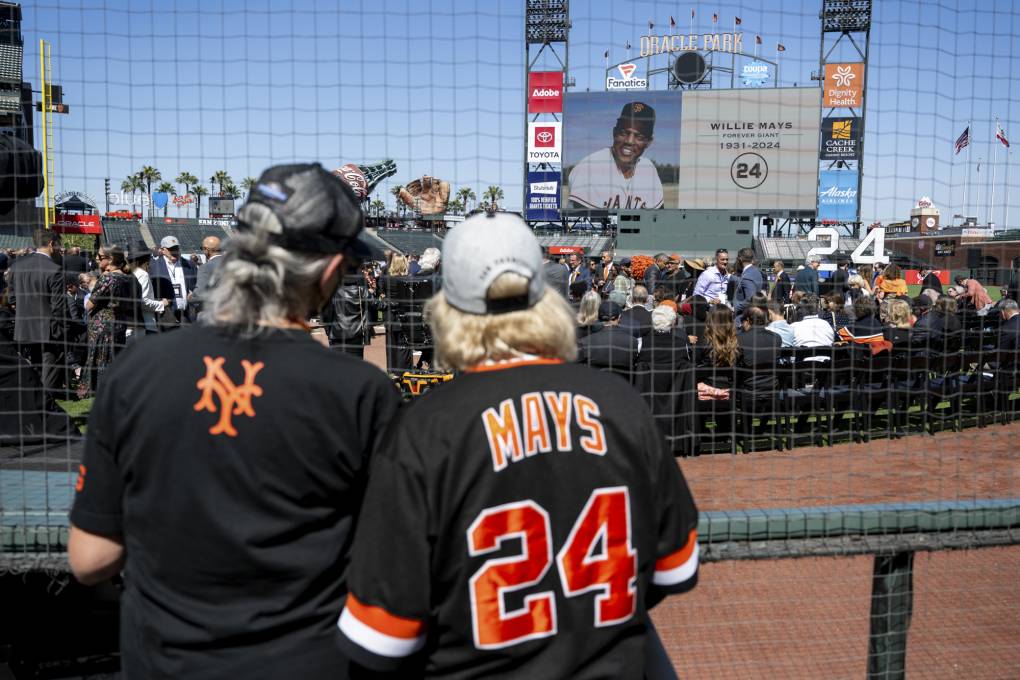
Thousands Honor Giants Legend Willie Mays at Oracle Park Memorial
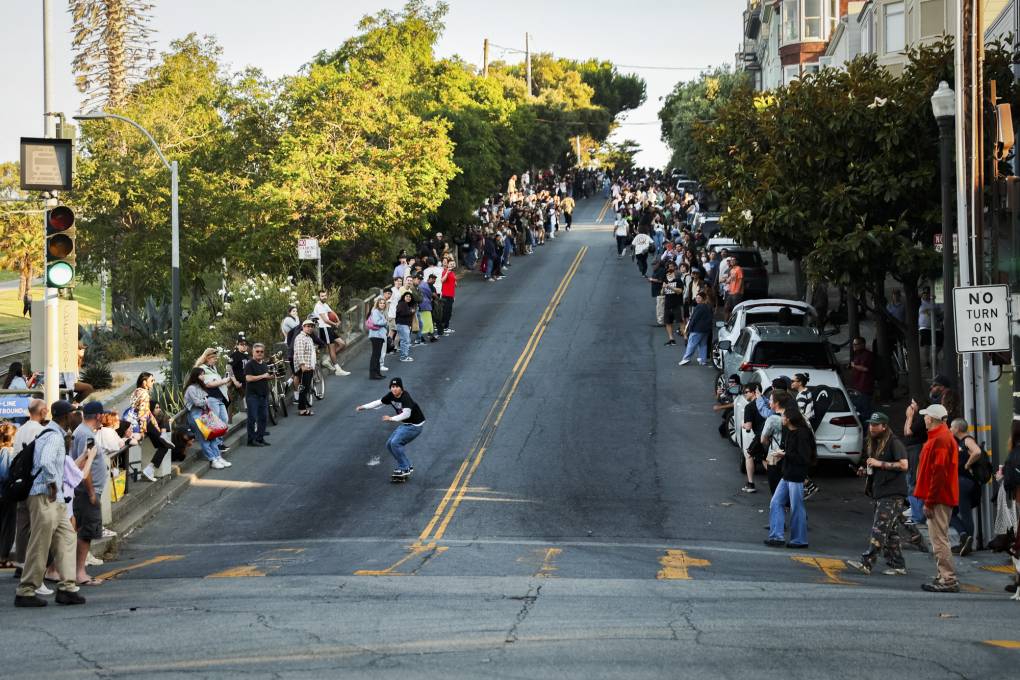
Police Close Off Dolores Street, Skaters 'Bomb' Church Street Instead
Colombian Fans Shine in Bay Area's Last Copa América Match
window.__IS_SSR__=true
window.__INITIAL_STATE__={
"attachmentsReducer": {
"audio_0": {
"type": "attachments",
"id": "audio_0",
"imgSizes": {
"kqedFullSize": {
"file": "https://ww2.kqed.org/news/wp-content/themes/KQED-unified/img/audio_bgs/background0.jpg"
}
}
},
"audio_1": {
"type": "attachments",
"id": "audio_1",
"imgSizes": {
"kqedFullSize": {
"file": "https://ww2.kqed.org/news/wp-content/themes/KQED-unified/img/audio_bgs/background1.jpg"
}
}
},
"audio_2": {
"type": "attachments",
"id": "audio_2",
"imgSizes": {
"kqedFullSize": {
"file": "https://ww2.kqed.org/news/wp-content/themes/KQED-unified/img/audio_bgs/background2.jpg"
}
}
},
"audio_3": {
"type": "attachments",
"id": "audio_3",
"imgSizes": {
"kqedFullSize": {
"file": "https://ww2.kqed.org/news/wp-content/themes/KQED-unified/img/audio_bgs/background3.jpg"
}
}
},
"audio_4": {
"type": "attachments",
"id": "audio_4",
"imgSizes": {
"kqedFullSize": {
"file": "https://ww2.kqed.org/news/wp-content/themes/KQED-unified/img/audio_bgs/background4.jpg"
}
}
},
"placeholder": {
"type": "attachments",
"id": "placeholder",
"imgSizes": {
"thumbnail": {
"file": "https://cdn.kqed.org/wp-content/uploads/2024/12/KQED-Default-Image-816638274-2000x1333-1-160x107.jpg",
"width": 160,
"height": 107,
"mimeType": "image/jpeg"
},
"medium": {
"file": "https://cdn.kqed.org/wp-content/uploads/2024/12/KQED-Default-Image-816638274-2000x1333-1-800x533.jpg",
"width": 800,
"height": 533,
"mimeType": "image/jpeg"
},
"medium_large": {
"file": "https://cdn.kqed.org/wp-content/uploads/2024/12/KQED-Default-Image-816638274-2000x1333-1-768x512.jpg",
"width": 768,
"height": 512,
"mimeType": "image/jpeg"
},
"large": {
"file": "https://cdn.kqed.org/wp-content/uploads/2024/12/KQED-Default-Image-816638274-2000x1333-1-1020x680.jpg",
"width": 1020,
"height": 680,
"mimeType": "image/jpeg"
},
"1536x1536": {
"file": "https://cdn.kqed.org/wp-content/uploads/2024/12/KQED-Default-Image-816638274-2000x1333-1-1536x1024.jpg",
"width": 1536,
"height": 1024,
"mimeType": "image/jpeg"
},
"fd-lrg": {
"file": "https://cdn.kqed.org/wp-content/uploads/2024/12/KQED-Default-Image-816638274-2000x1333-1-1536x1024.jpg",
"width": 1536,
"height": 1024,
"mimeType": "image/jpeg"
},
"fd-med": {
"file": "https://cdn.kqed.org/wp-content/uploads/2024/12/KQED-Default-Image-816638274-2000x1333-1-1020x680.jpg",
"width": 1020,
"height": 680,
"mimeType": "image/jpeg"
},
"fd-sm": {
"file": "https://cdn.kqed.org/wp-content/uploads/2024/12/KQED-Default-Image-816638274-2000x1333-1-800x533.jpg",
"width": 800,
"height": 533,
"mimeType": "image/jpeg"
},
"post-thumbnail": {
"file": "https://cdn.kqed.org/wp-content/uploads/2024/12/KQED-Default-Image-816638274-2000x1333-1-672x372.jpg",
"width": 672,
"height": 372,
"mimeType": "image/jpeg"
},
"twentyfourteen-full-width": {
"file": "https://cdn.kqed.org/wp-content/uploads/2024/12/KQED-Default-Image-816638274-2000x1333-1-1038x576.jpg",
"width": 1038,
"height": 576,
"mimeType": "image/jpeg"
},
"xxsmall": {
"file": "https://cdn.kqed.org/wp-content/uploads/2024/12/KQED-Default-Image-816638274-2000x1333-1-160x107.jpg",
"width": 160,
"height": 107,
"mimeType": "image/jpeg"
},
"xsmall": {
"file": "https://cdn.kqed.org/wp-content/uploads/2024/12/KQED-Default-Image-816638274-2000x1333-1-672x372.jpg",
"width": 672,
"height": 372,
"mimeType": "image/jpeg"
},
"small": {
"file": "https://cdn.kqed.org/wp-content/uploads/2024/12/KQED-Default-Image-816638274-2000x1333-1-672x372.jpg",
"width": 672,
"height": 372,
"mimeType": "image/jpeg"
},
"xlarge": {
"file": "https://cdn.kqed.org/wp-content/uploads/2024/12/KQED-Default-Image-816638274-2000x1333-1-1020x680.jpg",
"width": 1020,
"height": 680,
"mimeType": "image/jpeg"
},
"full-width": {
"file": "https://cdn.kqed.org/wp-content/uploads/2024/12/KQED-Default-Image-816638274-2000x1333-1-1920x1280.jpg",
"width": 1920,
"height": 1280,
"mimeType": "image/jpeg"
},
"guest-author-32": {
"file": "https://cdn.kqed.org/wp-content/uploads/2025/01/KQED-Default-Image-816638274-1333x1333-1-160x160.jpg",
"width": 32,
"height": 32,
"mimeType": "image/jpeg"
},
"guest-author-50": {
"file": "https://cdn.kqed.org/wp-content/uploads/2025/01/KQED-Default-Image-816638274-1333x1333-1-160x160.jpg",
"width": 50,
"height": 50,
"mimeType": "image/jpeg"
},
"guest-author-64": {
"file": "https://cdn.kqed.org/wp-content/uploads/2025/01/KQED-Default-Image-816638274-1333x1333-1-160x160.jpg",
"width": 64,
"height": 64,
"mimeType": "image/jpeg"
},
"guest-author-96": {
"file": "https://cdn.kqed.org/wp-content/uploads/2025/01/KQED-Default-Image-816638274-1333x1333-1-160x160.jpg",
"width": 96,
"height": 96,
"mimeType": "image/jpeg"
},
"guest-author-128": {
"file": "https://cdn.kqed.org/wp-content/uploads/2025/01/KQED-Default-Image-816638274-1333x1333-1-160x160.jpg",
"width": 128,
"height": 128,
"mimeType": "image/jpeg"
},
"detail": {
"file": "https://cdn.kqed.org/wp-content/uploads/2025/01/KQED-Default-Image-816638274-1333x1333-1-160x160.jpg",
"width": 160,
"height": 160,
"mimeType": "image/jpeg"
},
"kqedFullSize": {
"file": "https://cdn.kqed.org/wp-content/uploads/2024/12/KQED-Default-Image-816638274-2000x1333-1.jpg",
"width": 2000,
"height": 1333
}
}
},
"news_11993337": {
"type": "attachments",
"id": "news_11993337",
"meta": {
"index": "attachments_1716263798",
"site": "news",
"id": "11993337",
"found": true
},
"title": "240708-WILLIEMAYSCELEBRATION-040-BL-KQED",
"publishDate": 1720542344,
"status": "inherit",
"parent": 0,
"modified": 1720545902,
"caption": "Fans watch as baseball legends file in for a Celebration of Life for Willie Mays, the San Francisco Giants Hall of Famer, at Oracle Park in San Francisco on July 8, 2024.",
"credit": "Beth LaBerge/KQED",
"altTag": "A man and a woman wearing black and orange baseball jerseys look at a crowd at a baseball stadium.",
"description": null,
"imgSizes": {
"medium": {
"file": "https://cdn.kqed.org/wp-content/uploads/sites/10/2024/07/240708-WILLIEMAYSCELEBRATION-040-BL-KQED-800x533.jpg",
"width": 800,
"height": 533,
"mimeType": "image/jpeg"
},
"large": {
"file": "https://cdn.kqed.org/wp-content/uploads/sites/10/2024/07/240708-WILLIEMAYSCELEBRATION-040-BL-KQED-1020x680.jpg",
"width": 1020,
"height": 680,
"mimeType": "image/jpeg"
},
"thumbnail": {
"file": "https://cdn.kqed.org/wp-content/uploads/sites/10/2024/07/240708-WILLIEMAYSCELEBRATION-040-BL-KQED-160x107.jpg",
"width": 160,
"height": 107,
"mimeType": "image/jpeg"
},
"1536x1536": {
"file": "https://cdn.kqed.org/wp-content/uploads/sites/10/2024/07/240708-WILLIEMAYSCELEBRATION-040-BL-KQED-1536x1024.jpg",
"width": 1536,
"height": 1024,
"mimeType": "image/jpeg"
},
"post-thumbnail": {
"file": "https://cdn.kqed.org/wp-content/uploads/sites/10/2024/07/240708-WILLIEMAYSCELEBRATION-040-BL-KQED-672x372.jpg",
"width": 672,
"height": 372,
"mimeType": "image/jpeg"
},
"twentyfourteen-full-width": {
"file": "https://cdn.kqed.org/wp-content/uploads/sites/10/2024/07/240708-WILLIEMAYSCELEBRATION-040-BL-KQED-1038x576.jpg",
"width": 1038,
"height": 576,
"mimeType": "image/jpeg"
},
"full-width": {
"file": "https://cdn.kqed.org/wp-content/uploads/sites/10/2024/07/240708-WILLIEMAYSCELEBRATION-040-BL-KQED-1920x1280.jpg",
"width": 1920,
"height": 1280,
"mimeType": "image/jpeg"
},
"kqedFullSize": {
"file": "https://cdn.kqed.org/wp-content/uploads/sites/10/2024/07/240708-WILLIEMAYSCELEBRATION-040-BL-KQED.jpg",
"width": 2000,
"height": 1333
}
},
"isLoading": false,
"fetchFailed": false
},
"news_11993135": {
"type": "attachments",
"id": "news_11993135",
"meta": {
"index": "attachments_1716263798",
"site": "news",
"id": "11993135",
"found": true
},
"title": "20240706_DOLORESHILLBOMB-24-KQED",
"publishDate": 1720326153,
"status": "inherit",
"parent": 0,
"modified": 1720326696,
"caption": "A skater 'bombs' Church St. during the annual Dolores Hill Bomb on July 6, 2024. The event, in which skateboarders race down Dolores St. at high speeds, resulted in over 100 teenagers and adults being arrested last year.",
"credit": "Gina Castro/KQED",
"altTag": null,
"description": null,
"imgSizes": {
"medium": {
"file": "https://cdn.kqed.org/wp-content/uploads/sites/10/2024/07/20240706_DOLORESHILLBOMB-24-KQED-800x533.jpg",
"width": 800,
"height": 533,
"mimeType": "image/jpeg"
},
"large": {
"file": "https://cdn.kqed.org/wp-content/uploads/sites/10/2024/07/20240706_DOLORESHILLBOMB-24-KQED-1020x680.jpg",
"width": 1020,
"height": 680,
"mimeType": "image/jpeg"
},
"thumbnail": {
"file": "https://cdn.kqed.org/wp-content/uploads/sites/10/2024/07/20240706_DOLORESHILLBOMB-24-KQED-160x107.jpg",
"width": 160,
"height": 107,
"mimeType": "image/jpeg"
},
"1536x1536": {
"file": "https://cdn.kqed.org/wp-content/uploads/sites/10/2024/07/20240706_DOLORESHILLBOMB-24-KQED-1536x1024.jpg",
"width": 1536,
"height": 1024,
"mimeType": "image/jpeg"
},
"post-thumbnail": {
"file": "https://cdn.kqed.org/wp-content/uploads/sites/10/2024/07/20240706_DOLORESHILLBOMB-24-KQED-672x372.jpg",
"width": 672,
"height": 372,
"mimeType": "image/jpeg"
},
"twentyfourteen-full-width": {
"file": "https://cdn.kqed.org/wp-content/uploads/sites/10/2024/07/20240706_DOLORESHILLBOMB-24-KQED-1038x576.jpg",
"width": 1038,
"height": 576,
"mimeType": "image/jpeg"
},
"full-width": {
"file": "https://cdn.kqed.org/wp-content/uploads/sites/10/2024/07/20240706_DOLORESHILLBOMB-24-KQED-1920x1280.jpg",
"width": 1920,
"height": 1280,
"mimeType": "image/jpeg"
},
"kqedFullSize": {
"file": "https://cdn.kqed.org/wp-content/uploads/sites/10/2024/07/20240706_DOLORESHILLBOMB-24-KQED.jpg",
"width": 2000,
"height": 1333
}
},
"isLoading": false,
"fetchFailed": false
},
"news_11992969": {
"type": "attachments",
"id": "news_11992969",
"meta": {
"index": "attachments_1716263798",
"site": "news",
"id": "11992969",
"found": true
},
"title": "20240702_BrazilvColombia-5_qed",
"publishDate": 1720040456,
"status": "inherit",
"parent": 11992916,
"modified": 1720040676,
"caption": "Colombia fans walk toward Levi’s Stadium for the Copa America Group D soccer match in Santa Clara on July 2, 2024. The game ended with a 1-1 draw against Brazil.",
"credit": "Gina Castro/KQED",
"altTag": null,
"description": null,
"imgSizes": {
"medium": {
"file": "https://cdn.kqed.org/wp-content/uploads/sites/10/2024/07/20240702_BrazilvColombia-5_qed-800x595.jpg",
"width": 800,
"height": 595,
"mimeType": "image/jpeg"
},
"large": {
"file": "https://cdn.kqed.org/wp-content/uploads/sites/10/2024/07/20240702_BrazilvColombia-5_qed-1020x758.jpg",
"width": 1020,
"height": 758,
"mimeType": "image/jpeg"
},
"thumbnail": {
"file": "https://cdn.kqed.org/wp-content/uploads/sites/10/2024/07/20240702_BrazilvColombia-5_qed-160x119.jpg",
"width": 160,
"height": 119,
"mimeType": "image/jpeg"
},
"1536x1536": {
"file": "https://cdn.kqed.org/wp-content/uploads/sites/10/2024/07/20240702_BrazilvColombia-5_qed-1536x1142.jpg",
"width": 1536,
"height": 1142,
"mimeType": "image/jpeg"
},
"post-thumbnail": {
"file": "https://cdn.kqed.org/wp-content/uploads/sites/10/2024/07/20240702_BrazilvColombia-5_qed-672x372.jpg",
"width": 672,
"height": 372,
"mimeType": "image/jpeg"
},
"twentyfourteen-full-width": {
"file": "https://cdn.kqed.org/wp-content/uploads/sites/10/2024/07/20240702_BrazilvColombia-5_qed-1038x576.jpg",
"width": 1038,
"height": 576,
"mimeType": "image/jpeg"
},
"kqedFullSize": {
"file": "https://cdn.kqed.org/wp-content/uploads/sites/10/2024/07/20240702_BrazilvColombia-5_qed.jpg",
"width": 1793,
"height": 1333
}
},
"isLoading": false,
"fetchFailed": false
},
"news_11992670": {
"type": "attachments",
"id": "news_11992670",
"meta": {
"index": "attachments_1716263798",
"site": "news",
"id": "11992670",
"found": true
},
"title": "20240630-HebahHefzy-JY-012",
"publishDate": 1719847338,
"status": "inherit",
"parent": 0,
"modified": 1719856341,
"caption": "Hebah Hefzy, right, and Zahraa Boussi smile at each other while leaving the track at Placer High School after finishing the Western States Endurance Run (WSER) in Auburn on June 30, 2024. Hefzy is the first hijab-wearing Muslim athlete to complete the WSER, with a time of 28 hours and 52 minutes.",
"credit": "Juliana Yamada for KQED",
"altTag": null,
"description": null,
"imgSizes": {
"medium": {
"file": "https://cdn.kqed.org/wp-content/uploads/sites/10/2024/07/20240630-HebahHefzy-JY-012-800x533.jpg",
"width": 800,
"height": 533,
"mimeType": "image/jpeg"
},
"large": {
"file": "https://cdn.kqed.org/wp-content/uploads/sites/10/2024/07/20240630-HebahHefzy-JY-012-1020x680.jpg",
"width": 1020,
"height": 680,
"mimeType": "image/jpeg"
},
"thumbnail": {
"file": "https://cdn.kqed.org/wp-content/uploads/sites/10/2024/07/20240630-HebahHefzy-JY-012-160x107.jpg",
"width": 160,
"height": 107,
"mimeType": "image/jpeg"
},
"1536x1536": {
"file": "https://cdn.kqed.org/wp-content/uploads/sites/10/2024/07/20240630-HebahHefzy-JY-012-1536x1024.jpg",
"width": 1536,
"height": 1024,
"mimeType": "image/jpeg"
},
"post-thumbnail": {
"file": "https://cdn.kqed.org/wp-content/uploads/sites/10/2024/07/20240630-HebahHefzy-JY-012-672x372.jpg",
"width": 672,
"height": 372,
"mimeType": "image/jpeg"
},
"twentyfourteen-full-width": {
"file": "https://cdn.kqed.org/wp-content/uploads/sites/10/2024/07/20240630-HebahHefzy-JY-012-1038x576.jpg",
"width": 1038,
"height": 576,
"mimeType": "image/jpeg"
},
"full-width": {
"file": "https://cdn.kqed.org/wp-content/uploads/sites/10/2024/07/20240630-HebahHefzy-JY-012-1920x1280.jpg",
"width": 1920,
"height": 1280,
"mimeType": "image/jpeg"
},
"kqedFullSize": {
"file": "https://cdn.kqed.org/wp-content/uploads/sites/10/2024/07/20240630-HebahHefzy-JY-012.jpg?ver=1719856242",
"width": 2000,
"height": 1333
}
},
"isLoading": false,
"fetchFailed": false
},
"news_11992642": {
"type": "attachments",
"id": "news_11992642",
"meta": {
"index": "attachments_1716263798",
"site": "news",
"id": "11992642",
"found": true
},
"title": "20240630_Pride_GC-26-KQED",
"publishDate": 1719794354,
"status": "inherit",
"parent": 0,
"modified": 1719856516,
"caption": "Participants celebrate during the Pride Parade in San Francisco on June 30, 2024.",
"credit": "Gina Castro/KQED",
"altTag": "A group of people wearing light turquoise shirts wave rainbow flags and fans while walking down the street.",
"description": null,
"imgSizes": {
"medium": {
"file": "https://cdn.kqed.org/wp-content/uploads/sites/10/2024/06/20240630_Pride_GC-26-KQED-800x533.jpg",
"width": 800,
"height": 533,
"mimeType": "image/jpeg"
},
"large": {
"file": "https://cdn.kqed.org/wp-content/uploads/sites/10/2024/06/20240630_Pride_GC-26-KQED-1020x680.jpg",
"width": 1020,
"height": 680,
"mimeType": "image/jpeg"
},
"thumbnail": {
"file": "https://cdn.kqed.org/wp-content/uploads/sites/10/2024/06/20240630_Pride_GC-26-KQED-160x107.jpg",
"width": 160,
"height": 107,
"mimeType": "image/jpeg"
},
"1536x1536": {
"file": "https://cdn.kqed.org/wp-content/uploads/sites/10/2024/06/20240630_Pride_GC-26-KQED-1536x1024.jpg",
"width": 1536,
"height": 1024,
"mimeType": "image/jpeg"
},
"post-thumbnail": {
"file": "https://cdn.kqed.org/wp-content/uploads/sites/10/2024/06/20240630_Pride_GC-26-KQED-672x372.jpg",
"width": 672,
"height": 372,
"mimeType": "image/jpeg"
},
"twentyfourteen-full-width": {
"file": "https://cdn.kqed.org/wp-content/uploads/sites/10/2024/06/20240630_Pride_GC-26-KQED-1038x576.jpg",
"width": 1038,
"height": 576,
"mimeType": "image/jpeg"
},
"full-width": {
"file": "https://cdn.kqed.org/wp-content/uploads/sites/10/2024/06/20240630_Pride_GC-26-KQED-1920x1280.jpg",
"width": 1920,
"height": 1280,
"mimeType": "image/jpeg"
},
"kqedFullSize": {
"file": "https://cdn.kqed.org/wp-content/uploads/sites/10/2024/06/20240630_Pride_GC-26-KQED.jpg?ver=1719794839",
"width": 2000,
"height": 1333
}
},
"isLoading": false,
"fetchFailed": false
},
"news_11988055": {
"type": "attachments",
"id": "news_11988055",
"meta": {
"index": "attachments_1716263798",
"site": "news",
"id": "11988055",
"found": true
},
"title": "240517-TKBilingualLearners-27-BL_qut",
"publishDate": 1717006968,
"status": "inherit",
"parent": 0,
"modified": 1717794201,
"caption": "Teacher Cintya Valdivia sits with transitional kindergarten students during snack time at the International Community School in Oakland on May 17, 2024.",
"credit": "Beth LaBerge/KQED",
"altTag": "A teacher sits at a classroom table with young students as one student puts his arm tenderly around her neck",
"description": null,
"imgSizes": {
"medium": {
"file": "https://cdn.kqed.org/wp-content/uploads/sites/10/2024/05/240517-TKBilingualLearners-27-BL_qut-800x533.jpg",
"width": 800,
"height": 533,
"mimeType": "image/jpeg"
},
"large": {
"file": "https://cdn.kqed.org/wp-content/uploads/sites/10/2024/05/240517-TKBilingualLearners-27-BL_qut-1020x680.jpg",
"width": 1020,
"height": 680,
"mimeType": "image/jpeg"
},
"thumbnail": {
"file": "https://cdn.kqed.org/wp-content/uploads/sites/10/2024/05/240517-TKBilingualLearners-27-BL_qut-160x107.jpg",
"width": 160,
"height": 107,
"mimeType": "image/jpeg"
},
"1536x1536": {
"file": "https://cdn.kqed.org/wp-content/uploads/sites/10/2024/05/240517-TKBilingualLearners-27-BL_qut-1536x1024.jpg",
"width": 1536,
"height": 1024,
"mimeType": "image/jpeg"
},
"post-thumbnail": {
"file": "https://cdn.kqed.org/wp-content/uploads/sites/10/2024/05/240517-TKBilingualLearners-27-BL_qut-672x372.jpg",
"width": 672,
"height": 372,
"mimeType": "image/jpeg"
},
"twentyfourteen-full-width": {
"file": "https://cdn.kqed.org/wp-content/uploads/sites/10/2024/05/240517-TKBilingualLearners-27-BL_qut-1038x576.jpg",
"width": 1038,
"height": 576,
"mimeType": "image/jpeg"
},
"kqedFullSize": {
"file": "https://cdn.kqed.org/wp-content/uploads/sites/10/2024/05/240517-TKBilingualLearners-27-BL_qut.jpg",
"width": 1920,
"height": 1280
}
},
"isLoading": false,
"fetchFailed": false
},
"news_11984048": {
"type": "attachments",
"id": "news_11984048",
"meta": {
"index": "attachments_1716263798",
"site": "news",
"id": "11984048",
"found": true
},
"parent": 0,
"imgSizes": {
"twentyfourteen-full-width": {
"file": "https://cdn.kqed.org/wp-content/uploads/sites/10/2024/04/240331-ManipurIndia-BethLaBerge-027-1038x576.jpg",
"width": 1038,
"mimeType": "image/jpeg",
"height": 576
},
"thumbnail": {
"file": "https://cdn.kqed.org/wp-content/uploads/sites/10/2024/04/240331-ManipurIndia-BethLaBerge-027-160x107.jpg",
"width": 160,
"mimeType": "image/jpeg",
"height": 107
},
"post-thumbnail": {
"file": "https://cdn.kqed.org/wp-content/uploads/sites/10/2024/04/240331-ManipurIndia-BethLaBerge-027-672x372.jpg",
"width": 672,
"mimeType": "image/jpeg",
"height": 372
},
"kqedFullSize": {
"file": "https://cdn.kqed.org/wp-content/uploads/sites/10/2024/04/240331-ManipurIndia-BethLaBerge-027.jpg",
"width": 2000,
"height": 1333
},
"large": {
"file": "https://cdn.kqed.org/wp-content/uploads/sites/10/2024/04/240331-ManipurIndia-BethLaBerge-027-1020x680.jpg",
"width": 1020,
"mimeType": "image/jpeg",
"height": 680
},
"1536x1536": {
"file": "https://cdn.kqed.org/wp-content/uploads/sites/10/2024/04/240331-ManipurIndia-BethLaBerge-027-1536x1024.jpg",
"width": 1536,
"mimeType": "image/jpeg",
"height": 1024
},
"full-width": {
"file": "https://cdn.kqed.org/wp-content/uploads/sites/10/2024/04/240331-ManipurIndia-BethLaBerge-027-1920x1280.jpg",
"width": 1920,
"mimeType": "image/jpeg",
"height": 1280
},
"medium": {
"file": "https://cdn.kqed.org/wp-content/uploads/sites/10/2024/04/240331-ManipurIndia-BethLaBerge-027-800x533.jpg",
"width": 800,
"mimeType": "image/jpeg",
"height": 533
}
},
"publishDate": 1714074987,
"modified": 1715027968,
"caption": "Tara Manchin Hangzo adjusts a scarf on her mother, Madhumati Khwairakpam, 87, in their apartment with family members in Delhi, India, on March 31, 2024. They were displaced from their home in the northeastern state of Manipur when ethnic violence erupted on May 3, 2023, between the Meitei people, a non-tribal majority living in the Imphal Valley, and the Kuki tribal community from the surrounding hills. Hangzo identifies as Kuki, and her mother identifies as Meitei.",
"description": null,
"title": "240331-ManipurIndia-BethLaBerge-027",
"credit": "Beth LaBerge/KQED",
"status": "inherit",
"altTag": null,
"isLoading": false,
"fetchFailed": false
},
"news_11987039": {
"type": "attachments",
"id": "news_11987039",
"meta": {
"index": "attachments_1716263798",
"site": "news",
"id": "11987039",
"found": true
},
"title": "200529-GeorgeFloyd-BethLaBergeKQED",
"publishDate": 1716250889,
"status": "inherit",
"parent": 12043745,
"modified": 1749661724,
"caption": "A demonstrator outside Oakland police headquarters on May 29 2020, carries a sign with the words, \"I can't breathe\" spoken by George Floyd, the man murdered on May 25, 2020, by police in Minneapolis.",
"credit": "Beth LaBerge/KQED",
"altTag": null,
"description": null,
"imgSizes": {
"medium": {
"file": "https://cdn.kqed.org/wp-content/uploads/sites/10/2024/05/200529-GeorgeFloyd-04-BL-800x533.jpg",
"width": 800,
"height": 533,
"mimeType": "image/jpeg"
},
"large": {
"file": "https://cdn.kqed.org/wp-content/uploads/sites/10/2024/05/200529-GeorgeFloyd-04-BL-1020x680.jpg",
"width": 1020,
"height": 680,
"mimeType": "image/jpeg"
},
"thumbnail": {
"file": "https://cdn.kqed.org/wp-content/uploads/sites/10/2024/05/200529-GeorgeFloyd-04-BL-160x107.jpg",
"width": 160,
"height": 107,
"mimeType": "image/jpeg"
},
"1536x1536": {
"file": "https://cdn.kqed.org/wp-content/uploads/sites/10/2024/05/200529-GeorgeFloyd-04-BL-1536x1024.jpg",
"width": 1536,
"height": 1024,
"mimeType": "image/jpeg"
},
"post-thumbnail": {
"file": "https://cdn.kqed.org/wp-content/uploads/sites/10/2024/05/200529-GeorgeFloyd-04-BL-672x372.jpg",
"width": 672,
"height": 372,
"mimeType": "image/jpeg"
},
"twentyfourteen-full-width": {
"file": "https://cdn.kqed.org/wp-content/uploads/sites/10/2024/05/200529-GeorgeFloyd-04-BL-1038x576.jpg",
"width": 1038,
"height": 576,
"mimeType": "image/jpeg"
},
"full-width": {
"file": "https://cdn.kqed.org/wp-content/uploads/sites/10/2024/05/200529-GeorgeFloyd-04-BL-1920x1280.jpg",
"width": 1920,
"height": 1280,
"mimeType": "image/jpeg"
},
"kqedFullSize": {
"file": "https://cdn.kqed.org/wp-content/uploads/sites/10/2024/05/200529-GeorgeFloyd-04-BL.jpg",
"width": 2000,
"height": 1333
}
},
"isLoading": false,
"fetchFailed": false
},
"news_11987839": {
"type": "attachments",
"id": "news_11987839",
"meta": {
"index": "attachments_1716263798",
"site": "news",
"id": "11987839",
"found": true
},
"title": "240526-CarnavalParade-33-BL",
"publishDate": 1716767600,
"status": "inherit",
"parent": 12083056,
"modified": 1778611986,
"caption": "Cathedral City High School Ballet Folklórico performs during the Carnaval Grand Parade in San Francisco's Mission District on May 26, 2024.",
"credit": "Beth LaBerge/KQED",
"altTag": "Several women dressed in colorful clothing dance and walk down the street during a parade.",
"description": null,
"imgSizes": {
"medium": {
"file": "https://cdn.kqed.org/wp-content/uploads/sites/10/2024/05/240526-CarnavalParade-33-BL-800x533.jpg",
"width": 800,
"height": 533,
"mimeType": "image/jpeg"
},
"large": {
"file": "https://cdn.kqed.org/wp-content/uploads/sites/10/2024/05/240526-CarnavalParade-33-BL-1020x680.jpg",
"width": 1020,
"height": 680,
"mimeType": "image/jpeg"
},
"thumbnail": {
"file": "https://cdn.kqed.org/wp-content/uploads/sites/10/2024/05/240526-CarnavalParade-33-BL-160x107.jpg",
"width": 160,
"height": 107,
"mimeType": "image/jpeg"
},
"1536x1536": {
"file": "https://cdn.kqed.org/wp-content/uploads/sites/10/2024/05/240526-CarnavalParade-33-BL-1536x1024.jpg",
"width": 1536,
"height": 1024,
"mimeType": "image/jpeg"
},
"post-thumbnail": {
"file": "https://cdn.kqed.org/wp-content/uploads/sites/10/2024/05/240526-CarnavalParade-33-BL-672x372.jpg",
"width": 672,
"height": 372,
"mimeType": "image/jpeg"
},
"twentyfourteen-full-width": {
"file": "https://cdn.kqed.org/wp-content/uploads/sites/10/2024/05/240526-CarnavalParade-33-BL-1038x576.jpg",
"width": 1038,
"height": 576,
"mimeType": "image/jpeg"
},
"full-width": {
"file": "https://cdn.kqed.org/wp-content/uploads/sites/10/2024/05/240526-CarnavalParade-33-BL-1920x1280.jpg",
"width": 1920,
"height": 1280,
"mimeType": "image/jpeg"
},
"kqedFullSize": {
"file": "https://cdn.kqed.org/wp-content/uploads/sites/10/2024/05/240526-CarnavalParade-33-BL.jpg",
"width": 2000,
"height": 1333
}
},
"isLoading": false,
"fetchFailed": false
},
"news_11987635": {
"type": "attachments",
"id": "news_11987635",
"meta": {
"index": "attachments_1716263798",
"site": "news",
"id": "11987635",
"found": true
},
"title": "240523-CarnavalPutleco-BethLaBerge-01",
"publishDate": 1716539933,
"status": "inherit",
"parent": 0,
"modified": 1716588747,
"caption": "Iván Olivera wears a tiliche alongside the group Carnaval Putleco during the Twilight Parade in Healdsburg on May 23, 2024.",
"credit": "Beth LaBerge/KQED",
"altTag": null,
"description": null,
"imgSizes": {
"medium": {
"file": "https://cdn.kqed.org/wp-content/uploads/sites/10/2024/05/240523-CarnavalPutleco-01-BL-800x533.jpg",
"width": 800,
"height": 533,
"mimeType": "image/jpeg"
},
"large": {
"file": "https://cdn.kqed.org/wp-content/uploads/sites/10/2024/05/240523-CarnavalPutleco-01-BL-1020x680.jpg",
"width": 1020,
"height": 680,
"mimeType": "image/jpeg"
},
"thumbnail": {
"file": "https://cdn.kqed.org/wp-content/uploads/sites/10/2024/05/240523-CarnavalPutleco-01-BL-160x107.jpg",
"width": 160,
"height": 107,
"mimeType": "image/jpeg"
},
"1536x1536": {
"file": "https://cdn.kqed.org/wp-content/uploads/sites/10/2024/05/240523-CarnavalPutleco-01-BL-1536x1024.jpg",
"width": 1536,
"height": 1024,
"mimeType": "image/jpeg"
},
"post-thumbnail": {
"file": "https://cdn.kqed.org/wp-content/uploads/sites/10/2024/05/240523-CarnavalPutleco-01-BL-672x372.jpg",
"width": 672,
"height": 372,
"mimeType": "image/jpeg"
},
"twentyfourteen-full-width": {
"file": "https://cdn.kqed.org/wp-content/uploads/sites/10/2024/05/240523-CarnavalPutleco-01-BL-1038x576.jpg",
"width": 1038,
"height": 576,
"mimeType": "image/jpeg"
},
"full-width": {
"file": "https://cdn.kqed.org/wp-content/uploads/sites/10/2024/05/240523-CarnavalPutleco-01-BL-1920x1280.jpg",
"width": 1920,
"height": 1280,
"mimeType": "image/jpeg"
},
"kqedFullSize": {
"file": "https://cdn.kqed.org/wp-content/uploads/sites/10/2024/05/240523-CarnavalPutleco-01-BL.jpg",
"width": 2000,
"height": 1333
}
},
"isLoading": false,
"fetchFailed": false
},
"news_11986482": {
"type": "attachments",
"id": "news_11986482",
"meta": {
"index": "attachments_1716263798",
"site": "news",
"id": "11986482",
"found": true
},
"parent": 0,
"imgSizes": {
"twentyfourteen-full-width": {
"file": "https://cdn.kqed.org/wp-content/uploads/sites/10/2024/05/FEBMAY2024-LONGCOVID-ET-PU-13-KQED-1038x576.jpg",
"width": 1038,
"mimeType": "image/jpeg",
"height": 576
},
"thumbnail": {
"file": "https://cdn.kqed.org/wp-content/uploads/sites/10/2024/05/FEBMAY2024-LONGCOVID-ET-PU-13-KQED-160x107.jpg",
"width": 160,
"mimeType": "image/jpeg",
"height": 107
},
"post-thumbnail": {
"file": "https://cdn.kqed.org/wp-content/uploads/sites/10/2024/05/FEBMAY2024-LONGCOVID-ET-PU-13-KQED-672x372.jpg",
"width": 672,
"mimeType": "image/jpeg",
"height": 372
},
"kqedFullSize": {
"file": "https://cdn.kqed.org/wp-content/uploads/sites/10/2024/05/FEBMAY2024-LONGCOVID-ET-PU-13-KQED.jpg",
"width": 2000,
"height": 1333
},
"large": {
"file": "https://cdn.kqed.org/wp-content/uploads/sites/10/2024/05/FEBMAY2024-LONGCOVID-ET-PU-13-KQED-1020x680.jpg",
"width": 1020,
"mimeType": "image/jpeg",
"height": 680
},
"1536x1536": {
"file": "https://cdn.kqed.org/wp-content/uploads/sites/10/2024/05/FEBMAY2024-LONGCOVID-ET-PU-13-KQED-1536x1024.jpg",
"width": 1536,
"mimeType": "image/jpeg",
"height": 1024
},
"full-width": {
"file": "https://cdn.kqed.org/wp-content/uploads/sites/10/2024/05/FEBMAY2024-LONGCOVID-ET-PU-13-KQED-1920x1280.jpg",
"width": 1920,
"mimeType": "image/jpeg",
"height": 1280
},
"medium": {
"file": "https://cdn.kqed.org/wp-content/uploads/sites/10/2024/05/FEBMAY2024-LONGCOVID-ET-PU-13-KQED-800x533.jpg",
"width": 800,
"mimeType": "image/jpeg",
"height": 533
}
},
"publishDate": 1715818507,
"modified": 1715978534,
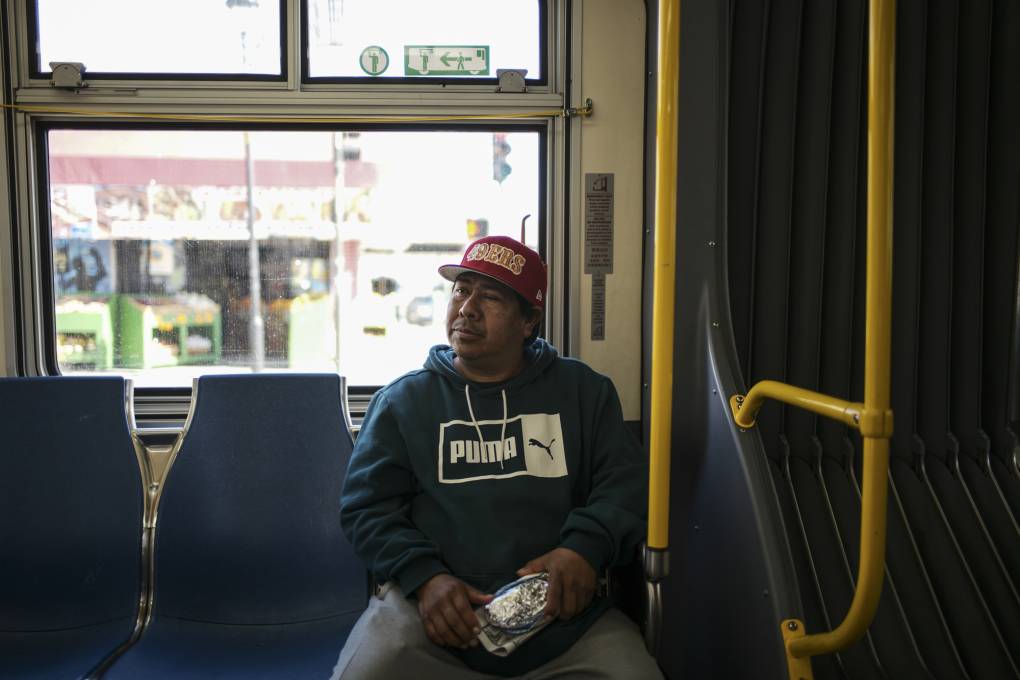
"caption": "Osbaldo Varilla-Aguilar, 46, rides the bus back home in San Francisco on Feb. 26, 2024. ",
"description": null,
"title": "FEBMAY2024-LONGCOVID-ET-PU-13-KQED",
"credit": "Pablo Unzueta for El Tecolote/CatchLight Local",
"status": "inherit",
"altTag": "A middle-aged Latino man with a hat sits on a bus.",
"isLoading": false,
"fetchFailed": false
},
"news_11984509": {
"type": "attachments",
"id": "news_11984509",
"meta": {
"index": "attachments_1716263798",
"site": "news",
"id": "11984509",
"found": true
},
"parent": 0,
"imgSizes": {
"twentyfourteen-full-width": {
"file": "https://cdn.kqed.org/wp-content/uploads/sites/10/2024/04/240423-BERKELEY-GAZA-ENCAMPMENT-MD-09-KQED-1038x576.jpg",
"width": 1038,
"mimeType": "image/jpeg",
"height": 576
},
"thumbnail": {
"file": "https://cdn.kqed.org/wp-content/uploads/sites/10/2024/04/240423-BERKELEY-GAZA-ENCAMPMENT-MD-09-KQED-160x107.jpg",
"width": 160,
"mimeType": "image/jpeg",
"height": 107
},
"post-thumbnail": {
"file": "https://cdn.kqed.org/wp-content/uploads/sites/10/2024/04/240423-BERKELEY-GAZA-ENCAMPMENT-MD-09-KQED-672x372.jpg",
"width": 672,
"mimeType": "image/jpeg",
"height": 372
},
"kqedFullSize": {
"file": "https://cdn.kqed.org/wp-content/uploads/sites/10/2024/04/240423-BERKELEY-GAZA-ENCAMPMENT-MD-09-KQED.jpg",
"width": 2000,
"height": 1333
},
"large": {
"file": "https://cdn.kqed.org/wp-content/uploads/sites/10/2024/04/240423-BERKELEY-GAZA-ENCAMPMENT-MD-09-KQED-1020x680.jpg",
"width": 1020,
"mimeType": "image/jpeg",
"height": 680
},
"1536x1536": {
"file": "https://cdn.kqed.org/wp-content/uploads/sites/10/2024/04/240423-BERKELEY-GAZA-ENCAMPMENT-MD-09-KQED-1536x1024.jpg",
"width": 1536,
"mimeType": "image/jpeg",
"height": 1024
},
"full-width": {
"file": "https://cdn.kqed.org/wp-content/uploads/sites/10/2024/04/240423-BERKELEY-GAZA-ENCAMPMENT-MD-09-KQED-1920x1280.jpg",
"width": 1920,
"mimeType": "image/jpeg",
"height": 1280
},
"medium": {
"file": "https://cdn.kqed.org/wp-content/uploads/sites/10/2024/04/240423-BERKELEY-GAZA-ENCAMPMENT-MD-09-KQED-800x533.jpg",
"width": 800,
"mimeType": "image/jpeg",
"height": 533
}
},
"publishDate": 1714504696,
"modified": 1714592908,
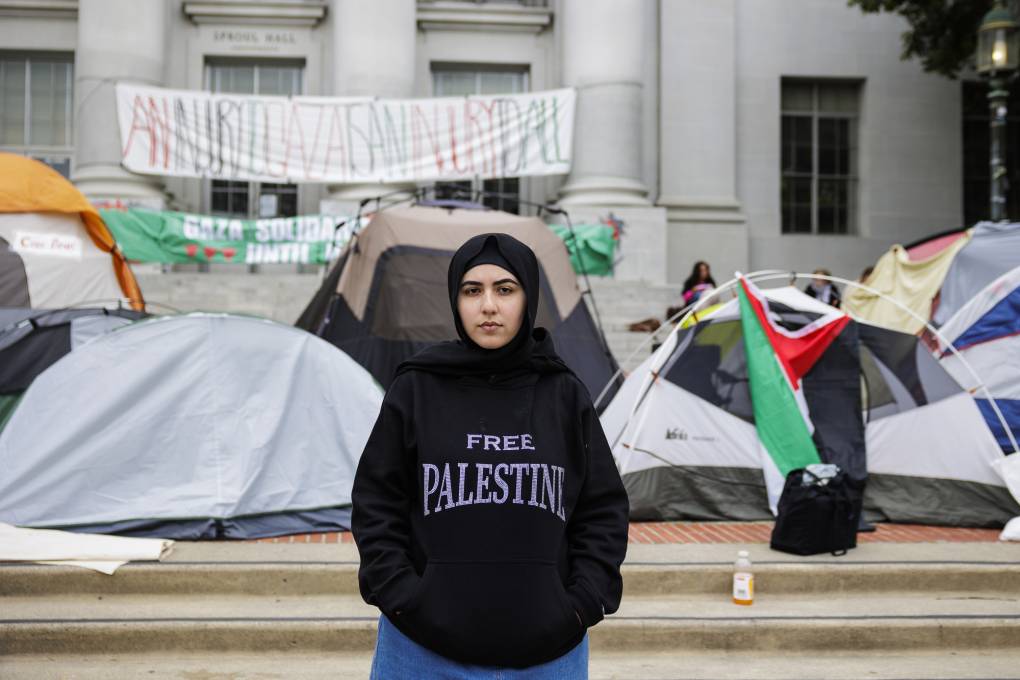
"caption": "Malak Afaneh, a UC Berkeley Law student and co-president of Berkeley Law Students for Justice in Palestine, stands at the Gaza Solidarity Encampment in front of Sproul Hall on April 23.",
"description": null,
"title": "240423-BERKELEY GAZA ENCAMPMENT-MD-09-KQED",
"credit": "Martin do Nascimento/KQED",
"status": "inherit",
"altTag": null,
"isLoading": false,
"fetchFailed": false
}
},
"audioPlayerReducer": {
"postId": "stream_live",
"isPaused": true,
"isPlaying": false,
"pfsActive": false,
"pledgeModalIsOpen": true,
"playerDrawerIsOpen": false,
"liveAudioPlayStartedAt": 0,
"liveAudioPlayContext": ""
},
"authorsReducer": {
"byline_news_11992681": {
"type": "authors",
"id": "byline_news_11992681",
"meta": {
"override": true
},
"slug": "byline_news_11992681",
"name": "Mark Nieto",
"isLoading": false
},
"byline_news_11986724": {
"type": "authors",
"id": "byline_news_11986724",
"meta": {
"override": true
},
"slug": "byline_news_11986724",
"name": "\u003ca href=\"https://eltecolote.org/content/en/author/pablo-unzueta/\">Pablo Unzueta\u003c/a>",
"isLoading": false
},
"dmarks": {
"type": "authors",
"id": "182",
"meta": {
"index": "authors_1716337520",
"id": "182",
"found": true
},
"name": "David Marks",
"firstName": "David",
"lastName": "Marks",
"slug": "dmarks",
"email": "dmarks@kqed.org",
"display_author_email": false,
"staff_mastheads": [],
"title": "KQED Editor",
"bio": "David Marks is a senior digital editor for KQED News. \u003c/a>Reach him at dmarks@kqed.org.",
"avatar": "https://secure.gravatar.com/avatar/b88bd6227ce6cb96ae33fefaf42b2a29?s=600&d=mm&r=g",
"twitter": "divadskram",
"facebook": null,
"instagram": null,
"linkedin": null,
"sites": [
{
"site": "news",
"roles": []
},
{
"site": "science",
"roles": []
},
{
"site": "perspectives",
"roles": []
},
{
"site": "liveblog",
"roles": []
}
],
"headData": {
"title": "David Marks | KQED",
"description": "KQED Editor",
"ogImgSrc": "https://secure.gravatar.com/avatar/b88bd6227ce6cb96ae33fefaf42b2a29?s=600&d=mm&r=g",
"twImgSrc": "https://secure.gravatar.com/avatar/b88bd6227ce6cb96ae33fefaf42b2a29?s=600&d=mm&r=g"
},
"isLoading": false,
"link": "/author/dmarks"
},
"kqed": {
"type": "authors",
"id": "236",
"meta": {
"index": "authors_1716337520",
"id": "236",
"found": true
},
"name": "KQED News Staff",
"firstName": "KQED News Staff",
"lastName": null,
"slug": "kqed",
"email": "faq@kqed.org",
"display_author_email": false,
"staff_mastheads": [],
"title": null,
"bio": null,
"avatar": "https://secure.gravatar.com/avatar/ef0e801a68c4c54afa9180db14084167?s=600&d=blank&r=g",
"twitter": null,
"facebook": null,
"instagram": null,
"linkedin": null,
"sites": [
{
"site": "arts",
"roles": [
"contributor"
]
},
{
"site": "news",
"roles": [
"editor"
]
},
{
"site": "futureofyou",
"roles": [
"author"
]
}
],
"headData": {
"title": "KQED News Staff | KQED",
"description": null,
"ogImgSrc": "https://secure.gravatar.com/avatar/ef0e801a68c4c54afa9180db14084167?s=600&d=blank&r=g",
"twImgSrc": "https://secure.gravatar.com/avatar/ef0e801a68c4c54afa9180db14084167?s=600&d=blank&r=g"
},
"isLoading": false,
"link": "/author/kqed"
},
"mfederis": {
"type": "authors",
"id": "11509",
"meta": {
"index": "authors_1716337520",
"id": "11509",
"found": true
},
"name": "Marnette Federis",
"firstName": "Marnette",
"lastName": "Federis",
"slug": "mfederis",
"email": "mfederis@kqed.org",
"display_author_email": false,
"staff_mastheads": [],
"title": "KQED Contributor",
"bio": null,
"avatar": "https://secure.gravatar.com/avatar/6553b16260501cef36787444651fa5ed?s=600&d=blank&r=g",
"twitter": null,
"facebook": null,
"instagram": null,
"linkedin": null,
"sites": [
{
"site": "news",
"roles": [
"editor"
]
},
{
"site": "mindshift",
"roles": [
"editor"
]
},
{
"site": "science",
"roles": [
"editor"
]
},
{
"site": "podcasts",
"roles": [
"editor"
]
}
],
"headData": {
"title": "Marnette Federis | KQED",
"description": "KQED Contributor",
"ogImgSrc": "https://secure.gravatar.com/avatar/6553b16260501cef36787444651fa5ed?s=600&d=blank&r=g",
"twImgSrc": "https://secure.gravatar.com/avatar/6553b16260501cef36787444651fa5ed?s=600&d=blank&r=g"
},
"isLoading": false,
"link": "/author/mfederis"
},
"lsarah": {
"type": "authors",
"id": "11626",
"meta": {
"index": "authors_1716337520",
"id": "11626",
"found": true
},
"name": "Lakshmi Sarah",
"firstName": "Lakshmi",
"lastName": "Sarah",
"slug": "lsarah",
"email": "lsarah@kqed.org",
"display_author_email": false,
"staff_mastheads": [],
"title": "Digital Producer",
"bio": "Lakshmi Sarah is an educator, author and journalist with a focus on innovative storytelling. She has worked with newspapers, radio and magazines from Ahmedabad, India to Los Angeles, California. She has written and produced for Die Zeit, Global Voices, AJ+, KQED, Fusion Media Group and the New York Times.",
"avatar": "https://secure.gravatar.com/avatar/652dcaecd8b28826fc17a8b2d6bb4e93?s=600&d=blank&r=g",
"twitter": "lakitalki",
"facebook": null,
"instagram": "https://www.instagram.com/laki.talki/",
"linkedin": "https://www.linkedin.com/in/lakisarah/",
"sites": [
{
"site": "arts",
"roles": []
},
{
"site": "news",
"roles": []
},
{
"site": "bayareabites",
"roles": []
},
{
"site": "science",
"roles": []
}
],
"headData": {
"title": "Lakshmi Sarah | KQED",
"description": "Digital Producer",
"ogImgSrc": "https://secure.gravatar.com/avatar/652dcaecd8b28826fc17a8b2d6bb4e93?s=600&d=blank&r=g",
"twImgSrc": "https://secure.gravatar.com/avatar/652dcaecd8b28826fc17a8b2d6bb4e93?s=600&d=blank&r=g"
},
"isLoading": false,
"link": "/author/lsarah"
},
"blaberge": {
"type": "authors",
"id": "11667",
"meta": {
"index": "authors_1716337520",
"id": "11667",
"found": true
},
"name": "Beth LaBerge",
"firstName": "Beth",
"lastName": "LaBerge",
"slug": "blaberge",
"email": "blaberge@KQED.org",
"display_author_email": true,
"staff_mastheads": [
"news"
],
"title": "Photographer, News",
"bio": "Beth LaBerge is a visual journalist for \u003ca href=\"https://www.kqed.org/news\">KQED News\u003c/a>.",
"avatar": "https://secure.gravatar.com/avatar/ce49ecd7a1306685637b45a1f6f5dedfc4ae9481966eb596fea5160466dd6319?s=600&d=blank&r=g",
"twitter": null,
"bluesky": null,
"facebook": null,
"instagram": "https://www.instagram.com/bethlaberge/",
"linkedin": null,
"sites": [
{
"site": "arts",
"roles": [
"editor",
"manage_categories"
]
},
{
"site": "news",
"roles": [
"editor",
"edit_plugins",
"manage_categories"
]
},
{
"site": "science",
"roles": [
"editor",
"contributor",
"author",
"manage_categories"
]
},
{
"site": "perspectives",
"roles": [
"editor"
]
},
{
"site": "liveblog",
"roles": [
"editor"
]
}
],
"headData": {
"title": "Beth LaBerge | KQED",
"description": "Photographer, News",
"ogImgSrc": "https://secure.gravatar.com/avatar/ce49ecd7a1306685637b45a1f6f5dedfc4ae9481966eb596fea5160466dd6319?s=600&d=blank&r=g",
"twImgSrc": "https://secure.gravatar.com/avatar/ce49ecd7a1306685637b45a1f6f5dedfc4ae9481966eb596fea5160466dd6319?s=600&d=blank&r=g"
},
"isLoading": false,
"link": "/author/blaberge"
},
"ccabreralomeli": {
"type": "authors",
"id": "11708",
"meta": {
"index": "authors_1716337520",
"id": "11708",
"found": true
},
"name": "Carlos Cabrera-Lomelí",
"firstName": "Carlos",
"lastName": "Cabrera-Lomelí",
"slug": "ccabreralomeli",
"email": "ccabreralomeli@KQED.org",
"display_author_email": true,
"staff_mastheads": [
"news"
],
"title": "Community Reporter",
"bio": "Carlos Cabrera-Lomelí is a community reporter with KQED's digital engagement team. He also reports and co-produces for KQED's bilingual news hub KQED en Español. He grew up in San Francisco's Mission District and has previously worked with Univision, 48 Hills and REFORMA in Mexico City.",
"avatar": "https://secure.gravatar.com/avatar/c309be9665e484f887b818c89e273ecc673004f426f36b24d00a4d813a2e0518?s=600&d=blank&r=g",
"twitter": "@LomeliCabrera",
"bluesky": null,
"facebook": null,
"instagram": null,
"linkedin": null,
"sites": [
{
"site": "arts",
"roles": [
"editor"
]
},
{
"site": "news",
"roles": [
"editor"
]
},
{
"site": "about",
"roles": [
"editor"
]
},
{
"site": "science",
"roles": [
"editor"
]
},
{
"site": "perspectives",
"roles": [
"editor"
]
},
{
"site": "elections",
"roles": [
"editor"
]
},
{
"site": "liveblog",
"roles": [
"contributor"
]
}
],
"headData": {
"title": "Carlos Cabrera-Lomelí | KQED",
"description": "Community Reporter",
"ogImgSrc": "https://secure.gravatar.com/avatar/c309be9665e484f887b818c89e273ecc673004f426f36b24d00a4d813a2e0518?s=600&d=blank&r=g",
"twImgSrc": "https://secure.gravatar.com/avatar/c309be9665e484f887b818c89e273ecc673004f426f36b24d00a4d813a2e0518?s=600&d=blank&r=g"
},
"isLoading": false,
"link": "/author/ccabreralomeli"
},
"jlara": {
"type": "authors",
"id": "11761",
"meta": {
"index": "authors_1716337520",
"id": "11761",
"found": true
},
"name": "Juan Carlos Lara",
"firstName": "Juan Carlos",
"lastName": "Lara",
"slug": "jlara",
"email": "jlara@kqed.org",
"display_author_email": false,
"staff_mastheads": [],
"title": "KQED Contributor",
"bio": null,
"avatar": "https://secure.gravatar.com/avatar/19e2052b9b05657c5ff2af2121846e9c?s=600&d=blank&r=g",
"twitter": null,
"facebook": null,
"instagram": null,
"linkedin": null,
"sites": [
{
"site": "arts",
"roles": [
"editor"
]
},
{
"site": "news",
"roles": [
"editor"
]
},
{
"site": "forum",
"roles": [
"editor"
]
},
{
"site": "liveblog",
"roles": [
"contributor"
]
}
],
"headData": {
"title": "Juan Carlos Lara | KQED",
"description": "KQED Contributor",
"ogImgSrc": "https://secure.gravatar.com/avatar/19e2052b9b05657c5ff2af2121846e9c?s=600&d=blank&r=g",
"twImgSrc": "https://secure.gravatar.com/avatar/19e2052b9b05657c5ff2af2121846e9c?s=600&d=blank&r=g"
},
"isLoading": false,
"link": "/author/jlara"
},
"otaylor": {
"type": "authors",
"id": "11770",
"meta": {
"index": "authors_1716337520",
"id": "11770",
"found": true
},
"name": "Otis R. Taylor Jr.",
"firstName": "Otis R.",
"lastName": "Taylor Jr.",
"slug": "otaylor",
"email": "otaylor@kqed.org",
"display_author_email": false,
"staff_mastheads": [
"news"
],
"title": "KQED Editor",
"bio": null,
"avatar": "https://secure.gravatar.com/avatar/fe73e14d4842ac8e1c03d57def2530f57f1c5b0ca7d4a987ccc5bd90956cb7c6?s=600&d=blank&r=g",
"twitter": "otisrtaylorjr",
"bluesky": null,
"facebook": null,
"instagram": null,
"linkedin": null,
"sites": [
{
"site": "arts",
"roles": [
"subscriber"
]
},
{
"site": "news",
"roles": [
"subscriber"
]
},
{
"site": "science",
"roles": [
"subscriber"
]
},
{
"site": "liveblog",
"roles": [
"subscriber"
]
}
],
"headData": {
"title": "Otis R. Taylor Jr. | KQED",
"description": "KQED Editor",
"ogImgSrc": "https://secure.gravatar.com/avatar/fe73e14d4842ac8e1c03d57def2530f57f1c5b0ca7d4a987ccc5bd90956cb7c6?s=600&d=blank&r=g",
"twImgSrc": "https://secure.gravatar.com/avatar/fe73e14d4842ac8e1c03d57def2530f57f1c5b0ca7d4a987ccc5bd90956cb7c6?s=600&d=blank&r=g"
},
"isLoading": false,
"link": "/author/otaylor"
},
"daisynguyen": {
"type": "authors",
"id": "11829",
"meta": {
"index": "authors_1716337520",
"id": "11829",
"found": true
},
"name": "Daisy Nguyen",
"firstName": "Daisy",
"lastName": "Nguyen",
"slug": "daisynguyen",
"email": "daisynguyen@kqed.org",
"display_author_email": true,
"staff_mastheads": [
"news"
],
"title": "KQED Contributor",
"bio": "I have covered early childhood education and child care for KQED since 2022. I focus on policies aimed at increasing access to early care and education and how they shape individual lives. I've been a journalist for more than two decades, with most of that time devoted to covering breaking news throughout California for The Associated Press. I grew up in San Francisco and studied at UC Davis and Columbia University's Graduate School of Journalism. I live in Oakland with my husband and two kids.",
"avatar": "https://secure.gravatar.com/avatar/2da2127c27f7143b53ebd419800fd55f?s=600&d=blank&r=g",
"twitter": null,
"facebook": null,
"instagram": null,
"linkedin": "https://www.linkedin.com/in/daisynguyen/",
"sites": [
{
"site": "news",
"roles": [
"author"
]
},
{
"site": "liveblog",
"roles": [
"author"
]
}
],
"headData": {
"title": "Daisy Nguyen | KQED",
"description": "KQED Contributor",
"ogImgSrc": "https://secure.gravatar.com/avatar/2da2127c27f7143b53ebd419800fd55f?s=600&d=blank&r=g",
"twImgSrc": "https://secure.gravatar.com/avatar/2da2127c27f7143b53ebd419800fd55f?s=600&d=blank&r=g"
},
"isLoading": false,
"link": "/author/daisynguyen"
},
"mdonascimento": {
"type": "authors",
"id": "11865",
"meta": {
"index": "authors_1716337520",
"id": "11865",
"found": true
},
"name": "Martin do Nascimento",
"firstName": "Martin",
"lastName": "do Nascimento",
"slug": "mdonascimento",
"email": "mdonascimento@kqed.org",
"display_author_email": false,
"staff_mastheads": [
"news",
"science",
"arts"
],
"title": "KQED Contributor",
"bio": null,
"avatar": "https://secure.gravatar.com/avatar/e5337c4df47f2c1c9af0124a4550094c9ba92a05654bb02aea5e72d902b41744?s=600&d=blank&r=g",
"twitter": null,
"bluesky": null,
"facebook": null,
"instagram": null,
"linkedin": null,
"sites": [
{
"site": "arts",
"roles": [
"manage_categories",
"administrator"
]
},
{
"site": "news",
"roles": [
"manage_categories",
"administrator"
]
},
{
"site": "science",
"roles": [
"manage_categories",
"administrator"
]
},
{
"site": "perspectives",
"roles": [
"administrator"
]
},
{
"site": "liveblog",
"roles": [
"administrator"
]
}
],
"headData": {
"title": "Martin do Nascimento | KQED",
"description": "KQED Contributor",
"ogImgSrc": "https://secure.gravatar.com/avatar/e5337c4df47f2c1c9af0124a4550094c9ba92a05654bb02aea5e72d902b41744?s=600&d=blank&r=g",
"twImgSrc": "https://secure.gravatar.com/avatar/e5337c4df47f2c1c9af0124a4550094c9ba92a05654bb02aea5e72d902b41744?s=600&d=blank&r=g"
},
"isLoading": false,
"link": "/author/mdonascimento"
},
"gcastro": {
"type": "authors",
"id": "11908",
"meta": {
"index": "authors_1716337520",
"id": "11908",
"found": true
},
"name": "Gina Castro",
"firstName": "Gina",
"lastName": "Castro",
"slug": "gcastro",
"email": "gcastro@kqed.org",
"display_author_email": false,
"staff_mastheads": [
"news"
],
"title": "KQED Contributor",
"bio": null,
"avatar": "https://secure.gravatar.com/avatar/27b36c9ac0b86aced91deb0fc63fc510307488fa6761ac6062ac2eb798ed123f?s=600&d=blank&r=g",
"twitter": null,
"bluesky": null,
"facebook": null,
"instagram": null,
"linkedin": null,
"sites": [
{
"site": "arts",
"roles": [
"editor"
]
},
{
"site": "news",
"roles": [
"editor"
]
},
{
"site": "science",
"roles": [
"editor"
]
}
],
"headData": {
"title": "Gina Castro | KQED",
"description": "KQED Contributor",
"ogImgSrc": "https://secure.gravatar.com/avatar/27b36c9ac0b86aced91deb0fc63fc510307488fa6761ac6062ac2eb798ed123f?s=600&d=blank&r=g",
"twImgSrc": "https://secure.gravatar.com/avatar/27b36c9ac0b86aced91deb0fc63fc510307488fa6761ac6062ac2eb798ed123f?s=600&d=blank&r=g"
},
"isLoading": false,
"link": "/author/gcastro"
}
},
"pagesReducer": {
"news_tag_photography": {
"type": "terms",
"id": "news_2672",
"meta": {
"index": "terms_1716263798",
"site": "news",
"id": "2672",
"score": 8.282925
},
"featImg": null,
"name": "Photography",
"description": "Witness the Bay Area through captivating images and compelling narratives. Explore the latest visually-driven storytelling by KQED and immerse yourself in the heart of our community.",
"taxonomy": "tag",
"headData": {
"twImgId": null,
"twTitle": null,
"ogTitle": null,
"ogImgId": null,
"twDescription": null,
"description": "Witness the Bay Area through captivating images and compelling narratives. Explore the latest visually-driven storytelling by KQED and immerse yourself in the heart of our community.",
"title": "Photography Archives | KQED News",
"ogDescription": null
},
"ttid": 2689,
"slug": "photography",
"isLoading": false,
"title": "Photography",
"pageMeta": {
"site": "news",
"WpPageTemplate": "page-topic-editorial",
"currentPage": 9
},
"blocks": [
{
"blockName": "kqed/company-paragraph",
"content": "Witness the Bay Area through captivating images and compelling narratives. Explore the latest visually-driven storytelling by KQED and immerse yourself in the heart of our community."
},
{
"blockName": "kqed/post-list",
"attrs": {
"layout": "cardArticle2",
"query": "posts/news?tag=photography",
"seeMore": false,
"paginated": true,
"page": 9
}
},
{
"blockName": "kqed/ad"
}
]
}
},
"pfsSessionReducer": {},
"postsReducer": {
"stream_live": {
"type": "live",
"id": "stream_live",
"audioUrl": "https://streams.kqed.org/kqedradio",
"title": "Live Stream",
"excerpt": "Live Stream information currently unavailable.",
"link": "/radio",
"featImg": "",
"label": {
"name": "KQED Live",
"link": "/"
}
},
"stream_kqedNewscast": {
"type": "posts",
"id": "stream_kqedNewscast",
"audioUrl": "https://www.kqed.org/.stream/anon/radio/RDnews/newscast.mp3?_=1",
"title": "KQED Newscast",
"featImg": "",
"label": {
"name": "88.5 FM",
"link": "/"
}
},
"news_11993330": {
"type": "posts",
"id": "news_11993330",
"meta": {
"index": "posts_1716263798",
"site": "news",
"id": "11993330",
"score": null,
"sort": [
1720548475000
]
},
"guestAuthors": [],
"slug": "thousands-honor-giants-legend-willie-mays-at-oracle-park-memorial",
"title": "Thousands Honor Giants Legend Willie Mays at Oracle Park Memorial",
"publishDate": 1720548475,
"format": "standard",
"headTitle": "Thousands Honor Giants Legend Willie Mays at Oracle Park Memorial | KQED",
"labelTerm": {
"site": "news"
},
"content": "\u003cp>A public memorial to celebrate the life of San Francisco Giants legend and Hall of Famer Willie Mays was held Monday at Oracle Park with over 4,500 people in attendance, including former President Bill Clinton.\u003c/p>\n\u003cfigure id=\"attachment_11993348\" class=\"wp-caption aligncenter\" style=\"max-width: 2000px\">\u003ca href=\"https://cdn.kqed.org/wp-content/uploads/sites/10/2024/07/240708-WILLIEMAYSCELEBRATION-122-BL-KQED.jpg\">\u003cimg loading=\"lazy\" decoding=\"async\" class=\"size-full wp-image-11993348\" src=\"https://cdn.kqed.org/wp-content/uploads/sites/10/2024/07/240708-WILLIEMAYSCELEBRATION-122-BL-KQED.jpg\" alt=\"Several men dressed in suits stand on a stage next to a podium with a large bouquet of orange flowers on the left side.\" width=\"2000\" height=\"1333\" srcset=\"https://cdn.kqed.org/wp-content/uploads/sites/10/2024/07/240708-WILLIEMAYSCELEBRATION-122-BL-KQED.jpg 2000w, https://cdn.kqed.org/wp-content/uploads/sites/10/2024/07/240708-WILLIEMAYSCELEBRATION-122-BL-KQED-800x533.jpg 800w, https://cdn.kqed.org/wp-content/uploads/sites/10/2024/07/240708-WILLIEMAYSCELEBRATION-122-BL-KQED-1020x680.jpg 1020w, https://cdn.kqed.org/wp-content/uploads/sites/10/2024/07/240708-WILLIEMAYSCELEBRATION-122-BL-KQED-160x107.jpg 160w, https://cdn.kqed.org/wp-content/uploads/sites/10/2024/07/240708-WILLIEMAYSCELEBRATION-122-BL-KQED-1536x1024.jpg 1536w, https://cdn.kqed.org/wp-content/uploads/sites/10/2024/07/240708-WILLIEMAYSCELEBRATION-122-BL-KQED-1920x1280.jpg 1920w\" sizes=\"(max-width: 2000px) 100vw, 2000px\">\u003c/a>\u003cfigcaption class=\"wp-caption-text\">(From left) Dusty Baker, Felipe Alou, Joe Amalfitano, Juan Marichal and Jon Miller stand on stage during a Celebration of Life for Willie Mays, the San Francisco Giants Hall of Famer, at Oracle Park in San Francisco on July 8, 2024. \u003ccite>(Beth LaBerge/KQED)\u003c/cite>\u003c/figcaption>\u003c/figure>\n\u003cp>Hall of Famers Reggie Jackson and Dennis Eckersley, former San Francisco Giants players Buster Posey and Johnnie B. “Dusty” Baker Jr. as well as four San Francisco mayors, including Mayor London Breed, showed up to the celebration.\u003c/p>\n\u003cp>Mays, who played 21 seasons with the Giants and racked up 660 home runs and 338 stolen bases, died June 18 at the age of 93. He was a two-time MVP, a 24-time All-Star, won 12 Gold Glove Awards in Center Field, and was inducted in the Hall of Fame in 1979.\u003c/p>\n\u003cfigure id=\"attachment_11993352\" class=\"wp-caption aligncenter\" style=\"max-width: 2000px\">\u003ca href=\"https://cdn.kqed.org/wp-content/uploads/sites/10/2024/07/240708-WILLIEMAYSCELEBRATION-166-BL-KQED.jpg\">\u003cimg loading=\"lazy\" decoding=\"async\" class=\"size-full wp-image-11993352\" src=\"https://cdn.kqed.org/wp-content/uploads/sites/10/2024/07/240708-WILLIEMAYSCELEBRATION-166-BL-KQED.jpg\" alt=\"A white man wearing a business suit shakes the hand of a man wearing a baseball uniform in a crowd of people at a baseball stadium.\" width=\"2000\" height=\"1333\" srcset=\"https://cdn.kqed.org/wp-content/uploads/sites/10/2024/07/240708-WILLIEMAYSCELEBRATION-166-BL-KQED.jpg 2000w, https://cdn.kqed.org/wp-content/uploads/sites/10/2024/07/240708-WILLIEMAYSCELEBRATION-166-BL-KQED-800x533.jpg 800w, https://cdn.kqed.org/wp-content/uploads/sites/10/2024/07/240708-WILLIEMAYSCELEBRATION-166-BL-KQED-1020x680.jpg 1020w, https://cdn.kqed.org/wp-content/uploads/sites/10/2024/07/240708-WILLIEMAYSCELEBRATION-166-BL-KQED-160x107.jpg 160w, https://cdn.kqed.org/wp-content/uploads/sites/10/2024/07/240708-WILLIEMAYSCELEBRATION-166-BL-KQED-1536x1024.jpg 1536w, https://cdn.kqed.org/wp-content/uploads/sites/10/2024/07/240708-WILLIEMAYSCELEBRATION-166-BL-KQED-1920x1280.jpg 1920w\" sizes=\"(max-width: 2000px) 100vw, 2000px\">\u003c/a>\u003cfigcaption class=\"wp-caption-text\">Former US President Bill Clinton shakes hands with fans after a Celebration of Life for Willie Mays. \u003ccite>(Beth LaBerge/KQED)\u003c/cite>\u003c/figcaption>\u003c/figure>\n\u003cp>In his speech to the crowd, Clinton said Mays made him realize “what real greatness is.”\u003c/p>\n\u003cp>“It’s a curious combination of intelligence, dedication, the will to win and a fundamental humility to believe that the effort is the prize,” he said.\u003c/p>\n\u003cfigure id=\"attachment_11993349\" class=\"wp-caption aligncenter\" style=\"max-width: 2000px\">\u003ca href=\"https://cdn.kqed.org/wp-content/uploads/sites/10/2024/07/240708-WILLIEMAYSCELEBRATION-129-BL-KQED.jpg\">\u003cimg loading=\"lazy\" decoding=\"async\" class=\"size-full wp-image-11993349\" src=\"https://cdn.kqed.org/wp-content/uploads/sites/10/2024/07/240708-WILLIEMAYSCELEBRATION-129-BL-KQED.jpg\" alt=\"A video board at a baseball stadium showing a Black man in a suit talking.\" width=\"2000\" height=\"1333\" srcset=\"https://cdn.kqed.org/wp-content/uploads/sites/10/2024/07/240708-WILLIEMAYSCELEBRATION-129-BL-KQED.jpg 2000w, https://cdn.kqed.org/wp-content/uploads/sites/10/2024/07/240708-WILLIEMAYSCELEBRATION-129-BL-KQED-800x533.jpg 800w, https://cdn.kqed.org/wp-content/uploads/sites/10/2024/07/240708-WILLIEMAYSCELEBRATION-129-BL-KQED-1020x680.jpg 1020w, https://cdn.kqed.org/wp-content/uploads/sites/10/2024/07/240708-WILLIEMAYSCELEBRATION-129-BL-KQED-160x107.jpg 160w, https://cdn.kqed.org/wp-content/uploads/sites/10/2024/07/240708-WILLIEMAYSCELEBRATION-129-BL-KQED-1536x1024.jpg 1536w, https://cdn.kqed.org/wp-content/uploads/sites/10/2024/07/240708-WILLIEMAYSCELEBRATION-129-BL-KQED-1920x1280.jpg 1920w\" sizes=\"(max-width: 2000px) 100vw, 2000px\">\u003c/a>\u003cfigcaption class=\"wp-caption-text\">Former US president Barack Obama speaks during a prerecorded video. \u003ccite>(Beth LaBerge/KQED)\u003c/cite>\u003c/figcaption>\u003c/figure>\n\u003cp>Former President Barack Obama, who presented Mays with the Medal of Freedom at the White House in 2015, recorded a message that played on the video board celebrating Mays’ life and contributions to the sport.\u003c/p>\n\u003cfigure id=\"attachment_11993335\" class=\"wp-caption aligncenter\" style=\"max-width: 2000px\">\u003ca href=\"https://cdn.kqed.org/wp-content/uploads/sites/10/2024/07/240708-WILLIEMAYSCELEBRATION-017-BL-KQED.jpg\">\u003cimg loading=\"lazy\" decoding=\"async\" class=\"size-full wp-image-11993335\" src=\"https://cdn.kqed.org/wp-content/uploads/sites/10/2024/07/240708-WILLIEMAYSCELEBRATION-017-BL-KQED.jpg\" alt=\"People walk through a corridor with two TV screens showing an image of three baseball players.\" width=\"2000\" height=\"1333\" srcset=\"https://cdn.kqed.org/wp-content/uploads/sites/10/2024/07/240708-WILLIEMAYSCELEBRATION-017-BL-KQED.jpg 2000w, https://cdn.kqed.org/wp-content/uploads/sites/10/2024/07/240708-WILLIEMAYSCELEBRATION-017-BL-KQED-800x533.jpg 800w, https://cdn.kqed.org/wp-content/uploads/sites/10/2024/07/240708-WILLIEMAYSCELEBRATION-017-BL-KQED-1020x680.jpg 1020w, https://cdn.kqed.org/wp-content/uploads/sites/10/2024/07/240708-WILLIEMAYSCELEBRATION-017-BL-KQED-160x107.jpg 160w, https://cdn.kqed.org/wp-content/uploads/sites/10/2024/07/240708-WILLIEMAYSCELEBRATION-017-BL-KQED-1536x1024.jpg 1536w, https://cdn.kqed.org/wp-content/uploads/sites/10/2024/07/240708-WILLIEMAYSCELEBRATION-017-BL-KQED-1920x1280.jpg 1920w\" sizes=\"(max-width: 2000px) 100vw, 2000px\">\u003c/a>\u003cfigcaption class=\"wp-caption-text\">Fans enter the stadium during a Celebration of Life for Willie Mays. \u003ccite>(Beth LaBerge/KQED)\u003c/cite>\u003c/figcaption>\u003c/figure>\n\u003cfigure id=\"attachment_11993341\" class=\"wp-caption aligncenter\" style=\"max-width: 2000px\">\u003ca href=\"https://cdn.kqed.org/wp-content/uploads/sites/10/2024/07/240708-WILLIEMAYSCELEBRATION-065-BL-KQED.jpg\">\u003cimg loading=\"lazy\" decoding=\"async\" class=\"size-full wp-image-11993341\" src=\"https://cdn.kqed.org/wp-content/uploads/sites/10/2024/07/240708-WILLIEMAYSCELEBRATION-065-BL-KQED.jpg\" alt=\"A white man wearing a hat and sun glasses salutes while others in the crowd stand with hats on their chests.\" width=\"2000\" height=\"1333\" srcset=\"https://cdn.kqed.org/wp-content/uploads/sites/10/2024/07/240708-WILLIEMAYSCELEBRATION-065-BL-KQED.jpg 2000w, https://cdn.kqed.org/wp-content/uploads/sites/10/2024/07/240708-WILLIEMAYSCELEBRATION-065-BL-KQED-800x533.jpg 800w, https://cdn.kqed.org/wp-content/uploads/sites/10/2024/07/240708-WILLIEMAYSCELEBRATION-065-BL-KQED-1020x680.jpg 1020w, https://cdn.kqed.org/wp-content/uploads/sites/10/2024/07/240708-WILLIEMAYSCELEBRATION-065-BL-KQED-160x107.jpg 160w, https://cdn.kqed.org/wp-content/uploads/sites/10/2024/07/240708-WILLIEMAYSCELEBRATION-065-BL-KQED-1536x1024.jpg 1536w, https://cdn.kqed.org/wp-content/uploads/sites/10/2024/07/240708-WILLIEMAYSCELEBRATION-065-BL-KQED-1920x1280.jpg 1920w\" sizes=\"(max-width: 2000px) 100vw, 2000px\">\u003c/a>\u003cfigcaption class=\"wp-caption-text\">Veterans salute during military honors for Willie Mays’ time served in the US Army and a presentation of an American flag to his son Michael Mays. \u003ccite>(Beth LaBerge/KQED)\u003c/cite>\u003c/figcaption>\u003c/figure>\n\u003cp>From noon to 4 p.m., members of the public were also invited to see an exhibit of rarely seen photographs, artifacts and video chronicling Mays’ life. Several fans sported Giants No. 24 jerseys at the gathering while veterans in the crowd saluted Mays when military officials honored his service in the Korean War, as “Taps” played.\u003c/p>\n\u003cfigure id=\"attachment_11993353\" class=\"wp-caption aligncenter\" style=\"max-width: 1920px\">\u003ca href=\"https://cdn.kqed.org/wp-content/uploads/sites/10/2024/07/240708-WillieMaysCelebration-121-BL.jpg\">\u003cimg loading=\"lazy\" decoding=\"async\" class=\"size-full wp-image-11993353\" src=\"https://cdn.kqed.org/wp-content/uploads/sites/10/2024/07/240708-WillieMaysCelebration-121-BL.jpg\" alt=\"A white man wearing a black baseball cap and woman wearing a white hat clap in their seats.\" width=\"1920\" height=\"1280\" srcset=\"https://cdn.kqed.org/wp-content/uploads/sites/10/2024/07/240708-WillieMaysCelebration-121-BL.jpg 1920w, https://cdn.kqed.org/wp-content/uploads/sites/10/2024/07/240708-WillieMaysCelebration-121-BL-800x533.jpg 800w, https://cdn.kqed.org/wp-content/uploads/sites/10/2024/07/240708-WillieMaysCelebration-121-BL-1020x680.jpg 1020w, https://cdn.kqed.org/wp-content/uploads/sites/10/2024/07/240708-WillieMaysCelebration-121-BL-160x107.jpg 160w, https://cdn.kqed.org/wp-content/uploads/sites/10/2024/07/240708-WillieMaysCelebration-121-BL-1536x1024.jpg 1536w\" sizes=\"(max-width: 1920px) 100vw, 1920px\">\u003c/a>\u003cfigcaption class=\"wp-caption-text\">Clark Hancock, 73, claps during a Celebration of Life for Willie Mays. Hancock traveled from Las Vegas for the celebration. \u003ccite>(Beth LaBerge/KQED)\u003c/cite>\u003c/figcaption>\u003c/figure>\n\u003cp>Mays awed his fans with his showmanship and trailblazing talent. Among them was Clark Hancock, who traveled from Nevada to San Francisco for Monday’s event.\u003c/p>\n\u003cp>[ad fullwidth]\u003c/p>\n\u003cp>“He’s just an amazing guy,” said Hancock. “When he started out, there was segregation, he was from Alabama … but he went through a lot.”\u003c/p>\n\u003cfigure id=\"attachment_11993350\" class=\"wp-caption aligncenter\" style=\"max-width: 2000px\">\u003ca href=\"https://cdn.kqed.org/wp-content/uploads/sites/10/2024/07/240708-WILLIEMAYSCELEBRATION-143-BL-KQED.jpg\">\u003cimg loading=\"lazy\" decoding=\"async\" class=\"size-full wp-image-11993350\" src=\"https://cdn.kqed.org/wp-content/uploads/sites/10/2024/07/240708-WILLIEMAYSCELEBRATION-143-BL-KQED.jpg\" alt=\"A Black man wearing a business suit speaks at a podium.\" width=\"2000\" height=\"1333\" srcset=\"https://cdn.kqed.org/wp-content/uploads/sites/10/2024/07/240708-WILLIEMAYSCELEBRATION-143-BL-KQED.jpg 2000w, https://cdn.kqed.org/wp-content/uploads/sites/10/2024/07/240708-WILLIEMAYSCELEBRATION-143-BL-KQED-800x533.jpg 800w, https://cdn.kqed.org/wp-content/uploads/sites/10/2024/07/240708-WILLIEMAYSCELEBRATION-143-BL-KQED-1020x680.jpg 1020w, https://cdn.kqed.org/wp-content/uploads/sites/10/2024/07/240708-WILLIEMAYSCELEBRATION-143-BL-KQED-160x107.jpg 160w, https://cdn.kqed.org/wp-content/uploads/sites/10/2024/07/240708-WILLIEMAYSCELEBRATION-143-BL-KQED-1536x1024.jpg 1536w, https://cdn.kqed.org/wp-content/uploads/sites/10/2024/07/240708-WILLIEMAYSCELEBRATION-143-BL-KQED-1920x1280.jpg 1920w\" sizes=\"(max-width: 2000px) 100vw, 2000px\">\u003c/a>\u003cfigcaption class=\"wp-caption-text\">Michael Mays, son of Willie Mays, speaks to fans and guests at Oracle Park. \u003ccite>(Beth LaBerge/KQED)\u003c/cite>\u003c/figcaption>\u003c/figure>\n\u003cp>The San Francisco Giants baseball legend known as the “Say Hey Kid” is regarded by many as the greatest all-around baseball player ever. But he may be remembered most for his magic playing center field, iconized most famously in the play known as “The Catch.” Mays, playing in the 1954 World Series for the New York Giants, chased down a fly ball, and caught it over his shoulder with his back to the diamond.\u003c/p>\n\u003cfigure id=\"attachment_11993344\" class=\"wp-caption aligncenter\" style=\"max-width: 2000px\">\u003ca href=\"https://cdn.kqed.org/wp-content/uploads/sites/10/2024/07/240708-WILLIEMAYSCELEBRATION-085-BL-KQED.jpg\">\u003cimg loading=\"lazy\" decoding=\"async\" class=\"size-full wp-image-11993344\" src=\"https://cdn.kqed.org/wp-content/uploads/sites/10/2024/07/240708-WILLIEMAYSCELEBRATION-085-BL-KQED.jpg\" alt=\"A white woman wearing a hat and a baseball jersey sits among a crowd of people.\" width=\"2000\" height=\"1333\" srcset=\"https://cdn.kqed.org/wp-content/uploads/sites/10/2024/07/240708-WILLIEMAYSCELEBRATION-085-BL-KQED.jpg 2000w, https://cdn.kqed.org/wp-content/uploads/sites/10/2024/07/240708-WILLIEMAYSCELEBRATION-085-BL-KQED-800x533.jpg 800w, https://cdn.kqed.org/wp-content/uploads/sites/10/2024/07/240708-WILLIEMAYSCELEBRATION-085-BL-KQED-1020x680.jpg 1020w, https://cdn.kqed.org/wp-content/uploads/sites/10/2024/07/240708-WILLIEMAYSCELEBRATION-085-BL-KQED-160x107.jpg 160w, https://cdn.kqed.org/wp-content/uploads/sites/10/2024/07/240708-WILLIEMAYSCELEBRATION-085-BL-KQED-1536x1024.jpg 1536w, https://cdn.kqed.org/wp-content/uploads/sites/10/2024/07/240708-WILLIEMAYSCELEBRATION-085-BL-KQED-1920x1280.jpg 1920w\" sizes=\"(max-width: 2000px) 100vw, 2000px\">\u003c/a>\u003cfigcaption class=\"wp-caption-text\">Fans listen to former San Francisco Mayor Willie Brown speak. \u003ccite>(Beth LaBerge/KQED)\u003c/cite>\u003c/figcaption>\u003c/figure>\n\u003cp>[aside postID=\"news_11991060\" label=\"Related Story\"]Born Willie Howard Mays, Jr. in 1931 in Westfield, Alabama, he played for the Birmingham Black Barons in the old Negro Leagues before joining the New York Giants in 1951, four years after Jackie Robinson broke baseball’s color barrier. When the Giants and Dodgers moved from New York to California in 1958, Mays was a face of Major League Baseball’s westward expansion.\u003c/p>\n\u003cfigure id=\"attachment_11993340\" class=\"wp-caption aligncenter\" style=\"max-width: 2000px\">\u003ca href=\"https://cdn.kqed.org/wp-content/uploads/sites/10/2024/07/240708-WILLIEMAYSCELEBRATION-057-BL-KQED.jpg\">\u003cimg loading=\"lazy\" decoding=\"async\" class=\"size-full wp-image-11993340\" src=\"https://cdn.kqed.org/wp-content/uploads/sites/10/2024/07/240708-WILLIEMAYSCELEBRATION-057-BL-KQED.jpg\" alt=\"A Black man bows his head while seated in a crowd.\" width=\"2000\" height=\"1333\" srcset=\"https://cdn.kqed.org/wp-content/uploads/sites/10/2024/07/240708-WILLIEMAYSCELEBRATION-057-BL-KQED.jpg 2000w, https://cdn.kqed.org/wp-content/uploads/sites/10/2024/07/240708-WILLIEMAYSCELEBRATION-057-BL-KQED-800x533.jpg 800w, https://cdn.kqed.org/wp-content/uploads/sites/10/2024/07/240708-WILLIEMAYSCELEBRATION-057-BL-KQED-1020x680.jpg 1020w, https://cdn.kqed.org/wp-content/uploads/sites/10/2024/07/240708-WILLIEMAYSCELEBRATION-057-BL-KQED-160x107.jpg 160w, https://cdn.kqed.org/wp-content/uploads/sites/10/2024/07/240708-WILLIEMAYSCELEBRATION-057-BL-KQED-1536x1024.jpg 1536w, https://cdn.kqed.org/wp-content/uploads/sites/10/2024/07/240708-WILLIEMAYSCELEBRATION-057-BL-KQED-1920x1280.jpg 1920w\" sizes=\"(max-width: 2000px) 100vw, 2000px\">\u003c/a>\u003cfigcaption class=\"wp-caption-text\">Tariq Jackson bows his head during a recorded prayer by Rev. Bill Greason. \u003ccite>(Beth LaBerge/KQED)\u003c/cite>\u003c/figcaption>\u003c/figure>\n\u003cfigure id=\"attachment_11993346\" class=\"wp-caption aligncenter\" style=\"max-width: 2000px\">\u003ca href=\"https://cdn.kqed.org/wp-content/uploads/sites/10/2024/07/240708-WILLIEMAYSCELEBRATION-100-BL-KQED.jpg\">\u003cimg loading=\"lazy\" decoding=\"async\" class=\"size-full wp-image-11993346\" src=\"https://cdn.kqed.org/wp-content/uploads/sites/10/2024/07/240708-WILLIEMAYSCELEBRATION-100-BL-KQED.jpg\" alt='A man wearing a white shirt with an illustration of a baseball player and the name \"Willie Mays\" on the back.' width=\"2000\" height=\"1333\" srcset=\"https://cdn.kqed.org/wp-content/uploads/sites/10/2024/07/240708-WILLIEMAYSCELEBRATION-100-BL-KQED.jpg 2000w, https://cdn.kqed.org/wp-content/uploads/sites/10/2024/07/240708-WILLIEMAYSCELEBRATION-100-BL-KQED-800x533.jpg 800w, https://cdn.kqed.org/wp-content/uploads/sites/10/2024/07/240708-WILLIEMAYSCELEBRATION-100-BL-KQED-1020x680.jpg 1020w, https://cdn.kqed.org/wp-content/uploads/sites/10/2024/07/240708-WILLIEMAYSCELEBRATION-100-BL-KQED-160x107.jpg 160w, https://cdn.kqed.org/wp-content/uploads/sites/10/2024/07/240708-WILLIEMAYSCELEBRATION-100-BL-KQED-1536x1024.jpg 1536w, https://cdn.kqed.org/wp-content/uploads/sites/10/2024/07/240708-WILLIEMAYSCELEBRATION-100-BL-KQED-1920x1280.jpg 1920w\" sizes=\"(max-width: 2000px) 100vw, 2000px\">\u003c/a>\u003cfigcaption class=\"wp-caption-text\">A fan wears a Mays shirt during a Celebration of Life for the San Francisco Giants Hall of Famer. \u003ccite>(Beth LaBerge/KQED)\u003c/cite>\u003c/figcaption>\u003c/figure>\n\u003cp>Mays was known for playing hard and all the time. He rarely missed games. A few times, he collapsed from exhaustion. He is also remembered for making peace in the clubhouse, keeping the focus on the baseball and making everyone feel welcome.\u003c/p>\n\u003cfigure id=\"attachment_11993345\" class=\"wp-caption aligncenter\" style=\"max-width: 2000px\">\u003ca href=\"https://cdn.kqed.org/wp-content/uploads/sites/10/2024/07/240708-WILLIEMAYSCELEBRATION-086-BL-KQED.jpg\">\u003cimg loading=\"lazy\" decoding=\"async\" class=\"size-full wp-image-11993345\" src=\"https://cdn.kqed.org/wp-content/uploads/sites/10/2024/07/240708-WILLIEMAYSCELEBRATION-086-BL-KQED.jpg\" alt=\"Two hands hold a picture of a Black baseball player.\" width=\"2000\" height=\"1333\" srcset=\"https://cdn.kqed.org/wp-content/uploads/sites/10/2024/07/240708-WILLIEMAYSCELEBRATION-086-BL-KQED.jpg 2000w, https://cdn.kqed.org/wp-content/uploads/sites/10/2024/07/240708-WILLIEMAYSCELEBRATION-086-BL-KQED-800x533.jpg 800w, https://cdn.kqed.org/wp-content/uploads/sites/10/2024/07/240708-WILLIEMAYSCELEBRATION-086-BL-KQED-1020x680.jpg 1020w, https://cdn.kqed.org/wp-content/uploads/sites/10/2024/07/240708-WILLIEMAYSCELEBRATION-086-BL-KQED-160x107.jpg 160w, https://cdn.kqed.org/wp-content/uploads/sites/10/2024/07/240708-WILLIEMAYSCELEBRATION-086-BL-KQED-1536x1024.jpg 1536w, https://cdn.kqed.org/wp-content/uploads/sites/10/2024/07/240708-WILLIEMAYSCELEBRATION-086-BL-KQED-1920x1280.jpg 1920w\" sizes=\"(max-width: 2000px) 100vw, 2000px\">\u003c/a>\u003cfigcaption class=\"wp-caption-text\">A fan holds a memorial card for Willie Mays. \u003ccite>(Beth LaBerge/KQED)\u003c/cite>\u003c/figcaption>\u003c/figure>\n\u003cp>In a statement after May’s passing, San Francisco Mayor London Breed said, “To a native San Franciscan, some things just go without question: it’s foggy in the summer, cable cars go halfway to the stars, and Willie Mays is the best there ever was.”\u003c/p>\n\u003cp>\u003c/p>\n\u003cp>\u003cem>KQED’s María Fernanda Bernal contributed reporting to this story.\u003c/em>\u003c/p>\n\n",
"blocks": [],
"excerpt": "Fans, former players and political leaders viewed an exhibit of rare photos, artifacts and videos chronicling the life of the legendary Hall of Famer, who died last month at the age of 93.",
"status": "publish",
"parent": 0,
"modified": 1722986689,
"stats": {
"hasAudio": false,
"hasVideo": false,
"hasChartOrMap": false,
"iframeSrcs": [],
"hasGoogleForm": false,
"hasGallery": false,
"hasHearkenModule": false,
"hasPolis": false,
"paragraphCount": 16,
"wordCount": 815
},
"headData": {
"title": "Thousands Honor Giants Legend Willie Mays at Oracle Park Memorial | KQED",
"description": "Fans, former players and political leaders viewed an exhibit of rare photos, artifacts and videos chronicling the life of the legendary Hall of Famer, who died last month at the age of 93.",
"ogTitle": "",
"ogDescription": "",
"ogImgId": "",
"twTitle": "",
"twDescription": "",
"twImgId": "",
"schema": {
"@context": "https://schema.org",
"@type": "NewsArticle",
"headline": "Thousands Honor Giants Legend Willie Mays at Oracle Park Memorial",
"datePublished": "2024-07-09T11:07:55-07:00",
"dateModified": "2024-08-06T16:24:49-07:00",
"image": "https://cdn.kqed.org/wp-content/uploads/2020/02/KQED-OG-Image@1x.png",
"isAccessibleForFree": "True",
"publisher": {
"@type": "NewsMediaOrganization",
"@id": "https://www.kqed.org/#organization",
"name": "KQED",
"logo": "https://cdn.kqed.org/wp-content/uploads/2020/02/KQED-OG-Image@1x.png",
"url": "https://www.kqed.org",
"sameAs": [
"https://www.facebook.com/KQED",
"https://twitter.com/KQED",
"https://www.instagram.com/kqed/",
"https://www.tiktok.com/@kqedofficial",
"https://www.linkedin.com/company/kqed",
"https://www.youtube.com/channel/UCeC0IOo7i1P_61zVUWbJ4nw"
]
}
}
},
"sticky": false,
"nprStoryId": "kqed-11993330",
"excludeFromSiteSearch": "Include",
"articleAge": "0",
"path": "/news/11993330/thousands-honor-giants-legend-willie-mays-at-oracle-park-memorial",
"audioTrackLength": null,
"parsedContent": [
{
"type": "contentString",
"content": "\u003cdiv class=\"post-body\">\u003cp>\u003cp>A public memorial to celebrate the life of San Francisco Giants legend and Hall of Famer Willie Mays was held Monday at Oracle Park with over 4,500 people in attendance, including former President Bill Clinton.\u003c/p>\n\u003cfigure id=\"attachment_11993348\" class=\"wp-caption aligncenter\" style=\"max-width: 2000px\">\u003ca href=\"https://cdn.kqed.org/wp-content/uploads/sites/10/2024/07/240708-WILLIEMAYSCELEBRATION-122-BL-KQED.jpg\">\u003cimg loading=\"lazy\" decoding=\"async\" class=\"size-full wp-image-11993348\" src=\"https://cdn.kqed.org/wp-content/uploads/sites/10/2024/07/240708-WILLIEMAYSCELEBRATION-122-BL-KQED.jpg\" alt=\"Several men dressed in suits stand on a stage next to a podium with a large bouquet of orange flowers on the left side.\" width=\"2000\" height=\"1333\" srcset=\"https://cdn.kqed.org/wp-content/uploads/sites/10/2024/07/240708-WILLIEMAYSCELEBRATION-122-BL-KQED.jpg 2000w, https://cdn.kqed.org/wp-content/uploads/sites/10/2024/07/240708-WILLIEMAYSCELEBRATION-122-BL-KQED-800x533.jpg 800w, https://cdn.kqed.org/wp-content/uploads/sites/10/2024/07/240708-WILLIEMAYSCELEBRATION-122-BL-KQED-1020x680.jpg 1020w, https://cdn.kqed.org/wp-content/uploads/sites/10/2024/07/240708-WILLIEMAYSCELEBRATION-122-BL-KQED-160x107.jpg 160w, https://cdn.kqed.org/wp-content/uploads/sites/10/2024/07/240708-WILLIEMAYSCELEBRATION-122-BL-KQED-1536x1024.jpg 1536w, https://cdn.kqed.org/wp-content/uploads/sites/10/2024/07/240708-WILLIEMAYSCELEBRATION-122-BL-KQED-1920x1280.jpg 1920w\" sizes=\"(max-width: 2000px) 100vw, 2000px\">\u003c/a>\u003cfigcaption class=\"wp-caption-text\">(From left) Dusty Baker, Felipe Alou, Joe Amalfitano, Juan Marichal and Jon Miller stand on stage during a Celebration of Life for Willie Mays, the San Francisco Giants Hall of Famer, at Oracle Park in San Francisco on July 8, 2024. \u003ccite>(Beth LaBerge/KQED)\u003c/cite>\u003c/figcaption>\u003c/figure>\n\u003cp>Hall of Famers Reggie Jackson and Dennis Eckersley, former San Francisco Giants players Buster Posey and Johnnie B. “Dusty” Baker Jr. as well as four San Francisco mayors, including Mayor London Breed, showed up to the celebration.\u003c/p>\n\u003cp>Mays, who played 21 seasons with the Giants and racked up 660 home runs and 338 stolen bases, died June 18 at the age of 93. He was a two-time MVP, a 24-time All-Star, won 12 Gold Glove Awards in Center Field, and was inducted in the Hall of Fame in 1979.\u003c/p>\n\u003cfigure id=\"attachment_11993352\" class=\"wp-caption aligncenter\" style=\"max-width: 2000px\">\u003ca href=\"https://cdn.kqed.org/wp-content/uploads/sites/10/2024/07/240708-WILLIEMAYSCELEBRATION-166-BL-KQED.jpg\">\u003cimg loading=\"lazy\" decoding=\"async\" class=\"size-full wp-image-11993352\" src=\"https://cdn.kqed.org/wp-content/uploads/sites/10/2024/07/240708-WILLIEMAYSCELEBRATION-166-BL-KQED.jpg\" alt=\"A white man wearing a business suit shakes the hand of a man wearing a baseball uniform in a crowd of people at a baseball stadium.\" width=\"2000\" height=\"1333\" srcset=\"https://cdn.kqed.org/wp-content/uploads/sites/10/2024/07/240708-WILLIEMAYSCELEBRATION-166-BL-KQED.jpg 2000w, https://cdn.kqed.org/wp-content/uploads/sites/10/2024/07/240708-WILLIEMAYSCELEBRATION-166-BL-KQED-800x533.jpg 800w, https://cdn.kqed.org/wp-content/uploads/sites/10/2024/07/240708-WILLIEMAYSCELEBRATION-166-BL-KQED-1020x680.jpg 1020w, https://cdn.kqed.org/wp-content/uploads/sites/10/2024/07/240708-WILLIEMAYSCELEBRATION-166-BL-KQED-160x107.jpg 160w, https://cdn.kqed.org/wp-content/uploads/sites/10/2024/07/240708-WILLIEMAYSCELEBRATION-166-BL-KQED-1536x1024.jpg 1536w, https://cdn.kqed.org/wp-content/uploads/sites/10/2024/07/240708-WILLIEMAYSCELEBRATION-166-BL-KQED-1920x1280.jpg 1920w\" sizes=\"(max-width: 2000px) 100vw, 2000px\">\u003c/a>\u003cfigcaption class=\"wp-caption-text\">Former US President Bill Clinton shakes hands with fans after a Celebration of Life for Willie Mays. \u003ccite>(Beth LaBerge/KQED)\u003c/cite>\u003c/figcaption>\u003c/figure>\n\u003cp>In his speech to the crowd, Clinton said Mays made him realize “what real greatness is.”\u003c/p>\n\u003cp>“It’s a curious combination of intelligence, dedication, the will to win and a fundamental humility to believe that the effort is the prize,” he said.\u003c/p>\n\u003cfigure id=\"attachment_11993349\" class=\"wp-caption aligncenter\" style=\"max-width: 2000px\">\u003ca href=\"https://cdn.kqed.org/wp-content/uploads/sites/10/2024/07/240708-WILLIEMAYSCELEBRATION-129-BL-KQED.jpg\">\u003cimg loading=\"lazy\" decoding=\"async\" class=\"size-full wp-image-11993349\" src=\"https://cdn.kqed.org/wp-content/uploads/sites/10/2024/07/240708-WILLIEMAYSCELEBRATION-129-BL-KQED.jpg\" alt=\"A video board at a baseball stadium showing a Black man in a suit talking.\" width=\"2000\" height=\"1333\" srcset=\"https://cdn.kqed.org/wp-content/uploads/sites/10/2024/07/240708-WILLIEMAYSCELEBRATION-129-BL-KQED.jpg 2000w, https://cdn.kqed.org/wp-content/uploads/sites/10/2024/07/240708-WILLIEMAYSCELEBRATION-129-BL-KQED-800x533.jpg 800w, https://cdn.kqed.org/wp-content/uploads/sites/10/2024/07/240708-WILLIEMAYSCELEBRATION-129-BL-KQED-1020x680.jpg 1020w, https://cdn.kqed.org/wp-content/uploads/sites/10/2024/07/240708-WILLIEMAYSCELEBRATION-129-BL-KQED-160x107.jpg 160w, https://cdn.kqed.org/wp-content/uploads/sites/10/2024/07/240708-WILLIEMAYSCELEBRATION-129-BL-KQED-1536x1024.jpg 1536w, https://cdn.kqed.org/wp-content/uploads/sites/10/2024/07/240708-WILLIEMAYSCELEBRATION-129-BL-KQED-1920x1280.jpg 1920w\" sizes=\"(max-width: 2000px) 100vw, 2000px\">\u003c/a>\u003cfigcaption class=\"wp-caption-text\">Former US president Barack Obama speaks during a prerecorded video. \u003ccite>(Beth LaBerge/KQED)\u003c/cite>\u003c/figcaption>\u003c/figure>\n\u003cp>Former President Barack Obama, who presented Mays with the Medal of Freedom at the White House in 2015, recorded a message that played on the video board celebrating Mays’ life and contributions to the sport.\u003c/p>\n\u003cfigure id=\"attachment_11993335\" class=\"wp-caption aligncenter\" style=\"max-width: 2000px\">\u003ca href=\"https://cdn.kqed.org/wp-content/uploads/sites/10/2024/07/240708-WILLIEMAYSCELEBRATION-017-BL-KQED.jpg\">\u003cimg loading=\"lazy\" decoding=\"async\" class=\"size-full wp-image-11993335\" src=\"https://cdn.kqed.org/wp-content/uploads/sites/10/2024/07/240708-WILLIEMAYSCELEBRATION-017-BL-KQED.jpg\" alt=\"People walk through a corridor with two TV screens showing an image of three baseball players.\" width=\"2000\" height=\"1333\" srcset=\"https://cdn.kqed.org/wp-content/uploads/sites/10/2024/07/240708-WILLIEMAYSCELEBRATION-017-BL-KQED.jpg 2000w, https://cdn.kqed.org/wp-content/uploads/sites/10/2024/07/240708-WILLIEMAYSCELEBRATION-017-BL-KQED-800x533.jpg 800w, https://cdn.kqed.org/wp-content/uploads/sites/10/2024/07/240708-WILLIEMAYSCELEBRATION-017-BL-KQED-1020x680.jpg 1020w, https://cdn.kqed.org/wp-content/uploads/sites/10/2024/07/240708-WILLIEMAYSCELEBRATION-017-BL-KQED-160x107.jpg 160w, https://cdn.kqed.org/wp-content/uploads/sites/10/2024/07/240708-WILLIEMAYSCELEBRATION-017-BL-KQED-1536x1024.jpg 1536w, https://cdn.kqed.org/wp-content/uploads/sites/10/2024/07/240708-WILLIEMAYSCELEBRATION-017-BL-KQED-1920x1280.jpg 1920w\" sizes=\"(max-width: 2000px) 100vw, 2000px\">\u003c/a>\u003cfigcaption class=\"wp-caption-text\">Fans enter the stadium during a Celebration of Life for Willie Mays. \u003ccite>(Beth LaBerge/KQED)\u003c/cite>\u003c/figcaption>\u003c/figure>\n\u003cfigure id=\"attachment_11993341\" class=\"wp-caption aligncenter\" style=\"max-width: 2000px\">\u003ca href=\"https://cdn.kqed.org/wp-content/uploads/sites/10/2024/07/240708-WILLIEMAYSCELEBRATION-065-BL-KQED.jpg\">\u003cimg loading=\"lazy\" decoding=\"async\" class=\"size-full wp-image-11993341\" src=\"https://cdn.kqed.org/wp-content/uploads/sites/10/2024/07/240708-WILLIEMAYSCELEBRATION-065-BL-KQED.jpg\" alt=\"A white man wearing a hat and sun glasses salutes while others in the crowd stand with hats on their chests.\" width=\"2000\" height=\"1333\" srcset=\"https://cdn.kqed.org/wp-content/uploads/sites/10/2024/07/240708-WILLIEMAYSCELEBRATION-065-BL-KQED.jpg 2000w, https://cdn.kqed.org/wp-content/uploads/sites/10/2024/07/240708-WILLIEMAYSCELEBRATION-065-BL-KQED-800x533.jpg 800w, https://cdn.kqed.org/wp-content/uploads/sites/10/2024/07/240708-WILLIEMAYSCELEBRATION-065-BL-KQED-1020x680.jpg 1020w, https://cdn.kqed.org/wp-content/uploads/sites/10/2024/07/240708-WILLIEMAYSCELEBRATION-065-BL-KQED-160x107.jpg 160w, https://cdn.kqed.org/wp-content/uploads/sites/10/2024/07/240708-WILLIEMAYSCELEBRATION-065-BL-KQED-1536x1024.jpg 1536w, https://cdn.kqed.org/wp-content/uploads/sites/10/2024/07/240708-WILLIEMAYSCELEBRATION-065-BL-KQED-1920x1280.jpg 1920w\" sizes=\"(max-width: 2000px) 100vw, 2000px\">\u003c/a>\u003cfigcaption class=\"wp-caption-text\">Veterans salute during military honors for Willie Mays’ time served in the US Army and a presentation of an American flag to his son Michael Mays. \u003ccite>(Beth LaBerge/KQED)\u003c/cite>\u003c/figcaption>\u003c/figure>\n\u003cp>From noon to 4 p.m., members of the public were also invited to see an exhibit of rarely seen photographs, artifacts and video chronicling Mays’ life. Several fans sported Giants No. 24 jerseys at the gathering while veterans in the crowd saluted Mays when military officials honored his service in the Korean War, as “Taps” played.\u003c/p>\n\u003cfigure id=\"attachment_11993353\" class=\"wp-caption aligncenter\" style=\"max-width: 1920px\">\u003ca href=\"https://cdn.kqed.org/wp-content/uploads/sites/10/2024/07/240708-WillieMaysCelebration-121-BL.jpg\">\u003cimg loading=\"lazy\" decoding=\"async\" class=\"size-full wp-image-11993353\" src=\"https://cdn.kqed.org/wp-content/uploads/sites/10/2024/07/240708-WillieMaysCelebration-121-BL.jpg\" alt=\"A white man wearing a black baseball cap and woman wearing a white hat clap in their seats.\" width=\"1920\" height=\"1280\" srcset=\"https://cdn.kqed.org/wp-content/uploads/sites/10/2024/07/240708-WillieMaysCelebration-121-BL.jpg 1920w, https://cdn.kqed.org/wp-content/uploads/sites/10/2024/07/240708-WillieMaysCelebration-121-BL-800x533.jpg 800w, https://cdn.kqed.org/wp-content/uploads/sites/10/2024/07/240708-WillieMaysCelebration-121-BL-1020x680.jpg 1020w, https://cdn.kqed.org/wp-content/uploads/sites/10/2024/07/240708-WillieMaysCelebration-121-BL-160x107.jpg 160w, https://cdn.kqed.org/wp-content/uploads/sites/10/2024/07/240708-WillieMaysCelebration-121-BL-1536x1024.jpg 1536w\" sizes=\"(max-width: 1920px) 100vw, 1920px\">\u003c/a>\u003cfigcaption class=\"wp-caption-text\">Clark Hancock, 73, claps during a Celebration of Life for Willie Mays. Hancock traveled from Las Vegas for the celebration. \u003ccite>(Beth LaBerge/KQED)\u003c/cite>\u003c/figcaption>\u003c/figure>\n\u003cp>Mays awed his fans with his showmanship and trailblazing talent. Among them was Clark Hancock, who traveled from Nevada to San Francisco for Monday’s event.\u003c/p>\n\u003cp>\u003c/p>\u003c/div>",
"attributes": {
"named": {},
"numeric": []
}
},
{
"type": "component",
"content": "",
"name": "ad",
"attributes": {
"named": {
"label": "fullwidth"
},
"numeric": [
"fullwidth"
]
}
},
{
"type": "contentString",
"content": "\u003cdiv class=\"post-body\">\u003cp>\u003c/p>\n\u003cp>“He’s just an amazing guy,” said Hancock. “When he started out, there was segregation, he was from Alabama … but he went through a lot.”\u003c/p>\n\u003cfigure id=\"attachment_11993350\" class=\"wp-caption aligncenter\" style=\"max-width: 2000px\">\u003ca href=\"https://cdn.kqed.org/wp-content/uploads/sites/10/2024/07/240708-WILLIEMAYSCELEBRATION-143-BL-KQED.jpg\">\u003cimg loading=\"lazy\" decoding=\"async\" class=\"size-full wp-image-11993350\" src=\"https://cdn.kqed.org/wp-content/uploads/sites/10/2024/07/240708-WILLIEMAYSCELEBRATION-143-BL-KQED.jpg\" alt=\"A Black man wearing a business suit speaks at a podium.\" width=\"2000\" height=\"1333\" srcset=\"https://cdn.kqed.org/wp-content/uploads/sites/10/2024/07/240708-WILLIEMAYSCELEBRATION-143-BL-KQED.jpg 2000w, https://cdn.kqed.org/wp-content/uploads/sites/10/2024/07/240708-WILLIEMAYSCELEBRATION-143-BL-KQED-800x533.jpg 800w, https://cdn.kqed.org/wp-content/uploads/sites/10/2024/07/240708-WILLIEMAYSCELEBRATION-143-BL-KQED-1020x680.jpg 1020w, https://cdn.kqed.org/wp-content/uploads/sites/10/2024/07/240708-WILLIEMAYSCELEBRATION-143-BL-KQED-160x107.jpg 160w, https://cdn.kqed.org/wp-content/uploads/sites/10/2024/07/240708-WILLIEMAYSCELEBRATION-143-BL-KQED-1536x1024.jpg 1536w, https://cdn.kqed.org/wp-content/uploads/sites/10/2024/07/240708-WILLIEMAYSCELEBRATION-143-BL-KQED-1920x1280.jpg 1920w\" sizes=\"(max-width: 2000px) 100vw, 2000px\">\u003c/a>\u003cfigcaption class=\"wp-caption-text\">Michael Mays, son of Willie Mays, speaks to fans and guests at Oracle Park. \u003ccite>(Beth LaBerge/KQED)\u003c/cite>\u003c/figcaption>\u003c/figure>\n\u003cp>The San Francisco Giants baseball legend known as the “Say Hey Kid” is regarded by many as the greatest all-around baseball player ever. But he may be remembered most for his magic playing center field, iconized most famously in the play known as “The Catch.” Mays, playing in the 1954 World Series for the New York Giants, chased down a fly ball, and caught it over his shoulder with his back to the diamond.\u003c/p>\n\u003cfigure id=\"attachment_11993344\" class=\"wp-caption aligncenter\" style=\"max-width: 2000px\">\u003ca href=\"https://cdn.kqed.org/wp-content/uploads/sites/10/2024/07/240708-WILLIEMAYSCELEBRATION-085-BL-KQED.jpg\">\u003cimg loading=\"lazy\" decoding=\"async\" class=\"size-full wp-image-11993344\" src=\"https://cdn.kqed.org/wp-content/uploads/sites/10/2024/07/240708-WILLIEMAYSCELEBRATION-085-BL-KQED.jpg\" alt=\"A white woman wearing a hat and a baseball jersey sits among a crowd of people.\" width=\"2000\" height=\"1333\" srcset=\"https://cdn.kqed.org/wp-content/uploads/sites/10/2024/07/240708-WILLIEMAYSCELEBRATION-085-BL-KQED.jpg 2000w, https://cdn.kqed.org/wp-content/uploads/sites/10/2024/07/240708-WILLIEMAYSCELEBRATION-085-BL-KQED-800x533.jpg 800w, https://cdn.kqed.org/wp-content/uploads/sites/10/2024/07/240708-WILLIEMAYSCELEBRATION-085-BL-KQED-1020x680.jpg 1020w, https://cdn.kqed.org/wp-content/uploads/sites/10/2024/07/240708-WILLIEMAYSCELEBRATION-085-BL-KQED-160x107.jpg 160w, https://cdn.kqed.org/wp-content/uploads/sites/10/2024/07/240708-WILLIEMAYSCELEBRATION-085-BL-KQED-1536x1024.jpg 1536w, https://cdn.kqed.org/wp-content/uploads/sites/10/2024/07/240708-WILLIEMAYSCELEBRATION-085-BL-KQED-1920x1280.jpg 1920w\" sizes=\"(max-width: 2000px) 100vw, 2000px\">\u003c/a>\u003cfigcaption class=\"wp-caption-text\">Fans listen to former San Francisco Mayor Willie Brown speak. \u003ccite>(Beth LaBerge/KQED)\u003c/cite>\u003c/figcaption>\u003c/figure>\n\u003cp>\u003c/p>\u003c/div>",
"attributes": {
"named": {},
"numeric": []
}
},
{
"type": "component",
"content": "",
"name": "aside",
"attributes": {
"named": {
"postid": "news_11991060",
"label": "Related Story "
},
"numeric": []
}
},
{
"type": "contentString",
"content": "\u003cdiv class=\"post-body\">\u003cp>Born Willie Howard Mays, Jr. in 1931 in Westfield, Alabama, he played for the Birmingham Black Barons in the old Negro Leagues before joining the New York Giants in 1951, four years after Jackie Robinson broke baseball’s color barrier. When the Giants and Dodgers moved from New York to California in 1958, Mays was a face of Major League Baseball’s westward expansion.\u003c/p>\n\u003cfigure id=\"attachment_11993340\" class=\"wp-caption aligncenter\" style=\"max-width: 2000px\">\u003ca href=\"https://cdn.kqed.org/wp-content/uploads/sites/10/2024/07/240708-WILLIEMAYSCELEBRATION-057-BL-KQED.jpg\">\u003cimg loading=\"lazy\" decoding=\"async\" class=\"size-full wp-image-11993340\" src=\"https://cdn.kqed.org/wp-content/uploads/sites/10/2024/07/240708-WILLIEMAYSCELEBRATION-057-BL-KQED.jpg\" alt=\"A Black man bows his head while seated in a crowd.\" width=\"2000\" height=\"1333\" srcset=\"https://cdn.kqed.org/wp-content/uploads/sites/10/2024/07/240708-WILLIEMAYSCELEBRATION-057-BL-KQED.jpg 2000w, https://cdn.kqed.org/wp-content/uploads/sites/10/2024/07/240708-WILLIEMAYSCELEBRATION-057-BL-KQED-800x533.jpg 800w, https://cdn.kqed.org/wp-content/uploads/sites/10/2024/07/240708-WILLIEMAYSCELEBRATION-057-BL-KQED-1020x680.jpg 1020w, https://cdn.kqed.org/wp-content/uploads/sites/10/2024/07/240708-WILLIEMAYSCELEBRATION-057-BL-KQED-160x107.jpg 160w, https://cdn.kqed.org/wp-content/uploads/sites/10/2024/07/240708-WILLIEMAYSCELEBRATION-057-BL-KQED-1536x1024.jpg 1536w, https://cdn.kqed.org/wp-content/uploads/sites/10/2024/07/240708-WILLIEMAYSCELEBRATION-057-BL-KQED-1920x1280.jpg 1920w\" sizes=\"(max-width: 2000px) 100vw, 2000px\">\u003c/a>\u003cfigcaption class=\"wp-caption-text\">Tariq Jackson bows his head during a recorded prayer by Rev. Bill Greason. \u003ccite>(Beth LaBerge/KQED)\u003c/cite>\u003c/figcaption>\u003c/figure>\n\u003cfigure id=\"attachment_11993346\" class=\"wp-caption aligncenter\" style=\"max-width: 2000px\">\u003ca href=\"https://cdn.kqed.org/wp-content/uploads/sites/10/2024/07/240708-WILLIEMAYSCELEBRATION-100-BL-KQED.jpg\">\u003cimg loading=\"lazy\" decoding=\"async\" class=\"size-full wp-image-11993346\" src=\"https://cdn.kqed.org/wp-content/uploads/sites/10/2024/07/240708-WILLIEMAYSCELEBRATION-100-BL-KQED.jpg\" alt='A man wearing a white shirt with an illustration of a baseball player and the name \"Willie Mays\" on the back.' width=\"2000\" height=\"1333\" srcset=\"https://cdn.kqed.org/wp-content/uploads/sites/10/2024/07/240708-WILLIEMAYSCELEBRATION-100-BL-KQED.jpg 2000w, https://cdn.kqed.org/wp-content/uploads/sites/10/2024/07/240708-WILLIEMAYSCELEBRATION-100-BL-KQED-800x533.jpg 800w, https://cdn.kqed.org/wp-content/uploads/sites/10/2024/07/240708-WILLIEMAYSCELEBRATION-100-BL-KQED-1020x680.jpg 1020w, https://cdn.kqed.org/wp-content/uploads/sites/10/2024/07/240708-WILLIEMAYSCELEBRATION-100-BL-KQED-160x107.jpg 160w, https://cdn.kqed.org/wp-content/uploads/sites/10/2024/07/240708-WILLIEMAYSCELEBRATION-100-BL-KQED-1536x1024.jpg 1536w, https://cdn.kqed.org/wp-content/uploads/sites/10/2024/07/240708-WILLIEMAYSCELEBRATION-100-BL-KQED-1920x1280.jpg 1920w\" sizes=\"(max-width: 2000px) 100vw, 2000px\">\u003c/a>\u003cfigcaption class=\"wp-caption-text\">A fan wears a Mays shirt during a Celebration of Life for the San Francisco Giants Hall of Famer. \u003ccite>(Beth LaBerge/KQED)\u003c/cite>\u003c/figcaption>\u003c/figure>\n\u003cp>Mays was known for playing hard and all the time. He rarely missed games. A few times, he collapsed from exhaustion. He is also remembered for making peace in the clubhouse, keeping the focus on the baseball and making everyone feel welcome.\u003c/p>\n\u003cfigure id=\"attachment_11993345\" class=\"wp-caption aligncenter\" style=\"max-width: 2000px\">\u003ca href=\"https://cdn.kqed.org/wp-content/uploads/sites/10/2024/07/240708-WILLIEMAYSCELEBRATION-086-BL-KQED.jpg\">\u003cimg loading=\"lazy\" decoding=\"async\" class=\"size-full wp-image-11993345\" src=\"https://cdn.kqed.org/wp-content/uploads/sites/10/2024/07/240708-WILLIEMAYSCELEBRATION-086-BL-KQED.jpg\" alt=\"Two hands hold a picture of a Black baseball player.\" width=\"2000\" height=\"1333\" srcset=\"https://cdn.kqed.org/wp-content/uploads/sites/10/2024/07/240708-WILLIEMAYSCELEBRATION-086-BL-KQED.jpg 2000w, https://cdn.kqed.org/wp-content/uploads/sites/10/2024/07/240708-WILLIEMAYSCELEBRATION-086-BL-KQED-800x533.jpg 800w, https://cdn.kqed.org/wp-content/uploads/sites/10/2024/07/240708-WILLIEMAYSCELEBRATION-086-BL-KQED-1020x680.jpg 1020w, https://cdn.kqed.org/wp-content/uploads/sites/10/2024/07/240708-WILLIEMAYSCELEBRATION-086-BL-KQED-160x107.jpg 160w, https://cdn.kqed.org/wp-content/uploads/sites/10/2024/07/240708-WILLIEMAYSCELEBRATION-086-BL-KQED-1536x1024.jpg 1536w, https://cdn.kqed.org/wp-content/uploads/sites/10/2024/07/240708-WILLIEMAYSCELEBRATION-086-BL-KQED-1920x1280.jpg 1920w\" sizes=\"(max-width: 2000px) 100vw, 2000px\">\u003c/a>\u003cfigcaption class=\"wp-caption-text\">A fan holds a memorial card for Willie Mays. \u003ccite>(Beth LaBerge/KQED)\u003c/cite>\u003c/figcaption>\u003c/figure>\n\u003cp>In a statement after May’s passing, San Francisco Mayor London Breed said, “To a native San Franciscan, some things just go without question: it’s foggy in the summer, cable cars go halfway to the stars, and Willie Mays is the best there ever was.”\u003c/p>\n\u003cp>\u003c/p>\n\u003cp>\u003cem>KQED’s María Fernanda Bernal contributed reporting to this story.\u003c/em>\u003c/p>\n\n\u003c/div>\u003c/p>",
"attributes": {
"named": {},
"numeric": []
}
}
],
"link": "/news/11993330/thousands-honor-giants-legend-willie-mays-at-oracle-park-memorial",
"authors": [
"11667",
"11509"
],
"categories": [
"news_8",
"news_10"
],
"tags": [
"news_335",
"news_18203",
"news_27626",
"news_6931",
"news_4694",
"news_285",
"news_2672",
"news_17152",
"news_34261",
"news_34206"
],
"featImg": "news_11993337",
"label": "news"
},
"news_11993120": {
"type": "posts",
"id": "news_11993120",
"meta": {
"index": "posts_1716263798",
"site": "news",
"id": "11993120",
"score": null,
"sort": [
1720314004000
]
},
"guestAuthors": [],
"slug": "san-francisco-police-set-up-barricades-ahead-of-dolores-hill-bomb",
"title": "Police Close Off Dolores Street, Skaters 'Bomb' Church Street Instead",
"publishDate": 1720314004,
"format": "standard",
"headTitle": "Police Close Off Dolores Street, Skaters ‘Bomb’ Church Street Instead | KQED",
"labelTerm": {
"site": "news"
},
"content": "\u003cp>\u003cstrong>Update: 10 p.m. Saturday\u003c/strong>\u003c/p>\n\u003cp>San Francisco officials succeeded Saturday night in stopping large numbers of skaters from riding down Dolores Street by setting up scores of barricades and stationing dozens of law enforcement officers in the planned path of the “Dolores Hill Bomb.” But skaters weren’t too disappointed, they just shifted their antics to Church Street on the opposite side of Dolores Park.\u003c/p>\n\u003cp>Skater Mark Urbieta said moving to Church was always part of the plan given that police interference on Dolores was expected, even though Church is, in his words, “gnarlier and narrower” than Dolores.\u003c/p>\n\u003cp>[ad fullwidth]\u003c/p>\n\u003cp>“You can never stop a skater’s pride, bro, this s*** is never going to stop,” Urbieta said while resting after a nasty fall. “Every single day. We’re going to do it regardless. We’re going to do it from Twin Peaks all the way to Downtown.”\u003c/p>\n\u003cp>Aside from using one police vehicle to stop traffic from crossing 18th Street at the bottom of Church Street, police made no effort to interfere.\u003c/p>\n\u003cp>Urbieta added that if the police had moved to block off Church Street, attendees would have just found another hill to bomb.\u003c/p>\n\u003cfigure id=\"attachment_11993149\" class=\"wp-caption alignnone\" style=\"max-width: 2000px\">\u003cimg loading=\"lazy\" decoding=\"async\" class=\"size-full wp-image-11993149\" src=\"https://cdn.kqed.org/wp-content/uploads/sites/10/2024/07/20240706_DoloresHillBomb-21_qed.jpg\" alt=\"\" width=\"2000\" height=\"1274\" srcset=\"https://cdn.kqed.org/wp-content/uploads/sites/10/2024/07/20240706_DoloresHillBomb-21_qed.jpg 2000w, https://cdn.kqed.org/wp-content/uploads/sites/10/2024/07/20240706_DoloresHillBomb-21_qed-800x510.jpg 800w, https://cdn.kqed.org/wp-content/uploads/sites/10/2024/07/20240706_DoloresHillBomb-21_qed-1020x650.jpg 1020w, https://cdn.kqed.org/wp-content/uploads/sites/10/2024/07/20240706_DoloresHillBomb-21_qed-160x102.jpg 160w, https://cdn.kqed.org/wp-content/uploads/sites/10/2024/07/20240706_DoloresHillBomb-21_qed-1536x978.jpg 1536w, https://cdn.kqed.org/wp-content/uploads/sites/10/2024/07/20240706_DoloresHillBomb-21_qed-1920x1223.jpg 1920w\" sizes=\"(max-width: 2000px) 100vw, 2000px\">\u003cfigcaption class=\"wp-caption-text\">An individual skates down Church Street during the annual Dolores Hill Bomb on July 6, 2024. \u003ccite>(Gina Castro/KQED)\u003c/cite>\u003c/figcaption>\u003c/figure>\n\u003cp>Gigi Basilio successfully rode to the bottom of the hill on her second attempt after a fall on her first try. She embraced her friend as the crowd cheered her on.\u003c/p>\n\u003cp>“People were dapping me up, saying ‘You got this! You got this!’ and deep down inside, I felt like I had it, and I did it! And I’m so proud of myself because that’s the scariest thing I’ve ever experienced,” Basilio said, clearly emotional.\u003c/p>\n\u003cp>Basilio said she felt the large police presence was unnecessary.\u003c/p>\n\u003cfigure id=\"attachment_11993150\" class=\"wp-caption alignnone\" style=\"max-width: 2000px\">\u003cimg loading=\"lazy\" decoding=\"async\" class=\"size-full wp-image-11993150\" src=\"https://cdn.kqed.org/wp-content/uploads/sites/10/2024/07/20240706_DoloresHillBomb-19_qed.jpg\" alt=\"\" width=\"2000\" height=\"1327\" srcset=\"https://cdn.kqed.org/wp-content/uploads/sites/10/2024/07/20240706_DoloresHillBomb-19_qed.jpg 2000w, https://cdn.kqed.org/wp-content/uploads/sites/10/2024/07/20240706_DoloresHillBomb-19_qed-800x531.jpg 800w, https://cdn.kqed.org/wp-content/uploads/sites/10/2024/07/20240706_DoloresHillBomb-19_qed-1020x677.jpg 1020w, https://cdn.kqed.org/wp-content/uploads/sites/10/2024/07/20240706_DoloresHillBomb-19_qed-160x106.jpg 160w, https://cdn.kqed.org/wp-content/uploads/sites/10/2024/07/20240706_DoloresHillBomb-19_qed-1536x1019.jpg 1536w, https://cdn.kqed.org/wp-content/uploads/sites/10/2024/07/20240706_DoloresHillBomb-19_qed-1920x1274.jpg 1920w\" sizes=\"(max-width: 2000px) 100vw, 2000px\">\u003cfigcaption class=\"wp-caption-text\">Skaters walk back up Church Street during the annual Dolores Hill Bomb on July 6, 2024. \u003ccite>(Gina Castro/KQED)\u003c/cite>\u003c/figcaption>\u003c/figure>\n\u003cp>“We’re not doing nothing wrong. We’re just trying to skate, trying to bomb, have fun, make memories, be with friends, family, with each other. Why are they trying to ruin our day?” Basilio said.\u003c/p>\n\u003cp>At least one person was taken away by paramedics after falling at the bottom of the hill. On-site volunteer medics attended to others who suffered minor scrapes.\u003c/p>\n\u003cp>\u003cstrong>Original story, 6 p.m. Saturday: \u003c/strong>San Francisco’s Mission Dolores Park was filled Saturday afternoon with crowds reveling in the summer heat wave. But among the revelers were police setting up metal barricades, blocking Dolores Street. The big question in the neighborhood: Will the “Dolores Hill Bomb” happen this year?\u003c/p>\n\u003cfigure id=\"attachment_11993148\" class=\"wp-caption alignnone\" style=\"max-width: 2000px\">\u003cimg loading=\"lazy\" decoding=\"async\" class=\"size-full wp-image-11993148\" src=\"https://cdn.kqed.org/wp-content/uploads/sites/10/2024/07/20240706_DoloresHillBomb-27_qed.jpg\" alt=\"\" width=\"2000\" height=\"1333\" srcset=\"https://cdn.kqed.org/wp-content/uploads/sites/10/2024/07/20240706_DoloresHillBomb-27_qed.jpg 2000w, https://cdn.kqed.org/wp-content/uploads/sites/10/2024/07/20240706_DoloresHillBomb-27_qed-800x533.jpg 800w, https://cdn.kqed.org/wp-content/uploads/sites/10/2024/07/20240706_DoloresHillBomb-27_qed-1020x680.jpg 1020w, https://cdn.kqed.org/wp-content/uploads/sites/10/2024/07/20240706_DoloresHillBomb-27_qed-160x107.jpg 160w, https://cdn.kqed.org/wp-content/uploads/sites/10/2024/07/20240706_DoloresHillBomb-27_qed-1536x1024.jpg 1536w, https://cdn.kqed.org/wp-content/uploads/sites/10/2024/07/20240706_DoloresHillBomb-27_qed-1920x1280.jpg 1920w\" sizes=\"(max-width: 2000px) 100vw, 2000px\">\u003cfigcaption class=\"wp-caption-text\">Skaters ride down Church Street during the annual Dolores Hill Bomb on July 6, 2024. \u003ccite>(Gina Castro/KQED)\u003c/cite>\u003c/figcaption>\u003c/figure>\n\u003cp>The “hill bomb” is an annual, informal event organized by the Bay Area skateboard community where hundreds of skaters ride down a steep section of Dolores Street adjacent to the city’s Dolores Park.\u003c/p>\n\u003cp>An \u003ca href=\"https://www.instagram.com/p/C82r59Hy9R3/\">Instagram post\u003c/a> by user vellskiiii set the time for 7 p.m. Saturday, but following messaging by the San Francisco Police Department strongly discouraging people from taking part, vellskiii posted that the event was canceled. “Event CANCELED!!! Police will be waiting at Dolores!!!” But it is unclear how many will receive that message — or heed it.\u003c/p>\n\u003cfigure id=\"attachment_11993134\" class=\"wp-caption alignnone\" style=\"max-width: 2000px\">\u003cimg loading=\"lazy\" decoding=\"async\" class=\"size-full wp-image-11993134\" src=\"https://cdn.kqed.org/wp-content/uploads/sites/10/2024/07/20240706_DOLORESHILLBOMB-22-KQED.jpg\" alt=\"\" width=\"2000\" height=\"1231\" srcset=\"https://cdn.kqed.org/wp-content/uploads/sites/10/2024/07/20240706_DOLORESHILLBOMB-22-KQED.jpg 2000w, https://cdn.kqed.org/wp-content/uploads/sites/10/2024/07/20240706_DOLORESHILLBOMB-22-KQED-800x492.jpg 800w, https://cdn.kqed.org/wp-content/uploads/sites/10/2024/07/20240706_DOLORESHILLBOMB-22-KQED-1020x628.jpg 1020w, https://cdn.kqed.org/wp-content/uploads/sites/10/2024/07/20240706_DOLORESHILLBOMB-22-KQED-160x98.jpg 160w, https://cdn.kqed.org/wp-content/uploads/sites/10/2024/07/20240706_DOLORESHILLBOMB-22-KQED-1536x945.jpg 1536w, https://cdn.kqed.org/wp-content/uploads/sites/10/2024/07/20240706_DOLORESHILLBOMB-22-KQED-1920x1182.jpg 1920w\" sizes=\"(max-width: 2000px) 100vw, 2000px\">\u003cfigcaption class=\"wp-caption-text\">A skater rides down Church Street seated on a skateboard during the Dolores Hill Bomb on July 6, 2024 \u003ccite>(Gina Castro/KQED)\u003c/cite>\u003c/figcaption>\u003c/figure>\n\u003cp>This year’s hill bomb comes almost exactly one year since last year’s, which ended in San Francisco police mass-arresting 113 people, most of them minors.\u003c/p>\n\u003cp>Parents of those arrested have since criticized the police response, detailing how their children were detained in the cold for hours without access to food, water or restrooms. Some of the parents have since sued the city and police on behalf of their children for alleged civil rights violations.\u003c/p>\n\u003cp>But despite the condemnations from parents and other community members, along with the looming specter of a costly class action lawsuit against the city, the San Francisco Police Department appears poised to use a similar approach this year.\u003c/p>\n\u003cfigure id=\"attachment_11993136\" class=\"wp-caption alignnone\" style=\"max-width: 2000px\">\u003cimg loading=\"lazy\" decoding=\"async\" class=\"size-full wp-image-11993136\" src=\"https://cdn.kqed.org/wp-content/uploads/sites/10/2024/07/20240706_DOLORESHILLBOMB-33-KQED.jpg\" alt=\"\" width=\"2000\" height=\"1333\" srcset=\"https://cdn.kqed.org/wp-content/uploads/sites/10/2024/07/20240706_DOLORESHILLBOMB-33-KQED.jpg 2000w, https://cdn.kqed.org/wp-content/uploads/sites/10/2024/07/20240706_DOLORESHILLBOMB-33-KQED-800x533.jpg 800w, https://cdn.kqed.org/wp-content/uploads/sites/10/2024/07/20240706_DOLORESHILLBOMB-33-KQED-1020x680.jpg 1020w, https://cdn.kqed.org/wp-content/uploads/sites/10/2024/07/20240706_DOLORESHILLBOMB-33-KQED-160x107.jpg 160w, https://cdn.kqed.org/wp-content/uploads/sites/10/2024/07/20240706_DOLORESHILLBOMB-33-KQED-1536x1024.jpg 1536w, https://cdn.kqed.org/wp-content/uploads/sites/10/2024/07/20240706_DOLORESHILLBOMB-33-KQED-1920x1280.jpg 1920w\" sizes=\"(max-width: 2000px) 100vw, 2000px\">\u003cfigcaption class=\"wp-caption-text\">SFPD stationed nearby during the Dolores Hill Bomb on July 6, 2024. \u003ccite>(Gina Castro/KQED)\u003c/cite>\u003c/figcaption>\u003c/figure>\n\u003cp>“The plan is almost the same ask as last year’s event,” wrote Mission Station Sgt. Jeff Aloise in a late June email to a Department of Public Works employee. “Dolores St will need to have enough barricades starting at 21st St stretching from building to building in an East/West direction, all the way down to 18th St/Dolores.”\u003c/p>\n\u003cfigure id=\"attachment_11993132\" class=\"wp-caption alignnone\" style=\"max-width: 2000px\">\u003cimg loading=\"lazy\" decoding=\"async\" class=\"size-full wp-image-11993132\" src=\"https://cdn.kqed.org/wp-content/uploads/sites/10/2024/07/20240706_DOLORESHILLBOMB-15-KQED.jpg\" alt=\"\" width=\"2000\" height=\"1333\" srcset=\"https://cdn.kqed.org/wp-content/uploads/sites/10/2024/07/20240706_DOLORESHILLBOMB-15-KQED.jpg 2000w, https://cdn.kqed.org/wp-content/uploads/sites/10/2024/07/20240706_DOLORESHILLBOMB-15-KQED-800x533.jpg 800w, https://cdn.kqed.org/wp-content/uploads/sites/10/2024/07/20240706_DOLORESHILLBOMB-15-KQED-1020x680.jpg 1020w, https://cdn.kqed.org/wp-content/uploads/sites/10/2024/07/20240706_DOLORESHILLBOMB-15-KQED-160x107.jpg 160w, https://cdn.kqed.org/wp-content/uploads/sites/10/2024/07/20240706_DOLORESHILLBOMB-15-KQED-1536x1024.jpg 1536w, https://cdn.kqed.org/wp-content/uploads/sites/10/2024/07/20240706_DOLORESHILLBOMB-15-KQED-1920x1280.jpg 1920w\" sizes=\"(max-width: 2000px) 100vw, 2000px\">\u003cfigcaption class=\"wp-caption-text\">18th and Dolores streets in San Francisco were closed on July 6, 2024, in an attempt to prevent the annual Dolores Hill Bomb. \u003ccite>(Gina Castro/KQED)\u003c/cite>\u003c/figcaption>\u003c/figure>\n\u003cp>Those emails were uncovered in a \u003ca href=\"https://x.com/dizz_h/status/1808705494623596549\">public records request\u003c/a> and shared with KQED.\u003c/p>\n\u003cp>The event draws large crowds of people who come to watch the skaters ride down the hill at high speeds. Not everyone makes it. Many skaters sustained injuries and one died in 2020.\u003c/p>\n\u003cfigure id=\"attachment_11993133\" class=\"wp-caption alignnone\" style=\"max-width: 2000px\">\u003cimg loading=\"lazy\" decoding=\"async\" class=\"size-full wp-image-11993133\" src=\"https://cdn.kqed.org/wp-content/uploads/sites/10/2024/07/20240706_DOLORESHILLBOMB-18-KQED.jpg\" alt=\"\" width=\"2000\" height=\"1410\" srcset=\"https://cdn.kqed.org/wp-content/uploads/sites/10/2024/07/20240706_DOLORESHILLBOMB-18-KQED.jpg 2000w, https://cdn.kqed.org/wp-content/uploads/sites/10/2024/07/20240706_DOLORESHILLBOMB-18-KQED-800x564.jpg 800w, https://cdn.kqed.org/wp-content/uploads/sites/10/2024/07/20240706_DOLORESHILLBOMB-18-KQED-1020x719.jpg 1020w, https://cdn.kqed.org/wp-content/uploads/sites/10/2024/07/20240706_DOLORESHILLBOMB-18-KQED-160x113.jpg 160w, https://cdn.kqed.org/wp-content/uploads/sites/10/2024/07/20240706_DOLORESHILLBOMB-18-KQED-1536x1083.jpg 1536w, https://cdn.kqed.org/wp-content/uploads/sites/10/2024/07/20240706_DOLORESHILLBOMB-18-KQED-1920x1354.jpg 1920w\" sizes=\"(max-width: 2000px) 100vw, 2000px\">\u003cfigcaption class=\"wp-caption-text\">A skater rides down Church Street during the Dolores Hill Bomb on July 6, 2024. \u003ccite>(Gina Castro/KQED)\u003c/cite>\u003c/figcaption>\u003c/figure>\n\u003cp>Some have criticized the event for being unsafe for both skaters and neighbors alike. Residents of the area say participants vandalize both public and private property during and after the event. Police said last year’s arrests began in response to attendees assaulting officers and vandalizing a MUNI light rail train.\u003c/p>\n\u003cp>But the hill bomb is an organic gathering and, with no designated sponsors or organizers, canceling the event is not as simple as making an announcement.\u003c/p>\n\u003cp>That hasn’t stopped city officials from attempting to discourage attendance.\u003c/p>\n\u003cfigure id=\"attachment_11993129\" class=\"wp-caption alignnone\" style=\"max-width: 2000px\">\u003cimg loading=\"lazy\" decoding=\"async\" class=\"size-full wp-image-11993129\" src=\"https://cdn.kqed.org/wp-content/uploads/sites/10/2024/07/20240706_DOLORESHILLBOMB-3-KQED.jpg\" alt=\"\" width=\"2000\" height=\"1333\" srcset=\"https://cdn.kqed.org/wp-content/uploads/sites/10/2024/07/20240706_DOLORESHILLBOMB-3-KQED.jpg 2000w, https://cdn.kqed.org/wp-content/uploads/sites/10/2024/07/20240706_DOLORESHILLBOMB-3-KQED-800x533.jpg 800w, https://cdn.kqed.org/wp-content/uploads/sites/10/2024/07/20240706_DOLORESHILLBOMB-3-KQED-1020x680.jpg 1020w, https://cdn.kqed.org/wp-content/uploads/sites/10/2024/07/20240706_DOLORESHILLBOMB-3-KQED-160x107.jpg 160w, https://cdn.kqed.org/wp-content/uploads/sites/10/2024/07/20240706_DOLORESHILLBOMB-3-KQED-1536x1024.jpg 1536w, https://cdn.kqed.org/wp-content/uploads/sites/10/2024/07/20240706_DOLORESHILLBOMB-3-KQED-1920x1280.jpg 1920w\" sizes=\"(max-width: 2000px) 100vw, 2000px\">\u003cfigcaption class=\"wp-caption-text\">Omar Arroyo crashes while riding down Church Street as part of the annual Dolores Hill Bomb on July 6, 2024. \u003ccite>(Gina Castro/KQED)\u003c/cite>\u003c/figcaption>\u003c/figure>\n\u003cp>“We’re here to say officially, we do not intend to allow a hill bomb tomorrow,” Police Chief Bill Scott said during a Friday news conference. “We’re going to do everything we can to keep our community safe, to prevent that from happening. And as far as we’re concerned, there is no hill bomb tomorrow.”\u003c/p>\n\u003cp>City Supervisor Rafael Mandelman, who represents the area, has echoed similar feelings.\u003c/p>\n\u003cp>When asked in late June what he had to say to those planning to attend, he responded, “I would encourage them not to this year. I think this event has been unsafe for a number of years. I am eager and willing to partner with folks in the community who want to try to do a safe and fun hill bomb in 2025. But I think in 2024, the infrastructure is not there.”\u003c/p>\n\u003cfigure id=\"attachment_11993130\" class=\"wp-caption alignnone\" style=\"max-width: 2000px\">\u003cimg loading=\"lazy\" decoding=\"async\" class=\"size-full wp-image-11993130\" src=\"https://cdn.kqed.org/wp-content/uploads/sites/10/2024/07/20240706_DOLORESHILLBOMB-6-KQED.jpg\" alt=\"\" width=\"2000\" height=\"1333\" srcset=\"https://cdn.kqed.org/wp-content/uploads/sites/10/2024/07/20240706_DOLORESHILLBOMB-6-KQED.jpg 2000w, https://cdn.kqed.org/wp-content/uploads/sites/10/2024/07/20240706_DOLORESHILLBOMB-6-KQED-800x533.jpg 800w, https://cdn.kqed.org/wp-content/uploads/sites/10/2024/07/20240706_DOLORESHILLBOMB-6-KQED-1020x680.jpg 1020w, https://cdn.kqed.org/wp-content/uploads/sites/10/2024/07/20240706_DOLORESHILLBOMB-6-KQED-160x107.jpg 160w, https://cdn.kqed.org/wp-content/uploads/sites/10/2024/07/20240706_DOLORESHILLBOMB-6-KQED-1536x1024.jpg 1536w, https://cdn.kqed.org/wp-content/uploads/sites/10/2024/07/20240706_DOLORESHILLBOMB-6-KQED-1920x1280.jpg 1920w\" sizes=\"(max-width: 2000px) 100vw, 2000px\">\u003cfigcaption class=\"wp-caption-text\">Omar Arroyo shows his injury after skating down Church Street during the Dolores Hill Bomb on July 6, 2024. \u003ccite>(Gina Castro/KQED)\u003c/cite>\u003c/figcaption>\u003c/figure>\n\u003cp>Mandelman and Scott also led a community meeting on Monday, inviting community members to share their thoughts and recommendations for the event.\u003c/p>\n\u003cp>Several attendees who identified themselves as members of the skateboarding community said the city leaders should have begun outreach months ago, not days before the anticipated event, and they should have been proactive instead of waiting for an organizer to step up.\u003c/p>\n\u003cp>Aaron Breetwor, a downhill skater, said he applied for a city grant to host similar downhill skating events, only for the grant program to be canceled.\u003c/p>\n\u003cfigure id=\"attachment_11993143\" class=\"wp-caption alignnone\" style=\"max-width: 2000px\">\u003cimg loading=\"lazy\" decoding=\"async\" class=\"size-full wp-image-11993143\" src=\"https://cdn.kqed.org/wp-content/uploads/sites/10/2024/07/20240706_DoloresHillBomb-31_qed-3.jpg\" alt=\"\" width=\"2000\" height=\"1333\" srcset=\"https://cdn.kqed.org/wp-content/uploads/sites/10/2024/07/20240706_DoloresHillBomb-31_qed-3.jpg 2000w, https://cdn.kqed.org/wp-content/uploads/sites/10/2024/07/20240706_DoloresHillBomb-31_qed-3-800x533.jpg 800w, https://cdn.kqed.org/wp-content/uploads/sites/10/2024/07/20240706_DoloresHillBomb-31_qed-3-1020x680.jpg 1020w, https://cdn.kqed.org/wp-content/uploads/sites/10/2024/07/20240706_DoloresHillBomb-31_qed-3-160x107.jpg 160w, https://cdn.kqed.org/wp-content/uploads/sites/10/2024/07/20240706_DoloresHillBomb-31_qed-3-1536x1024.jpg 1536w, https://cdn.kqed.org/wp-content/uploads/sites/10/2024/07/20240706_DoloresHillBomb-31_qed-3-1920x1280.jpg 1920w\" sizes=\"(max-width: 2000px) 100vw, 2000px\">\u003cfigcaption class=\"wp-caption-text\">A spectator shows support during the annual Dolores Hill Bomb on July 6, 2024. \u003ccite>(Gina Castro/KQED)\u003c/cite>\u003c/figcaption>\u003c/figure>\n\u003cp>“There were people who were prepared to put together the community engagement necessary to do things like this safely,” Breetwor said. “There is no lack of city interest in this event. There’s a lack of goodwill and good intent.”\u003c/p>\n\u003cp>[aside label=\"Related Stories\" postID=\"news_11956110,news_11955479,news_11955465\"]Naomi Lopez, a Dolores Street resident and a parent of a then-15-year-old spectator who was arrested at last year’s Hill Bomb, is among those suing the city and police department for last year’s mass arrests. She called the situation a missed opportunity “to turn an event that has become ugly and has become us-against-them into a community event that could show teenagers, especially Black and brown ones, who are not represented in this room, that they belong.”\u003c/p>\n\u003cp>Other attendees pushed back, expressing skepticism that any organization would agree to take on the liability of holding such an injury-prone event with a reputation for lawlessness.\u003c/p>\n\u003cp>“Unfortunately, the hill bomb has attracted bad actors who do not have a peaceful intent,” said Carolyn Kenady, chair of the Dolores Heights Improvement Club.\u003c/p>\n\u003cfigure id=\"attachment_11993144\" class=\"wp-caption alignnone\" style=\"max-width: 2000px\">\u003cimg loading=\"lazy\" decoding=\"async\" class=\"size-full wp-image-11993144\" src=\"https://cdn.kqed.org/wp-content/uploads/sites/10/2024/07/20240706_DoloresHillBomb-28_qed.jpg\" alt=\"\" width=\"2000\" height=\"1333\" srcset=\"https://cdn.kqed.org/wp-content/uploads/sites/10/2024/07/20240706_DoloresHillBomb-28_qed.jpg 2000w, https://cdn.kqed.org/wp-content/uploads/sites/10/2024/07/20240706_DoloresHillBomb-28_qed-800x533.jpg 800w, https://cdn.kqed.org/wp-content/uploads/sites/10/2024/07/20240706_DoloresHillBomb-28_qed-1020x680.jpg 1020w, https://cdn.kqed.org/wp-content/uploads/sites/10/2024/07/20240706_DoloresHillBomb-28_qed-160x107.jpg 160w, https://cdn.kqed.org/wp-content/uploads/sites/10/2024/07/20240706_DoloresHillBomb-28_qed-1536x1024.jpg 1536w, https://cdn.kqed.org/wp-content/uploads/sites/10/2024/07/20240706_DoloresHillBomb-28_qed-1920x1280.jpg 1920w\" sizes=\"(max-width: 2000px) 100vw, 2000px\">\u003cfigcaption class=\"wp-caption-text\">An individual skates down Church Street during the annual Dolores Hill Bomb on July 6, 2024. \u003ccite>(Gina Castro/KQED)\u003c/cite>\u003c/figcaption>\u003c/figure>\n\u003cp>Even detractors of the hill bomb criticized city leaders for not being more decisive and proactive in efforts to stop the event from occurring.\u003c/p>\n\u003cp>One person said that they had to push through the crowd with their toddler to reach their home and that their calls to 911 after hearing gunshots went unanswered. Another expressed disbelief at seeing children directing traffic. Another questioned why the city has stood by while the event proceeds in similar fashion year after year.\u003c/p>\n\u003cfigure id=\"attachment_11993131\" class=\"wp-caption alignnone\" style=\"max-width: 2000px\">\u003cimg loading=\"lazy\" decoding=\"async\" class=\"size-full wp-image-11993131\" src=\"https://cdn.kqed.org/wp-content/uploads/sites/10/2024/07/20240706_DOLORESHILLBOMB-13-KQED.jpg\" alt=\"\" width=\"2000\" height=\"1333\" srcset=\"https://cdn.kqed.org/wp-content/uploads/sites/10/2024/07/20240706_DOLORESHILLBOMB-13-KQED.jpg 2000w, https://cdn.kqed.org/wp-content/uploads/sites/10/2024/07/20240706_DOLORESHILLBOMB-13-KQED-800x533.jpg 800w, https://cdn.kqed.org/wp-content/uploads/sites/10/2024/07/20240706_DOLORESHILLBOMB-13-KQED-1020x680.jpg 1020w, https://cdn.kqed.org/wp-content/uploads/sites/10/2024/07/20240706_DOLORESHILLBOMB-13-KQED-160x107.jpg 160w, https://cdn.kqed.org/wp-content/uploads/sites/10/2024/07/20240706_DOLORESHILLBOMB-13-KQED-1536x1024.jpg 1536w, https://cdn.kqed.org/wp-content/uploads/sites/10/2024/07/20240706_DOLORESHILLBOMB-13-KQED-1920x1280.jpg 1920w\" sizes=\"(max-width: 2000px) 100vw, 2000px\">\u003cfigcaption class=\"wp-caption-text\">Paramedics assist a skater after a fall during the Dolores Hill Bomb on July 6, 2024. \u003ccite>(Gina Castro/KQED)\u003c/cite>\u003c/figcaption>\u003c/figure>\n\u003cp>“When dealing with this or any event that poses challenges, the City must change its approach to one that truly protects our community and keeps it safe,” said Rachel Lederman, senior counsel with the Partnership for Civil Justice Fund, the firm representing the arrested teens in a lawsuit. “That will not happen through increasingly aggressive and militarized policing. Civilian agencies should be managing this event collaboratively with the skateboard community and engage in de-escalation.”\u003c/p>\n\u003cp>Lederman said legal observers will be there on Saturday and her organization is prepared to take legal action if any further civil rights violations occur.\u003c/p>\n\u003cp>[ad floatright]\u003c/p>\n",
"blocks": [],
"excerpt": "Despite Police efforts to stop the 'Dolores Hill Bomb,' skaters moved one block over to a narrower street.",
"status": "publish",
"parent": 0,
"modified": 1720465794,
"stats": {
"hasAudio": false,
"hasVideo": false,
"hasChartOrMap": false,
"iframeSrcs": [],
"hasGoogleForm": false,
"hasGallery": false,
"hasHearkenModule": false,
"hasPolis": false,
"paragraphCount": 39,
"wordCount": 1698
},
"headData": {
"title": "Police Close Off Dolores Street, Skaters 'Bomb' Church Street Instead | KQED",
"description": "Despite Police efforts to stop the 'Dolores Hill Bomb,' skaters moved one block over to a narrower street.",
"ogTitle": "",
"ogDescription": "",
"ogImgId": "",
"twTitle": "",
"twDescription": "",
"twImgId": "",
"schema": {
"@context": "https://schema.org",
"@type": "NewsArticle",
"headline": "Police Close Off Dolores Street, Skaters 'Bomb' Church Street Instead",
"datePublished": "2024-07-06T18:00:04-07:00",
"dateModified": "2024-07-08T12:09:54-07:00",
"image": "https://cdn.kqed.org/wp-content/uploads/2020/02/KQED-OG-Image@1x.png",
"isAccessibleForFree": "True",
"publisher": {
"@type": "NewsMediaOrganization",
"@id": "https://www.kqed.org/#organization",
"name": "KQED",
"logo": "https://cdn.kqed.org/wp-content/uploads/2020/02/KQED-OG-Image@1x.png",
"url": "https://www.kqed.org",
"sameAs": [
"https://www.facebook.com/KQED",
"https://twitter.com/KQED",
"https://www.instagram.com/kqed/",
"https://www.tiktok.com/@kqedofficial",
"https://www.linkedin.com/company/kqed",
"https://www.youtube.com/channel/UCeC0IOo7i1P_61zVUWbJ4nw"
]
}
}
},
"sticky": false,
"nprStoryId": "kqed-11993120",
"excludeFromSiteSearch": "Include",
"articleAge": "0",
"path": "/news/11993120/san-francisco-police-set-up-barricades-ahead-of-dolores-hill-bomb",
"audioTrackLength": null,
"parsedContent": [
{
"type": "contentString",
"content": "\u003cdiv class=\"post-body\">\u003cp>\u003cp>\u003cstrong>Update: 10 p.m. Saturday\u003c/strong>\u003c/p>\n\u003cp>San Francisco officials succeeded Saturday night in stopping large numbers of skaters from riding down Dolores Street by setting up scores of barricades and stationing dozens of law enforcement officers in the planned path of the “Dolores Hill Bomb.” But skaters weren’t too disappointed, they just shifted their antics to Church Street on the opposite side of Dolores Park.\u003c/p>\n\u003cp>Skater Mark Urbieta said moving to Church was always part of the plan given that police interference on Dolores was expected, even though Church is, in his words, “gnarlier and narrower” than Dolores.\u003c/p>\n\u003cp>\u003c/p>\u003c/div>",
"attributes": {
"named": {},
"numeric": []
}
},
{
"type": "component",
"content": "",
"name": "ad",
"attributes": {
"named": {
"label": "fullwidth"
},
"numeric": [
"fullwidth"
]
}
},
{
"type": "contentString",
"content": "\u003cdiv class=\"post-body\">\u003cp>\u003c/p>\n\u003cp>“You can never stop a skater’s pride, bro, this s*** is never going to stop,” Urbieta said while resting after a nasty fall. “Every single day. We’re going to do it regardless. We’re going to do it from Twin Peaks all the way to Downtown.”\u003c/p>\n\u003cp>Aside from using one police vehicle to stop traffic from crossing 18th Street at the bottom of Church Street, police made no effort to interfere.\u003c/p>\n\u003cp>Urbieta added that if the police had moved to block off Church Street, attendees would have just found another hill to bomb.\u003c/p>\n\u003cfigure id=\"attachment_11993149\" class=\"wp-caption alignnone\" style=\"max-width: 2000px\">\u003cimg loading=\"lazy\" decoding=\"async\" class=\"size-full wp-image-11993149\" src=\"https://cdn.kqed.org/wp-content/uploads/sites/10/2024/07/20240706_DoloresHillBomb-21_qed.jpg\" alt=\"\" width=\"2000\" height=\"1274\" srcset=\"https://cdn.kqed.org/wp-content/uploads/sites/10/2024/07/20240706_DoloresHillBomb-21_qed.jpg 2000w, https://cdn.kqed.org/wp-content/uploads/sites/10/2024/07/20240706_DoloresHillBomb-21_qed-800x510.jpg 800w, https://cdn.kqed.org/wp-content/uploads/sites/10/2024/07/20240706_DoloresHillBomb-21_qed-1020x650.jpg 1020w, https://cdn.kqed.org/wp-content/uploads/sites/10/2024/07/20240706_DoloresHillBomb-21_qed-160x102.jpg 160w, https://cdn.kqed.org/wp-content/uploads/sites/10/2024/07/20240706_DoloresHillBomb-21_qed-1536x978.jpg 1536w, https://cdn.kqed.org/wp-content/uploads/sites/10/2024/07/20240706_DoloresHillBomb-21_qed-1920x1223.jpg 1920w\" sizes=\"(max-width: 2000px) 100vw, 2000px\">\u003cfigcaption class=\"wp-caption-text\">An individual skates down Church Street during the annual Dolores Hill Bomb on July 6, 2024. \u003ccite>(Gina Castro/KQED)\u003c/cite>\u003c/figcaption>\u003c/figure>\n\u003cp>Gigi Basilio successfully rode to the bottom of the hill on her second attempt after a fall on her first try. She embraced her friend as the crowd cheered her on.\u003c/p>\n\u003cp>“People were dapping me up, saying ‘You got this! You got this!’ and deep down inside, I felt like I had it, and I did it! And I’m so proud of myself because that’s the scariest thing I’ve ever experienced,” Basilio said, clearly emotional.\u003c/p>\n\u003cp>Basilio said she felt the large police presence was unnecessary.\u003c/p>\n\u003cfigure id=\"attachment_11993150\" class=\"wp-caption alignnone\" style=\"max-width: 2000px\">\u003cimg loading=\"lazy\" decoding=\"async\" class=\"size-full wp-image-11993150\" src=\"https://cdn.kqed.org/wp-content/uploads/sites/10/2024/07/20240706_DoloresHillBomb-19_qed.jpg\" alt=\"\" width=\"2000\" height=\"1327\" srcset=\"https://cdn.kqed.org/wp-content/uploads/sites/10/2024/07/20240706_DoloresHillBomb-19_qed.jpg 2000w, https://cdn.kqed.org/wp-content/uploads/sites/10/2024/07/20240706_DoloresHillBomb-19_qed-800x531.jpg 800w, https://cdn.kqed.org/wp-content/uploads/sites/10/2024/07/20240706_DoloresHillBomb-19_qed-1020x677.jpg 1020w, https://cdn.kqed.org/wp-content/uploads/sites/10/2024/07/20240706_DoloresHillBomb-19_qed-160x106.jpg 160w, https://cdn.kqed.org/wp-content/uploads/sites/10/2024/07/20240706_DoloresHillBomb-19_qed-1536x1019.jpg 1536w, https://cdn.kqed.org/wp-content/uploads/sites/10/2024/07/20240706_DoloresHillBomb-19_qed-1920x1274.jpg 1920w\" sizes=\"(max-width: 2000px) 100vw, 2000px\">\u003cfigcaption class=\"wp-caption-text\">Skaters walk back up Church Street during the annual Dolores Hill Bomb on July 6, 2024. \u003ccite>(Gina Castro/KQED)\u003c/cite>\u003c/figcaption>\u003c/figure>\n\u003cp>“We’re not doing nothing wrong. We’re just trying to skate, trying to bomb, have fun, make memories, be with friends, family, with each other. Why are they trying to ruin our day?” Basilio said.\u003c/p>\n\u003cp>At least one person was taken away by paramedics after falling at the bottom of the hill. On-site volunteer medics attended to others who suffered minor scrapes.\u003c/p>\n\u003cp>\u003cstrong>Original story, 6 p.m. Saturday: \u003c/strong>San Francisco’s Mission Dolores Park was filled Saturday afternoon with crowds reveling in the summer heat wave. But among the revelers were police setting up metal barricades, blocking Dolores Street. The big question in the neighborhood: Will the “Dolores Hill Bomb” happen this year?\u003c/p>\n\u003cfigure id=\"attachment_11993148\" class=\"wp-caption alignnone\" style=\"max-width: 2000px\">\u003cimg loading=\"lazy\" decoding=\"async\" class=\"size-full wp-image-11993148\" src=\"https://cdn.kqed.org/wp-content/uploads/sites/10/2024/07/20240706_DoloresHillBomb-27_qed.jpg\" alt=\"\" width=\"2000\" height=\"1333\" srcset=\"https://cdn.kqed.org/wp-content/uploads/sites/10/2024/07/20240706_DoloresHillBomb-27_qed.jpg 2000w, https://cdn.kqed.org/wp-content/uploads/sites/10/2024/07/20240706_DoloresHillBomb-27_qed-800x533.jpg 800w, https://cdn.kqed.org/wp-content/uploads/sites/10/2024/07/20240706_DoloresHillBomb-27_qed-1020x680.jpg 1020w, https://cdn.kqed.org/wp-content/uploads/sites/10/2024/07/20240706_DoloresHillBomb-27_qed-160x107.jpg 160w, https://cdn.kqed.org/wp-content/uploads/sites/10/2024/07/20240706_DoloresHillBomb-27_qed-1536x1024.jpg 1536w, https://cdn.kqed.org/wp-content/uploads/sites/10/2024/07/20240706_DoloresHillBomb-27_qed-1920x1280.jpg 1920w\" sizes=\"(max-width: 2000px) 100vw, 2000px\">\u003cfigcaption class=\"wp-caption-text\">Skaters ride down Church Street during the annual Dolores Hill Bomb on July 6, 2024. \u003ccite>(Gina Castro/KQED)\u003c/cite>\u003c/figcaption>\u003c/figure>\n\u003cp>The “hill bomb” is an annual, informal event organized by the Bay Area skateboard community where hundreds of skaters ride down a steep section of Dolores Street adjacent to the city’s Dolores Park.\u003c/p>\n\u003cp>An \u003ca href=\"https://www.instagram.com/p/C82r59Hy9R3/\">Instagram post\u003c/a> by user vellskiiii set the time for 7 p.m. Saturday, but following messaging by the San Francisco Police Department strongly discouraging people from taking part, vellskiii posted that the event was canceled. “Event CANCELED!!! Police will be waiting at Dolores!!!” But it is unclear how many will receive that message — or heed it.\u003c/p>\n\u003cfigure id=\"attachment_11993134\" class=\"wp-caption alignnone\" style=\"max-width: 2000px\">\u003cimg loading=\"lazy\" decoding=\"async\" class=\"size-full wp-image-11993134\" src=\"https://cdn.kqed.org/wp-content/uploads/sites/10/2024/07/20240706_DOLORESHILLBOMB-22-KQED.jpg\" alt=\"\" width=\"2000\" height=\"1231\" srcset=\"https://cdn.kqed.org/wp-content/uploads/sites/10/2024/07/20240706_DOLORESHILLBOMB-22-KQED.jpg 2000w, https://cdn.kqed.org/wp-content/uploads/sites/10/2024/07/20240706_DOLORESHILLBOMB-22-KQED-800x492.jpg 800w, https://cdn.kqed.org/wp-content/uploads/sites/10/2024/07/20240706_DOLORESHILLBOMB-22-KQED-1020x628.jpg 1020w, https://cdn.kqed.org/wp-content/uploads/sites/10/2024/07/20240706_DOLORESHILLBOMB-22-KQED-160x98.jpg 160w, https://cdn.kqed.org/wp-content/uploads/sites/10/2024/07/20240706_DOLORESHILLBOMB-22-KQED-1536x945.jpg 1536w, https://cdn.kqed.org/wp-content/uploads/sites/10/2024/07/20240706_DOLORESHILLBOMB-22-KQED-1920x1182.jpg 1920w\" sizes=\"(max-width: 2000px) 100vw, 2000px\">\u003cfigcaption class=\"wp-caption-text\">A skater rides down Church Street seated on a skateboard during the Dolores Hill Bomb on July 6, 2024 \u003ccite>(Gina Castro/KQED)\u003c/cite>\u003c/figcaption>\u003c/figure>\n\u003cp>This year’s hill bomb comes almost exactly one year since last year’s, which ended in San Francisco police mass-arresting 113 people, most of them minors.\u003c/p>\n\u003cp>Parents of those arrested have since criticized the police response, detailing how their children were detained in the cold for hours without access to food, water or restrooms. Some of the parents have since sued the city and police on behalf of their children for alleged civil rights violations.\u003c/p>\n\u003cp>But despite the condemnations from parents and other community members, along with the looming specter of a costly class action lawsuit against the city, the San Francisco Police Department appears poised to use a similar approach this year.\u003c/p>\n\u003cfigure id=\"attachment_11993136\" class=\"wp-caption alignnone\" style=\"max-width: 2000px\">\u003cimg loading=\"lazy\" decoding=\"async\" class=\"size-full wp-image-11993136\" src=\"https://cdn.kqed.org/wp-content/uploads/sites/10/2024/07/20240706_DOLORESHILLBOMB-33-KQED.jpg\" alt=\"\" width=\"2000\" height=\"1333\" srcset=\"https://cdn.kqed.org/wp-content/uploads/sites/10/2024/07/20240706_DOLORESHILLBOMB-33-KQED.jpg 2000w, https://cdn.kqed.org/wp-content/uploads/sites/10/2024/07/20240706_DOLORESHILLBOMB-33-KQED-800x533.jpg 800w, https://cdn.kqed.org/wp-content/uploads/sites/10/2024/07/20240706_DOLORESHILLBOMB-33-KQED-1020x680.jpg 1020w, https://cdn.kqed.org/wp-content/uploads/sites/10/2024/07/20240706_DOLORESHILLBOMB-33-KQED-160x107.jpg 160w, https://cdn.kqed.org/wp-content/uploads/sites/10/2024/07/20240706_DOLORESHILLBOMB-33-KQED-1536x1024.jpg 1536w, https://cdn.kqed.org/wp-content/uploads/sites/10/2024/07/20240706_DOLORESHILLBOMB-33-KQED-1920x1280.jpg 1920w\" sizes=\"(max-width: 2000px) 100vw, 2000px\">\u003cfigcaption class=\"wp-caption-text\">SFPD stationed nearby during the Dolores Hill Bomb on July 6, 2024. \u003ccite>(Gina Castro/KQED)\u003c/cite>\u003c/figcaption>\u003c/figure>\n\u003cp>“The plan is almost the same ask as last year’s event,” wrote Mission Station Sgt. Jeff Aloise in a late June email to a Department of Public Works employee. “Dolores St will need to have enough barricades starting at 21st St stretching from building to building in an East/West direction, all the way down to 18th St/Dolores.”\u003c/p>\n\u003cfigure id=\"attachment_11993132\" class=\"wp-caption alignnone\" style=\"max-width: 2000px\">\u003cimg loading=\"lazy\" decoding=\"async\" class=\"size-full wp-image-11993132\" src=\"https://cdn.kqed.org/wp-content/uploads/sites/10/2024/07/20240706_DOLORESHILLBOMB-15-KQED.jpg\" alt=\"\" width=\"2000\" height=\"1333\" srcset=\"https://cdn.kqed.org/wp-content/uploads/sites/10/2024/07/20240706_DOLORESHILLBOMB-15-KQED.jpg 2000w, https://cdn.kqed.org/wp-content/uploads/sites/10/2024/07/20240706_DOLORESHILLBOMB-15-KQED-800x533.jpg 800w, https://cdn.kqed.org/wp-content/uploads/sites/10/2024/07/20240706_DOLORESHILLBOMB-15-KQED-1020x680.jpg 1020w, https://cdn.kqed.org/wp-content/uploads/sites/10/2024/07/20240706_DOLORESHILLBOMB-15-KQED-160x107.jpg 160w, https://cdn.kqed.org/wp-content/uploads/sites/10/2024/07/20240706_DOLORESHILLBOMB-15-KQED-1536x1024.jpg 1536w, https://cdn.kqed.org/wp-content/uploads/sites/10/2024/07/20240706_DOLORESHILLBOMB-15-KQED-1920x1280.jpg 1920w\" sizes=\"(max-width: 2000px) 100vw, 2000px\">\u003cfigcaption class=\"wp-caption-text\">18th and Dolores streets in San Francisco were closed on July 6, 2024, in an attempt to prevent the annual Dolores Hill Bomb. \u003ccite>(Gina Castro/KQED)\u003c/cite>\u003c/figcaption>\u003c/figure>\n\u003cp>Those emails were uncovered in a \u003ca href=\"https://x.com/dizz_h/status/1808705494623596549\">public records request\u003c/a> and shared with KQED.\u003c/p>\n\u003cp>The event draws large crowds of people who come to watch the skaters ride down the hill at high speeds. Not everyone makes it. Many skaters sustained injuries and one died in 2020.\u003c/p>\n\u003cfigure id=\"attachment_11993133\" class=\"wp-caption alignnone\" style=\"max-width: 2000px\">\u003cimg loading=\"lazy\" decoding=\"async\" class=\"size-full wp-image-11993133\" src=\"https://cdn.kqed.org/wp-content/uploads/sites/10/2024/07/20240706_DOLORESHILLBOMB-18-KQED.jpg\" alt=\"\" width=\"2000\" height=\"1410\" srcset=\"https://cdn.kqed.org/wp-content/uploads/sites/10/2024/07/20240706_DOLORESHILLBOMB-18-KQED.jpg 2000w, https://cdn.kqed.org/wp-content/uploads/sites/10/2024/07/20240706_DOLORESHILLBOMB-18-KQED-800x564.jpg 800w, https://cdn.kqed.org/wp-content/uploads/sites/10/2024/07/20240706_DOLORESHILLBOMB-18-KQED-1020x719.jpg 1020w, https://cdn.kqed.org/wp-content/uploads/sites/10/2024/07/20240706_DOLORESHILLBOMB-18-KQED-160x113.jpg 160w, https://cdn.kqed.org/wp-content/uploads/sites/10/2024/07/20240706_DOLORESHILLBOMB-18-KQED-1536x1083.jpg 1536w, https://cdn.kqed.org/wp-content/uploads/sites/10/2024/07/20240706_DOLORESHILLBOMB-18-KQED-1920x1354.jpg 1920w\" sizes=\"(max-width: 2000px) 100vw, 2000px\">\u003cfigcaption class=\"wp-caption-text\">A skater rides down Church Street during the Dolores Hill Bomb on July 6, 2024. \u003ccite>(Gina Castro/KQED)\u003c/cite>\u003c/figcaption>\u003c/figure>\n\u003cp>Some have criticized the event for being unsafe for both skaters and neighbors alike. Residents of the area say participants vandalize both public and private property during and after the event. Police said last year’s arrests began in response to attendees assaulting officers and vandalizing a MUNI light rail train.\u003c/p>\n\u003cp>But the hill bomb is an organic gathering and, with no designated sponsors or organizers, canceling the event is not as simple as making an announcement.\u003c/p>\n\u003cp>That hasn’t stopped city officials from attempting to discourage attendance.\u003c/p>\n\u003cfigure id=\"attachment_11993129\" class=\"wp-caption alignnone\" style=\"max-width: 2000px\">\u003cimg loading=\"lazy\" decoding=\"async\" class=\"size-full wp-image-11993129\" src=\"https://cdn.kqed.org/wp-content/uploads/sites/10/2024/07/20240706_DOLORESHILLBOMB-3-KQED.jpg\" alt=\"\" width=\"2000\" height=\"1333\" srcset=\"https://cdn.kqed.org/wp-content/uploads/sites/10/2024/07/20240706_DOLORESHILLBOMB-3-KQED.jpg 2000w, https://cdn.kqed.org/wp-content/uploads/sites/10/2024/07/20240706_DOLORESHILLBOMB-3-KQED-800x533.jpg 800w, https://cdn.kqed.org/wp-content/uploads/sites/10/2024/07/20240706_DOLORESHILLBOMB-3-KQED-1020x680.jpg 1020w, https://cdn.kqed.org/wp-content/uploads/sites/10/2024/07/20240706_DOLORESHILLBOMB-3-KQED-160x107.jpg 160w, https://cdn.kqed.org/wp-content/uploads/sites/10/2024/07/20240706_DOLORESHILLBOMB-3-KQED-1536x1024.jpg 1536w, https://cdn.kqed.org/wp-content/uploads/sites/10/2024/07/20240706_DOLORESHILLBOMB-3-KQED-1920x1280.jpg 1920w\" sizes=\"(max-width: 2000px) 100vw, 2000px\">\u003cfigcaption class=\"wp-caption-text\">Omar Arroyo crashes while riding down Church Street as part of the annual Dolores Hill Bomb on July 6, 2024. \u003ccite>(Gina Castro/KQED)\u003c/cite>\u003c/figcaption>\u003c/figure>\n\u003cp>“We’re here to say officially, we do not intend to allow a hill bomb tomorrow,” Police Chief Bill Scott said during a Friday news conference. “We’re going to do everything we can to keep our community safe, to prevent that from happening. And as far as we’re concerned, there is no hill bomb tomorrow.”\u003c/p>\n\u003cp>City Supervisor Rafael Mandelman, who represents the area, has echoed similar feelings.\u003c/p>\n\u003cp>When asked in late June what he had to say to those planning to attend, he responded, “I would encourage them not to this year. I think this event has been unsafe for a number of years. I am eager and willing to partner with folks in the community who want to try to do a safe and fun hill bomb in 2025. But I think in 2024, the infrastructure is not there.”\u003c/p>\n\u003cfigure id=\"attachment_11993130\" class=\"wp-caption alignnone\" style=\"max-width: 2000px\">\u003cimg loading=\"lazy\" decoding=\"async\" class=\"size-full wp-image-11993130\" src=\"https://cdn.kqed.org/wp-content/uploads/sites/10/2024/07/20240706_DOLORESHILLBOMB-6-KQED.jpg\" alt=\"\" width=\"2000\" height=\"1333\" srcset=\"https://cdn.kqed.org/wp-content/uploads/sites/10/2024/07/20240706_DOLORESHILLBOMB-6-KQED.jpg 2000w, https://cdn.kqed.org/wp-content/uploads/sites/10/2024/07/20240706_DOLORESHILLBOMB-6-KQED-800x533.jpg 800w, https://cdn.kqed.org/wp-content/uploads/sites/10/2024/07/20240706_DOLORESHILLBOMB-6-KQED-1020x680.jpg 1020w, https://cdn.kqed.org/wp-content/uploads/sites/10/2024/07/20240706_DOLORESHILLBOMB-6-KQED-160x107.jpg 160w, https://cdn.kqed.org/wp-content/uploads/sites/10/2024/07/20240706_DOLORESHILLBOMB-6-KQED-1536x1024.jpg 1536w, https://cdn.kqed.org/wp-content/uploads/sites/10/2024/07/20240706_DOLORESHILLBOMB-6-KQED-1920x1280.jpg 1920w\" sizes=\"(max-width: 2000px) 100vw, 2000px\">\u003cfigcaption class=\"wp-caption-text\">Omar Arroyo shows his injury after skating down Church Street during the Dolores Hill Bomb on July 6, 2024. \u003ccite>(Gina Castro/KQED)\u003c/cite>\u003c/figcaption>\u003c/figure>\n\u003cp>Mandelman and Scott also led a community meeting on Monday, inviting community members to share their thoughts and recommendations for the event.\u003c/p>\n\u003cp>Several attendees who identified themselves as members of the skateboarding community said the city leaders should have begun outreach months ago, not days before the anticipated event, and they should have been proactive instead of waiting for an organizer to step up.\u003c/p>\n\u003cp>Aaron Breetwor, a downhill skater, said he applied for a city grant to host similar downhill skating events, only for the grant program to be canceled.\u003c/p>\n\u003cfigure id=\"attachment_11993143\" class=\"wp-caption alignnone\" style=\"max-width: 2000px\">\u003cimg loading=\"lazy\" decoding=\"async\" class=\"size-full wp-image-11993143\" src=\"https://cdn.kqed.org/wp-content/uploads/sites/10/2024/07/20240706_DoloresHillBomb-31_qed-3.jpg\" alt=\"\" width=\"2000\" height=\"1333\" srcset=\"https://cdn.kqed.org/wp-content/uploads/sites/10/2024/07/20240706_DoloresHillBomb-31_qed-3.jpg 2000w, https://cdn.kqed.org/wp-content/uploads/sites/10/2024/07/20240706_DoloresHillBomb-31_qed-3-800x533.jpg 800w, https://cdn.kqed.org/wp-content/uploads/sites/10/2024/07/20240706_DoloresHillBomb-31_qed-3-1020x680.jpg 1020w, https://cdn.kqed.org/wp-content/uploads/sites/10/2024/07/20240706_DoloresHillBomb-31_qed-3-160x107.jpg 160w, https://cdn.kqed.org/wp-content/uploads/sites/10/2024/07/20240706_DoloresHillBomb-31_qed-3-1536x1024.jpg 1536w, https://cdn.kqed.org/wp-content/uploads/sites/10/2024/07/20240706_DoloresHillBomb-31_qed-3-1920x1280.jpg 1920w\" sizes=\"(max-width: 2000px) 100vw, 2000px\">\u003cfigcaption class=\"wp-caption-text\">A spectator shows support during the annual Dolores Hill Bomb on July 6, 2024. \u003ccite>(Gina Castro/KQED)\u003c/cite>\u003c/figcaption>\u003c/figure>\n\u003cp>“There were people who were prepared to put together the community engagement necessary to do things like this safely,” Breetwor said. “There is no lack of city interest in this event. There’s a lack of goodwill and good intent.”\u003c/p>\n\u003cp>\u003c/p>\u003c/div>",
"attributes": {
"named": {},
"numeric": []
}
},
{
"type": "component",
"content": "",
"name": "aside",
"attributes": {
"named": {
"label": "Related Stories ",
"postid": "news_11956110,news_11955479,news_11955465"
},
"numeric": []
}
},
{
"type": "contentString",
"content": "\u003cdiv class=\"post-body\">\u003cp>Naomi Lopez, a Dolores Street resident and a parent of a then-15-year-old spectator who was arrested at last year’s Hill Bomb, is among those suing the city and police department for last year’s mass arrests. She called the situation a missed opportunity “to turn an event that has become ugly and has become us-against-them into a community event that could show teenagers, especially Black and brown ones, who are not represented in this room, that they belong.”\u003c/p>\n\u003cp>Other attendees pushed back, expressing skepticism that any organization would agree to take on the liability of holding such an injury-prone event with a reputation for lawlessness.\u003c/p>\n\u003cp>“Unfortunately, the hill bomb has attracted bad actors who do not have a peaceful intent,” said Carolyn Kenady, chair of the Dolores Heights Improvement Club.\u003c/p>\n\u003cfigure id=\"attachment_11993144\" class=\"wp-caption alignnone\" style=\"max-width: 2000px\">\u003cimg loading=\"lazy\" decoding=\"async\" class=\"size-full wp-image-11993144\" src=\"https://cdn.kqed.org/wp-content/uploads/sites/10/2024/07/20240706_DoloresHillBomb-28_qed.jpg\" alt=\"\" width=\"2000\" height=\"1333\" srcset=\"https://cdn.kqed.org/wp-content/uploads/sites/10/2024/07/20240706_DoloresHillBomb-28_qed.jpg 2000w, https://cdn.kqed.org/wp-content/uploads/sites/10/2024/07/20240706_DoloresHillBomb-28_qed-800x533.jpg 800w, https://cdn.kqed.org/wp-content/uploads/sites/10/2024/07/20240706_DoloresHillBomb-28_qed-1020x680.jpg 1020w, https://cdn.kqed.org/wp-content/uploads/sites/10/2024/07/20240706_DoloresHillBomb-28_qed-160x107.jpg 160w, https://cdn.kqed.org/wp-content/uploads/sites/10/2024/07/20240706_DoloresHillBomb-28_qed-1536x1024.jpg 1536w, https://cdn.kqed.org/wp-content/uploads/sites/10/2024/07/20240706_DoloresHillBomb-28_qed-1920x1280.jpg 1920w\" sizes=\"(max-width: 2000px) 100vw, 2000px\">\u003cfigcaption class=\"wp-caption-text\">An individual skates down Church Street during the annual Dolores Hill Bomb on July 6, 2024. \u003ccite>(Gina Castro/KQED)\u003c/cite>\u003c/figcaption>\u003c/figure>\n\u003cp>Even detractors of the hill bomb criticized city leaders for not being more decisive and proactive in efforts to stop the event from occurring.\u003c/p>\n\u003cp>One person said that they had to push through the crowd with their toddler to reach their home and that their calls to 911 after hearing gunshots went unanswered. Another expressed disbelief at seeing children directing traffic. Another questioned why the city has stood by while the event proceeds in similar fashion year after year.\u003c/p>\n\u003cfigure id=\"attachment_11993131\" class=\"wp-caption alignnone\" style=\"max-width: 2000px\">\u003cimg loading=\"lazy\" decoding=\"async\" class=\"size-full wp-image-11993131\" src=\"https://cdn.kqed.org/wp-content/uploads/sites/10/2024/07/20240706_DOLORESHILLBOMB-13-KQED.jpg\" alt=\"\" width=\"2000\" height=\"1333\" srcset=\"https://cdn.kqed.org/wp-content/uploads/sites/10/2024/07/20240706_DOLORESHILLBOMB-13-KQED.jpg 2000w, https://cdn.kqed.org/wp-content/uploads/sites/10/2024/07/20240706_DOLORESHILLBOMB-13-KQED-800x533.jpg 800w, https://cdn.kqed.org/wp-content/uploads/sites/10/2024/07/20240706_DOLORESHILLBOMB-13-KQED-1020x680.jpg 1020w, https://cdn.kqed.org/wp-content/uploads/sites/10/2024/07/20240706_DOLORESHILLBOMB-13-KQED-160x107.jpg 160w, https://cdn.kqed.org/wp-content/uploads/sites/10/2024/07/20240706_DOLORESHILLBOMB-13-KQED-1536x1024.jpg 1536w, https://cdn.kqed.org/wp-content/uploads/sites/10/2024/07/20240706_DOLORESHILLBOMB-13-KQED-1920x1280.jpg 1920w\" sizes=\"(max-width: 2000px) 100vw, 2000px\">\u003cfigcaption class=\"wp-caption-text\">Paramedics assist a skater after a fall during the Dolores Hill Bomb on July 6, 2024. \u003ccite>(Gina Castro/KQED)\u003c/cite>\u003c/figcaption>\u003c/figure>\n\u003cp>“When dealing with this or any event that poses challenges, the City must change its approach to one that truly protects our community and keeps it safe,” said Rachel Lederman, senior counsel with the Partnership for Civil Justice Fund, the firm representing the arrested teens in a lawsuit. “That will not happen through increasingly aggressive and militarized policing. Civilian agencies should be managing this event collaboratively with the skateboard community and engage in de-escalation.”\u003c/p>\n\u003cp>Lederman said legal observers will be there on Saturday and her organization is prepared to take legal action if any further civil rights violations occur.\u003c/p>\n\u003cp>\u003c/p>\u003c/div>",
"attributes": {
"named": {},
"numeric": []
}
},
{
"type": "component",
"content": "",
"name": "ad",
"attributes": {
"named": {
"label": "floatright"
},
"numeric": [
"floatright"
]
}
},
{
"type": "contentString",
"content": "\u003cdiv class=\"post-body\">\u003cp>\u003c/p>\n\u003c/div>\u003c/p>",
"attributes": {
"named": {},
"numeric": []
}
}
],
"link": "/news/11993120/san-francisco-police-set-up-barricades-ahead-of-dolores-hill-bomb",
"authors": [
"11761"
],
"categories": [
"news_8",
"news_10"
],
"tags": [
"news_34253",
"news_27626",
"news_2672",
"news_38",
"news_20331",
"news_6576"
],
"featImg": "news_11993135",
"label": "news"
},
"news_11992916": {
"type": "posts",
"id": "news_11992916",
"meta": {
"index": "posts_1716263798",
"site": "news",
"id": "11992916",
"score": null,
"sort": [
1720041357000
]
},
"guestAuthors": [],
"slug": "colombian-fans-shine-in-bay-areas-last-copa-america-match",
"title": "Colombian Fans Shine in Bay Area's Last Copa América Match",
"publishDate": 1720041357,
"format": "standard",
"headTitle": "Colombian Fans Shine in Bay Area’s Last Copa América Match | KQED",
"labelTerm": {
"site": "news"
},
"content": "\u003cp>In a nail-biter of a game, the Brazilian national men’s soccer team tied with Colombia 1-1 at Levi’s Stadium in Santa Clara on Tuesday afternoon. The two South American giants faced off to decide the top spot in their group before both advanced to the quarterfinals of Copa América, a quadrennial soccer tournament hosted this year in the United States that features national teams from all over the Western Hemisphere.\u003c/p>\n\u003cp>On the field, the Brazilian and Colombian squads were evenly matched. Both teams scored in the first half and struggled to get ahead of their rival after halftime. On the stands, however, one team’s fan base brought overwhelming energy: Colombia. Minutes before the match began, the outside of Levi’s Stadium was a sea of yellow, red and blue under a blazing, hot sun. Flags, horns, \u003ca href=\"https://colombiaone.com/2023/12/17/sombrero-vueltiao-colombian-traditional-had/\">sombreros vueltiaos\u003c/a> — Santa Clara was immersed in the joy and excitement of tens of thousands of Colombians, \u003ca href=\"https://www.univision.com/local/san-francisco-kdtv/crece-la-comunidad-colombiana-en-san-jose-vienen-de-villavicencio-video\">a community that, in the past few years, has quickly grown all over the Bay Area\u003c/a>.\u003c/p>\n\u003cfigure id=\"attachment_11992971\" class=\"wp-caption alignnone\" style=\"max-width: 800px\">\u003cimg loading=\"lazy\" decoding=\"async\" class=\"size-medium wp-image-11992971\" src=\"https://cdn.kqed.org/wp-content/uploads/sites/10/2024/07/20240702_BrazilvColombia-11_qed-800x533.jpg\" alt=\"\" width=\"800\" height=\"533\" srcset=\"https://cdn.kqed.org/wp-content/uploads/sites/10/2024/07/20240702_BrazilvColombia-11_qed-800x533.jpg 800w, https://cdn.kqed.org/wp-content/uploads/sites/10/2024/07/20240702_BrazilvColombia-11_qed-1020x680.jpg 1020w, https://cdn.kqed.org/wp-content/uploads/sites/10/2024/07/20240702_BrazilvColombia-11_qed-160x107.jpg 160w, https://cdn.kqed.org/wp-content/uploads/sites/10/2024/07/20240702_BrazilvColombia-11_qed-1536x1024.jpg 1536w, https://cdn.kqed.org/wp-content/uploads/sites/10/2024/07/20240702_BrazilvColombia-11_qed-1920x1280.jpg 1920w, https://cdn.kqed.org/wp-content/uploads/sites/10/2024/07/20240702_BrazilvColombia-11_qed.jpg 2000w\" sizes=\"(max-width: 800px) 100vw, 800px\">\u003cfigcaption class=\"wp-caption-text\">From left, Deivy Avila, Paola Avila, Karen Martinez and Damaris Martinez, pose for a group photo outside of Levi’s Stadium in Santa Clara on July 2, 2024. Brazil and Colombia fans came out for the Copa America Group D soccer match, ending with a 1-1 draw against Brazil. \u003ccite>(Gina Castro/KQED)\u003c/cite>\u003c/figcaption>\u003c/figure>\n\u003cfigure id=\"attachment_11992972\" class=\"wp-caption alignnone\" style=\"max-width: 800px\">\u003cimg loading=\"lazy\" decoding=\"async\" class=\"size-medium wp-image-11992972\" src=\"https://cdn.kqed.org/wp-content/uploads/sites/10/2024/07/20240702_BrazilvColombia-10_qed-800x603.jpg\" alt=\"\" width=\"800\" height=\"603\" srcset=\"https://cdn.kqed.org/wp-content/uploads/sites/10/2024/07/20240702_BrazilvColombia-10_qed-800x603.jpg 800w, https://cdn.kqed.org/wp-content/uploads/sites/10/2024/07/20240702_BrazilvColombia-10_qed-1020x769.jpg 1020w, https://cdn.kqed.org/wp-content/uploads/sites/10/2024/07/20240702_BrazilvColombia-10_qed-160x121.jpg 160w, https://cdn.kqed.org/wp-content/uploads/sites/10/2024/07/20240702_BrazilvColombia-10_qed-1536x1158.jpg 1536w, https://cdn.kqed.org/wp-content/uploads/sites/10/2024/07/20240702_BrazilvColombia-10_qed.jpg 1768w\" sizes=\"(max-width: 800px) 100vw, 800px\">\u003cfigcaption class=\"wp-caption-text\">Colombia fan Cristian Campos blows a vuvuzela, a plastic horn, outside of Levi’s Stadium in Santa Clara on July 2, 2024. \u003ccite>(Gina Castro/KQED)\u003c/cite>\u003c/figcaption>\u003c/figure>\n\u003cp>“I honestly had no idea that there were so many Colombians in the Bay Area,” Laura Cabrera says. She lives in San Francisco but grew up in Los Angeles with a Colombian father and Mexican mother. Living in Southern California, Cabrera says, she was surrounded by Mexican soccer culture. But in her house, her dad made sure to share with her his love for Colombian soccer.\u003c/p>\n\u003cp>“I’m really excited about meeting so many Colombian fans,” she says. Next to her is her friend, Libby Teffera, from the East Bay, who is rooting for Brazil. Teffera is not Brazilian, but she deeply appreciates Brazilian culture and music.\u003c/p>\n\u003cfigure id=\"attachment_11992975\" class=\"wp-caption alignnone\" style=\"max-width: 800px\">\u003cimg loading=\"lazy\" decoding=\"async\" class=\"size-medium wp-image-11992975\" src=\"https://cdn.kqed.org/wp-content/uploads/sites/10/2024/07/20240702_BrazilvColombia-20_qed-800x533.jpg\" alt=\"\" width=\"800\" height=\"533\" srcset=\"https://cdn.kqed.org/wp-content/uploads/sites/10/2024/07/20240702_BrazilvColombia-20_qed-800x533.jpg 800w, https://cdn.kqed.org/wp-content/uploads/sites/10/2024/07/20240702_BrazilvColombia-20_qed-1020x680.jpg 1020w, https://cdn.kqed.org/wp-content/uploads/sites/10/2024/07/20240702_BrazilvColombia-20_qed-160x107.jpg 160w, https://cdn.kqed.org/wp-content/uploads/sites/10/2024/07/20240702_BrazilvColombia-20_qed-1536x1024.jpg 1536w, https://cdn.kqed.org/wp-content/uploads/sites/10/2024/07/20240702_BrazilvColombia-20_qed-1920x1280.jpg 1920w, https://cdn.kqed.org/wp-content/uploads/sites/10/2024/07/20240702_BrazilvColombia-20_qed.jpg 2000w\" sizes=\"(max-width: 800px) 100vw, 800px\">\u003cfigcaption class=\"wp-caption-text\">From left, best friends Laura Cabrera and Libby Teffera pose for a photo outside of Levi’s Stadium in Santa Clara on July 2, 2024. Laura, a Colombia fan and Libby, a Brazil fan, came out for the Copa America Group D Brazil vs. Colombia soccer match. \u003ccite>(Gina Castro/KQED)\u003c/cite>\u003c/figcaption>\u003c/figure>\n\u003cp>\u003cstrong>“\u003c/strong>Growing up, I’d watch soccer when I’d go to my uncle’s house, and I actually hated it,” she says. But over the years, she started to watch more international soccer and was really drawn in by the Brazilian soccer team. Watching soccer brings back memories of spending time with her family, she says. “I really want to take my uncle to watch a World Cup match together.”\u003c/p>\n\u003cp>Not all fans were able to get tickets. Multiple stadium sections had sold out days before the game and remaining tickets were going for hundreds of dollars. But that didn’t stop some fans from coming to Levi’s Stadium to take in all the energy and watch the game outside on their phones.\u003c/p>\n\u003cfigure id=\"attachment_11992977\" class=\"wp-caption alignnone\" style=\"max-width: 800px\">\u003cimg loading=\"lazy\" decoding=\"async\" class=\"size-medium wp-image-11992977\" src=\"https://cdn.kqed.org/wp-content/uploads/sites/10/2024/07/20240702_BrazilvColombia-12_qed-800x514.jpg\" alt=\"\" width=\"800\" height=\"514\" srcset=\"https://cdn.kqed.org/wp-content/uploads/sites/10/2024/07/20240702_BrazilvColombia-12_qed-800x514.jpg 800w, https://cdn.kqed.org/wp-content/uploads/sites/10/2024/07/20240702_BrazilvColombia-12_qed-1020x655.jpg 1020w, https://cdn.kqed.org/wp-content/uploads/sites/10/2024/07/20240702_BrazilvColombia-12_qed-160x103.jpg 160w, https://cdn.kqed.org/wp-content/uploads/sites/10/2024/07/20240702_BrazilvColombia-12_qed-1536x986.jpg 1536w, https://cdn.kqed.org/wp-content/uploads/sites/10/2024/07/20240702_BrazilvColombia-12_qed-1920x1233.jpg 1920w, https://cdn.kqed.org/wp-content/uploads/sites/10/2024/07/20240702_BrazilvColombia-12_qed.jpg 2000w\" sizes=\"(max-width: 800px) 100vw, 800px\">\u003cfigcaption class=\"wp-caption-text\">From left, Noah, Dulce, Melissa Charris and Jersón Pérez pose for a photo outside of Levi’s Stadium in Santa Clara on July 2, 2024. The family was watching the Copa America Group D Brazil vs. Colombia soccer match from their phones. \u003ccite>(Gina Castro/KQED)\u003c/cite>\u003c/figcaption>\u003c/figure>\n\u003cp>“Wherever in the world that the Colombian national team plays, we have shown up — we’re like locals,” says Jersón Pérez, who came from Richmond with his wife, Melissa, and their two kids. Outside Levi’s Stadium, the temperature still exceeded 90 degrees — \u003ca href=\"https://www.kqed.org/news/11992779/extreme-california-heat-wave-poses-danger-even-in-normally-cool-san-francisco\">unusually warm temperatures brought to the Bay Area by an ongoing heat wave\u003c/a>. The family came prepared with plenty of water and found a shady spot outside the stadium to keep up with the game.\u003c/p>\n\u003cp>“It doesn’t surprise me that so many Colombians showed up today,” he says in Spanish. “Any Colombian loves the colors of their country, loves their flag and loves their team, no matter the conditions.”\u003c/p>\n\u003cp>[ad fullwidth]\u003c/p>\n\u003cp>The Brazil vs. Colombia match is the last Copa América game that the Bay Area will host this year. The rest of the tournament will be played in the Southwest and East Coast, with the final scheduled for July 14 at the Hard Rock Stadium in Miami Gardens, Florida, where the best national men’s soccer team in the Americas will be crowned.\u003c/p>\n\u003cfigure id=\"attachment_11992978\" class=\"wp-caption alignnone\" style=\"max-width: 800px\">\u003cimg loading=\"lazy\" decoding=\"async\" class=\"size-medium wp-image-11992978\" src=\"https://cdn.kqed.org/wp-content/uploads/sites/10/2024/07/20240702_BrazilvColombia-9_qed-800x958.jpg\" alt=\"\" width=\"800\" height=\"958\" srcset=\"https://cdn.kqed.org/wp-content/uploads/sites/10/2024/07/20240702_BrazilvColombia-9_qed-800x958.jpg 800w, https://cdn.kqed.org/wp-content/uploads/sites/10/2024/07/20240702_BrazilvColombia-9_qed-1020x1222.jpg 1020w, https://cdn.kqed.org/wp-content/uploads/sites/10/2024/07/20240702_BrazilvColombia-9_qed-160x192.jpg 160w, https://cdn.kqed.org/wp-content/uploads/sites/10/2024/07/20240702_BrazilvColombia-9_qed.jpg 1113w\" sizes=\"(max-width: 800px) 100vw, 800px\">\u003cfigcaption class=\"wp-caption-text\">Brazil fans Natalie and Logan Davis pose for a photo outside of Levi’s Stadium in Santa Clara on July 2, 2024. \u003ccite>(Gina Castro/KQED)\u003c/cite>\u003c/figcaption>\u003c/figure>\n\u003cp>Levi’s Stadium staff told KQED that hosting Copa América matches helps the venue prepare for what’s coming up next: the 2026 Men’s World Cup. The U.S. will be one of the three host countries — along with Mexico and Canada — and several matches will be played at Levi’s Stadium.\u003c/p>\n\u003cp>You could feel a little bit of that World Cup buzz in Santa Clara on Tuesday, with the sound of vuvuzela horns filling the air above and flags from all over Latin America flying through Tasman Drive as fans walked to the game. Along the way, they passed by dozens of informal vendors who were ready to supply fans with jerseys and cold drinks.\u003c/p>\n\u003cp>One item offered this time around that you may not see at other games: Colombia’s iconic sombrero vueltiao. Carefully woven together with strips of tall grass and usually painted with elaborate patterns, the sombrero vueltiao has become a national symbol.\u003c/p>\n\u003cfigure id=\"attachment_11992979\" class=\"wp-caption alignnone\" style=\"max-width: 800px\">\u003cimg loading=\"lazy\" decoding=\"async\" class=\"size-medium wp-image-11992979\" src=\"https://cdn.kqed.org/wp-content/uploads/sites/10/2024/07/20240702_BrazilvColombia-2_qed-800x533.jpg\" alt=\"\" width=\"800\" height=\"533\" srcset=\"https://cdn.kqed.org/wp-content/uploads/sites/10/2024/07/20240702_BrazilvColombia-2_qed-800x533.jpg 800w, https://cdn.kqed.org/wp-content/uploads/sites/10/2024/07/20240702_BrazilvColombia-2_qed-1020x680.jpg 1020w, https://cdn.kqed.org/wp-content/uploads/sites/10/2024/07/20240702_BrazilvColombia-2_qed-160x107.jpg 160w, https://cdn.kqed.org/wp-content/uploads/sites/10/2024/07/20240702_BrazilvColombia-2_qed-1536x1024.jpg 1536w, https://cdn.kqed.org/wp-content/uploads/sites/10/2024/07/20240702_BrazilvColombia-2_qed-1920x1280.jpg 1920w, https://cdn.kqed.org/wp-content/uploads/sites/10/2024/07/20240702_BrazilvColombia-2_qed.jpg 2000w\" sizes=\"(max-width: 800px) 100vw, 800px\">\u003cfigcaption class=\"wp-caption-text\">A family traveling from Los Angeles sells Colombia merch outside of Levi’s Stadium in Santa Clara on July 2, 2024. \u003ccite>(Gina Castro/KQED)\u003c/cite>\u003c/figcaption>\u003c/figure>\n\u003cp>“You can get your sombrero vueltiao now for $25 — if Colombia wins, it goes up to $50!” shouts Ginna Olivera in Spanish to potential customers walking by. She and her family traveled all the way from Los Angeles to cheer for Colombia and promote their business as well.\u003c/p>\n\u003cp>“We really believe in promoting Colombian craftsmanship and culture,” she says and points to the elaborate weaving that makes up each sombrero. She holds one up that has been decorated with red, blue and yellow. Thousands of miles away from Colombia, it makes her happy seeing someone wearing a sombrero vueltiao.\u003c/p>\n\u003cp>“We’re kind, hardworking and joyful people,” she says. “And now here in California, we’re very happy because we’re surrounded by other kind people, and we have the opportunity to work and give our kids a possibility of a better future.”\u003c/p>\n\u003cfigure id=\"attachment_11992980\" class=\"wp-caption alignnone\" style=\"max-width: 800px\">\u003cimg loading=\"lazy\" decoding=\"async\" class=\"size-medium wp-image-11992980\" src=\"https://cdn.kqed.org/wp-content/uploads/sites/10/2024/07/20240702_BrazilvColombia-1_qed-800x533.jpg\" alt=\"\" width=\"800\" height=\"533\" srcset=\"https://cdn.kqed.org/wp-content/uploads/sites/10/2024/07/20240702_BrazilvColombia-1_qed-800x533.jpg 800w, https://cdn.kqed.org/wp-content/uploads/sites/10/2024/07/20240702_BrazilvColombia-1_qed-1020x680.jpg 1020w, https://cdn.kqed.org/wp-content/uploads/sites/10/2024/07/20240702_BrazilvColombia-1_qed-160x107.jpg 160w, https://cdn.kqed.org/wp-content/uploads/sites/10/2024/07/20240702_BrazilvColombia-1_qed-1536x1024.jpg 1536w, https://cdn.kqed.org/wp-content/uploads/sites/10/2024/07/20240702_BrazilvColombia-1_qed-1920x1280.jpg 1920w, https://cdn.kqed.org/wp-content/uploads/sites/10/2024/07/20240702_BrazilvColombia-1_qed.jpg 2000w\" sizes=\"(max-width: 800px) 100vw, 800px\">\u003cfigcaption class=\"wp-caption-text\">Colombia fans walk towards Levi’s Stadium for the Copa America Group D soccer match in Santa Clara on July 2, 2024. \u003ccite>(Gina Castro/KQED)\u003c/cite>\u003c/figcaption>\u003c/figure>\n\u003cfigure id=\"attachment_11992981\" class=\"wp-caption alignnone\" style=\"max-width: 800px\">\u003cimg loading=\"lazy\" decoding=\"async\" class=\"size-medium wp-image-11992981\" src=\"https://cdn.kqed.org/wp-content/uploads/sites/10/2024/07/20240702_BrazilvColombia-8_qed-800x533.jpg\" alt=\"\" width=\"800\" height=\"533\" srcset=\"https://cdn.kqed.org/wp-content/uploads/sites/10/2024/07/20240702_BrazilvColombia-8_qed-800x533.jpg 800w, https://cdn.kqed.org/wp-content/uploads/sites/10/2024/07/20240702_BrazilvColombia-8_qed-1020x680.jpg 1020w, https://cdn.kqed.org/wp-content/uploads/sites/10/2024/07/20240702_BrazilvColombia-8_qed-160x107.jpg 160w, https://cdn.kqed.org/wp-content/uploads/sites/10/2024/07/20240702_BrazilvColombia-8_qed-1536x1024.jpg 1536w, https://cdn.kqed.org/wp-content/uploads/sites/10/2024/07/20240702_BrazilvColombia-8_qed-1920x1280.jpg 1920w, https://cdn.kqed.org/wp-content/uploads/sites/10/2024/07/20240702_BrazilvColombia-8_qed.jpg 2000w\" sizes=\"(max-width: 800px) 100vw, 800px\">\u003cfigcaption class=\"wp-caption-text\">Brazil fans walk towards Levi’s Stadium for the Copa America Group D soccer match in Santa Clara on July 2, 2024. \u003ccite>(Gina Castro/KQED)\u003c/cite>\u003c/figcaption>\u003c/figure>\n\u003cp>[ad floatright]\u003c/p>\n",
"blocks": [],
"excerpt": "Fans of Brazil and Colombia, who are group stage rivals in the 48th Copa America being held in the U.S., produced a festive atmosphere at the match in Santa Clara on Tuesday, resulting in a 1-1 draw.",
"status": "publish",
"parent": 0,
"modified": 1720466626,
"stats": {
"hasAudio": false,
"hasVideo": false,
"hasChartOrMap": false,
"iframeSrcs": [],
"hasGoogleForm": false,
"hasGallery": false,
"hasHearkenModule": false,
"hasPolis": false,
"paragraphCount": 17,
"wordCount": 1229
},
"headData": {
"title": "Colombian Fans Shine in Bay Area's Last Copa América Match | KQED",
"description": "Fans of Brazil and Colombia, who are group stage rivals in the 48th Copa America being held in the U.S., produced a festive atmosphere at the match in Santa Clara on Tuesday, resulting in a 1-1 draw.",
"ogTitle": "",
"ogDescription": "",
"ogImgId": "",
"twTitle": "",
"twDescription": "",
"twImgId": "",
"schema": {
"@context": "https://schema.org",
"@type": "NewsArticle",
"headline": "Colombian Fans Shine in Bay Area's Last Copa América Match",
"datePublished": "2024-07-03T14:15:57-07:00",
"dateModified": "2024-07-08T12:23:46-07:00",
"image": "https://cdn.kqed.org/wp-content/uploads/2020/02/KQED-OG-Image@1x.png",
"isAccessibleForFree": "True",
"publisher": {
"@type": "NewsMediaOrganization",
"@id": "https://www.kqed.org/#organization",
"name": "KQED",
"logo": "https://cdn.kqed.org/wp-content/uploads/2020/02/KQED-OG-Image@1x.png",
"url": "https://www.kqed.org",
"sameAs": [
"https://www.facebook.com/KQED",
"https://twitter.com/KQED",
"https://www.instagram.com/kqed/",
"https://www.tiktok.com/@kqedofficial",
"https://www.linkedin.com/company/kqed",
"https://www.youtube.com/channel/UCeC0IOo7i1P_61zVUWbJ4nw"
]
}
}
},
"sticky": false,
"nprStoryId": "kqed-11992916",
"excludeFromSiteSearch": "Include",
"articleAge": "0",
"path": "/news/11992916/colombian-fans-shine-in-bay-areas-last-copa-america-match",
"audioTrackLength": null,
"parsedContent": [
{
"type": "contentString",
"content": "\u003cdiv class=\"post-body\">\u003cp>\u003cp>In a nail-biter of a game, the Brazilian national men’s soccer team tied with Colombia 1-1 at Levi’s Stadium in Santa Clara on Tuesday afternoon. The two South American giants faced off to decide the top spot in their group before both advanced to the quarterfinals of Copa América, a quadrennial soccer tournament hosted this year in the United States that features national teams from all over the Western Hemisphere.\u003c/p>\n\u003cp>On the field, the Brazilian and Colombian squads were evenly matched. Both teams scored in the first half and struggled to get ahead of their rival after halftime. On the stands, however, one team’s fan base brought overwhelming energy: Colombia. Minutes before the match began, the outside of Levi’s Stadium was a sea of yellow, red and blue under a blazing, hot sun. Flags, horns, \u003ca href=\"https://colombiaone.com/2023/12/17/sombrero-vueltiao-colombian-traditional-had/\">sombreros vueltiaos\u003c/a> — Santa Clara was immersed in the joy and excitement of tens of thousands of Colombians, \u003ca href=\"https://www.univision.com/local/san-francisco-kdtv/crece-la-comunidad-colombiana-en-san-jose-vienen-de-villavicencio-video\">a community that, in the past few years, has quickly grown all over the Bay Area\u003c/a>.\u003c/p>\n\u003cfigure id=\"attachment_11992971\" class=\"wp-caption alignnone\" style=\"max-width: 800px\">\u003cimg loading=\"lazy\" decoding=\"async\" class=\"size-medium wp-image-11992971\" src=\"https://cdn.kqed.org/wp-content/uploads/sites/10/2024/07/20240702_BrazilvColombia-11_qed-800x533.jpg\" alt=\"\" width=\"800\" height=\"533\" srcset=\"https://cdn.kqed.org/wp-content/uploads/sites/10/2024/07/20240702_BrazilvColombia-11_qed-800x533.jpg 800w, https://cdn.kqed.org/wp-content/uploads/sites/10/2024/07/20240702_BrazilvColombia-11_qed-1020x680.jpg 1020w, https://cdn.kqed.org/wp-content/uploads/sites/10/2024/07/20240702_BrazilvColombia-11_qed-160x107.jpg 160w, https://cdn.kqed.org/wp-content/uploads/sites/10/2024/07/20240702_BrazilvColombia-11_qed-1536x1024.jpg 1536w, https://cdn.kqed.org/wp-content/uploads/sites/10/2024/07/20240702_BrazilvColombia-11_qed-1920x1280.jpg 1920w, https://cdn.kqed.org/wp-content/uploads/sites/10/2024/07/20240702_BrazilvColombia-11_qed.jpg 2000w\" sizes=\"(max-width: 800px) 100vw, 800px\">\u003cfigcaption class=\"wp-caption-text\">From left, Deivy Avila, Paola Avila, Karen Martinez and Damaris Martinez, pose for a group photo outside of Levi’s Stadium in Santa Clara on July 2, 2024. Brazil and Colombia fans came out for the Copa America Group D soccer match, ending with a 1-1 draw against Brazil. \u003ccite>(Gina Castro/KQED)\u003c/cite>\u003c/figcaption>\u003c/figure>\n\u003cfigure id=\"attachment_11992972\" class=\"wp-caption alignnone\" style=\"max-width: 800px\">\u003cimg loading=\"lazy\" decoding=\"async\" class=\"size-medium wp-image-11992972\" src=\"https://cdn.kqed.org/wp-content/uploads/sites/10/2024/07/20240702_BrazilvColombia-10_qed-800x603.jpg\" alt=\"\" width=\"800\" height=\"603\" srcset=\"https://cdn.kqed.org/wp-content/uploads/sites/10/2024/07/20240702_BrazilvColombia-10_qed-800x603.jpg 800w, https://cdn.kqed.org/wp-content/uploads/sites/10/2024/07/20240702_BrazilvColombia-10_qed-1020x769.jpg 1020w, https://cdn.kqed.org/wp-content/uploads/sites/10/2024/07/20240702_BrazilvColombia-10_qed-160x121.jpg 160w, https://cdn.kqed.org/wp-content/uploads/sites/10/2024/07/20240702_BrazilvColombia-10_qed-1536x1158.jpg 1536w, https://cdn.kqed.org/wp-content/uploads/sites/10/2024/07/20240702_BrazilvColombia-10_qed.jpg 1768w\" sizes=\"(max-width: 800px) 100vw, 800px\">\u003cfigcaption class=\"wp-caption-text\">Colombia fan Cristian Campos blows a vuvuzela, a plastic horn, outside of Levi’s Stadium in Santa Clara on July 2, 2024. \u003ccite>(Gina Castro/KQED)\u003c/cite>\u003c/figcaption>\u003c/figure>\n\u003cp>“I honestly had no idea that there were so many Colombians in the Bay Area,” Laura Cabrera says. She lives in San Francisco but grew up in Los Angeles with a Colombian father and Mexican mother. Living in Southern California, Cabrera says, she was surrounded by Mexican soccer culture. But in her house, her dad made sure to share with her his love for Colombian soccer.\u003c/p>\n\u003cp>“I’m really excited about meeting so many Colombian fans,” she says. Next to her is her friend, Libby Teffera, from the East Bay, who is rooting for Brazil. Teffera is not Brazilian, but she deeply appreciates Brazilian culture and music.\u003c/p>\n\u003cfigure id=\"attachment_11992975\" class=\"wp-caption alignnone\" style=\"max-width: 800px\">\u003cimg loading=\"lazy\" decoding=\"async\" class=\"size-medium wp-image-11992975\" src=\"https://cdn.kqed.org/wp-content/uploads/sites/10/2024/07/20240702_BrazilvColombia-20_qed-800x533.jpg\" alt=\"\" width=\"800\" height=\"533\" srcset=\"https://cdn.kqed.org/wp-content/uploads/sites/10/2024/07/20240702_BrazilvColombia-20_qed-800x533.jpg 800w, https://cdn.kqed.org/wp-content/uploads/sites/10/2024/07/20240702_BrazilvColombia-20_qed-1020x680.jpg 1020w, https://cdn.kqed.org/wp-content/uploads/sites/10/2024/07/20240702_BrazilvColombia-20_qed-160x107.jpg 160w, https://cdn.kqed.org/wp-content/uploads/sites/10/2024/07/20240702_BrazilvColombia-20_qed-1536x1024.jpg 1536w, https://cdn.kqed.org/wp-content/uploads/sites/10/2024/07/20240702_BrazilvColombia-20_qed-1920x1280.jpg 1920w, https://cdn.kqed.org/wp-content/uploads/sites/10/2024/07/20240702_BrazilvColombia-20_qed.jpg 2000w\" sizes=\"(max-width: 800px) 100vw, 800px\">\u003cfigcaption class=\"wp-caption-text\">From left, best friends Laura Cabrera and Libby Teffera pose for a photo outside of Levi’s Stadium in Santa Clara on July 2, 2024. Laura, a Colombia fan and Libby, a Brazil fan, came out for the Copa America Group D Brazil vs. Colombia soccer match. \u003ccite>(Gina Castro/KQED)\u003c/cite>\u003c/figcaption>\u003c/figure>\n\u003cp>\u003cstrong>“\u003c/strong>Growing up, I’d watch soccer when I’d go to my uncle’s house, and I actually hated it,” she says. But over the years, she started to watch more international soccer and was really drawn in by the Brazilian soccer team. Watching soccer brings back memories of spending time with her family, she says. “I really want to take my uncle to watch a World Cup match together.”\u003c/p>\n\u003cp>Not all fans were able to get tickets. Multiple stadium sections had sold out days before the game and remaining tickets were going for hundreds of dollars. But that didn’t stop some fans from coming to Levi’s Stadium to take in all the energy and watch the game outside on their phones.\u003c/p>\n\u003cfigure id=\"attachment_11992977\" class=\"wp-caption alignnone\" style=\"max-width: 800px\">\u003cimg loading=\"lazy\" decoding=\"async\" class=\"size-medium wp-image-11992977\" src=\"https://cdn.kqed.org/wp-content/uploads/sites/10/2024/07/20240702_BrazilvColombia-12_qed-800x514.jpg\" alt=\"\" width=\"800\" height=\"514\" srcset=\"https://cdn.kqed.org/wp-content/uploads/sites/10/2024/07/20240702_BrazilvColombia-12_qed-800x514.jpg 800w, https://cdn.kqed.org/wp-content/uploads/sites/10/2024/07/20240702_BrazilvColombia-12_qed-1020x655.jpg 1020w, https://cdn.kqed.org/wp-content/uploads/sites/10/2024/07/20240702_BrazilvColombia-12_qed-160x103.jpg 160w, https://cdn.kqed.org/wp-content/uploads/sites/10/2024/07/20240702_BrazilvColombia-12_qed-1536x986.jpg 1536w, https://cdn.kqed.org/wp-content/uploads/sites/10/2024/07/20240702_BrazilvColombia-12_qed-1920x1233.jpg 1920w, https://cdn.kqed.org/wp-content/uploads/sites/10/2024/07/20240702_BrazilvColombia-12_qed.jpg 2000w\" sizes=\"(max-width: 800px) 100vw, 800px\">\u003cfigcaption class=\"wp-caption-text\">From left, Noah, Dulce, Melissa Charris and Jersón Pérez pose for a photo outside of Levi’s Stadium in Santa Clara on July 2, 2024. The family was watching the Copa America Group D Brazil vs. Colombia soccer match from their phones. \u003ccite>(Gina Castro/KQED)\u003c/cite>\u003c/figcaption>\u003c/figure>\n\u003cp>“Wherever in the world that the Colombian national team plays, we have shown up — we’re like locals,” says Jersón Pérez, who came from Richmond with his wife, Melissa, and their two kids. Outside Levi’s Stadium, the temperature still exceeded 90 degrees — \u003ca href=\"https://www.kqed.org/news/11992779/extreme-california-heat-wave-poses-danger-even-in-normally-cool-san-francisco\">unusually warm temperatures brought to the Bay Area by an ongoing heat wave\u003c/a>. The family came prepared with plenty of water and found a shady spot outside the stadium to keep up with the game.\u003c/p>\n\u003cp>“It doesn’t surprise me that so many Colombians showed up today,” he says in Spanish. “Any Colombian loves the colors of their country, loves their flag and loves their team, no matter the conditions.”\u003c/p>\n\u003cp>\u003c/p>\u003c/div>",
"attributes": {
"named": {},
"numeric": []
}
},
{
"type": "component",
"content": "",
"name": "ad",
"attributes": {
"named": {
"label": "fullwidth"
},
"numeric": [
"fullwidth"
]
}
},
{
"type": "contentString",
"content": "\u003cdiv class=\"post-body\">\u003cp>\u003c/p>\n\u003cp>The Brazil vs. Colombia match is the last Copa América game that the Bay Area will host this year. The rest of the tournament will be played in the Southwest and East Coast, with the final scheduled for July 14 at the Hard Rock Stadium in Miami Gardens, Florida, where the best national men’s soccer team in the Americas will be crowned.\u003c/p>\n\u003cfigure id=\"attachment_11992978\" class=\"wp-caption alignnone\" style=\"max-width: 800px\">\u003cimg loading=\"lazy\" decoding=\"async\" class=\"size-medium wp-image-11992978\" src=\"https://cdn.kqed.org/wp-content/uploads/sites/10/2024/07/20240702_BrazilvColombia-9_qed-800x958.jpg\" alt=\"\" width=\"800\" height=\"958\" srcset=\"https://cdn.kqed.org/wp-content/uploads/sites/10/2024/07/20240702_BrazilvColombia-9_qed-800x958.jpg 800w, https://cdn.kqed.org/wp-content/uploads/sites/10/2024/07/20240702_BrazilvColombia-9_qed-1020x1222.jpg 1020w, https://cdn.kqed.org/wp-content/uploads/sites/10/2024/07/20240702_BrazilvColombia-9_qed-160x192.jpg 160w, https://cdn.kqed.org/wp-content/uploads/sites/10/2024/07/20240702_BrazilvColombia-9_qed.jpg 1113w\" sizes=\"(max-width: 800px) 100vw, 800px\">\u003cfigcaption class=\"wp-caption-text\">Brazil fans Natalie and Logan Davis pose for a photo outside of Levi’s Stadium in Santa Clara on July 2, 2024. \u003ccite>(Gina Castro/KQED)\u003c/cite>\u003c/figcaption>\u003c/figure>\n\u003cp>Levi’s Stadium staff told KQED that hosting Copa América matches helps the venue prepare for what’s coming up next: the 2026 Men’s World Cup. The U.S. will be one of the three host countries — along with Mexico and Canada — and several matches will be played at Levi’s Stadium.\u003c/p>\n\u003cp>You could feel a little bit of that World Cup buzz in Santa Clara on Tuesday, with the sound of vuvuzela horns filling the air above and flags from all over Latin America flying through Tasman Drive as fans walked to the game. Along the way, they passed by dozens of informal vendors who were ready to supply fans with jerseys and cold drinks.\u003c/p>\n\u003cp>One item offered this time around that you may not see at other games: Colombia’s iconic sombrero vueltiao. Carefully woven together with strips of tall grass and usually painted with elaborate patterns, the sombrero vueltiao has become a national symbol.\u003c/p>\n\u003cfigure id=\"attachment_11992979\" class=\"wp-caption alignnone\" style=\"max-width: 800px\">\u003cimg loading=\"lazy\" decoding=\"async\" class=\"size-medium wp-image-11992979\" src=\"https://cdn.kqed.org/wp-content/uploads/sites/10/2024/07/20240702_BrazilvColombia-2_qed-800x533.jpg\" alt=\"\" width=\"800\" height=\"533\" srcset=\"https://cdn.kqed.org/wp-content/uploads/sites/10/2024/07/20240702_BrazilvColombia-2_qed-800x533.jpg 800w, https://cdn.kqed.org/wp-content/uploads/sites/10/2024/07/20240702_BrazilvColombia-2_qed-1020x680.jpg 1020w, https://cdn.kqed.org/wp-content/uploads/sites/10/2024/07/20240702_BrazilvColombia-2_qed-160x107.jpg 160w, https://cdn.kqed.org/wp-content/uploads/sites/10/2024/07/20240702_BrazilvColombia-2_qed-1536x1024.jpg 1536w, https://cdn.kqed.org/wp-content/uploads/sites/10/2024/07/20240702_BrazilvColombia-2_qed-1920x1280.jpg 1920w, https://cdn.kqed.org/wp-content/uploads/sites/10/2024/07/20240702_BrazilvColombia-2_qed.jpg 2000w\" sizes=\"(max-width: 800px) 100vw, 800px\">\u003cfigcaption class=\"wp-caption-text\">A family traveling from Los Angeles sells Colombia merch outside of Levi’s Stadium in Santa Clara on July 2, 2024. \u003ccite>(Gina Castro/KQED)\u003c/cite>\u003c/figcaption>\u003c/figure>\n\u003cp>“You can get your sombrero vueltiao now for $25 — if Colombia wins, it goes up to $50!” shouts Ginna Olivera in Spanish to potential customers walking by. She and her family traveled all the way from Los Angeles to cheer for Colombia and promote their business as well.\u003c/p>\n\u003cp>“We really believe in promoting Colombian craftsmanship and culture,” she says and points to the elaborate weaving that makes up each sombrero. She holds one up that has been decorated with red, blue and yellow. Thousands of miles away from Colombia, it makes her happy seeing someone wearing a sombrero vueltiao.\u003c/p>\n\u003cp>“We’re kind, hardworking and joyful people,” she says. “And now here in California, we’re very happy because we’re surrounded by other kind people, and we have the opportunity to work and give our kids a possibility of a better future.”\u003c/p>\n\u003cfigure id=\"attachment_11992980\" class=\"wp-caption alignnone\" style=\"max-width: 800px\">\u003cimg loading=\"lazy\" decoding=\"async\" class=\"size-medium wp-image-11992980\" src=\"https://cdn.kqed.org/wp-content/uploads/sites/10/2024/07/20240702_BrazilvColombia-1_qed-800x533.jpg\" alt=\"\" width=\"800\" height=\"533\" srcset=\"https://cdn.kqed.org/wp-content/uploads/sites/10/2024/07/20240702_BrazilvColombia-1_qed-800x533.jpg 800w, https://cdn.kqed.org/wp-content/uploads/sites/10/2024/07/20240702_BrazilvColombia-1_qed-1020x680.jpg 1020w, https://cdn.kqed.org/wp-content/uploads/sites/10/2024/07/20240702_BrazilvColombia-1_qed-160x107.jpg 160w, https://cdn.kqed.org/wp-content/uploads/sites/10/2024/07/20240702_BrazilvColombia-1_qed-1536x1024.jpg 1536w, https://cdn.kqed.org/wp-content/uploads/sites/10/2024/07/20240702_BrazilvColombia-1_qed-1920x1280.jpg 1920w, https://cdn.kqed.org/wp-content/uploads/sites/10/2024/07/20240702_BrazilvColombia-1_qed.jpg 2000w\" sizes=\"(max-width: 800px) 100vw, 800px\">\u003cfigcaption class=\"wp-caption-text\">Colombia fans walk towards Levi’s Stadium for the Copa America Group D soccer match in Santa Clara on July 2, 2024. \u003ccite>(Gina Castro/KQED)\u003c/cite>\u003c/figcaption>\u003c/figure>\n\u003cfigure id=\"attachment_11992981\" class=\"wp-caption alignnone\" style=\"max-width: 800px\">\u003cimg loading=\"lazy\" decoding=\"async\" class=\"size-medium wp-image-11992981\" src=\"https://cdn.kqed.org/wp-content/uploads/sites/10/2024/07/20240702_BrazilvColombia-8_qed-800x533.jpg\" alt=\"\" width=\"800\" height=\"533\" srcset=\"https://cdn.kqed.org/wp-content/uploads/sites/10/2024/07/20240702_BrazilvColombia-8_qed-800x533.jpg 800w, https://cdn.kqed.org/wp-content/uploads/sites/10/2024/07/20240702_BrazilvColombia-8_qed-1020x680.jpg 1020w, https://cdn.kqed.org/wp-content/uploads/sites/10/2024/07/20240702_BrazilvColombia-8_qed-160x107.jpg 160w, https://cdn.kqed.org/wp-content/uploads/sites/10/2024/07/20240702_BrazilvColombia-8_qed-1536x1024.jpg 1536w, https://cdn.kqed.org/wp-content/uploads/sites/10/2024/07/20240702_BrazilvColombia-8_qed-1920x1280.jpg 1920w, https://cdn.kqed.org/wp-content/uploads/sites/10/2024/07/20240702_BrazilvColombia-8_qed.jpg 2000w\" sizes=\"(max-width: 800px) 100vw, 800px\">\u003cfigcaption class=\"wp-caption-text\">Brazil fans walk towards Levi’s Stadium for the Copa America Group D soccer match in Santa Clara on July 2, 2024. \u003ccite>(Gina Castro/KQED)\u003c/cite>\u003c/figcaption>\u003c/figure>\n\u003cp>\u003c/p>\u003c/div>",
"attributes": {
"named": {},
"numeric": []
}
},
{
"type": "component",
"content": "",
"name": "ad",
"attributes": {
"named": {
"label": "floatright"
},
"numeric": [
"floatright"
]
}
},
{
"type": "contentString",
"content": "\u003cdiv class=\"post-body\">\u003cp>\u003c/p>\n\u003c/div>\u003c/p>",
"attributes": {
"named": {},
"numeric": []
}
}
],
"link": "/news/11992916/colombian-fans-shine-in-bay-areas-last-copa-america-match",
"authors": [
"11708",
"11908"
],
"categories": [
"news_8",
"news_10"
],
"tags": [
"news_34258",
"news_27626",
"news_25409",
"news_2672",
"news_38",
"news_1489"
],
"featImg": "news_11992969",
"label": "news"
},
"news_11992681": {
"type": "posts",
"id": "news_11992681",
"meta": {
"index": "posts_1716263798",
"site": "news",
"id": "11992681",
"score": null,
"sort": [
1719865819000
]
},
"guestAuthors": [],
"slug": "hebah-hefzy-becomes-first-hijabi-runner-to-finish-worlds-oldest-100-mile-ultramarathon",
"title": "Hebah Hefzy Becomes 1st Hijabi Runner to Finish World’s Oldest 100-Mile Ultramarathon",
"publishDate": 1719865819,
"format": "standard",
"headTitle": "Hebah Hefzy Becomes 1st Hijabi Runner to Finish World’s Oldest 100-Mile Ultramarathon | KQED",
"labelTerm": {
"site": "news"
},
"content": "\u003cp>On Sunday, Hebah Hefzy, a neurologist and mother of three, became the first hijab-wearing athlete to complete the Western States Endurance Run, the oldest 100-mile ultramarathon in the world with a route from Olympic Valley near Lake Tahoe to the suburbs of Sacramento.\u003c/p>\n\u003cp>Hefzy said she didn’t feel certain about her finish until she began the final steep climb in Auburn. At that point, she was ready to walk it in, but her pacer, Jessie Gipe, forced her to run 30 seconds at a time. Despite the highs and lows of the race, Hefzy said she could execute the strategy she and her coach, Sydney Devore, crafted for her.\u003c/p>\n\u003cp>She reconnected with her crew at mile 99 so they could run the final mile together to the finish line at Placer High School. Hefzy was nearing exhaustion but picked up her pace once she heard the cheers from the crowd waiting on the high school track.\u003c/p>\n\u003cp>As she started the customary lap around the school’s track, she fully sprinted toward the finish line, carrying all the emotions from the past 100 miles with her.\u003c/p>\n\u003cp>Hefzy completed the race in 28 hours and 52 minutes — well under her goal of making the 30-hour cutoff.\u003c/p>\n\u003cp>[ad fullwidth]\u003c/p>\n\u003cp>“I love showing up to something like this where you don’t necessarily look like you fit, and you’re not the typical demographic, and nobody would expect that you would do something like this and then be able to accomplish that,” Hefzy said.\u003c/p>\n\u003cp>As outdoor sports like trail running continue to grow in popularity, \u003ca href=\"https://sgbonline.com/oia-report-troubling-decline-in-core-outdoor-participants/\">according to one industry report\u003c/a>, there’s a declining frequency of outdoor outings among Black, Indigenous, and People of Color [BIPOC] participants. This shrinking number of participants is troubling for outdoor brands and races like the Western States, which serve as foundational events for the sport.\u003c/p>\n\u003cp>“The kind of continued access that you need to start loving the sport or even become good in the sport is something that is not accessible for people who live in cities and far away from mountains,” said Alison Mariella Désir, co-founder of the Running Industry Diversity Coalition and the author of “Running While Black.”\u003c/p>\n\u003cp>Desir said that for someone from Detroit like Hefzy, it’s remarkable she’s gotten to this point.\u003c/p>\n\u003cfigure id=\"attachment_11992675\" class=\"wp-caption aligncenter\" style=\"max-width: 2000px\">\u003cimg loading=\"lazy\" decoding=\"async\" class=\"size-full wp-image-11992675\" src=\"https://cdn.kqed.org/wp-content/uploads/sites/10/2024/07/20240630-HebahHefzy-JY-028.jpg\" alt=\"\" width=\"2000\" height=\"1333\" srcset=\"https://cdn.kqed.org/wp-content/uploads/sites/10/2024/07/20240630-HebahHefzy-JY-028.jpg 2000w, https://cdn.kqed.org/wp-content/uploads/sites/10/2024/07/20240630-HebahHefzy-JY-028-800x533.jpg 800w, https://cdn.kqed.org/wp-content/uploads/sites/10/2024/07/20240630-HebahHefzy-JY-028-1020x680.jpg 1020w, https://cdn.kqed.org/wp-content/uploads/sites/10/2024/07/20240630-HebahHefzy-JY-028-160x107.jpg 160w, https://cdn.kqed.org/wp-content/uploads/sites/10/2024/07/20240630-HebahHefzy-JY-028-1536x1024.jpg 1536w, https://cdn.kqed.org/wp-content/uploads/sites/10/2024/07/20240630-HebahHefzy-JY-028-1920x1280.jpg 1920w\" sizes=\"(max-width: 2000px) 100vw, 2000px\">\u003cfigcaption class=\"wp-caption-text\">Athletes and supporters cheer on participants of the Western States Endurance Run (WSER) near the finish line at Placer High School in Auburn on June 30, 2024. \u003ccite>(Juliana Yamada for KQED)\u003c/cite>\u003c/figcaption>\u003c/figure>\n\u003cp>But for a moment during the race, it looked like Hefzy’s race was in jeopardy when a forest fire erupted adjacent to the course. At no point did the \u003ca href=\"https://twitter.com/wser/status/1807207372332704039\">Creek Fire\u003c/a> threaten the runners, but it closed off crew access to a crucial aid station at mile 79.8 of the race.\u003c/p>\n\u003cp>Hefzy’s crew of friends and running partners had planned to resupply Hefzy and provide her with a dry pair of shoes following the race’s iconic river crossing. They had to adjust their well-coordinated plans on the fly to ensure Hefzy had enough time to finish the remaining 20 or so miles.\u003c/p>\n\u003cp>And it wasn’t just Hefzy’s crew that had to adjust. She set out with 375 other runners to test their endurance on snowy mountain passes and steep canyons with sweltering heat.\u003c/p>\n\u003ch2>The road to Western States\u003c/h2>\n\u003cp>The race takes its name from the historic Western States Trail.\u003c/p>\n\u003cp>Billy Yang, a Western States board member and filmmaker who helped to popularize the race, last ran the course in 2015. He now serves as a commentator for the race’s livestream. Yang said that when you’re out on the trail, “it’s almost like running through a natural museum.”\u003c/p>\n\u003cp>The modern incarnation of the trail was established by prospectors coming to California during the gold rush. However, prior to the establishment of the state, the Washoe and Nisenan tribes called the area home and moved throughout the region on their own trails.\u003c/p>\n\u003cp>This history is part of what makes the race so popular among ultrarunners.\u003c/p>\n\u003cfigure id=\"attachment_11992671\" class=\"wp-caption aligncenter\" style=\"max-width: 2000px\">\u003cimg loading=\"lazy\" decoding=\"async\" class=\"size-full wp-image-11992671\" src=\"https://cdn.kqed.org/wp-content/uploads/sites/10/2024/07/20240630-HebahHefzy-JY-013.jpg\" alt=\"\" width=\"2000\" height=\"1333\" srcset=\"https://cdn.kqed.org/wp-content/uploads/sites/10/2024/07/20240630-HebahHefzy-JY-013.jpg 2000w, https://cdn.kqed.org/wp-content/uploads/sites/10/2024/07/20240630-HebahHefzy-JY-013-800x533.jpg 800w, https://cdn.kqed.org/wp-content/uploads/sites/10/2024/07/20240630-HebahHefzy-JY-013-1020x680.jpg 1020w, https://cdn.kqed.org/wp-content/uploads/sites/10/2024/07/20240630-HebahHefzy-JY-013-160x107.jpg 160w, https://cdn.kqed.org/wp-content/uploads/sites/10/2024/07/20240630-HebahHefzy-JY-013-1536x1024.jpg 1536w, https://cdn.kqed.org/wp-content/uploads/sites/10/2024/07/20240630-HebahHefzy-JY-013-1920x1280.jpg 1920w\" sizes=\"(max-width: 2000px) 100vw, 2000px\">\u003cfigcaption class=\"wp-caption-text\">Athletes run in the last mile of the Western States Endurance Run (WSER) in Auburn on June 30, 2024. The WSER is the world’s oldest 100-mile trail race, going from Olympic Valley to Auburn. \u003ccite>(Juliana Yamada for KQED)\u003c/cite>\u003c/figcaption>\u003c/figure>\n\u003cp>For elite and non-elite runners alike, getting a chance to run in the Western States is a dream. Runners must run a series of qualifying races to make themselves eligible for the race lottery. As runners complete more qualifying races, they increase the chances that their name will get selected, earning them an entry spot.\u003c/p>\n\u003cp>Western States board member Magdalena Boulet estimates that there are 20,000 people on the waiting list.\u003c/p>\n\u003cp>“There have been people that have waited up to 16 years to get an opportunity to run the race,” Boulet said.\u003c/p>\n\u003cp>Boulet is also the 2015 women’s champion of Western States and serves as the president of sports nutrition company GU, which sponsored Hefzy’s entry into the race.\u003c/p>\n\u003cp>For runners like Hefzy, the race can seem especially out of reach. Hefzy received just one of four entries reserved for runners from underrepresented communities.\u003c/p>\n\u003cp>Hefzy noted, “Out of the 375 registered runners, only 100 are women. And out of the women, a handful are minorities like me.”\u003c/p>\n\u003ch2>‘Cannot pour from an empty cup’: Reasons for running\u003c/h2>\n\u003cp>Hefzy started running after she was inspired by her patients. Her subspecialty in neurology is stroke, and she said, “I was such a hypocrite, telling people that they needed to wake up early and exercise, and I wasn’t doing it.”\u003c/p>\n\u003cp>Hefzy’s parents are from Egypt, and she acknowledges that it’s unusual for people with her background to be so immersed in a sport, especially when they have a demanding career.\u003c/p>\n\u003cp>But running gives Hefzy so much more than just health.\u003c/p>\n\u003cp>“I feel strongly that you just cannot pour from an empty cup, and I think the best way that I can take care of my kids and my family and my patients and everybody who relies on me is to also take care of myself,” she said.\u003c/p>\n\u003cp>Within two years, she said she started to feel like a runner and began training to qualify for the Boston Marathon. Not long after that, she entered her first ultramarathon.\u003c/p>\n\u003cfigure id=\"attachment_11992667\" class=\"wp-caption aligncenter\" style=\"max-width: 2000px\">\u003cimg loading=\"lazy\" decoding=\"async\" class=\"size-full wp-image-11992667\" src=\"https://cdn.kqed.org/wp-content/uploads/sites/10/2024/07/20240630-HebahHefzy-JY-003.jpg\" alt=\"\" width=\"2000\" height=\"1333\" srcset=\"https://cdn.kqed.org/wp-content/uploads/sites/10/2024/07/20240630-HebahHefzy-JY-003.jpg 2000w, https://cdn.kqed.org/wp-content/uploads/sites/10/2024/07/20240630-HebahHefzy-JY-003-800x533.jpg 800w, https://cdn.kqed.org/wp-content/uploads/sites/10/2024/07/20240630-HebahHefzy-JY-003-1020x680.jpg 1020w, https://cdn.kqed.org/wp-content/uploads/sites/10/2024/07/20240630-HebahHefzy-JY-003-160x107.jpg 160w, https://cdn.kqed.org/wp-content/uploads/sites/10/2024/07/20240630-HebahHefzy-JY-003-1536x1024.jpg 1536w, https://cdn.kqed.org/wp-content/uploads/sites/10/2024/07/20240630-HebahHefzy-JY-003-1920x1280.jpg 1920w\" sizes=\"(max-width: 2000px) 100vw, 2000px\">\u003cfigcaption class=\"wp-caption-text\">Hebah Hefzy runs up to the final aid station during the Western States Endurance Run (WSER) in Auburn on June 30, 2024. Hefzy is the first hijab-wearing Muslim athlete to complete the WSER, with a time of 28 hours and 52 minutes. \u003ccite>(Juliana Yamada for KQED)\u003c/cite>\u003c/figcaption>\u003c/figure>\n\u003cp>But for a long time, Hefzy said she felt ashamed about committing so much time to running.\u003c/p>\n\u003cp>“I almost had an affair with running because I had to do it secretly,” she said.\u003c/p>\n\u003cp>She felt conflicted because of the expectations placed on Muslim women.\u003c/p>\n\u003cp>“It’s hard because you don’t want to stand out when there are negative associations with your appearance, and people kind of place you in a box, and God forbid you’re not in the box they place you in.” she confided.\u003c/p>\n\u003cp>Eventually, she joined a run club called Zaman Run Team and connected with other Muslim runners in Detroit.\u003c/p>\n\u003ch2>Training for Western States\u003c/h2>\n\u003cp>Training in Detroit posed its own set of challenges. She not only had to balance her running and strength training schedule with her familial obligations and career, but the closest “trail” to her was over an hour away.\u003c/p>\n\u003cp>The city offered her no way to simulate the kinds of conditions she would face in the Western States.\u003c/p>\n\u003cp>To prepare for the heat, she could only spend time in a sauna immediately after her training runs.\u003c/p>\n\u003cp>Hefzy’s lack of familiarity with the mountainous terrain became apparent when a blister on her heel began to form after repeated uphill climbs in the first half of the race.\u003c/p>\n\u003cfigure id=\"attachment_11992668\" class=\"wp-caption aligncenter\" style=\"max-width: 2000px\">\u003cimg loading=\"lazy\" decoding=\"async\" class=\"size-full wp-image-11992668\" src=\"https://cdn.kqed.org/wp-content/uploads/sites/10/2024/07/20240630-HebahHefzy-JY-007.jpg\" alt=\"\" width=\"2000\" height=\"1333\" srcset=\"https://cdn.kqed.org/wp-content/uploads/sites/10/2024/07/20240630-HebahHefzy-JY-007.jpg 2000w, https://cdn.kqed.org/wp-content/uploads/sites/10/2024/07/20240630-HebahHefzy-JY-007-800x533.jpg 800w, https://cdn.kqed.org/wp-content/uploads/sites/10/2024/07/20240630-HebahHefzy-JY-007-1020x680.jpg 1020w, https://cdn.kqed.org/wp-content/uploads/sites/10/2024/07/20240630-HebahHefzy-JY-007-160x107.jpg 160w, https://cdn.kqed.org/wp-content/uploads/sites/10/2024/07/20240630-HebahHefzy-JY-007-1536x1024.jpg 1536w, https://cdn.kqed.org/wp-content/uploads/sites/10/2024/07/20240630-HebahHefzy-JY-007-1920x1280.jpg 1920w\" sizes=\"(max-width: 2000px) 100vw, 2000px\">\u003cfigcaption class=\"wp-caption-text\">Hebah Hefzy, left, runs the last mile of the Western States Endurance Run (WSER) while crew member Zahraa Boussi, center, video calls Hefzy’s children, and Ali K. Bazzi, right, holds the Palestinian flag in Auburn on June 30, 2024. Hefzy’s children, who are Palestinian, were in Jordan during the run. \u003ccite>(Juliana Yamada for KQED)\u003c/cite>\u003c/figcaption>\u003c/figure>\n\u003cp>Her heel began rubbing the back of her shoe in a way she wasn’t used to from running in the city. And at long endurance events like these, small things like a blister can quickly compound throughout the race to become much bigger problems.\u003c/p>\n\u003cp>Hefzy’s medical background came in handy when she requested a scalpel at an aid station and sliced the blister herself, providing momentary relief.\u003c/p>\n\u003cp>At various points along the course, Hefzy had to contend with multiple falls, which tore open her running tights, gastrointestinal issues and poison ivy.\u003c/p>\n\u003ch2>Bouncing back on the course and crew members along the way\u003c/h2>\n\u003cp>Hefzy’s ability to bounce back from these low moments was a testament to her strength and to her crew, who served as her lifeline out on the course.\u003c/p>\n\u003cp>Crew member Zahraa Boussi said she volunteered to be part of Hefzy’s crew to witness Hefzy’s “strength in action.”\u003c/p>\n\u003cp>“As soon as she told me that she had this opportunity, I did not hesitate to be there for her,” Boussi said.\u003c/p>\n\u003cp>Agreeing to be a member of a runner’s crew requires extensive coordination between its members and following a detailed schedule. Because the course passes through very remote areas, a runner might cover five miles between aid stations on the course while the crew vehicles have to drive over an hour to transport supplies between those same points.\u003c/p>\n\u003cp>Being a crew member presents its own challenges. Often, you get little to no rest while you chase your runner to ensure you make it to the next aid station in time.\u003c/p>\n\u003cp>Some parts of the course are so remote that they require a hike-in to meet your runner. By one crew member’s estimate, they walked 18 miles throughout the race, all while carrying Hefzy’s supplies and backup gear.\u003c/p>\n\u003cfigure id=\"attachment_11992669\" class=\"wp-caption aligncenter\" style=\"max-width: 2000px\">\u003cimg loading=\"lazy\" decoding=\"async\" class=\"size-full wp-image-11992669\" src=\"https://cdn.kqed.org/wp-content/uploads/sites/10/2024/07/20240630-HebahHefzy-JY-011.jpg\" alt=\"\" width=\"2000\" height=\"1333\" srcset=\"https://cdn.kqed.org/wp-content/uploads/sites/10/2024/07/20240630-HebahHefzy-JY-011.jpg 2000w, https://cdn.kqed.org/wp-content/uploads/sites/10/2024/07/20240630-HebahHefzy-JY-011-800x533.jpg 800w, https://cdn.kqed.org/wp-content/uploads/sites/10/2024/07/20240630-HebahHefzy-JY-011-1020x680.jpg 1020w, https://cdn.kqed.org/wp-content/uploads/sites/10/2024/07/20240630-HebahHefzy-JY-011-160x107.jpg 160w, https://cdn.kqed.org/wp-content/uploads/sites/10/2024/07/20240630-HebahHefzy-JY-011-1536x1024.jpg 1536w, https://cdn.kqed.org/wp-content/uploads/sites/10/2024/07/20240630-HebahHefzy-JY-011-1920x1280.jpg 1920w\" sizes=\"(max-width: 2000px) 100vw, 2000px\">\u003cfigcaption class=\"wp-caption-text\">Hebah Hefzy, left, walks off the track with crew member Zahraa Boussi, right, at Placer High School after finishing the Western States Endurance Run (WSER) in Auburn on June 30, 2024. Hefzy is the first hijab-wearing Muslim athlete to complete the WSER, with a time of 28 hours and 52 minutes. \u003ccite>(Juliana Yamada for KQED)\u003c/cite>\u003c/figcaption>\u003c/figure>\n\u003cp>Not a second is wasted while they go over Hefzy and complete a checklist of more than 20 tasks.\u003c/p>\n\u003cp>Hefzy hopes that her presence on the trail encourages more women like herself to challenge themselves and not worry about stereotypes. She wants her accomplishment to make it easier for anybody who comes after her.\u003c/p>\n\u003cp>At the awards ceremony following the race, Hefzy waits for the race director to call her name and then walks up to accept her belt buckle, the signature award signifying the completion of Western States.\u003c/p>\n\u003cp>[ad floatright]\u003c/p>\n\u003cp>She carries herself with pride as her open-toe sandals show off her blisters to the crowd.\u003c/p>\n\u003cfigure id=\"attachment_11992673\" class=\"wp-caption aligncenter\" style=\"max-width: 2000px\">\u003cimg loading=\"lazy\" decoding=\"async\" class=\"size-full wp-image-11992673\" src=\"https://cdn.kqed.org/wp-content/uploads/sites/10/2024/07/20240630-HebahHefzy-JY-024.jpg\" alt=\"\" width=\"2000\" height=\"1333\" srcset=\"https://cdn.kqed.org/wp-content/uploads/sites/10/2024/07/20240630-HebahHefzy-JY-024.jpg 2000w, https://cdn.kqed.org/wp-content/uploads/sites/10/2024/07/20240630-HebahHefzy-JY-024-800x533.jpg 800w, https://cdn.kqed.org/wp-content/uploads/sites/10/2024/07/20240630-HebahHefzy-JY-024-1020x680.jpg 1020w, https://cdn.kqed.org/wp-content/uploads/sites/10/2024/07/20240630-HebahHefzy-JY-024-160x107.jpg 160w, https://cdn.kqed.org/wp-content/uploads/sites/10/2024/07/20240630-HebahHefzy-JY-024-1536x1024.jpg 1536w, https://cdn.kqed.org/wp-content/uploads/sites/10/2024/07/20240630-HebahHefzy-JY-024-1920x1280.jpg 1920w\" sizes=\"(max-width: 2000px) 100vw, 2000px\">\u003cfigcaption class=\"wp-caption-text\">Hebah Hefzy holds up her engraved belt buckle while wrapped in the Palestinian flag after completing the Western States Endurance Run (WSER) at Placer High School in Auburn on June 30, 2024. Hefzy’s children are Palestinian, and she is the first hijab-wearing Muslim athlete to complete the WSER. \u003ccite>(Juliana Yamada for KQED)\u003c/cite>\u003c/figcaption>\u003c/figure>\n\n",
"blocks": [],
"excerpt": "Hebah Hefzy, a neurologist and mother of three, set out with 375 other runners on a route from Olympic Valley, near Lake Tahoe, to Auburn, a suburb of Sacramento, to test their endurance on snowy mountain passes, steep canyons and sweltering hear.",
"status": "publish",
"parent": 0,
"modified": 1722876405,
"stats": {
"hasAudio": false,
"hasVideo": false,
"hasChartOrMap": false,
"iframeSrcs": [],
"hasGoogleForm": false,
"hasGallery": false,
"hasHearkenModule": false,
"hasPolis": false,
"paragraphCount": 51,
"wordCount": 1969
},
"headData": {
"title": "Hebah Hefzy Becomes 1st Hijabi Runner to Finish World’s Oldest 100-Mile Ultramarathon | KQED",
"description": "Hebah Hefzy, a neurologist and mother of three, set out with 375 other runners on a route from Olympic Valley, near Lake Tahoe, to Auburn, a suburb of Sacramento, to test their endurance on snowy mountain passes, steep canyons and sweltering hear.",
"ogTitle": "",
"ogDescription": "",
"ogImgId": "",
"twTitle": "",
"twDescription": "",
"twImgId": "",
"schema": {
"@context": "https://schema.org",
"@type": "NewsArticle",
"headline": "Hebah Hefzy Becomes 1st Hijabi Runner to Finish World’s Oldest 100-Mile Ultramarathon",
"datePublished": "2024-07-01T13:30:19-07:00",
"dateModified": "2024-08-05T09:46:45-07:00",
"image": "https://cdn.kqed.org/wp-content/uploads/2020/02/KQED-OG-Image@1x.png",
"isAccessibleForFree": "True",
"publisher": {
"@type": "NewsMediaOrganization",
"@id": "https://www.kqed.org/#organization",
"name": "KQED",
"logo": "https://cdn.kqed.org/wp-content/uploads/2020/02/KQED-OG-Image@1x.png",
"url": "https://www.kqed.org",
"sameAs": [
"https://www.facebook.com/KQED",
"https://twitter.com/KQED",
"https://www.instagram.com/kqed/",
"https://www.tiktok.com/@kqedofficial",
"https://www.linkedin.com/company/kqed",
"https://www.youtube.com/channel/UCeC0IOo7i1P_61zVUWbJ4nw"
]
}
}
},
"audioUrl": "https://traffic.omny.fm/d/clips/0af137ef-751e-4b19-a055-aaef00d2d578/ffca7e9f-6831-41c5-bcaf-aaef00f5a073/6bf37f90-6b6a-4624-9456-b1bc016cde93/audio.mp3",
"sticky": false,
"nprByline": "Mark Nieto",
"nprStoryId": "kqed-11992681",
"excludeFromSiteSearch": "Include",
"showOnAuthorArchivePages": "No",
"articleAge": "0",
"path": "/news/11992681/hebah-hefzy-becomes-first-hijabi-runner-to-finish-worlds-oldest-100-mile-ultramarathon",
"audioTrackLength": null,
"parsedContent": [
{
"type": "contentString",
"content": "\u003cdiv class=\"post-body\">\u003cp>\u003cp>On Sunday, Hebah Hefzy, a neurologist and mother of three, became the first hijab-wearing athlete to complete the Western States Endurance Run, the oldest 100-mile ultramarathon in the world with a route from Olympic Valley near Lake Tahoe to the suburbs of Sacramento.\u003c/p>\n\u003cp>Hefzy said she didn’t feel certain about her finish until she began the final steep climb in Auburn. At that point, she was ready to walk it in, but her pacer, Jessie Gipe, forced her to run 30 seconds at a time. Despite the highs and lows of the race, Hefzy said she could execute the strategy she and her coach, Sydney Devore, crafted for her.\u003c/p>\n\u003cp>She reconnected with her crew at mile 99 so they could run the final mile together to the finish line at Placer High School. Hefzy was nearing exhaustion but picked up her pace once she heard the cheers from the crowd waiting on the high school track.\u003c/p>\n\u003cp>As she started the customary lap around the school’s track, she fully sprinted toward the finish line, carrying all the emotions from the past 100 miles with her.\u003c/p>\n\u003cp>Hefzy completed the race in 28 hours and 52 minutes — well under her goal of making the 30-hour cutoff.\u003c/p>\n\u003cp>\u003c/p>\u003c/div>",
"attributes": {
"named": {},
"numeric": []
}
},
{
"type": "component",
"content": "",
"name": "ad",
"attributes": {
"named": {
"label": "fullwidth"
},
"numeric": [
"fullwidth"
]
}
},
{
"type": "contentString",
"content": "\u003cdiv class=\"post-body\">\u003cp>\u003c/p>\n\u003cp>“I love showing up to something like this where you don’t necessarily look like you fit, and you’re not the typical demographic, and nobody would expect that you would do something like this and then be able to accomplish that,” Hefzy said.\u003c/p>\n\u003cp>As outdoor sports like trail running continue to grow in popularity, \u003ca href=\"https://sgbonline.com/oia-report-troubling-decline-in-core-outdoor-participants/\">according to one industry report\u003c/a>, there’s a declining frequency of outdoor outings among Black, Indigenous, and People of Color [BIPOC] participants. This shrinking number of participants is troubling for outdoor brands and races like the Western States, which serve as foundational events for the sport.\u003c/p>\n\u003cp>“The kind of continued access that you need to start loving the sport or even become good in the sport is something that is not accessible for people who live in cities and far away from mountains,” said Alison Mariella Désir, co-founder of the Running Industry Diversity Coalition and the author of “Running While Black.”\u003c/p>\n\u003cp>Desir said that for someone from Detroit like Hefzy, it’s remarkable she’s gotten to this point.\u003c/p>\n\u003cfigure id=\"attachment_11992675\" class=\"wp-caption aligncenter\" style=\"max-width: 2000px\">\u003cimg loading=\"lazy\" decoding=\"async\" class=\"size-full wp-image-11992675\" src=\"https://cdn.kqed.org/wp-content/uploads/sites/10/2024/07/20240630-HebahHefzy-JY-028.jpg\" alt=\"\" width=\"2000\" height=\"1333\" srcset=\"https://cdn.kqed.org/wp-content/uploads/sites/10/2024/07/20240630-HebahHefzy-JY-028.jpg 2000w, https://cdn.kqed.org/wp-content/uploads/sites/10/2024/07/20240630-HebahHefzy-JY-028-800x533.jpg 800w, https://cdn.kqed.org/wp-content/uploads/sites/10/2024/07/20240630-HebahHefzy-JY-028-1020x680.jpg 1020w, https://cdn.kqed.org/wp-content/uploads/sites/10/2024/07/20240630-HebahHefzy-JY-028-160x107.jpg 160w, https://cdn.kqed.org/wp-content/uploads/sites/10/2024/07/20240630-HebahHefzy-JY-028-1536x1024.jpg 1536w, https://cdn.kqed.org/wp-content/uploads/sites/10/2024/07/20240630-HebahHefzy-JY-028-1920x1280.jpg 1920w\" sizes=\"(max-width: 2000px) 100vw, 2000px\">\u003cfigcaption class=\"wp-caption-text\">Athletes and supporters cheer on participants of the Western States Endurance Run (WSER) near the finish line at Placer High School in Auburn on June 30, 2024. \u003ccite>(Juliana Yamada for KQED)\u003c/cite>\u003c/figcaption>\u003c/figure>\n\u003cp>But for a moment during the race, it looked like Hefzy’s race was in jeopardy when a forest fire erupted adjacent to the course. At no point did the \u003ca href=\"https://twitter.com/wser/status/1807207372332704039\">Creek Fire\u003c/a> threaten the runners, but it closed off crew access to a crucial aid station at mile 79.8 of the race.\u003c/p>\n\u003cp>Hefzy’s crew of friends and running partners had planned to resupply Hefzy and provide her with a dry pair of shoes following the race’s iconic river crossing. They had to adjust their well-coordinated plans on the fly to ensure Hefzy had enough time to finish the remaining 20 or so miles.\u003c/p>\n\u003cp>And it wasn’t just Hefzy’s crew that had to adjust. She set out with 375 other runners to test their endurance on snowy mountain passes and steep canyons with sweltering heat.\u003c/p>\n\u003ch2>The road to Western States\u003c/h2>\n\u003cp>The race takes its name from the historic Western States Trail.\u003c/p>\n\u003cp>Billy Yang, a Western States board member and filmmaker who helped to popularize the race, last ran the course in 2015. He now serves as a commentator for the race’s livestream. Yang said that when you’re out on the trail, “it’s almost like running through a natural museum.”\u003c/p>\n\u003cp>The modern incarnation of the trail was established by prospectors coming to California during the gold rush. However, prior to the establishment of the state, the Washoe and Nisenan tribes called the area home and moved throughout the region on their own trails.\u003c/p>\n\u003cp>This history is part of what makes the race so popular among ultrarunners.\u003c/p>\n\u003cfigure id=\"attachment_11992671\" class=\"wp-caption aligncenter\" style=\"max-width: 2000px\">\u003cimg loading=\"lazy\" decoding=\"async\" class=\"size-full wp-image-11992671\" src=\"https://cdn.kqed.org/wp-content/uploads/sites/10/2024/07/20240630-HebahHefzy-JY-013.jpg\" alt=\"\" width=\"2000\" height=\"1333\" srcset=\"https://cdn.kqed.org/wp-content/uploads/sites/10/2024/07/20240630-HebahHefzy-JY-013.jpg 2000w, https://cdn.kqed.org/wp-content/uploads/sites/10/2024/07/20240630-HebahHefzy-JY-013-800x533.jpg 800w, https://cdn.kqed.org/wp-content/uploads/sites/10/2024/07/20240630-HebahHefzy-JY-013-1020x680.jpg 1020w, https://cdn.kqed.org/wp-content/uploads/sites/10/2024/07/20240630-HebahHefzy-JY-013-160x107.jpg 160w, https://cdn.kqed.org/wp-content/uploads/sites/10/2024/07/20240630-HebahHefzy-JY-013-1536x1024.jpg 1536w, https://cdn.kqed.org/wp-content/uploads/sites/10/2024/07/20240630-HebahHefzy-JY-013-1920x1280.jpg 1920w\" sizes=\"(max-width: 2000px) 100vw, 2000px\">\u003cfigcaption class=\"wp-caption-text\">Athletes run in the last mile of the Western States Endurance Run (WSER) in Auburn on June 30, 2024. The WSER is the world’s oldest 100-mile trail race, going from Olympic Valley to Auburn. \u003ccite>(Juliana Yamada for KQED)\u003c/cite>\u003c/figcaption>\u003c/figure>\n\u003cp>For elite and non-elite runners alike, getting a chance to run in the Western States is a dream. Runners must run a series of qualifying races to make themselves eligible for the race lottery. As runners complete more qualifying races, they increase the chances that their name will get selected, earning them an entry spot.\u003c/p>\n\u003cp>Western States board member Magdalena Boulet estimates that there are 20,000 people on the waiting list.\u003c/p>\n\u003cp>“There have been people that have waited up to 16 years to get an opportunity to run the race,” Boulet said.\u003c/p>\n\u003cp>Boulet is also the 2015 women’s champion of Western States and serves as the president of sports nutrition company GU, which sponsored Hefzy’s entry into the race.\u003c/p>\n\u003cp>For runners like Hefzy, the race can seem especially out of reach. Hefzy received just one of four entries reserved for runners from underrepresented communities.\u003c/p>\n\u003cp>Hefzy noted, “Out of the 375 registered runners, only 100 are women. And out of the women, a handful are minorities like me.”\u003c/p>\n\u003ch2>‘Cannot pour from an empty cup’: Reasons for running\u003c/h2>\n\u003cp>Hefzy started running after she was inspired by her patients. Her subspecialty in neurology is stroke, and she said, “I was such a hypocrite, telling people that they needed to wake up early and exercise, and I wasn’t doing it.”\u003c/p>\n\u003cp>Hefzy’s parents are from Egypt, and she acknowledges that it’s unusual for people with her background to be so immersed in a sport, especially when they have a demanding career.\u003c/p>\n\u003cp>But running gives Hefzy so much more than just health.\u003c/p>\n\u003cp>“I feel strongly that you just cannot pour from an empty cup, and I think the best way that I can take care of my kids and my family and my patients and everybody who relies on me is to also take care of myself,” she said.\u003c/p>\n\u003cp>Within two years, she said she started to feel like a runner and began training to qualify for the Boston Marathon. Not long after that, she entered her first ultramarathon.\u003c/p>\n\u003cfigure id=\"attachment_11992667\" class=\"wp-caption aligncenter\" style=\"max-width: 2000px\">\u003cimg loading=\"lazy\" decoding=\"async\" class=\"size-full wp-image-11992667\" src=\"https://cdn.kqed.org/wp-content/uploads/sites/10/2024/07/20240630-HebahHefzy-JY-003.jpg\" alt=\"\" width=\"2000\" height=\"1333\" srcset=\"https://cdn.kqed.org/wp-content/uploads/sites/10/2024/07/20240630-HebahHefzy-JY-003.jpg 2000w, https://cdn.kqed.org/wp-content/uploads/sites/10/2024/07/20240630-HebahHefzy-JY-003-800x533.jpg 800w, https://cdn.kqed.org/wp-content/uploads/sites/10/2024/07/20240630-HebahHefzy-JY-003-1020x680.jpg 1020w, https://cdn.kqed.org/wp-content/uploads/sites/10/2024/07/20240630-HebahHefzy-JY-003-160x107.jpg 160w, https://cdn.kqed.org/wp-content/uploads/sites/10/2024/07/20240630-HebahHefzy-JY-003-1536x1024.jpg 1536w, https://cdn.kqed.org/wp-content/uploads/sites/10/2024/07/20240630-HebahHefzy-JY-003-1920x1280.jpg 1920w\" sizes=\"(max-width: 2000px) 100vw, 2000px\">\u003cfigcaption class=\"wp-caption-text\">Hebah Hefzy runs up to the final aid station during the Western States Endurance Run (WSER) in Auburn on June 30, 2024. Hefzy is the first hijab-wearing Muslim athlete to complete the WSER, with a time of 28 hours and 52 minutes. \u003ccite>(Juliana Yamada for KQED)\u003c/cite>\u003c/figcaption>\u003c/figure>\n\u003cp>But for a long time, Hefzy said she felt ashamed about committing so much time to running.\u003c/p>\n\u003cp>“I almost had an affair with running because I had to do it secretly,” she said.\u003c/p>\n\u003cp>She felt conflicted because of the expectations placed on Muslim women.\u003c/p>\n\u003cp>“It’s hard because you don’t want to stand out when there are negative associations with your appearance, and people kind of place you in a box, and God forbid you’re not in the box they place you in.” she confided.\u003c/p>\n\u003cp>Eventually, she joined a run club called Zaman Run Team and connected with other Muslim runners in Detroit.\u003c/p>\n\u003ch2>Training for Western States\u003c/h2>\n\u003cp>Training in Detroit posed its own set of challenges. She not only had to balance her running and strength training schedule with her familial obligations and career, but the closest “trail” to her was over an hour away.\u003c/p>\n\u003cp>The city offered her no way to simulate the kinds of conditions she would face in the Western States.\u003c/p>\n\u003cp>To prepare for the heat, she could only spend time in a sauna immediately after her training runs.\u003c/p>\n\u003cp>Hefzy’s lack of familiarity with the mountainous terrain became apparent when a blister on her heel began to form after repeated uphill climbs in the first half of the race.\u003c/p>\n\u003cfigure id=\"attachment_11992668\" class=\"wp-caption aligncenter\" style=\"max-width: 2000px\">\u003cimg loading=\"lazy\" decoding=\"async\" class=\"size-full wp-image-11992668\" src=\"https://cdn.kqed.org/wp-content/uploads/sites/10/2024/07/20240630-HebahHefzy-JY-007.jpg\" alt=\"\" width=\"2000\" height=\"1333\" srcset=\"https://cdn.kqed.org/wp-content/uploads/sites/10/2024/07/20240630-HebahHefzy-JY-007.jpg 2000w, https://cdn.kqed.org/wp-content/uploads/sites/10/2024/07/20240630-HebahHefzy-JY-007-800x533.jpg 800w, https://cdn.kqed.org/wp-content/uploads/sites/10/2024/07/20240630-HebahHefzy-JY-007-1020x680.jpg 1020w, https://cdn.kqed.org/wp-content/uploads/sites/10/2024/07/20240630-HebahHefzy-JY-007-160x107.jpg 160w, https://cdn.kqed.org/wp-content/uploads/sites/10/2024/07/20240630-HebahHefzy-JY-007-1536x1024.jpg 1536w, https://cdn.kqed.org/wp-content/uploads/sites/10/2024/07/20240630-HebahHefzy-JY-007-1920x1280.jpg 1920w\" sizes=\"(max-width: 2000px) 100vw, 2000px\">\u003cfigcaption class=\"wp-caption-text\">Hebah Hefzy, left, runs the last mile of the Western States Endurance Run (WSER) while crew member Zahraa Boussi, center, video calls Hefzy’s children, and Ali K. Bazzi, right, holds the Palestinian flag in Auburn on June 30, 2024. Hefzy’s children, who are Palestinian, were in Jordan during the run. \u003ccite>(Juliana Yamada for KQED)\u003c/cite>\u003c/figcaption>\u003c/figure>\n\u003cp>Her heel began rubbing the back of her shoe in a way she wasn’t used to from running in the city. And at long endurance events like these, small things like a blister can quickly compound throughout the race to become much bigger problems.\u003c/p>\n\u003cp>Hefzy’s medical background came in handy when she requested a scalpel at an aid station and sliced the blister herself, providing momentary relief.\u003c/p>\n\u003cp>At various points along the course, Hefzy had to contend with multiple falls, which tore open her running tights, gastrointestinal issues and poison ivy.\u003c/p>\n\u003ch2>Bouncing back on the course and crew members along the way\u003c/h2>\n\u003cp>Hefzy’s ability to bounce back from these low moments was a testament to her strength and to her crew, who served as her lifeline out on the course.\u003c/p>\n\u003cp>Crew member Zahraa Boussi said she volunteered to be part of Hefzy’s crew to witness Hefzy’s “strength in action.”\u003c/p>\n\u003cp>“As soon as she told me that she had this opportunity, I did not hesitate to be there for her,” Boussi said.\u003c/p>\n\u003cp>Agreeing to be a member of a runner’s crew requires extensive coordination between its members and following a detailed schedule. Because the course passes through very remote areas, a runner might cover five miles between aid stations on the course while the crew vehicles have to drive over an hour to transport supplies between those same points.\u003c/p>\n\u003cp>Being a crew member presents its own challenges. Often, you get little to no rest while you chase your runner to ensure you make it to the next aid station in time.\u003c/p>\n\u003cp>Some parts of the course are so remote that they require a hike-in to meet your runner. By one crew member’s estimate, they walked 18 miles throughout the race, all while carrying Hefzy’s supplies and backup gear.\u003c/p>\n\u003cfigure id=\"attachment_11992669\" class=\"wp-caption aligncenter\" style=\"max-width: 2000px\">\u003cimg loading=\"lazy\" decoding=\"async\" class=\"size-full wp-image-11992669\" src=\"https://cdn.kqed.org/wp-content/uploads/sites/10/2024/07/20240630-HebahHefzy-JY-011.jpg\" alt=\"\" width=\"2000\" height=\"1333\" srcset=\"https://cdn.kqed.org/wp-content/uploads/sites/10/2024/07/20240630-HebahHefzy-JY-011.jpg 2000w, https://cdn.kqed.org/wp-content/uploads/sites/10/2024/07/20240630-HebahHefzy-JY-011-800x533.jpg 800w, https://cdn.kqed.org/wp-content/uploads/sites/10/2024/07/20240630-HebahHefzy-JY-011-1020x680.jpg 1020w, https://cdn.kqed.org/wp-content/uploads/sites/10/2024/07/20240630-HebahHefzy-JY-011-160x107.jpg 160w, https://cdn.kqed.org/wp-content/uploads/sites/10/2024/07/20240630-HebahHefzy-JY-011-1536x1024.jpg 1536w, https://cdn.kqed.org/wp-content/uploads/sites/10/2024/07/20240630-HebahHefzy-JY-011-1920x1280.jpg 1920w\" sizes=\"(max-width: 2000px) 100vw, 2000px\">\u003cfigcaption class=\"wp-caption-text\">Hebah Hefzy, left, walks off the track with crew member Zahraa Boussi, right, at Placer High School after finishing the Western States Endurance Run (WSER) in Auburn on June 30, 2024. Hefzy is the first hijab-wearing Muslim athlete to complete the WSER, with a time of 28 hours and 52 minutes. \u003ccite>(Juliana Yamada for KQED)\u003c/cite>\u003c/figcaption>\u003c/figure>\n\u003cp>Not a second is wasted while they go over Hefzy and complete a checklist of more than 20 tasks.\u003c/p>\n\u003cp>Hefzy hopes that her presence on the trail encourages more women like herself to challenge themselves and not worry about stereotypes. She wants her accomplishment to make it easier for anybody who comes after her.\u003c/p>\n\u003cp>At the awards ceremony following the race, Hefzy waits for the race director to call her name and then walks up to accept her belt buckle, the signature award signifying the completion of Western States.\u003c/p>\n\u003cp>\u003c/p>\u003c/div>",
"attributes": {
"named": {},
"numeric": []
}
},
{
"type": "component",
"content": "",
"name": "ad",
"attributes": {
"named": {
"label": "floatright"
},
"numeric": [
"floatright"
]
}
},
{
"type": "contentString",
"content": "\u003cdiv class=\"post-body\">\u003cp>\u003c/p>\n\u003cp>She carries herself with pride as her open-toe sandals show off her blisters to the crowd.\u003c/p>\n\u003cfigure id=\"attachment_11992673\" class=\"wp-caption aligncenter\" style=\"max-width: 2000px\">\u003cimg loading=\"lazy\" decoding=\"async\" class=\"size-full wp-image-11992673\" src=\"https://cdn.kqed.org/wp-content/uploads/sites/10/2024/07/20240630-HebahHefzy-JY-024.jpg\" alt=\"\" width=\"2000\" height=\"1333\" srcset=\"https://cdn.kqed.org/wp-content/uploads/sites/10/2024/07/20240630-HebahHefzy-JY-024.jpg 2000w, https://cdn.kqed.org/wp-content/uploads/sites/10/2024/07/20240630-HebahHefzy-JY-024-800x533.jpg 800w, https://cdn.kqed.org/wp-content/uploads/sites/10/2024/07/20240630-HebahHefzy-JY-024-1020x680.jpg 1020w, https://cdn.kqed.org/wp-content/uploads/sites/10/2024/07/20240630-HebahHefzy-JY-024-160x107.jpg 160w, https://cdn.kqed.org/wp-content/uploads/sites/10/2024/07/20240630-HebahHefzy-JY-024-1536x1024.jpg 1536w, https://cdn.kqed.org/wp-content/uploads/sites/10/2024/07/20240630-HebahHefzy-JY-024-1920x1280.jpg 1920w\" sizes=\"(max-width: 2000px) 100vw, 2000px\">\u003cfigcaption class=\"wp-caption-text\">Hebah Hefzy holds up her engraved belt buckle while wrapped in the Palestinian flag after completing the Western States Endurance Run (WSER) at Placer High School in Auburn on June 30, 2024. Hefzy’s children are Palestinian, and she is the first hijab-wearing Muslim athlete to complete the WSER. \u003ccite>(Juliana Yamada for KQED)\u003c/cite>\u003c/figcaption>\u003c/figure>\n\n\u003c/div>\u003c/p>",
"attributes": {
"named": {},
"numeric": []
}
}
],
"link": "/news/11992681/hebah-hefzy-becomes-first-hijabi-runner-to-finish-worlds-oldest-100-mile-ultramarathon",
"authors": [
"byline_news_11992681"
],
"categories": [
"news_8"
],
"tags": [
"news_27626",
"news_20601",
"news_2672",
"news_1426",
"news_2746"
],
"featImg": "news_11992670",
"label": "news"
},
"news_11992567": {
"type": "posts",
"id": "news_11992567",
"meta": {
"index": "posts_1716263798",
"site": "news",
"id": "11992567",
"score": null,
"sort": [
1719799859000
]
},
"guestAuthors": [],
"slug": "san-francisco-beacon-of-love-pride-parade-shines-bright-other-march-calls-for-boycott",
"title": "San Francisco 'Beacon of Love' Pride Parade Shines Bright, Other March Calls for Boycott",
"publishDate": 1719799859,
"format": "standard",
"headTitle": "San Francisco ‘Beacon of Love’ Pride Parade Shines Bright, Other March Calls for Boycott | KQED",
"labelTerm": {
"site": "news"
},
"content": "\u003cp>San Francisco’s 54th annual pride parade on Sunday kicked off with music blaring from speakers and cheers as thousands of spectators, members of the LGBTQ+ community and allies celebrated one of the largest pride parades in the world. The event included over 200 parade groups and exhibitors, as well as community-run stages and venues.\u003c/p>\n\u003cfigure id=\"attachment_11992643\" class=\"wp-caption aligncenter\" style=\"max-width: 2000px\">\u003ca href=\"https://cdn.kqed.org/wp-content/uploads/sites/10/2024/06/20240630_Pride_GC-31-KQED.jpg\">\u003cimg loading=\"lazy\" decoding=\"async\" class=\"size-full wp-image-11992643\" src=\"https://cdn.kqed.org/wp-content/uploads/sites/10/2024/06/20240630_Pride_GC-31-KQED.jpg\" alt=\"A person pushes a stroller with a dog in it down the street.\" width=\"2000\" height=\"1333\" srcset=\"https://cdn.kqed.org/wp-content/uploads/sites/10/2024/06/20240630_Pride_GC-31-KQED.jpg 2000w, https://cdn.kqed.org/wp-content/uploads/sites/10/2024/06/20240630_Pride_GC-31-KQED-800x533.jpg 800w, https://cdn.kqed.org/wp-content/uploads/sites/10/2024/06/20240630_Pride_GC-31-KQED-1020x680.jpg 1020w, https://cdn.kqed.org/wp-content/uploads/sites/10/2024/06/20240630_Pride_GC-31-KQED-160x107.jpg 160w, https://cdn.kqed.org/wp-content/uploads/sites/10/2024/06/20240630_Pride_GC-31-KQED-1536x1024.jpg 1536w, https://cdn.kqed.org/wp-content/uploads/sites/10/2024/06/20240630_Pride_GC-31-KQED-1920x1280.jpg 1920w\" sizes=\"(max-width: 2000px) 100vw, 2000px\">\u003c/a>\u003cfigcaption class=\"wp-caption-text\">The Muttville Senior Dog Rescue contingent during the Pride Parade in San Francisco on June 30, 2024. \u003ccite>(Gina Castro/KQED)\u003c/cite>\u003c/figcaption>\u003c/figure>\n\u003cp>“It’s like a thousand psychic rainbows barfed all over San Francisco [and] it is the best thing you could ever want to do,” said Rachel Levine, who marched with Muttville Senior Dog Rescue in the parade. “Wherever you are in the world, you can come here, and you’ll have family when you get here.”\u003c/p>\n\u003cfigure id=\"attachment_11992634\" class=\"wp-caption aligncenter\" style=\"max-width: 2000px\">\u003ca href=\"https://cdn.kqed.org/wp-content/uploads/sites/10/2024/06/20240630_Pride_GC-6-KQED.jpg\">\u003cimg loading=\"lazy\" decoding=\"async\" class=\"size-full wp-image-11992634\" src=\"https://cdn.kqed.org/wp-content/uploads/sites/10/2024/06/20240630_Pride_GC-6-KQED.jpg\" alt=\"People dressed in colorful costumes dance down the street.\" width=\"2000\" height=\"1333\" srcset=\"https://cdn.kqed.org/wp-content/uploads/sites/10/2024/06/20240630_Pride_GC-6-KQED.jpg 2000w, https://cdn.kqed.org/wp-content/uploads/sites/10/2024/06/20240630_Pride_GC-6-KQED-800x533.jpg 800w, https://cdn.kqed.org/wp-content/uploads/sites/10/2024/06/20240630_Pride_GC-6-KQED-1020x680.jpg 1020w, https://cdn.kqed.org/wp-content/uploads/sites/10/2024/06/20240630_Pride_GC-6-KQED-160x107.jpg 160w, https://cdn.kqed.org/wp-content/uploads/sites/10/2024/06/20240630_Pride_GC-6-KQED-1536x1024.jpg 1536w, https://cdn.kqed.org/wp-content/uploads/sites/10/2024/06/20240630_Pride_GC-6-KQED-1920x1280.jpg 1920w\" sizes=\"(max-width: 2000px) 100vw, 2000px\">\u003c/a>\u003cfigcaption class=\"wp-caption-text\">Dancers make their way down the street during the Pride Parade in San Francisco on June 30, 2024. \u003ccite>(Gina Castro/KQED)\u003c/cite>\u003c/figcaption>\u003c/figure>\n\u003cp>The parade began Sunday at 10:30 a.m. at Market and Beale streets, traveling down Market until 8th Street and ending with a party in front of City Hall. Hundreds of colorful floats filled the street along with thousands of people marching, representing the wide variety of LGBTQ+ experiences.\u003c/p>\n\u003cfigure id=\"attachment_11992644\" class=\"wp-caption aligncenter\" style=\"max-width: 2000px\">\u003ca href=\"https://cdn.kqed.org/wp-content/uploads/sites/10/2024/06/20240630_Pride_GC-35-KQED.jpg\">\u003cimg loading=\"lazy\" decoding=\"async\" class=\"size-full wp-image-11992644\" src=\"https://cdn.kqed.org/wp-content/uploads/sites/10/2024/06/20240630_Pride_GC-35-KQED.jpg\" alt='A white person kisses another person on the cheek while holding a smartphone with other people holding signs that say \"Haney\" in rainbow lettering.' width=\"2000\" height=\"1333\" srcset=\"https://cdn.kqed.org/wp-content/uploads/sites/10/2024/06/20240630_Pride_GC-35-KQED.jpg 2000w, https://cdn.kqed.org/wp-content/uploads/sites/10/2024/06/20240630_Pride_GC-35-KQED-800x533.jpg 800w, https://cdn.kqed.org/wp-content/uploads/sites/10/2024/06/20240630_Pride_GC-35-KQED-1020x680.jpg 1020w, https://cdn.kqed.org/wp-content/uploads/sites/10/2024/06/20240630_Pride_GC-35-KQED-160x107.jpg 160w, https://cdn.kqed.org/wp-content/uploads/sites/10/2024/06/20240630_Pride_GC-35-KQED-1536x1024.jpg 1536w, https://cdn.kqed.org/wp-content/uploads/sites/10/2024/06/20240630_Pride_GC-35-KQED-1920x1280.jpg 1920w\" sizes=\"(max-width: 2000px) 100vw, 2000px\">\u003c/a>\u003cfigcaption class=\"wp-caption-text\">Two individuals rejoice during the Pride Parade in San Francisco on June 30, 2024. \u003ccite>(Gina Castro/KQED)\u003c/cite>\u003c/figcaption>\u003c/figure>\n\u003cp>Jesse Ryder Salveson, with the San Francisco Department of Public Health, drove a decorated vehicle in the parade and shared why the celebration was so important.\u003c/p>\n\u003cp>“[SF Pride] means the celebration of life and loving and being in love with yourself and the world and the people around you that you love to be with,” Salveson said. “I was born in this city, and it’s just such an honor to be able to drive my art car up Market Street in pride.”\u003c/p>\n\u003cfigure id=\"attachment_11992640\" class=\"wp-caption aligncenter\" style=\"max-width: 2000px\">\u003ca href=\"https://cdn.kqed.org/wp-content/uploads/sites/10/2024/06/20240630_Pride_GC-21-KQED.jpg\">\u003cimg loading=\"lazy\" decoding=\"async\" class=\"size-full wp-image-11992640\" src=\"https://cdn.kqed.org/wp-content/uploads/sites/10/2024/06/20240630_Pride_GC-21-KQED.jpg\" alt=\"A person dressed in an elaborate yellow costume walks and waves at people by a barricade.\" width=\"2000\" height=\"1333\" srcset=\"https://cdn.kqed.org/wp-content/uploads/sites/10/2024/06/20240630_Pride_GC-21-KQED.jpg 2000w, https://cdn.kqed.org/wp-content/uploads/sites/10/2024/06/20240630_Pride_GC-21-KQED-800x533.jpg 800w, https://cdn.kqed.org/wp-content/uploads/sites/10/2024/06/20240630_Pride_GC-21-KQED-1020x680.jpg 1020w, https://cdn.kqed.org/wp-content/uploads/sites/10/2024/06/20240630_Pride_GC-21-KQED-160x107.jpg 160w, https://cdn.kqed.org/wp-content/uploads/sites/10/2024/06/20240630_Pride_GC-21-KQED-1536x1024.jpg 1536w, https://cdn.kqed.org/wp-content/uploads/sites/10/2024/06/20240630_Pride_GC-21-KQED-1920x1280.jpg 1920w\" sizes=\"(max-width: 2000px) 100vw, 2000px\">\u003c/a>\u003cfigcaption class=\"wp-caption-text\">A participant engages with the crowd during the Pride Parade in San Francisco on June 30, 2024. \u003ccite>(Gina Castro/KQED)\u003c/cite>\u003c/figcaption>\u003c/figure>\n\u003cp>For Dr. Gina M. Fromer, president and CEO for the GLIDE Foundation, a charity organization that helps unhoused people in the city, this year’s parade was the first time she’d been able to attend in person and participate.\u003c/p>\n\u003cp>“I feel beyond happy right now,” Fromer said. “There’s color, flair, beauty, love, [and] transparency [with] just amazing camaraderie among people in San Francisco. I’m excited to ride for Pride.”\u003c/p>\n\u003cfigure id=\"attachment_11992637\" class=\"wp-caption aligncenter\" style=\"max-width: 2000px\">\u003ca href=\"https://cdn.kqed.org/wp-content/uploads/sites/10/2024/06/20240630_Pride_GC-13-KQED.jpg\">\u003cimg loading=\"lazy\" decoding=\"async\" class=\"size-full wp-image-11992637\" src=\"https://cdn.kqed.org/wp-content/uploads/sites/10/2024/06/20240630_Pride_GC-13-KQED.jpg\" alt=\"A Black person holding a rainbow fan and wearing a white shirt with a rainbow logo poses outside.\" width=\"2000\" height=\"1333\" srcset=\"https://cdn.kqed.org/wp-content/uploads/sites/10/2024/06/20240630_Pride_GC-13-KQED.jpg 2000w, https://cdn.kqed.org/wp-content/uploads/sites/10/2024/06/20240630_Pride_GC-13-KQED-800x533.jpg 800w, https://cdn.kqed.org/wp-content/uploads/sites/10/2024/06/20240630_Pride_GC-13-KQED-1020x680.jpg 1020w, https://cdn.kqed.org/wp-content/uploads/sites/10/2024/06/20240630_Pride_GC-13-KQED-160x107.jpg 160w, https://cdn.kqed.org/wp-content/uploads/sites/10/2024/06/20240630_Pride_GC-13-KQED-1536x1024.jpg 1536w, https://cdn.kqed.org/wp-content/uploads/sites/10/2024/06/20240630_Pride_GC-13-KQED-1920x1280.jpg 1920w\" sizes=\"(max-width: 2000px) 100vw, 2000px\">\u003c/a>\u003cfigcaption class=\"wp-caption-text\">A participant during the Pride Parade in San Francisco on June 30, 2024. \u003ccite>(Gina Castro/KQED)\u003c/cite>\u003c/figcaption>\u003c/figure>\n\u003cp>[aside postID=news_13960283,news_11991990]The parade came as Attorney General Rob Bonta released the 2023 statewide \u003ca href=\"https://oag.ca.gov/news/press-releases/attorney-general-bonta-releases-2023-hate-crime-report-highlights-continued#:~:text=Reports%20of%20hate%20incidents%20can,agent%20in%20over%2\">Hate Crime Report\u003c/a> on Friday. The report showed hate crimes in California based on sexual orientation rose by over 4% in 2023, marking three years of consecutive increases.\u003c/p>\n\u003cfigure id=\"attachment_11992641\" class=\"wp-caption aligncenter\" style=\"max-width: 2000px\">\u003ca href=\"https://cdn.kqed.org/wp-content/uploads/sites/10/2024/06/20240630_Pride_GC-24-KQED.jpg\">\u003cimg loading=\"lazy\" decoding=\"async\" class=\"size-full wp-image-11992641\" src=\"https://cdn.kqed.org/wp-content/uploads/sites/10/2024/06/20240630_Pride_GC-24-KQED.jpg\" alt=\"A child with rainbow-dyed hair in a large group of people.\" width=\"2000\" height=\"1333\" srcset=\"https://cdn.kqed.org/wp-content/uploads/sites/10/2024/06/20240630_Pride_GC-24-KQED.jpg 2000w, https://cdn.kqed.org/wp-content/uploads/sites/10/2024/06/20240630_Pride_GC-24-KQED-800x533.jpg 800w, https://cdn.kqed.org/wp-content/uploads/sites/10/2024/06/20240630_Pride_GC-24-KQED-1020x680.jpg 1020w, https://cdn.kqed.org/wp-content/uploads/sites/10/2024/06/20240630_Pride_GC-24-KQED-160x107.jpg 160w, https://cdn.kqed.org/wp-content/uploads/sites/10/2024/06/20240630_Pride_GC-24-KQED-1536x1024.jpg 1536w, https://cdn.kqed.org/wp-content/uploads/sites/10/2024/06/20240630_Pride_GC-24-KQED-1920x1280.jpg 1920w\" sizes=\"(max-width: 2000px) 100vw, 2000px\">\u003c/a>\u003cfigcaption class=\"wp-caption-text\">A child with rainbow-dyed hair during the Pride Parade in San Francisco on June 30, 2024. \u003ccite>(Gina Castro/KQED)\u003c/cite>\u003c/figcaption>\u003c/figure>\n\u003cfigure id=\"attachment_11992639\" class=\"wp-caption aligncenter\" style=\"max-width: 2000px\">\u003ca href=\"https://cdn.kqed.org/wp-content/uploads/sites/10/2024/06/20240630_Pride_GC-19-KQED.jpg\">\u003cimg loading=\"lazy\" decoding=\"async\" class=\"size-full wp-image-11992639\" src=\"https://cdn.kqed.org/wp-content/uploads/sites/10/2024/06/20240630_Pride_GC-19-KQED.jpg\" alt=\"A group of children and adults wave and wear rainbow headbands.\" width=\"2000\" height=\"1333\" srcset=\"https://cdn.kqed.org/wp-content/uploads/sites/10/2024/06/20240630_Pride_GC-19-KQED.jpg 2000w, https://cdn.kqed.org/wp-content/uploads/sites/10/2024/06/20240630_Pride_GC-19-KQED-800x533.jpg 800w, https://cdn.kqed.org/wp-content/uploads/sites/10/2024/06/20240630_Pride_GC-19-KQED-1020x680.jpg 1020w, https://cdn.kqed.org/wp-content/uploads/sites/10/2024/06/20240630_Pride_GC-19-KQED-160x107.jpg 160w, https://cdn.kqed.org/wp-content/uploads/sites/10/2024/06/20240630_Pride_GC-19-KQED-1536x1024.jpg 1536w, https://cdn.kqed.org/wp-content/uploads/sites/10/2024/06/20240630_Pride_GC-19-KQED-1920x1280.jpg 1920w\" sizes=\"(max-width: 2000px) 100vw, 2000px\">\u003c/a>\u003cfigcaption class=\"wp-caption-text\">Spectators celebrate the Pride Parade in San Francisco on June 30, 2024. \u003ccite>(Gina Castro/KQED)\u003c/cite>\u003c/figcaption>\u003c/figure>\n\u003cp>“While it is heartening to see an overall decrease in hate crimes in 2023, some of our communities, including our LGBTQ+, Jewish and Muslim communities, continue to be targeted and endangered by hate at alarming rates. An attack against one of us is an attack against all of us — there is no place for hate in California,” Attorney General Bonta said.\u003c/p>\n\u003cfigure id=\"attachment_11992633\" class=\"wp-caption aligncenter\" style=\"max-width: 2000px\">\u003ca href=\"https://cdn.kqed.org/wp-content/uploads/sites/10/2024/06/20240630_Pride_GC-1-KQED.jpg\">\u003cimg loading=\"lazy\" decoding=\"async\" class=\"size-full wp-image-11992633\" src=\"https://cdn.kqed.org/wp-content/uploads/sites/10/2024/06/20240630_Pride_GC-1-KQED.jpg\" alt=\"Dancers dressed in colorful and elaborate costumes walk down the street.\" width=\"2000\" height=\"1333\" srcset=\"https://cdn.kqed.org/wp-content/uploads/sites/10/2024/06/20240630_Pride_GC-1-KQED.jpg 2000w, https://cdn.kqed.org/wp-content/uploads/sites/10/2024/06/20240630_Pride_GC-1-KQED-800x533.jpg 800w, https://cdn.kqed.org/wp-content/uploads/sites/10/2024/06/20240630_Pride_GC-1-KQED-1020x680.jpg 1020w, https://cdn.kqed.org/wp-content/uploads/sites/10/2024/06/20240630_Pride_GC-1-KQED-160x107.jpg 160w, https://cdn.kqed.org/wp-content/uploads/sites/10/2024/06/20240630_Pride_GC-1-KQED-1536x1024.jpg 1536w, https://cdn.kqed.org/wp-content/uploads/sites/10/2024/06/20240630_Pride_GC-1-KQED-1920x1280.jpg 1920w\" sizes=\"(max-width: 2000px) 100vw, 2000px\">\u003c/a>\u003cfigcaption class=\"wp-caption-text\">Dancers during the Pride Parade in San Francisco on June 30, 2024. \u003ccite>(Gina Castro/KQED)\u003c/cite>\u003c/figcaption>\u003c/figure>\n\u003cp>The report also shows anti-trans hate crimes have risen by over 10% and incidents involving anti-LGBTQ bias have risen by more than 80% since last year.\u003c/p>\n\u003cp>“Unfortunately, bad people think that it’s okay to go and perform a crime against LGBTQ+ people and put their lives at risk,” said Jorge Reyes Salinas, communications director for Equality California, which claims to be the largest statewide LBBTQ+ civil rights organization. Reyes Salinas said hate crimes in California rose alongside anti-LGBTQ rhetoric across the country and encouraged people to report them.\u003c/p>\n\u003cfigure id=\"attachment_11992635\" class=\"wp-caption aligncenter\" style=\"max-width: 2000px\">\u003ca href=\"https://cdn.kqed.org/wp-content/uploads/sites/10/2024/06/20240630_Pride_GC-10-KQED.jpg\">\u003cimg loading=\"lazy\" decoding=\"async\" class=\"size-full wp-image-11992635\" src=\"https://cdn.kqed.org/wp-content/uploads/sites/10/2024/06/20240630_Pride_GC-10-KQED.jpg\" alt=\"A group of people celebrate behind a barricade on the street.\" width=\"2000\" height=\"1333\" srcset=\"https://cdn.kqed.org/wp-content/uploads/sites/10/2024/06/20240630_Pride_GC-10-KQED.jpg 2000w, https://cdn.kqed.org/wp-content/uploads/sites/10/2024/06/20240630_Pride_GC-10-KQED-800x533.jpg 800w, https://cdn.kqed.org/wp-content/uploads/sites/10/2024/06/20240630_Pride_GC-10-KQED-1020x680.jpg 1020w, https://cdn.kqed.org/wp-content/uploads/sites/10/2024/06/20240630_Pride_GC-10-KQED-160x107.jpg 160w, https://cdn.kqed.org/wp-content/uploads/sites/10/2024/06/20240630_Pride_GC-10-KQED-1536x1024.jpg 1536w, https://cdn.kqed.org/wp-content/uploads/sites/10/2024/06/20240630_Pride_GC-10-KQED-1920x1280.jpg 1920w\" sizes=\"(max-width: 2000px) 100vw, 2000px\">\u003c/a>\u003cfigcaption class=\"wp-caption-text\">Spectators celebrate the Pride Parade in San Francisco on June 30, 2024. \u003ccite>(Gina Castro/KQED)\u003c/cite>\u003c/figcaption>\u003c/figure>\n\u003cp>The city’s Pride Parade is the capstone of celebrations throughout the region taking place this weekend. This year, a number of changes were made to smaller, community-organized events that also mark LGBTQ+ celebrations in the area.\u003c/p>\n\u003cfigure id=\"attachment_11992638\" class=\"wp-caption aligncenter\" style=\"max-width: 2000px\">\u003ca href=\"https://cdn.kqed.org/wp-content/uploads/sites/10/2024/06/20240630_Pride_GC-16-KQED.jpg\">\u003cimg loading=\"lazy\" decoding=\"async\" class=\"size-full wp-image-11992638\" src=\"https://cdn.kqed.org/wp-content/uploads/sites/10/2024/06/20240630_Pride_GC-16-KQED.jpg\" alt=\"A group of people behind a barricade hold a rainbow flag.\" width=\"2000\" height=\"1333\" srcset=\"https://cdn.kqed.org/wp-content/uploads/sites/10/2024/06/20240630_Pride_GC-16-KQED.jpg 2000w, https://cdn.kqed.org/wp-content/uploads/sites/10/2024/06/20240630_Pride_GC-16-KQED-800x533.jpg 800w, https://cdn.kqed.org/wp-content/uploads/sites/10/2024/06/20240630_Pride_GC-16-KQED-1020x680.jpg 1020w, https://cdn.kqed.org/wp-content/uploads/sites/10/2024/06/20240630_Pride_GC-16-KQED-160x107.jpg 160w, https://cdn.kqed.org/wp-content/uploads/sites/10/2024/06/20240630_Pride_GC-16-KQED-1536x1024.jpg 1536w, https://cdn.kqed.org/wp-content/uploads/sites/10/2024/06/20240630_Pride_GC-16-KQED-1920x1280.jpg 1920w\" sizes=\"(max-width: 2000px) 100vw, 2000px\">\u003c/a>\u003cfigcaption class=\"wp-caption-text\">Spectators celebrate the Pride Parade in San Francisco on June 30, 2024. \u003ccite>(Gina Castro/KQED)\u003c/cite>\u003c/figcaption>\u003c/figure>\n\u003cp>\u003ca href=\"https://www.kqed.org/author/nnavarro\">\u003cspan style=\"font-weight: 400\">As KQED’s Natalia V Navarro reported earlier in the week\u003c/span>\u003c/a>\u003cspan style=\"font-weight: 400\">, there wasn’t an official Dyke March this Pride weekend.\u003c/span>\u003c/p>\n\u003cp>Organizers of the Dyke March said their organizing committee has dwindled due to a combination of factors, including inter-community conflicts around racism and trans-inclusion, the deaths of several leaders, and burnout. The remaining members of the group resigned earlier this month.\u003c/p>\n\u003cp>“Marginalized groups [and] communities don’t always have the time and resources available to get through difficult times, such as reviving after a global pandemic,” said M. Rocket, one of the committee members, in an emailed statement. “Many of us are working class, holding down multiple jobs to stay afloat in one of the most expensive cities in the country.”\u003c/p>\n\u003cfigure id=\"attachment_11992636\" class=\"wp-caption aligncenter\" style=\"max-width: 2000px\">\u003ca href=\"https://cdn.kqed.org/wp-content/uploads/sites/10/2024/06/20240630_Pride_GC-11-KQED.jpg\">\u003cimg loading=\"lazy\" decoding=\"async\" class=\"size-full wp-image-11992636\" src=\"https://cdn.kqed.org/wp-content/uploads/sites/10/2024/06/20240630_Pride_GC-11-KQED.jpg\" alt=\"A group of people celebrate behind a barricade on the street.\" width=\"2000\" height=\"1333\" srcset=\"https://cdn.kqed.org/wp-content/uploads/sites/10/2024/06/20240630_Pride_GC-11-KQED.jpg 2000w, https://cdn.kqed.org/wp-content/uploads/sites/10/2024/06/20240630_Pride_GC-11-KQED-800x533.jpg 800w, https://cdn.kqed.org/wp-content/uploads/sites/10/2024/06/20240630_Pride_GC-11-KQED-1020x680.jpg 1020w, https://cdn.kqed.org/wp-content/uploads/sites/10/2024/06/20240630_Pride_GC-11-KQED-160x107.jpg 160w, https://cdn.kqed.org/wp-content/uploads/sites/10/2024/06/20240630_Pride_GC-11-KQED-1536x1024.jpg 1536w, https://cdn.kqed.org/wp-content/uploads/sites/10/2024/06/20240630_Pride_GC-11-KQED-1920x1280.jpg 1920w\" sizes=\"(max-width: 2000px) 100vw, 2000px\">\u003c/a>\u003cfigcaption class=\"wp-caption-text\">Spectators celebrate the Pride Parade in San Francisco on June 30, 2024. \u003ccite>(Gina Castro/KQED)\u003c/cite>\u003c/figcaption>\u003c/figure>\n\u003cp>Organizers said they planned to use Saturday — the day the march would normally take place — to recruit community members and plan ahead for Pride 2025.\u003c/p>\n\u003cp>“It’s going to take a lot of community healing,” Rocket said. “There’s been so much unrest over the years and then so much disconnection during the pandemic.”\u003c/p>\n\u003cfigure id=\"attachment_11992649\" class=\"wp-caption aligncenter\" style=\"max-width: 2000px\">\u003ca href=\"https://cdn.kqed.org/wp-content/uploads/sites/10/2024/06/20240630_NoPrideinGenocide_GC-5-KQED.jpg\">\u003cimg loading=\"lazy\" decoding=\"async\" class=\"size-full wp-image-11992649\" src=\"https://cdn.kqed.org/wp-content/uploads/sites/10/2024/06/20240630_NoPrideinGenocide_GC-5-KQED.jpg\" alt='A large group of people wearing masks walk down the street with one person holding a pink triangle sign that said \"No Pride in Genocide.\" ' width=\"2000\" height=\"1333\" srcset=\"https://cdn.kqed.org/wp-content/uploads/sites/10/2024/06/20240630_NoPrideinGenocide_GC-5-KQED.jpg 2000w, https://cdn.kqed.org/wp-content/uploads/sites/10/2024/06/20240630_NoPrideinGenocide_GC-5-KQED-800x533.jpg 800w, https://cdn.kqed.org/wp-content/uploads/sites/10/2024/06/20240630_NoPrideinGenocide_GC-5-KQED-1020x680.jpg 1020w, https://cdn.kqed.org/wp-content/uploads/sites/10/2024/06/20240630_NoPrideinGenocide_GC-5-KQED-160x107.jpg 160w, https://cdn.kqed.org/wp-content/uploads/sites/10/2024/06/20240630_NoPrideinGenocide_GC-5-KQED-1536x1024.jpg 1536w, https://cdn.kqed.org/wp-content/uploads/sites/10/2024/06/20240630_NoPrideinGenocide_GC-5-KQED-1920x1280.jpg 1920w\" sizes=\"(max-width: 2000px) 100vw, 2000px\">\u003c/a>\u003cfigcaption class=\"wp-caption-text\">Pro-Palestinian demonstrators rallied on Church and Market streets during the ‘No Pride in Genocide’ protest in San Francisco on June 30, 2024. \u003ccite>(Gina Castro/KQED)\u003c/cite>\u003c/figcaption>\u003c/figure>\n\u003cp>This year’s celebrations also saw a separate Pride protest march. As KQED’s Nisa Khan \u003ca href=\"https://www.kqed.org/news/11990430/why-these-queer-pro-palestinian-advocates-are-calling-for-a-boycott-of-sf-pride\">\u003cspan style=\"font-weight: 400\">reported earlier this month\u003c/span>\u003c/a>\u003cspan style=\"font-weight: 400\">, amid the ongoing siege in Gaza, several pro-Palestinian queer activists and artists \u003ca href=\"https://www.instagram.com/reel/C7U1blVS6tX/?igsh=MWQ1ZGUxMzBkMA%3D%3D\">\u003cspan style=\"font-weight: 400\">are calling for a boycott of official San Francisco Pride events\u003c/span>\u003c/a>\u003cspan style=\"font-weight: 400\"> by both performers and attendees.\u003cbr>\n\u003c/span>\u003c/span>\u003c/p>\n\u003cfigure id=\"attachment_11992647\" class=\"wp-caption aligncenter\" style=\"max-width: 2000px\">\u003ca href=\"https://cdn.kqed.org/wp-content/uploads/sites/10/2024/06/20240630_NoPrideinGenocide_GC-15-KQED.jpg\">\u003cimg loading=\"lazy\" decoding=\"async\" class=\"size-full wp-image-11992647\" src=\"https://cdn.kqed.org/wp-content/uploads/sites/10/2024/06/20240630_NoPrideinGenocide_GC-15-KQED.jpg\" alt='Several people march down the street holding signs and banners. One red and black sign says \"Ceasefire Now.\"' width=\"2000\" height=\"1333\" srcset=\"https://cdn.kqed.org/wp-content/uploads/sites/10/2024/06/20240630_NoPrideinGenocide_GC-15-KQED.jpg 2000w, https://cdn.kqed.org/wp-content/uploads/sites/10/2024/06/20240630_NoPrideinGenocide_GC-15-KQED-800x533.jpg 800w, https://cdn.kqed.org/wp-content/uploads/sites/10/2024/06/20240630_NoPrideinGenocide_GC-15-KQED-1020x680.jpg 1020w, https://cdn.kqed.org/wp-content/uploads/sites/10/2024/06/20240630_NoPrideinGenocide_GC-15-KQED-160x107.jpg 160w, https://cdn.kqed.org/wp-content/uploads/sites/10/2024/06/20240630_NoPrideinGenocide_GC-15-KQED-1536x1024.jpg 1536w, https://cdn.kqed.org/wp-content/uploads/sites/10/2024/06/20240630_NoPrideinGenocide_GC-15-KQED-1920x1280.jpg 1920w\" sizes=\"(max-width: 2000px) 100vw, 2000px\">\u003c/a>\u003cfigcaption class=\"wp-caption-text\">Pro-Palestinian demonstrators march on 18th Street in San Francisco on June 30, 2024, during the ‘No Pride in Genocide’ protest. \u003ccite>(Gina Castro/KQED)\u003c/cite>\u003c/figcaption>\u003c/figure>\n\u003cp>In a now-removed \u003ca href=\"https://www.instagram.com/reel/C7U1blVS6tX/?igsh=MWQ1ZGUxMzBkMA%3D%3D\">\u003cspan style=\"font-weight: 400\">Instagram post\u003c/span>\u003c/a>\u003cspan style=\"font-weight: 400\">, African Palestinian drag artist Mama Ganuush called for a boycott of the parade on several grounds: corporate sponsors with ties to Israel, the potential for a pro-Israel presence at the parade, the \u003c/span>\u003ca href=\"https://www.kqed.org/news/11917710/sfpd-officers-to-march-in-pride-amid-complicated-feelings-uniform-compromise\">\u003cspan style=\"font-weight: 400\">long-controversial attendance of police at the Pride Parade\u003c/span>\u003c/a>\u003cspan style=\"font-weight: 400\">, and the appointment of an actor who made several public statements in support of Israel — as the 2024 Pride Parade’s grand marshal. The call for a boycott also pointed out criticism of some of \u003c/span>\u003ca href=\"https://sfpride.org/sponsors\">\u003cspan style=\"font-weight: 400\">SF Pride’s corporate sponsors.\u003c/span>\u003c/a>\u003c/p>\n\u003cp>Despite the joyous atmosphere of the city’s Pride Parade, down the street from the celebrations, the mood was more somber at the “No Pride in Genocide: Queer and Trans March for Palestinian Liberation” protest. Several hundred people waved both pride flags and Palestinian flags while others carried signs with watermelons and poppies on them that said “no pride in genocide.” The Brass Liberation Orchestra, the Balkan Contingent and other groups provided music.\u003c/p>\n\u003cfigure id=\"attachment_11992648\" class=\"wp-caption aligncenter\" style=\"max-width: 2000px\">\u003ca href=\"https://cdn.kqed.org/wp-content/uploads/sites/10/2024/06/20240630_NoPrideinGenocide_GC-53-KQED.jpg\">\u003cimg loading=\"lazy\" decoding=\"async\" class=\"size-full wp-image-11992648\" src=\"https://cdn.kqed.org/wp-content/uploads/sites/10/2024/06/20240630_NoPrideinGenocide_GC-53-KQED.jpg\" alt=\"Several people march down the street holding signs and banners.\" width=\"2000\" height=\"1333\" srcset=\"https://cdn.kqed.org/wp-content/uploads/sites/10/2024/06/20240630_NoPrideinGenocide_GC-53-KQED.jpg 2000w, https://cdn.kqed.org/wp-content/uploads/sites/10/2024/06/20240630_NoPrideinGenocide_GC-53-KQED-800x533.jpg 800w, https://cdn.kqed.org/wp-content/uploads/sites/10/2024/06/20240630_NoPrideinGenocide_GC-53-KQED-1020x680.jpg 1020w, https://cdn.kqed.org/wp-content/uploads/sites/10/2024/06/20240630_NoPrideinGenocide_GC-53-KQED-160x107.jpg 160w, https://cdn.kqed.org/wp-content/uploads/sites/10/2024/06/20240630_NoPrideinGenocide_GC-53-KQED-1536x1024.jpg 1536w, https://cdn.kqed.org/wp-content/uploads/sites/10/2024/06/20240630_NoPrideinGenocide_GC-53-KQED-1920x1280.jpg 1920w\" sizes=\"(max-width: 2000px) 100vw, 2000px\">\u003c/a>\u003cfigcaption class=\"wp-caption-text\">Pro-Palestinian demonstrators rallied on Church and Market streets during the ‘No Pride in Genocide’ protest in San Francisco on June 30, 2024. \u003ccite>(Gina Castro/KQED)\u003c/cite>\u003c/figcaption>\u003c/figure>\n\u003cp>Jesse Ehrensaft-Hawley, a volunteer with the communications team for the Jewish Voice for Peace Bay Area, attended the protest march and said they believe that the safety and freedom of LGBTQ Jewish people is directly related to the freedom of Palestinians, both locally as well as abroad.\u003c/p>\n\u003cp>“Our identities as queers and as Jews will not be weaponized to support a genocide that is being directly funded by this country and politicians, corporations and community organizations based in the Bay Area have a responsibility to say ‘no,'” they said.\u003c/p>\n\u003cp>Carla Schick, one of the organizers of the protest with Queers Undermining Israeli Terrorism (QUIT!), a Bay Area group that supports Palestinian liberation, said the true message behind Pride isn’t just about rights for the LGBTQ+ community but making systemic changes.\u003c/p>\n\u003cp>“The original queer liberation [movement] was not about assimilation, it was about changing the structures in the society,” they said. “Having rights is different than liberation, and we want to see all people be liberated. And the only way to do that is to challenge the very structures that created that oppression.”\u003c/p>\n\u003cfigure id=\"attachment_11992646\" class=\"wp-caption aligncenter\" style=\"max-width: 2000px\">\u003ca href=\"https://cdn.kqed.org/wp-content/uploads/sites/10/2024/06/20240630_NoPrideinGenocide_GC-12-KQED.jpg\">\u003cimg loading=\"lazy\" decoding=\"async\" class=\"size-full wp-image-11992646\" src=\"https://cdn.kqed.org/wp-content/uploads/sites/10/2024/06/20240630_NoPrideinGenocide_GC-12-KQED.jpg\" alt=\"Several people march down the street holding signs and banners.\" width=\"2000\" height=\"1333\" srcset=\"https://cdn.kqed.org/wp-content/uploads/sites/10/2024/06/20240630_NoPrideinGenocide_GC-12-KQED.jpg 2000w, https://cdn.kqed.org/wp-content/uploads/sites/10/2024/06/20240630_NoPrideinGenocide_GC-12-KQED-800x533.jpg 800w, https://cdn.kqed.org/wp-content/uploads/sites/10/2024/06/20240630_NoPrideinGenocide_GC-12-KQED-1020x680.jpg 1020w, https://cdn.kqed.org/wp-content/uploads/sites/10/2024/06/20240630_NoPrideinGenocide_GC-12-KQED-160x107.jpg 160w, https://cdn.kqed.org/wp-content/uploads/sites/10/2024/06/20240630_NoPrideinGenocide_GC-12-KQED-1536x1024.jpg 1536w, https://cdn.kqed.org/wp-content/uploads/sites/10/2024/06/20240630_NoPrideinGenocide_GC-12-KQED-1920x1280.jpg 1920w\" sizes=\"(max-width: 2000px) 100vw, 2000px\">\u003c/a>\u003cfigcaption class=\"wp-caption-text\">Pro-Palestinian demonstrators march on 15th Street in San Francisco on June 30, 2024, during the ‘No Pride in Genocide’ protest. \u003ccite>(Gina Castro/KQED)\u003c/cite>\u003c/figcaption>\u003c/figure>\n\u003cp>Schick said that they aren’t telling people not to celebrate Pride or acknowledge attacks on the LGBTQ+ community in the U.S. Rather, they want to make sure that those attacks are challenged alongside the country’s militarism and all the money that supports those efforts. They see a ceasefire as the ‘bare minimum’ and would like negotiations to take place for Palestine to be its own country.\u003c/p>\n\u003cp>[aside postID=news_11990430]In 2021, \u003ca href=\"https://sfpride.org/sponsors\">\u003cspan style=\"font-weight: 400\">Amazon\u003c/span>\u003c/a> signed \u003ca href=\"https://www.aljazeera.com/news/2024/4/23/what-is-project-nimbus-and-why-are-google-workers-protesting-israel-deal\">a billion-dollar contract\u003c/a> alongside Google Cloud to provide technology (including artificial intelligence) to the Israeli government and military. Current and former employees at both companies staged protests this year against \u003ca href=\"https://www.kqed.org/news/11986743/the-tech-employees-who-want-to-sever-silicon-valleys-deep-ties-with-israel\">\u003cspan style=\"font-weight: 400\">Silicon Valley’s deep ties to Israel.\u003c/span>\u003c/a>\u003c/p>\n\u003cp>[ad fullwidth]\u003c/p>\n\u003cp>For years, queer communities have grappled with the \u003ca href=\"https://www.vox.com/2018/6/25/17476850/pride-month-lgbtq-corporate-explained\">\u003cspan style=\"font-weight: 400\">increased corporatization of Pride\u003c/span>\u003c/a>\u003cspan style=\"font-weight: 400\"> as companies sponsor events and employees march in the parade.\u003cbr>\n\u003c/span>\u003c/p>\n\u003cfigure id=\"attachment_11992645\" class=\"wp-caption aligncenter\" style=\"max-width: 2000px\">\u003ca href=\"https://cdn.kqed.org/wp-content/uploads/sites/10/2024/06/20240630_NoPrideinGenocide_GC-6-KQED.jpg\">\u003cimg loading=\"lazy\" decoding=\"async\" class=\"size-full wp-image-11992645\" src=\"https://cdn.kqed.org/wp-content/uploads/sites/10/2024/06/20240630_NoPrideinGenocide_GC-6-KQED.jpg\" alt=\"A person poses with butterfly wings as several people march behind them in the street holding signs and banners.\" width=\"2000\" height=\"1333\" srcset=\"https://cdn.kqed.org/wp-content/uploads/sites/10/2024/06/20240630_NoPrideinGenocide_GC-6-KQED.jpg 2000w, https://cdn.kqed.org/wp-content/uploads/sites/10/2024/06/20240630_NoPrideinGenocide_GC-6-KQED-800x533.jpg 800w, https://cdn.kqed.org/wp-content/uploads/sites/10/2024/06/20240630_NoPrideinGenocide_GC-6-KQED-1020x680.jpg 1020w, https://cdn.kqed.org/wp-content/uploads/sites/10/2024/06/20240630_NoPrideinGenocide_GC-6-KQED-160x107.jpg 160w, https://cdn.kqed.org/wp-content/uploads/sites/10/2024/06/20240630_NoPrideinGenocide_GC-6-KQED-1536x1024.jpg 1536w, https://cdn.kqed.org/wp-content/uploads/sites/10/2024/06/20240630_NoPrideinGenocide_GC-6-KQED-1920x1280.jpg 1920w\" sizes=\"(max-width: 2000px) 100vw, 2000px\">\u003c/a>\u003cfigcaption class=\"wp-caption-text\">Pro-Palestinian demonstrators rallied on Church and Market streets during the ‘No Pride in Genocide’ protest in San Francisco on June 30, 2024. \u003ccite>(Gina Castro/KQED)\u003c/cite>\u003c/figcaption>\u003c/figure>\n\u003cp>In a June 4 statement, SF Pride said: “SF Pride’s sponsors, corporate and otherwise, have no influence over the content of our programming or the stance of the organization. The high cost of infrastructure and other safety measures at such a large-scale public and free event is currently possible only with financial commitments from corporate and government funders.”\u003c/p>\n\u003cp>[ad floatright]\u003c/p>\n",
"blocks": [],
"excerpt": "San Francisco’s 54th annual pride parade had thousands of LGBTQ+ community members and allies celebrating one of the largest pride parades in the world, while others held a pro-Palestinian march.",
"status": "publish",
"parent": 0,
"modified": 1719860177,
"stats": {
"hasAudio": false,
"hasVideo": false,
"hasChartOrMap": false,
"iframeSrcs": [],
"hasGoogleForm": false,
"hasGallery": false,
"hasHearkenModule": false,
"hasPolis": false,
"paragraphCount": 30,
"wordCount": 1718
},
"headData": {
"title": "San Francisco 'Beacon of Love' Pride Parade Shines Bright, Other March Calls for Boycott | KQED",
"description": "San Francisco’s 54th annual pride parade had thousands of LGBTQ+ community members and allies celebrating one of the largest pride parades in the world, while others held a pro-Palestinian march.",
"ogTitle": "",
"ogDescription": "",
"ogImgId": "",
"twTitle": "",
"twDescription": "",
"twImgId": "",
"schema": {
"@context": "https://schema.org",
"@type": "NewsArticle",
"headline": "San Francisco 'Beacon of Love' Pride Parade Shines Bright, Other March Calls for Boycott",
"datePublished": "2024-06-30T19:10:59-07:00",
"dateModified": "2024-07-01T11:56:17-07:00",
"image": "https://cdn.kqed.org/wp-content/uploads/2020/02/KQED-OG-Image@1x.png",
"isAccessibleForFree": "True",
"publisher": {
"@type": "NewsMediaOrganization",
"@id": "https://www.kqed.org/#organization",
"name": "KQED",
"logo": "https://cdn.kqed.org/wp-content/uploads/2020/02/KQED-OG-Image@1x.png",
"url": "https://www.kqed.org",
"sameAs": [
"https://www.facebook.com/KQED",
"https://twitter.com/KQED",
"https://www.instagram.com/kqed/",
"https://www.tiktok.com/@kqedofficial",
"https://www.linkedin.com/company/kqed",
"https://www.youtube.com/channel/UCeC0IOo7i1P_61zVUWbJ4nw"
]
}
}
},
"sticky": false,
"nprStoryId": "kqed-11992567",
"excludeFromSiteSearch": "Include",
"articleAge": "0",
"path": "/news/11992567/san-francisco-beacon-of-love-pride-parade-shines-bright-other-march-calls-for-boycott",
"audioTrackLength": null,
"parsedContent": [
{
"type": "contentString",
"content": "\u003cdiv class=\"post-body\">\u003cp>\u003cp>San Francisco’s 54th annual pride parade on Sunday kicked off with music blaring from speakers and cheers as thousands of spectators, members of the LGBTQ+ community and allies celebrated one of the largest pride parades in the world. The event included over 200 parade groups and exhibitors, as well as community-run stages and venues.\u003c/p>\n\u003cfigure id=\"attachment_11992643\" class=\"wp-caption aligncenter\" style=\"max-width: 2000px\">\u003ca href=\"https://cdn.kqed.org/wp-content/uploads/sites/10/2024/06/20240630_Pride_GC-31-KQED.jpg\">\u003cimg loading=\"lazy\" decoding=\"async\" class=\"size-full wp-image-11992643\" src=\"https://cdn.kqed.org/wp-content/uploads/sites/10/2024/06/20240630_Pride_GC-31-KQED.jpg\" alt=\"A person pushes a stroller with a dog in it down the street.\" width=\"2000\" height=\"1333\" srcset=\"https://cdn.kqed.org/wp-content/uploads/sites/10/2024/06/20240630_Pride_GC-31-KQED.jpg 2000w, https://cdn.kqed.org/wp-content/uploads/sites/10/2024/06/20240630_Pride_GC-31-KQED-800x533.jpg 800w, https://cdn.kqed.org/wp-content/uploads/sites/10/2024/06/20240630_Pride_GC-31-KQED-1020x680.jpg 1020w, https://cdn.kqed.org/wp-content/uploads/sites/10/2024/06/20240630_Pride_GC-31-KQED-160x107.jpg 160w, https://cdn.kqed.org/wp-content/uploads/sites/10/2024/06/20240630_Pride_GC-31-KQED-1536x1024.jpg 1536w, https://cdn.kqed.org/wp-content/uploads/sites/10/2024/06/20240630_Pride_GC-31-KQED-1920x1280.jpg 1920w\" sizes=\"(max-width: 2000px) 100vw, 2000px\">\u003c/a>\u003cfigcaption class=\"wp-caption-text\">The Muttville Senior Dog Rescue contingent during the Pride Parade in San Francisco on June 30, 2024. \u003ccite>(Gina Castro/KQED)\u003c/cite>\u003c/figcaption>\u003c/figure>\n\u003cp>“It’s like a thousand psychic rainbows barfed all over San Francisco [and] it is the best thing you could ever want to do,” said Rachel Levine, who marched with Muttville Senior Dog Rescue in the parade. “Wherever you are in the world, you can come here, and you’ll have family when you get here.”\u003c/p>\n\u003cfigure id=\"attachment_11992634\" class=\"wp-caption aligncenter\" style=\"max-width: 2000px\">\u003ca href=\"https://cdn.kqed.org/wp-content/uploads/sites/10/2024/06/20240630_Pride_GC-6-KQED.jpg\">\u003cimg loading=\"lazy\" decoding=\"async\" class=\"size-full wp-image-11992634\" src=\"https://cdn.kqed.org/wp-content/uploads/sites/10/2024/06/20240630_Pride_GC-6-KQED.jpg\" alt=\"People dressed in colorful costumes dance down the street.\" width=\"2000\" height=\"1333\" srcset=\"https://cdn.kqed.org/wp-content/uploads/sites/10/2024/06/20240630_Pride_GC-6-KQED.jpg 2000w, https://cdn.kqed.org/wp-content/uploads/sites/10/2024/06/20240630_Pride_GC-6-KQED-800x533.jpg 800w, https://cdn.kqed.org/wp-content/uploads/sites/10/2024/06/20240630_Pride_GC-6-KQED-1020x680.jpg 1020w, https://cdn.kqed.org/wp-content/uploads/sites/10/2024/06/20240630_Pride_GC-6-KQED-160x107.jpg 160w, https://cdn.kqed.org/wp-content/uploads/sites/10/2024/06/20240630_Pride_GC-6-KQED-1536x1024.jpg 1536w, https://cdn.kqed.org/wp-content/uploads/sites/10/2024/06/20240630_Pride_GC-6-KQED-1920x1280.jpg 1920w\" sizes=\"(max-width: 2000px) 100vw, 2000px\">\u003c/a>\u003cfigcaption class=\"wp-caption-text\">Dancers make their way down the street during the Pride Parade in San Francisco on June 30, 2024. \u003ccite>(Gina Castro/KQED)\u003c/cite>\u003c/figcaption>\u003c/figure>\n\u003cp>The parade began Sunday at 10:30 a.m. at Market and Beale streets, traveling down Market until 8th Street and ending with a party in front of City Hall. Hundreds of colorful floats filled the street along with thousands of people marching, representing the wide variety of LGBTQ+ experiences.\u003c/p>\n\u003cfigure id=\"attachment_11992644\" class=\"wp-caption aligncenter\" style=\"max-width: 2000px\">\u003ca href=\"https://cdn.kqed.org/wp-content/uploads/sites/10/2024/06/20240630_Pride_GC-35-KQED.jpg\">\u003cimg loading=\"lazy\" decoding=\"async\" class=\"size-full wp-image-11992644\" src=\"https://cdn.kqed.org/wp-content/uploads/sites/10/2024/06/20240630_Pride_GC-35-KQED.jpg\" alt='A white person kisses another person on the cheek while holding a smartphone with other people holding signs that say \"Haney\" in rainbow lettering.' width=\"2000\" height=\"1333\" srcset=\"https://cdn.kqed.org/wp-content/uploads/sites/10/2024/06/20240630_Pride_GC-35-KQED.jpg 2000w, https://cdn.kqed.org/wp-content/uploads/sites/10/2024/06/20240630_Pride_GC-35-KQED-800x533.jpg 800w, https://cdn.kqed.org/wp-content/uploads/sites/10/2024/06/20240630_Pride_GC-35-KQED-1020x680.jpg 1020w, https://cdn.kqed.org/wp-content/uploads/sites/10/2024/06/20240630_Pride_GC-35-KQED-160x107.jpg 160w, https://cdn.kqed.org/wp-content/uploads/sites/10/2024/06/20240630_Pride_GC-35-KQED-1536x1024.jpg 1536w, https://cdn.kqed.org/wp-content/uploads/sites/10/2024/06/20240630_Pride_GC-35-KQED-1920x1280.jpg 1920w\" sizes=\"(max-width: 2000px) 100vw, 2000px\">\u003c/a>\u003cfigcaption class=\"wp-caption-text\">Two individuals rejoice during the Pride Parade in San Francisco on June 30, 2024. \u003ccite>(Gina Castro/KQED)\u003c/cite>\u003c/figcaption>\u003c/figure>\n\u003cp>Jesse Ryder Salveson, with the San Francisco Department of Public Health, drove a decorated vehicle in the parade and shared why the celebration was so important.\u003c/p>\n\u003cp>“[SF Pride] means the celebration of life and loving and being in love with yourself and the world and the people around you that you love to be with,” Salveson said. “I was born in this city, and it’s just such an honor to be able to drive my art car up Market Street in pride.”\u003c/p>\n\u003cfigure id=\"attachment_11992640\" class=\"wp-caption aligncenter\" style=\"max-width: 2000px\">\u003ca href=\"https://cdn.kqed.org/wp-content/uploads/sites/10/2024/06/20240630_Pride_GC-21-KQED.jpg\">\u003cimg loading=\"lazy\" decoding=\"async\" class=\"size-full wp-image-11992640\" src=\"https://cdn.kqed.org/wp-content/uploads/sites/10/2024/06/20240630_Pride_GC-21-KQED.jpg\" alt=\"A person dressed in an elaborate yellow costume walks and waves at people by a barricade.\" width=\"2000\" height=\"1333\" srcset=\"https://cdn.kqed.org/wp-content/uploads/sites/10/2024/06/20240630_Pride_GC-21-KQED.jpg 2000w, https://cdn.kqed.org/wp-content/uploads/sites/10/2024/06/20240630_Pride_GC-21-KQED-800x533.jpg 800w, https://cdn.kqed.org/wp-content/uploads/sites/10/2024/06/20240630_Pride_GC-21-KQED-1020x680.jpg 1020w, https://cdn.kqed.org/wp-content/uploads/sites/10/2024/06/20240630_Pride_GC-21-KQED-160x107.jpg 160w, https://cdn.kqed.org/wp-content/uploads/sites/10/2024/06/20240630_Pride_GC-21-KQED-1536x1024.jpg 1536w, https://cdn.kqed.org/wp-content/uploads/sites/10/2024/06/20240630_Pride_GC-21-KQED-1920x1280.jpg 1920w\" sizes=\"(max-width: 2000px) 100vw, 2000px\">\u003c/a>\u003cfigcaption class=\"wp-caption-text\">A participant engages with the crowd during the Pride Parade in San Francisco on June 30, 2024. \u003ccite>(Gina Castro/KQED)\u003c/cite>\u003c/figcaption>\u003c/figure>\n\u003cp>For Dr. Gina M. Fromer, president and CEO for the GLIDE Foundation, a charity organization that helps unhoused people in the city, this year’s parade was the first time she’d been able to attend in person and participate.\u003c/p>\n\u003cp>“I feel beyond happy right now,” Fromer said. “There’s color, flair, beauty, love, [and] transparency [with] just amazing camaraderie among people in San Francisco. I’m excited to ride for Pride.”\u003c/p>\n\u003cfigure id=\"attachment_11992637\" class=\"wp-caption aligncenter\" style=\"max-width: 2000px\">\u003ca href=\"https://cdn.kqed.org/wp-content/uploads/sites/10/2024/06/20240630_Pride_GC-13-KQED.jpg\">\u003cimg loading=\"lazy\" decoding=\"async\" class=\"size-full wp-image-11992637\" src=\"https://cdn.kqed.org/wp-content/uploads/sites/10/2024/06/20240630_Pride_GC-13-KQED.jpg\" alt=\"A Black person holding a rainbow fan and wearing a white shirt with a rainbow logo poses outside.\" width=\"2000\" height=\"1333\" srcset=\"https://cdn.kqed.org/wp-content/uploads/sites/10/2024/06/20240630_Pride_GC-13-KQED.jpg 2000w, https://cdn.kqed.org/wp-content/uploads/sites/10/2024/06/20240630_Pride_GC-13-KQED-800x533.jpg 800w, https://cdn.kqed.org/wp-content/uploads/sites/10/2024/06/20240630_Pride_GC-13-KQED-1020x680.jpg 1020w, https://cdn.kqed.org/wp-content/uploads/sites/10/2024/06/20240630_Pride_GC-13-KQED-160x107.jpg 160w, https://cdn.kqed.org/wp-content/uploads/sites/10/2024/06/20240630_Pride_GC-13-KQED-1536x1024.jpg 1536w, https://cdn.kqed.org/wp-content/uploads/sites/10/2024/06/20240630_Pride_GC-13-KQED-1920x1280.jpg 1920w\" sizes=\"(max-width: 2000px) 100vw, 2000px\">\u003c/a>\u003cfigcaption class=\"wp-caption-text\">A participant during the Pride Parade in San Francisco on June 30, 2024. \u003ccite>(Gina Castro/KQED)\u003c/cite>\u003c/figcaption>\u003c/figure>\n\u003cp>\u003c/p>\u003c/div>",
"attributes": {
"named": {},
"numeric": []
}
},
{
"type": "component",
"content": "",
"name": "aside",
"attributes": {
"named": {
"postid": "news_13960283,news_11991990",
"label": ""
},
"numeric": []
}
},
{
"type": "contentString",
"content": "\u003cdiv class=\"post-body\">\u003cp>The parade came as Attorney General Rob Bonta released the 2023 statewide \u003ca href=\"https://oag.ca.gov/news/press-releases/attorney-general-bonta-releases-2023-hate-crime-report-highlights-continued#:~:text=Reports%20of%20hate%20incidents%20can,agent%20in%20over%2\">Hate Crime Report\u003c/a> on Friday. The report showed hate crimes in California based on sexual orientation rose by over 4% in 2023, marking three years of consecutive increases.\u003c/p>\n\u003cfigure id=\"attachment_11992641\" class=\"wp-caption aligncenter\" style=\"max-width: 2000px\">\u003ca href=\"https://cdn.kqed.org/wp-content/uploads/sites/10/2024/06/20240630_Pride_GC-24-KQED.jpg\">\u003cimg loading=\"lazy\" decoding=\"async\" class=\"size-full wp-image-11992641\" src=\"https://cdn.kqed.org/wp-content/uploads/sites/10/2024/06/20240630_Pride_GC-24-KQED.jpg\" alt=\"A child with rainbow-dyed hair in a large group of people.\" width=\"2000\" height=\"1333\" srcset=\"https://cdn.kqed.org/wp-content/uploads/sites/10/2024/06/20240630_Pride_GC-24-KQED.jpg 2000w, https://cdn.kqed.org/wp-content/uploads/sites/10/2024/06/20240630_Pride_GC-24-KQED-800x533.jpg 800w, https://cdn.kqed.org/wp-content/uploads/sites/10/2024/06/20240630_Pride_GC-24-KQED-1020x680.jpg 1020w, https://cdn.kqed.org/wp-content/uploads/sites/10/2024/06/20240630_Pride_GC-24-KQED-160x107.jpg 160w, https://cdn.kqed.org/wp-content/uploads/sites/10/2024/06/20240630_Pride_GC-24-KQED-1536x1024.jpg 1536w, https://cdn.kqed.org/wp-content/uploads/sites/10/2024/06/20240630_Pride_GC-24-KQED-1920x1280.jpg 1920w\" sizes=\"(max-width: 2000px) 100vw, 2000px\">\u003c/a>\u003cfigcaption class=\"wp-caption-text\">A child with rainbow-dyed hair during the Pride Parade in San Francisco on June 30, 2024. \u003ccite>(Gina Castro/KQED)\u003c/cite>\u003c/figcaption>\u003c/figure>\n\u003cfigure id=\"attachment_11992639\" class=\"wp-caption aligncenter\" style=\"max-width: 2000px\">\u003ca href=\"https://cdn.kqed.org/wp-content/uploads/sites/10/2024/06/20240630_Pride_GC-19-KQED.jpg\">\u003cimg loading=\"lazy\" decoding=\"async\" class=\"size-full wp-image-11992639\" src=\"https://cdn.kqed.org/wp-content/uploads/sites/10/2024/06/20240630_Pride_GC-19-KQED.jpg\" alt=\"A group of children and adults wave and wear rainbow headbands.\" width=\"2000\" height=\"1333\" srcset=\"https://cdn.kqed.org/wp-content/uploads/sites/10/2024/06/20240630_Pride_GC-19-KQED.jpg 2000w, https://cdn.kqed.org/wp-content/uploads/sites/10/2024/06/20240630_Pride_GC-19-KQED-800x533.jpg 800w, https://cdn.kqed.org/wp-content/uploads/sites/10/2024/06/20240630_Pride_GC-19-KQED-1020x680.jpg 1020w, https://cdn.kqed.org/wp-content/uploads/sites/10/2024/06/20240630_Pride_GC-19-KQED-160x107.jpg 160w, https://cdn.kqed.org/wp-content/uploads/sites/10/2024/06/20240630_Pride_GC-19-KQED-1536x1024.jpg 1536w, https://cdn.kqed.org/wp-content/uploads/sites/10/2024/06/20240630_Pride_GC-19-KQED-1920x1280.jpg 1920w\" sizes=\"(max-width: 2000px) 100vw, 2000px\">\u003c/a>\u003cfigcaption class=\"wp-caption-text\">Spectators celebrate the Pride Parade in San Francisco on June 30, 2024. \u003ccite>(Gina Castro/KQED)\u003c/cite>\u003c/figcaption>\u003c/figure>\n\u003cp>“While it is heartening to see an overall decrease in hate crimes in 2023, some of our communities, including our LGBTQ+, Jewish and Muslim communities, continue to be targeted and endangered by hate at alarming rates. An attack against one of us is an attack against all of us — there is no place for hate in California,” Attorney General Bonta said.\u003c/p>\n\u003cfigure id=\"attachment_11992633\" class=\"wp-caption aligncenter\" style=\"max-width: 2000px\">\u003ca href=\"https://cdn.kqed.org/wp-content/uploads/sites/10/2024/06/20240630_Pride_GC-1-KQED.jpg\">\u003cimg loading=\"lazy\" decoding=\"async\" class=\"size-full wp-image-11992633\" src=\"https://cdn.kqed.org/wp-content/uploads/sites/10/2024/06/20240630_Pride_GC-1-KQED.jpg\" alt=\"Dancers dressed in colorful and elaborate costumes walk down the street.\" width=\"2000\" height=\"1333\" srcset=\"https://cdn.kqed.org/wp-content/uploads/sites/10/2024/06/20240630_Pride_GC-1-KQED.jpg 2000w, https://cdn.kqed.org/wp-content/uploads/sites/10/2024/06/20240630_Pride_GC-1-KQED-800x533.jpg 800w, https://cdn.kqed.org/wp-content/uploads/sites/10/2024/06/20240630_Pride_GC-1-KQED-1020x680.jpg 1020w, https://cdn.kqed.org/wp-content/uploads/sites/10/2024/06/20240630_Pride_GC-1-KQED-160x107.jpg 160w, https://cdn.kqed.org/wp-content/uploads/sites/10/2024/06/20240630_Pride_GC-1-KQED-1536x1024.jpg 1536w, https://cdn.kqed.org/wp-content/uploads/sites/10/2024/06/20240630_Pride_GC-1-KQED-1920x1280.jpg 1920w\" sizes=\"(max-width: 2000px) 100vw, 2000px\">\u003c/a>\u003cfigcaption class=\"wp-caption-text\">Dancers during the Pride Parade in San Francisco on June 30, 2024. \u003ccite>(Gina Castro/KQED)\u003c/cite>\u003c/figcaption>\u003c/figure>\n\u003cp>The report also shows anti-trans hate crimes have risen by over 10% and incidents involving anti-LGBTQ bias have risen by more than 80% since last year.\u003c/p>\n\u003cp>“Unfortunately, bad people think that it’s okay to go and perform a crime against LGBTQ+ people and put their lives at risk,” said Jorge Reyes Salinas, communications director for Equality California, which claims to be the largest statewide LBBTQ+ civil rights organization. Reyes Salinas said hate crimes in California rose alongside anti-LGBTQ rhetoric across the country and encouraged people to report them.\u003c/p>\n\u003cfigure id=\"attachment_11992635\" class=\"wp-caption aligncenter\" style=\"max-width: 2000px\">\u003ca href=\"https://cdn.kqed.org/wp-content/uploads/sites/10/2024/06/20240630_Pride_GC-10-KQED.jpg\">\u003cimg loading=\"lazy\" decoding=\"async\" class=\"size-full wp-image-11992635\" src=\"https://cdn.kqed.org/wp-content/uploads/sites/10/2024/06/20240630_Pride_GC-10-KQED.jpg\" alt=\"A group of people celebrate behind a barricade on the street.\" width=\"2000\" height=\"1333\" srcset=\"https://cdn.kqed.org/wp-content/uploads/sites/10/2024/06/20240630_Pride_GC-10-KQED.jpg 2000w, https://cdn.kqed.org/wp-content/uploads/sites/10/2024/06/20240630_Pride_GC-10-KQED-800x533.jpg 800w, https://cdn.kqed.org/wp-content/uploads/sites/10/2024/06/20240630_Pride_GC-10-KQED-1020x680.jpg 1020w, https://cdn.kqed.org/wp-content/uploads/sites/10/2024/06/20240630_Pride_GC-10-KQED-160x107.jpg 160w, https://cdn.kqed.org/wp-content/uploads/sites/10/2024/06/20240630_Pride_GC-10-KQED-1536x1024.jpg 1536w, https://cdn.kqed.org/wp-content/uploads/sites/10/2024/06/20240630_Pride_GC-10-KQED-1920x1280.jpg 1920w\" sizes=\"(max-width: 2000px) 100vw, 2000px\">\u003c/a>\u003cfigcaption class=\"wp-caption-text\">Spectators celebrate the Pride Parade in San Francisco on June 30, 2024. \u003ccite>(Gina Castro/KQED)\u003c/cite>\u003c/figcaption>\u003c/figure>\n\u003cp>The city’s Pride Parade is the capstone of celebrations throughout the region taking place this weekend. This year, a number of changes were made to smaller, community-organized events that also mark LGBTQ+ celebrations in the area.\u003c/p>\n\u003cfigure id=\"attachment_11992638\" class=\"wp-caption aligncenter\" style=\"max-width: 2000px\">\u003ca href=\"https://cdn.kqed.org/wp-content/uploads/sites/10/2024/06/20240630_Pride_GC-16-KQED.jpg\">\u003cimg loading=\"lazy\" decoding=\"async\" class=\"size-full wp-image-11992638\" src=\"https://cdn.kqed.org/wp-content/uploads/sites/10/2024/06/20240630_Pride_GC-16-KQED.jpg\" alt=\"A group of people behind a barricade hold a rainbow flag.\" width=\"2000\" height=\"1333\" srcset=\"https://cdn.kqed.org/wp-content/uploads/sites/10/2024/06/20240630_Pride_GC-16-KQED.jpg 2000w, https://cdn.kqed.org/wp-content/uploads/sites/10/2024/06/20240630_Pride_GC-16-KQED-800x533.jpg 800w, https://cdn.kqed.org/wp-content/uploads/sites/10/2024/06/20240630_Pride_GC-16-KQED-1020x680.jpg 1020w, https://cdn.kqed.org/wp-content/uploads/sites/10/2024/06/20240630_Pride_GC-16-KQED-160x107.jpg 160w, https://cdn.kqed.org/wp-content/uploads/sites/10/2024/06/20240630_Pride_GC-16-KQED-1536x1024.jpg 1536w, https://cdn.kqed.org/wp-content/uploads/sites/10/2024/06/20240630_Pride_GC-16-KQED-1920x1280.jpg 1920w\" sizes=\"(max-width: 2000px) 100vw, 2000px\">\u003c/a>\u003cfigcaption class=\"wp-caption-text\">Spectators celebrate the Pride Parade in San Francisco on June 30, 2024. \u003ccite>(Gina Castro/KQED)\u003c/cite>\u003c/figcaption>\u003c/figure>\n\u003cp>\u003ca href=\"https://www.kqed.org/author/nnavarro\">\u003cspan style=\"font-weight: 400\">As KQED’s Natalia V Navarro reported earlier in the week\u003c/span>\u003c/a>\u003cspan style=\"font-weight: 400\">, there wasn’t an official Dyke March this Pride weekend.\u003c/span>\u003c/p>\n\u003cp>Organizers of the Dyke March said their organizing committee has dwindled due to a combination of factors, including inter-community conflicts around racism and trans-inclusion, the deaths of several leaders, and burnout. The remaining members of the group resigned earlier this month.\u003c/p>\n\u003cp>“Marginalized groups [and] communities don’t always have the time and resources available to get through difficult times, such as reviving after a global pandemic,” said M. Rocket, one of the committee members, in an emailed statement. “Many of us are working class, holding down multiple jobs to stay afloat in one of the most expensive cities in the country.”\u003c/p>\n\u003cfigure id=\"attachment_11992636\" class=\"wp-caption aligncenter\" style=\"max-width: 2000px\">\u003ca href=\"https://cdn.kqed.org/wp-content/uploads/sites/10/2024/06/20240630_Pride_GC-11-KQED.jpg\">\u003cimg loading=\"lazy\" decoding=\"async\" class=\"size-full wp-image-11992636\" src=\"https://cdn.kqed.org/wp-content/uploads/sites/10/2024/06/20240630_Pride_GC-11-KQED.jpg\" alt=\"A group of people celebrate behind a barricade on the street.\" width=\"2000\" height=\"1333\" srcset=\"https://cdn.kqed.org/wp-content/uploads/sites/10/2024/06/20240630_Pride_GC-11-KQED.jpg 2000w, https://cdn.kqed.org/wp-content/uploads/sites/10/2024/06/20240630_Pride_GC-11-KQED-800x533.jpg 800w, https://cdn.kqed.org/wp-content/uploads/sites/10/2024/06/20240630_Pride_GC-11-KQED-1020x680.jpg 1020w, https://cdn.kqed.org/wp-content/uploads/sites/10/2024/06/20240630_Pride_GC-11-KQED-160x107.jpg 160w, https://cdn.kqed.org/wp-content/uploads/sites/10/2024/06/20240630_Pride_GC-11-KQED-1536x1024.jpg 1536w, https://cdn.kqed.org/wp-content/uploads/sites/10/2024/06/20240630_Pride_GC-11-KQED-1920x1280.jpg 1920w\" sizes=\"(max-width: 2000px) 100vw, 2000px\">\u003c/a>\u003cfigcaption class=\"wp-caption-text\">Spectators celebrate the Pride Parade in San Francisco on June 30, 2024. \u003ccite>(Gina Castro/KQED)\u003c/cite>\u003c/figcaption>\u003c/figure>\n\u003cp>Organizers said they planned to use Saturday — the day the march would normally take place — to recruit community members and plan ahead for Pride 2025.\u003c/p>\n\u003cp>“It’s going to take a lot of community healing,” Rocket said. “There’s been so much unrest over the years and then so much disconnection during the pandemic.”\u003c/p>\n\u003cfigure id=\"attachment_11992649\" class=\"wp-caption aligncenter\" style=\"max-width: 2000px\">\u003ca href=\"https://cdn.kqed.org/wp-content/uploads/sites/10/2024/06/20240630_NoPrideinGenocide_GC-5-KQED.jpg\">\u003cimg loading=\"lazy\" decoding=\"async\" class=\"size-full wp-image-11992649\" src=\"https://cdn.kqed.org/wp-content/uploads/sites/10/2024/06/20240630_NoPrideinGenocide_GC-5-KQED.jpg\" alt='A large group of people wearing masks walk down the street with one person holding a pink triangle sign that said \"No Pride in Genocide.\" ' width=\"2000\" height=\"1333\" srcset=\"https://cdn.kqed.org/wp-content/uploads/sites/10/2024/06/20240630_NoPrideinGenocide_GC-5-KQED.jpg 2000w, https://cdn.kqed.org/wp-content/uploads/sites/10/2024/06/20240630_NoPrideinGenocide_GC-5-KQED-800x533.jpg 800w, https://cdn.kqed.org/wp-content/uploads/sites/10/2024/06/20240630_NoPrideinGenocide_GC-5-KQED-1020x680.jpg 1020w, https://cdn.kqed.org/wp-content/uploads/sites/10/2024/06/20240630_NoPrideinGenocide_GC-5-KQED-160x107.jpg 160w, https://cdn.kqed.org/wp-content/uploads/sites/10/2024/06/20240630_NoPrideinGenocide_GC-5-KQED-1536x1024.jpg 1536w, https://cdn.kqed.org/wp-content/uploads/sites/10/2024/06/20240630_NoPrideinGenocide_GC-5-KQED-1920x1280.jpg 1920w\" sizes=\"(max-width: 2000px) 100vw, 2000px\">\u003c/a>\u003cfigcaption class=\"wp-caption-text\">Pro-Palestinian demonstrators rallied on Church and Market streets during the ‘No Pride in Genocide’ protest in San Francisco on June 30, 2024. \u003ccite>(Gina Castro/KQED)\u003c/cite>\u003c/figcaption>\u003c/figure>\n\u003cp>This year’s celebrations also saw a separate Pride protest march. As KQED’s Nisa Khan \u003ca href=\"https://www.kqed.org/news/11990430/why-these-queer-pro-palestinian-advocates-are-calling-for-a-boycott-of-sf-pride\">\u003cspan style=\"font-weight: 400\">reported earlier this month\u003c/span>\u003c/a>\u003cspan style=\"font-weight: 400\">, amid the ongoing siege in Gaza, several pro-Palestinian queer activists and artists \u003ca href=\"https://www.instagram.com/reel/C7U1blVS6tX/?igsh=MWQ1ZGUxMzBkMA%3D%3D\">\u003cspan style=\"font-weight: 400\">are calling for a boycott of official San Francisco Pride events\u003c/span>\u003c/a>\u003cspan style=\"font-weight: 400\"> by both performers and attendees.\u003cbr>\n\u003c/span>\u003c/span>\u003c/p>\n\u003cfigure id=\"attachment_11992647\" class=\"wp-caption aligncenter\" style=\"max-width: 2000px\">\u003ca href=\"https://cdn.kqed.org/wp-content/uploads/sites/10/2024/06/20240630_NoPrideinGenocide_GC-15-KQED.jpg\">\u003cimg loading=\"lazy\" decoding=\"async\" class=\"size-full wp-image-11992647\" src=\"https://cdn.kqed.org/wp-content/uploads/sites/10/2024/06/20240630_NoPrideinGenocide_GC-15-KQED.jpg\" alt='Several people march down the street holding signs and banners. One red and black sign says \"Ceasefire Now.\"' width=\"2000\" height=\"1333\" srcset=\"https://cdn.kqed.org/wp-content/uploads/sites/10/2024/06/20240630_NoPrideinGenocide_GC-15-KQED.jpg 2000w, https://cdn.kqed.org/wp-content/uploads/sites/10/2024/06/20240630_NoPrideinGenocide_GC-15-KQED-800x533.jpg 800w, https://cdn.kqed.org/wp-content/uploads/sites/10/2024/06/20240630_NoPrideinGenocide_GC-15-KQED-1020x680.jpg 1020w, https://cdn.kqed.org/wp-content/uploads/sites/10/2024/06/20240630_NoPrideinGenocide_GC-15-KQED-160x107.jpg 160w, https://cdn.kqed.org/wp-content/uploads/sites/10/2024/06/20240630_NoPrideinGenocide_GC-15-KQED-1536x1024.jpg 1536w, https://cdn.kqed.org/wp-content/uploads/sites/10/2024/06/20240630_NoPrideinGenocide_GC-15-KQED-1920x1280.jpg 1920w\" sizes=\"(max-width: 2000px) 100vw, 2000px\">\u003c/a>\u003cfigcaption class=\"wp-caption-text\">Pro-Palestinian demonstrators march on 18th Street in San Francisco on June 30, 2024, during the ‘No Pride in Genocide’ protest. \u003ccite>(Gina Castro/KQED)\u003c/cite>\u003c/figcaption>\u003c/figure>\n\u003cp>In a now-removed \u003ca href=\"https://www.instagram.com/reel/C7U1blVS6tX/?igsh=MWQ1ZGUxMzBkMA%3D%3D\">\u003cspan style=\"font-weight: 400\">Instagram post\u003c/span>\u003c/a>\u003cspan style=\"font-weight: 400\">, African Palestinian drag artist Mama Ganuush called for a boycott of the parade on several grounds: corporate sponsors with ties to Israel, the potential for a pro-Israel presence at the parade, the \u003c/span>\u003ca href=\"https://www.kqed.org/news/11917710/sfpd-officers-to-march-in-pride-amid-complicated-feelings-uniform-compromise\">\u003cspan style=\"font-weight: 400\">long-controversial attendance of police at the Pride Parade\u003c/span>\u003c/a>\u003cspan style=\"font-weight: 400\">, and the appointment of an actor who made several public statements in support of Israel — as the 2024 Pride Parade’s grand marshal. The call for a boycott also pointed out criticism of some of \u003c/span>\u003ca href=\"https://sfpride.org/sponsors\">\u003cspan style=\"font-weight: 400\">SF Pride’s corporate sponsors.\u003c/span>\u003c/a>\u003c/p>\n\u003cp>Despite the joyous atmosphere of the city’s Pride Parade, down the street from the celebrations, the mood was more somber at the “No Pride in Genocide: Queer and Trans March for Palestinian Liberation” protest. Several hundred people waved both pride flags and Palestinian flags while others carried signs with watermelons and poppies on them that said “no pride in genocide.” The Brass Liberation Orchestra, the Balkan Contingent and other groups provided music.\u003c/p>\n\u003cfigure id=\"attachment_11992648\" class=\"wp-caption aligncenter\" style=\"max-width: 2000px\">\u003ca href=\"https://cdn.kqed.org/wp-content/uploads/sites/10/2024/06/20240630_NoPrideinGenocide_GC-53-KQED.jpg\">\u003cimg loading=\"lazy\" decoding=\"async\" class=\"size-full wp-image-11992648\" src=\"https://cdn.kqed.org/wp-content/uploads/sites/10/2024/06/20240630_NoPrideinGenocide_GC-53-KQED.jpg\" alt=\"Several people march down the street holding signs and banners.\" width=\"2000\" height=\"1333\" srcset=\"https://cdn.kqed.org/wp-content/uploads/sites/10/2024/06/20240630_NoPrideinGenocide_GC-53-KQED.jpg 2000w, https://cdn.kqed.org/wp-content/uploads/sites/10/2024/06/20240630_NoPrideinGenocide_GC-53-KQED-800x533.jpg 800w, https://cdn.kqed.org/wp-content/uploads/sites/10/2024/06/20240630_NoPrideinGenocide_GC-53-KQED-1020x680.jpg 1020w, https://cdn.kqed.org/wp-content/uploads/sites/10/2024/06/20240630_NoPrideinGenocide_GC-53-KQED-160x107.jpg 160w, https://cdn.kqed.org/wp-content/uploads/sites/10/2024/06/20240630_NoPrideinGenocide_GC-53-KQED-1536x1024.jpg 1536w, https://cdn.kqed.org/wp-content/uploads/sites/10/2024/06/20240630_NoPrideinGenocide_GC-53-KQED-1920x1280.jpg 1920w\" sizes=\"(max-width: 2000px) 100vw, 2000px\">\u003c/a>\u003cfigcaption class=\"wp-caption-text\">Pro-Palestinian demonstrators rallied on Church and Market streets during the ‘No Pride in Genocide’ protest in San Francisco on June 30, 2024. \u003ccite>(Gina Castro/KQED)\u003c/cite>\u003c/figcaption>\u003c/figure>\n\u003cp>Jesse Ehrensaft-Hawley, a volunteer with the communications team for the Jewish Voice for Peace Bay Area, attended the protest march and said they believe that the safety and freedom of LGBTQ Jewish people is directly related to the freedom of Palestinians, both locally as well as abroad.\u003c/p>\n\u003cp>“Our identities as queers and as Jews will not be weaponized to support a genocide that is being directly funded by this country and politicians, corporations and community organizations based in the Bay Area have a responsibility to say ‘no,'” they said.\u003c/p>\n\u003cp>Carla Schick, one of the organizers of the protest with Queers Undermining Israeli Terrorism (QUIT!), a Bay Area group that supports Palestinian liberation, said the true message behind Pride isn’t just about rights for the LGBTQ+ community but making systemic changes.\u003c/p>\n\u003cp>“The original queer liberation [movement] was not about assimilation, it was about changing the structures in the society,” they said. “Having rights is different than liberation, and we want to see all people be liberated. And the only way to do that is to challenge the very structures that created that oppression.”\u003c/p>\n\u003cfigure id=\"attachment_11992646\" class=\"wp-caption aligncenter\" style=\"max-width: 2000px\">\u003ca href=\"https://cdn.kqed.org/wp-content/uploads/sites/10/2024/06/20240630_NoPrideinGenocide_GC-12-KQED.jpg\">\u003cimg loading=\"lazy\" decoding=\"async\" class=\"size-full wp-image-11992646\" src=\"https://cdn.kqed.org/wp-content/uploads/sites/10/2024/06/20240630_NoPrideinGenocide_GC-12-KQED.jpg\" alt=\"Several people march down the street holding signs and banners.\" width=\"2000\" height=\"1333\" srcset=\"https://cdn.kqed.org/wp-content/uploads/sites/10/2024/06/20240630_NoPrideinGenocide_GC-12-KQED.jpg 2000w, https://cdn.kqed.org/wp-content/uploads/sites/10/2024/06/20240630_NoPrideinGenocide_GC-12-KQED-800x533.jpg 800w, https://cdn.kqed.org/wp-content/uploads/sites/10/2024/06/20240630_NoPrideinGenocide_GC-12-KQED-1020x680.jpg 1020w, https://cdn.kqed.org/wp-content/uploads/sites/10/2024/06/20240630_NoPrideinGenocide_GC-12-KQED-160x107.jpg 160w, https://cdn.kqed.org/wp-content/uploads/sites/10/2024/06/20240630_NoPrideinGenocide_GC-12-KQED-1536x1024.jpg 1536w, https://cdn.kqed.org/wp-content/uploads/sites/10/2024/06/20240630_NoPrideinGenocide_GC-12-KQED-1920x1280.jpg 1920w\" sizes=\"(max-width: 2000px) 100vw, 2000px\">\u003c/a>\u003cfigcaption class=\"wp-caption-text\">Pro-Palestinian demonstrators march on 15th Street in San Francisco on June 30, 2024, during the ‘No Pride in Genocide’ protest. \u003ccite>(Gina Castro/KQED)\u003c/cite>\u003c/figcaption>\u003c/figure>\n\u003cp>Schick said that they aren’t telling people not to celebrate Pride or acknowledge attacks on the LGBTQ+ community in the U.S. Rather, they want to make sure that those attacks are challenged alongside the country’s militarism and all the money that supports those efforts. They see a ceasefire as the ‘bare minimum’ and would like negotiations to take place for Palestine to be its own country.\u003c/p>\n\u003cp>\u003c/p>\u003c/div>",
"attributes": {
"named": {},
"numeric": []
}
},
{
"type": "component",
"content": "",
"name": "aside",
"attributes": {
"named": {
"postid": "news_11990430",
"label": ""
},
"numeric": []
}
},
{
"type": "contentString",
"content": "\u003cdiv class=\"post-body\">\u003cp>In 2021, \u003ca href=\"https://sfpride.org/sponsors\">\u003cspan style=\"font-weight: 400\">Amazon\u003c/span>\u003c/a> signed \u003ca href=\"https://www.aljazeera.com/news/2024/4/23/what-is-project-nimbus-and-why-are-google-workers-protesting-israel-deal\">a billion-dollar contract\u003c/a> alongside Google Cloud to provide technology (including artificial intelligence) to the Israeli government and military. Current and former employees at both companies staged protests this year against \u003ca href=\"https://www.kqed.org/news/11986743/the-tech-employees-who-want-to-sever-silicon-valleys-deep-ties-with-israel\">\u003cspan style=\"font-weight: 400\">Silicon Valley’s deep ties to Israel.\u003c/span>\u003c/a>\u003c/p>\n\u003cp>\u003c/p>\u003c/div>",
"attributes": {
"named": {},
"numeric": []
}
},
{
"type": "component",
"content": "",
"name": "ad",
"attributes": {
"named": {
"label": "fullwidth"
},
"numeric": [
"fullwidth"
]
}
},
{
"type": "contentString",
"content": "\u003cdiv class=\"post-body\">\u003cp>\u003c/p>\n\u003cp>For years, queer communities have grappled with the \u003ca href=\"https://www.vox.com/2018/6/25/17476850/pride-month-lgbtq-corporate-explained\">\u003cspan style=\"font-weight: 400\">increased corporatization of Pride\u003c/span>\u003c/a>\u003cspan style=\"font-weight: 400\"> as companies sponsor events and employees march in the parade.\u003cbr>\n\u003c/span>\u003c/p>\n\u003cfigure id=\"attachment_11992645\" class=\"wp-caption aligncenter\" style=\"max-width: 2000px\">\u003ca href=\"https://cdn.kqed.org/wp-content/uploads/sites/10/2024/06/20240630_NoPrideinGenocide_GC-6-KQED.jpg\">\u003cimg loading=\"lazy\" decoding=\"async\" class=\"size-full wp-image-11992645\" src=\"https://cdn.kqed.org/wp-content/uploads/sites/10/2024/06/20240630_NoPrideinGenocide_GC-6-KQED.jpg\" alt=\"A person poses with butterfly wings as several people march behind them in the street holding signs and banners.\" width=\"2000\" height=\"1333\" srcset=\"https://cdn.kqed.org/wp-content/uploads/sites/10/2024/06/20240630_NoPrideinGenocide_GC-6-KQED.jpg 2000w, https://cdn.kqed.org/wp-content/uploads/sites/10/2024/06/20240630_NoPrideinGenocide_GC-6-KQED-800x533.jpg 800w, https://cdn.kqed.org/wp-content/uploads/sites/10/2024/06/20240630_NoPrideinGenocide_GC-6-KQED-1020x680.jpg 1020w, https://cdn.kqed.org/wp-content/uploads/sites/10/2024/06/20240630_NoPrideinGenocide_GC-6-KQED-160x107.jpg 160w, https://cdn.kqed.org/wp-content/uploads/sites/10/2024/06/20240630_NoPrideinGenocide_GC-6-KQED-1536x1024.jpg 1536w, https://cdn.kqed.org/wp-content/uploads/sites/10/2024/06/20240630_NoPrideinGenocide_GC-6-KQED-1920x1280.jpg 1920w\" sizes=\"(max-width: 2000px) 100vw, 2000px\">\u003c/a>\u003cfigcaption class=\"wp-caption-text\">Pro-Palestinian demonstrators rallied on Church and Market streets during the ‘No Pride in Genocide’ protest in San Francisco on June 30, 2024. \u003ccite>(Gina Castro/KQED)\u003c/cite>\u003c/figcaption>\u003c/figure>\n\u003cp>In a June 4 statement, SF Pride said: “SF Pride’s sponsors, corporate and otherwise, have no influence over the content of our programming or the stance of the organization. The high cost of infrastructure and other safety measures at such a large-scale public and free event is currently possible only with financial commitments from corporate and government funders.”\u003c/p>\n\u003cp>\u003c/p>\u003c/div>",
"attributes": {
"named": {},
"numeric": []
}
},
{
"type": "component",
"content": "",
"name": "ad",
"attributes": {
"named": {
"label": "floatright"
},
"numeric": [
"floatright"
]
}
},
{
"type": "contentString",
"content": "\u003cdiv class=\"post-body\">\u003cp>\u003c/p>\n\u003c/div>\u003c/p>",
"attributes": {
"named": {},
"numeric": []
}
}
],
"link": "/news/11992567/san-francisco-beacon-of-love-pride-parade-shines-bright-other-march-calls-for-boycott",
"authors": [
"236"
],
"categories": [
"news_31795",
"news_28250",
"news_8"
],
"tags": [
"news_34240",
"news_27626",
"news_1741",
"news_20003",
"news_19345",
"news_2672",
"news_33647",
"news_1345"
],
"featImg": "news_11992642",
"label": "news"
},
"news_11989465": {
"type": "posts",
"id": "news_11989465",
"meta": {
"index": "posts_1716263798",
"site": "news",
"id": "11989465",
"score": null,
"sort": [
1718017231000
]
},
"guestAuthors": [],
"slug": "california-teacher-shortage-hinders-transitional-kindergarten-and-bilingual-education-goals",
"title": "California Teacher Shortage Hinders Transitional Kindergarten and Bilingual Education Goals",
"publishDate": 1718017231,
"format": "standard",
"headTitle": "California Teacher Shortage Hinders Transitional Kindergarten and Bilingual Education Goals | KQED",
"labelTerm": {
"term": 72,
"site": "news"
},
"content": "\u003cp>\u003cem>California is in the middle of an ambitious plan to offer transitional kindergarten to all 4-year-olds by the 2025–26 school year in what’s poised to be the largest free preschool program in the country. KQED and LAist are teaming up on a series examining the challenges the state faces as it tries to add a new grade to its sprawling public school system.\u003c/em>\u003c/p>\n\u003cp>[dropcap]F[/dropcap]or students in the transitional kindergarten classroom at Oakland’s International Community Elementary School, the day is split in half. They spend their mornings speaking and learning Spanish from teacher Cintya Valdivia. After lunch, they learn everything in English from teacher Sophie Siebert.\u003c/p>\n\u003cp>When the school year began, the 4- and 5-year-olds dreaded switching to English, Seibert said. The school is in Fruitvale, home to the city’s largest Latin American immigrant community, and with many students speaking Spanish or a Mayan language called Mam at home, they were not yet comfortable with English.\u003c/p>\n\u003cp>But by the end of the year, assessments showed that the students were picking up a lot of English, Seibert said.\u003c/p>\n\u003cp>[ad fullwidth]\u003c/p>\n\u003cp>One student she called her “favorite, rebellious Venezuelan kid” often avoided talking to her by saying, “I can’t speak English, Miss.” He wound up passing his assessments with flying colors, she said.\u003c/p>\n\u003cp>“I just looked at him like, ‘OK, you can’t understand me? You did pretty well, bilingual genius,’” Seibert said. “And so, it’s really cool to see their confidence grow in another language.”\u003c/p>\n\u003cfigure id=\"attachment_11988058\" class=\"wp-caption aligncenter\" style=\"max-width: 1920px\">\u003cimg loading=\"lazy\" decoding=\"async\" class=\"size-full wp-image-11988058\" src=\"https://cdn.kqed.org/wp-content/uploads/sites/10/2024/05/240517-TKBilingualLearners-55-BL_qut.jpg\" alt=\"A teacher smiles as she plays with students at an outdoor play gym slide\" width=\"1920\" height=\"1280\" srcset=\"https://cdn.kqed.org/wp-content/uploads/sites/10/2024/05/240517-TKBilingualLearners-55-BL_qut.jpg 1920w, https://cdn.kqed.org/wp-content/uploads/sites/10/2024/05/240517-TKBilingualLearners-55-BL_qut-800x533.jpg 800w, https://cdn.kqed.org/wp-content/uploads/sites/10/2024/05/240517-TKBilingualLearners-55-BL_qut-1020x680.jpg 1020w, https://cdn.kqed.org/wp-content/uploads/sites/10/2024/05/240517-TKBilingualLearners-55-BL_qut-160x107.jpg 160w, https://cdn.kqed.org/wp-content/uploads/sites/10/2024/05/240517-TKBilingualLearners-55-BL_qut-1536x1024.jpg 1536w\" sizes=\"(max-width: 1920px) 100vw, 1920px\">\u003cfigcaption class=\"wp-caption-text\">Teacher Sophie Seiberth speaks with transitional kindergarten students during recess at the International Community School in Oakland. \u003ccite>(Beth LaBerge/KQED)\u003c/cite>\u003c/figcaption>\u003c/figure>\n\u003cp>Meanwhile, Valdivia said the Spanish-speaking students’ vocabulary grew in their native language, and their sentence structures became more complex.\u003c/p>\n\u003cp>Valdivia and Siebert’s classroom is a model of California’s effort to boost bilingual education while it also works to make transitional kindergarten available to all 4-year-olds by next fall. School districts are offering TK classes in Spanish, Vietnamese, Korean and other languages that reflect the linguistic diversity of their community and to seize upon the window when young learners are most open to language development.\u003c/p>\n\u003cp>They have a lot of catching up to do: California\u003ca href=\"https://tcf.org/content/report/moving-from-vision-to-reality-establishing-california-as-a-national-bilingual-education-and-dual-language-immersion-leader/\"> is behind other states\u003c/a> when it comes to investing in bilingual education and enrolling English learners in dual-language immersion programs, experts said, and the state may not have enough teachers to reach its big goals.\u003c/p>\n\u003cfigure id=\"attachment_11988062\" class=\"wp-caption aligncenter\" style=\"max-width: 1920px\">\u003cimg loading=\"lazy\" decoding=\"async\" class=\"size-full wp-image-11988062\" src=\"https://cdn.kqed.org/wp-content/uploads/sites/10/2024/05/240517-TKBilingualLearners-98-BL_qut.jpg\" alt=\"A young student stands and raises her hand in class as other students around her remain seated in a classroom\" width=\"1920\" height=\"1280\" srcset=\"https://cdn.kqed.org/wp-content/uploads/sites/10/2024/05/240517-TKBilingualLearners-98-BL_qut.jpg 1920w, https://cdn.kqed.org/wp-content/uploads/sites/10/2024/05/240517-TKBilingualLearners-98-BL_qut-800x533.jpg 800w, https://cdn.kqed.org/wp-content/uploads/sites/10/2024/05/240517-TKBilingualLearners-98-BL_qut-1020x680.jpg 1020w, https://cdn.kqed.org/wp-content/uploads/sites/10/2024/05/240517-TKBilingualLearners-98-BL_qut-160x107.jpg 160w, https://cdn.kqed.org/wp-content/uploads/sites/10/2024/05/240517-TKBilingualLearners-98-BL_qut-1536x1024.jpg 1536w\" sizes=\"(max-width: 1920px) 100vw, 1920px\">\u003cfigcaption class=\"wp-caption-text\">Students raise their hands in a bilingual transitional kindergarten class at Global Family Elementary School in Oakland. \u003ccite>(Beth LaBerge/KQED)\u003c/cite>\u003c/figcaption>\u003c/figure>\n\u003cp>“There are enormous numbers of dual language learners in California, and taking advantage of those children’s languages and helping them develop them fully is going to be a really big lift,” said Conor Williams, a researcher at The Century Foundation who examined the state’s bilingual education policies. “Could the state do more? Absolutely.”\u003c/p>\n\u003cp>In California, nearly 60% of children under the age of 6 live in homes where a language other than English is spoken, according to \u003ca href=\"https://www.migrationpolicy.org/sites/default/files/publications/mpi-nciip_dll-fact-sheet2022_ca-final.pdf\">an analysis of U.S Census data\u003c/a>. [aside postID=news_11979071 hero='https://cdn.kqed.org/wp-content/uploads/sites/10/2024/03/240309-EARLY-START-DEVELOPMENTAL-DELAYS-MD-02-KQED-1-1020x680.jpg']\u003ca href=\"https://www.air.org/resource/blog-post/how-expanding-transitional-kindergarten-california-can-benefit-dual-language\">A five-year study shows\u003c/a> these dual language learners, who are more likely to live in low-income households, benefit the most from a year of transitional kindergarten. When they get to kindergarten, they’re ahead of their peers in math and literacy skills.\u003c/p>\n\u003cp>“Sometimes, we hear, ‘Oh, if they want to learn English, we need to get them in English classrooms,’ but actually, the opposite is true,” said Carolyne Crolotte, who promotes dual language learner programs for Early Edge California. “If children have a very strong foundation in their home language, they actually learn English more easily.”\u003cstrong> \u003c/strong>\u003c/p>\n\u003cp>School districts across the state are promoting the value of bilingualism. In Oakland, parents can attend district-sponsored presentations on how to keep a child’s home language alive so they don’t lose it when they start going to school. In Los Angeles County, billboards and bus stop benches are plastered with the message “two languages, twice the opportunities.”\u003c/p>\n\u003cp>It’s a dramatic shift in public attitude and policy toward bilingual education.\u003c/p>\n\u003cp>In 1998, California voters passed Proposition 227, which limited bilingual education in public schools. Backers of the measure were worried bilingual instruction was delaying dual language learners’ ability to read, write and speak English because they were spending too much time learning in their home language.\u003c/p>\n\u003cfigure id=\"attachment_11988060\" class=\"wp-caption aligncenter\" style=\"max-width: 1920px\">\u003cimg loading=\"lazy\" decoding=\"async\" class=\"size-full wp-image-11988060\" src=\"https://cdn.kqed.org/wp-content/uploads/sites/10/2024/05/240517-TKBilingualLearners-80-BL_qut.jpg\" alt=\"Three young students hold hands outside as they walk away from the camera towards a play gym structure during recess\" width=\"1920\" height=\"1280\" srcset=\"https://cdn.kqed.org/wp-content/uploads/sites/10/2024/05/240517-TKBilingualLearners-80-BL_qut.jpg 1920w, https://cdn.kqed.org/wp-content/uploads/sites/10/2024/05/240517-TKBilingualLearners-80-BL_qut-800x533.jpg 800w, https://cdn.kqed.org/wp-content/uploads/sites/10/2024/05/240517-TKBilingualLearners-80-BL_qut-1020x680.jpg 1020w, https://cdn.kqed.org/wp-content/uploads/sites/10/2024/05/240517-TKBilingualLearners-80-BL_qut-160x107.jpg 160w, https://cdn.kqed.org/wp-content/uploads/sites/10/2024/05/240517-TKBilingualLearners-80-BL_qut-1536x1024.jpg 1536w\" sizes=\"(max-width: 1920px) 100vw, 1920px\">\u003cfigcaption class=\"wp-caption-text\">Transitional kindergarten students play outside during recess at the International Community School in Oakland on May 17, 2024. \u003ccite>(Beth LaBerge/KQED)\u003c/cite>\u003c/figcaption>\u003c/figure>\n\u003cp>Then, in 2016, \u003ca href=\"https://www.kqed.org/news/11146643/the-return-of-bilingual-education-in-california\">voters overturned that policy\u003c/a>, paving the way for language immersion programs.\u003c/p>\n\u003cp>But by that time, the damage was done. Proposition 227 dismantled bilingual teacher training programs, Crolotte said, and now school districts struggle to find qualified teachers as the demand for language immersion programs grows.\u003c/p>\n\u003cp>“It’s been a challenge trying to get teachers back into the classroom and then also to get new bilingual teachers to fill these classrooms,” she said.\u003c/p>\n\u003cp>The shortage affects all grades, but is particularly acute at the TK level because each classroom needs more teachers.\u003c/p>\n\u003cfigure id=\"attachment_11988071\" class=\"wp-caption aligncenter\" style=\"max-width: 1920px\">\u003cimg loading=\"lazy\" decoding=\"async\" class=\"size-full wp-image-11988071\" src=\"https://cdn.kqed.org/wp-content/uploads/sites/10/2024/05/240517-TKBilingualLearners-130-BL_qut.jpg\" alt=\"A young girl reads a bilingual exercise book at a classroom table\" width=\"1920\" height=\"1280\" srcset=\"https://cdn.kqed.org/wp-content/uploads/sites/10/2024/05/240517-TKBilingualLearners-130-BL_qut.jpg 1920w, https://cdn.kqed.org/wp-content/uploads/sites/10/2024/05/240517-TKBilingualLearners-130-BL_qut-800x533.jpg 800w, https://cdn.kqed.org/wp-content/uploads/sites/10/2024/05/240517-TKBilingualLearners-130-BL_qut-1020x680.jpg 1020w, https://cdn.kqed.org/wp-content/uploads/sites/10/2024/05/240517-TKBilingualLearners-130-BL_qut-160x107.jpg 160w, https://cdn.kqed.org/wp-content/uploads/sites/10/2024/05/240517-TKBilingualLearners-130-BL_qut-1536x1024.jpg 1536w\" sizes=\"(max-width: 1920px) 100vw, 1920px\">\u003cfigcaption class=\"wp-caption-text\">A student reads a book in English and Spanish in a bilingual transitional kindergarten class at Global Family Elementary School in Oakland on May 17, 2024. \u003ccite>(Beth LaBerge/KQED)\u003c/cite>\u003c/figcaption>\u003c/figure>\n\u003cp>Currently, the state sets the average class size for transitional kindergarten at 24, with one adult for every 12 students to ensure they receive enough attention and supervision — two marks of a high-quality early childhood education program. By the 2025–26 school year, the demand for teachers will be greater as the state lowers the average class size to 20, or one adult for every 10 students.\u003c/p>\n\u003cp>Already, school districts and charter schools surveyed by the California Department of Education said they’re having a hard time finding fully credentialed teachers to teach TK by the 2025–26 school year.\u003c/p>\n\u003cp>These agencies also had challenges hiring assistant teachers to maintain adult-child ratios, resulting in a 12% vacancy rate for the position at the beginning of the 2022–23 school year. That number slightly improved to 8% by the middle of that year.\u003c/p>\n\u003cp>“These positions are some of the most difficult to staff because pay is lower, and often those positions are part-day,” said Hanna Melnick, senior policy advisor at the Learning Policy Institute, who analyzed the survey results.\u003c/p>\n\u003cfigure id=\"attachment_11988057\" class=\"wp-caption aligncenter\" style=\"max-width: 1920px\">\u003cimg loading=\"lazy\" decoding=\"async\" class=\"size-full wp-image-11988057\" src=\"https://cdn.kqed.org/wp-content/uploads/sites/10/2024/05/240517-TKBilingualLearners-45-BL_qut.jpg\" alt=\"A teacher smiles in a classroom as a line of young children line up in front of her\" width=\"1920\" height=\"1280\" srcset=\"https://cdn.kqed.org/wp-content/uploads/sites/10/2024/05/240517-TKBilingualLearners-45-BL_qut.jpg 1920w, https://cdn.kqed.org/wp-content/uploads/sites/10/2024/05/240517-TKBilingualLearners-45-BL_qut-800x533.jpg 800w, https://cdn.kqed.org/wp-content/uploads/sites/10/2024/05/240517-TKBilingualLearners-45-BL_qut-1020x680.jpg 1020w, https://cdn.kqed.org/wp-content/uploads/sites/10/2024/05/240517-TKBilingualLearners-45-BL_qut-160x107.jpg 160w, https://cdn.kqed.org/wp-content/uploads/sites/10/2024/05/240517-TKBilingualLearners-45-BL_qut-1536x1024.jpg 1536w\" sizes=\"(max-width: 1920px) 100vw, 1920px\">\u003cfigcaption class=\"wp-caption-text\">Teacher Cintya Valdivia prepares to take transitional kindergarten students outside for recess at the International Community School in Oakland on May 17, 2024. \u003ccite>(Beth LaBerge/KQED)\u003c/cite>\u003c/figcaption>\u003c/figure>\n\u003cp>A sample audit of school districts found that at least 20 school districts and 50 charter schools failed to comply with the TK class size requirement and/or adult-to-child ratio in the 2022–23 year when the four-year expansion began. These districts and charter schools faced fines ranging from $1,706 to nearly $7 million, \u003ca href=\"https://edsource.org/2024/these-districts-charters-were-fined-for-violating-tk-requirements/712207\">according to a report by EdSource\u003c/a>.\u003c/p>\n\u003cp>The districts blamed the problem on a nationwide teacher shortage and difficulty hiring assistant teachers.\u003c/p>\n\u003cp>California invested $25 million to address the shortage to prepare teachers to work in dual-language classroom settings. As part of the TK expansion, the state also invested hundreds of millions of dollars to increase the number of early educators in TK and the California State Preschool Program, which serves income-eligible 3- to 4-year-olds.\u003c/p>\n\u003cp>Critics say the state is missing out on \u003ca href=\"https://cscce.berkeley.edu/publications/data-snapshot/early-educators-equipped-to-teach-tk/\">a valuable source of teachers\u003c/a>: those who already have experience working with 4-year-olds in private and nonprofit child care settings and may already have met some of the requirements for a teaching credential.\u003c/p>\n\u003cfigure id=\"attachment_11988064\" class=\"wp-caption aligncenter\" style=\"max-width: 1920px\">\u003cimg loading=\"lazy\" decoding=\"async\" class=\"size-full wp-image-11988064\" src=\"https://cdn.kqed.org/wp-content/uploads/sites/10/2024/05/240517-TKBilingualLearners-107-BL_qut.jpg\" alt=\"A young girl looks at a bilingual calendar on a classroom wall\" width=\"1920\" height=\"1280\" srcset=\"https://cdn.kqed.org/wp-content/uploads/sites/10/2024/05/240517-TKBilingualLearners-107-BL_qut.jpg 1920w, https://cdn.kqed.org/wp-content/uploads/sites/10/2024/05/240517-TKBilingualLearners-107-BL_qut-800x533.jpg 800w, https://cdn.kqed.org/wp-content/uploads/sites/10/2024/05/240517-TKBilingualLearners-107-BL_qut-1020x680.jpg 1020w, https://cdn.kqed.org/wp-content/uploads/sites/10/2024/05/240517-TKBilingualLearners-107-BL_qut-160x107.jpg 160w, https://cdn.kqed.org/wp-content/uploads/sites/10/2024/05/240517-TKBilingualLearners-107-BL_qut-1536x1024.jpg 1536w\" sizes=\"(max-width: 1920px) 100vw, 1920px\">\u003cfigcaption class=\"wp-caption-text\">A student works on a language exercise in a bilingual transitional kindergarten class at Global Family Elementary School in Oakland. \u003ccite>(Beth LaBerge/KQED)\u003c/cite>\u003c/figcaption>\u003c/figure>\n\u003cp>They also point out that women of color and immigrant women form the backbone of the early child care workforce, and by easing their way into the TK classrooms, they could better reflect the diversity of the student body and improve their wages.\u003c/p>\n\u003cp>“When it comes to young children, you come to work with your entire heart and your full emotional self. That requires training and experience, and just having more education [from a credentialing program] isn’t going to create that,” said Krystell Guzman, co-director of La Plazita Preschool, a private preschool chain in Oakland and San Leandro.\u003c/p>\n\u003cp>She said most 4-year-old students are leaving her program to attend the Spanish immersion TK classes at OUSD, leaving her to scramble to preserve jobs for the immigrant women on her staff.\u003c/p>\n\u003cp>Advocates for racial equity in public education support \u003ca href=\"https://legiscan.com/CA/text/AB1106/id/2829894\">a bill by Central Valley Assemblymember Esmeralda Soria\u003c/a> that would incentivize educators already in the early learning and care field to train to become TK teachers. Offering stipends, child care, transportation and academic support to those educators — many of whom already have bachelor’s degrees — would give them a boost as they pursue their credential, said Natalie Wheatfall-Lum, director of TK–12 policy at EdTrust-West.\u003c/p>\n\u003cfigure id=\"attachment_11988066\" class=\"wp-caption aligncenter\" style=\"max-width: 1920px\">\u003cimg loading=\"lazy\" decoding=\"async\" class=\"size-full wp-image-11988066\" src=\"https://cdn.kqed.org/wp-content/uploads/sites/10/2024/05/240517-TKBilingualLearners-113-BL_qut.jpg\" alt=\"Two young students, photographed from above, work on an exercise at a classroom table\" width=\"1920\" height=\"1280\" srcset=\"https://cdn.kqed.org/wp-content/uploads/sites/10/2024/05/240517-TKBilingualLearners-113-BL_qut.jpg 1920w, https://cdn.kqed.org/wp-content/uploads/sites/10/2024/05/240517-TKBilingualLearners-113-BL_qut-800x533.jpg 800w, https://cdn.kqed.org/wp-content/uploads/sites/10/2024/05/240517-TKBilingualLearners-113-BL_qut-1020x680.jpg 1020w, https://cdn.kqed.org/wp-content/uploads/sites/10/2024/05/240517-TKBilingualLearners-113-BL_qut-160x107.jpg 160w, https://cdn.kqed.org/wp-content/uploads/sites/10/2024/05/240517-TKBilingualLearners-113-BL_qut-1536x1024.jpg 1536w\" sizes=\"(max-width: 1920px) 100vw, 1920px\">\u003cfigcaption class=\"wp-caption-text\">Students work on language exercises in a bilingual transitional kindergarten class at Global Family Elementary School in Oakland. \u003ccite>(Beth LaBerge/KQED)\u003c/cite>\u003c/figcaption>\u003c/figure>\n\u003cp>“We know that being in a culturally and linguistically affirming environment and being taught by culturally and linguistically diverse educators is an effective equity strategy — that’s part of what ‘quality’ means,” she said. “So we want families to be able to choose TK without having to compromise on quality — including a space where they feel welcomed and can see themselves represented.”\u003c/p>\n\u003cp>The California Department of Education is responding to this concern by advising educators that even when they don’t speak their student’s home language, they can learn a few words or provide books that recognize the child’s home language. This recommendation will be included in a new edition of the Preschool/Transitional Kindergarten Learning Foundations, which the department will release this summer.\u003c/p>\n\u003cp>Meanwhile, school districts like Oakland Unified are partnering with a local college to recruit new teachers and offering financial aid to current staff who want to work in TK classrooms.\u003c/p>\n\u003cp>Seibert received an emergency permit through the district to co-teach the dual immersion TK classroom at International Community Elementary School while she earned her credential.\u003c/p>\n\u003cfigure id=\"attachment_11988068\" class=\"wp-caption aligncenter\" style=\"max-width: 1920px\">\u003cimg loading=\"lazy\" decoding=\"async\" class=\"size-full wp-image-11988068\" src=\"https://cdn.kqed.org/wp-content/uploads/sites/10/2024/05/240517-TKBilingualLearners-123-BL_qut.jpg\" alt=\"Three young children in the foreground work on an exercise as a bilingual alphabet hangs on the wall of a classroom behind them\" width=\"1920\" height=\"1280\" srcset=\"https://cdn.kqed.org/wp-content/uploads/sites/10/2024/05/240517-TKBilingualLearners-123-BL_qut.jpg 1920w, https://cdn.kqed.org/wp-content/uploads/sites/10/2024/05/240517-TKBilingualLearners-123-BL_qut-800x533.jpg 800w, https://cdn.kqed.org/wp-content/uploads/sites/10/2024/05/240517-TKBilingualLearners-123-BL_qut-1020x680.jpg 1020w, https://cdn.kqed.org/wp-content/uploads/sites/10/2024/05/240517-TKBilingualLearners-123-BL_qut-160x107.jpg 160w, https://cdn.kqed.org/wp-content/uploads/sites/10/2024/05/240517-TKBilingualLearners-123-BL_qut-1536x1024.jpg 1536w\" sizes=\"(max-width: 1920px) 100vw, 1920px\">\u003cfigcaption class=\"wp-caption-text\">Students work on language exercises in a bilingual transitional kindergarten class at Global Family Elementary School in Oakland. \u003ccite>(Beth LaBerge/KQED)\u003c/cite>\u003c/figcaption>\u003c/figure>\n\u003cp>The 29-year-old has experience working at a private preschool but said she was drawn to the statewide effort to provide free early education for all children. She said working side-by-side with Valdivia, and getting additional support from a classroom aide, gave her a chance to hone her teaching skills and provide one-on-one support to the students who needed it.\u003c/p>\n\u003cp>Her goal was to help students get used to the routines of the school day, learn to solve problems and collaborate with their peers — skills that she said would help them succeed in kindergarten and beyond.\u003c/p>\n\u003cp>“Those are key goals we’re trying to reach. All the letter recognition, rhyming skills and counting are just like the icing on top,” she said.\u003c/p>\n\u003cp>She knows she’s fortunate.\u003c/p>\n\u003cp>Next year, the district won’t have enough funding to put two teachers and an aide in one classroom.\u003c/p>\n\u003cp>[ad floatright]\u003c/p>\n",
"blocks": [],
"excerpt": "It’s uncertain whether California will have enough teachers to meet its ambitious goals of providing transitional kindergarten to all 4-year-olds and increasing bilingual education for dual language learners.",
"status": "publish",
"parent": 0,
"modified": 1727211879,
"stats": {
"hasAudio": false,
"hasVideo": false,
"hasChartOrMap": false,
"iframeSrcs": [],
"hasGoogleForm": false,
"hasGallery": false,
"hasHearkenModule": false,
"hasPolis": false,
"paragraphCount": 42,
"wordCount": 1975
},
"headData": {
"title": "California Teacher Shortage Hinders Transitional Kindergarten and Bilingual Education Goals | KQED",
"description": "It’s uncertain whether California will have enough teachers to meet its ambitious goals of providing transitional kindergarten to all 4-year-olds and increasing bilingual education for dual language learners.",
"ogTitle": "",
"ogDescription": "",
"ogImgId": "",
"twTitle": "",
"twDescription": "",
"twImgId": "",
"schema": {
"@context": "https://schema.org",
"@type": "NewsArticle",
"headline": "California Teacher Shortage Hinders Transitional Kindergarten and Bilingual Education Goals",
"datePublished": "2024-06-10T04:00:31-07:00",
"dateModified": "2024-09-24T14:04:39-07:00",
"image": "https://cdn.kqed.org/wp-content/uploads/2020/02/KQED-OG-Image@1x.png",
"isAccessibleForFree": "True",
"publisher": {
"@type": "NewsMediaOrganization",
"@id": "https://www.kqed.org/#organization",
"name": "KQED",
"logo": "https://cdn.kqed.org/wp-content/uploads/2020/02/KQED-OG-Image@1x.png",
"url": "https://www.kqed.org",
"sameAs": [
"https://www.facebook.com/KQED",
"https://twitter.com/KQED",
"https://www.instagram.com/kqed/",
"https://www.tiktok.com/@kqedofficial",
"https://www.linkedin.com/company/kqed",
"https://www.youtube.com/channel/UCeC0IOo7i1P_61zVUWbJ4nw"
]
}
}
},
"audioUrl": "https://traffic.omny.fm/d/clips/0af137ef-751e-4b19-a055-aaef00d2d578/ffca7e9f-6831-41c5-bcaf-aaef00f5a073/e2f48c4a-0aa2-408f-b750-b18b0103b91a/audio.mp3",
"sticky": false,
"nprStoryId": "kqed-11989465",
"excludeFromSiteSearch": "Include",
"articleAge": "0",
"path": "/news/11989465/california-teacher-shortage-hinders-transitional-kindergarten-and-bilingual-education-goals",
"audioTrackLength": null,
"parsedContent": [
{
"type": "contentString",
"content": "\u003cdiv class=\"post-body\">\u003cp>\u003cp>\u003cem>California is in the middle of an ambitious plan to offer transitional kindergarten to all 4-year-olds by the 2025–26 school year in what’s poised to be the largest free preschool program in the country. KQED and LAist are teaming up on a series examining the challenges the state faces as it tries to add a new grade to its sprawling public school system.\u003c/em>\u003c/p>\n\u003cp>\u003c/p>\u003cp>\u003cspan class=\"utils-parseShortcode-shortcodes-__dropcapShortcode__dropcap\">F\u003c/span>\u003c/p>\u003cp>or students in the transitional kindergarten classroom at Oakland’s International Community Elementary School, the day is split in half. They spend their mornings speaking and learning Spanish from teacher Cintya Valdivia. After lunch, they learn everything in English from teacher Sophie Siebert.\u003c/p>\n\u003cp>When the school year began, the 4- and 5-year-olds dreaded switching to English, Seibert said. The school is in Fruitvale, home to the city’s largest Latin American immigrant community, and with many students speaking Spanish or a Mayan language called Mam at home, they were not yet comfortable with English.\u003c/p>\n\u003cp>But by the end of the year, assessments showed that the students were picking up a lot of English, Seibert said.\u003c/p>\n\u003cp>\u003c/p>\u003c/div>",
"attributes": {
"named": {},
"numeric": []
}
},
{
"type": "component",
"content": "",
"name": "ad",
"attributes": {
"named": {
"label": "fullwidth"
},
"numeric": [
"fullwidth"
]
}
},
{
"type": "contentString",
"content": "\u003cdiv class=\"post-body\">\u003cp>\u003c/p>\n\u003cp>One student she called her “favorite, rebellious Venezuelan kid” often avoided talking to her by saying, “I can’t speak English, Miss.” He wound up passing his assessments with flying colors, she said.\u003c/p>\n\u003cp>“I just looked at him like, ‘OK, you can’t understand me? You did pretty well, bilingual genius,’” Seibert said. “And so, it’s really cool to see their confidence grow in another language.”\u003c/p>\n\u003cfigure id=\"attachment_11988058\" class=\"wp-caption aligncenter\" style=\"max-width: 1920px\">\u003cimg loading=\"lazy\" decoding=\"async\" class=\"size-full wp-image-11988058\" src=\"https://cdn.kqed.org/wp-content/uploads/sites/10/2024/05/240517-TKBilingualLearners-55-BL_qut.jpg\" alt=\"A teacher smiles as she plays with students at an outdoor play gym slide\" width=\"1920\" height=\"1280\" srcset=\"https://cdn.kqed.org/wp-content/uploads/sites/10/2024/05/240517-TKBilingualLearners-55-BL_qut.jpg 1920w, https://cdn.kqed.org/wp-content/uploads/sites/10/2024/05/240517-TKBilingualLearners-55-BL_qut-800x533.jpg 800w, https://cdn.kqed.org/wp-content/uploads/sites/10/2024/05/240517-TKBilingualLearners-55-BL_qut-1020x680.jpg 1020w, https://cdn.kqed.org/wp-content/uploads/sites/10/2024/05/240517-TKBilingualLearners-55-BL_qut-160x107.jpg 160w, https://cdn.kqed.org/wp-content/uploads/sites/10/2024/05/240517-TKBilingualLearners-55-BL_qut-1536x1024.jpg 1536w\" sizes=\"(max-width: 1920px) 100vw, 1920px\">\u003cfigcaption class=\"wp-caption-text\">Teacher Sophie Seiberth speaks with transitional kindergarten students during recess at the International Community School in Oakland. \u003ccite>(Beth LaBerge/KQED)\u003c/cite>\u003c/figcaption>\u003c/figure>\n\u003cp>Meanwhile, Valdivia said the Spanish-speaking students’ vocabulary grew in their native language, and their sentence structures became more complex.\u003c/p>\n\u003cp>Valdivia and Siebert’s classroom is a model of California’s effort to boost bilingual education while it also works to make transitional kindergarten available to all 4-year-olds by next fall. School districts are offering TK classes in Spanish, Vietnamese, Korean and other languages that reflect the linguistic diversity of their community and to seize upon the window when young learners are most open to language development.\u003c/p>\n\u003cp>They have a lot of catching up to do: California\u003ca href=\"https://tcf.org/content/report/moving-from-vision-to-reality-establishing-california-as-a-national-bilingual-education-and-dual-language-immersion-leader/\"> is behind other states\u003c/a> when it comes to investing in bilingual education and enrolling English learners in dual-language immersion programs, experts said, and the state may not have enough teachers to reach its big goals.\u003c/p>\n\u003cfigure id=\"attachment_11988062\" class=\"wp-caption aligncenter\" style=\"max-width: 1920px\">\u003cimg loading=\"lazy\" decoding=\"async\" class=\"size-full wp-image-11988062\" src=\"https://cdn.kqed.org/wp-content/uploads/sites/10/2024/05/240517-TKBilingualLearners-98-BL_qut.jpg\" alt=\"A young student stands and raises her hand in class as other students around her remain seated in a classroom\" width=\"1920\" height=\"1280\" srcset=\"https://cdn.kqed.org/wp-content/uploads/sites/10/2024/05/240517-TKBilingualLearners-98-BL_qut.jpg 1920w, https://cdn.kqed.org/wp-content/uploads/sites/10/2024/05/240517-TKBilingualLearners-98-BL_qut-800x533.jpg 800w, https://cdn.kqed.org/wp-content/uploads/sites/10/2024/05/240517-TKBilingualLearners-98-BL_qut-1020x680.jpg 1020w, https://cdn.kqed.org/wp-content/uploads/sites/10/2024/05/240517-TKBilingualLearners-98-BL_qut-160x107.jpg 160w, https://cdn.kqed.org/wp-content/uploads/sites/10/2024/05/240517-TKBilingualLearners-98-BL_qut-1536x1024.jpg 1536w\" sizes=\"(max-width: 1920px) 100vw, 1920px\">\u003cfigcaption class=\"wp-caption-text\">Students raise their hands in a bilingual transitional kindergarten class at Global Family Elementary School in Oakland. \u003ccite>(Beth LaBerge/KQED)\u003c/cite>\u003c/figcaption>\u003c/figure>\n\u003cp>“There are enormous numbers of dual language learners in California, and taking advantage of those children’s languages and helping them develop them fully is going to be a really big lift,” said Conor Williams, a researcher at The Century Foundation who examined the state’s bilingual education policies. “Could the state do more? Absolutely.”\u003c/p>\n\u003cp>In California, nearly 60% of children under the age of 6 live in homes where a language other than English is spoken, according to \u003ca href=\"https://www.migrationpolicy.org/sites/default/files/publications/mpi-nciip_dll-fact-sheet2022_ca-final.pdf\">an analysis of U.S Census data\u003c/a>. \u003c/p>\u003c/div>",
"attributes": {
"named": {},
"numeric": []
}
},
{
"type": "component",
"content": "",
"name": "aside",
"attributes": {
"named": {
"postid": "news_11979071",
"hero": "https://cdn.kqed.org/wp-content/uploads/sites/10/2024/03/240309-EARLY-START-DEVELOPMENTAL-DELAYS-MD-02-KQED-1-1020x680.jpg",
"label": ""
},
"numeric": []
}
},
{
"type": "contentString",
"content": "\u003cdiv class=\"post-body\">\u003cp>\u003ca href=\"https://www.air.org/resource/blog-post/how-expanding-transitional-kindergarten-california-can-benefit-dual-language\">A five-year study shows\u003c/a> these dual language learners, who are more likely to live in low-income households, benefit the most from a year of transitional kindergarten. When they get to kindergarten, they’re ahead of their peers in math and literacy skills.\u003c/p>\n\u003cp>“Sometimes, we hear, ‘Oh, if they want to learn English, we need to get them in English classrooms,’ but actually, the opposite is true,” said Carolyne Crolotte, who promotes dual language learner programs for Early Edge California. “If children have a very strong foundation in their home language, they actually learn English more easily.”\u003cstrong> \u003c/strong>\u003c/p>\n\u003cp>School districts across the state are promoting the value of bilingualism. In Oakland, parents can attend district-sponsored presentations on how to keep a child’s home language alive so they don’t lose it when they start going to school. In Los Angeles County, billboards and bus stop benches are plastered with the message “two languages, twice the opportunities.”\u003c/p>\n\u003cp>It’s a dramatic shift in public attitude and policy toward bilingual education.\u003c/p>\n\u003cp>In 1998, California voters passed Proposition 227, which limited bilingual education in public schools. Backers of the measure were worried bilingual instruction was delaying dual language learners’ ability to read, write and speak English because they were spending too much time learning in their home language.\u003c/p>\n\u003cfigure id=\"attachment_11988060\" class=\"wp-caption aligncenter\" style=\"max-width: 1920px\">\u003cimg loading=\"lazy\" decoding=\"async\" class=\"size-full wp-image-11988060\" src=\"https://cdn.kqed.org/wp-content/uploads/sites/10/2024/05/240517-TKBilingualLearners-80-BL_qut.jpg\" alt=\"Three young students hold hands outside as they walk away from the camera towards a play gym structure during recess\" width=\"1920\" height=\"1280\" srcset=\"https://cdn.kqed.org/wp-content/uploads/sites/10/2024/05/240517-TKBilingualLearners-80-BL_qut.jpg 1920w, https://cdn.kqed.org/wp-content/uploads/sites/10/2024/05/240517-TKBilingualLearners-80-BL_qut-800x533.jpg 800w, https://cdn.kqed.org/wp-content/uploads/sites/10/2024/05/240517-TKBilingualLearners-80-BL_qut-1020x680.jpg 1020w, https://cdn.kqed.org/wp-content/uploads/sites/10/2024/05/240517-TKBilingualLearners-80-BL_qut-160x107.jpg 160w, https://cdn.kqed.org/wp-content/uploads/sites/10/2024/05/240517-TKBilingualLearners-80-BL_qut-1536x1024.jpg 1536w\" sizes=\"(max-width: 1920px) 100vw, 1920px\">\u003cfigcaption class=\"wp-caption-text\">Transitional kindergarten students play outside during recess at the International Community School in Oakland on May 17, 2024. \u003ccite>(Beth LaBerge/KQED)\u003c/cite>\u003c/figcaption>\u003c/figure>\n\u003cp>Then, in 2016, \u003ca href=\"https://www.kqed.org/news/11146643/the-return-of-bilingual-education-in-california\">voters overturned that policy\u003c/a>, paving the way for language immersion programs.\u003c/p>\n\u003cp>But by that time, the damage was done. Proposition 227 dismantled bilingual teacher training programs, Crolotte said, and now school districts struggle to find qualified teachers as the demand for language immersion programs grows.\u003c/p>\n\u003cp>“It’s been a challenge trying to get teachers back into the classroom and then also to get new bilingual teachers to fill these classrooms,” she said.\u003c/p>\n\u003cp>The shortage affects all grades, but is particularly acute at the TK level because each classroom needs more teachers.\u003c/p>\n\u003cfigure id=\"attachment_11988071\" class=\"wp-caption aligncenter\" style=\"max-width: 1920px\">\u003cimg loading=\"lazy\" decoding=\"async\" class=\"size-full wp-image-11988071\" src=\"https://cdn.kqed.org/wp-content/uploads/sites/10/2024/05/240517-TKBilingualLearners-130-BL_qut.jpg\" alt=\"A young girl reads a bilingual exercise book at a classroom table\" width=\"1920\" height=\"1280\" srcset=\"https://cdn.kqed.org/wp-content/uploads/sites/10/2024/05/240517-TKBilingualLearners-130-BL_qut.jpg 1920w, https://cdn.kqed.org/wp-content/uploads/sites/10/2024/05/240517-TKBilingualLearners-130-BL_qut-800x533.jpg 800w, https://cdn.kqed.org/wp-content/uploads/sites/10/2024/05/240517-TKBilingualLearners-130-BL_qut-1020x680.jpg 1020w, https://cdn.kqed.org/wp-content/uploads/sites/10/2024/05/240517-TKBilingualLearners-130-BL_qut-160x107.jpg 160w, https://cdn.kqed.org/wp-content/uploads/sites/10/2024/05/240517-TKBilingualLearners-130-BL_qut-1536x1024.jpg 1536w\" sizes=\"(max-width: 1920px) 100vw, 1920px\">\u003cfigcaption class=\"wp-caption-text\">A student reads a book in English and Spanish in a bilingual transitional kindergarten class at Global Family Elementary School in Oakland on May 17, 2024. \u003ccite>(Beth LaBerge/KQED)\u003c/cite>\u003c/figcaption>\u003c/figure>\n\u003cp>Currently, the state sets the average class size for transitional kindergarten at 24, with one adult for every 12 students to ensure they receive enough attention and supervision — two marks of a high-quality early childhood education program. By the 2025–26 school year, the demand for teachers will be greater as the state lowers the average class size to 20, or one adult for every 10 students.\u003c/p>\n\u003cp>Already, school districts and charter schools surveyed by the California Department of Education said they’re having a hard time finding fully credentialed teachers to teach TK by the 2025–26 school year.\u003c/p>\n\u003cp>These agencies also had challenges hiring assistant teachers to maintain adult-child ratios, resulting in a 12% vacancy rate for the position at the beginning of the 2022–23 school year. That number slightly improved to 8% by the middle of that year.\u003c/p>\n\u003cp>“These positions are some of the most difficult to staff because pay is lower, and often those positions are part-day,” said Hanna Melnick, senior policy advisor at the Learning Policy Institute, who analyzed the survey results.\u003c/p>\n\u003cfigure id=\"attachment_11988057\" class=\"wp-caption aligncenter\" style=\"max-width: 1920px\">\u003cimg loading=\"lazy\" decoding=\"async\" class=\"size-full wp-image-11988057\" src=\"https://cdn.kqed.org/wp-content/uploads/sites/10/2024/05/240517-TKBilingualLearners-45-BL_qut.jpg\" alt=\"A teacher smiles in a classroom as a line of young children line up in front of her\" width=\"1920\" height=\"1280\" srcset=\"https://cdn.kqed.org/wp-content/uploads/sites/10/2024/05/240517-TKBilingualLearners-45-BL_qut.jpg 1920w, https://cdn.kqed.org/wp-content/uploads/sites/10/2024/05/240517-TKBilingualLearners-45-BL_qut-800x533.jpg 800w, https://cdn.kqed.org/wp-content/uploads/sites/10/2024/05/240517-TKBilingualLearners-45-BL_qut-1020x680.jpg 1020w, https://cdn.kqed.org/wp-content/uploads/sites/10/2024/05/240517-TKBilingualLearners-45-BL_qut-160x107.jpg 160w, https://cdn.kqed.org/wp-content/uploads/sites/10/2024/05/240517-TKBilingualLearners-45-BL_qut-1536x1024.jpg 1536w\" sizes=\"(max-width: 1920px) 100vw, 1920px\">\u003cfigcaption class=\"wp-caption-text\">Teacher Cintya Valdivia prepares to take transitional kindergarten students outside for recess at the International Community School in Oakland on May 17, 2024. \u003ccite>(Beth LaBerge/KQED)\u003c/cite>\u003c/figcaption>\u003c/figure>\n\u003cp>A sample audit of school districts found that at least 20 school districts and 50 charter schools failed to comply with the TK class size requirement and/or adult-to-child ratio in the 2022–23 year when the four-year expansion began. These districts and charter schools faced fines ranging from $1,706 to nearly $7 million, \u003ca href=\"https://edsource.org/2024/these-districts-charters-were-fined-for-violating-tk-requirements/712207\">according to a report by EdSource\u003c/a>.\u003c/p>\n\u003cp>The districts blamed the problem on a nationwide teacher shortage and difficulty hiring assistant teachers.\u003c/p>\n\u003cp>California invested $25 million to address the shortage to prepare teachers to work in dual-language classroom settings. As part of the TK expansion, the state also invested hundreds of millions of dollars to increase the number of early educators in TK and the California State Preschool Program, which serves income-eligible 3- to 4-year-olds.\u003c/p>\n\u003cp>Critics say the state is missing out on \u003ca href=\"https://cscce.berkeley.edu/publications/data-snapshot/early-educators-equipped-to-teach-tk/\">a valuable source of teachers\u003c/a>: those who already have experience working with 4-year-olds in private and nonprofit child care settings and may already have met some of the requirements for a teaching credential.\u003c/p>\n\u003cfigure id=\"attachment_11988064\" class=\"wp-caption aligncenter\" style=\"max-width: 1920px\">\u003cimg loading=\"lazy\" decoding=\"async\" class=\"size-full wp-image-11988064\" src=\"https://cdn.kqed.org/wp-content/uploads/sites/10/2024/05/240517-TKBilingualLearners-107-BL_qut.jpg\" alt=\"A young girl looks at a bilingual calendar on a classroom wall\" width=\"1920\" height=\"1280\" srcset=\"https://cdn.kqed.org/wp-content/uploads/sites/10/2024/05/240517-TKBilingualLearners-107-BL_qut.jpg 1920w, https://cdn.kqed.org/wp-content/uploads/sites/10/2024/05/240517-TKBilingualLearners-107-BL_qut-800x533.jpg 800w, https://cdn.kqed.org/wp-content/uploads/sites/10/2024/05/240517-TKBilingualLearners-107-BL_qut-1020x680.jpg 1020w, https://cdn.kqed.org/wp-content/uploads/sites/10/2024/05/240517-TKBilingualLearners-107-BL_qut-160x107.jpg 160w, https://cdn.kqed.org/wp-content/uploads/sites/10/2024/05/240517-TKBilingualLearners-107-BL_qut-1536x1024.jpg 1536w\" sizes=\"(max-width: 1920px) 100vw, 1920px\">\u003cfigcaption class=\"wp-caption-text\">A student works on a language exercise in a bilingual transitional kindergarten class at Global Family Elementary School in Oakland. \u003ccite>(Beth LaBerge/KQED)\u003c/cite>\u003c/figcaption>\u003c/figure>\n\u003cp>They also point out that women of color and immigrant women form the backbone of the early child care workforce, and by easing their way into the TK classrooms, they could better reflect the diversity of the student body and improve their wages.\u003c/p>\n\u003cp>“When it comes to young children, you come to work with your entire heart and your full emotional self. That requires training and experience, and just having more education [from a credentialing program] isn’t going to create that,” said Krystell Guzman, co-director of La Plazita Preschool, a private preschool chain in Oakland and San Leandro.\u003c/p>\n\u003cp>She said most 4-year-old students are leaving her program to attend the Spanish immersion TK classes at OUSD, leaving her to scramble to preserve jobs for the immigrant women on her staff.\u003c/p>\n\u003cp>Advocates for racial equity in public education support \u003ca href=\"https://legiscan.com/CA/text/AB1106/id/2829894\">a bill by Central Valley Assemblymember Esmeralda Soria\u003c/a> that would incentivize educators already in the early learning and care field to train to become TK teachers. Offering stipends, child care, transportation and academic support to those educators — many of whom already have bachelor’s degrees — would give them a boost as they pursue their credential, said Natalie Wheatfall-Lum, director of TK–12 policy at EdTrust-West.\u003c/p>\n\u003cfigure id=\"attachment_11988066\" class=\"wp-caption aligncenter\" style=\"max-width: 1920px\">\u003cimg loading=\"lazy\" decoding=\"async\" class=\"size-full wp-image-11988066\" src=\"https://cdn.kqed.org/wp-content/uploads/sites/10/2024/05/240517-TKBilingualLearners-113-BL_qut.jpg\" alt=\"Two young students, photographed from above, work on an exercise at a classroom table\" width=\"1920\" height=\"1280\" srcset=\"https://cdn.kqed.org/wp-content/uploads/sites/10/2024/05/240517-TKBilingualLearners-113-BL_qut.jpg 1920w, https://cdn.kqed.org/wp-content/uploads/sites/10/2024/05/240517-TKBilingualLearners-113-BL_qut-800x533.jpg 800w, https://cdn.kqed.org/wp-content/uploads/sites/10/2024/05/240517-TKBilingualLearners-113-BL_qut-1020x680.jpg 1020w, https://cdn.kqed.org/wp-content/uploads/sites/10/2024/05/240517-TKBilingualLearners-113-BL_qut-160x107.jpg 160w, https://cdn.kqed.org/wp-content/uploads/sites/10/2024/05/240517-TKBilingualLearners-113-BL_qut-1536x1024.jpg 1536w\" sizes=\"(max-width: 1920px) 100vw, 1920px\">\u003cfigcaption class=\"wp-caption-text\">Students work on language exercises in a bilingual transitional kindergarten class at Global Family Elementary School in Oakland. \u003ccite>(Beth LaBerge/KQED)\u003c/cite>\u003c/figcaption>\u003c/figure>\n\u003cp>“We know that being in a culturally and linguistically affirming environment and being taught by culturally and linguistically diverse educators is an effective equity strategy — that’s part of what ‘quality’ means,” she said. “So we want families to be able to choose TK without having to compromise on quality — including a space where they feel welcomed and can see themselves represented.”\u003c/p>\n\u003cp>The California Department of Education is responding to this concern by advising educators that even when they don’t speak their student’s home language, they can learn a few words or provide books that recognize the child’s home language. This recommendation will be included in a new edition of the Preschool/Transitional Kindergarten Learning Foundations, which the department will release this summer.\u003c/p>\n\u003cp>Meanwhile, school districts like Oakland Unified are partnering with a local college to recruit new teachers and offering financial aid to current staff who want to work in TK classrooms.\u003c/p>\n\u003cp>Seibert received an emergency permit through the district to co-teach the dual immersion TK classroom at International Community Elementary School while she earned her credential.\u003c/p>\n\u003cfigure id=\"attachment_11988068\" class=\"wp-caption aligncenter\" style=\"max-width: 1920px\">\u003cimg loading=\"lazy\" decoding=\"async\" class=\"size-full wp-image-11988068\" src=\"https://cdn.kqed.org/wp-content/uploads/sites/10/2024/05/240517-TKBilingualLearners-123-BL_qut.jpg\" alt=\"Three young children in the foreground work on an exercise as a bilingual alphabet hangs on the wall of a classroom behind them\" width=\"1920\" height=\"1280\" srcset=\"https://cdn.kqed.org/wp-content/uploads/sites/10/2024/05/240517-TKBilingualLearners-123-BL_qut.jpg 1920w, https://cdn.kqed.org/wp-content/uploads/sites/10/2024/05/240517-TKBilingualLearners-123-BL_qut-800x533.jpg 800w, https://cdn.kqed.org/wp-content/uploads/sites/10/2024/05/240517-TKBilingualLearners-123-BL_qut-1020x680.jpg 1020w, https://cdn.kqed.org/wp-content/uploads/sites/10/2024/05/240517-TKBilingualLearners-123-BL_qut-160x107.jpg 160w, https://cdn.kqed.org/wp-content/uploads/sites/10/2024/05/240517-TKBilingualLearners-123-BL_qut-1536x1024.jpg 1536w\" sizes=\"(max-width: 1920px) 100vw, 1920px\">\u003cfigcaption class=\"wp-caption-text\">Students work on language exercises in a bilingual transitional kindergarten class at Global Family Elementary School in Oakland. \u003ccite>(Beth LaBerge/KQED)\u003c/cite>\u003c/figcaption>\u003c/figure>\n\u003cp>The 29-year-old has experience working at a private preschool but said she was drawn to the statewide effort to provide free early education for all children. She said working side-by-side with Valdivia, and getting additional support from a classroom aide, gave her a chance to hone her teaching skills and provide one-on-one support to the students who needed it.\u003c/p>\n\u003cp>Her goal was to help students get used to the routines of the school day, learn to solve problems and collaborate with their peers — skills that she said would help them succeed in kindergarten and beyond.\u003c/p>\n\u003cp>“Those are key goals we’re trying to reach. All the letter recognition, rhyming skills and counting are just like the icing on top,” she said.\u003c/p>\n\u003cp>She knows she’s fortunate.\u003c/p>\n\u003cp>Next year, the district won’t have enough funding to put two teachers and an aide in one classroom.\u003c/p>\n\u003cp>\u003c/p>\u003c/div>",
"attributes": {
"named": {},
"numeric": []
}
},
{
"type": "component",
"content": "",
"name": "ad",
"attributes": {
"named": {
"label": "floatright"
},
"numeric": [
"floatright"
]
}
},
{
"type": "contentString",
"content": "\u003cdiv class=\"post-body\">\u003cp>\u003c/p>\n\u003c/div>\u003c/p>",
"attributes": {
"named": {},
"numeric": []
}
}
],
"link": "/news/11989465/california-teacher-shortage-hinders-transitional-kindergarten-and-bilingual-education-goals",
"authors": [
"11829"
],
"programs": [
"news_72"
],
"categories": [
"news_18540",
"news_1169",
"news_8",
"news_33520"
],
"tags": [
"news_18177",
"news_18538",
"news_32102",
"news_20013",
"news_27626",
"news_6904",
"news_20202",
"news_25409",
"news_2672",
"news_2044",
"news_2252"
],
"featImg": "news_11988055",
"label": "news_72"
},
"news_11985061": {
"type": "posts",
"id": "news_11985061",
"meta": {
"index": "posts_1716263798",
"site": "news",
"id": "11985061",
"score": null,
"sort": [
1717171219000
]
},
"guestAuthors": [],
"slug": "a-family-fled-ethnic-violence-in-india-they-still-feel-the-impacts-in-the-bay-area",
"title": "A Family Fled Ethnic Violence in India. Its Echoes Resonate in the Bay Area",
"publishDate": 1717171219,
"format": "standard",
"headTitle": "A Family Fled Ethnic Violence in India. Its Echoes Resonate in the Bay Area | KQED",
"labelTerm": {
"term": 26731,
"site": "news"
},
"content": "\u003cp>\u003ci>\u003cspan style=\"font-weight: 400;\">This story originally published on May 7, 2024. It was supported by the Pulitzer Center. \u003c/span>\u003c/i>\u003c/p>\n\u003cp>Sitting on a chair in a rented apartment in Delhi, India, Madhumati Khwairakpam recalled fleeing her home in Manipur.\u003c/p>\n\u003cp>On May 3, 2023, violence erupted after a local court awarded government benefits to the Meitei people, an ethnic group native to Manipur, a state in northeast India. A majority of the Meiteis practice Hinduism, though Manipur’s dominant ethnic community includes Muslims, Christians and followers of the traditional Sanamahi religion.\u003c/p>\n\u003cp>Several tribal communities, including the Kuki, who are mostly Christian, protested the court ruling. Waves of armed Meitei mobs, unofficially supported by the state government according to activists and human rights groups, chanted “Death to Kukis.”\u003c/p>\n\u003cp>Khwairakpam, an 87-year-old mother of 10 who identifies as Meitei, married into a Kuki family.\u003c/p>\n\u003cfigure id=\"attachment_11985060\" class=\"wp-caption aligncenter\" style=\"max-width: 2200px\">\u003cimg loading=\"lazy\" decoding=\"async\" class=\"size-full wp-image-11985060\" src=\"https://cdn.kqed.org/wp-content/uploads/sites/10/2024/05/240331-ManipurIndia-BethLaBerge-Diptych-004.jpg\" alt=\"\" width=\"2200\" height=\"1237\" srcset=\"https://cdn.kqed.org/wp-content/uploads/sites/10/2024/05/240331-ManipurIndia-BethLaBerge-Diptych-004.jpg 2200w, https://cdn.kqed.org/wp-content/uploads/sites/10/2024/05/240331-ManipurIndia-BethLaBerge-Diptych-004-800x450.jpg 800w, https://cdn.kqed.org/wp-content/uploads/sites/10/2024/05/240331-ManipurIndia-BethLaBerge-Diptych-004-1020x574.jpg 1020w, https://cdn.kqed.org/wp-content/uploads/sites/10/2024/05/240331-ManipurIndia-BethLaBerge-Diptych-004-160x90.jpg 160w, https://cdn.kqed.org/wp-content/uploads/sites/10/2024/05/240331-ManipurIndia-BethLaBerge-Diptych-004-1536x864.jpg 1536w, https://cdn.kqed.org/wp-content/uploads/sites/10/2024/05/240331-ManipurIndia-BethLaBerge-Diptych-004-2048x1152.jpg 2048w, https://cdn.kqed.org/wp-content/uploads/sites/10/2024/05/240331-ManipurIndia-BethLaBerge-Diptych-004-1920x1080.jpg 1920w\" sizes=\"(max-width: 2200px) 100vw, 2200px\">\u003cfigcaption class=\"wp-caption-text\">Left: Madhumati Khwairakpam, 87, eats lunch on March 31, 2024, made primarily with vegetables grown in Manipur, which the family bought in Delhi. Right: Tara Hangzo holds a photo of her parents, Vungkham Hangzo (left) and Madhumati Khwairakpam, in the apartment Hangzo shares with her mother, Madhumati, and her sister and sister-in-law in Delhi, India, on March 31, 2024. The photo was recovered by Hangzo’s sister-in-law, Renu Takhellambam, at their home in Manipur after the house was looted following the violence that erupted on May 3, 2023. It was the only photo found at the home. \u003ccite>(Beth LaBerge/KQED)\u003c/cite>\u003c/figcaption>\u003c/figure>\n\u003cp>One year ago this month, the lights in the family’s two-story home were off as they huddled silently in a bedroom. They heard the sound of windows being shattered by tossed stones. Someone called and said the nearby church had been lit aflame. The blasts from gas cylinders used for cooking shook the neighboring houses like bombs.\u003c/p>\n\u003cp>The reverberations were felt in the Bay Area.\u003c/p>\n\u003cp>For roughly three decades, one of Khwairakpam’s daughters, Niang Hangzo, who was born and raised in Manipur, has lived in the Bay Area. Another daughter, Vung Hangzo, also lives in the Bay Area. According to \u003cem>The Mercury News\u003c/em>, people born in India \u003ca href=\"https://www.mercurynews.com/2023/10/28/how-big-is-bay-area-boom-in-india-born-residents-together-theyd-rank-as-the-regions-fourth-largest-city/?clearUserState=true\">represent the largest immigrant group\u003c/a> in Santa Clara and Alameda counties. That’s about 250,000 people, as Indian immigrants have settled in Sunnyvale, Milpitas, Fremont and Dublin.\u003c/p>\n\u003cp>[ad fullwidth]\u003c/p>\n\u003cp>Niang Hangzo co-founded an organization to raise awareness and support for the Kuki people. Bay Area residents who are part of the Indian diaspora attended protests in August. \u003ca href=\"https://www.aljazeera.com/features/2024/4/15/manipur-bjp-cm-inflamed-conflict-assam-rifles-report-on-india-violence\">More than 200 people have been killed\u003c/a> since the conflict in Manipur began, and 60,000 people, like Khwairakpam, have been displaced, according to Al Jazeera.\u003c/p>\n\u003cp>Hundreds of churches have been reduced to ashes.\u003c/p>\n\u003cp>“This is unprecedented,” Niang Hangzo said. “The fact that they were burned seems to be very obvious that this is a real overt act of showing that ‘You guys don’t belong here.’”\u003c/p>\n\u003cp>KQED’s Lakshmi Sarah and Beth LaBerge traveled to Delhi in March to see how Khwairakpam and her family are coping with the trauma of displacement. Khwairakpam told KQED she doesn’t have hope of seeing her home in Imphal, Manipur’s capital, again. She spoke in the Meitei language known as Manipuri, which was translated by Tara Manchin Hangzo, a daughter who lives with her.\u003c/p>\n\u003cfigure id=\"attachment_11984078\" class=\"wp-caption aligncenter\" style=\"max-width: 2000px\">\u003cimg loading=\"lazy\" decoding=\"async\" class=\"wp-image-11984078 size-full\" src=\"https://cdn.kqed.org/wp-content/uploads/sites/10/2024/04/240421-ManipurIndia-BethLaBerge-003.jpg\" alt=\"\" width=\"2000\" height=\"1333\" srcset=\"https://cdn.kqed.org/wp-content/uploads/sites/10/2024/04/240421-ManipurIndia-BethLaBerge-003.jpg 2000w, https://cdn.kqed.org/wp-content/uploads/sites/10/2024/04/240421-ManipurIndia-BethLaBerge-003-800x533.jpg 800w, https://cdn.kqed.org/wp-content/uploads/sites/10/2024/04/240421-ManipurIndia-BethLaBerge-003-1020x680.jpg 1020w, https://cdn.kqed.org/wp-content/uploads/sites/10/2024/04/240421-ManipurIndia-BethLaBerge-003-160x107.jpg 160w, https://cdn.kqed.org/wp-content/uploads/sites/10/2024/04/240421-ManipurIndia-BethLaBerge-003-1536x1024.jpg 1536w, https://cdn.kqed.org/wp-content/uploads/sites/10/2024/04/240421-ManipurIndia-BethLaBerge-003-1920x1280.jpg 1920w\" sizes=\"(max-width: 2000px) 100vw, 2000px\">\u003cfigcaption class=\"wp-caption-text\">Madhumati Khwairakpam’s daughter, Niang Hangzo, displays side-by-side photos of her family posing in front of their home in Manipur on the left in 2012. On the right, an image of the house after it burned when ethnic violence erupted on May 3, 2023. \u003ccite>(Beth LaBerge/KQED)\u003c/cite>\u003c/figcaption>\u003c/figure>\n\u003cp>One year ago, Khwairakpam and her family stood on the street as their home burned before running to a hotel operated by a Meitei man. Khwairakpam lost one of her slippers in the melee. They watched the mob grow on surveillance video. They stayed at the hotel until the police arrived.\u003c/p>\n\u003cp>The police escorted them to a police station and then to a Kuki woman’s house near the precinct, where they waited to be picked up by the Indian Army. Several family members stayed in a squalid relief camp for three nights before relatives in the United States helped 12 of them pay for flights to Delhi, the sprawling metropolitan area that’s 1,500 miles away from their home.\u003c/p>\n\u003cp>“Because of them, we were able to escape,” Khwairakpam said of her family in America.\u003c/p>\n\u003cfigure id=\"attachment_11985075\" class=\"wp-caption aligncenter\" style=\"max-width: 1920px\">\u003cimg loading=\"lazy\" decoding=\"async\" class=\"size-full wp-image-11985075\" src=\"https://cdn.kqed.org/wp-content/uploads/sites/10/2024/05/23210438080991.jpg\" alt=\"\" width=\"1920\" height=\"1280\" srcset=\"https://cdn.kqed.org/wp-content/uploads/sites/10/2024/05/23210438080991.jpg 1920w, https://cdn.kqed.org/wp-content/uploads/sites/10/2024/05/23210438080991-800x533.jpg 800w, https://cdn.kqed.org/wp-content/uploads/sites/10/2024/05/23210438080991-1020x680.jpg 1020w, https://cdn.kqed.org/wp-content/uploads/sites/10/2024/05/23210438080991-160x107.jpg 160w, https://cdn.kqed.org/wp-content/uploads/sites/10/2024/05/23210438080991-1536x1024.jpg 1536w\" sizes=\"(max-width: 1920px) 100vw, 1920px\">\u003cfigcaption class=\"wp-caption-text\">Dozens of houses lay vandalized and burnt during ethnic clashes and rioting in the northeastern Indian state of Manipur on June 21, 2023. \u003ccite>(Altaf Qadri/AP Photo)\u003c/cite>\u003c/figcaption>\u003c/figure>\n\u003cp>Khwairakpam doesn’t speak Hindi, the primary language spoken in Delhi. She’s had breathing problems when the air quality is hazardous. Her joints ached in the winter.\u003c/p>\n\u003cp>There are no fruit trees near their three-bedroom apartment like the ones that surrounded their home in Manipur. There isn’t space to sit outside or walk on the street without the blaring horns of cars navigating the congested roads. The family doesn’t know how long they can afford the tight quarters they share, yet they still come together to enjoy each other’s company.\u003c/p>\n\u003cfigure id=\"attachment_11984050\" class=\"wp-caption aligncenter\" style=\"max-width: 2000px\">\u003cimg loading=\"lazy\" decoding=\"async\" class=\"size-full wp-image-11984050\" src=\"https://cdn.kqed.org/wp-content/uploads/sites/10/2024/04/240327-ManipurIndia-BethLaBerge-008.jpg\" alt=\"\" width=\"2000\" height=\"1333\" srcset=\"https://cdn.kqed.org/wp-content/uploads/sites/10/2024/04/240327-ManipurIndia-BethLaBerge-008.jpg 2000w, https://cdn.kqed.org/wp-content/uploads/sites/10/2024/04/240327-ManipurIndia-BethLaBerge-008-800x533.jpg 800w, https://cdn.kqed.org/wp-content/uploads/sites/10/2024/04/240327-ManipurIndia-BethLaBerge-008-1020x680.jpg 1020w, https://cdn.kqed.org/wp-content/uploads/sites/10/2024/04/240327-ManipurIndia-BethLaBerge-008-160x107.jpg 160w, https://cdn.kqed.org/wp-content/uploads/sites/10/2024/04/240327-ManipurIndia-BethLaBerge-008-1536x1024.jpg 1536w, https://cdn.kqed.org/wp-content/uploads/sites/10/2024/04/240327-ManipurIndia-BethLaBerge-008-1920x1280.jpg 1920w\" sizes=\"(max-width: 2000px) 100vw, 2000px\">\u003cfigcaption class=\"wp-caption-text\">Madhumati Khwairakpam, 87, rests in the room she shares with her daughter, Junia, while her daughter Tara sits with her on the bed at their apartment in Delhi on March 27, 2024. \u003ccite>(Beth LaBerge/KQED)\u003c/cite>\u003c/figcaption>\u003c/figure>\n\u003cfigure id=\"attachment_11984054\" class=\"wp-caption aligncenter\" style=\"max-width: 2000px\">\u003cimg loading=\"lazy\" decoding=\"async\" class=\"size-full wp-image-11984054\" src=\"https://cdn.kqed.org/wp-content/uploads/sites/10/2024/04/240327-ManipurIndia-BethLaBerge-005.jpg\" alt=\"\" width=\"2000\" height=\"1333\" srcset=\"https://cdn.kqed.org/wp-content/uploads/sites/10/2024/04/240327-ManipurIndia-BethLaBerge-005.jpg 2000w, https://cdn.kqed.org/wp-content/uploads/sites/10/2024/04/240327-ManipurIndia-BethLaBerge-005-800x533.jpg 800w, https://cdn.kqed.org/wp-content/uploads/sites/10/2024/04/240327-ManipurIndia-BethLaBerge-005-1020x680.jpg 1020w, https://cdn.kqed.org/wp-content/uploads/sites/10/2024/04/240327-ManipurIndia-BethLaBerge-005-160x107.jpg 160w, https://cdn.kqed.org/wp-content/uploads/sites/10/2024/04/240327-ManipurIndia-BethLaBerge-005-1536x1024.jpg 1536w, https://cdn.kqed.org/wp-content/uploads/sites/10/2024/04/240327-ManipurIndia-BethLaBerge-005-1920x1280.jpg 1920w\" sizes=\"(max-width: 2000px) 100vw, 2000px\">\u003cfigcaption class=\"wp-caption-text\">Junia Hangzo, Khwairakpam’s youngest daughter, does laundry at the apartment she shares with her mother, sister, and sister-in-law in Delhi on March 27, 2024. \u003ccite>(Beth LaBerge/KQED)\u003c/cite>\u003c/figcaption>\u003c/figure>\n\u003cfigure id=\"attachment_11984053\" class=\"wp-caption aligncenter\" style=\"max-width: 2000px\">\u003cimg loading=\"lazy\" decoding=\"async\" class=\"size-full wp-image-11984053\" src=\"https://cdn.kqed.org/wp-content/uploads/sites/10/2024/04/240327-ManipurIndia-BethLaBerge-003.jpg\" alt=\"\" width=\"2000\" height=\"1333\" srcset=\"https://cdn.kqed.org/wp-content/uploads/sites/10/2024/04/240327-ManipurIndia-BethLaBerge-003.jpg 2000w, https://cdn.kqed.org/wp-content/uploads/sites/10/2024/04/240327-ManipurIndia-BethLaBerge-003-800x533.jpg 800w, https://cdn.kqed.org/wp-content/uploads/sites/10/2024/04/240327-ManipurIndia-BethLaBerge-003-1020x680.jpg 1020w, https://cdn.kqed.org/wp-content/uploads/sites/10/2024/04/240327-ManipurIndia-BethLaBerge-003-160x107.jpg 160w, https://cdn.kqed.org/wp-content/uploads/sites/10/2024/04/240327-ManipurIndia-BethLaBerge-003-1536x1024.jpg 1536w, https://cdn.kqed.org/wp-content/uploads/sites/10/2024/04/240327-ManipurIndia-BethLaBerge-003-1920x1280.jpg 1920w\" sizes=\"(max-width: 2000px) 100vw, 2000px\">\u003cfigcaption class=\"wp-caption-text\">(From left) Jason Hangzo, 17, Renu Takhellambam, Jason’s mother, and Junia Hangzo drink tea together in their apartment in Delhi, India, on March 27, 2024. \u003ccite>(Beth LaBerge/KQED)\u003c/cite>\u003c/figcaption>\u003c/figure>\n\u003ch2>‘I didn’t believe it’\u003c/h2>\n\u003cp>On May 4, 2023, Niang Hangzo received a WhatsApp message from her brother as she was on her way to her engineering job in San José. He said their house in Manipur was under attack, but she ignored the message.\u003c/p>\n\u003cp>“I didn’t believe it,” she recalled. “It’s so preposterous. What’s he talking about?”\u003c/p>\n\u003cfigure id=\"attachment_11984079\" class=\"wp-caption aligncenter\" style=\"max-width: 2000px\">\u003cimg loading=\"lazy\" decoding=\"async\" class=\"size-full wp-image-11984079\" src=\"https://cdn.kqed.org/wp-content/uploads/sites/10/2024/04/240421-ManipurIndia-BethLaBerge-004.jpg\" alt=\"\" width=\"2000\" height=\"1333\" srcset=\"https://cdn.kqed.org/wp-content/uploads/sites/10/2024/04/240421-ManipurIndia-BethLaBerge-004.jpg 2000w, https://cdn.kqed.org/wp-content/uploads/sites/10/2024/04/240421-ManipurIndia-BethLaBerge-004-800x533.jpg 800w, https://cdn.kqed.org/wp-content/uploads/sites/10/2024/04/240421-ManipurIndia-BethLaBerge-004-1020x680.jpg 1020w, https://cdn.kqed.org/wp-content/uploads/sites/10/2024/04/240421-ManipurIndia-BethLaBerge-004-160x107.jpg 160w, https://cdn.kqed.org/wp-content/uploads/sites/10/2024/04/240421-ManipurIndia-BethLaBerge-004-1536x1024.jpg 1536w, https://cdn.kqed.org/wp-content/uploads/sites/10/2024/04/240421-ManipurIndia-BethLaBerge-004-1920x1280.jpg 1920w\" sizes=\"(max-width: 2000px) 100vw, 2000px\">\u003cfigcaption class=\"wp-caption-text\">Niang Hangzo sits inside her home in Aptos, California, on Feb. 3, 2024. \u003ccite>(Beth LaBerge/KQED)\u003c/cite>\u003c/figcaption>\u003c/figure>\n\u003cp>She called her oldest sister, who was in Delhi for cancer treatment. It was true. According to Niang Hangzo, who knows many of the families living in the Bay Area who immigrated from Manipur, most of the mob were also from the local area. Some were neighbors.\u003c/p>\n\u003cp>“They knew my mother,” she said. “She might have been the one who delivered them because she worked as a nurse.”\u003c/p>\n\u003cp>In response to the violence, she formed the \u003ca href=\"https://namta.us/\">North American Manipur Tribal Association\u003c/a> with a former Imphal neighbor, who now lives in Texas, to preserve the heritage of Manipur’s tribal people. Doing something felt important, she said.\u003c/p>\n\u003cp>“The other option was to just stay and do nothing, just cry and console each other,” she said. “They lost everything. But beyond that, I think nobody anticipated it to be this long.”\u003c/p>\n\u003cfigure id=\"attachment_11984693\" class=\"wp-caption aligncenter\" style=\"max-width: 2200px\">\u003cimg loading=\"lazy\" decoding=\"async\" class=\"wp-image-11984693 size-full\" src=\"https://cdn.kqed.org/wp-content/uploads/sites/10/2024/05/240421-BayAreaManipurIndia-BethLaBerge-Diptych-002.jpg\" alt=\"\" width=\"2200\" height=\"1238\" srcset=\"https://cdn.kqed.org/wp-content/uploads/sites/10/2024/05/240421-BayAreaManipurIndia-BethLaBerge-Diptych-002.jpg 2200w, https://cdn.kqed.org/wp-content/uploads/sites/10/2024/05/240421-BayAreaManipurIndia-BethLaBerge-Diptych-002-800x450.jpg 800w, https://cdn.kqed.org/wp-content/uploads/sites/10/2024/05/240421-BayAreaManipurIndia-BethLaBerge-Diptych-002-1020x574.jpg 1020w, https://cdn.kqed.org/wp-content/uploads/sites/10/2024/05/240421-BayAreaManipurIndia-BethLaBerge-Diptych-002-160x90.jpg 160w, https://cdn.kqed.org/wp-content/uploads/sites/10/2024/05/240421-BayAreaManipurIndia-BethLaBerge-Diptych-002-1536x864.jpg 1536w, https://cdn.kqed.org/wp-content/uploads/sites/10/2024/05/240421-BayAreaManipurIndia-BethLaBerge-Diptych-002-2048x1152.jpg 2048w, https://cdn.kqed.org/wp-content/uploads/sites/10/2024/05/240421-BayAreaManipurIndia-BethLaBerge-Diptych-002-1920x1080.jpg 1920w\" sizes=\"(max-width: 2200px) 100vw, 2200px\">\u003cfigcaption class=\"wp-caption-text\">Left: Sisters Niang (left) and Vung Hangzo sit at Vung’s home in San José on April 21, 2024. Right: Vung Hangzo looks at a WhatsApp group chat with her sisters that shows a photo of their mother, Madhumati Khwairakpam, in Delhi, at her home in San José on April 21, 2024. The family primarily uses WhatsApp to keep in touch and get updates on the situation in Manipur. \u003ccite>(Beth LaBerge/KQED)\u003c/cite>\u003c/figcaption>\u003c/figure>\n\u003cp>Prime Minister Narendra Modi, who is currently seeking a historic third term, finally \u003ca href=\"https://apnews.com/article/india-modi-parliament-manipur-861226ea4158aaf3f278cc21cb0c9579\">broke his silence\u003c/a> more than three months after the violence began. Modi’s Bharatiya Janata Party holds power in Manipur, a hilly and mountainous state that shares an international border with Myanmar.\u003c/p>\n\u003cp>The conflict has impacted \u003ca href=\"https://www.nytimes.com/2024/04/21/world/asia/india-presidential-election-voting-manipur.html\">voting in the region\u003c/a>, as armed men have attacked polling stations, according to \u003cem>The New York Times\u003c/em>. The third round of voting in the world’s largest general election is scheduled for today. There will be \u003ca href=\"https://www.reuters.com/world/india/why-does-voting-last-six-weeks-indias-general-election-2024-04-17/\">seven phases in total\u003c/a> and results will be announced on June 4. Niang Hangzo is afraid of what will happen when the news cycle moves on.[aside postID=news_11957446 hero='https://ww2.kqed.org/app/uploads/sites/10/2023/08/230803-Manipur-02-KQED-1020x680.jpg']“We could be annihilated, and nobody would know,” she said. “We need to have the government step up and the world to listen.”\u003c/p>\n\u003cp>Nearly 1 billion Indians are eligible to cast ballots, but Tara Hangzo isn’t one because the government has not established a way for \u003ca href=\"https://timesofindia.indiatimes.com/india/risk-to-life-makes-voting-tough-exercise-for-displaced/articleshow/109416369.cms\">internally displaced people to vote remotely\u003c/a>.\u003c/p>\n\u003cp>“I feel that I’m not part of India. Why should we be denied our right to vote just because we are here in Delhi as a displaced person?”\u003c/p>\n\u003cp>Khwairakpam was forced to leave her home eight decades earlier.\u003c/p>\n\u003cp>In the spring of 1944, around the time of the Battle of Imphal, when Japanese troops attempted to break Allied lines to invade India through Myanmar, then known as Burma. British Indian troops forced the Japanese to retreat during the fighting that changed the course of World War II.\u003c/p>\n\u003cp>Kishalay Bhattacharjee, a journalist who has reported on northeastern India, said there are many layers to today’s violence in Manipur. Land, jobs and economic interests in the region, including the illicit trade of narcotics, human trafficking and arms, makes Manipur one of the most strategic states in India, according to Bhattacharjee.\u003c/p>\n\u003cp>Another layer is the armed militias.\u003c/p>\n\u003cp>“I think the most important story is the rise of a civil guerrilla outfit amongst the Meiteis,” Bhattacharjee said, referring to the \u003ca href=\"https://www.outlookindia.com/national/explained-who-are-meitei-radical-group-arambai-tenggol-and-why-did-they-summon-manipur-lawmakers\">Arambai Tenggol\u003c/a>, a radical Meitei group that is allegedly abducting people and threatening the government, according to news reports.\u003c/p>\n\u003cp>“They are the ones who are spearheading the attack against the Kukis,” Bhattacharjee said.\u003c/p>\n\u003cp>Mob violence has created a situation that Sanjib Baruah, a professor of political studies at Bard College, believes resembles a civil war.\u003c/p>\n\u003cp>“There is ample evidence pointing to the fact that the state government bears the lion’s share of the responsibility for this violence,” he wrote in March in \u003cem>\u003ca href=\"https://journals.sagepub.com/doi/10.1177/23210230241235360\">Studies in Indian Politics\u003c/a>\u003c/em>, an academic journal.\u003c/p>\n\u003cfigure id=\"attachment_11984055\" class=\"wp-caption aligncenter\" style=\"max-width: 2000px\">\u003cimg loading=\"lazy\" decoding=\"async\" class=\"size-full wp-image-11984055\" src=\"https://cdn.kqed.org/wp-content/uploads/sites/10/2024/04/240331-ManipurIndia-BethLaBerge-031.jpg\" alt=\"\" width=\"2000\" height=\"1333\" srcset=\"https://cdn.kqed.org/wp-content/uploads/sites/10/2024/04/240331-ManipurIndia-BethLaBerge-031.jpg 2000w, https://cdn.kqed.org/wp-content/uploads/sites/10/2024/04/240331-ManipurIndia-BethLaBerge-031-800x533.jpg 800w, https://cdn.kqed.org/wp-content/uploads/sites/10/2024/04/240331-ManipurIndia-BethLaBerge-031-1020x680.jpg 1020w, https://cdn.kqed.org/wp-content/uploads/sites/10/2024/04/240331-ManipurIndia-BethLaBerge-031-160x107.jpg 160w, https://cdn.kqed.org/wp-content/uploads/sites/10/2024/04/240331-ManipurIndia-BethLaBerge-031-1536x1024.jpg 1536w, https://cdn.kqed.org/wp-content/uploads/sites/10/2024/04/240331-ManipurIndia-BethLaBerge-031-1920x1280.jpg 1920w\" sizes=\"(max-width: 2000px) 100vw, 2000px\">\u003cfigcaption class=\"wp-caption-text\">A poster of India’s Prime Minister Narendra Modi hangs on a wall in Delhi, India, on March 31, 2024. The poster advertises the G20 summit, which took place in September 2023. \u003ccite>(Beth LaBerge/KQED)\u003c/cite>\u003c/figcaption>\u003c/figure>\n\u003cp>Chitra Ahanthem, an independent journalist, said many people, including the media, have oversimplified the conflict.\u003c/p>\n\u003cp>“It’s not about the majority versus the minority. It’s not about the Hindu versus the Christian. It’s not about the poor tribal versus the entitled, majority community,” she said. “It’s much worse than that because the real reason is just too murky.”\u003c/p>\n\u003cp>She believes it comes down to geopolitics and India’s business interests in Myanmar, where a civil war has been raging since the military coup in 2021. She said the conflict in Manipur provides a reason for the central government to activate more forces in the region, which is useful for India to defend itself against China.\u003c/p>\n\u003cp>Ahanthem was in Manipur in November to aid in the relief work. Because she is Meitei, she was only able to visit Meitei camps.\u003c/p>\n\u003cp>“There are people who have committed suicides inside relief camps because they don’t see a future,” she said.\u003c/p>\n\u003cp>People from the Meitei community in Delhi who have spoken out critically against the state government have had their homes in Manipur attacked by local militia, she said. Because of the retaliation tactics, many Meiteis in Delhi contacted by KQED said they did not want to speak to the media.\u003c/p>\n\u003cp>“Society is on its back foot when you are not allowed to ask questions. And that’s exactly where Manipur is,” Ahanthem said. “That’s exactly where India is — that you cannot ask questions anymore.”\u003c/p>\n\u003cfigure id=\"attachment_11984058\" class=\"wp-caption aligncenter\" style=\"max-width: 2000px\">\u003cimg loading=\"lazy\" decoding=\"async\" class=\"size-full wp-image-11984058\" src=\"https://cdn.kqed.org/wp-content/uploads/sites/10/2024/04/240330-ManipurIndia-BethLaBerge-025.jpg\" alt=\"\" width=\"2000\" height=\"1333\" srcset=\"https://cdn.kqed.org/wp-content/uploads/sites/10/2024/04/240330-ManipurIndia-BethLaBerge-025.jpg 2000w, https://cdn.kqed.org/wp-content/uploads/sites/10/2024/04/240330-ManipurIndia-BethLaBerge-025-800x533.jpg 800w, https://cdn.kqed.org/wp-content/uploads/sites/10/2024/04/240330-ManipurIndia-BethLaBerge-025-1020x680.jpg 1020w, https://cdn.kqed.org/wp-content/uploads/sites/10/2024/04/240330-ManipurIndia-BethLaBerge-025-160x107.jpg 160w, https://cdn.kqed.org/wp-content/uploads/sites/10/2024/04/240330-ManipurIndia-BethLaBerge-025-1536x1024.jpg 1536w, https://cdn.kqed.org/wp-content/uploads/sites/10/2024/04/240330-ManipurIndia-BethLaBerge-025-1920x1280.jpg 1920w\" sizes=\"(max-width: 2000px) 100vw, 2000px\">\u003cfigcaption class=\"wp-caption-text\">Tara Hangzo buys vegetables from a shop owner from the Naga tribal community in Manipur in the Munirka neighborhood of Delhi, India, on March 30, 2024. “Will I ever have peace of mind? Will my community ever have a peace of mind? … Will we trust them, [Meitei people]?” Hangzo asked. “We will not be able to live together in peace for many years to come.” \u003ccite>(Beth LaBerge/KQED)\u003c/cite>\u003c/figcaption>\u003c/figure>\n\u003cfigure id=\"attachment_11984060\" class=\"wp-caption aligncenter\" style=\"max-width: 2000px\">\u003cimg loading=\"lazy\" decoding=\"async\" class=\"size-full wp-image-11984060\" src=\"https://cdn.kqed.org/wp-content/uploads/sites/10/2024/04/240329-ManipurIndia-BethLaBerge-014.jpg\" alt=\"\" width=\"2000\" height=\"1333\" srcset=\"https://cdn.kqed.org/wp-content/uploads/sites/10/2024/04/240329-ManipurIndia-BethLaBerge-014.jpg 2000w, https://cdn.kqed.org/wp-content/uploads/sites/10/2024/04/240329-ManipurIndia-BethLaBerge-014-800x533.jpg 800w, https://cdn.kqed.org/wp-content/uploads/sites/10/2024/04/240329-ManipurIndia-BethLaBerge-014-1020x680.jpg 1020w, https://cdn.kqed.org/wp-content/uploads/sites/10/2024/04/240329-ManipurIndia-BethLaBerge-014-160x107.jpg 160w, https://cdn.kqed.org/wp-content/uploads/sites/10/2024/04/240329-ManipurIndia-BethLaBerge-014-1536x1024.jpg 1536w, https://cdn.kqed.org/wp-content/uploads/sites/10/2024/04/240329-ManipurIndia-BethLaBerge-014-1920x1280.jpg 1920w\" sizes=\"(max-width: 2000px) 100vw, 2000px\">\u003cfigcaption class=\"wp-caption-text\">Tara Hangzo (center right) prays during Good Friday services at the Evangelical Baptist Convention Church in Delhi, India, on March 29, 2024. Hangzo belongs to the predominantly Christian Kuki tribal community. \u003ccite>(Beth LaBerge/KQED)\u003c/cite>\u003c/figcaption>\u003c/figure>\n\u003ch2>‘At least we have one another here’\u003c/h2>\n\u003cp>Tara Hangzo’s life has drastically changed since coming to Delhi. It’s not just the extreme heat and cooler weather but also the water and food. Even the rice tastes different, she said.\u003c/p>\n\u003cp>“We have very special rice. It’s almost sticky,” said Tara Hangzo, who continues to participate in the protest movement. “Everything was so natural and so fresh. We were living in a lap of nature.”\u003c/p>\n\u003cfigure id=\"attachment_11984061\" class=\"wp-caption aligncenter\" style=\"max-width: 2000px\">\u003cimg loading=\"lazy\" decoding=\"async\" class=\"size-full wp-image-11984061\" src=\"https://cdn.kqed.org/wp-content/uploads/sites/10/2024/04/240329-ManipurIndia-BethLaBerge-018.jpg\" alt=\"\" width=\"2000\" height=\"1333\" srcset=\"https://cdn.kqed.org/wp-content/uploads/sites/10/2024/04/240329-ManipurIndia-BethLaBerge-018.jpg 2000w, https://cdn.kqed.org/wp-content/uploads/sites/10/2024/04/240329-ManipurIndia-BethLaBerge-018-800x533.jpg 800w, https://cdn.kqed.org/wp-content/uploads/sites/10/2024/04/240329-ManipurIndia-BethLaBerge-018-1020x680.jpg 1020w, https://cdn.kqed.org/wp-content/uploads/sites/10/2024/04/240329-ManipurIndia-BethLaBerge-018-160x107.jpg 160w, https://cdn.kqed.org/wp-content/uploads/sites/10/2024/04/240329-ManipurIndia-BethLaBerge-018-1536x1024.jpg 1536w, https://cdn.kqed.org/wp-content/uploads/sites/10/2024/04/240329-ManipurIndia-BethLaBerge-018-1920x1280.jpg 1920w\" sizes=\"(max-width: 2000px) 100vw, 2000px\">\u003cfigcaption class=\"wp-caption-text\">Ching Songput, daughter of Madhumati Khwairakpam, prepares tea in her kitchen in Delhi, India, on March 27, 2024. \u003ccite>(Beth LaBerge/KQED)\u003c/cite>\u003c/figcaption>\u003c/figure>\n\u003cp>She stops and looks at the stands on the side of the road to see if there are any items native to Manipur. She spends most of her time taking care of Khwairakpam and Junia Hangzo, her younger sister who has Down syndrome, with the help of her sister-in-law, whose husband died several years ago.\u003c/p>\n\u003cp>Ching Songput, Khwairakpam’s oldest daughter who is in Delhi for cancer treatment, doesn’t mind that she lost most of the material things like clothes and jewelry, but she wishes she still had the photo albums and videos from when her three daughters were young. Those were lost when the family’s compound was ransacked. The only photo recovered is of her mother and father, which is now in Khwairakpam’s Delhi apartment.\u003c/p>\n\u003cp>For nearly a week, 11 members of the family shared Songput’s three-bedroom apartment. The family is devout Christian and has formed friendships with many people in the Kuki Christian community in Delhi.\u003c/p>\n\u003cp>“We have a church, so we get busy with that,” Songput said. “We miss what we used to have in Imphal. But at least we have one another here.”\u003c/p>\n\u003cfigure id=\"attachment_11984063\" class=\"wp-caption aligncenter\" style=\"max-width: 2000px\">\u003cimg loading=\"lazy\" decoding=\"async\" class=\"size-full wp-image-11984063\" src=\"https://cdn.kqed.org/wp-content/uploads/sites/10/2024/04/240327-ManipurIndia-BethLaBerge-010.jpg\" alt=\"\" width=\"2000\" height=\"1333\" srcset=\"https://cdn.kqed.org/wp-content/uploads/sites/10/2024/04/240327-ManipurIndia-BethLaBerge-010.jpg 2000w, https://cdn.kqed.org/wp-content/uploads/sites/10/2024/04/240327-ManipurIndia-BethLaBerge-010-800x533.jpg 800w, https://cdn.kqed.org/wp-content/uploads/sites/10/2024/04/240327-ManipurIndia-BethLaBerge-010-1020x680.jpg 1020w, https://cdn.kqed.org/wp-content/uploads/sites/10/2024/04/240327-ManipurIndia-BethLaBerge-010-160x107.jpg 160w, https://cdn.kqed.org/wp-content/uploads/sites/10/2024/04/240327-ManipurIndia-BethLaBerge-010-1536x1024.jpg 1536w, https://cdn.kqed.org/wp-content/uploads/sites/10/2024/04/240327-ManipurIndia-BethLaBerge-010-1920x1280.jpg 1920w\" sizes=\"(max-width: 2000px) 100vw, 2000px\">\u003cfigcaption class=\"wp-caption-text\">(From left) Ching Songput, Tara Hangzo, and Junia Hangzo shop for food at a market in Delhi, India, on March 27, 2024. \u003ccite>(Beth LaBerge/KQED)\u003c/cite>\u003c/figcaption>\u003c/figure>\n\u003cfigure id=\"attachment_11984064\" class=\"wp-caption aligncenter\" style=\"max-width: 2000px\">\u003cimg loading=\"lazy\" decoding=\"async\" class=\"size-full wp-image-11984064\" src=\"https://cdn.kqed.org/wp-content/uploads/sites/10/2024/04/240326-ManipurIndia-BethLaBerge-001.jpg\" alt=\"\" width=\"2000\" height=\"1333\" srcset=\"https://cdn.kqed.org/wp-content/uploads/sites/10/2024/04/240326-ManipurIndia-BethLaBerge-001.jpg 2000w, https://cdn.kqed.org/wp-content/uploads/sites/10/2024/04/240326-ManipurIndia-BethLaBerge-001-800x533.jpg 800w, https://cdn.kqed.org/wp-content/uploads/sites/10/2024/04/240326-ManipurIndia-BethLaBerge-001-1020x680.jpg 1020w, https://cdn.kqed.org/wp-content/uploads/sites/10/2024/04/240326-ManipurIndia-BethLaBerge-001-160x107.jpg 160w, https://cdn.kqed.org/wp-content/uploads/sites/10/2024/04/240326-ManipurIndia-BethLaBerge-001-1536x1024.jpg 1536w, https://cdn.kqed.org/wp-content/uploads/sites/10/2024/04/240326-ManipurIndia-BethLaBerge-001-1920x1280.jpg 1920w\" sizes=\"(max-width: 2000px) 100vw, 2000px\">\u003cfigcaption class=\"wp-caption-text\">Tara Hangzo (right) and her sister Junia Hangzo walk through Delhi, India, on March 26, 2024. \u003ccite>(Beth LaBerge/KQED)\u003c/cite>\u003c/figcaption>\u003c/figure>\n\u003cp>[ad floatright]\u003c/p>\n",
"blocks": [],
"excerpt": "One year ago, the family of Bay resident Niang Hangzo fled violence in India. Hangzo started an organization to help raise awareness of the ethnic conflict as her mother and other family members wondered how to rebuild their lives.",
"status": "publish",
"parent": 0,
"modified": 1729132545,
"stats": {
"hasAudio": false,
"hasVideo": false,
"hasChartOrMap": false,
"iframeSrcs": [],
"hasGoogleForm": false,
"hasGallery": false,
"hasHearkenModule": false,
"hasPolis": false,
"paragraphCount": 50,
"wordCount": 2508
},
"headData": {
"title": "A Family Fled Ethnic Violence in India. Its Echoes Resonate in the Bay Area | KQED",
"description": "One year ago, the family of Bay resident Niang Hangzo fled violence in India. Hangzo started an organization to help raise awareness of the ethnic conflict as her mother and other family members wondered how to rebuild their lives.",
"ogTitle": "",
"ogDescription": "",
"ogImgId": "",
"twTitle": "",
"twDescription": "",
"twImgId": "",
"schema": {
"@context": "https://schema.org",
"@type": "NewsArticle",
"headline": "A Family Fled Ethnic Violence in India. Its Echoes Resonate in the Bay Area",
"datePublished": "2024-05-31T09:00:19-07:00",
"dateModified": "2024-10-16T19:35:45-07:00",
"image": "https://cdn.kqed.org/wp-content/uploads/2020/02/KQED-OG-Image@1x.png",
"isAccessibleForFree": "True",
"publisher": {
"@type": "NewsMediaOrganization",
"@id": "https://www.kqed.org/#organization",
"name": "KQED",
"logo": "https://cdn.kqed.org/wp-content/uploads/2020/02/KQED-OG-Image@1x.png",
"url": "https://www.kqed.org",
"sameAs": [
"https://www.facebook.com/KQED",
"https://twitter.com/KQED",
"https://www.instagram.com/kqed/",
"https://www.tiktok.com/@kqedofficial",
"https://www.linkedin.com/company/kqed",
"https://www.youtube.com/channel/UCeC0IOo7i1P_61zVUWbJ4nw"
]
}
}
},
"audioUrl": "https://traffic.omny.fm/d/clips/0af137ef-751e-4b19-a055-aaef00d2d578/ffca7e9f-6831-41c5-bcaf-aaef00f5a073/69f75eee-42fe-4a0c-94c5-b17d014235cc/audio.mp3",
"sticky": false,
"nprStoryId": "kqed-11985061",
"excludeFromSiteSearch": "Include",
"articleAge": "0",
"path": "/news/11985061/a-family-fled-ethnic-violence-in-india-they-still-feel-the-impacts-in-the-bay-area",
"audioTrackLength": null,
"parsedContent": [
{
"type": "contentString",
"content": "\u003cdiv class=\"post-body\">\u003cp>\u003cp>\u003ci>\u003cspan style=\"font-weight: 400;\">This story originally published on May 7, 2024. It was supported by the Pulitzer Center. \u003c/span>\u003c/i>\u003c/p>\n\u003cp>Sitting on a chair in a rented apartment in Delhi, India, Madhumati Khwairakpam recalled fleeing her home in Manipur.\u003c/p>\n\u003cp>On May 3, 2023, violence erupted after a local court awarded government benefits to the Meitei people, an ethnic group native to Manipur, a state in northeast India. A majority of the Meiteis practice Hinduism, though Manipur’s dominant ethnic community includes Muslims, Christians and followers of the traditional Sanamahi religion.\u003c/p>\n\u003cp>Several tribal communities, including the Kuki, who are mostly Christian, protested the court ruling. Waves of armed Meitei mobs, unofficially supported by the state government according to activists and human rights groups, chanted “Death to Kukis.”\u003c/p>\n\u003cp>Khwairakpam, an 87-year-old mother of 10 who identifies as Meitei, married into a Kuki family.\u003c/p>\n\u003cfigure id=\"attachment_11985060\" class=\"wp-caption aligncenter\" style=\"max-width: 2200px\">\u003cimg loading=\"lazy\" decoding=\"async\" class=\"size-full wp-image-11985060\" src=\"https://cdn.kqed.org/wp-content/uploads/sites/10/2024/05/240331-ManipurIndia-BethLaBerge-Diptych-004.jpg\" alt=\"\" width=\"2200\" height=\"1237\" srcset=\"https://cdn.kqed.org/wp-content/uploads/sites/10/2024/05/240331-ManipurIndia-BethLaBerge-Diptych-004.jpg 2200w, https://cdn.kqed.org/wp-content/uploads/sites/10/2024/05/240331-ManipurIndia-BethLaBerge-Diptych-004-800x450.jpg 800w, https://cdn.kqed.org/wp-content/uploads/sites/10/2024/05/240331-ManipurIndia-BethLaBerge-Diptych-004-1020x574.jpg 1020w, https://cdn.kqed.org/wp-content/uploads/sites/10/2024/05/240331-ManipurIndia-BethLaBerge-Diptych-004-160x90.jpg 160w, https://cdn.kqed.org/wp-content/uploads/sites/10/2024/05/240331-ManipurIndia-BethLaBerge-Diptych-004-1536x864.jpg 1536w, https://cdn.kqed.org/wp-content/uploads/sites/10/2024/05/240331-ManipurIndia-BethLaBerge-Diptych-004-2048x1152.jpg 2048w, https://cdn.kqed.org/wp-content/uploads/sites/10/2024/05/240331-ManipurIndia-BethLaBerge-Diptych-004-1920x1080.jpg 1920w\" sizes=\"(max-width: 2200px) 100vw, 2200px\">\u003cfigcaption class=\"wp-caption-text\">Left: Madhumati Khwairakpam, 87, eats lunch on March 31, 2024, made primarily with vegetables grown in Manipur, which the family bought in Delhi. Right: Tara Hangzo holds a photo of her parents, Vungkham Hangzo (left) and Madhumati Khwairakpam, in the apartment Hangzo shares with her mother, Madhumati, and her sister and sister-in-law in Delhi, India, on March 31, 2024. The photo was recovered by Hangzo’s sister-in-law, Renu Takhellambam, at their home in Manipur after the house was looted following the violence that erupted on May 3, 2023. It was the only photo found at the home. \u003ccite>(Beth LaBerge/KQED)\u003c/cite>\u003c/figcaption>\u003c/figure>\n\u003cp>One year ago this month, the lights in the family’s two-story home were off as they huddled silently in a bedroom. They heard the sound of windows being shattered by tossed stones. Someone called and said the nearby church had been lit aflame. The blasts from gas cylinders used for cooking shook the neighboring houses like bombs.\u003c/p>\n\u003cp>The reverberations were felt in the Bay Area.\u003c/p>\n\u003cp>For roughly three decades, one of Khwairakpam’s daughters, Niang Hangzo, who was born and raised in Manipur, has lived in the Bay Area. Another daughter, Vung Hangzo, also lives in the Bay Area. According to \u003cem>The Mercury News\u003c/em>, people born in India \u003ca href=\"https://www.mercurynews.com/2023/10/28/how-big-is-bay-area-boom-in-india-born-residents-together-theyd-rank-as-the-regions-fourth-largest-city/?clearUserState=true\">represent the largest immigrant group\u003c/a> in Santa Clara and Alameda counties. That’s about 250,000 people, as Indian immigrants have settled in Sunnyvale, Milpitas, Fremont and Dublin.\u003c/p>\n\u003cp>\u003c/p>\u003c/div>",
"attributes": {
"named": {},
"numeric": []
}
},
{
"type": "component",
"content": "",
"name": "ad",
"attributes": {
"named": {
"label": "fullwidth"
},
"numeric": [
"fullwidth"
]
}
},
{
"type": "contentString",
"content": "\u003cdiv class=\"post-body\">\u003cp>\u003c/p>\n\u003cp>Niang Hangzo co-founded an organization to raise awareness and support for the Kuki people. Bay Area residents who are part of the Indian diaspora attended protests in August. \u003ca href=\"https://www.aljazeera.com/features/2024/4/15/manipur-bjp-cm-inflamed-conflict-assam-rifles-report-on-india-violence\">More than 200 people have been killed\u003c/a> since the conflict in Manipur began, and 60,000 people, like Khwairakpam, have been displaced, according to Al Jazeera.\u003c/p>\n\u003cp>Hundreds of churches have been reduced to ashes.\u003c/p>\n\u003cp>“This is unprecedented,” Niang Hangzo said. “The fact that they were burned seems to be very obvious that this is a real overt act of showing that ‘You guys don’t belong here.’”\u003c/p>\n\u003cp>KQED’s Lakshmi Sarah and Beth LaBerge traveled to Delhi in March to see how Khwairakpam and her family are coping with the trauma of displacement. Khwairakpam told KQED she doesn’t have hope of seeing her home in Imphal, Manipur’s capital, again. She spoke in the Meitei language known as Manipuri, which was translated by Tara Manchin Hangzo, a daughter who lives with her.\u003c/p>\n\u003cfigure id=\"attachment_11984078\" class=\"wp-caption aligncenter\" style=\"max-width: 2000px\">\u003cimg loading=\"lazy\" decoding=\"async\" class=\"wp-image-11984078 size-full\" src=\"https://cdn.kqed.org/wp-content/uploads/sites/10/2024/04/240421-ManipurIndia-BethLaBerge-003.jpg\" alt=\"\" width=\"2000\" height=\"1333\" srcset=\"https://cdn.kqed.org/wp-content/uploads/sites/10/2024/04/240421-ManipurIndia-BethLaBerge-003.jpg 2000w, https://cdn.kqed.org/wp-content/uploads/sites/10/2024/04/240421-ManipurIndia-BethLaBerge-003-800x533.jpg 800w, https://cdn.kqed.org/wp-content/uploads/sites/10/2024/04/240421-ManipurIndia-BethLaBerge-003-1020x680.jpg 1020w, https://cdn.kqed.org/wp-content/uploads/sites/10/2024/04/240421-ManipurIndia-BethLaBerge-003-160x107.jpg 160w, https://cdn.kqed.org/wp-content/uploads/sites/10/2024/04/240421-ManipurIndia-BethLaBerge-003-1536x1024.jpg 1536w, https://cdn.kqed.org/wp-content/uploads/sites/10/2024/04/240421-ManipurIndia-BethLaBerge-003-1920x1280.jpg 1920w\" sizes=\"(max-width: 2000px) 100vw, 2000px\">\u003cfigcaption class=\"wp-caption-text\">Madhumati Khwairakpam’s daughter, Niang Hangzo, displays side-by-side photos of her family posing in front of their home in Manipur on the left in 2012. On the right, an image of the house after it burned when ethnic violence erupted on May 3, 2023. \u003ccite>(Beth LaBerge/KQED)\u003c/cite>\u003c/figcaption>\u003c/figure>\n\u003cp>One year ago, Khwairakpam and her family stood on the street as their home burned before running to a hotel operated by a Meitei man. Khwairakpam lost one of her slippers in the melee. They watched the mob grow on surveillance video. They stayed at the hotel until the police arrived.\u003c/p>\n\u003cp>The police escorted them to a police station and then to a Kuki woman’s house near the precinct, where they waited to be picked up by the Indian Army. Several family members stayed in a squalid relief camp for three nights before relatives in the United States helped 12 of them pay for flights to Delhi, the sprawling metropolitan area that’s 1,500 miles away from their home.\u003c/p>\n\u003cp>“Because of them, we were able to escape,” Khwairakpam said of her family in America.\u003c/p>\n\u003cfigure id=\"attachment_11985075\" class=\"wp-caption aligncenter\" style=\"max-width: 1920px\">\u003cimg loading=\"lazy\" decoding=\"async\" class=\"size-full wp-image-11985075\" src=\"https://cdn.kqed.org/wp-content/uploads/sites/10/2024/05/23210438080991.jpg\" alt=\"\" width=\"1920\" height=\"1280\" srcset=\"https://cdn.kqed.org/wp-content/uploads/sites/10/2024/05/23210438080991.jpg 1920w, https://cdn.kqed.org/wp-content/uploads/sites/10/2024/05/23210438080991-800x533.jpg 800w, https://cdn.kqed.org/wp-content/uploads/sites/10/2024/05/23210438080991-1020x680.jpg 1020w, https://cdn.kqed.org/wp-content/uploads/sites/10/2024/05/23210438080991-160x107.jpg 160w, https://cdn.kqed.org/wp-content/uploads/sites/10/2024/05/23210438080991-1536x1024.jpg 1536w\" sizes=\"(max-width: 1920px) 100vw, 1920px\">\u003cfigcaption class=\"wp-caption-text\">Dozens of houses lay vandalized and burnt during ethnic clashes and rioting in the northeastern Indian state of Manipur on June 21, 2023. \u003ccite>(Altaf Qadri/AP Photo)\u003c/cite>\u003c/figcaption>\u003c/figure>\n\u003cp>Khwairakpam doesn’t speak Hindi, the primary language spoken in Delhi. She’s had breathing problems when the air quality is hazardous. Her joints ached in the winter.\u003c/p>\n\u003cp>There are no fruit trees near their three-bedroom apartment like the ones that surrounded their home in Manipur. There isn’t space to sit outside or walk on the street without the blaring horns of cars navigating the congested roads. The family doesn’t know how long they can afford the tight quarters they share, yet they still come together to enjoy each other’s company.\u003c/p>\n\u003cfigure id=\"attachment_11984050\" class=\"wp-caption aligncenter\" style=\"max-width: 2000px\">\u003cimg loading=\"lazy\" decoding=\"async\" class=\"size-full wp-image-11984050\" src=\"https://cdn.kqed.org/wp-content/uploads/sites/10/2024/04/240327-ManipurIndia-BethLaBerge-008.jpg\" alt=\"\" width=\"2000\" height=\"1333\" srcset=\"https://cdn.kqed.org/wp-content/uploads/sites/10/2024/04/240327-ManipurIndia-BethLaBerge-008.jpg 2000w, https://cdn.kqed.org/wp-content/uploads/sites/10/2024/04/240327-ManipurIndia-BethLaBerge-008-800x533.jpg 800w, https://cdn.kqed.org/wp-content/uploads/sites/10/2024/04/240327-ManipurIndia-BethLaBerge-008-1020x680.jpg 1020w, https://cdn.kqed.org/wp-content/uploads/sites/10/2024/04/240327-ManipurIndia-BethLaBerge-008-160x107.jpg 160w, https://cdn.kqed.org/wp-content/uploads/sites/10/2024/04/240327-ManipurIndia-BethLaBerge-008-1536x1024.jpg 1536w, https://cdn.kqed.org/wp-content/uploads/sites/10/2024/04/240327-ManipurIndia-BethLaBerge-008-1920x1280.jpg 1920w\" sizes=\"(max-width: 2000px) 100vw, 2000px\">\u003cfigcaption class=\"wp-caption-text\">Madhumati Khwairakpam, 87, rests in the room she shares with her daughter, Junia, while her daughter Tara sits with her on the bed at their apartment in Delhi on March 27, 2024. \u003ccite>(Beth LaBerge/KQED)\u003c/cite>\u003c/figcaption>\u003c/figure>\n\u003cfigure id=\"attachment_11984054\" class=\"wp-caption aligncenter\" style=\"max-width: 2000px\">\u003cimg loading=\"lazy\" decoding=\"async\" class=\"size-full wp-image-11984054\" src=\"https://cdn.kqed.org/wp-content/uploads/sites/10/2024/04/240327-ManipurIndia-BethLaBerge-005.jpg\" alt=\"\" width=\"2000\" height=\"1333\" srcset=\"https://cdn.kqed.org/wp-content/uploads/sites/10/2024/04/240327-ManipurIndia-BethLaBerge-005.jpg 2000w, https://cdn.kqed.org/wp-content/uploads/sites/10/2024/04/240327-ManipurIndia-BethLaBerge-005-800x533.jpg 800w, https://cdn.kqed.org/wp-content/uploads/sites/10/2024/04/240327-ManipurIndia-BethLaBerge-005-1020x680.jpg 1020w, https://cdn.kqed.org/wp-content/uploads/sites/10/2024/04/240327-ManipurIndia-BethLaBerge-005-160x107.jpg 160w, https://cdn.kqed.org/wp-content/uploads/sites/10/2024/04/240327-ManipurIndia-BethLaBerge-005-1536x1024.jpg 1536w, https://cdn.kqed.org/wp-content/uploads/sites/10/2024/04/240327-ManipurIndia-BethLaBerge-005-1920x1280.jpg 1920w\" sizes=\"(max-width: 2000px) 100vw, 2000px\">\u003cfigcaption class=\"wp-caption-text\">Junia Hangzo, Khwairakpam’s youngest daughter, does laundry at the apartment she shares with her mother, sister, and sister-in-law in Delhi on March 27, 2024. \u003ccite>(Beth LaBerge/KQED)\u003c/cite>\u003c/figcaption>\u003c/figure>\n\u003cfigure id=\"attachment_11984053\" class=\"wp-caption aligncenter\" style=\"max-width: 2000px\">\u003cimg loading=\"lazy\" decoding=\"async\" class=\"size-full wp-image-11984053\" src=\"https://cdn.kqed.org/wp-content/uploads/sites/10/2024/04/240327-ManipurIndia-BethLaBerge-003.jpg\" alt=\"\" width=\"2000\" height=\"1333\" srcset=\"https://cdn.kqed.org/wp-content/uploads/sites/10/2024/04/240327-ManipurIndia-BethLaBerge-003.jpg 2000w, https://cdn.kqed.org/wp-content/uploads/sites/10/2024/04/240327-ManipurIndia-BethLaBerge-003-800x533.jpg 800w, https://cdn.kqed.org/wp-content/uploads/sites/10/2024/04/240327-ManipurIndia-BethLaBerge-003-1020x680.jpg 1020w, https://cdn.kqed.org/wp-content/uploads/sites/10/2024/04/240327-ManipurIndia-BethLaBerge-003-160x107.jpg 160w, https://cdn.kqed.org/wp-content/uploads/sites/10/2024/04/240327-ManipurIndia-BethLaBerge-003-1536x1024.jpg 1536w, https://cdn.kqed.org/wp-content/uploads/sites/10/2024/04/240327-ManipurIndia-BethLaBerge-003-1920x1280.jpg 1920w\" sizes=\"(max-width: 2000px) 100vw, 2000px\">\u003cfigcaption class=\"wp-caption-text\">(From left) Jason Hangzo, 17, Renu Takhellambam, Jason’s mother, and Junia Hangzo drink tea together in their apartment in Delhi, India, on March 27, 2024. \u003ccite>(Beth LaBerge/KQED)\u003c/cite>\u003c/figcaption>\u003c/figure>\n\u003ch2>‘I didn’t believe it’\u003c/h2>\n\u003cp>On May 4, 2023, Niang Hangzo received a WhatsApp message from her brother as she was on her way to her engineering job in San José. He said their house in Manipur was under attack, but she ignored the message.\u003c/p>\n\u003cp>“I didn’t believe it,” she recalled. “It’s so preposterous. What’s he talking about?”\u003c/p>\n\u003cfigure id=\"attachment_11984079\" class=\"wp-caption aligncenter\" style=\"max-width: 2000px\">\u003cimg loading=\"lazy\" decoding=\"async\" class=\"size-full wp-image-11984079\" src=\"https://cdn.kqed.org/wp-content/uploads/sites/10/2024/04/240421-ManipurIndia-BethLaBerge-004.jpg\" alt=\"\" width=\"2000\" height=\"1333\" srcset=\"https://cdn.kqed.org/wp-content/uploads/sites/10/2024/04/240421-ManipurIndia-BethLaBerge-004.jpg 2000w, https://cdn.kqed.org/wp-content/uploads/sites/10/2024/04/240421-ManipurIndia-BethLaBerge-004-800x533.jpg 800w, https://cdn.kqed.org/wp-content/uploads/sites/10/2024/04/240421-ManipurIndia-BethLaBerge-004-1020x680.jpg 1020w, https://cdn.kqed.org/wp-content/uploads/sites/10/2024/04/240421-ManipurIndia-BethLaBerge-004-160x107.jpg 160w, https://cdn.kqed.org/wp-content/uploads/sites/10/2024/04/240421-ManipurIndia-BethLaBerge-004-1536x1024.jpg 1536w, https://cdn.kqed.org/wp-content/uploads/sites/10/2024/04/240421-ManipurIndia-BethLaBerge-004-1920x1280.jpg 1920w\" sizes=\"(max-width: 2000px) 100vw, 2000px\">\u003cfigcaption class=\"wp-caption-text\">Niang Hangzo sits inside her home in Aptos, California, on Feb. 3, 2024. \u003ccite>(Beth LaBerge/KQED)\u003c/cite>\u003c/figcaption>\u003c/figure>\n\u003cp>She called her oldest sister, who was in Delhi for cancer treatment. It was true. According to Niang Hangzo, who knows many of the families living in the Bay Area who immigrated from Manipur, most of the mob were also from the local area. Some were neighbors.\u003c/p>\n\u003cp>“They knew my mother,” she said. “She might have been the one who delivered them because she worked as a nurse.”\u003c/p>\n\u003cp>In response to the violence, she formed the \u003ca href=\"https://namta.us/\">North American Manipur Tribal Association\u003c/a> with a former Imphal neighbor, who now lives in Texas, to preserve the heritage of Manipur’s tribal people. Doing something felt important, she said.\u003c/p>\n\u003cp>“The other option was to just stay and do nothing, just cry and console each other,” she said. “They lost everything. But beyond that, I think nobody anticipated it to be this long.”\u003c/p>\n\u003cfigure id=\"attachment_11984693\" class=\"wp-caption aligncenter\" style=\"max-width: 2200px\">\u003cimg loading=\"lazy\" decoding=\"async\" class=\"wp-image-11984693 size-full\" src=\"https://cdn.kqed.org/wp-content/uploads/sites/10/2024/05/240421-BayAreaManipurIndia-BethLaBerge-Diptych-002.jpg\" alt=\"\" width=\"2200\" height=\"1238\" srcset=\"https://cdn.kqed.org/wp-content/uploads/sites/10/2024/05/240421-BayAreaManipurIndia-BethLaBerge-Diptych-002.jpg 2200w, https://cdn.kqed.org/wp-content/uploads/sites/10/2024/05/240421-BayAreaManipurIndia-BethLaBerge-Diptych-002-800x450.jpg 800w, https://cdn.kqed.org/wp-content/uploads/sites/10/2024/05/240421-BayAreaManipurIndia-BethLaBerge-Diptych-002-1020x574.jpg 1020w, https://cdn.kqed.org/wp-content/uploads/sites/10/2024/05/240421-BayAreaManipurIndia-BethLaBerge-Diptych-002-160x90.jpg 160w, https://cdn.kqed.org/wp-content/uploads/sites/10/2024/05/240421-BayAreaManipurIndia-BethLaBerge-Diptych-002-1536x864.jpg 1536w, https://cdn.kqed.org/wp-content/uploads/sites/10/2024/05/240421-BayAreaManipurIndia-BethLaBerge-Diptych-002-2048x1152.jpg 2048w, https://cdn.kqed.org/wp-content/uploads/sites/10/2024/05/240421-BayAreaManipurIndia-BethLaBerge-Diptych-002-1920x1080.jpg 1920w\" sizes=\"(max-width: 2200px) 100vw, 2200px\">\u003cfigcaption class=\"wp-caption-text\">Left: Sisters Niang (left) and Vung Hangzo sit at Vung’s home in San José on April 21, 2024. Right: Vung Hangzo looks at a WhatsApp group chat with her sisters that shows a photo of their mother, Madhumati Khwairakpam, in Delhi, at her home in San José on April 21, 2024. The family primarily uses WhatsApp to keep in touch and get updates on the situation in Manipur. \u003ccite>(Beth LaBerge/KQED)\u003c/cite>\u003c/figcaption>\u003c/figure>\n\u003cp>Prime Minister Narendra Modi, who is currently seeking a historic third term, finally \u003ca href=\"https://apnews.com/article/india-modi-parliament-manipur-861226ea4158aaf3f278cc21cb0c9579\">broke his silence\u003c/a> more than three months after the violence began. Modi’s Bharatiya Janata Party holds power in Manipur, a hilly and mountainous state that shares an international border with Myanmar.\u003c/p>\n\u003cp>The conflict has impacted \u003ca href=\"https://www.nytimes.com/2024/04/21/world/asia/india-presidential-election-voting-manipur.html\">voting in the region\u003c/a>, as armed men have attacked polling stations, according to \u003cem>The New York Times\u003c/em>. The third round of voting in the world’s largest general election is scheduled for today. There will be \u003ca href=\"https://www.reuters.com/world/india/why-does-voting-last-six-weeks-indias-general-election-2024-04-17/\">seven phases in total\u003c/a> and results will be announced on June 4. Niang Hangzo is afraid of what will happen when the news cycle moves on.\u003c/p>\u003c/div>",
"attributes": {
"named": {},
"numeric": []
}
},
{
"type": "component",
"content": "",
"name": "aside",
"attributes": {
"named": {
"postid": "news_11957446",
"hero": "https://ww2.kqed.org/app/uploads/sites/10/2023/08/230803-Manipur-02-KQED-1020x680.jpg",
"label": ""
},
"numeric": []
}
},
{
"type": "contentString",
"content": "\u003cdiv class=\"post-body\">\u003cp>“We could be annihilated, and nobody would know,” she said. “We need to have the government step up and the world to listen.”\u003c/p>\n\u003cp>Nearly 1 billion Indians are eligible to cast ballots, but Tara Hangzo isn’t one because the government has not established a way for \u003ca href=\"https://timesofindia.indiatimes.com/india/risk-to-life-makes-voting-tough-exercise-for-displaced/articleshow/109416369.cms\">internally displaced people to vote remotely\u003c/a>.\u003c/p>\n\u003cp>“I feel that I’m not part of India. Why should we be denied our right to vote just because we are here in Delhi as a displaced person?”\u003c/p>\n\u003cp>Khwairakpam was forced to leave her home eight decades earlier.\u003c/p>\n\u003cp>In the spring of 1944, around the time of the Battle of Imphal, when Japanese troops attempted to break Allied lines to invade India through Myanmar, then known as Burma. British Indian troops forced the Japanese to retreat during the fighting that changed the course of World War II.\u003c/p>\n\u003cp>Kishalay Bhattacharjee, a journalist who has reported on northeastern India, said there are many layers to today’s violence in Manipur. Land, jobs and economic interests in the region, including the illicit trade of narcotics, human trafficking and arms, makes Manipur one of the most strategic states in India, according to Bhattacharjee.\u003c/p>\n\u003cp>Another layer is the armed militias.\u003c/p>\n\u003cp>“I think the most important story is the rise of a civil guerrilla outfit amongst the Meiteis,” Bhattacharjee said, referring to the \u003ca href=\"https://www.outlookindia.com/national/explained-who-are-meitei-radical-group-arambai-tenggol-and-why-did-they-summon-manipur-lawmakers\">Arambai Tenggol\u003c/a>, a radical Meitei group that is allegedly abducting people and threatening the government, according to news reports.\u003c/p>\n\u003cp>“They are the ones who are spearheading the attack against the Kukis,” Bhattacharjee said.\u003c/p>\n\u003cp>Mob violence has created a situation that Sanjib Baruah, a professor of political studies at Bard College, believes resembles a civil war.\u003c/p>\n\u003cp>“There is ample evidence pointing to the fact that the state government bears the lion’s share of the responsibility for this violence,” he wrote in March in \u003cem>\u003ca href=\"https://journals.sagepub.com/doi/10.1177/23210230241235360\">Studies in Indian Politics\u003c/a>\u003c/em>, an academic journal.\u003c/p>\n\u003cfigure id=\"attachment_11984055\" class=\"wp-caption aligncenter\" style=\"max-width: 2000px\">\u003cimg loading=\"lazy\" decoding=\"async\" class=\"size-full wp-image-11984055\" src=\"https://cdn.kqed.org/wp-content/uploads/sites/10/2024/04/240331-ManipurIndia-BethLaBerge-031.jpg\" alt=\"\" width=\"2000\" height=\"1333\" srcset=\"https://cdn.kqed.org/wp-content/uploads/sites/10/2024/04/240331-ManipurIndia-BethLaBerge-031.jpg 2000w, https://cdn.kqed.org/wp-content/uploads/sites/10/2024/04/240331-ManipurIndia-BethLaBerge-031-800x533.jpg 800w, https://cdn.kqed.org/wp-content/uploads/sites/10/2024/04/240331-ManipurIndia-BethLaBerge-031-1020x680.jpg 1020w, https://cdn.kqed.org/wp-content/uploads/sites/10/2024/04/240331-ManipurIndia-BethLaBerge-031-160x107.jpg 160w, https://cdn.kqed.org/wp-content/uploads/sites/10/2024/04/240331-ManipurIndia-BethLaBerge-031-1536x1024.jpg 1536w, https://cdn.kqed.org/wp-content/uploads/sites/10/2024/04/240331-ManipurIndia-BethLaBerge-031-1920x1280.jpg 1920w\" sizes=\"(max-width: 2000px) 100vw, 2000px\">\u003cfigcaption class=\"wp-caption-text\">A poster of India’s Prime Minister Narendra Modi hangs on a wall in Delhi, India, on March 31, 2024. The poster advertises the G20 summit, which took place in September 2023. \u003ccite>(Beth LaBerge/KQED)\u003c/cite>\u003c/figcaption>\u003c/figure>\n\u003cp>Chitra Ahanthem, an independent journalist, said many people, including the media, have oversimplified the conflict.\u003c/p>\n\u003cp>“It’s not about the majority versus the minority. It’s not about the Hindu versus the Christian. It’s not about the poor tribal versus the entitled, majority community,” she said. “It’s much worse than that because the real reason is just too murky.”\u003c/p>\n\u003cp>She believes it comes down to geopolitics and India’s business interests in Myanmar, where a civil war has been raging since the military coup in 2021. She said the conflict in Manipur provides a reason for the central government to activate more forces in the region, which is useful for India to defend itself against China.\u003c/p>\n\u003cp>Ahanthem was in Manipur in November to aid in the relief work. Because she is Meitei, she was only able to visit Meitei camps.\u003c/p>\n\u003cp>“There are people who have committed suicides inside relief camps because they don’t see a future,” she said.\u003c/p>\n\u003cp>People from the Meitei community in Delhi who have spoken out critically against the state government have had their homes in Manipur attacked by local militia, she said. Because of the retaliation tactics, many Meiteis in Delhi contacted by KQED said they did not want to speak to the media.\u003c/p>\n\u003cp>“Society is on its back foot when you are not allowed to ask questions. And that’s exactly where Manipur is,” Ahanthem said. “That’s exactly where India is — that you cannot ask questions anymore.”\u003c/p>\n\u003cfigure id=\"attachment_11984058\" class=\"wp-caption aligncenter\" style=\"max-width: 2000px\">\u003cimg loading=\"lazy\" decoding=\"async\" class=\"size-full wp-image-11984058\" src=\"https://cdn.kqed.org/wp-content/uploads/sites/10/2024/04/240330-ManipurIndia-BethLaBerge-025.jpg\" alt=\"\" width=\"2000\" height=\"1333\" srcset=\"https://cdn.kqed.org/wp-content/uploads/sites/10/2024/04/240330-ManipurIndia-BethLaBerge-025.jpg 2000w, https://cdn.kqed.org/wp-content/uploads/sites/10/2024/04/240330-ManipurIndia-BethLaBerge-025-800x533.jpg 800w, https://cdn.kqed.org/wp-content/uploads/sites/10/2024/04/240330-ManipurIndia-BethLaBerge-025-1020x680.jpg 1020w, https://cdn.kqed.org/wp-content/uploads/sites/10/2024/04/240330-ManipurIndia-BethLaBerge-025-160x107.jpg 160w, https://cdn.kqed.org/wp-content/uploads/sites/10/2024/04/240330-ManipurIndia-BethLaBerge-025-1536x1024.jpg 1536w, https://cdn.kqed.org/wp-content/uploads/sites/10/2024/04/240330-ManipurIndia-BethLaBerge-025-1920x1280.jpg 1920w\" sizes=\"(max-width: 2000px) 100vw, 2000px\">\u003cfigcaption class=\"wp-caption-text\">Tara Hangzo buys vegetables from a shop owner from the Naga tribal community in Manipur in the Munirka neighborhood of Delhi, India, on March 30, 2024. “Will I ever have peace of mind? Will my community ever have a peace of mind? … Will we trust them, [Meitei people]?” Hangzo asked. “We will not be able to live together in peace for many years to come.” \u003ccite>(Beth LaBerge/KQED)\u003c/cite>\u003c/figcaption>\u003c/figure>\n\u003cfigure id=\"attachment_11984060\" class=\"wp-caption aligncenter\" style=\"max-width: 2000px\">\u003cimg loading=\"lazy\" decoding=\"async\" class=\"size-full wp-image-11984060\" src=\"https://cdn.kqed.org/wp-content/uploads/sites/10/2024/04/240329-ManipurIndia-BethLaBerge-014.jpg\" alt=\"\" width=\"2000\" height=\"1333\" srcset=\"https://cdn.kqed.org/wp-content/uploads/sites/10/2024/04/240329-ManipurIndia-BethLaBerge-014.jpg 2000w, https://cdn.kqed.org/wp-content/uploads/sites/10/2024/04/240329-ManipurIndia-BethLaBerge-014-800x533.jpg 800w, https://cdn.kqed.org/wp-content/uploads/sites/10/2024/04/240329-ManipurIndia-BethLaBerge-014-1020x680.jpg 1020w, https://cdn.kqed.org/wp-content/uploads/sites/10/2024/04/240329-ManipurIndia-BethLaBerge-014-160x107.jpg 160w, https://cdn.kqed.org/wp-content/uploads/sites/10/2024/04/240329-ManipurIndia-BethLaBerge-014-1536x1024.jpg 1536w, https://cdn.kqed.org/wp-content/uploads/sites/10/2024/04/240329-ManipurIndia-BethLaBerge-014-1920x1280.jpg 1920w\" sizes=\"(max-width: 2000px) 100vw, 2000px\">\u003cfigcaption class=\"wp-caption-text\">Tara Hangzo (center right) prays during Good Friday services at the Evangelical Baptist Convention Church in Delhi, India, on March 29, 2024. Hangzo belongs to the predominantly Christian Kuki tribal community. \u003ccite>(Beth LaBerge/KQED)\u003c/cite>\u003c/figcaption>\u003c/figure>\n\u003ch2>‘At least we have one another here’\u003c/h2>\n\u003cp>Tara Hangzo’s life has drastically changed since coming to Delhi. It’s not just the extreme heat and cooler weather but also the water and food. Even the rice tastes different, she said.\u003c/p>\n\u003cp>“We have very special rice. It’s almost sticky,” said Tara Hangzo, who continues to participate in the protest movement. “Everything was so natural and so fresh. We were living in a lap of nature.”\u003c/p>\n\u003cfigure id=\"attachment_11984061\" class=\"wp-caption aligncenter\" style=\"max-width: 2000px\">\u003cimg loading=\"lazy\" decoding=\"async\" class=\"size-full wp-image-11984061\" src=\"https://cdn.kqed.org/wp-content/uploads/sites/10/2024/04/240329-ManipurIndia-BethLaBerge-018.jpg\" alt=\"\" width=\"2000\" height=\"1333\" srcset=\"https://cdn.kqed.org/wp-content/uploads/sites/10/2024/04/240329-ManipurIndia-BethLaBerge-018.jpg 2000w, https://cdn.kqed.org/wp-content/uploads/sites/10/2024/04/240329-ManipurIndia-BethLaBerge-018-800x533.jpg 800w, https://cdn.kqed.org/wp-content/uploads/sites/10/2024/04/240329-ManipurIndia-BethLaBerge-018-1020x680.jpg 1020w, https://cdn.kqed.org/wp-content/uploads/sites/10/2024/04/240329-ManipurIndia-BethLaBerge-018-160x107.jpg 160w, https://cdn.kqed.org/wp-content/uploads/sites/10/2024/04/240329-ManipurIndia-BethLaBerge-018-1536x1024.jpg 1536w, https://cdn.kqed.org/wp-content/uploads/sites/10/2024/04/240329-ManipurIndia-BethLaBerge-018-1920x1280.jpg 1920w\" sizes=\"(max-width: 2000px) 100vw, 2000px\">\u003cfigcaption class=\"wp-caption-text\">Ching Songput, daughter of Madhumati Khwairakpam, prepares tea in her kitchen in Delhi, India, on March 27, 2024. \u003ccite>(Beth LaBerge/KQED)\u003c/cite>\u003c/figcaption>\u003c/figure>\n\u003cp>She stops and looks at the stands on the side of the road to see if there are any items native to Manipur. She spends most of her time taking care of Khwairakpam and Junia Hangzo, her younger sister who has Down syndrome, with the help of her sister-in-law, whose husband died several years ago.\u003c/p>\n\u003cp>Ching Songput, Khwairakpam’s oldest daughter who is in Delhi for cancer treatment, doesn’t mind that she lost most of the material things like clothes and jewelry, but she wishes she still had the photo albums and videos from when her three daughters were young. Those were lost when the family’s compound was ransacked. The only photo recovered is of her mother and father, which is now in Khwairakpam’s Delhi apartment.\u003c/p>\n\u003cp>For nearly a week, 11 members of the family shared Songput’s three-bedroom apartment. The family is devout Christian and has formed friendships with many people in the Kuki Christian community in Delhi.\u003c/p>\n\u003cp>“We have a church, so we get busy with that,” Songput said. “We miss what we used to have in Imphal. But at least we have one another here.”\u003c/p>\n\u003cfigure id=\"attachment_11984063\" class=\"wp-caption aligncenter\" style=\"max-width: 2000px\">\u003cimg loading=\"lazy\" decoding=\"async\" class=\"size-full wp-image-11984063\" src=\"https://cdn.kqed.org/wp-content/uploads/sites/10/2024/04/240327-ManipurIndia-BethLaBerge-010.jpg\" alt=\"\" width=\"2000\" height=\"1333\" srcset=\"https://cdn.kqed.org/wp-content/uploads/sites/10/2024/04/240327-ManipurIndia-BethLaBerge-010.jpg 2000w, https://cdn.kqed.org/wp-content/uploads/sites/10/2024/04/240327-ManipurIndia-BethLaBerge-010-800x533.jpg 800w, https://cdn.kqed.org/wp-content/uploads/sites/10/2024/04/240327-ManipurIndia-BethLaBerge-010-1020x680.jpg 1020w, https://cdn.kqed.org/wp-content/uploads/sites/10/2024/04/240327-ManipurIndia-BethLaBerge-010-160x107.jpg 160w, https://cdn.kqed.org/wp-content/uploads/sites/10/2024/04/240327-ManipurIndia-BethLaBerge-010-1536x1024.jpg 1536w, https://cdn.kqed.org/wp-content/uploads/sites/10/2024/04/240327-ManipurIndia-BethLaBerge-010-1920x1280.jpg 1920w\" sizes=\"(max-width: 2000px) 100vw, 2000px\">\u003cfigcaption class=\"wp-caption-text\">(From left) Ching Songput, Tara Hangzo, and Junia Hangzo shop for food at a market in Delhi, India, on March 27, 2024. \u003ccite>(Beth LaBerge/KQED)\u003c/cite>\u003c/figcaption>\u003c/figure>\n\u003cfigure id=\"attachment_11984064\" class=\"wp-caption aligncenter\" style=\"max-width: 2000px\">\u003cimg loading=\"lazy\" decoding=\"async\" class=\"size-full wp-image-11984064\" src=\"https://cdn.kqed.org/wp-content/uploads/sites/10/2024/04/240326-ManipurIndia-BethLaBerge-001.jpg\" alt=\"\" width=\"2000\" height=\"1333\" srcset=\"https://cdn.kqed.org/wp-content/uploads/sites/10/2024/04/240326-ManipurIndia-BethLaBerge-001.jpg 2000w, https://cdn.kqed.org/wp-content/uploads/sites/10/2024/04/240326-ManipurIndia-BethLaBerge-001-800x533.jpg 800w, https://cdn.kqed.org/wp-content/uploads/sites/10/2024/04/240326-ManipurIndia-BethLaBerge-001-1020x680.jpg 1020w, https://cdn.kqed.org/wp-content/uploads/sites/10/2024/04/240326-ManipurIndia-BethLaBerge-001-160x107.jpg 160w, https://cdn.kqed.org/wp-content/uploads/sites/10/2024/04/240326-ManipurIndia-BethLaBerge-001-1536x1024.jpg 1536w, https://cdn.kqed.org/wp-content/uploads/sites/10/2024/04/240326-ManipurIndia-BethLaBerge-001-1920x1280.jpg 1920w\" sizes=\"(max-width: 2000px) 100vw, 2000px\">\u003cfigcaption class=\"wp-caption-text\">Tara Hangzo (right) and her sister Junia Hangzo walk through Delhi, India, on March 26, 2024. \u003ccite>(Beth LaBerge/KQED)\u003c/cite>\u003c/figcaption>\u003c/figure>\n\u003cp>\u003c/p>\u003c/div>",
"attributes": {
"named": {},
"numeric": []
}
},
{
"type": "component",
"content": "",
"name": "ad",
"attributes": {
"named": {
"label": "floatright"
},
"numeric": [
"floatright"
]
}
},
{
"type": "contentString",
"content": "\u003cdiv class=\"post-body\">\u003cp>\u003c/p>\n\u003c/div>\u003c/p>",
"attributes": {
"named": {},
"numeric": []
}
}
],
"link": "/news/11985061/a-family-fled-ethnic-violence-in-india-they-still-feel-the-impacts-in-the-bay-area",
"authors": [
"11626",
"11667"
],
"programs": [
"news_26731"
],
"categories": [
"news_8",
"news_33520"
],
"tags": [
"news_1386",
"news_18436",
"news_2672",
"news_17968"
],
"featImg": "news_11984048",
"label": "news_26731"
},
"news_11987911": {
"type": "posts",
"id": "news_11987911",
"meta": {
"index": "posts_1716263798",
"site": "news",
"id": "11987911",
"score": null,
"sort": [
1716980446000
]
},
"guestAuthors": [],
"slug": "how-george-floyds-murder-ignited-solidarity-in-the-streets-and-californias-reparations-movement",
"title": "How George Floyd's Murder Ignited Solidarity in the Streets and California's Reparations Movement",
"publishDate": 1716980446,
"format": "standard",
"headTitle": "How George Floyd’s Murder Ignited Solidarity in the Streets and California’s Reparations Movement | KQED",
"labelTerm": {
"term": 34369,
"site": "news"
},
"content": "\u003cp>Four years ago, I was sitting on a bench in downtown Oakland when sign-carrying people began gathering at Frank H. Ogawa Plaza near Oakland City Hall.\u003c/p>\n\u003cp>To some, the plaza, symbolically renamed for Oscar Grant during the 2011 Occupy Oakland demonstrations, is a place of resistance. Grant, a Black man who was fatally shot by a BART police officer on the Fruitvale Station platform on Jan. 1, 2009, wasn’t the first Black person brutalized by police officers in a video that played on an inescapable loop.\u003c/p>\n\u003cp>That ignominious distinction belongs to Rodney King, whose vicious beating by baton-swinging Los Angeles police officers was captured by a camcorder and became a nightly presence on the news. Grant was the first of the social media era.\u003c/p>\n\u003cfigure id=\"attachment_11987038\" class=\"wp-caption aligncenter\" style=\"max-width: 2000px\">\u003cimg loading=\"lazy\" decoding=\"async\" class=\"size-full wp-image-11987038\" src=\"https://cdn.kqed.org/wp-content/uploads/sites/10/2024/05/200529-GeorgeFloyd-03-BL.jpg\" alt=\"\" width=\"2000\" height=\"1333\" srcset=\"https://cdn.kqed.org/wp-content/uploads/sites/10/2024/05/200529-GeorgeFloyd-03-BL.jpg 2000w, https://cdn.kqed.org/wp-content/uploads/sites/10/2024/05/200529-GeorgeFloyd-03-BL-800x533.jpg 800w, https://cdn.kqed.org/wp-content/uploads/sites/10/2024/05/200529-GeorgeFloyd-03-BL-1020x680.jpg 1020w, https://cdn.kqed.org/wp-content/uploads/sites/10/2024/05/200529-GeorgeFloyd-03-BL-160x107.jpg 160w, https://cdn.kqed.org/wp-content/uploads/sites/10/2024/05/200529-GeorgeFloyd-03-BL-1536x1024.jpg 1536w, https://cdn.kqed.org/wp-content/uploads/sites/10/2024/05/200529-GeorgeFloyd-03-BL-1920x1280.jpg 1920w\" sizes=\"(max-width: 2000px) 100vw, 2000px\">\u003cfigcaption class=\"wp-caption-text\">Demonstrators march on Broadway in Oakland on May 29, 2020, during a protest over the Minneapolis police murder of George Floyd. \u003ccite>(Beth LaBerge/KQED)\u003c/cite>\u003c/figcaption>\u003c/figure>\n\u003cp>On May 29, 2020, the people came to protest the death of George Floyd, a Black man murdered by police in Minneapolis on May 25, 2020. The agonizing final minutes of his life, recorded by a bystander and shared on social media, sparked nationwide uprisings not seen in America since 1967 when outrage over racial injustices boiled over.\u003c/p>\n\u003cp>[ad fullwidth]\u003c/p>\n\u003cp>Even though the social unrest was more than a half-century apart, the catalyst was the same: police brutality.\u003c/p>\n\u003cp>In the Bay Area, the protests began peacefully.\u003c/p>\n\u003cfigure id=\"attachment_11987069\" class=\"wp-caption aligncenter\" style=\"max-width: 1920px\">\u003cimg loading=\"lazy\" decoding=\"async\" class=\"wp-image-11987069 size-full\" src=\"https://cdn.kqed.org/wp-content/uploads/sites/10/2024/05/009_KQED_Oakland_BriannaNoble_05292020.jpg\" alt=\"\" width=\"1920\" height=\"1280\" srcset=\"https://cdn.kqed.org/wp-content/uploads/sites/10/2024/05/009_KQED_Oakland_BriannaNoble_05292020.jpg 1920w, https://cdn.kqed.org/wp-content/uploads/sites/10/2024/05/009_KQED_Oakland_BriannaNoble_05292020-800x533.jpg 800w, https://cdn.kqed.org/wp-content/uploads/sites/10/2024/05/009_KQED_Oakland_BriannaNoble_05292020-1020x680.jpg 1020w, https://cdn.kqed.org/wp-content/uploads/sites/10/2024/05/009_KQED_Oakland_BriannaNoble_05292020-160x107.jpg 160w, https://cdn.kqed.org/wp-content/uploads/sites/10/2024/05/009_KQED_Oakland_BriannaNoble_05292020-1536x1024.jpg 1536w\" sizes=\"(max-width: 1920px) 100vw, 1920px\">\u003cfigcaption class=\"wp-caption-text\">Brianna Noble rides her horse, Dapper Dan, alongside demonstrators on Broadway in Oakland on May 29, 2020. \u003ccite>(Beth LaBerge/KQED)\u003c/cite>\u003c/figcaption>\u003c/figure>\n\u003cp>In Oakland four years ago, the energy was palpable. And that was before \u003ca href=\"https://www.kqed.org/news/11822227/oaklands-protest-rider-on-why-she-took-to-horseback-for-george-floyd\">Brianna Noble showed up in style on a horse\u003c/a>. My colleague, Beth LaBerge, took one of the photos of Noble that went viral as Noble led the march down Broadway. Anchored by LaBerge’s photos, this commentary documents the Oakland protests and examines what resulted from the weeks of racial uprisings that swept the Bay Area, California and America.\u003c/p>\n\u003cp>Highways were shut down as peaceful protesters voiced their frustrations. People shouted, “Hands up, don’t shoot,” and “I can’t breathe” as they marched. They demanded a portion of city budgets reserved for policing be instead earmarked for community programs to address systemic issues such as poor schools, income inequality and the lack of opportunities.\u003c/p>\n\u003cp>Most people wore masks because the pandemic was raging. But get this: the crowds were a representation of America, as Black, white, Latino and Asian people marched shoulder-to-shoulder for racial justice.\u003c/p>\n\u003cp>The response by police — pepper spray, rubber bullets and baton swipes — caused frustration to erupt into vandalism and theft. Storefront windows were broken, and buildings and cars were set on fire. This was the racial reckoning America needed, I thought.\u003c/p>\n\u003cfigure id=\"attachment_11987040\" class=\"wp-caption aligncenter\" style=\"max-width: 2000px\">\u003cimg loading=\"lazy\" decoding=\"async\" class=\"size-full wp-image-11987040\" src=\"https://cdn.kqed.org/wp-content/uploads/sites/10/2024/05/200529-GeorgeFloyd-30-BL.jpg\" alt=\"\" width=\"2000\" height=\"1333\" srcset=\"https://cdn.kqed.org/wp-content/uploads/sites/10/2024/05/200529-GeorgeFloyd-30-BL.jpg 2000w, https://cdn.kqed.org/wp-content/uploads/sites/10/2024/05/200529-GeorgeFloyd-30-BL-800x533.jpg 800w, https://cdn.kqed.org/wp-content/uploads/sites/10/2024/05/200529-GeorgeFloyd-30-BL-1020x680.jpg 1020w, https://cdn.kqed.org/wp-content/uploads/sites/10/2024/05/200529-GeorgeFloyd-30-BL-160x107.jpg 160w, https://cdn.kqed.org/wp-content/uploads/sites/10/2024/05/200529-GeorgeFloyd-30-BL-1536x1024.jpg 1536w, https://cdn.kqed.org/wp-content/uploads/sites/10/2024/05/200529-GeorgeFloyd-30-BL-1920x1280.jpg 1920w\" sizes=\"(max-width: 2000px) 100vw, 2000px\">\u003cfigcaption class=\"wp-caption-text\">Police fire tear gas to disperse demonstrators on Broadway near the Oakland police headquarters on May 29, 2020. \u003ccite>(Beth LaBerge/KQED)\u003c/cite>\u003c/figcaption>\u003c/figure>\n\u003cfigure id=\"attachment_11987041\" class=\"wp-caption aligncenter\" style=\"max-width: 2000px\">\u003cimg loading=\"lazy\" decoding=\"async\" class=\"size-full wp-image-11987041\" src=\"https://cdn.kqed.org/wp-content/uploads/sites/10/2024/05/200529-GeorgeFloyd-13-BL.jpg\" alt=\"\" width=\"2000\" height=\"1331\" srcset=\"https://cdn.kqed.org/wp-content/uploads/sites/10/2024/05/200529-GeorgeFloyd-13-BL.jpg 2000w, https://cdn.kqed.org/wp-content/uploads/sites/10/2024/05/200529-GeorgeFloyd-13-BL-800x532.jpg 800w, https://cdn.kqed.org/wp-content/uploads/sites/10/2024/05/200529-GeorgeFloyd-13-BL-1020x679.jpg 1020w, https://cdn.kqed.org/wp-content/uploads/sites/10/2024/05/200529-GeorgeFloyd-13-BL-160x106.jpg 160w, https://cdn.kqed.org/wp-content/uploads/sites/10/2024/05/200529-GeorgeFloyd-13-BL-1536x1022.jpg 1536w, https://cdn.kqed.org/wp-content/uploads/sites/10/2024/05/200529-GeorgeFloyd-13-BL-1920x1278.jpg 1920w\" sizes=\"(max-width: 2000px) 100vw, 2000px\">\u003cfigcaption class=\"wp-caption-text\">Demonstrators break the windows of a Walgreens in downtown Oakland on May 29, 2020. \u003ccite>(Beth LaBerge/KQED)\u003c/cite>\u003c/figcaption>\u003c/figure>\n\u003cfigure id=\"attachment_11987042\" class=\"wp-caption aligncenter\" style=\"max-width: 1990px\">\u003cimg loading=\"lazy\" decoding=\"async\" class=\"size-full wp-image-11987042\" src=\"https://cdn.kqed.org/wp-content/uploads/sites/10/2024/05/200529-GeorgeFloyd-21-BL.jpg\" alt=\"\" width=\"1990\" height=\"1326\" srcset=\"https://cdn.kqed.org/wp-content/uploads/sites/10/2024/05/200529-GeorgeFloyd-21-BL.jpg 1990w, https://cdn.kqed.org/wp-content/uploads/sites/10/2024/05/200529-GeorgeFloyd-21-BL-800x533.jpg 800w, https://cdn.kqed.org/wp-content/uploads/sites/10/2024/05/200529-GeorgeFloyd-21-BL-1020x680.jpg 1020w, https://cdn.kqed.org/wp-content/uploads/sites/10/2024/05/200529-GeorgeFloyd-21-BL-160x107.jpg 160w, https://cdn.kqed.org/wp-content/uploads/sites/10/2024/05/200529-GeorgeFloyd-21-BL-1536x1023.jpg 1536w, https://cdn.kqed.org/wp-content/uploads/sites/10/2024/05/200529-GeorgeFloyd-21-BL-1920x1279.jpg 1920w\" sizes=\"(max-width: 1990px) 100vw, 1990px\">\u003cfigcaption class=\"wp-caption-text\">Left: A fire burns during protests in downtown Oakland on May 29, 2020. Right: Police clash with protesters in downtown Oakland during a protest over the Minneapolis police murder of George Floyd. \u003ccite>(Beth LaBerge/KQED)\u003c/cite>\u003c/figcaption>\u003c/figure>\n\u003cp>“Instead of reserving ire for looters, I urge you to question the system that’s historically refused to acknowledge human rights violations until property is damaged,” \u003ca href=\"https://www.sfchronicle.com/bayarea/otisrtaylorjr/article/Angry-about-looters-Redirect-rage-toward-15323248.php\">I wrote in a column\u003c/a> for the \u003cem>San Francisco Chronicle\u003c/em>, my employer then. “Sadly, the brutalization of Black and brown people doesn’t get the same attention as looting does. But when cities burn, elected officials listen.”\u003c/p>\n\u003cp>One elected official did more than listen.\u003c/p>\n\u003cp>The social upheaval from four years ago provided the legislative support for Assembly Bill 3121, which created a task force to study and develop reparation proposals for African Americans. It was introduced by then-Assemblymember Shirley Weber in February 2020. The bill was enacted on Sept. 30, 2020.\u003c/p>\n\u003cp>“I just knew that we had had enough conversation in the nation about reparations at the federal level that it wasn’t going to happen immediately,” Weber, who was appointed secretary of state in December 2020, told me in 2022. “I didn’t ask permission from anybody. I didn’t coordinate and collaborate. I informed the Black Caucus what I was doing. I didn’t even ask their permission.”\u003c/p>\n\u003cp>\u003ca href=\"https://www.kqed.org/news/11948198/examining-reparations-and-the-historical-harms-of-slavery-and-racism-in-california\">The California Reparations Task Force\u003c/a>, the first statewide body to study reparations, wasn’t a performative gesture.\u003c/p>\n\u003cp>“We know the damage has been done,” Weber said. “So I didn’t want to spend my years talking about whether there was or not damage. We needed to talk about how much was done and what we need to do to rectify it.”\u003c/p>\n\u003cp>Weber continued: “I knew I could get it through California. And I knew once I got it on the governor’s desk, we could get the necessary people to basically support it. And he would, too.”\u003c/p>\n\u003cfigure id=\"attachment_11987942\" class=\"wp-caption aligncenter\" style=\"max-width: 1920px\">\u003cimg loading=\"lazy\" decoding=\"async\" class=\"size-full wp-image-11987942\" src=\"https://cdn.kqed.org/wp-content/uploads/sites/10/2024/05/010_KQED_CAReparationsTaskForce_04132022_qut.jpg\" alt=\"\" width=\"1920\" height=\"1278\" srcset=\"https://cdn.kqed.org/wp-content/uploads/sites/10/2024/05/010_KQED_CAReparationsTaskForce_04132022_qut.jpg 1920w, https://cdn.kqed.org/wp-content/uploads/sites/10/2024/05/010_KQED_CAReparationsTaskForce_04132022_qut-800x533.jpg 800w, https://cdn.kqed.org/wp-content/uploads/sites/10/2024/05/010_KQED_CAReparationsTaskForce_04132022_qut-1020x679.jpg 1020w, https://cdn.kqed.org/wp-content/uploads/sites/10/2024/05/010_KQED_CAReparationsTaskForce_04132022_qut-160x107.jpg 160w, https://cdn.kqed.org/wp-content/uploads/sites/10/2024/05/010_KQED_CAReparationsTaskForce_04132022_qut-1536x1022.jpg 1536w\" sizes=\"(max-width: 1920px) 100vw, 1920px\">\u003cfigcaption class=\"wp-caption-text\">Members of the California Reparations Task Force listen to public comment during their first in-person meeting on April 14, 2022, at the Third Baptist Church in San Francisco’s Fillmore District. \u003ccite>(Beth LaBerge/KQED)\u003c/cite>\u003c/figcaption>\u003c/figure>\n\u003cfigure id=\"attachment_11987941\" class=\"wp-caption aligncenter\" style=\"max-width: 2560px\">\u003cimg loading=\"lazy\" decoding=\"async\" class=\"size-full wp-image-11987941\" src=\"https://cdn.kqed.org/wp-content/uploads/sites/10/2024/05/014_KQED_CAReparationsTaskForceSac_03032023-scaled.jpg\" alt=\"\" width=\"2560\" height=\"1707\" srcset=\"https://cdn.kqed.org/wp-content/uploads/sites/10/2024/05/014_KQED_CAReparationsTaskForceSac_03032023-scaled.jpg 2560w, https://cdn.kqed.org/wp-content/uploads/sites/10/2024/05/014_KQED_CAReparationsTaskForceSac_03032023-800x533.jpg 800w, https://cdn.kqed.org/wp-content/uploads/sites/10/2024/05/014_KQED_CAReparationsTaskForceSac_03032023-1020x680.jpg 1020w, https://cdn.kqed.org/wp-content/uploads/sites/10/2024/05/014_KQED_CAReparationsTaskForceSac_03032023-160x107.jpg 160w, https://cdn.kqed.org/wp-content/uploads/sites/10/2024/05/014_KQED_CAReparationsTaskForceSac_03032023-1536x1024.jpg 1536w, https://cdn.kqed.org/wp-content/uploads/sites/10/2024/05/014_KQED_CAReparationsTaskForceSac_03032023-2048x1365.jpg 2048w, https://cdn.kqed.org/wp-content/uploads/sites/10/2024/05/014_KQED_CAReparationsTaskForceSac_03032023-1920x1280.jpg 1920w\" sizes=\"(max-width: 2560px) 100vw, 2560px\">\u003cfigcaption class=\"wp-caption-text\">People line up to speak during public comment during a California Reparations Task Force meeting in Sacramento on March 3, 2023. \u003ccite>(Beth LaBerge/KQED)\u003c/cite>\u003c/figcaption>\u003c/figure>\n\u003cp>Last June, the task force released a \u003ca href=\"https://oag.ca.gov/ab3121/report\">1,000-page report\u003c/a> on how the state government had supported slavery and dozens of discriminatory laws. The report included more than 100 recommendations to right the wrongs instituted in the past and continue today. In January, the California Legislative Black Caucus introduced \u003ca href=\"https://www.kqed.org/news/11976617/state-lawmakers-propose-14-bills-to-provide-reparations-for-black-californians\">14 reparations bills\u003c/a>.\u003c/p>\n\u003cp>Earlier this month, the state Assembly passed a bill \u003ca href=\"https://www.kqed.org/news/11986615/state-assembly-passes-bill-apologizing-for-californias-role-in-supporting-slavery\">apologizing for California’s role in supporting slavery\u003c/a>. We need more than an apology, but I’ll save the argument for another column.\u003c/p>\n\u003cp>At KQED, my colleagues, including Guy Marzorati, Annelise Finney, Lakshmi Sarah, Manjula Varghese, LaBerge and others, have been chronicling the reparations movement. With our \u003ca href=\"https://www.kqed.org/news/11981271/track-the-success-of-californias-14-reparations-bills-for-black-residents\">reparations tracker\u003c/a>, we’re keeping tabs on the bills as they move through the Assembly and the Senate.\u003c/p>\n\u003cp>In 2021, the state passed historic legislation that provided financial reparations to people who were forcibly or involuntarily sterilized while incarcerated in state prisons after 1979 or at state-run hospitals, homes and institutions during the eugenics era between 1909 and 1979. While the legislation had nothing to do with the reparations task force, it does offer a window into how reparations might be widely provided.\u003c/p>\n\u003cp>That’s why we’re investigating how the state is rolling out reparations for people who were \u003ca href=\"https://www.kqed.org/news/11965926/survivors-of-californias-forced-sterilization-denied-reparations\">forcibly sterilized\u003c/a>. Among the applicants who volunteered their demographic information, the majority self-identified as Black or African American. Of the almost 600 people who applied, roughly \u003ca href=\"https://www.kqed.org/news/11965926/survivors-of-californias-forced-sterilization-denied-reparations\">70% were denied reparations\u003c/a>.\u003c/p>\n\u003cp>In February, a Contra Costa County superior court judge \u003ca href=\"https://www.kqed.org/news/11975584/californias-groundbreaking-racial-justice-act-cuts-its-teeth-in-contra-costa\">threw out sentence enhancements in a criminal case\u003c/a> where Antioch police officers sent racist text messages about four men accused of murder. It was the second time the judge ruled that anti-Black bias had shaped elements of the case, which Antioch officers investigated. The defendants used the Racial Justice Act, a state law enacted in 2020 that was designed to eliminate racial bias by empowering defendants to challenge racism in the justice system. Strengthening the act was part of the state reparations task force’s recommendations.\u003c/p>\n\u003cp>It seems like Floyd’s death indeed sparked a national reckoning on racism — until we look at the backlash.\u003c/p>\n\u003cfigure id=\"attachment_11987054\" class=\"wp-caption aligncenter\" style=\"max-width: 1920px\">\u003cimg loading=\"lazy\" decoding=\"async\" class=\"size-full wp-image-11987054\" src=\"https://cdn.kqed.org/wp-content/uploads/sites/10/2024/05/032_KQED_Oakland_Juneteenth_06192020_qut.jpg\" alt=\"\" width=\"1920\" height=\"1280\" srcset=\"https://cdn.kqed.org/wp-content/uploads/sites/10/2024/05/032_KQED_Oakland_Juneteenth_06192020_qut.jpg 1920w, https://cdn.kqed.org/wp-content/uploads/sites/10/2024/05/032_KQED_Oakland_Juneteenth_06192020_qut-800x533.jpg 800w, https://cdn.kqed.org/wp-content/uploads/sites/10/2024/05/032_KQED_Oakland_Juneteenth_06192020_qut-1020x680.jpg 1020w, https://cdn.kqed.org/wp-content/uploads/sites/10/2024/05/032_KQED_Oakland_Juneteenth_06192020_qut-160x107.jpg 160w, https://cdn.kqed.org/wp-content/uploads/sites/10/2024/05/032_KQED_Oakland_Juneteenth_06192020_qut-1536x1024.jpg 1536w\" sizes=\"(max-width: 1920px) 100vw, 1920px\">\u003cfigcaption class=\"wp-caption-text\">Adrianna Mitchell speaks into a megaphone while marching with friends Akilah Walker and Kadeem Ali Harris during a Juneteenth rally in Oakland on June 19, 2020. \u003ccite>(Beth LaBerge/KQED)\u003c/cite>\u003c/figcaption>\u003c/figure>\n\u003cfigure id=\"attachment_11987055\" class=\"wp-caption aligncenter\" style=\"max-width: 2000px\">\u003cimg loading=\"lazy\" decoding=\"async\" class=\"size-full wp-image-11987055\" src=\"https://cdn.kqed.org/wp-content/uploads/sites/10/2024/05/200619-GeorgeFloyd-02-BL.jpg\" alt=\"\" width=\"2000\" height=\"1125\" srcset=\"https://cdn.kqed.org/wp-content/uploads/sites/10/2024/05/200619-GeorgeFloyd-02-BL.jpg 2000w, https://cdn.kqed.org/wp-content/uploads/sites/10/2024/05/200619-GeorgeFloyd-02-BL-800x450.jpg 800w, https://cdn.kqed.org/wp-content/uploads/sites/10/2024/05/200619-GeorgeFloyd-02-BL-1020x574.jpg 1020w, https://cdn.kqed.org/wp-content/uploads/sites/10/2024/05/200619-GeorgeFloyd-02-BL-160x90.jpg 160w, https://cdn.kqed.org/wp-content/uploads/sites/10/2024/05/200619-GeorgeFloyd-02-BL-1536x864.jpg 1536w, https://cdn.kqed.org/wp-content/uploads/sites/10/2024/05/200619-GeorgeFloyd-02-BL-1920x1080.jpg 1920w\" sizes=\"(max-width: 2000px) 100vw, 2000px\">\u003cfigcaption class=\"wp-caption-text\">Left: Political activist, scholar and author Angela Davis speaks at a Juneteenth demonstration near the Port of Oakland on June 19, 2020. Right: Paul Williams’ five children, ages 4 to 13, sit on the hood of a car during a Juneteenth rally in Oakland. \u003ccite>(Beth LaBerge/KQED)\u003c/cite>\u003c/figcaption>\u003c/figure>\n\u003cp>Critical Race Theory, an academic concept that posits race as a social concept embedded in legal systems and policies, has been villainized. So has DEI, the programs and strategies that promote diversity, equity and inclusion. In some states, the teaching of Black history has come under fire. In so-called progressive cities like Oakland, tough-on-crime rhetoric has handcuffed political races and spread fear even as \u003ca href=\"https://www.sfchronicle.com/eastbay/article/oakland-crime-rate-down-19429327.php\">crime is declining\u003c/a>.\u003c/p>\n\u003cp>Sarah Jackson, a professor at the University of Pennsylvania’s Annenberg School for Communication who studies how media, journalism and technology are used by and represent marginalized people, told me that a propagandistic success of people clinging desperately to white supremacy was labeling people who want to talk about race as racist.\u003c/p>\n\u003cp>“It is the responsibility of folks that are committed to those ideals to be having hard conversations about issues that affect everyone dearly,” she told me in 2022.\u003c/p>\n\u003cp>As Jackson pointed out to me, the issues that affect Black Americans are often the same that affect others, including white people.\u003c/p>\n\u003cp>“We want good schools. We want good jobs. Everybody wants that stuff,” she said. “But some of those things are unique, like police brutality, like reparations, like some of these other issues that many media institutions and many members of the public just aren’t used to having to talk about.”\u003c/p>\n\u003cp>Four years after Floyd’s death, I’m still waiting for America to have a lasting, open discussion about race that goes beyond apologies.\u003c/p>\n\u003cfigure id=\"attachment_11987043\" class=\"wp-caption aligncenter\" style=\"max-width: 2000px\">\u003cimg loading=\"lazy\" decoding=\"async\" class=\"size-full wp-image-11987043\" src=\"https://cdn.kqed.org/wp-content/uploads/sites/10/2024/05/200603-GeorgeFloyd-01-BL.jpg\" alt=\"\" width=\"2000\" height=\"1333\" srcset=\"https://cdn.kqed.org/wp-content/uploads/sites/10/2024/05/200603-GeorgeFloyd-01-BL.jpg 2000w, https://cdn.kqed.org/wp-content/uploads/sites/10/2024/05/200603-GeorgeFloyd-01-BL-800x533.jpg 800w, https://cdn.kqed.org/wp-content/uploads/sites/10/2024/05/200603-GeorgeFloyd-01-BL-1020x680.jpg 1020w, https://cdn.kqed.org/wp-content/uploads/sites/10/2024/05/200603-GeorgeFloyd-01-BL-160x107.jpg 160w, https://cdn.kqed.org/wp-content/uploads/sites/10/2024/05/200603-GeorgeFloyd-01-BL-1536x1024.jpg 1536w, https://cdn.kqed.org/wp-content/uploads/sites/10/2024/05/200603-GeorgeFloyd-01-BL-1920x1280.jpg 1920w\" sizes=\"(max-width: 2000px) 100vw, 2000px\">\u003cfigcaption class=\"wp-caption-text\">Ashley Williams and Dujuanna Archable stand during a protest against police violence at 14th and Broadway in Oakland on June 3, 2020. \u003ccite>(Beth LaBerge/KQED)\u003c/cite>\u003c/figcaption>\u003c/figure>\n\u003cfigure id=\"attachment_11987050\" class=\"wp-caption aligncenter\" style=\"max-width: 2560px\">\u003cimg loading=\"lazy\" decoding=\"async\" class=\"size-full wp-image-11987050\" src=\"https://cdn.kqed.org/wp-content/uploads/sites/10/2024/05/029_KQED_Oakland_Juneteenth_06192020-scaled.jpg\" alt=\"\" width=\"2560\" height=\"1707\" srcset=\"https://cdn.kqed.org/wp-content/uploads/sites/10/2024/05/029_KQED_Oakland_Juneteenth_06192020-scaled.jpg 2560w, https://cdn.kqed.org/wp-content/uploads/sites/10/2024/05/029_KQED_Oakland_Juneteenth_06192020-800x533.jpg 800w, https://cdn.kqed.org/wp-content/uploads/sites/10/2024/05/029_KQED_Oakland_Juneteenth_06192020-1020x680.jpg 1020w, https://cdn.kqed.org/wp-content/uploads/sites/10/2024/05/029_KQED_Oakland_Juneteenth_06192020-160x107.jpg 160w, https://cdn.kqed.org/wp-content/uploads/sites/10/2024/05/029_KQED_Oakland_Juneteenth_06192020-1536x1024.jpg 1536w, https://cdn.kqed.org/wp-content/uploads/sites/10/2024/05/029_KQED_Oakland_Juneteenth_06192020-2048x1365.jpg 2048w, https://cdn.kqed.org/wp-content/uploads/sites/10/2024/05/029_KQED_Oakland_Juneteenth_06192020-1920x1280.jpg 1920w\" sizes=\"(max-width: 2560px) 100vw, 2560px\">\u003cfigcaption class=\"wp-caption-text\">Demonstrators mark Juneteenth with a march from the Port of Oakland to Downtown Oakland on June 19, 2020. \u003ccite>(Beth LaBerge/KQED)\u003c/cite>\u003c/figcaption>\u003c/figure>\n\u003cp>\u003cem>Editor’s note: Because of an editing error, an earlier version misstated when AB 3121 was introduced to the state Assembly. It was before the death of George Floyd. The subsequent uprising spurred the passage of the legislation. \u003c/em>\u003c/p>\n\u003cp>[ad floatright]\u003c/p>\n",
"blocks": [],
"excerpt": "Through personal essay and striking photography, KQED’s Otis R. Taylor Jr. and Beth LaBerge reflect on the Bay Area and nationwide protests that led to the creation of California’s reparations task force following George Floyd's murder in May 2020.",
"status": "publish",
"parent": 0,
"modified": 1725920228,
"stats": {
"hasAudio": false,
"hasVideo": false,
"hasChartOrMap": false,
"iframeSrcs": [],
"hasGoogleForm": false,
"hasGallery": false,
"hasHearkenModule": false,
"hasPolis": false,
"paragraphCount": 33,
"wordCount": 1695
},
"headData": {
"title": "How George Floyd's Murder Ignited Solidarity in the Streets and California's Reparations Movement | KQED",
"description": "Through personal essay and striking photography, KQED’s Otis R. Taylor Jr. and Beth LaBerge reflect on the Bay Area and nationwide protests that led to the creation of California’s reparations task force following George Floyd's murder in May 2020.",
"ogTitle": "",
"ogDescription": "",
"ogImgId": "",
"twTitle": "",
"twDescription": "",
"twImgId": "",
"schema": {
"@context": "https://schema.org",
"@type": "NewsArticle",
"headline": "How George Floyd's Murder Ignited Solidarity in the Streets and California's Reparations Movement",
"datePublished": "2024-05-29T04:00:46-07:00",
"dateModified": "2024-09-09T15:17:08-07:00",
"image": "https://cdn.kqed.org/wp-content/uploads/2020/02/KQED-OG-Image@1x.png",
"isAccessibleForFree": "True",
"publisher": {
"@type": "NewsMediaOrganization",
"@id": "https://www.kqed.org/#organization",
"name": "KQED",
"logo": "https://cdn.kqed.org/wp-content/uploads/2020/02/KQED-OG-Image@1x.png",
"url": "https://www.kqed.org",
"sameAs": [
"https://www.facebook.com/KQED",
"https://twitter.com/KQED",
"https://www.instagram.com/kqed/",
"https://www.tiktok.com/@kqedofficial",
"https://www.linkedin.com/company/kqed",
"https://www.youtube.com/channel/UCeC0IOo7i1P_61zVUWbJ4nw"
]
}
}
},
"sticky": false,
"nprStoryId": "kqed-11987911",
"excludeFromSiteSearch": "Include",
"articleAge": "0",
"path": "/news/11987911/how-george-floyds-murder-ignited-solidarity-in-the-streets-and-californias-reparations-movement",
"audioTrackLength": null,
"parsedContent": [
{
"type": "contentString",
"content": "\u003cdiv class=\"post-body\">\u003cp>\u003cp>Four years ago, I was sitting on a bench in downtown Oakland when sign-carrying people began gathering at Frank H. Ogawa Plaza near Oakland City Hall.\u003c/p>\n\u003cp>To some, the plaza, symbolically renamed for Oscar Grant during the 2011 Occupy Oakland demonstrations, is a place of resistance. Grant, a Black man who was fatally shot by a BART police officer on the Fruitvale Station platform on Jan. 1, 2009, wasn’t the first Black person brutalized by police officers in a video that played on an inescapable loop.\u003c/p>\n\u003cp>That ignominious distinction belongs to Rodney King, whose vicious beating by baton-swinging Los Angeles police officers was captured by a camcorder and became a nightly presence on the news. Grant was the first of the social media era.\u003c/p>\n\u003cfigure id=\"attachment_11987038\" class=\"wp-caption aligncenter\" style=\"max-width: 2000px\">\u003cimg loading=\"lazy\" decoding=\"async\" class=\"size-full wp-image-11987038\" src=\"https://cdn.kqed.org/wp-content/uploads/sites/10/2024/05/200529-GeorgeFloyd-03-BL.jpg\" alt=\"\" width=\"2000\" height=\"1333\" srcset=\"https://cdn.kqed.org/wp-content/uploads/sites/10/2024/05/200529-GeorgeFloyd-03-BL.jpg 2000w, https://cdn.kqed.org/wp-content/uploads/sites/10/2024/05/200529-GeorgeFloyd-03-BL-800x533.jpg 800w, https://cdn.kqed.org/wp-content/uploads/sites/10/2024/05/200529-GeorgeFloyd-03-BL-1020x680.jpg 1020w, https://cdn.kqed.org/wp-content/uploads/sites/10/2024/05/200529-GeorgeFloyd-03-BL-160x107.jpg 160w, https://cdn.kqed.org/wp-content/uploads/sites/10/2024/05/200529-GeorgeFloyd-03-BL-1536x1024.jpg 1536w, https://cdn.kqed.org/wp-content/uploads/sites/10/2024/05/200529-GeorgeFloyd-03-BL-1920x1280.jpg 1920w\" sizes=\"(max-width: 2000px) 100vw, 2000px\">\u003cfigcaption class=\"wp-caption-text\">Demonstrators march on Broadway in Oakland on May 29, 2020, during a protest over the Minneapolis police murder of George Floyd. \u003ccite>(Beth LaBerge/KQED)\u003c/cite>\u003c/figcaption>\u003c/figure>\n\u003cp>On May 29, 2020, the people came to protest the death of George Floyd, a Black man murdered by police in Minneapolis on May 25, 2020. The agonizing final minutes of his life, recorded by a bystander and shared on social media, sparked nationwide uprisings not seen in America since 1967 when outrage over racial injustices boiled over.\u003c/p>\n\u003cp>\u003c/p>\u003c/div>",
"attributes": {
"named": {},
"numeric": []
}
},
{
"type": "component",
"content": "",
"name": "ad",
"attributes": {
"named": {
"label": "fullwidth"
},
"numeric": [
"fullwidth"
]
}
},
{
"type": "contentString",
"content": "\u003cdiv class=\"post-body\">\u003cp>\u003c/p>\n\u003cp>Even though the social unrest was more than a half-century apart, the catalyst was the same: police brutality.\u003c/p>\n\u003cp>In the Bay Area, the protests began peacefully.\u003c/p>\n\u003cfigure id=\"attachment_11987069\" class=\"wp-caption aligncenter\" style=\"max-width: 1920px\">\u003cimg loading=\"lazy\" decoding=\"async\" class=\"wp-image-11987069 size-full\" src=\"https://cdn.kqed.org/wp-content/uploads/sites/10/2024/05/009_KQED_Oakland_BriannaNoble_05292020.jpg\" alt=\"\" width=\"1920\" height=\"1280\" srcset=\"https://cdn.kqed.org/wp-content/uploads/sites/10/2024/05/009_KQED_Oakland_BriannaNoble_05292020.jpg 1920w, https://cdn.kqed.org/wp-content/uploads/sites/10/2024/05/009_KQED_Oakland_BriannaNoble_05292020-800x533.jpg 800w, https://cdn.kqed.org/wp-content/uploads/sites/10/2024/05/009_KQED_Oakland_BriannaNoble_05292020-1020x680.jpg 1020w, https://cdn.kqed.org/wp-content/uploads/sites/10/2024/05/009_KQED_Oakland_BriannaNoble_05292020-160x107.jpg 160w, https://cdn.kqed.org/wp-content/uploads/sites/10/2024/05/009_KQED_Oakland_BriannaNoble_05292020-1536x1024.jpg 1536w\" sizes=\"(max-width: 1920px) 100vw, 1920px\">\u003cfigcaption class=\"wp-caption-text\">Brianna Noble rides her horse, Dapper Dan, alongside demonstrators on Broadway in Oakland on May 29, 2020. \u003ccite>(Beth LaBerge/KQED)\u003c/cite>\u003c/figcaption>\u003c/figure>\n\u003cp>In Oakland four years ago, the energy was palpable. And that was before \u003ca href=\"https://www.kqed.org/news/11822227/oaklands-protest-rider-on-why-she-took-to-horseback-for-george-floyd\">Brianna Noble showed up in style on a horse\u003c/a>. My colleague, Beth LaBerge, took one of the photos of Noble that went viral as Noble led the march down Broadway. Anchored by LaBerge’s photos, this commentary documents the Oakland protests and examines what resulted from the weeks of racial uprisings that swept the Bay Area, California and America.\u003c/p>\n\u003cp>Highways were shut down as peaceful protesters voiced their frustrations. People shouted, “Hands up, don’t shoot,” and “I can’t breathe” as they marched. They demanded a portion of city budgets reserved for policing be instead earmarked for community programs to address systemic issues such as poor schools, income inequality and the lack of opportunities.\u003c/p>\n\u003cp>Most people wore masks because the pandemic was raging. But get this: the crowds were a representation of America, as Black, white, Latino and Asian people marched shoulder-to-shoulder for racial justice.\u003c/p>\n\u003cp>The response by police — pepper spray, rubber bullets and baton swipes — caused frustration to erupt into vandalism and theft. Storefront windows were broken, and buildings and cars were set on fire. This was the racial reckoning America needed, I thought.\u003c/p>\n\u003cfigure id=\"attachment_11987040\" class=\"wp-caption aligncenter\" style=\"max-width: 2000px\">\u003cimg loading=\"lazy\" decoding=\"async\" class=\"size-full wp-image-11987040\" src=\"https://cdn.kqed.org/wp-content/uploads/sites/10/2024/05/200529-GeorgeFloyd-30-BL.jpg\" alt=\"\" width=\"2000\" height=\"1333\" srcset=\"https://cdn.kqed.org/wp-content/uploads/sites/10/2024/05/200529-GeorgeFloyd-30-BL.jpg 2000w, https://cdn.kqed.org/wp-content/uploads/sites/10/2024/05/200529-GeorgeFloyd-30-BL-800x533.jpg 800w, https://cdn.kqed.org/wp-content/uploads/sites/10/2024/05/200529-GeorgeFloyd-30-BL-1020x680.jpg 1020w, https://cdn.kqed.org/wp-content/uploads/sites/10/2024/05/200529-GeorgeFloyd-30-BL-160x107.jpg 160w, https://cdn.kqed.org/wp-content/uploads/sites/10/2024/05/200529-GeorgeFloyd-30-BL-1536x1024.jpg 1536w, https://cdn.kqed.org/wp-content/uploads/sites/10/2024/05/200529-GeorgeFloyd-30-BL-1920x1280.jpg 1920w\" sizes=\"(max-width: 2000px) 100vw, 2000px\">\u003cfigcaption class=\"wp-caption-text\">Police fire tear gas to disperse demonstrators on Broadway near the Oakland police headquarters on May 29, 2020. \u003ccite>(Beth LaBerge/KQED)\u003c/cite>\u003c/figcaption>\u003c/figure>\n\u003cfigure id=\"attachment_11987041\" class=\"wp-caption aligncenter\" style=\"max-width: 2000px\">\u003cimg loading=\"lazy\" decoding=\"async\" class=\"size-full wp-image-11987041\" src=\"https://cdn.kqed.org/wp-content/uploads/sites/10/2024/05/200529-GeorgeFloyd-13-BL.jpg\" alt=\"\" width=\"2000\" height=\"1331\" srcset=\"https://cdn.kqed.org/wp-content/uploads/sites/10/2024/05/200529-GeorgeFloyd-13-BL.jpg 2000w, https://cdn.kqed.org/wp-content/uploads/sites/10/2024/05/200529-GeorgeFloyd-13-BL-800x532.jpg 800w, https://cdn.kqed.org/wp-content/uploads/sites/10/2024/05/200529-GeorgeFloyd-13-BL-1020x679.jpg 1020w, https://cdn.kqed.org/wp-content/uploads/sites/10/2024/05/200529-GeorgeFloyd-13-BL-160x106.jpg 160w, https://cdn.kqed.org/wp-content/uploads/sites/10/2024/05/200529-GeorgeFloyd-13-BL-1536x1022.jpg 1536w, https://cdn.kqed.org/wp-content/uploads/sites/10/2024/05/200529-GeorgeFloyd-13-BL-1920x1278.jpg 1920w\" sizes=\"(max-width: 2000px) 100vw, 2000px\">\u003cfigcaption class=\"wp-caption-text\">Demonstrators break the windows of a Walgreens in downtown Oakland on May 29, 2020. \u003ccite>(Beth LaBerge/KQED)\u003c/cite>\u003c/figcaption>\u003c/figure>\n\u003cfigure id=\"attachment_11987042\" class=\"wp-caption aligncenter\" style=\"max-width: 1990px\">\u003cimg loading=\"lazy\" decoding=\"async\" class=\"size-full wp-image-11987042\" src=\"https://cdn.kqed.org/wp-content/uploads/sites/10/2024/05/200529-GeorgeFloyd-21-BL.jpg\" alt=\"\" width=\"1990\" height=\"1326\" srcset=\"https://cdn.kqed.org/wp-content/uploads/sites/10/2024/05/200529-GeorgeFloyd-21-BL.jpg 1990w, https://cdn.kqed.org/wp-content/uploads/sites/10/2024/05/200529-GeorgeFloyd-21-BL-800x533.jpg 800w, https://cdn.kqed.org/wp-content/uploads/sites/10/2024/05/200529-GeorgeFloyd-21-BL-1020x680.jpg 1020w, https://cdn.kqed.org/wp-content/uploads/sites/10/2024/05/200529-GeorgeFloyd-21-BL-160x107.jpg 160w, https://cdn.kqed.org/wp-content/uploads/sites/10/2024/05/200529-GeorgeFloyd-21-BL-1536x1023.jpg 1536w, https://cdn.kqed.org/wp-content/uploads/sites/10/2024/05/200529-GeorgeFloyd-21-BL-1920x1279.jpg 1920w\" sizes=\"(max-width: 1990px) 100vw, 1990px\">\u003cfigcaption class=\"wp-caption-text\">Left: A fire burns during protests in downtown Oakland on May 29, 2020. Right: Police clash with protesters in downtown Oakland during a protest over the Minneapolis police murder of George Floyd. \u003ccite>(Beth LaBerge/KQED)\u003c/cite>\u003c/figcaption>\u003c/figure>\n\u003cp>“Instead of reserving ire for looters, I urge you to question the system that’s historically refused to acknowledge human rights violations until property is damaged,” \u003ca href=\"https://www.sfchronicle.com/bayarea/otisrtaylorjr/article/Angry-about-looters-Redirect-rage-toward-15323248.php\">I wrote in a column\u003c/a> for the \u003cem>San Francisco Chronicle\u003c/em>, my employer then. “Sadly, the brutalization of Black and brown people doesn’t get the same attention as looting does. But when cities burn, elected officials listen.”\u003c/p>\n\u003cp>One elected official did more than listen.\u003c/p>\n\u003cp>The social upheaval from four years ago provided the legislative support for Assembly Bill 3121, which created a task force to study and develop reparation proposals for African Americans. It was introduced by then-Assemblymember Shirley Weber in February 2020. The bill was enacted on Sept. 30, 2020.\u003c/p>\n\u003cp>“I just knew that we had had enough conversation in the nation about reparations at the federal level that it wasn’t going to happen immediately,” Weber, who was appointed secretary of state in December 2020, told me in 2022. “I didn’t ask permission from anybody. I didn’t coordinate and collaborate. I informed the Black Caucus what I was doing. I didn’t even ask their permission.”\u003c/p>\n\u003cp>\u003ca href=\"https://www.kqed.org/news/11948198/examining-reparations-and-the-historical-harms-of-slavery-and-racism-in-california\">The California Reparations Task Force\u003c/a>, the first statewide body to study reparations, wasn’t a performative gesture.\u003c/p>\n\u003cp>“We know the damage has been done,” Weber said. “So I didn’t want to spend my years talking about whether there was or not damage. We needed to talk about how much was done and what we need to do to rectify it.”\u003c/p>\n\u003cp>Weber continued: “I knew I could get it through California. And I knew once I got it on the governor’s desk, we could get the necessary people to basically support it. And he would, too.”\u003c/p>\n\u003cfigure id=\"attachment_11987942\" class=\"wp-caption aligncenter\" style=\"max-width: 1920px\">\u003cimg loading=\"lazy\" decoding=\"async\" class=\"size-full wp-image-11987942\" src=\"https://cdn.kqed.org/wp-content/uploads/sites/10/2024/05/010_KQED_CAReparationsTaskForce_04132022_qut.jpg\" alt=\"\" width=\"1920\" height=\"1278\" srcset=\"https://cdn.kqed.org/wp-content/uploads/sites/10/2024/05/010_KQED_CAReparationsTaskForce_04132022_qut.jpg 1920w, https://cdn.kqed.org/wp-content/uploads/sites/10/2024/05/010_KQED_CAReparationsTaskForce_04132022_qut-800x533.jpg 800w, https://cdn.kqed.org/wp-content/uploads/sites/10/2024/05/010_KQED_CAReparationsTaskForce_04132022_qut-1020x679.jpg 1020w, https://cdn.kqed.org/wp-content/uploads/sites/10/2024/05/010_KQED_CAReparationsTaskForce_04132022_qut-160x107.jpg 160w, https://cdn.kqed.org/wp-content/uploads/sites/10/2024/05/010_KQED_CAReparationsTaskForce_04132022_qut-1536x1022.jpg 1536w\" sizes=\"(max-width: 1920px) 100vw, 1920px\">\u003cfigcaption class=\"wp-caption-text\">Members of the California Reparations Task Force listen to public comment during their first in-person meeting on April 14, 2022, at the Third Baptist Church in San Francisco’s Fillmore District. \u003ccite>(Beth LaBerge/KQED)\u003c/cite>\u003c/figcaption>\u003c/figure>\n\u003cfigure id=\"attachment_11987941\" class=\"wp-caption aligncenter\" style=\"max-width: 2560px\">\u003cimg loading=\"lazy\" decoding=\"async\" class=\"size-full wp-image-11987941\" src=\"https://cdn.kqed.org/wp-content/uploads/sites/10/2024/05/014_KQED_CAReparationsTaskForceSac_03032023-scaled.jpg\" alt=\"\" width=\"2560\" height=\"1707\" srcset=\"https://cdn.kqed.org/wp-content/uploads/sites/10/2024/05/014_KQED_CAReparationsTaskForceSac_03032023-scaled.jpg 2560w, https://cdn.kqed.org/wp-content/uploads/sites/10/2024/05/014_KQED_CAReparationsTaskForceSac_03032023-800x533.jpg 800w, https://cdn.kqed.org/wp-content/uploads/sites/10/2024/05/014_KQED_CAReparationsTaskForceSac_03032023-1020x680.jpg 1020w, https://cdn.kqed.org/wp-content/uploads/sites/10/2024/05/014_KQED_CAReparationsTaskForceSac_03032023-160x107.jpg 160w, https://cdn.kqed.org/wp-content/uploads/sites/10/2024/05/014_KQED_CAReparationsTaskForceSac_03032023-1536x1024.jpg 1536w, https://cdn.kqed.org/wp-content/uploads/sites/10/2024/05/014_KQED_CAReparationsTaskForceSac_03032023-2048x1365.jpg 2048w, https://cdn.kqed.org/wp-content/uploads/sites/10/2024/05/014_KQED_CAReparationsTaskForceSac_03032023-1920x1280.jpg 1920w\" sizes=\"(max-width: 2560px) 100vw, 2560px\">\u003cfigcaption class=\"wp-caption-text\">People line up to speak during public comment during a California Reparations Task Force meeting in Sacramento on March 3, 2023. \u003ccite>(Beth LaBerge/KQED)\u003c/cite>\u003c/figcaption>\u003c/figure>\n\u003cp>Last June, the task force released a \u003ca href=\"https://oag.ca.gov/ab3121/report\">1,000-page report\u003c/a> on how the state government had supported slavery and dozens of discriminatory laws. The report included more than 100 recommendations to right the wrongs instituted in the past and continue today. In January, the California Legislative Black Caucus introduced \u003ca href=\"https://www.kqed.org/news/11976617/state-lawmakers-propose-14-bills-to-provide-reparations-for-black-californians\">14 reparations bills\u003c/a>.\u003c/p>\n\u003cp>Earlier this month, the state Assembly passed a bill \u003ca href=\"https://www.kqed.org/news/11986615/state-assembly-passes-bill-apologizing-for-californias-role-in-supporting-slavery\">apologizing for California’s role in supporting slavery\u003c/a>. We need more than an apology, but I’ll save the argument for another column.\u003c/p>\n\u003cp>At KQED, my colleagues, including Guy Marzorati, Annelise Finney, Lakshmi Sarah, Manjula Varghese, LaBerge and others, have been chronicling the reparations movement. With our \u003ca href=\"https://www.kqed.org/news/11981271/track-the-success-of-californias-14-reparations-bills-for-black-residents\">reparations tracker\u003c/a>, we’re keeping tabs on the bills as they move through the Assembly and the Senate.\u003c/p>\n\u003cp>In 2021, the state passed historic legislation that provided financial reparations to people who were forcibly or involuntarily sterilized while incarcerated in state prisons after 1979 or at state-run hospitals, homes and institutions during the eugenics era between 1909 and 1979. While the legislation had nothing to do with the reparations task force, it does offer a window into how reparations might be widely provided.\u003c/p>\n\u003cp>That’s why we’re investigating how the state is rolling out reparations for people who were \u003ca href=\"https://www.kqed.org/news/11965926/survivors-of-californias-forced-sterilization-denied-reparations\">forcibly sterilized\u003c/a>. Among the applicants who volunteered their demographic information, the majority self-identified as Black or African American. Of the almost 600 people who applied, roughly \u003ca href=\"https://www.kqed.org/news/11965926/survivors-of-californias-forced-sterilization-denied-reparations\">70% were denied reparations\u003c/a>.\u003c/p>\n\u003cp>In February, a Contra Costa County superior court judge \u003ca href=\"https://www.kqed.org/news/11975584/californias-groundbreaking-racial-justice-act-cuts-its-teeth-in-contra-costa\">threw out sentence enhancements in a criminal case\u003c/a> where Antioch police officers sent racist text messages about four men accused of murder. It was the second time the judge ruled that anti-Black bias had shaped elements of the case, which Antioch officers investigated. The defendants used the Racial Justice Act, a state law enacted in 2020 that was designed to eliminate racial bias by empowering defendants to challenge racism in the justice system. Strengthening the act was part of the state reparations task force’s recommendations.\u003c/p>\n\u003cp>It seems like Floyd’s death indeed sparked a national reckoning on racism — until we look at the backlash.\u003c/p>\n\u003cfigure id=\"attachment_11987054\" class=\"wp-caption aligncenter\" style=\"max-width: 1920px\">\u003cimg loading=\"lazy\" decoding=\"async\" class=\"size-full wp-image-11987054\" src=\"https://cdn.kqed.org/wp-content/uploads/sites/10/2024/05/032_KQED_Oakland_Juneteenth_06192020_qut.jpg\" alt=\"\" width=\"1920\" height=\"1280\" srcset=\"https://cdn.kqed.org/wp-content/uploads/sites/10/2024/05/032_KQED_Oakland_Juneteenth_06192020_qut.jpg 1920w, https://cdn.kqed.org/wp-content/uploads/sites/10/2024/05/032_KQED_Oakland_Juneteenth_06192020_qut-800x533.jpg 800w, https://cdn.kqed.org/wp-content/uploads/sites/10/2024/05/032_KQED_Oakland_Juneteenth_06192020_qut-1020x680.jpg 1020w, https://cdn.kqed.org/wp-content/uploads/sites/10/2024/05/032_KQED_Oakland_Juneteenth_06192020_qut-160x107.jpg 160w, https://cdn.kqed.org/wp-content/uploads/sites/10/2024/05/032_KQED_Oakland_Juneteenth_06192020_qut-1536x1024.jpg 1536w\" sizes=\"(max-width: 1920px) 100vw, 1920px\">\u003cfigcaption class=\"wp-caption-text\">Adrianna Mitchell speaks into a megaphone while marching with friends Akilah Walker and Kadeem Ali Harris during a Juneteenth rally in Oakland on June 19, 2020. \u003ccite>(Beth LaBerge/KQED)\u003c/cite>\u003c/figcaption>\u003c/figure>\n\u003cfigure id=\"attachment_11987055\" class=\"wp-caption aligncenter\" style=\"max-width: 2000px\">\u003cimg loading=\"lazy\" decoding=\"async\" class=\"size-full wp-image-11987055\" src=\"https://cdn.kqed.org/wp-content/uploads/sites/10/2024/05/200619-GeorgeFloyd-02-BL.jpg\" alt=\"\" width=\"2000\" height=\"1125\" srcset=\"https://cdn.kqed.org/wp-content/uploads/sites/10/2024/05/200619-GeorgeFloyd-02-BL.jpg 2000w, https://cdn.kqed.org/wp-content/uploads/sites/10/2024/05/200619-GeorgeFloyd-02-BL-800x450.jpg 800w, https://cdn.kqed.org/wp-content/uploads/sites/10/2024/05/200619-GeorgeFloyd-02-BL-1020x574.jpg 1020w, https://cdn.kqed.org/wp-content/uploads/sites/10/2024/05/200619-GeorgeFloyd-02-BL-160x90.jpg 160w, https://cdn.kqed.org/wp-content/uploads/sites/10/2024/05/200619-GeorgeFloyd-02-BL-1536x864.jpg 1536w, https://cdn.kqed.org/wp-content/uploads/sites/10/2024/05/200619-GeorgeFloyd-02-BL-1920x1080.jpg 1920w\" sizes=\"(max-width: 2000px) 100vw, 2000px\">\u003cfigcaption class=\"wp-caption-text\">Left: Political activist, scholar and author Angela Davis speaks at a Juneteenth demonstration near the Port of Oakland on June 19, 2020. Right: Paul Williams’ five children, ages 4 to 13, sit on the hood of a car during a Juneteenth rally in Oakland. \u003ccite>(Beth LaBerge/KQED)\u003c/cite>\u003c/figcaption>\u003c/figure>\n\u003cp>Critical Race Theory, an academic concept that posits race as a social concept embedded in legal systems and policies, has been villainized. So has DEI, the programs and strategies that promote diversity, equity and inclusion. In some states, the teaching of Black history has come under fire. In so-called progressive cities like Oakland, tough-on-crime rhetoric has handcuffed political races and spread fear even as \u003ca href=\"https://www.sfchronicle.com/eastbay/article/oakland-crime-rate-down-19429327.php\">crime is declining\u003c/a>.\u003c/p>\n\u003cp>Sarah Jackson, a professor at the University of Pennsylvania’s Annenberg School for Communication who studies how media, journalism and technology are used by and represent marginalized people, told me that a propagandistic success of people clinging desperately to white supremacy was labeling people who want to talk about race as racist.\u003c/p>\n\u003cp>“It is the responsibility of folks that are committed to those ideals to be having hard conversations about issues that affect everyone dearly,” she told me in 2022.\u003c/p>\n\u003cp>As Jackson pointed out to me, the issues that affect Black Americans are often the same that affect others, including white people.\u003c/p>\n\u003cp>“We want good schools. We want good jobs. Everybody wants that stuff,” she said. “But some of those things are unique, like police brutality, like reparations, like some of these other issues that many media institutions and many members of the public just aren’t used to having to talk about.”\u003c/p>\n\u003cp>Four years after Floyd’s death, I’m still waiting for America to have a lasting, open discussion about race that goes beyond apologies.\u003c/p>\n\u003cfigure id=\"attachment_11987043\" class=\"wp-caption aligncenter\" style=\"max-width: 2000px\">\u003cimg loading=\"lazy\" decoding=\"async\" class=\"size-full wp-image-11987043\" src=\"https://cdn.kqed.org/wp-content/uploads/sites/10/2024/05/200603-GeorgeFloyd-01-BL.jpg\" alt=\"\" width=\"2000\" height=\"1333\" srcset=\"https://cdn.kqed.org/wp-content/uploads/sites/10/2024/05/200603-GeorgeFloyd-01-BL.jpg 2000w, https://cdn.kqed.org/wp-content/uploads/sites/10/2024/05/200603-GeorgeFloyd-01-BL-800x533.jpg 800w, https://cdn.kqed.org/wp-content/uploads/sites/10/2024/05/200603-GeorgeFloyd-01-BL-1020x680.jpg 1020w, https://cdn.kqed.org/wp-content/uploads/sites/10/2024/05/200603-GeorgeFloyd-01-BL-160x107.jpg 160w, https://cdn.kqed.org/wp-content/uploads/sites/10/2024/05/200603-GeorgeFloyd-01-BL-1536x1024.jpg 1536w, https://cdn.kqed.org/wp-content/uploads/sites/10/2024/05/200603-GeorgeFloyd-01-BL-1920x1280.jpg 1920w\" sizes=\"(max-width: 2000px) 100vw, 2000px\">\u003cfigcaption class=\"wp-caption-text\">Ashley Williams and Dujuanna Archable stand during a protest against police violence at 14th and Broadway in Oakland on June 3, 2020. \u003ccite>(Beth LaBerge/KQED)\u003c/cite>\u003c/figcaption>\u003c/figure>\n\u003cfigure id=\"attachment_11987050\" class=\"wp-caption aligncenter\" style=\"max-width: 2560px\">\u003cimg loading=\"lazy\" decoding=\"async\" class=\"size-full wp-image-11987050\" src=\"https://cdn.kqed.org/wp-content/uploads/sites/10/2024/05/029_KQED_Oakland_Juneteenth_06192020-scaled.jpg\" alt=\"\" width=\"2560\" height=\"1707\" srcset=\"https://cdn.kqed.org/wp-content/uploads/sites/10/2024/05/029_KQED_Oakland_Juneteenth_06192020-scaled.jpg 2560w, https://cdn.kqed.org/wp-content/uploads/sites/10/2024/05/029_KQED_Oakland_Juneteenth_06192020-800x533.jpg 800w, https://cdn.kqed.org/wp-content/uploads/sites/10/2024/05/029_KQED_Oakland_Juneteenth_06192020-1020x680.jpg 1020w, https://cdn.kqed.org/wp-content/uploads/sites/10/2024/05/029_KQED_Oakland_Juneteenth_06192020-160x107.jpg 160w, https://cdn.kqed.org/wp-content/uploads/sites/10/2024/05/029_KQED_Oakland_Juneteenth_06192020-1536x1024.jpg 1536w, https://cdn.kqed.org/wp-content/uploads/sites/10/2024/05/029_KQED_Oakland_Juneteenth_06192020-2048x1365.jpg 2048w, https://cdn.kqed.org/wp-content/uploads/sites/10/2024/05/029_KQED_Oakland_Juneteenth_06192020-1920x1280.jpg 1920w\" sizes=\"(max-width: 2560px) 100vw, 2560px\">\u003cfigcaption class=\"wp-caption-text\">Demonstrators mark Juneteenth with a march from the Port of Oakland to Downtown Oakland on June 19, 2020. \u003ccite>(Beth LaBerge/KQED)\u003c/cite>\u003c/figcaption>\u003c/figure>\n\u003cp>\u003cem>Editor’s note: Because of an editing error, an earlier version misstated when AB 3121 was introduced to the state Assembly. It was before the death of George Floyd. The subsequent uprising spurred the passage of the legislation. \u003c/em>\u003c/p>\n\u003cp>\u003c/p>\u003c/div>",
"attributes": {
"named": {},
"numeric": []
}
},
{
"type": "component",
"content": "",
"name": "ad",
"attributes": {
"named": {
"label": "floatright"
},
"numeric": [
"floatright"
]
}
},
{
"type": "contentString",
"content": "\u003cdiv class=\"post-body\">\u003cp>\u003c/p>\n\u003c/div>\u003c/p>",
"attributes": {
"named": {},
"numeric": []
}
}
],
"link": "/news/11987911/how-george-floyds-murder-ignited-solidarity-in-the-streets-and-californias-reparations-movement",
"authors": [
"11770",
"11667"
],
"series": [
"news_34369"
],
"categories": [
"news_8"
],
"tags": [
"news_30345",
"news_30652",
"news_27626",
"news_28031",
"news_28248",
"news_2672",
"news_22050",
"news_2923"
],
"featImg": "news_11987039",
"label": "news_34369"
},
"news_11987764": {
"type": "posts",
"id": "news_11987764",
"meta": {
"index": "posts_1716263798",
"site": "news",
"id": "11987764",
"score": null,
"sort": [
1716769852000
]
},
"guestAuthors": [],
"slug": "carnaval-san-francisco-celebrates-46-years-with-spectacular-mission-street-parade",
"title": "Carnaval San Francisco Celebrates 46 Years With Spectacular Mission Street Parade",
"publishDate": 1716769852,
"format": "standard",
"headTitle": "Carnaval San Francisco Celebrates 46 Years With Spectacular Mission Street Parade | KQED",
"labelTerm": {
"site": "news"
},
"content": "\u003cp>On Sunday, San Francisco’s Mission Street resonated with a very specific sound: a blend of samba, cumbia, dancehall and reggaetón — a deep pulsing rhythm only heard when it’s Carnaval San Francisco.\u003c/p>\n\u003cp>The community celebration — now in its 46th year — brought together thousands of musicians and dancers from all over California as part of its Grand Parade, which moved through 20 blocks in the Mission District. Over 60 contingents participated this year, each representing a different culture from Latin America and the Caribbean.\u003c/p>\n\u003cp>KQED’s Beth LaBerge was there to capture the festivities. See some of the most colorful and lively moments from the parade.\u003c/p>\n\u003cfigure id=\"attachment_11987817\" class=\"wp-caption aligncenter\" style=\"max-width: 2000px\">\u003ca href=\"https://cdn.kqed.org/wp-content/uploads/sites/10/2024/05/240526-CarnavalParade-04-BL.jpg\">\u003cimg loading=\"lazy\" decoding=\"async\" class=\"size-full wp-image-11987817\" src=\"https://cdn.kqed.org/wp-content/uploads/sites/10/2024/05/240526-CarnavalParade-04-BL.jpg\" alt=\"A woman wearing colorful clothing adjusts the hat of another woman.\" width=\"2000\" height=\"1333\" srcset=\"https://cdn.kqed.org/wp-content/uploads/sites/10/2024/05/240526-CarnavalParade-04-BL.jpg 2000w, https://cdn.kqed.org/wp-content/uploads/sites/10/2024/05/240526-CarnavalParade-04-BL-800x533.jpg 800w, https://cdn.kqed.org/wp-content/uploads/sites/10/2024/05/240526-CarnavalParade-04-BL-1020x680.jpg 1020w, https://cdn.kqed.org/wp-content/uploads/sites/10/2024/05/240526-CarnavalParade-04-BL-160x107.jpg 160w, https://cdn.kqed.org/wp-content/uploads/sites/10/2024/05/240526-CarnavalParade-04-BL-1536x1024.jpg 1536w, https://cdn.kqed.org/wp-content/uploads/sites/10/2024/05/240526-CarnavalParade-04-BL-1920x1280.jpg 1920w\" sizes=\"(max-width: 2000px) 100vw, 2000px\">\u003c/a>\u003cfigcaption class=\"wp-caption-text\">San Simón Cochabamba Filial California member Stephanie Nonalaya (right) helps Kasandra Barrientos with her hat before dancing in the Carnaval Grand Parade in San Francisco’s Mission District on May 26, 2024. \u003ccite>(Beth LaBerge/KQED)\u003c/cite>\u003c/figcaption>\u003c/figure>\n\u003cp>The crowds filled the sidewalks of the Mission by the thousands, cheering for every performance. After all, each contingent made it to Carnaval this year after thousands of hours of dance practice, costume preparation and float design. The result of all that effort is apparent: the perfect coordination \u003ca href=\"https://www.kqed.org/arts/13956554/loco-bloco-mission-district-carnaval-jediah-pratt\">between percussion and choreography of Loco Bloco\u003c/a>, the elaborate details \u003ca href=\"https://www.kqed.org/news/11987673/carnaval-putleco-brings-a-oaxacan-festival-of-colors-to-the-bay-area\">on each tiliche suit of Carnaval Putleco\u003c/a>, the sea of colorful feathers in the costumes of Flavaz of D’ Caribbean.\u003c/p>\n\u003cfigure id=\"attachment_11987831\" class=\"wp-caption aligncenter\" style=\"max-width: 2000px\">\u003cimg loading=\"lazy\" decoding=\"async\" class=\"wp-image-11987831 size-full\" src=\"https://cdn.kqed.org/wp-content/uploads/sites/10/2024/05/CarnavalDiptych2.jpg\" alt=\"Side-by-side images of women dressed in elaborate attire for a parade.\" width=\"2000\" height=\"1334\" srcset=\"https://cdn.kqed.org/wp-content/uploads/sites/10/2024/05/CarnavalDiptych2.jpg 2000w, https://cdn.kqed.org/wp-content/uploads/sites/10/2024/05/CarnavalDiptych2-800x534.jpg 800w, https://cdn.kqed.org/wp-content/uploads/sites/10/2024/05/CarnavalDiptych2-1020x680.jpg 1020w, https://cdn.kqed.org/wp-content/uploads/sites/10/2024/05/CarnavalDiptych2-160x107.jpg 160w, https://cdn.kqed.org/wp-content/uploads/sites/10/2024/05/CarnavalDiptych2-1536x1025.jpg 1536w, https://cdn.kqed.org/wp-content/uploads/sites/10/2024/05/CarnavalDiptych2-1920x1281.jpg 1920w\" sizes=\"(max-width: 2000px) 100vw, 2000px\">\u003cfigcaption class=\"wp-caption-text\">Left: Jediah Pratt, 15, dances with Loco Bloco in the Carnaval Grand Parade. Right: Loco Bloco dancers perform. \u003ccite>(Beth LaBerge/KQED)\u003c/cite>\u003c/figcaption>\u003c/figure>\n\u003cp>And, of course, the warmth exuded from \u003ca href=\"https://www.kqed.org/event/3963\">this year’s Carnaval King and Queen\u003c/a>: Yeison Andrés Jiménez and Mónica Mendoza, who did not stop dancing for any of the 20 blocks that made up the parade route.\u003c/p>\n\u003cp>[ad fullwidth]\u003c/p>\n\u003cp>This year’s theme was “Honor Indigenous Roots,” chosen by the event’s organizers, who point out that Carnaval — both in San Francisco and in all its different iterations throughout Latin America — has continued to thrive thanks to the contributions of Indigenous communities throughout the continent. Rigoberta Menchú, a 1992 Nobel Peace Prize laureate, led the parade as Grand Marshall.\u003c/p>\n\u003cfigure id=\"attachment_11987826\" class=\"wp-caption aligncenter\" style=\"max-width: 2000px\">\u003cimg loading=\"lazy\" decoding=\"async\" class=\"wp-image-11987826 size-full\" src=\"https://cdn.kqed.org/wp-content/uploads/sites/10/2024/05/240526-CarnavalParade-02-BL.jpg\" alt=\"Two women dressed in decorative attire for a parade look at each other outside.\" width=\"2000\" height=\"1333\" srcset=\"https://cdn.kqed.org/wp-content/uploads/sites/10/2024/05/240526-CarnavalParade-02-BL.jpg 2000w, https://cdn.kqed.org/wp-content/uploads/sites/10/2024/05/240526-CarnavalParade-02-BL-800x533.jpg 800w, https://cdn.kqed.org/wp-content/uploads/sites/10/2024/05/240526-CarnavalParade-02-BL-1020x680.jpg 1020w, https://cdn.kqed.org/wp-content/uploads/sites/10/2024/05/240526-CarnavalParade-02-BL-160x107.jpg 160w, https://cdn.kqed.org/wp-content/uploads/sites/10/2024/05/240526-CarnavalParade-02-BL-1536x1024.jpg 1536w, https://cdn.kqed.org/wp-content/uploads/sites/10/2024/05/240526-CarnavalParade-02-BL-1920x1280.jpg 1920w\" sizes=\"(max-width: 2000px) 100vw, 2000px\">\u003cfigcaption class=\"wp-caption-text\">Alma Mejia (left) and Sandra Sandoval, from the group Xiuhcoatl Danza Azteca, talk before the Carnaval Grand Parade in San Francisco’s Mission District. \u003ccite>(Beth LaBerge/KQED)\u003c/cite>\u003c/figcaption>\u003c/figure>\n\u003cfigure id=\"attachment_11987819\" class=\"wp-caption aligncenter\" style=\"max-width: 2000px\">\u003cimg loading=\"lazy\" decoding=\"async\" class=\"wp-image-11987819 size-full\" src=\"https://cdn.kqed.org/wp-content/uploads/sites/10/2024/05/240526-CarnavalParade-19-BL.jpg\" alt=\"A woman looks at herself in a gold mirror.\" width=\"2000\" height=\"1333\" srcset=\"https://cdn.kqed.org/wp-content/uploads/sites/10/2024/05/240526-CarnavalParade-19-BL.jpg 2000w, https://cdn.kqed.org/wp-content/uploads/sites/10/2024/05/240526-CarnavalParade-19-BL-800x533.jpg 800w, https://cdn.kqed.org/wp-content/uploads/sites/10/2024/05/240526-CarnavalParade-19-BL-1020x680.jpg 1020w, https://cdn.kqed.org/wp-content/uploads/sites/10/2024/05/240526-CarnavalParade-19-BL-160x107.jpg 160w, https://cdn.kqed.org/wp-content/uploads/sites/10/2024/05/240526-CarnavalParade-19-BL-1536x1024.jpg 1536w, https://cdn.kqed.org/wp-content/uploads/sites/10/2024/05/240526-CarnavalParade-19-BL-1920x1280.jpg 1920w\" sizes=\"(max-width: 2000px) 100vw, 2000px\">\u003cfigcaption class=\"wp-caption-text\">A member of the Brazilian group Sambaxé looks at herself in a mirror during the Carnaval Grand Parade in San Francisco’s Mission District on May 26, 2024. \u003ccite>(Beth LaBerge/KQED)\u003c/cite>\u003c/figcaption>\u003c/figure>\n\u003cp>Menchú has worked for decades to protect the rights of Indigenous people in her home country of Guatemala and the rest of Latin America. She was easily recognizable by many in the crowd, who proudly flew Guatemalan flags in the air.\u003c/p>\n\u003cfigure id=\"attachment_11987835\" class=\"wp-caption aligncenter\" style=\"max-width: 2000px\">\u003ca href=\"https://cdn.kqed.org/wp-content/uploads/sites/10/2024/05/240526-CarnavalParade-10-BL.jpg\">\u003cimg loading=\"lazy\" decoding=\"async\" class=\"size-full wp-image-11987835\" src=\"https://cdn.kqed.org/wp-content/uploads/sites/10/2024/05/240526-CarnavalParade-10-BL.jpg\" alt=\"Several people dressed in green hold up decorations and costumes as they walk down the street during a parade.\" width=\"2000\" height=\"1333\" srcset=\"https://cdn.kqed.org/wp-content/uploads/sites/10/2024/05/240526-CarnavalParade-10-BL.jpg 2000w, https://cdn.kqed.org/wp-content/uploads/sites/10/2024/05/240526-CarnavalParade-10-BL-800x533.jpg 800w, https://cdn.kqed.org/wp-content/uploads/sites/10/2024/05/240526-CarnavalParade-10-BL-1020x680.jpg 1020w, https://cdn.kqed.org/wp-content/uploads/sites/10/2024/05/240526-CarnavalParade-10-BL-160x107.jpg 160w, https://cdn.kqed.org/wp-content/uploads/sites/10/2024/05/240526-CarnavalParade-10-BL-1536x1024.jpg 1536w, https://cdn.kqed.org/wp-content/uploads/sites/10/2024/05/240526-CarnavalParade-10-BL-1920x1280.jpg 1920w\" sizes=\"(max-width: 2000px) 100vw, 2000px\">\u003c/a>\u003cfigcaption class=\"wp-caption-text\">Beautiful Beginnings Arts Collective march in the parade. \u003ccite>(Beth LaBerge/KQED)\u003c/cite>\u003c/figcaption>\u003c/figure>\n\u003cfigure id=\"attachment_11987820\" class=\"wp-caption aligncenter\" style=\"max-width: 2000px\">\u003ca href=\"https://cdn.kqed.org/wp-content/uploads/sites/10/2024/05/240526-CarnavalParade-22-BL.jpg\">\u003cimg loading=\"lazy\" decoding=\"async\" class=\"size-full wp-image-11987820\" src=\"https://cdn.kqed.org/wp-content/uploads/sites/10/2024/05/240526-CarnavalParade-22-BL.jpg\" alt=\"Several people dressed in decorative attire walk down the street during a parade.\" width=\"2000\" height=\"1333\" srcset=\"https://cdn.kqed.org/wp-content/uploads/sites/10/2024/05/240526-CarnavalParade-22-BL.jpg 2000w, https://cdn.kqed.org/wp-content/uploads/sites/10/2024/05/240526-CarnavalParade-22-BL-800x533.jpg 800w, https://cdn.kqed.org/wp-content/uploads/sites/10/2024/05/240526-CarnavalParade-22-BL-1020x680.jpg 1020w, https://cdn.kqed.org/wp-content/uploads/sites/10/2024/05/240526-CarnavalParade-22-BL-160x107.jpg 160w, https://cdn.kqed.org/wp-content/uploads/sites/10/2024/05/240526-CarnavalParade-22-BL-1536x1024.jpg 1536w, https://cdn.kqed.org/wp-content/uploads/sites/10/2024/05/240526-CarnavalParade-22-BL-1920x1280.jpg 1920w\" sizes=\"(max-width: 2000px) 100vw, 2000px\">\u003c/a>\u003cfigcaption class=\"wp-caption-text\">Amando Herrera Villa (center) wears a tiliche handmade by his wife, Martha Cortés Rojas, with beads and ayoyote shells, during the Carnaval Grand Parade. Herrera Villa is part of the Oaxacan group Carnaval Putleco. \u003ccite>(Beth LaBerge/KQED)\u003c/cite>\u003c/figcaption>\u003c/figure>\n\u003cfigure id=\"attachment_11987825\" class=\"wp-caption aligncenter\" style=\"max-width: 2000px\">\u003ca href=\"https://cdn.kqed.org/wp-content/uploads/sites/10/2024/05/240526-CarnavalParade-18-BL.jpg\">\u003cimg loading=\"lazy\" decoding=\"async\" class=\"size-full wp-image-11987825\" src=\"https://cdn.kqed.org/wp-content/uploads/sites/10/2024/05/240526-CarnavalParade-18-BL.jpg\" alt=\"A man and woman dance in white clothing and colorful dresses in the street.\" width=\"2000\" height=\"1333\" srcset=\"https://cdn.kqed.org/wp-content/uploads/sites/10/2024/05/240526-CarnavalParade-18-BL.jpg 2000w, https://cdn.kqed.org/wp-content/uploads/sites/10/2024/05/240526-CarnavalParade-18-BL-800x533.jpg 800w, https://cdn.kqed.org/wp-content/uploads/sites/10/2024/05/240526-CarnavalParade-18-BL-1020x680.jpg 1020w, https://cdn.kqed.org/wp-content/uploads/sites/10/2024/05/240526-CarnavalParade-18-BL-160x107.jpg 160w, https://cdn.kqed.org/wp-content/uploads/sites/10/2024/05/240526-CarnavalParade-18-BL-1536x1024.jpg 1536w, https://cdn.kqed.org/wp-content/uploads/sites/10/2024/05/240526-CarnavalParade-18-BL-1920x1280.jpg 1920w\" sizes=\"(max-width: 2000px) 100vw, 2000px\">\u003c/a>\u003cfigcaption class=\"wp-caption-text\">Members of the group Mi Tierra Colombiana practice before the parade. \u003ccite>(Beth LaBerge/KQED)\u003c/cite>\u003c/figcaption>\u003c/figure>\n\u003cfigure id=\"attachment_11987836\" class=\"wp-caption aligncenter\" style=\"max-width: 2560px\">\u003ca href=\"https://cdn.kqed.org/wp-content/uploads/sites/10/2024/05/CarnavalDiptych3-scaled.jpg\">\u003cimg loading=\"lazy\" decoding=\"async\" class=\"size-full wp-image-11987836\" src=\"https://cdn.kqed.org/wp-content/uploads/sites/10/2024/05/CarnavalDiptych3-scaled.jpg\" alt=\"A side-by-side image of a person dressed in a colorful costume next to a man looking to the right on scaffolding behind a mural.\" width=\"2560\" height=\"1707\" srcset=\"https://cdn.kqed.org/wp-content/uploads/sites/10/2024/05/CarnavalDiptych3-scaled.jpg 2560w, https://cdn.kqed.org/wp-content/uploads/sites/10/2024/05/CarnavalDiptych3-800x533.jpg 800w, https://cdn.kqed.org/wp-content/uploads/sites/10/2024/05/CarnavalDiptych3-1020x680.jpg 1020w, https://cdn.kqed.org/wp-content/uploads/sites/10/2024/05/CarnavalDiptych3-160x107.jpg 160w, https://cdn.kqed.org/wp-content/uploads/sites/10/2024/05/CarnavalDiptych3-1536x1024.jpg 1536w, https://cdn.kqed.org/wp-content/uploads/sites/10/2024/05/CarnavalDiptych3-2048x1365.jpg 2048w, https://cdn.kqed.org/wp-content/uploads/sites/10/2024/05/CarnavalDiptych3-1920x1280.jpg 1920w\" sizes=\"(max-width: 2560px) 100vw, 2560px\">\u003c/a>\u003cfigcaption class=\"wp-caption-text\">Left: A member of Grupo Folklórico Guatemalteco Xelaju dances during the Carnaval parade. Right: A spectator watches the parade with ‘Carnaval Mural’ in the background. The mural was originally painted In 1983 by Daniel Galvez and is based on photographs by Lou Dematteis from the 1979 Carnaval. \u003ccite>(Beth LaBerge/KQED)\u003c/cite>\u003c/figcaption>\u003c/figure>\n\u003cp>Carnaval is in San Francisco, but it takes all of the Bay Area to make it happen. Our region has folks from every corner of Latin America and the Caribbean. It makes sense for Carnaval to reflect that diversity. Carnaval is also a testament to the resilience of our communities in the face of recent challenges like COVID-19, the high cost of living and deportations.\u003c/p>\n\u003cfigure id=\"attachment_11987823\" class=\"wp-caption aligncenter\" style=\"max-width: 2000px\">\u003ca href=\"https://cdn.kqed.org/wp-content/uploads/sites/10/2024/05/240526-CarnavalParade-11-BL-1.jpg\">\u003cimg loading=\"lazy\" decoding=\"async\" class=\"size-full wp-image-11987823\" src=\"https://cdn.kqed.org/wp-content/uploads/sites/10/2024/05/240526-CarnavalParade-11-BL-1.jpg\" alt=\"Several people dressed in red walk down the street during a parade.\" width=\"2000\" height=\"1333\" srcset=\"https://cdn.kqed.org/wp-content/uploads/sites/10/2024/05/240526-CarnavalParade-11-BL-1.jpg 2000w, https://cdn.kqed.org/wp-content/uploads/sites/10/2024/05/240526-CarnavalParade-11-BL-1-800x533.jpg 800w, https://cdn.kqed.org/wp-content/uploads/sites/10/2024/05/240526-CarnavalParade-11-BL-1-1020x680.jpg 1020w, https://cdn.kqed.org/wp-content/uploads/sites/10/2024/05/240526-CarnavalParade-11-BL-1-160x107.jpg 160w, https://cdn.kqed.org/wp-content/uploads/sites/10/2024/05/240526-CarnavalParade-11-BL-1-1536x1024.jpg 1536w, https://cdn.kqed.org/wp-content/uploads/sites/10/2024/05/240526-CarnavalParade-11-BL-1-1920x1280.jpg 1920w\" sizes=\"(max-width: 2000px) 100vw, 2000px\">\u003c/a>\u003cfigcaption class=\"wp-caption-text\">Danza Mestiza celebrates Selena during the parade. \u003ccite>(Beth LaBerge/KQED)\u003c/cite>\u003c/figcaption>\u003c/figure>\n\u003cp>\u003c/p>\n\u003cp>“Carnaval is a space where you come to feel good. To feel accepted. To feel at home,” Carnaval Executive Director Rodrigo Durán told KQED before the celebrations.\u003c/p>\n\u003cfigure id=\"attachment_11987822\" class=\"wp-caption aligncenter\" style=\"max-width: 2000px\">\u003ca href=\"https://cdn.kqed.org/wp-content/uploads/sites/10/2024/05/240526-CarnavalParade-26-BL.jpg\">\u003cimg loading=\"lazy\" decoding=\"async\" class=\"size-full wp-image-11987822\" src=\"https://cdn.kqed.org/wp-content/uploads/sites/10/2024/05/240526-CarnavalParade-26-BL.jpg\" alt=\"Several people dance on the sidewalk during a parade.\" width=\"2000\" height=\"1333\" srcset=\"https://cdn.kqed.org/wp-content/uploads/sites/10/2024/05/240526-CarnavalParade-26-BL.jpg 2000w, https://cdn.kqed.org/wp-content/uploads/sites/10/2024/05/240526-CarnavalParade-26-BL-800x533.jpg 800w, https://cdn.kqed.org/wp-content/uploads/sites/10/2024/05/240526-CarnavalParade-26-BL-1020x680.jpg 1020w, https://cdn.kqed.org/wp-content/uploads/sites/10/2024/05/240526-CarnavalParade-26-BL-160x107.jpg 160w, https://cdn.kqed.org/wp-content/uploads/sites/10/2024/05/240526-CarnavalParade-26-BL-1536x1024.jpg 1536w, https://cdn.kqed.org/wp-content/uploads/sites/10/2024/05/240526-CarnavalParade-26-BL-1920x1280.jpg 1920w\" sizes=\"(max-width: 2000px) 100vw, 2000px\">\u003c/a>\u003cfigcaption class=\"wp-caption-text\">Spectators dance during the Carnaval Grand Parade in San Francisco’s Mission District. \u003ccite>(Beth LaBerge/KQED)\u003c/cite>\u003c/figcaption>\u003c/figure>\n\u003cfigure id=\"attachment_11987821\" class=\"wp-caption aligncenter\" style=\"max-width: 2000px\">\u003ca href=\"https://cdn.kqed.org/wp-content/uploads/sites/10/2024/05/240526-CarnavalParade-23-BL.jpg\">\u003cimg loading=\"lazy\" decoding=\"async\" class=\"size-full wp-image-11987821\" src=\"https://cdn.kqed.org/wp-content/uploads/sites/10/2024/05/240526-CarnavalParade-23-BL.jpg\" alt=\"Several people dressed in decorative attire walk down the street during a parade.\" width=\"2000\" height=\"1333\" srcset=\"https://cdn.kqed.org/wp-content/uploads/sites/10/2024/05/240526-CarnavalParade-23-BL.jpg 2000w, https://cdn.kqed.org/wp-content/uploads/sites/10/2024/05/240526-CarnavalParade-23-BL-800x533.jpg 800w, https://cdn.kqed.org/wp-content/uploads/sites/10/2024/05/240526-CarnavalParade-23-BL-1020x680.jpg 1020w, https://cdn.kqed.org/wp-content/uploads/sites/10/2024/05/240526-CarnavalParade-23-BL-160x107.jpg 160w, https://cdn.kqed.org/wp-content/uploads/sites/10/2024/05/240526-CarnavalParade-23-BL-1536x1024.jpg 1536w, https://cdn.kqed.org/wp-content/uploads/sites/10/2024/05/240526-CarnavalParade-23-BL-1920x1280.jpg 1920w\" sizes=\"(max-width: 2000px) 100vw, 2000px\">\u003c/a>\u003cfigcaption class=\"wp-caption-text\">Groups from Oaxaca dance on Mission Street during the parade.\u003c/figcaption>\u003c/figure>\n\n",
"blocks": [],
"excerpt": "The Latino community from around the Bay Area came together for another unforgettable Carnaval with floats, parties, parades and pride as thousands descended on Mission Street for a day of celebration. ",
"status": "publish",
"parent": 0,
"modified": 1721158919,
"stats": {
"hasAudio": false,
"hasVideo": false,
"hasChartOrMap": false,
"iframeSrcs": [],
"hasGoogleForm": false,
"hasGallery": false,
"hasHearkenModule": false,
"hasPolis": false,
"paragraphCount": 11,
"wordCount": 720
},
"headData": {
"title": "Carnaval San Francisco Celebrates 46 Years With Spectacular Mission Street Parade | KQED",
"description": "The Latino community from around the Bay Area came together for another unforgettable Carnaval with floats, parties, parades and pride as thousands descended on Mission Street for a day of celebration. ",
"ogTitle": "",
"ogDescription": "",
"ogImgId": "",
"twTitle": "",
"twDescription": "",
"twImgId": "",
"schema": {
"@context": "https://schema.org",
"@type": "NewsArticle",
"headline": "Carnaval San Francisco Celebrates 46 Years With Spectacular Mission Street Parade",
"datePublished": "2024-05-26T17:30:52-07:00",
"dateModified": "2024-07-16T12:41:59-07:00",
"image": "https://cdn.kqed.org/wp-content/uploads/2020/02/KQED-OG-Image@1x.png",
"isAccessibleForFree": "True",
"publisher": {
"@type": "NewsMediaOrganization",
"@id": "https://www.kqed.org/#organization",
"name": "KQED",
"logo": "https://cdn.kqed.org/wp-content/uploads/2020/02/KQED-OG-Image@1x.png",
"url": "https://www.kqed.org",
"sameAs": [
"https://www.facebook.com/KQED",
"https://twitter.com/KQED",
"https://www.instagram.com/kqed/",
"https://www.tiktok.com/@kqedofficial",
"https://www.linkedin.com/company/kqed",
"https://www.youtube.com/channel/UCeC0IOo7i1P_61zVUWbJ4nw"
]
}
}
},
"sticky": false,
"nprStoryId": "kqed-11987764",
"excludeFromSiteSearch": "Include",
"articleAge": "0",
"path": "/news/11987764/carnaval-san-francisco-celebrates-46-years-with-spectacular-mission-street-parade",
"audioTrackLength": null,
"parsedContent": [
{
"type": "contentString",
"content": "\u003cdiv class=\"post-body\">\u003cp>\u003cp>On Sunday, San Francisco’s Mission Street resonated with a very specific sound: a blend of samba, cumbia, dancehall and reggaetón — a deep pulsing rhythm only heard when it’s Carnaval San Francisco.\u003c/p>\n\u003cp>The community celebration — now in its 46th year — brought together thousands of musicians and dancers from all over California as part of its Grand Parade, which moved through 20 blocks in the Mission District. Over 60 contingents participated this year, each representing a different culture from Latin America and the Caribbean.\u003c/p>\n\u003cp>KQED’s Beth LaBerge was there to capture the festivities. See some of the most colorful and lively moments from the parade.\u003c/p>\n\u003cfigure id=\"attachment_11987817\" class=\"wp-caption aligncenter\" style=\"max-width: 2000px\">\u003ca href=\"https://cdn.kqed.org/wp-content/uploads/sites/10/2024/05/240526-CarnavalParade-04-BL.jpg\">\u003cimg loading=\"lazy\" decoding=\"async\" class=\"size-full wp-image-11987817\" src=\"https://cdn.kqed.org/wp-content/uploads/sites/10/2024/05/240526-CarnavalParade-04-BL.jpg\" alt=\"A woman wearing colorful clothing adjusts the hat of another woman.\" width=\"2000\" height=\"1333\" srcset=\"https://cdn.kqed.org/wp-content/uploads/sites/10/2024/05/240526-CarnavalParade-04-BL.jpg 2000w, https://cdn.kqed.org/wp-content/uploads/sites/10/2024/05/240526-CarnavalParade-04-BL-800x533.jpg 800w, https://cdn.kqed.org/wp-content/uploads/sites/10/2024/05/240526-CarnavalParade-04-BL-1020x680.jpg 1020w, https://cdn.kqed.org/wp-content/uploads/sites/10/2024/05/240526-CarnavalParade-04-BL-160x107.jpg 160w, https://cdn.kqed.org/wp-content/uploads/sites/10/2024/05/240526-CarnavalParade-04-BL-1536x1024.jpg 1536w, https://cdn.kqed.org/wp-content/uploads/sites/10/2024/05/240526-CarnavalParade-04-BL-1920x1280.jpg 1920w\" sizes=\"(max-width: 2000px) 100vw, 2000px\">\u003c/a>\u003cfigcaption class=\"wp-caption-text\">San Simón Cochabamba Filial California member Stephanie Nonalaya (right) helps Kasandra Barrientos with her hat before dancing in the Carnaval Grand Parade in San Francisco’s Mission District on May 26, 2024. \u003ccite>(Beth LaBerge/KQED)\u003c/cite>\u003c/figcaption>\u003c/figure>\n\u003cp>The crowds filled the sidewalks of the Mission by the thousands, cheering for every performance. After all, each contingent made it to Carnaval this year after thousands of hours of dance practice, costume preparation and float design. The result of all that effort is apparent: the perfect coordination \u003ca href=\"https://www.kqed.org/arts/13956554/loco-bloco-mission-district-carnaval-jediah-pratt\">between percussion and choreography of Loco Bloco\u003c/a>, the elaborate details \u003ca href=\"https://www.kqed.org/news/11987673/carnaval-putleco-brings-a-oaxacan-festival-of-colors-to-the-bay-area\">on each tiliche suit of Carnaval Putleco\u003c/a>, the sea of colorful feathers in the costumes of Flavaz of D’ Caribbean.\u003c/p>\n\u003cfigure id=\"attachment_11987831\" class=\"wp-caption aligncenter\" style=\"max-width: 2000px\">\u003cimg loading=\"lazy\" decoding=\"async\" class=\"wp-image-11987831 size-full\" src=\"https://cdn.kqed.org/wp-content/uploads/sites/10/2024/05/CarnavalDiptych2.jpg\" alt=\"Side-by-side images of women dressed in elaborate attire for a parade.\" width=\"2000\" height=\"1334\" srcset=\"https://cdn.kqed.org/wp-content/uploads/sites/10/2024/05/CarnavalDiptych2.jpg 2000w, https://cdn.kqed.org/wp-content/uploads/sites/10/2024/05/CarnavalDiptych2-800x534.jpg 800w, https://cdn.kqed.org/wp-content/uploads/sites/10/2024/05/CarnavalDiptych2-1020x680.jpg 1020w, https://cdn.kqed.org/wp-content/uploads/sites/10/2024/05/CarnavalDiptych2-160x107.jpg 160w, https://cdn.kqed.org/wp-content/uploads/sites/10/2024/05/CarnavalDiptych2-1536x1025.jpg 1536w, https://cdn.kqed.org/wp-content/uploads/sites/10/2024/05/CarnavalDiptych2-1920x1281.jpg 1920w\" sizes=\"(max-width: 2000px) 100vw, 2000px\">\u003cfigcaption class=\"wp-caption-text\">Left: Jediah Pratt, 15, dances with Loco Bloco in the Carnaval Grand Parade. Right: Loco Bloco dancers perform. \u003ccite>(Beth LaBerge/KQED)\u003c/cite>\u003c/figcaption>\u003c/figure>\n\u003cp>And, of course, the warmth exuded from \u003ca href=\"https://www.kqed.org/event/3963\">this year’s Carnaval King and Queen\u003c/a>: Yeison Andrés Jiménez and Mónica Mendoza, who did not stop dancing for any of the 20 blocks that made up the parade route.\u003c/p>\n\u003cp>\u003c/p>\u003c/div>",
"attributes": {
"named": {},
"numeric": []
}
},
{
"type": "component",
"content": "",
"name": "ad",
"attributes": {
"named": {
"label": "fullwidth"
},
"numeric": [
"fullwidth"
]
}
},
{
"type": "contentString",
"content": "\u003cdiv class=\"post-body\">\u003cp>\u003c/p>\n\u003cp>This year’s theme was “Honor Indigenous Roots,” chosen by the event’s organizers, who point out that Carnaval — both in San Francisco and in all its different iterations throughout Latin America — has continued to thrive thanks to the contributions of Indigenous communities throughout the continent. Rigoberta Menchú, a 1992 Nobel Peace Prize laureate, led the parade as Grand Marshall.\u003c/p>\n\u003cfigure id=\"attachment_11987826\" class=\"wp-caption aligncenter\" style=\"max-width: 2000px\">\u003cimg loading=\"lazy\" decoding=\"async\" class=\"wp-image-11987826 size-full\" src=\"https://cdn.kqed.org/wp-content/uploads/sites/10/2024/05/240526-CarnavalParade-02-BL.jpg\" alt=\"Two women dressed in decorative attire for a parade look at each other outside.\" width=\"2000\" height=\"1333\" srcset=\"https://cdn.kqed.org/wp-content/uploads/sites/10/2024/05/240526-CarnavalParade-02-BL.jpg 2000w, https://cdn.kqed.org/wp-content/uploads/sites/10/2024/05/240526-CarnavalParade-02-BL-800x533.jpg 800w, https://cdn.kqed.org/wp-content/uploads/sites/10/2024/05/240526-CarnavalParade-02-BL-1020x680.jpg 1020w, https://cdn.kqed.org/wp-content/uploads/sites/10/2024/05/240526-CarnavalParade-02-BL-160x107.jpg 160w, https://cdn.kqed.org/wp-content/uploads/sites/10/2024/05/240526-CarnavalParade-02-BL-1536x1024.jpg 1536w, https://cdn.kqed.org/wp-content/uploads/sites/10/2024/05/240526-CarnavalParade-02-BL-1920x1280.jpg 1920w\" sizes=\"(max-width: 2000px) 100vw, 2000px\">\u003cfigcaption class=\"wp-caption-text\">Alma Mejia (left) and Sandra Sandoval, from the group Xiuhcoatl Danza Azteca, talk before the Carnaval Grand Parade in San Francisco’s Mission District. \u003ccite>(Beth LaBerge/KQED)\u003c/cite>\u003c/figcaption>\u003c/figure>\n\u003cfigure id=\"attachment_11987819\" class=\"wp-caption aligncenter\" style=\"max-width: 2000px\">\u003cimg loading=\"lazy\" decoding=\"async\" class=\"wp-image-11987819 size-full\" src=\"https://cdn.kqed.org/wp-content/uploads/sites/10/2024/05/240526-CarnavalParade-19-BL.jpg\" alt=\"A woman looks at herself in a gold mirror.\" width=\"2000\" height=\"1333\" srcset=\"https://cdn.kqed.org/wp-content/uploads/sites/10/2024/05/240526-CarnavalParade-19-BL.jpg 2000w, https://cdn.kqed.org/wp-content/uploads/sites/10/2024/05/240526-CarnavalParade-19-BL-800x533.jpg 800w, https://cdn.kqed.org/wp-content/uploads/sites/10/2024/05/240526-CarnavalParade-19-BL-1020x680.jpg 1020w, https://cdn.kqed.org/wp-content/uploads/sites/10/2024/05/240526-CarnavalParade-19-BL-160x107.jpg 160w, https://cdn.kqed.org/wp-content/uploads/sites/10/2024/05/240526-CarnavalParade-19-BL-1536x1024.jpg 1536w, https://cdn.kqed.org/wp-content/uploads/sites/10/2024/05/240526-CarnavalParade-19-BL-1920x1280.jpg 1920w\" sizes=\"(max-width: 2000px) 100vw, 2000px\">\u003cfigcaption class=\"wp-caption-text\">A member of the Brazilian group Sambaxé looks at herself in a mirror during the Carnaval Grand Parade in San Francisco’s Mission District on May 26, 2024. \u003ccite>(Beth LaBerge/KQED)\u003c/cite>\u003c/figcaption>\u003c/figure>\n\u003cp>Menchú has worked for decades to protect the rights of Indigenous people in her home country of Guatemala and the rest of Latin America. She was easily recognizable by many in the crowd, who proudly flew Guatemalan flags in the air.\u003c/p>\n\u003cfigure id=\"attachment_11987835\" class=\"wp-caption aligncenter\" style=\"max-width: 2000px\">\u003ca href=\"https://cdn.kqed.org/wp-content/uploads/sites/10/2024/05/240526-CarnavalParade-10-BL.jpg\">\u003cimg loading=\"lazy\" decoding=\"async\" class=\"size-full wp-image-11987835\" src=\"https://cdn.kqed.org/wp-content/uploads/sites/10/2024/05/240526-CarnavalParade-10-BL.jpg\" alt=\"Several people dressed in green hold up decorations and costumes as they walk down the street during a parade.\" width=\"2000\" height=\"1333\" srcset=\"https://cdn.kqed.org/wp-content/uploads/sites/10/2024/05/240526-CarnavalParade-10-BL.jpg 2000w, https://cdn.kqed.org/wp-content/uploads/sites/10/2024/05/240526-CarnavalParade-10-BL-800x533.jpg 800w, https://cdn.kqed.org/wp-content/uploads/sites/10/2024/05/240526-CarnavalParade-10-BL-1020x680.jpg 1020w, https://cdn.kqed.org/wp-content/uploads/sites/10/2024/05/240526-CarnavalParade-10-BL-160x107.jpg 160w, https://cdn.kqed.org/wp-content/uploads/sites/10/2024/05/240526-CarnavalParade-10-BL-1536x1024.jpg 1536w, https://cdn.kqed.org/wp-content/uploads/sites/10/2024/05/240526-CarnavalParade-10-BL-1920x1280.jpg 1920w\" sizes=\"(max-width: 2000px) 100vw, 2000px\">\u003c/a>\u003cfigcaption class=\"wp-caption-text\">Beautiful Beginnings Arts Collective march in the parade. \u003ccite>(Beth LaBerge/KQED)\u003c/cite>\u003c/figcaption>\u003c/figure>\n\u003cfigure id=\"attachment_11987820\" class=\"wp-caption aligncenter\" style=\"max-width: 2000px\">\u003ca href=\"https://cdn.kqed.org/wp-content/uploads/sites/10/2024/05/240526-CarnavalParade-22-BL.jpg\">\u003cimg loading=\"lazy\" decoding=\"async\" class=\"size-full wp-image-11987820\" src=\"https://cdn.kqed.org/wp-content/uploads/sites/10/2024/05/240526-CarnavalParade-22-BL.jpg\" alt=\"Several people dressed in decorative attire walk down the street during a parade.\" width=\"2000\" height=\"1333\" srcset=\"https://cdn.kqed.org/wp-content/uploads/sites/10/2024/05/240526-CarnavalParade-22-BL.jpg 2000w, https://cdn.kqed.org/wp-content/uploads/sites/10/2024/05/240526-CarnavalParade-22-BL-800x533.jpg 800w, https://cdn.kqed.org/wp-content/uploads/sites/10/2024/05/240526-CarnavalParade-22-BL-1020x680.jpg 1020w, https://cdn.kqed.org/wp-content/uploads/sites/10/2024/05/240526-CarnavalParade-22-BL-160x107.jpg 160w, https://cdn.kqed.org/wp-content/uploads/sites/10/2024/05/240526-CarnavalParade-22-BL-1536x1024.jpg 1536w, https://cdn.kqed.org/wp-content/uploads/sites/10/2024/05/240526-CarnavalParade-22-BL-1920x1280.jpg 1920w\" sizes=\"(max-width: 2000px) 100vw, 2000px\">\u003c/a>\u003cfigcaption class=\"wp-caption-text\">Amando Herrera Villa (center) wears a tiliche handmade by his wife, Martha Cortés Rojas, with beads and ayoyote shells, during the Carnaval Grand Parade. Herrera Villa is part of the Oaxacan group Carnaval Putleco. \u003ccite>(Beth LaBerge/KQED)\u003c/cite>\u003c/figcaption>\u003c/figure>\n\u003cfigure id=\"attachment_11987825\" class=\"wp-caption aligncenter\" style=\"max-width: 2000px\">\u003ca href=\"https://cdn.kqed.org/wp-content/uploads/sites/10/2024/05/240526-CarnavalParade-18-BL.jpg\">\u003cimg loading=\"lazy\" decoding=\"async\" class=\"size-full wp-image-11987825\" src=\"https://cdn.kqed.org/wp-content/uploads/sites/10/2024/05/240526-CarnavalParade-18-BL.jpg\" alt=\"A man and woman dance in white clothing and colorful dresses in the street.\" width=\"2000\" height=\"1333\" srcset=\"https://cdn.kqed.org/wp-content/uploads/sites/10/2024/05/240526-CarnavalParade-18-BL.jpg 2000w, https://cdn.kqed.org/wp-content/uploads/sites/10/2024/05/240526-CarnavalParade-18-BL-800x533.jpg 800w, https://cdn.kqed.org/wp-content/uploads/sites/10/2024/05/240526-CarnavalParade-18-BL-1020x680.jpg 1020w, https://cdn.kqed.org/wp-content/uploads/sites/10/2024/05/240526-CarnavalParade-18-BL-160x107.jpg 160w, https://cdn.kqed.org/wp-content/uploads/sites/10/2024/05/240526-CarnavalParade-18-BL-1536x1024.jpg 1536w, https://cdn.kqed.org/wp-content/uploads/sites/10/2024/05/240526-CarnavalParade-18-BL-1920x1280.jpg 1920w\" sizes=\"(max-width: 2000px) 100vw, 2000px\">\u003c/a>\u003cfigcaption class=\"wp-caption-text\">Members of the group Mi Tierra Colombiana practice before the parade. \u003ccite>(Beth LaBerge/KQED)\u003c/cite>\u003c/figcaption>\u003c/figure>\n\u003cfigure id=\"attachment_11987836\" class=\"wp-caption aligncenter\" style=\"max-width: 2560px\">\u003ca href=\"https://cdn.kqed.org/wp-content/uploads/sites/10/2024/05/CarnavalDiptych3-scaled.jpg\">\u003cimg loading=\"lazy\" decoding=\"async\" class=\"size-full wp-image-11987836\" src=\"https://cdn.kqed.org/wp-content/uploads/sites/10/2024/05/CarnavalDiptych3-scaled.jpg\" alt=\"A side-by-side image of a person dressed in a colorful costume next to a man looking to the right on scaffolding behind a mural.\" width=\"2560\" height=\"1707\" srcset=\"https://cdn.kqed.org/wp-content/uploads/sites/10/2024/05/CarnavalDiptych3-scaled.jpg 2560w, https://cdn.kqed.org/wp-content/uploads/sites/10/2024/05/CarnavalDiptych3-800x533.jpg 800w, https://cdn.kqed.org/wp-content/uploads/sites/10/2024/05/CarnavalDiptych3-1020x680.jpg 1020w, https://cdn.kqed.org/wp-content/uploads/sites/10/2024/05/CarnavalDiptych3-160x107.jpg 160w, https://cdn.kqed.org/wp-content/uploads/sites/10/2024/05/CarnavalDiptych3-1536x1024.jpg 1536w, https://cdn.kqed.org/wp-content/uploads/sites/10/2024/05/CarnavalDiptych3-2048x1365.jpg 2048w, https://cdn.kqed.org/wp-content/uploads/sites/10/2024/05/CarnavalDiptych3-1920x1280.jpg 1920w\" sizes=\"(max-width: 2560px) 100vw, 2560px\">\u003c/a>\u003cfigcaption class=\"wp-caption-text\">Left: A member of Grupo Folklórico Guatemalteco Xelaju dances during the Carnaval parade. Right: A spectator watches the parade with ‘Carnaval Mural’ in the background. The mural was originally painted In 1983 by Daniel Galvez and is based on photographs by Lou Dematteis from the 1979 Carnaval. \u003ccite>(Beth LaBerge/KQED)\u003c/cite>\u003c/figcaption>\u003c/figure>\n\u003cp>Carnaval is in San Francisco, but it takes all of the Bay Area to make it happen. Our region has folks from every corner of Latin America and the Caribbean. It makes sense for Carnaval to reflect that diversity. Carnaval is also a testament to the resilience of our communities in the face of recent challenges like COVID-19, the high cost of living and deportations.\u003c/p>\n\u003cfigure id=\"attachment_11987823\" class=\"wp-caption aligncenter\" style=\"max-width: 2000px\">\u003ca href=\"https://cdn.kqed.org/wp-content/uploads/sites/10/2024/05/240526-CarnavalParade-11-BL-1.jpg\">\u003cimg loading=\"lazy\" decoding=\"async\" class=\"size-full wp-image-11987823\" src=\"https://cdn.kqed.org/wp-content/uploads/sites/10/2024/05/240526-CarnavalParade-11-BL-1.jpg\" alt=\"Several people dressed in red walk down the street during a parade.\" width=\"2000\" height=\"1333\" srcset=\"https://cdn.kqed.org/wp-content/uploads/sites/10/2024/05/240526-CarnavalParade-11-BL-1.jpg 2000w, https://cdn.kqed.org/wp-content/uploads/sites/10/2024/05/240526-CarnavalParade-11-BL-1-800x533.jpg 800w, https://cdn.kqed.org/wp-content/uploads/sites/10/2024/05/240526-CarnavalParade-11-BL-1-1020x680.jpg 1020w, https://cdn.kqed.org/wp-content/uploads/sites/10/2024/05/240526-CarnavalParade-11-BL-1-160x107.jpg 160w, https://cdn.kqed.org/wp-content/uploads/sites/10/2024/05/240526-CarnavalParade-11-BL-1-1536x1024.jpg 1536w, https://cdn.kqed.org/wp-content/uploads/sites/10/2024/05/240526-CarnavalParade-11-BL-1-1920x1280.jpg 1920w\" sizes=\"(max-width: 2000px) 100vw, 2000px\">\u003c/a>\u003cfigcaption class=\"wp-caption-text\">Danza Mestiza celebrates Selena during the parade. \u003ccite>(Beth LaBerge/KQED)\u003c/cite>\u003c/figcaption>\u003c/figure>\n\u003cp>\u003c/p>\n\u003cp>“Carnaval is a space where you come to feel good. To feel accepted. To feel at home,” Carnaval Executive Director Rodrigo Durán told KQED before the celebrations.\u003c/p>\n\u003cfigure id=\"attachment_11987822\" class=\"wp-caption aligncenter\" style=\"max-width: 2000px\">\u003ca href=\"https://cdn.kqed.org/wp-content/uploads/sites/10/2024/05/240526-CarnavalParade-26-BL.jpg\">\u003cimg loading=\"lazy\" decoding=\"async\" class=\"size-full wp-image-11987822\" src=\"https://cdn.kqed.org/wp-content/uploads/sites/10/2024/05/240526-CarnavalParade-26-BL.jpg\" alt=\"Several people dance on the sidewalk during a parade.\" width=\"2000\" height=\"1333\" srcset=\"https://cdn.kqed.org/wp-content/uploads/sites/10/2024/05/240526-CarnavalParade-26-BL.jpg 2000w, https://cdn.kqed.org/wp-content/uploads/sites/10/2024/05/240526-CarnavalParade-26-BL-800x533.jpg 800w, https://cdn.kqed.org/wp-content/uploads/sites/10/2024/05/240526-CarnavalParade-26-BL-1020x680.jpg 1020w, https://cdn.kqed.org/wp-content/uploads/sites/10/2024/05/240526-CarnavalParade-26-BL-160x107.jpg 160w, https://cdn.kqed.org/wp-content/uploads/sites/10/2024/05/240526-CarnavalParade-26-BL-1536x1024.jpg 1536w, https://cdn.kqed.org/wp-content/uploads/sites/10/2024/05/240526-CarnavalParade-26-BL-1920x1280.jpg 1920w\" sizes=\"(max-width: 2000px) 100vw, 2000px\">\u003c/a>\u003cfigcaption class=\"wp-caption-text\">Spectators dance during the Carnaval Grand Parade in San Francisco’s Mission District. \u003ccite>(Beth LaBerge/KQED)\u003c/cite>\u003c/figcaption>\u003c/figure>\n\u003cfigure id=\"attachment_11987821\" class=\"wp-caption aligncenter\" style=\"max-width: 2000px\">\u003ca href=\"https://cdn.kqed.org/wp-content/uploads/sites/10/2024/05/240526-CarnavalParade-23-BL.jpg\">\u003cimg loading=\"lazy\" decoding=\"async\" class=\"size-full wp-image-11987821\" src=\"https://cdn.kqed.org/wp-content/uploads/sites/10/2024/05/240526-CarnavalParade-23-BL.jpg\" alt=\"Several people dressed in decorative attire walk down the street during a parade.\" width=\"2000\" height=\"1333\" srcset=\"https://cdn.kqed.org/wp-content/uploads/sites/10/2024/05/240526-CarnavalParade-23-BL.jpg 2000w, https://cdn.kqed.org/wp-content/uploads/sites/10/2024/05/240526-CarnavalParade-23-BL-800x533.jpg 800w, https://cdn.kqed.org/wp-content/uploads/sites/10/2024/05/240526-CarnavalParade-23-BL-1020x680.jpg 1020w, https://cdn.kqed.org/wp-content/uploads/sites/10/2024/05/240526-CarnavalParade-23-BL-160x107.jpg 160w, https://cdn.kqed.org/wp-content/uploads/sites/10/2024/05/240526-CarnavalParade-23-BL-1536x1024.jpg 1536w, https://cdn.kqed.org/wp-content/uploads/sites/10/2024/05/240526-CarnavalParade-23-BL-1920x1280.jpg 1920w\" sizes=\"(max-width: 2000px) 100vw, 2000px\">\u003c/a>\u003cfigcaption class=\"wp-caption-text\">Groups from Oaxaca dance on Mission Street during the parade.\u003c/figcaption>\u003c/figure>\n\n\u003c/div>\u003c/p>",
"attributes": {
"named": {},
"numeric": []
}
}
],
"link": "/news/11987764/carnaval-san-francisco-celebrates-46-years-with-spectacular-mission-street-parade",
"authors": [
"11708",
"11667"
],
"categories": [
"news_223",
"news_8"
],
"tags": [
"news_1500",
"news_27626",
"news_31420",
"news_2672",
"news_38"
],
"featImg": "news_11987839",
"label": "news"
},
"news_11987673": {
"type": "posts",
"id": "news_11987673",
"meta": {
"index": "posts_1716263798",
"site": "news",
"id": "11987673",
"score": null,
"sort": [
1716584423000
]
},
"guestAuthors": [],
"slug": "carnaval-putleco-brings-a-oaxacan-festival-of-colors-to-the-bay-area",
"title": "Carnaval Putleco Brings a Oaxacan Festival of Colors to the Bay Area",
"publishDate": 1716584423,
"format": "standard",
"headTitle": "Carnaval Putleco Brings a Oaxacan Festival of Colors to the Bay Area | KQED",
"labelTerm": {
"site": "news"
},
"content": "\u003cp>Iris Alejandra Arcos Cisneros, 18, was nervous. And excited, too.\u003c/p>\n\u003cp>The teen from Daly City was about to climb on top of a white pickup truck that would take her through the streets of Healdsburg. On Thursday, the small town in the heart of Sonoma County held its Twilight Parade, \u003ca href=\"https://www.pressdemocrat.com/article/news/healdsburg-twilight-parade-ffa-fair/\">marking the start of summer festivities that have existed in Wine Country for 75 years\u003c/a>.\u003c/p>\n\u003cp>But Arcos Cisneros was also there to represent her own tradition, bestowed upon her by her family and community.\u003c/p>\n\u003cp>In her right hand, she had a golden staff. On her head, she wore a sparkling crown. She is this year’s Queen of Carnaval Putleco, a title that pays homage to a celebration that has existed for almost two centuries in Putla, a town in the western mountains of Oaxaca, Mexico.\u003c/p>\n\u003cp>“It’s been my dream to be queen since I was a little girl,” she says. “I love to see the reactions of people who have never seen something like Carnaval Putleco before.”\u003c/p>\n\u003cfigure id=\"attachment_11987641\" class=\"wp-caption alignnone\" style=\"max-width: 2000px\">\u003cimg loading=\"lazy\" decoding=\"async\" class=\"size-full wp-image-11987641\" src=\"https://cdn.kqed.org/wp-content/uploads/sites/10/2024/05/240523-CarnavalPutleco-10-BL.jpg\" alt=\"\" width=\"2000\" height=\"1333\" srcset=\"https://cdn.kqed.org/wp-content/uploads/sites/10/2024/05/240523-CarnavalPutleco-10-BL.jpg 2000w, https://cdn.kqed.org/wp-content/uploads/sites/10/2024/05/240523-CarnavalPutleco-10-BL-800x533.jpg 800w, https://cdn.kqed.org/wp-content/uploads/sites/10/2024/05/240523-CarnavalPutleco-10-BL-1020x680.jpg 1020w, https://cdn.kqed.org/wp-content/uploads/sites/10/2024/05/240523-CarnavalPutleco-10-BL-160x107.jpg 160w, https://cdn.kqed.org/wp-content/uploads/sites/10/2024/05/240523-CarnavalPutleco-10-BL-1536x1024.jpg 1536w, https://cdn.kqed.org/wp-content/uploads/sites/10/2024/05/240523-CarnavalPutleco-10-BL-1920x1280.jpg 1920w\" sizes=\"(max-width: 2000px) 100vw, 2000px\">\u003cfigcaption class=\"wp-caption-text\">Iris Alejandra Arcos Cisneros, 18, this year’s Carnaval Putleco queen, poses for a photo alongside the group. \u003ccite>(Beth LaBerge/KQED)\u003c/cite>\u003c/figcaption>\u003c/figure>\n\u003cfigure id=\"attachment_11987637\" class=\"wp-caption alignnone\" style=\"max-width: 2000px\">\u003cimg loading=\"lazy\" decoding=\"async\" class=\"size-full wp-image-11987637\" src=\"https://cdn.kqed.org/wp-content/uploads/sites/10/2024/05/240523-CarnavalPutleco-03-BL.jpg\" alt=\"\" width=\"2000\" height=\"1333\" srcset=\"https://cdn.kqed.org/wp-content/uploads/sites/10/2024/05/240523-CarnavalPutleco-03-BL.jpg 2000w, https://cdn.kqed.org/wp-content/uploads/sites/10/2024/05/240523-CarnavalPutleco-03-BL-800x533.jpg 800w, https://cdn.kqed.org/wp-content/uploads/sites/10/2024/05/240523-CarnavalPutleco-03-BL-1020x680.jpg 1020w, https://cdn.kqed.org/wp-content/uploads/sites/10/2024/05/240523-CarnavalPutleco-03-BL-160x107.jpg 160w, https://cdn.kqed.org/wp-content/uploads/sites/10/2024/05/240523-CarnavalPutleco-03-BL-1536x1024.jpg 1536w, https://cdn.kqed.org/wp-content/uploads/sites/10/2024/05/240523-CarnavalPutleco-03-BL-1920x1280.jpg 1920w\" sizes=\"(max-width: 2000px) 100vw, 2000px\">\u003cfigcaption class=\"wp-caption-text\">Arcos Cisneros debuts as Carnaval Putleco queen atop a float that Amanda Herrera drives during the Twilight Parade. \u003ccite>(Beth LaBerge/KQED)\u003c/cite>\u003c/figcaption>\u003c/figure>\n\u003cp>Someone from Putla is called “putleco” or “putleca,” and in the past two decades, more and more putleco families have migrated to Bay Area cities. Despite Oaxaca and California being thousands of miles apart, putlecos have found each other in the Bay and pooled resources to continue the traditions of Carnaval Putleco — or the Carnaval of Putla — in their new home.\u003c/p>\n\u003cp>One of those traditions is to crown a queen each year who will lead Carnaval Putleco at different events throughout the region, like Healdsburg’s Twilight Festival and \u003ca href=\"https://www.kqed.org/news/11987214/11987214-revision-v1#wheretoseecarnavalsfparade\">the upcoming Grand Parade of San Francisco Carnaval, scheduled for Sunday, May 26\u003c/a>.\u003c/p>\n\u003cp>[ad fullwidth]\u003c/p>\n\u003cp>As the truck carrying Arcos Cisneros moves through the streets of Healdsburg, dozens of dancers follow closely behind. Each dancer is wearing a tiliche — an incredibly colorful and elaborate full-body suit made out of hundreds of ribbons that move in all directions as the dancer deftly skips and jumps to the rhythm of the music. When one person dances with a tiliche on, you start noticing more details: a mask made of animal fur and an oversized hat made of palm straw.\u003c/p>\n\u003cp>But seeing many tiliches together at once becomes an experience. Color seamlessly combines with rhythm. The space around them fills with energy as dynamic and graceful as their movements.\u003c/p>\n\u003cfigure id=\"attachment_11987640\" class=\"wp-caption alignnone\" style=\"max-width: 2000px\">\u003cimg loading=\"lazy\" decoding=\"async\" class=\"size-full wp-image-11987640\" src=\"https://cdn.kqed.org/wp-content/uploads/sites/10/2024/05/240523-CarnavalPutleco-07-BL.jpg\" alt=\"\" width=\"2000\" height=\"1333\" srcset=\"https://cdn.kqed.org/wp-content/uploads/sites/10/2024/05/240523-CarnavalPutleco-07-BL.jpg 2000w, https://cdn.kqed.org/wp-content/uploads/sites/10/2024/05/240523-CarnavalPutleco-07-BL-800x533.jpg 800w, https://cdn.kqed.org/wp-content/uploads/sites/10/2024/05/240523-CarnavalPutleco-07-BL-1020x680.jpg 1020w, https://cdn.kqed.org/wp-content/uploads/sites/10/2024/05/240523-CarnavalPutleco-07-BL-160x107.jpg 160w, https://cdn.kqed.org/wp-content/uploads/sites/10/2024/05/240523-CarnavalPutleco-07-BL-1536x1024.jpg 1536w, https://cdn.kqed.org/wp-content/uploads/sites/10/2024/05/240523-CarnavalPutleco-07-BL-1920x1280.jpg 1920w\" sizes=\"(max-width: 2000px) 100vw, 2000px\">\u003cfigcaption class=\"wp-caption-text\">Crowds line the streets as Carnaval Putleco dances in the Twilight Parade. \u003ccite>(Beth LaBerge/KQED)\u003c/cite>\u003c/figcaption>\u003c/figure>\n\u003cp>And at every block, they’re greeted by loud cheers.\u003c/p>\n\u003cp>“They’re definitely the highlight of the parade,” says Kate Howell, who lives in Sonoma County and has come to the Twilight Festival her whole life. Her young daughter, Maizey, jumped up as soon as she saw the tiliches and danced along with them. Carnaval Putleco adds something that Healdsburg needs now, Howell says, “the music, the color, the enthusiasm, the costumes, the joy of it all.”\u003c/p>\n\u003cp>Dozens of blocks of nonstop dancing later, Carnaval Putleco finally made it to the end of the parade. They gathered at the house of one of the member families in Healdsburg. As the dancers streamed into the backyard to relax, they removed their masks.\u003c/p>\n\u003cp>Everyone is soaked in sweat. Each tiliche weighs at least 20 pounds, and the more elaborate ones can weigh up to 40 pounds. It’s a serious workout under the hot Sonoma sun.\u003c/p>\n\u003cp>Thankfully, a giant pot of delicious pozole is ready — perfect to replenish body and soul.\u003c/p>\n\u003cfigure id=\"attachment_11987636\" class=\"wp-caption alignnone\" style=\"max-width: 2000px\">\u003cimg loading=\"lazy\" decoding=\"async\" class=\"size-full wp-image-11987636\" src=\"https://cdn.kqed.org/wp-content/uploads/sites/10/2024/05/CarnavalPutleco-Diptych2.jpg\" alt=\"\" width=\"2000\" height=\"1333\" srcset=\"https://cdn.kqed.org/wp-content/uploads/sites/10/2024/05/CarnavalPutleco-Diptych2.jpg 2000w, https://cdn.kqed.org/wp-content/uploads/sites/10/2024/05/CarnavalPutleco-Diptych2-800x533.jpg 800w, https://cdn.kqed.org/wp-content/uploads/sites/10/2024/05/CarnavalPutleco-Diptych2-1020x680.jpg 1020w, https://cdn.kqed.org/wp-content/uploads/sites/10/2024/05/CarnavalPutleco-Diptych2-160x107.jpg 160w, https://cdn.kqed.org/wp-content/uploads/sites/10/2024/05/CarnavalPutleco-Diptych2-1536x1024.jpg 1536w, https://cdn.kqed.org/wp-content/uploads/sites/10/2024/05/CarnavalPutleco-Diptych2-1920x1280.jpg 1920w\" sizes=\"(max-width: 2000px) 100vw, 2000px\">\u003cfigcaption class=\"wp-caption-text\">Left: Grismel Alonso Soto holds ‘el torito’ or little bull as she dances in the Twilight Parade. Right: The group Carnaval Putleco dances through Healdsburg. \u003ccite>(Beth LaBerge/KQED)\u003c/cite>\u003c/figcaption>\u003c/figure>\n\u003cfigure id=\"attachment_11987638\" class=\"wp-caption alignnone\" style=\"max-width: 2000px\">\u003cimg loading=\"lazy\" decoding=\"async\" class=\"size-full wp-image-11987638\" src=\"https://cdn.kqed.org/wp-content/uploads/sites/10/2024/05/240523-CarnavalPutleco-05-BL.jpg\" alt=\"\" width=\"2000\" height=\"1333\" srcset=\"https://cdn.kqed.org/wp-content/uploads/sites/10/2024/05/240523-CarnavalPutleco-05-BL.jpg 2000w, https://cdn.kqed.org/wp-content/uploads/sites/10/2024/05/240523-CarnavalPutleco-05-BL-800x533.jpg 800w, https://cdn.kqed.org/wp-content/uploads/sites/10/2024/05/240523-CarnavalPutleco-05-BL-1020x680.jpg 1020w, https://cdn.kqed.org/wp-content/uploads/sites/10/2024/05/240523-CarnavalPutleco-05-BL-160x107.jpg 160w, https://cdn.kqed.org/wp-content/uploads/sites/10/2024/05/240523-CarnavalPutleco-05-BL-1536x1024.jpg 1536w, https://cdn.kqed.org/wp-content/uploads/sites/10/2024/05/240523-CarnavalPutleco-05-BL-1920x1280.jpg 1920w\" sizes=\"(max-width: 2000px) 100vw, 2000px\">\u003cfigcaption class=\"wp-caption-text\">Iván Olivera wears a tiliche made with multicolor ribbons created by Martha Cortés Rojas as he dances with Carnaval Putleco. \u003ccite>(Beth LaBerge/KQED)\u003c/cite>\u003c/figcaption>\u003c/figure>\n\u003cp>\u003cspan style=\"font-weight: 400\">“Today wasn’t just any parade,” says Grismel Alonso Soto, who came all the way from Cloverdale with her 3-year-old son, Francisco, to dance. “All of this has such a deeper meaning.”\u003c/span>\u003c/p>\n\u003cp>\u003cspan style=\"font-weight: 400\">She shares that her grandmother, who taught her so much about Putla’s traditions, couldn’t make it to the celebrations because her health had been worsening. “I danced for her today,” she says. “When you dance, you connect with all those things you don’t want to forget.”\u003c/span>\u003c/p>\n\u003ch2>\u003cb data-stringify-type=\"bold\">Tiliches: An art, a tradition, a vision\u003c/b>\u003c/h2>\n\u003cfigure id=\"attachment_11987642\" class=\"wp-caption alignnone\" style=\"max-width: 2000px\">\u003cimg loading=\"lazy\" decoding=\"async\" class=\"size-full wp-image-11987642\" src=\"https://cdn.kqed.org/wp-content/uploads/sites/10/2024/05/240515-CarnavalPutleco-05-BL.jpg\" alt=\"\" width=\"2000\" height=\"1333\" srcset=\"https://cdn.kqed.org/wp-content/uploads/sites/10/2024/05/240515-CarnavalPutleco-05-BL.jpg 2000w, https://cdn.kqed.org/wp-content/uploads/sites/10/2024/05/240515-CarnavalPutleco-05-BL-800x533.jpg 800w, https://cdn.kqed.org/wp-content/uploads/sites/10/2024/05/240515-CarnavalPutleco-05-BL-1020x680.jpg 1020w, https://cdn.kqed.org/wp-content/uploads/sites/10/2024/05/240515-CarnavalPutleco-05-BL-160x107.jpg 160w, https://cdn.kqed.org/wp-content/uploads/sites/10/2024/05/240515-CarnavalPutleco-05-BL-1536x1024.jpg 1536w, https://cdn.kqed.org/wp-content/uploads/sites/10/2024/05/240515-CarnavalPutleco-05-BL-1920x1280.jpg 1920w\" sizes=\"(max-width: 2000px) 100vw, 2000px\">\u003cfigcaption class=\"wp-caption-text\">Martha Cortés Rojas works alongside her daughter Heather, 15, at their home in Healdsburg on May 15, 2024, to create garments for this year’s Carnaval Putleco parades in Healdsburg and San Francisco. \u003ccite>(Beth LaBerge/KQED)\u003c/cite>\u003c/figcaption>\u003c/figure>\n\u003cp>\u003cspan style=\"font-weight: 400\">Carnaval Putleco started 17 years ago when a group of families from Putla and the communities surrounding it formed Comité Pochtlán, a collective with the goal of promoting putleco culture in the Bay Area. \u003c/span>\u003c/p>\n\u003cp>\u003cspan style=\"font-weight: 400\">One of the members of Comité Pochtlán, Martha Cortés Rojas, who lives in Healdsburg, remembers how she and her husband, Amando Herrera Villa, went to that city’s Twilight Parade in 2007. As they both watched different floats pass by, Herrera Villa turned to her and told her they should join the following year wearing the tiliches they missed seeing so much in Putla.\u003c/span>\u003c/p>\n\u003cp>\u003cspan style=\"font-weight: 400\">“I agreed,” she says in Spanish, “but I told him we would need to find a way to make our own tiliches.”\u003c/span>\u003c/p>\n\u003cfigure id=\"attachment_11987643\" class=\"wp-caption alignnone\" style=\"max-width: 2000px\">\u003cimg loading=\"lazy\" decoding=\"async\" class=\"size-full wp-image-11987643\" src=\"https://cdn.kqed.org/wp-content/uploads/sites/10/2024/05/240515-CarnavalPutleco-Diptych.jpg\" alt=\"\" width=\"2000\" height=\"1333\" srcset=\"https://cdn.kqed.org/wp-content/uploads/sites/10/2024/05/240515-CarnavalPutleco-Diptych.jpg 2000w, https://cdn.kqed.org/wp-content/uploads/sites/10/2024/05/240515-CarnavalPutleco-Diptych-800x533.jpg 800w, https://cdn.kqed.org/wp-content/uploads/sites/10/2024/05/240515-CarnavalPutleco-Diptych-1020x680.jpg 1020w, https://cdn.kqed.org/wp-content/uploads/sites/10/2024/05/240515-CarnavalPutleco-Diptych-160x107.jpg 160w, https://cdn.kqed.org/wp-content/uploads/sites/10/2024/05/240515-CarnavalPutleco-Diptych-1536x1024.jpg 1536w, https://cdn.kqed.org/wp-content/uploads/sites/10/2024/05/240515-CarnavalPutleco-Diptych-1920x1280.jpg 1920w\" sizes=\"(max-width: 2000px) 100vw, 2000px\">\u003cfigcaption class=\"wp-caption-text\">Left: Martha Cortés Rojas strings beads and ayoyote shells onto a wire to create a tiliche. Right: Rojas shows a stitch she created for a tiliche made of woven palm leaves. \u003ccite>(Beth LaBerge/KQED)\u003c/cite>\u003c/figcaption>\u003c/figure>\n\u003cp>They started calling friends and family members they knew were now living in California. While many were in Sonoma County, others had settled in Daly City, Sunnyvale, San José and as far as Los Angeles.\u003c/p>\n\u003cp>Folks quickly got on board. Despite time and distance, Carnaval is something deeply entrenched in the memories of so many putlecos. In Putla, like other Carnaval celebrations held across Latin America, Carnaval happens right before the start of Lent, when Catholics must focus on prayer and self-control for 40 days.\u003c/p>\n\u003cp>But before Lent, one big party usually takes place — Carnaval, \u003ca href=\"https://www.mexicodesconocido.com.mx/carnaval-putleco.html\">the biggest celebration in Oaxaca after the Guelaguetza\u003c/a>. For three straight days, the streets of Putla fill up with parties, where you’ll see three different types of dances: la danza de los machos, la comparsa de copalas and la danza de los viejos. The last one, danza de los viejos, is where you see the tiliches appear.\u003c/p>\n\u003cp>The name, danza de los viejos, translates to “the dance of the old men,” and traditionally, the tiliches were meant to represent older men and women. The suits would be made up completely of old fabric and ribbons, but in contemporary celebrations, most tiliches are now made up of newer material and represent various characters, including animals, demons and mythical characters.\u003c/p>\n\u003cfigure id=\"attachment_11987645\" class=\"wp-caption alignnone\" style=\"max-width: 2000px\">\u003cimg loading=\"lazy\" decoding=\"async\" class=\"size-full wp-image-11987645\" src=\"https://cdn.kqed.org/wp-content/uploads/sites/10/2024/05/240515-CarnavalPutleco-07-BL.jpg\" alt=\"\" width=\"2000\" height=\"1333\" srcset=\"https://cdn.kqed.org/wp-content/uploads/sites/10/2024/05/240515-CarnavalPutleco-07-BL.jpg 2000w, https://cdn.kqed.org/wp-content/uploads/sites/10/2024/05/240515-CarnavalPutleco-07-BL-800x533.jpg 800w, https://cdn.kqed.org/wp-content/uploads/sites/10/2024/05/240515-CarnavalPutleco-07-BL-1020x680.jpg 1020w, https://cdn.kqed.org/wp-content/uploads/sites/10/2024/05/240515-CarnavalPutleco-07-BL-160x107.jpg 160w, https://cdn.kqed.org/wp-content/uploads/sites/10/2024/05/240515-CarnavalPutleco-07-BL-1536x1024.jpg 1536w, https://cdn.kqed.org/wp-content/uploads/sites/10/2024/05/240515-CarnavalPutleco-07-BL-1920x1280.jpg 1920w\" sizes=\"(max-width: 2000px) 100vw, 2000px\">\u003cfigcaption class=\"wp-caption-text\">Heather Herrera Cortés, 15, works with her mother, Martha, to paint a mask for this year’s Carnaval Putleco celebrations. \u003ccite>(Beth LaBerge/KQED)\u003c/cite>\u003c/figcaption>\u003c/figure>\n\u003cp>But when Cortés Rojas went about creating a tiliche back in 2007, she stuck close to tradition and designed her suit to look like an old man. It was the first tiliche she had ever made in her life, after all. As a young girl in Putla, she would watch the Carnaval each year but never got involved in the production. Now, as an adult living in Sonoma, she had to figure out the process by herself, using completely different materials. But that challenge proved to be an opportunity for her creativity to take over.\u003c/p>\n\u003cp>“I’m making tiliches in my own way now,” she says. In her backyard, she’s set up several of the tiliches she’s made over the years. She points at a tiliche made completely out of white chiffon ribbons. “This one varies from the traditional style,” she says, “back in Putla, each piece of cloth in the suit has to be of a completely different color from different pieces of clothing.”\u003c/p>\n\u003cp>But a tiliche made of only white ribbons will stand out wherever she says, adding, “White represents purity, and when someone dances with this, it almost looks like they are floating.”\u003c/p>\n\u003cp>With every tiliche she makes, her vision as an artist becomes bolder, and her skill as an artisan has only grown stronger.\u003c/p>\n\u003cp>Instead of pieces of cloth, she covered one tiliche with thousands of braided palm leaves. She didn’t braid the palm leaves herself — she bought them from Mexico readymade — but she sowed each of them one by one on the suit. The final result is a tiliche as vibrant as a traditional one but that responds to the dancer’s movement in a completely distinct way: The braids spring against each other as the dancer moves, giving a lighter and more ecstatic sensation.\u003c/p>\n\u003cp>“All of this represents a lot of time and money we have invested,” she says, adding that it takes her about a year to make one tiliche, “but this makes us happy. … my mind is always full of ideas for new tiliches, new ways to make each one more elaborate, more beautiful, more original.”\u003c/p>\n\u003cp>With only a few days left before Carnaval San Francisco, she’s rushing to finish the tiliche her husband will wear in that parade. This suit could be her most ambitious design yet: a tiliche covered entirely in colorful beads and ayoyotes.\u003c/p>\n\u003cfigure id=\"attachment_11987644\" class=\"wp-caption alignnone\" style=\"max-width: 2000px\">\u003cimg loading=\"lazy\" decoding=\"async\" class=\"size-full wp-image-11987644\" src=\"https://cdn.kqed.org/wp-content/uploads/sites/10/2024/05/240515-CarnavalPutleco-06-BL.jpg\" alt=\"\" width=\"2000\" height=\"1333\" srcset=\"https://cdn.kqed.org/wp-content/uploads/sites/10/2024/05/240515-CarnavalPutleco-06-BL.jpg 2000w, https://cdn.kqed.org/wp-content/uploads/sites/10/2024/05/240515-CarnavalPutleco-06-BL-800x533.jpg 800w, https://cdn.kqed.org/wp-content/uploads/sites/10/2024/05/240515-CarnavalPutleco-06-BL-1020x680.jpg 1020w, https://cdn.kqed.org/wp-content/uploads/sites/10/2024/05/240515-CarnavalPutleco-06-BL-160x107.jpg 160w, https://cdn.kqed.org/wp-content/uploads/sites/10/2024/05/240515-CarnavalPutleco-06-BL-1536x1024.jpg 1536w, https://cdn.kqed.org/wp-content/uploads/sites/10/2024/05/240515-CarnavalPutleco-06-BL-1920x1280.jpg 1920w\" sizes=\"(max-width: 2000px) 100vw, 2000px\">\u003cfigcaption class=\"wp-caption-text\">Martha Cortés Rojas hollows out an ayoyote shell to adorn a tiliche. Rojas makes all of her Carnaval Putleco attire by hand. \u003ccite>(Beth LaBerge/KQED)\u003c/cite>\u003c/figcaption>\u003c/figure>\n\u003cp>Ayoyotes are the shells of a nut that come from an ayoyote tree. Many dancers throughout Mexico and Central America use ayoyotes to make rattles that they can wear or carry during their performances (Aztec dancers, for example, cover their ankles with them so they make that familiar rattle as they move). Cortés Rojas has to crack open each ayoyote nut, carefully remove the toxic seeds, and drill a hole where she can run the string that will attach it to the suit.\u003c/p>\n\u003cp>“Each suit takes up a couple drops of blood, too,” she jokes but points to her fingertips, where she has poked herself countless times, drilling through ayoyotes. It’s taken almost two years to finish this tiliche. But the wait is absolutely worth it, she says. Nothing like this has ever been attempted before — not even in Oaxaca.\u003c/p>\n\u003cp>“The greatest reward is that someone sees one of my suits and is left in awe by its beauty and the effort that it requires. Everything is handmade,” she says. “When someone sees a tiliche, they know us putlecos are here.”\u003c/p>\n\u003ch2>\u003cstrong>‘¡Que viva Putla!’\u003c/strong>\u003c/h2>\n\u003cp>Perhaps those who have the deepest love for the traditions of Carnaval Putleco are young putlecos who grew up here in California, far away from Putla.\u003c/p>\n\u003cp>Iván Olivera, 33, came to the U.S. when he was 1, brought to Sonoma by his parents. He’s never had the chance to visit Putla, but he grew up hearing family always talk about its traditions. When he turned 17, he joined Carnaval Putleco and donned a tiliche. He hasn’t stopped since.\u003c/p>\n\u003cfigure id=\"attachment_11987652\" class=\"wp-caption alignnone\" style=\"max-width: 1999px\">\u003cimg loading=\"lazy\" decoding=\"async\" class=\"size-full wp-image-11987652\" src=\"https://cdn.kqed.org/wp-content/uploads/sites/10/2024/05/240420-CarnavalPutleco-19-BL-Recovered.jpg\" alt=\"\" width=\"1999\" height=\"1333\" srcset=\"https://cdn.kqed.org/wp-content/uploads/sites/10/2024/05/240420-CarnavalPutleco-19-BL-Recovered.jpg 1999w, https://cdn.kqed.org/wp-content/uploads/sites/10/2024/05/240420-CarnavalPutleco-19-BL-Recovered-800x533.jpg 800w, https://cdn.kqed.org/wp-content/uploads/sites/10/2024/05/240420-CarnavalPutleco-19-BL-Recovered-1020x680.jpg 1020w, https://cdn.kqed.org/wp-content/uploads/sites/10/2024/05/240420-CarnavalPutleco-19-BL-Recovered-160x107.jpg 160w, https://cdn.kqed.org/wp-content/uploads/sites/10/2024/05/240420-CarnavalPutleco-19-BL-Recovered-1536x1024.jpg 1536w, https://cdn.kqed.org/wp-content/uploads/sites/10/2024/05/240420-CarnavalPutleco-19-BL-Recovered-1920x1280.jpg 1920w\" sizes=\"(max-width: 1999px) 100vw, 1999px\">\u003cfigcaption class=\"wp-caption-text\">Left: Iván Olivera shows the stitches inside his tiliche, which Martha Cortés Rojas created. Right: Olivera puts on a tiliche over a backpack to create the traditional shape. \u003ccite>(Beth LaBerge/KQED)\u003c/cite>\u003c/figcaption>\u003c/figure>\n\u003cfigure id=\"attachment_11987653\" class=\"wp-caption alignnone\" style=\"max-width: 2000px\">\u003cimg loading=\"lazy\" decoding=\"async\" class=\"size-full wp-image-11987653\" src=\"https://cdn.kqed.org/wp-content/uploads/sites/10/2024/05/240420-CarnavalPutleco-26-BL-1.jpg\" alt=\"\" width=\"2000\" height=\"1333\" srcset=\"https://cdn.kqed.org/wp-content/uploads/sites/10/2024/05/240420-CarnavalPutleco-26-BL-1.jpg 2000w, https://cdn.kqed.org/wp-content/uploads/sites/10/2024/05/240420-CarnavalPutleco-26-BL-1-800x533.jpg 800w, https://cdn.kqed.org/wp-content/uploads/sites/10/2024/05/240420-CarnavalPutleco-26-BL-1-1020x680.jpg 1020w, https://cdn.kqed.org/wp-content/uploads/sites/10/2024/05/240420-CarnavalPutleco-26-BL-1-160x107.jpg 160w, https://cdn.kqed.org/wp-content/uploads/sites/10/2024/05/240420-CarnavalPutleco-26-BL-1-1536x1024.jpg 1536w, https://cdn.kqed.org/wp-content/uploads/sites/10/2024/05/240420-CarnavalPutleco-26-BL-1-1920x1280.jpg 1920w\" sizes=\"(max-width: 2000px) 100vw, 2000px\">\u003cfigcaption class=\"wp-caption-text\">Misael Olivera (left) and his brother Iván put on their tiliches at a coronation event for this year’s Carnaval Putleco queen hosted by Comité Pochtlán, a group promoting Oaxacan culture, at the Healdsburg Community Center. \u003ccite>(Beth LaBerge/KQED)\u003c/cite>\u003c/figcaption>\u003c/figure>\n\u003cp>“It’s something from our roots; we love doing it,” he says. His tiliche is perhaps one of the biggest — and heaviest — ones. He’s joined a crossfit class and regularly runs to stay in tiliche-ready shape throughout the year. After dancing for a couple of hours, it can get extremely hot inside the suit, but he says he doesn’t mind the heat.\u003c/p>\n\u003cp>“It’s the crowd — the rhythm of the music, that gets me going,” he says. Dancing with a tiliche, surrounded by other putlecos, with traditional Oaxacan music playing, it gives him a feeling of home and family that he can’t get anywhere else.\u003c/p>\n\u003cp>As he’s gotten older, he’s invited friends who grew up with him in Sonoma to dance with him. His brother, Misael, also dances with the group. The two brothers got to catch up and perform together on April 20 at the Healdsburg Community Center when Carnaval Putleco crowned Arcos Cisneros as the new queen.\u003c/p>\n\u003cfigure id=\"attachment_11987649\" class=\"wp-caption alignnone\" style=\"max-width: 1959px\">\u003cimg loading=\"lazy\" decoding=\"async\" class=\"size-full wp-image-11987649\" src=\"https://cdn.kqed.org/wp-content/uploads/sites/10/2024/05/CarnavalPutleco-Diptych4.jpg\" alt=\"\" width=\"1959\" height=\"1306\" srcset=\"https://cdn.kqed.org/wp-content/uploads/sites/10/2024/05/CarnavalPutleco-Diptych4.jpg 1959w, https://cdn.kqed.org/wp-content/uploads/sites/10/2024/05/CarnavalPutleco-Diptych4-800x533.jpg 800w, https://cdn.kqed.org/wp-content/uploads/sites/10/2024/05/CarnavalPutleco-Diptych4-1020x680.jpg 1020w, https://cdn.kqed.org/wp-content/uploads/sites/10/2024/05/CarnavalPutleco-Diptych4-160x107.jpg 160w, https://cdn.kqed.org/wp-content/uploads/sites/10/2024/05/CarnavalPutleco-Diptych4-1536x1024.jpg 1536w, https://cdn.kqed.org/wp-content/uploads/sites/10/2024/05/CarnavalPutleco-Diptych4-1920x1280.jpg 1920w\" sizes=\"(max-width: 1959px) 100vw, 1959px\">\u003cfigcaption class=\"wp-caption-text\">Left: Cecilia Carlos Montesinos, the 2023 queen, poses for a photo before she passes the crown to Iris Alejandra Arcos Cisneros. Right: Cecilia Carlos Montesinos (left) pins a crown on Arcos Cisneros, this year’s Carnaval Putleco queen, during a coronation ceremony. \u003ccite>(Beth LaBerge/KQED)\u003c/cite>\u003c/figcaption>\u003c/figure>\n\u003cp>Arcos Cisneros also grew up in the Bay, but she’s been lucky enough to visit Putla many times. “Growing up, this felt like a big party until I realized the cultural significance of it all,” she says.\u003c/p>\n\u003cp>“Over there, it’s a different \u003cem>ambiente —\u003c/em> everyone knows each other and the traditions,” she says. “Over here, it feels like we’re sharing something new with people.”\u003c/p>\n\u003cp>On Sunday, she will lead Carnaval Putleco through the streets of San Francisco’s Mission District as tens of thousands of people from all over California cheer them on. But this time around, she won’t be on top of the group’s float — instead, she’ll be dancing right along with all the other tiliches.\u003c/p>\n\u003cp>After all, she takes her role as queen seriously. At the end of her coronation ceremony, she told her fellow putlecos, “\u003cem>Es un orgullo para mi representar la comunidad putleca en estas tierras californianas.\u003c/em>” — “It is a great pride for me to represent the putleco community here in California.”\u003c/p>\n\u003cp>“\u003cem>¡Que viva Oaxaca! ¡Que viva Putla y sus comunidades! ¡Y que viva el Carnaval!\u003c/em>” — “Long live Oaxaca! Long live Putla and its surrounding communities! And long live Carnaval!”\u003c/p>\n\u003cfigure id=\"attachment_11987650\" class=\"wp-caption alignnone\" style=\"max-width: 2000px\">\u003cimg loading=\"lazy\" decoding=\"async\" class=\"size-full wp-image-11987650\" src=\"https://cdn.kqed.org/wp-content/uploads/sites/10/2024/05/240420-CarnavalPutleco-01-BL.jpg\" alt=\"\" width=\"2000\" height=\"1333\" srcset=\"https://cdn.kqed.org/wp-content/uploads/sites/10/2024/05/240420-CarnavalPutleco-01-BL.jpg 2000w, https://cdn.kqed.org/wp-content/uploads/sites/10/2024/05/240420-CarnavalPutleco-01-BL-800x533.jpg 800w, https://cdn.kqed.org/wp-content/uploads/sites/10/2024/05/240420-CarnavalPutleco-01-BL-1020x680.jpg 1020w, https://cdn.kqed.org/wp-content/uploads/sites/10/2024/05/240420-CarnavalPutleco-01-BL-160x107.jpg 160w, https://cdn.kqed.org/wp-content/uploads/sites/10/2024/05/240420-CarnavalPutleco-01-BL-1536x1024.jpg 1536w, https://cdn.kqed.org/wp-content/uploads/sites/10/2024/05/240420-CarnavalPutleco-01-BL-1920x1280.jpg 1920w\" sizes=\"(max-width: 2000px) 100vw, 2000px\">\u003cfigcaption class=\"wp-caption-text\">Iris Alejandra Arcos Cisneros, 18, this year’s Carnaval Putleco queen, holds ‘el torito’ as she dances during her coronation ceremony at an event hosted by Comité Pochtlán, a group promoting Oaxacan culture at the Healdsburg Community Center. \u003ccite>(Beth LaBerge/KQED)\u003c/cite>\u003c/figcaption>\u003c/figure>\n\u003cp>[ad floatright]\u003c/p>\n",
"blocks": [],
"excerpt": "Families from all over the Bay Area celebrated the tradition of the Putla Carnaval from their hometown of Putla Villa de Guerrero in Oaxaca, Mexico, with music, dance and elaborate costumes.",
"status": "publish",
"parent": 0,
"modified": 1717449583,
"stats": {
"hasAudio": false,
"hasVideo": false,
"hasChartOrMap": false,
"iframeSrcs": [],
"hasGoogleForm": false,
"hasGallery": false,
"hasHearkenModule": false,
"hasPolis": false,
"paragraphCount": 45,
"wordCount": 2561
},
"headData": {
"title": "Carnaval Putleco Brings a Oaxacan Festival of Colors to the Bay Area | KQED",
"description": "Families from all over the Bay Area celebrated the tradition of the Putla Carnaval from their hometown of Putla Villa de Guerrero in Oaxaca, Mexico, with music, dance and elaborate costumes.",
"ogTitle": "",
"ogDescription": "",
"ogImgId": "",
"twTitle": "",
"twDescription": "",
"twImgId": "",
"schema": {
"@context": "https://schema.org",
"@type": "NewsArticle",
"headline": "Carnaval Putleco Brings a Oaxacan Festival of Colors to the Bay Area",
"datePublished": "2024-05-24T14:00:23-07:00",
"dateModified": "2024-06-03T14:19:43-07:00",
"image": "https://cdn.kqed.org/wp-content/uploads/2020/02/KQED-OG-Image@1x.png",
"isAccessibleForFree": "True",
"publisher": {
"@type": "NewsMediaOrganization",
"@id": "https://www.kqed.org/#organization",
"name": "KQED",
"logo": "https://cdn.kqed.org/wp-content/uploads/2020/02/KQED-OG-Image@1x.png",
"url": "https://www.kqed.org",
"sameAs": [
"https://www.facebook.com/KQED",
"https://twitter.com/KQED",
"https://www.instagram.com/kqed/",
"https://www.tiktok.com/@kqedofficial",
"https://www.linkedin.com/company/kqed",
"https://www.youtube.com/channel/UCeC0IOo7i1P_61zVUWbJ4nw"
]
}
}
},
"sticky": false,
"nprStoryId": "kqed-11987673",
"excludeFromSiteSearch": "Include",
"articleAge": "0",
"path": "/news/11987673/carnaval-putleco-brings-a-oaxacan-festival-of-colors-to-the-bay-area",
"audioTrackLength": null,
"parsedContent": [
{
"type": "contentString",
"content": "\u003cdiv class=\"post-body\">\u003cp>\u003cp>Iris Alejandra Arcos Cisneros, 18, was nervous. And excited, too.\u003c/p>\n\u003cp>The teen from Daly City was about to climb on top of a white pickup truck that would take her through the streets of Healdsburg. On Thursday, the small town in the heart of Sonoma County held its Twilight Parade, \u003ca href=\"https://www.pressdemocrat.com/article/news/healdsburg-twilight-parade-ffa-fair/\">marking the start of summer festivities that have existed in Wine Country for 75 years\u003c/a>.\u003c/p>\n\u003cp>But Arcos Cisneros was also there to represent her own tradition, bestowed upon her by her family and community.\u003c/p>\n\u003cp>In her right hand, she had a golden staff. On her head, she wore a sparkling crown. She is this year’s Queen of Carnaval Putleco, a title that pays homage to a celebration that has existed for almost two centuries in Putla, a town in the western mountains of Oaxaca, Mexico.\u003c/p>\n\u003cp>“It’s been my dream to be queen since I was a little girl,” she says. “I love to see the reactions of people who have never seen something like Carnaval Putleco before.”\u003c/p>\n\u003cfigure id=\"attachment_11987641\" class=\"wp-caption alignnone\" style=\"max-width: 2000px\">\u003cimg loading=\"lazy\" decoding=\"async\" class=\"size-full wp-image-11987641\" src=\"https://cdn.kqed.org/wp-content/uploads/sites/10/2024/05/240523-CarnavalPutleco-10-BL.jpg\" alt=\"\" width=\"2000\" height=\"1333\" srcset=\"https://cdn.kqed.org/wp-content/uploads/sites/10/2024/05/240523-CarnavalPutleco-10-BL.jpg 2000w, https://cdn.kqed.org/wp-content/uploads/sites/10/2024/05/240523-CarnavalPutleco-10-BL-800x533.jpg 800w, https://cdn.kqed.org/wp-content/uploads/sites/10/2024/05/240523-CarnavalPutleco-10-BL-1020x680.jpg 1020w, https://cdn.kqed.org/wp-content/uploads/sites/10/2024/05/240523-CarnavalPutleco-10-BL-160x107.jpg 160w, https://cdn.kqed.org/wp-content/uploads/sites/10/2024/05/240523-CarnavalPutleco-10-BL-1536x1024.jpg 1536w, https://cdn.kqed.org/wp-content/uploads/sites/10/2024/05/240523-CarnavalPutleco-10-BL-1920x1280.jpg 1920w\" sizes=\"(max-width: 2000px) 100vw, 2000px\">\u003cfigcaption class=\"wp-caption-text\">Iris Alejandra Arcos Cisneros, 18, this year’s Carnaval Putleco queen, poses for a photo alongside the group. \u003ccite>(Beth LaBerge/KQED)\u003c/cite>\u003c/figcaption>\u003c/figure>\n\u003cfigure id=\"attachment_11987637\" class=\"wp-caption alignnone\" style=\"max-width: 2000px\">\u003cimg loading=\"lazy\" decoding=\"async\" class=\"size-full wp-image-11987637\" src=\"https://cdn.kqed.org/wp-content/uploads/sites/10/2024/05/240523-CarnavalPutleco-03-BL.jpg\" alt=\"\" width=\"2000\" height=\"1333\" srcset=\"https://cdn.kqed.org/wp-content/uploads/sites/10/2024/05/240523-CarnavalPutleco-03-BL.jpg 2000w, https://cdn.kqed.org/wp-content/uploads/sites/10/2024/05/240523-CarnavalPutleco-03-BL-800x533.jpg 800w, https://cdn.kqed.org/wp-content/uploads/sites/10/2024/05/240523-CarnavalPutleco-03-BL-1020x680.jpg 1020w, https://cdn.kqed.org/wp-content/uploads/sites/10/2024/05/240523-CarnavalPutleco-03-BL-160x107.jpg 160w, https://cdn.kqed.org/wp-content/uploads/sites/10/2024/05/240523-CarnavalPutleco-03-BL-1536x1024.jpg 1536w, https://cdn.kqed.org/wp-content/uploads/sites/10/2024/05/240523-CarnavalPutleco-03-BL-1920x1280.jpg 1920w\" sizes=\"(max-width: 2000px) 100vw, 2000px\">\u003cfigcaption class=\"wp-caption-text\">Arcos Cisneros debuts as Carnaval Putleco queen atop a float that Amanda Herrera drives during the Twilight Parade. \u003ccite>(Beth LaBerge/KQED)\u003c/cite>\u003c/figcaption>\u003c/figure>\n\u003cp>Someone from Putla is called “putleco” or “putleca,” and in the past two decades, more and more putleco families have migrated to Bay Area cities. Despite Oaxaca and California being thousands of miles apart, putlecos have found each other in the Bay and pooled resources to continue the traditions of Carnaval Putleco — or the Carnaval of Putla — in their new home.\u003c/p>\n\u003cp>One of those traditions is to crown a queen each year who will lead Carnaval Putleco at different events throughout the region, like Healdsburg’s Twilight Festival and \u003ca href=\"https://www.kqed.org/news/11987214/11987214-revision-v1#wheretoseecarnavalsfparade\">the upcoming Grand Parade of San Francisco Carnaval, scheduled for Sunday, May 26\u003c/a>.\u003c/p>\n\u003cp>\u003c/p>\u003c/div>",
"attributes": {
"named": {},
"numeric": []
}
},
{
"type": "component",
"content": "",
"name": "ad",
"attributes": {
"named": {
"label": "fullwidth"
},
"numeric": [
"fullwidth"
]
}
},
{
"type": "contentString",
"content": "\u003cdiv class=\"post-body\">\u003cp>\u003c/p>\n\u003cp>As the truck carrying Arcos Cisneros moves through the streets of Healdsburg, dozens of dancers follow closely behind. Each dancer is wearing a tiliche — an incredibly colorful and elaborate full-body suit made out of hundreds of ribbons that move in all directions as the dancer deftly skips and jumps to the rhythm of the music. When one person dances with a tiliche on, you start noticing more details: a mask made of animal fur and an oversized hat made of palm straw.\u003c/p>\n\u003cp>But seeing many tiliches together at once becomes an experience. Color seamlessly combines with rhythm. The space around them fills with energy as dynamic and graceful as their movements.\u003c/p>\n\u003cfigure id=\"attachment_11987640\" class=\"wp-caption alignnone\" style=\"max-width: 2000px\">\u003cimg loading=\"lazy\" decoding=\"async\" class=\"size-full wp-image-11987640\" src=\"https://cdn.kqed.org/wp-content/uploads/sites/10/2024/05/240523-CarnavalPutleco-07-BL.jpg\" alt=\"\" width=\"2000\" height=\"1333\" srcset=\"https://cdn.kqed.org/wp-content/uploads/sites/10/2024/05/240523-CarnavalPutleco-07-BL.jpg 2000w, https://cdn.kqed.org/wp-content/uploads/sites/10/2024/05/240523-CarnavalPutleco-07-BL-800x533.jpg 800w, https://cdn.kqed.org/wp-content/uploads/sites/10/2024/05/240523-CarnavalPutleco-07-BL-1020x680.jpg 1020w, https://cdn.kqed.org/wp-content/uploads/sites/10/2024/05/240523-CarnavalPutleco-07-BL-160x107.jpg 160w, https://cdn.kqed.org/wp-content/uploads/sites/10/2024/05/240523-CarnavalPutleco-07-BL-1536x1024.jpg 1536w, https://cdn.kqed.org/wp-content/uploads/sites/10/2024/05/240523-CarnavalPutleco-07-BL-1920x1280.jpg 1920w\" sizes=\"(max-width: 2000px) 100vw, 2000px\">\u003cfigcaption class=\"wp-caption-text\">Crowds line the streets as Carnaval Putleco dances in the Twilight Parade. \u003ccite>(Beth LaBerge/KQED)\u003c/cite>\u003c/figcaption>\u003c/figure>\n\u003cp>And at every block, they’re greeted by loud cheers.\u003c/p>\n\u003cp>“They’re definitely the highlight of the parade,” says Kate Howell, who lives in Sonoma County and has come to the Twilight Festival her whole life. Her young daughter, Maizey, jumped up as soon as she saw the tiliches and danced along with them. Carnaval Putleco adds something that Healdsburg needs now, Howell says, “the music, the color, the enthusiasm, the costumes, the joy of it all.”\u003c/p>\n\u003cp>Dozens of blocks of nonstop dancing later, Carnaval Putleco finally made it to the end of the parade. They gathered at the house of one of the member families in Healdsburg. As the dancers streamed into the backyard to relax, they removed their masks.\u003c/p>\n\u003cp>Everyone is soaked in sweat. Each tiliche weighs at least 20 pounds, and the more elaborate ones can weigh up to 40 pounds. It’s a serious workout under the hot Sonoma sun.\u003c/p>\n\u003cp>Thankfully, a giant pot of delicious pozole is ready — perfect to replenish body and soul.\u003c/p>\n\u003cfigure id=\"attachment_11987636\" class=\"wp-caption alignnone\" style=\"max-width: 2000px\">\u003cimg loading=\"lazy\" decoding=\"async\" class=\"size-full wp-image-11987636\" src=\"https://cdn.kqed.org/wp-content/uploads/sites/10/2024/05/CarnavalPutleco-Diptych2.jpg\" alt=\"\" width=\"2000\" height=\"1333\" srcset=\"https://cdn.kqed.org/wp-content/uploads/sites/10/2024/05/CarnavalPutleco-Diptych2.jpg 2000w, https://cdn.kqed.org/wp-content/uploads/sites/10/2024/05/CarnavalPutleco-Diptych2-800x533.jpg 800w, https://cdn.kqed.org/wp-content/uploads/sites/10/2024/05/CarnavalPutleco-Diptych2-1020x680.jpg 1020w, https://cdn.kqed.org/wp-content/uploads/sites/10/2024/05/CarnavalPutleco-Diptych2-160x107.jpg 160w, https://cdn.kqed.org/wp-content/uploads/sites/10/2024/05/CarnavalPutleco-Diptych2-1536x1024.jpg 1536w, https://cdn.kqed.org/wp-content/uploads/sites/10/2024/05/CarnavalPutleco-Diptych2-1920x1280.jpg 1920w\" sizes=\"(max-width: 2000px) 100vw, 2000px\">\u003cfigcaption class=\"wp-caption-text\">Left: Grismel Alonso Soto holds ‘el torito’ or little bull as she dances in the Twilight Parade. Right: The group Carnaval Putleco dances through Healdsburg. \u003ccite>(Beth LaBerge/KQED)\u003c/cite>\u003c/figcaption>\u003c/figure>\n\u003cfigure id=\"attachment_11987638\" class=\"wp-caption alignnone\" style=\"max-width: 2000px\">\u003cimg loading=\"lazy\" decoding=\"async\" class=\"size-full wp-image-11987638\" src=\"https://cdn.kqed.org/wp-content/uploads/sites/10/2024/05/240523-CarnavalPutleco-05-BL.jpg\" alt=\"\" width=\"2000\" height=\"1333\" srcset=\"https://cdn.kqed.org/wp-content/uploads/sites/10/2024/05/240523-CarnavalPutleco-05-BL.jpg 2000w, https://cdn.kqed.org/wp-content/uploads/sites/10/2024/05/240523-CarnavalPutleco-05-BL-800x533.jpg 800w, https://cdn.kqed.org/wp-content/uploads/sites/10/2024/05/240523-CarnavalPutleco-05-BL-1020x680.jpg 1020w, https://cdn.kqed.org/wp-content/uploads/sites/10/2024/05/240523-CarnavalPutleco-05-BL-160x107.jpg 160w, https://cdn.kqed.org/wp-content/uploads/sites/10/2024/05/240523-CarnavalPutleco-05-BL-1536x1024.jpg 1536w, https://cdn.kqed.org/wp-content/uploads/sites/10/2024/05/240523-CarnavalPutleco-05-BL-1920x1280.jpg 1920w\" sizes=\"(max-width: 2000px) 100vw, 2000px\">\u003cfigcaption class=\"wp-caption-text\">Iván Olivera wears a tiliche made with multicolor ribbons created by Martha Cortés Rojas as he dances with Carnaval Putleco. \u003ccite>(Beth LaBerge/KQED)\u003c/cite>\u003c/figcaption>\u003c/figure>\n\u003cp>\u003cspan style=\"font-weight: 400\">“Today wasn’t just any parade,” says Grismel Alonso Soto, who came all the way from Cloverdale with her 3-year-old son, Francisco, to dance. “All of this has such a deeper meaning.”\u003c/span>\u003c/p>\n\u003cp>\u003cspan style=\"font-weight: 400\">She shares that her grandmother, who taught her so much about Putla’s traditions, couldn’t make it to the celebrations because her health had been worsening. “I danced for her today,” she says. “When you dance, you connect with all those things you don’t want to forget.”\u003c/span>\u003c/p>\n\u003ch2>\u003cb data-stringify-type=\"bold\">Tiliches: An art, a tradition, a vision\u003c/b>\u003c/h2>\n\u003cfigure id=\"attachment_11987642\" class=\"wp-caption alignnone\" style=\"max-width: 2000px\">\u003cimg loading=\"lazy\" decoding=\"async\" class=\"size-full wp-image-11987642\" src=\"https://cdn.kqed.org/wp-content/uploads/sites/10/2024/05/240515-CarnavalPutleco-05-BL.jpg\" alt=\"\" width=\"2000\" height=\"1333\" srcset=\"https://cdn.kqed.org/wp-content/uploads/sites/10/2024/05/240515-CarnavalPutleco-05-BL.jpg 2000w, https://cdn.kqed.org/wp-content/uploads/sites/10/2024/05/240515-CarnavalPutleco-05-BL-800x533.jpg 800w, https://cdn.kqed.org/wp-content/uploads/sites/10/2024/05/240515-CarnavalPutleco-05-BL-1020x680.jpg 1020w, https://cdn.kqed.org/wp-content/uploads/sites/10/2024/05/240515-CarnavalPutleco-05-BL-160x107.jpg 160w, https://cdn.kqed.org/wp-content/uploads/sites/10/2024/05/240515-CarnavalPutleco-05-BL-1536x1024.jpg 1536w, https://cdn.kqed.org/wp-content/uploads/sites/10/2024/05/240515-CarnavalPutleco-05-BL-1920x1280.jpg 1920w\" sizes=\"(max-width: 2000px) 100vw, 2000px\">\u003cfigcaption class=\"wp-caption-text\">Martha Cortés Rojas works alongside her daughter Heather, 15, at their home in Healdsburg on May 15, 2024, to create garments for this year’s Carnaval Putleco parades in Healdsburg and San Francisco. \u003ccite>(Beth LaBerge/KQED)\u003c/cite>\u003c/figcaption>\u003c/figure>\n\u003cp>\u003cspan style=\"font-weight: 400\">Carnaval Putleco started 17 years ago when a group of families from Putla and the communities surrounding it formed Comité Pochtlán, a collective with the goal of promoting putleco culture in the Bay Area. \u003c/span>\u003c/p>\n\u003cp>\u003cspan style=\"font-weight: 400\">One of the members of Comité Pochtlán, Martha Cortés Rojas, who lives in Healdsburg, remembers how she and her husband, Amando Herrera Villa, went to that city’s Twilight Parade in 2007. As they both watched different floats pass by, Herrera Villa turned to her and told her they should join the following year wearing the tiliches they missed seeing so much in Putla.\u003c/span>\u003c/p>\n\u003cp>\u003cspan style=\"font-weight: 400\">“I agreed,” she says in Spanish, “but I told him we would need to find a way to make our own tiliches.”\u003c/span>\u003c/p>\n\u003cfigure id=\"attachment_11987643\" class=\"wp-caption alignnone\" style=\"max-width: 2000px\">\u003cimg loading=\"lazy\" decoding=\"async\" class=\"size-full wp-image-11987643\" src=\"https://cdn.kqed.org/wp-content/uploads/sites/10/2024/05/240515-CarnavalPutleco-Diptych.jpg\" alt=\"\" width=\"2000\" height=\"1333\" srcset=\"https://cdn.kqed.org/wp-content/uploads/sites/10/2024/05/240515-CarnavalPutleco-Diptych.jpg 2000w, https://cdn.kqed.org/wp-content/uploads/sites/10/2024/05/240515-CarnavalPutleco-Diptych-800x533.jpg 800w, https://cdn.kqed.org/wp-content/uploads/sites/10/2024/05/240515-CarnavalPutleco-Diptych-1020x680.jpg 1020w, https://cdn.kqed.org/wp-content/uploads/sites/10/2024/05/240515-CarnavalPutleco-Diptych-160x107.jpg 160w, https://cdn.kqed.org/wp-content/uploads/sites/10/2024/05/240515-CarnavalPutleco-Diptych-1536x1024.jpg 1536w, https://cdn.kqed.org/wp-content/uploads/sites/10/2024/05/240515-CarnavalPutleco-Diptych-1920x1280.jpg 1920w\" sizes=\"(max-width: 2000px) 100vw, 2000px\">\u003cfigcaption class=\"wp-caption-text\">Left: Martha Cortés Rojas strings beads and ayoyote shells onto a wire to create a tiliche. Right: Rojas shows a stitch she created for a tiliche made of woven palm leaves. \u003ccite>(Beth LaBerge/KQED)\u003c/cite>\u003c/figcaption>\u003c/figure>\n\u003cp>They started calling friends and family members they knew were now living in California. While many were in Sonoma County, others had settled in Daly City, Sunnyvale, San José and as far as Los Angeles.\u003c/p>\n\u003cp>Folks quickly got on board. Despite time and distance, Carnaval is something deeply entrenched in the memories of so many putlecos. In Putla, like other Carnaval celebrations held across Latin America, Carnaval happens right before the start of Lent, when Catholics must focus on prayer and self-control for 40 days.\u003c/p>\n\u003cp>But before Lent, one big party usually takes place — Carnaval, \u003ca href=\"https://www.mexicodesconocido.com.mx/carnaval-putleco.html\">the biggest celebration in Oaxaca after the Guelaguetza\u003c/a>. For three straight days, the streets of Putla fill up with parties, where you’ll see three different types of dances: la danza de los machos, la comparsa de copalas and la danza de los viejos. The last one, danza de los viejos, is where you see the tiliches appear.\u003c/p>\n\u003cp>The name, danza de los viejos, translates to “the dance of the old men,” and traditionally, the tiliches were meant to represent older men and women. The suits would be made up completely of old fabric and ribbons, but in contemporary celebrations, most tiliches are now made up of newer material and represent various characters, including animals, demons and mythical characters.\u003c/p>\n\u003cfigure id=\"attachment_11987645\" class=\"wp-caption alignnone\" style=\"max-width: 2000px\">\u003cimg loading=\"lazy\" decoding=\"async\" class=\"size-full wp-image-11987645\" src=\"https://cdn.kqed.org/wp-content/uploads/sites/10/2024/05/240515-CarnavalPutleco-07-BL.jpg\" alt=\"\" width=\"2000\" height=\"1333\" srcset=\"https://cdn.kqed.org/wp-content/uploads/sites/10/2024/05/240515-CarnavalPutleco-07-BL.jpg 2000w, https://cdn.kqed.org/wp-content/uploads/sites/10/2024/05/240515-CarnavalPutleco-07-BL-800x533.jpg 800w, https://cdn.kqed.org/wp-content/uploads/sites/10/2024/05/240515-CarnavalPutleco-07-BL-1020x680.jpg 1020w, https://cdn.kqed.org/wp-content/uploads/sites/10/2024/05/240515-CarnavalPutleco-07-BL-160x107.jpg 160w, https://cdn.kqed.org/wp-content/uploads/sites/10/2024/05/240515-CarnavalPutleco-07-BL-1536x1024.jpg 1536w, https://cdn.kqed.org/wp-content/uploads/sites/10/2024/05/240515-CarnavalPutleco-07-BL-1920x1280.jpg 1920w\" sizes=\"(max-width: 2000px) 100vw, 2000px\">\u003cfigcaption class=\"wp-caption-text\">Heather Herrera Cortés, 15, works with her mother, Martha, to paint a mask for this year’s Carnaval Putleco celebrations. \u003ccite>(Beth LaBerge/KQED)\u003c/cite>\u003c/figcaption>\u003c/figure>\n\u003cp>But when Cortés Rojas went about creating a tiliche back in 2007, she stuck close to tradition and designed her suit to look like an old man. It was the first tiliche she had ever made in her life, after all. As a young girl in Putla, she would watch the Carnaval each year but never got involved in the production. Now, as an adult living in Sonoma, she had to figure out the process by herself, using completely different materials. But that challenge proved to be an opportunity for her creativity to take over.\u003c/p>\n\u003cp>“I’m making tiliches in my own way now,” she says. In her backyard, she’s set up several of the tiliches she’s made over the years. She points at a tiliche made completely out of white chiffon ribbons. “This one varies from the traditional style,” she says, “back in Putla, each piece of cloth in the suit has to be of a completely different color from different pieces of clothing.”\u003c/p>\n\u003cp>But a tiliche made of only white ribbons will stand out wherever she says, adding, “White represents purity, and when someone dances with this, it almost looks like they are floating.”\u003c/p>\n\u003cp>With every tiliche she makes, her vision as an artist becomes bolder, and her skill as an artisan has only grown stronger.\u003c/p>\n\u003cp>Instead of pieces of cloth, she covered one tiliche with thousands of braided palm leaves. She didn’t braid the palm leaves herself — she bought them from Mexico readymade — but she sowed each of them one by one on the suit. The final result is a tiliche as vibrant as a traditional one but that responds to the dancer’s movement in a completely distinct way: The braids spring against each other as the dancer moves, giving a lighter and more ecstatic sensation.\u003c/p>\n\u003cp>“All of this represents a lot of time and money we have invested,” she says, adding that it takes her about a year to make one tiliche, “but this makes us happy. … my mind is always full of ideas for new tiliches, new ways to make each one more elaborate, more beautiful, more original.”\u003c/p>\n\u003cp>With only a few days left before Carnaval San Francisco, she’s rushing to finish the tiliche her husband will wear in that parade. This suit could be her most ambitious design yet: a tiliche covered entirely in colorful beads and ayoyotes.\u003c/p>\n\u003cfigure id=\"attachment_11987644\" class=\"wp-caption alignnone\" style=\"max-width: 2000px\">\u003cimg loading=\"lazy\" decoding=\"async\" class=\"size-full wp-image-11987644\" src=\"https://cdn.kqed.org/wp-content/uploads/sites/10/2024/05/240515-CarnavalPutleco-06-BL.jpg\" alt=\"\" width=\"2000\" height=\"1333\" srcset=\"https://cdn.kqed.org/wp-content/uploads/sites/10/2024/05/240515-CarnavalPutleco-06-BL.jpg 2000w, https://cdn.kqed.org/wp-content/uploads/sites/10/2024/05/240515-CarnavalPutleco-06-BL-800x533.jpg 800w, https://cdn.kqed.org/wp-content/uploads/sites/10/2024/05/240515-CarnavalPutleco-06-BL-1020x680.jpg 1020w, https://cdn.kqed.org/wp-content/uploads/sites/10/2024/05/240515-CarnavalPutleco-06-BL-160x107.jpg 160w, https://cdn.kqed.org/wp-content/uploads/sites/10/2024/05/240515-CarnavalPutleco-06-BL-1536x1024.jpg 1536w, https://cdn.kqed.org/wp-content/uploads/sites/10/2024/05/240515-CarnavalPutleco-06-BL-1920x1280.jpg 1920w\" sizes=\"(max-width: 2000px) 100vw, 2000px\">\u003cfigcaption class=\"wp-caption-text\">Martha Cortés Rojas hollows out an ayoyote shell to adorn a tiliche. Rojas makes all of her Carnaval Putleco attire by hand. \u003ccite>(Beth LaBerge/KQED)\u003c/cite>\u003c/figcaption>\u003c/figure>\n\u003cp>Ayoyotes are the shells of a nut that come from an ayoyote tree. Many dancers throughout Mexico and Central America use ayoyotes to make rattles that they can wear or carry during their performances (Aztec dancers, for example, cover their ankles with them so they make that familiar rattle as they move). Cortés Rojas has to crack open each ayoyote nut, carefully remove the toxic seeds, and drill a hole where she can run the string that will attach it to the suit.\u003c/p>\n\u003cp>“Each suit takes up a couple drops of blood, too,” she jokes but points to her fingertips, where she has poked herself countless times, drilling through ayoyotes. It’s taken almost two years to finish this tiliche. But the wait is absolutely worth it, she says. Nothing like this has ever been attempted before — not even in Oaxaca.\u003c/p>\n\u003cp>“The greatest reward is that someone sees one of my suits and is left in awe by its beauty and the effort that it requires. Everything is handmade,” she says. “When someone sees a tiliche, they know us putlecos are here.”\u003c/p>\n\u003ch2>\u003cstrong>‘¡Que viva Putla!’\u003c/strong>\u003c/h2>\n\u003cp>Perhaps those who have the deepest love for the traditions of Carnaval Putleco are young putlecos who grew up here in California, far away from Putla.\u003c/p>\n\u003cp>Iván Olivera, 33, came to the U.S. when he was 1, brought to Sonoma by his parents. He’s never had the chance to visit Putla, but he grew up hearing family always talk about its traditions. When he turned 17, he joined Carnaval Putleco and donned a tiliche. He hasn’t stopped since.\u003c/p>\n\u003cfigure id=\"attachment_11987652\" class=\"wp-caption alignnone\" style=\"max-width: 1999px\">\u003cimg loading=\"lazy\" decoding=\"async\" class=\"size-full wp-image-11987652\" src=\"https://cdn.kqed.org/wp-content/uploads/sites/10/2024/05/240420-CarnavalPutleco-19-BL-Recovered.jpg\" alt=\"\" width=\"1999\" height=\"1333\" srcset=\"https://cdn.kqed.org/wp-content/uploads/sites/10/2024/05/240420-CarnavalPutleco-19-BL-Recovered.jpg 1999w, https://cdn.kqed.org/wp-content/uploads/sites/10/2024/05/240420-CarnavalPutleco-19-BL-Recovered-800x533.jpg 800w, https://cdn.kqed.org/wp-content/uploads/sites/10/2024/05/240420-CarnavalPutleco-19-BL-Recovered-1020x680.jpg 1020w, https://cdn.kqed.org/wp-content/uploads/sites/10/2024/05/240420-CarnavalPutleco-19-BL-Recovered-160x107.jpg 160w, https://cdn.kqed.org/wp-content/uploads/sites/10/2024/05/240420-CarnavalPutleco-19-BL-Recovered-1536x1024.jpg 1536w, https://cdn.kqed.org/wp-content/uploads/sites/10/2024/05/240420-CarnavalPutleco-19-BL-Recovered-1920x1280.jpg 1920w\" sizes=\"(max-width: 1999px) 100vw, 1999px\">\u003cfigcaption class=\"wp-caption-text\">Left: Iván Olivera shows the stitches inside his tiliche, which Martha Cortés Rojas created. Right: Olivera puts on a tiliche over a backpack to create the traditional shape. \u003ccite>(Beth LaBerge/KQED)\u003c/cite>\u003c/figcaption>\u003c/figure>\n\u003cfigure id=\"attachment_11987653\" class=\"wp-caption alignnone\" style=\"max-width: 2000px\">\u003cimg loading=\"lazy\" decoding=\"async\" class=\"size-full wp-image-11987653\" src=\"https://cdn.kqed.org/wp-content/uploads/sites/10/2024/05/240420-CarnavalPutleco-26-BL-1.jpg\" alt=\"\" width=\"2000\" height=\"1333\" srcset=\"https://cdn.kqed.org/wp-content/uploads/sites/10/2024/05/240420-CarnavalPutleco-26-BL-1.jpg 2000w, https://cdn.kqed.org/wp-content/uploads/sites/10/2024/05/240420-CarnavalPutleco-26-BL-1-800x533.jpg 800w, https://cdn.kqed.org/wp-content/uploads/sites/10/2024/05/240420-CarnavalPutleco-26-BL-1-1020x680.jpg 1020w, https://cdn.kqed.org/wp-content/uploads/sites/10/2024/05/240420-CarnavalPutleco-26-BL-1-160x107.jpg 160w, https://cdn.kqed.org/wp-content/uploads/sites/10/2024/05/240420-CarnavalPutleco-26-BL-1-1536x1024.jpg 1536w, https://cdn.kqed.org/wp-content/uploads/sites/10/2024/05/240420-CarnavalPutleco-26-BL-1-1920x1280.jpg 1920w\" sizes=\"(max-width: 2000px) 100vw, 2000px\">\u003cfigcaption class=\"wp-caption-text\">Misael Olivera (left) and his brother Iván put on their tiliches at a coronation event for this year’s Carnaval Putleco queen hosted by Comité Pochtlán, a group promoting Oaxacan culture, at the Healdsburg Community Center. \u003ccite>(Beth LaBerge/KQED)\u003c/cite>\u003c/figcaption>\u003c/figure>\n\u003cp>“It’s something from our roots; we love doing it,” he says. His tiliche is perhaps one of the biggest — and heaviest — ones. He’s joined a crossfit class and regularly runs to stay in tiliche-ready shape throughout the year. After dancing for a couple of hours, it can get extremely hot inside the suit, but he says he doesn’t mind the heat.\u003c/p>\n\u003cp>“It’s the crowd — the rhythm of the music, that gets me going,” he says. Dancing with a tiliche, surrounded by other putlecos, with traditional Oaxacan music playing, it gives him a feeling of home and family that he can’t get anywhere else.\u003c/p>\n\u003cp>As he’s gotten older, he’s invited friends who grew up with him in Sonoma to dance with him. His brother, Misael, also dances with the group. The two brothers got to catch up and perform together on April 20 at the Healdsburg Community Center when Carnaval Putleco crowned Arcos Cisneros as the new queen.\u003c/p>\n\u003cfigure id=\"attachment_11987649\" class=\"wp-caption alignnone\" style=\"max-width: 1959px\">\u003cimg loading=\"lazy\" decoding=\"async\" class=\"size-full wp-image-11987649\" src=\"https://cdn.kqed.org/wp-content/uploads/sites/10/2024/05/CarnavalPutleco-Diptych4.jpg\" alt=\"\" width=\"1959\" height=\"1306\" srcset=\"https://cdn.kqed.org/wp-content/uploads/sites/10/2024/05/CarnavalPutleco-Diptych4.jpg 1959w, https://cdn.kqed.org/wp-content/uploads/sites/10/2024/05/CarnavalPutleco-Diptych4-800x533.jpg 800w, https://cdn.kqed.org/wp-content/uploads/sites/10/2024/05/CarnavalPutleco-Diptych4-1020x680.jpg 1020w, https://cdn.kqed.org/wp-content/uploads/sites/10/2024/05/CarnavalPutleco-Diptych4-160x107.jpg 160w, https://cdn.kqed.org/wp-content/uploads/sites/10/2024/05/CarnavalPutleco-Diptych4-1536x1024.jpg 1536w, https://cdn.kqed.org/wp-content/uploads/sites/10/2024/05/CarnavalPutleco-Diptych4-1920x1280.jpg 1920w\" sizes=\"(max-width: 1959px) 100vw, 1959px\">\u003cfigcaption class=\"wp-caption-text\">Left: Cecilia Carlos Montesinos, the 2023 queen, poses for a photo before she passes the crown to Iris Alejandra Arcos Cisneros. Right: Cecilia Carlos Montesinos (left) pins a crown on Arcos Cisneros, this year’s Carnaval Putleco queen, during a coronation ceremony. \u003ccite>(Beth LaBerge/KQED)\u003c/cite>\u003c/figcaption>\u003c/figure>\n\u003cp>Arcos Cisneros also grew up in the Bay, but she’s been lucky enough to visit Putla many times. “Growing up, this felt like a big party until I realized the cultural significance of it all,” she says.\u003c/p>\n\u003cp>“Over there, it’s a different \u003cem>ambiente —\u003c/em> everyone knows each other and the traditions,” she says. “Over here, it feels like we’re sharing something new with people.”\u003c/p>\n\u003cp>On Sunday, she will lead Carnaval Putleco through the streets of San Francisco’s Mission District as tens of thousands of people from all over California cheer them on. But this time around, she won’t be on top of the group’s float — instead, she’ll be dancing right along with all the other tiliches.\u003c/p>\n\u003cp>After all, she takes her role as queen seriously. At the end of her coronation ceremony, she told her fellow putlecos, “\u003cem>Es un orgullo para mi representar la comunidad putleca en estas tierras californianas.\u003c/em>” — “It is a great pride for me to represent the putleco community here in California.”\u003c/p>\n\u003cp>“\u003cem>¡Que viva Oaxaca! ¡Que viva Putla y sus comunidades! ¡Y que viva el Carnaval!\u003c/em>” — “Long live Oaxaca! Long live Putla and its surrounding communities! And long live Carnaval!”\u003c/p>\n\u003cfigure id=\"attachment_11987650\" class=\"wp-caption alignnone\" style=\"max-width: 2000px\">\u003cimg loading=\"lazy\" decoding=\"async\" class=\"size-full wp-image-11987650\" src=\"https://cdn.kqed.org/wp-content/uploads/sites/10/2024/05/240420-CarnavalPutleco-01-BL.jpg\" alt=\"\" width=\"2000\" height=\"1333\" srcset=\"https://cdn.kqed.org/wp-content/uploads/sites/10/2024/05/240420-CarnavalPutleco-01-BL.jpg 2000w, https://cdn.kqed.org/wp-content/uploads/sites/10/2024/05/240420-CarnavalPutleco-01-BL-800x533.jpg 800w, https://cdn.kqed.org/wp-content/uploads/sites/10/2024/05/240420-CarnavalPutleco-01-BL-1020x680.jpg 1020w, https://cdn.kqed.org/wp-content/uploads/sites/10/2024/05/240420-CarnavalPutleco-01-BL-160x107.jpg 160w, https://cdn.kqed.org/wp-content/uploads/sites/10/2024/05/240420-CarnavalPutleco-01-BL-1536x1024.jpg 1536w, https://cdn.kqed.org/wp-content/uploads/sites/10/2024/05/240420-CarnavalPutleco-01-BL-1920x1280.jpg 1920w\" sizes=\"(max-width: 2000px) 100vw, 2000px\">\u003cfigcaption class=\"wp-caption-text\">Iris Alejandra Arcos Cisneros, 18, this year’s Carnaval Putleco queen, holds ‘el torito’ as she dances during her coronation ceremony at an event hosted by Comité Pochtlán, a group promoting Oaxacan culture at the Healdsburg Community Center. \u003ccite>(Beth LaBerge/KQED)\u003c/cite>\u003c/figcaption>\u003c/figure>\n\u003cp>\u003c/p>\u003c/div>",
"attributes": {
"named": {},
"numeric": []
}
},
{
"type": "component",
"content": "",
"name": "ad",
"attributes": {
"named": {
"label": "floatright"
},
"numeric": [
"floatright"
]
}
},
{
"type": "contentString",
"content": "\u003cdiv class=\"post-body\">\u003cp>\u003c/p>\n\u003c/div>\u003c/p>",
"attributes": {
"named": {},
"numeric": []
}
}
],
"link": "/news/11987673/carnaval-putleco-brings-a-oaxacan-festival-of-colors-to-the-bay-area",
"authors": [
"11708",
"11667"
],
"categories": [
"news_223",
"news_8"
],
"tags": [
"news_1500",
"news_27626",
"news_4338",
"news_25409",
"news_23121",
"news_23478",
"news_2672",
"news_4981"
],
"featImg": "news_11987635",
"label": "news"
},
"news_11986724": {
"type": "posts",
"id": "news_11986724",
"meta": {
"index": "posts_1716263798",
"site": "news",
"id": "11986724",
"score": null,
"sort": [
1716037239000
]
},
"parent": 0,
"labelTerm": {
"site": "news",
"term": 28184
},
"blocks": [],
"publishDate": 1716037239,
"format": "standard",
"title": "After Months-Long Coma, This Latino Immigrant Worker Is Still Fighting Mysterious Long COVID Symptoms",
"headTitle": "After Months-Long Coma, This Latino Immigrant Worker Is Still Fighting Mysterious Long COVID Symptoms | KQED",
"content": "\u003cp>\u003cem>This story was produced by \u003c/em>\u003ca href=\"https://eltecolote.org/content/en/\">\u003cem>El Tecolote\u003c/em>\u003c/a>\u003cem>, a bilingual publication that documents and amplifies the voices of San Francisco’s Latinx communities.\u003c/em>\u003c/p>\n\u003cp>Osbaldo Varilla-Aguilar rarely worried about his health. As a construction worker, he had enough gigs to earn more than $500 a week under the table, allowing him to rent a studio for $600 a month with two other Latinx construction workers in San Francisco’s Mission District. Despite working nearly full-time, he was barely able to make ends meet. So, when the pandemic hit, Varilla-Aguilar continued working. He got critically sick in December 2020. To this day, Varilla-Aguilar still wonders whether he got COVID-19 on the job or at the grocery store.\u003c/p>\n\u003cp>Either way, it landed him in a coma — for more than three months.\u003c/p>\n\u003cp>“It was such a difficult time,” said his sister, Araceli Aguilar-Perez. “To see him like that, it affected me a lot,” Aguilar-Perez said the doctors recommended disconnecting Varilla-Aguilar from the ventilator after two months. The family refused. Hoping for a miracle, Aguilar-Perez talked to her unconscious brother through a hospital monitor via Zoom calls every week. Then, in March 2021, Varilla-Aguilar woke up. “When I opened my eyes, it felt like a few days [had passed],” Varilla-Aguilar said. “But they told me it had been three months … It was a shock.”\u003c/p>\n\u003cfigure id=\"attachment_11986483\" class=\"wp-caption alignnone\" style=\"max-width: 2000px\">\u003cimg loading=\"lazy\" decoding=\"async\" class=\"size-full wp-image-11986483\" src=\"https://cdn.kqed.org/wp-content/uploads/sites/10/2024/05/FEBMAY2024-LONGCOVID-ET-PU-16-KQED.jpg\" alt=\"A middle-aged Latino man puts on an oxygen mask at home.\" width=\"2000\" height=\"1333\" srcset=\"https://cdn.kqed.org/wp-content/uploads/sites/10/2024/05/FEBMAY2024-LONGCOVID-ET-PU-16-KQED.jpg 2000w, https://cdn.kqed.org/wp-content/uploads/sites/10/2024/05/FEBMAY2024-LONGCOVID-ET-PU-16-KQED-800x533.jpg 800w, https://cdn.kqed.org/wp-content/uploads/sites/10/2024/05/FEBMAY2024-LONGCOVID-ET-PU-16-KQED-1020x680.jpg 1020w, https://cdn.kqed.org/wp-content/uploads/sites/10/2024/05/FEBMAY2024-LONGCOVID-ET-PU-16-KQED-160x107.jpg 160w, https://cdn.kqed.org/wp-content/uploads/sites/10/2024/05/FEBMAY2024-LONGCOVID-ET-PU-16-KQED-1536x1024.jpg 1536w, https://cdn.kqed.org/wp-content/uploads/sites/10/2024/05/FEBMAY2024-LONGCOVID-ET-PU-16-KQED-1920x1280.jpg 1920w\" sizes=\"(max-width: 2000px) 100vw, 2000px\">\u003cfigcaption class=\"wp-caption-text\">Osbaldo Varilla-Aguilar, 46, puts on the oxygen ventilator he uses every night in San Francisco on Feb. 26, 2024. \u003ccite>(Pablo Unzueta for El Tecolote/CatchLight Local)\u003c/cite>\u003c/figcaption>\u003c/figure>\n\u003cp>Today, more than three years after he was discharged from the hospital, Varilla-Aguilar still depends on the oxygen respirator next to his bed. He has since moved out from his shared Mission District studio and lives in Sunnydale in a shared home with other Latinx workers.\u003c/p>\n\u003cp>He and his housemates are among the community that COVID-19 hit the hardest in San Francisco: immigrants, especially those working unprotected essential jobs. As the devastating impact of \u003ca href=\"https://ldi.upenn.edu/our-work/research-updates/a-health-equity-voice-from-san-franciscos-latino-covid-pandemic/\">COVID-19 in Latinx communities\u003c/a> in the Mission District and Bayview is increasingly documented, the lingering, and sometimes extreme, symptoms of infection are much less understood.\u003c/p>\n\u003cp>Weeks after being discharged from the hospital, Varilla-Aguilar noticed his vision was going blurry while waiting at a bus stop. Within four hours, his left eye went permanently blind.\u003c/p>\n\u003cfigure id=\"attachment_11986484\" class=\"wp-caption alignnone\" style=\"max-width: 2000px\">\u003cimg loading=\"lazy\" decoding=\"async\" class=\"size-full wp-image-11986484\" src=\"https://cdn.kqed.org/wp-content/uploads/sites/10/2024/05/FEBMAY2024-LONGCOVID-ET-PU-33-KQED.jpg\" alt=\"A middle-aged Latinx couple, a woman seated and a man standing with his right arm around her as they both look at the camera in their home kitchen with a refrigerator behind them.\" width=\"2000\" height=\"1322\" srcset=\"https://cdn.kqed.org/wp-content/uploads/sites/10/2024/05/FEBMAY2024-LONGCOVID-ET-PU-33-KQED.jpg 2000w, https://cdn.kqed.org/wp-content/uploads/sites/10/2024/05/FEBMAY2024-LONGCOVID-ET-PU-33-KQED-800x529.jpg 800w, https://cdn.kqed.org/wp-content/uploads/sites/10/2024/05/FEBMAY2024-LONGCOVID-ET-PU-33-KQED-1020x674.jpg 1020w, https://cdn.kqed.org/wp-content/uploads/sites/10/2024/05/FEBMAY2024-LONGCOVID-ET-PU-33-KQED-160x106.jpg 160w, https://cdn.kqed.org/wp-content/uploads/sites/10/2024/05/FEBMAY2024-LONGCOVID-ET-PU-33-KQED-1536x1015.jpg 1536w, https://cdn.kqed.org/wp-content/uploads/sites/10/2024/05/FEBMAY2024-LONGCOVID-ET-PU-33-KQED-1920x1269.jpg 1920w\" sizes=\"(max-width: 2000px) 100vw, 2000px\">\u003cfigcaption class=\"wp-caption-text\">Siblings Araceli Aguilar-Perez (left) and Osbaldo Varilla-Aguilar inside Aguilar-Perez’s home in San Francisco on April 25, 2024. \u003ccite>(Pablo Unzueta for El Tecolote/CatchLight Local)\u003c/cite>\u003c/figcaption>\u003c/figure>\n\u003cp>“[COVID] can cause many things, one of them being thrombosis,” said Dr. Hector Bonilla, a clinical infectious disease expert and associate professor at Stanford University. According to\u003ca href=\"https://www.ncbi.nlm.nih.gov/pmc/articles/PMC10123679/\"> medical research\u003c/a>, critically ill COVID-19 patients like Varilla-Aguilar are especially at risk for severe health outcomes like thrombosis or blood clots. “It can happen any place [in the body],” Bonilla said. “Maybe this can explain what happened in the eye.”\u003c/p>\n\u003cp>Combined with his deteriorated eyesight, Varilla-Aguilar also endures fatigue, brain fog and depression, which are among the more common symptoms cited by people who experience long COVID. He said he also never fully recovered the strength he lost during his monthslong coma despite a year in physical therapy.\u003c/p>\n\u003cp>[ad fullwidth]\u003c/p>\n\u003cp>“I don’t have the strength that I used to, and I run out of breath when I try,” Varilla-Aguilar said. “So it’s hard finding steady work.” Despite his physical weaknesses, he continues to take on physically demanding jobs like landscaping and, on occasion, roofing gigs. “I have no choice. I need to pay the rent. If I don’t do it, who else is going to help me?”\u003c/p>\n\u003cp>According to the 46-year-old, doctors have not been able to determine why COVID-19 took an extreme toll on his health. Instead, doctors have prescribed him several prescription pills to help reduce some of his ongoing symptoms. Still, he believes this hasn’t been enough and that the cost of medication is expensive. His experience is one faced by millions of long COVID patients across the country as researchers continue to look for the underlying causes of the mysterious symptoms.\u003c/p>\n\u003cfigure id=\"attachment_11986481\" class=\"wp-caption alignnone\" style=\"max-width: 2000px\">\u003cimg loading=\"lazy\" decoding=\"async\" class=\"size-full wp-image-11986481\" src=\"https://cdn.kqed.org/wp-content/uploads/sites/10/2024/05/FEBMAY2024-LONGCOVID-ET-PU-8-KQED.jpg\" alt=\"A middle-aged Latino man gestures during a presentation as he talks into a microphone.\" width=\"2000\" height=\"1330\" srcset=\"https://cdn.kqed.org/wp-content/uploads/sites/10/2024/05/FEBMAY2024-LONGCOVID-ET-PU-8-KQED.jpg 2000w, https://cdn.kqed.org/wp-content/uploads/sites/10/2024/05/FEBMAY2024-LONGCOVID-ET-PU-8-KQED-800x532.jpg 800w, https://cdn.kqed.org/wp-content/uploads/sites/10/2024/05/FEBMAY2024-LONGCOVID-ET-PU-8-KQED-1020x678.jpg 1020w, https://cdn.kqed.org/wp-content/uploads/sites/10/2024/05/FEBMAY2024-LONGCOVID-ET-PU-8-KQED-160x106.jpg 160w, https://cdn.kqed.org/wp-content/uploads/sites/10/2024/05/FEBMAY2024-LONGCOVID-ET-PU-8-KQED-1536x1021.jpg 1536w, https://cdn.kqed.org/wp-content/uploads/sites/10/2024/05/FEBMAY2024-LONGCOVID-ET-PU-8-KQED-1920x1277.jpg 1920w\" sizes=\"(max-width: 2000px) 100vw, 2000px\">\u003cfigcaption class=\"wp-caption-text\">Osbaldo Varilla-Aguilar, 46, shares his experience with mysterious symptoms during a ‘Somos Remedios’ event inside the Latino Task Force building in the Mission District in San Francisco on Jan. 13, 2024. \u003ccite>(Pablo Unzueta for El Tecolote/CatchLight Local)\u003c/cite>\u003c/figcaption>\u003c/figure>\n\u003cfigure id=\"attachment_11986486\" class=\"wp-caption alignnone\" style=\"max-width: 2500px\">\u003cimg loading=\"lazy\" decoding=\"async\" class=\"size-full wp-image-11986486\" src=\"https://cdn.kqed.org/wp-content/uploads/sites/10/2024/05/FEBMAY2024-LONGCOVID-ET-PU-DYPTICH-KQED.jpg\" alt=\"\" width=\"2500\" height=\"821\" srcset=\"https://cdn.kqed.org/wp-content/uploads/sites/10/2024/05/FEBMAY2024-LONGCOVID-ET-PU-DYPTICH-KQED.jpg 2500w, https://cdn.kqed.org/wp-content/uploads/sites/10/2024/05/FEBMAY2024-LONGCOVID-ET-PU-DYPTICH-KQED-800x263.jpg 800w, https://cdn.kqed.org/wp-content/uploads/sites/10/2024/05/FEBMAY2024-LONGCOVID-ET-PU-DYPTICH-KQED-1020x335.jpg 1020w, https://cdn.kqed.org/wp-content/uploads/sites/10/2024/05/FEBMAY2024-LONGCOVID-ET-PU-DYPTICH-KQED-160x53.jpg 160w, https://cdn.kqed.org/wp-content/uploads/sites/10/2024/05/FEBMAY2024-LONGCOVID-ET-PU-DYPTICH-KQED-1536x504.jpg 1536w, https://cdn.kqed.org/wp-content/uploads/sites/10/2024/05/FEBMAY2024-LONGCOVID-ET-PU-DYPTICH-KQED-2048x673.jpg 2048w, https://cdn.kqed.org/wp-content/uploads/sites/10/2024/05/FEBMAY2024-LONGCOVID-ET-PU-DYPTICH-KQED-1920x631.jpg 1920w\" sizes=\"(max-width: 2500px) 100vw, 2500px\">\u003cfigcaption class=\"wp-caption-text\">Left: (From left) Rosario Ortegón, Martin Rodríguez, and Osbaldo Varilla-Aguilar bag fresh produce during a ‘Somos Remedios’ event at the Latino Task Force building in the Mission District in San Francisco on Jan. 13, 2024. Right: Herbs and remedies on display at a ‘Somos Remedios’ event. \u003ccite>(Pablo Unzueta for El Tecolote/CatchLight Local)\u003c/cite>\u003c/figcaption>\u003c/figure>\n\u003cp>Amid medical uncertainty, Varilla-Aguilar, like other sufferers of long COVID, has turned elsewhere for solutions. Previously skeptical of alternative medicine, Varilla-Aguilar agreed to his sister’s “baño de pies” after months of coping with numbness in his feet. The foot bath was infused with herbs like Santa Maria, rue, rose buds and eucalyptus, which his sister blended into a bucket of hot water. The effort was meant to reduce stress and inflammation. After a few treatments, he said he was shocked to have gained back sensations in his feet.\u003c/p>\n\u003cp>Since then, Varilla-Aguilar has used and advocated for natural remedies rooted in Indigenous practice, including the consumption of teas, herbs, and whole foods. He is also a member of “Somos Remedios,” a Mission-based grassroots research group that documents Latinx solutions to treating long COVID.\u003c/p>\n\u003cp>Though Varilla-Aguilar now prioritizes his health, he admits that he will never be the same again. “Every day, there is an effort to live, to work, and to have enough money to eat,” Varilla-Aguilar said. “I found [strength] within myself, [when] there was nowhere else to find it.”\u003c/p>\n\u003cfigure id=\"attachment_11986485\" class=\"wp-caption alignnone\" style=\"max-width: 2000px\">\u003cimg loading=\"lazy\" decoding=\"async\" class=\"size-full wp-image-11986485\" src=\"https://cdn.kqed.org/wp-content/uploads/sites/10/2024/05/FEBMAY2024-LONGCOVID-ET-PU-34-KQED.jpg\" alt=\"A middle-aged Latino man outside of his house, photographed from inside the house, with a car parked on the street outside his house.\" width=\"2000\" height=\"1322\" srcset=\"https://cdn.kqed.org/wp-content/uploads/sites/10/2024/05/FEBMAY2024-LONGCOVID-ET-PU-34-KQED.jpg 2000w, https://cdn.kqed.org/wp-content/uploads/sites/10/2024/05/FEBMAY2024-LONGCOVID-ET-PU-34-KQED-800x529.jpg 800w, https://cdn.kqed.org/wp-content/uploads/sites/10/2024/05/FEBMAY2024-LONGCOVID-ET-PU-34-KQED-1020x674.jpg 1020w, https://cdn.kqed.org/wp-content/uploads/sites/10/2024/05/FEBMAY2024-LONGCOVID-ET-PU-34-KQED-160x106.jpg 160w, https://cdn.kqed.org/wp-content/uploads/sites/10/2024/05/FEBMAY2024-LONGCOVID-ET-PU-34-KQED-1536x1015.jpg 1536w, https://cdn.kqed.org/wp-content/uploads/sites/10/2024/05/FEBMAY2024-LONGCOVID-ET-PU-34-KQED-1920x1269.jpg 1920w\" sizes=\"(max-width: 2000px) 100vw, 2000px\">\u003cfigcaption class=\"wp-caption-text\">Osbaldo Varilla-Aguilar, 46, steps outside of his sister’s home in San Francisco on April 25, 2024. \u003ccite>(Pablo Unzueta for El Tecolote/CatchLight Local)\u003c/cite>\u003c/figcaption>\u003c/figure>\n\u003cp>\u003ca href=\"https://eltecolote.org/content/en/long-covid-latino-immigrant-worker/\">\u003cem>El Tecolote’s original version of the story can be found here.\u003c/em>\u003c/a>\u003c/p>\n\u003cp>\u003c/p>\n",
"stats": {
"hasVideo": false,
"hasChartOrMap": false,
"hasAudio": false,
"hasPolis": false,
"wordCount": 1058,
"hasGoogleForm": false,
"hasGallery": false,
"hasHearkenModule": false,
"iframeSrcs": [],
"paragraphCount": 17
},
"modified": 1716012580,
"excerpt": "Construction worker Osbaldo Varilla-Aguilar is still fighting mysterious symptoms after emerging from a 3-month coma and going blind in his left eye. His experience is just one example of the devastating impact that COVID continues to have on Latinx communities in San Francisco.",
"headData": {
"twImgId": "",
"twTitle": "",
"ogTitle": "",
"ogImgId": "",
"twDescription": "",
"description": "Construction worker Osbaldo Varilla-Aguilar is still fighting mysterious symptoms after emerging from a 3-month coma and going blind in his left eye. His experience is just one example of the devastating impact that COVID continues to have on Latinx communities in San Francisco.",
"title": "After Months-Long Coma, This Latino Immigrant Worker Is Still Fighting Mysterious Long COVID Symptoms | KQED",
"ogDescription": "",
"schema": {
"@context": "https://schema.org",
"@type": "NewsArticle",
"headline": "After Months-Long Coma, This Latino Immigrant Worker Is Still Fighting Mysterious Long COVID Symptoms",
"datePublished": "2024-05-18T06:00:39-07:00",
"dateModified": "2024-05-17T23:09:40-07:00",
"image": "https://cdn.kqed.org/wp-content/uploads/2020/02/KQED-OG-Image@1x.png",
"isAccessibleForFree": "True",
"publisher": {
"@type": "NewsMediaOrganization",
"@id": "https://www.kqed.org/#organization",
"name": "KQED",
"logo": "https://cdn.kqed.org/wp-content/uploads/2020/02/KQED-OG-Image@1x.png",
"url": "https://www.kqed.org",
"sameAs": [
"https://www.facebook.com/KQED",
"https://twitter.com/KQED",
"https://www.instagram.com/kqed/",
"https://www.tiktok.com/@kqedofficial",
"https://www.linkedin.com/company/kqed",
"https://www.youtube.com/channel/UCeC0IOo7i1P_61zVUWbJ4nw"
]
}
}
},
"guestAuthors": [],
"slug": "after-months-long-coma-this-latino-immigrant-worker-is-still-fighting-mysterious-symptoms",
"status": "publish",
"nprByline": "\u003ca href=\"https://eltecolote.org/content/en/author/pablo-unzueta/\">Pablo Unzueta\u003c/a>",
"excludeFromSiteSearch": "Include",
"sticky": false,
"showOnAuthorArchivePages": "No",
"articleAge": "0",
"path": "/news/11986724/after-months-long-coma-this-latino-immigrant-worker-is-still-fighting-mysterious-symptoms",
"audioTrackLength": null,
"parsedContent": [
{
"type": "contentString",
"content": "\u003cdiv class=\"post-body\">\u003cp>\u003cp>\u003cem>This story was produced by \u003c/em>\u003ca href=\"https://eltecolote.org/content/en/\">\u003cem>El Tecolote\u003c/em>\u003c/a>\u003cem>, a bilingual publication that documents and amplifies the voices of San Francisco’s Latinx communities.\u003c/em>\u003c/p>\n\u003cp>Osbaldo Varilla-Aguilar rarely worried about his health. As a construction worker, he had enough gigs to earn more than $500 a week under the table, allowing him to rent a studio for $600 a month with two other Latinx construction workers in San Francisco’s Mission District. Despite working nearly full-time, he was barely able to make ends meet. So, when the pandemic hit, Varilla-Aguilar continued working. He got critically sick in December 2020. To this day, Varilla-Aguilar still wonders whether he got COVID-19 on the job or at the grocery store.\u003c/p>\n\u003cp>Either way, it landed him in a coma — for more than three months.\u003c/p>\n\u003cp>“It was such a difficult time,” said his sister, Araceli Aguilar-Perez. “To see him like that, it affected me a lot,” Aguilar-Perez said the doctors recommended disconnecting Varilla-Aguilar from the ventilator after two months. The family refused. Hoping for a miracle, Aguilar-Perez talked to her unconscious brother through a hospital monitor via Zoom calls every week. Then, in March 2021, Varilla-Aguilar woke up. “When I opened my eyes, it felt like a few days [had passed],” Varilla-Aguilar said. “But they told me it had been three months … It was a shock.”\u003c/p>\n\u003cfigure id=\"attachment_11986483\" class=\"wp-caption alignnone\" style=\"max-width: 2000px\">\u003cimg loading=\"lazy\" decoding=\"async\" class=\"size-full wp-image-11986483\" src=\"https://cdn.kqed.org/wp-content/uploads/sites/10/2024/05/FEBMAY2024-LONGCOVID-ET-PU-16-KQED.jpg\" alt=\"A middle-aged Latino man puts on an oxygen mask at home.\" width=\"2000\" height=\"1333\" srcset=\"https://cdn.kqed.org/wp-content/uploads/sites/10/2024/05/FEBMAY2024-LONGCOVID-ET-PU-16-KQED.jpg 2000w, https://cdn.kqed.org/wp-content/uploads/sites/10/2024/05/FEBMAY2024-LONGCOVID-ET-PU-16-KQED-800x533.jpg 800w, https://cdn.kqed.org/wp-content/uploads/sites/10/2024/05/FEBMAY2024-LONGCOVID-ET-PU-16-KQED-1020x680.jpg 1020w, https://cdn.kqed.org/wp-content/uploads/sites/10/2024/05/FEBMAY2024-LONGCOVID-ET-PU-16-KQED-160x107.jpg 160w, https://cdn.kqed.org/wp-content/uploads/sites/10/2024/05/FEBMAY2024-LONGCOVID-ET-PU-16-KQED-1536x1024.jpg 1536w, https://cdn.kqed.org/wp-content/uploads/sites/10/2024/05/FEBMAY2024-LONGCOVID-ET-PU-16-KQED-1920x1280.jpg 1920w\" sizes=\"(max-width: 2000px) 100vw, 2000px\">\u003cfigcaption class=\"wp-caption-text\">Osbaldo Varilla-Aguilar, 46, puts on the oxygen ventilator he uses every night in San Francisco on Feb. 26, 2024. \u003ccite>(Pablo Unzueta for El Tecolote/CatchLight Local)\u003c/cite>\u003c/figcaption>\u003c/figure>\n\u003cp>Today, more than three years after he was discharged from the hospital, Varilla-Aguilar still depends on the oxygen respirator next to his bed. He has since moved out from his shared Mission District studio and lives in Sunnydale in a shared home with other Latinx workers.\u003c/p>\n\u003cp>He and his housemates are among the community that COVID-19 hit the hardest in San Francisco: immigrants, especially those working unprotected essential jobs. As the devastating impact of \u003ca href=\"https://ldi.upenn.edu/our-work/research-updates/a-health-equity-voice-from-san-franciscos-latino-covid-pandemic/\">COVID-19 in Latinx communities\u003c/a> in the Mission District and Bayview is increasingly documented, the lingering, and sometimes extreme, symptoms of infection are much less understood.\u003c/p>\n\u003cp>Weeks after being discharged from the hospital, Varilla-Aguilar noticed his vision was going blurry while waiting at a bus stop. Within four hours, his left eye went permanently blind.\u003c/p>\n\u003cfigure id=\"attachment_11986484\" class=\"wp-caption alignnone\" style=\"max-width: 2000px\">\u003cimg loading=\"lazy\" decoding=\"async\" class=\"size-full wp-image-11986484\" src=\"https://cdn.kqed.org/wp-content/uploads/sites/10/2024/05/FEBMAY2024-LONGCOVID-ET-PU-33-KQED.jpg\" alt=\"A middle-aged Latinx couple, a woman seated and a man standing with his right arm around her as they both look at the camera in their home kitchen with a refrigerator behind them.\" width=\"2000\" height=\"1322\" srcset=\"https://cdn.kqed.org/wp-content/uploads/sites/10/2024/05/FEBMAY2024-LONGCOVID-ET-PU-33-KQED.jpg 2000w, https://cdn.kqed.org/wp-content/uploads/sites/10/2024/05/FEBMAY2024-LONGCOVID-ET-PU-33-KQED-800x529.jpg 800w, https://cdn.kqed.org/wp-content/uploads/sites/10/2024/05/FEBMAY2024-LONGCOVID-ET-PU-33-KQED-1020x674.jpg 1020w, https://cdn.kqed.org/wp-content/uploads/sites/10/2024/05/FEBMAY2024-LONGCOVID-ET-PU-33-KQED-160x106.jpg 160w, https://cdn.kqed.org/wp-content/uploads/sites/10/2024/05/FEBMAY2024-LONGCOVID-ET-PU-33-KQED-1536x1015.jpg 1536w, https://cdn.kqed.org/wp-content/uploads/sites/10/2024/05/FEBMAY2024-LONGCOVID-ET-PU-33-KQED-1920x1269.jpg 1920w\" sizes=\"(max-width: 2000px) 100vw, 2000px\">\u003cfigcaption class=\"wp-caption-text\">Siblings Araceli Aguilar-Perez (left) and Osbaldo Varilla-Aguilar inside Aguilar-Perez’s home in San Francisco on April 25, 2024. \u003ccite>(Pablo Unzueta for El Tecolote/CatchLight Local)\u003c/cite>\u003c/figcaption>\u003c/figure>\n\u003cp>“[COVID] can cause many things, one of them being thrombosis,” said Dr. Hector Bonilla, a clinical infectious disease expert and associate professor at Stanford University. According to\u003ca href=\"https://www.ncbi.nlm.nih.gov/pmc/articles/PMC10123679/\"> medical research\u003c/a>, critically ill COVID-19 patients like Varilla-Aguilar are especially at risk for severe health outcomes like thrombosis or blood clots. “It can happen any place [in the body],” Bonilla said. “Maybe this can explain what happened in the eye.”\u003c/p>\n\u003cp>Combined with his deteriorated eyesight, Varilla-Aguilar also endures fatigue, brain fog and depression, which are among the more common symptoms cited by people who experience long COVID. He said he also never fully recovered the strength he lost during his monthslong coma despite a year in physical therapy.\u003c/p>\n\u003cp>\u003c/p>\u003c/div>",
"attributes": {
"named": {},
"numeric": []
}
},
{
"type": "component",
"content": "",
"name": "ad",
"attributes": {
"named": {
"label": "fullwidth"
},
"numeric": [
"fullwidth"
]
}
},
{
"type": "contentString",
"content": "\u003cdiv class=\"post-body\">\u003cp>\u003c/p>\n\u003cp>“I don’t have the strength that I used to, and I run out of breath when I try,” Varilla-Aguilar said. “So it’s hard finding steady work.” Despite his physical weaknesses, he continues to take on physically demanding jobs like landscaping and, on occasion, roofing gigs. “I have no choice. I need to pay the rent. If I don’t do it, who else is going to help me?”\u003c/p>\n\u003cp>According to the 46-year-old, doctors have not been able to determine why COVID-19 took an extreme toll on his health. Instead, doctors have prescribed him several prescription pills to help reduce some of his ongoing symptoms. Still, he believes this hasn’t been enough and that the cost of medication is expensive. His experience is one faced by millions of long COVID patients across the country as researchers continue to look for the underlying causes of the mysterious symptoms.\u003c/p>\n\u003cfigure id=\"attachment_11986481\" class=\"wp-caption alignnone\" style=\"max-width: 2000px\">\u003cimg loading=\"lazy\" decoding=\"async\" class=\"size-full wp-image-11986481\" src=\"https://cdn.kqed.org/wp-content/uploads/sites/10/2024/05/FEBMAY2024-LONGCOVID-ET-PU-8-KQED.jpg\" alt=\"A middle-aged Latino man gestures during a presentation as he talks into a microphone.\" width=\"2000\" height=\"1330\" srcset=\"https://cdn.kqed.org/wp-content/uploads/sites/10/2024/05/FEBMAY2024-LONGCOVID-ET-PU-8-KQED.jpg 2000w, https://cdn.kqed.org/wp-content/uploads/sites/10/2024/05/FEBMAY2024-LONGCOVID-ET-PU-8-KQED-800x532.jpg 800w, https://cdn.kqed.org/wp-content/uploads/sites/10/2024/05/FEBMAY2024-LONGCOVID-ET-PU-8-KQED-1020x678.jpg 1020w, https://cdn.kqed.org/wp-content/uploads/sites/10/2024/05/FEBMAY2024-LONGCOVID-ET-PU-8-KQED-160x106.jpg 160w, https://cdn.kqed.org/wp-content/uploads/sites/10/2024/05/FEBMAY2024-LONGCOVID-ET-PU-8-KQED-1536x1021.jpg 1536w, https://cdn.kqed.org/wp-content/uploads/sites/10/2024/05/FEBMAY2024-LONGCOVID-ET-PU-8-KQED-1920x1277.jpg 1920w\" sizes=\"(max-width: 2000px) 100vw, 2000px\">\u003cfigcaption class=\"wp-caption-text\">Osbaldo Varilla-Aguilar, 46, shares his experience with mysterious symptoms during a ‘Somos Remedios’ event inside the Latino Task Force building in the Mission District in San Francisco on Jan. 13, 2024. \u003ccite>(Pablo Unzueta for El Tecolote/CatchLight Local)\u003c/cite>\u003c/figcaption>\u003c/figure>\n\u003cfigure id=\"attachment_11986486\" class=\"wp-caption alignnone\" style=\"max-width: 2500px\">\u003cimg loading=\"lazy\" decoding=\"async\" class=\"size-full wp-image-11986486\" src=\"https://cdn.kqed.org/wp-content/uploads/sites/10/2024/05/FEBMAY2024-LONGCOVID-ET-PU-DYPTICH-KQED.jpg\" alt=\"\" width=\"2500\" height=\"821\" srcset=\"https://cdn.kqed.org/wp-content/uploads/sites/10/2024/05/FEBMAY2024-LONGCOVID-ET-PU-DYPTICH-KQED.jpg 2500w, https://cdn.kqed.org/wp-content/uploads/sites/10/2024/05/FEBMAY2024-LONGCOVID-ET-PU-DYPTICH-KQED-800x263.jpg 800w, https://cdn.kqed.org/wp-content/uploads/sites/10/2024/05/FEBMAY2024-LONGCOVID-ET-PU-DYPTICH-KQED-1020x335.jpg 1020w, https://cdn.kqed.org/wp-content/uploads/sites/10/2024/05/FEBMAY2024-LONGCOVID-ET-PU-DYPTICH-KQED-160x53.jpg 160w, https://cdn.kqed.org/wp-content/uploads/sites/10/2024/05/FEBMAY2024-LONGCOVID-ET-PU-DYPTICH-KQED-1536x504.jpg 1536w, https://cdn.kqed.org/wp-content/uploads/sites/10/2024/05/FEBMAY2024-LONGCOVID-ET-PU-DYPTICH-KQED-2048x673.jpg 2048w, https://cdn.kqed.org/wp-content/uploads/sites/10/2024/05/FEBMAY2024-LONGCOVID-ET-PU-DYPTICH-KQED-1920x631.jpg 1920w\" sizes=\"(max-width: 2500px) 100vw, 2500px\">\u003cfigcaption class=\"wp-caption-text\">Left: (From left) Rosario Ortegón, Martin Rodríguez, and Osbaldo Varilla-Aguilar bag fresh produce during a ‘Somos Remedios’ event at the Latino Task Force building in the Mission District in San Francisco on Jan. 13, 2024. Right: Herbs and remedies on display at a ‘Somos Remedios’ event. \u003ccite>(Pablo Unzueta for El Tecolote/CatchLight Local)\u003c/cite>\u003c/figcaption>\u003c/figure>\n\u003cp>Amid medical uncertainty, Varilla-Aguilar, like other sufferers of long COVID, has turned elsewhere for solutions. Previously skeptical of alternative medicine, Varilla-Aguilar agreed to his sister’s “baño de pies” after months of coping with numbness in his feet. The foot bath was infused with herbs like Santa Maria, rue, rose buds and eucalyptus, which his sister blended into a bucket of hot water. The effort was meant to reduce stress and inflammation. After a few treatments, he said he was shocked to have gained back sensations in his feet.\u003c/p>\n\u003cp>Since then, Varilla-Aguilar has used and advocated for natural remedies rooted in Indigenous practice, including the consumption of teas, herbs, and whole foods. He is also a member of “Somos Remedios,” a Mission-based grassroots research group that documents Latinx solutions to treating long COVID.\u003c/p>\n\u003cp>Though Varilla-Aguilar now prioritizes his health, he admits that he will never be the same again. “Every day, there is an effort to live, to work, and to have enough money to eat,” Varilla-Aguilar said. “I found [strength] within myself, [when] there was nowhere else to find it.”\u003c/p>\n\u003cfigure id=\"attachment_11986485\" class=\"wp-caption alignnone\" style=\"max-width: 2000px\">\u003cimg loading=\"lazy\" decoding=\"async\" class=\"size-full wp-image-11986485\" src=\"https://cdn.kqed.org/wp-content/uploads/sites/10/2024/05/FEBMAY2024-LONGCOVID-ET-PU-34-KQED.jpg\" alt=\"A middle-aged Latino man outside of his house, photographed from inside the house, with a car parked on the street outside his house.\" width=\"2000\" height=\"1322\" srcset=\"https://cdn.kqed.org/wp-content/uploads/sites/10/2024/05/FEBMAY2024-LONGCOVID-ET-PU-34-KQED.jpg 2000w, https://cdn.kqed.org/wp-content/uploads/sites/10/2024/05/FEBMAY2024-LONGCOVID-ET-PU-34-KQED-800x529.jpg 800w, https://cdn.kqed.org/wp-content/uploads/sites/10/2024/05/FEBMAY2024-LONGCOVID-ET-PU-34-KQED-1020x674.jpg 1020w, https://cdn.kqed.org/wp-content/uploads/sites/10/2024/05/FEBMAY2024-LONGCOVID-ET-PU-34-KQED-160x106.jpg 160w, https://cdn.kqed.org/wp-content/uploads/sites/10/2024/05/FEBMAY2024-LONGCOVID-ET-PU-34-KQED-1536x1015.jpg 1536w, https://cdn.kqed.org/wp-content/uploads/sites/10/2024/05/FEBMAY2024-LONGCOVID-ET-PU-34-KQED-1920x1269.jpg 1920w\" sizes=\"(max-width: 2000px) 100vw, 2000px\">\u003cfigcaption class=\"wp-caption-text\">Osbaldo Varilla-Aguilar, 46, steps outside of his sister’s home in San Francisco on April 25, 2024. \u003ccite>(Pablo Unzueta for El Tecolote/CatchLight Local)\u003c/cite>\u003c/figcaption>\u003c/figure>\n\u003cp>\u003ca href=\"https://eltecolote.org/content/en/long-covid-latino-immigrant-worker/\">\u003cem>El Tecolote’s original version of the story can be found here.\u003c/em>\u003c/a>\u003c/p>\n\u003cp>\u003c/p>\n\u003c/div>\u003c/p>",
"attributes": {
"named": {},
"numeric": []
}
}
],
"link": "/news/11986724/after-months-long-coma-this-latino-immigrant-worker-is-still-fighting-mysterious-symptoms",
"authors": [
"byline_news_11986724"
],
"categories": [
"news_457",
"news_1169",
"news_6188",
"news_8",
"news_356"
],
"tags": [
"news_27989",
"news_18543",
"news_20202",
"news_30415",
"news_2672"
],
"affiliates": [
"news_28184"
],
"featImg": "news_11986482",
"label": "news_28184"
},
"news_11984645": {
"type": "posts",
"id": "news_11984645",
"meta": {
"index": "posts_1716263798",
"site": "news",
"id": "11984645",
"score": null,
"sort": [
1714599071000
]
},
"parent": 0,
"labelTerm": {
"site": "news"
},
"blocks": [],
"publishDate": 1714599071,
"format": "standard",
"title": "Photos: Campus Protests Grow Across Bay Area",
"headTitle": "Photos: Campus Protests Grow Across Bay Area | KQED",
"content": "\u003cp>As pro-Palestinian demonstrations and encampments continue to sweep across dozens of U.S. college campuses, the Bay Area is no exception to rising student activism.\u003c/p>\n\u003cp>Hundreds of students at colleges and universities around the region rallied and established encampments in the past week, with many demanding their schools divest from companies linked to Israel.\u003c/p>\n\u003cp>Students at UC Berkeley and Stanford University \u003ca href=\"https://www.kqed.org/news/11984203/pro-palestinian-protests-sweep-california-college-campuses-amid-israel-hamas-war\">rallied and set up tents at campus plazas last week\u003c/a>, while new encampments and teach-ins \u003ca href=\"https://www.kqed.org/news/11984403/sfsu-pro-palestinian-encampment-established-as-students-rally-for-divestment\">began at San Francisco State University\u003c/a>, the University of San Francisco and Sonoma State University this week.\u003c/p>\n\u003cp>Student demonstrations in the Bay Area have so far remained peaceful, in sharp contrast to protests elsewhere in the country where pro-Palestinian activists have been met with violence, most recently on UCLA’s campus, where pro-Israel demonstrators \u003ca href=\"https://www.npr.org/2024/05/01/1248433624/protests-campus-ucla-universities-israel-gaza-palestinians\">attacked an encampment overnight,\u003c/a> and subsequent fights between the groups \u003ca href=\"https://www.theguardian.com/us-news/2024/may/01/violence-erupts-ucla-university-campus-clashes-rival-gaza-protest-groups\">continued for hours without intervention from law enforcement\u003c/a>. \u003ca href=\"https://www.kqed.org/news/tag/gaza\">Read more coverage of Israel’s war in Gaza\u003c/a>, which has now killed at least 34,500 Palestinians since Hamas’s Oct. 7 cross-border attack killed 1,200 Israelis and claimed 240 hostages.\u003c/p>\n\u003cp>KQED photojournalists have been documenting these student-led actions across the Bay Area.\u003c/p>\n\u003ch2>UC Berkeley\u003c/h2>\n\u003cfigure id=\"attachment_11984220\" class=\"wp-caption aligncenter\" style=\"max-width: 1920px\">\u003cimg loading=\"lazy\" decoding=\"async\" class=\"size-full wp-image-11984220\" src=\"https://cdn.kqed.org/wp-content/uploads/sites/10/2024/04/240424-BERKELEY-GAZA-ENCAMPMENT-MD-06_qut.jpg\" alt=\"\" width=\"1920\" height=\"1280\" srcset=\"https://cdn.kqed.org/wp-content/uploads/sites/10/2024/04/240424-BERKELEY-GAZA-ENCAMPMENT-MD-06_qut.jpg 1920w, https://cdn.kqed.org/wp-content/uploads/sites/10/2024/04/240424-BERKELEY-GAZA-ENCAMPMENT-MD-06_qut-800x533.jpg 800w, https://cdn.kqed.org/wp-content/uploads/sites/10/2024/04/240424-BERKELEY-GAZA-ENCAMPMENT-MD-06_qut-1020x680.jpg 1020w, https://cdn.kqed.org/wp-content/uploads/sites/10/2024/04/240424-BERKELEY-GAZA-ENCAMPMENT-MD-06_qut-160x107.jpg 160w, https://cdn.kqed.org/wp-content/uploads/sites/10/2024/04/240424-BERKELEY-GAZA-ENCAMPMENT-MD-06_qut-1536x1024.jpg 1536w\" sizes=\"(max-width: 1920px) 100vw, 1920px\">\u003cfigcaption class=\"wp-caption-text\">The UC Berkeley Gaza Solidarity Encampment in front of Sproul Hall in Berkeley on April 24. \u003ccite>(Martin do Nascimento/KQED)\u003c/cite>\u003c/figcaption>\u003c/figure>\n\u003cfigure id=\"attachment_11984215\" class=\"wp-caption aligncenter\" style=\"max-width: 1920px\">\u003cimg loading=\"lazy\" decoding=\"async\" class=\"size-full wp-image-11984215\" src=\"https://cdn.kqed.org/wp-content/uploads/sites/10/2024/04/240423-BERKELEY-GAZA-ENCAMPMENT-MD-05_qut.jpg\" alt=\"\" width=\"1920\" height=\"1280\" srcset=\"https://cdn.kqed.org/wp-content/uploads/sites/10/2024/04/240423-BERKELEY-GAZA-ENCAMPMENT-MD-05_qut.jpg 1920w, https://cdn.kqed.org/wp-content/uploads/sites/10/2024/04/240423-BERKELEY-GAZA-ENCAMPMENT-MD-05_qut-800x533.jpg 800w, https://cdn.kqed.org/wp-content/uploads/sites/10/2024/04/240423-BERKELEY-GAZA-ENCAMPMENT-MD-05_qut-1020x680.jpg 1020w, https://cdn.kqed.org/wp-content/uploads/sites/10/2024/04/240423-BERKELEY-GAZA-ENCAMPMENT-MD-05_qut-160x107.jpg 160w, https://cdn.kqed.org/wp-content/uploads/sites/10/2024/04/240423-BERKELEY-GAZA-ENCAMPMENT-MD-05_qut-1536x1024.jpg 1536w\" sizes=\"(max-width: 1920px) 100vw, 1920px\">\u003cfigcaption class=\"wp-caption-text\">UC Berkeley students sit between the tens at the UC Berkeley Gaza Solidarity Encampment on April 23. \u003ccite>(Martin do Nascimento/KQED)\u003c/cite>\u003c/figcaption>\u003c/figure>\n\u003cfigure id=\"attachment_11984218\" class=\"wp-caption aligncenter\" style=\"max-width: 1920px\">\u003cimg loading=\"lazy\" decoding=\"async\" class=\"size-full wp-image-11984218\" src=\"https://cdn.kqed.org/wp-content/uploads/sites/10/2024/04/240423-BERKELEY-GAZA-ENCAMPMENT-MD-10_qut.jpg\" alt=\"\" width=\"1920\" height=\"1280\" srcset=\"https://cdn.kqed.org/wp-content/uploads/sites/10/2024/04/240423-BERKELEY-GAZA-ENCAMPMENT-MD-10_qut.jpg 1920w, https://cdn.kqed.org/wp-content/uploads/sites/10/2024/04/240423-BERKELEY-GAZA-ENCAMPMENT-MD-10_qut-800x533.jpg 800w, https://cdn.kqed.org/wp-content/uploads/sites/10/2024/04/240423-BERKELEY-GAZA-ENCAMPMENT-MD-10_qut-1020x680.jpg 1020w, https://cdn.kqed.org/wp-content/uploads/sites/10/2024/04/240423-BERKELEY-GAZA-ENCAMPMENT-MD-10_qut-160x107.jpg 160w, https://cdn.kqed.org/wp-content/uploads/sites/10/2024/04/240423-BERKELEY-GAZA-ENCAMPMENT-MD-10_qut-1536x1024.jpg 1536w\" sizes=\"(max-width: 1920px) 100vw, 1920px\">\u003cfigcaption class=\"wp-caption-text\">Stacks of donated supplies for students at the UC Berkeley Gaza Solidarity Encampment on April 23. \u003ccite>(Martin do Nascimento/KQED)\u003c/cite>\u003c/figcaption>\u003c/figure>\n\u003cfigure id=\"attachment_11984222\" class=\"wp-caption aligncenter\" style=\"max-width: 1920px\">\u003cimg loading=\"lazy\" decoding=\"async\" class=\"size-full wp-image-11984222\" src=\"https://cdn.kqed.org/wp-content/uploads/sites/10/2024/04/240424-BERKELEY-GAZA-ENCAMPMENT-MD-09_qut.jpg\" alt=\"\" width=\"1920\" height=\"1280\" srcset=\"https://cdn.kqed.org/wp-content/uploads/sites/10/2024/04/240424-BERKELEY-GAZA-ENCAMPMENT-MD-09_qut.jpg 1920w, https://cdn.kqed.org/wp-content/uploads/sites/10/2024/04/240424-BERKELEY-GAZA-ENCAMPMENT-MD-09_qut-800x533.jpg 800w, https://cdn.kqed.org/wp-content/uploads/sites/10/2024/04/240424-BERKELEY-GAZA-ENCAMPMENT-MD-09_qut-1020x680.jpg 1020w, https://cdn.kqed.org/wp-content/uploads/sites/10/2024/04/240424-BERKELEY-GAZA-ENCAMPMENT-MD-09_qut-160x107.jpg 160w, https://cdn.kqed.org/wp-content/uploads/sites/10/2024/04/240424-BERKELEY-GAZA-ENCAMPMENT-MD-09_qut-1536x1024.jpg 1536w\" sizes=\"(max-width: 1920px) 100vw, 1920px\">\u003cfigcaption class=\"wp-caption-text\">UC Berkeley student Yahya Ahmed prays at the UC Berkeley Gaza Solidarity Encampment on April 23. \u003ccite>(Martin do Nascimento/KQED)\u003c/cite>\u003c/figcaption>\u003c/figure>\n\u003ch2>Stanford University\u003c/h2>\n\u003cfigure id=\"attachment_11984510\" class=\"wp-caption aligncenter\" style=\"max-width: 2000px\">\u003cimg loading=\"lazy\" decoding=\"async\" class=\"size-full wp-image-11984510\" src=\"https://cdn.kqed.org/wp-content/uploads/sites/10/2024/04/240425-STANFORDGAZAPROTEST-011-BL-KQED.jpg\" alt=\"\" width=\"2000\" height=\"1333\" srcset=\"https://cdn.kqed.org/wp-content/uploads/sites/10/2024/04/240425-STANFORDGAZAPROTEST-011-BL-KQED.jpg 2000w, https://cdn.kqed.org/wp-content/uploads/sites/10/2024/04/240425-STANFORDGAZAPROTEST-011-BL-KQED-800x533.jpg 800w, https://cdn.kqed.org/wp-content/uploads/sites/10/2024/04/240425-STANFORDGAZAPROTEST-011-BL-KQED-1020x680.jpg 1020w, https://cdn.kqed.org/wp-content/uploads/sites/10/2024/04/240425-STANFORDGAZAPROTEST-011-BL-KQED-160x107.jpg 160w, https://cdn.kqed.org/wp-content/uploads/sites/10/2024/04/240425-STANFORDGAZAPROTEST-011-BL-KQED-1536x1024.jpg 1536w, https://cdn.kqed.org/wp-content/uploads/sites/10/2024/04/240425-STANFORDGAZAPROTEST-011-BL-KQED-1920x1280.jpg 1920w\" sizes=\"(max-width: 2000px) 100vw, 2000px\">\u003cfigcaption class=\"wp-caption-text\">Pro-Palestinian demonstrators march through the Stanford University campus in Palo Alto on April 25, calling for the university to divest from Israel. \u003ccite>(Beth LaBerge/KQED)\u003c/cite>\u003c/figcaption>\u003c/figure>\n\u003cfigure id=\"attachment_11984523\" class=\"wp-caption aligncenter\" style=\"max-width: 2000px\">\u003cimg loading=\"lazy\" decoding=\"async\" class=\"size-full wp-image-11984523\" src=\"https://cdn.kqed.org/wp-content/uploads/sites/10/2024/04/240425-STANFORDGAZAPROTEST-021-BL-KQED.jpg\" alt=\"\" width=\"2000\" height=\"1333\" srcset=\"https://cdn.kqed.org/wp-content/uploads/sites/10/2024/04/240425-STANFORDGAZAPROTEST-021-BL-KQED.jpg 2000w, https://cdn.kqed.org/wp-content/uploads/sites/10/2024/04/240425-STANFORDGAZAPROTEST-021-BL-KQED-800x533.jpg 800w, https://cdn.kqed.org/wp-content/uploads/sites/10/2024/04/240425-STANFORDGAZAPROTEST-021-BL-KQED-1020x680.jpg 1020w, https://cdn.kqed.org/wp-content/uploads/sites/10/2024/04/240425-STANFORDGAZAPROTEST-021-BL-KQED-160x107.jpg 160w, https://cdn.kqed.org/wp-content/uploads/sites/10/2024/04/240425-STANFORDGAZAPROTEST-021-BL-KQED-1536x1024.jpg 1536w, https://cdn.kqed.org/wp-content/uploads/sites/10/2024/04/240425-STANFORDGAZAPROTEST-021-BL-KQED-1920x1280.jpg 1920w\" sizes=\"(max-width: 2000px) 100vw, 2000px\">\u003cfigcaption class=\"wp-caption-text\">A pro-Israel counterprotester waves an Israeli flag during a pro-Palestinian march through the Stanford University campus on April 25. \u003ccite>(Beth LaBerge/KQED)\u003c/cite>\u003c/figcaption>\u003c/figure>\n\u003cfigure id=\"attachment_11984137\" class=\"wp-caption aligncenter\" style=\"max-width: 1920px\">\u003cimg loading=\"lazy\" decoding=\"async\" class=\"size-full wp-image-11984137\" src=\"https://cdn.kqed.org/wp-content/uploads/sites/10/2024/04/240425-StanfordGazaProtest-023-BL.jpg\" alt=\"\" width=\"1920\" height=\"1280\" srcset=\"https://cdn.kqed.org/wp-content/uploads/sites/10/2024/04/240425-StanfordGazaProtest-023-BL.jpg 1920w, https://cdn.kqed.org/wp-content/uploads/sites/10/2024/04/240425-StanfordGazaProtest-023-BL-800x533.jpg 800w, https://cdn.kqed.org/wp-content/uploads/sites/10/2024/04/240425-StanfordGazaProtest-023-BL-1020x680.jpg 1020w, https://cdn.kqed.org/wp-content/uploads/sites/10/2024/04/240425-StanfordGazaProtest-023-BL-160x107.jpg 160w, https://cdn.kqed.org/wp-content/uploads/sites/10/2024/04/240425-StanfordGazaProtest-023-BL-1536x1024.jpg 1536w\" sizes=\"(max-width: 1920px) 100vw, 1920px\">\u003cfigcaption class=\"wp-caption-text\">Hundreds of pro-Palestinian demonstrators march through the Stanford campus on April 25. \u003ccite>(Beth LaBerge/KQED)\u003c/cite>\u003c/figcaption>\u003c/figure>\n\u003cfigure id=\"attachment_11984513\" class=\"wp-caption aligncenter\" style=\"max-width: 2000px\">\u003cimg loading=\"lazy\" decoding=\"async\" class=\"size-full wp-image-11984513\" src=\"https://cdn.kqed.org/wp-content/uploads/sites/10/2024/04/240425-STANFORDGAZAPROTEST-032-BL-KQED.jpg\" alt=\"\" width=\"2000\" height=\"1333\" srcset=\"https://cdn.kqed.org/wp-content/uploads/sites/10/2024/04/240425-STANFORDGAZAPROTEST-032-BL-KQED.jpg 2000w, https://cdn.kqed.org/wp-content/uploads/sites/10/2024/04/240425-STANFORDGAZAPROTEST-032-BL-KQED-800x533.jpg 800w, https://cdn.kqed.org/wp-content/uploads/sites/10/2024/04/240425-STANFORDGAZAPROTEST-032-BL-KQED-1020x680.jpg 1020w, https://cdn.kqed.org/wp-content/uploads/sites/10/2024/04/240425-STANFORDGAZAPROTEST-032-BL-KQED-160x107.jpg 160w, https://cdn.kqed.org/wp-content/uploads/sites/10/2024/04/240425-STANFORDGAZAPROTEST-032-BL-KQED-1536x1024.jpg 1536w, https://cdn.kqed.org/wp-content/uploads/sites/10/2024/04/240425-STANFORDGAZAPROTEST-032-BL-KQED-1920x1280.jpg 1920w\" sizes=\"(max-width: 2000px) 100vw, 2000px\">\u003cfigcaption class=\"wp-caption-text\">Pro-Palestinian demonstrators protest on the Stanford University campus on April 25. \u003ccite>(Beth LaBerge/KQED)\u003c/cite>\u003c/figcaption>\u003c/figure>\n\u003cfigure id=\"attachment_11984144\" class=\"wp-caption aligncenter\" style=\"max-width: 1920px\">\u003cimg loading=\"lazy\" decoding=\"async\" class=\"size-full wp-image-11984144\" src=\"https://cdn.kqed.org/wp-content/uploads/sites/10/2024/04/240425-StanfordGazaProtest-038-BL.jpg\" alt=\"\" width=\"1920\" height=\"1280\" srcset=\"https://cdn.kqed.org/wp-content/uploads/sites/10/2024/04/240425-StanfordGazaProtest-038-BL.jpg 1920w, https://cdn.kqed.org/wp-content/uploads/sites/10/2024/04/240425-StanfordGazaProtest-038-BL-800x533.jpg 800w, https://cdn.kqed.org/wp-content/uploads/sites/10/2024/04/240425-StanfordGazaProtest-038-BL-1020x680.jpg 1020w, https://cdn.kqed.org/wp-content/uploads/sites/10/2024/04/240425-StanfordGazaProtest-038-BL-160x107.jpg 160w, https://cdn.kqed.org/wp-content/uploads/sites/10/2024/04/240425-StanfordGazaProtest-038-BL-1536x1024.jpg 1536w\" sizes=\"(max-width: 1920px) 100vw, 1920px\">\u003cfigcaption class=\"wp-caption-text\">Pro-Palestinian demonstrators set up a tent encampment during a protest on the Stanford campus on April 25. \u003ccite>(Beth LaBerge/KQED)\u003c/cite>\u003c/figcaption>\u003c/figure>\n\u003ch2>Sonoma State University\u003c/h2>\n\u003cfigure id=\"attachment_11984572\" class=\"wp-caption aligncenter\" style=\"max-width: 2000px\">\u003cimg loading=\"lazy\" decoding=\"async\" class=\"size-full wp-image-11984572\" src=\"https://cdn.kqed.org/wp-content/uploads/sites/10/2024/04/20240429_SSUGAZA-15-KQED.jpg\" alt=\"\" width=\"2000\" height=\"1333\" srcset=\"https://cdn.kqed.org/wp-content/uploads/sites/10/2024/04/20240429_SSUGAZA-15-KQED.jpg 2000w, https://cdn.kqed.org/wp-content/uploads/sites/10/2024/04/20240429_SSUGAZA-15-KQED-800x533.jpg 800w, https://cdn.kqed.org/wp-content/uploads/sites/10/2024/04/20240429_SSUGAZA-15-KQED-1020x680.jpg 1020w, https://cdn.kqed.org/wp-content/uploads/sites/10/2024/04/20240429_SSUGAZA-15-KQED-160x107.jpg 160w, https://cdn.kqed.org/wp-content/uploads/sites/10/2024/04/20240429_SSUGAZA-15-KQED-1536x1024.jpg 1536w, https://cdn.kqed.org/wp-content/uploads/sites/10/2024/04/20240429_SSUGAZA-15-KQED-1920x1280.jpg 1920w\" sizes=\"(max-width: 2000px) 100vw, 2000px\">\u003cfigcaption class=\"wp-caption-text\">A pro-Palestinian tent encampment at Sonoma State University in Rohnert Park on April 29. \u003ccite>(Gina Castro/KQED)\u003c/cite>\u003c/figcaption>\u003c/figure>\n\u003cfigure id=\"attachment_11984571\" class=\"wp-caption aligncenter\" style=\"max-width: 2000px\">\u003cimg loading=\"lazy\" decoding=\"async\" class=\"size-full wp-image-11984571\" src=\"https://cdn.kqed.org/wp-content/uploads/sites/10/2024/04/20240429_SSUGAZA-14-KQED.jpg\" alt=\"\" width=\"2000\" height=\"1333\" srcset=\"https://cdn.kqed.org/wp-content/uploads/sites/10/2024/04/20240429_SSUGAZA-14-KQED.jpg 2000w, https://cdn.kqed.org/wp-content/uploads/sites/10/2024/04/20240429_SSUGAZA-14-KQED-800x533.jpg 800w, https://cdn.kqed.org/wp-content/uploads/sites/10/2024/04/20240429_SSUGAZA-14-KQED-1020x680.jpg 1020w, https://cdn.kqed.org/wp-content/uploads/sites/10/2024/04/20240429_SSUGAZA-14-KQED-160x107.jpg 160w, https://cdn.kqed.org/wp-content/uploads/sites/10/2024/04/20240429_SSUGAZA-14-KQED-1536x1024.jpg 1536w, https://cdn.kqed.org/wp-content/uploads/sites/10/2024/04/20240429_SSUGAZA-14-KQED-1920x1280.jpg 1920w\" sizes=\"(max-width: 2000px) 100vw, 2000px\">\u003cfigcaption class=\"wp-caption-text\">Students walk past the tent encampment set up at Sonoma State University on April 29. \u003ccite>(Gina Castro/KQED)\u003c/cite>\u003c/figcaption>\u003c/figure>\n\u003cfigure id=\"attachment_11984570\" class=\"wp-caption aligncenter\" style=\"max-width: 2000px\">\u003cimg loading=\"lazy\" decoding=\"async\" class=\"size-full wp-image-11984570\" src=\"https://cdn.kqed.org/wp-content/uploads/sites/10/2024/04/20240429_SSUGAZA-12-KQED.jpg\" alt=\"\" width=\"2000\" height=\"1333\" srcset=\"https://cdn.kqed.org/wp-content/uploads/sites/10/2024/04/20240429_SSUGAZA-12-KQED.jpg 2000w, https://cdn.kqed.org/wp-content/uploads/sites/10/2024/04/20240429_SSUGAZA-12-KQED-800x533.jpg 800w, https://cdn.kqed.org/wp-content/uploads/sites/10/2024/04/20240429_SSUGAZA-12-KQED-1020x680.jpg 1020w, https://cdn.kqed.org/wp-content/uploads/sites/10/2024/04/20240429_SSUGAZA-12-KQED-160x107.jpg 160w, https://cdn.kqed.org/wp-content/uploads/sites/10/2024/04/20240429_SSUGAZA-12-KQED-1536x1024.jpg 1536w, https://cdn.kqed.org/wp-content/uploads/sites/10/2024/04/20240429_SSUGAZA-12-KQED-1920x1280.jpg 1920w\" sizes=\"(max-width: 2000px) 100vw, 2000px\">\u003cfigcaption class=\"wp-caption-text\">Sonoma State students Jules M. (left) and Izzy Mauro stand in the tent encampment at Sonoma State University on April 29. \u003ccite>(Gina Castro/KQED)\u003c/cite>\u003c/figcaption>\u003c/figure>\n\u003cfigure id=\"attachment_11984573\" class=\"wp-caption aligncenter\" style=\"max-width: 2000px\">\u003cimg loading=\"lazy\" decoding=\"async\" class=\"size-full wp-image-11984573\" src=\"https://cdn.kqed.org/wp-content/uploads/sites/10/2024/04/20240429_SSUGAZA-18-KQED.jpg\" alt=\"\" width=\"2000\" height=\"1333\" srcset=\"https://cdn.kqed.org/wp-content/uploads/sites/10/2024/04/20240429_SSUGAZA-18-KQED.jpg 2000w, https://cdn.kqed.org/wp-content/uploads/sites/10/2024/04/20240429_SSUGAZA-18-KQED-800x533.jpg 800w, https://cdn.kqed.org/wp-content/uploads/sites/10/2024/04/20240429_SSUGAZA-18-KQED-1020x680.jpg 1020w, https://cdn.kqed.org/wp-content/uploads/sites/10/2024/04/20240429_SSUGAZA-18-KQED-160x107.jpg 160w, https://cdn.kqed.org/wp-content/uploads/sites/10/2024/04/20240429_SSUGAZA-18-KQED-1536x1024.jpg 1536w, https://cdn.kqed.org/wp-content/uploads/sites/10/2024/04/20240429_SSUGAZA-18-KQED-1920x1280.jpg 1920w\" sizes=\"(max-width: 2000px) 100vw, 2000px\">\u003cfigcaption class=\"wp-caption-text\">A student walks past a chalk message on the ground at Sonoma State University on April 29. \u003ccite>(Gina Castro/KQED)\u003c/cite>\u003c/figcaption>\u003c/figure>\n\u003cfigure id=\"attachment_11984567\" class=\"wp-caption aligncenter\" style=\"max-width: 2000px\">\u003cimg loading=\"lazy\" decoding=\"async\" class=\"size-full wp-image-11984567\" src=\"https://cdn.kqed.org/wp-content/uploads/sites/10/2024/04/20240429_SSUGAZA-5-KQED.jpg\" alt=\"\" width=\"2000\" height=\"1333\" srcset=\"https://cdn.kqed.org/wp-content/uploads/sites/10/2024/04/20240429_SSUGAZA-5-KQED.jpg 2000w, https://cdn.kqed.org/wp-content/uploads/sites/10/2024/04/20240429_SSUGAZA-5-KQED-800x533.jpg 800w, https://cdn.kqed.org/wp-content/uploads/sites/10/2024/04/20240429_SSUGAZA-5-KQED-1020x680.jpg 1020w, https://cdn.kqed.org/wp-content/uploads/sites/10/2024/04/20240429_SSUGAZA-5-KQED-160x107.jpg 160w, https://cdn.kqed.org/wp-content/uploads/sites/10/2024/04/20240429_SSUGAZA-5-KQED-1536x1024.jpg 1536w, https://cdn.kqed.org/wp-content/uploads/sites/10/2024/04/20240429_SSUGAZA-5-KQED-1920x1280.jpg 1920w\" sizes=\"(max-width: 2000px) 100vw, 2000px\">\u003cfigcaption class=\"wp-caption-text\">A Palestinian flag hangs near an encampment at Sonoma State University on April 29. \u003ccite>(Gina Castro/KQED)\u003c/cite>\u003c/figcaption>\u003c/figure>\n\u003ch2>The University of San Francisco\u003c/h2>\n\u003cfigure id=\"attachment_11984600\" class=\"wp-caption aligncenter\" style=\"max-width: 2000px\">\u003cimg loading=\"lazy\" decoding=\"async\" class=\"size-full wp-image-11984600\" src=\"https://cdn.kqed.org/wp-content/uploads/sites/10/2024/04/240430-USF-GAZA-ENCAMPMENT-MD-09-KQED.jpg\" alt=\"\" width=\"2000\" height=\"1333\" srcset=\"https://cdn.kqed.org/wp-content/uploads/sites/10/2024/04/240430-USF-GAZA-ENCAMPMENT-MD-09-KQED.jpg 2000w, https://cdn.kqed.org/wp-content/uploads/sites/10/2024/04/240430-USF-GAZA-ENCAMPMENT-MD-09-KQED-800x533.jpg 800w, https://cdn.kqed.org/wp-content/uploads/sites/10/2024/04/240430-USF-GAZA-ENCAMPMENT-MD-09-KQED-1020x680.jpg 1020w, https://cdn.kqed.org/wp-content/uploads/sites/10/2024/04/240430-USF-GAZA-ENCAMPMENT-MD-09-KQED-160x107.jpg 160w, https://cdn.kqed.org/wp-content/uploads/sites/10/2024/04/240430-USF-GAZA-ENCAMPMENT-MD-09-KQED-1536x1024.jpg 1536w, https://cdn.kqed.org/wp-content/uploads/sites/10/2024/04/240430-USF-GAZA-ENCAMPMENT-MD-09-KQED-1920x1280.jpg 1920w\" sizes=\"(max-width: 2000px) 100vw, 2000px\">\u003cfigcaption class=\"wp-caption-text\">A pro-Palestinian student encampment at the University of San Francisco in San Francisco on April 30. \u003ccite>(Martin do Nascimento/KQED)\u003c/cite>\u003c/figcaption>\u003c/figure>\n\u003cfigure id=\"attachment_11984594\" class=\"wp-caption aligncenter\" style=\"max-width: 2000px\">\u003cimg loading=\"lazy\" decoding=\"async\" class=\"size-full wp-image-11984594\" src=\"https://cdn.kqed.org/wp-content/uploads/sites/10/2024/04/240430-USF-GAZA-ENCAMPMENT-MD-02-KQED.jpg\" alt=\"\" width=\"2000\" height=\"1333\" srcset=\"https://cdn.kqed.org/wp-content/uploads/sites/10/2024/04/240430-USF-GAZA-ENCAMPMENT-MD-02-KQED.jpg 2000w, https://cdn.kqed.org/wp-content/uploads/sites/10/2024/04/240430-USF-GAZA-ENCAMPMENT-MD-02-KQED-800x533.jpg 800w, https://cdn.kqed.org/wp-content/uploads/sites/10/2024/04/240430-USF-GAZA-ENCAMPMENT-MD-02-KQED-1020x680.jpg 1020w, https://cdn.kqed.org/wp-content/uploads/sites/10/2024/04/240430-USF-GAZA-ENCAMPMENT-MD-02-KQED-160x107.jpg 160w, https://cdn.kqed.org/wp-content/uploads/sites/10/2024/04/240430-USF-GAZA-ENCAMPMENT-MD-02-KQED-1536x1024.jpg 1536w, https://cdn.kqed.org/wp-content/uploads/sites/10/2024/04/240430-USF-GAZA-ENCAMPMENT-MD-02-KQED-1920x1280.jpg 1920w\" sizes=\"(max-width: 2000px) 100vw, 2000px\">\u003cfigcaption class=\"wp-caption-text\">Students hang out at the pro-Palestinian encampment at the University of San Francisco on April 30. \u003ccite>(Martin do Nascimento/KQED)\u003c/cite>\u003c/figcaption>\u003c/figure>\n\u003cfigure id=\"attachment_11984601\" class=\"wp-caption aligncenter\" style=\"max-width: 2000px\">\u003cimg loading=\"lazy\" decoding=\"async\" class=\"size-full wp-image-11984601\" src=\"https://cdn.kqed.org/wp-content/uploads/sites/10/2024/04/240430-USF-GAZA-ENCAMPMENT-MD-05-KQED.jpg\" alt=\"\" width=\"2000\" height=\"1333\" srcset=\"https://cdn.kqed.org/wp-content/uploads/sites/10/2024/04/240430-USF-GAZA-ENCAMPMENT-MD-05-KQED.jpg 2000w, https://cdn.kqed.org/wp-content/uploads/sites/10/2024/04/240430-USF-GAZA-ENCAMPMENT-MD-05-KQED-800x533.jpg 800w, https://cdn.kqed.org/wp-content/uploads/sites/10/2024/04/240430-USF-GAZA-ENCAMPMENT-MD-05-KQED-1020x680.jpg 1020w, https://cdn.kqed.org/wp-content/uploads/sites/10/2024/04/240430-USF-GAZA-ENCAMPMENT-MD-05-KQED-160x107.jpg 160w, https://cdn.kqed.org/wp-content/uploads/sites/10/2024/04/240430-USF-GAZA-ENCAMPMENT-MD-05-KQED-1536x1024.jpg 1536w, https://cdn.kqed.org/wp-content/uploads/sites/10/2024/04/240430-USF-GAZA-ENCAMPMENT-MD-05-KQED-1920x1280.jpg 1920w\" sizes=\"(max-width: 2000px) 100vw, 2000px\">\u003cfigcaption class=\"wp-caption-text\">University of San Francisco students Lana (left) and Alex paint signs with pro-Palestinian messages at the campus encampment on April 30. \u003ccite>(Martin do Nascimento/KQED)\u003c/cite>\u003c/figcaption>\u003c/figure>\n\u003cfigure id=\"attachment_11984593\" class=\"wp-caption aligncenter\" style=\"max-width: 2000px\">\u003cimg loading=\"lazy\" decoding=\"async\" class=\"size-full wp-image-11984593\" src=\"https://cdn.kqed.org/wp-content/uploads/sites/10/2024/04/240430-USF-GAZA-ENCAMPMENT-MD-01-KQED.jpg\" alt=\"\" width=\"2000\" height=\"1333\" srcset=\"https://cdn.kqed.org/wp-content/uploads/sites/10/2024/04/240430-USF-GAZA-ENCAMPMENT-MD-01-KQED.jpg 2000w, https://cdn.kqed.org/wp-content/uploads/sites/10/2024/04/240430-USF-GAZA-ENCAMPMENT-MD-01-KQED-800x533.jpg 800w, https://cdn.kqed.org/wp-content/uploads/sites/10/2024/04/240430-USF-GAZA-ENCAMPMENT-MD-01-KQED-1020x680.jpg 1020w, https://cdn.kqed.org/wp-content/uploads/sites/10/2024/04/240430-USF-GAZA-ENCAMPMENT-MD-01-KQED-160x107.jpg 160w, https://cdn.kqed.org/wp-content/uploads/sites/10/2024/04/240430-USF-GAZA-ENCAMPMENT-MD-01-KQED-1536x1024.jpg 1536w, https://cdn.kqed.org/wp-content/uploads/sites/10/2024/04/240430-USF-GAZA-ENCAMPMENT-MD-01-KQED-1920x1280.jpg 1920w\" sizes=\"(max-width: 2000px) 100vw, 2000px\">\u003cfigcaption class=\"wp-caption-text\">A supply tent at the University of San Francisco on April 30. \u003ccite>(Martin do Nascimento/KQED)\u003c/cite>\u003c/figcaption>\u003c/figure>\n\u003cfigure id=\"attachment_11984597\" class=\"wp-caption aligncenter\" style=\"max-width: 2000px\">\u003cimg loading=\"lazy\" decoding=\"async\" class=\"size-full wp-image-11984597\" src=\"https://cdn.kqed.org/wp-content/uploads/sites/10/2024/04/240430-USF-GAZA-ENCAMPMENT-MD-06-KQED.jpg\" alt=\"\" width=\"2000\" height=\"1333\" srcset=\"https://cdn.kqed.org/wp-content/uploads/sites/10/2024/04/240430-USF-GAZA-ENCAMPMENT-MD-06-KQED.jpg 2000w, https://cdn.kqed.org/wp-content/uploads/sites/10/2024/04/240430-USF-GAZA-ENCAMPMENT-MD-06-KQED-800x533.jpg 800w, https://cdn.kqed.org/wp-content/uploads/sites/10/2024/04/240430-USF-GAZA-ENCAMPMENT-MD-06-KQED-1020x680.jpg 1020w, https://cdn.kqed.org/wp-content/uploads/sites/10/2024/04/240430-USF-GAZA-ENCAMPMENT-MD-06-KQED-160x107.jpg 160w, https://cdn.kqed.org/wp-content/uploads/sites/10/2024/04/240430-USF-GAZA-ENCAMPMENT-MD-06-KQED-1536x1024.jpg 1536w, https://cdn.kqed.org/wp-content/uploads/sites/10/2024/04/240430-USF-GAZA-ENCAMPMENT-MD-06-KQED-1920x1280.jpg 1920w\" sizes=\"(max-width: 2000px) 100vw, 2000px\">\u003cfigcaption class=\"wp-caption-text\">University of San Francisco students (from left) Miracle Christian, Danielle Asare and Aziza Corley sit together at the pro-Palestinian encampment on April 30. \u003ccite>(Martin do Nascimento/KQED)\u003c/cite>\u003c/figcaption>\u003c/figure>\n\u003ch2>San Francisco State University\u003c/h2>\n\u003cfigure id=\"attachment_11984516\" class=\"wp-caption aligncenter\" style=\"max-width: 2000px\">\u003cimg loading=\"lazy\" decoding=\"async\" class=\"size-full wp-image-11984516\" src=\"https://cdn.kqed.org/wp-content/uploads/sites/10/2024/04/240429-SFSU-GAZA-RALLY-MD-11-KQED.jpg\" alt=\"\" width=\"2000\" height=\"1333\" srcset=\"https://cdn.kqed.org/wp-content/uploads/sites/10/2024/04/240429-SFSU-GAZA-RALLY-MD-11-KQED.jpg 2000w, https://cdn.kqed.org/wp-content/uploads/sites/10/2024/04/240429-SFSU-GAZA-RALLY-MD-11-KQED-800x533.jpg 800w, https://cdn.kqed.org/wp-content/uploads/sites/10/2024/04/240429-SFSU-GAZA-RALLY-MD-11-KQED-1020x680.jpg 1020w, https://cdn.kqed.org/wp-content/uploads/sites/10/2024/04/240429-SFSU-GAZA-RALLY-MD-11-KQED-160x107.jpg 160w, https://cdn.kqed.org/wp-content/uploads/sites/10/2024/04/240429-SFSU-GAZA-RALLY-MD-11-KQED-1536x1024.jpg 1536w, https://cdn.kqed.org/wp-content/uploads/sites/10/2024/04/240429-SFSU-GAZA-RALLY-MD-11-KQED-1920x1280.jpg 1920w\" sizes=\"(max-width: 2000px) 100vw, 2000px\">\u003cfigcaption class=\"wp-caption-text\">San Francisco State University students rally outside SFSU’s Cesar Chavez Student Center, calling on the university to disclose its financial ties to Israel and divest from weapons manufacturers, on April 29. \u003ccite>(Martin do Nascimento/KQED)\u003c/cite>\u003c/figcaption>\u003c/figure>\n\u003cfigure id=\"attachment_11984515\" class=\"wp-caption aligncenter\" style=\"max-width: 2000px\">\u003cimg loading=\"lazy\" decoding=\"async\" class=\"size-full wp-image-11984515\" src=\"https://cdn.kqed.org/wp-content/uploads/sites/10/2024/04/240429-SFSU-GAZA-RALLY-MD-10-KQED.jpg\" alt=\"\" width=\"2000\" height=\"1333\" srcset=\"https://cdn.kqed.org/wp-content/uploads/sites/10/2024/04/240429-SFSU-GAZA-RALLY-MD-10-KQED.jpg 2000w, https://cdn.kqed.org/wp-content/uploads/sites/10/2024/04/240429-SFSU-GAZA-RALLY-MD-10-KQED-800x533.jpg 800w, https://cdn.kqed.org/wp-content/uploads/sites/10/2024/04/240429-SFSU-GAZA-RALLY-MD-10-KQED-1020x680.jpg 1020w, https://cdn.kqed.org/wp-content/uploads/sites/10/2024/04/240429-SFSU-GAZA-RALLY-MD-10-KQED-160x107.jpg 160w, https://cdn.kqed.org/wp-content/uploads/sites/10/2024/04/240429-SFSU-GAZA-RALLY-MD-10-KQED-1536x1024.jpg 1536w, https://cdn.kqed.org/wp-content/uploads/sites/10/2024/04/240429-SFSU-GAZA-RALLY-MD-10-KQED-1920x1280.jpg 1920w\" sizes=\"(max-width: 2000px) 100vw, 2000px\">\u003cfigcaption class=\"wp-caption-text\">San Francisco State University student Zinaib I. speaks at a rally outside the student center on April 29. \u003ccite>(Martin do Nascimento/KQED)\u003c/cite>\u003c/figcaption>\u003c/figure>\n\u003cfigure id=\"attachment_11984518\" class=\"wp-caption aligncenter\" style=\"max-width: 2000px\">\u003cimg loading=\"lazy\" decoding=\"async\" class=\"size-full wp-image-11984518\" src=\"https://cdn.kqed.org/wp-content/uploads/sites/10/2024/04/240429-SFSU-GAZA-RALLY-MD-14-KQED.jpg\" alt=\"\" width=\"2000\" height=\"1333\" srcset=\"https://cdn.kqed.org/wp-content/uploads/sites/10/2024/04/240429-SFSU-GAZA-RALLY-MD-14-KQED.jpg 2000w, https://cdn.kqed.org/wp-content/uploads/sites/10/2024/04/240429-SFSU-GAZA-RALLY-MD-14-KQED-800x533.jpg 800w, https://cdn.kqed.org/wp-content/uploads/sites/10/2024/04/240429-SFSU-GAZA-RALLY-MD-14-KQED-1020x680.jpg 1020w, https://cdn.kqed.org/wp-content/uploads/sites/10/2024/04/240429-SFSU-GAZA-RALLY-MD-14-KQED-160x107.jpg 160w, https://cdn.kqed.org/wp-content/uploads/sites/10/2024/04/240429-SFSU-GAZA-RALLY-MD-14-KQED-1536x1024.jpg 1536w, https://cdn.kqed.org/wp-content/uploads/sites/10/2024/04/240429-SFSU-GAZA-RALLY-MD-14-KQED-1920x1280.jpg 1920w\" sizes=\"(max-width: 2000px) 100vw, 2000px\">\u003cfigcaption class=\"wp-caption-text\">SFSU students rally outside the student center on April 29. \u003ccite>(Martin do Nascimento/KQED)\u003c/cite>\u003c/figcaption>\u003c/figure>\n\u003cfigure id=\"attachment_11984519\" class=\"wp-caption aligncenter\" style=\"max-width: 2000px\">\u003cimg loading=\"lazy\" decoding=\"async\" class=\"size-full wp-image-11984519\" src=\"https://cdn.kqed.org/wp-content/uploads/sites/10/2024/04/240429-SFSU-GAZA-RALLY-MD-17-KQED.jpg\" alt=\"\" width=\"2000\" height=\"1333\" srcset=\"https://cdn.kqed.org/wp-content/uploads/sites/10/2024/04/240429-SFSU-GAZA-RALLY-MD-17-KQED.jpg 2000w, https://cdn.kqed.org/wp-content/uploads/sites/10/2024/04/240429-SFSU-GAZA-RALLY-MD-17-KQED-800x533.jpg 800w, https://cdn.kqed.org/wp-content/uploads/sites/10/2024/04/240429-SFSU-GAZA-RALLY-MD-17-KQED-1020x680.jpg 1020w, https://cdn.kqed.org/wp-content/uploads/sites/10/2024/04/240429-SFSU-GAZA-RALLY-MD-17-KQED-160x107.jpg 160w, https://cdn.kqed.org/wp-content/uploads/sites/10/2024/04/240429-SFSU-GAZA-RALLY-MD-17-KQED-1536x1024.jpg 1536w, https://cdn.kqed.org/wp-content/uploads/sites/10/2024/04/240429-SFSU-GAZA-RALLY-MD-17-KQED-1920x1280.jpg 1920w\" sizes=\"(max-width: 2000px) 100vw, 2000px\">\u003cfigcaption class=\"wp-caption-text\">SFSU students erect tents on campus to demand the university disclose its financial ties to Israel and divest from weapons manufacturers on April 29. \u003ccite>(Martin do Nascimento/KQED)\u003c/cite>\u003c/figcaption>\u003c/figure>\n\u003cfigure id=\"attachment_11984520\" class=\"wp-caption aligncenter\" style=\"max-width: 2000px\">\u003cimg loading=\"lazy\" decoding=\"async\" class=\"size-full wp-image-11984520\" src=\"https://cdn.kqed.org/wp-content/uploads/sites/10/2024/04/240429-SFSU-GAZA-RALLY-MD-21-KQED.jpg\" alt=\"\" width=\"2000\" height=\"1333\" srcset=\"https://cdn.kqed.org/wp-content/uploads/sites/10/2024/04/240429-SFSU-GAZA-RALLY-MD-21-KQED.jpg 2000w, https://cdn.kqed.org/wp-content/uploads/sites/10/2024/04/240429-SFSU-GAZA-RALLY-MD-21-KQED-800x533.jpg 800w, https://cdn.kqed.org/wp-content/uploads/sites/10/2024/04/240429-SFSU-GAZA-RALLY-MD-21-KQED-1020x680.jpg 1020w, https://cdn.kqed.org/wp-content/uploads/sites/10/2024/04/240429-SFSU-GAZA-RALLY-MD-21-KQED-160x107.jpg 160w, https://cdn.kqed.org/wp-content/uploads/sites/10/2024/04/240429-SFSU-GAZA-RALLY-MD-21-KQED-1536x1024.jpg 1536w, https://cdn.kqed.org/wp-content/uploads/sites/10/2024/04/240429-SFSU-GAZA-RALLY-MD-21-KQED-1920x1280.jpg 1920w\" sizes=\"(max-width: 2000px) 100vw, 2000px\">\u003cfigcaption class=\"wp-caption-text\">SFSU students stand arm-in-arm as they assemble an encampment on campus in San Francisco on April 29. \u003ccite>(Martin do Nascimento/KQED)\u003c/cite>\u003c/figcaption>\u003c/figure>\n\u003cp>[ad fullwidth]\u003c/p>\u003cp>\u003c/p>\n",
"stats": {
"hasVideo": false,
"hasChartOrMap": false,
"hasAudio": false,
"hasPolis": false,
"wordCount": 736,
"hasGoogleForm": false,
"hasGallery": false,
"hasHearkenModule": false,
"iframeSrcs": [],
"paragraphCount": 7
},
"modified": 1715119391,
"excerpt": "As pro-Palestinian demonstrations continue to sweep across dozens of U.S. college campuses, the Bay Area is no exception to rising student activism. Hundreds of students at colleges and universities around the region rallied and established encampments in the past week.",
"headData": {
"twImgId": "",
"twTitle": "",
"ogTitle": "",
"ogImgId": "",
"twDescription": "",
"description": "As pro-Palestinian demonstrations continue to sweep across dozens of U.S. college campuses, the Bay Area is no exception to rising student activism. Hundreds of students at colleges and universities around the region rallied and established encampments in the past week.",
"title": "Photos: Campus Protests Grow Across Bay Area | KQED",
"ogDescription": "",
"schema": {
"@context": "https://schema.org",
"@type": "NewsArticle",
"headline": "Photos: Campus Protests Grow Across Bay Area",
"datePublished": "2024-05-01T14:31:11-07:00",
"dateModified": "2024-05-07T15:03:11-07:00",
"image": "https://cdn.kqed.org/wp-content/uploads/2020/02/KQED-OG-Image@1x.png",
"isAccessibleForFree": "True",
"publisher": {
"@type": "NewsMediaOrganization",
"@id": "https://www.kqed.org/#organization",
"name": "KQED",
"logo": "https://cdn.kqed.org/wp-content/uploads/2020/02/KQED-OG-Image@1x.png",
"url": "https://www.kqed.org",
"sameAs": [
"https://www.facebook.com/KQED",
"https://twitter.com/KQED",
"https://www.instagram.com/kqed/",
"https://www.tiktok.com/@kqedofficial",
"https://www.linkedin.com/company/kqed",
"https://www.youtube.com/channel/UCeC0IOo7i1P_61zVUWbJ4nw"
]
}
}
},
"guestAuthors": [],
"slug": "photos-campus-protests-grow-across-bay-area",
"status": "publish",
"excludeFromSiteSearch": "Include",
"sticky": false,
"articleAge": "0",
"nprStoryId": "kqed-11984645",
"path": "/news/11984645/photos-campus-protests-grow-across-bay-area",
"audioTrackLength": null,
"parsedContent": [
{
"type": "contentString",
"content": "\u003cdiv class=\"post-body\">\u003cp>\u003cp>As pro-Palestinian demonstrations and encampments continue to sweep across dozens of U.S. college campuses, the Bay Area is no exception to rising student activism.\u003c/p>\n\u003cp>Hundreds of students at colleges and universities around the region rallied and established encampments in the past week, with many demanding their schools divest from companies linked to Israel.\u003c/p>\n\u003cp>Students at UC Berkeley and Stanford University \u003ca href=\"https://www.kqed.org/news/11984203/pro-palestinian-protests-sweep-california-college-campuses-amid-israel-hamas-war\">rallied and set up tents at campus plazas last week\u003c/a>, while new encampments and teach-ins \u003ca href=\"https://www.kqed.org/news/11984403/sfsu-pro-palestinian-encampment-established-as-students-rally-for-divestment\">began at San Francisco State University\u003c/a>, the University of San Francisco and Sonoma State University this week.\u003c/p>\n\u003cp>Student demonstrations in the Bay Area have so far remained peaceful, in sharp contrast to protests elsewhere in the country where pro-Palestinian activists have been met with violence, most recently on UCLA’s campus, where pro-Israel demonstrators \u003ca href=\"https://www.npr.org/2024/05/01/1248433624/protests-campus-ucla-universities-israel-gaza-palestinians\">attacked an encampment overnight,\u003c/a> and subsequent fights between the groups \u003ca href=\"https://www.theguardian.com/us-news/2024/may/01/violence-erupts-ucla-university-campus-clashes-rival-gaza-protest-groups\">continued for hours without intervention from law enforcement\u003c/a>. \u003ca href=\"https://www.kqed.org/news/tag/gaza\">Read more coverage of Israel’s war in Gaza\u003c/a>, which has now killed at least 34,500 Palestinians since Hamas’s Oct. 7 cross-border attack killed 1,200 Israelis and claimed 240 hostages.\u003c/p>\n\u003cp>KQED photojournalists have been documenting these student-led actions across the Bay Area.\u003c/p>\n\u003ch2>UC Berkeley\u003c/h2>\n\u003cfigure id=\"attachment_11984220\" class=\"wp-caption aligncenter\" style=\"max-width: 1920px\">\u003cimg loading=\"lazy\" decoding=\"async\" class=\"size-full wp-image-11984220\" src=\"https://cdn.kqed.org/wp-content/uploads/sites/10/2024/04/240424-BERKELEY-GAZA-ENCAMPMENT-MD-06_qut.jpg\" alt=\"\" width=\"1920\" height=\"1280\" srcset=\"https://cdn.kqed.org/wp-content/uploads/sites/10/2024/04/240424-BERKELEY-GAZA-ENCAMPMENT-MD-06_qut.jpg 1920w, https://cdn.kqed.org/wp-content/uploads/sites/10/2024/04/240424-BERKELEY-GAZA-ENCAMPMENT-MD-06_qut-800x533.jpg 800w, https://cdn.kqed.org/wp-content/uploads/sites/10/2024/04/240424-BERKELEY-GAZA-ENCAMPMENT-MD-06_qut-1020x680.jpg 1020w, https://cdn.kqed.org/wp-content/uploads/sites/10/2024/04/240424-BERKELEY-GAZA-ENCAMPMENT-MD-06_qut-160x107.jpg 160w, https://cdn.kqed.org/wp-content/uploads/sites/10/2024/04/240424-BERKELEY-GAZA-ENCAMPMENT-MD-06_qut-1536x1024.jpg 1536w\" sizes=\"(max-width: 1920px) 100vw, 1920px\">\u003cfigcaption class=\"wp-caption-text\">The UC Berkeley Gaza Solidarity Encampment in front of Sproul Hall in Berkeley on April 24. \u003ccite>(Martin do Nascimento/KQED)\u003c/cite>\u003c/figcaption>\u003c/figure>\n\u003cfigure id=\"attachment_11984215\" class=\"wp-caption aligncenter\" style=\"max-width: 1920px\">\u003cimg loading=\"lazy\" decoding=\"async\" class=\"size-full wp-image-11984215\" src=\"https://cdn.kqed.org/wp-content/uploads/sites/10/2024/04/240423-BERKELEY-GAZA-ENCAMPMENT-MD-05_qut.jpg\" alt=\"\" width=\"1920\" height=\"1280\" srcset=\"https://cdn.kqed.org/wp-content/uploads/sites/10/2024/04/240423-BERKELEY-GAZA-ENCAMPMENT-MD-05_qut.jpg 1920w, https://cdn.kqed.org/wp-content/uploads/sites/10/2024/04/240423-BERKELEY-GAZA-ENCAMPMENT-MD-05_qut-800x533.jpg 800w, https://cdn.kqed.org/wp-content/uploads/sites/10/2024/04/240423-BERKELEY-GAZA-ENCAMPMENT-MD-05_qut-1020x680.jpg 1020w, https://cdn.kqed.org/wp-content/uploads/sites/10/2024/04/240423-BERKELEY-GAZA-ENCAMPMENT-MD-05_qut-160x107.jpg 160w, https://cdn.kqed.org/wp-content/uploads/sites/10/2024/04/240423-BERKELEY-GAZA-ENCAMPMENT-MD-05_qut-1536x1024.jpg 1536w\" sizes=\"(max-width: 1920px) 100vw, 1920px\">\u003cfigcaption class=\"wp-caption-text\">UC Berkeley students sit between the tens at the UC Berkeley Gaza Solidarity Encampment on April 23. \u003ccite>(Martin do Nascimento/KQED)\u003c/cite>\u003c/figcaption>\u003c/figure>\n\u003cfigure id=\"attachment_11984218\" class=\"wp-caption aligncenter\" style=\"max-width: 1920px\">\u003cimg loading=\"lazy\" decoding=\"async\" class=\"size-full wp-image-11984218\" src=\"https://cdn.kqed.org/wp-content/uploads/sites/10/2024/04/240423-BERKELEY-GAZA-ENCAMPMENT-MD-10_qut.jpg\" alt=\"\" width=\"1920\" height=\"1280\" srcset=\"https://cdn.kqed.org/wp-content/uploads/sites/10/2024/04/240423-BERKELEY-GAZA-ENCAMPMENT-MD-10_qut.jpg 1920w, https://cdn.kqed.org/wp-content/uploads/sites/10/2024/04/240423-BERKELEY-GAZA-ENCAMPMENT-MD-10_qut-800x533.jpg 800w, https://cdn.kqed.org/wp-content/uploads/sites/10/2024/04/240423-BERKELEY-GAZA-ENCAMPMENT-MD-10_qut-1020x680.jpg 1020w, https://cdn.kqed.org/wp-content/uploads/sites/10/2024/04/240423-BERKELEY-GAZA-ENCAMPMENT-MD-10_qut-160x107.jpg 160w, https://cdn.kqed.org/wp-content/uploads/sites/10/2024/04/240423-BERKELEY-GAZA-ENCAMPMENT-MD-10_qut-1536x1024.jpg 1536w\" sizes=\"(max-width: 1920px) 100vw, 1920px\">\u003cfigcaption class=\"wp-caption-text\">Stacks of donated supplies for students at the UC Berkeley Gaza Solidarity Encampment on April 23. \u003ccite>(Martin do Nascimento/KQED)\u003c/cite>\u003c/figcaption>\u003c/figure>\n\u003cfigure id=\"attachment_11984222\" class=\"wp-caption aligncenter\" style=\"max-width: 1920px\">\u003cimg loading=\"lazy\" decoding=\"async\" class=\"size-full wp-image-11984222\" src=\"https://cdn.kqed.org/wp-content/uploads/sites/10/2024/04/240424-BERKELEY-GAZA-ENCAMPMENT-MD-09_qut.jpg\" alt=\"\" width=\"1920\" height=\"1280\" srcset=\"https://cdn.kqed.org/wp-content/uploads/sites/10/2024/04/240424-BERKELEY-GAZA-ENCAMPMENT-MD-09_qut.jpg 1920w, https://cdn.kqed.org/wp-content/uploads/sites/10/2024/04/240424-BERKELEY-GAZA-ENCAMPMENT-MD-09_qut-800x533.jpg 800w, https://cdn.kqed.org/wp-content/uploads/sites/10/2024/04/240424-BERKELEY-GAZA-ENCAMPMENT-MD-09_qut-1020x680.jpg 1020w, https://cdn.kqed.org/wp-content/uploads/sites/10/2024/04/240424-BERKELEY-GAZA-ENCAMPMENT-MD-09_qut-160x107.jpg 160w, https://cdn.kqed.org/wp-content/uploads/sites/10/2024/04/240424-BERKELEY-GAZA-ENCAMPMENT-MD-09_qut-1536x1024.jpg 1536w\" sizes=\"(max-width: 1920px) 100vw, 1920px\">\u003cfigcaption class=\"wp-caption-text\">UC Berkeley student Yahya Ahmed prays at the UC Berkeley Gaza Solidarity Encampment on April 23. \u003ccite>(Martin do Nascimento/KQED)\u003c/cite>\u003c/figcaption>\u003c/figure>\n\u003ch2>Stanford University\u003c/h2>\n\u003cfigure id=\"attachment_11984510\" class=\"wp-caption aligncenter\" style=\"max-width: 2000px\">\u003cimg loading=\"lazy\" decoding=\"async\" class=\"size-full wp-image-11984510\" src=\"https://cdn.kqed.org/wp-content/uploads/sites/10/2024/04/240425-STANFORDGAZAPROTEST-011-BL-KQED.jpg\" alt=\"\" width=\"2000\" height=\"1333\" srcset=\"https://cdn.kqed.org/wp-content/uploads/sites/10/2024/04/240425-STANFORDGAZAPROTEST-011-BL-KQED.jpg 2000w, https://cdn.kqed.org/wp-content/uploads/sites/10/2024/04/240425-STANFORDGAZAPROTEST-011-BL-KQED-800x533.jpg 800w, https://cdn.kqed.org/wp-content/uploads/sites/10/2024/04/240425-STANFORDGAZAPROTEST-011-BL-KQED-1020x680.jpg 1020w, https://cdn.kqed.org/wp-content/uploads/sites/10/2024/04/240425-STANFORDGAZAPROTEST-011-BL-KQED-160x107.jpg 160w, https://cdn.kqed.org/wp-content/uploads/sites/10/2024/04/240425-STANFORDGAZAPROTEST-011-BL-KQED-1536x1024.jpg 1536w, https://cdn.kqed.org/wp-content/uploads/sites/10/2024/04/240425-STANFORDGAZAPROTEST-011-BL-KQED-1920x1280.jpg 1920w\" sizes=\"(max-width: 2000px) 100vw, 2000px\">\u003cfigcaption class=\"wp-caption-text\">Pro-Palestinian demonstrators march through the Stanford University campus in Palo Alto on April 25, calling for the university to divest from Israel. \u003ccite>(Beth LaBerge/KQED)\u003c/cite>\u003c/figcaption>\u003c/figure>\n\u003cfigure id=\"attachment_11984523\" class=\"wp-caption aligncenter\" style=\"max-width: 2000px\">\u003cimg loading=\"lazy\" decoding=\"async\" class=\"size-full wp-image-11984523\" src=\"https://cdn.kqed.org/wp-content/uploads/sites/10/2024/04/240425-STANFORDGAZAPROTEST-021-BL-KQED.jpg\" alt=\"\" width=\"2000\" height=\"1333\" srcset=\"https://cdn.kqed.org/wp-content/uploads/sites/10/2024/04/240425-STANFORDGAZAPROTEST-021-BL-KQED.jpg 2000w, https://cdn.kqed.org/wp-content/uploads/sites/10/2024/04/240425-STANFORDGAZAPROTEST-021-BL-KQED-800x533.jpg 800w, https://cdn.kqed.org/wp-content/uploads/sites/10/2024/04/240425-STANFORDGAZAPROTEST-021-BL-KQED-1020x680.jpg 1020w, https://cdn.kqed.org/wp-content/uploads/sites/10/2024/04/240425-STANFORDGAZAPROTEST-021-BL-KQED-160x107.jpg 160w, https://cdn.kqed.org/wp-content/uploads/sites/10/2024/04/240425-STANFORDGAZAPROTEST-021-BL-KQED-1536x1024.jpg 1536w, https://cdn.kqed.org/wp-content/uploads/sites/10/2024/04/240425-STANFORDGAZAPROTEST-021-BL-KQED-1920x1280.jpg 1920w\" sizes=\"(max-width: 2000px) 100vw, 2000px\">\u003cfigcaption class=\"wp-caption-text\">A pro-Israel counterprotester waves an Israeli flag during a pro-Palestinian march through the Stanford University campus on April 25. \u003ccite>(Beth LaBerge/KQED)\u003c/cite>\u003c/figcaption>\u003c/figure>\n\u003cfigure id=\"attachment_11984137\" class=\"wp-caption aligncenter\" style=\"max-width: 1920px\">\u003cimg loading=\"lazy\" decoding=\"async\" class=\"size-full wp-image-11984137\" src=\"https://cdn.kqed.org/wp-content/uploads/sites/10/2024/04/240425-StanfordGazaProtest-023-BL.jpg\" alt=\"\" width=\"1920\" height=\"1280\" srcset=\"https://cdn.kqed.org/wp-content/uploads/sites/10/2024/04/240425-StanfordGazaProtest-023-BL.jpg 1920w, https://cdn.kqed.org/wp-content/uploads/sites/10/2024/04/240425-StanfordGazaProtest-023-BL-800x533.jpg 800w, https://cdn.kqed.org/wp-content/uploads/sites/10/2024/04/240425-StanfordGazaProtest-023-BL-1020x680.jpg 1020w, https://cdn.kqed.org/wp-content/uploads/sites/10/2024/04/240425-StanfordGazaProtest-023-BL-160x107.jpg 160w, https://cdn.kqed.org/wp-content/uploads/sites/10/2024/04/240425-StanfordGazaProtest-023-BL-1536x1024.jpg 1536w\" sizes=\"(max-width: 1920px) 100vw, 1920px\">\u003cfigcaption class=\"wp-caption-text\">Hundreds of pro-Palestinian demonstrators march through the Stanford campus on April 25. \u003ccite>(Beth LaBerge/KQED)\u003c/cite>\u003c/figcaption>\u003c/figure>\n\u003cfigure id=\"attachment_11984513\" class=\"wp-caption aligncenter\" style=\"max-width: 2000px\">\u003cimg loading=\"lazy\" decoding=\"async\" class=\"size-full wp-image-11984513\" src=\"https://cdn.kqed.org/wp-content/uploads/sites/10/2024/04/240425-STANFORDGAZAPROTEST-032-BL-KQED.jpg\" alt=\"\" width=\"2000\" height=\"1333\" srcset=\"https://cdn.kqed.org/wp-content/uploads/sites/10/2024/04/240425-STANFORDGAZAPROTEST-032-BL-KQED.jpg 2000w, https://cdn.kqed.org/wp-content/uploads/sites/10/2024/04/240425-STANFORDGAZAPROTEST-032-BL-KQED-800x533.jpg 800w, https://cdn.kqed.org/wp-content/uploads/sites/10/2024/04/240425-STANFORDGAZAPROTEST-032-BL-KQED-1020x680.jpg 1020w, https://cdn.kqed.org/wp-content/uploads/sites/10/2024/04/240425-STANFORDGAZAPROTEST-032-BL-KQED-160x107.jpg 160w, https://cdn.kqed.org/wp-content/uploads/sites/10/2024/04/240425-STANFORDGAZAPROTEST-032-BL-KQED-1536x1024.jpg 1536w, https://cdn.kqed.org/wp-content/uploads/sites/10/2024/04/240425-STANFORDGAZAPROTEST-032-BL-KQED-1920x1280.jpg 1920w\" sizes=\"(max-width: 2000px) 100vw, 2000px\">\u003cfigcaption class=\"wp-caption-text\">Pro-Palestinian demonstrators protest on the Stanford University campus on April 25. \u003ccite>(Beth LaBerge/KQED)\u003c/cite>\u003c/figcaption>\u003c/figure>\n\u003cfigure id=\"attachment_11984144\" class=\"wp-caption aligncenter\" style=\"max-width: 1920px\">\u003cimg loading=\"lazy\" decoding=\"async\" class=\"size-full wp-image-11984144\" src=\"https://cdn.kqed.org/wp-content/uploads/sites/10/2024/04/240425-StanfordGazaProtest-038-BL.jpg\" alt=\"\" width=\"1920\" height=\"1280\" srcset=\"https://cdn.kqed.org/wp-content/uploads/sites/10/2024/04/240425-StanfordGazaProtest-038-BL.jpg 1920w, https://cdn.kqed.org/wp-content/uploads/sites/10/2024/04/240425-StanfordGazaProtest-038-BL-800x533.jpg 800w, https://cdn.kqed.org/wp-content/uploads/sites/10/2024/04/240425-StanfordGazaProtest-038-BL-1020x680.jpg 1020w, https://cdn.kqed.org/wp-content/uploads/sites/10/2024/04/240425-StanfordGazaProtest-038-BL-160x107.jpg 160w, https://cdn.kqed.org/wp-content/uploads/sites/10/2024/04/240425-StanfordGazaProtest-038-BL-1536x1024.jpg 1536w\" sizes=\"(max-width: 1920px) 100vw, 1920px\">\u003cfigcaption class=\"wp-caption-text\">Pro-Palestinian demonstrators set up a tent encampment during a protest on the Stanford campus on April 25. \u003ccite>(Beth LaBerge/KQED)\u003c/cite>\u003c/figcaption>\u003c/figure>\n\u003ch2>Sonoma State University\u003c/h2>\n\u003cfigure id=\"attachment_11984572\" class=\"wp-caption aligncenter\" style=\"max-width: 2000px\">\u003cimg loading=\"lazy\" decoding=\"async\" class=\"size-full wp-image-11984572\" src=\"https://cdn.kqed.org/wp-content/uploads/sites/10/2024/04/20240429_SSUGAZA-15-KQED.jpg\" alt=\"\" width=\"2000\" height=\"1333\" srcset=\"https://cdn.kqed.org/wp-content/uploads/sites/10/2024/04/20240429_SSUGAZA-15-KQED.jpg 2000w, https://cdn.kqed.org/wp-content/uploads/sites/10/2024/04/20240429_SSUGAZA-15-KQED-800x533.jpg 800w, https://cdn.kqed.org/wp-content/uploads/sites/10/2024/04/20240429_SSUGAZA-15-KQED-1020x680.jpg 1020w, https://cdn.kqed.org/wp-content/uploads/sites/10/2024/04/20240429_SSUGAZA-15-KQED-160x107.jpg 160w, https://cdn.kqed.org/wp-content/uploads/sites/10/2024/04/20240429_SSUGAZA-15-KQED-1536x1024.jpg 1536w, https://cdn.kqed.org/wp-content/uploads/sites/10/2024/04/20240429_SSUGAZA-15-KQED-1920x1280.jpg 1920w\" sizes=\"(max-width: 2000px) 100vw, 2000px\">\u003cfigcaption class=\"wp-caption-text\">A pro-Palestinian tent encampment at Sonoma State University in Rohnert Park on April 29. \u003ccite>(Gina Castro/KQED)\u003c/cite>\u003c/figcaption>\u003c/figure>\n\u003cfigure id=\"attachment_11984571\" class=\"wp-caption aligncenter\" style=\"max-width: 2000px\">\u003cimg loading=\"lazy\" decoding=\"async\" class=\"size-full wp-image-11984571\" src=\"https://cdn.kqed.org/wp-content/uploads/sites/10/2024/04/20240429_SSUGAZA-14-KQED.jpg\" alt=\"\" width=\"2000\" height=\"1333\" srcset=\"https://cdn.kqed.org/wp-content/uploads/sites/10/2024/04/20240429_SSUGAZA-14-KQED.jpg 2000w, https://cdn.kqed.org/wp-content/uploads/sites/10/2024/04/20240429_SSUGAZA-14-KQED-800x533.jpg 800w, https://cdn.kqed.org/wp-content/uploads/sites/10/2024/04/20240429_SSUGAZA-14-KQED-1020x680.jpg 1020w, https://cdn.kqed.org/wp-content/uploads/sites/10/2024/04/20240429_SSUGAZA-14-KQED-160x107.jpg 160w, https://cdn.kqed.org/wp-content/uploads/sites/10/2024/04/20240429_SSUGAZA-14-KQED-1536x1024.jpg 1536w, https://cdn.kqed.org/wp-content/uploads/sites/10/2024/04/20240429_SSUGAZA-14-KQED-1920x1280.jpg 1920w\" sizes=\"(max-width: 2000px) 100vw, 2000px\">\u003cfigcaption class=\"wp-caption-text\">Students walk past the tent encampment set up at Sonoma State University on April 29. \u003ccite>(Gina Castro/KQED)\u003c/cite>\u003c/figcaption>\u003c/figure>\n\u003cfigure id=\"attachment_11984570\" class=\"wp-caption aligncenter\" style=\"max-width: 2000px\">\u003cimg loading=\"lazy\" decoding=\"async\" class=\"size-full wp-image-11984570\" src=\"https://cdn.kqed.org/wp-content/uploads/sites/10/2024/04/20240429_SSUGAZA-12-KQED.jpg\" alt=\"\" width=\"2000\" height=\"1333\" srcset=\"https://cdn.kqed.org/wp-content/uploads/sites/10/2024/04/20240429_SSUGAZA-12-KQED.jpg 2000w, https://cdn.kqed.org/wp-content/uploads/sites/10/2024/04/20240429_SSUGAZA-12-KQED-800x533.jpg 800w, https://cdn.kqed.org/wp-content/uploads/sites/10/2024/04/20240429_SSUGAZA-12-KQED-1020x680.jpg 1020w, https://cdn.kqed.org/wp-content/uploads/sites/10/2024/04/20240429_SSUGAZA-12-KQED-160x107.jpg 160w, https://cdn.kqed.org/wp-content/uploads/sites/10/2024/04/20240429_SSUGAZA-12-KQED-1536x1024.jpg 1536w, https://cdn.kqed.org/wp-content/uploads/sites/10/2024/04/20240429_SSUGAZA-12-KQED-1920x1280.jpg 1920w\" sizes=\"(max-width: 2000px) 100vw, 2000px\">\u003cfigcaption class=\"wp-caption-text\">Sonoma State students Jules M. (left) and Izzy Mauro stand in the tent encampment at Sonoma State University on April 29. \u003ccite>(Gina Castro/KQED)\u003c/cite>\u003c/figcaption>\u003c/figure>\n\u003cfigure id=\"attachment_11984573\" class=\"wp-caption aligncenter\" style=\"max-width: 2000px\">\u003cimg loading=\"lazy\" decoding=\"async\" class=\"size-full wp-image-11984573\" src=\"https://cdn.kqed.org/wp-content/uploads/sites/10/2024/04/20240429_SSUGAZA-18-KQED.jpg\" alt=\"\" width=\"2000\" height=\"1333\" srcset=\"https://cdn.kqed.org/wp-content/uploads/sites/10/2024/04/20240429_SSUGAZA-18-KQED.jpg 2000w, https://cdn.kqed.org/wp-content/uploads/sites/10/2024/04/20240429_SSUGAZA-18-KQED-800x533.jpg 800w, https://cdn.kqed.org/wp-content/uploads/sites/10/2024/04/20240429_SSUGAZA-18-KQED-1020x680.jpg 1020w, https://cdn.kqed.org/wp-content/uploads/sites/10/2024/04/20240429_SSUGAZA-18-KQED-160x107.jpg 160w, https://cdn.kqed.org/wp-content/uploads/sites/10/2024/04/20240429_SSUGAZA-18-KQED-1536x1024.jpg 1536w, https://cdn.kqed.org/wp-content/uploads/sites/10/2024/04/20240429_SSUGAZA-18-KQED-1920x1280.jpg 1920w\" sizes=\"(max-width: 2000px) 100vw, 2000px\">\u003cfigcaption class=\"wp-caption-text\">A student walks past a chalk message on the ground at Sonoma State University on April 29. \u003ccite>(Gina Castro/KQED)\u003c/cite>\u003c/figcaption>\u003c/figure>\n\u003cfigure id=\"attachment_11984567\" class=\"wp-caption aligncenter\" style=\"max-width: 2000px\">\u003cimg loading=\"lazy\" decoding=\"async\" class=\"size-full wp-image-11984567\" src=\"https://cdn.kqed.org/wp-content/uploads/sites/10/2024/04/20240429_SSUGAZA-5-KQED.jpg\" alt=\"\" width=\"2000\" height=\"1333\" srcset=\"https://cdn.kqed.org/wp-content/uploads/sites/10/2024/04/20240429_SSUGAZA-5-KQED.jpg 2000w, https://cdn.kqed.org/wp-content/uploads/sites/10/2024/04/20240429_SSUGAZA-5-KQED-800x533.jpg 800w, https://cdn.kqed.org/wp-content/uploads/sites/10/2024/04/20240429_SSUGAZA-5-KQED-1020x680.jpg 1020w, https://cdn.kqed.org/wp-content/uploads/sites/10/2024/04/20240429_SSUGAZA-5-KQED-160x107.jpg 160w, https://cdn.kqed.org/wp-content/uploads/sites/10/2024/04/20240429_SSUGAZA-5-KQED-1536x1024.jpg 1536w, https://cdn.kqed.org/wp-content/uploads/sites/10/2024/04/20240429_SSUGAZA-5-KQED-1920x1280.jpg 1920w\" sizes=\"(max-width: 2000px) 100vw, 2000px\">\u003cfigcaption class=\"wp-caption-text\">A Palestinian flag hangs near an encampment at Sonoma State University on April 29. \u003ccite>(Gina Castro/KQED)\u003c/cite>\u003c/figcaption>\u003c/figure>\n\u003ch2>The University of San Francisco\u003c/h2>\n\u003cfigure id=\"attachment_11984600\" class=\"wp-caption aligncenter\" style=\"max-width: 2000px\">\u003cimg loading=\"lazy\" decoding=\"async\" class=\"size-full wp-image-11984600\" src=\"https://cdn.kqed.org/wp-content/uploads/sites/10/2024/04/240430-USF-GAZA-ENCAMPMENT-MD-09-KQED.jpg\" alt=\"\" width=\"2000\" height=\"1333\" srcset=\"https://cdn.kqed.org/wp-content/uploads/sites/10/2024/04/240430-USF-GAZA-ENCAMPMENT-MD-09-KQED.jpg 2000w, https://cdn.kqed.org/wp-content/uploads/sites/10/2024/04/240430-USF-GAZA-ENCAMPMENT-MD-09-KQED-800x533.jpg 800w, https://cdn.kqed.org/wp-content/uploads/sites/10/2024/04/240430-USF-GAZA-ENCAMPMENT-MD-09-KQED-1020x680.jpg 1020w, https://cdn.kqed.org/wp-content/uploads/sites/10/2024/04/240430-USF-GAZA-ENCAMPMENT-MD-09-KQED-160x107.jpg 160w, https://cdn.kqed.org/wp-content/uploads/sites/10/2024/04/240430-USF-GAZA-ENCAMPMENT-MD-09-KQED-1536x1024.jpg 1536w, https://cdn.kqed.org/wp-content/uploads/sites/10/2024/04/240430-USF-GAZA-ENCAMPMENT-MD-09-KQED-1920x1280.jpg 1920w\" sizes=\"(max-width: 2000px) 100vw, 2000px\">\u003cfigcaption class=\"wp-caption-text\">A pro-Palestinian student encampment at the University of San Francisco in San Francisco on April 30. \u003ccite>(Martin do Nascimento/KQED)\u003c/cite>\u003c/figcaption>\u003c/figure>\n\u003cfigure id=\"attachment_11984594\" class=\"wp-caption aligncenter\" style=\"max-width: 2000px\">\u003cimg loading=\"lazy\" decoding=\"async\" class=\"size-full wp-image-11984594\" src=\"https://cdn.kqed.org/wp-content/uploads/sites/10/2024/04/240430-USF-GAZA-ENCAMPMENT-MD-02-KQED.jpg\" alt=\"\" width=\"2000\" height=\"1333\" srcset=\"https://cdn.kqed.org/wp-content/uploads/sites/10/2024/04/240430-USF-GAZA-ENCAMPMENT-MD-02-KQED.jpg 2000w, https://cdn.kqed.org/wp-content/uploads/sites/10/2024/04/240430-USF-GAZA-ENCAMPMENT-MD-02-KQED-800x533.jpg 800w, https://cdn.kqed.org/wp-content/uploads/sites/10/2024/04/240430-USF-GAZA-ENCAMPMENT-MD-02-KQED-1020x680.jpg 1020w, https://cdn.kqed.org/wp-content/uploads/sites/10/2024/04/240430-USF-GAZA-ENCAMPMENT-MD-02-KQED-160x107.jpg 160w, https://cdn.kqed.org/wp-content/uploads/sites/10/2024/04/240430-USF-GAZA-ENCAMPMENT-MD-02-KQED-1536x1024.jpg 1536w, https://cdn.kqed.org/wp-content/uploads/sites/10/2024/04/240430-USF-GAZA-ENCAMPMENT-MD-02-KQED-1920x1280.jpg 1920w\" sizes=\"(max-width: 2000px) 100vw, 2000px\">\u003cfigcaption class=\"wp-caption-text\">Students hang out at the pro-Palestinian encampment at the University of San Francisco on April 30. \u003ccite>(Martin do Nascimento/KQED)\u003c/cite>\u003c/figcaption>\u003c/figure>\n\u003cfigure id=\"attachment_11984601\" class=\"wp-caption aligncenter\" style=\"max-width: 2000px\">\u003cimg loading=\"lazy\" decoding=\"async\" class=\"size-full wp-image-11984601\" src=\"https://cdn.kqed.org/wp-content/uploads/sites/10/2024/04/240430-USF-GAZA-ENCAMPMENT-MD-05-KQED.jpg\" alt=\"\" width=\"2000\" height=\"1333\" srcset=\"https://cdn.kqed.org/wp-content/uploads/sites/10/2024/04/240430-USF-GAZA-ENCAMPMENT-MD-05-KQED.jpg 2000w, https://cdn.kqed.org/wp-content/uploads/sites/10/2024/04/240430-USF-GAZA-ENCAMPMENT-MD-05-KQED-800x533.jpg 800w, https://cdn.kqed.org/wp-content/uploads/sites/10/2024/04/240430-USF-GAZA-ENCAMPMENT-MD-05-KQED-1020x680.jpg 1020w, https://cdn.kqed.org/wp-content/uploads/sites/10/2024/04/240430-USF-GAZA-ENCAMPMENT-MD-05-KQED-160x107.jpg 160w, https://cdn.kqed.org/wp-content/uploads/sites/10/2024/04/240430-USF-GAZA-ENCAMPMENT-MD-05-KQED-1536x1024.jpg 1536w, https://cdn.kqed.org/wp-content/uploads/sites/10/2024/04/240430-USF-GAZA-ENCAMPMENT-MD-05-KQED-1920x1280.jpg 1920w\" sizes=\"(max-width: 2000px) 100vw, 2000px\">\u003cfigcaption class=\"wp-caption-text\">University of San Francisco students Lana (left) and Alex paint signs with pro-Palestinian messages at the campus encampment on April 30. \u003ccite>(Martin do Nascimento/KQED)\u003c/cite>\u003c/figcaption>\u003c/figure>\n\u003cfigure id=\"attachment_11984593\" class=\"wp-caption aligncenter\" style=\"max-width: 2000px\">\u003cimg loading=\"lazy\" decoding=\"async\" class=\"size-full wp-image-11984593\" src=\"https://cdn.kqed.org/wp-content/uploads/sites/10/2024/04/240430-USF-GAZA-ENCAMPMENT-MD-01-KQED.jpg\" alt=\"\" width=\"2000\" height=\"1333\" srcset=\"https://cdn.kqed.org/wp-content/uploads/sites/10/2024/04/240430-USF-GAZA-ENCAMPMENT-MD-01-KQED.jpg 2000w, https://cdn.kqed.org/wp-content/uploads/sites/10/2024/04/240430-USF-GAZA-ENCAMPMENT-MD-01-KQED-800x533.jpg 800w, https://cdn.kqed.org/wp-content/uploads/sites/10/2024/04/240430-USF-GAZA-ENCAMPMENT-MD-01-KQED-1020x680.jpg 1020w, https://cdn.kqed.org/wp-content/uploads/sites/10/2024/04/240430-USF-GAZA-ENCAMPMENT-MD-01-KQED-160x107.jpg 160w, https://cdn.kqed.org/wp-content/uploads/sites/10/2024/04/240430-USF-GAZA-ENCAMPMENT-MD-01-KQED-1536x1024.jpg 1536w, https://cdn.kqed.org/wp-content/uploads/sites/10/2024/04/240430-USF-GAZA-ENCAMPMENT-MD-01-KQED-1920x1280.jpg 1920w\" sizes=\"(max-width: 2000px) 100vw, 2000px\">\u003cfigcaption class=\"wp-caption-text\">A supply tent at the University of San Francisco on April 30. \u003ccite>(Martin do Nascimento/KQED)\u003c/cite>\u003c/figcaption>\u003c/figure>\n\u003cfigure id=\"attachment_11984597\" class=\"wp-caption aligncenter\" style=\"max-width: 2000px\">\u003cimg loading=\"lazy\" decoding=\"async\" class=\"size-full wp-image-11984597\" src=\"https://cdn.kqed.org/wp-content/uploads/sites/10/2024/04/240430-USF-GAZA-ENCAMPMENT-MD-06-KQED.jpg\" alt=\"\" width=\"2000\" height=\"1333\" srcset=\"https://cdn.kqed.org/wp-content/uploads/sites/10/2024/04/240430-USF-GAZA-ENCAMPMENT-MD-06-KQED.jpg 2000w, https://cdn.kqed.org/wp-content/uploads/sites/10/2024/04/240430-USF-GAZA-ENCAMPMENT-MD-06-KQED-800x533.jpg 800w, https://cdn.kqed.org/wp-content/uploads/sites/10/2024/04/240430-USF-GAZA-ENCAMPMENT-MD-06-KQED-1020x680.jpg 1020w, https://cdn.kqed.org/wp-content/uploads/sites/10/2024/04/240430-USF-GAZA-ENCAMPMENT-MD-06-KQED-160x107.jpg 160w, https://cdn.kqed.org/wp-content/uploads/sites/10/2024/04/240430-USF-GAZA-ENCAMPMENT-MD-06-KQED-1536x1024.jpg 1536w, https://cdn.kqed.org/wp-content/uploads/sites/10/2024/04/240430-USF-GAZA-ENCAMPMENT-MD-06-KQED-1920x1280.jpg 1920w\" sizes=\"(max-width: 2000px) 100vw, 2000px\">\u003cfigcaption class=\"wp-caption-text\">University of San Francisco students (from left) Miracle Christian, Danielle Asare and Aziza Corley sit together at the pro-Palestinian encampment on April 30. \u003ccite>(Martin do Nascimento/KQED)\u003c/cite>\u003c/figcaption>\u003c/figure>\n\u003ch2>San Francisco State University\u003c/h2>\n\u003cfigure id=\"attachment_11984516\" class=\"wp-caption aligncenter\" style=\"max-width: 2000px\">\u003cimg loading=\"lazy\" decoding=\"async\" class=\"size-full wp-image-11984516\" src=\"https://cdn.kqed.org/wp-content/uploads/sites/10/2024/04/240429-SFSU-GAZA-RALLY-MD-11-KQED.jpg\" alt=\"\" width=\"2000\" height=\"1333\" srcset=\"https://cdn.kqed.org/wp-content/uploads/sites/10/2024/04/240429-SFSU-GAZA-RALLY-MD-11-KQED.jpg 2000w, https://cdn.kqed.org/wp-content/uploads/sites/10/2024/04/240429-SFSU-GAZA-RALLY-MD-11-KQED-800x533.jpg 800w, https://cdn.kqed.org/wp-content/uploads/sites/10/2024/04/240429-SFSU-GAZA-RALLY-MD-11-KQED-1020x680.jpg 1020w, https://cdn.kqed.org/wp-content/uploads/sites/10/2024/04/240429-SFSU-GAZA-RALLY-MD-11-KQED-160x107.jpg 160w, https://cdn.kqed.org/wp-content/uploads/sites/10/2024/04/240429-SFSU-GAZA-RALLY-MD-11-KQED-1536x1024.jpg 1536w, https://cdn.kqed.org/wp-content/uploads/sites/10/2024/04/240429-SFSU-GAZA-RALLY-MD-11-KQED-1920x1280.jpg 1920w\" sizes=\"(max-width: 2000px) 100vw, 2000px\">\u003cfigcaption class=\"wp-caption-text\">San Francisco State University students rally outside SFSU’s Cesar Chavez Student Center, calling on the university to disclose its financial ties to Israel and divest from weapons manufacturers, on April 29. \u003ccite>(Martin do Nascimento/KQED)\u003c/cite>\u003c/figcaption>\u003c/figure>\n\u003cfigure id=\"attachment_11984515\" class=\"wp-caption aligncenter\" style=\"max-width: 2000px\">\u003cimg loading=\"lazy\" decoding=\"async\" class=\"size-full wp-image-11984515\" src=\"https://cdn.kqed.org/wp-content/uploads/sites/10/2024/04/240429-SFSU-GAZA-RALLY-MD-10-KQED.jpg\" alt=\"\" width=\"2000\" height=\"1333\" srcset=\"https://cdn.kqed.org/wp-content/uploads/sites/10/2024/04/240429-SFSU-GAZA-RALLY-MD-10-KQED.jpg 2000w, https://cdn.kqed.org/wp-content/uploads/sites/10/2024/04/240429-SFSU-GAZA-RALLY-MD-10-KQED-800x533.jpg 800w, https://cdn.kqed.org/wp-content/uploads/sites/10/2024/04/240429-SFSU-GAZA-RALLY-MD-10-KQED-1020x680.jpg 1020w, https://cdn.kqed.org/wp-content/uploads/sites/10/2024/04/240429-SFSU-GAZA-RALLY-MD-10-KQED-160x107.jpg 160w, https://cdn.kqed.org/wp-content/uploads/sites/10/2024/04/240429-SFSU-GAZA-RALLY-MD-10-KQED-1536x1024.jpg 1536w, https://cdn.kqed.org/wp-content/uploads/sites/10/2024/04/240429-SFSU-GAZA-RALLY-MD-10-KQED-1920x1280.jpg 1920w\" sizes=\"(max-width: 2000px) 100vw, 2000px\">\u003cfigcaption class=\"wp-caption-text\">San Francisco State University student Zinaib I. speaks at a rally outside the student center on April 29. \u003ccite>(Martin do Nascimento/KQED)\u003c/cite>\u003c/figcaption>\u003c/figure>\n\u003cfigure id=\"attachment_11984518\" class=\"wp-caption aligncenter\" style=\"max-width: 2000px\">\u003cimg loading=\"lazy\" decoding=\"async\" class=\"size-full wp-image-11984518\" src=\"https://cdn.kqed.org/wp-content/uploads/sites/10/2024/04/240429-SFSU-GAZA-RALLY-MD-14-KQED.jpg\" alt=\"\" width=\"2000\" height=\"1333\" srcset=\"https://cdn.kqed.org/wp-content/uploads/sites/10/2024/04/240429-SFSU-GAZA-RALLY-MD-14-KQED.jpg 2000w, https://cdn.kqed.org/wp-content/uploads/sites/10/2024/04/240429-SFSU-GAZA-RALLY-MD-14-KQED-800x533.jpg 800w, https://cdn.kqed.org/wp-content/uploads/sites/10/2024/04/240429-SFSU-GAZA-RALLY-MD-14-KQED-1020x680.jpg 1020w, https://cdn.kqed.org/wp-content/uploads/sites/10/2024/04/240429-SFSU-GAZA-RALLY-MD-14-KQED-160x107.jpg 160w, https://cdn.kqed.org/wp-content/uploads/sites/10/2024/04/240429-SFSU-GAZA-RALLY-MD-14-KQED-1536x1024.jpg 1536w, https://cdn.kqed.org/wp-content/uploads/sites/10/2024/04/240429-SFSU-GAZA-RALLY-MD-14-KQED-1920x1280.jpg 1920w\" sizes=\"(max-width: 2000px) 100vw, 2000px\">\u003cfigcaption class=\"wp-caption-text\">SFSU students rally outside the student center on April 29. \u003ccite>(Martin do Nascimento/KQED)\u003c/cite>\u003c/figcaption>\u003c/figure>\n\u003cfigure id=\"attachment_11984519\" class=\"wp-caption aligncenter\" style=\"max-width: 2000px\">\u003cimg loading=\"lazy\" decoding=\"async\" class=\"size-full wp-image-11984519\" src=\"https://cdn.kqed.org/wp-content/uploads/sites/10/2024/04/240429-SFSU-GAZA-RALLY-MD-17-KQED.jpg\" alt=\"\" width=\"2000\" height=\"1333\" srcset=\"https://cdn.kqed.org/wp-content/uploads/sites/10/2024/04/240429-SFSU-GAZA-RALLY-MD-17-KQED.jpg 2000w, https://cdn.kqed.org/wp-content/uploads/sites/10/2024/04/240429-SFSU-GAZA-RALLY-MD-17-KQED-800x533.jpg 800w, https://cdn.kqed.org/wp-content/uploads/sites/10/2024/04/240429-SFSU-GAZA-RALLY-MD-17-KQED-1020x680.jpg 1020w, https://cdn.kqed.org/wp-content/uploads/sites/10/2024/04/240429-SFSU-GAZA-RALLY-MD-17-KQED-160x107.jpg 160w, https://cdn.kqed.org/wp-content/uploads/sites/10/2024/04/240429-SFSU-GAZA-RALLY-MD-17-KQED-1536x1024.jpg 1536w, https://cdn.kqed.org/wp-content/uploads/sites/10/2024/04/240429-SFSU-GAZA-RALLY-MD-17-KQED-1920x1280.jpg 1920w\" sizes=\"(max-width: 2000px) 100vw, 2000px\">\u003cfigcaption class=\"wp-caption-text\">SFSU students erect tents on campus to demand the university disclose its financial ties to Israel and divest from weapons manufacturers on April 29. \u003ccite>(Martin do Nascimento/KQED)\u003c/cite>\u003c/figcaption>\u003c/figure>\n\u003cfigure id=\"attachment_11984520\" class=\"wp-caption aligncenter\" style=\"max-width: 2000px\">\u003cimg loading=\"lazy\" decoding=\"async\" class=\"size-full wp-image-11984520\" src=\"https://cdn.kqed.org/wp-content/uploads/sites/10/2024/04/240429-SFSU-GAZA-RALLY-MD-21-KQED.jpg\" alt=\"\" width=\"2000\" height=\"1333\" srcset=\"https://cdn.kqed.org/wp-content/uploads/sites/10/2024/04/240429-SFSU-GAZA-RALLY-MD-21-KQED.jpg 2000w, https://cdn.kqed.org/wp-content/uploads/sites/10/2024/04/240429-SFSU-GAZA-RALLY-MD-21-KQED-800x533.jpg 800w, https://cdn.kqed.org/wp-content/uploads/sites/10/2024/04/240429-SFSU-GAZA-RALLY-MD-21-KQED-1020x680.jpg 1020w, https://cdn.kqed.org/wp-content/uploads/sites/10/2024/04/240429-SFSU-GAZA-RALLY-MD-21-KQED-160x107.jpg 160w, https://cdn.kqed.org/wp-content/uploads/sites/10/2024/04/240429-SFSU-GAZA-RALLY-MD-21-KQED-1536x1024.jpg 1536w, https://cdn.kqed.org/wp-content/uploads/sites/10/2024/04/240429-SFSU-GAZA-RALLY-MD-21-KQED-1920x1280.jpg 1920w\" sizes=\"(max-width: 2000px) 100vw, 2000px\">\u003cfigcaption class=\"wp-caption-text\">SFSU students stand arm-in-arm as they assemble an encampment on campus in San Francisco on April 29. \u003ccite>(Martin do Nascimento/KQED)\u003c/cite>\u003c/figcaption>\u003c/figure>\n\u003cp>\u003c/p>\u003c/div>",
"attributes": {
"named": {},
"numeric": []
}
},
{
"type": "component",
"content": "",
"name": "ad",
"attributes": {
"named": {
"label": "fullwidth"
},
"numeric": [
"fullwidth"
]
}
},
{
"type": "contentString",
"content": "\u003cdiv class=\"post-body\">\u003cp>\u003c/p>\u003cp>\u003c/p>\n\u003c/div>\u003c/p>",
"attributes": {
"named": {},
"numeric": []
}
}
],
"link": "/news/11984645/photos-campus-protests-grow-across-bay-area",
"authors": [
"11865",
"11667",
"11908",
"182"
],
"categories": [
"news_18540",
"news_28250",
"news_8",
"news_13"
],
"tags": [
"news_20013",
"news_6631",
"news_2672",
"news_34025"
],
"featImg": "news_11984509",
"label": "news"
}
},
"podcastsReducer": {
"isFetching": false,
"fetchFailed": false,
"hasFetched": false,
"podcasts": {}
},
"radioProgramsReducer": {
"isFetching": false,
"fetchFailed": false,
"hasFetched": false,
"radioPrograms": {}
},
"radioSearchSegmentsReducer": {},
"programsReducer": {
"all-things-considered": {
"id": "all-things-considered",
"title": "All Things Considered",
"info": "Every weekday, \u003cem>All Things Considered\u003c/em> hosts Robert Siegel, Audie Cornish, Ari Shapiro, and Kelly McEvers present the program's trademark mix of news, interviews, commentaries, reviews, and offbeat features. Michel Martin hosts on the weekends.",
"airtime": "MON-FRI 1pm-2pm, 4:30pm-6:30pm\u003cbr />SAT-SUN 5pm-6pm",
"imageSrc": "https://cdn.kqed.org/wp-content/uploads/2024/04/All-Things-Considered-Podcast-Tile-360x360-1.jpg",
"officialWebsiteLink": "https://www.npr.org/programs/all-things-considered/",
"meta": {
"site": "news",
"source": "npr"
},
"link": "/radio/program/all-things-considered"
},
"american-suburb-podcast": {
"id": "american-suburb-podcast",
"title": "American Suburb: The Podcast",
"tagline": "The flip side of gentrification, told through one town",
"info": "Gentrification is changing cities across America, forcing people from neighborhoods they have long called home. Call them the displaced. Now those priced out of the Bay Area are looking for a better life in an unlikely place. American Suburb follows this migration to one California town along the Delta, 45 miles from San Francisco. But is this once sleepy suburb ready for them?",
"imageSrc": "https://cdn.kqed.org/wp-content/uploads/2024/04/American-Suburb-Podcast-Tile-703x703-1.jpg",
"officialWebsiteLink": "/news/series/american-suburb-podcast",
"meta": {
"site": "news",
"source": "kqed",
"order": 19
},
"link": "/news/series/american-suburb-podcast/",
"subscribe": {
"npr": "https://rpb3r.app.goo.gl/RBrW",
"apple": "https://itunes.apple.com/WebObjects/MZStore.woa/wa/viewPodcast?mt=2&id=1287748328",
"tuneIn": "https://tunein.com/radio/American-Suburb-p1086805/",
"rss": "https://ww2.kqed.org/news/series/american-suburb-podcast/feed/podcast",
"google": "https://podcasts.google.com/feed/aHR0cHM6Ly9mZWVkcy5tZWdhcGhvbmUuZm0vS1FJTkMzMDExODgxNjA5"
}
},
"baycurious": {
"id": "baycurious",
"title": "Bay Curious",
"tagline": "Exploring the Bay Area, one question at a time",
"info": "KQED’s new podcast, Bay Curious, gets to the bottom of the mysteries — both profound and peculiar — that give the Bay Area its unique identity. And we’ll do it with your help! You ask the questions. You decide what Bay Curious investigates. And you join us on the journey to find the answers.",
"imageSrc": "https://cdn.kqed.org/wp-content/uploads/2024/04/Bay-Curious-Podcast-Tile-703x703-1.jpg",
"imageAlt": "KQED Bay Curious",
"officialWebsiteLink": "/news/series/baycurious",
"meta": {
"site": "news",
"source": "kqed",
"order": 3
},
"link": "/podcasts/baycurious",
"subscribe": {
"apple": "https://podcasts.apple.com/us/podcast/bay-curious/id1172473406",
"npr": "https://www.npr.org/podcasts/500557090/bay-curious",
"rss": "https://ww2.kqed.org/news/category/bay-curious-podcast/feed/podcast",
"amazon": "https://music.amazon.com/podcasts/9a90d476-aa04-455d-9a4c-0871ed6216d4/bay-curious",
"stitcher": "https://www.stitcher.com/podcast/kqed/bay-curious",
"spotify": "https://open.spotify.com/show/6O76IdmhixfijmhTZLIJ8k"
}
},
"bbc-world-service": {
"id": "bbc-world-service",
"title": "BBC World Service",
"info": "The day's top stories from BBC News compiled twice daily in the week, once at weekends.",
"airtime": "MON-FRI 9pm-10pm, TUE-FRI 1am-2am",
"imageSrc": "https://cdn.kqed.org/wp-content/uploads/2024/04/BBC-World-Service-Podcast-Tile-360x360-1.jpg",
"officialWebsiteLink": "https://www.bbc.co.uk/sounds/play/live:bbc_world_service",
"meta": {
"site": "news",
"source": "BBC World Service"
},
"link": "/radio/program/bbc-world-service",
"subscribe": {
"apple": "https://itunes.apple.com/us/podcast/global-news-podcast/id135067274?mt=2",
"tuneIn": "https://tunein.com/radio/BBC-World-Service-p455581/",
"rss": "https://podcasts.files.bbci.co.uk/p02nq0gn.rss"
}
},
"californiareport": {
"id": "californiareport",
"title": "The California Report",
"tagline": "California, day by day",
"info": "KQED’s statewide radio news program providing daily coverage of issues, trends and public policy decisions.",
"imageSrc": "https://cdn.kqed.org/wp-content/uploads/2024/04/The-California-Report-Podcast-Tile-703x703-1.jpg",
"imageAlt": "KQED The California Report",
"officialWebsiteLink": "/californiareport",
"meta": {
"site": "news",
"source": "kqed",
"order": 8
},
"link": "/californiareport",
"subscribe": {
"apple": "https://podcasts.apple.com/us/podcast/kqeds-the-california-report/id79681292",
"amazon": "https://music.amazon.com/podcasts/26099305-72af-4542-9dde-ac1807fe36d5/kqed-s-the-california-report",
"npr": "https://www.npr.org/podcasts/432285393/the-california-report",
"stitcher": "https://www.stitcher.com/podcast/kqedfm-kqeds-the-california-report-podcast-8838",
"rss": "https://ww2.kqed.org/news/tag/tcram/feed/podcast"
}
},
"californiareportmagazine": {
"id": "californiareportmagazine",
"title": "The California Report Magazine",
"tagline": "Your state, your stories",
"info": "Every week, The California Report Magazine takes you on a road trip for the ears: to visit the places and meet the people who make California unique. The in-depth storytelling podcast from the California Report.",
"airtime": "FRI 4:30pm-5pm, 6:30pm-7pm, 11pm-11:30pm",
"imageSrc": "https://cdn.kqed.org/wp-content/uploads/2024/04/The-California-Report-Magazine-Podcast-Tile-703x703-1.jpg",
"imageAlt": "KQED The California Report Magazine",
"officialWebsiteLink": "/californiareportmagazine",
"meta": {
"site": "news",
"source": "kqed",
"order": 10
},
"link": "/californiareportmagazine",
"subscribe": {
"apple": "https://podcasts.apple.com/us/podcast/the-california-report-magazine/id1314750545",
"google": "https://podcasts.google.com/feed/aHR0cHM6Ly9mZWVkcy5tZWdhcGhvbmUuZm0vS1FJTkM3NjkwNjk1OTAz",
"npr": "https://www.npr.org/podcasts/564733126/the-california-report-magazine",
"stitcher": "https://www.stitcher.com/podcast/kqed/the-california-report-magazine",
"rss": "https://ww2.kqed.org/news/tag/tcrmag/feed/podcast"
}
},
"city-arts": {
"id": "city-arts",
"title": "City Arts & Lectures",
"info": "A one-hour radio program to hear celebrated writers, artists and thinkers address contemporary ideas and values, often discussing the creative process. Please note: tapes or transcripts are not available",
"imageSrc": "https://ww2.kqed.org/radio/wp-content/uploads/sites/50/2018/05/cityartsandlecture-300x300.jpg",
"officialWebsiteLink": "https://www.cityarts.net/",
"airtime": "SUN 1pm-2pm, TUE 10pm, WED 1am",
"meta": {
"site": "news",
"source": "City Arts & Lectures"
},
"link": "https://www.cityarts.net",
"subscribe": {
"tuneIn": "https://tunein.com/radio/City-Arts-and-Lectures-p692/",
"rss": "https://www.cityarts.net/feed/"
}
},
"closealltabs": {
"id": "closealltabs",
"title": "Close All Tabs",
"tagline": "Your irreverent guide to the trends redefining our world",
"info": "Close All Tabs breaks down how digital culture shapes our world through thoughtful insights and irreverent humor.",
"imageSrc": "https://cdn.kqed.org/wp-content/uploads/2025/02/CAT_2_Tile-scaled.jpg",
"imageAlt": "KQED Close All Tabs",
"officialWebsiteLink": "/podcasts/closealltabs",
"meta": {
"site": "news",
"source": "kqed",
"order": 1
},
"link": "/podcasts/closealltabs",
"subscribe": {
"apple": "https://podcasts.apple.com/us/podcast/close-all-tabs/id214663465",
"rss": "https://feeds.megaphone.fm/KQINC6993880386",
"amazon": "https://music.amazon.com/podcasts/92d9d4ac-67a3-4eed-b10a-fb45d45b1ef2/close-all-tabs",
"spotify": "https://open.spotify.com/show/6LAJFHnGK1pYXYzv6SIol6?si=deb0cae19813417c"
}
},
"code-switch-life-kit": {
"id": "code-switch-life-kit",
"title": "Code Switch / Life Kit",
"info": "\u003cem>Code Switch\u003c/em>, which listeners will hear in the first part of the hour, has fearless and much-needed conversations about race. Hosted by journalists of color, the show tackles the subject of race head-on, exploring how it impacts every part of society — from politics and pop culture to history, sports and more.\u003cbr />\u003cbr />\u003cem>Life Kit\u003c/em>, which will be in the second part of the hour, guides you through spaces and feelings no one prepares you for — from finances to mental health, from workplace microaggressions to imposter syndrome, from relationships to parenting. The show features experts with real world experience and shares their knowledge. Because everyone needs a little help being human.\u003cbr />\u003cbr />\u003ca href=\"https://www.npr.org/podcasts/510312/codeswitch\">\u003cem>Code Switch\u003c/em> offical site and podcast\u003c/a>\u003cbr />\u003ca href=\"https://www.npr.org/lifekit\">\u003cem>Life Kit\u003c/em> offical site and podcast\u003c/a>\u003cbr />",
"airtime": "SUN 9pm-10pm",
"imageSrc": "https://cdn.kqed.org/wp-content/uploads/2024/04/Code-Switch-Life-Kit-Podcast-Tile-360x360-1.jpg",
"meta": {
"site": "radio",
"source": "npr"
},
"link": "/radio/program/code-switch-life-kit",
"subscribe": {
"apple": "https://podcasts.apple.com/podcast/1112190608?mt=2&at=11l79Y&ct=nprdirectory",
"google": "https://podcasts.google.com/feed/aHR0cHM6Ly93d3cubnByLm9yZy9yc3MvcG9kY2FzdC5waHA_aWQ9NTEwMzEy",
"spotify": "https://open.spotify.com/show/3bExJ9JQpkwNhoHvaIIuyV",
"rss": "https://feeds.npr.org/510312/podcast.xml"
}
},
"commonwealth-club": {
"id": "commonwealth-club",
"title": "Commonwealth Club of California Podcast",
"info": "The Commonwealth Club of California is the nation's oldest and largest public affairs forum. As a non-partisan forum, The Club brings to the public airwaves diverse viewpoints on important topics. The Club's weekly radio broadcast - the oldest in the U.S., dating back to 1924 - is carried across the nation on public radio stations and is now podcasting. Our website archive features audio of our recent programs, as well as selected speeches from our long and distinguished history. This podcast feed is usually updated twice a week and is always un-edited.",
"airtime": "THU 10pm, FRI 1am",
"imageSrc": "https://cdn.kqed.org/wp-content/uploads/2024/04/Commonwealth-Club-Podcast-Tile-360x360-1.jpg",
"officialWebsiteLink": "https://www.commonwealthclub.org/podcasts",
"meta": {
"site": "news",
"source": "Commonwealth Club of California"
},
"link": "/radio/program/commonwealth-club",
"subscribe": {
"apple": "https://itunes.apple.com/us/podcast/commonwealth-club-of-california-podcast/id976334034?mt=2",
"google": "https://podcasts.google.com/feed/aHR0cDovL3d3dy5jb21tb253ZWFsdGhjbHViLm9yZy9hdWRpby9wb2RjYXN0L3dlZWtseS54bWw",
"tuneIn": "https://tunein.com/radio/Commonwealth-Club-of-California-p1060/"
}
},
"forum": {
"id": "forum",
"title": "Forum",
"tagline": "The conversation starts here",
"info": "KQED’s live call-in program discussing local, state, national and international issues, as well as in-depth interviews.",
"airtime": "MON-FRI 9am-11am, 10pm-11pm",
"imageSrc": "https://cdn.kqed.org/wp-content/uploads/2024/04/Forum-Podcast-Tile-703x703-1.jpg",
"imageAlt": "KQED Forum with Mina Kim and Alexis Madrigal",
"officialWebsiteLink": "/forum",
"meta": {
"site": "news",
"source": "kqed",
"order": 9
},
"link": "/forum",
"subscribe": {
"apple": "https://podcasts.apple.com/us/podcast/kqeds-forum/id73329719",
"google": "https://podcasts.google.com/feed/aHR0cHM6Ly9mZWVkcy5tZWdhcGhvbmUuZm0vS1FJTkM5NTU3MzgxNjMz",
"npr": "https://www.npr.org/podcasts/432307980/forum",
"stitcher": "https://www.stitcher.com/podcast/kqedfm-kqeds-forum-podcast",
"rss": "https://feeds.megaphone.fm/KQINC9557381633"
}
},
"freakonomics-radio": {
"id": "freakonomics-radio",
"title": "Freakonomics Radio",
"info": "Freakonomics Radio is a one-hour award-winning podcast and public-radio project hosted by Stephen Dubner, with co-author Steve Levitt as a regular guest. It is produced in partnership with WNYC.",
"imageSrc": "https://ww2.kqed.org/news/wp-content/uploads/sites/10/2018/05/freakonomicsRadio.png",
"officialWebsiteLink": "http://freakonomics.com/",
"airtime": "SUN 1am-2am, SAT 3pm-4pm",
"meta": {
"site": "radio",
"source": "WNYC"
},
"link": "/radio/program/freakonomics-radio",
"subscribe": {
"npr": "https://rpb3r.app.goo.gl/4s8b",
"apple": "https://itunes.apple.com/us/podcast/freakonomics-radio/id354668519",
"tuneIn": "https://tunein.com/podcasts/WNYC-Podcasts/Freakonomics-Radio-p272293/",
"rss": "https://feeds.feedburner.com/freakonomicsradio"
}
},
"fresh-air": {
"id": "fresh-air",
"title": "Fresh Air",
"info": "Hosted by Terry Gross, \u003cem>Fresh Air from WHYY\u003c/em> is the Peabody Award-winning weekday magazine of contemporary arts and issues. One of public radio's most popular programs, Fresh Air features intimate conversations with today's biggest luminaries.",
"airtime": "MON-FRI 7pm-8pm",
"imageSrc": "https://cdn.kqed.org/wp-content/uploads/2024/04/Fresh-Air-Podcast-Tile-360x360-1.jpg",
"officialWebsiteLink": "https://www.npr.org/programs/fresh-air/",
"meta": {
"site": "radio",
"source": "npr"
},
"link": "/radio/program/fresh-air",
"subscribe": {
"npr": "https://rpb3r.app.goo.gl/4s8b",
"apple": "https://itunes.apple.com/WebObjects/MZStore.woa/wa/viewPodcast?s=143441&mt=2&id=214089682&at=11l79Y&ct=nprdirectory",
"tuneIn": "https://tunein.com/radio/Fresh-Air-p17/",
"rss": "https://feeds.npr.org/381444908/podcast.xml"
}
},
"here-and-now": {
"id": "here-and-now",
"title": "Here & Now",
"info": "A live production of NPR and WBUR Boston, in collaboration with stations across the country, Here & Now reflects the fluid world of news as it's happening in the middle of the day, with timely, in-depth news, interviews and conversation. Hosted by Robin Young, Jeremy Hobson and Tonya Mosley.",
"airtime": "MON-THU 11am-12pm",
"imageSrc": "https://cdn.kqed.org/wp-content/uploads/2024/04/Here-And-Now-Podcast-Tile-360x360-1.jpg",
"officialWebsiteLink": "http://www.wbur.org/hereandnow",
"meta": {
"site": "news",
"source": "npr"
},
"link": "/radio/program/here-and-now",
"subsdcribe": {
"apple": "https://itunes.apple.com/WebObjects/MZStore.woa/wa/viewPodcast?mt=2&id=426698661",
"tuneIn": "https://tunein.com/radio/Here--Now-p211/",
"rss": "https://feeds.npr.org/510051/podcast.xml"
}
},
"hidden-brain": {
"id": "hidden-brain",
"title": "Hidden Brain",
"info": "Shankar Vedantam uses science and storytelling to reveal the unconscious patterns that drive human behavior, shape our choices and direct our relationships.",
"imageSrc": "https://ww2.kqed.org/radio/wp-content/uploads/sites/50/2018/05/hiddenbrain.jpg",
"officialWebsiteLink": "https://www.npr.org/series/423302056/hidden-brain",
"airtime": "SUN 7pm-8pm",
"meta": {
"site": "news",
"source": "NPR"
},
"link": "/radio/program/hidden-brain",
"subscribe": {
"apple": "https://itunes.apple.com/us/podcast/hidden-brain/id1028908750?mt=2",
"tuneIn": "https://tunein.com/podcasts/Science-Podcasts/Hidden-Brain-p787503/",
"rss": "https://feeds.npr.org/510308/podcast.xml"
}
},
"how-i-built-this": {
"id": "how-i-built-this",
"title": "How I Built This with Guy Raz",
"info": "Guy Raz dives into the stories behind some of the world's best known companies. How I Built This weaves a narrative journey about innovators, entrepreneurs and idealists—and the movements they built.",
"imageSrc": "https://ww2.kqed.org/news/wp-content/uploads/sites/10/2018/05/howIBuiltThis.png",
"officialWebsiteLink": "https://www.npr.org/podcasts/510313/how-i-built-this",
"airtime": "SUN 7:30pm-8pm",
"meta": {
"site": "news",
"source": "npr"
},
"link": "/radio/program/how-i-built-this",
"subscribe": {
"npr": "https://rpb3r.app.goo.gl/3zxy",
"apple": "https://itunes.apple.com/us/podcast/how-i-built-this-with-guy-raz/id1150510297?mt=2",
"tuneIn": "https://tunein.com/podcasts/Arts--Culture-Podcasts/How-I-Built-This-p910896/",
"rss": "https://feeds.npr.org/510313/podcast.xml"
}
},
"hyphenacion": {
"id": "hyphenacion",
"title": "Hyphenación",
"tagline": "Where conversation and cultura meet",
"info": "What kind of no sabo word is Hyphenación? For us, it’s about living within a hyphenation. Like being a third-gen Mexican-American from the Texas border now living that Bay Area Chicano life. Like Xorje! Each week we bring together a couple of hyphenated Latinos to talk all about personal life choices: family, careers, relationships, belonging … everything is on the table. ",
"imageSrc": "https://cdn.kqed.org/wp-content/uploads/2025/03/Hyphenacion_FinalAssets_PodcastTile.png",
"imageAlt": "KQED Hyphenación",
"officialWebsiteLink": "/podcasts/hyphenacion",
"meta": {
"site": "news",
"source": "kqed",
"order": 15
},
"link": "/podcasts/hyphenacion",
"subscribe": {
"apple": "https://podcasts.apple.com/us/podcast/hyphenaci%C3%B3n/id1191591838",
"spotify": "https://open.spotify.com/show/2p3Fifq96nw9BPcmFdIq0o?si=39209f7b25774f38",
"youtube": "https://www.youtube.com/c/kqedarts",
"amazon": "https://music.amazon.com/podcasts/6c3dd23c-93fb-4aab-97ba-1725fa6315f1/hyphenaci%C3%B3n",
"rss": "https://feeds.megaphone.fm/KQINC2275451163"
}
},
"jerrybrown": {
"id": "jerrybrown",
"title": "The Political Mind of Jerry Brown",
"tagline": "Lessons from a lifetime in politics",
"info": "The Political Mind of Jerry Brown brings listeners the wisdom of the former Governor, Mayor, and presidential candidate. Scott Shafer interviewed Brown for more than 40 hours, covering the former governor's life and half-century in the political game – and Brown has some lessons he'd like to share. ",
"imageSrc": "https://cdn.kqed.org/wp-content/uploads/2024/04/The-Political-Mind-of-Jerry-Brown-Podcast-Tile-703x703-1.jpg",
"imageAlt": "KQED The Political Mind of Jerry Brown",
"officialWebsiteLink": "/podcasts/jerrybrown",
"meta": {
"site": "news",
"source": "kqed",
"order": 18
},
"link": "/podcasts/jerrybrown",
"subscribe": {
"npr": "https://www.npr.org/podcasts/790253322/the-political-mind-of-jerry-brown",
"apple": "https://itunes.apple.com/us/podcast/id1492194549",
"rss": "https://ww2.kqed.org/news/series/jerrybrown/feed/podcast/",
"tuneIn": "http://tun.in/pjGcK",
"stitcher": "https://www.stitcher.com/podcast/kqed/the-political-mind-of-jerry-brown",
"spotify": "https://open.spotify.com/show/54C1dmuyFyKMFttY6X2j6r?si=K8SgRCoISNK6ZbjpXrX5-w",
"amazon": "https://music.amazon.com/podcasts/44420f75-3b0e-4301-ab3b-16da6b09e543/the-political-mind-of-jerry-brown"
}
},
"latino-usa": {
"id": "latino-usa",
"title": "Latino USA",
"airtime": "MON 1am-2am, SUN 6pm-7pm",
"info": "Latino USA, the radio journal of news and culture, is the only national, English-language radio program produced from a Latino perspective.",
"imageSrc": "https://ww2.kqed.org/radio/wp-content/uploads/sites/50/2018/04/latinoUsa.jpg",
"officialWebsiteLink": "http://latinousa.org/",
"meta": {
"site": "news",
"source": "npr"
},
"link": "/radio/program/latino-usa",
"subscribe": {
"npr": "https://rpb3r.app.goo.gl/xtTd",
"apple": "https://itunes.apple.com/WebObjects/MZStore.woa/wa/viewPodcast?s=143441&mt=2&id=79681317&at=11l79Y&ct=nprdirectory",
"tuneIn": "https://tunein.com/radio/Latino-USA-p621/",
"rss": "https://feeds.npr.org/510016/podcast.xml"
}
},
"marketplace": {
"id": "marketplace",
"title": "Marketplace",
"info": "Our flagship program, helmed by Kai Ryssdal, examines what the day in money delivered, through stories, conversations, newsworthy numbers and more. Updated Monday through Friday at about 3:30 p.m. PT.",
"airtime": "MON-FRI 4pm-4:30pm, MON-WED 6:30pm-7pm",
"imageSrc": "https://cdn.kqed.org/wp-content/uploads/2024/04/Marketplace-Podcast-Tile-360x360-1.jpg",
"officialWebsiteLink": "https://www.marketplace.org/",
"meta": {
"site": "news",
"source": "American Public Media"
},
"link": "/radio/program/marketplace",
"subscribe": {
"apple": "https://itunes.apple.com/WebObjects/MZStore.woa/wa/viewPodcast?s=143441&mt=2&id=201853034&at=11l79Y&ct=nprdirectory",
"tuneIn": "https://tunein.com/radio/APM-Marketplace-p88/",
"rss": "https://feeds.publicradio.org/public_feeds/marketplace-pm/rss/rss"
}
},
"masters-of-scale": {
"id": "masters-of-scale",
"title": "Masters of Scale",
"info": "Masters of Scale is an original podcast in which LinkedIn co-founder and Greylock Partner Reid Hoffman sets out to describe and prove theories that explain how great entrepreneurs take their companies from zero to a gazillion in ingenious fashion.",
"airtime": "Every other Wednesday June 12 through October 16 at 8pm (repeats Thursdays at 2am)",
"imageSrc": "https://cdn.kqed.org/wp-content/uploads/2024/04/Masters-of-Scale-Podcast-Tile-360x360-1.jpg",
"officialWebsiteLink": "https://mastersofscale.com/",
"meta": {
"site": "radio",
"source": "WaitWhat"
},
"link": "/radio/program/masters-of-scale",
"subscribe": {
"apple": "http://mastersofscale.app.link/",
"rss": "https://rss.art19.com/masters-of-scale"
}
},
"mindshift": {
"id": "mindshift",
"title": "MindShift",
"tagline": "A podcast about the future of learning and how we raise our kids",
"info": "The MindShift podcast explores the innovations in education that are shaping how kids learn. Hosts Ki Sung and Katrina Schwartz introduce listeners to educators, researchers, parents and students who are developing effective ways to improve how kids learn. We cover topics like how fed-up administrators are developing surprising tactics to deal with classroom disruptions; how listening to podcasts are helping kids develop reading skills; the consequences of overparenting; and why interdisciplinary learning can engage students on all ends of the traditional achievement spectrum. This podcast is part of the MindShift education site, a division of KQED News. KQED is an NPR/PBS member station based in San Francisco. You can also visit the MindShift website for episodes and supplemental blog posts or tweet us \u003ca href=\"https://twitter.com/MindShiftKQED\">@MindShiftKQED\u003c/a> or visit us at \u003ca href=\"/mindshift\">MindShift.KQED.org\u003c/a>",
"imageSrc": "https://cdn.kqed.org/wp-content/uploads/2024/04/Mindshift-Podcast-Tile-703x703-1.jpg",
"imageAlt": "KQED MindShift: How We Will Learn",
"officialWebsiteLink": "/mindshift/",
"meta": {
"site": "news",
"source": "kqed",
"order": 12
},
"link": "/podcasts/mindshift",
"subscribe": {
"apple": "https://podcasts.apple.com/us/podcast/mindshift-podcast/id1078765985",
"google": "https://podcasts.google.com/feed/aHR0cHM6Ly9mZWVkcy5tZWdhcGhvbmUuZm0vS1FJTkM1NzY0NjAwNDI5",
"npr": "https://www.npr.org/podcasts/464615685/mind-shift-podcast",
"stitcher": "https://www.stitcher.com/podcast/kqed/stories-teachers-share",
"spotify": "https://open.spotify.com/show/0MxSpNYZKNprFLCl7eEtyx"
}
},
"morning-edition": {
"id": "morning-edition",
"title": "Morning Edition",
"info": "\u003cem>Morning Edition\u003c/em> takes listeners around the country and the world with multi-faceted stories and commentaries every weekday. Hosts Steve Inskeep, David Greene and Rachel Martin bring you the latest breaking news and features to prepare you for the day.",
"airtime": "MON-FRI 3am-9am",
"imageSrc": "https://cdn.kqed.org/wp-content/uploads/2024/04/Morning-Edition-Podcast-Tile-360x360-1.jpg",
"officialWebsiteLink": "https://www.npr.org/programs/morning-edition/",
"meta": {
"site": "news",
"source": "npr"
},
"link": "/radio/program/morning-edition"
},
"onourwatch": {
"id": "onourwatch",
"title": "On Our Watch",
"tagline": "Deeply-reported investigative journalism",
"info": "For decades, the process for how police police themselves has been inconsistent – if not opaque. In some states, like California, these proceedings were completely hidden. After a new police transparency law unsealed scores of internal affairs files, our reporters set out to examine these cases and the shadow world of police discipline. On Our Watch brings listeners into the rooms where officers are questioned and witnesses are interrogated to find out who this system is really protecting. Is it the officers, or the public they've sworn to serve?",
"imageSrc": "https://cdn.kqed.org/wp-content/uploads/2024/04/On-Our-Watch-Podcast-Tile-703x703-1.jpg",
"imageAlt": "On Our Watch from NPR and KQED",
"officialWebsiteLink": "/podcasts/onourwatch",
"meta": {
"site": "news",
"source": "kqed",
"order": 11
},
"link": "/podcasts/onourwatch",
"subscribe": {
"apple": "https://podcasts.apple.com/podcast/id1567098962",
"google": "https://podcasts.google.com/feed/aHR0cHM6Ly9mZWVkcy5ucHIub3JnLzUxMDM2MC9wb2RjYXN0LnhtbD9zYz1nb29nbGVwb2RjYXN0cw",
"npr": "https://rpb3r.app.goo.gl/onourwatch",
"spotify": "https://open.spotify.com/show/0OLWoyizopu6tY1XiuX70x",
"tuneIn": "https://tunein.com/radio/On-Our-Watch-p1436229/",
"stitcher": "https://www.stitcher.com/show/on-our-watch",
"rss": "https://feeds.npr.org/510360/podcast.xml"
}
},
"on-the-media": {
"id": "on-the-media",
"title": "On The Media",
"info": "Our weekly podcast explores how the media 'sausage' is made, casts an incisive eye on fluctuations in the marketplace of ideas, and examines threats to the freedom of information and expression in America and abroad. For one hour a week, the show tries to lift the veil from the process of \"making media,\" especially news media, because it's through that lens that we see the world and the world sees us",
"airtime": "SUN 2pm-3pm, MON 12am-1am",
"imageSrc": "https://ww2.kqed.org/radio/wp-content/uploads/sites/50/2018/04/onTheMedia.png",
"officialWebsiteLink": "https://www.wnycstudios.org/shows/otm",
"meta": {
"site": "news",
"source": "wnyc"
},
"link": "/radio/program/on-the-media",
"subscribe": {
"apple": "https://itunes.apple.com/us/podcast/on-the-media/id73330715?mt=2",
"tuneIn": "https://tunein.com/radio/On-the-Media-p69/",
"rss": "http://feeds.wnyc.org/onthemedia"
}
},
"pbs-newshour": {
"id": "pbs-newshour",
"title": "PBS NewsHour",
"info": "Analysis, background reports and updates from the PBS NewsHour putting today's news in context.",
"airtime": "MON-FRI 3pm-4pm",
"imageSrc": "https://cdn.kqed.org/wp-content/uploads/2024/04/PBS-News-Hour-Podcast-Tile-360x360-1.jpg",
"officialWebsiteLink": "https://www.pbs.org/newshour/",
"meta": {
"site": "news",
"source": "pbs"
},
"link": "/radio/program/pbs-newshour",
"subscribe": {
"apple": "https://itunes.apple.com/us/podcast/pbs-newshour-full-show/id394432287?mt=2",
"tuneIn": "https://tunein.com/radio/PBS-NewsHour---Full-Show-p425698/",
"rss": "https://www.pbs.org/newshour/feeds/rss/podcasts/show"
}
},
"perspectives": {
"id": "perspectives",
"title": "Perspectives",
"tagline": "KQED's series of daily listener commentaries since 1991",
"info": "KQED's series of daily listener commentaries since 1991.",
"imageSrc": "https://cdn.kqed.org/wp-content/uploads/2025/01/Perspectives_Tile_Final.jpg",
"imageAlt": "KQED Perspectives",
"officialWebsiteLink": "/perspectives/",
"meta": {
"site": "radio",
"source": "kqed",
"order": 14
},
"link": "/perspectives",
"subscribe": {
"apple": "https://podcasts.apple.com/us/podcast/id73801135",
"npr": "https://www.npr.org/podcasts/432309616/perspectives",
"rss": "https://ww2.kqed.org/perspectives/category/perspectives/feed/",
"google": "https://podcasts.google.com/feed/aHR0cHM6Ly93dzIua3FlZC5vcmcvcGVyc3BlY3RpdmVzL2NhdGVnb3J5L3BlcnNwZWN0aXZlcy9mZWVkLw"
}
},
"planet-money": {
"id": "planet-money",
"title": "Planet Money",
"info": "The economy explained. Imagine you could call up a friend and say, Meet me at the bar and tell me what's going on with the economy. Now imagine that's actually a fun evening.",
"airtime": "SUN 3pm-4pm",
"imageSrc": "https://ww2.kqed.org/radio/wp-content/uploads/sites/50/2018/04/planetmoney.jpg",
"officialWebsiteLink": "https://www.npr.org/sections/money/",
"meta": {
"site": "news",
"source": "npr"
},
"link": "/radio/program/planet-money",
"subscribe": {
"npr": "https://rpb3r.app.goo.gl/M4f5",
"apple": "https://itunes.apple.com/us/podcast/planet-money/id290783428?mt=2",
"tuneIn": "https://tunein.com/podcasts/Business--Economics-Podcasts/Planet-Money-p164680/",
"rss": "https://feeds.npr.org/510289/podcast.xml"
}
},
"politicalbreakdown": {
"id": "politicalbreakdown",
"title": "Political Breakdown",
"tagline": "Politics from a personal perspective",
"info": "Political Breakdown is a new series that explores the political intersection of California and the nation. Each week hosts Scott Shafer and Marisa Lagos are joined with a new special guest to unpack politics -- with personality — and offer an insider’s glimpse at how politics happens.",
"airtime": "THU 6:30pm-7pm",
"imageSrc": "https://cdn.kqed.org/wp-content/uploads/2024/04/Political-Breakdown-2024-Podcast-Tile-703x703-1.jpg",
"imageAlt": "KQED Political Breakdown",
"officialWebsiteLink": "/podcasts/politicalbreakdown",
"meta": {
"site": "radio",
"source": "kqed",
"order": 5
},
"link": "/podcasts/politicalbreakdown",
"subscribe": {
"apple": "https://podcasts.apple.com/us/podcast/political-breakdown/id1327641087",
"amazon": "https://music.amazon.com/podcasts/e0c2d153-ad36-4c8d-901d-f1da6a724824/political-breakdown",
"npr": "https://www.npr.org/podcasts/572155894/political-breakdown",
"stitcher": "https://www.stitcher.com/podcast/kqed/political-breakdown",
"spotify": "https://open.spotify.com/show/07RVyIjIdk2WDuVehvBMoN",
"rss": "https://ww2.kqed.org/news/tag/political-breakdown/feed/podcast"
}
},
"possible": {
"id": "possible",
"title": "Possible",
"info": "Possible is hosted by entrepreneur Reid Hoffman and writer Aria Finger. Together in Possible, Hoffman and Finger lead enlightening discussions about building a brighter collective future. The show features interviews with visionary guests like Trevor Noah, Sam Altman and Janette Sadik-Khan. Possible paints an optimistic portrait of the world we can create through science, policy, business, art and our shared humanity. It asks: What if everything goes right for once? How can we get there? Each episode also includes a short fiction story generated by advanced AI GPT-4, serving as a thought-provoking springboard to speculate how humanity could leverage technology for good.",
"airtime": "SUN 2pm",
"imageSrc": "https://cdn.kqed.org/wp-content/uploads/2024/04/Possible-Podcast-Tile-360x360-1.jpg",
"officialWebsiteLink": "https://www.possible.fm/",
"meta": {
"site": "news",
"source": "Possible"
},
"link": "/radio/program/possible",
"subscribe": {
"apple": "https://podcasts.apple.com/us/podcast/possible/id1677184070",
"spotify": "https://open.spotify.com/show/730YpdUSNlMyPQwNnyjp4k"
}
},
"pri-the-world": {
"id": "pri-the-world",
"title": "PRI's The World: Latest Edition",
"info": "Each weekday, host Marco Werman and his team of producers bring you the world's most interesting stories in an hour of radio that reminds us just how small our planet really is.",
"airtime": "MON-FRI 2pm-3pm",
"imageSrc": "https://cdn.kqed.org/wp-content/uploads/2024/04/The-World-Podcast-Tile-360x360-1.jpg",
"officialWebsiteLink": "https://www.pri.org/programs/the-world",
"meta": {
"site": "news",
"source": "PRI"
},
"link": "/radio/program/pri-the-world",
"subscribe": {
"apple": "https://itunes.apple.com/us/podcast/pris-the-world-latest-edition/id278196007?mt=2",
"tuneIn": "https://tunein.com/podcasts/News--Politics-Podcasts/PRIs-The-World-p24/",
"rss": "http://feeds.feedburner.com/pri/theworld"
}
},
"radiolab": {
"id": "radiolab",
"title": "Radiolab",
"info": "A two-time Peabody Award-winner, Radiolab is an investigation told through sounds and stories, and centered around one big idea. In the Radiolab world, information sounds like music and science and culture collide. Hosted by Jad Abumrad and Robert Krulwich, the show is designed for listeners who demand skepticism, but appreciate wonder. WNYC Studios is the producer of other leading podcasts including Freakonomics Radio, Death, Sex & Money, On the Media and many more.",
"airtime": "SUN 12am-1am, SAT 2pm-3pm",
"imageSrc": "https://ww2.kqed.org/radio/wp-content/uploads/sites/50/2018/04/radiolab1400.png",
"officialWebsiteLink": "https://www.wnycstudios.org/shows/radiolab/",
"meta": {
"site": "science",
"source": "WNYC"
},
"link": "/radio/program/radiolab",
"subscribe": {
"apple": "https://itunes.apple.com/us/podcast/radiolab/id152249110?mt=2",
"tuneIn": "https://tunein.com/radio/RadioLab-p68032/",
"rss": "https://feeds.wnyc.org/radiolab"
}
},
"reveal": {
"id": "reveal",
"title": "Reveal",
"info": "Created by The Center for Investigative Reporting and PRX, Reveal is public radios first one-hour weekly radio show and podcast dedicated to investigative reporting. Credible, fact based and without a partisan agenda, Reveal combines the power and artistry of driveway moment storytelling with data-rich reporting on critically important issues. The result is stories that inform and inspire, arming our listeners with information to right injustices, hold the powerful accountable and improve lives.Reveal is hosted by Al Letson and showcases the award-winning work of CIR and newsrooms large and small across the nation. In a radio and podcast market crowded with choices, Reveal focuses on important and often surprising stories that illuminate the world for our listeners.",
"airtime": "SAT 4pm-5pm",
"imageSrc": "https://ww2.kqed.org/radio/wp-content/uploads/sites/50/2018/04/reveal300px.png",
"officialWebsiteLink": "https://www.revealnews.org/episodes/",
"meta": {
"site": "news",
"source": "npr"
},
"link": "/radio/program/reveal",
"subscribe": {
"apple": "https://itunes.apple.com/us/podcast/reveal/id886009669",
"tuneIn": "https://tunein.com/radio/Reveal-p679597/",
"rss": "http://feeds.revealradio.org/revealpodcast"
}
},
"rightnowish": {
"id": "rightnowish",
"title": "Rightnowish",
"tagline": "Art is where you find it",
"info": "Rightnowish digs into life in the Bay Area right now… ish. Journalist Pendarvis Harshaw takes us to galleries painted on the sides of liquor stores in West Oakland. We'll dance in warehouses in the Bayview, make smoothies with kids in South Berkeley, and listen to classical music in a 1984 Cutlass Supreme in Richmond. Every week, Pen talks to movers and shakers about how the Bay Area shapes what they create, and how they shape the place we call home.",
"imageSrc": "https://cdn.kqed.org/wp-content/uploads/2024/04/Rightnowish-Podcast-Tile-500x500-1.jpg",
"imageAlt": "KQED Rightnowish with Pendarvis Harshaw",
"officialWebsiteLink": "/podcasts/rightnowish",
"meta": {
"site": "arts",
"source": "kqed",
"order": 16
},
"link": "/podcasts/rightnowish",
"subscribe": {
"npr": "https://www.npr.org/podcasts/721590300/rightnowish",
"rss": "https://ww2.kqed.org/arts/programs/rightnowish/feed/podcast",
"apple": "https://podcasts.apple.com/us/podcast/rightnowish/id1482187648",
"stitcher": "https://www.stitcher.com/podcast/kqed/rightnowish",
"google": "https://podcasts.google.com/feed/aHR0cHM6Ly9mZWVkcy5tZWdhcGhvbmUuZm0vS1FJTkMxMjU5MTY3NDc4",
"spotify": "https://open.spotify.com/show/7kEJuafTzTVan7B78ttz1I"
}
},
"science-friday": {
"id": "science-friday",
"title": "Science Friday",
"info": "Science Friday is a weekly science talk show, broadcast live over public radio stations nationwide. Each week, the show focuses on science topics that are in the news and tries to bring an educated, balanced discussion to bear on the scientific issues at hand. Panels of expert guests join host Ira Flatow, a veteran science journalist, to discuss science and to take questions from listeners during the call-in portion of the program.",
"airtime": "FRI 11am-1pm",
"imageSrc": "https://cdn.kqed.org/wp-content/uploads/2024/04/Science-Friday-Podcast-Tile-360x360-1.jpg",
"officialWebsiteLink": "https://www.wnycstudios.org/shows/science-friday",
"meta": {
"site": "news",
"source": "npr"
},
"link": "/radio/program/science-friday",
"subscribe": {
"apple": "https://itunes.apple.com/WebObjects/MZStore.woa/wa/viewPodcast?s=143441&mt=2&id=73329284&at=11l79Y&ct=nprdirectory",
"tuneIn": "https://tunein.com/radio/Science-Friday-p394/",
"rss": "http://feeds.wnyc.org/science-friday"
}
},
"snap-judgment": {
"id": "snap-judgment",
"title": "Snap Judgment",
"tagline": "Real stories with killer beats",
"info": "The Snap Judgment radio show and podcast mixes real stories with killer beats to produce cinematic, dramatic radio. Snap's musical brand of storytelling dares listeners to see the world through the eyes of another. This is storytelling... with a BEAT!! Snap first aired on public radio stations nationwide in July 2010. Today, Snap Judgment airs on over 450 public radio stations and is brought to the airwaves by KQED & PRX.",
"airtime": "SAT 1pm-2pm, 9pm-10pm",
"imageSrc": "https://cdn.kqed.org/wp-content/uploads/2024/05/Snap-Judgment-Podcast-Tile-703x703-1.jpg",
"imageAlt": "KQED Snap Judgment",
"officialWebsiteLink": "https://snapjudgment.org",
"meta": {
"site": "arts",
"source": "kqed",
"order": 4
},
"link": "https://snapjudgment.org",
"subscribe": {
"apple": "https://podcasts.apple.com/us/podcast/snap-judgment/id283657561",
"npr": "https://www.npr.org/podcasts/449018144/snap-judgment",
"stitcher": "https://www.pandora.com/podcast/snap-judgment/PC:241?source=stitcher-sunset",
"spotify": "https://open.spotify.com/show/3Cct7ZWmxHNAtLgBTqjC5v",
"rss": "https://snap.feed.snapjudgment.org/"
}
},
"soldout": {
"id": "soldout",
"title": "SOLD OUT: Rethinking Housing in America",
"tagline": "A new future for housing",
"info": "Sold Out: Rethinking Housing in America",
"imageSrc": "https://cdn.kqed.org/wp-content/uploads/2024/04/Sold-Out-Podcast-Tile-703x703-1.jpg",
"imageAlt": "KQED Sold Out: Rethinking Housing in America",
"officialWebsiteLink": "/podcasts/soldout",
"meta": {
"site": "news",
"source": "kqed",
"order": 13
},
"link": "/podcasts/soldout",
"subscribe": {
"npr": "https://www.npr.org/podcasts/911586047/s-o-l-d-o-u-t-a-new-future-for-housing",
"apple": "https://podcasts.apple.com/us/podcast/introducing-sold-out-rethinking-housing-in-america/id1531354937",
"rss": "https://feeds.megaphone.fm/soldout",
"spotify": "https://open.spotify.com/show/38dTBSk2ISFoPiyYNoKn1X",
"stitcher": "https://www.stitcher.com/podcast/kqed/sold-out-rethinking-housing-in-america",
"tunein": "https://tunein.com/radio/SOLD-OUT-Rethinking-Housing-in-America-p1365871/"
}
},
"spooked": {
"id": "spooked",
"title": "Spooked",
"tagline": "True-life supernatural stories",
"info": "",
"imageSrc": "https://cdn.kqed.org/wp-content/uploads/2024/10/Spooked-Podcast-Tile-703x703-1.jpg",
"imageAlt": "KQED Spooked",
"officialWebsiteLink": "https://spookedpodcast.org/",
"meta": {
"site": "news",
"source": "kqed",
"order": 7
},
"link": "https://spookedpodcast.org/",
"subscribe": {
"apple": "https://podcasts.apple.com/us/podcast/spooked/id1279361017",
"npr": "https://www.npr.org/podcasts/549547848/snap-judgment-presents-spooked",
"spotify": "https://open.spotify.com/show/76571Rfl3m7PLJQZKQIGCT",
"rss": "https://feeds.simplecast.com/TBotaapn"
}
},
"tech-nation": {
"id": "tech-nation",
"title": "Tech Nation Radio Podcast",
"info": "Tech Nation is a weekly public radio program, hosted by Dr. Moira Gunn. Founded in 1993, it has grown from a simple interview show to a multi-faceted production, featuring conversations with noted technology and science leaders, and a weekly science and technology-related commentary.",
"airtime": "FRI 10pm",
"imageSrc": "https://cdn.kqed.org/wp-content/uploads/2024/04/Tech-Nation-Radio-Podcast-Tile-360x360-1.jpg",
"officialWebsiteLink": "http://technation.podomatic.com/",
"meta": {
"site": "science",
"source": "Tech Nation Media"
},
"link": "/radio/program/tech-nation",
"subscribe": {
"rss": "https://technation.podomatic.com/rss2.xml"
}
},
"ted-radio-hour": {
"id": "ted-radio-hour",
"title": "TED Radio Hour",
"info": "The TED Radio Hour is a journey through fascinating ideas, astonishing inventions, fresh approaches to old problems, and new ways to think and create.",
"airtime": "SUN 3pm-4pm, SAT 10pm-11pm",
"imageSrc": "https://ww2.kqed.org/radio/wp-content/uploads/sites/50/2018/04/tedRadioHour.jpg",
"officialWebsiteLink": "https://www.npr.org/programs/ted-radio-hour/?showDate=2018-06-22",
"meta": {
"site": "news",
"source": "npr"
},
"link": "/radio/program/ted-radio-hour",
"subscribe": {
"npr": "https://rpb3r.app.goo.gl/8vsS",
"apple": "https://itunes.apple.com/WebObjects/MZStore.woa/wa/viewPodcast?s=143441&mt=2&id=523121474&at=11l79Y&ct=nprdirectory",
"tuneIn": "https://tunein.com/radio/TED-Radio-Hour-p418021/",
"rss": "https://feeds.npr.org/510298/podcast.xml"
}
},
"thebay": {
"id": "thebay",
"title": "The Bay",
"tagline": "Local news to keep you rooted",
"info": "Host Devin Katayama walks you through the biggest story of the day with reporters and newsmakers.",
"imageSrc": "https://cdn.kqed.org/wp-content/uploads/2024/04/The-Bay-Podcast-Tile-703x703-1.jpg",
"imageAlt": "KQED The Bay",
"officialWebsiteLink": "/podcasts/thebay",
"meta": {
"site": "radio",
"source": "kqed",
"order": 2
},
"link": "/podcasts/thebay",
"subscribe": {
"apple": "https://podcasts.apple.com/us/podcast/the-bay/id1350043452",
"amazon": "https://music.amazon.com/podcasts/d800ea4c-7a2c-42f2-b861-edaf78a5db0b/the-bay",
"npr": "https://www.npr.org/podcasts/586725995/the-bay",
"stitcher": "https://www.stitcher.com/podcast/kqed/the-bay",
"spotify": "https://open.spotify.com/show/4BIKBKIujizLHlIlBNaAqQ",
"rss": "https://feeds.megaphone.fm/KQINC8259786327"
}
},
"thelatest": {
"id": "thelatest",
"title": "The Latest",
"tagline": "Trusted local news in real time",
"info": "",
"imageSrc": "https://cdn.kqed.org/wp-content/uploads/2025/05/The-Latest-2025-Podcast-Tile-703x703-1.jpg",
"imageAlt": "KQED The Latest",
"officialWebsiteLink": "/thelatest",
"meta": {
"site": "news",
"source": "kqed",
"order": 6
},
"link": "/thelatest",
"subscribe": {
"apple": "https://podcasts.apple.com/us/podcast/the-latest-from-kqed/id1197721799",
"npr": "https://www.npr.org/podcasts/1257949365/the-latest-from-k-q-e-d",
"spotify": "https://open.spotify.com/show/5KIIXMgM9GTi5AepwOYvIZ?si=bd3053fec7244dba",
"rss": "https://feeds.megaphone.fm/KQINC9137121918"
}
},
"theleap": {
"id": "theleap",
"title": "The Leap",
"tagline": "What if you closed your eyes, and jumped?",
"info": "Stories about people making dramatic, risky changes, told by award-winning public radio reporter Judy Campbell.",
"imageSrc": "https://cdn.kqed.org/wp-content/uploads/2024/04/The-Leap-Podcast-Tile-703x703-1.jpg",
"imageAlt": "KQED The Leap",
"officialWebsiteLink": "/podcasts/theleap",
"meta": {
"site": "news",
"source": "kqed",
"order": 17
},
"link": "/podcasts/theleap",
"subscribe": {
"apple": "https://podcasts.apple.com/us/podcast/the-leap/id1046668171",
"npr": "https://www.npr.org/podcasts/447248267/the-leap",
"stitcher": "https://www.stitcher.com/podcast/kqed/the-leap",
"spotify": "https://open.spotify.com/show/3sSlVHHzU0ytLwuGs1SD1U",
"rss": "https://ww2.kqed.org/news/programs/the-leap/feed/podcast"
}
},
"the-moth-radio-hour": {
"id": "the-moth-radio-hour",
"title": "The Moth Radio Hour",
"info": "Since its launch in 1997, The Moth has presented thousands of true stories, told live and without notes, to standing-room-only crowds worldwide. Moth storytellers stand alone, under a spotlight, with only a microphone and a roomful of strangers. The storyteller and the audience embark on a high-wire act of shared experience which is both terrifying and exhilarating. Since 2008, The Moth podcast has featured many of our favorite stories told live on Moth stages around the country. For information on all of our programs and live events, visit themoth.org.",
"airtime": "SAT 8pm-9pm and SUN 11am-12pm",
"imageSrc": "https://ww2.kqed.org/radio/wp-content/uploads/sites/50/2018/04/theMoth.jpg",
"officialWebsiteLink": "https://themoth.org/",
"meta": {
"site": "arts",
"source": "prx"
},
"link": "/radio/program/the-moth-radio-hour",
"subscribe": {
"apple": "https://itunes.apple.com/us/podcast/the-moth-podcast/id275699983?mt=2",
"tuneIn": "https://tunein.com/radio/The-Moth-p273888/",
"rss": "http://feeds.themoth.org/themothpodcast"
}
},
"the-new-yorker-radio-hour": {
"id": "the-new-yorker-radio-hour",
"title": "The New Yorker Radio Hour",
"info": "The New Yorker Radio Hour is a weekly program presented by the magazine's editor, David Remnick, and produced by WNYC Studios and The New Yorker. Each episode features a diverse mix of interviews, profiles, storytelling, and an occasional burst of humor inspired by the magazine, and shaped by its writers, artists, and editors. This isn't a radio version of a magazine, but something all its own, reflecting the rich possibilities of audio storytelling and conversation. Theme music for the show was composed and performed by Merrill Garbus of tUnE-YArDs.",
"airtime": "SAT 10am-11am",
"imageSrc": "https://cdn.kqed.org/wp-content/uploads/2024/04/The-New-Yorker-Podcast-Tile-360x360-1.jpg",
"officialWebsiteLink": "https://www.wnycstudios.org/shows/tnyradiohour",
"meta": {
"site": "arts",
"source": "WNYC"
},
"link": "/radio/program/the-new-yorker-radio-hour",
"subscribe": {
"apple": "https://itunes.apple.com/us/podcast/id1050430296",
"tuneIn": "https://tunein.com/podcasts/WNYC-Podcasts/New-Yorker-Radio-Hour-p803804/",
"rss": "https://feeds.feedburner.com/newyorkerradiohour"
}
},
"the-sam-sanders-show": {
"id": "the-sam-sanders-show",
"title": "The Sam Sanders Show",
"info": "One of public radio's most dynamic voices, Sam Sanders helped launch The NPR Politics Podcast and hosted NPR's hit show It's Been A Minute. Now, the award-winning host returns with something brand new, The Sam Sanders Show. Every week, Sam Sanders and friends dig into the culture that shapes our lives: what's driving the biggest trends, how artists really think, and even the memes you can't stop scrolling past. Sam is beloved for his way of unpacking the world and bringing you up close to fresh currents and engaging conversations. The Sam Sanders Show is smart, funny and always a good time.",
"airtime": "FRI 12-1pm AND SAT 11am-12pm",
"imageSrc": "https://cdn.kqed.org/wp-content/uploads/2025/11/The-Sam-Sanders-Show-Podcast-Tile-400x400-1.jpg",
"officialWebsiteLink": "https://www.kcrw.com/shows/the-sam-sanders-show/latest",
"meta": {
"site": "arts",
"source": "KCRW"
},
"link": "https://www.kcrw.com/shows/the-sam-sanders-show/latest",
"subscribe": {
"rss": "https://feed.cdnstream1.com/zjb/feed/download/ac/28/59/ac28594c-e1d0-4231-8728-61865cdc80e8.xml"
}
},
"the-splendid-table": {
"id": "the-splendid-table",
"title": "The Splendid Table",
"info": "\u003cem>The Splendid Table\u003c/em> hosts our nation's conversations about cooking, sustainability and food culture.",
"imageSrc": "https://cdn.kqed.org/wp-content/uploads/2024/04/The-Splendid-Table-Podcast-Tile-360x360-1.jpg",
"officialWebsiteLink": "https://www.splendidtable.org/",
"airtime": "SUN 10-11 pm",
"meta": {
"site": "radio",
"source": "npr"
},
"link": "/radio/program/the-splendid-table"
},
"this-american-life": {
"id": "this-american-life",
"title": "This American Life",
"info": "This American Life is a weekly public radio show, heard by 2.2 million people on more than 500 stations. Another 2.5 million people download the weekly podcast. It is hosted by Ira Glass, produced in collaboration with Chicago Public Media, delivered to stations by PRX The Public Radio Exchange, and has won all of the major broadcasting awards.",
"airtime": "SAT 12pm-1pm, 7pm-8pm",
"imageSrc": "https://ww2.kqed.org/radio/wp-content/uploads/sites/50/2018/04/thisAmericanLife.png",
"officialWebsiteLink": "https://www.thisamericanlife.org/",
"meta": {
"site": "news",
"source": "wbez"
},
"link": "/radio/program/this-american-life",
"subscribe": {
"apple": "https://itunes.apple.com/WebObjects/MZStore.woa/wa/viewPodcast?s=143441&mt=2&id=201671138&at=11l79Y&ct=nprdirectory",
"rss": "https://www.thisamericanlife.org/podcast/rss.xml"
}
},
"tinydeskradio": {
"id": "tinydeskradio",
"title": "Tiny Desk Radio",
"info": "We're bringing the best of Tiny Desk to the airwaves, only on public radio.",
"airtime": "SUN 8pm and SAT 9pm",
"imageSrc": "https://cdn.kqed.org/wp-content/uploads/2025/04/300x300-For-Member-Station-Logo-Tiny-Desk-Radio-@2x.png",
"officialWebsiteLink": "https://www.npr.org/series/g-s1-52030/tiny-desk-radio",
"meta": {
"site": "news",
"source": "npr"
},
"link": "/radio/program/tinydeskradio",
"subscribe": {
"rss": "https://feeds.npr.org/g-s1-52030/rss.xml"
}
},
"wait-wait-dont-tell-me": {
"id": "wait-wait-dont-tell-me",
"title": "Wait Wait... Don't Tell Me!",
"info": "Peter Sagal and Bill Kurtis host the weekly NPR News quiz show alongside some of the best and brightest news and entertainment personalities.",
"airtime": "SUN 10am-11am, SAT 11am-12pm, SAT 6pm-7pm",
"imageSrc": "https://cdn.kqed.org/wp-content/uploads/2024/04/Wait-Wait-Podcast-Tile-300x300-1.jpg",
"officialWebsiteLink": "https://www.npr.org/programs/wait-wait-dont-tell-me/",
"meta": {
"site": "news",
"source": "npr"
},
"link": "/radio/program/wait-wait-dont-tell-me",
"subscribe": {
"npr": "https://rpb3r.app.goo.gl/Xogv",
"apple": "https://itunes.apple.com/WebObjects/MZStore.woa/wa/viewPodcast?s=143441&mt=2&id=121493804&at=11l79Y&ct=nprdirectory",
"tuneIn": "https://tunein.com/radio/Wait-Wait-Dont-Tell-Me-p46/",
"rss": "https://feeds.npr.org/344098539/podcast.xml"
}
},
"weekend-edition-saturday": {
"id": "weekend-edition-saturday",
"title": "Weekend Edition Saturday",
"info": "Weekend Edition Saturday wraps up the week's news and offers a mix of analysis and features on a wide range of topics, including arts, sports, entertainment, and human interest stories. The two-hour program is hosted by NPR's Peabody Award-winning Scott Simon.",
"airtime": "SAT 5am-10am",
"imageSrc": "https://cdn.kqed.org/wp-content/uploads/2024/04/Weekend-Edition-Podcast-Tile-360x360-1.jpg",
"officialWebsiteLink": "https://www.npr.org/programs/weekend-edition-saturday/",
"meta": {
"site": "news",
"source": "npr"
},
"link": "/radio/program/weekend-edition-saturday"
},
"weekend-edition-sunday": {
"id": "weekend-edition-sunday",
"title": "Weekend Edition Sunday",
"info": "Weekend Edition Sunday features interviews with newsmakers, artists, scientists, politicians, musicians, writers, theologians and historians. The program has covered news events from Nelson Mandela's 1990 release from a South African prison to the capture of Saddam Hussein.",
"airtime": "SUN 5am-10am",
"imageSrc": "https://cdn.kqed.org/wp-content/uploads/2024/04/Weekend-Edition-Podcast-Tile-360x360-1.jpg",
"officialWebsiteLink": "https://www.npr.org/programs/weekend-edition-sunday/",
"meta": {
"site": "news",
"source": "npr"
},
"link": "/radio/program/weekend-edition-sunday"
}
},
"racesReducer": {},
"racesGenElectionReducer": {},
"racesGenElection2026Reducer": {},
"radioSchedulesReducer": {},
"listsReducer": {
"posts/news?tag=photography": {
"isFetching": false,
"latestQuery": {
"from": 96,
"size": 12
},
"vitalsOnly": false,
"totalRequested": 12,
"isLoading": false,
"isLoadingMore": true,
"total": {
"value": 176,
"relation": "eq"
},
"items": [
"news_11993330",
"news_11993120",
"news_11992916",
"news_11992681",
"news_11992567",
"news_11989465",
"news_11985061",
"news_11987911",
"news_11987764",
"news_11987673",
"news_11986724",
"news_11984645"
],
"complete": true
}
},
"recallGuideReducer": {
"intros": {},
"policy": {},
"candidates": {}
},
"savedArticleReducer": {
"articles": [],
"status": {}
},
"newslettersReducer": {
"isFetching": false,
"fetchFailed": false,
"hasFetched": false,
"newsletters": {},
"isSubscribing": false,
"isUnsubscribing": false,
"subscribedNewsletters": {}
},
"termsReducer": {
"about": {
"name": "About",
"type": "terms",
"id": "about",
"slug": "about",
"link": "/about",
"taxonomy": "site"
},
"arts": {
"name": "Arts & Culture",
"grouping": [
"arts",
"pop",
"trulyca"
],
"description": "KQED Arts provides daily in-depth coverage of the Bay Area's music, art, film, performing arts, literature and arts news, as well as cultural commentary and criticism.",
"type": "terms",
"id": "arts",
"slug": "arts",
"link": "/arts",
"taxonomy": "site"
},
"artschool": {
"name": "Art School",
"parent": "arts",
"type": "terms",
"id": "artschool",
"slug": "artschool",
"link": "/artschool",
"taxonomy": "site"
},
"bayareabites": {
"name": "KQED food",
"grouping": [
"food",
"bayareabites",
"checkplease"
],
"parent": "food",
"type": "terms",
"id": "bayareabites",
"slug": "bayareabites",
"link": "/food",
"taxonomy": "site"
},
"bayareahiphop": {
"name": "Bay Area Hiphop",
"type": "terms",
"id": "bayareahiphop",
"slug": "bayareahiphop",
"link": "/bayareahiphop",
"taxonomy": "site"
},
"campaign21": {
"name": "Campaign 21",
"type": "terms",
"id": "campaign21",
"slug": "campaign21",
"link": "/campaign21",
"taxonomy": "site"
},
"careers": {
"name": "Careers",
"type": "terms",
"id": "careers",
"slug": "careers",
"link": "/careers",
"taxonomy": "site"
},
"checkplease": {
"name": "KQED food",
"grouping": [
"food",
"bayareabites",
"checkplease"
],
"parent": "food",
"type": "terms",
"id": "checkplease",
"slug": "checkplease",
"link": "/food",
"taxonomy": "site"
},
"education": {
"name": "Education",
"grouping": [
"education"
],
"type": "terms",
"id": "education",
"slug": "education",
"link": "/education",
"taxonomy": "site"
},
"elections": {
"name": "Elections",
"type": "terms",
"id": "elections",
"slug": "elections",
"link": "/elections",
"taxonomy": "site"
},
"events": {
"name": "Events",
"type": "terms",
"id": "events",
"slug": "events",
"link": "/events",
"taxonomy": "site"
},
"event": {
"name": "Event",
"alias": "events",
"type": "terms",
"id": "event",
"slug": "event",
"link": "/event",
"taxonomy": "site"
},
"filmschoolshorts": {
"name": "Film School Shorts",
"type": "terms",
"id": "filmschoolshorts",
"slug": "filmschoolshorts",
"link": "/filmschoolshorts",
"taxonomy": "site"
},
"food": {
"name": "KQED food",
"grouping": [
"food",
"bayareabites",
"checkplease"
],
"type": "terms",
"id": "food",
"slug": "food",
"link": "/food",
"taxonomy": "site"
},
"forum": {
"name": "Forum",
"relatedContentQuery": "posts/forum?",
"parent": "news",
"type": "terms",
"id": "forum",
"slug": "forum",
"link": "/forum",
"taxonomy": "site"
},
"futureofyou": {
"name": "Future of You",
"grouping": [
"science",
"futureofyou"
],
"parent": "science",
"type": "terms",
"id": "futureofyou",
"slug": "futureofyou",
"link": "/futureofyou",
"taxonomy": "site"
},
"jpepinheart": {
"name": "KQED food",
"relatedContentQuery": "posts/food,bayareabites,checkplease",
"parent": "food",
"type": "terms",
"id": "jpepinheart",
"slug": "jpepinheart",
"link": "/food",
"taxonomy": "site"
},
"liveblog": {
"name": "Live Blog",
"type": "terms",
"id": "liveblog",
"slug": "liveblog",
"link": "/liveblog",
"taxonomy": "site"
},
"livetv": {
"name": "Live TV",
"parent": "tv",
"type": "terms",
"id": "livetv",
"slug": "livetv",
"link": "/livetv",
"taxonomy": "site"
},
"lowdown": {
"name": "The Lowdown",
"relatedContentQuery": "posts/lowdown?",
"parent": "news",
"type": "terms",
"id": "lowdown",
"slug": "lowdown",
"link": "/lowdown",
"taxonomy": "site"
},
"mindshift": {
"name": "Mindshift",
"parent": "news",
"description": "MindShift explores the future of education by highlighting the innovative – and sometimes counterintuitive – ways educators and parents are helping all children succeed.",
"type": "terms",
"id": "mindshift",
"slug": "mindshift",
"link": "/mindshift",
"taxonomy": "site"
},
"news": {
"name": "News",
"grouping": [
"news",
"forum"
],
"type": "terms",
"id": "news",
"slug": "news",
"link": "/news",
"taxonomy": "site"
},
"newsletters": {
"name": "newsletters",
"type": "terms",
"id": "newsletters",
"slug": "newsletters",
"link": "/newsletters",
"taxonomy": "site"
},
"perspectives": {
"name": "Perspectives",
"parent": "radio",
"type": "terms",
"id": "perspectives",
"slug": "perspectives",
"link": "/perspectives",
"taxonomy": "site"
},
"podcasts": {
"name": "Podcasts",
"type": "terms",
"id": "podcasts",
"slug": "podcasts",
"link": "/podcasts",
"taxonomy": "site"
},
"pop": {
"name": "Pop",
"parent": "arts",
"type": "terms",
"id": "pop",
"slug": "pop",
"link": "/pop",
"taxonomy": "site"
},
"pressroom": {
"name": "Pressroom",
"type": "terms",
"id": "pressroom",
"slug": "pressroom",
"link": "/pressroom",
"taxonomy": "site"
},
"quest": {
"name": "Quest",
"parent": "science",
"type": "terms",
"id": "quest",
"slug": "quest",
"link": "/quest",
"taxonomy": "site"
},
"radio": {
"name": "Radio",
"grouping": [
"forum",
"perspectives"
],
"description": "Listen to KQED Public Radio – home of Forum and The California Report – on 88.5 FM in San Francisco, 89.3 FM in Sacramento, 88.3 FM in Santa Rosa and 88.1 FM in Martinez.",
"type": "terms",
"id": "radio",
"slug": "radio",
"link": "/radio",
"taxonomy": "site"
},
"root": {
"name": "KQED",
"image": "https://ww2.kqed.org/app/uploads/2020/02/KQED-OG-Image@1x.png",
"imageWidth": 1200,
"imageHeight": 630,
"headData": {
"title": "KQED | News, Radio, Podcasts, TV | Public Media for Northern California",
"description": "KQED provides public radio, television, and independent reporting on issues that matter to the Bay Area. We’re the NPR and PBS member station for Northern California."
},
"type": "terms",
"id": "root",
"slug": "root",
"link": "/root",
"taxonomy": "site"
},
"science": {
"name": "Science",
"grouping": [
"science",
"futureofyou"
],
"description": "KQED Science brings you award-winning science and environment coverage from the Bay Area and beyond.",
"type": "terms",
"id": "science",
"slug": "science",
"link": "/science",
"taxonomy": "site"
},
"stateofhealth": {
"name": "State of Health",
"parent": "science",
"type": "terms",
"id": "stateofhealth",
"slug": "stateofhealth",
"link": "/stateofhealth",
"taxonomy": "site"
},
"support": {
"name": "Support",
"type": "terms",
"id": "support",
"slug": "support",
"link": "/support",
"taxonomy": "site"
},
"thedolist": {
"name": "The Do List",
"parent": "arts",
"type": "terms",
"id": "thedolist",
"slug": "thedolist",
"link": "/thedolist",
"taxonomy": "site"
},
"trulyca": {
"name": "Truly CA",
"grouping": [
"arts",
"pop",
"trulyca"
],
"parent": "arts",
"type": "terms",
"id": "trulyca",
"slug": "trulyca",
"link": "/trulyca",
"taxonomy": "site"
},
"tv": {
"name": "TV",
"type": "terms",
"id": "tv",
"slug": "tv",
"link": "/tv",
"taxonomy": "site"
},
"voterguide": {
"name": "Voter Guide",
"parent": "elections",
"alias": "elections",
"type": "terms",
"id": "voterguide",
"slug": "voterguide",
"link": "/voterguide",
"taxonomy": "site"
},
"guiaelectoral": {
"name": "Guia Electoral",
"parent": "elections",
"alias": "elections",
"type": "terms",
"id": "guiaelectoral",
"slug": "guiaelectoral",
"link": "/guiaelectoral",
"taxonomy": "site"
},
"news_tag_photography": {
"isLoading": true
},
"news_2672": {
"type": "terms",
"id": "news_2672",
"meta": {
"index": "terms_1716263798",
"site": "news",
"id": "2672",
"found": true
},
"relationships": {},
"featImg": null,
"name": "Photography",
"description": "Witness the Bay Area through captivating images and compelling narratives. Explore the latest visually-driven storytelling by KQED and immerse yourself in the heart of our community.",
"taxonomy": "tag",
"headData": {
"twImgId": null,
"twTitle": null,
"ogTitle": null,
"ogImgId": null,
"twDescription": null,
"description": "Witness the Bay Area through captivating images and compelling narratives. Explore the latest visually-driven storytelling by KQED and immerse yourself in the heart of our community.",
"title": "Photography Archives | KQED News",
"ogDescription": null
},
"ttid": 2689,
"slug": "photography",
"isLoading": false,
"link": "/news/tag/photography"
},
"news_8": {
"type": "terms",
"id": "news_8",
"meta": {
"index": "terms_1716263798",
"site": "news",
"id": "8",
"found": true
},
"relationships": {},
"featImg": null,
"name": "News",
"description": null,
"taxonomy": "category",
"headData": {
"twImgId": null,
"twTitle": null,
"ogTitle": null,
"ogImgId": null,
"twDescription": null,
"description": null,
"title": "News Archives | KQED News",
"ogDescription": null
},
"ttid": 8,
"slug": "news",
"isLoading": false,
"link": "/news/category/news"
},
"news_10": {
"type": "terms",
"id": "news_10",
"meta": {
"index": "terms_1716263798",
"site": "news",
"id": "10",
"found": true
},
"relationships": {},
"featImg": null,
"name": "Sports",
"description": null,
"taxonomy": "category",
"headData": {
"twImgId": null,
"twTitle": null,
"ogTitle": null,
"ogImgId": null,
"twDescription": null,
"description": null,
"title": "Sports Archives | KQED News",
"ogDescription": null
},
"ttid": 10,
"slug": "sports",
"isLoading": false,
"link": "/news/category/sports"
},
"news_335": {
"type": "terms",
"id": "news_335",
"meta": {
"index": "terms_1716263798",
"site": "news",
"id": "335",
"found": true
},
"relationships": {},
"featImg": null,
"name": "Barack Obama",
"description": null,
"taxonomy": "tag",
"headData": {
"twImgId": null,
"twTitle": null,
"ogTitle": null,
"ogImgId": null,
"twDescription": null,
"description": null,
"title": "Barack Obama Archives | KQED News",
"ogDescription": null
},
"ttid": 343,
"slug": "barack-obama",
"isLoading": false,
"link": "/news/tag/barack-obama"
},
"news_18203": {
"type": "terms",
"id": "news_18203",
"meta": {
"index": "terms_1716263798",
"site": "news",
"id": "18203",
"found": true
},
"relationships": {},
"featImg": null,
"name": "baseball",
"description": null,
"taxonomy": "tag",
"headData": {
"twImgId": null,
"twTitle": null,
"ogTitle": null,
"ogImgId": null,
"twDescription": null,
"description": null,
"title": "baseball Archives | KQED News",
"ogDescription": null
},
"ttid": 18237,
"slug": "baseball",
"isLoading": false,
"link": "/news/tag/baseball"
},
"news_27626": {
"type": "terms",
"id": "news_27626",
"meta": {
"index": "terms_1716263798",
"site": "news",
"id": "27626",
"found": true
},
"relationships": {},
"featImg": null,
"name": "featured-news",
"description": null,
"taxonomy": "tag",
"headData": {
"twImgId": null,
"twTitle": null,
"ogTitle": null,
"ogImgId": null,
"twDescription": null,
"description": null,
"title": "featured-news Archives | KQED News",
"ogDescription": null
},
"ttid": 27643,
"slug": "featured-news",
"isLoading": false,
"link": "/news/tag/featured-news"
},
"news_6931": {
"type": "terms",
"id": "news_6931",
"meta": {
"index": "terms_1716263798",
"site": "news",
"id": "6931",
"found": true
},
"relationships": {},
"featImg": null,
"name": "London Breed",
"description": null,
"taxonomy": "tag",
"headData": {
"twImgId": null,
"twTitle": null,
"ogTitle": null,
"ogImgId": null,
"twDescription": null,
"description": null,
"title": "London Breed Archives | KQED News",
"ogDescription": null
},
"ttid": 6955,
"slug": "london-breed",
"isLoading": false,
"link": "/news/tag/london-breed"
},
"news_4694": {
"type": "terms",
"id": "news_4694",
"meta": {
"index": "terms_1716263798",
"site": "news",
"id": "4694",
"found": true
},
"relationships": {},
"featImg": null,
"name": "Major League Baseball",
"description": null,
"taxonomy": "tag",
"headData": {
"twImgId": null,
"twTitle": null,
"ogTitle": null,
"ogImgId": null,
"twDescription": null,
"description": null,
"title": "Major League Baseball Archives | KQED News",
"ogDescription": null
},
"ttid": 4713,
"slug": "major-league-baseball",
"isLoading": false,
"link": "/news/tag/major-league-baseball"
},
"news_285": {
"type": "terms",
"id": "news_285",
"meta": {
"index": "terms_1716263798",
"site": "news",
"id": "285",
"found": true
},
"relationships": {},
"featImg": null,
"name": "Oracle",
"description": null,
"taxonomy": "tag",
"headData": {
"twImgId": null,
"twTitle": null,
"ogTitle": null,
"ogImgId": null,
"twDescription": null,
"description": null,
"title": "Oracle Archives | KQED News",
"ogDescription": null
},
"ttid": 293,
"slug": "oracle",
"isLoading": false,
"link": "/news/tag/oracle"
},
"news_17152": {
"type": "terms",
"id": "news_17152",
"meta": {
"index": "terms_1716263798",
"site": "news",
"id": "17152",
"found": true
},
"relationships": {},
"featImg": null,
"name": "San Francisco Giants",
"description": null,
"taxonomy": "tag",
"headData": {
"twImgId": null,
"twTitle": null,
"ogTitle": null,
"ogImgId": null,
"twDescription": null,
"description": null,
"title": "San Francisco Giants Archives | KQED News",
"ogDescription": null
},
"ttid": 17182,
"slug": "san-francisco-giants",
"isLoading": false,
"link": "/news/tag/san-francisco-giants"
},
"news_34261": {
"type": "terms",
"id": "news_34261",
"meta": {
"index": "terms_1716263798",
"site": "news",
"id": "34261",
"found": true
},
"relationships": {},
"name": "San Francisco Hall of Fame",
"slug": "san-francisco-hall-of-fame",
"taxonomy": "tag",
"description": null,
"featImg": null,
"headData": {
"title": "San Francisco Hall of Fame | KQED News",
"description": null,
"ogTitle": null,
"ogDescription": null,
"ogImgId": null,
"twTitle": null,
"twDescription": null,
"twImgId": null,
"metaRobotsNoIndex": "noindex"
},
"ttid": 34278,
"isLoading": false,
"link": "/news/tag/san-francisco-hall-of-fame"
},
"news_34206": {
"type": "terms",
"id": "news_34206",
"meta": {
"index": "terms_1716263798",
"site": "news",
"id": "34206",
"found": true
},
"relationships": {},
"name": "willie mays",
"slug": "willie-mays",
"taxonomy": "tag",
"description": null,
"featImg": null,
"headData": {
"title": "willie mays Archives | KQED News",
"description": null,
"ogTitle": null,
"ogDescription": null,
"ogImgId": null,
"twTitle": null,
"twDescription": null,
"twImgId": null
},
"ttid": 34223,
"isLoading": false,
"link": "/news/tag/willie-mays"
},
"news_33740": {
"type": "terms",
"id": "news_33740",
"meta": {
"index": "terms_1716263798",
"site": "news",
"id": "33740",
"found": true
},
"relationships": {},
"featImg": null,
"name": "Events",
"description": null,
"taxonomy": "interest",
"headData": {
"twImgId": null,
"twTitle": null,
"ogTitle": null,
"ogImgId": null,
"twDescription": null,
"description": null,
"title": "Events Archives | KQED News",
"ogDescription": null
},
"ttid": 33757,
"slug": "events",
"isLoading": false,
"link": "/news/interest/events"
},
"news_33733": {
"type": "terms",
"id": "news_33733",
"meta": {
"index": "terms_1716263798",
"site": "news",
"id": "33733",
"found": true
},
"relationships": {},
"featImg": null,
"name": "News",
"description": null,
"taxonomy": "interest",
"headData": {
"twImgId": null,
"twTitle": null,
"ogTitle": null,
"ogImgId": null,
"twDescription": null,
"description": null,
"title": "News Archives | KQED News",
"ogDescription": null
},
"ttid": 33750,
"slug": "news",
"isLoading": false,
"link": "/news/interest/news"
},
"news_34253": {
"type": "terms",
"id": "news_34253",
"meta": {
"index": "terms_1716263798",
"site": "news",
"id": "34253",
"found": true
},
"relationships": {},
"name": "Dolores Hill Bomb",
"slug": "dolores-hill-bomb",
"taxonomy": "tag",
"description": null,
"featImg": null,
"headData": {
"title": "Dolores Hill Bomb | KQED News",
"description": null,
"ogTitle": null,
"ogDescription": null,
"ogImgId": null,
"twTitle": null,
"twDescription": null,
"twImgId": null,
"metaRobotsNoIndex": "noindex"
},
"ttid": 34270,
"isLoading": false,
"link": "/news/tag/dolores-hill-bomb"
},
"news_38": {
"type": "terms",
"id": "news_38",
"meta": {
"index": "terms_1716263798",
"site": "news",
"id": "38",
"found": true
},
"relationships": {},
"featImg": null,
"name": "San Francisco",
"description": null,
"taxonomy": "tag",
"headData": {
"twImgId": null,
"twTitle": null,
"ogTitle": null,
"ogImgId": null,
"twDescription": null,
"description": null,
"title": "San Francisco Archives | KQED News",
"ogDescription": null
},
"ttid": 58,
"slug": "san-francisco",
"isLoading": false,
"link": "/news/tag/san-francisco"
},
"news_20331": {
"type": "terms",
"id": "news_20331",
"meta": {
"index": "terms_1716263798",
"site": "news",
"id": "20331",
"found": true
},
"relationships": {},
"featImg": null,
"name": "SFPD",
"description": null,
"taxonomy": "tag",
"headData": {
"twImgId": null,
"twTitle": null,
"ogTitle": null,
"ogImgId": null,
"twDescription": null,
"description": null,
"title": "SFPD Archives | KQED News",
"ogDescription": null
},
"ttid": 20348,
"slug": "sfpd",
"isLoading": false,
"link": "/news/tag/sfpd"
},
"news_6576": {
"type": "terms",
"id": "news_6576",
"meta": {
"index": "terms_1716263798",
"site": "news",
"id": "6576",
"found": true
},
"relationships": {},
"featImg": null,
"name": "skateboarding",
"description": null,
"taxonomy": "tag",
"headData": {
"twImgId": null,
"twTitle": null,
"ogTitle": null,
"ogImgId": null,
"twDescription": null,
"description": null,
"title": "skateboarding Archives | KQED News",
"ogDescription": null
},
"ttid": 6600,
"slug": "skateboarding",
"isLoading": false,
"link": "/news/tag/skateboarding"
},
"news_33745": {
"type": "terms",
"id": "news_33745",
"meta": {
"index": "terms_1716263798",
"site": "news",
"id": "33745",
"found": true
},
"relationships": {},
"featImg": null,
"name": "Criminal Justice",
"description": null,
"taxonomy": "interest",
"headData": {
"twImgId": null,
"twTitle": null,
"ogTitle": null,
"ogImgId": null,
"twDescription": null,
"description": null,
"title": "Criminal Justice Archives | KQED News",
"ogDescription": null
},
"ttid": 33762,
"slug": "criminal-justice",
"isLoading": false,
"link": "/news/interest/criminal-justice"
},
"news_33729": {
"type": "terms",
"id": "news_33729",
"meta": {
"index": "terms_1716263798",
"site": "news",
"id": "33729",
"found": true
},
"relationships": {},
"featImg": null,
"name": "San Francisco",
"description": null,
"taxonomy": "interest",
"headData": {
"twImgId": null,
"twTitle": null,
"ogTitle": null,
"ogImgId": null,
"twDescription": null,
"description": null,
"title": "San Francisco Archives | KQED News",
"ogDescription": null
},
"ttid": 33746,
"slug": "san-francisco",
"isLoading": false,
"link": "/news/interest/san-francisco"
},
"news_34258": {
"type": "terms",
"id": "news_34258",
"meta": {
"index": "terms_1716263798",
"site": "news",
"id": "34258",
"found": true
},
"relationships": {},
"name": "Colombia",
"slug": "colombia",
"taxonomy": "tag",
"description": null,
"featImg": null,
"headData": {
"title": "Colombia | KQED News",
"description": null,
"ogTitle": null,
"ogDescription": null,
"ogImgId": null,
"twTitle": null,
"twDescription": null,
"twImgId": null,
"metaRobotsNoIndex": "noindex"
},
"ttid": 34275,
"isLoading": false,
"link": "/news/tag/colombia"
},
"news_25409": {
"type": "terms",
"id": "news_25409",
"meta": {
"index": "terms_1716263798",
"site": "news",
"id": "25409",
"found": true
},
"relationships": {},
"featImg": null,
"name": "Latinx",
"description": null,
"taxonomy": "tag",
"headData": {
"twImgId": null,
"twTitle": null,
"ogTitle": null,
"ogImgId": null,
"twDescription": null,
"description": null,
"title": "Latinx Archives | KQED News",
"ogDescription": null
},
"ttid": 25426,
"slug": "latinx",
"isLoading": false,
"link": "/news/tag/latinx"
},
"news_1489": {
"type": "terms",
"id": "news_1489",
"meta": {
"index": "terms_1716263798",
"site": "news",
"id": "1489",
"found": true
},
"relationships": {},
"featImg": null,
"name": "soccer",
"description": null,
"taxonomy": "tag",
"headData": {
"twImgId": null,
"twTitle": null,
"ogTitle": null,
"ogImgId": null,
"twDescription": null,
"description": null,
"title": "soccer Archives | KQED News",
"ogDescription": null
},
"ttid": 1501,
"slug": "soccer",
"isLoading": false,
"link": "/news/tag/soccer"
},
"news_33749": {
"type": "terms",
"id": "news_33749",
"meta": {
"index": "terms_1716263798",
"site": "news",
"id": "33749",
"found": true
},
"relationships": {},
"featImg": null,
"name": "Entertainment",
"description": null,
"taxonomy": "interest",
"headData": {
"twImgId": null,
"twTitle": null,
"ogTitle": null,
"ogImgId": null,
"twDescription": null,
"description": null,
"title": "Entertainment Archives | KQED News",
"ogDescription": null
},
"ttid": 33766,
"slug": "entertainment",
"isLoading": false,
"link": "/news/interest/entertainment"
},
"news_20601": {
"type": "terms",
"id": "news_20601",
"meta": {
"index": "terms_1716263798",
"site": "news",
"id": "20601",
"found": true
},
"relationships": {},
"featImg": null,
"name": "Muslim",
"description": null,
"taxonomy": "tag",
"headData": {
"twImgId": null,
"twTitle": null,
"ogTitle": null,
"ogImgId": null,
"twDescription": null,
"description": null,
"title": "Muslim Archives | KQED News",
"ogDescription": null
},
"ttid": 20618,
"slug": "muslim",
"isLoading": false,
"link": "/news/tag/muslim"
},
"news_1426": {
"type": "terms",
"id": "news_1426",
"meta": {
"index": "terms_1716263798",
"site": "news",
"id": "1426",
"found": true
},
"relationships": {},
"featImg": null,
"name": "running",
"description": null,
"taxonomy": "tag",
"headData": {
"twImgId": null,
"twTitle": null,
"ogTitle": null,
"ogImgId": null,
"twDescription": null,
"description": null,
"title": "running Archives | KQED News",
"ogDescription": null
},
"ttid": 1438,
"slug": "running",
"isLoading": false,
"link": "/news/tag/running"
},
"news_2746": {
"type": "terms",
"id": "news_2746",
"meta": {
"index": "terms_1716263798",
"site": "news",
"id": "2746",
"found": true
},
"relationships": {},
"featImg": null,
"name": "ultra marathon",
"description": null,
"taxonomy": "tag",
"headData": {
"twImgId": null,
"twTitle": null,
"ogTitle": null,
"ogImgId": null,
"twDescription": null,
"description": null,
"title": "ultra marathon Archives | KQED News",
"ogDescription": null
},
"ttid": 2764,
"slug": "ultra-marathon",
"isLoading": false,
"link": "/news/tag/ultra-marathon"
},
"news_31795": {
"type": "terms",
"id": "news_31795",
"meta": {
"index": "terms_1716263798",
"site": "news",
"id": "31795",
"found": true
},
"relationships": {},
"featImg": null,
"name": "California",
"description": null,
"taxonomy": "category",
"headData": {
"twImgId": null,
"twTitle": null,
"ogTitle": null,
"ogImgId": null,
"twDescription": null,
"description": null,
"title": "California Archives | KQED News",
"ogDescription": null
},
"ttid": 31812,
"slug": "california",
"isLoading": false,
"link": "/news/category/california"
},
"news_28250": {
"type": "terms",
"id": "news_28250",
"meta": {
"index": "terms_1716263798",
"site": "news",
"id": "28250",
"found": true
},
"relationships": {},
"featImg": null,
"name": "Local",
"description": null,
"taxonomy": "category",
"headData": {
"twImgId": null,
"twTitle": null,
"ogTitle": null,
"ogImgId": null,
"twDescription": null,
"description": null,
"title": "Local Archives | KQED News",
"ogDescription": null
},
"ttid": 28267,
"slug": "local",
"isLoading": false,
"link": "/news/category/local"
},
"news_34240": {
"type": "terms",
"id": "news_34240",
"meta": {
"index": "terms_1716263798",
"site": "news",
"id": "34240",
"found": true
},
"relationships": {},
"name": "boycott",
"slug": "boycott",
"taxonomy": "tag",
"description": null,
"featImg": null,
"headData": {
"title": "boycott | KQED News",
"description": null,
"ogTitle": null,
"ogDescription": null,
"ogImgId": null,
"twTitle": null,
"twDescription": null,
"twImgId": null,
"metaRobotsNoIndex": "noindex"
},
"ttid": 34257,
"isLoading": false,
"link": "/news/tag/boycott"
},
"news_1741": {
"type": "terms",
"id": "news_1741",
"meta": {
"index": "terms_1716263798",
"site": "news",
"id": "1741",
"found": true
},
"relationships": {},
"featImg": null,
"name": "Israel",
"description": null,
"taxonomy": "tag",
"headData": {
"twImgId": null,
"twTitle": null,
"ogTitle": null,
"ogImgId": null,
"twDescription": null,
"description": null,
"title": "Israel Archives | KQED News",
"ogDescription": null
},
"ttid": 1753,
"slug": "israel",
"isLoading": false,
"link": "/news/tag/israel"
},
"news_20003": {
"type": "terms",
"id": "news_20003",
"meta": {
"index": "terms_1716263798",
"site": "news",
"id": "20003",
"found": true
},
"relationships": {},
"featImg": null,
"name": "LGBTQ community",
"description": null,
"taxonomy": "tag",
"headData": {
"twImgId": null,
"twTitle": null,
"ogTitle": null,
"ogImgId": null,
"twDescription": null,
"description": null,
"title": "LGBTQ community Archives | KQED News",
"ogDescription": null
},
"ttid": 20020,
"slug": "lgbtq-community",
"isLoading": false,
"link": "/news/tag/lgbtq-community"
},
"news_19345": {
"type": "terms",
"id": "news_19345",
"meta": {
"index": "terms_1716263798",
"site": "news",
"id": "19345",
"found": true
},
"relationships": {},
"featImg": null,
"name": "LGBTQ rights",
"description": null,
"taxonomy": "tag",
"headData": {
"twImgId": null,
"twTitle": null,
"ogTitle": null,
"ogImgId": null,
"twDescription": null,
"description": null,
"title": "LGBTQ rights Archives | KQED News",
"ogDescription": null
},
"ttid": 19362,
"slug": "lgbtq-rights",
"isLoading": false,
"link": "/news/tag/lgbtq-rights"
},
"news_33647": {
"type": "terms",
"id": "news_33647",
"meta": {
"index": "terms_1716263798",
"site": "news",
"id": "33647",
"found": true
},
"relationships": {},
"featImg": null,
"name": "pro-palestinian protest",
"description": null,
"taxonomy": "tag",
"headData": {
"twImgId": null,
"twTitle": null,
"ogTitle": null,
"ogImgId": null,
"twDescription": null,
"description": null,
"title": "pro-palestinian protest Archives | KQED News",
"ogDescription": null
},
"ttid": 33664,
"slug": "pro-palestinian-protest",
"isLoading": false,
"link": "/news/tag/pro-palestinian-protest"
},
"news_1345": {
"type": "terms",
"id": "news_1345",
"meta": {
"index": "terms_1716263798",
"site": "news",
"id": "1345",
"found": true
},
"relationships": {},
"featImg": null,
"name": "SF Pride",
"description": null,
"taxonomy": "tag",
"headData": {
"twImgId": null,
"twTitle": null,
"ogTitle": null,
"ogImgId": null,
"twDescription": null,
"description": null,
"title": "SF Pride Archives | KQED News",
"ogDescription": null
},
"ttid": 1357,
"slug": "sf-pride",
"isLoading": false,
"link": "/news/tag/sf-pride"
},
"news_72": {
"type": "terms",
"id": "news_72",
"meta": {
"index": "terms_1716263798",
"site": "news",
"id": "72",
"found": true
},
"relationships": {},
"featImg": "https://ww2.kqed.org/app/uploads/sites/10/2014/10/TCR-2-Logo-Web-Banners-03.png",
"name": "The California Report",
"description": null,
"taxonomy": "program",
"headData": {
"twImgId": null,
"twTitle": null,
"ogTitle": null,
"ogImgId": null,
"twDescription": null,
"description": null,
"title": "The California Report Archives | KQED News",
"ogDescription": null
},
"ttid": 6969,
"slug": "the-california-report",
"isLoading": false,
"link": "/news/program/the-california-report"
},
"news_18540": {
"type": "terms",
"id": "news_18540",
"meta": {
"index": "terms_1716263798",
"site": "news",
"id": "18540",
"found": true
},
"relationships": {},
"featImg": null,
"name": "Education",
"description": null,
"taxonomy": "category",
"headData": {
"twImgId": null,
"twTitle": null,
"ogTitle": null,
"ogImgId": null,
"twDescription": null,
"description": null,
"title": "Education Archives | KQED News",
"ogDescription": null
},
"ttid": 2595,
"slug": "education",
"isLoading": false,
"link": "/news/category/education"
},
"news_1169": {
"type": "terms",
"id": "news_1169",
"meta": {
"index": "terms_1716263798",
"site": "news",
"id": "1169",
"found": true
},
"relationships": {},
"featImg": null,
"name": "Immigration",
"description": null,
"taxonomy": "category",
"headData": {
"twImgId": null,
"twTitle": null,
"ogTitle": null,
"ogImgId": null,
"twDescription": null,
"description": null,
"title": "Immigration Archives | KQED News",
"ogDescription": null
},
"ttid": 1180,
"slug": "immigration",
"isLoading": false,
"link": "/news/category/immigration"
},
"news_33520": {
"type": "terms",
"id": "news_33520",
"meta": {
"index": "terms_1716263798",
"site": "news",
"id": "33520",
"found": true
},
"relationships": {},
"featImg": null,
"name": "Podcast",
"description": null,
"taxonomy": "category",
"headData": {
"twImgId": null,
"twTitle": null,
"ogTitle": null,
"ogImgId": null,
"twDescription": null,
"description": null,
"title": "Podcast Archives | KQED News",
"ogDescription": null
},
"ttid": 33537,
"slug": "podcast",
"isLoading": false,
"link": "/news/category/podcast"
},
"news_18177": {
"type": "terms",
"id": "news_18177",
"meta": {
"index": "terms_1716263798",
"site": "news",
"id": "18177",
"found": true
},
"relationships": {},
"featImg": null,
"name": "bilingual",
"description": null,
"taxonomy": "tag",
"headData": {
"twImgId": null,
"twTitle": null,
"ogTitle": null,
"ogImgId": null,
"twDescription": null,
"description": null,
"title": "bilingual Archives | KQED News",
"ogDescription": null
},
"ttid": 18211,
"slug": "bilingual",
"isLoading": false,
"link": "/news/tag/bilingual"
},
"news_18538": {
"type": "terms",
"id": "news_18538",
"meta": {
"index": "terms_1716263798",
"site": "news",
"id": "18538",
"found": true
},
"relationships": {},
"featImg": null,
"name": "California",
"description": null,
"taxonomy": "tag",
"headData": {
"twImgId": null,
"twTitle": null,
"ogTitle": null,
"ogImgId": null,
"twDescription": null,
"description": null,
"title": "California Archives | KQED News",
"ogDescription": null
},
"ttid": 31,
"slug": "california",
"isLoading": false,
"link": "/news/tag/california"
},
"news_32102": {
"type": "terms",
"id": "news_32102",
"meta": {
"index": "terms_1716263798",
"site": "news",
"id": "32102",
"found": true
},
"relationships": {},
"featImg": null,
"name": "early childhood education and care",
"description": null,
"taxonomy": "tag",
"headData": {
"twImgId": null,
"twTitle": null,
"ogTitle": null,
"ogImgId": null,
"twDescription": null,
"description": null,
"title": "early childhood education and care Archives | KQED News",
"ogDescription": null
},
"ttid": 32119,
"slug": "early-childhood-education-and-care",
"isLoading": false,
"link": "/news/tag/early-childhood-education-and-care"
},
"news_20013": {
"type": "terms",
"id": "news_20013",
"meta": {
"index": "terms_1716263798",
"site": "news",
"id": "20013",
"found": true
},
"relationships": {},
"featImg": null,
"name": "education",
"description": null,
"taxonomy": "tag",
"headData": {
"twImgId": null,
"twTitle": null,
"ogTitle": null,
"ogImgId": null,
"twDescription": null,
"description": null,
"title": "education Archives | KQED News",
"ogDescription": null
},
"ttid": 20030,
"slug": "education",
"isLoading": false,
"link": "/news/tag/education"
},
"news_6904": {
"type": "terms",
"id": "news_6904",
"meta": {
"index": "terms_1716263798",
"site": "news",
"id": "6904",
"found": true
},
"relationships": {},
"featImg": null,
"name": "immigrant children",
"description": null,
"taxonomy": "tag",
"headData": {
"twImgId": null,
"twTitle": null,
"ogTitle": null,
"ogImgId": null,
"twDescription": null,
"description": null,
"title": "immigrant children Archives | KQED News",
"ogDescription": null
},
"ttid": 6928,
"slug": "immigrant-children",
"isLoading": false,
"link": "/news/tag/immigrant-children"
},
"news_20202": {
"type": "terms",
"id": "news_20202",
"meta": {
"index": "terms_1716263798",
"site": "news",
"id": "20202",
"found": true
},
"relationships": {},
"featImg": null,
"name": "immigration",
"description": null,
"taxonomy": "tag",
"headData": {
"twImgId": null,
"twTitle": null,
"ogTitle": null,
"ogImgId": null,
"twDescription": null,
"description": null,
"title": "immigration Archives | KQED News",
"ogDescription": null
},
"ttid": 20219,
"slug": "immigration",
"isLoading": false,
"link": "/news/tag/immigration"
},
"news_2044": {
"type": "terms",
"id": "news_2044",
"meta": {
"index": "terms_1716263798",
"site": "news",
"id": "2044",
"found": true
},
"relationships": {},
"featImg": null,
"name": "teachers",
"description": null,
"taxonomy": "tag",
"headData": {
"twImgId": null,
"twTitle": null,
"ogTitle": null,
"ogImgId": null,
"twDescription": null,
"description": null,
"title": "teachers Archives | KQED News",
"ogDescription": null
},
"ttid": 2059,
"slug": "teachers",
"isLoading": false,
"link": "/news/tag/teachers"
},
"news_2252": {
"type": "terms",
"id": "news_2252",
"meta": {
"index": "terms_1716263798",
"site": "news",
"id": "2252",
"found": true
},
"relationships": {},
"featImg": null,
"name": "transitional kindergarten",
"description": null,
"taxonomy": "tag",
"headData": {
"twImgId": null,
"twTitle": null,
"ogTitle": null,
"ogImgId": null,
"twDescription": null,
"description": null,
"title": "transitional kindergarten Archives | KQED News",
"ogDescription": null
},
"ttid": 2267,
"slug": "transitional-kindergarten",
"isLoading": false,
"link": "/news/tag/transitional-kindergarten"
},
"news_33738": {
"type": "terms",
"id": "news_33738",
"meta": {
"index": "terms_1716263798",
"site": "news",
"id": "33738",
"found": true
},
"relationships": {},
"featImg": null,
"name": "California",
"description": null,
"taxonomy": "interest",
"headData": {
"twImgId": null,
"twTitle": null,
"ogTitle": null,
"ogImgId": null,
"twDescription": null,
"description": null,
"title": "California Archives | KQED News",
"ogDescription": null
},
"ttid": 33755,
"slug": "california",
"isLoading": false,
"link": "/news/interest/california"
},
"news_33746": {
"type": "terms",
"id": "news_33746",
"meta": {
"index": "terms_1716263798",
"site": "news",
"id": "33746",
"found": true
},
"relationships": {},
"featImg": null,
"name": "Education",
"description": null,
"taxonomy": "interest",
"headData": {
"twImgId": null,
"twTitle": null,
"ogTitle": null,
"ogImgId": null,
"twDescription": null,
"description": null,
"title": "Education Archives | KQED News",
"ogDescription": null
},
"ttid": 33763,
"slug": "education",
"isLoading": false,
"link": "/news/interest/education"
},
"news_26731": {
"type": "terms",
"id": "news_26731",
"meta": {
"index": "terms_1716263798",
"site": "news",
"id": "26731",
"found": true
},
"relationships": {},
"featImg": null,
"name": "The California Report Magazine",
"description": null,
"taxonomy": "program",
"headData": {
"twImgId": null,
"twTitle": null,
"ogTitle": null,
"ogImgId": null,
"twDescription": null,
"description": null,
"title": "The California Report Magazine Archives | KQED News",
"ogDescription": null
},
"ttid": 26748,
"slug": "the-california-report-magazine",
"isLoading": false,
"link": "/news/program/the-california-report-magazine"
},
"news_1386": {
"type": "terms",
"id": "news_1386",
"meta": {
"index": "terms_1716263798",
"site": "news",
"id": "1386",
"found": true
},
"relationships": {},
"featImg": null,
"name": "Bay Area",
"description": null,
"taxonomy": "tag",
"headData": {
"twImgId": null,
"twTitle": null,
"ogTitle": null,
"ogImgId": null,
"twDescription": null,
"description": null,
"title": "Bay Area Archives | KQED News",
"ogDescription": null
},
"ttid": 1398,
"slug": "bay-area",
"isLoading": false,
"link": "/news/tag/bay-area"
},
"news_18436": {
"type": "terms",
"id": "news_18436",
"meta": {
"index": "terms_1716263798",
"site": "news",
"id": "18436",
"found": true
},
"relationships": {},
"featImg": null,
"name": "India",
"description": null,
"taxonomy": "tag",
"headData": {
"twImgId": null,
"twTitle": null,
"ogTitle": null,
"ogImgId": null,
"twDescription": null,
"description": null,
"title": "India Archives | KQED News",
"ogDescription": null
},
"ttid": 18470,
"slug": "india",
"isLoading": false,
"link": "/news/tag/india"
},
"news_17968": {
"type": "terms",
"id": "news_17968",
"meta": {
"index": "terms_1716263798",
"site": "news",
"id": "17968",
"found": true
},
"relationships": {},
"name": "Politics",
"slug": "politics",
"taxonomy": "tag",
"description": null,
"featImg": null,
"headData": {
"title": "Politics | KQED News",
"description": null,
"ogTitle": null,
"ogDescription": null,
"ogImgId": null,
"twTitle": null,
"twDescription": null,
"twImgId": null
},
"ttid": 18002,
"isLoading": false,
"link": "/news/tag/politics"
},
"news_34369": {
"type": "terms",
"id": "news_34369",
"meta": {
"index": "terms_1716263798",
"site": "news",
"id": "34369",
"found": true
},
"relationships": {},
"name": "Reparations",
"slug": "reparations",
"taxonomy": "series",
"description": null,
"featImg": null,
"headData": {
"title": "Reparations Archives | KQED News",
"description": null,
"ogTitle": null,
"ogDescription": null,
"ogImgId": null,
"twTitle": null,
"twDescription": null,
"twImgId": null
},
"ttid": 34386,
"isLoading": false,
"link": "/news/series/reparations"
},
"news_30345": {
"type": "terms",
"id": "news_30345",
"meta": {
"index": "terms_1716263798",
"site": "news",
"id": "30345",
"found": true
},
"relationships": {},
"featImg": null,
"name": "California reparations task force",
"description": null,
"taxonomy": "tag",
"headData": {
"twImgId": null,
"twTitle": null,
"ogTitle": null,
"ogImgId": null,
"twDescription": null,
"description": null,
"title": "California reparations task force Archives | KQED News",
"ogDescription": null
},
"ttid": 30362,
"slug": "california-reparations-task-force",
"isLoading": false,
"link": "/news/tag/california-reparations-task-force"
},
"news_30652": {
"type": "terms",
"id": "news_30652",
"meta": {
"index": "terms_1716263798",
"site": "news",
"id": "30652",
"found": true
},
"relationships": {},
"featImg": null,
"name": "california-reparations",
"description": null,
"taxonomy": "tag",
"headData": {
"twImgId": null,
"twTitle": null,
"ogTitle": null,
"ogImgId": null,
"twDescription": null,
"description": null,
"title": "california-reparations Archives | KQED News",
"ogDescription": null
},
"ttid": 30669,
"slug": "california-reparations",
"isLoading": false,
"link": "/news/tag/california-reparations"
},
"news_28031": {
"type": "terms",
"id": "news_28031",
"meta": {
"index": "terms_1716263798",
"site": "news",
"id": "28031",
"found": true
},
"relationships": {},
"featImg": null,
"name": "George Floyd",
"description": null,
"taxonomy": "tag",
"headData": {
"twImgId": null,
"twTitle": null,
"ogTitle": null,
"ogImgId": null,
"twDescription": null,
"description": null,
"title": "George Floyd Archives | KQED News",
"ogDescription": null
},
"ttid": 28048,
"slug": "george-floyd",
"isLoading": false,
"link": "/news/tag/george-floyd"
},
"news_28248": {
"type": "terms",
"id": "news_28248",
"meta": {
"index": "terms_1716263798",
"site": "news",
"id": "28248",
"found": true
},
"relationships": {},
"featImg": null,
"name": "George Floyd Protests",
"description": null,
"taxonomy": "tag",
"headData": {
"twImgId": null,
"twTitle": null,
"ogTitle": null,
"ogImgId": null,
"twDescription": null,
"description": null,
"title": "George Floyd Protests Archives | KQED News",
"ogDescription": null
},
"ttid": 28265,
"slug": "george-floyd-protests",
"isLoading": false,
"link": "/news/tag/george-floyd-protests"
},
"news_22050": {
"type": "terms",
"id": "news_22050",
"meta": {
"index": "terms_1716263798",
"site": "news",
"id": "22050",
"found": true
},
"relationships": {},
"featImg": null,
"name": "police brutality",
"description": null,
"taxonomy": "tag",
"headData": {
"twImgId": null,
"twTitle": null,
"ogTitle": null,
"ogImgId": null,
"twDescription": null,
"description": null,
"title": "police brutality Archives | KQED News",
"ogDescription": null
},
"ttid": 22067,
"slug": "police-brutality",
"isLoading": false,
"link": "/news/tag/police-brutality"
},
"news_2923": {
"type": "terms",
"id": "news_2923",
"meta": {
"index": "terms_1716263798",
"site": "news",
"id": "2923",
"found": true
},
"relationships": {},
"featImg": null,
"name": "reparations",
"description": null,
"taxonomy": "tag",
"headData": {
"twImgId": null,
"twTitle": null,
"ogTitle": null,
"ogImgId": null,
"twDescription": null,
"description": null,
"title": "reparations Archives | KQED News",
"ogDescription": null
},
"ttid": 2941,
"slug": "reparations",
"isLoading": false,
"link": "/news/tag/reparations"
},
"news_33730": {
"type": "terms",
"id": "news_33730",
"meta": {
"index": "terms_1716263798",
"site": "news",
"id": "33730",
"found": true
},
"relationships": {},
"featImg": null,
"name": "Oakland",
"description": null,
"taxonomy": "interest",
"headData": {
"twImgId": null,
"twTitle": null,
"ogTitle": null,
"ogImgId": null,
"twDescription": null,
"description": null,
"title": "Oakland Archives | KQED News",
"ogDescription": null
},
"ttid": 33747,
"slug": "oakland",
"isLoading": false,
"link": "/news/interest/oakland"
},
"news_223": {
"type": "terms",
"id": "news_223",
"meta": {
"index": "terms_1716263798",
"site": "news",
"id": "223",
"found": true
},
"relationships": {},
"featImg": null,
"name": "Arts and Culture",
"description": null,
"taxonomy": "category",
"headData": {
"twImgId": null,
"twTitle": null,
"ogTitle": null,
"ogImgId": null,
"twDescription": null,
"description": null,
"title": "Arts and Culture Archives | KQED News",
"ogDescription": null
},
"ttid": 231,
"slug": "arts-and-culture",
"isLoading": false,
"link": "/news/category/arts-and-culture"
},
"news_1500": {
"type": "terms",
"id": "news_1500",
"meta": {
"index": "terms_1716263798",
"site": "news",
"id": "1500",
"found": true
},
"relationships": {},
"featImg": null,
"name": "Carnaval",
"description": null,
"taxonomy": "tag",
"headData": {
"twImgId": null,
"twTitle": null,
"ogTitle": null,
"ogImgId": null,
"twDescription": null,
"description": null,
"title": "Carnaval Archives | KQED News",
"ogDescription": null
},
"ttid": 1512,
"slug": "carnaval",
"isLoading": false,
"link": "/news/tag/carnaval"
},
"news_31420": {
"type": "terms",
"id": "news_31420",
"meta": {
"index": "terms_1716263798",
"site": "news",
"id": "31420",
"found": true
},
"relationships": {},
"featImg": null,
"name": "latino community",
"description": null,
"taxonomy": "tag",
"headData": {
"twImgId": null,
"twTitle": null,
"ogTitle": null,
"ogImgId": null,
"twDescription": null,
"description": null,
"title": "latino community Archives | KQED News",
"ogDescription": null
},
"ttid": 31437,
"slug": "latino-community",
"isLoading": false,
"link": "/news/tag/latino-community"
},
"news_33736": {
"type": "terms",
"id": "news_33736",
"meta": {
"index": "terms_1716263798",
"site": "news",
"id": "33736",
"found": true
},
"relationships": {},
"featImg": null,
"name": "Arts and Culture",
"description": null,
"taxonomy": "interest",
"headData": {
"twImgId": null,
"twTitle": null,
"ogTitle": null,
"ogImgId": null,
"twDescription": null,
"description": null,
"title": "Arts and Culture Archives | KQED News",
"ogDescription": null
},
"ttid": 33753,
"slug": "arts-and-culture",
"isLoading": false,
"link": "/news/interest/arts-and-culture"
},
"news_4338": {
"type": "terms",
"id": "news_4338",
"meta": {
"index": "terms_1716263798",
"site": "news",
"id": "4338",
"found": true
},
"relationships": {},
"featImg": null,
"name": "Healdsburg",
"description": null,
"taxonomy": "tag",
"headData": {
"twImgId": null,
"twTitle": null,
"ogTitle": null,
"ogImgId": null,
"twDescription": null,
"description": null,
"title": "Healdsburg Archives | KQED News",
"ogDescription": null
},
"ttid": 4357,
"slug": "healdsburg",
"isLoading": false,
"link": "/news/tag/healdsburg"
},
"news_23121": {
"type": "terms",
"id": "news_23121",
"meta": {
"index": "terms_1716263798",
"site": "news",
"id": "23121",
"found": true
},
"relationships": {},
"featImg": null,
"name": "Mexican Americans",
"description": null,
"taxonomy": "tag",
"headData": {
"twImgId": null,
"twTitle": null,
"ogTitle": null,
"ogImgId": null,
"twDescription": null,
"description": null,
"title": "Mexican Americans Archives | KQED News",
"ogDescription": null
},
"ttid": 23138,
"slug": "mexican-americans",
"isLoading": false,
"link": "/news/tag/mexican-americans"
},
"news_23478": {
"type": "terms",
"id": "news_23478",
"meta": {
"index": "terms_1716263798",
"site": "news",
"id": "23478",
"found": true
},
"relationships": {},
"name": "Oaxaca",
"slug": "oaxaca",
"taxonomy": "tag",
"description": null,
"featImg": null,
"headData": {
"title": "Oaxaca | KQED News",
"description": null,
"ogTitle": null,
"ogDescription": null,
"ogImgId": null,
"twTitle": null,
"twDescription": null,
"twImgId": null,
"metaRobotsNoIndex": "noindex"
},
"ttid": 23495,
"isLoading": false,
"link": "/news/tag/oaxaca"
},
"news_4981": {
"type": "terms",
"id": "news_4981",
"meta": {
"index": "terms_1716263798",
"site": "news",
"id": "4981",
"found": true
},
"relationships": {},
"featImg": null,
"name": "Sonoma County",
"description": null,
"taxonomy": "tag",
"headData": {
"twImgId": null,
"twTitle": null,
"ogTitle": null,
"ogImgId": null,
"twDescription": null,
"description": null,
"title": "Sonoma County Archives | KQED News",
"ogDescription": null
},
"ttid": 5000,
"slug": "sonoma-county",
"isLoading": false,
"link": "/news/tag/sonoma-county"
},
"news_457": {
"type": "terms",
"id": "news_457",
"meta": {
"index": "terms_1716263798",
"site": "news",
"id": "457",
"found": true
},
"relationships": {},
"featImg": null,
"name": "Health",
"description": null,
"taxonomy": "category",
"headData": {
"twImgId": null,
"twTitle": null,
"ogTitle": null,
"ogImgId": null,
"twDescription": null,
"description": null,
"title": "Health Archives | KQED News",
"ogDescription": null
},
"ttid": 16998,
"slug": "health",
"isLoading": false,
"link": "/news/category/health"
},
"news_6188": {
"type": "terms",
"id": "news_6188",
"meta": {
"index": "terms_1716263798",
"site": "news",
"id": "6188",
"found": true
},
"relationships": {},
"featImg": null,
"name": "Law and Justice",
"description": null,
"taxonomy": "category",
"headData": {
"twImgId": null,
"twTitle": null,
"ogTitle": null,
"ogImgId": null,
"twDescription": null,
"description": null,
"title": "Law and Justice Archives | KQED News",
"ogDescription": null
},
"ttid": 6212,
"slug": "law-and-justice",
"isLoading": false,
"link": "/news/category/law-and-justice"
},
"news_356": {
"type": "terms",
"id": "news_356",
"meta": {
"index": "terms_1716263798",
"site": "news",
"id": "356",
"found": true
},
"relationships": {},
"featImg": null,
"name": "Science",
"description": null,
"taxonomy": "category",
"headData": {
"twImgId": null,
"twTitle": null,
"ogTitle": null,
"ogImgId": null,
"twDescription": null,
"description": null,
"title": "Science Archives | KQED News",
"ogDescription": null
},
"ttid": 364,
"slug": "science",
"isLoading": false,
"link": "/news/category/science"
},
"news_27989": {
"type": "terms",
"id": "news_27989",
"meta": {
"index": "terms_1716263798",
"site": "news",
"id": "27989",
"found": true
},
"relationships": {},
"featImg": null,
"name": "covid",
"description": null,
"taxonomy": "tag",
"headData": {
"twImgId": null,
"twTitle": null,
"ogTitle": null,
"ogImgId": null,
"twDescription": null,
"description": null,
"title": "covid Archives | KQED News",
"ogDescription": null
},
"ttid": 28006,
"slug": "covid",
"isLoading": false,
"link": "/news/tag/covid"
},
"news_18543": {
"type": "terms",
"id": "news_18543",
"meta": {
"index": "terms_1716263798",
"site": "news",
"id": "18543",
"found": true
},
"relationships": {},
"featImg": null,
"name": "Health",
"description": null,
"taxonomy": "tag",
"headData": {
"twImgId": null,
"twTitle": null,
"ogTitle": null,
"ogImgId": null,
"twDescription": null,
"description": null,
"title": "Health Archives | KQED News",
"ogDescription": null
},
"ttid": 466,
"slug": "health",
"isLoading": false,
"link": "/news/tag/health"
},
"news_30415": {
"type": "terms",
"id": "news_30415",
"meta": {
"index": "terms_1716263798",
"site": "news",
"id": "30415",
"found": true
},
"relationships": {},
"featImg": null,
"name": "long covid",
"description": null,
"taxonomy": "tag",
"headData": {
"twImgId": null,
"twTitle": null,
"ogTitle": null,
"ogImgId": null,
"twDescription": null,
"description": null,
"title": "long covid Archives | KQED News",
"ogDescription": null
},
"ttid": 30432,
"slug": "long-covid",
"isLoading": false,
"link": "/news/tag/long-covid"
},
"news_28184": {
"type": "terms",
"id": "news_28184",
"meta": {
"index": "terms_1716263798",
"site": "news",
"id": "28184",
"found": true
},
"relationships": {},
"featImg": null,
"name": "El Tecolote",
"description": null,
"taxonomy": "affiliate",
"headData": {
"twImgId": null,
"twTitle": null,
"ogTitle": null,
"ogImgId": null,
"twDescription": null,
"description": null,
"title": "El Tecolote Archives | KQED Arts",
"ogDescription": null
},
"ttid": 28201,
"slug": "el-tecolote",
"isLoading": false,
"link": "/news/affiliate/el-tecolote"
},
"news_33747": {
"type": "terms",
"id": "news_33747",
"meta": {
"index": "terms_1716263798",
"site": "news",
"id": "33747",
"found": true
},
"relationships": {},
"featImg": null,
"name": "Health",
"description": null,
"taxonomy": "interest",
"headData": {
"twImgId": null,
"twTitle": null,
"ogTitle": null,
"ogImgId": null,
"twDescription": null,
"description": null,
"title": "Health Archives | KQED News",
"ogDescription": null
},
"ttid": 33764,
"slug": "health",
"isLoading": false,
"link": "/news/interest/health"
},
"news_33748": {
"type": "terms",
"id": "news_33748",
"meta": {
"index": "terms_1716263798",
"site": "news",
"id": "33748",
"found": true
},
"relationships": {},
"featImg": null,
"name": "Immigration",
"description": null,
"taxonomy": "interest",
"headData": {
"twImgId": null,
"twTitle": null,
"ogTitle": null,
"ogImgId": null,
"twDescription": null,
"description": null,
"title": "Immigration Archives | KQED News",
"ogDescription": null
},
"ttid": 33765,
"slug": "immigration",
"isLoading": false,
"link": "/news/interest/immigration"
},
"news_33737": {
"type": "terms",
"id": "news_33737",
"meta": {
"index": "terms_1716263798",
"site": "news",
"id": "33737",
"found": true
},
"relationships": {},
"featImg": null,
"name": "Science",
"description": null,
"taxonomy": "interest",
"headData": {
"twImgId": null,
"twTitle": null,
"ogTitle": null,
"ogImgId": null,
"twDescription": null,
"description": null,
"title": "Science Archives | KQED News",
"ogDescription": null
},
"ttid": 33754,
"slug": "science",
"isLoading": false,
"link": "/news/interest/science"
},
"news_13": {
"type": "terms",
"id": "news_13",
"meta": {
"index": "terms_1716263798",
"site": "news",
"id": "13",
"found": true
},
"relationships": {},
"name": "Politics",
"slug": "politics",
"taxonomy": "category",
"description": null,
"featImg": null,
"headData": {
"title": "Politics | KQED News",
"description": null,
"ogTitle": null,
"ogDescription": null,
"ogImgId": null,
"twTitle": null,
"twDescription": null,
"twImgId": null
},
"ttid": 13,
"isLoading": false,
"link": "/news/category/politics"
},
"news_6631": {
"type": "terms",
"id": "news_6631",
"meta": {
"index": "terms_1716263798",
"site": "news",
"id": "6631",
"found": true
},
"relationships": {},
"featImg": null,
"name": "Gaza",
"description": null,
"taxonomy": "tag",
"headData": {
"twImgId": null,
"twTitle": null,
"ogTitle": null,
"ogImgId": null,
"twDescription": null,
"description": null,
"title": "Gaza Archives | KQED News",
"ogDescription": null
},
"ttid": 6655,
"slug": "gaza",
"isLoading": false,
"link": "/news/tag/gaza"
},
"news_34025": {
"type": "terms",
"id": "news_34025",
"meta": {
"index": "terms_1716263798",
"site": "news",
"id": "34025",
"found": true
},
"relationships": {},
"name": "photography-featured",
"slug": "photography-featured",
"taxonomy": "tag",
"description": null,
"featImg": null,
"headData": {
"title": "photography-featured | KQED News",
"description": null,
"ogTitle": null,
"ogDescription": null,
"ogImgId": null,
"twTitle": null,
"twDescription": null,
"twImgId": null,
"metaRobotsNoIndex": "noindex"
},
"ttid": 34042,
"isLoading": false,
"link": "/news/tag/photography-featured"
},
"news_33734": {
"type": "terms",
"id": "news_33734",
"meta": {
"index": "terms_1716263798",
"site": "news",
"id": "33734",
"found": true
},
"relationships": {},
"featImg": null,
"name": "Local Politics",
"description": null,
"taxonomy": "interest",
"headData": {
"twImgId": null,
"twTitle": null,
"ogTitle": null,
"ogImgId": null,
"twDescription": null,
"description": null,
"title": "Local Politics Archives | KQED News",
"ogDescription": null
},
"ttid": 33751,
"slug": "local-politics",
"isLoading": false,
"link": "/news/interest/local-politics"
}
},
"userPermissionsReducer": {
"wpLoggedIn": false
},
"eventsReducer": {},
"fssReducer": {},
"tvDailyScheduleReducer": {},
"tvWeeklyScheduleReducer": {},
"tvPrimetimeScheduleReducer": {},
"tvMonthlyScheduleReducer": {},
"userAccountReducer": {
"user": {
"email": null,
"emailStatus": "EMAIL_UNVALIDATED",
"loggedStatus": "LOGGED_OUT",
"loggingChecked": false,
"articles": [],
"firstName": null,
"lastName": null,
"phoneNumber": null,
"fetchingMembership": false,
"membershipError": false,
"memberships": [
{
"id": null,
"startDate": null,
"firstName": null,
"lastName": null,
"familyNumber": null,
"memberNumber": null,
"memberSince": null,
"expirationDate": null,
"pfsEligible": false,
"isSustaining": false,
"membershipLevel": "Prospect",
"membershipStatus": "Non Member",
"lastGiftDate": null,
"renewalDate": null,
"lastDonationAmount": null
}
]
},
"authModal": {
"isOpen": false,
"view": "LANDING_VIEW"
},
"error": null
},
"youthMediaReducer": {},
"checkPleaseReducer": {
"filterData": {
"region": {
"key": "Restaurant Region",
"filters": [
"Any Region"
]
},
"cuisine": {
"key": "Restaurant Cuisine",
"filters": [
"Any Cuisine"
]
}
},
"restaurantDataById": {},
"restaurantIdsSorted": [],
"error": null
},
"userAgentReducer": {
"userAgent": "Mozilla/5.0 AppleWebKit/537.36 (KHTML, like Gecko; compatible; ClaudeBot/1.0; +claudebot@anthropic.com)",
"isBot": true
},
"requestOutcomesReducer": {
"notFound": []
}
}