Witness the Bay Area through captivating images and compelling narratives. Explore the latest visually-driven storytelling by KQED and immerse yourself in the heart of our community.
The Bay Area’s Newest Basketball Team Makes History
For One Vietnamese Family in LA, This Broth Is Rich With Memories of Life After War
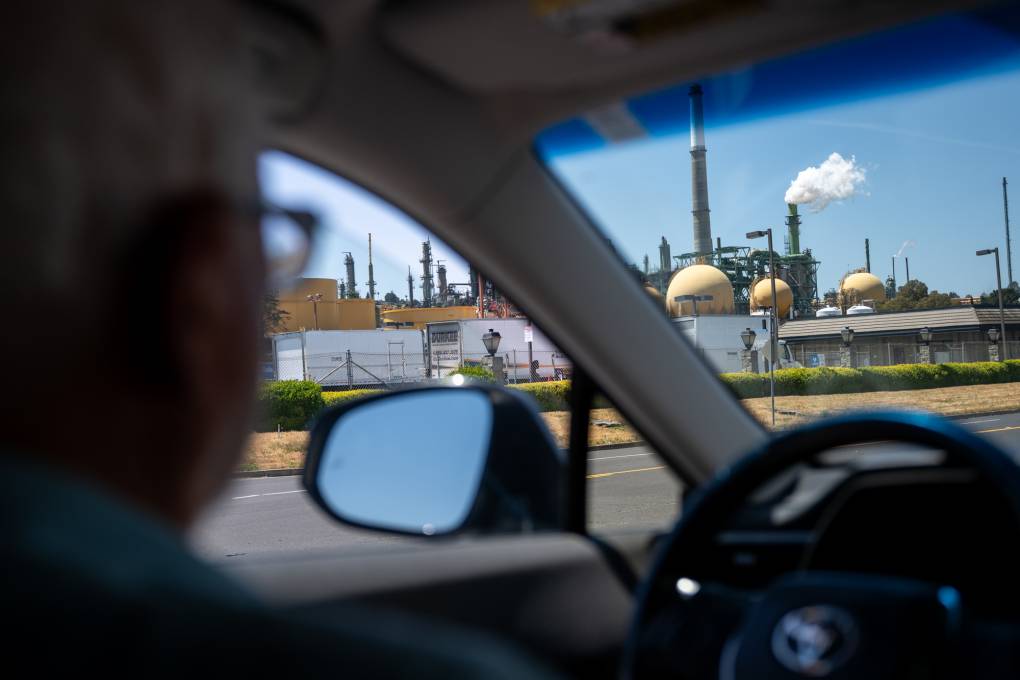
A Bay Area Refinery Town Contemplates a Future Without Big Oil
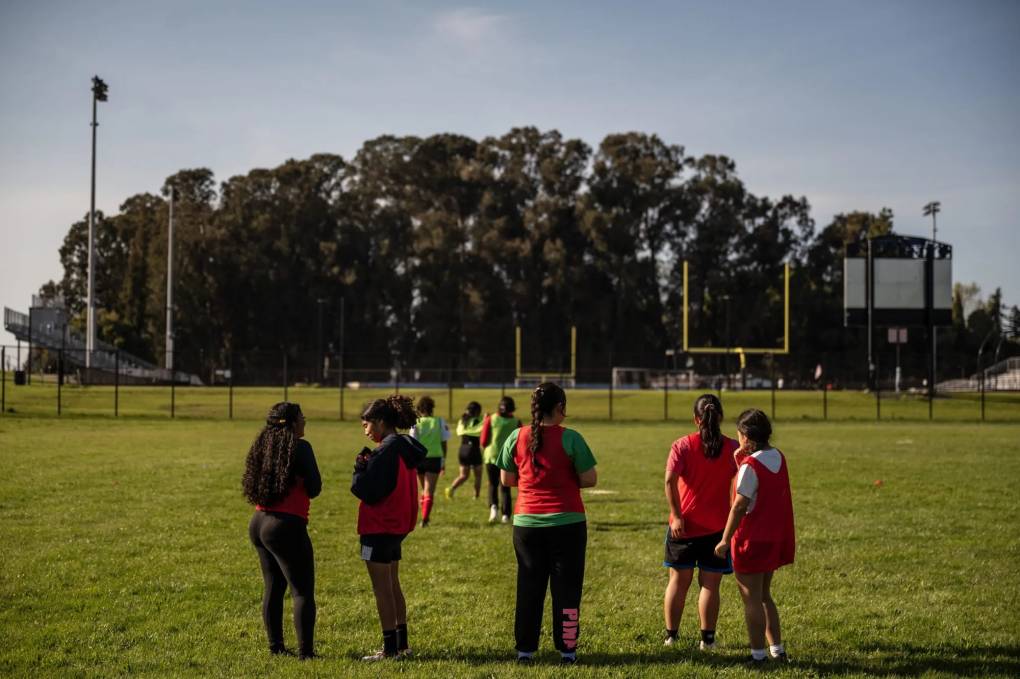
As Safe Spaces Shrink, Immigrant Youth Find Solace in 'The Beautiful Game'
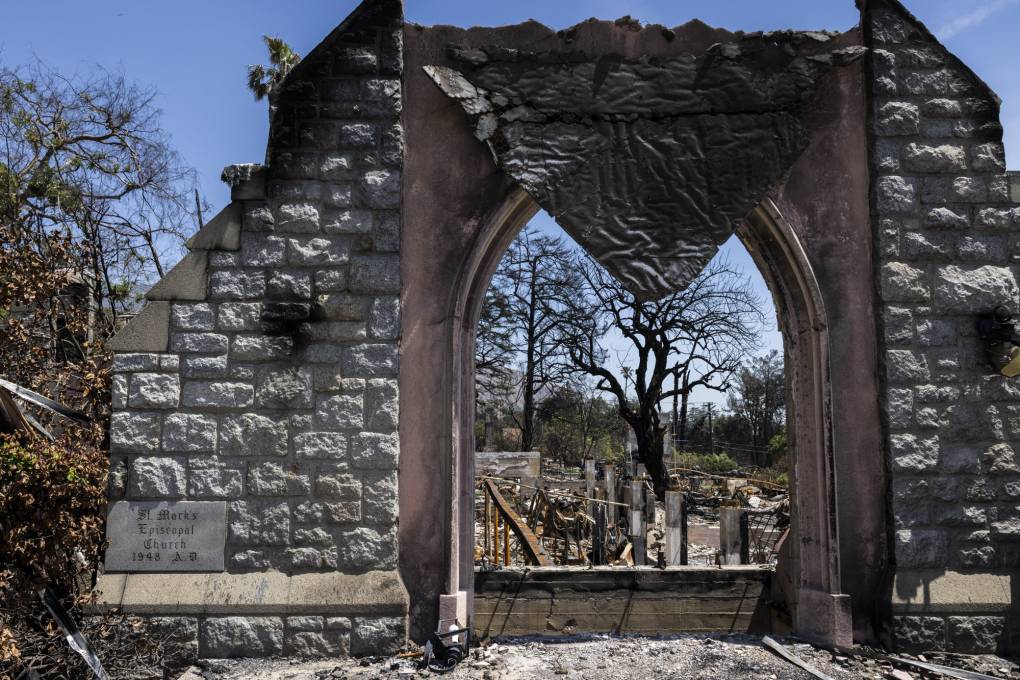
An Historic Altadena Church, Lost to the Eaton Fire, Begins the Long Journey to Resurrection
May Day Photos: Thousands in Bay Area Take to the Streets for Immigrant, Worker Rights
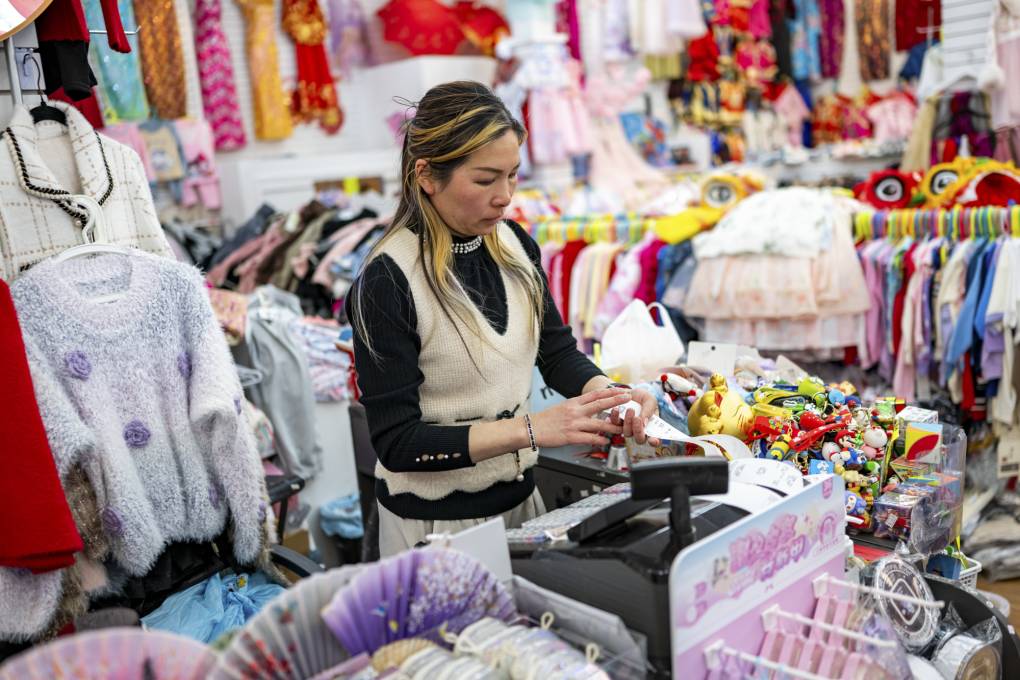
San Francisco Chinatown Businesses Enter Survival Mode During Trade War
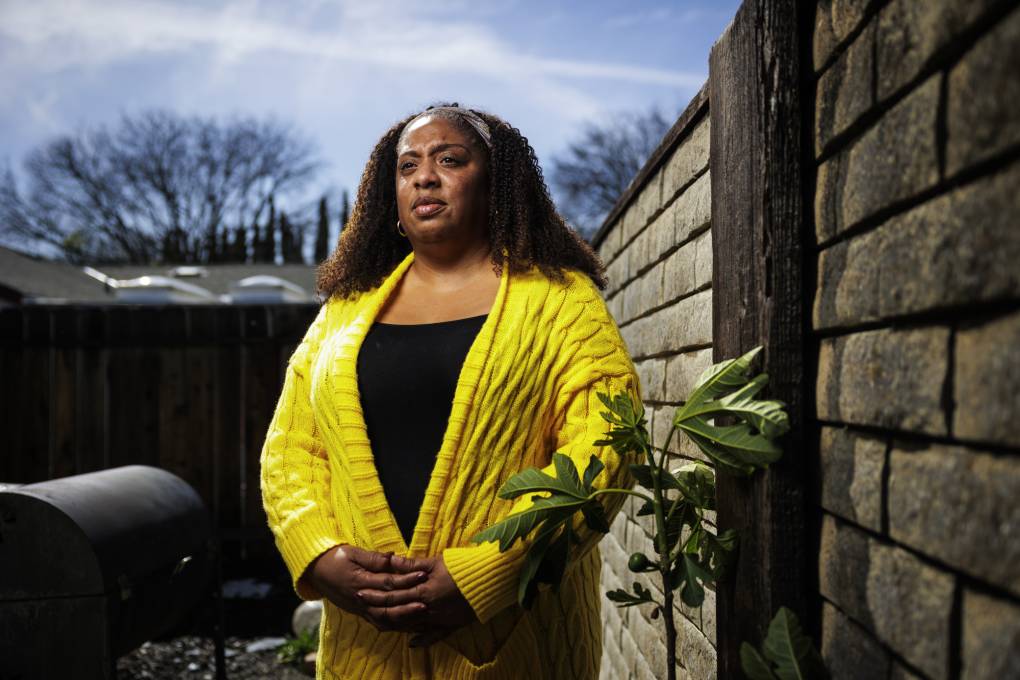
A Wall, a War Vet and a Fight for Land: One Family’s 50-Year Battle in Livermore
Loren Taylor Holds Slim Lead Over Barbara Lee in Initial Oakland Mayor Results
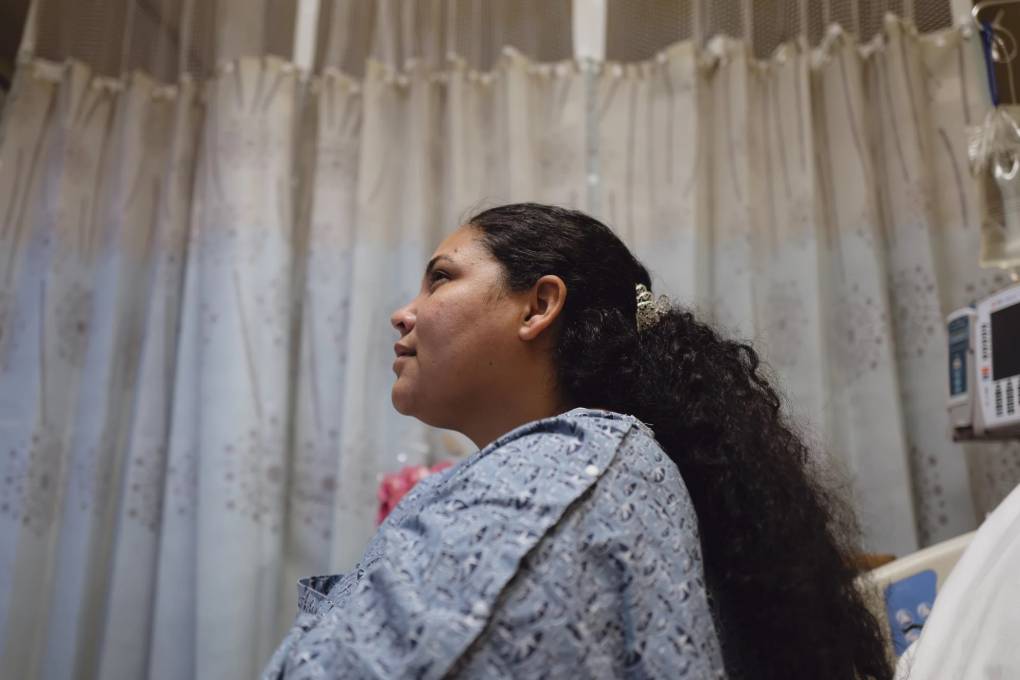
A Day in the Life of One Migrant Seeking to Stay in the US
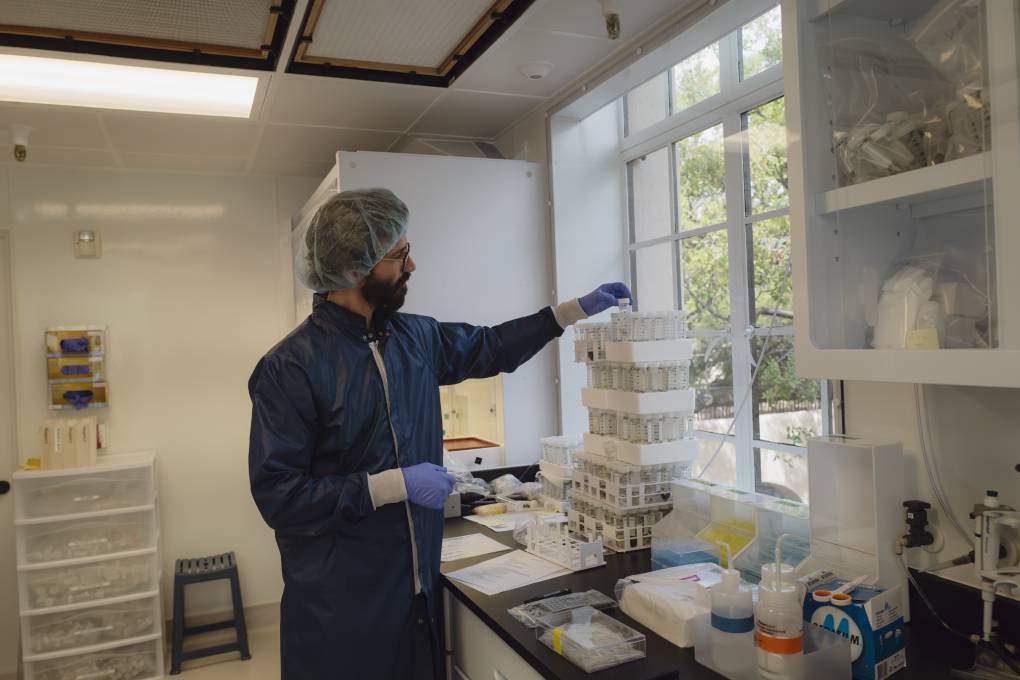
The Eaton Fire Hit Caltech Scientists Close to Home. Now, They’re Studying the Toxic Aftermath
Thousands Across Bay Area Join Nationwide Rallies Slamming Trump and Musk
window.__IS_SSR__=true
window.__INITIAL_STATE__={
"attachmentsReducer": {
"audio_0": {
"type": "attachments",
"id": "audio_0",
"imgSizes": {
"kqedFullSize": {
"file": "https://ww2.kqed.org/news/wp-content/themes/KQED-unified/img/audio_bgs/background0.jpg"
}
}
},
"audio_1": {
"type": "attachments",
"id": "audio_1",
"imgSizes": {
"kqedFullSize": {
"file": "https://ww2.kqed.org/news/wp-content/themes/KQED-unified/img/audio_bgs/background1.jpg"
}
}
},
"audio_2": {
"type": "attachments",
"id": "audio_2",
"imgSizes": {
"kqedFullSize": {
"file": "https://ww2.kqed.org/news/wp-content/themes/KQED-unified/img/audio_bgs/background2.jpg"
}
}
},
"audio_3": {
"type": "attachments",
"id": "audio_3",
"imgSizes": {
"kqedFullSize": {
"file": "https://ww2.kqed.org/news/wp-content/themes/KQED-unified/img/audio_bgs/background3.jpg"
}
}
},
"audio_4": {
"type": "attachments",
"id": "audio_4",
"imgSizes": {
"kqedFullSize": {
"file": "https://ww2.kqed.org/news/wp-content/themes/KQED-unified/img/audio_bgs/background4.jpg"
}
}
},
"placeholder": {
"type": "attachments",
"id": "placeholder",
"imgSizes": {
"thumbnail": {
"file": "https://cdn.kqed.org/wp-content/uploads/2024/12/KQED-Default-Image-816638274-2000x1333-1-160x107.jpg",
"width": 160,
"height": 107,
"mimeType": "image/jpeg"
},
"medium": {
"file": "https://cdn.kqed.org/wp-content/uploads/2024/12/KQED-Default-Image-816638274-2000x1333-1-800x533.jpg",
"width": 800,
"height": 533,
"mimeType": "image/jpeg"
},
"medium_large": {
"file": "https://cdn.kqed.org/wp-content/uploads/2024/12/KQED-Default-Image-816638274-2000x1333-1-768x512.jpg",
"width": 768,
"height": 512,
"mimeType": "image/jpeg"
},
"large": {
"file": "https://cdn.kqed.org/wp-content/uploads/2024/12/KQED-Default-Image-816638274-2000x1333-1-1020x680.jpg",
"width": 1020,
"height": 680,
"mimeType": "image/jpeg"
},
"1536x1536": {
"file": "https://cdn.kqed.org/wp-content/uploads/2024/12/KQED-Default-Image-816638274-2000x1333-1-1536x1024.jpg",
"width": 1536,
"height": 1024,
"mimeType": "image/jpeg"
},
"fd-lrg": {
"file": "https://cdn.kqed.org/wp-content/uploads/2024/12/KQED-Default-Image-816638274-2000x1333-1-1536x1024.jpg",
"width": 1536,
"height": 1024,
"mimeType": "image/jpeg"
},
"fd-med": {
"file": "https://cdn.kqed.org/wp-content/uploads/2024/12/KQED-Default-Image-816638274-2000x1333-1-1020x680.jpg",
"width": 1020,
"height": 680,
"mimeType": "image/jpeg"
},
"fd-sm": {
"file": "https://cdn.kqed.org/wp-content/uploads/2024/12/KQED-Default-Image-816638274-2000x1333-1-800x533.jpg",
"width": 800,
"height": 533,
"mimeType": "image/jpeg"
},
"post-thumbnail": {
"file": "https://cdn.kqed.org/wp-content/uploads/2024/12/KQED-Default-Image-816638274-2000x1333-1-672x372.jpg",
"width": 672,
"height": 372,
"mimeType": "image/jpeg"
},
"twentyfourteen-full-width": {
"file": "https://cdn.kqed.org/wp-content/uploads/2024/12/KQED-Default-Image-816638274-2000x1333-1-1038x576.jpg",
"width": 1038,
"height": 576,
"mimeType": "image/jpeg"
},
"xxsmall": {
"file": "https://cdn.kqed.org/wp-content/uploads/2024/12/KQED-Default-Image-816638274-2000x1333-1-160x107.jpg",
"width": 160,
"height": 107,
"mimeType": "image/jpeg"
},
"xsmall": {
"file": "https://cdn.kqed.org/wp-content/uploads/2024/12/KQED-Default-Image-816638274-2000x1333-1-672x372.jpg",
"width": 672,
"height": 372,
"mimeType": "image/jpeg"
},
"small": {
"file": "https://cdn.kqed.org/wp-content/uploads/2024/12/KQED-Default-Image-816638274-2000x1333-1-672x372.jpg",
"width": 672,
"height": 372,
"mimeType": "image/jpeg"
},
"xlarge": {
"file": "https://cdn.kqed.org/wp-content/uploads/2024/12/KQED-Default-Image-816638274-2000x1333-1-1020x680.jpg",
"width": 1020,
"height": 680,
"mimeType": "image/jpeg"
},
"full-width": {
"file": "https://cdn.kqed.org/wp-content/uploads/2024/12/KQED-Default-Image-816638274-2000x1333-1-1920x1280.jpg",
"width": 1920,
"height": 1280,
"mimeType": "image/jpeg"
},
"guest-author-32": {
"file": "https://cdn.kqed.org/wp-content/uploads/2025/01/KQED-Default-Image-816638274-1333x1333-1-160x160.jpg",
"width": 32,
"height": 32,
"mimeType": "image/jpeg"
},
"guest-author-50": {
"file": "https://cdn.kqed.org/wp-content/uploads/2025/01/KQED-Default-Image-816638274-1333x1333-1-160x160.jpg",
"width": 50,
"height": 50,
"mimeType": "image/jpeg"
},
"guest-author-64": {
"file": "https://cdn.kqed.org/wp-content/uploads/2025/01/KQED-Default-Image-816638274-1333x1333-1-160x160.jpg",
"width": 64,
"height": 64,
"mimeType": "image/jpeg"
},
"guest-author-96": {
"file": "https://cdn.kqed.org/wp-content/uploads/2025/01/KQED-Default-Image-816638274-1333x1333-1-160x160.jpg",
"width": 96,
"height": 96,
"mimeType": "image/jpeg"
},
"guest-author-128": {
"file": "https://cdn.kqed.org/wp-content/uploads/2025/01/KQED-Default-Image-816638274-1333x1333-1-160x160.jpg",
"width": 128,
"height": 128,
"mimeType": "image/jpeg"
},
"detail": {
"file": "https://cdn.kqed.org/wp-content/uploads/2025/01/KQED-Default-Image-816638274-1333x1333-1-160x160.jpg",
"width": 160,
"height": 160,
"mimeType": "image/jpeg"
},
"kqedFullSize": {
"file": "https://cdn.kqed.org/wp-content/uploads/2024/12/KQED-Default-Image-816638274-2000x1333-1.jpg",
"width": 2000,
"height": 1333
}
}
},
"news_12040673": {
"type": "attachments",
"id": "news_12040673",
"meta": {
"index": "attachments_1716263798",
"site": "news",
"id": "12040673",
"found": true
},
"title": "20250516_ValkyriesHomeOpener_GC-63_qed",
"publishDate": 1747508555,
"status": "inherit",
"parent": 12040665,
"modified": 1747508584,
"caption": "Golden State Valkyries guard Tiffany Hayes (15) advances toward the basket during the Valkyries’ home opener at Chase Center on May 16, 2025.",
"credit": "Gina Castro/KQED",
"altTag": null,
"description": null,
"imgSizes": {
"medium": {
"file": "https://cdn.kqed.org/wp-content/uploads/sites/10/2025/05/20250516_ValkyriesHomeOpener_GC-63_qed-800x549.jpg",
"width": 800,
"height": 549,
"mimeType": "image/jpeg"
},
"large": {
"file": "https://cdn.kqed.org/wp-content/uploads/sites/10/2025/05/20250516_ValkyriesHomeOpener_GC-63_qed-1020x700.jpg",
"width": 1020,
"height": 700,
"mimeType": "image/jpeg"
},
"thumbnail": {
"file": "https://cdn.kqed.org/wp-content/uploads/sites/10/2025/05/20250516_ValkyriesHomeOpener_GC-63_qed-160x110.jpg",
"width": 160,
"height": 110,
"mimeType": "image/jpeg"
},
"1536x1536": {
"file": "https://cdn.kqed.org/wp-content/uploads/sites/10/2025/05/20250516_ValkyriesHomeOpener_GC-63_qed-1536x1054.jpg",
"width": 1536,
"height": 1054,
"mimeType": "image/jpeg"
},
"post-thumbnail": {
"file": "https://cdn.kqed.org/wp-content/uploads/sites/10/2025/05/20250516_ValkyriesHomeOpener_GC-63_qed-672x372.jpg",
"width": 672,
"height": 372,
"mimeType": "image/jpeg"
},
"twentyfourteen-full-width": {
"file": "https://cdn.kqed.org/wp-content/uploads/sites/10/2025/05/20250516_ValkyriesHomeOpener_GC-63_qed-1038x576.jpg",
"width": 1038,
"height": 576,
"mimeType": "image/jpeg"
},
"full-width": {
"file": "https://cdn.kqed.org/wp-content/uploads/sites/10/2025/05/20250516_ValkyriesHomeOpener_GC-63_qed-1920x1317.jpg",
"width": 1920,
"height": 1317,
"mimeType": "image/jpeg"
},
"kqedFullSize": {
"file": "https://cdn.kqed.org/wp-content/uploads/sites/10/2025/05/20250516_ValkyriesHomeOpener_GC-63_qed.jpg",
"width": 1943,
"height": 1333
}
},
"isLoading": false,
"fetchFailed": false
},
"news_12036301": {
"type": "attachments",
"id": "news_12036301",
"meta": {
"index": "attachments_1716263798",
"site": "news",
"id": "12036301",
"found": true
},
"title": "Fall of Saigon: Mien Ga Memories",
"publishDate": 1744830602,
"status": "inherit",
"parent": 12037893,
"modified": 1745948854,
"caption": "A freshly cooked bowl of Miến gà is pictured at Hong Pham’s home in South Pasadena on Saturday, April 12, 2025. Miến gà is a light Vietnamese chicken soup with mung bean noodles. Hong also added Matsutake mushrooms, charred ginger and fresh Chinese onions. He also topped it with crispy homemade onions that his mom sent him.",
"credit": "Alisha Jucevic for KQED",
"altTag": null,
"description": null,
"imgSizes": {
"medium": {
"file": "https://cdn.kqed.org/wp-content/uploads/sites/10/2025/04/20250412_MIENGAMEMORIES_23-KQED-800x533.jpg",
"width": 800,
"height": 533,
"mimeType": "image/jpeg"
},
"large": {
"file": "https://cdn.kqed.org/wp-content/uploads/sites/10/2025/04/20250412_MIENGAMEMORIES_23-KQED-1020x680.jpg",
"width": 1020,
"height": 680,
"mimeType": "image/jpeg"
},
"thumbnail": {
"file": "https://cdn.kqed.org/wp-content/uploads/sites/10/2025/04/20250412_MIENGAMEMORIES_23-KQED-160x107.jpg",
"width": 160,
"height": 107,
"mimeType": "image/jpeg"
},
"1536x1536": {
"file": "https://cdn.kqed.org/wp-content/uploads/sites/10/2025/04/20250412_MIENGAMEMORIES_23-KQED-1536x1024.jpg",
"width": 1536,
"height": 1024,
"mimeType": "image/jpeg"
},
"post-thumbnail": {
"file": "https://cdn.kqed.org/wp-content/uploads/sites/10/2025/04/20250412_MIENGAMEMORIES_23-KQED-672x372.jpg",
"width": 672,
"height": 372,
"mimeType": "image/jpeg"
},
"twentyfourteen-full-width": {
"file": "https://cdn.kqed.org/wp-content/uploads/sites/10/2025/04/20250412_MIENGAMEMORIES_23-KQED-1038x576.jpg",
"width": 1038,
"height": 576,
"mimeType": "image/jpeg"
},
"full-width": {
"file": "https://cdn.kqed.org/wp-content/uploads/sites/10/2025/04/20250412_MIENGAMEMORIES_23-KQED-1920x1280.jpg",
"width": 1920,
"height": 1280,
"mimeType": "image/jpeg"
},
"kqedFullSize": {
"file": "https://cdn.kqed.org/wp-content/uploads/sites/10/2025/04/20250412_MIENGAMEMORIES_23-KQED.jpg",
"width": 2000,
"height": 1333
}
},
"isLoading": false,
"fetchFailed": false
},
"news_12039652": {
"type": "attachments",
"id": "news_12039652",
"meta": {
"index": "attachments_1716263798",
"site": "news",
"id": "12039652",
"found": true
},
"title": "250509-BENICIAREFINERY-52-BL-KQED",
"publishDate": 1746831568,
"status": "inherit",
"parent": 12040941,
"modified": 1747782846,
"caption": "Benicia mayor Steve Young drives by the Valero Benicia Refinery in Benicia on May 8, 2025, which processes up to 170,000 barrels of oil a day, making gasoline, diesel, and other fuels for California. Valero plans to shut down the Benicia refinery by April 2026, citing high costs and strict environmental rules.",
"credit": "Beth LaBerge/KQED",
"altTag": null,
"description": null,
"imgSizes": {
"medium": {
"file": "https://cdn.kqed.org/wp-content/uploads/sites/10/2025/05/250509-BENICIAREFINERY-52-BL-KQED-800x533.jpg",
"width": 800,
"height": 533,
"mimeType": "image/jpeg"
},
"large": {
"file": "https://cdn.kqed.org/wp-content/uploads/sites/10/2025/05/250509-BENICIAREFINERY-52-BL-KQED-1020x680.jpg",
"width": 1020,
"height": 680,
"mimeType": "image/jpeg"
},
"thumbnail": {
"file": "https://cdn.kqed.org/wp-content/uploads/sites/10/2025/05/250509-BENICIAREFINERY-52-BL-KQED-160x107.jpg",
"width": 160,
"height": 107,
"mimeType": "image/jpeg"
},
"1536x1536": {
"file": "https://cdn.kqed.org/wp-content/uploads/sites/10/2025/05/250509-BENICIAREFINERY-52-BL-KQED-1536x1024.jpg",
"width": 1536,
"height": 1024,
"mimeType": "image/jpeg"
},
"post-thumbnail": {
"file": "https://cdn.kqed.org/wp-content/uploads/sites/10/2025/05/250509-BENICIAREFINERY-52-BL-KQED-672x372.jpg",
"width": 672,
"height": 372,
"mimeType": "image/jpeg"
},
"twentyfourteen-full-width": {
"file": "https://cdn.kqed.org/wp-content/uploads/sites/10/2025/05/250509-BENICIAREFINERY-52-BL-KQED-1038x576.jpg",
"width": 1038,
"height": 576,
"mimeType": "image/jpeg"
},
"full-width": {
"file": "https://cdn.kqed.org/wp-content/uploads/sites/10/2025/05/250509-BENICIAREFINERY-52-BL-KQED-1920x1280.jpg",
"width": 1920,
"height": 1280,
"mimeType": "image/jpeg"
},
"kqedFullSize": {
"file": "https://cdn.kqed.org/wp-content/uploads/sites/10/2025/05/250509-BENICIAREFINERY-52-BL-KQED.jpg",
"width": 2000,
"height": 1333
}
},
"isLoading": false,
"fetchFailed": false
},
"news_12039315": {
"type": "attachments",
"id": "news_12039315",
"meta": {
"index": "attachments_1716263798",
"site": "news",
"id": "12039315",
"found": true
},
"title": "03.21.2025-SoccerPractice-11-scaled",
"publishDate": 1746725418,
"status": "inherit",
"parent": 12039313,
"modified": 1746728550,
"caption": "A Soccer Without Borders Bay Area team gathered at a high school in the East Bay to practice for a weekend game against a familiar rival on Thursday, March 20, 2025.",
"credit": "Alejandro Durán for El Tímpano/CatchLight Local/ Report for America corps member",
"altTag": null,
"description": null,
"imgSizes": {
"medium": {
"file": "https://cdn.kqed.org/wp-content/uploads/sites/10/2025/05/03.21.2025-SoccerPractice-11-scaled-1-800x532.jpg",
"width": 800,
"height": 532,
"mimeType": "image/jpeg"
},
"large": {
"file": "https://cdn.kqed.org/wp-content/uploads/sites/10/2025/05/03.21.2025-SoccerPractice-11-scaled-1-1020x679.jpg",
"width": 1020,
"height": 679,
"mimeType": "image/jpeg"
},
"thumbnail": {
"file": "https://cdn.kqed.org/wp-content/uploads/sites/10/2025/05/03.21.2025-SoccerPractice-11-scaled-1-160x106.jpg",
"width": 160,
"height": 106,
"mimeType": "image/jpeg"
},
"1536x1536": {
"file": "https://cdn.kqed.org/wp-content/uploads/sites/10/2025/05/03.21.2025-SoccerPractice-11-scaled-1-1536x1022.jpg",
"width": 1536,
"height": 1022,
"mimeType": "image/jpeg"
},
"post-thumbnail": {
"file": "https://cdn.kqed.org/wp-content/uploads/sites/10/2025/05/03.21.2025-SoccerPractice-11-scaled-1-672x372.jpg",
"width": 672,
"height": 372,
"mimeType": "image/jpeg"
},
"twentyfourteen-full-width": {
"file": "https://cdn.kqed.org/wp-content/uploads/sites/10/2025/05/03.21.2025-SoccerPractice-11-scaled-1-1038x576.jpg",
"width": 1038,
"height": 576,
"mimeType": "image/jpeg"
},
"full-width": {
"file": "https://cdn.kqed.org/wp-content/uploads/sites/10/2025/05/03.21.2025-SoccerPractice-11-scaled-1-1920x1278.jpg",
"width": 1920,
"height": 1278,
"mimeType": "image/jpeg"
},
"kqedFullSize": {
"file": "https://cdn.kqed.org/wp-content/uploads/sites/10/2025/05/03.21.2025-SoccerPractice-11-scaled-1.jpg",
"width": 2000,
"height": 1331
}
},
"isLoading": false,
"fetchFailed": false
},
"news_12037126": {
"type": "attachments",
"id": "news_12037126",
"meta": {
"index": "attachments_1716263798",
"site": "news",
"id": "12037126",
"found": true
},
"title": "The burnt remains of St. Marks Church.Altadena.CA",
"publishDate": 1745350823,
"status": "inherit",
"parent": 0,
"modified": 1745351316,
"caption": "The burnt remains of St. Marks Church.\nAltadena on April 20, 2025.",
"credit": "Mette Lampcov for KQED",
"altTag": null,
"description": null,
"imgSizes": {
"medium": {
"file": "https://cdn.kqed.org/wp-content/uploads/sites/10/2025/04/METTE.LAMPCOV.CHURCH.BELL-22-KQED-800x534.jpg",
"width": 800,
"height": 534,
"mimeType": "image/jpeg"
},
"large": {
"file": "https://cdn.kqed.org/wp-content/uploads/sites/10/2025/04/METTE.LAMPCOV.CHURCH.BELL-22-KQED-1020x680.jpg",
"width": 1020,
"height": 680,
"mimeType": "image/jpeg"
},
"thumbnail": {
"file": "https://cdn.kqed.org/wp-content/uploads/sites/10/2025/04/METTE.LAMPCOV.CHURCH.BELL-22-KQED-160x107.jpg",
"width": 160,
"height": 107,
"mimeType": "image/jpeg"
},
"1536x1536": {
"file": "https://cdn.kqed.org/wp-content/uploads/sites/10/2025/04/METTE.LAMPCOV.CHURCH.BELL-22-KQED-1536x1025.jpg",
"width": 1536,
"height": 1025,
"mimeType": "image/jpeg"
},
"post-thumbnail": {
"file": "https://cdn.kqed.org/wp-content/uploads/sites/10/2025/04/METTE.LAMPCOV.CHURCH.BELL-22-KQED-672x372.jpg",
"width": 672,
"height": 372,
"mimeType": "image/jpeg"
},
"twentyfourteen-full-width": {
"file": "https://cdn.kqed.org/wp-content/uploads/sites/10/2025/04/METTE.LAMPCOV.CHURCH.BELL-22-KQED-1038x576.jpg",
"width": 1038,
"height": 576,
"mimeType": "image/jpeg"
},
"full-width": {
"file": "https://cdn.kqed.org/wp-content/uploads/sites/10/2025/04/METTE.LAMPCOV.CHURCH.BELL-22-KQED-1920x1281.jpg",
"width": 1920,
"height": 1281,
"mimeType": "image/jpeg"
},
"kqedFullSize": {
"file": "https://cdn.kqed.org/wp-content/uploads/sites/10/2025/04/METTE.LAMPCOV.CHURCH.BELL-22-KQED.jpg",
"width": 2000,
"height": 1334
}
},
"isLoading": false,
"fetchFailed": false
},
"news_12038512": {
"type": "attachments",
"id": "news_12038512",
"meta": {
"index": "attachments_1716263798",
"site": "news",
"id": "12038512",
"found": true
},
"title": "250501-MAYDAYRALLYSF-14-BL-KQED",
"publishDate": 1746161928,
"status": "inherit",
"parent": 0,
"modified": 1746162062,
"caption": "Darcie Chan Blackburn (left), a San Francisco teacher, marches alongside thousands of demonstrators from Civic Center Plaza toward the Embarcadero during a May Day protest in San Francisco on Thursday, May 1, 2025.",
"credit": "Beth LaBerge/KQED",
"altTag": null,
"description": null,
"imgSizes": {
"medium": {
"file": "https://cdn.kqed.org/wp-content/uploads/sites/10/2025/05/250501-MAYDAYRALLYSF-14-BL-KQED-800x533.jpg",
"width": 800,
"height": 533,
"mimeType": "image/jpeg"
},
"large": {
"file": "https://cdn.kqed.org/wp-content/uploads/sites/10/2025/05/250501-MAYDAYRALLYSF-14-BL-KQED-1020x680.jpg",
"width": 1020,
"height": 680,
"mimeType": "image/jpeg"
},
"thumbnail": {
"file": "https://cdn.kqed.org/wp-content/uploads/sites/10/2025/05/250501-MAYDAYRALLYSF-14-BL-KQED-160x107.jpg",
"width": 160,
"height": 107,
"mimeType": "image/jpeg"
},
"1536x1536": {
"file": "https://cdn.kqed.org/wp-content/uploads/sites/10/2025/05/250501-MAYDAYRALLYSF-14-BL-KQED-1536x1024.jpg",
"width": 1536,
"height": 1024,
"mimeType": "image/jpeg"
},
"post-thumbnail": {
"file": "https://cdn.kqed.org/wp-content/uploads/sites/10/2025/05/250501-MAYDAYRALLYSF-14-BL-KQED-672x372.jpg",
"width": 672,
"height": 372,
"mimeType": "image/jpeg"
},
"twentyfourteen-full-width": {
"file": "https://cdn.kqed.org/wp-content/uploads/sites/10/2025/05/250501-MAYDAYRALLYSF-14-BL-KQED-1038x576.jpg",
"width": 1038,
"height": 576,
"mimeType": "image/jpeg"
},
"full-width": {
"file": "https://cdn.kqed.org/wp-content/uploads/sites/10/2025/05/250501-MAYDAYRALLYSF-14-BL-KQED-1920x1280.jpg",
"width": 1920,
"height": 1280,
"mimeType": "image/jpeg"
},
"kqedFullSize": {
"file": "https://cdn.kqed.org/wp-content/uploads/sites/10/2025/05/250501-MAYDAYRALLYSF-14-BL-KQED.jpg",
"width": 2000,
"height": 1333
}
},
"isLoading": false,
"fetchFailed": false
},
"news_12037246": {
"type": "attachments",
"id": "news_12037246",
"meta": {
"index": "attachments_1716263798",
"site": "news",
"id": "12037246",
"found": true
},
"title": "250421-CHINATOWNTARIFFS-32-BL-KQED",
"publishDate": 1745410880,
"status": "inherit",
"parent": 0,
"modified": 1745411031,
"caption": "Owner Tracy Liu works at her shop, Beijing Shopping Center, in San Francisco’s Chinatown neighborhood on April 21, 2025.",
"credit": "Beth LaBerge/KQED",
"altTag": null,
"description": null,
"imgSizes": {
"medium": {
"file": "https://cdn.kqed.org/wp-content/uploads/sites/10/2025/04/250421-CHINATOWNTARIFFS-32-BL-KQED-800x533.jpg",
"width": 800,
"height": 533,
"mimeType": "image/jpeg"
},
"large": {
"file": "https://cdn.kqed.org/wp-content/uploads/sites/10/2025/04/250421-CHINATOWNTARIFFS-32-BL-KQED-1020x680.jpg",
"width": 1020,
"height": 680,
"mimeType": "image/jpeg"
},
"thumbnail": {
"file": "https://cdn.kqed.org/wp-content/uploads/sites/10/2025/04/250421-CHINATOWNTARIFFS-32-BL-KQED-160x107.jpg",
"width": 160,
"height": 107,
"mimeType": "image/jpeg"
},
"1536x1536": {
"file": "https://cdn.kqed.org/wp-content/uploads/sites/10/2025/04/250421-CHINATOWNTARIFFS-32-BL-KQED-1536x1024.jpg",
"width": 1536,
"height": 1024,
"mimeType": "image/jpeg"
},
"post-thumbnail": {
"file": "https://cdn.kqed.org/wp-content/uploads/sites/10/2025/04/250421-CHINATOWNTARIFFS-32-BL-KQED-672x372.jpg",
"width": 672,
"height": 372,
"mimeType": "image/jpeg"
},
"twentyfourteen-full-width": {
"file": "https://cdn.kqed.org/wp-content/uploads/sites/10/2025/04/250421-CHINATOWNTARIFFS-32-BL-KQED-1038x576.jpg",
"width": 1038,
"height": 576,
"mimeType": "image/jpeg"
},
"full-width": {
"file": "https://cdn.kqed.org/wp-content/uploads/sites/10/2025/04/250421-CHINATOWNTARIFFS-32-BL-KQED-1920x1280.jpg",
"width": 1920,
"height": 1280,
"mimeType": "image/jpeg"
},
"kqedFullSize": {
"file": "https://cdn.kqed.org/wp-content/uploads/sites/10/2025/04/250421-CHINATOWNTARIFFS-32-BL-KQED.jpg",
"width": 2000,
"height": 1333
}
},
"isLoading": false,
"fetchFailed": false
},
"news_12035831": {
"type": "attachments",
"id": "news_12035831",
"meta": {
"index": "attachments_1716263798",
"site": "news",
"id": "12035831",
"found": true
},
"title": "250409-LIVERMORE BLACK LAND-MD-10-KQED-1",
"publishDate": 1744554334,
"status": "inherit",
"parent": 0,
"modified": 1745003797,
"caption": "Tashenia Pearson stands beside the wall separating her property from her neighbors' in Livermore on April 9, 2025. Pearson's parents bought the home in Livermore in 1971, only to discover the wall, which was built 7 feet onto their property and which effectively gives 740 square feet of the Pearson's property to their neighbor.",
"credit": "Martin do Nascimento/KQED",
"altTag": null,
"description": null,
"imgSizes": {
"medium": {
"file": "https://cdn.kqed.org/wp-content/uploads/sites/10/2025/04/250409-LIVERMORE-BLACK-LAND-MD-10-KQED-1-800x533.jpg",
"width": 800,
"height": 533,
"mimeType": "image/jpeg"
},
"large": {
"file": "https://cdn.kqed.org/wp-content/uploads/sites/10/2025/04/250409-LIVERMORE-BLACK-LAND-MD-10-KQED-1-1020x680.jpg",
"width": 1020,
"height": 680,
"mimeType": "image/jpeg"
},
"thumbnail": {
"file": "https://cdn.kqed.org/wp-content/uploads/sites/10/2025/04/250409-LIVERMORE-BLACK-LAND-MD-10-KQED-1-160x107.jpg",
"width": 160,
"height": 107,
"mimeType": "image/jpeg"
},
"1536x1536": {
"file": "https://cdn.kqed.org/wp-content/uploads/sites/10/2025/04/250409-LIVERMORE-BLACK-LAND-MD-10-KQED-1-1536x1024.jpg",
"width": 1536,
"height": 1024,
"mimeType": "image/jpeg"
},
"post-thumbnail": {
"file": "https://cdn.kqed.org/wp-content/uploads/sites/10/2025/04/250409-LIVERMORE-BLACK-LAND-MD-10-KQED-1-672x372.jpg",
"width": 672,
"height": 372,
"mimeType": "image/jpeg"
},
"twentyfourteen-full-width": {
"file": "https://cdn.kqed.org/wp-content/uploads/sites/10/2025/04/250409-LIVERMORE-BLACK-LAND-MD-10-KQED-1-1038x576.jpg",
"width": 1038,
"height": 576,
"mimeType": "image/jpeg"
},
"full-width": {
"file": "https://cdn.kqed.org/wp-content/uploads/sites/10/2025/04/250409-LIVERMORE-BLACK-LAND-MD-10-KQED-1-1920x1280.jpg",
"width": 1920,
"height": 1280,
"mimeType": "image/jpeg"
},
"kqedFullSize": {
"file": "https://cdn.kqed.org/wp-content/uploads/sites/10/2025/04/250409-LIVERMORE-BLACK-LAND-MD-10-KQED-1.jpg",
"width": 2000,
"height": 1333
}
},
"isLoading": false,
"fetchFailed": false
},
"news_12036208": {
"type": "attachments",
"id": "news_12036208",
"meta": {
"index": "attachments_1716263798",
"site": "news",
"id": "12036208",
"found": true
},
"title": "250415-OAKLAND MAYORAL RESULTS-MD-01-KQED-1",
"publishDate": 1744784164,
"status": "inherit",
"parent": 0,
"modified": 1744827432,
"caption": "Oakland mayoral candidate Loren Taylor greets attendees at his election night party in Oakland on April 15, 2025.",
"credit": "Martin do Nascimento/KQED",
"altTag": null,
"description": null,
"imgSizes": {
"medium": {
"file": "https://cdn.kqed.org/wp-content/uploads/sites/10/2025/04/250415-OAKLAND-MAYORAL-RESULTS-MD-01-KQED-1-800x533.jpg",
"width": 800,
"height": 533,
"mimeType": "image/jpeg"
},
"large": {
"file": "https://cdn.kqed.org/wp-content/uploads/sites/10/2025/04/250415-OAKLAND-MAYORAL-RESULTS-MD-01-KQED-1-1020x680.jpg",
"width": 1020,
"height": 680,
"mimeType": "image/jpeg"
},
"thumbnail": {
"file": "https://cdn.kqed.org/wp-content/uploads/sites/10/2025/04/250415-OAKLAND-MAYORAL-RESULTS-MD-01-KQED-1-160x107.jpg",
"width": 160,
"height": 107,
"mimeType": "image/jpeg"
},
"1536x1536": {
"file": "https://cdn.kqed.org/wp-content/uploads/sites/10/2025/04/250415-OAKLAND-MAYORAL-RESULTS-MD-01-KQED-1-1536x1024.jpg",
"width": 1536,
"height": 1024,
"mimeType": "image/jpeg"
},
"post-thumbnail": {
"file": "https://cdn.kqed.org/wp-content/uploads/sites/10/2025/04/250415-OAKLAND-MAYORAL-RESULTS-MD-01-KQED-1-672x372.jpg",
"width": 672,
"height": 372,
"mimeType": "image/jpeg"
},
"twentyfourteen-full-width": {
"file": "https://cdn.kqed.org/wp-content/uploads/sites/10/2025/04/250415-OAKLAND-MAYORAL-RESULTS-MD-01-KQED-1-1038x576.jpg",
"width": 1038,
"height": 576,
"mimeType": "image/jpeg"
},
"full-width": {
"file": "https://cdn.kqed.org/wp-content/uploads/sites/10/2025/04/250415-OAKLAND-MAYORAL-RESULTS-MD-01-KQED-1-1920x1280.jpg",
"width": 1920,
"height": 1280,
"mimeType": "image/jpeg"
},
"kqedFullSize": {
"file": "https://cdn.kqed.org/wp-content/uploads/sites/10/2025/04/250415-OAKLAND-MAYORAL-RESULTS-MD-01-KQED-1.jpg",
"width": 2000,
"height": 1333
}
},
"isLoading": false,
"fetchFailed": false
},
"news_12035893": {
"type": "attachments",
"id": "news_12035893",
"meta": {
"index": "attachments_1716263798",
"site": "news",
"id": "12035893",
"found": true
},
"title": "dayinthelife",
"publishDate": 1744655626,
"status": "inherit",
"parent": 12035891,
"modified": 1744655661,
"caption": "One day before her court hearing, Yasmelin Valazquez is hospitalized at John F. Kennedy Memorial Hospital in Indio, Calif., on April 9, 2025.",
"credit": "Zaydee Sanchez for NPR",
"altTag": null,
"description": null,
"imgSizes": {
"medium": {
"file": "https://cdn.kqed.org/wp-content/uploads/sites/10/2025/04/dayinthelife-800x533.jpg",
"width": 800,
"height": 533,
"mimeType": "image/jpeg"
},
"large": {
"file": "https://cdn.kqed.org/wp-content/uploads/sites/10/2025/04/dayinthelife-1020x680.jpg",
"width": 1020,
"height": 680,
"mimeType": "image/jpeg"
},
"thumbnail": {
"file": "https://cdn.kqed.org/wp-content/uploads/sites/10/2025/04/dayinthelife-160x107.jpg",
"width": 160,
"height": 107,
"mimeType": "image/jpeg"
},
"1536x1536": {
"file": "https://cdn.kqed.org/wp-content/uploads/sites/10/2025/04/dayinthelife-1536x1024.jpg",
"width": 1536,
"height": 1024,
"mimeType": "image/jpeg"
},
"post-thumbnail": {
"file": "https://cdn.kqed.org/wp-content/uploads/sites/10/2025/04/dayinthelife-672x372.jpg",
"width": 672,
"height": 372,
"mimeType": "image/jpeg"
},
"twentyfourteen-full-width": {
"file": "https://cdn.kqed.org/wp-content/uploads/sites/10/2025/04/dayinthelife-1038x576.jpg",
"width": 1038,
"height": 576,
"mimeType": "image/jpeg"
},
"full-width": {
"file": "https://cdn.kqed.org/wp-content/uploads/sites/10/2025/04/dayinthelife-1920x1280.jpg",
"width": 1920,
"height": 1280,
"mimeType": "image/jpeg"
},
"kqedFullSize": {
"file": "https://cdn.kqed.org/wp-content/uploads/sites/10/2025/04/dayinthelife.jpg",
"width": 2000,
"height": 1333
}
},
"isLoading": false,
"fetchFailed": false
},
"news_12034871": {
"type": "attachments",
"id": "news_12034871",
"meta": {
"index": "attachments_1716263798",
"site": "news",
"id": "12034871",
"found": true
},
"title": "250408-CAL TECH TESTING-113-ZS-KQED",
"publishDate": 1744131826,
"status": "inherit",
"parent": 0,
"modified": 1744306420,
"caption": "Professor François Tissot has collected dozens of samples from the Eaton Fire in Altadena for his research on understanding the potential harms of living amid environmental contamination.",
"credit": "Zaydee Sanchez for KQED",
"altTag": null,
"description": null,
"imgSizes": {
"medium": {
"file": "https://cdn.kqed.org/wp-content/uploads/sites/10/2025/04/250408-CAL-TECH-TESTING-113-ZS-KQED-800x533.jpg",
"width": 800,
"height": 533,
"mimeType": "image/jpeg"
},
"large": {
"file": "https://cdn.kqed.org/wp-content/uploads/sites/10/2025/04/250408-CAL-TECH-TESTING-113-ZS-KQED-1020x680.jpg",
"width": 1020,
"height": 680,
"mimeType": "image/jpeg"
},
"thumbnail": {
"file": "https://cdn.kqed.org/wp-content/uploads/sites/10/2025/04/250408-CAL-TECH-TESTING-113-ZS-KQED-160x107.jpg",
"width": 160,
"height": 107,
"mimeType": "image/jpeg"
},
"1536x1536": {
"file": "https://cdn.kqed.org/wp-content/uploads/sites/10/2025/04/250408-CAL-TECH-TESTING-113-ZS-KQED-1536x1024.jpg",
"width": 1536,
"height": 1024,
"mimeType": "image/jpeg"
},
"post-thumbnail": {
"file": "https://cdn.kqed.org/wp-content/uploads/sites/10/2025/04/250408-CAL-TECH-TESTING-113-ZS-KQED-672x372.jpg",
"width": 672,
"height": 372,
"mimeType": "image/jpeg"
},
"twentyfourteen-full-width": {
"file": "https://cdn.kqed.org/wp-content/uploads/sites/10/2025/04/250408-CAL-TECH-TESTING-113-ZS-KQED-1038x576.jpg",
"width": 1038,
"height": 576,
"mimeType": "image/jpeg"
},
"full-width": {
"file": "https://cdn.kqed.org/wp-content/uploads/sites/10/2025/04/250408-CAL-TECH-TESTING-113-ZS-KQED-1920x1280.jpg",
"width": 1920,
"height": 1280,
"mimeType": "image/jpeg"
},
"kqedFullSize": {
"file": "https://cdn.kqed.org/wp-content/uploads/sites/10/2025/04/250408-CAL-TECH-TESTING-113-ZS-KQED.jpg",
"width": 2000,
"height": 1333
}
},
"isLoading": false,
"fetchFailed": false
},
"news_12034662": {
"type": "attachments",
"id": "news_12034662",
"meta": {
"index": "attachments_1716263798",
"site": "news",
"id": "12034662",
"found": true
},
"title": "IMG_1407",
"publishDate": 1743893176,
"status": "inherit",
"parent": 0,
"modified": 1743893422,
"caption": "Protestors carry a variety of homemade signs during a Hands Off! protest against Elon Musk and Donald Trump in Oakland on April 5, 2025.",
"credit": "Aryk Copley for KQED",
"altTag": null,
"description": null,
"imgSizes": {
"medium": {
"file": "https://cdn.kqed.org/wp-content/uploads/sites/10/2025/04/IMG_1407-800x533.jpeg",
"width": 800,
"height": 533,
"mimeType": "image/jpeg"
},
"large": {
"file": "https://cdn.kqed.org/wp-content/uploads/sites/10/2025/04/IMG_1407-1020x680.jpeg",
"width": 1020,
"height": 680,
"mimeType": "image/jpeg"
},
"thumbnail": {
"file": "https://cdn.kqed.org/wp-content/uploads/sites/10/2025/04/IMG_1407-160x107.jpeg",
"width": 160,
"height": 107,
"mimeType": "image/jpeg"
},
"1536x1536": {
"file": "https://cdn.kqed.org/wp-content/uploads/sites/10/2025/04/IMG_1407-1536x1024.jpeg",
"width": 1536,
"height": 1024,
"mimeType": "image/jpeg"
},
"post-thumbnail": {
"file": "https://cdn.kqed.org/wp-content/uploads/sites/10/2025/04/IMG_1407-672x372.jpeg",
"width": 672,
"height": 372,
"mimeType": "image/jpeg"
},
"twentyfourteen-full-width": {
"file": "https://cdn.kqed.org/wp-content/uploads/sites/10/2025/04/IMG_1407-1038x576.jpeg",
"width": 1038,
"height": 576,
"mimeType": "image/jpeg"
},
"full-width": {
"file": "https://cdn.kqed.org/wp-content/uploads/sites/10/2025/04/IMG_1407-1920x1280.jpeg",
"width": 1920,
"height": 1280,
"mimeType": "image/jpeg"
},
"kqedFullSize": {
"file": "https://cdn.kqed.org/wp-content/uploads/sites/10/2025/04/IMG_1407.jpeg",
"width": 1999,
"height": 1333
}
},
"isLoading": false,
"fetchFailed": false
}
},
"audioPlayerReducer": {
"postId": "stream_live",
"isPaused": true,
"isPlaying": false,
"pfsActive": false,
"pledgeModalIsOpen": true,
"playerDrawerIsOpen": false,
"liveAudioPlayStartedAt": 0,
"liveAudioPlayContext": ""
},
"authorsReducer": {
"byline_news_12039313": {
"type": "authors",
"id": "byline_news_12039313",
"meta": {
"override": true
},
"slug": "byline_news_12039313",
"name": "\u003ca href=\"https://www.eltimpano.org/author/ehellerstein/\">Erica Hellerstein\u003c/a>, El Tímpano",
"isLoading": false
},
"byline_news_12038756": {
"type": "authors",
"id": "byline_news_12038756",
"meta": {
"override": true
},
"slug": "byline_news_12038756",
"name": "Steven Cuevas, Sonya Geiss",
"isLoading": false
},
"byline_news_12036599": {
"type": "authors",
"id": "byline_news_12036599",
"meta": {
"override": true
},
"slug": "byline_news_12036599",
"name": "Anya Schultz ",
"isLoading": false
},
"byline_news_12035891": {
"type": "authors",
"id": "byline_news_12035891",
"meta": {
"override": true
},
"slug": "byline_news_12035891",
"name": "Sergio Martínez-Beltrán, NPR",
"isLoading": false
},
"byline_news_12034641": {
"type": "authors",
"id": "byline_news_12034641",
"meta": {
"override": true
},
"slug": "byline_news_12034641",
"name": "The Associated Press and KQED",
"isLoading": false
},
"kqed": {
"type": "authors",
"id": "236",
"meta": {
"index": "authors_1716337520",
"id": "236",
"found": true
},
"name": "KQED News Staff",
"firstName": "KQED News Staff",
"lastName": null,
"slug": "kqed",
"email": "faq@kqed.org",
"display_author_email": false,
"staff_mastheads": [],
"title": null,
"bio": null,
"avatar": "https://secure.gravatar.com/avatar/ef0e801a68c4c54afa9180db14084167?s=600&d=blank&r=g",
"twitter": null,
"facebook": null,
"instagram": null,
"linkedin": null,
"sites": [
{
"site": "arts",
"roles": [
"contributor"
]
},
{
"site": "news",
"roles": [
"editor"
]
},
{
"site": "futureofyou",
"roles": [
"author"
]
}
],
"headData": {
"title": "KQED News Staff | KQED",
"description": null,
"ogImgSrc": "https://secure.gravatar.com/avatar/ef0e801a68c4c54afa9180db14084167?s=600&d=blank&r=g",
"twImgSrc": "https://secure.gravatar.com/avatar/ef0e801a68c4c54afa9180db14084167?s=600&d=blank&r=g"
},
"isLoading": false,
"link": "/author/kqed"
},
"matthewgreen": {
"type": "authors",
"id": "1263",
"meta": {
"index": "authors_1716337520",
"id": "1263",
"found": true
},
"name": "Matthew Green",
"firstName": "Matthew",
"lastName": "Green",
"slug": "matthewgreen",
"email": "mgreen@kqed.org",
"display_author_email": false,
"staff_mastheads": [],
"title": "KQED Editor/Reporter",
"bio": "Matthew Green is a digital media producer for KQED News. He previously produced \u003ca href=\"http://www.kqed.org/lowdown\">The Lowdown\u003c/a>, KQED’s multimedia news education blog. Matthew's written for numerous Bay Area publications, including the Oakland Tribune and San Francisco Chronicle. He also taught journalism classes at Fremont High School in East Oakland.\r\n\r\nEmail: mgreen@kqed.org; Twitter: @MGreenKQED",
"avatar": "https://secure.gravatar.com/avatar/3bf498d1267ca02c8494f33d8cfc575e?s=600&d=blank&r=g",
"twitter": "MGreenKQED",
"facebook": null,
"instagram": null,
"linkedin": null,
"sites": [
{
"site": "news",
"roles": []
},
{
"site": "lowdown",
"roles": []
},
{
"site": "science",
"roles": []
},
{
"site": "education",
"roles": []
},
{
"site": "quest",
"roles": []
},
{
"site": "liveblog",
"roles": []
}
],
"headData": {
"title": "Matthew Green | KQED",
"description": "KQED Editor/Reporter",
"ogImgSrc": "https://secure.gravatar.com/avatar/3bf498d1267ca02c8494f33d8cfc575e?s=600&d=blank&r=g",
"twImgSrc": "https://secure.gravatar.com/avatar/3bf498d1267ca02c8494f33d8cfc575e?s=600&d=blank&r=g"
},
"isLoading": false,
"link": "/author/matthewgreen"
},
"cchamplin": {
"type": "authors",
"id": "11408",
"meta": {
"index": "authors_1716337520",
"id": "11408",
"found": true
},
"name": "Caroline Champlin",
"firstName": null,
"lastName": null,
"slug": "cchamplin",
"email": "cchamplin@kqed.org",
"display_author_email": false,
"staff_mastheads": [],
"title": null,
"bio": null,
"avatar": "https://secure.gravatar.com/avatar/78d8654d3fedda8393a51d63c1042215?s=600&d=blank&r=g",
"twitter": null,
"facebook": null,
"instagram": null,
"linkedin": null,
"sites": [
{
"site": "news",
"roles": [
"author",
"edit_others_posts"
]
}
],
"headData": {
"title": "Caroline Champlin | KQED",
"description": null,
"ogImgSrc": "https://secure.gravatar.com/avatar/78d8654d3fedda8393a51d63c1042215?s=600&d=blank&r=g",
"twImgSrc": "https://secure.gravatar.com/avatar/78d8654d3fedda8393a51d63c1042215?s=600&d=blank&r=g"
},
"isLoading": false,
"link": "/author/cchamplin"
},
"ahall": {
"type": "authors",
"id": "11490",
"meta": {
"index": "authors_1716337520",
"id": "11490",
"found": true
},
"name": "Alex Hall",
"firstName": "Alex",
"lastName": "Hall",
"slug": "ahall",
"email": "ahall@kqed.org",
"display_author_email": false,
"staff_mastheads": [
"news"
],
"title": "KQED Enterprise & Accountability Reporter",
"bio": "Alex Hall is KQED's Enterprise and Accountability Reporter. She previously covered the Central Valley for five years from KQED's bureau in Fresno. Before joining KQED, Alex was an investigative reporting fellow at Wisconsin Public Radio and the Wisconsin Center for Investigative Journalism. She has also worked as a bilingual producer for NPR's investigative unit and freelance video producer for Reuters TV on the Latin America desk. She got her start in journalism in South America, where she worked as a radio producer and Spanish-English translator for CNN Chile. Her documentary and investigation into the series of deadly COVID-19 outbreaks at Foster Farms won a national Edward R. Murrow award and was named an Investigative Reporters & Editors award finalist. Alex's reporting for Reveal on the Wisconsin dairy industry's reliance on undocumented immigrant labor was made into a film, Los Lecheros, which won a regional Edward R. Murrow award for best news documentary.",
"avatar": "https://secure.gravatar.com/avatar/defcbeb88b0bf591ff9af41f22644051?s=600&d=blank&r=g",
"twitter": "@chalexhall",
"facebook": null,
"instagram": null,
"linkedin": null,
"sites": [
{
"site": "news",
"roles": [
"editor"
]
},
{
"site": "liveblog",
"roles": [
"author"
]
}
],
"headData": {
"title": "Alex Hall | KQED",
"description": "KQED Enterprise & Accountability Reporter",
"ogImgSrc": "https://secure.gravatar.com/avatar/defcbeb88b0bf591ff9af41f22644051?s=600&d=blank&r=g",
"twImgSrc": "https://secure.gravatar.com/avatar/defcbeb88b0bf591ff9af41f22644051?s=600&d=blank&r=g"
},
"isLoading": false,
"link": "/author/ahall"
},
"nnavarro": {
"type": "authors",
"id": "11756",
"meta": {
"index": "authors_1716337520",
"id": "11756",
"found": true
},
"name": "Natalia Navarro",
"firstName": "Natalia",
"lastName": "Navarro",
"slug": "nnavarro",
"email": "nnavarro@kqed.org",
"display_author_email": true,
"staff_mastheads": [
"news"
],
"title": "Afternoon News Anchor",
"bio": "Natalia Navarro is KQED's afternoon radio news anchor. She came to KQED in 2021 from Colorado Public Radio, where she was a reporter and host. She has received several awards for her work covering daily and breaking news from professional organizations such as the San Francisco Press Club, Society of Professional Journalists and the Colorado Broadcasters Association. Natalia is originally from Tucson, Arizona, where she got her start in journalism writing for the Arizona Daily Star, Arizona Public Media and the Tucson Weekly. Natalia earned her bachelor's degree in journalism and economics, and her master's degree in journalism from the University of Arizona.",
"avatar": "https://secure.gravatar.com/avatar/a2bdb19fd9520bdea295a2d5f9b2ad65ec51cf0bf559fb1cc041d3a0a04d62ad?s=600&d=blank&r=g",
"twitter": "@NataliaVNavarro",
"bluesky": null,
"facebook": null,
"instagram": null,
"linkedin": null,
"sites": [
{
"site": "news",
"roles": [
"editor"
]
}
],
"headData": {
"title": "Natalia Navarro | KQED",
"description": "Afternoon News Anchor",
"ogImgSrc": "https://secure.gravatar.com/avatar/a2bdb19fd9520bdea295a2d5f9b2ad65ec51cf0bf559fb1cc041d3a0a04d62ad?s=600&d=blank&r=g",
"twImgSrc": "https://secure.gravatar.com/avatar/a2bdb19fd9520bdea295a2d5f9b2ad65ec51cf0bf559fb1cc041d3a0a04d62ad?s=600&d=blank&r=g"
},
"isLoading": false,
"link": "/author/nnavarro"
},
"adahlstromeckman": {
"type": "authors",
"id": "11785",
"meta": {
"index": "authors_1716337520",
"id": "11785",
"found": true
},
"name": "Azul Dahlstrom-Eckman",
"firstName": "Azul",
"lastName": "Dahlstrom-Eckman",
"slug": "adahlstromeckman",
"email": "adahlstrom-eckman@kqed.org",
"display_author_email": true,
"staff_mastheads": [],
"title": "Reporter",
"bio": "Azul is a reporter for KQED focusing on transportation and features. He joined KQED in 2021 as an alumna of KALW's Audio Academy radio journalism training program.",
"avatar": "https://secure.gravatar.com/avatar/9cb750298435add7815a777f55bf1f46845c1386bb8452555c60a7b820b5aba3?s=600&d=blank&r=g",
"twitter": "@zuliemann",
"bluesky": "@azul415.bsky.social",
"facebook": null,
"instagram": null,
"linkedin": null,
"sites": [
{
"site": "arts",
"roles": [
"editor"
]
},
{
"site": "news",
"roles": [
"editor"
]
},
{
"site": "science",
"roles": [
"editor"
]
},
{
"site": "liveblog",
"roles": [
"author"
]
}
],
"headData": {
"title": "Azul Dahlstrom-Eckman | KQED",
"description": "Reporter",
"ogImgSrc": "https://secure.gravatar.com/avatar/9cb750298435add7815a777f55bf1f46845c1386bb8452555c60a7b820b5aba3?s=600&d=blank&r=g",
"twImgSrc": "https://secure.gravatar.com/avatar/9cb750298435add7815a777f55bf1f46845c1386bb8452555c60a7b820b5aba3?s=600&d=blank&r=g"
},
"isLoading": false,
"link": "/author/adahlstromeckman"
},
"daisynguyen": {
"type": "authors",
"id": "11829",
"meta": {
"index": "authors_1716337520",
"id": "11829",
"found": true
},
"name": "Daisy Nguyen",
"firstName": "Daisy",
"lastName": "Nguyen",
"slug": "daisynguyen",
"email": "daisynguyen@kqed.org",
"display_author_email": true,
"staff_mastheads": [
"news"
],
"title": "KQED Contributor",
"bio": "I have covered early childhood education and child care for KQED since 2022. I focus on policies aimed at increasing access to early care and education and how they shape individual lives. I've been a journalist for more than two decades, with most of that time devoted to covering breaking news throughout California for The Associated Press. I grew up in San Francisco and studied at UC Davis and Columbia University's Graduate School of Journalism. I live in Oakland with my husband and two kids.",
"avatar": "https://secure.gravatar.com/avatar/2da2127c27f7143b53ebd419800fd55f?s=600&d=blank&r=g",
"twitter": null,
"facebook": null,
"instagram": null,
"linkedin": "https://www.linkedin.com/in/daisynguyen/",
"sites": [
{
"site": "news",
"roles": [
"author"
]
},
{
"site": "liveblog",
"roles": [
"author"
]
}
],
"headData": {
"title": "Daisy Nguyen | KQED",
"description": "KQED Contributor",
"ogImgSrc": "https://secure.gravatar.com/avatar/2da2127c27f7143b53ebd419800fd55f?s=600&d=blank&r=g",
"twImgSrc": "https://secure.gravatar.com/avatar/2da2127c27f7143b53ebd419800fd55f?s=600&d=blank&r=g"
},
"isLoading": false,
"link": "/author/daisynguyen"
},
"slim": {
"type": "authors",
"id": "11920",
"meta": {
"index": "authors_1716337520",
"id": "11920",
"found": true
},
"name": "Samantha Lim",
"firstName": "Samantha",
"lastName": "Lim",
"slug": "slim",
"email": "slim@KQED.org",
"display_author_email": false,
"staff_mastheads": [],
"title": "KQED Contributor",
"bio": null,
"avatar": "https://secure.gravatar.com/avatar/82e592e6c15fe1a04d385e8ad0fb0b4e?s=600&d=blank&r=g",
"twitter": null,
"facebook": null,
"instagram": null,
"linkedin": null,
"sites": [
{
"site": "news",
"roles": []
}
],
"headData": {
"title": "Samantha Lim | KQED",
"description": "KQED Contributor",
"ogImgSrc": "https://secure.gravatar.com/avatar/82e592e6c15fe1a04d385e8ad0fb0b4e?s=600&d=blank&r=g",
"twImgSrc": "https://secure.gravatar.com/avatar/82e592e6c15fe1a04d385e8ad0fb0b4e?s=600&d=blank&r=g"
},
"isLoading": false,
"link": "/author/slim"
}
},
"pagesReducer": {
"news_tag_photography": {
"type": "terms",
"id": "news_2672",
"meta": {
"index": "terms_1716263798",
"site": "news",
"id": "2672",
"score": 8.282925
},
"featImg": null,
"name": "Photography",
"description": "Witness the Bay Area through captivating images and compelling narratives. Explore the latest visually-driven storytelling by KQED and immerse yourself in the heart of our community.",
"taxonomy": "tag",
"headData": {
"twImgId": null,
"twTitle": null,
"ogTitle": null,
"ogImgId": null,
"twDescription": null,
"description": "Witness the Bay Area through captivating images and compelling narratives. Explore the latest visually-driven storytelling by KQED and immerse yourself in the heart of our community.",
"title": "Photography Archives | KQED News",
"ogDescription": null
},
"ttid": 2689,
"slug": "photography",
"isLoading": false,
"title": "Photography",
"pageMeta": {
"site": "news",
"WpPageTemplate": "page-topic-editorial",
"currentPage": 6
},
"blocks": [
{
"blockName": "kqed/company-paragraph",
"content": "Witness the Bay Area through captivating images and compelling narratives. Explore the latest visually-driven storytelling by KQED and immerse yourself in the heart of our community."
},
{
"blockName": "kqed/post-list",
"attrs": {
"layout": "cardArticle2",
"query": "posts/news?tag=photography",
"seeMore": false,
"paginated": true,
"page": 6
}
},
{
"blockName": "kqed/ad"
}
]
}
},
"pfsSessionReducer": {},
"postsReducer": {
"stream_live": {
"type": "live",
"id": "stream_live",
"audioUrl": "https://streams.kqed.org/kqedradio",
"title": "Live Stream",
"excerpt": "Live Stream information currently unavailable.",
"link": "/radio",
"featImg": "",
"label": {
"name": "KQED Live",
"link": "/"
}
},
"stream_kqedNewscast": {
"type": "posts",
"id": "stream_kqedNewscast",
"audioUrl": "https://www.kqed.org/.stream/anon/radio/RDnews/newscast.mp3?_=1",
"title": "KQED Newscast",
"featImg": "",
"label": {
"name": "88.5 FM",
"link": "/"
}
},
"news_12040665": {
"type": "posts",
"id": "news_12040665",
"meta": {
"index": "posts_1716263798",
"site": "news",
"id": "12040665",
"score": null,
"sort": [
1747515621000
]
},
"guestAuthors": [],
"slug": "the-bay-areas-newest-basketball-team-makes-history",
"title": "The Bay Area’s Newest Basketball Team Makes History",
"publishDate": 1747515621,
"format": "standard",
"headTitle": "The Bay Area’s Newest Basketball Team Makes History | KQED",
"labelTerm": {
"site": "news"
},
"content": "\u003cp>The Bay Area’s brand new WNBA team, the Golden State Valkyries, made history Friday with the second-largest crowd — a roaring 18,064 fans — of any team in their debut game.\u003c/p>\n\u003cp>At the Chase Center, purple, or rather Valkyries violet, took over the regular blue and gold for the team’s home opener Friday night against the Los Angeles Sparks.\u003c/p>\n\u003cfigure id=\"attachment_12040674\" class=\"wp-caption aligncenter\" style=\"max-width: 2000px\">\u003cimg loading=\"lazy\" decoding=\"async\" class=\"size-full wp-image-12040674\" src=\"https://cdn.kqed.org/wp-content/uploads/sites/10/2025/05/20250516_ValkyriesHomeOpener_GC-22_qed.jpg\" alt=\"\" width=\"2000\" height=\"1333\" srcset=\"https://cdn.kqed.org/wp-content/uploads/sites/10/2025/05/20250516_ValkyriesHomeOpener_GC-22_qed.jpg 2000w, https://cdn.kqed.org/wp-content/uploads/sites/10/2025/05/20250516_ValkyriesHomeOpener_GC-22_qed-800x533.jpg 800w, https://cdn.kqed.org/wp-content/uploads/sites/10/2025/05/20250516_ValkyriesHomeOpener_GC-22_qed-1020x680.jpg 1020w, https://cdn.kqed.org/wp-content/uploads/sites/10/2025/05/20250516_ValkyriesHomeOpener_GC-22_qed-160x107.jpg 160w, https://cdn.kqed.org/wp-content/uploads/sites/10/2025/05/20250516_ValkyriesHomeOpener_GC-22_qed-1536x1024.jpg 1536w, https://cdn.kqed.org/wp-content/uploads/sites/10/2025/05/20250516_ValkyriesHomeOpener_GC-22_qed-1920x1280.jpg 1920w\" sizes=\"auto, (max-width: 2000px) 100vw, 2000px\">\u003cfigcaption class=\"wp-caption-text\">The Golden State Valkyries are introduced for their home opener against the Los Angeles Sparks at Chase Center on May 16, 2025.\u003c/figcaption>\u003c/figure>\n\u003cfigure id=\"attachment_12040703\" class=\"wp-caption aligncenter\" style=\"max-width: 2500px\">\u003cimg loading=\"lazy\" decoding=\"async\" class=\"size-full wp-image-12040703\" src=\"https://cdn.kqed.org/wp-content/uploads/sites/10/2025/05/Side-by-side-Downpage-5.jpg\" alt=\"\" width=\"2500\" height=\"833\" srcset=\"https://cdn.kqed.org/wp-content/uploads/sites/10/2025/05/Side-by-side-Downpage-5.jpg 2500w, https://cdn.kqed.org/wp-content/uploads/sites/10/2025/05/Side-by-side-Downpage-5-800x267.jpg 800w, https://cdn.kqed.org/wp-content/uploads/sites/10/2025/05/Side-by-side-Downpage-5-1020x340.jpg 1020w, https://cdn.kqed.org/wp-content/uploads/sites/10/2025/05/Side-by-side-Downpage-5-160x53.jpg 160w, https://cdn.kqed.org/wp-content/uploads/sites/10/2025/05/Side-by-side-Downpage-5-1536x512.jpg 1536w, https://cdn.kqed.org/wp-content/uploads/sites/10/2025/05/Side-by-side-Downpage-5-2048x682.jpg 2048w, https://cdn.kqed.org/wp-content/uploads/sites/10/2025/05/Side-by-side-Downpage-5-1920x640.jpg 1920w\" sizes=\"auto, (max-width: 2500px) 100vw, 2500px\">\u003cfigcaption class=\"wp-caption-text\">Golden State Valkyries guard Veronica Burton (22) and Los Angeles Sparks forward Rickea Jackson (2) tip-off during the 1st quarter (left), and a fan holds a Valkyries flag (right) at the Valkyries’ home opener. \u003ccite>(Gina Castro/KQED)\u003c/cite>\u003c/figcaption>\u003c/figure>\n\u003cp>Forward Kayla Thornton, formerly of the New York Liberty, recorded the first points in the game and the first points in franchise history with a 2 at the 9:36 mark.\u003c/p>\n\u003cp>For much of the game, it looked like the team might actually write a win in the record books for their first game, but the Valkyries gave the ball away 22 times, which led to 25 Sparks points from turnovers.\u003c/p>\n\u003cfigure id=\"attachment_12040679\" class=\"wp-caption aligncenter\" style=\"max-width: 2000px\">\u003cimg loading=\"lazy\" decoding=\"async\" class=\"size-full wp-image-12040679\" src=\"https://cdn.kqed.org/wp-content/uploads/sites/10/2025/05/20250516_ValkyriesHomeOpener_GC-80_qed.jpg\" alt=\"\" width=\"2000\" height=\"1333\" srcset=\"https://cdn.kqed.org/wp-content/uploads/sites/10/2025/05/20250516_ValkyriesHomeOpener_GC-80_qed.jpg 2000w, https://cdn.kqed.org/wp-content/uploads/sites/10/2025/05/20250516_ValkyriesHomeOpener_GC-80_qed-800x533.jpg 800w, https://cdn.kqed.org/wp-content/uploads/sites/10/2025/05/20250516_ValkyriesHomeOpener_GC-80_qed-1020x680.jpg 1020w, https://cdn.kqed.org/wp-content/uploads/sites/10/2025/05/20250516_ValkyriesHomeOpener_GC-80_qed-160x107.jpg 160w, https://cdn.kqed.org/wp-content/uploads/sites/10/2025/05/20250516_ValkyriesHomeOpener_GC-80_qed-1536x1024.jpg 1536w, https://cdn.kqed.org/wp-content/uploads/sites/10/2025/05/20250516_ValkyriesHomeOpener_GC-80_qed-1920x1280.jpg 1920w\" sizes=\"auto, (max-width: 2000px) 100vw, 2000px\">\u003cfigcaption class=\"wp-caption-text\">Golden State Valkyries center Temi Fágbénlé (14) makes a basket during the first quarter. \u003ccite>(Gina Castro/KQED)\u003c/cite>\u003c/figcaption>\u003c/figure>\n\u003cfigure id=\"attachment_12040705\" class=\"wp-caption aligncenter\" style=\"max-width: 2500px\">\u003cimg loading=\"lazy\" decoding=\"async\" class=\"size-full wp-image-12040705\" src=\"https://cdn.kqed.org/wp-content/uploads/sites/10/2025/05/Side-by-side-Downpage-6.jpg\" alt=\"\" width=\"2500\" height=\"833\" srcset=\"https://cdn.kqed.org/wp-content/uploads/sites/10/2025/05/Side-by-side-Downpage-6.jpg 2500w, https://cdn.kqed.org/wp-content/uploads/sites/10/2025/05/Side-by-side-Downpage-6-800x267.jpg 800w, https://cdn.kqed.org/wp-content/uploads/sites/10/2025/05/Side-by-side-Downpage-6-1020x340.jpg 1020w, https://cdn.kqed.org/wp-content/uploads/sites/10/2025/05/Side-by-side-Downpage-6-160x53.jpg 160w, https://cdn.kqed.org/wp-content/uploads/sites/10/2025/05/Side-by-side-Downpage-6-1536x512.jpg 1536w, https://cdn.kqed.org/wp-content/uploads/sites/10/2025/05/Side-by-side-Downpage-6-2048x682.jpg 2048w, https://cdn.kqed.org/wp-content/uploads/sites/10/2025/05/Side-by-side-Downpage-6-1920x640.jpg 1920w\" sizes=\"auto, (max-width: 2500px) 100vw, 2500px\">\u003cfigcaption class=\"wp-caption-text\">The Golden State Valkyries play against the Los Angeles Sparks as fans cheer them on. \u003ccite>(Gina Castro/KQED)\u003c/cite>\u003c/figcaption>\u003c/figure>\n\u003cfigure id=\"attachment_12040680\" class=\"wp-caption aligncenter\" style=\"max-width: 2000px\">\u003cimg loading=\"lazy\" decoding=\"async\" class=\"size-full wp-image-12040680\" src=\"https://cdn.kqed.org/wp-content/uploads/sites/10/2025/05/20250516_ValkyriesHomeOpener_GC-47_qed.jpg\" alt=\"\" width=\"2000\" height=\"1333\" srcset=\"https://cdn.kqed.org/wp-content/uploads/sites/10/2025/05/20250516_ValkyriesHomeOpener_GC-47_qed.jpg 2000w, https://cdn.kqed.org/wp-content/uploads/sites/10/2025/05/20250516_ValkyriesHomeOpener_GC-47_qed-800x533.jpg 800w, https://cdn.kqed.org/wp-content/uploads/sites/10/2025/05/20250516_ValkyriesHomeOpener_GC-47_qed-1020x680.jpg 1020w, https://cdn.kqed.org/wp-content/uploads/sites/10/2025/05/20250516_ValkyriesHomeOpener_GC-47_qed-160x107.jpg 160w, https://cdn.kqed.org/wp-content/uploads/sites/10/2025/05/20250516_ValkyriesHomeOpener_GC-47_qed-1536x1024.jpg 1536w, https://cdn.kqed.org/wp-content/uploads/sites/10/2025/05/20250516_ValkyriesHomeOpener_GC-47_qed-1920x1280.jpg 1920w\" sizes=\"auto, (max-width: 2000px) 100vw, 2000px\">\u003cfigcaption class=\"wp-caption-text\">Fans cheer as the Golden State Valkyries score. \u003ccite>(Gina Castro/KQED)\u003c/cite>\u003c/figcaption>\u003c/figure>\n\u003cp>The star of the night was guard Julie Vanloo, who sank three 3-pointers in a row in the third quarter.\u003c/p>\n\u003cp>“We still have to learn how to play with each other,” Vanloo said of the loss. “It hasn’t even been two and a half weeks [playing as a team], so let’s be honest, it’s not easy. L.A. had a lot of people who have been playing with each other. We’re new. We’re going to work through it.”\u003c/p>\n\u003cfigure id=\"attachment_12040681\" class=\"wp-caption aligncenter\" style=\"max-width: 2000px\">\u003cimg loading=\"lazy\" decoding=\"async\" class=\"size-full wp-image-12040681\" src=\"https://cdn.kqed.org/wp-content/uploads/sites/10/2025/05/20250516_ValkyriesHomeOpener_GC-69_qed.jpg\" alt=\"\" width=\"2000\" height=\"1304\" srcset=\"https://cdn.kqed.org/wp-content/uploads/sites/10/2025/05/20250516_ValkyriesHomeOpener_GC-69_qed.jpg 2000w, https://cdn.kqed.org/wp-content/uploads/sites/10/2025/05/20250516_ValkyriesHomeOpener_GC-69_qed-800x522.jpg 800w, https://cdn.kqed.org/wp-content/uploads/sites/10/2025/05/20250516_ValkyriesHomeOpener_GC-69_qed-1020x665.jpg 1020w, https://cdn.kqed.org/wp-content/uploads/sites/10/2025/05/20250516_ValkyriesHomeOpener_GC-69_qed-160x104.jpg 160w, https://cdn.kqed.org/wp-content/uploads/sites/10/2025/05/20250516_ValkyriesHomeOpener_GC-69_qed-1536x1001.jpg 1536w, https://cdn.kqed.org/wp-content/uploads/sites/10/2025/05/20250516_ValkyriesHomeOpener_GC-69_qed-1920x1252.jpg 1920w\" sizes=\"auto, (max-width: 2000px) 100vw, 2000px\">\u003cfigcaption class=\"wp-caption-text\">Golden State Valkyries guard Julie Vanloo (35) advances toward the basket. \u003ccite>(Gina Castro/KQED)\u003c/cite>\u003c/figcaption>\u003c/figure>\n\u003cfigure id=\"attachment_12040682\" class=\"wp-caption aligncenter\" style=\"max-width: 2000px\">\u003cimg loading=\"lazy\" decoding=\"async\" class=\"size-full wp-image-12040682\" src=\"https://cdn.kqed.org/wp-content/uploads/sites/10/2025/05/20250516_ValkyriesHomeOpener_GC-44_qed.jpg\" alt=\"\" width=\"2000\" height=\"1333\" srcset=\"https://cdn.kqed.org/wp-content/uploads/sites/10/2025/05/20250516_ValkyriesHomeOpener_GC-44_qed.jpg 2000w, https://cdn.kqed.org/wp-content/uploads/sites/10/2025/05/20250516_ValkyriesHomeOpener_GC-44_qed-800x533.jpg 800w, https://cdn.kqed.org/wp-content/uploads/sites/10/2025/05/20250516_ValkyriesHomeOpener_GC-44_qed-1020x680.jpg 1020w, https://cdn.kqed.org/wp-content/uploads/sites/10/2025/05/20250516_ValkyriesHomeOpener_GC-44_qed-160x107.jpg 160w, https://cdn.kqed.org/wp-content/uploads/sites/10/2025/05/20250516_ValkyriesHomeOpener_GC-44_qed-1536x1024.jpg 1536w, https://cdn.kqed.org/wp-content/uploads/sites/10/2025/05/20250516_ValkyriesHomeOpener_GC-44_qed-1920x1280.jpg 1920w\" sizes=\"auto, (max-width: 2000px) 100vw, 2000px\">\u003cfigcaption class=\"wp-caption-text\">Fans cheer as the Golden State Valkyries score during their WNBA season opener. \u003ccite>(Gina Castro/KQED)\u003c/cite>\u003c/figcaption>\u003c/figure>\n\u003cfigure id=\"attachment_12040684\" class=\"wp-caption aligncenter\" style=\"max-width: 2000px\">\u003cimg loading=\"lazy\" decoding=\"async\" class=\"size-full wp-image-12040684\" src=\"https://cdn.kqed.org/wp-content/uploads/sites/10/2025/05/20250516_ValkyriesHomeOpener_GC-29_qed.jpg\" alt=\"\" width=\"2000\" height=\"1333\" srcset=\"https://cdn.kqed.org/wp-content/uploads/sites/10/2025/05/20250516_ValkyriesHomeOpener_GC-29_qed.jpg 2000w, https://cdn.kqed.org/wp-content/uploads/sites/10/2025/05/20250516_ValkyriesHomeOpener_GC-29_qed-800x533.jpg 800w, https://cdn.kqed.org/wp-content/uploads/sites/10/2025/05/20250516_ValkyriesHomeOpener_GC-29_qed-1020x680.jpg 1020w, https://cdn.kqed.org/wp-content/uploads/sites/10/2025/05/20250516_ValkyriesHomeOpener_GC-29_qed-160x107.jpg 160w, https://cdn.kqed.org/wp-content/uploads/sites/10/2025/05/20250516_ValkyriesHomeOpener_GC-29_qed-1536x1024.jpg 1536w, https://cdn.kqed.org/wp-content/uploads/sites/10/2025/05/20250516_ValkyriesHomeOpener_GC-29_qed-1920x1280.jpg 1920w\" sizes=\"auto, (max-width: 2000px) 100vw, 2000px\">\u003cfigcaption class=\"wp-caption-text\">Fans cheer during the Golden State Valkyries’ WNBA season opener against the Los Angeles Sparks. \u003ccite>(Gina Castro/KQED)\u003c/cite>\u003c/figcaption>\u003c/figure>\n\u003cp>At the last buzzer, the score was 84–67.\u003c/p>\n\u003cp>But the loss did not seem to discourage the fans looking to stand by the team through thick and thin.\u003c/p>\n\u003cfigure id=\"attachment_12040685\" class=\"wp-caption aligncenter\" style=\"max-width: 2000px\">\u003cimg loading=\"lazy\" decoding=\"async\" class=\"size-full wp-image-12040685\" src=\"https://cdn.kqed.org/wp-content/uploads/sites/10/2025/05/20250516_ValkyriesHomeOpener_GC-49_qed.jpg\" alt=\"\" width=\"2000\" height=\"1333\" srcset=\"https://cdn.kqed.org/wp-content/uploads/sites/10/2025/05/20250516_ValkyriesHomeOpener_GC-49_qed.jpg 2000w, https://cdn.kqed.org/wp-content/uploads/sites/10/2025/05/20250516_ValkyriesHomeOpener_GC-49_qed-800x533.jpg 800w, https://cdn.kqed.org/wp-content/uploads/sites/10/2025/05/20250516_ValkyriesHomeOpener_GC-49_qed-1020x680.jpg 1020w, https://cdn.kqed.org/wp-content/uploads/sites/10/2025/05/20250516_ValkyriesHomeOpener_GC-49_qed-160x107.jpg 160w, https://cdn.kqed.org/wp-content/uploads/sites/10/2025/05/20250516_ValkyriesHomeOpener_GC-49_qed-1536x1024.jpg 1536w, https://cdn.kqed.org/wp-content/uploads/sites/10/2025/05/20250516_ValkyriesHomeOpener_GC-49_qed-1920x1280.jpg 1920w\" sizes=\"auto, (max-width: 2000px) 100vw, 2000px\">\u003cfigcaption class=\"wp-caption-text\">A fan cheers after the Golden State Valkyries scored during their home opener at Chase Center. \u003ccite>(Gina Castro/KQED)\u003c/cite>\u003c/figcaption>\u003c/figure>\n\u003cfigure id=\"attachment_12040686\" class=\"wp-caption aligncenter\" style=\"max-width: 2000px\">\u003cimg loading=\"lazy\" decoding=\"async\" class=\"size-full wp-image-12040686\" src=\"https://cdn.kqed.org/wp-content/uploads/sites/10/2025/05/20250516_ValkyriesHomeOpener_GC-36_qed.jpg\" alt=\"\" width=\"2000\" height=\"1333\" srcset=\"https://cdn.kqed.org/wp-content/uploads/sites/10/2025/05/20250516_ValkyriesHomeOpener_GC-36_qed.jpg 2000w, https://cdn.kqed.org/wp-content/uploads/sites/10/2025/05/20250516_ValkyriesHomeOpener_GC-36_qed-800x533.jpg 800w, https://cdn.kqed.org/wp-content/uploads/sites/10/2025/05/20250516_ValkyriesHomeOpener_GC-36_qed-1020x680.jpg 1020w, https://cdn.kqed.org/wp-content/uploads/sites/10/2025/05/20250516_ValkyriesHomeOpener_GC-36_qed-160x107.jpg 160w, https://cdn.kqed.org/wp-content/uploads/sites/10/2025/05/20250516_ValkyriesHomeOpener_GC-36_qed-1536x1024.jpg 1536w, https://cdn.kqed.org/wp-content/uploads/sites/10/2025/05/20250516_ValkyriesHomeOpener_GC-36_qed-1920x1280.jpg 1920w\" sizes=\"auto, (max-width: 2000px) 100vw, 2000px\">\u003cfigcaption class=\"wp-caption-text\">Mychal Threets (right) takes a photo with E-40 after the WNBA game between the Golden State Valkyries and Los Angeles Sparks at Chase Center on May 16, 2025. \u003ccite>(Gina Castro/KQED)\u003c/cite>\u003c/figcaption>\u003c/figure>\n\u003cfigure id=\"attachment_12040690\" class=\"wp-caption aligncenter\" style=\"max-width: 1899px\">\u003cimg loading=\"lazy\" decoding=\"async\" class=\"size-full wp-image-12040690\" src=\"https://cdn.kqed.org/wp-content/uploads/sites/10/2025/05/20250516_ValkyriesHomeOpener_GC-48_qed.jpg\" alt=\"\" width=\"1899\" height=\"1333\" srcset=\"https://cdn.kqed.org/wp-content/uploads/sites/10/2025/05/20250516_ValkyriesHomeOpener_GC-48_qed.jpg 1899w, https://cdn.kqed.org/wp-content/uploads/sites/10/2025/05/20250516_ValkyriesHomeOpener_GC-48_qed-800x562.jpg 800w, https://cdn.kqed.org/wp-content/uploads/sites/10/2025/05/20250516_ValkyriesHomeOpener_GC-48_qed-1020x716.jpg 1020w, https://cdn.kqed.org/wp-content/uploads/sites/10/2025/05/20250516_ValkyriesHomeOpener_GC-48_qed-160x112.jpg 160w, https://cdn.kqed.org/wp-content/uploads/sites/10/2025/05/20250516_ValkyriesHomeOpener_GC-48_qed-1536x1078.jpg 1536w\" sizes=\"auto, (max-width: 1899px) 100vw, 1899px\">\u003cfigcaption class=\"wp-caption-text\">Jhunehl Fortaleza, left, dressed as a Valkyrie, dances outside of Chase Center, following the WNBA game between the Golden State Valkyries and the Los Angeles Sparks on May 16, 2025. \u003ccite>(Gina Castro/KQED)\u003c/cite>\u003c/figcaption>\u003c/figure>\n\u003cp>“I was out of my chair a lot and cheering really, really loudly, even though obviously the ending didn’t go as we wanted,” said season ticket holder Erin Ng. “I think the energy is still just so supportive of this team and how we just want to show up for them.”\u003c/p>\n\u003cp>And show up they did. Fans started arriving at Chase Center hours before tip-off, sporting Valkyries violet.\u003c/p>\n\u003cfigure id=\"attachment_12040699\" class=\"wp-caption aligncenter\" style=\"max-width: 2500px\">\u003cimg loading=\"lazy\" decoding=\"async\" class=\"size-full wp-image-12040699\" src=\"https://cdn.kqed.org/wp-content/uploads/sites/10/2025/05/Side-by-side-Downpage-4.jpg\" alt=\"\" width=\"2500\" height=\"833\" srcset=\"https://cdn.kqed.org/wp-content/uploads/sites/10/2025/05/Side-by-side-Downpage-4.jpg 2500w, https://cdn.kqed.org/wp-content/uploads/sites/10/2025/05/Side-by-side-Downpage-4-800x267.jpg 800w, https://cdn.kqed.org/wp-content/uploads/sites/10/2025/05/Side-by-side-Downpage-4-1020x340.jpg 1020w, https://cdn.kqed.org/wp-content/uploads/sites/10/2025/05/Side-by-side-Downpage-4-160x53.jpg 160w, https://cdn.kqed.org/wp-content/uploads/sites/10/2025/05/Side-by-side-Downpage-4-1536x512.jpg 1536w, https://cdn.kqed.org/wp-content/uploads/sites/10/2025/05/Side-by-side-Downpage-4-2048x682.jpg 2048w, https://cdn.kqed.org/wp-content/uploads/sites/10/2025/05/Side-by-side-Downpage-4-1920x640.jpg 1920w\" sizes=\"auto, (max-width: 2500px) 100vw, 2500px\">\u003cfigcaption class=\"wp-caption-text\">Dennis Aguiling (left) and Riley, 11, (right) pose for photos ahead of the Golden State Valkyries’ home opener. \u003ccite>(Gina Castro/KQED)\u003c/cite>\u003c/figcaption>\u003c/figure>\n\u003cp>For some, it was about more than the game.\u003c/p>\n\u003cp>“I want her to see women on a platform, celebrated in sports,” said Beth MacNulty, tears falling down her face as she spoke about why she brought her 5-year-old daughter, Clara, to the game. “I’m hoping this inspires her to love basketball as much as I have loved basketball and it’ll just be a fun time to see this through her eyes.”\u003c/p>\n\u003cfigure id=\"attachment_12040691\" class=\"wp-caption aligncenter\" style=\"max-width: 1873px\">\u003cimg loading=\"lazy\" decoding=\"async\" class=\"size-full wp-image-12040691\" src=\"https://cdn.kqed.org/wp-content/uploads/sites/10/2025/05/20250516_ValkyriesHomeOpener_GC-53_qed.jpg\" alt=\"\" width=\"1873\" height=\"1333\" srcset=\"https://cdn.kqed.org/wp-content/uploads/sites/10/2025/05/20250516_ValkyriesHomeOpener_GC-53_qed.jpg 1873w, https://cdn.kqed.org/wp-content/uploads/sites/10/2025/05/20250516_ValkyriesHomeOpener_GC-53_qed-800x569.jpg 800w, https://cdn.kqed.org/wp-content/uploads/sites/10/2025/05/20250516_ValkyriesHomeOpener_GC-53_qed-1020x726.jpg 1020w, https://cdn.kqed.org/wp-content/uploads/sites/10/2025/05/20250516_ValkyriesHomeOpener_GC-53_qed-160x114.jpg 160w, https://cdn.kqed.org/wp-content/uploads/sites/10/2025/05/20250516_ValkyriesHomeOpener_GC-53_qed-1536x1093.jpg 1536w\" sizes=\"auto, (max-width: 1873px) 100vw, 1873px\">\u003cfigcaption class=\"wp-caption-text\">Fans pose for a photo outside of Chase Center, following the WNBA game between the Golden State Valkyries and the Los Angeles Sparks on May 16, 2025. \u003ccite>(Gina Castro/KQED)\u003c/cite>\u003c/figcaption>\u003c/figure>\n\u003cp>MacNulty played basketball growing up, as did fellow Valkyries fan, Corinne Cueva.\u003c/p>\n\u003cp>“Back in the day when I was in high school, I was a point guard and I was like ‘I want to be in the WNBA’ but then, you know, I’m Filipino and I’m short,” she said. “So this is the closest I’m gonna get to being in the WNBA, is being a superfan.”\u003c/p>\n\u003cp>It’s basketball that brought her and her husband, Cesar Cueva, together.\u003c/p>\n\u003cfigure id=\"attachment_12040688\" class=\"wp-caption aligncenter\" style=\"max-width: 2000px\">\u003cimg loading=\"lazy\" decoding=\"async\" class=\"size-full wp-image-12040688\" src=\"https://cdn.kqed.org/wp-content/uploads/sites/10/2025/05/20250516_ValkyriesHomeOpener_GC-11_qed.jpg\" alt=\"\" width=\"2000\" height=\"1333\" srcset=\"https://cdn.kqed.org/wp-content/uploads/sites/10/2025/05/20250516_ValkyriesHomeOpener_GC-11_qed.jpg 2000w, https://cdn.kqed.org/wp-content/uploads/sites/10/2025/05/20250516_ValkyriesHomeOpener_GC-11_qed-800x533.jpg 800w, https://cdn.kqed.org/wp-content/uploads/sites/10/2025/05/20250516_ValkyriesHomeOpener_GC-11_qed-1020x680.jpg 1020w, https://cdn.kqed.org/wp-content/uploads/sites/10/2025/05/20250516_ValkyriesHomeOpener_GC-11_qed-160x107.jpg 160w, https://cdn.kqed.org/wp-content/uploads/sites/10/2025/05/20250516_ValkyriesHomeOpener_GC-11_qed-1536x1024.jpg 1536w, https://cdn.kqed.org/wp-content/uploads/sites/10/2025/05/20250516_ValkyriesHomeOpener_GC-11_qed-1920x1280.jpg 1920w\" sizes=\"auto, (max-width: 2000px) 100vw, 2000px\">\u003cfigcaption class=\"wp-caption-text\">Couple Cesar and Corrine Cueva pose for a photo, holding a sign that Cesar made, ahead of the Golden State Valkyries’ home opener against the Los Angeles Sparks at Chase Center on May 16, 2025. \u003ccite>(Gina Castro/KQED)\u003c/cite>\u003c/figcaption>\u003c/figure>\n\u003cp>“One of our first few dates is just like us going to a basketball court and shooting it around,” he said.\u003c/p>\n\u003cp>Krista Juli has planned her vacation schedule to make every single Valkyries game.\u003c/p>\n\u003cp>“We’re getting the opportunity to see just amazing basketball,” she said. “And it’s not just about the Valkyries, but we’re gonna see the [Indiana] Fever, we’re going to see the [New York] Liberty, we’re going to see amazing players across the league. … And then just being able to cheer on our own team while all of that is happening is just an added bonus.”\u003c/p>\n\u003cp>Gloria Challenger came all the way from Florida to see the Valkyries’ first game.\u003c/p>\n\u003cp>“I support the women. The men get all the support. the women don’t get much support, so I go out and support the women.”\u003c/p>\n\u003cfigure id=\"attachment_12040689\" class=\"wp-caption aligncenter\" style=\"max-width: 1954px\">\u003cimg loading=\"lazy\" decoding=\"async\" class=\"size-full wp-image-12040689\" src=\"https://cdn.kqed.org/wp-content/uploads/sites/10/2025/05/20250516_ValkyriesHomeOpener_GC-9_qed.jpg\" alt=\"\" width=\"1954\" height=\"1333\" srcset=\"https://cdn.kqed.org/wp-content/uploads/sites/10/2025/05/20250516_ValkyriesHomeOpener_GC-9_qed.jpg 1954w, https://cdn.kqed.org/wp-content/uploads/sites/10/2025/05/20250516_ValkyriesHomeOpener_GC-9_qed-800x546.jpg 800w, https://cdn.kqed.org/wp-content/uploads/sites/10/2025/05/20250516_ValkyriesHomeOpener_GC-9_qed-1020x696.jpg 1020w, https://cdn.kqed.org/wp-content/uploads/sites/10/2025/05/20250516_ValkyriesHomeOpener_GC-9_qed-160x109.jpg 160w, https://cdn.kqed.org/wp-content/uploads/sites/10/2025/05/20250516_ValkyriesHomeOpener_GC-9_qed-1536x1048.jpg 1536w, https://cdn.kqed.org/wp-content/uploads/sites/10/2025/05/20250516_ValkyriesHomeOpener_GC-9_qed-1920x1310.jpg 1920w\" sizes=\"auto, (max-width: 1954px) 100vw, 1954px\">\u003cfigcaption class=\"wp-caption-text\">Gloria Challenger of Florida poses for a photo ahead of the Golden State Valkyries’ home opener. \u003ccite>(Gina Castro/KQED)\u003c/cite>\u003c/figcaption>\u003c/figure>\n\u003cp>Over the years, she’s traveled to see the first games of WNBA expansions in San Antonio, and most recently in Miami in 2008.\u003c/p>\n\u003cp>The Valkyries’ arrival was highly-anticipated among Bay Area basketball fans. The team is the first WNBA expansion team in 17 years.\u003c/p>\n\u003cfigure id=\"attachment_12040692\" class=\"wp-caption aligncenter\" style=\"max-width: 2000px\">\u003cimg loading=\"lazy\" decoding=\"async\" class=\"size-full wp-image-12040692\" src=\"https://cdn.kqed.org/wp-content/uploads/sites/10/2025/05/20250516_ValkyriesHomeOpener_GC-23_qed-1.jpg\" alt=\"\" width=\"2000\" height=\"1243\" srcset=\"https://cdn.kqed.org/wp-content/uploads/sites/10/2025/05/20250516_ValkyriesHomeOpener_GC-23_qed-1.jpg 2000w, https://cdn.kqed.org/wp-content/uploads/sites/10/2025/05/20250516_ValkyriesHomeOpener_GC-23_qed-1-800x497.jpg 800w, https://cdn.kqed.org/wp-content/uploads/sites/10/2025/05/20250516_ValkyriesHomeOpener_GC-23_qed-1-1020x634.jpg 1020w, https://cdn.kqed.org/wp-content/uploads/sites/10/2025/05/20250516_ValkyriesHomeOpener_GC-23_qed-1-160x99.jpg 160w, https://cdn.kqed.org/wp-content/uploads/sites/10/2025/05/20250516_ValkyriesHomeOpener_GC-23_qed-1-1536x955.jpg 1536w, https://cdn.kqed.org/wp-content/uploads/sites/10/2025/05/20250516_ValkyriesHomeOpener_GC-23_qed-1-1920x1193.jpg 1920w\" sizes=\"auto, (max-width: 2000px) 100vw, 2000px\">\u003cfigcaption class=\"wp-caption-text\">The Golden State Valkyries at their home opener at Chase Center on May 16, 2025. \u003ccite>(Gina Castro/KQED)\u003c/cite>\u003c/figcaption>\u003c/figure>\n\u003cp>As for the season ahead?\u003c/p>\n\u003cp>“I’m just excited to see them get to know each other better, get better with every game,” said Leigha Bartley, who drove in from Eureka with her mom and 10-year-old daughter. “And, hey, maybe they will bring home that championship in the first five years.”\u003c/p>\n\u003cp>Golden State hosts the Washington Mystics on Wednesday, May 21 at 7 p.m.\u003c/p>\n\u003cp>[ad fullwidth]\u003c/p>\n\u003cp>[ad floatright]\u003c/p>\n",
"blocks": [],
"excerpt": "The WNBA’s newest expansion team recorded the second-largest debut crowd on Friday night as fans gathered at the Chase Center in Valkyries violet.",
"status": "publish",
"parent": 0,
"modified": 1747760982,
"stats": {
"hasAudio": false,
"hasVideo": false,
"hasChartOrMap": false,
"iframeSrcs": [],
"hasGoogleForm": false,
"hasGallery": false,
"hasHearkenModule": false,
"hasPolis": false,
"paragraphCount": 27,
"wordCount": 1163
},
"headData": {
"title": "The Bay Area’s Newest Basketball Team Makes History | KQED",
"description": "The WNBA’s newest expansion team recorded the second-largest debut crowd on Friday night as fans gathered at the Chase Center in Valkyries violet.",
"ogTitle": "",
"ogDescription": "",
"ogImgId": "",
"twTitle": "",
"twDescription": "",
"twImgId": "",
"schema": {
"@context": "https://schema.org",
"@type": "NewsArticle",
"headline": "The Bay Area’s Newest Basketball Team Makes History",
"datePublished": "2025-05-17T14:00:21-07:00",
"dateModified": "2025-05-20T10:09:42-07:00",
"image": "https://cdn.kqed.org/wp-content/uploads/2020/02/KQED-OG-Image@1x.png",
"isAccessibleForFree": "True",
"publisher": {
"@type": "NewsMediaOrganization",
"@id": "https://www.kqed.org/#organization",
"name": "KQED",
"logo": "https://cdn.kqed.org/wp-content/uploads/2020/02/KQED-OG-Image@1x.png",
"url": "https://www.kqed.org",
"sameAs": [
"https://www.facebook.com/KQED",
"https://twitter.com/KQED",
"https://www.instagram.com/kqed/",
"https://www.tiktok.com/@kqedofficial",
"https://www.linkedin.com/company/kqed",
"https://www.youtube.com/channel/UCeC0IOo7i1P_61zVUWbJ4nw"
]
}
}
},
"audioUrl": "https://traffic.omny.fm/d/clips/0af137ef-751e-4b19-a055-aaef00d2d578/ffca7e9f-6831-4[…]f-aaef00f5a073/fcc14686-0cd0-4299-bb30-b2e3000abaf5/audio.mp3",
"sticky": false,
"nprStoryId": "kqed-12040665",
"templateType": "standard",
"featuredImageType": "standard",
"excludeFromSiteSearch": "Include",
"articleAge": "0",
"path": "/news/12040665/the-bay-areas-newest-basketball-team-makes-history",
"audioTrackLength": null,
"parsedContent": [
{
"type": "contentString",
"content": "\u003cdiv class=\"post-body\">\u003cp>\u003cp>The Bay Area’s brand new WNBA team, the Golden State Valkyries, made history Friday with the second-largest crowd — a roaring 18,064 fans — of any team in their debut game.\u003c/p>\n\u003cp>At the Chase Center, purple, or rather Valkyries violet, took over the regular blue and gold for the team’s home opener Friday night against the Los Angeles Sparks.\u003c/p>\n\u003cfigure id=\"attachment_12040674\" class=\"wp-caption aligncenter\" style=\"max-width: 2000px\">\u003cimg loading=\"lazy\" decoding=\"async\" class=\"size-full wp-image-12040674\" src=\"https://cdn.kqed.org/wp-content/uploads/sites/10/2025/05/20250516_ValkyriesHomeOpener_GC-22_qed.jpg\" alt=\"\" width=\"2000\" height=\"1333\" srcset=\"https://cdn.kqed.org/wp-content/uploads/sites/10/2025/05/20250516_ValkyriesHomeOpener_GC-22_qed.jpg 2000w, https://cdn.kqed.org/wp-content/uploads/sites/10/2025/05/20250516_ValkyriesHomeOpener_GC-22_qed-800x533.jpg 800w, https://cdn.kqed.org/wp-content/uploads/sites/10/2025/05/20250516_ValkyriesHomeOpener_GC-22_qed-1020x680.jpg 1020w, https://cdn.kqed.org/wp-content/uploads/sites/10/2025/05/20250516_ValkyriesHomeOpener_GC-22_qed-160x107.jpg 160w, https://cdn.kqed.org/wp-content/uploads/sites/10/2025/05/20250516_ValkyriesHomeOpener_GC-22_qed-1536x1024.jpg 1536w, https://cdn.kqed.org/wp-content/uploads/sites/10/2025/05/20250516_ValkyriesHomeOpener_GC-22_qed-1920x1280.jpg 1920w\" sizes=\"auto, (max-width: 2000px) 100vw, 2000px\">\u003cfigcaption class=\"wp-caption-text\">The Golden State Valkyries are introduced for their home opener against the Los Angeles Sparks at Chase Center on May 16, 2025.\u003c/figcaption>\u003c/figure>\n\u003cfigure id=\"attachment_12040703\" class=\"wp-caption aligncenter\" style=\"max-width: 2500px\">\u003cimg loading=\"lazy\" decoding=\"async\" class=\"size-full wp-image-12040703\" src=\"https://cdn.kqed.org/wp-content/uploads/sites/10/2025/05/Side-by-side-Downpage-5.jpg\" alt=\"\" width=\"2500\" height=\"833\" srcset=\"https://cdn.kqed.org/wp-content/uploads/sites/10/2025/05/Side-by-side-Downpage-5.jpg 2500w, https://cdn.kqed.org/wp-content/uploads/sites/10/2025/05/Side-by-side-Downpage-5-800x267.jpg 800w, https://cdn.kqed.org/wp-content/uploads/sites/10/2025/05/Side-by-side-Downpage-5-1020x340.jpg 1020w, https://cdn.kqed.org/wp-content/uploads/sites/10/2025/05/Side-by-side-Downpage-5-160x53.jpg 160w, https://cdn.kqed.org/wp-content/uploads/sites/10/2025/05/Side-by-side-Downpage-5-1536x512.jpg 1536w, https://cdn.kqed.org/wp-content/uploads/sites/10/2025/05/Side-by-side-Downpage-5-2048x682.jpg 2048w, https://cdn.kqed.org/wp-content/uploads/sites/10/2025/05/Side-by-side-Downpage-5-1920x640.jpg 1920w\" sizes=\"auto, (max-width: 2500px) 100vw, 2500px\">\u003cfigcaption class=\"wp-caption-text\">Golden State Valkyries guard Veronica Burton (22) and Los Angeles Sparks forward Rickea Jackson (2) tip-off during the 1st quarter (left), and a fan holds a Valkyries flag (right) at the Valkyries’ home opener. \u003ccite>(Gina Castro/KQED)\u003c/cite>\u003c/figcaption>\u003c/figure>\n\u003cp>Forward Kayla Thornton, formerly of the New York Liberty, recorded the first points in the game and the first points in franchise history with a 2 at the 9:36 mark.\u003c/p>\n\u003cp>For much of the game, it looked like the team might actually write a win in the record books for their first game, but the Valkyries gave the ball away 22 times, which led to 25 Sparks points from turnovers.\u003c/p>\n\u003cfigure id=\"attachment_12040679\" class=\"wp-caption aligncenter\" style=\"max-width: 2000px\">\u003cimg loading=\"lazy\" decoding=\"async\" class=\"size-full wp-image-12040679\" src=\"https://cdn.kqed.org/wp-content/uploads/sites/10/2025/05/20250516_ValkyriesHomeOpener_GC-80_qed.jpg\" alt=\"\" width=\"2000\" height=\"1333\" srcset=\"https://cdn.kqed.org/wp-content/uploads/sites/10/2025/05/20250516_ValkyriesHomeOpener_GC-80_qed.jpg 2000w, https://cdn.kqed.org/wp-content/uploads/sites/10/2025/05/20250516_ValkyriesHomeOpener_GC-80_qed-800x533.jpg 800w, https://cdn.kqed.org/wp-content/uploads/sites/10/2025/05/20250516_ValkyriesHomeOpener_GC-80_qed-1020x680.jpg 1020w, https://cdn.kqed.org/wp-content/uploads/sites/10/2025/05/20250516_ValkyriesHomeOpener_GC-80_qed-160x107.jpg 160w, https://cdn.kqed.org/wp-content/uploads/sites/10/2025/05/20250516_ValkyriesHomeOpener_GC-80_qed-1536x1024.jpg 1536w, https://cdn.kqed.org/wp-content/uploads/sites/10/2025/05/20250516_ValkyriesHomeOpener_GC-80_qed-1920x1280.jpg 1920w\" sizes=\"auto, (max-width: 2000px) 100vw, 2000px\">\u003cfigcaption class=\"wp-caption-text\">Golden State Valkyries center Temi Fágbénlé (14) makes a basket during the first quarter. \u003ccite>(Gina Castro/KQED)\u003c/cite>\u003c/figcaption>\u003c/figure>\n\u003cfigure id=\"attachment_12040705\" class=\"wp-caption aligncenter\" style=\"max-width: 2500px\">\u003cimg loading=\"lazy\" decoding=\"async\" class=\"size-full wp-image-12040705\" src=\"https://cdn.kqed.org/wp-content/uploads/sites/10/2025/05/Side-by-side-Downpage-6.jpg\" alt=\"\" width=\"2500\" height=\"833\" srcset=\"https://cdn.kqed.org/wp-content/uploads/sites/10/2025/05/Side-by-side-Downpage-6.jpg 2500w, https://cdn.kqed.org/wp-content/uploads/sites/10/2025/05/Side-by-side-Downpage-6-800x267.jpg 800w, https://cdn.kqed.org/wp-content/uploads/sites/10/2025/05/Side-by-side-Downpage-6-1020x340.jpg 1020w, https://cdn.kqed.org/wp-content/uploads/sites/10/2025/05/Side-by-side-Downpage-6-160x53.jpg 160w, https://cdn.kqed.org/wp-content/uploads/sites/10/2025/05/Side-by-side-Downpage-6-1536x512.jpg 1536w, https://cdn.kqed.org/wp-content/uploads/sites/10/2025/05/Side-by-side-Downpage-6-2048x682.jpg 2048w, https://cdn.kqed.org/wp-content/uploads/sites/10/2025/05/Side-by-side-Downpage-6-1920x640.jpg 1920w\" sizes=\"auto, (max-width: 2500px) 100vw, 2500px\">\u003cfigcaption class=\"wp-caption-text\">The Golden State Valkyries play against the Los Angeles Sparks as fans cheer them on. \u003ccite>(Gina Castro/KQED)\u003c/cite>\u003c/figcaption>\u003c/figure>\n\u003cfigure id=\"attachment_12040680\" class=\"wp-caption aligncenter\" style=\"max-width: 2000px\">\u003cimg loading=\"lazy\" decoding=\"async\" class=\"size-full wp-image-12040680\" src=\"https://cdn.kqed.org/wp-content/uploads/sites/10/2025/05/20250516_ValkyriesHomeOpener_GC-47_qed.jpg\" alt=\"\" width=\"2000\" height=\"1333\" srcset=\"https://cdn.kqed.org/wp-content/uploads/sites/10/2025/05/20250516_ValkyriesHomeOpener_GC-47_qed.jpg 2000w, https://cdn.kqed.org/wp-content/uploads/sites/10/2025/05/20250516_ValkyriesHomeOpener_GC-47_qed-800x533.jpg 800w, https://cdn.kqed.org/wp-content/uploads/sites/10/2025/05/20250516_ValkyriesHomeOpener_GC-47_qed-1020x680.jpg 1020w, https://cdn.kqed.org/wp-content/uploads/sites/10/2025/05/20250516_ValkyriesHomeOpener_GC-47_qed-160x107.jpg 160w, https://cdn.kqed.org/wp-content/uploads/sites/10/2025/05/20250516_ValkyriesHomeOpener_GC-47_qed-1536x1024.jpg 1536w, https://cdn.kqed.org/wp-content/uploads/sites/10/2025/05/20250516_ValkyriesHomeOpener_GC-47_qed-1920x1280.jpg 1920w\" sizes=\"auto, (max-width: 2000px) 100vw, 2000px\">\u003cfigcaption class=\"wp-caption-text\">Fans cheer as the Golden State Valkyries score. \u003ccite>(Gina Castro/KQED)\u003c/cite>\u003c/figcaption>\u003c/figure>\n\u003cp>The star of the night was guard Julie Vanloo, who sank three 3-pointers in a row in the third quarter.\u003c/p>\n\u003cp>“We still have to learn how to play with each other,” Vanloo said of the loss. “It hasn’t even been two and a half weeks [playing as a team], so let’s be honest, it’s not easy. L.A. had a lot of people who have been playing with each other. We’re new. We’re going to work through it.”\u003c/p>\n\u003cfigure id=\"attachment_12040681\" class=\"wp-caption aligncenter\" style=\"max-width: 2000px\">\u003cimg loading=\"lazy\" decoding=\"async\" class=\"size-full wp-image-12040681\" src=\"https://cdn.kqed.org/wp-content/uploads/sites/10/2025/05/20250516_ValkyriesHomeOpener_GC-69_qed.jpg\" alt=\"\" width=\"2000\" height=\"1304\" srcset=\"https://cdn.kqed.org/wp-content/uploads/sites/10/2025/05/20250516_ValkyriesHomeOpener_GC-69_qed.jpg 2000w, https://cdn.kqed.org/wp-content/uploads/sites/10/2025/05/20250516_ValkyriesHomeOpener_GC-69_qed-800x522.jpg 800w, https://cdn.kqed.org/wp-content/uploads/sites/10/2025/05/20250516_ValkyriesHomeOpener_GC-69_qed-1020x665.jpg 1020w, https://cdn.kqed.org/wp-content/uploads/sites/10/2025/05/20250516_ValkyriesHomeOpener_GC-69_qed-160x104.jpg 160w, https://cdn.kqed.org/wp-content/uploads/sites/10/2025/05/20250516_ValkyriesHomeOpener_GC-69_qed-1536x1001.jpg 1536w, https://cdn.kqed.org/wp-content/uploads/sites/10/2025/05/20250516_ValkyriesHomeOpener_GC-69_qed-1920x1252.jpg 1920w\" sizes=\"auto, (max-width: 2000px) 100vw, 2000px\">\u003cfigcaption class=\"wp-caption-text\">Golden State Valkyries guard Julie Vanloo (35) advances toward the basket. \u003ccite>(Gina Castro/KQED)\u003c/cite>\u003c/figcaption>\u003c/figure>\n\u003cfigure id=\"attachment_12040682\" class=\"wp-caption aligncenter\" style=\"max-width: 2000px\">\u003cimg loading=\"lazy\" decoding=\"async\" class=\"size-full wp-image-12040682\" src=\"https://cdn.kqed.org/wp-content/uploads/sites/10/2025/05/20250516_ValkyriesHomeOpener_GC-44_qed.jpg\" alt=\"\" width=\"2000\" height=\"1333\" srcset=\"https://cdn.kqed.org/wp-content/uploads/sites/10/2025/05/20250516_ValkyriesHomeOpener_GC-44_qed.jpg 2000w, https://cdn.kqed.org/wp-content/uploads/sites/10/2025/05/20250516_ValkyriesHomeOpener_GC-44_qed-800x533.jpg 800w, https://cdn.kqed.org/wp-content/uploads/sites/10/2025/05/20250516_ValkyriesHomeOpener_GC-44_qed-1020x680.jpg 1020w, https://cdn.kqed.org/wp-content/uploads/sites/10/2025/05/20250516_ValkyriesHomeOpener_GC-44_qed-160x107.jpg 160w, https://cdn.kqed.org/wp-content/uploads/sites/10/2025/05/20250516_ValkyriesHomeOpener_GC-44_qed-1536x1024.jpg 1536w, https://cdn.kqed.org/wp-content/uploads/sites/10/2025/05/20250516_ValkyriesHomeOpener_GC-44_qed-1920x1280.jpg 1920w\" sizes=\"auto, (max-width: 2000px) 100vw, 2000px\">\u003cfigcaption class=\"wp-caption-text\">Fans cheer as the Golden State Valkyries score during their WNBA season opener. \u003ccite>(Gina Castro/KQED)\u003c/cite>\u003c/figcaption>\u003c/figure>\n\u003cfigure id=\"attachment_12040684\" class=\"wp-caption aligncenter\" style=\"max-width: 2000px\">\u003cimg loading=\"lazy\" decoding=\"async\" class=\"size-full wp-image-12040684\" src=\"https://cdn.kqed.org/wp-content/uploads/sites/10/2025/05/20250516_ValkyriesHomeOpener_GC-29_qed.jpg\" alt=\"\" width=\"2000\" height=\"1333\" srcset=\"https://cdn.kqed.org/wp-content/uploads/sites/10/2025/05/20250516_ValkyriesHomeOpener_GC-29_qed.jpg 2000w, https://cdn.kqed.org/wp-content/uploads/sites/10/2025/05/20250516_ValkyriesHomeOpener_GC-29_qed-800x533.jpg 800w, https://cdn.kqed.org/wp-content/uploads/sites/10/2025/05/20250516_ValkyriesHomeOpener_GC-29_qed-1020x680.jpg 1020w, https://cdn.kqed.org/wp-content/uploads/sites/10/2025/05/20250516_ValkyriesHomeOpener_GC-29_qed-160x107.jpg 160w, https://cdn.kqed.org/wp-content/uploads/sites/10/2025/05/20250516_ValkyriesHomeOpener_GC-29_qed-1536x1024.jpg 1536w, https://cdn.kqed.org/wp-content/uploads/sites/10/2025/05/20250516_ValkyriesHomeOpener_GC-29_qed-1920x1280.jpg 1920w\" sizes=\"auto, (max-width: 2000px) 100vw, 2000px\">\u003cfigcaption class=\"wp-caption-text\">Fans cheer during the Golden State Valkyries’ WNBA season opener against the Los Angeles Sparks. \u003ccite>(Gina Castro/KQED)\u003c/cite>\u003c/figcaption>\u003c/figure>\n\u003cp>At the last buzzer, the score was 84–67.\u003c/p>\n\u003cp>But the loss did not seem to discourage the fans looking to stand by the team through thick and thin.\u003c/p>\n\u003cfigure id=\"attachment_12040685\" class=\"wp-caption aligncenter\" style=\"max-width: 2000px\">\u003cimg loading=\"lazy\" decoding=\"async\" class=\"size-full wp-image-12040685\" src=\"https://cdn.kqed.org/wp-content/uploads/sites/10/2025/05/20250516_ValkyriesHomeOpener_GC-49_qed.jpg\" alt=\"\" width=\"2000\" height=\"1333\" srcset=\"https://cdn.kqed.org/wp-content/uploads/sites/10/2025/05/20250516_ValkyriesHomeOpener_GC-49_qed.jpg 2000w, https://cdn.kqed.org/wp-content/uploads/sites/10/2025/05/20250516_ValkyriesHomeOpener_GC-49_qed-800x533.jpg 800w, https://cdn.kqed.org/wp-content/uploads/sites/10/2025/05/20250516_ValkyriesHomeOpener_GC-49_qed-1020x680.jpg 1020w, https://cdn.kqed.org/wp-content/uploads/sites/10/2025/05/20250516_ValkyriesHomeOpener_GC-49_qed-160x107.jpg 160w, https://cdn.kqed.org/wp-content/uploads/sites/10/2025/05/20250516_ValkyriesHomeOpener_GC-49_qed-1536x1024.jpg 1536w, https://cdn.kqed.org/wp-content/uploads/sites/10/2025/05/20250516_ValkyriesHomeOpener_GC-49_qed-1920x1280.jpg 1920w\" sizes=\"auto, (max-width: 2000px) 100vw, 2000px\">\u003cfigcaption class=\"wp-caption-text\">A fan cheers after the Golden State Valkyries scored during their home opener at Chase Center. \u003ccite>(Gina Castro/KQED)\u003c/cite>\u003c/figcaption>\u003c/figure>\n\u003cfigure id=\"attachment_12040686\" class=\"wp-caption aligncenter\" style=\"max-width: 2000px\">\u003cimg loading=\"lazy\" decoding=\"async\" class=\"size-full wp-image-12040686\" src=\"https://cdn.kqed.org/wp-content/uploads/sites/10/2025/05/20250516_ValkyriesHomeOpener_GC-36_qed.jpg\" alt=\"\" width=\"2000\" height=\"1333\" srcset=\"https://cdn.kqed.org/wp-content/uploads/sites/10/2025/05/20250516_ValkyriesHomeOpener_GC-36_qed.jpg 2000w, https://cdn.kqed.org/wp-content/uploads/sites/10/2025/05/20250516_ValkyriesHomeOpener_GC-36_qed-800x533.jpg 800w, https://cdn.kqed.org/wp-content/uploads/sites/10/2025/05/20250516_ValkyriesHomeOpener_GC-36_qed-1020x680.jpg 1020w, https://cdn.kqed.org/wp-content/uploads/sites/10/2025/05/20250516_ValkyriesHomeOpener_GC-36_qed-160x107.jpg 160w, https://cdn.kqed.org/wp-content/uploads/sites/10/2025/05/20250516_ValkyriesHomeOpener_GC-36_qed-1536x1024.jpg 1536w, https://cdn.kqed.org/wp-content/uploads/sites/10/2025/05/20250516_ValkyriesHomeOpener_GC-36_qed-1920x1280.jpg 1920w\" sizes=\"auto, (max-width: 2000px) 100vw, 2000px\">\u003cfigcaption class=\"wp-caption-text\">Mychal Threets (right) takes a photo with E-40 after the WNBA game between the Golden State Valkyries and Los Angeles Sparks at Chase Center on May 16, 2025. \u003ccite>(Gina Castro/KQED)\u003c/cite>\u003c/figcaption>\u003c/figure>\n\u003cfigure id=\"attachment_12040690\" class=\"wp-caption aligncenter\" style=\"max-width: 1899px\">\u003cimg loading=\"lazy\" decoding=\"async\" class=\"size-full wp-image-12040690\" src=\"https://cdn.kqed.org/wp-content/uploads/sites/10/2025/05/20250516_ValkyriesHomeOpener_GC-48_qed.jpg\" alt=\"\" width=\"1899\" height=\"1333\" srcset=\"https://cdn.kqed.org/wp-content/uploads/sites/10/2025/05/20250516_ValkyriesHomeOpener_GC-48_qed.jpg 1899w, https://cdn.kqed.org/wp-content/uploads/sites/10/2025/05/20250516_ValkyriesHomeOpener_GC-48_qed-800x562.jpg 800w, https://cdn.kqed.org/wp-content/uploads/sites/10/2025/05/20250516_ValkyriesHomeOpener_GC-48_qed-1020x716.jpg 1020w, https://cdn.kqed.org/wp-content/uploads/sites/10/2025/05/20250516_ValkyriesHomeOpener_GC-48_qed-160x112.jpg 160w, https://cdn.kqed.org/wp-content/uploads/sites/10/2025/05/20250516_ValkyriesHomeOpener_GC-48_qed-1536x1078.jpg 1536w\" sizes=\"auto, (max-width: 1899px) 100vw, 1899px\">\u003cfigcaption class=\"wp-caption-text\">Jhunehl Fortaleza, left, dressed as a Valkyrie, dances outside of Chase Center, following the WNBA game between the Golden State Valkyries and the Los Angeles Sparks on May 16, 2025. \u003ccite>(Gina Castro/KQED)\u003c/cite>\u003c/figcaption>\u003c/figure>\n\u003cp>“I was out of my chair a lot and cheering really, really loudly, even though obviously the ending didn’t go as we wanted,” said season ticket holder Erin Ng. “I think the energy is still just so supportive of this team and how we just want to show up for them.”\u003c/p>\n\u003cp>And show up they did. Fans started arriving at Chase Center hours before tip-off, sporting Valkyries violet.\u003c/p>\n\u003cfigure id=\"attachment_12040699\" class=\"wp-caption aligncenter\" style=\"max-width: 2500px\">\u003cimg loading=\"lazy\" decoding=\"async\" class=\"size-full wp-image-12040699\" src=\"https://cdn.kqed.org/wp-content/uploads/sites/10/2025/05/Side-by-side-Downpage-4.jpg\" alt=\"\" width=\"2500\" height=\"833\" srcset=\"https://cdn.kqed.org/wp-content/uploads/sites/10/2025/05/Side-by-side-Downpage-4.jpg 2500w, https://cdn.kqed.org/wp-content/uploads/sites/10/2025/05/Side-by-side-Downpage-4-800x267.jpg 800w, https://cdn.kqed.org/wp-content/uploads/sites/10/2025/05/Side-by-side-Downpage-4-1020x340.jpg 1020w, https://cdn.kqed.org/wp-content/uploads/sites/10/2025/05/Side-by-side-Downpage-4-160x53.jpg 160w, https://cdn.kqed.org/wp-content/uploads/sites/10/2025/05/Side-by-side-Downpage-4-1536x512.jpg 1536w, https://cdn.kqed.org/wp-content/uploads/sites/10/2025/05/Side-by-side-Downpage-4-2048x682.jpg 2048w, https://cdn.kqed.org/wp-content/uploads/sites/10/2025/05/Side-by-side-Downpage-4-1920x640.jpg 1920w\" sizes=\"auto, (max-width: 2500px) 100vw, 2500px\">\u003cfigcaption class=\"wp-caption-text\">Dennis Aguiling (left) and Riley, 11, (right) pose for photos ahead of the Golden State Valkyries’ home opener. \u003ccite>(Gina Castro/KQED)\u003c/cite>\u003c/figcaption>\u003c/figure>\n\u003cp>For some, it was about more than the game.\u003c/p>\n\u003cp>“I want her to see women on a platform, celebrated in sports,” said Beth MacNulty, tears falling down her face as she spoke about why she brought her 5-year-old daughter, Clara, to the game. “I’m hoping this inspires her to love basketball as much as I have loved basketball and it’ll just be a fun time to see this through her eyes.”\u003c/p>\n\u003cfigure id=\"attachment_12040691\" class=\"wp-caption aligncenter\" style=\"max-width: 1873px\">\u003cimg loading=\"lazy\" decoding=\"async\" class=\"size-full wp-image-12040691\" src=\"https://cdn.kqed.org/wp-content/uploads/sites/10/2025/05/20250516_ValkyriesHomeOpener_GC-53_qed.jpg\" alt=\"\" width=\"1873\" height=\"1333\" srcset=\"https://cdn.kqed.org/wp-content/uploads/sites/10/2025/05/20250516_ValkyriesHomeOpener_GC-53_qed.jpg 1873w, https://cdn.kqed.org/wp-content/uploads/sites/10/2025/05/20250516_ValkyriesHomeOpener_GC-53_qed-800x569.jpg 800w, https://cdn.kqed.org/wp-content/uploads/sites/10/2025/05/20250516_ValkyriesHomeOpener_GC-53_qed-1020x726.jpg 1020w, https://cdn.kqed.org/wp-content/uploads/sites/10/2025/05/20250516_ValkyriesHomeOpener_GC-53_qed-160x114.jpg 160w, https://cdn.kqed.org/wp-content/uploads/sites/10/2025/05/20250516_ValkyriesHomeOpener_GC-53_qed-1536x1093.jpg 1536w\" sizes=\"auto, (max-width: 1873px) 100vw, 1873px\">\u003cfigcaption class=\"wp-caption-text\">Fans pose for a photo outside of Chase Center, following the WNBA game between the Golden State Valkyries and the Los Angeles Sparks on May 16, 2025. \u003ccite>(Gina Castro/KQED)\u003c/cite>\u003c/figcaption>\u003c/figure>\n\u003cp>MacNulty played basketball growing up, as did fellow Valkyries fan, Corinne Cueva.\u003c/p>\n\u003cp>“Back in the day when I was in high school, I was a point guard and I was like ‘I want to be in the WNBA’ but then, you know, I’m Filipino and I’m short,” she said. “So this is the closest I’m gonna get to being in the WNBA, is being a superfan.”\u003c/p>\n\u003cp>It’s basketball that brought her and her husband, Cesar Cueva, together.\u003c/p>\n\u003cfigure id=\"attachment_12040688\" class=\"wp-caption aligncenter\" style=\"max-width: 2000px\">\u003cimg loading=\"lazy\" decoding=\"async\" class=\"size-full wp-image-12040688\" src=\"https://cdn.kqed.org/wp-content/uploads/sites/10/2025/05/20250516_ValkyriesHomeOpener_GC-11_qed.jpg\" alt=\"\" width=\"2000\" height=\"1333\" srcset=\"https://cdn.kqed.org/wp-content/uploads/sites/10/2025/05/20250516_ValkyriesHomeOpener_GC-11_qed.jpg 2000w, https://cdn.kqed.org/wp-content/uploads/sites/10/2025/05/20250516_ValkyriesHomeOpener_GC-11_qed-800x533.jpg 800w, https://cdn.kqed.org/wp-content/uploads/sites/10/2025/05/20250516_ValkyriesHomeOpener_GC-11_qed-1020x680.jpg 1020w, https://cdn.kqed.org/wp-content/uploads/sites/10/2025/05/20250516_ValkyriesHomeOpener_GC-11_qed-160x107.jpg 160w, https://cdn.kqed.org/wp-content/uploads/sites/10/2025/05/20250516_ValkyriesHomeOpener_GC-11_qed-1536x1024.jpg 1536w, https://cdn.kqed.org/wp-content/uploads/sites/10/2025/05/20250516_ValkyriesHomeOpener_GC-11_qed-1920x1280.jpg 1920w\" sizes=\"auto, (max-width: 2000px) 100vw, 2000px\">\u003cfigcaption class=\"wp-caption-text\">Couple Cesar and Corrine Cueva pose for a photo, holding a sign that Cesar made, ahead of the Golden State Valkyries’ home opener against the Los Angeles Sparks at Chase Center on May 16, 2025. \u003ccite>(Gina Castro/KQED)\u003c/cite>\u003c/figcaption>\u003c/figure>\n\u003cp>“One of our first few dates is just like us going to a basketball court and shooting it around,” he said.\u003c/p>\n\u003cp>Krista Juli has planned her vacation schedule to make every single Valkyries game.\u003c/p>\n\u003cp>“We’re getting the opportunity to see just amazing basketball,” she said. “And it’s not just about the Valkyries, but we’re gonna see the [Indiana] Fever, we’re going to see the [New York] Liberty, we’re going to see amazing players across the league. … And then just being able to cheer on our own team while all of that is happening is just an added bonus.”\u003c/p>\n\u003cp>Gloria Challenger came all the way from Florida to see the Valkyries’ first game.\u003c/p>\n\u003cp>“I support the women. The men get all the support. the women don’t get much support, so I go out and support the women.”\u003c/p>\n\u003cfigure id=\"attachment_12040689\" class=\"wp-caption aligncenter\" style=\"max-width: 1954px\">\u003cimg loading=\"lazy\" decoding=\"async\" class=\"size-full wp-image-12040689\" src=\"https://cdn.kqed.org/wp-content/uploads/sites/10/2025/05/20250516_ValkyriesHomeOpener_GC-9_qed.jpg\" alt=\"\" width=\"1954\" height=\"1333\" srcset=\"https://cdn.kqed.org/wp-content/uploads/sites/10/2025/05/20250516_ValkyriesHomeOpener_GC-9_qed.jpg 1954w, https://cdn.kqed.org/wp-content/uploads/sites/10/2025/05/20250516_ValkyriesHomeOpener_GC-9_qed-800x546.jpg 800w, https://cdn.kqed.org/wp-content/uploads/sites/10/2025/05/20250516_ValkyriesHomeOpener_GC-9_qed-1020x696.jpg 1020w, https://cdn.kqed.org/wp-content/uploads/sites/10/2025/05/20250516_ValkyriesHomeOpener_GC-9_qed-160x109.jpg 160w, https://cdn.kqed.org/wp-content/uploads/sites/10/2025/05/20250516_ValkyriesHomeOpener_GC-9_qed-1536x1048.jpg 1536w, https://cdn.kqed.org/wp-content/uploads/sites/10/2025/05/20250516_ValkyriesHomeOpener_GC-9_qed-1920x1310.jpg 1920w\" sizes=\"auto, (max-width: 1954px) 100vw, 1954px\">\u003cfigcaption class=\"wp-caption-text\">Gloria Challenger of Florida poses for a photo ahead of the Golden State Valkyries’ home opener. \u003ccite>(Gina Castro/KQED)\u003c/cite>\u003c/figcaption>\u003c/figure>\n\u003cp>Over the years, she’s traveled to see the first games of WNBA expansions in San Antonio, and most recently in Miami in 2008.\u003c/p>\n\u003cp>The Valkyries’ arrival was highly-anticipated among Bay Area basketball fans. The team is the first WNBA expansion team in 17 years.\u003c/p>\n\u003cfigure id=\"attachment_12040692\" class=\"wp-caption aligncenter\" style=\"max-width: 2000px\">\u003cimg loading=\"lazy\" decoding=\"async\" class=\"size-full wp-image-12040692\" src=\"https://cdn.kqed.org/wp-content/uploads/sites/10/2025/05/20250516_ValkyriesHomeOpener_GC-23_qed-1.jpg\" alt=\"\" width=\"2000\" height=\"1243\" srcset=\"https://cdn.kqed.org/wp-content/uploads/sites/10/2025/05/20250516_ValkyriesHomeOpener_GC-23_qed-1.jpg 2000w, https://cdn.kqed.org/wp-content/uploads/sites/10/2025/05/20250516_ValkyriesHomeOpener_GC-23_qed-1-800x497.jpg 800w, https://cdn.kqed.org/wp-content/uploads/sites/10/2025/05/20250516_ValkyriesHomeOpener_GC-23_qed-1-1020x634.jpg 1020w, https://cdn.kqed.org/wp-content/uploads/sites/10/2025/05/20250516_ValkyriesHomeOpener_GC-23_qed-1-160x99.jpg 160w, https://cdn.kqed.org/wp-content/uploads/sites/10/2025/05/20250516_ValkyriesHomeOpener_GC-23_qed-1-1536x955.jpg 1536w, https://cdn.kqed.org/wp-content/uploads/sites/10/2025/05/20250516_ValkyriesHomeOpener_GC-23_qed-1-1920x1193.jpg 1920w\" sizes=\"auto, (max-width: 2000px) 100vw, 2000px\">\u003cfigcaption class=\"wp-caption-text\">The Golden State Valkyries at their home opener at Chase Center on May 16, 2025. \u003ccite>(Gina Castro/KQED)\u003c/cite>\u003c/figcaption>\u003c/figure>\n\u003cp>As for the season ahead?\u003c/p>\n\u003cp>“I’m just excited to see them get to know each other better, get better with every game,” said Leigha Bartley, who drove in from Eureka with her mom and 10-year-old daughter. “And, hey, maybe they will bring home that championship in the first five years.”\u003c/p>\n\u003cp>Golden State hosts the Washington Mystics on Wednesday, May 21 at 7 p.m.\u003c/p>\n\u003cp>\u003c/p>\u003c/div>",
"attributes": {
"named": {},
"numeric": []
}
},
{
"type": "component",
"content": "",
"name": "ad",
"attributes": {
"named": {
"label": "fullwidth"
},
"numeric": [
"fullwidth"
]
}
},
{
"type": "contentString",
"content": "\u003cdiv class=\"post-body\">\u003cp>\u003c/p>\n\u003cp>\u003c/p>\u003c/div>",
"attributes": {
"named": {},
"numeric": []
}
},
{
"type": "component",
"content": "",
"name": "ad",
"attributes": {
"named": {
"label": "floatright"
},
"numeric": [
"floatright"
]
}
},
{
"type": "contentString",
"content": "\u003cdiv class=\"post-body\">\u003cp>\u003c/p>\n\u003c/div>\u003c/p>",
"attributes": {
"named": {},
"numeric": []
}
}
],
"link": "/news/12040665/the-bay-areas-newest-basketball-team-makes-history",
"authors": [
"11756"
],
"categories": [
"news_28250",
"news_8",
"news_10"
],
"tags": [
"news_18058",
"news_27626",
"news_2672",
"news_33257",
"news_1131"
],
"featImg": "news_12040673",
"label": "news"
},
"news_12037893": {
"type": "posts",
"id": "news_12037893",
"meta": {
"index": "posts_1716263798",
"site": "news",
"id": "12037893",
"score": null,
"sort": [
1747421407000
]
},
"guestAuthors": [],
"slug": "for-one-vietnamese-refugee-family-april-30-signifies-day-of-loss-rebirth",
"title": "For One Vietnamese Family in LA, This Broth Is Rich With Memories of Life After War",
"publishDate": 1747421407,
"format": "standard",
"headTitle": "For One Vietnamese Family in LA, This Broth Is Rich With Memories of Life After War | KQED",
"labelTerm": {},
"content": "\u003cp>Standing over a gas burner in his outdoor kitchen in South Pasadena, Hong Pham toasted an onion and a whole ginger root until they were smoky and black.\u003c/p>\n\u003cp>Every Vietnamese household needs a kitchen in their backyard or garage to do the “smelly cooking,” he joked, emphasizing that charring the aromatics is key to enhancing the flavor of \u003cem>miến gà\u003c/em>, a Vietnamese chicken and glass noodle soup.\u003c/p>\n\u003cp>The dish is comfort in a bowl — and special to Hong and his family, who are among the diaspora of people who fled Vietnam after the war ended a half century ago and \u003ca href=\"https://www.kqed.org/news/12037680/san-jose-became-home-betty-duong-vietnamese-americans\">settled in places like California\u003c/a>. \u003cem>Miến gà \u003c/em>was one of the first homemade meals his family had together after reuniting at a refugee camp.\u003c/p>\n\u003cp>[ad fullwidth]\u003c/p>\n\u003cp>I had a miserable cold this winter and was searching for a recipe for \u003cem>miến gà\u003c/em> when I found one posted by Hong and his wife, Kim Dao, on \u003ca href=\"https://theravenouscouple.com/2013/04/mien-ga-vietnamese-chicken-glass-noodle-soup.html\">The Ravenous Couple\u003c/a>, their popular food blog, YouTube videos and Instagram account.\u003c/p>\n\u003cp>Alongside the recipe, Hong shares a story his father, Tung, told him about the soup’s connection to April 30, the day Saigon fell to communist forces, and his life began to unravel.\u003c/p>\n\u003cp>Because he had served in the South Vietnamese Army, Tung was sent to a Viet Cong re-education camp as punishment for supporting the Americans’ war effort. He endured three years of starvation and hard labor, separated from his family.\u003c/p>\n\u003cfigure id=\"attachment_12036298\" class=\"wp-caption aligncenter\" style=\"max-width: 2000px\">\u003cimg loading=\"lazy\" decoding=\"async\" class=\"size-full wp-image-12036298\" src=\"https://cdn.kqed.org/wp-content/uploads/sites/10/2025/04/20250412_MIENGAMEMORIES_19-KQED.jpg\" alt=\"\" width=\"2000\" height=\"1333\" srcset=\"https://cdn.kqed.org/wp-content/uploads/sites/10/2025/04/20250412_MIENGAMEMORIES_19-KQED.jpg 2000w, https://cdn.kqed.org/wp-content/uploads/sites/10/2025/04/20250412_MIENGAMEMORIES_19-KQED-800x533.jpg 800w, https://cdn.kqed.org/wp-content/uploads/sites/10/2025/04/20250412_MIENGAMEMORIES_19-KQED-1020x680.jpg 1020w, https://cdn.kqed.org/wp-content/uploads/sites/10/2025/04/20250412_MIENGAMEMORIES_19-KQED-160x107.jpg 160w, https://cdn.kqed.org/wp-content/uploads/sites/10/2025/04/20250412_MIENGAMEMORIES_19-KQED-1536x1024.jpg 1536w, https://cdn.kqed.org/wp-content/uploads/sites/10/2025/04/20250412_MIENGAMEMORIES_19-KQED-1920x1280.jpg 1920w\" sizes=\"auto, (max-width: 2000px) 100vw, 2000px\">\u003cfigcaption class=\"wp-caption-text\">Hong Pham serves miến gà at his home in South Pasadena on Saturday, April 12, 2025. \u003ccite>(Alisha Jucevic for KQED)\u003c/cite>\u003c/figcaption>\u003c/figure>\n\u003cp>When he got out, Tung tried to make a living as a teacher, but he barely scraped by. In March 1980, he decided to escape, joining the exodus of \u003ca href=\"https://refugees.org/50-years-after-the-fall-of-saigon-refugee-stories-from-vietnam/\">Vietnamese refugees who fled their homeland\u003c/a> by boat. Because he could only afford three spots on an overcrowded fishing boat, Tung took his two eldest kids — Hong, who was almost 6 at the time, and his 9-year-old sister, Tam — and left behind his pregnant wife, Ly, and another daughter, Hong Ngoc, who was barely 2.\u003c/p>\n\u003cp>“My mom and dad were OK with splitting up the family, even though they had no idea when — how — at what point in the future, if ever, they would see each other again,” Hong said. “For them to make that decision [when they were] in their 30s was unimaginable to me.”\u003c/p>\n\u003cp>Hong and Kim started their blog 16 years ago when they were still dating. They were craving Vietnamese food and wanted to learn how to recreate the dishes their moms cooked for them. Hong’s mom cooked intuitively, using everyday kitchen tools like rice bowls to measure her ingredients, so he decided to write down her methods so he could follow her recipes precisely. Kim helped convert the amounts into the American system of cooking measurements.[aside postID=news_12037680 hero='https://cdn.kqed.org/wp-content/uploads/sites/10/2025/04/20240403_BETTYDUONG_GC-12-KQED-1020x680.jpg']This drew Hong closer to his mom, especially after he moved away from home in Michigan, where the family resettled after coming to America. He often calls her when he’s cooking to get her advice.\u003c/p>\n\u003cp>When he went to college and came home to visit during breaks, his mom often greeted him by asking, “Have you eaten?”\u003c/p>\n\u003cp>“I would just answer her yes or no, and didn’t think much about it. But now, as a parent, I know what she really meant. It was her way of nourishing us and showing her love and affection,” he said. “And so now that we both cook, we’re so much tighter because of our cooking.”\u003cem> \u003c/em>\u003c/p>\n\u003cp>As a daughter of Vietnamese immigrants, I can relate. My parents, brother and I traveled by plane to the United States in 1984 as part of a later wave of refugees who were admitted to the country under the Orderly Departure Program.\u003c/p>\n\u003cp>Whenever we call each other, my parents always first ask, “Have you eaten?”\u003c/p>\n\u003cp>I had been a longtime admirer of The Ravenous Couple and their culinary adventures. After finding the recipe for \u003cem>miến gà\u003c/em> and reading his dad’s story, I reached out to Hong. He was as open and friendly as he seemed online, and he invited me to come cook with him.\u003c/p>\n\u003cfigure id=\"attachment_12036304\" class=\"wp-caption aligncenter\" style=\"max-width: 2000px\">\u003cimg loading=\"lazy\" decoding=\"async\" class=\"wp-image-12036304 size-full\" src=\"https://cdn.kqed.org/wp-content/uploads/sites/10/2025/04/20250412_MienGaMemories_DIPTYCH-01.jpg\" alt=\"\" width=\"2000\" height=\"667\" srcset=\"https://cdn.kqed.org/wp-content/uploads/sites/10/2025/04/20250412_MienGaMemories_DIPTYCH-01.jpg 2000w, https://cdn.kqed.org/wp-content/uploads/sites/10/2025/04/20250412_MienGaMemories_DIPTYCH-01-800x267.jpg 800w, https://cdn.kqed.org/wp-content/uploads/sites/10/2025/04/20250412_MienGaMemories_DIPTYCH-01-1020x340.jpg 1020w, https://cdn.kqed.org/wp-content/uploads/sites/10/2025/04/20250412_MienGaMemories_DIPTYCH-01-160x53.jpg 160w, https://cdn.kqed.org/wp-content/uploads/sites/10/2025/04/20250412_MienGaMemories_DIPTYCH-01-1536x512.jpg 1536w, https://cdn.kqed.org/wp-content/uploads/sites/10/2025/04/20250412_MienGaMemories_DIPTYCH-01-1920x640.jpg 1920w\" sizes=\"auto, (max-width: 2000px) 100vw, 2000px\">\u003cfigcaption class=\"wp-caption-text\">Hong Pham picks fresh Chinese chives from his backyard herb garden as he prepares miến gà at his home in South Pasadena on Saturday, April 12, 2025. \u003ccite>(Alisha Jucevic for KQED)\u003c/cite>\u003c/figcaption>\u003c/figure>\n\u003cp>We moved from his backyard kitchen to his brightly lit indoor kitchen to continue making the soup. Hong called his mom on FaceTime at her home in suburban Detroit to ask how much dry bean thread noodles to use in the dish, because they quickly expand in water. I asked her to share her memories of her family’s flight from Vietnam.\u003c/p>\n\u003cp>Ly said in Vietnamese that after Tung left, she waited anxiously for news. Tung and the children went on a boat led by the same smuggling organization her other family members hired to get to a safer shore. The group was reputable, but there were reasons to worry: The journey was dangerous and an untold number of refugees lost their lives to dehydration, starvation, pirate attacks or rough seas.\u003c/p>\n\u003cp>About 10 days later, a man working for the leader of the smuggling operation came to her door. He said that during the journey to Thailand, Tung begged the leader to bring his wife and toddler on the next trip out of Vietnam, and he agreed.[aside postID=news_12037891 hero='https://cdn.kqed.org/wp-content/uploads/sites/10/2025/04/Paris-By-Night-Ilo_3-1020x659.jpg']Ly said she couldn’t afford to go, but the man urged her to quickly come up with a payment and leave while she was still five months pregnant.\u003c/p>\n\u003cp>“He told me if I refused to go, it was my fault because [the ringleader] was trying to keep his promise to my husband,” she said.\u003c/p>\n\u003cp>With her mom’s help, Ly borrowed enough gold — the most desirable currency in post-war Vietnam — from neighbors and friends to board a boat with about 90 other refugees, with Hong Ngoc on her lap.\u003c/p>\n\u003cp>Ly said the sea was calm and the boat was so overloaded that she could stretch her arm and touch the water. They quickly ran out of food and water, so she fed her daughter a citrus syrup she had made for the trip, so she wouldn’t cry from thirst and hunger.\u003c/p>\n\u003cp>They traveled for three days and two nights before landing on an island near the Thai-Cambodian border. Ly said authorities eventually transported her group to a refugee camp in Laem Sing, a district in eastern Thailand. She and Hong Ngoc arrived on April 30, 1980, five years after the Fall of Saigon. She recalled seeing Tung, Hong and Tam in the crowd of people rushing to welcome the latest load of survivors.\u003c/p>\n\u003cfigure id=\"attachment_12036305\" class=\"wp-caption aligncenter\" style=\"max-width: 2000px\">\u003cimg loading=\"lazy\" decoding=\"async\" class=\"wp-image-12036305 size-full\" src=\"https://cdn.kqed.org/wp-content/uploads/sites/10/2025/04/20250412_MienGaMemories_DIPTYCH-02.jpg\" alt=\"\" width=\"2000\" height=\"667\" srcset=\"https://cdn.kqed.org/wp-content/uploads/sites/10/2025/04/20250412_MienGaMemories_DIPTYCH-02.jpg 2000w, https://cdn.kqed.org/wp-content/uploads/sites/10/2025/04/20250412_MienGaMemories_DIPTYCH-02-800x267.jpg 800w, https://cdn.kqed.org/wp-content/uploads/sites/10/2025/04/20250412_MienGaMemories_DIPTYCH-02-1020x340.jpg 1020w, https://cdn.kqed.org/wp-content/uploads/sites/10/2025/04/20250412_MienGaMemories_DIPTYCH-02-160x53.jpg 160w, https://cdn.kqed.org/wp-content/uploads/sites/10/2025/04/20250412_MienGaMemories_DIPTYCH-02-1536x512.jpg 1536w, https://cdn.kqed.org/wp-content/uploads/sites/10/2025/04/20250412_MienGaMemories_DIPTYCH-02-1920x640.jpg 1920w\" sizes=\"auto, (max-width: 2000px) 100vw, 2000px\">\u003cfigcaption class=\"wp-caption-text\">Hong Pham chars ginger and onion over his outdoor stove to flavor the broth for miến gà, a Vietnamese chicken and glass noodle soup, at his home in South Pasadena on Saturday, April 12, 2025. \u003ccite>(Alisha Jucevic for KQED)\u003c/cite>\u003c/figcaption>\u003c/figure>\n\u003cp>“We were so overcome with emotions, we just hugged each other and cried,” she said.\u003c/p>\n\u003cp>Vietnamese refugees consider April 30 a day of mourning. They call it “Black April” because it was the day they lost their country. But for the Phams, it was also a day of rebirth.\u003c/p>\n\u003cp>“So many people were lost at sea … so for our family to be able to reunite like that was really a miracle,” Hong said.\u003c/p>\n\u003cp>Because of the secrecy surrounding the escape, they never learned the name of the smuggling operation’s leader. He was only known as “Anh Bo.” Hong and his sister, Tam, said they wish they could thank him for bringing their family together.\u003c/p>\n\u003cp>“He could have taken anybody, but he kept his word. Even to this day, that means a lot,” Tam said by phone from her home outside Detroit.\u003c/p>\n\u003cp>Once reunited, the family stayed in Thailand for several more months so Ly could give birth. Tung named their new baby girl Tudo, or \u003cem>tự do,\u003c/em> which means freedom in Vietnamese.\u003c/p>\n\u003cfigure id=\"attachment_12038139\" class=\"wp-caption aligncenter\" style=\"max-width: 2000px\">\u003cimg loading=\"lazy\" decoding=\"async\" class=\"size-full wp-image-12038139\" src=\"https://cdn.kqed.org/wp-content/uploads/sites/10/2025/04/250429-Mien-Ga-Memories-02-KQED.jpg\" alt=\"\" width=\"2000\" height=\"1962\" srcset=\"https://cdn.kqed.org/wp-content/uploads/sites/10/2025/04/250429-Mien-Ga-Memories-02-KQED.jpg 2000w, https://cdn.kqed.org/wp-content/uploads/sites/10/2025/04/250429-Mien-Ga-Memories-02-KQED-800x785.jpg 800w, https://cdn.kqed.org/wp-content/uploads/sites/10/2025/04/250429-Mien-Ga-Memories-02-KQED-1020x1001.jpg 1020w, https://cdn.kqed.org/wp-content/uploads/sites/10/2025/04/250429-Mien-Ga-Memories-02-KQED-160x157.jpg 160w, https://cdn.kqed.org/wp-content/uploads/sites/10/2025/04/250429-Mien-Ga-Memories-02-KQED-1536x1507.jpg 1536w, https://cdn.kqed.org/wp-content/uploads/sites/10/2025/04/250429-Mien-Ga-Memories-02-KQED-1920x1884.jpg 1920w\" sizes=\"auto, (max-width: 2000px) 100vw, 2000px\">\u003cfigcaption class=\"wp-caption-text\">A photo of the Pham family in the early 1980s after they were resettled in Michigan. \u003ccite>(Courtesy of Hong Pham)\u003c/cite>\u003c/figcaption>\u003c/figure>\n\u003cp>At the refugee camp, the family received daily rations of food. Ly said one day, each person received a piece of chicken, so she put everyone’s portion together to make \u003cem>miến gà\u003c/em>.\u003c/p>\n\u003cp>In the blog, Tung described feeling grateful to eat \u003cem>miến gà\u003c/em> with his family, reunited and free.\u003c/p>\n\u003cp>“Thinking what could have been and the remote odds of seeing my family together so soon, I ate this simple dish with such happiness,” he said. “It was the most satisfying and unforgettable meal I’ve ever experienced.”\u003c/p>\n\u003cp>Ly said she was thankful to her brother, who was the first in her family to arrive in the United States, for sending the money to the refugee camp so she could buy the noodles and other ingredients for the soup.\u003c/p>\n\u003cp>At home in South Pasadena, Hong used a whole chicken — head and feet intact — he bought from a fresh poultry store to make his version of \u003cem>miến gà\u003c/em>. He placed the chicken in a boiling pot of broth, threw in the charred onion and ginger and reduced the stock to a simmer. Once the chicken was cooked, about 30 minutes later, he lifted it out of the pot and submerged it in a bowl of ice water.\u003c/p>\n\u003cfigure id=\"attachment_12038059\" class=\"wp-caption aligncenter\" style=\"max-width: 2000px\">\u003cimg loading=\"lazy\" decoding=\"async\" class=\"wp-image-12038059 size-full\" src=\"https://cdn.kqed.org/wp-content/uploads/sites/10/2025/04/20250412_MienGaMemories_12_qed.jpg\" alt=\"\" width=\"2000\" height=\"1333\" srcset=\"https://cdn.kqed.org/wp-content/uploads/sites/10/2025/04/20250412_MienGaMemories_12_qed.jpg 2000w, https://cdn.kqed.org/wp-content/uploads/sites/10/2025/04/20250412_MienGaMemories_12_qed-800x533.jpg 800w, https://cdn.kqed.org/wp-content/uploads/sites/10/2025/04/20250412_MienGaMemories_12_qed-1020x680.jpg 1020w, https://cdn.kqed.org/wp-content/uploads/sites/10/2025/04/20250412_MienGaMemories_12_qed-160x107.jpg 160w, https://cdn.kqed.org/wp-content/uploads/sites/10/2025/04/20250412_MienGaMemories_12_qed-1536x1024.jpg 1536w, https://cdn.kqed.org/wp-content/uploads/sites/10/2025/04/20250412_MienGaMemories_12_qed-1920x1280.jpg 1920w\" sizes=\"auto, (max-width: 2000px) 100vw, 2000px\">\u003cfigcaption class=\"wp-caption-text\">Hong Pham cuts Chinese chives as he prepares miến gà at his home in South Pasadena on Saturday, April 12, 2025. A photo on the fridge shows Pham and his family at a refugee camp in Thailand in 1980 after they escaped Vietnam and before they resettled in the United States. \u003ccite>(Alisha Jucevic for KQED)\u003c/cite>\u003c/figcaption>\u003c/figure>\n\u003cp>Next, he placed the translucent noodles into a handmade ceramic bowl, ladled in the broth and seasoned it with pungent fish sauce. He garnished the soup with chicken, shiitake mushrooms, fried shallots, scallions and fresh chives picked from his herb garden.\u003c/p>\n\u003cp>He said his mom used to scoff at his precise plating technique and his insistence on pairing certain dishes with ceramic pieces that he made — a hobby he picked up during the pandemic — to make sure they “look pretty for the ‘Gram.”\u003c/p>\n\u003cp>It’s a generational difference, Hong said, because his mom had to cook for survival, whereas he has the luxury of consuming food “with more intention.” We gathered around his dining table and slurped \u003cem>miến gà \u003c/em>with Hong’s daughters, Mira and Emi. The noodles were slippery and the soup had an intense chicken flavor combined with the umami of shiitake mushrooms.\u003c/p>\n\u003cp>After Tudo was born, the Phams were admitted to the United States as refugees and resettled in Michigan with the support of a Catholic charity. They rented a house in suburban Detroit. Tung worked as a janitor and assembled machinery parts at a factory, while Ly stayed home.\u003c/p>\n\u003cp>“When I came here, I didn’t know one word of English, and I didn’t know how to drive. I didn’t know anything,” she said. “But I tried to raise my kids and teach them Vietnamese so they wouldn’t lose their cultural heritage.”\u003c/p>\n\u003cfigure id=\"attachment_12036300\" class=\"wp-caption aligncenter\" style=\"max-width: 2000px\">\u003cimg loading=\"lazy\" decoding=\"async\" class=\"wp-image-12036300 size-full\" src=\"https://cdn.kqed.org/wp-content/uploads/sites/10/2025/04/20250412_MIENGAMEMORIES_22-KQED.jpg\" alt=\"\" width=\"2000\" height=\"1333\" srcset=\"https://cdn.kqed.org/wp-content/uploads/sites/10/2025/04/20250412_MIENGAMEMORIES_22-KQED.jpg 2000w, https://cdn.kqed.org/wp-content/uploads/sites/10/2025/04/20250412_MIENGAMEMORIES_22-KQED-800x533.jpg 800w, https://cdn.kqed.org/wp-content/uploads/sites/10/2025/04/20250412_MIENGAMEMORIES_22-KQED-1020x680.jpg 1020w, https://cdn.kqed.org/wp-content/uploads/sites/10/2025/04/20250412_MIENGAMEMORIES_22-KQED-160x107.jpg 160w, https://cdn.kqed.org/wp-content/uploads/sites/10/2025/04/20250412_MIENGAMEMORIES_22-KQED-1536x1024.jpg 1536w, https://cdn.kqed.org/wp-content/uploads/sites/10/2025/04/20250412_MIENGAMEMORIES_22-KQED-1920x1280.jpg 1920w\" sizes=\"auto, (max-width: 2000px) 100vw, 2000px\">\u003cfigcaption class=\"wp-caption-text\">Mira Pham, 7, helps her dad, Hong Pham, set the table to eat miến gà at their home in South Pasadena on Saturday, April 12, 2025. \u003ccite>(Alisha Jucevic for KQED)\u003c/cite>\u003c/figcaption>\u003c/figure>\n\u003cp>When the children went to school full-time, she went back to work as a butcher, a trade she did in the wet markets of Vietnam, this time at a Jewish deli. She also volunteered at her Catholic church, often by making and selling Vietnamese food to raise money for various causes.\u003c/p>\n\u003cp>“My children didn’t understand why I spent so much time in church,” she said. “I explained that before we left, I prayed to God that if He delivers our family to safety, I would do everything I could to serve my faith.”\u003c/p>\n\u003cp>The family started over with almost nothing.\u003c/p>\n\u003cp>Hong remembers wearing secondhand clothes for years because his parents were saving money to pay back their debt. For their first Christmas, his parents wrapped empty boxes and put them under a donated tree because they couldn’t afford to buy gifts.\u003c/p>\n\u003cp>“My mom mentioned that when we first arrived, the [sponsor] families didn’t know what we liked to eat and so they would give us canned peas, canned corn and things like that — and a lot of mashed potato flakes and macaroni and cheese,” Hong said.\u003c/p>\n\u003cfigure id=\"attachment_12036299\" class=\"wp-caption aligncenter\" style=\"max-width: 2000px\">\u003cimg loading=\"lazy\" decoding=\"async\" class=\"wp-image-12036299 size-full\" src=\"https://cdn.kqed.org/wp-content/uploads/sites/10/2025/04/20250412_MIENGAMEMORIES_21-KQED.jpg\" alt=\"\" width=\"2000\" height=\"1333\" srcset=\"https://cdn.kqed.org/wp-content/uploads/sites/10/2025/04/20250412_MIENGAMEMORIES_21-KQED.jpg 2000w, https://cdn.kqed.org/wp-content/uploads/sites/10/2025/04/20250412_MIENGAMEMORIES_21-KQED-800x533.jpg 800w, https://cdn.kqed.org/wp-content/uploads/sites/10/2025/04/20250412_MIENGAMEMORIES_21-KQED-1020x680.jpg 1020w, https://cdn.kqed.org/wp-content/uploads/sites/10/2025/04/20250412_MIENGAMEMORIES_21-KQED-160x107.jpg 160w, https://cdn.kqed.org/wp-content/uploads/sites/10/2025/04/20250412_MIENGAMEMORIES_21-KQED-1536x1024.jpg 1536w, https://cdn.kqed.org/wp-content/uploads/sites/10/2025/04/20250412_MIENGAMEMORIES_21-KQED-1920x1280.jpg 1920w\" sizes=\"auto, (max-width: 2000px) 100vw, 2000px\">\u003cfigcaption class=\"wp-caption-text\">Hong Pham dishes out miến gà at his home in South Pasadena on Saturday, April 12, 2025. \u003ccite>(Alisha Jucevic for KQED)\u003c/cite>\u003c/figcaption>\u003c/figure>\n\u003cp>She didn’t know how to cook any of it, and instead used whatever she could find at American supermarkets to recreate Vietnamese food.\u003c/p>\n\u003cp>“I think that was the ingenuity of that generation. She used all these American ingredients, but it was all made in a Vietnamese way,” he said.\u003c/p>\n\u003cp>Along the way, small acts of kindness helped the family survive.\u003c/p>\n\u003cp>When someone noticed that Tung was taking the bus to get from one job to another, they offered him rides. Later, a sponsor gave him a used car and taught him to drive.\u003c/p>\n\u003cp>“It was a collective effort, a lot of generous people in the community helped us get through a tough time,” Hong said.\u003c/p>\n\u003cp>Hong said his parents constantly reminded him and his siblings how lucky they were to be in the land of opportunity and achieve their dreams. The four kids graduated from the University of Michigan and went on to earn graduate degrees. Hong became a doctor, Tam an engineer, Ngoc a public health expert, and Tudo an attorney.\u003c/p>\n\u003cp>Though he lives far away from his parents, Hong and his wife stay connected to their heritage by speaking Vietnamese to their daughters and by sharing food with their community. They host cooking parties in their backyard to help raise funds for charities. More recently, they made an inventive version of \u003cem>banh mi\u003c/em> with brisket and homemade pickles to support victims of the Eaton wildfire in nearby Altadena.\u003c/p>\n\u003cfigure id=\"attachment_12036302\" class=\"wp-caption aligncenter\" style=\"max-width: 2000px\">\u003cimg loading=\"lazy\" decoding=\"async\" class=\"wp-image-12036302 size-full\" src=\"https://cdn.kqed.org/wp-content/uploads/sites/10/2025/04/20250412_MIENGAMEMORIES_28-KQED.jpg\" alt=\"\" width=\"2000\" height=\"1333\" srcset=\"https://cdn.kqed.org/wp-content/uploads/sites/10/2025/04/20250412_MIENGAMEMORIES_28-KQED.jpg 2000w, https://cdn.kqed.org/wp-content/uploads/sites/10/2025/04/20250412_MIENGAMEMORIES_28-KQED-800x533.jpg 800w, https://cdn.kqed.org/wp-content/uploads/sites/10/2025/04/20250412_MIENGAMEMORIES_28-KQED-1020x680.jpg 1020w, https://cdn.kqed.org/wp-content/uploads/sites/10/2025/04/20250412_MIENGAMEMORIES_28-KQED-160x107.jpg 160w, https://cdn.kqed.org/wp-content/uploads/sites/10/2025/04/20250412_MIENGAMEMORIES_28-KQED-1536x1024.jpg 1536w, https://cdn.kqed.org/wp-content/uploads/sites/10/2025/04/20250412_MIENGAMEMORIES_28-KQED-1920x1280.jpg 1920w\" sizes=\"auto, (max-width: 2000px) 100vw, 2000px\">\u003cfigcaption class=\"wp-caption-text\">Emi Pham, 10, her sister Mira, 7, and their dad, Hong Pham, eat miến gà at their home in South Pasadena on Saturday, April 12, 2025. Miến gà is a Vietnamese chicken and glass noodle soup garnished with shiitake mushrooms, scallions, fresh chives and crispy fried shallots. \u003ccite>(Alisha Jucevic for KQED)\u003c/cite>\u003c/figcaption>\u003c/figure>\n\u003cp>Hong said Tung is 85 and no longer able to speak coherently due to a stroke. Ly takes care of him. Hong said he’s glad he recorded Tung’s memories of \u003cem>miến gà\u003c/em> years ago and regrets not doing more recordings while his dad was still able to speak. He said his dad was a great storyteller and had a knack for spotting Vietnam veterans wherever they went.\u003c/p>\n\u003cp>“He’d approach them really casually and thank them for their service, and next thing you know, they’ll have a long conversation,” Hong said. “He loved to share his stories and listen to other people’s stories as well.”\u003c/p>\n\u003cp>If his dad could speak, Hong said he would probably say that he’s “forever grateful to America for welcoming us as a family and as a whole community.”\u003c/p>\n\u003cp>He said he also thinks Tung would be sad about the country’s tough immigration policies under President Donald Trump.\u003c/p>\n\u003cp>“Part of me also would like to think he would be abhorrent about the current state of America, the freedoms that he escaped and risked his life and lives of his children for, slowly eroding away,” he said.\u003c/p>\n\u003cp>[ad floatright]\u003c/p>\n",
"blocks": [],
"excerpt": "Cooking miến gà, the comforting Vietnamese soup, in their California kitchen, they reflect on what they lost to the war and what they gained by fleeing to the United States.",
"status": "publish",
"parent": 0,
"modified": 1747421574,
"stats": {
"hasAudio": false,
"hasVideo": false,
"hasChartOrMap": false,
"iframeSrcs": [],
"hasGoogleForm": false,
"hasGallery": false,
"hasHearkenModule": false,
"hasPolis": false,
"paragraphCount": 56,
"wordCount": 2777
},
"headData": {
"title": "For One Vietnamese Family in LA, This Broth Is Rich With Memories of Life After War | KQED",
"description": "Cooking miến gà, the comforting Vietnamese soup, in their California kitchen, they reflect on what they lost to the war and what they gained by fleeing to the United States.",
"ogTitle": "",
"ogDescription": "",
"ogImgId": "",
"twTitle": "",
"twDescription": "",
"twImgId": "",
"schema": {
"@context": "https://schema.org",
"@type": "NewsArticle",
"headline": "For One Vietnamese Family in LA, This Broth Is Rich With Memories of Life After War",
"datePublished": "2025-05-16T11:50:07-07:00",
"dateModified": "2025-05-16T11:52:54-07:00",
"image": "https://cdn.kqed.org/wp-content/uploads/2020/02/KQED-OG-Image@1x.png",
"isAccessibleForFree": "True",
"publisher": {
"@type": "NewsMediaOrganization",
"@id": "https://www.kqed.org/#organization",
"name": "KQED",
"logo": "https://cdn.kqed.org/wp-content/uploads/2020/02/KQED-OG-Image@1x.png",
"url": "https://www.kqed.org",
"sameAs": [
"https://www.facebook.com/KQED",
"https://twitter.com/KQED",
"https://www.instagram.com/kqed/",
"https://www.tiktok.com/@kqedofficial",
"https://www.linkedin.com/company/kqed",
"https://www.youtube.com/channel/UCeC0IOo7i1P_61zVUWbJ4nw"
]
}
}
},
"source": "The California Report Magazine",
"audioUrl": "https://traffic.omny.fm/d/clips/0af137ef-751e-4b19-a055-aaef00d2d578/ffca7e9f-6831-41c5-bcaf-aaef00f5a073/637279aa-b5e5-41e2-bf40-b2de012768da/audio.mp3",
"sticky": false,
"nprStoryId": "kqed-12037893",
"templateType": "standard",
"featuredImageType": "standard",
"excludeFromSiteSearch": "Include",
"articleAge": "0",
"path": "/news/12037893/for-one-vietnamese-refugee-family-april-30-signifies-day-of-loss-rebirth",
"audioTrackLength": null,
"parsedContent": [
{
"type": "contentString",
"content": "\u003cdiv class=\"post-body\">\u003cp>\u003cp>Standing over a gas burner in his outdoor kitchen in South Pasadena, Hong Pham toasted an onion and a whole ginger root until they were smoky and black.\u003c/p>\n\u003cp>Every Vietnamese household needs a kitchen in their backyard or garage to do the “smelly cooking,” he joked, emphasizing that charring the aromatics is key to enhancing the flavor of \u003cem>miến gà\u003c/em>, a Vietnamese chicken and glass noodle soup.\u003c/p>\n\u003cp>The dish is comfort in a bowl — and special to Hong and his family, who are among the diaspora of people who fled Vietnam after the war ended a half century ago and \u003ca href=\"https://www.kqed.org/news/12037680/san-jose-became-home-betty-duong-vietnamese-americans\">settled in places like California\u003c/a>. \u003cem>Miến gà \u003c/em>was one of the first homemade meals his family had together after reuniting at a refugee camp.\u003c/p>\n\u003cp>\u003c/p>\u003c/div>",
"attributes": {
"named": {},
"numeric": []
}
},
{
"type": "component",
"content": "",
"name": "ad",
"attributes": {
"named": {
"label": "fullwidth"
},
"numeric": [
"fullwidth"
]
}
},
{
"type": "contentString",
"content": "\u003cdiv class=\"post-body\">\u003cp>\u003c/p>\n\u003cp>I had a miserable cold this winter and was searching for a recipe for \u003cem>miến gà\u003c/em> when I found one posted by Hong and his wife, Kim Dao, on \u003ca href=\"https://theravenouscouple.com/2013/04/mien-ga-vietnamese-chicken-glass-noodle-soup.html\">The Ravenous Couple\u003c/a>, their popular food blog, YouTube videos and Instagram account.\u003c/p>\n\u003cp>Alongside the recipe, Hong shares a story his father, Tung, told him about the soup’s connection to April 30, the day Saigon fell to communist forces, and his life began to unravel.\u003c/p>\n\u003cp>Because he had served in the South Vietnamese Army, Tung was sent to a Viet Cong re-education camp as punishment for supporting the Americans’ war effort. He endured three years of starvation and hard labor, separated from his family.\u003c/p>\n\u003cfigure id=\"attachment_12036298\" class=\"wp-caption aligncenter\" style=\"max-width: 2000px\">\u003cimg loading=\"lazy\" decoding=\"async\" class=\"size-full wp-image-12036298\" src=\"https://cdn.kqed.org/wp-content/uploads/sites/10/2025/04/20250412_MIENGAMEMORIES_19-KQED.jpg\" alt=\"\" width=\"2000\" height=\"1333\" srcset=\"https://cdn.kqed.org/wp-content/uploads/sites/10/2025/04/20250412_MIENGAMEMORIES_19-KQED.jpg 2000w, https://cdn.kqed.org/wp-content/uploads/sites/10/2025/04/20250412_MIENGAMEMORIES_19-KQED-800x533.jpg 800w, https://cdn.kqed.org/wp-content/uploads/sites/10/2025/04/20250412_MIENGAMEMORIES_19-KQED-1020x680.jpg 1020w, https://cdn.kqed.org/wp-content/uploads/sites/10/2025/04/20250412_MIENGAMEMORIES_19-KQED-160x107.jpg 160w, https://cdn.kqed.org/wp-content/uploads/sites/10/2025/04/20250412_MIENGAMEMORIES_19-KQED-1536x1024.jpg 1536w, https://cdn.kqed.org/wp-content/uploads/sites/10/2025/04/20250412_MIENGAMEMORIES_19-KQED-1920x1280.jpg 1920w\" sizes=\"auto, (max-width: 2000px) 100vw, 2000px\">\u003cfigcaption class=\"wp-caption-text\">Hong Pham serves miến gà at his home in South Pasadena on Saturday, April 12, 2025. \u003ccite>(Alisha Jucevic for KQED)\u003c/cite>\u003c/figcaption>\u003c/figure>\n\u003cp>When he got out, Tung tried to make a living as a teacher, but he barely scraped by. In March 1980, he decided to escape, joining the exodus of \u003ca href=\"https://refugees.org/50-years-after-the-fall-of-saigon-refugee-stories-from-vietnam/\">Vietnamese refugees who fled their homeland\u003c/a> by boat. Because he could only afford three spots on an overcrowded fishing boat, Tung took his two eldest kids — Hong, who was almost 6 at the time, and his 9-year-old sister, Tam — and left behind his pregnant wife, Ly, and another daughter, Hong Ngoc, who was barely 2.\u003c/p>\n\u003cp>“My mom and dad were OK with splitting up the family, even though they had no idea when — how — at what point in the future, if ever, they would see each other again,” Hong said. “For them to make that decision [when they were] in their 30s was unimaginable to me.”\u003c/p>\n\u003cp>Hong and Kim started their blog 16 years ago when they were still dating. They were craving Vietnamese food and wanted to learn how to recreate the dishes their moms cooked for them. Hong’s mom cooked intuitively, using everyday kitchen tools like rice bowls to measure her ingredients, so he decided to write down her methods so he could follow her recipes precisely. Kim helped convert the amounts into the American system of cooking measurements.\u003c/p>\u003c/div>",
"attributes": {
"named": {},
"numeric": []
}
},
{
"type": "component",
"content": "",
"name": "aside",
"attributes": {
"named": {
"postid": "news_12037680",
"hero": "https://cdn.kqed.org/wp-content/uploads/sites/10/2025/04/20240403_BETTYDUONG_GC-12-KQED-1020x680.jpg",
"label": ""
},
"numeric": []
}
},
{
"type": "contentString",
"content": "\u003cdiv class=\"post-body\">\u003cp>This drew Hong closer to his mom, especially after he moved away from home in Michigan, where the family resettled after coming to America. He often calls her when he’s cooking to get her advice.\u003c/p>\n\u003cp>When he went to college and came home to visit during breaks, his mom often greeted him by asking, “Have you eaten?”\u003c/p>\n\u003cp>“I would just answer her yes or no, and didn’t think much about it. But now, as a parent, I know what she really meant. It was her way of nourishing us and showing her love and affection,” he said. “And so now that we both cook, we’re so much tighter because of our cooking.”\u003cem> \u003c/em>\u003c/p>\n\u003cp>As a daughter of Vietnamese immigrants, I can relate. My parents, brother and I traveled by plane to the United States in 1984 as part of a later wave of refugees who were admitted to the country under the Orderly Departure Program.\u003c/p>\n\u003cp>Whenever we call each other, my parents always first ask, “Have you eaten?”\u003c/p>\n\u003cp>I had been a longtime admirer of The Ravenous Couple and their culinary adventures. After finding the recipe for \u003cem>miến gà\u003c/em> and reading his dad’s story, I reached out to Hong. He was as open and friendly as he seemed online, and he invited me to come cook with him.\u003c/p>\n\u003cfigure id=\"attachment_12036304\" class=\"wp-caption aligncenter\" style=\"max-width: 2000px\">\u003cimg loading=\"lazy\" decoding=\"async\" class=\"wp-image-12036304 size-full\" src=\"https://cdn.kqed.org/wp-content/uploads/sites/10/2025/04/20250412_MienGaMemories_DIPTYCH-01.jpg\" alt=\"\" width=\"2000\" height=\"667\" srcset=\"https://cdn.kqed.org/wp-content/uploads/sites/10/2025/04/20250412_MienGaMemories_DIPTYCH-01.jpg 2000w, https://cdn.kqed.org/wp-content/uploads/sites/10/2025/04/20250412_MienGaMemories_DIPTYCH-01-800x267.jpg 800w, https://cdn.kqed.org/wp-content/uploads/sites/10/2025/04/20250412_MienGaMemories_DIPTYCH-01-1020x340.jpg 1020w, https://cdn.kqed.org/wp-content/uploads/sites/10/2025/04/20250412_MienGaMemories_DIPTYCH-01-160x53.jpg 160w, https://cdn.kqed.org/wp-content/uploads/sites/10/2025/04/20250412_MienGaMemories_DIPTYCH-01-1536x512.jpg 1536w, https://cdn.kqed.org/wp-content/uploads/sites/10/2025/04/20250412_MienGaMemories_DIPTYCH-01-1920x640.jpg 1920w\" sizes=\"auto, (max-width: 2000px) 100vw, 2000px\">\u003cfigcaption class=\"wp-caption-text\">Hong Pham picks fresh Chinese chives from his backyard herb garden as he prepares miến gà at his home in South Pasadena on Saturday, April 12, 2025. \u003ccite>(Alisha Jucevic for KQED)\u003c/cite>\u003c/figcaption>\u003c/figure>\n\u003cp>We moved from his backyard kitchen to his brightly lit indoor kitchen to continue making the soup. Hong called his mom on FaceTime at her home in suburban Detroit to ask how much dry bean thread noodles to use in the dish, because they quickly expand in water. I asked her to share her memories of her family’s flight from Vietnam.\u003c/p>\n\u003cp>Ly said in Vietnamese that after Tung left, she waited anxiously for news. Tung and the children went on a boat led by the same smuggling organization her other family members hired to get to a safer shore. The group was reputable, but there were reasons to worry: The journey was dangerous and an untold number of refugees lost their lives to dehydration, starvation, pirate attacks or rough seas.\u003c/p>\n\u003cp>About 10 days later, a man working for the leader of the smuggling operation came to her door. He said that during the journey to Thailand, Tung begged the leader to bring his wife and toddler on the next trip out of Vietnam, and he agreed.\u003c/p>\u003c/div>",
"attributes": {
"named": {},
"numeric": []
}
},
{
"type": "component",
"content": "",
"name": "aside",
"attributes": {
"named": {
"postid": "news_12037891",
"hero": "https://cdn.kqed.org/wp-content/uploads/sites/10/2025/04/Paris-By-Night-Ilo_3-1020x659.jpg",
"label": ""
},
"numeric": []
}
},
{
"type": "contentString",
"content": "\u003cdiv class=\"post-body\">\u003cp>Ly said she couldn’t afford to go, but the man urged her to quickly come up with a payment and leave while she was still five months pregnant.\u003c/p>\n\u003cp>“He told me if I refused to go, it was my fault because [the ringleader] was trying to keep his promise to my husband,” she said.\u003c/p>\n\u003cp>With her mom’s help, Ly borrowed enough gold — the most desirable currency in post-war Vietnam — from neighbors and friends to board a boat with about 90 other refugees, with Hong Ngoc on her lap.\u003c/p>\n\u003cp>Ly said the sea was calm and the boat was so overloaded that she could stretch her arm and touch the water. They quickly ran out of food and water, so she fed her daughter a citrus syrup she had made for the trip, so she wouldn’t cry from thirst and hunger.\u003c/p>\n\u003cp>They traveled for three days and two nights before landing on an island near the Thai-Cambodian border. Ly said authorities eventually transported her group to a refugee camp in Laem Sing, a district in eastern Thailand. She and Hong Ngoc arrived on April 30, 1980, five years after the Fall of Saigon. She recalled seeing Tung, Hong and Tam in the crowd of people rushing to welcome the latest load of survivors.\u003c/p>\n\u003cfigure id=\"attachment_12036305\" class=\"wp-caption aligncenter\" style=\"max-width: 2000px\">\u003cimg loading=\"lazy\" decoding=\"async\" class=\"wp-image-12036305 size-full\" src=\"https://cdn.kqed.org/wp-content/uploads/sites/10/2025/04/20250412_MienGaMemories_DIPTYCH-02.jpg\" alt=\"\" width=\"2000\" height=\"667\" srcset=\"https://cdn.kqed.org/wp-content/uploads/sites/10/2025/04/20250412_MienGaMemories_DIPTYCH-02.jpg 2000w, https://cdn.kqed.org/wp-content/uploads/sites/10/2025/04/20250412_MienGaMemories_DIPTYCH-02-800x267.jpg 800w, https://cdn.kqed.org/wp-content/uploads/sites/10/2025/04/20250412_MienGaMemories_DIPTYCH-02-1020x340.jpg 1020w, https://cdn.kqed.org/wp-content/uploads/sites/10/2025/04/20250412_MienGaMemories_DIPTYCH-02-160x53.jpg 160w, https://cdn.kqed.org/wp-content/uploads/sites/10/2025/04/20250412_MienGaMemories_DIPTYCH-02-1536x512.jpg 1536w, https://cdn.kqed.org/wp-content/uploads/sites/10/2025/04/20250412_MienGaMemories_DIPTYCH-02-1920x640.jpg 1920w\" sizes=\"auto, (max-width: 2000px) 100vw, 2000px\">\u003cfigcaption class=\"wp-caption-text\">Hong Pham chars ginger and onion over his outdoor stove to flavor the broth for miến gà, a Vietnamese chicken and glass noodle soup, at his home in South Pasadena on Saturday, April 12, 2025. \u003ccite>(Alisha Jucevic for KQED)\u003c/cite>\u003c/figcaption>\u003c/figure>\n\u003cp>“We were so overcome with emotions, we just hugged each other and cried,” she said.\u003c/p>\n\u003cp>Vietnamese refugees consider April 30 a day of mourning. They call it “Black April” because it was the day they lost their country. But for the Phams, it was also a day of rebirth.\u003c/p>\n\u003cp>“So many people were lost at sea … so for our family to be able to reunite like that was really a miracle,” Hong said.\u003c/p>\n\u003cp>Because of the secrecy surrounding the escape, they never learned the name of the smuggling operation’s leader. He was only known as “Anh Bo.” Hong and his sister, Tam, said they wish they could thank him for bringing their family together.\u003c/p>\n\u003cp>“He could have taken anybody, but he kept his word. Even to this day, that means a lot,” Tam said by phone from her home outside Detroit.\u003c/p>\n\u003cp>Once reunited, the family stayed in Thailand for several more months so Ly could give birth. Tung named their new baby girl Tudo, or \u003cem>tự do,\u003c/em> which means freedom in Vietnamese.\u003c/p>\n\u003cfigure id=\"attachment_12038139\" class=\"wp-caption aligncenter\" style=\"max-width: 2000px\">\u003cimg loading=\"lazy\" decoding=\"async\" class=\"size-full wp-image-12038139\" src=\"https://cdn.kqed.org/wp-content/uploads/sites/10/2025/04/250429-Mien-Ga-Memories-02-KQED.jpg\" alt=\"\" width=\"2000\" height=\"1962\" srcset=\"https://cdn.kqed.org/wp-content/uploads/sites/10/2025/04/250429-Mien-Ga-Memories-02-KQED.jpg 2000w, https://cdn.kqed.org/wp-content/uploads/sites/10/2025/04/250429-Mien-Ga-Memories-02-KQED-800x785.jpg 800w, https://cdn.kqed.org/wp-content/uploads/sites/10/2025/04/250429-Mien-Ga-Memories-02-KQED-1020x1001.jpg 1020w, https://cdn.kqed.org/wp-content/uploads/sites/10/2025/04/250429-Mien-Ga-Memories-02-KQED-160x157.jpg 160w, https://cdn.kqed.org/wp-content/uploads/sites/10/2025/04/250429-Mien-Ga-Memories-02-KQED-1536x1507.jpg 1536w, https://cdn.kqed.org/wp-content/uploads/sites/10/2025/04/250429-Mien-Ga-Memories-02-KQED-1920x1884.jpg 1920w\" sizes=\"auto, (max-width: 2000px) 100vw, 2000px\">\u003cfigcaption class=\"wp-caption-text\">A photo of the Pham family in the early 1980s after they were resettled in Michigan. \u003ccite>(Courtesy of Hong Pham)\u003c/cite>\u003c/figcaption>\u003c/figure>\n\u003cp>At the refugee camp, the family received daily rations of food. Ly said one day, each person received a piece of chicken, so she put everyone’s portion together to make \u003cem>miến gà\u003c/em>.\u003c/p>\n\u003cp>In the blog, Tung described feeling grateful to eat \u003cem>miến gà\u003c/em> with his family, reunited and free.\u003c/p>\n\u003cp>“Thinking what could have been and the remote odds of seeing my family together so soon, I ate this simple dish with such happiness,” he said. “It was the most satisfying and unforgettable meal I’ve ever experienced.”\u003c/p>\n\u003cp>Ly said she was thankful to her brother, who was the first in her family to arrive in the United States, for sending the money to the refugee camp so she could buy the noodles and other ingredients for the soup.\u003c/p>\n\u003cp>At home in South Pasadena, Hong used a whole chicken — head and feet intact — he bought from a fresh poultry store to make his version of \u003cem>miến gà\u003c/em>. He placed the chicken in a boiling pot of broth, threw in the charred onion and ginger and reduced the stock to a simmer. Once the chicken was cooked, about 30 minutes later, he lifted it out of the pot and submerged it in a bowl of ice water.\u003c/p>\n\u003cfigure id=\"attachment_12038059\" class=\"wp-caption aligncenter\" style=\"max-width: 2000px\">\u003cimg loading=\"lazy\" decoding=\"async\" class=\"wp-image-12038059 size-full\" src=\"https://cdn.kqed.org/wp-content/uploads/sites/10/2025/04/20250412_MienGaMemories_12_qed.jpg\" alt=\"\" width=\"2000\" height=\"1333\" srcset=\"https://cdn.kqed.org/wp-content/uploads/sites/10/2025/04/20250412_MienGaMemories_12_qed.jpg 2000w, https://cdn.kqed.org/wp-content/uploads/sites/10/2025/04/20250412_MienGaMemories_12_qed-800x533.jpg 800w, https://cdn.kqed.org/wp-content/uploads/sites/10/2025/04/20250412_MienGaMemories_12_qed-1020x680.jpg 1020w, https://cdn.kqed.org/wp-content/uploads/sites/10/2025/04/20250412_MienGaMemories_12_qed-160x107.jpg 160w, https://cdn.kqed.org/wp-content/uploads/sites/10/2025/04/20250412_MienGaMemories_12_qed-1536x1024.jpg 1536w, https://cdn.kqed.org/wp-content/uploads/sites/10/2025/04/20250412_MienGaMemories_12_qed-1920x1280.jpg 1920w\" sizes=\"auto, (max-width: 2000px) 100vw, 2000px\">\u003cfigcaption class=\"wp-caption-text\">Hong Pham cuts Chinese chives as he prepares miến gà at his home in South Pasadena on Saturday, April 12, 2025. A photo on the fridge shows Pham and his family at a refugee camp in Thailand in 1980 after they escaped Vietnam and before they resettled in the United States. \u003ccite>(Alisha Jucevic for KQED)\u003c/cite>\u003c/figcaption>\u003c/figure>\n\u003cp>Next, he placed the translucent noodles into a handmade ceramic bowl, ladled in the broth and seasoned it with pungent fish sauce. He garnished the soup with chicken, shiitake mushrooms, fried shallots, scallions and fresh chives picked from his herb garden.\u003c/p>\n\u003cp>He said his mom used to scoff at his precise plating technique and his insistence on pairing certain dishes with ceramic pieces that he made — a hobby he picked up during the pandemic — to make sure they “look pretty for the ‘Gram.”\u003c/p>\n\u003cp>It’s a generational difference, Hong said, because his mom had to cook for survival, whereas he has the luxury of consuming food “with more intention.” We gathered around his dining table and slurped \u003cem>miến gà \u003c/em>with Hong’s daughters, Mira and Emi. The noodles were slippery and the soup had an intense chicken flavor combined with the umami of shiitake mushrooms.\u003c/p>\n\u003cp>After Tudo was born, the Phams were admitted to the United States as refugees and resettled in Michigan with the support of a Catholic charity. They rented a house in suburban Detroit. Tung worked as a janitor and assembled machinery parts at a factory, while Ly stayed home.\u003c/p>\n\u003cp>“When I came here, I didn’t know one word of English, and I didn’t know how to drive. I didn’t know anything,” she said. “But I tried to raise my kids and teach them Vietnamese so they wouldn’t lose their cultural heritage.”\u003c/p>\n\u003cfigure id=\"attachment_12036300\" class=\"wp-caption aligncenter\" style=\"max-width: 2000px\">\u003cimg loading=\"lazy\" decoding=\"async\" class=\"wp-image-12036300 size-full\" src=\"https://cdn.kqed.org/wp-content/uploads/sites/10/2025/04/20250412_MIENGAMEMORIES_22-KQED.jpg\" alt=\"\" width=\"2000\" height=\"1333\" srcset=\"https://cdn.kqed.org/wp-content/uploads/sites/10/2025/04/20250412_MIENGAMEMORIES_22-KQED.jpg 2000w, https://cdn.kqed.org/wp-content/uploads/sites/10/2025/04/20250412_MIENGAMEMORIES_22-KQED-800x533.jpg 800w, https://cdn.kqed.org/wp-content/uploads/sites/10/2025/04/20250412_MIENGAMEMORIES_22-KQED-1020x680.jpg 1020w, https://cdn.kqed.org/wp-content/uploads/sites/10/2025/04/20250412_MIENGAMEMORIES_22-KQED-160x107.jpg 160w, https://cdn.kqed.org/wp-content/uploads/sites/10/2025/04/20250412_MIENGAMEMORIES_22-KQED-1536x1024.jpg 1536w, https://cdn.kqed.org/wp-content/uploads/sites/10/2025/04/20250412_MIENGAMEMORIES_22-KQED-1920x1280.jpg 1920w\" sizes=\"auto, (max-width: 2000px) 100vw, 2000px\">\u003cfigcaption class=\"wp-caption-text\">Mira Pham, 7, helps her dad, Hong Pham, set the table to eat miến gà at their home in South Pasadena on Saturday, April 12, 2025. \u003ccite>(Alisha Jucevic for KQED)\u003c/cite>\u003c/figcaption>\u003c/figure>\n\u003cp>When the children went to school full-time, she went back to work as a butcher, a trade she did in the wet markets of Vietnam, this time at a Jewish deli. She also volunteered at her Catholic church, often by making and selling Vietnamese food to raise money for various causes.\u003c/p>\n\u003cp>“My children didn’t understand why I spent so much time in church,” she said. “I explained that before we left, I prayed to God that if He delivers our family to safety, I would do everything I could to serve my faith.”\u003c/p>\n\u003cp>The family started over with almost nothing.\u003c/p>\n\u003cp>Hong remembers wearing secondhand clothes for years because his parents were saving money to pay back their debt. For their first Christmas, his parents wrapped empty boxes and put them under a donated tree because they couldn’t afford to buy gifts.\u003c/p>\n\u003cp>“My mom mentioned that when we first arrived, the [sponsor] families didn’t know what we liked to eat and so they would give us canned peas, canned corn and things like that — and a lot of mashed potato flakes and macaroni and cheese,” Hong said.\u003c/p>\n\u003cfigure id=\"attachment_12036299\" class=\"wp-caption aligncenter\" style=\"max-width: 2000px\">\u003cimg loading=\"lazy\" decoding=\"async\" class=\"wp-image-12036299 size-full\" src=\"https://cdn.kqed.org/wp-content/uploads/sites/10/2025/04/20250412_MIENGAMEMORIES_21-KQED.jpg\" alt=\"\" width=\"2000\" height=\"1333\" srcset=\"https://cdn.kqed.org/wp-content/uploads/sites/10/2025/04/20250412_MIENGAMEMORIES_21-KQED.jpg 2000w, https://cdn.kqed.org/wp-content/uploads/sites/10/2025/04/20250412_MIENGAMEMORIES_21-KQED-800x533.jpg 800w, https://cdn.kqed.org/wp-content/uploads/sites/10/2025/04/20250412_MIENGAMEMORIES_21-KQED-1020x680.jpg 1020w, https://cdn.kqed.org/wp-content/uploads/sites/10/2025/04/20250412_MIENGAMEMORIES_21-KQED-160x107.jpg 160w, https://cdn.kqed.org/wp-content/uploads/sites/10/2025/04/20250412_MIENGAMEMORIES_21-KQED-1536x1024.jpg 1536w, https://cdn.kqed.org/wp-content/uploads/sites/10/2025/04/20250412_MIENGAMEMORIES_21-KQED-1920x1280.jpg 1920w\" sizes=\"auto, (max-width: 2000px) 100vw, 2000px\">\u003cfigcaption class=\"wp-caption-text\">Hong Pham dishes out miến gà at his home in South Pasadena on Saturday, April 12, 2025. \u003ccite>(Alisha Jucevic for KQED)\u003c/cite>\u003c/figcaption>\u003c/figure>\n\u003cp>She didn’t know how to cook any of it, and instead used whatever she could find at American supermarkets to recreate Vietnamese food.\u003c/p>\n\u003cp>“I think that was the ingenuity of that generation. She used all these American ingredients, but it was all made in a Vietnamese way,” he said.\u003c/p>\n\u003cp>Along the way, small acts of kindness helped the family survive.\u003c/p>\n\u003cp>When someone noticed that Tung was taking the bus to get from one job to another, they offered him rides. Later, a sponsor gave him a used car and taught him to drive.\u003c/p>\n\u003cp>“It was a collective effort, a lot of generous people in the community helped us get through a tough time,” Hong said.\u003c/p>\n\u003cp>Hong said his parents constantly reminded him and his siblings how lucky they were to be in the land of opportunity and achieve their dreams. The four kids graduated from the University of Michigan and went on to earn graduate degrees. Hong became a doctor, Tam an engineer, Ngoc a public health expert, and Tudo an attorney.\u003c/p>\n\u003cp>Though he lives far away from his parents, Hong and his wife stay connected to their heritage by speaking Vietnamese to their daughters and by sharing food with their community. They host cooking parties in their backyard to help raise funds for charities. More recently, they made an inventive version of \u003cem>banh mi\u003c/em> with brisket and homemade pickles to support victims of the Eaton wildfire in nearby Altadena.\u003c/p>\n\u003cfigure id=\"attachment_12036302\" class=\"wp-caption aligncenter\" style=\"max-width: 2000px\">\u003cimg loading=\"lazy\" decoding=\"async\" class=\"wp-image-12036302 size-full\" src=\"https://cdn.kqed.org/wp-content/uploads/sites/10/2025/04/20250412_MIENGAMEMORIES_28-KQED.jpg\" alt=\"\" width=\"2000\" height=\"1333\" srcset=\"https://cdn.kqed.org/wp-content/uploads/sites/10/2025/04/20250412_MIENGAMEMORIES_28-KQED.jpg 2000w, https://cdn.kqed.org/wp-content/uploads/sites/10/2025/04/20250412_MIENGAMEMORIES_28-KQED-800x533.jpg 800w, https://cdn.kqed.org/wp-content/uploads/sites/10/2025/04/20250412_MIENGAMEMORIES_28-KQED-1020x680.jpg 1020w, https://cdn.kqed.org/wp-content/uploads/sites/10/2025/04/20250412_MIENGAMEMORIES_28-KQED-160x107.jpg 160w, https://cdn.kqed.org/wp-content/uploads/sites/10/2025/04/20250412_MIENGAMEMORIES_28-KQED-1536x1024.jpg 1536w, https://cdn.kqed.org/wp-content/uploads/sites/10/2025/04/20250412_MIENGAMEMORIES_28-KQED-1920x1280.jpg 1920w\" sizes=\"auto, (max-width: 2000px) 100vw, 2000px\">\u003cfigcaption class=\"wp-caption-text\">Emi Pham, 10, her sister Mira, 7, and their dad, Hong Pham, eat miến gà at their home in South Pasadena on Saturday, April 12, 2025. Miến gà is a Vietnamese chicken and glass noodle soup garnished with shiitake mushrooms, scallions, fresh chives and crispy fried shallots. \u003ccite>(Alisha Jucevic for KQED)\u003c/cite>\u003c/figcaption>\u003c/figure>\n\u003cp>Hong said Tung is 85 and no longer able to speak coherently due to a stroke. Ly takes care of him. Hong said he’s glad he recorded Tung’s memories of \u003cem>miến gà\u003c/em> years ago and regrets not doing more recordings while his dad was still able to speak. He said his dad was a great storyteller and had a knack for spotting Vietnam veterans wherever they went.\u003c/p>\n\u003cp>“He’d approach them really casually and thank them for their service, and next thing you know, they’ll have a long conversation,” Hong said. “He loved to share his stories and listen to other people’s stories as well.”\u003c/p>\n\u003cp>If his dad could speak, Hong said he would probably say that he’s “forever grateful to America for welcoming us as a family and as a whole community.”\u003c/p>\n\u003cp>He said he also thinks Tung would be sad about the country’s tough immigration policies under President Donald Trump.\u003c/p>\n\u003cp>“Part of me also would like to think he would be abhorrent about the current state of America, the freedoms that he escaped and risked his life and lives of his children for, slowly eroding away,” he said.\u003c/p>\n\u003cp>\u003c/p>\u003c/div>",
"attributes": {
"named": {},
"numeric": []
}
},
{
"type": "component",
"content": "",
"name": "ad",
"attributes": {
"named": {
"label": "floatright"
},
"numeric": [
"floatright"
]
}
},
{
"type": "contentString",
"content": "\u003cdiv class=\"post-body\">\u003cp>\u003c/p>\n\u003c/div>\u003c/p>",
"attributes": {
"named": {},
"numeric": []
}
}
],
"link": "/news/12037893/for-one-vietnamese-refugee-family-april-30-signifies-day-of-loss-rebirth",
"authors": [
"11829"
],
"programs": [
"news_26731"
],
"categories": [
"news_223",
"news_31795",
"news_24114",
"news_8",
"news_34018"
],
"tags": [
"news_1386",
"news_18538",
"news_22973",
"news_27626",
"news_333",
"news_27993",
"news_2672",
"news_22018",
"news_21633",
"news_20043"
],
"featImg": "news_12036301",
"label": "source_news_12037893"
},
"news_12039505": {
"type": "posts",
"id": "news_12039505",
"meta": {
"index": "posts_1716263798",
"site": "news",
"id": "12039505",
"score": null,
"sort": [
1747155637000
]
},
"guestAuthors": [],
"slug": "a-bay-area-refinery-town-contemplates-future-without-big-oil",
"title": "A Bay Area Refinery Town Contemplates a Future Without Big Oil",
"publishDate": 1747155637,
"format": "standard",
"headTitle": "A Bay Area Refinery Town Contemplates a Future Without Big Oil | KQED",
"labelTerm": {
"site": "news"
},
"content": "\u003cp>\u003ca href=\"https://www.kqed.org/news/tag/benicia-refinery\">Benicia\u003c/a> Mayor Steve Young poked at his shrimp Louie salad as he glanced wistfully out the window of a local seafood restaurant perched on the banks of an unusually serene stretch of the Carquinez Strait.\u003c/p>\n\u003cp>“I’ve had better months. Let’s put it that way,” he said.\u003c/p>\n\u003cp>Young, 73, looked grateful for the lunch break. He has been deep in damage control mode since last month, when \u003ca href=\"https://www.kqed.org/news/tag/valero\">Texas-based oil giant Valero\u003c/a>, the city’s largest employer, \u003ca href=\"https://www.kqed.org/news/12036242/oil-giant-valero-announces-plans-to-shutter-troubled-benicia-refinery\">announced plans\u003c/a> to “idle, restructure or cease” operations at its Benicia refinery within a year.\u003c/p>\n\u003cp>In a recent earnings call, Valero CEO Lane Riggs cited California’s tough “regulatory and enforcement environment” as the main driver behind the company’s intent to close California’s sixth-largest refinery, accounting for about 9% of the state’s total production.\u003c/p>\n\u003cp>[ad fullwidth]\u003c/p>\n\u003cp>The refinery makes up nearly 20% of Benicia’s tax base, and shutting down the facility, which dominates much of the eastern side of this small, relatively affluent Solano County city, could have a catastrophic impact on the city’s financial well-being.\u003c/p>\n\u003cp>“We’re in a situation where we’re going to have $10 (million) to $12 million less than last year,” said Young, a tall, gray-haired man with a gravelly voice. “The hit on the community is going to be severe. My main job is to ease that transition as much as we can.”\u003c/p>\n\u003cp>Benicia is known as a “full-service city,” he said, “which means we do every conceivable municipal service there is.” That’s part of what makes this community of well-kept yards and century-old homes feel so safe and pleasant, with its abundance of parks, libraries and subsidized artists’ studios.\u003c/p>\n\u003cfigure id=\"attachment_12039648\" class=\"wp-caption aligncenter\" style=\"max-width: 2000px\">\u003cimg loading=\"lazy\" decoding=\"async\" class=\"size-full wp-image-12039648\" src=\"https://cdn.kqed.org/wp-content/uploads/sites/10/2025/05/250509-BENICIAREFINERY-56-BL-KQED.jpg\" alt=\"\" width=\"2000\" height=\"1333\" srcset=\"https://cdn.kqed.org/wp-content/uploads/sites/10/2025/05/250509-BENICIAREFINERY-56-BL-KQED.jpg 2000w, https://cdn.kqed.org/wp-content/uploads/sites/10/2025/05/250509-BENICIAREFINERY-56-BL-KQED-800x533.jpg 800w, https://cdn.kqed.org/wp-content/uploads/sites/10/2025/05/250509-BENICIAREFINERY-56-BL-KQED-1020x680.jpg 1020w, https://cdn.kqed.org/wp-content/uploads/sites/10/2025/05/250509-BENICIAREFINERY-56-BL-KQED-160x107.jpg 160w, https://cdn.kqed.org/wp-content/uploads/sites/10/2025/05/250509-BENICIAREFINERY-56-BL-KQED-1536x1024.jpg 1536w, https://cdn.kqed.org/wp-content/uploads/sites/10/2025/05/250509-BENICIAREFINERY-56-BL-KQED-1920x1280.jpg 1920w\" sizes=\"auto, (max-width: 2000px) 100vw, 2000px\">\u003cfigcaption class=\"wp-caption-text\">Benicia Mayor Steve Young sits in the City Hall offices in Benicia on May 8, 2025. \u003ccite>(Beth LaBerge/KQED)\u003c/cite>\u003c/figcaption>\u003c/figure>\n\u003cp>But a decent portion of those amenities are funded, in part, by the property taxes Valero pays the city — leaving Young with the unenviable task of recommending which services to potentially cut, whether it’s the public pool, the summer concert series or even the dog poop bag dispensers in the parks.\u003c/p>\n\u003cp>“Anything we cut has a passionate base,” Young said, grimacing slightly in anticipation of the inevitable budgeting battles to come.\u003c/p>\n\u003cp>Shutting down the refinery, he added, would also be a major blow to the hundreds of residents who work there, not to mention the restaurants, hotels and businesses in the city’s industrial park that provide services to the facility and its workers, as well as the many local nonprofits that have long depended on Valero’s donations.\u003c/p>\n\u003cp>Valero didn’t respond to KQED’s multiple requests for comments for this story.\u003c/p>\n\u003cp>Young rose to local political prominence nearly a decade ago by pushing back against the company’s strong influence in a place many here consider a “refinery town.”[aside postID=news_12036242 hero='https://cdn.kqed.org/wp-content/uploads/sites/10/2025/03/ValeroBenicia-1020x765.jpg']In 2016, Young, a former local government administrator, stepped out of retirement to join the planning commission, where he successfully led the opposition against the company’s proposal to start bringing in crude oil by rail.\u003c/p>\n\u003cp>At the time, Valero was accustomed to being “the big dog in town,” and expected the City Council to rubber stamp the proposal, much like it had for many of the company’s other requests, Young said.\u003c/p>\n\u003cp>“They had been joined at the hip,” he said. “Valero was used to having things slide through.”\u003c/p>\n\u003cp>So it came as a shock to the company when the City Council voted down the proposal, citing major public safety and congestion concerns about having a constant flow of trains bringing volatile materials through town.\u003c/p>\n\u003cp>“That was a big deal. It kind of set the tone,” said Young, who went on to win a seat on the Council later that year. He successfully ran for mayor in 2020, despite intense opposition from Valero, which spent some $250,000 in attack ads and campaign mailers opposing him.\u003c/p>\n\u003cp>Two years later, voters elected two additional candidates to the five-member Council — Kari Birdseye and Terry Scott — who, like Young, pledged to stand up to Valero when its actions compromised public safety.\u003c/p>\n\u003cfigure id=\"attachment_12039647\" class=\"wp-caption aligncenter\" style=\"max-width: 2000px\">\u003cimg loading=\"lazy\" decoding=\"async\" class=\"wp-image-12039647 size-full\" src=\"https://cdn.kqed.org/wp-content/uploads/sites/10/2025/05/250509-BENICIAREFINERY-42-BL-KQED.jpg\" alt=\"\" width=\"2000\" height=\"1333\" srcset=\"https://cdn.kqed.org/wp-content/uploads/sites/10/2025/05/250509-BENICIAREFINERY-42-BL-KQED.jpg 2000w, https://cdn.kqed.org/wp-content/uploads/sites/10/2025/05/250509-BENICIAREFINERY-42-BL-KQED-800x533.jpg 800w, https://cdn.kqed.org/wp-content/uploads/sites/10/2025/05/250509-BENICIAREFINERY-42-BL-KQED-1020x680.jpg 1020w, https://cdn.kqed.org/wp-content/uploads/sites/10/2025/05/250509-BENICIAREFINERY-42-BL-KQED-160x107.jpg 160w, https://cdn.kqed.org/wp-content/uploads/sites/10/2025/05/250509-BENICIAREFINERY-42-BL-KQED-1536x1024.jpg 1536w, https://cdn.kqed.org/wp-content/uploads/sites/10/2025/05/250509-BENICIAREFINERY-42-BL-KQED-1920x1280.jpg 1920w\" sizes=\"auto, (max-width: 2000px) 100vw, 2000px\">\u003cfigcaption class=\"wp-caption-text\">The Valero Benicia Refinery in Benicia, on May 8, 2025, processes up to 170,000 barrels of oil a day, making gasoline, diesel and other fuels for California. Valero plans to shut down the Benicia refinery by April 2026, citing high costs and strict environmental rules. \u003ccite>(Beth LaBerge/KQED)\u003c/cite>\u003c/figcaption>\u003c/figure>\n\u003cp>But Young and his allies now find themselves in the awkward position of beseeching the very company they’ve challenged to stick around — at least for a few more years — to buy the city more time to prepare.\u003c/p>\n\u003cp>“We need to get moving on this quickly, because 12 months is not a long time given the severity of the economic impact,” Young said, acknowledging that his bargaining chips are limited.\u003c/p>\n\u003cp>One option, he said, is appealing directly to the state to ease some of the regulations that Valero finds so burdensome. Young appreciates California’s efforts to address climate change, but he questions the practicality of the current approach, especially when it results in frontline communities like his losing their refineries and being forced to suddenly fend for themselves.\u003c/p>\n\u003cp>“I understand these are necessary steps going forward,” he said. “But the state passes many laws without any consequence or understanding of how they’re going to be implemented and who’s going to have to pay for it. That’s, I think, part of my frustration as a local official.”[aside postID=news_12038707 hero='https://cdn.kqed.org/wp-content/uploads/sites/10/2025/05/Air-District-Valero-Benicia-1020x765.jpg']Young said he intends to make the case that closing the refinery could pose a national security threat, as it’s currently the sole provider of jet fuel to nearby Travis Air Force Base, which is delivered via a direct pipeline.\u003c/p>\n\u003cp>“If that is stopped, what does that mean to the base?” Young said. “Travis uses an amazing amount of fuel to fly all their planes, much more than can be easily replaced and certainly not replaced within a year. So I think that this becomes a matter of real concern to the defense department.”\u003c/p>\n\u003cp>There’s also a possibility that the 900 total acres of land Valero owns, which has unobstructed views of the scenic bluffs and straits that funnel into the mouth of the Sacramento Delta, could be redeveloped into housing and commercial property. Oakland-based Signature Development Group \u003ca href=\"https://www.eastbaytimes.com/2025/04/28/bay-area-oil-refinery-benicia-build-property-home-jobs-energy-economy/\">recently announced\u003c/a> it was in talks with the company.\u003c/p>\n\u003cp>Doing so, however, would require a costly remediation effort — one Valero is legally required to do — that would likely take a decade to complete before any development takes place, Young said.\u003c/p>\n\u003cp>“This would be a good long-term development — to have an outside entity pressing Valero to do the remediation,” Young said. “But in the meantime, we’re not going to have any money at all coming in.”\u003c/p>\n\u003cp>The city may ultimately need to ask for another tax increase, Young said — a request he believes voters in the city, many of whom have lived here for decades and pay low property taxes, will approve.\u003c/p>\n\u003cfigure id=\"attachment_12039779\" class=\"wp-caption aligncenter\" style=\"max-width: 2000px\">\u003cimg loading=\"lazy\" decoding=\"async\" class=\"size-full wp-image-12039779\" src=\"https://cdn.kqed.org/wp-content/uploads/sites/10/2025/05/250509-BeniciaRefinery-60-BL_qed.jpg\" alt=\"\" width=\"2000\" height=\"1333\" srcset=\"https://cdn.kqed.org/wp-content/uploads/sites/10/2025/05/250509-BeniciaRefinery-60-BL_qed.jpg 2000w, https://cdn.kqed.org/wp-content/uploads/sites/10/2025/05/250509-BeniciaRefinery-60-BL_qed-800x533.jpg 800w, https://cdn.kqed.org/wp-content/uploads/sites/10/2025/05/250509-BeniciaRefinery-60-BL_qed-1020x680.jpg 1020w, https://cdn.kqed.org/wp-content/uploads/sites/10/2025/05/250509-BeniciaRefinery-60-BL_qed-160x107.jpg 160w, https://cdn.kqed.org/wp-content/uploads/sites/10/2025/05/250509-BeniciaRefinery-60-BL_qed-1536x1024.jpg 1536w, https://cdn.kqed.org/wp-content/uploads/sites/10/2025/05/250509-BeniciaRefinery-60-BL_qed-1920x1280.jpg 1920w\" sizes=\"auto, (max-width: 2000px) 100vw, 2000px\">\u003cfigcaption class=\"wp-caption-text\">A mural depicts downtown Benicia in the city on May 8, 2025. \u003ccite>(Beth LaBerge/KQED)\u003c/cite>\u003c/figcaption>\u003c/figure>\n\u003cp>“It may come down to that,” he said. “I don’t think we’re going to be able to cut our way to $10 (million) or $12 million and maintain any level of similar services.”\u003c/p>\n\u003cp>Downtown Benicia has a quaint, small-town feel that belies its proximity to San Francisco, less than 40 miles south. Drivers turning off Interstate 780 are greeted by a sign for an American Legion rib cookoff before passing a large white gazebo in a small park on the edge of downtown. The main drag is filled with restaurants, cafes and galleries.\u003c/p>\n\u003cp>A monument in a nearby park reminds visitors that Benicia was once the state capital — though only for a year, in 1853.\u003c/p>\n\u003cp>From many vantage points in this charming city of some 27,000 residents on the outer edge of the Bay Area, it’s easy to forget the refinery is there at all, its stacks, holding tanks and billowing steam hidden from view.\u003c/p>\n\u003cp>Valero, which has operated the nearly 60-year-old Benicia refinery since buying it from Exxon in 2000, dropped its bombshell announcement on April 16, roughly six months after regional and state air regulators fined the company \u003ca href=\"https://www.kqed.org/news/12011785/bay-area-air-district-hits-valeros-benicia-refinery-with-historic-82-million-fine\">a record $82 million\u003c/a> for secretly exceeding toxic emissions standards for more than 15 years.\u003c/p>\n\u003cp>Last month, city leaders unanimously approved modest rules to increase their oversight of the refinery, despite staunch opposition from the company.\u003c/p>\n\u003cp>“ If you keep poking that golden goose, one day it’s going to fly away,” Mark Hughes, a former council member, said during a \u003ca href=\"https://www.kqed.org/news/12029845/benicia-moves-toward-tougher-oversight-of-valero-refinery\">packed Council meeting in March\u003c/a> ahead of the vote. “And that’s not a threat, that’s not any inside information I have about Valero. It’s just the likely outcome of a company that constantly feels that it’s being pushed away.”\u003c/p>\n\u003cp>The timing of Valero’s closure announcement, less than two weeks later, sparked speculation that the industrial safety ordinance was the final straw for the company.\u003c/p>\n\u003cfigure id=\"attachment_12039650\" class=\"wp-caption aligncenter\" style=\"max-width: 2000px\">\u003cimg loading=\"lazy\" decoding=\"async\" class=\"wp-image-12039650 size-full\" src=\"https://cdn.kqed.org/wp-content/uploads/sites/10/2025/05/250509-BENICIAREFINERY-58-BL-KQED.jpg\" alt=\"\" width=\"2000\" height=\"1333\" srcset=\"https://cdn.kqed.org/wp-content/uploads/sites/10/2025/05/250509-BENICIAREFINERY-58-BL-KQED.jpg 2000w, https://cdn.kqed.org/wp-content/uploads/sites/10/2025/05/250509-BENICIAREFINERY-58-BL-KQED-800x533.jpg 800w, https://cdn.kqed.org/wp-content/uploads/sites/10/2025/05/250509-BENICIAREFINERY-58-BL-KQED-1020x680.jpg 1020w, https://cdn.kqed.org/wp-content/uploads/sites/10/2025/05/250509-BENICIAREFINERY-58-BL-KQED-160x107.jpg 160w, https://cdn.kqed.org/wp-content/uploads/sites/10/2025/05/250509-BENICIAREFINERY-58-BL-KQED-1536x1024.jpg 1536w, https://cdn.kqed.org/wp-content/uploads/sites/10/2025/05/250509-BENICIAREFINERY-58-BL-KQED-1920x1280.jpg 1920w\" sizes=\"auto, (max-width: 2000px) 100vw, 2000px\">\u003cfigcaption class=\"wp-caption-text\">Attorney Terry Mollica stands outside his home in Benicia on May 8, 2025, near the Valero Benicia Refinery. \u003ccite>(Beth LaBerge/KQED)\u003c/cite>\u003c/figcaption>\u003c/figure>\n\u003cp>According to Terry Mollica, who helped lead a group of residents that pushed for the city’s new safety rules, the ordinance is a significantly watered-down version of the original. It merely requires the company to conduct internal reviews following safety incidents and disclose findings to the city, which can then request upgrades if public safety is at risk.\u003c/p>\n\u003cp>“The ISO, at least the version that was adopted, couldn’t possibly require them to do that much that they would close down a $1.2 billion facility,” he said. “Now, it’s possible that that was part of the reason, but that scenario only makes sense if there was something very seriously wrong with the refinery that they didn’t want disclosed.”\u003c/p>\n\u003cp>There are serious risks that come from living with a refinery in your backyard, Mollica said, noting the exposure to toxic emissions.\u003c/p>\n\u003cp>“It’s a great little town and a great little community, and we love living here. But that is the one negative about being here,” he said.\u003c/p>\n\u003cp>That risk was underscored last week when \u003ca href=\"https://www.kqed.org/news/12038707/valero-refinery-fire-in-benicia-spurs-warnings-to-stay-indoors\">a major fire ignited at the facility\u003c/a> after part of a furnace stack broke off and struck other equipment in a gasoline production area, according to the company’s incident report. The fire sent black plumes of smoke into the air and prompted a brief shelter-in-place order for surrounding neighborhoods.\u003c/p>\n\u003cfigure id=\"attachment_12039651\" class=\"wp-caption aligncenter\" style=\"max-width: 2000px\">\u003cimg loading=\"lazy\" decoding=\"async\" class=\"size-full wp-image-12039651\" src=\"https://cdn.kqed.org/wp-content/uploads/sites/10/2025/05/250509-BENICIAREFINERY-57-BL-KQED.jpg\" alt=\"\" width=\"2000\" height=\"1333\" srcset=\"https://cdn.kqed.org/wp-content/uploads/sites/10/2025/05/250509-BENICIAREFINERY-57-BL-KQED.jpg 2000w, https://cdn.kqed.org/wp-content/uploads/sites/10/2025/05/250509-BENICIAREFINERY-57-BL-KQED-800x533.jpg 800w, https://cdn.kqed.org/wp-content/uploads/sites/10/2025/05/250509-BENICIAREFINERY-57-BL-KQED-1020x680.jpg 1020w, https://cdn.kqed.org/wp-content/uploads/sites/10/2025/05/250509-BENICIAREFINERY-57-BL-KQED-160x107.jpg 160w, https://cdn.kqed.org/wp-content/uploads/sites/10/2025/05/250509-BENICIAREFINERY-57-BL-KQED-1536x1024.jpg 1536w, https://cdn.kqed.org/wp-content/uploads/sites/10/2025/05/250509-BENICIAREFINERY-57-BL-KQED-1920x1280.jpg 1920w\" sizes=\"auto, (max-width: 2000px) 100vw, 2000px\">\u003cfigcaption class=\"wp-caption-text\">Attorney Terry Mollica holds a photo on his phone at his home in Benicia on May 8, 2025, of a flare at the Valero Benicia Refinery seen from his neighborhood. \u003ccite>(Beth LaBerge/KQED)\u003c/cite>\u003c/figcaption>\u003c/figure>\n\u003cp>The incident followed a \u003ca href=\"https://www.kqed.org/news/12025377/huge-martinez-refinery-fire-renews-neighbors-fear-frustration\">multi-day blaze\u003c/a> in early February at PBF Energy’s Martinez Refining Co., just across the strait.\u003c/p>\n\u003cp>“I spend a lot of time in the garden, and when these incidents occur, you’re not allowed to go outside. You just don’t know what you’re being exposed to. The history of it has been bad.”\u003c/p>\n\u003cp>But Danny Bernardini, business manager of the Napa-Solano Building & Construction Trades Council — a group of 15 unions that represent hundreds of boilermakers, laborers, plumbers and steamfitters, many of whom work intermittently at the refinery — thinks the company grew weary of the regulations “pile-on.”\u003c/p>\n\u003cp>“California is the toughest place to have a refinery. And so at some point they have to say, ‘Does this make business sense for us to stay in California or not?’” Bernardini said. “And I think their announcement was them saying, ‘We can’t do business like this.’”\u003c/p>\n\u003cp>The facility’s likely closure comes amid a growing exodus of traditional oil refiners in California, raising serious concerns about potential gas shortages and rising prices at the pump.\u003c/p>\n\u003cfigure id=\"attachment_12039642\" class=\"wp-caption aligncenter\" style=\"max-width: 2000px\">\u003cimg loading=\"lazy\" decoding=\"async\" class=\"size-full wp-image-12039642\" src=\"https://cdn.kqed.org/wp-content/uploads/sites/10/2025/05/250509-BENICIAREFINERY-05-BL-KQED.jpg\" alt=\"\" width=\"2000\" height=\"1333\" srcset=\"https://cdn.kqed.org/wp-content/uploads/sites/10/2025/05/250509-BENICIAREFINERY-05-BL-KQED.jpg 2000w, https://cdn.kqed.org/wp-content/uploads/sites/10/2025/05/250509-BENICIAREFINERY-05-BL-KQED-800x533.jpg 800w, https://cdn.kqed.org/wp-content/uploads/sites/10/2025/05/250509-BENICIAREFINERY-05-BL-KQED-1020x680.jpg 1020w, https://cdn.kqed.org/wp-content/uploads/sites/10/2025/05/250509-BENICIAREFINERY-05-BL-KQED-160x107.jpg 160w, https://cdn.kqed.org/wp-content/uploads/sites/10/2025/05/250509-BENICIAREFINERY-05-BL-KQED-1536x1024.jpg 1536w, https://cdn.kqed.org/wp-content/uploads/sites/10/2025/05/250509-BENICIAREFINERY-05-BL-KQED-1920x1280.jpg 1920w\" sizes=\"auto, (max-width: 2000px) 100vw, 2000px\">\u003cfigcaption class=\"wp-caption-text\">Apprentices work on a project at the Heat and Frost Insulators Local 16 Training Center in Benicia on May 9, 2025. The training center teaches apprentices to install and maintain insulation systems that conserve energy and protect equipment, skills that are essential for safe and efficient operations in refineries and other industrial facilities. \u003ccite>(Beth LaBerge/KQED)\u003c/cite>\u003c/figcaption>\u003c/figure>\n\u003cp>\u003ca href=\"https://biodieselmagazine.com/articles/phillips-66-rodeo-conversion-project-to-begin-operations-in-q1\">Phillips 66’s refinery in Rodeo\u003c/a> and \u003ca href=\"https://biodieselmagazine.com/articles/marathon-martinez-biorefinery-to-reach-full-capacity-by-year-end\">Marathon’s facility in Martinez\u003c/a> both recently converted operations to biofuel production. Phillips 66 also \u003ca href=\"https://www.latimes.com/business/story/2024-10-16/phillips-66-will-shut-historic-wilmington-refinery\">plans to close\u003c/a> its Los Angeles-area refinery — the seventh largest in the state — later this year. And Valero executives recently hinted they may soon consider “strategic alternatives” for the company’s only other California refinery located near Los Angeles.\u003c/p>\n\u003cp>“Until there’s an alternative to refineries, we need to keep them,” Bernardini said. “And yes, they need to be safe. They need to not pollute. They need not have incidents. But at the same time, they’re a necessary thing right now because everybody drives in a car.”\u003c/p>\n\u003cp>He said the workers in his unions are highly skilled technicians who have relied on consistent jobs at the Valero refinery, but many of their skills don’t transfer to other industries.\u003c/p>\n\u003cp>“Refinery work is very specific to their trade,” he said.\u003c/p>\n\u003cp>That specialization is on full display at the Heat & Frost Insulators Local 16 apprenticeship facility in Benicia, just down the road from the refinery’s towering stacks.\u003c/p>\n\u003cfigure id=\"attachment_12039644\" class=\"wp-caption aligncenter\" style=\"max-width: 2000px\">\u003cimg loading=\"lazy\" decoding=\"async\" class=\"wp-image-12039644 size-full\" src=\"https://cdn.kqed.org/wp-content/uploads/sites/10/2025/05/250509-BENICIAREFINERY-18-BL-KQED.jpg\" alt=\"\" width=\"2000\" height=\"1333\" srcset=\"https://cdn.kqed.org/wp-content/uploads/sites/10/2025/05/250509-BENICIAREFINERY-18-BL-KQED.jpg 2000w, https://cdn.kqed.org/wp-content/uploads/sites/10/2025/05/250509-BENICIAREFINERY-18-BL-KQED-800x533.jpg 800w, https://cdn.kqed.org/wp-content/uploads/sites/10/2025/05/250509-BENICIAREFINERY-18-BL-KQED-1020x680.jpg 1020w, https://cdn.kqed.org/wp-content/uploads/sites/10/2025/05/250509-BENICIAREFINERY-18-BL-KQED-160x107.jpg 160w, https://cdn.kqed.org/wp-content/uploads/sites/10/2025/05/250509-BENICIAREFINERY-18-BL-KQED-1536x1024.jpg 1536w, https://cdn.kqed.org/wp-content/uploads/sites/10/2025/05/250509-BENICIAREFINERY-18-BL-KQED-1920x1280.jpg 1920w\" sizes=\"auto, (max-width: 2000px) 100vw, 2000px\">\u003cfigcaption class=\"wp-caption-text\">Coordinator Jonathan Blaine stands in the workshop at the Heat and Frost Insulators Local 16 Training Center in Benicia on May 9, 2025. \u003ccite>(Beth LaBerge/KQED)\u003c/cite>\u003c/figcaption>\u003c/figure>\n\u003cp>“For any pipe, duct or vessel that has to maintain a specific temperature, we’re going to insulate those to stay that temperature within the pipe,” said Jonathan Blaine, the apprenticeship coordinator, as about a dozen apprentices practiced on piping models in the classroom.\u003c/p>\n\u003cp>Apprentices, he said, have to train for 8,000 hours before contractors can hire them. It’s difficult, sometimes dangerous work, but it pays upward of $80 an hour.\u003c/p>\n\u003cp>“Everybody says, ‘Hey, you need to go to college. That’s the only way that you can afford to live.’ And then you find out about the union building trades,” he said. “It offers a really good career path. You just have to work hard for it.”\u003c/p>\n\u003cp>But much of that is dependent on the refineries staying open.\u003c/p>\n\u003cp>“There’s a lot of man-hours that are worked in refineries throughout the year,” he said. “There’s been a lot of questions, and at this point, we don’t really know exactly what’s going to happen.”\u003c/p>\n\u003cp>Christian Ochoa, an apprentice from Fairfield specializing in installation, said he chose the career path because it would allow him to provide for his two kids and “live a comfortable life” without having to hold down multiple jobs.\u003c/p>\n\u003cfigure id=\"attachment_12039643\" class=\"wp-caption aligncenter\" style=\"max-width: 2000px\">\u003cimg loading=\"lazy\" decoding=\"async\" class=\"wp-image-12039643 size-full\" src=\"https://cdn.kqed.org/wp-content/uploads/sites/10/2025/05/250509-BENICIAREFINERY-09-BL-KQED.jpg\" alt=\"\" width=\"2000\" height=\"1333\" srcset=\"https://cdn.kqed.org/wp-content/uploads/sites/10/2025/05/250509-BENICIAREFINERY-09-BL-KQED.jpg 2000w, https://cdn.kqed.org/wp-content/uploads/sites/10/2025/05/250509-BENICIAREFINERY-09-BL-KQED-800x533.jpg 800w, https://cdn.kqed.org/wp-content/uploads/sites/10/2025/05/250509-BENICIAREFINERY-09-BL-KQED-1020x680.jpg 1020w, https://cdn.kqed.org/wp-content/uploads/sites/10/2025/05/250509-BENICIAREFINERY-09-BL-KQED-160x107.jpg 160w, https://cdn.kqed.org/wp-content/uploads/sites/10/2025/05/250509-BENICIAREFINERY-09-BL-KQED-1536x1024.jpg 1536w, https://cdn.kqed.org/wp-content/uploads/sites/10/2025/05/250509-BENICIAREFINERY-09-BL-KQED-1920x1280.jpg 1920w\" sizes=\"auto, (max-width: 2000px) 100vw, 2000px\">\u003cfigcaption class=\"wp-caption-text\">Tyler Fleming (left) and Levi Humphries, both 5th-year apprentices, work on a project at the Heat and Frost Insulators Local 16 Training Center in Benicia on May 9, 2025. \u003ccite>(Beth LaBerge/KQED)\u003c/cite>\u003c/figcaption>\u003c/figure>\n\u003cp>Ochoa said he’s confident he’ll still be able to find work at power plants and other industrial facilities if the refinery closes. But he said the news is still disheartening.\u003c/p>\n\u003cp>“I can see this whole town collapsing, man. A lot of people from around this area work there,” he said. “Less work for us.”\u003c/p>\n\u003cp>Young is more optimistic, despite the severe budget shortfall that the city will likely soon be forced to confront. If Valero skips town, there will no doubt be some short-term pain, he acknowledged. But that may be worth the price of no longer having to live in the shadow of a refinery.\u003c/p>\n\u003cp>Losing the refinery would force Benicia to diversify its economy, which “would certainly be a healthier thing for the city,” Young said.\u003c/p>\n\u003cp>“We have the highest rate of asthma and the highest rate of cancer in Solano County, which is not something that you would typically expect in a city that also has the highest income and the highest education levels,” he said. “So I think from a health perspective, we would be better off.”\u003c/p>\n\u003cp>[ad floatright]\u003c/p>\n",
"blocks": [],
"excerpt": "Valero’s Benicia refinery accounts for nearly 20% of the city’s tax base, and its expected shutdown could have a catastrophic impact on the city’s financial health. ",
"status": "publish",
"parent": 0,
"modified": 1748887752,
"stats": {
"hasAudio": false,
"hasVideo": false,
"hasChartOrMap": false,
"iframeSrcs": [],
"hasGoogleForm": false,
"hasGallery": false,
"hasHearkenModule": false,
"hasPolis": false,
"paragraphCount": 62,
"wordCount": 2889
},
"headData": {
"title": "A Bay Area Refinery Town Contemplates a Future Without Big Oil | KQED",
"description": "Valero’s Benicia refinery accounts for nearly 20% of the city’s tax base, and its expected shutdown could have a catastrophic impact on the city’s financial health. ",
"ogTitle": "",
"ogDescription": "",
"ogImgId": "",
"twTitle": "",
"twDescription": "",
"twImgId": "",
"schema": {
"@context": "https://schema.org",
"@type": "NewsArticle",
"headline": "A Bay Area Refinery Town Contemplates a Future Without Big Oil",
"datePublished": "2025-05-13T10:00:37-07:00",
"dateModified": "2025-06-02T11:09:12-07:00",
"image": "https://cdn.kqed.org/wp-content/uploads/2020/02/KQED-OG-Image@1x.png",
"isAccessibleForFree": "True",
"publisher": {
"@type": "NewsMediaOrganization",
"@id": "https://www.kqed.org/#organization",
"name": "KQED",
"logo": "https://cdn.kqed.org/wp-content/uploads/2020/02/KQED-OG-Image@1x.png",
"url": "https://www.kqed.org",
"sameAs": [
"https://www.facebook.com/KQED",
"https://twitter.com/KQED",
"https://www.instagram.com/kqed/",
"https://www.tiktok.com/@kqedofficial",
"https://www.linkedin.com/company/kqed",
"https://www.youtube.com/channel/UCeC0IOo7i1P_61zVUWbJ4nw"
]
}
}
},
"sticky": false,
"nprStoryId": "kqed-12039505",
"templateType": "standard",
"featuredImageType": "standard",
"excludeFromSiteSearch": "Include",
"articleAge": "0",
"path": "/news/12039505/a-bay-area-refinery-town-contemplates-future-without-big-oil",
"audioTrackLength": null,
"parsedContent": [
{
"type": "contentString",
"content": "\u003cdiv class=\"post-body\">\u003cp>\u003cp>\u003ca href=\"https://www.kqed.org/news/tag/benicia-refinery\">Benicia\u003c/a> Mayor Steve Young poked at his shrimp Louie salad as he glanced wistfully out the window of a local seafood restaurant perched on the banks of an unusually serene stretch of the Carquinez Strait.\u003c/p>\n\u003cp>“I’ve had better months. Let’s put it that way,” he said.\u003c/p>\n\u003cp>Young, 73, looked grateful for the lunch break. He has been deep in damage control mode since last month, when \u003ca href=\"https://www.kqed.org/news/tag/valero\">Texas-based oil giant Valero\u003c/a>, the city’s largest employer, \u003ca href=\"https://www.kqed.org/news/12036242/oil-giant-valero-announces-plans-to-shutter-troubled-benicia-refinery\">announced plans\u003c/a> to “idle, restructure or cease” operations at its Benicia refinery within a year.\u003c/p>\n\u003cp>In a recent earnings call, Valero CEO Lane Riggs cited California’s tough “regulatory and enforcement environment” as the main driver behind the company’s intent to close California’s sixth-largest refinery, accounting for about 9% of the state’s total production.\u003c/p>\n\u003cp>\u003c/p>\u003c/div>",
"attributes": {
"named": {},
"numeric": []
}
},
{
"type": "component",
"content": "",
"name": "ad",
"attributes": {
"named": {
"label": "fullwidth"
},
"numeric": [
"fullwidth"
]
}
},
{
"type": "contentString",
"content": "\u003cdiv class=\"post-body\">\u003cp>\u003c/p>\n\u003cp>The refinery makes up nearly 20% of Benicia’s tax base, and shutting down the facility, which dominates much of the eastern side of this small, relatively affluent Solano County city, could have a catastrophic impact on the city’s financial well-being.\u003c/p>\n\u003cp>“We’re in a situation where we’re going to have $10 (million) to $12 million less than last year,” said Young, a tall, gray-haired man with a gravelly voice. “The hit on the community is going to be severe. My main job is to ease that transition as much as we can.”\u003c/p>\n\u003cp>Benicia is known as a “full-service city,” he said, “which means we do every conceivable municipal service there is.” That’s part of what makes this community of well-kept yards and century-old homes feel so safe and pleasant, with its abundance of parks, libraries and subsidized artists’ studios.\u003c/p>\n\u003cfigure id=\"attachment_12039648\" class=\"wp-caption aligncenter\" style=\"max-width: 2000px\">\u003cimg loading=\"lazy\" decoding=\"async\" class=\"size-full wp-image-12039648\" src=\"https://cdn.kqed.org/wp-content/uploads/sites/10/2025/05/250509-BENICIAREFINERY-56-BL-KQED.jpg\" alt=\"\" width=\"2000\" height=\"1333\" srcset=\"https://cdn.kqed.org/wp-content/uploads/sites/10/2025/05/250509-BENICIAREFINERY-56-BL-KQED.jpg 2000w, https://cdn.kqed.org/wp-content/uploads/sites/10/2025/05/250509-BENICIAREFINERY-56-BL-KQED-800x533.jpg 800w, https://cdn.kqed.org/wp-content/uploads/sites/10/2025/05/250509-BENICIAREFINERY-56-BL-KQED-1020x680.jpg 1020w, https://cdn.kqed.org/wp-content/uploads/sites/10/2025/05/250509-BENICIAREFINERY-56-BL-KQED-160x107.jpg 160w, https://cdn.kqed.org/wp-content/uploads/sites/10/2025/05/250509-BENICIAREFINERY-56-BL-KQED-1536x1024.jpg 1536w, https://cdn.kqed.org/wp-content/uploads/sites/10/2025/05/250509-BENICIAREFINERY-56-BL-KQED-1920x1280.jpg 1920w\" sizes=\"auto, (max-width: 2000px) 100vw, 2000px\">\u003cfigcaption class=\"wp-caption-text\">Benicia Mayor Steve Young sits in the City Hall offices in Benicia on May 8, 2025. \u003ccite>(Beth LaBerge/KQED)\u003c/cite>\u003c/figcaption>\u003c/figure>\n\u003cp>But a decent portion of those amenities are funded, in part, by the property taxes Valero pays the city — leaving Young with the unenviable task of recommending which services to potentially cut, whether it’s the public pool, the summer concert series or even the dog poop bag dispensers in the parks.\u003c/p>\n\u003cp>“Anything we cut has a passionate base,” Young said, grimacing slightly in anticipation of the inevitable budgeting battles to come.\u003c/p>\n\u003cp>Shutting down the refinery, he added, would also be a major blow to the hundreds of residents who work there, not to mention the restaurants, hotels and businesses in the city’s industrial park that provide services to the facility and its workers, as well as the many local nonprofits that have long depended on Valero’s donations.\u003c/p>\n\u003cp>Valero didn’t respond to KQED’s multiple requests for comments for this story.\u003c/p>\n\u003cp>Young rose to local political prominence nearly a decade ago by pushing back against the company’s strong influence in a place many here consider a “refinery town.”\u003c/p>\u003c/div>",
"attributes": {
"named": {},
"numeric": []
}
},
{
"type": "component",
"content": "",
"name": "aside",
"attributes": {
"named": {
"postid": "news_12036242",
"hero": "https://cdn.kqed.org/wp-content/uploads/sites/10/2025/03/ValeroBenicia-1020x765.jpg",
"label": ""
},
"numeric": []
}
},
{
"type": "contentString",
"content": "\u003cdiv class=\"post-body\">\u003cp>In 2016, Young, a former local government administrator, stepped out of retirement to join the planning commission, where he successfully led the opposition against the company’s proposal to start bringing in crude oil by rail.\u003c/p>\n\u003cp>At the time, Valero was accustomed to being “the big dog in town,” and expected the City Council to rubber stamp the proposal, much like it had for many of the company’s other requests, Young said.\u003c/p>\n\u003cp>“They had been joined at the hip,” he said. “Valero was used to having things slide through.”\u003c/p>\n\u003cp>So it came as a shock to the company when the City Council voted down the proposal, citing major public safety and congestion concerns about having a constant flow of trains bringing volatile materials through town.\u003c/p>\n\u003cp>“That was a big deal. It kind of set the tone,” said Young, who went on to win a seat on the Council later that year. He successfully ran for mayor in 2020, despite intense opposition from Valero, which spent some $250,000 in attack ads and campaign mailers opposing him.\u003c/p>\n\u003cp>Two years later, voters elected two additional candidates to the five-member Council — Kari Birdseye and Terry Scott — who, like Young, pledged to stand up to Valero when its actions compromised public safety.\u003c/p>\n\u003cfigure id=\"attachment_12039647\" class=\"wp-caption aligncenter\" style=\"max-width: 2000px\">\u003cimg loading=\"lazy\" decoding=\"async\" class=\"wp-image-12039647 size-full\" src=\"https://cdn.kqed.org/wp-content/uploads/sites/10/2025/05/250509-BENICIAREFINERY-42-BL-KQED.jpg\" alt=\"\" width=\"2000\" height=\"1333\" srcset=\"https://cdn.kqed.org/wp-content/uploads/sites/10/2025/05/250509-BENICIAREFINERY-42-BL-KQED.jpg 2000w, https://cdn.kqed.org/wp-content/uploads/sites/10/2025/05/250509-BENICIAREFINERY-42-BL-KQED-800x533.jpg 800w, https://cdn.kqed.org/wp-content/uploads/sites/10/2025/05/250509-BENICIAREFINERY-42-BL-KQED-1020x680.jpg 1020w, https://cdn.kqed.org/wp-content/uploads/sites/10/2025/05/250509-BENICIAREFINERY-42-BL-KQED-160x107.jpg 160w, https://cdn.kqed.org/wp-content/uploads/sites/10/2025/05/250509-BENICIAREFINERY-42-BL-KQED-1536x1024.jpg 1536w, https://cdn.kqed.org/wp-content/uploads/sites/10/2025/05/250509-BENICIAREFINERY-42-BL-KQED-1920x1280.jpg 1920w\" sizes=\"auto, (max-width: 2000px) 100vw, 2000px\">\u003cfigcaption class=\"wp-caption-text\">The Valero Benicia Refinery in Benicia, on May 8, 2025, processes up to 170,000 barrels of oil a day, making gasoline, diesel and other fuels for California. Valero plans to shut down the Benicia refinery by April 2026, citing high costs and strict environmental rules. \u003ccite>(Beth LaBerge/KQED)\u003c/cite>\u003c/figcaption>\u003c/figure>\n\u003cp>But Young and his allies now find themselves in the awkward position of beseeching the very company they’ve challenged to stick around — at least for a few more years — to buy the city more time to prepare.\u003c/p>\n\u003cp>“We need to get moving on this quickly, because 12 months is not a long time given the severity of the economic impact,” Young said, acknowledging that his bargaining chips are limited.\u003c/p>\n\u003cp>One option, he said, is appealing directly to the state to ease some of the regulations that Valero finds so burdensome. Young appreciates California’s efforts to address climate change, but he questions the practicality of the current approach, especially when it results in frontline communities like his losing their refineries and being forced to suddenly fend for themselves.\u003c/p>\n\u003cp>“I understand these are necessary steps going forward,” he said. “But the state passes many laws without any consequence or understanding of how they’re going to be implemented and who’s going to have to pay for it. That’s, I think, part of my frustration as a local official.”\u003c/p>\u003c/div>",
"attributes": {
"named": {},
"numeric": []
}
},
{
"type": "component",
"content": "",
"name": "aside",
"attributes": {
"named": {
"postid": "news_12038707",
"hero": "https://cdn.kqed.org/wp-content/uploads/sites/10/2025/05/Air-District-Valero-Benicia-1020x765.jpg",
"label": ""
},
"numeric": []
}
},
{
"type": "contentString",
"content": "\u003cdiv class=\"post-body\">\u003cp>Young said he intends to make the case that closing the refinery could pose a national security threat, as it’s currently the sole provider of jet fuel to nearby Travis Air Force Base, which is delivered via a direct pipeline.\u003c/p>\n\u003cp>“If that is stopped, what does that mean to the base?” Young said. “Travis uses an amazing amount of fuel to fly all their planes, much more than can be easily replaced and certainly not replaced within a year. So I think that this becomes a matter of real concern to the defense department.”\u003c/p>\n\u003cp>There’s also a possibility that the 900 total acres of land Valero owns, which has unobstructed views of the scenic bluffs and straits that funnel into the mouth of the Sacramento Delta, could be redeveloped into housing and commercial property. Oakland-based Signature Development Group \u003ca href=\"https://www.eastbaytimes.com/2025/04/28/bay-area-oil-refinery-benicia-build-property-home-jobs-energy-economy/\">recently announced\u003c/a> it was in talks with the company.\u003c/p>\n\u003cp>Doing so, however, would require a costly remediation effort — one Valero is legally required to do — that would likely take a decade to complete before any development takes place, Young said.\u003c/p>\n\u003cp>“This would be a good long-term development — to have an outside entity pressing Valero to do the remediation,” Young said. “But in the meantime, we’re not going to have any money at all coming in.”\u003c/p>\n\u003cp>The city may ultimately need to ask for another tax increase, Young said — a request he believes voters in the city, many of whom have lived here for decades and pay low property taxes, will approve.\u003c/p>\n\u003cfigure id=\"attachment_12039779\" class=\"wp-caption aligncenter\" style=\"max-width: 2000px\">\u003cimg loading=\"lazy\" decoding=\"async\" class=\"size-full wp-image-12039779\" src=\"https://cdn.kqed.org/wp-content/uploads/sites/10/2025/05/250509-BeniciaRefinery-60-BL_qed.jpg\" alt=\"\" width=\"2000\" height=\"1333\" srcset=\"https://cdn.kqed.org/wp-content/uploads/sites/10/2025/05/250509-BeniciaRefinery-60-BL_qed.jpg 2000w, https://cdn.kqed.org/wp-content/uploads/sites/10/2025/05/250509-BeniciaRefinery-60-BL_qed-800x533.jpg 800w, https://cdn.kqed.org/wp-content/uploads/sites/10/2025/05/250509-BeniciaRefinery-60-BL_qed-1020x680.jpg 1020w, https://cdn.kqed.org/wp-content/uploads/sites/10/2025/05/250509-BeniciaRefinery-60-BL_qed-160x107.jpg 160w, https://cdn.kqed.org/wp-content/uploads/sites/10/2025/05/250509-BeniciaRefinery-60-BL_qed-1536x1024.jpg 1536w, https://cdn.kqed.org/wp-content/uploads/sites/10/2025/05/250509-BeniciaRefinery-60-BL_qed-1920x1280.jpg 1920w\" sizes=\"auto, (max-width: 2000px) 100vw, 2000px\">\u003cfigcaption class=\"wp-caption-text\">A mural depicts downtown Benicia in the city on May 8, 2025. \u003ccite>(Beth LaBerge/KQED)\u003c/cite>\u003c/figcaption>\u003c/figure>\n\u003cp>“It may come down to that,” he said. “I don’t think we’re going to be able to cut our way to $10 (million) or $12 million and maintain any level of similar services.”\u003c/p>\n\u003cp>Downtown Benicia has a quaint, small-town feel that belies its proximity to San Francisco, less than 40 miles south. Drivers turning off Interstate 780 are greeted by a sign for an American Legion rib cookoff before passing a large white gazebo in a small park on the edge of downtown. The main drag is filled with restaurants, cafes and galleries.\u003c/p>\n\u003cp>A monument in a nearby park reminds visitors that Benicia was once the state capital — though only for a year, in 1853.\u003c/p>\n\u003cp>From many vantage points in this charming city of some 27,000 residents on the outer edge of the Bay Area, it’s easy to forget the refinery is there at all, its stacks, holding tanks and billowing steam hidden from view.\u003c/p>\n\u003cp>Valero, which has operated the nearly 60-year-old Benicia refinery since buying it from Exxon in 2000, dropped its bombshell announcement on April 16, roughly six months after regional and state air regulators fined the company \u003ca href=\"https://www.kqed.org/news/12011785/bay-area-air-district-hits-valeros-benicia-refinery-with-historic-82-million-fine\">a record $82 million\u003c/a> for secretly exceeding toxic emissions standards for more than 15 years.\u003c/p>\n\u003cp>Last month, city leaders unanimously approved modest rules to increase their oversight of the refinery, despite staunch opposition from the company.\u003c/p>\n\u003cp>“ If you keep poking that golden goose, one day it’s going to fly away,” Mark Hughes, a former council member, said during a \u003ca href=\"https://www.kqed.org/news/12029845/benicia-moves-toward-tougher-oversight-of-valero-refinery\">packed Council meeting in March\u003c/a> ahead of the vote. “And that’s not a threat, that’s not any inside information I have about Valero. It’s just the likely outcome of a company that constantly feels that it’s being pushed away.”\u003c/p>\n\u003cp>The timing of Valero’s closure announcement, less than two weeks later, sparked speculation that the industrial safety ordinance was the final straw for the company.\u003c/p>\n\u003cfigure id=\"attachment_12039650\" class=\"wp-caption aligncenter\" style=\"max-width: 2000px\">\u003cimg loading=\"lazy\" decoding=\"async\" class=\"wp-image-12039650 size-full\" src=\"https://cdn.kqed.org/wp-content/uploads/sites/10/2025/05/250509-BENICIAREFINERY-58-BL-KQED.jpg\" alt=\"\" width=\"2000\" height=\"1333\" srcset=\"https://cdn.kqed.org/wp-content/uploads/sites/10/2025/05/250509-BENICIAREFINERY-58-BL-KQED.jpg 2000w, https://cdn.kqed.org/wp-content/uploads/sites/10/2025/05/250509-BENICIAREFINERY-58-BL-KQED-800x533.jpg 800w, https://cdn.kqed.org/wp-content/uploads/sites/10/2025/05/250509-BENICIAREFINERY-58-BL-KQED-1020x680.jpg 1020w, https://cdn.kqed.org/wp-content/uploads/sites/10/2025/05/250509-BENICIAREFINERY-58-BL-KQED-160x107.jpg 160w, https://cdn.kqed.org/wp-content/uploads/sites/10/2025/05/250509-BENICIAREFINERY-58-BL-KQED-1536x1024.jpg 1536w, https://cdn.kqed.org/wp-content/uploads/sites/10/2025/05/250509-BENICIAREFINERY-58-BL-KQED-1920x1280.jpg 1920w\" sizes=\"auto, (max-width: 2000px) 100vw, 2000px\">\u003cfigcaption class=\"wp-caption-text\">Attorney Terry Mollica stands outside his home in Benicia on May 8, 2025, near the Valero Benicia Refinery. \u003ccite>(Beth LaBerge/KQED)\u003c/cite>\u003c/figcaption>\u003c/figure>\n\u003cp>According to Terry Mollica, who helped lead a group of residents that pushed for the city’s new safety rules, the ordinance is a significantly watered-down version of the original. It merely requires the company to conduct internal reviews following safety incidents and disclose findings to the city, which can then request upgrades if public safety is at risk.\u003c/p>\n\u003cp>“The ISO, at least the version that was adopted, couldn’t possibly require them to do that much that they would close down a $1.2 billion facility,” he said. “Now, it’s possible that that was part of the reason, but that scenario only makes sense if there was something very seriously wrong with the refinery that they didn’t want disclosed.”\u003c/p>\n\u003cp>There are serious risks that come from living with a refinery in your backyard, Mollica said, noting the exposure to toxic emissions.\u003c/p>\n\u003cp>“It’s a great little town and a great little community, and we love living here. But that is the one negative about being here,” he said.\u003c/p>\n\u003cp>That risk was underscored last week when \u003ca href=\"https://www.kqed.org/news/12038707/valero-refinery-fire-in-benicia-spurs-warnings-to-stay-indoors\">a major fire ignited at the facility\u003c/a> after part of a furnace stack broke off and struck other equipment in a gasoline production area, according to the company’s incident report. The fire sent black plumes of smoke into the air and prompted a brief shelter-in-place order for surrounding neighborhoods.\u003c/p>\n\u003cfigure id=\"attachment_12039651\" class=\"wp-caption aligncenter\" style=\"max-width: 2000px\">\u003cimg loading=\"lazy\" decoding=\"async\" class=\"size-full wp-image-12039651\" src=\"https://cdn.kqed.org/wp-content/uploads/sites/10/2025/05/250509-BENICIAREFINERY-57-BL-KQED.jpg\" alt=\"\" width=\"2000\" height=\"1333\" srcset=\"https://cdn.kqed.org/wp-content/uploads/sites/10/2025/05/250509-BENICIAREFINERY-57-BL-KQED.jpg 2000w, https://cdn.kqed.org/wp-content/uploads/sites/10/2025/05/250509-BENICIAREFINERY-57-BL-KQED-800x533.jpg 800w, https://cdn.kqed.org/wp-content/uploads/sites/10/2025/05/250509-BENICIAREFINERY-57-BL-KQED-1020x680.jpg 1020w, https://cdn.kqed.org/wp-content/uploads/sites/10/2025/05/250509-BENICIAREFINERY-57-BL-KQED-160x107.jpg 160w, https://cdn.kqed.org/wp-content/uploads/sites/10/2025/05/250509-BENICIAREFINERY-57-BL-KQED-1536x1024.jpg 1536w, https://cdn.kqed.org/wp-content/uploads/sites/10/2025/05/250509-BENICIAREFINERY-57-BL-KQED-1920x1280.jpg 1920w\" sizes=\"auto, (max-width: 2000px) 100vw, 2000px\">\u003cfigcaption class=\"wp-caption-text\">Attorney Terry Mollica holds a photo on his phone at his home in Benicia on May 8, 2025, of a flare at the Valero Benicia Refinery seen from his neighborhood. \u003ccite>(Beth LaBerge/KQED)\u003c/cite>\u003c/figcaption>\u003c/figure>\n\u003cp>The incident followed a \u003ca href=\"https://www.kqed.org/news/12025377/huge-martinez-refinery-fire-renews-neighbors-fear-frustration\">multi-day blaze\u003c/a> in early February at PBF Energy’s Martinez Refining Co., just across the strait.\u003c/p>\n\u003cp>“I spend a lot of time in the garden, and when these incidents occur, you’re not allowed to go outside. You just don’t know what you’re being exposed to. The history of it has been bad.”\u003c/p>\n\u003cp>But Danny Bernardini, business manager of the Napa-Solano Building & Construction Trades Council — a group of 15 unions that represent hundreds of boilermakers, laborers, plumbers and steamfitters, many of whom work intermittently at the refinery — thinks the company grew weary of the regulations “pile-on.”\u003c/p>\n\u003cp>“California is the toughest place to have a refinery. And so at some point they have to say, ‘Does this make business sense for us to stay in California or not?’” Bernardini said. “And I think their announcement was them saying, ‘We can’t do business like this.’”\u003c/p>\n\u003cp>The facility’s likely closure comes amid a growing exodus of traditional oil refiners in California, raising serious concerns about potential gas shortages and rising prices at the pump.\u003c/p>\n\u003cfigure id=\"attachment_12039642\" class=\"wp-caption aligncenter\" style=\"max-width: 2000px\">\u003cimg loading=\"lazy\" decoding=\"async\" class=\"size-full wp-image-12039642\" src=\"https://cdn.kqed.org/wp-content/uploads/sites/10/2025/05/250509-BENICIAREFINERY-05-BL-KQED.jpg\" alt=\"\" width=\"2000\" height=\"1333\" srcset=\"https://cdn.kqed.org/wp-content/uploads/sites/10/2025/05/250509-BENICIAREFINERY-05-BL-KQED.jpg 2000w, https://cdn.kqed.org/wp-content/uploads/sites/10/2025/05/250509-BENICIAREFINERY-05-BL-KQED-800x533.jpg 800w, https://cdn.kqed.org/wp-content/uploads/sites/10/2025/05/250509-BENICIAREFINERY-05-BL-KQED-1020x680.jpg 1020w, https://cdn.kqed.org/wp-content/uploads/sites/10/2025/05/250509-BENICIAREFINERY-05-BL-KQED-160x107.jpg 160w, https://cdn.kqed.org/wp-content/uploads/sites/10/2025/05/250509-BENICIAREFINERY-05-BL-KQED-1536x1024.jpg 1536w, https://cdn.kqed.org/wp-content/uploads/sites/10/2025/05/250509-BENICIAREFINERY-05-BL-KQED-1920x1280.jpg 1920w\" sizes=\"auto, (max-width: 2000px) 100vw, 2000px\">\u003cfigcaption class=\"wp-caption-text\">Apprentices work on a project at the Heat and Frost Insulators Local 16 Training Center in Benicia on May 9, 2025. The training center teaches apprentices to install and maintain insulation systems that conserve energy and protect equipment, skills that are essential for safe and efficient operations in refineries and other industrial facilities. \u003ccite>(Beth LaBerge/KQED)\u003c/cite>\u003c/figcaption>\u003c/figure>\n\u003cp>\u003ca href=\"https://biodieselmagazine.com/articles/phillips-66-rodeo-conversion-project-to-begin-operations-in-q1\">Phillips 66’s refinery in Rodeo\u003c/a> and \u003ca href=\"https://biodieselmagazine.com/articles/marathon-martinez-biorefinery-to-reach-full-capacity-by-year-end\">Marathon’s facility in Martinez\u003c/a> both recently converted operations to biofuel production. Phillips 66 also \u003ca href=\"https://www.latimes.com/business/story/2024-10-16/phillips-66-will-shut-historic-wilmington-refinery\">plans to close\u003c/a> its Los Angeles-area refinery — the seventh largest in the state — later this year. And Valero executives recently hinted they may soon consider “strategic alternatives” for the company’s only other California refinery located near Los Angeles.\u003c/p>\n\u003cp>“Until there’s an alternative to refineries, we need to keep them,” Bernardini said. “And yes, they need to be safe. They need to not pollute. They need not have incidents. But at the same time, they’re a necessary thing right now because everybody drives in a car.”\u003c/p>\n\u003cp>He said the workers in his unions are highly skilled technicians who have relied on consistent jobs at the Valero refinery, but many of their skills don’t transfer to other industries.\u003c/p>\n\u003cp>“Refinery work is very specific to their trade,” he said.\u003c/p>\n\u003cp>That specialization is on full display at the Heat & Frost Insulators Local 16 apprenticeship facility in Benicia, just down the road from the refinery’s towering stacks.\u003c/p>\n\u003cfigure id=\"attachment_12039644\" class=\"wp-caption aligncenter\" style=\"max-width: 2000px\">\u003cimg loading=\"lazy\" decoding=\"async\" class=\"wp-image-12039644 size-full\" src=\"https://cdn.kqed.org/wp-content/uploads/sites/10/2025/05/250509-BENICIAREFINERY-18-BL-KQED.jpg\" alt=\"\" width=\"2000\" height=\"1333\" srcset=\"https://cdn.kqed.org/wp-content/uploads/sites/10/2025/05/250509-BENICIAREFINERY-18-BL-KQED.jpg 2000w, https://cdn.kqed.org/wp-content/uploads/sites/10/2025/05/250509-BENICIAREFINERY-18-BL-KQED-800x533.jpg 800w, https://cdn.kqed.org/wp-content/uploads/sites/10/2025/05/250509-BENICIAREFINERY-18-BL-KQED-1020x680.jpg 1020w, https://cdn.kqed.org/wp-content/uploads/sites/10/2025/05/250509-BENICIAREFINERY-18-BL-KQED-160x107.jpg 160w, https://cdn.kqed.org/wp-content/uploads/sites/10/2025/05/250509-BENICIAREFINERY-18-BL-KQED-1536x1024.jpg 1536w, https://cdn.kqed.org/wp-content/uploads/sites/10/2025/05/250509-BENICIAREFINERY-18-BL-KQED-1920x1280.jpg 1920w\" sizes=\"auto, (max-width: 2000px) 100vw, 2000px\">\u003cfigcaption class=\"wp-caption-text\">Coordinator Jonathan Blaine stands in the workshop at the Heat and Frost Insulators Local 16 Training Center in Benicia on May 9, 2025. \u003ccite>(Beth LaBerge/KQED)\u003c/cite>\u003c/figcaption>\u003c/figure>\n\u003cp>“For any pipe, duct or vessel that has to maintain a specific temperature, we’re going to insulate those to stay that temperature within the pipe,” said Jonathan Blaine, the apprenticeship coordinator, as about a dozen apprentices practiced on piping models in the classroom.\u003c/p>\n\u003cp>Apprentices, he said, have to train for 8,000 hours before contractors can hire them. It’s difficult, sometimes dangerous work, but it pays upward of $80 an hour.\u003c/p>\n\u003cp>“Everybody says, ‘Hey, you need to go to college. That’s the only way that you can afford to live.’ And then you find out about the union building trades,” he said. “It offers a really good career path. You just have to work hard for it.”\u003c/p>\n\u003cp>But much of that is dependent on the refineries staying open.\u003c/p>\n\u003cp>“There’s a lot of man-hours that are worked in refineries throughout the year,” he said. “There’s been a lot of questions, and at this point, we don’t really know exactly what’s going to happen.”\u003c/p>\n\u003cp>Christian Ochoa, an apprentice from Fairfield specializing in installation, said he chose the career path because it would allow him to provide for his two kids and “live a comfortable life” without having to hold down multiple jobs.\u003c/p>\n\u003cfigure id=\"attachment_12039643\" class=\"wp-caption aligncenter\" style=\"max-width: 2000px\">\u003cimg loading=\"lazy\" decoding=\"async\" class=\"wp-image-12039643 size-full\" src=\"https://cdn.kqed.org/wp-content/uploads/sites/10/2025/05/250509-BENICIAREFINERY-09-BL-KQED.jpg\" alt=\"\" width=\"2000\" height=\"1333\" srcset=\"https://cdn.kqed.org/wp-content/uploads/sites/10/2025/05/250509-BENICIAREFINERY-09-BL-KQED.jpg 2000w, https://cdn.kqed.org/wp-content/uploads/sites/10/2025/05/250509-BENICIAREFINERY-09-BL-KQED-800x533.jpg 800w, https://cdn.kqed.org/wp-content/uploads/sites/10/2025/05/250509-BENICIAREFINERY-09-BL-KQED-1020x680.jpg 1020w, https://cdn.kqed.org/wp-content/uploads/sites/10/2025/05/250509-BENICIAREFINERY-09-BL-KQED-160x107.jpg 160w, https://cdn.kqed.org/wp-content/uploads/sites/10/2025/05/250509-BENICIAREFINERY-09-BL-KQED-1536x1024.jpg 1536w, https://cdn.kqed.org/wp-content/uploads/sites/10/2025/05/250509-BENICIAREFINERY-09-BL-KQED-1920x1280.jpg 1920w\" sizes=\"auto, (max-width: 2000px) 100vw, 2000px\">\u003cfigcaption class=\"wp-caption-text\">Tyler Fleming (left) and Levi Humphries, both 5th-year apprentices, work on a project at the Heat and Frost Insulators Local 16 Training Center in Benicia on May 9, 2025. \u003ccite>(Beth LaBerge/KQED)\u003c/cite>\u003c/figcaption>\u003c/figure>\n\u003cp>Ochoa said he’s confident he’ll still be able to find work at power plants and other industrial facilities if the refinery closes. But he said the news is still disheartening.\u003c/p>\n\u003cp>“I can see this whole town collapsing, man. A lot of people from around this area work there,” he said. “Less work for us.”\u003c/p>\n\u003cp>Young is more optimistic, despite the severe budget shortfall that the city will likely soon be forced to confront. If Valero skips town, there will no doubt be some short-term pain, he acknowledged. But that may be worth the price of no longer having to live in the shadow of a refinery.\u003c/p>\n\u003cp>Losing the refinery would force Benicia to diversify its economy, which “would certainly be a healthier thing for the city,” Young said.\u003c/p>\n\u003cp>“We have the highest rate of asthma and the highest rate of cancer in Solano County, which is not something that you would typically expect in a city that also has the highest income and the highest education levels,” he said. “So I think from a health perspective, we would be better off.”\u003c/p>\n\u003cp>\u003c/p>\u003c/div>",
"attributes": {
"named": {},
"numeric": []
}
},
{
"type": "component",
"content": "",
"name": "ad",
"attributes": {
"named": {
"label": "floatright"
},
"numeric": [
"floatright"
]
}
},
{
"type": "contentString",
"content": "\u003cdiv class=\"post-body\">\u003cp>\u003c/p>\n\u003c/div>\u003c/p>",
"attributes": {
"named": {},
"numeric": []
}
}
],
"link": "/news/12039505/a-bay-area-refinery-town-contemplates-future-without-big-oil",
"authors": [
"1263"
],
"categories": [
"news_31795",
"news_457",
"news_8"
],
"tags": [
"news_2036",
"news_20389",
"news_20902",
"news_21826",
"news_27626",
"news_18543",
"news_2672",
"news_19960",
"news_20022",
"news_21030"
],
"featImg": "news_12039652",
"label": "news"
},
"news_12039313": {
"type": "posts",
"id": "news_12039313",
"meta": {
"index": "posts_1716263798",
"site": "news",
"id": "12039313",
"score": null,
"sort": [
1746727496000
]
},
"guestAuthors": [],
"slug": "as-safe-spaces-shrink-immigrant-youth-find-solace-in-the-beautiful-game",
"title": "As Safe Spaces Shrink, Immigrant Youth Find Solace in 'The Beautiful Game'",
"publishDate": 1746727496,
"format": "standard",
"headTitle": "As Safe Spaces Shrink, Immigrant Youth Find Solace in ‘The Beautiful Game’ | KQED",
"labelTerm": {
"site": "news"
},
"content": "\u003cp>\u003cem>This story was produced by \u003ca href=\"https://www.eltimpano.org/\">El Tímpano\u003c/a>, a bilingual nonprofit news outlet that amplifies the voices of Latino and Mayan immigrants in Oakland and the wider Bay Area. The original version of the story can be \u003ca href=\"https://www.eltimpano.org/english/immigrant-rights/as-safe-spaces-shrink-immigrant-youth-find-solace-in-the-beautiful-game/\">found here\u003c/a>.\u003c/em>\u003c/p>\n\u003cp>In the winter of 2019, Adelaida, an immigrant from Todos Santos, a rural region in the northern highlands of Guatemala, arrived in the Bay Area. The timing was not ideal. The then 12-year-old resettled in California just a few months before the pandemic shut down the kinds of communal spaces that could help a teenager adjust to a new life on the other side of the world.\u003c/p>\n\u003cp>Cooped up at home, Adelaida stumbled through her online classes. She struggled to make new friends. The lockdown made the already difficult acculturation process even slower. “I never had a chance to go out, explore what was out there,” she said in Spanish. “It was very hard to adjust.”\u003c/p>\n\u003cp>[ad fullwidth]\u003c/p>\n\u003cp>As the years passed, Adelaida’s sense of isolation persisted. She was navigating the routine stress of any teenager’s high school life—grades, homework, the social scene—all the while thousands of miles from the familiar comforts of home. Then, one afternoon last winter, while walking home from school, Adelaida caught a glimpse of a scene that filled her with longing. A group of girls, roughly her age, enjoying the simple pleasure of an outdoor soccer practice. “They were laughing, having fun, playing so freely,” she recalled. “And I thought: ‘I want that.’”\u003c/p>\n\u003cp>Soccer, or the beautiful game, as it’s affectionately called, is a singular global institution. It’s \u003ca href=\"https://guides.loc.gov/sports-industry/soccer\" target=\"_blank\" rel=\"noreferrer noopener\">estimated\u003c/a> that upwards of 240 million people worldwide play it —roughly two-thirds the population of the U.S.—with a fan base that tops three billion. For its legion of devotees, the sport is transcendent: at once magic, religion, a language unto itself. For immigrant youth, the sport’s global appeal has served as a cultural bridge to their new homes, \u003ca href=\"https://globalsportmatters.com/youth/2019/12/02/research-shows-importance-of-sport-for-refugee-children/\" target=\"_blank\" rel=\"noreferrer noopener\">helping\u003c/a> them build friendships that can ease the resettlement process.\u003c/p>\n\u003cfigure id=\"attachment_12039319\" class=\"wp-caption aligncenter\" style=\"max-width: 2000px\">\u003ca href=\"https://cdn.kqed.org/wp-content/uploads/sites/10/2025/05/1-03.21.2025-SoccerPractice-23-scaled-1.jpg\">\u003cimg loading=\"lazy\" decoding=\"async\" class=\"size-full wp-image-12039319\" src=\"https://cdn.kqed.org/wp-content/uploads/sites/10/2025/05/1-03.21.2025-SoccerPractice-23-scaled-1.jpg\" alt=\"\" width=\"2000\" height=\"1331\" srcset=\"https://cdn.kqed.org/wp-content/uploads/sites/10/2025/05/1-03.21.2025-SoccerPractice-23-scaled-1.jpg 2000w, https://cdn.kqed.org/wp-content/uploads/sites/10/2025/05/1-03.21.2025-SoccerPractice-23-scaled-1-800x532.jpg 800w, https://cdn.kqed.org/wp-content/uploads/sites/10/2025/05/1-03.21.2025-SoccerPractice-23-scaled-1-1020x679.jpg 1020w, https://cdn.kqed.org/wp-content/uploads/sites/10/2025/05/1-03.21.2025-SoccerPractice-23-scaled-1-160x106.jpg 160w, https://cdn.kqed.org/wp-content/uploads/sites/10/2025/05/1-03.21.2025-SoccerPractice-23-scaled-1-1536x1022.jpg 1536w, https://cdn.kqed.org/wp-content/uploads/sites/10/2025/05/1-03.21.2025-SoccerPractice-23-scaled-1-1920x1278.jpg 1920w\" sizes=\"auto, (max-width: 2000px) 100vw, 2000px\">\u003c/a>\u003cfigcaption class=\"wp-caption-text\">Maddy Boston, coach and program manager at Soccer Without Borders Bay Area, wraps her arms around a player who forgot to bring a jacket to practice on Thursday, March 20, 2025. \u003ccite>(Credit: Hiram Alejandro Durán for El Tímpano/CatchLight Local/ Report for America corps member)\u003c/cite>\u003c/figcaption>\u003c/figure>\n\u003cp>These days, the field is also a quiet oasis from the current anti-immigrant moment in the U.S. Since January 20, the Trump administration has launched what it calls “the largest deportation operation in American history,” \u003ca href=\"https://immpolicytracking.org/\" target=\"_blank\" rel=\"noreferrer noopener\">issuing\u003c/a> more than 250 sweeping changes targeting the nation’s immigration system, including policies \u003ca href=\"https://www.eltimpano.org/newsletter/immigrant-youth-in-the-crosshairs-of-the-trump-administrations-crackdown/\" target=\"_blank\" rel=\"noreferrer noopener\">aimed\u003c/a> squarely at migrant youth—moves that have chilled immigrant communities and made everyday life more fraught.\u003c/p>\n\u003cp>These changes have significant implications for immigrant youth in Alameda County, which has the second-largest population of unaccompanied minors in California, with more than 560 resettling in the community between October 2023 and June 2024, \u003ca href=\"https://www.hhs.gov/programs/social-services/unaccompanied-children-released-to-sponsors-by-county-june-2024.html\" target=\"_blank\" rel=\"noreferrer noopener\">according\u003c/a> to the latest data. As the administration targets young migrants, community members are reporting heightened levels of fear and uncertainty, said Katie Annand, an attorney at Immigrant Legal Defense, which provides legal representation to immigrant youth living in Oakland. That sense of fear can fracture “the sense of belonging that they are working so hard to find,” she explained. Finding community through soccer, she added, helps repair those ruptures.\u003c/p>\n\u003cp>As an example, Annand recalled recently asking a young client what activities brought him joy. When he mentioned soccer, she invited him to describe how the game made him feel. “And there was no hesitation,” Annand said. “His first words were: ‘I feel free.’”\u003c/p>\n\u003ch2 id=\"h-without-sanctuary-protections-safe-spaces-shrink\" class=\"wp-block-heading\">\u003cstrong>Without sanctuary protections, safe spaces shrink\u003c/strong>\u003c/h2>\n\u003cp>Since January 20, the administration has introduced a string of policies targeting migrant children. Officials have \u003ca href=\"https://www.npr.org/2025/03/07/g-s1-52674/trump-detention-families\" target=\"_blank\" rel=\"noreferrer noopener\">revived\u003c/a> family detention—a practice largely \u003ca href=\"https://apnews.com/article/immigration-detention-texas-border-c008c78469d85a7c1962a6b36ac29330\" target=\"_blank\" rel=\"noreferrer noopener\">ended\u003c/a> under the Biden administration and widely criticized for its psychological impact on children. They’ve announced \u003ca href=\"https://www.reuters.com/world/us/trump-administration-directs-ice-agents-find-deport-unaccompanied-migrant-2025-02-23/\" target=\"_blank\" rel=\"noreferrer noopener\">plans\u003c/a> to deport and prosecute hundreds of thousands of unaccompanied minors, \u003ca href=\"https://www.eltimpano.org/newsletter/trump-cuts-legal-aid-for-unaccompanied-minors-leaving-thousands-in-california-at-risk/\" target=\"_blank\" rel=\"noreferrer noopener\">terminated\u003c/a> federally funded legal aid for those children, leaving some as young as two to navigate immigration court alone, and created a new data-sharing \u003ca href=\"https://www.npr.org/2025/02/14/g-s1-48979/ice-unaccompanied-minors-database\" target=\"_blank\" rel=\"noreferrer noopener\">agreement\u003c/a> between Immigration and Customs Enforcement and the Office of Refugee Resettlement.\u003c/p>\n\u003cp>That arrangement grants immigration agents access to personal data of children released to sponsors, as well as information about the sponsors themselves, who are often part of or connected to immigrant communities. The move could dissuade guardians from taking in children who arrive in the U.S. alone and erode the firewall between the Office of Refugee Resettlement and the Department of Homeland Security that the federal government previously maintained, said Sergio Perez, Executive Director of the Center for Human Rights and Constitutional Law.\u003c/p>\n\u003cp>“The idea by the Trump administration is: ‘Here’s a treasure trove of information that we can use to better understand where all the immigrants are and where to send our agents,’” Perez said. “If you are going to take in an undocumented child, you probably have some connection to that child—familial or societal. And if you yourself are part of an immigrant community, you might be less likely to do that, if you know ICE is suddenly going to be breathing down your neck.”\u003c/p>\n\u003cfigure id=\"attachment_12039320\" class=\"wp-caption aligncenter\" style=\"max-width: 2000px\">\u003ca href=\"https://cdn.kqed.org/wp-content/uploads/sites/10/2025/05/2-03.22.2025-SoccerGame-15-scaled-1.jpg\">\u003cimg loading=\"lazy\" decoding=\"async\" class=\"size-full wp-image-12039320\" src=\"https://cdn.kqed.org/wp-content/uploads/sites/10/2025/05/2-03.22.2025-SoccerGame-15-scaled-1.jpg\" alt=\"\" width=\"2000\" height=\"1331\" srcset=\"https://cdn.kqed.org/wp-content/uploads/sites/10/2025/05/2-03.22.2025-SoccerGame-15-scaled-1.jpg 2000w, https://cdn.kqed.org/wp-content/uploads/sites/10/2025/05/2-03.22.2025-SoccerGame-15-scaled-1-800x532.jpg 800w, https://cdn.kqed.org/wp-content/uploads/sites/10/2025/05/2-03.22.2025-SoccerGame-15-scaled-1-1020x679.jpg 1020w, https://cdn.kqed.org/wp-content/uploads/sites/10/2025/05/2-03.22.2025-SoccerGame-15-scaled-1-160x106.jpg 160w, https://cdn.kqed.org/wp-content/uploads/sites/10/2025/05/2-03.22.2025-SoccerGame-15-scaled-1-1536x1022.jpg 1536w, https://cdn.kqed.org/wp-content/uploads/sites/10/2025/05/2-03.22.2025-SoccerGame-15-scaled-1-1920x1278.jpg 1920w\" sizes=\"auto, (max-width: 2000px) 100vw, 2000px\">\u003c/a>\u003cfigcaption class=\"wp-caption-text\">One of the team’s goalkeepers lies flat on the ground after their 3–1 victory on Saturday, March 22, 2025. \u003ccite>(Credit: Hiram Alejandro Durán for El Tímpano/CatchLight Local/ Report for America corps member)\u003c/cite>\u003c/figcaption>\u003c/figure>\n\u003cp>At the same time, the administration has \u003ca href=\"https://www.eltimpano.org/newsletter/as-the-world-mourns-pope-francis-bay-area-immigrants-grapple-with-safety-in-the-pews/\" target=\"_blank\" rel=\"noreferrer noopener\">stripped\u003c/a> sanctuary protections from institutions once considered off-limits: schools and churches. The result, advocates warn, is a new layer of fear in spaces that once offered safety. Many expect this wave of policies to add another layer of emotional distress to an already difficult resettlement process.\u003c/p>\n\u003cp>The best way to respond, Perez argued, is to mobilize community in the broadest sense possible. That includes “city and county laws that protect information and those spaces as best as they can,” Perez said, as well as “civic society stepping up and saying: ‘Not here.’” Children, he added, “should be able to enjoy the sun. It’s better than being in the shadows.”\u003c/p>\n\u003ch2 id=\"h-a-network-of-care-and-community-nbsp\" class=\"wp-block-heading\">\u003cstrong>A network of care and community\u003c/strong>\u003c/h2>\n\u003cfigure id=\"attachment_12039322\" class=\"wp-caption aligncenter\" style=\"max-width: 2000px\">\u003ca href=\"https://cdn.kqed.org/wp-content/uploads/sites/10/2025/05/3-03.22.2025-SoccerGame-01-scaled-1.jpg\">\u003cimg loading=\"lazy\" decoding=\"async\" class=\"size-full wp-image-12039322\" src=\"https://cdn.kqed.org/wp-content/uploads/sites/10/2025/05/3-03.22.2025-SoccerGame-01-scaled-1.jpg\" alt=\"\" width=\"2000\" height=\"1331\" srcset=\"https://cdn.kqed.org/wp-content/uploads/sites/10/2025/05/3-03.22.2025-SoccerGame-01-scaled-1.jpg 2000w, https://cdn.kqed.org/wp-content/uploads/sites/10/2025/05/3-03.22.2025-SoccerGame-01-scaled-1-800x532.jpg 800w, https://cdn.kqed.org/wp-content/uploads/sites/10/2025/05/3-03.22.2025-SoccerGame-01-scaled-1-1020x679.jpg 1020w, https://cdn.kqed.org/wp-content/uploads/sites/10/2025/05/3-03.22.2025-SoccerGame-01-scaled-1-160x106.jpg 160w, https://cdn.kqed.org/wp-content/uploads/sites/10/2025/05/3-03.22.2025-SoccerGame-01-scaled-1-1536x1022.jpg 1536w, https://cdn.kqed.org/wp-content/uploads/sites/10/2025/05/3-03.22.2025-SoccerGame-01-scaled-1-1920x1278.jpg 1920w\" sizes=\"auto, (max-width: 2000px) 100vw, 2000px\">\u003c/a>\u003cfigcaption class=\"wp-caption-text\">Teammates helping each other tie their cleats and open water bottles for the goalkeeper wearing gloves before the Saturday morning game, March 22, 2025.\u003c/figcaption>\u003c/figure>\n\u003cp>Adelaida eventually found her place on the team. After passing the practice that day, she approached the coach and asked if she could join the program, which is run by the nonprofit Soccer Without Borders, which uses free soccer programming to help immigrant and refugee youth build ties to their new communities. Adelaida was brought on board, joining a squad of newcomer girls. She has since found solace in the world’s most popular sport. “It has helped me feel more integrated in this country,” Adelaida explained. She made friends on the team, which helped her feel more settled in her new home. The twin shocks of relocation and lockdown have faded. Now, Adelaida said, “ I feel at home. I say that I am from Oakland.”\u003c/p>\n\u003cp>Researchers and advocates who work closely with recent immigrants say soccer is one of the most effective and accessible tools for helping young people rebuild their sense of self after migration. Kristina Lovato, director of UC Berkeley’s Center on Immigrant Child Welfare, interviewed dozens of young adults and unaccompanied minors across California for a forthcoming study, including immigrant youth who joined organized soccer leagues. She was struck by how the game helped ease their transition. “It’s such a friendly way that immigrants can connect to one another, and for an hour and a half on the field, let go of the mental stress that is burdening their day,” she said.\u003c/p>\n\u003cp>This cognitive stress load is often exacerbated by the material demands of relocation, such as finding stable housing, securing employment, and repaying debts accrued during their journey. “Children arrive with a huge list of to-dos and are stressed from the minute they get here,” Lovato said.\u003c/p>\n\u003cfigure id=\"attachment_12039325\" class=\"wp-caption aligncenter\" style=\"max-width: 2000px\">\u003ca href=\"https://cdn.kqed.org/wp-content/uploads/sites/10/2025/05/4-03.22.2025-SoccerGame-07-scaled-1.jpg\">\u003cimg loading=\"lazy\" decoding=\"async\" class=\"size-full wp-image-12039325\" src=\"https://cdn.kqed.org/wp-content/uploads/sites/10/2025/05/4-03.22.2025-SoccerGame-07-scaled-1.jpg\" alt=\"\" width=\"2000\" height=\"1331\" srcset=\"https://cdn.kqed.org/wp-content/uploads/sites/10/2025/05/4-03.22.2025-SoccerGame-07-scaled-1.jpg 2000w, https://cdn.kqed.org/wp-content/uploads/sites/10/2025/05/4-03.22.2025-SoccerGame-07-scaled-1-800x532.jpg 800w, https://cdn.kqed.org/wp-content/uploads/sites/10/2025/05/4-03.22.2025-SoccerGame-07-scaled-1-1020x679.jpg 1020w, https://cdn.kqed.org/wp-content/uploads/sites/10/2025/05/4-03.22.2025-SoccerGame-07-scaled-1-160x106.jpg 160w, https://cdn.kqed.org/wp-content/uploads/sites/10/2025/05/4-03.22.2025-SoccerGame-07-scaled-1-1536x1022.jpg 1536w, https://cdn.kqed.org/wp-content/uploads/sites/10/2025/05/4-03.22.2025-SoccerGame-07-scaled-1-1920x1278.jpg 1920w\" sizes=\"auto, (max-width: 2000px) 100vw, 2000px\">\u003c/a>\u003cfigcaption class=\"wp-caption-text\">Two players who combined for each of the team’s three goals celebrate their second before halftime on Thursday, March 22, 2025. \u003ccite>(Credit: Hiram Alejandro Durán for El Tímpano/CatchLight Local/ Report for America corps member)\u003c/cite>\u003c/figcaption>\u003c/figure>\n\u003cp>For many immigrant youth, the trauma of relocation captures just one emotional stage of migration. Ryan Matlow, a Stanford clinical psychologist who works with immigrant youth in the Bay Area, described numerous stages of psychological stress that accompany children across the arc of the migratory process: the trauma of leaving home, the trauma of the journey to the U.S., the trauma of crossing the border and the trauma of resettlement.\u003c/p>\n\u003cp>The rupture of leaving home can leave children unmoored and searching for a sense of belonging. For children who came from soccer-loving communities or households, the sport can help preserve their emotional ties to the countries and cultures they left behind, Matlow said. “Having opportunities to connect with practices and traditions that resonate with their cultural history is really valuable,” he explained. The social dynamics of team sports, Matlow added, can also provide emotional support during resettlement, helping children reestablish the sense of community they left behind.\u003c/p>\n\u003cp>Like Adelaida, Ana arrived in the U.S. just before the pandemic. In the early days, she was overcome by everyone she missed in Guatemala. She thought about her family and friends constantly as she tried to figure out her place in the East Bay. When school reopened, Ana decided to give soccer a try. Though she had never played before, she joined one of Soccer Without Borders’ girls’ leagues. The learning curve was steep but fulfilling. “I feel like I found my family here,” Ana said in Spanish. “Here, I feel safe. I keep meeting new people. I like to be here in this community. I have found the perfect place for myself.”\u003c/p>\n\u003cp>Another player in the league said the field lets her briefly tune out from the stress of daily life. “I put everything aside and have fun,” she said in Spanish. “It’s a safe space for me.”\u003c/p>\n\u003cp>Coaches and advocates emphasized the importance of maintaining emotionally safe environments as the political climate becomes more unwelcoming to immigrants. That means being attentive to how, and if, national politics are discussed on the field, explained Ye-Htet Soe, the program manager of the Bay Area chapter of Soccer Without Borders. “Some teams want to talk about it more, and others just want to play,” he said. For some players, bringing the administration or politics into team spaces risks damaging the psychological safety they offer. “The most important thing is creating a sense of belonging. And the way you do that through sports isn’t necessarily to talk about the issue at hand,” Soe continued. “Sometimes you need to let sport do its thing and create that sense of community, with an emphasis on fun and joy.”\u003c/p>\n\u003ch2 id=\"h-finding-a-voice-on-the-field\" class=\"wp-block-heading\">\u003cstrong>Finding a voice on the field\u003c/strong>\u003c/h2>\n\u003cfigure id=\"attachment_12039327\" class=\"wp-caption aligncenter\" style=\"max-width: 2000px\">\u003ca href=\"https://cdn.kqed.org/wp-content/uploads/sites/10/2025/05/5-03.22.2025-SoccerGame-13-scaled-1.jpg\">\u003cimg loading=\"lazy\" decoding=\"async\" class=\"size-full wp-image-12039327\" src=\"https://cdn.kqed.org/wp-content/uploads/sites/10/2025/05/5-03.22.2025-SoccerGame-13-scaled-1.jpg\" alt=\"\" width=\"2000\" height=\"1331\" srcset=\"https://cdn.kqed.org/wp-content/uploads/sites/10/2025/05/5-03.22.2025-SoccerGame-13-scaled-1.jpg 2000w, https://cdn.kqed.org/wp-content/uploads/sites/10/2025/05/5-03.22.2025-SoccerGame-13-scaled-1-800x532.jpg 800w, https://cdn.kqed.org/wp-content/uploads/sites/10/2025/05/5-03.22.2025-SoccerGame-13-scaled-1-1020x679.jpg 1020w, https://cdn.kqed.org/wp-content/uploads/sites/10/2025/05/5-03.22.2025-SoccerGame-13-scaled-1-160x106.jpg 160w, https://cdn.kqed.org/wp-content/uploads/sites/10/2025/05/5-03.22.2025-SoccerGame-13-scaled-1-1536x1022.jpg 1536w, https://cdn.kqed.org/wp-content/uploads/sites/10/2025/05/5-03.22.2025-SoccerGame-13-scaled-1-1920x1278.jpg 1920w\" sizes=\"auto, (max-width: 2000px) 100vw, 2000px\">\u003c/a>\u003cfigcaption class=\"wp-caption-text\">The teams exchanged compliments during the post-game positivity circle on Saturday, March 22, 2025. \u003ccite>(Credit: Hiram Alejandro Durán for El Tímpano/CatchLight Local/ Report for America corps member)\u003c/cite>\u003c/figcaption>\u003c/figure>\n\u003cp>On a bright Saturday afternoon in mid-April, Ana and her teammates stood in a straight line in front of their opponents after the referee blew the game’s final whistle. It had been a close, nail-biter of a game; while the two teams were evenly matched, one squeaked by with a victory after a late goal in the second half of the game. Friends and family cheered and groaned from the sidelines. Players were flushed.\u003c/p>\n\u003cp>Maddy Boston, one of the team’s coaches and a program manager at Soccer Without Borders Bay Area, gathered both squads at midfield for a ritual known as the positivity circle. Each player shared their name, country of origin and a compliment for someone on the opposing team.\u003c/p>\n\u003cp>Boston kicked off the circle with a peppy post-game recap, then opened up the floor. Ana stepped forward, shyly, praising two players on the opposing team for their crisp passing and stamina. “I loved the way you play,” she said.\u003c/p>\n\u003cp>Later, sitting on a bench, Adelaida reflected on what the team had given her. Being in the league had inspired a dream: she wanted to start a team of her own someday. “It all came from this team that helped me grow stronger as a person,” she said. Her ideal name for it?\u003c/p>\n\u003cp>United.\u003c/p>\n\u003cfigure id=\"attachment_12039328\" class=\"wp-caption aligncenter\" style=\"max-width: 2000px\">\u003ca href=\"https://cdn.kqed.org/wp-content/uploads/sites/10/2025/05/6-03.21.2025-SoccerPractice-24-scaled-1.jpg\">\u003cimg loading=\"lazy\" decoding=\"async\" class=\"size-full wp-image-12039328\" src=\"https://cdn.kqed.org/wp-content/uploads/sites/10/2025/05/6-03.21.2025-SoccerPractice-24-scaled-1.jpg\" alt=\"\" width=\"2000\" height=\"1331\" srcset=\"https://cdn.kqed.org/wp-content/uploads/sites/10/2025/05/6-03.21.2025-SoccerPractice-24-scaled-1.jpg 2000w, https://cdn.kqed.org/wp-content/uploads/sites/10/2025/05/6-03.21.2025-SoccerPractice-24-scaled-1-800x532.jpg 800w, https://cdn.kqed.org/wp-content/uploads/sites/10/2025/05/6-03.21.2025-SoccerPractice-24-scaled-1-1020x679.jpg 1020w, https://cdn.kqed.org/wp-content/uploads/sites/10/2025/05/6-03.21.2025-SoccerPractice-24-scaled-1-160x106.jpg 160w, https://cdn.kqed.org/wp-content/uploads/sites/10/2025/05/6-03.21.2025-SoccerPractice-24-scaled-1-1536x1022.jpg 1536w, https://cdn.kqed.org/wp-content/uploads/sites/10/2025/05/6-03.21.2025-SoccerPractice-24-scaled-1-1920x1278.jpg 1920w\" sizes=\"auto, (max-width: 2000px) 100vw, 2000px\">\u003c/a>\u003cfigcaption class=\"wp-caption-text\">The players and coach end practice with their team chant on Thursday, March 20, 2025. \u003ccite>(Credit: Hiram Alejandro Durán for El Tímpano/CatchLight Local/ Report for America corps member)\u003c/cite>\u003c/figcaption>\u003c/figure>\n\u003cp>[ad floatright]\u003c/p>\n",
"blocks": [],
"excerpt": "Amid the Trump administration's immigration crackdown, soccer provides a refuge for young newcomers. ",
"status": "publish",
"parent": 0,
"modified": 1746732897,
"stats": {
"hasAudio": false,
"hasVideo": false,
"hasChartOrMap": false,
"iframeSrcs": [],
"hasGoogleForm": false,
"hasGallery": false,
"hasHearkenModule": false,
"hasPolis": false,
"paragraphCount": 28,
"wordCount": 2236
},
"headData": {
"title": "As Safe Spaces Shrink, Immigrant Youth Find Solace in 'The Beautiful Game' | KQED",
"description": "Amid the Trump administration's immigration crackdown, soccer provides a refuge for young newcomers. ",
"ogTitle": "",
"ogDescription": "",
"ogImgId": "",
"twTitle": "",
"twDescription": "",
"twImgId": "",
"schema": {
"@context": "https://schema.org",
"@type": "NewsArticle",
"headline": "As Safe Spaces Shrink, Immigrant Youth Find Solace in 'The Beautiful Game'",
"datePublished": "2025-05-08T11:04:56-07:00",
"dateModified": "2025-05-08T12:34:57-07:00",
"image": "https://cdn.kqed.org/wp-content/uploads/2020/02/KQED-OG-Image@1x.png",
"isAccessibleForFree": "True",
"publisher": {
"@type": "NewsMediaOrganization",
"@id": "https://www.kqed.org/#organization",
"name": "KQED",
"logo": "https://cdn.kqed.org/wp-content/uploads/2020/02/KQED-OG-Image@1x.png",
"url": "https://www.kqed.org",
"sameAs": [
"https://www.facebook.com/KQED",
"https://twitter.com/KQED",
"https://www.instagram.com/kqed/",
"https://www.tiktok.com/@kqedofficial",
"https://www.linkedin.com/company/kqed",
"https://www.youtube.com/channel/UCeC0IOo7i1P_61zVUWbJ4nw"
]
}
}
},
"sticky": false,
"nprByline": "\u003ca href=\"https://www.eltimpano.org/author/ehellerstein/\">Erica Hellerstein\u003c/a>, El Tímpano",
"nprStoryId": "kqed-12039313",
"templateType": "standard",
"featuredImageType": "standard",
"excludeFromSiteSearch": "Include",
"showOnAuthorArchivePages": "No",
"articleAge": "0",
"path": "/news/12039313/as-safe-spaces-shrink-immigrant-youth-find-solace-in-the-beautiful-game",
"audioTrackLength": null,
"parsedContent": [
{
"type": "contentString",
"content": "\u003cdiv class=\"post-body\">\u003cp>\u003cp>\u003cem>This story was produced by \u003ca href=\"https://www.eltimpano.org/\">El Tímpano\u003c/a>, a bilingual nonprofit news outlet that amplifies the voices of Latino and Mayan immigrants in Oakland and the wider Bay Area. The original version of the story can be \u003ca href=\"https://www.eltimpano.org/english/immigrant-rights/as-safe-spaces-shrink-immigrant-youth-find-solace-in-the-beautiful-game/\">found here\u003c/a>.\u003c/em>\u003c/p>\n\u003cp>In the winter of 2019, Adelaida, an immigrant from Todos Santos, a rural region in the northern highlands of Guatemala, arrived in the Bay Area. The timing was not ideal. The then 12-year-old resettled in California just a few months before the pandemic shut down the kinds of communal spaces that could help a teenager adjust to a new life on the other side of the world.\u003c/p>\n\u003cp>Cooped up at home, Adelaida stumbled through her online classes. She struggled to make new friends. The lockdown made the already difficult acculturation process even slower. “I never had a chance to go out, explore what was out there,” she said in Spanish. “It was very hard to adjust.”\u003c/p>\n\u003cp>\u003c/p>\u003c/div>",
"attributes": {
"named": {},
"numeric": []
}
},
{
"type": "component",
"content": "",
"name": "ad",
"attributes": {
"named": {
"label": "fullwidth"
},
"numeric": [
"fullwidth"
]
}
},
{
"type": "contentString",
"content": "\u003cdiv class=\"post-body\">\u003cp>\u003c/p>\n\u003cp>As the years passed, Adelaida’s sense of isolation persisted. She was navigating the routine stress of any teenager’s high school life—grades, homework, the social scene—all the while thousands of miles from the familiar comforts of home. Then, one afternoon last winter, while walking home from school, Adelaida caught a glimpse of a scene that filled her with longing. A group of girls, roughly her age, enjoying the simple pleasure of an outdoor soccer practice. “They were laughing, having fun, playing so freely,” she recalled. “And I thought: ‘I want that.’”\u003c/p>\n\u003cp>Soccer, or the beautiful game, as it’s affectionately called, is a singular global institution. It’s \u003ca href=\"https://guides.loc.gov/sports-industry/soccer\" target=\"_blank\" rel=\"noreferrer noopener\">estimated\u003c/a> that upwards of 240 million people worldwide play it —roughly two-thirds the population of the U.S.—with a fan base that tops three billion. For its legion of devotees, the sport is transcendent: at once magic, religion, a language unto itself. For immigrant youth, the sport’s global appeal has served as a cultural bridge to their new homes, \u003ca href=\"https://globalsportmatters.com/youth/2019/12/02/research-shows-importance-of-sport-for-refugee-children/\" target=\"_blank\" rel=\"noreferrer noopener\">helping\u003c/a> them build friendships that can ease the resettlement process.\u003c/p>\n\u003cfigure id=\"attachment_12039319\" class=\"wp-caption aligncenter\" style=\"max-width: 2000px\">\u003ca href=\"https://cdn.kqed.org/wp-content/uploads/sites/10/2025/05/1-03.21.2025-SoccerPractice-23-scaled-1.jpg\">\u003cimg loading=\"lazy\" decoding=\"async\" class=\"size-full wp-image-12039319\" src=\"https://cdn.kqed.org/wp-content/uploads/sites/10/2025/05/1-03.21.2025-SoccerPractice-23-scaled-1.jpg\" alt=\"\" width=\"2000\" height=\"1331\" srcset=\"https://cdn.kqed.org/wp-content/uploads/sites/10/2025/05/1-03.21.2025-SoccerPractice-23-scaled-1.jpg 2000w, https://cdn.kqed.org/wp-content/uploads/sites/10/2025/05/1-03.21.2025-SoccerPractice-23-scaled-1-800x532.jpg 800w, https://cdn.kqed.org/wp-content/uploads/sites/10/2025/05/1-03.21.2025-SoccerPractice-23-scaled-1-1020x679.jpg 1020w, https://cdn.kqed.org/wp-content/uploads/sites/10/2025/05/1-03.21.2025-SoccerPractice-23-scaled-1-160x106.jpg 160w, https://cdn.kqed.org/wp-content/uploads/sites/10/2025/05/1-03.21.2025-SoccerPractice-23-scaled-1-1536x1022.jpg 1536w, https://cdn.kqed.org/wp-content/uploads/sites/10/2025/05/1-03.21.2025-SoccerPractice-23-scaled-1-1920x1278.jpg 1920w\" sizes=\"auto, (max-width: 2000px) 100vw, 2000px\">\u003c/a>\u003cfigcaption class=\"wp-caption-text\">Maddy Boston, coach and program manager at Soccer Without Borders Bay Area, wraps her arms around a player who forgot to bring a jacket to practice on Thursday, March 20, 2025. \u003ccite>(Credit: Hiram Alejandro Durán for El Tímpano/CatchLight Local/ Report for America corps member)\u003c/cite>\u003c/figcaption>\u003c/figure>\n\u003cp>These days, the field is also a quiet oasis from the current anti-immigrant moment in the U.S. Since January 20, the Trump administration has launched what it calls “the largest deportation operation in American history,” \u003ca href=\"https://immpolicytracking.org/\" target=\"_blank\" rel=\"noreferrer noopener\">issuing\u003c/a> more than 250 sweeping changes targeting the nation’s immigration system, including policies \u003ca href=\"https://www.eltimpano.org/newsletter/immigrant-youth-in-the-crosshairs-of-the-trump-administrations-crackdown/\" target=\"_blank\" rel=\"noreferrer noopener\">aimed\u003c/a> squarely at migrant youth—moves that have chilled immigrant communities and made everyday life more fraught.\u003c/p>\n\u003cp>These changes have significant implications for immigrant youth in Alameda County, which has the second-largest population of unaccompanied minors in California, with more than 560 resettling in the community between October 2023 and June 2024, \u003ca href=\"https://www.hhs.gov/programs/social-services/unaccompanied-children-released-to-sponsors-by-county-june-2024.html\" target=\"_blank\" rel=\"noreferrer noopener\">according\u003c/a> to the latest data. As the administration targets young migrants, community members are reporting heightened levels of fear and uncertainty, said Katie Annand, an attorney at Immigrant Legal Defense, which provides legal representation to immigrant youth living in Oakland. That sense of fear can fracture “the sense of belonging that they are working so hard to find,” she explained. Finding community through soccer, she added, helps repair those ruptures.\u003c/p>\n\u003cp>As an example, Annand recalled recently asking a young client what activities brought him joy. When he mentioned soccer, she invited him to describe how the game made him feel. “And there was no hesitation,” Annand said. “His first words were: ‘I feel free.’”\u003c/p>\n\u003ch2 id=\"h-without-sanctuary-protections-safe-spaces-shrink\" class=\"wp-block-heading\">\u003cstrong>Without sanctuary protections, safe spaces shrink\u003c/strong>\u003c/h2>\n\u003cp>Since January 20, the administration has introduced a string of policies targeting migrant children. Officials have \u003ca href=\"https://www.npr.org/2025/03/07/g-s1-52674/trump-detention-families\" target=\"_blank\" rel=\"noreferrer noopener\">revived\u003c/a> family detention—a practice largely \u003ca href=\"https://apnews.com/article/immigration-detention-texas-border-c008c78469d85a7c1962a6b36ac29330\" target=\"_blank\" rel=\"noreferrer noopener\">ended\u003c/a> under the Biden administration and widely criticized for its psychological impact on children. They’ve announced \u003ca href=\"https://www.reuters.com/world/us/trump-administration-directs-ice-agents-find-deport-unaccompanied-migrant-2025-02-23/\" target=\"_blank\" rel=\"noreferrer noopener\">plans\u003c/a> to deport and prosecute hundreds of thousands of unaccompanied minors, \u003ca href=\"https://www.eltimpano.org/newsletter/trump-cuts-legal-aid-for-unaccompanied-minors-leaving-thousands-in-california-at-risk/\" target=\"_blank\" rel=\"noreferrer noopener\">terminated\u003c/a> federally funded legal aid for those children, leaving some as young as two to navigate immigration court alone, and created a new data-sharing \u003ca href=\"https://www.npr.org/2025/02/14/g-s1-48979/ice-unaccompanied-minors-database\" target=\"_blank\" rel=\"noreferrer noopener\">agreement\u003c/a> between Immigration and Customs Enforcement and the Office of Refugee Resettlement.\u003c/p>\n\u003cp>That arrangement grants immigration agents access to personal data of children released to sponsors, as well as information about the sponsors themselves, who are often part of or connected to immigrant communities. The move could dissuade guardians from taking in children who arrive in the U.S. alone and erode the firewall between the Office of Refugee Resettlement and the Department of Homeland Security that the federal government previously maintained, said Sergio Perez, Executive Director of the Center for Human Rights and Constitutional Law.\u003c/p>\n\u003cp>“The idea by the Trump administration is: ‘Here’s a treasure trove of information that we can use to better understand where all the immigrants are and where to send our agents,’” Perez said. “If you are going to take in an undocumented child, you probably have some connection to that child—familial or societal. And if you yourself are part of an immigrant community, you might be less likely to do that, if you know ICE is suddenly going to be breathing down your neck.”\u003c/p>\n\u003cfigure id=\"attachment_12039320\" class=\"wp-caption aligncenter\" style=\"max-width: 2000px\">\u003ca href=\"https://cdn.kqed.org/wp-content/uploads/sites/10/2025/05/2-03.22.2025-SoccerGame-15-scaled-1.jpg\">\u003cimg loading=\"lazy\" decoding=\"async\" class=\"size-full wp-image-12039320\" src=\"https://cdn.kqed.org/wp-content/uploads/sites/10/2025/05/2-03.22.2025-SoccerGame-15-scaled-1.jpg\" alt=\"\" width=\"2000\" height=\"1331\" srcset=\"https://cdn.kqed.org/wp-content/uploads/sites/10/2025/05/2-03.22.2025-SoccerGame-15-scaled-1.jpg 2000w, https://cdn.kqed.org/wp-content/uploads/sites/10/2025/05/2-03.22.2025-SoccerGame-15-scaled-1-800x532.jpg 800w, https://cdn.kqed.org/wp-content/uploads/sites/10/2025/05/2-03.22.2025-SoccerGame-15-scaled-1-1020x679.jpg 1020w, https://cdn.kqed.org/wp-content/uploads/sites/10/2025/05/2-03.22.2025-SoccerGame-15-scaled-1-160x106.jpg 160w, https://cdn.kqed.org/wp-content/uploads/sites/10/2025/05/2-03.22.2025-SoccerGame-15-scaled-1-1536x1022.jpg 1536w, https://cdn.kqed.org/wp-content/uploads/sites/10/2025/05/2-03.22.2025-SoccerGame-15-scaled-1-1920x1278.jpg 1920w\" sizes=\"auto, (max-width: 2000px) 100vw, 2000px\">\u003c/a>\u003cfigcaption class=\"wp-caption-text\">One of the team’s goalkeepers lies flat on the ground after their 3–1 victory on Saturday, March 22, 2025. \u003ccite>(Credit: Hiram Alejandro Durán for El Tímpano/CatchLight Local/ Report for America corps member)\u003c/cite>\u003c/figcaption>\u003c/figure>\n\u003cp>At the same time, the administration has \u003ca href=\"https://www.eltimpano.org/newsletter/as-the-world-mourns-pope-francis-bay-area-immigrants-grapple-with-safety-in-the-pews/\" target=\"_blank\" rel=\"noreferrer noopener\">stripped\u003c/a> sanctuary protections from institutions once considered off-limits: schools and churches. The result, advocates warn, is a new layer of fear in spaces that once offered safety. Many expect this wave of policies to add another layer of emotional distress to an already difficult resettlement process.\u003c/p>\n\u003cp>The best way to respond, Perez argued, is to mobilize community in the broadest sense possible. That includes “city and county laws that protect information and those spaces as best as they can,” Perez said, as well as “civic society stepping up and saying: ‘Not here.’” Children, he added, “should be able to enjoy the sun. It’s better than being in the shadows.”\u003c/p>\n\u003ch2 id=\"h-a-network-of-care-and-community-nbsp\" class=\"wp-block-heading\">\u003cstrong>A network of care and community\u003c/strong>\u003c/h2>\n\u003cfigure id=\"attachment_12039322\" class=\"wp-caption aligncenter\" style=\"max-width: 2000px\">\u003ca href=\"https://cdn.kqed.org/wp-content/uploads/sites/10/2025/05/3-03.22.2025-SoccerGame-01-scaled-1.jpg\">\u003cimg loading=\"lazy\" decoding=\"async\" class=\"size-full wp-image-12039322\" src=\"https://cdn.kqed.org/wp-content/uploads/sites/10/2025/05/3-03.22.2025-SoccerGame-01-scaled-1.jpg\" alt=\"\" width=\"2000\" height=\"1331\" srcset=\"https://cdn.kqed.org/wp-content/uploads/sites/10/2025/05/3-03.22.2025-SoccerGame-01-scaled-1.jpg 2000w, https://cdn.kqed.org/wp-content/uploads/sites/10/2025/05/3-03.22.2025-SoccerGame-01-scaled-1-800x532.jpg 800w, https://cdn.kqed.org/wp-content/uploads/sites/10/2025/05/3-03.22.2025-SoccerGame-01-scaled-1-1020x679.jpg 1020w, https://cdn.kqed.org/wp-content/uploads/sites/10/2025/05/3-03.22.2025-SoccerGame-01-scaled-1-160x106.jpg 160w, https://cdn.kqed.org/wp-content/uploads/sites/10/2025/05/3-03.22.2025-SoccerGame-01-scaled-1-1536x1022.jpg 1536w, https://cdn.kqed.org/wp-content/uploads/sites/10/2025/05/3-03.22.2025-SoccerGame-01-scaled-1-1920x1278.jpg 1920w\" sizes=\"auto, (max-width: 2000px) 100vw, 2000px\">\u003c/a>\u003cfigcaption class=\"wp-caption-text\">Teammates helping each other tie their cleats and open water bottles for the goalkeeper wearing gloves before the Saturday morning game, March 22, 2025.\u003c/figcaption>\u003c/figure>\n\u003cp>Adelaida eventually found her place on the team. After passing the practice that day, she approached the coach and asked if she could join the program, which is run by the nonprofit Soccer Without Borders, which uses free soccer programming to help immigrant and refugee youth build ties to their new communities. Adelaida was brought on board, joining a squad of newcomer girls. She has since found solace in the world’s most popular sport. “It has helped me feel more integrated in this country,” Adelaida explained. She made friends on the team, which helped her feel more settled in her new home. The twin shocks of relocation and lockdown have faded. Now, Adelaida said, “ I feel at home. I say that I am from Oakland.”\u003c/p>\n\u003cp>Researchers and advocates who work closely with recent immigrants say soccer is one of the most effective and accessible tools for helping young people rebuild their sense of self after migration. Kristina Lovato, director of UC Berkeley’s Center on Immigrant Child Welfare, interviewed dozens of young adults and unaccompanied minors across California for a forthcoming study, including immigrant youth who joined organized soccer leagues. She was struck by how the game helped ease their transition. “It’s such a friendly way that immigrants can connect to one another, and for an hour and a half on the field, let go of the mental stress that is burdening their day,” she said.\u003c/p>\n\u003cp>This cognitive stress load is often exacerbated by the material demands of relocation, such as finding stable housing, securing employment, and repaying debts accrued during their journey. “Children arrive with a huge list of to-dos and are stressed from the minute they get here,” Lovato said.\u003c/p>\n\u003cfigure id=\"attachment_12039325\" class=\"wp-caption aligncenter\" style=\"max-width: 2000px\">\u003ca href=\"https://cdn.kqed.org/wp-content/uploads/sites/10/2025/05/4-03.22.2025-SoccerGame-07-scaled-1.jpg\">\u003cimg loading=\"lazy\" decoding=\"async\" class=\"size-full wp-image-12039325\" src=\"https://cdn.kqed.org/wp-content/uploads/sites/10/2025/05/4-03.22.2025-SoccerGame-07-scaled-1.jpg\" alt=\"\" width=\"2000\" height=\"1331\" srcset=\"https://cdn.kqed.org/wp-content/uploads/sites/10/2025/05/4-03.22.2025-SoccerGame-07-scaled-1.jpg 2000w, https://cdn.kqed.org/wp-content/uploads/sites/10/2025/05/4-03.22.2025-SoccerGame-07-scaled-1-800x532.jpg 800w, https://cdn.kqed.org/wp-content/uploads/sites/10/2025/05/4-03.22.2025-SoccerGame-07-scaled-1-1020x679.jpg 1020w, https://cdn.kqed.org/wp-content/uploads/sites/10/2025/05/4-03.22.2025-SoccerGame-07-scaled-1-160x106.jpg 160w, https://cdn.kqed.org/wp-content/uploads/sites/10/2025/05/4-03.22.2025-SoccerGame-07-scaled-1-1536x1022.jpg 1536w, https://cdn.kqed.org/wp-content/uploads/sites/10/2025/05/4-03.22.2025-SoccerGame-07-scaled-1-1920x1278.jpg 1920w\" sizes=\"auto, (max-width: 2000px) 100vw, 2000px\">\u003c/a>\u003cfigcaption class=\"wp-caption-text\">Two players who combined for each of the team’s three goals celebrate their second before halftime on Thursday, March 22, 2025. \u003ccite>(Credit: Hiram Alejandro Durán for El Tímpano/CatchLight Local/ Report for America corps member)\u003c/cite>\u003c/figcaption>\u003c/figure>\n\u003cp>For many immigrant youth, the trauma of relocation captures just one emotional stage of migration. Ryan Matlow, a Stanford clinical psychologist who works with immigrant youth in the Bay Area, described numerous stages of psychological stress that accompany children across the arc of the migratory process: the trauma of leaving home, the trauma of the journey to the U.S., the trauma of crossing the border and the trauma of resettlement.\u003c/p>\n\u003cp>The rupture of leaving home can leave children unmoored and searching for a sense of belonging. For children who came from soccer-loving communities or households, the sport can help preserve their emotional ties to the countries and cultures they left behind, Matlow said. “Having opportunities to connect with practices and traditions that resonate with their cultural history is really valuable,” he explained. The social dynamics of team sports, Matlow added, can also provide emotional support during resettlement, helping children reestablish the sense of community they left behind.\u003c/p>\n\u003cp>Like Adelaida, Ana arrived in the U.S. just before the pandemic. In the early days, she was overcome by everyone she missed in Guatemala. She thought about her family and friends constantly as she tried to figure out her place in the East Bay. When school reopened, Ana decided to give soccer a try. Though she had never played before, she joined one of Soccer Without Borders’ girls’ leagues. The learning curve was steep but fulfilling. “I feel like I found my family here,” Ana said in Spanish. “Here, I feel safe. I keep meeting new people. I like to be here in this community. I have found the perfect place for myself.”\u003c/p>\n\u003cp>Another player in the league said the field lets her briefly tune out from the stress of daily life. “I put everything aside and have fun,” she said in Spanish. “It’s a safe space for me.”\u003c/p>\n\u003cp>Coaches and advocates emphasized the importance of maintaining emotionally safe environments as the political climate becomes more unwelcoming to immigrants. That means being attentive to how, and if, national politics are discussed on the field, explained Ye-Htet Soe, the program manager of the Bay Area chapter of Soccer Without Borders. “Some teams want to talk about it more, and others just want to play,” he said. For some players, bringing the administration or politics into team spaces risks damaging the psychological safety they offer. “The most important thing is creating a sense of belonging. And the way you do that through sports isn’t necessarily to talk about the issue at hand,” Soe continued. “Sometimes you need to let sport do its thing and create that sense of community, with an emphasis on fun and joy.”\u003c/p>\n\u003ch2 id=\"h-finding-a-voice-on-the-field\" class=\"wp-block-heading\">\u003cstrong>Finding a voice on the field\u003c/strong>\u003c/h2>\n\u003cfigure id=\"attachment_12039327\" class=\"wp-caption aligncenter\" style=\"max-width: 2000px\">\u003ca href=\"https://cdn.kqed.org/wp-content/uploads/sites/10/2025/05/5-03.22.2025-SoccerGame-13-scaled-1.jpg\">\u003cimg loading=\"lazy\" decoding=\"async\" class=\"size-full wp-image-12039327\" src=\"https://cdn.kqed.org/wp-content/uploads/sites/10/2025/05/5-03.22.2025-SoccerGame-13-scaled-1.jpg\" alt=\"\" width=\"2000\" height=\"1331\" srcset=\"https://cdn.kqed.org/wp-content/uploads/sites/10/2025/05/5-03.22.2025-SoccerGame-13-scaled-1.jpg 2000w, https://cdn.kqed.org/wp-content/uploads/sites/10/2025/05/5-03.22.2025-SoccerGame-13-scaled-1-800x532.jpg 800w, https://cdn.kqed.org/wp-content/uploads/sites/10/2025/05/5-03.22.2025-SoccerGame-13-scaled-1-1020x679.jpg 1020w, https://cdn.kqed.org/wp-content/uploads/sites/10/2025/05/5-03.22.2025-SoccerGame-13-scaled-1-160x106.jpg 160w, https://cdn.kqed.org/wp-content/uploads/sites/10/2025/05/5-03.22.2025-SoccerGame-13-scaled-1-1536x1022.jpg 1536w, https://cdn.kqed.org/wp-content/uploads/sites/10/2025/05/5-03.22.2025-SoccerGame-13-scaled-1-1920x1278.jpg 1920w\" sizes=\"auto, (max-width: 2000px) 100vw, 2000px\">\u003c/a>\u003cfigcaption class=\"wp-caption-text\">The teams exchanged compliments during the post-game positivity circle on Saturday, March 22, 2025. \u003ccite>(Credit: Hiram Alejandro Durán for El Tímpano/CatchLight Local/ Report for America corps member)\u003c/cite>\u003c/figcaption>\u003c/figure>\n\u003cp>On a bright Saturday afternoon in mid-April, Ana and her teammates stood in a straight line in front of their opponents after the referee blew the game’s final whistle. It had been a close, nail-biter of a game; while the two teams were evenly matched, one squeaked by with a victory after a late goal in the second half of the game. Friends and family cheered and groaned from the sidelines. Players were flushed.\u003c/p>\n\u003cp>Maddy Boston, one of the team’s coaches and a program manager at Soccer Without Borders Bay Area, gathered both squads at midfield for a ritual known as the positivity circle. Each player shared their name, country of origin and a compliment for someone on the opposing team.\u003c/p>\n\u003cp>Boston kicked off the circle with a peppy post-game recap, then opened up the floor. Ana stepped forward, shyly, praising two players on the opposing team for their crisp passing and stamina. “I loved the way you play,” she said.\u003c/p>\n\u003cp>Later, sitting on a bench, Adelaida reflected on what the team had given her. Being in the league had inspired a dream: she wanted to start a team of her own someday. “It all came from this team that helped me grow stronger as a person,” she said. Her ideal name for it?\u003c/p>\n\u003cp>United.\u003c/p>\n\u003cfigure id=\"attachment_12039328\" class=\"wp-caption aligncenter\" style=\"max-width: 2000px\">\u003ca href=\"https://cdn.kqed.org/wp-content/uploads/sites/10/2025/05/6-03.21.2025-SoccerPractice-24-scaled-1.jpg\">\u003cimg loading=\"lazy\" decoding=\"async\" class=\"size-full wp-image-12039328\" src=\"https://cdn.kqed.org/wp-content/uploads/sites/10/2025/05/6-03.21.2025-SoccerPractice-24-scaled-1.jpg\" alt=\"\" width=\"2000\" height=\"1331\" srcset=\"https://cdn.kqed.org/wp-content/uploads/sites/10/2025/05/6-03.21.2025-SoccerPractice-24-scaled-1.jpg 2000w, https://cdn.kqed.org/wp-content/uploads/sites/10/2025/05/6-03.21.2025-SoccerPractice-24-scaled-1-800x532.jpg 800w, https://cdn.kqed.org/wp-content/uploads/sites/10/2025/05/6-03.21.2025-SoccerPractice-24-scaled-1-1020x679.jpg 1020w, https://cdn.kqed.org/wp-content/uploads/sites/10/2025/05/6-03.21.2025-SoccerPractice-24-scaled-1-160x106.jpg 160w, https://cdn.kqed.org/wp-content/uploads/sites/10/2025/05/6-03.21.2025-SoccerPractice-24-scaled-1-1536x1022.jpg 1536w, https://cdn.kqed.org/wp-content/uploads/sites/10/2025/05/6-03.21.2025-SoccerPractice-24-scaled-1-1920x1278.jpg 1920w\" sizes=\"auto, (max-width: 2000px) 100vw, 2000px\">\u003c/a>\u003cfigcaption class=\"wp-caption-text\">The players and coach end practice with their team chant on Thursday, March 20, 2025. \u003ccite>(Credit: Hiram Alejandro Durán for El Tímpano/CatchLight Local/ Report for America corps member)\u003c/cite>\u003c/figcaption>\u003c/figure>\n\u003cp>\u003c/p>\u003c/div>",
"attributes": {
"named": {},
"numeric": []
}
},
{
"type": "component",
"content": "",
"name": "ad",
"attributes": {
"named": {
"label": "floatright"
},
"numeric": [
"floatright"
]
}
},
{
"type": "contentString",
"content": "\u003cdiv class=\"post-body\">\u003cp>\u003c/p>\n\u003c/div>\u003c/p>",
"attributes": {
"named": {},
"numeric": []
}
}
],
"link": "/news/12039313/as-safe-spaces-shrink-immigrant-youth-find-solace-in-the-beautiful-game",
"authors": [
"byline_news_12039313"
],
"categories": [
"news_31795",
"news_1169",
"news_8"
],
"tags": [
"news_18538",
"news_18123",
"news_1323",
"news_20202",
"news_17996",
"news_2672",
"news_1489",
"news_98"
],
"featImg": "news_12039315",
"label": "news"
},
"news_12038756": {
"type": "posts",
"id": "news_12038756",
"meta": {
"index": "posts_1716263798",
"site": "news",
"id": "12038756",
"score": null,
"sort": [
1746720050000
]
},
"guestAuthors": [],
"slug": "an-historic-altadena-church-lost-to-the-eaton-fire-begins-the-long-journey-to-resurrection",
"title": "An Historic Altadena Church, Lost to the Eaton Fire, Begins the Long Journey to Resurrection",
"publishDate": 1746720050,
"format": "standard",
"headTitle": "An Historic Altadena Church, Lost to the Eaton Fire, Begins the Long Journey to Resurrection | KQED",
"labelTerm": {
"term": 26731,
"site": "news"
},
"content": "\u003cp>Parishioner Bob Schaper knew what he was looking for had to be there somewhere in Saint Mark’s Episcopal Church in \u003ca href=\"https://www.kqed.org/news/12033286/in-fire-scarred-altadena-these-residents-refused-to-leave\">Altadena \u003c/a>— although there wasn’t much that remained.\u003c/p>\n\u003cp>“That is what’s left,” Schaper said, as he pointed to a blackened entryway that, since the devastating \u003ca href=\"https://www.kqed.org/news/tag/eaton-fire\">Eaton Fire\u003c/a>, now opened to a charred field of destruction. “The church burned down through the floors to the subsequent [kindergarten] school rooms below. Organ, pews, the beams, roof — everything is just gone, simply gone.”\u003c/p>\n\u003cp>An elementary school serving some 300 students, renovated just a few years ago, was also immolated, along with a two-story suite of parish offices and a day care center. But none of the destruction deterred Schaper from his mission. Without telling a soul, he zipped up a hazmat suit, slipped on a mask, laced up some heavy boots and got to work.\u003c/p>\n\u003cp>[ad fullwidth]\u003c/p>\n\u003cp>“I was in there with full gear, a sledgehammer and saws, cutting away pipe and chicken wire and finally through a hole about as big as a dinner plate. I look [through it] and there’s the words: ‘To the Glory of God,’” he said.\u003c/p>\n\u003cp>“And it’s just like, oh! There’s the bell!”\u003c/p>\n\u003cp>The church’s brass bell was a gift from the family of Dean Howe, a young parishioner who died from cancer at age 15. For nearly 60 years, it rang out at the start of Sunday services.\u003c/p>\n\u003cfigure id=\"attachment_12037127\" class=\"wp-caption aligncenter\" style=\"max-width: 2000px\">\u003ca href=\"https://cdn.kqed.org/wp-content/uploads/sites/10/2025/04/METTE.LAMPCOV.CHURCH.BELL-24-KQED.jpg\">\u003cimg loading=\"lazy\" decoding=\"async\" class=\"size-full wp-image-12037127\" src=\"https://cdn.kqed.org/wp-content/uploads/sites/10/2025/04/METTE.LAMPCOV.CHURCH.BELL-24-KQED.jpg\" alt=\"\" width=\"2000\" height=\"1334\" srcset=\"https://cdn.kqed.org/wp-content/uploads/sites/10/2025/04/METTE.LAMPCOV.CHURCH.BELL-24-KQED.jpg 2000w, https://cdn.kqed.org/wp-content/uploads/sites/10/2025/04/METTE.LAMPCOV.CHURCH.BELL-24-KQED-800x534.jpg 800w, https://cdn.kqed.org/wp-content/uploads/sites/10/2025/04/METTE.LAMPCOV.CHURCH.BELL-24-KQED-1020x680.jpg 1020w, https://cdn.kqed.org/wp-content/uploads/sites/10/2025/04/METTE.LAMPCOV.CHURCH.BELL-24-KQED-160x107.jpg 160w, https://cdn.kqed.org/wp-content/uploads/sites/10/2025/04/METTE.LAMPCOV.CHURCH.BELL-24-KQED-1536x1025.jpg 1536w, https://cdn.kqed.org/wp-content/uploads/sites/10/2025/04/METTE.LAMPCOV.CHURCH.BELL-24-KQED-1920x1281.jpg 1920w\" sizes=\"auto, (max-width: 2000px) 100vw, 2000px\">\u003c/a>\u003cfigcaption class=\"wp-caption-text\">The burnt remains of Saint Mark’s Church, in Altadena, on April 20, 2025. \u003ccite>(Mette Lampcov for KQED)\u003c/cite>\u003c/figcaption>\u003c/figure>\n\u003cp>For Matt Wright, another parishioner who helped lift the bell from the ashes, its discovery signaled hope for the church’s uncertain future.\u003c/p>\n\u003cp>“The bell will make its return when Saint Mark’s makes its return to Altadena Drive,” Wright said. “The bell will be a centerpiece of the new church sanctuary.”\u003c/p>\n\u003cp>By the second Sunday after the fire, Pastor Carri Grindon was leading the Saint Mark’s congregation at its new temporary home at Saint Barnabas Episcopal Church in the Eagle Rock neighborhood of Los Angeles — a roughly 20-minute drive from the Altadena campus.\u003c/p>\n\u003cp>She’s still processing the loss while making sure that everyone in the church community, many if not most of whom either lost homes or were temporarily displaced, is OK.\u003c/p>\n\u003cp>[aside postID=news_12033286 hero='https://cdn.kqed.org/wp-content/uploads/sites/10/2025/03/20250312_Stay-Behinds_JB_00010-1020x680.jpg']\u003c/p>\n\u003cp>“I’ve just been in this mode of, do the next thing, just take care of the next person, just plan the next gathering,” she said, speaking on the porch of the Saint Barnabas parish house.\u003c/p>\n\u003cp>A parishioner shared a video of the church engulfed in flames, while the Eaton Fire continued its furious march across the expanse of this tight-knit foothill community. Altadena is known for its hardiness and a wild, feral spirit. But this was too much. Grindon refused to believe her eyes until she arrived on site.\u003c/p>\n\u003cp>“There was something about standing on the site,” she said. “A church is a particular kind of loss because it [represents] all of these big moments in people’s lives. It’s unimaginable to not be able to be there again.”\u003c/p>\n\u003cp>Altadena lost more than a dozen places of worship in the Eaton Fire, including large campuses like Saint Mark’s and Altadena United Methodist, and storefront churches like Abounding Faith Ministries. Most have publicly expressed determination to rebuild.\u003c/p>\n\u003cp>But if rebuilding a home is challenging, rebuilding a faith community and its sanctuary is even harder, involving shared commitment, fundraising and a re-evaluation of priorities — all while maintaining a community that’s been scattered like embers blown by Santa Ana winds.\u003c/p>\n\u003cfigure id=\"attachment_12037122\" class=\"wp-caption aligncenter\" style=\"max-width: 2000px\">\u003ca href=\"https://cdn.kqed.org/wp-content/uploads/sites/10/2025/04/METTE.LAMPCOV.CHURCH.BELL-14-KQED.jpg\">\u003cimg loading=\"lazy\" decoding=\"async\" class=\"size-full wp-image-12037122\" src=\"https://cdn.kqed.org/wp-content/uploads/sites/10/2025/04/METTE.LAMPCOV.CHURCH.BELL-14-KQED.jpg\" alt=\"\" width=\"2000\" height=\"1334\" srcset=\"https://cdn.kqed.org/wp-content/uploads/sites/10/2025/04/METTE.LAMPCOV.CHURCH.BELL-14-KQED.jpg 2000w, https://cdn.kqed.org/wp-content/uploads/sites/10/2025/04/METTE.LAMPCOV.CHURCH.BELL-14-KQED-800x534.jpg 800w, https://cdn.kqed.org/wp-content/uploads/sites/10/2025/04/METTE.LAMPCOV.CHURCH.BELL-14-KQED-1020x680.jpg 1020w, https://cdn.kqed.org/wp-content/uploads/sites/10/2025/04/METTE.LAMPCOV.CHURCH.BELL-14-KQED-160x107.jpg 160w, https://cdn.kqed.org/wp-content/uploads/sites/10/2025/04/METTE.LAMPCOV.CHURCH.BELL-14-KQED-1536x1025.jpg 1536w, https://cdn.kqed.org/wp-content/uploads/sites/10/2025/04/METTE.LAMPCOV.CHURCH.BELL-14-KQED-1920x1281.jpg 1920w\" sizes=\"auto, (max-width: 2000px) 100vw, 2000px\">\u003c/a>\u003cfigcaption class=\"wp-caption-text\">The Saint Mark’s Episcopal Church of Altadena prepares to hold Easter services in their temporary home at Saint Barnabas Episcopal Church in Los Angeles on April 20, 2025. \u003ccite>(Mette Lampcov for KQED)\u003c/cite>\u003c/figcaption>\u003c/figure>\n\u003cp>Charlie Cutler has seen it before, as president of ChurchWest, which provides property and other insurance to ministries across California, Nevada and Arizona, including two other churches destroyed in the Eaton Fire. One of those churches — the Altadena Community Church, another historic sanctuary and school — was directly across the street from Saint Mark’s.\u003c/p>\n\u003cp>“We work with over 4,000 ministries in California, and we have at least one church that is a total loss every year,” he said. “And every single time the church says we want to rebuild.”\u003c/p>\n\u003cp>One of the Altadena churches that ChurchWest covered\u003c/p>\n\u003cp>But wanting to rebuild and actually doing it are very different things, he cautioned. Cutler said that before any blueprints are drawn up or any concrete is poured, each church community should ask itself some difficult questions. Is rebuilding really the best idea? Or even possible?\u003c/p>\n\u003cp>[aside postID=news_12035344 hero='https://cdn.kqed.org/wp-content/uploads/sites/10/2025/04/250408-CAL-TECH-TESTING-113-ZS-KQED-1020x680.jpg']\u003c/p>\n\u003cp>He pointed to a ChurchWest client that lost its sanctuary in the 2018 Camp Fire, which largely destroyed the Northern California town of Paradise. For that church, survival meant not rebuilding at all.\u003c/p>\n\u003cp>“Because there’s no people, because all the people have been displaced, and the members of the congregation had gone to Chico or moved out of the area completely, they saw a decline in attendance,” Cutler said.\u003c/p>\n\u003cp>“Meanwhile, there was a church down the street with similar beliefs and (the churches) consolidated,” he continued. “I think they created a very healthy church — they are now one congregation that’s come together.”\u003c/p>\n\u003cp>The congregation of Saint Mark’s Episcopal is a vibrant mix of ages, income levels and ethnicities. That’s helped by having an elementary school and kindergarten, which attracts young families and new parents.\u003c/p>\n\u003cp>On April 4, some 300 Saint Mark’s Elementary school kids sang the R&B classic “Stand by Me” for hundreds of parents, school officials and elected leaders at a ribbon-cutting ceremony for its new, temporary teaching space at EF Academy private school in Pasadena.\u003c/p>\n\u003cfigure id=\"attachment_12037119\" class=\"wp-caption aligncenter\" style=\"max-width: 2000px\">\u003cimg loading=\"lazy\" decoding=\"async\" class=\"size-full wp-image-12037119\" src=\"https://cdn.kqed.org/wp-content/uploads/sites/10/2025/04/METTE.LAMPCOV.CHURCH.BELL-6-KQED.jpg\" alt=\"\" width=\"2000\" height=\"1334\" srcset=\"https://cdn.kqed.org/wp-content/uploads/sites/10/2025/04/METTE.LAMPCOV.CHURCH.BELL-6-KQED.jpg 2000w, https://cdn.kqed.org/wp-content/uploads/sites/10/2025/04/METTE.LAMPCOV.CHURCH.BELL-6-KQED-800x534.jpg 800w, https://cdn.kqed.org/wp-content/uploads/sites/10/2025/04/METTE.LAMPCOV.CHURCH.BELL-6-KQED-1020x680.jpg 1020w, https://cdn.kqed.org/wp-content/uploads/sites/10/2025/04/METTE.LAMPCOV.CHURCH.BELL-6-KQED-160x107.jpg 160w, https://cdn.kqed.org/wp-content/uploads/sites/10/2025/04/METTE.LAMPCOV.CHURCH.BELL-6-KQED-1536x1025.jpg 1536w, https://cdn.kqed.org/wp-content/uploads/sites/10/2025/04/METTE.LAMPCOV.CHURCH.BELL-6-KQED-1920x1281.jpg 1920w\" sizes=\"auto, (max-width: 2000px) 100vw, 2000px\">\u003cfigcaption class=\"wp-caption-text\">Pastor Grindon holds Easter services for the congregation of St. Marks Episcopal Church of Altadena in their temporary home at St. Barnabas Episcopal Church in Los Angeles on April 20, 2025. \u003ccite>(Mette Lampcov for KQED)\u003c/cite>\u003c/figcaption>\u003c/figure>\n\u003cp>The new, “Saint Mark’s Village” offers over 2-dozen classrooms, administrative offices, and plenty of outdoor space on the Academy’s 16 acres — all at no cost to Saint Mark’s.\u003c/p>\n\u003cp>Even with such generosity, Pastor Grindon recognizes the immense challenges that lie ahead. Yes, the insurance money is in the bank. But even with that, she estimates a roughly $20 million shortfall and a rebuilding master plan that could span over two decades.\u003c/p>\n\u003cp>“We didn’t have the perfect campus,” Grindon said. “It’s beloved, but now that it’s gone, what would we do differently? We know that it’ll cost a lot to rebuild the church and school, and those costs are only going to go up. But we want to get back there.”\u003c/p>\n\u003cp>Grindon envisions a 20-year reconstruction and a roughly $20 million shortfall. She imagines fundraising over time, in phases. “There’s no way that we, just in a straight capital campaign within the community, are we going to get there,” she said, “unless some major angels show up.”\u003c/p>\n\u003cp>[aside postID=news_12034277 hero='https://cdn.kqed.org/wp-content/uploads/sites/10/2025/04/20250328_Zorthian-Ranch_SK_17-1020x680.jpg']\u003c/p>\n\u003cp>Schaper, who located Saint Mark’s church bell, said that the arduous process of rebuilding should not consume the spirit of the people who still fill the pews every Sunday at its temporary location in Los Angeles.\u003c/p>\n\u003cp>“We’re at church now, we’re doing church now,” Schaper said. “Saint Mark’s is going to continue to be a church.”\u003c/p>\n\u003cp>Now, in his retirement years, Schaper doesn’t know if he’ll be around when the new Saint Mark’s rises again. But it’s not something he’s given much thought to, choosing instead to focus on the hard work of keeping his church family’s head up, day by day.\u003c/p>\n\u003cp>“We must protect and keep our arms around the people themselves. We must maintain that as number one and then put a building around that,” he said. “We have to keep going because this is going to take longer than anyone thinks.”\u003c/p>\n\u003cfigure id=\"attachment_12039470\" class=\"wp-caption aligncenter\" style=\"max-width: 2000px\">\u003cimg loading=\"lazy\" decoding=\"async\" class=\"wp-image-12039470 size-full\" src=\"https://cdn.kqed.org/wp-content/uploads/sites/10/2025/05/METTE.LAMPCOV.CHURCH.BELL-DIPTYCH-KQED.jpg\" alt=\"\" width=\"2000\" height=\"672\" srcset=\"https://cdn.kqed.org/wp-content/uploads/sites/10/2025/05/METTE.LAMPCOV.CHURCH.BELL-DIPTYCH-KQED.jpg 2000w, https://cdn.kqed.org/wp-content/uploads/sites/10/2025/05/METTE.LAMPCOV.CHURCH.BELL-DIPTYCH-KQED-800x269.jpg 800w, https://cdn.kqed.org/wp-content/uploads/sites/10/2025/05/METTE.LAMPCOV.CHURCH.BELL-DIPTYCH-KQED-1020x343.jpg 1020w, https://cdn.kqed.org/wp-content/uploads/sites/10/2025/05/METTE.LAMPCOV.CHURCH.BELL-DIPTYCH-KQED-160x54.jpg 160w, https://cdn.kqed.org/wp-content/uploads/sites/10/2025/05/METTE.LAMPCOV.CHURCH.BELL-DIPTYCH-KQED-1536x516.jpg 1536w, https://cdn.kqed.org/wp-content/uploads/sites/10/2025/05/METTE.LAMPCOV.CHURCH.BELL-DIPTYCH-KQED-1920x645.jpg 1920w\" sizes=\"auto, (max-width: 2000px) 100vw, 2000px\">\u003cfigcaption class=\"wp-caption-text\">Children from the St. Marks Episcopal Church of Altadena congregation hunt for Easter eggs at their temporary home at St. Barnabas Episcopal Church in Los Angeles on April 20, 2025.\u003c/figcaption>\u003c/figure>\n\u003cp>When Schaper uncovered the church’s bronze bell, three other parishioners helped him dislodge it. Once free, they attached it to a pair of iron bars to carefully carry it from the ruins, “like Cleopatra” in her chair, parishioner Tom Horner said.\u003c/p>\n\u003cp>After the bell was carefully washed, the crew lifted it once more. Then, they rang it, for the first time since January 5, the Sunday before the Eaton Fire took almost everything.\u003c/p>\n\u003cp>[ad floatright]\u003c/p>\n",
"blocks": [],
"excerpt": "A church community in Los Angeles County discovers what it means to rebuild after this year’s wildfires. ",
"status": "publish",
"parent": 0,
"modified": 1746792820,
"stats": {
"hasAudio": false,
"hasVideo": false,
"hasChartOrMap": false,
"iframeSrcs": [],
"hasGoogleForm": false,
"hasGallery": false,
"hasHearkenModule": false,
"hasPolis": false,
"paragraphCount": 39,
"wordCount": 1595
},
"headData": {
"title": "An Historic Altadena Church, Lost to the Eaton Fire, Begins the Long Journey to Resurrection | KQED",
"description": "A church community in Los Angeles County discovers what it means to rebuild after this year’s wildfires. ",
"ogTitle": "",
"ogDescription": "",
"ogImgId": "",
"twTitle": "",
"twDescription": "",
"twImgId": "",
"schema": {
"@context": "https://schema.org",
"@type": "NewsArticle",
"headline": "An Historic Altadena Church, Lost to the Eaton Fire, Begins the Long Journey to Resurrection",
"datePublished": "2025-05-08T09:00:50-07:00",
"dateModified": "2025-05-09T05:13:40-07:00",
"image": "https://cdn.kqed.org/wp-content/uploads/2020/02/KQED-OG-Image@1x.png",
"isAccessibleForFree": "True",
"publisher": {
"@type": "NewsMediaOrganization",
"@id": "https://www.kqed.org/#organization",
"name": "KQED",
"logo": "https://cdn.kqed.org/wp-content/uploads/2020/02/KQED-OG-Image@1x.png",
"url": "https://www.kqed.org",
"sameAs": [
"https://www.facebook.com/KQED",
"https://twitter.com/KQED",
"https://www.instagram.com/kqed/",
"https://www.tiktok.com/@kqedofficial",
"https://www.linkedin.com/company/kqed",
"https://www.youtube.com/channel/UCeC0IOo7i1P_61zVUWbJ4nw"
]
}
}
},
"audioUrl": "https://traffic.omny.fm/d/clips/0af137ef-751e-4b19-a055-aaef00d2d578/ffca7e9f-6831-41c5-bcaf-aaef00f5a073/292f79ab-a434-4b90-b625-b2d501653f04/audio.mp3",
"sticky": false,
"nprByline": "Steven Cuevas, Sonya Geiss",
"nprStoryId": "kqed-12038756",
"templateType": "standard",
"featuredImageType": "standard",
"excludeFromSiteSearch": "Include",
"showOnAuthorArchivePages": "No",
"articleAge": "0",
"path": "/news/12038756/an-historic-altadena-church-lost-to-the-eaton-fire-begins-the-long-journey-to-resurrection",
"audioTrackLength": null,
"parsedContent": [
{
"type": "contentString",
"content": "\u003cdiv class=\"post-body\">\u003cp>\u003cp>Parishioner Bob Schaper knew what he was looking for had to be there somewhere in Saint Mark’s Episcopal Church in \u003ca href=\"https://www.kqed.org/news/12033286/in-fire-scarred-altadena-these-residents-refused-to-leave\">Altadena \u003c/a>— although there wasn’t much that remained.\u003c/p>\n\u003cp>“That is what’s left,” Schaper said, as he pointed to a blackened entryway that, since the devastating \u003ca href=\"https://www.kqed.org/news/tag/eaton-fire\">Eaton Fire\u003c/a>, now opened to a charred field of destruction. “The church burned down through the floors to the subsequent [kindergarten] school rooms below. Organ, pews, the beams, roof — everything is just gone, simply gone.”\u003c/p>\n\u003cp>An elementary school serving some 300 students, renovated just a few years ago, was also immolated, along with a two-story suite of parish offices and a day care center. But none of the destruction deterred Schaper from his mission. Without telling a soul, he zipped up a hazmat suit, slipped on a mask, laced up some heavy boots and got to work.\u003c/p>\n\u003cp>\u003c/p>\u003c/div>",
"attributes": {
"named": {},
"numeric": []
}
},
{
"type": "component",
"content": "",
"name": "ad",
"attributes": {
"named": {
"label": "fullwidth"
},
"numeric": [
"fullwidth"
]
}
},
{
"type": "contentString",
"content": "\u003cdiv class=\"post-body\">\u003cp>\u003c/p>\n\u003cp>“I was in there with full gear, a sledgehammer and saws, cutting away pipe and chicken wire and finally through a hole about as big as a dinner plate. I look [through it] and there’s the words: ‘To the Glory of God,’” he said.\u003c/p>\n\u003cp>“And it’s just like, oh! There’s the bell!”\u003c/p>\n\u003cp>The church’s brass bell was a gift from the family of Dean Howe, a young parishioner who died from cancer at age 15. For nearly 60 years, it rang out at the start of Sunday services.\u003c/p>\n\u003cfigure id=\"attachment_12037127\" class=\"wp-caption aligncenter\" style=\"max-width: 2000px\">\u003ca href=\"https://cdn.kqed.org/wp-content/uploads/sites/10/2025/04/METTE.LAMPCOV.CHURCH.BELL-24-KQED.jpg\">\u003cimg loading=\"lazy\" decoding=\"async\" class=\"size-full wp-image-12037127\" src=\"https://cdn.kqed.org/wp-content/uploads/sites/10/2025/04/METTE.LAMPCOV.CHURCH.BELL-24-KQED.jpg\" alt=\"\" width=\"2000\" height=\"1334\" srcset=\"https://cdn.kqed.org/wp-content/uploads/sites/10/2025/04/METTE.LAMPCOV.CHURCH.BELL-24-KQED.jpg 2000w, https://cdn.kqed.org/wp-content/uploads/sites/10/2025/04/METTE.LAMPCOV.CHURCH.BELL-24-KQED-800x534.jpg 800w, https://cdn.kqed.org/wp-content/uploads/sites/10/2025/04/METTE.LAMPCOV.CHURCH.BELL-24-KQED-1020x680.jpg 1020w, https://cdn.kqed.org/wp-content/uploads/sites/10/2025/04/METTE.LAMPCOV.CHURCH.BELL-24-KQED-160x107.jpg 160w, https://cdn.kqed.org/wp-content/uploads/sites/10/2025/04/METTE.LAMPCOV.CHURCH.BELL-24-KQED-1536x1025.jpg 1536w, https://cdn.kqed.org/wp-content/uploads/sites/10/2025/04/METTE.LAMPCOV.CHURCH.BELL-24-KQED-1920x1281.jpg 1920w\" sizes=\"auto, (max-width: 2000px) 100vw, 2000px\">\u003c/a>\u003cfigcaption class=\"wp-caption-text\">The burnt remains of Saint Mark’s Church, in Altadena, on April 20, 2025. \u003ccite>(Mette Lampcov for KQED)\u003c/cite>\u003c/figcaption>\u003c/figure>\n\u003cp>For Matt Wright, another parishioner who helped lift the bell from the ashes, its discovery signaled hope for the church’s uncertain future.\u003c/p>\n\u003cp>“The bell will make its return when Saint Mark’s makes its return to Altadena Drive,” Wright said. “The bell will be a centerpiece of the new church sanctuary.”\u003c/p>\n\u003cp>By the second Sunday after the fire, Pastor Carri Grindon was leading the Saint Mark’s congregation at its new temporary home at Saint Barnabas Episcopal Church in the Eagle Rock neighborhood of Los Angeles — a roughly 20-minute drive from the Altadena campus.\u003c/p>\n\u003cp>She’s still processing the loss while making sure that everyone in the church community, many if not most of whom either lost homes or were temporarily displaced, is OK.\u003c/p>\n\u003cp>\u003c/p>\u003c/div>",
"attributes": {
"named": {},
"numeric": []
}
},
{
"type": "component",
"content": "",
"name": "aside",
"attributes": {
"named": {
"postid": "news_12033286",
"hero": "https://cdn.kqed.org/wp-content/uploads/sites/10/2025/03/20250312_Stay-Behinds_JB_00010-1020x680.jpg",
"label": ""
},
"numeric": []
}
},
{
"type": "contentString",
"content": "\u003cdiv class=\"post-body\">\u003cp>\u003c/p>\n\u003cp>“I’ve just been in this mode of, do the next thing, just take care of the next person, just plan the next gathering,” she said, speaking on the porch of the Saint Barnabas parish house.\u003c/p>\n\u003cp>A parishioner shared a video of the church engulfed in flames, while the Eaton Fire continued its furious march across the expanse of this tight-knit foothill community. Altadena is known for its hardiness and a wild, feral spirit. But this was too much. Grindon refused to believe her eyes until she arrived on site.\u003c/p>\n\u003cp>“There was something about standing on the site,” she said. “A church is a particular kind of loss because it [represents] all of these big moments in people’s lives. It’s unimaginable to not be able to be there again.”\u003c/p>\n\u003cp>Altadena lost more than a dozen places of worship in the Eaton Fire, including large campuses like Saint Mark’s and Altadena United Methodist, and storefront churches like Abounding Faith Ministries. Most have publicly expressed determination to rebuild.\u003c/p>\n\u003cp>But if rebuilding a home is challenging, rebuilding a faith community and its sanctuary is even harder, involving shared commitment, fundraising and a re-evaluation of priorities — all while maintaining a community that’s been scattered like embers blown by Santa Ana winds.\u003c/p>\n\u003cfigure id=\"attachment_12037122\" class=\"wp-caption aligncenter\" style=\"max-width: 2000px\">\u003ca href=\"https://cdn.kqed.org/wp-content/uploads/sites/10/2025/04/METTE.LAMPCOV.CHURCH.BELL-14-KQED.jpg\">\u003cimg loading=\"lazy\" decoding=\"async\" class=\"size-full wp-image-12037122\" src=\"https://cdn.kqed.org/wp-content/uploads/sites/10/2025/04/METTE.LAMPCOV.CHURCH.BELL-14-KQED.jpg\" alt=\"\" width=\"2000\" height=\"1334\" srcset=\"https://cdn.kqed.org/wp-content/uploads/sites/10/2025/04/METTE.LAMPCOV.CHURCH.BELL-14-KQED.jpg 2000w, https://cdn.kqed.org/wp-content/uploads/sites/10/2025/04/METTE.LAMPCOV.CHURCH.BELL-14-KQED-800x534.jpg 800w, https://cdn.kqed.org/wp-content/uploads/sites/10/2025/04/METTE.LAMPCOV.CHURCH.BELL-14-KQED-1020x680.jpg 1020w, https://cdn.kqed.org/wp-content/uploads/sites/10/2025/04/METTE.LAMPCOV.CHURCH.BELL-14-KQED-160x107.jpg 160w, https://cdn.kqed.org/wp-content/uploads/sites/10/2025/04/METTE.LAMPCOV.CHURCH.BELL-14-KQED-1536x1025.jpg 1536w, https://cdn.kqed.org/wp-content/uploads/sites/10/2025/04/METTE.LAMPCOV.CHURCH.BELL-14-KQED-1920x1281.jpg 1920w\" sizes=\"auto, (max-width: 2000px) 100vw, 2000px\">\u003c/a>\u003cfigcaption class=\"wp-caption-text\">The Saint Mark’s Episcopal Church of Altadena prepares to hold Easter services in their temporary home at Saint Barnabas Episcopal Church in Los Angeles on April 20, 2025. \u003ccite>(Mette Lampcov for KQED)\u003c/cite>\u003c/figcaption>\u003c/figure>\n\u003cp>Charlie Cutler has seen it before, as president of ChurchWest, which provides property and other insurance to ministries across California, Nevada and Arizona, including two other churches destroyed in the Eaton Fire. One of those churches — the Altadena Community Church, another historic sanctuary and school — was directly across the street from Saint Mark’s.\u003c/p>\n\u003cp>“We work with over 4,000 ministries in California, and we have at least one church that is a total loss every year,” he said. “And every single time the church says we want to rebuild.”\u003c/p>\n\u003cp>One of the Altadena churches that ChurchWest covered\u003c/p>\n\u003cp>But wanting to rebuild and actually doing it are very different things, he cautioned. Cutler said that before any blueprints are drawn up or any concrete is poured, each church community should ask itself some difficult questions. Is rebuilding really the best idea? Or even possible?\u003c/p>\n\u003cp>\u003c/p>\u003c/div>",
"attributes": {
"named": {},
"numeric": []
}
},
{
"type": "component",
"content": "",
"name": "aside",
"attributes": {
"named": {
"postid": "news_12035344",
"hero": "https://cdn.kqed.org/wp-content/uploads/sites/10/2025/04/250408-CAL-TECH-TESTING-113-ZS-KQED-1020x680.jpg",
"label": ""
},
"numeric": []
}
},
{
"type": "contentString",
"content": "\u003cdiv class=\"post-body\">\u003cp>\u003c/p>\n\u003cp>He pointed to a ChurchWest client that lost its sanctuary in the 2018 Camp Fire, which largely destroyed the Northern California town of Paradise. For that church, survival meant not rebuilding at all.\u003c/p>\n\u003cp>“Because there’s no people, because all the people have been displaced, and the members of the congregation had gone to Chico or moved out of the area completely, they saw a decline in attendance,” Cutler said.\u003c/p>\n\u003cp>“Meanwhile, there was a church down the street with similar beliefs and (the churches) consolidated,” he continued. “I think they created a very healthy church — they are now one congregation that’s come together.”\u003c/p>\n\u003cp>The congregation of Saint Mark’s Episcopal is a vibrant mix of ages, income levels and ethnicities. That’s helped by having an elementary school and kindergarten, which attracts young families and new parents.\u003c/p>\n\u003cp>On April 4, some 300 Saint Mark’s Elementary school kids sang the R&B classic “Stand by Me” for hundreds of parents, school officials and elected leaders at a ribbon-cutting ceremony for its new, temporary teaching space at EF Academy private school in Pasadena.\u003c/p>\n\u003cfigure id=\"attachment_12037119\" class=\"wp-caption aligncenter\" style=\"max-width: 2000px\">\u003cimg loading=\"lazy\" decoding=\"async\" class=\"size-full wp-image-12037119\" src=\"https://cdn.kqed.org/wp-content/uploads/sites/10/2025/04/METTE.LAMPCOV.CHURCH.BELL-6-KQED.jpg\" alt=\"\" width=\"2000\" height=\"1334\" srcset=\"https://cdn.kqed.org/wp-content/uploads/sites/10/2025/04/METTE.LAMPCOV.CHURCH.BELL-6-KQED.jpg 2000w, https://cdn.kqed.org/wp-content/uploads/sites/10/2025/04/METTE.LAMPCOV.CHURCH.BELL-6-KQED-800x534.jpg 800w, https://cdn.kqed.org/wp-content/uploads/sites/10/2025/04/METTE.LAMPCOV.CHURCH.BELL-6-KQED-1020x680.jpg 1020w, https://cdn.kqed.org/wp-content/uploads/sites/10/2025/04/METTE.LAMPCOV.CHURCH.BELL-6-KQED-160x107.jpg 160w, https://cdn.kqed.org/wp-content/uploads/sites/10/2025/04/METTE.LAMPCOV.CHURCH.BELL-6-KQED-1536x1025.jpg 1536w, https://cdn.kqed.org/wp-content/uploads/sites/10/2025/04/METTE.LAMPCOV.CHURCH.BELL-6-KQED-1920x1281.jpg 1920w\" sizes=\"auto, (max-width: 2000px) 100vw, 2000px\">\u003cfigcaption class=\"wp-caption-text\">Pastor Grindon holds Easter services for the congregation of St. Marks Episcopal Church of Altadena in their temporary home at St. Barnabas Episcopal Church in Los Angeles on April 20, 2025. \u003ccite>(Mette Lampcov for KQED)\u003c/cite>\u003c/figcaption>\u003c/figure>\n\u003cp>The new, “Saint Mark’s Village” offers over 2-dozen classrooms, administrative offices, and plenty of outdoor space on the Academy’s 16 acres — all at no cost to Saint Mark’s.\u003c/p>\n\u003cp>Even with such generosity, Pastor Grindon recognizes the immense challenges that lie ahead. Yes, the insurance money is in the bank. But even with that, she estimates a roughly $20 million shortfall and a rebuilding master plan that could span over two decades.\u003c/p>\n\u003cp>“We didn’t have the perfect campus,” Grindon said. “It’s beloved, but now that it’s gone, what would we do differently? We know that it’ll cost a lot to rebuild the church and school, and those costs are only going to go up. But we want to get back there.”\u003c/p>\n\u003cp>Grindon envisions a 20-year reconstruction and a roughly $20 million shortfall. She imagines fundraising over time, in phases. “There’s no way that we, just in a straight capital campaign within the community, are we going to get there,” she said, “unless some major angels show up.”\u003c/p>\n\u003cp>\u003c/p>\u003c/div>",
"attributes": {
"named": {},
"numeric": []
}
},
{
"type": "component",
"content": "",
"name": "aside",
"attributes": {
"named": {
"postid": "news_12034277",
"hero": "https://cdn.kqed.org/wp-content/uploads/sites/10/2025/04/20250328_Zorthian-Ranch_SK_17-1020x680.jpg",
"label": ""
},
"numeric": []
}
},
{
"type": "contentString",
"content": "\u003cdiv class=\"post-body\">\u003cp>\u003c/p>\n\u003cp>Schaper, who located Saint Mark’s church bell, said that the arduous process of rebuilding should not consume the spirit of the people who still fill the pews every Sunday at its temporary location in Los Angeles.\u003c/p>\n\u003cp>“We’re at church now, we’re doing church now,” Schaper said. “Saint Mark’s is going to continue to be a church.”\u003c/p>\n\u003cp>Now, in his retirement years, Schaper doesn’t know if he’ll be around when the new Saint Mark’s rises again. But it’s not something he’s given much thought to, choosing instead to focus on the hard work of keeping his church family’s head up, day by day.\u003c/p>\n\u003cp>“We must protect and keep our arms around the people themselves. We must maintain that as number one and then put a building around that,” he said. “We have to keep going because this is going to take longer than anyone thinks.”\u003c/p>\n\u003cfigure id=\"attachment_12039470\" class=\"wp-caption aligncenter\" style=\"max-width: 2000px\">\u003cimg loading=\"lazy\" decoding=\"async\" class=\"wp-image-12039470 size-full\" src=\"https://cdn.kqed.org/wp-content/uploads/sites/10/2025/05/METTE.LAMPCOV.CHURCH.BELL-DIPTYCH-KQED.jpg\" alt=\"\" width=\"2000\" height=\"672\" srcset=\"https://cdn.kqed.org/wp-content/uploads/sites/10/2025/05/METTE.LAMPCOV.CHURCH.BELL-DIPTYCH-KQED.jpg 2000w, https://cdn.kqed.org/wp-content/uploads/sites/10/2025/05/METTE.LAMPCOV.CHURCH.BELL-DIPTYCH-KQED-800x269.jpg 800w, https://cdn.kqed.org/wp-content/uploads/sites/10/2025/05/METTE.LAMPCOV.CHURCH.BELL-DIPTYCH-KQED-1020x343.jpg 1020w, https://cdn.kqed.org/wp-content/uploads/sites/10/2025/05/METTE.LAMPCOV.CHURCH.BELL-DIPTYCH-KQED-160x54.jpg 160w, https://cdn.kqed.org/wp-content/uploads/sites/10/2025/05/METTE.LAMPCOV.CHURCH.BELL-DIPTYCH-KQED-1536x516.jpg 1536w, https://cdn.kqed.org/wp-content/uploads/sites/10/2025/05/METTE.LAMPCOV.CHURCH.BELL-DIPTYCH-KQED-1920x645.jpg 1920w\" sizes=\"auto, (max-width: 2000px) 100vw, 2000px\">\u003cfigcaption class=\"wp-caption-text\">Children from the St. Marks Episcopal Church of Altadena congregation hunt for Easter eggs at their temporary home at St. Barnabas Episcopal Church in Los Angeles on April 20, 2025.\u003c/figcaption>\u003c/figure>\n\u003cp>When Schaper uncovered the church’s bronze bell, three other parishioners helped him dislodge it. Once free, they attached it to a pair of iron bars to carefully carry it from the ruins, “like Cleopatra” in her chair, parishioner Tom Horner said.\u003c/p>\n\u003cp>After the bell was carefully washed, the crew lifted it once more. Then, they rang it, for the first time since January 5, the Sunday before the Eaton Fire took almost everything.\u003c/p>\n\u003cp>\u003c/p>\u003c/div>",
"attributes": {
"named": {},
"numeric": []
}
},
{
"type": "component",
"content": "",
"name": "ad",
"attributes": {
"named": {
"label": "floatright"
},
"numeric": [
"floatright"
]
}
},
{
"type": "contentString",
"content": "\u003cdiv class=\"post-body\">\u003cp>\u003c/p>\n\u003c/div>\u003c/p>",
"attributes": {
"named": {},
"numeric": []
}
}
],
"link": "/news/12038756/an-historic-altadena-church-lost-to-the-eaton-fire-begins-the-long-journey-to-resurrection",
"authors": [
"byline_news_12038756"
],
"programs": [
"news_72",
"news_26731"
],
"categories": [
"news_31795",
"news_19906",
"news_8"
],
"tags": [
"news_18538",
"news_21641",
"news_19204",
"news_255",
"news_34878",
"news_20023",
"news_27626",
"news_4",
"news_21238",
"news_17996",
"news_2672",
"news_856",
"news_4463"
],
"featImg": "news_12037126",
"label": "news_26731"
},
"news_12038481": {
"type": "posts",
"id": "news_12038481",
"meta": {
"index": "posts_1716263798",
"site": "news",
"id": "12038481",
"score": null,
"sort": [
1746316823000
]
},
"guestAuthors": [],
"slug": "may-day-thousands-bay-area-take-streets-immigrant-worker-rights",
"title": "May Day Photos: Thousands in Bay Area Take to the Streets for Immigrant, Worker Rights",
"publishDate": 1746316823,
"format": "standard",
"headTitle": "May Day Photos: Thousands in Bay Area Take to the Streets for Immigrant, Worker Rights | KQED",
"labelTerm": {
"site": "news"
},
"content": "\u003cp>Thousands of Bay Area residents, workers and labor activists \u003ca href=\"https://www.kqed.org/news/12038280/on-may-day-bay-area-workers-protest-trump-labor-battles\">rallied for May Day\u003c/a> in support of workers and immigrants, with protests calling out Trump administration policies.\u003c/p>\n\u003cp>In Oakland, around 200 marched Thursday afternoon from the Fruitvale BART Station to San Antonio Park.\u003c/p>\n\u003cp>“Even though the conditions that we are living in are frightening and terrifying, a lot of our communities know that this is nothing new and that the constant escalation is something that we want to be prepared for and organized for,” said Priya Prabhakar, a member of Critical Resistance Oakland, one of the organizers of the march.\u003c/p>\n\u003cp>[ad fullwidth]\u003c/p>\n\u003cp>Prabhakar said the Trump administration is not the root cause of struggles but rather the symptom of systems that are built to oppress people.\u003c/p>\n\u003cp>Organizers also drew parallels between rights for workers and immigrants and the push for a free Palestinian state.\u003c/p>\n\u003cp>Similar marches took place in San Francisco, Santa Rosa, San José and across the Bay Area. More than 50 marches and strikes were slated to take place on May Day, also known as International Workers’ Day, among thousands nationwide.\u003c/p>\n\u003cp>“We want to work freely,” said Socorro Diaz, a housekeeper in Sonoma County. Diaz said she felt compelled to start organizing fellow workers, many of them immigrants, when the administration launched its sweeping immigration crackdown.\u003c/p>\n\u003cp>“Our rights as immigrants are human rights, and we want worker rights to be respected,” Diaz said.\u003c/p>\n\u003cp>\u003cem>KQED’s \u003c/em>\u003ca href=\"https://www.kqed.org/author/skennedy\">\u003cem>Samantha Kennedy\u003c/em>\u003c/a>\u003cem> and \u003c/em>\u003ca href=\"https://www.kqed.org/author/matthewgreen\">\u003cem>Matthew Green\u003c/em>\u003c/a>\u003cem> contributed to this report.\u003c/em>\u003c/p>\n\u003ch2>May Day San Francisco: Rally and March for Immigrant and Workers’ Rights\u003c/h2>\n\u003cfigure id=\"attachment_12038509\" class=\"wp-caption aligncenter\" style=\"max-width: 2000px\">\u003cimg loading=\"lazy\" decoding=\"async\" class=\"size-full wp-image-12038509\" src=\"https://cdn.kqed.org/wp-content/uploads/sites/10/2025/05/250501-MAYDAYRALLYSF-03-BL-KQED.jpg\" alt=\"\" width=\"2000\" height=\"1333\" srcset=\"https://cdn.kqed.org/wp-content/uploads/sites/10/2025/05/250501-MAYDAYRALLYSF-03-BL-KQED.jpg 2000w, https://cdn.kqed.org/wp-content/uploads/sites/10/2025/05/250501-MAYDAYRALLYSF-03-BL-KQED-800x533.jpg 800w, https://cdn.kqed.org/wp-content/uploads/sites/10/2025/05/250501-MAYDAYRALLYSF-03-BL-KQED-1020x680.jpg 1020w, https://cdn.kqed.org/wp-content/uploads/sites/10/2025/05/250501-MAYDAYRALLYSF-03-BL-KQED-160x107.jpg 160w, https://cdn.kqed.org/wp-content/uploads/sites/10/2025/05/250501-MAYDAYRALLYSF-03-BL-KQED-1536x1024.jpg 1536w, https://cdn.kqed.org/wp-content/uploads/sites/10/2025/05/250501-MAYDAYRALLYSF-03-BL-KQED-1920x1280.jpg 1920w\" sizes=\"auto, (max-width: 2000px) 100vw, 2000px\">\u003cfigcaption class=\"wp-caption-text\">Thousands of demonstrators gather in Civic Center Plaza to listen to speakers during a May Day rally in San Francisco on Thursday, May 1, 2025. \u003ccite>(Beth LaBerge/KQED)\u003c/cite>\u003c/figcaption>\u003c/figure>\n\u003cfigure id=\"attachment_12038499\" class=\"wp-caption aligncenter\" style=\"max-width: 2000px\">\u003cimg loading=\"lazy\" decoding=\"async\" class=\"size-full wp-image-12038499\" src=\"https://cdn.kqed.org/wp-content/uploads/sites/10/2025/05/250501-MAY-DAY-DIPTYCH-1-KQED.jpg\" alt=\"\" width=\"2000\" height=\"670\" srcset=\"https://cdn.kqed.org/wp-content/uploads/sites/10/2025/05/250501-MAY-DAY-DIPTYCH-1-KQED.jpg 2000w, https://cdn.kqed.org/wp-content/uploads/sites/10/2025/05/250501-MAY-DAY-DIPTYCH-1-KQED-800x268.jpg 800w, https://cdn.kqed.org/wp-content/uploads/sites/10/2025/05/250501-MAY-DAY-DIPTYCH-1-KQED-1020x342.jpg 1020w, https://cdn.kqed.org/wp-content/uploads/sites/10/2025/05/250501-MAY-DAY-DIPTYCH-1-KQED-160x54.jpg 160w, https://cdn.kqed.org/wp-content/uploads/sites/10/2025/05/250501-MAY-DAY-DIPTYCH-1-KQED-1536x515.jpg 1536w, https://cdn.kqed.org/wp-content/uploads/sites/10/2025/05/250501-MAY-DAY-DIPTYCH-1-KQED-1920x643.jpg 1920w\" sizes=\"auto, (max-width: 2000px) 100vw, 2000px\">\u003cfigcaption class=\"wp-caption-text\">Supervisor Jackie Fielder speaks during a May Day rally in Civic Center Plaza in San Francisco on Thursday, May 1, 2025. \u003ccite>(Beth LaBerge/KQED)\u003c/cite>\u003c/figcaption>\u003c/figure>\n\u003cfigure id=\"attachment_12038508\" class=\"wp-caption aligncenter\" style=\"max-width: 2000px\">\u003cimg loading=\"lazy\" decoding=\"async\" class=\"size-full wp-image-12038508\" src=\"https://cdn.kqed.org/wp-content/uploads/sites/10/2025/05/250501-MAYDAYRALLYSF-01-BL-KQED.jpg\" alt=\"\" width=\"2000\" height=\"1333\" srcset=\"https://cdn.kqed.org/wp-content/uploads/sites/10/2025/05/250501-MAYDAYRALLYSF-01-BL-KQED.jpg 2000w, https://cdn.kqed.org/wp-content/uploads/sites/10/2025/05/250501-MAYDAYRALLYSF-01-BL-KQED-800x533.jpg 800w, https://cdn.kqed.org/wp-content/uploads/sites/10/2025/05/250501-MAYDAYRALLYSF-01-BL-KQED-1020x680.jpg 1020w, https://cdn.kqed.org/wp-content/uploads/sites/10/2025/05/250501-MAYDAYRALLYSF-01-BL-KQED-160x107.jpg 160w, https://cdn.kqed.org/wp-content/uploads/sites/10/2025/05/250501-MAYDAYRALLYSF-01-BL-KQED-1536x1024.jpg 1536w, https://cdn.kqed.org/wp-content/uploads/sites/10/2025/05/250501-MAYDAYRALLYSF-01-BL-KQED-1920x1280.jpg 1920w\" sizes=\"auto, (max-width: 2000px) 100vw, 2000px\">\u003cfigcaption class=\"wp-caption-text\">Demonstrators gather in Civic Center Plaza to listen to speakers during a May Day rally in San Francisco on Thursday, May 1, 2025. \u003ccite>(Beth LaBerge/KQED)\u003c/cite>\u003c/figcaption>\u003c/figure>\n\u003cfigure id=\"attachment_12038510\" class=\"wp-caption aligncenter\" style=\"max-width: 2000px\">\u003cimg loading=\"lazy\" decoding=\"async\" class=\"size-full wp-image-12038510\" src=\"https://cdn.kqed.org/wp-content/uploads/sites/10/2025/05/250501-MAYDAYRALLYSF-10-BL-KQED.jpg\" alt=\"\" width=\"2000\" height=\"1333\" srcset=\"https://cdn.kqed.org/wp-content/uploads/sites/10/2025/05/250501-MAYDAYRALLYSF-10-BL-KQED.jpg 2000w, https://cdn.kqed.org/wp-content/uploads/sites/10/2025/05/250501-MAYDAYRALLYSF-10-BL-KQED-800x533.jpg 800w, https://cdn.kqed.org/wp-content/uploads/sites/10/2025/05/250501-MAYDAYRALLYSF-10-BL-KQED-1020x680.jpg 1020w, https://cdn.kqed.org/wp-content/uploads/sites/10/2025/05/250501-MAYDAYRALLYSF-10-BL-KQED-160x107.jpg 160w, https://cdn.kqed.org/wp-content/uploads/sites/10/2025/05/250501-MAYDAYRALLYSF-10-BL-KQED-1536x1024.jpg 1536w, https://cdn.kqed.org/wp-content/uploads/sites/10/2025/05/250501-MAYDAYRALLYSF-10-BL-KQED-1920x1280.jpg 1920w\" sizes=\"auto, (max-width: 2000px) 100vw, 2000px\">\u003cfigcaption class=\"wp-caption-text\">Thousands of demonstrators march from Civic Center Plaza toward the Embarcadero during a May Day protest in San Francisco on Thursday, May 1, 2025. \u003ccite>(Beth LaBerge/KQED)\u003c/cite>\u003c/figcaption>\u003c/figure>\n\u003cfigure id=\"attachment_12038500\" class=\"wp-caption aligncenter\" style=\"max-width: 2000px\">\u003cimg loading=\"lazy\" decoding=\"async\" class=\"size-full wp-image-12038500\" src=\"https://cdn.kqed.org/wp-content/uploads/sites/10/2025/05/250501-MAY-DAY-DIPTYCH-2-KQED.jpg\" alt=\"\" width=\"2000\" height=\"670\" srcset=\"https://cdn.kqed.org/wp-content/uploads/sites/10/2025/05/250501-MAY-DAY-DIPTYCH-2-KQED.jpg 2000w, https://cdn.kqed.org/wp-content/uploads/sites/10/2025/05/250501-MAY-DAY-DIPTYCH-2-KQED-800x268.jpg 800w, https://cdn.kqed.org/wp-content/uploads/sites/10/2025/05/250501-MAY-DAY-DIPTYCH-2-KQED-1020x342.jpg 1020w, https://cdn.kqed.org/wp-content/uploads/sites/10/2025/05/250501-MAY-DAY-DIPTYCH-2-KQED-160x54.jpg 160w, https://cdn.kqed.org/wp-content/uploads/sites/10/2025/05/250501-MAY-DAY-DIPTYCH-2-KQED-1536x515.jpg 1536w, https://cdn.kqed.org/wp-content/uploads/sites/10/2025/05/250501-MAY-DAY-DIPTYCH-2-KQED-1920x643.jpg 1920w\" sizes=\"auto, (max-width: 2000px) 100vw, 2000px\">\u003cfigcaption class=\"wp-caption-text\">Demonstrators march from Civic Center Plaza toward the Embarcadero during a May Day protest in San Francisco on Thursday, May 1, 2025. \u003ccite>(Beth LaBerge/KQED)\u003c/cite>\u003c/figcaption>\u003c/figure>\n\u003ch2>May Day Strong: We Are the Many, Santa Rosa\u003c/h2>\n\u003cfigure id=\"attachment_12038513\" class=\"wp-caption aligncenter\" style=\"max-width: 2000px\">\u003cimg loading=\"lazy\" decoding=\"async\" class=\"size-full wp-image-12038513\" src=\"https://cdn.kqed.org/wp-content/uploads/sites/10/2025/05/20250501_MAYDAYRALLY_GC-2-KQED.jpg\" alt=\"\" width=\"2000\" height=\"1326\" srcset=\"https://cdn.kqed.org/wp-content/uploads/sites/10/2025/05/20250501_MAYDAYRALLY_GC-2-KQED.jpg 2000w, https://cdn.kqed.org/wp-content/uploads/sites/10/2025/05/20250501_MAYDAYRALLY_GC-2-KQED-800x530.jpg 800w, https://cdn.kqed.org/wp-content/uploads/sites/10/2025/05/20250501_MAYDAYRALLY_GC-2-KQED-1020x676.jpg 1020w, https://cdn.kqed.org/wp-content/uploads/sites/10/2025/05/20250501_MAYDAYRALLY_GC-2-KQED-160x106.jpg 160w, https://cdn.kqed.org/wp-content/uploads/sites/10/2025/05/20250501_MAYDAYRALLY_GC-2-KQED-1536x1018.jpg 1536w, https://cdn.kqed.org/wp-content/uploads/sites/10/2025/05/20250501_MAYDAYRALLY_GC-2-KQED-1920x1273.jpg 1920w\" sizes=\"auto, (max-width: 2000px) 100vw, 2000px\">\u003cfigcaption class=\"wp-caption-text\">Maureen Hayes holds an American flag during a May Day rally, calling for immigrant rights, on International Workers’ Day, in Santa Rosa on May 1, 2025. \u003ccite>(Gina Castro/KQED)\u003c/cite>\u003c/figcaption>\u003c/figure>\n\u003cfigure id=\"attachment_12038516\" class=\"wp-caption aligncenter\" style=\"max-width: 2000px\">\u003cimg loading=\"lazy\" decoding=\"async\" class=\"wp-image-12038516 size-full\" src=\"https://cdn.kqed.org/wp-content/uploads/sites/10/2025/05/20250501_MAYDAYRALLY_GC-14-KQED.jpg\" alt=\"\" width=\"2000\" height=\"1333\" srcset=\"https://cdn.kqed.org/wp-content/uploads/sites/10/2025/05/20250501_MAYDAYRALLY_GC-14-KQED.jpg 2000w, https://cdn.kqed.org/wp-content/uploads/sites/10/2025/05/20250501_MAYDAYRALLY_GC-14-KQED-800x533.jpg 800w, https://cdn.kqed.org/wp-content/uploads/sites/10/2025/05/20250501_MAYDAYRALLY_GC-14-KQED-1020x680.jpg 1020w, https://cdn.kqed.org/wp-content/uploads/sites/10/2025/05/20250501_MAYDAYRALLY_GC-14-KQED-160x107.jpg 160w, https://cdn.kqed.org/wp-content/uploads/sites/10/2025/05/20250501_MAYDAYRALLY_GC-14-KQED-1536x1024.jpg 1536w, https://cdn.kqed.org/wp-content/uploads/sites/10/2025/05/20250501_MAYDAYRALLY_GC-14-KQED-1920x1280.jpg 1920w\" sizes=\"auto, (max-width: 2000px) 100vw, 2000px\">\u003cfigcaption class=\"wp-caption-text\">Hundreds march during a May Day rally, calling for immigrant rights, on International Workers’ Day, in Santa Rosa on May 1, 2025. \u003ccite>(Gina Castro/KQED)\u003c/cite>\u003c/figcaption>\u003c/figure>\n\u003cfigure id=\"attachment_12038517\" class=\"wp-caption aligncenter\" style=\"max-width: 2000px\">\u003cimg loading=\"lazy\" decoding=\"async\" class=\"size-full wp-image-12038517\" src=\"https://cdn.kqed.org/wp-content/uploads/sites/10/2025/05/250501-MAY-DAY-DIPTYCH-4-KQED.jpg\" alt=\"\" width=\"2000\" height=\"670\" srcset=\"https://cdn.kqed.org/wp-content/uploads/sites/10/2025/05/250501-MAY-DAY-DIPTYCH-4-KQED.jpg 2000w, https://cdn.kqed.org/wp-content/uploads/sites/10/2025/05/250501-MAY-DAY-DIPTYCH-4-KQED-800x268.jpg 800w, https://cdn.kqed.org/wp-content/uploads/sites/10/2025/05/250501-MAY-DAY-DIPTYCH-4-KQED-1020x342.jpg 1020w, https://cdn.kqed.org/wp-content/uploads/sites/10/2025/05/250501-MAY-DAY-DIPTYCH-4-KQED-160x54.jpg 160w, https://cdn.kqed.org/wp-content/uploads/sites/10/2025/05/250501-MAY-DAY-DIPTYCH-4-KQED-1536x515.jpg 1536w, https://cdn.kqed.org/wp-content/uploads/sites/10/2025/05/250501-MAY-DAY-DIPTYCH-4-KQED-1920x643.jpg 1920w\" sizes=\"auto, (max-width: 2000px) 100vw, 2000px\">\u003cfigcaption class=\"wp-caption-text\">Hundreds march during a May Day rally, calling for immigrant rights, on International Workers’ Day, in Santa Rosa on May 1, 2025. \u003ccite>(Gina Castro/KQED)\u003c/cite>\u003c/figcaption>\u003c/figure>\n\u003cfigure id=\"attachment_12038514\" class=\"wp-caption aligncenter\" style=\"max-width: 2000px\">\u003cimg loading=\"lazy\" decoding=\"async\" class=\"size-full wp-image-12038514\" src=\"https://cdn.kqed.org/wp-content/uploads/sites/10/2025/05/20250501_MAYDAYRALLY_GC-4-KQED.jpg\" alt=\"\" width=\"2000\" height=\"1333\" srcset=\"https://cdn.kqed.org/wp-content/uploads/sites/10/2025/05/20250501_MAYDAYRALLY_GC-4-KQED.jpg 2000w, https://cdn.kqed.org/wp-content/uploads/sites/10/2025/05/20250501_MAYDAYRALLY_GC-4-KQED-800x533.jpg 800w, https://cdn.kqed.org/wp-content/uploads/sites/10/2025/05/20250501_MAYDAYRALLY_GC-4-KQED-1020x680.jpg 1020w, https://cdn.kqed.org/wp-content/uploads/sites/10/2025/05/20250501_MAYDAYRALLY_GC-4-KQED-160x107.jpg 160w, https://cdn.kqed.org/wp-content/uploads/sites/10/2025/05/20250501_MAYDAYRALLY_GC-4-KQED-1536x1024.jpg 1536w, https://cdn.kqed.org/wp-content/uploads/sites/10/2025/05/20250501_MAYDAYRALLY_GC-4-KQED-1920x1280.jpg 1920w\" sizes=\"auto, (max-width: 2000px) 100vw, 2000px\">\u003cfigcaption class=\"wp-caption-text\">Carol Bloom, center, chants during a May Day rally, calling for immigrant rights, on International Workers’ Day, in Santa Rosa on May 1, 2025. \u003ccite>(Gina Castro/KQED)\u003c/cite>\u003c/figcaption>\u003c/figure>\n\u003cfigure id=\"attachment_12038515\" class=\"wp-caption aligncenter\" style=\"max-width: 2000px\">\u003cimg loading=\"lazy\" decoding=\"async\" class=\"size-full wp-image-12038515\" src=\"https://cdn.kqed.org/wp-content/uploads/sites/10/2025/05/20250501_MAYDAYRALLY_GC-7-KQED.jpg\" alt=\"\" width=\"2000\" height=\"1333\" srcset=\"https://cdn.kqed.org/wp-content/uploads/sites/10/2025/05/20250501_MAYDAYRALLY_GC-7-KQED.jpg 2000w, https://cdn.kqed.org/wp-content/uploads/sites/10/2025/05/20250501_MAYDAYRALLY_GC-7-KQED-800x533.jpg 800w, https://cdn.kqed.org/wp-content/uploads/sites/10/2025/05/20250501_MAYDAYRALLY_GC-7-KQED-1020x680.jpg 1020w, https://cdn.kqed.org/wp-content/uploads/sites/10/2025/05/20250501_MAYDAYRALLY_GC-7-KQED-160x107.jpg 160w, https://cdn.kqed.org/wp-content/uploads/sites/10/2025/05/20250501_MAYDAYRALLY_GC-7-KQED-1536x1024.jpg 1536w, https://cdn.kqed.org/wp-content/uploads/sites/10/2025/05/20250501_MAYDAYRALLY_GC-7-KQED-1920x1280.jpg 1920w\" sizes=\"auto, (max-width: 2000px) 100vw, 2000px\">\u003cfigcaption class=\"wp-caption-text\">Hundreds gather at the Sonoma County Sheriff’s Office during a May Day rally, calling for immigrant rights, on International Workers’ Day, in Santa Rosa on May 1, 2025. \u003ccite>(Gina Castro/KQED)\u003c/cite>\u003c/figcaption>\u003c/figure>\n\u003cfigure id=\"attachment_12038518\" class=\"wp-caption aligncenter\" style=\"max-width: 2000px\">\u003cimg loading=\"lazy\" decoding=\"async\" class=\"size-full wp-image-12038518\" src=\"https://cdn.kqed.org/wp-content/uploads/sites/10/2025/05/250501-MAY-DAY-DIPTYCH-5-KQED.jpg\" alt=\"\" width=\"2000\" height=\"670\" srcset=\"https://cdn.kqed.org/wp-content/uploads/sites/10/2025/05/250501-MAY-DAY-DIPTYCH-5-KQED.jpg 2000w, https://cdn.kqed.org/wp-content/uploads/sites/10/2025/05/250501-MAY-DAY-DIPTYCH-5-KQED-800x268.jpg 800w, https://cdn.kqed.org/wp-content/uploads/sites/10/2025/05/250501-MAY-DAY-DIPTYCH-5-KQED-1020x342.jpg 1020w, https://cdn.kqed.org/wp-content/uploads/sites/10/2025/05/250501-MAY-DAY-DIPTYCH-5-KQED-160x54.jpg 160w, https://cdn.kqed.org/wp-content/uploads/sites/10/2025/05/250501-MAY-DAY-DIPTYCH-5-KQED-1536x515.jpg 1536w, https://cdn.kqed.org/wp-content/uploads/sites/10/2025/05/250501-MAY-DAY-DIPTYCH-5-KQED-1920x643.jpg 1920w\" sizes=\"auto, (max-width: 2000px) 100vw, 2000px\">\u003cfigcaption class=\"wp-caption-text\">La Banda Toxica performs as people dance at Old Courthouse Square, following a May Day rally, calling for immigrant rights, on International Workers’ Day, in Santa Rosa on May 1, 2025. \u003ccite>(Gina Castro/KQED)\u003c/cite>\u003c/figcaption>\u003c/figure>\n\u003ch2>Oakland Sin Fronteras May Day March for Labor & Immigrants\u003c/h2>\n\u003cfigure id=\"attachment_12038503\" class=\"wp-caption aligncenter\" style=\"max-width: 2000px\">\u003cimg loading=\"lazy\" decoding=\"async\" class=\"size-full wp-image-12038503\" src=\"https://cdn.kqed.org/wp-content/uploads/sites/10/2025/05/250501-MAY-DAY-MARCH-OAKLAND-MD-12-KQED.jpg\" alt=\"\" width=\"2000\" height=\"1334\" srcset=\"https://cdn.kqed.org/wp-content/uploads/sites/10/2025/05/250501-MAY-DAY-MARCH-OAKLAND-MD-12-KQED.jpg 2000w, https://cdn.kqed.org/wp-content/uploads/sites/10/2025/05/250501-MAY-DAY-MARCH-OAKLAND-MD-12-KQED-800x534.jpg 800w, https://cdn.kqed.org/wp-content/uploads/sites/10/2025/05/250501-MAY-DAY-MARCH-OAKLAND-MD-12-KQED-1020x680.jpg 1020w, https://cdn.kqed.org/wp-content/uploads/sites/10/2025/05/250501-MAY-DAY-MARCH-OAKLAND-MD-12-KQED-160x107.jpg 160w, https://cdn.kqed.org/wp-content/uploads/sites/10/2025/05/250501-MAY-DAY-MARCH-OAKLAND-MD-12-KQED-1536x1025.jpg 1536w, https://cdn.kqed.org/wp-content/uploads/sites/10/2025/05/250501-MAY-DAY-MARCH-OAKLAND-MD-12-KQED-1920x1281.jpg 1920w\" sizes=\"auto, (max-width: 2000px) 100vw, 2000px\">\u003cfigcaption class=\"wp-caption-text\">Hortencia M. (left) and Maria E. chant and play buckets as drums as part of the Oakland Sin Fronteras May Day March for Labor & Immigrants in Oakland on May 1, 2025. \u003ccite>(Martin do Nascimento/KQED)\u003c/cite>\u003c/figcaption>\u003c/figure>\n\u003cfigure id=\"attachment_12038506\" class=\"wp-caption aligncenter\" style=\"max-width: 2000px\">\u003cimg loading=\"lazy\" decoding=\"async\" class=\"size-full wp-image-12038506\" src=\"https://cdn.kqed.org/wp-content/uploads/sites/10/2025/05/250501-MAY-DAY-QUAD-1-KQED.jpg\" alt=\"\" width=\"2000\" height=\"1333\" srcset=\"https://cdn.kqed.org/wp-content/uploads/sites/10/2025/05/250501-MAY-DAY-QUAD-1-KQED.jpg 2000w, https://cdn.kqed.org/wp-content/uploads/sites/10/2025/05/250501-MAY-DAY-QUAD-1-KQED-800x533.jpg 800w, https://cdn.kqed.org/wp-content/uploads/sites/10/2025/05/250501-MAY-DAY-QUAD-1-KQED-1020x680.jpg 1020w, https://cdn.kqed.org/wp-content/uploads/sites/10/2025/05/250501-MAY-DAY-QUAD-1-KQED-160x107.jpg 160w, https://cdn.kqed.org/wp-content/uploads/sites/10/2025/05/250501-MAY-DAY-QUAD-1-KQED-1536x1024.jpg 1536w, https://cdn.kqed.org/wp-content/uploads/sites/10/2025/05/250501-MAY-DAY-QUAD-1-KQED-1920x1280.jpg 1920w\" sizes=\"auto, (max-width: 2000px) 100vw, 2000px\">\u003cfigcaption class=\"wp-caption-text\">ILWU Local 10 Drill team performs and Cat Brooks speaks in Fruitvale BART Plaza in Oakland prior to the Oakland Sin Fronteras May Day March for Labor & Immigrants in Oakland on May 1, 2025. \u003ccite>(Martin do Nascimento/KQED)\u003c/cite>\u003c/figcaption>\u003c/figure>\n\u003cfigure id=\"attachment_12038502\" class=\"wp-caption aligncenter\" style=\"max-width: 2000px\">\u003cimg loading=\"lazy\" decoding=\"async\" class=\"size-full wp-image-12038502\" src=\"https://cdn.kqed.org/wp-content/uploads/sites/10/2025/05/250501-MAY-DAY-MARCH-OAKLAND-MD-09-KQED.jpg\" alt=\"\" width=\"2000\" height=\"1334\" srcset=\"https://cdn.kqed.org/wp-content/uploads/sites/10/2025/05/250501-MAY-DAY-MARCH-OAKLAND-MD-09-KQED.jpg 2000w, https://cdn.kqed.org/wp-content/uploads/sites/10/2025/05/250501-MAY-DAY-MARCH-OAKLAND-MD-09-KQED-800x534.jpg 800w, https://cdn.kqed.org/wp-content/uploads/sites/10/2025/05/250501-MAY-DAY-MARCH-OAKLAND-MD-09-KQED-1020x680.jpg 1020w, https://cdn.kqed.org/wp-content/uploads/sites/10/2025/05/250501-MAY-DAY-MARCH-OAKLAND-MD-09-KQED-160x107.jpg 160w, https://cdn.kqed.org/wp-content/uploads/sites/10/2025/05/250501-MAY-DAY-MARCH-OAKLAND-MD-09-KQED-1536x1025.jpg 1536w, https://cdn.kqed.org/wp-content/uploads/sites/10/2025/05/250501-MAY-DAY-MARCH-OAKLAND-MD-09-KQED-1920x1281.jpg 1920w\" sizes=\"auto, (max-width: 2000px) 100vw, 2000px\">\u003cfigcaption class=\"wp-caption-text\">Demonstrators march down International Boulevard in Oakland as part of the Oakland Sin Fronteras May Day March for Labor & Immigrants on May 1, 2025. \u003ccite>(Martin do Nascimento/KQED)\u003c/cite>\u003c/figcaption>\u003c/figure>\n\u003cfigure id=\"attachment_12038504\" class=\"wp-caption aligncenter\" style=\"max-width: 2000px\">\u003cimg loading=\"lazy\" decoding=\"async\" class=\"wp-image-12038504 size-full\" src=\"https://cdn.kqed.org/wp-content/uploads/sites/10/2025/05/250501-MAY-DAY-MARCH-OAKLAND-MD-13-KQED.jpg\" alt=\"\" width=\"2000\" height=\"1334\" srcset=\"https://cdn.kqed.org/wp-content/uploads/sites/10/2025/05/250501-MAY-DAY-MARCH-OAKLAND-MD-13-KQED.jpg 2000w, https://cdn.kqed.org/wp-content/uploads/sites/10/2025/05/250501-MAY-DAY-MARCH-OAKLAND-MD-13-KQED-800x534.jpg 800w, https://cdn.kqed.org/wp-content/uploads/sites/10/2025/05/250501-MAY-DAY-MARCH-OAKLAND-MD-13-KQED-1020x680.jpg 1020w, https://cdn.kqed.org/wp-content/uploads/sites/10/2025/05/250501-MAY-DAY-MARCH-OAKLAND-MD-13-KQED-160x107.jpg 160w, https://cdn.kqed.org/wp-content/uploads/sites/10/2025/05/250501-MAY-DAY-MARCH-OAKLAND-MD-13-KQED-1536x1025.jpg 1536w, https://cdn.kqed.org/wp-content/uploads/sites/10/2025/05/250501-MAY-DAY-MARCH-OAKLAND-MD-13-KQED-1920x1281.jpg 1920w\" sizes=\"auto, (max-width: 2000px) 100vw, 2000px\">\u003cfigcaption class=\"wp-caption-text\">Spectators watch as the Oakland Sin Fronteras May Day March for Labor & Immigrants proceeds down International Boulevard in Oakland on May 1, 2025. \u003ccite>(Martin do Nascimento/KQED)\u003c/cite>\u003c/figcaption>\u003c/figure>\n\u003cfigure id=\"attachment_12038501\" class=\"wp-caption aligncenter\" style=\"max-width: 2000px\">\u003cimg loading=\"lazy\" decoding=\"async\" class=\"size-full wp-image-12038501\" src=\"https://cdn.kqed.org/wp-content/uploads/sites/10/2025/05/250501-MAY-DAY-DIPTYCH-3-KQED.jpg\" alt=\"\" width=\"2000\" height=\"670\" srcset=\"https://cdn.kqed.org/wp-content/uploads/sites/10/2025/05/250501-MAY-DAY-DIPTYCH-3-KQED.jpg 2000w, https://cdn.kqed.org/wp-content/uploads/sites/10/2025/05/250501-MAY-DAY-DIPTYCH-3-KQED-800x268.jpg 800w, https://cdn.kqed.org/wp-content/uploads/sites/10/2025/05/250501-MAY-DAY-DIPTYCH-3-KQED-1020x342.jpg 1020w, https://cdn.kqed.org/wp-content/uploads/sites/10/2025/05/250501-MAY-DAY-DIPTYCH-3-KQED-160x54.jpg 160w, https://cdn.kqed.org/wp-content/uploads/sites/10/2025/05/250501-MAY-DAY-DIPTYCH-3-KQED-1536x515.jpg 1536w, https://cdn.kqed.org/wp-content/uploads/sites/10/2025/05/250501-MAY-DAY-DIPTYCH-3-KQED-1920x643.jpg 1920w\" sizes=\"auto, (max-width: 2000px) 100vw, 2000px\">\u003cfigcaption class=\"wp-caption-text\">Spectators watch as the Oakland Sin Fronteras May Day March for Labor & Immigrants proceeds down International Boulevard in Oakland on May 1, 2025. \u003ccite>(Martin do Nascimento/KQED)\u003c/cite>\u003c/figcaption>\u003c/figure>\n\u003cfigure id=\"attachment_12038505\" class=\"wp-caption aligncenter\" style=\"max-width: 2000px\">\u003cimg loading=\"lazy\" decoding=\"async\" class=\"size-full wp-image-12038505\" src=\"https://cdn.kqed.org/wp-content/uploads/sites/10/2025/05/250501-MAY-DAY-MARCH-OAKLAND-MD-16-KQED.jpg\" alt=\"\" width=\"2000\" height=\"1333\" srcset=\"https://cdn.kqed.org/wp-content/uploads/sites/10/2025/05/250501-MAY-DAY-MARCH-OAKLAND-MD-16-KQED.jpg 2000w, https://cdn.kqed.org/wp-content/uploads/sites/10/2025/05/250501-MAY-DAY-MARCH-OAKLAND-MD-16-KQED-800x533.jpg 800w, https://cdn.kqed.org/wp-content/uploads/sites/10/2025/05/250501-MAY-DAY-MARCH-OAKLAND-MD-16-KQED-1020x680.jpg 1020w, https://cdn.kqed.org/wp-content/uploads/sites/10/2025/05/250501-MAY-DAY-MARCH-OAKLAND-MD-16-KQED-160x107.jpg 160w, https://cdn.kqed.org/wp-content/uploads/sites/10/2025/05/250501-MAY-DAY-MARCH-OAKLAND-MD-16-KQED-1536x1024.jpg 1536w, https://cdn.kqed.org/wp-content/uploads/sites/10/2025/05/250501-MAY-DAY-MARCH-OAKLAND-MD-16-KQED-1920x1280.jpg 1920w\" sizes=\"auto, (max-width: 2000px) 100vw, 2000px\">\u003cfigcaption class=\"wp-caption-text\">Demonstrators march down International Boulevard in Oakland as part of the Oakland Sin Fronteras May Day March for Labor & Immigrants on May 1, 2025. \u003ccite>(Martin do Nascimento/KQED)\u003c/cite>\u003c/figcaption>\u003c/figure>\n\u003cp>\u003c/p>\n",
"blocks": [],
"excerpt": "Thousands of Bay Area residents, workers and labor activists rallied for May Day in an annual demonstration made more urgent by the Trump administration’s policies.",
"status": "publish",
"parent": 0,
"modified": 1746450921,
"stats": {
"hasAudio": false,
"hasVideo": false,
"hasChartOrMap": false,
"iframeSrcs": [],
"hasGoogleForm": false,
"hasGallery": false,
"hasHearkenModule": false,
"hasPolis": false,
"paragraphCount": 11,
"wordCount": 784
},
"headData": {
"title": "May Day Photos: Thousands in Bay Area Take to the Streets for Immigrant, Worker Rights | KQED",
"description": "Thousands of Bay Area residents, workers and labor activists rallied for May Day in an annual demonstration made more urgent by the Trump administration’s policies.",
"ogTitle": "",
"ogDescription": "",
"ogImgId": "",
"twTitle": "",
"twDescription": "",
"twImgId": "",
"schema": {
"@context": "https://schema.org",
"@type": "NewsArticle",
"headline": "May Day Photos: Thousands in Bay Area Take to the Streets for Immigrant, Worker Rights",
"datePublished": "2025-05-03T17:00:23-07:00",
"dateModified": "2025-05-05T06:15:21-07:00",
"image": "https://cdn.kqed.org/wp-content/uploads/2020/02/KQED-OG-Image@1x.png",
"isAccessibleForFree": "True",
"publisher": {
"@type": "NewsMediaOrganization",
"@id": "https://www.kqed.org/#organization",
"name": "KQED",
"logo": "https://cdn.kqed.org/wp-content/uploads/2020/02/KQED-OG-Image@1x.png",
"url": "https://www.kqed.org",
"sameAs": [
"https://www.facebook.com/KQED",
"https://twitter.com/KQED",
"https://www.instagram.com/kqed/",
"https://www.tiktok.com/@kqedofficial",
"https://www.linkedin.com/company/kqed",
"https://www.youtube.com/channel/UCeC0IOo7i1P_61zVUWbJ4nw"
]
}
}
},
"sticky": false,
"nprStoryId": "kqed-12038481",
"templateType": "standard",
"featuredImageType": "standard",
"excludeFromSiteSearch": "Include",
"articleAge": "0",
"path": "/news/12038481/may-day-thousands-bay-area-take-streets-immigrant-worker-rights",
"audioTrackLength": null,
"parsedContent": [
{
"type": "contentString",
"content": "\u003cdiv class=\"post-body\">\u003cp>\u003cp>Thousands of Bay Area residents, workers and labor activists \u003ca href=\"https://www.kqed.org/news/12038280/on-may-day-bay-area-workers-protest-trump-labor-battles\">rallied for May Day\u003c/a> in support of workers and immigrants, with protests calling out Trump administration policies.\u003c/p>\n\u003cp>In Oakland, around 200 marched Thursday afternoon from the Fruitvale BART Station to San Antonio Park.\u003c/p>\n\u003cp>“Even though the conditions that we are living in are frightening and terrifying, a lot of our communities know that this is nothing new and that the constant escalation is something that we want to be prepared for and organized for,” said Priya Prabhakar, a member of Critical Resistance Oakland, one of the organizers of the march.\u003c/p>\n\u003cp>\u003c/p>\u003c/div>",
"attributes": {
"named": {},
"numeric": []
}
},
{
"type": "component",
"content": "",
"name": "ad",
"attributes": {
"named": {
"label": "fullwidth"
},
"numeric": [
"fullwidth"
]
}
},
{
"type": "contentString",
"content": "\u003cdiv class=\"post-body\">\u003cp>\u003c/p>\n\u003cp>Prabhakar said the Trump administration is not the root cause of struggles but rather the symptom of systems that are built to oppress people.\u003c/p>\n\u003cp>Organizers also drew parallels between rights for workers and immigrants and the push for a free Palestinian state.\u003c/p>\n\u003cp>Similar marches took place in San Francisco, Santa Rosa, San José and across the Bay Area. More than 50 marches and strikes were slated to take place on May Day, also known as International Workers’ Day, among thousands nationwide.\u003c/p>\n\u003cp>“We want to work freely,” said Socorro Diaz, a housekeeper in Sonoma County. Diaz said she felt compelled to start organizing fellow workers, many of them immigrants, when the administration launched its sweeping immigration crackdown.\u003c/p>\n\u003cp>“Our rights as immigrants are human rights, and we want worker rights to be respected,” Diaz said.\u003c/p>\n\u003cp>\u003cem>KQED’s \u003c/em>\u003ca href=\"https://www.kqed.org/author/skennedy\">\u003cem>Samantha Kennedy\u003c/em>\u003c/a>\u003cem> and \u003c/em>\u003ca href=\"https://www.kqed.org/author/matthewgreen\">\u003cem>Matthew Green\u003c/em>\u003c/a>\u003cem> contributed to this report.\u003c/em>\u003c/p>\n\u003ch2>May Day San Francisco: Rally and March for Immigrant and Workers’ Rights\u003c/h2>\n\u003cfigure id=\"attachment_12038509\" class=\"wp-caption aligncenter\" style=\"max-width: 2000px\">\u003cimg loading=\"lazy\" decoding=\"async\" class=\"size-full wp-image-12038509\" src=\"https://cdn.kqed.org/wp-content/uploads/sites/10/2025/05/250501-MAYDAYRALLYSF-03-BL-KQED.jpg\" alt=\"\" width=\"2000\" height=\"1333\" srcset=\"https://cdn.kqed.org/wp-content/uploads/sites/10/2025/05/250501-MAYDAYRALLYSF-03-BL-KQED.jpg 2000w, https://cdn.kqed.org/wp-content/uploads/sites/10/2025/05/250501-MAYDAYRALLYSF-03-BL-KQED-800x533.jpg 800w, https://cdn.kqed.org/wp-content/uploads/sites/10/2025/05/250501-MAYDAYRALLYSF-03-BL-KQED-1020x680.jpg 1020w, https://cdn.kqed.org/wp-content/uploads/sites/10/2025/05/250501-MAYDAYRALLYSF-03-BL-KQED-160x107.jpg 160w, https://cdn.kqed.org/wp-content/uploads/sites/10/2025/05/250501-MAYDAYRALLYSF-03-BL-KQED-1536x1024.jpg 1536w, https://cdn.kqed.org/wp-content/uploads/sites/10/2025/05/250501-MAYDAYRALLYSF-03-BL-KQED-1920x1280.jpg 1920w\" sizes=\"auto, (max-width: 2000px) 100vw, 2000px\">\u003cfigcaption class=\"wp-caption-text\">Thousands of demonstrators gather in Civic Center Plaza to listen to speakers during a May Day rally in San Francisco on Thursday, May 1, 2025. \u003ccite>(Beth LaBerge/KQED)\u003c/cite>\u003c/figcaption>\u003c/figure>\n\u003cfigure id=\"attachment_12038499\" class=\"wp-caption aligncenter\" style=\"max-width: 2000px\">\u003cimg loading=\"lazy\" decoding=\"async\" class=\"size-full wp-image-12038499\" src=\"https://cdn.kqed.org/wp-content/uploads/sites/10/2025/05/250501-MAY-DAY-DIPTYCH-1-KQED.jpg\" alt=\"\" width=\"2000\" height=\"670\" srcset=\"https://cdn.kqed.org/wp-content/uploads/sites/10/2025/05/250501-MAY-DAY-DIPTYCH-1-KQED.jpg 2000w, https://cdn.kqed.org/wp-content/uploads/sites/10/2025/05/250501-MAY-DAY-DIPTYCH-1-KQED-800x268.jpg 800w, https://cdn.kqed.org/wp-content/uploads/sites/10/2025/05/250501-MAY-DAY-DIPTYCH-1-KQED-1020x342.jpg 1020w, https://cdn.kqed.org/wp-content/uploads/sites/10/2025/05/250501-MAY-DAY-DIPTYCH-1-KQED-160x54.jpg 160w, https://cdn.kqed.org/wp-content/uploads/sites/10/2025/05/250501-MAY-DAY-DIPTYCH-1-KQED-1536x515.jpg 1536w, https://cdn.kqed.org/wp-content/uploads/sites/10/2025/05/250501-MAY-DAY-DIPTYCH-1-KQED-1920x643.jpg 1920w\" sizes=\"auto, (max-width: 2000px) 100vw, 2000px\">\u003cfigcaption class=\"wp-caption-text\">Supervisor Jackie Fielder speaks during a May Day rally in Civic Center Plaza in San Francisco on Thursday, May 1, 2025. \u003ccite>(Beth LaBerge/KQED)\u003c/cite>\u003c/figcaption>\u003c/figure>\n\u003cfigure id=\"attachment_12038508\" class=\"wp-caption aligncenter\" style=\"max-width: 2000px\">\u003cimg loading=\"lazy\" decoding=\"async\" class=\"size-full wp-image-12038508\" src=\"https://cdn.kqed.org/wp-content/uploads/sites/10/2025/05/250501-MAYDAYRALLYSF-01-BL-KQED.jpg\" alt=\"\" width=\"2000\" height=\"1333\" srcset=\"https://cdn.kqed.org/wp-content/uploads/sites/10/2025/05/250501-MAYDAYRALLYSF-01-BL-KQED.jpg 2000w, https://cdn.kqed.org/wp-content/uploads/sites/10/2025/05/250501-MAYDAYRALLYSF-01-BL-KQED-800x533.jpg 800w, https://cdn.kqed.org/wp-content/uploads/sites/10/2025/05/250501-MAYDAYRALLYSF-01-BL-KQED-1020x680.jpg 1020w, https://cdn.kqed.org/wp-content/uploads/sites/10/2025/05/250501-MAYDAYRALLYSF-01-BL-KQED-160x107.jpg 160w, https://cdn.kqed.org/wp-content/uploads/sites/10/2025/05/250501-MAYDAYRALLYSF-01-BL-KQED-1536x1024.jpg 1536w, https://cdn.kqed.org/wp-content/uploads/sites/10/2025/05/250501-MAYDAYRALLYSF-01-BL-KQED-1920x1280.jpg 1920w\" sizes=\"auto, (max-width: 2000px) 100vw, 2000px\">\u003cfigcaption class=\"wp-caption-text\">Demonstrators gather in Civic Center Plaza to listen to speakers during a May Day rally in San Francisco on Thursday, May 1, 2025. \u003ccite>(Beth LaBerge/KQED)\u003c/cite>\u003c/figcaption>\u003c/figure>\n\u003cfigure id=\"attachment_12038510\" class=\"wp-caption aligncenter\" style=\"max-width: 2000px\">\u003cimg loading=\"lazy\" decoding=\"async\" class=\"size-full wp-image-12038510\" src=\"https://cdn.kqed.org/wp-content/uploads/sites/10/2025/05/250501-MAYDAYRALLYSF-10-BL-KQED.jpg\" alt=\"\" width=\"2000\" height=\"1333\" srcset=\"https://cdn.kqed.org/wp-content/uploads/sites/10/2025/05/250501-MAYDAYRALLYSF-10-BL-KQED.jpg 2000w, https://cdn.kqed.org/wp-content/uploads/sites/10/2025/05/250501-MAYDAYRALLYSF-10-BL-KQED-800x533.jpg 800w, https://cdn.kqed.org/wp-content/uploads/sites/10/2025/05/250501-MAYDAYRALLYSF-10-BL-KQED-1020x680.jpg 1020w, https://cdn.kqed.org/wp-content/uploads/sites/10/2025/05/250501-MAYDAYRALLYSF-10-BL-KQED-160x107.jpg 160w, https://cdn.kqed.org/wp-content/uploads/sites/10/2025/05/250501-MAYDAYRALLYSF-10-BL-KQED-1536x1024.jpg 1536w, https://cdn.kqed.org/wp-content/uploads/sites/10/2025/05/250501-MAYDAYRALLYSF-10-BL-KQED-1920x1280.jpg 1920w\" sizes=\"auto, (max-width: 2000px) 100vw, 2000px\">\u003cfigcaption class=\"wp-caption-text\">Thousands of demonstrators march from Civic Center Plaza toward the Embarcadero during a May Day protest in San Francisco on Thursday, May 1, 2025. \u003ccite>(Beth LaBerge/KQED)\u003c/cite>\u003c/figcaption>\u003c/figure>\n\u003cfigure id=\"attachment_12038500\" class=\"wp-caption aligncenter\" style=\"max-width: 2000px\">\u003cimg loading=\"lazy\" decoding=\"async\" class=\"size-full wp-image-12038500\" src=\"https://cdn.kqed.org/wp-content/uploads/sites/10/2025/05/250501-MAY-DAY-DIPTYCH-2-KQED.jpg\" alt=\"\" width=\"2000\" height=\"670\" srcset=\"https://cdn.kqed.org/wp-content/uploads/sites/10/2025/05/250501-MAY-DAY-DIPTYCH-2-KQED.jpg 2000w, https://cdn.kqed.org/wp-content/uploads/sites/10/2025/05/250501-MAY-DAY-DIPTYCH-2-KQED-800x268.jpg 800w, https://cdn.kqed.org/wp-content/uploads/sites/10/2025/05/250501-MAY-DAY-DIPTYCH-2-KQED-1020x342.jpg 1020w, https://cdn.kqed.org/wp-content/uploads/sites/10/2025/05/250501-MAY-DAY-DIPTYCH-2-KQED-160x54.jpg 160w, https://cdn.kqed.org/wp-content/uploads/sites/10/2025/05/250501-MAY-DAY-DIPTYCH-2-KQED-1536x515.jpg 1536w, https://cdn.kqed.org/wp-content/uploads/sites/10/2025/05/250501-MAY-DAY-DIPTYCH-2-KQED-1920x643.jpg 1920w\" sizes=\"auto, (max-width: 2000px) 100vw, 2000px\">\u003cfigcaption class=\"wp-caption-text\">Demonstrators march from Civic Center Plaza toward the Embarcadero during a May Day protest in San Francisco on Thursday, May 1, 2025. \u003ccite>(Beth LaBerge/KQED)\u003c/cite>\u003c/figcaption>\u003c/figure>\n\u003ch2>May Day Strong: We Are the Many, Santa Rosa\u003c/h2>\n\u003cfigure id=\"attachment_12038513\" class=\"wp-caption aligncenter\" style=\"max-width: 2000px\">\u003cimg loading=\"lazy\" decoding=\"async\" class=\"size-full wp-image-12038513\" src=\"https://cdn.kqed.org/wp-content/uploads/sites/10/2025/05/20250501_MAYDAYRALLY_GC-2-KQED.jpg\" alt=\"\" width=\"2000\" height=\"1326\" srcset=\"https://cdn.kqed.org/wp-content/uploads/sites/10/2025/05/20250501_MAYDAYRALLY_GC-2-KQED.jpg 2000w, https://cdn.kqed.org/wp-content/uploads/sites/10/2025/05/20250501_MAYDAYRALLY_GC-2-KQED-800x530.jpg 800w, https://cdn.kqed.org/wp-content/uploads/sites/10/2025/05/20250501_MAYDAYRALLY_GC-2-KQED-1020x676.jpg 1020w, https://cdn.kqed.org/wp-content/uploads/sites/10/2025/05/20250501_MAYDAYRALLY_GC-2-KQED-160x106.jpg 160w, https://cdn.kqed.org/wp-content/uploads/sites/10/2025/05/20250501_MAYDAYRALLY_GC-2-KQED-1536x1018.jpg 1536w, https://cdn.kqed.org/wp-content/uploads/sites/10/2025/05/20250501_MAYDAYRALLY_GC-2-KQED-1920x1273.jpg 1920w\" sizes=\"auto, (max-width: 2000px) 100vw, 2000px\">\u003cfigcaption class=\"wp-caption-text\">Maureen Hayes holds an American flag during a May Day rally, calling for immigrant rights, on International Workers’ Day, in Santa Rosa on May 1, 2025. \u003ccite>(Gina Castro/KQED)\u003c/cite>\u003c/figcaption>\u003c/figure>\n\u003cfigure id=\"attachment_12038516\" class=\"wp-caption aligncenter\" style=\"max-width: 2000px\">\u003cimg loading=\"lazy\" decoding=\"async\" class=\"wp-image-12038516 size-full\" src=\"https://cdn.kqed.org/wp-content/uploads/sites/10/2025/05/20250501_MAYDAYRALLY_GC-14-KQED.jpg\" alt=\"\" width=\"2000\" height=\"1333\" srcset=\"https://cdn.kqed.org/wp-content/uploads/sites/10/2025/05/20250501_MAYDAYRALLY_GC-14-KQED.jpg 2000w, https://cdn.kqed.org/wp-content/uploads/sites/10/2025/05/20250501_MAYDAYRALLY_GC-14-KQED-800x533.jpg 800w, https://cdn.kqed.org/wp-content/uploads/sites/10/2025/05/20250501_MAYDAYRALLY_GC-14-KQED-1020x680.jpg 1020w, https://cdn.kqed.org/wp-content/uploads/sites/10/2025/05/20250501_MAYDAYRALLY_GC-14-KQED-160x107.jpg 160w, https://cdn.kqed.org/wp-content/uploads/sites/10/2025/05/20250501_MAYDAYRALLY_GC-14-KQED-1536x1024.jpg 1536w, https://cdn.kqed.org/wp-content/uploads/sites/10/2025/05/20250501_MAYDAYRALLY_GC-14-KQED-1920x1280.jpg 1920w\" sizes=\"auto, (max-width: 2000px) 100vw, 2000px\">\u003cfigcaption class=\"wp-caption-text\">Hundreds march during a May Day rally, calling for immigrant rights, on International Workers’ Day, in Santa Rosa on May 1, 2025. \u003ccite>(Gina Castro/KQED)\u003c/cite>\u003c/figcaption>\u003c/figure>\n\u003cfigure id=\"attachment_12038517\" class=\"wp-caption aligncenter\" style=\"max-width: 2000px\">\u003cimg loading=\"lazy\" decoding=\"async\" class=\"size-full wp-image-12038517\" src=\"https://cdn.kqed.org/wp-content/uploads/sites/10/2025/05/250501-MAY-DAY-DIPTYCH-4-KQED.jpg\" alt=\"\" width=\"2000\" height=\"670\" srcset=\"https://cdn.kqed.org/wp-content/uploads/sites/10/2025/05/250501-MAY-DAY-DIPTYCH-4-KQED.jpg 2000w, https://cdn.kqed.org/wp-content/uploads/sites/10/2025/05/250501-MAY-DAY-DIPTYCH-4-KQED-800x268.jpg 800w, https://cdn.kqed.org/wp-content/uploads/sites/10/2025/05/250501-MAY-DAY-DIPTYCH-4-KQED-1020x342.jpg 1020w, https://cdn.kqed.org/wp-content/uploads/sites/10/2025/05/250501-MAY-DAY-DIPTYCH-4-KQED-160x54.jpg 160w, https://cdn.kqed.org/wp-content/uploads/sites/10/2025/05/250501-MAY-DAY-DIPTYCH-4-KQED-1536x515.jpg 1536w, https://cdn.kqed.org/wp-content/uploads/sites/10/2025/05/250501-MAY-DAY-DIPTYCH-4-KQED-1920x643.jpg 1920w\" sizes=\"auto, (max-width: 2000px) 100vw, 2000px\">\u003cfigcaption class=\"wp-caption-text\">Hundreds march during a May Day rally, calling for immigrant rights, on International Workers’ Day, in Santa Rosa on May 1, 2025. \u003ccite>(Gina Castro/KQED)\u003c/cite>\u003c/figcaption>\u003c/figure>\n\u003cfigure id=\"attachment_12038514\" class=\"wp-caption aligncenter\" style=\"max-width: 2000px\">\u003cimg loading=\"lazy\" decoding=\"async\" class=\"size-full wp-image-12038514\" src=\"https://cdn.kqed.org/wp-content/uploads/sites/10/2025/05/20250501_MAYDAYRALLY_GC-4-KQED.jpg\" alt=\"\" width=\"2000\" height=\"1333\" srcset=\"https://cdn.kqed.org/wp-content/uploads/sites/10/2025/05/20250501_MAYDAYRALLY_GC-4-KQED.jpg 2000w, https://cdn.kqed.org/wp-content/uploads/sites/10/2025/05/20250501_MAYDAYRALLY_GC-4-KQED-800x533.jpg 800w, https://cdn.kqed.org/wp-content/uploads/sites/10/2025/05/20250501_MAYDAYRALLY_GC-4-KQED-1020x680.jpg 1020w, https://cdn.kqed.org/wp-content/uploads/sites/10/2025/05/20250501_MAYDAYRALLY_GC-4-KQED-160x107.jpg 160w, https://cdn.kqed.org/wp-content/uploads/sites/10/2025/05/20250501_MAYDAYRALLY_GC-4-KQED-1536x1024.jpg 1536w, https://cdn.kqed.org/wp-content/uploads/sites/10/2025/05/20250501_MAYDAYRALLY_GC-4-KQED-1920x1280.jpg 1920w\" sizes=\"auto, (max-width: 2000px) 100vw, 2000px\">\u003cfigcaption class=\"wp-caption-text\">Carol Bloom, center, chants during a May Day rally, calling for immigrant rights, on International Workers’ Day, in Santa Rosa on May 1, 2025. \u003ccite>(Gina Castro/KQED)\u003c/cite>\u003c/figcaption>\u003c/figure>\n\u003cfigure id=\"attachment_12038515\" class=\"wp-caption aligncenter\" style=\"max-width: 2000px\">\u003cimg loading=\"lazy\" decoding=\"async\" class=\"size-full wp-image-12038515\" src=\"https://cdn.kqed.org/wp-content/uploads/sites/10/2025/05/20250501_MAYDAYRALLY_GC-7-KQED.jpg\" alt=\"\" width=\"2000\" height=\"1333\" srcset=\"https://cdn.kqed.org/wp-content/uploads/sites/10/2025/05/20250501_MAYDAYRALLY_GC-7-KQED.jpg 2000w, https://cdn.kqed.org/wp-content/uploads/sites/10/2025/05/20250501_MAYDAYRALLY_GC-7-KQED-800x533.jpg 800w, https://cdn.kqed.org/wp-content/uploads/sites/10/2025/05/20250501_MAYDAYRALLY_GC-7-KQED-1020x680.jpg 1020w, https://cdn.kqed.org/wp-content/uploads/sites/10/2025/05/20250501_MAYDAYRALLY_GC-7-KQED-160x107.jpg 160w, https://cdn.kqed.org/wp-content/uploads/sites/10/2025/05/20250501_MAYDAYRALLY_GC-7-KQED-1536x1024.jpg 1536w, https://cdn.kqed.org/wp-content/uploads/sites/10/2025/05/20250501_MAYDAYRALLY_GC-7-KQED-1920x1280.jpg 1920w\" sizes=\"auto, (max-width: 2000px) 100vw, 2000px\">\u003cfigcaption class=\"wp-caption-text\">Hundreds gather at the Sonoma County Sheriff’s Office during a May Day rally, calling for immigrant rights, on International Workers’ Day, in Santa Rosa on May 1, 2025. \u003ccite>(Gina Castro/KQED)\u003c/cite>\u003c/figcaption>\u003c/figure>\n\u003cfigure id=\"attachment_12038518\" class=\"wp-caption aligncenter\" style=\"max-width: 2000px\">\u003cimg loading=\"lazy\" decoding=\"async\" class=\"size-full wp-image-12038518\" src=\"https://cdn.kqed.org/wp-content/uploads/sites/10/2025/05/250501-MAY-DAY-DIPTYCH-5-KQED.jpg\" alt=\"\" width=\"2000\" height=\"670\" srcset=\"https://cdn.kqed.org/wp-content/uploads/sites/10/2025/05/250501-MAY-DAY-DIPTYCH-5-KQED.jpg 2000w, https://cdn.kqed.org/wp-content/uploads/sites/10/2025/05/250501-MAY-DAY-DIPTYCH-5-KQED-800x268.jpg 800w, https://cdn.kqed.org/wp-content/uploads/sites/10/2025/05/250501-MAY-DAY-DIPTYCH-5-KQED-1020x342.jpg 1020w, https://cdn.kqed.org/wp-content/uploads/sites/10/2025/05/250501-MAY-DAY-DIPTYCH-5-KQED-160x54.jpg 160w, https://cdn.kqed.org/wp-content/uploads/sites/10/2025/05/250501-MAY-DAY-DIPTYCH-5-KQED-1536x515.jpg 1536w, https://cdn.kqed.org/wp-content/uploads/sites/10/2025/05/250501-MAY-DAY-DIPTYCH-5-KQED-1920x643.jpg 1920w\" sizes=\"auto, (max-width: 2000px) 100vw, 2000px\">\u003cfigcaption class=\"wp-caption-text\">La Banda Toxica performs as people dance at Old Courthouse Square, following a May Day rally, calling for immigrant rights, on International Workers’ Day, in Santa Rosa on May 1, 2025. \u003ccite>(Gina Castro/KQED)\u003c/cite>\u003c/figcaption>\u003c/figure>\n\u003ch2>Oakland Sin Fronteras May Day March for Labor & Immigrants\u003c/h2>\n\u003cfigure id=\"attachment_12038503\" class=\"wp-caption aligncenter\" style=\"max-width: 2000px\">\u003cimg loading=\"lazy\" decoding=\"async\" class=\"size-full wp-image-12038503\" src=\"https://cdn.kqed.org/wp-content/uploads/sites/10/2025/05/250501-MAY-DAY-MARCH-OAKLAND-MD-12-KQED.jpg\" alt=\"\" width=\"2000\" height=\"1334\" srcset=\"https://cdn.kqed.org/wp-content/uploads/sites/10/2025/05/250501-MAY-DAY-MARCH-OAKLAND-MD-12-KQED.jpg 2000w, https://cdn.kqed.org/wp-content/uploads/sites/10/2025/05/250501-MAY-DAY-MARCH-OAKLAND-MD-12-KQED-800x534.jpg 800w, https://cdn.kqed.org/wp-content/uploads/sites/10/2025/05/250501-MAY-DAY-MARCH-OAKLAND-MD-12-KQED-1020x680.jpg 1020w, https://cdn.kqed.org/wp-content/uploads/sites/10/2025/05/250501-MAY-DAY-MARCH-OAKLAND-MD-12-KQED-160x107.jpg 160w, https://cdn.kqed.org/wp-content/uploads/sites/10/2025/05/250501-MAY-DAY-MARCH-OAKLAND-MD-12-KQED-1536x1025.jpg 1536w, https://cdn.kqed.org/wp-content/uploads/sites/10/2025/05/250501-MAY-DAY-MARCH-OAKLAND-MD-12-KQED-1920x1281.jpg 1920w\" sizes=\"auto, (max-width: 2000px) 100vw, 2000px\">\u003cfigcaption class=\"wp-caption-text\">Hortencia M. (left) and Maria E. chant and play buckets as drums as part of the Oakland Sin Fronteras May Day March for Labor & Immigrants in Oakland on May 1, 2025. \u003ccite>(Martin do Nascimento/KQED)\u003c/cite>\u003c/figcaption>\u003c/figure>\n\u003cfigure id=\"attachment_12038506\" class=\"wp-caption aligncenter\" style=\"max-width: 2000px\">\u003cimg loading=\"lazy\" decoding=\"async\" class=\"size-full wp-image-12038506\" src=\"https://cdn.kqed.org/wp-content/uploads/sites/10/2025/05/250501-MAY-DAY-QUAD-1-KQED.jpg\" alt=\"\" width=\"2000\" height=\"1333\" srcset=\"https://cdn.kqed.org/wp-content/uploads/sites/10/2025/05/250501-MAY-DAY-QUAD-1-KQED.jpg 2000w, https://cdn.kqed.org/wp-content/uploads/sites/10/2025/05/250501-MAY-DAY-QUAD-1-KQED-800x533.jpg 800w, https://cdn.kqed.org/wp-content/uploads/sites/10/2025/05/250501-MAY-DAY-QUAD-1-KQED-1020x680.jpg 1020w, https://cdn.kqed.org/wp-content/uploads/sites/10/2025/05/250501-MAY-DAY-QUAD-1-KQED-160x107.jpg 160w, https://cdn.kqed.org/wp-content/uploads/sites/10/2025/05/250501-MAY-DAY-QUAD-1-KQED-1536x1024.jpg 1536w, https://cdn.kqed.org/wp-content/uploads/sites/10/2025/05/250501-MAY-DAY-QUAD-1-KQED-1920x1280.jpg 1920w\" sizes=\"auto, (max-width: 2000px) 100vw, 2000px\">\u003cfigcaption class=\"wp-caption-text\">ILWU Local 10 Drill team performs and Cat Brooks speaks in Fruitvale BART Plaza in Oakland prior to the Oakland Sin Fronteras May Day March for Labor & Immigrants in Oakland on May 1, 2025. \u003ccite>(Martin do Nascimento/KQED)\u003c/cite>\u003c/figcaption>\u003c/figure>\n\u003cfigure id=\"attachment_12038502\" class=\"wp-caption aligncenter\" style=\"max-width: 2000px\">\u003cimg loading=\"lazy\" decoding=\"async\" class=\"size-full wp-image-12038502\" src=\"https://cdn.kqed.org/wp-content/uploads/sites/10/2025/05/250501-MAY-DAY-MARCH-OAKLAND-MD-09-KQED.jpg\" alt=\"\" width=\"2000\" height=\"1334\" srcset=\"https://cdn.kqed.org/wp-content/uploads/sites/10/2025/05/250501-MAY-DAY-MARCH-OAKLAND-MD-09-KQED.jpg 2000w, https://cdn.kqed.org/wp-content/uploads/sites/10/2025/05/250501-MAY-DAY-MARCH-OAKLAND-MD-09-KQED-800x534.jpg 800w, https://cdn.kqed.org/wp-content/uploads/sites/10/2025/05/250501-MAY-DAY-MARCH-OAKLAND-MD-09-KQED-1020x680.jpg 1020w, https://cdn.kqed.org/wp-content/uploads/sites/10/2025/05/250501-MAY-DAY-MARCH-OAKLAND-MD-09-KQED-160x107.jpg 160w, https://cdn.kqed.org/wp-content/uploads/sites/10/2025/05/250501-MAY-DAY-MARCH-OAKLAND-MD-09-KQED-1536x1025.jpg 1536w, https://cdn.kqed.org/wp-content/uploads/sites/10/2025/05/250501-MAY-DAY-MARCH-OAKLAND-MD-09-KQED-1920x1281.jpg 1920w\" sizes=\"auto, (max-width: 2000px) 100vw, 2000px\">\u003cfigcaption class=\"wp-caption-text\">Demonstrators march down International Boulevard in Oakland as part of the Oakland Sin Fronteras May Day March for Labor & Immigrants on May 1, 2025. \u003ccite>(Martin do Nascimento/KQED)\u003c/cite>\u003c/figcaption>\u003c/figure>\n\u003cfigure id=\"attachment_12038504\" class=\"wp-caption aligncenter\" style=\"max-width: 2000px\">\u003cimg loading=\"lazy\" decoding=\"async\" class=\"wp-image-12038504 size-full\" src=\"https://cdn.kqed.org/wp-content/uploads/sites/10/2025/05/250501-MAY-DAY-MARCH-OAKLAND-MD-13-KQED.jpg\" alt=\"\" width=\"2000\" height=\"1334\" srcset=\"https://cdn.kqed.org/wp-content/uploads/sites/10/2025/05/250501-MAY-DAY-MARCH-OAKLAND-MD-13-KQED.jpg 2000w, https://cdn.kqed.org/wp-content/uploads/sites/10/2025/05/250501-MAY-DAY-MARCH-OAKLAND-MD-13-KQED-800x534.jpg 800w, https://cdn.kqed.org/wp-content/uploads/sites/10/2025/05/250501-MAY-DAY-MARCH-OAKLAND-MD-13-KQED-1020x680.jpg 1020w, https://cdn.kqed.org/wp-content/uploads/sites/10/2025/05/250501-MAY-DAY-MARCH-OAKLAND-MD-13-KQED-160x107.jpg 160w, https://cdn.kqed.org/wp-content/uploads/sites/10/2025/05/250501-MAY-DAY-MARCH-OAKLAND-MD-13-KQED-1536x1025.jpg 1536w, https://cdn.kqed.org/wp-content/uploads/sites/10/2025/05/250501-MAY-DAY-MARCH-OAKLAND-MD-13-KQED-1920x1281.jpg 1920w\" sizes=\"auto, (max-width: 2000px) 100vw, 2000px\">\u003cfigcaption class=\"wp-caption-text\">Spectators watch as the Oakland Sin Fronteras May Day March for Labor & Immigrants proceeds down International Boulevard in Oakland on May 1, 2025. \u003ccite>(Martin do Nascimento/KQED)\u003c/cite>\u003c/figcaption>\u003c/figure>\n\u003cfigure id=\"attachment_12038501\" class=\"wp-caption aligncenter\" style=\"max-width: 2000px\">\u003cimg loading=\"lazy\" decoding=\"async\" class=\"size-full wp-image-12038501\" src=\"https://cdn.kqed.org/wp-content/uploads/sites/10/2025/05/250501-MAY-DAY-DIPTYCH-3-KQED.jpg\" alt=\"\" width=\"2000\" height=\"670\" srcset=\"https://cdn.kqed.org/wp-content/uploads/sites/10/2025/05/250501-MAY-DAY-DIPTYCH-3-KQED.jpg 2000w, https://cdn.kqed.org/wp-content/uploads/sites/10/2025/05/250501-MAY-DAY-DIPTYCH-3-KQED-800x268.jpg 800w, https://cdn.kqed.org/wp-content/uploads/sites/10/2025/05/250501-MAY-DAY-DIPTYCH-3-KQED-1020x342.jpg 1020w, https://cdn.kqed.org/wp-content/uploads/sites/10/2025/05/250501-MAY-DAY-DIPTYCH-3-KQED-160x54.jpg 160w, https://cdn.kqed.org/wp-content/uploads/sites/10/2025/05/250501-MAY-DAY-DIPTYCH-3-KQED-1536x515.jpg 1536w, https://cdn.kqed.org/wp-content/uploads/sites/10/2025/05/250501-MAY-DAY-DIPTYCH-3-KQED-1920x643.jpg 1920w\" sizes=\"auto, (max-width: 2000px) 100vw, 2000px\">\u003cfigcaption class=\"wp-caption-text\">Spectators watch as the Oakland Sin Fronteras May Day March for Labor & Immigrants proceeds down International Boulevard in Oakland on May 1, 2025. \u003ccite>(Martin do Nascimento/KQED)\u003c/cite>\u003c/figcaption>\u003c/figure>\n\u003cfigure id=\"attachment_12038505\" class=\"wp-caption aligncenter\" style=\"max-width: 2000px\">\u003cimg loading=\"lazy\" decoding=\"async\" class=\"size-full wp-image-12038505\" src=\"https://cdn.kqed.org/wp-content/uploads/sites/10/2025/05/250501-MAY-DAY-MARCH-OAKLAND-MD-16-KQED.jpg\" alt=\"\" width=\"2000\" height=\"1333\" srcset=\"https://cdn.kqed.org/wp-content/uploads/sites/10/2025/05/250501-MAY-DAY-MARCH-OAKLAND-MD-16-KQED.jpg 2000w, https://cdn.kqed.org/wp-content/uploads/sites/10/2025/05/250501-MAY-DAY-MARCH-OAKLAND-MD-16-KQED-800x533.jpg 800w, https://cdn.kqed.org/wp-content/uploads/sites/10/2025/05/250501-MAY-DAY-MARCH-OAKLAND-MD-16-KQED-1020x680.jpg 1020w, https://cdn.kqed.org/wp-content/uploads/sites/10/2025/05/250501-MAY-DAY-MARCH-OAKLAND-MD-16-KQED-160x107.jpg 160w, https://cdn.kqed.org/wp-content/uploads/sites/10/2025/05/250501-MAY-DAY-MARCH-OAKLAND-MD-16-KQED-1536x1024.jpg 1536w, https://cdn.kqed.org/wp-content/uploads/sites/10/2025/05/250501-MAY-DAY-MARCH-OAKLAND-MD-16-KQED-1920x1280.jpg 1920w\" sizes=\"auto, (max-width: 2000px) 100vw, 2000px\">\u003cfigcaption class=\"wp-caption-text\">Demonstrators march down International Boulevard in Oakland as part of the Oakland Sin Fronteras May Day March for Labor & Immigrants on May 1, 2025. \u003ccite>(Martin do Nascimento/KQED)\u003c/cite>\u003c/figcaption>\u003c/figure>\n\u003cp>\u003c/p>\n\u003c/div>\u003c/p>",
"attributes": {
"named": {},
"numeric": []
}
}
],
"link": "/news/12038481/may-day-thousands-bay-area-take-streets-immigrant-worker-rights",
"authors": [
"236"
],
"categories": [
"news_31795",
"news_34551",
"news_8"
],
"tags": [
"news_1386",
"news_18538",
"news_1323",
"news_20466",
"news_27626",
"news_24939",
"news_20202",
"news_19904",
"news_2494",
"news_34054",
"news_2672",
"news_17968",
"news_38",
"news_474"
],
"featImg": "news_12038512",
"label": "news"
},
"news_12036939": {
"type": "posts",
"id": "news_12036939",
"meta": {
"index": "posts_1716263798",
"site": "news",
"id": "12036939",
"score": null,
"sort": [
1745751632000
]
},
"guestAuthors": [],
"slug": "san-francisco-chinatown-businesses-survival-mode-trade-war",
"title": "San Francisco Chinatown Businesses Enter Survival Mode During Trade War",
"publishDate": 1745751632,
"format": "standard",
"headTitle": "San Francisco Chinatown Businesses Enter Survival Mode During Trade War | KQED",
"labelTerm": {
"site": "news"
},
"content": "\u003cp>Business owners like Mei Zhu in \u003ca href=\"https://www.kqed.org/news/tag/san-francisco\">San Francisco’s\u003c/a> Chinatown say they’re struggling to stay afloat, facing declining sales and an uncertain future, as the U.S.-China trade war drags on.\u003c/p>\n\u003cp>“With tariffs increasing so drastically, it’s very difficult to keep it going,” said Zhu, who has owned Mei’s Grocery on Stockton Street for the past 11 years.\u003c/p>\n\u003cp>Around 90% of the goods at her store are imported from China — now subject to \u003ca href=\"https://www.whitehouse.gov/fact-sheets/2025/04/fact-sheet-president-donald-j-trump-ensures-national-security-and-economic-resilience-through-section-232-actions-on-processed-critical-minerals-and-derivative-products/\">tariffs\u003c/a> as high as 245%. Her inventory includes sauces, dry noodles, candies and cookies.\u003c/p>\n\u003cp>[ad fullwidth]\u003c/p>\n\u003cp>According to Zhu, wholesalers have absorbed some of the price hikes associated with the tariffs, so she’s raised her prices by 50% for certain items. However, some products now cost 145% more, so she’s stopped stocking them. For the remaining stock, higher prices are driving customers away, and sales are down 30%, Zhu said.\u003c/p>\n\u003cp>“If things continue like this for another month or two, the only option is to end the business and stop operating,” she said.\u003c/p>\n\u003cfigure id=\"attachment_12037242\" class=\"wp-caption aligncenter\" style=\"max-width: 2000px\">\u003cimg loading=\"lazy\" decoding=\"async\" class=\"size-full wp-image-12037242\" src=\"https://cdn.kqed.org/wp-content/uploads/sites/10/2025/04/250421-CHINATOWNTARIFFS-24-BL-KQED.jpg\" alt=\"\" width=\"2000\" height=\"1333\" srcset=\"https://cdn.kqed.org/wp-content/uploads/sites/10/2025/04/250421-CHINATOWNTARIFFS-24-BL-KQED.jpg 2000w, https://cdn.kqed.org/wp-content/uploads/sites/10/2025/04/250421-CHINATOWNTARIFFS-24-BL-KQED-800x533.jpg 800w, https://cdn.kqed.org/wp-content/uploads/sites/10/2025/04/250421-CHINATOWNTARIFFS-24-BL-KQED-1020x680.jpg 1020w, https://cdn.kqed.org/wp-content/uploads/sites/10/2025/04/250421-CHINATOWNTARIFFS-24-BL-KQED-160x107.jpg 160w, https://cdn.kqed.org/wp-content/uploads/sites/10/2025/04/250421-CHINATOWNTARIFFS-24-BL-KQED-1536x1024.jpg 1536w, https://cdn.kqed.org/wp-content/uploads/sites/10/2025/04/250421-CHINATOWNTARIFFS-24-BL-KQED-1920x1280.jpg 1920w\" sizes=\"auto, (max-width: 2000px) 100vw, 2000px\">\u003cfigcaption class=\"wp-caption-text\">Mei Zhu stocks items in her grocery store, Mei’s Grocery, in San Francisco’s Chinatown neighborhood on April 21, 2025. \u003ccite>(Beth LaBerge/KQED)\u003c/cite>\u003c/figcaption>\u003c/figure>\n\u003cp>Several Chinatown business owners, interviewed by KQED through a Cantonese interpreter, echoed Zhu’s concerns. They say that if the trade war persists, they’ll be forced to shut down or retire early.\u003c/p>\n\u003cp>The situation has pushed San Francisco’s Chinatown — which has served as an immigrant gateway and economic hub for more than a century — into an existential crisis, according to Malcolm Yeung, executive director of the Chinatown Community Development Center.[aside postID=news_12035335 hero='https://cdn.kqed.org/wp-content/uploads/sites/10/2025/04/20250415_BIKETARIFF_GC-3-KQED-1020x680.jpg']“ This has always been a community that has been built around trade,” he said. “Trade created an opportunity for upward economic mobility for people through owning stores, or by leveraging relationships that they have back in China.”\u003c/p>\n\u003cp>Yeung said the tariffs signal that this way of life is cut off.\u003c/p>\n\u003cp>Since taking office, President Donald Trump has deployed tariffs as a tool to pursue his policy agenda, which is meant to encourage domestic manufacturing and reduce trade deficits between the U.S. and its largest trading partners. China, in particular, has retaliated by raising its tariffs on all U.S. goods to 125%. As of Friday, China \u003ca href=\"https://www.cnn.com/2025/04/25/business/china-us-tariffs-semiconductors-exemptions-hnk-intl/index.html\">reportedly\u003c/a> appeared to roll back some of the tax on U.S.-made semiconductors.\u003c/p>\n\u003cp>David Bachman, a professor of China studies at the University of Washington, said Trump’s tariff policies could be better defined.\u003c/p>\n\u003cp>“If [the Trump administration] is out to re-establish American manufacturing, they could have confined those tariffs to manufactured products and ignored agricultural products or other areas where it was extremely unlikely that the U.S. would establish production lines,” Bachman said.\u003c/p>\n\u003cfigure id=\"attachment_12037241\" class=\"wp-caption aligncenter\" style=\"max-width: 2000px\">\u003cimg loading=\"lazy\" decoding=\"async\" class=\"size-full wp-image-12037241\" src=\"https://cdn.kqed.org/wp-content/uploads/sites/10/2025/04/250421-CHINATOWNTARIFFS-22-BL-KQED.jpg\" alt=\"\" width=\"2000\" height=\"1333\" srcset=\"https://cdn.kqed.org/wp-content/uploads/sites/10/2025/04/250421-CHINATOWNTARIFFS-22-BL-KQED.jpg 2000w, https://cdn.kqed.org/wp-content/uploads/sites/10/2025/04/250421-CHINATOWNTARIFFS-22-BL-KQED-800x533.jpg 800w, https://cdn.kqed.org/wp-content/uploads/sites/10/2025/04/250421-CHINATOWNTARIFFS-22-BL-KQED-1020x680.jpg 1020w, https://cdn.kqed.org/wp-content/uploads/sites/10/2025/04/250421-CHINATOWNTARIFFS-22-BL-KQED-160x107.jpg 160w, https://cdn.kqed.org/wp-content/uploads/sites/10/2025/04/250421-CHINATOWNTARIFFS-22-BL-KQED-1536x1024.jpg 1536w, https://cdn.kqed.org/wp-content/uploads/sites/10/2025/04/250421-CHINATOWNTARIFFS-22-BL-KQED-1920x1280.jpg 1920w\" sizes=\"auto, (max-width: 2000px) 100vw, 2000px\">\u003cfigcaption class=\"wp-caption-text\">Grant Avenue in San Francisco’s Chinatown neighborhood on April 21, 2025. \u003ccite>(Beth LaBerge/KQED)\u003c/cite>\u003c/figcaption>\u003c/figure>\n\u003cp>Consumers of Chinese imports are likely to feel the impacts of the tariffs, too, according to Bachman.\u003c/p>\n\u003cp>Daniel Young lives in Antioch and travels to the Chinatowns in San Francisco and Oakland to get things he can’t get anywhere else. He had a grocery bag full of Chinese products, including “Spanish ham” and lamb-flavored potato chips.\u003c/p>\n\u003cp>“ These bags were $11 a piece. They used to be $7. It’s ridiculous,” Young said, referring to a bag of fortune cookies he had bought.\u003c/p>\n\u003cp>Sam Liang, owner of Run Feng Hai Wei Chinese Herbal in San Francisco’s Chinatown, sells ingredients used in traditional Chinese medicine, including Tangerine peels, ginseng and chrysanthemum flowers. He said his suppliers have raised their prices by $3 to $4 a pound.\u003c/p>\n\u003cfigure id=\"attachment_12037237\" class=\"wp-caption aligncenter\" style=\"max-width: 2000px\">\u003cimg loading=\"lazy\" decoding=\"async\" class=\"size-full wp-image-12037237\" src=\"https://cdn.kqed.org/wp-content/uploads/sites/10/2025/04/250421-CHINATOWNTARIFFS-06-BL-KQED.jpg\" alt=\"\" width=\"2000\" height=\"1333\" srcset=\"https://cdn.kqed.org/wp-content/uploads/sites/10/2025/04/250421-CHINATOWNTARIFFS-06-BL-KQED.jpg 2000w, https://cdn.kqed.org/wp-content/uploads/sites/10/2025/04/250421-CHINATOWNTARIFFS-06-BL-KQED-800x533.jpg 800w, https://cdn.kqed.org/wp-content/uploads/sites/10/2025/04/250421-CHINATOWNTARIFFS-06-BL-KQED-1020x680.jpg 1020w, https://cdn.kqed.org/wp-content/uploads/sites/10/2025/04/250421-CHINATOWNTARIFFS-06-BL-KQED-160x107.jpg 160w, https://cdn.kqed.org/wp-content/uploads/sites/10/2025/04/250421-CHINATOWNTARIFFS-06-BL-KQED-1536x1024.jpg 1536w, https://cdn.kqed.org/wp-content/uploads/sites/10/2025/04/250421-CHINATOWNTARIFFS-06-BL-KQED-1920x1280.jpg 1920w\" sizes=\"auto, (max-width: 2000px) 100vw, 2000px\">\u003cfigcaption class=\"wp-caption-text\">Owner Sam Liang weighs medical herbs at his shop, Run Feng Hai Wei Chinese Herbal Inc., in San Francisco’s Chinatown neighborhood on April 21, 2025. \u003ccite>(Beth LaBerge/KQED)\u003c/cite>\u003c/figcaption>\u003c/figure>\n\u003cp>“The impact is already becoming apparent now. When we go to suppliers to get goods, they’re often out of stock or have shortages,” Liang said.\u003c/p>\n\u003cp>Liang has operated Chinese medicine businesses in San Francisco’s Chinatown for the past eight years. He said his business was already struggling, but with the latest tariffs, revenue and profit have decreased by around 30%.\u003c/p>\n\u003cp>He added that some products might not appeal to his customers if they are manufactured in other countries.\u003c/p>\n\u003cp>“I’m worried about running out of inventory,” Liang said.\u003c/p>\n\u003cfigure id=\"attachment_12037238\" class=\"wp-caption aligncenter\" style=\"max-width: 2000px\">\u003cimg loading=\"lazy\" decoding=\"async\" class=\"size-full wp-image-12037238\" src=\"https://cdn.kqed.org/wp-content/uploads/sites/10/2025/04/250421-CHINATOWNTARIFFS-09-BL-KQED.jpg\" alt=\"\" width=\"2000\" height=\"1333\" srcset=\"https://cdn.kqed.org/wp-content/uploads/sites/10/2025/04/250421-CHINATOWNTARIFFS-09-BL-KQED.jpg 2000w, https://cdn.kqed.org/wp-content/uploads/sites/10/2025/04/250421-CHINATOWNTARIFFS-09-BL-KQED-800x533.jpg 800w, https://cdn.kqed.org/wp-content/uploads/sites/10/2025/04/250421-CHINATOWNTARIFFS-09-BL-KQED-1020x680.jpg 1020w, https://cdn.kqed.org/wp-content/uploads/sites/10/2025/04/250421-CHINATOWNTARIFFS-09-BL-KQED-160x107.jpg 160w, https://cdn.kqed.org/wp-content/uploads/sites/10/2025/04/250421-CHINATOWNTARIFFS-09-BL-KQED-1536x1024.jpg 1536w, https://cdn.kqed.org/wp-content/uploads/sites/10/2025/04/250421-CHINATOWNTARIFFS-09-BL-KQED-1920x1280.jpg 1920w\" sizes=\"auto, (max-width: 2000px) 100vw, 2000px\">\u003cfigcaption class=\"wp-caption-text\">Owner Sam Liang at his shop, Run Feng Hai Wei Chinese Herbal Inc., in San Francisco’s Chinatown neighborhood on April 21, 2025. \u003ccite>(Beth LaBerge/KQED)\u003c/cite>\u003c/figcaption>\u003c/figure>\n\u003cp>These merchants may experience relief from the economic pressures soon. On Tuesday, Trump \u003ca href=\"https://www.cnn.com/2025/04/22/business/trump-china-trade-war-reduction-hnk-intl/index.html\">signaled\u003c/a> that the “tariffs will come down substantially.”\u003c/p>\n\u003cp>“It’s very difficult to predict; we’re just taking it one day at a time,” said Liu, owner of Beijing Shopping Center, which specializes in specialty clothing from China, such as hand-embroidered wedding dresses.\u003c/p>\n\u003cp>Lui added that if the tariffs continue, she’ll consider pivoting to sell more clothing produced domestically — or close the store entirely.\u003c/p>\n\u003cfigure id=\"attachment_12037245\" class=\"wp-caption aligncenter\" style=\"max-width: 2000px\">\u003cimg loading=\"lazy\" decoding=\"async\" class=\"size-full wp-image-12037245\" src=\"https://cdn.kqed.org/wp-content/uploads/sites/10/2025/04/250421-CHINATOWNTARIFFS-31-BL-KQED.jpg\" alt=\"\" width=\"2000\" height=\"1333\" srcset=\"https://cdn.kqed.org/wp-content/uploads/sites/10/2025/04/250421-CHINATOWNTARIFFS-31-BL-KQED.jpg 2000w, https://cdn.kqed.org/wp-content/uploads/sites/10/2025/04/250421-CHINATOWNTARIFFS-31-BL-KQED-800x533.jpg 800w, https://cdn.kqed.org/wp-content/uploads/sites/10/2025/04/250421-CHINATOWNTARIFFS-31-BL-KQED-1020x680.jpg 1020w, https://cdn.kqed.org/wp-content/uploads/sites/10/2025/04/250421-CHINATOWNTARIFFS-31-BL-KQED-160x107.jpg 160w, https://cdn.kqed.org/wp-content/uploads/sites/10/2025/04/250421-CHINATOWNTARIFFS-31-BL-KQED-1536x1024.jpg 1536w, https://cdn.kqed.org/wp-content/uploads/sites/10/2025/04/250421-CHINATOWNTARIFFS-31-BL-KQED-1920x1280.jpg 1920w\" sizes=\"auto, (max-width: 2000px) 100vw, 2000px\">\u003cfigcaption class=\"wp-caption-text\">Imported items fill the wall at Beijing Shopping Center in San Francisco’s Chinatown neighborhood on April 21, 2025. \u003ccite>(Beth LaBerge/KQED)\u003c/cite>\u003c/figcaption>\u003c/figure>\n\u003cp>Yeung said business owners in the neighborhood are feeling an “emerging sense of powerlessness,” but he’s confident the community will weather the storm, given its history of surviving adversity.\u003c/p>\n\u003cp>He said the community has overcome discriminatory policies, like the \u003ca href=\"https://www.kqed.org/news/12034009/angel-island-exhibit-aims-shine-light-border-surveillance-american-exclusion\">Chinese Exclusion Act\u003c/a>, urban redevelopment and, more recently, the COVID-19 pandemic and the subsequent rise in \u003ca href=\"https://www.kqed.org/news/11961693/californias-anti-asian-hate-crimes-decline-but-long-term-pattern-persists\">hate crimes targeting Asian communities\u003c/a>.\u003c/p>\n\u003cp>“ That’s actually the Chinatown story more than virtually anything else,” Yeung said. “We’ve found ways to just be here through thick and thin. I think we’re entering into a thin period, but this community in many ways is built for that.”\u003c/p>\n\u003cp>\u003c/p>\n",
"blocks": [],
"excerpt": "Small business owners in San Francisco’s Chinatown have long relied on imports from China, but this economic connection could be in jeopardy under the current trade war. ",
"status": "publish",
"parent": 0,
"modified": 1746021680,
"stats": {
"hasAudio": false,
"hasVideo": false,
"hasChartOrMap": false,
"iframeSrcs": [],
"hasGoogleForm": false,
"hasGallery": false,
"hasHearkenModule": false,
"hasPolis": false,
"paragraphCount": 27,
"wordCount": 1030
},
"headData": {
"title": "San Francisco Chinatown Businesses Enter Survival Mode During Trade War | KQED",
"description": "Small business owners in San Francisco’s Chinatown have long relied on imports from China, but this economic connection could be in jeopardy under the current trade war. ",
"ogTitle": "",
"ogDescription": "",
"ogImgId": "",
"twTitle": "",
"twDescription": "",
"twImgId": "",
"schema": {
"@context": "https://schema.org",
"@type": "NewsArticle",
"headline": "San Francisco Chinatown Businesses Enter Survival Mode During Trade War",
"datePublished": "2025-04-27T04:00:32-07:00",
"dateModified": "2025-04-30T07:01:20-07:00",
"image": "https://cdn.kqed.org/wp-content/uploads/2020/02/KQED-OG-Image@1x.png",
"isAccessibleForFree": "True",
"publisher": {
"@type": "NewsMediaOrganization",
"@id": "https://www.kqed.org/#organization",
"name": "KQED",
"logo": "https://cdn.kqed.org/wp-content/uploads/2020/02/KQED-OG-Image@1x.png",
"url": "https://www.kqed.org",
"sameAs": [
"https://www.facebook.com/KQED",
"https://twitter.com/KQED",
"https://www.instagram.com/kqed/",
"https://www.tiktok.com/@kqedofficial",
"https://www.linkedin.com/company/kqed",
"https://www.youtube.com/channel/UCeC0IOo7i1P_61zVUWbJ4nw"
]
}
}
},
"sticky": false,
"nprStoryId": "kqed-12036939",
"templateType": "standard",
"featuredImageType": "standard",
"excludeFromSiteSearch": "Include",
"articleAge": "0",
"path": "/news/12036939/san-francisco-chinatown-businesses-survival-mode-trade-war",
"audioTrackLength": null,
"parsedContent": [
{
"type": "contentString",
"content": "\u003cdiv class=\"post-body\">\u003cp>\u003cp>Business owners like Mei Zhu in \u003ca href=\"https://www.kqed.org/news/tag/san-francisco\">San Francisco’s\u003c/a> Chinatown say they’re struggling to stay afloat, facing declining sales and an uncertain future, as the U.S.-China trade war drags on.\u003c/p>\n\u003cp>“With tariffs increasing so drastically, it’s very difficult to keep it going,” said Zhu, who has owned Mei’s Grocery on Stockton Street for the past 11 years.\u003c/p>\n\u003cp>Around 90% of the goods at her store are imported from China — now subject to \u003ca href=\"https://www.whitehouse.gov/fact-sheets/2025/04/fact-sheet-president-donald-j-trump-ensures-national-security-and-economic-resilience-through-section-232-actions-on-processed-critical-minerals-and-derivative-products/\">tariffs\u003c/a> as high as 245%. Her inventory includes sauces, dry noodles, candies and cookies.\u003c/p>\n\u003cp>\u003c/p>\u003c/div>",
"attributes": {
"named": {},
"numeric": []
}
},
{
"type": "component",
"content": "",
"name": "ad",
"attributes": {
"named": {
"label": "fullwidth"
},
"numeric": [
"fullwidth"
]
}
},
{
"type": "contentString",
"content": "\u003cdiv class=\"post-body\">\u003cp>\u003c/p>\n\u003cp>According to Zhu, wholesalers have absorbed some of the price hikes associated with the tariffs, so she’s raised her prices by 50% for certain items. However, some products now cost 145% more, so she’s stopped stocking them. For the remaining stock, higher prices are driving customers away, and sales are down 30%, Zhu said.\u003c/p>\n\u003cp>“If things continue like this for another month or two, the only option is to end the business and stop operating,” she said.\u003c/p>\n\u003cfigure id=\"attachment_12037242\" class=\"wp-caption aligncenter\" style=\"max-width: 2000px\">\u003cimg loading=\"lazy\" decoding=\"async\" class=\"size-full wp-image-12037242\" src=\"https://cdn.kqed.org/wp-content/uploads/sites/10/2025/04/250421-CHINATOWNTARIFFS-24-BL-KQED.jpg\" alt=\"\" width=\"2000\" height=\"1333\" srcset=\"https://cdn.kqed.org/wp-content/uploads/sites/10/2025/04/250421-CHINATOWNTARIFFS-24-BL-KQED.jpg 2000w, https://cdn.kqed.org/wp-content/uploads/sites/10/2025/04/250421-CHINATOWNTARIFFS-24-BL-KQED-800x533.jpg 800w, https://cdn.kqed.org/wp-content/uploads/sites/10/2025/04/250421-CHINATOWNTARIFFS-24-BL-KQED-1020x680.jpg 1020w, https://cdn.kqed.org/wp-content/uploads/sites/10/2025/04/250421-CHINATOWNTARIFFS-24-BL-KQED-160x107.jpg 160w, https://cdn.kqed.org/wp-content/uploads/sites/10/2025/04/250421-CHINATOWNTARIFFS-24-BL-KQED-1536x1024.jpg 1536w, https://cdn.kqed.org/wp-content/uploads/sites/10/2025/04/250421-CHINATOWNTARIFFS-24-BL-KQED-1920x1280.jpg 1920w\" sizes=\"auto, (max-width: 2000px) 100vw, 2000px\">\u003cfigcaption class=\"wp-caption-text\">Mei Zhu stocks items in her grocery store, Mei’s Grocery, in San Francisco’s Chinatown neighborhood on April 21, 2025. \u003ccite>(Beth LaBerge/KQED)\u003c/cite>\u003c/figcaption>\u003c/figure>\n\u003cp>Several Chinatown business owners, interviewed by KQED through a Cantonese interpreter, echoed Zhu’s concerns. They say that if the trade war persists, they’ll be forced to shut down or retire early.\u003c/p>\n\u003cp>The situation has pushed San Francisco’s Chinatown — which has served as an immigrant gateway and economic hub for more than a century — into an existential crisis, according to Malcolm Yeung, executive director of the Chinatown Community Development Center.\u003c/p>\u003c/div>",
"attributes": {
"named": {},
"numeric": []
}
},
{
"type": "component",
"content": "",
"name": "aside",
"attributes": {
"named": {
"postid": "news_12035335",
"hero": "https://cdn.kqed.org/wp-content/uploads/sites/10/2025/04/20250415_BIKETARIFF_GC-3-KQED-1020x680.jpg",
"label": ""
},
"numeric": []
}
},
{
"type": "contentString",
"content": "\u003cdiv class=\"post-body\">\u003cp>“ This has always been a community that has been built around trade,” he said. “Trade created an opportunity for upward economic mobility for people through owning stores, or by leveraging relationships that they have back in China.”\u003c/p>\n\u003cp>Yeung said the tariffs signal that this way of life is cut off.\u003c/p>\n\u003cp>Since taking office, President Donald Trump has deployed tariffs as a tool to pursue his policy agenda, which is meant to encourage domestic manufacturing and reduce trade deficits between the U.S. and its largest trading partners. China, in particular, has retaliated by raising its tariffs on all U.S. goods to 125%. As of Friday, China \u003ca href=\"https://www.cnn.com/2025/04/25/business/china-us-tariffs-semiconductors-exemptions-hnk-intl/index.html\">reportedly\u003c/a> appeared to roll back some of the tax on U.S.-made semiconductors.\u003c/p>\n\u003cp>David Bachman, a professor of China studies at the University of Washington, said Trump’s tariff policies could be better defined.\u003c/p>\n\u003cp>“If [the Trump administration] is out to re-establish American manufacturing, they could have confined those tariffs to manufactured products and ignored agricultural products or other areas where it was extremely unlikely that the U.S. would establish production lines,” Bachman said.\u003c/p>\n\u003cfigure id=\"attachment_12037241\" class=\"wp-caption aligncenter\" style=\"max-width: 2000px\">\u003cimg loading=\"lazy\" decoding=\"async\" class=\"size-full wp-image-12037241\" src=\"https://cdn.kqed.org/wp-content/uploads/sites/10/2025/04/250421-CHINATOWNTARIFFS-22-BL-KQED.jpg\" alt=\"\" width=\"2000\" height=\"1333\" srcset=\"https://cdn.kqed.org/wp-content/uploads/sites/10/2025/04/250421-CHINATOWNTARIFFS-22-BL-KQED.jpg 2000w, https://cdn.kqed.org/wp-content/uploads/sites/10/2025/04/250421-CHINATOWNTARIFFS-22-BL-KQED-800x533.jpg 800w, https://cdn.kqed.org/wp-content/uploads/sites/10/2025/04/250421-CHINATOWNTARIFFS-22-BL-KQED-1020x680.jpg 1020w, https://cdn.kqed.org/wp-content/uploads/sites/10/2025/04/250421-CHINATOWNTARIFFS-22-BL-KQED-160x107.jpg 160w, https://cdn.kqed.org/wp-content/uploads/sites/10/2025/04/250421-CHINATOWNTARIFFS-22-BL-KQED-1536x1024.jpg 1536w, https://cdn.kqed.org/wp-content/uploads/sites/10/2025/04/250421-CHINATOWNTARIFFS-22-BL-KQED-1920x1280.jpg 1920w\" sizes=\"auto, (max-width: 2000px) 100vw, 2000px\">\u003cfigcaption class=\"wp-caption-text\">Grant Avenue in San Francisco’s Chinatown neighborhood on April 21, 2025. \u003ccite>(Beth LaBerge/KQED)\u003c/cite>\u003c/figcaption>\u003c/figure>\n\u003cp>Consumers of Chinese imports are likely to feel the impacts of the tariffs, too, according to Bachman.\u003c/p>\n\u003cp>Daniel Young lives in Antioch and travels to the Chinatowns in San Francisco and Oakland to get things he can’t get anywhere else. He had a grocery bag full of Chinese products, including “Spanish ham” and lamb-flavored potato chips.\u003c/p>\n\u003cp>“ These bags were $11 a piece. They used to be $7. It’s ridiculous,” Young said, referring to a bag of fortune cookies he had bought.\u003c/p>\n\u003cp>Sam Liang, owner of Run Feng Hai Wei Chinese Herbal in San Francisco’s Chinatown, sells ingredients used in traditional Chinese medicine, including Tangerine peels, ginseng and chrysanthemum flowers. He said his suppliers have raised their prices by $3 to $4 a pound.\u003c/p>\n\u003cfigure id=\"attachment_12037237\" class=\"wp-caption aligncenter\" style=\"max-width: 2000px\">\u003cimg loading=\"lazy\" decoding=\"async\" class=\"size-full wp-image-12037237\" src=\"https://cdn.kqed.org/wp-content/uploads/sites/10/2025/04/250421-CHINATOWNTARIFFS-06-BL-KQED.jpg\" alt=\"\" width=\"2000\" height=\"1333\" srcset=\"https://cdn.kqed.org/wp-content/uploads/sites/10/2025/04/250421-CHINATOWNTARIFFS-06-BL-KQED.jpg 2000w, https://cdn.kqed.org/wp-content/uploads/sites/10/2025/04/250421-CHINATOWNTARIFFS-06-BL-KQED-800x533.jpg 800w, https://cdn.kqed.org/wp-content/uploads/sites/10/2025/04/250421-CHINATOWNTARIFFS-06-BL-KQED-1020x680.jpg 1020w, https://cdn.kqed.org/wp-content/uploads/sites/10/2025/04/250421-CHINATOWNTARIFFS-06-BL-KQED-160x107.jpg 160w, https://cdn.kqed.org/wp-content/uploads/sites/10/2025/04/250421-CHINATOWNTARIFFS-06-BL-KQED-1536x1024.jpg 1536w, https://cdn.kqed.org/wp-content/uploads/sites/10/2025/04/250421-CHINATOWNTARIFFS-06-BL-KQED-1920x1280.jpg 1920w\" sizes=\"auto, (max-width: 2000px) 100vw, 2000px\">\u003cfigcaption class=\"wp-caption-text\">Owner Sam Liang weighs medical herbs at his shop, Run Feng Hai Wei Chinese Herbal Inc., in San Francisco’s Chinatown neighborhood on April 21, 2025. \u003ccite>(Beth LaBerge/KQED)\u003c/cite>\u003c/figcaption>\u003c/figure>\n\u003cp>“The impact is already becoming apparent now. When we go to suppliers to get goods, they’re often out of stock or have shortages,” Liang said.\u003c/p>\n\u003cp>Liang has operated Chinese medicine businesses in San Francisco’s Chinatown for the past eight years. He said his business was already struggling, but with the latest tariffs, revenue and profit have decreased by around 30%.\u003c/p>\n\u003cp>He added that some products might not appeal to his customers if they are manufactured in other countries.\u003c/p>\n\u003cp>“I’m worried about running out of inventory,” Liang said.\u003c/p>\n\u003cfigure id=\"attachment_12037238\" class=\"wp-caption aligncenter\" style=\"max-width: 2000px\">\u003cimg loading=\"lazy\" decoding=\"async\" class=\"size-full wp-image-12037238\" src=\"https://cdn.kqed.org/wp-content/uploads/sites/10/2025/04/250421-CHINATOWNTARIFFS-09-BL-KQED.jpg\" alt=\"\" width=\"2000\" height=\"1333\" srcset=\"https://cdn.kqed.org/wp-content/uploads/sites/10/2025/04/250421-CHINATOWNTARIFFS-09-BL-KQED.jpg 2000w, https://cdn.kqed.org/wp-content/uploads/sites/10/2025/04/250421-CHINATOWNTARIFFS-09-BL-KQED-800x533.jpg 800w, https://cdn.kqed.org/wp-content/uploads/sites/10/2025/04/250421-CHINATOWNTARIFFS-09-BL-KQED-1020x680.jpg 1020w, https://cdn.kqed.org/wp-content/uploads/sites/10/2025/04/250421-CHINATOWNTARIFFS-09-BL-KQED-160x107.jpg 160w, https://cdn.kqed.org/wp-content/uploads/sites/10/2025/04/250421-CHINATOWNTARIFFS-09-BL-KQED-1536x1024.jpg 1536w, https://cdn.kqed.org/wp-content/uploads/sites/10/2025/04/250421-CHINATOWNTARIFFS-09-BL-KQED-1920x1280.jpg 1920w\" sizes=\"auto, (max-width: 2000px) 100vw, 2000px\">\u003cfigcaption class=\"wp-caption-text\">Owner Sam Liang at his shop, Run Feng Hai Wei Chinese Herbal Inc., in San Francisco’s Chinatown neighborhood on April 21, 2025. \u003ccite>(Beth LaBerge/KQED)\u003c/cite>\u003c/figcaption>\u003c/figure>\n\u003cp>These merchants may experience relief from the economic pressures soon. On Tuesday, Trump \u003ca href=\"https://www.cnn.com/2025/04/22/business/trump-china-trade-war-reduction-hnk-intl/index.html\">signaled\u003c/a> that the “tariffs will come down substantially.”\u003c/p>\n\u003cp>“It’s very difficult to predict; we’re just taking it one day at a time,” said Liu, owner of Beijing Shopping Center, which specializes in specialty clothing from China, such as hand-embroidered wedding dresses.\u003c/p>\n\u003cp>Lui added that if the tariffs continue, she’ll consider pivoting to sell more clothing produced domestically — or close the store entirely.\u003c/p>\n\u003cfigure id=\"attachment_12037245\" class=\"wp-caption aligncenter\" style=\"max-width: 2000px\">\u003cimg loading=\"lazy\" decoding=\"async\" class=\"size-full wp-image-12037245\" src=\"https://cdn.kqed.org/wp-content/uploads/sites/10/2025/04/250421-CHINATOWNTARIFFS-31-BL-KQED.jpg\" alt=\"\" width=\"2000\" height=\"1333\" srcset=\"https://cdn.kqed.org/wp-content/uploads/sites/10/2025/04/250421-CHINATOWNTARIFFS-31-BL-KQED.jpg 2000w, https://cdn.kqed.org/wp-content/uploads/sites/10/2025/04/250421-CHINATOWNTARIFFS-31-BL-KQED-800x533.jpg 800w, https://cdn.kqed.org/wp-content/uploads/sites/10/2025/04/250421-CHINATOWNTARIFFS-31-BL-KQED-1020x680.jpg 1020w, https://cdn.kqed.org/wp-content/uploads/sites/10/2025/04/250421-CHINATOWNTARIFFS-31-BL-KQED-160x107.jpg 160w, https://cdn.kqed.org/wp-content/uploads/sites/10/2025/04/250421-CHINATOWNTARIFFS-31-BL-KQED-1536x1024.jpg 1536w, https://cdn.kqed.org/wp-content/uploads/sites/10/2025/04/250421-CHINATOWNTARIFFS-31-BL-KQED-1920x1280.jpg 1920w\" sizes=\"auto, (max-width: 2000px) 100vw, 2000px\">\u003cfigcaption class=\"wp-caption-text\">Imported items fill the wall at Beijing Shopping Center in San Francisco’s Chinatown neighborhood on April 21, 2025. \u003ccite>(Beth LaBerge/KQED)\u003c/cite>\u003c/figcaption>\u003c/figure>\n\u003cp>Yeung said business owners in the neighborhood are feeling an “emerging sense of powerlessness,” but he’s confident the community will weather the storm, given its history of surviving adversity.\u003c/p>\n\u003cp>He said the community has overcome discriminatory policies, like the \u003ca href=\"https://www.kqed.org/news/12034009/angel-island-exhibit-aims-shine-light-border-surveillance-american-exclusion\">Chinese Exclusion Act\u003c/a>, urban redevelopment and, more recently, the COVID-19 pandemic and the subsequent rise in \u003ca href=\"https://www.kqed.org/news/11961693/californias-anti-asian-hate-crimes-decline-but-long-term-pattern-persists\">hate crimes targeting Asian communities\u003c/a>.\u003c/p>\n\u003cp>“ That’s actually the Chinatown story more than virtually anything else,” Yeung said. “We’ve found ways to just be here through thick and thin. I think we’re entering into a thin period, but this community in many ways is built for that.”\u003c/p>\n\u003cp>\u003c/p>\n\u003c/div>\u003c/p>",
"attributes": {
"named": {},
"numeric": []
}
}
],
"link": "/news/12036939/san-francisco-chinatown-businesses-survival-mode-trade-war",
"authors": [
"11785"
],
"categories": [
"news_31795",
"news_1758",
"news_28250",
"news_8",
"news_13"
],
"tags": [
"news_393",
"news_22973",
"news_1323",
"news_27626",
"news_34377",
"news_2672",
"news_17968",
"news_38",
"news_30076",
"news_27734",
"news_23908",
"news_22934"
],
"featImg": "news_12037246",
"label": "news"
},
"news_12036599": {
"type": "posts",
"id": "news_12036599",
"meta": {
"index": "posts_1716263798",
"site": "news",
"id": "12036599",
"score": null,
"sort": [
1745233248000
]
},
"guestAuthors": [],
"slug": "wall-war-vet-fight-land-one-familys-50-year-battle-livermore",
"title": "A Wall, a War Vet and a Fight for Land: One Family’s 50-Year Battle in Livermore",
"publishDate": 1745233248,
"format": "standard",
"headTitle": "A Wall, a War Vet and a Fight for Land: One Family’s 50-Year Battle in Livermore | KQED",
"labelTerm": {},
"content": "\u003cp>Tashenia Pearson’s street in Livermore looks like a postcard for the \u003ca href=\"https://www.kqed.org/news/tag/california\">California\u003c/a> suburban dream — wide driveways, manicured lawns, flags fluttering in the breeze. Evergreen trees lean over fences and neighborhood kids splash in backyard pools year-round.\u003c/p>\n\u003cp>But for Pearson, the tranquility is a facade.\u003c/p>\n\u003cp>“I feel like I’m in the 1920s in Mississippi,” she said one warm afternoon in March as she sat on her front patio under the shade of a wooden pergola. “Not California in 2025.”\u003c/p>\n\u003cp>She pointed to a 6-foot wall of cement blocks that runs along the side of her property, dividing her home from the neighbors next door. The gray wall leans to the side. Behind it sits more than 700 square feet of land she owns but has never been allowed to use.\u003c/p>\n\u003cp>[ad fullwidth]\u003c/p>\n\u003cp>Pearson pays property taxes on the land she’s been fighting to reclaim for the past five years.\u003c/p>\n\u003cp>The wall on Pearson’s lot is part of a bigger story — and a long history — of exclusion, belonging and repair. In the Bay Area and America, owning land is a foundation for wealth and mobility.\u003c/p>\n\u003cp>As the first state to establish both a \u003ca href=\"https://www.kqed.org/reparations\">reparations task force\u003c/a> and a \u003ca href=\"https://tribalaffairs.ca.gov/cthc/\">truth and healing council\u003c/a> for Indigenous residents, California is grappling with its legacy of racist land seizures — a reckoning reflected in settlements like \u003ca href=\"https://www.kqed.org/news/12014575/palm-springs-oks-5-9-million-in-reparations-for-black-and-latino-families-whose-homes-the-city-burned\">Section 14 in Palm Springs\u003c/a>, \u003ca href=\"https://www.kqed.org/news/11956963/how-black-californians-had-their-land-stolen\">Bruce’s Beach in Manhattan Beach\u003c/a>, and recent land returns to \u003ca href=\"https://www.kqed.org/news/11956856/how-a-coast-miwok-group-are-buying-back-a-piece-of-their-ancestral-land-in-marin\">tribes like the Coast Miwok in Marin\u003c/a>. In Livermore, a wealthy city built on unceded Ohlone land that once excluded Black families, the history of land dispossession is playing out in a suburban backyard dispute.\u003c/p>\n\u003cfigure id=\"attachment_12035415\" class=\"wp-caption aligncenter\" style=\"max-width: 2000px\">\u003cimg loading=\"lazy\" decoding=\"async\" class=\"wp-image-12035415 size-full\" src=\"https://cdn.kqed.org/wp-content/uploads/sites/10/2025/04/250409-Livermore-Black-Land-MD-DIPTYCH-1-KQED.jpg\" alt=\"\" width=\"2000\" height=\"804\" srcset=\"https://cdn.kqed.org/wp-content/uploads/sites/10/2025/04/250409-Livermore-Black-Land-MD-DIPTYCH-1-KQED.jpg 2000w, https://cdn.kqed.org/wp-content/uploads/sites/10/2025/04/250409-Livermore-Black-Land-MD-DIPTYCH-1-KQED-800x322.jpg 800w, https://cdn.kqed.org/wp-content/uploads/sites/10/2025/04/250409-Livermore-Black-Land-MD-DIPTYCH-1-KQED-1020x410.jpg 1020w, https://cdn.kqed.org/wp-content/uploads/sites/10/2025/04/250409-Livermore-Black-Land-MD-DIPTYCH-1-KQED-160x64.jpg 160w, https://cdn.kqed.org/wp-content/uploads/sites/10/2025/04/250409-Livermore-Black-Land-MD-DIPTYCH-1-KQED-1536x617.jpg 1536w, https://cdn.kqed.org/wp-content/uploads/sites/10/2025/04/250409-Livermore-Black-Land-MD-DIPTYCH-1-KQED-1920x772.jpg 1920w\" sizes=\"auto, (max-width: 2000px) 100vw, 2000px\">\u003cfigcaption class=\"wp-caption-text\">Left: Tashenia Pearson’s home in Livermore photographed in the 1980’s. Right: Tashenia Pearson and her brother Robert play on swings in their backyard in 1975 in front of the wall that was illegally built on their property. \u003ccite>(Courtesy of Tashenia Pearson)\u003c/cite>\u003c/figcaption>\u003c/figure>\n\u003cp>This story begins in 1971, when Lacerial and Opaline Pearson bought the four-bedroom, mid-century ranch-style home.\u003c/p>\n\u003cp>Lacerial, an Alabama native, served two decades in the U.S. Army and fought in the Korean War. After an honorable discharge, he and Opaline moved to Stockton in the late 1960s. Lacerial took a job driving a mail truck for the United States Postal Service in Oakland.\u003c/p>\n\u003cp>It was a boom time in Livermore, with neighborhoods sprouting across former farmland and construction reshaping the once-sleepy suburb. The expansion of Interstate 580 turned the rural town into a destination for families. Developers such as H.C. Elliott advertised full-sized lots in desirable neighborhoods.\u003c/p>\n\u003cp>Lacerial wanted a shorter commute and Opaline, who was raised in Oklahoma, desired fruit trees and a pool. Using a Department of Veterans Affairs loan, they became the first Black family in the subdivision.[aside postID=news_11956963 hero='https://ww2.kqed.org/app/uploads/sites/10/2023/07/LandTakenthumb_1-1020x574.png']But when the Pearsons moved in, they discovered a wall had been built just a few feet from their house, cutting off nearly a third of their side yard — land they owned — and giving it to the house next door. Their neighbors claimed to have a “recreational easement” over the land.\u003c/p>\n\u003cp>Easements are typically tools for shared use, according to Eli Moore, a property law and racial exclusion expert at UC Berkeley’s Othering and Belonging Institute.\u003c/p>\n\u003cp>“Usually, an easement is about allowing limited access — like using someone’s driveway to reach your house or a conservation easement restricting development,” he said.\u003c/p>\n\u003cp>“Unfortunately, people are very creative with how they perpetuate racism,” said Moore, adding that after the Fair Housing Act passed in 1968, developers and realtors devised covert ways to exclude Black families, like raising prices or steering them to certain neighborhoods.\u003c/p>\n\u003cp>An easement can allow owners to share their property for recreational use. It generally does not include the right to build on the land or to block the property owner from using it. Pearson unraveled the story of how her family’s land was appropriated through meticulous research and documents she found in her parents’ safe.\u003c/p>\n\u003cfigure id=\"attachment_12035412\" class=\"wp-caption aligncenter\" style=\"max-width: 2000px\">\u003cimg loading=\"lazy\" decoding=\"async\" class=\"size-full wp-image-12035412\" src=\"https://cdn.kqed.org/wp-content/uploads/sites/10/2025/04/250409-LIVERMORE-BLACK-LAND-MD-06-KQED.jpg\" alt=\"\" width=\"2000\" height=\"1363\" srcset=\"https://cdn.kqed.org/wp-content/uploads/sites/10/2025/04/250409-LIVERMORE-BLACK-LAND-MD-06-KQED.jpg 2000w, https://cdn.kqed.org/wp-content/uploads/sites/10/2025/04/250409-LIVERMORE-BLACK-LAND-MD-06-KQED-800x545.jpg 800w, https://cdn.kqed.org/wp-content/uploads/sites/10/2025/04/250409-LIVERMORE-BLACK-LAND-MD-06-KQED-1020x695.jpg 1020w, https://cdn.kqed.org/wp-content/uploads/sites/10/2025/04/250409-LIVERMORE-BLACK-LAND-MD-06-KQED-160x109.jpg 160w, https://cdn.kqed.org/wp-content/uploads/sites/10/2025/04/250409-LIVERMORE-BLACK-LAND-MD-06-KQED-1536x1047.jpg 1536w, https://cdn.kqed.org/wp-content/uploads/sites/10/2025/04/250409-LIVERMORE-BLACK-LAND-MD-06-KQED-1920x1308.jpg 1920w\" sizes=\"auto, (max-width: 2000px) 100vw, 2000px\">\u003cfigcaption class=\"wp-caption-text\">Lacerial Pearson (center left), Tashenia Pearson’s father, in Wonju, Korea, in 1951. \u003ccite>(Martin do Nascimento/KQED)\u003c/cite>\u003c/figcaption>\u003c/figure>\n\u003cp>Months before the Pearsons arrived in March 1971, the neighboring property — also built by H.C. Elliott — was sold. The sale explicitly included an easement extending 7 feet into what would become the Pearsons’ property.\u003c/p>\n\u003cp>Yet five months later, when the Pearsons bought their home from H.C. Elliott, their deed made no mention of the easement. In a letter to the \u003cem>Oakland Tribune\u003c/em>, Opaline pleaded for help. “We find we are paying taxes on the seven feet which we cannot use,” she wrote. “We were not informed about this easement before we purchased the home.”\u003c/p>\n\u003cp>She wrote to the VA, saying the wall was not in their deed or in the plans they had reviewed. The VA agreed — it should be removed. H.C. Elliott, the builder, promised it would be.\u003c/p>\n\u003cp>It wasn’t. H.C. Elliott, now Elliott Homes, Inc., did not respond for comment.\u003c/p>\n\u003cp>After two years of trying to get the wall removed, Lacerial and Opaline Pearson signed paperwork formalizing the easement and wall agreement with their neighbors — effectively cementing a loss they were forced to accept. The document cites “valuable consideration,” but it’s unclear what, if anything, they received in return — or why they agreed to sign.\u003c/p>\n\u003cfigure id=\"attachment_12035411\" class=\"wp-caption aligncenter\" style=\"max-width: 2000px\">\u003cimg loading=\"lazy\" decoding=\"async\" class=\"wp-image-12035411 size-full\" src=\"https://cdn.kqed.org/wp-content/uploads/sites/10/2025/04/250409-LIVERMORE-BLACK-LAND-MD-04-KQED.jpg\" alt=\"\" width=\"2000\" height=\"1333\" srcset=\"https://cdn.kqed.org/wp-content/uploads/sites/10/2025/04/250409-LIVERMORE-BLACK-LAND-MD-04-KQED.jpg 2000w, https://cdn.kqed.org/wp-content/uploads/sites/10/2025/04/250409-LIVERMORE-BLACK-LAND-MD-04-KQED-800x533.jpg 800w, https://cdn.kqed.org/wp-content/uploads/sites/10/2025/04/250409-LIVERMORE-BLACK-LAND-MD-04-KQED-1020x680.jpg 1020w, https://cdn.kqed.org/wp-content/uploads/sites/10/2025/04/250409-LIVERMORE-BLACK-LAND-MD-04-KQED-160x107.jpg 160w, https://cdn.kqed.org/wp-content/uploads/sites/10/2025/04/250409-LIVERMORE-BLACK-LAND-MD-04-KQED-1536x1024.jpg 1536w, https://cdn.kqed.org/wp-content/uploads/sites/10/2025/04/250409-LIVERMORE-BLACK-LAND-MD-04-KQED-1920x1280.jpg 1920w\" sizes=\"auto, (max-width: 2000px) 100vw, 2000px\">\u003cfigcaption class=\"wp-caption-text\">The boundary between Tashenia Pearson’s property (left) and her neighbors’ (right). Pearson says the lamp post represents the true property line and that her neighbors’ wall and fencing were built 7 feet into her property. \u003ccite>(Martin do Nascimento/KQED)\u003c/cite>\u003c/figcaption>\u003c/figure>\n\u003cp>Pearson, a toddler at the time, now believes they did it out of resignation, not genuine consent.\u003c/p>\n\u003cp>“They were from the Jim Crow South,” Pearson, who turns 55 on Tuesday, said of her parents. “They weren’t just going to give away their land. They must’ve felt they had no choice.”\u003c/p>\n\u003cp>Livermore has a history of racism. In 1968, three years before the Pearsons moved in, residents packed a Livermore City Council meeting to talk about race. According to archived meeting minutes viewed by KQED, Black residents described being told, “We do not rent to Negroes” or “I personally have nothing against Negroes, but the other tenants would not like it.” One speaker said it was widely known in the community that some builders refused to sell to Black families.[aside postID=news_11991098 hero='https://cdn.kqed.org/wp-content/uploads/sites/10/2024/06/PALM-SPRINGS-4-ZS-KQED-1-1020x680.jpg']Pearson recalled frequently being called the N-word as a child by a boy on her street. She said their Christmas decorations were smashed, bikes were stolen and their house was egged. Opaline, who helped found the first Black church in Livermore, talked constantly about getting their land back — of lazy afternoons with family, lounging in a pool. But the surveyor she hired in the 1980s was denied access.\u003c/p>\n\u003cp>“I remember the look on my mom’s face — disappointment,” Pearson said.\u003c/p>\n\u003cp>The wall stood for the rest of her parents’ lives, just three feet from their side window, tilting a little more with each passing decade. Her mother never built the pool.\u003c/p>\n\u003cp>Opaline passed away in 2003, Lacerial in 2012. Pearson returned from Houston, where she was raising her son, to care for her parents in their final years. Pearson and her brother inherited the property, and in 2019, her brother signed over his share, making her the sole owner. She began remodeling, with thoughts of potentially selling.\u003c/p>\n\u003cp>During renovations, she looked into removing the wall. By then, the neighbors had installed an outdoor shower against the wall, causing water to flood onto Pearson’s side. The city told her she’d need a surveyor to confirm the property lines. But when she shared her plan to survey the property — and possibly rebuild the wall — her new neighbors, Jenelle and Ryan Watson, refused to let the surveyor onto their property.\u003c/p>\n\u003cfigure id=\"attachment_12035410\" class=\"wp-caption aligncenter\" style=\"max-width: 2000px\">\u003cimg loading=\"lazy\" decoding=\"async\" class=\"wp-image-12035410 size-full\" src=\"https://cdn.kqed.org/wp-content/uploads/sites/10/2025/04/250409-LIVERMORE-BLACK-LAND-MD-03-KQED.jpg\" alt=\"\" width=\"2000\" height=\"1333\" srcset=\"https://cdn.kqed.org/wp-content/uploads/sites/10/2025/04/250409-LIVERMORE-BLACK-LAND-MD-03-KQED.jpg 2000w, https://cdn.kqed.org/wp-content/uploads/sites/10/2025/04/250409-LIVERMORE-BLACK-LAND-MD-03-KQED-800x533.jpg 800w, https://cdn.kqed.org/wp-content/uploads/sites/10/2025/04/250409-LIVERMORE-BLACK-LAND-MD-03-KQED-1020x680.jpg 1020w, https://cdn.kqed.org/wp-content/uploads/sites/10/2025/04/250409-LIVERMORE-BLACK-LAND-MD-03-KQED-160x107.jpg 160w, https://cdn.kqed.org/wp-content/uploads/sites/10/2025/04/250409-LIVERMORE-BLACK-LAND-MD-03-KQED-1536x1024.jpg 1536w, https://cdn.kqed.org/wp-content/uploads/sites/10/2025/04/250409-LIVERMORE-BLACK-LAND-MD-03-KQED-1920x1280.jpg 1920w\" sizes=\"auto, (max-width: 2000px) 100vw, 2000px\">\u003cfigcaption class=\"wp-caption-text\">The side of Tashenia Pearson’s home in Livermore. Because of the wall separating Pearson’s property from the neighbors’, there isn’t enough room to install a side gate. \u003ccite>(Martin do Nascimento/KQED)\u003c/cite>\u003c/figcaption>\u003c/figure>\n\u003cp>In 2021, Pearson filed a civil suit in Alameda County to assert her rights to conduct a survey. Using aerial and underground imaging, the survey ultimately confirmed the property boundaries. Pearson discovered she was paying property taxes and insurance on land that extended far beyond the wall.\u003c/p>\n\u003cp>A structural evaluation commissioned as part of the civil suit found the wall to be dangerously unstable in 2022. In 2023, an arbitrator in the civil case ruled that the 1973 easement agreement was binding and ordered Pearson and the Watsons to share responsibility for maintaining the wall. The arbitration, however, left unresolved Pearson’s key concerns about the wall’s safety and potential code violations.\u003c/p>\n\u003cp>Meanwhile, tensions between the neighbors escalated. The Watsons expanded their use of the easement, adding fences, sprinklers and landscaping — actions Pearson contested as unauthorized. Pearson said the Watsons installed floodlights that shone onto her property. The couple accused her of harassment and filed for a restraining order. She filed a counterclaim. A judge granted the Watsons’ in part and denied Pearson’s.\u003c/p>\n\u003cp>Jenelle Watson, in an email, said she and her husband have used their land in accordance with the exclusive recreational easement that was part of their deed when they purchased the home in 2015.\u003c/p>\n\u003cp>“This dispute has been about property rights and easement use,” Watson told KQED. “I’ve addressed everything through legal channels. I do not believe race has played any role in this matter.”\u003c/p>\n\u003cp>Watson said she simply wants to protect her property rights and has followed the legal process, noting that similar easement agreements and exclusive-use provisions exist in other properties within their tract.\u003c/p>\n\u003cfigure id=\"attachment_12035413\" class=\"wp-caption aligncenter\" style=\"max-width: 2000px\">\u003cimg loading=\"lazy\" decoding=\"async\" class=\"wp-image-12035413 size-full\" src=\"https://cdn.kqed.org/wp-content/uploads/sites/10/2025/04/250409-LIVERMORE-BLACK-LAND-MD-09-KQED.jpg\" alt=\"\" width=\"2000\" height=\"1333\" srcset=\"https://cdn.kqed.org/wp-content/uploads/sites/10/2025/04/250409-LIVERMORE-BLACK-LAND-MD-09-KQED.jpg 2000w, https://cdn.kqed.org/wp-content/uploads/sites/10/2025/04/250409-LIVERMORE-BLACK-LAND-MD-09-KQED-800x533.jpg 800w, https://cdn.kqed.org/wp-content/uploads/sites/10/2025/04/250409-LIVERMORE-BLACK-LAND-MD-09-KQED-1020x680.jpg 1020w, https://cdn.kqed.org/wp-content/uploads/sites/10/2025/04/250409-LIVERMORE-BLACK-LAND-MD-09-KQED-160x107.jpg 160w, https://cdn.kqed.org/wp-content/uploads/sites/10/2025/04/250409-LIVERMORE-BLACK-LAND-MD-09-KQED-1536x1024.jpg 1536w, https://cdn.kqed.org/wp-content/uploads/sites/10/2025/04/250409-LIVERMORE-BLACK-LAND-MD-09-KQED-1920x1280.jpg 1920w\" sizes=\"auto, (max-width: 2000px) 100vw, 2000px\">\u003cfigcaption class=\"wp-caption-text\">Tashenia Pearson and her brother Robert play in the snow in their front yard in Livermore in 1976. \u003ccite>(Martin do Nascimento/KQED)\u003c/cite>\u003c/figcaption>\u003c/figure>\n\u003cp>Pearson has repeatedly appealed to Livermore officials for inspections and enforcement. In 2022, the city ordered the Watsons to remove a lattice topper they had installed on the wall, as it exceeded height regulations.\u003c/p>\n\u003cp>In an email, the city of Livermore stated that, while it does not typically inspect private property, city inspectors examined the wall in 2021 and 2022 and found no structural or safety risks. The city stated that, since the California Building Code exempts walls that do not exceed 6 feet, it does not believe it is responsible for requiring a permit or repairing the wall.\u003c/p>\n\u003cp>As for the original issue of why Lacerial and Opaline’s 1971 deed contained no mention of an easement, the city said grant deeds and easements are out of its purview. “The easement should have been disclosed,” the city said. “We do not know why this did not occur.”\u003c/p>\n\u003cp>Pearson feels stuck. If she rents her home, she’s worried about liability — what if the wall falls onto her electrical line? If she sells, she can’t imagine a buyer paying full price. She’s racked up debt paying attorney fees throughout the lengthy dispute.[aside postID=news_12005251 hero='https://cdn.kqed.org/wp-content/uploads/sites/10/2024/09/Black-Art-Week-Hannah-Waiters-1020x765.jpg']“It’s hurtful to not be treated equally,” she said. “I’m 50-something years old and I’m still dealing with this. It’s embarrassing.”\u003c/p>\n\u003cp>Recently, a new law firm, Sethi Orchid Minor LLP, took Pearson’s case. Rahul Sethi, who specializes in property law, said it’s one of the most complex easement disputes he’s seen. The reason he wanted to get involved is the history.\u003c/p>\n\u003cp>“There’s a whole connection to the past,” he said. “I see it as this open sore that just hasn’t been dealt with in 50 years.”\u003c/p>\n\u003cp>Oshea Orchid, another attorney at the firm, put it more bluntly: “In our view, this is how systemic discrimination just continues on,” she said. What seemed like a small issue in 1971 changed the Pearsons’ lives dramatically, she said.\u003c/p>\n\u003cp>“Builders, the city — they thought they could get away with this because it’s easier to push around minorities who can’t easily fight back,” she added. “This is how generational wealth is denied.”\u003c/p>\n\u003cfigure id=\"attachment_12035409\" class=\"wp-caption aligncenter\" style=\"max-width: 2000px\">\u003cimg loading=\"lazy\" decoding=\"async\" class=\"size-full wp-image-12035409\" src=\"https://cdn.kqed.org/wp-content/uploads/sites/10/2025/04/250409-LIVERMORE-BLACK-LAND-MD-01-KQED.jpg\" alt=\"\" width=\"2000\" height=\"1333\" srcset=\"https://cdn.kqed.org/wp-content/uploads/sites/10/2025/04/250409-LIVERMORE-BLACK-LAND-MD-01-KQED.jpg 2000w, https://cdn.kqed.org/wp-content/uploads/sites/10/2025/04/250409-LIVERMORE-BLACK-LAND-MD-01-KQED-800x533.jpg 800w, https://cdn.kqed.org/wp-content/uploads/sites/10/2025/04/250409-LIVERMORE-BLACK-LAND-MD-01-KQED-1020x680.jpg 1020w, https://cdn.kqed.org/wp-content/uploads/sites/10/2025/04/250409-LIVERMORE-BLACK-LAND-MD-01-KQED-160x107.jpg 160w, https://cdn.kqed.org/wp-content/uploads/sites/10/2025/04/250409-LIVERMORE-BLACK-LAND-MD-01-KQED-1536x1024.jpg 1536w, https://cdn.kqed.org/wp-content/uploads/sites/10/2025/04/250409-LIVERMORE-BLACK-LAND-MD-01-KQED-1920x1280.jpg 1920w\" sizes=\"auto, (max-width: 2000px) 100vw, 2000px\">\u003cfigcaption class=\"wp-caption-text\">The wall separating Tashenia Pearson’s property from her neighbors’. \u003ccite>(Martin do Nascimento/KQED)\u003c/cite>\u003c/figcaption>\u003c/figure>\n\u003cp>Pearson carries on with quiet determination, guided by her parents’ memory and a steadfast belief that justice, however delayed, will come. Inside the home she shares with her 27-year-old son, the walls are lined with her father’s medals from the Korean War. There’s a painted portrait of her mother, commissioned by a local artist, and a photo of Pearson and her brother playing in the backyard as children, next to her son’s framed abstract artwork.\u003c/p>\n\u003cp>Outside, the wall stands as a symbol of decades of unresolved racial injustice in a city where Black residents have never made up more than 2% of the population. The Pearson family’s story is about more than property lines. It’s about who is heard when they say something was taken from them, and who is told to move on.\u003c/p>\n\u003cp>“My parents paid for something they never stepped foot on,” she said.\u003c/p>\n\u003cp>\u003ca href=\"http://www.anyaviolet.com\">\u003cem>Anya Schultz\u003c/em>\u003c/a>\u003cem> is an investigative reporter and audio producer based in the Bay Area. She was awarded the Pulitzer Prize in 2023 for her work on the investigative series \u003c/em>\u003ca href=\"https://peabodyawards.com/award-profile/stolen-surviving-st-michaels/\">\u003cem>Stolen: Surviving St. Michael’s\u003c/em>\u003c/a>\u003cem>. \u003c/em>\u003c/p>\n\u003cp>[ad floatright]\u003c/p>\n",
"blocks": [],
"excerpt": "A Black family moved into their new Livermore home in 1971 — and discovered a wall on their land. What followed was a 50-year battle for justice. ",
"status": "publish",
"parent": 0,
"modified": 1745251649,
"stats": {
"hasAudio": false,
"hasVideo": false,
"hasChartOrMap": false,
"iframeSrcs": [],
"hasGoogleForm": false,
"hasGallery": false,
"hasHearkenModule": false,
"hasPolis": false,
"paragraphCount": 47,
"wordCount": 2382
},
"headData": {
"title": "A Wall, a War Vet and a Fight for Land: One Family’s 50-Year Battle in Livermore | KQED",
"description": "A Black family moved into their new Livermore home in 1971 — and discovered a wall on their land. What followed was a 50-year battle for justice. ",
"ogTitle": "",
"ogDescription": "",
"ogImgId": "",
"twTitle": "",
"twDescription": "",
"twImgId": "",
"schema": {
"@context": "https://schema.org",
"@type": "NewsArticle",
"headline": "A Wall, a War Vet and a Fight for Land: One Family’s 50-Year Battle in Livermore",
"datePublished": "2025-04-21T04:00:48-07:00",
"dateModified": "2025-04-21T09:07:29-07:00",
"image": "https://cdn.kqed.org/wp-content/uploads/2020/02/KQED-OG-Image@1x.png",
"isAccessibleForFree": "True",
"publisher": {
"@type": "NewsMediaOrganization",
"@id": "https://www.kqed.org/#organization",
"name": "KQED",
"logo": "https://cdn.kqed.org/wp-content/uploads/2020/02/KQED-OG-Image@1x.png",
"url": "https://www.kqed.org",
"sameAs": [
"https://www.facebook.com/KQED",
"https://twitter.com/KQED",
"https://www.instagram.com/kqed/",
"https://www.tiktok.com/@kqedofficial",
"https://www.linkedin.com/company/kqed",
"https://www.youtube.com/channel/UCeC0IOo7i1P_61zVUWbJ4nw"
]
}
}
},
"source": "Reparations",
"sourceUrl": "https://www.kqed.org/news/tag/reparations",
"sticky": false,
"nprByline": "Anya Schultz ",
"nprStoryId": "kqed-12036599",
"templateType": "standard",
"featuredImageType": "standard",
"excludeFromSiteSearch": "Include",
"showOnAuthorArchivePages": "No",
"articleAge": "0",
"path": "/news/12036599/wall-war-vet-fight-land-one-familys-50-year-battle-livermore",
"audioTrackLength": null,
"parsedContent": [
{
"type": "contentString",
"content": "\u003cdiv class=\"post-body\">\u003cp>\u003cp>Tashenia Pearson’s street in Livermore looks like a postcard for the \u003ca href=\"https://www.kqed.org/news/tag/california\">California\u003c/a> suburban dream — wide driveways, manicured lawns, flags fluttering in the breeze. Evergreen trees lean over fences and neighborhood kids splash in backyard pools year-round.\u003c/p>\n\u003cp>But for Pearson, the tranquility is a facade.\u003c/p>\n\u003cp>“I feel like I’m in the 1920s in Mississippi,” she said one warm afternoon in March as she sat on her front patio under the shade of a wooden pergola. “Not California in 2025.”\u003c/p>\n\u003cp>She pointed to a 6-foot wall of cement blocks that runs along the side of her property, dividing her home from the neighbors next door. The gray wall leans to the side. Behind it sits more than 700 square feet of land she owns but has never been allowed to use.\u003c/p>\n\u003cp>\u003c/p>\u003c/div>",
"attributes": {
"named": {},
"numeric": []
}
},
{
"type": "component",
"content": "",
"name": "ad",
"attributes": {
"named": {
"label": "fullwidth"
},
"numeric": [
"fullwidth"
]
}
},
{
"type": "contentString",
"content": "\u003cdiv class=\"post-body\">\u003cp>\u003c/p>\n\u003cp>Pearson pays property taxes on the land she’s been fighting to reclaim for the past five years.\u003c/p>\n\u003cp>The wall on Pearson’s lot is part of a bigger story — and a long history — of exclusion, belonging and repair. In the Bay Area and America, owning land is a foundation for wealth and mobility.\u003c/p>\n\u003cp>As the first state to establish both a \u003ca href=\"https://www.kqed.org/reparations\">reparations task force\u003c/a> and a \u003ca href=\"https://tribalaffairs.ca.gov/cthc/\">truth and healing council\u003c/a> for Indigenous residents, California is grappling with its legacy of racist land seizures — a reckoning reflected in settlements like \u003ca href=\"https://www.kqed.org/news/12014575/palm-springs-oks-5-9-million-in-reparations-for-black-and-latino-families-whose-homes-the-city-burned\">Section 14 in Palm Springs\u003c/a>, \u003ca href=\"https://www.kqed.org/news/11956963/how-black-californians-had-their-land-stolen\">Bruce’s Beach in Manhattan Beach\u003c/a>, and recent land returns to \u003ca href=\"https://www.kqed.org/news/11956856/how-a-coast-miwok-group-are-buying-back-a-piece-of-their-ancestral-land-in-marin\">tribes like the Coast Miwok in Marin\u003c/a>. In Livermore, a wealthy city built on unceded Ohlone land that once excluded Black families, the history of land dispossession is playing out in a suburban backyard dispute.\u003c/p>\n\u003cfigure id=\"attachment_12035415\" class=\"wp-caption aligncenter\" style=\"max-width: 2000px\">\u003cimg loading=\"lazy\" decoding=\"async\" class=\"wp-image-12035415 size-full\" src=\"https://cdn.kqed.org/wp-content/uploads/sites/10/2025/04/250409-Livermore-Black-Land-MD-DIPTYCH-1-KQED.jpg\" alt=\"\" width=\"2000\" height=\"804\" srcset=\"https://cdn.kqed.org/wp-content/uploads/sites/10/2025/04/250409-Livermore-Black-Land-MD-DIPTYCH-1-KQED.jpg 2000w, https://cdn.kqed.org/wp-content/uploads/sites/10/2025/04/250409-Livermore-Black-Land-MD-DIPTYCH-1-KQED-800x322.jpg 800w, https://cdn.kqed.org/wp-content/uploads/sites/10/2025/04/250409-Livermore-Black-Land-MD-DIPTYCH-1-KQED-1020x410.jpg 1020w, https://cdn.kqed.org/wp-content/uploads/sites/10/2025/04/250409-Livermore-Black-Land-MD-DIPTYCH-1-KQED-160x64.jpg 160w, https://cdn.kqed.org/wp-content/uploads/sites/10/2025/04/250409-Livermore-Black-Land-MD-DIPTYCH-1-KQED-1536x617.jpg 1536w, https://cdn.kqed.org/wp-content/uploads/sites/10/2025/04/250409-Livermore-Black-Land-MD-DIPTYCH-1-KQED-1920x772.jpg 1920w\" sizes=\"auto, (max-width: 2000px) 100vw, 2000px\">\u003cfigcaption class=\"wp-caption-text\">Left: Tashenia Pearson’s home in Livermore photographed in the 1980’s. Right: Tashenia Pearson and her brother Robert play on swings in their backyard in 1975 in front of the wall that was illegally built on their property. \u003ccite>(Courtesy of Tashenia Pearson)\u003c/cite>\u003c/figcaption>\u003c/figure>\n\u003cp>This story begins in 1971, when Lacerial and Opaline Pearson bought the four-bedroom, mid-century ranch-style home.\u003c/p>\n\u003cp>Lacerial, an Alabama native, served two decades in the U.S. Army and fought in the Korean War. After an honorable discharge, he and Opaline moved to Stockton in the late 1960s. Lacerial took a job driving a mail truck for the United States Postal Service in Oakland.\u003c/p>\n\u003cp>It was a boom time in Livermore, with neighborhoods sprouting across former farmland and construction reshaping the once-sleepy suburb. The expansion of Interstate 580 turned the rural town into a destination for families. Developers such as H.C. Elliott advertised full-sized lots in desirable neighborhoods.\u003c/p>\n\u003cp>Lacerial wanted a shorter commute and Opaline, who was raised in Oklahoma, desired fruit trees and a pool. Using a Department of Veterans Affairs loan, they became the first Black family in the subdivision.\u003c/p>\u003c/div>",
"attributes": {
"named": {},
"numeric": []
}
},
{
"type": "component",
"content": "",
"name": "aside",
"attributes": {
"named": {
"postid": "news_11956963",
"hero": "https://ww2.kqed.org/app/uploads/sites/10/2023/07/LandTakenthumb_1-1020x574.png",
"label": ""
},
"numeric": []
}
},
{
"type": "contentString",
"content": "\u003cdiv class=\"post-body\">\u003cp>But when the Pearsons moved in, they discovered a wall had been built just a few feet from their house, cutting off nearly a third of their side yard — land they owned — and giving it to the house next door. Their neighbors claimed to have a “recreational easement” over the land.\u003c/p>\n\u003cp>Easements are typically tools for shared use, according to Eli Moore, a property law and racial exclusion expert at UC Berkeley’s Othering and Belonging Institute.\u003c/p>\n\u003cp>“Usually, an easement is about allowing limited access — like using someone’s driveway to reach your house or a conservation easement restricting development,” he said.\u003c/p>\n\u003cp>“Unfortunately, people are very creative with how they perpetuate racism,” said Moore, adding that after the Fair Housing Act passed in 1968, developers and realtors devised covert ways to exclude Black families, like raising prices or steering them to certain neighborhoods.\u003c/p>\n\u003cp>An easement can allow owners to share their property for recreational use. It generally does not include the right to build on the land or to block the property owner from using it. Pearson unraveled the story of how her family’s land was appropriated through meticulous research and documents she found in her parents’ safe.\u003c/p>\n\u003cfigure id=\"attachment_12035412\" class=\"wp-caption aligncenter\" style=\"max-width: 2000px\">\u003cimg loading=\"lazy\" decoding=\"async\" class=\"size-full wp-image-12035412\" src=\"https://cdn.kqed.org/wp-content/uploads/sites/10/2025/04/250409-LIVERMORE-BLACK-LAND-MD-06-KQED.jpg\" alt=\"\" width=\"2000\" height=\"1363\" srcset=\"https://cdn.kqed.org/wp-content/uploads/sites/10/2025/04/250409-LIVERMORE-BLACK-LAND-MD-06-KQED.jpg 2000w, https://cdn.kqed.org/wp-content/uploads/sites/10/2025/04/250409-LIVERMORE-BLACK-LAND-MD-06-KQED-800x545.jpg 800w, https://cdn.kqed.org/wp-content/uploads/sites/10/2025/04/250409-LIVERMORE-BLACK-LAND-MD-06-KQED-1020x695.jpg 1020w, https://cdn.kqed.org/wp-content/uploads/sites/10/2025/04/250409-LIVERMORE-BLACK-LAND-MD-06-KQED-160x109.jpg 160w, https://cdn.kqed.org/wp-content/uploads/sites/10/2025/04/250409-LIVERMORE-BLACK-LAND-MD-06-KQED-1536x1047.jpg 1536w, https://cdn.kqed.org/wp-content/uploads/sites/10/2025/04/250409-LIVERMORE-BLACK-LAND-MD-06-KQED-1920x1308.jpg 1920w\" sizes=\"auto, (max-width: 2000px) 100vw, 2000px\">\u003cfigcaption class=\"wp-caption-text\">Lacerial Pearson (center left), Tashenia Pearson’s father, in Wonju, Korea, in 1951. \u003ccite>(Martin do Nascimento/KQED)\u003c/cite>\u003c/figcaption>\u003c/figure>\n\u003cp>Months before the Pearsons arrived in March 1971, the neighboring property — also built by H.C. Elliott — was sold. The sale explicitly included an easement extending 7 feet into what would become the Pearsons’ property.\u003c/p>\n\u003cp>Yet five months later, when the Pearsons bought their home from H.C. Elliott, their deed made no mention of the easement. In a letter to the \u003cem>Oakland Tribune\u003c/em>, Opaline pleaded for help. “We find we are paying taxes on the seven feet which we cannot use,” she wrote. “We were not informed about this easement before we purchased the home.”\u003c/p>\n\u003cp>She wrote to the VA, saying the wall was not in their deed or in the plans they had reviewed. The VA agreed — it should be removed. H.C. Elliott, the builder, promised it would be.\u003c/p>\n\u003cp>It wasn’t. H.C. Elliott, now Elliott Homes, Inc., did not respond for comment.\u003c/p>\n\u003cp>After two years of trying to get the wall removed, Lacerial and Opaline Pearson signed paperwork formalizing the easement and wall agreement with their neighbors — effectively cementing a loss they were forced to accept. The document cites “valuable consideration,” but it’s unclear what, if anything, they received in return — or why they agreed to sign.\u003c/p>\n\u003cfigure id=\"attachment_12035411\" class=\"wp-caption aligncenter\" style=\"max-width: 2000px\">\u003cimg loading=\"lazy\" decoding=\"async\" class=\"wp-image-12035411 size-full\" src=\"https://cdn.kqed.org/wp-content/uploads/sites/10/2025/04/250409-LIVERMORE-BLACK-LAND-MD-04-KQED.jpg\" alt=\"\" width=\"2000\" height=\"1333\" srcset=\"https://cdn.kqed.org/wp-content/uploads/sites/10/2025/04/250409-LIVERMORE-BLACK-LAND-MD-04-KQED.jpg 2000w, https://cdn.kqed.org/wp-content/uploads/sites/10/2025/04/250409-LIVERMORE-BLACK-LAND-MD-04-KQED-800x533.jpg 800w, https://cdn.kqed.org/wp-content/uploads/sites/10/2025/04/250409-LIVERMORE-BLACK-LAND-MD-04-KQED-1020x680.jpg 1020w, https://cdn.kqed.org/wp-content/uploads/sites/10/2025/04/250409-LIVERMORE-BLACK-LAND-MD-04-KQED-160x107.jpg 160w, https://cdn.kqed.org/wp-content/uploads/sites/10/2025/04/250409-LIVERMORE-BLACK-LAND-MD-04-KQED-1536x1024.jpg 1536w, https://cdn.kqed.org/wp-content/uploads/sites/10/2025/04/250409-LIVERMORE-BLACK-LAND-MD-04-KQED-1920x1280.jpg 1920w\" sizes=\"auto, (max-width: 2000px) 100vw, 2000px\">\u003cfigcaption class=\"wp-caption-text\">The boundary between Tashenia Pearson’s property (left) and her neighbors’ (right). Pearson says the lamp post represents the true property line and that her neighbors’ wall and fencing were built 7 feet into her property. \u003ccite>(Martin do Nascimento/KQED)\u003c/cite>\u003c/figcaption>\u003c/figure>\n\u003cp>Pearson, a toddler at the time, now believes they did it out of resignation, not genuine consent.\u003c/p>\n\u003cp>“They were from the Jim Crow South,” Pearson, who turns 55 on Tuesday, said of her parents. “They weren’t just going to give away their land. They must’ve felt they had no choice.”\u003c/p>\n\u003cp>Livermore has a history of racism. In 1968, three years before the Pearsons moved in, residents packed a Livermore City Council meeting to talk about race. According to archived meeting minutes viewed by KQED, Black residents described being told, “We do not rent to Negroes” or “I personally have nothing against Negroes, but the other tenants would not like it.” One speaker said it was widely known in the community that some builders refused to sell to Black families.\u003c/p>\u003c/div>",
"attributes": {
"named": {},
"numeric": []
}
},
{
"type": "component",
"content": "",
"name": "aside",
"attributes": {
"named": {
"postid": "news_11991098",
"hero": "https://cdn.kqed.org/wp-content/uploads/sites/10/2024/06/PALM-SPRINGS-4-ZS-KQED-1-1020x680.jpg",
"label": ""
},
"numeric": []
}
},
{
"type": "contentString",
"content": "\u003cdiv class=\"post-body\">\u003cp>Pearson recalled frequently being called the N-word as a child by a boy on her street. She said their Christmas decorations were smashed, bikes were stolen and their house was egged. Opaline, who helped found the first Black church in Livermore, talked constantly about getting their land back — of lazy afternoons with family, lounging in a pool. But the surveyor she hired in the 1980s was denied access.\u003c/p>\n\u003cp>“I remember the look on my mom’s face — disappointment,” Pearson said.\u003c/p>\n\u003cp>The wall stood for the rest of her parents’ lives, just three feet from their side window, tilting a little more with each passing decade. Her mother never built the pool.\u003c/p>\n\u003cp>Opaline passed away in 2003, Lacerial in 2012. Pearson returned from Houston, where she was raising her son, to care for her parents in their final years. Pearson and her brother inherited the property, and in 2019, her brother signed over his share, making her the sole owner. She began remodeling, with thoughts of potentially selling.\u003c/p>\n\u003cp>During renovations, she looked into removing the wall. By then, the neighbors had installed an outdoor shower against the wall, causing water to flood onto Pearson’s side. The city told her she’d need a surveyor to confirm the property lines. But when she shared her plan to survey the property — and possibly rebuild the wall — her new neighbors, Jenelle and Ryan Watson, refused to let the surveyor onto their property.\u003c/p>\n\u003cfigure id=\"attachment_12035410\" class=\"wp-caption aligncenter\" style=\"max-width: 2000px\">\u003cimg loading=\"lazy\" decoding=\"async\" class=\"wp-image-12035410 size-full\" src=\"https://cdn.kqed.org/wp-content/uploads/sites/10/2025/04/250409-LIVERMORE-BLACK-LAND-MD-03-KQED.jpg\" alt=\"\" width=\"2000\" height=\"1333\" srcset=\"https://cdn.kqed.org/wp-content/uploads/sites/10/2025/04/250409-LIVERMORE-BLACK-LAND-MD-03-KQED.jpg 2000w, https://cdn.kqed.org/wp-content/uploads/sites/10/2025/04/250409-LIVERMORE-BLACK-LAND-MD-03-KQED-800x533.jpg 800w, https://cdn.kqed.org/wp-content/uploads/sites/10/2025/04/250409-LIVERMORE-BLACK-LAND-MD-03-KQED-1020x680.jpg 1020w, https://cdn.kqed.org/wp-content/uploads/sites/10/2025/04/250409-LIVERMORE-BLACK-LAND-MD-03-KQED-160x107.jpg 160w, https://cdn.kqed.org/wp-content/uploads/sites/10/2025/04/250409-LIVERMORE-BLACK-LAND-MD-03-KQED-1536x1024.jpg 1536w, https://cdn.kqed.org/wp-content/uploads/sites/10/2025/04/250409-LIVERMORE-BLACK-LAND-MD-03-KQED-1920x1280.jpg 1920w\" sizes=\"auto, (max-width: 2000px) 100vw, 2000px\">\u003cfigcaption class=\"wp-caption-text\">The side of Tashenia Pearson’s home in Livermore. Because of the wall separating Pearson’s property from the neighbors’, there isn’t enough room to install a side gate. \u003ccite>(Martin do Nascimento/KQED)\u003c/cite>\u003c/figcaption>\u003c/figure>\n\u003cp>In 2021, Pearson filed a civil suit in Alameda County to assert her rights to conduct a survey. Using aerial and underground imaging, the survey ultimately confirmed the property boundaries. Pearson discovered she was paying property taxes and insurance on land that extended far beyond the wall.\u003c/p>\n\u003cp>A structural evaluation commissioned as part of the civil suit found the wall to be dangerously unstable in 2022. In 2023, an arbitrator in the civil case ruled that the 1973 easement agreement was binding and ordered Pearson and the Watsons to share responsibility for maintaining the wall. The arbitration, however, left unresolved Pearson’s key concerns about the wall’s safety and potential code violations.\u003c/p>\n\u003cp>Meanwhile, tensions between the neighbors escalated. The Watsons expanded their use of the easement, adding fences, sprinklers and landscaping — actions Pearson contested as unauthorized. Pearson said the Watsons installed floodlights that shone onto her property. The couple accused her of harassment and filed for a restraining order. She filed a counterclaim. A judge granted the Watsons’ in part and denied Pearson’s.\u003c/p>\n\u003cp>Jenelle Watson, in an email, said she and her husband have used their land in accordance with the exclusive recreational easement that was part of their deed when they purchased the home in 2015.\u003c/p>\n\u003cp>“This dispute has been about property rights and easement use,” Watson told KQED. “I’ve addressed everything through legal channels. I do not believe race has played any role in this matter.”\u003c/p>\n\u003cp>Watson said she simply wants to protect her property rights and has followed the legal process, noting that similar easement agreements and exclusive-use provisions exist in other properties within their tract.\u003c/p>\n\u003cfigure id=\"attachment_12035413\" class=\"wp-caption aligncenter\" style=\"max-width: 2000px\">\u003cimg loading=\"lazy\" decoding=\"async\" class=\"wp-image-12035413 size-full\" src=\"https://cdn.kqed.org/wp-content/uploads/sites/10/2025/04/250409-LIVERMORE-BLACK-LAND-MD-09-KQED.jpg\" alt=\"\" width=\"2000\" height=\"1333\" srcset=\"https://cdn.kqed.org/wp-content/uploads/sites/10/2025/04/250409-LIVERMORE-BLACK-LAND-MD-09-KQED.jpg 2000w, https://cdn.kqed.org/wp-content/uploads/sites/10/2025/04/250409-LIVERMORE-BLACK-LAND-MD-09-KQED-800x533.jpg 800w, https://cdn.kqed.org/wp-content/uploads/sites/10/2025/04/250409-LIVERMORE-BLACK-LAND-MD-09-KQED-1020x680.jpg 1020w, https://cdn.kqed.org/wp-content/uploads/sites/10/2025/04/250409-LIVERMORE-BLACK-LAND-MD-09-KQED-160x107.jpg 160w, https://cdn.kqed.org/wp-content/uploads/sites/10/2025/04/250409-LIVERMORE-BLACK-LAND-MD-09-KQED-1536x1024.jpg 1536w, https://cdn.kqed.org/wp-content/uploads/sites/10/2025/04/250409-LIVERMORE-BLACK-LAND-MD-09-KQED-1920x1280.jpg 1920w\" sizes=\"auto, (max-width: 2000px) 100vw, 2000px\">\u003cfigcaption class=\"wp-caption-text\">Tashenia Pearson and her brother Robert play in the snow in their front yard in Livermore in 1976. \u003ccite>(Martin do Nascimento/KQED)\u003c/cite>\u003c/figcaption>\u003c/figure>\n\u003cp>Pearson has repeatedly appealed to Livermore officials for inspections and enforcement. In 2022, the city ordered the Watsons to remove a lattice topper they had installed on the wall, as it exceeded height regulations.\u003c/p>\n\u003cp>In an email, the city of Livermore stated that, while it does not typically inspect private property, city inspectors examined the wall in 2021 and 2022 and found no structural or safety risks. The city stated that, since the California Building Code exempts walls that do not exceed 6 feet, it does not believe it is responsible for requiring a permit or repairing the wall.\u003c/p>\n\u003cp>As for the original issue of why Lacerial and Opaline’s 1971 deed contained no mention of an easement, the city said grant deeds and easements are out of its purview. “The easement should have been disclosed,” the city said. “We do not know why this did not occur.”\u003c/p>\n\u003cp>Pearson feels stuck. If she rents her home, she’s worried about liability — what if the wall falls onto her electrical line? If she sells, she can’t imagine a buyer paying full price. She’s racked up debt paying attorney fees throughout the lengthy dispute.\u003c/p>\u003c/div>",
"attributes": {
"named": {},
"numeric": []
}
},
{
"type": "component",
"content": "",
"name": "aside",
"attributes": {
"named": {
"postid": "news_12005251",
"hero": "https://cdn.kqed.org/wp-content/uploads/sites/10/2024/09/Black-Art-Week-Hannah-Waiters-1020x765.jpg",
"label": ""
},
"numeric": []
}
},
{
"type": "contentString",
"content": "\u003cdiv class=\"post-body\">\u003cp>“It’s hurtful to not be treated equally,” she said. “I’m 50-something years old and I’m still dealing with this. It’s embarrassing.”\u003c/p>\n\u003cp>Recently, a new law firm, Sethi Orchid Minor LLP, took Pearson’s case. Rahul Sethi, who specializes in property law, said it’s one of the most complex easement disputes he’s seen. The reason he wanted to get involved is the history.\u003c/p>\n\u003cp>“There’s a whole connection to the past,” he said. “I see it as this open sore that just hasn’t been dealt with in 50 years.”\u003c/p>\n\u003cp>Oshea Orchid, another attorney at the firm, put it more bluntly: “In our view, this is how systemic discrimination just continues on,” she said. What seemed like a small issue in 1971 changed the Pearsons’ lives dramatically, she said.\u003c/p>\n\u003cp>“Builders, the city — they thought they could get away with this because it’s easier to push around minorities who can’t easily fight back,” she added. “This is how generational wealth is denied.”\u003c/p>\n\u003cfigure id=\"attachment_12035409\" class=\"wp-caption aligncenter\" style=\"max-width: 2000px\">\u003cimg loading=\"lazy\" decoding=\"async\" class=\"size-full wp-image-12035409\" src=\"https://cdn.kqed.org/wp-content/uploads/sites/10/2025/04/250409-LIVERMORE-BLACK-LAND-MD-01-KQED.jpg\" alt=\"\" width=\"2000\" height=\"1333\" srcset=\"https://cdn.kqed.org/wp-content/uploads/sites/10/2025/04/250409-LIVERMORE-BLACK-LAND-MD-01-KQED.jpg 2000w, https://cdn.kqed.org/wp-content/uploads/sites/10/2025/04/250409-LIVERMORE-BLACK-LAND-MD-01-KQED-800x533.jpg 800w, https://cdn.kqed.org/wp-content/uploads/sites/10/2025/04/250409-LIVERMORE-BLACK-LAND-MD-01-KQED-1020x680.jpg 1020w, https://cdn.kqed.org/wp-content/uploads/sites/10/2025/04/250409-LIVERMORE-BLACK-LAND-MD-01-KQED-160x107.jpg 160w, https://cdn.kqed.org/wp-content/uploads/sites/10/2025/04/250409-LIVERMORE-BLACK-LAND-MD-01-KQED-1536x1024.jpg 1536w, https://cdn.kqed.org/wp-content/uploads/sites/10/2025/04/250409-LIVERMORE-BLACK-LAND-MD-01-KQED-1920x1280.jpg 1920w\" sizes=\"auto, (max-width: 2000px) 100vw, 2000px\">\u003cfigcaption class=\"wp-caption-text\">The wall separating Tashenia Pearson’s property from her neighbors’. \u003ccite>(Martin do Nascimento/KQED)\u003c/cite>\u003c/figcaption>\u003c/figure>\n\u003cp>Pearson carries on with quiet determination, guided by her parents’ memory and a steadfast belief that justice, however delayed, will come. Inside the home she shares with her 27-year-old son, the walls are lined with her father’s medals from the Korean War. There’s a painted portrait of her mother, commissioned by a local artist, and a photo of Pearson and her brother playing in the backyard as children, next to her son’s framed abstract artwork.\u003c/p>\n\u003cp>Outside, the wall stands as a symbol of decades of unresolved racial injustice in a city where Black residents have never made up more than 2% of the population. The Pearson family’s story is about more than property lines. It’s about who is heard when they say something was taken from them, and who is told to move on.\u003c/p>\n\u003cp>“My parents paid for something they never stepped foot on,” she said.\u003c/p>\n\u003cp>\u003ca href=\"http://www.anyaviolet.com\">\u003cem>Anya Schultz\u003c/em>\u003c/a>\u003cem> is an investigative reporter and audio producer based in the Bay Area. She was awarded the Pulitzer Prize in 2023 for her work on the investigative series \u003c/em>\u003ca href=\"https://peabodyawards.com/award-profile/stolen-surviving-st-michaels/\">\u003cem>Stolen: Surviving St. Michael’s\u003c/em>\u003c/a>\u003cem>. \u003c/em>\u003c/p>\n\u003cp>\u003c/p>\u003c/div>",
"attributes": {
"named": {},
"numeric": []
}
},
{
"type": "component",
"content": "",
"name": "ad",
"attributes": {
"named": {
"label": "floatright"
},
"numeric": [
"floatright"
]
}
},
{
"type": "contentString",
"content": "\u003cdiv class=\"post-body\">\u003cp>\u003c/p>\n\u003c/div>\u003c/p>",
"attributes": {
"named": {},
"numeric": []
}
}
],
"link": "/news/12036599/wall-war-vet-fight-land-one-familys-50-year-battle-livermore",
"authors": [
"byline_news_12036599"
],
"categories": [
"news_31795",
"news_8",
"news_34199"
],
"tags": [
"news_28272",
"news_18538",
"news_30652",
"news_33935",
"news_27626",
"news_34512",
"news_1775",
"news_804",
"news_2672",
"news_2923"
],
"featImg": "news_12035831",
"label": "source_news_12036599"
},
"news_12035332": {
"type": "posts",
"id": "news_12035332",
"meta": {
"index": "posts_1716263798",
"site": "news",
"id": "12035332",
"score": null,
"sort": [
1744823275000
]
},
"guestAuthors": [],
"slug": "polls-close-in-oakland-with-some-voters-conflicted-over-choice-for-mayor",
"title": "Loren Taylor Holds Slim Lead Over Barbara Lee in Initial Oakland Mayor Results",
"publishDate": 1744823275,
"format": "standard",
"headTitle": "Loren Taylor Holds Slim Lead Over Barbara Lee in Initial Oakland Mayor Results | KQED",
"labelTerm": {
"site": "news"
},
"content": "\u003cp>\u003cem>Updated 10:05 a.m. Wednesday\u003c/em>\u003c/p>\n\u003cp>Former Oakland City Councilmember \u003ca href=\"https://www.kqed.org/news/tag/loren-taylor\">Loren Taylor\u003c/a> holds a narrow lead over former U.S. Rep. \u003ca href=\"https://www.kqed.org/news/tag/barbara-lee\">Barbara Lee\u003c/a> in initial results from Tuesday’s special election for Oakland mayor.\u003c/p>\n\u003cp>Taylor is ahead of Lee, 48%-46% in first-choice votes. When voters’ additional choices were included in a ranked-choice runoff, Taylor gained a 51%-49% advantage.\u003c/p>\n\u003cp>Those results will hold until at least Friday, when the Alameda County Registrar of Voters is expected to release its next update.\u003c/p>\n\u003cp>[ad fullwidth]\u003c/p>\n\u003cp>Taylor’s early lead mirrors the one he had in the 2022 mayor’s race, which he ultimately lost to Sheng Thao once all the votes were counted.\u003c/p>\n\u003cp>In a speech to supporters, Taylor called his run against Lee, who represented the East Bay in Congress for nearly three decades, “a true David and Goliath story.”\u003c/p>\n\u003cfigure id=\"attachment_12036195\" class=\"wp-caption aligncenter\" style=\"max-width: 2000px\">\u003cimg loading=\"lazy\" decoding=\"async\" class=\"size-full wp-image-12036195\" src=\"https://cdn.kqed.org/wp-content/uploads/sites/10/2025/04/250415-OAKLAND-MAYORAL-RESULTS-MD-02-KQED-3.jpg\" alt=\"\" width=\"2000\" height=\"1333\" srcset=\"https://cdn.kqed.org/wp-content/uploads/sites/10/2025/04/250415-OAKLAND-MAYORAL-RESULTS-MD-02-KQED-3.jpg 2000w, https://cdn.kqed.org/wp-content/uploads/sites/10/2025/04/250415-OAKLAND-MAYORAL-RESULTS-MD-02-KQED-3-800x533.jpg 800w, https://cdn.kqed.org/wp-content/uploads/sites/10/2025/04/250415-OAKLAND-MAYORAL-RESULTS-MD-02-KQED-3-1020x680.jpg 1020w, https://cdn.kqed.org/wp-content/uploads/sites/10/2025/04/250415-OAKLAND-MAYORAL-RESULTS-MD-02-KQED-3-160x107.jpg 160w, https://cdn.kqed.org/wp-content/uploads/sites/10/2025/04/250415-OAKLAND-MAYORAL-RESULTS-MD-02-KQED-3-1536x1024.jpg 1536w, https://cdn.kqed.org/wp-content/uploads/sites/10/2025/04/250415-OAKLAND-MAYORAL-RESULTS-MD-02-KQED-3-1920x1280.jpg 1920w\" sizes=\"auto, (max-width: 2000px) 100vw, 2000px\">\u003cfigcaption class=\"wp-caption-text\">Oakland mayoral candidate Loren Taylor takes a photo with a supporter at his campaign’s election results party in Oakland on April 15, 2025. \u003ccite>(Martin do Nascimento/KQED)\u003c/cite>\u003c/figcaption>\u003c/figure>\n\u003cp>“We may not know the outcome of this race tonight, we may not know this week,” Taylor said. “But what we do know is that it is important that we count every vote, that everyone’s voice is heard. Democracy must prevail in Oakland and beyond.”\u003c/p>\n\u003cp>Vote-counting will continue for weeks, and another update is not expected from the Alameda County Registrar of Voters until Friday. Any ballot postmarked by Tuesday and received by the Registrar of Voters before April 22 can be counted. Election officials will also spend the next few weeks confirming the eligibility of voters who registered on Election Day, and others whose ballot signature did not match their registration.\u003c/p>\n\u003cp>Under the \u003ca href=\"https://www.kqed.org/news/12010512/how-does-ranked-choice-voting-work\">city’s ranked choice system\u003c/a>, voters were able to rank up to five candidates in order of preference. Candidates with the fewest votes are eliminated in an instant runoff, and votes are redistributed until one candidate reaches a majority.\u003c/p>\n\u003cp>At Taylor’s election night gathering at a former Kaiser Permanente office tower downtown, more than a hundred supporters cheered and hugged when they learned of the initial results.\u003c/p>\n\u003cfigure id=\"attachment_12036210\" class=\"wp-caption aligncenter\" style=\"max-width: 2000px\">\u003cimg loading=\"lazy\" decoding=\"async\" class=\"wp-image-12036210 size-full\" src=\"https://cdn.kqed.org/wp-content/uploads/sites/10/2025/04/250415-OAKLAND-MAYORAL-RESULTS-AC-02-KQED.jpg\" alt=\"\" width=\"2000\" height=\"1334\" srcset=\"https://cdn.kqed.org/wp-content/uploads/sites/10/2025/04/250415-OAKLAND-MAYORAL-RESULTS-AC-02-KQED.jpg 2000w, https://cdn.kqed.org/wp-content/uploads/sites/10/2025/04/250415-OAKLAND-MAYORAL-RESULTS-AC-02-KQED-800x534.jpg 800w, https://cdn.kqed.org/wp-content/uploads/sites/10/2025/04/250415-OAKLAND-MAYORAL-RESULTS-AC-02-KQED-1020x680.jpg 1020w, https://cdn.kqed.org/wp-content/uploads/sites/10/2025/04/250415-OAKLAND-MAYORAL-RESULTS-AC-02-KQED-160x107.jpg 160w, https://cdn.kqed.org/wp-content/uploads/sites/10/2025/04/250415-OAKLAND-MAYORAL-RESULTS-AC-02-KQED-1536x1025.jpg 1536w, https://cdn.kqed.org/wp-content/uploads/sites/10/2025/04/250415-OAKLAND-MAYORAL-RESULTS-AC-02-KQED-1920x1281.jpg 1920w\" sizes=\"auto, (max-width: 2000px) 100vw, 2000px\">\u003cfigcaption class=\"wp-caption-text\">Oakland mayoral candidate Barbara Lee takes the stage during her election night party on April 15, 2025. \u003ccite>(Aryk Copley for KQED)\u003c/cite>\u003c/figcaption>\u003c/figure>\n\u003cp>Just blocks away, Lee supporters swayed underneath a disco ball as a band played on a stage adorned by yellow and green balloons.\u003c/p>\n\u003cp>Lee urged supporters to enjoy themselves as they await further results from what she described as a “tough campaign.”\u003c/p>\n\u003cp>“This is going to be a long week, but we’re doing very well,” Lee said. “We have to really be very vigilant right now with these votes as they come in, because we know that people just mailed them today, yesterday.”\u003c/p>\n\u003cp>[aside postID=news_12033381 hero='https://cdn.kqed.org/wp-content/uploads/sites/10/2025/03/20250218_Oak-Mayoral_DMB_00156_qed-1020x680.jpg']\u003c/p>\n\u003cp>The winner of the mayoral election will finish out the remainder of former Oakland Mayor Sheng Thao’s term after she was \u003ca href=\"https://www.kqed.org/news/12012357/sheng-thao-accepts-defeat-in-contentious-oakland-mayoral-recall\">recalled last year\u003c/a>.\u003c/p>\n\u003cp>In an election for the District 2 City Council seat, Charlene Wang leads Kara Murray-Badal, 50%–26% in first-choice votes and 66% – 34% in the ranked-choice runoff. The seat, which includes neighborhoods around Lake Merritt, was vacated after Nikki Fortunato Bas was elected to the Alameda County Board of Supervisors in November.\u003c/p>\n\u003cp>Voters appeared to embrace a sales tax increase, Measure A. Both Taylor and Lee agreed that Measure A would be crucial to fixing Oakland’s structural budget deficit.\u003c/p>\n\u003cp>Measure A was passing with 64% of the vote in initial returns.\u003c/p>\n\u003cp>“This is a key component that anybody who is going to expect to do anything in the city is going to need going forward,” said Seth Olyer, president of the Oakland Firefighters union, Local 55.\u003c/p>\n\u003cfigure id=\"attachment_12036211\" class=\"wp-caption aligncenter\" style=\"max-width: 2000px\">\u003cimg loading=\"lazy\" decoding=\"async\" class=\"size-full wp-image-12036211\" src=\"https://cdn.kqed.org/wp-content/uploads/sites/10/2025/04/250415-OAKLAND-MAYORAL-RESULTS-AC-03-KQED.jpg\" alt=\"\" width=\"2000\" height=\"1334\" srcset=\"https://cdn.kqed.org/wp-content/uploads/sites/10/2025/04/250415-OAKLAND-MAYORAL-RESULTS-AC-03-KQED.jpg 2000w, https://cdn.kqed.org/wp-content/uploads/sites/10/2025/04/250415-OAKLAND-MAYORAL-RESULTS-AC-03-KQED-800x534.jpg 800w, https://cdn.kqed.org/wp-content/uploads/sites/10/2025/04/250415-OAKLAND-MAYORAL-RESULTS-AC-03-KQED-1020x680.jpg 1020w, https://cdn.kqed.org/wp-content/uploads/sites/10/2025/04/250415-OAKLAND-MAYORAL-RESULTS-AC-03-KQED-160x107.jpg 160w, https://cdn.kqed.org/wp-content/uploads/sites/10/2025/04/250415-OAKLAND-MAYORAL-RESULTS-AC-03-KQED-1536x1025.jpg 1536w, https://cdn.kqed.org/wp-content/uploads/sites/10/2025/04/250415-OAKLAND-MAYORAL-RESULTS-AC-03-KQED-1920x1281.jpg 1920w\" sizes=\"auto, (max-width: 2000px) 100vw, 2000px\">\u003cfigcaption class=\"wp-caption-text\">Supporters clap for Oakland mayoral candidate Barbara Lee during an election night party on April 15, 2025. \u003ccite>(Aryk Copley for KQED)\u003c/cite>\u003c/figcaption>\u003c/figure>\n\u003cp>Since Thao was recalled, Oakland has had two interim mayors. City Council President Kevin Jenkins has served in the role since January, but he did not throw his hat in the ring to stay in the job.\u003c/p>\n\u003cp>Taylor, who in 2022 lost to Thao by less than 700 votes, ran a campaign focused on fixing “broken” Oakland, pitching himself to voters as a professional problem solver. He laid out ideas for tackling Oakland’s financial crisis at a granular level, while calling for a course correction from the decisions of the previous administration under Thao.\u003c/p>\n\u003cp>San José Mayor Matt Mahan came out in support of Taylor, as did organizers of the recalls of Thao and \u003ca href=\"https://www.kqed.org/news/12014858/alameda-county-da-pamela-price-concedes-recall-defeat-after-long-holdout\">former Alameda County District Attorney Pamela Price\u003c/a>, several members of the Alameda County Board of Supervisors and other current and former local elected officials.\u003c/p>\n\u003cp>Lee \u003ca href=\"https://www.kqed.org/news/12020556/barbara-lee-launches-campaign-for-oakland-mayor-after-contentious-recall\">entered the race\u003c/a> in early January after weeks of speculation and after a group of elected officials, business owners and other community leaders \u003ca href=\"https://medium.com/@oaklandneedsbarbaralee/oakland-needs-barbara-lee-1ee21c4e3ae6\">urged her to run\u003c/a>.[aside postID=news_12031370 hero='https://cdn.kqed.org/wp-content/uploads/sites/10/2025/03/20250311_Oakland-Budget_DMB_00061-1020x680.jpg']She ran on a platform of unity. Touting her track record of \u003ca href=\"https://static1.squarespace.com/static/677831d7ee817b16ccf67e54/t/67bf802dc7f7d80e6d1f5116/1740603438063/BillionsFactSheet.BLEE.2.25.pdf\">bringing billions in federal funding\u003c/a> to Oakland during her years in Congress, Lee told voters she would unite the city’s fractured sectors and use her experience and contacts to attract outside investment through public-private partnerships.\u003c/p>\n\u003cp>Lee earned the endorsement of several of the city’s major labor unions and nearly all members of the Oakland City Council, leading some to predict she would be better positioned than Taylor to execute her agenda as mayor.\u003c/p>\n\u003cp>But Lee also faced questions about her decision to oppose the Thao recall and whether her experience in Congress would easily translate to that of mayor, \u003ca href=\"https://www.kqed.org/news/12021907/can-barbara-lee-avoid-mentors-missteps-run-oakland-mayor\">comparing her to the late Ron Dellums\u003c/a>, who was also urged to run for Oakland mayor after a storied career in Congress.\u003c/p>\n\u003cp>Taylor’s campaign spent nearly $400,000 through March 29, while Lee’s campaign spent slightly less, around $372,000.\u003c/p>\n\u003cfigure id=\"attachment_12036201\" class=\"wp-caption aligncenter\" style=\"max-width: 2000px\">\u003cimg loading=\"lazy\" decoding=\"async\" class=\"size-full wp-image-12036201\" src=\"https://cdn.kqed.org/wp-content/uploads/sites/10/2025/04/250415-OAKLAND-MAYORAL-RESULTS-MD-08-KQED.jpg\" alt=\"\" width=\"2000\" height=\"1333\" srcset=\"https://cdn.kqed.org/wp-content/uploads/sites/10/2025/04/250415-OAKLAND-MAYORAL-RESULTS-MD-08-KQED.jpg 2000w, https://cdn.kqed.org/wp-content/uploads/sites/10/2025/04/250415-OAKLAND-MAYORAL-RESULTS-MD-08-KQED-800x533.jpg 800w, https://cdn.kqed.org/wp-content/uploads/sites/10/2025/04/250415-OAKLAND-MAYORAL-RESULTS-MD-08-KQED-1020x680.jpg 1020w, https://cdn.kqed.org/wp-content/uploads/sites/10/2025/04/250415-OAKLAND-MAYORAL-RESULTS-MD-08-KQED-160x107.jpg 160w, https://cdn.kqed.org/wp-content/uploads/sites/10/2025/04/250415-OAKLAND-MAYORAL-RESULTS-MD-08-KQED-1536x1024.jpg 1536w, https://cdn.kqed.org/wp-content/uploads/sites/10/2025/04/250415-OAKLAND-MAYORAL-RESULTS-MD-08-KQED-1920x1280.jpg 1920w\" sizes=\"auto, (max-width: 2000px) 100vw, 2000px\">\u003cfigcaption class=\"wp-caption-text\">Guests mingle at Loren Taylor’s election results party in Oakland on April 15, 2025. \u003ccite>(Martin do Nascimento/KQED)\u003c/cite>\u003c/figcaption>\u003c/figure>\n\u003cp>Political groups operating independently from the campaigns also spent big money on mailers and online ads attacking each of the candidates, along with billboards and other campaign materials.\u003c/p>\n\u003cp>As of April 11, Taylor had benefited from $517,300 in outside spending from four groups — including a committee funded by fast-food franchise owners and another receiving money from Revitalize East Bay, which last year was a major backer of the recall of Price.\u003c/p>\n\u003cp>Other contributions came from Science Corporation CEO Max Hodak ($70,000), Lafayette real estate developer Ronald Nahas ($50,000) and Marty Glick, an advisor to the Golden State Warriors ($20,000).\u003c/p>\n\u003cp>Outside spending for Lee totalled $379,507 through April 11.\u003c/p>\n\u003cp>The California Nurses Association PAC contributed $200,000 to independent groups supporting Lee, with other major donations coming from the CEO of Kaiser Permanente and union-sponsored PACs like IFPTE Local 21 TJ Anthony PAC Fund, SEIU Local 1021 Candidate PAC and International Association of Firefighters Local 55 Political Action.\u003c/p>\n\u003cfigure id=\"attachment_12036213\" class=\"wp-caption aligncenter\" style=\"max-width: 2000px\">\u003cimg loading=\"lazy\" decoding=\"async\" class=\"size-full wp-image-12036213\" src=\"https://cdn.kqed.org/wp-content/uploads/sites/10/2025/04/250415-OAKLAND-MAYORAL-RESULTS-AC-05-KQED.jpg\" alt=\"\" width=\"2000\" height=\"1334\" srcset=\"https://cdn.kqed.org/wp-content/uploads/sites/10/2025/04/250415-OAKLAND-MAYORAL-RESULTS-AC-05-KQED.jpg 2000w, https://cdn.kqed.org/wp-content/uploads/sites/10/2025/04/250415-OAKLAND-MAYORAL-RESULTS-AC-05-KQED-800x534.jpg 800w, https://cdn.kqed.org/wp-content/uploads/sites/10/2025/04/250415-OAKLAND-MAYORAL-RESULTS-AC-05-KQED-1020x680.jpg 1020w, https://cdn.kqed.org/wp-content/uploads/sites/10/2025/04/250415-OAKLAND-MAYORAL-RESULTS-AC-05-KQED-160x107.jpg 160w, https://cdn.kqed.org/wp-content/uploads/sites/10/2025/04/250415-OAKLAND-MAYORAL-RESULTS-AC-05-KQED-1536x1025.jpg 1536w, https://cdn.kqed.org/wp-content/uploads/sites/10/2025/04/250415-OAKLAND-MAYORAL-RESULTS-AC-05-KQED-1920x1281.jpg 1920w\" sizes=\"auto, (max-width: 2000px) 100vw, 2000px\">\u003cfigcaption class=\"wp-caption-text\">Oakland mayoral candidate Barbara Lee participates in a media interview during her election party in Oakland on April 15, 2025. \u003ccite>(Aryk Copley for KQED)\u003c/cite>\u003c/figcaption>\u003c/figure>\n\u003cp>A week and a half after Lee announced her candidacy in January, federal prosecutors announced that Thao, her boyfriend Andre Jones, David Duong, the CEO of Oakland’s recycling contractor, California Waste Solutions, and his son, Andy Duong, were \u003ca href=\"https://www.kqed.org/news/12022900/oakland-officials-react-to-indictment-of-former-mayor-thao-in-corruption-case\">indicted on bribery and fraud charges\u003c/a>.\u003c/p>\n\u003cp>The scandal, coupled with the city’s looming financial troubles, hung like a cloud over the race, with both Taylor and Lee distancing themselves from Thao and proposing transparency and accountability reforms.\u003c/p>\n\u003cp>Both candidates said they would order an audit of the city’s finances. Lee also proposed launching a public portal displaying city contracts, while Taylor advocated for requiring nonprofits to register with the city when lobbying city officials.\u003c/p>\n\u003cp>[ad floatright]\u003c/p>\n",
"blocks": [],
"excerpt": "Lee and Taylor are among the candidates running in the special election called after the recall of former Mayor Sheng Thao.",
"status": "publish",
"parent": 0,
"modified": 1744927966,
"stats": {
"hasAudio": false,
"hasVideo": false,
"hasChartOrMap": false,
"iframeSrcs": [],
"hasGoogleForm": false,
"hasGallery": false,
"hasHearkenModule": false,
"hasPolis": false,
"paragraphCount": 36,
"wordCount": 1360
},
"headData": {
"title": "Loren Taylor Holds Slim Lead Over Barbara Lee in Initial Oakland Mayor Results | KQED",
"description": "Lee and Taylor are among the candidates running in the special election called after the recall of former Mayor Sheng Thao.",
"ogTitle": "",
"ogDescription": "",
"ogImgId": "",
"twTitle": "",
"twDescription": "",
"twImgId": "",
"schema": {
"@context": "https://schema.org",
"@type": "NewsArticle",
"headline": "Loren Taylor Holds Slim Lead Over Barbara Lee in Initial Oakland Mayor Results",
"datePublished": "2025-04-16T10:07:55-07:00",
"dateModified": "2025-04-17T15:12:46-07:00",
"image": "https://cdn.kqed.org/wp-content/uploads/2020/02/KQED-OG-Image@1x.png",
"isAccessibleForFree": "True",
"publisher": {
"@type": "NewsMediaOrganization",
"@id": "https://www.kqed.org/#organization",
"name": "KQED",
"logo": "https://cdn.kqed.org/wp-content/uploads/2020/02/KQED-OG-Image@1x.png",
"url": "https://www.kqed.org",
"sameAs": [
"https://www.facebook.com/KQED",
"https://twitter.com/KQED",
"https://www.instagram.com/kqed/",
"https://www.tiktok.com/@kqedofficial",
"https://www.linkedin.com/company/kqed",
"https://www.youtube.com/channel/UCeC0IOo7i1P_61zVUWbJ4nw"
]
}
}
},
"audioUrl": "https://traffic.omny.fm/d/clips/0af137ef-751e-4b19-a055-aaef00d2d578/ffca7e9f-6831-41c5-bcaf-aaef00f5a073/6ade8ead-e96c-48af-a012-b2c101021113/audio.mp3",
"sticky": false,
"nprStoryId": "kqed-12035332",
"templateType": "standard",
"featuredImageType": "standard",
"excludeFromSiteSearch": "Include",
"articleAge": "0",
"path": "/news/12035332/polls-close-in-oakland-with-some-voters-conflicted-over-choice-for-mayor",
"audioTrackLength": null,
"parsedContent": [
{
"type": "contentString",
"content": "\u003cdiv class=\"post-body\">\u003cp>\u003cp>\u003cem>Updated 10:05 a.m. Wednesday\u003c/em>\u003c/p>\n\u003cp>Former Oakland City Councilmember \u003ca href=\"https://www.kqed.org/news/tag/loren-taylor\">Loren Taylor\u003c/a> holds a narrow lead over former U.S. Rep. \u003ca href=\"https://www.kqed.org/news/tag/barbara-lee\">Barbara Lee\u003c/a> in initial results from Tuesday’s special election for Oakland mayor.\u003c/p>\n\u003cp>Taylor is ahead of Lee, 48%-46% in first-choice votes. When voters’ additional choices were included in a ranked-choice runoff, Taylor gained a 51%-49% advantage.\u003c/p>\n\u003cp>Those results will hold until at least Friday, when the Alameda County Registrar of Voters is expected to release its next update.\u003c/p>\n\u003cp>\u003c/p>\u003c/div>",
"attributes": {
"named": {},
"numeric": []
}
},
{
"type": "component",
"content": "",
"name": "ad",
"attributes": {
"named": {
"label": "fullwidth"
},
"numeric": [
"fullwidth"
]
}
},
{
"type": "contentString",
"content": "\u003cdiv class=\"post-body\">\u003cp>\u003c/p>\n\u003cp>Taylor’s early lead mirrors the one he had in the 2022 mayor’s race, which he ultimately lost to Sheng Thao once all the votes were counted.\u003c/p>\n\u003cp>In a speech to supporters, Taylor called his run against Lee, who represented the East Bay in Congress for nearly three decades, “a true David and Goliath story.”\u003c/p>\n\u003cfigure id=\"attachment_12036195\" class=\"wp-caption aligncenter\" style=\"max-width: 2000px\">\u003cimg loading=\"lazy\" decoding=\"async\" class=\"size-full wp-image-12036195\" src=\"https://cdn.kqed.org/wp-content/uploads/sites/10/2025/04/250415-OAKLAND-MAYORAL-RESULTS-MD-02-KQED-3.jpg\" alt=\"\" width=\"2000\" height=\"1333\" srcset=\"https://cdn.kqed.org/wp-content/uploads/sites/10/2025/04/250415-OAKLAND-MAYORAL-RESULTS-MD-02-KQED-3.jpg 2000w, https://cdn.kqed.org/wp-content/uploads/sites/10/2025/04/250415-OAKLAND-MAYORAL-RESULTS-MD-02-KQED-3-800x533.jpg 800w, https://cdn.kqed.org/wp-content/uploads/sites/10/2025/04/250415-OAKLAND-MAYORAL-RESULTS-MD-02-KQED-3-1020x680.jpg 1020w, https://cdn.kqed.org/wp-content/uploads/sites/10/2025/04/250415-OAKLAND-MAYORAL-RESULTS-MD-02-KQED-3-160x107.jpg 160w, https://cdn.kqed.org/wp-content/uploads/sites/10/2025/04/250415-OAKLAND-MAYORAL-RESULTS-MD-02-KQED-3-1536x1024.jpg 1536w, https://cdn.kqed.org/wp-content/uploads/sites/10/2025/04/250415-OAKLAND-MAYORAL-RESULTS-MD-02-KQED-3-1920x1280.jpg 1920w\" sizes=\"auto, (max-width: 2000px) 100vw, 2000px\">\u003cfigcaption class=\"wp-caption-text\">Oakland mayoral candidate Loren Taylor takes a photo with a supporter at his campaign’s election results party in Oakland on April 15, 2025. \u003ccite>(Martin do Nascimento/KQED)\u003c/cite>\u003c/figcaption>\u003c/figure>\n\u003cp>“We may not know the outcome of this race tonight, we may not know this week,” Taylor said. “But what we do know is that it is important that we count every vote, that everyone’s voice is heard. Democracy must prevail in Oakland and beyond.”\u003c/p>\n\u003cp>Vote-counting will continue for weeks, and another update is not expected from the Alameda County Registrar of Voters until Friday. Any ballot postmarked by Tuesday and received by the Registrar of Voters before April 22 can be counted. Election officials will also spend the next few weeks confirming the eligibility of voters who registered on Election Day, and others whose ballot signature did not match their registration.\u003c/p>\n\u003cp>Under the \u003ca href=\"https://www.kqed.org/news/12010512/how-does-ranked-choice-voting-work\">city’s ranked choice system\u003c/a>, voters were able to rank up to five candidates in order of preference. Candidates with the fewest votes are eliminated in an instant runoff, and votes are redistributed until one candidate reaches a majority.\u003c/p>\n\u003cp>At Taylor’s election night gathering at a former Kaiser Permanente office tower downtown, more than a hundred supporters cheered and hugged when they learned of the initial results.\u003c/p>\n\u003cfigure id=\"attachment_12036210\" class=\"wp-caption aligncenter\" style=\"max-width: 2000px\">\u003cimg loading=\"lazy\" decoding=\"async\" class=\"wp-image-12036210 size-full\" src=\"https://cdn.kqed.org/wp-content/uploads/sites/10/2025/04/250415-OAKLAND-MAYORAL-RESULTS-AC-02-KQED.jpg\" alt=\"\" width=\"2000\" height=\"1334\" srcset=\"https://cdn.kqed.org/wp-content/uploads/sites/10/2025/04/250415-OAKLAND-MAYORAL-RESULTS-AC-02-KQED.jpg 2000w, https://cdn.kqed.org/wp-content/uploads/sites/10/2025/04/250415-OAKLAND-MAYORAL-RESULTS-AC-02-KQED-800x534.jpg 800w, https://cdn.kqed.org/wp-content/uploads/sites/10/2025/04/250415-OAKLAND-MAYORAL-RESULTS-AC-02-KQED-1020x680.jpg 1020w, https://cdn.kqed.org/wp-content/uploads/sites/10/2025/04/250415-OAKLAND-MAYORAL-RESULTS-AC-02-KQED-160x107.jpg 160w, https://cdn.kqed.org/wp-content/uploads/sites/10/2025/04/250415-OAKLAND-MAYORAL-RESULTS-AC-02-KQED-1536x1025.jpg 1536w, https://cdn.kqed.org/wp-content/uploads/sites/10/2025/04/250415-OAKLAND-MAYORAL-RESULTS-AC-02-KQED-1920x1281.jpg 1920w\" sizes=\"auto, (max-width: 2000px) 100vw, 2000px\">\u003cfigcaption class=\"wp-caption-text\">Oakland mayoral candidate Barbara Lee takes the stage during her election night party on April 15, 2025. \u003ccite>(Aryk Copley for KQED)\u003c/cite>\u003c/figcaption>\u003c/figure>\n\u003cp>Just blocks away, Lee supporters swayed underneath a disco ball as a band played on a stage adorned by yellow and green balloons.\u003c/p>\n\u003cp>Lee urged supporters to enjoy themselves as they await further results from what she described as a “tough campaign.”\u003c/p>\n\u003cp>“This is going to be a long week, but we’re doing very well,” Lee said. “We have to really be very vigilant right now with these votes as they come in, because we know that people just mailed them today, yesterday.”\u003c/p>\n\u003cp>\u003c/p>\u003c/div>",
"attributes": {
"named": {},
"numeric": []
}
},
{
"type": "component",
"content": "",
"name": "aside",
"attributes": {
"named": {
"postid": "news_12033381",
"hero": "https://cdn.kqed.org/wp-content/uploads/sites/10/2025/03/20250218_Oak-Mayoral_DMB_00156_qed-1020x680.jpg",
"label": ""
},
"numeric": []
}
},
{
"type": "contentString",
"content": "\u003cdiv class=\"post-body\">\u003cp>\u003c/p>\n\u003cp>The winner of the mayoral election will finish out the remainder of former Oakland Mayor Sheng Thao’s term after she was \u003ca href=\"https://www.kqed.org/news/12012357/sheng-thao-accepts-defeat-in-contentious-oakland-mayoral-recall\">recalled last year\u003c/a>.\u003c/p>\n\u003cp>In an election for the District 2 City Council seat, Charlene Wang leads Kara Murray-Badal, 50%–26% in first-choice votes and 66% – 34% in the ranked-choice runoff. The seat, which includes neighborhoods around Lake Merritt, was vacated after Nikki Fortunato Bas was elected to the Alameda County Board of Supervisors in November.\u003c/p>\n\u003cp>Voters appeared to embrace a sales tax increase, Measure A. Both Taylor and Lee agreed that Measure A would be crucial to fixing Oakland’s structural budget deficit.\u003c/p>\n\u003cp>Measure A was passing with 64% of the vote in initial returns.\u003c/p>\n\u003cp>“This is a key component that anybody who is going to expect to do anything in the city is going to need going forward,” said Seth Olyer, president of the Oakland Firefighters union, Local 55.\u003c/p>\n\u003cfigure id=\"attachment_12036211\" class=\"wp-caption aligncenter\" style=\"max-width: 2000px\">\u003cimg loading=\"lazy\" decoding=\"async\" class=\"size-full wp-image-12036211\" src=\"https://cdn.kqed.org/wp-content/uploads/sites/10/2025/04/250415-OAKLAND-MAYORAL-RESULTS-AC-03-KQED.jpg\" alt=\"\" width=\"2000\" height=\"1334\" srcset=\"https://cdn.kqed.org/wp-content/uploads/sites/10/2025/04/250415-OAKLAND-MAYORAL-RESULTS-AC-03-KQED.jpg 2000w, https://cdn.kqed.org/wp-content/uploads/sites/10/2025/04/250415-OAKLAND-MAYORAL-RESULTS-AC-03-KQED-800x534.jpg 800w, https://cdn.kqed.org/wp-content/uploads/sites/10/2025/04/250415-OAKLAND-MAYORAL-RESULTS-AC-03-KQED-1020x680.jpg 1020w, https://cdn.kqed.org/wp-content/uploads/sites/10/2025/04/250415-OAKLAND-MAYORAL-RESULTS-AC-03-KQED-160x107.jpg 160w, https://cdn.kqed.org/wp-content/uploads/sites/10/2025/04/250415-OAKLAND-MAYORAL-RESULTS-AC-03-KQED-1536x1025.jpg 1536w, https://cdn.kqed.org/wp-content/uploads/sites/10/2025/04/250415-OAKLAND-MAYORAL-RESULTS-AC-03-KQED-1920x1281.jpg 1920w\" sizes=\"auto, (max-width: 2000px) 100vw, 2000px\">\u003cfigcaption class=\"wp-caption-text\">Supporters clap for Oakland mayoral candidate Barbara Lee during an election night party on April 15, 2025. \u003ccite>(Aryk Copley for KQED)\u003c/cite>\u003c/figcaption>\u003c/figure>\n\u003cp>Since Thao was recalled, Oakland has had two interim mayors. City Council President Kevin Jenkins has served in the role since January, but he did not throw his hat in the ring to stay in the job.\u003c/p>\n\u003cp>Taylor, who in 2022 lost to Thao by less than 700 votes, ran a campaign focused on fixing “broken” Oakland, pitching himself to voters as a professional problem solver. He laid out ideas for tackling Oakland’s financial crisis at a granular level, while calling for a course correction from the decisions of the previous administration under Thao.\u003c/p>\n\u003cp>San José Mayor Matt Mahan came out in support of Taylor, as did organizers of the recalls of Thao and \u003ca href=\"https://www.kqed.org/news/12014858/alameda-county-da-pamela-price-concedes-recall-defeat-after-long-holdout\">former Alameda County District Attorney Pamela Price\u003c/a>, several members of the Alameda County Board of Supervisors and other current and former local elected officials.\u003c/p>\n\u003cp>Lee \u003ca href=\"https://www.kqed.org/news/12020556/barbara-lee-launches-campaign-for-oakland-mayor-after-contentious-recall\">entered the race\u003c/a> in early January after weeks of speculation and after a group of elected officials, business owners and other community leaders \u003ca href=\"https://medium.com/@oaklandneedsbarbaralee/oakland-needs-barbara-lee-1ee21c4e3ae6\">urged her to run\u003c/a>.\u003c/p>\u003c/div>",
"attributes": {
"named": {},
"numeric": []
}
},
{
"type": "component",
"content": "",
"name": "aside",
"attributes": {
"named": {
"postid": "news_12031370",
"hero": "https://cdn.kqed.org/wp-content/uploads/sites/10/2025/03/20250311_Oakland-Budget_DMB_00061-1020x680.jpg",
"label": ""
},
"numeric": []
}
},
{
"type": "contentString",
"content": "\u003cdiv class=\"post-body\">\u003cp>She ran on a platform of unity. Touting her track record of \u003ca href=\"https://static1.squarespace.com/static/677831d7ee817b16ccf67e54/t/67bf802dc7f7d80e6d1f5116/1740603438063/BillionsFactSheet.BLEE.2.25.pdf\">bringing billions in federal funding\u003c/a> to Oakland during her years in Congress, Lee told voters she would unite the city’s fractured sectors and use her experience and contacts to attract outside investment through public-private partnerships.\u003c/p>\n\u003cp>Lee earned the endorsement of several of the city’s major labor unions and nearly all members of the Oakland City Council, leading some to predict she would be better positioned than Taylor to execute her agenda as mayor.\u003c/p>\n\u003cp>But Lee also faced questions about her decision to oppose the Thao recall and whether her experience in Congress would easily translate to that of mayor, \u003ca href=\"https://www.kqed.org/news/12021907/can-barbara-lee-avoid-mentors-missteps-run-oakland-mayor\">comparing her to the late Ron Dellums\u003c/a>, who was also urged to run for Oakland mayor after a storied career in Congress.\u003c/p>\n\u003cp>Taylor’s campaign spent nearly $400,000 through March 29, while Lee’s campaign spent slightly less, around $372,000.\u003c/p>\n\u003cfigure id=\"attachment_12036201\" class=\"wp-caption aligncenter\" style=\"max-width: 2000px\">\u003cimg loading=\"lazy\" decoding=\"async\" class=\"size-full wp-image-12036201\" src=\"https://cdn.kqed.org/wp-content/uploads/sites/10/2025/04/250415-OAKLAND-MAYORAL-RESULTS-MD-08-KQED.jpg\" alt=\"\" width=\"2000\" height=\"1333\" srcset=\"https://cdn.kqed.org/wp-content/uploads/sites/10/2025/04/250415-OAKLAND-MAYORAL-RESULTS-MD-08-KQED.jpg 2000w, https://cdn.kqed.org/wp-content/uploads/sites/10/2025/04/250415-OAKLAND-MAYORAL-RESULTS-MD-08-KQED-800x533.jpg 800w, https://cdn.kqed.org/wp-content/uploads/sites/10/2025/04/250415-OAKLAND-MAYORAL-RESULTS-MD-08-KQED-1020x680.jpg 1020w, https://cdn.kqed.org/wp-content/uploads/sites/10/2025/04/250415-OAKLAND-MAYORAL-RESULTS-MD-08-KQED-160x107.jpg 160w, https://cdn.kqed.org/wp-content/uploads/sites/10/2025/04/250415-OAKLAND-MAYORAL-RESULTS-MD-08-KQED-1536x1024.jpg 1536w, https://cdn.kqed.org/wp-content/uploads/sites/10/2025/04/250415-OAKLAND-MAYORAL-RESULTS-MD-08-KQED-1920x1280.jpg 1920w\" sizes=\"auto, (max-width: 2000px) 100vw, 2000px\">\u003cfigcaption class=\"wp-caption-text\">Guests mingle at Loren Taylor’s election results party in Oakland on April 15, 2025. \u003ccite>(Martin do Nascimento/KQED)\u003c/cite>\u003c/figcaption>\u003c/figure>\n\u003cp>Political groups operating independently from the campaigns also spent big money on mailers and online ads attacking each of the candidates, along with billboards and other campaign materials.\u003c/p>\n\u003cp>As of April 11, Taylor had benefited from $517,300 in outside spending from four groups — including a committee funded by fast-food franchise owners and another receiving money from Revitalize East Bay, which last year was a major backer of the recall of Price.\u003c/p>\n\u003cp>Other contributions came from Science Corporation CEO Max Hodak ($70,000), Lafayette real estate developer Ronald Nahas ($50,000) and Marty Glick, an advisor to the Golden State Warriors ($20,000).\u003c/p>\n\u003cp>Outside spending for Lee totalled $379,507 through April 11.\u003c/p>\n\u003cp>The California Nurses Association PAC contributed $200,000 to independent groups supporting Lee, with other major donations coming from the CEO of Kaiser Permanente and union-sponsored PACs like IFPTE Local 21 TJ Anthony PAC Fund, SEIU Local 1021 Candidate PAC and International Association of Firefighters Local 55 Political Action.\u003c/p>\n\u003cfigure id=\"attachment_12036213\" class=\"wp-caption aligncenter\" style=\"max-width: 2000px\">\u003cimg loading=\"lazy\" decoding=\"async\" class=\"size-full wp-image-12036213\" src=\"https://cdn.kqed.org/wp-content/uploads/sites/10/2025/04/250415-OAKLAND-MAYORAL-RESULTS-AC-05-KQED.jpg\" alt=\"\" width=\"2000\" height=\"1334\" srcset=\"https://cdn.kqed.org/wp-content/uploads/sites/10/2025/04/250415-OAKLAND-MAYORAL-RESULTS-AC-05-KQED.jpg 2000w, https://cdn.kqed.org/wp-content/uploads/sites/10/2025/04/250415-OAKLAND-MAYORAL-RESULTS-AC-05-KQED-800x534.jpg 800w, https://cdn.kqed.org/wp-content/uploads/sites/10/2025/04/250415-OAKLAND-MAYORAL-RESULTS-AC-05-KQED-1020x680.jpg 1020w, https://cdn.kqed.org/wp-content/uploads/sites/10/2025/04/250415-OAKLAND-MAYORAL-RESULTS-AC-05-KQED-160x107.jpg 160w, https://cdn.kqed.org/wp-content/uploads/sites/10/2025/04/250415-OAKLAND-MAYORAL-RESULTS-AC-05-KQED-1536x1025.jpg 1536w, https://cdn.kqed.org/wp-content/uploads/sites/10/2025/04/250415-OAKLAND-MAYORAL-RESULTS-AC-05-KQED-1920x1281.jpg 1920w\" sizes=\"auto, (max-width: 2000px) 100vw, 2000px\">\u003cfigcaption class=\"wp-caption-text\">Oakland mayoral candidate Barbara Lee participates in a media interview during her election party in Oakland on April 15, 2025. \u003ccite>(Aryk Copley for KQED)\u003c/cite>\u003c/figcaption>\u003c/figure>\n\u003cp>A week and a half after Lee announced her candidacy in January, federal prosecutors announced that Thao, her boyfriend Andre Jones, David Duong, the CEO of Oakland’s recycling contractor, California Waste Solutions, and his son, Andy Duong, were \u003ca href=\"https://www.kqed.org/news/12022900/oakland-officials-react-to-indictment-of-former-mayor-thao-in-corruption-case\">indicted on bribery and fraud charges\u003c/a>.\u003c/p>\n\u003cp>The scandal, coupled with the city’s looming financial troubles, hung like a cloud over the race, with both Taylor and Lee distancing themselves from Thao and proposing transparency and accountability reforms.\u003c/p>\n\u003cp>Both candidates said they would order an audit of the city’s finances. Lee also proposed launching a public portal displaying city contracts, while Taylor advocated for requiring nonprofits to register with the city when lobbying city officials.\u003c/p>\n\u003cp>\u003c/p>\u003c/div>",
"attributes": {
"named": {},
"numeric": []
}
},
{
"type": "component",
"content": "",
"name": "ad",
"attributes": {
"named": {
"label": "floatright"
},
"numeric": [
"floatright"
]
}
},
{
"type": "contentString",
"content": "\u003cdiv class=\"post-body\">\u003cp>\u003c/p>\n\u003c/div>\u003c/p>",
"attributes": {
"named": {},
"numeric": []
}
}
],
"link": "/news/12035332/polls-close-in-oakland-with-some-voters-conflicted-over-choice-for-mayor",
"authors": [
"11490",
"11920"
],
"categories": [
"news_28250",
"news_8",
"news_13"
],
"tags": [
"news_22185",
"news_18352",
"news_27626",
"news_34377",
"news_35116",
"news_34054",
"news_34661",
"news_210",
"news_2672",
"news_17968"
],
"featImg": "news_12036208",
"label": "news"
},
"news_12035891": {
"type": "posts",
"id": "news_12035891",
"meta": {
"index": "posts_1716263798",
"site": "news",
"id": "12035891",
"score": null,
"sort": [
1744656179000
]
},
"guestAuthors": [],
"slug": "a-day-in-the-life-of-one-migrant-seeking-to-stay-in-the-u-s",
"title": "A Day in the Life of One Migrant Seeking to Stay in the US",
"publishDate": 1744656179,
"format": "standard",
"headTitle": "A Day in the Life of One Migrant Seeking to Stay in the US | KQED",
"labelTerm": {
"term": 253,
"site": "news"
},
"content": "\u003cp>When the nurse told Yasmelin Velazquez she was going to be hospitalized for a couple of days, Velazquez’s anxiety spiked.\u003c/p>\n\u003cp>“I can’t stay!” she exclaimed. “I have \u003ca href=\"https://www.kqed.org/news/11975904/new-bay-area-immigration-court-opens-aims-to-tackle-deportation-backlog\">immigration court\u003c/a> tomorrow!”\u003c/p>\n\u003cp>The hospitalization comes at a bad time. Missing her first court hearing the next day would almost guarantee a deportation order for the 36-year-old Venezuelan \u003ca href=\"https://www.kqed.org/immigration\">immigrant\u003c/a> and her two young sons.\u003c/p>\n\u003cp>[ad fullwidth]\u003c/p>\n\u003cp>She’s especially on edge since receiving \u003ca href=\"https://www.npr.org/2025/04/08/g-s1-58984/cbp-one-app-migrants-dhs-border\" target=\"_blank\" rel=\"noopener\">\u003cu>an email\u003c/u>\u003c/a> from the U.S. Department of Homeland Security two days earlier notifying her that her temporary status in the country was terminated.\u003c/p>\n\u003cp>“It is time for you to leave the United States,” the email read. “Do not attempt to remain in the United States — the federal government will find you.”\u003c/p>\n\u003cp>Velazquez is among the growing number of migrants who received the DHS email. All of them came to the U.S. through legal pathways now terminated by President Trump, or were given temporary protection from deportation after surrendering to immigration authorities at the U.S.-Mexico border.\u003c/p>\n\u003cp>[aside postID=news_12034703 hero='https://cdn.kqed.org/wp-content/uploads/sites/10/2025/04/250319-UCBerkeleyProtest-14-BL_qed-1020x680.jpg']\u003c/p>\n\u003cp>They are now left in limbo: Should they stay and continue the legal process? Could they be detained or deported while waiting for their day in court?\u003c/p>\n\u003cp>NPR has followed Velazquez’s immigration journey from Ciudad Juárez, México, where she waited 8 months to enter the U.S. via the CBP One app, a Biden-era legal pathway for asylum seekers. She became one of 900,000 people who used the app, which was the only way to schedule an immigration hearing in the U.S. at the time.\u003c/p>\n\u003cp>But as her court date approached, Velazquez told NPR she was getting nervous. Migrants have been picked up by immigration authorities at court lately, and that could happen to her, too.\u003c/p>\n\u003cp>Then, her doctor called during Velazquez’s shift at Walmart. The doctor explained that she had some bad test results and might need to stay in the emergency room for a couple of days.\u003c/p>\n\u003cp>After pushing back, Velazquez was cleared to leave the hospital. She will make it to court the next day – but the doctor warns her condition could worsen.\u003c/p>\n\u003cfigure class=\"wp-block-image size-large\">\u003cimg decoding=\"async\" src=\"https://npr.brightspotcdn.com/dims3/default/strip/false/crop/6720x4480+0+0/resize/1200/quality/75/format/jpeg/?url=http%3A%2F%2Fnpr-brightspot.s3.amazonaws.com%2Fc1%2F1f%2Fcab713b94f82a20943cb5fce3b48%2Fyasmelin-valazquez-136.jpg\" alt=\"Outside John F. Kennedy Memorial Hospital in Indio, Calif., Yasmelin Valazquez waits for her partner to bring the car around on April 9, 2025.\">\u003cfigcaption>Outside John F. Kennedy Memorial Hospital in Indio, Calif., Yasmelin Valazquez waits for her partner to bring the car around on April 9, 2025. \u003ccite> (Zaydee Sanchez for NPR)\u003c/cite>\u003c/figcaption>\u003c/figure>\n\u003cfigure class=\"wp-block-image size-large\">\u003cimg decoding=\"async\" src=\"https://npr.brightspotcdn.com/dims3/default/strip/false/crop/6000x4000+0+0/resize/1200/quality/75/format/jpeg/?url=http%3A%2F%2Fnpr-brightspot.s3.amazonaws.com%2F39%2F58%2F9d61d3474b61b62b16c5c37da07d%2Fyasmelin-valazquez-146.jpg\" alt=\"After being away overnight, Yasmelin Valazquez is greeted with joy as her two sons jump on her in a reunion on April 9, 2025.\">\u003cfigcaption>After being away overnight, Yasmelin Valazquez is greeted with joy as her two sons jump on her in a reunion on April 9, 2025. \u003ccite> (Zaydee Sanchez for NPR)\u003c/cite>\u003c/figcaption>\u003c/figure>\n\u003cp>The sun had not risen when Velazquez, her partner, and her two little boys, 2-year-old Jeremías and 4-year-old Jordan, left their home in Indio, California, the next day.\u003c/p>\n\u003cp>“Father God, be our lawyer, be our judge,” they prayed. “Touch the heart of Judge Simmons.”\u003c/p>\n\u003cp>They are anxious — so they sing while they drive their used black SUV down the highway.\u003c/p>\n\u003cp>After more than two hours on the road, the family pulls up at the immigration court in an industrial park in a Southern California suburb.\u003c/p>\n\u003cp>A dozen or so other families make their way into the courtroom.\u003c/p>\n\u003cfigure class=\"wp-block-image size-large\">\u003cimg decoding=\"async\" src=\"https://npr.brightspotcdn.com/dims3/default/strip/false/crop/5418x3612+0+0/resize/1200/quality/75/format/jpeg/?url=http%3A%2F%2Fnpr-brightspot.s3.amazonaws.com%2F6b%2Ffa%2F856691424698ae292a70c87b09c9%2Fyasmelin-valazquez-166.jpg\" alt=\"Yasmelin Valazquez wakes up her two sons at 3:30 in the morning to have breakfast before they leave for immigration court. April 10, 2025.\">\u003cfigcaption>Yasmelin Valazquez wakes up her two sons at 3:30 in the morning to have breakfast before they leave for immigration court. April 10, 2025. \u003ccite> (Zaydee Sanchez for NPR)\u003c/cite>\u003c/figcaption>\u003c/figure>\n\u003cfigure class=\"wp-block-image size-large\">\u003cimg decoding=\"async\" src=\"https://npr.brightspotcdn.com/dims3/default/strip/false/crop/5657x3771+0+0/resize/1200/quality/75/format/jpeg/?url=http%3A%2F%2Fnpr-brightspot.s3.amazonaws.com%2F54%2Fda%2F52f06fc74f519f46c9c0f319465c%2Fyasmelin-valazquez-178.jpg\" alt=\"Yasmelin Valazquez's sons sit quietly as the family drives two hours to immigration court on April 10, 2025.\">\u003cfigcaption>Yasmelin Valazquez’s sons sit quietly as the family drives two hours to immigration court on April 10, 2025. \u003ccite> (Zaydee Sanchez for NPR)\u003c/cite>\u003c/figcaption>\u003c/figure>\n\u003cp>First hearings like this one are usually low-stakes. A judge validates the migrants’ identities, and they decide whether to file for a form of relief, such as asylum. Then a second hearing is scheduled.\u003c/p>\n\u003cp>But under Trump, anything can happen.\u003c/p>\n\u003cp>Inside the courtroom, Velazquez and the kids sit in the first row of wooden benches. They wait an hour for their turn– long enough that the two-year-old pees his pants.\u003c/p>\n\u003cp>Finally, the judge asks Velazquez whether she understands the reason she’s in court: that the government believes she doesn’t have a legal right to be in the U.S.\u003c/p>\n\u003cp>“Yes,” she replies quietly, adding that she’s planning to claim asylum later this summer.\u003c/p>\n\u003cp>The judge tells her to come back in August, this time with an attorney.\u003c/p>\n\u003cp>The whole interaction only took a few minutes.\u003c/p>\n\u003cp>Velazquez is free to go.\u003c/p>\n\u003cfigure class=\"wp-block-image size-large\">\u003cimg decoding=\"async\" src=\"https://npr.brightspotcdn.com/dims3/default/strip/false/crop/5170x3447+0+0/resize/1200/quality/75/format/jpeg/?url=http%3A%2F%2Fnpr-brightspot.s3.amazonaws.com%2F3b%2Fdf%2Ff88d55fc4af78dfd4c90f8c58046%2Fyasmelin-valazquez-181.jpg\" alt=\"With a little nervousness, Yasmelin Valazquez and her family arrive for thier immigration court hearing in Santa Ana, California on April 10, 2025.\">\u003cfigcaption>With a little nervousness, Yasmelin Valazquez and her family arrive for thier immigration court hearing in Santa Ana, California on April 10, 2025. \u003ccite> (Zaydee Sanchez for NPR)\u003c/cite>\u003c/figcaption>\u003c/figure>\n\u003cfigure class=\"wp-block-image size-large\">\u003cimg decoding=\"async\" src=\"https://npr.brightspotcdn.com/dims3/default/strip/false/crop/5123x3414+0+555/resize/1200/quality/75/format/jpeg/?url=http%3A%2F%2Fnpr-brightspot.s3.amazonaws.com%2F6a%2F48%2F97974ae948d4ac902739b7dbca9c%2Fyasmelin-valazquez-190.jpg\" alt=\"After immigration court, Yasmelin Valazquez secures her paperwork inside her folder where she keeps track of her documents. April 10, 2025. Zaydee Sanchez/NPR\">\u003cfigcaption>After immigration court, Yasmelin Valazquez secures her paperwork inside her folder where she keeps track of her documents. April 10, 2025. Zaydee Sanchez/NPR \u003ccite> (Zaydee Sanchez for NPR)\u003c/cite>\u003c/figcaption>\u003c/figure>\n\u003cp>“I feel victorious,” she tells NPR after the hearing, her relieved laughter ringing over the parking lot while her kids snack on juice and arepas.\u003c/p>\n\u003cp>But their day isn’t over yet.\u003c/p>\n\u003cp>Next is another hour-long drive to Velazquez’s regular in-person check-in with U.S. Immigration and Customs Enforcement, which she has to do every few months in addition to weekly calls and texts with the agent in charge of her parole.\u003c/p>\n\u003cp>This week, the check-in seems scarier. There have been reports of migrants being picked up by agents as they go into the ICE office. And now, there’s that email from DHS to worry about.\u003c/p>\n\u003cp>Velazquez enters the office and meets with the agent assigned to her case.\u003c/p>\n\u003cp>Eight minutes later, she comes out again, beaming a huge smile.\u003c/p>\n\u003cp>“Today, my future looks marvelous,” she says.\u003c/p>\n\u003cp>She was not detained today, but her optimism might be premature.\u003c/p>\n\u003cfigure class=\"wp-block-image size-large\">\u003cimg decoding=\"async\" src=\"https://npr.brightspotcdn.com/dims3/default/strip/false/crop/5900x3933+0+0/resize/1200/quality/75/format/jpeg/?url=http%3A%2F%2Fnpr-brightspot.s3.amazonaws.com%2F0b%2Fec%2F48b9a0214833b8fb1bedbdf6c1a6%2Fyasmelin-valazquez-195.jpg\" alt=\"After a long day, Yasmelin Valazquez and her family share a moment of joy at a parking lot in San Bernadino, California on April 10, 2025. Zaydee Sanchez/NPR\">\u003cfigcaption>After a long day, Yasmelin Valazquez and her family share a moment of joy at a parking lot in San Bernadino, California on April 10, 2025. Zaydee Sanchez/NPR \u003ccite> (Zaydee Sanchez for NPR)\u003c/cite>\u003c/figcaption>\u003c/figure>\n\u003cp>She has a long way to go in her quest for legal status, and the Trump administration is unpredictable and willing to push legal limits to fulfill its goal of deporting millions of people.\u003c/p>\n\u003cp>But Velazquez knows that when you are living day-to-day in the U.S., you take a win when you can.\u003c/p>\n\u003cp>“I feel like I’ll be able to obtain permanent residency, and who knows, maybe citizenship, too!” she says, laughing and smiling.\u003c/p>\n\u003cp>[ad floatright]\u003c/p>\n",
"blocks": [],
"excerpt": "Yasmelin Velazquez has waited 10 months for her immigration court date. But a last-minute hospitalization and confusion over Trump's changing immigration policies lead to more hurdles and anxiety.",
"status": "publish",
"parent": 0,
"modified": 1744663326,
"stats": {
"hasAudio": false,
"hasVideo": false,
"hasChartOrMap": false,
"iframeSrcs": [],
"hasGoogleForm": false,
"hasGallery": false,
"hasHearkenModule": false,
"hasPolis": false,
"paragraphCount": 38,
"wordCount": 1096
},
"headData": {
"title": "A Day in the Life of One Migrant Seeking to Stay in the US | KQED",
"description": "Yasmelin Velazquez has waited 10 months for her immigration court date. But a last-minute hospitalization and confusion over Trump's changing immigration policies lead to more hurdles and anxiety.",
"ogTitle": "",
"ogDescription": "",
"ogImgId": "",
"twTitle": "",
"twDescription": "",
"twImgId": "",
"schema": {
"@context": "https://schema.org",
"@type": "NewsArticle",
"headline": "A Day in the Life of One Migrant Seeking to Stay in the US",
"datePublished": "2025-04-14T11:42:59-07:00",
"dateModified": "2025-04-14T13:42:06-07:00",
"image": "https://cdn.kqed.org/wp-content/uploads/2020/02/KQED-OG-Image@1x.png",
"isAccessibleForFree": "True",
"publisher": {
"@type": "NewsMediaOrganization",
"@id": "https://www.kqed.org/#organization",
"name": "KQED",
"logo": "https://cdn.kqed.org/wp-content/uploads/2020/02/KQED-OG-Image@1x.png",
"url": "https://www.kqed.org",
"sameAs": [
"https://www.facebook.com/KQED",
"https://twitter.com/KQED",
"https://www.instagram.com/kqed/",
"https://www.tiktok.com/@kqedofficial",
"https://www.linkedin.com/company/kqed",
"https://www.youtube.com/channel/UCeC0IOo7i1P_61zVUWbJ4nw"
]
}
}
},
"sticky": false,
"nprByline": "Sergio Martínez-Beltrán, NPR",
"nprStoryId": "g-s1-60091",
"nprHtmlLink": "https://www.npr.org/2025/04/14/g-s1-60091/venezuelan-asylum-seeker-immigration-court",
"nprRetrievedStory": "1",
"nprPubDate": "2025-04-14T13:52:00.393-04:00",
"nprStoryDate": "2025-04-14T13:52:00.393-04:00",
"nprLastModifiedDate": "2025-04-14T13:52:00.393-04:00",
"nprAudio": "https://ondemand.npr.org/anon.npr-mp3/npr/wesat/2025/04/20250412_wesat_a_day_in_the_life_of_a_migrant_seeking_asylum_under_the_trump_administration.mp3?size=4687039&d=292888&e=g-s1-60091",
"templateType": "standard",
"featuredImageType": "standard",
"excludeFromSiteSearch": "Include",
"showOnAuthorArchivePages": "No",
"articleAge": "0",
"path": "/news/12035891/a-day-in-the-life-of-one-migrant-seeking-to-stay-in-the-u-s",
"audioUrl": "https://ondemand.npr.org/anon.npr-mp3/npr/wesat/2025/04/20250412_wesat_a_day_in_the_life_of_a_migrant_seeking_asylum_under_the_trump_administration.mp3?size=4687039&d=292888&e=g-s1-60091",
"audioTrackLength": null,
"parsedContent": [
{
"type": "contentString",
"content": "\u003cdiv class=\"post-body\">\u003cp>\u003cp>When the nurse told Yasmelin Velazquez she was going to be hospitalized for a couple of days, Velazquez’s anxiety spiked.\u003c/p>\n\u003cp>“I can’t stay!” she exclaimed. “I have \u003ca href=\"https://www.kqed.org/news/11975904/new-bay-area-immigration-court-opens-aims-to-tackle-deportation-backlog\">immigration court\u003c/a> tomorrow!”\u003c/p>\n\u003cp>The hospitalization comes at a bad time. Missing her first court hearing the next day would almost guarantee a deportation order for the 36-year-old Venezuelan \u003ca href=\"https://www.kqed.org/immigration\">immigrant\u003c/a> and her two young sons.\u003c/p>\n\u003cp>\u003c/p>\u003c/div>",
"attributes": {
"named": {},
"numeric": []
}
},
{
"type": "component",
"content": "",
"name": "ad",
"attributes": {
"named": {
"label": "fullwidth"
},
"numeric": [
"fullwidth"
]
}
},
{
"type": "contentString",
"content": "\u003cdiv class=\"post-body\">\u003cp>\u003c/p>\n\u003cp>She’s especially on edge since receiving \u003ca href=\"https://www.npr.org/2025/04/08/g-s1-58984/cbp-one-app-migrants-dhs-border\" target=\"_blank\" rel=\"noopener\">\u003cu>an email\u003c/u>\u003c/a> from the U.S. Department of Homeland Security two days earlier notifying her that her temporary status in the country was terminated.\u003c/p>\n\u003cp>“It is time for you to leave the United States,” the email read. “Do not attempt to remain in the United States — the federal government will find you.”\u003c/p>\n\u003cp>Velazquez is among the growing number of migrants who received the DHS email. All of them came to the U.S. through legal pathways now terminated by President Trump, or were given temporary protection from deportation after surrendering to immigration authorities at the U.S.-Mexico border.\u003c/p>\n\u003cp>\u003c/p>\u003c/div>",
"attributes": {
"named": {},
"numeric": []
}
},
{
"type": "component",
"content": "",
"name": "aside",
"attributes": {
"named": {
"postid": "news_12034703",
"hero": "https://cdn.kqed.org/wp-content/uploads/sites/10/2025/04/250319-UCBerkeleyProtest-14-BL_qed-1020x680.jpg",
"label": ""
},
"numeric": []
}
},
{
"type": "contentString",
"content": "\u003cdiv class=\"post-body\">\u003cp>\u003c/p>\n\u003cp>They are now left in limbo: Should they stay and continue the legal process? Could they be detained or deported while waiting for their day in court?\u003c/p>\n\u003cp>NPR has followed Velazquez’s immigration journey from Ciudad Juárez, México, where she waited 8 months to enter the U.S. via the CBP One app, a Biden-era legal pathway for asylum seekers. She became one of 900,000 people who used the app, which was the only way to schedule an immigration hearing in the U.S. at the time.\u003c/p>\n\u003cp>But as her court date approached, Velazquez told NPR she was getting nervous. Migrants have been picked up by immigration authorities at court lately, and that could happen to her, too.\u003c/p>\n\u003cp>Then, her doctor called during Velazquez’s shift at Walmart. The doctor explained that she had some bad test results and might need to stay in the emergency room for a couple of days.\u003c/p>\n\u003cp>After pushing back, Velazquez was cleared to leave the hospital. She will make it to court the next day – but the doctor warns her condition could worsen.\u003c/p>\n\u003cfigure class=\"wp-block-image size-large\">\u003cimg decoding=\"async\" src=\"https://npr.brightspotcdn.com/dims3/default/strip/false/crop/6720x4480+0+0/resize/1200/quality/75/format/jpeg/?url=http%3A%2F%2Fnpr-brightspot.s3.amazonaws.com%2Fc1%2F1f%2Fcab713b94f82a20943cb5fce3b48%2Fyasmelin-valazquez-136.jpg\" alt=\"Outside John F. Kennedy Memorial Hospital in Indio, Calif., Yasmelin Valazquez waits for her partner to bring the car around on April 9, 2025.\">\u003cfigcaption>Outside John F. Kennedy Memorial Hospital in Indio, Calif., Yasmelin Valazquez waits for her partner to bring the car around on April 9, 2025. \u003ccite> (Zaydee Sanchez for NPR)\u003c/cite>\u003c/figcaption>\u003c/figure>\n\u003cfigure class=\"wp-block-image size-large\">\u003cimg decoding=\"async\" src=\"https://npr.brightspotcdn.com/dims3/default/strip/false/crop/6000x4000+0+0/resize/1200/quality/75/format/jpeg/?url=http%3A%2F%2Fnpr-brightspot.s3.amazonaws.com%2F39%2F58%2F9d61d3474b61b62b16c5c37da07d%2Fyasmelin-valazquez-146.jpg\" alt=\"After being away overnight, Yasmelin Valazquez is greeted with joy as her two sons jump on her in a reunion on April 9, 2025.\">\u003cfigcaption>After being away overnight, Yasmelin Valazquez is greeted with joy as her two sons jump on her in a reunion on April 9, 2025. \u003ccite> (Zaydee Sanchez for NPR)\u003c/cite>\u003c/figcaption>\u003c/figure>\n\u003cp>The sun had not risen when Velazquez, her partner, and her two little boys, 2-year-old Jeremías and 4-year-old Jordan, left their home in Indio, California, the next day.\u003c/p>\n\u003cp>“Father God, be our lawyer, be our judge,” they prayed. “Touch the heart of Judge Simmons.”\u003c/p>\n\u003cp>They are anxious — so they sing while they drive their used black SUV down the highway.\u003c/p>\n\u003cp>After more than two hours on the road, the family pulls up at the immigration court in an industrial park in a Southern California suburb.\u003c/p>\n\u003cp>A dozen or so other families make their way into the courtroom.\u003c/p>\n\u003cfigure class=\"wp-block-image size-large\">\u003cimg decoding=\"async\" src=\"https://npr.brightspotcdn.com/dims3/default/strip/false/crop/5418x3612+0+0/resize/1200/quality/75/format/jpeg/?url=http%3A%2F%2Fnpr-brightspot.s3.amazonaws.com%2F6b%2Ffa%2F856691424698ae292a70c87b09c9%2Fyasmelin-valazquez-166.jpg\" alt=\"Yasmelin Valazquez wakes up her two sons at 3:30 in the morning to have breakfast before they leave for immigration court. April 10, 2025.\">\u003cfigcaption>Yasmelin Valazquez wakes up her two sons at 3:30 in the morning to have breakfast before they leave for immigration court. April 10, 2025. \u003ccite> (Zaydee Sanchez for NPR)\u003c/cite>\u003c/figcaption>\u003c/figure>\n\u003cfigure class=\"wp-block-image size-large\">\u003cimg decoding=\"async\" src=\"https://npr.brightspotcdn.com/dims3/default/strip/false/crop/5657x3771+0+0/resize/1200/quality/75/format/jpeg/?url=http%3A%2F%2Fnpr-brightspot.s3.amazonaws.com%2F54%2Fda%2F52f06fc74f519f46c9c0f319465c%2Fyasmelin-valazquez-178.jpg\" alt=\"Yasmelin Valazquez's sons sit quietly as the family drives two hours to immigration court on April 10, 2025.\">\u003cfigcaption>Yasmelin Valazquez’s sons sit quietly as the family drives two hours to immigration court on April 10, 2025. \u003ccite> (Zaydee Sanchez for NPR)\u003c/cite>\u003c/figcaption>\u003c/figure>\n\u003cp>First hearings like this one are usually low-stakes. A judge validates the migrants’ identities, and they decide whether to file for a form of relief, such as asylum. Then a second hearing is scheduled.\u003c/p>\n\u003cp>But under Trump, anything can happen.\u003c/p>\n\u003cp>Inside the courtroom, Velazquez and the kids sit in the first row of wooden benches. They wait an hour for their turn– long enough that the two-year-old pees his pants.\u003c/p>\n\u003cp>Finally, the judge asks Velazquez whether she understands the reason she’s in court: that the government believes she doesn’t have a legal right to be in the U.S.\u003c/p>\n\u003cp>“Yes,” she replies quietly, adding that she’s planning to claim asylum later this summer.\u003c/p>\n\u003cp>The judge tells her to come back in August, this time with an attorney.\u003c/p>\n\u003cp>The whole interaction only took a few minutes.\u003c/p>\n\u003cp>Velazquez is free to go.\u003c/p>\n\u003cfigure class=\"wp-block-image size-large\">\u003cimg decoding=\"async\" src=\"https://npr.brightspotcdn.com/dims3/default/strip/false/crop/5170x3447+0+0/resize/1200/quality/75/format/jpeg/?url=http%3A%2F%2Fnpr-brightspot.s3.amazonaws.com%2F3b%2Fdf%2Ff88d55fc4af78dfd4c90f8c58046%2Fyasmelin-valazquez-181.jpg\" alt=\"With a little nervousness, Yasmelin Valazquez and her family arrive for thier immigration court hearing in Santa Ana, California on April 10, 2025.\">\u003cfigcaption>With a little nervousness, Yasmelin Valazquez and her family arrive for thier immigration court hearing in Santa Ana, California on April 10, 2025. \u003ccite> (Zaydee Sanchez for NPR)\u003c/cite>\u003c/figcaption>\u003c/figure>\n\u003cfigure class=\"wp-block-image size-large\">\u003cimg decoding=\"async\" src=\"https://npr.brightspotcdn.com/dims3/default/strip/false/crop/5123x3414+0+555/resize/1200/quality/75/format/jpeg/?url=http%3A%2F%2Fnpr-brightspot.s3.amazonaws.com%2F6a%2F48%2F97974ae948d4ac902739b7dbca9c%2Fyasmelin-valazquez-190.jpg\" alt=\"After immigration court, Yasmelin Valazquez secures her paperwork inside her folder where she keeps track of her documents. April 10, 2025. Zaydee Sanchez/NPR\">\u003cfigcaption>After immigration court, Yasmelin Valazquez secures her paperwork inside her folder where she keeps track of her documents. April 10, 2025. Zaydee Sanchez/NPR \u003ccite> (Zaydee Sanchez for NPR)\u003c/cite>\u003c/figcaption>\u003c/figure>\n\u003cp>“I feel victorious,” she tells NPR after the hearing, her relieved laughter ringing over the parking lot while her kids snack on juice and arepas.\u003c/p>\n\u003cp>But their day isn’t over yet.\u003c/p>\n\u003cp>Next is another hour-long drive to Velazquez’s regular in-person check-in with U.S. Immigration and Customs Enforcement, which she has to do every few months in addition to weekly calls and texts with the agent in charge of her parole.\u003c/p>\n\u003cp>This week, the check-in seems scarier. There have been reports of migrants being picked up by agents as they go into the ICE office. And now, there’s that email from DHS to worry about.\u003c/p>\n\u003cp>Velazquez enters the office and meets with the agent assigned to her case.\u003c/p>\n\u003cp>Eight minutes later, she comes out again, beaming a huge smile.\u003c/p>\n\u003cp>“Today, my future looks marvelous,” she says.\u003c/p>\n\u003cp>She was not detained today, but her optimism might be premature.\u003c/p>\n\u003cfigure class=\"wp-block-image size-large\">\u003cimg decoding=\"async\" src=\"https://npr.brightspotcdn.com/dims3/default/strip/false/crop/5900x3933+0+0/resize/1200/quality/75/format/jpeg/?url=http%3A%2F%2Fnpr-brightspot.s3.amazonaws.com%2F0b%2Fec%2F48b9a0214833b8fb1bedbdf6c1a6%2Fyasmelin-valazquez-195.jpg\" alt=\"After a long day, Yasmelin Valazquez and her family share a moment of joy at a parking lot in San Bernadino, California on April 10, 2025. Zaydee Sanchez/NPR\">\u003cfigcaption>After a long day, Yasmelin Valazquez and her family share a moment of joy at a parking lot in San Bernadino, California on April 10, 2025. Zaydee Sanchez/NPR \u003ccite> (Zaydee Sanchez for NPR)\u003c/cite>\u003c/figcaption>\u003c/figure>\n\u003cp>She has a long way to go in her quest for legal status, and the Trump administration is unpredictable and willing to push legal limits to fulfill its goal of deporting millions of people.\u003c/p>\n\u003cp>But Velazquez knows that when you are living day-to-day in the U.S., you take a win when you can.\u003c/p>\n\u003cp>“I feel like I’ll be able to obtain permanent residency, and who knows, maybe citizenship, too!” she says, laughing and smiling.\u003c/p>\n\u003cp>\u003c/p>\u003c/div>",
"attributes": {
"named": {},
"numeric": []
}
},
{
"type": "component",
"content": "",
"name": "ad",
"attributes": {
"named": {
"label": "floatright"
},
"numeric": [
"floatright"
]
}
},
{
"type": "contentString",
"content": "\u003cdiv class=\"post-body\">\u003cp>\u003c/p>\n\u003c/div>\u003c/p>",
"attributes": {
"named": {},
"numeric": []
}
}
],
"link": "/news/12035891/a-day-in-the-life-of-one-migrant-seeking-to-stay-in-the-u-s",
"authors": [
"byline_news_12035891"
],
"categories": [
"news_8"
],
"tags": [
"news_23653",
"news_18538",
"news_20202",
"news_24303",
"news_2672"
],
"affiliates": [
"news_253"
],
"featImg": "news_12035893",
"label": "news_253"
},
"news_12035344": {
"type": "posts",
"id": "news_12035344",
"meta": {
"index": "posts_1716263798",
"site": "news",
"id": "12035344",
"score": null,
"sort": [
1744369230000
]
},
"guestAuthors": [],
"slug": "the-eaton-fire-hit-caltech-scientists-close-to-home-now-theyre-studying-the-toxic-aftermath",
"title": "The Eaton Fire Hit Caltech Scientists Close to Home. Now, They’re Studying the Toxic Aftermath",
"publishDate": 1744369230,
"format": "standard",
"headTitle": "The Eaton Fire Hit Caltech Scientists Close to Home. Now, They’re Studying the Toxic Aftermath | KQED",
"labelTerm": {
"term": 26731,
"site": "news"
},
"content": "\u003cp>As a geochemistry professor at Caltech in \u003ca href=\"https://www.kqed.org/news/12021777/reporters-notebook\">Pasadena\u003c/a>, Francois Tissot normally spends his time studying rocks formed at the beginning of the universe. But ever since \u003ca href=\"https://www.kqed.org/wildfires\">wildfires \u003c/a>tore through \u003ca href=\"https://www.kqed.org/news/tag/los-angeles-county\">Los Angeles\u003c/a> in January, burning thousands of homes, the Big Bang has taken a back seat in the professor’s life.\u003c/p>\n\u003cp>Tissot, an \u003ca href=\"https://www.kqed.org/news/12033286/in-fire-scarred-altadena-these-residents-refused-to-leave\">Altadena \u003c/a>resident, has dedicated much of his lab’s resources to studying the toxic aftermath of the Eaton fire. He’s spent the last few months testing the ash that blanketed surviving homes for harmful contaminants like lead, cadmium, and arsenic.\u003c/p>\n\u003cp>“We have all the equipment. We have all the expertise. We’re right there,” Tissot said. “If we didn’t do it, it would be criminal.”\u003c/p>\n\u003cp>[ad fullwidth]\u003c/p>\n\u003cp>A team of graduate students, led by Tissot, has visited the homes of over 50 people who volunteered to have their properties tested. The scientists swab surfaces with wet wipes and bring samples back to the lab for analysis. All the work is done in an ultra-clean room to ensure accuracy. It even requires a uniform: lab coat, hairnet and Crocs.\u003c/p>\n\u003cp>Dust from each sample gets dissolved in a vial and sucked up through a machine called a mass spectrometer, which spits out data on a spreadsheet. \u003ca href=\"https://scienceexchange.caltech.edu/topics/sustainability/ask-expert-sustainability/ask-expert-fires/francois-tissot-lead-water-soil-ash-eaton-fire/lead-dust-ash-water-eaton-fire-francois-tissot\">The results are a wake-up call.\u003c/a>\u003c/p>\n\u003cfigure id=\"attachment_12034870\" class=\"wp-caption aligncenter\" style=\"max-width: 2000px\">\u003ca href=\"https://cdn.kqed.org/wp-content/uploads/sites/10/2025/04/250408-CAL-TECH-TESTING-104-ZS-KQED.jpg\">\u003cimg loading=\"lazy\" decoding=\"async\" class=\"size-full wp-image-12034870\" src=\"https://cdn.kqed.org/wp-content/uploads/sites/10/2025/04/250408-CAL-TECH-TESTING-104-ZS-KQED.jpg\" alt=\"\" width=\"2000\" height=\"1333\" srcset=\"https://cdn.kqed.org/wp-content/uploads/sites/10/2025/04/250408-CAL-TECH-TESTING-104-ZS-KQED.jpg 2000w, https://cdn.kqed.org/wp-content/uploads/sites/10/2025/04/250408-CAL-TECH-TESTING-104-ZS-KQED-800x533.jpg 800w, https://cdn.kqed.org/wp-content/uploads/sites/10/2025/04/250408-CAL-TECH-TESTING-104-ZS-KQED-1020x680.jpg 1020w, https://cdn.kqed.org/wp-content/uploads/sites/10/2025/04/250408-CAL-TECH-TESTING-104-ZS-KQED-160x107.jpg 160w, https://cdn.kqed.org/wp-content/uploads/sites/10/2025/04/250408-CAL-TECH-TESTING-104-ZS-KQED-1536x1024.jpg 1536w, https://cdn.kqed.org/wp-content/uploads/sites/10/2025/04/250408-CAL-TECH-TESTING-104-ZS-KQED-1920x1280.jpg 1920w\" sizes=\"auto, (max-width: 2000px) 100vw, 2000px\">\u003c/a>\u003cfigcaption class=\"wp-caption-text\">Professor Francois Tissot holds samples taken from debris left by the Eaton Fire in Altadena, Calif., which are now being studied for the potential risks of living amid environmental contamination. Zaydee Sanchez for KQED \u003ccite>(Zaydee Sanchez for KQED)\u003c/cite>\u003c/figcaption>\u003c/figure>\n\u003cp>“The answer is there’s a lot of lead everywhere,” Tissot said.\u003c/p>\n\u003cp>Inside more than half of the homes tested, lead was detected at levels over the limits set by the Environmental Protection Agency. One home even had 30 times the limit. According to the Centers for Disease Control, there’s no safe level of lead exposure for children, and even small amounts can directly hinder children’s brain development.\u003c/p>\n\u003cp>The results from Caltech’s study are personally disturbing for Tissot—his own home was one of the first tested by the lab. It survived the fire, while the rest of his block was leveled. Since January, Francois has thrown himself into this project and is treating his house like any other testing site.\u003c/p>\n\u003cp>“Being in the house without having to do anything is so depressing,” Tissot said. “This project gives a sense of purpose.”\u003c/p>\n\u003ch2>Contamination close to home\u003c/h2>\n\u003cp>Tissot and his family have lived in faculty housing near campus since they evacuated during the Eaton fire in January. Outside his house in Altadena, Christmas lights are still up, and there’s a rotting box of subscription produce on the doorstep. It was eerily quiet as we drove down his empty street in March.\u003c/p>\n\u003cp>[aside postID=news_12034277 hero='https://cdn.kqed.org/wp-content/uploads/sites/10/2025/04/20250328_Zorthian-Ranch_SK_17-1020x680.jpg']\u003c/p>\n\u003cp>“It’s like two parallel worlds,” Tissots said, taking in the sight of his mid-century home. “I can remember exactly how it used to look and everything. Every time I visit, it’s like overprinting a nice memory with an image of devastation.”\u003c/p>\n\u003cp>At first glance, the house seemed okay, but closer inspection revealed the extent of the damage. What used to be astroturf is now a bubbly black puddle of plastic. The walls of the house cracked, plastic window frames melted, and the roof got so hot it dripped molten tar into the attic.\u003c/p>\n\u003cp>“So clearly the house has sustained a very intense thermal event. It went through hell,” Tissot said.\u003c/p>\n\u003cp>To add insult to injury, the place has been looted. But that’s actually the least of Tissot’s problems because, based on the tests conducted in his lab, the house is chemically compromised. Every room contains lead that is over the EPA limit. His youngest daughter’s room is especially bad.\u003c/p>\n\u003cp>“There is no cleaning her stuffed animals. There is no getting her clothes back,” Tissot said. “That room is completely contaminated.”\u003c/p>\n\u003cp>On top of the lead testing project and his usual geochemistry research, Francois is spending almost every day on the phone with his home insurance, struggling to get professional remediation services and follow-up lead testing covered. He’s been told that once cleaning is complete, it means the house is clean—no follow-up testing necessary.\u003c/p>\n\u003cfigure id=\"attachment_12034874\" class=\"wp-caption aligncenter\" style=\"max-width: 2000px\">\u003ca href=\"https://cdn.kqed.org/wp-content/uploads/sites/10/2025/04/250408-CAL-TECH-TESTING-144-ZS-KQED.jpg\">\u003cimg loading=\"lazy\" decoding=\"async\" class=\"size-full wp-image-12034874\" src=\"https://cdn.kqed.org/wp-content/uploads/sites/10/2025/04/250408-CAL-TECH-TESTING-144-ZS-KQED.jpg\" alt=\"\" width=\"2000\" height=\"1333\" srcset=\"https://cdn.kqed.org/wp-content/uploads/sites/10/2025/04/250408-CAL-TECH-TESTING-144-ZS-KQED.jpg 2000w, https://cdn.kqed.org/wp-content/uploads/sites/10/2025/04/250408-CAL-TECH-TESTING-144-ZS-KQED-800x533.jpg 800w, https://cdn.kqed.org/wp-content/uploads/sites/10/2025/04/250408-CAL-TECH-TESTING-144-ZS-KQED-1020x680.jpg 1020w, https://cdn.kqed.org/wp-content/uploads/sites/10/2025/04/250408-CAL-TECH-TESTING-144-ZS-KQED-160x107.jpg 160w, https://cdn.kqed.org/wp-content/uploads/sites/10/2025/04/250408-CAL-TECH-TESTING-144-ZS-KQED-1536x1024.jpg 1536w, https://cdn.kqed.org/wp-content/uploads/sites/10/2025/04/250408-CAL-TECH-TESTING-144-ZS-KQED-1920x1280.jpg 1920w\" sizes=\"auto, (max-width: 2000px) 100vw, 2000px\">\u003c/a>\u003cfigcaption class=\"wp-caption-text\">A board outlining the research project led by Professor Francois Tissot, in collaboration with graduate student Merrit McDowell, is displayed inside Tissot’s office at the California Institute of Technology in Pasadena, California, on April 4, 2025. Zaydee Sanchez for KQED \u003ccite>(Zaydee Sanchez for KQED)\u003c/cite>\u003c/figcaption>\u003c/figure>\n\u003cp>“As a scientist, that’s not sufficient,” Tissot said. “I’m not going to put my kids back in a house that they haven’t demonstrated is fully clean.”\u003c/p>\n\u003cp>Despite the ongoing frustration with his insurance, Tissot is committed to staying in Altadena, the place he’s called home for the last six years. He was drawn to the area because it reminded him of the French countryside where he grew up.\u003c/p>\n\u003cp>“You get bobcats and coyotes. There’s something very primal to being connected to nature that way, which I greatly enjoy,” he said.\u003c/p>\n\u003cp>If his home isn’t proven to be lead-free, Tissot said he is willing to demolish and rebuild.\u003c/p>\n\u003ch2>The results are in\u003c/h2>\n\u003cp>The map of homes tested by Caltech is a collection of red, orange, and yellow squares, representing homes with elevated levels of lead, and green squares, with minimal levels of the element.\u003c/p>\n\u003cp>Stephanie Chan’s house in Glendale — a 20-minute drive from the burn scar in Altadena — is an orange square. She has a four-year-old daughter and isn’t thrilled by the results, which indicated high levels of lead are present all over the house.\u003c/p>\n\u003cfigure id=\"attachment_12035420\" class=\"wp-caption aligncenter\" style=\"max-width: 2000px\">\u003ca href=\"https://cdn.kqed.org/wp-content/uploads/sites/10/2025/04/Lead-concentration-1-scaled-e1744312755484.jpg\">\u003cimg loading=\"lazy\" decoding=\"async\" class=\"size-full wp-image-12035420\" src=\"https://cdn.kqed.org/wp-content/uploads/sites/10/2025/04/Lead-concentration-1-scaled-e1744312755484.jpg\" alt=\"\" width=\"2000\" height=\"1430\">\u003c/a>\u003cfigcaption class=\"wp-caption-text\">In Altadena and Pasadena, Caltech scientists found a dangerous blanket of lead on most indoor surfaces that had been left undisturbed since the Eaton Fire in January. \u003ccite>(Courtesy of Caltech)\u003c/cite>\u003c/figcaption>\u003c/figure>\n\u003cp>“I’m more worried because I thought everything was okay,” Chan said. “But there hasn’t been any kind of guidance.”\u003c/p>\n\u003cp>Tissot met up with Chan to talk through the best course of action. According to the professor, because the extent of lead detected inside is less than in some other houses — and, under the EPA limit — Chan may be able to clean surfaces with a wet wipe rather than pay for professional remediation. \u003c/p>\n\u003cfigure id=\"attachment_12035423\" class=\"wp-caption aligncenter\" style=\"max-width: 2000px\">\u003ca href=\"https://cdn.kqed.org/wp-content/uploads/sites/10/2025/04/Lead-concentration-2-e1744312836350.png\">\u003cimg loading=\"lazy\" decoding=\"async\" class=\"size-full wp-image-12035423\" src=\"https://cdn.kqed.org/wp-content/uploads/sites/10/2025/04/Lead-concentration-2-e1744312836350.png\" alt=\"\" width=\"2000\" height=\"1389\">\u003c/a>\u003cfigcaption class=\"wp-caption-text\">Caltech scientists swabbed patio furniture, kid’s toys and tool sheds to determine the amount of lead coating outdoor surfaces in the Los Angeles area after the Eaton Fire. \u003ccite>(Courtesy of Caltech)\u003c/cite>\u003c/figcaption>\u003c/figure>\n\u003cp>But, Tissot admits, administering this kind of advice is outside of his expertise. So, he’s sharing his testing with Pasadena and L.A. County Departments of Public Health so they can issue official recommendations for addressing this invisible chemical danger.\u003c/p>\n\u003cp>In response to Caltech’s results, a spokesperson for the City of Pasadena shared a statement:\u003c/p>\n\u003cp>“These independent data collection efforts offer important pieces of the puzzle, valuable to the overall assessment of environmental conditions in Pasadena and throughout the region. We are tracking these studies closely and issuing relevant public health guidance when needed.”\u003c/p>\n\u003cp>They linked to a guide on “\u003ca href=\"https://www.cityofpasadena.net/eaton-fire/#returning-home-faqs\">Returning Home After a Fire\u003c/a>” and recommend that homeowners consult a remediation professional to determine individualized guidance. The L.A. County Department of Public Health directs residents to \u003ca href=\"http://publichealth.lacounty.gov/media/Wildfire/\">their own post-wildfire safety guide.\u003c/a>\u003c/p>\n\u003ch2>Altadena residents are mapping a “Toxic Soup”\u003c/h2>\n\u003cp>Scientists aren’t the only ones keeping tabs on lead in the community. A coalition of Altadena residents called Eaton Fire Residents United (EFRU) has published their own map visualizing the results of commercially conducted contaminant tests, some paid for by people’s insurance.\u003c/p>\n\u003cp>Altadena resident and data scientist Nicole Maccalla developed the map. She’s collaborating with Tissot to incorporate Caltech’s data and highlight the common theme between their findings.\u003c/p>\n\u003cp>“The story is there is widespread contamination, and it goes well beyond the burn zone, way further than just Pasadena,” Maccalla said. “I don’t think the public knows that.”\u003c/p>\n\u003cp>\u003c!-- iframe plugin v.4.3 wordpress.org/plugins/iframe/ -->\u003cbr>\n\u003ciframe loading=\"lazy\" src=\"https://www.google.com/maps/d/embed?mid=16rCPm17KBRKnxRTX37hf5DBeY7yy9Vw&ehbc=2E312F\" width=\"640\" height=\"480\" scrolling=\"yes\" class=\"iframe-class\" frameborder=\"0\">\u003c/iframe>\u003c/p>\n\u003cp>Every day, new residents are emailing EFRU to share their own testing results for the map. That’s keeping Maccalla busy, on top of dealing with her own house in Altadena, which is currently unliveable, a situation shared by many members of the group.\u003c/p>\n\u003cp>“I’m behind on everything in life right now,” Maccalla said. “We’re all juggling multiple things, plus trying to take care of our displaced families.”\u003c/p>\n\u003cp>[aside postID=news_12033286 hero='https://cdn.kqed.org/wp-content/uploads/sites/10/2025/03/20250312_Stay-Behinds_JB_00010-1020x680.jpg']\u003c/p>\n\u003cp>She’s proud of the community engagement represented by the project but is disappointed in what she feels is a lack of government response.\u003c/p>\n\u003cp>“This is not our day job,” Maccalla said. “I think it’s ridiculous that it’s not the public health department or the county or the state or insurance companies sharing information.”\u003c/p>\n\u003cp>Maccalla would like to see public health officials going door-to-door to ensure everyone is safe from toxic chemicals, including lead as well as other hazards, like asbestos. According to Maccalla, elders and non-English speakers are particularly vulnerable.\u003c/p>\n\u003cp>“Not everybody even knows you need to clean or what cleaning entails. We won’t know if cleaning works unless we test,” Maccalla said. “Why is this on individual residents? Why are we going to let our community sit under a toxic soup?”\u003c/p>\n\u003cp>The EFRU map is set to be updated on a weekly basis as more results come in.\u003c/p>\n\u003cfigure id=\"attachment_12034875\" class=\"wp-caption aligncenter\" style=\"max-width: 2000px\">\u003ca href=\"https://cdn.kqed.org/wp-content/uploads/sites/10/2025/04/250408-CAL-TECH-TESTING-149-ZS-KQED.jpg\">\u003cimg loading=\"lazy\" decoding=\"async\" class=\"size-full wp-image-12034875\" src=\"https://cdn.kqed.org/wp-content/uploads/sites/10/2025/04/250408-CAL-TECH-TESTING-149-ZS-KQED.jpg\" alt=\"\" width=\"2000\" height=\"1333\" srcset=\"https://cdn.kqed.org/wp-content/uploads/sites/10/2025/04/250408-CAL-TECH-TESTING-149-ZS-KQED.jpg 2000w, https://cdn.kqed.org/wp-content/uploads/sites/10/2025/04/250408-CAL-TECH-TESTING-149-ZS-KQED-800x533.jpg 800w, https://cdn.kqed.org/wp-content/uploads/sites/10/2025/04/250408-CAL-TECH-TESTING-149-ZS-KQED-1020x680.jpg 1020w, https://cdn.kqed.org/wp-content/uploads/sites/10/2025/04/250408-CAL-TECH-TESTING-149-ZS-KQED-160x107.jpg 160w, https://cdn.kqed.org/wp-content/uploads/sites/10/2025/04/250408-CAL-TECH-TESTING-149-ZS-KQED-1536x1024.jpg 1536w, https://cdn.kqed.org/wp-content/uploads/sites/10/2025/04/250408-CAL-TECH-TESTING-149-ZS-KQED-1920x1280.jpg 1920w\" sizes=\"auto, (max-width: 2000px) 100vw, 2000px\">\u003c/a>\u003cfigcaption class=\"wp-caption-text\">Postdoctoral researcher Theo Tacali works inside the Mass Spec Room, analyzing data from the project he leads at the California Institute of Technology in Pasadena, California, on April 4, 2025. Zaydee Sanchez for KQED \u003ccite>(Zaydee Sanchez for KQED)\u003c/cite>\u003c/figcaption>\u003c/figure>\n\u003cp>Caltech received over 400 requests from volunteers hoping to have their properties tested by the school. Tissot is still fielding regular emails from people asking for his help. While the Caltech study is at capacity, other universities, \u003ca href=\"https://publicexchange.usc.edu/la-wildfire-soil-testing/\">including USC\u003c/a>, are also collecting contamination samples. The L.A. County Department of Public Health is publishing the \u003ca href=\"http://publichealth.lacounty.gov/media/wildfire/post_fire_assessment_plan.htm\">results from these institutions’ efforts\u003c/a>.\u003c/p>\n\u003cp>At some point, Tissot’s team plans to retest the same 50 homes included in his study – once debris removal is complete – to track the extent of contamination over time. He’s prepared to spend the next several years studying and publicizing the results, no matter how uncomfortable they may be.\u003c/p>\n\u003cp>“Science is forcing yourself to always reevaluate what you think you know,” Tissot said. “I hope the data that we produce will be looked at very closely by the city, the state, and the appropriate response will be built from that.”\u003c/p>\n\u003cp>[ad floatright]\u003c/p>\n",
"blocks": [],
"excerpt": "In the aftermath of the Eaton Fire that raged across Los Angeles County in January, Caltech scientists came together as a community to support their colleagues and ask critical environmental research questions.",
"status": "publish",
"parent": 0,
"modified": 1744398341,
"stats": {
"hasAudio": false,
"hasVideo": false,
"hasChartOrMap": true,
"iframeSrcs": [
"https://www.google.com/maps/d/embed"
],
"hasGoogleForm": false,
"hasGallery": false,
"hasHearkenModule": false,
"hasPolis": false,
"paragraphCount": 46,
"wordCount": 1888
},
"headData": {
"title": "The Eaton Fire Hit Caltech Scientists Close to Home. Now, They’re Studying the Toxic Aftermath | KQED",
"description": "In the aftermath of the Eaton Fire that raged across Los Angeles County in January, Caltech scientists came together as a community to support their colleagues and ask critical environmental research questions.",
"ogTitle": "",
"ogDescription": "",
"ogImgId": "",
"twTitle": "",
"twDescription": "",
"twImgId": "",
"schema": {
"@context": "https://schema.org",
"@type": "NewsArticle",
"headline": "The Eaton Fire Hit Caltech Scientists Close to Home. Now, They’re Studying the Toxic Aftermath",
"datePublished": "2025-04-11T04:00:30-07:00",
"dateModified": "2025-04-11T12:05:41-07:00",
"image": "https://cdn.kqed.org/wp-content/uploads/2020/02/KQED-OG-Image@1x.png",
"isAccessibleForFree": "True",
"publisher": {
"@type": "NewsMediaOrganization",
"@id": "https://www.kqed.org/#organization",
"name": "KQED",
"logo": "https://cdn.kqed.org/wp-content/uploads/2020/02/KQED-OG-Image@1x.png",
"url": "https://www.kqed.org",
"sameAs": [
"https://www.facebook.com/KQED",
"https://twitter.com/KQED",
"https://www.instagram.com/kqed/",
"https://www.tiktok.com/@kqedofficial",
"https://www.linkedin.com/company/kqed",
"https://www.youtube.com/channel/UCeC0IOo7i1P_61zVUWbJ4nw"
]
}
}
},
"audioUrl": "https://traffic.omny.fm/d/clips/0af137ef-751e-4b19-a055-aaef00d2d578/ffca7e9f-6831-41c5-bcaf-aaef00f5a073/86283e23-5b80-4198-9bb1-b2b901735c4a/audio.mp3",
"sticky": false,
"nprStoryId": "kqed-12035344",
"templateType": "standard",
"featuredImageType": "standard",
"excludeFromSiteSearch": "Include",
"showOnAuthorArchivePages": "No",
"articleAge": "0",
"path": "/news/12035344/the-eaton-fire-hit-caltech-scientists-close-to-home-now-theyre-studying-the-toxic-aftermath",
"audioTrackLength": null,
"parsedContent": [
{
"type": "contentString",
"content": "\u003cdiv class=\"post-body\">\u003cp>\u003cp>As a geochemistry professor at Caltech in \u003ca href=\"https://www.kqed.org/news/12021777/reporters-notebook\">Pasadena\u003c/a>, Francois Tissot normally spends his time studying rocks formed at the beginning of the universe. But ever since \u003ca href=\"https://www.kqed.org/wildfires\">wildfires \u003c/a>tore through \u003ca href=\"https://www.kqed.org/news/tag/los-angeles-county\">Los Angeles\u003c/a> in January, burning thousands of homes, the Big Bang has taken a back seat in the professor’s life.\u003c/p>\n\u003cp>Tissot, an \u003ca href=\"https://www.kqed.org/news/12033286/in-fire-scarred-altadena-these-residents-refused-to-leave\">Altadena \u003c/a>resident, has dedicated much of his lab’s resources to studying the toxic aftermath of the Eaton fire. He’s spent the last few months testing the ash that blanketed surviving homes for harmful contaminants like lead, cadmium, and arsenic.\u003c/p>\n\u003cp>“We have all the equipment. We have all the expertise. We’re right there,” Tissot said. “If we didn’t do it, it would be criminal.”\u003c/p>\n\u003cp>\u003c/p>\u003c/div>",
"attributes": {
"named": {},
"numeric": []
}
},
{
"type": "component",
"content": "",
"name": "ad",
"attributes": {
"named": {
"label": "fullwidth"
},
"numeric": [
"fullwidth"
]
}
},
{
"type": "contentString",
"content": "\u003cdiv class=\"post-body\">\u003cp>\u003c/p>\n\u003cp>A team of graduate students, led by Tissot, has visited the homes of over 50 people who volunteered to have their properties tested. The scientists swab surfaces with wet wipes and bring samples back to the lab for analysis. All the work is done in an ultra-clean room to ensure accuracy. It even requires a uniform: lab coat, hairnet and Crocs.\u003c/p>\n\u003cp>Dust from each sample gets dissolved in a vial and sucked up through a machine called a mass spectrometer, which spits out data on a spreadsheet. \u003ca href=\"https://scienceexchange.caltech.edu/topics/sustainability/ask-expert-sustainability/ask-expert-fires/francois-tissot-lead-water-soil-ash-eaton-fire/lead-dust-ash-water-eaton-fire-francois-tissot\">The results are a wake-up call.\u003c/a>\u003c/p>\n\u003cfigure id=\"attachment_12034870\" class=\"wp-caption aligncenter\" style=\"max-width: 2000px\">\u003ca href=\"https://cdn.kqed.org/wp-content/uploads/sites/10/2025/04/250408-CAL-TECH-TESTING-104-ZS-KQED.jpg\">\u003cimg loading=\"lazy\" decoding=\"async\" class=\"size-full wp-image-12034870\" src=\"https://cdn.kqed.org/wp-content/uploads/sites/10/2025/04/250408-CAL-TECH-TESTING-104-ZS-KQED.jpg\" alt=\"\" width=\"2000\" height=\"1333\" srcset=\"https://cdn.kqed.org/wp-content/uploads/sites/10/2025/04/250408-CAL-TECH-TESTING-104-ZS-KQED.jpg 2000w, https://cdn.kqed.org/wp-content/uploads/sites/10/2025/04/250408-CAL-TECH-TESTING-104-ZS-KQED-800x533.jpg 800w, https://cdn.kqed.org/wp-content/uploads/sites/10/2025/04/250408-CAL-TECH-TESTING-104-ZS-KQED-1020x680.jpg 1020w, https://cdn.kqed.org/wp-content/uploads/sites/10/2025/04/250408-CAL-TECH-TESTING-104-ZS-KQED-160x107.jpg 160w, https://cdn.kqed.org/wp-content/uploads/sites/10/2025/04/250408-CAL-TECH-TESTING-104-ZS-KQED-1536x1024.jpg 1536w, https://cdn.kqed.org/wp-content/uploads/sites/10/2025/04/250408-CAL-TECH-TESTING-104-ZS-KQED-1920x1280.jpg 1920w\" sizes=\"auto, (max-width: 2000px) 100vw, 2000px\">\u003c/a>\u003cfigcaption class=\"wp-caption-text\">Professor Francois Tissot holds samples taken from debris left by the Eaton Fire in Altadena, Calif., which are now being studied for the potential risks of living amid environmental contamination. Zaydee Sanchez for KQED \u003ccite>(Zaydee Sanchez for KQED)\u003c/cite>\u003c/figcaption>\u003c/figure>\n\u003cp>“The answer is there’s a lot of lead everywhere,” Tissot said.\u003c/p>\n\u003cp>Inside more than half of the homes tested, lead was detected at levels over the limits set by the Environmental Protection Agency. One home even had 30 times the limit. According to the Centers for Disease Control, there’s no safe level of lead exposure for children, and even small amounts can directly hinder children’s brain development.\u003c/p>\n\u003cp>The results from Caltech’s study are personally disturbing for Tissot—his own home was one of the first tested by the lab. It survived the fire, while the rest of his block was leveled. Since January, Francois has thrown himself into this project and is treating his house like any other testing site.\u003c/p>\n\u003cp>“Being in the house without having to do anything is so depressing,” Tissot said. “This project gives a sense of purpose.”\u003c/p>\n\u003ch2>Contamination close to home\u003c/h2>\n\u003cp>Tissot and his family have lived in faculty housing near campus since they evacuated during the Eaton fire in January. Outside his house in Altadena, Christmas lights are still up, and there’s a rotting box of subscription produce on the doorstep. It was eerily quiet as we drove down his empty street in March.\u003c/p>\n\u003cp>\u003c/p>\u003c/div>",
"attributes": {
"named": {},
"numeric": []
}
},
{
"type": "component",
"content": "",
"name": "aside",
"attributes": {
"named": {
"postid": "news_12034277",
"hero": "https://cdn.kqed.org/wp-content/uploads/sites/10/2025/04/20250328_Zorthian-Ranch_SK_17-1020x680.jpg",
"label": ""
},
"numeric": []
}
},
{
"type": "contentString",
"content": "\u003cdiv class=\"post-body\">\u003cp>\u003c/p>\n\u003cp>“It’s like two parallel worlds,” Tissots said, taking in the sight of his mid-century home. “I can remember exactly how it used to look and everything. Every time I visit, it’s like overprinting a nice memory with an image of devastation.”\u003c/p>\n\u003cp>At first glance, the house seemed okay, but closer inspection revealed the extent of the damage. What used to be astroturf is now a bubbly black puddle of plastic. The walls of the house cracked, plastic window frames melted, and the roof got so hot it dripped molten tar into the attic.\u003c/p>\n\u003cp>“So clearly the house has sustained a very intense thermal event. It went through hell,” Tissot said.\u003c/p>\n\u003cp>To add insult to injury, the place has been looted. But that’s actually the least of Tissot’s problems because, based on the tests conducted in his lab, the house is chemically compromised. Every room contains lead that is over the EPA limit. His youngest daughter’s room is especially bad.\u003c/p>\n\u003cp>“There is no cleaning her stuffed animals. There is no getting her clothes back,” Tissot said. “That room is completely contaminated.”\u003c/p>\n\u003cp>On top of the lead testing project and his usual geochemistry research, Francois is spending almost every day on the phone with his home insurance, struggling to get professional remediation services and follow-up lead testing covered. He’s been told that once cleaning is complete, it means the house is clean—no follow-up testing necessary.\u003c/p>\n\u003cfigure id=\"attachment_12034874\" class=\"wp-caption aligncenter\" style=\"max-width: 2000px\">\u003ca href=\"https://cdn.kqed.org/wp-content/uploads/sites/10/2025/04/250408-CAL-TECH-TESTING-144-ZS-KQED.jpg\">\u003cimg loading=\"lazy\" decoding=\"async\" class=\"size-full wp-image-12034874\" src=\"https://cdn.kqed.org/wp-content/uploads/sites/10/2025/04/250408-CAL-TECH-TESTING-144-ZS-KQED.jpg\" alt=\"\" width=\"2000\" height=\"1333\" srcset=\"https://cdn.kqed.org/wp-content/uploads/sites/10/2025/04/250408-CAL-TECH-TESTING-144-ZS-KQED.jpg 2000w, https://cdn.kqed.org/wp-content/uploads/sites/10/2025/04/250408-CAL-TECH-TESTING-144-ZS-KQED-800x533.jpg 800w, https://cdn.kqed.org/wp-content/uploads/sites/10/2025/04/250408-CAL-TECH-TESTING-144-ZS-KQED-1020x680.jpg 1020w, https://cdn.kqed.org/wp-content/uploads/sites/10/2025/04/250408-CAL-TECH-TESTING-144-ZS-KQED-160x107.jpg 160w, https://cdn.kqed.org/wp-content/uploads/sites/10/2025/04/250408-CAL-TECH-TESTING-144-ZS-KQED-1536x1024.jpg 1536w, https://cdn.kqed.org/wp-content/uploads/sites/10/2025/04/250408-CAL-TECH-TESTING-144-ZS-KQED-1920x1280.jpg 1920w\" sizes=\"auto, (max-width: 2000px) 100vw, 2000px\">\u003c/a>\u003cfigcaption class=\"wp-caption-text\">A board outlining the research project led by Professor Francois Tissot, in collaboration with graduate student Merrit McDowell, is displayed inside Tissot’s office at the California Institute of Technology in Pasadena, California, on April 4, 2025. Zaydee Sanchez for KQED \u003ccite>(Zaydee Sanchez for KQED)\u003c/cite>\u003c/figcaption>\u003c/figure>\n\u003cp>“As a scientist, that’s not sufficient,” Tissot said. “I’m not going to put my kids back in a house that they haven’t demonstrated is fully clean.”\u003c/p>\n\u003cp>Despite the ongoing frustration with his insurance, Tissot is committed to staying in Altadena, the place he’s called home for the last six years. He was drawn to the area because it reminded him of the French countryside where he grew up.\u003c/p>\n\u003cp>“You get bobcats and coyotes. There’s something very primal to being connected to nature that way, which I greatly enjoy,” he said.\u003c/p>\n\u003cp>If his home isn’t proven to be lead-free, Tissot said he is willing to demolish and rebuild.\u003c/p>\n\u003ch2>The results are in\u003c/h2>\n\u003cp>The map of homes tested by Caltech is a collection of red, orange, and yellow squares, representing homes with elevated levels of lead, and green squares, with minimal levels of the element.\u003c/p>\n\u003cp>Stephanie Chan’s house in Glendale — a 20-minute drive from the burn scar in Altadena — is an orange square. She has a four-year-old daughter and isn’t thrilled by the results, which indicated high levels of lead are present all over the house.\u003c/p>\n\u003cfigure id=\"attachment_12035420\" class=\"wp-caption aligncenter\" style=\"max-width: 2000px\">\u003ca href=\"https://cdn.kqed.org/wp-content/uploads/sites/10/2025/04/Lead-concentration-1-scaled-e1744312755484.jpg\">\u003cimg loading=\"lazy\" decoding=\"async\" class=\"size-full wp-image-12035420\" src=\"https://cdn.kqed.org/wp-content/uploads/sites/10/2025/04/Lead-concentration-1-scaled-e1744312755484.jpg\" alt=\"\" width=\"2000\" height=\"1430\">\u003c/a>\u003cfigcaption class=\"wp-caption-text\">In Altadena and Pasadena, Caltech scientists found a dangerous blanket of lead on most indoor surfaces that had been left undisturbed since the Eaton Fire in January. \u003ccite>(Courtesy of Caltech)\u003c/cite>\u003c/figcaption>\u003c/figure>\n\u003cp>“I’m more worried because I thought everything was okay,” Chan said. “But there hasn’t been any kind of guidance.”\u003c/p>\n\u003cp>Tissot met up with Chan to talk through the best course of action. According to the professor, because the extent of lead detected inside is less than in some other houses — and, under the EPA limit — Chan may be able to clean surfaces with a wet wipe rather than pay for professional remediation. \u003c/p>\n\u003cfigure id=\"attachment_12035423\" class=\"wp-caption aligncenter\" style=\"max-width: 2000px\">\u003ca href=\"https://cdn.kqed.org/wp-content/uploads/sites/10/2025/04/Lead-concentration-2-e1744312836350.png\">\u003cimg loading=\"lazy\" decoding=\"async\" class=\"size-full wp-image-12035423\" src=\"https://cdn.kqed.org/wp-content/uploads/sites/10/2025/04/Lead-concentration-2-e1744312836350.png\" alt=\"\" width=\"2000\" height=\"1389\">\u003c/a>\u003cfigcaption class=\"wp-caption-text\">Caltech scientists swabbed patio furniture, kid’s toys and tool sheds to determine the amount of lead coating outdoor surfaces in the Los Angeles area after the Eaton Fire. \u003ccite>(Courtesy of Caltech)\u003c/cite>\u003c/figcaption>\u003c/figure>\n\u003cp>But, Tissot admits, administering this kind of advice is outside of his expertise. So, he’s sharing his testing with Pasadena and L.A. County Departments of Public Health so they can issue official recommendations for addressing this invisible chemical danger.\u003c/p>\n\u003cp>In response to Caltech’s results, a spokesperson for the City of Pasadena shared a statement:\u003c/p>\n\u003cp>“These independent data collection efforts offer important pieces of the puzzle, valuable to the overall assessment of environmental conditions in Pasadena and throughout the region. We are tracking these studies closely and issuing relevant public health guidance when needed.”\u003c/p>\n\u003cp>They linked to a guide on “\u003ca href=\"https://www.cityofpasadena.net/eaton-fire/#returning-home-faqs\">Returning Home After a Fire\u003c/a>” and recommend that homeowners consult a remediation professional to determine individualized guidance. The L.A. County Department of Public Health directs residents to \u003ca href=\"http://publichealth.lacounty.gov/media/Wildfire/\">their own post-wildfire safety guide.\u003c/a>\u003c/p>\n\u003ch2>Altadena residents are mapping a “Toxic Soup”\u003c/h2>\n\u003cp>Scientists aren’t the only ones keeping tabs on lead in the community. A coalition of Altadena residents called Eaton Fire Residents United (EFRU) has published their own map visualizing the results of commercially conducted contaminant tests, some paid for by people’s insurance.\u003c/p>\n\u003cp>Altadena resident and data scientist Nicole Maccalla developed the map. She’s collaborating with Tissot to incorporate Caltech’s data and highlight the common theme between their findings.\u003c/p>\n\u003cp>“The story is there is widespread contamination, and it goes well beyond the burn zone, way further than just Pasadena,” Maccalla said. “I don’t think the public knows that.”\u003c/p>\n\u003cp>\u003c!-- iframe plugin v.4.3 wordpress.org/plugins/iframe/ -->\u003cbr>\n\u003ciframe loading=\"lazy\" src=\"https://www.google.com/maps/d/embed?mid=16rCPm17KBRKnxRTX37hf5DBeY7yy9Vw&ehbc=2E312F\" width=\"640\" height=\"480\" scrolling=\"yes\" class=\"iframe-class\" frameborder=\"0\">\u003c/iframe>\u003c/p>\n\u003cp>Every day, new residents are emailing EFRU to share their own testing results for the map. That’s keeping Maccalla busy, on top of dealing with her own house in Altadena, which is currently unliveable, a situation shared by many members of the group.\u003c/p>\n\u003cp>“I’m behind on everything in life right now,” Maccalla said. “We’re all juggling multiple things, plus trying to take care of our displaced families.”\u003c/p>\n\u003cp>\u003c/p>\u003c/div>",
"attributes": {
"named": {},
"numeric": []
}
},
{
"type": "component",
"content": "",
"name": "aside",
"attributes": {
"named": {
"postid": "news_12033286",
"hero": "https://cdn.kqed.org/wp-content/uploads/sites/10/2025/03/20250312_Stay-Behinds_JB_00010-1020x680.jpg",
"label": ""
},
"numeric": []
}
},
{
"type": "contentString",
"content": "\u003cdiv class=\"post-body\">\u003cp>\u003c/p>\n\u003cp>She’s proud of the community engagement represented by the project but is disappointed in what she feels is a lack of government response.\u003c/p>\n\u003cp>“This is not our day job,” Maccalla said. “I think it’s ridiculous that it’s not the public health department or the county or the state or insurance companies sharing information.”\u003c/p>\n\u003cp>Maccalla would like to see public health officials going door-to-door to ensure everyone is safe from toxic chemicals, including lead as well as other hazards, like asbestos. According to Maccalla, elders and non-English speakers are particularly vulnerable.\u003c/p>\n\u003cp>“Not everybody even knows you need to clean or what cleaning entails. We won’t know if cleaning works unless we test,” Maccalla said. “Why is this on individual residents? Why are we going to let our community sit under a toxic soup?”\u003c/p>\n\u003cp>The EFRU map is set to be updated on a weekly basis as more results come in.\u003c/p>\n\u003cfigure id=\"attachment_12034875\" class=\"wp-caption aligncenter\" style=\"max-width: 2000px\">\u003ca href=\"https://cdn.kqed.org/wp-content/uploads/sites/10/2025/04/250408-CAL-TECH-TESTING-149-ZS-KQED.jpg\">\u003cimg loading=\"lazy\" decoding=\"async\" class=\"size-full wp-image-12034875\" src=\"https://cdn.kqed.org/wp-content/uploads/sites/10/2025/04/250408-CAL-TECH-TESTING-149-ZS-KQED.jpg\" alt=\"\" width=\"2000\" height=\"1333\" srcset=\"https://cdn.kqed.org/wp-content/uploads/sites/10/2025/04/250408-CAL-TECH-TESTING-149-ZS-KQED.jpg 2000w, https://cdn.kqed.org/wp-content/uploads/sites/10/2025/04/250408-CAL-TECH-TESTING-149-ZS-KQED-800x533.jpg 800w, https://cdn.kqed.org/wp-content/uploads/sites/10/2025/04/250408-CAL-TECH-TESTING-149-ZS-KQED-1020x680.jpg 1020w, https://cdn.kqed.org/wp-content/uploads/sites/10/2025/04/250408-CAL-TECH-TESTING-149-ZS-KQED-160x107.jpg 160w, https://cdn.kqed.org/wp-content/uploads/sites/10/2025/04/250408-CAL-TECH-TESTING-149-ZS-KQED-1536x1024.jpg 1536w, https://cdn.kqed.org/wp-content/uploads/sites/10/2025/04/250408-CAL-TECH-TESTING-149-ZS-KQED-1920x1280.jpg 1920w\" sizes=\"auto, (max-width: 2000px) 100vw, 2000px\">\u003c/a>\u003cfigcaption class=\"wp-caption-text\">Postdoctoral researcher Theo Tacali works inside the Mass Spec Room, analyzing data from the project he leads at the California Institute of Technology in Pasadena, California, on April 4, 2025. Zaydee Sanchez for KQED \u003ccite>(Zaydee Sanchez for KQED)\u003c/cite>\u003c/figcaption>\u003c/figure>\n\u003cp>Caltech received over 400 requests from volunteers hoping to have their properties tested by the school. Tissot is still fielding regular emails from people asking for his help. While the Caltech study is at capacity, other universities, \u003ca href=\"https://publicexchange.usc.edu/la-wildfire-soil-testing/\">including USC\u003c/a>, are also collecting contamination samples. The L.A. County Department of Public Health is publishing the \u003ca href=\"http://publichealth.lacounty.gov/media/wildfire/post_fire_assessment_plan.htm\">results from these institutions’ efforts\u003c/a>.\u003c/p>\n\u003cp>At some point, Tissot’s team plans to retest the same 50 homes included in his study – once debris removal is complete – to track the extent of contamination over time. He’s prepared to spend the next several years studying and publicizing the results, no matter how uncomfortable they may be.\u003c/p>\n\u003cp>“Science is forcing yourself to always reevaluate what you think you know,” Tissot said. “I hope the data that we produce will be looked at very closely by the city, the state, and the appropriate response will be built from that.”\u003c/p>\n\u003cp>\u003c/p>\u003c/div>",
"attributes": {
"named": {},
"numeric": []
}
},
{
"type": "component",
"content": "",
"name": "ad",
"attributes": {
"named": {
"label": "floatright"
},
"numeric": [
"floatright"
]
}
},
{
"type": "contentString",
"content": "\u003cdiv class=\"post-body\">\u003cp>\u003c/p>\n\u003c/div>\u003c/p>",
"attributes": {
"named": {},
"numeric": []
}
}
],
"link": "/news/12035344/the-eaton-fire-hit-caltech-scientists-close-to-home-now-theyre-studying-the-toxic-aftermath",
"authors": [
"11408"
],
"programs": [
"news_72",
"news_26731"
],
"categories": [
"news_8",
"news_356",
"news_34018"
],
"tags": [
"news_18538",
"news_19204",
"news_255",
"news_34878",
"news_27626",
"news_4",
"news_17996",
"news_2672",
"news_3187",
"news_20851",
"news_30162",
"news_4463"
],
"featImg": "news_12034871",
"label": "news_26731"
},
"news_12034641": {
"type": "posts",
"id": "news_12034641",
"meta": {
"index": "posts_1716263798",
"site": "news",
"id": "12034641",
"score": null,
"sort": [
1743880078000
]
},
"guestAuthors": [],
"slug": "protesters-slam-trump-and-musk-in-hands-off-rallies-across-the-us",
"title": "Thousands Across Bay Area Join Nationwide Rallies Slamming Trump and Musk",
"publishDate": 1743880078,
"format": "standard",
"headTitle": "Thousands Across Bay Area Join Nationwide Rallies Slamming Trump and Musk | KQED",
"labelTerm": {
"site": "news"
},
"content": "\u003cp>\u003cem>Updated 6 p.m. Saturday\u003c/em>\u003c/p>\n\u003cp>Thousands of people turned out in protests across the Bay Area Saturday, joining crowds across the country who say President Donald Trump is taking the country in the wrong direction.\u003c/p>\n\u003cp>So-called Hands Off! demonstrations were organized for more than 1,200 locations in all 50 states by more than 150 groups including civil rights organizations, labor unions, LBGTQ+ advocates, veterans and elections activists. The rallies appeared peaceful, with no immediate reports of arrests.\u003c/p>\n\u003cp>In Downtown Oakland, thousands gathered with signs supporting various government programs under threat from the Trump administration and Elon Musk’s Department of Government Efficiency.\u003c/p>\n\u003cfigure id=\"attachment_12034667\" class=\"wp-caption aligncenter\" style=\"max-width: 1999px\">\u003cimg loading=\"lazy\" decoding=\"async\" class=\"size-full wp-image-12034667\" src=\"https://cdn.kqed.org/wp-content/uploads/sites/10/2025/04/IMG_1408.jpeg\" alt=\"\" width=\"1999\" height=\"1333\" srcset=\"https://cdn.kqed.org/wp-content/uploads/sites/10/2025/04/IMG_1408.jpeg 1999w, https://cdn.kqed.org/wp-content/uploads/sites/10/2025/04/IMG_1408-800x533.jpeg 800w, https://cdn.kqed.org/wp-content/uploads/sites/10/2025/04/IMG_1408-1020x680.jpeg 1020w, https://cdn.kqed.org/wp-content/uploads/sites/10/2025/04/IMG_1408-160x107.jpeg 160w, https://cdn.kqed.org/wp-content/uploads/sites/10/2025/04/IMG_1408-1536x1024.jpeg 1536w, https://cdn.kqed.org/wp-content/uploads/sites/10/2025/04/IMG_1408-1920x1280.jpeg 1920w\" sizes=\"auto, (max-width: 1999px) 100vw, 1999px\">\u003cfigcaption class=\"wp-caption-text\">Thousands gather at Frank Ogawa Plaza in Oakland for a protest against Elon Musk and Donald Trump on April 5, 2025. \u003ccite>(Aryk Copley for KQED)\u003c/cite>\u003c/figcaption>\u003c/figure>\n\u003cp>“Hands off of all of it, hands off of our Medicaid, hands off of our VA nurses, hands off of our union rights,” said Katie Roemer, a registered nurse from Oakland. “The reason we have these services is because the people of our country have decided that is something that is important. That we take care of each other. And as nurses, we want to support that.”\u003c/p>\n\u003cp>From the National Mall and Midtown Manhattan to Boston Common and multiple state capitols, thousands of protesters assailed Trump and billionaire \u003ca href=\"https://apnews.com/hub/elon-musk\">Elon Musk\u003c/a>‘s actions on government downsizing, the economy, immigration and human rights. In Seattle, in the shadow of the city’s iconic Space Needle, protesters held signs with slogans like “Fight the oligarchy.”\u003c/p>\n\u003cfigure id=\"attachment_12034644\" class=\"wp-caption aligncenter\" style=\"max-width: 1024px\">\u003cimg loading=\"lazy\" decoding=\"async\" class=\"size-full wp-image-12034644\" src=\"https://cdn.kqed.org/wp-content/uploads/sites/10/2025/04/GettyImages-2208063472.jpg\" alt=\"\" width=\"1024\" height=\"683\" srcset=\"https://cdn.kqed.org/wp-content/uploads/sites/10/2025/04/GettyImages-2208063472.jpg 1024w, https://cdn.kqed.org/wp-content/uploads/sites/10/2025/04/GettyImages-2208063472-800x534.jpg 800w, https://cdn.kqed.org/wp-content/uploads/sites/10/2025/04/GettyImages-2208063472-1020x680.jpg 1020w, https://cdn.kqed.org/wp-content/uploads/sites/10/2025/04/GettyImages-2208063472-160x107.jpg 160w\" sizes=\"auto, (max-width: 1024px) 100vw, 1024px\">\u003cfigcaption class=\"wp-caption-text\">Demonstrators gather outside the Minnesota State Capitol during the nationwide ‘Hands Off!’ protest against US President Donald Trump and his advisor, Tesla CEO Elon Musk, in St. Paul, Minnesota, on April 5, 2025. \u003ccite>(Tim Evans/AFP via Getty Images)\u003c/cite>\u003c/figcaption>\u003c/figure>\n\u003cp>[ad fullwidth]\u003c/p>\n\u003cp>Demonstrators voiced anger over the administration’s moves to \u003ca href=\"https://apnews.com/article/trump-doge-veterans-64722f96984f1b730fea88278f6bc93f\">fire thousands of federal workers\u003c/a>, \u003ca href=\"https://apnews.com/article/social-security-offices-closures-doge-trump-b2b1a5b2ba4fb968abc3379bf90715ff\">close Social Security Administration field offices\u003c/a>, \u003ca href=\"https://apnews.com/article/usaid-federal-judge-trump-administration-bdc919a5d98eda5ab72a32fdfe2f147d\">effectively shutter entire agencies\u003c/a>, \u003ca href=\"https://apnews.com/article/trump-deportations-el-salvador-justice-contempt-6085e64a04b5d6455f368175af83e724\">deport immigrants\u003c/a>, \u003ca href=\"https://apnews.com/article/transgender-visibility-trump-orders-2f949cdab2673e3becdfc3d213158aa9\">scale back protections for transgender people\u003c/a> and \u003ca href=\"https://apnews.com/article/trump-covid-federal-money-lawsuit-restraining-order-hhs-4d534b9f04389161f71e3bc541e87d7a\">cut funding for health programs\u003c/a>.\u003c/p>\n\u003cfigure id=\"attachment_12034656\" class=\"wp-caption aligncenter\" style=\"max-width: 1999px\">\u003cimg loading=\"lazy\" decoding=\"async\" class=\"size-full wp-image-12034656\" src=\"https://cdn.kqed.org/wp-content/uploads/sites/10/2025/04/IMG_1411.jpeg\" alt=\"\" width=\"1999\" height=\"1333\" srcset=\"https://cdn.kqed.org/wp-content/uploads/sites/10/2025/04/IMG_1411.jpeg 1999w, https://cdn.kqed.org/wp-content/uploads/sites/10/2025/04/IMG_1411-800x533.jpeg 800w, https://cdn.kqed.org/wp-content/uploads/sites/10/2025/04/IMG_1411-1020x680.jpeg 1020w, https://cdn.kqed.org/wp-content/uploads/sites/10/2025/04/IMG_1411-160x107.jpeg 160w, https://cdn.kqed.org/wp-content/uploads/sites/10/2025/04/IMG_1411-1536x1024.jpeg 1536w, https://cdn.kqed.org/wp-content/uploads/sites/10/2025/04/IMG_1411-1920x1280.jpeg 1920w\" sizes=\"auto, (max-width: 1999px) 100vw, 1999px\">\u003cfigcaption class=\"wp-caption-text\">Jon Ramirez-Monaco waves a large hand-shaped sign as protestors march down Clay St. following a rally against Donald Trump and Elon Musk on April 5, 2025. \u003ccite>(Aryk Copley for KQED)\u003c/cite>\u003c/figcaption>\u003c/figure>\n\u003cp>Oakland School Board Vice President Valarie Bachelor said\u003cbr>\nshe fears how government cuts will affect her school district.\u003c/p>\n\u003cp>“By defunding the Department of Education you’re taking away food lunch programs, you’re taking away funding from vulnerable students,” said Bachelor. “It scares me to think about what’s going to happen to our immigrant families and students in the district. By gutting these systems they’re attacking all of us in different ways and that’s why we need to stand together and say absolutely not.”\u003c/p>\n\u003cfigure id=\"attachment_12034666\" class=\"wp-caption aligncenter\" style=\"max-width: 1999px\">\u003cimg loading=\"lazy\" decoding=\"async\" class=\"size-full wp-image-12034666\" src=\"https://cdn.kqed.org/wp-content/uploads/sites/10/2025/04/IMG_1401.jpeg\" alt=\"\" width=\"1999\" height=\"1333\" srcset=\"https://cdn.kqed.org/wp-content/uploads/sites/10/2025/04/IMG_1401.jpeg 1999w, https://cdn.kqed.org/wp-content/uploads/sites/10/2025/04/IMG_1401-800x533.jpeg 800w, https://cdn.kqed.org/wp-content/uploads/sites/10/2025/04/IMG_1401-1020x680.jpeg 1020w, https://cdn.kqed.org/wp-content/uploads/sites/10/2025/04/IMG_1401-160x107.jpeg 160w, https://cdn.kqed.org/wp-content/uploads/sites/10/2025/04/IMG_1401-1536x1024.jpeg 1536w, https://cdn.kqed.org/wp-content/uploads/sites/10/2025/04/IMG_1401-1920x1280.jpeg 1920w\" sizes=\"auto, (max-width: 1999px) 100vw, 1999px\">\u003cfigcaption class=\"wp-caption-text\">Valerie Bachelor delivers a speech during a Hands Off! protest in Oakland on April 5, 2025. \u003ccite>(Aryk Copley for KQED)\u003c/cite>\u003c/figcaption>\u003c/figure>\n\u003cp>Other attendees said they were worried about threats to climate initiatives, social security and DEI programs.\u003c/p>\n\u003cp>Oakland resident and parent Monica Laboskey spoke about the importance of uniting and coming out as a community to “fight the good fight.”\u003c/p>\n\u003cp>“Hands off our funding. … It is so critical that our important services, our education, our nonprofits, our health care, our universities, that we continue to get the funding we need to continue to do the good work that everyone’s doing,” said Laboskey. “We need to figure out what’s next, and how do we take this passion and this anger and turn it into a real movement.\u003c/p>\n\u003cp>“We deserve to live in a safe, joyful society,” Laboskey said.\u003c/p>\n\u003cfigure id=\"attachment_12034658\" class=\"wp-caption aligncenter\" style=\"max-width: 1999px\">\u003cimg loading=\"lazy\" decoding=\"async\" class=\"size-full wp-image-12034658\" src=\"https://cdn.kqed.org/wp-content/uploads/sites/10/2025/04/IMG_1402.jpeg\" alt=\"\" width=\"1999\" height=\"1333\" srcset=\"https://cdn.kqed.org/wp-content/uploads/sites/10/2025/04/IMG_1402.jpeg 1999w, https://cdn.kqed.org/wp-content/uploads/sites/10/2025/04/IMG_1402-800x533.jpeg 800w, https://cdn.kqed.org/wp-content/uploads/sites/10/2025/04/IMG_1402-1020x680.jpeg 1020w, https://cdn.kqed.org/wp-content/uploads/sites/10/2025/04/IMG_1402-160x107.jpeg 160w, https://cdn.kqed.org/wp-content/uploads/sites/10/2025/04/IMG_1402-1536x1024.jpeg 1536w, https://cdn.kqed.org/wp-content/uploads/sites/10/2025/04/IMG_1402-1920x1280.jpeg 1920w\" sizes=\"auto, (max-width: 1999px) 100vw, 1999px\">\u003cfigcaption class=\"wp-caption-text\">Ginger Rubio, dressed as a musk rat, entertains other supporters during a Hands Off! rally in Oakland on April 5, 2025. \u003ccite>(Aryk Copley for KQED)\u003c/cite>\u003c/figcaption>\u003c/figure>\n\u003cp>Musk, a Trump adviser who owns Tesla, SpaceX and the social media platform X, has played a key role in the downsizing as the head of the newly created Department of Government Efficiency. He says he is saving taxpayers billions of dollars.\u003c/p>\n\u003cp>Kelley Robinson, president of the Human Rights Campaign advocacy group, criticized the administration’s treatment of the LBGTQ+ community at the rally at the National Mall, where Democratic members of Congress also took the stage.\u003c/p>\n\u003cfigure id=\"attachment_12034646\" class=\"wp-caption aligncenter\" style=\"max-width: 1024px\">\u003cimg loading=\"lazy\" decoding=\"async\" class=\"size-full wp-image-12034646\" src=\"https://cdn.kqed.org/wp-content/uploads/sites/10/2025/04/GettyImages-2208063639.jpg\" alt=\"\" width=\"1024\" height=\"683\" srcset=\"https://cdn.kqed.org/wp-content/uploads/sites/10/2025/04/GettyImages-2208063639.jpg 1024w, https://cdn.kqed.org/wp-content/uploads/sites/10/2025/04/GettyImages-2208063639-800x534.jpg 800w, https://cdn.kqed.org/wp-content/uploads/sites/10/2025/04/GettyImages-2208063639-1020x680.jpg 1020w, https://cdn.kqed.org/wp-content/uploads/sites/10/2025/04/GettyImages-2208063639-160x107.jpg 160w\" sizes=\"auto, (max-width: 1024px) 100vw, 1024px\">\u003cfigcaption class=\"wp-caption-text\">Protesters gather on the National Mall for the nationwide ‘Hands Off!’ protest against US President Donald Trump and his advisor, Tesla CEO Elon Musk, in Washington, DC, on April 5, 2025. \u003ccite>(Roberto Schmidt/AFP via Getty Images)\u003c/cite>\u003c/figcaption>\u003c/figure>\n\u003cp>“The attacks that we’re seeing, they’re not just political. They are personal, y’all,” Robinson said. “They’re trying to ban our books, they’re slashing HIV prevention funding, they’re criminalizing our doctors, our teachers, our families and our lives.”\u003c/p>\n\u003cp>“We don’t want this America, y’all,” Robinson added. “We want the America we deserve, where dignity, safety and freedom belong not to some of us, but to all of us.”\u003c/p>\n\u003cfigure id=\"attachment_12034664\" class=\"wp-caption aligncenter\" style=\"max-width: 1999px\">\u003cimg loading=\"lazy\" decoding=\"async\" class=\"size-full wp-image-12034664\" src=\"https://cdn.kqed.org/wp-content/uploads/sites/10/2025/04/IMG_1410.jpeg\" alt=\"\" width=\"1999\" height=\"1333\" srcset=\"https://cdn.kqed.org/wp-content/uploads/sites/10/2025/04/IMG_1410.jpeg 1999w, https://cdn.kqed.org/wp-content/uploads/sites/10/2025/04/IMG_1410-800x533.jpeg 800w, https://cdn.kqed.org/wp-content/uploads/sites/10/2025/04/IMG_1410-1020x680.jpeg 1020w, https://cdn.kqed.org/wp-content/uploads/sites/10/2025/04/IMG_1410-160x107.jpeg 160w, https://cdn.kqed.org/wp-content/uploads/sites/10/2025/04/IMG_1410-1536x1024.jpeg 1536w, https://cdn.kqed.org/wp-content/uploads/sites/10/2025/04/IMG_1410-1920x1280.jpeg 1920w\" sizes=\"auto, (max-width: 1999px) 100vw, 1999px\">\u003cfigcaption class=\"wp-caption-text\">Two masked protestors don red robes and white masks to protest against the Trump Administration during a rally in Frank Ogawa Plaza on April 5, 2025. \u003ccite>(Aryk Copley for KQED)\u003c/cite>\u003c/figcaption>\u003c/figure>\n\u003cp>In Boston, demonstrators brandished signs such as “Hands off our democracy” and “Hands off our Social Security.”\u003c/p>\n\u003cp>Mayor Michelle Wu said she does not want her children and others’ to live in a world in which threats and intimidation are government tactics and values like diversity and equality are under attack.\u003c/p>\n\u003cp>“I refuse to accept that they could grow up in a world where immigrants like their grandma and grandpa are automatically presumed to be criminals,” Wu said.\u003c/p>\n\u003cfigure id=\"attachment_12034660\" class=\"wp-caption aligncenter\" style=\"max-width: 1999px\">\u003cimg loading=\"lazy\" decoding=\"async\" class=\"size-full wp-image-12034660\" src=\"https://cdn.kqed.org/wp-content/uploads/sites/10/2025/04/IMG_1404.jpeg\" alt=\"\" width=\"1999\" height=\"1333\" srcset=\"https://cdn.kqed.org/wp-content/uploads/sites/10/2025/04/IMG_1404.jpeg 1999w, https://cdn.kqed.org/wp-content/uploads/sites/10/2025/04/IMG_1404-800x533.jpeg 800w, https://cdn.kqed.org/wp-content/uploads/sites/10/2025/04/IMG_1404-1020x680.jpeg 1020w, https://cdn.kqed.org/wp-content/uploads/sites/10/2025/04/IMG_1404-160x107.jpeg 160w, https://cdn.kqed.org/wp-content/uploads/sites/10/2025/04/IMG_1404-1536x1024.jpeg 1536w, https://cdn.kqed.org/wp-content/uploads/sites/10/2025/04/IMG_1404-1920x1280.jpeg 1920w\" sizes=\"auto, (max-width: 1999px) 100vw, 1999px\">\u003cfigcaption class=\"wp-caption-text\">Morgan Lynn (center) dresses as the Statue of Liberty during a protest against Elon Musk and Donald Trump in Oakland on April 5, 2025. \u003ccite>(Aryk Copley for KQED)\u003c/cite>\u003c/figcaption>\u003c/figure>\n\u003cp>Roger Broom, 66, a retiree from Delaware County, Ohio, was one of hundreds who rallied at the Statehouse in Columbus. He said he used to be a Reagan Republican but has been turned off by Trump.\u003c/p>\n\u003cp>“He’s tearing this country apart,” Broom said. “It’s just an administration of grievances.”\u003c/p>\n\u003cp>Hundreds of people also demonstrated in Palm Beach Gardens, Florida, a few miles from Trump’s golf course in Jupiter, where he spent the morning at the club’s Senior Club Championship. People lined both sides of PGA Drive, encouraging cars to honk and chanting slogans against Trump.\u003c/p>\n\u003cfigure id=\"attachment_12034661\" class=\"wp-caption aligncenter\" style=\"max-width: 1999px\">\u003cimg loading=\"lazy\" decoding=\"async\" class=\"size-full wp-image-12034661\" src=\"https://cdn.kqed.org/wp-content/uploads/sites/10/2025/04/IMG_1400.jpeg\" alt=\"\" width=\"1999\" height=\"1333\" srcset=\"https://cdn.kqed.org/wp-content/uploads/sites/10/2025/04/IMG_1400.jpeg 1999w, https://cdn.kqed.org/wp-content/uploads/sites/10/2025/04/IMG_1400-800x533.jpeg 800w, https://cdn.kqed.org/wp-content/uploads/sites/10/2025/04/IMG_1400-1020x680.jpeg 1020w, https://cdn.kqed.org/wp-content/uploads/sites/10/2025/04/IMG_1400-160x107.jpeg 160w, https://cdn.kqed.org/wp-content/uploads/sites/10/2025/04/IMG_1400-1536x1024.jpeg 1536w, https://cdn.kqed.org/wp-content/uploads/sites/10/2025/04/IMG_1400-1920x1280.jpeg 1920w\" sizes=\"auto, (max-width: 1999px) 100vw, 1999px\">\u003cfigcaption class=\"wp-caption-text\">An enormous crowd fills the whole of Frank Ogawa Plaza during a Hands Off! protest against Elon Musk and Donald Trump on April 5, 2025. \u003ccite>(Aryk Copley for KQED)\u003c/cite>\u003c/figcaption>\u003c/figure>\n\u003cp>“They need to keep their hands off of our Social Security,” said Archer Moran of Port St. Lucie, Florida.\u003c/p>\n\u003cp>“The list of what they need to keep their hands off of is too long,” Moran said. “And it’s amazing how soon these protests are happening since he’s taken office.”\u003c/p>\n\u003cp>The president planned to go golfing again Sunday, according to the White House.[aside postID=news_12033741 hero='https://cdn.kqed.org/wp-content/uploads/sites/10/2025/03/IMG_7111-e1743284395669.jpg']Asked about the protests, the White House said in a statement that “President Trump’s position is clear: he will always protect Social Security, Medicare, and Medicaid for eligible beneficiaries. Meanwhile, the Democrats’ stance is giving Social Security, Medicaid, and Medicare benefits to illegal aliens, which will bankrupt these programs and crush American seniors.”\u003c/p>\n\u003cp>Activists have staged \u003ca href=\"https://apnews.com/article/50501-protests-project-2025-trump-state-capitols-ddd341171a54ba9b498cbfe7530e18ab\">nationwide demonstrations\u003c/a> against Trump and Musk multiple times since \u003ca href=\"https://apnews.com/article/trump-inauguration-scene-rotunda-republicans-second-term-618e452b9e8fe294095937b27816d21a\">Trump returned to office\u003c/a>. But before Saturday the opposition movement had yet to produce a mass mobilization like the \u003ca href=\"https://apnews.com/article/de267a3227574cb182b953cb60e69ae2\">Women’s March in 2017\u003c/a>, which brought thousands of women to Washington after Trump’s first inauguration, or the Black Lives Matter \u003ca href=\"https://apnews.com/article/mo-state-wire-in-state-wire-mi-state-wire-minneapolis-virus-outbreak-55933b8695e36337a6bfe96728b3e7f3\">demonstrations that erupted in multiple cities\u003c/a> after George Floyd’s killing by police in Minneapolis in 2020.\u003c/p>\n\u003cfigure id=\"attachment_12034657\" class=\"wp-caption aligncenter\" style=\"max-width: 1999px\">\u003cimg loading=\"lazy\" decoding=\"async\" class=\"size-full wp-image-12034657\" src=\"https://cdn.kqed.org/wp-content/uploads/sites/10/2025/04/IMG_1406.jpeg\" alt=\"\" width=\"1999\" height=\"1333\" srcset=\"https://cdn.kqed.org/wp-content/uploads/sites/10/2025/04/IMG_1406.jpeg 1999w, https://cdn.kqed.org/wp-content/uploads/sites/10/2025/04/IMG_1406-800x533.jpeg 800w, https://cdn.kqed.org/wp-content/uploads/sites/10/2025/04/IMG_1406-1020x680.jpeg 1020w, https://cdn.kqed.org/wp-content/uploads/sites/10/2025/04/IMG_1406-160x107.jpeg 160w, https://cdn.kqed.org/wp-content/uploads/sites/10/2025/04/IMG_1406-1536x1024.jpeg 1536w, https://cdn.kqed.org/wp-content/uploads/sites/10/2025/04/IMG_1406-1920x1280.jpeg 1920w\" sizes=\"auto, (max-width: 1999px) 100vw, 1999px\">\u003cfigcaption class=\"wp-caption-text\">A rally participant attaches a homemade sign to the back of a hat during a protest against Elon Musk and Donald Trump in Oakland on April 5, 2025. \u003ccite>(Aryk Copley for KQED)\u003c/cite>\u003c/figcaption>\u003c/figure>\n\u003cp>In Charlotte, North Carolina, protesters said they were supporting a variety of causes, from Social Security and education to immigration and women’s reproductive rights.\u003c/p>\n\u003cp>“Regardless of your party, regardless of who you voted for, what’s going on today, what’s happening today is abhorrent,” said Britt Castillo, 35, of Charlotte. “It’s disgusting, and as broken as our current system might be, the way that the current administration is going about trying to fix things — it is not the way to do it. They’re not listening to the people.”\u003c/p>\n\u003cfigure id=\"attachment_12034663\" class=\"wp-caption aligncenter\" style=\"max-width: 1999px\">\u003cimg loading=\"lazy\" decoding=\"async\" class=\"size-full wp-image-12034663\" src=\"https://cdn.kqed.org/wp-content/uploads/sites/10/2025/04/IMG_1403.jpeg\" alt=\"\" width=\"1999\" height=\"1333\" srcset=\"https://cdn.kqed.org/wp-content/uploads/sites/10/2025/04/IMG_1403.jpeg 1999w, https://cdn.kqed.org/wp-content/uploads/sites/10/2025/04/IMG_1403-800x533.jpeg 800w, https://cdn.kqed.org/wp-content/uploads/sites/10/2025/04/IMG_1403-1020x680.jpeg 1020w, https://cdn.kqed.org/wp-content/uploads/sites/10/2025/04/IMG_1403-160x107.jpeg 160w, https://cdn.kqed.org/wp-content/uploads/sites/10/2025/04/IMG_1403-1536x1024.jpeg 1536w, https://cdn.kqed.org/wp-content/uploads/sites/10/2025/04/IMG_1403-1920x1280.jpeg 1920w\" sizes=\"auto, (max-width: 1999px) 100vw, 1999px\">\u003cfigcaption class=\"wp-caption-text\">Juniper Tinker Ward waves a homemade sign during a protest against Elon Musk and Donald Trump in Oakland on April 5, 2025. \u003ccite>(Aryk Copley for KQED)\u003c/cite>\u003c/figcaption>\u003c/figure>\n\u003cp>\u003cem>This story was reported by Dave Collins of The Associated Press, with contributions from AP’s Julie Carr Smyth in Columbus, Ohio, Fatima Hussein in West Palm Beach, Florida, and Erik Verduzco in Charlotte, North Carolina. KQED’s Billy Cruz contributed reporting from Oakland.\u003c/em>\u003c/p>\n\u003cp>[ad floatright]\u003c/p>\n",
"blocks": [],
"excerpt": "Protesters in Oakland and the Bay Area joined more than 1,200 'Hands Off!' demonstrations nationwide, including civil rights organizations, labor unions, LBGTQ+ advocates, veterans and elections activists.",
"status": "publish",
"parent": 0,
"modified": 1743948970,
"stats": {
"hasAudio": false,
"hasVideo": false,
"hasChartOrMap": false,
"iframeSrcs": [],
"hasGoogleForm": false,
"hasGallery": false,
"hasHearkenModule": false,
"hasPolis": false,
"paragraphCount": 32,
"wordCount": 1573
},
"headData": {
"title": "Thousands Across Bay Area Join Nationwide Rallies Slamming Trump and Musk | KQED",
"description": "Protesters in Oakland and the Bay Area joined more than 1,200 'Hands Off!' demonstrations nationwide, including civil rights organizations, labor unions, LBGTQ+ advocates, veterans and elections activists.",
"ogTitle": "",
"ogDescription": "",
"ogImgId": "",
"twTitle": "",
"twDescription": "",
"twImgId": "",
"schema": {
"@context": "https://schema.org",
"@type": "NewsArticle",
"headline": "Thousands Across Bay Area Join Nationwide Rallies Slamming Trump and Musk",
"datePublished": "2025-04-05T12:07:58-07:00",
"dateModified": "2025-04-06T07:16:10-07:00",
"image": "https://cdn.kqed.org/wp-content/uploads/2020/02/KQED-OG-Image@1x.png",
"isAccessibleForFree": "True",
"publisher": {
"@type": "NewsMediaOrganization",
"@id": "https://www.kqed.org/#organization",
"name": "KQED",
"logo": "https://cdn.kqed.org/wp-content/uploads/2020/02/KQED-OG-Image@1x.png",
"url": "https://www.kqed.org",
"sameAs": [
"https://www.facebook.com/KQED",
"https://twitter.com/KQED",
"https://www.instagram.com/kqed/",
"https://www.tiktok.com/@kqedofficial",
"https://www.linkedin.com/company/kqed",
"https://www.youtube.com/channel/UCeC0IOo7i1P_61zVUWbJ4nw"
]
}
}
},
"sticky": false,
"nprByline": "The Associated Press and KQED",
"nprStoryId": "kqed-12034641",
"templateType": "standard",
"featuredImageType": "standard",
"excludeFromSiteSearch": "Include",
"showOnAuthorArchivePages": "No",
"articleAge": "0",
"path": "/news/12034641/protesters-slam-trump-and-musk-in-hands-off-rallies-across-the-us",
"audioTrackLength": null,
"parsedContent": [
{
"type": "contentString",
"content": "\u003cdiv class=\"post-body\">\u003cp>\u003cp>\u003cem>Updated 6 p.m. Saturday\u003c/em>\u003c/p>\n\u003cp>Thousands of people turned out in protests across the Bay Area Saturday, joining crowds across the country who say President Donald Trump is taking the country in the wrong direction.\u003c/p>\n\u003cp>So-called Hands Off! demonstrations were organized for more than 1,200 locations in all 50 states by more than 150 groups including civil rights organizations, labor unions, LBGTQ+ advocates, veterans and elections activists. The rallies appeared peaceful, with no immediate reports of arrests.\u003c/p>\n\u003cp>In Downtown Oakland, thousands gathered with signs supporting various government programs under threat from the Trump administration and Elon Musk’s Department of Government Efficiency.\u003c/p>\n\u003cfigure id=\"attachment_12034667\" class=\"wp-caption aligncenter\" style=\"max-width: 1999px\">\u003cimg loading=\"lazy\" decoding=\"async\" class=\"size-full wp-image-12034667\" src=\"https://cdn.kqed.org/wp-content/uploads/sites/10/2025/04/IMG_1408.jpeg\" alt=\"\" width=\"1999\" height=\"1333\" srcset=\"https://cdn.kqed.org/wp-content/uploads/sites/10/2025/04/IMG_1408.jpeg 1999w, https://cdn.kqed.org/wp-content/uploads/sites/10/2025/04/IMG_1408-800x533.jpeg 800w, https://cdn.kqed.org/wp-content/uploads/sites/10/2025/04/IMG_1408-1020x680.jpeg 1020w, https://cdn.kqed.org/wp-content/uploads/sites/10/2025/04/IMG_1408-160x107.jpeg 160w, https://cdn.kqed.org/wp-content/uploads/sites/10/2025/04/IMG_1408-1536x1024.jpeg 1536w, https://cdn.kqed.org/wp-content/uploads/sites/10/2025/04/IMG_1408-1920x1280.jpeg 1920w\" sizes=\"auto, (max-width: 1999px) 100vw, 1999px\">\u003cfigcaption class=\"wp-caption-text\">Thousands gather at Frank Ogawa Plaza in Oakland for a protest against Elon Musk and Donald Trump on April 5, 2025. \u003ccite>(Aryk Copley for KQED)\u003c/cite>\u003c/figcaption>\u003c/figure>\n\u003cp>“Hands off of all of it, hands off of our Medicaid, hands off of our VA nurses, hands off of our union rights,” said Katie Roemer, a registered nurse from Oakland. “The reason we have these services is because the people of our country have decided that is something that is important. That we take care of each other. And as nurses, we want to support that.”\u003c/p>\n\u003cp>From the National Mall and Midtown Manhattan to Boston Common and multiple state capitols, thousands of protesters assailed Trump and billionaire \u003ca href=\"https://apnews.com/hub/elon-musk\">Elon Musk\u003c/a>‘s actions on government downsizing, the economy, immigration and human rights. In Seattle, in the shadow of the city’s iconic Space Needle, protesters held signs with slogans like “Fight the oligarchy.”\u003c/p>\n\u003cfigure id=\"attachment_12034644\" class=\"wp-caption aligncenter\" style=\"max-width: 1024px\">\u003cimg loading=\"lazy\" decoding=\"async\" class=\"size-full wp-image-12034644\" src=\"https://cdn.kqed.org/wp-content/uploads/sites/10/2025/04/GettyImages-2208063472.jpg\" alt=\"\" width=\"1024\" height=\"683\" srcset=\"https://cdn.kqed.org/wp-content/uploads/sites/10/2025/04/GettyImages-2208063472.jpg 1024w, https://cdn.kqed.org/wp-content/uploads/sites/10/2025/04/GettyImages-2208063472-800x534.jpg 800w, https://cdn.kqed.org/wp-content/uploads/sites/10/2025/04/GettyImages-2208063472-1020x680.jpg 1020w, https://cdn.kqed.org/wp-content/uploads/sites/10/2025/04/GettyImages-2208063472-160x107.jpg 160w\" sizes=\"auto, (max-width: 1024px) 100vw, 1024px\">\u003cfigcaption class=\"wp-caption-text\">Demonstrators gather outside the Minnesota State Capitol during the nationwide ‘Hands Off!’ protest against US President Donald Trump and his advisor, Tesla CEO Elon Musk, in St. Paul, Minnesota, on April 5, 2025. \u003ccite>(Tim Evans/AFP via Getty Images)\u003c/cite>\u003c/figcaption>\u003c/figure>\n\u003cp>\u003c/p>\u003c/div>",
"attributes": {
"named": {},
"numeric": []
}
},
{
"type": "component",
"content": "",
"name": "ad",
"attributes": {
"named": {
"label": "fullwidth"
},
"numeric": [
"fullwidth"
]
}
},
{
"type": "contentString",
"content": "\u003cdiv class=\"post-body\">\u003cp>\u003c/p>\n\u003cp>Demonstrators voiced anger over the administration’s moves to \u003ca href=\"https://apnews.com/article/trump-doge-veterans-64722f96984f1b730fea88278f6bc93f\">fire thousands of federal workers\u003c/a>, \u003ca href=\"https://apnews.com/article/social-security-offices-closures-doge-trump-b2b1a5b2ba4fb968abc3379bf90715ff\">close Social Security Administration field offices\u003c/a>, \u003ca href=\"https://apnews.com/article/usaid-federal-judge-trump-administration-bdc919a5d98eda5ab72a32fdfe2f147d\">effectively shutter entire agencies\u003c/a>, \u003ca href=\"https://apnews.com/article/trump-deportations-el-salvador-justice-contempt-6085e64a04b5d6455f368175af83e724\">deport immigrants\u003c/a>, \u003ca href=\"https://apnews.com/article/transgender-visibility-trump-orders-2f949cdab2673e3becdfc3d213158aa9\">scale back protections for transgender people\u003c/a> and \u003ca href=\"https://apnews.com/article/trump-covid-federal-money-lawsuit-restraining-order-hhs-4d534b9f04389161f71e3bc541e87d7a\">cut funding for health programs\u003c/a>.\u003c/p>\n\u003cfigure id=\"attachment_12034656\" class=\"wp-caption aligncenter\" style=\"max-width: 1999px\">\u003cimg loading=\"lazy\" decoding=\"async\" class=\"size-full wp-image-12034656\" src=\"https://cdn.kqed.org/wp-content/uploads/sites/10/2025/04/IMG_1411.jpeg\" alt=\"\" width=\"1999\" height=\"1333\" srcset=\"https://cdn.kqed.org/wp-content/uploads/sites/10/2025/04/IMG_1411.jpeg 1999w, https://cdn.kqed.org/wp-content/uploads/sites/10/2025/04/IMG_1411-800x533.jpeg 800w, https://cdn.kqed.org/wp-content/uploads/sites/10/2025/04/IMG_1411-1020x680.jpeg 1020w, https://cdn.kqed.org/wp-content/uploads/sites/10/2025/04/IMG_1411-160x107.jpeg 160w, https://cdn.kqed.org/wp-content/uploads/sites/10/2025/04/IMG_1411-1536x1024.jpeg 1536w, https://cdn.kqed.org/wp-content/uploads/sites/10/2025/04/IMG_1411-1920x1280.jpeg 1920w\" sizes=\"auto, (max-width: 1999px) 100vw, 1999px\">\u003cfigcaption class=\"wp-caption-text\">Jon Ramirez-Monaco waves a large hand-shaped sign as protestors march down Clay St. following a rally against Donald Trump and Elon Musk on April 5, 2025. \u003ccite>(Aryk Copley for KQED)\u003c/cite>\u003c/figcaption>\u003c/figure>\n\u003cp>Oakland School Board Vice President Valarie Bachelor said\u003cbr>\nshe fears how government cuts will affect her school district.\u003c/p>\n\u003cp>“By defunding the Department of Education you’re taking away food lunch programs, you’re taking away funding from vulnerable students,” said Bachelor. “It scares me to think about what’s going to happen to our immigrant families and students in the district. By gutting these systems they’re attacking all of us in different ways and that’s why we need to stand together and say absolutely not.”\u003c/p>\n\u003cfigure id=\"attachment_12034666\" class=\"wp-caption aligncenter\" style=\"max-width: 1999px\">\u003cimg loading=\"lazy\" decoding=\"async\" class=\"size-full wp-image-12034666\" src=\"https://cdn.kqed.org/wp-content/uploads/sites/10/2025/04/IMG_1401.jpeg\" alt=\"\" width=\"1999\" height=\"1333\" srcset=\"https://cdn.kqed.org/wp-content/uploads/sites/10/2025/04/IMG_1401.jpeg 1999w, https://cdn.kqed.org/wp-content/uploads/sites/10/2025/04/IMG_1401-800x533.jpeg 800w, https://cdn.kqed.org/wp-content/uploads/sites/10/2025/04/IMG_1401-1020x680.jpeg 1020w, https://cdn.kqed.org/wp-content/uploads/sites/10/2025/04/IMG_1401-160x107.jpeg 160w, https://cdn.kqed.org/wp-content/uploads/sites/10/2025/04/IMG_1401-1536x1024.jpeg 1536w, https://cdn.kqed.org/wp-content/uploads/sites/10/2025/04/IMG_1401-1920x1280.jpeg 1920w\" sizes=\"auto, (max-width: 1999px) 100vw, 1999px\">\u003cfigcaption class=\"wp-caption-text\">Valerie Bachelor delivers a speech during a Hands Off! protest in Oakland on April 5, 2025. \u003ccite>(Aryk Copley for KQED)\u003c/cite>\u003c/figcaption>\u003c/figure>\n\u003cp>Other attendees said they were worried about threats to climate initiatives, social security and DEI programs.\u003c/p>\n\u003cp>Oakland resident and parent Monica Laboskey spoke about the importance of uniting and coming out as a community to “fight the good fight.”\u003c/p>\n\u003cp>“Hands off our funding. … It is so critical that our important services, our education, our nonprofits, our health care, our universities, that we continue to get the funding we need to continue to do the good work that everyone’s doing,” said Laboskey. “We need to figure out what’s next, and how do we take this passion and this anger and turn it into a real movement.\u003c/p>\n\u003cp>“We deserve to live in a safe, joyful society,” Laboskey said.\u003c/p>\n\u003cfigure id=\"attachment_12034658\" class=\"wp-caption aligncenter\" style=\"max-width: 1999px\">\u003cimg loading=\"lazy\" decoding=\"async\" class=\"size-full wp-image-12034658\" src=\"https://cdn.kqed.org/wp-content/uploads/sites/10/2025/04/IMG_1402.jpeg\" alt=\"\" width=\"1999\" height=\"1333\" srcset=\"https://cdn.kqed.org/wp-content/uploads/sites/10/2025/04/IMG_1402.jpeg 1999w, https://cdn.kqed.org/wp-content/uploads/sites/10/2025/04/IMG_1402-800x533.jpeg 800w, https://cdn.kqed.org/wp-content/uploads/sites/10/2025/04/IMG_1402-1020x680.jpeg 1020w, https://cdn.kqed.org/wp-content/uploads/sites/10/2025/04/IMG_1402-160x107.jpeg 160w, https://cdn.kqed.org/wp-content/uploads/sites/10/2025/04/IMG_1402-1536x1024.jpeg 1536w, https://cdn.kqed.org/wp-content/uploads/sites/10/2025/04/IMG_1402-1920x1280.jpeg 1920w\" sizes=\"auto, (max-width: 1999px) 100vw, 1999px\">\u003cfigcaption class=\"wp-caption-text\">Ginger Rubio, dressed as a musk rat, entertains other supporters during a Hands Off! rally in Oakland on April 5, 2025. \u003ccite>(Aryk Copley for KQED)\u003c/cite>\u003c/figcaption>\u003c/figure>\n\u003cp>Musk, a Trump adviser who owns Tesla, SpaceX and the social media platform X, has played a key role in the downsizing as the head of the newly created Department of Government Efficiency. He says he is saving taxpayers billions of dollars.\u003c/p>\n\u003cp>Kelley Robinson, president of the Human Rights Campaign advocacy group, criticized the administration’s treatment of the LBGTQ+ community at the rally at the National Mall, where Democratic members of Congress also took the stage.\u003c/p>\n\u003cfigure id=\"attachment_12034646\" class=\"wp-caption aligncenter\" style=\"max-width: 1024px\">\u003cimg loading=\"lazy\" decoding=\"async\" class=\"size-full wp-image-12034646\" src=\"https://cdn.kqed.org/wp-content/uploads/sites/10/2025/04/GettyImages-2208063639.jpg\" alt=\"\" width=\"1024\" height=\"683\" srcset=\"https://cdn.kqed.org/wp-content/uploads/sites/10/2025/04/GettyImages-2208063639.jpg 1024w, https://cdn.kqed.org/wp-content/uploads/sites/10/2025/04/GettyImages-2208063639-800x534.jpg 800w, https://cdn.kqed.org/wp-content/uploads/sites/10/2025/04/GettyImages-2208063639-1020x680.jpg 1020w, https://cdn.kqed.org/wp-content/uploads/sites/10/2025/04/GettyImages-2208063639-160x107.jpg 160w\" sizes=\"auto, (max-width: 1024px) 100vw, 1024px\">\u003cfigcaption class=\"wp-caption-text\">Protesters gather on the National Mall for the nationwide ‘Hands Off!’ protest against US President Donald Trump and his advisor, Tesla CEO Elon Musk, in Washington, DC, on April 5, 2025. \u003ccite>(Roberto Schmidt/AFP via Getty Images)\u003c/cite>\u003c/figcaption>\u003c/figure>\n\u003cp>“The attacks that we’re seeing, they’re not just political. They are personal, y’all,” Robinson said. “They’re trying to ban our books, they’re slashing HIV prevention funding, they’re criminalizing our doctors, our teachers, our families and our lives.”\u003c/p>\n\u003cp>“We don’t want this America, y’all,” Robinson added. “We want the America we deserve, where dignity, safety and freedom belong not to some of us, but to all of us.”\u003c/p>\n\u003cfigure id=\"attachment_12034664\" class=\"wp-caption aligncenter\" style=\"max-width: 1999px\">\u003cimg loading=\"lazy\" decoding=\"async\" class=\"size-full wp-image-12034664\" src=\"https://cdn.kqed.org/wp-content/uploads/sites/10/2025/04/IMG_1410.jpeg\" alt=\"\" width=\"1999\" height=\"1333\" srcset=\"https://cdn.kqed.org/wp-content/uploads/sites/10/2025/04/IMG_1410.jpeg 1999w, https://cdn.kqed.org/wp-content/uploads/sites/10/2025/04/IMG_1410-800x533.jpeg 800w, https://cdn.kqed.org/wp-content/uploads/sites/10/2025/04/IMG_1410-1020x680.jpeg 1020w, https://cdn.kqed.org/wp-content/uploads/sites/10/2025/04/IMG_1410-160x107.jpeg 160w, https://cdn.kqed.org/wp-content/uploads/sites/10/2025/04/IMG_1410-1536x1024.jpeg 1536w, https://cdn.kqed.org/wp-content/uploads/sites/10/2025/04/IMG_1410-1920x1280.jpeg 1920w\" sizes=\"auto, (max-width: 1999px) 100vw, 1999px\">\u003cfigcaption class=\"wp-caption-text\">Two masked protestors don red robes and white masks to protest against the Trump Administration during a rally in Frank Ogawa Plaza on April 5, 2025. \u003ccite>(Aryk Copley for KQED)\u003c/cite>\u003c/figcaption>\u003c/figure>\n\u003cp>In Boston, demonstrators brandished signs such as “Hands off our democracy” and “Hands off our Social Security.”\u003c/p>\n\u003cp>Mayor Michelle Wu said she does not want her children and others’ to live in a world in which threats and intimidation are government tactics and values like diversity and equality are under attack.\u003c/p>\n\u003cp>“I refuse to accept that they could grow up in a world where immigrants like their grandma and grandpa are automatically presumed to be criminals,” Wu said.\u003c/p>\n\u003cfigure id=\"attachment_12034660\" class=\"wp-caption aligncenter\" style=\"max-width: 1999px\">\u003cimg loading=\"lazy\" decoding=\"async\" class=\"size-full wp-image-12034660\" src=\"https://cdn.kqed.org/wp-content/uploads/sites/10/2025/04/IMG_1404.jpeg\" alt=\"\" width=\"1999\" height=\"1333\" srcset=\"https://cdn.kqed.org/wp-content/uploads/sites/10/2025/04/IMG_1404.jpeg 1999w, https://cdn.kqed.org/wp-content/uploads/sites/10/2025/04/IMG_1404-800x533.jpeg 800w, https://cdn.kqed.org/wp-content/uploads/sites/10/2025/04/IMG_1404-1020x680.jpeg 1020w, https://cdn.kqed.org/wp-content/uploads/sites/10/2025/04/IMG_1404-160x107.jpeg 160w, https://cdn.kqed.org/wp-content/uploads/sites/10/2025/04/IMG_1404-1536x1024.jpeg 1536w, https://cdn.kqed.org/wp-content/uploads/sites/10/2025/04/IMG_1404-1920x1280.jpeg 1920w\" sizes=\"auto, (max-width: 1999px) 100vw, 1999px\">\u003cfigcaption class=\"wp-caption-text\">Morgan Lynn (center) dresses as the Statue of Liberty during a protest against Elon Musk and Donald Trump in Oakland on April 5, 2025. \u003ccite>(Aryk Copley for KQED)\u003c/cite>\u003c/figcaption>\u003c/figure>\n\u003cp>Roger Broom, 66, a retiree from Delaware County, Ohio, was one of hundreds who rallied at the Statehouse in Columbus. He said he used to be a Reagan Republican but has been turned off by Trump.\u003c/p>\n\u003cp>“He’s tearing this country apart,” Broom said. “It’s just an administration of grievances.”\u003c/p>\n\u003cp>Hundreds of people also demonstrated in Palm Beach Gardens, Florida, a few miles from Trump’s golf course in Jupiter, where he spent the morning at the club’s Senior Club Championship. People lined both sides of PGA Drive, encouraging cars to honk and chanting slogans against Trump.\u003c/p>\n\u003cfigure id=\"attachment_12034661\" class=\"wp-caption aligncenter\" style=\"max-width: 1999px\">\u003cimg loading=\"lazy\" decoding=\"async\" class=\"size-full wp-image-12034661\" src=\"https://cdn.kqed.org/wp-content/uploads/sites/10/2025/04/IMG_1400.jpeg\" alt=\"\" width=\"1999\" height=\"1333\" srcset=\"https://cdn.kqed.org/wp-content/uploads/sites/10/2025/04/IMG_1400.jpeg 1999w, https://cdn.kqed.org/wp-content/uploads/sites/10/2025/04/IMG_1400-800x533.jpeg 800w, https://cdn.kqed.org/wp-content/uploads/sites/10/2025/04/IMG_1400-1020x680.jpeg 1020w, https://cdn.kqed.org/wp-content/uploads/sites/10/2025/04/IMG_1400-160x107.jpeg 160w, https://cdn.kqed.org/wp-content/uploads/sites/10/2025/04/IMG_1400-1536x1024.jpeg 1536w, https://cdn.kqed.org/wp-content/uploads/sites/10/2025/04/IMG_1400-1920x1280.jpeg 1920w\" sizes=\"auto, (max-width: 1999px) 100vw, 1999px\">\u003cfigcaption class=\"wp-caption-text\">An enormous crowd fills the whole of Frank Ogawa Plaza during a Hands Off! protest against Elon Musk and Donald Trump on April 5, 2025. \u003ccite>(Aryk Copley for KQED)\u003c/cite>\u003c/figcaption>\u003c/figure>\n\u003cp>“They need to keep their hands off of our Social Security,” said Archer Moran of Port St. Lucie, Florida.\u003c/p>\n\u003cp>“The list of what they need to keep their hands off of is too long,” Moran said. “And it’s amazing how soon these protests are happening since he’s taken office.”\u003c/p>\n\u003cp>The president planned to go golfing again Sunday, according to the White House.\u003c/p>\u003c/div>",
"attributes": {
"named": {},
"numeric": []
}
},
{
"type": "component",
"content": "",
"name": "aside",
"attributes": {
"named": {
"postid": "news_12033741",
"hero": "https://cdn.kqed.org/wp-content/uploads/sites/10/2025/03/IMG_7111-e1743284395669.jpg",
"label": ""
},
"numeric": []
}
},
{
"type": "contentString",
"content": "\u003cdiv class=\"post-body\">\u003cp>Asked about the protests, the White House said in a statement that “President Trump’s position is clear: he will always protect Social Security, Medicare, and Medicaid for eligible beneficiaries. Meanwhile, the Democrats’ stance is giving Social Security, Medicaid, and Medicare benefits to illegal aliens, which will bankrupt these programs and crush American seniors.”\u003c/p>\n\u003cp>Activists have staged \u003ca href=\"https://apnews.com/article/50501-protests-project-2025-trump-state-capitols-ddd341171a54ba9b498cbfe7530e18ab\">nationwide demonstrations\u003c/a> against Trump and Musk multiple times since \u003ca href=\"https://apnews.com/article/trump-inauguration-scene-rotunda-republicans-second-term-618e452b9e8fe294095937b27816d21a\">Trump returned to office\u003c/a>. But before Saturday the opposition movement had yet to produce a mass mobilization like the \u003ca href=\"https://apnews.com/article/de267a3227574cb182b953cb60e69ae2\">Women’s March in 2017\u003c/a>, which brought thousands of women to Washington after Trump’s first inauguration, or the Black Lives Matter \u003ca href=\"https://apnews.com/article/mo-state-wire-in-state-wire-mi-state-wire-minneapolis-virus-outbreak-55933b8695e36337a6bfe96728b3e7f3\">demonstrations that erupted in multiple cities\u003c/a> after George Floyd’s killing by police in Minneapolis in 2020.\u003c/p>\n\u003cfigure id=\"attachment_12034657\" class=\"wp-caption aligncenter\" style=\"max-width: 1999px\">\u003cimg loading=\"lazy\" decoding=\"async\" class=\"size-full wp-image-12034657\" src=\"https://cdn.kqed.org/wp-content/uploads/sites/10/2025/04/IMG_1406.jpeg\" alt=\"\" width=\"1999\" height=\"1333\" srcset=\"https://cdn.kqed.org/wp-content/uploads/sites/10/2025/04/IMG_1406.jpeg 1999w, https://cdn.kqed.org/wp-content/uploads/sites/10/2025/04/IMG_1406-800x533.jpeg 800w, https://cdn.kqed.org/wp-content/uploads/sites/10/2025/04/IMG_1406-1020x680.jpeg 1020w, https://cdn.kqed.org/wp-content/uploads/sites/10/2025/04/IMG_1406-160x107.jpeg 160w, https://cdn.kqed.org/wp-content/uploads/sites/10/2025/04/IMG_1406-1536x1024.jpeg 1536w, https://cdn.kqed.org/wp-content/uploads/sites/10/2025/04/IMG_1406-1920x1280.jpeg 1920w\" sizes=\"auto, (max-width: 1999px) 100vw, 1999px\">\u003cfigcaption class=\"wp-caption-text\">A rally participant attaches a homemade sign to the back of a hat during a protest against Elon Musk and Donald Trump in Oakland on April 5, 2025. \u003ccite>(Aryk Copley for KQED)\u003c/cite>\u003c/figcaption>\u003c/figure>\n\u003cp>In Charlotte, North Carolina, protesters said they were supporting a variety of causes, from Social Security and education to immigration and women’s reproductive rights.\u003c/p>\n\u003cp>“Regardless of your party, regardless of who you voted for, what’s going on today, what’s happening today is abhorrent,” said Britt Castillo, 35, of Charlotte. “It’s disgusting, and as broken as our current system might be, the way that the current administration is going about trying to fix things — it is not the way to do it. They’re not listening to the people.”\u003c/p>\n\u003cfigure id=\"attachment_12034663\" class=\"wp-caption aligncenter\" style=\"max-width: 1999px\">\u003cimg loading=\"lazy\" decoding=\"async\" class=\"size-full wp-image-12034663\" src=\"https://cdn.kqed.org/wp-content/uploads/sites/10/2025/04/IMG_1403.jpeg\" alt=\"\" width=\"1999\" height=\"1333\" srcset=\"https://cdn.kqed.org/wp-content/uploads/sites/10/2025/04/IMG_1403.jpeg 1999w, https://cdn.kqed.org/wp-content/uploads/sites/10/2025/04/IMG_1403-800x533.jpeg 800w, https://cdn.kqed.org/wp-content/uploads/sites/10/2025/04/IMG_1403-1020x680.jpeg 1020w, https://cdn.kqed.org/wp-content/uploads/sites/10/2025/04/IMG_1403-160x107.jpeg 160w, https://cdn.kqed.org/wp-content/uploads/sites/10/2025/04/IMG_1403-1536x1024.jpeg 1536w, https://cdn.kqed.org/wp-content/uploads/sites/10/2025/04/IMG_1403-1920x1280.jpeg 1920w\" sizes=\"auto, (max-width: 1999px) 100vw, 1999px\">\u003cfigcaption class=\"wp-caption-text\">Juniper Tinker Ward waves a homemade sign during a protest against Elon Musk and Donald Trump in Oakland on April 5, 2025. \u003ccite>(Aryk Copley for KQED)\u003c/cite>\u003c/figcaption>\u003c/figure>\n\u003cp>\u003cem>This story was reported by Dave Collins of The Associated Press, with contributions from AP’s Julie Carr Smyth in Columbus, Ohio, Fatima Hussein in West Palm Beach, Florida, and Erik Verduzco in Charlotte, North Carolina. KQED’s Billy Cruz contributed reporting from Oakland.\u003c/em>\u003c/p>\n\u003cp>\u003c/p>\u003c/div>",
"attributes": {
"named": {},
"numeric": []
}
},
{
"type": "component",
"content": "",
"name": "ad",
"attributes": {
"named": {
"label": "floatright"
},
"numeric": [
"floatright"
]
}
},
{
"type": "contentString",
"content": "\u003cdiv class=\"post-body\">\u003cp>\u003c/p>\n\u003c/div>\u003c/p>",
"attributes": {
"named": {},
"numeric": []
}
}
],
"link": "/news/12034641/protesters-slam-trump-and-musk-in-hands-off-rallies-across-the-us",
"authors": [
"byline_news_12034641"
],
"categories": [
"news_8",
"news_13"
],
"tags": [
"news_34975",
"news_1323",
"news_3897",
"news_27626",
"news_2672",
"news_745"
],
"featImg": "news_12034662",
"label": "news"
}
},
"podcastsReducer": {
"isFetching": false,
"fetchFailed": false,
"hasFetched": false,
"podcasts": {}
},
"radioProgramsReducer": {
"isFetching": false,
"fetchFailed": false,
"hasFetched": false,
"radioPrograms": {}
},
"radioSearchSegmentsReducer": {},
"programsReducer": {
"all-things-considered": {
"id": "all-things-considered",
"title": "All Things Considered",
"info": "Every weekday, \u003cem>All Things Considered\u003c/em> hosts Robert Siegel, Audie Cornish, Ari Shapiro, and Kelly McEvers present the program's trademark mix of news, interviews, commentaries, reviews, and offbeat features. Michel Martin hosts on the weekends.",
"airtime": "MON-FRI 1pm-2pm, 4:30pm-6:30pm\u003cbr />SAT-SUN 5pm-6pm",
"imageSrc": "https://cdn.kqed.org/wp-content/uploads/2024/04/All-Things-Considered-Podcast-Tile-360x360-1.jpg",
"officialWebsiteLink": "https://www.npr.org/programs/all-things-considered/",
"meta": {
"site": "news",
"source": "npr"
},
"link": "/radio/program/all-things-considered"
},
"american-suburb-podcast": {
"id": "american-suburb-podcast",
"title": "American Suburb: The Podcast",
"tagline": "The flip side of gentrification, told through one town",
"info": "Gentrification is changing cities across America, forcing people from neighborhoods they have long called home. Call them the displaced. Now those priced out of the Bay Area are looking for a better life in an unlikely place. American Suburb follows this migration to one California town along the Delta, 45 miles from San Francisco. But is this once sleepy suburb ready for them?",
"imageSrc": "https://cdn.kqed.org/wp-content/uploads/2024/04/American-Suburb-Podcast-Tile-703x703-1.jpg",
"officialWebsiteLink": "/news/series/american-suburb-podcast",
"meta": {
"site": "news",
"source": "kqed",
"order": 19
},
"link": "/news/series/american-suburb-podcast/",
"subscribe": {
"npr": "https://rpb3r.app.goo.gl/RBrW",
"apple": "https://itunes.apple.com/WebObjects/MZStore.woa/wa/viewPodcast?mt=2&id=1287748328",
"tuneIn": "https://tunein.com/radio/American-Suburb-p1086805/",
"rss": "https://ww2.kqed.org/news/series/american-suburb-podcast/feed/podcast",
"google": "https://podcasts.google.com/feed/aHR0cHM6Ly9mZWVkcy5tZWdhcGhvbmUuZm0vS1FJTkMzMDExODgxNjA5"
}
},
"baycurious": {
"id": "baycurious",
"title": "Bay Curious",
"tagline": "Exploring the Bay Area, one question at a time",
"info": "KQED’s new podcast, Bay Curious, gets to the bottom of the mysteries — both profound and peculiar — that give the Bay Area its unique identity. And we’ll do it with your help! You ask the questions. You decide what Bay Curious investigates. And you join us on the journey to find the answers.",
"imageSrc": "https://cdn.kqed.org/wp-content/uploads/2024/04/Bay-Curious-Podcast-Tile-703x703-1.jpg",
"imageAlt": "KQED Bay Curious",
"officialWebsiteLink": "/news/series/baycurious",
"meta": {
"site": "news",
"source": "kqed",
"order": 3
},
"link": "/podcasts/baycurious",
"subscribe": {
"apple": "https://podcasts.apple.com/us/podcast/bay-curious/id1172473406",
"npr": "https://www.npr.org/podcasts/500557090/bay-curious",
"rss": "https://ww2.kqed.org/news/category/bay-curious-podcast/feed/podcast",
"amazon": "https://music.amazon.com/podcasts/9a90d476-aa04-455d-9a4c-0871ed6216d4/bay-curious",
"stitcher": "https://www.stitcher.com/podcast/kqed/bay-curious",
"spotify": "https://open.spotify.com/show/6O76IdmhixfijmhTZLIJ8k"
}
},
"bbc-world-service": {
"id": "bbc-world-service",
"title": "BBC World Service",
"info": "The day's top stories from BBC News compiled twice daily in the week, once at weekends.",
"airtime": "MON-FRI 9pm-10pm, TUE-FRI 1am-2am",
"imageSrc": "https://cdn.kqed.org/wp-content/uploads/2024/04/BBC-World-Service-Podcast-Tile-360x360-1.jpg",
"officialWebsiteLink": "https://www.bbc.co.uk/sounds/play/live:bbc_world_service",
"meta": {
"site": "news",
"source": "BBC World Service"
},
"link": "/radio/program/bbc-world-service",
"subscribe": {
"apple": "https://itunes.apple.com/us/podcast/global-news-podcast/id135067274?mt=2",
"tuneIn": "https://tunein.com/radio/BBC-World-Service-p455581/",
"rss": "https://podcasts.files.bbci.co.uk/p02nq0gn.rss"
}
},
"californiareport": {
"id": "californiareport",
"title": "The California Report",
"tagline": "California, day by day",
"info": "KQED’s statewide radio news program providing daily coverage of issues, trends and public policy decisions.",
"imageSrc": "https://cdn.kqed.org/wp-content/uploads/2024/04/The-California-Report-Podcast-Tile-703x703-1.jpg",
"imageAlt": "KQED The California Report",
"officialWebsiteLink": "/californiareport",
"meta": {
"site": "news",
"source": "kqed",
"order": 8
},
"link": "/californiareport",
"subscribe": {
"apple": "https://podcasts.apple.com/us/podcast/kqeds-the-california-report/id79681292",
"amazon": "https://music.amazon.com/podcasts/26099305-72af-4542-9dde-ac1807fe36d5/kqed-s-the-california-report",
"npr": "https://www.npr.org/podcasts/432285393/the-california-report",
"stitcher": "https://www.stitcher.com/podcast/kqedfm-kqeds-the-california-report-podcast-8838",
"rss": "https://ww2.kqed.org/news/tag/tcram/feed/podcast"
}
},
"californiareportmagazine": {
"id": "californiareportmagazine",
"title": "The California Report Magazine",
"tagline": "Your state, your stories",
"info": "Every week, The California Report Magazine takes you on a road trip for the ears: to visit the places and meet the people who make California unique. The in-depth storytelling podcast from the California Report.",
"airtime": "FRI 4:30pm-5pm, 6:30pm-7pm, 11pm-11:30pm",
"imageSrc": "https://cdn.kqed.org/wp-content/uploads/2024/04/The-California-Report-Magazine-Podcast-Tile-703x703-1.jpg",
"imageAlt": "KQED The California Report Magazine",
"officialWebsiteLink": "/californiareportmagazine",
"meta": {
"site": "news",
"source": "kqed",
"order": 10
},
"link": "/californiareportmagazine",
"subscribe": {
"apple": "https://podcasts.apple.com/us/podcast/the-california-report-magazine/id1314750545",
"google": "https://podcasts.google.com/feed/aHR0cHM6Ly9mZWVkcy5tZWdhcGhvbmUuZm0vS1FJTkM3NjkwNjk1OTAz",
"npr": "https://www.npr.org/podcasts/564733126/the-california-report-magazine",
"stitcher": "https://www.stitcher.com/podcast/kqed/the-california-report-magazine",
"rss": "https://ww2.kqed.org/news/tag/tcrmag/feed/podcast"
}
},
"city-arts": {
"id": "city-arts",
"title": "City Arts & Lectures",
"info": "A one-hour radio program to hear celebrated writers, artists and thinkers address contemporary ideas and values, often discussing the creative process. Please note: tapes or transcripts are not available",
"imageSrc": "https://ww2.kqed.org/radio/wp-content/uploads/sites/50/2018/05/cityartsandlecture-300x300.jpg",
"officialWebsiteLink": "https://www.cityarts.net/",
"airtime": "SUN 1pm-2pm, TUE 10pm, WED 1am",
"meta": {
"site": "news",
"source": "City Arts & Lectures"
},
"link": "https://www.cityarts.net",
"subscribe": {
"tuneIn": "https://tunein.com/radio/City-Arts-and-Lectures-p692/",
"rss": "https://www.cityarts.net/feed/"
}
},
"closealltabs": {
"id": "closealltabs",
"title": "Close All Tabs",
"tagline": "Your irreverent guide to the trends redefining our world",
"info": "Close All Tabs breaks down how digital culture shapes our world through thoughtful insights and irreverent humor.",
"imageSrc": "https://cdn.kqed.org/wp-content/uploads/2025/02/CAT_2_Tile-scaled.jpg",
"imageAlt": "KQED Close All Tabs",
"officialWebsiteLink": "/podcasts/closealltabs",
"meta": {
"site": "news",
"source": "kqed",
"order": 1
},
"link": "/podcasts/closealltabs",
"subscribe": {
"apple": "https://podcasts.apple.com/us/podcast/close-all-tabs/id214663465",
"rss": "https://feeds.megaphone.fm/KQINC6993880386",
"amazon": "https://music.amazon.com/podcasts/92d9d4ac-67a3-4eed-b10a-fb45d45b1ef2/close-all-tabs",
"spotify": "https://open.spotify.com/show/6LAJFHnGK1pYXYzv6SIol6?si=deb0cae19813417c"
}
},
"code-switch-life-kit": {
"id": "code-switch-life-kit",
"title": "Code Switch / Life Kit",
"info": "\u003cem>Code Switch\u003c/em>, which listeners will hear in the first part of the hour, has fearless and much-needed conversations about race. Hosted by journalists of color, the show tackles the subject of race head-on, exploring how it impacts every part of society — from politics and pop culture to history, sports and more.\u003cbr />\u003cbr />\u003cem>Life Kit\u003c/em>, which will be in the second part of the hour, guides you through spaces and feelings no one prepares you for — from finances to mental health, from workplace microaggressions to imposter syndrome, from relationships to parenting. The show features experts with real world experience and shares their knowledge. Because everyone needs a little help being human.\u003cbr />\u003cbr />\u003ca href=\"https://www.npr.org/podcasts/510312/codeswitch\">\u003cem>Code Switch\u003c/em> offical site and podcast\u003c/a>\u003cbr />\u003ca href=\"https://www.npr.org/lifekit\">\u003cem>Life Kit\u003c/em> offical site and podcast\u003c/a>\u003cbr />",
"airtime": "SUN 9pm-10pm",
"imageSrc": "https://cdn.kqed.org/wp-content/uploads/2024/04/Code-Switch-Life-Kit-Podcast-Tile-360x360-1.jpg",
"meta": {
"site": "radio",
"source": "npr"
},
"link": "/radio/program/code-switch-life-kit",
"subscribe": {
"apple": "https://podcasts.apple.com/podcast/1112190608?mt=2&at=11l79Y&ct=nprdirectory",
"google": "https://podcasts.google.com/feed/aHR0cHM6Ly93d3cubnByLm9yZy9yc3MvcG9kY2FzdC5waHA_aWQ9NTEwMzEy",
"spotify": "https://open.spotify.com/show/3bExJ9JQpkwNhoHvaIIuyV",
"rss": "https://feeds.npr.org/510312/podcast.xml"
}
},
"commonwealth-club": {
"id": "commonwealth-club",
"title": "Commonwealth Club of California Podcast",
"info": "The Commonwealth Club of California is the nation's oldest and largest public affairs forum. As a non-partisan forum, The Club brings to the public airwaves diverse viewpoints on important topics. The Club's weekly radio broadcast - the oldest in the U.S., dating back to 1924 - is carried across the nation on public radio stations and is now podcasting. Our website archive features audio of our recent programs, as well as selected speeches from our long and distinguished history. This podcast feed is usually updated twice a week and is always un-edited.",
"airtime": "THU 10pm, FRI 1am",
"imageSrc": "https://cdn.kqed.org/wp-content/uploads/2024/04/Commonwealth-Club-Podcast-Tile-360x360-1.jpg",
"officialWebsiteLink": "https://www.commonwealthclub.org/podcasts",
"meta": {
"site": "news",
"source": "Commonwealth Club of California"
},
"link": "/radio/program/commonwealth-club",
"subscribe": {
"apple": "https://itunes.apple.com/us/podcast/commonwealth-club-of-california-podcast/id976334034?mt=2",
"google": "https://podcasts.google.com/feed/aHR0cDovL3d3dy5jb21tb253ZWFsdGhjbHViLm9yZy9hdWRpby9wb2RjYXN0L3dlZWtseS54bWw",
"tuneIn": "https://tunein.com/radio/Commonwealth-Club-of-California-p1060/"
}
},
"forum": {
"id": "forum",
"title": "Forum",
"tagline": "The conversation starts here",
"info": "KQED’s live call-in program discussing local, state, national and international issues, as well as in-depth interviews.",
"airtime": "MON-FRI 9am-11am, 10pm-11pm",
"imageSrc": "https://cdn.kqed.org/wp-content/uploads/2024/04/Forum-Podcast-Tile-703x703-1.jpg",
"imageAlt": "KQED Forum with Mina Kim and Alexis Madrigal",
"officialWebsiteLink": "/forum",
"meta": {
"site": "news",
"source": "kqed",
"order": 9
},
"link": "/forum",
"subscribe": {
"apple": "https://podcasts.apple.com/us/podcast/kqeds-forum/id73329719",
"google": "https://podcasts.google.com/feed/aHR0cHM6Ly9mZWVkcy5tZWdhcGhvbmUuZm0vS1FJTkM5NTU3MzgxNjMz",
"npr": "https://www.npr.org/podcasts/432307980/forum",
"stitcher": "https://www.stitcher.com/podcast/kqedfm-kqeds-forum-podcast",
"rss": "https://feeds.megaphone.fm/KQINC9557381633"
}
},
"freakonomics-radio": {
"id": "freakonomics-radio",
"title": "Freakonomics Radio",
"info": "Freakonomics Radio is a one-hour award-winning podcast and public-radio project hosted by Stephen Dubner, with co-author Steve Levitt as a regular guest. It is produced in partnership with WNYC.",
"imageSrc": "https://ww2.kqed.org/news/wp-content/uploads/sites/10/2018/05/freakonomicsRadio.png",
"officialWebsiteLink": "http://freakonomics.com/",
"airtime": "SUN 1am-2am, SAT 3pm-4pm",
"meta": {
"site": "radio",
"source": "WNYC"
},
"link": "/radio/program/freakonomics-radio",
"subscribe": {
"npr": "https://rpb3r.app.goo.gl/4s8b",
"apple": "https://itunes.apple.com/us/podcast/freakonomics-radio/id354668519",
"tuneIn": "https://tunein.com/podcasts/WNYC-Podcasts/Freakonomics-Radio-p272293/",
"rss": "https://feeds.feedburner.com/freakonomicsradio"
}
},
"fresh-air": {
"id": "fresh-air",
"title": "Fresh Air",
"info": "Hosted by Terry Gross, \u003cem>Fresh Air from WHYY\u003c/em> is the Peabody Award-winning weekday magazine of contemporary arts and issues. One of public radio's most popular programs, Fresh Air features intimate conversations with today's biggest luminaries.",
"airtime": "MON-FRI 7pm-8pm",
"imageSrc": "https://cdn.kqed.org/wp-content/uploads/2024/04/Fresh-Air-Podcast-Tile-360x360-1.jpg",
"officialWebsiteLink": "https://www.npr.org/programs/fresh-air/",
"meta": {
"site": "radio",
"source": "npr"
},
"link": "/radio/program/fresh-air",
"subscribe": {
"npr": "https://rpb3r.app.goo.gl/4s8b",
"apple": "https://itunes.apple.com/WebObjects/MZStore.woa/wa/viewPodcast?s=143441&mt=2&id=214089682&at=11l79Y&ct=nprdirectory",
"tuneIn": "https://tunein.com/radio/Fresh-Air-p17/",
"rss": "https://feeds.npr.org/381444908/podcast.xml"
}
},
"here-and-now": {
"id": "here-and-now",
"title": "Here & Now",
"info": "A live production of NPR and WBUR Boston, in collaboration with stations across the country, Here & Now reflects the fluid world of news as it's happening in the middle of the day, with timely, in-depth news, interviews and conversation. Hosted by Robin Young, Jeremy Hobson and Tonya Mosley.",
"airtime": "MON-THU 11am-12pm",
"imageSrc": "https://cdn.kqed.org/wp-content/uploads/2024/04/Here-And-Now-Podcast-Tile-360x360-1.jpg",
"officialWebsiteLink": "http://www.wbur.org/hereandnow",
"meta": {
"site": "news",
"source": "npr"
},
"link": "/radio/program/here-and-now",
"subsdcribe": {
"apple": "https://itunes.apple.com/WebObjects/MZStore.woa/wa/viewPodcast?mt=2&id=426698661",
"tuneIn": "https://tunein.com/radio/Here--Now-p211/",
"rss": "https://feeds.npr.org/510051/podcast.xml"
}
},
"hidden-brain": {
"id": "hidden-brain",
"title": "Hidden Brain",
"info": "Shankar Vedantam uses science and storytelling to reveal the unconscious patterns that drive human behavior, shape our choices and direct our relationships.",
"imageSrc": "https://ww2.kqed.org/radio/wp-content/uploads/sites/50/2018/05/hiddenbrain.jpg",
"officialWebsiteLink": "https://www.npr.org/series/423302056/hidden-brain",
"airtime": "SUN 7pm-8pm",
"meta": {
"site": "news",
"source": "NPR"
},
"link": "/radio/program/hidden-brain",
"subscribe": {
"apple": "https://itunes.apple.com/us/podcast/hidden-brain/id1028908750?mt=2",
"tuneIn": "https://tunein.com/podcasts/Science-Podcasts/Hidden-Brain-p787503/",
"rss": "https://feeds.npr.org/510308/podcast.xml"
}
},
"how-i-built-this": {
"id": "how-i-built-this",
"title": "How I Built This with Guy Raz",
"info": "Guy Raz dives into the stories behind some of the world's best known companies. How I Built This weaves a narrative journey about innovators, entrepreneurs and idealists—and the movements they built.",
"imageSrc": "https://ww2.kqed.org/news/wp-content/uploads/sites/10/2018/05/howIBuiltThis.png",
"officialWebsiteLink": "https://www.npr.org/podcasts/510313/how-i-built-this",
"airtime": "SUN 7:30pm-8pm",
"meta": {
"site": "news",
"source": "npr"
},
"link": "/radio/program/how-i-built-this",
"subscribe": {
"npr": "https://rpb3r.app.goo.gl/3zxy",
"apple": "https://itunes.apple.com/us/podcast/how-i-built-this-with-guy-raz/id1150510297?mt=2",
"tuneIn": "https://tunein.com/podcasts/Arts--Culture-Podcasts/How-I-Built-This-p910896/",
"rss": "https://feeds.npr.org/510313/podcast.xml"
}
},
"hyphenacion": {
"id": "hyphenacion",
"title": "Hyphenación",
"tagline": "Where conversation and cultura meet",
"info": "What kind of no sabo word is Hyphenación? For us, it’s about living within a hyphenation. Like being a third-gen Mexican-American from the Texas border now living that Bay Area Chicano life. Like Xorje! Each week we bring together a couple of hyphenated Latinos to talk all about personal life choices: family, careers, relationships, belonging … everything is on the table. ",
"imageSrc": "https://cdn.kqed.org/wp-content/uploads/2025/03/Hyphenacion_FinalAssets_PodcastTile.png",
"imageAlt": "KQED Hyphenación",
"officialWebsiteLink": "/podcasts/hyphenacion",
"meta": {
"site": "news",
"source": "kqed",
"order": 15
},
"link": "/podcasts/hyphenacion",
"subscribe": {
"apple": "https://podcasts.apple.com/us/podcast/hyphenaci%C3%B3n/id1191591838",
"spotify": "https://open.spotify.com/show/2p3Fifq96nw9BPcmFdIq0o?si=39209f7b25774f38",
"youtube": "https://www.youtube.com/c/kqedarts",
"amazon": "https://music.amazon.com/podcasts/6c3dd23c-93fb-4aab-97ba-1725fa6315f1/hyphenaci%C3%B3n",
"rss": "https://feeds.megaphone.fm/KQINC2275451163"
}
},
"jerrybrown": {
"id": "jerrybrown",
"title": "The Political Mind of Jerry Brown",
"tagline": "Lessons from a lifetime in politics",
"info": "The Political Mind of Jerry Brown brings listeners the wisdom of the former Governor, Mayor, and presidential candidate. Scott Shafer interviewed Brown for more than 40 hours, covering the former governor's life and half-century in the political game – and Brown has some lessons he'd like to share. ",
"imageSrc": "https://cdn.kqed.org/wp-content/uploads/2024/04/The-Political-Mind-of-Jerry-Brown-Podcast-Tile-703x703-1.jpg",
"imageAlt": "KQED The Political Mind of Jerry Brown",
"officialWebsiteLink": "/podcasts/jerrybrown",
"meta": {
"site": "news",
"source": "kqed",
"order": 18
},
"link": "/podcasts/jerrybrown",
"subscribe": {
"npr": "https://www.npr.org/podcasts/790253322/the-political-mind-of-jerry-brown",
"apple": "https://itunes.apple.com/us/podcast/id1492194549",
"rss": "https://ww2.kqed.org/news/series/jerrybrown/feed/podcast/",
"tuneIn": "http://tun.in/pjGcK",
"stitcher": "https://www.stitcher.com/podcast/kqed/the-political-mind-of-jerry-brown",
"spotify": "https://open.spotify.com/show/54C1dmuyFyKMFttY6X2j6r?si=K8SgRCoISNK6ZbjpXrX5-w",
"amazon": "https://music.amazon.com/podcasts/44420f75-3b0e-4301-ab3b-16da6b09e543/the-political-mind-of-jerry-brown"
}
},
"latino-usa": {
"id": "latino-usa",
"title": "Latino USA",
"airtime": "MON 1am-2am, SUN 6pm-7pm",
"info": "Latino USA, the radio journal of news and culture, is the only national, English-language radio program produced from a Latino perspective.",
"imageSrc": "https://ww2.kqed.org/radio/wp-content/uploads/sites/50/2018/04/latinoUsa.jpg",
"officialWebsiteLink": "http://latinousa.org/",
"meta": {
"site": "news",
"source": "npr"
},
"link": "/radio/program/latino-usa",
"subscribe": {
"npr": "https://rpb3r.app.goo.gl/xtTd",
"apple": "https://itunes.apple.com/WebObjects/MZStore.woa/wa/viewPodcast?s=143441&mt=2&id=79681317&at=11l79Y&ct=nprdirectory",
"tuneIn": "https://tunein.com/radio/Latino-USA-p621/",
"rss": "https://feeds.npr.org/510016/podcast.xml"
}
},
"marketplace": {
"id": "marketplace",
"title": "Marketplace",
"info": "Our flagship program, helmed by Kai Ryssdal, examines what the day in money delivered, through stories, conversations, newsworthy numbers and more. Updated Monday through Friday at about 3:30 p.m. PT.",
"airtime": "MON-FRI 4pm-4:30pm, MON-WED 6:30pm-7pm",
"imageSrc": "https://cdn.kqed.org/wp-content/uploads/2024/04/Marketplace-Podcast-Tile-360x360-1.jpg",
"officialWebsiteLink": "https://www.marketplace.org/",
"meta": {
"site": "news",
"source": "American Public Media"
},
"link": "/radio/program/marketplace",
"subscribe": {
"apple": "https://itunes.apple.com/WebObjects/MZStore.woa/wa/viewPodcast?s=143441&mt=2&id=201853034&at=11l79Y&ct=nprdirectory",
"tuneIn": "https://tunein.com/radio/APM-Marketplace-p88/",
"rss": "https://feeds.publicradio.org/public_feeds/marketplace-pm/rss/rss"
}
},
"masters-of-scale": {
"id": "masters-of-scale",
"title": "Masters of Scale",
"info": "Masters of Scale is an original podcast in which LinkedIn co-founder and Greylock Partner Reid Hoffman sets out to describe and prove theories that explain how great entrepreneurs take their companies from zero to a gazillion in ingenious fashion.",
"airtime": "Every other Wednesday June 12 through October 16 at 8pm (repeats Thursdays at 2am)",
"imageSrc": "https://cdn.kqed.org/wp-content/uploads/2024/04/Masters-of-Scale-Podcast-Tile-360x360-1.jpg",
"officialWebsiteLink": "https://mastersofscale.com/",
"meta": {
"site": "radio",
"source": "WaitWhat"
},
"link": "/radio/program/masters-of-scale",
"subscribe": {
"apple": "http://mastersofscale.app.link/",
"rss": "https://rss.art19.com/masters-of-scale"
}
},
"mindshift": {
"id": "mindshift",
"title": "MindShift",
"tagline": "A podcast about the future of learning and how we raise our kids",
"info": "The MindShift podcast explores the innovations in education that are shaping how kids learn. Hosts Ki Sung and Katrina Schwartz introduce listeners to educators, researchers, parents and students who are developing effective ways to improve how kids learn. We cover topics like how fed-up administrators are developing surprising tactics to deal with classroom disruptions; how listening to podcasts are helping kids develop reading skills; the consequences of overparenting; and why interdisciplinary learning can engage students on all ends of the traditional achievement spectrum. This podcast is part of the MindShift education site, a division of KQED News. KQED is an NPR/PBS member station based in San Francisco. You can also visit the MindShift website for episodes and supplemental blog posts or tweet us \u003ca href=\"https://twitter.com/MindShiftKQED\">@MindShiftKQED\u003c/a> or visit us at \u003ca href=\"/mindshift\">MindShift.KQED.org\u003c/a>",
"imageSrc": "https://cdn.kqed.org/wp-content/uploads/2024/04/Mindshift-Podcast-Tile-703x703-1.jpg",
"imageAlt": "KQED MindShift: How We Will Learn",
"officialWebsiteLink": "/mindshift/",
"meta": {
"site": "news",
"source": "kqed",
"order": 12
},
"link": "/podcasts/mindshift",
"subscribe": {
"apple": "https://podcasts.apple.com/us/podcast/mindshift-podcast/id1078765985",
"google": "https://podcasts.google.com/feed/aHR0cHM6Ly9mZWVkcy5tZWdhcGhvbmUuZm0vS1FJTkM1NzY0NjAwNDI5",
"npr": "https://www.npr.org/podcasts/464615685/mind-shift-podcast",
"stitcher": "https://www.stitcher.com/podcast/kqed/stories-teachers-share",
"spotify": "https://open.spotify.com/show/0MxSpNYZKNprFLCl7eEtyx"
}
},
"morning-edition": {
"id": "morning-edition",
"title": "Morning Edition",
"info": "\u003cem>Morning Edition\u003c/em> takes listeners around the country and the world with multi-faceted stories and commentaries every weekday. Hosts Steve Inskeep, David Greene and Rachel Martin bring you the latest breaking news and features to prepare you for the day.",
"airtime": "MON-FRI 3am-9am",
"imageSrc": "https://cdn.kqed.org/wp-content/uploads/2024/04/Morning-Edition-Podcast-Tile-360x360-1.jpg",
"officialWebsiteLink": "https://www.npr.org/programs/morning-edition/",
"meta": {
"site": "news",
"source": "npr"
},
"link": "/radio/program/morning-edition"
},
"onourwatch": {
"id": "onourwatch",
"title": "On Our Watch",
"tagline": "Deeply-reported investigative journalism",
"info": "For decades, the process for how police police themselves has been inconsistent – if not opaque. In some states, like California, these proceedings were completely hidden. After a new police transparency law unsealed scores of internal affairs files, our reporters set out to examine these cases and the shadow world of police discipline. On Our Watch brings listeners into the rooms where officers are questioned and witnesses are interrogated to find out who this system is really protecting. Is it the officers, or the public they've sworn to serve?",
"imageSrc": "https://cdn.kqed.org/wp-content/uploads/2024/04/On-Our-Watch-Podcast-Tile-703x703-1.jpg",
"imageAlt": "On Our Watch from NPR and KQED",
"officialWebsiteLink": "/podcasts/onourwatch",
"meta": {
"site": "news",
"source": "kqed",
"order": 11
},
"link": "/podcasts/onourwatch",
"subscribe": {
"apple": "https://podcasts.apple.com/podcast/id1567098962",
"google": "https://podcasts.google.com/feed/aHR0cHM6Ly9mZWVkcy5ucHIub3JnLzUxMDM2MC9wb2RjYXN0LnhtbD9zYz1nb29nbGVwb2RjYXN0cw",
"npr": "https://rpb3r.app.goo.gl/onourwatch",
"spotify": "https://open.spotify.com/show/0OLWoyizopu6tY1XiuX70x",
"tuneIn": "https://tunein.com/radio/On-Our-Watch-p1436229/",
"stitcher": "https://www.stitcher.com/show/on-our-watch",
"rss": "https://feeds.npr.org/510360/podcast.xml"
}
},
"on-the-media": {
"id": "on-the-media",
"title": "On The Media",
"info": "Our weekly podcast explores how the media 'sausage' is made, casts an incisive eye on fluctuations in the marketplace of ideas, and examines threats to the freedom of information and expression in America and abroad. For one hour a week, the show tries to lift the veil from the process of \"making media,\" especially news media, because it's through that lens that we see the world and the world sees us",
"airtime": "SUN 2pm-3pm, MON 12am-1am",
"imageSrc": "https://ww2.kqed.org/radio/wp-content/uploads/sites/50/2018/04/onTheMedia.png",
"officialWebsiteLink": "https://www.wnycstudios.org/shows/otm",
"meta": {
"site": "news",
"source": "wnyc"
},
"link": "/radio/program/on-the-media",
"subscribe": {
"apple": "https://itunes.apple.com/us/podcast/on-the-media/id73330715?mt=2",
"tuneIn": "https://tunein.com/radio/On-the-Media-p69/",
"rss": "http://feeds.wnyc.org/onthemedia"
}
},
"pbs-newshour": {
"id": "pbs-newshour",
"title": "PBS NewsHour",
"info": "Analysis, background reports and updates from the PBS NewsHour putting today's news in context.",
"airtime": "MON-FRI 3pm-4pm",
"imageSrc": "https://cdn.kqed.org/wp-content/uploads/2024/04/PBS-News-Hour-Podcast-Tile-360x360-1.jpg",
"officialWebsiteLink": "https://www.pbs.org/newshour/",
"meta": {
"site": "news",
"source": "pbs"
},
"link": "/radio/program/pbs-newshour",
"subscribe": {
"apple": "https://itunes.apple.com/us/podcast/pbs-newshour-full-show/id394432287?mt=2",
"tuneIn": "https://tunein.com/radio/PBS-NewsHour---Full-Show-p425698/",
"rss": "https://www.pbs.org/newshour/feeds/rss/podcasts/show"
}
},
"perspectives": {
"id": "perspectives",
"title": "Perspectives",
"tagline": "KQED's series of daily listener commentaries since 1991",
"info": "KQED's series of daily listener commentaries since 1991.",
"imageSrc": "https://cdn.kqed.org/wp-content/uploads/2025/01/Perspectives_Tile_Final.jpg",
"imageAlt": "KQED Perspectives",
"officialWebsiteLink": "/perspectives/",
"meta": {
"site": "radio",
"source": "kqed",
"order": 14
},
"link": "/perspectives",
"subscribe": {
"apple": "https://podcasts.apple.com/us/podcast/id73801135",
"npr": "https://www.npr.org/podcasts/432309616/perspectives",
"rss": "https://ww2.kqed.org/perspectives/category/perspectives/feed/",
"google": "https://podcasts.google.com/feed/aHR0cHM6Ly93dzIua3FlZC5vcmcvcGVyc3BlY3RpdmVzL2NhdGVnb3J5L3BlcnNwZWN0aXZlcy9mZWVkLw"
}
},
"planet-money": {
"id": "planet-money",
"title": "Planet Money",
"info": "The economy explained. Imagine you could call up a friend and say, Meet me at the bar and tell me what's going on with the economy. Now imagine that's actually a fun evening.",
"airtime": "SUN 3pm-4pm",
"imageSrc": "https://ww2.kqed.org/radio/wp-content/uploads/sites/50/2018/04/planetmoney.jpg",
"officialWebsiteLink": "https://www.npr.org/sections/money/",
"meta": {
"site": "news",
"source": "npr"
},
"link": "/radio/program/planet-money",
"subscribe": {
"npr": "https://rpb3r.app.goo.gl/M4f5",
"apple": "https://itunes.apple.com/us/podcast/planet-money/id290783428?mt=2",
"tuneIn": "https://tunein.com/podcasts/Business--Economics-Podcasts/Planet-Money-p164680/",
"rss": "https://feeds.npr.org/510289/podcast.xml"
}
},
"politicalbreakdown": {
"id": "politicalbreakdown",
"title": "Political Breakdown",
"tagline": "Politics from a personal perspective",
"info": "Political Breakdown is a new series that explores the political intersection of California and the nation. Each week hosts Scott Shafer and Marisa Lagos are joined with a new special guest to unpack politics -- with personality — and offer an insider’s glimpse at how politics happens.",
"airtime": "THU 6:30pm-7pm",
"imageSrc": "https://cdn.kqed.org/wp-content/uploads/2024/04/Political-Breakdown-2024-Podcast-Tile-703x703-1.jpg",
"imageAlt": "KQED Political Breakdown",
"officialWebsiteLink": "/podcasts/politicalbreakdown",
"meta": {
"site": "radio",
"source": "kqed",
"order": 5
},
"link": "/podcasts/politicalbreakdown",
"subscribe": {
"apple": "https://podcasts.apple.com/us/podcast/political-breakdown/id1327641087",
"amazon": "https://music.amazon.com/podcasts/e0c2d153-ad36-4c8d-901d-f1da6a724824/political-breakdown",
"npr": "https://www.npr.org/podcasts/572155894/political-breakdown",
"stitcher": "https://www.stitcher.com/podcast/kqed/political-breakdown",
"spotify": "https://open.spotify.com/show/07RVyIjIdk2WDuVehvBMoN",
"rss": "https://ww2.kqed.org/news/tag/political-breakdown/feed/podcast"
}
},
"possible": {
"id": "possible",
"title": "Possible",
"info": "Possible is hosted by entrepreneur Reid Hoffman and writer Aria Finger. Together in Possible, Hoffman and Finger lead enlightening discussions about building a brighter collective future. The show features interviews with visionary guests like Trevor Noah, Sam Altman and Janette Sadik-Khan. Possible paints an optimistic portrait of the world we can create through science, policy, business, art and our shared humanity. It asks: What if everything goes right for once? How can we get there? Each episode also includes a short fiction story generated by advanced AI GPT-4, serving as a thought-provoking springboard to speculate how humanity could leverage technology for good.",
"airtime": "SUN 2pm",
"imageSrc": "https://cdn.kqed.org/wp-content/uploads/2024/04/Possible-Podcast-Tile-360x360-1.jpg",
"officialWebsiteLink": "https://www.possible.fm/",
"meta": {
"site": "news",
"source": "Possible"
},
"link": "/radio/program/possible",
"subscribe": {
"apple": "https://podcasts.apple.com/us/podcast/possible/id1677184070",
"spotify": "https://open.spotify.com/show/730YpdUSNlMyPQwNnyjp4k"
}
},
"pri-the-world": {
"id": "pri-the-world",
"title": "PRI's The World: Latest Edition",
"info": "Each weekday, host Marco Werman and his team of producers bring you the world's most interesting stories in an hour of radio that reminds us just how small our planet really is.",
"airtime": "MON-FRI 2pm-3pm",
"imageSrc": "https://cdn.kqed.org/wp-content/uploads/2024/04/The-World-Podcast-Tile-360x360-1.jpg",
"officialWebsiteLink": "https://www.pri.org/programs/the-world",
"meta": {
"site": "news",
"source": "PRI"
},
"link": "/radio/program/pri-the-world",
"subscribe": {
"apple": "https://itunes.apple.com/us/podcast/pris-the-world-latest-edition/id278196007?mt=2",
"tuneIn": "https://tunein.com/podcasts/News--Politics-Podcasts/PRIs-The-World-p24/",
"rss": "http://feeds.feedburner.com/pri/theworld"
}
},
"radiolab": {
"id": "radiolab",
"title": "Radiolab",
"info": "A two-time Peabody Award-winner, Radiolab is an investigation told through sounds and stories, and centered around one big idea. In the Radiolab world, information sounds like music and science and culture collide. Hosted by Jad Abumrad and Robert Krulwich, the show is designed for listeners who demand skepticism, but appreciate wonder. WNYC Studios is the producer of other leading podcasts including Freakonomics Radio, Death, Sex & Money, On the Media and many more.",
"airtime": "SUN 12am-1am, SAT 2pm-3pm",
"imageSrc": "https://ww2.kqed.org/radio/wp-content/uploads/sites/50/2018/04/radiolab1400.png",
"officialWebsiteLink": "https://www.wnycstudios.org/shows/radiolab/",
"meta": {
"site": "science",
"source": "WNYC"
},
"link": "/radio/program/radiolab",
"subscribe": {
"apple": "https://itunes.apple.com/us/podcast/radiolab/id152249110?mt=2",
"tuneIn": "https://tunein.com/radio/RadioLab-p68032/",
"rss": "https://feeds.wnyc.org/radiolab"
}
},
"reveal": {
"id": "reveal",
"title": "Reveal",
"info": "Created by The Center for Investigative Reporting and PRX, Reveal is public radios first one-hour weekly radio show and podcast dedicated to investigative reporting. Credible, fact based and without a partisan agenda, Reveal combines the power and artistry of driveway moment storytelling with data-rich reporting on critically important issues. The result is stories that inform and inspire, arming our listeners with information to right injustices, hold the powerful accountable and improve lives.Reveal is hosted by Al Letson and showcases the award-winning work of CIR and newsrooms large and small across the nation. In a radio and podcast market crowded with choices, Reveal focuses on important and often surprising stories that illuminate the world for our listeners.",
"airtime": "SAT 4pm-5pm",
"imageSrc": "https://ww2.kqed.org/radio/wp-content/uploads/sites/50/2018/04/reveal300px.png",
"officialWebsiteLink": "https://www.revealnews.org/episodes/",
"meta": {
"site": "news",
"source": "npr"
},
"link": "/radio/program/reveal",
"subscribe": {
"apple": "https://itunes.apple.com/us/podcast/reveal/id886009669",
"tuneIn": "https://tunein.com/radio/Reveal-p679597/",
"rss": "http://feeds.revealradio.org/revealpodcast"
}
},
"rightnowish": {
"id": "rightnowish",
"title": "Rightnowish",
"tagline": "Art is where you find it",
"info": "Rightnowish digs into life in the Bay Area right now… ish. Journalist Pendarvis Harshaw takes us to galleries painted on the sides of liquor stores in West Oakland. We'll dance in warehouses in the Bayview, make smoothies with kids in South Berkeley, and listen to classical music in a 1984 Cutlass Supreme in Richmond. Every week, Pen talks to movers and shakers about how the Bay Area shapes what they create, and how they shape the place we call home.",
"imageSrc": "https://cdn.kqed.org/wp-content/uploads/2024/04/Rightnowish-Podcast-Tile-500x500-1.jpg",
"imageAlt": "KQED Rightnowish with Pendarvis Harshaw",
"officialWebsiteLink": "/podcasts/rightnowish",
"meta": {
"site": "arts",
"source": "kqed",
"order": 16
},
"link": "/podcasts/rightnowish",
"subscribe": {
"npr": "https://www.npr.org/podcasts/721590300/rightnowish",
"rss": "https://ww2.kqed.org/arts/programs/rightnowish/feed/podcast",
"apple": "https://podcasts.apple.com/us/podcast/rightnowish/id1482187648",
"stitcher": "https://www.stitcher.com/podcast/kqed/rightnowish",
"google": "https://podcasts.google.com/feed/aHR0cHM6Ly9mZWVkcy5tZWdhcGhvbmUuZm0vS1FJTkMxMjU5MTY3NDc4",
"spotify": "https://open.spotify.com/show/7kEJuafTzTVan7B78ttz1I"
}
},
"science-friday": {
"id": "science-friday",
"title": "Science Friday",
"info": "Science Friday is a weekly science talk show, broadcast live over public radio stations nationwide. Each week, the show focuses on science topics that are in the news and tries to bring an educated, balanced discussion to bear on the scientific issues at hand. Panels of expert guests join host Ira Flatow, a veteran science journalist, to discuss science and to take questions from listeners during the call-in portion of the program.",
"airtime": "FRI 11am-1pm",
"imageSrc": "https://cdn.kqed.org/wp-content/uploads/2024/04/Science-Friday-Podcast-Tile-360x360-1.jpg",
"officialWebsiteLink": "https://www.wnycstudios.org/shows/science-friday",
"meta": {
"site": "news",
"source": "npr"
},
"link": "/radio/program/science-friday",
"subscribe": {
"apple": "https://itunes.apple.com/WebObjects/MZStore.woa/wa/viewPodcast?s=143441&mt=2&id=73329284&at=11l79Y&ct=nprdirectory",
"tuneIn": "https://tunein.com/radio/Science-Friday-p394/",
"rss": "http://feeds.wnyc.org/science-friday"
}
},
"snap-judgment": {
"id": "snap-judgment",
"title": "Snap Judgment",
"tagline": "Real stories with killer beats",
"info": "The Snap Judgment radio show and podcast mixes real stories with killer beats to produce cinematic, dramatic radio. Snap's musical brand of storytelling dares listeners to see the world through the eyes of another. This is storytelling... with a BEAT!! Snap first aired on public radio stations nationwide in July 2010. Today, Snap Judgment airs on over 450 public radio stations and is brought to the airwaves by KQED & PRX.",
"airtime": "SAT 1pm-2pm, 9pm-10pm",
"imageSrc": "https://cdn.kqed.org/wp-content/uploads/2024/05/Snap-Judgment-Podcast-Tile-703x703-1.jpg",
"imageAlt": "KQED Snap Judgment",
"officialWebsiteLink": "https://snapjudgment.org",
"meta": {
"site": "arts",
"source": "kqed",
"order": 4
},
"link": "https://snapjudgment.org",
"subscribe": {
"apple": "https://podcasts.apple.com/us/podcast/snap-judgment/id283657561",
"npr": "https://www.npr.org/podcasts/449018144/snap-judgment",
"stitcher": "https://www.pandora.com/podcast/snap-judgment/PC:241?source=stitcher-sunset",
"spotify": "https://open.spotify.com/show/3Cct7ZWmxHNAtLgBTqjC5v",
"rss": "https://snap.feed.snapjudgment.org/"
}
},
"soldout": {
"id": "soldout",
"title": "SOLD OUT: Rethinking Housing in America",
"tagline": "A new future for housing",
"info": "Sold Out: Rethinking Housing in America",
"imageSrc": "https://cdn.kqed.org/wp-content/uploads/2024/04/Sold-Out-Podcast-Tile-703x703-1.jpg",
"imageAlt": "KQED Sold Out: Rethinking Housing in America",
"officialWebsiteLink": "/podcasts/soldout",
"meta": {
"site": "news",
"source": "kqed",
"order": 13
},
"link": "/podcasts/soldout",
"subscribe": {
"npr": "https://www.npr.org/podcasts/911586047/s-o-l-d-o-u-t-a-new-future-for-housing",
"apple": "https://podcasts.apple.com/us/podcast/introducing-sold-out-rethinking-housing-in-america/id1531354937",
"rss": "https://feeds.megaphone.fm/soldout",
"spotify": "https://open.spotify.com/show/38dTBSk2ISFoPiyYNoKn1X",
"stitcher": "https://www.stitcher.com/podcast/kqed/sold-out-rethinking-housing-in-america",
"tunein": "https://tunein.com/radio/SOLD-OUT-Rethinking-Housing-in-America-p1365871/"
}
},
"spooked": {
"id": "spooked",
"title": "Spooked",
"tagline": "True-life supernatural stories",
"info": "",
"imageSrc": "https://cdn.kqed.org/wp-content/uploads/2024/10/Spooked-Podcast-Tile-703x703-1.jpg",
"imageAlt": "KQED Spooked",
"officialWebsiteLink": "https://spookedpodcast.org/",
"meta": {
"site": "news",
"source": "kqed",
"order": 7
},
"link": "https://spookedpodcast.org/",
"subscribe": {
"apple": "https://podcasts.apple.com/us/podcast/spooked/id1279361017",
"npr": "https://www.npr.org/podcasts/549547848/snap-judgment-presents-spooked",
"spotify": "https://open.spotify.com/show/76571Rfl3m7PLJQZKQIGCT",
"rss": "https://feeds.simplecast.com/TBotaapn"
}
},
"tech-nation": {
"id": "tech-nation",
"title": "Tech Nation Radio Podcast",
"info": "Tech Nation is a weekly public radio program, hosted by Dr. Moira Gunn. Founded in 1993, it has grown from a simple interview show to a multi-faceted production, featuring conversations with noted technology and science leaders, and a weekly science and technology-related commentary.",
"airtime": "FRI 10pm",
"imageSrc": "https://cdn.kqed.org/wp-content/uploads/2024/04/Tech-Nation-Radio-Podcast-Tile-360x360-1.jpg",
"officialWebsiteLink": "http://technation.podomatic.com/",
"meta": {
"site": "science",
"source": "Tech Nation Media"
},
"link": "/radio/program/tech-nation",
"subscribe": {
"rss": "https://technation.podomatic.com/rss2.xml"
}
},
"ted-radio-hour": {
"id": "ted-radio-hour",
"title": "TED Radio Hour",
"info": "The TED Radio Hour is a journey through fascinating ideas, astonishing inventions, fresh approaches to old problems, and new ways to think and create.",
"airtime": "SUN 3pm-4pm, SAT 10pm-11pm",
"imageSrc": "https://ww2.kqed.org/radio/wp-content/uploads/sites/50/2018/04/tedRadioHour.jpg",
"officialWebsiteLink": "https://www.npr.org/programs/ted-radio-hour/?showDate=2018-06-22",
"meta": {
"site": "news",
"source": "npr"
},
"link": "/radio/program/ted-radio-hour",
"subscribe": {
"npr": "https://rpb3r.app.goo.gl/8vsS",
"apple": "https://itunes.apple.com/WebObjects/MZStore.woa/wa/viewPodcast?s=143441&mt=2&id=523121474&at=11l79Y&ct=nprdirectory",
"tuneIn": "https://tunein.com/radio/TED-Radio-Hour-p418021/",
"rss": "https://feeds.npr.org/510298/podcast.xml"
}
},
"thebay": {
"id": "thebay",
"title": "The Bay",
"tagline": "Local news to keep you rooted",
"info": "Host Devin Katayama walks you through the biggest story of the day with reporters and newsmakers.",
"imageSrc": "https://cdn.kqed.org/wp-content/uploads/2024/04/The-Bay-Podcast-Tile-703x703-1.jpg",
"imageAlt": "KQED The Bay",
"officialWebsiteLink": "/podcasts/thebay",
"meta": {
"site": "radio",
"source": "kqed",
"order": 2
},
"link": "/podcasts/thebay",
"subscribe": {
"apple": "https://podcasts.apple.com/us/podcast/the-bay/id1350043452",
"amazon": "https://music.amazon.com/podcasts/d800ea4c-7a2c-42f2-b861-edaf78a5db0b/the-bay",
"npr": "https://www.npr.org/podcasts/586725995/the-bay",
"stitcher": "https://www.stitcher.com/podcast/kqed/the-bay",
"spotify": "https://open.spotify.com/show/4BIKBKIujizLHlIlBNaAqQ",
"rss": "https://feeds.megaphone.fm/KQINC8259786327"
}
},
"thelatest": {
"id": "thelatest",
"title": "The Latest",
"tagline": "Trusted local news in real time",
"info": "",
"imageSrc": "https://cdn.kqed.org/wp-content/uploads/2025/05/The-Latest-2025-Podcast-Tile-703x703-1.jpg",
"imageAlt": "KQED The Latest",
"officialWebsiteLink": "/thelatest",
"meta": {
"site": "news",
"source": "kqed",
"order": 6
},
"link": "/thelatest",
"subscribe": {
"apple": "https://podcasts.apple.com/us/podcast/the-latest-from-kqed/id1197721799",
"npr": "https://www.npr.org/podcasts/1257949365/the-latest-from-k-q-e-d",
"spotify": "https://open.spotify.com/show/5KIIXMgM9GTi5AepwOYvIZ?si=bd3053fec7244dba",
"rss": "https://feeds.megaphone.fm/KQINC9137121918"
}
},
"theleap": {
"id": "theleap",
"title": "The Leap",
"tagline": "What if you closed your eyes, and jumped?",
"info": "Stories about people making dramatic, risky changes, told by award-winning public radio reporter Judy Campbell.",
"imageSrc": "https://cdn.kqed.org/wp-content/uploads/2024/04/The-Leap-Podcast-Tile-703x703-1.jpg",
"imageAlt": "KQED The Leap",
"officialWebsiteLink": "/podcasts/theleap",
"meta": {
"site": "news",
"source": "kqed",
"order": 17
},
"link": "/podcasts/theleap",
"subscribe": {
"apple": "https://podcasts.apple.com/us/podcast/the-leap/id1046668171",
"npr": "https://www.npr.org/podcasts/447248267/the-leap",
"stitcher": "https://www.stitcher.com/podcast/kqed/the-leap",
"spotify": "https://open.spotify.com/show/3sSlVHHzU0ytLwuGs1SD1U",
"rss": "https://ww2.kqed.org/news/programs/the-leap/feed/podcast"
}
},
"the-moth-radio-hour": {
"id": "the-moth-radio-hour",
"title": "The Moth Radio Hour",
"info": "Since its launch in 1997, The Moth has presented thousands of true stories, told live and without notes, to standing-room-only crowds worldwide. Moth storytellers stand alone, under a spotlight, with only a microphone and a roomful of strangers. The storyteller and the audience embark on a high-wire act of shared experience which is both terrifying and exhilarating. Since 2008, The Moth podcast has featured many of our favorite stories told live on Moth stages around the country. For information on all of our programs and live events, visit themoth.org.",
"airtime": "SAT 8pm-9pm and SUN 11am-12pm",
"imageSrc": "https://ww2.kqed.org/radio/wp-content/uploads/sites/50/2018/04/theMoth.jpg",
"officialWebsiteLink": "https://themoth.org/",
"meta": {
"site": "arts",
"source": "prx"
},
"link": "/radio/program/the-moth-radio-hour",
"subscribe": {
"apple": "https://itunes.apple.com/us/podcast/the-moth-podcast/id275699983?mt=2",
"tuneIn": "https://tunein.com/radio/The-Moth-p273888/",
"rss": "http://feeds.themoth.org/themothpodcast"
}
},
"the-new-yorker-radio-hour": {
"id": "the-new-yorker-radio-hour",
"title": "The New Yorker Radio Hour",
"info": "The New Yorker Radio Hour is a weekly program presented by the magazine's editor, David Remnick, and produced by WNYC Studios and The New Yorker. Each episode features a diverse mix of interviews, profiles, storytelling, and an occasional burst of humor inspired by the magazine, and shaped by its writers, artists, and editors. This isn't a radio version of a magazine, but something all its own, reflecting the rich possibilities of audio storytelling and conversation. Theme music for the show was composed and performed by Merrill Garbus of tUnE-YArDs.",
"airtime": "SAT 10am-11am",
"imageSrc": "https://cdn.kqed.org/wp-content/uploads/2024/04/The-New-Yorker-Podcast-Tile-360x360-1.jpg",
"officialWebsiteLink": "https://www.wnycstudios.org/shows/tnyradiohour",
"meta": {
"site": "arts",
"source": "WNYC"
},
"link": "/radio/program/the-new-yorker-radio-hour",
"subscribe": {
"apple": "https://itunes.apple.com/us/podcast/id1050430296",
"tuneIn": "https://tunein.com/podcasts/WNYC-Podcasts/New-Yorker-Radio-Hour-p803804/",
"rss": "https://feeds.feedburner.com/newyorkerradiohour"
}
},
"the-sam-sanders-show": {
"id": "the-sam-sanders-show",
"title": "The Sam Sanders Show",
"info": "One of public radio's most dynamic voices, Sam Sanders helped launch The NPR Politics Podcast and hosted NPR's hit show It's Been A Minute. Now, the award-winning host returns with something brand new, The Sam Sanders Show. Every week, Sam Sanders and friends dig into the culture that shapes our lives: what's driving the biggest trends, how artists really think, and even the memes you can't stop scrolling past. Sam is beloved for his way of unpacking the world and bringing you up close to fresh currents and engaging conversations. The Sam Sanders Show is smart, funny and always a good time.",
"airtime": "FRI 12-1pm AND SAT 11am-12pm",
"imageSrc": "https://cdn.kqed.org/wp-content/uploads/2025/11/The-Sam-Sanders-Show-Podcast-Tile-400x400-1.jpg",
"officialWebsiteLink": "https://www.kcrw.com/shows/the-sam-sanders-show/latest",
"meta": {
"site": "arts",
"source": "KCRW"
},
"link": "https://www.kcrw.com/shows/the-sam-sanders-show/latest",
"subscribe": {
"rss": "https://feed.cdnstream1.com/zjb/feed/download/ac/28/59/ac28594c-e1d0-4231-8728-61865cdc80e8.xml"
}
},
"the-splendid-table": {
"id": "the-splendid-table",
"title": "The Splendid Table",
"info": "\u003cem>The Splendid Table\u003c/em> hosts our nation's conversations about cooking, sustainability and food culture.",
"imageSrc": "https://cdn.kqed.org/wp-content/uploads/2024/04/The-Splendid-Table-Podcast-Tile-360x360-1.jpg",
"officialWebsiteLink": "https://www.splendidtable.org/",
"airtime": "SUN 10-11 pm",
"meta": {
"site": "radio",
"source": "npr"
},
"link": "/radio/program/the-splendid-table"
},
"this-american-life": {
"id": "this-american-life",
"title": "This American Life",
"info": "This American Life is a weekly public radio show, heard by 2.2 million people on more than 500 stations. Another 2.5 million people download the weekly podcast. It is hosted by Ira Glass, produced in collaboration with Chicago Public Media, delivered to stations by PRX The Public Radio Exchange, and has won all of the major broadcasting awards.",
"airtime": "SAT 12pm-1pm, 7pm-8pm",
"imageSrc": "https://ww2.kqed.org/radio/wp-content/uploads/sites/50/2018/04/thisAmericanLife.png",
"officialWebsiteLink": "https://www.thisamericanlife.org/",
"meta": {
"site": "news",
"source": "wbez"
},
"link": "/radio/program/this-american-life",
"subscribe": {
"apple": "https://itunes.apple.com/WebObjects/MZStore.woa/wa/viewPodcast?s=143441&mt=2&id=201671138&at=11l79Y&ct=nprdirectory",
"rss": "https://www.thisamericanlife.org/podcast/rss.xml"
}
},
"tinydeskradio": {
"id": "tinydeskradio",
"title": "Tiny Desk Radio",
"info": "We're bringing the best of Tiny Desk to the airwaves, only on public radio.",
"airtime": "SUN 8pm and SAT 9pm",
"imageSrc": "https://cdn.kqed.org/wp-content/uploads/2025/04/300x300-For-Member-Station-Logo-Tiny-Desk-Radio-@2x.png",
"officialWebsiteLink": "https://www.npr.org/series/g-s1-52030/tiny-desk-radio",
"meta": {
"site": "news",
"source": "npr"
},
"link": "/radio/program/tinydeskradio",
"subscribe": {
"rss": "https://feeds.npr.org/g-s1-52030/rss.xml"
}
},
"wait-wait-dont-tell-me": {
"id": "wait-wait-dont-tell-me",
"title": "Wait Wait... Don't Tell Me!",
"info": "Peter Sagal and Bill Kurtis host the weekly NPR News quiz show alongside some of the best and brightest news and entertainment personalities.",
"airtime": "SUN 10am-11am, SAT 11am-12pm, SAT 6pm-7pm",
"imageSrc": "https://cdn.kqed.org/wp-content/uploads/2024/04/Wait-Wait-Podcast-Tile-300x300-1.jpg",
"officialWebsiteLink": "https://www.npr.org/programs/wait-wait-dont-tell-me/",
"meta": {
"site": "news",
"source": "npr"
},
"link": "/radio/program/wait-wait-dont-tell-me",
"subscribe": {
"npr": "https://rpb3r.app.goo.gl/Xogv",
"apple": "https://itunes.apple.com/WebObjects/MZStore.woa/wa/viewPodcast?s=143441&mt=2&id=121493804&at=11l79Y&ct=nprdirectory",
"tuneIn": "https://tunein.com/radio/Wait-Wait-Dont-Tell-Me-p46/",
"rss": "https://feeds.npr.org/344098539/podcast.xml"
}
},
"weekend-edition-saturday": {
"id": "weekend-edition-saturday",
"title": "Weekend Edition Saturday",
"info": "Weekend Edition Saturday wraps up the week's news and offers a mix of analysis and features on a wide range of topics, including arts, sports, entertainment, and human interest stories. The two-hour program is hosted by NPR's Peabody Award-winning Scott Simon.",
"airtime": "SAT 5am-10am",
"imageSrc": "https://cdn.kqed.org/wp-content/uploads/2024/04/Weekend-Edition-Podcast-Tile-360x360-1.jpg",
"officialWebsiteLink": "https://www.npr.org/programs/weekend-edition-saturday/",
"meta": {
"site": "news",
"source": "npr"
},
"link": "/radio/program/weekend-edition-saturday"
},
"weekend-edition-sunday": {
"id": "weekend-edition-sunday",
"title": "Weekend Edition Sunday",
"info": "Weekend Edition Sunday features interviews with newsmakers, artists, scientists, politicians, musicians, writers, theologians and historians. The program has covered news events from Nelson Mandela's 1990 release from a South African prison to the capture of Saddam Hussein.",
"airtime": "SUN 5am-10am",
"imageSrc": "https://cdn.kqed.org/wp-content/uploads/2024/04/Weekend-Edition-Podcast-Tile-360x360-1.jpg",
"officialWebsiteLink": "https://www.npr.org/programs/weekend-edition-sunday/",
"meta": {
"site": "news",
"source": "npr"
},
"link": "/radio/program/weekend-edition-sunday"
}
},
"racesReducer": {},
"racesGenElectionReducer": {},
"racesGenElection2026Reducer": {},
"radioSchedulesReducer": {},
"listsReducer": {
"posts/news?tag=photography": {
"isFetching": false,
"latestQuery": {
"from": 60,
"size": 12
},
"vitalsOnly": false,
"totalRequested": 12,
"isLoading": false,
"isLoadingMore": true,
"total": {
"value": 176,
"relation": "eq"
},
"items": [
"news_12040665",
"news_12037893",
"news_12039505",
"news_12039313",
"news_12038756",
"news_12038481",
"news_12036939",
"news_12036599",
"news_12035332",
"news_12035891",
"news_12035344",
"news_12034641"
],
"complete": true
}
},
"recallGuideReducer": {
"intros": {},
"policy": {},
"candidates": {}
},
"savedArticleReducer": {
"articles": [],
"status": {}
},
"newslettersReducer": {
"isFetching": false,
"fetchFailed": false,
"hasFetched": false,
"newsletters": {},
"isSubscribing": false,
"isUnsubscribing": false,
"subscribedNewsletters": {}
},
"termsReducer": {
"about": {
"name": "About",
"type": "terms",
"id": "about",
"slug": "about",
"link": "/about",
"taxonomy": "site"
},
"arts": {
"name": "Arts & Culture",
"grouping": [
"arts",
"pop",
"trulyca"
],
"description": "KQED Arts provides daily in-depth coverage of the Bay Area's music, art, film, performing arts, literature and arts news, as well as cultural commentary and criticism.",
"type": "terms",
"id": "arts",
"slug": "arts",
"link": "/arts",
"taxonomy": "site"
},
"artschool": {
"name": "Art School",
"parent": "arts",
"type": "terms",
"id": "artschool",
"slug": "artschool",
"link": "/artschool",
"taxonomy": "site"
},
"bayareabites": {
"name": "KQED food",
"grouping": [
"food",
"bayareabites",
"checkplease"
],
"parent": "food",
"type": "terms",
"id": "bayareabites",
"slug": "bayareabites",
"link": "/food",
"taxonomy": "site"
},
"bayareahiphop": {
"name": "Bay Area Hiphop",
"type": "terms",
"id": "bayareahiphop",
"slug": "bayareahiphop",
"link": "/bayareahiphop",
"taxonomy": "site"
},
"campaign21": {
"name": "Campaign 21",
"type": "terms",
"id": "campaign21",
"slug": "campaign21",
"link": "/campaign21",
"taxonomy": "site"
},
"careers": {
"name": "Careers",
"type": "terms",
"id": "careers",
"slug": "careers",
"link": "/careers",
"taxonomy": "site"
},
"checkplease": {
"name": "KQED food",
"grouping": [
"food",
"bayareabites",
"checkplease"
],
"parent": "food",
"type": "terms",
"id": "checkplease",
"slug": "checkplease",
"link": "/food",
"taxonomy": "site"
},
"education": {
"name": "Education",
"grouping": [
"education"
],
"type": "terms",
"id": "education",
"slug": "education",
"link": "/education",
"taxonomy": "site"
},
"elections": {
"name": "Elections",
"type": "terms",
"id": "elections",
"slug": "elections",
"link": "/elections",
"taxonomy": "site"
},
"events": {
"name": "Events",
"type": "terms",
"id": "events",
"slug": "events",
"link": "/events",
"taxonomy": "site"
},
"event": {
"name": "Event",
"alias": "events",
"type": "terms",
"id": "event",
"slug": "event",
"link": "/event",
"taxonomy": "site"
},
"filmschoolshorts": {
"name": "Film School Shorts",
"type": "terms",
"id": "filmschoolshorts",
"slug": "filmschoolshorts",
"link": "/filmschoolshorts",
"taxonomy": "site"
},
"food": {
"name": "KQED food",
"grouping": [
"food",
"bayareabites",
"checkplease"
],
"type": "terms",
"id": "food",
"slug": "food",
"link": "/food",
"taxonomy": "site"
},
"forum": {
"name": "Forum",
"relatedContentQuery": "posts/forum?",
"parent": "news",
"type": "terms",
"id": "forum",
"slug": "forum",
"link": "/forum",
"taxonomy": "site"
},
"futureofyou": {
"name": "Future of You",
"grouping": [
"science",
"futureofyou"
],
"parent": "science",
"type": "terms",
"id": "futureofyou",
"slug": "futureofyou",
"link": "/futureofyou",
"taxonomy": "site"
},
"jpepinheart": {
"name": "KQED food",
"relatedContentQuery": "posts/food,bayareabites,checkplease",
"parent": "food",
"type": "terms",
"id": "jpepinheart",
"slug": "jpepinheart",
"link": "/food",
"taxonomy": "site"
},
"liveblog": {
"name": "Live Blog",
"type": "terms",
"id": "liveblog",
"slug": "liveblog",
"link": "/liveblog",
"taxonomy": "site"
},
"livetv": {
"name": "Live TV",
"parent": "tv",
"type": "terms",
"id": "livetv",
"slug": "livetv",
"link": "/livetv",
"taxonomy": "site"
},
"lowdown": {
"name": "The Lowdown",
"relatedContentQuery": "posts/lowdown?",
"parent": "news",
"type": "terms",
"id": "lowdown",
"slug": "lowdown",
"link": "/lowdown",
"taxonomy": "site"
},
"mindshift": {
"name": "Mindshift",
"parent": "news",
"description": "MindShift explores the future of education by highlighting the innovative – and sometimes counterintuitive – ways educators and parents are helping all children succeed.",
"type": "terms",
"id": "mindshift",
"slug": "mindshift",
"link": "/mindshift",
"taxonomy": "site"
},
"news": {
"name": "News",
"grouping": [
"news",
"forum"
],
"type": "terms",
"id": "news",
"slug": "news",
"link": "/news",
"taxonomy": "site"
},
"newsletters": {
"name": "newsletters",
"type": "terms",
"id": "newsletters",
"slug": "newsletters",
"link": "/newsletters",
"taxonomy": "site"
},
"perspectives": {
"name": "Perspectives",
"parent": "radio",
"type": "terms",
"id": "perspectives",
"slug": "perspectives",
"link": "/perspectives",
"taxonomy": "site"
},
"podcasts": {
"name": "Podcasts",
"type": "terms",
"id": "podcasts",
"slug": "podcasts",
"link": "/podcasts",
"taxonomy": "site"
},
"pop": {
"name": "Pop",
"parent": "arts",
"type": "terms",
"id": "pop",
"slug": "pop",
"link": "/pop",
"taxonomy": "site"
},
"pressroom": {
"name": "Pressroom",
"type": "terms",
"id": "pressroom",
"slug": "pressroom",
"link": "/pressroom",
"taxonomy": "site"
},
"quest": {
"name": "Quest",
"parent": "science",
"type": "terms",
"id": "quest",
"slug": "quest",
"link": "/quest",
"taxonomy": "site"
},
"radio": {
"name": "Radio",
"grouping": [
"forum",
"perspectives"
],
"description": "Listen to KQED Public Radio – home of Forum and The California Report – on 88.5 FM in San Francisco, 89.3 FM in Sacramento, 88.3 FM in Santa Rosa and 88.1 FM in Martinez.",
"type": "terms",
"id": "radio",
"slug": "radio",
"link": "/radio",
"taxonomy": "site"
},
"root": {
"name": "KQED",
"image": "https://ww2.kqed.org/app/uploads/2020/02/KQED-OG-Image@1x.png",
"imageWidth": 1200,
"imageHeight": 630,
"headData": {
"title": "KQED | News, Radio, Podcasts, TV | Public Media for Northern California",
"description": "KQED provides public radio, television, and independent reporting on issues that matter to the Bay Area. We’re the NPR and PBS member station for Northern California."
},
"type": "terms",
"id": "root",
"slug": "root",
"link": "/root",
"taxonomy": "site"
},
"science": {
"name": "Science",
"grouping": [
"science",
"futureofyou"
],
"description": "KQED Science brings you award-winning science and environment coverage from the Bay Area and beyond.",
"type": "terms",
"id": "science",
"slug": "science",
"link": "/science",
"taxonomy": "site"
},
"stateofhealth": {
"name": "State of Health",
"parent": "science",
"type": "terms",
"id": "stateofhealth",
"slug": "stateofhealth",
"link": "/stateofhealth",
"taxonomy": "site"
},
"support": {
"name": "Support",
"type": "terms",
"id": "support",
"slug": "support",
"link": "/support",
"taxonomy": "site"
},
"thedolist": {
"name": "The Do List",
"parent": "arts",
"type": "terms",
"id": "thedolist",
"slug": "thedolist",
"link": "/thedolist",
"taxonomy": "site"
},
"trulyca": {
"name": "Truly CA",
"grouping": [
"arts",
"pop",
"trulyca"
],
"parent": "arts",
"type": "terms",
"id": "trulyca",
"slug": "trulyca",
"link": "/trulyca",
"taxonomy": "site"
},
"tv": {
"name": "TV",
"type": "terms",
"id": "tv",
"slug": "tv",
"link": "/tv",
"taxonomy": "site"
},
"voterguide": {
"name": "Voter Guide",
"parent": "elections",
"alias": "elections",
"type": "terms",
"id": "voterguide",
"slug": "voterguide",
"link": "/voterguide",
"taxonomy": "site"
},
"guiaelectoral": {
"name": "Guia Electoral",
"parent": "elections",
"alias": "elections",
"type": "terms",
"id": "guiaelectoral",
"slug": "guiaelectoral",
"link": "/guiaelectoral",
"taxonomy": "site"
},
"news_tag_photography": {
"isLoading": true
},
"news_2672": {
"type": "terms",
"id": "news_2672",
"meta": {
"index": "terms_1716263798",
"site": "news",
"id": "2672",
"found": true
},
"relationships": {},
"featImg": null,
"name": "Photography",
"description": "Witness the Bay Area through captivating images and compelling narratives. Explore the latest visually-driven storytelling by KQED and immerse yourself in the heart of our community.",
"taxonomy": "tag",
"headData": {
"twImgId": null,
"twTitle": null,
"ogTitle": null,
"ogImgId": null,
"twDescription": null,
"description": "Witness the Bay Area through captivating images and compelling narratives. Explore the latest visually-driven storytelling by KQED and immerse yourself in the heart of our community.",
"title": "Photography Archives | KQED News",
"ogDescription": null
},
"ttid": 2689,
"slug": "photography",
"isLoading": false,
"link": "/news/tag/photography"
},
"source_news_12037893": {
"type": "terms",
"id": "source_news_12037893",
"meta": {
"override": true
},
"name": "The California Report Magazine",
"isLoading": false
},
"source_news_12036599": {
"type": "terms",
"id": "source_news_12036599",
"meta": {
"override": true
},
"name": "Reparations",
"link": "https://www.kqed.org/news/tag/reparations",
"isLoading": false
},
"news_28250": {
"type": "terms",
"id": "news_28250",
"meta": {
"index": "terms_1716263798",
"site": "news",
"id": "28250",
"found": true
},
"relationships": {},
"featImg": null,
"name": "Local",
"description": null,
"taxonomy": "category",
"headData": {
"twImgId": null,
"twTitle": null,
"ogTitle": null,
"ogImgId": null,
"twDescription": null,
"description": null,
"title": "Local Archives | KQED News",
"ogDescription": null
},
"ttid": 28267,
"slug": "local",
"isLoading": false,
"link": "/news/category/local"
},
"news_8": {
"type": "terms",
"id": "news_8",
"meta": {
"index": "terms_1716263798",
"site": "news",
"id": "8",
"found": true
},
"relationships": {},
"featImg": null,
"name": "News",
"description": null,
"taxonomy": "category",
"headData": {
"twImgId": null,
"twTitle": null,
"ogTitle": null,
"ogImgId": null,
"twDescription": null,
"description": null,
"title": "News Archives | KQED News",
"ogDescription": null
},
"ttid": 8,
"slug": "news",
"isLoading": false,
"link": "/news/category/news"
},
"news_10": {
"type": "terms",
"id": "news_10",
"meta": {
"index": "terms_1716263798",
"site": "news",
"id": "10",
"found": true
},
"relationships": {},
"featImg": null,
"name": "Sports",
"description": null,
"taxonomy": "category",
"headData": {
"twImgId": null,
"twTitle": null,
"ogTitle": null,
"ogImgId": null,
"twDescription": null,
"description": null,
"title": "Sports Archives | KQED News",
"ogDescription": null
},
"ttid": 10,
"slug": "sports",
"isLoading": false,
"link": "/news/category/sports"
},
"news_18058": {
"type": "terms",
"id": "news_18058",
"meta": {
"index": "terms_1716263798",
"site": "news",
"id": "18058",
"found": true
},
"relationships": {},
"featImg": null,
"name": "basketball",
"description": null,
"taxonomy": "tag",
"headData": {
"twImgId": null,
"twTitle": null,
"ogTitle": null,
"ogImgId": null,
"twDescription": null,
"description": null,
"title": "basketball Archives | KQED News",
"ogDescription": null
},
"ttid": 18092,
"slug": "basketball",
"isLoading": false,
"link": "/news/tag/basketball"
},
"news_27626": {
"type": "terms",
"id": "news_27626",
"meta": {
"index": "terms_1716263798",
"site": "news",
"id": "27626",
"found": true
},
"relationships": {},
"featImg": null,
"name": "featured-news",
"description": null,
"taxonomy": "tag",
"headData": {
"twImgId": null,
"twTitle": null,
"ogTitle": null,
"ogImgId": null,
"twDescription": null,
"description": null,
"title": "featured-news Archives | KQED News",
"ogDescription": null
},
"ttid": 27643,
"slug": "featured-news",
"isLoading": false,
"link": "/news/tag/featured-news"
},
"news_33257": {
"type": "terms",
"id": "news_33257",
"meta": {
"index": "terms_1716263798",
"site": "news",
"id": "33257",
"found": true
},
"relationships": {},
"featImg": null,
"name": "WNBA",
"description": null,
"taxonomy": "tag",
"headData": {
"twImgId": null,
"twTitle": null,
"ogTitle": null,
"ogImgId": null,
"twDescription": null,
"description": null,
"title": "WNBA Archives | KQED News",
"ogDescription": null
},
"ttid": 33274,
"slug": "wnba",
"isLoading": false,
"link": "/news/tag/wnba"
},
"news_1131": {
"type": "terms",
"id": "news_1131",
"meta": {
"index": "terms_1716263798",
"site": "news",
"id": "1131",
"found": true
},
"relationships": {},
"featImg": null,
"name": "women's basketball",
"description": null,
"taxonomy": "tag",
"headData": {
"twImgId": null,
"twTitle": null,
"ogTitle": null,
"ogImgId": null,
"twDescription": null,
"description": null,
"title": "women's basketball Archives | KQED News",
"ogDescription": null
},
"ttid": 1142,
"slug": "womens-basketball",
"isLoading": false,
"link": "/news/tag/womens-basketball"
},
"news_33738": {
"type": "terms",
"id": "news_33738",
"meta": {
"index": "terms_1716263798",
"site": "news",
"id": "33738",
"found": true
},
"relationships": {},
"featImg": null,
"name": "California",
"description": null,
"taxonomy": "interest",
"headData": {
"twImgId": null,
"twTitle": null,
"ogTitle": null,
"ogImgId": null,
"twDescription": null,
"description": null,
"title": "California Archives | KQED News",
"ogDescription": null
},
"ttid": 33755,
"slug": "california",
"isLoading": false,
"link": "/news/interest/california"
},
"news_33733": {
"type": "terms",
"id": "news_33733",
"meta": {
"index": "terms_1716263798",
"site": "news",
"id": "33733",
"found": true
},
"relationships": {},
"featImg": null,
"name": "News",
"description": null,
"taxonomy": "interest",
"headData": {
"twImgId": null,
"twTitle": null,
"ogTitle": null,
"ogImgId": null,
"twDescription": null,
"description": null,
"title": "News Archives | KQED News",
"ogDescription": null
},
"ttid": 33750,
"slug": "news",
"isLoading": false,
"link": "/news/interest/news"
},
"news_26731": {
"type": "terms",
"id": "news_26731",
"meta": {
"index": "terms_1716263798",
"site": "news",
"id": "26731",
"found": true
},
"relationships": {},
"featImg": null,
"name": "The California Report Magazine",
"description": null,
"taxonomy": "program",
"headData": {
"twImgId": null,
"twTitle": null,
"ogTitle": null,
"ogImgId": null,
"twDescription": null,
"description": null,
"title": "The California Report Magazine Archives | KQED News",
"ogDescription": null
},
"ttid": 26748,
"slug": "the-california-report-magazine",
"isLoading": false,
"link": "/news/program/the-california-report-magazine"
},
"news_223": {
"type": "terms",
"id": "news_223",
"meta": {
"index": "terms_1716263798",
"site": "news",
"id": "223",
"found": true
},
"relationships": {},
"featImg": null,
"name": "Arts and Culture",
"description": null,
"taxonomy": "category",
"headData": {
"twImgId": null,
"twTitle": null,
"ogTitle": null,
"ogImgId": null,
"twDescription": null,
"description": null,
"title": "Arts and Culture Archives | KQED News",
"ogDescription": null
},
"ttid": 231,
"slug": "arts-and-culture",
"isLoading": false,
"link": "/news/category/arts-and-culture"
},
"news_31795": {
"type": "terms",
"id": "news_31795",
"meta": {
"index": "terms_1716263798",
"site": "news",
"id": "31795",
"found": true
},
"relationships": {},
"featImg": null,
"name": "California",
"description": null,
"taxonomy": "category",
"headData": {
"twImgId": null,
"twTitle": null,
"ogTitle": null,
"ogImgId": null,
"twDescription": null,
"description": null,
"title": "California Archives | KQED News",
"ogDescription": null
},
"ttid": 31812,
"slug": "california",
"isLoading": false,
"link": "/news/category/california"
},
"news_24114": {
"type": "terms",
"id": "news_24114",
"meta": {
"index": "terms_1716263798",
"site": "news",
"id": "24114",
"found": true
},
"relationships": {},
"featImg": null,
"name": "Food",
"description": null,
"taxonomy": "category",
"headData": {
"twImgId": null,
"twTitle": null,
"ogTitle": null,
"ogImgId": null,
"twDescription": null,
"description": null,
"title": "Food Archives | KQED News",
"ogDescription": null
},
"ttid": 24131,
"slug": "food",
"isLoading": false,
"link": "/news/category/food"
},
"news_34018": {
"type": "terms",
"id": "news_34018",
"meta": {
"index": "terms_1716263798",
"site": "news",
"id": "34018",
"found": true
},
"relationships": {},
"featImg": null,
"name": "tcr",
"description": null,
"taxonomy": "category",
"headData": {
"twImgId": null,
"twTitle": null,
"ogTitle": null,
"ogImgId": null,
"twDescription": null,
"description": null,
"title": "tcr Archives | KQED News",
"ogDescription": null
},
"ttid": 34035,
"slug": "tcr",
"isLoading": false,
"link": "/news/category/tcr"
},
"news_1386": {
"type": "terms",
"id": "news_1386",
"meta": {
"index": "terms_1716263798",
"site": "news",
"id": "1386",
"found": true
},
"relationships": {},
"featImg": null,
"name": "Bay Area",
"description": null,
"taxonomy": "tag",
"headData": {
"twImgId": null,
"twTitle": null,
"ogTitle": null,
"ogImgId": null,
"twDescription": null,
"description": null,
"title": "Bay Area Archives | KQED News",
"ogDescription": null
},
"ttid": 1398,
"slug": "bay-area",
"isLoading": false,
"link": "/news/tag/bay-area"
},
"news_18538": {
"type": "terms",
"id": "news_18538",
"meta": {
"index": "terms_1716263798",
"site": "news",
"id": "18538",
"found": true
},
"relationships": {},
"featImg": null,
"name": "California",
"description": null,
"taxonomy": "tag",
"headData": {
"twImgId": null,
"twTitle": null,
"ogTitle": null,
"ogImgId": null,
"twDescription": null,
"description": null,
"title": "California Archives | KQED News",
"ogDescription": null
},
"ttid": 31,
"slug": "california",
"isLoading": false,
"link": "/news/tag/california"
},
"news_22973": {
"type": "terms",
"id": "news_22973",
"meta": {
"index": "terms_1716263798",
"site": "news",
"id": "22973",
"found": true
},
"relationships": {},
"featImg": null,
"name": "culture",
"description": null,
"taxonomy": "tag",
"headData": {
"twImgId": null,
"twTitle": null,
"ogTitle": null,
"ogImgId": null,
"twDescription": null,
"description": null,
"title": "culture Archives | KQED News",
"ogDescription": null
},
"ttid": 22990,
"slug": "culture",
"isLoading": false,
"link": "/news/tag/culture"
},
"news_333": {
"type": "terms",
"id": "news_333",
"meta": {
"index": "terms_1716263798",
"site": "news",
"id": "333",
"found": true
},
"relationships": {},
"featImg": null,
"name": "Food",
"description": null,
"taxonomy": "tag",
"headData": {
"twImgId": null,
"twTitle": null,
"ogTitle": null,
"ogImgId": null,
"twDescription": null,
"description": null,
"title": "Food Archives | KQED News",
"ogDescription": null
},
"ttid": 341,
"slug": "food",
"isLoading": false,
"link": "/news/tag/food"
},
"news_27993": {
"type": "terms",
"id": "news_27993",
"meta": {
"index": "terms_1716263798",
"site": "news",
"id": "27993",
"found": true
},
"relationships": {},
"featImg": null,
"name": "Food history",
"description": null,
"taxonomy": "tag",
"headData": {
"twImgId": null,
"twTitle": null,
"ogTitle": null,
"ogImgId": null,
"twDescription": null,
"description": null,
"title": "Food history Archives | KQED News",
"ogDescription": null
},
"ttid": 28010,
"slug": "food-history",
"isLoading": false,
"link": "/news/tag/food-history"
},
"news_22018": {
"type": "terms",
"id": "news_22018",
"meta": {
"index": "terms_1716263798",
"site": "news",
"id": "22018",
"found": true
},
"relationships": {},
"featImg": null,
"name": "TCRMag",
"description": null,
"taxonomy": "tag",
"headData": {
"twImgId": null,
"twTitle": null,
"ogTitle": null,
"ogImgId": null,
"twDescription": null,
"description": null,
"title": "TCRMag Archives | KQED News",
"ogDescription": null
},
"ttid": 22035,
"slug": "tcrmag",
"isLoading": false,
"link": "/news/tag/tcrmag"
},
"news_21633": {
"type": "terms",
"id": "news_21633",
"meta": {
"index": "terms_1716263798",
"site": "news",
"id": "21633",
"found": true
},
"relationships": {},
"featImg": null,
"name": "Vietnam stories",
"description": null,
"taxonomy": "tag",
"headData": {
"twImgId": null,
"twTitle": null,
"ogTitle": null,
"ogImgId": null,
"twDescription": null,
"description": null,
"title": "Vietnam stories Archives | KQED News",
"ogDescription": null
},
"ttid": 21650,
"slug": "vietnam-stories",
"isLoading": false,
"link": "/news/tag/vietnam-stories"
},
"news_20043": {
"type": "terms",
"id": "news_20043",
"meta": {
"index": "terms_1716263798",
"site": "news",
"id": "20043",
"found": true
},
"relationships": {},
"featImg": null,
"name": "Vietnamese-Americans",
"description": null,
"taxonomy": "tag",
"headData": {
"twImgId": null,
"twTitle": null,
"ogTitle": null,
"ogImgId": null,
"twDescription": null,
"description": null,
"title": "Vietnamese-Americans Archives | KQED News",
"ogDescription": null
},
"ttid": 20060,
"slug": "vietnamese-americans",
"isLoading": false,
"link": "/news/tag/vietnamese-americans"
},
"news_33735": {
"type": "terms",
"id": "news_33735",
"meta": {
"index": "terms_1716263798",
"site": "news",
"id": "33735",
"found": true
},
"relationships": {},
"featImg": null,
"name": "Food and Drink",
"description": null,
"taxonomy": "interest",
"headData": {
"twImgId": null,
"twTitle": null,
"ogTitle": null,
"ogImgId": null,
"twDescription": null,
"description": null,
"title": "Food and Drink Archives | KQED News",
"ogDescription": null
},
"ttid": 33752,
"slug": "food-and-drink",
"isLoading": false,
"link": "/news/interest/food-and-drink"
},
"news_457": {
"type": "terms",
"id": "news_457",
"meta": {
"index": "terms_1716263798",
"site": "news",
"id": "457",
"found": true
},
"relationships": {},
"featImg": null,
"name": "Health",
"description": null,
"taxonomy": "category",
"headData": {
"twImgId": null,
"twTitle": null,
"ogTitle": null,
"ogImgId": null,
"twDescription": null,
"description": null,
"title": "Health Archives | KQED News",
"ogDescription": null
},
"ttid": 16998,
"slug": "health",
"isLoading": false,
"link": "/news/category/health"
},
"news_2036": {
"type": "terms",
"id": "news_2036",
"meta": {
"index": "terms_1716263798",
"site": "news",
"id": "2036",
"found": true
},
"relationships": {},
"featImg": null,
"name": "air pollution",
"description": null,
"taxonomy": "tag",
"headData": {
"twImgId": null,
"twTitle": null,
"ogTitle": null,
"ogImgId": null,
"twDescription": null,
"description": null,
"title": "air pollution Archives | KQED News",
"ogDescription": null
},
"ttid": 2051,
"slug": "air-pollution",
"isLoading": false,
"link": "/news/tag/air-pollution"
},
"news_20389": {
"type": "terms",
"id": "news_20389",
"meta": {
"index": "terms_1716263798",
"site": "news",
"id": "20389",
"found": true
},
"relationships": {},
"featImg": null,
"name": "Bay Area refineries",
"description": null,
"taxonomy": "tag",
"headData": {
"twImgId": null,
"twTitle": null,
"ogTitle": null,
"ogImgId": null,
"twDescription": null,
"description": null,
"title": "Bay Area refineries Archives | KQED News",
"ogDescription": null
},
"ttid": 20406,
"slug": "bay-area-refineries",
"isLoading": false,
"link": "/news/tag/bay-area-refineries"
},
"news_20902": {
"type": "terms",
"id": "news_20902",
"meta": {
"index": "terms_1716263798",
"site": "news",
"id": "20902",
"found": true
},
"relationships": {},
"featImg": null,
"name": "Benicia",
"description": null,
"taxonomy": "tag",
"headData": {
"twImgId": null,
"twTitle": null,
"ogTitle": null,
"ogImgId": null,
"twDescription": null,
"description": null,
"title": "Benicia Archives | KQED News",
"ogDescription": null
},
"ttid": 20919,
"slug": "benicia",
"isLoading": false,
"link": "/news/tag/benicia"
},
"news_21826": {
"type": "terms",
"id": "news_21826",
"meta": {
"index": "terms_1716263798",
"site": "news",
"id": "21826",
"found": true
},
"relationships": {},
"featImg": null,
"name": "Benicia Refinery",
"description": null,
"taxonomy": "tag",
"headData": {
"twImgId": null,
"twTitle": null,
"ogTitle": null,
"ogImgId": null,
"twDescription": null,
"description": null,
"title": "Benicia Refinery Archives | KQED News",
"ogDescription": null
},
"ttid": 21843,
"slug": "benicia-refinery",
"isLoading": false,
"link": "/news/tag/benicia-refinery"
},
"news_18543": {
"type": "terms",
"id": "news_18543",
"meta": {
"index": "terms_1716263798",
"site": "news",
"id": "18543",
"found": true
},
"relationships": {},
"featImg": null,
"name": "Health",
"description": null,
"taxonomy": "tag",
"headData": {
"twImgId": null,
"twTitle": null,
"ogTitle": null,
"ogImgId": null,
"twDescription": null,
"description": null,
"title": "Health Archives | KQED News",
"ogDescription": null
},
"ttid": 466,
"slug": "health",
"isLoading": false,
"link": "/news/tag/health"
},
"news_19960": {
"type": "terms",
"id": "news_19960",
"meta": {
"index": "terms_1716263798",
"site": "news",
"id": "19960",
"found": true
},
"relationships": {},
"featImg": null,
"name": "public health",
"description": null,
"taxonomy": "tag",
"headData": {
"twImgId": null,
"twTitle": null,
"ogTitle": null,
"ogImgId": null,
"twDescription": null,
"description": null,
"title": "public health Archives | KQED News",
"ogDescription": null
},
"ttid": 19977,
"slug": "public-health",
"isLoading": false,
"link": "/news/tag/public-health"
},
"news_20022": {
"type": "terms",
"id": "news_20022",
"meta": {
"index": "terms_1716263798",
"site": "news",
"id": "20022",
"found": true
},
"relationships": {},
"featImg": null,
"name": "Valero",
"description": null,
"taxonomy": "tag",
"headData": {
"twImgId": null,
"twTitle": null,
"ogTitle": null,
"ogImgId": null,
"twDescription": null,
"description": null,
"title": "Valero Archives | KQED News",
"ogDescription": null
},
"ttid": 20039,
"slug": "valero",
"isLoading": false,
"link": "/news/tag/valero"
},
"news_21030": {
"type": "terms",
"id": "news_21030",
"meta": {
"index": "terms_1716263798",
"site": "news",
"id": "21030",
"found": true
},
"relationships": {},
"featImg": null,
"name": "Valero Refinery",
"description": null,
"taxonomy": "tag",
"headData": {
"twImgId": null,
"twTitle": null,
"ogTitle": null,
"ogImgId": null,
"twDescription": null,
"description": null,
"title": "Valero Refinery Archives | KQED News",
"ogDescription": null
},
"ttid": 21047,
"slug": "valero-refinery",
"isLoading": false,
"link": "/news/tag/valero-refinery"
},
"news_33747": {
"type": "terms",
"id": "news_33747",
"meta": {
"index": "terms_1716263798",
"site": "news",
"id": "33747",
"found": true
},
"relationships": {},
"featImg": null,
"name": "Health",
"description": null,
"taxonomy": "interest",
"headData": {
"twImgId": null,
"twTitle": null,
"ogTitle": null,
"ogImgId": null,
"twDescription": null,
"description": null,
"title": "Health Archives | KQED News",
"ogDescription": null
},
"ttid": 33764,
"slug": "health",
"isLoading": false,
"link": "/news/interest/health"
},
"news_1169": {
"type": "terms",
"id": "news_1169",
"meta": {
"index": "terms_1716263798",
"site": "news",
"id": "1169",
"found": true
},
"relationships": {},
"featImg": null,
"name": "Immigration",
"description": null,
"taxonomy": "category",
"headData": {
"twImgId": null,
"twTitle": null,
"ogTitle": null,
"ogImgId": null,
"twDescription": null,
"description": null,
"title": "Immigration Archives | KQED News",
"ogDescription": null
},
"ttid": 1180,
"slug": "immigration",
"isLoading": false,
"link": "/news/category/immigration"
},
"news_18123": {
"type": "terms",
"id": "news_18123",
"meta": {
"index": "terms_1716263798",
"site": "news",
"id": "18123",
"found": true
},
"relationships": {},
"featImg": null,
"name": "deportation",
"description": null,
"taxonomy": "tag",
"headData": {
"twImgId": null,
"twTitle": null,
"ogTitle": null,
"ogImgId": null,
"twDescription": null,
"description": null,
"title": "deportation Archives | KQED News",
"ogDescription": null
},
"ttid": 18157,
"slug": "deportation",
"isLoading": false,
"link": "/news/tag/deportation"
},
"news_1323": {
"type": "terms",
"id": "news_1323",
"meta": {
"index": "terms_1716263798",
"site": "news",
"id": "1323",
"found": true
},
"relationships": {},
"featImg": null,
"name": "Donald Trump",
"description": null,
"taxonomy": "tag",
"headData": {
"twImgId": null,
"twTitle": null,
"ogTitle": null,
"ogImgId": null,
"twDescription": null,
"description": null,
"title": "Donald Trump Archives | KQED News",
"ogDescription": null
},
"ttid": 1335,
"slug": "donald-trump",
"isLoading": false,
"link": "/news/tag/donald-trump"
},
"news_20202": {
"type": "terms",
"id": "news_20202",
"meta": {
"index": "terms_1716263798",
"site": "news",
"id": "20202",
"found": true
},
"relationships": {},
"featImg": null,
"name": "immigration",
"description": null,
"taxonomy": "tag",
"headData": {
"twImgId": null,
"twTitle": null,
"ogTitle": null,
"ogImgId": null,
"twDescription": null,
"description": null,
"title": "immigration Archives | KQED News",
"ogDescription": null
},
"ttid": 20219,
"slug": "immigration",
"isLoading": false,
"link": "/news/tag/immigration"
},
"news_17996": {
"type": "terms",
"id": "news_17996",
"meta": {
"index": "terms_1716263798",
"site": "news",
"id": "17996",
"found": true
},
"relationships": {},
"featImg": null,
"name": "News",
"description": null,
"taxonomy": "tag",
"headData": {
"twImgId": null,
"twTitle": null,
"ogTitle": null,
"ogImgId": null,
"twDescription": null,
"description": null,
"title": "News Archives | KQED News",
"ogDescription": null
},
"ttid": 18030,
"slug": "news",
"isLoading": false,
"link": "/news/tag/news"
},
"news_1489": {
"type": "terms",
"id": "news_1489",
"meta": {
"index": "terms_1716263798",
"site": "news",
"id": "1489",
"found": true
},
"relationships": {},
"featImg": null,
"name": "soccer",
"description": null,
"taxonomy": "tag",
"headData": {
"twImgId": null,
"twTitle": null,
"ogTitle": null,
"ogImgId": null,
"twDescription": null,
"description": null,
"title": "soccer Archives | KQED News",
"ogDescription": null
},
"ttid": 1501,
"slug": "soccer",
"isLoading": false,
"link": "/news/tag/soccer"
},
"news_98": {
"type": "terms",
"id": "news_98",
"meta": {
"index": "terms_1716263798",
"site": "news",
"id": "98",
"found": true
},
"relationships": {},
"featImg": null,
"name": "Youth",
"description": null,
"taxonomy": "tag",
"headData": {
"twImgId": null,
"twTitle": null,
"ogTitle": null,
"ogImgId": null,
"twDescription": null,
"description": null,
"title": "Youth Archives | KQED News",
"ogDescription": null
},
"ttid": 101,
"slug": "youth",
"isLoading": false,
"link": "/news/tag/youth"
},
"news_33748": {
"type": "terms",
"id": "news_33748",
"meta": {
"index": "terms_1716263798",
"site": "news",
"id": "33748",
"found": true
},
"relationships": {},
"featImg": null,
"name": "Immigration",
"description": null,
"taxonomy": "interest",
"headData": {
"twImgId": null,
"twTitle": null,
"ogTitle": null,
"ogImgId": null,
"twDescription": null,
"description": null,
"title": "Immigration Archives | KQED News",
"ogDescription": null
},
"ttid": 33765,
"slug": "immigration",
"isLoading": false,
"link": "/news/interest/immigration"
},
"news_72": {
"type": "terms",
"id": "news_72",
"meta": {
"index": "terms_1716263798",
"site": "news",
"id": "72",
"found": true
},
"relationships": {},
"featImg": "https://ww2.kqed.org/app/uploads/sites/10/2014/10/TCR-2-Logo-Web-Banners-03.png",
"name": "The California Report",
"description": null,
"taxonomy": "program",
"headData": {
"twImgId": null,
"twTitle": null,
"ogTitle": null,
"ogImgId": null,
"twDescription": null,
"description": null,
"title": "The California Report Archives | KQED News",
"ogDescription": null
},
"ttid": 6969,
"slug": "the-california-report",
"isLoading": false,
"link": "/news/program/the-california-report"
},
"news_19906": {
"type": "terms",
"id": "news_19906",
"meta": {
"index": "terms_1716263798",
"site": "news",
"id": "19906",
"found": true
},
"relationships": {},
"featImg": null,
"name": "Environment",
"description": null,
"taxonomy": "category",
"headData": {
"twImgId": null,
"twTitle": null,
"ogTitle": null,
"ogImgId": null,
"twDescription": null,
"description": null,
"title": "Environment Archives | KQED News",
"ogDescription": null
},
"ttid": 19923,
"slug": "environment",
"isLoading": false,
"link": "/news/category/environment"
},
"news_21641": {
"type": "terms",
"id": "news_21641",
"meta": {
"index": "terms_1716263798",
"site": "news",
"id": "21641",
"found": true
},
"relationships": {},
"featImg": null,
"name": "churches",
"description": null,
"taxonomy": "tag",
"headData": {
"twImgId": null,
"twTitle": null,
"ogTitle": null,
"ogImgId": null,
"twDescription": null,
"description": null,
"title": "churches Archives | KQED News",
"ogDescription": null
},
"ttid": 21658,
"slug": "churches",
"isLoading": false,
"link": "/news/tag/churches"
},
"news_19204": {
"type": "terms",
"id": "news_19204",
"meta": {
"index": "terms_1716263798",
"site": "news",
"id": "19204",
"found": true
},
"relationships": {},
"featImg": null,
"name": "climate",
"description": null,
"taxonomy": "tag",
"headData": {
"twImgId": null,
"twTitle": null,
"ogTitle": null,
"ogImgId": null,
"twDescription": null,
"description": null,
"title": "climate Archives | KQED News",
"ogDescription": null
},
"ttid": 19221,
"slug": "climate",
"isLoading": false,
"link": "/news/tag/climate"
},
"news_255": {
"type": "terms",
"id": "news_255",
"meta": {
"index": "terms_1716263798",
"site": "news",
"id": "255",
"found": true
},
"relationships": {},
"featImg": null,
"name": "climate change",
"description": null,
"taxonomy": "tag",
"headData": {
"twImgId": null,
"twTitle": null,
"ogTitle": null,
"ogImgId": null,
"twDescription": null,
"description": null,
"title": "climate change Archives | KQED News",
"ogDescription": null
},
"ttid": 263,
"slug": "climate-change",
"isLoading": false,
"link": "/news/tag/climate-change"
},
"news_34878": {
"type": "terms",
"id": "news_34878",
"meta": {
"index": "terms_1716263798",
"site": "news",
"id": "34878",
"found": true
},
"relationships": {},
"name": "Eaton Fire",
"slug": "eaton-fire",
"taxonomy": "tag",
"description": null,
"featImg": null,
"headData": {
"title": "Eaton Fire | KQED News",
"description": null,
"ogTitle": null,
"ogDescription": null,
"ogImgId": null,
"twTitle": null,
"twDescription": null,
"twImgId": null
},
"ttid": 34895,
"isLoading": false,
"link": "/news/tag/eaton-fire"
},
"news_20023": {
"type": "terms",
"id": "news_20023",
"meta": {
"index": "terms_1716263798",
"site": "news",
"id": "20023",
"found": true
},
"relationships": {},
"featImg": null,
"name": "environment",
"description": null,
"taxonomy": "tag",
"headData": {
"twImgId": null,
"twTitle": null,
"ogTitle": null,
"ogImgId": null,
"twDescription": null,
"description": null,
"title": "environment Archives | KQED News",
"ogDescription": null
},
"ttid": 20040,
"slug": "environment",
"isLoading": false,
"link": "/news/tag/environment"
},
"news_4": {
"type": "terms",
"id": "news_4",
"meta": {
"index": "terms_1716263798",
"site": "news",
"id": "4",
"found": true
},
"relationships": {},
"featImg": null,
"name": "los angeles",
"description": null,
"taxonomy": "tag",
"headData": {
"twImgId": null,
"twTitle": null,
"ogTitle": null,
"ogImgId": null,
"twDescription": null,
"description": null,
"title": "los angeles Archives | KQED News",
"ogDescription": null
},
"ttid": 4,
"slug": "los-angeles",
"isLoading": false,
"link": "/news/tag/los-angeles"
},
"news_21238": {
"type": "terms",
"id": "news_21238",
"meta": {
"index": "terms_1716263798",
"site": "news",
"id": "21238",
"found": true
},
"relationships": {},
"featImg": null,
"name": "Los Angeles County",
"description": null,
"taxonomy": "tag",
"headData": {
"twImgId": null,
"twTitle": null,
"ogTitle": null,
"ogImgId": null,
"twDescription": null,
"description": null,
"title": "Los Angeles County Archives | KQED News",
"ogDescription": null
},
"ttid": 21255,
"slug": "los-angeles-county",
"isLoading": false,
"link": "/news/tag/los-angeles-county"
},
"news_856": {
"type": "terms",
"id": "news_856",
"meta": {
"index": "terms_1716263798",
"site": "news",
"id": "856",
"found": true
},
"relationships": {},
"featImg": null,
"name": "Religion",
"description": null,
"taxonomy": "tag",
"headData": {
"twImgId": null,
"twTitle": null,
"ogTitle": null,
"ogImgId": null,
"twDescription": null,
"description": null,
"title": "Religion Archives | KQED News",
"ogDescription": null
},
"ttid": 866,
"slug": "religion",
"isLoading": false,
"link": "/news/tag/religion"
},
"news_4463": {
"type": "terms",
"id": "news_4463",
"meta": {
"index": "terms_1716263798",
"site": "news",
"id": "4463",
"found": true
},
"relationships": {},
"featImg": null,
"name": "wildfires",
"description": null,
"taxonomy": "tag",
"headData": {
"twImgId": null,
"twTitle": null,
"ogTitle": null,
"ogImgId": null,
"twDescription": null,
"description": null,
"title": "wildfires Archives | KQED News",
"ogDescription": null
},
"ttid": 4482,
"slug": "wildfires",
"isLoading": false,
"link": "/news/tag/wildfires"
},
"news_33750": {
"type": "terms",
"id": "news_33750",
"meta": {
"index": "terms_1716263798",
"site": "news",
"id": "33750",
"found": true
},
"relationships": {},
"featImg": null,
"name": "Climate",
"description": null,
"taxonomy": "interest",
"headData": {
"twImgId": null,
"twTitle": null,
"ogTitle": null,
"ogImgId": null,
"twDescription": null,
"description": null,
"title": "Climate Archives | KQED News",
"ogDescription": null
},
"ttid": 33767,
"slug": "climate",
"isLoading": false,
"link": "/news/interest/climate"
},
"news_34551": {
"type": "terms",
"id": "news_34551",
"meta": {
"index": "terms_1716263798",
"site": "news",
"id": "34551",
"found": true
},
"relationships": {},
"name": "Labor",
"slug": "labor",
"taxonomy": "category",
"description": "We examine worker safety, workplace regulation, employment trends and union organizing.",
"featImg": null,
"headData": {
"title": "Labor | KQED News",
"description": "We examine worker safety, workplace regulation, employment trends and union organizing.",
"ogTitle": null,
"ogDescription": null,
"ogImgId": null,
"twTitle": null,
"twDescription": null,
"twImgId": null
},
"ttid": 34568,
"isLoading": false,
"link": "/news/category/labor"
},
"news_20466": {
"type": "terms",
"id": "news_20466",
"meta": {
"index": "terms_1716263798",
"site": "news",
"id": "20466",
"found": true
},
"relationships": {},
"featImg": null,
"name": "Executive Order",
"description": null,
"taxonomy": "tag",
"headData": {
"twImgId": null,
"twTitle": null,
"ogTitle": null,
"ogImgId": null,
"twDescription": null,
"description": null,
"title": "Executive Order Archives | KQED News",
"ogDescription": null
},
"ttid": 20483,
"slug": "executive-order",
"isLoading": false,
"link": "/news/tag/executive-order"
},
"news_24939": {
"type": "terms",
"id": "news_24939",
"meta": {
"index": "terms_1716263798",
"site": "news",
"id": "24939",
"found": true
},
"relationships": {},
"featImg": null,
"name": "health care workers",
"description": null,
"taxonomy": "tag",
"headData": {
"twImgId": null,
"twTitle": null,
"ogTitle": null,
"ogImgId": null,
"twDescription": null,
"description": null,
"title": "health care workers Archives | KQED News",
"ogDescription": null
},
"ttid": 24956,
"slug": "health-care-workers",
"isLoading": false,
"link": "/news/tag/health-care-workers"
},
"news_19904": {
"type": "terms",
"id": "news_19904",
"meta": {
"index": "terms_1716263798",
"site": "news",
"id": "19904",
"found": true
},
"relationships": {},
"name": "Labor",
"slug": "labor",
"taxonomy": "tag",
"description": null,
"featImg": null,
"headData": {
"title": "Labor | KQED News",
"description": null,
"ogTitle": null,
"ogDescription": null,
"ogImgId": null,
"twTitle": null,
"twDescription": null,
"twImgId": null
},
"ttid": 19921,
"isLoading": false,
"link": "/news/tag/labor"
},
"news_2494": {
"type": "terms",
"id": "news_2494",
"meta": {
"index": "terms_1716263798",
"site": "news",
"id": "2494",
"found": true
},
"relationships": {},
"featImg": null,
"name": "May Day",
"description": null,
"taxonomy": "tag",
"headData": {
"twImgId": null,
"twTitle": null,
"ogTitle": null,
"ogImgId": null,
"twDescription": null,
"description": null,
"title": "May Day Archives | KQED News",
"ogDescription": null
},
"ttid": 2509,
"slug": "may-day",
"isLoading": false,
"link": "/news/tag/may-day"
},
"news_34054": {
"type": "terms",
"id": "news_34054",
"meta": {
"index": "terms_1716263798",
"site": "news",
"id": "34054",
"found": true
},
"relationships": {},
"featImg": null,
"name": "oakland",
"description": null,
"taxonomy": "tag",
"headData": {
"twImgId": null,
"twTitle": null,
"ogTitle": null,
"ogImgId": null,
"twDescription": null,
"description": null,
"title": "oakland Archives | KQED News",
"ogDescription": null
},
"ttid": 34071,
"slug": "oakland",
"isLoading": false,
"link": "/news/tag/oakland"
},
"news_17968": {
"type": "terms",
"id": "news_17968",
"meta": {
"index": "terms_1716263798",
"site": "news",
"id": "17968",
"found": true
},
"relationships": {},
"name": "Politics",
"slug": "politics",
"taxonomy": "tag",
"description": null,
"featImg": null,
"headData": {
"title": "Politics | KQED News",
"description": null,
"ogTitle": null,
"ogDescription": null,
"ogImgId": null,
"twTitle": null,
"twDescription": null,
"twImgId": null
},
"ttid": 18002,
"isLoading": false,
"link": "/news/tag/politics"
},
"news_38": {
"type": "terms",
"id": "news_38",
"meta": {
"index": "terms_1716263798",
"site": "news",
"id": "38",
"found": true
},
"relationships": {},
"featImg": null,
"name": "San Francisco",
"description": null,
"taxonomy": "tag",
"headData": {
"twImgId": null,
"twTitle": null,
"ogTitle": null,
"ogImgId": null,
"twDescription": null,
"description": null,
"title": "San Francisco Archives | KQED News",
"ogDescription": null
},
"ttid": 58,
"slug": "san-francisco",
"isLoading": false,
"link": "/news/tag/san-francisco"
},
"news_474": {
"type": "terms",
"id": "news_474",
"meta": {
"index": "terms_1716263798",
"site": "news",
"id": "474",
"found": true
},
"relationships": {},
"featImg": null,
"name": "Santa Rosa",
"description": null,
"taxonomy": "tag",
"headData": {
"twImgId": null,
"twTitle": null,
"ogTitle": null,
"ogImgId": null,
"twDescription": null,
"description": null,
"title": "Santa Rosa Archives | KQED News",
"ogDescription": null
},
"ttid": 483,
"slug": "santa-rosa",
"isLoading": false,
"link": "/news/tag/santa-rosa"
},
"news_33729": {
"type": "terms",
"id": "news_33729",
"meta": {
"index": "terms_1716263798",
"site": "news",
"id": "33729",
"found": true
},
"relationships": {},
"featImg": null,
"name": "San Francisco",
"description": null,
"taxonomy": "interest",
"headData": {
"twImgId": null,
"twTitle": null,
"ogTitle": null,
"ogImgId": null,
"twDescription": null,
"description": null,
"title": "San Francisco Archives | KQED News",
"ogDescription": null
},
"ttid": 33746,
"slug": "san-francisco",
"isLoading": false,
"link": "/news/interest/san-francisco"
},
"news_1758": {
"type": "terms",
"id": "news_1758",
"meta": {
"index": "terms_1716263798",
"site": "news",
"id": "1758",
"found": true
},
"relationships": {},
"featImg": null,
"name": "Economy",
"description": null,
"taxonomy": "category",
"headData": {
"twImgId": null,
"twTitle": null,
"ogTitle": null,
"ogImgId": null,
"twDescription": null,
"description": "Full coverage of the economy",
"title": "Economy Archives | KQED News",
"ogDescription": null
},
"ttid": 2648,
"slug": "economy",
"isLoading": false,
"link": "/news/category/economy"
},
"news_13": {
"type": "terms",
"id": "news_13",
"meta": {
"index": "terms_1716263798",
"site": "news",
"id": "13",
"found": true
},
"relationships": {},
"name": "Politics",
"slug": "politics",
"taxonomy": "category",
"description": null,
"featImg": null,
"headData": {
"title": "Politics | KQED News",
"description": null,
"ogTitle": null,
"ogDescription": null,
"ogImgId": null,
"twTitle": null,
"twDescription": null,
"twImgId": null
},
"ttid": 13,
"isLoading": false,
"link": "/news/category/politics"
},
"news_393": {
"type": "terms",
"id": "news_393",
"meta": {
"index": "terms_1716263798",
"site": "news",
"id": "393",
"found": true
},
"relationships": {},
"featImg": null,
"name": "Chinatown",
"description": null,
"taxonomy": "tag",
"headData": {
"twImgId": null,
"twTitle": null,
"ogTitle": null,
"ogImgId": null,
"twDescription": null,
"description": null,
"title": "Chinatown Archives | KQED News",
"ogDescription": null
},
"ttid": 401,
"slug": "chinatown",
"isLoading": false,
"link": "/news/tag/chinatown"
},
"news_34377": {
"type": "terms",
"id": "news_34377",
"meta": {
"index": "terms_1716263798",
"site": "news",
"id": "34377",
"found": true
},
"relationships": {},
"name": "featured-politics",
"slug": "featured-politics",
"taxonomy": "tag",
"description": null,
"featImg": null,
"headData": {
"title": "featured-politics Archives | KQED News",
"description": null,
"ogTitle": null,
"ogDescription": null,
"ogImgId": null,
"twTitle": null,
"twDescription": null,
"twImgId": null
},
"ttid": 34394,
"isLoading": false,
"link": "/news/tag/featured-politics"
},
"news_30076": {
"type": "terms",
"id": "news_30076",
"meta": {
"index": "terms_1716263798",
"site": "news",
"id": "30076",
"found": true
},
"relationships": {},
"featImg": null,
"name": "San Francisco Chinatown",
"description": null,
"taxonomy": "tag",
"headData": {
"twImgId": null,
"twTitle": null,
"ogTitle": null,
"ogImgId": null,
"twDescription": null,
"description": null,
"title": "San Francisco Chinatown Archives | KQED News",
"ogDescription": null
},
"ttid": 30093,
"slug": "san-francisco-chinatown",
"isLoading": false,
"link": "/news/tag/san-francisco-chinatown"
},
"news_27734": {
"type": "terms",
"id": "news_27734",
"meta": {
"index": "terms_1716263798",
"site": "news",
"id": "27734",
"found": true
},
"relationships": {},
"featImg": null,
"name": "small businesses",
"description": null,
"taxonomy": "tag",
"headData": {
"twImgId": null,
"twTitle": null,
"ogTitle": null,
"ogImgId": null,
"twDescription": null,
"description": null,
"title": "small businesses Archives | KQED News",
"ogDescription": null
},
"ttid": 27751,
"slug": "small-businesses",
"isLoading": false,
"link": "/news/tag/small-businesses"
},
"news_23908": {
"type": "terms",
"id": "news_23908",
"meta": {
"index": "terms_1716263798",
"site": "news",
"id": "23908",
"found": true
},
"relationships": {},
"featImg": null,
"name": "tariffs",
"description": null,
"taxonomy": "tag",
"headData": {
"twImgId": null,
"twTitle": null,
"ogTitle": null,
"ogImgId": null,
"twDescription": null,
"description": null,
"title": "tariffs Archives | KQED News",
"ogDescription": null
},
"ttid": 23925,
"slug": "tariffs",
"isLoading": false,
"link": "/news/tag/tariffs"
},
"news_22934": {
"type": "terms",
"id": "news_22934",
"meta": {
"index": "terms_1716263798",
"site": "news",
"id": "22934",
"found": true
},
"relationships": {},
"featImg": null,
"name": "trade war",
"description": null,
"taxonomy": "tag",
"headData": {
"twImgId": null,
"twTitle": null,
"ogTitle": null,
"ogImgId": null,
"twDescription": null,
"description": null,
"title": "trade war Archives | KQED News",
"ogDescription": null
},
"ttid": 22951,
"slug": "trade-war",
"isLoading": false,
"link": "/news/tag/trade-war"
},
"news_33734": {
"type": "terms",
"id": "news_33734",
"meta": {
"index": "terms_1716263798",
"site": "news",
"id": "33734",
"found": true
},
"relationships": {},
"featImg": null,
"name": "Local Politics",
"description": null,
"taxonomy": "interest",
"headData": {
"twImgId": null,
"twTitle": null,
"ogTitle": null,
"ogImgId": null,
"twDescription": null,
"description": null,
"title": "Local Politics Archives | KQED News",
"ogDescription": null
},
"ttid": 33751,
"slug": "local-politics",
"isLoading": false,
"link": "/news/interest/local-politics"
},
"news_34199": {
"type": "terms",
"id": "news_34199",
"meta": {
"index": "terms_1716263798",
"site": "news",
"id": "34199",
"found": true
},
"relationships": {},
"name": "Reparations",
"slug": "reparations",
"taxonomy": "category",
"description": null,
"featImg": null,
"headData": {
"title": "Reparations Archives | KQED News",
"description": null,
"ogTitle": null,
"ogDescription": null,
"ogImgId": null,
"twTitle": null,
"twDescription": null,
"twImgId": null
},
"ttid": 34216,
"isLoading": false,
"link": "/news/category/reparations"
},
"news_28272": {
"type": "terms",
"id": "news_28272",
"meta": {
"index": "terms_1716263798",
"site": "news",
"id": "28272",
"found": true
},
"relationships": {},
"featImg": null,
"name": "black californians",
"description": null,
"taxonomy": "tag",
"headData": {
"twImgId": null,
"twTitle": null,
"ogTitle": null,
"ogImgId": null,
"twDescription": null,
"description": null,
"title": "black californians Archives | KQED News",
"ogDescription": null
},
"ttid": 28289,
"slug": "black-californians",
"isLoading": false,
"link": "/news/tag/black-californians"
},
"news_30652": {
"type": "terms",
"id": "news_30652",
"meta": {
"index": "terms_1716263798",
"site": "news",
"id": "30652",
"found": true
},
"relationships": {},
"featImg": null,
"name": "california-reparations",
"description": null,
"taxonomy": "tag",
"headData": {
"twImgId": null,
"twTitle": null,
"ogTitle": null,
"ogImgId": null,
"twDescription": null,
"description": null,
"title": "california-reparations Archives | KQED News",
"ogDescription": null
},
"ttid": 30669,
"slug": "california-reparations",
"isLoading": false,
"link": "/news/tag/california-reparations"
},
"news_33935": {
"type": "terms",
"id": "news_33935",
"meta": {
"index": "terms_1716263798",
"site": "news",
"id": "33935",
"found": true
},
"relationships": {},
"featImg": null,
"name": "featured-california-reparations",
"description": null,
"taxonomy": "tag",
"headData": {
"twImgId": null,
"twTitle": null,
"ogTitle": null,
"ogImgId": null,
"twDescription": null,
"description": null,
"title": "featured-california-reparations Archives | KQED News",
"ogDescription": null
},
"ttid": 33952,
"slug": "featured-california-reparations",
"isLoading": false,
"link": "/news/tag/featured-california-reparations"
},
"news_34512": {
"type": "terms",
"id": "news_34512",
"meta": {
"index": "terms_1716263798",
"site": "news",
"id": "34512",
"found": true
},
"relationships": {},
"name": "featured-reparations",
"slug": "featured-reparations",
"taxonomy": "tag",
"description": null,
"featImg": null,
"headData": {
"title": "featured-reparations | KQED News",
"description": null,
"ogTitle": null,
"ogDescription": null,
"ogImgId": null,
"twTitle": null,
"twDescription": null,
"twImgId": null
},
"ttid": 34529,
"isLoading": false,
"link": "/news/tag/featured-reparations"
},
"news_1775": {
"type": "terms",
"id": "news_1775",
"meta": {
"index": "terms_1716263798",
"site": "news",
"id": "1775",
"found": true
},
"relationships": {},
"featImg": null,
"name": "housing",
"description": null,
"taxonomy": "tag",
"headData": {
"twImgId": null,
"twTitle": null,
"ogTitle": null,
"ogImgId": null,
"twDescription": null,
"description": null,
"title": "housing Archives | KQED News",
"ogDescription": null
},
"ttid": 1790,
"slug": "housing",
"isLoading": false,
"link": "/news/tag/housing"
},
"news_804": {
"type": "terms",
"id": "news_804",
"meta": {
"index": "terms_1716263798",
"site": "news",
"id": "804",
"found": true
},
"relationships": {},
"featImg": null,
"name": "Livermore",
"description": null,
"taxonomy": "tag",
"headData": {
"twImgId": null,
"twTitle": null,
"ogTitle": null,
"ogImgId": null,
"twDescription": null,
"description": null,
"title": "Livermore Archives | KQED News",
"ogDescription": null
},
"ttid": 814,
"slug": "livermore",
"isLoading": false,
"link": "/news/tag/livermore"
},
"news_2923": {
"type": "terms",
"id": "news_2923",
"meta": {
"index": "terms_1716263798",
"site": "news",
"id": "2923",
"found": true
},
"relationships": {},
"featImg": null,
"name": "reparations",
"description": null,
"taxonomy": "tag",
"headData": {
"twImgId": null,
"twTitle": null,
"ogTitle": null,
"ogImgId": null,
"twDescription": null,
"description": null,
"title": "reparations Archives | KQED News",
"ogDescription": null
},
"ttid": 2941,
"slug": "reparations",
"isLoading": false,
"link": "/news/tag/reparations"
},
"news_33746": {
"type": "terms",
"id": "news_33746",
"meta": {
"index": "terms_1716263798",
"site": "news",
"id": "33746",
"found": true
},
"relationships": {},
"featImg": null,
"name": "Education",
"description": null,
"taxonomy": "interest",
"headData": {
"twImgId": null,
"twTitle": null,
"ogTitle": null,
"ogImgId": null,
"twDescription": null,
"description": null,
"title": "Education Archives | KQED News",
"ogDescription": null
},
"ttid": 33763,
"slug": "education",
"isLoading": false,
"link": "/news/interest/education"
},
"news_22185": {
"type": "terms",
"id": "news_22185",
"meta": {
"index": "terms_1716263798",
"site": "news",
"id": "22185",
"found": true
},
"relationships": {},
"featImg": null,
"name": "Barbara Lee",
"description": null,
"taxonomy": "tag",
"headData": {
"twImgId": null,
"twTitle": null,
"ogTitle": null,
"ogImgId": null,
"twDescription": null,
"description": null,
"title": "Barbara Lee Archives | KQED News",
"ogDescription": null
},
"ttid": 22202,
"slug": "barbara-lee",
"isLoading": false,
"link": "/news/tag/barbara-lee"
},
"news_18352": {
"type": "terms",
"id": "news_18352",
"meta": {
"index": "terms_1716263798",
"site": "news",
"id": "18352",
"found": true
},
"relationships": {},
"featImg": null,
"name": "East Bay",
"description": null,
"taxonomy": "tag",
"headData": {
"twImgId": null,
"twTitle": null,
"ogTitle": null,
"ogImgId": null,
"twDescription": null,
"description": null,
"title": "East Bay Archives | KQED News",
"ogDescription": null
},
"ttid": 18386,
"slug": "east-bay",
"isLoading": false,
"link": "/news/tag/east-bay"
},
"news_35116": {
"type": "terms",
"id": "news_35116",
"meta": {
"index": "terms_1716263798",
"site": "news",
"id": "35116",
"found": true
},
"relationships": {},
"name": "loren taylor",
"slug": "loren-taylor",
"taxonomy": "tag",
"description": null,
"featImg": null,
"headData": {
"title": "loren taylor | KQED News",
"description": null,
"ogTitle": null,
"ogDescription": null,
"ogImgId": null,
"twTitle": null,
"twDescription": null,
"twImgId": null
},
"ttid": 35133,
"isLoading": false,
"link": "/news/tag/loren-taylor"
},
"news_34661": {
"type": "terms",
"id": "news_34661",
"meta": {
"index": "terms_1716263798",
"site": "news",
"id": "34661",
"found": true
},
"relationships": {},
"name": "Oakland Mayor",
"slug": "oakland-mayor",
"taxonomy": "tag",
"description": null,
"featImg": null,
"headData": {
"title": "Oakland Mayor | KQED News",
"description": null,
"ogTitle": null,
"ogDescription": null,
"ogImgId": null,
"twTitle": null,
"twDescription": null,
"twImgId": null
},
"ttid": 34678,
"isLoading": false,
"link": "/news/tag/oakland-mayor"
},
"news_210": {
"type": "terms",
"id": "news_210",
"meta": {
"index": "terms_1716263798",
"site": "news",
"id": "210",
"found": true
},
"relationships": {},
"name": "Oakland Mayor Election",
"slug": "oakland-mayor-election",
"taxonomy": "tag",
"description": null,
"featImg": null,
"headData": {
"title": "Oakland Mayor Election | KQED News",
"description": null,
"ogTitle": null,
"ogDescription": null,
"ogImgId": null,
"twTitle": null,
"twDescription": null,
"twImgId": null
},
"ttid": 218,
"isLoading": false,
"link": "/news/tag/oakland-mayor-election"
},
"news_33730": {
"type": "terms",
"id": "news_33730",
"meta": {
"index": "terms_1716263798",
"site": "news",
"id": "33730",
"found": true
},
"relationships": {},
"featImg": null,
"name": "Oakland",
"description": null,
"taxonomy": "interest",
"headData": {
"twImgId": null,
"twTitle": null,
"ogTitle": null,
"ogImgId": null,
"twDescription": null,
"description": null,
"title": "Oakland Archives | KQED News",
"ogDescription": null
},
"ttid": 33747,
"slug": "oakland",
"isLoading": false,
"link": "/news/interest/oakland"
},
"news_23653": {
"type": "terms",
"id": "news_23653",
"meta": {
"index": "terms_1716263798",
"site": "news",
"id": "23653",
"found": true
},
"relationships": {},
"featImg": null,
"name": "Asylum-seekers",
"description": null,
"taxonomy": "tag",
"headData": {
"twImgId": null,
"twTitle": null,
"ogTitle": null,
"ogImgId": null,
"twDescription": null,
"description": null,
"title": "Asylum-seekers Archives | KQED News",
"ogDescription": null
},
"ttid": 23670,
"slug": "asylum-seekers",
"isLoading": false,
"link": "/news/tag/asylum-seekers"
},
"news_24303": {
"type": "terms",
"id": "news_24303",
"meta": {
"index": "terms_1716263798",
"site": "news",
"id": "24303",
"found": true
},
"relationships": {},
"featImg": null,
"name": "immigration policy",
"description": null,
"taxonomy": "tag",
"headData": {
"twImgId": null,
"twTitle": null,
"ogTitle": null,
"ogImgId": null,
"twDescription": null,
"description": null,
"title": "immigration policy Archives | KQED News",
"ogDescription": null
},
"ttid": 24320,
"slug": "immigration-policy",
"isLoading": false,
"link": "/news/tag/immigration-policy"
},
"news_253": {
"type": "terms",
"id": "news_253",
"meta": {
"index": "terms_1716263798",
"site": "news",
"id": "253",
"found": true
},
"relationships": {},
"featImg": null,
"name": "NPR",
"description": null,
"taxonomy": "affiliate",
"headData": {
"twImgId": null,
"twTitle": null,
"ogTitle": null,
"ogImgId": null,
"twDescription": null,
"description": "KQED is the NPR station for the Bay Area, providing award-winning news, programming, and community engagement.",
"title": "NPR Archives - Get the Latest News and Reports from California | KQED",
"ogDescription": null
},
"ttid": 7083,
"slug": "npr",
"isLoading": false,
"link": "/news/affiliate/npr"
},
"news_356": {
"type": "terms",
"id": "news_356",
"meta": {
"index": "terms_1716263798",
"site": "news",
"id": "356",
"found": true
},
"relationships": {},
"featImg": null,
"name": "Science",
"description": null,
"taxonomy": "category",
"headData": {
"twImgId": null,
"twTitle": null,
"ogTitle": null,
"ogImgId": null,
"twDescription": null,
"description": null,
"title": "Science Archives | KQED News",
"ogDescription": null
},
"ttid": 364,
"slug": "science",
"isLoading": false,
"link": "/news/category/science"
},
"news_3187": {
"type": "terms",
"id": "news_3187",
"meta": {
"index": "terms_1716263798",
"site": "news",
"id": "3187",
"found": true
},
"relationships": {},
"featImg": null,
"name": "science",
"description": null,
"taxonomy": "tag",
"headData": {
"twImgId": null,
"twTitle": null,
"ogTitle": null,
"ogImgId": null,
"twDescription": null,
"description": null,
"title": "science Archives | KQED News",
"ogDescription": null
},
"ttid": 3205,
"slug": "science-2",
"isLoading": false,
"link": "/news/tag/science-2"
},
"news_20851": {
"type": "terms",
"id": "news_20851",
"meta": {
"index": "terms_1716263798",
"site": "news",
"id": "20851",
"found": true
},
"relationships": {},
"featImg": null,
"name": "The California Report",
"description": null,
"taxonomy": "tag",
"headData": {
"twImgId": null,
"twTitle": null,
"ogTitle": null,
"ogImgId": null,
"twDescription": null,
"description": null,
"title": "The California Report Archives | KQED News",
"ogDescription": null
},
"ttid": 20868,
"slug": "the-california-report",
"isLoading": false,
"link": "/news/tag/the-california-report"
},
"news_30162": {
"type": "terms",
"id": "news_30162",
"meta": {
"index": "terms_1716263798",
"site": "news",
"id": "30162",
"found": true
},
"relationships": {},
"featImg": null,
"name": "The California Report Magazine",
"description": null,
"taxonomy": "tag",
"headData": {
"twImgId": null,
"twTitle": null,
"ogTitle": null,
"ogImgId": null,
"twDescription": null,
"description": null,
"title": "The California Report Magazine Archives | KQED News",
"ogDescription": null
},
"ttid": 30179,
"slug": "the-california-report-magazine",
"isLoading": false,
"link": "/news/tag/the-california-report-magazine"
},
"news_33737": {
"type": "terms",
"id": "news_33737",
"meta": {
"index": "terms_1716263798",
"site": "news",
"id": "33737",
"found": true
},
"relationships": {},
"featImg": null,
"name": "Science",
"description": null,
"taxonomy": "interest",
"headData": {
"twImgId": null,
"twTitle": null,
"ogTitle": null,
"ogImgId": null,
"twDescription": null,
"description": null,
"title": "Science Archives | KQED News",
"ogDescription": null
},
"ttid": 33754,
"slug": "science",
"isLoading": false,
"link": "/news/interest/science"
},
"news_34975": {
"type": "terms",
"id": "news_34975",
"meta": {
"index": "terms_1716263798",
"site": "news",
"id": "34975",
"found": true
},
"relationships": {},
"name": "doge",
"slug": "doge",
"taxonomy": "tag",
"description": null,
"featImg": null,
"headData": {
"title": "doge | KQED News",
"description": null,
"ogTitle": null,
"ogDescription": null,
"ogImgId": null,
"twTitle": null,
"twDescription": null,
"twImgId": null
},
"ttid": 34992,
"isLoading": false,
"link": "/news/tag/doge"
},
"news_3897": {
"type": "terms",
"id": "news_3897",
"meta": {
"index": "terms_1716263798",
"site": "news",
"id": "3897",
"found": true
},
"relationships": {},
"featImg": null,
"name": "Elon Musk",
"description": null,
"taxonomy": "tag",
"headData": {
"twImgId": null,
"twTitle": null,
"ogTitle": null,
"ogImgId": null,
"twDescription": null,
"description": null,
"title": "Elon Musk Archives | KQED News",
"ogDescription": null
},
"ttid": 3916,
"slug": "elon-musk",
"isLoading": false,
"link": "/news/tag/elon-musk"
},
"news_745": {
"type": "terms",
"id": "news_745",
"meta": {
"index": "terms_1716263798",
"site": "news",
"id": "745",
"found": true
},
"relationships": {},
"featImg": null,
"name": "protests",
"description": null,
"taxonomy": "tag",
"headData": {
"twImgId": null,
"twTitle": null,
"ogTitle": null,
"ogImgId": null,
"twDescription": null,
"description": null,
"title": "protests Archives | KQED News",
"ogDescription": null
},
"ttid": 754,
"slug": "protests",
"isLoading": false,
"link": "/news/tag/protests"
}
},
"userPermissionsReducer": {
"wpLoggedIn": false
},
"eventsReducer": {},
"fssReducer": {},
"tvDailyScheduleReducer": {},
"tvWeeklyScheduleReducer": {},
"tvPrimetimeScheduleReducer": {},
"tvMonthlyScheduleReducer": {},
"userAccountReducer": {
"user": {
"email": null,
"emailStatus": "EMAIL_UNVALIDATED",
"loggedStatus": "LOGGED_OUT",
"loggingChecked": false,
"articles": [],
"firstName": null,
"lastName": null,
"phoneNumber": null,
"fetchingMembership": false,
"membershipError": false,
"memberships": [
{
"id": null,
"startDate": null,
"firstName": null,
"lastName": null,
"familyNumber": null,
"memberNumber": null,
"memberSince": null,
"expirationDate": null,
"pfsEligible": false,
"isSustaining": false,
"membershipLevel": "Prospect",
"membershipStatus": "Non Member",
"lastGiftDate": null,
"renewalDate": null,
"lastDonationAmount": null
}
]
},
"authModal": {
"isOpen": false,
"view": "LANDING_VIEW"
},
"error": null
},
"youthMediaReducer": {},
"checkPleaseReducer": {
"filterData": {
"region": {
"key": "Restaurant Region",
"filters": [
"Any Region"
]
},
"cuisine": {
"key": "Restaurant Cuisine",
"filters": [
"Any Cuisine"
]
}
},
"restaurantDataById": {},
"restaurantIdsSorted": [],
"error": null
},
"userAgentReducer": {
"userAgent": "Mozilla/5.0 AppleWebKit/537.36 (KHTML, like Gecko; compatible; ClaudeBot/1.0; +claudebot@anthropic.com)",
"isBot": true
},
"requestOutcomesReducer": {
"notFound": []
}
}