window.__IS_SSR__=true
window.__INITIAL_STATE__={
"attachmentsReducer": {
"audio_0": {
"type": "attachments",
"id": "audio_0",
"imgSizes": {
"kqedFullSize": {
"file": "https://ww2.kqed.org/news/wp-content/themes/KQED-unified/img/audio_bgs/background0.jpg"
}
}
},
"audio_1": {
"type": "attachments",
"id": "audio_1",
"imgSizes": {
"kqedFullSize": {
"file": "https://ww2.kqed.org/news/wp-content/themes/KQED-unified/img/audio_bgs/background1.jpg"
}
}
},
"audio_2": {
"type": "attachments",
"id": "audio_2",
"imgSizes": {
"kqedFullSize": {
"file": "https://ww2.kqed.org/news/wp-content/themes/KQED-unified/img/audio_bgs/background2.jpg"
}
}
},
"audio_3": {
"type": "attachments",
"id": "audio_3",
"imgSizes": {
"kqedFullSize": {
"file": "https://ww2.kqed.org/news/wp-content/themes/KQED-unified/img/audio_bgs/background3.jpg"
}
}
},
"audio_4": {
"type": "attachments",
"id": "audio_4",
"imgSizes": {
"kqedFullSize": {
"file": "https://ww2.kqed.org/news/wp-content/themes/KQED-unified/img/audio_bgs/background4.jpg"
}
}
},
"placeholder": {
"type": "attachments",
"id": "placeholder",
"imgSizes": {
"thumbnail": {
"file": "https://cdn.kqed.org/wp-content/uploads/2024/12/KQED-Default-Image-816638274-2000x1333-1-160x107.jpg",
"width": 160,
"height": 107,
"mimeType": "image/jpeg"
},
"medium": {
"file": "https://cdn.kqed.org/wp-content/uploads/2024/12/KQED-Default-Image-816638274-2000x1333-1-800x533.jpg",
"width": 800,
"height": 533,
"mimeType": "image/jpeg"
},
"medium_large": {
"file": "https://cdn.kqed.org/wp-content/uploads/2024/12/KQED-Default-Image-816638274-2000x1333-1-768x512.jpg",
"width": 768,
"height": 512,
"mimeType": "image/jpeg"
},
"large": {
"file": "https://cdn.kqed.org/wp-content/uploads/2024/12/KQED-Default-Image-816638274-2000x1333-1-1020x680.jpg",
"width": 1020,
"height": 680,
"mimeType": "image/jpeg"
},
"1536x1536": {
"file": "https://cdn.kqed.org/wp-content/uploads/2024/12/KQED-Default-Image-816638274-2000x1333-1-1536x1024.jpg",
"width": 1536,
"height": 1024,
"mimeType": "image/jpeg"
},
"fd-lrg": {
"file": "https://cdn.kqed.org/wp-content/uploads/2024/12/KQED-Default-Image-816638274-2000x1333-1-1536x1024.jpg",
"width": 1536,
"height": 1024,
"mimeType": "image/jpeg"
},
"fd-med": {
"file": "https://cdn.kqed.org/wp-content/uploads/2024/12/KQED-Default-Image-816638274-2000x1333-1-1020x680.jpg",
"width": 1020,
"height": 680,
"mimeType": "image/jpeg"
},
"fd-sm": {
"file": "https://cdn.kqed.org/wp-content/uploads/2024/12/KQED-Default-Image-816638274-2000x1333-1-800x533.jpg",
"width": 800,
"height": 533,
"mimeType": "image/jpeg"
},
"post-thumbnail": {
"file": "https://cdn.kqed.org/wp-content/uploads/2024/12/KQED-Default-Image-816638274-2000x1333-1-672x372.jpg",
"width": 672,
"height": 372,
"mimeType": "image/jpeg"
},
"twentyfourteen-full-width": {
"file": "https://cdn.kqed.org/wp-content/uploads/2024/12/KQED-Default-Image-816638274-2000x1333-1-1038x576.jpg",
"width": 1038,
"height": 576,
"mimeType": "image/jpeg"
},
"xxsmall": {
"file": "https://cdn.kqed.org/wp-content/uploads/2024/12/KQED-Default-Image-816638274-2000x1333-1-160x107.jpg",
"width": 160,
"height": 107,
"mimeType": "image/jpeg"
},
"xsmall": {
"file": "https://cdn.kqed.org/wp-content/uploads/2024/12/KQED-Default-Image-816638274-2000x1333-1-672x372.jpg",
"width": 672,
"height": 372,
"mimeType": "image/jpeg"
},
"small": {
"file": "https://cdn.kqed.org/wp-content/uploads/2024/12/KQED-Default-Image-816638274-2000x1333-1-672x372.jpg",
"width": 672,
"height": 372,
"mimeType": "image/jpeg"
},
"xlarge": {
"file": "https://cdn.kqed.org/wp-content/uploads/2024/12/KQED-Default-Image-816638274-2000x1333-1-1020x680.jpg",
"width": 1020,
"height": 680,
"mimeType": "image/jpeg"
},
"full-width": {
"file": "https://cdn.kqed.org/wp-content/uploads/2024/12/KQED-Default-Image-816638274-2000x1333-1-1920x1280.jpg",
"width": 1920,
"height": 1280,
"mimeType": "image/jpeg"
},
"guest-author-32": {
"file": "https://cdn.kqed.org/wp-content/uploads/2025/01/KQED-Default-Image-816638274-1333x1333-1-160x160.jpg",
"width": 32,
"height": 32,
"mimeType": "image/jpeg"
},
"guest-author-50": {
"file": "https://cdn.kqed.org/wp-content/uploads/2025/01/KQED-Default-Image-816638274-1333x1333-1-160x160.jpg",
"width": 50,
"height": 50,
"mimeType": "image/jpeg"
},
"guest-author-64": {
"file": "https://cdn.kqed.org/wp-content/uploads/2025/01/KQED-Default-Image-816638274-1333x1333-1-160x160.jpg",
"width": 64,
"height": 64,
"mimeType": "image/jpeg"
},
"guest-author-96": {
"file": "https://cdn.kqed.org/wp-content/uploads/2025/01/KQED-Default-Image-816638274-1333x1333-1-160x160.jpg",
"width": 96,
"height": 96,
"mimeType": "image/jpeg"
},
"guest-author-128": {
"file": "https://cdn.kqed.org/wp-content/uploads/2025/01/KQED-Default-Image-816638274-1333x1333-1-160x160.jpg",
"width": 128,
"height": 128,
"mimeType": "image/jpeg"
},
"detail": {
"file": "https://cdn.kqed.org/wp-content/uploads/2025/01/KQED-Default-Image-816638274-1333x1333-1-160x160.jpg",
"width": 160,
"height": 160,
"mimeType": "image/jpeg"
},
"kqedFullSize": {
"file": "https://cdn.kqed.org/wp-content/uploads/2024/12/KQED-Default-Image-816638274-2000x1333-1.jpg",
"width": 2000,
"height": 1333
}
}
},
"news_11948106": {
"type": "attachments",
"id": "news_11948106",
"meta": {
"index": "attachments_1716263798",
"site": "news",
"id": "11948106",
"found": true
},
"parent": 0,
"imgSizes": {
"twentyfourteen-full-width": {
"file": "https://ww2.kqed.org/app/uploads/sites/10/2023/04/RS28905_GettyImages-678967-qut-1038x576.jpg",
"width": 1038,
"mimeType": "image/jpeg",
"height": 576
},
"thumbnail": {
"file": "https://ww2.kqed.org/app/uploads/sites/10/2023/04/RS28905_GettyImages-678967-qut-160x110.jpg",
"width": 160,
"mimeType": "image/jpeg",
"height": 110
},
"post-thumbnail": {
"file": "https://ww2.kqed.org/app/uploads/sites/10/2023/04/RS28905_GettyImages-678967-qut-672x372.jpg",
"width": 672,
"mimeType": "image/jpeg",
"height": 372
},
"kqedFullSize": {
"file": "https://ww2.kqed.org/app/uploads/sites/10/2023/04/RS28905_GettyImages-678967-qut.jpg",
"width": 1920,
"height": 1320
},
"large": {
"file": "https://ww2.kqed.org/app/uploads/sites/10/2023/04/RS28905_GettyImages-678967-qut-1020x701.jpg",
"width": 1020,
"mimeType": "image/jpeg",
"height": 701
},
"1536x1536": {
"file": "https://ww2.kqed.org/app/uploads/sites/10/2023/04/RS28905_GettyImages-678967-qut-1536x1056.jpg",
"width": 1536,
"mimeType": "image/jpeg",
"height": 1056
},
"medium": {
"file": "https://ww2.kqed.org/app/uploads/sites/10/2023/04/RS28905_GettyImages-678967-qut-800x550.jpg",
"width": 800,
"mimeType": "image/jpeg",
"height": 550
}
},
"publishDate": 1682724819,
"modified": 1682730769,
"caption": "A California Highway Patrol car stands guard at the Golden Gate Bridge toll plaza on Nov. 2, 2001, in San Francisco. Gov. Gavin Newsom is utilizing the CHP and the National Guard to fight the city's fentanyl crisis.",
"description": null,
"title": "Golden Gate Bridge Security",
"credit": "Justin Sullivan/Getty Images",
"status": "inherit",
"altTag": "A black and white California High Patrol vehicle is parked near the Golden Gate Bridge in San Francisco. A gray car passes through the toll bridge.",
"isLoading": false,
"fetchFailed": false
},
"news_11945501": {
"type": "attachments",
"id": "news_11945501",
"meta": {
"index": "attachments_1716263798",
"site": "news",
"id": "11945501",
"found": true
},
"parent": 0,
"imgSizes": {
"twentyfourteen-full-width": {
"file": "https://ww2.kqed.org/app/uploads/sites/10/2023/04/RS63872_012_KQED_SOMABuprenorphineDelivery_03232023-qut-1038x576.jpg",
"width": 1038,
"mimeType": "image/jpeg",
"height": 576
},
"thumbnail": {
"file": "https://ww2.kqed.org/app/uploads/sites/10/2023/04/RS63872_012_KQED_SOMABuprenorphineDelivery_03232023-qut-160x107.jpg",
"width": 160,
"mimeType": "image/jpeg",
"height": 107
},
"post-thumbnail": {
"file": "https://ww2.kqed.org/app/uploads/sites/10/2023/04/RS63872_012_KQED_SOMABuprenorphineDelivery_03232023-qut-672x372.jpg",
"width": 672,
"mimeType": "image/jpeg",
"height": 372
},
"kqedFullSize": {
"file": "https://ww2.kqed.org/app/uploads/sites/10/2023/04/RS63872_012_KQED_SOMABuprenorphineDelivery_03232023-qut.jpg",
"width": 1920,
"height": 1280
},
"large": {
"file": "https://ww2.kqed.org/app/uploads/sites/10/2023/04/RS63872_012_KQED_SOMABuprenorphineDelivery_03232023-qut-1020x680.jpg",
"width": 1020,
"mimeType": "image/jpeg",
"height": 680
},
"1536x1536": {
"file": "https://ww2.kqed.org/app/uploads/sites/10/2023/04/RS63872_012_KQED_SOMABuprenorphineDelivery_03232023-qut-1536x1024.jpg",
"width": 1536,
"mimeType": "image/jpeg",
"height": 1024
},
"medium": {
"file": "https://ww2.kqed.org/app/uploads/sites/10/2023/04/RS63872_012_KQED_SOMABuprenorphineDelivery_03232023-qut-800x533.jpg",
"width": 800,
"mimeType": "image/jpeg",
"height": 533
}
},
"publishDate": 1680547614,
"modified": 1680566860,
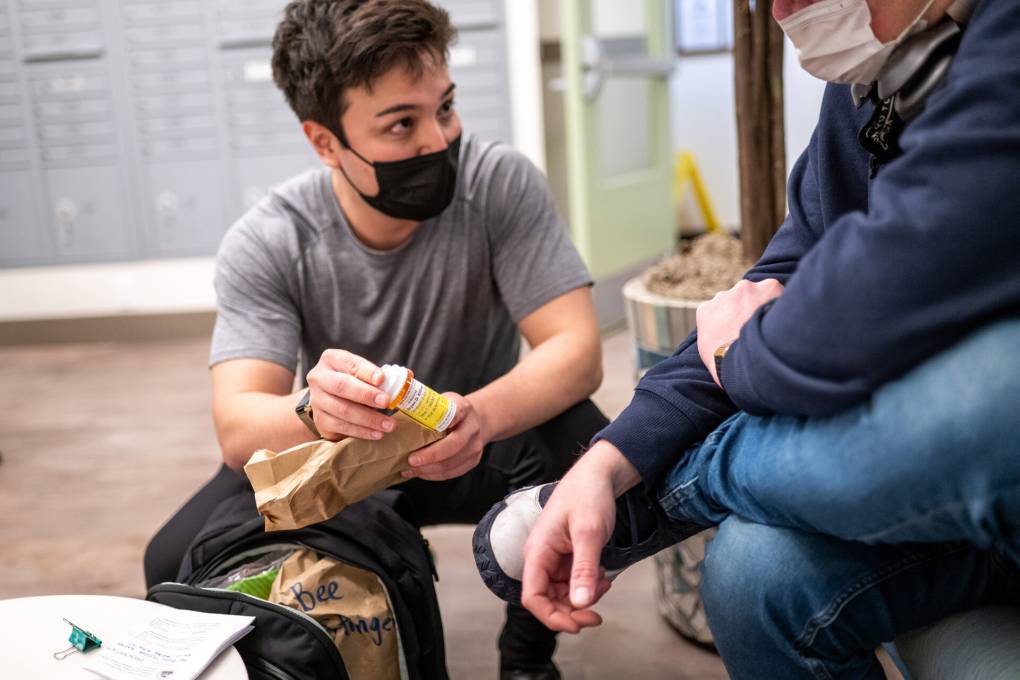
"caption": "Damian Peterson, a psychiatric clinical pharmacist with the San Francisco Department of Public Health, speaks with Bryon Killilea in the SOMA neighborhood of San Francisco while delivering buprenorphine medication on March 23, 2023.",
"description": null,
"title": "RS63872_012_KQED_SOMABuprenorphineDelivery_03232023-qut",
"credit": "Beth LaBerge/KQED",
"status": "inherit",
"altTag": "A man wearing a gray T-shirt, black face mask kneels down with an orange medication bottle in hand as he looks up at a patient who is sitting in a chair wearing a navy sweater and jeans.",
"isLoading": false,
"fetchFailed": false
},
"news_11922334": {
"type": "attachments",
"id": "news_11922334",
"meta": {
"index": "attachments_1716263798",
"site": "news",
"id": "11922334",
"found": true
},
"parent": 11922301,
"imgSizes": {
"twentyfourteen-full-width": {
"file": "https://ww2.kqed.org/app/uploads/sites/10/2022/08/Needle-1038x576.jpg",
"width": 1038,
"mimeType": "image/jpeg",
"height": 576
},
"thumbnail": {
"file": "https://ww2.kqed.org/app/uploads/sites/10/2022/08/Needle-160x105.jpg",
"width": 160,
"mimeType": "image/jpeg",
"height": 105
},
"post-thumbnail": {
"file": "https://ww2.kqed.org/app/uploads/sites/10/2022/08/Needle-672x372.jpg",
"width": 672,
"mimeType": "image/jpeg",
"height": 372
},
"kqedFullSize": {
"file": "https://ww2.kqed.org/app/uploads/sites/10/2022/08/Needle.jpg",
"width": 1980,
"height": 1301
},
"large": {
"file": "https://ww2.kqed.org/app/uploads/sites/10/2022/08/Needle-1020x670.jpg",
"width": 1020,
"mimeType": "image/jpeg",
"height": 670
},
"1536x1536": {
"file": "https://ww2.kqed.org/app/uploads/sites/10/2022/08/Needle-1536x1009.jpg",
"width": 1536,
"mimeType": "image/jpeg",
"height": 1009
},
"full-width": {
"file": "https://ww2.kqed.org/app/uploads/sites/10/2022/08/Needle-1920x1262.jpg",
"width": 1920,
"mimeType": "image/jpeg",
"height": 1262
},
"medium": {
"file": "https://ww2.kqed.org/app/uploads/sites/10/2022/08/Needle-800x526.jpg",
"width": 800,
"mimeType": "image/jpeg",
"height": 526
}
},
"publishDate": 1660263326,
"modified": 1661200290,
"caption": "A syringe is seen discarded near a homeless encampment along Berry St. south of Market Street in San Francisco on Tuesday November 1, 2016.",
"description": "A syringe is seen discarded near a homeless encampment along Berry St. south of Market Street in San Francisco, California, on Tuesday November 1, 2016.",
"title": "Needle",
"credit": "Michael Macor/San Francisco Chronicle via Getty Images",
"status": "inherit",
"altTag": "A syringe is seen discarded near a homeless encampment along Berry St. south of Market Street in San Francisco, California, on Tuesday November 1, 2016.",
"isLoading": false,
"fetchFailed": false
},
"news_11913651": {
"type": "attachments",
"id": "news_11913651",
"meta": {
"index": "attachments_1716263798",
"site": "news",
"id": "11913651",
"found": true
},
"parent": 11913549,
"imgSizes": {
"twentyfourteen-full-width": {
"file": "https://ww2.kqed.org/app/uploads/sites/10/2022/05/IMG_0218-1038x576.jpg",
"width": 1038,
"mimeType": "image/jpeg",
"height": 576
},
"thumbnail": {
"file": "https://ww2.kqed.org/app/uploads/sites/10/2022/05/IMG_0218-160x99.jpg",
"width": 160,
"mimeType": "image/jpeg",
"height": 99
},
"post-thumbnail": {
"file": "https://ww2.kqed.org/app/uploads/sites/10/2022/05/IMG_0218-672x372.jpg",
"width": 672,
"mimeType": "image/jpeg",
"height": 372
},
"kqedFullSize": {
"file": "https://ww2.kqed.org/app/uploads/sites/10/2022/05/IMG_0218-scaled-e1652134316884.jpg",
"width": 1920,
"height": 1183
},
"2048x2048": {
"file": "https://ww2.kqed.org/app/uploads/sites/10/2022/05/IMG_0218-2048x1262.jpg",
"width": 2048,
"mimeType": "image/jpeg",
"height": 1262
},
"large": {
"file": "https://ww2.kqed.org/app/uploads/sites/10/2022/05/IMG_0218-1020x628.jpg",
"width": 1020,
"mimeType": "image/jpeg",
"height": 628
},
"1536x1536": {
"file": "https://ww2.kqed.org/app/uploads/sites/10/2022/05/IMG_0218-1536x946.jpg",
"width": 1536,
"mimeType": "image/jpeg",
"height": 946
},
"full-width": {
"file": "https://ww2.kqed.org/app/uploads/sites/10/2022/05/IMG_0218-1920x1183.jpg",
"width": 1920,
"mimeType": "image/jpeg",
"height": 1183
},
"medium": {
"file": "https://ww2.kqed.org/app/uploads/sites/10/2022/05/IMG_0218-800x493.jpg",
"width": 800,
"mimeType": "image/jpeg",
"height": 493
}
},
"publishDate": 1652134250,
"modified": 1652136201,
"caption": "San Francisco Mayor London Breed swears in SF Police Department spokesperson Matt Dorsey as District 6 supervisor, during a May 9, 2022 ceremony at Delancey Street Foundation in San Francisco. Breed appointed Dorsey to fill the Board of Supervisors seat recently vacated by Matt Haney. ",
"description": null,
"title": "IMG_0218",
"credit": "Scott Shafer/KQED",
"status": "inherit",
"altTag": "Mayor London Breed, in a blue suit, smiles with her hand on the shoulder of a man.",
"isLoading": false,
"fetchFailed": false
},
"news_11900203": {
"type": "attachments",
"id": "news_11900203",
"meta": {
"index": "attachments_1716263798",
"site": "news",
"id": "11900203",
"found": true
},
"parent": 11900195,
"imgSizes": {
"twentyfourteen-full-width": {
"file": "https://ww2.kqed.org/app/uploads/sites/10/2021/12/NPR-fentanyl-5-1038x576.jpg",
"width": 1038,
"mimeType": "image/jpeg",
"height": 576
},
"thumbnail": {
"file": "https://ww2.kqed.org/app/uploads/sites/10/2021/12/NPR-fentanyl-5-160x107.jpg",
"width": 160,
"mimeType": "image/jpeg",
"height": 107
},
"post-thumbnail": {
"file": "https://ww2.kqed.org/app/uploads/sites/10/2021/12/NPR-fentanyl-5-672x372.jpg",
"width": 672,
"mimeType": "image/jpeg",
"height": 372
},
"kqedFullSize": {
"file": "https://ww2.kqed.org/app/uploads/sites/10/2021/12/NPR-fentanyl-5.jpg",
"width": 1224,
"height": 816
},
"large": {
"file": "https://ww2.kqed.org/app/uploads/sites/10/2021/12/NPR-fentanyl-5-1020x680.jpg",
"width": 1020,
"mimeType": "image/jpeg",
"height": 680
},
"medium": {
"file": "https://ww2.kqed.org/app/uploads/sites/10/2021/12/NPR-fentanyl-5-800x533.jpg",
"width": 800,
"mimeType": "image/jpeg",
"height": 533
}
},
"publishDate": 1640299388,
"modified": 1661260992,
"caption": null,
"description": "People live in tents that line a side street in the Tenderloin District. More than 40% of all drug overdoses are in the Tenderloin and neighboring SoMa districts, according to city data.",
"title": "NPR-fentanyl-5",
"credit": "Rachel Bujalski for NPR",
"status": "inherit",
"altTag": "A person stands in the middle of the street and looks down the sidewalk where there are dozens of tents lined up",
"isLoading": false,
"fetchFailed": false
},
"news_11895878": {
"type": "attachments",
"id": "news_11895878",
"meta": {
"index": "attachments_1716263798",
"site": "news",
"id": "11895878",
"found": true
},
"parent": 11895853,
"imgSizes": {
"twentyfourteen-full-width": {
"file": "https://ww2.kqed.org/app/uploads/sites/10/2021/11/toldyou_111021_final-1038x576.png",
"width": 1038,
"mimeType": "image/png",
"height": 576
},
"thumbnail": {
"file": "https://ww2.kqed.org/app/uploads/sites/10/2021/11/toldyou_111021_final-160x110.png",
"width": 160,
"mimeType": "image/png",
"height": 110
},
"post-thumbnail": {
"file": "https://ww2.kqed.org/app/uploads/sites/10/2021/11/toldyou_111021_final-672x372.png",
"width": 672,
"mimeType": "image/png",
"height": 372
},
"kqedFullSize": {
"file": "https://ww2.kqed.org/app/uploads/sites/10/2021/11/toldyou_111021_final.png",
"width": 1920,
"height": 1317
},
"large": {
"file": "https://ww2.kqed.org/app/uploads/sites/10/2021/11/toldyou_111021_final-1020x700.png",
"width": 1020,
"mimeType": "image/png",
"height": 700
},
"1536x1536": {
"file": "https://ww2.kqed.org/app/uploads/sites/10/2021/11/toldyou_111021_final-1536x1054.png",
"width": 1536,
"mimeType": "image/png",
"height": 1054
},
"medium": {
"file": "https://ww2.kqed.org/app/uploads/sites/10/2021/11/toldyou_111021_final-800x549.png",
"width": 800,
"mimeType": "image/png",
"height": 549
}
},
"publishDate": 1636582632,
"modified": 1636582705,
"caption": null,
"description": null,
"title": "toldyou_111021_final",
"credit": null,
"status": "inherit",
"altTag": "Cartoon: Drug companies and distributors like J&J and McKesson shown spraying huge hoses of opioids over a city while the J&J character says, \"told you the opioid crisis isn't our fault!\"",
"isLoading": false,
"fetchFailed": false
},
"news_11883468": {
"type": "attachments",
"id": "news_11883468",
"meta": {
"index": "attachments_1716263798",
"site": "news",
"id": "11883468",
"found": true
},
"parent": 11883396,
"imgSizes": {
"twentyfourteen-full-width": {
"file": "https://ww2.kqed.org/app/uploads/sites/10/2021/08/RS50522_003_SanFrancisco_OverdoseHungerStrike_08012021-qut-1038x576.jpg",
"width": 1038,
"mimeType": "image/jpeg",
"height": 576
},
"thumbnail": {
"file": "https://ww2.kqed.org/app/uploads/sites/10/2021/08/RS50522_003_SanFrancisco_OverdoseHungerStrike_08012021-qut-160x107.jpg",
"width": 160,
"mimeType": "image/jpeg",
"height": 107
},
"post-thumbnail": {
"file": "https://ww2.kqed.org/app/uploads/sites/10/2021/08/RS50522_003_SanFrancisco_OverdoseHungerStrike_08012021-qut-672x372.jpg",
"width": 672,
"mimeType": "image/jpeg",
"height": 372
},
"kqedFullSize": {
"file": "https://ww2.kqed.org/app/uploads/sites/10/2021/08/RS50522_003_SanFrancisco_OverdoseHungerStrike_08012021-qut.jpg",
"width": 1920,
"height": 1280
},
"large": {
"file": "https://ww2.kqed.org/app/uploads/sites/10/2021/08/RS50522_003_SanFrancisco_OverdoseHungerStrike_08012021-qut-1020x680.jpg",
"width": 1020,
"mimeType": "image/jpeg",
"height": 680
},
"1536x1536": {
"file": "https://ww2.kqed.org/app/uploads/sites/10/2021/08/RS50522_003_SanFrancisco_OverdoseHungerStrike_08012021-qut-1536x1024.jpg",
"width": 1536,
"mimeType": "image/jpeg",
"height": 1024
},
"medium": {
"file": "https://ww2.kqed.org/app/uploads/sites/10/2021/08/RS50522_003_SanFrancisco_OverdoseHungerStrike_08012021-qut-800x533.jpg",
"width": 800,
"mimeType": "image/jpeg",
"height": 533
}
},
"publishDate": 1627946566,
"modified": 1628039332,
"caption": "Gary McCoy sits outside of City Hall in San Francisco on Aug. 1, 2021, during a hunger strike calling for San Francisco to put funds toward the overdose crisis and implement safe consumption services.",
"description": "Gary McCoy sits outside of City Hall in San Francisco on Aug. 1, 2021, during a hunger strike calling for San Francisco to put funds toward the overdose crisis and implement safe consumption services.",
"title": "RS50522_003_SanFrancisco_OverdoseHungerStrike_08012021-qut",
"credit": "Beth LaBerge/KQED",
"status": "inherit",
"altTag": "Gary McCoy sits outside of City Hall in San Francisco on Aug. 1, 2021, during a hunger strike calling for San Francisco to put funds toward the overdose crisis and implement safe consumption services.",
"isLoading": false,
"fetchFailed": false
}
},
"audioPlayerReducer": {
"postId": "stream_live",
"isPaused": true,
"isPlaying": false,
"pfsActive": false,
"pledgeModalIsOpen": true,
"playerDrawerIsOpen": false,
"liveAudioPlayStartedAt": 0,
"liveAudioPlayContext": ""
},
"authorsReducer": {
"byline_news_11922301": {
"type": "authors",
"id": "byline_news_11922301",
"meta": {
"override": true
},
"slug": "byline_news_11922301",
"name": "Ana B. Ibarra",
"isLoading": false
},
"scottshafer": {
"type": "authors",
"id": "255",
"meta": {
"index": "authors_1716337520",
"id": "255",
"found": true
},
"name": "Scott Shafer",
"firstName": "Scott",
"lastName": "Shafer",
"slug": "scottshafer",
"email": "sshafer@kqed.org",
"display_author_email": false,
"staff_mastheads": [
"news"
],
"title": "KQED Contributor",
"bio": "Scott Shafer is the senior politics correspondent with the KQED Politics and Government desk. He is co-host of \u003cem>Political Breakdown\u003c/em>, the award-winning radio show and podcast with a personal take on the world of politics. Scott came to KQED in 1998 to host the statewide \u003cem>California Report\u003c/em>. Prior to that he had extended stints in politics and government. He uses that inside experience at KQED in his, reporting, hosting and analysis for the politics desk. Scott recently completed a 5-part podcast titled \u003cem>The Speaker\u003c/em>, examining Rep. Nancy Pelosi's life and legacy. Previously he collaborated on \u003cem>Political Breakdown\u003c/em> and on \u003cem>The Political Mind of Jerry Brown\u003c/em>, an eight-part series about the life and extraordinary political career of the former governor. For fun, he plays water polo and swims with the San Francisco Tsunami.",
"avatar": "https://secure.gravatar.com/avatar/a269f2db8e99b39bacd3dfb517e1aea56c8d9706cde1d375abfd9fba57eede2c?s=600&d=blank&r=g",
"twitter": "scottshafer",
"bluesky": null,
"facebook": null,
"instagram": null,
"linkedin": null,
"sites": [
{
"site": "news",
"roles": [
"editor"
]
},
{
"site": "stateofhealth",
"roles": [
"author"
]
},
{
"site": "science",
"roles": [
"author"
]
},
{
"site": "forum",
"roles": [
"subscriber"
]
},
{
"site": "liveblog",
"roles": [
"author"
]
}
],
"headData": {
"title": "Scott Shafer | KQED",
"description": "KQED Contributor",
"ogImgSrc": "https://secure.gravatar.com/avatar/a269f2db8e99b39bacd3dfb517e1aea56c8d9706cde1d375abfd9fba57eede2c?s=600&d=blank&r=g",
"twImgSrc": "https://secure.gravatar.com/avatar/a269f2db8e99b39bacd3dfb517e1aea56c8d9706cde1d375abfd9fba57eede2c?s=600&d=blank&r=g"
},
"isLoading": false,
"link": "/author/scottshafer"
},
"shossaini": {
"type": "authors",
"id": "3214",
"meta": {
"index": "authors_1716337520",
"id": "3214",
"found": true
},
"name": "Sara Hossaini",
"firstName": "Sara",
"lastName": "Hossaini",
"slug": "shossaini",
"email": "shossaini@kqed.org",
"display_author_email": true,
"staff_mastheads": [
"news"
],
"title": "KQED Reporter",
"bio": "Sara Hossaini came to general assignment reporting at KQED in 2013 after two winters reporting at Wyoming Public Radio. She holds a bachelor's degree in broadcast journalism from the University of Nebraska-Lincoln. Her radio romance began after a bitter breakup with documentary film (Ok, maybe it's still complicated). Her first simultaneous jobs in San Francisco were as Associate Producer on a PBS film series through the Center for Asian American Media and as a butler. She likes to trot, plot and make things with her hands.",
"avatar": "https://secure.gravatar.com/avatar/060e9f56b9554e17942e89f413242774?s=600&d=blank&r=g",
"twitter": "mshossaini",
"facebook": null,
"instagram": null,
"linkedin": null,
"sites": [
{
"site": "news",
"roles": [
"author"
]
},
{
"site": "stateofhealth",
"roles": [
"author"
]
}
],
"headData": {
"title": "Sara Hossaini | KQED",
"description": "KQED Reporter",
"ogImgSrc": "https://secure.gravatar.com/avatar/060e9f56b9554e17942e89f413242774?s=600&d=blank&r=g",
"twImgSrc": "https://secure.gravatar.com/avatar/060e9f56b9554e17942e89f413242774?s=600&d=blank&r=g"
},
"isLoading": false,
"link": "/author/shossaini"
},
"markfiore": {
"type": "authors",
"id": "3236",
"meta": {
"index": "authors_1716337520",
"id": "3236",
"found": true
},
"name": "Mark Fiore",
"firstName": "Mark",
"lastName": "Fiore",
"slug": "markfiore",
"email": "mark@markfiore.com",
"display_author_email": false,
"staff_mastheads": [
"news"
],
"title": "KQED News Cartoonist",
"bio": "\u003ca href=\"http://www.MarkFiore.com\">MarkFiore.com\u003c/a> | \u003ca href=\"https://twitter.com/markfiore\">Follow on Twitter\u003c/a> | \u003ca href=\"https://www.facebook.com/pages/Mark-Fiore-Animated-Political-Cartoons/94451707396?ref=bookmarks\">Facebook\u003c/a> | \u003ca href=\"mailto:mark@markfiore.com\">email\u003c/a>\r\n\r\nPulitzer Prize-winner, Mark Fiore, who the Wall Street Journal has called “the undisputed guru of the form,” creates animated political cartoons in San Francisco, where his work has been featured regularly on the San Francisco Chronicle’s web site, SFGate.com. His work has appeared on Newsweek.com, Slate.com, CBSNews.com, MotherJones.com, DailyKos.com and NPR’s web site. Fiore’s political animation has appeared on CNN, Frontline, Bill Moyers Journal, Salon.com and cable and broadcast outlets across the globe.\r\n\r\nBeginning his professional life by drawing traditional political cartoons for newspapers, Fiore’s work appeared in publications ranging from the Washington Post to the Los Angeles Times. In the late 1990s, he began to experiment with animating political cartoons and, after a short stint at the San Jose Mercury News as their staff cartoonist, Fiore devoted all his energies to animation.\r\nGrowing up in California, Fiore also spent a good portion of his life in the backwoods of Idaho. It was this combination that shaped him politically. Mark majored in political science at Colorado College, where, in a perfect send-off for a cartoonist, he received his diploma in 1991 as commencement speaker Dick Cheney smiled approvingly.\r\nMark Fiore was awarded the Pulitzer Prize for political cartooning in 2010, a Robert F. Kennedy Journalism Award in 2004 and has twice received an Online Journalism Award for commentary from the Online News Association (2002, 2008). Fiore has received two awards for his work in new media from the National Cartoonists Society (2001, 2002), and in 2006 received The James Madison Freedom of Information Award from The Society of Professional Journalists.",
"avatar": "https://secure.gravatar.com/avatar/fc4e2a612b15b67bad0c6f0e1db4ca9b?s=600&d=blank&r=g",
"twitter": "MarkFiore",
"facebook": null,
"instagram": "https://www.instagram.com/markfiore/?hl=en",
"linkedin": null,
"sites": [
{
"site": "arts",
"roles": [
"contributor"
]
},
{
"site": "news",
"roles": [
"editor"
]
},
{
"site": "futureofyou",
"roles": [
"editor"
]
},
{
"site": "science",
"roles": [
"editor"
]
}
],
"headData": {
"title": "Mark Fiore | KQED",
"description": "KQED News Cartoonist",
"ogImgSrc": "https://secure.gravatar.com/avatar/fc4e2a612b15b67bad0c6f0e1db4ca9b?s=600&d=blank&r=g",
"twImgSrc": "https://secure.gravatar.com/avatar/fc4e2a612b15b67bad0c6f0e1db4ca9b?s=600&d=blank&r=g"
},
"isLoading": false,
"link": "/author/markfiore"
},
"jrodriguez": {
"type": "authors",
"id": "11690",
"meta": {
"index": "authors_1716337520",
"id": "11690",
"found": true
},
"name": "Joe Fitzgerald Rodriguez",
"firstName": "Joe",
"lastName": "Fitzgerald Rodriguez",
"slug": "jrodriguez",
"email": "jrodriguez@kqed.org",
"display_author_email": true,
"staff_mastheads": [
"news"
],
"title": "Reporter and Producer",
"bio": "Joe Fitzgerald Rodriguez is a reporter and digital producer for KQED covering politics. Joe most recently wrote for the \u003cem>San Francisco Examiner\u003c/em> as a political columnist covering The City. He was raised in San Francisco and has spent his reporting career in his beloved, foggy, city by the bay. Joe was 12-years-old when he conducted his first interview in journalism, grilling former San Francisco Mayor Willie Brown for the Marina Middle School newspaper, \u003cem>The Penguin Press, \u003c/em>and he continues to report on the San Francisco Bay Area to this day.",
"avatar": "https://secure.gravatar.com/avatar/2247beb0564c1e9c62228d5649d2edac?s=600&d=blank&r=g",
"twitter": "FitztheReporter",
"facebook": null,
"instagram": "https://www.instagram.com/fitzthereporter/",
"linkedin": null,
"sites": [
{
"site": "",
"roles": [
"editor"
]
},
{
"site": "arts",
"roles": [
"editor"
]
},
{
"site": "news",
"roles": [
"editor"
]
},
{
"site": "science",
"roles": [
"editor"
]
},
{
"site": "elections",
"roles": [
"editor"
]
},
{
"site": "liveblog",
"roles": [
"editor"
]
}
],
"headData": {
"title": "Joe Fitzgerald Rodriguez | KQED",
"description": "Reporter and Producer",
"ogImgSrc": "https://secure.gravatar.com/avatar/2247beb0564c1e9c62228d5649d2edac?s=600&d=blank&r=g",
"twImgSrc": "https://secure.gravatar.com/avatar/2247beb0564c1e9c62228d5649d2edac?s=600&d=blank&r=g"
},
"isLoading": false,
"link": "/author/jrodriguez"
},
"sjohnson": {
"type": "authors",
"id": "11840",
"meta": {
"index": "authors_1716337520",
"id": "11840",
"found": true
},
"name": "Sydney Johnson",
"firstName": "Sydney",
"lastName": "Johnson",
"slug": "sjohnson",
"email": "sjohnson@kqed.org",
"display_author_email": false,
"staff_mastheads": [
"news"
],
"title": "KQED Reporter",
"bio": "Sydney Johnson is a general assignment reporter at KQED. She previously reported on public health and city government at the San Francisco Examiner, and before that, she covered statewide education policy for EdSource. Her reporting has won multiple local, state and national awards. Sydney is a graduate of the University of California, Berkeley and lives in San Francisco.",
"avatar": "https://secure.gravatar.com/avatar/97855f2719b72ad6190b7c535fe642c8?s=600&d=blank&r=g",
"twitter": "sydneyfjohnson",
"facebook": null,
"instagram": null,
"linkedin": null,
"sites": [
{
"site": "news",
"roles": [
"editor"
]
}
],
"headData": {
"title": "Sydney Johnson | KQED",
"description": "KQED Reporter",
"ogImgSrc": "https://secure.gravatar.com/avatar/97855f2719b72ad6190b7c535fe642c8?s=600&d=blank&r=g",
"twImgSrc": "https://secure.gravatar.com/avatar/97855f2719b72ad6190b7c535fe642c8?s=600&d=blank&r=g"
},
"isLoading": false,
"link": "/author/sjohnson"
}
},
"pagesReducer": {
"news_tag_overdose-deaths": {
"type": "terms",
"id": "news_29747",
"meta": {
"index": "terms_1716263798",
"site": "news",
"id": "29747",
"score": 9.89657
},
"featImg": null,
"name": "overdose deaths",
"description": null,
"taxonomy": "tag",
"headData": {
"twImgId": null,
"twTitle": null,
"ogTitle": null,
"ogImgId": null,
"twDescription": null,
"description": null,
"title": "overdose deaths Archives | KQED News",
"ogDescription": null
},
"ttid": 29764,
"slug": "overdose-deaths",
"isLoading": false,
"title": "overdose deaths",
"pageMeta": {
"site": "news",
"WpPageTemplate": "page-topic-editorial",
"currentPage": 3
},
"blocks": [
{
"blockName": "kqed/post-list",
"attrs": {
"layout": "cardArticle2",
"query": "posts/news?tag=overdose-deaths",
"seeMore": false,
"paginated": true,
"page": 3
}
},
{
"blockName": "kqed/ad"
}
]
}
},
"pfsSessionReducer": {},
"postsReducer": {
"stream_live": {
"type": "live",
"id": "stream_live",
"audioUrl": "https://hls.kqed.org/hls/kqed_app/playlist.m3u8",
"title": "Live Stream",
"excerpt": "Live Stream information currently unavailable.",
"link": "/radio",
"featImg": "",
"label": {
"name": "KQED Live",
"link": "/"
}
},
"stream_kqedNewscast": {
"type": "posts",
"id": "stream_kqedNewscast",
"audioUrl": "https://www.kqed.org/.stream/anon/radio/RDnews/newscast.mp3?_=1",
"title": "KQED Newscast",
"featImg": "",
"label": {
"name": "88.5 FM",
"link": "/"
}
},
"news_11948062": {
"type": "posts",
"id": "news_11948062",
"meta": {
"index": "posts_1716263798",
"site": "news",
"id": "11948062",
"score": null,
"sort": [
1682726271000
]
},
"guestAuthors": [],
"slug": "newsom-taps-chp-national-guard-to-fight-san-franciscos-fentanyl-crisis",
"title": "Newsom Taps California Highway Patrol, National Guard to Fight San Francisco’s Fentanyl Crisis",
"publishDate": 1682726271,
"format": "standard",
"headTitle": "Newsom Taps California Highway Patrol, National Guard to Fight San Francisco’s Fentanyl Crisis | KQED",
"labelTerm": {
"site": "news"
},
"content": "\u003cp>A new team of officers from the California Highway Patrol and the California National Guard will step in to train and assist San Francisco Police in \u003ca href=\"https://www.kqed.org/news/11947448/there-to-save-a-life-san-francisco-bars-fight-fentanyl-overdoses-with-narcan\">disrupting fentanyl\u003c/a> dealing and trafficking, Gov. Gavin Newsom announced Friday.\u003c/p>\n\u003cp>The mobilization comes as overdose rates in the city have increased 41% across \u003ca href=\"https://sf.gov/sites/default/files/2023-04/2023%2004_OCME%20Overdose%20Report_0.pdf\">the first three months of this year (PDF)\u003c/a> compared with \u003ca href=\"https://sf.gov/sites/default/files/2023-03/2022_OCME%20Overdose%20Report_0.pdf\">the same time period in 2022 (PDF)\u003c/a>, when the city was operating a supervised consumption site. Trained staff at \u003ca href=\"https://sf.gov/data/reducing-fatal-and-non-fatal-overdoses-tenderloin#overdoses-reversed-at-the-tenderloin-center\">the facility reversed 333 overdoses in 11 months\u003c/a> before the facility closed, according to city data.\u003c/p>\n\u003cp>“Those who traffic drugs, guns, and human beings are not welcome in our communities,” said Newsom in a press release. “That’s why we’re launching this operation. This is not about criminalizing people struggling with substance use — this is about taking down the prominent poison peddlers and their connected crime rings that prey on the most vulnerable, and harm our residents. While it’s true that San Francisco is safer than many cities its size, we cannot let rampant crime continue.”\u003c/p>\n\u003cfigure id=\"attachment_11948099\" class=\"wp-caption aligncenter\" style=\"max-width: 1920px\">\u003cimg loading=\"lazy\" decoding=\"async\" class=\"size-full wp-image-11948099\" src=\"https://ww2.kqed.org/app/uploads/sites/10/2023/04/RS31296_GettyImages-968048630-qut.jpg\" alt=\"A photo of a politician in a navy blue suit with navy and white tie, stands speaking from a podium with the U.S. and California state flags behind him.\" width=\"1920\" height=\"1280\" srcset=\"https://cdn.kqed.org/wp-content/uploads/sites/10/2023/04/RS31296_GettyImages-968048630-qut.jpg 1920w, https://cdn.kqed.org/wp-content/uploads/sites/10/2023/04/RS31296_GettyImages-968048630-qut-800x533.jpg 800w, https://cdn.kqed.org/wp-content/uploads/sites/10/2023/04/RS31296_GettyImages-968048630-qut-1020x680.jpg 1020w, https://cdn.kqed.org/wp-content/uploads/sites/10/2023/04/RS31296_GettyImages-968048630-qut-160x107.jpg 160w, https://cdn.kqed.org/wp-content/uploads/sites/10/2023/04/RS31296_GettyImages-968048630-qut-1536x1024.jpg 1536w\" sizes=\"auto, (max-width: 1920px) 100vw, 1920px\">\u003cfigcaption class=\"wp-caption-text\">Gov. Gavin Newsom announced on Friday, April 28, 2023, that a new team of officers from the California Highway Patrol and the California National Guard will step in to train and assist San Francisco police in disrupting fentanyl dealing and trafficking. \u003ccite>(Justin Sullivan/Getty Images)\u003c/cite>\u003c/figcaption>\u003c/figure>\n\u003cp>Starting May 1, CHP officers will help investigate opioid trafficking cases and train local police in identifying intoxicated drivers, city officials said on Friday. The effort will have a particular focus on the Tenderloin neighborhood, where the majority of overdose deaths have occurred this year.\u003c/p>\n\u003cp>Additional CHP units will also patrol hot spots for drug dealing in the city “as workload allows,” according to the press release about the plan. So far, 75 CHP officers have been stationed in the San Francisco area, CHP Commissioner Sean Duryee told reporters at a press conference on Friday. He said he expects that number to increase to 84 in the coming weeks.\u003c/p>\n\u003cp>[ad fullwidth]\u003c/p>\n\u003cp>Meanwhile, 14 members of the California National Guard (Cal Guard) will work remotely with SFPD on non-patrol operations such as improving administrative systems and responses to drug-related crime.\u003c/p>\n\u003cp>Since January, San Francisco police have made more than 300 arrests for possession with intent to sell and seized 150% more fentanyl in the first three months of 2023 compared to 2022, according to the mayor’s office. On Tuesday, District Attorney Brooke Jenkins announced multiple charges against a 23-year-old arrested for carrying 11 pounds of fentanyl, an opioid about 50 times more potent than heroin.\u003c/p>\n\u003cp>Fentanyl has been involved in the vast majority of recent overdose deaths in San Francisco, data from the Office of the Medical Examiner shows.\u003c/p>\n\u003cp>Officials on Friday did not state what the long-term plan for the intervention would entail, but seemed aware of how \u003ca href=\"https://sfstandard.com/politics/city-hall/analysis-political-history-haunts-mayor-breed-as-she-attempts-another-tenderloin-cleanup/\">similar crackdown efforts\u003c/a> in the neighborhood in the past and even \u003ca href=\"https://sfstandard.com/criminal-justice/da-jenkins-threatens-drug-dealers-with-more-jail-time-harsher-penalties-as-sf-fentanyl-crackdown-expands/\">more recently\u003c/a> have \u003ca href=\"https://www.sfchronicle.com/sf/article/drug-overdose-deaths-2023-17904060.php#:~:text=Quarterly%20accidental%20overdose%20deaths%20in%20San%20Francisco&text=Deaths%20reached%20a%20peak%20of,in%20Quarter%201%20of%202023.&text=Fentanyl%2Drelated-,The%20numbers%20are%20preliminary%20and%20subject%20to,more%20death%20investigations%20are%20completed.\">not shown success at slowing down sales, public drug use or overdose deaths\u003c/a> in the long run.\u003c/p>\n\u003cp>[aside label='More Stories on Fentanyl' tag='fentanyl']\u003c/p>\n\u003cp>“When we deploy large amounts of officers, the problem tends to go away while we are there,” said San Francisco Police Chief Bill Scott. “The last thing we want to do is clean the streets up for a week, a month, then everyone goes back to what they were doing again.”\u003c/p>\n\u003cp>The California Department of Justice and the San Francisco District Attorney’s Office, both of which have called for tougher enforcement around drug dealing as public scrutiny over the overdose crisis mounts, are also supportive of the plan.\u003c/p>\n\u003cp>“The fentanyl crisis is impacting our residents, workers, and businesses, and it requires all of us working together to disrupt the flow of drugs in San Francisco while also making sure we have treatment for those struggling with addiction,” San Francisco Mayor London Breed said in a press release.\u003c/p>\n\u003cp>“This will send a strong message to those who are perpetrating these crimes,” she later said at Friday’s press conference.[pullquote size=\"medium\" align=\"right\" citation=\"San Francisco Mayor London Breed\"]‘The fentanyl crisis is impacting our residents, workers, and businesses, and it requires all of us working together to disrupt the flow of drugs in San Francisco while also making sure we have treatment for those struggling with addiction.’[/pullquote]The proclamation Friday was reminiscent of Breed’s bold claim in 2021 that the city would crack down on the “bulls— that has destroyed our city,” which she said in \u003ca href=\"https://www.cbsnews.com/sanfrancisco/news/mayor-london-breed-declares-state-of-emergency-in-san-franciscos-troubled-tenderloin/\">announcing an emergency plan\u003c/a> to address the drug and overdose crisis in the Tenderloin.\u003c/p>\n\u003cp>That effort brought together multiple city agencies to ramp up enforcement of dealing, clear sidewalks and offer new public health responses to drug use such as opening what became a supervised consumption site called the Tenderloin Center.\u003c/p>\n\u003cp>The facility closed at the end of 2022, a few months after Newsom vetoed legislation that would have allowed San Francisco, Los Angeles and Oakland to pilot safe consumption sites. Breed said the plan was only meant to be temporary and, on Friday, added the center “didn’t quite work out.”\u003c/p>\n\u003cfigure id=\"attachment_11948101\" class=\"wp-caption aligncenter\" style=\"max-width: 1920px\">\u003cimg loading=\"lazy\" decoding=\"async\" class=\"size-full wp-image-11948101\" src=\"https://ww2.kqed.org/app/uploads/sites/10/2023/04/RS53605_010_SanFrancisco_TLLinkageCenter_02082022-qut.jpg\" alt='A blue and yellow sign reads, \"Tenderloin Linkage Center Entrance.\"' width=\"1920\" height=\"1280\" srcset=\"https://cdn.kqed.org/wp-content/uploads/sites/10/2023/04/RS53605_010_SanFrancisco_TLLinkageCenter_02082022-qut.jpg 1920w, https://cdn.kqed.org/wp-content/uploads/sites/10/2023/04/RS53605_010_SanFrancisco_TLLinkageCenter_02082022-qut-800x533.jpg 800w, https://cdn.kqed.org/wp-content/uploads/sites/10/2023/04/RS53605_010_SanFrancisco_TLLinkageCenter_02082022-qut-1020x680.jpg 1020w, https://cdn.kqed.org/wp-content/uploads/sites/10/2023/04/RS53605_010_SanFrancisco_TLLinkageCenter_02082022-qut-160x107.jpg 160w, https://cdn.kqed.org/wp-content/uploads/sites/10/2023/04/RS53605_010_SanFrancisco_TLLinkageCenter_02082022-qut-1536x1024.jpg 1536w\" sizes=\"auto, (max-width: 1920px) 100vw, 1920px\">\u003cfigcaption class=\"wp-caption-text\">Residents wait in line to get into the Tenderloin Linkage Center (also known as the Tenderloin Center), a now-defunct safe consumption site in San Francisco, on Feb. 8, 2022. \u003ccite>(Beth LaBerge/KQED)\u003c/cite>\u003c/figcaption>\u003c/figure>\n\u003cp>After the closing of the Tenderloin Center and the emergency plan’s winding down, overdose rates have again increased in 2023, data from the Office of the Medical Examiner shows.\u003c/p>\n\u003cp>Meanwhile, public safety advocates applauded the governor’s decision to increase law enforcement around the issue, at a time when the \u003ca href=\"https://missionlocal.org/2023/03/police-staffing-crisis-san-francisco/\">San Francisco Police Department is struggling\u003c/a> to recruit and retain a full workforce.\u003c/p>\n\u003cp>“Just the mere presence of our officers we believe will help deter and disrupt criminal activity,” Duryee said.\u003c/p>\n\u003cp>Newsom said that his plan “will not seek to criminalize those struggling with substance use and instead focus on disrupting the supply fueling the fentanyl crisis by holding drug suppliers and traffickers accountable,” according to a press release on the plan.\u003c/p>\n\u003cp>But addiction experts and advocates for people who use drugs say the move could nonetheless have unintended consequences, and negatively affect people who struggle with addiction and lack access to housing, health care or other support systems.[pullquote size=\"medium\" align=\"right\" citation=\"Dan Ciccarone, professor, UCSF\"]‘The outcome they want is to disturb the fentanyl supply. But usually these events are short-lived, and when they go away, the drug supply rebounds.’[/pullquote]“The outcome they want is to disturb the fentanyl supply. But usually these events are short-lived, and when they go away, the drug supply rebounds,” said Dan Ciccarone, professor and expert in addiction at UCSF. “When that happens, people die. People reduce their tolerance during the prohibition and go back to normal use when the supply rebounds and overdose rates shoot up.”\u003c/p>\n\u003cp>Reporters on Friday asked Breed whether she shared concerns from some community members that the federal support and stricter law enforcement approach could replicate some of the devastation of the war on drugs, which \u003ca href=\"https://ldi.upenn.edu/our-work/research-updates/the-war-on-drugs-as-structural-racism/\">fueled overrepresentation\u003c/a> of Black and Latino people imprisoned for drug-related crimes.\u003c/p>\n\u003cp>“I have more concerns about the number of people who are dying of drug overdoses and the families and people struggling in their neighborhoods,” Breed responded. “I want the streets to be safe … and part of that includes all of the great programs we are doing, but there has to be accountability attached to this.”\u003c/p>\n\u003cp>[ad floatright]\u003c/p>\n",
"blocks": [],
"excerpt": "Gov. Gavin Newsom’s approach has divided addiction experts and public safety advocates who share a similar goal in reducing drug-related violence and overdose deaths.",
"status": "publish",
"parent": 0,
"modified": 1738095931,
"stats": {
"hasAudio": false,
"hasVideo": false,
"hasChartOrMap": false,
"iframeSrcs": [],
"hasGoogleForm": false,
"hasGallery": false,
"hasHearkenModule": false,
"hasPolis": false,
"paragraphCount": 25,
"wordCount": 1299
},
"headData": {
"title": "Newsom Taps California Highway Patrol, National Guard to Fight San Francisco’s Fentanyl Crisis | KQED",
"description": "Gov. Gavin Newsom’s approach has divided addiction experts and public safety advocates who share a similar goal in reducing drug-related violence and overdose deaths.",
"ogTitle": "",
"ogDescription": "",
"ogImgId": "",
"twTitle": "",
"twDescription": "",
"twImgId": "",
"schema": {
"@context": "https://schema.org",
"@type": "NewsArticle",
"headline": "Newsom Taps California Highway Patrol, National Guard to Fight San Francisco’s Fentanyl Crisis",
"datePublished": "2023-04-28T16:57:51-07:00",
"dateModified": "2025-01-28T12:25:31-08:00",
"image": "https://cdn.kqed.org/wp-content/uploads/2020/02/KQED-OG-Image@1x.png",
"isAccessibleForFree": "True",
"publisher": {
"@type": "NewsMediaOrganization",
"@id": "https://www.kqed.org/#organization",
"name": "KQED",
"logo": "https://cdn.kqed.org/wp-content/uploads/2020/02/KQED-OG-Image@1x.png",
"url": "https://www.kqed.org",
"sameAs": [
"https://www.facebook.com/KQED",
"https://twitter.com/KQED",
"https://www.instagram.com/kqed/",
"https://www.tiktok.com/@kqedofficial",
"https://www.linkedin.com/company/kqed",
"https://www.youtube.com/channel/UCeC0IOo7i1P_61zVUWbJ4nw"
]
}
}
},
"sticky": false,
"excludeFromSiteSearch": "Include",
"articleAge": "0",
"path": "/news/11948062/newsom-taps-chp-national-guard-to-fight-san-franciscos-fentanyl-crisis",
"audioTrackLength": null,
"parsedContent": [
{
"type": "contentString",
"content": "\u003cdiv class=\"post-body\">\u003cp>\u003cp>A new team of officers from the California Highway Patrol and the California National Guard will step in to train and assist San Francisco Police in \u003ca href=\"https://www.kqed.org/news/11947448/there-to-save-a-life-san-francisco-bars-fight-fentanyl-overdoses-with-narcan\">disrupting fentanyl\u003c/a> dealing and trafficking, Gov. Gavin Newsom announced Friday.\u003c/p>\n\u003cp>The mobilization comes as overdose rates in the city have increased 41% across \u003ca href=\"https://sf.gov/sites/default/files/2023-04/2023%2004_OCME%20Overdose%20Report_0.pdf\">the first three months of this year (PDF)\u003c/a> compared with \u003ca href=\"https://sf.gov/sites/default/files/2023-03/2022_OCME%20Overdose%20Report_0.pdf\">the same time period in 2022 (PDF)\u003c/a>, when the city was operating a supervised consumption site. Trained staff at \u003ca href=\"https://sf.gov/data/reducing-fatal-and-non-fatal-overdoses-tenderloin#overdoses-reversed-at-the-tenderloin-center\">the facility reversed 333 overdoses in 11 months\u003c/a> before the facility closed, according to city data.\u003c/p>\n\u003cp>“Those who traffic drugs, guns, and human beings are not welcome in our communities,” said Newsom in a press release. “That’s why we’re launching this operation. This is not about criminalizing people struggling with substance use — this is about taking down the prominent poison peddlers and their connected crime rings that prey on the most vulnerable, and harm our residents. While it’s true that San Francisco is safer than many cities its size, we cannot let rampant crime continue.”\u003c/p>\n\u003cfigure id=\"attachment_11948099\" class=\"wp-caption aligncenter\" style=\"max-width: 1920px\">\u003cimg loading=\"lazy\" decoding=\"async\" class=\"size-full wp-image-11948099\" src=\"https://ww2.kqed.org/app/uploads/sites/10/2023/04/RS31296_GettyImages-968048630-qut.jpg\" alt=\"A photo of a politician in a navy blue suit with navy and white tie, stands speaking from a podium with the U.S. and California state flags behind him.\" width=\"1920\" height=\"1280\" srcset=\"https://cdn.kqed.org/wp-content/uploads/sites/10/2023/04/RS31296_GettyImages-968048630-qut.jpg 1920w, https://cdn.kqed.org/wp-content/uploads/sites/10/2023/04/RS31296_GettyImages-968048630-qut-800x533.jpg 800w, https://cdn.kqed.org/wp-content/uploads/sites/10/2023/04/RS31296_GettyImages-968048630-qut-1020x680.jpg 1020w, https://cdn.kqed.org/wp-content/uploads/sites/10/2023/04/RS31296_GettyImages-968048630-qut-160x107.jpg 160w, https://cdn.kqed.org/wp-content/uploads/sites/10/2023/04/RS31296_GettyImages-968048630-qut-1536x1024.jpg 1536w\" sizes=\"auto, (max-width: 1920px) 100vw, 1920px\">\u003cfigcaption class=\"wp-caption-text\">Gov. Gavin Newsom announced on Friday, April 28, 2023, that a new team of officers from the California Highway Patrol and the California National Guard will step in to train and assist San Francisco police in disrupting fentanyl dealing and trafficking. \u003ccite>(Justin Sullivan/Getty Images)\u003c/cite>\u003c/figcaption>\u003c/figure>\n\u003cp>Starting May 1, CHP officers will help investigate opioid trafficking cases and train local police in identifying intoxicated drivers, city officials said on Friday. The effort will have a particular focus on the Tenderloin neighborhood, where the majority of overdose deaths have occurred this year.\u003c/p>\n\u003cp>Additional CHP units will also patrol hot spots for drug dealing in the city “as workload allows,” according to the press release about the plan. So far, 75 CHP officers have been stationed in the San Francisco area, CHP Commissioner Sean Duryee told reporters at a press conference on Friday. He said he expects that number to increase to 84 in the coming weeks.\u003c/p>\n\u003cp>\u003c/p>\u003c/div>",
"attributes": {
"named": {},
"numeric": []
}
},
{
"type": "component",
"content": "",
"name": "ad",
"attributes": {
"named": {
"label": "fullwidth"
},
"numeric": [
"fullwidth"
]
}
},
{
"type": "contentString",
"content": "\u003cdiv class=\"post-body\">\u003cp>\u003c/p>\n\u003cp>Meanwhile, 14 members of the California National Guard (Cal Guard) will work remotely with SFPD on non-patrol operations such as improving administrative systems and responses to drug-related crime.\u003c/p>\n\u003cp>Since January, San Francisco police have made more than 300 arrests for possession with intent to sell and seized 150% more fentanyl in the first three months of 2023 compared to 2022, according to the mayor’s office. On Tuesday, District Attorney Brooke Jenkins announced multiple charges against a 23-year-old arrested for carrying 11 pounds of fentanyl, an opioid about 50 times more potent than heroin.\u003c/p>\n\u003cp>Fentanyl has been involved in the vast majority of recent overdose deaths in San Francisco, data from the Office of the Medical Examiner shows.\u003c/p>\n\u003cp>Officials on Friday did not state what the long-term plan for the intervention would entail, but seemed aware of how \u003ca href=\"https://sfstandard.com/politics/city-hall/analysis-political-history-haunts-mayor-breed-as-she-attempts-another-tenderloin-cleanup/\">similar crackdown efforts\u003c/a> in the neighborhood in the past and even \u003ca href=\"https://sfstandard.com/criminal-justice/da-jenkins-threatens-drug-dealers-with-more-jail-time-harsher-penalties-as-sf-fentanyl-crackdown-expands/\">more recently\u003c/a> have \u003ca href=\"https://www.sfchronicle.com/sf/article/drug-overdose-deaths-2023-17904060.php#:~:text=Quarterly%20accidental%20overdose%20deaths%20in%20San%20Francisco&text=Deaths%20reached%20a%20peak%20of,in%20Quarter%201%20of%202023.&text=Fentanyl%2Drelated-,The%20numbers%20are%20preliminary%20and%20subject%20to,more%20death%20investigations%20are%20completed.\">not shown success at slowing down sales, public drug use or overdose deaths\u003c/a> in the long run.\u003c/p>\n\u003cp>\u003c/p>\u003c/div>",
"attributes": {
"named": {},
"numeric": []
}
},
{
"type": "component",
"content": "",
"name": "aside",
"attributes": {
"named": {
"label": "More Stories on Fentanyl ",
"tag": "fentanyl"
},
"numeric": []
}
},
{
"type": "contentString",
"content": "\u003cdiv class=\"post-body\">\u003cp>\u003c/p>\n\u003cp>“When we deploy large amounts of officers, the problem tends to go away while we are there,” said San Francisco Police Chief Bill Scott. “The last thing we want to do is clean the streets up for a week, a month, then everyone goes back to what they were doing again.”\u003c/p>\n\u003cp>The California Department of Justice and the San Francisco District Attorney’s Office, both of which have called for tougher enforcement around drug dealing as public scrutiny over the overdose crisis mounts, are also supportive of the plan.\u003c/p>\n\u003cp>“The fentanyl crisis is impacting our residents, workers, and businesses, and it requires all of us working together to disrupt the flow of drugs in San Francisco while also making sure we have treatment for those struggling with addiction,” San Francisco Mayor London Breed said in a press release.\u003c/p>\n\u003cp>“This will send a strong message to those who are perpetrating these crimes,” she later said at Friday’s press conference.\u003c/p>\u003c/div>",
"attributes": {
"named": {},
"numeric": []
}
},
{
"type": "component",
"content": "‘The fentanyl crisis is impacting our residents, workers, and businesses, and it requires all of us working together to disrupt the flow of drugs in San Francisco while also making sure we have treatment for those struggling with addiction.’",
"name": "pullquote",
"attributes": {
"named": {
"size": "medium",
"align": "right",
"citation": "San Francisco Mayor London Breed",
"label": ""
},
"numeric": []
}
},
{
"type": "contentString",
"content": "\u003cdiv class=\"post-body\">\u003cp>The proclamation Friday was reminiscent of Breed’s bold claim in 2021 that the city would crack down on the “bulls— that has destroyed our city,” which she said in \u003ca href=\"https://www.cbsnews.com/sanfrancisco/news/mayor-london-breed-declares-state-of-emergency-in-san-franciscos-troubled-tenderloin/\">announcing an emergency plan\u003c/a> to address the drug and overdose crisis in the Tenderloin.\u003c/p>\n\u003cp>That effort brought together multiple city agencies to ramp up enforcement of dealing, clear sidewalks and offer new public health responses to drug use such as opening what became a supervised consumption site called the Tenderloin Center.\u003c/p>\n\u003cp>The facility closed at the end of 2022, a few months after Newsom vetoed legislation that would have allowed San Francisco, Los Angeles and Oakland to pilot safe consumption sites. Breed said the plan was only meant to be temporary and, on Friday, added the center “didn’t quite work out.”\u003c/p>\n\u003cfigure id=\"attachment_11948101\" class=\"wp-caption aligncenter\" style=\"max-width: 1920px\">\u003cimg loading=\"lazy\" decoding=\"async\" class=\"size-full wp-image-11948101\" src=\"https://ww2.kqed.org/app/uploads/sites/10/2023/04/RS53605_010_SanFrancisco_TLLinkageCenter_02082022-qut.jpg\" alt='A blue and yellow sign reads, \"Tenderloin Linkage Center Entrance.\"' width=\"1920\" height=\"1280\" srcset=\"https://cdn.kqed.org/wp-content/uploads/sites/10/2023/04/RS53605_010_SanFrancisco_TLLinkageCenter_02082022-qut.jpg 1920w, https://cdn.kqed.org/wp-content/uploads/sites/10/2023/04/RS53605_010_SanFrancisco_TLLinkageCenter_02082022-qut-800x533.jpg 800w, https://cdn.kqed.org/wp-content/uploads/sites/10/2023/04/RS53605_010_SanFrancisco_TLLinkageCenter_02082022-qut-1020x680.jpg 1020w, https://cdn.kqed.org/wp-content/uploads/sites/10/2023/04/RS53605_010_SanFrancisco_TLLinkageCenter_02082022-qut-160x107.jpg 160w, https://cdn.kqed.org/wp-content/uploads/sites/10/2023/04/RS53605_010_SanFrancisco_TLLinkageCenter_02082022-qut-1536x1024.jpg 1536w\" sizes=\"auto, (max-width: 1920px) 100vw, 1920px\">\u003cfigcaption class=\"wp-caption-text\">Residents wait in line to get into the Tenderloin Linkage Center (also known as the Tenderloin Center), a now-defunct safe consumption site in San Francisco, on Feb. 8, 2022. \u003ccite>(Beth LaBerge/KQED)\u003c/cite>\u003c/figcaption>\u003c/figure>\n\u003cp>After the closing of the Tenderloin Center and the emergency plan’s winding down, overdose rates have again increased in 2023, data from the Office of the Medical Examiner shows.\u003c/p>\n\u003cp>Meanwhile, public safety advocates applauded the governor’s decision to increase law enforcement around the issue, at a time when the \u003ca href=\"https://missionlocal.org/2023/03/police-staffing-crisis-san-francisco/\">San Francisco Police Department is struggling\u003c/a> to recruit and retain a full workforce.\u003c/p>\n\u003cp>“Just the mere presence of our officers we believe will help deter and disrupt criminal activity,” Duryee said.\u003c/p>\n\u003cp>Newsom said that his plan “will not seek to criminalize those struggling with substance use and instead focus on disrupting the supply fueling the fentanyl crisis by holding drug suppliers and traffickers accountable,” according to a press release on the plan.\u003c/p>\n\u003cp>But addiction experts and advocates for people who use drugs say the move could nonetheless have unintended consequences, and negatively affect people who struggle with addiction and lack access to housing, health care or other support systems.\u003c/p>\u003c/div>",
"attributes": {
"named": {},
"numeric": []
}
},
{
"type": "component",
"content": "‘The outcome they want is to disturb the fentanyl supply. But usually these events are short-lived, and when they go away, the drug supply rebounds.’",
"name": "pullquote",
"attributes": {
"named": {
"size": "medium",
"align": "right",
"citation": "Dan Ciccarone, professor, UCSF",
"label": ""
},
"numeric": []
}
},
{
"type": "contentString",
"content": "\u003cdiv class=\"post-body\">\u003cp>“The outcome they want is to disturb the fentanyl supply. But usually these events are short-lived, and when they go away, the drug supply rebounds,” said Dan Ciccarone, professor and expert in addiction at UCSF. “When that happens, people die. People reduce their tolerance during the prohibition and go back to normal use when the supply rebounds and overdose rates shoot up.”\u003c/p>\n\u003cp>Reporters on Friday asked Breed whether she shared concerns from some community members that the federal support and stricter law enforcement approach could replicate some of the devastation of the war on drugs, which \u003ca href=\"https://ldi.upenn.edu/our-work/research-updates/the-war-on-drugs-as-structural-racism/\">fueled overrepresentation\u003c/a> of Black and Latino people imprisoned for drug-related crimes.\u003c/p>\n\u003cp>“I have more concerns about the number of people who are dying of drug overdoses and the families and people struggling in their neighborhoods,” Breed responded. “I want the streets to be safe … and part of that includes all of the great programs we are doing, but there has to be accountability attached to this.”\u003c/p>\n\u003cp>\u003c/p>\u003c/div>",
"attributes": {
"named": {},
"numeric": []
}
},
{
"type": "component",
"content": "",
"name": "ad",
"attributes": {
"named": {
"label": "floatright"
},
"numeric": [
"floatright"
]
}
},
{
"type": "contentString",
"content": "\u003cdiv class=\"post-body\">\u003cp>\u003c/p>\n\u003c/div>\u003c/p>",
"attributes": {
"named": {},
"numeric": []
}
}
],
"link": "/news/11948062/newsom-taps-chp-national-guard-to-fight-san-franciscos-fentanyl-crisis",
"authors": [
"11840"
],
"categories": [
"news_34167",
"news_457",
"news_8"
],
"tags": [
"news_31298",
"news_18538",
"news_21546",
"news_20098",
"news_17725",
"news_25968",
"news_26003",
"news_25959",
"news_23051",
"news_29524",
"news_16",
"news_18543",
"news_6931",
"news_22774",
"news_29747",
"news_38",
"news_545"
],
"featImg": "news_11948106",
"label": "news"
},
"news_11945418": {
"type": "posts",
"id": "news_11945418",
"meta": {
"index": "posts_1716263798",
"site": "news",
"id": "11945418",
"score": null,
"sort": [
1680613242000
]
},
"guestAuthors": [],
"slug": "san-francisco-has-doubled-participants-of-this-opioid-treatment-heres-why",
"title": "San Francisco Has Doubled Participants of This Opioid Treatment. Here's Why",
"publishDate": 1680613242,
"format": "standard",
"headTitle": "San Francisco Has Doubled Participants of This Opioid Treatment. Here’s Why | KQED",
"labelTerm": {
"site": "news"
},
"content": "\u003cp>The first time Alyssa Ibarra tried to get suboxone, a medication proven to treat opioid use disorder, she bought it from someone off the street.\u003c/p>\n\u003cp>After an ankle injury in 2014, she started using Vicodin and Percocet recreationally and later developed an addiction to opioids after experiencing postpartum depression.\u003c/p>\n\u003cp>“When I tried to stop, I remember just feeling really hopeless,” Ibarra said. “I didn’t even think, ‘I’m having withdrawals.’ I just thought it was the postpartum.”\u003c/p>\n\u003cfigure id=\"attachment_11945552\" class=\"wp-caption aligncenter\" style=\"max-width: 1920px\">\u003cimg loading=\"lazy\" decoding=\"async\" class=\"size-full wp-image-11945552\" src=\"https://ww2.kqed.org/app/uploads/sites/10/2023/04/RS64058_020_KQED_OBICBuprenorphineClinic_03292023-qut.jpg\" alt=\"A woman with blond hair and gold, hoop earrings wears a white blouse and tan zip-up hoodie. She is looking at her counselor who sits across from her with her back toward the camera.\" width=\"1920\" height=\"1280\" srcset=\"https://cdn.kqed.org/wp-content/uploads/sites/10/2023/04/RS64058_020_KQED_OBICBuprenorphineClinic_03292023-qut.jpg 1920w, https://cdn.kqed.org/wp-content/uploads/sites/10/2023/04/RS64058_020_KQED_OBICBuprenorphineClinic_03292023-qut-800x533.jpg 800w, https://cdn.kqed.org/wp-content/uploads/sites/10/2023/04/RS64058_020_KQED_OBICBuprenorphineClinic_03292023-qut-1020x680.jpg 1020w, https://cdn.kqed.org/wp-content/uploads/sites/10/2023/04/RS64058_020_KQED_OBICBuprenorphineClinic_03292023-qut-160x107.jpg 160w, https://cdn.kqed.org/wp-content/uploads/sites/10/2023/04/RS64058_020_KQED_OBICBuprenorphineClinic_03292023-qut-1536x1024.jpg 1536w\" sizes=\"auto, (max-width: 1920px) 100vw, 1920px\">\u003cfigcaption class=\"wp-caption-text\">Nurse Practitioner Paulette Walton (left) speaks with patient Alyssa Ibarra at the Outpatient Buprenorphine Induction Clinic (OBIC) at Community Behavioral Health Services in San Francisco on March 29, 2023. \u003ccite>(Beth LaBerge/KQED)\u003c/cite>\u003c/figcaption>\u003c/figure>\n\u003cp>Until recently, medications for opioid use disorder, like methadone, suboxone or buprenorphine, a generic form of suboxone, have been so tightly regulated that \u003ca href=\"https://jamanetwork.com/journals/jamanetworkopen/fullarticle/2790432\">only about 27% of Americans with opioid use disorder have been able to access medication-assisted treatment\u003c/a>, according to a 2022 study by doctors at Rutgers and Columbia universities.\u003c/p>\n\u003cp>At the same time, \u003ca href=\"https://sf.gov/sites/default/files/2023-03/2023%2003_OCME%20Overdose%20Report.pdf\">overdose deaths have increased locally (PDF)\u003c/a> and across the U.S., \u003ca href=\"https://nida.nih.gov/research-topics/trends-statistics/overdose-death-rates#:~:text=More%20than%20106%2C000%20persons%20in,drugs%20from%201999%20to%202021.\">killing nearly 107,000 people nationally in 2021\u003c/a>, largely driven by synthetic opioids such as fentanyl, which is up to 100 times more powerful than morphine.\u003c/p>\n\u003cp>But local public health professionals and federal drug regulators are beginning to address the gap in access to medication-based treatment, so people like Ibarra can get the safe access they need faster.\u003c/p>\n\u003cfigure id=\"attachment_11945503\" class=\"wp-caption aligncenter\" style=\"max-width: 1920px\">\u003cimg loading=\"lazy\" decoding=\"async\" class=\"size-full wp-image-11945503\" src=\"https://ww2.kqed.org/app/uploads/sites/10/2023/04/RS64046_005_KQED_OBICBuprenorphineClinic_03292023-qut.jpg\" alt=\"Two women wearing medical lanyards read over some files in a yellow folder together inside a medical clinic office.\" width=\"1920\" height=\"1280\" srcset=\"https://cdn.kqed.org/wp-content/uploads/sites/10/2023/04/RS64046_005_KQED_OBICBuprenorphineClinic_03292023-qut.jpg 1920w, https://cdn.kqed.org/wp-content/uploads/sites/10/2023/04/RS64046_005_KQED_OBICBuprenorphineClinic_03292023-qut-800x533.jpg 800w, https://cdn.kqed.org/wp-content/uploads/sites/10/2023/04/RS64046_005_KQED_OBICBuprenorphineClinic_03292023-qut-1020x680.jpg 1020w, https://cdn.kqed.org/wp-content/uploads/sites/10/2023/04/RS64046_005_KQED_OBICBuprenorphineClinic_03292023-qut-160x107.jpg 160w, https://cdn.kqed.org/wp-content/uploads/sites/10/2023/04/RS64046_005_KQED_OBICBuprenorphineClinic_03292023-qut-1536x1024.jpg 1536w\" sizes=\"auto, (max-width: 1920px) 100vw, 1920px\">\u003cfigcaption class=\"wp-caption-text\">Dr. Christine Soran (left) and Nurse Practitioner Paulette Walton work at OBIC on March 29, 2023. \u003ccite>(Beth LaBerge/KQED)\u003c/cite>\u003c/figcaption>\u003c/figure>\n\u003cp>“When someone needs it in the moment, they need it in that moment. They can’t wait months for an appointment,” said Dr. Christine Soran, medical director for \u003ca href=\"https://dsaam.org/obic/\">San Francisco’s public Outpatient Buprenorphine Induction Clinic\u003c/a>. “The city is putting resources behind it, and almost every medical provider I talk to is on board with this kind of treatment.”\u003c/p>\n\u003cp>In San Francisco, the number of people who receive buprenorphine has doubled since 2013, according to data from the Department of Public Health, with a 53% increase in the past five years. Ibarra is part of that group.\u003c/p>\n\u003cp>[aside label='More Stories on Health' tag='health']\u003c/p>\n\u003cp>The increase is largely driven by two changes: The \u003ca href=\"https://www.whitehouse.gov/ondcp/briefing-room/2023/01/25/white-house-hosts-event-to-mark-removal-of-barriers-to-addiction-treatment/\">federal government loosening its dispensing regulations\u003c/a>, and San Francisco public health officials seizing the opportunity to expand medication-assisted treatment services.\u003c/p>\n\u003cp>In December 2022, President Biden signed the bipartisan Consolidated Appropriations Act of 2023, which removed a federal requirement known as the X-waiver, which blocked some medical professionals from prescribing buprenorphine for opioid use disorder.\u003c/p>\n\u003cp>\u003ca href=\"https://www.ncbi.nlm.nih.gov/pmc/articles/PMC8529309/#:~:text=As%20of%202020%2C%20less%20than,enforcement%20administration%2DX%20waiver%20courses.\">As of 2020, only 5% of U.S. physicians had approval to prescribe buprenorphine or suboxone\u003c/a>, according to a 2021 study conducted by emergency room physicians across the country and backed by the Foundation for Opioid Response Efforts, which funds research on solutions to the overdose crisis.\u003c/p>\n\u003cp>Under the X-waiver, the U.S. Drug Enforcement Agency required any clinician who wanted to prescribe buprenorphine to undergo certification training, unlike most non-addiction-related medication treatments where doctors can decide what works best for the patient.\u003c/p>\n\u003cp>[ad fullwidth]\u003c/p>\n\u003cp>Now, more doctors, pharmacists and even first responders are able to prescribe buprenorphine to people who can benefit from it.\u003c/p>\n\u003cp>During the pandemic, the San Francisco Department of Public Health started delivering medications to people living in permanent supportive housing buildings and single-room occupancy hotels, where a large portion of the city’s overdose deaths have occurred.\u003c/p>\n\u003cp>Now, every Wednesday and Thursday, Damian Peterson, a psychiatric clinical pharmacist at the Department of Public Health, fills his backpack with patients’ prescriptions, plus the overdose reversal medicine Narcan, and other supplies that patients may request to help cut down on drug-use harms.\u003c/p>\n\u003cfigure id=\"attachment_11945500\" class=\"wp-caption aligncenter\" style=\"max-width: 1920px\">\u003cimg loading=\"lazy\" decoding=\"async\" class=\"size-full wp-image-11945500\" src=\"https://ww2.kqed.org/app/uploads/sites/10/2023/04/RS63865_001_KQED_SOMABuprenorphineDelivery_03232023-qut.jpg\" alt=\"A black backpack is unzipped, revealing its contents inside, which includes hypodermic needles, medical supplies and opioid treatment medications.\" width=\"1920\" height=\"1280\" srcset=\"https://cdn.kqed.org/wp-content/uploads/sites/10/2023/04/RS63865_001_KQED_SOMABuprenorphineDelivery_03232023-qut.jpg 1920w, https://cdn.kqed.org/wp-content/uploads/sites/10/2023/04/RS63865_001_KQED_SOMABuprenorphineDelivery_03232023-qut-800x533.jpg 800w, https://cdn.kqed.org/wp-content/uploads/sites/10/2023/04/RS63865_001_KQED_SOMABuprenorphineDelivery_03232023-qut-1020x680.jpg 1020w, https://cdn.kqed.org/wp-content/uploads/sites/10/2023/04/RS63865_001_KQED_SOMABuprenorphineDelivery_03232023-qut-160x107.jpg 160w, https://cdn.kqed.org/wp-content/uploads/sites/10/2023/04/RS63865_001_KQED_SOMABuprenorphineDelivery_03232023-qut-1536x1024.jpg 1536w\" sizes=\"auto, (max-width: 1920px) 100vw, 1920px\">\u003cfigcaption class=\"wp-caption-text\">Damian Peterson, a psychiatric clinical pharmacist with the San Francisco Department of Public Health, packs his backpack with harm-reduction supplies before making deliveries to SROs and permanent supportive housing in San Francisco on March 23, 2023. \u003ccite>(Beth LaBerge/KQED)\u003c/cite>\u003c/figcaption>\u003c/figure>\n\u003cp>Peterson said he regularly visits 19 buildings, mostly in the Tenderloin and SoMa neighborhoods, and reaches about 70 clients.\u003c/p>\n\u003cp>On a recent Thursday, he took off by foot around 1 p.m. to deliver buprenorphine to Bryon Killilea, who lives in the Dudley building on 6th Street. The two have been meeting there about once a week for the past five months.\u003c/p>\n\u003cfigure id=\"attachment_11945502\" class=\"wp-caption aligncenter\" style=\"max-width: 1920px\">\u003cimg loading=\"lazy\" decoding=\"async\" class=\"size-full wp-image-11945502\" src=\"https://ww2.kqed.org/app/uploads/sites/10/2023/04/RS63877_015_KQED_SOMABuprenorphineDelivery_03232023-qut.jpg\" alt=\"A man's hands hold a laminated flyer that reads, "Interested in Suboxone (Buprenorphine)? Text 628.233.0684."\" width=\"1920\" height=\"1280\" srcset=\"https://cdn.kqed.org/wp-content/uploads/sites/10/2023/04/RS63877_015_KQED_SOMABuprenorphineDelivery_03232023-qut.jpg 1920w, https://cdn.kqed.org/wp-content/uploads/sites/10/2023/04/RS63877_015_KQED_SOMABuprenorphineDelivery_03232023-qut-800x533.jpg 800w, https://cdn.kqed.org/wp-content/uploads/sites/10/2023/04/RS63877_015_KQED_SOMABuprenorphineDelivery_03232023-qut-1020x680.jpg 1020w, https://cdn.kqed.org/wp-content/uploads/sites/10/2023/04/RS63877_015_KQED_SOMABuprenorphineDelivery_03232023-qut-160x107.jpg 160w, https://cdn.kqed.org/wp-content/uploads/sites/10/2023/04/RS63877_015_KQED_SOMABuprenorphineDelivery_03232023-qut-1536x1024.jpg 1536w\" sizes=\"auto, (max-width: 1920px) 100vw, 1920px\">\u003cfigcaption class=\"wp-caption-text\">Damian Peterson holds a sign about delivery of buprenorphine that is posted in an apartment building in San Francisco’s SoMa neighborhood, on March 23, 2023. \u003ccite>(Beth LaBerge/KQED)\u003c/cite>\u003c/figcaption>\u003c/figure>\n\u003cp>“Around here, the pharmacies are ridiculous,” Killilea said. He used fentanyl on and off for about 15 years, he said, and said the delivery program for buprenorphine was much easier than his experience with retail pharmacies.[pullquote size=\"medium\" align=\"right\" citation=\"Bryon Killilea, San Francisco resident and OBIC participant\"]‘I’m just feeling more normal, not as antsy. I recommended it to a couple of my neighbors. I think this is a good thing.’[/pullquote]“They had a flyer out here and I came out and talked to them,” he said. “The hassles of going to places on BART, or needing to go every day, this sounded like a better option to have it delivered, and time-wise, it just worked out. And they were really nice.”\u003c/p>\n\u003cp>The time he’s gotten back has allowed him to spend more time with his 10-year-old son.\u003c/p>\n\u003cp>“I’m just feeling more normal, not as antsy,” Killilea said about how buprenorphine has helped him cut back on fentanyl. “I recommended it to a couple of my neighbors. I think this is a good thing.”\u003c/p>\n\u003cp>The U.S. is, in a way, now playing catchup with other countries that have made medication-assisted drug treatment widely accessible for decades.\u003c/p>\n\u003cfigure id=\"attachment_11945506\" class=\"wp-caption aligncenter\" style=\"max-width: 1920px\">\u003cimg loading=\"lazy\" decoding=\"async\" class=\"size-full wp-image-11945506\" src=\"https://ww2.kqed.org/app/uploads/sites/10/2023/04/RS64059_024_KQED_OBICBuprenorphineClinic_03292023-qut.jpg\" alt=\"Buprenorphine and Naloxone orange tablets are measured on a blue surface inside a medical clinic. The bottle is white with black and orange letters.\" width=\"1920\" height=\"1280\" srcset=\"https://cdn.kqed.org/wp-content/uploads/sites/10/2023/04/RS64059_024_KQED_OBICBuprenorphineClinic_03292023-qut.jpg 1920w, https://cdn.kqed.org/wp-content/uploads/sites/10/2023/04/RS64059_024_KQED_OBICBuprenorphineClinic_03292023-qut-800x533.jpg 800w, https://cdn.kqed.org/wp-content/uploads/sites/10/2023/04/RS64059_024_KQED_OBICBuprenorphineClinic_03292023-qut-1020x680.jpg 1020w, https://cdn.kqed.org/wp-content/uploads/sites/10/2023/04/RS64059_024_KQED_OBICBuprenorphineClinic_03292023-qut-160x107.jpg 160w, https://cdn.kqed.org/wp-content/uploads/sites/10/2023/04/RS64059_024_KQED_OBICBuprenorphineClinic_03292023-qut-1536x1024.jpg 1536w\" sizes=\"auto, (max-width: 1920px) 100vw, 1920px\">\u003cfigcaption class=\"wp-caption-text\">Buprenorphine and Naloxone tablets at the Community Behavioral Health Services pharmacy in San Francisco on March 29, 2023. \u003ccite>(Beth LaBerge/KQED)\u003c/cite>\u003c/figcaption>\u003c/figure>\n\u003cp>\u003ca href=\"https://pubmed.ncbi.nlm.nih.gov/17915074/\">In France, all registered doctors have had the ability to prescribe buprenorphine since 1995\u003c/a>; the French government changed its dispensing policy after the heroin epidemic devastated the country in the ’80s and ’90s, and \u003ca href=\"https://pubmed.ncbi.nlm.nih.gov/15204673/\">the policy change led to a 10-fold increase in patients being treated with buprenorphine\u003c/a>, according to one 2004 study analyzing the policy shift.\u003c/p>\n\u003cp>Within four years of opening up access to buprenorphine, opioid overdose rates in France declined 79%, the study found.[aside postID=news_11944267 hero='https://ww2.kqed.org/app/uploads/sites/10/2023/03/RS51826_068_Oakland_HighlandHospitalBridgeProgram_10062021-qut-1020x680.jpg']San Francisco hopes to see similar success. But there are some major differences in the U.S. drug supply today from the time of the heroin epidemic here, in the 1980s and ’90s; the local illicit drug supply has become more dangerous with the introduction of fentanyl, which began ramping up in San Francisco around 2018.\u003c/p>\n\u003cp>Fentanyl is 50 times stronger than heroin and commonly used in medical settings for pain and after surgeries. Due to its unique chemical structure, it reaches opioid receptors in the brain faster than heroin or morphine. And its high potency makes it stick to fat molecules in the body longer than other opioids, which in turn can make it even more difficult to treat opioid withdrawal.\u003c/p>\n\u003cp>That means first responders and public health professionals will have to act more quickly when someone is ready for treatment.\u003c/p>\n\u003cp>Starting April 1, San Francisco Fire Department personnel began assessing people prior to taking them to the hospital, and administering buprenorphine after an overdose or if someone is experiencing withdrawal, and consents.[pullquote size=\"medium\" align=\"right\" citation=\"San Francisco Mayor London Breed\"]‘Expanding access to life-saving medication is a critical part of our work to prevent overdoses.’[/pullquote]“Expanding access to life-saving medication is a critical part of our work to prevent overdoses,” Mayor London Breed said in a press release. “By giving our emergency responders the training and ability to deliver buprenorphine in the field, we can reach more people more quickly.”\u003c/p>\n\u003cp>While medication can address some of the physiological parts of opioid addiction, addressing other issues such as trauma, isolation and access to resources like food and housing are inextricably linked to recovery.\u003c/p>\n\u003cp>“Patients tend to be more successful if they feel like they have input on their recovery and what that looks like,” said Paulette Walton, a nurse practitioner at Outpatient Buprenorphine Induction Clinic (OBIC), shortly before meeting with a patient on a recent afternoon.\u003c/p>\n\u003cfigure id=\"attachment_11945507\" class=\"wp-caption aligncenter\" style=\"max-width: 1920px\">\u003cimg loading=\"lazy\" decoding=\"async\" class=\"size-full wp-image-11945507\" src=\"https://ww2.kqed.org/app/uploads/sites/10/2023/04/RS64067_015_KQED_OBICBuprenorphineClinic_03292023-qut.jpg\" alt=\"One medical professional with a black blazer and blue blouse is sitting down as she speaks to a patient who sits across from her. The patient is wearing a white scarf and tan blouse as she smiles back at the medical professional inside the OBIC Clinic in San Francisco.\" width=\"1920\" height=\"1280\" srcset=\"https://cdn.kqed.org/wp-content/uploads/sites/10/2023/04/RS64067_015_KQED_OBICBuprenorphineClinic_03292023-qut.jpg 1920w, https://cdn.kqed.org/wp-content/uploads/sites/10/2023/04/RS64067_015_KQED_OBICBuprenorphineClinic_03292023-qut-800x533.jpg 800w, https://cdn.kqed.org/wp-content/uploads/sites/10/2023/04/RS64067_015_KQED_OBICBuprenorphineClinic_03292023-qut-1020x680.jpg 1020w, https://cdn.kqed.org/wp-content/uploads/sites/10/2023/04/RS64067_015_KQED_OBICBuprenorphineClinic_03292023-qut-160x107.jpg 160w, https://cdn.kqed.org/wp-content/uploads/sites/10/2023/04/RS64067_015_KQED_OBICBuprenorphineClinic_03292023-qut-1536x1024.jpg 1536w\" sizes=\"auto, (max-width: 1920px) 100vw, 1920px\">\u003cfigcaption class=\"wp-caption-text\">Nurse Practitioner Paulette Walton (left) speaks with patient Alyssa Ibarra at OBIC in San Francisco on March 29, 2023. \u003ccite>(Beth LaBerge/KQED)\u003c/cite>\u003c/figcaption>\u003c/figure>\n\u003cp>Ibarra started coming to OBIC in the summer of 2021 after experiencing an addiction to Percocet, and briefly using heroin. For the last two years, she has regularly visited the clinic for her medication and counseling.\u003c/p>\n\u003cp>Ibarra said the stabilization this has led to has changed her life. She returned to work as a hairstylist and was promoted to manager. She’s parenting her young daughter. She’s dating again.[pullquote size=\"medium\" align=\"right\" citation=\"Alyssa Ibarra, San Francisco resident and OBIC participant\"]‘They sit here and talk to me. They remember things about me. They say, ‘I’m proud of you.’ It’s the support that I get here that I don’t get at home.’[/pullquote]“They think rock bottom is literally losing everything,” Ibarra said. “But for me, rock bottom was just that the first thing I think about waking up now, just opening my eyes, I was reaching to grab my pills. And that was scary by itself.”\u003c/p>\n\u003cp>Ibarra’s recovery is ongoing. Currently, she’s thinking about changing her daily suboxone pill to a monthly, long-acting injectable. And she will continue to see her doctor at the clinic, where she said she’s found a care team that works for her.\u003c/p>\n\u003cp>“They sit here and talk to me. They remember things about me,” Ibarra said. “They say, ‘I’m proud of you.’ It’s the support that I get here that I don’t get at home.”\u003c/p>\n\u003cp>[ad floatright]\u003c/p>\n",
"blocks": [],
"excerpt": "San Francisco doubles down on medication-assisted treatment for opioid addiction as the city faces an uptick in overdose deaths.",
"status": "publish",
"parent": 0,
"modified": 1738095936,
"stats": {
"hasAudio": false,
"hasVideo": false,
"hasChartOrMap": false,
"iframeSrcs": [],
"hasGoogleForm": false,
"hasGallery": false,
"hasHearkenModule": false,
"hasPolis": false,
"paragraphCount": 35,
"wordCount": 1730
},
"headData": {
"title": "San Francisco Has Doubled Participants of This Opioid Treatment. Here's Why | KQED",
"description": "San Francisco doubles down on medication-assisted treatment for opioid addiction as the city faces an uptick in overdose deaths.",
"ogTitle": "",
"ogDescription": "",
"ogImgId": "",
"twTitle": "",
"twDescription": "",
"twImgId": "",
"schema": {
"@context": "https://schema.org",
"@type": "NewsArticle",
"headline": "San Francisco Has Doubled Participants of This Opioid Treatment. Here's Why",
"datePublished": "2023-04-04T06:00:42-07:00",
"dateModified": "2025-01-28T12:25:36-08:00",
"image": "https://cdn.kqed.org/wp-content/uploads/2020/02/KQED-OG-Image@1x.png",
"isAccessibleForFree": "True",
"publisher": {
"@type": "NewsMediaOrganization",
"@id": "https://www.kqed.org/#organization",
"name": "KQED",
"logo": "https://cdn.kqed.org/wp-content/uploads/2020/02/KQED-OG-Image@1x.png",
"url": "https://www.kqed.org",
"sameAs": [
"https://www.facebook.com/KQED",
"https://twitter.com/KQED",
"https://www.instagram.com/kqed/",
"https://www.tiktok.com/@kqedofficial",
"https://www.linkedin.com/company/kqed",
"https://www.youtube.com/channel/UCeC0IOo7i1P_61zVUWbJ4nw"
]
}
}
},
"sticky": false,
"excludeFromSiteSearch": "Include",
"articleAge": "0",
"path": "/news/11945418/san-francisco-has-doubled-participants-of-this-opioid-treatment-heres-why",
"audioTrackLength": null,
"parsedContent": [
{
"type": "contentString",
"content": "\u003cdiv class=\"post-body\">\u003cp>\u003cp>The first time Alyssa Ibarra tried to get suboxone, a medication proven to treat opioid use disorder, she bought it from someone off the street.\u003c/p>\n\u003cp>After an ankle injury in 2014, she started using Vicodin and Percocet recreationally and later developed an addiction to opioids after experiencing postpartum depression.\u003c/p>\n\u003cp>“When I tried to stop, I remember just feeling really hopeless,” Ibarra said. “I didn’t even think, ‘I’m having withdrawals.’ I just thought it was the postpartum.”\u003c/p>\n\u003cfigure id=\"attachment_11945552\" class=\"wp-caption aligncenter\" style=\"max-width: 1920px\">\u003cimg loading=\"lazy\" decoding=\"async\" class=\"size-full wp-image-11945552\" src=\"https://ww2.kqed.org/app/uploads/sites/10/2023/04/RS64058_020_KQED_OBICBuprenorphineClinic_03292023-qut.jpg\" alt=\"A woman with blond hair and gold, hoop earrings wears a white blouse and tan zip-up hoodie. She is looking at her counselor who sits across from her with her back toward the camera.\" width=\"1920\" height=\"1280\" srcset=\"https://cdn.kqed.org/wp-content/uploads/sites/10/2023/04/RS64058_020_KQED_OBICBuprenorphineClinic_03292023-qut.jpg 1920w, https://cdn.kqed.org/wp-content/uploads/sites/10/2023/04/RS64058_020_KQED_OBICBuprenorphineClinic_03292023-qut-800x533.jpg 800w, https://cdn.kqed.org/wp-content/uploads/sites/10/2023/04/RS64058_020_KQED_OBICBuprenorphineClinic_03292023-qut-1020x680.jpg 1020w, https://cdn.kqed.org/wp-content/uploads/sites/10/2023/04/RS64058_020_KQED_OBICBuprenorphineClinic_03292023-qut-160x107.jpg 160w, https://cdn.kqed.org/wp-content/uploads/sites/10/2023/04/RS64058_020_KQED_OBICBuprenorphineClinic_03292023-qut-1536x1024.jpg 1536w\" sizes=\"auto, (max-width: 1920px) 100vw, 1920px\">\u003cfigcaption class=\"wp-caption-text\">Nurse Practitioner Paulette Walton (left) speaks with patient Alyssa Ibarra at the Outpatient Buprenorphine Induction Clinic (OBIC) at Community Behavioral Health Services in San Francisco on March 29, 2023. \u003ccite>(Beth LaBerge/KQED)\u003c/cite>\u003c/figcaption>\u003c/figure>\n\u003cp>Until recently, medications for opioid use disorder, like methadone, suboxone or buprenorphine, a generic form of suboxone, have been so tightly regulated that \u003ca href=\"https://jamanetwork.com/journals/jamanetworkopen/fullarticle/2790432\">only about 27% of Americans with opioid use disorder have been able to access medication-assisted treatment\u003c/a>, according to a 2022 study by doctors at Rutgers and Columbia universities.\u003c/p>\n\u003cp>At the same time, \u003ca href=\"https://sf.gov/sites/default/files/2023-03/2023%2003_OCME%20Overdose%20Report.pdf\">overdose deaths have increased locally (PDF)\u003c/a> and across the U.S., \u003ca href=\"https://nida.nih.gov/research-topics/trends-statistics/overdose-death-rates#:~:text=More%20than%20106%2C000%20persons%20in,drugs%20from%201999%20to%202021.\">killing nearly 107,000 people nationally in 2021\u003c/a>, largely driven by synthetic opioids such as fentanyl, which is up to 100 times more powerful than morphine.\u003c/p>\n\u003cp>But local public health professionals and federal drug regulators are beginning to address the gap in access to medication-based treatment, so people like Ibarra can get the safe access they need faster.\u003c/p>\n\u003cfigure id=\"attachment_11945503\" class=\"wp-caption aligncenter\" style=\"max-width: 1920px\">\u003cimg loading=\"lazy\" decoding=\"async\" class=\"size-full wp-image-11945503\" src=\"https://ww2.kqed.org/app/uploads/sites/10/2023/04/RS64046_005_KQED_OBICBuprenorphineClinic_03292023-qut.jpg\" alt=\"Two women wearing medical lanyards read over some files in a yellow folder together inside a medical clinic office.\" width=\"1920\" height=\"1280\" srcset=\"https://cdn.kqed.org/wp-content/uploads/sites/10/2023/04/RS64046_005_KQED_OBICBuprenorphineClinic_03292023-qut.jpg 1920w, https://cdn.kqed.org/wp-content/uploads/sites/10/2023/04/RS64046_005_KQED_OBICBuprenorphineClinic_03292023-qut-800x533.jpg 800w, https://cdn.kqed.org/wp-content/uploads/sites/10/2023/04/RS64046_005_KQED_OBICBuprenorphineClinic_03292023-qut-1020x680.jpg 1020w, https://cdn.kqed.org/wp-content/uploads/sites/10/2023/04/RS64046_005_KQED_OBICBuprenorphineClinic_03292023-qut-160x107.jpg 160w, https://cdn.kqed.org/wp-content/uploads/sites/10/2023/04/RS64046_005_KQED_OBICBuprenorphineClinic_03292023-qut-1536x1024.jpg 1536w\" sizes=\"auto, (max-width: 1920px) 100vw, 1920px\">\u003cfigcaption class=\"wp-caption-text\">Dr. Christine Soran (left) and Nurse Practitioner Paulette Walton work at OBIC on March 29, 2023. \u003ccite>(Beth LaBerge/KQED)\u003c/cite>\u003c/figcaption>\u003c/figure>\n\u003cp>“When someone needs it in the moment, they need it in that moment. They can’t wait months for an appointment,” said Dr. Christine Soran, medical director for \u003ca href=\"https://dsaam.org/obic/\">San Francisco’s public Outpatient Buprenorphine Induction Clinic\u003c/a>. “The city is putting resources behind it, and almost every medical provider I talk to is on board with this kind of treatment.”\u003c/p>\n\u003cp>In San Francisco, the number of people who receive buprenorphine has doubled since 2013, according to data from the Department of Public Health, with a 53% increase in the past five years. Ibarra is part of that group.\u003c/p>\n\u003cp>\u003c/p>\u003c/div>",
"attributes": {
"named": {},
"numeric": []
}
},
{
"type": "component",
"content": "",
"name": "aside",
"attributes": {
"named": {
"label": "More Stories on Health ",
"tag": "health"
},
"numeric": []
}
},
{
"type": "contentString",
"content": "\u003cdiv class=\"post-body\">\u003cp>\u003c/p>\n\u003cp>The increase is largely driven by two changes: The \u003ca href=\"https://www.whitehouse.gov/ondcp/briefing-room/2023/01/25/white-house-hosts-event-to-mark-removal-of-barriers-to-addiction-treatment/\">federal government loosening its dispensing regulations\u003c/a>, and San Francisco public health officials seizing the opportunity to expand medication-assisted treatment services.\u003c/p>\n\u003cp>In December 2022, President Biden signed the bipartisan Consolidated Appropriations Act of 2023, which removed a federal requirement known as the X-waiver, which blocked some medical professionals from prescribing buprenorphine for opioid use disorder.\u003c/p>\n\u003cp>\u003ca href=\"https://www.ncbi.nlm.nih.gov/pmc/articles/PMC8529309/#:~:text=As%20of%202020%2C%20less%20than,enforcement%20administration%2DX%20waiver%20courses.\">As of 2020, only 5% of U.S. physicians had approval to prescribe buprenorphine or suboxone\u003c/a>, according to a 2021 study conducted by emergency room physicians across the country and backed by the Foundation for Opioid Response Efforts, which funds research on solutions to the overdose crisis.\u003c/p>\n\u003cp>Under the X-waiver, the U.S. Drug Enforcement Agency required any clinician who wanted to prescribe buprenorphine to undergo certification training, unlike most non-addiction-related medication treatments where doctors can decide what works best for the patient.\u003c/p>\n\u003cp>\u003c/p>\u003c/div>",
"attributes": {
"named": {},
"numeric": []
}
},
{
"type": "component",
"content": "",
"name": "ad",
"attributes": {
"named": {
"label": "fullwidth"
},
"numeric": [
"fullwidth"
]
}
},
{
"type": "contentString",
"content": "\u003cdiv class=\"post-body\">\u003cp>\u003c/p>\n\u003cp>Now, more doctors, pharmacists and even first responders are able to prescribe buprenorphine to people who can benefit from it.\u003c/p>\n\u003cp>During the pandemic, the San Francisco Department of Public Health started delivering medications to people living in permanent supportive housing buildings and single-room occupancy hotels, where a large portion of the city’s overdose deaths have occurred.\u003c/p>\n\u003cp>Now, every Wednesday and Thursday, Damian Peterson, a psychiatric clinical pharmacist at the Department of Public Health, fills his backpack with patients’ prescriptions, plus the overdose reversal medicine Narcan, and other supplies that patients may request to help cut down on drug-use harms.\u003c/p>\n\u003cfigure id=\"attachment_11945500\" class=\"wp-caption aligncenter\" style=\"max-width: 1920px\">\u003cimg loading=\"lazy\" decoding=\"async\" class=\"size-full wp-image-11945500\" src=\"https://ww2.kqed.org/app/uploads/sites/10/2023/04/RS63865_001_KQED_SOMABuprenorphineDelivery_03232023-qut.jpg\" alt=\"A black backpack is unzipped, revealing its contents inside, which includes hypodermic needles, medical supplies and opioid treatment medications.\" width=\"1920\" height=\"1280\" srcset=\"https://cdn.kqed.org/wp-content/uploads/sites/10/2023/04/RS63865_001_KQED_SOMABuprenorphineDelivery_03232023-qut.jpg 1920w, https://cdn.kqed.org/wp-content/uploads/sites/10/2023/04/RS63865_001_KQED_SOMABuprenorphineDelivery_03232023-qut-800x533.jpg 800w, https://cdn.kqed.org/wp-content/uploads/sites/10/2023/04/RS63865_001_KQED_SOMABuprenorphineDelivery_03232023-qut-1020x680.jpg 1020w, https://cdn.kqed.org/wp-content/uploads/sites/10/2023/04/RS63865_001_KQED_SOMABuprenorphineDelivery_03232023-qut-160x107.jpg 160w, https://cdn.kqed.org/wp-content/uploads/sites/10/2023/04/RS63865_001_KQED_SOMABuprenorphineDelivery_03232023-qut-1536x1024.jpg 1536w\" sizes=\"auto, (max-width: 1920px) 100vw, 1920px\">\u003cfigcaption class=\"wp-caption-text\">Damian Peterson, a psychiatric clinical pharmacist with the San Francisco Department of Public Health, packs his backpack with harm-reduction supplies before making deliveries to SROs and permanent supportive housing in San Francisco on March 23, 2023. \u003ccite>(Beth LaBerge/KQED)\u003c/cite>\u003c/figcaption>\u003c/figure>\n\u003cp>Peterson said he regularly visits 19 buildings, mostly in the Tenderloin and SoMa neighborhoods, and reaches about 70 clients.\u003c/p>\n\u003cp>On a recent Thursday, he took off by foot around 1 p.m. to deliver buprenorphine to Bryon Killilea, who lives in the Dudley building on 6th Street. The two have been meeting there about once a week for the past five months.\u003c/p>\n\u003cfigure id=\"attachment_11945502\" class=\"wp-caption aligncenter\" style=\"max-width: 1920px\">\u003cimg loading=\"lazy\" decoding=\"async\" class=\"size-full wp-image-11945502\" src=\"https://ww2.kqed.org/app/uploads/sites/10/2023/04/RS63877_015_KQED_SOMABuprenorphineDelivery_03232023-qut.jpg\" alt=\"A man's hands hold a laminated flyer that reads, "Interested in Suboxone (Buprenorphine)? Text 628.233.0684."\" width=\"1920\" height=\"1280\" srcset=\"https://cdn.kqed.org/wp-content/uploads/sites/10/2023/04/RS63877_015_KQED_SOMABuprenorphineDelivery_03232023-qut.jpg 1920w, https://cdn.kqed.org/wp-content/uploads/sites/10/2023/04/RS63877_015_KQED_SOMABuprenorphineDelivery_03232023-qut-800x533.jpg 800w, https://cdn.kqed.org/wp-content/uploads/sites/10/2023/04/RS63877_015_KQED_SOMABuprenorphineDelivery_03232023-qut-1020x680.jpg 1020w, https://cdn.kqed.org/wp-content/uploads/sites/10/2023/04/RS63877_015_KQED_SOMABuprenorphineDelivery_03232023-qut-160x107.jpg 160w, https://cdn.kqed.org/wp-content/uploads/sites/10/2023/04/RS63877_015_KQED_SOMABuprenorphineDelivery_03232023-qut-1536x1024.jpg 1536w\" sizes=\"auto, (max-width: 1920px) 100vw, 1920px\">\u003cfigcaption class=\"wp-caption-text\">Damian Peterson holds a sign about delivery of buprenorphine that is posted in an apartment building in San Francisco’s SoMa neighborhood, on March 23, 2023. \u003ccite>(Beth LaBerge/KQED)\u003c/cite>\u003c/figcaption>\u003c/figure>\n\u003cp>“Around here, the pharmacies are ridiculous,” Killilea said. He used fentanyl on and off for about 15 years, he said, and said the delivery program for buprenorphine was much easier than his experience with retail pharmacies.\u003c/p>\u003c/div>",
"attributes": {
"named": {},
"numeric": []
}
},
{
"type": "component",
"content": "‘I’m just feeling more normal, not as antsy. I recommended it to a couple of my neighbors. I think this is a good thing.’",
"name": "pullquote",
"attributes": {
"named": {
"size": "medium",
"align": "right",
"citation": "Bryon Killilea, San Francisco resident and OBIC participant",
"label": ""
},
"numeric": []
}
},
{
"type": "contentString",
"content": "\u003cdiv class=\"post-body\">\u003cp>“They had a flyer out here and I came out and talked to them,” he said. “The hassles of going to places on BART, or needing to go every day, this sounded like a better option to have it delivered, and time-wise, it just worked out. And they were really nice.”\u003c/p>\n\u003cp>The time he’s gotten back has allowed him to spend more time with his 10-year-old son.\u003c/p>\n\u003cp>“I’m just feeling more normal, not as antsy,” Killilea said about how buprenorphine has helped him cut back on fentanyl. “I recommended it to a couple of my neighbors. I think this is a good thing.”\u003c/p>\n\u003cp>The U.S. is, in a way, now playing catchup with other countries that have made medication-assisted drug treatment widely accessible for decades.\u003c/p>\n\u003cfigure id=\"attachment_11945506\" class=\"wp-caption aligncenter\" style=\"max-width: 1920px\">\u003cimg loading=\"lazy\" decoding=\"async\" class=\"size-full wp-image-11945506\" src=\"https://ww2.kqed.org/app/uploads/sites/10/2023/04/RS64059_024_KQED_OBICBuprenorphineClinic_03292023-qut.jpg\" alt=\"Buprenorphine and Naloxone orange tablets are measured on a blue surface inside a medical clinic. The bottle is white with black and orange letters.\" width=\"1920\" height=\"1280\" srcset=\"https://cdn.kqed.org/wp-content/uploads/sites/10/2023/04/RS64059_024_KQED_OBICBuprenorphineClinic_03292023-qut.jpg 1920w, https://cdn.kqed.org/wp-content/uploads/sites/10/2023/04/RS64059_024_KQED_OBICBuprenorphineClinic_03292023-qut-800x533.jpg 800w, https://cdn.kqed.org/wp-content/uploads/sites/10/2023/04/RS64059_024_KQED_OBICBuprenorphineClinic_03292023-qut-1020x680.jpg 1020w, https://cdn.kqed.org/wp-content/uploads/sites/10/2023/04/RS64059_024_KQED_OBICBuprenorphineClinic_03292023-qut-160x107.jpg 160w, https://cdn.kqed.org/wp-content/uploads/sites/10/2023/04/RS64059_024_KQED_OBICBuprenorphineClinic_03292023-qut-1536x1024.jpg 1536w\" sizes=\"auto, (max-width: 1920px) 100vw, 1920px\">\u003cfigcaption class=\"wp-caption-text\">Buprenorphine and Naloxone tablets at the Community Behavioral Health Services pharmacy in San Francisco on March 29, 2023. \u003ccite>(Beth LaBerge/KQED)\u003c/cite>\u003c/figcaption>\u003c/figure>\n\u003cp>\u003ca href=\"https://pubmed.ncbi.nlm.nih.gov/17915074/\">In France, all registered doctors have had the ability to prescribe buprenorphine since 1995\u003c/a>; the French government changed its dispensing policy after the heroin epidemic devastated the country in the ’80s and ’90s, and \u003ca href=\"https://pubmed.ncbi.nlm.nih.gov/15204673/\">the policy change led to a 10-fold increase in patients being treated with buprenorphine\u003c/a>, according to one 2004 study analyzing the policy shift.\u003c/p>\n\u003cp>Within four years of opening up access to buprenorphine, opioid overdose rates in France declined 79%, the study found.\u003c/p>\u003c/div>",
"attributes": {
"named": {},
"numeric": []
}
},
{
"type": "component",
"content": "",
"name": "aside",
"attributes": {
"named": {
"postid": "news_11944267",
"hero": "https://ww2.kqed.org/app/uploads/sites/10/2023/03/RS51826_068_Oakland_HighlandHospitalBridgeProgram_10062021-qut-1020x680.jpg",
"label": ""
},
"numeric": []
}
},
{
"type": "contentString",
"content": "\u003cdiv class=\"post-body\">\u003cp>San Francisco hopes to see similar success. But there are some major differences in the U.S. drug supply today from the time of the heroin epidemic here, in the 1980s and ’90s; the local illicit drug supply has become more dangerous with the introduction of fentanyl, which began ramping up in San Francisco around 2018.\u003c/p>\n\u003cp>Fentanyl is 50 times stronger than heroin and commonly used in medical settings for pain and after surgeries. Due to its unique chemical structure, it reaches opioid receptors in the brain faster than heroin or morphine. And its high potency makes it stick to fat molecules in the body longer than other opioids, which in turn can make it even more difficult to treat opioid withdrawal.\u003c/p>\n\u003cp>That means first responders and public health professionals will have to act more quickly when someone is ready for treatment.\u003c/p>\n\u003cp>Starting April 1, San Francisco Fire Department personnel began assessing people prior to taking them to the hospital, and administering buprenorphine after an overdose or if someone is experiencing withdrawal, and consents.\u003c/p>\u003c/div>",
"attributes": {
"named": {},
"numeric": []
}
},
{
"type": "component",
"content": "‘Expanding access to life-saving medication is a critical part of our work to prevent overdoses.’",
"name": "pullquote",
"attributes": {
"named": {
"size": "medium",
"align": "right",
"citation": "San Francisco Mayor London Breed",
"label": ""
},
"numeric": []
}
},
{
"type": "contentString",
"content": "\u003cdiv class=\"post-body\">\u003cp>“Expanding access to life-saving medication is a critical part of our work to prevent overdoses,” Mayor London Breed said in a press release. “By giving our emergency responders the training and ability to deliver buprenorphine in the field, we can reach more people more quickly.”\u003c/p>\n\u003cp>While medication can address some of the physiological parts of opioid addiction, addressing other issues such as trauma, isolation and access to resources like food and housing are inextricably linked to recovery.\u003c/p>\n\u003cp>“Patients tend to be more successful if they feel like they have input on their recovery and what that looks like,” said Paulette Walton, a nurse practitioner at Outpatient Buprenorphine Induction Clinic (OBIC), shortly before meeting with a patient on a recent afternoon.\u003c/p>\n\u003cfigure id=\"attachment_11945507\" class=\"wp-caption aligncenter\" style=\"max-width: 1920px\">\u003cimg loading=\"lazy\" decoding=\"async\" class=\"size-full wp-image-11945507\" src=\"https://ww2.kqed.org/app/uploads/sites/10/2023/04/RS64067_015_KQED_OBICBuprenorphineClinic_03292023-qut.jpg\" alt=\"One medical professional with a black blazer and blue blouse is sitting down as she speaks to a patient who sits across from her. The patient is wearing a white scarf and tan blouse as she smiles back at the medical professional inside the OBIC Clinic in San Francisco.\" width=\"1920\" height=\"1280\" srcset=\"https://cdn.kqed.org/wp-content/uploads/sites/10/2023/04/RS64067_015_KQED_OBICBuprenorphineClinic_03292023-qut.jpg 1920w, https://cdn.kqed.org/wp-content/uploads/sites/10/2023/04/RS64067_015_KQED_OBICBuprenorphineClinic_03292023-qut-800x533.jpg 800w, https://cdn.kqed.org/wp-content/uploads/sites/10/2023/04/RS64067_015_KQED_OBICBuprenorphineClinic_03292023-qut-1020x680.jpg 1020w, https://cdn.kqed.org/wp-content/uploads/sites/10/2023/04/RS64067_015_KQED_OBICBuprenorphineClinic_03292023-qut-160x107.jpg 160w, https://cdn.kqed.org/wp-content/uploads/sites/10/2023/04/RS64067_015_KQED_OBICBuprenorphineClinic_03292023-qut-1536x1024.jpg 1536w\" sizes=\"auto, (max-width: 1920px) 100vw, 1920px\">\u003cfigcaption class=\"wp-caption-text\">Nurse Practitioner Paulette Walton (left) speaks with patient Alyssa Ibarra at OBIC in San Francisco on March 29, 2023. \u003ccite>(Beth LaBerge/KQED)\u003c/cite>\u003c/figcaption>\u003c/figure>\n\u003cp>Ibarra started coming to OBIC in the summer of 2021 after experiencing an addiction to Percocet, and briefly using heroin. For the last two years, she has regularly visited the clinic for her medication and counseling.\u003c/p>\n\u003cp>Ibarra said the stabilization this has led to has changed her life. She returned to work as a hairstylist and was promoted to manager. She’s parenting her young daughter. She’s dating again.\u003c/p>\u003c/div>",
"attributes": {
"named": {},
"numeric": []
}
},
{
"type": "component",
"content": "‘They sit here and talk to me. They remember things about me. They say, ‘I’m proud of you.’ It’s the support that I get here that I don’t get at home.’",
"name": "pullquote",
"attributes": {
"named": {
"size": "medium",
"align": "right",
"citation": "Alyssa Ibarra, San Francisco resident and OBIC participant",
"label": ""
},
"numeric": []
}
},
{
"type": "contentString",
"content": "\u003cdiv class=\"post-body\">\u003cp>“They think rock bottom is literally losing everything,” Ibarra said. “But for me, rock bottom was just that the first thing I think about waking up now, just opening my eyes, I was reaching to grab my pills. And that was scary by itself.”\u003c/p>\n\u003cp>Ibarra’s recovery is ongoing. Currently, she’s thinking about changing her daily suboxone pill to a monthly, long-acting injectable. And she will continue to see her doctor at the clinic, where she said she’s found a care team that works for her.\u003c/p>\n\u003cp>“They sit here and talk to me. They remember things about me,” Ibarra said. “They say, ‘I’m proud of you.’ It’s the support that I get here that I don’t get at home.”\u003c/p>\n\u003cp>\u003c/p>\u003c/div>",
"attributes": {
"named": {},
"numeric": []
}
},
{
"type": "component",
"content": "",
"name": "ad",
"attributes": {
"named": {
"label": "floatright"
},
"numeric": [
"floatright"
]
}
},
{
"type": "contentString",
"content": "\u003cdiv class=\"post-body\">\u003cp>\u003c/p>\n\u003c/div>\u003c/p>",
"attributes": {
"named": {},
"numeric": []
}
}
],
"link": "/news/11945418/san-francisco-has-doubled-participants-of-this-opioid-treatment-heres-why",
"authors": [
"11840"
],
"categories": [
"news_457",
"news_8"
],
"tags": [
"news_21434",
"news_28991",
"news_23292",
"news_25968",
"news_25959",
"news_27626",
"news_22774",
"news_22661",
"news_29747",
"news_38"
],
"featImg": "news_11945501",
"label": "news"
},
"news_11922301": {
"type": "posts",
"id": "news_11922301",
"meta": {
"index": "posts_1716263798",
"site": "news",
"id": "11922301",
"score": null,
"sort": [
1660263402000
]
},
"guestAuthors": [],
"slug": "newsom-may-soon-approve-supervised-drug-injection-sites-how-will-they-work",
"title": "Newsom May Soon Approve Supervised Drug Injection Sites. How Will They Work?",
"publishDate": 1660263402,
"format": "standard",
"headTitle": "Newsom May Soon Approve Supervised Drug Injection Sites. How Will They Work? | KQED",
"labelTerm": {
"term": 18481,
"site": "news"
},
"content": "\u003cp>Establishing supervised drug injection sites has been a long-standing goal for some progressive California leaders looking to address the burgeoning overdose crisis. Efforts to launch such programs have come close, but never to the finish line.\u003c/p>\n\u003cp>Now, as the latest legislation seeking to sanction these sites heads to the governor’s desk, proponents are gearing up to make these injection sites a reality — and, they hope, a success — in the Golden State.\u003c/p>\n\u003cp>Senate Bill 57 would authorize these overdose prevention pilot programs in Oakland, San Francisco and Los Angeles, which would operate through Jan. 1, 2028.\u003c/p>\n\u003cp>While former \u003ca href=\"https://www.kqed.org/news/11695653/brown-rejects-supervised-injection-site-for-san-francisco\">Gov. Jerry Brown rejected similar legislation in 2018\u003c/a>, supporters are hopeful Gov. Gavin Newsom will sign this one after he said he was open to the idea during his campaign for governor.\u003c/p>\n\u003cp>“We have been engaging with the governor’s office for the past four years on this measure. We haven’t heard that he’s not going to sign it, so we’re hopeful that he’ll stick to his word from 2018,” said Jeannette Zanipatin, California state director of the Drug Policy Alliance, an advocacy group that works to decriminalize drugs and a co-sponsor of the bill.\u003c/p>\n\u003cp>[ad fullwidth]\u003c/p>\n\u003cp>Alex Stack, a spokesperson for the governor’s office, said they don’t comment on pending legislation.\u003c/p>\n\u003cp>But if Newsom does sign it, what exactly would these sites look like? Who would be responsible for staffing them and how will they be funded? The details and logistics will be left to local officials.[pullquote align=\"right\" size=\"medium\" citation=\"State Senator Scott Wiener\"]‘They are asking us to help them address the escalations and crisis of overdose deaths that we’re experiencing in California’[/pullquote]Because San Francisco has been considering this idea for almost a decade, it would likely be the first city ready to launch a program in early 2023, Zanipatin said. Supervised injection sites could cost a couple of million dollars per year to run, and cities and counties that choose to establish these programs will have to find their own source of funding.\u003c/p>\n\u003cp>Last year, New York City became the first to establish supervised injection sites in the U.S. Cities in other countries have operated such centers for years, including \u003ca href=\"http://www.vch.ca/public-health/harm-reduction/supervised-consumption-sites\">Vancouver\u003c/a>, \u003ca href=\"https://www.eluniversal.com.mx/english/mexicali-offers-safe-spot-for-heroin-addicts\">Mexicali\u003c/a> and \u003ca href=\"https://ssir.org/articles/entry/Wary_of_an_Opioid_Epidemic_Europe_Pushes_Safe_Sites_for_Drug_Use#\">Barcelona\u003c/a>. The Vancouver site is often \u003ca href=\"https://www.rti.org/impact/cost-benefit-analysis-opening-safe-consumption-site-san-francisco\">referenced as a model\u003c/a> — with about 1,700 individuals using it each month, the center is credited with \u003ca href=\"https://www.thelancet.com/journals/lancet/article/PIIS0140-6736(10)62353-7/fulltext\">reducing overdose deaths\u003c/a> in its neighborhood and city. Switzerland was the first country to open a supervised injection site in 1986.\u003c/p>\n\u003cp>The goal of these programs, supporters say, is to provide drug users a safe, hygienic space where they can get clean needles and administer their own drugs under the supervision of trained staff. Staff members would monitor users and be ready to administer overdose reversal medications if needed, which could ultimately save lives. Medical groups in support of these programs have pointed out injection sites could also \u003ca href=\"https://www.aafp.org/pubs/afp/issues/2022/0500/p454.html\">help reduce the risk of Hepatitis C and HIV infections\u003c/a> associated with intravenous drug use.\u003c/p>\n\u003cp>Sen. Scott Wiener, author of the bill, said the jurisdictions that would pilot the programs asked to be included in the bill. “They are asking us to help them address the escalations and crisis of overdose deaths that we’re experiencing in California,” Wiener, a San Francisco Democrat, said during an Aug. 1 legislative hearing.\u003c/p>\n\u003cp>Those in opposition to Wiener’s bill, including Republican legislators and law enforcement groups, argue these programs are a type of addiction maintenance that normalize illegal behavior.\u003c/p>\n\u003cp>Before setting up their overdose prevention programs, the cities and counties must provide local health and law enforcement officials the opportunity to weigh in. Once set up, these centers must make referrals to substance-use-disorder treatment programs and other social services if the user wishes to access them. The bill would also protect people from criminal charges for using the sites.\u003c/p>\n\u003cp>The overdose crisis has become one of the most pressing public health issues, with deaths and emergency room visits spiking in recent years, in large part due to the infiltration of the synthetic opioid fentanyl. Overdose deaths from fentanyl jumped from 1,603 in 2019 to 3,946 in 2020, and then to 5,722 in 2021, according to the \u003ca href=\"https://skylab.cdph.ca.gov/ODdash/?tab=Home\">California Opioid Overdose Surveillance Dashboard\u003c/a>.\u003c/p>\n\u003cp>\u003c!-- iframe plugin v.4.3 wordpress.org/plugins/iframe/ -->\u003cbr>\n\u003ciframe loading=\"lazy\" src=\"https://e.infogram.com/d37b51d7-b97d-4947-b813-0653e3bf0ff7?src=embed\" title=\"overdose deaths - all drugs\" width=\"550\" height=\"820\" scrolling=\"no\" frameborder=\"0\" style=\"border:none;\" allowfullscreen=\"allowfullscreen\" class=\"iframe-class\">\u003c/iframe>\u003c/p>\n\u003cp>California’s second swing at this policy comes as the \u003ca href=\"https://www.whitehouse.gov/ondcp/briefing-room/2022/03/28/president-biden-calls-for-increased-funding-to-address-addiction-and-the-overdose-epidemic/\">Biden administration is also embracing “harm reduction” strategies\u003c/a> — which focus on keeping drug users alive and safe rather than punishing them. Needle exchange programs and programs that distribute the overdose reversal drug naloxone are some examples.\u003c/p>\n\u003cp>Among those urging the governor to veto the bill is the Senate Republican Caucus. “Fueling the drug epidemic with drug dens and needle supplies is like pouring gasoline on a forest fire. It merely worsens the problem,” the caucus wrote in an \u003ca href=\"https://cssrc.us/sites/default/files/SB%2057%20%28Wiener%29%20Senate%20Republican%20Caucus%20Veto%20Letter%20FINAL.pdf\">Aug. 1 letter to Newsom\u003c/a>.\u003c/p>\n\u003cp>Law enforcement organizations have stated their opposition to the bill, saying it sends the wrong message to the public and fails to address addiction at its root.\u003c/p>\n\u003cp>Wiener and supporters of the bill say supervised injection sites will not solve the overdose crisis. Rather, the goal is to prevent deaths.\u003c/p>\n\u003cp>Opponents have also raised concerns about the bill not providing a “cognizable strategy for figuring out how to get the addict to the injection site,” John Lovell, a lobbyist with the California Narcotic Officers’ Association, said during last week’s hearing. “What injection sites do is there is a magnet effect so that people come into the area,” but that doesn’t mean they will actually go inside the facility, he said.\u003c/p>\n\u003cp>Laura Thomas, director of HIV and harm reduction policy at the San Francisco AIDS Foundation, another co-sponsor of the bill, said she doesn’t think getting people into these centers will be a challenge. “Overwhelmingly, people would prefer to use in a clean space. No one wants to be using drugs on the sidewalk. If we give people a better option they will use it,” she said.\u003c/p>\n\u003cp>An often-referenced \u003ca href=\"https://www.ncbi.nlm.nih.gov/pmc/articles/PMC2885552/\">survey of 602 injection drug users in San Francisco\u003c/a> showed that 85% would use a supervised injection site. About 75% of them said they would use it at least three days per week.\u003cspan style=\"font-weight: 400\">[aside label=\"Related Stories\" postID=\"news_11909484,news_11910405,news_11922249\" align=\"left\"]\u003c/span>The idea, according to supporters, is to build trust with people who come in, prompting them to spread the word and eventually link people to treatment when they are ready. These centers often look like a clinic, and people usually go through a brief interview when they first walk in.\u003c/p>\n\u003cp>Thomas said that while it would be ideal for such centers to be open 24/7, realistically, hours of operation would be dependent on funding. That same San Francisco study showed that 62% of the drug users surveyed preferred a supervised injection site to be open from 8 a.m. to 4 p.m.\u003c/p>\n\u003cp>Funding could prove to be a challenge in the long term. In New York City, where two safe injection sites opened last fall, \u003ca href=\"https://www.npr.org/2022/06/04/1103114131/supervised-injection-sites-in-nyc-have-saved-lives-but-officials-wont-provide-fu\">the city and state do not pay for them\u003c/a>. The nonprofits running the programs seek private donations, making it difficult for the centers to extend their hours or expand into other neighborhoods.\u003c/p>\n\u003cp>A supervised injection site in San Francisco is \u003ca href=\"https://www.rti.org/impact/cost-benefit-analysis-opening-safe-consumption-site-san-francisco\">estimated to cost about $2.6 million a year\u003c/a>, according to RTI International, a nonprofit research institute.\u003c/p>\n\u003cp>Thomas said California community organizations that already work in the field of substance use disorders would be best-equipped to run the programs, but funding should come from public health departments because they are a public benefit.\u003c/p>\n\u003cp>Some of the cities and counties included in the bill have potential public funding streams. For example, Los Angeles County \u003ca href=\"https://ceo.lacounty.gov/wp-content/uploads/2021/06/Updated_MeasureJ_Report-Revised-06.14.21.pdf\">voters in 2020 passed Measure J\u003c/a>, which allows the county to use at least 10% of its locally generated, unrestricted funding for community investment programs, which could include overdose prevention programs.\u003c/p>\n\u003cp>“We’re also hoping that these pilot projects serve as a catalyst and identify some private-public partnerships,” Zanipatin said.\u003c/p>\n\u003cp>[ad floatright]\u003c/p>\n\u003cp>\u003ca href=\"https://calmatters.org/addiction/2022/08/supervised-injection-sites/\">This story first appeared in CalMatters.\u003c/a>\u003c/p>\n\n",
"blocks": [],
"excerpt": "Local officials will have much discretion in how they run injection sites if Newson signs the legislation",
"status": "publish",
"parent": 0,
"modified": 1726005652,
"stats": {
"hasAudio": false,
"hasVideo": false,
"hasChartOrMap": true,
"iframeSrcs": [
"https://e.infogram.com/d37b51d7-b97d-4947-b813-0653e3bf0ff7"
],
"hasGoogleForm": false,
"hasGallery": false,
"hasHearkenModule": false,
"hasPolis": false,
"paragraphCount": 30,
"wordCount": 1383
},
"headData": {
"title": "Newsom May Soon Approve Supervised Drug Injection Sites. How Will They Work? | KQED",
"description": "Local officials will have much discretion in how they run injection sites if Newson signs the legislation",
"ogTitle": "",
"ogDescription": "",
"ogImgId": "",
"twTitle": "",
"twDescription": "",
"twImgId": "",
"schema": {
"@context": "https://schema.org",
"@type": "NewsArticle",
"headline": "Newsom May Soon Approve Supervised Drug Injection Sites. How Will They Work?",
"datePublished": "2022-08-11T17:16:42-07:00",
"dateModified": "2024-09-10T15:00:52-07:00",
"image": "https://cdn.kqed.org/wp-content/uploads/2020/02/KQED-OG-Image@1x.png",
"isAccessibleForFree": "True",
"publisher": {
"@type": "NewsMediaOrganization",
"@id": "https://www.kqed.org/#organization",
"name": "KQED",
"logo": "https://cdn.kqed.org/wp-content/uploads/2020/02/KQED-OG-Image@1x.png",
"url": "https://www.kqed.org",
"sameAs": [
"https://www.facebook.com/KQED",
"https://twitter.com/KQED",
"https://www.instagram.com/kqed/",
"https://www.tiktok.com/@kqedofficial",
"https://www.linkedin.com/company/kqed",
"https://www.youtube.com/channel/UCeC0IOo7i1P_61zVUWbJ4nw"
]
}
}
},
"sticky": false,
"nprByline": "Ana B. Ibarra",
"excludeFromSiteSearch": "Include",
"showOnAuthorArchivePages": "No",
"path": "/news/11922301/newsom-may-soon-approve-supervised-drug-injection-sites-how-will-they-work",
"audioTrackLength": null,
"parsedContent": [
{
"type": "contentString",
"content": "\u003cdiv class=\"post-body\">\u003cp>\u003cp>Establishing supervised drug injection sites has been a long-standing goal for some progressive California leaders looking to address the burgeoning overdose crisis. Efforts to launch such programs have come close, but never to the finish line.\u003c/p>\n\u003cp>Now, as the latest legislation seeking to sanction these sites heads to the governor’s desk, proponents are gearing up to make these injection sites a reality — and, they hope, a success — in the Golden State.\u003c/p>\n\u003cp>Senate Bill 57 would authorize these overdose prevention pilot programs in Oakland, San Francisco and Los Angeles, which would operate through Jan. 1, 2028.\u003c/p>\n\u003cp>While former \u003ca href=\"https://www.kqed.org/news/11695653/brown-rejects-supervised-injection-site-for-san-francisco\">Gov. Jerry Brown rejected similar legislation in 2018\u003c/a>, supporters are hopeful Gov. Gavin Newsom will sign this one after he said he was open to the idea during his campaign for governor.\u003c/p>\n\u003cp>“We have been engaging with the governor’s office for the past four years on this measure. We haven’t heard that he’s not going to sign it, so we’re hopeful that he’ll stick to his word from 2018,” said Jeannette Zanipatin, California state director of the Drug Policy Alliance, an advocacy group that works to decriminalize drugs and a co-sponsor of the bill.\u003c/p>\n\u003cp>\u003c/p>\u003c/div>",
"attributes": {
"named": {},
"numeric": []
}
},
{
"type": "component",
"content": "",
"name": "ad",
"attributes": {
"named": {
"label": "fullwidth"
},
"numeric": [
"fullwidth"
]
}
},
{
"type": "contentString",
"content": "\u003cdiv class=\"post-body\">\u003cp>\u003c/p>\n\u003cp>Alex Stack, a spokesperson for the governor’s office, said they don’t comment on pending legislation.\u003c/p>\n\u003cp>But if Newsom does sign it, what exactly would these sites look like? Who would be responsible for staffing them and how will they be funded? The details and logistics will be left to local officials.\u003c/p>\u003c/div>",
"attributes": {
"named": {},
"numeric": []
}
},
{
"type": "component",
"content": "‘They are asking us to help them address the escalations and crisis of overdose deaths that we’re experiencing in California’",
"name": "pullquote",
"attributes": {
"named": {
"align": "right",
"size": "medium",
"citation": "State Senator Scott Wiener",
"label": ""
},
"numeric": []
}
},
{
"type": "contentString",
"content": "\u003cdiv class=\"post-body\">\u003cp>Because San Francisco has been considering this idea for almost a decade, it would likely be the first city ready to launch a program in early 2023, Zanipatin said. Supervised injection sites could cost a couple of million dollars per year to run, and cities and counties that choose to establish these programs will have to find their own source of funding.\u003c/p>\n\u003cp>Last year, New York City became the first to establish supervised injection sites in the U.S. Cities in other countries have operated such centers for years, including \u003ca href=\"http://www.vch.ca/public-health/harm-reduction/supervised-consumption-sites\">Vancouver\u003c/a>, \u003ca href=\"https://www.eluniversal.com.mx/english/mexicali-offers-safe-spot-for-heroin-addicts\">Mexicali\u003c/a> and \u003ca href=\"https://ssir.org/articles/entry/Wary_of_an_Opioid_Epidemic_Europe_Pushes_Safe_Sites_for_Drug_Use#\">Barcelona\u003c/a>. The Vancouver site is often \u003ca href=\"https://www.rti.org/impact/cost-benefit-analysis-opening-safe-consumption-site-san-francisco\">referenced as a model\u003c/a> — with about 1,700 individuals using it each month, the center is credited with \u003ca href=\"https://www.thelancet.com/journals/lancet/article/PIIS0140-6736(10)62353-7/fulltext\">reducing overdose deaths\u003c/a> in its neighborhood and city. Switzerland was the first country to open a supervised injection site in 1986.\u003c/p>\n\u003cp>The goal of these programs, supporters say, is to provide drug users a safe, hygienic space where they can get clean needles and administer their own drugs under the supervision of trained staff. Staff members would monitor users and be ready to administer overdose reversal medications if needed, which could ultimately save lives. Medical groups in support of these programs have pointed out injection sites could also \u003ca href=\"https://www.aafp.org/pubs/afp/issues/2022/0500/p454.html\">help reduce the risk of Hepatitis C and HIV infections\u003c/a> associated with intravenous drug use.\u003c/p>\n\u003cp>Sen. Scott Wiener, author of the bill, said the jurisdictions that would pilot the programs asked to be included in the bill. “They are asking us to help them address the escalations and crisis of overdose deaths that we’re experiencing in California,” Wiener, a San Francisco Democrat, said during an Aug. 1 legislative hearing.\u003c/p>\n\u003cp>Those in opposition to Wiener’s bill, including Republican legislators and law enforcement groups, argue these programs are a type of addiction maintenance that normalize illegal behavior.\u003c/p>\n\u003cp>Before setting up their overdose prevention programs, the cities and counties must provide local health and law enforcement officials the opportunity to weigh in. Once set up, these centers must make referrals to substance-use-disorder treatment programs and other social services if the user wishes to access them. The bill would also protect people from criminal charges for using the sites.\u003c/p>\n\u003cp>The overdose crisis has become one of the most pressing public health issues, with deaths and emergency room visits spiking in recent years, in large part due to the infiltration of the synthetic opioid fentanyl. Overdose deaths from fentanyl jumped from 1,603 in 2019 to 3,946 in 2020, and then to 5,722 in 2021, according to the \u003ca href=\"https://skylab.cdph.ca.gov/ODdash/?tab=Home\">California Opioid Overdose Surveillance Dashboard\u003c/a>.\u003c/p>\n\u003cp>\u003c!-- iframe plugin v.4.3 wordpress.org/plugins/iframe/ -->\u003cbr>\n\u003ciframe loading=\"lazy\" src=\"https://e.infogram.com/d37b51d7-b97d-4947-b813-0653e3bf0ff7?src=embed\" title=\"overdose deaths - all drugs\" width=\"550\" height=\"820\" scrolling=\"no\" frameborder=\"0\" style=\"border:none;\" allowfullscreen=\"allowfullscreen\" class=\"iframe-class\">\u003c/iframe>\u003c/p>\n\u003cp>California’s second swing at this policy comes as the \u003ca href=\"https://www.whitehouse.gov/ondcp/briefing-room/2022/03/28/president-biden-calls-for-increased-funding-to-address-addiction-and-the-overdose-epidemic/\">Biden administration is also embracing “harm reduction” strategies\u003c/a> — which focus on keeping drug users alive and safe rather than punishing them. Needle exchange programs and programs that distribute the overdose reversal drug naloxone are some examples.\u003c/p>\n\u003cp>Among those urging the governor to veto the bill is the Senate Republican Caucus. “Fueling the drug epidemic with drug dens and needle supplies is like pouring gasoline on a forest fire. It merely worsens the problem,” the caucus wrote in an \u003ca href=\"https://cssrc.us/sites/default/files/SB%2057%20%28Wiener%29%20Senate%20Republican%20Caucus%20Veto%20Letter%20FINAL.pdf\">Aug. 1 letter to Newsom\u003c/a>.\u003c/p>\n\u003cp>Law enforcement organizations have stated their opposition to the bill, saying it sends the wrong message to the public and fails to address addiction at its root.\u003c/p>\n\u003cp>Wiener and supporters of the bill say supervised injection sites will not solve the overdose crisis. Rather, the goal is to prevent deaths.\u003c/p>\n\u003cp>Opponents have also raised concerns about the bill not providing a “cognizable strategy for figuring out how to get the addict to the injection site,” John Lovell, a lobbyist with the California Narcotic Officers’ Association, said during last week’s hearing. “What injection sites do is there is a magnet effect so that people come into the area,” but that doesn’t mean they will actually go inside the facility, he said.\u003c/p>\n\u003cp>Laura Thomas, director of HIV and harm reduction policy at the San Francisco AIDS Foundation, another co-sponsor of the bill, said she doesn’t think getting people into these centers will be a challenge. “Overwhelmingly, people would prefer to use in a clean space. No one wants to be using drugs on the sidewalk. If we give people a better option they will use it,” she said.\u003c/p>\n\u003cp>An often-referenced \u003ca href=\"https://www.ncbi.nlm.nih.gov/pmc/articles/PMC2885552/\">survey of 602 injection drug users in San Francisco\u003c/a> showed that 85% would use a supervised injection site. About 75% of them said they would use it at least three days per week.\u003cspan style=\"font-weight: 400\">\u003c/p>\u003c/div>",
"attributes": {
"named": {},
"numeric": []
}
},
{
"type": "component",
"content": "",
"name": "aside",
"attributes": {
"named": {
"label": "Related Stories ",
"postid": "news_11909484,news_11910405,news_11922249",
"align": "left"
},
"numeric": []
}
},
{
"type": "contentString",
"content": "\u003cdiv class=\"post-body\">\u003cp>\u003c/span>The idea, according to supporters, is to build trust with people who come in, prompting them to spread the word and eventually link people to treatment when they are ready. These centers often look like a clinic, and people usually go through a brief interview when they first walk in.\u003c/p>\n\u003cp>Thomas said that while it would be ideal for such centers to be open 24/7, realistically, hours of operation would be dependent on funding. That same San Francisco study showed that 62% of the drug users surveyed preferred a supervised injection site to be open from 8 a.m. to 4 p.m.\u003c/p>\n\u003cp>Funding could prove to be a challenge in the long term. In New York City, where two safe injection sites opened last fall, \u003ca href=\"https://www.npr.org/2022/06/04/1103114131/supervised-injection-sites-in-nyc-have-saved-lives-but-officials-wont-provide-fu\">the city and state do not pay for them\u003c/a>. The nonprofits running the programs seek private donations, making it difficult for the centers to extend their hours or expand into other neighborhoods.\u003c/p>\n\u003cp>A supervised injection site in San Francisco is \u003ca href=\"https://www.rti.org/impact/cost-benefit-analysis-opening-safe-consumption-site-san-francisco\">estimated to cost about $2.6 million a year\u003c/a>, according to RTI International, a nonprofit research institute.\u003c/p>\n\u003cp>Thomas said California community organizations that already work in the field of substance use disorders would be best-equipped to run the programs, but funding should come from public health departments because they are a public benefit.\u003c/p>\n\u003cp>Some of the cities and counties included in the bill have potential public funding streams. For example, Los Angeles County \u003ca href=\"https://ceo.lacounty.gov/wp-content/uploads/2021/06/Updated_MeasureJ_Report-Revised-06.14.21.pdf\">voters in 2020 passed Measure J\u003c/a>, which allows the county to use at least 10% of its locally generated, unrestricted funding for community investment programs, which could include overdose prevention programs.\u003c/p>\n\u003cp>“We’re also hoping that these pilot projects serve as a catalyst and identify some private-public partnerships,” Zanipatin said.\u003c/p>\n\u003cp>\u003c/p>\u003c/div>",
"attributes": {
"named": {},
"numeric": []
}
},
{
"type": "component",
"content": "",
"name": "ad",
"attributes": {
"named": {
"label": "floatright"
},
"numeric": [
"floatright"
]
}
},
{
"type": "contentString",
"content": "\u003cdiv class=\"post-body\">\u003cp>\u003c/p>\n\u003cp>\u003ca href=\"https://calmatters.org/addiction/2022/08/supervised-injection-sites/\">This story first appeared in CalMatters.\u003c/a>\u003c/p>\n\n\u003c/div>\u003c/p>",
"attributes": {
"named": {},
"numeric": []
}
}
],
"link": "/news/11922301/newsom-may-soon-approve-supervised-drug-injection-sites-how-will-they-work",
"authors": [
"byline_news_11922301"
],
"categories": [
"news_457",
"news_6188",
"news_8",
"news_13"
],
"tags": [
"news_30249",
"news_23051",
"news_16",
"news_18543",
"news_29747",
"news_24074",
"news_1217"
],
"affiliates": [
"news_18481"
],
"featImg": "news_11922334",
"label": "news_18481"
},
"news_11913549": {
"type": "posts",
"id": "news_11913549",
"meta": {
"index": "posts_1716263798",
"site": "news",
"id": "11913549",
"score": null,
"sort": [
1652107593000
]
},
"guestAuthors": [],
"slug": "mayor-breed-taps-sf-police-spokesperson-matt-dorsey-to-fill-vacant-board-of-supervisors-seat",
"title": "Mayor Breed Taps SF Police Spokesperson Matt Dorsey to Fill Vacant Board of Supervisors Seat",
"publishDate": 1652107593,
"format": "standard",
"headTitle": "Mayor Breed Taps SF Police Spokesperson Matt Dorsey to Fill Vacant Board of Supervisors Seat | KQED",
"labelTerm": {
"site": "news"
},
"content": "\u003cp>Mayor London Breed has tapped Matt Dorsey, the openly gay director of strategic communications for the San Francisco Police Department who has also struggled with addiction to drugs and alcohol, to fill the Board of Supervisors District 6 seat left vacant by the election of Matt Haney to the state Assembly.\u003c/p>\n\u003cp>“As a longtime public servant, Matt Dorsey knows how the city works, and as a member of the recovery community, he can bring new energy and commitment to the crisis of addiction that is fueling our overdose crisis and impacting neighborhoods throughout this city,” the mayor said in a written statement.\u003c/p>\n\u003cp>In choosing the relatively moderate Dorsey, the mayor will likely get a more reliable ally on the board than Haney, who often criticized Breed’s management of the city. But she also runs the risk of alienating constituents who will see Dorsey’s relationship with the SFPD as a liability.\u003c/p>\n\u003cp>Others, including Assemblymember Haney, were hoping Breed would appoint Honey Mahogany to lead District 6. Mahogany served as Haney’s chief of staff and would have been the first transgender member of the San Francisco Board of Supervisors.\u003c/p>\n\u003cp>\u003cb>“\u003c/b>I do understand why she would want to appoint someone maybe that was closer to her,” Mahogany told KQED. “But I think that the residents of District 6 actually need someone who knows what they’re doing, who has experience\u003ci>.” \u003c/i>She cited her work in Haney’s office on behalf of issues including public safety and homelessness.\u003c/p>\n\u003cp>The appointment of Dorsey sets up an electoral conflict for November with Mahogany. But as some have noted, \u003ca href=\"https://missionlocal.org/2022/05/sources-mayor-to-tap-matt-dorsey-for-d6-supervisor-triggering-high-stakes-political-brawl/\">it may also serve as a proxy battle\u003c/a> between Mayor Breed and the newly elected Haney, backing Dorsey and Mahogany, respectively, at a time when Breed is gearing up for her own election. Breed appears to be banking on the electorate’s mood shifting to favor a candidate with strong ties to the police, like Dorsey.\u003c/p>\n\u003cp>Dorsey, who has experienced decades of substance use disorder and recovery, hopes to use that experience in his new position.[pullquote size=\"medium\" align=\"right\" citation=\"Honey Mahogany, District 6 supervisor candidate\"]‘I think that the residents of District 6 actually need someone who knows what they’re doing, who has experience.’[/pullquote]“I’ve been open about being in recovery before, but I never thought to be this open about it,” Dorsey told KQED. “But at this moment with the public health crisis that we have, I hope I can make a difference,” he said, referring to the relentless numbers of overdose deaths on city streets.\u003c/p>\n\u003cp>San Francisco recorded 640 accidental overdose deaths in 2021, \u003ca href=\"https://sf.gov/sites/default/files/2021-05/2021%2005_OCME%20Overdose%20Report.pdf\">according to the Office of the Chief Medical Examiner\u003c/a>. Roughly 20% of those deaths were in the South of Market neighborhood, which Dorsey will now represent.\u003c/p>\n\u003cp>Dorsey sees a direct connection between rampant open-air drug dealing, addiction and overdose deaths in San Francisco and some of its other most vexing challenges.\u003c/p>\n\u003cp>[ad fullwidth]\u003c/p>\n\u003cp>“I think when you consider things like homelessness and street conditions and theft and recent auto burglaries, a lot of this stuff, if we can make progress on drug use, getting more people into recovery, I think we’ll see progress on a lot of things. I’m optimistic about what we can do,” Dorsey said.\u003c/p>\n\u003cp>While not well known to the general public, Dorsey has been a fixture in San Francisco politics, campaigns and government for decades. He spent four years on the San Francisco Democratic Party board. After 14 years as press secretary to City Attorney Dennis Herrera, Dorsey became a partner in a local communications company. He returned to the public sector in 2020 to head the SFPD’s strategic communications.\u003c/p>\n\u003cp>The appointment of a former SFPD staffer comes at a time of \u003ca href=\"https://www.kqed.org/news/11906253/violent-crime-soared-during-the-pandemic-but-does-the-political-debate-reflect-the-data\">rising fear of crime in San Francisco\u003c/a>, leading to contentious debates over whether increased policing is needed in the city. And from \u003ca href=\"https://www.kqed.org/news/11897148/rash-of-organized-weekend-robberies-target-luxury-stores-across-the-bay-area\">smash-and-grab robberies at luxury stores in Union Square\u003c/a> \u003ca href=\"https://www.cbsnews.com/sanfrancisco/news/elderly-asian-woman-beats-up-man-attacking-her-in-san-francisco/\">to high-profile attacks against members of the Asian American community\u003c/a>, that debate is taking place in neighborhoods Dorsey will represent, including downtown, South of Market and Mission Bay.[aside tag=\"politics\" label=\"Related Coverage\"]“There’s obviously some concern around Mr. Dorsey and some of his work for the police,” said former San Francisco Police Commissioner John Hamasaki. Hamasaki referred specifically to a public relations campaign to discredit District Attorney Chesa Boudin while Boudin’s office was prosecuting a police officer for excessive use of force. The SFPD alleged that Boudin’s office had violated a memorandum of understanding between the police and the DA.\u003c/p>\n\u003cp>Hamasaki, who is a critic of the SFPD, said “it created this aura that the district attorney was cheating in this case. But the facts that it was based on were misrepresented. It called into question, you know, what the police were doing with their taxpayer money and the resources in the media unit, and then also how that ultimately affected the trial.”\u003c/p>\n\u003cp>Among those who worked with Dorsey in the City Attorney’s office is state Sen. Scott Wiener, who called Dorsey “a rock-solid choice” for the job. Wiener, who like Dorsey went to the Board of Supervisors from the City Attorney’s office, said it’s useful experience for a supervisor to have.\u003c/p>\n\u003cp>“I can say that being in the City Attorney’s Office, you see how city government works and how it’s not working,” Wiener said. “You’re involved in every aspect of city government, and you truly see the good, the bad and the ugly. So Matt is not going to need a huge education in terms of how the different departments are functioning and what needs to be done better.”\u003c/p>\n\u003cp>\u003cspan style=\"font-weight: 400\">Dorsey, who said San Francisco must do more to address the lack of affordable housing in the city, said he’ll bring his own experiences as a resident to help prioritize the issues he’ll emphasize. “I choose not to own a car. I commute generally by Bikeshare. I am a renter, so I think transportation will be important,” he said.\u003c/span>\u003c/p>\n\u003cp>\u003cspan style=\"font-weight: 400\">Dorsey, who also is HIV-positive, sees a resemblance to the city’s drug problems with the AIDS epidemic in the 1980s and ’90s. “The stigma of who is dying is masking the horror of how many are dying,” Dorsey said. “And as somebody who remembers what those days were like, I just keep thinking that this is where a voice from this recovery community is needed.”\u003c/span>\u003c/p>\n\u003cp>As expected, Dorsey is a staunch defender of the SFPD, saying that under Chief Bill Scott the police department has made tremendous strides implementing reforms that have reduced unlawful use of force and policies and practices that landed the previous police chief in hot water.\u003c/p>\n\u003cp>“I\u003cspan style=\"font-weight: 400\">t is a better police department than people think it is,” Dorsey said, adding that the rank-and-file officers don’t get the credit other first responders have gotten during the pandemic. “They were making a lot of the same sacrifices that nurses and firefighters and EMTs and others were — just not being appreciated.”\u003c/span>\u003c/p>\n\u003cp>But just last week, Dorsey’s future colleagues, led by Supervisor Dean Preston, criticized the media relations job Dorsey’s office is doing, saying the SFPD was highlighting information that made the police look good with the goal of getting more city funding, while underplaying persistent problems.\u003c/p>\n\u003cp>“We need to understand to what extent taxpayer funds are being used to help shape media and public narrative on these controversial issues,” Preston said.\u003c/p>\n\u003cp>Preston’s comment came at a meeting of the Government Audit and Oversight Committee that he called to explore issues related to the SFPD’s communications operation.\u003c/p>\n\u003cp>Police Chief Bill Scott has often sparred with District Attorney Chesa Boudin, \u003ca href=\"https://www.kqed.org/news/11913102\">who is facing a recall election\u003c/a>. Asked whether he supports Proposition H, the June 7 measure to recall Boudin, Dorsey hedged, saying he is “authentically undecided,” adding that “\u003cspan style=\"font-weight: 400\">I have some complicated issues around my [SFPD] department’s relationship with the district attorney. And, we’ll see.”\u003c/span>\u003c/p>\n\u003cp>“I’m going to give some thought to it and pray on it and talk to the DA and talk to some others and hear from my residents,” he added.\u003c/p>\n\u003cp>In the meantime, Dorsey’s opponents are already gearing up to face him in his first election.\u003c/p>\n\u003cp>Haney, who said “I have nothing bad to say about Matt,” noted that Mahogany was better suited to represent the district given her experience dealing with issues like affordable housing, homelessness and public safety.\u003c/p>\n\u003cp>https://twitter.com/MattHaneySF/status/1523544352949039106\u003c/p>\n\u003cp>“He [Dorsey] writes press releases for the police and for a lobbying firm,” he said. “That’s very different than someone who has been in the trenches working to keep a community safe, to build housing. I think that’s the kind of person that we need in office.”\u003c/p>\n\u003cp>Mahogany, who is transgender, will run for the seat in November, setting up a lively debate over who can best represent the district. She seemed to take Breed’s decision in stride.\u003c/p>\n\u003cp>“I think that [the voters] are going to definitely see the depth of my experience. And you know, I think they’ll make the right decision in November,” she added.\u003c/p>\n\u003cp>[ad floatright]\u003c/p>\n",
"blocks": [],
"excerpt": "Breed appointed the relatively moderate Dorsey to the board seat previously held by Matt Haney.",
"status": "publish",
"parent": 0,
"modified": 1726005729,
"stats": {
"hasAudio": false,
"hasVideo": false,
"hasChartOrMap": false,
"iframeSrcs": [],
"hasGoogleForm": false,
"hasGallery": false,
"hasHearkenModule": false,
"hasPolis": false,
"paragraphCount": 31,
"wordCount": 1626
},
"headData": {
"title": "Mayor Breed Taps SF Police Spokesperson Matt Dorsey to Fill Vacant Board of Supervisors Seat | KQED",
"description": "Breed appointed the relatively moderate Dorsey to the board seat previously held by Matt Haney.",
"ogTitle": "",
"ogDescription": "",
"ogImgId": "",
"twTitle": "",
"twDescription": "",
"twImgId": "",
"schema": {
"@context": "https://schema.org",
"@type": "NewsArticle",
"headline": "Mayor Breed Taps SF Police Spokesperson Matt Dorsey to Fill Vacant Board of Supervisors Seat",
"datePublished": "2022-05-09T07:46:33-07:00",
"dateModified": "2024-09-10T15:02:09-07:00",
"image": "https://cdn.kqed.org/wp-content/uploads/2020/02/KQED-OG-Image@1x.png",
"isAccessibleForFree": "True",
"publisher": {
"@type": "NewsMediaOrganization",
"@id": "https://www.kqed.org/#organization",
"name": "KQED",
"logo": "https://cdn.kqed.org/wp-content/uploads/2020/02/KQED-OG-Image@1x.png",
"url": "https://www.kqed.org",
"sameAs": [
"https://www.facebook.com/KQED",
"https://twitter.com/KQED",
"https://www.instagram.com/kqed/",
"https://www.tiktok.com/@kqedofficial",
"https://www.linkedin.com/company/kqed",
"https://www.youtube.com/channel/UCeC0IOo7i1P_61zVUWbJ4nw"
]
}
}
},
"sticky": false,
"excludeFromSiteSearch": "Include",
"path": "/news/11913549/mayor-breed-taps-sf-police-spokesperson-matt-dorsey-to-fill-vacant-board-of-supervisors-seat",
"audioTrackLength": null,
"parsedContent": [
{
"type": "contentString",
"content": "\u003cdiv class=\"post-body\">\u003cp>\u003cp>Mayor London Breed has tapped Matt Dorsey, the openly gay director of strategic communications for the San Francisco Police Department who has also struggled with addiction to drugs and alcohol, to fill the Board of Supervisors District 6 seat left vacant by the election of Matt Haney to the state Assembly.\u003c/p>\n\u003cp>“As a longtime public servant, Matt Dorsey knows how the city works, and as a member of the recovery community, he can bring new energy and commitment to the crisis of addiction that is fueling our overdose crisis and impacting neighborhoods throughout this city,” the mayor said in a written statement.\u003c/p>\n\u003cp>In choosing the relatively moderate Dorsey, the mayor will likely get a more reliable ally on the board than Haney, who often criticized Breed’s management of the city. But she also runs the risk of alienating constituents who will see Dorsey’s relationship with the SFPD as a liability.\u003c/p>\n\u003cp>Others, including Assemblymember Haney, were hoping Breed would appoint Honey Mahogany to lead District 6. Mahogany served as Haney’s chief of staff and would have been the first transgender member of the San Francisco Board of Supervisors.\u003c/p>\n\u003cp>\u003cb>“\u003c/b>I do understand why she would want to appoint someone maybe that was closer to her,” Mahogany told KQED. “But I think that the residents of District 6 actually need someone who knows what they’re doing, who has experience\u003ci>.” \u003c/i>She cited her work in Haney’s office on behalf of issues including public safety and homelessness.\u003c/p>\n\u003cp>The appointment of Dorsey sets up an electoral conflict for November with Mahogany. But as some have noted, \u003ca href=\"https://missionlocal.org/2022/05/sources-mayor-to-tap-matt-dorsey-for-d6-supervisor-triggering-high-stakes-political-brawl/\">it may also serve as a proxy battle\u003c/a> between Mayor Breed and the newly elected Haney, backing Dorsey and Mahogany, respectively, at a time when Breed is gearing up for her own election. Breed appears to be banking on the electorate’s mood shifting to favor a candidate with strong ties to the police, like Dorsey.\u003c/p>\n\u003cp>Dorsey, who has experienced decades of substance use disorder and recovery, hopes to use that experience in his new position.\u003c/p>\u003c/div>",
"attributes": {
"named": {},
"numeric": []
}
},
{
"type": "component",
"content": "‘I think that the residents of District 6 actually need someone who knows what they’re doing, who has experience.’",
"name": "pullquote",
"attributes": {
"named": {
"size": "medium",
"align": "right",
"citation": "Honey Mahogany, District 6 supervisor candidate",
"label": ""
},
"numeric": []
}
},
{
"type": "contentString",
"content": "\u003cdiv class=\"post-body\">\u003cp>“I’ve been open about being in recovery before, but I never thought to be this open about it,” Dorsey told KQED. “But at this moment with the public health crisis that we have, I hope I can make a difference,” he said, referring to the relentless numbers of overdose deaths on city streets.\u003c/p>\n\u003cp>San Francisco recorded 640 accidental overdose deaths in 2021, \u003ca href=\"https://sf.gov/sites/default/files/2021-05/2021%2005_OCME%20Overdose%20Report.pdf\">according to the Office of the Chief Medical Examiner\u003c/a>. Roughly 20% of those deaths were in the South of Market neighborhood, which Dorsey will now represent.\u003c/p>\n\u003cp>Dorsey sees a direct connection between rampant open-air drug dealing, addiction and overdose deaths in San Francisco and some of its other most vexing challenges.\u003c/p>\n\u003cp>\u003c/p>\u003c/div>",
"attributes": {
"named": {},
"numeric": []
}
},
{
"type": "component",
"content": "",
"name": "ad",
"attributes": {
"named": {
"label": "fullwidth"
},
"numeric": [
"fullwidth"
]
}
},
{
"type": "contentString",
"content": "\u003cdiv class=\"post-body\">\u003cp>\u003c/p>\n\u003cp>“I think when you consider things like homelessness and street conditions and theft and recent auto burglaries, a lot of this stuff, if we can make progress on drug use, getting more people into recovery, I think we’ll see progress on a lot of things. I’m optimistic about what we can do,” Dorsey said.\u003c/p>\n\u003cp>While not well known to the general public, Dorsey has been a fixture in San Francisco politics, campaigns and government for decades. He spent four years on the San Francisco Democratic Party board. After 14 years as press secretary to City Attorney Dennis Herrera, Dorsey became a partner in a local communications company. He returned to the public sector in 2020 to head the SFPD’s strategic communications.\u003c/p>\n\u003cp>The appointment of a former SFPD staffer comes at a time of \u003ca href=\"https://www.kqed.org/news/11906253/violent-crime-soared-during-the-pandemic-but-does-the-political-debate-reflect-the-data\">rising fear of crime in San Francisco\u003c/a>, leading to contentious debates over whether increased policing is needed in the city. And from \u003ca href=\"https://www.kqed.org/news/11897148/rash-of-organized-weekend-robberies-target-luxury-stores-across-the-bay-area\">smash-and-grab robberies at luxury stores in Union Square\u003c/a> \u003ca href=\"https://www.cbsnews.com/sanfrancisco/news/elderly-asian-woman-beats-up-man-attacking-her-in-san-francisco/\">to high-profile attacks against members of the Asian American community\u003c/a>, that debate is taking place in neighborhoods Dorsey will represent, including downtown, South of Market and Mission Bay.\u003c/p>\u003c/div>",
"attributes": {
"named": {},
"numeric": []
}
},
{
"type": "component",
"content": "",
"name": "aside",
"attributes": {
"named": {
"tag": "politics",
"label": "Related Coverage "
},
"numeric": []
}
},
{
"type": "contentString",
"content": "\u003cdiv class=\"post-body\">\u003cp>“There’s obviously some concern around Mr. Dorsey and some of his work for the police,” said former San Francisco Police Commissioner John Hamasaki. Hamasaki referred specifically to a public relations campaign to discredit District Attorney Chesa Boudin while Boudin’s office was prosecuting a police officer for excessive use of force. The SFPD alleged that Boudin’s office had violated a memorandum of understanding between the police and the DA.\u003c/p>\n\u003cp>Hamasaki, who is a critic of the SFPD, said “it created this aura that the district attorney was cheating in this case. But the facts that it was based on were misrepresented. It called into question, you know, what the police were doing with their taxpayer money and the resources in the media unit, and then also how that ultimately affected the trial.”\u003c/p>\n\u003cp>Among those who worked with Dorsey in the City Attorney’s office is state Sen. Scott Wiener, who called Dorsey “a rock-solid choice” for the job. Wiener, who like Dorsey went to the Board of Supervisors from the City Attorney’s office, said it’s useful experience for a supervisor to have.\u003c/p>\n\u003cp>“I can say that being in the City Attorney’s Office, you see how city government works and how it’s not working,” Wiener said. “You’re involved in every aspect of city government, and you truly see the good, the bad and the ugly. So Matt is not going to need a huge education in terms of how the different departments are functioning and what needs to be done better.”\u003c/p>\n\u003cp>\u003cspan style=\"font-weight: 400\">Dorsey, who said San Francisco must do more to address the lack of affordable housing in the city, said he’ll bring his own experiences as a resident to help prioritize the issues he’ll emphasize. “I choose not to own a car. I commute generally by Bikeshare. I am a renter, so I think transportation will be important,” he said.\u003c/span>\u003c/p>\n\u003cp>\u003cspan style=\"font-weight: 400\">Dorsey, who also is HIV-positive, sees a resemblance to the city’s drug problems with the AIDS epidemic in the 1980s and ’90s. “The stigma of who is dying is masking the horror of how many are dying,” Dorsey said. “And as somebody who remembers what those days were like, I just keep thinking that this is where a voice from this recovery community is needed.”\u003c/span>\u003c/p>\n\u003cp>As expected, Dorsey is a staunch defender of the SFPD, saying that under Chief Bill Scott the police department has made tremendous strides implementing reforms that have reduced unlawful use of force and policies and practices that landed the previous police chief in hot water.\u003c/p>\n\u003cp>“I\u003cspan style=\"font-weight: 400\">t is a better police department than people think it is,” Dorsey said, adding that the rank-and-file officers don’t get the credit other first responders have gotten during the pandemic. “They were making a lot of the same sacrifices that nurses and firefighters and EMTs and others were — just not being appreciated.”\u003c/span>\u003c/p>\n\u003cp>But just last week, Dorsey’s future colleagues, led by Supervisor Dean Preston, criticized the media relations job Dorsey’s office is doing, saying the SFPD was highlighting information that made the police look good with the goal of getting more city funding, while underplaying persistent problems.\u003c/p>\n\u003cp>“We need to understand to what extent taxpayer funds are being used to help shape media and public narrative on these controversial issues,” Preston said.\u003c/p>\n\u003cp>Preston’s comment came at a meeting of the Government Audit and Oversight Committee that he called to explore issues related to the SFPD’s communications operation.\u003c/p>\n\u003cp>Police Chief Bill Scott has often sparred with District Attorney Chesa Boudin, \u003ca href=\"https://www.kqed.org/news/11913102\">who is facing a recall election\u003c/a>. Asked whether he supports Proposition H, the June 7 measure to recall Boudin, Dorsey hedged, saying he is “authentically undecided,” adding that “\u003cspan style=\"font-weight: 400\">I have some complicated issues around my [SFPD] department’s relationship with the district attorney. And, we’ll see.”\u003c/span>\u003c/p>\n\u003cp>“I’m going to give some thought to it and pray on it and talk to the DA and talk to some others and hear from my residents,” he added.\u003c/p>\n\u003cp>In the meantime, Dorsey’s opponents are already gearing up to face him in his first election.\u003c/p>\n\u003cp>Haney, who said “I have nothing bad to say about Matt,” noted that Mahogany was better suited to represent the district given her experience dealing with issues like affordable housing, homelessness and public safety.\u003c/p>\u003c/p>\u003c/div>",
"attributes": {
"named": {},
"numeric": []
}
},
{
"type": "component",
"content": "",
"name": "singleTwitterStatus",
"attributes": {
"named": {
"id": "1523544352949039106"
},
"numeric": []
}
},
{
"type": "contentString",
"content": "\u003cdiv class=\"post-body\">\u003cp>\n\u003cp>“He [Dorsey] writes press releases for the police and for a lobbying firm,” he said. “That’s very different than someone who has been in the trenches working to keep a community safe, to build housing. I think that’s the kind of person that we need in office.”\u003c/p>\n\u003cp>Mahogany, who is transgender, will run for the seat in November, setting up a lively debate over who can best represent the district. She seemed to take Breed’s decision in stride.\u003c/p>\n\u003cp>“I think that [the voters] are going to definitely see the depth of my experience. And you know, I think they’ll make the right decision in November,” she added.\u003c/p>\n\u003cp>\u003c/p>\u003c/div>",
"attributes": {
"named": {},
"numeric": []
}
},
{
"type": "component",
"content": "",
"name": "ad",
"attributes": {
"named": {
"label": "floatright"
},
"numeric": [
"floatright"
]
}
},
{
"type": "contentString",
"content": "\u003cdiv class=\"post-body\">\u003cp>\u003c/p>\n\u003c/div>\u003c/p>",
"attributes": {
"named": {},
"numeric": []
}
}
],
"link": "/news/11913549/mayor-breed-taps-sf-police-spokesperson-matt-dorsey-to-fill-vacant-board-of-supervisors-seat",
"authors": [
"255"
],
"categories": [
"news_457",
"news_8",
"news_13"
],
"tags": [
"news_20332",
"news_30879",
"news_29524",
"news_18543",
"news_28420",
"news_6553",
"news_25468",
"news_29747",
"news_17968",
"news_38",
"news_20331"
],
"featImg": "news_11913651",
"label": "news"
},
"news_11900195": {
"type": "posts",
"id": "news_11900195",
"meta": {
"index": "posts_1716263798",
"site": "news",
"id": "11900195",
"score": null,
"sort": [
1640299764000
]
},
"guestAuthors": [],
"slug": "sf-supervisors-to-vote-on-mayor-breeds-state-of-emergency-declaration-in-the-tenderloin",
"title": "SF Supervisors Approve Mayor Breed's State of Emergency Declaration for the Tenderloin",
"publishDate": 1640299764,
"format": "standard",
"headTitle": "SF Supervisors Approve Mayor Breed’s State of Emergency Declaration for the Tenderloin | KQED",
"labelTerm": {
"site": "news"
},
"content": "\u003cp>San Francisco’s Tenderloin neighborhood is officially in a state of emergency.\u003c/p>\n\u003cp>The San Francisco Board of Supervisors voted Thursday night to approve \u003ca href=\"https://sfmayor.org/sites/default/files/Emergency%20Declaration%20-%20Tenderloin.pdf\">Mayor London Breed’s order to declare a state of emergency\u003c/a> in the long-beleaguered city neighborhood, where the needs of people suffering and dying from poverty and substance use disorders have clashed with the needs of nearby families, who are demanding relief from the psychological toll of continuous open-air drug markets and unregulated use.\u003c/p>\n\u003cp>Some of the supervisors who voted to approve the declaration still expressed their concerns that the ordinance may condone the criminalization of those experiencing substance use disorders in the Tenderloin.\u003c/p>\n\u003cp>[aside postID=\"news_11899726\" hero=\"https://ww2.kqed.org/app/uploads/sites/10/2019/11/IMG_20191127_153031-e1574905962967-1020x802.jpg\"]“I will note, the mayor can crack down on the Tenderloin today no matter what we do,” said Supervisor Hillary Ronen, who represents the Mission and other neighborhoods.\u003c/p>\n\u003cp>However, during the meeting, the mayor’s staff promised not to use the emergency powers to boost police funding, but instead to enable more services to help people with substance use disorders.\u003c/p>\n\u003cp>“Between now and January, if they use a cent to increase [the San Francisco Police Department budget], we can cancel this order on the spot,” Ronen said. “I’m going to vote to approve this order today, but I’m going to watch this thing like a hawk.”\u003c/p>\n\u003cp>The supervisors had seven days to approve Breed’s emergency declaration for the Tenderloin, which will last 90 days. Eight supervisors voted to approve the order, with Supervisors Dean Preston and Shamann Walton voting no, and Supervisor Aaron Peskin absent.\u003c/p>\n\u003cp>[pullquote align=\"right\" size=\"medium\" citation=\"Supervisor Hillary Ronen, District 9\"]‘Between now and January, if they use a cent to increase [the SFPD budget], we can cancel this order on the spot.’[/pullquote]In their vote to approve the measure, some members of the board cited a longstanding informal policy of voting alongside a supervisor on issues that affect the neighborhood that supervisor represents. Since Supervisor Matt Haney, who is running for State Assembly and represents the Tenderloin, backed the emergency order, other supervisors were swayed to join him.\u003c/p>\n\u003cp>Still, they did so amid publicly aired concerns. Breed spurred fears she would criminalize drug use when she announced earlier this month \u003ca href=\"https://www.kqed.org/news/11899060/vowing-to-end-reign-of-criminals-destroying-our-city-sf-mayor-breed-announces-latest-tenderloin-crackdown\">a new public safety strategy in the Tenderloin\u003c/a>, calling for a “tough love” approach that would have more cops on the ground.\u003c/p>\n\u003cp>In her remarks, she said San Franciscans should be “less tolerant of all the bull— that has destroyed our city,” and suggested that people who did not accept services would be jailed.\u003c/p>\n\u003cp>Those words, \u003ca href=\"https://missionlocal.org/2021/12/san-francisco-tenderloin-matrix-declaration-of-emergency-london-breed/\">and others from Breed\u003c/a>, hung over the more than 10-hour-long meeting, as some of the supervisors argued people using drugs need care, not jail, to find healthier lives.\u003c/p>\n\u003cp>Ultimately, city staff delivered a softened version of Breed’s message to the supervisors.\u003c/p>\n\u003cp>[aside postID=\"news_11899060\" hero=\"https://ww2.kqed.org/app/uploads/sites/10/2021/12/20211214_115252-1020x771.jpg\"]“I can say unequivocally our office will not use authority in the emergency order to provide appropriations [of funding] to the police department,” Mayor’s Office Deputy Chief of Staff Andres Power told the board Thursday night.\u003c/p>\n\u003cp>Instead, Power and other staff said, the state of emergency would cut red tape and enable San Francisco agencies to lease a location near the Tenderloin to establish a “linkage site” to help connect people who use drugs to health services and resources, staffed by social workers.\u003c/p>\n\u003cp>Without the emergency order, it would take months, perhaps a year, to create such a site in the Tenderloin, city staff said at the meeting.\u003c/p>\n\u003cp>The order also would allow the city to more quickly hire 250 behavioral health staffers to help people with substance use disorders heal from their illnesses by blazing through “byzantine” civil-service rules, city staff said.\u003c/p>\n\u003cp>“Those are things that can absolutely save lives,” Haney said.\u003c/p>\n\u003cp>Despite those assurances, other supervisors said they were disappointed Breed didn’t attend the meeting herself to tell them how much, or how little, the police would be involved in her plan.\u003c/p>\n\u003cp>Supervisor Dean Preston, who represents Haight-Ashbury, the Fillmore and Japantown, among other neighborhoods, was openly critical of the emergency order, calling it a “publicity stunt.”\u003c/p>\n\u003cp>Supervisor Connie Chan, who represents the Richmond neighborhood, also questioned the political nature of the declaration and asked why the mayor hadn’t taken similar action earlier.\u003c/p>\n\u003cp>“If this declaration was truly about tackling the fentanyl crisis, where was this declaration when we voted to urge the mayor to do so in September of this year?” Chan said, referencing a resolution introduced by Haney.\u003c/p>\n\u003cp>Some supervisors worried approving the emergency order would tacitly endorse Breed’s law-and-order messaging.\u003c/p>\n\u003cp>At a community market opening in the Tenderloin in mid-December,\u003ca href=\"https://twitter.com/FitzTheReporter/status/1474166266797518888\"> Breed was recorded on video saying\u003c/a>, “We are going to make people who are dealing drugs, who are using drugs out in the open with no regard for the community, people who are assaulting and spitting on and stabbing and shooting and destroying this community, we are going to make life hell for them.”\u003c/p>\n\u003cp>Preston called out those words in the meeting — making “life hell” for those who use drugs — when \u003ca href=\"https://health.ucdavis.edu/newsroom/news/headlines/its-time-to-treat-substance-abuse-like-a-chronic-disease/2021/12\">public health experts consider substance use disorder to be a disease that can be treated\u003c/a>.\u003c/p>\n\u003cp>At the meeting, SFPD Chief Bill Scott expressed frustration at the position his officers are placed in when addressing the sale and consumption of drugs in the Tenderloin.\u003c/p>\n\u003cp>“We’re in this ‘no-person’s-land’ where they’re being asked not to arrest, and they’re seeing people smoking fentanyl out on the streets,” Scott said. “What tools do they have to address this, if they’re not going to be arresting?”\u003c/p>\n\u003cp>https://twitter.com/FitzTheReporter/status/1474177258323546120\u003c/p>\n\u003cp>In other critiques, Supervisor Shamann Walton questioned why there wasn’t an emergency order when homicides rose in the southeast of the city, which he represents, and Chan questioned why the mayor didn’t have similar urgency around attacks against the Asian American and Pacific Islander community.\u003c/p>\n\u003cp>Hundreds of people called in to comment on the vote during the public meeting. Those supporting Breed’s emergency order ran the gamut: Some lauded Breed’s plan as compassionate for boosting access to services, while others embraced more police action, even going so far as to suggest jailing drug dealers on Alcatraz, or encouraging the police to commit violence against drug users and dealers alike. Callers often called the Tenderloin a “dystopia,” and called for “order.”\u003c/p>\n\u003cp>Other callers lived with their families in the Tenderloin, and were calling for help.\u003c/p>\n\u003cp>“Don’t forget that children and young people are affected in their mental health directly. It’s a day-to-day situation where they’re offered drugs and are afraid of being shot,” said Norma Carrera, a 26-year Tenderloin resident who spoke in Spanish with the aid of an interpreter.\u003c/p>\n\u003cp>Thomas Wolf, who previously struggled with substance abuse \u003ca href=\"https://www.nytimes.com/2021/04/26/us/san-francisco-drug-crisis.html\">and became notable in San Francisco for going sober after his arrest by city police\u003c/a>, told the board, “I’m alive today, and in recovery, because I was held accountable when I broke the law to support my addiction. Accountability is the cornerstone of recovery.”\u003c/p>\n\u003cp>People speaking publicly against Breed’s emergency order sometimes characterized it as police overreach, even though the mayor’s office pledged in the meeting not to add funding to policing by using the order.\u003c/p>\n\u003cp>Callers repeatedly described fear of the police, citing the police killings of \u003ca href=\"https://www.npr.org/series/1000988747/george-floyds-murder-one-year-later\">George Floyd\u003c/a> and\u003ca href=\"https://www.theguardian.com/us-news/2016/mar/21/death-by-gentrification-the-killing-that-shamed-san-francisco\"> Alex Nieto\u003c/a>. They also often suggested officials boost funding for the Community Alternative Response Team (CART), a citywide program designed to connect unhoused people with community workers, as opposed to police.\u003c/p>\n\u003cp>Jessica Hernandez, an 18-year-old who said they were unhoused, said “instead of a police crackdown,” Breed should increase funding for housing initiatives to aid those living on the streets.\u003c/p>\n\u003cp>“I don’t want to live in fear,” they said.\u003c/p>\n\u003cp>Peter Murphy, a Tenderloin resident who works at the Mental Health Association of San Francisco, said his agency opposes the emergency order and any measure that would criminalize substance use disorders.\u003c/p>\n\u003cp>“I identify as an addict and an alcoholic. The only thing that’s worked for me is voluntary treatment,” he said, and suggested the city fund CART. “This is not the time to repeat the mistakes of the past, with over-policing the Tenderloin.”\u003c/p>\n\u003cp>Deaths attributable to drug overdoses have increased more than 200% in San Francisco since 2018, and last year, more than 700 people died from drug overdoses in the city, more than the number who died from COVID-19, according to \u003ca href=\"https://sfmayor.org/sites/default/files/Emergency%20Declaration%20-%20Tenderloin.pdf\">Breed’s proclamation of a local emergency\u003c/a>.\u003c/p>\n\u003cp>[aside postID=\"news_11894981\" hero=\"https://ww2.kqed.org/app/uploads/sites/10/2021/11/NPR-fentanyl-1-1020x766.jpg\"]Nearly 600 people have died of drug overdoses through November of this year, with nearly half the deaths occurring in the Tenderloin and the neighboring South of Market neighborhood, the proclamation said. These areas make up 7% of San Francisco’s population.\u003c/p>\n\u003cp>San Francisco District Attorney Chesa Boudin joined the city’s public defender Mano Raju at a news conference on Monday to denounce the mayor’s plan, saying that jailing people experiencing substance use disorders, mental health issues and homelessness would not work.\u003c/p>\n\u003cp>“If arrests and prosecutions alone could solve the drug crisis in this country or in this city, it would have been solved long ago,” Boudin said. “We’ve invested over a trillion dollars in fighting the so-called war on drugs, and where has it gotten us?”\u003c/p>\n\u003cp>https://twitter.com/LondonBreed/status/1473064841568940034\u003c/p>\n\u003cp>Boudin said the “raw human suffering” he sees in the neighborhood outrages him. But using outdated methods won’t make people any safer, and the city has other options, said Boudin, who worked in the public defender’s office before becoming DA.\u003c/p>\n\u003cp>Among local community activists, reaction to Breed’s declaration has been mixed, at best.\u003c/p>\n\u003cp>Jennifer Friedenbach, executive director of the Coalition on Homelessness, last week slammed the mayor’s strategy.\u003c/p>\n\u003cp>“It’s really clear that Mayor Breed is vilifying and degrading people who are living in poverty,” she said, calling it a shortsighted political response to the “misleading flood of media hysteria around crime.”\u003c/p>\n\u003cp>Pointing to Proposition C, the 2018 voter-approved measure that directs hundreds of millions of dollars a year to pay for services for unhoused people in the city, Friedenbach said Breed was already “sitting on very carefully crafted solutions to these issues that the community has been calling for, with feedback and expertise from unhoused community members themselves.”\u003c/p>\n\u003cp>Chan, the supervisor representing the Richmond, said at the meeting that San Francisco has seen police-focused plans to address drug use and homelessness in the past, and they haven’t succeeded — because the problem still lingers.\u003c/p>\n\u003cp>“I’ve been in city government for almost two decades, serving under four different mayors. We’ve seen this all before. It’s why we know it’s not going to work. From \u003ca href=\"https://www.latimes.com/politics/la-pol-ca-gavin-newsom-homelessness-san-francisco-20181023-story.html\">Care Not Cash\u003c/a>, to the \u003ca href=\"https://www.sfchronicle.com/crime/article/The-Scanner-SF-police-have-backed-off-13322561.php\">sit-lie ordinance\u003c/a>, to the \u003ca href=\"https://sf.curbed.com/2016/11/10/13576508/san-francisco-homeless-tents-election\">[Proposition] Q tent prohibition\u003c/a>. Different slogans, but the same tactics of criminalizing the poor and the unhoused. Different players, same game, and we know they don’t work, because we’re suffering from these measures’ cumulative impact on our streets right now,” Chan said.\u003c/p>\n\u003cp>She added, “We know the solution, colleagues, and that work is hard, to implement policy solutions that may not garner news attention. Work that includes meaningful investment in the health care system, public education, workforce development and housing security not just for the homeless, but working families to stop them from becoming homeless in the first place.”\u003c/p>\n\u003cp>\u003cem>This post includes reporting from The Associated Press and KQED’s Kate Wolffe, Carlos Cabrera-Lomelí, Matthew Green and David Marks.\u003c/em>\u003cbr>\n[ad fullwidth]\u003c/p>\n\u003cp>[ad floatright]\u003c/p>\n",
"blocks": [],
"excerpt": "Supervisors voted to authorize the mayor's state of emergency declaration for the Tenderloin, allowing the city to 'waive certain laws' to move people off the streets and into treatment programs.",
"status": "publish",
"parent": 0,
"modified": 1725922711,
"stats": {
"hasAudio": false,
"hasVideo": false,
"hasChartOrMap": false,
"iframeSrcs": [],
"hasGoogleForm": false,
"hasGallery": false,
"hasHearkenModule": false,
"hasPolis": false,
"paragraphCount": 51,
"wordCount": 2102
},
"headData": {
"title": "SF Supervisors Approve Mayor Breed's State of Emergency Declaration for the Tenderloin | KQED",
"description": "Supervisors voted to authorize the mayor's state of emergency declaration for the Tenderloin, allowing the city to 'waive certain laws' to move people off the streets and into treatment programs.",
"ogTitle": "",
"ogDescription": "",
"ogImgId": "",
"twTitle": "",
"twDescription": "",
"twImgId": "",
"schema": {
"@context": "https://schema.org",
"@type": "NewsArticle",
"headline": "SF Supervisors Approve Mayor Breed's State of Emergency Declaration for the Tenderloin",
"datePublished": "2021-12-23T14:49:24-08:00",
"dateModified": "2024-09-09T15:58:31-07:00",
"image": "https://cdn.kqed.org/wp-content/uploads/2020/02/KQED-OG-Image@1x.png",
"isAccessibleForFree": "True",
"publisher": {
"@type": "NewsMediaOrganization",
"@id": "https://www.kqed.org/#organization",
"name": "KQED",
"logo": "https://cdn.kqed.org/wp-content/uploads/2020/02/KQED-OG-Image@1x.png",
"url": "https://www.kqed.org",
"sameAs": [
"https://www.facebook.com/KQED",
"https://twitter.com/KQED",
"https://www.instagram.com/kqed/",
"https://www.tiktok.com/@kqedofficial",
"https://www.linkedin.com/company/kqed",
"https://www.youtube.com/channel/UCeC0IOo7i1P_61zVUWbJ4nw"
]
}
}
},
"sticky": false,
"excludeFromSiteSearch": "Include",
"path": "/news/11900195/sf-supervisors-to-vote-on-mayor-breeds-state-of-emergency-declaration-in-the-tenderloin",
"audioTrackLength": null,
"parsedContent": [
{
"type": "contentString",
"content": "\u003cdiv class=\"post-body\">\u003cp>\u003cp>San Francisco’s Tenderloin neighborhood is officially in a state of emergency.\u003c/p>\n\u003cp>The San Francisco Board of Supervisors voted Thursday night to approve \u003ca href=\"https://sfmayor.org/sites/default/files/Emergency%20Declaration%20-%20Tenderloin.pdf\">Mayor London Breed’s order to declare a state of emergency\u003c/a> in the long-beleaguered city neighborhood, where the needs of people suffering and dying from poverty and substance use disorders have clashed with the needs of nearby families, who are demanding relief from the psychological toll of continuous open-air drug markets and unregulated use.\u003c/p>\n\u003cp>Some of the supervisors who voted to approve the declaration still expressed their concerns that the ordinance may condone the criminalization of those experiencing substance use disorders in the Tenderloin.\u003c/p>\n\u003cp>\u003c/p>\u003c/div>",
"attributes": {
"named": {},
"numeric": []
}
},
{
"type": "component",
"content": "",
"name": "aside",
"attributes": {
"named": {
"postid": "news_11899726",
"hero": "https://ww2.kqed.org/app/uploads/sites/10/2019/11/IMG_20191127_153031-e1574905962967-1020x802.jpg",
"label": ""
},
"numeric": []
}
},
{
"type": "contentString",
"content": "\u003cdiv class=\"post-body\">\u003cp>“I will note, the mayor can crack down on the Tenderloin today no matter what we do,” said Supervisor Hillary Ronen, who represents the Mission and other neighborhoods.\u003c/p>\n\u003cp>However, during the meeting, the mayor’s staff promised not to use the emergency powers to boost police funding, but instead to enable more services to help people with substance use disorders.\u003c/p>\n\u003cp>“Between now and January, if they use a cent to increase [the San Francisco Police Department budget], we can cancel this order on the spot,” Ronen said. “I’m going to vote to approve this order today, but I’m going to watch this thing like a hawk.”\u003c/p>\n\u003cp>The supervisors had seven days to approve Breed’s emergency declaration for the Tenderloin, which will last 90 days. Eight supervisors voted to approve the order, with Supervisors Dean Preston and Shamann Walton voting no, and Supervisor Aaron Peskin absent.\u003c/p>\n\u003cp>\u003c/p>\u003c/div>",
"attributes": {
"named": {},
"numeric": []
}
},
{
"type": "component",
"content": "‘Between now and January, if they use a cent to increase [the SFPD budget], we can cancel this order on the spot.’",
"name": "pullquote",
"attributes": {
"named": {
"align": "right",
"size": "medium",
"citation": "Supervisor Hillary Ronen, District 9",
"label": ""
},
"numeric": []
}
},
{
"type": "contentString",
"content": "\u003cdiv class=\"post-body\">\u003cp>In their vote to approve the measure, some members of the board cited a longstanding informal policy of voting alongside a supervisor on issues that affect the neighborhood that supervisor represents. Since Supervisor Matt Haney, who is running for State Assembly and represents the Tenderloin, backed the emergency order, other supervisors were swayed to join him.\u003c/p>\n\u003cp>Still, they did so amid publicly aired concerns. Breed spurred fears she would criminalize drug use when she announced earlier this month \u003ca href=\"https://www.kqed.org/news/11899060/vowing-to-end-reign-of-criminals-destroying-our-city-sf-mayor-breed-announces-latest-tenderloin-crackdown\">a new public safety strategy in the Tenderloin\u003c/a>, calling for a “tough love” approach that would have more cops on the ground.\u003c/p>\n\u003cp>In her remarks, she said San Franciscans should be “less tolerant of all the bull— that has destroyed our city,” and suggested that people who did not accept services would be jailed.\u003c/p>\n\u003cp>Those words, \u003ca href=\"https://missionlocal.org/2021/12/san-francisco-tenderloin-matrix-declaration-of-emergency-london-breed/\">and others from Breed\u003c/a>, hung over the more than 10-hour-long meeting, as some of the supervisors argued people using drugs need care, not jail, to find healthier lives.\u003c/p>\n\u003cp>Ultimately, city staff delivered a softened version of Breed’s message to the supervisors.\u003c/p>\n\u003cp>\u003c/p>\u003c/div>",
"attributes": {
"named": {},
"numeric": []
}
},
{
"type": "component",
"content": "",
"name": "aside",
"attributes": {
"named": {
"postid": "news_11899060",
"hero": "https://ww2.kqed.org/app/uploads/sites/10/2021/12/20211214_115252-1020x771.jpg",
"label": ""
},
"numeric": []
}
},
{
"type": "contentString",
"content": "\u003cdiv class=\"post-body\">\u003cp>“I can say unequivocally our office will not use authority in the emergency order to provide appropriations [of funding] to the police department,” Mayor’s Office Deputy Chief of Staff Andres Power told the board Thursday night.\u003c/p>\n\u003cp>Instead, Power and other staff said, the state of emergency would cut red tape and enable San Francisco agencies to lease a location near the Tenderloin to establish a “linkage site” to help connect people who use drugs to health services and resources, staffed by social workers.\u003c/p>\n\u003cp>Without the emergency order, it would take months, perhaps a year, to create such a site in the Tenderloin, city staff said at the meeting.\u003c/p>\n\u003cp>The order also would allow the city to more quickly hire 250 behavioral health staffers to help people with substance use disorders heal from their illnesses by blazing through “byzantine” civil-service rules, city staff said.\u003c/p>\n\u003cp>“Those are things that can absolutely save lives,” Haney said.\u003c/p>\n\u003cp>Despite those assurances, other supervisors said they were disappointed Breed didn’t attend the meeting herself to tell them how much, or how little, the police would be involved in her plan.\u003c/p>\n\u003cp>Supervisor Dean Preston, who represents Haight-Ashbury, the Fillmore and Japantown, among other neighborhoods, was openly critical of the emergency order, calling it a “publicity stunt.”\u003c/p>\n\u003cp>Supervisor Connie Chan, who represents the Richmond neighborhood, also questioned the political nature of the declaration and asked why the mayor hadn’t taken similar action earlier.\u003c/p>\n\u003cp>“If this declaration was truly about tackling the fentanyl crisis, where was this declaration when we voted to urge the mayor to do so in September of this year?” Chan said, referencing a resolution introduced by Haney.\u003c/p>\n\u003cp>Some supervisors worried approving the emergency order would tacitly endorse Breed’s law-and-order messaging.\u003c/p>\n\u003cp>At a community market opening in the Tenderloin in mid-December,\u003ca href=\"https://twitter.com/FitzTheReporter/status/1474166266797518888\"> Breed was recorded on video saying\u003c/a>, “We are going to make people who are dealing drugs, who are using drugs out in the open with no regard for the community, people who are assaulting and spitting on and stabbing and shooting and destroying this community, we are going to make life hell for them.”\u003c/p>\n\u003cp>Preston called out those words in the meeting — making “life hell” for those who use drugs — when \u003ca href=\"https://health.ucdavis.edu/newsroom/news/headlines/its-time-to-treat-substance-abuse-like-a-chronic-disease/2021/12\">public health experts consider substance use disorder to be a disease that can be treated\u003c/a>.\u003c/p>\n\u003cp>At the meeting, SFPD Chief Bill Scott expressed frustration at the position his officers are placed in when addressing the sale and consumption of drugs in the Tenderloin.\u003c/p>\n\u003cp>“We’re in this ‘no-person’s-land’ where they’re being asked not to arrest, and they’re seeing people smoking fentanyl out on the streets,” Scott said. “What tools do they have to address this, if they’re not going to be arresting?”\u003c/p>\u003c/p>\u003c/div>",
"attributes": {
"named": {},
"numeric": []
}
},
{
"type": "component",
"content": "",
"name": "singleTwitterStatus",
"attributes": {
"named": {
"id": "1474177258323546120"
},
"numeric": []
}
},
{
"type": "contentString",
"content": "\u003cdiv class=\"post-body\">\u003cp>\n\u003cp>In other critiques, Supervisor Shamann Walton questioned why there wasn’t an emergency order when homicides rose in the southeast of the city, which he represents, and Chan questioned why the mayor didn’t have similar urgency around attacks against the Asian American and Pacific Islander community.\u003c/p>\n\u003cp>Hundreds of people called in to comment on the vote during the public meeting. Those supporting Breed’s emergency order ran the gamut: Some lauded Breed’s plan as compassionate for boosting access to services, while others embraced more police action, even going so far as to suggest jailing drug dealers on Alcatraz, or encouraging the police to commit violence against drug users and dealers alike. Callers often called the Tenderloin a “dystopia,” and called for “order.”\u003c/p>\n\u003cp>Other callers lived with their families in the Tenderloin, and were calling for help.\u003c/p>\n\u003cp>“Don’t forget that children and young people are affected in their mental health directly. It’s a day-to-day situation where they’re offered drugs and are afraid of being shot,” said Norma Carrera, a 26-year Tenderloin resident who spoke in Spanish with the aid of an interpreter.\u003c/p>\n\u003cp>Thomas Wolf, who previously struggled with substance abuse \u003ca href=\"https://www.nytimes.com/2021/04/26/us/san-francisco-drug-crisis.html\">and became notable in San Francisco for going sober after his arrest by city police\u003c/a>, told the board, “I’m alive today, and in recovery, because I was held accountable when I broke the law to support my addiction. Accountability is the cornerstone of recovery.”\u003c/p>\n\u003cp>People speaking publicly against Breed’s emergency order sometimes characterized it as police overreach, even though the mayor’s office pledged in the meeting not to add funding to policing by using the order.\u003c/p>\n\u003cp>Callers repeatedly described fear of the police, citing the police killings of \u003ca href=\"https://www.npr.org/series/1000988747/george-floyds-murder-one-year-later\">George Floyd\u003c/a> and\u003ca href=\"https://www.theguardian.com/us-news/2016/mar/21/death-by-gentrification-the-killing-that-shamed-san-francisco\"> Alex Nieto\u003c/a>. They also often suggested officials boost funding for the Community Alternative Response Team (CART), a citywide program designed to connect unhoused people with community workers, as opposed to police.\u003c/p>\n\u003cp>Jessica Hernandez, an 18-year-old who said they were unhoused, said “instead of a police crackdown,” Breed should increase funding for housing initiatives to aid those living on the streets.\u003c/p>\n\u003cp>“I don’t want to live in fear,” they said.\u003c/p>\n\u003cp>Peter Murphy, a Tenderloin resident who works at the Mental Health Association of San Francisco, said his agency opposes the emergency order and any measure that would criminalize substance use disorders.\u003c/p>\n\u003cp>“I identify as an addict and an alcoholic. The only thing that’s worked for me is voluntary treatment,” he said, and suggested the city fund CART. “This is not the time to repeat the mistakes of the past, with over-policing the Tenderloin.”\u003c/p>\n\u003cp>Deaths attributable to drug overdoses have increased more than 200% in San Francisco since 2018, and last year, more than 700 people died from drug overdoses in the city, more than the number who died from COVID-19, according to \u003ca href=\"https://sfmayor.org/sites/default/files/Emergency%20Declaration%20-%20Tenderloin.pdf\">Breed’s proclamation of a local emergency\u003c/a>.\u003c/p>\n\u003cp>\u003c/p>\u003c/div>",
"attributes": {
"named": {},
"numeric": []
}
},
{
"type": "component",
"content": "",
"name": "aside",
"attributes": {
"named": {
"postid": "news_11894981",
"hero": "https://ww2.kqed.org/app/uploads/sites/10/2021/11/NPR-fentanyl-1-1020x766.jpg",
"label": ""
},
"numeric": []
}
},
{
"type": "contentString",
"content": "\u003cdiv class=\"post-body\">\u003cp>Nearly 600 people have died of drug overdoses through November of this year, with nearly half the deaths occurring in the Tenderloin and the neighboring South of Market neighborhood, the proclamation said. These areas make up 7% of San Francisco’s population.\u003c/p>\n\u003cp>San Francisco District Attorney Chesa Boudin joined the city’s public defender Mano Raju at a news conference on Monday to denounce the mayor’s plan, saying that jailing people experiencing substance use disorders, mental health issues and homelessness would not work.\u003c/p>\n\u003cp>“If arrests and prosecutions alone could solve the drug crisis in this country or in this city, it would have been solved long ago,” Boudin said. “We’ve invested over a trillion dollars in fighting the so-called war on drugs, and where has it gotten us?”\u003c/p>\u003c/p>\u003c/div>",
"attributes": {
"named": {},
"numeric": []
}
},
{
"type": "component",
"content": "",
"name": "singleTwitterStatus",
"attributes": {
"named": {
"id": "1473064841568940034"
},
"numeric": []
}
},
{
"type": "contentString",
"content": "\u003cdiv class=\"post-body\">\u003cp>\n\u003cp>Boudin said the “raw human suffering” he sees in the neighborhood outrages him. But using outdated methods won’t make people any safer, and the city has other options, said Boudin, who worked in the public defender’s office before becoming DA.\u003c/p>\n\u003cp>Among local community activists, reaction to Breed’s declaration has been mixed, at best.\u003c/p>\n\u003cp>Jennifer Friedenbach, executive director of the Coalition on Homelessness, last week slammed the mayor’s strategy.\u003c/p>\n\u003cp>“It’s really clear that Mayor Breed is vilifying and degrading people who are living in poverty,” she said, calling it a shortsighted political response to the “misleading flood of media hysteria around crime.”\u003c/p>\n\u003cp>Pointing to Proposition C, the 2018 voter-approved measure that directs hundreds of millions of dollars a year to pay for services for unhoused people in the city, Friedenbach said Breed was already “sitting on very carefully crafted solutions to these issues that the community has been calling for, with feedback and expertise from unhoused community members themselves.”\u003c/p>\n\u003cp>Chan, the supervisor representing the Richmond, said at the meeting that San Francisco has seen police-focused plans to address drug use and homelessness in the past, and they haven’t succeeded — because the problem still lingers.\u003c/p>\n\u003cp>“I’ve been in city government for almost two decades, serving under four different mayors. We’ve seen this all before. It’s why we know it’s not going to work. From \u003ca href=\"https://www.latimes.com/politics/la-pol-ca-gavin-newsom-homelessness-san-francisco-20181023-story.html\">Care Not Cash\u003c/a>, to the \u003ca href=\"https://www.sfchronicle.com/crime/article/The-Scanner-SF-police-have-backed-off-13322561.php\">sit-lie ordinance\u003c/a>, to the \u003ca href=\"https://sf.curbed.com/2016/11/10/13576508/san-francisco-homeless-tents-election\">[Proposition] Q tent prohibition\u003c/a>. Different slogans, but the same tactics of criminalizing the poor and the unhoused. Different players, same game, and we know they don’t work, because we’re suffering from these measures’ cumulative impact on our streets right now,” Chan said.\u003c/p>\n\u003cp>She added, “We know the solution, colleagues, and that work is hard, to implement policy solutions that may not garner news attention. Work that includes meaningful investment in the health care system, public education, workforce development and housing security not just for the homeless, but working families to stop them from becoming homeless in the first place.”\u003c/p>\n\u003cp>\u003cem>This post includes reporting from The Associated Press and KQED’s Kate Wolffe, Carlos Cabrera-Lomelí, Matthew Green and David Marks.\u003c/em>\u003cbr>\n\u003c/p>\u003c/div>",
"attributes": {
"named": {},
"numeric": []
}
},
{
"type": "component",
"content": "",
"name": "ad",
"attributes": {
"named": {
"label": "fullwidth"
},
"numeric": [
"fullwidth"
]
}
},
{
"type": "contentString",
"content": "\u003cdiv class=\"post-body\">\u003cp>\u003c/p>\n\u003cp>\u003c/p>\u003c/div>",
"attributes": {
"named": {},
"numeric": []
}
},
{
"type": "component",
"content": "",
"name": "ad",
"attributes": {
"named": {
"label": "floatright"
},
"numeric": [
"floatright"
]
}
},
{
"type": "contentString",
"content": "\u003cdiv class=\"post-body\">\u003cp>\u003c/p>\n\u003c/div>\u003c/p>",
"attributes": {
"named": {},
"numeric": []
}
}
],
"link": "/news/11900195/sf-supervisors-to-vote-on-mayor-breeds-state-of-emergency-declaration-in-the-tenderloin",
"authors": [
"11690"
],
"categories": [
"news_6266",
"news_28250",
"news_8"
],
"tags": [
"news_24162",
"news_27045",
"news_27626",
"news_4020",
"news_1775",
"news_6931",
"news_25468",
"news_29747",
"news_38",
"news_196",
"news_3181"
],
"featImg": "news_11900203",
"label": "news"
},
"news_11895853": {
"type": "posts",
"id": "news_11895853",
"meta": {
"index": "posts_1716263798",
"site": "news",
"id": "11895853",
"score": null,
"sort": [
1636585024000
]
},
"guestAuthors": [],
"slug": "off-the-hook-for-getting-people-hooked",
"title": "Off the Hook for Getting People Hooked",
"publishDate": 1636585024,
"format": "aside",
"headTitle": "Off the Hook for Getting People Hooked | KQED",
"labelTerm": {
"term": 18515,
"site": "news"
},
"content": "\u003cp>\u003ca href=\"https://ww2.kqed.org/app/uploads/sites/10/2021/11/toldyou_111021_final.png\">\u003cimg loading=\"lazy\" decoding=\"async\" class=\"alignnone size-full wp-image-11895878\" src=\"https://ww2.kqed.org/app/uploads/sites/10/2021/11/toldyou_111021_final.png\" alt=\"Cartoon: Drug companies and distributors like J&J and McKesson shown spraying huge hoses of opioids over a city while the J&J character says, "told you the opioid crisis isn't our fault!"\" width=\"1920\" height=\"1317\" srcset=\"https://cdn.kqed.org/wp-content/uploads/sites/10/2021/11/toldyou_111021_final.png 1920w, https://cdn.kqed.org/wp-content/uploads/sites/10/2021/11/toldyou_111021_final-800x549.png 800w, https://cdn.kqed.org/wp-content/uploads/sites/10/2021/11/toldyou_111021_final-1020x700.png 1020w, https://cdn.kqed.org/wp-content/uploads/sites/10/2021/11/toldyou_111021_final-160x110.png 160w, https://cdn.kqed.org/wp-content/uploads/sites/10/2021/11/toldyou_111021_final-1536x1054.png 1536w\" sizes=\"auto, (max-width: 1920px) 100vw, 1920px\">\u003c/a>As the Bay Area continues to struggle with \u003ca href=\"https://www.kqed.org/news/11895167/the-other-killer\">a record number of opioid overdoses\u003c/a>, drug companies were handed two major court victories in the last two weeks.\u003c/p>\n\u003cp>On Tuesday, \u003ca href=\"https://www.npr.org/2021/11/09/1054000996/oklahoma-supreme-court-465-million-opioid-ruling\">the Oklahoma Supreme Court threw out a $465 million opioid ruling\u003c/a> that the state’s attorney general had won against Johnson & Johnson.\u003c/p>\n\u003cp>And last week, \u003ca href=\"https://www.npr.org/2021/11/01/1051321580/california-judge-drug-companies-opioid-crisis-allergan-endo-johnson-teva\">a California state trial judge handed pharmaceutical companies another win \u003c/a>in a case that was brought by the city of Oakland and Santa Clara, Los Angeles and Orange counties.\u003c/p>\n\u003cp>Cities, states and counties across the United States have been trying to hold drug companies and wholesale distributors responsible for the devastation wrought by massive amounts of readily available opioids.\u003c/p>\n\u003cp>The judges in both of these cases, however, were not convinced that opioid makers represented a “public nuisance,” a concept that is at the center of the current court battles.\u003c/p>\n\u003cp>The rationale seems to be that once the drugs are manufactured and distributed far and wide, the companies are off the hook.\u003c/p>\n\u003cp>Meanwhile, people are dying in a sea of opioids.\u003c/p>\n\u003cp>[ad fullwidth]\u003c/p>\n\u003cp>\u003c/p>\n",
"blocks": [],
"excerpt": "As the Bay Area struggles with a record number of opioid overdoses, drug companies were handed two major court victories in the last two weeks. ",
"status": "publish",
"parent": 0,
"modified": 1738095740,
"stats": {
"hasAudio": false,
"hasVideo": false,
"hasChartOrMap": false,
"iframeSrcs": [],
"hasGoogleForm": false,
"hasGallery": false,
"hasHearkenModule": false,
"hasPolis": false,
"paragraphCount": 9,
"wordCount": 181
},
"headData": {
"title": "Off the Hook for Getting People Hooked | KQED",
"description": "As the Bay Area struggles with a record number of opioid overdoses, drug companies were handed two major court victories in the last two weeks. ",
"ogTitle": "",
"ogDescription": "",
"ogImgId": "",
"twTitle": "",
"twDescription": "",
"twImgId": "",
"schema": {
"@context": "https://schema.org",
"@type": "NewsArticle",
"headline": "Off the Hook for Getting People Hooked",
"datePublished": "2021-11-10T14:57:04-08:00",
"dateModified": "2025-01-28T12:22:20-08:00",
"image": "https://cdn.kqed.org/wp-content/uploads/2020/02/KQED-OG-Image@1x.png",
"isAccessibleForFree": "True",
"publisher": {
"@type": "NewsMediaOrganization",
"@id": "https://www.kqed.org/#organization",
"name": "KQED",
"logo": "https://cdn.kqed.org/wp-content/uploads/2020/02/KQED-OG-Image@1x.png",
"url": "https://www.kqed.org",
"sameAs": [
"https://www.facebook.com/KQED",
"https://twitter.com/KQED",
"https://www.instagram.com/kqed/",
"https://www.tiktok.com/@kqedofficial",
"https://www.linkedin.com/company/kqed",
"https://www.youtube.com/channel/UCeC0IOo7i1P_61zVUWbJ4nw"
]
}
}
},
"sticky": false,
"excludeFromSiteSearch": "Include",
"path": "/news/11895853/off-the-hook-for-getting-people-hooked",
"audioTrackLength": null,
"parsedContent": [
{
"type": "contentString",
"content": "\u003cdiv class=\"post-body\">\u003cp>\u003cp>\u003ca href=\"https://ww2.kqed.org/app/uploads/sites/10/2021/11/toldyou_111021_final.png\">\u003cimg loading=\"lazy\" decoding=\"async\" class=\"alignnone size-full wp-image-11895878\" src=\"https://ww2.kqed.org/app/uploads/sites/10/2021/11/toldyou_111021_final.png\" alt=\"Cartoon: Drug companies and distributors like J&J and McKesson shown spraying huge hoses of opioids over a city while the J&J character says, "told you the opioid crisis isn't our fault!"\" width=\"1920\" height=\"1317\" srcset=\"https://cdn.kqed.org/wp-content/uploads/sites/10/2021/11/toldyou_111021_final.png 1920w, https://cdn.kqed.org/wp-content/uploads/sites/10/2021/11/toldyou_111021_final-800x549.png 800w, https://cdn.kqed.org/wp-content/uploads/sites/10/2021/11/toldyou_111021_final-1020x700.png 1020w, https://cdn.kqed.org/wp-content/uploads/sites/10/2021/11/toldyou_111021_final-160x110.png 160w, https://cdn.kqed.org/wp-content/uploads/sites/10/2021/11/toldyou_111021_final-1536x1054.png 1536w\" sizes=\"auto, (max-width: 1920px) 100vw, 1920px\">\u003c/a>As the Bay Area continues to struggle with \u003ca href=\"https://www.kqed.org/news/11895167/the-other-killer\">a record number of opioid overdoses\u003c/a>, drug companies were handed two major court victories in the last two weeks.\u003c/p>\n\u003cp>On Tuesday, \u003ca href=\"https://www.npr.org/2021/11/09/1054000996/oklahoma-supreme-court-465-million-opioid-ruling\">the Oklahoma Supreme Court threw out a $465 million opioid ruling\u003c/a> that the state’s attorney general had won against Johnson & Johnson.\u003c/p>\n\u003cp>And last week, \u003ca href=\"https://www.npr.org/2021/11/01/1051321580/california-judge-drug-companies-opioid-crisis-allergan-endo-johnson-teva\">a California state trial judge handed pharmaceutical companies another win \u003c/a>in a case that was brought by the city of Oakland and Santa Clara, Los Angeles and Orange counties.\u003c/p>\n\u003cp>Cities, states and counties across the United States have been trying to hold drug companies and wholesale distributors responsible for the devastation wrought by massive amounts of readily available opioids.\u003c/p>\n\u003cp>The judges in both of these cases, however, were not convinced that opioid makers represented a “public nuisance,” a concept that is at the center of the current court battles.\u003c/p>\n\u003cp>The rationale seems to be that once the drugs are manufactured and distributed far and wide, the companies are off the hook.\u003c/p>\n\u003cp>Meanwhile, people are dying in a sea of opioids.\u003c/p>\n\u003cp>\u003c/p>\u003c/div>",
"attributes": {
"named": {},
"numeric": []
}
},
{
"type": "component",
"content": "",
"name": "ad",
"attributes": {
"named": {
"label": "fullwidth"
},
"numeric": [
"fullwidth"
]
}
},
{
"type": "contentString",
"content": "\u003cdiv class=\"post-body\">\u003cp>\u003c/p>\n\u003cp>\u003c/p>\n\u003c/div>\u003c/p>",
"attributes": {
"named": {},
"numeric": []
}
}
],
"link": "/news/11895853/off-the-hook-for-getting-people-hooked",
"authors": [
"3236"
],
"series": [
"news_18515"
],
"categories": [
"news_457",
"news_6188",
"news_8",
"news_13"
],
"tags": [
"news_26003",
"news_29524",
"news_20949",
"news_22774",
"news_29747"
],
"featImg": "news_11895878",
"label": "news_18515"
},
"news_11883396": {
"type": "posts",
"id": "news_11883396",
"meta": {
"index": "posts_1716263798",
"site": "news",
"id": "11883396",
"score": null,
"sort": [
1628039357000
]
},
"guestAuthors": [],
"slug": "former-political-aide-to-end-hunger-strike-as-sf-officials-back-more-action-on-overdoses",
"title": "Former SF Political Aide Announces End to Hunger Strike After City Leaders Pledge More Action on Drug Overdose Crisis",
"publishDate": 1628039357,
"format": "standard",
"headTitle": "Former SF Political Aide Announces End to Hunger Strike After City Leaders Pledge More Action on Drug Overdose Crisis | KQED",
"labelTerm": {
"site": "news"
},
"content": "\u003cp>Gary McCoy once lived on the streets of San Francisco, where he experienced substance use disorder and witnessed drug overdose deaths firsthand.\u003c/p>\n\u003cp>Years later, he rose to the upper echelons of San Francisco’s City Hall. On Sunday, McCoy began a round-the-clock hunger strike on its steps, urging the city to take action to prevent opioid-related overdose deaths.\u003c/p>\n\u003cp>On Tuesday, McCoy ended his strike at 60 hours after receiving support from the majority of the San Francisco Board of Supervisors. McCoy said officials will introduce a resolution urging the mayor to declare a state of emergency and authorize the use of safe consumption services.\u003c/p>\n\u003cp>https://twitter.com/rgarymccoy/status/1422642909858328581\u003c/p>\n\u003cp>McCoy’s \u003ca href=\"https://www.sfchronicle.com/local/heatherknight/article/He-was-high-homeless-and-in-and-out-of-jail-in-16143241.php\">journey from homelessness to San Francisco’s gold-painted rotunda\u003c/a> made him popular within San Francisco political circles: He’s been a congressional aide to House Speaker Nancy Pelosi and has worked for both state Sen. Scott Wiener and Mayor London Breed.\u003c/p>\n\u003cp>San Francisco saw \u003ca href=\"https://www.capradio.org/articles/2021/04/29/fact-check-did-san-francisco-have-twice-as-many-drug-overdose-deaths-as-covid-deaths-in-2020/\">nearly 700 fatal opioid overdoses last year\u003c/a>, nearly twice the number of people who died from COVID-19.\u003c/p>\n\u003cp>An \u003ca href=\"https://www.kqed.org/news/11874651/fentanyl-is-killing-more-people-in-the-pandemic-in-santa-clara-county-victims-are-getting-younger\">analysis by KQED and Documenting COVID-19\u003c/a>, the latter a project started at Columbia University’s Brown Institute for Media Innovation, found that the number of fentanyl overdoses rose sharply from 2019 to 2020 in three Bay Area counties: 170% in Santa Clara County, 68% in San Francisco and 29% in Alameda County.\u003c/p>\n\u003cp>McCoy, 43, believes he narrowly escaped that fate. He feels the city isn’t doing enough to address the crisis and wants the mayor to implement\u003ca href=\"https://www.npr.org/sections/health-shots/2018/09/07/645609248/whats-the-evidence-that-supervised-drug-injection-sites-save-lives\"> safe consumption sites\u003c/a> where people can use drugs with safety monitoring by staffers to prevent death.\u003c/p>\n\u003cp>The matter is legally thorny, and efforts at the state level to implement them has been met with setbacks; Wiener’s effort to pass SB 57, to allow some safe consumption sites, \u003ca href=\"https://sanfrancisco.cbslocal.com/2021/07/06/supervised-drug-sites-state-sen-scott-wiener-proposal-delayed-next-year/\">won’t be heard next among state lawmakers until 2022\u003c/a>. Breed’s office said they want to create safe consumption sites but there are legal concerns. Meanwhile, a special city team that will provide resources to overdose survivors begins its work Monday.\u003c/p>\n\u003cp>McCoy is director of policy and public affairs with HealthRIGHT 360, a health services provider.\u003c/p>\n\u003cp>\u003cem>This interview has been edited for length and clarity. \u003c/em>\u003c/p>\n\u003cp>\u003cstrong>KQED’s Sara Hossaini: So tell us about what you’re doing out in front of City Hall.\u003c/strong>\u003c/p>\n\u003cp>Gary McCoy: I set up my chair and have a couple of books with me and a couple of jugs of water. And I am committed to sitting out here day and night and not eating solid foods, drinking water and herbal teas for as long as it takes until we can get a commitment from our city leaders to declare a state of emergency for the overdose crisis and authorize, fund and implement safe consumption services.\u003c/p>\n\u003cp>\u003cstrong>That’s a big commitment. And you’re no stranger to this place, right?\u003c/strong>\u003c/p>\n\u003cp>No, I’m no stranger to the building. I’ve worked in this building under three different supervisors in different capacities over the last decade or so and then across the street with the San Francisco Recreation and Parks Department for several years. And so I’m very familiar with the area. I used to live right over here, except this time I won’t have as ready access to a restroom and, you know, indoor living.\u003c/p>\n\u003cp>\u003cstrong>Why is this issue so important to you?\u003c/strong>\u003c/p>\n\u003cp>I was born and raised in Norfolk, Virginia. It was very, very conservative. For me being gay, I don’t know that I was in the closet, but I certainly wasn’t shouting from the rooftops that I was gay when I was younger. \u003c/p>\n\u003cp>I moved here when I was in my very early 20s, and within a matter of months I was on the streets. I had once again picked up my substance use disorder. This time it was meth. Before I moved here in my teens, it was heroin. And my life got pretty dark, pretty quick.\u003c/p>\n\u003cfigure id=\"attachment_11883467\" class=\"wp-caption alignnone\" style=\"max-width: 1920px\">\u003cimg loading=\"lazy\" decoding=\"async\" class=\"size-full wp-image-11883467\" src=\"https://ww2.kqed.org/app/uploads/sites/10/2021/08/RS50528_009_SanFrancisco_OverdoseHungerStrike_08012021-qut.jpg\" alt=\"\" width=\"1920\" height=\"1280\" srcset=\"https://cdn.kqed.org/wp-content/uploads/sites/10/2021/08/RS50528_009_SanFrancisco_OverdoseHungerStrike_08012021-qut.jpg 1920w, https://cdn.kqed.org/wp-content/uploads/sites/10/2021/08/RS50528_009_SanFrancisco_OverdoseHungerStrike_08012021-qut-800x533.jpg 800w, https://cdn.kqed.org/wp-content/uploads/sites/10/2021/08/RS50528_009_SanFrancisco_OverdoseHungerStrike_08012021-qut-1020x680.jpg 1020w, https://cdn.kqed.org/wp-content/uploads/sites/10/2021/08/RS50528_009_SanFrancisco_OverdoseHungerStrike_08012021-qut-160x107.jpg 160w, https://cdn.kqed.org/wp-content/uploads/sites/10/2021/08/RS50528_009_SanFrancisco_OverdoseHungerStrike_08012021-qut-1536x1024.jpg 1536w\" sizes=\"auto, (max-width: 1920px) 100vw, 1920px\">\u003cfigcaption class=\"wp-caption-text\">Gary McCoy reads a book outside City Hall in San Francisco on August 1, 2021, during a hunger strike calling for San Francisco to put funds toward the overdose crisis and implement safe consumption services. \u003ccite>(Beth LaBerge/KQED)\u003c/cite>\u003c/figcaption>\u003c/figure>\n\u003cp>And I don’t know how I’m here today, but I vowed that because I’m here today, I will certainly do everything I can to try to at least help other people have the same opportunities.\u003c/p>\n\u003cp>I have a great life today. I have a husband that is very supportive of me, and we have a dog and we live in a market-rate-rent apartment and I’m working full time. And I’ve worked for some incredible people up until now. And while I’ve been abstinent from drugs and alcohol for a little over a decade now, I wouldn’t have had that opportunity … if it weren’t for harm reduction [practices and policies] that got me there. I was a tough case for sure.\u003c/p>\n\u003cp>\u003cstrong>So when you were homeless, do you remember people dying of overdoses?\u003c/strong>\u003c/p>\n\u003cp>There were people around me that died of overdoses when I was using, but it was very few and far between. But with fentanyl now, people just don’t know what they’re using, and it’s unsafe.\u003c/p>\n\u003cp>I think in 2017 we had something like 222 overdose deaths that year, and now we’re well over 700 and counting.\u003c/p>\n\u003cp>I know the city has had to sort of struggle with the onset of the pandemic. And, you know, it’s hard to prioritize things. I know that they’ve done a lot of work in prioritizing this issue. But again, it’s time to open a safe consumption site.\u003c/p>\n\u003cp>\u003cstrong>Why do you consider safe consumption sites to be the answer?\u003c/strong>\u003c/p>\n\u003cp>I don’t think they’re the end-all, be-all. But they’re a much-needed approach to connect to the harder-to-reach population who use drugs. And if you can start building that reputation and trust with somebody that’s coming in to use in a supervised setting, then you sort of open up the dialogue to maybe gently nudge them to be seen by a clinician and take care of health issues.\u003c/p>\n\u003cp>[aside postID=\"news_11881276\" label=\"More on overdose deaths\"]\u003c/p>\n\u003cp>\u003cstrong>How is it for you to be so open about all of this? What’s it like to choose this moment to share all of this?\u003c/strong>\u003c/p>\n\u003cp>I think the more folks that can see that change is possible, I think the better. And so I’ve always been more than happy to put everything out there that I’ve experienced. And I’ve had no problems with it.\u003c/p>\n\u003cp>\u003cstrong>It strikes me that you’re putting your body at risk again, but for a totally different reason.\u003c/strong>\u003c/p>\n\u003cp>I’ve been thinking a lot about this for the last couple of days, and my husband is — how do I put this? My husband has no issue reminding me that what I’m doing can be dangerous.\u003c/p>\n\u003cp>There was a lot of PTSD around me being on the streets and the things that I experienced, and I have been housed for over a decade now. And so I imagine there’s going to be some things that come up while I’m out here. And, I think, I’m just ready to handle that mentally.\u003c/p>\n\u003cp>I think the bigger purpose for me being out here is to bring more attention to this issue and to make sure that the city can act rather than sort of us sitting in limbo for the next six months at least.\u003c/p>\n\u003cp>[ad fullwidth]\u003c/p>\n\u003cp>[ad floatright]\u003c/p>\n",
"blocks": [],
"excerpt": "On Tuesday, McCoy said he will end his hunger strike at 60 hours after receiving support from the majority of the San Francisco Board of Supervisors. McCoy said officials will introduce a resolution urging the mayor to declare a state of emergency and authorize the use of safe consumption services. ",
"status": "publish",
"parent": 0,
"modified": 1738095747,
"stats": {
"hasAudio": false,
"hasVideo": false,
"hasChartOrMap": false,
"iframeSrcs": [],
"hasGoogleForm": false,
"hasGallery": false,
"hasHearkenModule": false,
"hasPolis": false,
"paragraphCount": 34,
"wordCount": 1332
},
"headData": {
"title": "Former SF Political Aide Announces End to Hunger Strike After City Leaders Pledge More Action on Drug Overdose Crisis | KQED",
"description": "On Tuesday, McCoy said he will end his hunger strike at 60 hours after receiving support from the majority of the San Francisco Board of Supervisors. McCoy said officials will introduce a resolution urging the mayor to declare a state of emergency and authorize the use of safe consumption services. ",
"ogTitle": "",
"ogDescription": "",
"ogImgId": "",
"twTitle": "",
"twDescription": "",
"twImgId": "",
"schema": {
"@context": "https://schema.org",
"@type": "NewsArticle",
"headline": "Former SF Political Aide Announces End to Hunger Strike After City Leaders Pledge More Action on Drug Overdose Crisis",
"datePublished": "2021-08-03T18:09:17-07:00",
"dateModified": "2025-01-28T12:22:27-08:00",
"image": "https://cdn.kqed.org/wp-content/uploads/2020/02/KQED-OG-Image@1x.png",
"isAccessibleForFree": "True",
"publisher": {
"@type": "NewsMediaOrganization",
"@id": "https://www.kqed.org/#organization",
"name": "KQED",
"logo": "https://cdn.kqed.org/wp-content/uploads/2020/02/KQED-OG-Image@1x.png",
"url": "https://www.kqed.org",
"sameAs": [
"https://www.facebook.com/KQED",
"https://twitter.com/KQED",
"https://www.instagram.com/kqed/",
"https://www.tiktok.com/@kqedofficial",
"https://www.linkedin.com/company/kqed",
"https://www.youtube.com/channel/UCeC0IOo7i1P_61zVUWbJ4nw"
]
}
}
},
"sticky": false,
"path": "/news/11883396/former-political-aide-to-end-hunger-strike-as-sf-officials-back-more-action-on-overdoses",
"audioTrackLength": null,
"parsedContent": [
{
"type": "contentString",
"content": "\u003cdiv class=\"post-body\">\u003cp>\u003cp>Gary McCoy once lived on the streets of San Francisco, where he experienced substance use disorder and witnessed drug overdose deaths firsthand.\u003c/p>\n\u003cp>Years later, he rose to the upper echelons of San Francisco’s City Hall. On Sunday, McCoy began a round-the-clock hunger strike on its steps, urging the city to take action to prevent opioid-related overdose deaths.\u003c/p>\n\u003cp>On Tuesday, McCoy ended his strike at 60 hours after receiving support from the majority of the San Francisco Board of Supervisors. McCoy said officials will introduce a resolution urging the mayor to declare a state of emergency and authorize the use of safe consumption services.\u003c/p>\u003c/p>\u003c/div>",
"attributes": {
"named": {},
"numeric": []
}
},
{
"type": "component",
"content": "",
"name": "singleTwitterStatus",
"attributes": {
"named": {
"id": "1422642909858328581"
},
"numeric": []
}
},
{
"type": "contentString",
"content": "\u003cdiv class=\"post-body\">\u003cp>\n\u003cp>McCoy’s \u003ca href=\"https://www.sfchronicle.com/local/heatherknight/article/He-was-high-homeless-and-in-and-out-of-jail-in-16143241.php\">journey from homelessness to San Francisco’s gold-painted rotunda\u003c/a> made him popular within San Francisco political circles: He’s been a congressional aide to House Speaker Nancy Pelosi and has worked for both state Sen. Scott Wiener and Mayor London Breed.\u003c/p>\n\u003cp>San Francisco saw \u003ca href=\"https://www.capradio.org/articles/2021/04/29/fact-check-did-san-francisco-have-twice-as-many-drug-overdose-deaths-as-covid-deaths-in-2020/\">nearly 700 fatal opioid overdoses last year\u003c/a>, nearly twice the number of people who died from COVID-19.\u003c/p>\n\u003cp>An \u003ca href=\"https://www.kqed.org/news/11874651/fentanyl-is-killing-more-people-in-the-pandemic-in-santa-clara-county-victims-are-getting-younger\">analysis by KQED and Documenting COVID-19\u003c/a>, the latter a project started at Columbia University’s Brown Institute for Media Innovation, found that the number of fentanyl overdoses rose sharply from 2019 to 2020 in three Bay Area counties: 170% in Santa Clara County, 68% in San Francisco and 29% in Alameda County.\u003c/p>\n\u003cp>McCoy, 43, believes he narrowly escaped that fate. He feels the city isn’t doing enough to address the crisis and wants the mayor to implement\u003ca href=\"https://www.npr.org/sections/health-shots/2018/09/07/645609248/whats-the-evidence-that-supervised-drug-injection-sites-save-lives\"> safe consumption sites\u003c/a> where people can use drugs with safety monitoring by staffers to prevent death.\u003c/p>\n\u003cp>The matter is legally thorny, and efforts at the state level to implement them has been met with setbacks; Wiener’s effort to pass SB 57, to allow some safe consumption sites, \u003ca href=\"https://sanfrancisco.cbslocal.com/2021/07/06/supervised-drug-sites-state-sen-scott-wiener-proposal-delayed-next-year/\">won’t be heard next among state lawmakers until 2022\u003c/a>. Breed’s office said they want to create safe consumption sites but there are legal concerns. Meanwhile, a special city team that will provide resources to overdose survivors begins its work Monday.\u003c/p>\n\u003cp>McCoy is director of policy and public affairs with HealthRIGHT 360, a health services provider.\u003c/p>\n\u003cp>\u003cem>This interview has been edited for length and clarity. \u003c/em>\u003c/p>\n\u003cp>\u003cstrong>KQED’s Sara Hossaini: So tell us about what you’re doing out in front of City Hall.\u003c/strong>\u003c/p>\n\u003cp>Gary McCoy: I set up my chair and have a couple of books with me and a couple of jugs of water. And I am committed to sitting out here day and night and not eating solid foods, drinking water and herbal teas for as long as it takes until we can get a commitment from our city leaders to declare a state of emergency for the overdose crisis and authorize, fund and implement safe consumption services.\u003c/p>\n\u003cp>\u003cstrong>That’s a big commitment. And you’re no stranger to this place, right?\u003c/strong>\u003c/p>\n\u003cp>No, I’m no stranger to the building. I’ve worked in this building under three different supervisors in different capacities over the last decade or so and then across the street with the San Francisco Recreation and Parks Department for several years. And so I’m very familiar with the area. I used to live right over here, except this time I won’t have as ready access to a restroom and, you know, indoor living.\u003c/p>\n\u003cp>\u003cstrong>Why is this issue so important to you?\u003c/strong>\u003c/p>\n\u003cp>I was born and raised in Norfolk, Virginia. It was very, very conservative. For me being gay, I don’t know that I was in the closet, but I certainly wasn’t shouting from the rooftops that I was gay when I was younger. \u003c/p>\n\u003cp>I moved here when I was in my very early 20s, and within a matter of months I was on the streets. I had once again picked up my substance use disorder. This time it was meth. Before I moved here in my teens, it was heroin. And my life got pretty dark, pretty quick.\u003c/p>\n\u003cfigure id=\"attachment_11883467\" class=\"wp-caption alignnone\" style=\"max-width: 1920px\">\u003cimg loading=\"lazy\" decoding=\"async\" class=\"size-full wp-image-11883467\" src=\"https://ww2.kqed.org/app/uploads/sites/10/2021/08/RS50528_009_SanFrancisco_OverdoseHungerStrike_08012021-qut.jpg\" alt=\"\" width=\"1920\" height=\"1280\" srcset=\"https://cdn.kqed.org/wp-content/uploads/sites/10/2021/08/RS50528_009_SanFrancisco_OverdoseHungerStrike_08012021-qut.jpg 1920w, https://cdn.kqed.org/wp-content/uploads/sites/10/2021/08/RS50528_009_SanFrancisco_OverdoseHungerStrike_08012021-qut-800x533.jpg 800w, https://cdn.kqed.org/wp-content/uploads/sites/10/2021/08/RS50528_009_SanFrancisco_OverdoseHungerStrike_08012021-qut-1020x680.jpg 1020w, https://cdn.kqed.org/wp-content/uploads/sites/10/2021/08/RS50528_009_SanFrancisco_OverdoseHungerStrike_08012021-qut-160x107.jpg 160w, https://cdn.kqed.org/wp-content/uploads/sites/10/2021/08/RS50528_009_SanFrancisco_OverdoseHungerStrike_08012021-qut-1536x1024.jpg 1536w\" sizes=\"auto, (max-width: 1920px) 100vw, 1920px\">\u003cfigcaption class=\"wp-caption-text\">Gary McCoy reads a book outside City Hall in San Francisco on August 1, 2021, during a hunger strike calling for San Francisco to put funds toward the overdose crisis and implement safe consumption services. \u003ccite>(Beth LaBerge/KQED)\u003c/cite>\u003c/figcaption>\u003c/figure>\n\u003cp>And I don’t know how I’m here today, but I vowed that because I’m here today, I will certainly do everything I can to try to at least help other people have the same opportunities.\u003c/p>\n\u003cp>I have a great life today. I have a husband that is very supportive of me, and we have a dog and we live in a market-rate-rent apartment and I’m working full time. And I’ve worked for some incredible people up until now. And while I’ve been abstinent from drugs and alcohol for a little over a decade now, I wouldn’t have had that opportunity … if it weren’t for harm reduction [practices and policies] that got me there. I was a tough case for sure.\u003c/p>\n\u003cp>\u003cstrong>So when you were homeless, do you remember people dying of overdoses?\u003c/strong>\u003c/p>\n\u003cp>There were people around me that died of overdoses when I was using, but it was very few and far between. But with fentanyl now, people just don’t know what they’re using, and it’s unsafe.\u003c/p>\n\u003cp>I think in 2017 we had something like 222 overdose deaths that year, and now we’re well over 700 and counting.\u003c/p>\n\u003cp>I know the city has had to sort of struggle with the onset of the pandemic. And, you know, it’s hard to prioritize things. I know that they’ve done a lot of work in prioritizing this issue. But again, it’s time to open a safe consumption site.\u003c/p>\n\u003cp>\u003cstrong>Why do you consider safe consumption sites to be the answer?\u003c/strong>\u003c/p>\n\u003cp>I don’t think they’re the end-all, be-all. But they’re a much-needed approach to connect to the harder-to-reach population who use drugs. And if you can start building that reputation and trust with somebody that’s coming in to use in a supervised setting, then you sort of open up the dialogue to maybe gently nudge them to be seen by a clinician and take care of health issues.\u003c/p>\n\u003cp>\u003c/p>\u003c/div>",
"attributes": {
"named": {},
"numeric": []
}
},
{
"type": "component",
"content": "",
"name": "aside",
"attributes": {
"named": {
"postid": "news_11881276",
"label": "More on overdose deaths "
},
"numeric": []
}
},
{
"type": "contentString",
"content": "\u003cdiv class=\"post-body\">\u003cp>\u003c/p>\n\u003cp>\u003cstrong>How is it for you to be so open about all of this? What’s it like to choose this moment to share all of this?\u003c/strong>\u003c/p>\n\u003cp>I think the more folks that can see that change is possible, I think the better. And so I’ve always been more than happy to put everything out there that I’ve experienced. And I’ve had no problems with it.\u003c/p>\n\u003cp>\u003cstrong>It strikes me that you’re putting your body at risk again, but for a totally different reason.\u003c/strong>\u003c/p>\n\u003cp>I’ve been thinking a lot about this for the last couple of days, and my husband is — how do I put this? My husband has no issue reminding me that what I’m doing can be dangerous.\u003c/p>\n\u003cp>There was a lot of PTSD around me being on the streets and the things that I experienced, and I have been housed for over a decade now. And so I imagine there’s going to be some things that come up while I’m out here. And, I think, I’m just ready to handle that mentally.\u003c/p>\n\u003cp>I think the bigger purpose for me being out here is to bring more attention to this issue and to make sure that the city can act rather than sort of us sitting in limbo for the next six months at least.\u003c/p>\n\u003cp>\u003c/p>\u003c/div>",
"attributes": {
"named": {},
"numeric": []
}
},
{
"type": "component",
"content": "",
"name": "ad",
"attributes": {
"named": {
"label": "fullwidth"
},
"numeric": [
"fullwidth"
]
}
},
{
"type": "contentString",
"content": "\u003cdiv class=\"post-body\">\u003cp>\u003c/p>\n\u003cp>\u003c/p>\u003c/div>",
"attributes": {
"named": {},
"numeric": []
}
},
{
"type": "component",
"content": "",
"name": "ad",
"attributes": {
"named": {
"label": "floatright"
},
"numeric": [
"floatright"
]
}
},
{
"type": "contentString",
"content": "\u003cdiv class=\"post-body\">\u003cp>\u003c/p>\n\u003c/div>\u003c/p>",
"attributes": {
"named": {},
"numeric": []
}
}
],
"link": "/news/11883396/former-political-aide-to-end-hunger-strike-as-sf-officials-back-more-action-on-overdoses",
"authors": [
"11690",
"3214"
],
"categories": [
"news_457",
"news_8"
],
"tags": [
"news_23051",
"news_18543",
"news_6931",
"news_22774",
"news_29747",
"news_38",
"news_1217"
],
"featImg": "news_11883468",
"label": "news"
}
},
"podcastsReducer": {
"isFetching": false,
"fetchFailed": false,
"hasFetched": false,
"podcasts": {}
},
"radioProgramsReducer": {
"isFetching": false,
"fetchFailed": false,
"hasFetched": false,
"radioPrograms": {}
},
"radioSearchSegmentsReducer": {},
"programsReducer": {
"all-things-considered": {
"id": "all-things-considered",
"title": "All Things Considered",
"info": "Every weekday, \u003cem>All Things Considered\u003c/em> hosts Robert Siegel, Audie Cornish, Ari Shapiro, and Kelly McEvers present the program's trademark mix of news, interviews, commentaries, reviews, and offbeat features. Michel Martin hosts on the weekends.",
"airtime": "MON-FRI 1pm-2pm, 4:30pm-6:30pm\u003cbr />SAT-SUN 5pm-6pm",
"imageSrc": "https://cdn.kqed.org/wp-content/uploads/2024/04/All-Things-Considered-Podcast-Tile-360x360-1.jpg",
"officialWebsiteLink": "https://www.npr.org/programs/all-things-considered/",
"meta": {
"site": "news",
"source": "npr"
},
"link": "/radio/program/all-things-considered"
},
"american-suburb-podcast": {
"id": "american-suburb-podcast",
"title": "American Suburb: The Podcast",
"tagline": "The flip side of gentrification, told through one town",
"info": "Gentrification is changing cities across America, forcing people from neighborhoods they have long called home. Call them the displaced. Now those priced out of the Bay Area are looking for a better life in an unlikely place. American Suburb follows this migration to one California town along the Delta, 45 miles from San Francisco. But is this once sleepy suburb ready for them?",
"imageSrc": "https://cdn.kqed.org/wp-content/uploads/2024/04/American-Suburb-Podcast-Tile-703x703-1.jpg",
"officialWebsiteLink": "/news/series/american-suburb-podcast",
"meta": {
"site": "news",
"source": "kqed",
"order": 19
},
"link": "/news/series/american-suburb-podcast/",
"subscribe": {
"npr": "https://rpb3r.app.goo.gl/RBrW",
"apple": "https://itunes.apple.com/WebObjects/MZStore.woa/wa/viewPodcast?mt=2&id=1287748328",
"tuneIn": "https://tunein.com/radio/American-Suburb-p1086805/",
"rss": "https://ww2.kqed.org/news/series/american-suburb-podcast/feed/podcast",
"google": "https://podcasts.google.com/feed/aHR0cHM6Ly9mZWVkcy5tZWdhcGhvbmUuZm0vS1FJTkMzMDExODgxNjA5"
}
},
"baycurious": {
"id": "baycurious",
"title": "Bay Curious",
"tagline": "Exploring the Bay Area, one question at a time",
"info": "KQED’s new podcast, Bay Curious, gets to the bottom of the mysteries — both profound and peculiar — that give the Bay Area its unique identity. And we’ll do it with your help! You ask the questions. You decide what Bay Curious investigates. And you join us on the journey to find the answers.",
"imageSrc": "https://cdn.kqed.org/wp-content/uploads/2024/04/Bay-Curious-Podcast-Tile-703x703-1.jpg",
"imageAlt": "KQED Bay Curious",
"officialWebsiteLink": "/news/series/baycurious",
"meta": {
"site": "news",
"source": "kqed",
"order": 3
},
"link": "/podcasts/baycurious",
"subscribe": {
"apple": "https://podcasts.apple.com/us/podcast/bay-curious/id1172473406",
"npr": "https://www.npr.org/podcasts/500557090/bay-curious",
"rss": "https://ww2.kqed.org/news/category/bay-curious-podcast/feed/podcast",
"amazon": "https://music.amazon.com/podcasts/9a90d476-aa04-455d-9a4c-0871ed6216d4/bay-curious",
"stitcher": "https://www.stitcher.com/podcast/kqed/bay-curious",
"spotify": "https://open.spotify.com/show/6O76IdmhixfijmhTZLIJ8k"
}
},
"bbc-world-service": {
"id": "bbc-world-service",
"title": "BBC World Service",
"info": "The day's top stories from BBC News compiled twice daily in the week, once at weekends.",
"airtime": "MON-FRI 9pm-10pm, TUE-FRI 1am-2am",
"imageSrc": "https://cdn.kqed.org/wp-content/uploads/2024/04/BBC-World-Service-Podcast-Tile-360x360-1.jpg",
"officialWebsiteLink": "https://www.bbc.co.uk/sounds/play/live:bbc_world_service",
"meta": {
"site": "news",
"source": "BBC World Service"
},
"link": "/radio/program/bbc-world-service",
"subscribe": {
"apple": "https://itunes.apple.com/us/podcast/global-news-podcast/id135067274?mt=2",
"tuneIn": "https://tunein.com/radio/BBC-World-Service-p455581/",
"rss": "https://podcasts.files.bbci.co.uk/p02nq0gn.rss"
}
},
"californiareport": {
"id": "californiareport",
"title": "The California Report",
"tagline": "California, day by day",
"info": "KQED’s statewide radio news program providing daily coverage of issues, trends and public policy decisions.",
"imageSrc": "https://cdn.kqed.org/wp-content/uploads/2024/04/The-California-Report-Podcast-Tile-703x703-1.jpg",
"imageAlt": "KQED The California Report",
"officialWebsiteLink": "/californiareport",
"meta": {
"site": "news",
"source": "kqed",
"order": 8
},
"link": "/californiareport",
"subscribe": {
"apple": "https://podcasts.apple.com/us/podcast/kqeds-the-california-report/id79681292",
"amazon": "https://music.amazon.com/podcasts/26099305-72af-4542-9dde-ac1807fe36d5/kqed-s-the-california-report",
"npr": "https://www.npr.org/podcasts/432285393/the-california-report",
"stitcher": "https://www.stitcher.com/podcast/kqedfm-kqeds-the-california-report-podcast-8838",
"rss": "https://ww2.kqed.org/news/tag/tcram/feed/podcast"
}
},
"californiareportmagazine": {
"id": "californiareportmagazine",
"title": "The California Report Magazine",
"tagline": "Your state, your stories",
"info": "Every week, The California Report Magazine takes you on a road trip for the ears: to visit the places and meet the people who make California unique. The in-depth storytelling podcast from the California Report.",
"airtime": "FRI 4:30pm-5pm, 6:30pm-7pm, 11pm-11:30pm",
"imageSrc": "https://cdn.kqed.org/wp-content/uploads/2024/04/The-California-Report-Magazine-Podcast-Tile-703x703-1.jpg",
"imageAlt": "KQED The California Report Magazine",
"officialWebsiteLink": "/californiareportmagazine",
"meta": {
"site": "news",
"source": "kqed",
"order": 10
},
"link": "/californiareportmagazine",
"subscribe": {
"apple": "https://podcasts.apple.com/us/podcast/the-california-report-magazine/id1314750545",
"google": "https://podcasts.google.com/feed/aHR0cHM6Ly9mZWVkcy5tZWdhcGhvbmUuZm0vS1FJTkM3NjkwNjk1OTAz",
"npr": "https://www.npr.org/podcasts/564733126/the-california-report-magazine",
"stitcher": "https://www.stitcher.com/podcast/kqed/the-california-report-magazine",
"rss": "https://ww2.kqed.org/news/tag/tcrmag/feed/podcast"
}
},
"city-arts": {
"id": "city-arts",
"title": "City Arts & Lectures",
"info": "A one-hour radio program to hear celebrated writers, artists and thinkers address contemporary ideas and values, often discussing the creative process. Please note: tapes or transcripts are not available",
"imageSrc": "https://ww2.kqed.org/radio/wp-content/uploads/sites/50/2018/05/cityartsandlecture-300x300.jpg",
"officialWebsiteLink": "https://www.cityarts.net/",
"airtime": "SUN 1pm-2pm, TUE 10pm, WED 1am",
"meta": {
"site": "news",
"source": "City Arts & Lectures"
},
"link": "https://www.cityarts.net",
"subscribe": {
"tuneIn": "https://tunein.com/radio/City-Arts-and-Lectures-p692/",
"rss": "https://www.cityarts.net/feed/"
}
},
"closealltabs": {
"id": "closealltabs",
"title": "Close All Tabs",
"tagline": "Your irreverent guide to the trends redefining our world",
"info": "Close All Tabs breaks down how digital culture shapes our world through thoughtful insights and irreverent humor.",
"imageSrc": "https://cdn.kqed.org/wp-content/uploads/2025/02/CAT_2_Tile-scaled.jpg",
"imageAlt": "KQED Close All Tabs",
"officialWebsiteLink": "/podcasts/closealltabs",
"meta": {
"site": "news",
"source": "kqed",
"order": 1
},
"link": "/podcasts/closealltabs",
"subscribe": {
"apple": "https://podcasts.apple.com/us/podcast/close-all-tabs/id214663465",
"rss": "https://feeds.megaphone.fm/KQINC6993880386",
"amazon": "https://music.amazon.com/podcasts/92d9d4ac-67a3-4eed-b10a-fb45d45b1ef2/close-all-tabs",
"spotify": "https://open.spotify.com/show/6LAJFHnGK1pYXYzv6SIol6?si=deb0cae19813417c"
}
},
"code-switch-life-kit": {
"id": "code-switch-life-kit",
"title": "Code Switch / Life Kit",
"info": "\u003cem>Code Switch\u003c/em>, which listeners will hear in the first part of the hour, has fearless and much-needed conversations about race. Hosted by journalists of color, the show tackles the subject of race head-on, exploring how it impacts every part of society — from politics and pop culture to history, sports and more.\u003cbr />\u003cbr />\u003cem>Life Kit\u003c/em>, which will be in the second part of the hour, guides you through spaces and feelings no one prepares you for — from finances to mental health, from workplace microaggressions to imposter syndrome, from relationships to parenting. The show features experts with real world experience and shares their knowledge. Because everyone needs a little help being human.\u003cbr />\u003cbr />\u003ca href=\"https://www.npr.org/podcasts/510312/codeswitch\">\u003cem>Code Switch\u003c/em> offical site and podcast\u003c/a>\u003cbr />\u003ca href=\"https://www.npr.org/lifekit\">\u003cem>Life Kit\u003c/em> offical site and podcast\u003c/a>\u003cbr />",
"airtime": "SUN 9pm-10pm",
"imageSrc": "https://cdn.kqed.org/wp-content/uploads/2024/04/Code-Switch-Life-Kit-Podcast-Tile-360x360-1.jpg",
"meta": {
"site": "radio",
"source": "npr"
},
"link": "/radio/program/code-switch-life-kit",
"subscribe": {
"apple": "https://podcasts.apple.com/podcast/1112190608?mt=2&at=11l79Y&ct=nprdirectory",
"google": "https://podcasts.google.com/feed/aHR0cHM6Ly93d3cubnByLm9yZy9yc3MvcG9kY2FzdC5waHA_aWQ9NTEwMzEy",
"spotify": "https://open.spotify.com/show/3bExJ9JQpkwNhoHvaIIuyV",
"rss": "https://feeds.npr.org/510312/podcast.xml"
}
},
"commonwealth-club": {
"id": "commonwealth-club",
"title": "Commonwealth Club of California Podcast",
"info": "The Commonwealth Club of California is the nation's oldest and largest public affairs forum. As a non-partisan forum, The Club brings to the public airwaves diverse viewpoints on important topics. The Club's weekly radio broadcast - the oldest in the U.S., dating back to 1924 - is carried across the nation on public radio stations and is now podcasting. Our website archive features audio of our recent programs, as well as selected speeches from our long and distinguished history. This podcast feed is usually updated twice a week and is always un-edited.",
"airtime": "THU 10pm, FRI 1am",
"imageSrc": "https://cdn.kqed.org/wp-content/uploads/2024/04/Commonwealth-Club-Podcast-Tile-360x360-1.jpg",
"officialWebsiteLink": "https://www.commonwealthclub.org/podcasts",
"meta": {
"site": "news",
"source": "Commonwealth Club of California"
},
"link": "/radio/program/commonwealth-club",
"subscribe": {
"apple": "https://itunes.apple.com/us/podcast/commonwealth-club-of-california-podcast/id976334034?mt=2",
"google": "https://podcasts.google.com/feed/aHR0cDovL3d3dy5jb21tb253ZWFsdGhjbHViLm9yZy9hdWRpby9wb2RjYXN0L3dlZWtseS54bWw",
"tuneIn": "https://tunein.com/radio/Commonwealth-Club-of-California-p1060/"
}
},
"forum": {
"id": "forum",
"title": "Forum",
"tagline": "The conversation starts here",
"info": "KQED’s live call-in program discussing local, state, national and international issues, as well as in-depth interviews.",
"airtime": "MON-FRI 9am-11am, 10pm-11pm",
"imageSrc": "https://cdn.kqed.org/wp-content/uploads/2024/04/Forum-Podcast-Tile-703x703-1.jpg",
"imageAlt": "KQED Forum with Mina Kim and Alexis Madrigal",
"officialWebsiteLink": "/forum",
"meta": {
"site": "news",
"source": "kqed",
"order": 9
},
"link": "/forum",
"subscribe": {
"apple": "https://podcasts.apple.com/us/podcast/kqeds-forum/id73329719",
"google": "https://podcasts.google.com/feed/aHR0cHM6Ly9mZWVkcy5tZWdhcGhvbmUuZm0vS1FJTkM5NTU3MzgxNjMz",
"npr": "https://www.npr.org/podcasts/432307980/forum",
"stitcher": "https://www.stitcher.com/podcast/kqedfm-kqeds-forum-podcast",
"rss": "https://feeds.megaphone.fm/KQINC9557381633"
}
},
"freakonomics-radio": {
"id": "freakonomics-radio",
"title": "Freakonomics Radio",
"info": "Freakonomics Radio is a one-hour award-winning podcast and public-radio project hosted by Stephen Dubner, with co-author Steve Levitt as a regular guest. It is produced in partnership with WNYC.",
"imageSrc": "https://ww2.kqed.org/news/wp-content/uploads/sites/10/2018/05/freakonomicsRadio.png",
"officialWebsiteLink": "http://freakonomics.com/",
"airtime": "SUN 1am-2am, SAT 3pm-4pm",
"meta": {
"site": "radio",
"source": "WNYC"
},
"link": "/radio/program/freakonomics-radio",
"subscribe": {
"npr": "https://rpb3r.app.goo.gl/4s8b",
"apple": "https://itunes.apple.com/us/podcast/freakonomics-radio/id354668519",
"tuneIn": "https://tunein.com/podcasts/WNYC-Podcasts/Freakonomics-Radio-p272293/",
"rss": "https://feeds.feedburner.com/freakonomicsradio"
}
},
"fresh-air": {
"id": "fresh-air",
"title": "Fresh Air",
"info": "Hosted by Terry Gross, \u003cem>Fresh Air from WHYY\u003c/em> is the Peabody Award-winning weekday magazine of contemporary arts and issues. One of public radio's most popular programs, Fresh Air features intimate conversations with today's biggest luminaries.",
"airtime": "MON-FRI 7pm-8pm",
"imageSrc": "https://cdn.kqed.org/wp-content/uploads/2024/04/Fresh-Air-Podcast-Tile-360x360-1.jpg",
"officialWebsiteLink": "https://www.npr.org/programs/fresh-air/",
"meta": {
"site": "radio",
"source": "npr"
},
"link": "/radio/program/fresh-air",
"subscribe": {
"npr": "https://rpb3r.app.goo.gl/4s8b",
"apple": "https://itunes.apple.com/WebObjects/MZStore.woa/wa/viewPodcast?s=143441&mt=2&id=214089682&at=11l79Y&ct=nprdirectory",
"tuneIn": "https://tunein.com/radio/Fresh-Air-p17/",
"rss": "https://feeds.npr.org/381444908/podcast.xml"
}
},
"here-and-now": {
"id": "here-and-now",
"title": "Here & Now",
"info": "A live production of NPR and WBUR Boston, in collaboration with stations across the country, Here & Now reflects the fluid world of news as it's happening in the middle of the day, with timely, in-depth news, interviews and conversation. Hosted by Robin Young, Jeremy Hobson and Tonya Mosley.",
"airtime": "MON-THU 11am-12pm",
"imageSrc": "https://cdn.kqed.org/wp-content/uploads/2024/04/Here-And-Now-Podcast-Tile-360x360-1.jpg",
"officialWebsiteLink": "http://www.wbur.org/hereandnow",
"meta": {
"site": "news",
"source": "npr"
},
"link": "/radio/program/here-and-now",
"subsdcribe": {
"apple": "https://itunes.apple.com/WebObjects/MZStore.woa/wa/viewPodcast?mt=2&id=426698661",
"tuneIn": "https://tunein.com/radio/Here--Now-p211/",
"rss": "https://feeds.npr.org/510051/podcast.xml"
}
},
"hidden-brain": {
"id": "hidden-brain",
"title": "Hidden Brain",
"info": "Shankar Vedantam uses science and storytelling to reveal the unconscious patterns that drive human behavior, shape our choices and direct our relationships.",
"imageSrc": "https://ww2.kqed.org/radio/wp-content/uploads/sites/50/2018/05/hiddenbrain.jpg",
"officialWebsiteLink": "https://www.npr.org/series/423302056/hidden-brain",
"airtime": "SUN 7pm-8pm",
"meta": {
"site": "news",
"source": "NPR"
},
"link": "/radio/program/hidden-brain",
"subscribe": {
"apple": "https://itunes.apple.com/us/podcast/hidden-brain/id1028908750?mt=2",
"tuneIn": "https://tunein.com/podcasts/Science-Podcasts/Hidden-Brain-p787503/",
"rss": "https://feeds.npr.org/510308/podcast.xml"
}
},
"how-i-built-this": {
"id": "how-i-built-this",
"title": "How I Built This with Guy Raz",
"info": "Guy Raz dives into the stories behind some of the world's best known companies. How I Built This weaves a narrative journey about innovators, entrepreneurs and idealists—and the movements they built.",
"imageSrc": "https://ww2.kqed.org/news/wp-content/uploads/sites/10/2018/05/howIBuiltThis.png",
"officialWebsiteLink": "https://www.npr.org/podcasts/510313/how-i-built-this",
"airtime": "SUN 7:30pm-8pm",
"meta": {
"site": "news",
"source": "npr"
},
"link": "/radio/program/how-i-built-this",
"subscribe": {
"npr": "https://rpb3r.app.goo.gl/3zxy",
"apple": "https://itunes.apple.com/us/podcast/how-i-built-this-with-guy-raz/id1150510297?mt=2",
"tuneIn": "https://tunein.com/podcasts/Arts--Culture-Podcasts/How-I-Built-This-p910896/",
"rss": "https://feeds.npr.org/510313/podcast.xml"
}
},
"hyphenacion": {
"id": "hyphenacion",
"title": "Hyphenación",
"tagline": "Where conversation and cultura meet",
"info": "What kind of no sabo word is Hyphenación? For us, it’s about living within a hyphenation. Like being a third-gen Mexican-American from the Texas border now living that Bay Area Chicano life. Like Xorje! Each week we bring together a couple of hyphenated Latinos to talk all about personal life choices: family, careers, relationships, belonging … everything is on the table. ",
"imageSrc": "https://cdn.kqed.org/wp-content/uploads/2025/03/Hyphenacion_FinalAssets_PodcastTile.png",
"imageAlt": "KQED Hyphenación",
"officialWebsiteLink": "/podcasts/hyphenacion",
"meta": {
"site": "news",
"source": "kqed",
"order": 15
},
"link": "/podcasts/hyphenacion",
"subscribe": {
"apple": "https://podcasts.apple.com/us/podcast/hyphenaci%C3%B3n/id1191591838",
"spotify": "https://open.spotify.com/show/2p3Fifq96nw9BPcmFdIq0o?si=39209f7b25774f38",
"youtube": "https://www.youtube.com/c/kqedarts",
"amazon": "https://music.amazon.com/podcasts/6c3dd23c-93fb-4aab-97ba-1725fa6315f1/hyphenaci%C3%B3n",
"rss": "https://feeds.megaphone.fm/KQINC2275451163"
}
},
"jerrybrown": {
"id": "jerrybrown",
"title": "The Political Mind of Jerry Brown",
"tagline": "Lessons from a lifetime in politics",
"info": "The Political Mind of Jerry Brown brings listeners the wisdom of the former Governor, Mayor, and presidential candidate. Scott Shafer interviewed Brown for more than 40 hours, covering the former governor's life and half-century in the political game – and Brown has some lessons he'd like to share. ",
"imageSrc": "https://cdn.kqed.org/wp-content/uploads/2024/04/The-Political-Mind-of-Jerry-Brown-Podcast-Tile-703x703-1.jpg",
"imageAlt": "KQED The Political Mind of Jerry Brown",
"officialWebsiteLink": "/podcasts/jerrybrown",
"meta": {
"site": "news",
"source": "kqed",
"order": 18
},
"link": "/podcasts/jerrybrown",
"subscribe": {
"npr": "https://www.npr.org/podcasts/790253322/the-political-mind-of-jerry-brown",
"apple": "https://itunes.apple.com/us/podcast/id1492194549",
"rss": "https://ww2.kqed.org/news/series/jerrybrown/feed/podcast/",
"tuneIn": "http://tun.in/pjGcK",
"stitcher": "https://www.stitcher.com/podcast/kqed/the-political-mind-of-jerry-brown",
"spotify": "https://open.spotify.com/show/54C1dmuyFyKMFttY6X2j6r?si=K8SgRCoISNK6ZbjpXrX5-w",
"amazon": "https://music.amazon.com/podcasts/44420f75-3b0e-4301-ab3b-16da6b09e543/the-political-mind-of-jerry-brown"
}
},
"latino-usa": {
"id": "latino-usa",
"title": "Latino USA",
"airtime": "MON 1am-2am, SUN 6pm-7pm",
"info": "Latino USA, the radio journal of news and culture, is the only national, English-language radio program produced from a Latino perspective.",
"imageSrc": "https://ww2.kqed.org/radio/wp-content/uploads/sites/50/2018/04/latinoUsa.jpg",
"officialWebsiteLink": "http://latinousa.org/",
"meta": {
"site": "news",
"source": "npr"
},
"link": "/radio/program/latino-usa",
"subscribe": {
"npr": "https://rpb3r.app.goo.gl/xtTd",
"apple": "https://itunes.apple.com/WebObjects/MZStore.woa/wa/viewPodcast?s=143441&mt=2&id=79681317&at=11l79Y&ct=nprdirectory",
"tuneIn": "https://tunein.com/radio/Latino-USA-p621/",
"rss": "https://feeds.npr.org/510016/podcast.xml"
}
},
"marketplace": {
"id": "marketplace",
"title": "Marketplace",
"info": "Our flagship program, helmed by Kai Ryssdal, examines what the day in money delivered, through stories, conversations, newsworthy numbers and more. Updated Monday through Friday at about 3:30 p.m. PT.",
"airtime": "MON-FRI 4pm-4:30pm, MON-WED 6:30pm-7pm",
"imageSrc": "https://cdn.kqed.org/wp-content/uploads/2024/04/Marketplace-Podcast-Tile-360x360-1.jpg",
"officialWebsiteLink": "https://www.marketplace.org/",
"meta": {
"site": "news",
"source": "American Public Media"
},
"link": "/radio/program/marketplace",
"subscribe": {
"apple": "https://itunes.apple.com/WebObjects/MZStore.woa/wa/viewPodcast?s=143441&mt=2&id=201853034&at=11l79Y&ct=nprdirectory",
"tuneIn": "https://tunein.com/radio/APM-Marketplace-p88/",
"rss": "https://feeds.publicradio.org/public_feeds/marketplace-pm/rss/rss"
}
},
"masters-of-scale": {
"id": "masters-of-scale",
"title": "Masters of Scale",
"info": "Masters of Scale is an original podcast in which LinkedIn co-founder and Greylock Partner Reid Hoffman sets out to describe and prove theories that explain how great entrepreneurs take their companies from zero to a gazillion in ingenious fashion.",
"airtime": "Every other Wednesday June 12 through October 16 at 8pm (repeats Thursdays at 2am)",
"imageSrc": "https://cdn.kqed.org/wp-content/uploads/2024/04/Masters-of-Scale-Podcast-Tile-360x360-1.jpg",
"officialWebsiteLink": "https://mastersofscale.com/",
"meta": {
"site": "radio",
"source": "WaitWhat"
},
"link": "/radio/program/masters-of-scale",
"subscribe": {
"apple": "http://mastersofscale.app.link/",
"rss": "https://rss.art19.com/masters-of-scale"
}
},
"mindshift": {
"id": "mindshift",
"title": "MindShift",
"tagline": "A podcast about the future of learning and how we raise our kids",
"info": "The MindShift podcast explores the innovations in education that are shaping how kids learn. Hosts Ki Sung and Katrina Schwartz introduce listeners to educators, researchers, parents and students who are developing effective ways to improve how kids learn. We cover topics like how fed-up administrators are developing surprising tactics to deal with classroom disruptions; how listening to podcasts are helping kids develop reading skills; the consequences of overparenting; and why interdisciplinary learning can engage students on all ends of the traditional achievement spectrum. This podcast is part of the MindShift education site, a division of KQED News. KQED is an NPR/PBS member station based in San Francisco. You can also visit the MindShift website for episodes and supplemental blog posts or tweet us \u003ca href=\"https://twitter.com/MindShiftKQED\">@MindShiftKQED\u003c/a> or visit us at \u003ca href=\"/mindshift\">MindShift.KQED.org\u003c/a>",
"imageSrc": "https://cdn.kqed.org/wp-content/uploads/2024/04/Mindshift-Podcast-Tile-703x703-1.jpg",
"imageAlt": "KQED MindShift: How We Will Learn",
"officialWebsiteLink": "/mindshift/",
"meta": {
"site": "news",
"source": "kqed",
"order": 12
},
"link": "/podcasts/mindshift",
"subscribe": {
"apple": "https://podcasts.apple.com/us/podcast/mindshift-podcast/id1078765985",
"google": "https://podcasts.google.com/feed/aHR0cHM6Ly9mZWVkcy5tZWdhcGhvbmUuZm0vS1FJTkM1NzY0NjAwNDI5",
"npr": "https://www.npr.org/podcasts/464615685/mind-shift-podcast",
"stitcher": "https://www.stitcher.com/podcast/kqed/stories-teachers-share",
"spotify": "https://open.spotify.com/show/0MxSpNYZKNprFLCl7eEtyx"
}
},
"morning-edition": {
"id": "morning-edition",
"title": "Morning Edition",
"info": "\u003cem>Morning Edition\u003c/em> takes listeners around the country and the world with multi-faceted stories and commentaries every weekday. Hosts Steve Inskeep, David Greene and Rachel Martin bring you the latest breaking news and features to prepare you for the day.",
"airtime": "MON-FRI 3am-9am",
"imageSrc": "https://cdn.kqed.org/wp-content/uploads/2024/04/Morning-Edition-Podcast-Tile-360x360-1.jpg",
"officialWebsiteLink": "https://www.npr.org/programs/morning-edition/",
"meta": {
"site": "news",
"source": "npr"
},
"link": "/radio/program/morning-edition"
},
"onourwatch": {
"id": "onourwatch",
"title": "On Our Watch",
"tagline": "Deeply-reported investigative journalism",
"info": "For decades, the process for how police police themselves has been inconsistent – if not opaque. In some states, like California, these proceedings were completely hidden. After a new police transparency law unsealed scores of internal affairs files, our reporters set out to examine these cases and the shadow world of police discipline. On Our Watch brings listeners into the rooms where officers are questioned and witnesses are interrogated to find out who this system is really protecting. Is it the officers, or the public they've sworn to serve?",
"imageSrc": "https://cdn.kqed.org/wp-content/uploads/2024/04/On-Our-Watch-Podcast-Tile-703x703-1.jpg",
"imageAlt": "On Our Watch from NPR and KQED",
"officialWebsiteLink": "/podcasts/onourwatch",
"meta": {
"site": "news",
"source": "kqed",
"order": 11
},
"link": "/podcasts/onourwatch",
"subscribe": {
"apple": "https://podcasts.apple.com/podcast/id1567098962",
"google": "https://podcasts.google.com/feed/aHR0cHM6Ly9mZWVkcy5ucHIub3JnLzUxMDM2MC9wb2RjYXN0LnhtbD9zYz1nb29nbGVwb2RjYXN0cw",
"npr": "https://rpb3r.app.goo.gl/onourwatch",
"spotify": "https://open.spotify.com/show/0OLWoyizopu6tY1XiuX70x",
"tuneIn": "https://tunein.com/radio/On-Our-Watch-p1436229/",
"stitcher": "https://www.stitcher.com/show/on-our-watch",
"rss": "https://feeds.npr.org/510360/podcast.xml"
}
},
"on-the-media": {
"id": "on-the-media",
"title": "On The Media",
"info": "Our weekly podcast explores how the media 'sausage' is made, casts an incisive eye on fluctuations in the marketplace of ideas, and examines threats to the freedom of information and expression in America and abroad. For one hour a week, the show tries to lift the veil from the process of \"making media,\" especially news media, because it's through that lens that we see the world and the world sees us",
"airtime": "SUN 2pm-3pm, MON 12am-1am",
"imageSrc": "https://ww2.kqed.org/radio/wp-content/uploads/sites/50/2018/04/onTheMedia.png",
"officialWebsiteLink": "https://www.wnycstudios.org/shows/otm",
"meta": {
"site": "news",
"source": "wnyc"
},
"link": "/radio/program/on-the-media",
"subscribe": {
"apple": "https://itunes.apple.com/us/podcast/on-the-media/id73330715?mt=2",
"tuneIn": "https://tunein.com/radio/On-the-Media-p69/",
"rss": "http://feeds.wnyc.org/onthemedia"
}
},
"pbs-newshour": {
"id": "pbs-newshour",
"title": "PBS NewsHour",
"info": "Analysis, background reports and updates from the PBS NewsHour putting today's news in context.",
"airtime": "MON-FRI 3pm-4pm",
"imageSrc": "https://cdn.kqed.org/wp-content/uploads/2024/04/PBS-News-Hour-Podcast-Tile-360x360-1.jpg",
"officialWebsiteLink": "https://www.pbs.org/newshour/",
"meta": {
"site": "news",
"source": "pbs"
},
"link": "/radio/program/pbs-newshour",
"subscribe": {
"apple": "https://itunes.apple.com/us/podcast/pbs-newshour-full-show/id394432287?mt=2",
"tuneIn": "https://tunein.com/radio/PBS-NewsHour---Full-Show-p425698/",
"rss": "https://www.pbs.org/newshour/feeds/rss/podcasts/show"
}
},
"perspectives": {
"id": "perspectives",
"title": "Perspectives",
"tagline": "KQED's series of daily listener commentaries since 1991",
"info": "KQED's series of daily listener commentaries since 1991.",
"imageSrc": "https://cdn.kqed.org/wp-content/uploads/2025/01/Perspectives_Tile_Final.jpg",
"imageAlt": "KQED Perspectives",
"officialWebsiteLink": "/perspectives/",
"meta": {
"site": "radio",
"source": "kqed",
"order": 14
},
"link": "/perspectives",
"subscribe": {
"apple": "https://podcasts.apple.com/us/podcast/id73801135",
"npr": "https://www.npr.org/podcasts/432309616/perspectives",
"rss": "https://ww2.kqed.org/perspectives/category/perspectives/feed/",
"google": "https://podcasts.google.com/feed/aHR0cHM6Ly93dzIua3FlZC5vcmcvcGVyc3BlY3RpdmVzL2NhdGVnb3J5L3BlcnNwZWN0aXZlcy9mZWVkLw"
}
},
"planet-money": {
"id": "planet-money",
"title": "Planet Money",
"info": "The economy explained. Imagine you could call up a friend and say, Meet me at the bar and tell me what's going on with the economy. Now imagine that's actually a fun evening.",
"airtime": "SUN 3pm-4pm",
"imageSrc": "https://ww2.kqed.org/radio/wp-content/uploads/sites/50/2018/04/planetmoney.jpg",
"officialWebsiteLink": "https://www.npr.org/sections/money/",
"meta": {
"site": "news",
"source": "npr"
},
"link": "/radio/program/planet-money",
"subscribe": {
"npr": "https://rpb3r.app.goo.gl/M4f5",
"apple": "https://itunes.apple.com/us/podcast/planet-money/id290783428?mt=2",
"tuneIn": "https://tunein.com/podcasts/Business--Economics-Podcasts/Planet-Money-p164680/",
"rss": "https://feeds.npr.org/510289/podcast.xml"
}
},
"politicalbreakdown": {
"id": "politicalbreakdown",
"title": "Political Breakdown",
"tagline": "Politics from a personal perspective",
"info": "Political Breakdown is a new series that explores the political intersection of California and the nation. Each week hosts Scott Shafer and Marisa Lagos are joined with a new special guest to unpack politics -- with personality — and offer an insider’s glimpse at how politics happens.",
"airtime": "THU 6:30pm-7pm",
"imageSrc": "https://cdn.kqed.org/wp-content/uploads/2024/04/Political-Breakdown-2024-Podcast-Tile-703x703-1.jpg",
"imageAlt": "KQED Political Breakdown",
"officialWebsiteLink": "/podcasts/politicalbreakdown",
"meta": {
"site": "radio",
"source": "kqed",
"order": 5
},
"link": "/podcasts/politicalbreakdown",
"subscribe": {
"apple": "https://podcasts.apple.com/us/podcast/political-breakdown/id1327641087",
"amazon": "https://music.amazon.com/podcasts/e0c2d153-ad36-4c8d-901d-f1da6a724824/political-breakdown",
"npr": "https://www.npr.org/podcasts/572155894/political-breakdown",
"stitcher": "https://www.stitcher.com/podcast/kqed/political-breakdown",
"spotify": "https://open.spotify.com/show/07RVyIjIdk2WDuVehvBMoN",
"rss": "https://ww2.kqed.org/news/tag/political-breakdown/feed/podcast"
}
},
"possible": {
"id": "possible",
"title": "Possible",
"info": "Possible is hosted by entrepreneur Reid Hoffman and writer Aria Finger. Together in Possible, Hoffman and Finger lead enlightening discussions about building a brighter collective future. The show features interviews with visionary guests like Trevor Noah, Sam Altman and Janette Sadik-Khan. Possible paints an optimistic portrait of the world we can create through science, policy, business, art and our shared humanity. It asks: What if everything goes right for once? How can we get there? Each episode also includes a short fiction story generated by advanced AI GPT-4, serving as a thought-provoking springboard to speculate how humanity could leverage technology for good.",
"airtime": "SUN 2pm",
"imageSrc": "https://cdn.kqed.org/wp-content/uploads/2024/04/Possible-Podcast-Tile-360x360-1.jpg",
"officialWebsiteLink": "https://www.possible.fm/",
"meta": {
"site": "news",
"source": "Possible"
},
"link": "/radio/program/possible",
"subscribe": {
"apple": "https://podcasts.apple.com/us/podcast/possible/id1677184070",
"spotify": "https://open.spotify.com/show/730YpdUSNlMyPQwNnyjp4k"
}
},
"pri-the-world": {
"id": "pri-the-world",
"title": "PRI's The World: Latest Edition",
"info": "Each weekday, host Marco Werman and his team of producers bring you the world's most interesting stories in an hour of radio that reminds us just how small our planet really is.",
"airtime": "MON-FRI 2pm-3pm",
"imageSrc": "https://cdn.kqed.org/wp-content/uploads/2024/04/The-World-Podcast-Tile-360x360-1.jpg",
"officialWebsiteLink": "https://www.pri.org/programs/the-world",
"meta": {
"site": "news",
"source": "PRI"
},
"link": "/radio/program/pri-the-world",
"subscribe": {
"apple": "https://itunes.apple.com/us/podcast/pris-the-world-latest-edition/id278196007?mt=2",
"tuneIn": "https://tunein.com/podcasts/News--Politics-Podcasts/PRIs-The-World-p24/",
"rss": "http://feeds.feedburner.com/pri/theworld"
}
},
"radiolab": {
"id": "radiolab",
"title": "Radiolab",
"info": "A two-time Peabody Award-winner, Radiolab is an investigation told through sounds and stories, and centered around one big idea. In the Radiolab world, information sounds like music and science and culture collide. Hosted by Jad Abumrad and Robert Krulwich, the show is designed for listeners who demand skepticism, but appreciate wonder. WNYC Studios is the producer of other leading podcasts including Freakonomics Radio, Death, Sex & Money, On the Media and many more.",
"airtime": "SUN 12am-1am, SAT 2pm-3pm",
"imageSrc": "https://ww2.kqed.org/radio/wp-content/uploads/sites/50/2018/04/radiolab1400.png",
"officialWebsiteLink": "https://www.wnycstudios.org/shows/radiolab/",
"meta": {
"site": "science",
"source": "WNYC"
},
"link": "/radio/program/radiolab",
"subscribe": {
"apple": "https://itunes.apple.com/us/podcast/radiolab/id152249110?mt=2",
"tuneIn": "https://tunein.com/radio/RadioLab-p68032/",
"rss": "https://feeds.wnyc.org/radiolab"
}
},
"reveal": {
"id": "reveal",
"title": "Reveal",
"info": "Created by The Center for Investigative Reporting and PRX, Reveal is public radios first one-hour weekly radio show and podcast dedicated to investigative reporting. Credible, fact based and without a partisan agenda, Reveal combines the power and artistry of driveway moment storytelling with data-rich reporting on critically important issues. The result is stories that inform and inspire, arming our listeners with information to right injustices, hold the powerful accountable and improve lives.Reveal is hosted by Al Letson and showcases the award-winning work of CIR and newsrooms large and small across the nation. In a radio and podcast market crowded with choices, Reveal focuses on important and often surprising stories that illuminate the world for our listeners.",
"airtime": "SAT 4pm-5pm",
"imageSrc": "https://ww2.kqed.org/radio/wp-content/uploads/sites/50/2018/04/reveal300px.png",
"officialWebsiteLink": "https://www.revealnews.org/episodes/",
"meta": {
"site": "news",
"source": "npr"
},
"link": "/radio/program/reveal",
"subscribe": {
"apple": "https://itunes.apple.com/us/podcast/reveal/id886009669",
"tuneIn": "https://tunein.com/radio/Reveal-p679597/",
"rss": "http://feeds.revealradio.org/revealpodcast"
}
},
"rightnowish": {
"id": "rightnowish",
"title": "Rightnowish",
"tagline": "Art is where you find it",
"info": "Rightnowish digs into life in the Bay Area right now… ish. Journalist Pendarvis Harshaw takes us to galleries painted on the sides of liquor stores in West Oakland. We'll dance in warehouses in the Bayview, make smoothies with kids in South Berkeley, and listen to classical music in a 1984 Cutlass Supreme in Richmond. Every week, Pen talks to movers and shakers about how the Bay Area shapes what they create, and how they shape the place we call home.",
"imageSrc": "https://cdn.kqed.org/wp-content/uploads/2024/04/Rightnowish-Podcast-Tile-500x500-1.jpg",
"imageAlt": "KQED Rightnowish with Pendarvis Harshaw",
"officialWebsiteLink": "/podcasts/rightnowish",
"meta": {
"site": "arts",
"source": "kqed",
"order": 16
},
"link": "/podcasts/rightnowish",
"subscribe": {
"npr": "https://www.npr.org/podcasts/721590300/rightnowish",
"rss": "https://ww2.kqed.org/arts/programs/rightnowish/feed/podcast",
"apple": "https://podcasts.apple.com/us/podcast/rightnowish/id1482187648",
"stitcher": "https://www.stitcher.com/podcast/kqed/rightnowish",
"google": "https://podcasts.google.com/feed/aHR0cHM6Ly9mZWVkcy5tZWdhcGhvbmUuZm0vS1FJTkMxMjU5MTY3NDc4",
"spotify": "https://open.spotify.com/show/7kEJuafTzTVan7B78ttz1I"
}
},
"science-friday": {
"id": "science-friday",
"title": "Science Friday",
"info": "Science Friday is a weekly science talk show, broadcast live over public radio stations nationwide. Each week, the show focuses on science topics that are in the news and tries to bring an educated, balanced discussion to bear on the scientific issues at hand. Panels of expert guests join host Ira Flatow, a veteran science journalist, to discuss science and to take questions from listeners during the call-in portion of the program.",
"airtime": "FRI 11am-1pm",
"imageSrc": "https://cdn.kqed.org/wp-content/uploads/2024/04/Science-Friday-Podcast-Tile-360x360-1.jpg",
"officialWebsiteLink": "https://www.wnycstudios.org/shows/science-friday",
"meta": {
"site": "news",
"source": "npr"
},
"link": "/radio/program/science-friday",
"subscribe": {
"apple": "https://itunes.apple.com/WebObjects/MZStore.woa/wa/viewPodcast?s=143441&mt=2&id=73329284&at=11l79Y&ct=nprdirectory",
"tuneIn": "https://tunein.com/radio/Science-Friday-p394/",
"rss": "http://feeds.wnyc.org/science-friday"
}
},
"snap-judgment": {
"id": "snap-judgment",
"title": "Snap Judgment",
"tagline": "Real stories with killer beats",
"info": "The Snap Judgment radio show and podcast mixes real stories with killer beats to produce cinematic, dramatic radio. Snap's musical brand of storytelling dares listeners to see the world through the eyes of another. This is storytelling... with a BEAT!! Snap first aired on public radio stations nationwide in July 2010. Today, Snap Judgment airs on over 450 public radio stations and is brought to the airwaves by KQED & PRX.",
"airtime": "SAT 1pm-2pm, 9pm-10pm",
"imageSrc": "https://cdn.kqed.org/wp-content/uploads/2024/05/Snap-Judgment-Podcast-Tile-703x703-1.jpg",
"imageAlt": "KQED Snap Judgment",
"officialWebsiteLink": "https://snapjudgment.org",
"meta": {
"site": "arts",
"source": "kqed",
"order": 4
},
"link": "https://snapjudgment.org",
"subscribe": {
"apple": "https://podcasts.apple.com/us/podcast/snap-judgment/id283657561",
"npr": "https://www.npr.org/podcasts/449018144/snap-judgment",
"stitcher": "https://www.pandora.com/podcast/snap-judgment/PC:241?source=stitcher-sunset",
"spotify": "https://open.spotify.com/show/3Cct7ZWmxHNAtLgBTqjC5v",
"rss": "https://snap.feed.snapjudgment.org/"
}
},
"soldout": {
"id": "soldout",
"title": "SOLD OUT: Rethinking Housing in America",
"tagline": "A new future for housing",
"info": "Sold Out: Rethinking Housing in America",
"imageSrc": "https://cdn.kqed.org/wp-content/uploads/2024/04/Sold-Out-Podcast-Tile-703x703-1.jpg",
"imageAlt": "KQED Sold Out: Rethinking Housing in America",
"officialWebsiteLink": "/podcasts/soldout",
"meta": {
"site": "news",
"source": "kqed",
"order": 13
},
"link": "/podcasts/soldout",
"subscribe": {
"npr": "https://www.npr.org/podcasts/911586047/s-o-l-d-o-u-t-a-new-future-for-housing",
"apple": "https://podcasts.apple.com/us/podcast/introducing-sold-out-rethinking-housing-in-america/id1531354937",
"rss": "https://feeds.megaphone.fm/soldout",
"spotify": "https://open.spotify.com/show/38dTBSk2ISFoPiyYNoKn1X",
"stitcher": "https://www.stitcher.com/podcast/kqed/sold-out-rethinking-housing-in-america",
"tunein": "https://tunein.com/radio/SOLD-OUT-Rethinking-Housing-in-America-p1365871/"
}
},
"spooked": {
"id": "spooked",
"title": "Spooked",
"tagline": "True-life supernatural stories",
"info": "",
"imageSrc": "https://cdn.kqed.org/wp-content/uploads/2024/10/Spooked-Podcast-Tile-703x703-1.jpg",
"imageAlt": "KQED Spooked",
"officialWebsiteLink": "https://spookedpodcast.org/",
"meta": {
"site": "news",
"source": "kqed",
"order": 7
},
"link": "https://spookedpodcast.org/",
"subscribe": {
"apple": "https://podcasts.apple.com/us/podcast/spooked/id1279361017",
"npr": "https://www.npr.org/podcasts/549547848/snap-judgment-presents-spooked",
"spotify": "https://open.spotify.com/show/76571Rfl3m7PLJQZKQIGCT",
"rss": "https://feeds.simplecast.com/TBotaapn"
}
},
"tech-nation": {
"id": "tech-nation",
"title": "Tech Nation Radio Podcast",
"info": "Tech Nation is a weekly public radio program, hosted by Dr. Moira Gunn. Founded in 1993, it has grown from a simple interview show to a multi-faceted production, featuring conversations with noted technology and science leaders, and a weekly science and technology-related commentary.",
"airtime": "FRI 10pm",
"imageSrc": "https://cdn.kqed.org/wp-content/uploads/2024/04/Tech-Nation-Radio-Podcast-Tile-360x360-1.jpg",
"officialWebsiteLink": "http://technation.podomatic.com/",
"meta": {
"site": "science",
"source": "Tech Nation Media"
},
"link": "/radio/program/tech-nation",
"subscribe": {
"rss": "https://technation.podomatic.com/rss2.xml"
}
},
"ted-radio-hour": {
"id": "ted-radio-hour",
"title": "TED Radio Hour",
"info": "The TED Radio Hour is a journey through fascinating ideas, astonishing inventions, fresh approaches to old problems, and new ways to think and create.",
"airtime": "SUN 3pm-4pm, SAT 10pm-11pm",
"imageSrc": "https://ww2.kqed.org/radio/wp-content/uploads/sites/50/2018/04/tedRadioHour.jpg",
"officialWebsiteLink": "https://www.npr.org/programs/ted-radio-hour/?showDate=2018-06-22",
"meta": {
"site": "news",
"source": "npr"
},
"link": "/radio/program/ted-radio-hour",
"subscribe": {
"npr": "https://rpb3r.app.goo.gl/8vsS",
"apple": "https://itunes.apple.com/WebObjects/MZStore.woa/wa/viewPodcast?s=143441&mt=2&id=523121474&at=11l79Y&ct=nprdirectory",
"tuneIn": "https://tunein.com/radio/TED-Radio-Hour-p418021/",
"rss": "https://feeds.npr.org/510298/podcast.xml"
}
},
"thebay": {
"id": "thebay",
"title": "The Bay",
"tagline": "Local news to keep you rooted",
"info": "Host Devin Katayama walks you through the biggest story of the day with reporters and newsmakers.",
"imageSrc": "https://cdn.kqed.org/wp-content/uploads/2024/04/The-Bay-Podcast-Tile-703x703-1.jpg",
"imageAlt": "KQED The Bay",
"officialWebsiteLink": "/podcasts/thebay",
"meta": {
"site": "radio",
"source": "kqed",
"order": 2
},
"link": "/podcasts/thebay",
"subscribe": {
"apple": "https://podcasts.apple.com/us/podcast/the-bay/id1350043452",
"amazon": "https://music.amazon.com/podcasts/d800ea4c-7a2c-42f2-b861-edaf78a5db0b/the-bay",
"npr": "https://www.npr.org/podcasts/586725995/the-bay",
"stitcher": "https://www.stitcher.com/podcast/kqed/the-bay",
"spotify": "https://open.spotify.com/show/4BIKBKIujizLHlIlBNaAqQ",
"rss": "https://feeds.megaphone.fm/KQINC8259786327"
}
},
"thelatest": {
"id": "thelatest",
"title": "The Latest",
"tagline": "Trusted local news in real time",
"info": "",
"imageSrc": "https://cdn.kqed.org/wp-content/uploads/2025/05/The-Latest-2025-Podcast-Tile-703x703-1.jpg",
"imageAlt": "KQED The Latest",
"officialWebsiteLink": "/thelatest",
"meta": {
"site": "news",
"source": "kqed",
"order": 6
},
"link": "/thelatest",
"subscribe": {
"apple": "https://podcasts.apple.com/us/podcast/the-latest-from-kqed/id1197721799",
"npr": "https://www.npr.org/podcasts/1257949365/the-latest-from-k-q-e-d",
"spotify": "https://open.spotify.com/show/5KIIXMgM9GTi5AepwOYvIZ?si=bd3053fec7244dba",
"rss": "https://feeds.megaphone.fm/KQINC9137121918"
}
},
"theleap": {
"id": "theleap",
"title": "The Leap",
"tagline": "What if you closed your eyes, and jumped?",
"info": "Stories about people making dramatic, risky changes, told by award-winning public radio reporter Judy Campbell.",
"imageSrc": "https://cdn.kqed.org/wp-content/uploads/2024/04/The-Leap-Podcast-Tile-703x703-1.jpg",
"imageAlt": "KQED The Leap",
"officialWebsiteLink": "/podcasts/theleap",
"meta": {
"site": "news",
"source": "kqed",
"order": 17
},
"link": "/podcasts/theleap",
"subscribe": {
"apple": "https://podcasts.apple.com/us/podcast/the-leap/id1046668171",
"npr": "https://www.npr.org/podcasts/447248267/the-leap",
"stitcher": "https://www.stitcher.com/podcast/kqed/the-leap",
"spotify": "https://open.spotify.com/show/3sSlVHHzU0ytLwuGs1SD1U",
"rss": "https://ww2.kqed.org/news/programs/the-leap/feed/podcast"
}
},
"the-moth-radio-hour": {
"id": "the-moth-radio-hour",
"title": "The Moth Radio Hour",
"info": "Since its launch in 1997, The Moth has presented thousands of true stories, told live and without notes, to standing-room-only crowds worldwide. Moth storytellers stand alone, under a spotlight, with only a microphone and a roomful of strangers. The storyteller and the audience embark on a high-wire act of shared experience which is both terrifying and exhilarating. Since 2008, The Moth podcast has featured many of our favorite stories told live on Moth stages around the country. For information on all of our programs and live events, visit themoth.org.",
"airtime": "SAT 8pm-9pm and SUN 11am-12pm",
"imageSrc": "https://ww2.kqed.org/radio/wp-content/uploads/sites/50/2018/04/theMoth.jpg",
"officialWebsiteLink": "https://themoth.org/",
"meta": {
"site": "arts",
"source": "prx"
},
"link": "/radio/program/the-moth-radio-hour",
"subscribe": {
"apple": "https://itunes.apple.com/us/podcast/the-moth-podcast/id275699983?mt=2",
"tuneIn": "https://tunein.com/radio/The-Moth-p273888/",
"rss": "http://feeds.themoth.org/themothpodcast"
}
},
"the-new-yorker-radio-hour": {
"id": "the-new-yorker-radio-hour",
"title": "The New Yorker Radio Hour",
"info": "The New Yorker Radio Hour is a weekly program presented by the magazine's editor, David Remnick, and produced by WNYC Studios and The New Yorker. Each episode features a diverse mix of interviews, profiles, storytelling, and an occasional burst of humor inspired by the magazine, and shaped by its writers, artists, and editors. This isn't a radio version of a magazine, but something all its own, reflecting the rich possibilities of audio storytelling and conversation. Theme music for the show was composed and performed by Merrill Garbus of tUnE-YArDs.",
"airtime": "SAT 10am-11am",
"imageSrc": "https://cdn.kqed.org/wp-content/uploads/2024/04/The-New-Yorker-Podcast-Tile-360x360-1.jpg",
"officialWebsiteLink": "https://www.wnycstudios.org/shows/tnyradiohour",
"meta": {
"site": "arts",
"source": "WNYC"
},
"link": "/radio/program/the-new-yorker-radio-hour",
"subscribe": {
"apple": "https://itunes.apple.com/us/podcast/id1050430296",
"tuneIn": "https://tunein.com/podcasts/WNYC-Podcasts/New-Yorker-Radio-Hour-p803804/",
"rss": "https://feeds.feedburner.com/newyorkerradiohour"
}
},
"the-sam-sanders-show": {
"id": "the-sam-sanders-show",
"title": "The Sam Sanders Show",
"info": "One of public radio's most dynamic voices, Sam Sanders helped launch The NPR Politics Podcast and hosted NPR's hit show It's Been A Minute. Now, the award-winning host returns with something brand new, The Sam Sanders Show. Every week, Sam Sanders and friends dig into the culture that shapes our lives: what's driving the biggest trends, how artists really think, and even the memes you can't stop scrolling past. Sam is beloved for his way of unpacking the world and bringing you up close to fresh currents and engaging conversations. The Sam Sanders Show is smart, funny and always a good time.",
"airtime": "FRI 12-1pm AND SAT 11am-12pm",
"imageSrc": "https://cdn.kqed.org/wp-content/uploads/2025/11/The-Sam-Sanders-Show-Podcast-Tile-400x400-1.jpg",
"officialWebsiteLink": "https://www.kcrw.com/shows/the-sam-sanders-show/latest",
"meta": {
"site": "arts",
"source": "KCRW"
},
"link": "https://www.kcrw.com/shows/the-sam-sanders-show/latest",
"subscribe": {
"rss": "https://feed.cdnstream1.com/zjb/feed/download/ac/28/59/ac28594c-e1d0-4231-8728-61865cdc80e8.xml"
}
},
"the-splendid-table": {
"id": "the-splendid-table",
"title": "The Splendid Table",
"info": "\u003cem>The Splendid Table\u003c/em> hosts our nation's conversations about cooking, sustainability and food culture.",
"imageSrc": "https://cdn.kqed.org/wp-content/uploads/2024/04/The-Splendid-Table-Podcast-Tile-360x360-1.jpg",
"officialWebsiteLink": "https://www.splendidtable.org/",
"airtime": "SUN 10-11 pm",
"meta": {
"site": "radio",
"source": "npr"
},
"link": "/radio/program/the-splendid-table"
},
"this-american-life": {
"id": "this-american-life",
"title": "This American Life",
"info": "This American Life is a weekly public radio show, heard by 2.2 million people on more than 500 stations. Another 2.5 million people download the weekly podcast. It is hosted by Ira Glass, produced in collaboration with Chicago Public Media, delivered to stations by PRX The Public Radio Exchange, and has won all of the major broadcasting awards.",
"airtime": "SAT 12pm-1pm, 7pm-8pm",
"imageSrc": "https://ww2.kqed.org/radio/wp-content/uploads/sites/50/2018/04/thisAmericanLife.png",
"officialWebsiteLink": "https://www.thisamericanlife.org/",
"meta": {
"site": "news",
"source": "wbez"
},
"link": "/radio/program/this-american-life",
"subscribe": {
"apple": "https://itunes.apple.com/WebObjects/MZStore.woa/wa/viewPodcast?s=143441&mt=2&id=201671138&at=11l79Y&ct=nprdirectory",
"rss": "https://www.thisamericanlife.org/podcast/rss.xml"
}
},
"tinydeskradio": {
"id": "tinydeskradio",
"title": "Tiny Desk Radio",
"info": "We're bringing the best of Tiny Desk to the airwaves, only on public radio.",
"airtime": "SUN 8pm and SAT 9pm",
"imageSrc": "https://cdn.kqed.org/wp-content/uploads/2025/04/300x300-For-Member-Station-Logo-Tiny-Desk-Radio-@2x.png",
"officialWebsiteLink": "https://www.npr.org/series/g-s1-52030/tiny-desk-radio",
"meta": {
"site": "news",
"source": "npr"
},
"link": "/radio/program/tinydeskradio",
"subscribe": {
"rss": "https://feeds.npr.org/g-s1-52030/rss.xml"
}
},
"wait-wait-dont-tell-me": {
"id": "wait-wait-dont-tell-me",
"title": "Wait Wait... Don't Tell Me!",
"info": "Peter Sagal and Bill Kurtis host the weekly NPR News quiz show alongside some of the best and brightest news and entertainment personalities.",
"airtime": "SUN 10am-11am, SAT 11am-12pm, SAT 6pm-7pm",
"imageSrc": "https://cdn.kqed.org/wp-content/uploads/2024/04/Wait-Wait-Podcast-Tile-300x300-1.jpg",
"officialWebsiteLink": "https://www.npr.org/programs/wait-wait-dont-tell-me/",
"meta": {
"site": "news",
"source": "npr"
},
"link": "/radio/program/wait-wait-dont-tell-me",
"subscribe": {
"npr": "https://rpb3r.app.goo.gl/Xogv",
"apple": "https://itunes.apple.com/WebObjects/MZStore.woa/wa/viewPodcast?s=143441&mt=2&id=121493804&at=11l79Y&ct=nprdirectory",
"tuneIn": "https://tunein.com/radio/Wait-Wait-Dont-Tell-Me-p46/",
"rss": "https://feeds.npr.org/344098539/podcast.xml"
}
},
"weekend-edition-saturday": {
"id": "weekend-edition-saturday",
"title": "Weekend Edition Saturday",
"info": "Weekend Edition Saturday wraps up the week's news and offers a mix of analysis and features on a wide range of topics, including arts, sports, entertainment, and human interest stories. The two-hour program is hosted by NPR's Peabody Award-winning Scott Simon.",
"airtime": "SAT 5am-10am",
"imageSrc": "https://cdn.kqed.org/wp-content/uploads/2024/04/Weekend-Edition-Podcast-Tile-360x360-1.jpg",
"officialWebsiteLink": "https://www.npr.org/programs/weekend-edition-saturday/",
"meta": {
"site": "news",
"source": "npr"
},
"link": "/radio/program/weekend-edition-saturday"
},
"weekend-edition-sunday": {
"id": "weekend-edition-sunday",
"title": "Weekend Edition Sunday",
"info": "Weekend Edition Sunday features interviews with newsmakers, artists, scientists, politicians, musicians, writers, theologians and historians. The program has covered news events from Nelson Mandela's 1990 release from a South African prison to the capture of Saddam Hussein.",
"airtime": "SUN 5am-10am",
"imageSrc": "https://cdn.kqed.org/wp-content/uploads/2024/04/Weekend-Edition-Podcast-Tile-360x360-1.jpg",
"officialWebsiteLink": "https://www.npr.org/programs/weekend-edition-sunday/",
"meta": {
"site": "news",
"source": "npr"
},
"link": "/radio/program/weekend-edition-sunday"
}
},
"racesReducer": {},
"racesGenElectionReducer": {},
"racesGenElection2026Reducer": {},
"racesGeneralEl2026Reducer": {},
"radioSchedulesReducer": {},
"listsReducer": {
"posts/news?tag=overdose-deaths": {
"isFetching": false,
"latestQuery": {
"from": 24,
"size": 12
},
"vitalsOnly": false,
"totalRequested": 7,
"isLoading": false,
"isLoadingMore": true,
"total": {
"value": 31,
"relation": "eq"
},
"items": [
"news_11948062",
"news_11945418",
"news_11922301",
"news_11913549",
"news_11900195",
"news_11895853",
"news_11883396"
],
"complete": true
}
},
"recallGuideReducer": {
"intros": {},
"policy": {},
"candidates": {}
},
"savedArticleReducer": {
"articles": [],
"status": {}
},
"newslettersReducer": {
"isFetching": false,
"fetchFailed": false,
"hasFetched": false,
"newsletters": {},
"isSubscribing": false,
"isUnsubscribing": false,
"subscribedNewsletters": {}
},
"termsReducer": {
"about": {
"name": "About",
"type": "terms",
"id": "about",
"slug": "about",
"link": "/about",
"taxonomy": "site"
},
"arts": {
"name": "Arts & Culture",
"grouping": [
"arts",
"pop",
"trulyca"
],
"description": "KQED Arts provides daily in-depth coverage of the Bay Area's music, art, film, performing arts, literature and arts news, as well as cultural commentary and criticism.",
"type": "terms",
"id": "arts",
"slug": "arts",
"link": "/arts",
"taxonomy": "site"
},
"artschool": {
"name": "Art School",
"parent": "arts",
"type": "terms",
"id": "artschool",
"slug": "artschool",
"link": "/artschool",
"taxonomy": "site"
},
"bayareabites": {
"name": "KQED food",
"grouping": [
"food",
"bayareabites",
"checkplease"
],
"parent": "food",
"type": "terms",
"id": "bayareabites",
"slug": "bayareabites",
"link": "/food",
"taxonomy": "site"
},
"bayareahiphop": {
"name": "Bay Area Hiphop",
"type": "terms",
"id": "bayareahiphop",
"slug": "bayareahiphop",
"link": "/bayareahiphop",
"taxonomy": "site"
},
"campaign21": {
"name": "Campaign 21",
"type": "terms",
"id": "campaign21",
"slug": "campaign21",
"link": "/campaign21",
"taxonomy": "site"
},
"careers": {
"name": "Careers",
"type": "terms",
"id": "careers",
"slug": "careers",
"link": "/careers",
"taxonomy": "site"
},
"checkplease": {
"name": "KQED food",
"grouping": [
"food",
"bayareabites",
"checkplease"
],
"parent": "food",
"type": "terms",
"id": "checkplease",
"slug": "checkplease",
"link": "/food",
"taxonomy": "site"
},
"education": {
"name": "Education",
"grouping": [
"education"
],
"type": "terms",
"id": "education",
"slug": "education",
"link": "/education",
"taxonomy": "site"
},
"elections": {
"name": "Elections",
"type": "terms",
"id": "elections",
"slug": "elections",
"link": "/elections",
"taxonomy": "site"
},
"events": {
"name": "Events",
"type": "terms",
"id": "events",
"slug": "events",
"link": "/events",
"taxonomy": "site"
},
"event": {
"name": "Event",
"alias": "events",
"type": "terms",
"id": "event",
"slug": "event",
"link": "/event",
"taxonomy": "site"
},
"filmschoolshorts": {
"name": "Film School Shorts",
"type": "terms",
"id": "filmschoolshorts",
"slug": "filmschoolshorts",
"link": "/filmschoolshorts",
"taxonomy": "site"
},
"food": {
"name": "KQED food",
"grouping": [
"food",
"bayareabites",
"checkplease"
],
"type": "terms",
"id": "food",
"slug": "food",
"link": "/food",
"taxonomy": "site"
},
"forum": {
"name": "Forum",
"relatedContentQuery": "posts/forum?",
"parent": "news",
"type": "terms",
"id": "forum",
"slug": "forum",
"link": "/forum",
"taxonomy": "site"
},
"futureofyou": {
"name": "Future of You",
"grouping": [
"science",
"futureofyou"
],
"parent": "science",
"type": "terms",
"id": "futureofyou",
"slug": "futureofyou",
"link": "/futureofyou",
"taxonomy": "site"
},
"jpepinheart": {
"name": "KQED food",
"relatedContentQuery": "posts/food,bayareabites,checkplease",
"parent": "food",
"type": "terms",
"id": "jpepinheart",
"slug": "jpepinheart",
"link": "/food",
"taxonomy": "site"
},
"liveblog": {
"name": "Live Blog",
"type": "terms",
"id": "liveblog",
"slug": "liveblog",
"link": "/liveblog",
"taxonomy": "site"
},
"livetv": {
"name": "Live TV",
"parent": "tv",
"type": "terms",
"id": "livetv",
"slug": "livetv",
"link": "/livetv",
"taxonomy": "site"
},
"lowdown": {
"name": "The Lowdown",
"relatedContentQuery": "posts/lowdown?",
"parent": "news",
"type": "terms",
"id": "lowdown",
"slug": "lowdown",
"link": "/lowdown",
"taxonomy": "site"
},
"mindshift": {
"name": "Mindshift",
"parent": "news",
"description": "MindShift explores the future of education by highlighting the innovative – and sometimes counterintuitive – ways educators and parents are helping all children succeed.",
"type": "terms",
"id": "mindshift",
"slug": "mindshift",
"link": "/mindshift",
"taxonomy": "site"
},
"news": {
"name": "News",
"grouping": [
"news",
"forum"
],
"type": "terms",
"id": "news",
"slug": "news",
"link": "/news",
"taxonomy": "site"
},
"newsletters": {
"name": "newsletters",
"type": "terms",
"id": "newsletters",
"slug": "newsletters",
"link": "/newsletters",
"taxonomy": "site"
},
"perspectives": {
"name": "Perspectives",
"parent": "radio",
"type": "terms",
"id": "perspectives",
"slug": "perspectives",
"link": "/perspectives",
"taxonomy": "site"
},
"podcasts": {
"name": "Podcasts",
"type": "terms",
"id": "podcasts",
"slug": "podcasts",
"link": "/podcasts",
"taxonomy": "site"
},
"pop": {
"name": "Pop",
"parent": "arts",
"type": "terms",
"id": "pop",
"slug": "pop",
"link": "/pop",
"taxonomy": "site"
},
"pressroom": {
"name": "Pressroom",
"type": "terms",
"id": "pressroom",
"slug": "pressroom",
"link": "/pressroom",
"taxonomy": "site"
},
"quest": {
"name": "Quest",
"parent": "science",
"type": "terms",
"id": "quest",
"slug": "quest",
"link": "/quest",
"taxonomy": "site"
},
"radio": {
"name": "Radio",
"grouping": [
"forum",
"perspectives"
],
"description": "Listen to KQED Public Radio – home of Forum and The California Report – on 88.5 FM in San Francisco, 89.3 FM in Sacramento, 88.3 FM in Santa Rosa and 88.1 FM in Martinez.",
"type": "terms",
"id": "radio",
"slug": "radio",
"link": "/radio",
"taxonomy": "site"
},
"root": {
"name": "KQED",
"image": "https://ww2.kqed.org/app/uploads/2020/02/KQED-OG-Image@1x.png",
"imageWidth": 1200,
"imageHeight": 630,
"headData": {
"title": "KQED | News, Radio, Podcasts, TV | Public Media for Northern California",
"description": "KQED provides public radio, television, and independent reporting on issues that matter to the Bay Area. We’re the NPR and PBS member station for Northern California."
},
"type": "terms",
"id": "root",
"slug": "root",
"link": "/root",
"taxonomy": "site"
},
"science": {
"name": "Science",
"grouping": [
"science",
"futureofyou"
],
"description": "KQED Science brings you award-winning science and environment coverage from the Bay Area and beyond.",
"type": "terms",
"id": "science",
"slug": "science",
"link": "/science",
"taxonomy": "site"
},
"stateofhealth": {
"name": "State of Health",
"parent": "science",
"type": "terms",
"id": "stateofhealth",
"slug": "stateofhealth",
"link": "/stateofhealth",
"taxonomy": "site"
},
"support": {
"name": "Support",
"type": "terms",
"id": "support",
"slug": "support",
"link": "/support",
"taxonomy": "site"
},
"thedolist": {
"name": "The Do List",
"parent": "arts",
"type": "terms",
"id": "thedolist",
"slug": "thedolist",
"link": "/thedolist",
"taxonomy": "site"
},
"trulyca": {
"name": "Truly CA",
"grouping": [
"arts",
"pop",
"trulyca"
],
"parent": "arts",
"type": "terms",
"id": "trulyca",
"slug": "trulyca",
"link": "/trulyca",
"taxonomy": "site"
},
"tv": {
"name": "TV",
"type": "terms",
"id": "tv",
"slug": "tv",
"link": "/tv",
"taxonomy": "site"
},
"voterguide": {
"name": "Voter Guide",
"parent": "elections",
"alias": "elections",
"type": "terms",
"id": "voterguide",
"slug": "voterguide",
"link": "/voterguide",
"taxonomy": "site"
},
"guiaelectoral": {
"name": "Guia Electoral",
"parent": "elections",
"alias": "elections",
"type": "terms",
"id": "guiaelectoral",
"slug": "guiaelectoral",
"link": "/guiaelectoral",
"taxonomy": "site"
},
"news_tag_overdose-deaths": {
"isLoading": true
},
"news_29747": {
"type": "terms",
"id": "news_29747",
"meta": {
"index": "terms_1716263798",
"site": "news",
"id": "29747",
"found": true
},
"relationships": {},
"featImg": null,
"name": "overdose deaths",
"description": null,
"taxonomy": "tag",
"headData": {
"twImgId": null,
"twTitle": null,
"ogTitle": null,
"ogImgId": null,
"twDescription": null,
"description": null,
"title": "overdose deaths Archives | KQED News",
"ogDescription": null
},
"ttid": 29764,
"slug": "overdose-deaths",
"isLoading": false,
"link": "/news/tag/overdose-deaths"
},
"news_34167": {
"type": "terms",
"id": "news_34167",
"meta": {
"index": "terms_1716263798",
"site": "news",
"id": "34167",
"found": true
},
"relationships": {},
"name": "Criminal Justice",
"slug": "criminal-justice",
"taxonomy": "category",
"description": null,
"featImg": null,
"headData": {
"title": "Criminal Justice Archives | KQED News",
"description": null,
"ogTitle": null,
"ogDescription": null,
"ogImgId": null,
"twTitle": null,
"twDescription": null,
"twImgId": null
},
"ttid": 34184,
"isLoading": false,
"link": "/news/category/criminal-justice"
},
"news_457": {
"type": "terms",
"id": "news_457",
"meta": {
"index": "terms_1716263798",
"site": "news",
"id": "457",
"found": true
},
"relationships": {},
"featImg": null,
"name": "Health",
"description": null,
"taxonomy": "category",
"headData": {
"twImgId": null,
"twTitle": null,
"ogTitle": null,
"ogImgId": null,
"twDescription": null,
"description": null,
"title": "Health Archives | KQED News",
"ogDescription": null
},
"ttid": 16998,
"slug": "health",
"isLoading": false,
"link": "/news/category/health"
},
"news_8": {
"type": "terms",
"id": "news_8",
"meta": {
"index": "terms_1716263798",
"site": "news",
"id": "8",
"found": true
},
"relationships": {},
"featImg": null,
"name": "News",
"description": null,
"taxonomy": "category",
"headData": {
"twImgId": null,
"twTitle": null,
"ogTitle": null,
"ogImgId": null,
"twDescription": null,
"description": null,
"title": "News Archives | KQED News",
"ogDescription": null
},
"ttid": 8,
"slug": "news",
"isLoading": false,
"link": "/news/category/news"
},
"news_31298": {
"type": "terms",
"id": "news_31298",
"meta": {
"index": "terms_1716263798",
"site": "news",
"id": "31298",
"found": true
},
"relationships": {},
"name": "Brooke Jenkins",
"slug": "brooke-jenkins",
"taxonomy": "tag",
"description": null,
"featImg": null,
"headData": {
"title": "Brooke Jenkins | KQED News",
"description": null,
"ogTitle": null,
"ogDescription": null,
"ogImgId": null,
"twTitle": null,
"twDescription": null,
"twImgId": null,
"metaRobotsNoIndex": "index"
},
"ttid": 31315,
"isLoading": false,
"link": "/news/tag/brooke-jenkins"
},
"news_18538": {
"type": "terms",
"id": "news_18538",
"meta": {
"index": "terms_1716263798",
"site": "news",
"id": "18538",
"found": true
},
"relationships": {},
"featImg": null,
"name": "California",
"description": null,
"taxonomy": "tag",
"headData": {
"twImgId": null,
"twTitle": null,
"ogTitle": null,
"ogImgId": null,
"twDescription": null,
"description": null,
"title": "California Archives | KQED News",
"ogDescription": null
},
"ttid": 31,
"slug": "california",
"isLoading": false,
"link": "/news/tag/california"
},
"news_21546": {
"type": "terms",
"id": "news_21546",
"meta": {
"index": "terms_1716263798",
"site": "news",
"id": "21546",
"found": true
},
"relationships": {},
"featImg": null,
"name": "California Highway Patrol",
"description": null,
"taxonomy": "tag",
"headData": {
"twImgId": null,
"twTitle": null,
"ogTitle": null,
"ogImgId": null,
"twDescription": null,
"description": null,
"title": "California Highway Patrol Archives | KQED News",
"ogDescription": null
},
"ttid": 21563,
"slug": "california-highway-patrol",
"isLoading": false,
"link": "/news/tag/california-highway-patrol"
},
"news_20098": {
"type": "terms",
"id": "news_20098",
"meta": {
"index": "terms_1716263798",
"site": "news",
"id": "20098",
"found": true
},
"relationships": {},
"featImg": null,
"name": "California National Guard",
"description": null,
"taxonomy": "tag",
"headData": {
"twImgId": null,
"twTitle": null,
"ogTitle": null,
"ogImgId": null,
"twDescription": null,
"description": null,
"title": "California National Guard Archives | KQED News",
"ogDescription": null
},
"ttid": 20115,
"slug": "california-national-guard",
"isLoading": false,
"link": "/news/tag/california-national-guard"
},
"news_17725": {
"type": "terms",
"id": "news_17725",
"meta": {
"index": "terms_1716263798",
"site": "news",
"id": "17725",
"found": true
},
"relationships": {},
"featImg": null,
"name": "criminal justice",
"description": null,
"taxonomy": "tag",
"headData": {
"twImgId": null,
"twTitle": null,
"ogTitle": null,
"ogImgId": null,
"twDescription": null,
"description": null,
"title": "criminal justice Archives | KQED News",
"ogDescription": null
},
"ttid": 17759,
"slug": "criminal-justice",
"isLoading": false,
"link": "/news/tag/criminal-justice"
},
"news_25968": {
"type": "terms",
"id": "news_25968",
"meta": {
"index": "terms_1716263798",
"site": "news",
"id": "25968",
"found": true
},
"relationships": {},
"featImg": null,
"name": "drug addiction",
"description": null,
"taxonomy": "tag",
"headData": {
"twImgId": null,
"twTitle": null,
"ogTitle": null,
"ogImgId": null,
"twDescription": null,
"description": null,
"title": "drug addiction Archives | KQED News",
"ogDescription": null
},
"ttid": 25985,
"slug": "drug-addiction",
"isLoading": false,
"link": "/news/tag/drug-addiction"
},
"news_26003": {
"type": "terms",
"id": "news_26003",
"meta": {
"index": "terms_1716263798",
"site": "news",
"id": "26003",
"found": true
},
"relationships": {},
"featImg": null,
"name": "drug overdose",
"description": null,
"taxonomy": "tag",
"headData": {
"twImgId": null,
"twTitle": null,
"ogTitle": null,
"ogImgId": null,
"twDescription": null,
"description": null,
"title": "drug overdose Archives | KQED News",
"ogDescription": null
},
"ttid": 26020,
"slug": "drug-overdose",
"isLoading": false,
"link": "/news/tag/drug-overdose"
},
"news_25959": {
"type": "terms",
"id": "news_25959",
"meta": {
"index": "terms_1716263798",
"site": "news",
"id": "25959",
"found": true
},
"relationships": {},
"featImg": null,
"name": "drug treatment",
"description": null,
"taxonomy": "tag",
"headData": {
"twImgId": null,
"twTitle": null,
"ogTitle": null,
"ogImgId": null,
"twDescription": null,
"description": null,
"title": "drug treatment Archives | KQED News",
"ogDescription": null
},
"ttid": 25976,
"slug": "drug-treatment",
"isLoading": false,
"link": "/news/tag/drug-treatment"
},
"news_23051": {
"type": "terms",
"id": "news_23051",
"meta": {
"index": "terms_1716263798",
"site": "news",
"id": "23051",
"found": true
},
"relationships": {},
"featImg": null,
"name": "fentanyl",
"description": null,
"taxonomy": "tag",
"headData": {
"twImgId": null,
"twTitle": null,
"ogTitle": null,
"ogImgId": null,
"twDescription": null,
"description": null,
"title": "fentanyl Archives | KQED News",
"ogDescription": null
},
"ttid": 23068,
"slug": "fentanyl",
"isLoading": false,
"link": "/news/tag/fentanyl"
},
"news_29524": {
"type": "terms",
"id": "news_29524",
"meta": {
"index": "terms_1716263798",
"site": "news",
"id": "29524",
"found": true
},
"relationships": {},
"featImg": null,
"name": "Fentanyl overdoses",
"description": null,
"taxonomy": "tag",
"headData": {
"twImgId": null,
"twTitle": null,
"ogTitle": null,
"ogImgId": null,
"twDescription": null,
"description": null,
"title": "Fentanyl overdoses Archives | KQED News",
"ogDescription": null
},
"ttid": 29541,
"slug": "fentanyl-overdoses",
"isLoading": false,
"link": "/news/tag/fentanyl-overdoses"
},
"news_16": {
"type": "terms",
"id": "news_16",
"meta": {
"index": "terms_1716263798",
"site": "news",
"id": "16",
"found": true
},
"relationships": {},
"featImg": null,
"name": "Gavin Newsom",
"description": null,
"taxonomy": "tag",
"headData": {
"twImgId": null,
"twTitle": null,
"ogTitle": null,
"ogImgId": null,
"twDescription": null,
"description": null,
"title": "Gavin Newsom Archives | KQED News",
"ogDescription": null
},
"ttid": 16,
"slug": "gavin-newsom",
"isLoading": false,
"link": "/news/tag/gavin-newsom"
},
"news_18543": {
"type": "terms",
"id": "news_18543",
"meta": {
"index": "terms_1716263798",
"site": "news",
"id": "18543",
"found": true
},
"relationships": {},
"featImg": null,
"name": "Health",
"description": null,
"taxonomy": "tag",
"headData": {
"twImgId": null,
"twTitle": null,
"ogTitle": null,
"ogImgId": null,
"twDescription": null,
"description": null,
"title": "Health Archives | KQED News",
"ogDescription": null
},
"ttid": 466,
"slug": "health",
"isLoading": false,
"link": "/news/tag/health"
},
"news_6931": {
"type": "terms",
"id": "news_6931",
"meta": {
"index": "terms_1716263798",
"site": "news",
"id": "6931",
"found": true
},
"relationships": {},
"featImg": null,
"name": "London Breed",
"description": null,
"taxonomy": "tag",
"headData": {
"twImgId": null,
"twTitle": null,
"ogTitle": null,
"ogImgId": null,
"twDescription": null,
"description": null,
"title": "London Breed Archives | KQED News",
"ogDescription": null
},
"ttid": 6955,
"slug": "london-breed",
"isLoading": false,
"link": "/news/tag/london-breed"
},
"news_22774": {
"type": "terms",
"id": "news_22774",
"meta": {
"index": "terms_1716263798",
"site": "news",
"id": "22774",
"found": true
},
"relationships": {},
"featImg": null,
"name": "opioids",
"description": null,
"taxonomy": "tag",
"headData": {
"twImgId": null,
"twTitle": null,
"ogTitle": null,
"ogImgId": null,
"twDescription": null,
"description": null,
"title": "opioids Archives | KQED News",
"ogDescription": null
},
"ttid": 22791,
"slug": "opioids",
"isLoading": false,
"link": "/news/tag/opioids"
},
"news_38": {
"type": "terms",
"id": "news_38",
"meta": {
"index": "terms_1716263798",
"site": "news",
"id": "38",
"found": true
},
"relationships": {},
"featImg": null,
"name": "San Francisco",
"description": null,
"taxonomy": "tag",
"headData": {
"twImgId": null,
"twTitle": null,
"ogTitle": null,
"ogImgId": null,
"twDescription": null,
"description": null,
"title": "San Francisco Archives | KQED News",
"ogDescription": null
},
"ttid": 58,
"slug": "san-francisco",
"isLoading": false,
"link": "/news/tag/san-francisco"
},
"news_545": {
"type": "terms",
"id": "news_545",
"meta": {
"index": "terms_1716263798",
"site": "news",
"id": "545",
"found": true
},
"relationships": {},
"featImg": null,
"name": "San Francisco Police Department",
"description": null,
"taxonomy": "tag",
"headData": {
"twImgId": null,
"twTitle": null,
"ogTitle": null,
"ogImgId": null,
"twDescription": null,
"description": null,
"title": "San Francisco Police Department Archives | KQED News",
"ogDescription": null
},
"ttid": 554,
"slug": "san-francisco-police-department",
"isLoading": false,
"link": "/news/tag/san-francisco-police-department"
},
"news_21434": {
"type": "terms",
"id": "news_21434",
"meta": {
"index": "terms_1716263798",
"site": "news",
"id": "21434",
"found": true
},
"relationships": {},
"featImg": null,
"name": "addiction",
"description": null,
"taxonomy": "tag",
"headData": {
"twImgId": null,
"twTitle": null,
"ogTitle": null,
"ogImgId": null,
"twDescription": null,
"description": null,
"title": "addiction Archives | KQED News",
"ogDescription": null
},
"ttid": 21451,
"slug": "addiction",
"isLoading": false,
"link": "/news/tag/addiction"
},
"news_28991": {
"type": "terms",
"id": "news_28991",
"meta": {
"index": "terms_1716263798",
"site": "news",
"id": "28991",
"found": true
},
"relationships": {},
"featImg": null,
"name": "addiction treatment",
"description": null,
"taxonomy": "tag",
"headData": {
"twImgId": null,
"twTitle": null,
"ogTitle": null,
"ogImgId": null,
"twDescription": null,
"description": null,
"title": "addiction treatment Archives | KQED News",
"ogDescription": null
},
"ttid": 29008,
"slug": "addiction-treatment",
"isLoading": false,
"link": "/news/tag/addiction-treatment"
},
"news_23292": {
"type": "terms",
"id": "news_23292",
"meta": {
"index": "terms_1716263798",
"site": "news",
"id": "23292",
"found": true
},
"relationships": {},
"name": "Buprenorphine",
"slug": "buprenorphine",
"taxonomy": "tag",
"description": null,
"featImg": null,
"headData": {
"title": "Buprenorphine | KQED News",
"description": null,
"ogTitle": null,
"ogDescription": null,
"ogImgId": null,
"twTitle": null,
"twDescription": null,
"twImgId": null,
"metaRobotsNoIndex": "noindex"
},
"ttid": 23309,
"isLoading": false,
"link": "/news/tag/buprenorphine"
},
"news_27626": {
"type": "terms",
"id": "news_27626",
"meta": {
"index": "terms_1716263798",
"site": "news",
"id": "27626",
"found": true
},
"relationships": {},
"featImg": null,
"name": "featured-news",
"description": null,
"taxonomy": "tag",
"headData": {
"twImgId": null,
"twTitle": null,
"ogTitle": null,
"ogImgId": null,
"twDescription": null,
"description": null,
"title": "featured-news Archives | KQED News",
"ogDescription": null
},
"ttid": 27643,
"slug": "featured-news",
"isLoading": false,
"link": "/news/tag/featured-news"
},
"news_22661": {
"type": "terms",
"id": "news_22661",
"meta": {
"index": "terms_1716263798",
"site": "news",
"id": "22661",
"found": true
},
"relationships": {},
"featImg": null,
"name": "overdose",
"description": null,
"taxonomy": "tag",
"headData": {
"twImgId": null,
"twTitle": null,
"ogTitle": null,
"ogImgId": null,
"twDescription": null,
"description": null,
"title": "overdose Archives | KQED News",
"ogDescription": null
},
"ttid": 22678,
"slug": "overdose",
"isLoading": false,
"link": "/news/tag/overdose"
},
"news_6188": {
"type": "terms",
"id": "news_6188",
"meta": {
"index": "terms_1716263798",
"site": "news",
"id": "6188",
"found": true
},
"relationships": {},
"featImg": null,
"name": "Law and Justice",
"description": null,
"taxonomy": "category",
"headData": {
"twImgId": null,
"twTitle": null,
"ogTitle": null,
"ogImgId": null,
"twDescription": null,
"description": null,
"title": "Law and Justice Archives | KQED News",
"ogDescription": null
},
"ttid": 6212,
"slug": "law-and-justice",
"isLoading": false,
"link": "/news/category/law-and-justice"
},
"news_13": {
"type": "terms",
"id": "news_13",
"meta": {
"index": "terms_1716263798",
"site": "news",
"id": "13",
"found": true
},
"relationships": {},
"name": "Politics",
"slug": "politics",
"taxonomy": "category",
"description": null,
"featImg": null,
"headData": {
"title": "Politics | KQED News",
"description": null,
"ogTitle": null,
"ogDescription": null,
"ogImgId": null,
"twTitle": null,
"twDescription": null,
"twImgId": null
},
"ttid": 13,
"isLoading": false,
"link": "/news/category/politics"
},
"news_30249": {
"type": "terms",
"id": "news_30249",
"meta": {
"index": "terms_1716263798",
"site": "news",
"id": "30249",
"found": true
},
"relationships": {},
"featImg": null,
"name": "drug overdoses",
"description": null,
"taxonomy": "tag",
"headData": {
"twImgId": null,
"twTitle": null,
"ogTitle": null,
"ogImgId": null,
"twDescription": null,
"description": null,
"title": "drug overdoses Archives | KQED News",
"ogDescription": null
},
"ttid": 30266,
"slug": "drug-overdoses",
"isLoading": false,
"link": "/news/tag/drug-overdoses"
},
"news_24074": {
"type": "terms",
"id": "news_24074",
"meta": {
"index": "terms_1716263798",
"site": "news",
"id": "24074",
"found": true
},
"relationships": {},
"featImg": null,
"name": "safe injection sites",
"description": null,
"taxonomy": "tag",
"headData": {
"twImgId": null,
"twTitle": null,
"ogTitle": null,
"ogImgId": null,
"twDescription": null,
"description": null,
"title": "safe injection sites Archives | KQED News",
"ogDescription": null
},
"ttid": 24091,
"slug": "safe-injection-sites",
"isLoading": false,
"link": "/news/tag/safe-injection-sites"
},
"news_1217": {
"type": "terms",
"id": "news_1217",
"meta": {
"index": "terms_1716263798",
"site": "news",
"id": "1217",
"found": true
},
"relationships": {},
"featImg": null,
"name": "Scott Wiener",
"description": null,
"taxonomy": "tag",
"headData": {
"twImgId": null,
"twTitle": null,
"ogTitle": null,
"ogImgId": null,
"twDescription": null,
"description": null,
"title": "Scott Wiener Archives | KQED News",
"ogDescription": null
},
"ttid": 1229,
"slug": "scott-wiener",
"isLoading": false,
"link": "/news/tag/scott-wiener"
},
"news_18481": {
"type": "terms",
"id": "news_18481",
"meta": {
"index": "terms_1716263798",
"site": "news",
"id": "18481",
"found": true
},
"relationships": {},
"featImg": null,
"name": "CALmatters",
"description": null,
"taxonomy": "affiliate",
"headData": {
"twImgId": null,
"twTitle": null,
"ogTitle": null,
"ogImgId": null,
"twDescription": null,
"description": null,
"title": "CALmatters Archives | KQED Arts",
"ogDescription": null
},
"ttid": 18515,
"slug": "calmatters",
"isLoading": false,
"link": "/news/affiliate/calmatters"
},
"news_20332": {
"type": "terms",
"id": "news_20332",
"meta": {
"index": "terms_1716263798",
"site": "news",
"id": "20332",
"found": true
},
"relationships": {},
"featImg": null,
"name": "Board of Supervisors",
"description": null,
"taxonomy": "tag",
"headData": {
"twImgId": null,
"twTitle": null,
"ogTitle": null,
"ogImgId": null,
"twDescription": null,
"description": null,
"title": "Board of Supervisors Archives | KQED News",
"ogDescription": null
},
"ttid": 20349,
"slug": "board-of-supervisors",
"isLoading": false,
"link": "/news/tag/board-of-supervisors"
},
"news_30879": {
"type": "terms",
"id": "news_30879",
"meta": {
"index": "terms_1716263798",
"site": "news",
"id": "30879",
"found": true
},
"relationships": {},
"name": "Election 2022",
"slug": "election-2022",
"taxonomy": "tag",
"description": null,
"featImg": null,
"headData": {
"title": "Election 2022 | KQED News",
"description": null,
"ogTitle": null,
"ogDescription": null,
"ogImgId": null,
"twTitle": null,
"twDescription": null,
"twImgId": null
},
"ttid": 30896,
"isLoading": false,
"link": "/news/tag/election-2022"
},
"news_28420": {
"type": "terms",
"id": "news_28420",
"meta": {
"index": "terms_1716263798",
"site": "news",
"id": "28420",
"found": true
},
"relationships": {},
"featImg": null,
"name": "honey mahogany",
"description": null,
"taxonomy": "tag",
"headData": {
"twImgId": null,
"twTitle": null,
"ogTitle": null,
"ogImgId": null,
"twDescription": null,
"description": null,
"title": "honey mahogany Archives | KQED News",
"ogDescription": null
},
"ttid": 28437,
"slug": "honey-mahogany",
"isLoading": false,
"link": "/news/tag/honey-mahogany"
},
"news_6553": {
"type": "terms",
"id": "news_6553",
"meta": {
"index": "terms_1716263798",
"site": "news",
"id": "6553",
"found": true
},
"relationships": {},
"featImg": null,
"name": "Matt Dorsey",
"description": null,
"taxonomy": "tag",
"headData": {
"twImgId": null,
"twTitle": null,
"ogTitle": null,
"ogImgId": null,
"twDescription": null,
"description": null,
"title": "Matt Dorsey Archives | KQED News",
"ogDescription": null
},
"ttid": 6577,
"slug": "matt-dorsey",
"isLoading": false,
"link": "/news/tag/matt-dorsey"
},
"news_25468": {
"type": "terms",
"id": "news_25468",
"meta": {
"index": "terms_1716263798",
"site": "news",
"id": "25468",
"found": true
},
"relationships": {},
"featImg": null,
"name": "Matt Haney",
"description": null,
"taxonomy": "tag",
"headData": {
"twImgId": null,
"twTitle": null,
"ogTitle": null,
"ogImgId": null,
"twDescription": null,
"description": null,
"title": "Matt Haney Archives | KQED News",
"ogDescription": null
},
"ttid": 25485,
"slug": "matt-haney",
"isLoading": false,
"link": "/news/tag/matt-haney"
},
"news_17968": {
"type": "terms",
"id": "news_17968",
"meta": {
"index": "terms_1716263798",
"site": "news",
"id": "17968",
"found": true
},
"relationships": {},
"name": "Politics",
"slug": "politics",
"taxonomy": "tag",
"description": null,
"featImg": null,
"headData": {
"title": "Politics | KQED News",
"description": null,
"ogTitle": null,
"ogDescription": null,
"ogImgId": null,
"twTitle": null,
"twDescription": null,
"twImgId": null
},
"ttid": 18002,
"isLoading": false,
"link": "/news/tag/politics"
},
"news_20331": {
"type": "terms",
"id": "news_20331",
"meta": {
"index": "terms_1716263798",
"site": "news",
"id": "20331",
"found": true
},
"relationships": {},
"featImg": null,
"name": "SFPD",
"description": null,
"taxonomy": "tag",
"headData": {
"twImgId": null,
"twTitle": null,
"ogTitle": null,
"ogImgId": null,
"twDescription": null,
"description": null,
"title": "SFPD Archives | KQED News",
"ogDescription": null
},
"ttid": 20348,
"slug": "sfpd",
"isLoading": false,
"link": "/news/tag/sfpd"
},
"news_6266": {
"type": "terms",
"id": "news_6266",
"meta": {
"index": "terms_1716263798",
"site": "news",
"id": "6266",
"found": true
},
"relationships": {},
"featImg": null,
"name": "Housing",
"description": null,
"taxonomy": "category",
"headData": {
"twImgId": null,
"twTitle": null,
"ogTitle": null,
"ogImgId": null,
"twDescription": null,
"description": null,
"title": "Housing Archives | KQED News",
"ogDescription": null
},
"ttid": 6290,
"slug": "housing",
"isLoading": false,
"link": "/news/category/housing"
},
"news_28250": {
"type": "terms",
"id": "news_28250",
"meta": {
"index": "terms_1716263798",
"site": "news",
"id": "28250",
"found": true
},
"relationships": {},
"featImg": null,
"name": "Local",
"description": null,
"taxonomy": "category",
"headData": {
"twImgId": null,
"twTitle": null,
"ogTitle": null,
"ogImgId": null,
"twDescription": null,
"description": null,
"title": "Local Archives | KQED News",
"ogDescription": null
},
"ttid": 28267,
"slug": "local",
"isLoading": false,
"link": "/news/category/local"
},
"news_24162": {
"type": "terms",
"id": "news_24162",
"meta": {
"index": "terms_1716263798",
"site": "news",
"id": "24162",
"found": true
},
"relationships": {},
"featImg": null,
"name": "Chesa Boudin",
"description": null,
"taxonomy": "tag",
"headData": {
"twImgId": null,
"twTitle": null,
"ogTitle": null,
"ogImgId": null,
"twDescription": null,
"description": null,
"title": "Chesa Boudin Archives | KQED News",
"ogDescription": null
},
"ttid": 24179,
"slug": "chesa-boudin",
"isLoading": false,
"link": "/news/tag/chesa-boudin"
},
"news_27045": {
"type": "terms",
"id": "news_27045",
"meta": {
"index": "terms_1716263798",
"site": "news",
"id": "27045",
"found": true
},
"relationships": {},
"featImg": null,
"name": "Dean Preston",
"description": null,
"taxonomy": "tag",
"headData": {
"twImgId": null,
"twTitle": null,
"ogTitle": null,
"ogImgId": null,
"twDescription": null,
"description": null,
"title": "Dean Preston Archives | KQED News",
"ogDescription": null
},
"ttid": 27062,
"slug": "dean-preston",
"isLoading": false,
"link": "/news/tag/dean-preston"
},
"news_4020": {
"type": "terms",
"id": "news_4020",
"meta": {
"index": "terms_1716263798",
"site": "news",
"id": "4020",
"found": true
},
"relationships": {},
"name": "Homelessness",
"slug": "homelessness",
"taxonomy": "tag",
"description": null,
"featImg": null,
"headData": {
"title": "Homelessness | KQED News",
"description": null,
"ogTitle": null,
"ogDescription": null,
"ogImgId": null,
"twTitle": null,
"twDescription": null,
"twImgId": null,
"metaRobotsNoIndex": "index"
},
"ttid": 4039,
"isLoading": false,
"link": "/news/tag/homelessness"
},
"news_1775": {
"type": "terms",
"id": "news_1775",
"meta": {
"index": "terms_1716263798",
"site": "news",
"id": "1775",
"found": true
},
"relationships": {},
"featImg": null,
"name": "housing",
"description": null,
"taxonomy": "tag",
"headData": {
"twImgId": null,
"twTitle": null,
"ogTitle": null,
"ogImgId": null,
"twDescription": null,
"description": null,
"title": "housing Archives | KQED News",
"ogDescription": null
},
"ttid": 1790,
"slug": "housing",
"isLoading": false,
"link": "/news/tag/housing"
},
"news_196": {
"type": "terms",
"id": "news_196",
"meta": {
"index": "terms_1716263798",
"site": "news",
"id": "196",
"found": true
},
"relationships": {},
"featImg": null,
"name": "San Francisco Board of Supervisors",
"description": null,
"taxonomy": "tag",
"headData": {
"twImgId": null,
"twTitle": null,
"ogTitle": null,
"ogImgId": null,
"twDescription": null,
"description": null,
"title": "San Francisco Board of Supervisors Archives | KQED News",
"ogDescription": null
},
"ttid": 204,
"slug": "san-francisco-board-of-supervisors",
"isLoading": false,
"link": "/news/tag/san-francisco-board-of-supervisors"
},
"news_3181": {
"type": "terms",
"id": "news_3181",
"meta": {
"index": "terms_1716263798",
"site": "news",
"id": "3181",
"found": true
},
"relationships": {},
"featImg": null,
"name": "Tenderloin",
"description": null,
"taxonomy": "tag",
"headData": {
"twImgId": null,
"twTitle": null,
"ogTitle": null,
"ogImgId": null,
"twDescription": null,
"description": null,
"title": "Tenderloin Archives | KQED News",
"ogDescription": null
},
"ttid": 3199,
"slug": "tenderloin",
"isLoading": false,
"link": "/news/tag/tenderloin"
},
"news_18515": {
"type": "terms",
"id": "news_18515",
"meta": {
"index": "terms_1716263798",
"site": "news",
"id": "18515",
"found": true
},
"relationships": {},
"featImg": "https://ww2.kqed.org/app/uploads/sites/10/2015/09/DrawnBayHeader.jpg",
"name": "Mark Fiore: Drawn to the Bay",
"description": "\"Mark Fiore: Drawn to the Bay\" is a look at the Bay Area through the eyes of a longtime local cartoonist. Sometimes current, sometimes quirky, always interesting and engaging, you can find Drawn to the Bay here and on KQED’s Facebook, Twitter and Instagram feeds Monday through Friday. Mark Fiore is a Pulitzer Prize-winning political animator and cartoonist who hatched in California before the Intertubes were even invented.\r\n",
"taxonomy": "series",
"headData": {
"twImgId": null,
"twTitle": null,
"ogTitle": null,
"ogImgId": null,
"twDescription": null,
"description": "\"Mark Fiore: Drawn to the Bay\" is a look at the Bay Area through the eyes of a longtime local cartoonist. Sometimes current, sometimes quirky, always interesting and engaging, you can find Drawn to the Bay here and on KQED’s Facebook, Twitter and Instagram feeds Monday through Friday. Mark Fiore is a Pulitzer Prize-winning political animator and cartoonist who hatched in California before the Intertubes were even invented.",
"title": "Mark Fiore: Drawn to the Bay Archives | KQED News",
"ogDescription": null
},
"ttid": 18549,
"slug": "mark-fiore-drawn-to-the-bay",
"isLoading": false,
"link": "/news/series/mark-fiore-drawn-to-the-bay"
},
"news_20949": {
"type": "terms",
"id": "news_20949",
"meta": {
"index": "terms_1716263798",
"site": "news",
"id": "20949",
"found": true
},
"relationships": {},
"featImg": null,
"name": "mark-fiore-drawn-to-the-bay-featured",
"description": null,
"taxonomy": "tag",
"headData": {
"twImgId": null,
"twTitle": null,
"ogTitle": null,
"ogImgId": null,
"twDescription": null,
"description": null,
"title": "mark-fiore-drawn-to-the-bay-featured Archives | KQED News",
"ogDescription": null
},
"ttid": 20966,
"slug": "mark-fiore-drawn-to-the-bay-featured",
"isLoading": false,
"link": "/news/tag/mark-fiore-drawn-to-the-bay-featured"
}
},
"userPermissionsReducer": {
"wpLoggedIn": false
},
"eventsReducer": {},
"fssReducer": {},
"tvDailyScheduleReducer": {},
"tvWeeklyScheduleReducer": {},
"tvPrimetimeScheduleReducer": {},
"tvMonthlyScheduleReducer": {},
"userAccountReducer": {
"user": {
"email": null,
"emailStatus": "EMAIL_UNVALIDATED",
"loggedStatus": "LOGGED_OUT",
"loggingChecked": false,
"articles": [],
"firstName": null,
"lastName": null,
"phoneNumber": null,
"fetchingMembership": false,
"membershipError": false,
"memberships": [
{
"id": null,
"startDate": null,
"firstName": null,
"lastName": null,
"familyNumber": null,
"memberNumber": null,
"memberSince": null,
"expirationDate": null,
"pfsEligible": false,
"isSustaining": false,
"membershipLevel": "Prospect",
"membershipStatus": "Non Member",
"lastGiftDate": null,
"renewalDate": null,
"lastDonationAmount": null
}
]
},
"authModal": {
"isOpen": false,
"view": "LANDING_VIEW"
},
"error": null
},
"youthMediaReducer": {},
"checkPleaseReducer": {
"filterData": {
"region": {
"key": "Restaurant Region",
"filters": [
"Any Region"
]
},
"cuisine": {
"key": "Restaurant Cuisine",
"filters": [
"Any Cuisine"
]
}
},
"restaurantDataById": {},
"restaurantIdsSorted": [],
"error": null
},
"userAgentReducer": {
"userAgent": "Mozilla/5.0 AppleWebKit/537.36 (KHTML, like Gecko; compatible; ClaudeBot/1.0; +claudebot@anthropic.com)",
"isBot": true
},
"requestOutcomesReducer": {
"notFound": []
},
"navPromosReducer": {
"isFetching": false,
"fetchFailed": false,
"hasFetched": true,
"promos": {
"news": {
"name": "2026 Voter Guide",
"link": "/voterguide",
"imageURL": "https://cdn.kqed.org/wp-content/uploads/2026/10/Nav-News-Nov2026ElectionCoverage@2x-7bd4aad4.png",
"description": "Get informed in minutes with our Voter Guide for California’s November 3 election."
},
"podcasts-radio": {},
"video-tv": {},
"events": {},
"support": {}
}
}
}