window.__IS_SSR__=true
window.__INITIAL_STATE__={
"attachmentsReducer": {
"audio_0": {
"type": "attachments",
"id": "audio_0",
"imgSizes": {
"kqedFullSize": {
"file": "https://ww2.kqed.org/news/wp-content/themes/KQED-unified/img/audio_bgs/background0.jpg"
}
}
},
"audio_1": {
"type": "attachments",
"id": "audio_1",
"imgSizes": {
"kqedFullSize": {
"file": "https://ww2.kqed.org/news/wp-content/themes/KQED-unified/img/audio_bgs/background1.jpg"
}
}
},
"audio_2": {
"type": "attachments",
"id": "audio_2",
"imgSizes": {
"kqedFullSize": {
"file": "https://ww2.kqed.org/news/wp-content/themes/KQED-unified/img/audio_bgs/background2.jpg"
}
}
},
"audio_3": {
"type": "attachments",
"id": "audio_3",
"imgSizes": {
"kqedFullSize": {
"file": "https://ww2.kqed.org/news/wp-content/themes/KQED-unified/img/audio_bgs/background3.jpg"
}
}
},
"audio_4": {
"type": "attachments",
"id": "audio_4",
"imgSizes": {
"kqedFullSize": {
"file": "https://ww2.kqed.org/news/wp-content/themes/KQED-unified/img/audio_bgs/background4.jpg"
}
}
},
"placeholder": {
"type": "attachments",
"id": "placeholder",
"imgSizes": {
"thumbnail": {
"file": "https://cdn.kqed.org/wp-content/uploads/2024/12/KQED-Default-Image-816638274-2000x1333-1-160x107.jpg",
"width": 160,
"height": 107,
"mimeType": "image/jpeg"
},
"medium": {
"file": "https://cdn.kqed.org/wp-content/uploads/2024/12/KQED-Default-Image-816638274-2000x1333-1-800x533.jpg",
"width": 800,
"height": 533,
"mimeType": "image/jpeg"
},
"medium_large": {
"file": "https://cdn.kqed.org/wp-content/uploads/2024/12/KQED-Default-Image-816638274-2000x1333-1-768x512.jpg",
"width": 768,
"height": 512,
"mimeType": "image/jpeg"
},
"large": {
"file": "https://cdn.kqed.org/wp-content/uploads/2024/12/KQED-Default-Image-816638274-2000x1333-1-1020x680.jpg",
"width": 1020,
"height": 680,
"mimeType": "image/jpeg"
},
"1536x1536": {
"file": "https://cdn.kqed.org/wp-content/uploads/2024/12/KQED-Default-Image-816638274-2000x1333-1-1536x1024.jpg",
"width": 1536,
"height": 1024,
"mimeType": "image/jpeg"
},
"fd-lrg": {
"file": "https://cdn.kqed.org/wp-content/uploads/2024/12/KQED-Default-Image-816638274-2000x1333-1-1536x1024.jpg",
"width": 1536,
"height": 1024,
"mimeType": "image/jpeg"
},
"fd-med": {
"file": "https://cdn.kqed.org/wp-content/uploads/2024/12/KQED-Default-Image-816638274-2000x1333-1-1020x680.jpg",
"width": 1020,
"height": 680,
"mimeType": "image/jpeg"
},
"fd-sm": {
"file": "https://cdn.kqed.org/wp-content/uploads/2024/12/KQED-Default-Image-816638274-2000x1333-1-800x533.jpg",
"width": 800,
"height": 533,
"mimeType": "image/jpeg"
},
"post-thumbnail": {
"file": "https://cdn.kqed.org/wp-content/uploads/2024/12/KQED-Default-Image-816638274-2000x1333-1-672x372.jpg",
"width": 672,
"height": 372,
"mimeType": "image/jpeg"
},
"twentyfourteen-full-width": {
"file": "https://cdn.kqed.org/wp-content/uploads/2024/12/KQED-Default-Image-816638274-2000x1333-1-1038x576.jpg",
"width": 1038,
"height": 576,
"mimeType": "image/jpeg"
},
"xxsmall": {
"file": "https://cdn.kqed.org/wp-content/uploads/2024/12/KQED-Default-Image-816638274-2000x1333-1-160x107.jpg",
"width": 160,
"height": 107,
"mimeType": "image/jpeg"
},
"xsmall": {
"file": "https://cdn.kqed.org/wp-content/uploads/2024/12/KQED-Default-Image-816638274-2000x1333-1-672x372.jpg",
"width": 672,
"height": 372,
"mimeType": "image/jpeg"
},
"small": {
"file": "https://cdn.kqed.org/wp-content/uploads/2024/12/KQED-Default-Image-816638274-2000x1333-1-672x372.jpg",
"width": 672,
"height": 372,
"mimeType": "image/jpeg"
},
"xlarge": {
"file": "https://cdn.kqed.org/wp-content/uploads/2024/12/KQED-Default-Image-816638274-2000x1333-1-1020x680.jpg",
"width": 1020,
"height": 680,
"mimeType": "image/jpeg"
},
"full-width": {
"file": "https://cdn.kqed.org/wp-content/uploads/2024/12/KQED-Default-Image-816638274-2000x1333-1-1920x1280.jpg",
"width": 1920,
"height": 1280,
"mimeType": "image/jpeg"
},
"guest-author-32": {
"file": "https://cdn.kqed.org/wp-content/uploads/2025/01/KQED-Default-Image-816638274-1333x1333-1-160x160.jpg",
"width": 32,
"height": 32,
"mimeType": "image/jpeg"
},
"guest-author-50": {
"file": "https://cdn.kqed.org/wp-content/uploads/2025/01/KQED-Default-Image-816638274-1333x1333-1-160x160.jpg",
"width": 50,
"height": 50,
"mimeType": "image/jpeg"
},
"guest-author-64": {
"file": "https://cdn.kqed.org/wp-content/uploads/2025/01/KQED-Default-Image-816638274-1333x1333-1-160x160.jpg",
"width": 64,
"height": 64,
"mimeType": "image/jpeg"
},
"guest-author-96": {
"file": "https://cdn.kqed.org/wp-content/uploads/2025/01/KQED-Default-Image-816638274-1333x1333-1-160x160.jpg",
"width": 96,
"height": 96,
"mimeType": "image/jpeg"
},
"guest-author-128": {
"file": "https://cdn.kqed.org/wp-content/uploads/2025/01/KQED-Default-Image-816638274-1333x1333-1-160x160.jpg",
"width": 128,
"height": 128,
"mimeType": "image/jpeg"
},
"detail": {
"file": "https://cdn.kqed.org/wp-content/uploads/2025/01/KQED-Default-Image-816638274-1333x1333-1-160x160.jpg",
"width": 160,
"height": 160,
"mimeType": "image/jpeg"
},
"kqedFullSize": {
"file": "https://cdn.kqed.org/wp-content/uploads/2024/12/KQED-Default-Image-816638274-2000x1333-1.jpg",
"width": 2000,
"height": 1333
}
}
},
"news_10889757": {
"type": "attachments",
"id": "news_10889757",
"meta": {
"index": "attachments_1716263798",
"site": "news",
"id": "10889757",
"found": true
},
"parent": 10884334,
"imgSizes": {
"twentyfourteen-full-width": {
"file": "https://ww2.kqed.org/app/uploads/sites/10/2016/03/compost-01-1038x576.jpg",
"width": 1038,
"mimeType": "image/jpeg",
"height": 576
},
"thumbnail": {
"file": "https://ww2.kqed.org/app/uploads/sites/10/2016/03/compost-01-400x235.jpg",
"width": 400,
"mimeType": "image/jpeg",
"height": 235
},
"fd-sm": {
"file": "https://ww2.kqed.org/app/uploads/sites/10/2016/03/compost-01-960x564.jpg",
"width": 960,
"mimeType": "image/jpeg",
"height": 564
},
"post-thumbnail": {
"file": "https://ww2.kqed.org/app/uploads/sites/10/2016/03/compost-01-672x372.jpg",
"width": 672,
"mimeType": "image/jpeg",
"height": 372
},
"kqedFullSize": {
"file": "https://ww2.kqed.org/app/uploads/sites/10/2016/03/compost-01.jpg",
"width": 1600,
"height": 940
},
"guest-author-96": {
"file": "https://ww2.kqed.org/app/uploads/sites/10/2016/03/compost-01-96x96.jpg",
"width": 96,
"mimeType": "image/jpeg",
"height": 96
},
"medium": {
"file": "https://ww2.kqed.org/app/uploads/sites/10/2016/03/compost-01-800x470.jpg",
"width": 800,
"mimeType": "image/jpeg",
"height": 470
},
"guest-author-64": {
"file": "https://ww2.kqed.org/app/uploads/sites/10/2016/03/compost-01-64x64.jpg",
"width": 64,
"mimeType": "image/jpeg",
"height": 64
},
"guest-author-32": {
"file": "https://ww2.kqed.org/app/uploads/sites/10/2016/03/compost-01-32x32.jpg",
"width": 32,
"mimeType": "image/jpeg",
"height": 32
},
"jmtc-small-thumb": {
"file": "https://ww2.kqed.org/app/uploads/sites/10/2016/03/compost-01-280x150.jpg",
"width": 280,
"mimeType": "image/jpeg",
"height": 150
},
"fd-med": {
"file": "https://ww2.kqed.org/app/uploads/sites/10/2016/03/compost-01-1180x693.jpg",
"width": 1180,
"mimeType": "image/jpeg",
"height": 693
},
"detail": {
"file": "https://ww2.kqed.org/app/uploads/sites/10/2016/03/compost-01-75x75.jpg",
"width": 75,
"mimeType": "image/jpeg",
"height": 75
},
"guest-author-128": {
"file": "https://ww2.kqed.org/app/uploads/sites/10/2016/03/compost-01-128x128.jpg",
"width": 128,
"mimeType": "image/jpeg",
"height": 128
}
},
"publishDate": 1457480121,
"modified": 1457560621,
"caption": "Green waste includes branches, paper, food scraps and every other product that has been alive in your lifetime.",
"description": "Green waste includes branches, paper, food scraps and every other product that has been alive in your lifetime.",
"title": "compost-01",
"credit": "Lucas Waldron/KQED",
"status": "inherit",
"isLoading": false,
"fetchFailed": false
},
"news_10883040": {
"type": "attachments",
"id": "news_10883040",
"meta": {
"index": "attachments_1716263798",
"site": "news",
"id": "10883040",
"found": true
},
"parent": 10851527,
"imgSizes": {
"twentyfourteen-full-width": {
"file": "https://ww2.kqed.org/app/uploads/sites/10/2016/03/IMG_9640-1038x576.jpg",
"width": 1038,
"mimeType": "image/jpeg",
"height": 576
},
"thumbnail": {
"file": "https://ww2.kqed.org/app/uploads/sites/10/2016/03/IMG_9640-400x267.jpg",
"width": 400,
"mimeType": "image/jpeg",
"height": 267
},
"fd-sm": {
"file": "https://ww2.kqed.org/app/uploads/sites/10/2016/03/IMG_9640-960x640.jpg",
"width": 960,
"mimeType": "image/jpeg",
"height": 640
},
"post-thumbnail": {
"file": "https://ww2.kqed.org/app/uploads/sites/10/2016/03/IMG_9640-672x372.jpg",
"width": 672,
"mimeType": "image/jpeg",
"height": 372
},
"kqedFullSize": {
"file": "https://ww2.kqed.org/app/uploads/sites/10/2016/03/IMG_9640.jpg",
"width": 5472,
"height": 3648
},
"large": {
"file": "https://ww2.kqed.org/app/uploads/sites/10/2016/03/IMG_9640-1920x1280.jpg",
"width": 1920,
"mimeType": "image/jpeg",
"height": 1280
},
"guest-author-96": {
"file": "https://ww2.kqed.org/app/uploads/sites/10/2016/03/IMG_9640-96x96.jpg",
"width": 96,
"mimeType": "image/jpeg",
"height": 96
},
"medium": {
"file": "https://ww2.kqed.org/app/uploads/sites/10/2016/03/IMG_9640-800x533.jpg",
"width": 800,
"mimeType": "image/jpeg",
"height": 533
},
"guest-author-64": {
"file": "https://ww2.kqed.org/app/uploads/sites/10/2016/03/IMG_9640-64x64.jpg",
"width": 64,
"mimeType": "image/jpeg",
"height": 64
},
"guest-author-32": {
"file": "https://ww2.kqed.org/app/uploads/sites/10/2016/03/IMG_9640-32x32.jpg",
"width": 32,
"mimeType": "image/jpeg",
"height": 32
},
"jmtc-small-thumb": {
"file": "https://ww2.kqed.org/app/uploads/sites/10/2016/03/IMG_9640-280x150.jpg",
"width": 280,
"mimeType": "image/jpeg",
"height": 150
},
"fd-lrg": {
"file": "https://ww2.kqed.org/app/uploads/sites/10/2016/03/IMG_9640-1920x1280.jpg",
"width": 1920,
"mimeType": "image/jpeg",
"height": 1280
},
"fd-med": {
"file": "https://ww2.kqed.org/app/uploads/sites/10/2016/03/IMG_9640-1180x787.jpg",
"width": 1180,
"mimeType": "image/jpeg",
"height": 787
},
"detail": {
"file": "https://ww2.kqed.org/app/uploads/sites/10/2016/03/IMG_9640-75x75.jpg",
"width": 75,
"mimeType": "image/jpeg",
"height": 75
},
"guest-author-128": {
"file": "https://ww2.kqed.org/app/uploads/sites/10/2016/03/IMG_9640-128x128.jpg",
"width": 128,
"mimeType": "image/jpeg",
"height": 128
}
},
"publishDate": 1456870619,
"modified": 1456877628,
"caption": "Vanessa Ladson moved to Antioch in 2010, but she still travels back to Oakland for work, church and her favorite foods.",
"description": null,
"title": "IMG_9640",
"credit": "Devin Katayama/KQED",
"status": "inherit",
"isLoading": false,
"fetchFailed": false
},
"news_10465927": {
"type": "attachments",
"id": "news_10465927",
"meta": {
"index": "attachments_1716263798",
"site": "news",
"id": "10465927",
"found": true
},
"parent": 10465826,
"imgSizes": {
"twentyfourteen-full-width": {
"file": "https://ww2.kqed.org/app/uploads/sites/10/2015/03/RS14624_Screen-Shot-2015-03-25-at-1.20.12-PM-qut-1038x576.jpg",
"width": 1038,
"mimeType": "image/jpeg",
"height": 576
},
"thumbnail": {
"file": "https://ww2.kqed.org/app/uploads/sites/10/2015/03/RS14624_Screen-Shot-2015-03-25-at-1.20.12-PM-qut-400x264.jpg",
"width": 400,
"mimeType": "image/jpeg",
"height": 264
},
"fd-sm": {
"file": "https://ww2.kqed.org/app/uploads/sites/10/2015/03/RS14624_Screen-Shot-2015-03-25-at-1.20.12-PM-qut-320x211.jpg",
"width": 320,
"mimeType": "image/jpeg",
"height": 211
},
"post-thumbnail": {
"file": "https://ww2.kqed.org/app/uploads/sites/10/2015/03/RS14624_Screen-Shot-2015-03-25-at-1.20.12-PM-qut-672x372.jpg",
"width": 672,
"mimeType": "image/jpeg",
"height": 372
},
"kqedFullSize": {
"file": "https://ww2.kqed.org/app/uploads/sites/10/2015/03/RS14624_Screen-Shot-2015-03-25-at-1.20.12-PM-qut.jpg",
"width": 1920,
"height": 1266
},
"large": {
"file": "https://ww2.kqed.org/app/uploads/sites/10/2015/03/RS14624_Screen-Shot-2015-03-25-at-1.20.12-PM-qut-1440x950.jpg",
"width": 1440,
"mimeType": "image/jpeg",
"height": 950
},
"guest-author-96": {
"file": "https://ww2.kqed.org/app/uploads/sites/10/2015/03/RS14624_Screen-Shot-2015-03-25-at-1.20.12-PM-qut-96x96.jpg",
"width": 96,
"mimeType": "image/jpeg",
"height": 96
},
"medium": {
"file": "https://ww2.kqed.org/app/uploads/sites/10/2015/03/RS14624_Screen-Shot-2015-03-25-at-1.20.12-PM-qut-800x528.jpg",
"width": 800,
"mimeType": "image/jpeg",
"height": 528
},
"guest-author-64": {
"file": "https://ww2.kqed.org/app/uploads/sites/10/2015/03/RS14624_Screen-Shot-2015-03-25-at-1.20.12-PM-qut-64x64.jpg",
"width": 64,
"mimeType": "image/jpeg",
"height": 64
},
"guest-author-32": {
"file": "https://ww2.kqed.org/app/uploads/sites/10/2015/03/RS14624_Screen-Shot-2015-03-25-at-1.20.12-PM-qut-32x32.jpg",
"width": 32,
"mimeType": "image/jpeg",
"height": 32
},
"fd-lrg": {
"file": "https://ww2.kqed.org/app/uploads/sites/10/2015/03/RS14624_Screen-Shot-2015-03-25-at-1.20.12-PM-qut-1180x778.jpg",
"width": 1180,
"mimeType": "image/jpeg",
"height": 778
},
"fd-med": {
"file": "https://ww2.kqed.org/app/uploads/sites/10/2015/03/RS14624_Screen-Shot-2015-03-25-at-1.20.12-PM-qut-768x506.jpg",
"width": 768,
"mimeType": "image/jpeg",
"height": 506
},
"detail": {
"file": "https://ww2.kqed.org/app/uploads/sites/10/2015/03/RS14624_Screen-Shot-2015-03-25-at-1.20.12-PM-qut-75x75.jpg",
"width": 75,
"mimeType": "image/jpeg",
"height": 75
},
"guest-author-128": {
"file": "https://ww2.kqed.org/app/uploads/sites/10/2015/03/RS14624_Screen-Shot-2015-03-25-at-1.20.12-PM-qut-128x128.jpg",
"width": 128,
"mimeType": "image/jpeg",
"height": 128
}
},
"publishDate": 1427320290,
"modified": 1427320494,
"caption": "A frame from a security camera video that captured two Oakland school district security officers manhandling Fremont High School student Jonathan Rodriguez. ",
"description": null,
"title": "Fremont High School-Security Officers",
"credit": "Oakland Unified School District",
"status": "inherit",
"isLoading": false,
"fetchFailed": false
},
"news_10832385": {
"type": "attachments",
"id": "news_10832385",
"meta": {
"index": "attachments_1716263798",
"site": "news",
"id": "10832385",
"found": true
},
"parent": 0,
"imgSizes": {
"twentyfourteen-full-width": {
"file": "https://ww2.kqed.org/app/uploads/sites/10/2016/01/bartsuspect-e1452792670740-1038x576.jpg",
"width": 1038,
"mimeType": "image/jpeg",
"height": 576
},
"thumbnail": {
"file": "https://ww2.kqed.org/app/uploads/sites/10/2016/01/bartsuspect-e1452792670740-400x234.jpg",
"width": 400,
"mimeType": "image/jpeg",
"height": 234
},
"fd-sm": {
"file": "https://ww2.kqed.org/app/uploads/sites/10/2016/01/bartsuspect-e1452792670740-960x561.jpg",
"width": 960,
"mimeType": "image/jpeg",
"height": 561
},
"post-thumbnail": {
"file": "https://ww2.kqed.org/app/uploads/sites/10/2016/01/bartsuspect-e1452792670740-672x372.jpg",
"width": 672,
"mimeType": "image/jpeg",
"height": 372
},
"kqedFullSize": {
"file": "https://ww2.kqed.org/app/uploads/sites/10/2016/01/bartsuspect-e1452792670740.jpg",
"width": 1224,
"height": 715
},
"large": {
"file": "https://ww2.kqed.org/app/uploads/sites/10/2016/01/bartsuspect-1440x960.jpg",
"width": 1440,
"mimeType": "image/jpeg",
"height": 960
},
"guest-author-96": {
"file": "https://ww2.kqed.org/app/uploads/sites/10/2016/01/bartsuspect-e1452792670740-96x96.jpg",
"width": 96,
"mimeType": "image/jpeg",
"height": 96
},
"medium": {
"file": "https://ww2.kqed.org/app/uploads/sites/10/2016/01/bartsuspect-e1452792670740-800x467.jpg",
"width": 800,
"mimeType": "image/jpeg",
"height": 467
},
"guest-author-64": {
"file": "https://ww2.kqed.org/app/uploads/sites/10/2016/01/bartsuspect-e1452792670740-64x64.jpg",
"width": 64,
"mimeType": "image/jpeg",
"height": 64
},
"guest-author-32": {
"file": "https://ww2.kqed.org/app/uploads/sites/10/2016/01/bartsuspect-e1452792670740-32x32.jpg",
"width": 32,
"mimeType": "image/jpeg",
"height": 32
},
"jmtc-small-thumb": {
"file": "https://ww2.kqed.org/app/uploads/sites/10/2016/01/bartsuspect-e1452792670740-280x150.jpg",
"width": 280,
"mimeType": "image/jpeg",
"height": 150
},
"fd-lrg": {
"file": "https://ww2.kqed.org/app/uploads/sites/10/2016/01/bartsuspect-1920x1280.jpg",
"width": 1920,
"mimeType": "image/jpeg",
"height": 1280
},
"fd-med": {
"file": "https://ww2.kqed.org/app/uploads/sites/10/2016/01/bartsuspect-e1452792670740-1180x689.jpg",
"width": 1180,
"mimeType": "image/jpeg",
"height": 689
},
"detail": {
"file": "https://ww2.kqed.org/app/uploads/sites/10/2016/01/bartsuspect-e1452792670740-75x75.jpg",
"width": 75,
"mimeType": "image/jpeg",
"height": 75
},
"medium_large": {
"file": "https://ww2.kqed.org/app/uploads/sites/10/2016/01/bartsuspect-e1452792670740-768x449.jpg",
"width": 768,
"mimeType": "image/jpeg",
"height": 449
},
"guest-author-128": {
"file": "https://ww2.kqed.org/app/uploads/sites/10/2016/01/bartsuspect-e1452792670740-128x128.jpg",
"width": 128,
"mimeType": "image/jpeg",
"height": 128
}
},
"publishDate": 1452792571,
"modified": 1547056553,
"caption": "Images from BART surveillance video of suspect in a Jan. 9, 2017, fatal shooting aboard a train at West Oakland station.",
"description": null,
"title": "BART suspect",
"credit": "BART Police Department",
"status": "inherit",
"isLoading": false,
"fetchFailed": false
},
"news_10805838": {
"type": "attachments",
"id": "news_10805838",
"meta": {
"index": "attachments_1716263798",
"site": "news",
"id": "10805838",
"found": true
},
"parent": 10805621,
"imgSizes": {
"twentyfourteen-full-width": {
"file": "https://ww2.kqed.org/app/uploads/sites/10/2015/12/McElhaney-1038x576.jpg",
"width": 1038,
"mimeType": "image/jpeg",
"height": 576
},
"thumbnail": {
"file": "https://ww2.kqed.org/app/uploads/sites/10/2015/12/McElhaney-400x267.jpg",
"width": 400,
"mimeType": "image/jpeg",
"height": 267
},
"fd-sm": {
"file": "https://ww2.kqed.org/app/uploads/sites/10/2015/12/McElhaney-960x640.jpg",
"width": 960,
"mimeType": "image/jpeg",
"height": 640
},
"post-thumbnail": {
"file": "https://ww2.kqed.org/app/uploads/sites/10/2015/12/McElhaney-672x372.jpg",
"width": 672,
"mimeType": "image/jpeg",
"height": 372
},
"kqedFullSize": {
"file": "https://ww2.kqed.org/app/uploads/sites/10/2015/12/McElhaney.jpg",
"width": 3602,
"height": 2401
},
"large": {
"file": "https://ww2.kqed.org/app/uploads/sites/10/2015/12/McElhaney-1440x960.jpg",
"width": 1440,
"mimeType": "image/jpeg",
"height": 960
},
"guest-author-96": {
"file": "https://ww2.kqed.org/app/uploads/sites/10/2015/12/McElhaney-96x96.jpg",
"width": 96,
"mimeType": "image/jpeg",
"height": 96
},
"medium": {
"file": "https://ww2.kqed.org/app/uploads/sites/10/2015/12/McElhaney-800x533.jpg",
"width": 800,
"mimeType": "image/jpeg",
"height": 533
},
"guest-author-64": {
"file": "https://ww2.kqed.org/app/uploads/sites/10/2015/12/McElhaney-64x64.jpg",
"width": 64,
"mimeType": "image/jpeg",
"height": 64
},
"guest-author-32": {
"file": "https://ww2.kqed.org/app/uploads/sites/10/2015/12/McElhaney-32x32.jpg",
"width": 32,
"mimeType": "image/jpeg",
"height": 32
},
"jmtc-small-thumb": {
"file": "https://ww2.kqed.org/app/uploads/sites/10/2015/12/McElhaney-280x150.jpg",
"width": 280,
"mimeType": "image/jpeg",
"height": 150
},
"fd-lrg": {
"file": "https://ww2.kqed.org/app/uploads/sites/10/2015/12/McElhaney-1920x1280.jpg",
"width": 1920,
"mimeType": "image/jpeg",
"height": 1280
},
"fd-med": {
"file": "https://ww2.kqed.org/app/uploads/sites/10/2015/12/McElhaney-1180x787.jpg",
"width": 1180,
"mimeType": "image/jpeg",
"height": 787
},
"detail": {
"file": "https://ww2.kqed.org/app/uploads/sites/10/2015/12/McElhaney-75x75.jpg",
"width": 75,
"mimeType": "image/jpeg",
"height": 75
},
"medium_large": {
"file": "https://ww2.kqed.org/app/uploads/sites/10/2015/12/McElhaney-768x512.jpg",
"width": 768,
"mimeType": "image/jpeg",
"height": 512
},
"guest-author-128": {
"file": "https://ww2.kqed.org/app/uploads/sites/10/2015/12/McElhaney-128x128.jpg",
"width": 128,
"mimeType": "image/jpeg",
"height": 128
}
},
"publishDate": 1450919183,
"modified": 1450919232,
"caption": "Oakland City Council President, Lynette McElhaney",
"description": null,
"title": "Genesys Works Bay Area Presents BREAKING THROUGH",
"credit": "Flickr User Genesys Works Bay Area",
"status": "inherit",
"isLoading": false,
"fetchFailed": false
},
"news_10805410": {
"type": "attachments",
"id": "news_10805410",
"meta": {
"index": "attachments_1716263798",
"site": "news",
"id": "10805410",
"found": true
},
"parent": 10805348,
"imgSizes": {
"twentyfourteen-full-width": {
"file": "https://ww2.kqed.org/app/uploads/sites/10/2015/12/flight2547a-981x576.png",
"width": 981,
"mimeType": "image/png",
"height": 576
},
"thumbnail": {
"file": "https://ww2.kqed.org/app/uploads/sites/10/2015/12/flight2547a-400x248.png",
"width": 400,
"mimeType": "image/png",
"height": 248
},
"fd-sm": {
"file": "https://ww2.kqed.org/app/uploads/sites/10/2015/12/flight2547a-960x594.png",
"width": 960,
"mimeType": "image/png",
"height": 594
},
"post-thumbnail": {
"file": "https://ww2.kqed.org/app/uploads/sites/10/2015/12/flight2547a-672x372.png",
"width": 672,
"mimeType": "image/png",
"height": 372
},
"kqedFullSize": {
"file": "https://ww2.kqed.org/app/uploads/sites/10/2015/12/flight2547a.png",
"width": 981,
"height": 607
},
"guest-author-96": {
"file": "https://ww2.kqed.org/app/uploads/sites/10/2015/12/flight2547a-96x96.png",
"width": 96,
"mimeType": "image/png",
"height": 96
},
"medium": {
"file": "https://ww2.kqed.org/app/uploads/sites/10/2015/12/flight2547a-800x495.png",
"width": 800,
"mimeType": "image/png",
"height": 495
},
"guest-author-64": {
"file": "https://ww2.kqed.org/app/uploads/sites/10/2015/12/flight2547a-64x64.png",
"width": 64,
"mimeType": "image/png",
"height": 64
},
"guest-author-32": {
"file": "https://ww2.kqed.org/app/uploads/sites/10/2015/12/flight2547a-32x32.png",
"width": 32,
"mimeType": "image/png",
"height": 32
},
"jmtc-small-thumb": {
"file": "https://ww2.kqed.org/app/uploads/sites/10/2015/12/flight2547a-280x150.png",
"width": 280,
"mimeType": "image/png",
"height": 150
},
"detail": {
"file": "https://ww2.kqed.org/app/uploads/sites/10/2015/12/flight2547a-75x75.png",
"width": 75,
"mimeType": "image/png",
"height": 75
},
"medium_large": {
"file": "https://ww2.kqed.org/app/uploads/sites/10/2015/12/flight2547a-768x475.png",
"width": 768,
"mimeType": "image/png",
"height": 475
},
"guest-author-128": {
"file": "https://ww2.kqed.org/app/uploads/sites/10/2015/12/flight2547a-128x128.png",
"width": 128,
"mimeType": "image/png",
"height": 128
}
},
"publishDate": 1450895454,
"modified": 1450895492,
"caption": "Route flown by Southwest Flight 2547, which has flown in a holding pattern near Tracy for several hours after crew discovered a mechanical problem on board. ",
"description": null,
"title": "Southwest Airlines Flight 2547",
"credit": "\u003ca href=\"http://flightaware.com/live/flight/SWA2547/history/20151223/1355Z/KOAK/KMDW\" target=\"_blank\">FlightAware.com\u003c/a>",
"status": "inherit",
"isLoading": false,
"fetchFailed": false
},
"news_10547157": {
"type": "attachments",
"id": "news_10547157",
"meta": {
"index": "attachments_1716263798",
"site": "news",
"id": "10547157",
"found": true
},
"parent": 10547096,
"imgSizes": {
"twentyfourteen-full-width": {
"file": "https://ww2.kqed.org/app/uploads/sites/10/2015/06/downtown-Oakland-1038x576.jpg",
"width": 1038,
"mimeType": "image/jpeg",
"height": 576
},
"thumbnail": {
"file": "https://ww2.kqed.org/app/uploads/sites/10/2015/06/downtown-Oakland-400x267.jpg",
"width": 400,
"mimeType": "image/jpeg",
"height": 267
},
"fd-sm": {
"file": "https://ww2.kqed.org/app/uploads/sites/10/2015/06/downtown-Oakland-960x640.jpg",
"width": 960,
"mimeType": "image/jpeg",
"height": 640
},
"post-thumbnail": {
"file": "https://ww2.kqed.org/app/uploads/sites/10/2015/06/downtown-Oakland-672x372.jpg",
"width": 672,
"mimeType": "image/jpeg",
"height": 372
},
"kqedFullSize": {
"file": "https://ww2.kqed.org/app/uploads/sites/10/2015/06/downtown-Oakland.jpg",
"width": 3504,
"height": 2336
},
"large": {
"file": "https://ww2.kqed.org/app/uploads/sites/10/2015/06/downtown-Oakland-1440x960.jpg",
"width": 1440,
"mimeType": "image/jpeg",
"height": 960
},
"guest-author-96": {
"file": "https://ww2.kqed.org/app/uploads/sites/10/2015/06/downtown-Oakland-96x96.jpg",
"width": 96,
"mimeType": "image/jpeg",
"height": 96
},
"medium": {
"file": "https://ww2.kqed.org/app/uploads/sites/10/2015/06/downtown-Oakland-800x533.jpg",
"width": 800,
"mimeType": "image/jpeg",
"height": 533
},
"guest-author-64": {
"file": "https://ww2.kqed.org/app/uploads/sites/10/2015/06/downtown-Oakland-64x64.jpg",
"width": 64,
"mimeType": "image/jpeg",
"height": 64
},
"guest-author-32": {
"file": "https://ww2.kqed.org/app/uploads/sites/10/2015/06/downtown-Oakland-32x32.jpg",
"width": 32,
"mimeType": "image/jpeg",
"height": 32
},
"fd-med": {
"file": "https://ww2.kqed.org/app/uploads/sites/10/2015/06/downtown-Oakland-1180x787.jpg",
"width": 1180,
"mimeType": "image/jpeg",
"height": 787
},
"detail": {
"file": "https://ww2.kqed.org/app/uploads/sites/10/2015/06/downtown-Oakland-75x75.jpg",
"width": 75,
"mimeType": "image/jpeg",
"height": 75
},
"guest-author-128": {
"file": "https://ww2.kqed.org/app/uploads/sites/10/2015/06/downtown-Oakland-128x128.jpg",
"width": 128,
"mimeType": "image/jpeg",
"height": 128
}
},
"publishDate": 1433179890,
"modified": 1433179922,
"caption": "Downtown Oakland",
"description": null,
"title": "downtown Oakland",
"credit": "James Daisa/Flickr",
"status": "inherit",
"isLoading": false,
"fetchFailed": false
},
"news_10781020": {
"type": "attachments",
"id": "news_10781020",
"meta": {
"index": "attachments_1716263798",
"site": "news",
"id": "10781020",
"found": true
},
"parent": 10781019,
"imgSizes": {
"twentyfourteen-full-width": {
"file": "https://ww2.kqed.org/app/uploads/sites/10/2015/12/faudoa_wide-b64759273c66d0102846696ba264806fb782dbe8-1038x576.jpg",
"width": 1038,
"mimeType": "image/jpeg",
"height": 576
},
"thumbnail": {
"file": "https://ww2.kqed.org/app/uploads/sites/10/2015/12/faudoa_wide-b64759273c66d0102846696ba264806fb782dbe8-400x225.jpg",
"width": 400,
"mimeType": "image/jpeg",
"height": 225
},
"fd-sm": {
"file": "https://ww2.kqed.org/app/uploads/sites/10/2015/12/faudoa_wide-b64759273c66d0102846696ba264806fb782dbe8-960x540.jpg",
"width": 960,
"mimeType": "image/jpeg",
"height": 540
},
"post-thumbnail": {
"file": "https://ww2.kqed.org/app/uploads/sites/10/2015/12/faudoa_wide-b64759273c66d0102846696ba264806fb782dbe8-672x372.jpg",
"width": 672,
"mimeType": "image/jpeg",
"height": 372
},
"kqedFullSize": {
"file": "https://ww2.kqed.org/app/uploads/sites/10/2015/12/faudoa_wide-b64759273c66d0102846696ba264806fb782dbe8.jpg",
"width": 5676,
"height": 3193
},
"large": {
"file": "https://ww2.kqed.org/app/uploads/sites/10/2015/12/faudoa_wide-b64759273c66d0102846696ba264806fb782dbe8-1440x810.jpg",
"width": 1440,
"mimeType": "image/jpeg",
"height": 810
},
"guest-author-96": {
"file": "https://ww2.kqed.org/app/uploads/sites/10/2015/12/faudoa_wide-b64759273c66d0102846696ba264806fb782dbe8-96x96.jpg",
"width": 96,
"mimeType": "image/jpeg",
"height": 96
},
"medium": {
"file": "https://ww2.kqed.org/app/uploads/sites/10/2015/12/faudoa_wide-b64759273c66d0102846696ba264806fb782dbe8-800x450.jpg",
"width": 800,
"mimeType": "image/jpeg",
"height": 450
},
"guest-author-64": {
"file": "https://ww2.kqed.org/app/uploads/sites/10/2015/12/faudoa_wide-b64759273c66d0102846696ba264806fb782dbe8-64x64.jpg",
"width": 64,
"mimeType": "image/jpeg",
"height": 64
},
"guest-author-32": {
"file": "https://ww2.kqed.org/app/uploads/sites/10/2015/12/faudoa_wide-b64759273c66d0102846696ba264806fb782dbe8-32x32.jpg",
"width": 32,
"mimeType": "image/jpeg",
"height": 32
},
"jmtc-small-thumb": {
"file": "https://ww2.kqed.org/app/uploads/sites/10/2015/12/faudoa_wide-b64759273c66d0102846696ba264806fb782dbe8-280x150.jpg",
"width": 280,
"mimeType": "image/jpeg",
"height": 150
},
"fd-lrg": {
"file": "https://ww2.kqed.org/app/uploads/sites/10/2015/12/faudoa_wide-b64759273c66d0102846696ba264806fb782dbe8-1920x1080.jpg",
"width": 1920,
"mimeType": "image/jpeg",
"height": 1080
},
"fd-med": {
"file": "https://ww2.kqed.org/app/uploads/sites/10/2015/12/faudoa_wide-b64759273c66d0102846696ba264806fb782dbe8-1180x664.jpg",
"width": 1180,
"mimeType": "image/jpeg",
"height": 664
},
"detail": {
"file": "https://ww2.kqed.org/app/uploads/sites/10/2015/12/faudoa_wide-b64759273c66d0102846696ba264806fb782dbe8-75x75.jpg",
"width": 75,
"mimeType": "image/jpeg",
"height": 75
},
"guest-author-128": {
"file": "https://ww2.kqed.org/app/uploads/sites/10/2015/12/faudoa_wide-b64759273c66d0102846696ba264806fb782dbe8-128x128.jpg",
"width": 128,
"mimeType": "image/jpeg",
"height": 128
}
},
"publishDate": 1449189652,
"modified": 1449189803,
"caption": "Adan Faudoa landed a job at Pandora, one of the first tech companies to set up shop in Oakland.",
"description": "Adan Faudoa landed a job at Pandora, one of the first tech companies to set up shop in Oakland.",
"title": "Adan Faudoa landed a job at Pandora, one of the first tech companies to set up shop in Oakland.",
"credit": "Pendarvis Harshaw/Youth Radio",
"status": "inherit",
"isLoading": false,
"fetchFailed": false
},
"news_10776821": {
"type": "attachments",
"id": "news_10776821",
"meta": {
"index": "attachments_1716263798",
"site": "news",
"id": "10776821",
"found": true
},
"parent": 10776693,
"imgSizes": {
"twentyfourteen-full-width": {
"file": "https://ww2.kqed.org/app/uploads/sites/10/2015/11/boomshakestill3-1038x576.jpg",
"width": 1038,
"mimeType": "image/jpeg",
"height": 576
},
"thumbnail": {
"file": "https://ww2.kqed.org/app/uploads/sites/10/2015/11/boomshakestill3-400x225.jpg",
"width": 400,
"mimeType": "image/jpeg",
"height": 225
},
"fd-sm": {
"file": "https://ww2.kqed.org/app/uploads/sites/10/2015/11/boomshakestill3-960x540.jpg",
"width": 960,
"mimeType": "image/jpeg",
"height": 540
},
"post-thumbnail": {
"file": "https://ww2.kqed.org/app/uploads/sites/10/2015/11/boomshakestill3-672x372.jpg",
"width": 672,
"mimeType": "image/jpeg",
"height": 372
},
"kqedFullSize": {
"file": "https://ww2.kqed.org/app/uploads/sites/10/2015/11/boomshakestill3.jpg",
"width": 1920,
"height": 1080
},
"large": {
"file": "https://ww2.kqed.org/app/uploads/sites/10/2015/11/boomshakestill3-1440x810.jpg",
"width": 1440,
"mimeType": "image/jpeg",
"height": 810
},
"guest-author-96": {
"file": "https://ww2.kqed.org/app/uploads/sites/10/2015/11/boomshakestill3-96x96.jpg",
"width": 96,
"mimeType": "image/jpeg",
"height": 96
},
"medium": {
"file": "https://ww2.kqed.org/app/uploads/sites/10/2015/11/boomshakestill3-800x450.jpg",
"width": 800,
"mimeType": "image/jpeg",
"height": 450
},
"guest-author-64": {
"file": "https://ww2.kqed.org/app/uploads/sites/10/2015/11/boomshakestill3-64x64.jpg",
"width": 64,
"mimeType": "image/jpeg",
"height": 64
},
"guest-author-32": {
"file": "https://ww2.kqed.org/app/uploads/sites/10/2015/11/boomshakestill3-32x32.jpg",
"width": 32,
"mimeType": "image/jpeg",
"height": 32
},
"jmtc-small-thumb": {
"file": "https://ww2.kqed.org/app/uploads/sites/10/2015/11/boomshakestill3-280x150.jpg",
"width": 280,
"mimeType": "image/jpeg",
"height": 150
},
"fd-lrg": {
"file": "https://ww2.kqed.org/app/uploads/sites/10/2015/11/boomshakestill3-1920x1080.jpg",
"width": 1920,
"mimeType": "image/jpeg",
"height": 1080
},
"fd-med": {
"file": "https://ww2.kqed.org/app/uploads/sites/10/2015/11/boomshakestill3-1180x664.jpg",
"width": 1180,
"mimeType": "image/jpeg",
"height": 664
},
"detail": {
"file": "https://ww2.kqed.org/app/uploads/sites/10/2015/11/boomshakestill3-75x75.jpg",
"width": 75,
"mimeType": "image/jpeg",
"height": 75
},
"guest-author-128": {
"file": "https://ww2.kqed.org/app/uploads/sites/10/2015/11/boomshakestill3-128x128.jpg",
"width": 128,
"mimeType": "image/jpeg",
"height": 128
}
},
"publishDate": 1448917435,
"modified": 1448917478,
"caption": "Boomshake's adult classes are open to women and transgender and gender non-conforming people. ",
"description": "Boomshake's adult classes are open to women and transgender and gender non-conforming people. ",
"title": "boomshakestill3",
"credit": "Susan Cohen/KQED",
"status": "inherit",
"isLoading": false,
"fetchFailed": false
},
"news_10771814": {
"type": "attachments",
"id": "news_10771814",
"meta": {
"index": "attachments_1716263798",
"site": "news",
"id": "10771814",
"found": true
},
"parent": 10771803,
"imgSizes": {
"twentyfourteen-full-width": {
"file": "https://ww2.kqed.org/app/uploads/sites/10/2015/11/Ramos-vigil-1038x576.jpg",
"width": 1038,
"mimeType": "image/jpeg",
"height": 576
},
"thumbnail": {
"file": "https://ww2.kqed.org/app/uploads/sites/10/2015/11/Ramos-vigil-400x225.jpg",
"width": 400,
"mimeType": "image/jpeg",
"height": 225
},
"fd-sm": {
"file": "https://ww2.kqed.org/app/uploads/sites/10/2015/11/Ramos-vigil-960x540.jpg",
"width": 960,
"mimeType": "image/jpeg",
"height": 540
},
"post-thumbnail": {
"file": "https://ww2.kqed.org/app/uploads/sites/10/2015/11/Ramos-vigil-672x372.jpg",
"width": 672,
"mimeType": "image/jpeg",
"height": 372
},
"kqedFullSize": {
"file": "https://ww2.kqed.org/app/uploads/sites/10/2015/11/Ramos-vigil.jpg",
"width": 4320,
"height": 2432
},
"large": {
"file": "https://ww2.kqed.org/app/uploads/sites/10/2015/11/Ramos-vigil-1440x811.jpg",
"width": 1440,
"mimeType": "image/jpeg",
"height": 811
},
"guest-author-96": {
"file": "https://ww2.kqed.org/app/uploads/sites/10/2015/11/Ramos-vigil-96x96.jpg",
"width": 96,
"mimeType": "image/jpeg",
"height": 96
},
"medium": {
"file": "https://ww2.kqed.org/app/uploads/sites/10/2015/11/Ramos-vigil-800x450.jpg",
"width": 800,
"mimeType": "image/jpeg",
"height": 450
},
"guest-author-64": {
"file": "https://ww2.kqed.org/app/uploads/sites/10/2015/11/Ramos-vigil-64x64.jpg",
"width": 64,
"mimeType": "image/jpeg",
"height": 64
},
"guest-author-32": {
"file": "https://ww2.kqed.org/app/uploads/sites/10/2015/11/Ramos-vigil-32x32.jpg",
"width": 32,
"mimeType": "image/jpeg",
"height": 32
},
"jmtc-small-thumb": {
"file": "https://ww2.kqed.org/app/uploads/sites/10/2015/11/Ramos-vigil-280x150.jpg",
"width": 280,
"mimeType": "image/jpeg",
"height": 150
},
"fd-lrg": {
"file": "https://ww2.kqed.org/app/uploads/sites/10/2015/11/Ramos-vigil-1920x1081.jpg",
"width": 1920,
"mimeType": "image/jpeg",
"height": 1081
},
"fd-med": {
"file": "https://ww2.kqed.org/app/uploads/sites/10/2015/11/Ramos-vigil-1180x664.jpg",
"width": 1180,
"mimeType": "image/jpeg",
"height": 664
},
"detail": {
"file": "https://ww2.kqed.org/app/uploads/sites/10/2015/11/Ramos-vigil-75x75.jpg",
"width": 75,
"mimeType": "image/jpeg",
"height": 75
},
"guest-author-128": {
"file": "https://ww2.kqed.org/app/uploads/sites/10/2015/11/Ramos-vigil-128x128.jpg",
"width": 128,
"mimeType": "image/jpeg",
"height": 128
}
},
"publishDate": 1448489460,
"modified": 1448489609,
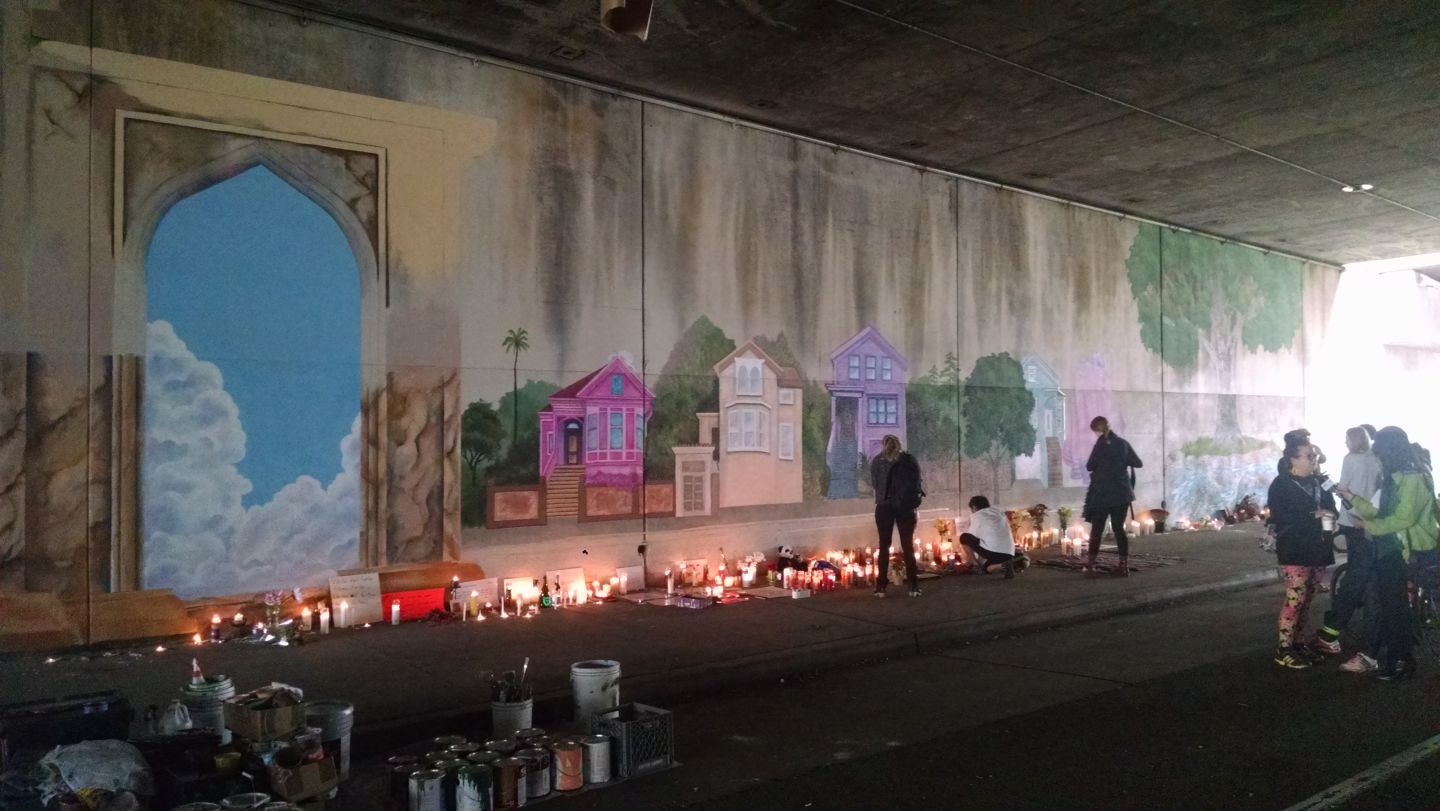
"caption": "A vigil held in memory of Antonio Ramos at the mural project he was working on when he was killed.",
"description": null,
"title": "Ramos vigil",
"credit": "Andrew Stelzer/KQED",
"status": "inherit",
"isLoading": false,
"fetchFailed": false
},
"news_10770820": {
"type": "attachments",
"id": "news_10770820",
"meta": {
"index": "attachments_1716263798",
"site": "news",
"id": "10770820",
"found": true
},
"parent": 10770813,
"imgSizes": {
"twentyfourteen-full-width": {
"file": "https://ww2.kqed.org/app/uploads/sites/10/2015/11/RS17524_Judge-addresses-holloway-qut-1038x576.jpg",
"width": 1038,
"mimeType": "image/jpeg",
"height": 576
},
"thumbnail": {
"file": "https://ww2.kqed.org/app/uploads/sites/10/2015/11/RS17524_Judge-addresses-holloway-qut-400x300.jpg",
"width": 400,
"mimeType": "image/jpeg",
"height": 300
},
"fd-sm": {
"file": "https://ww2.kqed.org/app/uploads/sites/10/2015/11/RS17524_Judge-addresses-holloway-qut-960x720.jpg",
"width": 960,
"mimeType": "image/jpeg",
"height": 720
},
"post-thumbnail": {
"file": "https://ww2.kqed.org/app/uploads/sites/10/2015/11/RS17524_Judge-addresses-holloway-qut-672x372.jpg",
"width": 672,
"mimeType": "image/jpeg",
"height": 372
},
"kqedFullSize": {
"file": "https://ww2.kqed.org/app/uploads/sites/10/2015/11/RS17524_Judge-addresses-holloway-qut.jpg",
"width": 1920,
"height": 1440
},
"large": {
"file": "https://ww2.kqed.org/app/uploads/sites/10/2015/11/RS17524_Judge-addresses-holloway-qut-1440x1080.jpg",
"width": 1440,
"mimeType": "image/jpeg",
"height": 1080
},
"guest-author-96": {
"file": "https://ww2.kqed.org/app/uploads/sites/10/2015/11/RS17524_Judge-addresses-holloway-qut-96x96.jpg",
"width": 96,
"mimeType": "image/jpeg",
"height": 96
},
"medium": {
"file": "https://ww2.kqed.org/app/uploads/sites/10/2015/11/RS17524_Judge-addresses-holloway-qut-800x600.jpg",
"width": 800,
"mimeType": "image/jpeg",
"height": 600
},
"guest-author-64": {
"file": "https://ww2.kqed.org/app/uploads/sites/10/2015/11/RS17524_Judge-addresses-holloway-qut-64x64.jpg",
"width": 64,
"mimeType": "image/jpeg",
"height": 64
},
"guest-author-32": {
"file": "https://ww2.kqed.org/app/uploads/sites/10/2015/11/RS17524_Judge-addresses-holloway-qut-32x32.jpg",
"width": 32,
"mimeType": "image/jpeg",
"height": 32
},
"jmtc-small-thumb": {
"file": "https://ww2.kqed.org/app/uploads/sites/10/2015/11/RS17524_Judge-addresses-holloway-qut-280x150.jpg",
"width": 280,
"mimeType": "image/jpeg",
"height": 150
},
"fd-lrg": {
"file": "https://ww2.kqed.org/app/uploads/sites/10/2015/11/RS17524_Judge-addresses-holloway-qut-1920x1440.jpg",
"width": 1920,
"mimeType": "image/jpeg",
"height": 1440
},
"fd-med": {
"file": "https://ww2.kqed.org/app/uploads/sites/10/2015/11/RS17524_Judge-addresses-holloway-qut-1180x885.jpg",
"width": 1180,
"mimeType": "image/jpeg",
"height": 885
},
"detail": {
"file": "https://ww2.kqed.org/app/uploads/sites/10/2015/11/RS17524_Judge-addresses-holloway-qut-75x75.jpg",
"width": 75,
"mimeType": "image/jpeg",
"height": 75
},
"guest-author-128": {
"file": "https://ww2.kqed.org/app/uploads/sites/10/2015/11/RS17524_Judge-addresses-holloway-qut-128x128.jpg",
"width": 128,
"mimeType": "image/jpeg",
"height": 128
}
},
"publishDate": 1448410144,
"modified": 1448416074,
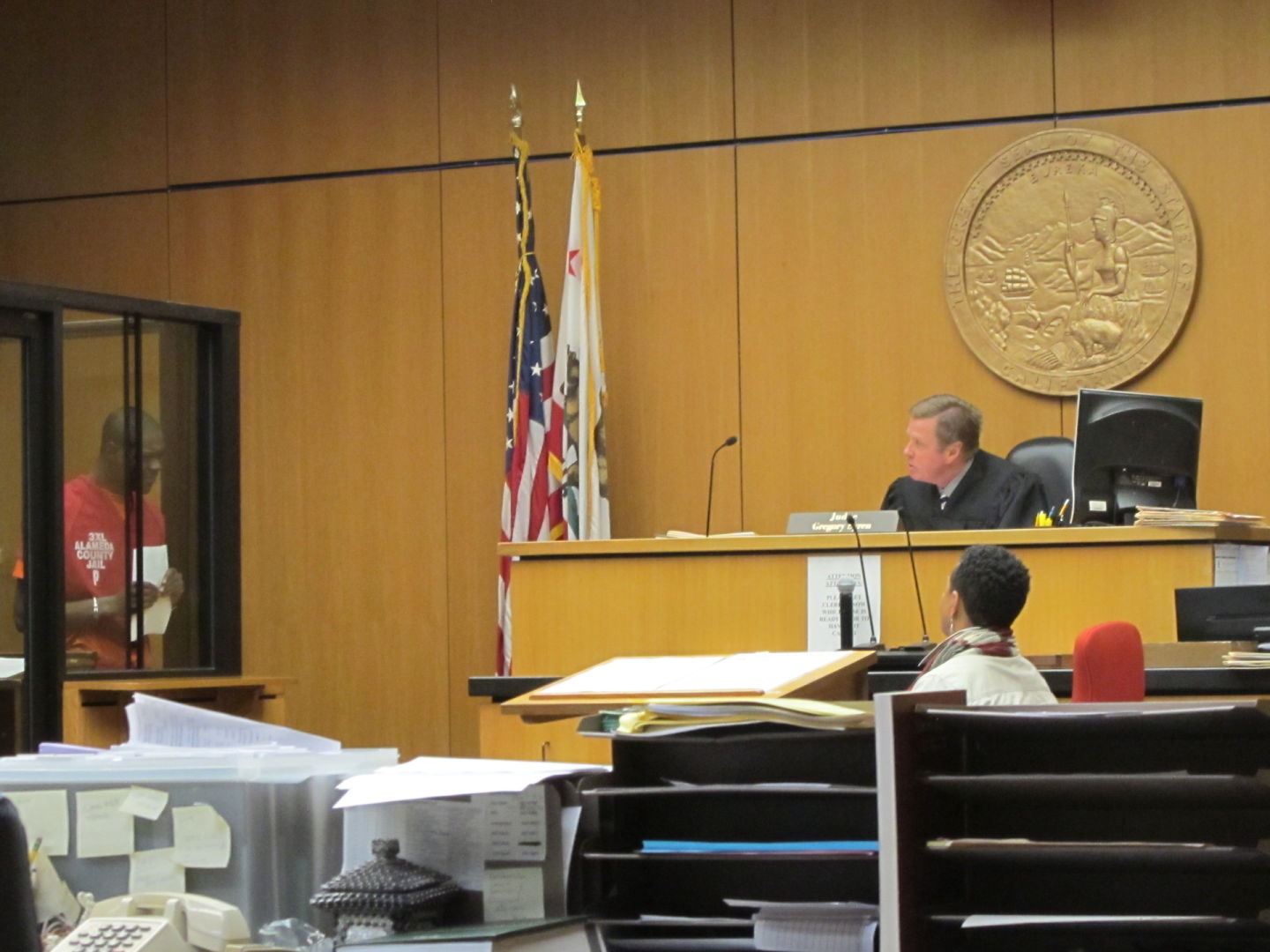
"caption": "Judge Gregory Syren reads charges against Marquise Holloway, in cubicle at left. Holloway is accused of murdering Emeryville muralist Antonio Ramos in September. ",
"description": null,
"title": "RS17524_Judge addresses holloway-qut",
"credit": "Andrew Stelzer/KQED",
"status": "inherit",
"isLoading": false,
"fetchFailed": false
},
"news_10760422": {
"type": "attachments",
"id": "news_10760422",
"meta": {
"index": "attachments_1716263798",
"site": "news",
"id": "10760422",
"found": true
},
"parent": 10760323,
"imgSizes": {
"twentyfourteen-full-width": {
"file": "https://ww2.kqed.org/app/uploads/sites/10/2015/11/IMG_0729-1038x576.jpg",
"width": 1038,
"mimeType": "image/jpeg",
"height": 576
},
"thumbnail": {
"file": "https://ww2.kqed.org/app/uploads/sites/10/2015/11/IMG_0729-400x300.jpg",
"width": 400,
"mimeType": "image/jpeg",
"height": 300
},
"fd-sm": {
"file": "https://ww2.kqed.org/app/uploads/sites/10/2015/11/IMG_0729-960x720.jpg",
"width": 960,
"mimeType": "image/jpeg",
"height": 720
},
"post-thumbnail": {
"file": "https://ww2.kqed.org/app/uploads/sites/10/2015/11/IMG_0729-672x372.jpg",
"width": 672,
"mimeType": "image/jpeg",
"height": 372
},
"kqedFullSize": {
"file": "https://ww2.kqed.org/app/uploads/sites/10/2015/11/IMG_0729.jpg",
"width": 3264,
"height": 2448
},
"large": {
"file": "https://ww2.kqed.org/app/uploads/sites/10/2015/11/IMG_0729-1440x1080.jpg",
"width": 1440,
"mimeType": "image/jpeg",
"height": 1080
},
"guest-author-96": {
"file": "https://ww2.kqed.org/app/uploads/sites/10/2015/11/IMG_0729-96x96.jpg",
"width": 96,
"mimeType": "image/jpeg",
"height": 96
},
"medium": {
"file": "https://ww2.kqed.org/app/uploads/sites/10/2015/11/IMG_0729-800x600.jpg",
"width": 800,
"mimeType": "image/jpeg",
"height": 600
},
"guest-author-64": {
"file": "https://ww2.kqed.org/app/uploads/sites/10/2015/11/IMG_0729-64x64.jpg",
"width": 64,
"mimeType": "image/jpeg",
"height": 64
},
"guest-author-32": {
"file": "https://ww2.kqed.org/app/uploads/sites/10/2015/11/IMG_0729-32x32.jpg",
"width": 32,
"mimeType": "image/jpeg",
"height": 32
},
"jmtc-small-thumb": {
"file": "https://ww2.kqed.org/app/uploads/sites/10/2015/11/IMG_0729-280x150.jpg",
"width": 280,
"mimeType": "image/jpeg",
"height": 150
},
"fd-lrg": {
"file": "https://ww2.kqed.org/app/uploads/sites/10/2015/11/IMG_0729-1920x1440.jpg",
"width": 1920,
"mimeType": "image/jpeg",
"height": 1440
},
"fd-med": {
"file": "https://ww2.kqed.org/app/uploads/sites/10/2015/11/IMG_0729-1180x885.jpg",
"width": 1180,
"mimeType": "image/jpeg",
"height": 885
},
"detail": {
"file": "https://ww2.kqed.org/app/uploads/sites/10/2015/11/IMG_0729-75x75.jpg",
"width": 75,
"mimeType": "image/jpeg",
"height": 75
},
"guest-author-128": {
"file": "https://ww2.kqed.org/app/uploads/sites/10/2015/11/IMG_0729-128x128.jpg",
"width": 128,
"mimeType": "image/jpeg",
"height": 128
}
},
"publishDate": 1447653983,
"modified": 1447654080,
"caption": "Jordan says he comes across apartments that are just out of reach for what his voucher is worth. The new fair market rent caps could benefit Jordan's search.",
"description": "Jordan says he comes across apartments that are just out of reach for what his voucher is worth. The new fair market rent caps could benefit Jordan's search.",
"title": "Jordan/Junior",
"credit": "Devin Katayama/KQED",
"status": "inherit",
"isLoading": false,
"fetchFailed": false
}
},
"audioPlayerReducer": {
"postId": "stream_live",
"isPaused": true,
"isPlaying": false,
"pfsActive": false,
"pledgeModalIsOpen": true,
"playerDrawerIsOpen": false,
"liveAudioPlayStartedAt": 0,
"liveAudioPlayContext": ""
},
"authorsReducer": {
"byline_news_10781019": {
"type": "authors",
"id": "byline_news_10781019",
"meta": {
"override": true
},
"slug": "byline_news_10781019",
"name": "\u003cstrong>\u003ca href=\"http://fusion.net/author/pendarvis-harshaw/\">Pendarvis Harshaw\u003c/a>\u003cbr>\u003ca href=\"https://youthradio.org/\">Youth Radio\u003c/a>\u003c/strong>",
"isLoading": false
},
"andrewstelzer": {
"type": "authors",
"id": "213",
"meta": {
"index": "authors_1716337520",
"id": "213",
"found": true
},
"name": "Andrew Stelzer",
"firstName": "Andrew",
"lastName": "Stelzer",
"slug": "andrewstelzer",
"email": "andrewstelzer@gmail.com",
"display_author_email": false,
"staff_mastheads": [],
"title": null,
"bio": "Andrew Stelzer has been reporting for KQED since 2010, and is a producer at \u003ca href=\"http://www.radioproject.org\" target=\"_blank\">Making Contact\u003c/a> in Oakland.. His work has been featured on programs including \u003ca href=\"http://www.npr.org/templates/story/story.php?storyId=5010\" target=\"_blank\">NPR’s Weekend Edition\u003c/a>, \u003ca href=\"http://www.theworld.org/\" target=\"_blank\">PRI’s The World\u003c/a>, \u003ca href=\"http://www.studio360.org/\" target=\"_blank\">Studio 360\u003c/a>, \u003ca href=\"http://marketplace.publicradio.org/\" target=\"_blank\">Marketplace\u003c/a>,\u003ca href=\"http://www.loe.org/\" target=\"_blank\">Living on Earth\u003c/a>, \u003ca href=\"http://www.onthemedia.org/\" target=\"_blank\">On the Media\u003c/a>, \u003ca href=\"http://www.latinousa.org/index.html\" target=\"_blank\">Latino USA,\u003c/a> \u003ca href=\"http://www.onlyagame.org/\" rel=\"tag\">Only a Game,\u003c/a> \u003ca href=\"http://www.tswi.org/\" target=\"_blank\">Radio Netherlands,\u003c/a> \u003ca href=\"http://worldradio.ch/index.shtml\" target=\"_blank\">World Radio Switzerland,\u003c/a> and \u003ca href=\"http://www.rfi.fr/langues/statiques/rfi_anglais.asp\" target=\"_blank\">Radio France International\u003c/a>. Andrew has written for publications including \u003ca href=\"http://www.inthesetimes.com/site/about/author/2369\" target=\"_blank\">In These Times\u003c/a>, \u003ca href=\"http://www.progressive.org/\" target=\"_blank\">The Progressive\u003c/a>, \u003ca href=\"http://ipsnews.net/\" target=\"_blank\">Interpress Service\u003c/a>, \u003ca href=\"http://www.tampabay.com/\" target=\"_blank\">The St. Petersburg Times\u003c/a>, and \u003ca href=\"http://www.eastbayexpress.com/ebx/Home\" target=\"_blank\">The East Bay Express\u003c/a>.\r\n\r\nAndrew’s work has received numerous awards from the Society of Professional Journalists, the National Lesbian and Gay Journalists Association, and the National Council on Crime and Delinquency.\r\n\r\nHe previously was a reporter at \u003ca href=\"http://www.wmnf.org/\" target=\"_blank\">WMNF\u003c/a> radio in Tampa, FL, and reporter and youth advocate st \u003ca href=\"http://www.kboo.org/\" target=\"_blank\">KBOO \u003c/a> in Portland, Oregon. Andrew has conducted radio production trainings around the world, from Algeria, to New Orleans, to the desert of Southern Jordan.",
"avatar": "https://secure.gravatar.com/avatar/14c7e75469395cb2468d45c9f6896ca9?s=600&d=blank&r=g",
"twitter": null,
"facebook": null,
"instagram": null,
"linkedin": null,
"sites": [
{
"site": "arts",
"roles": [
"contributor"
]
},
{
"site": "news",
"roles": [
"author"
]
},
{
"site": "stateofhealth",
"roles": [
"author"
]
}
],
"headData": {
"title": "Andrew Stelzer | KQED",
"description": null,
"ogImgSrc": "https://secure.gravatar.com/avatar/14c7e75469395cb2468d45c9f6896ca9?s=600&d=blank&r=g",
"twImgSrc": "https://secure.gravatar.com/avatar/14c7e75469395cb2468d45c9f6896ca9?s=600&d=blank&r=g"
},
"isLoading": false,
"link": "/author/andrewstelzer"
},
"danbrekke": {
"type": "authors",
"id": "222",
"meta": {
"index": "authors_1716337520",
"id": "222",
"found": true
},
"name": "Dan Brekke",
"firstName": "Dan",
"lastName": "Brekke",
"slug": "danbrekke",
"email": "dbrekke@kqed.org",
"display_author_email": true,
"staff_mastheads": [
"news",
"science"
],
"title": "KQED Editor and Reporter",
"bio": "Dan Brekke is a reporter and editor for KQED News, responsible for coverage of topics ranging from California water issues to the Bay Area's transportation challenges. In a newsroom career that began in Chicago in 1972, Dan has worked for \u003cem>The San Francisco Examiner,\u003c/em> Wired and TechTV and has been published in The New York Times, The New York Times Magazine, Business 2.0, Salon and elsewhere.\r\n\r\nSince joining KQED in 2007, Dan has reported, edited and produced both radio and online features and breaking news pieces. He has shared as both editor and reporter in four Society of Professional Journalists Norcal Excellence in Journalism awards and one Edward R. Murrow regional award. He was chosen for a spring 2017 residency at the Mesa Refuge to advance his research on California salmon.\r\n\r\nEmail Dan at: \u003ca href=\"mailto:dbrekke@kqed.org\">dbrekke@kqed.org\u003c/a>\r\n\r\n\u003cstrong>Twitter:\u003c/strong> \u003ca href=\"https://twitter.com/danbrekke\" rel=\"noopener noreferrer\">twitter.com/danbrekke\u003c/a>\r\n\u003cstrong>Facebook:\u003c/strong> \u003ca href=\"https://www.facebook.com/danbrekke\" rel=\"noopener noreferrer\">www.facebook.com/danbrekke\u003c/a>\r\n\u003cstrong>LinkedIn:\u003c/strong> \u003ca href=\"https://www.linkedin.com/in/danbrekke\" rel=\"noopener noreferrer\">www.linkedin.com/in/danbrekke\u003c/a>",
"avatar": "https://secure.gravatar.com/avatar/c8126230345efca3f7aa89b1a402be45?s=600&d=mm&r=g",
"twitter": "danbrekke",
"facebook": null,
"instagram": "https://www.instagram.com/dan.brekke/",
"linkedin": "https://www.linkedin.com/in/danbrekke/",
"sites": [
{
"site": "news",
"roles": [
"administrator",
"create_posts"
]
},
{
"site": "stateofhealth",
"roles": [
"editor"
]
},
{
"site": "science",
"roles": [
"editor"
]
},
{
"site": "quest",
"roles": [
"contributor"
]
},
{
"site": "food",
"roles": [
"contributor"
]
},
{
"site": "forum",
"roles": [
"contributor"
]
},
{
"site": "liveblog",
"roles": [
"editor"
]
}
],
"headData": {
"title": "Dan Brekke | KQED",
"description": "KQED Editor and Reporter",
"ogImgSrc": "https://secure.gravatar.com/avatar/c8126230345efca3f7aa89b1a402be45?s=600&d=mm&r=g",
"twImgSrc": "https://secure.gravatar.com/avatar/c8126230345efca3f7aa89b1a402be45?s=600&d=mm&r=g"
},
"isLoading": false,
"link": "/author/danbrekke"
},
"tgoldberg": {
"type": "authors",
"id": "258",
"meta": {
"index": "authors_1716337520",
"id": "258",
"found": true
},
"name": "Ted Goldberg",
"firstName": "Ted",
"lastName": "Goldberg",
"slug": "tgoldberg",
"email": "tgoldberg@kqed.org",
"display_author_email": true,
"staff_mastheads": [
"news"
],
"title": "KQED Managing Editor, News and Newscasts",
"bio": "Ted Goldberg is Managing Editor of News and Newscasts at KQED. His main reporting beat is the Bay Area's oil refining industry.\r\n\r\nPrior to joining KQED in 2014, Ted worked at CBS News and WCBS AM in New York and Bay City News and KCBS Radio in San Francisco. He graduated from Oberlin College in Ohio in 1998.",
"avatar": "https://secure.gravatar.com/avatar/30ce2e4fe89135e104f89be2394d16225b9d36c121b5b3cb7651ce642978b96f?s=600&d=blank&r=g",
"twitter": "TedrickG",
"bluesky": null,
"facebook": null,
"instagram": null,
"linkedin": null,
"sites": [
{
"site": "news",
"roles": [
"editor"
]
},
{
"site": "science",
"roles": [
"editor"
]
}
],
"headData": {
"title": "Ted Goldberg | KQED",
"description": "KQED Managing Editor, News and Newscasts",
"ogImgSrc": "https://secure.gravatar.com/avatar/30ce2e4fe89135e104f89be2394d16225b9d36c121b5b3cb7651ce642978b96f?s=600&d=blank&r=g",
"twImgSrc": "https://secure.gravatar.com/avatar/30ce2e4fe89135e104f89be2394d16225b9d36c121b5b3cb7651ce642978b96f?s=600&d=blank&r=g"
},
"isLoading": false,
"link": "/author/tgoldberg"
},
"rbowe": {
"type": "authors",
"id": "3231",
"meta": {
"index": "authors_1716337520",
"id": "3231",
"found": true
},
"name": "Rebecca Bowe",
"firstName": "Rebecca",
"lastName": "Bowe",
"slug": "rbowe",
"email": "rbowe@kqed.org",
"display_author_email": false,
"staff_mastheads": [],
"title": null,
"bio": "Rebecca Bowe is a journalist based in San Francisco. She's covered Bay Area news since 2009, and previously served as News Editor of the San Francisco Bay Guardian. Follow her on Twitter @ByRebeccaBowe.",
"avatar": "https://secure.gravatar.com/avatar/50e1da0639521639108e89c123a76c9c?s=600&d=blank&r=g",
"twitter": null,
"facebook": null,
"instagram": null,
"linkedin": null,
"sites": [
{
"site": "news",
"roles": [
"subscriber"
]
},
{
"site": "science",
"roles": [
"editor"
]
}
],
"headData": {
"title": "Rebecca Bowe | KQED",
"description": null,
"ogImgSrc": "https://secure.gravatar.com/avatar/50e1da0639521639108e89c123a76c9c?s=600&d=blank&r=g",
"twImgSrc": "https://secure.gravatar.com/avatar/50e1da0639521639108e89c123a76c9c?s=600&d=blank&r=g"
},
"isLoading": false,
"link": "/author/rbowe"
},
"whuntsberry": {
"type": "authors",
"id": "6622",
"meta": {
"index": "authors_1716337520",
"id": "6622",
"found": true
},
"name": "Will Huntsberry",
"firstName": "Will",
"lastName": "Huntsberry",
"slug": "whuntsberry",
"email": "whuntsberry@KQED.org",
"display_author_email": false,
"staff_mastheads": [],
"title": null,
"bio": null,
"avatar": "https://secure.gravatar.com/avatar/848bcf0224ecd5d444bfe96512817243?s=600&d=blank&r=g",
"twitter": null,
"facebook": null,
"instagram": null,
"linkedin": null,
"sites": [
{
"site": "news",
"roles": [
"author"
]
}
],
"headData": {
"title": "Will Huntsberry | KQED",
"description": null,
"ogImgSrc": "https://secure.gravatar.com/avatar/848bcf0224ecd5d444bfe96512817243?s=600&d=blank&r=g",
"twImgSrc": "https://secure.gravatar.com/avatar/848bcf0224ecd5d444bfe96512817243?s=600&d=blank&r=g"
},
"isLoading": false,
"link": "/author/whuntsberry"
},
"sdirks": {
"type": "authors",
"id": "7239",
"meta": {
"index": "authors_1716337520",
"id": "7239",
"found": true
},
"name": "Sandhya Dirks",
"firstName": "Sandhya",
"lastName": "Dirks",
"slug": "sdirks",
"email": "sdirks@kqed.org",
"display_author_email": true,
"staff_mastheads": [],
"title": null,
"bio": "Sandhya Dirks was the race and equity reporter at KQED. She approaches race and equity not as a beat, but as a fundamental lens for all investigative and explanatory reporting.\r\n\r\nSandhya covered policing, housing, social justice movements, and the shifting demographics of cities and suburbs.\r\n\r\nShe was the creator and co-host of the podcast American Suburb, about the transformation of suburbia into the most diverse space in American life. She was the editor for Truth Be Told, an advice show for and by people of color. \r\n\r\nHer stories about race, space, and belonging were part of KQED's So Well Spoken project, which won RNDTA's Kaleidoscope award, honoring outstanding achievements in the coverage of diversity.\r\n\r\nPrior to joining KQED in 2015, Sandhya covered the 2012 presidential election from the swing state of Iowa for Iowa Public Radio. At KPBS in San Diego, she broke the story of a sexual harassment scandal that led to the mayor's resignation.\r\n\r\nShe got her start in radio working on documentaries about Oakland that investigated the high drop-out rate in public schools and mistrust between the police and the community.\r\n\r\nSandhya lives in Oakland and believes all stories are stories about power.",
"avatar": "https://secure.gravatar.com/avatar/c0247cb15929cd4c197672fd73d45300?s=600&d=blank&r=g",
"twitter": "audiosand",
"facebook": null,
"instagram": null,
"linkedin": null,
"sites": [
{
"site": "news",
"roles": [
"subscriber"
]
},
{
"site": "stateofhealth",
"roles": [
"author"
]
}
],
"headData": {
"title": "Sandhya Dirks | KQED",
"description": null,
"ogImgSrc": "https://secure.gravatar.com/avatar/c0247cb15929cd4c197672fd73d45300?s=600&d=blank&r=g",
"twImgSrc": "https://secure.gravatar.com/avatar/c0247cb15929cd4c197672fd73d45300?s=600&d=blank&r=g"
},
"isLoading": false,
"link": "/author/sdirks"
},
"dkatayama": {
"type": "authors",
"id": "7240",
"meta": {
"index": "authors_1716337520",
"id": "7240",
"found": true
},
"name": "Devin Katayama",
"firstName": "Devin",
"lastName": "Katayama",
"slug": "dkatayama",
"email": "dkatayama@kqed.org",
"display_author_email": true,
"staff_mastheads": [
"news"
],
"title": "Editor of Talent and Development",
"bio": "Devin Katayama is former Editor of Talent and Development for KQED. He supported our internship program and on-call staff by looking for equitable opportunities to improve the newsroom.\r\n\r\nHe previously hosted The Bay and American Suburb podcasts from KQED News. Prior to returning to the Bay Area in 2015, Devin was the education reporter for WFPL in Louisville and worked as a producer with radio stations in Chicago and Portland, OR. His work has appeared on NPR’s \u003cem>Morning Edition, All Things Considered, The Takeaway\u003c/em> and \u003cem>Here and Now.\u003c/em>\r\n\r\nDevin earned his MA in Journalism from Columbia College Chicago, where he was a Follett Fellow and the recipient of the 2011 Studs Terkel Community Media Workshop Scholarship for his story on Chicago's homeless youth. He won WBUR's 2014 Daniel Schorr award and a regional RTNDA Edward R. Murrow Award for his documentary \"At Risk\" that looked at issues facing some of Louisville's students. Devin has also received numerous local awards from the Associated Press and the Society of Professional Journalists.",
"avatar": "https://secure.gravatar.com/avatar/d0d2978a31002fb2de107921a8e18405?s=600&d=blank&r=g",
"twitter": "RadioDevin",
"facebook": null,
"instagram": null,
"linkedin": null,
"sites": [
{
"site": "arts",
"roles": []
},
{
"site": "news",
"roles": [
"author"
]
},
{
"site": "stateofhealth",
"roles": [
"author"
]
},
{
"site": "forum",
"roles": [
"editor"
]
},
{
"site": "perspectives",
"roles": [
"editor"
]
}
],
"headData": {
"title": "Devin Katayama | KQED",
"description": "Editor of Talent and Development",
"ogImgSrc": "https://secure.gravatar.com/avatar/d0d2978a31002fb2de107921a8e18405?s=600&d=blank&r=g",
"twImgSrc": "https://secure.gravatar.com/avatar/d0d2978a31002fb2de107921a8e18405?s=600&d=blank&r=g"
},
"isLoading": false,
"link": "/author/dkatayama"
},
"scohen": {
"type": "authors",
"id": "8644",
"meta": {
"index": "authors_1716337520",
"id": "8644",
"found": true
},
"name": "Susan Cohen",
"firstName": "Susan",
"lastName": "Cohen",
"slug": "scohen",
"email": "scohen@kqed.org",
"display_author_email": false,
"staff_mastheads": [],
"title": "KQED Contributor",
"bio": "Susan Cohen is an award-winning journalist who recently completed a master’s degree in documentary production at the UC Berkeley Graduate School of Journalism. Before making the switch to video, Susan spent four years at the \u003cem>Charleston City Pape\u003c/em>r, a South Carolina alt-weekly, where she wrote more than 20 cover stories on everything from doomsday preppers to quidditch to world-class chefs. Her writing has also been featured in the \u003cem>East Bay Express\u003c/em>, This Recording, and the Hairpin, and she just finished her first short documentary, \u003cem>Today I am a Man\u003c/em>.",
"avatar": "https://secure.gravatar.com/avatar/7ef08170f4a1b84816aac945049b1202?s=600&d=blank&r=g",
"twitter": null,
"facebook": null,
"instagram": null,
"linkedin": null,
"sites": [
{
"site": "arts",
"roles": [
"author"
]
},
{
"site": "news",
"roles": [
"subscriber"
]
}
],
"headData": {
"title": "Susan Cohen | KQED",
"description": "KQED Contributor",
"ogImgSrc": "https://secure.gravatar.com/avatar/7ef08170f4a1b84816aac945049b1202?s=600&d=blank&r=g",
"twImgSrc": "https://secure.gravatar.com/avatar/7ef08170f4a1b84816aac945049b1202?s=600&d=blank&r=g"
},
"isLoading": false,
"link": "/author/scohen"
},
"lwaldron": {
"type": "authors",
"id": "11215",
"meta": {
"index": "authors_1716337520",
"id": "11215",
"found": true
},
"name": "Lucas Waldron",
"firstName": null,
"lastName": null,
"slug": "lwaldron",
"email": "lwaldron@KQED.org",
"display_author_email": false,
"staff_mastheads": [],
"title": "KQED Contributor",
"bio": null,
"avatar": "https://secure.gravatar.com/avatar/c03207785cbe81651057ad84020987d6?s=600&d=blank&r=g",
"twitter": null,
"facebook": null,
"instagram": null,
"linkedin": null,
"sites": [
{
"site": "news",
"roles": [
"author"
]
}
],
"headData": {
"title": "Lucas Waldron | KQED",
"description": "KQED Contributor",
"ogImgSrc": "https://secure.gravatar.com/avatar/c03207785cbe81651057ad84020987d6?s=600&d=blank&r=g",
"twImgSrc": "https://secure.gravatar.com/avatar/c03207785cbe81651057ad84020987d6?s=600&d=blank&r=g"
},
"isLoading": false,
"link": "/author/lwaldron"
}
},
"pagesReducer": {
"news_tag_oakland": {
"type": "terms",
"id": "news_34054",
"meta": {
"index": "terms_1716263798",
"site": "news",
"id": "34054",
"score": 6.883923
},
"featImg": null,
"name": "oakland",
"description": null,
"taxonomy": "tag",
"headData": {
"twImgId": null,
"twTitle": null,
"ogTitle": null,
"ogImgId": null,
"twDescription": null,
"description": null,
"title": "oakland Archives | KQED News",
"ogDescription": null
},
"ttid": 34071,
"slug": "oakland",
"isLoading": false,
"title": "oakland",
"pageMeta": {
"site": "news",
"WpPageTemplate": "page-topic-editorial",
"currentPage": 61
},
"blocks": [
{
"blockName": "kqed/post-list",
"attrs": {
"layout": "cardArticle2",
"query": "posts/news?tag=oakland",
"seeMore": false,
"paginated": true,
"page": 61
}
},
{
"blockName": "kqed/ad"
}
]
}
},
"pfsSessionReducer": {},
"postsReducer": {
"stream_live": {
"type": "live",
"id": "stream_live",
"audioUrl": "https://streams.kqed.org/kqedradio",
"title": "Live Stream",
"excerpt": "Live Stream information currently unavailable.",
"link": "/radio",
"featImg": "",
"label": {
"name": "KQED Live",
"link": "/"
}
},
"stream_kqedNewscast": {
"type": "posts",
"id": "stream_kqedNewscast",
"audioUrl": "https://www.kqed.org/.stream/anon/radio/RDnews/newscast.mp3?_=1",
"title": "KQED Newscast",
"featImg": "",
"label": {
"name": "88.5 FM",
"link": "/"
}
},
"news_10884334": {
"type": "posts",
"id": "news_10884334",
"meta": {
"index": "posts_1716263798",
"site": "news",
"id": "10884334",
"score": null,
"sort": [
1457563531000
]
},
"parent": 0,
"labelTerm": {
"site": "news",
"term": 6944
},
"blocks": [],
"publishDate": 1457563531,
"format": "video",
"disqusTitle": "How Does Oakland Turn Food Scraps to Soil?",
"title": "How Does Oakland Turn Food Scraps to Soil?",
"headTitle": "Bay Curious | News Fix | KQED News",
"content": "\u003cp>\u003cem>As part of our series \u003ca href=\"http://ww2.kqed.org/news/series/baycurious\" target=\"_blank\">Bay Curious\u003c/a>, we are answering questions from KQED listeners and readers. This one comes from Maggie Glaize.\u003c/em>\u003c/p>\n\u003cp>[dropcap]I[/dropcap] remember the first time I was confronted by an ominous set of black, blue and green bins.\u003c/p>\n\u003cp>We’ve all been there, looking down at our to-go salad container and realizing in horror that we have no idea which colorful bin is meant to receive the remains of our lunch. If you've been tempted to bypass the green bin for the landfill and recycling options, you're not alone.\u003c/p>\n\u003cp>But composting is not just a suggested earth-friendly activity; it's actually \u003ca href=\"http://www.sfgate.com/green/article/S-F-OKs-toughest-recycling-law-in-U-S-3295664.php\" target=\"_blank\">mandatory in some cities\u003c/a>. For good reason -- nobody wants to add to the \u003ca href=\"http://www.epa.gov/smm/advancing-sustainable-materials-management-facts-and-figures\" target=\"_blank\">167 million tons of garbage\u003c/a> Americans produce each year.\u003c/p>\n\u003cp>[baycuriousbug]\u003c/p>\n\u003cp>In July 2015, Oakland \u003ca href=\"http://www.eastbayexpress.com/SevenDays/archives/2015/06/26/oaklands-new-recycling-program-offers-expanded-composting-bulky-pickup-services\" target=\"_blank\">began requiring all residences to have compost bins\u003c/a> and contracted Texas-based Waste Management to manage the compost program.\u003c/p>\n\u003cp>[ad fullwidth]\u003c/p>\n\u003cp>In light of compost’s rising popularity, Bay Curious reader Maggie Glaize wanted to know, “Where does all of that compost end up?”\u003c/p>\n\u003cp>I arrived at Waste Management’s East Oakland headquarters at 5 a.m. on a recent Wednesday, searching for an answer to Maggie’s question.\u003c/p>\n\u003cp>Dozens of collection trucks line the parking lot surrounding the Waste Management building while boisterous truck operators, clutching coffee and energy drinks, crowd into the office to pick up their route assignments for the day. By 5:30 a.m., I’m riding shotgun in a collection truck with Amanuel Yemane, a seasoned truck operator and my guide for the morning.\u003c/p>\n\u003cp>Yemane quickly gives me a terminology lesson.\u003c/p>\n\u003cp>“Compost” is the final product in the process of composting. It’s the nutrient-rich soil you buy when you finally plant that urban garden on your fire escape you’ve been dreaming of.\u003c/p>\n\u003cp>“Green waste,” Yemane says, is the stuff in your compost bin (like food scraps, leaves and coffee grounds). Green waste may one day become compost, but only if it undergoes an important decomposition process.\u003c/p>\n\u003cfigure id=\"attachment_10889757\" class=\"wp-caption aligncenter\" style=\"max-width: 1600px\">\u003cimg class=\"wp-image-10889757 size-full\" src=\"http://ww2.kqed.org/news/wp-content/uploads/sites/10/2016/03/compost-01.jpg\" alt=\"Green waste includes branches, paper, food scraps and every other product that has been alive in your lifetime.\" width=\"1600\" height=\"940\" srcset=\"https://ww2.kqed.org/app/uploads/sites/10/2016/03/compost-01.jpg 1600w, https://ww2.kqed.org/app/uploads/sites/10/2016/03/compost-01-400x235.jpg 400w, https://ww2.kqed.org/app/uploads/sites/10/2016/03/compost-01-800x470.jpg 800w, https://ww2.kqed.org/app/uploads/sites/10/2016/03/compost-01-1180x693.jpg 1180w, https://ww2.kqed.org/app/uploads/sites/10/2016/03/compost-01-960x564.jpg 960w\" sizes=\"(max-width: 1600px) 100vw, 1600px\">\u003cfigcaption class=\"wp-caption-text\">Green waste includes branches, paper, food scraps and every other product that has been alive in your lifetime. \u003ccite>(Lucas Waldron/KQED)\u003c/cite>\u003c/figcaption>\u003c/figure>\n\u003cp>The biggest problem with collecting green waste, Yemane explains, is that a lot of people don’t know what is compostable. People often put their green waste inside plastic bags, which cannot be broken down into compost. In fact, later in the process, plastic bags become a huge nuisance for composters -- but we’ll get to that.\u003c/p>\n\u003cp>Another challenge in the collection process: Some green waste is truly gnarly. Occasionally, Yemane will try to empty a green bin on his route, but the food scraps inside will be so congealed and tightly packed that they won’t shake out. Those bins, which often smell particularly foul, are left on the curb for their owner to face.\u003c/p>\n\u003caside class=\"alignright\">\n\u003ch3>Quick tip\u003c/h3>\n\u003cp>If you put a lot of mushy food scraps in your green bin, try mixing scrap paper in with your green waste. The contents of your shredder, old receipts and post-its all make for great odor and moisture absorption within your bin.\u003c/p>\n\u003c/aside>\n\u003cp>After a full morning of green waste collection, truck operators drive to the Davis Street Transfer Station in San Leandro and dump the day’s haul, anywhere from 2 to 6 tons of green waste, onto a huge concrete platform. All of the green waste is loaded into much larger trucks, called transfer trucks, and carted off to Redwood Landfill 45 miles away in Novato.\u003c/p>\n\u003cp>Magic (and chemistry!) really start at the landfill, which despite its name is primarily a composting facility. When the transfer trucks arrive, they dump all the green waste onto an asphalt pad that's larger than a football field. Asphalt doesn't absorb water, which is critical, because compost piles need a lot of water to effectively decompose.\u003c/p>\n\u003cp>Next the green waste is passed through a machine that grinds the materials into smaller bits. Now the green waste is starting to look more like dirt or soil, and less like a heaping pile of leaves, Christmas trees, melon rinds, coffee cups and mysterious lumps of someone's unfinished dinner.\u003c/p>\n\u003cp>But this is where the plastic bags come back to haunt us. When a plastic bag is mixed with green waste, the grinder spits out tiny pieces of plastic that can pollute the air, be accidentally eaten by birds, and otherwise wreak havoc on the environment. So if you take one thing away from this article, remember: No plastic bags in the green bin.\u003c/p>\n\u003cp>The freshly ground materials are then arranged into compost piles, officially called \"Covered Aerated Static Piles.\"\u003c/p>\n\u003cfigure id=\"attachment_10889755\" class=\"wp-caption aligncenter\" style=\"max-width: 1600px\">\u003cimg class=\"wp-image-10889755 size-full\" src=\"http://ww2.kqed.org/news/wp-content/uploads/sites/10/2016/03/compost-03.jpg\" alt=\"Compost piles may sit for three to four months as microorganisms inside the piles decompose the green waste.\" width=\"1600\" height=\"967\" srcset=\"https://ww2.kqed.org/app/uploads/sites/10/2016/03/compost-03.jpg 1600w, https://ww2.kqed.org/app/uploads/sites/10/2016/03/compost-03-400x242.jpg 400w, https://ww2.kqed.org/app/uploads/sites/10/2016/03/compost-03-800x484.jpg 800w, https://ww2.kqed.org/app/uploads/sites/10/2016/03/compost-03-1180x713.jpg 1180w, https://ww2.kqed.org/app/uploads/sites/10/2016/03/compost-03-960x580.jpg 960w\" sizes=\"(max-width: 1600px) 100vw, 1600px\">\u003cfigcaption class=\"wp-caption-text\">Compost piles may sit for three to four months, as microorganisms inside the piles decompose the green waste. \u003ccite>(Lucas Waldron/KQED)\u003c/cite>\u003c/figcaption>\u003c/figure>\n\u003cp>A network of pipes pumps air through the pile, keeping alive the microorganisms that decompose the waste. As they eat, these microorganisms create heat, stimulating other thermophilic (heat-loving) microorganisms to come out to bask in the abundance of decomposing green waste. The ceaseless appetite of these microorganisms governs the entire composting process.\u003c/p>\n\u003cp>Alisha McCutcheon, the technical manager at Redwood Landfill, monitors the temperature inside the piles with thermometers she can control from her office several hundred yards away. This phase of composting takes three to four weeks. and the pile's temperature must reach 131 degrees Fahrenheit for three of those days to ensure harmful pathogens, like fly larvae and weed seeds, are killed.\u003c/p>\n\u003caside class=\"alignleft\">\u003ca href=\"http://ww2.kqed.org/news/2016/01/05/what-happens-to-san-franciscos-recycling-once-it-leaves-the-curb\" target=\"_blank\">\u003cimg src=\"http://ww2.kqed.org/news/wp-content/uploads/sites/10/2016/03/Wall-of-aluminum_star.jpg\" alt=\"\">\u003c/a>\n\u003ch2>What Happens to San Francisco’s Recycling Once It Leaves the Curb?\u003c/h2>\n\u003c/aside>\n\u003cp>\"Good bacteria,\" like the microbes that break down fats and proteins, can survive in the warmer temperatures and will continue to help facilitate decomposition throughout the composting process.\u003c/p>\n\u003cp>Next, the compost pile spends two to three months \"curing,\" or cooling down. The curing phase allows fungus to start growing and other \"good bacteria\" to circulate within the pile.\u003c/p>\n\u003cp>About four months after the green waste left your curb, the compost pile is ready for its final processing. The compost is sifted through a screening machine, which finely combs the material to 3/8 of an inch. Any remaining contaminants, like plastic bits, are removed during this process.\u003c/p>\n\u003cp>[contextly_sidebar id=\"c7jXhY8QNQaeIsTkhIZYivPu76eGHOQq\"]\u003c/p>\n\u003cp>The final output is perfectly cured, finely filtered compost.\u003c/p>\n\u003cp>But after all of that, I still didn't really answer Maggie's question: Where does the compost actually end up?\u003c/p>\n\u003cp>Turns out, the compost ends up in more places than you might think.\u003c/p>\n\u003cp>Anyone can go to the Redwood Landfill and purchase bags of compost. Landscaping centers, vineyards and farms all buy the nutrient-rich compost in bulk. Some compost is donated back to the community through community farming programs.\u003c/p>\n\u003cp>Rebecca Jewell, the recycling program manager at one of Waste Management’s facilities, says the compost produced in the Bay Area largely stays here, circulating back into the economy through the agriculture industry.\u003c/p>\n\u003cp>In essence, the compost ends up in those vegetables you bought at the farmers market, the glass(es) of wine you drank when your grandmother came into town and wanted to \"experience Napa\" and, possibly, in the urban garden you eventually plant on your fire escape.\u003c/p>\n\u003cp>[ad floatright]\u003c/p>\n\u003cp>\u003cem>Got a question you want KQED’s Bay Curious team to investigate? \u003ca href=\"http://ww2.kqed.org/news/series/baycurious\" target=\"_blank\">Ask!\u003c/a>\u003c/em>\u003c/p>\n\n",
"disqusIdentifier": "10884334 http://ww2.kqed.org/news/?p=10884334",
"disqusUrl": "https://ww2.kqed.org/news/2016/03/09/how-does-oakland-turn-food-scraps-to-soil/",
"stats": {
"hasVideo": false,
"hasChartOrMap": false,
"hasAudio": false,
"hasPolis": false,
"wordCount": 1246,
"hasGoogleForm": false,
"hasGallery": false,
"hasHearkenModule": false,
"iframeSrcs": [],
"paragraphCount": 35
},
"modified": 1457569786,
"excerpt": "Ride along with your food scraps as they make their way from the curb to the compost pile.",
"headData": {
"twImgId": "",
"twTitle": "",
"ogTitle": "",
"ogImgId": "",
"twDescription": "",
"description": "Ride along with your food scraps as they make their way from the curb to the compost pile.",
"title": "How Does Oakland Turn Food Scraps to Soil? | KQED",
"ogDescription": "",
"schema": {
"@context": "https://schema.org",
"@type": "NewsArticle",
"headline": "How Does Oakland Turn Food Scraps to Soil?",
"datePublished": "2016-03-09T14:45:31-08:00",
"dateModified": "2016-03-09T16:29:46-08:00",
"image": "https://cdn.kqed.org/wp-content/uploads/2020/02/KQED-OG-Image@1x.png",
"isAccessibleForFree": "True",
"publisher": {
"@type": "NewsMediaOrganization",
"@id": "https://www.kqed.org/#organization",
"name": "KQED",
"logo": "https://cdn.kqed.org/wp-content/uploads/2020/02/KQED-OG-Image@1x.png",
"url": "https://www.kqed.org",
"sameAs": [
"https://www.facebook.com/KQED",
"https://twitter.com/KQED",
"https://www.instagram.com/kqed/",
"https://www.tiktok.com/@kqedofficial",
"https://www.linkedin.com/company/kqed",
"https://www.youtube.com/channel/UCeC0IOo7i1P_61zVUWbJ4nw"
]
}
}
},
"guestAuthors": [],
"slug": "how-does-oakland-turn-food-scraps-to-soil",
"status": "publish",
"videoEmbed": "https://youtu.be/yd7UAuOBcVY",
"path": "/news/10884334/how-does-oakland-turn-food-scraps-to-soil",
"audioTrackLength": null,
"parsedContent": [
{
"type": "contentString",
"content": "\u003cdiv class=\"post-body\">\u003cp>\u003cp>\u003cem>As part of our series \u003ca href=\"http://ww2.kqed.org/news/series/baycurious\" target=\"_blank\">Bay Curious\u003c/a>, we are answering questions from KQED listeners and readers. This one comes from Maggie Glaize.\u003c/em>\u003c/p>\n\u003cp>\u003c/p>\u003cp>\u003cspan class=\"utils-parseShortcode-shortcodes-__dropcapShortcode__dropcap\">I\u003c/span>\u003c/p>\u003cp> remember the first time I was confronted by an ominous set of black, blue and green bins.\u003c/p>\n\u003cp>We’ve all been there, looking down at our to-go salad container and realizing in horror that we have no idea which colorful bin is meant to receive the remains of our lunch. If you've been tempted to bypass the green bin for the landfill and recycling options, you're not alone.\u003c/p>\n\u003cp>But composting is not just a suggested earth-friendly activity; it's actually \u003ca href=\"http://www.sfgate.com/green/article/S-F-OKs-toughest-recycling-law-in-U-S-3295664.php\" target=\"_blank\">mandatory in some cities\u003c/a>. For good reason -- nobody wants to add to the \u003ca href=\"http://www.epa.gov/smm/advancing-sustainable-materials-management-facts-and-figures\" target=\"_blank\">167 million tons of garbage\u003c/a> Americans produce each year.\u003c/p>\n\u003cp>\u003c/p>\u003cp>\u003caside class=\"alignleft utils-parseShortcode-shortcodes-__bayCuriousPodcastShortcode__bayCurious\">\u003cimg src=https://cdn.kqed.org/wp-content/uploads/2023/02/bayCuriousLogo.png alt=\"Bay Curious Podcast\" loading=\"lazy\" />\n What do you wonder about the Bay Area, its culture or people that you want KQED to investigate?\n \u003ca href=\"/news/series/baycurious\">Ask Bay Curious.\u003c/a>\u003c/aside>\u003c/p>\u003cp>\u003c/p>\n\u003cp>In July 2015, Oakland \u003ca href=\"http://www.eastbayexpress.com/SevenDays/archives/2015/06/26/oaklands-new-recycling-program-offers-expanded-composting-bulky-pickup-services\" target=\"_blank\">began requiring all residences to have compost bins\u003c/a> and contracted Texas-based Waste Management to manage the compost program.\u003c/p>\n\u003cp>\u003c/p>\u003c/div>",
"attributes": {
"named": {},
"numeric": []
}
},
{
"type": "component",
"content": "",
"name": "ad",
"attributes": {
"named": {
"label": "fullwidth"
},
"numeric": [
"fullwidth"
]
}
},
{
"type": "contentString",
"content": "\u003cdiv class=\"post-body\">\u003cp>\u003c/p>\n\u003cp>In light of compost’s rising popularity, Bay Curious reader Maggie Glaize wanted to know, “Where does all of that compost end up?”\u003c/p>\n\u003cp>I arrived at Waste Management’s East Oakland headquarters at 5 a.m. on a recent Wednesday, searching for an answer to Maggie’s question.\u003c/p>\n\u003cp>Dozens of collection trucks line the parking lot surrounding the Waste Management building while boisterous truck operators, clutching coffee and energy drinks, crowd into the office to pick up their route assignments for the day. By 5:30 a.m., I’m riding shotgun in a collection truck with Amanuel Yemane, a seasoned truck operator and my guide for the morning.\u003c/p>\n\u003cp>Yemane quickly gives me a terminology lesson.\u003c/p>\n\u003cp>“Compost” is the final product in the process of composting. It’s the nutrient-rich soil you buy when you finally plant that urban garden on your fire escape you’ve been dreaming of.\u003c/p>\n\u003cp>“Green waste,” Yemane says, is the stuff in your compost bin (like food scraps, leaves and coffee grounds). Green waste may one day become compost, but only if it undergoes an important decomposition process.\u003c/p>\n\u003cfigure id=\"attachment_10889757\" class=\"wp-caption aligncenter\" style=\"max-width: 1600px\">\u003cimg class=\"wp-image-10889757 size-full\" src=\"http://ww2.kqed.org/news/wp-content/uploads/sites/10/2016/03/compost-01.jpg\" alt=\"Green waste includes branches, paper, food scraps and every other product that has been alive in your lifetime.\" width=\"1600\" height=\"940\" srcset=\"https://ww2.kqed.org/app/uploads/sites/10/2016/03/compost-01.jpg 1600w, https://ww2.kqed.org/app/uploads/sites/10/2016/03/compost-01-400x235.jpg 400w, https://ww2.kqed.org/app/uploads/sites/10/2016/03/compost-01-800x470.jpg 800w, https://ww2.kqed.org/app/uploads/sites/10/2016/03/compost-01-1180x693.jpg 1180w, https://ww2.kqed.org/app/uploads/sites/10/2016/03/compost-01-960x564.jpg 960w\" sizes=\"(max-width: 1600px) 100vw, 1600px\">\u003cfigcaption class=\"wp-caption-text\">Green waste includes branches, paper, food scraps and every other product that has been alive in your lifetime. \u003ccite>(Lucas Waldron/KQED)\u003c/cite>\u003c/figcaption>\u003c/figure>\n\u003cp>The biggest problem with collecting green waste, Yemane explains, is that a lot of people don’t know what is compostable. People often put their green waste inside plastic bags, which cannot be broken down into compost. In fact, later in the process, plastic bags become a huge nuisance for composters -- but we’ll get to that.\u003c/p>\n\u003cp>Another challenge in the collection process: Some green waste is truly gnarly. Occasionally, Yemane will try to empty a green bin on his route, but the food scraps inside will be so congealed and tightly packed that they won’t shake out. Those bins, which often smell particularly foul, are left on the curb for their owner to face.\u003c/p>\n\u003caside class=\"alignright\">\n\u003ch3>Quick tip\u003c/h3>\n\u003cp>If you put a lot of mushy food scraps in your green bin, try mixing scrap paper in with your green waste. The contents of your shredder, old receipts and post-its all make for great odor and moisture absorption within your bin.\u003c/p>\n\u003c/aside>\n\u003cp>After a full morning of green waste collection, truck operators drive to the Davis Street Transfer Station in San Leandro and dump the day’s haul, anywhere from 2 to 6 tons of green waste, onto a huge concrete platform. All of the green waste is loaded into much larger trucks, called transfer trucks, and carted off to Redwood Landfill 45 miles away in Novato.\u003c/p>\n\u003cp>Magic (and chemistry!) really start at the landfill, which despite its name is primarily a composting facility. When the transfer trucks arrive, they dump all the green waste onto an asphalt pad that's larger than a football field. Asphalt doesn't absorb water, which is critical, because compost piles need a lot of water to effectively decompose.\u003c/p>\n\u003cp>Next the green waste is passed through a machine that grinds the materials into smaller bits. Now the green waste is starting to look more like dirt or soil, and less like a heaping pile of leaves, Christmas trees, melon rinds, coffee cups and mysterious lumps of someone's unfinished dinner.\u003c/p>\n\u003cp>But this is where the plastic bags come back to haunt us. When a plastic bag is mixed with green waste, the grinder spits out tiny pieces of plastic that can pollute the air, be accidentally eaten by birds, and otherwise wreak havoc on the environment. So if you take one thing away from this article, remember: No plastic bags in the green bin.\u003c/p>\n\u003cp>The freshly ground materials are then arranged into compost piles, officially called \"Covered Aerated Static Piles.\"\u003c/p>\n\u003cfigure id=\"attachment_10889755\" class=\"wp-caption aligncenter\" style=\"max-width: 1600px\">\u003cimg class=\"wp-image-10889755 size-full\" src=\"http://ww2.kqed.org/news/wp-content/uploads/sites/10/2016/03/compost-03.jpg\" alt=\"Compost piles may sit for three to four months as microorganisms inside the piles decompose the green waste.\" width=\"1600\" height=\"967\" srcset=\"https://ww2.kqed.org/app/uploads/sites/10/2016/03/compost-03.jpg 1600w, https://ww2.kqed.org/app/uploads/sites/10/2016/03/compost-03-400x242.jpg 400w, https://ww2.kqed.org/app/uploads/sites/10/2016/03/compost-03-800x484.jpg 800w, https://ww2.kqed.org/app/uploads/sites/10/2016/03/compost-03-1180x713.jpg 1180w, https://ww2.kqed.org/app/uploads/sites/10/2016/03/compost-03-960x580.jpg 960w\" sizes=\"(max-width: 1600px) 100vw, 1600px\">\u003cfigcaption class=\"wp-caption-text\">Compost piles may sit for three to four months, as microorganisms inside the piles decompose the green waste. \u003ccite>(Lucas Waldron/KQED)\u003c/cite>\u003c/figcaption>\u003c/figure>\n\u003cp>A network of pipes pumps air through the pile, keeping alive the microorganisms that decompose the waste. As they eat, these microorganisms create heat, stimulating other thermophilic (heat-loving) microorganisms to come out to bask in the abundance of decomposing green waste. The ceaseless appetite of these microorganisms governs the entire composting process.\u003c/p>\n\u003cp>Alisha McCutcheon, the technical manager at Redwood Landfill, monitors the temperature inside the piles with thermometers she can control from her office several hundred yards away. This phase of composting takes three to four weeks. and the pile's temperature must reach 131 degrees Fahrenheit for three of those days to ensure harmful pathogens, like fly larvae and weed seeds, are killed.\u003c/p>\n\u003caside class=\"alignleft\">\u003ca href=\"http://ww2.kqed.org/news/2016/01/05/what-happens-to-san-franciscos-recycling-once-it-leaves-the-curb\" target=\"_blank\">\u003cimg src=\"http://ww2.kqed.org/news/wp-content/uploads/sites/10/2016/03/Wall-of-aluminum_star.jpg\" alt=\"\">\u003c/a>\n\u003ch2>What Happens to San Francisco’s Recycling Once It Leaves the Curb?\u003c/h2>\n\u003c/aside>\n\u003cp>\"Good bacteria,\" like the microbes that break down fats and proteins, can survive in the warmer temperatures and will continue to help facilitate decomposition throughout the composting process.\u003c/p>\n\u003cp>Next, the compost pile spends two to three months \"curing,\" or cooling down. The curing phase allows fungus to start growing and other \"good bacteria\" to circulate within the pile.\u003c/p>\n\u003cp>About four months after the green waste left your curb, the compost pile is ready for its final processing. The compost is sifted through a screening machine, which finely combs the material to 3/8 of an inch. Any remaining contaminants, like plastic bits, are removed during this process.\u003c/p>\n\u003cp>\u003c/p>\u003cp>\u003c/p>\u003cp>\u003c/p>\n\u003cp>The final output is perfectly cured, finely filtered compost.\u003c/p>\n\u003cp>But after all of that, I still didn't really answer Maggie's question: Where does the compost actually end up?\u003c/p>\n\u003cp>Turns out, the compost ends up in more places than you might think.\u003c/p>\n\u003cp>Anyone can go to the Redwood Landfill and purchase bags of compost. Landscaping centers, vineyards and farms all buy the nutrient-rich compost in bulk. Some compost is donated back to the community through community farming programs.\u003c/p>\n\u003cp>Rebecca Jewell, the recycling program manager at one of Waste Management’s facilities, says the compost produced in the Bay Area largely stays here, circulating back into the economy through the agriculture industry.\u003c/p>\n\u003cp>In essence, the compost ends up in those vegetables you bought at the farmers market, the glass(es) of wine you drank when your grandmother came into town and wanted to \"experience Napa\" and, possibly, in the urban garden you eventually plant on your fire escape.\u003c/p>\n\u003cp>\u003c/p>\u003c/div>",
"attributes": {
"named": {},
"numeric": []
}
},
{
"type": "component",
"content": "",
"name": "ad",
"attributes": {
"named": {
"label": "floatright"
},
"numeric": [
"floatright"
]
}
},
{
"type": "contentString",
"content": "\u003cdiv class=\"post-body\">\u003cp>\u003c/p>\n\u003cp>\u003cem>Got a question you want KQED’s Bay Curious team to investigate? \u003ca href=\"http://ww2.kqed.org/news/series/baycurious\" target=\"_blank\">Ask!\u003c/a>\u003c/em>\u003c/p>\n\n\u003c/div>\u003c/p>",
"attributes": {
"named": {},
"numeric": []
}
}
],
"link": "/news/10884334/how-does-oakland-turn-food-scraps-to-soil",
"authors": [
"11215"
],
"programs": [
"news_6944"
],
"series": [
"news_17986"
],
"categories": [
"news_19906",
"news_8"
],
"tags": [
"news_18",
"news_382"
],
"featImg": "news_10889757",
"label": "news_6944"
},
"news_10851527": {
"type": "posts",
"id": "news_10851527",
"meta": {
"index": "posts_1716263798",
"site": "news",
"id": "10851527",
"score": null,
"sort": [
1456939428000
]
},
"parent": 0,
"labelTerm": {
"site": "news",
"term": 6944
},
"blocks": [],
"publishDate": 1456939428,
"format": "standard",
"title": "An Oakland Diaspora: What Drives Longtime Residents to Leave?",
"headTitle": "An Oakland Diaspora: What Drives Longtime Residents to Leave? | KQED",
"content": "\u003cp>\u003cspan style=\"font-size: 4.6875em;float: left;line-height: 0.733em;padding: 0.05em 0.1em 0 0;font-family: times, serif, georgia\">V\u003c/span>anessa Ladson has a pool, a hot tub and a laundry room. And on this particular day, a rainbow arcs over her five-bedroom home in Antioch.\u003c/p>\n\u003cp>On a Sunday in December, she’s wearing a red top, hoop earrings and lipstick: Ladson is ready for church. It’s about 40 minutes away in East Oakland, where she used to live. But she doesn’t think too much about the distance between her home and Lily of the Valley Christian Center.\u003c/p>\n\u003cp>“It’s my family,” she says.\u003c/p>\n\u003cp>It’s not just Sundays that Ladson gets into her blue Ford Focus, which she calls “Fiona,” and heads to Oakland. During the week, she wakes up at 4 a.m. to beat rush-hour traffic to downtown Oakland, where she works for the East Bay Municipal Utility District. If she’s running late and catches the worst of it, the commute could be two hours, she says.\u003c/p>\n\u003cp>“It is awful getting up that early, but that is the price to pay,” she says.\u003c/p>\n\u003cp>[ad fullwidth]\u003c/p>\n\u003cp>[soundcloud url=”https://api.soundcloud.com/tracks/249886579″ params=”color=ff5500&auto_play=false&hide_related=false&show_comments=true&show_user=true&show_reposts=false” width=”100%” height=’166′ iframe=”true” /]\u003c/p>\n\u003cp>Ladson loves Oakland. But after leaving in 2006 and bouncing around cities in the East Bay for a few years, she finally landed her own home in Antioch, a deal too good to pass up, says Ladson. Plus, she didn’t want her then-teenage son, Tyler Thompson, to be brought up in such a dangerous city, she says.\u003c/p>\n\u003cp>Thompson appreciates the house in Antioch. It almost makes it worth it, he says.\u003c/p>\n\u003cp>“But you always have that thought in the back of your head, like, man, if I could, I would be down where everyone knows me,” says Thompson.\u003c/p>\n\u003cp>Even though its been nearly a decade since he lived in Oakland, he still thinks of the city as home.\u003c/p>\n\u003cp>\u003cspan style=\"font-size: 4.6875em;float: left;line-height: 0.733em;padding: 0.05em 0.1em 0 0;font-family: times, serif, georgia\">C\u003c/span>urrently, many Oakland residents are being forced to think about quality of life and how far their money can go as “The Town” sheds its reputation as an affordable alternative to San Francisco. Oakland has become \u003ca href=\"https://www.zumper.com/blog/2015/12/zumper-national-rent-report-december-2015/\">one of the fastest-growing renters’ markets\u003c/a>, and as prices rise there will continue to be displacement that leaves a bad impression on those who are choosing or are forced to leave.\u003c/p>\n\u003cfigure id=\"attachment_10851545\" class=\"wp-caption alignright\" style=\"max-width: 800px\">\u003cimg decoding=\"async\" loading=\"lazy\" class=\"wp-image-10851545 size-medium\" src=\"http://ww2.kqed.org/news/wp-content/uploads/sites/10/2016/02/IMG_0843-800x600.jpg\" alt=\"Howard Kees has been an Oakland real estate agent for 25 years. He bought a cheaper home in East Oakland in the 80s so that he could pay for a better education for his children.\" width=\"800\" height=\"600\" srcset=\"https://ww2.kqed.org/app/uploads/sites/10/2016/02/IMG_0843-800x600.jpg 800w, https://ww2.kqed.org/app/uploads/sites/10/2016/02/IMG_0843-400x300.jpg 400w, https://ww2.kqed.org/app/uploads/sites/10/2016/02/IMG_0843-768x576.jpg 768w, https://ww2.kqed.org/app/uploads/sites/10/2016/02/IMG_0843-1440x1080.jpg 1440w, https://ww2.kqed.org/app/uploads/sites/10/2016/02/IMG_0843-1920x1440.jpg 1920w, https://ww2.kqed.org/app/uploads/sites/10/2016/02/IMG_0843-1180x885.jpg 1180w, https://ww2.kqed.org/app/uploads/sites/10/2016/02/IMG_0843-960x720.jpg 960w\" sizes=\"(max-width: 800px) 100vw, 800px\">\u003cfigcaption class=\"wp-caption-text\">Howard Kees has been an Oakland real estate agent for 25 years. He bought a cheaper home in East Oakland in the ’80s so that he could pay for a better education for his children. \u003ccite>(Devin Katayama/KQED)\u003c/cite>\u003c/figcaption>\u003c/figure>\n\u003cp>“It’s almost like when you’re with somebody, and they’re not quite where they need to be. They have all this potential and they’re just bummin’,” says Denise Kees, a real estate agent from East Oakland. “Then they go off and they become successful and then they dump you.”\u003c/p>\n\u003cp>Kees says Oakland has dumped plenty of longtime residents.\u003c/p>\n\u003cp>In the last decade, the U.S. Census Bureau estimates the city has lost nearly 10 percent of its African-American population, down from 113,833 in 2005 to 102,933 in 2014.\u003c/p>\n\u003cp>This hits home with Kees, whose best friend moved to Antioch.\u003c/p>\n\u003cp>“When I want to go see my best friend, I have to get on three or four freeways and drive for an hour,” she says.\u003c/p>\n\u003cp>\u003cspan style=\"font-size: 4.6875em;float: left;line-height: 0.733em;padding: 0.05em 0.1em 0 0;font-family: times, serif, georgia\">A\u003c/span>s in many major cities, \u003ca href=\"http://www.policylink.org/sites/default/files/pl-report-oak-housing-070715.pdf\">most residents in Oakland are renters\u003c/a> — more than 60 percent, according to the Census Bureau. But the majority of both renters and homeowners wouldn’t be able to afford a median-priced home in their communities, according to an analysis by the \u003ca href=\"http://blog.urbanstrategies.org/wp-content/uploads/2015/05/USC_HousingEquityRoadmap_DataPacket_July2014.pdf\">Urban Strategies Council\u003c/a> in 2014 that looked at selected Oakland neighborhoods.\u003c/p>\n\u003cp>Howard Kees, Denise’s father, has been a real estate agent in Oakland for about 25 years. Before that, he coached youth basketball. Now some of his former players are settling down. They have good credit and stable jobs that provide steady income — just not enough.\u003c/p>\n\u003cp>“Those same kids that I coached are coming back to me and saying, ‘Coach, I’m ready to buy a house. If coach could do it, so could I,'” he says. “And I hold my head down and say, ‘You don’t qualify.'”\u003c/p>\n\u003cp>Howard Kees grew up in West Oakland at 20th and Wood streets and attended McClymonds High School. Now, “yuppies, buppies and hipsters” have moved into the neighborhood, he says. The last house he sold in West Oakland went for $600,000 and was “tore from the floor up” — a fixer-upper. There are two more homes he’s currently trying to broker in the neighborhood for more than $800,000 apiece, he says.\u003c/p>\n\u003cp>Part of the problem is that there are very few incentives for developers to build houses for residents with average incomes. State and federal tax incentives often support low-income housing developments, while private developers are able to make up costs of building more expensive housing by charging prices that more and more people are willing to pay to live in Oakland.\u003c/p>\n\u003cp>Developers built no housing specifically for people making a “moderate” income between \u003ca href=\"http://abag.ca.gov/files/RHNAProgress2007_2014_082815.pdf\">2007 and 2014\u003c/a>, according to city data.\u003c/p>\n\u003cp>“It is a surprise. I didn’t think it was zero,” says Michele Byrd, Oakland’s housing director.\u003c/p>\n\u003cp>A state Assembly bill introduced last year would have tried to extend certain housing subsidies statewide for middle-income residences. It failed.\u003c/p>\n\u003cp>This year, Assemblyman Tony Thurmond, a Democrat from Richmond, is working \u003ca href=\"http://www.bizjournals.com/sanfrancisco/blog/real-estate/2015/11/oakland-middle-income-bill-housing-bill-thurmond.html\">on legislation\u003c/a> that also targets more moderate income earners.\u003c/p>\n\u003cp>Oakland is currently considering new housing policies, including a discussion about impact fees that would either require developers to build a certain percentage of affordable housing as part of their projects or charge developers a fee that would help pay for more affordable housing elsewhere.\u003c/p>\n\u003cp>Antioch has a different story. Between 2007 and 2014, the city surpassed its housing goals, set by the Association of Bay Area Governments. The bedroom community in eastern Contra Costa County has space to build and land is cheaper than in Oakland, says Forrest Ebbs, Antioch’s community development director.\u003c/p>\n\u003cp>“You can actually build moderately priced housing here and make a good profit on it,” Ebbs says.\u003c/p>\n\u003cp>\u003ca href=\"http://ww2.kqed.org/news/wp-content/uploads/sites/10/2016/03/Average_Sale_Price_of_a_Single_Family_Home_Antioch_Oakland_chartbuilder-2.png\" rel=\"attachment wp-att-10883035\">\u003cimg decoding=\"async\" loading=\"lazy\" class=\"aligncenter size-medium wp-image-10883035\" src=\"http://ww2.kqed.org/news/wp-content/uploads/sites/10/2016/03/Average_Sale_Price_of_a_Single_Family_Home_Antioch_Oakland_chartbuilder-2-800x450.png\" alt=\"Average_Sale_Price_of_a_Single_Family_Home_Antioch_Oakland_chartbuilder (2)\" width=\"800\" height=\"450\" srcset=\"https://ww2.kqed.org/app/uploads/sites/10/2016/03/Average_Sale_Price_of_a_Single_Family_Home_Antioch_Oakland_chartbuilder-2-800x450.png 800w, https://ww2.kqed.org/app/uploads/sites/10/2016/03/Average_Sale_Price_of_a_Single_Family_Home_Antioch_Oakland_chartbuilder-2-400x225.png 400w, https://ww2.kqed.org/app/uploads/sites/10/2016/03/Average_Sale_Price_of_a_Single_Family_Home_Antioch_Oakland_chartbuilder-2-1180x664.png 1180w, https://ww2.kqed.org/app/uploads/sites/10/2016/03/Average_Sale_Price_of_a_Single_Family_Home_Antioch_Oakland_chartbuilder-2-960x540.png 960w, https://ww2.kqed.org/app/uploads/sites/10/2016/03/Average_Sale_Price_of_a_Single_Family_Home_Antioch_Oakland_chartbuilder-2.png 1280w\" sizes=\"(max-width: 800px) 100vw, 800px\">\u003c/a>\u003c/p>\n\u003cp>\u003cspan style=\"font-size: 4.6875em;float: left;line-height: 0.733em;padding: 0.05em 0.1em 0 0;font-family: times, serif, georgia\">O\u003c/span>ver the last decade, Vanessa Ladson moved from Oakland to Hercules, then to Pittsburg and finally to Antioch in 2010 — jumping on a five-bedroom house that sold for $300,000. To her, leaving Oakland means she’s able to live in comfort.\u003c/p>\n\u003cp>But she misses her former home.\u003c/p>\n\u003cp>It hurts her to think about the house on 105th Avenue in East Oakland where she grew up, she says. The home had roses along the walkway and carport. Plus, there’s the fish market she remembers, along with the local corner store and her favorite taco truck.\u003c/p>\n\u003cp>“I will not eat a taco or burrito if I don’t go to \u003cem>that\u003c/em> truck,” she says.\u003c/p>\n\u003cp>For some people, the idea of losing a local network isn’t just about losing a sense of community, says Richard Walker, an author and retired UC Berkeley professor. There is “enormous economic cost,” especially for more vulnerable populations like the elderly, he says.\u003c/p>\n\u003cp>“They can’t get to their old doctor. They don’t know where to go. They’ve gotten lost and some of them literally die,” he says.\u003c/p>\n\u003cp>But in order for people to have a chance at staying in Oakland, there need to be stronger city policies and leadership to implement laws that will at least try to keep them here, Walker says.\u003c/p>\n\u003cp>\u003cstrong>East Oakland Is Simmering\u003c/strong>\u003c/p>\n\u003cp>When asked whether homes are available in East Oakland to the middle class, Howard and Denise Kees simultaneously say, “Yes!”\u003c/p>\n\u003cfigure id=\"attachment_10851596\" class=\"wp-caption alignright\" style=\"max-width: 800px\">\u003cimg decoding=\"async\" loading=\"lazy\" class=\"size-medium wp-image-10851596\" src=\"http://ww2.kqed.org/news/wp-content/uploads/sites/10/2016/02/IMG_0854-800x600.jpg\" alt=\"Denise Kees says she feels like Oakland is a relationship that's not going to last.\" width=\"800\" height=\"600\" srcset=\"https://ww2.kqed.org/app/uploads/sites/10/2016/02/IMG_0854-800x600.jpg 800w, https://ww2.kqed.org/app/uploads/sites/10/2016/02/IMG_0854-400x300.jpg 400w, https://ww2.kqed.org/app/uploads/sites/10/2016/02/IMG_0854-768x576.jpg 768w, https://ww2.kqed.org/app/uploads/sites/10/2016/02/IMG_0854-1440x1080.jpg 1440w, https://ww2.kqed.org/app/uploads/sites/10/2016/02/IMG_0854-1920x1440.jpg 1920w, https://ww2.kqed.org/app/uploads/sites/10/2016/02/IMG_0854-1180x885.jpg 1180w, https://ww2.kqed.org/app/uploads/sites/10/2016/02/IMG_0854-960x720.jpg 960w\" sizes=\"(max-width: 800px) 100vw, 800px\">\u003cfigcaption class=\"wp-caption-text\">Denise Kees says she feels like Oakland is a relationship that’s not going to last. \u003ccite>(Devin Katayama/KQED)\u003c/cite>\u003c/figcaption>\u003c/figure>\n\u003cp>The historically working-class East Oakland neighborhood where Howard Kees lives near MacArthur Boulevard and 100th Avenue has below-average incomes, but most people own their homes, he says. The supply hasn’t changed, but prices have been elastic. In recent years, he’s seen homes in the neighborhood sell for less than $100,000 and for as high as $600,000, he says. The average price is around $300,000, about $100,000 less than the citywide average, says Kees.\u003c/p>\n\u003cp>And more is changing in the neighborhood than property prices.\u003c/p>\n\u003cp>The number of black residents in Kees’ census tract dropped nearly 25 percent from 2009 to 2014, according to just-released census estimates. The white population has increased, and household income numbers are rising, too.\u003c/p>\n\u003cp>While Denise Kees still calls her community “the ’hood” with affection, she is concerned that the demographic upheaval in Oakland neighborhoods will ultimately drain the city of its diversity — and force friends to move.\u003c/p>\n\u003cp>[ad floatright]\u003c/p>\n\u003cp>And when people make that choice to leave, she says, “You can’t come back.”\u003c/p>\n\n",
"stats": {
"hasVideo": false,
"hasChartOrMap": false,
"hasAudio": false,
"hasPolis": false,
"wordCount": 1593,
"hasGoogleForm": false,
"hasGallery": false,
"hasHearkenModule": false,
"iframeSrcs": [],
"paragraphCount": 45
},
"modified": 1687368489,
"excerpt": "African-American residents with deep roots in the community see more attractive housing options elsewhere, but are torn by decision to move.",
"headData": {
"twImgId": "",
"twTitle": "",
"ogTitle": "",
"ogImgId": "",
"twDescription": "",
"description": "African-American residents with deep roots in the community see more attractive housing options elsewhere, but are torn by decision to move.",
"title": "An Oakland Diaspora: What Drives Longtime Residents to Leave? | KQED",
"ogDescription": "",
"schema": {
"@context": "https://schema.org",
"@type": "NewsArticle",
"headline": "An Oakland Diaspora: What Drives Longtime Residents to Leave?",
"datePublished": "2016-03-02T09:23:48-08:00",
"dateModified": "2023-06-21T10:28:09-07:00",
"image": "https://cdn.kqed.org/wp-content/uploads/2020/02/KQED-OG-Image@1x.png",
"isAccessibleForFree": "True",
"publisher": {
"@type": "NewsMediaOrganization",
"@id": "https://www.kqed.org/#organization",
"name": "KQED",
"logo": "https://cdn.kqed.org/wp-content/uploads/2020/02/KQED-OG-Image@1x.png",
"url": "https://www.kqed.org",
"sameAs": [
"https://www.facebook.com/KQED",
"https://twitter.com/KQED",
"https://www.instagram.com/kqed/",
"https://www.tiktok.com/@kqedofficial",
"https://www.linkedin.com/company/kqed",
"https://www.youtube.com/channel/UCeC0IOo7i1P_61zVUWbJ4nw"
]
}
}
},
"guestAuthors": [],
"slug": "an-oakland-diaspora-what-drives-longtime-residents-to-leave",
"status": "publish",
"excludeFromSiteSearch": "Include",
"articleAge": "0",
"path": "/news/10851527/an-oakland-diaspora-what-drives-longtime-residents-to-leave",
"audioTrackLength": null,
"parsedContent": [
{
"type": "contentString",
"content": "\u003cdiv class=\"post-body\">\u003cp>\u003cp>\u003cspan style=\"font-size: 4.6875em;float: left;line-height: 0.733em;padding: 0.05em 0.1em 0 0;font-family: times, serif, georgia\">V\u003c/span>anessa Ladson has a pool, a hot tub and a laundry room. And on this particular day, a rainbow arcs over her five-bedroom home in Antioch.\u003c/p>\n\u003cp>On a Sunday in December, she’s wearing a red top, hoop earrings and lipstick: Ladson is ready for church. It’s about 40 minutes away in East Oakland, where she used to live. But she doesn’t think too much about the distance between her home and Lily of the Valley Christian Center.\u003c/p>\n\u003cp>“It’s my family,” she says.\u003c/p>\n\u003cp>It’s not just Sundays that Ladson gets into her blue Ford Focus, which she calls “Fiona,” and heads to Oakland. During the week, she wakes up at 4 a.m. to beat rush-hour traffic to downtown Oakland, where she works for the East Bay Municipal Utility District. If she’s running late and catches the worst of it, the commute could be two hours, she says.\u003c/p>\n\u003cp>“It is awful getting up that early, but that is the price to pay,” she says.\u003c/p>\n\u003cp>\u003c/p>\u003c/div>",
"attributes": {
"named": {},
"numeric": []
}
},
{
"type": "component",
"content": "",
"name": "ad",
"attributes": {
"named": {
"label": "fullwidth"
},
"numeric": [
"fullwidth"
]
}
},
{
"type": "contentString",
"content": "\u003cdiv class=\"post-body\">\u003cp>\u003c/p>\n\u003cp>\u003c/p>\u003cp>\u003cdiv class='utils-parseShortcode-shortcodes-__shortcodes__shortcodeWrapper'>\n \u003ciframe width='”100%”' height='’166′'\n scrolling='no' frameborder='no'\n src='https://w.soundcloud.com/player/?url=”https://api.soundcloud.com/tracks/249886579″&visual=true&”color=ff5500&auto_play=false&hide_related=false&show_comments=true&show_user=true&show_reposts=false”'\n title='”https://api.soundcloud.com/tracks/249886579″'>\n \u003c/iframe>\n \u003c/div>\u003c/p>\u003cp>\u003c/p>\n\u003cp>Ladson loves Oakland. But after leaving in 2006 and bouncing around cities in the East Bay for a few years, she finally landed her own home in Antioch, a deal too good to pass up, says Ladson. Plus, she didn’t want her then-teenage son, Tyler Thompson, to be brought up in such a dangerous city, she says.\u003c/p>\n\u003cp>Thompson appreciates the house in Antioch. It almost makes it worth it, he says.\u003c/p>\n\u003cp>“But you always have that thought in the back of your head, like, man, if I could, I would be down where everyone knows me,” says Thompson.\u003c/p>\n\u003cp>Even though its been nearly a decade since he lived in Oakland, he still thinks of the city as home.\u003c/p>\n\u003cp>\u003cspan style=\"font-size: 4.6875em;float: left;line-height: 0.733em;padding: 0.05em 0.1em 0 0;font-family: times, serif, georgia\">C\u003c/span>urrently, many Oakland residents are being forced to think about quality of life and how far their money can go as “The Town” sheds its reputation as an affordable alternative to San Francisco. Oakland has become \u003ca href=\"https://www.zumper.com/blog/2015/12/zumper-national-rent-report-december-2015/\">one of the fastest-growing renters’ markets\u003c/a>, and as prices rise there will continue to be displacement that leaves a bad impression on those who are choosing or are forced to leave.\u003c/p>\n\u003cfigure id=\"attachment_10851545\" class=\"wp-caption alignright\" style=\"max-width: 800px\">\u003cimg decoding=\"async\" loading=\"lazy\" class=\"wp-image-10851545 size-medium\" src=\"http://ww2.kqed.org/news/wp-content/uploads/sites/10/2016/02/IMG_0843-800x600.jpg\" alt=\"Howard Kees has been an Oakland real estate agent for 25 years. He bought a cheaper home in East Oakland in the 80s so that he could pay for a better education for his children.\" width=\"800\" height=\"600\" srcset=\"https://ww2.kqed.org/app/uploads/sites/10/2016/02/IMG_0843-800x600.jpg 800w, https://ww2.kqed.org/app/uploads/sites/10/2016/02/IMG_0843-400x300.jpg 400w, https://ww2.kqed.org/app/uploads/sites/10/2016/02/IMG_0843-768x576.jpg 768w, https://ww2.kqed.org/app/uploads/sites/10/2016/02/IMG_0843-1440x1080.jpg 1440w, https://ww2.kqed.org/app/uploads/sites/10/2016/02/IMG_0843-1920x1440.jpg 1920w, https://ww2.kqed.org/app/uploads/sites/10/2016/02/IMG_0843-1180x885.jpg 1180w, https://ww2.kqed.org/app/uploads/sites/10/2016/02/IMG_0843-960x720.jpg 960w\" sizes=\"(max-width: 800px) 100vw, 800px\">\u003cfigcaption class=\"wp-caption-text\">Howard Kees has been an Oakland real estate agent for 25 years. He bought a cheaper home in East Oakland in the ’80s so that he could pay for a better education for his children. \u003ccite>(Devin Katayama/KQED)\u003c/cite>\u003c/figcaption>\u003c/figure>\n\u003cp>“It’s almost like when you’re with somebody, and they’re not quite where they need to be. They have all this potential and they’re just bummin’,” says Denise Kees, a real estate agent from East Oakland. “Then they go off and they become successful and then they dump you.”\u003c/p>\n\u003cp>Kees says Oakland has dumped plenty of longtime residents.\u003c/p>\n\u003cp>In the last decade, the U.S. Census Bureau estimates the city has lost nearly 10 percent of its African-American population, down from 113,833 in 2005 to 102,933 in 2014.\u003c/p>\n\u003cp>This hits home with Kees, whose best friend moved to Antioch.\u003c/p>\n\u003cp>“When I want to go see my best friend, I have to get on three or four freeways and drive for an hour,” she says.\u003c/p>\n\u003cp>\u003cspan style=\"font-size: 4.6875em;float: left;line-height: 0.733em;padding: 0.05em 0.1em 0 0;font-family: times, serif, georgia\">A\u003c/span>s in many major cities, \u003ca href=\"http://www.policylink.org/sites/default/files/pl-report-oak-housing-070715.pdf\">most residents in Oakland are renters\u003c/a> — more than 60 percent, according to the Census Bureau. But the majority of both renters and homeowners wouldn’t be able to afford a median-priced home in their communities, according to an analysis by the \u003ca href=\"http://blog.urbanstrategies.org/wp-content/uploads/2015/05/USC_HousingEquityRoadmap_DataPacket_July2014.pdf\">Urban Strategies Council\u003c/a> in 2014 that looked at selected Oakland neighborhoods.\u003c/p>\n\u003cp>Howard Kees, Denise’s father, has been a real estate agent in Oakland for about 25 years. Before that, he coached youth basketball. Now some of his former players are settling down. They have good credit and stable jobs that provide steady income — just not enough.\u003c/p>\n\u003cp>“Those same kids that I coached are coming back to me and saying, ‘Coach, I’m ready to buy a house. If coach could do it, so could I,'” he says. “And I hold my head down and say, ‘You don’t qualify.'”\u003c/p>\n\u003cp>Howard Kees grew up in West Oakland at 20th and Wood streets and attended McClymonds High School. Now, “yuppies, buppies and hipsters” have moved into the neighborhood, he says. The last house he sold in West Oakland went for $600,000 and was “tore from the floor up” — a fixer-upper. There are two more homes he’s currently trying to broker in the neighborhood for more than $800,000 apiece, he says.\u003c/p>\n\u003cp>Part of the problem is that there are very few incentives for developers to build houses for residents with average incomes. State and federal tax incentives often support low-income housing developments, while private developers are able to make up costs of building more expensive housing by charging prices that more and more people are willing to pay to live in Oakland.\u003c/p>\n\u003cp>Developers built no housing specifically for people making a “moderate” income between \u003ca href=\"http://abag.ca.gov/files/RHNAProgress2007_2014_082815.pdf\">2007 and 2014\u003c/a>, according to city data.\u003c/p>\n\u003cp>“It is a surprise. I didn’t think it was zero,” says Michele Byrd, Oakland’s housing director.\u003c/p>\n\u003cp>A state Assembly bill introduced last year would have tried to extend certain housing subsidies statewide for middle-income residences. It failed.\u003c/p>\n\u003cp>This year, Assemblyman Tony Thurmond, a Democrat from Richmond, is working \u003ca href=\"http://www.bizjournals.com/sanfrancisco/blog/real-estate/2015/11/oakland-middle-income-bill-housing-bill-thurmond.html\">on legislation\u003c/a> that also targets more moderate income earners.\u003c/p>\n\u003cp>Oakland is currently considering new housing policies, including a discussion about impact fees that would either require developers to build a certain percentage of affordable housing as part of their projects or charge developers a fee that would help pay for more affordable housing elsewhere.\u003c/p>\n\u003cp>Antioch has a different story. Between 2007 and 2014, the city surpassed its housing goals, set by the Association of Bay Area Governments. The bedroom community in eastern Contra Costa County has space to build and land is cheaper than in Oakland, says Forrest Ebbs, Antioch’s community development director.\u003c/p>\n\u003cp>“You can actually build moderately priced housing here and make a good profit on it,” Ebbs says.\u003c/p>\n\u003cp>\u003ca href=\"http://ww2.kqed.org/news/wp-content/uploads/sites/10/2016/03/Average_Sale_Price_of_a_Single_Family_Home_Antioch_Oakland_chartbuilder-2.png\" rel=\"attachment wp-att-10883035\">\u003cimg decoding=\"async\" loading=\"lazy\" class=\"aligncenter size-medium wp-image-10883035\" src=\"http://ww2.kqed.org/news/wp-content/uploads/sites/10/2016/03/Average_Sale_Price_of_a_Single_Family_Home_Antioch_Oakland_chartbuilder-2-800x450.png\" alt=\"Average_Sale_Price_of_a_Single_Family_Home_Antioch_Oakland_chartbuilder (2)\" width=\"800\" height=\"450\" srcset=\"https://ww2.kqed.org/app/uploads/sites/10/2016/03/Average_Sale_Price_of_a_Single_Family_Home_Antioch_Oakland_chartbuilder-2-800x450.png 800w, https://ww2.kqed.org/app/uploads/sites/10/2016/03/Average_Sale_Price_of_a_Single_Family_Home_Antioch_Oakland_chartbuilder-2-400x225.png 400w, https://ww2.kqed.org/app/uploads/sites/10/2016/03/Average_Sale_Price_of_a_Single_Family_Home_Antioch_Oakland_chartbuilder-2-1180x664.png 1180w, https://ww2.kqed.org/app/uploads/sites/10/2016/03/Average_Sale_Price_of_a_Single_Family_Home_Antioch_Oakland_chartbuilder-2-960x540.png 960w, https://ww2.kqed.org/app/uploads/sites/10/2016/03/Average_Sale_Price_of_a_Single_Family_Home_Antioch_Oakland_chartbuilder-2.png 1280w\" sizes=\"(max-width: 800px) 100vw, 800px\">\u003c/a>\u003c/p>\n\u003cp>\u003cspan style=\"font-size: 4.6875em;float: left;line-height: 0.733em;padding: 0.05em 0.1em 0 0;font-family: times, serif, georgia\">O\u003c/span>ver the last decade, Vanessa Ladson moved from Oakland to Hercules, then to Pittsburg and finally to Antioch in 2010 — jumping on a five-bedroom house that sold for $300,000. To her, leaving Oakland means she’s able to live in comfort.\u003c/p>\n\u003cp>But she misses her former home.\u003c/p>\n\u003cp>It hurts her to think about the house on 105th Avenue in East Oakland where she grew up, she says. The home had roses along the walkway and carport. Plus, there’s the fish market she remembers, along with the local corner store and her favorite taco truck.\u003c/p>\n\u003cp>“I will not eat a taco or burrito if I don’t go to \u003cem>that\u003c/em> truck,” she says.\u003c/p>\n\u003cp>For some people, the idea of losing a local network isn’t just about losing a sense of community, says Richard Walker, an author and retired UC Berkeley professor. There is “enormous economic cost,” especially for more vulnerable populations like the elderly, he says.\u003c/p>\n\u003cp>“They can’t get to their old doctor. They don’t know where to go. They’ve gotten lost and some of them literally die,” he says.\u003c/p>\n\u003cp>But in order for people to have a chance at staying in Oakland, there need to be stronger city policies and leadership to implement laws that will at least try to keep them here, Walker says.\u003c/p>\n\u003cp>\u003cstrong>East Oakland Is Simmering\u003c/strong>\u003c/p>\n\u003cp>When asked whether homes are available in East Oakland to the middle class, Howard and Denise Kees simultaneously say, “Yes!”\u003c/p>\n\u003cfigure id=\"attachment_10851596\" class=\"wp-caption alignright\" style=\"max-width: 800px\">\u003cimg decoding=\"async\" loading=\"lazy\" class=\"size-medium wp-image-10851596\" src=\"http://ww2.kqed.org/news/wp-content/uploads/sites/10/2016/02/IMG_0854-800x600.jpg\" alt=\"Denise Kees says she feels like Oakland is a relationship that's not going to last.\" width=\"800\" height=\"600\" srcset=\"https://ww2.kqed.org/app/uploads/sites/10/2016/02/IMG_0854-800x600.jpg 800w, https://ww2.kqed.org/app/uploads/sites/10/2016/02/IMG_0854-400x300.jpg 400w, https://ww2.kqed.org/app/uploads/sites/10/2016/02/IMG_0854-768x576.jpg 768w, https://ww2.kqed.org/app/uploads/sites/10/2016/02/IMG_0854-1440x1080.jpg 1440w, https://ww2.kqed.org/app/uploads/sites/10/2016/02/IMG_0854-1920x1440.jpg 1920w, https://ww2.kqed.org/app/uploads/sites/10/2016/02/IMG_0854-1180x885.jpg 1180w, https://ww2.kqed.org/app/uploads/sites/10/2016/02/IMG_0854-960x720.jpg 960w\" sizes=\"(max-width: 800px) 100vw, 800px\">\u003cfigcaption class=\"wp-caption-text\">Denise Kees says she feels like Oakland is a relationship that’s not going to last. \u003ccite>(Devin Katayama/KQED)\u003c/cite>\u003c/figcaption>\u003c/figure>\n\u003cp>The historically working-class East Oakland neighborhood where Howard Kees lives near MacArthur Boulevard and 100th Avenue has below-average incomes, but most people own their homes, he says. The supply hasn’t changed, but prices have been elastic. In recent years, he’s seen homes in the neighborhood sell for less than $100,000 and for as high as $600,000, he says. The average price is around $300,000, about $100,000 less than the citywide average, says Kees.\u003c/p>\n\u003cp>And more is changing in the neighborhood than property prices.\u003c/p>\n\u003cp>The number of black residents in Kees’ census tract dropped nearly 25 percent from 2009 to 2014, according to just-released census estimates. The white population has increased, and household income numbers are rising, too.\u003c/p>\n\u003cp>While Denise Kees still calls her community “the ’hood” with affection, she is concerned that the demographic upheaval in Oakland neighborhoods will ultimately drain the city of its diversity — and force friends to move.\u003c/p>\n\u003cp>\u003c/p>\u003c/div>",
"attributes": {
"named": {},
"numeric": []
}
},
{
"type": "component",
"content": "",
"name": "ad",
"attributes": {
"named": {
"label": "floatright"
},
"numeric": [
"floatright"
]
}
},
{
"type": "contentString",
"content": "\u003cdiv class=\"post-body\">\u003cp>\u003c/p>\n\u003cp>And when people make that choice to leave, she says, “You can’t come back.”\u003c/p>\n\n\u003c/div>\u003c/p>",
"attributes": {
"named": {},
"numeric": []
}
}
],
"link": "/news/10851527/an-oakland-diaspora-what-drives-longtime-residents-to-leave",
"authors": [
"7240"
],
"programs": [
"news_6944"
],
"categories": [
"news_1758",
"news_6266"
],
"tags": [
"news_19122",
"news_18"
],
"featImg": "news_10883040",
"label": "news_6944"
},
"news_10465826": {
"type": "posts",
"id": "news_10465826",
"meta": {
"index": "posts_1716263798",
"site": "news",
"id": "10465826",
"score": null,
"sort": [
1453515025000
]
},
"parent": 0,
"labelTerm": {
"site": "news",
"term": 6944
},
"blocks": [],
"publishDate": 1453515025,
"format": "aside",
"disqusTitle": "Oakland Student Choked by Security Officers Sues School District",
"title": "Oakland Student Choked by Security Officers Sues School District",
"headTitle": "News Fix | KQED News",
"content": "\u003cp>\u003cstrong>Update, 6:15 p.m. Friday:\u003c/strong> A student who was choked and dragged by campus security officers at East Oakland's Fremont High in 2014 is filing a federal civil rights lawsuit against the school district.\u003c/p>\n\u003cp class=\"x_MsoNormal\">The lawsuit (\u003ca href=\"#rodriguezlawsuit\">embedded below)\u003c/a> comes on the two-year anniversary of an altercation between two school security officers and Jonathan Rodriguez, then 15. Video of the incident, captured by school cameras, was not released until a year later by the newly appointed chief of Oakland School Police Department, Jeff Godown.\u003c/p>\n\u003cp class=\"x_MsoNormal\">\n\u003c!-- iframe plugin v.4.3 wordpress.org/plugins/iframe/ -->\u003cbr>\n\u003ciframe width=\"640\" height=\"480\" src=\"https://www.youtube.com/embed/IHnJFTyRZ8g\" frameborder=\"0\" scrolling=\"yes\" class=\"iframe-class\">\u003c/iframe>\n\u003c/p>\n\u003cp class=\"x_MsoNormal\">\u003cspan lang=\"EN-GB\">The lawsuit names the Oakland Unified School District, the district's Police Department, Fremont High School administrators and the two department security guards involved in the incident, Noil Angelo and Carlton Johnson. Both guards resigned after the video was made public, and their actions were condemned by both Godown and Oakland schools superintendent Antwan Wilson.\u003c/span>\u003c/p>\n\u003cp class=\"x_MsoNormal\">In the suit, Rodriguez, a Latino special-education student, says he had his civil rights violated and that failure to release the video immediately amounted to a cover-up.\u003c/p>\n\u003cp>[ad fullwidth]\u003c/p>\n\u003cp class=\"x_MsoNormal\">Lawyer Ronald Cruz, with the activist group By Any Means Necessary, represents Rodriguez, who is now 17. Cruz has represented several students who have accused the Oakland School Police Department of excessive force, including another videotaped incident involving Francisco Martinez, a student who uses a wheelchair. The officer in that case, Marchell Mitchell, was convicted of assault. The school district settled a civil suit by Mitchell for an unspecified amount.\u003c/p>\n\u003cp class=\"x_MsoNormal\">Cruz and the family say they are considering seeking criminal charges in the case as well.\u003c/p>\n\u003cp>\u003ca id=\"rodriguezlawsuit\">\u003c/a>\u003c/p>\n\u003cp>\u003c!-- iframe plugin v.4.3 wordpress.org/plugins/iframe/ -->\u003cbr>\n\u003ciframe class=\"scribd_iframe_embed\" src=\"https://www.scribd.com/embeds/296557731/content?start_page=1&view_mode=scroll&access_key=key-feSa4DDxWqhBnknL5Ek1&show_recommendations=true\" data-auto-height=\"false\" data-aspect-ratio=\"0.7729220222793488\" scrolling=\"no\" id=\"doc_36896\" width=\"100%\" height=\"600\" frameborder=\"0\">\u003c/iframe>\u003c/p>\n\u003cp>\u003cstrong>Original Post, March 25, 2015:\u003c/strong>\u003c/p>\n\u003cp>The parents of a high school student in Oakland are considering suing the school district over a videotaped incident in which their son was manhandled by school security officers.\u003c/p>\n\u003cp>Jonathan Rodriguez was 15 and a freshman at Fremont High School when the episode took place in January 2014. Security camera footage shows him standing in the doorway of the school's office for about three minutes as people come and go. Then two security officers approach.\u003c/p>\n\u003cp>After a brief conversation, one shoves Rodriguez from behind and the other puts him in a chokehold. The video then shows the men -- security officers Noil Angelo and Carlton Johnson -- struggling to drag Rodriguez across the office.\u003c/p>\n\u003cp>\u003c!-- iframe plugin v.4.3 wordpress.org/plugins/iframe/ -->\u003cbr>\n\u003ciframe width=\"100%\" height=\"166\" scrolling=\"no\" frameborder=\"no\" src=\"https://w.soundcloud.com/player/?url=https%3A//api.soundcloud.com/tracks/197663919&color=ff5500&auto_play=false&hide_related=false&show_comments=true&show_user=true&show_reposts=false\" class=\"iframe-class\">\u003c/iframe>\u003c/p>\n\u003cp>An Oakland Unified School District police summary of the incident deemed it an appropriate use of force. The district made the video public earlier this month.\u003c/p>\n\u003cp>Rodriguez’s mother approached Principal Emiliano Sanchez about the incident just days after it happened, according to family attorney Ronald Cruz.\u003c/p>\n\u003cp>“The principal sat down with the video with the mother, and told her that her son was in the wrong,” said Cruz, who says he may file a lawsuit against the district. “She was humiliated.”\u003c/p>\n\u003cp>Sanchez declined comment for this story. School district spokesman Troy Flint says Superintendent Antwan Wilson has spoken to Sanchez about the incident, but so far has taken no action.\u003c/p>\n\u003cp>The two security guards, Noil Angelo and Carlton Johnson, are on paid leave, pending the results of an inquiry being conducted by a private investigator.\u003c/p>\n\u003cp>Angelo has worked at Fremont High for many years and, according to several sources, is a well-respected figure on the campus, having served as the school’s baseball coach for several years. Neither he nor Johnson could be reached for comment.\u003c/p>\n\u003cp>The school district has its own police force, overseen by Chief Jeff Godown, a veteran of the Los Angeles Police Department, the SFPD and the UCSF police force, who started in Oakland a little more than three months ago. The force is made up of about 84 school security officers, like those involved in this incident, and about 15 sworn police officers.\u003c/p>\n\u003cp>Godown said he pulled the file in the Rodriguez case a few weeks ago, when Cruz requested it. He immediately knew something wasn’t right.\u003c/p>\n\u003cp>“It’s troubling for me,” said Godown. “I didn’t see a reason [for the use of force.] I didn’t see a reason for him to be pushed in the back. I didn’t see a reason for him to be immediately turned around and choked.”\u003c/p>\n\u003cp>Godown said multiple officers signed off on the use of force in this incident. Everyone from officers to school administrators will be investigated to see who knew about the video and when, he says.\u003c/p>\n\u003cp>District spokesman Flint notes the school district police force is also reviewing five years' worth of complaints against school security officers to see if there are systemic flaws in the way officers treat students.\u003c/p>\n\u003cp>Attorney Cruz represents two other Oakland students who have accused school security officers of abuse in Oakland. One videotaped incident last May involved Francisco Martinez, 17, a wheelchair-bound student. The officer in that case, Marchell Ernest Mitchell, was charged with felony corporal injury in a case reportedly set for trial next month.\u003c/p>\n\u003cp>\u003c/p>\n\u003cp>“This is not about one stray officer. It’s a policy that goes all the way to the administration,” said Cruz.\u003c/p>\n\n",
"disqusIdentifier": "10465826 http://ww2.kqed.org/news/?p=10465826",
"disqusUrl": "https://ww2.kqed.org/news/2016/01/22/violent-incident-at-high-school-in-oakland-raises-new-questions-about-security-officers/",
"stats": {
"hasVideo": true,
"hasChartOrMap": false,
"hasAudio": true,
"hasPolis": false,
"wordCount": 850,
"hasGoogleForm": false,
"hasGallery": false,
"hasHearkenModule": false,
"iframeSrcs": [],
"paragraphCount": 23
},
"modified": 1453770041,
"excerpt": "A civil rights lawsuit was filed in federal court over a 2014 incident where security officers choked a 15-year-old.",
"headData": {
"twImgId": "",
"twTitle": "",
"ogTitle": "",
"ogImgId": "",
"twDescription": "",
"description": "A civil rights lawsuit was filed in federal court over a 2014 incident where security officers choked a 15-year-old.",
"title": "Oakland Student Choked by Security Officers Sues School District | KQED",
"ogDescription": "",
"schema": {
"@context": "https://schema.org",
"@type": "NewsArticle",
"headline": "Oakland Student Choked by Security Officers Sues School District",
"datePublished": "2016-01-22T18:10:25-08:00",
"dateModified": "2016-01-25T17:00:41-08:00",
"image": "https://cdn.kqed.org/wp-content/uploads/2020/02/KQED-OG-Image@1x.png",
"isAccessibleForFree": "True",
"publisher": {
"@type": "NewsMediaOrganization",
"@id": "https://www.kqed.org/#organization",
"name": "KQED",
"logo": "https://cdn.kqed.org/wp-content/uploads/2020/02/KQED-OG-Image@1x.png",
"url": "https://www.kqed.org",
"sameAs": [
"https://www.facebook.com/KQED",
"https://twitter.com/KQED",
"https://www.instagram.com/kqed/",
"https://www.tiktok.com/@kqedofficial",
"https://www.linkedin.com/company/kqed",
"https://www.youtube.com/channel/UCeC0IOo7i1P_61zVUWbJ4nw"
]
}
}
},
"guestAuthors": [],
"slug": "violent-incident-at-high-school-in-oakland-raises-new-questions-about-security-officers",
"status": "publish",
"customPermalink": "2015/03/25/violent-incident-at-high-school-in-oakland-raises-new-questions-about-security-officers/",
"nprStoryId": "464056212",
"path": "/news/10465826/violent-incident-at-high-school-in-oakland-raises-new-questions-about-security-officers",
"audioTrackLength": null,
"parsedContent": [
{
"type": "contentString",
"content": "\u003cdiv class=\"post-body\">\u003cp>\u003cp>\u003cstrong>Update, 6:15 p.m. Friday:\u003c/strong> A student who was choked and dragged by campus security officers at East Oakland's Fremont High in 2014 is filing a federal civil rights lawsuit against the school district.\u003c/p>\n\u003cp class=\"x_MsoNormal\">The lawsuit (\u003ca href=\"#rodriguezlawsuit\">embedded below)\u003c/a> comes on the two-year anniversary of an altercation between two school security officers and Jonathan Rodriguez, then 15. Video of the incident, captured by school cameras, was not released until a year later by the newly appointed chief of Oakland School Police Department, Jeff Godown.\u003c/p>\n\u003cp class=\"x_MsoNormal\">\n\u003c!-- iframe plugin v.4.3 wordpress.org/plugins/iframe/ -->\u003cbr>\n\u003ciframe width=\"640\" height=\"480\" src=\"https://www.youtube.com/embed/IHnJFTyRZ8g\" frameborder=\"0\" scrolling=\"yes\" class=\"iframe-class\">\u003c/iframe>\n\u003c/p>\n\u003cp class=\"x_MsoNormal\">\u003cspan lang=\"EN-GB\">The lawsuit names the Oakland Unified School District, the district's Police Department, Fremont High School administrators and the two department security guards involved in the incident, Noil Angelo and Carlton Johnson. Both guards resigned after the video was made public, and their actions were condemned by both Godown and Oakland schools superintendent Antwan Wilson.\u003c/span>\u003c/p>\n\u003cp class=\"x_MsoNormal\">In the suit, Rodriguez, a Latino special-education student, says he had his civil rights violated and that failure to release the video immediately amounted to a cover-up.\u003c/p>\n\u003cp>\u003c/p>\u003c/div>",
"attributes": {
"named": {},
"numeric": []
}
},
{
"type": "component",
"content": "",
"name": "ad",
"attributes": {
"named": {
"label": "fullwidth"
},
"numeric": [
"fullwidth"
]
}
},
{
"type": "contentString",
"content": "\u003cdiv class=\"post-body\">\u003cp>\u003c/p>\n\u003cp class=\"x_MsoNormal\">Lawyer Ronald Cruz, with the activist group By Any Means Necessary, represents Rodriguez, who is now 17. Cruz has represented several students who have accused the Oakland School Police Department of excessive force, including another videotaped incident involving Francisco Martinez, a student who uses a wheelchair. The officer in that case, Marchell Mitchell, was convicted of assault. The school district settled a civil suit by Mitchell for an unspecified amount.\u003c/p>\n\u003cp class=\"x_MsoNormal\">Cruz and the family say they are considering seeking criminal charges in the case as well.\u003c/p>\n\u003cp>\u003ca id=\"rodriguezlawsuit\">\u003c/a>\u003c/p>\n\u003cp>\u003c!-- iframe plugin v.4.3 wordpress.org/plugins/iframe/ -->\u003cbr>\n\u003ciframe class=\"scribd_iframe_embed\" src=\"https://www.scribd.com/embeds/296557731/content?start_page=1&view_mode=scroll&access_key=key-feSa4DDxWqhBnknL5Ek1&show_recommendations=true\" data-auto-height=\"false\" data-aspect-ratio=\"0.7729220222793488\" scrolling=\"no\" id=\"doc_36896\" width=\"100%\" height=\"600\" frameborder=\"0\">\u003c/iframe>\u003c/p>\n\u003cp>\u003cstrong>Original Post, March 25, 2015:\u003c/strong>\u003c/p>\n\u003cp>The parents of a high school student in Oakland are considering suing the school district over a videotaped incident in which their son was manhandled by school security officers.\u003c/p>\n\u003cp>Jonathan Rodriguez was 15 and a freshman at Fremont High School when the episode took place in January 2014. Security camera footage shows him standing in the doorway of the school's office for about three minutes as people come and go. Then two security officers approach.\u003c/p>\n\u003cp>After a brief conversation, one shoves Rodriguez from behind and the other puts him in a chokehold. The video then shows the men -- security officers Noil Angelo and Carlton Johnson -- struggling to drag Rodriguez across the office.\u003c/p>\n\u003cp>\u003c!-- iframe plugin v.4.3 wordpress.org/plugins/iframe/ -->\u003cbr>\n\u003ciframe width=\"100%\" height=\"166\" scrolling=\"no\" frameborder=\"no\" src=\"https://w.soundcloud.com/player/?url=https%3A//api.soundcloud.com/tracks/197663919&color=ff5500&auto_play=false&hide_related=false&show_comments=true&show_user=true&show_reposts=false\" class=\"iframe-class\">\u003c/iframe>\u003c/p>\n\u003cp>An Oakland Unified School District police summary of the incident deemed it an appropriate use of force. The district made the video public earlier this month.\u003c/p>\n\u003cp>Rodriguez’s mother approached Principal Emiliano Sanchez about the incident just days after it happened, according to family attorney Ronald Cruz.\u003c/p>\n\u003cp>“The principal sat down with the video with the mother, and told her that her son was in the wrong,” said Cruz, who says he may file a lawsuit against the district. “She was humiliated.”\u003c/p>\n\u003cp>Sanchez declined comment for this story. School district spokesman Troy Flint says Superintendent Antwan Wilson has spoken to Sanchez about the incident, but so far has taken no action.\u003c/p>\n\u003cp>The two security guards, Noil Angelo and Carlton Johnson, are on paid leave, pending the results of an inquiry being conducted by a private investigator.\u003c/p>\n\u003cp>Angelo has worked at Fremont High for many years and, according to several sources, is a well-respected figure on the campus, having served as the school’s baseball coach for several years. Neither he nor Johnson could be reached for comment.\u003c/p>\n\u003cp>The school district has its own police force, overseen by Chief Jeff Godown, a veteran of the Los Angeles Police Department, the SFPD and the UCSF police force, who started in Oakland a little more than three months ago. The force is made up of about 84 school security officers, like those involved in this incident, and about 15 sworn police officers.\u003c/p>\n\u003cp>Godown said he pulled the file in the Rodriguez case a few weeks ago, when Cruz requested it. He immediately knew something wasn’t right.\u003c/p>\n\u003cp>“It’s troubling for me,” said Godown. “I didn’t see a reason [for the use of force.] I didn’t see a reason for him to be pushed in the back. I didn’t see a reason for him to be immediately turned around and choked.”\u003c/p>\n\u003cp>Godown said multiple officers signed off on the use of force in this incident. Everyone from officers to school administrators will be investigated to see who knew about the video and when, he says.\u003c/p>\n\u003cp>District spokesman Flint notes the school district police force is also reviewing five years' worth of complaints against school security officers to see if there are systemic flaws in the way officers treat students.\u003c/p>\n\u003cp>Attorney Cruz represents two other Oakland students who have accused school security officers of abuse in Oakland. One videotaped incident last May involved Francisco Martinez, 17, a wheelchair-bound student. The officer in that case, Marchell Ernest Mitchell, was charged with felony corporal injury in a case reportedly set for trial next month.\u003c/p>\n\u003cp>\u003c/p>\n\u003cp>“This is not about one stray officer. It’s a policy that goes all the way to the administration,” said Cruz.\u003c/p>\n\n\u003c/div>\u003c/p>",
"attributes": {
"named": {},
"numeric": []
}
}
],
"link": "/news/10465826/violent-incident-at-high-school-in-oakland-raises-new-questions-about-security-officers",
"authors": [
"6622",
"7239"
],
"programs": [
"news_6944"
],
"categories": [
"news_18540",
"news_6188"
],
"tags": [
"news_18",
"news_3366",
"news_116"
],
"featImg": "news_10465927",
"label": "news_6944"
},
"news_10827994": {
"type": "posts",
"id": "news_10827994",
"meta": {
"index": "posts_1716263798",
"site": "news",
"id": "10827994",
"score": null,
"sort": [
1452891638000
]
},
"parent": 0,
"labelTerm": {
"site": "news",
"term": 6944
},
"blocks": [],
"publishDate": 1452891638,
"format": "quote",
"disqusTitle": "BART Releases Images of Suspect in Fatal Shooting on Train",
"title": "BART Releases Images of Suspect in Fatal Shooting on Train",
"headTitle": "News Fix | KQED News",
"content": "\u003cp>\u003cem>This post includes a \u003ca href=\"#clarification\">clarification\u003c/a>.\u003c/em>\u003c/p>\n\u003cp>\u003cstrong>Update, Friday, Jan. 15:\u003c/strong> The Alameda County Coroner's Bureau has identified the victim in last Saturday's BART shooting as 19-year-old Carlos Misael Funez-Romero of Antioch.\u003c/p>\n\u003cp>An unidentified suspect who is still at large shot Funez-Romero on a San Francisco-bound train at BART's West Oakland Station.\u003c/p>\n\u003cp>Coroner's officials had said earlier this week that they were having trouble identifying the shooting victim, who carried no ID and whose fingerprints weren't found in available databases.\u003c/p>\n\u003cp>\u003cstrong>Update, Thursday, Jan. 14: \u003c/strong> BART has released surveillance images of the suspect in last Saturday night's fatal shooting aboard a train at West Oakland Station. In a press conference Wednesday, BART Police Chief Kenton Rainey asked for the public's help in finding the suspected shooter, who reportedly opened fire with a pistol on a fellow passenger, then exited the San Francisco-bound train and fled the station.\u003c/p>\n\u003cp>[ad fullwidth]\u003c/p>\n\u003cp>BART police also said that they are having difficulty identifying the man killed in the incident. The victim carried no ID, and Alameda County coroners' officials have said so far they have not found a database for his fingerprints. The victim is described as likely between the ages of 19 and 25, possibly Latino, with black hair.\u003c/p>\n\u003cp>Rainey said Wednesday it's still unknown if the suspect and victim knew each other. At least \u003ca href=\"http://abc7news.com/news/witnesses-speak-out-about-west-oakland-bart-shooting/1153428/\" target=\"_blank\">one witness reported\u003c/a> the victim, who was seated, was holding a knife when he was shot. Rainey confirmed a knife was recovered at the scene.\u003c/p>\n\u003cp>\u003cstrong>Original post (Sunday, Jan. 10)\u003c/strong>: BART police detectives are reviewing surveillance video footage from inside a train car for clues to the identity of a gunman who shot and killed a fellow passenger Saturday night.\u003c/p>\n\u003cp>The incident, which occurred near BART's West Oakland Station, is the most violent passenger-on-passenger incident on Bay Area transit systems since \u003ca href=\"http://sanfrancisco.cbslocal.com/2015/04/27/1-passenger-shoots-another-on-muni-t-line-in-san-francisco-bayview-district/\" target=\"_blank\">the shooting last April\u003c/a> of Tommy Clayton, 19, on a Muni T-Sunnydale train in San Francisco's Bayview district.\u003c/p>\n\u003cp>The BART shooting took place on a San Francisco-bound train around 7:45 p.m. The gunman is believed to have fired several shots, according to BART police Lt. Aaron Ledford.\u003c/p>\n\u003cp>\"A victim had been shot, the suspect had fled the area, ran out of the train, out of the station, and into the city of Oakland,\" Ledford said in an interview Sunday. \"Officers got to the scene along with medical aid, medical was rendered, CPR and first aid was rendered to the victim, but medical ended up pronouncing him deceased.\"\u003c/p>\n\u003cp>The suspect was described as an African-American man, 6 feet 3 inches tall, slim build, with a bald head, wearing a green hoodie-type jacket and carrying a backpack. Some reports added that he was wearing tan military style boots.\u003c/p>\n\u003cp>Detectives have yet to determine a motive for the shooting.\u003c/p>\n\u003cp>After the incident, BART notified Oakland police, and officers from both departments looked for the shooter near the station. They detained a man they believed matched the suspect's description but determined he was not involved in the crime and released him, Ledford said.\u003c/p>\n\u003cp>In fact, several media organizations \u003ca href=\"http://photos.mercurynews.com/2016/01/09/fatal-shooting-on-board-train-at-west-oakland-bart-station/#5\" target=\"_blank\">published photographs\u003c/a> of that man being surrounded by police with his hands up.\u003c/p>\n\u003cp>https://twitter.com/mgafni/status/686125740845211648\u003c/p>\n\u003cp>Shortly after the shooting, BART shut down West Oakland Station and for several hours trains did not stop there. Riders who parked at West Oakland on Saturday before the shooting had to take AC transit buses to the station from the MacArthur and Lake Merritt stops to pick up their cars.\u003c/p>\n\u003cp>The station reopened late Saturday night and it was open again Sunday morning as usual, BART spokesman Jim Allison said.\u003c/p>\n\u003cp>BART investigators have pulled video from surveillance cameras in the train car where the shooting took place and from West Oakland Station, Ledford said, adding that police interviewed many witnesses who were on the train.\u003c/p>\n\u003cp>The shooting renews questions about the challenges of maintaining security on public transit, where passengers are essentially free to carry whatever they want, included loaded firearms, aboard trains, buses and ferries. Muni has been the scene of two such incidents in recent years, including last April's Tommy Clayton shooting. In September 2013, a San Francisco State student named \u003ca href=\"http://www.sfgate.com/crime/article/Absorbed-device-users-oblivious-to-danger-4876709.php\" target=\"_blank\">Justin Valdez was killed \u003c/a>in an apparently random shooting by a fellow passenger on a light-rail vehicle.\u003c/p>\n\u003cp>BART's Allison says the agency has tried to prepare for trouble on its trains.\u003c/p>\n\u003cp>\"Since 9/11 all BART frontline employees have received extensive training on how to react to emergencies,\" Allison said in an email. \"BART police have \u003ca href=\"http://www.bart.gov/news/articles/2011/news20110201\" target=\"_blank\">increased patrols\u003c/a> inside stations.\"\u003c/p>\n\u003cp>There have been many other steps taken to keep BART safe that aren't public, Allison said, including new alarms and increased video surveillance. BART is working with other agencies on security drills and new detection devices for various chemical or biological agents, Allison said.\u003c/p>\n\u003cp>He emphasized, though, that it's not possible to check every person who enters the system. \"Imagine having to show up at a station an hour before your train,\" Allison said.\u003c/p>\n\u003cp>\"Because it's not practical for BART to check every passenger and bag entering the system, it is vital that we rely on our passengers to be our 'eyes and ears.' \"\u003c/p>\n\u003cp>The agency encourages riders to report \"unusual activity\" through its \u003ca href=\"https://www.bart.gov/about/police/bartwatch\" target=\"_blank\">BARTWatch \u003c/a>app, by calling the agency's Police Department (510-464-7000) or by speaking directly to BART staff.\u003c/p>\n\u003cp>An autopsy is expected to be performed on the unidentified victim on Monday, according to the Alameda County Coroner's Bureau.\u003c/p>\n\u003cp>\u003ca id=\"clarification\">\u003c/a>\u003cbr>\n\u003cem>\u003cstrong>Clarification:\u003c/strong> As originally published, this post paraphrased a statement from BART police about the nature of the fatal shooting Jan. 9, 2016. We said: \"The BART shooting, which authorities do not believe was random, took place on a San Francisco-bound train around 7:45 p.m.\" That statement, which implies the victim may have been targeted, was based on the following quote from BART police Lt. Aaron Ledford, who said, referring to investigators on the case, \"They are not classifying it [the shooting] as random.”\u003c/em>\u003c/p>\n\u003cp>[ad floatright]\u003c/p>\n\u003cp>During a press conference called to discuss the case Wednesday, BART Police Chief Kenton Rainey said, “I don’t believe any BART police personnel have made any statements to the effect of this was a targeted attack.” When asked whether the shooting was random or targeted, Rainey added, \"We're trying to figure out what is the relationship between the suspect and victim.\"\u003c/p>\n\n",
"disqusIdentifier": "10827994 http://ww2.kqed.org/news/?p=10827994",
"disqusUrl": "https://ww2.kqed.org/news/2016/01/15/suspect-escaped-after-fatal-bart-shooting-on-saturday-night/",
"stats": {
"hasVideo": false,
"hasChartOrMap": false,
"hasAudio": false,
"hasPolis": false,
"wordCount": 1092,
"hasGoogleForm": false,
"hasGallery": false,
"hasHearkenModule": false,
"iframeSrcs": [],
"paragraphCount": 30
},
"modified": 1452907342,
"excerpt": "As hunt for suspect continues, officials say they are having trouble identifying victim in attack at West Oakland station.",
"headData": {
"twImgId": "",
"twTitle": "",
"ogTitle": "",
"ogImgId": "",
"twDescription": "",
"description": "As hunt for suspect continues, officials say they are having trouble identifying victim in attack at West Oakland station.",
"title": "BART Releases Images of Suspect in Fatal Shooting on Train | KQED",
"ogDescription": "",
"schema": {
"@context": "https://schema.org",
"@type": "NewsArticle",
"headline": "BART Releases Images of Suspect in Fatal Shooting on Train",
"datePublished": "2016-01-15T13:00:38-08:00",
"dateModified": "2016-01-15T17:22:22-08:00",
"image": "https://cdn.kqed.org/wp-content/uploads/2020/02/KQED-OG-Image@1x.png",
"isAccessibleForFree": "True",
"publisher": {
"@type": "NewsMediaOrganization",
"@id": "https://www.kqed.org/#organization",
"name": "KQED",
"logo": "https://cdn.kqed.org/wp-content/uploads/2020/02/KQED-OG-Image@1x.png",
"url": "https://www.kqed.org",
"sameAs": [
"https://www.facebook.com/KQED",
"https://twitter.com/KQED",
"https://www.instagram.com/kqed/",
"https://www.tiktok.com/@kqedofficial",
"https://www.linkedin.com/company/kqed",
"https://www.youtube.com/channel/UCeC0IOo7i1P_61zVUWbJ4nw"
]
}
}
},
"guestAuthors": [],
"slug": "suspect-escaped-after-fatal-bart-shooting-on-saturday-night",
"status": "publish",
"customPermalink": "2016/01/10/suspect-escaped-after-fatal-bart-shooting-on-saturday-night/",
"nprStoryId": "462578189",
"path": "/news/10827994/suspect-escaped-after-fatal-bart-shooting-on-saturday-night",
"audioTrackLength": null,
"parsedContent": [
{
"type": "contentString",
"content": "\u003cdiv class=\"post-body\">\u003cp>\u003cp>\u003cem>This post includes a \u003ca href=\"#clarification\">clarification\u003c/a>.\u003c/em>\u003c/p>\n\u003cp>\u003cstrong>Update, Friday, Jan. 15:\u003c/strong> The Alameda County Coroner's Bureau has identified the victim in last Saturday's BART shooting as 19-year-old Carlos Misael Funez-Romero of Antioch.\u003c/p>\n\u003cp>An unidentified suspect who is still at large shot Funez-Romero on a San Francisco-bound train at BART's West Oakland Station.\u003c/p>\n\u003cp>Coroner's officials had said earlier this week that they were having trouble identifying the shooting victim, who carried no ID and whose fingerprints weren't found in available databases.\u003c/p>\n\u003cp>\u003cstrong>Update, Thursday, Jan. 14: \u003c/strong> BART has released surveillance images of the suspect in last Saturday night's fatal shooting aboard a train at West Oakland Station. In a press conference Wednesday, BART Police Chief Kenton Rainey asked for the public's help in finding the suspected shooter, who reportedly opened fire with a pistol on a fellow passenger, then exited the San Francisco-bound train and fled the station.\u003c/p>\n\u003cp>\u003c/p>\u003c/div>",
"attributes": {
"named": {},
"numeric": []
}
},
{
"type": "component",
"content": "",
"name": "ad",
"attributes": {
"named": {
"label": "fullwidth"
},
"numeric": [
"fullwidth"
]
}
},
{
"type": "contentString",
"content": "\u003cdiv class=\"post-body\">\u003cp>\u003c/p>\n\u003cp>BART police also said that they are having difficulty identifying the man killed in the incident. The victim carried no ID, and Alameda County coroners' officials have said so far they have not found a database for his fingerprints. The victim is described as likely between the ages of 19 and 25, possibly Latino, with black hair.\u003c/p>\n\u003cp>Rainey said Wednesday it's still unknown if the suspect and victim knew each other. At least \u003ca href=\"http://abc7news.com/news/witnesses-speak-out-about-west-oakland-bart-shooting/1153428/\" target=\"_blank\">one witness reported\u003c/a> the victim, who was seated, was holding a knife when he was shot. Rainey confirmed a knife was recovered at the scene.\u003c/p>\n\u003cp>\u003cstrong>Original post (Sunday, Jan. 10)\u003c/strong>: BART police detectives are reviewing surveillance video footage from inside a train car for clues to the identity of a gunman who shot and killed a fellow passenger Saturday night.\u003c/p>\n\u003cp>The incident, which occurred near BART's West Oakland Station, is the most violent passenger-on-passenger incident on Bay Area transit systems since \u003ca href=\"http://sanfrancisco.cbslocal.com/2015/04/27/1-passenger-shoots-another-on-muni-t-line-in-san-francisco-bayview-district/\" target=\"_blank\">the shooting last April\u003c/a> of Tommy Clayton, 19, on a Muni T-Sunnydale train in San Francisco's Bayview district.\u003c/p>\n\u003cp>The BART shooting took place on a San Francisco-bound train around 7:45 p.m. The gunman is believed to have fired several shots, according to BART police Lt. Aaron Ledford.\u003c/p>\n\u003cp>\"A victim had been shot, the suspect had fled the area, ran out of the train, out of the station, and into the city of Oakland,\" Ledford said in an interview Sunday. \"Officers got to the scene along with medical aid, medical was rendered, CPR and first aid was rendered to the victim, but medical ended up pronouncing him deceased.\"\u003c/p>\n\u003cp>The suspect was described as an African-American man, 6 feet 3 inches tall, slim build, with a bald head, wearing a green hoodie-type jacket and carrying a backpack. Some reports added that he was wearing tan military style boots.\u003c/p>\n\u003cp>Detectives have yet to determine a motive for the shooting.\u003c/p>\n\u003cp>After the incident, BART notified Oakland police, and officers from both departments looked for the shooter near the station. They detained a man they believed matched the suspect's description but determined he was not involved in the crime and released him, Ledford said.\u003c/p>\n\u003cp>In fact, several media organizations \u003ca href=\"http://photos.mercurynews.com/2016/01/09/fatal-shooting-on-board-train-at-west-oakland-bart-station/#5\" target=\"_blank\">published photographs\u003c/a> of that man being surrounded by police with his hands up.\u003c/p>\u003c/p>\u003c/div>",
"attributes": {
"named": {},
"numeric": []
}
},
{
"type": "component",
"content": "",
"name": "singleTwitterStatus",
"attributes": {
"named": {
"id": "686125740845211648"
},
"numeric": []
}
},
{
"type": "contentString",
"content": "\u003cdiv class=\"post-body\">\u003cp>\n\u003cp>Shortly after the shooting, BART shut down West Oakland Station and for several hours trains did not stop there. Riders who parked at West Oakland on Saturday before the shooting had to take AC transit buses to the station from the MacArthur and Lake Merritt stops to pick up their cars.\u003c/p>\n\u003cp>The station reopened late Saturday night and it was open again Sunday morning as usual, BART spokesman Jim Allison said.\u003c/p>\n\u003cp>BART investigators have pulled video from surveillance cameras in the train car where the shooting took place and from West Oakland Station, Ledford said, adding that police interviewed many witnesses who were on the train.\u003c/p>\n\u003cp>The shooting renews questions about the challenges of maintaining security on public transit, where passengers are essentially free to carry whatever they want, included loaded firearms, aboard trains, buses and ferries. Muni has been the scene of two such incidents in recent years, including last April's Tommy Clayton shooting. In September 2013, a San Francisco State student named \u003ca href=\"http://www.sfgate.com/crime/article/Absorbed-device-users-oblivious-to-danger-4876709.php\" target=\"_blank\">Justin Valdez was killed \u003c/a>in an apparently random shooting by a fellow passenger on a light-rail vehicle.\u003c/p>\n\u003cp>BART's Allison says the agency has tried to prepare for trouble on its trains.\u003c/p>\n\u003cp>\"Since 9/11 all BART frontline employees have received extensive training on how to react to emergencies,\" Allison said in an email. \"BART police have \u003ca href=\"http://www.bart.gov/news/articles/2011/news20110201\" target=\"_blank\">increased patrols\u003c/a> inside stations.\"\u003c/p>\n\u003cp>There have been many other steps taken to keep BART safe that aren't public, Allison said, including new alarms and increased video surveillance. BART is working with other agencies on security drills and new detection devices for various chemical or biological agents, Allison said.\u003c/p>\n\u003cp>He emphasized, though, that it's not possible to check every person who enters the system. \"Imagine having to show up at a station an hour before your train,\" Allison said.\u003c/p>\n\u003cp>\"Because it's not practical for BART to check every passenger and bag entering the system, it is vital that we rely on our passengers to be our 'eyes and ears.' \"\u003c/p>\n\u003cp>The agency encourages riders to report \"unusual activity\" through its \u003ca href=\"https://www.bart.gov/about/police/bartwatch\" target=\"_blank\">BARTWatch \u003c/a>app, by calling the agency's Police Department (510-464-7000) or by speaking directly to BART staff.\u003c/p>\n\u003cp>An autopsy is expected to be performed on the unidentified victim on Monday, according to the Alameda County Coroner's Bureau.\u003c/p>\n\u003cp>\u003ca id=\"clarification\">\u003c/a>\u003cbr>\n\u003cem>\u003cstrong>Clarification:\u003c/strong> As originally published, this post paraphrased a statement from BART police about the nature of the fatal shooting Jan. 9, 2016. We said: \"The BART shooting, which authorities do not believe was random, took place on a San Francisco-bound train around 7:45 p.m.\" That statement, which implies the victim may have been targeted, was based on the following quote from BART police Lt. Aaron Ledford, who said, referring to investigators on the case, \"They are not classifying it [the shooting] as random.”\u003c/em>\u003c/p>\n\u003cp>\u003c/p>\u003c/div>",
"attributes": {
"named": {},
"numeric": []
}
},
{
"type": "component",
"content": "",
"name": "ad",
"attributes": {
"named": {
"label": "floatright"
},
"numeric": [
"floatright"
]
}
},
{
"type": "contentString",
"content": "\u003cdiv class=\"post-body\">\u003cp>\u003c/p>\n\u003cp>During a press conference called to discuss the case Wednesday, BART Police Chief Kenton Rainey said, “I don’t believe any BART police personnel have made any statements to the effect of this was a targeted attack.” When asked whether the shooting was random or targeted, Rainey added, \"We're trying to figure out what is the relationship between the suspect and victim.\"\u003c/p>\n\n\u003c/div>\u003c/p>",
"attributes": {
"named": {},
"numeric": []
}
}
],
"link": "/news/10827994/suspect-escaped-after-fatal-bart-shooting-on-saturday-night",
"authors": [
"258"
],
"programs": [
"news_6944"
],
"categories": [
"news_6188",
"news_8",
"news_1397"
],
"tags": [
"news_269",
"news_18"
],
"featImg": "news_10832385",
"label": "news_6944"
},
"news_10805621": {
"type": "posts",
"id": "news_10805621",
"meta": {
"index": "posts_1716263798",
"site": "news",
"id": "10805621",
"score": null,
"sort": [
1450979960000
]
},
"parent": 0,
"labelTerm": {
"site": "news",
"term": 6944
},
"blocks": [],
"publishDate": 1450979960,
"format": "standard",
"disqusTitle": "Oakland City Council President's Grandson Killed in Street Robbery",
"title": "Oakland City Council President's Grandson Killed in Street Robbery",
"headTitle": "News Fix | KQED News",
"content": "\u003cp>The grandson of Oakland City Council President Lynette Gibson McElhaney is one of the city's latest murder victims in a year that has seen an uptick in the number of homicides compared to the previous two years.\u003c/p>\n\u003cfigure id=\"attachment_10806713\" class=\"wp-caption alignright\" style=\"max-width: 400px\">\u003ca href=\"http://ww2.kqed.org/news/wp-content/uploads/sites/10/2015/12/hughes.jpg\" rel=\"attachment wp-att-10806713\">\u003cimg src=\"http://ww2.kqed.org/news/wp-content/uploads/sites/10/2015/12/hughes-400x533.jpg\" alt=\"Torian Hughes memorial notice posted by Oakland City Council President Lynette Gibson McElhaney.\" width=\"400\" height=\"533\" class=\"size-thumbnail wp-image-10806713\" srcset=\"https://ww2.kqed.org/app/uploads/sites/10/2015/12/hughes-400x533.jpg 400w, https://ww2.kqed.org/app/uploads/sites/10/2015/12/hughes.jpg 720w\" sizes=\"(max-width: 400px) 100vw, 400px\">\u003c/a>\u003cfigcaption class=\"wp-caption-text\">Torian Hughes memorial notice posted by Oakland City Council President Lynette Gibson McElhaney. \u003ccite>(Facebook)\u003c/cite>\u003c/figcaption>\u003c/figure>\n\u003cp>Torian Hughes, 17, was killed this past Sunday, Dec. 20. Police say he was shot during an early afternoon robbery on Mandela Parkway, a couple of blocks from the West Oakland BART station, and died shortly afterward at a hospital. \u003c/p>\n\u003cp>McElhaney wrote about her grandson's death in a Facebook post earlier this week:\u003c/p>\n\u003cblockquote>\u003cp>Thank you all for your outpouring of support as we mourn the untimely death of my 17 y/o grandson, Torian.\u003c/p>\n\u003cp>His death, and the shootings throughout Oakland that followed over the past two days, only strengthen my resolve for eradicating gun violence in our city. None of us, not one of us is immune. This crisis can be reversed.\u003c/p>\n\u003cp>Please keep our families in prayer. Torian has 2 younger brothers and a host of cousins, parents, aunts, uncles and loved ones who are deeply impacted by his death. \u003c/p>\u003c/blockquote>\n\u003cp>Hughes' killing was followed the next day by the fatal shooting of a man and a teenage boy near 32nd and West streets, also in was Oakland. That brought the number of homicides in the city to 92, according to the Oakland Police Department's \u003ca href=\"http://www2.oaklandnet.com/oakca1/groups/police/documents/webcontent/oak056401.pdf\" target=\"_blank\">weekly breakdown of crime statistics\u003c/a>, including five fatal police shootings and four other \"justifiable\" killings. That's five more people than died at this point in 2014 and three more than in 2013. \u003c/p>\n\u003cp>Oakland is considering measures that would strengthen gun control in the city, including a law that would ban high-capacity magazines and require licensed firearms in homes to be stored in a locker or fitted with a trigger lock. The full City Council will take up the legislation when it returns to session, on Jan. 5.\u003c/p>\n\u003cp>[ad fullwidth]\u003c/p>\n\u003cp>\u003c/p>\n\u003cp>There has been mounting pressure on both the police and on Mayor Libby Schaaf to reduce crime during a time of exponential change and growth in Oakland. \u003ca href=\"http://ww2.kqed.org/news/2014/04/04/oakland-mayor-debate/\" target=\"_blank\">Public safety\u003c/a> one of the major issues in the 2014 mayoral race. Among other steps, the Police Department created an office staffed with \u003ca href=\"http://www.eastbayexpress.com/SevenDays/archives/2015/05/27/ten-fbi-agents-joining-oakland-police-department\" target=\"_blank\">10 FBI agents\u003c/a> to try and improve its traditionally low clearance rate -- the law enforcement term for solving crimes -- for murders.\u003c/p>\n\n",
"disqusIdentifier": "10805621 http://ww2.kqed.org/news/?p=10805621",
"disqusUrl": "https://ww2.kqed.org/news/2015/12/24/oakland-city-council-presidents-grandson-killed-in-street-robbery/",
"stats": {
"hasVideo": false,
"hasChartOrMap": false,
"hasAudio": false,
"hasPolis": false,
"wordCount": 407,
"hasGoogleForm": false,
"hasGallery": false,
"hasHearkenModule": false,
"iframeSrcs": [],
"paragraphCount": 11
},
"modified": 1451017470,
"excerpt": "Torian Hughes, grandson of Lynette Gibson McElhaney, fatally wounded in shooting near West Oakland BART. ",
"headData": {
"twImgId": "",
"twTitle": "",
"ogTitle": "",
"ogImgId": "",
"twDescription": "",
"description": "Torian Hughes, grandson of Lynette Gibson McElhaney, fatally wounded in shooting near West Oakland BART. ",
"title": "Oakland City Council President's Grandson Killed in Street Robbery | KQED",
"ogDescription": "",
"schema": {
"@context": "https://schema.org",
"@type": "NewsArticle",
"headline": "Oakland City Council President's Grandson Killed in Street Robbery",
"datePublished": "2015-12-24T09:59:20-08:00",
"dateModified": "2015-12-24T20:24:30-08:00",
"image": "https://cdn.kqed.org/wp-content/uploads/2020/02/KQED-OG-Image@1x.png",
"isAccessibleForFree": "True",
"publisher": {
"@type": "NewsMediaOrganization",
"@id": "https://www.kqed.org/#organization",
"name": "KQED",
"logo": "https://cdn.kqed.org/wp-content/uploads/2020/02/KQED-OG-Image@1x.png",
"url": "https://www.kqed.org",
"sameAs": [
"https://www.facebook.com/KQED",
"https://twitter.com/KQED",
"https://www.instagram.com/kqed/",
"https://www.tiktok.com/@kqedofficial",
"https://www.linkedin.com/company/kqed",
"https://www.youtube.com/channel/UCeC0IOo7i1P_61zVUWbJ4nw"
]
}
}
},
"guestAuthors": [],
"slug": "oakland-city-council-presidents-grandson-killed-in-street-robbery",
"status": "publish",
"path": "/news/10805621/oakland-city-council-presidents-grandson-killed-in-street-robbery",
"audioTrackLength": null,
"parsedContent": [
{
"type": "contentString",
"content": "\u003cdiv class=\"post-body\">\u003cp>\u003cp>The grandson of Oakland City Council President Lynette Gibson McElhaney is one of the city's latest murder victims in a year that has seen an uptick in the number of homicides compared to the previous two years.\u003c/p>\n\u003cfigure id=\"attachment_10806713\" class=\"wp-caption alignright\" style=\"max-width: 400px\">\u003ca href=\"http://ww2.kqed.org/news/wp-content/uploads/sites/10/2015/12/hughes.jpg\" rel=\"attachment wp-att-10806713\">\u003cimg src=\"http://ww2.kqed.org/news/wp-content/uploads/sites/10/2015/12/hughes-400x533.jpg\" alt=\"Torian Hughes memorial notice posted by Oakland City Council President Lynette Gibson McElhaney.\" width=\"400\" height=\"533\" class=\"size-thumbnail wp-image-10806713\" srcset=\"https://ww2.kqed.org/app/uploads/sites/10/2015/12/hughes-400x533.jpg 400w, https://ww2.kqed.org/app/uploads/sites/10/2015/12/hughes.jpg 720w\" sizes=\"(max-width: 400px) 100vw, 400px\">\u003c/a>\u003cfigcaption class=\"wp-caption-text\">Torian Hughes memorial notice posted by Oakland City Council President Lynette Gibson McElhaney. \u003ccite>(Facebook)\u003c/cite>\u003c/figcaption>\u003c/figure>\n\u003cp>Torian Hughes, 17, was killed this past Sunday, Dec. 20. Police say he was shot during an early afternoon robbery on Mandela Parkway, a couple of blocks from the West Oakland BART station, and died shortly afterward at a hospital. \u003c/p>\n\u003cp>McElhaney wrote about her grandson's death in a Facebook post earlier this week:\u003c/p>\n\u003cblockquote>\u003cp>Thank you all for your outpouring of support as we mourn the untimely death of my 17 y/o grandson, Torian.\u003c/p>\n\u003cp>His death, and the shootings throughout Oakland that followed over the past two days, only strengthen my resolve for eradicating gun violence in our city. None of us, not one of us is immune. This crisis can be reversed.\u003c/p>\n\u003cp>Please keep our families in prayer. Torian has 2 younger brothers and a host of cousins, parents, aunts, uncles and loved ones who are deeply impacted by his death. \u003c/p>\u003c/blockquote>\n\u003cp>Hughes' killing was followed the next day by the fatal shooting of a man and a teenage boy near 32nd and West streets, also in was Oakland. That brought the number of homicides in the city to 92, according to the Oakland Police Department's \u003ca href=\"http://www2.oaklandnet.com/oakca1/groups/police/documents/webcontent/oak056401.pdf\" target=\"_blank\">weekly breakdown of crime statistics\u003c/a>, including five fatal police shootings and four other \"justifiable\" killings. That's five more people than died at this point in 2014 and three more than in 2013. \u003c/p>\n\u003cp>Oakland is considering measures that would strengthen gun control in the city, including a law that would ban high-capacity magazines and require licensed firearms in homes to be stored in a locker or fitted with a trigger lock. The full City Council will take up the legislation when it returns to session, on Jan. 5.\u003c/p>\n\u003cp>\u003c/p>\u003c/div>",
"attributes": {
"named": {},
"numeric": []
}
},
{
"type": "component",
"content": "",
"name": "ad",
"attributes": {
"named": {
"label": "fullwidth"
},
"numeric": [
"fullwidth"
]
}
},
{
"type": "contentString",
"content": "\u003cdiv class=\"post-body\">\u003cp>\u003c/p>\n\u003cp>\u003c/p>\n\u003cp>There has been mounting pressure on both the police and on Mayor Libby Schaaf to reduce crime during a time of exponential change and growth in Oakland. \u003ca href=\"http://ww2.kqed.org/news/2014/04/04/oakland-mayor-debate/\" target=\"_blank\">Public safety\u003c/a> one of the major issues in the 2014 mayoral race. Among other steps, the Police Department created an office staffed with \u003ca href=\"http://www.eastbayexpress.com/SevenDays/archives/2015/05/27/ten-fbi-agents-joining-oakland-police-department\" target=\"_blank\">10 FBI agents\u003c/a> to try and improve its traditionally low clearance rate -- the law enforcement term for solving crimes -- for murders.\u003c/p>\n\n\u003c/div>\u003c/p>",
"attributes": {
"named": {},
"numeric": []
}
}
],
"link": "/news/10805621/oakland-city-council-presidents-grandson-killed-in-street-robbery",
"authors": [
"7239"
],
"programs": [
"news_6944"
],
"categories": [
"news_6188"
],
"tags": [
"news_18"
],
"featImg": "news_10805838",
"label": "news_6944"
},
"news_10805348": {
"type": "posts",
"id": "news_10805348",
"meta": {
"index": "posts_1716263798",
"site": "news",
"id": "10805348",
"score": null,
"sort": [
1450901100000
]
},
"parent": 0,
"labelTerm": {
"site": "news",
"term": 6944
},
"blocks": [],
"publishDate": 1450901100,
"format": "standard",
"disqusTitle": "Southwest Airlines Jet Forced to Return to Oakland After Suffering Mechanical Problem",
"title": "Southwest Airlines Jet Forced to Return to Oakland After Suffering Mechanical Problem",
"headTitle": "News Fix | KQED News",
"content": "\u003cp>\u003cem>Updated 12:05 p.m.\u003c/em>\u003c/p>\n\u003cp>A Southwest Airlines 737 with 139 passengers aboard landed safely Wednesday after experiencing a landing-gear problem and being forced into a holding pattern over the Central Valley for 3½ hours.\u003c/p>\n\u003cp>Flight 2547, to Chicago's Midway Airport, took off at 6:13 a.m. The pilot immediately notified tower personnel in Oakland that \"we're having an issue with the aircraft ... we're going to need to return to the Oakland airport if we can get emergency return instructions.\"\u003c/p>\n\u003cp>When the tower asked the nature of the emergency, the pilot said, \"It's an issue with our landing gear -- we don't know what it is yet.\"\u003c/p>\n\u003cp>Later reports suggested the problem was with the aircraft's landing gear -- and news reports suggested the issue may have been a blown tire.\u003c/p>\n\u003cp>[ad fullwidth]\u003c/p>\n\u003cp>But the return was not as simple as it sounds. Because of the potential fire risk involved in landing a plane with a full load of jet fuel, the crew flew a long oval circuit over the Central Valley to burn off fuel before landing. The normal flight time to Chicago's Midway airport is normally about 3½ hours, so it took a while to consume the fuel on board.\u003c/p>\n\u003cp>The 737 made one low pass past the Oakland airport tower at about 9:55 a.m. so that ground personnel could confirm the status of the landing gear. After an air controller told the pilot \"it looks good from our view\" -- an opinion confirmed by another Southwest Airlines crew that watched Flight 2547 make its low fly-by -- the 737 executed one final approach circuit and touched down at 10:12 a.m.\u003c/p>\n\u003cp>In all, the flight was in the air for 3 hours and 59 minutes. The landing was covered live by several local TV outlets and carried nationwide on cable news channels.\u003c/p>\n\u003cp>Here's the full statement from Southwest Airlines, issued as the incident unfolded.\u003c/p>\n\u003cblockquote>\u003cp>Flight 2547 departed Oakland for Chicago Midway with 139 passengers onboard. After takeoff, the Captain in Command made the decision to return to Oakland to check a maintenance item on the aircraft. With everything we do, Safety is of paramount importance and we appreciate our Customers’ patience while we work to get them to their final destinations for the holiday.\u003c/p>\u003c/blockquote>\n\u003cp>\u003c/p>\n\u003cp>The airline said the jet would be taken out of service for an inspection.\u003c/p>\n\n",
"disqusIdentifier": "10805348 http://ww2.kqed.org/news/?p=10805348",
"disqusUrl": "https://ww2.kqed.org/news/2015/12/23/southwest-airlines-jet-forced-to-return-to-oakland-after-suffering-mechanical-problem/",
"stats": {
"hasVideo": false,
"hasChartOrMap": false,
"hasAudio": false,
"hasPolis": false,
"wordCount": 404,
"hasGoogleForm": false,
"hasGallery": false,
"hasHearkenModule": false,
"iframeSrcs": [],
"paragraphCount": 13
},
"modified": 1450910438,
"excerpt": "Chicago-bound flight with 139 passengers aboard experiences landing-gear problem, lands safely after flying hours-long holding pattern. ",
"headData": {
"twImgId": "",
"twTitle": "",
"ogTitle": "",
"ogImgId": "",
"twDescription": "",
"description": "Chicago-bound flight with 139 passengers aboard experiences landing-gear problem, lands safely after flying hours-long holding pattern. ",
"title": "Southwest Airlines Jet Forced to Return to Oakland After Suffering Mechanical Problem | KQED",
"ogDescription": "",
"schema": {
"@context": "https://schema.org",
"@type": "NewsArticle",
"headline": "Southwest Airlines Jet Forced to Return to Oakland After Suffering Mechanical Problem",
"datePublished": "2015-12-23T12:05:00-08:00",
"dateModified": "2015-12-23T14:40:38-08:00",
"image": "https://cdn.kqed.org/wp-content/uploads/2020/02/KQED-OG-Image@1x.png",
"isAccessibleForFree": "True",
"publisher": {
"@type": "NewsMediaOrganization",
"@id": "https://www.kqed.org/#organization",
"name": "KQED",
"logo": "https://cdn.kqed.org/wp-content/uploads/2020/02/KQED-OG-Image@1x.png",
"url": "https://www.kqed.org",
"sameAs": [
"https://www.facebook.com/KQED",
"https://twitter.com/KQED",
"https://www.instagram.com/kqed/",
"https://www.tiktok.com/@kqedofficial",
"https://www.linkedin.com/company/kqed",
"https://www.youtube.com/channel/UCeC0IOo7i1P_61zVUWbJ4nw"
]
}
}
},
"guestAuthors": [],
"slug": "southwest-airlines-jet-forced-to-return-to-oakland-after-suffering-mechanical-problem",
"status": "publish",
"path": "/news/10805348/southwest-airlines-jet-forced-to-return-to-oakland-after-suffering-mechanical-problem",
"audioTrackLength": null,
"parsedContent": [
{
"type": "contentString",
"content": "\u003cdiv class=\"post-body\">\u003cp>\u003cp>\u003cem>Updated 12:05 p.m.\u003c/em>\u003c/p>\n\u003cp>A Southwest Airlines 737 with 139 passengers aboard landed safely Wednesday after experiencing a landing-gear problem and being forced into a holding pattern over the Central Valley for 3½ hours.\u003c/p>\n\u003cp>Flight 2547, to Chicago's Midway Airport, took off at 6:13 a.m. The pilot immediately notified tower personnel in Oakland that \"we're having an issue with the aircraft ... we're going to need to return to the Oakland airport if we can get emergency return instructions.\"\u003c/p>\n\u003cp>When the tower asked the nature of the emergency, the pilot said, \"It's an issue with our landing gear -- we don't know what it is yet.\"\u003c/p>\n\u003cp>Later reports suggested the problem was with the aircraft's landing gear -- and news reports suggested the issue may have been a blown tire.\u003c/p>\n\u003cp>\u003c/p>\u003c/div>",
"attributes": {
"named": {},
"numeric": []
}
},
{
"type": "component",
"content": "",
"name": "ad",
"attributes": {
"named": {
"label": "fullwidth"
},
"numeric": [
"fullwidth"
]
}
},
{
"type": "contentString",
"content": "\u003cdiv class=\"post-body\">\u003cp>\u003c/p>\n\u003cp>But the return was not as simple as it sounds. Because of the potential fire risk involved in landing a plane with a full load of jet fuel, the crew flew a long oval circuit over the Central Valley to burn off fuel before landing. The normal flight time to Chicago's Midway airport is normally about 3½ hours, so it took a while to consume the fuel on board.\u003c/p>\n\u003cp>The 737 made one low pass past the Oakland airport tower at about 9:55 a.m. so that ground personnel could confirm the status of the landing gear. After an air controller told the pilot \"it looks good from our view\" -- an opinion confirmed by another Southwest Airlines crew that watched Flight 2547 make its low fly-by -- the 737 executed one final approach circuit and touched down at 10:12 a.m.\u003c/p>\n\u003cp>In all, the flight was in the air for 3 hours and 59 minutes. The landing was covered live by several local TV outlets and carried nationwide on cable news channels.\u003c/p>\n\u003cp>Here's the full statement from Southwest Airlines, issued as the incident unfolded.\u003c/p>\n\u003cblockquote>\u003cp>Flight 2547 departed Oakland for Chicago Midway with 139 passengers onboard. After takeoff, the Captain in Command made the decision to return to Oakland to check a maintenance item on the aircraft. With everything we do, Safety is of paramount importance and we appreciate our Customers’ patience while we work to get them to their final destinations for the holiday.\u003c/p>\u003c/blockquote>\n\u003cp>\u003c/p>\n\u003cp>The airline said the jet would be taken out of service for an inspection.\u003c/p>\n\n\u003c/div>\u003c/p>",
"attributes": {
"named": {},
"numeric": []
}
}
],
"link": "/news/10805348/southwest-airlines-jet-forced-to-return-to-oakland-after-suffering-mechanical-problem",
"authors": [
"222"
],
"programs": [
"news_6944"
],
"categories": [
"news_8",
"news_1397"
],
"tags": [
"news_18",
"news_18746"
],
"featImg": "news_10805410",
"label": "news_6944"
},
"news_10795790": {
"type": "posts",
"id": "news_10795790",
"meta": {
"index": "posts_1716263798",
"site": "news",
"id": "10795790",
"score": null,
"sort": [
1450292841000
]
},
"parent": 0,
"labelTerm": {
"site": "news",
"term": 6944
},
"blocks": [],
"publishDate": 1450292841,
"format": "standard",
"disqusTitle": "Oakland Weighs Higher Ellis Act Payments as Evictions Increase",
"title": "Oakland Weighs Higher Ellis Act Payments as Evictions Increase",
"headTitle": "Priced Out | News Fix | KQED News",
"content": "\u003cp>An Oakland City Council committee has put off action on \u003ca href=\"https://oakland.legistar.com/View.ashx?M=F&ID=4160171&GUID=C0DF881B-F016-4710-98CF-5CD95E2503A3\" target=\"_blank\">a proposal\u003c/a> to increase relocation payments to renters displaced by \u003ca href=\"http://ww2.kqed.org/news/2013/11/07/117540/Priced-Out-Ellis-Act-San-Francisco-eviction\">Ellis Act\u003c/a> evictions. \u003c/p>\n\u003cp>The council is considering action in response to a spike in the number of such evictions in Oakland. The act, passed in the 1980s, allows evictions when landlords decide to take properties off the rental market. Ellis Act evictions have become notorious in San Francisco, where hundreds of tenants have been forced to relocate in recent years, largely due to conversion of rental properties to condominiums. \u003c/p>\n\u003cp>In Oakland, the pace of Ellis Act evictions has been slower, with a total of 47 Ellis filings covering 98 units between fiscal 2003-04 and 2014-15. But there are signs that's changing, with a dozen Ellis filings covering 15 units since July 1. \u003c/p>\n\u003cp>\"This is the time to bring this to you,\" Connie Taylor, manager of Oakland's Rent Adjustment Program manager, told the council's Community and Economic Development Committee.\u003c/p>\n\u003cp>Taylor offered a two-part proposal to respond to the rise in Ellis Act evictions: an expansion of relocation payments, currently available only to low-income renters, to all displace tenants; and an increase in payments, currently set at two months of a tenant's rent, to $8,000 plus $2,500 per unit for \"vulnerable residents,\" including low income, disabled and senior tenants and those with minor children.\u003c/p>\n\u003cp>[ad fullwidth]\u003c/p>\n\u003cp>But several landlords who addressed the panel said that the low number of Ellis Act evictions in Oakland doesn’t warrant such dramatic changes to the law.\u003c/p>\n\u003cp>“We don’t think that four cases per year out of 90,000 rental units necessarily is a good enough basis for rushing this through,” said Wayne Rowland, president of East Bay Rental Housing Association. \"If we could just have a little bit more time to review this and provide thoughtful comment, we would really appreciate it.\"\u003c/p>\n\u003cp>City Councilman Larry Reid joined other committee members who said they want more clarity and possible adjustments made to the proposed payments.\u003c/p>\n\u003cp>\"I just think that we're being forced in making a rushed decision,\" Reid said.\u003c/p>\n\u003cp>\u003c/p>\n\u003cp>City staff will report back to the committee on Jan. 12.\u003c/p>\n\n",
"disqusIdentifier": "10795790 http://ww2.kqed.org/news/?p=10795790",
"disqusUrl": "https://ww2.kqed.org/news/2015/12/16/oakland-weighs-higher-ellis-act-payments-as-evictions-increase/",
"stats": {
"hasVideo": false,
"hasChartOrMap": false,
"hasAudio": false,
"hasPolis": false,
"wordCount": 372,
"hasGoogleForm": false,
"hasGallery": false,
"hasHearkenModule": false,
"iframeSrcs": [],
"paragraphCount": 12
},
"modified": 1450292841,
"excerpt": "Although the number of tenants displaced under state law is small compared to San Francisco, officials express concern about recent spike. ",
"headData": {
"twImgId": "",
"twTitle": "",
"ogTitle": "",
"ogImgId": "",
"twDescription": "",
"description": "Although the number of tenants displaced under state law is small compared to San Francisco, officials express concern about recent spike. ",
"title": "Oakland Weighs Higher Ellis Act Payments as Evictions Increase | KQED",
"ogDescription": "",
"schema": {
"@context": "https://schema.org",
"@type": "NewsArticle",
"headline": "Oakland Weighs Higher Ellis Act Payments as Evictions Increase",
"datePublished": "2015-12-16T11:07:21-08:00",
"dateModified": "2015-12-16T11:07:21-08:00",
"image": "https://cdn.kqed.org/wp-content/uploads/2020/02/KQED-OG-Image@1x.png",
"isAccessibleForFree": "True",
"publisher": {
"@type": "NewsMediaOrganization",
"@id": "https://www.kqed.org/#organization",
"name": "KQED",
"logo": "https://cdn.kqed.org/wp-content/uploads/2020/02/KQED-OG-Image@1x.png",
"url": "https://www.kqed.org",
"sameAs": [
"https://www.facebook.com/KQED",
"https://twitter.com/KQED",
"https://www.instagram.com/kqed/",
"https://www.tiktok.com/@kqedofficial",
"https://www.linkedin.com/company/kqed",
"https://www.youtube.com/channel/UCeC0IOo7i1P_61zVUWbJ4nw"
]
}
}
},
"guestAuthors": [],
"slug": "oakland-weighs-higher-ellis-act-payments-as-evictions-increase",
"status": "publish",
"path": "/news/10795790/oakland-weighs-higher-ellis-act-payments-as-evictions-increase",
"audioTrackLength": null,
"parsedContent": [
{
"type": "contentString",
"content": "\u003cdiv class=\"post-body\">\u003cp>\u003cp>An Oakland City Council committee has put off action on \u003ca href=\"https://oakland.legistar.com/View.ashx?M=F&ID=4160171&GUID=C0DF881B-F016-4710-98CF-5CD95E2503A3\" target=\"_blank\">a proposal\u003c/a> to increase relocation payments to renters displaced by \u003ca href=\"http://ww2.kqed.org/news/2013/11/07/117540/Priced-Out-Ellis-Act-San-Francisco-eviction\">Ellis Act\u003c/a> evictions. \u003c/p>\n\u003cp>The council is considering action in response to a spike in the number of such evictions in Oakland. The act, passed in the 1980s, allows evictions when landlords decide to take properties off the rental market. Ellis Act evictions have become notorious in San Francisco, where hundreds of tenants have been forced to relocate in recent years, largely due to conversion of rental properties to condominiums. \u003c/p>\n\u003cp>In Oakland, the pace of Ellis Act evictions has been slower, with a total of 47 Ellis filings covering 98 units between fiscal 2003-04 and 2014-15. But there are signs that's changing, with a dozen Ellis filings covering 15 units since July 1. \u003c/p>\n\u003cp>\"This is the time to bring this to you,\" Connie Taylor, manager of Oakland's Rent Adjustment Program manager, told the council's Community and Economic Development Committee.\u003c/p>\n\u003cp>Taylor offered a two-part proposal to respond to the rise in Ellis Act evictions: an expansion of relocation payments, currently available only to low-income renters, to all displace tenants; and an increase in payments, currently set at two months of a tenant's rent, to $8,000 plus $2,500 per unit for \"vulnerable residents,\" including low income, disabled and senior tenants and those with minor children.\u003c/p>\n\u003cp>\u003c/p>\u003c/div>",
"attributes": {
"named": {},
"numeric": []
}
},
{
"type": "component",
"content": "",
"name": "ad",
"attributes": {
"named": {
"label": "fullwidth"
},
"numeric": [
"fullwidth"
]
}
},
{
"type": "contentString",
"content": "\u003cdiv class=\"post-body\">\u003cp>\u003c/p>\n\u003cp>But several landlords who addressed the panel said that the low number of Ellis Act evictions in Oakland doesn’t warrant such dramatic changes to the law.\u003c/p>\n\u003cp>“We don’t think that four cases per year out of 90,000 rental units necessarily is a good enough basis for rushing this through,” said Wayne Rowland, president of East Bay Rental Housing Association. \"If we could just have a little bit more time to review this and provide thoughtful comment, we would really appreciate it.\"\u003c/p>\n\u003cp>City Councilman Larry Reid joined other committee members who said they want more clarity and possible adjustments made to the proposed payments.\u003c/p>\n\u003cp>\"I just think that we're being forced in making a rushed decision,\" Reid said.\u003c/p>\n\u003cp>\u003c/p>\n\u003cp>City staff will report back to the committee on Jan. 12.\u003c/p>\n\n\u003c/div>\u003c/p>",
"attributes": {
"named": {},
"numeric": []
}
}
],
"link": "/news/10795790/oakland-weighs-higher-ellis-act-payments-as-evictions-increase",
"authors": [
"7240"
],
"programs": [
"news_6944"
],
"series": [
"news_17411",
"news_18549"
],
"categories": [
"news_1758",
"news_6266"
],
"tags": [
"news_5046",
"news_18"
],
"featImg": "news_10547157",
"label": "news_6944"
},
"news_10781019": {
"type": "posts",
"id": "news_10781019",
"meta": {
"index": "posts_1716263798",
"site": "news",
"id": "10781019",
"score": null,
"sort": [
1449190977000
]
},
"parent": 0,
"labelTerm": {
"site": "news",
"term": 72
},
"blocks": [],
"publishDate": 1449190977,
"format": "standard",
"disqusTitle": "As Tech Firms Come to Oakland, So Do Hopes of Racial Diversity",
"title": "As Tech Firms Come to Oakland, So Do Hopes of Racial Diversity",
"headTitle": "The California Report | KQED News",
"content": "\u003cp>Adan Faudoa, 24, grew up in the Bay Area, near Silicon Valley, but he didn't always think he'd be a tech guy. His dad had other plans for him.\u003c/p>\n\u003cp>\"As a kid, my dad was a big gearhead,\" Faudoa says, \"so he was pushing me in the direction like, 'You have to be an auto mechanic, Adan, because this is where the money is at.' \"\u003c/p>\n\u003cp>But over time, Faudoa began to see things a little differently. He noticed the people moving into his neighborhood were programmers and people working for tech companies. He decided he'd fight hard to become one of them, even though there aren't too many people of color in the industry. In the end, he landed a job at the music streaming service Pandora, one of the first tech companies to \u003ca href=\"http://www.sfgate.com/business/article/Office-Space-Pandora-perks-include-free-gadget-5940432.php\">set up shop in Oakland\u003c/a>. Now, there's an emerging startup scene.\u003c/p>\n\u003caside class=\"pullquote alignright\">'I’m hoping that the culture of Oakland is just an overwhelming wave against any type of invading horde of ‘tech bros’ coming in.'\u003c/aside>\n\u003cp>Tech pioneer Mitch Kapor also gambled on Oakland. Kapor says that in the not-so-distant past, when he told people that tech would come to Oakland, they were skeptical. \"Five years ago, people thought I'd grown a second head,\" Kapor says.\u003c/p>\n\u003cp>But \u003ca href=\"http://www.kaporcenter.org/founders-staff/\">Kapor and his wife, Freada Kapor Klein\u003c/a>, saw Oakland as the perfect place to carry out their shared mission: to create diversity within tech.\u003c/p>\n\u003cp>[ad fullwidth]\u003c/p>\n\u003cp>\"There's all of the platitudes that diversity's good for business,\" Kapor Klein says. \"But you look around tech, and you look at how hugely profitable companies like Google and Facebook (are) — all these behemoths — and they're staggeringly undiverse, and they're doing just fine. So we need to focus on different strategies.\"\u003c/p>\n\u003cp>[contextly_sidebar id=\"LWHag56umloIMXOhybZ40qSVr2SgAilL\"]\u003c/p>\n\u003cp>The Kapors invest in strategies that eliminate bias in the tech industry, whether it's through new training programs or by redesigning the application process and performance reviews. Kapor says that sometimes the culture of the workplace itself can be the problem.\u003c/p>\n\u003cp>\"If a company is made up entirely of, let's say, recent Stanford graduates, maybe fraternity brothers, and there's sort of a bro culture, you're going to feel left out,\" he says. \"You can't actually be who you are.\"\u003c/p>\n\u003cp>At \u003ca href=\"https://getclef.com/about/\">Clef\u003c/a>, a data security startup in Oakland, some of the founders did originally meet through networks in college. But now they're trying to bring in the local community by opening up their offices every Wednesday night for a free dinner.\u003c/p>\n\u003cp>At a recent free community meal, where the crowd skews mid-20s and early 30s, there are plenty of tech and media types. Darrell Jones III, one of the event organizers, says firefighters, public officials, even the bartender from down the street, sometimes will show up for a plate.\u003c/p>\n\u003cfigure id=\"attachment_10781021\" class=\"wp-caption aligncenter\" style=\"max-width: 5563px\">\u003cimg class=\"size-full wp-image-10781021\" src=\"http://ww2.kqed.org/news/wp-content/uploads/sites/10/2015/12/dsc06050_wide-47e084ece864b83ff19589fdc552080296d7bba0.jpg\" alt=\"A recent Wednesday community dinner at Clef, a data security startup in Oakland.\" width=\"5563\" height=\"3129\" srcset=\"https://ww2.kqed.org/app/uploads/sites/10/2015/12/dsc06050_wide-47e084ece864b83ff19589fdc552080296d7bba0.jpg 5563w, https://ww2.kqed.org/app/uploads/sites/10/2015/12/dsc06050_wide-47e084ece864b83ff19589fdc552080296d7bba0-400x225.jpg 400w, https://ww2.kqed.org/app/uploads/sites/10/2015/12/dsc06050_wide-47e084ece864b83ff19589fdc552080296d7bba0-800x450.jpg 800w, https://ww2.kqed.org/app/uploads/sites/10/2015/12/dsc06050_wide-47e084ece864b83ff19589fdc552080296d7bba0-1440x810.jpg 1440w, https://ww2.kqed.org/app/uploads/sites/10/2015/12/dsc06050_wide-47e084ece864b83ff19589fdc552080296d7bba0-1920x1080.jpg 1920w, https://ww2.kqed.org/app/uploads/sites/10/2015/12/dsc06050_wide-47e084ece864b83ff19589fdc552080296d7bba0-1180x664.jpg 1180w, https://ww2.kqed.org/app/uploads/sites/10/2015/12/dsc06050_wide-47e084ece864b83ff19589fdc552080296d7bba0-960x540.jpg 960w\" sizes=\"(max-width: 5563px) 100vw, 5563px\">\u003cfigcaption class=\"wp-caption-text\">A recent Wednesday community dinner at Clef, a data security startup in Oakland. \u003ccite>(Pendarvis Harshaw/Youth Radio)\u003c/cite>\u003c/figcaption>\u003c/figure>\n\u003cp>\"I'm hoping that the culture of Oakland is just an overwhelming wave against any type of invading horde of 'tech bros' coming in,\" Jones says. \"Through this smaller kind of community-centric local open event, we hope that we're able to [build] strong bridges between Oakland tech and just Oakland.\"\u003c/p>\n\u003cp>\"Just Oakland\" means the blue-collar workers who settled here during World War II. The artists, the hippies, the entrepreneurs. The educators and the political activists. The people who've emigrated from East Africa, the Middle East, Central America and Southeast Asia. \"Just Oakland\" is this town's history as one of the strongest communities for blacks in America.\u003c/p>\n\u003cp>Oakland is already changing with the arrival of tech. But the question is: Will the tech industry change, too, and become more diverse as more companies move in?\u003c/p>\n\u003cp>\u003ca href=\"http://ww2.kqed.org/news/2015/09/23/uber-comes-to-oakland-in-a-big-way\" target=\"_blank\">Uber is the latest newcomer to town\u003c/a>, and it is taking over the former Sears department store in the heart of downtown. Oakland Councilwoman Lynette McElhaney says that it's critical that Uber let \"Oakland in.\" That's what'll make the difference in terms of equity: Oaklanders having a real place at the table in tech companies -- and not just for a weekly dinner.\u003c/p>\n\u003cp>\u003cem>Pendarvis Harshaw's story was produced by \u003c/em>\u003cem>\u003ca href=\"https://youthradio.org/\">Youth Radio\u003c/a>.\u003c/em>\u003c/p>\n\u003cp>\u003c/p>\n\u003cp>Copyright 2015 Youth Radio.\u003c/p>\n\n",
"disqusIdentifier": "10781019 http://ww2.kqed.org/news/?p=10781019",
"disqusUrl": "https://ww2.kqed.org/news/2015/12/03/as-tech-firms-come-to-oakland-so-do-hopes-of-racial-diversity/",
"stats": {
"hasVideo": false,
"hasChartOrMap": false,
"hasAudio": false,
"hasPolis": false,
"wordCount": 716,
"hasGoogleForm": false,
"hasGallery": false,
"hasHearkenModule": false,
"iframeSrcs": [],
"paragraphCount": 19
},
"modified": 1449346644,
"excerpt": "Oakland is known for its diversity. The tech industry? Not so much. But there's hope that will improve as more tech companies move there.",
"headData": {
"twImgId": "",
"twTitle": "",
"ogTitle": "",
"ogImgId": "",
"twDescription": "",
"description": "Oakland is known for its diversity. The tech industry? Not so much. But there's hope that will improve as more tech companies move there.",
"title": "As Tech Firms Come to Oakland, So Do Hopes of Racial Diversity | KQED",
"ogDescription": "",
"schema": {
"@context": "https://schema.org",
"@type": "NewsArticle",
"headline": "As Tech Firms Come to Oakland, So Do Hopes of Racial Diversity",
"datePublished": "2015-12-03T17:02:57-08:00",
"dateModified": "2015-12-05T12:17:24-08:00",
"image": "https://cdn.kqed.org/wp-content/uploads/2020/02/KQED-OG-Image@1x.png",
"isAccessibleForFree": "True",
"publisher": {
"@type": "NewsMediaOrganization",
"@id": "https://www.kqed.org/#organization",
"name": "KQED",
"logo": "https://cdn.kqed.org/wp-content/uploads/2020/02/KQED-OG-Image@1x.png",
"url": "https://www.kqed.org",
"sameAs": [
"https://www.facebook.com/KQED",
"https://twitter.com/KQED",
"https://www.instagram.com/kqed/",
"https://www.tiktok.com/@kqedofficial",
"https://www.linkedin.com/company/kqed",
"https://www.youtube.com/channel/UCeC0IOo7i1P_61zVUWbJ4nw"
]
}
}
},
"guestAuthors": [],
"slug": "as-tech-firms-come-to-oakland-so-do-hopes-of-racial-diversity",
"status": "publish",
"nprApiLink": "http://api.npr.org/query?id=458008179&apiKey=MDAxOTAwOTE4MDEyMTkxMDAzNjczZDljZA004",
"nprByline": "\u003cstrong>\u003ca href=\"http://fusion.net/author/pendarvis-harshaw/\">Pendarvis Harshaw\u003c/a>\u003cbr>\u003ca href=\"https://youthradio.org/\">Youth Radio\u003c/a>\u003c/strong>",
"nprStoryDate": "Thu, 03 Dec 2015 05:46:00 -0500",
"nprLastModifiedDate": "Thu, 03 Dec 2015 19:38:20 -0500",
"nprHtmlLink": "http://www.npr.org/sections/alltechconsidered/2015/12/03/458008179/as-tech-firms-come-to-oakland-so-do-hopes-of-racial-diversity?ft=nprml&f=458008179",
"nprAudio": "http://pd.npr.org/anon.npr-mp3/npr/me/2015/12/20151203_me_as_tech_firms_come_to_oakland_so_do_hopes_of_racial_diversity.mp3?orgId=181596702&topicId=1019&aggIds=4692815&d=232&p=3&story=458008179&t=progseg&e=458273351&seg=8&ft=nprml&f=458008179",
"nprImageAgency": "Youth Radio",
"nprImageCredit": "Pendarvis Harshaw",
"nprAudioM3u": "http://api.npr.org/m3u/1458276463-54634e.m3u?orgId=181596702&topicId=1019&aggIds=4692815&d=232&p=3&story=458008179&t=progseg&e=458273351&seg=8&ft=nprml&f=458008179",
"nprStoryId": "458008179",
"nprRetrievedStory": "1",
"nprPubDate": "Thu, 03 Dec 2015 19:38:00 -0500",
"path": "/news/10781019/as-tech-firms-come-to-oakland-so-do-hopes-of-racial-diversity",
"audioUrl": "http://pd.npr.org/anon.npr-mp3/npr/me/2015/12/20151203_me_as_tech_firms_come_to_oakland_so_do_hopes_of_racial_diversity.mp3?orgId=181596702&topicId=1019&aggIds=4692815&d=232&p=3&story=458008179&t=progseg&e=458273351&seg=8&ft=nprml&f=458008179",
"audioTrackLength": null,
"parsedContent": [
{
"type": "contentString",
"content": "\u003cdiv class=\"post-body\">\u003cp>\u003cp>Adan Faudoa, 24, grew up in the Bay Area, near Silicon Valley, but he didn't always think he'd be a tech guy. His dad had other plans for him.\u003c/p>\n\u003cp>\"As a kid, my dad was a big gearhead,\" Faudoa says, \"so he was pushing me in the direction like, 'You have to be an auto mechanic, Adan, because this is where the money is at.' \"\u003c/p>\n\u003cp>But over time, Faudoa began to see things a little differently. He noticed the people moving into his neighborhood were programmers and people working for tech companies. He decided he'd fight hard to become one of them, even though there aren't too many people of color in the industry. In the end, he landed a job at the music streaming service Pandora, one of the first tech companies to \u003ca href=\"http://www.sfgate.com/business/article/Office-Space-Pandora-perks-include-free-gadget-5940432.php\">set up shop in Oakland\u003c/a>. Now, there's an emerging startup scene.\u003c/p>\n\u003caside class=\"pullquote alignright\">'I’m hoping that the culture of Oakland is just an overwhelming wave against any type of invading horde of ‘tech bros’ coming in.'\u003c/aside>\n\u003cp>Tech pioneer Mitch Kapor also gambled on Oakland. Kapor says that in the not-so-distant past, when he told people that tech would come to Oakland, they were skeptical. \"Five years ago, people thought I'd grown a second head,\" Kapor says.\u003c/p>\n\u003cp>But \u003ca href=\"http://www.kaporcenter.org/founders-staff/\">Kapor and his wife, Freada Kapor Klein\u003c/a>, saw Oakland as the perfect place to carry out their shared mission: to create diversity within tech.\u003c/p>\n\u003cp>\u003c/p>\u003c/div>",
"attributes": {
"named": {},
"numeric": []
}
},
{
"type": "component",
"content": "",
"name": "ad",
"attributes": {
"named": {
"label": "fullwidth"
},
"numeric": [
"fullwidth"
]
}
},
{
"type": "contentString",
"content": "\u003cdiv class=\"post-body\">\u003cp>\u003c/p>\n\u003cp>\"There's all of the platitudes that diversity's good for business,\" Kapor Klein says. \"But you look around tech, and you look at how hugely profitable companies like Google and Facebook (are) — all these behemoths — and they're staggeringly undiverse, and they're doing just fine. So we need to focus on different strategies.\"\u003c/p>\n\u003cp>\u003c/p>\u003cp>\u003c/p>\u003cp>\u003c/p>\n\u003cp>The Kapors invest in strategies that eliminate bias in the tech industry, whether it's through new training programs or by redesigning the application process and performance reviews. Kapor says that sometimes the culture of the workplace itself can be the problem.\u003c/p>\n\u003cp>\"If a company is made up entirely of, let's say, recent Stanford graduates, maybe fraternity brothers, and there's sort of a bro culture, you're going to feel left out,\" he says. \"You can't actually be who you are.\"\u003c/p>\n\u003cp>At \u003ca href=\"https://getclef.com/about/\">Clef\u003c/a>, a data security startup in Oakland, some of the founders did originally meet through networks in college. But now they're trying to bring in the local community by opening up their offices every Wednesday night for a free dinner.\u003c/p>\n\u003cp>At a recent free community meal, where the crowd skews mid-20s and early 30s, there are plenty of tech and media types. Darrell Jones III, one of the event organizers, says firefighters, public officials, even the bartender from down the street, sometimes will show up for a plate.\u003c/p>\n\u003cfigure id=\"attachment_10781021\" class=\"wp-caption aligncenter\" style=\"max-width: 5563px\">\u003cimg class=\"size-full wp-image-10781021\" src=\"http://ww2.kqed.org/news/wp-content/uploads/sites/10/2015/12/dsc06050_wide-47e084ece864b83ff19589fdc552080296d7bba0.jpg\" alt=\"A recent Wednesday community dinner at Clef, a data security startup in Oakland.\" width=\"5563\" height=\"3129\" srcset=\"https://ww2.kqed.org/app/uploads/sites/10/2015/12/dsc06050_wide-47e084ece864b83ff19589fdc552080296d7bba0.jpg 5563w, https://ww2.kqed.org/app/uploads/sites/10/2015/12/dsc06050_wide-47e084ece864b83ff19589fdc552080296d7bba0-400x225.jpg 400w, https://ww2.kqed.org/app/uploads/sites/10/2015/12/dsc06050_wide-47e084ece864b83ff19589fdc552080296d7bba0-800x450.jpg 800w, https://ww2.kqed.org/app/uploads/sites/10/2015/12/dsc06050_wide-47e084ece864b83ff19589fdc552080296d7bba0-1440x810.jpg 1440w, https://ww2.kqed.org/app/uploads/sites/10/2015/12/dsc06050_wide-47e084ece864b83ff19589fdc552080296d7bba0-1920x1080.jpg 1920w, https://ww2.kqed.org/app/uploads/sites/10/2015/12/dsc06050_wide-47e084ece864b83ff19589fdc552080296d7bba0-1180x664.jpg 1180w, https://ww2.kqed.org/app/uploads/sites/10/2015/12/dsc06050_wide-47e084ece864b83ff19589fdc552080296d7bba0-960x540.jpg 960w\" sizes=\"(max-width: 5563px) 100vw, 5563px\">\u003cfigcaption class=\"wp-caption-text\">A recent Wednesday community dinner at Clef, a data security startup in Oakland. \u003ccite>(Pendarvis Harshaw/Youth Radio)\u003c/cite>\u003c/figcaption>\u003c/figure>\n\u003cp>\"I'm hoping that the culture of Oakland is just an overwhelming wave against any type of invading horde of 'tech bros' coming in,\" Jones says. \"Through this smaller kind of community-centric local open event, we hope that we're able to [build] strong bridges between Oakland tech and just Oakland.\"\u003c/p>\n\u003cp>\"Just Oakland\" means the blue-collar workers who settled here during World War II. The artists, the hippies, the entrepreneurs. The educators and the political activists. The people who've emigrated from East Africa, the Middle East, Central America and Southeast Asia. \"Just Oakland\" is this town's history as one of the strongest communities for blacks in America.\u003c/p>\n\u003cp>Oakland is already changing with the arrival of tech. But the question is: Will the tech industry change, too, and become more diverse as more companies move in?\u003c/p>\n\u003cp>\u003ca href=\"http://ww2.kqed.org/news/2015/09/23/uber-comes-to-oakland-in-a-big-way\" target=\"_blank\">Uber is the latest newcomer to town\u003c/a>, and it is taking over the former Sears department store in the heart of downtown. Oakland Councilwoman Lynette McElhaney says that it's critical that Uber let \"Oakland in.\" That's what'll make the difference in terms of equity: Oaklanders having a real place at the table in tech companies -- and not just for a weekly dinner.\u003c/p>\n\u003cp>\u003cem>Pendarvis Harshaw's story was produced by \u003c/em>\u003cem>\u003ca href=\"https://youthradio.org/\">Youth Radio\u003c/a>.\u003c/em>\u003c/p>\n\u003cp>\u003c/p>\n\u003cp>Copyright 2015 Youth Radio.\u003c/p>\n\n\u003c/div>\u003c/p>",
"attributes": {
"named": {},
"numeric": []
}
}
],
"link": "/news/10781019/as-tech-firms-come-to-oakland-so-do-hopes-of-racial-diversity",
"authors": [
"byline_news_10781019"
],
"programs": [
"news_6944",
"news_72"
],
"categories": [
"news_1758",
"news_248"
],
"tags": [
"news_18",
"news_4849"
],
"affiliates": [
"news_253"
],
"featImg": "news_10781020",
"label": "news_72"
},
"news_10776693": {
"type": "posts",
"id": "news_10776693",
"meta": {
"index": "posts_1716263798",
"site": "news",
"id": "10776693",
"score": null,
"sort": [
1449072214000
]
},
"parent": 0,
"labelTerm": {
"site": "news",
"term": 6944
},
"blocks": [],
"publishDate": 1449072214,
"format": "video",
"disqusTitle": "Oakland Music School Creates Corps of Female and Transgender Drummers",
"title": "Oakland Music School Creates Corps of Female and Transgender Drummers",
"headTitle": "News Fix | KQED News",
"content": "\u003cp>Near Oakland’s Lake Merritt, the windows of the Trybe Youth and Family Resource Center vibrate with rhythm. Two nights a week, this space on Park Boulevard throbs with pounding bass drums, tapping snares and clunking agogô bells, as the students of \u003ca href=\"http://www.boomshakemusic.com/\" target=\"_blank\">Boomshake Music\u003c/a> play through their two-hour lesson.\u003c/p>\n\u003cp>Boomshake is a space for novice and experienced drummers who may not feel welcome in more traditional musical environments, who want to learn the cultural roots of their music and who may hope to employ their newfound skills on the front lines of protests. Founded in 2014 by Sarah Norr and Nkeiruka Oruche, the school provides classes that are multicultural and multigenerational.\u003c/p>\n\u003cp>The night classes are open exclusively to female, transgender and gender-non-conforming adults and teens. Norr and Oruche also host a \"tyke tunes\" session for toddlers, preschoolers and their parents, as well as afterschool programs for older kids at Manzanita SEED and Malcolm X elementary schools. They have a class specifically for LGBTQ families, too.\u003c/p>\n\u003cp>When Norr and Oruche started Boomshake, they came up with a set of class agreements, built on their own experiences as musicians, dancers and community activists. They want their students to be willing to take risks, to make mistakes and to express themselves without having to apologize for it.\u003c/p>\n\u003cfigure id=\"attachment_10776821\" class=\"wp-caption aligncenter\" style=\"max-width: 800px\">\u003ca href=\"http://ww2.kqed.org/news/wp-content/uploads/sites/10/2015/11/boomshakestill3.jpg\">\u003cimg class=\"wp-image-10776821 size-medium\" src=\"http://ww2.kqed.org/news/wp-content/uploads/sites/10/2015/11/boomshakestill3-800x450.jpg\" alt=\"Boomshake's adult classes are open to women and transgender and gender non-conforming people.\" width=\"800\" height=\"450\" srcset=\"https://ww2.kqed.org/app/uploads/sites/10/2015/11/boomshakestill3-800x450.jpg 800w, https://ww2.kqed.org/app/uploads/sites/10/2015/11/boomshakestill3-400x225.jpg 400w, https://ww2.kqed.org/app/uploads/sites/10/2015/11/boomshakestill3-1440x810.jpg 1440w, https://ww2.kqed.org/app/uploads/sites/10/2015/11/boomshakestill3.jpg 1920w, https://ww2.kqed.org/app/uploads/sites/10/2015/11/boomshakestill3-1180x664.jpg 1180w, https://ww2.kqed.org/app/uploads/sites/10/2015/11/boomshakestill3-960x540.jpg 960w\" sizes=\"(max-width: 800px) 100vw, 800px\">\u003c/a>\u003cfigcaption class=\"wp-caption-text\">Boomshake's adult classes are open to women and transgender and gender non-conforming people. \u003ccite>(Susan Cohen/KQED)\u003c/cite>\u003c/figcaption>\u003c/figure>\n\u003cp>Oruche has taught at Dance Mission Theater, Loco Bloco and other Bay Area dance and arts organizations, and is a mother who has taken her own kids to community music classes. She thinks Boomshake provides an alternative to more traditional extracurricular music programs.\u003c/p>\n\u003cp>[ad fullwidth]\u003c/p>\n\u003cp>“When you go to those classes, a lot of times it’s multicultural in the presentation of the music,” she said. “But the crowd there is people who can afford the money, to make the time, to get to that location and to experience this multiculturalism from afar without having those lived experiences.”\u003c/p>\n\u003cp>But at Boomshake, the founders build their repertoire around their students. Drummers of all ages are welcome to bring their own languages and musical traditions to the class, and Oruche and Norr make sure to emphasize the historical and cultural context of the techniques they teach, something that adult student Julia Sen appreciates.\u003c/p>\n\u003cp>“Learning all the ways that so much of African culture has traveled around the world because of slavery, the ways that fighting spirit has endured and has come to us today, especially with all the stuff going in Oakland and the Black Lives Matter movement — that feels very connected to me,\" Sen said.\u003c/p>\n\u003cp>Supporting activism is another key tenet of the Boomshake philosophy; Norr is a labor and community organizer who has used music on the front lines of her work.\u003c/p>\n\u003cp>“[We] had to find ways to sustain ourselves on the picket line, sometimes for years,” Norr said. “[I] really came to feel the power of music and rhythm of bringing people together and keeping spirits up.”\u003c/p>\n\u003cp>Shreya Shah signed up after learning about the Tuesday night class on Facebook, bringing a group of her fellow #AsiansforBlackLives activists with her.\u003c/p>\n\u003cp>“We wanted to play together at actions, just keep the spirit alive,” she said. “We’re hoping to play and do the work for the long haul, and so we’re trying to build up all kinds of capacity.”\u003c/p>\n\u003cfigure id=\"attachment_10777960\" class=\"wp-caption alignnone\" style=\"max-width: 800px\">\u003ca href=\"http://ww2.kqed.org/news/wp-content/uploads/sites/10/2015/12/nkeisarahshreya.jpg\">\u003cimg class=\"size-medium wp-image-10777960\" src=\"http://ww2.kqed.org/news/wp-content/uploads/sites/10/2015/12/nkeisarahshreya-800x450.jpg\" alt=\"From left: Boomshake founders Nkeiruka Oruche and Sarah Norr with student Shreya Shah. \" width=\"800\" height=\"450\" srcset=\"https://ww2.kqed.org/app/uploads/sites/10/2015/12/nkeisarahshreya-800x450.jpg 800w, https://ww2.kqed.org/app/uploads/sites/10/2015/12/nkeisarahshreya-400x225.jpg 400w, https://ww2.kqed.org/app/uploads/sites/10/2015/12/nkeisarahshreya-1440x810.jpg 1440w, https://ww2.kqed.org/app/uploads/sites/10/2015/12/nkeisarahshreya.jpg 1920w, https://ww2.kqed.org/app/uploads/sites/10/2015/12/nkeisarahshreya-1180x664.jpg 1180w, https://ww2.kqed.org/app/uploads/sites/10/2015/12/nkeisarahshreya-960x540.jpg 960w\" sizes=\"(max-width: 800px) 100vw, 800px\">\u003c/a>\u003cfigcaption class=\"wp-caption-text\">From left: Boomshake founders Nkeiruka Oruche and Sarah Norr with student Shreya Shah. \u003ccite>(Susan Cohen/KQED)\u003c/cite>\u003c/figcaption>\u003c/figure>\n\u003cp>Norr and Oruche started with one adult class. But as word spread, they watched their student body, like much of Oakland, become whiter.\u003c/p>\n\u003cp>“As we were trying to do something to help people preserve and share their culture and build community, we’re seeing our community be destroyed,” Norr said.\u003c/p>\n\u003cp>Oruche explains that she and Norr wanted to create a space that looked like the diverse community that currently exists in Oakland. So they decided to start a second class specifically for women of color and transgender and gender non-conforming people of color. And as the city continues to change, Norr and Oruche hope that Boomshake can serve as one of its cultural anchors.\u003c/p>\n\u003cp>\u003c/p>\n\u003cp>\"Many other people have this urge to drum and this urge to play music ... but not have music be something that you practice alone in your room for many years,\" Norr said. \"Have music be something that we play together to express what we’re feeling, express what’s going on in our society, and to bring people together and to build our own power.\"\u003c/p>\n\n",
"disqusIdentifier": "10776693 http://ww2.kqed.org/news/?p=10776693",
"disqusUrl": "https://ww2.kqed.org/news/2015/12/02/oakland-music-school-creates-corps-of-female-and-transgender-drummers/",
"stats": {
"hasVideo": false,
"hasChartOrMap": false,
"hasAudio": false,
"hasPolis": false,
"wordCount": 795,
"hasGoogleForm": false,
"hasGallery": false,
"hasHearkenModule": false,
"iframeSrcs": [],
"paragraphCount": 18
},
"modified": 1449013862,
"excerpt": "Boomshake offers drum classes to people who may not feel welcome in traditional musical environments.",
"headData": {
"twImgId": "",
"twTitle": "",
"ogTitle": "",
"ogImgId": "",
"twDescription": "",
"description": "Boomshake offers drum classes to people who may not feel welcome in traditional musical environments.",
"title": "Oakland Music School Creates Corps of Female and Transgender Drummers | KQED",
"ogDescription": "",
"schema": {
"@context": "https://schema.org",
"@type": "NewsArticle",
"headline": "Oakland Music School Creates Corps of Female and Transgender Drummers",
"datePublished": "2015-12-02T08:03:34-08:00",
"dateModified": "2015-12-01T15:51:02-08:00",
"image": "https://cdn.kqed.org/wp-content/uploads/2020/02/KQED-OG-Image@1x.png",
"isAccessibleForFree": "True",
"publisher": {
"@type": "NewsMediaOrganization",
"@id": "https://www.kqed.org/#organization",
"name": "KQED",
"logo": "https://cdn.kqed.org/wp-content/uploads/2020/02/KQED-OG-Image@1x.png",
"url": "https://www.kqed.org",
"sameAs": [
"https://www.facebook.com/KQED",
"https://twitter.com/KQED",
"https://www.instagram.com/kqed/",
"https://www.tiktok.com/@kqedofficial",
"https://www.linkedin.com/company/kqed",
"https://www.youtube.com/channel/UCeC0IOo7i1P_61zVUWbJ4nw"
]
}
}
},
"guestAuthors": [],
"slug": "oakland-music-school-creates-corps-of-female-and-transgender-drummers",
"status": "publish",
"videoEmbed": "https://vimeo.com/147509479",
"path": "/news/10776693/oakland-music-school-creates-corps-of-female-and-transgender-drummers",
"audioTrackLength": null,
"parsedContent": [
{
"type": "contentString",
"content": "\u003cdiv class=\"post-body\">\u003cp>\u003cp>Near Oakland’s Lake Merritt, the windows of the Trybe Youth and Family Resource Center vibrate with rhythm. Two nights a week, this space on Park Boulevard throbs with pounding bass drums, tapping snares and clunking agogô bells, as the students of \u003ca href=\"http://www.boomshakemusic.com/\" target=\"_blank\">Boomshake Music\u003c/a> play through their two-hour lesson.\u003c/p>\n\u003cp>Boomshake is a space for novice and experienced drummers who may not feel welcome in more traditional musical environments, who want to learn the cultural roots of their music and who may hope to employ their newfound skills on the front lines of protests. Founded in 2014 by Sarah Norr and Nkeiruka Oruche, the school provides classes that are multicultural and multigenerational.\u003c/p>\n\u003cp>The night classes are open exclusively to female, transgender and gender-non-conforming adults and teens. Norr and Oruche also host a \"tyke tunes\" session for toddlers, preschoolers and their parents, as well as afterschool programs for older kids at Manzanita SEED and Malcolm X elementary schools. They have a class specifically for LGBTQ families, too.\u003c/p>\n\u003cp>When Norr and Oruche started Boomshake, they came up with a set of class agreements, built on their own experiences as musicians, dancers and community activists. They want their students to be willing to take risks, to make mistakes and to express themselves without having to apologize for it.\u003c/p>\n\u003cfigure id=\"attachment_10776821\" class=\"wp-caption aligncenter\" style=\"max-width: 800px\">\u003ca href=\"http://ww2.kqed.org/news/wp-content/uploads/sites/10/2015/11/boomshakestill3.jpg\">\u003cimg class=\"wp-image-10776821 size-medium\" src=\"http://ww2.kqed.org/news/wp-content/uploads/sites/10/2015/11/boomshakestill3-800x450.jpg\" alt=\"Boomshake's adult classes are open to women and transgender and gender non-conforming people.\" width=\"800\" height=\"450\" srcset=\"https://ww2.kqed.org/app/uploads/sites/10/2015/11/boomshakestill3-800x450.jpg 800w, https://ww2.kqed.org/app/uploads/sites/10/2015/11/boomshakestill3-400x225.jpg 400w, https://ww2.kqed.org/app/uploads/sites/10/2015/11/boomshakestill3-1440x810.jpg 1440w, https://ww2.kqed.org/app/uploads/sites/10/2015/11/boomshakestill3.jpg 1920w, https://ww2.kqed.org/app/uploads/sites/10/2015/11/boomshakestill3-1180x664.jpg 1180w, https://ww2.kqed.org/app/uploads/sites/10/2015/11/boomshakestill3-960x540.jpg 960w\" sizes=\"(max-width: 800px) 100vw, 800px\">\u003c/a>\u003cfigcaption class=\"wp-caption-text\">Boomshake's adult classes are open to women and transgender and gender non-conforming people. \u003ccite>(Susan Cohen/KQED)\u003c/cite>\u003c/figcaption>\u003c/figure>\n\u003cp>Oruche has taught at Dance Mission Theater, Loco Bloco and other Bay Area dance and arts organizations, and is a mother who has taken her own kids to community music classes. She thinks Boomshake provides an alternative to more traditional extracurricular music programs.\u003c/p>\n\u003cp>\u003c/p>\u003c/div>",
"attributes": {
"named": {},
"numeric": []
}
},
{
"type": "component",
"content": "",
"name": "ad",
"attributes": {
"named": {
"label": "fullwidth"
},
"numeric": [
"fullwidth"
]
}
},
{
"type": "contentString",
"content": "\u003cdiv class=\"post-body\">\u003cp>\u003c/p>\n\u003cp>“When you go to those classes, a lot of times it’s multicultural in the presentation of the music,” she said. “But the crowd there is people who can afford the money, to make the time, to get to that location and to experience this multiculturalism from afar without having those lived experiences.”\u003c/p>\n\u003cp>But at Boomshake, the founders build their repertoire around their students. Drummers of all ages are welcome to bring their own languages and musical traditions to the class, and Oruche and Norr make sure to emphasize the historical and cultural context of the techniques they teach, something that adult student Julia Sen appreciates.\u003c/p>\n\u003cp>“Learning all the ways that so much of African culture has traveled around the world because of slavery, the ways that fighting spirit has endured and has come to us today, especially with all the stuff going in Oakland and the Black Lives Matter movement — that feels very connected to me,\" Sen said.\u003c/p>\n\u003cp>Supporting activism is another key tenet of the Boomshake philosophy; Norr is a labor and community organizer who has used music on the front lines of her work.\u003c/p>\n\u003cp>“[We] had to find ways to sustain ourselves on the picket line, sometimes for years,” Norr said. “[I] really came to feel the power of music and rhythm of bringing people together and keeping spirits up.”\u003c/p>\n\u003cp>Shreya Shah signed up after learning about the Tuesday night class on Facebook, bringing a group of her fellow #AsiansforBlackLives activists with her.\u003c/p>\n\u003cp>“We wanted to play together at actions, just keep the spirit alive,” she said. “We’re hoping to play and do the work for the long haul, and so we’re trying to build up all kinds of capacity.”\u003c/p>\n\u003cfigure id=\"attachment_10777960\" class=\"wp-caption alignnone\" style=\"max-width: 800px\">\u003ca href=\"http://ww2.kqed.org/news/wp-content/uploads/sites/10/2015/12/nkeisarahshreya.jpg\">\u003cimg class=\"size-medium wp-image-10777960\" src=\"http://ww2.kqed.org/news/wp-content/uploads/sites/10/2015/12/nkeisarahshreya-800x450.jpg\" alt=\"From left: Boomshake founders Nkeiruka Oruche and Sarah Norr with student Shreya Shah. \" width=\"800\" height=\"450\" srcset=\"https://ww2.kqed.org/app/uploads/sites/10/2015/12/nkeisarahshreya-800x450.jpg 800w, https://ww2.kqed.org/app/uploads/sites/10/2015/12/nkeisarahshreya-400x225.jpg 400w, https://ww2.kqed.org/app/uploads/sites/10/2015/12/nkeisarahshreya-1440x810.jpg 1440w, https://ww2.kqed.org/app/uploads/sites/10/2015/12/nkeisarahshreya.jpg 1920w, https://ww2.kqed.org/app/uploads/sites/10/2015/12/nkeisarahshreya-1180x664.jpg 1180w, https://ww2.kqed.org/app/uploads/sites/10/2015/12/nkeisarahshreya-960x540.jpg 960w\" sizes=\"(max-width: 800px) 100vw, 800px\">\u003c/a>\u003cfigcaption class=\"wp-caption-text\">From left: Boomshake founders Nkeiruka Oruche and Sarah Norr with student Shreya Shah. \u003ccite>(Susan Cohen/KQED)\u003c/cite>\u003c/figcaption>\u003c/figure>\n\u003cp>Norr and Oruche started with one adult class. But as word spread, they watched their student body, like much of Oakland, become whiter.\u003c/p>\n\u003cp>“As we were trying to do something to help people preserve and share their culture and build community, we’re seeing our community be destroyed,” Norr said.\u003c/p>\n\u003cp>Oruche explains that she and Norr wanted to create a space that looked like the diverse community that currently exists in Oakland. So they decided to start a second class specifically for women of color and transgender and gender non-conforming people of color. And as the city continues to change, Norr and Oruche hope that Boomshake can serve as one of its cultural anchors.\u003c/p>\n\u003cp>\u003c/p>\n\u003cp>\"Many other people have this urge to drum and this urge to play music ... but not have music be something that you practice alone in your room for many years,\" Norr said. \"Have music be something that we play together to express what we’re feeling, express what’s going on in our society, and to bring people together and to build our own power.\"\u003c/p>\n\n\u003c/div>\u003c/p>",
"attributes": {
"named": {},
"numeric": []
}
}
],
"link": "/news/10776693/oakland-music-school-creates-corps-of-female-and-transgender-drummers",
"authors": [
"8644"
],
"programs": [
"news_6944"
],
"categories": [
"news_223",
"news_8"
],
"tags": [
"news_1425",
"news_18",
"news_150"
],
"featImg": "news_10776821",
"label": "news_6944"
},
"news_10771803": {
"type": "posts",
"id": "news_10771803",
"meta": {
"index": "posts_1716263798",
"site": "news",
"id": "10771803",
"score": null,
"sort": [
1448494783000
]
},
"parent": 0,
"labelTerm": {
"site": "news",
"term": 6944
},
"blocks": [],
"publishDate": 1448494783,
"format": "standard",
"disqusTitle": "Gun Used in Oakland Muralist Killing Belonged to Federal Agent",
"title": "Gun Used in Oakland Muralist Killing Belonged to Federal Agent",
"headTitle": "News Fix | KQED News",
"content": "\u003cp>Homicide investigators with the Oakland Police Department today confirmed that the firearm used in the Sept. 29 fatal shooting of muralist Antonio Ramos had been stolen, and belonged to a U.S. Immigration and Customs Enforcement agent.\u003c/p>\n\u003cp>“The firearm used in the murder of Antonio Ramos on September 29, 2015 was reported as property taken in a burglary,” OPD spokesperson Johnna Watson noted in a statement sent to reporters. “The stolen firearm is associated with the Federal Agency, Department of Homeland Security (ICE).”\u003c/p>\n\u003cp>In a separate statement, ICE confirmed that a firearm was stolen from an ICE agent’s vehicle in San Francisco on Sept. 13.\u003c/p>\n\u003cp>“A duty weapon belonging to an officer with U.S. Immigration and Customs Enforcement's (ICE) Enforcement and Removal Operations (ERO) was stolen Sept. 13 in San Francisco from a vehicle being used by the officer,” James Schwab, an ICE spokesman in San Francisco, wrote in an emailed statement to KQED News in response to questions about the stolen firearm used in the Ramos shooting.\u003c/p>\n\u003cp>“The theft was properly reported to local authorities and through official federal channels,” Schwab added. “The matter is currently under investigation by ICE's Office of Professional Responsibility.”\u003c/p>\n\u003cp>[ad fullwidth]\u003c/p>\n\u003cp>Ramos, 27, was \u003ca href=\"http://ww2.kqed.org/arts/2015/09/29/artist-shot-killed-while-working-on-west-oakland-community-mural/\">gunned down in West Oakland \u003c/a>while working on a mural project on the 2500 block of West Street beneath a freeway overpass. The community art project was sponsored by Attitudinal Healing Connection of Oakland, a nonprofit with a mission of breaking cycles of violence through creativity and education.\u003c/p>\n\u003cp>OPD announced Tuesday that it had made an arrest in the Ramos killing, and would charge \u003ca href=\"http://ww2.kqed.org/news/2015/11/24/oakland-man-20-charged-with-murder-in-killing-of-muralist\" target=\"_blank\">20-year-old Marquise Holloway with murder\u003c/a> and multiple counts of robbery.\u003c/p>\n\u003cp>The \u003ca href=\"http://www.sfgate.com/news/article/Gun-used-to-kill-Oakland-muralist-traced-to-ICE-6657172.php?cmpid=brknow\" target=\"_blank\">San Francisco Chronicle\u003c/a> reported that the gun used to kill Ramos was a Glock 26 pistol, and that the 9mm firearm had been stolen from a rental car parked at Second and South Park streets by two ICE agents visiting from out of town.\u003c/p>\n\u003cp>This marks the second high-profile Bay Area shooting in the past six months to be linked to the theft of a firearm from a federal agent’s vehicle.\u003c/p>\n\u003cp>In July, 32-year-old Kate Steinle was shot and killed while walking with her father along San Francisco’s crowded Pier 14. The case touched off a national media firestorm because \u003ca href=\"http://ww2.kqed.org/news/2015/09/04/accused-pier-14-shooter-to-face-murder-charges-at-trial\">suspect Juan Francisco Lopez-Sanchez\u003c/a> was released from the custody of the San Francisco Sheriff's Department instead of being turned over to ICE custody.\u003c/p>\n\u003cp>Steinle's family is pursing legal action against the San Francisco Sheriff's Department and ICE -- but is also suing the federal Bureau of Land Management, alleging a ranger failed to properly secure the handgun when it was stolen from his car parked in San Francisco four days before Steinle was shot.\u003c/p>\n\u003cp>Nor were these the only recorded gun thefts. A recent NBC Bay Area investigation revealed that \u003ca href=\"http://www.nbcbayarea.com/investigations/Unaccounted-For-Hundreds-of-Guns-Lost-or-Stolen-From-Bay-Area-Police-Agencies-Since-2010-350768311.html%20since%202010\">more than 500 weapons had gone missing\u003c/a> from eight different Bay Area law enforcement agencies.\u003c/p>\n\u003cp>On Nov. 19 a San Francisco Board of Supervisors committee held a hearing on \u003ca href=\"http://ww2.kqed.org/news/2015/09/22/campos-to-float-legislation-to-address-pier-14-shooting-uphold-sanctuary-city\">proposed legislation\u003c/a> aimed at preventing gun theft from vehicles parked in the city.\u003c/p>\n\u003cp>Supervisor David Campos, who authored the legislation, had initially crafted it to apply only to off-duty law enforcement officers employed by the city and county. However, he expanded the proposal to address all cases where firearms could potentially be left unsecured in vehicles.\u003c/p>\n\u003cp>“It would be the first law in the city and county of San Francisco that would say that if you leave a firearm in your vehicle, there are certain things that you have to do to make sure that the firearm does not end up in the wrong hands,” Campos told KQED’s Tara Siler in a recent interview.\u003c/p>\n\u003cp>\u003c/p>\n\u003cp>“If the trunk is an enclosed space in the vehicle, you can leave it in the trunk, locked. But if not, then you have to put it in a lock box. This law … addresses what we know is a trend, not only in the Bay Area but also in the rest of the country, where you have a lot of firearms that have been stolen from these vehicles. And they end up being used in pretty heinous crimes.”\u003c/p>\n\n",
"disqusIdentifier": "10771803 http://ww2.kqed.org/news/?p=10771803",
"disqusUrl": "https://ww2.kqed.org/news/2015/11/25/gun-used-in-oakland-muralist-killing-belonged-to-federal-agent/",
"stats": {
"hasVideo": false,
"hasChartOrMap": false,
"hasAudio": false,
"hasPolis": false,
"wordCount": 727,
"hasGoogleForm": false,
"hasGallery": false,
"hasHearkenModule": false,
"iframeSrcs": [],
"paragraphCount": 18
},
"modified": 1448496620,
"excerpt": "The firearm used in the Sept. 29 slaying of Antonio Ramos was stolen from the vehicle of an ICE agent.",
"headData": {
"twImgId": "",
"twTitle": "",
"ogTitle": "",
"ogImgId": "",
"twDescription": "",
"description": "The firearm used in the Sept. 29 slaying of Antonio Ramos was stolen from the vehicle of an ICE agent.",
"title": "Gun Used in Oakland Muralist Killing Belonged to Federal Agent | KQED",
"ogDescription": "",
"schema": {
"@context": "https://schema.org",
"@type": "NewsArticle",
"headline": "Gun Used in Oakland Muralist Killing Belonged to Federal Agent",
"datePublished": "2015-11-25T15:39:43-08:00",
"dateModified": "2015-11-25T16:10:20-08:00",
"image": "https://cdn.kqed.org/wp-content/uploads/2020/02/KQED-OG-Image@1x.png",
"isAccessibleForFree": "True",
"publisher": {
"@type": "NewsMediaOrganization",
"@id": "https://www.kqed.org/#organization",
"name": "KQED",
"logo": "https://cdn.kqed.org/wp-content/uploads/2020/02/KQED-OG-Image@1x.png",
"url": "https://www.kqed.org",
"sameAs": [
"https://www.facebook.com/KQED",
"https://twitter.com/KQED",
"https://www.instagram.com/kqed/",
"https://www.tiktok.com/@kqedofficial",
"https://www.linkedin.com/company/kqed",
"https://www.youtube.com/channel/UCeC0IOo7i1P_61zVUWbJ4nw"
]
}
}
},
"guestAuthors": [],
"slug": "gun-used-in-oakland-muralist-killing-belonged-to-federal-agent",
"status": "publish",
"path": "/news/10771803/gun-used-in-oakland-muralist-killing-belonged-to-federal-agent",
"audioTrackLength": null,
"parsedContent": [
{
"type": "contentString",
"content": "\u003cdiv class=\"post-body\">\u003cp>\u003cp>Homicide investigators with the Oakland Police Department today confirmed that the firearm used in the Sept. 29 fatal shooting of muralist Antonio Ramos had been stolen, and belonged to a U.S. Immigration and Customs Enforcement agent.\u003c/p>\n\u003cp>“The firearm used in the murder of Antonio Ramos on September 29, 2015 was reported as property taken in a burglary,” OPD spokesperson Johnna Watson noted in a statement sent to reporters. “The stolen firearm is associated with the Federal Agency, Department of Homeland Security (ICE).”\u003c/p>\n\u003cp>In a separate statement, ICE confirmed that a firearm was stolen from an ICE agent’s vehicle in San Francisco on Sept. 13.\u003c/p>\n\u003cp>“A duty weapon belonging to an officer with U.S. Immigration and Customs Enforcement's (ICE) Enforcement and Removal Operations (ERO) was stolen Sept. 13 in San Francisco from a vehicle being used by the officer,” James Schwab, an ICE spokesman in San Francisco, wrote in an emailed statement to KQED News in response to questions about the stolen firearm used in the Ramos shooting.\u003c/p>\n\u003cp>“The theft was properly reported to local authorities and through official federal channels,” Schwab added. “The matter is currently under investigation by ICE's Office of Professional Responsibility.”\u003c/p>\n\u003cp>\u003c/p>\u003c/div>",
"attributes": {
"named": {},
"numeric": []
}
},
{
"type": "component",
"content": "",
"name": "ad",
"attributes": {
"named": {
"label": "fullwidth"
},
"numeric": [
"fullwidth"
]
}
},
{
"type": "contentString",
"content": "\u003cdiv class=\"post-body\">\u003cp>\u003c/p>\n\u003cp>Ramos, 27, was \u003ca href=\"http://ww2.kqed.org/arts/2015/09/29/artist-shot-killed-while-working-on-west-oakland-community-mural/\">gunned down in West Oakland \u003c/a>while working on a mural project on the 2500 block of West Street beneath a freeway overpass. The community art project was sponsored by Attitudinal Healing Connection of Oakland, a nonprofit with a mission of breaking cycles of violence through creativity and education.\u003c/p>\n\u003cp>OPD announced Tuesday that it had made an arrest in the Ramos killing, and would charge \u003ca href=\"http://ww2.kqed.org/news/2015/11/24/oakland-man-20-charged-with-murder-in-killing-of-muralist\" target=\"_blank\">20-year-old Marquise Holloway with murder\u003c/a> and multiple counts of robbery.\u003c/p>\n\u003cp>The \u003ca href=\"http://www.sfgate.com/news/article/Gun-used-to-kill-Oakland-muralist-traced-to-ICE-6657172.php?cmpid=brknow\" target=\"_blank\">San Francisco Chronicle\u003c/a> reported that the gun used to kill Ramos was a Glock 26 pistol, and that the 9mm firearm had been stolen from a rental car parked at Second and South Park streets by two ICE agents visiting from out of town.\u003c/p>\n\u003cp>This marks the second high-profile Bay Area shooting in the past six months to be linked to the theft of a firearm from a federal agent’s vehicle.\u003c/p>\n\u003cp>In July, 32-year-old Kate Steinle was shot and killed while walking with her father along San Francisco’s crowded Pier 14. The case touched off a national media firestorm because \u003ca href=\"http://ww2.kqed.org/news/2015/09/04/accused-pier-14-shooter-to-face-murder-charges-at-trial\">suspect Juan Francisco Lopez-Sanchez\u003c/a> was released from the custody of the San Francisco Sheriff's Department instead of being turned over to ICE custody.\u003c/p>\n\u003cp>Steinle's family is pursing legal action against the San Francisco Sheriff's Department and ICE -- but is also suing the federal Bureau of Land Management, alleging a ranger failed to properly secure the handgun when it was stolen from his car parked in San Francisco four days before Steinle was shot.\u003c/p>\n\u003cp>Nor were these the only recorded gun thefts. A recent NBC Bay Area investigation revealed that \u003ca href=\"http://www.nbcbayarea.com/investigations/Unaccounted-For-Hundreds-of-Guns-Lost-or-Stolen-From-Bay-Area-Police-Agencies-Since-2010-350768311.html%20since%202010\">more than 500 weapons had gone missing\u003c/a> from eight different Bay Area law enforcement agencies.\u003c/p>\n\u003cp>On Nov. 19 a San Francisco Board of Supervisors committee held a hearing on \u003ca href=\"http://ww2.kqed.org/news/2015/09/22/campos-to-float-legislation-to-address-pier-14-shooting-uphold-sanctuary-city\">proposed legislation\u003c/a> aimed at preventing gun theft from vehicles parked in the city.\u003c/p>\n\u003cp>Supervisor David Campos, who authored the legislation, had initially crafted it to apply only to off-duty law enforcement officers employed by the city and county. However, he expanded the proposal to address all cases where firearms could potentially be left unsecured in vehicles.\u003c/p>\n\u003cp>“It would be the first law in the city and county of San Francisco that would say that if you leave a firearm in your vehicle, there are certain things that you have to do to make sure that the firearm does not end up in the wrong hands,” Campos told KQED’s Tara Siler in a recent interview.\u003c/p>\n\u003cp>\u003c/p>\n\u003cp>“If the trunk is an enclosed space in the vehicle, you can leave it in the trunk, locked. But if not, then you have to put it in a lock box. This law … addresses what we know is a trend, not only in the Bay Area but also in the rest of the country, where you have a lot of firearms that have been stolen from these vehicles. And they end up being used in pretty heinous crimes.”\u003c/p>\n\n\u003c/div>\u003c/p>",
"attributes": {
"named": {},
"numeric": []
}
}
],
"link": "/news/10771803/gun-used-in-oakland-muralist-killing-belonged-to-federal-agent",
"authors": [
"3231"
],
"programs": [
"news_6944"
],
"categories": [
"news_223",
"news_6188",
"news_8"
],
"tags": [
"news_18687",
"news_4367",
"news_18246",
"news_18"
],
"featImg": "news_10771814",
"label": "news_6944"
},
"news_10770813": {
"type": "posts",
"id": "news_10770813",
"meta": {
"index": "posts_1716263798",
"site": "news",
"id": "10770813",
"score": null,
"sort": [
1448415490000
]
},
"parent": 0,
"labelTerm": {
"site": "news",
"term": 6944
},
"blocks": [],
"publishDate": 1448415490,
"format": "standard",
"disqusTitle": "Oakland Man, 20, Charged With Murder in Killing of Muralist",
"title": "Oakland Man, 20, Charged With Murder in Killing of Muralist",
"headTitle": "News Fix | KQED News",
"content": "\u003cp>An Oakland man who police say killed Oakland muralist Antonio Ramos has been charged with murder and several counts of robbery.\u003c/p>\n\u003cp>Marquise Holloway, 20, was arraigned in Alameda County Superior Court in Oakland on Tuesday afternoon. He’s charged with Ramos’ murder, three counts of second-degree robbery and two counts of attempted second-degree robbery. The murder charge carries a special circumstance -- homicide committed during an armed robbery -- and could lead to a sentence of life without the possibility of parole.\u003c/p>\n\u003cp>While Judge Gregory Syren was reading the charges, Holloway began screaming obscenities and banging on the walls and was removed from the courtroom. Syren continued the hearing, ordered Holloway to be held without bail and set a date for him to return to court with a public defender next Monday.\u003c/p>\n\u003cp>Moments later, a group of courtroom observers who appeared to know Holloway smashed a glass case in a hallway as they exited the courthouse.\u003c/p>\n\u003cp>The shooting on the morning of Sept. 29 \u003ca href=\"http://ww2.kqed.org/arts/2015/09/30/hundreds-mourn-slain-oakland-artist-during-vigil-at-mural/\" target=\"_blank\">rocked Oakland’s arts community\u003c/a>. Ramos was working on an anti-violence mural on the Interstate 580 underpass, on West Street between 35th and 36th streets, when he was shot.\u003c/p>\n\u003cp>[ad fullwidth]\u003c/p>\n\u003cp>Oakland police homicide Lt. Roland Holmgren said Holloway had attempted another robbery earlier the morning of Sept. 29, when he encountered Ramos.\u003c/p>\n\u003cp>Ramos “was painting the mural and had taken a break and was taking some pictures so he could memorialize it and kind of put it up on a website,\" Holmgren said. \"So he had some of his camera equipment out there, and I believe that’s what sparked the whole incident.”\u003c/p>\n\u003cp>Holmgren says the release of a \u003ca href=\"http://evilleeye.com/news-commentary/crime/person-of-interest-identified-in-emeryville-mans-murder/\" target=\"_blank\">video and still photo\u003c/a> of Holloway last month brought in numerous tips that helped lead to the arrest.\u003c/p>\n\u003cp>“When we released the video and the photo to the media and it was provided to the community, we had almost instantaneous calling into our tip lines,” said Holmgren, who added that information from the public helped lead them to Holloway's mother house in Stockton., where he was arrested last week.\u003c/p>\n\u003cp>”That’s the type of partnership that we need. When it’s on, it’s on, and we can be effective together,” Holmgren added.\u003c/p>\n\u003cp>According to the \u003ca href=\"http://www.sfgate.com/crime/article/Accused-killer-of-muralist-in-Oakland-to-appear-6654754.php\" target=\"_blank\">San Francisco Chronicle, \u003c/a>a handgun was recovered at the time of Holloway's arrest, and ballistics tests confirmed it was the weapon used in the shooting of Ramos.\u003c/p>\n\u003cp>\u003c/p>\n\u003cp>\u003c!-- iframe plugin v.4.3 wordpress.org/plugins/iframe/ -->\u003cbr>\n\u003ciframe class=\"scribd_iframe_embed\" src=\"https://www.scribd.com/embeds/291048484/content?start_page=1&view_mode=scroll&show_recommendations=true\" data-auto-height=\"false\" data-aspect-ratio=\"undefined\" scrolling=\"no\" id=\"doc_66330\" width=\"100%\" height=\"600\" frameborder=\"0\">\u003c/iframe>\u003c/p>\n\n",
"disqusIdentifier": "10770813 http://ww2.kqed.org/news/?p=10770813",
"disqusUrl": "https://ww2.kqed.org/news/2015/11/24/oakland-man-20-charged-with-murder-in-killing-of-muralist/",
"stats": {
"hasVideo": false,
"hasChartOrMap": false,
"hasAudio": false,
"hasPolis": false,
"wordCount": 414,
"hasGoogleForm": false,
"hasGallery": false,
"hasHearkenModule": false,
"iframeSrcs": [],
"paragraphCount": 14
},
"modified": 1448416579,
"excerpt": "If found guilty, suspect could face sentence of life in prison without the possibility of parole. ",
"headData": {
"twImgId": "",
"twTitle": "",
"ogTitle": "",
"ogImgId": "",
"twDescription": "",
"description": "If found guilty, suspect could face sentence of life in prison without the possibility of parole. ",
"title": "Oakland Man, 20, Charged With Murder in Killing of Muralist | KQED",
"ogDescription": "",
"schema": {
"@context": "https://schema.org",
"@type": "NewsArticle",
"headline": "Oakland Man, 20, Charged With Murder in Killing of Muralist",
"datePublished": "2015-11-24T17:38:10-08:00",
"dateModified": "2015-11-24T17:56:19-08:00",
"image": "https://cdn.kqed.org/wp-content/uploads/2020/02/KQED-OG-Image@1x.png",
"isAccessibleForFree": "True",
"publisher": {
"@type": "NewsMediaOrganization",
"@id": "https://www.kqed.org/#organization",
"name": "KQED",
"logo": "https://cdn.kqed.org/wp-content/uploads/2020/02/KQED-OG-Image@1x.png",
"url": "https://www.kqed.org",
"sameAs": [
"https://www.facebook.com/KQED",
"https://twitter.com/KQED",
"https://www.instagram.com/kqed/",
"https://www.tiktok.com/@kqedofficial",
"https://www.linkedin.com/company/kqed",
"https://www.youtube.com/channel/UCeC0IOo7i1P_61zVUWbJ4nw"
]
}
}
},
"guestAuthors": [],
"slug": "oakland-man-20-charged-with-murder-in-killing-of-muralist",
"status": "publish",
"path": "/news/10770813/oakland-man-20-charged-with-murder-in-killing-of-muralist",
"audioTrackLength": null,
"parsedContent": [
{
"type": "contentString",
"content": "\u003cdiv class=\"post-body\">\u003cp>\u003cp>An Oakland man who police say killed Oakland muralist Antonio Ramos has been charged with murder and several counts of robbery.\u003c/p>\n\u003cp>Marquise Holloway, 20, was arraigned in Alameda County Superior Court in Oakland on Tuesday afternoon. He’s charged with Ramos’ murder, three counts of second-degree robbery and two counts of attempted second-degree robbery. The murder charge carries a special circumstance -- homicide committed during an armed robbery -- and could lead to a sentence of life without the possibility of parole.\u003c/p>\n\u003cp>While Judge Gregory Syren was reading the charges, Holloway began screaming obscenities and banging on the walls and was removed from the courtroom. Syren continued the hearing, ordered Holloway to be held without bail and set a date for him to return to court with a public defender next Monday.\u003c/p>\n\u003cp>Moments later, a group of courtroom observers who appeared to know Holloway smashed a glass case in a hallway as they exited the courthouse.\u003c/p>\n\u003cp>The shooting on the morning of Sept. 29 \u003ca href=\"http://ww2.kqed.org/arts/2015/09/30/hundreds-mourn-slain-oakland-artist-during-vigil-at-mural/\" target=\"_blank\">rocked Oakland’s arts community\u003c/a>. Ramos was working on an anti-violence mural on the Interstate 580 underpass, on West Street between 35th and 36th streets, when he was shot.\u003c/p>\n\u003cp>\u003c/p>\u003c/div>",
"attributes": {
"named": {},
"numeric": []
}
},
{
"type": "component",
"content": "",
"name": "ad",
"attributes": {
"named": {
"label": "fullwidth"
},
"numeric": [
"fullwidth"
]
}
},
{
"type": "contentString",
"content": "\u003cdiv class=\"post-body\">\u003cp>\u003c/p>\n\u003cp>Oakland police homicide Lt. Roland Holmgren said Holloway had attempted another robbery earlier the morning of Sept. 29, when he encountered Ramos.\u003c/p>\n\u003cp>Ramos “was painting the mural and had taken a break and was taking some pictures so he could memorialize it and kind of put it up on a website,\" Holmgren said. \"So he had some of his camera equipment out there, and I believe that’s what sparked the whole incident.”\u003c/p>\n\u003cp>Holmgren says the release of a \u003ca href=\"http://evilleeye.com/news-commentary/crime/person-of-interest-identified-in-emeryville-mans-murder/\" target=\"_blank\">video and still photo\u003c/a> of Holloway last month brought in numerous tips that helped lead to the arrest.\u003c/p>\n\u003cp>“When we released the video and the photo to the media and it was provided to the community, we had almost instantaneous calling into our tip lines,” said Holmgren, who added that information from the public helped lead them to Holloway's mother house in Stockton., where he was arrested last week.\u003c/p>\n\u003cp>”That’s the type of partnership that we need. When it’s on, it’s on, and we can be effective together,” Holmgren added.\u003c/p>\n\u003cp>According to the \u003ca href=\"http://www.sfgate.com/crime/article/Accused-killer-of-muralist-in-Oakland-to-appear-6654754.php\" target=\"_blank\">San Francisco Chronicle, \u003c/a>a handgun was recovered at the time of Holloway's arrest, and ballistics tests confirmed it was the weapon used in the shooting of Ramos.\u003c/p>\n\u003cp>\u003c/p>\n\u003cp>\u003c!-- iframe plugin v.4.3 wordpress.org/plugins/iframe/ -->\u003cbr>\n\u003ciframe class=\"scribd_iframe_embed\" src=\"https://www.scribd.com/embeds/291048484/content?start_page=1&view_mode=scroll&show_recommendations=true\" data-auto-height=\"false\" data-aspect-ratio=\"undefined\" scrolling=\"no\" id=\"doc_66330\" width=\"100%\" height=\"600\" frameborder=\"0\">\u003c/iframe>\u003c/p>\n\n\u003c/div>\u003c/p>",
"attributes": {
"named": {},
"numeric": []
}
}
],
"link": "/news/10770813/oakland-man-20-charged-with-murder-in-killing-of-muralist",
"authors": [
"213"
],
"programs": [
"news_6944"
],
"categories": [
"news_223",
"news_6188"
],
"tags": [
"news_18687",
"news_18"
],
"featImg": "news_10770820",
"label": "news_6944"
},
"news_10760323": {
"type": "posts",
"id": "news_10760323",
"meta": {
"index": "posts_1716263798",
"site": "news",
"id": "10760323",
"score": null,
"sort": [
1447770659000
]
},
"parent": 0,
"labelTerm": {
"site": "news",
"term": 6944
},
"blocks": [],
"publishDate": 1447770659,
"format": "standard",
"disqusTitle": "For One Man, Looking for Housing Means Putting Fatherhood on Hold",
"title": "For One Man, Looking for Housing Means Putting Fatherhood on Hold",
"headTitle": "News Fix | KQED News",
"content": "\u003cp>Marvin Jordan is a father, has gold in his teeth, wears a Raiders cap and is left-handed when he writes this note, which begins:\u003c/p>\n\u003cp>\u003cem>“To Whom It May Concern: My name is Marvin Jordan Sr. I’m a 54-year-old homeless man raising a three-year-old and looking for housing.”\u003c/em>\u003c/p>\n\u003cp>He slips the note through a small crack in the window of a work truck, which sits outside an apartment building in Berkeley. Through a window, Jordan can tell one apartment is empty except for a few tools that signal to him the room hasn’t been rented out yet. Jordan tells me he’d rather be taking his son, Marvin Jr., to the park instead of walking around the East Bay looking for a home.\u003c/p>\n\u003cp>Jordan has been searching for housing since May, after being jailed for a DUI, completing an alcohol abuse program through Highland Hospital and then receiving a housing voucher.\u003c/p>\n\u003cp>“I felt relieved at the time,” he says. “But I didn’t know the battle was just really beginning.”\u003c/p>\n\u003cfigure id=\"attachment_10760416\" class=\"wp-caption aligncenter\" style=\"max-width: 800px\">\u003ca href=\"http://ww2.kqed.org/news/wp-content/uploads/sites/10/2015/11/IMG_9206.jpg\">\u003cimg class=\"wp-image-10760416 size-medium\" src=\"http://ww2.kqed.org/news/wp-content/uploads/sites/10/2015/11/IMG_9206-800x533.jpg\" alt=\"Jordan\" width=\"800\" height=\"533\" srcset=\"https://ww2.kqed.org/app/uploads/sites/10/2015/11/IMG_9206-800x533.jpg 800w, https://ww2.kqed.org/app/uploads/sites/10/2015/11/IMG_9206-400x267.jpg 400w, https://ww2.kqed.org/app/uploads/sites/10/2015/11/IMG_9206-1440x960.jpg 1440w, https://ww2.kqed.org/app/uploads/sites/10/2015/11/IMG_9206-1920x1280.jpg 1920w, https://ww2.kqed.org/app/uploads/sites/10/2015/11/IMG_9206-1180x787.jpg 1180w, https://ww2.kqed.org/app/uploads/sites/10/2015/11/IMG_9206-960x640.jpg 960w\" sizes=\"(max-width: 800px) 100vw, 800px\">\u003c/a>\u003cfigcaption class=\"wp-caption-text\">Marvin Jordan says he wants landlords to know the adversity and challenges in life that he's had to overcome. He thinks that may convince someone who empathizes with his situation, he says.\u003c/figcaption>\u003c/figure>\n\u003cp>Jordan is among the hundreds of Section 8 and other voucher holders who are having a hard time finding housing in the East Bay. Housing agencies here report fewer landlords participating in these voluntary programs because the private market is providing a bigger return. For some, this has caused longer search periods; others are forced to find different options.\u003c/p>\n\u003cp>[ad fullwidth]\u003c/p>\n\u003cp>Most nights, Jordan sleeps next to Junior on a twin bed at his sister’s house in Richmond. When Jordan is not sleeping there, he’s riding trains or buses all night. He received joint custody of Junior, and right now he says Junior is his top priority. But not having a place to call home makes it tough to be a good father, he says.\u003c/p>\n\u003cp>\u003cstrong>Just Out of Reach\u003c/strong>\u003c/p>\n\u003cp>When he first started searching for housing, Jordan was running into common problems that many apartment hunters experience. There was fierce competition at open houses from dozens of other applicants. Plus, there were fees just to apply.\u003c/p>\n\u003cp>Jordan’s voucher means that he will receive help for a two-bedroom apartment listed up to $1,585. He would pay 30 percent of his own monthly income, derived from Social Security Disability benefits tied to his peroneal nerve palsy, and the rest would be taken care of.\u003c/p>\n\u003cp>These caps are known as fair market rent and are set annually by the federal Department of Housing and Urban Development, which pays local housing authorities to administer the voucher program. But as the housing market has soared across the Bay Area, these caps haven't kept pace and are making it hard for people with vouchers to compete for housing.\u003c/p>\n\u003cp>HUD recently announced it would allow East Bay housing authorities to increase rent caps. This means Jordan's current two-bedroom voucher, capped at $1,585, will increase to $1,952.50.\u003c/p>\n\u003cp>But HUD is not providing the authorities with any more money, which means each of the East Bay's eight local authorities has to decide whether to raise the caps but serve fewer people.\u003c/p>\n\u003cfigure id=\"attachment_10760411\" class=\"wp-caption alignright\" style=\"max-width: 800px\">\u003ca href=\"http://ww2.kqed.org/news/wp-content/uploads/sites/10/2015/11/IMG_0725.jpg\">\u003cimg class=\"size-medium wp-image-10760411\" src=\"http://ww2.kqed.org/news/wp-content/uploads/sites/10/2015/11/IMG_0725-800x600.jpg\" alt=\"Marvin Jordan leaves a note at an apartment in Berkeley to try and convince a landlord to rent to him using his Section 8 voucher.\" width=\"800\" height=\"600\" srcset=\"https://ww2.kqed.org/app/uploads/sites/10/2015/11/IMG_0725-800x600.jpg 800w, https://ww2.kqed.org/app/uploads/sites/10/2015/11/IMG_0725-400x300.jpg 400w, https://ww2.kqed.org/app/uploads/sites/10/2015/11/IMG_0725-1440x1080.jpg 1440w, https://ww2.kqed.org/app/uploads/sites/10/2015/11/IMG_0725-1920x1440.jpg 1920w, https://ww2.kqed.org/app/uploads/sites/10/2015/11/IMG_0725-1180x885.jpg 1180w, https://ww2.kqed.org/app/uploads/sites/10/2015/11/IMG_0725-960x720.jpg 960w\" sizes=\"(max-width: 800px) 100vw, 800px\">\u003c/a>\u003cfigcaption class=\"wp-caption-text\">Marvin Jordan leaves a note at an apartment in Berkeley to try and convince a landlord to rent to him using his Section 8 voucher. \u003ccite>(Devin Katayama/KQED )\u003c/cite>\u003c/figcaption>\u003c/figure>\n\u003cp>The authorities from Contra Costa and Alameda counties have commissioned their own rent survey to challenge HUD's fair market rent, which they did successfully in 2013. HUD officials say they recognize that their agency is limited by using older data and that they look forward to what the rent survey will find.\u003c/p>\n\u003cp>“I think the department realizes that this is something we need to be looking at,” says Ophelia Basgal, regional director for HUD.\u003c/p>\n\u003cp>HUD officials tell KQED the challenge by Alameda and Contra Costa county housing authorities will likely influence any fair market rent increases.\u003c/p>\n\u003cp>\u003cstrong>Thousands Still on \u003c/strong>\u003cb>Wait Lists\u003c/b>\u003c/p>\n\u003cp>But the question remains whether any changes will be enough to keep or attract landlords to Section 8 and other voucher programs. Voucher holders are taking more than three months to find a place on average, according to a letter sent by East Bay housing authorities to HUD in September. That’s longer than the 90-day period most vouchers are good for. Many voucher holders ask for extensions, while thousands of people in the region are on waiting lists.\u003c/p>\n\u003cp>“We have more vouchers to put on the street. We’re just waiting to put them on the street for the current people looking to be successful,” says Eric Johnson, executive director of the Oakland Housing Authority.\u003c/p>\n\u003cp>If you hand out all the vouchers available, it would flood the market and make it harder for people to find a place, he says. At any given time, around 200 people with Section 8 vouchers from OHA are looking for an apartment. OHA has to give out about 600 more vouchers, says Johnson.\u003c/p>\n\u003cp>Voucher holders in Oakland are finding some success, though. In September around 110 families did find housing, Johnson says. But the same month, 120 landlords quit participating in the program, he says.\u003c/p>\n\u003cp>\u003cstrong>Landlords Dropping Out of Section 8 Across the East Bay\u003c/strong>\u003c/p>\n\u003cp>In Berkeley, voucher holders are given a free report that lists available Section 8 housing. In 2012, that list averaged seven to 10 units at any given time. For the past 18 months, the city averages zero to one unit, according to Tia Ingram, executive director of Berkeley Housing Authority.\u003c/p>\n\u003cp>“It has been extremely difficult to have 10 excited families in the room awaiting receipt of their voucher and have to advise, ‘Sorry there are no suitable units in the report’; best of luck in your search,” she wrote in an email.\u003c/p>\n\u003cp>The Housing Authority of the County of Alameda (HACA), which does not represent Berkeley, Oakland, Livermore or the city of Alameda, has seen a 10 percent drop since 2012 in the number of landlords participating in the voucher program, according to Ron Dion, deputy director for programs.\u003c/p>\n\u003cp>Perhaps more telling, Dion says, is the number of landlords participating in the voluntary online database where landlords and property management groups can list available units. In 2012, HACA averaged 58 available rental units on the first of each month, he says. Each year that number has dropped, and the average so far for 2015 is only seven per month.\u003c/p>\n\u003cp>\u003cstrong>Even With an Advocate It's Tough to Find a Home\u003c/strong>\u003c/p>\n\u003cp>On a Wednesday in mid-October, Rachel Cole-Jansen, with Operation Dignity’s homeless outreach program, meets with Marvin Jordan. She helped him get his voucher earlier this year and has, at times, been his advocate -- even searching Craigslist and making calls to landlords on his behalf.\u003c/p>\n\u003cp>She's frustrated because the free website that lists available Section 8 housing doesn't update regularly. And too often she'll call and someone on the other end will say there's nothing available, she says.\u003c/p>\n\u003cp>When she does connect with a property manager it’s for an apartment in a neighborhood where Jordan doesn’t feel safe.\u003c/p>\n\u003cp>“A lot of folks with Section 8 vouchers are being concentrated in a lot of these neighborhoods,” says Cole-Jansen.\u003c/p>\n\u003cp>But Jordan says he’s getting desperate.\u003c/p>\n\u003cp>He's looking in areas where he initially refused to look. Still, nothing. He often calls Ryan Norris, with Marquardt Property Management, because Norris told Jordan once that you have to just keep calling, every day.\u003c/p>\n\u003cfigure id=\"attachment_10760420\" class=\"wp-caption aligncenter\" style=\"max-width: 800px\">\u003ca href=\"http://ww2.kqed.org/news/wp-content/uploads/sites/10/2015/11/IMG_0795.jpg\">\u003cimg class=\"wp-image-10760420 size-medium\" src=\"http://ww2.kqed.org/news/wp-content/uploads/sites/10/2015/11/IMG_0795-800x600.jpg\" alt=\"“To be honest I think Marvin is a rare case. He’s very polite so that makes [it] very easy to talk to him. He’s persistent in a good way.” - Ryan Norris with Marquardt Property Management\" width=\"800\" height=\"600\" srcset=\"https://ww2.kqed.org/app/uploads/sites/10/2015/11/IMG_0795-800x600.jpg 800w, https://ww2.kqed.org/app/uploads/sites/10/2015/11/IMG_0795-400x300.jpg 400w, https://ww2.kqed.org/app/uploads/sites/10/2015/11/IMG_0795-1440x1080.jpg 1440w, https://ww2.kqed.org/app/uploads/sites/10/2015/11/IMG_0795-1920x1440.jpg 1920w, https://ww2.kqed.org/app/uploads/sites/10/2015/11/IMG_0795-1180x885.jpg 1180w, https://ww2.kqed.org/app/uploads/sites/10/2015/11/IMG_0795-960x720.jpg 960w\" sizes=\"(max-width: 800px) 100vw, 800px\">\u003c/a>\u003cfigcaption class=\"wp-caption-text\">'To be honest I think Marvin is a rare case. He’s very polite so that makes [it] very easy to talk to him. He’s persistent in a good way,' says Ryan Norris with Marquardt Property Management\u003c/figcaption>\u003c/figure>\n\u003cp>I meet Jordan one morning at his sister's apartment in Richmond. It’s dark -- Junior is still sleeping on a twin bed in the living room. Jordan begins making breakfast and slowly wakes up his son.\u003c/p>\n\u003cp>Today, Junior is going house hunting with dad, which means everything will take a little longer and be a little more challenging. Jordan would rather be doing things that fathers do with their sons, like going to the park, he says. Instead he focuses on the smaller things he can do -- like helping him brush his teeth or making him breakfast before they both head out the door to search for a new home.\u003c/p>\n\u003cp>[ad floatright]\u003c/p>\n\u003cp>And when he finally does find a place, Jordan says he looks forward to getting Junior back into preschool, and having more time to teach him about life and getting his toys out of storage.\u003c/p>\n\n",
"disqusIdentifier": "10760323 http://ww2.kqed.org/news/?p=10760323",
"disqusUrl": "https://ww2.kqed.org/news/2015/11/17/for-one-man-looking-for-housing-means-putting-fatherhood-on-hold/",
"stats": {
"hasVideo": false,
"hasChartOrMap": false,
"hasAudio": false,
"hasPolis": false,
"wordCount": 1511,
"hasGoogleForm": false,
"hasGallery": false,
"hasHearkenModule": false,
"iframeSrcs": [],
"paragraphCount": 38
},
"modified": 1447779967,
"excerpt": "He's among many people with Section 8 vouchers having a hard time finding a place to live in the East Bay. ",
"headData": {
"twImgId": "",
"twTitle": "",
"ogTitle": "",
"ogImgId": "",
"twDescription": "",
"description": "He's among many people with Section 8 vouchers having a hard time finding a place to live in the East Bay. ",
"title": "For One Man, Looking for Housing Means Putting Fatherhood on Hold | KQED",
"ogDescription": "",
"schema": {
"@context": "https://schema.org",
"@type": "NewsArticle",
"headline": "For One Man, Looking for Housing Means Putting Fatherhood on Hold",
"datePublished": "2015-11-17T06:30:59-08:00",
"dateModified": "2015-11-17T09:06:07-08:00",
"image": "https://cdn.kqed.org/wp-content/uploads/2020/02/KQED-OG-Image@1x.png",
"isAccessibleForFree": "True",
"publisher": {
"@type": "NewsMediaOrganization",
"@id": "https://www.kqed.org/#organization",
"name": "KQED",
"logo": "https://cdn.kqed.org/wp-content/uploads/2020/02/KQED-OG-Image@1x.png",
"url": "https://www.kqed.org",
"sameAs": [
"https://www.facebook.com/KQED",
"https://twitter.com/KQED",
"https://www.instagram.com/kqed/",
"https://www.tiktok.com/@kqedofficial",
"https://www.linkedin.com/company/kqed",
"https://www.youtube.com/channel/UCeC0IOo7i1P_61zVUWbJ4nw"
]
}
}
},
"guestAuthors": [],
"slug": "for-one-man-looking-for-housing-means-putting-fatherhood-on-hold",
"status": "publish",
"path": "/news/10760323/for-one-man-looking-for-housing-means-putting-fatherhood-on-hold",
"audioTrackLength": null,
"parsedContent": [
{
"type": "contentString",
"content": "\u003cdiv class=\"post-body\">\u003cp>\u003cp>Marvin Jordan is a father, has gold in his teeth, wears a Raiders cap and is left-handed when he writes this note, which begins:\u003c/p>\n\u003cp>\u003cem>“To Whom It May Concern: My name is Marvin Jordan Sr. I’m a 54-year-old homeless man raising a three-year-old and looking for housing.”\u003c/em>\u003c/p>\n\u003cp>He slips the note through a small crack in the window of a work truck, which sits outside an apartment building in Berkeley. Through a window, Jordan can tell one apartment is empty except for a few tools that signal to him the room hasn’t been rented out yet. Jordan tells me he’d rather be taking his son, Marvin Jr., to the park instead of walking around the East Bay looking for a home.\u003c/p>\n\u003cp>Jordan has been searching for housing since May, after being jailed for a DUI, completing an alcohol abuse program through Highland Hospital and then receiving a housing voucher.\u003c/p>\n\u003cp>“I felt relieved at the time,” he says. “But I didn’t know the battle was just really beginning.”\u003c/p>\n\u003cfigure id=\"attachment_10760416\" class=\"wp-caption aligncenter\" style=\"max-width: 800px\">\u003ca href=\"http://ww2.kqed.org/news/wp-content/uploads/sites/10/2015/11/IMG_9206.jpg\">\u003cimg class=\"wp-image-10760416 size-medium\" src=\"http://ww2.kqed.org/news/wp-content/uploads/sites/10/2015/11/IMG_9206-800x533.jpg\" alt=\"Jordan\" width=\"800\" height=\"533\" srcset=\"https://ww2.kqed.org/app/uploads/sites/10/2015/11/IMG_9206-800x533.jpg 800w, https://ww2.kqed.org/app/uploads/sites/10/2015/11/IMG_9206-400x267.jpg 400w, https://ww2.kqed.org/app/uploads/sites/10/2015/11/IMG_9206-1440x960.jpg 1440w, https://ww2.kqed.org/app/uploads/sites/10/2015/11/IMG_9206-1920x1280.jpg 1920w, https://ww2.kqed.org/app/uploads/sites/10/2015/11/IMG_9206-1180x787.jpg 1180w, https://ww2.kqed.org/app/uploads/sites/10/2015/11/IMG_9206-960x640.jpg 960w\" sizes=\"(max-width: 800px) 100vw, 800px\">\u003c/a>\u003cfigcaption class=\"wp-caption-text\">Marvin Jordan says he wants landlords to know the adversity and challenges in life that he's had to overcome. He thinks that may convince someone who empathizes with his situation, he says.\u003c/figcaption>\u003c/figure>\n\u003cp>Jordan is among the hundreds of Section 8 and other voucher holders who are having a hard time finding housing in the East Bay. Housing agencies here report fewer landlords participating in these voluntary programs because the private market is providing a bigger return. For some, this has caused longer search periods; others are forced to find different options.\u003c/p>\n\u003cp>\u003c/p>\u003c/div>",
"attributes": {
"named": {},
"numeric": []
}
},
{
"type": "component",
"content": "",
"name": "ad",
"attributes": {
"named": {
"label": "fullwidth"
},
"numeric": [
"fullwidth"
]
}
},
{
"type": "contentString",
"content": "\u003cdiv class=\"post-body\">\u003cp>\u003c/p>\n\u003cp>Most nights, Jordan sleeps next to Junior on a twin bed at his sister’s house in Richmond. When Jordan is not sleeping there, he’s riding trains or buses all night. He received joint custody of Junior, and right now he says Junior is his top priority. But not having a place to call home makes it tough to be a good father, he says.\u003c/p>\n\u003cp>\u003cstrong>Just Out of Reach\u003c/strong>\u003c/p>\n\u003cp>When he first started searching for housing, Jordan was running into common problems that many apartment hunters experience. There was fierce competition at open houses from dozens of other applicants. Plus, there were fees just to apply.\u003c/p>\n\u003cp>Jordan’s voucher means that he will receive help for a two-bedroom apartment listed up to $1,585. He would pay 30 percent of his own monthly income, derived from Social Security Disability benefits tied to his peroneal nerve palsy, and the rest would be taken care of.\u003c/p>\n\u003cp>These caps are known as fair market rent and are set annually by the federal Department of Housing and Urban Development, which pays local housing authorities to administer the voucher program. But as the housing market has soared across the Bay Area, these caps haven't kept pace and are making it hard for people with vouchers to compete for housing.\u003c/p>\n\u003cp>HUD recently announced it would allow East Bay housing authorities to increase rent caps. This means Jordan's current two-bedroom voucher, capped at $1,585, will increase to $1,952.50.\u003c/p>\n\u003cp>But HUD is not providing the authorities with any more money, which means each of the East Bay's eight local authorities has to decide whether to raise the caps but serve fewer people.\u003c/p>\n\u003cfigure id=\"attachment_10760411\" class=\"wp-caption alignright\" style=\"max-width: 800px\">\u003ca href=\"http://ww2.kqed.org/news/wp-content/uploads/sites/10/2015/11/IMG_0725.jpg\">\u003cimg class=\"size-medium wp-image-10760411\" src=\"http://ww2.kqed.org/news/wp-content/uploads/sites/10/2015/11/IMG_0725-800x600.jpg\" alt=\"Marvin Jordan leaves a note at an apartment in Berkeley to try and convince a landlord to rent to him using his Section 8 voucher.\" width=\"800\" height=\"600\" srcset=\"https://ww2.kqed.org/app/uploads/sites/10/2015/11/IMG_0725-800x600.jpg 800w, https://ww2.kqed.org/app/uploads/sites/10/2015/11/IMG_0725-400x300.jpg 400w, https://ww2.kqed.org/app/uploads/sites/10/2015/11/IMG_0725-1440x1080.jpg 1440w, https://ww2.kqed.org/app/uploads/sites/10/2015/11/IMG_0725-1920x1440.jpg 1920w, https://ww2.kqed.org/app/uploads/sites/10/2015/11/IMG_0725-1180x885.jpg 1180w, https://ww2.kqed.org/app/uploads/sites/10/2015/11/IMG_0725-960x720.jpg 960w\" sizes=\"(max-width: 800px) 100vw, 800px\">\u003c/a>\u003cfigcaption class=\"wp-caption-text\">Marvin Jordan leaves a note at an apartment in Berkeley to try and convince a landlord to rent to him using his Section 8 voucher. \u003ccite>(Devin Katayama/KQED )\u003c/cite>\u003c/figcaption>\u003c/figure>\n\u003cp>The authorities from Contra Costa and Alameda counties have commissioned their own rent survey to challenge HUD's fair market rent, which they did successfully in 2013. HUD officials say they recognize that their agency is limited by using older data and that they look forward to what the rent survey will find.\u003c/p>\n\u003cp>“I think the department realizes that this is something we need to be looking at,” says Ophelia Basgal, regional director for HUD.\u003c/p>\n\u003cp>HUD officials tell KQED the challenge by Alameda and Contra Costa county housing authorities will likely influence any fair market rent increases.\u003c/p>\n\u003cp>\u003cstrong>Thousands Still on \u003c/strong>\u003cb>Wait Lists\u003c/b>\u003c/p>\n\u003cp>But the question remains whether any changes will be enough to keep or attract landlords to Section 8 and other voucher programs. Voucher holders are taking more than three months to find a place on average, according to a letter sent by East Bay housing authorities to HUD in September. That’s longer than the 90-day period most vouchers are good for. Many voucher holders ask for extensions, while thousands of people in the region are on waiting lists.\u003c/p>\n\u003cp>“We have more vouchers to put on the street. We’re just waiting to put them on the street for the current people looking to be successful,” says Eric Johnson, executive director of the Oakland Housing Authority.\u003c/p>\n\u003cp>If you hand out all the vouchers available, it would flood the market and make it harder for people to find a place, he says. At any given time, around 200 people with Section 8 vouchers from OHA are looking for an apartment. OHA has to give out about 600 more vouchers, says Johnson.\u003c/p>\n\u003cp>Voucher holders in Oakland are finding some success, though. In September around 110 families did find housing, Johnson says. But the same month, 120 landlords quit participating in the program, he says.\u003c/p>\n\u003cp>\u003cstrong>Landlords Dropping Out of Section 8 Across the East Bay\u003c/strong>\u003c/p>\n\u003cp>In Berkeley, voucher holders are given a free report that lists available Section 8 housing. In 2012, that list averaged seven to 10 units at any given time. For the past 18 months, the city averages zero to one unit, according to Tia Ingram, executive director of Berkeley Housing Authority.\u003c/p>\n\u003cp>“It has been extremely difficult to have 10 excited families in the room awaiting receipt of their voucher and have to advise, ‘Sorry there are no suitable units in the report’; best of luck in your search,” she wrote in an email.\u003c/p>\n\u003cp>The Housing Authority of the County of Alameda (HACA), which does not represent Berkeley, Oakland, Livermore or the city of Alameda, has seen a 10 percent drop since 2012 in the number of landlords participating in the voucher program, according to Ron Dion, deputy director for programs.\u003c/p>\n\u003cp>Perhaps more telling, Dion says, is the number of landlords participating in the voluntary online database where landlords and property management groups can list available units. In 2012, HACA averaged 58 available rental units on the first of each month, he says. Each year that number has dropped, and the average so far for 2015 is only seven per month.\u003c/p>\n\u003cp>\u003cstrong>Even With an Advocate It's Tough to Find a Home\u003c/strong>\u003c/p>\n\u003cp>On a Wednesday in mid-October, Rachel Cole-Jansen, with Operation Dignity’s homeless outreach program, meets with Marvin Jordan. She helped him get his voucher earlier this year and has, at times, been his advocate -- even searching Craigslist and making calls to landlords on his behalf.\u003c/p>\n\u003cp>She's frustrated because the free website that lists available Section 8 housing doesn't update regularly. And too often she'll call and someone on the other end will say there's nothing available, she says.\u003c/p>\n\u003cp>When she does connect with a property manager it’s for an apartment in a neighborhood where Jordan doesn’t feel safe.\u003c/p>\n\u003cp>“A lot of folks with Section 8 vouchers are being concentrated in a lot of these neighborhoods,” says Cole-Jansen.\u003c/p>\n\u003cp>But Jordan says he’s getting desperate.\u003c/p>\n\u003cp>He's looking in areas where he initially refused to look. Still, nothing. He often calls Ryan Norris, with Marquardt Property Management, because Norris told Jordan once that you have to just keep calling, every day.\u003c/p>\n\u003cfigure id=\"attachment_10760420\" class=\"wp-caption aligncenter\" style=\"max-width: 800px\">\u003ca href=\"http://ww2.kqed.org/news/wp-content/uploads/sites/10/2015/11/IMG_0795.jpg\">\u003cimg class=\"wp-image-10760420 size-medium\" src=\"http://ww2.kqed.org/news/wp-content/uploads/sites/10/2015/11/IMG_0795-800x600.jpg\" alt=\"“To be honest I think Marvin is a rare case. He’s very polite so that makes [it] very easy to talk to him. He’s persistent in a good way.” - Ryan Norris with Marquardt Property Management\" width=\"800\" height=\"600\" srcset=\"https://ww2.kqed.org/app/uploads/sites/10/2015/11/IMG_0795-800x600.jpg 800w, https://ww2.kqed.org/app/uploads/sites/10/2015/11/IMG_0795-400x300.jpg 400w, https://ww2.kqed.org/app/uploads/sites/10/2015/11/IMG_0795-1440x1080.jpg 1440w, https://ww2.kqed.org/app/uploads/sites/10/2015/11/IMG_0795-1920x1440.jpg 1920w, https://ww2.kqed.org/app/uploads/sites/10/2015/11/IMG_0795-1180x885.jpg 1180w, https://ww2.kqed.org/app/uploads/sites/10/2015/11/IMG_0795-960x720.jpg 960w\" sizes=\"(max-width: 800px) 100vw, 800px\">\u003c/a>\u003cfigcaption class=\"wp-caption-text\">'To be honest I think Marvin is a rare case. He’s very polite so that makes [it] very easy to talk to him. He’s persistent in a good way,' says Ryan Norris with Marquardt Property Management\u003c/figcaption>\u003c/figure>\n\u003cp>I meet Jordan one morning at his sister's apartment in Richmond. It’s dark -- Junior is still sleeping on a twin bed in the living room. Jordan begins making breakfast and slowly wakes up his son.\u003c/p>\n\u003cp>Today, Junior is going house hunting with dad, which means everything will take a little longer and be a little more challenging. Jordan would rather be doing things that fathers do with their sons, like going to the park, he says. Instead he focuses on the smaller things he can do -- like helping him brush his teeth or making him breakfast before they both head out the door to search for a new home.\u003c/p>\n\u003cp>\u003c/p>\u003c/div>",
"attributes": {
"named": {},
"numeric": []
}
},
{
"type": "component",
"content": "",
"name": "ad",
"attributes": {
"named": {
"label": "floatright"
},
"numeric": [
"floatright"
]
}
},
{
"type": "contentString",
"content": "\u003cdiv class=\"post-body\">\u003cp>\u003c/p>\n\u003cp>And when he finally does find a place, Jordan says he looks forward to getting Junior back into preschool, and having more time to teach him about life and getting his toys out of storage.\u003c/p>\n\n\u003c/div>\u003c/p>",
"attributes": {
"named": {},
"numeric": []
}
}
],
"link": "/news/10760323/for-one-man-looking-for-housing-means-putting-fatherhood-on-hold",
"authors": [
"7240"
],
"programs": [
"news_6944"
],
"categories": [
"news_6266",
"news_8"
],
"tags": [
"news_3921",
"news_18"
],
"featImg": "news_10760422",
"label": "news_6944"
}
},
"podcastsReducer": {
"isFetching": false,
"fetchFailed": false,
"hasFetched": false,
"podcasts": {}
},
"radioProgramsReducer": {
"isFetching": false,
"fetchFailed": false,
"hasFetched": false,
"radioPrograms": {}
},
"programsReducer": {
"all-things-considered": {
"id": "all-things-considered",
"title": "All Things Considered",
"info": "Every weekday, \u003cem>All Things Considered\u003c/em> hosts Robert Siegel, Audie Cornish, Ari Shapiro, and Kelly McEvers present the program's trademark mix of news, interviews, commentaries, reviews, and offbeat features. Michel Martin hosts on the weekends.",
"airtime": "MON-FRI 1pm-2pm, 4:30pm-6:30pm\u003cbr />SAT-SUN 5pm-6pm",
"imageSrc": "https://cdn.kqed.org/wp-content/uploads/2024/04/All-Things-Considered-Podcast-Tile-360x360-1.jpg",
"officialWebsiteLink": "https://www.npr.org/programs/all-things-considered/",
"meta": {
"site": "news",
"source": "npr"
},
"link": "/radio/program/all-things-considered"
},
"american-suburb-podcast": {
"id": "american-suburb-podcast",
"title": "American Suburb: The Podcast",
"tagline": "The flip side of gentrification, told through one town",
"info": "Gentrification is changing cities across America, forcing people from neighborhoods they have long called home. Call them the displaced. Now those priced out of the Bay Area are looking for a better life in an unlikely place. American Suburb follows this migration to one California town along the Delta, 45 miles from San Francisco. But is this once sleepy suburb ready for them?",
"imageSrc": "https://cdn.kqed.org/wp-content/uploads/2024/04/American-Suburb-Podcast-Tile-703x703-1.jpg",
"officialWebsiteLink": "/news/series/american-suburb-podcast",
"meta": {
"site": "news",
"source": "kqed",
"order": 19
},
"link": "/news/series/american-suburb-podcast/",
"subscribe": {
"npr": "https://rpb3r.app.goo.gl/RBrW",
"apple": "https://itunes.apple.com/WebObjects/MZStore.woa/wa/viewPodcast?mt=2&id=1287748328",
"tuneIn": "https://tunein.com/radio/American-Suburb-p1086805/",
"rss": "https://ww2.kqed.org/news/series/american-suburb-podcast/feed/podcast",
"google": "https://podcasts.google.com/feed/aHR0cHM6Ly9mZWVkcy5tZWdhcGhvbmUuZm0vS1FJTkMzMDExODgxNjA5"
}
},
"baycurious": {
"id": "baycurious",
"title": "Bay Curious",
"tagline": "Exploring the Bay Area, one question at a time",
"info": "KQED’s new podcast, Bay Curious, gets to the bottom of the mysteries — both profound and peculiar — that give the Bay Area its unique identity. And we’ll do it with your help! You ask the questions. You decide what Bay Curious investigates. And you join us on the journey to find the answers.",
"imageSrc": "https://cdn.kqed.org/wp-content/uploads/2024/04/Bay-Curious-Podcast-Tile-703x703-1.jpg",
"imageAlt": "KQED Bay Curious",
"officialWebsiteLink": "/news/series/baycurious",
"meta": {
"site": "news",
"source": "kqed",
"order": 3
},
"link": "/podcasts/baycurious",
"subscribe": {
"apple": "https://podcasts.apple.com/us/podcast/bay-curious/id1172473406",
"npr": "https://www.npr.org/podcasts/500557090/bay-curious",
"rss": "https://ww2.kqed.org/news/category/bay-curious-podcast/feed/podcast",
"amazon": "https://music.amazon.com/podcasts/9a90d476-aa04-455d-9a4c-0871ed6216d4/bay-curious",
"stitcher": "https://www.stitcher.com/podcast/kqed/bay-curious",
"spotify": "https://open.spotify.com/show/6O76IdmhixfijmhTZLIJ8k"
}
},
"bbc-world-service": {
"id": "bbc-world-service",
"title": "BBC World Service",
"info": "The day's top stories from BBC News compiled twice daily in the week, once at weekends.",
"airtime": "MON-FRI 9pm-10pm, TUE-FRI 1am-2am",
"imageSrc": "https://cdn.kqed.org/wp-content/uploads/2024/04/BBC-World-Service-Podcast-Tile-360x360-1.jpg",
"officialWebsiteLink": "https://www.bbc.co.uk/sounds/play/live:bbc_world_service",
"meta": {
"site": "news",
"source": "BBC World Service"
},
"link": "/radio/program/bbc-world-service",
"subscribe": {
"apple": "https://itunes.apple.com/us/podcast/global-news-podcast/id135067274?mt=2",
"tuneIn": "https://tunein.com/radio/BBC-World-Service-p455581/",
"rss": "https://podcasts.files.bbci.co.uk/p02nq0gn.rss"
}
},
"californiareport": {
"id": "californiareport",
"title": "The California Report",
"tagline": "California, day by day",
"info": "KQED’s statewide radio news program providing daily coverage of issues, trends and public policy decisions.",
"imageSrc": "https://cdn.kqed.org/wp-content/uploads/2024/04/The-California-Report-Podcast-Tile-703x703-1.jpg",
"imageAlt": "KQED The California Report",
"officialWebsiteLink": "/californiareport",
"meta": {
"site": "news",
"source": "kqed",
"order": 8
},
"link": "/californiareport",
"subscribe": {
"apple": "https://podcasts.apple.com/us/podcast/kqeds-the-california-report/id79681292",
"amazon": "https://music.amazon.com/podcasts/26099305-72af-4542-9dde-ac1807fe36d5/kqed-s-the-california-report",
"npr": "https://www.npr.org/podcasts/432285393/the-california-report",
"stitcher": "https://www.stitcher.com/podcast/kqedfm-kqeds-the-california-report-podcast-8838",
"rss": "https://ww2.kqed.org/news/tag/tcram/feed/podcast"
}
},
"californiareportmagazine": {
"id": "californiareportmagazine",
"title": "The California Report Magazine",
"tagline": "Your state, your stories",
"info": "Every week, The California Report Magazine takes you on a road trip for the ears: to visit the places and meet the people who make California unique. The in-depth storytelling podcast from the California Report.",
"airtime": "FRI 4:30pm-5pm, 6:30pm-7pm, 11pm-11:30pm",
"imageSrc": "https://cdn.kqed.org/wp-content/uploads/2024/04/The-California-Report-Magazine-Podcast-Tile-703x703-1.jpg",
"imageAlt": "KQED The California Report Magazine",
"officialWebsiteLink": "/californiareportmagazine",
"meta": {
"site": "news",
"source": "kqed",
"order": 10
},
"link": "/californiareportmagazine",
"subscribe": {
"apple": "https://podcasts.apple.com/us/podcast/the-california-report-magazine/id1314750545",
"google": "https://podcasts.google.com/feed/aHR0cHM6Ly9mZWVkcy5tZWdhcGhvbmUuZm0vS1FJTkM3NjkwNjk1OTAz",
"npr": "https://www.npr.org/podcasts/564733126/the-california-report-magazine",
"stitcher": "https://www.stitcher.com/podcast/kqed/the-california-report-magazine",
"rss": "https://ww2.kqed.org/news/tag/tcrmag/feed/podcast"
}
},
"city-arts": {
"id": "city-arts",
"title": "City Arts & Lectures",
"info": "A one-hour radio program to hear celebrated writers, artists and thinkers address contemporary ideas and values, often discussing the creative process. Please note: tapes or transcripts are not available",
"imageSrc": "https://ww2.kqed.org/radio/wp-content/uploads/sites/50/2018/05/cityartsandlecture-300x300.jpg",
"officialWebsiteLink": "https://www.cityarts.net/",
"airtime": "SUN 1pm-2pm, TUE 10pm, WED 1am",
"meta": {
"site": "news",
"source": "City Arts & Lectures"
},
"link": "https://www.cityarts.net",
"subscribe": {
"tuneIn": "https://tunein.com/radio/City-Arts-and-Lectures-p692/",
"rss": "https://www.cityarts.net/feed/"
}
},
"closealltabs": {
"id": "closealltabs",
"title": "Close All Tabs",
"tagline": "Your irreverent guide to the trends redefining our world",
"info": "Close All Tabs breaks down how digital culture shapes our world through thoughtful insights and irreverent humor.",
"imageSrc": "https://cdn.kqed.org/wp-content/uploads/2025/02/CAT_2_Tile-scaled.jpg",
"imageAlt": "KQED Close All Tabs",
"officialWebsiteLink": "/podcasts/closealltabs",
"meta": {
"site": "news",
"source": "kqed",
"order": 1
},
"link": "/podcasts/closealltabs",
"subscribe": {
"apple": "https://podcasts.apple.com/us/podcast/close-all-tabs/id214663465",
"rss": "https://feeds.megaphone.fm/KQINC6993880386",
"amazon": "https://music.amazon.com/podcasts/92d9d4ac-67a3-4eed-b10a-fb45d45b1ef2/close-all-tabs",
"spotify": "https://open.spotify.com/show/6LAJFHnGK1pYXYzv6SIol6?si=deb0cae19813417c"
}
},
"code-switch-life-kit": {
"id": "code-switch-life-kit",
"title": "Code Switch / Life Kit",
"info": "\u003cem>Code Switch\u003c/em>, which listeners will hear in the first part of the hour, has fearless and much-needed conversations about race. Hosted by journalists of color, the show tackles the subject of race head-on, exploring how it impacts every part of society — from politics and pop culture to history, sports and more.\u003cbr />\u003cbr />\u003cem>Life Kit\u003c/em>, which will be in the second part of the hour, guides you through spaces and feelings no one prepares you for — from finances to mental health, from workplace microaggressions to imposter syndrome, from relationships to parenting. The show features experts with real world experience and shares their knowledge. Because everyone needs a little help being human.\u003cbr />\u003cbr />\u003ca href=\"https://www.npr.org/podcasts/510312/codeswitch\">\u003cem>Code Switch\u003c/em> offical site and podcast\u003c/a>\u003cbr />\u003ca href=\"https://www.npr.org/lifekit\">\u003cem>Life Kit\u003c/em> offical site and podcast\u003c/a>\u003cbr />",
"airtime": "SUN 9pm-10pm",
"imageSrc": "https://cdn.kqed.org/wp-content/uploads/2024/04/Code-Switch-Life-Kit-Podcast-Tile-360x360-1.jpg",
"meta": {
"site": "radio",
"source": "npr"
},
"link": "/radio/program/code-switch-life-kit",
"subscribe": {
"apple": "https://podcasts.apple.com/podcast/1112190608?mt=2&at=11l79Y&ct=nprdirectory",
"google": "https://podcasts.google.com/feed/aHR0cHM6Ly93d3cubnByLm9yZy9yc3MvcG9kY2FzdC5waHA_aWQ9NTEwMzEy",
"spotify": "https://open.spotify.com/show/3bExJ9JQpkwNhoHvaIIuyV",
"rss": "https://feeds.npr.org/510312/podcast.xml"
}
},
"commonwealth-club": {
"id": "commonwealth-club",
"title": "Commonwealth Club of California Podcast",
"info": "The Commonwealth Club of California is the nation's oldest and largest public affairs forum. As a non-partisan forum, The Club brings to the public airwaves diverse viewpoints on important topics. The Club's weekly radio broadcast - the oldest in the U.S., dating back to 1924 - is carried across the nation on public radio stations and is now podcasting. Our website archive features audio of our recent programs, as well as selected speeches from our long and distinguished history. This podcast feed is usually updated twice a week and is always un-edited.",
"airtime": "THU 10pm, FRI 1am",
"imageSrc": "https://cdn.kqed.org/wp-content/uploads/2024/04/Commonwealth-Club-Podcast-Tile-360x360-1.jpg",
"officialWebsiteLink": "https://www.commonwealthclub.org/podcasts",
"meta": {
"site": "news",
"source": "Commonwealth Club of California"
},
"link": "/radio/program/commonwealth-club",
"subscribe": {
"apple": "https://itunes.apple.com/us/podcast/commonwealth-club-of-california-podcast/id976334034?mt=2",
"google": "https://podcasts.google.com/feed/aHR0cDovL3d3dy5jb21tb253ZWFsdGhjbHViLm9yZy9hdWRpby9wb2RjYXN0L3dlZWtseS54bWw",
"tuneIn": "https://tunein.com/radio/Commonwealth-Club-of-California-p1060/"
}
},
"forum": {
"id": "forum",
"title": "Forum",
"tagline": "The conversation starts here",
"info": "KQED’s live call-in program discussing local, state, national and international issues, as well as in-depth interviews.",
"airtime": "MON-FRI 9am-11am, 10pm-11pm",
"imageSrc": "https://cdn.kqed.org/wp-content/uploads/2024/04/Forum-Podcast-Tile-703x703-1.jpg",
"imageAlt": "KQED Forum with Mina Kim and Alexis Madrigal",
"officialWebsiteLink": "/forum",
"meta": {
"site": "news",
"source": "kqed",
"order": 9
},
"link": "/forum",
"subscribe": {
"apple": "https://podcasts.apple.com/us/podcast/kqeds-forum/id73329719",
"google": "https://podcasts.google.com/feed/aHR0cHM6Ly9mZWVkcy5tZWdhcGhvbmUuZm0vS1FJTkM5NTU3MzgxNjMz",
"npr": "https://www.npr.org/podcasts/432307980/forum",
"stitcher": "https://www.stitcher.com/podcast/kqedfm-kqeds-forum-podcast",
"rss": "https://feeds.megaphone.fm/KQINC9557381633"
}
},
"freakonomics-radio": {
"id": "freakonomics-radio",
"title": "Freakonomics Radio",
"info": "Freakonomics Radio is a one-hour award-winning podcast and public-radio project hosted by Stephen Dubner, with co-author Steve Levitt as a regular guest. It is produced in partnership with WNYC.",
"imageSrc": "https://ww2.kqed.org/news/wp-content/uploads/sites/10/2018/05/freakonomicsRadio.png",
"officialWebsiteLink": "http://freakonomics.com/",
"airtime": "SUN 1am-2am, SAT 3pm-4pm",
"meta": {
"site": "radio",
"source": "WNYC"
},
"link": "/radio/program/freakonomics-radio",
"subscribe": {
"npr": "https://rpb3r.app.goo.gl/4s8b",
"apple": "https://itunes.apple.com/us/podcast/freakonomics-radio/id354668519",
"tuneIn": "https://tunein.com/podcasts/WNYC-Podcasts/Freakonomics-Radio-p272293/",
"rss": "https://feeds.feedburner.com/freakonomicsradio"
}
},
"fresh-air": {
"id": "fresh-air",
"title": "Fresh Air",
"info": "Hosted by Terry Gross, \u003cem>Fresh Air from WHYY\u003c/em> is the Peabody Award-winning weekday magazine of contemporary arts and issues. One of public radio's most popular programs, Fresh Air features intimate conversations with today's biggest luminaries.",
"airtime": "MON-FRI 7pm-8pm",
"imageSrc": "https://cdn.kqed.org/wp-content/uploads/2024/04/Fresh-Air-Podcast-Tile-360x360-1.jpg",
"officialWebsiteLink": "https://www.npr.org/programs/fresh-air/",
"meta": {
"site": "radio",
"source": "npr"
},
"link": "/radio/program/fresh-air",
"subscribe": {
"npr": "https://rpb3r.app.goo.gl/4s8b",
"apple": "https://itunes.apple.com/WebObjects/MZStore.woa/wa/viewPodcast?s=143441&mt=2&id=214089682&at=11l79Y&ct=nprdirectory",
"tuneIn": "https://tunein.com/radio/Fresh-Air-p17/",
"rss": "https://feeds.npr.org/381444908/podcast.xml"
}
},
"here-and-now": {
"id": "here-and-now",
"title": "Here & Now",
"info": "A live production of NPR and WBUR Boston, in collaboration with stations across the country, Here & Now reflects the fluid world of news as it's happening in the middle of the day, with timely, in-depth news, interviews and conversation. Hosted by Robin Young, Jeremy Hobson and Tonya Mosley.",
"airtime": "MON-THU 11am-12pm",
"imageSrc": "https://cdn.kqed.org/wp-content/uploads/2024/04/Here-And-Now-Podcast-Tile-360x360-1.jpg",
"officialWebsiteLink": "http://www.wbur.org/hereandnow",
"meta": {
"site": "news",
"source": "npr"
},
"link": "/radio/program/here-and-now",
"subsdcribe": {
"apple": "https://itunes.apple.com/WebObjects/MZStore.woa/wa/viewPodcast?mt=2&id=426698661",
"tuneIn": "https://tunein.com/radio/Here--Now-p211/",
"rss": "https://feeds.npr.org/510051/podcast.xml"
}
},
"hidden-brain": {
"id": "hidden-brain",
"title": "Hidden Brain",
"info": "Shankar Vedantam uses science and storytelling to reveal the unconscious patterns that drive human behavior, shape our choices and direct our relationships.",
"imageSrc": "https://ww2.kqed.org/radio/wp-content/uploads/sites/50/2018/05/hiddenbrain.jpg",
"officialWebsiteLink": "https://www.npr.org/series/423302056/hidden-brain",
"airtime": "SUN 7pm-8pm",
"meta": {
"site": "news",
"source": "NPR"
},
"link": "/radio/program/hidden-brain",
"subscribe": {
"apple": "https://itunes.apple.com/us/podcast/hidden-brain/id1028908750?mt=2",
"tuneIn": "https://tunein.com/podcasts/Science-Podcasts/Hidden-Brain-p787503/",
"rss": "https://feeds.npr.org/510308/podcast.xml"
}
},
"how-i-built-this": {
"id": "how-i-built-this",
"title": "How I Built This with Guy Raz",
"info": "Guy Raz dives into the stories behind some of the world's best known companies. How I Built This weaves a narrative journey about innovators, entrepreneurs and idealists—and the movements they built.",
"imageSrc": "https://ww2.kqed.org/news/wp-content/uploads/sites/10/2018/05/howIBuiltThis.png",
"officialWebsiteLink": "https://www.npr.org/podcasts/510313/how-i-built-this",
"airtime": "SUN 7:30pm-8pm",
"meta": {
"site": "news",
"source": "npr"
},
"link": "/radio/program/how-i-built-this",
"subscribe": {
"npr": "https://rpb3r.app.goo.gl/3zxy",
"apple": "https://itunes.apple.com/us/podcast/how-i-built-this-with-guy-raz/id1150510297?mt=2",
"tuneIn": "https://tunein.com/podcasts/Arts--Culture-Podcasts/How-I-Built-This-p910896/",
"rss": "https://feeds.npr.org/510313/podcast.xml"
}
},
"hyphenacion": {
"id": "hyphenacion",
"title": "Hyphenación",
"tagline": "Where conversation and cultura meet",
"info": "What kind of no sabo word is Hyphenación? For us, it’s about living within a hyphenation. Like being a third-gen Mexican-American from the Texas border now living that Bay Area Chicano life. Like Xorje! Each week we bring together a couple of hyphenated Latinos to talk all about personal life choices: family, careers, relationships, belonging … everything is on the table. ",
"imageSrc": "https://cdn.kqed.org/wp-content/uploads/2025/03/Hyphenacion_FinalAssets_PodcastTile.png",
"imageAlt": "KQED Hyphenación",
"officialWebsiteLink": "/podcasts/hyphenacion",
"meta": {
"site": "news",
"source": "kqed",
"order": 15
},
"link": "/podcasts/hyphenacion",
"subscribe": {
"apple": "https://podcasts.apple.com/us/podcast/hyphenaci%C3%B3n/id1191591838",
"spotify": "https://open.spotify.com/show/2p3Fifq96nw9BPcmFdIq0o?si=39209f7b25774f38",
"youtube": "https://www.youtube.com/c/kqedarts",
"amazon": "https://music.amazon.com/podcasts/6c3dd23c-93fb-4aab-97ba-1725fa6315f1/hyphenaci%C3%B3n",
"rss": "https://feeds.megaphone.fm/KQINC2275451163"
}
},
"jerrybrown": {
"id": "jerrybrown",
"title": "The Political Mind of Jerry Brown",
"tagline": "Lessons from a lifetime in politics",
"info": "The Political Mind of Jerry Brown brings listeners the wisdom of the former Governor, Mayor, and presidential candidate. Scott Shafer interviewed Brown for more than 40 hours, covering the former governor's life and half-century in the political game – and Brown has some lessons he'd like to share. ",
"imageSrc": "https://cdn.kqed.org/wp-content/uploads/2024/04/The-Political-Mind-of-Jerry-Brown-Podcast-Tile-703x703-1.jpg",
"imageAlt": "KQED The Political Mind of Jerry Brown",
"officialWebsiteLink": "/podcasts/jerrybrown",
"meta": {
"site": "news",
"source": "kqed",
"order": 18
},
"link": "/podcasts/jerrybrown",
"subscribe": {
"npr": "https://www.npr.org/podcasts/790253322/the-political-mind-of-jerry-brown",
"apple": "https://itunes.apple.com/us/podcast/id1492194549",
"rss": "https://ww2.kqed.org/news/series/jerrybrown/feed/podcast/",
"tuneIn": "http://tun.in/pjGcK",
"stitcher": "https://www.stitcher.com/podcast/kqed/the-political-mind-of-jerry-brown",
"spotify": "https://open.spotify.com/show/54C1dmuyFyKMFttY6X2j6r?si=K8SgRCoISNK6ZbjpXrX5-w",
"amazon": "https://music.amazon.com/podcasts/44420f75-3b0e-4301-ab3b-16da6b09e543/the-political-mind-of-jerry-brown"
}
},
"latino-usa": {
"id": "latino-usa",
"title": "Latino USA",
"airtime": "MON 1am-2am, SUN 6pm-7pm",
"info": "Latino USA, the radio journal of news and culture, is the only national, English-language radio program produced from a Latino perspective.",
"imageSrc": "https://ww2.kqed.org/radio/wp-content/uploads/sites/50/2018/04/latinoUsa.jpg",
"officialWebsiteLink": "http://latinousa.org/",
"meta": {
"site": "news",
"source": "npr"
},
"link": "/radio/program/latino-usa",
"subscribe": {
"npr": "https://rpb3r.app.goo.gl/xtTd",
"apple": "https://itunes.apple.com/WebObjects/MZStore.woa/wa/viewPodcast?s=143441&mt=2&id=79681317&at=11l79Y&ct=nprdirectory",
"tuneIn": "https://tunein.com/radio/Latino-USA-p621/",
"rss": "https://feeds.npr.org/510016/podcast.xml"
}
},
"marketplace": {
"id": "marketplace",
"title": "Marketplace",
"info": "Our flagship program, helmed by Kai Ryssdal, examines what the day in money delivered, through stories, conversations, newsworthy numbers and more. Updated Monday through Friday at about 3:30 p.m. PT.",
"airtime": "MON-FRI 4pm-4:30pm, MON-WED 6:30pm-7pm",
"imageSrc": "https://cdn.kqed.org/wp-content/uploads/2024/04/Marketplace-Podcast-Tile-360x360-1.jpg",
"officialWebsiteLink": "https://www.marketplace.org/",
"meta": {
"site": "news",
"source": "American Public Media"
},
"link": "/radio/program/marketplace",
"subscribe": {
"apple": "https://itunes.apple.com/WebObjects/MZStore.woa/wa/viewPodcast?s=143441&mt=2&id=201853034&at=11l79Y&ct=nprdirectory",
"tuneIn": "https://tunein.com/radio/APM-Marketplace-p88/",
"rss": "https://feeds.publicradio.org/public_feeds/marketplace-pm/rss/rss"
}
},
"masters-of-scale": {
"id": "masters-of-scale",
"title": "Masters of Scale",
"info": "Masters of Scale is an original podcast in which LinkedIn co-founder and Greylock Partner Reid Hoffman sets out to describe and prove theories that explain how great entrepreneurs take their companies from zero to a gazillion in ingenious fashion.",
"airtime": "Every other Wednesday June 12 through October 16 at 8pm (repeats Thursdays at 2am)",
"imageSrc": "https://cdn.kqed.org/wp-content/uploads/2024/04/Masters-of-Scale-Podcast-Tile-360x360-1.jpg",
"officialWebsiteLink": "https://mastersofscale.com/",
"meta": {
"site": "radio",
"source": "WaitWhat"
},
"link": "/radio/program/masters-of-scale",
"subscribe": {
"apple": "http://mastersofscale.app.link/",
"rss": "https://rss.art19.com/masters-of-scale"
}
},
"mindshift": {
"id": "mindshift",
"title": "MindShift",
"tagline": "A podcast about the future of learning and how we raise our kids",
"info": "The MindShift podcast explores the innovations in education that are shaping how kids learn. Hosts Ki Sung and Katrina Schwartz introduce listeners to educators, researchers, parents and students who are developing effective ways to improve how kids learn. We cover topics like how fed-up administrators are developing surprising tactics to deal with classroom disruptions; how listening to podcasts are helping kids develop reading skills; the consequences of overparenting; and why interdisciplinary learning can engage students on all ends of the traditional achievement spectrum. This podcast is part of the MindShift education site, a division of KQED News. KQED is an NPR/PBS member station based in San Francisco. You can also visit the MindShift website for episodes and supplemental blog posts or tweet us \u003ca href=\"https://twitter.com/MindShiftKQED\">@MindShiftKQED\u003c/a> or visit us at \u003ca href=\"/mindshift\">MindShift.KQED.org\u003c/a>",
"imageSrc": "https://cdn.kqed.org/wp-content/uploads/2024/04/Mindshift-Podcast-Tile-703x703-1.jpg",
"imageAlt": "KQED MindShift: How We Will Learn",
"officialWebsiteLink": "/mindshift/",
"meta": {
"site": "news",
"source": "kqed",
"order": 12
},
"link": "/podcasts/mindshift",
"subscribe": {
"apple": "https://podcasts.apple.com/us/podcast/mindshift-podcast/id1078765985",
"google": "https://podcasts.google.com/feed/aHR0cHM6Ly9mZWVkcy5tZWdhcGhvbmUuZm0vS1FJTkM1NzY0NjAwNDI5",
"npr": "https://www.npr.org/podcasts/464615685/mind-shift-podcast",
"stitcher": "https://www.stitcher.com/podcast/kqed/stories-teachers-share",
"spotify": "https://open.spotify.com/show/0MxSpNYZKNprFLCl7eEtyx"
}
},
"morning-edition": {
"id": "morning-edition",
"title": "Morning Edition",
"info": "\u003cem>Morning Edition\u003c/em> takes listeners around the country and the world with multi-faceted stories and commentaries every weekday. Hosts Steve Inskeep, David Greene and Rachel Martin bring you the latest breaking news and features to prepare you for the day.",
"airtime": "MON-FRI 3am-9am",
"imageSrc": "https://cdn.kqed.org/wp-content/uploads/2024/04/Morning-Edition-Podcast-Tile-360x360-1.jpg",
"officialWebsiteLink": "https://www.npr.org/programs/morning-edition/",
"meta": {
"site": "news",
"source": "npr"
},
"link": "/radio/program/morning-edition"
},
"onourwatch": {
"id": "onourwatch",
"title": "On Our Watch",
"tagline": "Deeply-reported investigative journalism",
"info": "For decades, the process for how police police themselves has been inconsistent – if not opaque. In some states, like California, these proceedings were completely hidden. After a new police transparency law unsealed scores of internal affairs files, our reporters set out to examine these cases and the shadow world of police discipline. On Our Watch brings listeners into the rooms where officers are questioned and witnesses are interrogated to find out who this system is really protecting. Is it the officers, or the public they've sworn to serve?",
"imageSrc": "https://cdn.kqed.org/wp-content/uploads/2024/04/On-Our-Watch-Podcast-Tile-703x703-1.jpg",
"imageAlt": "On Our Watch from NPR and KQED",
"officialWebsiteLink": "/podcasts/onourwatch",
"meta": {
"site": "news",
"source": "kqed",
"order": 11
},
"link": "/podcasts/onourwatch",
"subscribe": {
"apple": "https://podcasts.apple.com/podcast/id1567098962",
"google": "https://podcasts.google.com/feed/aHR0cHM6Ly9mZWVkcy5ucHIub3JnLzUxMDM2MC9wb2RjYXN0LnhtbD9zYz1nb29nbGVwb2RjYXN0cw",
"npr": "https://rpb3r.app.goo.gl/onourwatch",
"spotify": "https://open.spotify.com/show/0OLWoyizopu6tY1XiuX70x",
"tuneIn": "https://tunein.com/radio/On-Our-Watch-p1436229/",
"stitcher": "https://www.stitcher.com/show/on-our-watch",
"rss": "https://feeds.npr.org/510360/podcast.xml"
}
},
"on-the-media": {
"id": "on-the-media",
"title": "On The Media",
"info": "Our weekly podcast explores how the media 'sausage' is made, casts an incisive eye on fluctuations in the marketplace of ideas, and examines threats to the freedom of information and expression in America and abroad. For one hour a week, the show tries to lift the veil from the process of \"making media,\" especially news media, because it's through that lens that we see the world and the world sees us",
"airtime": "SUN 2pm-3pm, MON 12am-1am",
"imageSrc": "https://ww2.kqed.org/radio/wp-content/uploads/sites/50/2018/04/onTheMedia.png",
"officialWebsiteLink": "https://www.wnycstudios.org/shows/otm",
"meta": {
"site": "news",
"source": "wnyc"
},
"link": "/radio/program/on-the-media",
"subscribe": {
"apple": "https://itunes.apple.com/us/podcast/on-the-media/id73330715?mt=2",
"tuneIn": "https://tunein.com/radio/On-the-Media-p69/",
"rss": "http://feeds.wnyc.org/onthemedia"
}
},
"pbs-newshour": {
"id": "pbs-newshour",
"title": "PBS NewsHour",
"info": "Analysis, background reports and updates from the PBS NewsHour putting today's news in context.",
"airtime": "MON-FRI 3pm-4pm",
"imageSrc": "https://cdn.kqed.org/wp-content/uploads/2024/04/PBS-News-Hour-Podcast-Tile-360x360-1.jpg",
"officialWebsiteLink": "https://www.pbs.org/newshour/",
"meta": {
"site": "news",
"source": "pbs"
},
"link": "/radio/program/pbs-newshour",
"subscribe": {
"apple": "https://itunes.apple.com/us/podcast/pbs-newshour-full-show/id394432287?mt=2",
"tuneIn": "https://tunein.com/radio/PBS-NewsHour---Full-Show-p425698/",
"rss": "https://www.pbs.org/newshour/feeds/rss/podcasts/show"
}
},
"perspectives": {
"id": "perspectives",
"title": "Perspectives",
"tagline": "KQED's series of daily listener commentaries since 1991",
"info": "KQED's series of daily listener commentaries since 1991.",
"imageSrc": "https://cdn.kqed.org/wp-content/uploads/2025/01/Perspectives_Tile_Final.jpg",
"imageAlt": "KQED Perspectives",
"officialWebsiteLink": "/perspectives/",
"meta": {
"site": "radio",
"source": "kqed",
"order": 14
},
"link": "/perspectives",
"subscribe": {
"apple": "https://podcasts.apple.com/us/podcast/id73801135",
"npr": "https://www.npr.org/podcasts/432309616/perspectives",
"rss": "https://ww2.kqed.org/perspectives/category/perspectives/feed/",
"google": "https://podcasts.google.com/feed/aHR0cHM6Ly93dzIua3FlZC5vcmcvcGVyc3BlY3RpdmVzL2NhdGVnb3J5L3BlcnNwZWN0aXZlcy9mZWVkLw"
}
},
"planet-money": {
"id": "planet-money",
"title": "Planet Money",
"info": "The economy explained. Imagine you could call up a friend and say, Meet me at the bar and tell me what's going on with the economy. Now imagine that's actually a fun evening.",
"airtime": "SUN 3pm-4pm",
"imageSrc": "https://ww2.kqed.org/radio/wp-content/uploads/sites/50/2018/04/planetmoney.jpg",
"officialWebsiteLink": "https://www.npr.org/sections/money/",
"meta": {
"site": "news",
"source": "npr"
},
"link": "/radio/program/planet-money",
"subscribe": {
"npr": "https://rpb3r.app.goo.gl/M4f5",
"apple": "https://itunes.apple.com/us/podcast/planet-money/id290783428?mt=2",
"tuneIn": "https://tunein.com/podcasts/Business--Economics-Podcasts/Planet-Money-p164680/",
"rss": "https://feeds.npr.org/510289/podcast.xml"
}
},
"politicalbreakdown": {
"id": "politicalbreakdown",
"title": "Political Breakdown",
"tagline": "Politics from a personal perspective",
"info": "Political Breakdown is a new series that explores the political intersection of California and the nation. Each week hosts Scott Shafer and Marisa Lagos are joined with a new special guest to unpack politics -- with personality — and offer an insider’s glimpse at how politics happens.",
"airtime": "THU 6:30pm-7pm",
"imageSrc": "https://cdn.kqed.org/wp-content/uploads/2024/04/Political-Breakdown-2024-Podcast-Tile-703x703-1.jpg",
"imageAlt": "KQED Political Breakdown",
"officialWebsiteLink": "/podcasts/politicalbreakdown",
"meta": {
"site": "radio",
"source": "kqed",
"order": 5
},
"link": "/podcasts/politicalbreakdown",
"subscribe": {
"apple": "https://podcasts.apple.com/us/podcast/political-breakdown/id1327641087",
"amazon": "https://music.amazon.com/podcasts/e0c2d153-ad36-4c8d-901d-f1da6a724824/political-breakdown",
"npr": "https://www.npr.org/podcasts/572155894/political-breakdown",
"stitcher": "https://www.stitcher.com/podcast/kqed/political-breakdown",
"spotify": "https://open.spotify.com/show/07RVyIjIdk2WDuVehvBMoN",
"rss": "https://ww2.kqed.org/news/tag/political-breakdown/feed/podcast"
}
},
"possible": {
"id": "possible",
"title": "Possible",
"info": "Possible is hosted by entrepreneur Reid Hoffman and writer Aria Finger. Together in Possible, Hoffman and Finger lead enlightening discussions about building a brighter collective future. The show features interviews with visionary guests like Trevor Noah, Sam Altman and Janette Sadik-Khan. Possible paints an optimistic portrait of the world we can create through science, policy, business, art and our shared humanity. It asks: What if everything goes right for once? How can we get there? Each episode also includes a short fiction story generated by advanced AI GPT-4, serving as a thought-provoking springboard to speculate how humanity could leverage technology for good.",
"airtime": "SUN 2pm",
"imageSrc": "https://cdn.kqed.org/wp-content/uploads/2024/04/Possible-Podcast-Tile-360x360-1.jpg",
"officialWebsiteLink": "https://www.possible.fm/",
"meta": {
"site": "news",
"source": "Possible"
},
"link": "/radio/program/possible",
"subscribe": {
"apple": "https://podcasts.apple.com/us/podcast/possible/id1677184070",
"spotify": "https://open.spotify.com/show/730YpdUSNlMyPQwNnyjp4k"
}
},
"pri-the-world": {
"id": "pri-the-world",
"title": "PRI's The World: Latest Edition",
"info": "Each weekday, host Marco Werman and his team of producers bring you the world's most interesting stories in an hour of radio that reminds us just how small our planet really is.",
"airtime": "MON-FRI 2pm-3pm",
"imageSrc": "https://cdn.kqed.org/wp-content/uploads/2024/04/The-World-Podcast-Tile-360x360-1.jpg",
"officialWebsiteLink": "https://www.pri.org/programs/the-world",
"meta": {
"site": "news",
"source": "PRI"
},
"link": "/radio/program/pri-the-world",
"subscribe": {
"apple": "https://itunes.apple.com/us/podcast/pris-the-world-latest-edition/id278196007?mt=2",
"tuneIn": "https://tunein.com/podcasts/News--Politics-Podcasts/PRIs-The-World-p24/",
"rss": "http://feeds.feedburner.com/pri/theworld"
}
},
"radiolab": {
"id": "radiolab",
"title": "Radiolab",
"info": "A two-time Peabody Award-winner, Radiolab is an investigation told through sounds and stories, and centered around one big idea. In the Radiolab world, information sounds like music and science and culture collide. Hosted by Jad Abumrad and Robert Krulwich, the show is designed for listeners who demand skepticism, but appreciate wonder. WNYC Studios is the producer of other leading podcasts including Freakonomics Radio, Death, Sex & Money, On the Media and many more.",
"airtime": "SUN 12am-1am, SAT 2pm-3pm",
"imageSrc": "https://ww2.kqed.org/radio/wp-content/uploads/sites/50/2018/04/radiolab1400.png",
"officialWebsiteLink": "https://www.wnycstudios.org/shows/radiolab/",
"meta": {
"site": "science",
"source": "WNYC"
},
"link": "/radio/program/radiolab",
"subscribe": {
"apple": "https://itunes.apple.com/us/podcast/radiolab/id152249110?mt=2",
"tuneIn": "https://tunein.com/radio/RadioLab-p68032/",
"rss": "https://feeds.wnyc.org/radiolab"
}
},
"reveal": {
"id": "reveal",
"title": "Reveal",
"info": "Created by The Center for Investigative Reporting and PRX, Reveal is public radios first one-hour weekly radio show and podcast dedicated to investigative reporting. Credible, fact based and without a partisan agenda, Reveal combines the power and artistry of driveway moment storytelling with data-rich reporting on critically important issues. The result is stories that inform and inspire, arming our listeners with information to right injustices, hold the powerful accountable and improve lives.Reveal is hosted by Al Letson and showcases the award-winning work of CIR and newsrooms large and small across the nation. In a radio and podcast market crowded with choices, Reveal focuses on important and often surprising stories that illuminate the world for our listeners.",
"airtime": "SAT 4pm-5pm",
"imageSrc": "https://ww2.kqed.org/radio/wp-content/uploads/sites/50/2018/04/reveal300px.png",
"officialWebsiteLink": "https://www.revealnews.org/episodes/",
"meta": {
"site": "news",
"source": "npr"
},
"link": "/radio/program/reveal",
"subscribe": {
"apple": "https://itunes.apple.com/us/podcast/reveal/id886009669",
"tuneIn": "https://tunein.com/radio/Reveal-p679597/",
"rss": "http://feeds.revealradio.org/revealpodcast"
}
},
"rightnowish": {
"id": "rightnowish",
"title": "Rightnowish",
"tagline": "Art is where you find it",
"info": "Rightnowish digs into life in the Bay Area right now… ish. Journalist Pendarvis Harshaw takes us to galleries painted on the sides of liquor stores in West Oakland. We'll dance in warehouses in the Bayview, make smoothies with kids in South Berkeley, and listen to classical music in a 1984 Cutlass Supreme in Richmond. Every week, Pen talks to movers and shakers about how the Bay Area shapes what they create, and how they shape the place we call home.",
"imageSrc": "https://cdn.kqed.org/wp-content/uploads/2024/04/Rightnowish-Podcast-Tile-500x500-1.jpg",
"imageAlt": "KQED Rightnowish with Pendarvis Harshaw",
"officialWebsiteLink": "/podcasts/rightnowish",
"meta": {
"site": "arts",
"source": "kqed",
"order": 16
},
"link": "/podcasts/rightnowish",
"subscribe": {
"npr": "https://www.npr.org/podcasts/721590300/rightnowish",
"rss": "https://ww2.kqed.org/arts/programs/rightnowish/feed/podcast",
"apple": "https://podcasts.apple.com/us/podcast/rightnowish/id1482187648",
"stitcher": "https://www.stitcher.com/podcast/kqed/rightnowish",
"google": "https://podcasts.google.com/feed/aHR0cHM6Ly9mZWVkcy5tZWdhcGhvbmUuZm0vS1FJTkMxMjU5MTY3NDc4",
"spotify": "https://open.spotify.com/show/7kEJuafTzTVan7B78ttz1I"
}
},
"science-friday": {
"id": "science-friday",
"title": "Science Friday",
"info": "Science Friday is a weekly science talk show, broadcast live over public radio stations nationwide. Each week, the show focuses on science topics that are in the news and tries to bring an educated, balanced discussion to bear on the scientific issues at hand. Panels of expert guests join host Ira Flatow, a veteran science journalist, to discuss science and to take questions from listeners during the call-in portion of the program.",
"airtime": "FRI 11am-1pm",
"imageSrc": "https://cdn.kqed.org/wp-content/uploads/2024/04/Science-Friday-Podcast-Tile-360x360-1.jpg",
"officialWebsiteLink": "https://www.wnycstudios.org/shows/science-friday",
"meta": {
"site": "news",
"source": "npr"
},
"link": "/radio/program/science-friday",
"subscribe": {
"apple": "https://itunes.apple.com/WebObjects/MZStore.woa/wa/viewPodcast?s=143441&mt=2&id=73329284&at=11l79Y&ct=nprdirectory",
"tuneIn": "https://tunein.com/radio/Science-Friday-p394/",
"rss": "http://feeds.wnyc.org/science-friday"
}
},
"snap-judgment": {
"id": "snap-judgment",
"title": "Snap Judgment",
"tagline": "Real stories with killer beats",
"info": "The Snap Judgment radio show and podcast mixes real stories with killer beats to produce cinematic, dramatic radio. Snap's musical brand of storytelling dares listeners to see the world through the eyes of another. This is storytelling... with a BEAT!! Snap first aired on public radio stations nationwide in July 2010. Today, Snap Judgment airs on over 450 public radio stations and is brought to the airwaves by KQED & PRX.",
"airtime": "SAT 1pm-2pm, 9pm-10pm",
"imageSrc": "https://cdn.kqed.org/wp-content/uploads/2024/05/Snap-Judgment-Podcast-Tile-703x703-1.jpg",
"imageAlt": "KQED Snap Judgment",
"officialWebsiteLink": "https://snapjudgment.org",
"meta": {
"site": "arts",
"source": "kqed",
"order": 4
},
"link": "https://snapjudgment.org",
"subscribe": {
"apple": "https://podcasts.apple.com/us/podcast/snap-judgment/id283657561",
"npr": "https://www.npr.org/podcasts/449018144/snap-judgment",
"stitcher": "https://www.pandora.com/podcast/snap-judgment/PC:241?source=stitcher-sunset",
"spotify": "https://open.spotify.com/show/3Cct7ZWmxHNAtLgBTqjC5v",
"rss": "https://snap.feed.snapjudgment.org/"
}
},
"soldout": {
"id": "soldout",
"title": "SOLD OUT: Rethinking Housing in America",
"tagline": "A new future for housing",
"info": "Sold Out: Rethinking Housing in America",
"imageSrc": "https://cdn.kqed.org/wp-content/uploads/2024/04/Sold-Out-Podcast-Tile-703x703-1.jpg",
"imageAlt": "KQED Sold Out: Rethinking Housing in America",
"officialWebsiteLink": "/podcasts/soldout",
"meta": {
"site": "news",
"source": "kqed",
"order": 13
},
"link": "/podcasts/soldout",
"subscribe": {
"npr": "https://www.npr.org/podcasts/911586047/s-o-l-d-o-u-t-a-new-future-for-housing",
"apple": "https://podcasts.apple.com/us/podcast/introducing-sold-out-rethinking-housing-in-america/id1531354937",
"rss": "https://feeds.megaphone.fm/soldout",
"spotify": "https://open.spotify.com/show/38dTBSk2ISFoPiyYNoKn1X",
"stitcher": "https://www.stitcher.com/podcast/kqed/sold-out-rethinking-housing-in-america",
"tunein": "https://tunein.com/radio/SOLD-OUT-Rethinking-Housing-in-America-p1365871/"
}
},
"spooked": {
"id": "spooked",
"title": "Spooked",
"tagline": "True-life supernatural stories",
"info": "",
"imageSrc": "https://cdn.kqed.org/wp-content/uploads/2024/10/Spooked-Podcast-Tile-703x703-1.jpg",
"imageAlt": "KQED Spooked",
"officialWebsiteLink": "https://spookedpodcast.org/",
"meta": {
"site": "news",
"source": "kqed",
"order": 7
},
"link": "https://spookedpodcast.org/",
"subscribe": {
"apple": "https://podcasts.apple.com/us/podcast/spooked/id1279361017",
"npr": "https://www.npr.org/podcasts/549547848/snap-judgment-presents-spooked",
"spotify": "https://open.spotify.com/show/76571Rfl3m7PLJQZKQIGCT",
"rss": "https://feeds.simplecast.com/TBotaapn"
}
},
"tech-nation": {
"id": "tech-nation",
"title": "Tech Nation Radio Podcast",
"info": "Tech Nation is a weekly public radio program, hosted by Dr. Moira Gunn. Founded in 1993, it has grown from a simple interview show to a multi-faceted production, featuring conversations with noted technology and science leaders, and a weekly science and technology-related commentary.",
"airtime": "FRI 10pm",
"imageSrc": "https://cdn.kqed.org/wp-content/uploads/2024/04/Tech-Nation-Radio-Podcast-Tile-360x360-1.jpg",
"officialWebsiteLink": "http://technation.podomatic.com/",
"meta": {
"site": "science",
"source": "Tech Nation Media"
},
"link": "/radio/program/tech-nation",
"subscribe": {
"rss": "https://technation.podomatic.com/rss2.xml"
}
},
"ted-radio-hour": {
"id": "ted-radio-hour",
"title": "TED Radio Hour",
"info": "The TED Radio Hour is a journey through fascinating ideas, astonishing inventions, fresh approaches to old problems, and new ways to think and create.",
"airtime": "SUN 3pm-4pm, SAT 10pm-11pm",
"imageSrc": "https://ww2.kqed.org/radio/wp-content/uploads/sites/50/2018/04/tedRadioHour.jpg",
"officialWebsiteLink": "https://www.npr.org/programs/ted-radio-hour/?showDate=2018-06-22",
"meta": {
"site": "news",
"source": "npr"
},
"link": "/radio/program/ted-radio-hour",
"subscribe": {
"npr": "https://rpb3r.app.goo.gl/8vsS",
"apple": "https://itunes.apple.com/WebObjects/MZStore.woa/wa/viewPodcast?s=143441&mt=2&id=523121474&at=11l79Y&ct=nprdirectory",
"tuneIn": "https://tunein.com/radio/TED-Radio-Hour-p418021/",
"rss": "https://feeds.npr.org/510298/podcast.xml"
}
},
"thebay": {
"id": "thebay",
"title": "The Bay",
"tagline": "Local news to keep you rooted",
"info": "Host Devin Katayama walks you through the biggest story of the day with reporters and newsmakers.",
"imageSrc": "https://cdn.kqed.org/wp-content/uploads/2024/04/The-Bay-Podcast-Tile-703x703-1.jpg",
"imageAlt": "KQED The Bay",
"officialWebsiteLink": "/podcasts/thebay",
"meta": {
"site": "radio",
"source": "kqed",
"order": 2
},
"link": "/podcasts/thebay",
"subscribe": {
"apple": "https://podcasts.apple.com/us/podcast/the-bay/id1350043452",
"amazon": "https://music.amazon.com/podcasts/d800ea4c-7a2c-42f2-b861-edaf78a5db0b/the-bay",
"npr": "https://www.npr.org/podcasts/586725995/the-bay",
"stitcher": "https://www.stitcher.com/podcast/kqed/the-bay",
"spotify": "https://open.spotify.com/show/4BIKBKIujizLHlIlBNaAqQ",
"rss": "https://feeds.megaphone.fm/KQINC8259786327"
}
},
"thelatest": {
"id": "thelatest",
"title": "The Latest",
"tagline": "Trusted local news in real time",
"info": "",
"imageSrc": "https://cdn.kqed.org/wp-content/uploads/2025/05/The-Latest-2025-Podcast-Tile-703x703-1.jpg",
"imageAlt": "KQED The Latest",
"officialWebsiteLink": "/thelatest",
"meta": {
"site": "news",
"source": "kqed",
"order": 6
},
"link": "/thelatest",
"subscribe": {
"apple": "https://podcasts.apple.com/us/podcast/the-latest-from-kqed/id1197721799",
"npr": "https://www.npr.org/podcasts/1257949365/the-latest-from-k-q-e-d",
"spotify": "https://open.spotify.com/show/5KIIXMgM9GTi5AepwOYvIZ?si=bd3053fec7244dba",
"rss": "https://feeds.megaphone.fm/KQINC9137121918"
}
},
"theleap": {
"id": "theleap",
"title": "The Leap",
"tagline": "What if you closed your eyes, and jumped?",
"info": "Stories about people making dramatic, risky changes, told by award-winning public radio reporter Judy Campbell.",
"imageSrc": "https://cdn.kqed.org/wp-content/uploads/2024/04/The-Leap-Podcast-Tile-703x703-1.jpg",
"imageAlt": "KQED The Leap",
"officialWebsiteLink": "/podcasts/theleap",
"meta": {
"site": "news",
"source": "kqed",
"order": 17
},
"link": "/podcasts/theleap",
"subscribe": {
"apple": "https://podcasts.apple.com/us/podcast/the-leap/id1046668171",
"npr": "https://www.npr.org/podcasts/447248267/the-leap",
"stitcher": "https://www.stitcher.com/podcast/kqed/the-leap",
"spotify": "https://open.spotify.com/show/3sSlVHHzU0ytLwuGs1SD1U",
"rss": "https://ww2.kqed.org/news/programs/the-leap/feed/podcast"
}
},
"the-moth-radio-hour": {
"id": "the-moth-radio-hour",
"title": "The Moth Radio Hour",
"info": "Since its launch in 1997, The Moth has presented thousands of true stories, told live and without notes, to standing-room-only crowds worldwide. Moth storytellers stand alone, under a spotlight, with only a microphone and a roomful of strangers. The storyteller and the audience embark on a high-wire act of shared experience which is both terrifying and exhilarating. Since 2008, The Moth podcast has featured many of our favorite stories told live on Moth stages around the country. For information on all of our programs and live events, visit themoth.org.",
"airtime": "SAT 8pm-9pm and SUN 11am-12pm",
"imageSrc": "https://ww2.kqed.org/radio/wp-content/uploads/sites/50/2018/04/theMoth.jpg",
"officialWebsiteLink": "https://themoth.org/",
"meta": {
"site": "arts",
"source": "prx"
},
"link": "/radio/program/the-moth-radio-hour",
"subscribe": {
"apple": "https://itunes.apple.com/us/podcast/the-moth-podcast/id275699983?mt=2",
"tuneIn": "https://tunein.com/radio/The-Moth-p273888/",
"rss": "http://feeds.themoth.org/themothpodcast"
}
},
"the-new-yorker-radio-hour": {
"id": "the-new-yorker-radio-hour",
"title": "The New Yorker Radio Hour",
"info": "The New Yorker Radio Hour is a weekly program presented by the magazine's editor, David Remnick, and produced by WNYC Studios and The New Yorker. Each episode features a diverse mix of interviews, profiles, storytelling, and an occasional burst of humor inspired by the magazine, and shaped by its writers, artists, and editors. This isn't a radio version of a magazine, but something all its own, reflecting the rich possibilities of audio storytelling and conversation. Theme music for the show was composed and performed by Merrill Garbus of tUnE-YArDs.",
"airtime": "SAT 10am-11am",
"imageSrc": "https://cdn.kqed.org/wp-content/uploads/2024/04/The-New-Yorker-Podcast-Tile-360x360-1.jpg",
"officialWebsiteLink": "https://www.wnycstudios.org/shows/tnyradiohour",
"meta": {
"site": "arts",
"source": "WNYC"
},
"link": "/radio/program/the-new-yorker-radio-hour",
"subscribe": {
"apple": "https://itunes.apple.com/us/podcast/id1050430296",
"tuneIn": "https://tunein.com/podcasts/WNYC-Podcasts/New-Yorker-Radio-Hour-p803804/",
"rss": "https://feeds.feedburner.com/newyorkerradiohour"
}
},
"the-sam-sanders-show": {
"id": "the-sam-sanders-show",
"title": "The Sam Sanders Show",
"info": "One of public radio's most dynamic voices, Sam Sanders helped launch The NPR Politics Podcast and hosted NPR's hit show It's Been A Minute. Now, the award-winning host returns with something brand new, The Sam Sanders Show. Every week, Sam Sanders and friends dig into the culture that shapes our lives: what's driving the biggest trends, how artists really think, and even the memes you can't stop scrolling past. Sam is beloved for his way of unpacking the world and bringing you up close to fresh currents and engaging conversations. The Sam Sanders Show is smart, funny and always a good time.",
"airtime": "FRI 12-1pm AND SAT 11am-12pm",
"imageSrc": "https://cdn.kqed.org/wp-content/uploads/2025/11/The-Sam-Sanders-Show-Podcast-Tile-400x400-1.jpg",
"officialWebsiteLink": "https://www.kcrw.com/shows/the-sam-sanders-show/latest",
"meta": {
"site": "arts",
"source": "KCRW"
},
"link": "https://www.kcrw.com/shows/the-sam-sanders-show/latest",
"subscribe": {
"rss": "https://feed.cdnstream1.com/zjb/feed/download/ac/28/59/ac28594c-e1d0-4231-8728-61865cdc80e8.xml"
}
},
"the-splendid-table": {
"id": "the-splendid-table",
"title": "The Splendid Table",
"info": "\u003cem>The Splendid Table\u003c/em> hosts our nation's conversations about cooking, sustainability and food culture.",
"imageSrc": "https://cdn.kqed.org/wp-content/uploads/2024/04/The-Splendid-Table-Podcast-Tile-360x360-1.jpg",
"officialWebsiteLink": "https://www.splendidtable.org/",
"airtime": "SUN 10-11 pm",
"meta": {
"site": "radio",
"source": "npr"
},
"link": "/radio/program/the-splendid-table"
},
"this-american-life": {
"id": "this-american-life",
"title": "This American Life",
"info": "This American Life is a weekly public radio show, heard by 2.2 million people on more than 500 stations. Another 2.5 million people download the weekly podcast. It is hosted by Ira Glass, produced in collaboration with Chicago Public Media, delivered to stations by PRX The Public Radio Exchange, and has won all of the major broadcasting awards.",
"airtime": "SAT 12pm-1pm, 7pm-8pm",
"imageSrc": "https://ww2.kqed.org/radio/wp-content/uploads/sites/50/2018/04/thisAmericanLife.png",
"officialWebsiteLink": "https://www.thisamericanlife.org/",
"meta": {
"site": "news",
"source": "wbez"
},
"link": "/radio/program/this-american-life",
"subscribe": {
"apple": "https://itunes.apple.com/WebObjects/MZStore.woa/wa/viewPodcast?s=143441&mt=2&id=201671138&at=11l79Y&ct=nprdirectory",
"rss": "https://www.thisamericanlife.org/podcast/rss.xml"
}
},
"tinydeskradio": {
"id": "tinydeskradio",
"title": "Tiny Desk Radio",
"info": "We're bringing the best of Tiny Desk to the airwaves, only on public radio.",
"airtime": "SUN 8pm and SAT 9pm",
"imageSrc": "https://cdn.kqed.org/wp-content/uploads/2025/04/300x300-For-Member-Station-Logo-Tiny-Desk-Radio-@2x.png",
"officialWebsiteLink": "https://www.npr.org/series/g-s1-52030/tiny-desk-radio",
"meta": {
"site": "news",
"source": "npr"
},
"link": "/radio/program/tinydeskradio",
"subscribe": {
"rss": "https://feeds.npr.org/g-s1-52030/rss.xml"
}
},
"wait-wait-dont-tell-me": {
"id": "wait-wait-dont-tell-me",
"title": "Wait Wait... Don't Tell Me!",
"info": "Peter Sagal and Bill Kurtis host the weekly NPR News quiz show alongside some of the best and brightest news and entertainment personalities.",
"airtime": "SUN 10am-11am, SAT 11am-12pm, SAT 6pm-7pm",
"imageSrc": "https://cdn.kqed.org/wp-content/uploads/2024/04/Wait-Wait-Podcast-Tile-300x300-1.jpg",
"officialWebsiteLink": "https://www.npr.org/programs/wait-wait-dont-tell-me/",
"meta": {
"site": "news",
"source": "npr"
},
"link": "/radio/program/wait-wait-dont-tell-me",
"subscribe": {
"npr": "https://rpb3r.app.goo.gl/Xogv",
"apple": "https://itunes.apple.com/WebObjects/MZStore.woa/wa/viewPodcast?s=143441&mt=2&id=121493804&at=11l79Y&ct=nprdirectory",
"tuneIn": "https://tunein.com/radio/Wait-Wait-Dont-Tell-Me-p46/",
"rss": "https://feeds.npr.org/344098539/podcast.xml"
}
},
"weekend-edition-saturday": {
"id": "weekend-edition-saturday",
"title": "Weekend Edition Saturday",
"info": "Weekend Edition Saturday wraps up the week's news and offers a mix of analysis and features on a wide range of topics, including arts, sports, entertainment, and human interest stories. The two-hour program is hosted by NPR's Peabody Award-winning Scott Simon.",
"airtime": "SAT 5am-10am",
"imageSrc": "https://cdn.kqed.org/wp-content/uploads/2024/04/Weekend-Edition-Podcast-Tile-360x360-1.jpg",
"officialWebsiteLink": "https://www.npr.org/programs/weekend-edition-saturday/",
"meta": {
"site": "news",
"source": "npr"
},
"link": "/radio/program/weekend-edition-saturday"
},
"weekend-edition-sunday": {
"id": "weekend-edition-sunday",
"title": "Weekend Edition Sunday",
"info": "Weekend Edition Sunday features interviews with newsmakers, artists, scientists, politicians, musicians, writers, theologians and historians. The program has covered news events from Nelson Mandela's 1990 release from a South African prison to the capture of Saddam Hussein.",
"airtime": "SUN 5am-10am",
"imageSrc": "https://cdn.kqed.org/wp-content/uploads/2024/04/Weekend-Edition-Podcast-Tile-360x360-1.jpg",
"officialWebsiteLink": "https://www.npr.org/programs/weekend-edition-sunday/",
"meta": {
"site": "news",
"source": "npr"
},
"link": "/radio/program/weekend-edition-sunday"
}
},
"racesReducer": {},
"racesGenElectionReducer": {},
"racesGenElection2026Reducer": {},
"radioSchedulesReducer": {},
"listsReducer": {
"posts/news?tag=oakland": {
"isFetching": false,
"latestQuery": {
"from": 720,
"size": 12
},
"vitalsOnly": false,
"totalRequested": 12,
"isLoading": false,
"isLoadingMore": true,
"total": {
"value": 1206,
"relation": "eq"
},
"items": [
"news_10884334",
"news_10851527",
"news_10465826",
"news_10827994",
"news_10805621",
"news_10805348",
"news_10795790",
"news_10781019",
"news_10776693",
"news_10771803",
"news_10770813",
"news_10760323"
],
"complete": true
}
},
"recallGuideReducer": {
"intros": {},
"policy": {},
"candidates": {}
},
"savedArticleReducer": {
"articles": [],
"status": {}
},
"newslettersReducer": {
"isFetching": false,
"fetchFailed": false,
"hasFetched": false,
"newsletters": {},
"isSubscribing": false,
"isUnsubscribing": false,
"subscribedNewsletters": {}
},
"termsReducer": {
"about": {
"name": "About",
"type": "terms",
"id": "about",
"slug": "about",
"link": "/about",
"taxonomy": "site"
},
"arts": {
"name": "Arts & Culture",
"grouping": [
"arts",
"pop",
"trulyca"
],
"description": "KQED Arts provides daily in-depth coverage of the Bay Area's music, art, film, performing arts, literature and arts news, as well as cultural commentary and criticism.",
"type": "terms",
"id": "arts",
"slug": "arts",
"link": "/arts",
"taxonomy": "site"
},
"artschool": {
"name": "Art School",
"parent": "arts",
"type": "terms",
"id": "artschool",
"slug": "artschool",
"link": "/artschool",
"taxonomy": "site"
},
"bayareabites": {
"name": "KQED food",
"grouping": [
"food",
"bayareabites",
"checkplease"
],
"parent": "food",
"type": "terms",
"id": "bayareabites",
"slug": "bayareabites",
"link": "/food",
"taxonomy": "site"
},
"bayareahiphop": {
"name": "Bay Area Hiphop",
"type": "terms",
"id": "bayareahiphop",
"slug": "bayareahiphop",
"link": "/bayareahiphop",
"taxonomy": "site"
},
"campaign21": {
"name": "Campaign 21",
"type": "terms",
"id": "campaign21",
"slug": "campaign21",
"link": "/campaign21",
"taxonomy": "site"
},
"careers": {
"name": "Careers",
"type": "terms",
"id": "careers",
"slug": "careers",
"link": "/careers",
"taxonomy": "site"
},
"checkplease": {
"name": "KQED food",
"grouping": [
"food",
"bayareabites",
"checkplease"
],
"parent": "food",
"type": "terms",
"id": "checkplease",
"slug": "checkplease",
"link": "/food",
"taxonomy": "site"
},
"education": {
"name": "Education",
"grouping": [
"education"
],
"type": "terms",
"id": "education",
"slug": "education",
"link": "/education",
"taxonomy": "site"
},
"elections": {
"name": "Elections",
"type": "terms",
"id": "elections",
"slug": "elections",
"link": "/elections",
"taxonomy": "site"
},
"events": {
"name": "Events",
"type": "terms",
"id": "events",
"slug": "events",
"link": "/events",
"taxonomy": "site"
},
"event": {
"name": "Event",
"alias": "events",
"type": "terms",
"id": "event",
"slug": "event",
"link": "/event",
"taxonomy": "site"
},
"filmschoolshorts": {
"name": "Film School Shorts",
"type": "terms",
"id": "filmschoolshorts",
"slug": "filmschoolshorts",
"link": "/filmschoolshorts",
"taxonomy": "site"
},
"food": {
"name": "KQED food",
"grouping": [
"food",
"bayareabites",
"checkplease"
],
"type": "terms",
"id": "food",
"slug": "food",
"link": "/food",
"taxonomy": "site"
},
"forum": {
"name": "Forum",
"relatedContentQuery": "posts/forum?",
"parent": "news",
"type": "terms",
"id": "forum",
"slug": "forum",
"link": "/forum",
"taxonomy": "site"
},
"futureofyou": {
"name": "Future of You",
"grouping": [
"science",
"futureofyou"
],
"parent": "science",
"type": "terms",
"id": "futureofyou",
"slug": "futureofyou",
"link": "/futureofyou",
"taxonomy": "site"
},
"jpepinheart": {
"name": "KQED food",
"relatedContentQuery": "posts/food,bayareabites,checkplease",
"parent": "food",
"type": "terms",
"id": "jpepinheart",
"slug": "jpepinheart",
"link": "/food",
"taxonomy": "site"
},
"liveblog": {
"name": "Live Blog",
"type": "terms",
"id": "liveblog",
"slug": "liveblog",
"link": "/liveblog",
"taxonomy": "site"
},
"livetv": {
"name": "Live TV",
"parent": "tv",
"type": "terms",
"id": "livetv",
"slug": "livetv",
"link": "/livetv",
"taxonomy": "site"
},
"lowdown": {
"name": "The Lowdown",
"relatedContentQuery": "posts/lowdown?",
"parent": "news",
"type": "terms",
"id": "lowdown",
"slug": "lowdown",
"link": "/lowdown",
"taxonomy": "site"
},
"mindshift": {
"name": "Mindshift",
"parent": "news",
"description": "MindShift explores the future of education by highlighting the innovative – and sometimes counterintuitive – ways educators and parents are helping all children succeed.",
"type": "terms",
"id": "mindshift",
"slug": "mindshift",
"link": "/mindshift",
"taxonomy": "site"
},
"news": {
"name": "News",
"grouping": [
"news",
"forum"
],
"type": "terms",
"id": "news",
"slug": "news",
"link": "/news",
"taxonomy": "site"
},
"newsletters": {
"name": "newsletters",
"type": "terms",
"id": "newsletters",
"slug": "newsletters",
"link": "/newsletters",
"taxonomy": "site"
},
"perspectives": {
"name": "Perspectives",
"parent": "radio",
"type": "terms",
"id": "perspectives",
"slug": "perspectives",
"link": "/perspectives",
"taxonomy": "site"
},
"podcasts": {
"name": "Podcasts",
"type": "terms",
"id": "podcasts",
"slug": "podcasts",
"link": "/podcasts",
"taxonomy": "site"
},
"pop": {
"name": "Pop",
"parent": "arts",
"type": "terms",
"id": "pop",
"slug": "pop",
"link": "/pop",
"taxonomy": "site"
},
"pressroom": {
"name": "Pressroom",
"type": "terms",
"id": "pressroom",
"slug": "pressroom",
"link": "/pressroom",
"taxonomy": "site"
},
"quest": {
"name": "Quest",
"parent": "science",
"type": "terms",
"id": "quest",
"slug": "quest",
"link": "/quest",
"taxonomy": "site"
},
"radio": {
"name": "Radio",
"grouping": [
"forum",
"perspectives"
],
"description": "Listen to KQED Public Radio – home of Forum and The California Report – on 88.5 FM in San Francisco, 89.3 FM in Sacramento, 88.3 FM in Santa Rosa and 88.1 FM in Martinez.",
"type": "terms",
"id": "radio",
"slug": "radio",
"link": "/radio",
"taxonomy": "site"
},
"root": {
"name": "KQED",
"image": "https://ww2.kqed.org/app/uploads/2020/02/KQED-OG-Image@1x.png",
"imageWidth": 1200,
"imageHeight": 630,
"headData": {
"title": "KQED | News, Radio, Podcasts, TV | Public Media for Northern California",
"description": "KQED provides public radio, television, and independent reporting on issues that matter to the Bay Area. We’re the NPR and PBS member station for Northern California."
},
"type": "terms",
"id": "root",
"slug": "root",
"link": "/root",
"taxonomy": "site"
},
"science": {
"name": "Science",
"grouping": [
"science",
"futureofyou"
],
"description": "KQED Science brings you award-winning science and environment coverage from the Bay Area and beyond.",
"type": "terms",
"id": "science",
"slug": "science",
"link": "/science",
"taxonomy": "site"
},
"stateofhealth": {
"name": "State of Health",
"parent": "science",
"type": "terms",
"id": "stateofhealth",
"slug": "stateofhealth",
"link": "/stateofhealth",
"taxonomy": "site"
},
"support": {
"name": "Support",
"type": "terms",
"id": "support",
"slug": "support",
"link": "/support",
"taxonomy": "site"
},
"thedolist": {
"name": "The Do List",
"parent": "arts",
"type": "terms",
"id": "thedolist",
"slug": "thedolist",
"link": "/thedolist",
"taxonomy": "site"
},
"trulyca": {
"name": "Truly CA",
"grouping": [
"arts",
"pop",
"trulyca"
],
"parent": "arts",
"type": "terms",
"id": "trulyca",
"slug": "trulyca",
"link": "/trulyca",
"taxonomy": "site"
},
"tv": {
"name": "TV",
"type": "terms",
"id": "tv",
"slug": "tv",
"link": "/tv",
"taxonomy": "site"
},
"voterguide": {
"name": "Voter Guide",
"parent": "elections",
"alias": "elections",
"type": "terms",
"id": "voterguide",
"slug": "voterguide",
"link": "/voterguide",
"taxonomy": "site"
},
"guiaelectoral": {
"name": "Guia Electoral",
"parent": "elections",
"alias": "elections",
"type": "terms",
"id": "guiaelectoral",
"slug": "guiaelectoral",
"link": "/guiaelectoral",
"taxonomy": "site"
},
"news_tag_oakland": {
"isLoading": true
},
"news_34054": {
"type": "terms",
"id": "news_34054",
"meta": "[Circular]",
"relationships": {},
"featImg": null,
"name": "oakland",
"description": null,
"taxonomy": "tag",
"headData": {
"twImgId": null,
"twTitle": null,
"ogTitle": null,
"ogImgId": null,
"twDescription": null,
"description": null,
"title": "oakland Archives | KQED News",
"ogDescription": null
},
"ttid": 34071,
"slug": "oakland",
"isLoading": false,
"link": "/news/tag/oakland"
},
"news_6944": {
"type": "terms",
"id": "news_6944",
"meta": {
"index": "terms_1716263798",
"site": "news",
"id": "6944",
"found": true
},
"relationships": {},
"featImg": "https://ww2.kqed.org/app/uploads/sites/10/2014/10/News-Fix-Logo-Web-Banners-04.png",
"name": "News Fix",
"description": null,
"taxonomy": "program",
"headData": {
"twImgId": null,
"twTitle": null,
"ogTitle": null,
"ogImgId": null,
"twDescription": null,
"description": "The News Fix is a daily news podcast from KQED that breaks down the latest headlines and provides in-depth analysis of the stories that matter to the Bay Area.",
"title": "News Fix - Daily Dose of Bay Area News | KQED",
"ogDescription": null
},
"ttid": 6968,
"slug": "news-fix",
"isLoading": false,
"link": "/news/program/news-fix"
},
"news_17986": {
"type": "terms",
"id": "news_17986",
"meta": {
"index": "terms_1716263798",
"site": "news",
"id": "17986",
"found": true
},
"relationships": {},
"featImg": "https://ww2.kqed.org/app/uploads/sites/10/2016/11/BayCuriousLogoFinal01-e1493662037229.png",
"name": "Bay Curious",
"description": "\u003ch2>A podcast exploring the Bay Area one question at a time\u003c/h2>\r\n\r\n\u003caside>\r\n\u003cdiv style=\"width: 100%; padding-right: 20px;\">\r\n\r\nKQED’s \u003cstrong>Bay Curious\u003c/strong> gets to the bottom of the mysteries — both profound and peculiar — that give the Bay Area its unique identity. And we’ll do it with your help! You ask the questions. You decide what Bay Curious investigates. And you join us on the journey to find the answers.\r\n\u003cbr />\r\n\u003cspan class=\"alignleft\">\u003ca href=\"https://itunes.apple.com/us/podcast/id1172473406\">\u003cimg width=\"75px\" src=\"https://ww2.kqed.org/news/wp-content/uploads/sites/10/2016/11/DownloadOniTunes_100x100.png\">\u003c/a> \u003ca href=\"https://goo.gl/app/playmusic?ibi=com.google.PlayMusic&isi=691797987&ius=googleplaymusic&link=https://play.google.com/music/m/Ipi2mc5aqfen4nr2daayiziiyuy?t%3DBay_Curious\">\u003cimg width=\"75px\" src=\"https://ww2.kqed.org/news/wp-content/uploads/sites/10/2016/11/Google_Play_100x100.png\">\u003c/a>\u003c/span>\u003c/div>\r\n\u003c/aside> \r\n\u003ch2>What's your question?\u003c/h2>\r\n\u003cdiv id=\"huxq6\" class=\"curiosity-module\" data-pym-src=\"//modules.wearehearken.com/kqed/curiosity_modules/133\">\u003c/div>\r\n\u003cscript src=\"//assets.wearehearken.com/production/thirdparty/p.m.js\">\u003c/script>\r\n\u003ch2>Bay Curious monthly newsletter\u003c/h2>\r\nWe're launching it soon! \u003ca href=\"https://docs.google.com/forms/d/e/1FAIpQLSdEtzbyNbSQkRHCCAkKhoGiAl3Bd0zWxhk0ZseJ1KH_o_ZDjQ/viewform\" target=\"_blank\">Sign up\u003c/a> so you don't miss it when it drops.\r\n",
"taxonomy": "series",
"headData": {
"twImgId": null,
"twTitle": null,
"ogTitle": null,
"ogImgId": null,
"twDescription": null,
"description": "A podcast exploring the Bay Area one question at a time KQED’s Bay Curious gets to the bottom of the mysteries — both profound and peculiar — that give the Bay Area its unique identity. And we’ll do it with your help! You ask the questions. You decide what Bay Curious investigates. And you join us on the journey to find the answers. What's your question? Bay Curious monthly newsletter We're launching it soon! Sign up so you don't miss it when it drops.",
"title": "Bay Curious Archives | KQED News",
"ogDescription": null
},
"ttid": 18020,
"slug": "baycurious",
"isLoading": false,
"link": "/news/series/baycurious"
},
"news_19906": {
"type": "terms",
"id": "news_19906",
"meta": {
"index": "terms_1716263798",
"site": "news",
"id": "19906",
"found": true
},
"relationships": {},
"featImg": null,
"name": "Environment",
"description": null,
"taxonomy": "category",
"headData": {
"twImgId": null,
"twTitle": null,
"ogTitle": null,
"ogImgId": null,
"twDescription": null,
"description": null,
"title": "Environment Archives | KQED News",
"ogDescription": null
},
"ttid": 19923,
"slug": "environment",
"isLoading": false,
"link": "/news/category/environment"
},
"news_8": {
"type": "terms",
"id": "news_8",
"meta": {
"index": "terms_1716263798",
"site": "news",
"id": "8",
"found": true
},
"relationships": {},
"featImg": null,
"name": "News",
"description": null,
"taxonomy": "category",
"headData": {
"twImgId": null,
"twTitle": null,
"ogTitle": null,
"ogImgId": null,
"twDescription": null,
"description": null,
"title": "News Archives | KQED News",
"ogDescription": null
},
"ttid": 8,
"slug": "news",
"isLoading": false,
"link": "/news/category/news"
},
"news_382": {
"type": "terms",
"id": "news_382",
"meta": {
"index": "terms_1716263798",
"site": "news",
"id": "382",
"found": true
},
"relationships": {},
"featImg": null,
"name": "recycling",
"description": null,
"taxonomy": "tag",
"headData": {
"twImgId": null,
"twTitle": null,
"ogTitle": null,
"ogImgId": null,
"twDescription": null,
"description": null,
"title": "recycling Archives | KQED News",
"ogDescription": null
},
"ttid": 390,
"slug": "recycling",
"isLoading": false,
"link": "/news/tag/recycling"
},
"news_1758": {
"type": "terms",
"id": "news_1758",
"meta": {
"index": "terms_1716263798",
"site": "news",
"id": "1758",
"found": true
},
"relationships": {},
"featImg": null,
"name": "Economy",
"description": null,
"taxonomy": "category",
"headData": {
"twImgId": null,
"twTitle": null,
"ogTitle": null,
"ogImgId": null,
"twDescription": null,
"description": "Full coverage of the economy",
"title": "Economy Archives | KQED News",
"ogDescription": null
},
"ttid": 2648,
"slug": "economy",
"isLoading": false,
"link": "/news/category/economy"
},
"news_6266": {
"type": "terms",
"id": "news_6266",
"meta": {
"index": "terms_1716263798",
"site": "news",
"id": "6266",
"found": true
},
"relationships": {},
"featImg": null,
"name": "Housing",
"description": null,
"taxonomy": "category",
"headData": {
"twImgId": null,
"twTitle": null,
"ogTitle": null,
"ogImgId": null,
"twDescription": null,
"description": null,
"title": "Housing Archives | KQED News",
"ogDescription": null
},
"ttid": 6290,
"slug": "housing",
"isLoading": false,
"link": "/news/category/housing"
},
"news_19122": {
"type": "terms",
"id": "news_19122",
"meta": {
"index": "terms_1716263798",
"site": "news",
"id": "19122",
"found": true
},
"relationships": {},
"featImg": null,
"name": "Antioch",
"description": null,
"taxonomy": "tag",
"headData": {
"twImgId": null,
"twTitle": null,
"ogTitle": null,
"ogImgId": null,
"twDescription": null,
"description": null,
"title": "Antioch Archives | KQED News",
"ogDescription": null
},
"ttid": 19139,
"slug": "antioch",
"isLoading": false,
"link": "/news/tag/antioch"
},
"news_18540": {
"type": "terms",
"id": "news_18540",
"meta": {
"index": "terms_1716263798",
"site": "news",
"id": "18540",
"found": true
},
"relationships": {},
"featImg": null,
"name": "Education",
"description": null,
"taxonomy": "category",
"headData": {
"twImgId": null,
"twTitle": null,
"ogTitle": null,
"ogImgId": null,
"twDescription": null,
"description": null,
"title": "Education Archives | KQED News",
"ogDescription": null
},
"ttid": 2595,
"slug": "education",
"isLoading": false,
"link": "/news/category/education"
},
"news_6188": {
"type": "terms",
"id": "news_6188",
"meta": {
"index": "terms_1716263798",
"site": "news",
"id": "6188",
"found": true
},
"relationships": {},
"featImg": null,
"name": "Law and Justice",
"description": null,
"taxonomy": "category",
"headData": {
"twImgId": null,
"twTitle": null,
"ogTitle": null,
"ogImgId": null,
"twDescription": null,
"description": null,
"title": "Law and Justice Archives | KQED News",
"ogDescription": null
},
"ttid": 6212,
"slug": "law-and-justice",
"isLoading": false,
"link": "/news/category/law-and-justice"
},
"news_3366": {
"type": "terms",
"id": "news_3366",
"meta": {
"index": "terms_1716263798",
"site": "news",
"id": "3366",
"found": true
},
"relationships": {},
"featImg": null,
"name": "OUSD",
"description": null,
"taxonomy": "tag",
"headData": {
"twImgId": null,
"twTitle": null,
"ogTitle": null,
"ogImgId": null,
"twDescription": null,
"description": null,
"title": "OUSD Archives | KQED News",
"ogDescription": null
},
"ttid": 3384,
"slug": "ousd",
"isLoading": false,
"link": "/news/tag/ousd"
},
"news_116": {
"type": "terms",
"id": "news_116",
"meta": {
"index": "terms_1716263798",
"site": "news",
"id": "116",
"found": true
},
"relationships": {},
"featImg": null,
"name": "police",
"description": null,
"taxonomy": "tag",
"headData": {
"twImgId": null,
"twTitle": null,
"ogTitle": null,
"ogImgId": null,
"twDescription": null,
"description": null,
"title": "police Archives | KQED News",
"ogDescription": null
},
"ttid": 120,
"slug": "police",
"isLoading": false,
"link": "/news/tag/police"
},
"news_1397": {
"type": "terms",
"id": "news_1397",
"meta": {
"index": "terms_1716263798",
"site": "news",
"id": "1397",
"found": true
},
"relationships": {},
"featImg": null,
"name": "Transportation",
"description": null,
"taxonomy": "category",
"headData": {
"twImgId": null,
"twTitle": null,
"ogTitle": null,
"ogImgId": null,
"twDescription": null,
"description": null,
"title": "Transportation Archives | KQED News",
"ogDescription": null
},
"ttid": 1409,
"slug": "transportation",
"isLoading": false,
"link": "/news/category/transportation"
},
"news_269": {
"type": "terms",
"id": "news_269",
"meta": {
"index": "terms_1716263798",
"site": "news",
"id": "269",
"found": true
},
"relationships": {},
"featImg": null,
"name": "BART",
"description": null,
"taxonomy": "tag",
"headData": {
"twImgId": null,
"twTitle": null,
"ogTitle": null,
"ogImgId": null,
"twDescription": null,
"description": null,
"title": "BART Archives | KQED News",
"ogDescription": null
},
"ttid": 277,
"slug": "bart",
"isLoading": false,
"link": "/news/tag/bart"
},
"news_18746": {
"type": "terms",
"id": "news_18746",
"meta": {
"index": "terms_1716263798",
"site": "news",
"id": "18746",
"found": true
},
"relationships": {},
"featImg": null,
"name": "Southwest Airlines",
"description": null,
"taxonomy": "tag",
"headData": {
"twImgId": null,
"twTitle": null,
"ogTitle": null,
"ogImgId": null,
"twDescription": null,
"description": null,
"title": "Southwest Airlines Archives | KQED News",
"ogDescription": null
},
"ttid": 18763,
"slug": "southwest-airlines",
"isLoading": false,
"link": "/news/tag/southwest-airlines"
},
"news_17411": {
"type": "terms",
"id": "news_17411",
"meta": {
"index": "terms_1716263798",
"site": "news",
"id": "17411",
"found": true
},
"relationships": {},
"featImg": "https://ww2.kqed.org/app/uploads/sites/10/2014/12/boomtown-logo-series.jpg",
"name": "Boomtown",
"description": "Boom-bust. Starting with the Gold Rush in 1849, the Bay Area has experienced dramatic up-and-down cycles that generate tremendous new wealth for some and trouble for others. Exhibit A is the current tech boom.\r\n\r\nKQED’s “Boomtown” series seeks to identify not only what is happening in real time in this boom but drawing out the causes and possible solutions to the conflicts and pressures between the old and the new.",
"taxonomy": "series",
"headData": {
"twImgId": null,
"twTitle": null,
"ogTitle": null,
"ogImgId": null,
"twDescription": null,
"description": "Boom-bust. Starting with the Gold Rush in 1849, the Bay Area has experienced dramatic up-and-down cycles that generate tremendous new wealth for some and trouble for others. Exhibit A is the current tech boom. KQED’s “Boomtown” series seeks to identify not only what is happening in real time in this boom but drawing out the causes and possible solutions to the conflicts and pressures between the old and the new.",
"title": "Boomtown Archives | KQED News",
"ogDescription": null
},
"ttid": 17444,
"slug": "boomtown",
"isLoading": false,
"link": "/news/series/boomtown"
},
"news_18549": {
"type": "terms",
"id": "news_18549",
"meta": {
"index": "terms_1716263798",
"site": "news",
"id": "18549",
"found": true
},
"relationships": {},
"featImg": null,
"name": "Priced Out",
"description": "It seems that almost everyone in the Bay Area has a housing horror story to tell. Anecdotes abound of renters spending months looking for a new place, and the pound of flesh extracted when they do find one. Equally scary are the stories from aspiring, seemingly qualified homeowners who are turned away by banks. \r\n \r\nThroughout 2014, KQED brought out the facts and stories behind the Bay Area housing crisis as part of our series called ‘Priced Out.’ We told the stories of people struggling and surviving amidst the increasing cost of living. We examined the changing neighborhoods and cities in the Bay Area, looked at who is getting evicted and why, as well as the potential solutions that have emerged.",
"taxonomy": "series",
"headData": {
"twImgId": null,
"twTitle": null,
"ogTitle": null,
"ogImgId": null,
"twDescription": null,
"description": "It seems that almost everyone in the Bay Area has a housing horror story to tell. Anecdotes abound of renters spending months looking for a new place, and the pound of flesh extracted when they do find one. Equally scary are the stories from aspiring, seemingly qualified homeowners who are turned away by banks. Throughout 2014, KQED brought out the facts and stories behind the Bay Area housing crisis as part of our series called ‘Priced Out.’ We told the stories of people struggling and surviving amidst the increasing cost of living. We examined the changing neighborhoods and cities in the Bay Area, looked at who is getting evicted and why, as well as the potential solutions that have emerged.",
"title": "Priced Out Archives | KQED News",
"ogDescription": null
},
"ttid": 5066,
"slug": "priced-out",
"isLoading": false,
"link": "/news/series/priced-out"
},
"news_5046": {
"type": "terms",
"id": "news_5046",
"meta": {
"index": "terms_1716263798",
"site": "news",
"id": "5046",
"found": true
},
"relationships": {},
"featImg": null,
"name": "Ellis Act",
"description": null,
"taxonomy": "tag",
"headData": {
"twImgId": null,
"twTitle": null,
"ogTitle": null,
"ogImgId": null,
"twDescription": null,
"description": null,
"title": "Ellis Act Archives | KQED News",
"ogDescription": null
},
"ttid": 5067,
"slug": "ellis-act",
"isLoading": false,
"link": "/news/tag/ellis-act"
},
"news_72": {
"type": "terms",
"id": "news_72",
"meta": {
"index": "terms_1716263798",
"site": "news",
"id": "72",
"found": true
},
"relationships": {},
"featImg": "https://ww2.kqed.org/app/uploads/sites/10/2014/10/TCR-2-Logo-Web-Banners-03.png",
"name": "The California Report",
"description": null,
"taxonomy": "program",
"headData": {
"twImgId": null,
"twTitle": null,
"ogTitle": null,
"ogImgId": null,
"twDescription": null,
"description": null,
"title": "The California Report Archives | KQED News",
"ogDescription": null
},
"ttid": 6969,
"slug": "the-california-report",
"isLoading": false,
"link": "/news/program/the-california-report"
},
"news_248": {
"type": "terms",
"id": "news_248",
"meta": {
"index": "terms_1716263798",
"site": "news",
"id": "248",
"found": true
},
"relationships": {},
"featImg": null,
"name": "Technology",
"description": null,
"taxonomy": "category",
"headData": {
"twImgId": null,
"twTitle": null,
"ogTitle": null,
"ogImgId": null,
"twDescription": null,
"description": null,
"title": "Technology Archives | KQED News",
"ogDescription": null
},
"ttid": 256,
"slug": "technology",
"isLoading": false,
"link": "/news/category/technology"
},
"news_4849": {
"type": "terms",
"id": "news_4849",
"meta": {
"index": "terms_1716263798",
"site": "news",
"id": "4849",
"found": true
},
"relationships": {},
"featImg": null,
"name": "startups",
"description": null,
"taxonomy": "tag",
"headData": {
"twImgId": null,
"twTitle": null,
"ogTitle": null,
"ogImgId": null,
"twDescription": null,
"description": null,
"title": "startups Archives | KQED News",
"ogDescription": null
},
"ttid": 4868,
"slug": "startups",
"isLoading": false,
"link": "/news/tag/startups"
},
"news_253": {
"type": "terms",
"id": "news_253",
"meta": {
"index": "terms_1716263798",
"site": "news",
"id": "253",
"found": true
},
"relationships": {},
"featImg": null,
"name": "NPR",
"description": null,
"taxonomy": "affiliate",
"headData": {
"twImgId": null,
"twTitle": null,
"ogTitle": null,
"ogImgId": null,
"twDescription": null,
"description": "KQED is the NPR station for the Bay Area, providing award-winning news, programming, and community engagement.",
"title": "NPR Archives - Get the Latest News and Reports from California | KQED",
"ogDescription": null
},
"ttid": 7083,
"slug": "npr",
"isLoading": false,
"link": "/news/affiliate/npr"
},
"news_223": {
"type": "terms",
"id": "news_223",
"meta": {
"index": "terms_1716263798",
"site": "news",
"id": "223",
"found": true
},
"relationships": {},
"featImg": null,
"name": "Arts and Culture",
"description": null,
"taxonomy": "category",
"headData": {
"twImgId": null,
"twTitle": null,
"ogTitle": null,
"ogImgId": null,
"twDescription": null,
"description": null,
"title": "Arts and Culture Archives | KQED News",
"ogDescription": null
},
"ttid": 231,
"slug": "arts-and-culture",
"isLoading": false,
"link": "/news/category/arts-and-culture"
},
"news_1425": {
"type": "terms",
"id": "news_1425",
"meta": {
"index": "terms_1716263798",
"site": "news",
"id": "1425",
"found": true
},
"relationships": {},
"featImg": null,
"name": "music",
"description": null,
"taxonomy": "tag",
"headData": {
"twImgId": null,
"twTitle": null,
"ogTitle": null,
"ogImgId": null,
"twDescription": null,
"description": null,
"title": "music Archives | KQED News",
"ogDescription": null
},
"ttid": 1437,
"slug": "music",
"isLoading": false,
"link": "/news/tag/music"
},
"news_150": {
"type": "terms",
"id": "news_150",
"meta": {
"index": "terms_1716263798",
"site": "news",
"id": "150",
"found": true
},
"relationships": {},
"featImg": null,
"name": "video",
"description": null,
"taxonomy": "tag",
"headData": {
"twImgId": null,
"twTitle": null,
"ogTitle": null,
"ogImgId": null,
"twDescription": null,
"description": null,
"title": "video Archives | KQED News",
"ogDescription": null
},
"ttid": 157,
"slug": "video",
"isLoading": false,
"link": "/news/tag/video"
},
"news_18687": {
"type": "terms",
"id": "news_18687",
"meta": {
"index": "terms_1716263798",
"site": "news",
"id": "18687",
"found": true
},
"relationships": {},
"featImg": null,
"name": "Antonio Ramos",
"description": null,
"taxonomy": "tag",
"headData": {
"twImgId": null,
"twTitle": null,
"ogTitle": null,
"ogImgId": null,
"twDescription": null,
"description": null,
"title": "Antonio Ramos Archives | KQED News",
"ogDescription": null
},
"ttid": 18704,
"slug": "antonio-ramos",
"isLoading": false,
"link": "/news/tag/antonio-ramos"
},
"news_4367": {
"type": "terms",
"id": "news_4367",
"meta": {
"index": "terms_1716263798",
"site": "news",
"id": "4367",
"found": true
},
"relationships": {},
"featImg": null,
"name": "David Campos",
"description": null,
"taxonomy": "tag",
"headData": {
"twImgId": null,
"twTitle": null,
"ogTitle": null,
"ogImgId": null,
"twDescription": null,
"description": null,
"title": "David Campos Archives | KQED News",
"ogDescription": null
},
"ttid": 4386,
"slug": "david-campos",
"isLoading": false,
"link": "/news/tag/david-campos"
},
"news_3921": {
"type": "terms",
"id": "news_3921",
"meta": {
"index": "terms_1716263798",
"site": "news",
"id": "3921",
"found": true
},
"relationships": {},
"featImg": null,
"name": "affordable housing",
"description": null,
"taxonomy": "tag",
"headData": {
"twImgId": null,
"twTitle": null,
"ogTitle": null,
"ogImgId": null,
"twDescription": null,
"description": null,
"title": "affordable housing Archives | KQED News",
"ogDescription": null
},
"ttid": 3940,
"slug": "affordable-housing",
"isLoading": false,
"link": "/news/tag/affordable-housing"
}
},
"userPermissionsReducer": {
"wpLoggedIn": false
},
"eventsReducer": {},
"fssReducer": {},
"tvDailyScheduleReducer": {},
"tvWeeklyScheduleReducer": {},
"tvPrimetimeScheduleReducer": {},
"tvMonthlyScheduleReducer": {},
"userAccountReducer": {
"user": {
"email": null,
"emailStatus": "EMAIL_UNVALIDATED",
"loggedStatus": "LOGGED_OUT",
"loggingChecked": false,
"articles": [],
"firstName": null,
"lastName": null,
"phoneNumber": null,
"fetchingMembership": false,
"membershipError": false,
"memberships": [
{
"id": null,
"startDate": null,
"firstName": null,
"lastName": null,
"familyNumber": null,
"memberNumber": null,
"memberSince": null,
"expirationDate": null,
"pfsEligible": false,
"isSustaining": false,
"membershipLevel": "Prospect",
"membershipStatus": "Non Member",
"lastGiftDate": null,
"renewalDate": null,
"lastDonationAmount": null
}
]
},
"authModal": {
"isOpen": false,
"view": "LANDING_VIEW"
},
"error": null
},
"youthMediaReducer": {},
"checkPleaseReducer": {
"filterData": {
"region": {
"key": "Restaurant Region",
"filters": [
"Any Region"
]
},
"cuisine": {
"key": "Restaurant Cuisine",
"filters": [
"Any Cuisine"
]
}
},
"restaurantDataById": {},
"restaurantIdsSorted": [],
"error": null
},
"userAgentReducer": {
"userAgent": "Mozilla/5.0 AppleWebKit/537.36 (KHTML, like Gecko; compatible; ClaudeBot/1.0; +claudebot@anthropic.com)",
"isBot": true
}
}