window.__IS_SSR__=true
window.__INITIAL_STATE__={
"attachmentsReducer": {
"audio_0": {
"type": "attachments",
"id": "audio_0",
"imgSizes": {
"kqedFullSize": {
"file": "https://ww2.kqed.org/news/wp-content/themes/KQED-unified/img/audio_bgs/background0.jpg"
}
}
},
"audio_1": {
"type": "attachments",
"id": "audio_1",
"imgSizes": {
"kqedFullSize": {
"file": "https://ww2.kqed.org/news/wp-content/themes/KQED-unified/img/audio_bgs/background1.jpg"
}
}
},
"audio_2": {
"type": "attachments",
"id": "audio_2",
"imgSizes": {
"kqedFullSize": {
"file": "https://ww2.kqed.org/news/wp-content/themes/KQED-unified/img/audio_bgs/background2.jpg"
}
}
},
"audio_3": {
"type": "attachments",
"id": "audio_3",
"imgSizes": {
"kqedFullSize": {
"file": "https://ww2.kqed.org/news/wp-content/themes/KQED-unified/img/audio_bgs/background3.jpg"
}
}
},
"audio_4": {
"type": "attachments",
"id": "audio_4",
"imgSizes": {
"kqedFullSize": {
"file": "https://ww2.kqed.org/news/wp-content/themes/KQED-unified/img/audio_bgs/background4.jpg"
}
}
},
"placeholder": {
"type": "attachments",
"id": "placeholder",
"imgSizes": {
"thumbnail": {
"file": "https://cdn.kqed.org/wp-content/uploads/2024/12/KQED-Default-Image-816638274-2000x1333-1-160x107.jpg",
"width": 160,
"height": 107,
"mimeType": "image/jpeg"
},
"medium": {
"file": "https://cdn.kqed.org/wp-content/uploads/2024/12/KQED-Default-Image-816638274-2000x1333-1-800x533.jpg",
"width": 800,
"height": 533,
"mimeType": "image/jpeg"
},
"medium_large": {
"file": "https://cdn.kqed.org/wp-content/uploads/2024/12/KQED-Default-Image-816638274-2000x1333-1-768x512.jpg",
"width": 768,
"height": 512,
"mimeType": "image/jpeg"
},
"large": {
"file": "https://cdn.kqed.org/wp-content/uploads/2024/12/KQED-Default-Image-816638274-2000x1333-1-1020x680.jpg",
"width": 1020,
"height": 680,
"mimeType": "image/jpeg"
},
"1536x1536": {
"file": "https://cdn.kqed.org/wp-content/uploads/2024/12/KQED-Default-Image-816638274-2000x1333-1-1536x1024.jpg",
"width": 1536,
"height": 1024,
"mimeType": "image/jpeg"
},
"fd-lrg": {
"file": "https://cdn.kqed.org/wp-content/uploads/2024/12/KQED-Default-Image-816638274-2000x1333-1-1536x1024.jpg",
"width": 1536,
"height": 1024,
"mimeType": "image/jpeg"
},
"fd-med": {
"file": "https://cdn.kqed.org/wp-content/uploads/2024/12/KQED-Default-Image-816638274-2000x1333-1-1020x680.jpg",
"width": 1020,
"height": 680,
"mimeType": "image/jpeg"
},
"fd-sm": {
"file": "https://cdn.kqed.org/wp-content/uploads/2024/12/KQED-Default-Image-816638274-2000x1333-1-800x533.jpg",
"width": 800,
"height": 533,
"mimeType": "image/jpeg"
},
"post-thumbnail": {
"file": "https://cdn.kqed.org/wp-content/uploads/2024/12/KQED-Default-Image-816638274-2000x1333-1-672x372.jpg",
"width": 672,
"height": 372,
"mimeType": "image/jpeg"
},
"twentyfourteen-full-width": {
"file": "https://cdn.kqed.org/wp-content/uploads/2024/12/KQED-Default-Image-816638274-2000x1333-1-1038x576.jpg",
"width": 1038,
"height": 576,
"mimeType": "image/jpeg"
},
"xxsmall": {
"file": "https://cdn.kqed.org/wp-content/uploads/2024/12/KQED-Default-Image-816638274-2000x1333-1-160x107.jpg",
"width": 160,
"height": 107,
"mimeType": "image/jpeg"
},
"xsmall": {
"file": "https://cdn.kqed.org/wp-content/uploads/2024/12/KQED-Default-Image-816638274-2000x1333-1-672x372.jpg",
"width": 672,
"height": 372,
"mimeType": "image/jpeg"
},
"small": {
"file": "https://cdn.kqed.org/wp-content/uploads/2024/12/KQED-Default-Image-816638274-2000x1333-1-672x372.jpg",
"width": 672,
"height": 372,
"mimeType": "image/jpeg"
},
"xlarge": {
"file": "https://cdn.kqed.org/wp-content/uploads/2024/12/KQED-Default-Image-816638274-2000x1333-1-1020x680.jpg",
"width": 1020,
"height": 680,
"mimeType": "image/jpeg"
},
"full-width": {
"file": "https://cdn.kqed.org/wp-content/uploads/2024/12/KQED-Default-Image-816638274-2000x1333-1-1920x1280.jpg",
"width": 1920,
"height": 1280,
"mimeType": "image/jpeg"
},
"guest-author-32": {
"file": "https://cdn.kqed.org/wp-content/uploads/2025/01/KQED-Default-Image-816638274-1333x1333-1-160x160.jpg",
"width": 32,
"height": 32,
"mimeType": "image/jpeg"
},
"guest-author-50": {
"file": "https://cdn.kqed.org/wp-content/uploads/2025/01/KQED-Default-Image-816638274-1333x1333-1-160x160.jpg",
"width": 50,
"height": 50,
"mimeType": "image/jpeg"
},
"guest-author-64": {
"file": "https://cdn.kqed.org/wp-content/uploads/2025/01/KQED-Default-Image-816638274-1333x1333-1-160x160.jpg",
"width": 64,
"height": 64,
"mimeType": "image/jpeg"
},
"guest-author-96": {
"file": "https://cdn.kqed.org/wp-content/uploads/2025/01/KQED-Default-Image-816638274-1333x1333-1-160x160.jpg",
"width": 96,
"height": 96,
"mimeType": "image/jpeg"
},
"guest-author-128": {
"file": "https://cdn.kqed.org/wp-content/uploads/2025/01/KQED-Default-Image-816638274-1333x1333-1-160x160.jpg",
"width": 128,
"height": 128,
"mimeType": "image/jpeg"
},
"detail": {
"file": "https://cdn.kqed.org/wp-content/uploads/2025/01/KQED-Default-Image-816638274-1333x1333-1-160x160.jpg",
"width": 160,
"height": 160,
"mimeType": "image/jpeg"
},
"kqedFullSize": {
"file": "https://cdn.kqed.org/wp-content/uploads/2024/12/KQED-Default-Image-816638274-2000x1333-1.jpg",
"width": 2000,
"height": 1333
}
}
},
"news_11988785": {
"type": "attachments",
"id": "news_11988785",
"meta": {
"index": "attachments_1716263798",
"site": "news",
"id": "11988785",
"found": true
},
"title": null,
"publishDate": 1717447846,
"status": "inherit",
"parent": 11988753,
"modified": 1717448078,
"caption": "Due to a shortage of SAT testing sites, Bay Area high school students have been scrambling to find seats to take the test this year.",
"credit": "Jeff Seltzer/Getty Images",
"altTag": "Colorful chairs in an empty classroom.",
"description": null,
"imgSizes": {
"medium": {
"file": "https://cdn.kqed.org/wp-content/uploads/sites/10/2024/06/GettyImages-125388341_qut-800x535.jpg",
"width": 800,
"height": 535,
"mimeType": "image/jpeg"
},
"large": {
"file": "https://cdn.kqed.org/wp-content/uploads/sites/10/2024/06/GettyImages-125388341_qut-1020x682.jpg",
"width": 1020,
"height": 682,
"mimeType": "image/jpeg"
},
"thumbnail": {
"file": "https://cdn.kqed.org/wp-content/uploads/sites/10/2024/06/GettyImages-125388341_qut-160x107.jpg",
"width": 160,
"height": 107,
"mimeType": "image/jpeg"
},
"1536x1536": {
"file": "https://cdn.kqed.org/wp-content/uploads/sites/10/2024/06/GettyImages-125388341_qut-1536x1026.jpg",
"width": 1536,
"height": 1026,
"mimeType": "image/jpeg"
},
"post-thumbnail": {
"file": "https://cdn.kqed.org/wp-content/uploads/sites/10/2024/06/GettyImages-125388341_qut-672x372.jpg",
"width": 672,
"height": 372,
"mimeType": "image/jpeg"
},
"twentyfourteen-full-width": {
"file": "https://cdn.kqed.org/wp-content/uploads/sites/10/2024/06/GettyImages-125388341_qut-1038x576.jpg",
"width": 1038,
"height": 576,
"mimeType": "image/jpeg"
},
"kqedFullSize": {
"file": "https://cdn.kqed.org/wp-content/uploads/sites/10/2024/06/GettyImages-125388341_qut.jpg",
"width": 1920,
"height": 1283
}
},
"isLoading": false,
"fetchFailed": false
},
"news_11987656": {
"type": "attachments",
"id": "news_11987656",
"meta": {
"index": "attachments_1716263798",
"site": "news",
"id": "11987656",
"found": true
},
"title": "OPDSkyline",
"publishDate": 1716569191,
"status": "inherit",
"parent": 0,
"modified": 1716582486,
"caption": "Oakland police vehicles along Skyline Boulevard on the evening of May 23.",
"credit": "Oakland Police Dept./Twitter",
"altTag": "Two police cruisers at night on a roadway.",
"description": null,
"imgSizes": {
"medium": {
"file": "https://cdn.kqed.org/wp-content/uploads/sites/10/2024/05/OPDSkyline-800x484.jpg",
"width": 800,
"height": 484,
"mimeType": "image/jpeg"
},
"large": {
"file": "https://cdn.kqed.org/wp-content/uploads/sites/10/2024/05/OPDSkyline-1020x617.jpg",
"width": 1020,
"height": 617,
"mimeType": "image/jpeg"
},
"thumbnail": {
"file": "https://cdn.kqed.org/wp-content/uploads/sites/10/2024/05/OPDSkyline-160x97.jpg",
"width": 160,
"height": 97,
"mimeType": "image/jpeg"
},
"1536x1536": {
"file": "https://cdn.kqed.org/wp-content/uploads/sites/10/2024/05/OPDSkyline-1536x930.jpg",
"width": 1536,
"height": 930,
"mimeType": "image/jpeg"
},
"post-thumbnail": {
"file": "https://cdn.kqed.org/wp-content/uploads/sites/10/2024/05/OPDSkyline-672x372.jpg",
"width": 672,
"height": 372,
"mimeType": "image/jpeg"
},
"twentyfourteen-full-width": {
"file": "https://cdn.kqed.org/wp-content/uploads/sites/10/2024/05/OPDSkyline-1038x576.jpg",
"width": 1038,
"height": 576,
"mimeType": "image/jpeg"
},
"kqedFullSize": {
"file": "https://cdn.kqed.org/wp-content/uploads/sites/10/2024/05/OPDSkyline.jpg",
"width": 1920,
"height": 1162
}
},
"isLoading": false,
"fetchFailed": false
},
"news_11981235": {
"type": "attachments",
"id": "news_11981235",
"meta": {
"index": "attachments_1716263798",
"site": "news",
"id": "11981235",
"found": true
},
"title": "Cleveland Guardians v Oakland Athletics",
"publishDate": 1711737205,
"status": "inherit",
"parent": 11981232,
"modified": 1716411009,
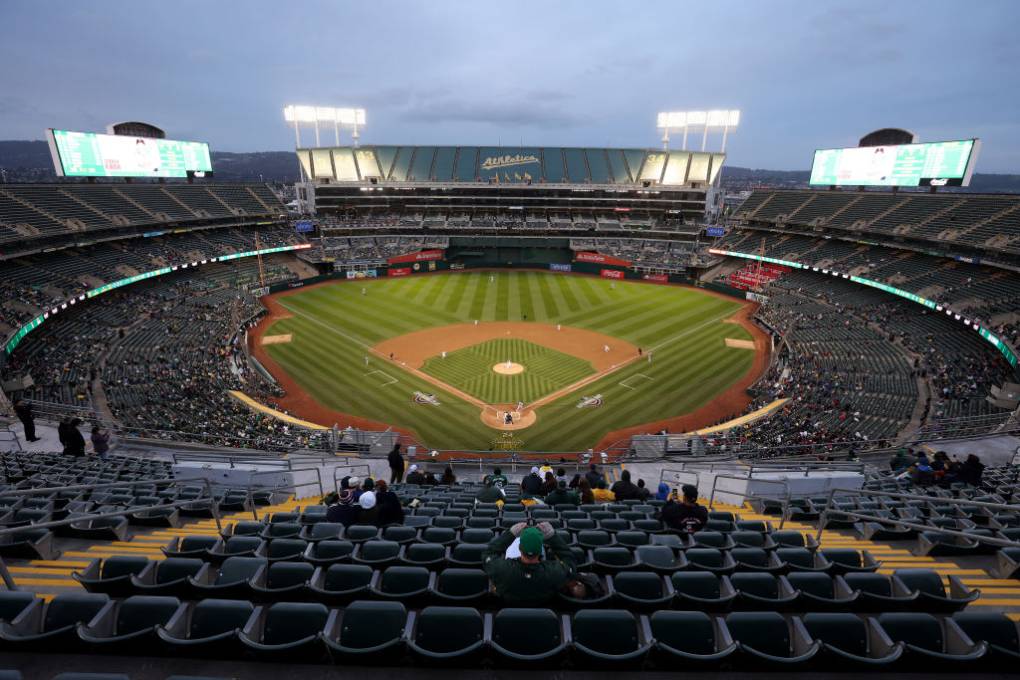
"caption": "A general view of the pitch thrown by Alex Wood #57 of the Oakland Athletics during their game against the Cleveland Guardians at Oakland Coliseum on March 28, 2024.",
"credit": "Ezra Shaw/Getty Images",
"altTag": "A view of the Coliseum baseball diamond from the bleachers.",
"description": null,
"imgSizes": {
"medium": {
"file": "https://cdn.kqed.org/wp-content/uploads/sites/10/2024/03/GettyImages-2121395164-800x534.jpg",
"width": 800,
"height": 534,
"mimeType": "image/jpeg"
},
"large": {
"file": "https://cdn.kqed.org/wp-content/uploads/sites/10/2024/03/GettyImages-2121395164-1020x680.jpg",
"width": 1020,
"height": 680,
"mimeType": "image/jpeg"
},
"thumbnail": {
"file": "https://cdn.kqed.org/wp-content/uploads/sites/10/2024/03/GettyImages-2121395164-160x107.jpg",
"width": 160,
"height": 107,
"mimeType": "image/jpeg"
},
"post-thumbnail": {
"file": "https://cdn.kqed.org/wp-content/uploads/sites/10/2024/03/GettyImages-2121395164-672x372.jpg",
"width": 672,
"height": 372,
"mimeType": "image/jpeg"
},
"twentyfourteen-full-width": {
"file": "https://cdn.kqed.org/wp-content/uploads/sites/10/2024/03/GettyImages-2121395164-1024x576.jpg",
"width": 1024,
"height": 576,
"mimeType": "image/jpeg"
},
"kqedFullSize": {
"file": "https://cdn.kqed.org/wp-content/uploads/sites/10/2024/03/GettyImages-2121395164.jpg",
"width": 1024,
"height": 683
}
},
"isLoading": false,
"fetchFailed": false
},
"news_11985763": {
"type": "attachments",
"id": "news_11985763",
"meta": {
"index": "attachments_1716263798",
"site": "news",
"id": "11985763",
"found": true
},
"parent": 11985760,
"imgSizes": {
"twentyfourteen-full-width": {
"file": "https://cdn.kqed.org/wp-content/uploads/sites/10/2024/05/240412-OAKAirport-011-BL_qut-1038x576.jpg",
"width": 1038,
"mimeType": "image/jpeg",
"height": 576
},
"thumbnail": {
"file": "https://cdn.kqed.org/wp-content/uploads/sites/10/2024/05/240412-OAKAirport-011-BL_qut-160x107.jpg",
"width": 160,
"mimeType": "image/jpeg",
"height": 107
},
"post-thumbnail": {
"file": "https://cdn.kqed.org/wp-content/uploads/sites/10/2024/05/240412-OAKAirport-011-BL_qut-672x372.jpg",
"width": 672,
"mimeType": "image/jpeg",
"height": 372
},
"kqedFullSize": {
"file": "https://cdn.kqed.org/wp-content/uploads/sites/10/2024/05/240412-OAKAirport-011-BL_qut.jpg",
"width": 1920,
"height": 1280
},
"large": {
"file": "https://cdn.kqed.org/wp-content/uploads/sites/10/2024/05/240412-OAKAirport-011-BL_qut-1020x680.jpg",
"width": 1020,
"mimeType": "image/jpeg",
"height": 680
},
"1536x1536": {
"file": "https://cdn.kqed.org/wp-content/uploads/sites/10/2024/05/240412-OAKAirport-011-BL_qut-1536x1024.jpg",
"width": 1536,
"mimeType": "image/jpeg",
"height": 1024
},
"medium": {
"file": "https://cdn.kqed.org/wp-content/uploads/sites/10/2024/05/240412-OAKAirport-011-BL_qut-800x533.jpg",
"width": 800,
"mimeType": "image/jpeg",
"height": 533
}
},
"publishDate": 1715375224,
"modified": 1715378205,
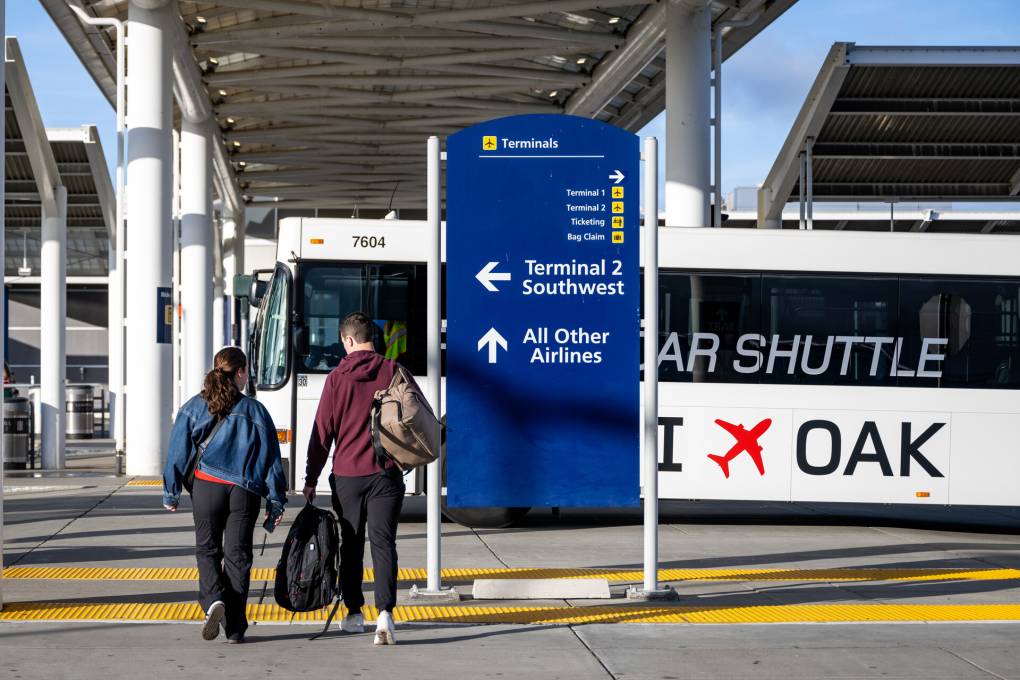
"caption": "Passengers walk into Oakland International Airport in Oakland on April 12, 2024.",
"description": null,
"title": "240412-OAKAirport-011-BL_qut",
"credit": "Beth LaBerge/KQED",
"status": "inherit",
"altTag": null,
"isLoading": false,
"fetchFailed": false
},
"news_11983096": {
"type": "attachments",
"id": "news_11983096",
"meta": {
"index": "attachments_1716263798",
"site": "news",
"id": "11983096",
"found": true
},
"parent": 11983091,
"imgSizes": {
"twentyfourteen-full-width": {
"file": "https://cdn.kqed.org/wp-content/uploads/sites/10/2024/04/GettyImages-1322368723-1024x576.jpeg",
"width": 1024,
"mimeType": "image/jpeg",
"height": 576
},
"thumbnail": {
"file": "https://cdn.kqed.org/wp-content/uploads/sites/10/2024/04/GettyImages-1322368723-160x107.jpeg",
"width": 160,
"mimeType": "image/jpeg",
"height": 107
},
"post-thumbnail": {
"file": "https://cdn.kqed.org/wp-content/uploads/sites/10/2024/04/GettyImages-1322368723-672x372.jpeg",
"width": 672,
"mimeType": "image/jpeg",
"height": 372
},
"kqedFullSize": {
"file": "https://cdn.kqed.org/wp-content/uploads/sites/10/2024/04/GettyImages-1322368723.jpeg",
"width": 1024,
"height": 683
},
"large": {
"file": "https://cdn.kqed.org/wp-content/uploads/sites/10/2024/04/GettyImages-1322368723-1020x680.jpeg",
"width": 1020,
"mimeType": "image/jpeg",
"height": 680
},
"medium": {
"file": "https://cdn.kqed.org/wp-content/uploads/sites/10/2024/04/GettyImages-1322368723-800x534.jpeg",
"width": 800,
"mimeType": "image/jpeg",
"height": 534
}
},
"publishDate": 1713229084,
"modified": 1713229219,
"caption": "Alameda County District Attorney Pamela Price was in office less than six months before the recall campaign was launched against her.",
"description": null,
"title": "Pamela Price, candidate for Alameda County District Attorney, talks to the Chronicle editorial board on Wednesday, May 23, 2018 in San Francisco, Calif.",
"credit": "Lea Suzuki/The San Francisco Chronicle via Getty Images",
"status": "inherit",
"altTag": null,
"isLoading": false,
"fetchFailed": false
},
"news_11982792": {
"type": "attachments",
"id": "news_11982792",
"meta": {
"index": "attachments_1716263798",
"site": "news",
"id": "11982792",
"found": true
},
"title": "240412-OAKAIRPORT-027-BL-KQED",
"publishDate": 1712942276,
"status": "inherit",
"parent": 0,
"modified": 1731461196,
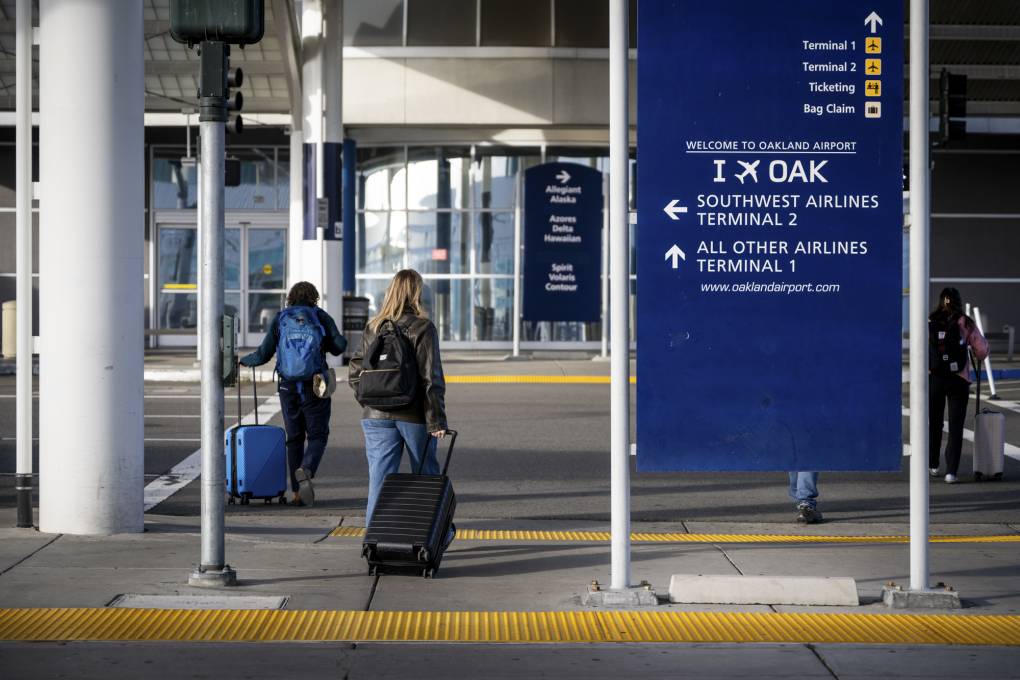
"caption": "Passengers enter the Oakland International Airport in Oakland on April 12, 2024.",
"credit": "Beth LaBerge/KQED",
"altTag": null,
"description": null,
"imgSizes": {
"medium": {
"file": "https://cdn.kqed.org/wp-content/uploads/sites/10/2024/04/240412-OAKAIRPORT-027-BL-KQED-800x533.jpg",
"width": 800,
"height": 533,
"mimeType": "image/jpeg"
},
"large": {
"file": "https://cdn.kqed.org/wp-content/uploads/sites/10/2024/04/240412-OAKAIRPORT-027-BL-KQED-1020x680.jpg",
"width": 1020,
"height": 680,
"mimeType": "image/jpeg"
},
"thumbnail": {
"file": "https://cdn.kqed.org/wp-content/uploads/sites/10/2024/04/240412-OAKAIRPORT-027-BL-KQED-160x107.jpg",
"width": 160,
"height": 107,
"mimeType": "image/jpeg"
},
"1536x1536": {
"file": "https://cdn.kqed.org/wp-content/uploads/sites/10/2024/04/240412-OAKAIRPORT-027-BL-KQED-1536x1024.jpg",
"width": 1536,
"height": 1024,
"mimeType": "image/jpeg"
},
"post-thumbnail": {
"file": "https://cdn.kqed.org/wp-content/uploads/sites/10/2024/04/240412-OAKAIRPORT-027-BL-KQED-672x372.jpg",
"width": 672,
"height": 372,
"mimeType": "image/jpeg"
},
"twentyfourteen-full-width": {
"file": "https://cdn.kqed.org/wp-content/uploads/sites/10/2024/04/240412-OAKAIRPORT-027-BL-KQED-1038x576.jpg",
"width": 1038,
"height": 576,
"mimeType": "image/jpeg"
},
"full-width": {
"file": "https://cdn.kqed.org/wp-content/uploads/sites/10/2024/04/240412-OAKAIRPORT-027-BL-KQED-1920x1280.jpg",
"width": 1920,
"height": 1280,
"mimeType": "image/jpeg"
},
"kqedFullSize": {
"file": "https://cdn.kqed.org/wp-content/uploads/sites/10/2024/04/240412-OAKAIRPORT-027-BL-KQED.jpg",
"width": 2000,
"height": 1333
}
},
"isLoading": false,
"fetchFailed": false
},
"news_11952917": {
"type": "attachments",
"id": "news_11952917",
"meta": {
"index": "attachments_1716263798",
"site": "news",
"id": "11952917",
"found": true
},
"parent": 11952845,
"imgSizes": {
"twentyfourteen-full-width": {
"file": "https://ww2.kqed.org/app/uploads/sites/10/2023/06/20230614-AS-REVERSE-BOYCOTT-04-AC-KQED-1038x576.jpg",
"width": 1038,
"mimeType": "image/jpeg",
"height": 576
},
"thumbnail": {
"file": "https://ww2.kqed.org/app/uploads/sites/10/2023/06/20230614-AS-REVERSE-BOYCOTT-04-AC-KQED-160x107.jpg",
"width": 160,
"mimeType": "image/jpeg",
"height": 107
},
"post-thumbnail": {
"file": "https://ww2.kqed.org/app/uploads/sites/10/2023/06/20230614-AS-REVERSE-BOYCOTT-04-AC-KQED-672x372.jpg",
"width": 672,
"mimeType": "image/jpeg",
"height": 372
},
"kqedFullSize": {
"file": "https://ww2.kqed.org/app/uploads/sites/10/2023/06/20230614-AS-REVERSE-BOYCOTT-04-AC-KQED.jpg",
"width": 2000,
"height": 1333
},
"large": {
"file": "https://ww2.kqed.org/app/uploads/sites/10/2023/06/20230614-AS-REVERSE-BOYCOTT-04-AC-KQED-1020x680.jpg",
"width": 1020,
"mimeType": "image/jpeg",
"height": 680
},
"1536x1536": {
"file": "https://ww2.kqed.org/app/uploads/sites/10/2023/06/20230614-AS-REVERSE-BOYCOTT-04-AC-KQED-1536x1024.jpg",
"width": 1536,
"mimeType": "image/jpeg",
"height": 1024
},
"full-width": {
"file": "https://ww2.kqed.org/app/uploads/sites/10/2023/06/20230614-AS-REVERSE-BOYCOTT-04-AC-KQED-1920x1280.jpg",
"width": 1920,
"mimeType": "image/jpeg",
"height": 1280
},
"medium": {
"file": "https://ww2.kqed.org/app/uploads/sites/10/2023/06/20230614-AS-REVERSE-BOYCOTT-04-AC-KQED-800x533.jpg",
"width": 800,
"mimeType": "image/jpeg",
"height": 533
}
},
"publishDate": 1686762748,
"modified": 1686779592,
"caption": "Fans of the Oakland A's gather during a reverse boycott at the Oakland Coliseum to protest the ownership of the baseball team on June 13, 2023.",
"description": null,
"title": "20230614-AS-REVERSE-BOYCOTT-04-AC-KQED",
"credit": "Aryk Copley/KQED",
"status": "inherit",
"altTag": "A crowd of people wearing Oakland A's clothing stand together in a parking lot. The person in the middle wears a plastic fish mask and holds a sign reading \"A's Fish(er) rots from the head down!\"",
"isLoading": false,
"fetchFailed": false
},
"news_11981079": {
"type": "attachments",
"id": "news_11981079",
"meta": {
"index": "attachments_1716263798",
"site": "news",
"id": "11981079",
"found": true
},
"parent": 0,
"imgSizes": {
"twentyfourteen-full-width": {
"file": "https://cdn.kqed.org/wp-content/uploads/sites/10/2024/03/240327-OPD-CHIEF-MITCHELL-MD-07-KQED-1038x576.jpg",
"width": 1038,
"mimeType": "image/jpeg",
"height": 576
},
"thumbnail": {
"file": "https://cdn.kqed.org/wp-content/uploads/sites/10/2024/03/240327-OPD-CHIEF-MITCHELL-MD-07-KQED-160x107.jpg",
"width": 160,
"mimeType": "image/jpeg",
"height": 107
},
"post-thumbnail": {
"file": "https://cdn.kqed.org/wp-content/uploads/sites/10/2024/03/240327-OPD-CHIEF-MITCHELL-MD-07-KQED-672x372.jpg",
"width": 672,
"mimeType": "image/jpeg",
"height": 372
},
"kqedFullSize": {
"file": "https://cdn.kqed.org/wp-content/uploads/sites/10/2024/03/240327-OPD-CHIEF-MITCHELL-MD-07-KQED.jpg",
"width": 2000,
"height": 1333
},
"large": {
"file": "https://cdn.kqed.org/wp-content/uploads/sites/10/2024/03/240327-OPD-CHIEF-MITCHELL-MD-07-KQED-1020x680.jpg",
"width": 1020,
"mimeType": "image/jpeg",
"height": 680
},
"1536x1536": {
"file": "https://cdn.kqed.org/wp-content/uploads/sites/10/2024/03/240327-OPD-CHIEF-MITCHELL-MD-07-KQED-1536x1024.jpg",
"width": 1536,
"mimeType": "image/jpeg",
"height": 1024
},
"full-width": {
"file": "https://cdn.kqed.org/wp-content/uploads/sites/10/2024/03/240327-OPD-CHIEF-MITCHELL-MD-07-KQED-1920x1280.jpg",
"width": 1920,
"mimeType": "image/jpeg",
"height": 1280
},
"medium": {
"file": "https://cdn.kqed.org/wp-content/uploads/sites/10/2024/03/240327-OPD-CHIEF-MITCHELL-MD-07-KQED-800x533.jpg",
"width": 800,
"mimeType": "image/jpeg",
"height": 533
}
},
"publishDate": 1711585377,
"modified": 1711585411,
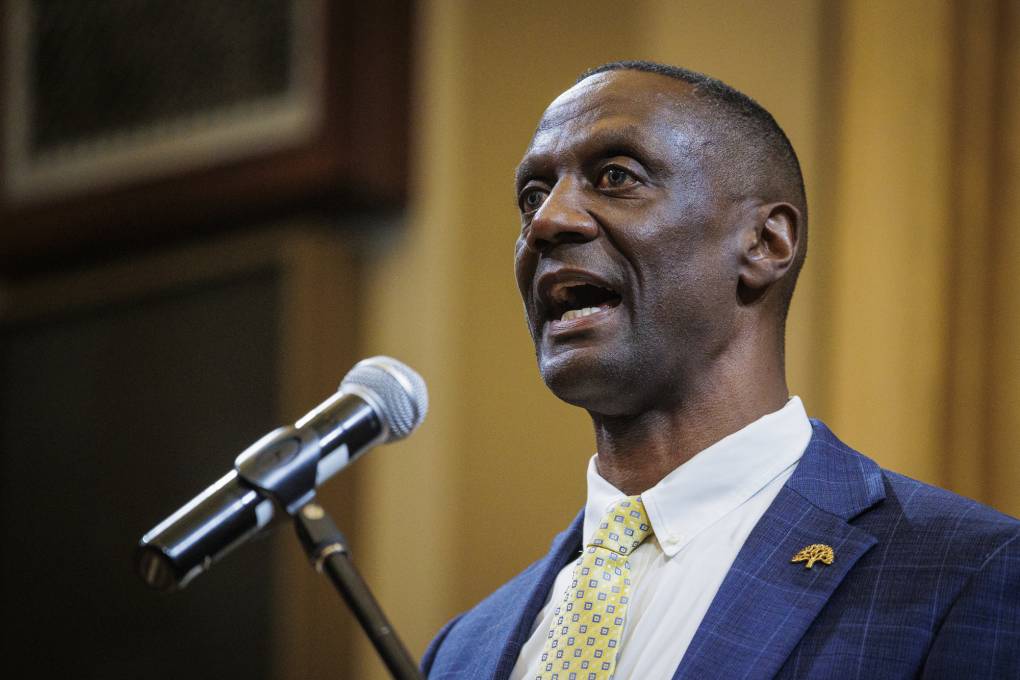
"caption": "The newly appointed OPD Chief Floyd Mitchell speaks at a press conference at Oakland City Hall on March 27, 2024.",
"description": null,
"title": "240327-OPD CHIEF MITCHELL-MD-07-KQED",
"credit": "Martin do Nascimento/KQED",
"status": "inherit",
"altTag": null,
"isLoading": false,
"fetchFailed": false
},
"news_11980468": {
"type": "attachments",
"id": "news_11980468",
"meta": {
"index": "attachments_1716263798",
"site": "news",
"id": "11980468",
"found": true
},
"parent": 11980455,
"imgSizes": {
"twentyfourteen-full-width": {
"file": "https://cdn.kqed.org/wp-content/uploads/sites/10/2024/03/240322-Floyd-Mitchell-02-KQED-1038x576.jpeg",
"width": 1038,
"mimeType": "image/jpeg",
"height": 576
},
"thumbnail": {
"file": "https://cdn.kqed.org/wp-content/uploads/sites/10/2024/03/240322-Floyd-Mitchell-02-KQED-160x107.jpeg",
"width": 160,
"mimeType": "image/jpeg",
"height": 107
},
"post-thumbnail": {
"file": "https://cdn.kqed.org/wp-content/uploads/sites/10/2024/03/240322-Floyd-Mitchell-02-KQED-672x372.jpeg",
"width": 672,
"mimeType": "image/jpeg",
"height": 372
},
"kqedFullSize": {
"file": "https://cdn.kqed.org/wp-content/uploads/sites/10/2024/03/240322-Floyd-Mitchell-02-KQED.jpeg",
"width": 2000,
"height": 1333
},
"large": {
"file": "https://cdn.kqed.org/wp-content/uploads/sites/10/2024/03/240322-Floyd-Mitchell-02-KQED-1020x680.jpeg",
"width": 1020,
"mimeType": "image/jpeg",
"height": 680
},
"1536x1536": {
"file": "https://cdn.kqed.org/wp-content/uploads/sites/10/2024/03/240322-Floyd-Mitchell-02-KQED-1536x1024.jpeg",
"width": 1536,
"mimeType": "image/jpeg",
"height": 1024
},
"full-width": {
"file": "https://cdn.kqed.org/wp-content/uploads/sites/10/2024/03/240322-Floyd-Mitchell-02-KQED-1920x1280.jpeg",
"width": 1920,
"mimeType": "image/jpeg",
"height": 1280
},
"medium": {
"file": "https://cdn.kqed.org/wp-content/uploads/sites/10/2024/03/240322-Floyd-Mitchell-02-KQED-800x533.jpeg",
"width": 800,
"mimeType": "image/jpeg",
"height": 533
}
},
"publishDate": 1711125926,
"modified": 1711126059,
"caption": "Floyd Mitchell will be Oakland's new police chief, Mayor Sheng Thao Thao announced Friday. He most recently served as police chief of Lubbock, Texas.",
"description": null,
"title": "240322-Floyd-Mitchell-02-KQED",
"credit": "Courtesy of Lubbock Police Department",
"status": "inherit",
"altTag": "A headshot of a Black male police officer.",
"isLoading": false,
"fetchFailed": false
},
"news_11978509": {
"type": "attachments",
"id": "news_11978509",
"meta": {
"index": "attachments_1716263798",
"site": "news",
"id": "11978509",
"found": true
},
"parent": 0,
"imgSizes": {
"twentyfourteen-full-width": {
"file": "https://cdn.kqed.org/wp-content/uploads/sites/10/2024/03/240306-HOMELESS-TRAILERS-MD-04-KQED-1038x576.jpg",
"width": 1038,
"mimeType": "image/jpeg",
"height": 576
},
"thumbnail": {
"file": "https://cdn.kqed.org/wp-content/uploads/sites/10/2024/03/240306-HOMELESS-TRAILERS-MD-04-KQED-160x107.jpg",
"width": 160,
"mimeType": "image/jpeg",
"height": 107
},
"post-thumbnail": {
"file": "https://cdn.kqed.org/wp-content/uploads/sites/10/2024/03/240306-HOMELESS-TRAILERS-MD-04-KQED-672x372.jpg",
"width": 672,
"mimeType": "image/jpeg",
"height": 372
},
"kqedFullSize": {
"file": "https://cdn.kqed.org/wp-content/uploads/sites/10/2024/03/240306-HOMELESS-TRAILERS-MD-04-KQED.jpg",
"width": 2000,
"height": 1333
},
"large": {
"file": "https://cdn.kqed.org/wp-content/uploads/sites/10/2024/03/240306-HOMELESS-TRAILERS-MD-04-KQED-1020x680.jpg",
"width": 1020,
"mimeType": "image/jpeg",
"height": 680
},
"1536x1536": {
"file": "https://cdn.kqed.org/wp-content/uploads/sites/10/2024/03/240306-HOMELESS-TRAILERS-MD-04-KQED-1536x1024.jpg",
"width": 1536,
"mimeType": "image/jpeg",
"height": 1024
},
"full-width": {
"file": "https://cdn.kqed.org/wp-content/uploads/sites/10/2024/03/240306-HOMELESS-TRAILERS-MD-04-KQED-1920x1280.jpg",
"width": 1920,
"mimeType": "image/jpeg",
"height": 1280
},
"medium": {
"file": "https://cdn.kqed.org/wp-content/uploads/sites/10/2024/03/240306-HOMELESS-TRAILERS-MD-04-KQED-800x533.jpg",
"width": 800,
"mimeType": "image/jpeg",
"height": 533
}
},
"publishDate": 1709772935,
"modified": 1710879467,
"caption": "Christina Zeigler in her apartment in San Francisco on March 6, 2024.",
"description": null,
"title": "Christina Zeigler in her apartment in San Francisco on Mar. 6, 2024.",
"credit": "Martin do Nascimento/KQED",
"status": "inherit",
"altTag": "A middle-aged African American woman with long braided hair and glasses looks out from a window.",
"isLoading": false,
"fetchFailed": false
},
"news_11977328": {
"type": "attachments",
"id": "news_11977328",
"meta": {
"index": "attachments_1716263798",
"site": "news",
"id": "11977328",
"found": true
},
"parent": 11977305,
"imgSizes": {
"twentyfourteen-full-width": {
"file": "https://cdn.kqed.org/wp-content/uploads/sites/10/2024/02/Leonia-Heights-murals-1038x576.jpg",
"width": 1038,
"mimeType": "image/jpeg",
"height": 576
},
"thumbnail": {
"file": "https://cdn.kqed.org/wp-content/uploads/sites/10/2024/02/Leonia-Heights-murals-160x90.jpg",
"width": 160,
"mimeType": "image/jpeg",
"height": 90
},
"post-thumbnail": {
"file": "https://cdn.kqed.org/wp-content/uploads/sites/10/2024/02/Leonia-Heights-murals-672x372.jpg",
"width": 672,
"mimeType": "image/jpeg",
"height": 372
},
"kqedFullSize": {
"file": "https://cdn.kqed.org/wp-content/uploads/sites/10/2024/02/Leonia-Heights-murals.jpg",
"width": 1920,
"height": 1080
},
"large": {
"file": "https://cdn.kqed.org/wp-content/uploads/sites/10/2024/02/Leonia-Heights-murals-1020x574.jpg",
"width": 1020,
"mimeType": "image/jpeg",
"height": 574
},
"1536x1536": {
"file": "https://cdn.kqed.org/wp-content/uploads/sites/10/2024/02/Leonia-Heights-murals-1536x864.jpg",
"width": 1536,
"mimeType": "image/jpeg",
"height": 864
},
"medium": {
"file": "https://cdn.kqed.org/wp-content/uploads/sites/10/2024/02/Leonia-Heights-murals-800x450.jpg",
"width": 800,
"mimeType": "image/jpeg",
"height": 450
}
},
"publishDate": 1709074336,
"modified": 1709074817,
"caption": "Murals hidden among the oak trees off a hiking trail near Leona Heights.",
"description": null,
"title": "Leonia-Heights-murals",
"credit": null,
"status": "inherit",
"altTag": "In the right side foreground a mural of Jasmine from the Disney movie Aladdin gives way to almost 10 mural painted on chunks of concrete.",
"isLoading": false,
"fetchFailed": false
},
"news_11975238": {
"type": "attachments",
"id": "news_11975238",
"meta": {
"index": "attachments_1716263798",
"site": "news",
"id": "11975238",
"found": true
},
"parent": 11974855,
"imgSizes": {
"twentyfourteen-full-width": {
"file": "https://cdn.kqed.org/wp-content/uploads/sites/10/2024/02/231212-MANNEQUIN-MADNESS-MD-01-KQED-1038x576.jpg",
"width": 1038,
"mimeType": "image/jpeg",
"height": 576
},
"thumbnail": {
"file": "https://cdn.kqed.org/wp-content/uploads/sites/10/2024/02/231212-MANNEQUIN-MADNESS-MD-01-KQED-160x107.jpg",
"width": 160,
"mimeType": "image/jpeg",
"height": 107
},
"post-thumbnail": {
"file": "https://cdn.kqed.org/wp-content/uploads/sites/10/2024/02/231212-MANNEQUIN-MADNESS-MD-01-KQED-672x372.jpg",
"width": 672,
"mimeType": "image/jpeg",
"height": 372
},
"kqedFullSize": {
"file": "https://cdn.kqed.org/wp-content/uploads/sites/10/2024/02/231212-MANNEQUIN-MADNESS-MD-01-KQED.jpg",
"width": 2000,
"height": 1333
},
"large": {
"file": "https://cdn.kqed.org/wp-content/uploads/sites/10/2024/02/231212-MANNEQUIN-MADNESS-MD-01-KQED-1020x680.jpg",
"width": 1020,
"mimeType": "image/jpeg",
"height": 680
},
"1536x1536": {
"file": "https://cdn.kqed.org/wp-content/uploads/sites/10/2024/02/231212-MANNEQUIN-MADNESS-MD-01-KQED-1536x1024.jpg",
"width": 1536,
"mimeType": "image/jpeg",
"height": 1024
},
"full-width": {
"file": "https://cdn.kqed.org/wp-content/uploads/sites/10/2024/02/231212-MANNEQUIN-MADNESS-MD-01-KQED-1920x1280.jpg",
"width": 1920,
"mimeType": "image/jpeg",
"height": 1280
},
"medium": {
"file": "https://cdn.kqed.org/wp-content/uploads/sites/10/2024/02/231212-MANNEQUIN-MADNESS-MD-01-KQED-800x533.jpg",
"width": 800,
"mimeType": "image/jpeg",
"height": 533
}
},
"publishDate": 1707501248,
"modified": 1707501291,
"caption": "Judi Henderson, Mannequin Madness founder and president, at the Mannequin Madness warehouse on Dec. 13, 2023.",
"description": null,
"title": "231212-MANNEQUIN MADNESS-MD-01-KQED",
"credit": "Martin do Nascimento/KQED",
"status": "inherit",
"altTag": "African American woman stands among mannequins as she smiles at the camera.",
"isLoading": false,
"fetchFailed": false
}
},
"audioPlayerReducer": {
"postId": "stream_live",
"isPaused": true,
"isPlaying": false,
"pfsActive": false,
"pledgeModalIsOpen": true,
"playerDrawerIsOpen": false,
"liveAudioPlayStartedAt": 0,
"liveAudioPlayContext": ""
},
"authorsReducer": {
"byline_news_11981876": {
"type": "authors",
"id": "byline_news_11981876",
"meta": {
"override": true
},
"slug": "byline_news_11981876",
"name": "Josh Dubow\u003cbr>Associated Press",
"isLoading": false
},
"matthewgreen": {
"type": "authors",
"id": "1263",
"meta": {
"index": "authors_1716337520",
"id": "1263",
"found": true
},
"name": "Matthew Green",
"firstName": "Matthew",
"lastName": "Green",
"slug": "matthewgreen",
"email": "mgreen@kqed.org",
"display_author_email": false,
"staff_mastheads": [],
"title": "KQED Editor/Reporter",
"bio": "Matthew Green is a digital media producer for KQED News. He previously produced \u003ca href=\"http://www.kqed.org/lowdown\">The Lowdown\u003c/a>, KQED’s multimedia news education blog. Matthew's written for numerous Bay Area publications, including the Oakland Tribune and San Francisco Chronicle. He also taught journalism classes at Fremont High School in East Oakland.\r\n\r\nEmail: mgreen@kqed.org; Twitter: @MGreenKQED",
"avatar": "https://secure.gravatar.com/avatar/3bf498d1267ca02c8494f33d8cfc575e?s=600&d=blank&r=g",
"twitter": "MGreenKQED",
"facebook": null,
"instagram": null,
"linkedin": null,
"sites": [
{
"site": "news",
"roles": []
},
{
"site": "lowdown",
"roles": []
},
{
"site": "science",
"roles": []
},
{
"site": "education",
"roles": []
},
{
"site": "quest",
"roles": []
},
{
"site": "liveblog",
"roles": []
}
],
"headData": {
"title": "Matthew Green | KQED",
"description": "KQED Editor/Reporter",
"ogImgSrc": "https://secure.gravatar.com/avatar/3bf498d1267ca02c8494f33d8cfc575e?s=600&d=blank&r=g",
"twImgSrc": "https://secure.gravatar.com/avatar/3bf498d1267ca02c8494f33d8cfc575e?s=600&d=blank&r=g"
},
"isLoading": false,
"link": "/author/matthewgreen"
},
"jrodriguez": {
"type": "authors",
"id": "11690",
"meta": {
"index": "authors_1716337520",
"id": "11690",
"found": true
},
"name": "Joe Fitzgerald Rodriguez",
"firstName": "Joe",
"lastName": "Fitzgerald Rodriguez",
"slug": "jrodriguez",
"email": "jrodriguez@kqed.org",
"display_author_email": true,
"staff_mastheads": [
"news"
],
"title": "Reporter and Producer",
"bio": "Joe Fitzgerald Rodriguez is a reporter and digital producer for KQED covering politics. Joe most recently wrote for the \u003cem>San Francisco Examiner\u003c/em> as a political columnist covering The City. He was raised in San Francisco and has spent his reporting career in his beloved, foggy, city by the bay. Joe was 12-years-old when he conducted his first interview in journalism, grilling former San Francisco Mayor Willie Brown for the Marina Middle School newspaper, \u003cem>The Penguin Press, \u003c/em>and he continues to report on the San Francisco Bay Area to this day.",
"avatar": "https://secure.gravatar.com/avatar/2247beb0564c1e9c62228d5649d2edac?s=600&d=blank&r=g",
"twitter": "FitztheReporter",
"facebook": null,
"instagram": "https://www.instagram.com/fitzthereporter/",
"linkedin": null,
"sites": [
{
"site": "",
"roles": [
"editor"
]
},
{
"site": "arts",
"roles": [
"editor"
]
},
{
"site": "news",
"roles": [
"editor"
]
},
{
"site": "science",
"roles": [
"editor"
]
},
{
"site": "elections",
"roles": [
"editor"
]
},
{
"site": "liveblog",
"roles": [
"editor"
]
}
],
"headData": {
"title": "Joe Fitzgerald Rodriguez | KQED",
"description": "Reporter and Producer",
"ogImgSrc": "https://secure.gravatar.com/avatar/2247beb0564c1e9c62228d5649d2edac?s=600&d=blank&r=g",
"twImgSrc": "https://secure.gravatar.com/avatar/2247beb0564c1e9c62228d5649d2edac?s=600&d=blank&r=g"
},
"isLoading": false,
"link": "/author/jrodriguez"
},
"cbeale": {
"type": "authors",
"id": "11749",
"meta": {
"index": "authors_1716337520",
"id": "11749",
"found": true
},
"name": "Christopher Beale",
"firstName": "Christopher",
"lastName": "Beale",
"slug": "cbeale",
"email": "cbeale@kqed.org",
"display_author_email": true,
"staff_mastheads": [
"news"
],
"title": "Engineer/Producer/Reporter",
"bio": "\u003ca href=\"https://linktr.ee/realchrisjbeale\" rel=\"noopener noreferrer\">Christopher J. Beale\u003c/a> is an award winning journalist, audio engineer, and media host living in San Francisco. \r\n\r\nChristopher works primarily as an audio engineer at KQED and serves as the sound designer for both the Bay Curious and Rightnowish podcasts. He is the host and producer of the LGBTQIA podcast and radio segment \u003ca href=\"https://stereotypespodcast.org\">Stereotypes\u003c/a>.",
"avatar": "https://secure.gravatar.com/avatar/dc485bf84788eb7e7414eb638e72407e?s=600&d=blank&r=g",
"twitter": "realchrisjbeale",
"facebook": null,
"instagram": "http://instagram.com/realchrisjbeale",
"linkedin": null,
"sites": [
{
"site": "arts",
"roles": [
"contributor"
]
},
{
"site": "news",
"roles": [
"editor"
]
},
{
"site": "forum",
"roles": [
"editor"
]
}
],
"headData": {
"title": "Christopher Beale | KQED",
"description": "Engineer/Producer/Reporter",
"ogImgSrc": "https://secure.gravatar.com/avatar/dc485bf84788eb7e7414eb638e72407e?s=600&d=blank&r=g",
"twImgSrc": "https://secure.gravatar.com/avatar/dc485bf84788eb7e7414eb638e72407e?s=600&d=blank&r=g"
},
"isLoading": false,
"link": "/author/cbeale"
},
"jlara": {
"type": "authors",
"id": "11761",
"meta": {
"index": "authors_1716337520",
"id": "11761",
"found": true
},
"name": "Juan Carlos Lara",
"firstName": "Juan Carlos",
"lastName": "Lara",
"slug": "jlara",
"email": "jlara@kqed.org",
"display_author_email": false,
"staff_mastheads": [],
"title": "KQED Contributor",
"bio": null,
"avatar": "https://secure.gravatar.com/avatar/19e2052b9b05657c5ff2af2121846e9c?s=600&d=blank&r=g",
"twitter": null,
"facebook": null,
"instagram": null,
"linkedin": null,
"sites": [
{
"site": "arts",
"roles": [
"editor"
]
},
{
"site": "news",
"roles": [
"editor"
]
},
{
"site": "forum",
"roles": [
"editor"
]
},
{
"site": "liveblog",
"roles": [
"contributor"
]
}
],
"headData": {
"title": "Juan Carlos Lara | KQED",
"description": "KQED Contributor",
"ogImgSrc": "https://secure.gravatar.com/avatar/19e2052b9b05657c5ff2af2121846e9c?s=600&d=blank&r=g",
"twImgSrc": "https://secure.gravatar.com/avatar/19e2052b9b05657c5ff2af2121846e9c?s=600&d=blank&r=g"
},
"isLoading": false,
"link": "/author/jlara"
},
"afinney": {
"type": "authors",
"id": "11772",
"meta": {
"index": "authors_1716337520",
"id": "11772",
"found": true
},
"name": "Annelise Finney",
"firstName": "Annelise",
"lastName": "Finney",
"slug": "afinney",
"email": "afinney@kqed.org",
"display_author_email": true,
"staff_mastheads": [
"news"
],
"title": "Reporter",
"bio": "Annelise reports on reparations in California and East Bay politics. She co-produced the Sunday Music Drop, a limited-term radio series featuring Bay Area musicians that aired between Sept 2022 and Oct 2024. She joined KQED in 2021 as a general assignment reporter and is an alumna of KALW's Audio Academy. She was born and raised in the East Bay. She is currently away from KQED completing a year-long reporting project in Berlin, Germany as a Alexander Von Humboldt German Chancellor Fellow.",
"avatar": "https://secure.gravatar.com/avatar/5fded66cae47704cdfc5021cde0f3aa4?s=600&d=blank&r=g",
"twitter": null,
"facebook": null,
"instagram": null,
"linkedin": null,
"sites": [
{
"site": "news",
"roles": [
"editor"
]
},
{
"site": "liveblog",
"roles": [
"author"
]
}
],
"headData": {
"title": "Annelise Finney | KQED",
"description": "Reporter",
"ogImgSrc": "https://secure.gravatar.com/avatar/5fded66cae47704cdfc5021cde0f3aa4?s=600&d=blank&r=g",
"twImgSrc": "https://secure.gravatar.com/avatar/5fded66cae47704cdfc5021cde0f3aa4?s=600&d=blank&r=g"
},
"isLoading": false,
"link": "/author/afinney"
},
"sjohnson": {
"type": "authors",
"id": "11840",
"meta": {
"index": "authors_1716337520",
"id": "11840",
"found": true
},
"name": "Sydney Johnson",
"firstName": "Sydney",
"lastName": "Johnson",
"slug": "sjohnson",
"email": "sjohnson@kqed.org",
"display_author_email": false,
"staff_mastheads": [
"news"
],
"title": "KQED Reporter",
"bio": "Sydney Johnson is a general assignment reporter at KQED. She previously reported on public health and city government at the San Francisco Examiner, and before that, she covered statewide education policy for EdSource. Her reporting has won multiple local, state and national awards. Sydney is a graduate of the University of California, Berkeley and lives in San Francisco.",
"avatar": "https://secure.gravatar.com/avatar/97855f2719b72ad6190b7c535fe642c8?s=600&d=blank&r=g",
"twitter": "sydneyfjohnson",
"facebook": null,
"instagram": null,
"linkedin": null,
"sites": [
{
"site": "news",
"roles": [
"editor"
]
}
],
"headData": {
"title": "Sydney Johnson | KQED",
"description": "KQED Reporter",
"ogImgSrc": "https://secure.gravatar.com/avatar/97855f2719b72ad6190b7c535fe642c8?s=600&d=blank&r=g",
"twImgSrc": "https://secure.gravatar.com/avatar/97855f2719b72ad6190b7c535fe642c8?s=600&d=blank&r=g"
},
"isLoading": false,
"link": "/author/sjohnson"
},
"kmonahan": {
"type": "authors",
"id": "11842",
"meta": {
"index": "authors_1716337520",
"id": "11842",
"found": true
},
"name": "Katherine Monahan",
"firstName": "Katherine",
"lastName": "Monahan",
"slug": "kmonahan",
"email": "kmonahan@kqed.org",
"display_author_email": true,
"staff_mastheads": [],
"title": "Reporter / Sound Engineer",
"bio": "I cover state and local news. I’m also a sound engineer at the station, mixing stories and running live broadcasts. I link to source materials so that readers can draw their own conclusions, and seek comment from a range of perspectives, including from people directly affected by events. Awards received include from the Society of Professional Journalists, Northern California chapter and the Alaska Press Club. I speak multiple languages and have reported and engineered in the Bay Area, Alaska, West Africa and Latin America.",
"avatar": "https://secure.gravatar.com/avatar/ff257b3a5da88893781a3d3266904b2d2f91c7f0e1bbf728f61f5fb81b74a669?s=600&d=blank&r=g",
"twitter": null,
"bluesky": null,
"facebook": null,
"instagram": null,
"linkedin": null,
"sites": [
{
"site": "news",
"roles": [
"editor"
]
},
{
"site": "science",
"roles": [
"contributor"
]
}
],
"headData": {
"title": "Katherine Monahan | KQED",
"description": "Reporter / Sound Engineer",
"ogImgSrc": "https://secure.gravatar.com/avatar/ff257b3a5da88893781a3d3266904b2d2f91c7f0e1bbf728f61f5fb81b74a669?s=600&d=blank&r=g",
"twImgSrc": "https://secure.gravatar.com/avatar/ff257b3a5da88893781a3d3266904b2d2f91c7f0e1bbf728f61f5fb81b74a669?s=600&d=blank&r=g"
},
"isLoading": false,
"link": "/author/kmonahan"
}
},
"pagesReducer": {
"news_tag_oakland": {
"type": "terms",
"id": "news_34054",
"meta": {
"index": "terms_1716263798",
"site": "news",
"id": "34054",
"score": 6.883923
},
"featImg": null,
"name": "oakland",
"description": null,
"taxonomy": "tag",
"headData": {
"twImgId": null,
"twTitle": null,
"ogTitle": null,
"ogImgId": null,
"twDescription": null,
"description": null,
"title": "oakland Archives | KQED News",
"ogDescription": null
},
"ttid": 34071,
"slug": "oakland",
"isLoading": false,
"title": "oakland",
"pageMeta": {
"site": "news",
"WpPageTemplate": "page-topic-editorial",
"currentPage": 38
},
"blocks": [
{
"blockName": "kqed/post-list",
"attrs": {
"layout": "cardArticle2",
"query": "posts/news?tag=oakland",
"seeMore": false,
"paginated": true,
"page": 38
}
},
{
"blockName": "kqed/ad"
}
]
}
},
"pfsSessionReducer": {},
"postsReducer": {
"stream_live": {
"type": "live",
"id": "stream_live",
"audioUrl": "https://streams.kqed.org/kqedradio",
"title": "Live Stream",
"excerpt": "Live Stream information currently unavailable.",
"link": "/radio",
"featImg": "",
"label": {
"name": "KQED Live",
"link": "/"
}
},
"stream_kqedNewscast": {
"type": "posts",
"id": "stream_kqedNewscast",
"audioUrl": "https://www.kqed.org/.stream/anon/radio/RDnews/newscast.mp3?_=1",
"title": "KQED Newscast",
"featImg": "",
"label": {
"name": "88.5 FM",
"link": "/"
}
},
"news_11988753": {
"type": "posts",
"id": "news_11988753",
"meta": {
"index": "posts_1716263798",
"site": "news",
"id": "11988753",
"score": null,
"sort": [
1717449042000
]
},
"guestAuthors": [],
"slug": "after-oakland-sat-debacle-student-petitions-east-bay-high-school-to-host-test",
"title": "After Oakland SAT Debacle, Student Petitions East Bay High School to Host Test",
"publishDate": 1717449042,
"format": "standard",
"headTitle": "After Oakland SAT Debacle, Student Petitions East Bay High School to Host Test | KQED",
"labelTerm": {
"site": "news"
},
"content": "\u003cp>After a last-minute cancellation at an SAT testing site in Oakland sent about 1,400 students scrambling over the weekend, one student is petitioning her high school to host the exam.\u003c/p>\n\u003cp>The test debacle comes as \u003ca href=\"https://www.kqed.org/news/11984551/bay-area-high-school-students-scramble-to-find-seats-to-take-the-sat-and-act\">students across the Bay Area have already been scrambling to find seats to take the SAT\u003c/a> this year, with many students traveling multiple hours to take the test, which is still required for some college admissions.\u003c/p>\n\u003cp>“I was hoping to take (the SAT) for college applications and potential scholarships and internships later,” said Emily Wagner, a junior at Granada High in Livermore, who started the petition. She has since had to reschedule that test for August. “It’s really hard for a lot of people to get slots, which is why I’m hoping that my school will open up their campus for the SAT.”\u003c/p>\n\u003cp>Wagner was one of hundreds of students sent home from Saturday’s SAT at the Oakland Marriott City Center Hotel after a Wi-Fi problem prevented the all-digital test from happening. Students were admitted to the exam around 7:45 a.m. After nearly three hours of Wi-Fi issues, which failed to connect students to the exam, students were sent home around 11:15 a.m., she said.\u003c/p>\n\u003cp>She said she started the petition to host a make-up test at her own school because finding access to a testing site has been incredibly difficult.\u003c/p>\n\u003cp>[ad fullwidth]\u003c/p>\n\u003cp>“The test is seemingly not going to be rescheduled, which I believe is quite unfair, and it will be …extremely difficult for most of those students to find a testing center to take the SAT at the next available date, August 24,” Wagner wrote in an email sharing the petition with school peers over the weekend.\u003c/p>\n\u003cp>The petition is so far limited to students at Livermore and Granada high schools, and as of Monday morning, one day after it went live, it had 30 signatures, according to Jennafer Wagner, Emily’s parent.\u003c/p>\n\u003cp>Students across the Bay Area are scrambling to secure SAT and ACT test seats this year as the number of testing sites in California dropped significantly after the COVID-19 pandemic. That’s due to several factors, including the test being entirely online for the first time this year and some sites have struggled to transition to the digital format.\u003c/p>\n\u003cp>Campuses like the University of California also no longer require the standardized test to apply, making some high schools less incentivized to host it. However, some private schools and Ivy League universities, such as Harvard, have since reversed their stance on standardized testing and are now requiring it again for applications.\u003c/p>\n\u003cp>With around half of the number of testing sites operating this year compared to just before the pandemic, students who do still wish to take the test have had to travel hours to find open seats at testing centers.\u003c/p>\n\u003cp>“The combination of being unable to offer enough seats to students and then failing to successfully administer the exam is directly harmful to Bay Area students,” Nate Slater, whose 11th-grade son was at the Oakland Marriott exam, wrote in an email. “It puts them at a disadvantage when applying to any university that requires the SAT.”\u003c/p>\n\u003cp>The issue has been particularly challenging for students who say they can’t afford to stay in a nearby hotel to get a good night’s sleep before an early morning test or who have to wake up hours before the exam to drive there.\u003c/p>\n\u003cp>[aside label='More Education Coverage' tag='education']The College Board, which administers the SAT, acknowledges that demand for the test is outstripping capacity across the Bay Area this year.\u003c/p>\n\u003cp>“Student demand has exceeded capacity for SAT Weekend administrations in California’s Bay Area because of a shortage of high schools and other institutions willing to serve as SAT Weekend test centers,” a spokesperson for the College Board said in an email.\u003c/p>\n\u003cp>To address the issue, the College Board contracted with an outside vendor this year to set up exams at high-capacity test centers such as hotels and convention centers, adding approximately 6,000 seats in the Bay Area. That included the canceled test at the Oakland Marriott.\u003c/p>\n\u003cp>“We know this was an incredibly difficult situation for students who worked hard to prepare for the test. We deeply apologize to all affected students,” the spokesperson wrote.\u003c/p>\n\u003cp>Students impacted by Saturday’s exam cancellation will receive a full refund for the test, according to the College Board.\u003c/p>\n\u003cp>However, limited spaces to take the test continue to be an issue. In August, Wagner plans to travel to a test site almost eight hours away in Henderson, Nevada, a small city near Las Vegas — the closest site she found available for the upcoming August test date.\u003c/p>\n\u003cp>“A lot of students can’t afford to travel hundreds of miles away to take the test somewhere else,” Wagner said. “There is a very limited window of time for college applications, and a lot of places are really, really full already.”\u003c/p>\n\u003cp>\u003c/p>\n\u003cp>\u003cem>This story includes reporting from KQED’s Sara Hossaini. This story has been updated.\u003c/em>\u003c/p>\n\n",
"blocks": [],
"excerpt": "About 1,400 students who signed up to take the SAT last Saturday at an Oakland hotel were sent home after Wi-Fi issues thwarted the exam.",
"status": "publish",
"parent": 0,
"modified": 1717451849,
"stats": {
"hasAudio": false,
"hasVideo": false,
"hasChartOrMap": false,
"iframeSrcs": [],
"hasGoogleForm": false,
"hasGallery": false,
"hasHearkenModule": false,
"hasPolis": false,
"paragraphCount": 22,
"wordCount": 885
},
"headData": {
"title": "After Oakland SAT Debacle, Student Petitions East Bay High School to Host Test | KQED",
"description": "About 1,400 students who signed up to take the SAT last Saturday at an Oakland hotel were sent home after Wi-Fi issues thwarted the exam.",
"ogTitle": "",
"ogDescription": "",
"ogImgId": "",
"twTitle": "",
"twDescription": "",
"twImgId": "",
"schema": {
"@context": "https://schema.org",
"@type": "NewsArticle",
"headline": "After Oakland SAT Debacle, Student Petitions East Bay High School to Host Test",
"datePublished": "2024-06-03T14:10:42-07:00",
"dateModified": "2024-06-03T14:57:29-07:00",
"image": "https://cdn.kqed.org/wp-content/uploads/2020/02/KQED-OG-Image@1x.png",
"isAccessibleForFree": "True",
"publisher": {
"@type": "NewsMediaOrganization",
"@id": "https://www.kqed.org/#organization",
"name": "KQED",
"logo": "https://cdn.kqed.org/wp-content/uploads/2020/02/KQED-OG-Image@1x.png",
"url": "https://www.kqed.org",
"sameAs": [
"https://www.facebook.com/KQED",
"https://twitter.com/KQED",
"https://www.instagram.com/kqed/",
"https://www.tiktok.com/@kqedofficial",
"https://www.linkedin.com/company/kqed",
"https://www.youtube.com/channel/UCeC0IOo7i1P_61zVUWbJ4nw"
]
}
}
},
"sticky": false,
"nprStoryId": "kqed-11988753",
"excludeFromSiteSearch": "Include",
"articleAge": "0",
"path": "/news/11988753/after-oakland-sat-debacle-student-petitions-east-bay-high-school-to-host-test",
"audioTrackLength": null,
"parsedContent": [
{
"type": "contentString",
"content": "\u003cdiv class=\"post-body\">\u003cp>\u003cp>After a last-minute cancellation at an SAT testing site in Oakland sent about 1,400 students scrambling over the weekend, one student is petitioning her high school to host the exam.\u003c/p>\n\u003cp>The test debacle comes as \u003ca href=\"https://www.kqed.org/news/11984551/bay-area-high-school-students-scramble-to-find-seats-to-take-the-sat-and-act\">students across the Bay Area have already been scrambling to find seats to take the SAT\u003c/a> this year, with many students traveling multiple hours to take the test, which is still required for some college admissions.\u003c/p>\n\u003cp>“I was hoping to take (the SAT) for college applications and potential scholarships and internships later,” said Emily Wagner, a junior at Granada High in Livermore, who started the petition. She has since had to reschedule that test for August. “It’s really hard for a lot of people to get slots, which is why I’m hoping that my school will open up their campus for the SAT.”\u003c/p>\n\u003cp>Wagner was one of hundreds of students sent home from Saturday’s SAT at the Oakland Marriott City Center Hotel after a Wi-Fi problem prevented the all-digital test from happening. Students were admitted to the exam around 7:45 a.m. After nearly three hours of Wi-Fi issues, which failed to connect students to the exam, students were sent home around 11:15 a.m., she said.\u003c/p>\n\u003cp>She said she started the petition to host a make-up test at her own school because finding access to a testing site has been incredibly difficult.\u003c/p>\n\u003cp>\u003c/p>\u003c/div>",
"attributes": {
"named": {},
"numeric": []
}
},
{
"type": "component",
"content": "",
"name": "ad",
"attributes": {
"named": {
"label": "fullwidth"
},
"numeric": [
"fullwidth"
]
}
},
{
"type": "contentString",
"content": "\u003cdiv class=\"post-body\">\u003cp>\u003c/p>\n\u003cp>“The test is seemingly not going to be rescheduled, which I believe is quite unfair, and it will be …extremely difficult for most of those students to find a testing center to take the SAT at the next available date, August 24,” Wagner wrote in an email sharing the petition with school peers over the weekend.\u003c/p>\n\u003cp>The petition is so far limited to students at Livermore and Granada high schools, and as of Monday morning, one day after it went live, it had 30 signatures, according to Jennafer Wagner, Emily’s parent.\u003c/p>\n\u003cp>Students across the Bay Area are scrambling to secure SAT and ACT test seats this year as the number of testing sites in California dropped significantly after the COVID-19 pandemic. That’s due to several factors, including the test being entirely online for the first time this year and some sites have struggled to transition to the digital format.\u003c/p>\n\u003cp>Campuses like the University of California also no longer require the standardized test to apply, making some high schools less incentivized to host it. However, some private schools and Ivy League universities, such as Harvard, have since reversed their stance on standardized testing and are now requiring it again for applications.\u003c/p>\n\u003cp>With around half of the number of testing sites operating this year compared to just before the pandemic, students who do still wish to take the test have had to travel hours to find open seats at testing centers.\u003c/p>\n\u003cp>“The combination of being unable to offer enough seats to students and then failing to successfully administer the exam is directly harmful to Bay Area students,” Nate Slater, whose 11th-grade son was at the Oakland Marriott exam, wrote in an email. “It puts them at a disadvantage when applying to any university that requires the SAT.”\u003c/p>\n\u003cp>The issue has been particularly challenging for students who say they can’t afford to stay in a nearby hotel to get a good night’s sleep before an early morning test or who have to wake up hours before the exam to drive there.\u003c/p>\n\u003cp>\u003c/p>\u003c/div>",
"attributes": {
"named": {},
"numeric": []
}
},
{
"type": "component",
"content": "",
"name": "aside",
"attributes": {
"named": {
"label": "More Education Coverage ",
"tag": "education"
},
"numeric": []
}
},
{
"type": "contentString",
"content": "\u003cdiv class=\"post-body\">\u003cp>The College Board, which administers the SAT, acknowledges that demand for the test is outstripping capacity across the Bay Area this year.\u003c/p>\n\u003cp>“Student demand has exceeded capacity for SAT Weekend administrations in California’s Bay Area because of a shortage of high schools and other institutions willing to serve as SAT Weekend test centers,” a spokesperson for the College Board said in an email.\u003c/p>\n\u003cp>To address the issue, the College Board contracted with an outside vendor this year to set up exams at high-capacity test centers such as hotels and convention centers, adding approximately 6,000 seats in the Bay Area. That included the canceled test at the Oakland Marriott.\u003c/p>\n\u003cp>“We know this was an incredibly difficult situation for students who worked hard to prepare for the test. We deeply apologize to all affected students,” the spokesperson wrote.\u003c/p>\n\u003cp>Students impacted by Saturday’s exam cancellation will receive a full refund for the test, according to the College Board.\u003c/p>\n\u003cp>However, limited spaces to take the test continue to be an issue. In August, Wagner plans to travel to a test site almost eight hours away in Henderson, Nevada, a small city near Las Vegas — the closest site she found available for the upcoming August test date.\u003c/p>\n\u003cp>“A lot of students can’t afford to travel hundreds of miles away to take the test somewhere else,” Wagner said. “There is a very limited window of time for college applications, and a lot of places are really, really full already.”\u003c/p>\n\u003cp>\u003c/p>\n\u003cp>\u003cem>This story includes reporting from KQED’s Sara Hossaini. This story has been updated.\u003c/em>\u003c/p>\n\n\u003c/div>\u003c/p>",
"attributes": {
"named": {},
"numeric": []
}
}
],
"link": "/news/11988753/after-oakland-sat-debacle-student-petitions-east-bay-high-school-to-host-test",
"authors": [
"11840"
],
"categories": [
"news_18540",
"news_8"
],
"tags": [
"news_20013",
"news_804",
"news_34054",
"news_22489"
],
"featImg": "news_11988785",
"label": "news"
},
"news_11987651": {
"type": "posts",
"id": "news_11987651",
"meta": {
"index": "posts_1716263798",
"site": "news",
"id": "11987651",
"score": null,
"sort": [
1716569482000
]
},
"guestAuthors": [],
"slug": "multiple-suspects-sought-after-shooting-injures-2-at-oakland-graduation",
"title": "Argument Led To Shooting That Injured 3 After Oakland Graduation, Police Say",
"publishDate": 1716569482,
"format": "standard",
"headTitle": "Argument Led To Shooting That Injured 3 After Oakland Graduation, Police Say | KQED",
"labelTerm": {
"site": "news"
},
"content": "\u003cp>\u003cem>Updated 1:05 p.m. Friday\u003c/em>\u003c/p>\n\u003cp>One suspect was arrested, and more are being sought after a shooting that left three people injured following a graduation ceremony at Skyline High School in Oakland on Thursday night, police said.\u003c/p>\n\u003cp>The shooting took place after the graduation had ended and many students, family and staff members had left campus, Oakland Unified School District Superintendent Kyla Johnson-Trammell said in a statement on Friday.\u003c/p>\n\u003cp>As the graduation was ending, two groups of people began arguing in the parking lot, a dispute that escalated to gunfire around 7:45 p.m., according to an Oakland Police Department statement on Friday.\u003c/p>\n\u003cp>Johnson-Trammell said school and district staffers responded immediately to “take control” of the situation until police arrived.\u003c/p>\n\u003cp>[ad fullwidth]\u003c/p>\n\u003cp>Police arrived to find a man and a woman with gunshot wounds, Oakland police Lt. Robert Trevino said Thursday evening. The victims were taken to hospitals.\u003c/p>\n\u003cp>On Friday morning, OPD reported identifying a third shooting victim who transported themselves to a hospital. All three victims are expected to survive, according to OPD.\u003c/p>\n\u003cp>Multiple people were detained after the event, and OPD said one was arrested.\u003c/p>\n\u003cp>Police are looking for additional suspects and witnesses.\u003c/p>\n\u003cp>“We do know there were multiple suspects, but we’re trying to identify exactly how many,” Trevino said.\u003c/p>\n\u003cp>Oakland Unified dispatched behavioral health staffers to campus on Friday to offer support to students, teachers and staff.\u003c/p>\n\u003cp>“Our schools are among the safest places to be in the City,” Johnson-Trammell said. “There is never any place for violence within or around them. As a community, we must not tolerate violence and instead work together to eliminate it in Oakland.”\u003c/p>\n\u003cp>\u003c/p>\n\u003cp>Additional safety measures will be put in place for the district’s remaining graduations, she said.\u003c/p>\n\n",
"blocks": [],
"excerpt": "The shooting at Skyline High School stemmed from a dispute in the parking lot, Oakland police said. One arrest has been made, and officers are looking for additional suspects.",
"status": "publish",
"parent": 0,
"modified": 1716583134,
"stats": {
"hasAudio": false,
"hasVideo": false,
"hasChartOrMap": false,
"iframeSrcs": [],
"hasGoogleForm": false,
"hasGallery": false,
"hasHearkenModule": false,
"hasPolis": false,
"paragraphCount": 15,
"wordCount": 304
},
"headData": {
"title": "Argument Led To Shooting That Injured 3 After Oakland Graduation, Police Say | KQED",
"description": "The shooting at Skyline High School stemmed from a dispute in the parking lot, Oakland police said. One arrest has been made, and officers are looking for additional suspects.",
"ogTitle": "",
"ogDescription": "",
"ogImgId": "",
"twTitle": "",
"twDescription": "",
"twImgId": "",
"schema": {
"@context": "https://schema.org",
"@type": "NewsArticle",
"headline": "Argument Led To Shooting That Injured 3 After Oakland Graduation, Police Say",
"datePublished": "2024-05-24T09:51:22-07:00",
"dateModified": "2024-05-24T13:38:54-07:00",
"image": "https://cdn.kqed.org/wp-content/uploads/2020/02/KQED-OG-Image@1x.png",
"isAccessibleForFree": "True",
"publisher": {
"@type": "NewsMediaOrganization",
"@id": "https://www.kqed.org/#organization",
"name": "KQED",
"logo": "https://cdn.kqed.org/wp-content/uploads/2020/02/KQED-OG-Image@1x.png",
"url": "https://www.kqed.org",
"sameAs": [
"https://www.facebook.com/KQED",
"https://twitter.com/KQED",
"https://www.instagram.com/kqed/",
"https://www.tiktok.com/@kqedofficial",
"https://www.linkedin.com/company/kqed",
"https://www.youtube.com/channel/UCeC0IOo7i1P_61zVUWbJ4nw"
]
}
}
},
"sticky": false,
"nprStoryId": "kqed-11987651",
"excludeFromSiteSearch": "Include",
"articleAge": "0",
"path": "/news/11987651/multiple-suspects-sought-after-shooting-injures-2-at-oakland-graduation",
"audioTrackLength": null,
"parsedContent": [
{
"type": "contentString",
"content": "\u003cdiv class=\"post-body\">\u003cp>\u003cp>\u003cem>Updated 1:05 p.m. Friday\u003c/em>\u003c/p>\n\u003cp>One suspect was arrested, and more are being sought after a shooting that left three people injured following a graduation ceremony at Skyline High School in Oakland on Thursday night, police said.\u003c/p>\n\u003cp>The shooting took place after the graduation had ended and many students, family and staff members had left campus, Oakland Unified School District Superintendent Kyla Johnson-Trammell said in a statement on Friday.\u003c/p>\n\u003cp>As the graduation was ending, two groups of people began arguing in the parking lot, a dispute that escalated to gunfire around 7:45 p.m., according to an Oakland Police Department statement on Friday.\u003c/p>\n\u003cp>Johnson-Trammell said school and district staffers responded immediately to “take control” of the situation until police arrived.\u003c/p>\n\u003cp>\u003c/p>\u003c/div>",
"attributes": {
"named": {},
"numeric": []
}
},
{
"type": "component",
"content": "",
"name": "ad",
"attributes": {
"named": {
"label": "fullwidth"
},
"numeric": [
"fullwidth"
]
}
},
{
"type": "contentString",
"content": "\u003cdiv class=\"post-body\">\u003cp>\u003c/p>\n\u003cp>Police arrived to find a man and a woman with gunshot wounds, Oakland police Lt. Robert Trevino said Thursday evening. The victims were taken to hospitals.\u003c/p>\n\u003cp>On Friday morning, OPD reported identifying a third shooting victim who transported themselves to a hospital. All three victims are expected to survive, according to OPD.\u003c/p>\n\u003cp>Multiple people were detained after the event, and OPD said one was arrested.\u003c/p>\n\u003cp>Police are looking for additional suspects and witnesses.\u003c/p>\n\u003cp>“We do know there were multiple suspects, but we’re trying to identify exactly how many,” Trevino said.\u003c/p>\n\u003cp>Oakland Unified dispatched behavioral health staffers to campus on Friday to offer support to students, teachers and staff.\u003c/p>\n\u003cp>“Our schools are among the safest places to be in the City,” Johnson-Trammell said. “There is never any place for violence within or around them. As a community, we must not tolerate violence and instead work together to eliminate it in Oakland.”\u003c/p>\n\u003cp>\u003c/p>\n\u003cp>Additional safety measures will be put in place for the district’s remaining graduations, she said.\u003c/p>\n\n\u003c/div>\u003c/p>",
"attributes": {
"named": {},
"numeric": []
}
}
],
"link": "/news/11987651/multiple-suspects-sought-after-shooting-injures-2-at-oakland-graduation",
"authors": [
"11772"
],
"categories": [
"news_8"
],
"tags": [
"news_27626",
"news_34054",
"news_416",
"news_1442"
],
"featImg": "news_11987656",
"label": "news"
},
"news_11987346": {
"type": "posts",
"id": "news_11987346",
"meta": {
"index": "posts_1716263798",
"site": "news",
"id": "11987346",
"score": null,
"sort": [
1716408568000
]
},
"guestAuthors": [],
"slug": "oakland-to-sell-coliseum-to-black-led-developer-group-after-as-depart",
"title": "Oakland to Sell Coliseum to Black-Led Developer Group After A's Depart",
"publishDate": 1716408568,
"format": "standard",
"headTitle": "Oakland to Sell Coliseum to Black-Led Developer Group After A’s Depart | KQED",
"labelTerm": {
"site": "news"
},
"content": "\u003cp>Oakland has a tentative deal to sell its share of the Coliseum site to a private developer that aims to create economic equity for the Black community.\u003c/p>\n\u003cp>The \u003ca href=\"https://www.aasegoakland.com/\">African American Sports & Entertainment Group\u003c/a> will tentatively purchase Oakland’s 50% ownership share of the Coliseum for $105 million, Mayor Sheng Thao’s office announced Wednesday.\u003c/p>\n\u003cp>“This agreement puts us on a path towards a more equitable and resilient Oakland,” Thao said, in a statement. “We are determined to ensure that this project serves as a catalyst for positive change in historically underinvested areas.”\u003c/p>\n\u003cp>The Oakland City Council still needs to grant approval for the City Administrator to sign a purchase and sale agreement with the entertainment group. \u003c/p>\n\u003cp>The group’s plans include the development of thousands of units of affordable housing and the preservation of Oakland Arena as an entertainment venue, according to the mayor’s office.\u003c/p>\n\u003cp>“This project is not just about building structures; it’s about building communities and opportunities for future generations,” said Ray Bobbitt, founder and managing member of the entertainment group, in a statement.\u003c/p>\n\u003cp>It’s a time of transition for Oakland and the beloved Coliseum, with the Athletics’ impending departure to Sacramento for the next three baseball seasons ahead of a planned move to Las Vegas and the loss of the Oakland Raiders and Warriors. The deal for the site, which includes the Oakland Arena, also comes as Oakland \u003ca href=\"https://www.kqed.org/news/11986246/oakland-city-workers-criticize-administration-over-uncollected-business-taxes\">faces a roughly $177 million budget shortfall\u003c/a>.\u003c/p>\n\u003cp>[ad fullwidth]\u003c/p>\n\u003cp>That budget crisis reportedly led to the early sale of the city’s share of the Coliseum, the \u003cem>Chronicle\u003c/em> reported. Oakland leaders had hoped to sell the Coliseum site in partnership with the A’s, but the team is tied up in a court case over its purchase of the 50% stake held by Alameda County. The African American Sports & Entertainment Group is still negotiating a deal with the A’s, the \u003cem>Chronicle\u003c/em> reported.\u003c/p>\n\u003cp>With the city’s budget crisis in mind, Carolyn Johnson, CEO of the Black Cultural Zone, a collaborative of residents in East Oakland, said the site’s development may lead to more jobs and spur economic growth. \u003c/p>\n\u003cp>“We are eager to see the positive impact it will have on our neighborhoods,” Johnson said, in a statement. “This isn’t just a win; it’s a building block for a brighter future filled with opportunity.”\u003c/p>\n\u003cp>\u003cem>This is a breaking story, and it will be updated.\u003c/em>\u003c/p>\n\u003cp>\u003c/p>\n",
"blocks": [],
"excerpt": "Oakland has a tentative deal to sell its share of the Coliseum site for $105 million to a private developer with the goal of creating economic equity for the Black community.",
"status": "publish",
"parent": 0,
"modified": 1716417950,
"stats": {
"hasAudio": false,
"hasVideo": false,
"hasChartOrMap": false,
"iframeSrcs": [],
"hasGoogleForm": false,
"hasGallery": false,
"hasHearkenModule": false,
"hasPolis": false,
"paragraphCount": 13,
"wordCount": 427
},
"headData": {
"title": "Oakland to Sell Coliseum to Black-Led Developer Group After A's Depart | KQED",
"description": "Oakland has a tentative deal to sell its share of the Coliseum site for $105 million to a private developer with the goal of creating economic equity for the Black community.",
"ogTitle": "",
"ogDescription": "",
"ogImgId": "",
"twTitle": "",
"twDescription": "",
"twImgId": "",
"schema": {
"@context": "https://schema.org",
"@type": "NewsArticle",
"headline": "Oakland to Sell Coliseum to Black-Led Developer Group After A's Depart",
"datePublished": "2024-05-22T13:09:28-07:00",
"dateModified": "2024-05-22T15:45:50-07:00",
"image": "https://cdn.kqed.org/wp-content/uploads/2020/02/KQED-OG-Image@1x.png",
"isAccessibleForFree": "True",
"publisher": {
"@type": "NewsMediaOrganization",
"@id": "https://www.kqed.org/#organization",
"name": "KQED",
"logo": "https://cdn.kqed.org/wp-content/uploads/2020/02/KQED-OG-Image@1x.png",
"url": "https://www.kqed.org",
"sameAs": [
"https://www.facebook.com/KQED",
"https://twitter.com/KQED",
"https://www.instagram.com/kqed/",
"https://www.tiktok.com/@kqedofficial",
"https://www.linkedin.com/company/kqed",
"https://www.youtube.com/channel/UCeC0IOo7i1P_61zVUWbJ4nw"
]
}
}
},
"sticky": false,
"nprStoryId": "kqed-11987346",
"excludeFromSiteSearch": "Include",
"articleAge": "0",
"path": "/news/11987346/oakland-to-sell-coliseum-to-black-led-developer-group-after-as-depart",
"audioTrackLength": null,
"parsedContent": [
{
"type": "contentString",
"content": "\u003cdiv class=\"post-body\">\u003cp>\u003cp>Oakland has a tentative deal to sell its share of the Coliseum site to a private developer that aims to create economic equity for the Black community.\u003c/p>\n\u003cp>The \u003ca href=\"https://www.aasegoakland.com/\">African American Sports & Entertainment Group\u003c/a> will tentatively purchase Oakland’s 50% ownership share of the Coliseum for $105 million, Mayor Sheng Thao’s office announced Wednesday.\u003c/p>\n\u003cp>“This agreement puts us on a path towards a more equitable and resilient Oakland,” Thao said, in a statement. “We are determined to ensure that this project serves as a catalyst for positive change in historically underinvested areas.”\u003c/p>\n\u003cp>The Oakland City Council still needs to grant approval for the City Administrator to sign a purchase and sale agreement with the entertainment group. \u003c/p>\n\u003cp>The group’s plans include the development of thousands of units of affordable housing and the preservation of Oakland Arena as an entertainment venue, according to the mayor’s office.\u003c/p>\n\u003cp>“This project is not just about building structures; it’s about building communities and opportunities for future generations,” said Ray Bobbitt, founder and managing member of the entertainment group, in a statement.\u003c/p>\n\u003cp>It’s a time of transition for Oakland and the beloved Coliseum, with the Athletics’ impending departure to Sacramento for the next three baseball seasons ahead of a planned move to Las Vegas and the loss of the Oakland Raiders and Warriors. The deal for the site, which includes the Oakland Arena, also comes as Oakland \u003ca href=\"https://www.kqed.org/news/11986246/oakland-city-workers-criticize-administration-over-uncollected-business-taxes\">faces a roughly $177 million budget shortfall\u003c/a>.\u003c/p>\n\u003cp>\u003c/p>\u003c/div>",
"attributes": {
"named": {},
"numeric": []
}
},
{
"type": "component",
"content": "",
"name": "ad",
"attributes": {
"named": {
"label": "fullwidth"
},
"numeric": [
"fullwidth"
]
}
},
{
"type": "contentString",
"content": "\u003cdiv class=\"post-body\">\u003cp>\u003c/p>\n\u003cp>That budget crisis reportedly led to the early sale of the city’s share of the Coliseum, the \u003cem>Chronicle\u003c/em> reported. Oakland leaders had hoped to sell the Coliseum site in partnership with the A’s, but the team is tied up in a court case over its purchase of the 50% stake held by Alameda County. The African American Sports & Entertainment Group is still negotiating a deal with the A’s, the \u003cem>Chronicle\u003c/em> reported.\u003c/p>\n\u003cp>With the city’s budget crisis in mind, Carolyn Johnson, CEO of the Black Cultural Zone, a collaborative of residents in East Oakland, said the site’s development may lead to more jobs and spur economic growth. \u003c/p>\n\u003cp>“We are eager to see the positive impact it will have on our neighborhoods,” Johnson said, in a statement. “This isn’t just a win; it’s a building block for a brighter future filled with opportunity.”\u003c/p>\n\u003cp>\u003cem>This is a breaking story, and it will be updated.\u003c/em>\u003c/p>\n\u003cp>\u003c/p>\n\u003c/div>\u003c/p>",
"attributes": {
"named": {},
"numeric": []
}
}
],
"link": "/news/11987346/oakland-to-sell-coliseum-to-black-led-developer-group-after-as-depart",
"authors": [
"11690"
],
"categories": [
"news_8"
],
"tags": [
"news_34054",
"news_161",
"news_17596"
],
"featImg": "news_11981235",
"label": "news"
},
"news_11985760": {
"type": "posts",
"id": "news_11985760",
"meta": {
"index": "posts_1716263798",
"site": "news",
"id": "11985760",
"score": null,
"sort": [
1715375899000
]
},
"parent": 0,
"labelTerm": {
"site": "news"
},
"blocks": [],
"publishDate": 1715375899,
"format": "standard",
"title": "Oakland's Airport Has a New Name, and a Lawsuit Against SF to Back It Up",
"headTitle": "Oakland’s Airport Has a New Name, and a Lawsuit Against SF to Back It Up | KQED",
"content": "\u003cp>With the Oakland airport’s name change now in effect, port officials have answered a lawsuit filed by San Francisco with a suit of their own, asking a judge to rule that the new name does not infringe on a trademark held by the city across the bay.\u003c/p>\n\u003cp>The lawsuit, filed Thursday, was announced immediately following a unanimous second vote by Oakland’s Board of Port Commissioners to rename Metropolitan Oakland International Airport \u003ca href=\"https://www.kqed.org/news/11985629/its-official-oakland-port-once-again-votes-to-change-airport-name-to-san-francisco-bay-oakland-international-airport\">to San Francisco Bay Oakland International Airport\u003c/a>.\u003c/p>\n\u003cp>Mary Richardson, the Port of Oakland’s attorney, said Oakland’s lawsuit is a means of getting a judge to affirm Oakland’s right to use the new name and speeding up what could otherwise be a lengthy legal battle.\u003c/p>\n\u003cp>“The port is suing the city and County of San Francisco for a court declaration that the port can lawfully use the now board-approved name San Francisco Bay Oakland International Airport. That the new name … does not infringe on SFO’s purported mark, and that neither SFO nor the City and County of San Francisco have the exclusive right to use or trademark the San Francisco Bay,” Richardson said.\u003c/p>\n\u003cp>San Francisco \u003ca href=\"https://www.kqed.org/news/11983384/san-francisco-sues-oakland-over-plan-to-change-airport-name\">sued Oakland last month\u003c/a>, arguing that the name infringes on the trademark of San Francisco International Airport and would cause confusion among travelers. City Attorney David Chiu told KQED ahead of the final vote that his office would seek a preliminary injunction to stop the name’s implementation until the lawsuit is settled, should the vote pass.\u003c/p>\n\u003cp>[ad fullwidth]\u003c/p>\n\u003cp>The name change is already in effect, and Richardson said the port is immediately moving forward with changing signage and communicating with airlines and travel agencies to update their records. The full implementation could take months.\u003c/p>\n\u003cp>“Importantly, unlike SFO, the port is not seeking money damages. At this point, we’re not seeking anything other than a declaration that we can continue to use the name that the board approved,” Richardson said.\u003c/p>\n\u003cp>Both sides have expressed their disappointment with each other and argued that an alternative resolution could have been reached.\u003c/p>\n\u003cp>[aside label='Related Coverage' tag='oakland-airport']“We want to see the entire Bay Area thrive as a tourist destination and expand our offerings to visitors, but this proposal is not a legal or practical way to go about it,” Chiu said in a public letter to the port days before commissioners’ \u003ca href=\"https://www.kqed.org/news/11982744/oakland-officials-to-proceed-with-controversial-move-to-rename-airport\">first vote on the change in early April\u003c/a>.\u003c/p>\n\u003cp>Richardson said Port of Oakland executives “did reach out to SFO executive leadership early on. … Those conversations were proceeding for a little bit of time,” she said. “However, the threats of litigation from the city attorney really stifled those conversations.”\u003c/p>\n\u003cp>San Francisco filed its lawsuit a week after the port’s initial vote, saying that their attempts to collaborate had gone ignored.\u003c/p>\n\u003cp>\u003c/p>\n\u003cp>The San Francisco city attorney’s office did not immediately respond to a request for comment following Thursday’s vote.\u003c/p>\n\n",
"stats": {
"hasVideo": false,
"hasChartOrMap": false,
"hasAudio": false,
"hasPolis": false,
"wordCount": 508,
"hasGoogleForm": false,
"hasGallery": false,
"hasHearkenModule": false,
"iframeSrcs": [],
"paragraphCount": 14
},
"modified": 1715378973,
"excerpt": "Oakland is asking a judge to rule that the new name, San Francisco Bay Oakland International Airport, does not represent a trademark infringement.",
"headData": {
"twImgId": "",
"twTitle": "",
"ogTitle": "",
"ogImgId": "",
"twDescription": "",
"description": "Oakland is asking a judge to rule that the new name, San Francisco Bay Oakland International Airport, does not represent a trademark infringement.",
"title": "Oakland's Airport Has a New Name, and a Lawsuit Against SF to Back It Up | KQED",
"ogDescription": "",
"schema": {
"@context": "https://schema.org",
"@type": "NewsArticle",
"headline": "Oakland's Airport Has a New Name, and a Lawsuit Against SF to Back It Up",
"datePublished": "2024-05-10T14:18:19-07:00",
"dateModified": "2024-05-10T15:09:33-07:00",
"image": "https://cdn.kqed.org/wp-content/uploads/2020/02/KQED-OG-Image@1x.png",
"isAccessibleForFree": "True",
"publisher": {
"@type": "NewsMediaOrganization",
"@id": "https://www.kqed.org/#organization",
"name": "KQED",
"logo": "https://cdn.kqed.org/wp-content/uploads/2020/02/KQED-OG-Image@1x.png",
"url": "https://www.kqed.org",
"sameAs": [
"https://www.facebook.com/KQED",
"https://twitter.com/KQED",
"https://www.instagram.com/kqed/",
"https://www.tiktok.com/@kqedofficial",
"https://www.linkedin.com/company/kqed",
"https://www.youtube.com/channel/UCeC0IOo7i1P_61zVUWbJ4nw"
]
}
}
},
"guestAuthors": [],
"slug": "oakland-airport-new-name-lawsuit-against-san-francisco",
"status": "publish",
"excludeFromSiteSearch": "Include",
"sticky": false,
"articleAge": "0",
"nprStoryId": "kqed-11985760",
"path": "/news/11985760/oakland-airport-new-name-lawsuit-against-san-francisco",
"audioTrackLength": null,
"parsedContent": [
{
"type": "contentString",
"content": "\u003cdiv class=\"post-body\">\u003cp>\u003cp>With the Oakland airport’s name change now in effect, port officials have answered a lawsuit filed by San Francisco with a suit of their own, asking a judge to rule that the new name does not infringe on a trademark held by the city across the bay.\u003c/p>\n\u003cp>The lawsuit, filed Thursday, was announced immediately following a unanimous second vote by Oakland’s Board of Port Commissioners to rename Metropolitan Oakland International Airport \u003ca href=\"https://www.kqed.org/news/11985629/its-official-oakland-port-once-again-votes-to-change-airport-name-to-san-francisco-bay-oakland-international-airport\">to San Francisco Bay Oakland International Airport\u003c/a>.\u003c/p>\n\u003cp>Mary Richardson, the Port of Oakland’s attorney, said Oakland’s lawsuit is a means of getting a judge to affirm Oakland’s right to use the new name and speeding up what could otherwise be a lengthy legal battle.\u003c/p>\n\u003cp>“The port is suing the city and County of San Francisco for a court declaration that the port can lawfully use the now board-approved name San Francisco Bay Oakland International Airport. That the new name … does not infringe on SFO’s purported mark, and that neither SFO nor the City and County of San Francisco have the exclusive right to use or trademark the San Francisco Bay,” Richardson said.\u003c/p>\n\u003cp>San Francisco \u003ca href=\"https://www.kqed.org/news/11983384/san-francisco-sues-oakland-over-plan-to-change-airport-name\">sued Oakland last month\u003c/a>, arguing that the name infringes on the trademark of San Francisco International Airport and would cause confusion among travelers. City Attorney David Chiu told KQED ahead of the final vote that his office would seek a preliminary injunction to stop the name’s implementation until the lawsuit is settled, should the vote pass.\u003c/p>\n\u003cp>\u003c/p>\u003c/div>",
"attributes": {
"named": {},
"numeric": []
}
},
{
"type": "component",
"content": "",
"name": "ad",
"attributes": {
"named": {
"label": "fullwidth"
},
"numeric": [
"fullwidth"
]
}
},
{
"type": "contentString",
"content": "\u003cdiv class=\"post-body\">\u003cp>\u003c/p>\n\u003cp>The name change is already in effect, and Richardson said the port is immediately moving forward with changing signage and communicating with airlines and travel agencies to update their records. The full implementation could take months.\u003c/p>\n\u003cp>“Importantly, unlike SFO, the port is not seeking money damages. At this point, we’re not seeking anything other than a declaration that we can continue to use the name that the board approved,” Richardson said.\u003c/p>\n\u003cp>Both sides have expressed their disappointment with each other and argued that an alternative resolution could have been reached.\u003c/p>\n\u003cp>\u003c/p>\u003c/div>",
"attributes": {
"named": {},
"numeric": []
}
},
{
"type": "component",
"content": "",
"name": "aside",
"attributes": {
"named": {
"label": "Related Coverage ",
"tag": "oakland-airport"
},
"numeric": []
}
},
{
"type": "contentString",
"content": "\u003cdiv class=\"post-body\">\u003cp>“We want to see the entire Bay Area thrive as a tourist destination and expand our offerings to visitors, but this proposal is not a legal or practical way to go about it,” Chiu said in a public letter to the port days before commissioners’ \u003ca href=\"https://www.kqed.org/news/11982744/oakland-officials-to-proceed-with-controversial-move-to-rename-airport\">first vote on the change in early April\u003c/a>.\u003c/p>\n\u003cp>Richardson said Port of Oakland executives “did reach out to SFO executive leadership early on. … Those conversations were proceeding for a little bit of time,” she said. “However, the threats of litigation from the city attorney really stifled those conversations.”\u003c/p>\n\u003cp>San Francisco filed its lawsuit a week after the port’s initial vote, saying that their attempts to collaborate had gone ignored.\u003c/p>\n\u003cp>\u003c/p>\n\u003cp>The San Francisco city attorney’s office did not immediately respond to a request for comment following Thursday’s vote.\u003c/p>\n\n\u003c/div>\u003c/p>",
"attributes": {
"named": {},
"numeric": []
}
}
],
"link": "/news/11985760/oakland-airport-new-name-lawsuit-against-san-francisco",
"authors": [
"11761"
],
"categories": [
"news_8"
],
"tags": [
"news_18",
"news_33915",
"news_2045",
"news_38",
"news_451"
],
"featImg": "news_11985763",
"label": "news"
},
"news_11983091": {
"type": "posts",
"id": "news_11983091",
"meta": {
"index": "posts_1716263798",
"site": "news",
"id": "11983091",
"score": null,
"sort": [
1713229338000
]
},
"parent": 0,
"labelTerm": {
"site": "news"
},
"blocks": [],
"publishDate": 1713229338,
"format": "standard",
"title": "Recall of Alameda County District Attorney Pamela Price Qualifies for a Vote",
"headTitle": "Recall of Alameda County District Attorney Pamela Price Qualifies for a Vote | KQED",
"content": "\u003cp>The recall campaign against Alameda County District Attorney Pamela Price submitted enough valid signatures to qualify for an election, the Alameda County Registrar of Voters announced Monday. The Alameda County Board of Supervisors will decide when to hold a recall election.\u003c/p>\n\u003cp>Save Alameda for Everyone, or SAFE, submitted 123,374 signatures supporting the recall to the registrar’s office on March 4. SAFE began organizing its campaign less than six months after Price took office and claims the progressive reforms Price is carrying out are decreasing public safety. Price supporters say the reforms are essential to creating a more fair justice system and argue increases in crime are more directly linked to underlying social conditions, like poverty and mental health.\u003c/p>\n\u003cp>The registrar found that 74,757 of the signatures met the validation requirements, surpassing the county’s 73,195 threshold. Almost 49,000 signatures were invalidated. The registrar will present the results to the supervisors on April 30.\u003c/p>\n\u003cp>The results come after the registrar \u003ca href=\"https://www.kqed.org/news/11979648/hand-count-of-recall-petitions-pushes-test-of-alameda-county-district-attorney-down-the-line\">decided in March to complete a manual review of the signatures\u003c/a> after a sample review \u003ca href=\"https://www.acvote.org/acvote-assets/01_homepage/PDFs/recallsignaturecountupdate.pdf\">did not conclusively find\u003c/a> that the collected signatures met the required amount to qualify.\u003c/p>\n\u003cp>The Board of Supervisors is required by state law to decide an election date within 14 days of the registrar completing their count. If the supervisors fail to select a date, county election officials will have five days to choose.\u003c/p>\n\u003cp>[ad fullwidth]\u003c/p>\n\u003cp>Recall supporters have asked for an election to be held as soon as possible. It’s unclear whether the supervisors will apply county or state guidelines in deciding when to hold a recall election. \u003ca href=\"https://www.kqed.org/news/11978242/measure-b-to-change-alameda-county-recall-rules-leads-by-large-margin-in-early-returns\">Alameda County voters approved the county’s adoption of state recall rules in March\u003c/a> after the registrar began tabulating signatures.\u003c/p>\n\u003cp>State guidelines require recall elections to be scheduled between 88 and 125 calendar days from the registrar’s announcement. This would land an election in July or August.\u003c/p>\n\u003cp>Under county rules, an election must be held within 35 to 40 days from the announcement but does not specify business days or calendar days. Depending on how the supervisors interpret the charter, county rules could land an election as early as May or as late as July.\u003c/p>\n\u003cp>Recall opponents have said they would prefer a recall election to occur in November, citing experts who say general elections tend to draw a larger turnout and produce more progressive results.\u003c/p>\n\u003cp>State rules allow recall elections to be scheduled up to 180 days in the future if it can be consolidated with a regularly scheduled election. This is designed to save money. The registrar estimates a special election could cost around $20 million.\u003c/p>\n\u003cp>Short of suing the county and delaying the election scheduling with a protracted court battle, a Price recall election that coincides with November’s presidential election is unlikely.\u003c/p>\n\u003cp>Joshua Spivak, a recall expert and senior research fellow at the California Constitution Center at Berkeley Law, said the conventional wisdom about higher turnout in general elections may not apply to recalls. He pointed to the recalls of three state governors — Gavin Newsom and Gray Davis in California, Scott Walker in Wisconsin — all saw greater turnout in the special elections.\u003c/p>\n\u003cp>“If it’s like a ‘who cares’ election and you know who’s going to win, the turnout is going to be low,” Spivak told KQED. “If a lot of people are paying attention, then turnout may be high.”\u003c/p>\n\u003cp>Ultimately, the outcome of a Price recall may have more to do with whether enough people pay attention to the issue rather than when an election is held.\u003c/p>\n\u003cp>Money to host campaign events and run ads is necessary to gain people’s attention. This is where the recall campaign, \u003ca href=\"https://oaklandside.org/2024/02/02/recall-campaign-district-attorney-pamela-price-alameda-county-who-is-funding/\">funded primarily by wealthy real estate investors\u003c/a>, has the upper hand. As of the last campaign filing at the end of January, recall supporters had more than $400,000 in the bank. Price’s Protect the Win campaign is so low on cash that it let the contract with its campaign manager expire. The campaign had under $50,000 in January.\u003c/p>\n\u003cp>Recalls that make it to the ballot tend to be successful, Spivak said.\u003c/p>\n\u003cp>\u003c/p>\n\u003cp>“The challenge is getting to the ballot. If they get to the ballot, about 61% of recalls nationwide result in removal, and another 6% result in resignation,” he added. “So you’re talking two-thirds of the time.”\u003c/p>\n\n",
"stats": {
"hasVideo": false,
"hasChartOrMap": false,
"hasAudio": false,
"hasPolis": false,
"wordCount": 750,
"hasGoogleForm": false,
"hasGallery": false,
"hasHearkenModule": false,
"iframeSrcs": [],
"paragraphCount": 19
},
"modified": 1713291170,
"excerpt": "The Alameda County Board of Supervisors will decide when to hold a recall election.",
"headData": {
"twImgId": "",
"twTitle": "",
"ogTitle": "",
"ogImgId": "",
"twDescription": "",
"description": "The Alameda County Board of Supervisors will decide when to hold a recall election.",
"title": "Recall of Alameda County District Attorney Pamela Price Qualifies for a Vote | KQED",
"ogDescription": "",
"schema": {
"@context": "https://schema.org",
"@type": "NewsArticle",
"headline": "Recall of Alameda County District Attorney Pamela Price Qualifies for a Vote",
"datePublished": "2024-04-15T18:02:18-07:00",
"dateModified": "2024-04-16T11:12:50-07:00",
"image": "https://cdn.kqed.org/wp-content/uploads/2020/02/KQED-OG-Image@1x.png",
"isAccessibleForFree": "True",
"publisher": {
"@type": "NewsMediaOrganization",
"@id": "https://www.kqed.org/#organization",
"name": "KQED",
"logo": "https://cdn.kqed.org/wp-content/uploads/2020/02/KQED-OG-Image@1x.png",
"url": "https://www.kqed.org",
"sameAs": [
"https://www.facebook.com/KQED",
"https://twitter.com/KQED",
"https://www.instagram.com/kqed/",
"https://www.tiktok.com/@kqedofficial",
"https://www.linkedin.com/company/kqed",
"https://www.youtube.com/channel/UCeC0IOo7i1P_61zVUWbJ4nw"
]
}
}
},
"guestAuthors": [],
"slug": "recall-of-alameda-county-district-attorney-pamela-price-qualifies-for-a-vote",
"status": "publish",
"excludeFromSiteSearch": "Include",
"sticky": false,
"articleAge": "0",
"path": "/news/11983091/recall-of-alameda-county-district-attorney-pamela-price-qualifies-for-a-vote",
"audioTrackLength": null,
"parsedContent": [
{
"type": "contentString",
"content": "\u003cdiv class=\"post-body\">\u003cp>\u003cp>The recall campaign against Alameda County District Attorney Pamela Price submitted enough valid signatures to qualify for an election, the Alameda County Registrar of Voters announced Monday. The Alameda County Board of Supervisors will decide when to hold a recall election.\u003c/p>\n\u003cp>Save Alameda for Everyone, or SAFE, submitted 123,374 signatures supporting the recall to the registrar’s office on March 4. SAFE began organizing its campaign less than six months after Price took office and claims the progressive reforms Price is carrying out are decreasing public safety. Price supporters say the reforms are essential to creating a more fair justice system and argue increases in crime are more directly linked to underlying social conditions, like poverty and mental health.\u003c/p>\n\u003cp>The registrar found that 74,757 of the signatures met the validation requirements, surpassing the county’s 73,195 threshold. Almost 49,000 signatures were invalidated. The registrar will present the results to the supervisors on April 30.\u003c/p>\n\u003cp>The results come after the registrar \u003ca href=\"https://www.kqed.org/news/11979648/hand-count-of-recall-petitions-pushes-test-of-alameda-county-district-attorney-down-the-line\">decided in March to complete a manual review of the signatures\u003c/a> after a sample review \u003ca href=\"https://www.acvote.org/acvote-assets/01_homepage/PDFs/recallsignaturecountupdate.pdf\">did not conclusively find\u003c/a> that the collected signatures met the required amount to qualify.\u003c/p>\n\u003cp>The Board of Supervisors is required by state law to decide an election date within 14 days of the registrar completing their count. If the supervisors fail to select a date, county election officials will have five days to choose.\u003c/p>\n\u003cp>\u003c/p>\u003c/div>",
"attributes": {
"named": {},
"numeric": []
}
},
{
"type": "component",
"content": "",
"name": "ad",
"attributes": {
"named": {
"label": "fullwidth"
},
"numeric": [
"fullwidth"
]
}
},
{
"type": "contentString",
"content": "\u003cdiv class=\"post-body\">\u003cp>\u003c/p>\n\u003cp>Recall supporters have asked for an election to be held as soon as possible. It’s unclear whether the supervisors will apply county or state guidelines in deciding when to hold a recall election. \u003ca href=\"https://www.kqed.org/news/11978242/measure-b-to-change-alameda-county-recall-rules-leads-by-large-margin-in-early-returns\">Alameda County voters approved the county’s adoption of state recall rules in March\u003c/a> after the registrar began tabulating signatures.\u003c/p>\n\u003cp>State guidelines require recall elections to be scheduled between 88 and 125 calendar days from the registrar’s announcement. This would land an election in July or August.\u003c/p>\n\u003cp>Under county rules, an election must be held within 35 to 40 days from the announcement but does not specify business days or calendar days. Depending on how the supervisors interpret the charter, county rules could land an election as early as May or as late as July.\u003c/p>\n\u003cp>Recall opponents have said they would prefer a recall election to occur in November, citing experts who say general elections tend to draw a larger turnout and produce more progressive results.\u003c/p>\n\u003cp>State rules allow recall elections to be scheduled up to 180 days in the future if it can be consolidated with a regularly scheduled election. This is designed to save money. The registrar estimates a special election could cost around $20 million.\u003c/p>\n\u003cp>Short of suing the county and delaying the election scheduling with a protracted court battle, a Price recall election that coincides with November’s presidential election is unlikely.\u003c/p>\n\u003cp>Joshua Spivak, a recall expert and senior research fellow at the California Constitution Center at Berkeley Law, said the conventional wisdom about higher turnout in general elections may not apply to recalls. He pointed to the recalls of three state governors — Gavin Newsom and Gray Davis in California, Scott Walker in Wisconsin — all saw greater turnout in the special elections.\u003c/p>\n\u003cp>“If it’s like a ‘who cares’ election and you know who’s going to win, the turnout is going to be low,” Spivak told KQED. “If a lot of people are paying attention, then turnout may be high.”\u003c/p>\n\u003cp>Ultimately, the outcome of a Price recall may have more to do with whether enough people pay attention to the issue rather than when an election is held.\u003c/p>\n\u003cp>Money to host campaign events and run ads is necessary to gain people’s attention. This is where the recall campaign, \u003ca href=\"https://oaklandside.org/2024/02/02/recall-campaign-district-attorney-pamela-price-alameda-county-who-is-funding/\">funded primarily by wealthy real estate investors\u003c/a>, has the upper hand. As of the last campaign filing at the end of January, recall supporters had more than $400,000 in the bank. Price’s Protect the Win campaign is so low on cash that it let the contract with its campaign manager expire. The campaign had under $50,000 in January.\u003c/p>\n\u003cp>Recalls that make it to the ballot tend to be successful, Spivak said.\u003c/p>\n\u003cp>\u003c/p>\n\u003cp>“The challenge is getting to the ballot. If they get to the ballot, about 61% of recalls nationwide result in removal, and another 6% result in resignation,” he added. “So you’re talking two-thirds of the time.”\u003c/p>\n\n\u003c/div>\u003c/p>",
"attributes": {
"named": {},
"numeric": []
}
}
],
"link": "/news/11983091/recall-of-alameda-county-district-attorney-pamela-price-qualifies-for-a-vote",
"authors": [
"11772"
],
"categories": [
"news_8",
"news_13"
],
"tags": [
"news_260",
"news_17725",
"news_27626",
"news_18",
"news_24461",
"news_17968"
],
"featImg": "news_11983096",
"label": "news"
},
"news_11982744": {
"type": "posts",
"id": "news_11982744",
"meta": {
"index": "posts_1716263798",
"site": "news",
"id": "11982744",
"score": null,
"sort": [
1712880002000
]
},
"parent": 0,
"labelTerm": {
"site": "news"
},
"blocks": [],
"publishDate": 1712880002,
"format": "standard",
"title": "Oakland Officials to Proceed With Controversial Move to Rename Airport",
"headTitle": "Oakland Officials to Proceed With Controversial Move to Rename Airport | KQED",
"content": "\u003cp>\u003cem>Updated 7:30 p.m. Thursday\u003c/em>\u003c/p>\n\u003cp>Oakland Port commissioners voted unanimously Thursday night to move forward with changing the name of Metropolitan Oakland International Airport to San Francisco Bay Oakland International Airport.\u003c/p>\n\u003cp>The change is an effort to bank on name recognition to increase traffic through the airport. In a \u003ca href=\"https://www.youtube.com/watch?v=W7IDRj5KUF4\">late March video announcement\u003c/a>, Oakland Board of Port Commissioners President Barbara Leslie said increasing the public’s geographic awareness of the airport was key to increasing the number of flights and destinations available to local flyers.\u003c/p>\n\u003cp>“We’ve found that over half of frequent international travelers and nearly a third of domestic travelers are unaware of OAK’s amazing location in the heart of Northern California and the San Francisco Bay Area,” Leslie said in the video.\u003c/p>\n\u003cp>[pullquote align=\"right\" size=\"medium\" citation=\"David Chiu, city attorney, San Francisco\"]‘They’ve forced us to have no choice but to take legal action.’[/pullquote]The commission president added that the lack of awareness has meant flights haven’t performed as well as they could, leading to a loss of routes and a reluctance among airlines to add new routes.\u003c/p>\n\u003cp>“From July 2008 to March 2024, the airport added 54 new routes; 39 of these and six preexisting destinations were lost,” Port of Oakland Interim Director of Aviation Craig Simon said.\u003c/p>\n\u003cp>Port officials released the \u003ca href=\"https://www.portofoakland.com/wp-content/uploads/OAK-Branding-Surveys-Key-Findings.pdf\">results of two surveys\u003c/a>, including more than 1,400 respondents, this week, one focusing on residents within Oakland specifically and the other focusing on residents in the broader East Bay area. There a slim majority of respondents said they were comfortable with the name change. Roughly two-thirds of both groups said they were comfortable with the change after receiving further explanation of the reasons for the change.\u003c/p>\n\u003cp>But not everyone was happy about it.\u003c/p>\n\u003cp>San Francisco City Attorney David Chiu said the new name would infringe on the San Francisco International Airport’s trademark, and the city — which owns and operates SFO — will pursue legal action if the port goes through with the change.\u003c/p>\n\u003cp>“Any reasonable person can see that the proposed name change is going to create confusion for passengers,” Chiu told KQED after the vote results were announced. “We believe that the proposal appears intentionally designed to divert travelers who may be unfamiliar with Bay Area geography and also lead them to believe that Oakland Airport has a business relationship with SFO, which it does not.”\u003c/p>\n\u003cp>“They’ve forced us to have no choice but to take legal action,” Chiu added. “As soon as I get to the office tomorrow, I’ll be huddling with my attorneys, and we will figure out next steps.”\u003c/p>\n\u003cp>[ad fullwidth]\u003c/p>\n\u003cp>Port of Oakland Executive Director Danny Wan told KQED after the vote that he is not concerned about the threat of legal action based on trademark infringement.\u003c/p>\n\u003cp>“San Francisco Bay belongs to the whole San Francisco Bay Area region,” Wan said. “We hope not to go through litigation, but if they feel that they must, they must.”\u003c/p>\n\u003cp>The San Mateo County Board of Supervisors, which leads the county where San Francisco’s airport is located, also opposes the move. Earlier this week, the Board voted unanimously to pass a resolution opposing the change.\u003c/p>\n\u003cp>[pullquote align=\"right\" size=\"medium\" citation=\"Danny Wan, executive director, Port of Oakland\"]‘San Francisco Bay belongs to the whole San Francisco Bay Area region. We hope not to go through litigation, but if they feel that they must, they must.’[/pullquote]“SFO is a critical economic driver for San Mateo County, being one of the top five employers in the County with approximately 10,000 on-airport employees earning almost $1 billion in FY 2021,” reads the resolution, adding that the change has the potential to “cause adverse economic impacts for businesses that have products delivered by plane.”\u003c/p>\n\u003cp>SFO leaders also requested that the change not go through. In \u003ca href=\"https://www.flysfo.com/about/media/press-releases/sfo-expresses-serious-concerns-over-oakland-international-airports\">a written statement\u003c/a>, SFO Director Ivar C. Satero said, “We are deeply concerned about the potential for customer confusion and disservice that could result from this proposed renaming.”\u003c/p>\n\u003cp>Port commissioners will need to go through a second hearing to finalize the decision. That will happen on May 9.\u003c/p>\n\u003cp>Wan said implementing the change, including changing stationary \u003cspan style=\"font-weight: 400\">and signs\u003c/span> and asking airlines and travel agencies to change the name in their records, would cost roughly $150,000 and take anywhere from a few weeks to just under half a year.\u003c/p>\n\u003cp>\u003cem>Editor’s Note: The Port of Oakland is among KQED’s financial supporters.\u003c/em>\u003c/p>\n\u003cp>\u003c/p>\n",
"stats": {
"hasVideo": false,
"hasChartOrMap": false,
"hasAudio": false,
"hasPolis": false,
"wordCount": 786,
"hasGoogleForm": false,
"hasGallery": false,
"hasHearkenModule": false,
"iframeSrcs": [],
"paragraphCount": 21
},
"modified": 1712950521,
"excerpt": "The Port of Oakland Board of Commissioners voted to proceed with the Oakland airport name change, but San Francisco’s city attorney said the city will pursue legal action.",
"headData": {
"twImgId": "",
"twTitle": "",
"ogTitle": "",
"ogImgId": "",
"twDescription": "",
"description": "The Port of Oakland Board of Commissioners voted to proceed with the Oakland airport name change, but San Francisco’s city attorney said the city will pursue legal action.",
"title": "Oakland Officials to Proceed With Controversial Move to Rename Airport | KQED",
"ogDescription": "",
"schema": {
"@context": "https://schema.org",
"@type": "NewsArticle",
"headline": "Oakland Officials to Proceed With Controversial Move to Rename Airport",
"datePublished": "2024-04-11T17:00:02-07:00",
"dateModified": "2024-04-12T12:35:21-07:00",
"image": "https://cdn.kqed.org/wp-content/uploads/2020/02/KQED-OG-Image@1x.png",
"isAccessibleForFree": "True",
"publisher": {
"@type": "NewsMediaOrganization",
"@id": "https://www.kqed.org/#organization",
"name": "KQED",
"logo": "https://cdn.kqed.org/wp-content/uploads/2020/02/KQED-OG-Image@1x.png",
"url": "https://www.kqed.org",
"sameAs": [
"https://www.facebook.com/KQED",
"https://twitter.com/KQED",
"https://www.instagram.com/kqed/",
"https://www.tiktok.com/@kqedofficial",
"https://www.linkedin.com/company/kqed",
"https://www.youtube.com/channel/UCeC0IOo7i1P_61zVUWbJ4nw"
]
}
}
},
"guestAuthors": [],
"slug": "oakland-officials-to-proceed-with-controversial-move-to-rename-airport",
"status": "publish",
"excludeFromSiteSearch": "Include",
"sticky": false,
"articleAge": "0",
"path": "/news/11982744/oakland-officials-to-proceed-with-controversial-move-to-rename-airport",
"audioTrackLength": null,
"parsedContent": [
{
"type": "contentString",
"content": "\u003cdiv class=\"post-body\">\u003cp>\u003cp>\u003cem>Updated 7:30 p.m. Thursday\u003c/em>\u003c/p>\n\u003cp>Oakland Port commissioners voted unanimously Thursday night to move forward with changing the name of Metropolitan Oakland International Airport to San Francisco Bay Oakland International Airport.\u003c/p>\n\u003cp>The change is an effort to bank on name recognition to increase traffic through the airport. In a \u003ca href=\"https://www.youtube.com/watch?v=W7IDRj5KUF4\">late March video announcement\u003c/a>, Oakland Board of Port Commissioners President Barbara Leslie said increasing the public’s geographic awareness of the airport was key to increasing the number of flights and destinations available to local flyers.\u003c/p>\n\u003cp>“We’ve found that over half of frequent international travelers and nearly a third of domestic travelers are unaware of OAK’s amazing location in the heart of Northern California and the San Francisco Bay Area,” Leslie said in the video.\u003c/p>\n\u003cp>\u003c/p>\u003c/div>",
"attributes": {
"named": {},
"numeric": []
}
},
{
"type": "component",
"content": "‘They’ve forced us to have no choice but to take legal action.’",
"name": "pullquote",
"attributes": {
"named": {
"align": "right",
"size": "medium",
"citation": "David Chiu, city attorney, San Francisco",
"label": ""
},
"numeric": []
}
},
{
"type": "contentString",
"content": "\u003cdiv class=\"post-body\">\u003cp>The commission president added that the lack of awareness has meant flights haven’t performed as well as they could, leading to a loss of routes and a reluctance among airlines to add new routes.\u003c/p>\n\u003cp>“From July 2008 to March 2024, the airport added 54 new routes; 39 of these and six preexisting destinations were lost,” Port of Oakland Interim Director of Aviation Craig Simon said.\u003c/p>\n\u003cp>Port officials released the \u003ca href=\"https://www.portofoakland.com/wp-content/uploads/OAK-Branding-Surveys-Key-Findings.pdf\">results of two surveys\u003c/a>, including more than 1,400 respondents, this week, one focusing on residents within Oakland specifically and the other focusing on residents in the broader East Bay area. There a slim majority of respondents said they were comfortable with the name change. Roughly two-thirds of both groups said they were comfortable with the change after receiving further explanation of the reasons for the change.\u003c/p>\n\u003cp>But not everyone was happy about it.\u003c/p>\n\u003cp>San Francisco City Attorney David Chiu said the new name would infringe on the San Francisco International Airport’s trademark, and the city — which owns and operates SFO — will pursue legal action if the port goes through with the change.\u003c/p>\n\u003cp>“Any reasonable person can see that the proposed name change is going to create confusion for passengers,” Chiu told KQED after the vote results were announced. “We believe that the proposal appears intentionally designed to divert travelers who may be unfamiliar with Bay Area geography and also lead them to believe that Oakland Airport has a business relationship with SFO, which it does not.”\u003c/p>\n\u003cp>“They’ve forced us to have no choice but to take legal action,” Chiu added. “As soon as I get to the office tomorrow, I’ll be huddling with my attorneys, and we will figure out next steps.”\u003c/p>\n\u003cp>\u003c/p>\u003c/div>",
"attributes": {
"named": {},
"numeric": []
}
},
{
"type": "component",
"content": "",
"name": "ad",
"attributes": {
"named": {
"label": "fullwidth"
},
"numeric": [
"fullwidth"
]
}
},
{
"type": "contentString",
"content": "\u003cdiv class=\"post-body\">\u003cp>\u003c/p>\n\u003cp>Port of Oakland Executive Director Danny Wan told KQED after the vote that he is not concerned about the threat of legal action based on trademark infringement.\u003c/p>\n\u003cp>“San Francisco Bay belongs to the whole San Francisco Bay Area region,” Wan said. “We hope not to go through litigation, but if they feel that they must, they must.”\u003c/p>\n\u003cp>The San Mateo County Board of Supervisors, which leads the county where San Francisco’s airport is located, also opposes the move. Earlier this week, the Board voted unanimously to pass a resolution opposing the change.\u003c/p>\n\u003cp>\u003c/p>\u003c/div>",
"attributes": {
"named": {},
"numeric": []
}
},
{
"type": "component",
"content": "‘San Francisco Bay belongs to the whole San Francisco Bay Area region. We hope not to go through litigation, but if they feel that they must, they must.’",
"name": "pullquote",
"attributes": {
"named": {
"align": "right",
"size": "medium",
"citation": "Danny Wan, executive director, Port of Oakland",
"label": ""
},
"numeric": []
}
},
{
"type": "contentString",
"content": "\u003cdiv class=\"post-body\">\u003cp>“SFO is a critical economic driver for San Mateo County, being one of the top five employers in the County with approximately 10,000 on-airport employees earning almost $1 billion in FY 2021,” reads the resolution, adding that the change has the potential to “cause adverse economic impacts for businesses that have products delivered by plane.”\u003c/p>\n\u003cp>SFO leaders also requested that the change not go through. In \u003ca href=\"https://www.flysfo.com/about/media/press-releases/sfo-expresses-serious-concerns-over-oakland-international-airports\">a written statement\u003c/a>, SFO Director Ivar C. Satero said, “We are deeply concerned about the potential for customer confusion and disservice that could result from this proposed renaming.”\u003c/p>\n\u003cp>Port commissioners will need to go through a second hearing to finalize the decision. That will happen on May 9.\u003c/p>\n\u003cp>Wan said implementing the change, including changing stationary \u003cspan style=\"font-weight: 400\">and signs\u003c/span> and asking airlines and travel agencies to change the name in their records, would cost roughly $150,000 and take anywhere from a few weeks to just under half a year.\u003c/p>\n\u003cp>\u003cem>Editor’s Note: The Port of Oakland is among KQED’s financial supporters.\u003c/em>\u003c/p>\n\u003cp>\u003c/p>\n\u003c/div>\u003c/p>",
"attributes": {
"named": {},
"numeric": []
}
}
],
"link": "/news/11982744/oakland-officials-to-proceed-with-controversial-move-to-rename-airport",
"authors": [
"11761"
],
"categories": [
"news_8"
],
"tags": [
"news_18",
"news_33915",
"news_508",
"news_451",
"news_20517"
],
"featImg": "news_11982792",
"label": "news"
},
"news_11981876": {
"type": "posts",
"id": "news_11981876",
"meta": {
"index": "posts_1716263798",
"site": "news",
"id": "11981876",
"score": null,
"sort": [
1712250258000
]
},
"parent": 0,
"labelTerm": {
"site": "news"
},
"blocks": [],
"publishDate": 1712250258,
"format": "standard",
"title": "Oakland A's Relocate to Sacramento River Cats' Home Stadium for 3 Seasons",
"headTitle": "Oakland A’s Relocate to Sacramento River Cats’ Home Stadium for 3 Seasons | KQED",
"content": "\u003cp>The Athletics will leave Oakland after this season and play temporarily at a minor league park near Sacramento until their planned new stadium in Las Vegas is built.\u003c/p>\n\u003cp>The A’s announced the decision to play at the home of the Sacramento River Cats from 2025–27 with an option for 2028 on Thursday after being unable to reach an agreement to extend their lease in Oakland during that time. [pullquote size=\"medium\" align=\"right\" citation=\"John Fisher, owner, Oakland Athletics\"]‘We understand the disappointment this news brings to our fans, as this season marks our final one in Oakland.’[/pullquote]“We explored several locations for a temporary home, including the Oakland Coliseum,” owner John Fisher said in a statement. “Even with the long-standing relationship and good intentions on all sides in the negotiations with Oakland, the conditions to achieve an agreement seemed out of reach. We understand the disappointment this news brings to our fans, as this season marks our final one in Oakland. Throughout this season, we will honor and celebrate our time in Oakland, and will share additional details soon.”\u003c/p>\n\u003cp>The A’s announced their intention last April to move to Las Vegas and MLB owners unanimously approved in November the application to relocate.\u003c/p>\n\u003cp>[ad fullwidth]\u003c/p>\n\u003cp>The decision angered the fans in Oakland and the team’s previously low attendance dropped precipitously with the club drawing a league-low 832,352 fans to the outdated Coliseum last season. [pullquote size=\"medium\" align=\"right\" citation=\"Vivek Ranadivé, owner, Sacramento Kings and the minor league River Cats\"]‘I’m thrilled to welcome the A’s to Sutter Health Park, where players and fans alike can enjoy a world-class baseball experience and create unforgettable memories.’[/pullquote]The A’s drew 13,522 fans on opening night this year with a few thousand others protesting Fisher in the parking lot, and failed to reach 7,000 fans in any of the next six games.\u003c/p>\n\u003cp>The A’s will now play the next three seasons at Sutter Health Park in West Sacramento, near the state capitol and the NBA arena where the Sacramento Kings play. The minor league stadium has 10,624 fixed seats and can currently hold 14,014 fans with lawn seating and standing room.\u003c/p>\n\u003cp>“I’m thrilled to welcome the A’s to Sutter Health Park, where players and fans alike can enjoy a world-class baseball experience and create unforgettable memories,” said Sacramento Kings owner Vivek Ranadivé, who also owns the minor league River Cats. “Today marks the next chapter of professional sports in Sacramento. The passion of our fans is second to none, and this is an incredible opportunity to showcase one of the most dynamic and vibrant markets in the country.” [aside postID=news_11967603 hero='https://ww2.kqed.org/app/uploads/sites/10/2023/11/AP23319732816713-1020x680.jpg']The River Cats will still play in their stadium the next three years and share it with the A’s.\u003c/p>\n\u003cp>Commissioner Rob Manfred thanked the Kings and the leaders in the Sacramento area for getting an agreement done.\u003c/p>\n\u003cp>By staying in Northern California, the A’s are hopeful of keeping a large share of their local television rights held by NBC Sports California, which is worth a reported $67 million a year.\u003c/p>\n\u003cp>\u003c/p>\n",
"stats": {
"hasVideo": false,
"hasChartOrMap": false,
"hasAudio": false,
"hasPolis": false,
"wordCount": 572,
"hasGoogleForm": false,
"hasGallery": false,
"hasHearkenModule": false,
"iframeSrcs": [],
"paragraphCount": 10
},
"modified": 1712337451,
"excerpt": "The A’s announced the decision to play at the home of the Sacramento River Cats minor league team from 2025–27 with an option for 2028 after being unable to reach an agreement to extend their lease in Oakland.",
"headData": {
"twImgId": "",
"twTitle": "",
"ogTitle": "",
"ogImgId": "",
"twDescription": "",
"description": "The A’s announced the decision to play at the home of the Sacramento River Cats minor league team from 2025–27 with an option for 2028 after being unable to reach an agreement to extend their lease in Oakland.",
"title": "Oakland A's Relocate to Sacramento River Cats' Home Stadium for 3 Seasons | KQED",
"ogDescription": "",
"schema": {
"@context": "https://schema.org",
"@type": "NewsArticle",
"headline": "Oakland A's Relocate to Sacramento River Cats' Home Stadium for 3 Seasons",
"datePublished": "2024-04-04T10:04:18-07:00",
"dateModified": "2024-04-05T10:17:31-07:00",
"image": "https://cdn.kqed.org/wp-content/uploads/2020/02/KQED-OG-Image@1x.png",
"isAccessibleForFree": "True",
"publisher": {
"@type": "NewsMediaOrganization",
"@id": "https://www.kqed.org/#organization",
"name": "KQED",
"logo": "https://cdn.kqed.org/wp-content/uploads/2020/02/KQED-OG-Image@1x.png",
"url": "https://www.kqed.org",
"sameAs": [
"https://www.facebook.com/KQED",
"https://twitter.com/KQED",
"https://www.instagram.com/kqed/",
"https://www.tiktok.com/@kqedofficial",
"https://www.linkedin.com/company/kqed",
"https://www.youtube.com/channel/UCeC0IOo7i1P_61zVUWbJ4nw"
]
}
}
},
"guestAuthors": [],
"slug": "oakland-as-relocate-to-sacramento-river-cats-home-stadium-for-3-seasons",
"status": "publish",
"nprByline": "Josh Dubow\u003cbr>Associated Press",
"excludeFromSiteSearch": "Include",
"sticky": false,
"showOnAuthorArchivePages": "No",
"articleAge": "0",
"path": "/news/11981876/oakland-as-relocate-to-sacramento-river-cats-home-stadium-for-3-seasons",
"audioTrackLength": null,
"parsedContent": [
{
"type": "contentString",
"content": "\u003cdiv class=\"post-body\">\u003cp>\u003cp>The Athletics will leave Oakland after this season and play temporarily at a minor league park near Sacramento until their planned new stadium in Las Vegas is built.\u003c/p>\n\u003cp>The A’s announced the decision to play at the home of the Sacramento River Cats from 2025–27 with an option for 2028 on Thursday after being unable to reach an agreement to extend their lease in Oakland during that time. \u003c/p>\u003c/div>",
"attributes": {
"named": {},
"numeric": []
}
},
{
"type": "component",
"content": "‘We understand the disappointment this news brings to our fans, as this season marks our final one in Oakland.’",
"name": "pullquote",
"attributes": {
"named": {
"size": "medium",
"align": "right",
"citation": "John Fisher, owner, Oakland Athletics",
"label": ""
},
"numeric": []
}
},
{
"type": "contentString",
"content": "\u003cdiv class=\"post-body\">\u003cp>“We explored several locations for a temporary home, including the Oakland Coliseum,” owner John Fisher said in a statement. “Even with the long-standing relationship and good intentions on all sides in the negotiations with Oakland, the conditions to achieve an agreement seemed out of reach. We understand the disappointment this news brings to our fans, as this season marks our final one in Oakland. Throughout this season, we will honor and celebrate our time in Oakland, and will share additional details soon.”\u003c/p>\n\u003cp>The A’s announced their intention last April to move to Las Vegas and MLB owners unanimously approved in November the application to relocate.\u003c/p>\n\u003cp>\u003c/p>\u003c/div>",
"attributes": {
"named": {},
"numeric": []
}
},
{
"type": "component",
"content": "",
"name": "ad",
"attributes": {
"named": {
"label": "fullwidth"
},
"numeric": [
"fullwidth"
]
}
},
{
"type": "contentString",
"content": "\u003cdiv class=\"post-body\">\u003cp>\u003c/p>\n\u003cp>The decision angered the fans in Oakland and the team’s previously low attendance dropped precipitously with the club drawing a league-low 832,352 fans to the outdated Coliseum last season. \u003c/p>\u003c/div>",
"attributes": {
"named": {},
"numeric": []
}
},
{
"type": "component",
"content": "‘I’m thrilled to welcome the A’s to Sutter Health Park, where players and fans alike can enjoy a world-class baseball experience and create unforgettable memories.’",
"name": "pullquote",
"attributes": {
"named": {
"size": "medium",
"align": "right",
"citation": "Vivek Ranadivé, owner, Sacramento Kings and the minor league River Cats",
"label": ""
},
"numeric": []
}
},
{
"type": "contentString",
"content": "\u003cdiv class=\"post-body\">\u003cp>The A’s drew 13,522 fans on opening night this year with a few thousand others protesting Fisher in the parking lot, and failed to reach 7,000 fans in any of the next six games.\u003c/p>\n\u003cp>The A’s will now play the next three seasons at Sutter Health Park in West Sacramento, near the state capitol and the NBA arena where the Sacramento Kings play. The minor league stadium has 10,624 fixed seats and can currently hold 14,014 fans with lawn seating and standing room.\u003c/p>\n\u003cp>“I’m thrilled to welcome the A’s to Sutter Health Park, where players and fans alike can enjoy a world-class baseball experience and create unforgettable memories,” said Sacramento Kings owner Vivek Ranadivé, who also owns the minor league River Cats. “Today marks the next chapter of professional sports in Sacramento. The passion of our fans is second to none, and this is an incredible opportunity to showcase one of the most dynamic and vibrant markets in the country.” \u003c/p>\u003c/div>",
"attributes": {
"named": {},
"numeric": []
}
},
{
"type": "component",
"content": "",
"name": "aside",
"attributes": {
"named": {
"postid": "news_11967603",
"hero": "https://ww2.kqed.org/app/uploads/sites/10/2023/11/AP23319732816713-1020x680.jpg",
"label": ""
},
"numeric": []
}
},
{
"type": "contentString",
"content": "\u003cdiv class=\"post-body\">\u003cp>The River Cats will still play in their stadium the next three years and share it with the A’s.\u003c/p>\n\u003cp>Commissioner Rob Manfred thanked the Kings and the leaders in the Sacramento area for getting an agreement done.\u003c/p>\n\u003cp>By staying in Northern California, the A’s are hopeful of keeping a large share of their local television rights held by NBC Sports California, which is worth a reported $67 million a year.\u003c/p>\n\u003cp>\u003c/p>\n\u003c/div>\u003c/p>",
"attributes": {
"named": {},
"numeric": []
}
}
],
"link": "/news/11981876/oakland-as-relocate-to-sacramento-river-cats-home-stadium-for-3-seasons",
"authors": [
"byline_news_11981876"
],
"categories": [
"news_8",
"news_10"
],
"tags": [
"news_33130",
"news_4694",
"news_18",
"news_161",
"news_111"
],
"featImg": "news_11952917",
"label": "news"
},
"news_11981018": {
"type": "posts",
"id": "news_11981018",
"meta": {
"index": "posts_1716263798",
"site": "news",
"id": "11981018",
"score": null,
"sort": [
1711580446000
]
},
"parent": 0,
"labelTerm": {
"site": "news"
},
"blocks": [],
"publishDate": 1711580446,
"format": "standard",
"title": "New Police Chief Floyd Mitchell Pledges to 'Work With the Citizens of Oakland' to Address City's Challenges",
"headTitle": "New Police Chief Floyd Mitchell Pledges to ‘Work With the Citizens of Oakland’ to Address City’s Challenges | KQED",
"content": "\u003cp>Floyd Mitchell, Oakland’s newly appointed police chief, made his first public address on Wednesday, less than a week after Mayor Sheng Thao announced him as her pick for the position.\u003c/p>\n\u003cp>“My approach begins with strong community engagement and collaboration. I’m here to work with the citizens of Oakland,” Mitchell said.\u003c/p>\n\u003cp>[pullquote align=\"right\" size=\"medium\" citation=\"Floyd Mitchell\"]‘I think it’s important for the healing of this community to say that we can police ourselves and we can monitor ourselves.’[/pullquote]Mitchell — who is expected to start work in late April or early May — previously served for four years as police chief of Lubbock, Texas, a city with a population roughly 60% the size of Oakland’s. But in his address, he focused more on his hometown of Kansas City, Missouri, where he spent most of his law enforcement career.\u003c/p>\n\u003cp>“Much like Oakland, Kansas City is a large, diverse, metropolitan city with many of the same social, economic and violent crime issues that are facing Oakland,” Mitchell said.\u003c/p>\n\u003cp>Mitchell will have a lot to catch up on to address the most pressing matters facing the department. Foremost is the city’s ongoing struggle to stem a \u003ca href=\"https://cityofoakland2.app.box.com/s/sjiq7usfy27gy9dfe51hp8arz5l1ixad/file/1404598604813\">spike in violent crime\u003c/a>, prompting amplified calls from a growing number of residents for more decisive police action.\u003c/p>\n\u003cfigure id=\"attachment_11981032\" class=\"wp-caption alignright\" style=\"max-width: 2000px\">\u003cimg loading=\"lazy\" decoding=\"async\" class=\"size-full wp-image-11981032\" src=\"https://cdn.kqed.org/wp-content/uploads/sites/10/2024/03/240327-OPD-CHIEF-MITCHELL-MD-05-KQED.jpg\" alt=\"\" width=\"2000\" height=\"1333\" srcset=\"https://cdn.kqed.org/wp-content/uploads/sites/10/2024/03/240327-OPD-CHIEF-MITCHELL-MD-05-KQED.jpg 2000w, https://cdn.kqed.org/wp-content/uploads/sites/10/2024/03/240327-OPD-CHIEF-MITCHELL-MD-05-KQED-800x533.jpg 800w, https://cdn.kqed.org/wp-content/uploads/sites/10/2024/03/240327-OPD-CHIEF-MITCHELL-MD-05-KQED-1020x680.jpg 1020w, https://cdn.kqed.org/wp-content/uploads/sites/10/2024/03/240327-OPD-CHIEF-MITCHELL-MD-05-KQED-160x107.jpg 160w, https://cdn.kqed.org/wp-content/uploads/sites/10/2024/03/240327-OPD-CHIEF-MITCHELL-MD-05-KQED-1536x1024.jpg 1536w, https://cdn.kqed.org/wp-content/uploads/sites/10/2024/03/240327-OPD-CHIEF-MITCHELL-MD-05-KQED-1920x1280.jpg 1920w\" sizes=\"(max-width: 2000px) 100vw, 2000px\">\u003cfigcaption class=\"wp-caption-text\">Oakland Mayor Sheng Thao (bottom row) watches as newly appointed OPD Chief Floyd Mitchell speaks at a press conference at Oakland City Hall on March 27, 2024. \u003ccite>(Martin do Nascimento/KQED)\u003c/cite>\u003c/figcaption>\u003c/figure>\n\u003cp>Frustrations over the city’s handling of crime have been focused on Thao, who is now facing a recall effort. Among the criticisms levied against her, members of the recall campaign argue that the mayor’s decision to fire former police Chief LeRonne Armstrong — and the amount of time it took to find his replacement — have hampered the city’s public safety efforts. Thao’s appointment of Mitchell holds high political stakes, and his ability — or inability — to address the city’s problems will likely reflect back on the mayor.\u003c/p>\n\u003cp>Thao fired Armstrong amid allegations that the department mishandled two officer misconduct investigations under his watch. Armstrong, who still has many supporters in the city and \u003ca href=\"https://www.kqed.org/news/11974985/former-oakland-police-chief-leronne-armstrong-sues-city-for-wrongful-termination\">recently sought to get his job back, has since sued\u003c/a> for wrongful termination, and his firing is one of the complaints cited by backers of Thao’s recall.\u003c/p>\n\u003cp>As Armstrong’s replacement, Mitchell will also be tasked with stewarding the department through the remaining court-mandated \u003ca href=\"https://cao-94612.s3.us-west-2.amazonaws.com/documents/OPD-Sustainabililty-Report-6-121923.pdf\">civil rights reforms it must still make\u003c/a> to emerge from federal oversight, which it has now been under for more than two decades.\u003c/p>\n\u003cp>[aside label=\"Related Stories\" postID=\"news_11980455,news_11979891,news_11977871\"]Mitchell said he plans to sit down with Oakland’s federal monitor to discuss the path out of oversight.\u003c/p>\n\u003cp>“I think it’s important not only for the police department but I think it’s important for the healing of this community to say that we can police ourselves and we can monitor ourselves,” Mitchell said. “And to make sure that we continue those relationships and the internal oversights that have been initiated so that we don’t fall back into a situation where they’re looking at us again.”\u003c/p>\n\u003cp>Mitchell’s tenure also comes after years of near-constant turnover in the department’s top office. Since 2005, a dozen officers have held the title of interim, acting or permanent police chief, including two who were fired and several others who \u003ca href=\"https://oaklandside.org/2024/01/08/hiring-oakland-police-chief-has-always-been-messy/\">lasted only days. \u003c/a>\u003c/p>\n\u003cp>Mitchell said he learned from speaking with groups of local leaders and stakeholders that they were looking for a police chief who was committed to a long-term effort to fix the city’s issues.\u003c/p>\n\u003cp>“Once I heard that,” Mitchel said, “I was sold.”\u003c/p>\n\u003cp>[ad fullwidth]\u003c/p>\n\u003cp>\u003c/p>\n",
"stats": {
"hasVideo": false,
"hasChartOrMap": false,
"hasAudio": false,
"hasPolis": false,
"wordCount": 663,
"hasGoogleForm": false,
"hasGallery": false,
"hasHearkenModule": false,
"iframeSrcs": [],
"paragraphCount": 15
},
"modified": 1711585435,
"excerpt": "In a press conference on Wednesday, Mitchell emphasized strong community engagement and implementing civil rights reforms to steward the OPD out of oversight.",
"headData": {
"twImgId": "",
"twTitle": "",
"ogTitle": "",
"ogImgId": "",
"twDescription": "",
"description": "In a press conference on Wednesday, Mitchell emphasized strong community engagement and implementing civil rights reforms to steward the OPD out of oversight.",
"title": "New Police Chief Floyd Mitchell Pledges to 'Work With the Citizens of Oakland' to Address City's Challenges | KQED",
"ogDescription": "",
"schema": {
"@context": "https://schema.org",
"@type": "NewsArticle",
"headline": "New Police Chief Floyd Mitchell Pledges to 'Work With the Citizens of Oakland' to Address City's Challenges",
"datePublished": "2024-03-27T16:00:46-07:00",
"dateModified": "2024-03-27T17:23:55-07:00",
"image": "https://cdn.kqed.org/wp-content/uploads/2020/02/KQED-OG-Image@1x.png",
"isAccessibleForFree": "True",
"publisher": {
"@type": "NewsMediaOrganization",
"@id": "https://www.kqed.org/#organization",
"name": "KQED",
"logo": "https://cdn.kqed.org/wp-content/uploads/2020/02/KQED-OG-Image@1x.png",
"url": "https://www.kqed.org",
"sameAs": [
"https://www.facebook.com/KQED",
"https://twitter.com/KQED",
"https://www.instagram.com/kqed/",
"https://www.tiktok.com/@kqedofficial",
"https://www.linkedin.com/company/kqed",
"https://www.youtube.com/channel/UCeC0IOo7i1P_61zVUWbJ4nw"
]
}
}
},
"guestAuthors": [],
"slug": "new-police-chief-floyd-mitchell-pledges-to-work-with-the-citizens-of-oakland-to-address-citys-challenges",
"status": "publish",
"excludeFromSiteSearch": "Include",
"sticky": false,
"articleAge": "0",
"path": "/news/11981018/new-police-chief-floyd-mitchell-pledges-to-work-with-the-citizens-of-oakland-to-address-citys-challenges",
"audioTrackLength": null,
"parsedContent": [
{
"type": "contentString",
"content": "\u003cdiv class=\"post-body\">\u003cp>\u003cp>Floyd Mitchell, Oakland’s newly appointed police chief, made his first public address on Wednesday, less than a week after Mayor Sheng Thao announced him as her pick for the position.\u003c/p>\n\u003cp>“My approach begins with strong community engagement and collaboration. I’m here to work with the citizens of Oakland,” Mitchell said.\u003c/p>\n\u003cp>\u003c/p>\u003c/div>",
"attributes": {
"named": {},
"numeric": []
}
},
{
"type": "component",
"content": "‘I think it’s important for the healing of this community to say that we can police ourselves and we can monitor ourselves.’",
"name": "pullquote",
"attributes": {
"named": {
"align": "right",
"size": "medium",
"citation": "Floyd Mitchell",
"label": ""
},
"numeric": []
}
},
{
"type": "contentString",
"content": "\u003cdiv class=\"post-body\">\u003cp>Mitchell — who is expected to start work in late April or early May — previously served for four years as police chief of Lubbock, Texas, a city with a population roughly 60% the size of Oakland’s. But in his address, he focused more on his hometown of Kansas City, Missouri, where he spent most of his law enforcement career.\u003c/p>\n\u003cp>“Much like Oakland, Kansas City is a large, diverse, metropolitan city with many of the same social, economic and violent crime issues that are facing Oakland,” Mitchell said.\u003c/p>\n\u003cp>Mitchell will have a lot to catch up on to address the most pressing matters facing the department. Foremost is the city’s ongoing struggle to stem a \u003ca href=\"https://cityofoakland2.app.box.com/s/sjiq7usfy27gy9dfe51hp8arz5l1ixad/file/1404598604813\">spike in violent crime\u003c/a>, prompting amplified calls from a growing number of residents for more decisive police action.\u003c/p>\n\u003cfigure id=\"attachment_11981032\" class=\"wp-caption alignright\" style=\"max-width: 2000px\">\u003cimg loading=\"lazy\" decoding=\"async\" class=\"size-full wp-image-11981032\" src=\"https://cdn.kqed.org/wp-content/uploads/sites/10/2024/03/240327-OPD-CHIEF-MITCHELL-MD-05-KQED.jpg\" alt=\"\" width=\"2000\" height=\"1333\" srcset=\"https://cdn.kqed.org/wp-content/uploads/sites/10/2024/03/240327-OPD-CHIEF-MITCHELL-MD-05-KQED.jpg 2000w, https://cdn.kqed.org/wp-content/uploads/sites/10/2024/03/240327-OPD-CHIEF-MITCHELL-MD-05-KQED-800x533.jpg 800w, https://cdn.kqed.org/wp-content/uploads/sites/10/2024/03/240327-OPD-CHIEF-MITCHELL-MD-05-KQED-1020x680.jpg 1020w, https://cdn.kqed.org/wp-content/uploads/sites/10/2024/03/240327-OPD-CHIEF-MITCHELL-MD-05-KQED-160x107.jpg 160w, https://cdn.kqed.org/wp-content/uploads/sites/10/2024/03/240327-OPD-CHIEF-MITCHELL-MD-05-KQED-1536x1024.jpg 1536w, https://cdn.kqed.org/wp-content/uploads/sites/10/2024/03/240327-OPD-CHIEF-MITCHELL-MD-05-KQED-1920x1280.jpg 1920w\" sizes=\"(max-width: 2000px) 100vw, 2000px\">\u003cfigcaption class=\"wp-caption-text\">Oakland Mayor Sheng Thao (bottom row) watches as newly appointed OPD Chief Floyd Mitchell speaks at a press conference at Oakland City Hall on March 27, 2024. \u003ccite>(Martin do Nascimento/KQED)\u003c/cite>\u003c/figcaption>\u003c/figure>\n\u003cp>Frustrations over the city’s handling of crime have been focused on Thao, who is now facing a recall effort. Among the criticisms levied against her, members of the recall campaign argue that the mayor’s decision to fire former police Chief LeRonne Armstrong — and the amount of time it took to find his replacement — have hampered the city’s public safety efforts. Thao’s appointment of Mitchell holds high political stakes, and his ability — or inability — to address the city’s problems will likely reflect back on the mayor.\u003c/p>\n\u003cp>Thao fired Armstrong amid allegations that the department mishandled two officer misconduct investigations under his watch. Armstrong, who still has many supporters in the city and \u003ca href=\"https://www.kqed.org/news/11974985/former-oakland-police-chief-leronne-armstrong-sues-city-for-wrongful-termination\">recently sought to get his job back, has since sued\u003c/a> for wrongful termination, and his firing is one of the complaints cited by backers of Thao’s recall.\u003c/p>\n\u003cp>As Armstrong’s replacement, Mitchell will also be tasked with stewarding the department through the remaining court-mandated \u003ca href=\"https://cao-94612.s3.us-west-2.amazonaws.com/documents/OPD-Sustainabililty-Report-6-121923.pdf\">civil rights reforms it must still make\u003c/a> to emerge from federal oversight, which it has now been under for more than two decades.\u003c/p>\n\u003cp>\u003c/p>\u003c/div>",
"attributes": {
"named": {},
"numeric": []
}
},
{
"type": "component",
"content": "",
"name": "aside",
"attributes": {
"named": {
"label": "Related Stories ",
"postid": "news_11980455,news_11979891,news_11977871"
},
"numeric": []
}
},
{
"type": "contentString",
"content": "\u003cdiv class=\"post-body\">\u003cp>Mitchell said he plans to sit down with Oakland’s federal monitor to discuss the path out of oversight.\u003c/p>\n\u003cp>“I think it’s important not only for the police department but I think it’s important for the healing of this community to say that we can police ourselves and we can monitor ourselves,” Mitchell said. “And to make sure that we continue those relationships and the internal oversights that have been initiated so that we don’t fall back into a situation where they’re looking at us again.”\u003c/p>\n\u003cp>Mitchell’s tenure also comes after years of near-constant turnover in the department’s top office. Since 2005, a dozen officers have held the title of interim, acting or permanent police chief, including two who were fired and several others who \u003ca href=\"https://oaklandside.org/2024/01/08/hiring-oakland-police-chief-has-always-been-messy/\">lasted only days. \u003c/a>\u003c/p>\n\u003cp>Mitchell said he learned from speaking with groups of local leaders and stakeholders that they were looking for a police chief who was committed to a long-term effort to fix the city’s issues.\u003c/p>\n\u003cp>“Once I heard that,” Mitchel said, “I was sold.”\u003c/p>\n\u003cp>\u003c/p>\u003c/div>",
"attributes": {
"named": {},
"numeric": []
}
},
{
"type": "component",
"content": "",
"name": "ad",
"attributes": {
"named": {
"label": "fullwidth"
},
"numeric": [
"fullwidth"
]
}
},
{
"type": "contentString",
"content": "\u003cdiv class=\"post-body\">\u003cp>\u003c/p>\n\u003cp>\u003c/p>\n\u003c/div>\u003c/p>",
"attributes": {
"named": {},
"numeric": []
}
}
],
"link": "/news/11981018/new-police-chief-floyd-mitchell-pledges-to-work-with-the-citizens-of-oakland-to-address-citys-challenges",
"authors": [
"11761"
],
"categories": [
"news_6188",
"news_8"
],
"tags": [
"news_18",
"news_412"
],
"featImg": "news_11981079",
"label": "news"
},
"news_11980455": {
"type": "posts",
"id": "news_11980455",
"meta": {
"index": "posts_1716263798",
"site": "news",
"id": "11980455",
"score": null,
"sort": [
1711126076000
]
},
"parent": 0,
"labelTerm": {
"site": "news"
},
"blocks": [],
"publishDate": 1711126076,
"format": "standard",
"title": "Oakland Mayor Sheng Thao Appoints Floyd Mitchell as New Police Chief",
"headTitle": "Oakland Mayor Sheng Thao Appoints Floyd Mitchell as New Police Chief | KQED",
"content": "\u003cp>\u003cem>Updated 2:45 p.m. Friday\u003c/em>\u003c/p>\n\u003cp>Mayor Sheng Thao on Friday morning announced the selection of Floyd Mitchell as Oakland’s new police chief, ending more than a year-long search for the top cop in a city that has struggled to control a sharp rise in crime.\u003c/p>\n\u003cp>Mitchell, who most recently served as the first Black police chief of the city of Lubbock, Texas, will take over a department that has been without a permanent leader since Thao \u003ca href=\"https://www.kqed.org/news/11974985/former-oakland-police-chief-leronne-armstrong-sues-city-for-wrongful-termination\">fired former Chief LeRonne Armstrong in February 2023\u003c/a>.\u003c/p>\n\u003cp>“I know that he’s a strong leader, and I know that he’s a smart crime fighter who delivers results,” Thao told KQED in an interview on Friday. “His commitment to proven crime-reduction strategies include proactive policing, and the most important part is the strong officer community engagement.”\u003c/p>\n\u003cp>Mitchell was \u003ca href=\"https://www.kqed.org/news/11977438/these-are-the-4-oakland-police-chief-candidates-mayor-sheng-thao-will-consider-for-the-job\">one of four candidates presented to the mayor last month\u003c/a> by the Oakland Police Commission following a long and often contentious search process. The Commission originally presented Thao with a group of three other candidates — including the fired Armstrong — that she \u003ca href=\"https://www.sfchronicle.com/eastbay/article/oakland-mayor-rejects-police-chief-candidates-18576741.php\">rejected\u003c/a>.\u003c/p>\n\u003cp>Among the second group of candidates, two finalists, including Mitchell, sat for long one-on-one interviews with the mayor.\u003c/p>\n\u003cp>[aside label=\"more Oakland police coverage\" tag=\"oakland-police-department\"]Thao said Mitchell’s track record on crime reduction in Texas “vaulted him to the top of the list.”\u003c/p>\n\u003cp>Mitchell will take over the department between late April and early May, the mayor’s office said.\u003c/p>\n\u003cp>A veteran of the U.S. Air Force, Mitchell began his policing career in Kansas City, Missouri, where he served as an officer for 25 years. He later became police chief of the city of Temple, Texas. In 2019, he took the top post in Lubbock, heading the city’s police department until he resigned in September 2023.\u003c/p>\n\u003cp>According to data released by the mayor’s office, Lubbock, which has a population of 260,000, saw overall crime decrease by about 5% in 2020 and 2021 before rising by about 7%. In the smaller town of Temple, the office said, crime fell each year he was chief.\u003c/p>\n\u003cp>“I want to work to get up to speed as quickly as I possibly can with each individual bureau of operation and their responsibility, so I can help them move forward,” Mitchell said at a \u003ca href=\"https://www.kqed.org/news/11977871/oakland-police-commission-survey-seeks-resident-input-on-opd-chief-candidates-after-public-forum\">recent community meeting with the four police chief candidates\u003c/a>.\u003c/p>\n\u003cp>“I think it’s vitally important to get feedback from the officers that have boots on the ground and determine from them where we excel and where we can do better work to address crime and quality of life issues.”\u003c/p>\n\u003cp>Mitchell comes to the department just over a year after Thao fired former Chief Armstrong following allegations that, under his watch, the department had failed to properly investigate two misconduct charges against a sergeant who was accused of a hit-and-run and of discharging a firearm in an elevator at police department headquarters.\u003c/p>\n\u003cp>Armstrong has since appealed his termination and \u003ca href=\"https://www.kqed.org/news/11974985/former-oakland-police-chief-leronne-armstrong-sues-city-for-wrongful-termination\">filed a lawsuit against Thao and the city of Oakland\u003c/a>.\u003c/p>\n\u003cp>“Public safety is the most important issue in Oakland. We have a dedicated police force that now has a new leader. I send my best wishes to Floyd Mitchell and offer any assistance he may desire,” Armstrong said in a statement. “This is my hometown. I want everyone to be safe and will do everything in my power, now as a private citizen, to assist in that goal.”\u003c/p>\n\u003cp>Critics of the mayor’s response to rising crime and to the lengthy search for a new police chief raised additional concerns about Mitchell’s record in Texas.\u003c/p>\n\u003cp>Former Alameda Superior Court Judge Brenda Harbin-Forte pointed to reports that the Lubbock Police Department abandoned more than 30,000 911 calls in 2022, double the amount from 2020, under Mitchell’s leadership.\u003c/p>\n\u003cp>“I am troubled by some of what he brings, particularly as it relates to 911 response times. He left his old job because of concerns with that. Oakland, as you know, has for months been trying to fix our 911 response time,” Harbin-Forte told KQED. “I hope he will be able to get up to speed and get Oakland up to speed on this.”\u003c/p>\n\u003cp>Mitchell \u003ca href=\"https://www.sfchronicle.com/eastbay/article/oakland-thao-names-floyd-mitchell-19326160.php\">told \u003cem>the San Francisco Chronicle\u003c/em>\u003c/a> he stepped down after his decisions in Lubbock were met with resistance.\u003c/p>\n\u003cp>Thao defended Mitchell’s record and her decision when asked about the 911 call response times in Lubbock.\u003c/p>\n\u003cp>[ad fullwidth]\u003c/p>\n\u003cp>“I asked Chief Mitchell directly about my concerns around the 911 calls. And to be quite honest, I was pretty impressed with his response,” Thao told KQED. “He didn’t make any excuses about the situation, but instead he really talked about what he learned from the experience and how he can bring that to the city of Oakland.”\u003c/p>\n\u003cp>He will also step into the office as Oakland faces an \u003ca href=\"https://cityofoakland2.app.box.com/s/sjiq7usfy27gy9dfe51hp8arz5l1ixad/folder/126124687343\">uptick in violent crime\u003c/a>, along with intensified calls from the public for stronger safety measures. The department is also currently tasked with completing a set of reforms mandated by federal courts to address its troubled history with police brutality.\u003c/p>\n\u003cp>Cat Brooks, co-founder of the Oakland-based Anti Police-Terror Project, said she was concerned that the department’s new leadership could encourage a shift toward more aggressive policing tactics that would disproportionately impact Oakland’s Black community.\u003c/p>\n\u003cp>“I’m concerned that might be a move he makes to quell the more conservative, carceral voices that have gotten louder in Oakland,” Brooks said, referring to calls by some residents to prioritize arrests over community-based alternatives to policing.\u003c/p>\n\u003cp>But Marsha Carpenter Peterson, chair of the Oakland Police Commission, said in a statement that her oversight body had found “only the most qualified candidates” for the mayor to consider.\u003c/p>\n\u003cp>“We look forward to working closely with Chief Mitchell to achieve the constitutional policing and reforms required to ensure fairness and justice for all the residents of Oakland,” she said.\u003c/p>\n\u003cp>Mitchell joins a department with a strikingly turbulent history that has \u003ca href=\"https://oaklandside.org/2024/01/08/hiring-oakland-police-chief-has-always-been-messy/\">churned through its top brass in recent years\u003c/a>. Since 2005, 12 permanent and interim chiefs have come and gone, including two who were fired and one who was forced to resign after just six days on the job.\u003c/p>\n\u003cp>Sgt. Huy Nguyen, president of the Oakland Police Officers’ Association, said his union was relieved that the department finally had a new permanent leader after more than a year of uncertainty.\u003c/p>\n\u003cp>“Oakland’s diligent police officers eagerly anticipate collaborating with Chief Mitchell in serving our community,” he said in a statement. “Despite challenges, our dedicated Oakland police officers continue to show up daily to serve our city’s residents.”\u003c/p>\n\u003cp>\u003cem>KQED reporter Juan Carlos Lara contributed to this story.\u003c/em>\u003c/p>\n\u003cp>[ad floatright]\u003c/p>\n",
"stats": {
"hasVideo": false,
"hasChartOrMap": false,
"hasAudio": false,
"hasPolis": false,
"wordCount": 1172,
"hasGoogleForm": false,
"hasGallery": false,
"hasHearkenModule": false,
"iframeSrcs": [],
"paragraphCount": 32
},
"modified": 1711167785,
"excerpt": "Mitchell, who most recently served as the first Black police chief of the city of Lubbock, Texas, will take over a department that has been without a permanent leader since Thao fired former Chief LeRonne Armstrong in February 2023.",
"headData": {
"twImgId": "",
"twTitle": "",
"ogTitle": "",
"ogImgId": "",
"twDescription": "",
"description": "Mitchell, who most recently served as the first Black police chief of the city of Lubbock, Texas, will take over a department that has been without a permanent leader since Thao fired former Chief LeRonne Armstrong in February 2023.",
"title": "Oakland Mayor Sheng Thao Appoints Floyd Mitchell as New Police Chief | KQED",
"ogDescription": "",
"schema": {
"@context": "https://schema.org",
"@type": "NewsArticle",
"headline": "Oakland Mayor Sheng Thao Appoints Floyd Mitchell as New Police Chief",
"datePublished": "2024-03-22T09:47:56-07:00",
"dateModified": "2024-03-22T21:23:05-07:00",
"image": "https://cdn.kqed.org/wp-content/uploads/2020/02/KQED-OG-Image@1x.png",
"isAccessibleForFree": "True",
"publisher": {
"@type": "NewsMediaOrganization",
"@id": "https://www.kqed.org/#organization",
"name": "KQED",
"logo": "https://cdn.kqed.org/wp-content/uploads/2020/02/KQED-OG-Image@1x.png",
"url": "https://www.kqed.org",
"sameAs": [
"https://www.facebook.com/KQED",
"https://twitter.com/KQED",
"https://www.instagram.com/kqed/",
"https://www.tiktok.com/@kqedofficial",
"https://www.linkedin.com/company/kqed",
"https://www.youtube.com/channel/UCeC0IOo7i1P_61zVUWbJ4nw"
]
}
}
},
"guestAuthors": [],
"slug": "oakland-mayor-sheng-thao-appoints-floyd-mitchell-as-new-police-chief",
"status": "publish",
"excludeFromSiteSearch": "Include",
"sticky": false,
"articleAge": "0",
"path": "/news/11980455/oakland-mayor-sheng-thao-appoints-floyd-mitchell-as-new-police-chief",
"audioTrackLength": null,
"parsedContent": [
{
"type": "contentString",
"content": "\u003cdiv class=\"post-body\">\u003cp>\u003cp>\u003cem>Updated 2:45 p.m. Friday\u003c/em>\u003c/p>\n\u003cp>Mayor Sheng Thao on Friday morning announced the selection of Floyd Mitchell as Oakland’s new police chief, ending more than a year-long search for the top cop in a city that has struggled to control a sharp rise in crime.\u003c/p>\n\u003cp>Mitchell, who most recently served as the first Black police chief of the city of Lubbock, Texas, will take over a department that has been without a permanent leader since Thao \u003ca href=\"https://www.kqed.org/news/11974985/former-oakland-police-chief-leronne-armstrong-sues-city-for-wrongful-termination\">fired former Chief LeRonne Armstrong in February 2023\u003c/a>.\u003c/p>\n\u003cp>“I know that he’s a strong leader, and I know that he’s a smart crime fighter who delivers results,” Thao told KQED in an interview on Friday. “His commitment to proven crime-reduction strategies include proactive policing, and the most important part is the strong officer community engagement.”\u003c/p>\n\u003cp>Mitchell was \u003ca href=\"https://www.kqed.org/news/11977438/these-are-the-4-oakland-police-chief-candidates-mayor-sheng-thao-will-consider-for-the-job\">one of four candidates presented to the mayor last month\u003c/a> by the Oakland Police Commission following a long and often contentious search process. The Commission originally presented Thao with a group of three other candidates — including the fired Armstrong — that she \u003ca href=\"https://www.sfchronicle.com/eastbay/article/oakland-mayor-rejects-police-chief-candidates-18576741.php\">rejected\u003c/a>.\u003c/p>\n\u003cp>Among the second group of candidates, two finalists, including Mitchell, sat for long one-on-one interviews with the mayor.\u003c/p>\n\u003cp>\u003c/p>\u003c/div>",
"attributes": {
"named": {},
"numeric": []
}
},
{
"type": "component",
"content": "",
"name": "aside",
"attributes": {
"named": {
"label": "more Oakland police coverage ",
"tag": "oakland-police-department"
},
"numeric": []
}
},
{
"type": "contentString",
"content": "\u003cdiv class=\"post-body\">\u003cp>Thao said Mitchell’s track record on crime reduction in Texas “vaulted him to the top of the list.”\u003c/p>\n\u003cp>Mitchell will take over the department between late April and early May, the mayor’s office said.\u003c/p>\n\u003cp>A veteran of the U.S. Air Force, Mitchell began his policing career in Kansas City, Missouri, where he served as an officer for 25 years. He later became police chief of the city of Temple, Texas. In 2019, he took the top post in Lubbock, heading the city’s police department until he resigned in September 2023.\u003c/p>\n\u003cp>According to data released by the mayor’s office, Lubbock, which has a population of 260,000, saw overall crime decrease by about 5% in 2020 and 2021 before rising by about 7%. In the smaller town of Temple, the office said, crime fell each year he was chief.\u003c/p>\n\u003cp>“I want to work to get up to speed as quickly as I possibly can with each individual bureau of operation and their responsibility, so I can help them move forward,” Mitchell said at a \u003ca href=\"https://www.kqed.org/news/11977871/oakland-police-commission-survey-seeks-resident-input-on-opd-chief-candidates-after-public-forum\">recent community meeting with the four police chief candidates\u003c/a>.\u003c/p>\n\u003cp>“I think it’s vitally important to get feedback from the officers that have boots on the ground and determine from them where we excel and where we can do better work to address crime and quality of life issues.”\u003c/p>\n\u003cp>Mitchell comes to the department just over a year after Thao fired former Chief Armstrong following allegations that, under his watch, the department had failed to properly investigate two misconduct charges against a sergeant who was accused of a hit-and-run and of discharging a firearm in an elevator at police department headquarters.\u003c/p>\n\u003cp>Armstrong has since appealed his termination and \u003ca href=\"https://www.kqed.org/news/11974985/former-oakland-police-chief-leronne-armstrong-sues-city-for-wrongful-termination\">filed a lawsuit against Thao and the city of Oakland\u003c/a>.\u003c/p>\n\u003cp>“Public safety is the most important issue in Oakland. We have a dedicated police force that now has a new leader. I send my best wishes to Floyd Mitchell and offer any assistance he may desire,” Armstrong said in a statement. “This is my hometown. I want everyone to be safe and will do everything in my power, now as a private citizen, to assist in that goal.”\u003c/p>\n\u003cp>Critics of the mayor’s response to rising crime and to the lengthy search for a new police chief raised additional concerns about Mitchell’s record in Texas.\u003c/p>\n\u003cp>Former Alameda Superior Court Judge Brenda Harbin-Forte pointed to reports that the Lubbock Police Department abandoned more than 30,000 911 calls in 2022, double the amount from 2020, under Mitchell’s leadership.\u003c/p>\n\u003cp>“I am troubled by some of what he brings, particularly as it relates to 911 response times. He left his old job because of concerns with that. Oakland, as you know, has for months been trying to fix our 911 response time,” Harbin-Forte told KQED. “I hope he will be able to get up to speed and get Oakland up to speed on this.”\u003c/p>\n\u003cp>Mitchell \u003ca href=\"https://www.sfchronicle.com/eastbay/article/oakland-thao-names-floyd-mitchell-19326160.php\">told \u003cem>the San Francisco Chronicle\u003c/em>\u003c/a> he stepped down after his decisions in Lubbock were met with resistance.\u003c/p>\n\u003cp>Thao defended Mitchell’s record and her decision when asked about the 911 call response times in Lubbock.\u003c/p>\n\u003cp>\u003c/p>\u003c/div>",
"attributes": {
"named": {},
"numeric": []
}
},
{
"type": "component",
"content": "",
"name": "ad",
"attributes": {
"named": {
"label": "fullwidth"
},
"numeric": [
"fullwidth"
]
}
},
{
"type": "contentString",
"content": "\u003cdiv class=\"post-body\">\u003cp>\u003c/p>\n\u003cp>“I asked Chief Mitchell directly about my concerns around the 911 calls. And to be quite honest, I was pretty impressed with his response,” Thao told KQED. “He didn’t make any excuses about the situation, but instead he really talked about what he learned from the experience and how he can bring that to the city of Oakland.”\u003c/p>\n\u003cp>He will also step into the office as Oakland faces an \u003ca href=\"https://cityofoakland2.app.box.com/s/sjiq7usfy27gy9dfe51hp8arz5l1ixad/folder/126124687343\">uptick in violent crime\u003c/a>, along with intensified calls from the public for stronger safety measures. The department is also currently tasked with completing a set of reforms mandated by federal courts to address its troubled history with police brutality.\u003c/p>\n\u003cp>Cat Brooks, co-founder of the Oakland-based Anti Police-Terror Project, said she was concerned that the department’s new leadership could encourage a shift toward more aggressive policing tactics that would disproportionately impact Oakland’s Black community.\u003c/p>\n\u003cp>“I’m concerned that might be a move he makes to quell the more conservative, carceral voices that have gotten louder in Oakland,” Brooks said, referring to calls by some residents to prioritize arrests over community-based alternatives to policing.\u003c/p>\n\u003cp>But Marsha Carpenter Peterson, chair of the Oakland Police Commission, said in a statement that her oversight body had found “only the most qualified candidates” for the mayor to consider.\u003c/p>\n\u003cp>“We look forward to working closely with Chief Mitchell to achieve the constitutional policing and reforms required to ensure fairness and justice for all the residents of Oakland,” she said.\u003c/p>\n\u003cp>Mitchell joins a department with a strikingly turbulent history that has \u003ca href=\"https://oaklandside.org/2024/01/08/hiring-oakland-police-chief-has-always-been-messy/\">churned through its top brass in recent years\u003c/a>. Since 2005, 12 permanent and interim chiefs have come and gone, including two who were fired and one who was forced to resign after just six days on the job.\u003c/p>\n\u003cp>Sgt. Huy Nguyen, president of the Oakland Police Officers’ Association, said his union was relieved that the department finally had a new permanent leader after more than a year of uncertainty.\u003c/p>\n\u003cp>“Oakland’s diligent police officers eagerly anticipate collaborating with Chief Mitchell in serving our community,” he said in a statement. “Despite challenges, our dedicated Oakland police officers continue to show up daily to serve our city’s residents.”\u003c/p>\n\u003cp>\u003cem>KQED reporter Juan Carlos Lara contributed to this story.\u003c/em>\u003c/p>\n\u003cp>\u003c/p>\u003c/div>",
"attributes": {
"named": {},
"numeric": []
}
},
{
"type": "component",
"content": "",
"name": "ad",
"attributes": {
"named": {
"label": "floatright"
},
"numeric": [
"floatright"
]
}
},
{
"type": "contentString",
"content": "\u003cdiv class=\"post-body\">\u003cp>\u003c/p>\n\u003c/div>\u003c/p>",
"attributes": {
"named": {},
"numeric": []
}
}
],
"link": "/news/11980455/oakland-mayor-sheng-thao-appoints-floyd-mitchell-as-new-police-chief",
"authors": [
"11840",
"1263"
],
"categories": [
"news_8"
],
"tags": [
"news_17725",
"news_27626",
"news_18",
"news_416",
"news_31962"
],
"featImg": "news_11980468",
"label": "news"
},
"news_11979919": {
"type": "posts",
"id": "news_11979919",
"meta": {
"index": "posts_1716263798",
"site": "news",
"id": "11979919",
"score": null,
"sort": [
1710871796000
]
},
"parent": 0,
"labelTerm": {
"site": "news"
},
"blocks": [],
"publishDate": 1710871796,
"format": "standard",
"title": "San Francisco May Offload Its Pandemic Emergency Housing Trailers to Oakland",
"headTitle": "San Francisco May Offload Its Pandemic Emergency Housing Trailers to Oakland | KQED",
"content": "\u003cp>After winding down a trailer site at Pier 94 used for emergency housing during the pandemic, San Francisco is now looking to offload a portion of its RVs to Oakland.\u003c/p>\n\u003cp>On Tuesday, the Oakland City Council will consider accepting up to \u003ca href=\"https://oakland.legistar.com/LegislationDetail.aspx?ID=6565671&GUID=4B00A68B-8528-428A-AC7C-94BFD14FFD92\">60 of the 120 trailers\u003c/a>, which could be donated to nonprofits that provide shelter to people experiencing homelessness.\u003c/p>\n\u003cp>The potential handoff comes nearly four years after Gov. Gavin Newsom sent nearly 1,300 trailers across the state to help California counties house people experiencing homelessness during the COVID-19 pandemic.\u003c/p>\n\u003cp>That program \u003ca href=\"https://www.kqed.org/news/11947567/what-happened-to-the-1300-rvs-gov-newsom-sent-to-address-homelessness-back-in-2020\">saw mixed outcomes across the state\u003c/a> — with some cities embracing the solution and others letting the trailers gather dust. But in San Francisco, the trailer site at Pier 94 ultimately became the city’s longest-running COVID-response emergency housing program.\u003c/p>\n\u003cfigure id=\"attachment_11979690\" class=\"wp-caption alignnone\" style=\"max-width: 2000px\">\u003cimg loading=\"lazy\" decoding=\"async\" class=\"size-full wp-image-11979690\" src=\"https://cdn.kqed.org/wp-content/uploads/sites/10/2024/03/240315-PIER-94-RV-SITE-MD-03-KQED-2.jpg\" alt=\"A line of trailers sits inside a park with wire fencing in the foreground.\" width=\"2000\" height=\"1333\" srcset=\"https://cdn.kqed.org/wp-content/uploads/sites/10/2024/03/240315-PIER-94-RV-SITE-MD-03-KQED-2.jpg 2000w, https://cdn.kqed.org/wp-content/uploads/sites/10/2024/03/240315-PIER-94-RV-SITE-MD-03-KQED-2-800x533.jpg 800w, https://cdn.kqed.org/wp-content/uploads/sites/10/2024/03/240315-PIER-94-RV-SITE-MD-03-KQED-2-1020x680.jpg 1020w, https://cdn.kqed.org/wp-content/uploads/sites/10/2024/03/240315-PIER-94-RV-SITE-MD-03-KQED-2-160x107.jpg 160w, https://cdn.kqed.org/wp-content/uploads/sites/10/2024/03/240315-PIER-94-RV-SITE-MD-03-KQED-2-1536x1024.jpg 1536w, https://cdn.kqed.org/wp-content/uploads/sites/10/2024/03/240315-PIER-94-RV-SITE-MD-03-KQED-2-1920x1280.jpg 1920w\" sizes=\"(max-width: 2000px) 100vw, 2000px\">\u003cfigcaption class=\"wp-caption-text\">The Pier 94 RV site in San Francisco on March 15, 2024. \u003ccite>(Martin do Nascimento/KQED)\u003c/cite>\u003c/figcaption>\u003c/figure>\n\u003cp>Located at an industrial site in the city’s Bayview-Hunters Point neighborhood, the trailers were always intended to be a temporary measure. Advocates for people experiencing homelessness pushed to keep it open so residents could find housing placements before exiting. Altogether, the program ran from April 2020 until January 2024.\u003c/p>\n\u003cp>Deborah Bouck, a spokesperson for the Department of Homelessness and Supportive Housing (HSH), said city leaders had hoped to keep the program running at another location but, after months of searching, couldn’t find a suitable replacement site.\u003c/p>\n\u003cp>[pullquote align=\"right\" size=\"medium\" citation=\"Thomas Taylor, supervisor, Felton Institute\"]‘This program was great for the community and helped a lot of people get off the streets. It showed them that there are people actually there for them.’[/pullquote]The Port of San Francisco owns Pier 94 and has plans to eventually use the site for offshore wind production. In the near future, it will be available for lease, according to Eric Young, director of communications for the Port of San Francisco.\u003c/p>\n\u003cp>Now that all RV residents have moved out, the city must figure out what to do with the trailers Oakland doesn’t claim.\u003c/p>\n\u003cp>“This program was great for the community and helped a lot of people get off the streets,” said Thomas Taylor, who left his job as a banker early in the pandemic to become a supervisor at the Felton Institute, which oversaw the trailer program. “It showed them that there are people actually there for them.”\u003c/p>\n\u003ch2>Life at Pier 94\u003c/h2>\n\u003cp>San Francisco-born Christina Zeigler said the space gave her a chance to figuratively — and quite literally — get back on her feet. In 2018, her landlord sold the duplex in the city of Richmond, where she had lived for eight years. After losing the home she loved, Zeigler struggled to find a new spot she could afford.\u003c/p>\n\u003cp>She crashed with friends and family, but then another setback further entrenched her struggle to find housing. In October 2021, she tore her meniscus while working as a janitor in San Francisco’s Federal Building.\u003c/p>\n\u003cfigure id=\"attachment_11978510\" class=\"wp-caption alignnone\" style=\"max-width: 2000px\">\u003cimg loading=\"lazy\" decoding=\"async\" class=\"size-full wp-image-11978510\" src=\"https://cdn.kqed.org/wp-content/uploads/sites/10/2024/03/240306-HOMELESS-TRAILERS-MD-07-KQED.jpg\" alt=\"An African American woman is seen from the neck down holding a photo with four African Americans.\" width=\"2000\" height=\"1333\" srcset=\"https://cdn.kqed.org/wp-content/uploads/sites/10/2024/03/240306-HOMELESS-TRAILERS-MD-07-KQED.jpg 2000w, https://cdn.kqed.org/wp-content/uploads/sites/10/2024/03/240306-HOMELESS-TRAILERS-MD-07-KQED-800x533.jpg 800w, https://cdn.kqed.org/wp-content/uploads/sites/10/2024/03/240306-HOMELESS-TRAILERS-MD-07-KQED-1020x680.jpg 1020w, https://cdn.kqed.org/wp-content/uploads/sites/10/2024/03/240306-HOMELESS-TRAILERS-MD-07-KQED-160x107.jpg 160w, https://cdn.kqed.org/wp-content/uploads/sites/10/2024/03/240306-HOMELESS-TRAILERS-MD-07-KQED-1536x1024.jpg 1536w, https://cdn.kqed.org/wp-content/uploads/sites/10/2024/03/240306-HOMELESS-TRAILERS-MD-07-KQED-1920x1280.jpg 1920w\" sizes=\"(max-width: 2000px) 100vw, 2000px\">\u003cfigcaption class=\"wp-caption-text\">Christina Zeigler holds a photo of herself (top right) and her Felton Institute caseworker (top center) in her apartment in San Francisco on March 6, 2024. \u003ccite>(Martin do Nascimento/KQED)\u003c/cite>\u003c/figcaption>\u003c/figure>\n\u003cp>“That was just devastating to me, that was really tough,” Zeigler said.\u003c/p>\n\u003cp>She moved into a trailer at Pier 94 in December 2022 and said she used her time there to rest, collect herself and move forward.\u003c/p>\n\u003cp>“I needed to be somewhere to focus on my healing and nursing my injury,” she told KQED.\u003c/p>\n\u003cp>There, Zeigler had access to three meals a day, got help with financial planning and put in applications for permanent housing. Residents could also participate in communal activities, like talent shows and holiday parties. Zeigler regularly spent time in the program’s women’s group.\u003c/p>\n\u003cp>“I met some really great people there,” Zeigler said. “I interacted with the program so much that sometimes even other clients thought I was staff.”\u003c/p>\n\u003cp>[pullquote align=\"right\" size=\"medium\" citation=\"Christina Zeigler\"]‘I was putting in (applications) for housing left and right once I was there. This place came available, and I loved it. As soon as I signed my lease, I was packing up that little bitty trailer, and I took off running.’[/pullquote]Zeigler was one of 301 people who lived in the trailers throughout the life of the program. After stopping new intakes in April 2023, the last remaining resident moved out and into permanent housing in January 2024. Zeigler moved out in June 2023 and now lives in an apartment in the Tenderloin. She keeps the place meticulously organized — with shoes lined up at the entrance and pieces of art and 49ers memorabilia intentionally placed throughout the space.\u003c/p>\n\u003cp>“I was putting in (applications) for housing left and right once I was there,” Zeigler said. “This place came available, and I loved it. As soon as I signed my lease, I was packing up that little bitty trailer, and I took off running.”\u003c/p>\n\u003cp>The majority of the Pier 94 residents identify as Black or African American, including Zeigler, and the program prioritized spaces for people living within the Bayview-Hunters Point neighborhood. Most were between 45 and 64 years of age.\u003c/p>\n\u003cp>Nearly three-quarters — or 72% — of the 114 residents who were living at the site by the time it started winding down moved on to permanent housing, according to the Department of Homelessness and Supportive Housing. Of those, about half moved into San Francisco’s permanent supportive housing, and the other half received subsidies for private-market rentals.\u003c/p>\n\u003cfigure id=\"attachment_11979689\" class=\"wp-caption alignnone\" style=\"max-width: 2000px\">\u003cimg loading=\"lazy\" decoding=\"async\" class=\"size-full wp-image-11979689\" src=\"https://cdn.kqed.org/wp-content/uploads/sites/10/2024/03/240315-PIER-94-RV-SITE-MD-01-KQED-2.jpg\" alt=\"A row of trailers seen from the ground.\" width=\"2000\" height=\"1333\" srcset=\"https://cdn.kqed.org/wp-content/uploads/sites/10/2024/03/240315-PIER-94-RV-SITE-MD-01-KQED-2.jpg 2000w, https://cdn.kqed.org/wp-content/uploads/sites/10/2024/03/240315-PIER-94-RV-SITE-MD-01-KQED-2-800x533.jpg 800w, https://cdn.kqed.org/wp-content/uploads/sites/10/2024/03/240315-PIER-94-RV-SITE-MD-01-KQED-2-1020x680.jpg 1020w, https://cdn.kqed.org/wp-content/uploads/sites/10/2024/03/240315-PIER-94-RV-SITE-MD-01-KQED-2-160x107.jpg 160w, https://cdn.kqed.org/wp-content/uploads/sites/10/2024/03/240315-PIER-94-RV-SITE-MD-01-KQED-2-1536x1024.jpg 1536w, https://cdn.kqed.org/wp-content/uploads/sites/10/2024/03/240315-PIER-94-RV-SITE-MD-01-KQED-2-1920x1280.jpg 1920w\" sizes=\"(max-width: 2000px) 100vw, 2000px\">\u003cfigcaption class=\"wp-caption-text\">The Pier 94 RV site in San Francisco on March 15, 2024. \u003ccite>(Martin do Nascimento/KQED)\u003c/cite>\u003c/figcaption>\u003c/figure>\n\u003cp>Taylor said the remaining 28% moved on for various reasons. Some moved back in with family, others moved into homeless shelters, and the rest are completely unknown.\u003c/p>\n\u003ch2>An imperfect solution or missed opportunity?\u003c/h2>\n\u003cp>The city spent $6.4 million annually to run the shelter site at Pier 94. Of that, the bulk — $6.1 million — went to the Felton Institute and on-site services. About $300,000 was dedicated to trailer maintenance, according to HSH.\u003c/p>\n\u003cp>[aside label=\"Related Stories\" postID=\"news_11970299,news_11965352,news_11947567\"]But concerns over the 3-acre site’s location — \u003ca href=\"https://www.sfchronicle.com/sf/article/s-f-cement-plant-pier-94-18411201.php\">adjacent to a toxic debris-crushing site\u003c/a> — led even supporters to agree the site was not ideal for the long term.\u003c/p>\n\u003cp>“The site was always intended to be a temporary emergency COVID intervention measure,” Bouck said.\u003c/p>\n\u003cp>Along with issues at the site itself, Bouck said that the trailers were expensive to maintain.\u003c/p>\n\u003cp>“There are more cost-effective and space-efficient ways to build low-barrier non-congregate shelter programs — such as tiny cabins,” Bouck said.\u003c/p>\n\u003cp>Other cities had less success with the trailers. San José, for example, returned them after only a few months, citing costly repairs and a lack of necessary water and electricity hookups.\u003c/p>\n\u003cp>“We used the trailers for a couple months, but we found the expense and operational challenges of maintaining such a large fleet of trailers were not a good fit for our city,” Jeff Scott, a spokesperson for San José’s housing department, previously told KQED. “We transitioned our residents into other accommodations and returned the trailers to the state.”\u003c/p>\n\u003cfigure id=\"attachment_11978507\" class=\"wp-caption alignnone\" style=\"max-width: 2000px\">\u003cimg loading=\"lazy\" decoding=\"async\" class=\"size-full wp-image-11978507\" src=\"https://cdn.kqed.org/wp-content/uploads/sites/10/2024/03/240301-HOMELESS-TRAILERS-MD-03-KQED.jpg\" alt=\"An African American man with a gray blazer and white shirt and a blue beanie stands in front of a house looking away from camera.\" width=\"2000\" height=\"1333\" srcset=\"https://cdn.kqed.org/wp-content/uploads/sites/10/2024/03/240301-HOMELESS-TRAILERS-MD-03-KQED.jpg 2000w, https://cdn.kqed.org/wp-content/uploads/sites/10/2024/03/240301-HOMELESS-TRAILERS-MD-03-KQED-800x533.jpg 800w, https://cdn.kqed.org/wp-content/uploads/sites/10/2024/03/240301-HOMELESS-TRAILERS-MD-03-KQED-1020x680.jpg 1020w, https://cdn.kqed.org/wp-content/uploads/sites/10/2024/03/240301-HOMELESS-TRAILERS-MD-03-KQED-160x107.jpg 160w, https://cdn.kqed.org/wp-content/uploads/sites/10/2024/03/240301-HOMELESS-TRAILERS-MD-03-KQED-1536x1024.jpg 1536w, https://cdn.kqed.org/wp-content/uploads/sites/10/2024/03/240301-HOMELESS-TRAILERS-MD-03-KQED-1920x1280.jpg 1920w\" sizes=\"(max-width: 2000px) 100vw, 2000px\">\u003cfigcaption class=\"wp-caption-text\">Thomas Taylor at a Felton Institute office in San Francisco on March 1, 2024. \u003ccite>(Martin do Nascimento/KQED)\u003c/cite>\u003c/figcaption>\u003c/figure>\n\u003cp>However, the RVs provided a significant opportunity for San Francisco, which faces a dramatic shortage of housing and shelter beds for people who need them. The city estimated in 2022 that more than 7,000 people are experiencing homelessness, but it has just over 3,000 shelter beds. On March 14, there were 107 people on the city’s online shelter reservation waitlist.\u003c/p>\n\u003cp>Losing the 120 trailers at Pier 94 will further that crunch. Taylor hopes that the program can eventually come back.\u003c/p>\n\u003cp>“You see a difference in clients when you are actively there for them, having conversations and supporting their well-being,” he said. “We’ll hopefully rebuild this program.”\u003c/p>\n\u003cp>[ad fullwidth]\u003c/p>\n\u003cp>[ad floatright]\u003c/p>\n",
"stats": {
"hasVideo": false,
"hasChartOrMap": false,
"hasAudio": false,
"hasPolis": false,
"wordCount": 1381,
"hasGoogleForm": false,
"hasGallery": false,
"hasHearkenModule": false,
"iframeSrcs": [],
"paragraphCount": 33
},
"modified": 1710882228,
"excerpt": "Without a site to reuse its state-provided trailers, which were set up at Pier 94 during the pandemic, San Francisco may donate a portion to Oakland and other cities around the Bay Area.",
"headData": {
"twImgId": "",
"twTitle": "",
"ogTitle": "",
"ogImgId": "",
"twDescription": "",
"description": "Without a site to reuse its state-provided trailers, which were set up at Pier 94 during the pandemic, San Francisco may donate a portion to Oakland and other cities around the Bay Area.",
"title": "San Francisco May Offload Its Pandemic Emergency Housing Trailers to Oakland | KQED",
"ogDescription": "",
"schema": {
"@context": "https://schema.org",
"@type": "NewsArticle",
"headline": "San Francisco May Offload Its Pandemic Emergency Housing Trailers to Oakland",
"datePublished": "2024-03-19T11:09:56-07:00",
"dateModified": "2024-03-19T14:03:48-07:00",
"image": "https://cdn.kqed.org/wp-content/uploads/2020/02/KQED-OG-Image@1x.png",
"isAccessibleForFree": "True",
"publisher": {
"@type": "NewsMediaOrganization",
"@id": "https://www.kqed.org/#organization",
"name": "KQED",
"logo": "https://cdn.kqed.org/wp-content/uploads/2020/02/KQED-OG-Image@1x.png",
"url": "https://www.kqed.org",
"sameAs": [
"https://www.facebook.com/KQED",
"https://twitter.com/KQED",
"https://www.instagram.com/kqed/",
"https://www.tiktok.com/@kqedofficial",
"https://www.linkedin.com/company/kqed",
"https://www.youtube.com/channel/UCeC0IOo7i1P_61zVUWbJ4nw"
]
}
}
},
"guestAuthors": [],
"slug": "san-francisco-may-offload-trailers-to-oakland-used-for-pandemic-emergency-housing",
"status": "publish",
"audioUrl": "https://traffic.omny.fm/d/clips/0af137ef-751e-4b19-a055-aaef00d2d578/ffca7e9f-6831-4[…]/170bcf73-a866-465f-a8b1-b1380107b8ac/audio.mp3?download=true",
"excludeFromSiteSearch": "Include",
"sticky": false,
"articleAge": "0",
"path": "/news/11979919/san-francisco-may-offload-trailers-to-oakland-used-for-pandemic-emergency-housing",
"audioTrackLength": null,
"parsedContent": [
{
"type": "contentString",
"content": "\u003cdiv class=\"post-body\">\u003cp>\u003cp>After winding down a trailer site at Pier 94 used for emergency housing during the pandemic, San Francisco is now looking to offload a portion of its RVs to Oakland.\u003c/p>\n\u003cp>On Tuesday, the Oakland City Council will consider accepting up to \u003ca href=\"https://oakland.legistar.com/LegislationDetail.aspx?ID=6565671&GUID=4B00A68B-8528-428A-AC7C-94BFD14FFD92\">60 of the 120 trailers\u003c/a>, which could be donated to nonprofits that provide shelter to people experiencing homelessness.\u003c/p>\n\u003cp>The potential handoff comes nearly four years after Gov. Gavin Newsom sent nearly 1,300 trailers across the state to help California counties house people experiencing homelessness during the COVID-19 pandemic.\u003c/p>\n\u003cp>That program \u003ca href=\"https://www.kqed.org/news/11947567/what-happened-to-the-1300-rvs-gov-newsom-sent-to-address-homelessness-back-in-2020\">saw mixed outcomes across the state\u003c/a> — with some cities embracing the solution and others letting the trailers gather dust. But in San Francisco, the trailer site at Pier 94 ultimately became the city’s longest-running COVID-response emergency housing program.\u003c/p>\n\u003cfigure id=\"attachment_11979690\" class=\"wp-caption alignnone\" style=\"max-width: 2000px\">\u003cimg loading=\"lazy\" decoding=\"async\" class=\"size-full wp-image-11979690\" src=\"https://cdn.kqed.org/wp-content/uploads/sites/10/2024/03/240315-PIER-94-RV-SITE-MD-03-KQED-2.jpg\" alt=\"A line of trailers sits inside a park with wire fencing in the foreground.\" width=\"2000\" height=\"1333\" srcset=\"https://cdn.kqed.org/wp-content/uploads/sites/10/2024/03/240315-PIER-94-RV-SITE-MD-03-KQED-2.jpg 2000w, https://cdn.kqed.org/wp-content/uploads/sites/10/2024/03/240315-PIER-94-RV-SITE-MD-03-KQED-2-800x533.jpg 800w, https://cdn.kqed.org/wp-content/uploads/sites/10/2024/03/240315-PIER-94-RV-SITE-MD-03-KQED-2-1020x680.jpg 1020w, https://cdn.kqed.org/wp-content/uploads/sites/10/2024/03/240315-PIER-94-RV-SITE-MD-03-KQED-2-160x107.jpg 160w, https://cdn.kqed.org/wp-content/uploads/sites/10/2024/03/240315-PIER-94-RV-SITE-MD-03-KQED-2-1536x1024.jpg 1536w, https://cdn.kqed.org/wp-content/uploads/sites/10/2024/03/240315-PIER-94-RV-SITE-MD-03-KQED-2-1920x1280.jpg 1920w\" sizes=\"(max-width: 2000px) 100vw, 2000px\">\u003cfigcaption class=\"wp-caption-text\">The Pier 94 RV site in San Francisco on March 15, 2024. \u003ccite>(Martin do Nascimento/KQED)\u003c/cite>\u003c/figcaption>\u003c/figure>\n\u003cp>Located at an industrial site in the city’s Bayview-Hunters Point neighborhood, the trailers were always intended to be a temporary measure. Advocates for people experiencing homelessness pushed to keep it open so residents could find housing placements before exiting. Altogether, the program ran from April 2020 until January 2024.\u003c/p>\n\u003cp>Deborah Bouck, a spokesperson for the Department of Homelessness and Supportive Housing (HSH), said city leaders had hoped to keep the program running at another location but, after months of searching, couldn’t find a suitable replacement site.\u003c/p>\n\u003cp>\u003c/p>\u003c/div>",
"attributes": {
"named": {},
"numeric": []
}
},
{
"type": "component",
"content": "‘This program was great for the community and helped a lot of people get off the streets. It showed them that there are people actually there for them.’",
"name": "pullquote",
"attributes": {
"named": {
"align": "right",
"size": "medium",
"citation": "Thomas Taylor, supervisor, Felton Institute",
"label": ""
},
"numeric": []
}
},
{
"type": "contentString",
"content": "\u003cdiv class=\"post-body\">\u003cp>The Port of San Francisco owns Pier 94 and has plans to eventually use the site for offshore wind production. In the near future, it will be available for lease, according to Eric Young, director of communications for the Port of San Francisco.\u003c/p>\n\u003cp>Now that all RV residents have moved out, the city must figure out what to do with the trailers Oakland doesn’t claim.\u003c/p>\n\u003cp>“This program was great for the community and helped a lot of people get off the streets,” said Thomas Taylor, who left his job as a banker early in the pandemic to become a supervisor at the Felton Institute, which oversaw the trailer program. “It showed them that there are people actually there for them.”\u003c/p>\n\u003ch2>Life at Pier 94\u003c/h2>\n\u003cp>San Francisco-born Christina Zeigler said the space gave her a chance to figuratively — and quite literally — get back on her feet. In 2018, her landlord sold the duplex in the city of Richmond, where she had lived for eight years. After losing the home she loved, Zeigler struggled to find a new spot she could afford.\u003c/p>\n\u003cp>She crashed with friends and family, but then another setback further entrenched her struggle to find housing. In October 2021, she tore her meniscus while working as a janitor in San Francisco’s Federal Building.\u003c/p>\n\u003cfigure id=\"attachment_11978510\" class=\"wp-caption alignnone\" style=\"max-width: 2000px\">\u003cimg loading=\"lazy\" decoding=\"async\" class=\"size-full wp-image-11978510\" src=\"https://cdn.kqed.org/wp-content/uploads/sites/10/2024/03/240306-HOMELESS-TRAILERS-MD-07-KQED.jpg\" alt=\"An African American woman is seen from the neck down holding a photo with four African Americans.\" width=\"2000\" height=\"1333\" srcset=\"https://cdn.kqed.org/wp-content/uploads/sites/10/2024/03/240306-HOMELESS-TRAILERS-MD-07-KQED.jpg 2000w, https://cdn.kqed.org/wp-content/uploads/sites/10/2024/03/240306-HOMELESS-TRAILERS-MD-07-KQED-800x533.jpg 800w, https://cdn.kqed.org/wp-content/uploads/sites/10/2024/03/240306-HOMELESS-TRAILERS-MD-07-KQED-1020x680.jpg 1020w, https://cdn.kqed.org/wp-content/uploads/sites/10/2024/03/240306-HOMELESS-TRAILERS-MD-07-KQED-160x107.jpg 160w, https://cdn.kqed.org/wp-content/uploads/sites/10/2024/03/240306-HOMELESS-TRAILERS-MD-07-KQED-1536x1024.jpg 1536w, https://cdn.kqed.org/wp-content/uploads/sites/10/2024/03/240306-HOMELESS-TRAILERS-MD-07-KQED-1920x1280.jpg 1920w\" sizes=\"(max-width: 2000px) 100vw, 2000px\">\u003cfigcaption class=\"wp-caption-text\">Christina Zeigler holds a photo of herself (top right) and her Felton Institute caseworker (top center) in her apartment in San Francisco on March 6, 2024. \u003ccite>(Martin do Nascimento/KQED)\u003c/cite>\u003c/figcaption>\u003c/figure>\n\u003cp>“That was just devastating to me, that was really tough,” Zeigler said.\u003c/p>\n\u003cp>She moved into a trailer at Pier 94 in December 2022 and said she used her time there to rest, collect herself and move forward.\u003c/p>\n\u003cp>“I needed to be somewhere to focus on my healing and nursing my injury,” she told KQED.\u003c/p>\n\u003cp>There, Zeigler had access to three meals a day, got help with financial planning and put in applications for permanent housing. Residents could also participate in communal activities, like talent shows and holiday parties. Zeigler regularly spent time in the program’s women’s group.\u003c/p>\n\u003cp>“I met some really great people there,” Zeigler said. “I interacted with the program so much that sometimes even other clients thought I was staff.”\u003c/p>\n\u003cp>\u003c/p>\u003c/div>",
"attributes": {
"named": {},
"numeric": []
}
},
{
"type": "component",
"content": "‘I was putting in (applications) for housing left and right once I was there. This place came available, and I loved it. As soon as I signed my lease, I was packing up that little bitty trailer, and I took off running.’",
"name": "pullquote",
"attributes": {
"named": {
"align": "right",
"size": "medium",
"citation": "Christina Zeigler",
"label": ""
},
"numeric": []
}
},
{
"type": "contentString",
"content": "\u003cdiv class=\"post-body\">\u003cp>Zeigler was one of 301 people who lived in the trailers throughout the life of the program. After stopping new intakes in April 2023, the last remaining resident moved out and into permanent housing in January 2024. Zeigler moved out in June 2023 and now lives in an apartment in the Tenderloin. She keeps the place meticulously organized — with shoes lined up at the entrance and pieces of art and 49ers memorabilia intentionally placed throughout the space.\u003c/p>\n\u003cp>“I was putting in (applications) for housing left and right once I was there,” Zeigler said. “This place came available, and I loved it. As soon as I signed my lease, I was packing up that little bitty trailer, and I took off running.”\u003c/p>\n\u003cp>The majority of the Pier 94 residents identify as Black or African American, including Zeigler, and the program prioritized spaces for people living within the Bayview-Hunters Point neighborhood. Most were between 45 and 64 years of age.\u003c/p>\n\u003cp>Nearly three-quarters — or 72% — of the 114 residents who were living at the site by the time it started winding down moved on to permanent housing, according to the Department of Homelessness and Supportive Housing. Of those, about half moved into San Francisco’s permanent supportive housing, and the other half received subsidies for private-market rentals.\u003c/p>\n\u003cfigure id=\"attachment_11979689\" class=\"wp-caption alignnone\" style=\"max-width: 2000px\">\u003cimg loading=\"lazy\" decoding=\"async\" class=\"size-full wp-image-11979689\" src=\"https://cdn.kqed.org/wp-content/uploads/sites/10/2024/03/240315-PIER-94-RV-SITE-MD-01-KQED-2.jpg\" alt=\"A row of trailers seen from the ground.\" width=\"2000\" height=\"1333\" srcset=\"https://cdn.kqed.org/wp-content/uploads/sites/10/2024/03/240315-PIER-94-RV-SITE-MD-01-KQED-2.jpg 2000w, https://cdn.kqed.org/wp-content/uploads/sites/10/2024/03/240315-PIER-94-RV-SITE-MD-01-KQED-2-800x533.jpg 800w, https://cdn.kqed.org/wp-content/uploads/sites/10/2024/03/240315-PIER-94-RV-SITE-MD-01-KQED-2-1020x680.jpg 1020w, https://cdn.kqed.org/wp-content/uploads/sites/10/2024/03/240315-PIER-94-RV-SITE-MD-01-KQED-2-160x107.jpg 160w, https://cdn.kqed.org/wp-content/uploads/sites/10/2024/03/240315-PIER-94-RV-SITE-MD-01-KQED-2-1536x1024.jpg 1536w, https://cdn.kqed.org/wp-content/uploads/sites/10/2024/03/240315-PIER-94-RV-SITE-MD-01-KQED-2-1920x1280.jpg 1920w\" sizes=\"(max-width: 2000px) 100vw, 2000px\">\u003cfigcaption class=\"wp-caption-text\">The Pier 94 RV site in San Francisco on March 15, 2024. \u003ccite>(Martin do Nascimento/KQED)\u003c/cite>\u003c/figcaption>\u003c/figure>\n\u003cp>Taylor said the remaining 28% moved on for various reasons. Some moved back in with family, others moved into homeless shelters, and the rest are completely unknown.\u003c/p>\n\u003ch2>An imperfect solution or missed opportunity?\u003c/h2>\n\u003cp>The city spent $6.4 million annually to run the shelter site at Pier 94. Of that, the bulk — $6.1 million — went to the Felton Institute and on-site services. About $300,000 was dedicated to trailer maintenance, according to HSH.\u003c/p>\n\u003cp>\u003c/p>\u003c/div>",
"attributes": {
"named": {},
"numeric": []
}
},
{
"type": "component",
"content": "",
"name": "aside",
"attributes": {
"named": {
"label": "Related Stories ",
"postid": "news_11970299,news_11965352,news_11947567"
},
"numeric": []
}
},
{
"type": "contentString",
"content": "\u003cdiv class=\"post-body\">\u003cp>But concerns over the 3-acre site’s location — \u003ca href=\"https://www.sfchronicle.com/sf/article/s-f-cement-plant-pier-94-18411201.php\">adjacent to a toxic debris-crushing site\u003c/a> — led even supporters to agree the site was not ideal for the long term.\u003c/p>\n\u003cp>“The site was always intended to be a temporary emergency COVID intervention measure,” Bouck said.\u003c/p>\n\u003cp>Along with issues at the site itself, Bouck said that the trailers were expensive to maintain.\u003c/p>\n\u003cp>“There are more cost-effective and space-efficient ways to build low-barrier non-congregate shelter programs — such as tiny cabins,” Bouck said.\u003c/p>\n\u003cp>Other cities had less success with the trailers. San José, for example, returned them after only a few months, citing costly repairs and a lack of necessary water and electricity hookups.\u003c/p>\n\u003cp>“We used the trailers for a couple months, but we found the expense and operational challenges of maintaining such a large fleet of trailers were not a good fit for our city,” Jeff Scott, a spokesperson for San José’s housing department, previously told KQED. “We transitioned our residents into other accommodations and returned the trailers to the state.”\u003c/p>\n\u003cfigure id=\"attachment_11978507\" class=\"wp-caption alignnone\" style=\"max-width: 2000px\">\u003cimg loading=\"lazy\" decoding=\"async\" class=\"size-full wp-image-11978507\" src=\"https://cdn.kqed.org/wp-content/uploads/sites/10/2024/03/240301-HOMELESS-TRAILERS-MD-03-KQED.jpg\" alt=\"An African American man with a gray blazer and white shirt and a blue beanie stands in front of a house looking away from camera.\" width=\"2000\" height=\"1333\" srcset=\"https://cdn.kqed.org/wp-content/uploads/sites/10/2024/03/240301-HOMELESS-TRAILERS-MD-03-KQED.jpg 2000w, https://cdn.kqed.org/wp-content/uploads/sites/10/2024/03/240301-HOMELESS-TRAILERS-MD-03-KQED-800x533.jpg 800w, https://cdn.kqed.org/wp-content/uploads/sites/10/2024/03/240301-HOMELESS-TRAILERS-MD-03-KQED-1020x680.jpg 1020w, https://cdn.kqed.org/wp-content/uploads/sites/10/2024/03/240301-HOMELESS-TRAILERS-MD-03-KQED-160x107.jpg 160w, https://cdn.kqed.org/wp-content/uploads/sites/10/2024/03/240301-HOMELESS-TRAILERS-MD-03-KQED-1536x1024.jpg 1536w, https://cdn.kqed.org/wp-content/uploads/sites/10/2024/03/240301-HOMELESS-TRAILERS-MD-03-KQED-1920x1280.jpg 1920w\" sizes=\"(max-width: 2000px) 100vw, 2000px\">\u003cfigcaption class=\"wp-caption-text\">Thomas Taylor at a Felton Institute office in San Francisco on March 1, 2024. \u003ccite>(Martin do Nascimento/KQED)\u003c/cite>\u003c/figcaption>\u003c/figure>\n\u003cp>However, the RVs provided a significant opportunity for San Francisco, which faces a dramatic shortage of housing and shelter beds for people who need them. The city estimated in 2022 that more than 7,000 people are experiencing homelessness, but it has just over 3,000 shelter beds. On March 14, there were 107 people on the city’s online shelter reservation waitlist.\u003c/p>\n\u003cp>Losing the 120 trailers at Pier 94 will further that crunch. Taylor hopes that the program can eventually come back.\u003c/p>\n\u003cp>“You see a difference in clients when you are actively there for them, having conversations and supporting their well-being,” he said. “We’ll hopefully rebuild this program.”\u003c/p>\n\u003cp>\u003c/p>\u003c/div>",
"attributes": {
"named": {},
"numeric": []
}
},
{
"type": "component",
"content": "",
"name": "ad",
"attributes": {
"named": {
"label": "fullwidth"
},
"numeric": [
"fullwidth"
]
}
},
{
"type": "contentString",
"content": "\u003cdiv class=\"post-body\">\u003cp>\u003c/p>\n\u003cp>\u003c/p>\u003c/div>",
"attributes": {
"named": {},
"numeric": []
}
},
{
"type": "component",
"content": "",
"name": "ad",
"attributes": {
"named": {
"label": "floatright"
},
"numeric": [
"floatright"
]
}
},
{
"type": "contentString",
"content": "\u003cdiv class=\"post-body\">\u003cp>\u003c/p>\n\u003c/div>\u003c/p>",
"attributes": {
"named": {},
"numeric": []
}
}
],
"link": "/news/11979919/san-francisco-may-offload-trailers-to-oakland-used-for-pandemic-emergency-housing",
"authors": [
"11840"
],
"categories": [
"news_6266",
"news_8"
],
"tags": [
"news_27626",
"news_4020",
"news_18",
"news_24635",
"news_38",
"news_32671"
],
"featImg": "news_11978509",
"label": "news"
},
"news_11977305": {
"type": "posts",
"id": "news_11977305",
"meta": {
"index": "posts_1716263798",
"site": "news",
"id": "11977305",
"score": null,
"sort": [
1709204416000
]
},
"guestAuthors": [],
"slug": "hidden-in-the-oakland-hills-is-an-outdoor-gallery-of-murals",
"title": "Hidden in the Oakland Hills Is An Outdoor Gallery of Murals",
"publishDate": 1709204416,
"format": "standard",
"headTitle": "Hidden in the Oakland Hills Is An Outdoor Gallery of Murals | KQED",
"labelTerm": {},
"content": "\u003cp>\u003cem>\u003ca href=\"#episode-transcript\">View the full episode transcript.\u003c/a>\u003c/em>\u003c/p>\n\u003cp>The East Bay hills above Berkeley and Oakland are crisscrossed with beautiful hiking trails, and hidden along them are clues to the Bay Area’s past. In the trees near Leona Heights, there’s a clearing scattered with concrete walls. One of them is as big as a bus; others are small, like traffic barriers. All of them are painted with really good murals.\u003c/p>\n\u003cp>Bay Curious listener Darrell Lavin came across them while hiking with his cousin.\u003c/p>\n\u003cp>[baycuriousbug]\u003c/p>\n\u003cp>“It looks like it was some sort of a very significant structure many, many years ago,” he said. “And I can’t help but wonder, what’s the history of this? What was there, and what was it used for? It made me very curious.”\u003c/p>\n\u003cp>[ad fullwidth]\u003c/p>\n\u003cp>It turns out that the answer to Lavin’s question has a lot to do with… rocks. So, we asked a geologist.\u003c/p>\n\u003cp>Andrew Alden is a sprightly guy with a ponytail and gemstone earrings. He said in the late 1800s, when Bay Area cities were growing, people punctured the East Bay hills with quarries and mines.\u003c/p>\n\u003cp>“Crushed stone is a basic requirement of civilization,” he said. “You just need it for everything. You need it for railroad beds, you need it for building foundations, you need it to build harbors and wharves.”\u003c/p>\n\u003cp>The concrete walls still visible today \u003ca href=\"https://ia801601.us.archive.org/9/items/38calicturalindu00auburich/38calicturalindu00auburich.pdf\">were part of the workings of the Leona Heights Quarry\u003c/a>, he said, which was where Merritt College is today. Workers blasted rock from deep pits in the hills and loaded it onto a conveyor tram, which carried it down the hill to a train, where it was loaded onto freight cars and shipped out.\u003c/p>\n\u003cfigure id=\"attachment_11977321\" class=\"wp-caption aligncenter\" style=\"max-width: 1980px\">\u003cimg loading=\"lazy\" decoding=\"async\" class=\"size-full wp-image-11977321\" src=\"https://cdn.kqed.org/wp-content/uploads/sites/10/2024/02/Conveyor-tram.jpg\" alt=\"Black and white photo of a wooden trestle conveyor tram snaking its way up a wooded hill.\" width=\"1980\" height=\"1807\" srcset=\"https://cdn.kqed.org/wp-content/uploads/sites/10/2024/02/Conveyor-tram.jpg 1980w, https://cdn.kqed.org/wp-content/uploads/sites/10/2024/02/Conveyor-tram-800x730.jpg 800w, https://cdn.kqed.org/wp-content/uploads/sites/10/2024/02/Conveyor-tram-1020x931.jpg 1020w, https://cdn.kqed.org/wp-content/uploads/sites/10/2024/02/Conveyor-tram-160x146.jpg 160w, https://cdn.kqed.org/wp-content/uploads/sites/10/2024/02/Conveyor-tram-1536x1402.jpg 1536w, https://cdn.kqed.org/wp-content/uploads/sites/10/2024/02/Conveyor-tram-1920x1752.jpg 1920w\" sizes=\"(max-width: 1980px) 100vw, 1980px\">\u003cfigcaption class=\"wp-caption-text\">This photograph from 1912 shows a tram that brought stone from the quarry down to the train tracks.\u003c/figcaption>\u003c/figure>\n\u003cp>The tram was a half-mile-long conveyor belt running on a wooden trestle. Historical records suggest its machinery was housed in the concrete ruins Lavin asked about. Slots in the walls probably framed the wheels that turned the belt.\u003c/p>\n\u003ch3>A fateful fire\u003c/h3>\n\u003cp>The tram helped make the whole rock quarry operation possible but would ultimately destroy it. In 1913, a fire broke out near its base and ignited the conveyor belt, which carried the flames up the hill. \u003ca href=\"https://www.newspapers.com/image/999259004/\">An article in the Oakland Enquirer from Aug. 8th\u003c/a>, 1913, said the wooden trestle was “dry as tinder.”\u003c/p>\n\u003cp>“Stores of dynamite and powder in sheds in the path of the fire spread the blaze with great rapidity,” the article said. “Until long after midnight, the fire burned in the ravines of Leona Heights, to which blazing brands had been carried by the high wind. That no fatalities occurred was considered remarkable.”\u003c/p>\n\u003cp>All the buildings and tools used in the quarry operation were incinerated.\u003c/p>\n\u003cp>Today, all that remains of the Leona Heights Quarry are the ruins of the conveyor tram that Darrell stumbled upon.\u003c/p>\n\u003cp>“The artists have adopted it,” Alden said. “And it belongs to the future as well as the past.”\u003c/p>\n\u003cp>\u003c!-- iframe plugin v.4.3 wordpress.org/plugins/iframe/ -->\u003cbr>\n\u003ciframe loading=\"lazy\" frameborder=\"0\" height=\"200\" scrolling=\"no\" src=\"https://playlist.megaphone.fm/?e=KQINC3388391131&light=true\" width=\"100%\" class=\"iframe-class\">\u003c/iframe>\u003c/p>\n\u003ch3>An unexpected art gallery\u003c/h3>\n\u003cp>The concrete walls have been painted over many times by many artists. One of them is Pancho Pescador. He said he found this place by accident back in 1995 — not long after he moved to the United States — and was captivated by the murals.\u003c/p>\n\u003cfigure id=\"attachment_11977322\" class=\"wp-caption aligncenter\" style=\"max-width: 1920px\">\u003cimg loading=\"lazy\" decoding=\"async\" class=\"size-full wp-image-11977322\" src=\"https://cdn.kqed.org/wp-content/uploads/sites/10/2024/02/Oakland-Leona-Heights-ruins-lead.jpg\" alt=\"A man in black hoodie stands center, around him are remnants of concrete walls painted with vibrant art.\" width=\"1920\" height=\"1080\" srcset=\"https://cdn.kqed.org/wp-content/uploads/sites/10/2024/02/Oakland-Leona-Heights-ruins-lead.jpg 1920w, https://cdn.kqed.org/wp-content/uploads/sites/10/2024/02/Oakland-Leona-Heights-ruins-lead-800x450.jpg 800w, https://cdn.kqed.org/wp-content/uploads/sites/10/2024/02/Oakland-Leona-Heights-ruins-lead-1020x574.jpg 1020w, https://cdn.kqed.org/wp-content/uploads/sites/10/2024/02/Oakland-Leona-Heights-ruins-lead-160x90.jpg 160w, https://cdn.kqed.org/wp-content/uploads/sites/10/2024/02/Oakland-Leona-Heights-ruins-lead-1536x864.jpg 1536w\" sizes=\"(max-width: 1920px) 100vw, 1920px\">\u003cfigcaption class=\"wp-caption-text\">Artist Pancho Pescador stands between two of his pieces painted on the concrete ruins of the old Leona Heights Quarry. \u003ccite>(Katherine Monahan/KQED)\u003c/cite>\u003c/figcaption>\u003c/figure>\n\u003cp>Graffiti art was still pretty new to Pescador at the time. He’d seen very little of it growing up in Chile \u003ca href=\"https://www.britannica.com/place/Chile/The-military-dictatorship-from-1973\">under the repressive dictatorship of Augusto Pinochet\u003c/a>.\u003c/p>\n\u003cp>“If you [got] caught painting in the street,” he said, “you may get disappeared or dead.”\u003c/p>\n\u003cp>For many street artists of the day, only urgent political messages were worth that risk, Pescador said. His work reflects the intensity of those early experiences. He pointed out one of his murals: a figure with the head of a bird carrying a paint roller.\u003c/p>\n\u003cp>“That’s the weapon,” Pescador said. “He’s a warrior because he’s carrying his weapon.”\u003c/p>\n\u003cp>The biggest concrete wall in the clearing is about the size of a semitruck. On it, artists have painted a woman, an AC Transit bus and the word “Ghost” in vibrant colors. It’s a memorial to a local artist who passed away at a young age, Pescador explained.\u003c/p>\n\u003cp>“This is not going anywhere,” he said. “I doubt anybody’s going to paint over this. I’m not gonna do it.”\u003c/p>\n\u003cp>For him, these concrete ruins are a special place, different from any other graffiti site. He loves painting up in the trees, with time to do big, intricate pieces with lots of colors.\u003c/p>\n\u003cp>“I like decay,” he said. “And I like seeing my pieces getting old.”\u003c/p>\n\u003cp>[baycuriousquestion]\u003c/p>\n\u003ch2 id=\"episode-transcript\">Episode Transcript\u003c/h2>\n\u003cp>\u003cb>Olivia Allen-Price: \u003c/b>The East Bay hills above Berkeley and Oakland are crisscrossed with beautiful hiking trails. Darrell Lavin, today’s question-asker, loves to explore them.\u003c/p>\n\u003cp>\u003cb>Darrell Lavin:\u003c/b> My cousin lives right over in that area right near Leona Lodge. And so I go over there and hike with her all the time.\u003c/p>\n\u003cp>\u003cb>Olivia Allen-Price: \u003c/b>One day, they tried a trail he’d never been on before. Halfway up they came upon something unexpected.\u003c/p>\n\u003cp>\u003cb>Darrell Lavin:\u003c/b> It looks like it was some sort of a very significant structure many, many years ago. And it looks like there had to be some sort of a cabling system there to haul stuff up and down the hill.\u003c/p>\n\u003cp>\u003cb>Olivia Allen-Price: \u003c/b>Darrell figured his cousin would know what these ruins were, but she had no idea.\u003c/p>\n\u003cp>\u003cb>Darrell Lavin:\u003c/b> And they’re all covered in graffiti. And the artwork is beautiful. And I can’t help but wonder, what’s the history of this, what was there and what was it used for?\u003c/p>\n\u003cp>\u003cb>Olivia Allen-Price: \u003c/b>Darrell’s question won a Bay Curious voting round, so today we’re hiking up to these ruins near Leona Canyon Regional Park… to learn what was there more than a hundred years ago. And we’ll find out a bit more about that beautiful artwork that Darrell described. I’m Olivia Allen-Price. Stay with us.\u003c/p>\n\u003cp>SPONSOR MESSAGE\u003c/p>\n\u003cp>\u003cb>Olivia Allen-Price: \u003c/b>KQED Reporter Katherine Monahan loves hiking and mysteries, so she was the perfect person to send on an expedition to find out the history of these ruins in the Oakland hills and how they’re being used now.\u003c/p>\n\u003cp>\u003ci>Footsteps in the woods\u003c/i>\u003c/p>\n\u003cp>\u003cb>Katherine Monahan:\u003c/b> I’ve been hiking around for half an hour, looking for these ruins, when I see a flash of bright pink peeking through the oak trees that line the trail. I duck under a branch . . . and enter a clearing scattered with concrete walls. One of them is as big as a bus; others are small, like traffic barriers. All of them are painted with \u003ci>really good\u003c/i> murals.\u003c/p>\n\u003cp>\u003cb>Andrew Alden: \u003c/b>And they built it well because the concrete is still in great shape.\u003c/p>\n\u003cp>\u003cb>Katherine Monahan:\u003c/b> Andrew Alden, a geologist and local historian, meets me here. He’s a sprightly guy with a ponytail and gemstone earrings. He points out a clue to why these ruins are here. It’s a reddish rock, about the size of a mailbox.\u003c/p>\n\u003cp>\u003cb>Andrew Alden: \u003c/b>I think it’s just beautiful by itself.\u003c/p>\n\u003cp>\u003cb>Katherine Monahan:\u003c/b> What is it?\u003c/p>\n\u003cp>\u003cb>Andrew Alden: \u003c/b>It started out as volcanic ash on the seafloor. It got involved in a lot of tectonic action, and it changed the rock into this very hard light-colored, very strong material that gets this honey-colored orange and red coating on it.\u003c/p>\n\u003cp>\u003cb>Andrew Alden: \u003c/b>Geologists used to call it the Leona laterite. Now we just call it Leona Volcanic.\u003c/p>\n\u003cp>\u003cb>Katherine Monahan:\u003c/b> Alden says that in the late 1800s, when Bay Area cities were growing, rock like this was very much in demand.\u003c/p>\n\u003cp>\u003cb>Andrew Alden: \u003c/b>Crushed stone is a basic requirement of civilization. You just need it for everything. You need it for railroad beds, you need it for building foundations, you need it to build harbors and wharves.\u003c/p>\n\u003cp>\u003cb>Katherine Monahan:\u003c/b> People punctured the East Bay hills with mines and quarries, looking for pyrite, sulfur, gold, though they didn’t really find any, and just rock.\u003c/p>\n\u003cp>\u003cb>Andrew Alden: \u003c/b>They started quarries wherever the rock was good just to make money from these hills.\u003c/p>\n\u003cp>\u003cb>Katherine Monahan:\u003c/b> The ruins we’re looking at were part of the workings of the Leona Heights Quarry, says Alden, which was where Merritt College is today. Workers dynamited rock from pits and loaded it onto a conveyor tram leading down the hill.\u003c/p>\n\u003cp>\u003cb>Andrew Alden: \u003c/b>It would send stone down to the electric train tracks.\u003c/p>\n\u003cp>\u003cb>Katherine Monahan:\u003c/b> It was a half-mile-long conveyor belt running on a wooden trestle. It looked kind of like an old-fashioned roller coaster. Historical records suggest its machinery was housed right here in this concrete. Slots in the walls probably framed the wheels that turned the belt.\u003c/p>\n\u003cp>\u003cb>Katherine Monahan:\u003c/b> This tram helped make the whole operation possible but would ultimately destroy it.\u003c/p>\n\u003cp>\u003cb>Voice Reading Newspaper Report: \u003c/b>Oakland Enquirer, Aug. 8th, 1913 — Leona Fire Causes Big Loss, Town Is Menaced.\u003c/p>\n\u003cp>\u003cb>Katherine Monahan:\u003c/b> A fire broke out near the base of the tram and ignited the conveyor belt, which carried the flames up the hill. The newspaper said the wooden trestle was “dry as tinder.”\u003c/p>\n\u003cp>\u003cb>Voice Reading Newspaper Report: \u003c/b>Stores of dynamite and powder in sheds in the path of the fire spread the blaze with great rapidity. Until long after midnight the fires burned in the ravines of Leona Heights, to which blazing brands had been carried by the high wind. That no fatalities occurred was considered remarkable.\u003c/p>\n\u003cp>\u003cb>Katherine Monahan:\u003c/b> All the buildings and tools were incinerated, a quarter million dollar loss and a huge blow to the quarry. By the 1930s, it showed up in the papers mainly as a place where convicts hid out or kids got lost. Here’s Andrew Alden again.\u003c/p>\n\u003cp>\u003cb>Andrew Alden: \u003c/b>Cheaper stone arose out of town, you know, quarries and cities can’t really coexist. Oakland has spread out.\u003c/p>\n\u003cp>\u003cb>Katherine Monahan:\u003c/b> Eventually, the quarry was filled in and is now a Merritt College parking lot.\u003c/p>\n\u003cp>\u003cb>Andrew Alden: \u003c/b>There used to be a great big pit there they called Devil’s Punchbowl and all the local kids would get in trouble there. They’d push old cars into it and throw dynamite sticks and that kind of thing.\u003c/p>\n\u003cp>\u003cb>Katherine Monahan:\u003c/b> And what’s left of the conveyor tram …\u003c/p>\n\u003cp>\u003cb>Andrew Alden: \u003c/b>As you see, the artists have adopted it. And it belongs to the future as well as the past.\u003c/p>\n\u003cp>\u003ci>Modern music transition\u003c/i>\u003c/p>\n\u003cp>\u003cb>Katherine Monahan:\u003c/b> The concrete walls here have been painted over many times by many artists. One of them has been coming here for almost thirty years.\u003c/p>\n\u003cp>\u003cb>Pancho Pescador: \u003c/b>My name is Pancho Pescador. I’m originally from Chile. I always painted since I was a kid.\u003c/p>\n\u003cp>\u003cb>Katherine Monahan:\u003c/b> He says he found this place by accident back in 1995, not long after he moved to the United States. He was out hiking by himself.\u003c/p>\n\u003cp>\u003cb>Pancho Pescador: \u003c/b>And I remember coming here and seeing the wall. Unexpected, because you’re in the middle of the forest and then you find all these ruins.\u003c/p>\n\u003cp>\u003cb>Katherine Monahan:\u003c/b> They had murals on them even then.\u003c/p>\n\u003cp>\u003cb>Pancho Pescador: \u003c/b>I was like, “What? Who paint this? This is so cool. Oh, he did it with spray paint?”\u003c/p>\n\u003cp>\u003cb>Katherine Monahan:\u003c/b> Graffiti art was still pretty new to Pescador at the time. He’d seen very little of it growing up in Chile.\u003c/p>\n\u003cp>\u003cb>Pancho Pescador: \u003c/b>Because we have a dictatorship, so it was more repression. You know, if you get caught painting in the street, you may get disappeared or, or dead.\u003c/p>\n\u003cp>\u003cb>Katherine Monahan:\u003c/b> That was during the regime of Augusto Pinochet, who came to power in 1973 following a U.S.-backed coup. Through the 70s and 80s, thousands of Chileans disappeared or were killed under his rule, and almost 40,000 were held as political prisoners. Pescador says street artists of the day restricted themselves to political messages.\u003c/p>\n\u003cp>\u003cb>Pancho Pescador: \u003c/b>They didn’t write their name, you know, like, “Oh, Pancho was here” or, you know, like, they’re risking their life.\u003c/p>\n\u003cp>\u003cb>Katherine Monahan:\u003c/b> He shows me one of his pieces, a larger-than-life self-portrait, on a decaying chunk of concrete wall. It’s a figure with the head of a bird carrying a paint roller.\u003c/p>\n\u003cp>\u003cb>Pancho Pescador: \u003c/b>That’s the weapon. You know, like, the weapon doesn’t have to be an M16. It could be a paint roller, so he’s a warrior because he’s carrying his weapon.\u003c/p>\n\u003cp>\u003cb>Katherine Monahan:\u003c/b> The painting has been here for about two years, which Pescador says is a long life for a piece up here.\u003c/p>\n\u003cp>\u003cb>Pancho Pescador: \u003c/b>You paint here, you know that you’re gonna get covered. That’s part of the game. It’s no crying, like, “Oh, you paint over me?” No, this is not the place, you know, you paint here, you know what’s going to happen.\u003c/p>\n\u003cp>\u003cb>Katherine Monahan:\u003c/b> But there are exceptions. On the biggest wall — which is about the size of a semitruck — is a long, vibrant painting of a woman, and an AC Transit bus, and the word “Ghost.” Pescador explains it’s a memorial.\u003c/p>\n\u003cp>\u003cb>Pancho Pescador: \u003c/b>A tribute to Ghost which was a writer from Oakland that unfortunately passed at a very young age, and some of her friends and homies did this piece to honor her.\u003c/p>\n\u003cp>\u003cb>Katherine Monahan:\u003c/b> He says this piece will last because artists won’t normally cover up a memorial.\u003c/p>\n\u003cp>\u003cb>Pancho Pescador: \u003c/b>This is not going anywhere. I doubt anybody’s going to paint over this. I’m not gonna do it.\u003c/p>\n\u003cp>\u003cb>Katherine Monahan:\u003c/b> He says this is a special place, different from your average graffiti site. Up here in the trees, you have time to do big, intricate pieces with lots of colors. It’s not like painting downtown, where you might get caught. And the hike screens out a lot of artists.\u003c/p>\n\u003cp>\u003cb>Pancho Pescador: \u003c/b>You gotta be in shape. Because you’re gonna carry your backpack full of paint, probably a couple gallons of paint, roller, all the tools, water, it gets heavy. So you know, like, you need a certain special energy to do it.\u003c/p>\n\u003cp>\u003cb>Katherine Monahan:\u003c/b> Pescador says he loves painting up in these abandoned ruins.\u003c/p>\n\u003cp>\u003cb>Pancho Pescador: \u003c/b>I like decay. And I like seeing my pieces getting old. I find beauty on that, a place that could be dark. And you know when you paint it, you change the energy. You do all the work for that, you know, like you see the place change, and it’s like, “Oh, yeah!” and then people appreciate it, you know?\u003c/p>\n\u003cp>\u003cb>Katherine Monahan:\u003c/b> Through over a century of massive change around it, this place has adapted from rock quarry to outdoor art gallery. Who knows what it may become next or what it will see in the next century?\u003c/p>\n\u003cp>\u003cb>Olivia Allen-Price: \u003c/b>That was KQED’s Katherine Monahan. Thanks to Darrell Lavin for asking the question we answered today.\u003c/p>\n\u003cp>\u003cb>Olivia Allen-Price: \u003c/b>This Saturday, March 2 is one of my favorite events of the year. It’s the \u003ca href=\"https://www.kqed.org/event/3954\">Night of Ideas at San Francisco Public Library’s Main Branch\u003c/a>. If you haven’t been … know this: it’s a mashup of artists, leading thinkers and cultural organizations all thinking about the future — and how city life can be more just, culturally vibrant, and sustainable. Bay Curious will be there this year, hanging out in the bookmobile. Stop by to share your personal transit tales with us and the podcast Muni Diaries. We’re teaming up to collect your stories and I can’t wait to hear what you might have for us. Find details and register for free at \u003ca href=\"https://www.kqed.org/events\">KQED.org/Live\u003c/a>. I’ll see you there.\u003c/p>\n\u003cp>\u003cb>Olivia Allen-Price: \u003c/b>If you enjoy Bay Curious, tell another podcast-loving friend all about us, please! Word of mouth is one of the best ways for us to grow the show. Thank you!\u003c/p>\n\u003cp>[ad floatright]\u003c/p>\n\u003cp>\u003cb>Olivia Allen-Price: \u003c/b>Bay Curious is made by Katrina Schwartz, Christopher Beale, and me, Olivia-Allen Price. Additional support from Alex Gonzalez, Dan Brekke, Jen Chien, Katie Sprenger, Cesar Saldana, Maha Sanad, Holly Kernan and the whole KQED Family. Have a great week!\u003c/p>\n\n",
"blocks": [],
"excerpt": "Hike near Leona Heights in Oakland, and you might come across vibrant graffiti art painted on the concrete remnants of an old conveyor tram that transported rock down the hill.",
"status": "publish",
"parent": 0,
"modified": 1718733631,
"stats": {
"hasAudio": true,
"hasVideo": false,
"hasChartOrMap": false,
"iframeSrcs": [],
"hasGoogleForm": false,
"hasGallery": false,
"hasHearkenModule": true,
"hasPolis": false,
"paragraphCount": 90,
"wordCount": 2844
},
"headData": {
"title": "Hidden in the Oakland Hills Is An Outdoor Gallery of Murals | KQED",
"description": "Hike near Leona Heights in Oakland, and you might come across vibrant graffiti art painted on the concrete remnants of an old conveyor tram that transported rock down the hill.",
"ogTitle": "",
"ogDescription": "",
"ogImgId": "",
"twTitle": "",
"twDescription": "",
"twImgId": "",
"schema": {
"@context": "https://schema.org",
"@type": "NewsArticle",
"headline": "Hidden in the Oakland Hills Is An Outdoor Gallery of Murals",
"datePublished": "2024-02-29T03:00:16-08:00",
"dateModified": "2024-06-18T11:00:31-07:00",
"image": "https://cdn.kqed.org/wp-content/uploads/2020/02/KQED-OG-Image@1x.png",
"isAccessibleForFree": "True",
"publisher": {
"@type": "NewsMediaOrganization",
"@id": "https://www.kqed.org/#organization",
"name": "KQED",
"logo": "https://cdn.kqed.org/wp-content/uploads/2020/02/KQED-OG-Image@1x.png",
"url": "https://www.kqed.org",
"sameAs": [
"https://www.facebook.com/KQED",
"https://twitter.com/KQED",
"https://www.instagram.com/kqed/",
"https://www.tiktok.com/@kqedofficial",
"https://www.linkedin.com/company/kqed",
"https://www.youtube.com/channel/UCeC0IOo7i1P_61zVUWbJ4nw"
]
}
}
},
"source": "Bay Curious",
"sourceUrl": "https://www.kqed.org/podcasts/baycurious/",
"audioUrl": "https://www.podtrac.com/pts/redirect.mp3/pdst.fm/e/chrt.fm/track/G6C7C3/traffic.megaphone.fm/KQINC3388391131.mp3?updated=1709154362",
"sticky": false,
"excludeFromSiteSearch": "Include",
"showOnAuthorArchivePages": "No",
"articleAge": "0",
"path": "/news/11977305/hidden-in-the-oakland-hills-is-an-outdoor-gallery-of-murals",
"audioTrackLength": null,
"parsedContent": [
{
"type": "contentString",
"content": "\u003cdiv class=\"post-body\">\u003cp>\u003cp>\u003cem>\u003ca href=\"#episode-transcript\">View the full episode transcript.\u003c/a>\u003c/em>\u003c/p>\n\u003cp>The East Bay hills above Berkeley and Oakland are crisscrossed with beautiful hiking trails, and hidden along them are clues to the Bay Area’s past. In the trees near Leona Heights, there’s a clearing scattered with concrete walls. One of them is as big as a bus; others are small, like traffic barriers. All of them are painted with really good murals.\u003c/p>\n\u003cp>Bay Curious listener Darrell Lavin came across them while hiking with his cousin.\u003c/p>\n\u003cp>\u003c/p>\u003cp>\u003caside class=\"alignleft utils-parseShortcode-shortcodes-__bayCuriousPodcastShortcode__bayCurious\">\u003cimg src=https://cdn.kqed.org/wp-content/uploads/2023/02/bayCuriousLogo.png alt=\"Bay Curious Podcast\" loading=\"lazy\" />\n What do you wonder about the Bay Area, its culture or people that you want KQED to investigate?\n \u003ca href=\"/news/series/baycurious\">Ask Bay Curious.\u003c/a>\u003c/aside>\u003c/p>\u003cp>\u003c/p>\n\u003cp>“It looks like it was some sort of a very significant structure many, many years ago,” he said. “And I can’t help but wonder, what’s the history of this? What was there, and what was it used for? It made me very curious.”\u003c/p>\n\u003cp>\u003c/p>\u003c/div>",
"attributes": {
"named": {},
"numeric": []
}
},
{
"type": "component",
"content": "",
"name": "ad",
"attributes": {
"named": {
"label": "fullwidth"
},
"numeric": [
"fullwidth"
]
}
},
{
"type": "contentString",
"content": "\u003cdiv class=\"post-body\">\u003cp>\u003c/p>\n\u003cp>It turns out that the answer to Lavin’s question has a lot to do with… rocks. So, we asked a geologist.\u003c/p>\n\u003cp>Andrew Alden is a sprightly guy with a ponytail and gemstone earrings. He said in the late 1800s, when Bay Area cities were growing, people punctured the East Bay hills with quarries and mines.\u003c/p>\n\u003cp>“Crushed stone is a basic requirement of civilization,” he said. “You just need it for everything. You need it for railroad beds, you need it for building foundations, you need it to build harbors and wharves.”\u003c/p>\n\u003cp>The concrete walls still visible today \u003ca href=\"https://ia801601.us.archive.org/9/items/38calicturalindu00auburich/38calicturalindu00auburich.pdf\">were part of the workings of the Leona Heights Quarry\u003c/a>, he said, which was where Merritt College is today. Workers blasted rock from deep pits in the hills and loaded it onto a conveyor tram, which carried it down the hill to a train, where it was loaded onto freight cars and shipped out.\u003c/p>\n\u003cfigure id=\"attachment_11977321\" class=\"wp-caption aligncenter\" style=\"max-width: 1980px\">\u003cimg loading=\"lazy\" decoding=\"async\" class=\"size-full wp-image-11977321\" src=\"https://cdn.kqed.org/wp-content/uploads/sites/10/2024/02/Conveyor-tram.jpg\" alt=\"Black and white photo of a wooden trestle conveyor tram snaking its way up a wooded hill.\" width=\"1980\" height=\"1807\" srcset=\"https://cdn.kqed.org/wp-content/uploads/sites/10/2024/02/Conveyor-tram.jpg 1980w, https://cdn.kqed.org/wp-content/uploads/sites/10/2024/02/Conveyor-tram-800x730.jpg 800w, https://cdn.kqed.org/wp-content/uploads/sites/10/2024/02/Conveyor-tram-1020x931.jpg 1020w, https://cdn.kqed.org/wp-content/uploads/sites/10/2024/02/Conveyor-tram-160x146.jpg 160w, https://cdn.kqed.org/wp-content/uploads/sites/10/2024/02/Conveyor-tram-1536x1402.jpg 1536w, https://cdn.kqed.org/wp-content/uploads/sites/10/2024/02/Conveyor-tram-1920x1752.jpg 1920w\" sizes=\"(max-width: 1980px) 100vw, 1980px\">\u003cfigcaption class=\"wp-caption-text\">This photograph from 1912 shows a tram that brought stone from the quarry down to the train tracks.\u003c/figcaption>\u003c/figure>\n\u003cp>The tram was a half-mile-long conveyor belt running on a wooden trestle. Historical records suggest its machinery was housed in the concrete ruins Lavin asked about. Slots in the walls probably framed the wheels that turned the belt.\u003c/p>\n\u003ch3>A fateful fire\u003c/h3>\n\u003cp>The tram helped make the whole rock quarry operation possible but would ultimately destroy it. In 1913, a fire broke out near its base and ignited the conveyor belt, which carried the flames up the hill. \u003ca href=\"https://www.newspapers.com/image/999259004/\">An article in the Oakland Enquirer from Aug. 8th\u003c/a>, 1913, said the wooden trestle was “dry as tinder.”\u003c/p>\n\u003cp>“Stores of dynamite and powder in sheds in the path of the fire spread the blaze with great rapidity,” the article said. “Until long after midnight, the fire burned in the ravines of Leona Heights, to which blazing brands had been carried by the high wind. That no fatalities occurred was considered remarkable.”\u003c/p>\n\u003cp>All the buildings and tools used in the quarry operation were incinerated.\u003c/p>\n\u003cp>Today, all that remains of the Leona Heights Quarry are the ruins of the conveyor tram that Darrell stumbled upon.\u003c/p>\n\u003cp>“The artists have adopted it,” Alden said. “And it belongs to the future as well as the past.”\u003c/p>\n\u003cp>\u003c!-- iframe plugin v.4.3 wordpress.org/plugins/iframe/ -->\u003cbr>\n\u003ciframe loading=\"lazy\" frameborder=\"0\" height=\"200\" scrolling=\"no\" src=\"https://playlist.megaphone.fm/?e=KQINC3388391131&light=true\" width=\"100%\" class=\"iframe-class\">\u003c/iframe>\u003c/p>\n\u003ch3>An unexpected art gallery\u003c/h3>\n\u003cp>The concrete walls have been painted over many times by many artists. One of them is Pancho Pescador. He said he found this place by accident back in 1995 — not long after he moved to the United States — and was captivated by the murals.\u003c/p>\n\u003cfigure id=\"attachment_11977322\" class=\"wp-caption aligncenter\" style=\"max-width: 1920px\">\u003cimg loading=\"lazy\" decoding=\"async\" class=\"size-full wp-image-11977322\" src=\"https://cdn.kqed.org/wp-content/uploads/sites/10/2024/02/Oakland-Leona-Heights-ruins-lead.jpg\" alt=\"A man in black hoodie stands center, around him are remnants of concrete walls painted with vibrant art.\" width=\"1920\" height=\"1080\" srcset=\"https://cdn.kqed.org/wp-content/uploads/sites/10/2024/02/Oakland-Leona-Heights-ruins-lead.jpg 1920w, https://cdn.kqed.org/wp-content/uploads/sites/10/2024/02/Oakland-Leona-Heights-ruins-lead-800x450.jpg 800w, https://cdn.kqed.org/wp-content/uploads/sites/10/2024/02/Oakland-Leona-Heights-ruins-lead-1020x574.jpg 1020w, https://cdn.kqed.org/wp-content/uploads/sites/10/2024/02/Oakland-Leona-Heights-ruins-lead-160x90.jpg 160w, https://cdn.kqed.org/wp-content/uploads/sites/10/2024/02/Oakland-Leona-Heights-ruins-lead-1536x864.jpg 1536w\" sizes=\"(max-width: 1920px) 100vw, 1920px\">\u003cfigcaption class=\"wp-caption-text\">Artist Pancho Pescador stands between two of his pieces painted on the concrete ruins of the old Leona Heights Quarry. \u003ccite>(Katherine Monahan/KQED)\u003c/cite>\u003c/figcaption>\u003c/figure>\n\u003cp>Graffiti art was still pretty new to Pescador at the time. He’d seen very little of it growing up in Chile \u003ca href=\"https://www.britannica.com/place/Chile/The-military-dictatorship-from-1973\">under the repressive dictatorship of Augusto Pinochet\u003c/a>.\u003c/p>\n\u003cp>“If you [got] caught painting in the street,” he said, “you may get disappeared or dead.”\u003c/p>\n\u003cp>For many street artists of the day, only urgent political messages were worth that risk, Pescador said. His work reflects the intensity of those early experiences. He pointed out one of his murals: a figure with the head of a bird carrying a paint roller.\u003c/p>\n\u003cp>“That’s the weapon,” Pescador said. “He’s a warrior because he’s carrying his weapon.”\u003c/p>\n\u003cp>The biggest concrete wall in the clearing is about the size of a semitruck. On it, artists have painted a woman, an AC Transit bus and the word “Ghost” in vibrant colors. It’s a memorial to a local artist who passed away at a young age, Pescador explained.\u003c/p>\n\u003cp>“This is not going anywhere,” he said. “I doubt anybody’s going to paint over this. I’m not gonna do it.”\u003c/p>\n\u003cp>For him, these concrete ruins are a special place, different from any other graffiti site. He loves painting up in the trees, with time to do big, intricate pieces with lots of colors.\u003c/p>\n\u003cp>“I like decay,” he said. “And I like seeing my pieces getting old.”\u003c/p>\n\u003cp>\u003c/p>\u003c/div>",
"attributes": {
"named": {},
"numeric": []
}
},
{
"type": "component",
"content": "",
"name": "baycuriousquestion",
"attributes": {
"named": {
"label": ""
},
"numeric": []
}
},
{
"type": "contentString",
"content": "\u003cdiv class=\"post-body\">\u003c/div>",
"attributes": {
"named": {},
"numeric": []
}
},
{
"type": "contentString",
"content": "\u003cdiv class=\"post-content post-body\">\u003ch2 id=\"episode-transcript\">Episode Transcript\u003c/h2>\n\u003cp>\u003cb>Olivia Allen-Price: \u003c/b>The East Bay hills above Berkeley and Oakland are crisscrossed with beautiful hiking trails. Darrell Lavin, today’s question-asker, loves to explore them.\u003c/p>\n\u003cp>\u003cb>Darrell Lavin:\u003c/b> My cousin lives right over in that area right near Leona Lodge. And so I go over there and hike with her all the time.\u003c/p>\n\u003cp>\u003cb>Olivia Allen-Price: \u003c/b>One day, they tried a trail he’d never been on before. Halfway up they came upon something unexpected.\u003c/p>\n\u003cp>\u003cb>Darrell Lavin:\u003c/b> It looks like it was some sort of a very significant structure many, many years ago. And it looks like there had to be some sort of a cabling system there to haul stuff up and down the hill.\u003c/p>\n\u003cp>\u003cb>Olivia Allen-Price: \u003c/b>Darrell figured his cousin would know what these ruins were, but she had no idea.\u003c/p>\n\u003cp>\u003cb>Darrell Lavin:\u003c/b> And they’re all covered in graffiti. And the artwork is beautiful. And I can’t help but wonder, what’s the history of this, what was there and what was it used for?\u003c/p>\n\u003cp>\u003cb>Olivia Allen-Price: \u003c/b>Darrell’s question won a Bay Curious voting round, so today we’re hiking up to these ruins near Leona Canyon Regional Park… to learn what was there more than a hundred years ago. And we’ll find out a bit more about that beautiful artwork that Darrell described. I’m Olivia Allen-Price. Stay with us.\u003c/p>\n\u003cp>SPONSOR MESSAGE\u003c/p>\n\u003cp>\u003cb>Olivia Allen-Price: \u003c/b>KQED Reporter Katherine Monahan loves hiking and mysteries, so she was the perfect person to send on an expedition to find out the history of these ruins in the Oakland hills and how they’re being used now.\u003c/p>\n\u003cp>\u003ci>Footsteps in the woods\u003c/i>\u003c/p>\n\u003cp>\u003cb>Katherine Monahan:\u003c/b> I’ve been hiking around for half an hour, looking for these ruins, when I see a flash of bright pink peeking through the oak trees that line the trail. I duck under a branch . . . and enter a clearing scattered with concrete walls. One of them is as big as a bus; others are small, like traffic barriers. All of them are painted with \u003ci>really good\u003c/i> murals.\u003c/p>\n\u003cp>\u003cb>Andrew Alden: \u003c/b>And they built it well because the concrete is still in great shape.\u003c/p>\n\u003cp>\u003cb>Katherine Monahan:\u003c/b> Andrew Alden, a geologist and local historian, meets me here. He’s a sprightly guy with a ponytail and gemstone earrings. He points out a clue to why these ruins are here. It’s a reddish rock, about the size of a mailbox.\u003c/p>\n\u003cp>\u003cb>Andrew Alden: \u003c/b>I think it’s just beautiful by itself.\u003c/p>\n\u003cp>\u003cb>Katherine Monahan:\u003c/b> What is it?\u003c/p>\n\u003cp>\u003cb>Andrew Alden: \u003c/b>It started out as volcanic ash on the seafloor. It got involved in a lot of tectonic action, and it changed the rock into this very hard light-colored, very strong material that gets this honey-colored orange and red coating on it.\u003c/p>\n\u003cp>\u003cb>Andrew Alden: \u003c/b>Geologists used to call it the Leona laterite. Now we just call it Leona Volcanic.\u003c/p>\n\u003cp>\u003cb>Katherine Monahan:\u003c/b> Alden says that in the late 1800s, when Bay Area cities were growing, rock like this was very much in demand.\u003c/p>\n\u003cp>\u003cb>Andrew Alden: \u003c/b>Crushed stone is a basic requirement of civilization. You just need it for everything. You need it for railroad beds, you need it for building foundations, you need it to build harbors and wharves.\u003c/p>\n\u003cp>\u003cb>Katherine Monahan:\u003c/b> People punctured the East Bay hills with mines and quarries, looking for pyrite, sulfur, gold, though they didn’t really find any, and just rock.\u003c/p>\n\u003cp>\u003cb>Andrew Alden: \u003c/b>They started quarries wherever the rock was good just to make money from these hills.\u003c/p>\n\u003cp>\u003cb>Katherine Monahan:\u003c/b> The ruins we’re looking at were part of the workings of the Leona Heights Quarry, says Alden, which was where Merritt College is today. Workers dynamited rock from pits and loaded it onto a conveyor tram leading down the hill.\u003c/p>\n\u003cp>\u003cb>Andrew Alden: \u003c/b>It would send stone down to the electric train tracks.\u003c/p>\n\u003cp>\u003cb>Katherine Monahan:\u003c/b> It was a half-mile-long conveyor belt running on a wooden trestle. It looked kind of like an old-fashioned roller coaster. Historical records suggest its machinery was housed right here in this concrete. Slots in the walls probably framed the wheels that turned the belt.\u003c/p>\n\u003cp>\u003cb>Katherine Monahan:\u003c/b> This tram helped make the whole operation possible but would ultimately destroy it.\u003c/p>\n\u003cp>\u003cb>Voice Reading Newspaper Report: \u003c/b>Oakland Enquirer, Aug. 8th, 1913 — Leona Fire Causes Big Loss, Town Is Menaced.\u003c/p>\n\u003cp>\u003cb>Katherine Monahan:\u003c/b> A fire broke out near the base of the tram and ignited the conveyor belt, which carried the flames up the hill. The newspaper said the wooden trestle was “dry as tinder.”\u003c/p>\n\u003cp>\u003cb>Voice Reading Newspaper Report: \u003c/b>Stores of dynamite and powder in sheds in the path of the fire spread the blaze with great rapidity. Until long after midnight the fires burned in the ravines of Leona Heights, to which blazing brands had been carried by the high wind. That no fatalities occurred was considered remarkable.\u003c/p>\n\u003cp>\u003cb>Katherine Monahan:\u003c/b> All the buildings and tools were incinerated, a quarter million dollar loss and a huge blow to the quarry. By the 1930s, it showed up in the papers mainly as a place where convicts hid out or kids got lost. Here’s Andrew Alden again.\u003c/p>\n\u003cp>\u003cb>Andrew Alden: \u003c/b>Cheaper stone arose out of town, you know, quarries and cities can’t really coexist. Oakland has spread out.\u003c/p>\n\u003cp>\u003cb>Katherine Monahan:\u003c/b> Eventually, the quarry was filled in and is now a Merritt College parking lot.\u003c/p>\n\u003cp>\u003cb>Andrew Alden: \u003c/b>There used to be a great big pit there they called Devil’s Punchbowl and all the local kids would get in trouble there. They’d push old cars into it and throw dynamite sticks and that kind of thing.\u003c/p>\n\u003cp>\u003cb>Katherine Monahan:\u003c/b> And what’s left of the conveyor tram …\u003c/p>\n\u003cp>\u003cb>Andrew Alden: \u003c/b>As you see, the artists have adopted it. And it belongs to the future as well as the past.\u003c/p>\n\u003cp>\u003ci>Modern music transition\u003c/i>\u003c/p>\n\u003cp>\u003cb>Katherine Monahan:\u003c/b> The concrete walls here have been painted over many times by many artists. One of them has been coming here for almost thirty years.\u003c/p>\n\u003cp>\u003cb>Pancho Pescador: \u003c/b>My name is Pancho Pescador. I’m originally from Chile. I always painted since I was a kid.\u003c/p>\n\u003cp>\u003cb>Katherine Monahan:\u003c/b> He says he found this place by accident back in 1995, not long after he moved to the United States. He was out hiking by himself.\u003c/p>\n\u003cp>\u003cb>Pancho Pescador: \u003c/b>And I remember coming here and seeing the wall. Unexpected, because you’re in the middle of the forest and then you find all these ruins.\u003c/p>\n\u003cp>\u003cb>Katherine Monahan:\u003c/b> They had murals on them even then.\u003c/p>\n\u003cp>\u003cb>Pancho Pescador: \u003c/b>I was like, “What? Who paint this? This is so cool. Oh, he did it with spray paint?”\u003c/p>\n\u003cp>\u003cb>Katherine Monahan:\u003c/b> Graffiti art was still pretty new to Pescador at the time. He’d seen very little of it growing up in Chile.\u003c/p>\n\u003cp>\u003cb>Pancho Pescador: \u003c/b>Because we have a dictatorship, so it was more repression. You know, if you get caught painting in the street, you may get disappeared or, or dead.\u003c/p>\n\u003cp>\u003cb>Katherine Monahan:\u003c/b> That was during the regime of Augusto Pinochet, who came to power in 1973 following a U.S.-backed coup. Through the 70s and 80s, thousands of Chileans disappeared or were killed under his rule, and almost 40,000 were held as political prisoners. Pescador says street artists of the day restricted themselves to political messages.\u003c/p>\n\u003cp>\u003cb>Pancho Pescador: \u003c/b>They didn’t write their name, you know, like, “Oh, Pancho was here” or, you know, like, they’re risking their life.\u003c/p>\n\u003cp>\u003cb>Katherine Monahan:\u003c/b> He shows me one of his pieces, a larger-than-life self-portrait, on a decaying chunk of concrete wall. It’s a figure with the head of a bird carrying a paint roller.\u003c/p>\n\u003cp>\u003cb>Pancho Pescador: \u003c/b>That’s the weapon. You know, like, the weapon doesn’t have to be an M16. It could be a paint roller, so he’s a warrior because he’s carrying his weapon.\u003c/p>\n\u003cp>\u003cb>Katherine Monahan:\u003c/b> The painting has been here for about two years, which Pescador says is a long life for a piece up here.\u003c/p>\n\u003cp>\u003cb>Pancho Pescador: \u003c/b>You paint here, you know that you’re gonna get covered. That’s part of the game. It’s no crying, like, “Oh, you paint over me?” No, this is not the place, you know, you paint here, you know what’s going to happen.\u003c/p>\n\u003cp>\u003cb>Katherine Monahan:\u003c/b> But there are exceptions. On the biggest wall — which is about the size of a semitruck — is a long, vibrant painting of a woman, and an AC Transit bus, and the word “Ghost.” Pescador explains it’s a memorial.\u003c/p>\n\u003cp>\u003cb>Pancho Pescador: \u003c/b>A tribute to Ghost which was a writer from Oakland that unfortunately passed at a very young age, and some of her friends and homies did this piece to honor her.\u003c/p>\n\u003cp>\u003cb>Katherine Monahan:\u003c/b> He says this piece will last because artists won’t normally cover up a memorial.\u003c/p>\n\u003cp>\u003cb>Pancho Pescador: \u003c/b>This is not going anywhere. I doubt anybody’s going to paint over this. I’m not gonna do it.\u003c/p>\n\u003cp>\u003cb>Katherine Monahan:\u003c/b> He says this is a special place, different from your average graffiti site. Up here in the trees, you have time to do big, intricate pieces with lots of colors. It’s not like painting downtown, where you might get caught. And the hike screens out a lot of artists.\u003c/p>\n\u003cp>\u003cb>Pancho Pescador: \u003c/b>You gotta be in shape. Because you’re gonna carry your backpack full of paint, probably a couple gallons of paint, roller, all the tools, water, it gets heavy. So you know, like, you need a certain special energy to do it.\u003c/p>\n\u003cp>\u003cb>Katherine Monahan:\u003c/b> Pescador says he loves painting up in these abandoned ruins.\u003c/p>\n\u003cp>\u003cb>Pancho Pescador: \u003c/b>I like decay. And I like seeing my pieces getting old. I find beauty on that, a place that could be dark. And you know when you paint it, you change the energy. You do all the work for that, you know, like you see the place change, and it’s like, “Oh, yeah!” and then people appreciate it, you know?\u003c/p>\n\u003cp>\u003cb>Katherine Monahan:\u003c/b> Through over a century of massive change around it, this place has adapted from rock quarry to outdoor art gallery. Who knows what it may become next or what it will see in the next century?\u003c/p>\n\u003cp>\u003cb>Olivia Allen-Price: \u003c/b>That was KQED’s Katherine Monahan. Thanks to Darrell Lavin for asking the question we answered today.\u003c/p>\n\u003cp>\u003cb>Olivia Allen-Price: \u003c/b>This Saturday, March 2 is one of my favorite events of the year. It’s the \u003ca href=\"https://www.kqed.org/event/3954\">Night of Ideas at San Francisco Public Library’s Main Branch\u003c/a>. If you haven’t been … know this: it’s a mashup of artists, leading thinkers and cultural organizations all thinking about the future — and how city life can be more just, culturally vibrant, and sustainable. Bay Curious will be there this year, hanging out in the bookmobile. Stop by to share your personal transit tales with us and the podcast Muni Diaries. We’re teaming up to collect your stories and I can’t wait to hear what you might have for us. Find details and register for free at \u003ca href=\"https://www.kqed.org/events\">KQED.org/Live\u003c/a>. I’ll see you there.\u003c/p>\n\u003cp>\u003cb>Olivia Allen-Price: \u003c/b>If you enjoy Bay Curious, tell another podcast-loving friend all about us, please! Word of mouth is one of the best ways for us to grow the show. Thank you!\u003c/p>\n\u003cp>\u003c/p>\n\u003cp>\u003cb>Olivia Allen-Price: \u003c/b>Bay Curious is made by Katrina Schwartz, Christopher Beale, and me, Olivia-Allen Price. Additional support from Alex Gonzalez, Dan Brekke, Jen Chien, Katie Sprenger, Cesar Saldana, Maha Sanad, Holly Kernan and the whole KQED Family. Have a great week!\u003c/p>\n\n\u003c/div>"
}
],
"link": "/news/11977305/hidden-in-the-oakland-hills-is-an-outdoor-gallery-of-murals",
"authors": [
"11842"
],
"programs": [
"news_33523"
],
"series": [
"news_17986"
],
"categories": [
"news_223",
"news_8"
],
"tags": [
"news_20013",
"news_34054",
"news_2266"
],
"featImg": "news_11977328",
"label": "source_news_11977305"
},
"news_11974855": {
"type": "posts",
"id": "news_11974855",
"meta": {
"index": "posts_1716263798",
"site": "news",
"id": "11974855",
"score": null,
"sort": [
1707480013000
]
},
"parent": 0,
"labelTerm": {
"site": "news",
"term": 26731
},
"blocks": [],
"publishDate": 1707480013,
"format": "standard",
"title": "How This Oakland Business Gives Mannequins New Life (Almost)",
"headTitle": "How This Oakland Business Gives Mannequins New Life (Almost) | KQED",
"content": "\u003cp>When you step inside the \u003ca href=\"https://www.mannequinmadness.com/\">Mannequin Madness\u003c/a> warehouse in Oakland, you’re greeted by a mind-boggling assortment of mannequins for rent or sale.\u003c/p>\n\u003cp>“They’re not always just mannequins with a head,” smiled founder Judi Henderson. “There’s legs, there’s feet, there’s butts. One of these boxes here is just full of heads.”\u003c/p>\n\u003cp>There’s even a life-sized mannequin of former President Barack Obama next to a plastic chest tied up in Shibari rope. A little something for every taste at Mannequin Madness.\u003c/p>\n\u003cfigure id=\"attachment_11971898\" class=\"wp-caption alignnone\" style=\"max-width: 2000px\">\u003cimg loading=\"lazy\" decoding=\"async\" class=\"size-full wp-image-11971898\" src=\"https://cdn.kqed.org/wp-content/uploads/sites/10/2024/01/231212-MANNEQUIN-MADNESS-MD-08-KQED.jpg\" alt=\"\" width=\"2000\" height=\"1333\" srcset=\"https://cdn.kqed.org/wp-content/uploads/sites/10/2024/01/231212-MANNEQUIN-MADNESS-MD-08-KQED.jpg 2000w, https://cdn.kqed.org/wp-content/uploads/sites/10/2024/01/231212-MANNEQUIN-MADNESS-MD-08-KQED-800x533.jpg 800w, https://cdn.kqed.org/wp-content/uploads/sites/10/2024/01/231212-MANNEQUIN-MADNESS-MD-08-KQED-1020x680.jpg 1020w, https://cdn.kqed.org/wp-content/uploads/sites/10/2024/01/231212-MANNEQUIN-MADNESS-MD-08-KQED-160x107.jpg 160w, https://cdn.kqed.org/wp-content/uploads/sites/10/2024/01/231212-MANNEQUIN-MADNESS-MD-08-KQED-1536x1024.jpg 1536w, https://cdn.kqed.org/wp-content/uploads/sites/10/2024/01/231212-MANNEQUIN-MADNESS-MD-08-KQED-1920x1280.jpg 1920w\" sizes=\"(max-width: 2000px) 100vw, 2000px\">\u003cfigcaption class=\"wp-caption-text\">Participants make decorative headdresses during a headdress workshop at Mannequin Madness in Oakland on Jan. 7, 2024. \u003ccite>(Martin do Nascimento/KQED)\u003c/cite>\u003c/figcaption>\u003c/figure>\n\u003cp>“I’ve seen every cross-section of society coming through here,” Henderson said. “Every age group, every nationality, every sex and sexual orientation.” But Henderson said the biggest holidays for mannequin shopping are Halloween and Burning Man. “Burning Man is like my Christmas,” she said.\u003c/p>\n\u003ch2>Blame it on Tina!\u003c/h2>\n\u003cp>Henderson is a stylish 66-year-old Black entrepreneur who’s built a mannequin empire inside a warehouse near Oakland’s Jack London Square that once housed a \u003ca href=\"https://localwiki.org/oakland/California_Cotton_Mills\">historic cotton mill.\u003c/a>\u003c/p>\n\u003cfigure id=\"attachment_11971900\" class=\"wp-caption alignnone\" style=\"max-width: 2000px\">\u003cimg loading=\"lazy\" decoding=\"async\" class=\"size-full wp-image-11971900\" src=\"https://cdn.kqed.org/wp-content/uploads/sites/10/2024/01/231212-MANNEQUIN-MADNESS-MD-11-KQED.jpg\" alt=\"A man helps a woman put on a headdress.\" width=\"2000\" height=\"1333\" srcset=\"https://cdn.kqed.org/wp-content/uploads/sites/10/2024/01/231212-MANNEQUIN-MADNESS-MD-11-KQED.jpg 2000w, https://cdn.kqed.org/wp-content/uploads/sites/10/2024/01/231212-MANNEQUIN-MADNESS-MD-11-KQED-800x533.jpg 800w, https://cdn.kqed.org/wp-content/uploads/sites/10/2024/01/231212-MANNEQUIN-MADNESS-MD-11-KQED-1020x680.jpg 1020w, https://cdn.kqed.org/wp-content/uploads/sites/10/2024/01/231212-MANNEQUIN-MADNESS-MD-11-KQED-160x107.jpg 160w, https://cdn.kqed.org/wp-content/uploads/sites/10/2024/01/231212-MANNEQUIN-MADNESS-MD-11-KQED-1536x1024.jpg 1536w, https://cdn.kqed.org/wp-content/uploads/sites/10/2024/01/231212-MANNEQUIN-MADNESS-MD-11-KQED-1920x1280.jpg 1920w\" sizes=\"(max-width: 2000px) 100vw, 2000px\">\u003cfigcaption class=\"wp-caption-text\">Hector Villacorta (left) helps Julia Gunn try on a headdress at Mannequin Madness during a headdress workshop in Oakland on Jan. 7, 2024. \u003ccite>(Martin do Nascimento/KQED)\u003c/cite>\u003c/figcaption>\u003c/figure>\n\u003cp>“I blame it all on Tina,” said Henderson, who was searching for Tina Turner concert tickets one night when she came across a listing for a mannequin for sale on Craigslist. Her impulsive buy would set the course for the rest of her life.\u003c/p>\n\u003cp>[pullquote align=\"right\" size=\"medium\" citation=\"Judi Henderson, founder and president, Mannequin Madness\"]‘Secondhand or used does not necessarily mean that it’s in disrepair or it’s in poor condition. I like to feel we’re giving a new youth for something old, kind of like myself.’[/pullquote]“[The seller] just casually told me that he ran the only mannequin rental business in town,” Henderson said, “and now that he was leaving the Bay Area, there wouldn’t be a place to rent a mannequin in the area anymore.”\u003c/p>\n\u003cp>Henderson pondered for a moment.\u003c/p>\n\u003cp>“I was already looking for a side hustle,” she said, “but most people don’t know a good opportunity when they see it.” Henderson figured this might be her long-awaited shot at becoming an entrepreneur.\u003c/p>\n\u003cp>“I was working at a dot-com in the early days of the internet,” said Henderson, who worked in sales.\u003c/p>\n\u003cp>“This was before ‘girl boss’ became part of the culture,” she said. So she had to sit back and watch while many of her white male colleagues saw their careers skyrocket.\u003c/p>\n\u003cfigure id=\"attachment_11971899\" class=\"wp-caption alignnone\" style=\"max-width: 2000px\">\u003cimg loading=\"lazy\" decoding=\"async\" class=\"size-full wp-image-11971899\" src=\"https://cdn.kqed.org/wp-content/uploads/sites/10/2024/01/231212-MANNEQUIN-MADNESS-MD-09-KQED.jpg\" alt=\"People around a table during a workshop with colorful headdresses and materials strewn around. \" width=\"2000\" height=\"1333\" srcset=\"https://cdn.kqed.org/wp-content/uploads/sites/10/2024/01/231212-MANNEQUIN-MADNESS-MD-09-KQED.jpg 2000w, https://cdn.kqed.org/wp-content/uploads/sites/10/2024/01/231212-MANNEQUIN-MADNESS-MD-09-KQED-800x533.jpg 800w, https://cdn.kqed.org/wp-content/uploads/sites/10/2024/01/231212-MANNEQUIN-MADNESS-MD-09-KQED-1020x680.jpg 1020w, https://cdn.kqed.org/wp-content/uploads/sites/10/2024/01/231212-MANNEQUIN-MADNESS-MD-09-KQED-160x107.jpg 160w, https://cdn.kqed.org/wp-content/uploads/sites/10/2024/01/231212-MANNEQUIN-MADNESS-MD-09-KQED-1536x1024.jpg 1536w, https://cdn.kqed.org/wp-content/uploads/sites/10/2024/01/231212-MANNEQUIN-MADNESS-MD-09-KQED-1920x1280.jpg 1920w\" sizes=\"(max-width: 2000px) 100vw, 2000px\">\u003cfigcaption class=\"wp-caption-text\">Instructor Hector Villacorta (center) leads a headdress workshop at Mannequin Madness in Oakland on Jan. 7, 2024. \u003ccite>(Martin do Nascimento/KQED)\u003c/cite>\u003c/figcaption>\u003c/figure>\n\u003cp>“They weren’t any smarter than I was,” Henderson said, “but they were confident and resilient and had resources.”\u003c/p>\n\u003cp>Once she met the mannequin seller on Craigslist, Henderson realized she was staring at her opportunity. “So I bought all 50 of his mannequins,” Henderson said, “and I started Mannequin Madness Rental Company out of my house.”\u003c/p>\n\u003ch2>Keeping mannequins out of the landfill\u003c/h2>\n\u003cp>“I found out that department stores would throw mannequins in the trash,” Henderson said. She did some research and was alarmed to learn just how much waste was present in the mannequin business. If a store needed to update their mannequins as styles changed, they would just toss the old ones in the trash.\u003c/p>\n\u003cp>“Mannequins are made out of materials that don’t biodegrade. Things like fiberglass and styrofoam,” she said, gesturing toward a collection of different types of mannequins. ”I knew these didn’t belong in a landfill.”\u003c/p>\n\u003cp>So Henderson came up with a plan to help the environment and expand her business.\u003c/p>\n\u003cfigure id=\"attachment_11971897\" class=\"wp-caption alignnone\" style=\"max-width: 2000px\">\u003cimg loading=\"lazy\" decoding=\"async\" class=\"size-full wp-image-11971897\" src=\"https://cdn.kqed.org/wp-content/uploads/sites/10/2024/01/231212-MANNEQUIN-MADNESS-MD-05-KQED.jpg\" alt=\"\" width=\"2000\" height=\"1333\" srcset=\"https://cdn.kqed.org/wp-content/uploads/sites/10/2024/01/231212-MANNEQUIN-MADNESS-MD-05-KQED.jpg 2000w, https://cdn.kqed.org/wp-content/uploads/sites/10/2024/01/231212-MANNEQUIN-MADNESS-MD-05-KQED-800x533.jpg 800w, https://cdn.kqed.org/wp-content/uploads/sites/10/2024/01/231212-MANNEQUIN-MADNESS-MD-05-KQED-1020x680.jpg 1020w, https://cdn.kqed.org/wp-content/uploads/sites/10/2024/01/231212-MANNEQUIN-MADNESS-MD-05-KQED-160x107.jpg 160w, https://cdn.kqed.org/wp-content/uploads/sites/10/2024/01/231212-MANNEQUIN-MADNESS-MD-05-KQED-1536x1024.jpg 1536w, https://cdn.kqed.org/wp-content/uploads/sites/10/2024/01/231212-MANNEQUIN-MADNESS-MD-05-KQED-1920x1280.jpg 1920w\" sizes=\"(max-width: 2000px) 100vw, 2000px\">\u003cfigcaption class=\"wp-caption-text\">Mannequins in the Mannequin Madness warehouse on Dec. 13, 2023. \u003ccite>(Martin do Nascimento/KQED)\u003c/cite>\u003c/figcaption>\u003c/figure>\n\u003cp>“I started making retailers an offer they couldn’t refuse,” Henderson said with pride. “I would recycle their mannequins for free, saving them on waste disposal fees.” Henderson would send a truck to pick up the old mannequins at no cost to the retailer.\u003c/p>\n\u003cp>“That gave me inventory, and I went from 50 to 500 mannequins within a six-month period of time,” she said, “which gave me enough to not just rent but to sell.”\u003c/p>\n\u003ch2>\u003cstrong>Consumed by Mannequin Madness\u003c/strong>\u003c/h2>\n\u003cp>In 2001, in the wake of the 9/11 terrorist attacks in New York and Washington, D.C., Henderson suddenly found herself unemployed. The dot-com folded, and suddenly, she found herself without an income and with a house full of mannequins.\u003c/p>\n\u003cfigure id=\"attachment_11971896\" class=\"wp-caption alignnone\" style=\"max-width: 2000px\">\u003cimg loading=\"lazy\" decoding=\"async\" class=\"size-full wp-image-11971896\" src=\"https://cdn.kqed.org/wp-content/uploads/sites/10/2024/01/231212-MANNEQUIN-MADNESS-MD-02-KQED.jpg\" alt=\"\" width=\"2000\" height=\"1333\" srcset=\"https://cdn.kqed.org/wp-content/uploads/sites/10/2024/01/231212-MANNEQUIN-MADNESS-MD-02-KQED.jpg 2000w, https://cdn.kqed.org/wp-content/uploads/sites/10/2024/01/231212-MANNEQUIN-MADNESS-MD-02-KQED-800x533.jpg 800w, https://cdn.kqed.org/wp-content/uploads/sites/10/2024/01/231212-MANNEQUIN-MADNESS-MD-02-KQED-1020x680.jpg 1020w, https://cdn.kqed.org/wp-content/uploads/sites/10/2024/01/231212-MANNEQUIN-MADNESS-MD-02-KQED-160x107.jpg 160w, https://cdn.kqed.org/wp-content/uploads/sites/10/2024/01/231212-MANNEQUIN-MADNESS-MD-02-KQED-1536x1024.jpg 1536w, https://cdn.kqed.org/wp-content/uploads/sites/10/2024/01/231212-MANNEQUIN-MADNESS-MD-02-KQED-1920x1280.jpg 1920w\" sizes=\"(max-width: 2000px) 100vw, 2000px\">\u003cfigcaption class=\"wp-caption-text\">Judi Henderson, the president at Mannequin Madness, inspects a child-sized sewing format in the Mannequin Madness warehouse on Dec. 13, 2023. \u003ccite>(Martin do Nascimento/KQED)\u003c/cite>\u003c/figcaption>\u003c/figure>\n\u003cp>“So I decided to make Mannequin Madness my full-time venture,” Henderson said. She began searching for a more suitable home for her inventory, landing on the 3,200-square-foot warehouse in Oakland (1031 Cotton Street) that’s now open to the public three days a week.\u003c/p>\n\u003cp>Visitors — many of them first-time mannequin buyers — come searching for mannequins for art projects or just to ogle at Henderson’s collection. She also offers mannequin art classes, like \u003ca href=\"https://www.mannequinmadness.com/pages/the-headdress-work-shop\">a workshop\u003c/a> in making fantasy headdresses.\u003c/p>\n\u003cp>“Secondhand or used does not necessarily mean that it’s in disrepair or it’s in poor condition,” Henderson said. “I like to feel we’re giving a new youth for something old, kind of like myself.”\u003c/p>\n\u003cp>[ad fullwidth]\u003c/p>\n\u003cp>\u003c/p>\n",
"stats": {
"hasVideo": false,
"hasChartOrMap": false,
"hasAudio": false,
"hasPolis": false,
"wordCount": 994,
"hasGoogleForm": false,
"hasGallery": false,
"hasHearkenModule": false,
"iframeSrcs": [],
"paragraphCount": 24
},
"modified": 1707501294,
"excerpt": "Oakland’s Mannequin Madness is a warehouse full of secondhand mannequins that are given new life by founder and owner Judi Henderson, whether for rent, sale or for art projects.",
"headData": {
"twImgId": "",
"twTitle": "",
"ogTitle": "",
"ogImgId": "",
"twDescription": "",
"description": "Oakland’s Mannequin Madness is a warehouse full of secondhand mannequins that are given new life by founder and owner Judi Henderson, whether for rent, sale or for art projects.",
"title": "How This Oakland Business Gives Mannequins New Life (Almost) | KQED",
"ogDescription": "",
"schema": {
"@context": "https://schema.org",
"@type": "NewsArticle",
"headline": "How This Oakland Business Gives Mannequins New Life (Almost)",
"datePublished": "2024-02-09T04:00:13-08:00",
"dateModified": "2024-02-09T09:54:54-08:00",
"image": "https://cdn.kqed.org/wp-content/uploads/2020/02/KQED-OG-Image@1x.png",
"isAccessibleForFree": "True",
"publisher": {
"@type": "NewsMediaOrganization",
"@id": "https://www.kqed.org/#organization",
"name": "KQED",
"logo": "https://cdn.kqed.org/wp-content/uploads/2020/02/KQED-OG-Image@1x.png",
"url": "https://www.kqed.org",
"sameAs": [
"https://www.facebook.com/KQED",
"https://twitter.com/KQED",
"https://www.instagram.com/kqed/",
"https://www.tiktok.com/@kqedofficial",
"https://www.linkedin.com/company/kqed",
"https://www.youtube.com/channel/UCeC0IOo7i1P_61zVUWbJ4nw"
]
}
}
},
"guestAuthors": [],
"slug": "oakland-business-gives-old-mannequins-new-youth-and-a-new-life-almost",
"status": "publish",
"audioUrl": "https://traffic.omny.fm/d/clips/0af137ef-751e-4b19-a055-aaef00d2d578/ffca7e9f-6831-4[…]f-aaef00f5a073/88e1c849-e30c-4d69-b314-b10e017a79f4/audio.mp3",
"excludeFromSiteSearch": "Include",
"sticky": false,
"articleAge": "0",
"path": "/news/11974855/oakland-business-gives-old-mannequins-new-youth-and-a-new-life-almost",
"audioTrackLength": null,
"parsedContent": [
{
"type": "contentString",
"content": "\u003cdiv class=\"post-body\">\u003cp>\u003cp>When you step inside the \u003ca href=\"https://www.mannequinmadness.com/\">Mannequin Madness\u003c/a> warehouse in Oakland, you’re greeted by a mind-boggling assortment of mannequins for rent or sale.\u003c/p>\n\u003cp>“They’re not always just mannequins with a head,” smiled founder Judi Henderson. “There’s legs, there’s feet, there’s butts. One of these boxes here is just full of heads.”\u003c/p>\n\u003cp>There’s even a life-sized mannequin of former President Barack Obama next to a plastic chest tied up in Shibari rope. A little something for every taste at Mannequin Madness.\u003c/p>\n\u003cfigure id=\"attachment_11971898\" class=\"wp-caption alignnone\" style=\"max-width: 2000px\">\u003cimg loading=\"lazy\" decoding=\"async\" class=\"size-full wp-image-11971898\" src=\"https://cdn.kqed.org/wp-content/uploads/sites/10/2024/01/231212-MANNEQUIN-MADNESS-MD-08-KQED.jpg\" alt=\"\" width=\"2000\" height=\"1333\" srcset=\"https://cdn.kqed.org/wp-content/uploads/sites/10/2024/01/231212-MANNEQUIN-MADNESS-MD-08-KQED.jpg 2000w, https://cdn.kqed.org/wp-content/uploads/sites/10/2024/01/231212-MANNEQUIN-MADNESS-MD-08-KQED-800x533.jpg 800w, https://cdn.kqed.org/wp-content/uploads/sites/10/2024/01/231212-MANNEQUIN-MADNESS-MD-08-KQED-1020x680.jpg 1020w, https://cdn.kqed.org/wp-content/uploads/sites/10/2024/01/231212-MANNEQUIN-MADNESS-MD-08-KQED-160x107.jpg 160w, https://cdn.kqed.org/wp-content/uploads/sites/10/2024/01/231212-MANNEQUIN-MADNESS-MD-08-KQED-1536x1024.jpg 1536w, https://cdn.kqed.org/wp-content/uploads/sites/10/2024/01/231212-MANNEQUIN-MADNESS-MD-08-KQED-1920x1280.jpg 1920w\" sizes=\"(max-width: 2000px) 100vw, 2000px\">\u003cfigcaption class=\"wp-caption-text\">Participants make decorative headdresses during a headdress workshop at Mannequin Madness in Oakland on Jan. 7, 2024. \u003ccite>(Martin do Nascimento/KQED)\u003c/cite>\u003c/figcaption>\u003c/figure>\n\u003cp>“I’ve seen every cross-section of society coming through here,” Henderson said. “Every age group, every nationality, every sex and sexual orientation.” But Henderson said the biggest holidays for mannequin shopping are Halloween and Burning Man. “Burning Man is like my Christmas,” she said.\u003c/p>\n\u003ch2>Blame it on Tina!\u003c/h2>\n\u003cp>Henderson is a stylish 66-year-old Black entrepreneur who’s built a mannequin empire inside a warehouse near Oakland’s Jack London Square that once housed a \u003ca href=\"https://localwiki.org/oakland/California_Cotton_Mills\">historic cotton mill.\u003c/a>\u003c/p>\n\u003cfigure id=\"attachment_11971900\" class=\"wp-caption alignnone\" style=\"max-width: 2000px\">\u003cimg loading=\"lazy\" decoding=\"async\" class=\"size-full wp-image-11971900\" src=\"https://cdn.kqed.org/wp-content/uploads/sites/10/2024/01/231212-MANNEQUIN-MADNESS-MD-11-KQED.jpg\" alt=\"A man helps a woman put on a headdress.\" width=\"2000\" height=\"1333\" srcset=\"https://cdn.kqed.org/wp-content/uploads/sites/10/2024/01/231212-MANNEQUIN-MADNESS-MD-11-KQED.jpg 2000w, https://cdn.kqed.org/wp-content/uploads/sites/10/2024/01/231212-MANNEQUIN-MADNESS-MD-11-KQED-800x533.jpg 800w, https://cdn.kqed.org/wp-content/uploads/sites/10/2024/01/231212-MANNEQUIN-MADNESS-MD-11-KQED-1020x680.jpg 1020w, https://cdn.kqed.org/wp-content/uploads/sites/10/2024/01/231212-MANNEQUIN-MADNESS-MD-11-KQED-160x107.jpg 160w, https://cdn.kqed.org/wp-content/uploads/sites/10/2024/01/231212-MANNEQUIN-MADNESS-MD-11-KQED-1536x1024.jpg 1536w, https://cdn.kqed.org/wp-content/uploads/sites/10/2024/01/231212-MANNEQUIN-MADNESS-MD-11-KQED-1920x1280.jpg 1920w\" sizes=\"(max-width: 2000px) 100vw, 2000px\">\u003cfigcaption class=\"wp-caption-text\">Hector Villacorta (left) helps Julia Gunn try on a headdress at Mannequin Madness during a headdress workshop in Oakland on Jan. 7, 2024. \u003ccite>(Martin do Nascimento/KQED)\u003c/cite>\u003c/figcaption>\u003c/figure>\n\u003cp>“I blame it all on Tina,” said Henderson, who was searching for Tina Turner concert tickets one night when she came across a listing for a mannequin for sale on Craigslist. Her impulsive buy would set the course for the rest of her life.\u003c/p>\n\u003cp>\u003c/p>\u003c/div>",
"attributes": {
"named": {},
"numeric": []
}
},
{
"type": "component",
"content": "‘Secondhand or used does not necessarily mean that it’s in disrepair or it’s in poor condition. I like to feel we’re giving a new youth for something old, kind of like myself.’",
"name": "pullquote",
"attributes": {
"named": {
"align": "right",
"size": "medium",
"citation": "Judi Henderson, founder and president, Mannequin Madness",
"label": ""
},
"numeric": []
}
},
{
"type": "contentString",
"content": "\u003cdiv class=\"post-body\">\u003cp>“[The seller] just casually told me that he ran the only mannequin rental business in town,” Henderson said, “and now that he was leaving the Bay Area, there wouldn’t be a place to rent a mannequin in the area anymore.”\u003c/p>\n\u003cp>Henderson pondered for a moment.\u003c/p>\n\u003cp>“I was already looking for a side hustle,” she said, “but most people don’t know a good opportunity when they see it.” Henderson figured this might be her long-awaited shot at becoming an entrepreneur.\u003c/p>\n\u003cp>“I was working at a dot-com in the early days of the internet,” said Henderson, who worked in sales.\u003c/p>\n\u003cp>“This was before ‘girl boss’ became part of the culture,” she said. So she had to sit back and watch while many of her white male colleagues saw their careers skyrocket.\u003c/p>\n\u003cfigure id=\"attachment_11971899\" class=\"wp-caption alignnone\" style=\"max-width: 2000px\">\u003cimg loading=\"lazy\" decoding=\"async\" class=\"size-full wp-image-11971899\" src=\"https://cdn.kqed.org/wp-content/uploads/sites/10/2024/01/231212-MANNEQUIN-MADNESS-MD-09-KQED.jpg\" alt=\"People around a table during a workshop with colorful headdresses and materials strewn around. \" width=\"2000\" height=\"1333\" srcset=\"https://cdn.kqed.org/wp-content/uploads/sites/10/2024/01/231212-MANNEQUIN-MADNESS-MD-09-KQED.jpg 2000w, https://cdn.kqed.org/wp-content/uploads/sites/10/2024/01/231212-MANNEQUIN-MADNESS-MD-09-KQED-800x533.jpg 800w, https://cdn.kqed.org/wp-content/uploads/sites/10/2024/01/231212-MANNEQUIN-MADNESS-MD-09-KQED-1020x680.jpg 1020w, https://cdn.kqed.org/wp-content/uploads/sites/10/2024/01/231212-MANNEQUIN-MADNESS-MD-09-KQED-160x107.jpg 160w, https://cdn.kqed.org/wp-content/uploads/sites/10/2024/01/231212-MANNEQUIN-MADNESS-MD-09-KQED-1536x1024.jpg 1536w, https://cdn.kqed.org/wp-content/uploads/sites/10/2024/01/231212-MANNEQUIN-MADNESS-MD-09-KQED-1920x1280.jpg 1920w\" sizes=\"(max-width: 2000px) 100vw, 2000px\">\u003cfigcaption class=\"wp-caption-text\">Instructor Hector Villacorta (center) leads a headdress workshop at Mannequin Madness in Oakland on Jan. 7, 2024. \u003ccite>(Martin do Nascimento/KQED)\u003c/cite>\u003c/figcaption>\u003c/figure>\n\u003cp>“They weren’t any smarter than I was,” Henderson said, “but they were confident and resilient and had resources.”\u003c/p>\n\u003cp>Once she met the mannequin seller on Craigslist, Henderson realized she was staring at her opportunity. “So I bought all 50 of his mannequins,” Henderson said, “and I started Mannequin Madness Rental Company out of my house.”\u003c/p>\n\u003ch2>Keeping mannequins out of the landfill\u003c/h2>\n\u003cp>“I found out that department stores would throw mannequins in the trash,” Henderson said. She did some research and was alarmed to learn just how much waste was present in the mannequin business. If a store needed to update their mannequins as styles changed, they would just toss the old ones in the trash.\u003c/p>\n\u003cp>“Mannequins are made out of materials that don’t biodegrade. Things like fiberglass and styrofoam,” she said, gesturing toward a collection of different types of mannequins. ”I knew these didn’t belong in a landfill.”\u003c/p>\n\u003cp>So Henderson came up with a plan to help the environment and expand her business.\u003c/p>\n\u003cfigure id=\"attachment_11971897\" class=\"wp-caption alignnone\" style=\"max-width: 2000px\">\u003cimg loading=\"lazy\" decoding=\"async\" class=\"size-full wp-image-11971897\" src=\"https://cdn.kqed.org/wp-content/uploads/sites/10/2024/01/231212-MANNEQUIN-MADNESS-MD-05-KQED.jpg\" alt=\"\" width=\"2000\" height=\"1333\" srcset=\"https://cdn.kqed.org/wp-content/uploads/sites/10/2024/01/231212-MANNEQUIN-MADNESS-MD-05-KQED.jpg 2000w, https://cdn.kqed.org/wp-content/uploads/sites/10/2024/01/231212-MANNEQUIN-MADNESS-MD-05-KQED-800x533.jpg 800w, https://cdn.kqed.org/wp-content/uploads/sites/10/2024/01/231212-MANNEQUIN-MADNESS-MD-05-KQED-1020x680.jpg 1020w, https://cdn.kqed.org/wp-content/uploads/sites/10/2024/01/231212-MANNEQUIN-MADNESS-MD-05-KQED-160x107.jpg 160w, https://cdn.kqed.org/wp-content/uploads/sites/10/2024/01/231212-MANNEQUIN-MADNESS-MD-05-KQED-1536x1024.jpg 1536w, https://cdn.kqed.org/wp-content/uploads/sites/10/2024/01/231212-MANNEQUIN-MADNESS-MD-05-KQED-1920x1280.jpg 1920w\" sizes=\"(max-width: 2000px) 100vw, 2000px\">\u003cfigcaption class=\"wp-caption-text\">Mannequins in the Mannequin Madness warehouse on Dec. 13, 2023. \u003ccite>(Martin do Nascimento/KQED)\u003c/cite>\u003c/figcaption>\u003c/figure>\n\u003cp>“I started making retailers an offer they couldn’t refuse,” Henderson said with pride. “I would recycle their mannequins for free, saving them on waste disposal fees.” Henderson would send a truck to pick up the old mannequins at no cost to the retailer.\u003c/p>\n\u003cp>“That gave me inventory, and I went from 50 to 500 mannequins within a six-month period of time,” she said, “which gave me enough to not just rent but to sell.”\u003c/p>\n\u003ch2>\u003cstrong>Consumed by Mannequin Madness\u003c/strong>\u003c/h2>\n\u003cp>In 2001, in the wake of the 9/11 terrorist attacks in New York and Washington, D.C., Henderson suddenly found herself unemployed. The dot-com folded, and suddenly, she found herself without an income and with a house full of mannequins.\u003c/p>\n\u003cfigure id=\"attachment_11971896\" class=\"wp-caption alignnone\" style=\"max-width: 2000px\">\u003cimg loading=\"lazy\" decoding=\"async\" class=\"size-full wp-image-11971896\" src=\"https://cdn.kqed.org/wp-content/uploads/sites/10/2024/01/231212-MANNEQUIN-MADNESS-MD-02-KQED.jpg\" alt=\"\" width=\"2000\" height=\"1333\" srcset=\"https://cdn.kqed.org/wp-content/uploads/sites/10/2024/01/231212-MANNEQUIN-MADNESS-MD-02-KQED.jpg 2000w, https://cdn.kqed.org/wp-content/uploads/sites/10/2024/01/231212-MANNEQUIN-MADNESS-MD-02-KQED-800x533.jpg 800w, https://cdn.kqed.org/wp-content/uploads/sites/10/2024/01/231212-MANNEQUIN-MADNESS-MD-02-KQED-1020x680.jpg 1020w, https://cdn.kqed.org/wp-content/uploads/sites/10/2024/01/231212-MANNEQUIN-MADNESS-MD-02-KQED-160x107.jpg 160w, https://cdn.kqed.org/wp-content/uploads/sites/10/2024/01/231212-MANNEQUIN-MADNESS-MD-02-KQED-1536x1024.jpg 1536w, https://cdn.kqed.org/wp-content/uploads/sites/10/2024/01/231212-MANNEQUIN-MADNESS-MD-02-KQED-1920x1280.jpg 1920w\" sizes=\"(max-width: 2000px) 100vw, 2000px\">\u003cfigcaption class=\"wp-caption-text\">Judi Henderson, the president at Mannequin Madness, inspects a child-sized sewing format in the Mannequin Madness warehouse on Dec. 13, 2023. \u003ccite>(Martin do Nascimento/KQED)\u003c/cite>\u003c/figcaption>\u003c/figure>\n\u003cp>“So I decided to make Mannequin Madness my full-time venture,” Henderson said. She began searching for a more suitable home for her inventory, landing on the 3,200-square-foot warehouse in Oakland (1031 Cotton Street) that’s now open to the public three days a week.\u003c/p>\n\u003cp>Visitors — many of them first-time mannequin buyers — come searching for mannequins for art projects or just to ogle at Henderson’s collection. She also offers mannequin art classes, like \u003ca href=\"https://www.mannequinmadness.com/pages/the-headdress-work-shop\">a workshop\u003c/a> in making fantasy headdresses.\u003c/p>\n\u003cp>“Secondhand or used does not necessarily mean that it’s in disrepair or it’s in poor condition,” Henderson said. “I like to feel we’re giving a new youth for something old, kind of like myself.”\u003c/p>\n\u003cp>\u003c/p>\u003c/div>",
"attributes": {
"named": {},
"numeric": []
}
},
{
"type": "component",
"content": "",
"name": "ad",
"attributes": {
"named": {
"label": "fullwidth"
},
"numeric": [
"fullwidth"
]
}
},
{
"type": "contentString",
"content": "\u003cdiv class=\"post-body\">\u003cp>\u003c/p>\n\u003cp>\u003c/p>\n\u003c/div>\u003c/p>",
"attributes": {
"named": {},
"numeric": []
}
}
],
"link": "/news/11974855/oakland-business-gives-old-mannequins-new-youth-and-a-new-life-almost",
"authors": [
"11749"
],
"programs": [
"news_72",
"news_26731"
],
"series": [
"news_29825"
],
"categories": [
"news_223",
"news_8"
],
"tags": [
"news_17611",
"news_27626",
"news_19623",
"news_18",
"news_20851",
"news_30162"
],
"featImg": "news_11975238",
"label": "news_26731"
}
},
"podcastsReducer": {
"isFetching": false,
"fetchFailed": false,
"hasFetched": false,
"podcasts": {}
},
"radioProgramsReducer": {
"isFetching": false,
"fetchFailed": false,
"hasFetched": false,
"radioPrograms": {}
},
"programsReducer": {
"all-things-considered": {
"id": "all-things-considered",
"title": "All Things Considered",
"info": "Every weekday, \u003cem>All Things Considered\u003c/em> hosts Robert Siegel, Audie Cornish, Ari Shapiro, and Kelly McEvers present the program's trademark mix of news, interviews, commentaries, reviews, and offbeat features. Michel Martin hosts on the weekends.",
"airtime": "MON-FRI 1pm-2pm, 4:30pm-6:30pm\u003cbr />SAT-SUN 5pm-6pm",
"imageSrc": "https://cdn.kqed.org/wp-content/uploads/2024/04/All-Things-Considered-Podcast-Tile-360x360-1.jpg",
"officialWebsiteLink": "https://www.npr.org/programs/all-things-considered/",
"meta": {
"site": "news",
"source": "npr"
},
"link": "/radio/program/all-things-considered"
},
"american-suburb-podcast": {
"id": "american-suburb-podcast",
"title": "American Suburb: The Podcast",
"tagline": "The flip side of gentrification, told through one town",
"info": "Gentrification is changing cities across America, forcing people from neighborhoods they have long called home. Call them the displaced. Now those priced out of the Bay Area are looking for a better life in an unlikely place. American Suburb follows this migration to one California town along the Delta, 45 miles from San Francisco. But is this once sleepy suburb ready for them?",
"imageSrc": "https://cdn.kqed.org/wp-content/uploads/2024/04/American-Suburb-Podcast-Tile-703x703-1.jpg",
"officialWebsiteLink": "/news/series/american-suburb-podcast",
"meta": {
"site": "news",
"source": "kqed",
"order": 19
},
"link": "/news/series/american-suburb-podcast/",
"subscribe": {
"npr": "https://rpb3r.app.goo.gl/RBrW",
"apple": "https://itunes.apple.com/WebObjects/MZStore.woa/wa/viewPodcast?mt=2&id=1287748328",
"tuneIn": "https://tunein.com/radio/American-Suburb-p1086805/",
"rss": "https://ww2.kqed.org/news/series/american-suburb-podcast/feed/podcast",
"google": "https://podcasts.google.com/feed/aHR0cHM6Ly9mZWVkcy5tZWdhcGhvbmUuZm0vS1FJTkMzMDExODgxNjA5"
}
},
"baycurious": {
"id": "baycurious",
"title": "Bay Curious",
"tagline": "Exploring the Bay Area, one question at a time",
"info": "KQED’s new podcast, Bay Curious, gets to the bottom of the mysteries — both profound and peculiar — that give the Bay Area its unique identity. And we’ll do it with your help! You ask the questions. You decide what Bay Curious investigates. And you join us on the journey to find the answers.",
"imageSrc": "https://cdn.kqed.org/wp-content/uploads/2024/04/Bay-Curious-Podcast-Tile-703x703-1.jpg",
"imageAlt": "KQED Bay Curious",
"officialWebsiteLink": "/news/series/baycurious",
"meta": {
"site": "news",
"source": "kqed",
"order": 3
},
"link": "/podcasts/baycurious",
"subscribe": {
"apple": "https://podcasts.apple.com/us/podcast/bay-curious/id1172473406",
"npr": "https://www.npr.org/podcasts/500557090/bay-curious",
"rss": "https://ww2.kqed.org/news/category/bay-curious-podcast/feed/podcast",
"amazon": "https://music.amazon.com/podcasts/9a90d476-aa04-455d-9a4c-0871ed6216d4/bay-curious",
"stitcher": "https://www.stitcher.com/podcast/kqed/bay-curious",
"spotify": "https://open.spotify.com/show/6O76IdmhixfijmhTZLIJ8k"
}
},
"bbc-world-service": {
"id": "bbc-world-service",
"title": "BBC World Service",
"info": "The day's top stories from BBC News compiled twice daily in the week, once at weekends.",
"airtime": "MON-FRI 9pm-10pm, TUE-FRI 1am-2am",
"imageSrc": "https://cdn.kqed.org/wp-content/uploads/2024/04/BBC-World-Service-Podcast-Tile-360x360-1.jpg",
"officialWebsiteLink": "https://www.bbc.co.uk/sounds/play/live:bbc_world_service",
"meta": {
"site": "news",
"source": "BBC World Service"
},
"link": "/radio/program/bbc-world-service",
"subscribe": {
"apple": "https://itunes.apple.com/us/podcast/global-news-podcast/id135067274?mt=2",
"tuneIn": "https://tunein.com/radio/BBC-World-Service-p455581/",
"rss": "https://podcasts.files.bbci.co.uk/p02nq0gn.rss"
}
},
"californiareport": {
"id": "californiareport",
"title": "The California Report",
"tagline": "California, day by day",
"info": "KQED’s statewide radio news program providing daily coverage of issues, trends and public policy decisions.",
"imageSrc": "https://cdn.kqed.org/wp-content/uploads/2024/04/The-California-Report-Podcast-Tile-703x703-1.jpg",
"imageAlt": "KQED The California Report",
"officialWebsiteLink": "/californiareport",
"meta": {
"site": "news",
"source": "kqed",
"order": 8
},
"link": "/californiareport",
"subscribe": {
"apple": "https://podcasts.apple.com/us/podcast/kqeds-the-california-report/id79681292",
"amazon": "https://music.amazon.com/podcasts/26099305-72af-4542-9dde-ac1807fe36d5/kqed-s-the-california-report",
"npr": "https://www.npr.org/podcasts/432285393/the-california-report",
"stitcher": "https://www.stitcher.com/podcast/kqedfm-kqeds-the-california-report-podcast-8838",
"rss": "https://ww2.kqed.org/news/tag/tcram/feed/podcast"
}
},
"californiareportmagazine": {
"id": "californiareportmagazine",
"title": "The California Report Magazine",
"tagline": "Your state, your stories",
"info": "Every week, The California Report Magazine takes you on a road trip for the ears: to visit the places and meet the people who make California unique. The in-depth storytelling podcast from the California Report.",
"airtime": "FRI 4:30pm-5pm, 6:30pm-7pm, 11pm-11:30pm",
"imageSrc": "https://cdn.kqed.org/wp-content/uploads/2024/04/The-California-Report-Magazine-Podcast-Tile-703x703-1.jpg",
"imageAlt": "KQED The California Report Magazine",
"officialWebsiteLink": "/californiareportmagazine",
"meta": {
"site": "news",
"source": "kqed",
"order": 10
},
"link": "/californiareportmagazine",
"subscribe": {
"apple": "https://podcasts.apple.com/us/podcast/the-california-report-magazine/id1314750545",
"google": "https://podcasts.google.com/feed/aHR0cHM6Ly9mZWVkcy5tZWdhcGhvbmUuZm0vS1FJTkM3NjkwNjk1OTAz",
"npr": "https://www.npr.org/podcasts/564733126/the-california-report-magazine",
"stitcher": "https://www.stitcher.com/podcast/kqed/the-california-report-magazine",
"rss": "https://ww2.kqed.org/news/tag/tcrmag/feed/podcast"
}
},
"city-arts": {
"id": "city-arts",
"title": "City Arts & Lectures",
"info": "A one-hour radio program to hear celebrated writers, artists and thinkers address contemporary ideas and values, often discussing the creative process. Please note: tapes or transcripts are not available",
"imageSrc": "https://ww2.kqed.org/radio/wp-content/uploads/sites/50/2018/05/cityartsandlecture-300x300.jpg",
"officialWebsiteLink": "https://www.cityarts.net/",
"airtime": "SUN 1pm-2pm, TUE 10pm, WED 1am",
"meta": {
"site": "news",
"source": "City Arts & Lectures"
},
"link": "https://www.cityarts.net",
"subscribe": {
"tuneIn": "https://tunein.com/radio/City-Arts-and-Lectures-p692/",
"rss": "https://www.cityarts.net/feed/"
}
},
"closealltabs": {
"id": "closealltabs",
"title": "Close All Tabs",
"tagline": "Your irreverent guide to the trends redefining our world",
"info": "Close All Tabs breaks down how digital culture shapes our world through thoughtful insights and irreverent humor.",
"imageSrc": "https://cdn.kqed.org/wp-content/uploads/2025/02/CAT_2_Tile-scaled.jpg",
"imageAlt": "KQED Close All Tabs",
"officialWebsiteLink": "/podcasts/closealltabs",
"meta": {
"site": "news",
"source": "kqed",
"order": 1
},
"link": "/podcasts/closealltabs",
"subscribe": {
"apple": "https://podcasts.apple.com/us/podcast/close-all-tabs/id214663465",
"rss": "https://feeds.megaphone.fm/KQINC6993880386",
"amazon": "https://music.amazon.com/podcasts/92d9d4ac-67a3-4eed-b10a-fb45d45b1ef2/close-all-tabs",
"spotify": "https://open.spotify.com/show/6LAJFHnGK1pYXYzv6SIol6?si=deb0cae19813417c"
}
},
"code-switch-life-kit": {
"id": "code-switch-life-kit",
"title": "Code Switch / Life Kit",
"info": "\u003cem>Code Switch\u003c/em>, which listeners will hear in the first part of the hour, has fearless and much-needed conversations about race. Hosted by journalists of color, the show tackles the subject of race head-on, exploring how it impacts every part of society — from politics and pop culture to history, sports and more.\u003cbr />\u003cbr />\u003cem>Life Kit\u003c/em>, which will be in the second part of the hour, guides you through spaces and feelings no one prepares you for — from finances to mental health, from workplace microaggressions to imposter syndrome, from relationships to parenting. The show features experts with real world experience and shares their knowledge. Because everyone needs a little help being human.\u003cbr />\u003cbr />\u003ca href=\"https://www.npr.org/podcasts/510312/codeswitch\">\u003cem>Code Switch\u003c/em> offical site and podcast\u003c/a>\u003cbr />\u003ca href=\"https://www.npr.org/lifekit\">\u003cem>Life Kit\u003c/em> offical site and podcast\u003c/a>\u003cbr />",
"airtime": "SUN 9pm-10pm",
"imageSrc": "https://cdn.kqed.org/wp-content/uploads/2024/04/Code-Switch-Life-Kit-Podcast-Tile-360x360-1.jpg",
"meta": {
"site": "radio",
"source": "npr"
},
"link": "/radio/program/code-switch-life-kit",
"subscribe": {
"apple": "https://podcasts.apple.com/podcast/1112190608?mt=2&at=11l79Y&ct=nprdirectory",
"google": "https://podcasts.google.com/feed/aHR0cHM6Ly93d3cubnByLm9yZy9yc3MvcG9kY2FzdC5waHA_aWQ9NTEwMzEy",
"spotify": "https://open.spotify.com/show/3bExJ9JQpkwNhoHvaIIuyV",
"rss": "https://feeds.npr.org/510312/podcast.xml"
}
},
"commonwealth-club": {
"id": "commonwealth-club",
"title": "Commonwealth Club of California Podcast",
"info": "The Commonwealth Club of California is the nation's oldest and largest public affairs forum. As a non-partisan forum, The Club brings to the public airwaves diverse viewpoints on important topics. The Club's weekly radio broadcast - the oldest in the U.S., dating back to 1924 - is carried across the nation on public radio stations and is now podcasting. Our website archive features audio of our recent programs, as well as selected speeches from our long and distinguished history. This podcast feed is usually updated twice a week and is always un-edited.",
"airtime": "THU 10pm, FRI 1am",
"imageSrc": "https://cdn.kqed.org/wp-content/uploads/2024/04/Commonwealth-Club-Podcast-Tile-360x360-1.jpg",
"officialWebsiteLink": "https://www.commonwealthclub.org/podcasts",
"meta": {
"site": "news",
"source": "Commonwealth Club of California"
},
"link": "/radio/program/commonwealth-club",
"subscribe": {
"apple": "https://itunes.apple.com/us/podcast/commonwealth-club-of-california-podcast/id976334034?mt=2",
"google": "https://podcasts.google.com/feed/aHR0cDovL3d3dy5jb21tb253ZWFsdGhjbHViLm9yZy9hdWRpby9wb2RjYXN0L3dlZWtseS54bWw",
"tuneIn": "https://tunein.com/radio/Commonwealth-Club-of-California-p1060/"
}
},
"forum": {
"id": "forum",
"title": "Forum",
"tagline": "The conversation starts here",
"info": "KQED’s live call-in program discussing local, state, national and international issues, as well as in-depth interviews.",
"airtime": "MON-FRI 9am-11am, 10pm-11pm",
"imageSrc": "https://cdn.kqed.org/wp-content/uploads/2024/04/Forum-Podcast-Tile-703x703-1.jpg",
"imageAlt": "KQED Forum with Mina Kim and Alexis Madrigal",
"officialWebsiteLink": "/forum",
"meta": {
"site": "news",
"source": "kqed",
"order": 9
},
"link": "/forum",
"subscribe": {
"apple": "https://podcasts.apple.com/us/podcast/kqeds-forum/id73329719",
"google": "https://podcasts.google.com/feed/aHR0cHM6Ly9mZWVkcy5tZWdhcGhvbmUuZm0vS1FJTkM5NTU3MzgxNjMz",
"npr": "https://www.npr.org/podcasts/432307980/forum",
"stitcher": "https://www.stitcher.com/podcast/kqedfm-kqeds-forum-podcast",
"rss": "https://feeds.megaphone.fm/KQINC9557381633"
}
},
"freakonomics-radio": {
"id": "freakonomics-radio",
"title": "Freakonomics Radio",
"info": "Freakonomics Radio is a one-hour award-winning podcast and public-radio project hosted by Stephen Dubner, with co-author Steve Levitt as a regular guest. It is produced in partnership with WNYC.",
"imageSrc": "https://ww2.kqed.org/news/wp-content/uploads/sites/10/2018/05/freakonomicsRadio.png",
"officialWebsiteLink": "http://freakonomics.com/",
"airtime": "SUN 1am-2am, SAT 3pm-4pm",
"meta": {
"site": "radio",
"source": "WNYC"
},
"link": "/radio/program/freakonomics-radio",
"subscribe": {
"npr": "https://rpb3r.app.goo.gl/4s8b",
"apple": "https://itunes.apple.com/us/podcast/freakonomics-radio/id354668519",
"tuneIn": "https://tunein.com/podcasts/WNYC-Podcasts/Freakonomics-Radio-p272293/",
"rss": "https://feeds.feedburner.com/freakonomicsradio"
}
},
"fresh-air": {
"id": "fresh-air",
"title": "Fresh Air",
"info": "Hosted by Terry Gross, \u003cem>Fresh Air from WHYY\u003c/em> is the Peabody Award-winning weekday magazine of contemporary arts and issues. One of public radio's most popular programs, Fresh Air features intimate conversations with today's biggest luminaries.",
"airtime": "MON-FRI 7pm-8pm",
"imageSrc": "https://cdn.kqed.org/wp-content/uploads/2024/04/Fresh-Air-Podcast-Tile-360x360-1.jpg",
"officialWebsiteLink": "https://www.npr.org/programs/fresh-air/",
"meta": {
"site": "radio",
"source": "npr"
},
"link": "/radio/program/fresh-air",
"subscribe": {
"npr": "https://rpb3r.app.goo.gl/4s8b",
"apple": "https://itunes.apple.com/WebObjects/MZStore.woa/wa/viewPodcast?s=143441&mt=2&id=214089682&at=11l79Y&ct=nprdirectory",
"tuneIn": "https://tunein.com/radio/Fresh-Air-p17/",
"rss": "https://feeds.npr.org/381444908/podcast.xml"
}
},
"here-and-now": {
"id": "here-and-now",
"title": "Here & Now",
"info": "A live production of NPR and WBUR Boston, in collaboration with stations across the country, Here & Now reflects the fluid world of news as it's happening in the middle of the day, with timely, in-depth news, interviews and conversation. Hosted by Robin Young, Jeremy Hobson and Tonya Mosley.",
"airtime": "MON-THU 11am-12pm",
"imageSrc": "https://cdn.kqed.org/wp-content/uploads/2024/04/Here-And-Now-Podcast-Tile-360x360-1.jpg",
"officialWebsiteLink": "http://www.wbur.org/hereandnow",
"meta": {
"site": "news",
"source": "npr"
},
"link": "/radio/program/here-and-now",
"subsdcribe": {
"apple": "https://itunes.apple.com/WebObjects/MZStore.woa/wa/viewPodcast?mt=2&id=426698661",
"tuneIn": "https://tunein.com/radio/Here--Now-p211/",
"rss": "https://feeds.npr.org/510051/podcast.xml"
}
},
"hidden-brain": {
"id": "hidden-brain",
"title": "Hidden Brain",
"info": "Shankar Vedantam uses science and storytelling to reveal the unconscious patterns that drive human behavior, shape our choices and direct our relationships.",
"imageSrc": "https://ww2.kqed.org/radio/wp-content/uploads/sites/50/2018/05/hiddenbrain.jpg",
"officialWebsiteLink": "https://www.npr.org/series/423302056/hidden-brain",
"airtime": "SUN 7pm-8pm",
"meta": {
"site": "news",
"source": "NPR"
},
"link": "/radio/program/hidden-brain",
"subscribe": {
"apple": "https://itunes.apple.com/us/podcast/hidden-brain/id1028908750?mt=2",
"tuneIn": "https://tunein.com/podcasts/Science-Podcasts/Hidden-Brain-p787503/",
"rss": "https://feeds.npr.org/510308/podcast.xml"
}
},
"how-i-built-this": {
"id": "how-i-built-this",
"title": "How I Built This with Guy Raz",
"info": "Guy Raz dives into the stories behind some of the world's best known companies. How I Built This weaves a narrative journey about innovators, entrepreneurs and idealists—and the movements they built.",
"imageSrc": "https://ww2.kqed.org/news/wp-content/uploads/sites/10/2018/05/howIBuiltThis.png",
"officialWebsiteLink": "https://www.npr.org/podcasts/510313/how-i-built-this",
"airtime": "SUN 7:30pm-8pm",
"meta": {
"site": "news",
"source": "npr"
},
"link": "/radio/program/how-i-built-this",
"subscribe": {
"npr": "https://rpb3r.app.goo.gl/3zxy",
"apple": "https://itunes.apple.com/us/podcast/how-i-built-this-with-guy-raz/id1150510297?mt=2",
"tuneIn": "https://tunein.com/podcasts/Arts--Culture-Podcasts/How-I-Built-This-p910896/",
"rss": "https://feeds.npr.org/510313/podcast.xml"
}
},
"hyphenacion": {
"id": "hyphenacion",
"title": "Hyphenación",
"tagline": "Where conversation and cultura meet",
"info": "What kind of no sabo word is Hyphenación? For us, it’s about living within a hyphenation. Like being a third-gen Mexican-American from the Texas border now living that Bay Area Chicano life. Like Xorje! Each week we bring together a couple of hyphenated Latinos to talk all about personal life choices: family, careers, relationships, belonging … everything is on the table. ",
"imageSrc": "https://cdn.kqed.org/wp-content/uploads/2025/03/Hyphenacion_FinalAssets_PodcastTile.png",
"imageAlt": "KQED Hyphenación",
"officialWebsiteLink": "/podcasts/hyphenacion",
"meta": {
"site": "news",
"source": "kqed",
"order": 15
},
"link": "/podcasts/hyphenacion",
"subscribe": {
"apple": "https://podcasts.apple.com/us/podcast/hyphenaci%C3%B3n/id1191591838",
"spotify": "https://open.spotify.com/show/2p3Fifq96nw9BPcmFdIq0o?si=39209f7b25774f38",
"youtube": "https://www.youtube.com/c/kqedarts",
"amazon": "https://music.amazon.com/podcasts/6c3dd23c-93fb-4aab-97ba-1725fa6315f1/hyphenaci%C3%B3n",
"rss": "https://feeds.megaphone.fm/KQINC2275451163"
}
},
"jerrybrown": {
"id": "jerrybrown",
"title": "The Political Mind of Jerry Brown",
"tagline": "Lessons from a lifetime in politics",
"info": "The Political Mind of Jerry Brown brings listeners the wisdom of the former Governor, Mayor, and presidential candidate. Scott Shafer interviewed Brown for more than 40 hours, covering the former governor's life and half-century in the political game – and Brown has some lessons he'd like to share. ",
"imageSrc": "https://cdn.kqed.org/wp-content/uploads/2024/04/The-Political-Mind-of-Jerry-Brown-Podcast-Tile-703x703-1.jpg",
"imageAlt": "KQED The Political Mind of Jerry Brown",
"officialWebsiteLink": "/podcasts/jerrybrown",
"meta": {
"site": "news",
"source": "kqed",
"order": 18
},
"link": "/podcasts/jerrybrown",
"subscribe": {
"npr": "https://www.npr.org/podcasts/790253322/the-political-mind-of-jerry-brown",
"apple": "https://itunes.apple.com/us/podcast/id1492194549",
"rss": "https://ww2.kqed.org/news/series/jerrybrown/feed/podcast/",
"tuneIn": "http://tun.in/pjGcK",
"stitcher": "https://www.stitcher.com/podcast/kqed/the-political-mind-of-jerry-brown",
"spotify": "https://open.spotify.com/show/54C1dmuyFyKMFttY6X2j6r?si=K8SgRCoISNK6ZbjpXrX5-w",
"amazon": "https://music.amazon.com/podcasts/44420f75-3b0e-4301-ab3b-16da6b09e543/the-political-mind-of-jerry-brown"
}
},
"latino-usa": {
"id": "latino-usa",
"title": "Latino USA",
"airtime": "MON 1am-2am, SUN 6pm-7pm",
"info": "Latino USA, the radio journal of news and culture, is the only national, English-language radio program produced from a Latino perspective.",
"imageSrc": "https://ww2.kqed.org/radio/wp-content/uploads/sites/50/2018/04/latinoUsa.jpg",
"officialWebsiteLink": "http://latinousa.org/",
"meta": {
"site": "news",
"source": "npr"
},
"link": "/radio/program/latino-usa",
"subscribe": {
"npr": "https://rpb3r.app.goo.gl/xtTd",
"apple": "https://itunes.apple.com/WebObjects/MZStore.woa/wa/viewPodcast?s=143441&mt=2&id=79681317&at=11l79Y&ct=nprdirectory",
"tuneIn": "https://tunein.com/radio/Latino-USA-p621/",
"rss": "https://feeds.npr.org/510016/podcast.xml"
}
},
"marketplace": {
"id": "marketplace",
"title": "Marketplace",
"info": "Our flagship program, helmed by Kai Ryssdal, examines what the day in money delivered, through stories, conversations, newsworthy numbers and more. Updated Monday through Friday at about 3:30 p.m. PT.",
"airtime": "MON-FRI 4pm-4:30pm, MON-WED 6:30pm-7pm",
"imageSrc": "https://cdn.kqed.org/wp-content/uploads/2024/04/Marketplace-Podcast-Tile-360x360-1.jpg",
"officialWebsiteLink": "https://www.marketplace.org/",
"meta": {
"site": "news",
"source": "American Public Media"
},
"link": "/radio/program/marketplace",
"subscribe": {
"apple": "https://itunes.apple.com/WebObjects/MZStore.woa/wa/viewPodcast?s=143441&mt=2&id=201853034&at=11l79Y&ct=nprdirectory",
"tuneIn": "https://tunein.com/radio/APM-Marketplace-p88/",
"rss": "https://feeds.publicradio.org/public_feeds/marketplace-pm/rss/rss"
}
},
"masters-of-scale": {
"id": "masters-of-scale",
"title": "Masters of Scale",
"info": "Masters of Scale is an original podcast in which LinkedIn co-founder and Greylock Partner Reid Hoffman sets out to describe and prove theories that explain how great entrepreneurs take their companies from zero to a gazillion in ingenious fashion.",
"airtime": "Every other Wednesday June 12 through October 16 at 8pm (repeats Thursdays at 2am)",
"imageSrc": "https://cdn.kqed.org/wp-content/uploads/2024/04/Masters-of-Scale-Podcast-Tile-360x360-1.jpg",
"officialWebsiteLink": "https://mastersofscale.com/",
"meta": {
"site": "radio",
"source": "WaitWhat"
},
"link": "/radio/program/masters-of-scale",
"subscribe": {
"apple": "http://mastersofscale.app.link/",
"rss": "https://rss.art19.com/masters-of-scale"
}
},
"mindshift": {
"id": "mindshift",
"title": "MindShift",
"tagline": "A podcast about the future of learning and how we raise our kids",
"info": "The MindShift podcast explores the innovations in education that are shaping how kids learn. Hosts Ki Sung and Katrina Schwartz introduce listeners to educators, researchers, parents and students who are developing effective ways to improve how kids learn. We cover topics like how fed-up administrators are developing surprising tactics to deal with classroom disruptions; how listening to podcasts are helping kids develop reading skills; the consequences of overparenting; and why interdisciplinary learning can engage students on all ends of the traditional achievement spectrum. This podcast is part of the MindShift education site, a division of KQED News. KQED is an NPR/PBS member station based in San Francisco. You can also visit the MindShift website for episodes and supplemental blog posts or tweet us \u003ca href=\"https://twitter.com/MindShiftKQED\">@MindShiftKQED\u003c/a> or visit us at \u003ca href=\"/mindshift\">MindShift.KQED.org\u003c/a>",
"imageSrc": "https://cdn.kqed.org/wp-content/uploads/2024/04/Mindshift-Podcast-Tile-703x703-1.jpg",
"imageAlt": "KQED MindShift: How We Will Learn",
"officialWebsiteLink": "/mindshift/",
"meta": {
"site": "news",
"source": "kqed",
"order": 12
},
"link": "/podcasts/mindshift",
"subscribe": {
"apple": "https://podcasts.apple.com/us/podcast/mindshift-podcast/id1078765985",
"google": "https://podcasts.google.com/feed/aHR0cHM6Ly9mZWVkcy5tZWdhcGhvbmUuZm0vS1FJTkM1NzY0NjAwNDI5",
"npr": "https://www.npr.org/podcasts/464615685/mind-shift-podcast",
"stitcher": "https://www.stitcher.com/podcast/kqed/stories-teachers-share",
"spotify": "https://open.spotify.com/show/0MxSpNYZKNprFLCl7eEtyx"
}
},
"morning-edition": {
"id": "morning-edition",
"title": "Morning Edition",
"info": "\u003cem>Morning Edition\u003c/em> takes listeners around the country and the world with multi-faceted stories and commentaries every weekday. Hosts Steve Inskeep, David Greene and Rachel Martin bring you the latest breaking news and features to prepare you for the day.",
"airtime": "MON-FRI 3am-9am",
"imageSrc": "https://cdn.kqed.org/wp-content/uploads/2024/04/Morning-Edition-Podcast-Tile-360x360-1.jpg",
"officialWebsiteLink": "https://www.npr.org/programs/morning-edition/",
"meta": {
"site": "news",
"source": "npr"
},
"link": "/radio/program/morning-edition"
},
"onourwatch": {
"id": "onourwatch",
"title": "On Our Watch",
"tagline": "Deeply-reported investigative journalism",
"info": "For decades, the process for how police police themselves has been inconsistent – if not opaque. In some states, like California, these proceedings were completely hidden. After a new police transparency law unsealed scores of internal affairs files, our reporters set out to examine these cases and the shadow world of police discipline. On Our Watch brings listeners into the rooms where officers are questioned and witnesses are interrogated to find out who this system is really protecting. Is it the officers, or the public they've sworn to serve?",
"imageSrc": "https://cdn.kqed.org/wp-content/uploads/2024/04/On-Our-Watch-Podcast-Tile-703x703-1.jpg",
"imageAlt": "On Our Watch from NPR and KQED",
"officialWebsiteLink": "/podcasts/onourwatch",
"meta": {
"site": "news",
"source": "kqed",
"order": 11
},
"link": "/podcasts/onourwatch",
"subscribe": {
"apple": "https://podcasts.apple.com/podcast/id1567098962",
"google": "https://podcasts.google.com/feed/aHR0cHM6Ly9mZWVkcy5ucHIub3JnLzUxMDM2MC9wb2RjYXN0LnhtbD9zYz1nb29nbGVwb2RjYXN0cw",
"npr": "https://rpb3r.app.goo.gl/onourwatch",
"spotify": "https://open.spotify.com/show/0OLWoyizopu6tY1XiuX70x",
"tuneIn": "https://tunein.com/radio/On-Our-Watch-p1436229/",
"stitcher": "https://www.stitcher.com/show/on-our-watch",
"rss": "https://feeds.npr.org/510360/podcast.xml"
}
},
"on-the-media": {
"id": "on-the-media",
"title": "On The Media",
"info": "Our weekly podcast explores how the media 'sausage' is made, casts an incisive eye on fluctuations in the marketplace of ideas, and examines threats to the freedom of information and expression in America and abroad. For one hour a week, the show tries to lift the veil from the process of \"making media,\" especially news media, because it's through that lens that we see the world and the world sees us",
"airtime": "SUN 2pm-3pm, MON 12am-1am",
"imageSrc": "https://ww2.kqed.org/radio/wp-content/uploads/sites/50/2018/04/onTheMedia.png",
"officialWebsiteLink": "https://www.wnycstudios.org/shows/otm",
"meta": {
"site": "news",
"source": "wnyc"
},
"link": "/radio/program/on-the-media",
"subscribe": {
"apple": "https://itunes.apple.com/us/podcast/on-the-media/id73330715?mt=2",
"tuneIn": "https://tunein.com/radio/On-the-Media-p69/",
"rss": "http://feeds.wnyc.org/onthemedia"
}
},
"pbs-newshour": {
"id": "pbs-newshour",
"title": "PBS NewsHour",
"info": "Analysis, background reports and updates from the PBS NewsHour putting today's news in context.",
"airtime": "MON-FRI 3pm-4pm",
"imageSrc": "https://cdn.kqed.org/wp-content/uploads/2024/04/PBS-News-Hour-Podcast-Tile-360x360-1.jpg",
"officialWebsiteLink": "https://www.pbs.org/newshour/",
"meta": {
"site": "news",
"source": "pbs"
},
"link": "/radio/program/pbs-newshour",
"subscribe": {
"apple": "https://itunes.apple.com/us/podcast/pbs-newshour-full-show/id394432287?mt=2",
"tuneIn": "https://tunein.com/radio/PBS-NewsHour---Full-Show-p425698/",
"rss": "https://www.pbs.org/newshour/feeds/rss/podcasts/show"
}
},
"perspectives": {
"id": "perspectives",
"title": "Perspectives",
"tagline": "KQED's series of daily listener commentaries since 1991",
"info": "KQED's series of daily listener commentaries since 1991.",
"imageSrc": "https://cdn.kqed.org/wp-content/uploads/2025/01/Perspectives_Tile_Final.jpg",
"imageAlt": "KQED Perspectives",
"officialWebsiteLink": "/perspectives/",
"meta": {
"site": "radio",
"source": "kqed",
"order": 14
},
"link": "/perspectives",
"subscribe": {
"apple": "https://podcasts.apple.com/us/podcast/id73801135",
"npr": "https://www.npr.org/podcasts/432309616/perspectives",
"rss": "https://ww2.kqed.org/perspectives/category/perspectives/feed/",
"google": "https://podcasts.google.com/feed/aHR0cHM6Ly93dzIua3FlZC5vcmcvcGVyc3BlY3RpdmVzL2NhdGVnb3J5L3BlcnNwZWN0aXZlcy9mZWVkLw"
}
},
"planet-money": {
"id": "planet-money",
"title": "Planet Money",
"info": "The economy explained. Imagine you could call up a friend and say, Meet me at the bar and tell me what's going on with the economy. Now imagine that's actually a fun evening.",
"airtime": "SUN 3pm-4pm",
"imageSrc": "https://ww2.kqed.org/radio/wp-content/uploads/sites/50/2018/04/planetmoney.jpg",
"officialWebsiteLink": "https://www.npr.org/sections/money/",
"meta": {
"site": "news",
"source": "npr"
},
"link": "/radio/program/planet-money",
"subscribe": {
"npr": "https://rpb3r.app.goo.gl/M4f5",
"apple": "https://itunes.apple.com/us/podcast/planet-money/id290783428?mt=2",
"tuneIn": "https://tunein.com/podcasts/Business--Economics-Podcasts/Planet-Money-p164680/",
"rss": "https://feeds.npr.org/510289/podcast.xml"
}
},
"politicalbreakdown": {
"id": "politicalbreakdown",
"title": "Political Breakdown",
"tagline": "Politics from a personal perspective",
"info": "Political Breakdown is a new series that explores the political intersection of California and the nation. Each week hosts Scott Shafer and Marisa Lagos are joined with a new special guest to unpack politics -- with personality — and offer an insider’s glimpse at how politics happens.",
"airtime": "THU 6:30pm-7pm",
"imageSrc": "https://cdn.kqed.org/wp-content/uploads/2024/04/Political-Breakdown-2024-Podcast-Tile-703x703-1.jpg",
"imageAlt": "KQED Political Breakdown",
"officialWebsiteLink": "/podcasts/politicalbreakdown",
"meta": {
"site": "radio",
"source": "kqed",
"order": 5
},
"link": "/podcasts/politicalbreakdown",
"subscribe": {
"apple": "https://podcasts.apple.com/us/podcast/political-breakdown/id1327641087",
"amazon": "https://music.amazon.com/podcasts/e0c2d153-ad36-4c8d-901d-f1da6a724824/political-breakdown",
"npr": "https://www.npr.org/podcasts/572155894/political-breakdown",
"stitcher": "https://www.stitcher.com/podcast/kqed/political-breakdown",
"spotify": "https://open.spotify.com/show/07RVyIjIdk2WDuVehvBMoN",
"rss": "https://ww2.kqed.org/news/tag/political-breakdown/feed/podcast"
}
},
"possible": {
"id": "possible",
"title": "Possible",
"info": "Possible is hosted by entrepreneur Reid Hoffman and writer Aria Finger. Together in Possible, Hoffman and Finger lead enlightening discussions about building a brighter collective future. The show features interviews with visionary guests like Trevor Noah, Sam Altman and Janette Sadik-Khan. Possible paints an optimistic portrait of the world we can create through science, policy, business, art and our shared humanity. It asks: What if everything goes right for once? How can we get there? Each episode also includes a short fiction story generated by advanced AI GPT-4, serving as a thought-provoking springboard to speculate how humanity could leverage technology for good.",
"airtime": "SUN 2pm",
"imageSrc": "https://cdn.kqed.org/wp-content/uploads/2024/04/Possible-Podcast-Tile-360x360-1.jpg",
"officialWebsiteLink": "https://www.possible.fm/",
"meta": {
"site": "news",
"source": "Possible"
},
"link": "/radio/program/possible",
"subscribe": {
"apple": "https://podcasts.apple.com/us/podcast/possible/id1677184070",
"spotify": "https://open.spotify.com/show/730YpdUSNlMyPQwNnyjp4k"
}
},
"pri-the-world": {
"id": "pri-the-world",
"title": "PRI's The World: Latest Edition",
"info": "Each weekday, host Marco Werman and his team of producers bring you the world's most interesting stories in an hour of radio that reminds us just how small our planet really is.",
"airtime": "MON-FRI 2pm-3pm",
"imageSrc": "https://cdn.kqed.org/wp-content/uploads/2024/04/The-World-Podcast-Tile-360x360-1.jpg",
"officialWebsiteLink": "https://www.pri.org/programs/the-world",
"meta": {
"site": "news",
"source": "PRI"
},
"link": "/radio/program/pri-the-world",
"subscribe": {
"apple": "https://itunes.apple.com/us/podcast/pris-the-world-latest-edition/id278196007?mt=2",
"tuneIn": "https://tunein.com/podcasts/News--Politics-Podcasts/PRIs-The-World-p24/",
"rss": "http://feeds.feedburner.com/pri/theworld"
}
},
"radiolab": {
"id": "radiolab",
"title": "Radiolab",
"info": "A two-time Peabody Award-winner, Radiolab is an investigation told through sounds and stories, and centered around one big idea. In the Radiolab world, information sounds like music and science and culture collide. Hosted by Jad Abumrad and Robert Krulwich, the show is designed for listeners who demand skepticism, but appreciate wonder. WNYC Studios is the producer of other leading podcasts including Freakonomics Radio, Death, Sex & Money, On the Media and many more.",
"airtime": "SUN 12am-1am, SAT 2pm-3pm",
"imageSrc": "https://ww2.kqed.org/radio/wp-content/uploads/sites/50/2018/04/radiolab1400.png",
"officialWebsiteLink": "https://www.wnycstudios.org/shows/radiolab/",
"meta": {
"site": "science",
"source": "WNYC"
},
"link": "/radio/program/radiolab",
"subscribe": {
"apple": "https://itunes.apple.com/us/podcast/radiolab/id152249110?mt=2",
"tuneIn": "https://tunein.com/radio/RadioLab-p68032/",
"rss": "https://feeds.wnyc.org/radiolab"
}
},
"reveal": {
"id": "reveal",
"title": "Reveal",
"info": "Created by The Center for Investigative Reporting and PRX, Reveal is public radios first one-hour weekly radio show and podcast dedicated to investigative reporting. Credible, fact based and without a partisan agenda, Reveal combines the power and artistry of driveway moment storytelling with data-rich reporting on critically important issues. The result is stories that inform and inspire, arming our listeners with information to right injustices, hold the powerful accountable and improve lives.Reveal is hosted by Al Letson and showcases the award-winning work of CIR and newsrooms large and small across the nation. In a radio and podcast market crowded with choices, Reveal focuses on important and often surprising stories that illuminate the world for our listeners.",
"airtime": "SAT 4pm-5pm",
"imageSrc": "https://ww2.kqed.org/radio/wp-content/uploads/sites/50/2018/04/reveal300px.png",
"officialWebsiteLink": "https://www.revealnews.org/episodes/",
"meta": {
"site": "news",
"source": "npr"
},
"link": "/radio/program/reveal",
"subscribe": {
"apple": "https://itunes.apple.com/us/podcast/reveal/id886009669",
"tuneIn": "https://tunein.com/radio/Reveal-p679597/",
"rss": "http://feeds.revealradio.org/revealpodcast"
}
},
"rightnowish": {
"id": "rightnowish",
"title": "Rightnowish",
"tagline": "Art is where you find it",
"info": "Rightnowish digs into life in the Bay Area right now… ish. Journalist Pendarvis Harshaw takes us to galleries painted on the sides of liquor stores in West Oakland. We'll dance in warehouses in the Bayview, make smoothies with kids in South Berkeley, and listen to classical music in a 1984 Cutlass Supreme in Richmond. Every week, Pen talks to movers and shakers about how the Bay Area shapes what they create, and how they shape the place we call home.",
"imageSrc": "https://cdn.kqed.org/wp-content/uploads/2024/04/Rightnowish-Podcast-Tile-500x500-1.jpg",
"imageAlt": "KQED Rightnowish with Pendarvis Harshaw",
"officialWebsiteLink": "/podcasts/rightnowish",
"meta": {
"site": "arts",
"source": "kqed",
"order": 16
},
"link": "/podcasts/rightnowish",
"subscribe": {
"npr": "https://www.npr.org/podcasts/721590300/rightnowish",
"rss": "https://ww2.kqed.org/arts/programs/rightnowish/feed/podcast",
"apple": "https://podcasts.apple.com/us/podcast/rightnowish/id1482187648",
"stitcher": "https://www.stitcher.com/podcast/kqed/rightnowish",
"google": "https://podcasts.google.com/feed/aHR0cHM6Ly9mZWVkcy5tZWdhcGhvbmUuZm0vS1FJTkMxMjU5MTY3NDc4",
"spotify": "https://open.spotify.com/show/7kEJuafTzTVan7B78ttz1I"
}
},
"science-friday": {
"id": "science-friday",
"title": "Science Friday",
"info": "Science Friday is a weekly science talk show, broadcast live over public radio stations nationwide. Each week, the show focuses on science topics that are in the news and tries to bring an educated, balanced discussion to bear on the scientific issues at hand. Panels of expert guests join host Ira Flatow, a veteran science journalist, to discuss science and to take questions from listeners during the call-in portion of the program.",
"airtime": "FRI 11am-1pm",
"imageSrc": "https://cdn.kqed.org/wp-content/uploads/2024/04/Science-Friday-Podcast-Tile-360x360-1.jpg",
"officialWebsiteLink": "https://www.wnycstudios.org/shows/science-friday",
"meta": {
"site": "news",
"source": "npr"
},
"link": "/radio/program/science-friday",
"subscribe": {
"apple": "https://itunes.apple.com/WebObjects/MZStore.woa/wa/viewPodcast?s=143441&mt=2&id=73329284&at=11l79Y&ct=nprdirectory",
"tuneIn": "https://tunein.com/radio/Science-Friday-p394/",
"rss": "http://feeds.wnyc.org/science-friday"
}
},
"snap-judgment": {
"id": "snap-judgment",
"title": "Snap Judgment",
"tagline": "Real stories with killer beats",
"info": "The Snap Judgment radio show and podcast mixes real stories with killer beats to produce cinematic, dramatic radio. Snap's musical brand of storytelling dares listeners to see the world through the eyes of another. This is storytelling... with a BEAT!! Snap first aired on public radio stations nationwide in July 2010. Today, Snap Judgment airs on over 450 public radio stations and is brought to the airwaves by KQED & PRX.",
"airtime": "SAT 1pm-2pm, 9pm-10pm",
"imageSrc": "https://cdn.kqed.org/wp-content/uploads/2024/05/Snap-Judgment-Podcast-Tile-703x703-1.jpg",
"imageAlt": "KQED Snap Judgment",
"officialWebsiteLink": "https://snapjudgment.org",
"meta": {
"site": "arts",
"source": "kqed",
"order": 4
},
"link": "https://snapjudgment.org",
"subscribe": {
"apple": "https://podcasts.apple.com/us/podcast/snap-judgment/id283657561",
"npr": "https://www.npr.org/podcasts/449018144/snap-judgment",
"stitcher": "https://www.pandora.com/podcast/snap-judgment/PC:241?source=stitcher-sunset",
"spotify": "https://open.spotify.com/show/3Cct7ZWmxHNAtLgBTqjC5v",
"rss": "https://snap.feed.snapjudgment.org/"
}
},
"soldout": {
"id": "soldout",
"title": "SOLD OUT: Rethinking Housing in America",
"tagline": "A new future for housing",
"info": "Sold Out: Rethinking Housing in America",
"imageSrc": "https://cdn.kqed.org/wp-content/uploads/2024/04/Sold-Out-Podcast-Tile-703x703-1.jpg",
"imageAlt": "KQED Sold Out: Rethinking Housing in America",
"officialWebsiteLink": "/podcasts/soldout",
"meta": {
"site": "news",
"source": "kqed",
"order": 13
},
"link": "/podcasts/soldout",
"subscribe": {
"npr": "https://www.npr.org/podcasts/911586047/s-o-l-d-o-u-t-a-new-future-for-housing",
"apple": "https://podcasts.apple.com/us/podcast/introducing-sold-out-rethinking-housing-in-america/id1531354937",
"rss": "https://feeds.megaphone.fm/soldout",
"spotify": "https://open.spotify.com/show/38dTBSk2ISFoPiyYNoKn1X",
"stitcher": "https://www.stitcher.com/podcast/kqed/sold-out-rethinking-housing-in-america",
"tunein": "https://tunein.com/radio/SOLD-OUT-Rethinking-Housing-in-America-p1365871/"
}
},
"spooked": {
"id": "spooked",
"title": "Spooked",
"tagline": "True-life supernatural stories",
"info": "",
"imageSrc": "https://cdn.kqed.org/wp-content/uploads/2024/10/Spooked-Podcast-Tile-703x703-1.jpg",
"imageAlt": "KQED Spooked",
"officialWebsiteLink": "https://spookedpodcast.org/",
"meta": {
"site": "news",
"source": "kqed",
"order": 7
},
"link": "https://spookedpodcast.org/",
"subscribe": {
"apple": "https://podcasts.apple.com/us/podcast/spooked/id1279361017",
"npr": "https://www.npr.org/podcasts/549547848/snap-judgment-presents-spooked",
"spotify": "https://open.spotify.com/show/76571Rfl3m7PLJQZKQIGCT",
"rss": "https://feeds.simplecast.com/TBotaapn"
}
},
"tech-nation": {
"id": "tech-nation",
"title": "Tech Nation Radio Podcast",
"info": "Tech Nation is a weekly public radio program, hosted by Dr. Moira Gunn. Founded in 1993, it has grown from a simple interview show to a multi-faceted production, featuring conversations with noted technology and science leaders, and a weekly science and technology-related commentary.",
"airtime": "FRI 10pm",
"imageSrc": "https://cdn.kqed.org/wp-content/uploads/2024/04/Tech-Nation-Radio-Podcast-Tile-360x360-1.jpg",
"officialWebsiteLink": "http://technation.podomatic.com/",
"meta": {
"site": "science",
"source": "Tech Nation Media"
},
"link": "/radio/program/tech-nation",
"subscribe": {
"rss": "https://technation.podomatic.com/rss2.xml"
}
},
"ted-radio-hour": {
"id": "ted-radio-hour",
"title": "TED Radio Hour",
"info": "The TED Radio Hour is a journey through fascinating ideas, astonishing inventions, fresh approaches to old problems, and new ways to think and create.",
"airtime": "SUN 3pm-4pm, SAT 10pm-11pm",
"imageSrc": "https://ww2.kqed.org/radio/wp-content/uploads/sites/50/2018/04/tedRadioHour.jpg",
"officialWebsiteLink": "https://www.npr.org/programs/ted-radio-hour/?showDate=2018-06-22",
"meta": {
"site": "news",
"source": "npr"
},
"link": "/radio/program/ted-radio-hour",
"subscribe": {
"npr": "https://rpb3r.app.goo.gl/8vsS",
"apple": "https://itunes.apple.com/WebObjects/MZStore.woa/wa/viewPodcast?s=143441&mt=2&id=523121474&at=11l79Y&ct=nprdirectory",
"tuneIn": "https://tunein.com/radio/TED-Radio-Hour-p418021/",
"rss": "https://feeds.npr.org/510298/podcast.xml"
}
},
"thebay": {
"id": "thebay",
"title": "The Bay",
"tagline": "Local news to keep you rooted",
"info": "Host Devin Katayama walks you through the biggest story of the day with reporters and newsmakers.",
"imageSrc": "https://cdn.kqed.org/wp-content/uploads/2024/04/The-Bay-Podcast-Tile-703x703-1.jpg",
"imageAlt": "KQED The Bay",
"officialWebsiteLink": "/podcasts/thebay",
"meta": {
"site": "radio",
"source": "kqed",
"order": 2
},
"link": "/podcasts/thebay",
"subscribe": {
"apple": "https://podcasts.apple.com/us/podcast/the-bay/id1350043452",
"amazon": "https://music.amazon.com/podcasts/d800ea4c-7a2c-42f2-b861-edaf78a5db0b/the-bay",
"npr": "https://www.npr.org/podcasts/586725995/the-bay",
"stitcher": "https://www.stitcher.com/podcast/kqed/the-bay",
"spotify": "https://open.spotify.com/show/4BIKBKIujizLHlIlBNaAqQ",
"rss": "https://feeds.megaphone.fm/KQINC8259786327"
}
},
"thelatest": {
"id": "thelatest",
"title": "The Latest",
"tagline": "Trusted local news in real time",
"info": "",
"imageSrc": "https://cdn.kqed.org/wp-content/uploads/2025/05/The-Latest-2025-Podcast-Tile-703x703-1.jpg",
"imageAlt": "KQED The Latest",
"officialWebsiteLink": "/thelatest",
"meta": {
"site": "news",
"source": "kqed",
"order": 6
},
"link": "/thelatest",
"subscribe": {
"apple": "https://podcasts.apple.com/us/podcast/the-latest-from-kqed/id1197721799",
"npr": "https://www.npr.org/podcasts/1257949365/the-latest-from-k-q-e-d",
"spotify": "https://open.spotify.com/show/5KIIXMgM9GTi5AepwOYvIZ?si=bd3053fec7244dba",
"rss": "https://feeds.megaphone.fm/KQINC9137121918"
}
},
"theleap": {
"id": "theleap",
"title": "The Leap",
"tagline": "What if you closed your eyes, and jumped?",
"info": "Stories about people making dramatic, risky changes, told by award-winning public radio reporter Judy Campbell.",
"imageSrc": "https://cdn.kqed.org/wp-content/uploads/2024/04/The-Leap-Podcast-Tile-703x703-1.jpg",
"imageAlt": "KQED The Leap",
"officialWebsiteLink": "/podcasts/theleap",
"meta": {
"site": "news",
"source": "kqed",
"order": 17
},
"link": "/podcasts/theleap",
"subscribe": {
"apple": "https://podcasts.apple.com/us/podcast/the-leap/id1046668171",
"npr": "https://www.npr.org/podcasts/447248267/the-leap",
"stitcher": "https://www.stitcher.com/podcast/kqed/the-leap",
"spotify": "https://open.spotify.com/show/3sSlVHHzU0ytLwuGs1SD1U",
"rss": "https://ww2.kqed.org/news/programs/the-leap/feed/podcast"
}
},
"the-moth-radio-hour": {
"id": "the-moth-radio-hour",
"title": "The Moth Radio Hour",
"info": "Since its launch in 1997, The Moth has presented thousands of true stories, told live and without notes, to standing-room-only crowds worldwide. Moth storytellers stand alone, under a spotlight, with only a microphone and a roomful of strangers. The storyteller and the audience embark on a high-wire act of shared experience which is both terrifying and exhilarating. Since 2008, The Moth podcast has featured many of our favorite stories told live on Moth stages around the country. For information on all of our programs and live events, visit themoth.org.",
"airtime": "SAT 8pm-9pm and SUN 11am-12pm",
"imageSrc": "https://ww2.kqed.org/radio/wp-content/uploads/sites/50/2018/04/theMoth.jpg",
"officialWebsiteLink": "https://themoth.org/",
"meta": {
"site": "arts",
"source": "prx"
},
"link": "/radio/program/the-moth-radio-hour",
"subscribe": {
"apple": "https://itunes.apple.com/us/podcast/the-moth-podcast/id275699983?mt=2",
"tuneIn": "https://tunein.com/radio/The-Moth-p273888/",
"rss": "http://feeds.themoth.org/themothpodcast"
}
},
"the-new-yorker-radio-hour": {
"id": "the-new-yorker-radio-hour",
"title": "The New Yorker Radio Hour",
"info": "The New Yorker Radio Hour is a weekly program presented by the magazine's editor, David Remnick, and produced by WNYC Studios and The New Yorker. Each episode features a diverse mix of interviews, profiles, storytelling, and an occasional burst of humor inspired by the magazine, and shaped by its writers, artists, and editors. This isn't a radio version of a magazine, but something all its own, reflecting the rich possibilities of audio storytelling and conversation. Theme music for the show was composed and performed by Merrill Garbus of tUnE-YArDs.",
"airtime": "SAT 10am-11am",
"imageSrc": "https://cdn.kqed.org/wp-content/uploads/2024/04/The-New-Yorker-Podcast-Tile-360x360-1.jpg",
"officialWebsiteLink": "https://www.wnycstudios.org/shows/tnyradiohour",
"meta": {
"site": "arts",
"source": "WNYC"
},
"link": "/radio/program/the-new-yorker-radio-hour",
"subscribe": {
"apple": "https://itunes.apple.com/us/podcast/id1050430296",
"tuneIn": "https://tunein.com/podcasts/WNYC-Podcasts/New-Yorker-Radio-Hour-p803804/",
"rss": "https://feeds.feedburner.com/newyorkerradiohour"
}
},
"the-sam-sanders-show": {
"id": "the-sam-sanders-show",
"title": "The Sam Sanders Show",
"info": "One of public radio's most dynamic voices, Sam Sanders helped launch The NPR Politics Podcast and hosted NPR's hit show It's Been A Minute. Now, the award-winning host returns with something brand new, The Sam Sanders Show. Every week, Sam Sanders and friends dig into the culture that shapes our lives: what's driving the biggest trends, how artists really think, and even the memes you can't stop scrolling past. Sam is beloved for his way of unpacking the world and bringing you up close to fresh currents and engaging conversations. The Sam Sanders Show is smart, funny and always a good time.",
"airtime": "FRI 12-1pm AND SAT 11am-12pm",
"imageSrc": "https://cdn.kqed.org/wp-content/uploads/2025/11/The-Sam-Sanders-Show-Podcast-Tile-400x400-1.jpg",
"officialWebsiteLink": "https://www.kcrw.com/shows/the-sam-sanders-show/latest",
"meta": {
"site": "arts",
"source": "KCRW"
},
"link": "https://www.kcrw.com/shows/the-sam-sanders-show/latest",
"subscribe": {
"rss": "https://feed.cdnstream1.com/zjb/feed/download/ac/28/59/ac28594c-e1d0-4231-8728-61865cdc80e8.xml"
}
},
"the-splendid-table": {
"id": "the-splendid-table",
"title": "The Splendid Table",
"info": "\u003cem>The Splendid Table\u003c/em> hosts our nation's conversations about cooking, sustainability and food culture.",
"imageSrc": "https://cdn.kqed.org/wp-content/uploads/2024/04/The-Splendid-Table-Podcast-Tile-360x360-1.jpg",
"officialWebsiteLink": "https://www.splendidtable.org/",
"airtime": "SUN 10-11 pm",
"meta": {
"site": "radio",
"source": "npr"
},
"link": "/radio/program/the-splendid-table"
},
"this-american-life": {
"id": "this-american-life",
"title": "This American Life",
"info": "This American Life is a weekly public radio show, heard by 2.2 million people on more than 500 stations. Another 2.5 million people download the weekly podcast. It is hosted by Ira Glass, produced in collaboration with Chicago Public Media, delivered to stations by PRX The Public Radio Exchange, and has won all of the major broadcasting awards.",
"airtime": "SAT 12pm-1pm, 7pm-8pm",
"imageSrc": "https://ww2.kqed.org/radio/wp-content/uploads/sites/50/2018/04/thisAmericanLife.png",
"officialWebsiteLink": "https://www.thisamericanlife.org/",
"meta": {
"site": "news",
"source": "wbez"
},
"link": "/radio/program/this-american-life",
"subscribe": {
"apple": "https://itunes.apple.com/WebObjects/MZStore.woa/wa/viewPodcast?s=143441&mt=2&id=201671138&at=11l79Y&ct=nprdirectory",
"rss": "https://www.thisamericanlife.org/podcast/rss.xml"
}
},
"tinydeskradio": {
"id": "tinydeskradio",
"title": "Tiny Desk Radio",
"info": "We're bringing the best of Tiny Desk to the airwaves, only on public radio.",
"airtime": "SUN 8pm and SAT 9pm",
"imageSrc": "https://cdn.kqed.org/wp-content/uploads/2025/04/300x300-For-Member-Station-Logo-Tiny-Desk-Radio-@2x.png",
"officialWebsiteLink": "https://www.npr.org/series/g-s1-52030/tiny-desk-radio",
"meta": {
"site": "news",
"source": "npr"
},
"link": "/radio/program/tinydeskradio",
"subscribe": {
"rss": "https://feeds.npr.org/g-s1-52030/rss.xml"
}
},
"wait-wait-dont-tell-me": {
"id": "wait-wait-dont-tell-me",
"title": "Wait Wait... Don't Tell Me!",
"info": "Peter Sagal and Bill Kurtis host the weekly NPR News quiz show alongside some of the best and brightest news and entertainment personalities.",
"airtime": "SUN 10am-11am, SAT 11am-12pm, SAT 6pm-7pm",
"imageSrc": "https://cdn.kqed.org/wp-content/uploads/2024/04/Wait-Wait-Podcast-Tile-300x300-1.jpg",
"officialWebsiteLink": "https://www.npr.org/programs/wait-wait-dont-tell-me/",
"meta": {
"site": "news",
"source": "npr"
},
"link": "/radio/program/wait-wait-dont-tell-me",
"subscribe": {
"npr": "https://rpb3r.app.goo.gl/Xogv",
"apple": "https://itunes.apple.com/WebObjects/MZStore.woa/wa/viewPodcast?s=143441&mt=2&id=121493804&at=11l79Y&ct=nprdirectory",
"tuneIn": "https://tunein.com/radio/Wait-Wait-Dont-Tell-Me-p46/",
"rss": "https://feeds.npr.org/344098539/podcast.xml"
}
},
"weekend-edition-saturday": {
"id": "weekend-edition-saturday",
"title": "Weekend Edition Saturday",
"info": "Weekend Edition Saturday wraps up the week's news and offers a mix of analysis and features on a wide range of topics, including arts, sports, entertainment, and human interest stories. The two-hour program is hosted by NPR's Peabody Award-winning Scott Simon.",
"airtime": "SAT 5am-10am",
"imageSrc": "https://cdn.kqed.org/wp-content/uploads/2024/04/Weekend-Edition-Podcast-Tile-360x360-1.jpg",
"officialWebsiteLink": "https://www.npr.org/programs/weekend-edition-saturday/",
"meta": {
"site": "news",
"source": "npr"
},
"link": "/radio/program/weekend-edition-saturday"
},
"weekend-edition-sunday": {
"id": "weekend-edition-sunday",
"title": "Weekend Edition Sunday",
"info": "Weekend Edition Sunday features interviews with newsmakers, artists, scientists, politicians, musicians, writers, theologians and historians. The program has covered news events from Nelson Mandela's 1990 release from a South African prison to the capture of Saddam Hussein.",
"airtime": "SUN 5am-10am",
"imageSrc": "https://cdn.kqed.org/wp-content/uploads/2024/04/Weekend-Edition-Podcast-Tile-360x360-1.jpg",
"officialWebsiteLink": "https://www.npr.org/programs/weekend-edition-sunday/",
"meta": {
"site": "news",
"source": "npr"
},
"link": "/radio/program/weekend-edition-sunday"
}
},
"racesReducer": {},
"racesGenElectionReducer": {},
"racesGenElection2026Reducer": {},
"radioSchedulesReducer": {},
"listsReducer": {
"posts/news?tag=oakland": {
"isFetching": false,
"latestQuery": {
"from": 444,
"size": 12
},
"vitalsOnly": false,
"totalRequested": 12,
"isLoading": false,
"isLoadingMore": true,
"total": {
"value": 1206,
"relation": "eq"
},
"items": [
"news_11988753",
"news_11987651",
"news_11987346",
"news_11985760",
"news_11983091",
"news_11982744",
"news_11981876",
"news_11981018",
"news_11980455",
"news_11979919",
"news_11977305",
"news_11974855"
],
"complete": true
}
},
"recallGuideReducer": {
"intros": {},
"policy": {},
"candidates": {}
},
"savedArticleReducer": {
"articles": [],
"status": {}
},
"newslettersReducer": {
"isFetching": false,
"fetchFailed": false,
"hasFetched": false,
"newsletters": {},
"isSubscribing": false,
"isUnsubscribing": false,
"subscribedNewsletters": {}
},
"termsReducer": {
"about": {
"name": "About",
"type": "terms",
"id": "about",
"slug": "about",
"link": "/about",
"taxonomy": "site"
},
"arts": {
"name": "Arts & Culture",
"grouping": [
"arts",
"pop",
"trulyca"
],
"description": "KQED Arts provides daily in-depth coverage of the Bay Area's music, art, film, performing arts, literature and arts news, as well as cultural commentary and criticism.",
"type": "terms",
"id": "arts",
"slug": "arts",
"link": "/arts",
"taxonomy": "site"
},
"artschool": {
"name": "Art School",
"parent": "arts",
"type": "terms",
"id": "artschool",
"slug": "artschool",
"link": "/artschool",
"taxonomy": "site"
},
"bayareabites": {
"name": "KQED food",
"grouping": [
"food",
"bayareabites",
"checkplease"
],
"parent": "food",
"type": "terms",
"id": "bayareabites",
"slug": "bayareabites",
"link": "/food",
"taxonomy": "site"
},
"bayareahiphop": {
"name": "Bay Area Hiphop",
"type": "terms",
"id": "bayareahiphop",
"slug": "bayareahiphop",
"link": "/bayareahiphop",
"taxonomy": "site"
},
"campaign21": {
"name": "Campaign 21",
"type": "terms",
"id": "campaign21",
"slug": "campaign21",
"link": "/campaign21",
"taxonomy": "site"
},
"careers": {
"name": "Careers",
"type": "terms",
"id": "careers",
"slug": "careers",
"link": "/careers",
"taxonomy": "site"
},
"checkplease": {
"name": "KQED food",
"grouping": [
"food",
"bayareabites",
"checkplease"
],
"parent": "food",
"type": "terms",
"id": "checkplease",
"slug": "checkplease",
"link": "/food",
"taxonomy": "site"
},
"education": {
"name": "Education",
"grouping": [
"education"
],
"type": "terms",
"id": "education",
"slug": "education",
"link": "/education",
"taxonomy": "site"
},
"elections": {
"name": "Elections",
"type": "terms",
"id": "elections",
"slug": "elections",
"link": "/elections",
"taxonomy": "site"
},
"events": {
"name": "Events",
"type": "terms",
"id": "events",
"slug": "events",
"link": "/events",
"taxonomy": "site"
},
"event": {
"name": "Event",
"alias": "events",
"type": "terms",
"id": "event",
"slug": "event",
"link": "/event",
"taxonomy": "site"
},
"filmschoolshorts": {
"name": "Film School Shorts",
"type": "terms",
"id": "filmschoolshorts",
"slug": "filmschoolshorts",
"link": "/filmschoolshorts",
"taxonomy": "site"
},
"food": {
"name": "KQED food",
"grouping": [
"food",
"bayareabites",
"checkplease"
],
"type": "terms",
"id": "food",
"slug": "food",
"link": "/food",
"taxonomy": "site"
},
"forum": {
"name": "Forum",
"relatedContentQuery": "posts/forum?",
"parent": "news",
"type": "terms",
"id": "forum",
"slug": "forum",
"link": "/forum",
"taxonomy": "site"
},
"futureofyou": {
"name": "Future of You",
"grouping": [
"science",
"futureofyou"
],
"parent": "science",
"type": "terms",
"id": "futureofyou",
"slug": "futureofyou",
"link": "/futureofyou",
"taxonomy": "site"
},
"jpepinheart": {
"name": "KQED food",
"relatedContentQuery": "posts/food,bayareabites,checkplease",
"parent": "food",
"type": "terms",
"id": "jpepinheart",
"slug": "jpepinheart",
"link": "/food",
"taxonomy": "site"
},
"liveblog": {
"name": "Live Blog",
"type": "terms",
"id": "liveblog",
"slug": "liveblog",
"link": "/liveblog",
"taxonomy": "site"
},
"livetv": {
"name": "Live TV",
"parent": "tv",
"type": "terms",
"id": "livetv",
"slug": "livetv",
"link": "/livetv",
"taxonomy": "site"
},
"lowdown": {
"name": "The Lowdown",
"relatedContentQuery": "posts/lowdown?",
"parent": "news",
"type": "terms",
"id": "lowdown",
"slug": "lowdown",
"link": "/lowdown",
"taxonomy": "site"
},
"mindshift": {
"name": "Mindshift",
"parent": "news",
"description": "MindShift explores the future of education by highlighting the innovative – and sometimes counterintuitive – ways educators and parents are helping all children succeed.",
"type": "terms",
"id": "mindshift",
"slug": "mindshift",
"link": "/mindshift",
"taxonomy": "site"
},
"news": {
"name": "News",
"grouping": [
"news",
"forum"
],
"type": "terms",
"id": "news",
"slug": "news",
"link": "/news",
"taxonomy": "site"
},
"newsletters": {
"name": "newsletters",
"type": "terms",
"id": "newsletters",
"slug": "newsletters",
"link": "/newsletters",
"taxonomy": "site"
},
"perspectives": {
"name": "Perspectives",
"parent": "radio",
"type": "terms",
"id": "perspectives",
"slug": "perspectives",
"link": "/perspectives",
"taxonomy": "site"
},
"podcasts": {
"name": "Podcasts",
"type": "terms",
"id": "podcasts",
"slug": "podcasts",
"link": "/podcasts",
"taxonomy": "site"
},
"pop": {
"name": "Pop",
"parent": "arts",
"type": "terms",
"id": "pop",
"slug": "pop",
"link": "/pop",
"taxonomy": "site"
},
"pressroom": {
"name": "Pressroom",
"type": "terms",
"id": "pressroom",
"slug": "pressroom",
"link": "/pressroom",
"taxonomy": "site"
},
"quest": {
"name": "Quest",
"parent": "science",
"type": "terms",
"id": "quest",
"slug": "quest",
"link": "/quest",
"taxonomy": "site"
},
"radio": {
"name": "Radio",
"grouping": [
"forum",
"perspectives"
],
"description": "Listen to KQED Public Radio – home of Forum and The California Report – on 88.5 FM in San Francisco, 89.3 FM in Sacramento, 88.3 FM in Santa Rosa and 88.1 FM in Martinez.",
"type": "terms",
"id": "radio",
"slug": "radio",
"link": "/radio",
"taxonomy": "site"
},
"root": {
"name": "KQED",
"image": "https://ww2.kqed.org/app/uploads/2020/02/KQED-OG-Image@1x.png",
"imageWidth": 1200,
"imageHeight": 630,
"headData": {
"title": "KQED | News, Radio, Podcasts, TV | Public Media for Northern California",
"description": "KQED provides public radio, television, and independent reporting on issues that matter to the Bay Area. We’re the NPR and PBS member station for Northern California."
},
"type": "terms",
"id": "root",
"slug": "root",
"link": "/root",
"taxonomy": "site"
},
"science": {
"name": "Science",
"grouping": [
"science",
"futureofyou"
],
"description": "KQED Science brings you award-winning science and environment coverage from the Bay Area and beyond.",
"type": "terms",
"id": "science",
"slug": "science",
"link": "/science",
"taxonomy": "site"
},
"stateofhealth": {
"name": "State of Health",
"parent": "science",
"type": "terms",
"id": "stateofhealth",
"slug": "stateofhealth",
"link": "/stateofhealth",
"taxonomy": "site"
},
"support": {
"name": "Support",
"type": "terms",
"id": "support",
"slug": "support",
"link": "/support",
"taxonomy": "site"
},
"thedolist": {
"name": "The Do List",
"parent": "arts",
"type": "terms",
"id": "thedolist",
"slug": "thedolist",
"link": "/thedolist",
"taxonomy": "site"
},
"trulyca": {
"name": "Truly CA",
"grouping": [
"arts",
"pop",
"trulyca"
],
"parent": "arts",
"type": "terms",
"id": "trulyca",
"slug": "trulyca",
"link": "/trulyca",
"taxonomy": "site"
},
"tv": {
"name": "TV",
"type": "terms",
"id": "tv",
"slug": "tv",
"link": "/tv",
"taxonomy": "site"
},
"voterguide": {
"name": "Voter Guide",
"parent": "elections",
"alias": "elections",
"type": "terms",
"id": "voterguide",
"slug": "voterguide",
"link": "/voterguide",
"taxonomy": "site"
},
"guiaelectoral": {
"name": "Guia Electoral",
"parent": "elections",
"alias": "elections",
"type": "terms",
"id": "guiaelectoral",
"slug": "guiaelectoral",
"link": "/guiaelectoral",
"taxonomy": "site"
},
"news_tag_oakland": {
"isLoading": true
},
"news_34054": {
"type": "terms",
"id": "news_34054",
"meta": {
"index": "terms_1716263798",
"site": "news",
"id": "34054",
"found": true
},
"relationships": {},
"featImg": null,
"name": "oakland",
"description": null,
"taxonomy": "tag",
"headData": {
"twImgId": null,
"twTitle": null,
"ogTitle": null,
"ogImgId": null,
"twDescription": null,
"description": null,
"title": "oakland Archives | KQED News",
"ogDescription": null
},
"ttid": 34071,
"slug": "oakland",
"isLoading": false,
"link": "/news/tag/oakland"
},
"source_news_11977305": {
"type": "terms",
"id": "source_news_11977305",
"meta": {
"override": true
},
"name": "Bay Curious",
"link": "https://www.kqed.org/podcasts/baycurious/",
"isLoading": false
},
"news_18540": {
"type": "terms",
"id": "news_18540",
"meta": {
"index": "terms_1716263798",
"site": "news",
"id": "18540",
"found": true
},
"relationships": {},
"featImg": null,
"name": "Education",
"description": null,
"taxonomy": "category",
"headData": {
"twImgId": null,
"twTitle": null,
"ogTitle": null,
"ogImgId": null,
"twDescription": null,
"description": null,
"title": "Education Archives | KQED News",
"ogDescription": null
},
"ttid": 2595,
"slug": "education",
"isLoading": false,
"link": "/news/category/education"
},
"news_8": {
"type": "terms",
"id": "news_8",
"meta": {
"index": "terms_1716263798",
"site": "news",
"id": "8",
"found": true
},
"relationships": {},
"featImg": null,
"name": "News",
"description": null,
"taxonomy": "category",
"headData": {
"twImgId": null,
"twTitle": null,
"ogTitle": null,
"ogImgId": null,
"twDescription": null,
"description": null,
"title": "News Archives | KQED News",
"ogDescription": null
},
"ttid": 8,
"slug": "news",
"isLoading": false,
"link": "/news/category/news"
},
"news_20013": {
"type": "terms",
"id": "news_20013",
"meta": {
"index": "terms_1716263798",
"site": "news",
"id": "20013",
"found": true
},
"relationships": {},
"featImg": null,
"name": "education",
"description": null,
"taxonomy": "tag",
"headData": {
"twImgId": null,
"twTitle": null,
"ogTitle": null,
"ogImgId": null,
"twDescription": null,
"description": null,
"title": "education Archives | KQED News",
"ogDescription": null
},
"ttid": 20030,
"slug": "education",
"isLoading": false,
"link": "/news/tag/education"
},
"news_804": {
"type": "terms",
"id": "news_804",
"meta": {
"index": "terms_1716263798",
"site": "news",
"id": "804",
"found": true
},
"relationships": {},
"featImg": null,
"name": "Livermore",
"description": null,
"taxonomy": "tag",
"headData": {
"twImgId": null,
"twTitle": null,
"ogTitle": null,
"ogImgId": null,
"twDescription": null,
"description": null,
"title": "Livermore Archives | KQED News",
"ogDescription": null
},
"ttid": 814,
"slug": "livermore",
"isLoading": false,
"link": "/news/tag/livermore"
},
"news_22489": {
"type": "terms",
"id": "news_22489",
"meta": {
"index": "terms_1716263798",
"site": "news",
"id": "22489",
"found": true
},
"relationships": {},
"featImg": null,
"name": "SAT",
"description": null,
"taxonomy": "tag",
"headData": {
"twImgId": null,
"twTitle": null,
"ogTitle": null,
"ogImgId": null,
"twDescription": null,
"description": null,
"title": "SAT Archives | KQED News",
"ogDescription": null
},
"ttid": 22506,
"slug": "sat",
"isLoading": false,
"link": "/news/tag/sat"
},
"news_33738": {
"type": "terms",
"id": "news_33738",
"meta": {
"index": "terms_1716263798",
"site": "news",
"id": "33738",
"found": true
},
"relationships": {},
"featImg": null,
"name": "California",
"description": null,
"taxonomy": "interest",
"headData": {
"twImgId": null,
"twTitle": null,
"ogTitle": null,
"ogImgId": null,
"twDescription": null,
"description": null,
"title": "California Archives | KQED News",
"ogDescription": null
},
"ttid": 33755,
"slug": "california",
"isLoading": false,
"link": "/news/interest/california"
},
"news_33741": {
"type": "terms",
"id": "news_33741",
"meta": {
"index": "terms_1716263798",
"site": "news",
"id": "33741",
"found": true
},
"relationships": {},
"featImg": null,
"name": "East Bay",
"description": null,
"taxonomy": "interest",
"headData": {
"twImgId": null,
"twTitle": null,
"ogTitle": null,
"ogImgId": null,
"twDescription": null,
"description": null,
"title": "East Bay Archives | KQED News",
"ogDescription": null
},
"ttid": 33758,
"slug": "east-bay",
"isLoading": false,
"link": "/news/interest/east-bay"
},
"news_33746": {
"type": "terms",
"id": "news_33746",
"meta": {
"index": "terms_1716263798",
"site": "news",
"id": "33746",
"found": true
},
"relationships": {},
"featImg": null,
"name": "Education",
"description": null,
"taxonomy": "interest",
"headData": {
"twImgId": null,
"twTitle": null,
"ogTitle": null,
"ogImgId": null,
"twDescription": null,
"description": null,
"title": "Education Archives | KQED News",
"ogDescription": null
},
"ttid": 33763,
"slug": "education",
"isLoading": false,
"link": "/news/interest/education"
},
"news_33733": {
"type": "terms",
"id": "news_33733",
"meta": {
"index": "terms_1716263798",
"site": "news",
"id": "33733",
"found": true
},
"relationships": {},
"featImg": null,
"name": "News",
"description": null,
"taxonomy": "interest",
"headData": {
"twImgId": null,
"twTitle": null,
"ogTitle": null,
"ogImgId": null,
"twDescription": null,
"description": null,
"title": "News Archives | KQED News",
"ogDescription": null
},
"ttid": 33750,
"slug": "news",
"isLoading": false,
"link": "/news/interest/news"
},
"news_27626": {
"type": "terms",
"id": "news_27626",
"meta": {
"index": "terms_1716263798",
"site": "news",
"id": "27626",
"found": true
},
"relationships": {},
"featImg": null,
"name": "featured-news",
"description": null,
"taxonomy": "tag",
"headData": {
"twImgId": null,
"twTitle": null,
"ogTitle": null,
"ogImgId": null,
"twDescription": null,
"description": null,
"title": "featured-news Archives | KQED News",
"ogDescription": null
},
"ttid": 27643,
"slug": "featured-news",
"isLoading": false,
"link": "/news/tag/featured-news"
},
"news_416": {
"type": "terms",
"id": "news_416",
"meta": {
"index": "terms_1716263798",
"site": "news",
"id": "416",
"found": true
},
"relationships": {},
"featImg": null,
"name": "Oakland Police Department",
"description": null,
"taxonomy": "tag",
"headData": {
"twImgId": null,
"twTitle": null,
"ogTitle": null,
"ogImgId": null,
"twDescription": null,
"description": null,
"title": "Oakland Police Department Archives | KQED News",
"ogDescription": null
},
"ttid": 425,
"slug": "oakland-police-department",
"isLoading": false,
"link": "/news/tag/oakland-police-department"
},
"news_1442": {
"type": "terms",
"id": "news_1442",
"meta": {
"index": "terms_1716263798",
"site": "news",
"id": "1442",
"found": true
},
"relationships": {},
"name": "Skyline High School",
"slug": "skyline-high-school",
"taxonomy": "tag",
"description": null,
"featImg": null,
"headData": {
"title": "Skyline High School | KQED News",
"description": null,
"ogTitle": null,
"ogDescription": null,
"ogImgId": null,
"twTitle": null,
"twDescription": null,
"twImgId": null,
"metaRobotsNoIndex": "noindex"
},
"ttid": 1454,
"isLoading": false,
"link": "/news/tag/skyline-high-school"
},
"news_33745": {
"type": "terms",
"id": "news_33745",
"meta": {
"index": "terms_1716263798",
"site": "news",
"id": "33745",
"found": true
},
"relationships": {},
"featImg": null,
"name": "Criminal Justice",
"description": null,
"taxonomy": "interest",
"headData": {
"twImgId": null,
"twTitle": null,
"ogTitle": null,
"ogImgId": null,
"twDescription": null,
"description": null,
"title": "Criminal Justice Archives | KQED News",
"ogDescription": null
},
"ttid": 33762,
"slug": "criminal-justice",
"isLoading": false,
"link": "/news/interest/criminal-justice"
},
"news_33730": {
"type": "terms",
"id": "news_33730",
"meta": {
"index": "terms_1716263798",
"site": "news",
"id": "33730",
"found": true
},
"relationships": {},
"featImg": null,
"name": "Oakland",
"description": null,
"taxonomy": "interest",
"headData": {
"twImgId": null,
"twTitle": null,
"ogTitle": null,
"ogImgId": null,
"twDescription": null,
"description": null,
"title": "Oakland Archives | KQED News",
"ogDescription": null
},
"ttid": 33747,
"slug": "oakland",
"isLoading": false,
"link": "/news/interest/oakland"
},
"news_161": {
"type": "terms",
"id": "news_161",
"meta": {
"index": "terms_1716263798",
"site": "news",
"id": "161",
"found": true
},
"relationships": {},
"name": "Oakland As",
"slug": "oakland-as",
"taxonomy": "tag",
"description": null,
"featImg": null,
"headData": {
"title": "Oakland As | KQED News",
"description": null,
"ogTitle": null,
"ogDescription": null,
"ogImgId": null,
"twTitle": null,
"twDescription": null,
"twImgId": null
},
"ttid": 168,
"isLoading": false,
"link": "/news/tag/oakland-as"
},
"news_17596": {
"type": "terms",
"id": "news_17596",
"meta": {
"index": "terms_1716263798",
"site": "news",
"id": "17596",
"found": true
},
"relationships": {},
"featImg": null,
"name": "Oakland Coliseum",
"description": null,
"taxonomy": "tag",
"headData": {
"twImgId": null,
"twTitle": null,
"ogTitle": null,
"ogImgId": null,
"twDescription": null,
"description": null,
"title": "Oakland Coliseum Archives | KQED News",
"ogDescription": null
},
"ttid": 17630,
"slug": "oakland-coliseum",
"isLoading": false,
"link": "/news/tag/oakland-coliseum"
},
"news_33915": {
"type": "terms",
"id": "news_33915",
"meta": {
"index": "terms_1716263798",
"site": "news",
"id": "33915",
"found": true
},
"relationships": {},
"featImg": null,
"name": "Oakland Airport",
"description": null,
"taxonomy": "tag",
"headData": {
"twImgId": null,
"twTitle": null,
"ogTitle": null,
"ogImgId": null,
"twDescription": null,
"description": null,
"title": "Oakland Airport Archives | KQED News",
"ogDescription": null
},
"ttid": 33932,
"slug": "oakland-airport",
"isLoading": false,
"link": "/news/tag/oakland-airport"
},
"news_2045": {
"type": "terms",
"id": "news_2045",
"meta": {
"index": "terms_1716263798",
"site": "news",
"id": "2045",
"found": true
},
"relationships": {},
"featImg": null,
"name": "Port of Oakland",
"description": null,
"taxonomy": "tag",
"headData": {
"twImgId": null,
"twTitle": null,
"ogTitle": null,
"ogImgId": null,
"twDescription": null,
"description": null,
"title": "Port of Oakland Archives | KQED News",
"ogDescription": null
},
"ttid": 2060,
"slug": "port-of-oakland",
"isLoading": false,
"link": "/news/tag/port-of-oakland"
},
"news_38": {
"type": "terms",
"id": "news_38",
"meta": {
"index": "terms_1716263798",
"site": "news",
"id": "38",
"found": true
},
"relationships": {},
"featImg": null,
"name": "San Francisco",
"description": null,
"taxonomy": "tag",
"headData": {
"twImgId": null,
"twTitle": null,
"ogTitle": null,
"ogImgId": null,
"twDescription": null,
"description": null,
"title": "San Francisco Archives | KQED News",
"ogDescription": null
},
"ttid": 58,
"slug": "san-francisco",
"isLoading": false,
"link": "/news/tag/san-francisco"
},
"news_451": {
"type": "terms",
"id": "news_451",
"meta": {
"index": "terms_1716263798",
"site": "news",
"id": "451",
"found": true
},
"relationships": {},
"featImg": null,
"name": "SFO",
"description": null,
"taxonomy": "tag",
"headData": {
"twImgId": null,
"twTitle": null,
"ogTitle": null,
"ogImgId": null,
"twDescription": null,
"description": null,
"title": "SFO Archives | KQED News",
"ogDescription": null
},
"ttid": 460,
"slug": "sfo",
"isLoading": false,
"link": "/news/tag/sfo"
},
"news_13": {
"type": "terms",
"id": "news_13",
"meta": {
"index": "terms_1716263798",
"site": "news",
"id": "13",
"found": true
},
"relationships": {},
"name": "Politics",
"slug": "politics",
"taxonomy": "category",
"description": null,
"featImg": null,
"headData": {
"title": "Politics | KQED News",
"description": null,
"ogTitle": null,
"ogDescription": null,
"ogImgId": null,
"twTitle": null,
"twDescription": null,
"twImgId": null
},
"ttid": 13,
"isLoading": false,
"link": "/news/category/politics"
},
"news_260": {
"type": "terms",
"id": "news_260",
"meta": {
"index": "terms_1716263798",
"site": "news",
"id": "260",
"found": true
},
"relationships": {},
"featImg": null,
"name": "Alameda County",
"description": null,
"taxonomy": "tag",
"headData": {
"twImgId": null,
"twTitle": null,
"ogTitle": null,
"ogImgId": null,
"twDescription": null,
"description": null,
"title": "Alameda County Archives | KQED News",
"ogDescription": null
},
"ttid": 268,
"slug": "alameda-county",
"isLoading": false,
"link": "/news/tag/alameda-county"
},
"news_17725": {
"type": "terms",
"id": "news_17725",
"meta": {
"index": "terms_1716263798",
"site": "news",
"id": "17725",
"found": true
},
"relationships": {},
"featImg": null,
"name": "criminal justice",
"description": null,
"taxonomy": "tag",
"headData": {
"twImgId": null,
"twTitle": null,
"ogTitle": null,
"ogImgId": null,
"twDescription": null,
"description": null,
"title": "criminal justice Archives | KQED News",
"ogDescription": null
},
"ttid": 17759,
"slug": "criminal-justice",
"isLoading": false,
"link": "/news/tag/criminal-justice"
},
"news_24461": {
"type": "terms",
"id": "news_24461",
"meta": {
"index": "terms_1716263798",
"site": "news",
"id": "24461",
"found": true
},
"relationships": {},
"name": "Pamela Price",
"slug": "pamela-price",
"taxonomy": "tag",
"description": null,
"featImg": null,
"headData": {
"title": "Pamela Price | KQED News",
"description": null,
"ogTitle": null,
"ogDescription": null,
"ogImgId": null,
"twTitle": null,
"twDescription": null,
"twImgId": null
},
"ttid": 24478,
"isLoading": false,
"link": "/news/tag/pamela-price"
},
"news_17968": {
"type": "terms",
"id": "news_17968",
"meta": {
"index": "terms_1716263798",
"site": "news",
"id": "17968",
"found": true
},
"relationships": {},
"name": "Politics",
"slug": "politics",
"taxonomy": "tag",
"description": null,
"featImg": null,
"headData": {
"title": "Politics | KQED News",
"description": null,
"ogTitle": null,
"ogDescription": null,
"ogImgId": null,
"twTitle": null,
"twDescription": null,
"twImgId": null
},
"ttid": 18002,
"isLoading": false,
"link": "/news/tag/politics"
},
"news_33734": {
"type": "terms",
"id": "news_33734",
"meta": {
"index": "terms_1716263798",
"site": "news",
"id": "33734",
"found": true
},
"relationships": {},
"featImg": null,
"name": "Local Politics",
"description": null,
"taxonomy": "interest",
"headData": {
"twImgId": null,
"twTitle": null,
"ogTitle": null,
"ogImgId": null,
"twDescription": null,
"description": null,
"title": "Local Politics Archives | KQED News",
"ogDescription": null
},
"ttid": 33751,
"slug": "local-politics",
"isLoading": false,
"link": "/news/interest/local-politics"
},
"news_508": {
"type": "terms",
"id": "news_508",
"meta": {
"index": "terms_1716263798",
"site": "news",
"id": "508",
"found": true
},
"relationships": {},
"featImg": null,
"name": "San Francisco Airport",
"description": null,
"taxonomy": "tag",
"headData": {
"twImgId": null,
"twTitle": null,
"ogTitle": null,
"ogImgId": null,
"twDescription": null,
"description": null,
"title": "San Francisco Airport Archives | KQED News",
"ogDescription": null
},
"ttid": 517,
"slug": "san-francisco-airport",
"isLoading": false,
"link": "/news/tag/san-francisco-airport"
},
"news_20517": {
"type": "terms",
"id": "news_20517",
"meta": {
"index": "terms_1716263798",
"site": "news",
"id": "20517",
"found": true
},
"relationships": {},
"featImg": null,
"name": "transportation",
"description": null,
"taxonomy": "tag",
"headData": {
"twImgId": null,
"twTitle": null,
"ogTitle": null,
"ogImgId": null,
"twDescription": null,
"description": null,
"title": "transportation Archives | KQED News",
"ogDescription": null
},
"ttid": 20534,
"slug": "transportation",
"isLoading": false,
"link": "/news/tag/transportation"
},
"news_33744": {
"type": "terms",
"id": "news_33744",
"meta": {
"index": "terms_1716263798",
"site": "news",
"id": "33744",
"found": true
},
"relationships": {},
"featImg": null,
"name": "Peninsula",
"description": null,
"taxonomy": "interest",
"headData": {
"twImgId": null,
"twTitle": null,
"ogTitle": null,
"ogImgId": null,
"twDescription": null,
"description": null,
"title": "Peninsula Archives | KQED News",
"ogDescription": null
},
"ttid": 33761,
"slug": "peninsula",
"isLoading": false,
"link": "/news/interest/peninsula"
},
"news_33729": {
"type": "terms",
"id": "news_33729",
"meta": {
"index": "terms_1716263798",
"site": "news",
"id": "33729",
"found": true
},
"relationships": {},
"featImg": null,
"name": "San Francisco",
"description": null,
"taxonomy": "interest",
"headData": {
"twImgId": null,
"twTitle": null,
"ogTitle": null,
"ogImgId": null,
"twDescription": null,
"description": null,
"title": "San Francisco Archives | KQED News",
"ogDescription": null
},
"ttid": 33746,
"slug": "san-francisco",
"isLoading": false,
"link": "/news/interest/san-francisco"
},
"news_10": {
"type": "terms",
"id": "news_10",
"meta": {
"index": "terms_1716263798",
"site": "news",
"id": "10",
"found": true
},
"relationships": {},
"featImg": null,
"name": "Sports",
"description": null,
"taxonomy": "category",
"headData": {
"twImgId": null,
"twTitle": null,
"ogTitle": null,
"ogImgId": null,
"twDescription": null,
"description": null,
"title": "Sports Archives | KQED News",
"ogDescription": null
},
"ttid": 10,
"slug": "sports",
"isLoading": false,
"link": "/news/category/sports"
},
"news_33130": {
"type": "terms",
"id": "news_33130",
"meta": {
"index": "terms_1716263798",
"site": "news",
"id": "33130",
"found": true
},
"relationships": {},
"featImg": null,
"name": "Bay Area sports",
"description": null,
"taxonomy": "tag",
"headData": {
"twImgId": null,
"twTitle": null,
"ogTitle": null,
"ogImgId": null,
"twDescription": null,
"description": null,
"title": "Bay Area sports Archives | KQED News",
"ogDescription": null
},
"ttid": 33147,
"slug": "bay-area-sports",
"isLoading": false,
"link": "/news/tag/bay-area-sports"
},
"news_4694": {
"type": "terms",
"id": "news_4694",
"meta": {
"index": "terms_1716263798",
"site": "news",
"id": "4694",
"found": true
},
"relationships": {},
"featImg": null,
"name": "Major League Baseball",
"description": null,
"taxonomy": "tag",
"headData": {
"twImgId": null,
"twTitle": null,
"ogTitle": null,
"ogImgId": null,
"twDescription": null,
"description": null,
"title": "Major League Baseball Archives | KQED News",
"ogDescription": null
},
"ttid": 4713,
"slug": "major-league-baseball",
"isLoading": false,
"link": "/news/tag/major-league-baseball"
},
"news_6188": {
"type": "terms",
"id": "news_6188",
"meta": {
"index": "terms_1716263798",
"site": "news",
"id": "6188",
"found": true
},
"relationships": {},
"featImg": null,
"name": "Law and Justice",
"description": null,
"taxonomy": "category",
"headData": {
"twImgId": null,
"twTitle": null,
"ogTitle": null,
"ogImgId": null,
"twDescription": null,
"description": null,
"title": "Law and Justice Archives | KQED News",
"ogDescription": null
},
"ttid": 6212,
"slug": "law-and-justice",
"isLoading": false,
"link": "/news/category/law-and-justice"
},
"news_412": {
"type": "terms",
"id": "news_412",
"meta": {
"index": "terms_1716263798",
"site": "news",
"id": "412",
"found": true
},
"relationships": {},
"featImg": null,
"name": "Oakland police",
"description": null,
"taxonomy": "tag",
"headData": {
"twImgId": null,
"twTitle": null,
"ogTitle": null,
"ogImgId": null,
"twDescription": null,
"description": null,
"title": "Oakland police Archives | KQED News",
"ogDescription": null
},
"ttid": 421,
"slug": "oakland-police",
"isLoading": false,
"link": "/news/tag/oakland-police"
},
"news_31962": {
"type": "terms",
"id": "news_31962",
"meta": {
"index": "terms_1716263798",
"site": "news",
"id": "31962",
"found": true
},
"relationships": {},
"name": "Sheng Thao",
"slug": "sheng-thao",
"taxonomy": "tag",
"description": null,
"featImg": null,
"headData": {
"title": "Sheng Thao Archives | KQED News",
"description": null,
"ogTitle": null,
"ogDescription": null,
"ogImgId": null,
"twTitle": null,
"twDescription": null,
"twImgId": null
},
"ttid": 31979,
"isLoading": false,
"link": "/news/tag/sheng-thao"
},
"news_6266": {
"type": "terms",
"id": "news_6266",
"meta": {
"index": "terms_1716263798",
"site": "news",
"id": "6266",
"found": true
},
"relationships": {},
"featImg": null,
"name": "Housing",
"description": null,
"taxonomy": "category",
"headData": {
"twImgId": null,
"twTitle": null,
"ogTitle": null,
"ogImgId": null,
"twDescription": null,
"description": null,
"title": "Housing Archives | KQED News",
"ogDescription": null
},
"ttid": 6290,
"slug": "housing",
"isLoading": false,
"link": "/news/category/housing"
},
"news_4020": {
"type": "terms",
"id": "news_4020",
"meta": {
"index": "terms_1716263798",
"site": "news",
"id": "4020",
"found": true
},
"relationships": {},
"name": "Homelessness",
"slug": "homelessness",
"taxonomy": "tag",
"description": null,
"featImg": null,
"headData": {
"title": "Homelessness | KQED News",
"description": null,
"ogTitle": null,
"ogDescription": null,
"ogImgId": null,
"twTitle": null,
"twDescription": null,
"twImgId": null,
"metaRobotsNoIndex": "index"
},
"ttid": 4039,
"isLoading": false,
"link": "/news/tag/homelessness"
},
"news_24635": {
"type": "terms",
"id": "news_24635",
"meta": {
"index": "terms_1716263798",
"site": "news",
"id": "24635",
"found": true
},
"relationships": {},
"featImg": null,
"name": "RVs",
"description": null,
"taxonomy": "tag",
"headData": {
"twImgId": null,
"twTitle": null,
"ogTitle": null,
"ogImgId": null,
"twDescription": null,
"description": null,
"title": "RVs Archives | KQED News",
"ogDescription": null
},
"ttid": 24652,
"slug": "rvs",
"isLoading": false,
"link": "/news/tag/rvs"
},
"news_32671": {
"type": "terms",
"id": "news_32671",
"meta": {
"index": "terms_1716263798",
"site": "news",
"id": "32671",
"found": true
},
"relationships": {},
"name": "trailers",
"slug": "trailers",
"taxonomy": "tag",
"description": null,
"featImg": null,
"headData": {
"title": "trailers | KQED News",
"description": null,
"ogTitle": null,
"ogDescription": null,
"ogImgId": null,
"twTitle": null,
"twDescription": null,
"twImgId": null,
"metaRobotsNoIndex": "noindex"
},
"ttid": 32688,
"isLoading": false,
"link": "/news/tag/trailers"
},
"news_33739": {
"type": "terms",
"id": "news_33739",
"meta": {
"index": "terms_1716263798",
"site": "news",
"id": "33739",
"found": true
},
"relationships": {},
"featImg": null,
"name": "Housing",
"description": null,
"taxonomy": "interest",
"headData": {
"twImgId": null,
"twTitle": null,
"ogTitle": null,
"ogImgId": null,
"twDescription": null,
"description": null,
"title": "Housing Archives | KQED News",
"ogDescription": null
},
"ttid": 33756,
"slug": "housing",
"isLoading": false,
"link": "/news/interest/housing"
},
"news_33523": {
"type": "terms",
"id": "news_33523",
"meta": {
"index": "terms_1716263798",
"site": "news",
"id": "33523",
"found": true
},
"relationships": {},
"featImg": null,
"name": "Bay Curious",
"description": null,
"taxonomy": "program",
"headData": {
"twImgId": null,
"twTitle": null,
"ogTitle": null,
"ogImgId": null,
"twDescription": null,
"description": null,
"title": "Bay Curious Archives | KQED News",
"ogDescription": null
},
"ttid": 33540,
"slug": "bay-curious",
"isLoading": false,
"link": "/news/program/bay-curious"
},
"news_17986": {
"type": "terms",
"id": "news_17986",
"meta": {
"index": "terms_1716263798",
"site": "news",
"id": "17986",
"found": true
},
"relationships": {},
"featImg": "https://ww2.kqed.org/app/uploads/sites/10/2016/11/BayCuriousLogoFinal01-e1493662037229.png",
"name": "Bay Curious",
"description": "\u003ch2>A podcast exploring the Bay Area one question at a time\u003c/h2>\r\n\r\n\u003caside>\r\n\u003cdiv style=\"width: 100%; padding-right: 20px;\">\r\n\r\nKQED’s \u003cstrong>Bay Curious\u003c/strong> gets to the bottom of the mysteries — both profound and peculiar — that give the Bay Area its unique identity. And we’ll do it with your help! You ask the questions. You decide what Bay Curious investigates. And you join us on the journey to find the answers.\r\n\u003cbr />\r\n\u003cspan class=\"alignleft\">\u003ca href=\"https://itunes.apple.com/us/podcast/id1172473406\">\u003cimg width=\"75px\" src=\"https://ww2.kqed.org/news/wp-content/uploads/sites/10/2016/11/DownloadOniTunes_100x100.png\">\u003c/a> \u003ca href=\"https://goo.gl/app/playmusic?ibi=com.google.PlayMusic&isi=691797987&ius=googleplaymusic&link=https://play.google.com/music/m/Ipi2mc5aqfen4nr2daayiziiyuy?t%3DBay_Curious\">\u003cimg width=\"75px\" src=\"https://ww2.kqed.org/news/wp-content/uploads/sites/10/2016/11/Google_Play_100x100.png\">\u003c/a>\u003c/span>\u003c/div>\r\n\u003c/aside> \r\n\u003ch2>What's your question?\u003c/h2>\r\n\u003cdiv id=\"huxq6\" class=\"curiosity-module\" data-pym-src=\"//modules.wearehearken.com/kqed/curiosity_modules/133\">\u003c/div>\r\n\u003cscript src=\"//assets.wearehearken.com/production/thirdparty/p.m.js\">\u003c/script>\r\n\u003ch2>Bay Curious monthly newsletter\u003c/h2>\r\nWe're launching it soon! \u003ca href=\"https://docs.google.com/forms/d/e/1FAIpQLSdEtzbyNbSQkRHCCAkKhoGiAl3Bd0zWxhk0ZseJ1KH_o_ZDjQ/viewform\" target=\"_blank\">Sign up\u003c/a> so you don't miss it when it drops.\r\n",
"taxonomy": "series",
"headData": {
"twImgId": null,
"twTitle": null,
"ogTitle": null,
"ogImgId": null,
"twDescription": null,
"description": "A podcast exploring the Bay Area one question at a time KQED’s Bay Curious gets to the bottom of the mysteries — both profound and peculiar — that give the Bay Area its unique identity. And we’ll do it with your help! You ask the questions. You decide what Bay Curious investigates. And you join us on the journey to find the answers. What's your question? Bay Curious monthly newsletter We're launching it soon! Sign up so you don't miss it when it drops.",
"title": "Bay Curious Archives | KQED News",
"ogDescription": null
},
"ttid": 18020,
"slug": "baycurious",
"isLoading": false,
"link": "/news/series/baycurious"
},
"news_223": {
"type": "terms",
"id": "news_223",
"meta": {
"index": "terms_1716263798",
"site": "news",
"id": "223",
"found": true
},
"relationships": {},
"featImg": null,
"name": "Arts and Culture",
"description": null,
"taxonomy": "category",
"headData": {
"twImgId": null,
"twTitle": null,
"ogTitle": null,
"ogImgId": null,
"twDescription": null,
"description": null,
"title": "Arts and Culture Archives | KQED News",
"ogDescription": null
},
"ttid": 231,
"slug": "arts-and-culture",
"isLoading": false,
"link": "/news/category/arts-and-culture"
},
"news_2266": {
"type": "terms",
"id": "news_2266",
"meta": {
"index": "terms_1716263798",
"site": "news",
"id": "2266",
"found": true
},
"relationships": {},
"featImg": null,
"name": "Oakland history",
"description": null,
"taxonomy": "tag",
"headData": {
"twImgId": null,
"twTitle": null,
"ogTitle": null,
"ogImgId": null,
"twDescription": null,
"description": null,
"title": "Oakland history Archives | KQED News",
"ogDescription": null
},
"ttid": 2281,
"slug": "oakland-history",
"isLoading": false,
"link": "/news/tag/oakland-history"
},
"news_33736": {
"type": "terms",
"id": "news_33736",
"meta": {
"index": "terms_1716263798",
"site": "news",
"id": "33736",
"found": true
},
"relationships": {},
"featImg": null,
"name": "Arts and Culture",
"description": null,
"taxonomy": "interest",
"headData": {
"twImgId": null,
"twTitle": null,
"ogTitle": null,
"ogImgId": null,
"twDescription": null,
"description": null,
"title": "Arts and Culture Archives | KQED News",
"ogDescription": null
},
"ttid": 33753,
"slug": "arts-and-culture",
"isLoading": false,
"link": "/news/interest/arts-and-culture"
},
"news_72": {
"type": "terms",
"id": "news_72",
"meta": {
"index": "terms_1716263798",
"site": "news",
"id": "72",
"found": true
},
"relationships": {},
"featImg": "https://ww2.kqed.org/app/uploads/sites/10/2014/10/TCR-2-Logo-Web-Banners-03.png",
"name": "The California Report",
"description": null,
"taxonomy": "program",
"headData": {
"twImgId": null,
"twTitle": null,
"ogTitle": null,
"ogImgId": null,
"twDescription": null,
"description": null,
"title": "The California Report Archives | KQED News",
"ogDescription": null
},
"ttid": 6969,
"slug": "the-california-report",
"isLoading": false,
"link": "/news/program/the-california-report"
},
"news_26731": {
"type": "terms",
"id": "news_26731",
"meta": {
"index": "terms_1716263798",
"site": "news",
"id": "26731",
"found": true
},
"relationships": {},
"featImg": null,
"name": "The California Report Magazine",
"description": null,
"taxonomy": "program",
"headData": {
"twImgId": null,
"twTitle": null,
"ogTitle": null,
"ogImgId": null,
"twDescription": null,
"description": null,
"title": "The California Report Magazine Archives | KQED News",
"ogDescription": null
},
"ttid": 26748,
"slug": "the-california-report-magazine",
"isLoading": false,
"link": "/news/program/the-california-report-magazine"
},
"news_29825": {
"type": "terms",
"id": "news_29825",
"meta": {
"index": "terms_1716263798",
"site": "news",
"id": "29825",
"found": true
},
"relationships": {},
"featImg": null,
"name": "Hidden Gems",
"description": null,
"taxonomy": "series",
"headData": {
"twImgId": null,
"twTitle": null,
"ogTitle": null,
"ogImgId": null,
"twDescription": null,
"description": null,
"title": "Hidden Gems Archives | KQED News",
"ogDescription": null
},
"ttid": 29842,
"slug": "hidden-gems",
"isLoading": false,
"link": "/news/series/hidden-gems"
},
"news_17611": {
"type": "terms",
"id": "news_17611",
"meta": {
"index": "terms_1716263798",
"site": "news",
"id": "17611",
"found": true
},
"relationships": {},
"featImg": null,
"name": "business",
"description": null,
"taxonomy": "tag",
"headData": {
"twImgId": null,
"twTitle": null,
"ogTitle": null,
"ogImgId": null,
"twDescription": null,
"description": null,
"title": "business Archives | KQED News",
"ogDescription": null
},
"ttid": 17645,
"slug": "business",
"isLoading": false,
"link": "/news/tag/business"
},
"news_19623": {
"type": "terms",
"id": "news_19623",
"meta": {
"index": "terms_1716263798",
"site": "news",
"id": "19623",
"found": true
},
"relationships": {},
"featImg": "https://ww2.kqed.org/app/uploads/sites/10/2016/07/Ten-Commandments.jpg",
"name": "Hidden Gems",
"description": "A roller skating rink in a church, a Prohibition-era bowling alley, and a movie set tucked into dunes along the Central Coast. We’ve put together a list of hidden gems in California. ",
"taxonomy": "tag",
"headData": {
"twImgId": null,
"twTitle": null,
"ogTitle": null,
"ogImgId": null,
"twDescription": null,
"description": "A roller skating rink in a church, a Prohibition-era bowling alley, and a movie set tucked into dunes along the Central Coast. We’ve put together a list of hidden gems in California.",
"title": "Hidden Gems Archives | KQED News",
"ogDescription": null
},
"ttid": 19640,
"slug": "hidden-gems",
"isLoading": false,
"link": "/news/tag/hidden-gems"
},
"news_20851": {
"type": "terms",
"id": "news_20851",
"meta": {
"index": "terms_1716263798",
"site": "news",
"id": "20851",
"found": true
},
"relationships": {},
"featImg": null,
"name": "The California Report",
"description": null,
"taxonomy": "tag",
"headData": {
"twImgId": null,
"twTitle": null,
"ogTitle": null,
"ogImgId": null,
"twDescription": null,
"description": null,
"title": "The California Report Archives | KQED News",
"ogDescription": null
},
"ttid": 20868,
"slug": "the-california-report",
"isLoading": false,
"link": "/news/tag/the-california-report"
},
"news_30162": {
"type": "terms",
"id": "news_30162",
"meta": {
"index": "terms_1716263798",
"site": "news",
"id": "30162",
"found": true
},
"relationships": {},
"featImg": null,
"name": "The California Report Magazine",
"description": null,
"taxonomy": "tag",
"headData": {
"twImgId": null,
"twTitle": null,
"ogTitle": null,
"ogImgId": null,
"twDescription": null,
"description": null,
"title": "The California Report Magazine Archives | KQED News",
"ogDescription": null
},
"ttid": 30179,
"slug": "the-california-report-magazine",
"isLoading": false,
"link": "/news/tag/the-california-report-magazine"
}
},
"userPermissionsReducer": {
"wpLoggedIn": false
},
"eventsReducer": {},
"fssReducer": {},
"tvDailyScheduleReducer": {},
"tvWeeklyScheduleReducer": {},
"tvPrimetimeScheduleReducer": {},
"tvMonthlyScheduleReducer": {},
"userAccountReducer": {
"user": {
"email": null,
"emailStatus": "EMAIL_UNVALIDATED",
"loggedStatus": "LOGGED_OUT",
"loggingChecked": false,
"articles": [],
"firstName": null,
"lastName": null,
"phoneNumber": null,
"fetchingMembership": false,
"membershipError": false,
"memberships": [
{
"id": null,
"startDate": null,
"firstName": null,
"lastName": null,
"familyNumber": null,
"memberNumber": null,
"memberSince": null,
"expirationDate": null,
"pfsEligible": false,
"isSustaining": false,
"membershipLevel": "Prospect",
"membershipStatus": "Non Member",
"lastGiftDate": null,
"renewalDate": null,
"lastDonationAmount": null
}
]
},
"authModal": {
"isOpen": false,
"view": "LANDING_VIEW"
},
"error": null
},
"youthMediaReducer": {},
"checkPleaseReducer": {
"filterData": {
"region": {
"key": "Restaurant Region",
"filters": [
"Any Region"
]
},
"cuisine": {
"key": "Restaurant Cuisine",
"filters": [
"Any Cuisine"
]
}
},
"restaurantDataById": {},
"restaurantIdsSorted": [],
"error": null
},
"userAgentReducer": {
"userAgent": "Mozilla/5.0 AppleWebKit/537.36 (KHTML, like Gecko; compatible; ClaudeBot/1.0; +claudebot@anthropic.com)",
"isBot": true
}
}