window.__IS_SSR__=true
window.__INITIAL_STATE__={
"attachmentsReducer": {
"audio_0": {
"type": "attachments",
"id": "audio_0",
"imgSizes": {
"kqedFullSize": {
"file": "https://ww2.kqed.org/news/wp-content/themes/KQED-unified/img/audio_bgs/background0.jpg"
}
}
},
"audio_1": {
"type": "attachments",
"id": "audio_1",
"imgSizes": {
"kqedFullSize": {
"file": "https://ww2.kqed.org/news/wp-content/themes/KQED-unified/img/audio_bgs/background1.jpg"
}
}
},
"audio_2": {
"type": "attachments",
"id": "audio_2",
"imgSizes": {
"kqedFullSize": {
"file": "https://ww2.kqed.org/news/wp-content/themes/KQED-unified/img/audio_bgs/background2.jpg"
}
}
},
"audio_3": {
"type": "attachments",
"id": "audio_3",
"imgSizes": {
"kqedFullSize": {
"file": "https://ww2.kqed.org/news/wp-content/themes/KQED-unified/img/audio_bgs/background3.jpg"
}
}
},
"audio_4": {
"type": "attachments",
"id": "audio_4",
"imgSizes": {
"kqedFullSize": {
"file": "https://ww2.kqed.org/news/wp-content/themes/KQED-unified/img/audio_bgs/background4.jpg"
}
}
},
"placeholder": {
"type": "attachments",
"id": "placeholder",
"imgSizes": {
"thumbnail": {
"file": "https://cdn.kqed.org/wp-content/uploads/2024/12/KQED-Default-Image-816638274-2000x1333-1-160x107.jpg",
"width": 160,
"height": 107,
"mimeType": "image/jpeg"
},
"medium": {
"file": "https://cdn.kqed.org/wp-content/uploads/2024/12/KQED-Default-Image-816638274-2000x1333-1-800x533.jpg",
"width": 800,
"height": 533,
"mimeType": "image/jpeg"
},
"medium_large": {
"file": "https://cdn.kqed.org/wp-content/uploads/2024/12/KQED-Default-Image-816638274-2000x1333-1-768x512.jpg",
"width": 768,
"height": 512,
"mimeType": "image/jpeg"
},
"large": {
"file": "https://cdn.kqed.org/wp-content/uploads/2024/12/KQED-Default-Image-816638274-2000x1333-1-1020x680.jpg",
"width": 1020,
"height": 680,
"mimeType": "image/jpeg"
},
"1536x1536": {
"file": "https://cdn.kqed.org/wp-content/uploads/2024/12/KQED-Default-Image-816638274-2000x1333-1-1536x1024.jpg",
"width": 1536,
"height": 1024,
"mimeType": "image/jpeg"
},
"fd-lrg": {
"file": "https://cdn.kqed.org/wp-content/uploads/2024/12/KQED-Default-Image-816638274-2000x1333-1-1536x1024.jpg",
"width": 1536,
"height": 1024,
"mimeType": "image/jpeg"
},
"fd-med": {
"file": "https://cdn.kqed.org/wp-content/uploads/2024/12/KQED-Default-Image-816638274-2000x1333-1-1020x680.jpg",
"width": 1020,
"height": 680,
"mimeType": "image/jpeg"
},
"fd-sm": {
"file": "https://cdn.kqed.org/wp-content/uploads/2024/12/KQED-Default-Image-816638274-2000x1333-1-800x533.jpg",
"width": 800,
"height": 533,
"mimeType": "image/jpeg"
},
"post-thumbnail": {
"file": "https://cdn.kqed.org/wp-content/uploads/2024/12/KQED-Default-Image-816638274-2000x1333-1-672x372.jpg",
"width": 672,
"height": 372,
"mimeType": "image/jpeg"
},
"twentyfourteen-full-width": {
"file": "https://cdn.kqed.org/wp-content/uploads/2024/12/KQED-Default-Image-816638274-2000x1333-1-1038x576.jpg",
"width": 1038,
"height": 576,
"mimeType": "image/jpeg"
},
"xxsmall": {
"file": "https://cdn.kqed.org/wp-content/uploads/2024/12/KQED-Default-Image-816638274-2000x1333-1-160x107.jpg",
"width": 160,
"height": 107,
"mimeType": "image/jpeg"
},
"xsmall": {
"file": "https://cdn.kqed.org/wp-content/uploads/2024/12/KQED-Default-Image-816638274-2000x1333-1-672x372.jpg",
"width": 672,
"height": 372,
"mimeType": "image/jpeg"
},
"small": {
"file": "https://cdn.kqed.org/wp-content/uploads/2024/12/KQED-Default-Image-816638274-2000x1333-1-672x372.jpg",
"width": 672,
"height": 372,
"mimeType": "image/jpeg"
},
"xlarge": {
"file": "https://cdn.kqed.org/wp-content/uploads/2024/12/KQED-Default-Image-816638274-2000x1333-1-1020x680.jpg",
"width": 1020,
"height": 680,
"mimeType": "image/jpeg"
},
"full-width": {
"file": "https://cdn.kqed.org/wp-content/uploads/2024/12/KQED-Default-Image-816638274-2000x1333-1-1920x1280.jpg",
"width": 1920,
"height": 1280,
"mimeType": "image/jpeg"
},
"guest-author-32": {
"file": "https://cdn.kqed.org/wp-content/uploads/2025/01/KQED-Default-Image-816638274-1333x1333-1-160x160.jpg",
"width": 32,
"height": 32,
"mimeType": "image/jpeg"
},
"guest-author-50": {
"file": "https://cdn.kqed.org/wp-content/uploads/2025/01/KQED-Default-Image-816638274-1333x1333-1-160x160.jpg",
"width": 50,
"height": 50,
"mimeType": "image/jpeg"
},
"guest-author-64": {
"file": "https://cdn.kqed.org/wp-content/uploads/2025/01/KQED-Default-Image-816638274-1333x1333-1-160x160.jpg",
"width": 64,
"height": 64,
"mimeType": "image/jpeg"
},
"guest-author-96": {
"file": "https://cdn.kqed.org/wp-content/uploads/2025/01/KQED-Default-Image-816638274-1333x1333-1-160x160.jpg",
"width": 96,
"height": 96,
"mimeType": "image/jpeg"
},
"guest-author-128": {
"file": "https://cdn.kqed.org/wp-content/uploads/2025/01/KQED-Default-Image-816638274-1333x1333-1-160x160.jpg",
"width": 128,
"height": 128,
"mimeType": "image/jpeg"
},
"detail": {
"file": "https://cdn.kqed.org/wp-content/uploads/2025/01/KQED-Default-Image-816638274-1333x1333-1-160x160.jpg",
"width": 160,
"height": 160,
"mimeType": "image/jpeg"
},
"kqedFullSize": {
"file": "https://cdn.kqed.org/wp-content/uploads/2024/12/KQED-Default-Image-816638274-2000x1333-1.jpg",
"width": 2000,
"height": 1333
}
}
},
"news_12064021": {
"type": "attachments",
"id": "news_12064021",
"meta": {
"index": "attachments_1716263798",
"site": "news",
"id": "12064021",
"found": true
},
"title": "Skyline High School in Oakland on Nov. 12, 2025.",
"publishDate": 1763068868,
"status": "inherit",
"parent": 12064018,
"modified": 1763068884,
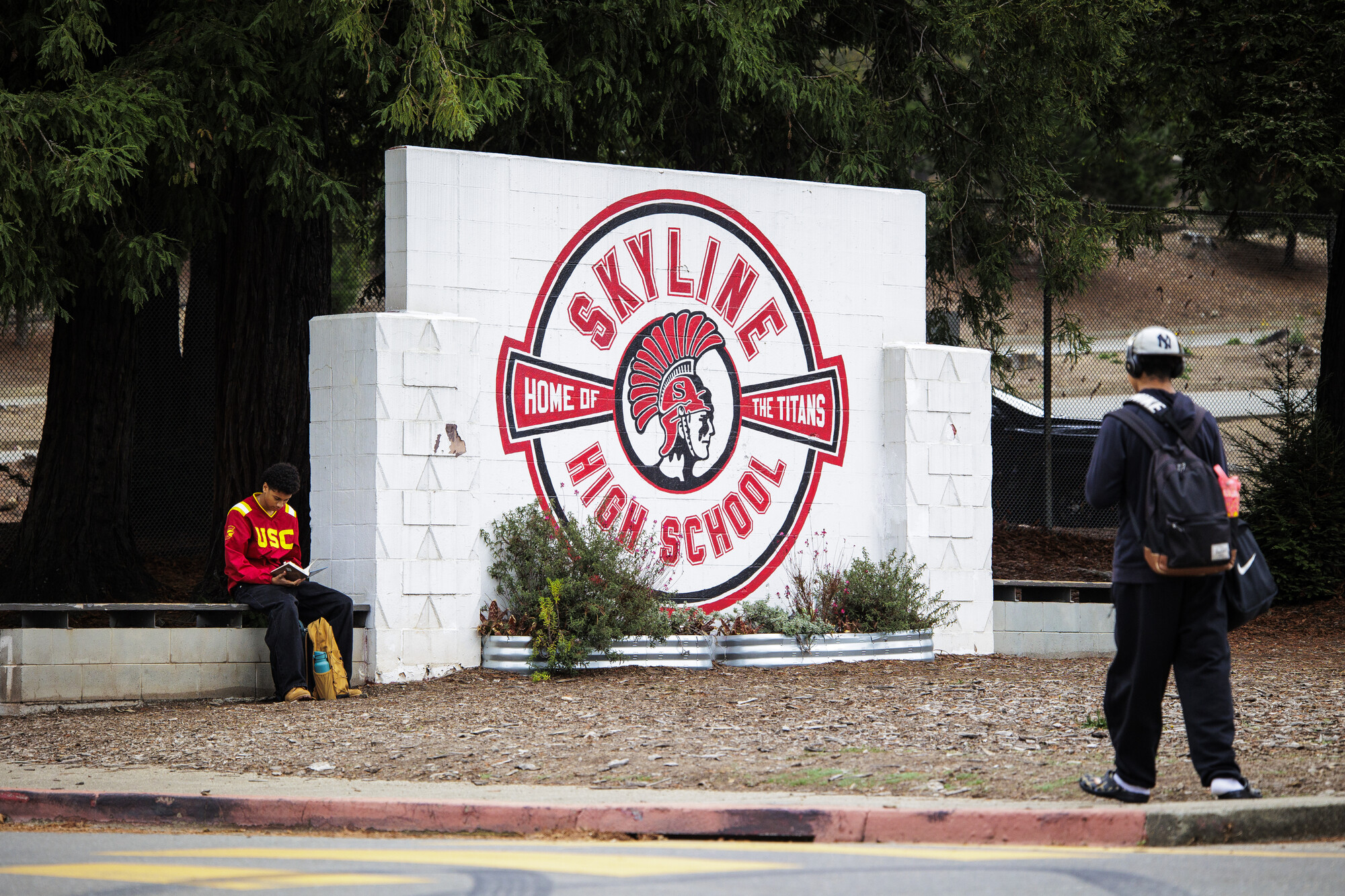
"caption": "Skyline High School in Oakland on Nov. 12, 2025.",
"credit": "Martin do Nascimento/KQED",
"altTag": null,
"description": null,
"imgSizes": {
"thumbnail": {
"file": "https://cdn.kqed.org/wp-content/uploads/sites/10/2025/11/251112-SKYLINE-HIGH-SHOOTING-MD-02_qed-160x107.jpg",
"width": 160,
"height": 107,
"mimeType": "image/jpeg"
},
"1536x1536": {
"file": "https://cdn.kqed.org/wp-content/uploads/sites/10/2025/11/251112-SKYLINE-HIGH-SHOOTING-MD-02_qed-1536x1024.jpg",
"width": 1536,
"height": 1024,
"mimeType": "image/jpeg"
},
"post-thumbnail": {
"file": "https://cdn.kqed.org/wp-content/uploads/sites/10/2025/11/251112-SKYLINE-HIGH-SHOOTING-MD-02_qed-672x372.jpg",
"width": 672,
"height": 372,
"mimeType": "image/jpeg"
},
"twentyfourteen-full-width": {
"file": "https://cdn.kqed.org/wp-content/uploads/sites/10/2025/11/251112-SKYLINE-HIGH-SHOOTING-MD-02_qed-1038x576.jpg",
"width": 1038,
"height": 576,
"mimeType": "image/jpeg"
},
"npr-cds-wide": {
"file": "https://cdn.kqed.org/wp-content/uploads/sites/10/2025/11/251112-SKYLINE-HIGH-SHOOTING-MD-02_qed-1200x675.jpg",
"width": 1200,
"height": 675,
"mimeType": "image/jpeg"
},
"kqedFullSize": {
"file": "https://cdn.kqed.org/wp-content/uploads/sites/10/2025/11/251112-SKYLINE-HIGH-SHOOTING-MD-02_qed.jpg",
"width": 2000,
"height": 1333
}
},
"isLoading": false,
"fetchFailed": false
},
"news_12064123": {
"type": "attachments",
"id": "news_12064123",
"meta": {
"index": "attachments_1716263798",
"site": "news",
"id": "12064123",
"found": true
},
"title": "laney-shooter1113",
"publishDate": 1763143884,
"status": "inherit",
"parent": 12064112,
"modified": 1763143910,
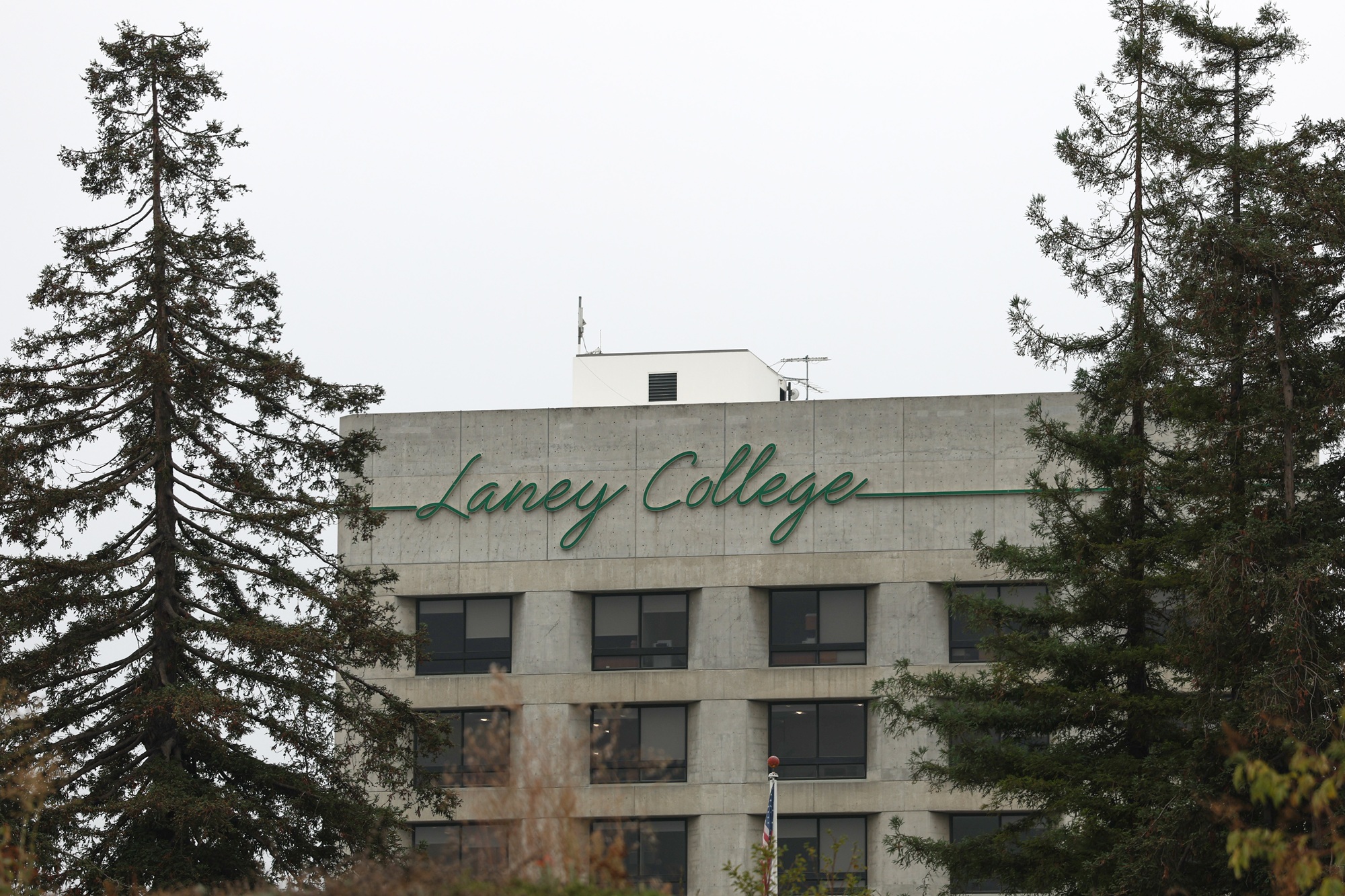
"caption": "The scene after a shooting at Laney College on Thursday, Nov. 13, 2025, in Oakland, California.",
"credit": "Santiago Mejia/San Francisco Chronicle via Getty Images",
"altTag": null,
"description": null,
"imgSizes": {
"thumbnail": {
"file": "https://cdn.kqed.org/wp-content/uploads/sites/10/2025/11/LaneyCollegeGetty2-160x107.jpg",
"width": 160,
"height": 107,
"mimeType": "image/jpeg"
},
"1536x1536": {
"file": "https://cdn.kqed.org/wp-content/uploads/sites/10/2025/11/LaneyCollegeGetty2-1536x1024.jpg",
"width": 1536,
"height": 1024,
"mimeType": "image/jpeg"
},
"post-thumbnail": {
"file": "https://cdn.kqed.org/wp-content/uploads/sites/10/2025/11/LaneyCollegeGetty2-672x372.jpg",
"width": 672,
"height": 372,
"mimeType": "image/jpeg"
},
"twentyfourteen-full-width": {
"file": "https://cdn.kqed.org/wp-content/uploads/sites/10/2025/11/LaneyCollegeGetty2-1038x576.jpg",
"width": 1038,
"height": 576,
"mimeType": "image/jpeg"
},
"npr-cds-wide": {
"file": "https://cdn.kqed.org/wp-content/uploads/sites/10/2025/11/LaneyCollegeGetty2-1200x675.jpg",
"width": 1200,
"height": 675,
"mimeType": "image/jpeg"
},
"kqedFullSize": {
"file": "https://cdn.kqed.org/wp-content/uploads/sites/10/2025/11/LaneyCollegeGetty2.jpg",
"width": 2000,
"height": 1333
}
},
"isLoading": false,
"fetchFailed": false
},
"news_12064036": {
"type": "attachments",
"id": "news_12064036",
"meta": {
"index": "attachments_1716263798",
"site": "news",
"id": "12064036",
"found": true
},
"title": "me-oakland-museum",
"publishDate": 1763070996,
"status": "inherit",
"parent": 12064033,
"modified": 1763071079,
"caption": "Laney College on Thursday, Oct. 30, 2025, in Oakland, California.",
"credit": "David M. Barreda/Los Angeles Times via Getty Images",
"altTag": null,
"description": null,
"imgSizes": {
"thumbnail": {
"file": "https://cdn.kqed.org/wp-content/uploads/sites/10/2025/11/LaneyCollegeGetty-160x107.jpg",
"width": 160,
"height": 107,
"mimeType": "image/jpeg"
},
"1536x1536": {
"file": "https://cdn.kqed.org/wp-content/uploads/sites/10/2025/11/LaneyCollegeGetty-1536x1024.jpg",
"width": 1536,
"height": 1024,
"mimeType": "image/jpeg"
},
"post-thumbnail": {
"file": "https://cdn.kqed.org/wp-content/uploads/sites/10/2025/11/LaneyCollegeGetty-672x372.jpg",
"width": 672,
"height": 372,
"mimeType": "image/jpeg"
},
"twentyfourteen-full-width": {
"file": "https://cdn.kqed.org/wp-content/uploads/sites/10/2025/11/LaneyCollegeGetty-1038x576.jpg",
"width": 1038,
"height": 576,
"mimeType": "image/jpeg"
},
"npr-cds-wide": {
"file": "https://cdn.kqed.org/wp-content/uploads/sites/10/2025/11/LaneyCollegeGetty-1200x675.jpg",
"width": 1200,
"height": 675,
"mimeType": "image/jpeg"
},
"kqedFullSize": {
"file": "https://cdn.kqed.org/wp-content/uploads/sites/10/2025/11/LaneyCollegeGetty.jpg",
"width": 2000,
"height": 1333
}
},
"isLoading": false,
"fetchFailed": false
},
"news_12063879": {
"type": "attachments",
"id": "news_12063879",
"meta": {
"index": "attachments_1716263798",
"site": "news",
"id": "12063879",
"found": true
},
"title": "251112-OAKLANDLANDLORD00011_TV-KQED",
"publishDate": 1762986413,
"status": "inherit",
"parent": 0,
"modified": 1762994914,
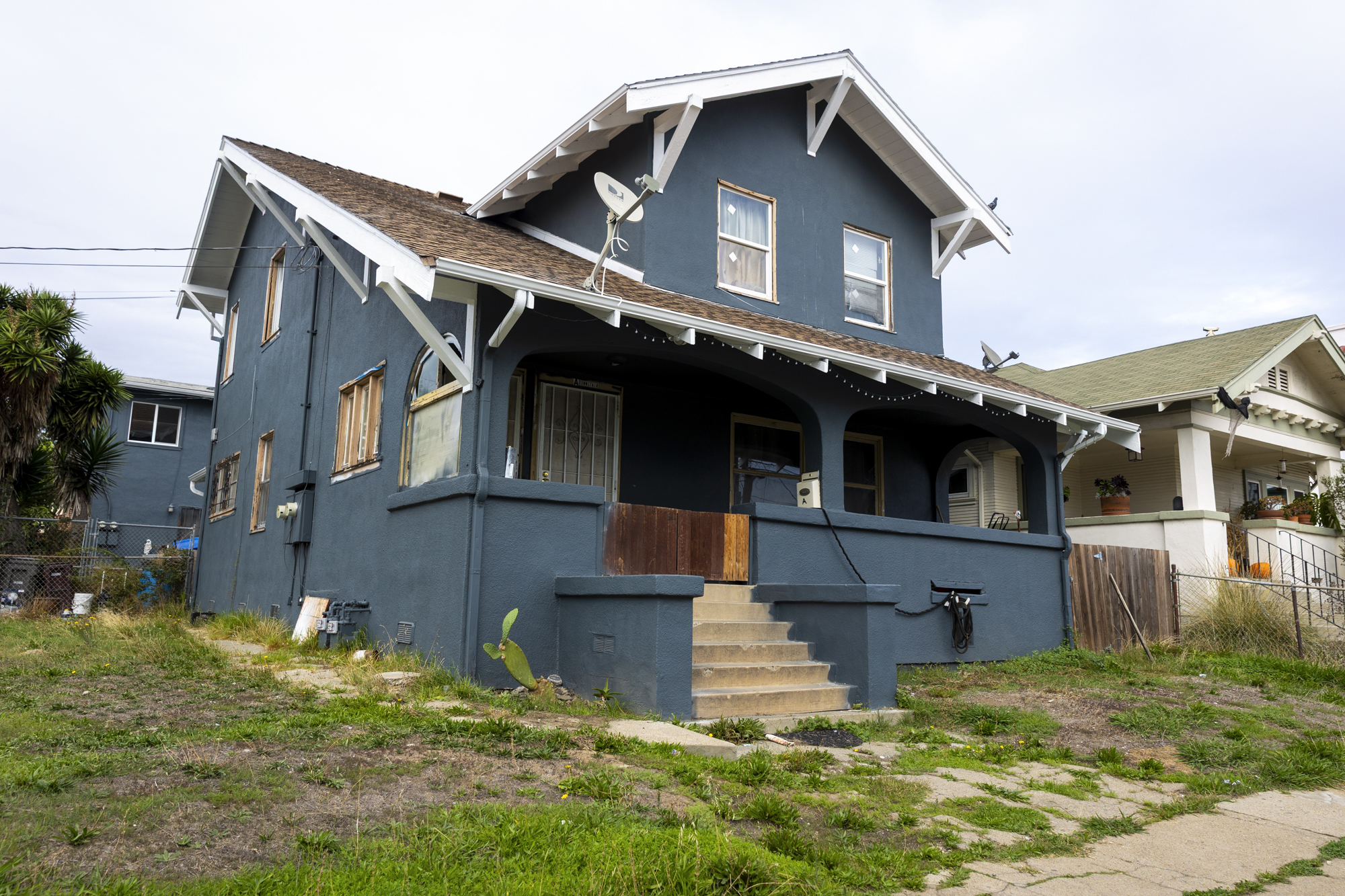
"caption": "A home in Oakland where tenants are allegedly being threatened with immigration enforcement by their landlords on Nov. 12, 2025.",
"credit": "Tâm Vũ/KQED",
"altTag": null,
"description": null,
"imgSizes": {
"thumbnail": {
"file": "https://cdn.kqed.org/wp-content/uploads/sites/10/2025/11/251112-OAKLANDLANDLORD00011_TV-KQED-160x107.jpg",
"width": 160,
"height": 107,
"mimeType": "image/jpeg"
},
"1536x1536": {
"file": "https://cdn.kqed.org/wp-content/uploads/sites/10/2025/11/251112-OAKLANDLANDLORD00011_TV-KQED-1536x1024.jpg",
"width": 1536,
"height": 1024,
"mimeType": "image/jpeg"
},
"post-thumbnail": {
"file": "https://cdn.kqed.org/wp-content/uploads/sites/10/2025/11/251112-OAKLANDLANDLORD00011_TV-KQED-672x372.jpg",
"width": 672,
"height": 372,
"mimeType": "image/jpeg"
},
"twentyfourteen-full-width": {
"file": "https://cdn.kqed.org/wp-content/uploads/sites/10/2025/11/251112-OAKLANDLANDLORD00011_TV-KQED-1038x576.jpg",
"width": 1038,
"height": 576,
"mimeType": "image/jpeg"
},
"npr-cds-wide": {
"file": "https://cdn.kqed.org/wp-content/uploads/sites/10/2025/11/251112-OAKLANDLANDLORD00011_TV-KQED-1200x675.jpg",
"width": 1200,
"height": 675,
"mimeType": "image/jpeg"
},
"kqedFullSize": {
"file": "https://cdn.kqed.org/wp-content/uploads/sites/10/2025/11/251112-OAKLANDLANDLORD00011_TV-KQED.jpg",
"width": 2000,
"height": 1333
}
},
"isLoading": false,
"fetchFailed": false
},
"news_12063897": {
"type": "attachments",
"id": "news_12063897",
"meta": {
"index": "attachments_1716263798",
"site": "news",
"id": "12063897",
"found": true
},
"title": "251112-SKYLINE HIGH SHOOTING-MD-01-KQED",
"publishDate": 1762991298,
"status": "inherit",
"parent": 0,
"modified": 1762991388,
"caption": "Skyline High School in Oakland on Nov. 12, 2025.",
"credit": "Martin do Nascimento/KQED",
"altTag": null,
"description": null,
"imgSizes": {
"thumbnail": {
"file": "https://cdn.kqed.org/wp-content/uploads/sites/10/2025/11/251112-SKYLINE-HIGH-SHOOTING-MD-01-KQED-160x107.jpg",
"width": 160,
"height": 107,
"mimeType": "image/jpeg"
},
"1536x1536": {
"file": "https://cdn.kqed.org/wp-content/uploads/sites/10/2025/11/251112-SKYLINE-HIGH-SHOOTING-MD-01-KQED-1536x1024.jpg",
"width": 1536,
"height": 1024,
"mimeType": "image/jpeg"
},
"post-thumbnail": {
"file": "https://cdn.kqed.org/wp-content/uploads/sites/10/2025/11/251112-SKYLINE-HIGH-SHOOTING-MD-01-KQED-672x372.jpg",
"width": 672,
"height": 372,
"mimeType": "image/jpeg"
},
"twentyfourteen-full-width": {
"file": "https://cdn.kqed.org/wp-content/uploads/sites/10/2025/11/251112-SKYLINE-HIGH-SHOOTING-MD-01-KQED-1038x576.jpg",
"width": 1038,
"height": 576,
"mimeType": "image/jpeg"
},
"npr-cds-wide": {
"file": "https://cdn.kqed.org/wp-content/uploads/sites/10/2025/11/251112-SKYLINE-HIGH-SHOOTING-MD-01-KQED-1200x675.jpg",
"width": 1200,
"height": 675,
"mimeType": "image/jpeg"
},
"kqedFullSize": {
"file": "https://cdn.kqed.org/wp-content/uploads/sites/10/2025/11/251112-SKYLINE-HIGH-SHOOTING-MD-01-KQED.jpg",
"width": 2000,
"height": 1333
}
},
"isLoading": false,
"fetchFailed": false
},
"news_12058500": {
"type": "attachments",
"id": "news_12058500",
"meta": {
"index": "attachments_1716263798",
"site": "news",
"id": "12058500",
"found": true
},
"title": "251001_BAYAREASHELTER_-17-KQED",
"publishDate": 1759447814,
"status": "inherit",
"parent": 0,
"modified": 1759447933,
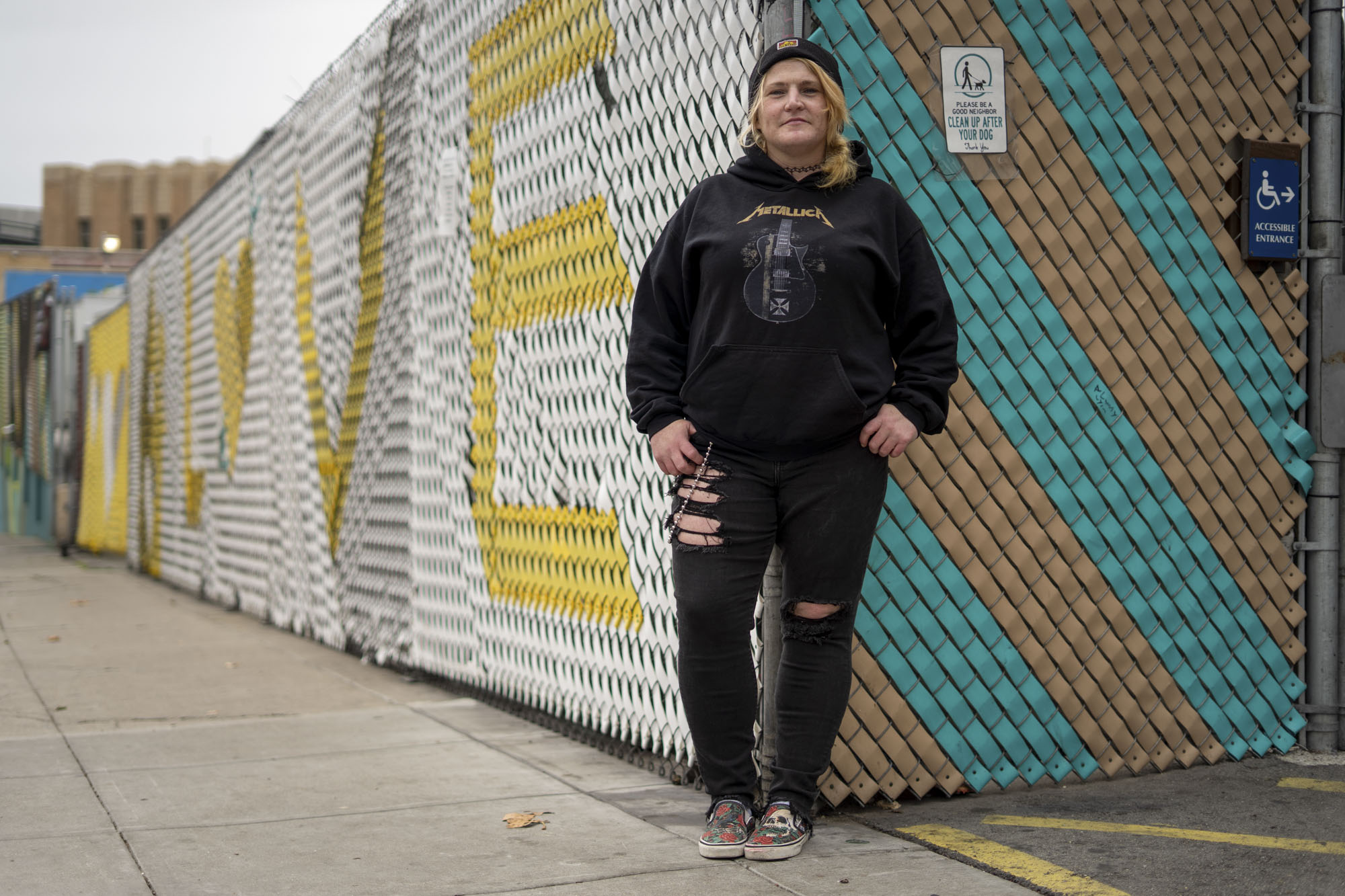
"caption": "Sarah Spillane, a resident of the DignityMoves tiny home cabins, outside the entrance in SoMa in San Francisco on Oct. 1, 2025.",
"credit": "Gustavo Hernandez/KQED",
"altTag": null,
"description": null,
"imgSizes": {
"thumbnail": {
"file": "https://cdn.kqed.org/wp-content/uploads/sites/10/2025/10/251001_BAYAREASHELTER_-17-KQED-160x107.jpg",
"width": 160,
"height": 107,
"mimeType": "image/jpeg"
},
"1536x1536": {
"file": "https://cdn.kqed.org/wp-content/uploads/sites/10/2025/10/251001_BAYAREASHELTER_-17-KQED-1536x1024.jpg",
"width": 1536,
"height": 1024,
"mimeType": "image/jpeg"
},
"post-thumbnail": {
"file": "https://cdn.kqed.org/wp-content/uploads/sites/10/2025/10/251001_BAYAREASHELTER_-17-KQED-672x372.jpg",
"width": 672,
"height": 372,
"mimeType": "image/jpeg"
},
"twentyfourteen-full-width": {
"file": "https://cdn.kqed.org/wp-content/uploads/sites/10/2025/10/251001_BAYAREASHELTER_-17-KQED-1038x576.jpg",
"width": 1038,
"height": 576,
"mimeType": "image/jpeg"
},
"kqedFullSize": {
"file": "https://cdn.kqed.org/wp-content/uploads/sites/10/2025/10/251001_BAYAREASHELTER_-17-KQED.jpg",
"width": 2000,
"height": 1333
}
},
"isLoading": false,
"fetchFailed": false
},
"news_12063527": {
"type": "attachments",
"id": "news_12063527",
"meta": {
"index": "attachments_1716263798",
"site": "news",
"id": "12063527",
"found": true
},
"title": "251023-MAYOR LEE PRESSER-MD-02_qed",
"publishDate": 1762558007,
"status": "inherit",
"parent": 12063471,
"modified": 1762558017,
"caption": "Oakland Mayor Barbara Lee speaks at a press conference at Oakland City Hall on Oct. 23, 2025.",
"credit": "Martin do Nascimento/KQED",
"altTag": null,
"description": null,
"imgSizes": {
"thumbnail": {
"file": "https://cdn.kqed.org/wp-content/uploads/sites/10/2025/11/251023-MAYOR-LEE-PRESSER-MD-02_qed-160x107.jpg",
"width": 160,
"height": 107,
"mimeType": "image/jpeg"
},
"1536x1536": {
"file": "https://cdn.kqed.org/wp-content/uploads/sites/10/2025/11/251023-MAYOR-LEE-PRESSER-MD-02_qed-1536x1024.jpg",
"width": 1536,
"height": 1024,
"mimeType": "image/jpeg"
},
"post-thumbnail": {
"file": "https://cdn.kqed.org/wp-content/uploads/sites/10/2025/11/251023-MAYOR-LEE-PRESSER-MD-02_qed-672x372.jpg",
"width": 672,
"height": 372,
"mimeType": "image/jpeg"
},
"twentyfourteen-full-width": {
"file": "https://cdn.kqed.org/wp-content/uploads/sites/10/2025/11/251023-MAYOR-LEE-PRESSER-MD-02_qed-1038x576.jpg",
"width": 1038,
"height": 576,
"mimeType": "image/jpeg"
},
"npr-cds-wide": {
"file": "https://cdn.kqed.org/wp-content/uploads/sites/10/2025/11/251023-MAYOR-LEE-PRESSER-MD-02_qed-1200x675.jpg",
"width": 1200,
"height": 675,
"mimeType": "image/jpeg"
},
"kqedFullSize": {
"file": "https://cdn.kqed.org/wp-content/uploads/sites/10/2025/11/251023-MAYOR-LEE-PRESSER-MD-02_qed.jpg",
"width": 2000,
"height": 1333
}
},
"isLoading": false,
"fetchFailed": false
},
"news_12037997": {
"type": "attachments",
"id": "news_12037997",
"meta": {
"index": "attachments_1716263798",
"site": "news",
"id": "12037997",
"found": true
},
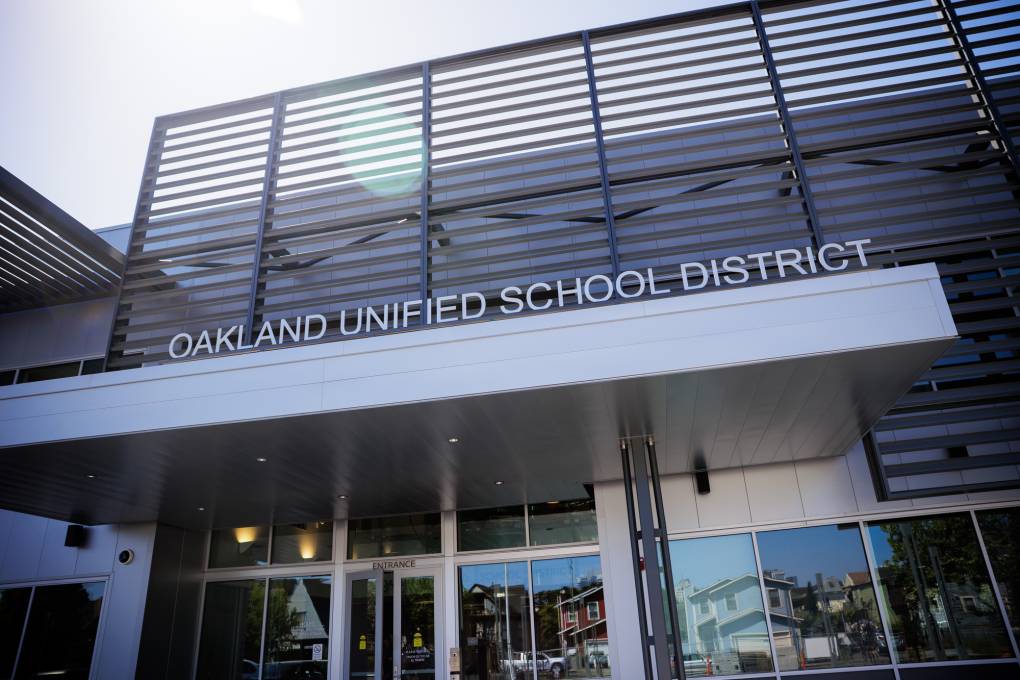
"title": "The Oakland Unified School District Offices in Oakland on April 28, 2025.",
"publishDate": 1745884016,
"status": "inherit",
"parent": 12038078,
"modified": 1745954220,
"caption": "The Oakland Unified School District Offices in Oakland on April 28, 2025.",
"credit": "Martin do Nascimento/KQED",
"altTag": null,
"description": null,
"imgSizes": {
"medium": {
"file": "https://cdn.kqed.org/wp-content/uploads/sites/10/2025/04/250428-OUSD-OFFICE-FILE-MD-01-KQED-800x533.jpg",
"width": 800,
"height": 533,
"mimeType": "image/jpeg"
},
"large": {
"file": "https://cdn.kqed.org/wp-content/uploads/sites/10/2025/04/250428-OUSD-OFFICE-FILE-MD-01-KQED-1020x680.jpg",
"width": 1020,
"height": 680,
"mimeType": "image/jpeg"
},
"thumbnail": {
"file": "https://cdn.kqed.org/wp-content/uploads/sites/10/2025/04/250428-OUSD-OFFICE-FILE-MD-01-KQED-160x107.jpg",
"width": 160,
"height": 107,
"mimeType": "image/jpeg"
},
"1536x1536": {
"file": "https://cdn.kqed.org/wp-content/uploads/sites/10/2025/04/250428-OUSD-OFFICE-FILE-MD-01-KQED-1536x1024.jpg",
"width": 1536,
"height": 1024,
"mimeType": "image/jpeg"
},
"post-thumbnail": {
"file": "https://cdn.kqed.org/wp-content/uploads/sites/10/2025/04/250428-OUSD-OFFICE-FILE-MD-01-KQED-672x372.jpg",
"width": 672,
"height": 372,
"mimeType": "image/jpeg"
},
"twentyfourteen-full-width": {
"file": "https://cdn.kqed.org/wp-content/uploads/sites/10/2025/04/250428-OUSD-OFFICE-FILE-MD-01-KQED-1038x576.jpg",
"width": 1038,
"height": 576,
"mimeType": "image/jpeg"
},
"full-width": {
"file": "https://cdn.kqed.org/wp-content/uploads/sites/10/2025/04/250428-OUSD-OFFICE-FILE-MD-01-KQED-1920x1280.jpg",
"width": 1920,
"height": 1280,
"mimeType": "image/jpeg"
},
"kqedFullSize": {
"file": "https://cdn.kqed.org/wp-content/uploads/sites/10/2025/04/250428-OUSD-OFFICE-FILE-MD-01-KQED.jpg",
"width": 2000,
"height": 1333
}
},
"isLoading": false,
"fetchFailed": false
},
"news_11991432": {
"type": "attachments",
"id": "news_11991432",
"meta": {
"index": "attachments_1716263798",
"site": "news",
"id": "11991432",
"found": true
},
"title": "FBI raids Oakland Mayor Sheng Thao's home",
"publishDate": 1718990948,
"status": "inherit",
"parent": 11993390,
"modified": 1762195239,
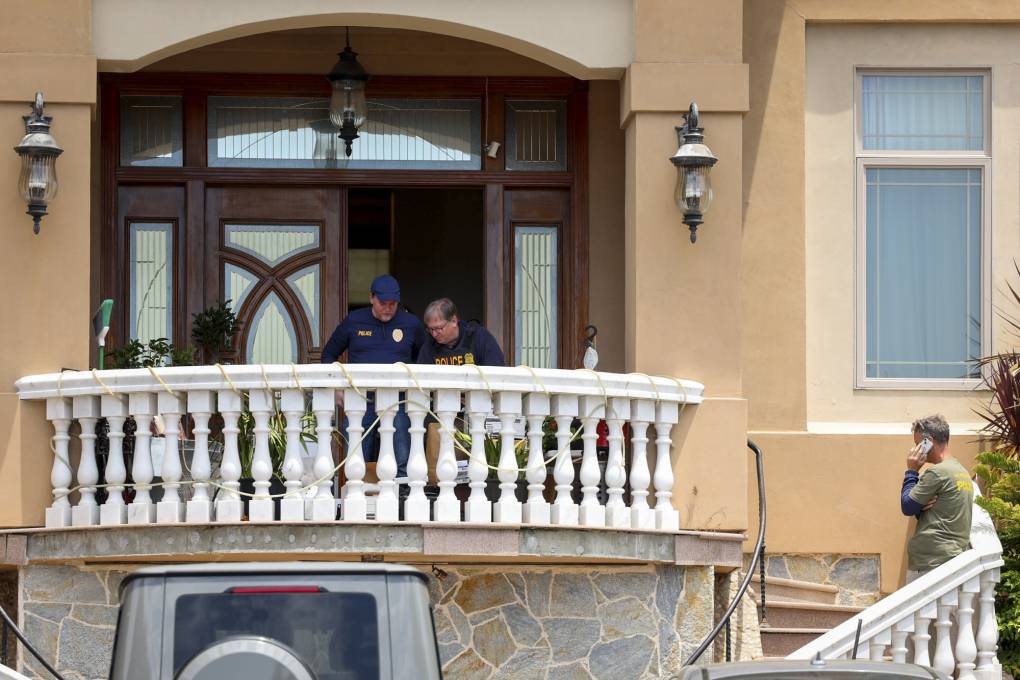
"caption": "U.S. postal inspectors check documents at a home tied to David Duong, one of the multiple properties searched by law enforcement that included residences to members of a politically connected family who run the city's contracted recycling company, California Waste Solutions, in Oakland on June 20, 2024.",
"credit": "Ray Chavez/MediaNews Group/The Mercury News via Getty Images",
"altTag": null,
"description": null,
"imgSizes": {
"medium": {
"file": "https://cdn.kqed.org/wp-content/uploads/sites/10/2024/06/GETTYIMAGES-2158502017-KQED-800x534.jpg",
"width": 800,
"height": 534,
"mimeType": "image/jpeg"
},
"large": {
"file": "https://cdn.kqed.org/wp-content/uploads/sites/10/2024/06/GETTYIMAGES-2158502017-KQED-1020x680.jpg",
"width": 1020,
"height": 680,
"mimeType": "image/jpeg"
},
"thumbnail": {
"file": "https://cdn.kqed.org/wp-content/uploads/sites/10/2024/06/GETTYIMAGES-2158502017-KQED-160x107.jpg",
"width": 160,
"height": 107,
"mimeType": "image/jpeg"
},
"1536x1536": {
"file": "https://cdn.kqed.org/wp-content/uploads/sites/10/2024/06/GETTYIMAGES-2158502017-KQED-1536x1025.jpg",
"width": 1536,
"height": 1025,
"mimeType": "image/jpeg"
},
"post-thumbnail": {
"file": "https://cdn.kqed.org/wp-content/uploads/sites/10/2024/06/GETTYIMAGES-2158502017-KQED-672x372.jpg",
"width": 672,
"height": 372,
"mimeType": "image/jpeg"
},
"twentyfourteen-full-width": {
"file": "https://cdn.kqed.org/wp-content/uploads/sites/10/2024/06/GETTYIMAGES-2158502017-KQED-1038x576.jpg",
"width": 1038,
"height": 576,
"mimeType": "image/jpeg"
},
"full-width": {
"file": "https://cdn.kqed.org/wp-content/uploads/sites/10/2024/06/GETTYIMAGES-2158502017-KQED-1920x1281.jpg",
"width": 1920,
"height": 1281,
"mimeType": "image/jpeg"
},
"kqedFullSize": {
"file": "https://cdn.kqed.org/wp-content/uploads/sites/10/2024/06/GETTYIMAGES-2158502017-KQED.jpg",
"width": 2000,
"height": 1334
}
},
"isLoading": false,
"fetchFailed": false
},
"news_12062307": {
"type": "attachments",
"id": "news_12062307",
"meta": {
"index": "attachments_1716263798",
"site": "news",
"id": "12062307",
"found": true
},
"title": "Oakland Museum Entrance",
"publishDate": 1761852175,
"status": "inherit",
"parent": 12062303,
"modified": 1761852218,
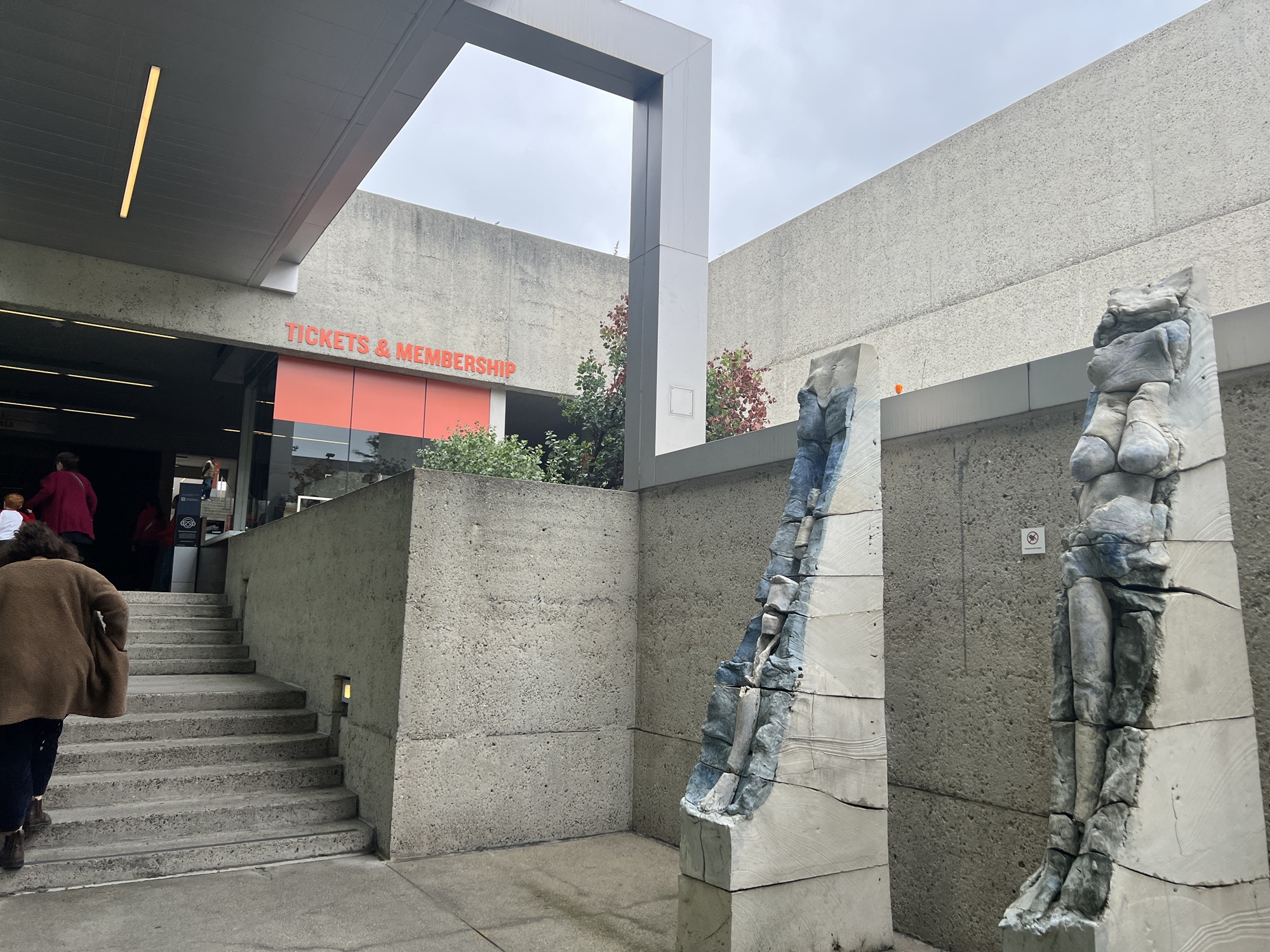
"caption": "Entrance to the Oakland Museum of California in Oakland, California, on April 3, 2024. ",
"credit": "Smith Collection/Gado/Getty Images",
"altTag": null,
"description": null,
"imgSizes": {
"thumbnail": {
"file": "https://cdn.kqed.org/wp-content/uploads/sites/10/2025/10/Oakland-Museum-of-California-Getty-160x120.jpg",
"width": 160,
"height": 120,
"mimeType": "image/jpeg"
},
"1536x1536": {
"file": "https://cdn.kqed.org/wp-content/uploads/sites/10/2025/10/Oakland-Museum-of-California-Getty-1536x1152.jpg",
"width": 1536,
"height": 1152,
"mimeType": "image/jpeg"
},
"post-thumbnail": {
"file": "https://cdn.kqed.org/wp-content/uploads/sites/10/2025/10/Oakland-Museum-of-California-Getty-672x372.jpg",
"width": 672,
"height": 372,
"mimeType": "image/jpeg"
},
"twentyfourteen-full-width": {
"file": "https://cdn.kqed.org/wp-content/uploads/sites/10/2025/10/Oakland-Museum-of-California-Getty-1038x576.jpg",
"width": 1038,
"height": 576,
"mimeType": "image/jpeg"
},
"npr-cds-wide": {
"file": "https://cdn.kqed.org/wp-content/uploads/sites/10/2025/10/Oakland-Museum-of-California-Getty-1600x900.jpg",
"width": 1600,
"height": 900,
"mimeType": "image/jpeg"
},
"kqedFullSize": {
"file": "https://cdn.kqed.org/wp-content/uploads/sites/10/2025/10/Oakland-Museum-of-California-Getty.jpg",
"width": 2000,
"height": 1500
}
},
"isLoading": false,
"fetchFailed": false
},
"news_12058754": {
"type": "attachments",
"id": "news_12058754",
"meta": {
"index": "attachments_1716263798",
"site": "news",
"id": "12058754",
"found": true
},
"title": "251003_ORBIT_ROOM-_-19-KQED",
"publishDate": 1759765403,
"status": "inherit",
"parent": 0,
"modified": 1759765584,
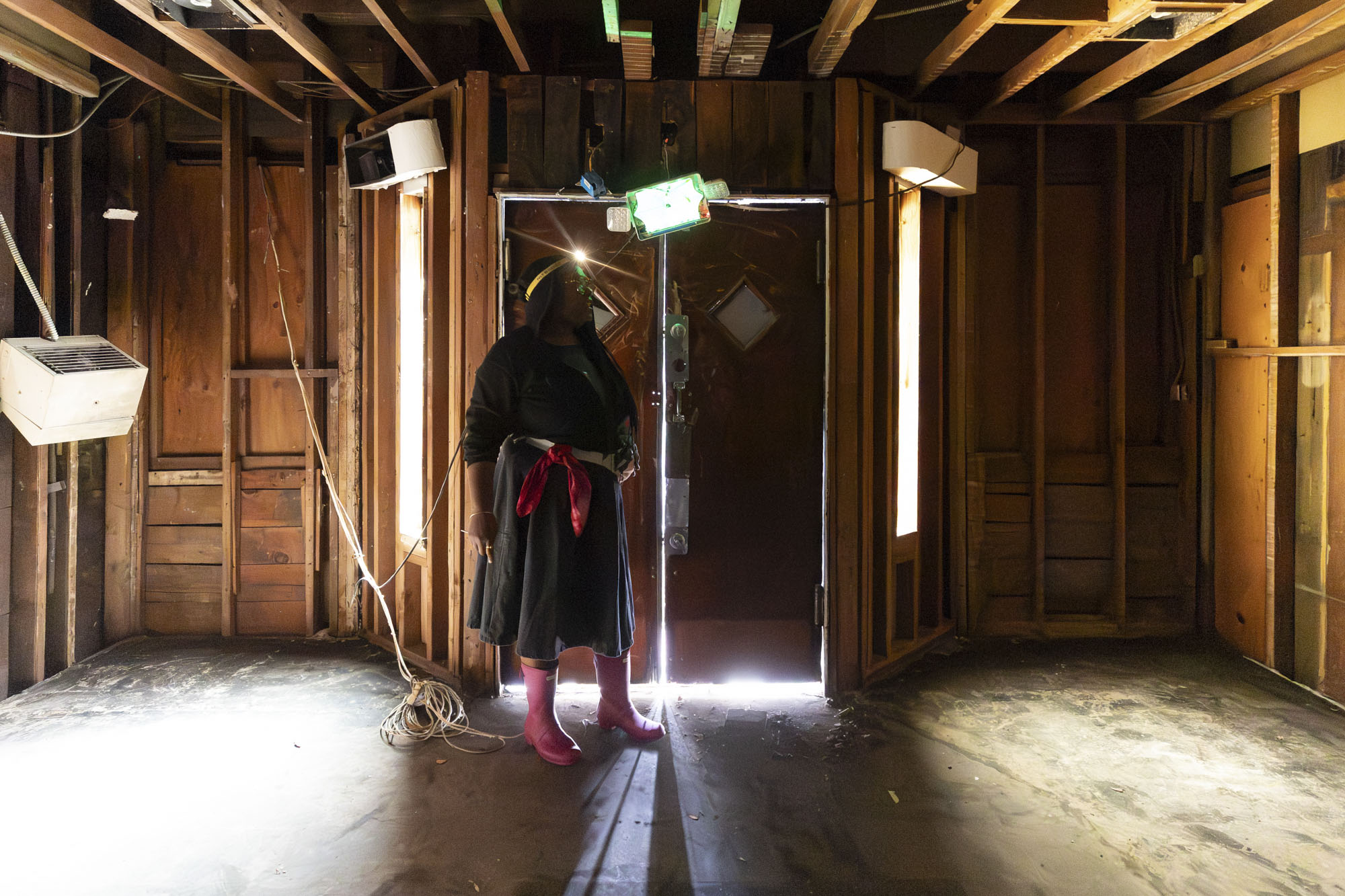
"caption": "Noni Session stands near the front doors of Esther’s Orbit Room as daylight streams into the building under renovation in Oakland on Oct. 2, 2025.",
"credit": "Gustavo Hernandez/KQED",
"altTag": null,
"description": null,
"imgSizes": {
"thumbnail": {
"file": "https://cdn.kqed.org/wp-content/uploads/sites/10/2025/10/251003_ORBIT_ROOM-_-19-KQED-160x107.jpg",
"width": 160,
"height": 107,
"mimeType": "image/jpeg"
},
"1536x1536": {
"file": "https://cdn.kqed.org/wp-content/uploads/sites/10/2025/10/251003_ORBIT_ROOM-_-19-KQED-1536x1024.jpg",
"width": 1536,
"height": 1024,
"mimeType": "image/jpeg"
},
"post-thumbnail": {
"file": "https://cdn.kqed.org/wp-content/uploads/sites/10/2025/10/251003_ORBIT_ROOM-_-19-KQED-672x372.jpg",
"width": 672,
"height": 372,
"mimeType": "image/jpeg"
},
"twentyfourteen-full-width": {
"file": "https://cdn.kqed.org/wp-content/uploads/sites/10/2025/10/251003_ORBIT_ROOM-_-19-KQED-1038x576.jpg",
"width": 1038,
"height": 576,
"mimeType": "image/jpeg"
},
"kqedFullSize": {
"file": "https://cdn.kqed.org/wp-content/uploads/sites/10/2025/10/251003_ORBIT_ROOM-_-19-KQED.jpg",
"width": 2000,
"height": 1333
}
},
"isLoading": false,
"fetchFailed": false
},
"news_12054533": {
"type": "attachments",
"id": "news_12054533",
"meta": {
"index": "attachments_1716263798",
"site": "news",
"id": "12054533",
"found": true
},
"title": "250902_SANLEANDROCITYHALL_GH-2-KQED",
"publishDate": 1756932385,
"status": "inherit",
"parent": 12073176,
"modified": 1770850604,
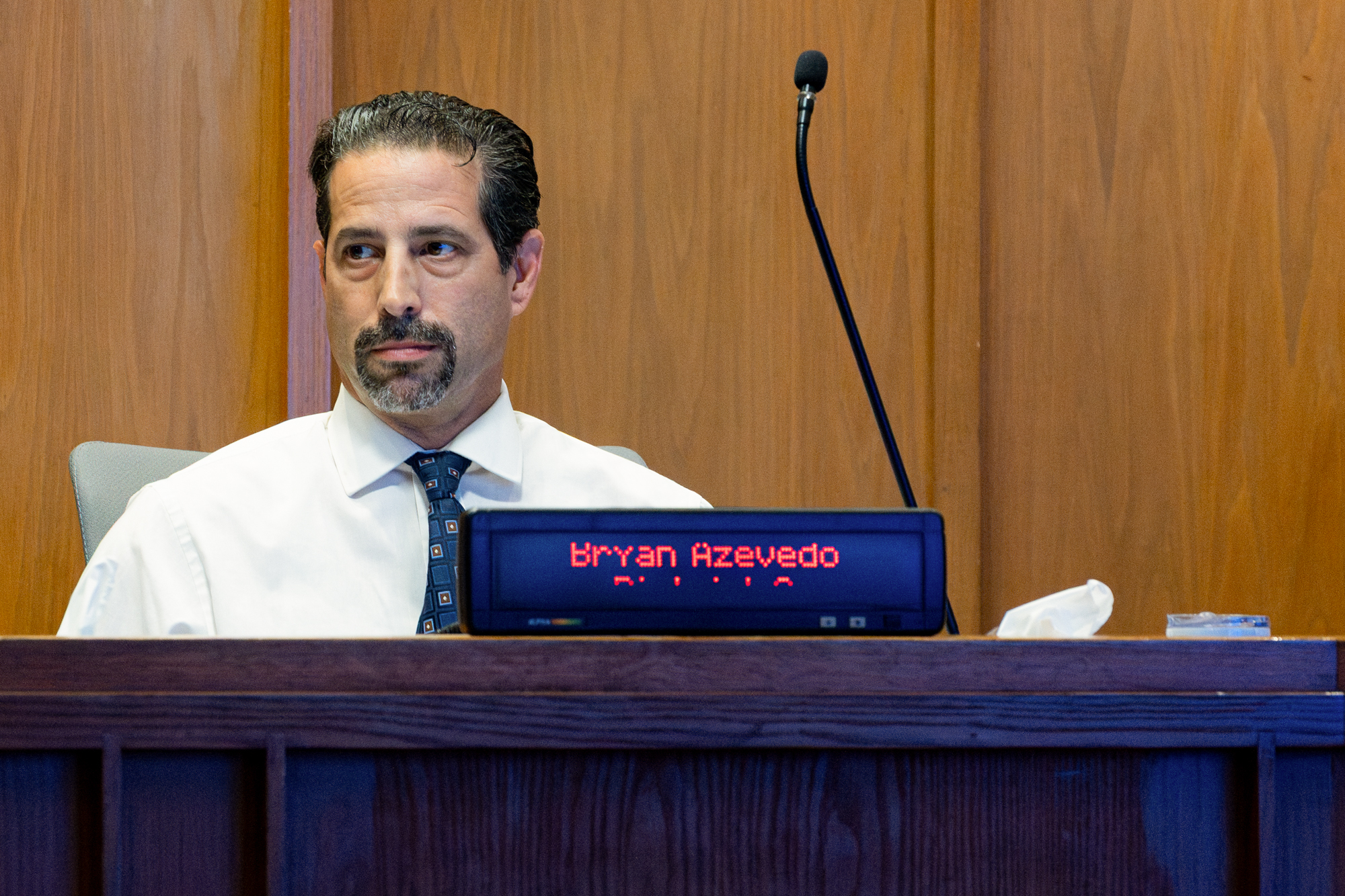
"caption": "Bryan Azevedo, San Leandro City Council member for District 2, attends a City Council meeting on Sept. 2, 2025.",
"credit": "Gustavo Hernandez/KQED",
"altTag": null,
"description": null,
"imgSizes": {
"thumbnail": {
"file": "https://cdn.kqed.org/wp-content/uploads/sites/10/2025/09/250902_SANLEANDROCITYHALL_GH-2-KQED-160x107.jpg",
"width": 160,
"height": 107,
"mimeType": "image/jpeg"
},
"1536x1536": {
"file": "https://cdn.kqed.org/wp-content/uploads/sites/10/2025/09/250902_SANLEANDROCITYHALL_GH-2-KQED-1536x1024.jpg",
"width": 1536,
"height": 1024,
"mimeType": "image/jpeg"
},
"post-thumbnail": {
"file": "https://cdn.kqed.org/wp-content/uploads/sites/10/2025/09/250902_SANLEANDROCITYHALL_GH-2-KQED-672x372.jpg",
"width": 672,
"height": 372,
"mimeType": "image/jpeg"
},
"twentyfourteen-full-width": {
"file": "https://cdn.kqed.org/wp-content/uploads/sites/10/2025/09/250902_SANLEANDROCITYHALL_GH-2-KQED-1038x576.jpg",
"width": 1038,
"height": 576,
"mimeType": "image/jpeg"
},
"kqedFullSize": {
"file": "https://cdn.kqed.org/wp-content/uploads/sites/10/2025/09/250902_SANLEANDROCITYHALL_GH-2-KQED.jpg",
"width": 2000,
"height": 1333
}
},
"isLoading": false,
"fetchFailed": false
}
},
"audioPlayerReducer": {
"postId": "stream_live",
"isPaused": true,
"isPlaying": false,
"pfsActive": false,
"pledgeModalIsOpen": true,
"playerDrawerIsOpen": false,
"liveAudioPlayStartedAt": 0,
"liveAudioPlayContext": ""
},
"authorsReducer": {
"gmarzorati": {
"type": "authors",
"id": "227",
"meta": {
"index": "authors_1716337520",
"id": "227",
"found": true
},
"name": "Guy Marzorati",
"firstName": "Guy",
"lastName": "Marzorati",
"slug": "gmarzorati",
"email": "gmarzorati@KQED.org",
"display_author_email": true,
"staff_mastheads": [
"news"
],
"title": "Correspondent",
"bio": "Guy Marzorati is a correspondent on KQED's California Politics and Government Desk, based in San Jose. A graduate of Santa Clara University, Guy joined KQED in 2013. He reports on state and local politics and produces KQED's digital voter guide.",
"avatar": "https://secure.gravatar.com/avatar/e7038b8dbfd55b104369b76b1cd0b9de?s=600&d=blank&r=g",
"twitter": "guymarzorati",
"facebook": null,
"instagram": null,
"linkedin": null,
"sites": [
{
"site": "",
"roles": [
"editor"
]
},
{
"site": "news",
"roles": [
"editor"
]
},
{
"site": "science",
"roles": [
"editor"
]
},
{
"site": "forum",
"roles": [
"editor"
]
},
{
"site": "elections",
"roles": [
"editor"
]
},
{
"site": "liveblog",
"roles": [
"editor"
]
}
],
"headData": {
"title": "Guy Marzorati | KQED",
"description": "Correspondent",
"ogImgSrc": "https://secure.gravatar.com/avatar/e7038b8dbfd55b104369b76b1cd0b9de?s=600&d=blank&r=g",
"twImgSrc": "https://secure.gravatar.com/avatar/e7038b8dbfd55b104369b76b1cd0b9de?s=600&d=blank&r=g"
},
"isLoading": false,
"link": "/author/gmarzorati"
},
"aemslie": {
"type": "authors",
"id": "3206",
"meta": {
"index": "authors_1716337520",
"id": "3206",
"found": true
},
"name": "Alex Emslie",
"firstName": "Alex",
"lastName": "Emslie",
"slug": "aemslie",
"email": "aemslie@kqed.org",
"display_author_email": true,
"staff_mastheads": [
"news"
],
"title": "KQED Senior Editor",
"bio": "Alex Emslie is senior editor of talent and development at KQED, where he manages dozens of early career journalists and oversees news department internships.\r\n\r\nHe is a former carpenter and proud graduate of City College of San Francisco and San Francisco State University, where he studied journalism and criminal justice before joining KQED in 2013.\r\n\r\nAlex produced investigative journalism focused on \u003ca href=\"https://www.kqed.org/news/11667594/the-trials-of-marvin-mutch-video\">criminal justice\u003c/a> and policing for most of a decade. He has broken major stories about \u003ca href=\"https://www.kqed.org/news/135682/amid-a-series-of-vallejo-police-shootings-one-officers-name-stands-out\">police use of deadly force\u003c/a>, \u003ca href=\"https://www.kqed.org/news/10454955/racist-texts-prompt-sfpd-internal-investigation\">officer misconduct\u003c/a> and \u003ca href=\"https://www.kqed.org/news/11712239/terrorist-or-troll-judge-to-weigh-whether-oakland-man-really-intended-to-attack-bay-area\">other\u003c/a> \u003ca href=\"https://www.kqed.org/news/11221414/hayward-paid-159000-to-husband-of-retired-police-chief-documents-show\">high\u003c/a>-\u003ca href=\"https://www.kqed.org/news/10622762/the-forgotten-tracking-two-homicides-in-san-francisco-public-housing\">profile\u003c/a> \u003ca href=\"https://www.kqed.org/news/11624516/federal-agency-promoted-ranger-just-months-after-his-gun-was-stolen-and-used-in-steinle-killing\">cases\u003c/a>. He co-founded the \u003ca href=\"https://projects.scpr.org/california-reporting-project/\">California Reporting Project\u003c/a> in 2019 to obtain and report on previously confidential police internal investigations. The effort produced well over 100 original stories and changed the course of multiple criminal cases.\r\n\r\nHis work has been recognized with numerous journalism awards, including a national Edward R. Murrow award for several years of \u003ca href=\"https://www.kqed.org/news/11688481/sfpd-officers-in-mario-woods-case-recount-shooting-in-newly-filed-depositions\">reporting\u003c/a> on the San Francisco Police shooting of Mario Woods. His \u003ca href=\"https://www.kqed.org/news/147854/half-of-those-killed-by-san-francisco-police-are-mentally-ill\">reporting\u003c/a> on police killings of people in psychiatric crisis was cited in amicus briefs before the U.S. Supreme Court.\r\n\r\nAlex now enjoys mentoring the next generation of journalists at KQED.",
"avatar": "https://secure.gravatar.com/avatar/e691e65209f20e9da202bd730ead5663?s=600&d=blank&r=g",
"twitter": "SFNewsReporter",
"facebook": null,
"instagram": null,
"linkedin": null,
"sites": [
{
"site": "arts",
"roles": [
"editor"
]
},
{
"site": "news",
"roles": [
"editor"
]
},
{
"site": "mindshift",
"roles": [
"editor"
]
},
{
"site": "stateofhealth",
"roles": [
"editor"
]
},
{
"site": "science",
"roles": [
"administrator"
]
}
],
"headData": {
"title": "Alex Emslie | KQED",
"description": "KQED Senior Editor",
"ogImgSrc": "https://secure.gravatar.com/avatar/e691e65209f20e9da202bd730ead5663?s=600&d=blank&r=g",
"twImgSrc": "https://secure.gravatar.com/avatar/e691e65209f20e9da202bd730ead5663?s=600&d=blank&r=g"
},
"isLoading": false,
"link": "/author/aemslie"
},
"ahall": {
"type": "authors",
"id": "11490",
"meta": {
"index": "authors_1716337520",
"id": "11490",
"found": true
},
"name": "Alex Hall",
"firstName": "Alex",
"lastName": "Hall",
"slug": "ahall",
"email": "ahall@kqed.org",
"display_author_email": false,
"staff_mastheads": [
"news"
],
"title": "KQED Enterprise & Accountability Reporter",
"bio": "Alex Hall is KQED's Enterprise and Accountability Reporter. She previously covered the Central Valley for five years from KQED's bureau in Fresno. Before joining KQED, Alex was an investigative reporting fellow at Wisconsin Public Radio and the Wisconsin Center for Investigative Journalism. She has also worked as a bilingual producer for NPR's investigative unit and freelance video producer for Reuters TV on the Latin America desk. She got her start in journalism in South America, where she worked as a radio producer and Spanish-English translator for CNN Chile. Her documentary and investigation into the series of deadly COVID-19 outbreaks at Foster Farms won a national Edward R. Murrow award and was named an Investigative Reporters & Editors award finalist. Alex's reporting for Reveal on the Wisconsin dairy industry's reliance on undocumented immigrant labor was made into a film, Los Lecheros, which won a regional Edward R. Murrow award for best news documentary.",
"avatar": "https://secure.gravatar.com/avatar/defcbeb88b0bf591ff9af41f22644051?s=600&d=blank&r=g",
"twitter": "@chalexhall",
"facebook": null,
"instagram": null,
"linkedin": null,
"sites": [
{
"site": "news",
"roles": [
"editor"
]
},
{
"site": "liveblog",
"roles": [
"author"
]
}
],
"headData": {
"title": "Alex Hall | KQED",
"description": "KQED Enterprise & Accountability Reporter",
"ogImgSrc": "https://secure.gravatar.com/avatar/defcbeb88b0bf591ff9af41f22644051?s=600&d=blank&r=g",
"twImgSrc": "https://secure.gravatar.com/avatar/defcbeb88b0bf591ff9af41f22644051?s=600&d=blank&r=g"
},
"isLoading": false,
"link": "/author/ahall"
},
"ebaldassari": {
"type": "authors",
"id": "11652",
"meta": {
"index": "authors_1716337520",
"id": "11652",
"found": true
},
"name": "Erin Baldassari",
"firstName": "Erin",
"lastName": "Baldassari",
"slug": "ebaldassari",
"email": "ebaldassari@KQED.org",
"display_author_email": true,
"staff_mastheads": [
"news"
],
"title": "Staff Writer",
"bio": "Erin Baldassari covers housing for KQED. She's a former print journalist and most recently worked as the transportation reporter for the \u003cem>Mercury News\u003c/em> and \u003cem>East Bay Times. \u003c/em>There, she focused on how the Bay Area’s housing shortage has changed the way people move around the region. She also served on the \u003cem>East Bay Times\u003c/em>’ 2017 Pulitzer Prize-winning team for coverage of the Ghost Ship Fire in Oakland. Prior to that, Erin worked as a breaking news and general assignment reporter for a variety of outlets in the Bay Area and the greater Boston area. A Tufts University alumna, Erin grew up in the foothills of the Sierra Nevada mountains and in Sonoma County. She is a life-long KQED listener.",
"avatar": "https://secure.gravatar.com/avatar/660ce35d088ca54ad606d7e941abc652?s=600&d=mm&r=g",
"twitter": "e_baldi",
"facebook": null,
"instagram": null,
"linkedin": null,
"sites": [
{
"site": "news",
"roles": [
"edit_others_posts",
"editor"
]
},
{
"site": "science",
"roles": [
"editor"
]
},
{
"site": "liveblog",
"roles": [
"editor"
]
}
],
"headData": {
"title": "Erin Baldassari | KQED",
"description": "Staff Writer",
"ogImgSrc": "https://secure.gravatar.com/avatar/660ce35d088ca54ad606d7e941abc652?s=600&d=mm&r=g",
"twImgSrc": "https://secure.gravatar.com/avatar/660ce35d088ca54ad606d7e941abc652?s=600&d=mm&r=g"
},
"isLoading": false,
"link": "/author/ebaldassari"
},
"ccabreralomeli": {
"type": "authors",
"id": "11708",
"meta": {
"index": "authors_1716337520",
"id": "11708",
"found": true
},
"name": "Carlos Cabrera-Lomelí",
"firstName": "Carlos",
"lastName": "Cabrera-Lomelí",
"slug": "ccabreralomeli",
"email": "ccabreralomeli@KQED.org",
"display_author_email": true,
"staff_mastheads": [
"news"
],
"title": "Community Reporter",
"bio": "Carlos Cabrera-Lomelí is a community reporter with KQED's digital engagement team. He also reports and co-produces for KQED's bilingual news hub KQED en Español. He grew up in San Francisco's Mission District and has previously worked with Univision, 48 Hills and REFORMA in Mexico City.",
"avatar": "https://secure.gravatar.com/avatar/e95ff80bb2eaf18a8f2af4dcf7ffb54b?s=600&d=mm&r=g",
"twitter": "@LomeliCabrera",
"facebook": null,
"instagram": null,
"linkedin": null,
"sites": [
{
"site": "arts",
"roles": [
"editor"
]
},
{
"site": "news",
"roles": [
"editor"
]
},
{
"site": "about",
"roles": [
"editor"
]
},
{
"site": "science",
"roles": [
"editor"
]
},
{
"site": "perspectives",
"roles": [
"editor"
]
},
{
"site": "elections",
"roles": [
"editor"
]
},
{
"site": "liveblog",
"roles": [
"contributor"
]
}
],
"headData": {
"title": "Carlos Cabrera-Lomelí | KQED",
"description": "Community Reporter",
"ogImgSrc": "https://secure.gravatar.com/avatar/e95ff80bb2eaf18a8f2af4dcf7ffb54b?s=600&d=mm&r=g",
"twImgSrc": "https://secure.gravatar.com/avatar/e95ff80bb2eaf18a8f2af4dcf7ffb54b?s=600&d=mm&r=g"
},
"isLoading": false,
"link": "/author/ccabreralomeli"
},
"sjohnson": {
"type": "authors",
"id": "11840",
"meta": {
"index": "authors_1716337520",
"id": "11840",
"found": true
},
"name": "Sydney Johnson",
"firstName": "Sydney",
"lastName": "Johnson",
"slug": "sjohnson",
"email": "sjohnson@kqed.org",
"display_author_email": false,
"staff_mastheads": [
"news"
],
"title": "KQED Reporter",
"bio": "Sydney Johnson is a general assignment reporter at KQED. She previously reported on public health and city government at the San Francisco Examiner, and before that, she covered statewide education policy for EdSource. Her reporting has won multiple local, state and national awards. Sydney is a graduate of the University of California, Berkeley and lives in San Francisco.",
"avatar": "https://secure.gravatar.com/avatar/97855f2719b72ad6190b7c535fe642c8?s=600&d=blank&r=g",
"twitter": "sydneyfjohnson",
"facebook": null,
"instagram": null,
"linkedin": null,
"sites": [
{
"site": "news",
"roles": [
"editor"
]
}
],
"headData": {
"title": "Sydney Johnson | KQED",
"description": "KQED Reporter",
"ogImgSrc": "https://secure.gravatar.com/avatar/97855f2719b72ad6190b7c535fe642c8?s=600&d=blank&r=g",
"twImgSrc": "https://secure.gravatar.com/avatar/97855f2719b72ad6190b7c535fe642c8?s=600&d=blank&r=g"
},
"isLoading": false,
"link": "/author/sjohnson"
},
"nkhan": {
"type": "authors",
"id": "11867",
"meta": {
"index": "authors_1716337520",
"id": "11867",
"found": true
},
"name": "Nisa Khan",
"firstName": "Nisa",
"lastName": "Khan",
"slug": "nkhan",
"email": "nkhan@kqed.org",
"display_author_email": false,
"staff_mastheads": [],
"title": "KQED Contributor",
"bio": "Nisa Khan is a reporter for KQED's Audience News Desk. She was formerly a data reporter at Michigan Radio. She earned a Bachelor of Science in Information from the University of Michigan and a Master of Arts in Communication from Stanford University.",
"avatar": "https://secure.gravatar.com/avatar/a3bf1efcfbe7658d13a434cc54d0b2e3?s=600&d=blank&r=g",
"twitter": "mnisakhan",
"bluesky": null,
"facebook": null,
"instagram": null,
"linkedin": null,
"sites": [
{
"site": "arts",
"roles": [
"editor"
]
},
{
"site": "news",
"roles": [
"editor"
]
},
{
"site": "science",
"roles": [
"editor",
"author"
]
},
{
"site": "forum",
"roles": [
"editor"
]
},
{
"site": "liveblog",
"roles": [
"contributor"
]
}
],
"headData": {
"title": "Nisa Khan | KQED",
"description": "KQED Contributor",
"ogImgSrc": "https://secure.gravatar.com/avatar/a3bf1efcfbe7658d13a434cc54d0b2e3?s=600&d=blank&r=g",
"twImgSrc": "https://secure.gravatar.com/avatar/a3bf1efcfbe7658d13a434cc54d0b2e3?s=600&d=blank&r=g"
},
"isLoading": false,
"link": "/author/nkhan"
},
"jservantez": {
"type": "authors",
"id": "11909",
"meta": {
"index": "authors_1716337520",
"id": "11909",
"found": true
},
"name": "Jared Servantez",
"firstName": "Jared",
"lastName": "Servantez",
"slug": "jservantez",
"email": "jservantez@kqed.org",
"display_author_email": true,
"staff_mastheads": [
"news"
],
"title": "KQED Contributor",
"bio": "Jared Servantez is the editor of KQED's Express Desk, leading the newsroom's online breaking news operation. He most recently worked for the Los Angeles Times, where he served as a breaking news editor, the Metro Desk's night editor, and a copy editor. Jared is a graduate of the USC Annenberg School for Communication and Journalism.",
"avatar": "https://secure.gravatar.com/avatar/46e9029cd4e3bc3391184e65511d73e6?s=600&d=mm&r=g",
"twitter": "jservantez",
"facebook": null,
"instagram": null,
"linkedin": null,
"sites": [
{
"site": "news",
"roles": [
"editor"
]
},
{
"site": "science",
"roles": [
"editor",
"author"
]
},
{
"site": "liveblog",
"roles": [
"editor"
]
}
],
"headData": {
"title": "Jared Servantez | KQED",
"description": "KQED Contributor",
"ogImgSrc": "https://secure.gravatar.com/avatar/46e9029cd4e3bc3391184e65511d73e6?s=600&d=mm&r=g",
"twImgSrc": "https://secure.gravatar.com/avatar/46e9029cd4e3bc3391184e65511d73e6?s=600&d=mm&r=g"
},
"isLoading": false,
"link": "/author/jservantez"
},
"kdebenedetti": {
"type": "authors",
"id": "11913",
"meta": {
"index": "authors_1716337520",
"id": "11913",
"found": true
},
"name": "Katie DeBenedetti",
"firstName": "Katie",
"lastName": "DeBenedetti",
"slug": "kdebenedetti",
"email": "kdebenedetti@kqed.org",
"display_author_email": false,
"staff_mastheads": [
"news",
"science"
],
"title": "KQED Contributor",
"bio": "Katie DeBenedetti is a digital reporter covering daily news for the Express Desk. Prior to joining KQED as a culture reporting intern in January 2024, she covered education and city government for the Napa Valley Register.",
"avatar": "https://secure.gravatar.com/avatar/6e31073cb8f7e4214ab03f42771d0f45?s=600&d=blank&r=g",
"twitter": null,
"facebook": null,
"instagram": null,
"linkedin": null,
"sites": [
{
"site": "news",
"roles": [
"author"
]
},
{
"site": "science",
"roles": [
"author"
]
},
{
"site": "liveblog",
"roles": [
"author"
]
}
],
"headData": {
"title": "Katie DeBenedetti | KQED",
"description": "KQED Contributor",
"ogImgSrc": "https://secure.gravatar.com/avatar/6e31073cb8f7e4214ab03f42771d0f45?s=600&d=blank&r=g",
"twImgSrc": "https://secure.gravatar.com/avatar/6e31073cb8f7e4214ab03f42771d0f45?s=600&d=blank&r=g"
},
"isLoading": false,
"link": "/author/kdebenedetti"
},
"emanoukian": {
"type": "authors",
"id": "11925",
"meta": {
"index": "authors_1716337520",
"id": "11925",
"found": true
},
"name": "Elize Manoukian",
"firstName": "Elize",
"lastName": "Manoukian",
"slug": "emanoukian",
"email": "emanoukian@KQED.org",
"display_author_email": false,
"staff_mastheads": [
"news"
],
"title": "Digital Producer",
"bio": null,
"avatar": "https://secure.gravatar.com/avatar/4525f1a8e46ccb30933b32653d9772064cfefe3fa655eb45b3b3a80341f6bdad?s=600&d=blank&r=g",
"twitter": null,
"bluesky": null,
"facebook": null,
"instagram": null,
"linkedin": null,
"sites": [
{
"site": "arts",
"roles": [
"editor"
]
},
{
"site": "news",
"roles": [
"editor"
]
},
{
"site": "science",
"roles": [
"editor"
]
}
],
"headData": {
"title": "Elize Manoukian | KQED",
"description": "Digital Producer",
"ogImgSrc": "https://secure.gravatar.com/avatar/4525f1a8e46ccb30933b32653d9772064cfefe3fa655eb45b3b3a80341f6bdad?s=600&d=blank&r=g",
"twImgSrc": "https://secure.gravatar.com/avatar/4525f1a8e46ccb30933b32653d9772064cfefe3fa655eb45b3b3a80341f6bdad?s=600&d=blank&r=g"
},
"isLoading": false,
"link": "/author/emanoukian"
},
"nsuliman": {
"type": "authors",
"id": "11985",
"meta": {
"index": "authors_1716337520",
"id": "11985",
"found": true
},
"name": "Nibras Suliman",
"firstName": "Nibras",
"lastName": "Suliman",
"slug": "nsuliman",
"email": "nsuliman@kqed.org",
"display_author_email": false,
"staff_mastheads": [],
"title": "KQED Contributor",
"bio": null,
"avatar": "https://secure.gravatar.com/avatar/581946774e0249b1fcdfb01d4f143d12?s=600&d=blank&r=g",
"twitter": null,
"facebook": null,
"instagram": null,
"linkedin": null,
"sites": [
{
"site": "news",
"roles": []
}
],
"headData": {
"title": "Nibras Suliman | KQED",
"description": "KQED Contributor",
"ogImgSrc": "https://secure.gravatar.com/avatar/581946774e0249b1fcdfb01d4f143d12?s=600&d=blank&r=g",
"twImgSrc": "https://secure.gravatar.com/avatar/581946774e0249b1fcdfb01d4f143d12?s=600&d=blank&r=g"
},
"isLoading": false,
"link": "/author/nsuliman"
}
},
"pagesReducer": {
"news_tag_oakland": {
"type": "terms",
"id": "news_34054",
"meta": {
"index": "terms_1716263798",
"site": "news",
"id": "34054",
"score": 6.8845096
},
"featImg": null,
"name": "oakland",
"description": null,
"taxonomy": "tag",
"headData": {
"twImgId": null,
"twTitle": null,
"ogTitle": null,
"ogImgId": null,
"twDescription": null,
"description": null,
"title": "oakland Archives | KQED News",
"ogDescription": null
},
"ttid": 34071,
"slug": "oakland",
"isLoading": false,
"title": "oakland",
"pageMeta": {
"site": "news",
"WpPageTemplate": "page-topic-editorial",
"currentPage": 11
},
"blocks": [
{
"blockName": "kqed/post-list",
"attrs": {
"layout": "cardArticle2",
"query": "posts/news?tag=oakland",
"seeMore": false,
"paginated": true,
"page": 11
}
},
{
"blockName": "kqed/ad"
}
]
}
},
"pfsSessionReducer": {},
"postsReducer": {
"stream_live": {
"type": "live",
"id": "stream_live",
"audioUrl": "https://streams.kqed.org/kqedradio",
"title": "Live Stream",
"excerpt": "Live Stream information currently unavailable.",
"link": "/radio",
"featImg": "",
"label": {
"name": "KQED Live",
"link": "/"
}
},
"stream_kqedNewscast": {
"type": "posts",
"id": "stream_kqedNewscast",
"audioUrl": "https://www.kqed.org/.stream/anon/radio/RDnews/newscast.mp3?_=1",
"title": "KQED Newscast",
"featImg": "",
"label": {
"name": "88.5 FM",
"link": "/"
}
},
"news_12064018": {
"type": "posts",
"id": "news_12064018",
"meta": {
"index": "posts_1716263798",
"site": "news",
"id": "12064018",
"score": null,
"sort": [
1763222405000
]
},
"guestAuthors": [],
"slug": "oakland-violence-prevention-program-at-risk-as-skyline-high-shooting-renews-urgency",
"title": "Oakland Violence Prevention Program at Risk as Skyline High Shooting Renews Urgency",
"publishDate": 1763222405,
"format": "standard",
"headTitle": "Oakland Violence Prevention Program at Risk as Skyline High Shooting Renews Urgency | KQED",
"labelTerm": {
"site": "news"
},
"content": "\u003cp>After a \u003ca href=\"https://www.kqed.org/news/12063886/at-least-1-person-shot-at-oaklands-skyline-high-school\">student was shot at an Oakland high school this week\u003c/a>, school district leaders are calling for more violence-prevention resources on campuses.\u003c/p>\n\u003cp>But a key program aimed at reducing school-site violence could sunset this spring as city funding lapses and the Oakland Unified School District looks to \u003ca href=\"https://www.kqed.org/news/12062643/oakland-unified-wins-budget-approval-but-faces-dire-warning-on-financial-future\">cut $100 million from its budget\u003c/a> amid a major fiscal crisis.\u003c/p>\n\u003cp>“Moments like this are when our school partners and our students expect us to show up,” said Joseph Griffin, the executive director of the nonprofit Youth ALIVE!, which has partnered with the Oakland Unified School District on its School Violence Intervention and Prevention program since 2022.\u003c/p>\n\u003cp>[ad fullwidth]\u003c/p>\n\u003cp>“The only way we can show up is if we know we have the resources and the funding to keep these programs going,” he told KQED on Friday.\u003c/p>\n\u003cp>When gunfire shook Skyline High School’s campus on Wednesday afternoon, a violence interruptor was there.\u003c/p>\n\u003cp>The school-based staffers identify and proactively mediate conflicts between students and intervene when tensions escalate. They’ve been embedded at OUSD high schools since 2023 through a pilot program with the city’s Department of Violence Prevention, launched to reduce high rates of violence on the sites.\u003c/p>\n\u003cfigure id=\"attachment_12063888\" class=\"wp-caption aligncenter\" style=\"max-width: 2000px\">\u003cimg loading=\"lazy\" decoding=\"async\" class=\"size-full wp-image-12063888\" src=\"https://cdn.kqed.org/wp-content/uploads/sites/10/2025/11/006_Oakland_SkylineHSFootballPractice_02032021_qed.jpg\" alt=\"\" width=\"2000\" height=\"1333\" srcset=\"https://cdn.kqed.org/wp-content/uploads/sites/10/2025/11/006_Oakland_SkylineHSFootballPractice_02032021_qed.jpg 2000w, https://cdn.kqed.org/wp-content/uploads/sites/10/2025/11/006_Oakland_SkylineHSFootballPractice_02032021_qed-160x107.jpg 160w, https://cdn.kqed.org/wp-content/uploads/sites/10/2025/11/006_Oakland_SkylineHSFootballPractice_02032021_qed-1536x1024.jpg 1536w\" sizes=\"auto, (max-width: 2000px) 100vw, 2000px\">\u003cfigcaption class=\"wp-caption-text\">A football practice at Skyline High School on Feb. 3, 2021. \u003ccite>(Beth LaBerge/KQED)\u003c/cite>\u003c/figcaption>\u003c/figure>\n\u003cp>During the 2021-2022 school year, \u003ca href=\"https://oakland.granicus.com/player/clip/6096?view_id=2&redirect=true\">more than 670 OUSD high school students\u003c/a> were suspended for physical violence. In recent years, there have been at least six shootings at Oakland schools, including three on Skyline’s campus.\u003c/p>\n\u003cp>In 2023, three minors were arrested on assault and firearm charges in connection with another \u003ca href=\"https://www.nbcbayarea.com/news/local/alameda-county-da-charges-oakland-skyline-high-school-shooting/3319431/\">shooting at the school\u003c/a> that resulted in no injuries. The following year, three people were injured in a shooting \u003ca href=\"https://www.kqed.org/news/11987651/multiple-suspects-sought-after-shooting-injures-2-at-oakland-graduation\">just after the school’s graduation ceremony\u003c/a>. And on Wednesday, a student was shot in the bathroom of a building on campus, according to school board member Mike Hutchinson.[aside postID=news_12063886 hero='https://cdn.kqed.org/wp-content/uploads/sites/10/2025/11/251112-SKYLINE-HIGH-SHOOTING-MD-01-KQED.jpg']The victim was taken to a local hospital with non-life-threatening injuries, and two minors were taken into custody, according to Oakland Police. Police said two firearms were recovered at the scene.\u003c/p>\n\u003cp>“The role that violence interrupters play is to focus on the time immediately before and after an incident of violence,” Griffin said. “We can understand when tensions are getting high and can get in front of that … and in the case when there is violence, we can be there in the immediate aftermath to try to bring down the tensions to make sure that retaliation doesn’t occur.”\u003c/p>\n\u003cp>The School Violence Intervention and Prevention program evolved out of a partnership between the district, the city and local nonprofits to bring intervention and gender-based violence workers and life coaches into schools.\u003c/p>\n\u003cp>Initially, violence interrupters rotated across multiple campuses, but in fall of 2023, they were assigned at seven high schools and continuing schools throughout the district, and have expanded to more sites, including Skyline.\u003c/p>\n\u003cp>During the program’s first year, OUSD saw a \u003ca href=\"https://oakland.granicus.com/player/clip/6096?view_id=2&redirect=true\">10% reduction\u003c/a> in suspensions for physical violence across its high schools. In 2024, interrupters mediated more than 260 conflicts, according to Griffin.\u003c/p>\n\u003cfigure id=\"attachment_12043210\" class=\"wp-caption aligncenter\" style=\"max-width: 2000px\">\u003cimg loading=\"lazy\" decoding=\"async\" class=\"size-full wp-image-12043210\" src=\"https://cdn.kqed.org/wp-content/uploads/sites/10/2025/06/250428-OUSD-OFFICE-FILE-MD-04_qed.jpg\" alt=\"\" width=\"2000\" height=\"1333\" srcset=\"https://cdn.kqed.org/wp-content/uploads/sites/10/2025/06/250428-OUSD-OFFICE-FILE-MD-04_qed.jpg 2000w, https://cdn.kqed.org/wp-content/uploads/sites/10/2025/06/250428-OUSD-OFFICE-FILE-MD-04_qed-160x107.jpg 160w, https://cdn.kqed.org/wp-content/uploads/sites/10/2025/06/250428-OUSD-OFFICE-FILE-MD-04_qed-1536x1024.jpg 1536w\" sizes=\"auto, (max-width: 2000px) 100vw, 2000px\">\u003cfigcaption class=\"wp-caption-text\">The Oakland Unified School District Offices in Oakland on April 28, 2025. \u003ccite>(Martin do Nascimento/KQED)\u003c/cite>\u003c/figcaption>\u003c/figure>\n\u003cp>When violence occurs on campus, Griffin said, interrupters help ensure conflicts don’t lead to retaliation and identify whether it might spill off campus. He said in the hours after the shooting at Skyline on Wednesday, other Youth ALIVE! interruptors working throughout the city came to the school site to provide support.\u003c/p>\n\u003cp>“This is the moment where we could start to coordinate between our school-based programs and our community-based programs,” he said.\u003c/p>\n\u003cp>Hutchinson said this week’s shooting underscores a need to expand the program — not let it expire when funding dries up this spring.\u003c/p>\n\u003cp>The city allocated $5.4 million to the program in its 2023-2025 budget, and the district also received a nearly $1 million grant from the Office of Juvenile Justice and Delinquency Prevention to fund three additional interrupters for three years.[aside postID=news_12059238 hero='https://cdn.kqed.org/wp-content/uploads/sites/10/2025/06/250603-OUSD-MD-01-KQED-1020x680.jpg']Additional funding has been allocated for 2025-2026, but there are no plans to continue funding the positions after this school year.\u003c/p>\n\u003cp>Earlier this month, Superintendent Denise Saddler \u003ca href=\"https://www.ousd.org/communications-public-affairs/newsroom/news/~board/ousd-news/post/a-difficult-conversation-about-our-budgetand-our-future\">warned of a dire budget crisis\u003c/a>, and next week, OUSD staff is expected to present scenarios that strip $100 million from the district’s budget next year to avoid insolvency.\u003c/p>\n\u003cp>“I’m worried that we can even continue them, let alone have the resources to expand those programs at Skyline, where there’s an obvious need for some sort of work to be done,” Hutchinson said.\u003c/p>\n\u003cp>Oakland teacher’s union president Kampala Taiz-Rancifer said the union has been advocating for the continuation of violence-prevention resources such as interrupters, along with on-site psychologists and other staff who help students feel safe and connected to campus.\u003c/p>\n\u003cp>“There is just a systemic disinvestment in resources in Oakland schools in general, but specifically at Skyline High School,” she said. “When staffing is cut, when mental health supports are inadequate, campuses are left without the resources that they need to help students do their best. This creates an environment where more violence can happen, not less.”\u003c/p>\n\u003cfigure id=\"attachment_12037466\" class=\"wp-caption aligncenter\" style=\"max-width: 2000px\">\u003cimg loading=\"lazy\" decoding=\"async\" class=\"size-full wp-image-12037466\" src=\"https://cdn.kqed.org/wp-content/uploads/sites/10/2025/04/20250423_OUSDSupe_GC-1_qed.jpg\" alt=\"\" width=\"2000\" height=\"1333\" srcset=\"https://cdn.kqed.org/wp-content/uploads/sites/10/2025/04/20250423_OUSDSupe_GC-1_qed.jpg 2000w, https://cdn.kqed.org/wp-content/uploads/sites/10/2025/04/20250423_OUSDSupe_GC-1_qed-800x533.jpg 800w, https://cdn.kqed.org/wp-content/uploads/sites/10/2025/04/20250423_OUSDSupe_GC-1_qed-1020x680.jpg 1020w, https://cdn.kqed.org/wp-content/uploads/sites/10/2025/04/20250423_OUSDSupe_GC-1_qed-160x107.jpg 160w, https://cdn.kqed.org/wp-content/uploads/sites/10/2025/04/20250423_OUSDSupe_GC-1_qed-1536x1024.jpg 1536w, https://cdn.kqed.org/wp-content/uploads/sites/10/2025/04/20250423_OUSDSupe_GC-1_qed-1920x1280.jpg 1920w\" sizes=\"auto, (max-width: 2000px) 100vw, 2000px\">\u003cfigcaption class=\"wp-caption-text\">Oakland Unified School District parents, students and community leaders, rally in support of improved schools, ahead of an OUSD board meeting at Metwest High School in Oakland on April 23, 2025. \u003ccite>(Gina Castro/KQED)\u003c/cite>\u003c/figcaption>\u003c/figure>\n\u003cp>Griffin said Youth ALIVE! was in conversation with OUSD principals and other senior staff and was “looking for the pathway to keep this work going.”\u003c/p>\n\u003cp>For the teams to drive a lasting reduction in campus violence, he said, they need to have a sustained presence.\u003c/p>\n\u003cp>“You can’t parachute in and parachute out,” he told KQED. “Our young people need us to be consistent in order to really trust the type of support that we’re offering.”\u003c/p>\n\u003cp>\u003c/p>\n",
"blocks": [],
"excerpt": "Oakland educators and advocates warn that losing funding for school violence interrupters could undermine safety efforts as Skyline High reels from another campus shooting.",
"status": "publish",
"parent": 0,
"modified": 1763172883,
"stats": {
"hasAudio": false,
"hasVideo": false,
"hasChartOrMap": false,
"iframeSrcs": [],
"hasGoogleForm": false,
"hasGallery": false,
"hasHearkenModule": false,
"hasPolis": false,
"paragraphCount": 25,
"wordCount": 1054
},
"headData": {
"title": "Oakland Violence Prevention Program at Risk as Skyline High Shooting Renews Urgency | KQED",
"description": "Oakland educators and advocates warn that losing funding for school violence interrupters could undermine safety efforts as Skyline High reels from another campus shooting.",
"ogTitle": "",
"ogDescription": "",
"ogImgId": "",
"twTitle": "",
"twDescription": "",
"twImgId": "",
"schema": {
"@context": "https://schema.org",
"@type": "NewsArticle",
"headline": "Oakland Violence Prevention Program at Risk as Skyline High Shooting Renews Urgency",
"datePublished": "2025-11-15T08:00:05-08:00",
"dateModified": "2025-11-14T18:14:43-08:00",
"image": "https://cdn.kqed.org/wp-content/uploads/2020/02/KQED-OG-Image@1x.png",
"isAccessibleForFree": "True",
"publisher": {
"@type": "NewsMediaOrganization",
"@id": "https://www.kqed.org/#organization",
"name": "KQED",
"logo": "https://cdn.kqed.org/wp-content/uploads/2020/02/KQED-OG-Image@1x.png",
"url": "https://www.kqed.org",
"sameAs": [
"https://www.facebook.com/KQED",
"https://twitter.com/KQED",
"https://www.instagram.com/kqed/",
"https://www.tiktok.com/@kqedofficial",
"https://www.linkedin.com/company/kqed",
"https://www.youtube.com/channel/UCeC0IOo7i1P_61zVUWbJ4nw"
]
}
}
},
"primaryCategory": {
"termId": 34167,
"slug": "criminal-justice",
"name": "Criminal Justice"
},
"sticky": false,
"templateType": "standard",
"featuredImageType": "standard",
"excludeFromSiteSearch": "Include",
"articleAge": "0",
"path": "/news/12064018/oakland-violence-prevention-program-at-risk-as-skyline-high-shooting-renews-urgency",
"audioTrackLength": null,
"parsedContent": [
{
"type": "contentString",
"content": "\u003cdiv class=\"post-body\">\u003cp>\u003cp>After a \u003ca href=\"https://www.kqed.org/news/12063886/at-least-1-person-shot-at-oaklands-skyline-high-school\">student was shot at an Oakland high school this week\u003c/a>, school district leaders are calling for more violence-prevention resources on campuses.\u003c/p>\n\u003cp>But a key program aimed at reducing school-site violence could sunset this spring as city funding lapses and the Oakland Unified School District looks to \u003ca href=\"https://www.kqed.org/news/12062643/oakland-unified-wins-budget-approval-but-faces-dire-warning-on-financial-future\">cut $100 million from its budget\u003c/a> amid a major fiscal crisis.\u003c/p>\n\u003cp>“Moments like this are when our school partners and our students expect us to show up,” said Joseph Griffin, the executive director of the nonprofit Youth ALIVE!, which has partnered with the Oakland Unified School District on its School Violence Intervention and Prevention program since 2022.\u003c/p>\n\u003cp>\u003c/p>\u003c/div>",
"attributes": {
"named": {},
"numeric": []
}
},
{
"type": "component",
"content": "",
"name": "ad",
"attributes": {
"named": {
"label": "fullwidth"
},
"numeric": [
"fullwidth"
]
}
},
{
"type": "contentString",
"content": "\u003cdiv class=\"post-body\">\u003cp>\u003c/p>\n\u003cp>“The only way we can show up is if we know we have the resources and the funding to keep these programs going,” he told KQED on Friday.\u003c/p>\n\u003cp>When gunfire shook Skyline High School’s campus on Wednesday afternoon, a violence interruptor was there.\u003c/p>\n\u003cp>The school-based staffers identify and proactively mediate conflicts between students and intervene when tensions escalate. They’ve been embedded at OUSD high schools since 2023 through a pilot program with the city’s Department of Violence Prevention, launched to reduce high rates of violence on the sites.\u003c/p>\n\u003cfigure id=\"attachment_12063888\" class=\"wp-caption aligncenter\" style=\"max-width: 2000px\">\u003cimg loading=\"lazy\" decoding=\"async\" class=\"size-full wp-image-12063888\" src=\"https://cdn.kqed.org/wp-content/uploads/sites/10/2025/11/006_Oakland_SkylineHSFootballPractice_02032021_qed.jpg\" alt=\"\" width=\"2000\" height=\"1333\" srcset=\"https://cdn.kqed.org/wp-content/uploads/sites/10/2025/11/006_Oakland_SkylineHSFootballPractice_02032021_qed.jpg 2000w, https://cdn.kqed.org/wp-content/uploads/sites/10/2025/11/006_Oakland_SkylineHSFootballPractice_02032021_qed-160x107.jpg 160w, https://cdn.kqed.org/wp-content/uploads/sites/10/2025/11/006_Oakland_SkylineHSFootballPractice_02032021_qed-1536x1024.jpg 1536w\" sizes=\"auto, (max-width: 2000px) 100vw, 2000px\">\u003cfigcaption class=\"wp-caption-text\">A football practice at Skyline High School on Feb. 3, 2021. \u003ccite>(Beth LaBerge/KQED)\u003c/cite>\u003c/figcaption>\u003c/figure>\n\u003cp>During the 2021-2022 school year, \u003ca href=\"https://oakland.granicus.com/player/clip/6096?view_id=2&redirect=true\">more than 670 OUSD high school students\u003c/a> were suspended for physical violence. In recent years, there have been at least six shootings at Oakland schools, including three on Skyline’s campus.\u003c/p>\n\u003cp>In 2023, three minors were arrested on assault and firearm charges in connection with another \u003ca href=\"https://www.nbcbayarea.com/news/local/alameda-county-da-charges-oakland-skyline-high-school-shooting/3319431/\">shooting at the school\u003c/a> that resulted in no injuries. The following year, three people were injured in a shooting \u003ca href=\"https://www.kqed.org/news/11987651/multiple-suspects-sought-after-shooting-injures-2-at-oakland-graduation\">just after the school’s graduation ceremony\u003c/a>. And on Wednesday, a student was shot in the bathroom of a building on campus, according to school board member Mike Hutchinson.\u003c/p>\u003c/div>",
"attributes": {
"named": {},
"numeric": []
}
},
{
"type": "component",
"content": "",
"name": "aside",
"attributes": {
"named": {
"postid": "news_12063886",
"hero": "https://cdn.kqed.org/wp-content/uploads/sites/10/2025/11/251112-SKYLINE-HIGH-SHOOTING-MD-01-KQED.jpg",
"label": ""
},
"numeric": []
}
},
{
"type": "contentString",
"content": "\u003cdiv class=\"post-body\">\u003cp>The victim was taken to a local hospital with non-life-threatening injuries, and two minors were taken into custody, according to Oakland Police. Police said two firearms were recovered at the scene.\u003c/p>\n\u003cp>“The role that violence interrupters play is to focus on the time immediately before and after an incident of violence,” Griffin said. “We can understand when tensions are getting high and can get in front of that … and in the case when there is violence, we can be there in the immediate aftermath to try to bring down the tensions to make sure that retaliation doesn’t occur.”\u003c/p>\n\u003cp>The School Violence Intervention and Prevention program evolved out of a partnership between the district, the city and local nonprofits to bring intervention and gender-based violence workers and life coaches into schools.\u003c/p>\n\u003cp>Initially, violence interrupters rotated across multiple campuses, but in fall of 2023, they were assigned at seven high schools and continuing schools throughout the district, and have expanded to more sites, including Skyline.\u003c/p>\n\u003cp>During the program’s first year, OUSD saw a \u003ca href=\"https://oakland.granicus.com/player/clip/6096?view_id=2&redirect=true\">10% reduction\u003c/a> in suspensions for physical violence across its high schools. In 2024, interrupters mediated more than 260 conflicts, according to Griffin.\u003c/p>\n\u003cfigure id=\"attachment_12043210\" class=\"wp-caption aligncenter\" style=\"max-width: 2000px\">\u003cimg loading=\"lazy\" decoding=\"async\" class=\"size-full wp-image-12043210\" src=\"https://cdn.kqed.org/wp-content/uploads/sites/10/2025/06/250428-OUSD-OFFICE-FILE-MD-04_qed.jpg\" alt=\"\" width=\"2000\" height=\"1333\" srcset=\"https://cdn.kqed.org/wp-content/uploads/sites/10/2025/06/250428-OUSD-OFFICE-FILE-MD-04_qed.jpg 2000w, https://cdn.kqed.org/wp-content/uploads/sites/10/2025/06/250428-OUSD-OFFICE-FILE-MD-04_qed-160x107.jpg 160w, https://cdn.kqed.org/wp-content/uploads/sites/10/2025/06/250428-OUSD-OFFICE-FILE-MD-04_qed-1536x1024.jpg 1536w\" sizes=\"auto, (max-width: 2000px) 100vw, 2000px\">\u003cfigcaption class=\"wp-caption-text\">The Oakland Unified School District Offices in Oakland on April 28, 2025. \u003ccite>(Martin do Nascimento/KQED)\u003c/cite>\u003c/figcaption>\u003c/figure>\n\u003cp>When violence occurs on campus, Griffin said, interrupters help ensure conflicts don’t lead to retaliation and identify whether it might spill off campus. He said in the hours after the shooting at Skyline on Wednesday, other Youth ALIVE! interruptors working throughout the city came to the school site to provide support.\u003c/p>\n\u003cp>“This is the moment where we could start to coordinate between our school-based programs and our community-based programs,” he said.\u003c/p>\n\u003cp>Hutchinson said this week’s shooting underscores a need to expand the program — not let it expire when funding dries up this spring.\u003c/p>\n\u003cp>The city allocated $5.4 million to the program in its 2023-2025 budget, and the district also received a nearly $1 million grant from the Office of Juvenile Justice and Delinquency Prevention to fund three additional interrupters for three years.\u003c/p>\u003c/div>",
"attributes": {
"named": {},
"numeric": []
}
},
{
"type": "component",
"content": "",
"name": "aside",
"attributes": {
"named": {
"postid": "news_12059238",
"hero": "https://cdn.kqed.org/wp-content/uploads/sites/10/2025/06/250603-OUSD-MD-01-KQED-1020x680.jpg",
"label": ""
},
"numeric": []
}
},
{
"type": "contentString",
"content": "\u003cdiv class=\"post-body\">\u003cp>Additional funding has been allocated for 2025-2026, but there are no plans to continue funding the positions after this school year.\u003c/p>\n\u003cp>Earlier this month, Superintendent Denise Saddler \u003ca href=\"https://www.ousd.org/communications-public-affairs/newsroom/news/~board/ousd-news/post/a-difficult-conversation-about-our-budgetand-our-future\">warned of a dire budget crisis\u003c/a>, and next week, OUSD staff is expected to present scenarios that strip $100 million from the district’s budget next year to avoid insolvency.\u003c/p>\n\u003cp>“I’m worried that we can even continue them, let alone have the resources to expand those programs at Skyline, where there’s an obvious need for some sort of work to be done,” Hutchinson said.\u003c/p>\n\u003cp>Oakland teacher’s union president Kampala Taiz-Rancifer said the union has been advocating for the continuation of violence-prevention resources such as interrupters, along with on-site psychologists and other staff who help students feel safe and connected to campus.\u003c/p>\n\u003cp>“There is just a systemic disinvestment in resources in Oakland schools in general, but specifically at Skyline High School,” she said. “When staffing is cut, when mental health supports are inadequate, campuses are left without the resources that they need to help students do their best. This creates an environment where more violence can happen, not less.”\u003c/p>\n\u003cfigure id=\"attachment_12037466\" class=\"wp-caption aligncenter\" style=\"max-width: 2000px\">\u003cimg loading=\"lazy\" decoding=\"async\" class=\"size-full wp-image-12037466\" src=\"https://cdn.kqed.org/wp-content/uploads/sites/10/2025/04/20250423_OUSDSupe_GC-1_qed.jpg\" alt=\"\" width=\"2000\" height=\"1333\" srcset=\"https://cdn.kqed.org/wp-content/uploads/sites/10/2025/04/20250423_OUSDSupe_GC-1_qed.jpg 2000w, https://cdn.kqed.org/wp-content/uploads/sites/10/2025/04/20250423_OUSDSupe_GC-1_qed-800x533.jpg 800w, https://cdn.kqed.org/wp-content/uploads/sites/10/2025/04/20250423_OUSDSupe_GC-1_qed-1020x680.jpg 1020w, https://cdn.kqed.org/wp-content/uploads/sites/10/2025/04/20250423_OUSDSupe_GC-1_qed-160x107.jpg 160w, https://cdn.kqed.org/wp-content/uploads/sites/10/2025/04/20250423_OUSDSupe_GC-1_qed-1536x1024.jpg 1536w, https://cdn.kqed.org/wp-content/uploads/sites/10/2025/04/20250423_OUSDSupe_GC-1_qed-1920x1280.jpg 1920w\" sizes=\"auto, (max-width: 2000px) 100vw, 2000px\">\u003cfigcaption class=\"wp-caption-text\">Oakland Unified School District parents, students and community leaders, rally in support of improved schools, ahead of an OUSD board meeting at Metwest High School in Oakland on April 23, 2025. \u003ccite>(Gina Castro/KQED)\u003c/cite>\u003c/figcaption>\u003c/figure>\n\u003cp>Griffin said Youth ALIVE! was in conversation with OUSD principals and other senior staff and was “looking for the pathway to keep this work going.”\u003c/p>\n\u003cp>For the teams to drive a lasting reduction in campus violence, he said, they need to have a sustained presence.\u003c/p>\n\u003cp>“You can’t parachute in and parachute out,” he told KQED. “Our young people need us to be consistent in order to really trust the type of support that we’re offering.”\u003c/p>\n\u003cp>\u003c/p>\n\u003c/div>\u003c/p>",
"attributes": {
"named": {},
"numeric": []
}
}
],
"link": "/news/12064018/oakland-violence-prevention-program-at-risk-as-skyline-high-shooting-renews-urgency",
"authors": [
"11913"
],
"categories": [
"news_34167",
"news_18540",
"news_28250",
"news_8"
],
"tags": [
"news_17725",
"news_20013",
"news_27626",
"news_35784",
"news_17996",
"news_34054",
"news_416",
"news_22456",
"news_1442"
],
"featImg": "news_12064021",
"label": "news"
},
"news_12064112": {
"type": "posts",
"id": "news_12064112",
"meta": {
"index": "posts_1716263798",
"site": "news",
"id": "12064112",
"score": null,
"sort": [
1763152266000
]
},
"guestAuthors": [],
"slug": "suspect-arrested-in-shooting-of-oakland-laney-college-coach-john-beam",
"title": "Oakland Laney College Coach John Beam Dies After Campus Shooting",
"publishDate": 1763152266,
"format": "standard",
"headTitle": "Oakland Laney College Coach John Beam Dies After Campus Shooting | KQED",
"labelTerm": {
"site": "news"
},
"content": "\u003cp>John Beam, the Laney College athletic director and legendary football coach with decades of experience in \u003ca href=\"https://www.kqed.org/news/tag/oakland\">Oakland\u003c/a>, died Friday morning after \u003ca href=\"https://www.kqed.org/news/12064033/oakland-laney-college-shooting-sends-athletic-staff-member-to-hospital\">being shot on campus\u003c/a>, police said.\u003c/p>\n\u003cp>Cedric Irving, 27, was arrested at a BART station early Friday on suspicion of carrying out the shooting, police said in a noon news conference. A weapon has been recovered, and police plan to present the case to the Alameda County district attorney’s office on Friday.\u003c/p>\n\u003cp>According to police, Beam and Irving knew each other but did not have a close relationship. Irving played high school football in Oakland, but not for Beam or Laney College, said interim Police Chief James Beere, who was named OPD’s temporary leader Friday afternoon.\u003c/p>\n\u003cp>[ad fullwidth]\u003c/p>\n\u003cp>Authorities did not disclose a motive for the shooting because Irving has not been charged yet, but they said it was a targeted incident.\u003c/p>\n\u003cp>During the press conference, Piedmont Police Chief Frederick Shavies called Beam, 66, an “incredible human being” and mentor.\u003c/p>\n\u003cp>“I lost my father when I was in high school, and Coach has — since I was 15, 16, 17 years old — always been there for me, has always reached out to me,” he said. “And it’s not just me … [it’s also] hundreds of individuals that were there last night” at a hospital vigil.\u003c/p>\n\u003cfigure id=\"attachment_12064167\" class=\"wp-caption aligncenter\" style=\"max-width: 2000px\">\u003cimg loading=\"lazy\" decoding=\"async\" class=\"size-full wp-image-12064167\" src=\"https://cdn.kqed.org/wp-content/uploads/sites/10/2025/11/LaneyCollegeGetty3.jpg\" alt=\"\" width=\"2000\" height=\"1334\" srcset=\"https://cdn.kqed.org/wp-content/uploads/sites/10/2025/11/LaneyCollegeGetty3.jpg 2000w, https://cdn.kqed.org/wp-content/uploads/sites/10/2025/11/LaneyCollegeGetty3-160x107.jpg 160w, https://cdn.kqed.org/wp-content/uploads/sites/10/2025/11/LaneyCollegeGetty3-1536x1025.jpg 1536w\" sizes=\"auto, (max-width: 2000px) 100vw, 2000px\">\u003cfigcaption class=\"wp-caption-text\">Crime scene tape at Laney College in Oakland, California, on Thursday, Nov. 13, 2025. The school was placed on lockdown after an individual was shot on campus, according to police. \u003ccite>(Santiago Mejia/San Francisco Chronicle via Getty Images)\u003c/cite>\u003c/figcaption>\u003c/figure>\n\u003cp>In 2018, Beam guided the Laney Eagles to a state championship and a No. 1 ranking in the country. He gained national attention in season 5 of the Netflix docuseries \u003ca href=\"https://www.youtube.com/watch?v=6wXRJL52ZD8\">\u003cem>Last Chance U\u003c/em>\u003c/a>, released in 2020, which followed junior college football teams across the country for each season.\u003c/p>\n\u003cp>Last year, Beam stepped down as football coach but remained at Laney College as athletic director. Before arriving at Laney in 2004, he coached at Skyline High School in the Oakland Hills for 17 years.\u003c/p>\n\u003cp>“Coach Beam’s legacy isn’t measured in championships or statistics,” Oakland Mayor Barbara Lee said in \u003ca href=\"https://x.com/BarbaraLee_CA/status/1989446798818349277\">a statement\u003c/a> Friday. “It’s measured in the thousands of young people he believed in, mentored, and refused to abandon, including my nephew, while at Skyline High School. He gave Oakland’s youth their best chance, and he never stopped fighting for them.”[aside postID=news_11996268 hero='https://cdn.kqed.org/wp-content/uploads/sites/10/2024/07/GettyImages-1470234174-672x372.png']Beam was \u003ca href=\"https://www.kqed.org/news/12064033/oakland-laney-college-shooting-sends-athletic-staff-member-to-hospital\">shot in the Laney Field House\u003c/a> on Thursday afternoon, leaving the campus on lockdown as police secured the scene and investigated. As news of the shooting spread, many of his former players gathered at Highland Hospital in Oakland, where he was admitted.\u003c/p>\n\u003cp>“Like many of you, I struggle to comprehend the tragic loss of someone with so much bravado, enthusiasm, and tenacity for life,” Chancellor Tammeil Gilkerson of the Peralta Community College District wrote in a message to the district community Friday afternoon. “John’s vibrancy could be felt in every space he entered, proudly wearing his passion for students, Laney College, and Oakland.”\u003c/p>\n\u003cp>Across his 45-year career at Skyline High and Laney College, Beam coached over 2,500 players, including more than 200 who reached NCAA Division I programs and more than 30 who went on to appear in the NFL, Gilkerson said.\u003c/p>\n\u003cp>Still, he was known just as much for developing players into successful young men off the field and in the classroom, providing mentorship and an “unwavering love for the City of Oakland,” Gilkerson said.\u003c/p>\n\u003cfigure id=\"attachment_12064036\" class=\"wp-caption aligncenter\" style=\"max-width: 2000px\">\u003cimg loading=\"lazy\" decoding=\"async\" class=\"size-full wp-image-12064036\" src=\"https://cdn.kqed.org/wp-content/uploads/sites/10/2025/11/LaneyCollegeGetty.jpg\" alt=\"\" width=\"2000\" height=\"1333\" srcset=\"https://cdn.kqed.org/wp-content/uploads/sites/10/2025/11/LaneyCollegeGetty.jpg 2000w, https://cdn.kqed.org/wp-content/uploads/sites/10/2025/11/LaneyCollegeGetty-160x107.jpg 160w, https://cdn.kqed.org/wp-content/uploads/sites/10/2025/11/LaneyCollegeGetty-1536x1024.jpg 1536w\" sizes=\"auto, (max-width: 2000px) 100vw, 2000px\">\u003cfigcaption class=\"wp-caption-text\">Laney College on Thursday, Oct. 30, 2025, in Oakland, California. \u003ccite>(David M. Barreda/Los Angeles Times via Getty Images)\u003c/cite>\u003c/figcaption>\u003c/figure>\n\u003cp>“There are no real words to express my profound sorrow, but it is only softened by the tremendous gratitude I feel for the opportunity I had to work alongside him,” she said. “John made me laugh, infuriated me on some days, elevated my thinking, and constantly challenged me to be better for Peralta and for Oakland.”\u003c/p>\n\u003cp>Laney College’s campus was quiet the morning after the shooting, with security guards standing outside classrooms and in courtyards.\u003c/p>\n\u003cp>While classes are back in session, the parking lot to the athletics building where Beam was shot was cordoned off with police tape. A single vase of flowers and a candle marked the entrance.\u003c/p>\n\u003cp>This week, Oakland faced two shootings on school property, placing the campuses on temporary lockdown. On Wednesday, \u003ca href=\"https://www.kqed.org/news/12063886/at-least-1-person-shot-at-oaklands-skyline-high-school\">a young person was shot at Skyline High School\u003c/a>, and two minors were taken into custody. Lee said during a Friday news conference that it has “been an incredibly difficult week for the city” and called it “the gun violence crisis playing out in real time.”\u003c/p>\n\u003cfigure id=\"attachment_12052244\" class=\"wp-caption aligncenter\" style=\"max-width: 2000px\">\u003cimg loading=\"lazy\" decoding=\"async\" class=\"size-full wp-image-12052244\" src=\"https://cdn.kqed.org/wp-content/uploads/sites/10/2025/08/250814-OAKLANDPUSHBACK-08-KQED.jpg\" alt=\"\" width=\"2000\" height=\"1333\" srcset=\"https://cdn.kqed.org/wp-content/uploads/sites/10/2025/08/250814-OAKLANDPUSHBACK-08-KQED.jpg 2000w, https://cdn.kqed.org/wp-content/uploads/sites/10/2025/08/250814-OAKLANDPUSHBACK-08-KQED-160x107.jpg 160w, https://cdn.kqed.org/wp-content/uploads/sites/10/2025/08/250814-OAKLANDPUSHBACK-08-KQED-1536x1024.jpg 1536w\" sizes=\"auto, (max-width: 2000px) 100vw, 2000px\">\u003cfigcaption class=\"wp-caption-text\">Mayor Barbara Lee speaks during a press conference at Oakland City Hall in Oakland on Aug. 14, 2025. \u003ccite>(Beth LaBerge/KQED)\u003c/cite>\u003c/figcaption>\u003c/figure>\n\u003cp>“Our work continues to get guns off of the streets of Oakland,” she said.\u003c/p>\n\u003cp>Gilkerson said that there will be drop-in employee and student counseling services available across the community college district.\u003c/p>\n\u003cp>“These acts of violence are incredibly painful and are individually experienced in many different ways,” Gilkerson wrote. “The notification may also bring up feelings from other incidents that I know, sadly, many of you have experienced.”\u003c/p>\n\u003cp>In an interview with KQED in 2020, Beam spoke about his aspirations for his players.\u003c/p>\n\u003cp>“I put the jerseys [of Laney alumni in the NFL] up there to inspire folks,” he said. “But then on Thursdays, I bring in other folks that come in that have played for me that are now doctors, or write books, or are police officers, or firemen. And so I want to let everybody know that these are all possibilities.”\u003c/p>\n\u003cp>\u003cem>KQED’s Jared Servantez, Eliza Peppel and Ayah Ali-Ahmad contributed to this report.\u003c/em>\u003c/p>\n\u003cp>\u003c/p>\n",
"blocks": [],
"excerpt": "The Oakland Police Department said Friday morning that Beam, who was featured on the Last Chance U docuseries, died after being shot Thursday. A suspect has been arrested.",
"status": "publish",
"parent": 0,
"modified": 1763166813,
"stats": {
"hasAudio": false,
"hasVideo": false,
"hasChartOrMap": false,
"iframeSrcs": [],
"hasGoogleForm": false,
"hasGallery": false,
"hasHearkenModule": false,
"hasPolis": false,
"paragraphCount": 24,
"wordCount": 1018
},
"headData": {
"title": "Oakland Laney College Coach John Beam Dies After Campus Shooting | KQED",
"description": "The Oakland Police Department said Friday morning that Beam, who was featured on the Last Chance U docuseries, died after being shot Thursday. A suspect has been arrested.",
"ogTitle": "",
"ogDescription": "",
"ogImgId": "",
"twTitle": "",
"twDescription": "",
"twImgId": "",
"schema": {
"@context": "https://schema.org",
"@type": "NewsArticle",
"headline": "Oakland Laney College Coach John Beam Dies After Campus Shooting",
"datePublished": "2025-11-14T12:31:06-08:00",
"dateModified": "2025-11-14T16:33:33-08:00",
"image": "https://cdn.kqed.org/wp-content/uploads/2020/02/KQED-OG-Image@1x.png",
"isAccessibleForFree": "True",
"publisher": {
"@type": "NewsMediaOrganization",
"@id": "https://www.kqed.org/#organization",
"name": "KQED",
"logo": "https://cdn.kqed.org/wp-content/uploads/2020/02/KQED-OG-Image@1x.png",
"url": "https://www.kqed.org",
"sameAs": [
"https://www.facebook.com/KQED",
"https://twitter.com/KQED",
"https://www.instagram.com/kqed/",
"https://www.tiktok.com/@kqedofficial",
"https://www.linkedin.com/company/kqed",
"https://www.youtube.com/channel/UCeC0IOo7i1P_61zVUWbJ4nw"
]
}
}
},
"primaryCategory": {
"termId": 34167,
"slug": "criminal-justice",
"name": "Criminal Justice"
},
"sticky": false,
"nprStoryId": "kqed-12064112",
"templateType": "standard",
"featuredImageType": "standard",
"excludeFromSiteSearch": "Include",
"articleAge": "0",
"path": "/news/12064112/suspect-arrested-in-shooting-of-oakland-laney-college-coach-john-beam",
"audioTrackLength": null,
"parsedContent": [
{
"type": "contentString",
"content": "\u003cdiv class=\"post-body\">\u003cp>\u003cp>John Beam, the Laney College athletic director and legendary football coach with decades of experience in \u003ca href=\"https://www.kqed.org/news/tag/oakland\">Oakland\u003c/a>, died Friday morning after \u003ca href=\"https://www.kqed.org/news/12064033/oakland-laney-college-shooting-sends-athletic-staff-member-to-hospital\">being shot on campus\u003c/a>, police said.\u003c/p>\n\u003cp>Cedric Irving, 27, was arrested at a BART station early Friday on suspicion of carrying out the shooting, police said in a noon news conference. A weapon has been recovered, and police plan to present the case to the Alameda County district attorney’s office on Friday.\u003c/p>\n\u003cp>According to police, Beam and Irving knew each other but did not have a close relationship. Irving played high school football in Oakland, but not for Beam or Laney College, said interim Police Chief James Beere, who was named OPD’s temporary leader Friday afternoon.\u003c/p>\n\u003cp>\u003c/p>\u003c/div>",
"attributes": {
"named": {},
"numeric": []
}
},
{
"type": "component",
"content": "",
"name": "ad",
"attributes": {
"named": {
"label": "fullwidth"
},
"numeric": [
"fullwidth"
]
}
},
{
"type": "contentString",
"content": "\u003cdiv class=\"post-body\">\u003cp>\u003c/p>\n\u003cp>Authorities did not disclose a motive for the shooting because Irving has not been charged yet, but they said it was a targeted incident.\u003c/p>\n\u003cp>During the press conference, Piedmont Police Chief Frederick Shavies called Beam, 66, an “incredible human being” and mentor.\u003c/p>\n\u003cp>“I lost my father when I was in high school, and Coach has — since I was 15, 16, 17 years old — always been there for me, has always reached out to me,” he said. “And it’s not just me … [it’s also] hundreds of individuals that were there last night” at a hospital vigil.\u003c/p>\n\u003cfigure id=\"attachment_12064167\" class=\"wp-caption aligncenter\" style=\"max-width: 2000px\">\u003cimg loading=\"lazy\" decoding=\"async\" class=\"size-full wp-image-12064167\" src=\"https://cdn.kqed.org/wp-content/uploads/sites/10/2025/11/LaneyCollegeGetty3.jpg\" alt=\"\" width=\"2000\" height=\"1334\" srcset=\"https://cdn.kqed.org/wp-content/uploads/sites/10/2025/11/LaneyCollegeGetty3.jpg 2000w, https://cdn.kqed.org/wp-content/uploads/sites/10/2025/11/LaneyCollegeGetty3-160x107.jpg 160w, https://cdn.kqed.org/wp-content/uploads/sites/10/2025/11/LaneyCollegeGetty3-1536x1025.jpg 1536w\" sizes=\"auto, (max-width: 2000px) 100vw, 2000px\">\u003cfigcaption class=\"wp-caption-text\">Crime scene tape at Laney College in Oakland, California, on Thursday, Nov. 13, 2025. The school was placed on lockdown after an individual was shot on campus, according to police. \u003ccite>(Santiago Mejia/San Francisco Chronicle via Getty Images)\u003c/cite>\u003c/figcaption>\u003c/figure>\n\u003cp>In 2018, Beam guided the Laney Eagles to a state championship and a No. 1 ranking in the country. He gained national attention in season 5 of the Netflix docuseries \u003ca href=\"https://www.youtube.com/watch?v=6wXRJL52ZD8\">\u003cem>Last Chance U\u003c/em>\u003c/a>, released in 2020, which followed junior college football teams across the country for each season.\u003c/p>\n\u003cp>Last year, Beam stepped down as football coach but remained at Laney College as athletic director. Before arriving at Laney in 2004, he coached at Skyline High School in the Oakland Hills for 17 years.\u003c/p>\n\u003cp>“Coach Beam’s legacy isn’t measured in championships or statistics,” Oakland Mayor Barbara Lee said in \u003ca href=\"https://x.com/BarbaraLee_CA/status/1989446798818349277\">a statement\u003c/a> Friday. “It’s measured in the thousands of young people he believed in, mentored, and refused to abandon, including my nephew, while at Skyline High School. He gave Oakland’s youth their best chance, and he never stopped fighting for them.”\u003c/p>\u003c/div>",
"attributes": {
"named": {},
"numeric": []
}
},
{
"type": "component",
"content": "",
"name": "aside",
"attributes": {
"named": {
"postid": "news_11996268",
"hero": "https://cdn.kqed.org/wp-content/uploads/sites/10/2024/07/GettyImages-1470234174-672x372.png",
"label": ""
},
"numeric": []
}
},
{
"type": "contentString",
"content": "\u003cdiv class=\"post-body\">\u003cp>Beam was \u003ca href=\"https://www.kqed.org/news/12064033/oakland-laney-college-shooting-sends-athletic-staff-member-to-hospital\">shot in the Laney Field House\u003c/a> on Thursday afternoon, leaving the campus on lockdown as police secured the scene and investigated. As news of the shooting spread, many of his former players gathered at Highland Hospital in Oakland, where he was admitted.\u003c/p>\n\u003cp>“Like many of you, I struggle to comprehend the tragic loss of someone with so much bravado, enthusiasm, and tenacity for life,” Chancellor Tammeil Gilkerson of the Peralta Community College District wrote in a message to the district community Friday afternoon. “John’s vibrancy could be felt in every space he entered, proudly wearing his passion for students, Laney College, and Oakland.”\u003c/p>\n\u003cp>Across his 45-year career at Skyline High and Laney College, Beam coached over 2,500 players, including more than 200 who reached NCAA Division I programs and more than 30 who went on to appear in the NFL, Gilkerson said.\u003c/p>\n\u003cp>Still, he was known just as much for developing players into successful young men off the field and in the classroom, providing mentorship and an “unwavering love for the City of Oakland,” Gilkerson said.\u003c/p>\n\u003cfigure id=\"attachment_12064036\" class=\"wp-caption aligncenter\" style=\"max-width: 2000px\">\u003cimg loading=\"lazy\" decoding=\"async\" class=\"size-full wp-image-12064036\" src=\"https://cdn.kqed.org/wp-content/uploads/sites/10/2025/11/LaneyCollegeGetty.jpg\" alt=\"\" width=\"2000\" height=\"1333\" srcset=\"https://cdn.kqed.org/wp-content/uploads/sites/10/2025/11/LaneyCollegeGetty.jpg 2000w, https://cdn.kqed.org/wp-content/uploads/sites/10/2025/11/LaneyCollegeGetty-160x107.jpg 160w, https://cdn.kqed.org/wp-content/uploads/sites/10/2025/11/LaneyCollegeGetty-1536x1024.jpg 1536w\" sizes=\"auto, (max-width: 2000px) 100vw, 2000px\">\u003cfigcaption class=\"wp-caption-text\">Laney College on Thursday, Oct. 30, 2025, in Oakland, California. \u003ccite>(David M. Barreda/Los Angeles Times via Getty Images)\u003c/cite>\u003c/figcaption>\u003c/figure>\n\u003cp>“There are no real words to express my profound sorrow, but it is only softened by the tremendous gratitude I feel for the opportunity I had to work alongside him,” she said. “John made me laugh, infuriated me on some days, elevated my thinking, and constantly challenged me to be better for Peralta and for Oakland.”\u003c/p>\n\u003cp>Laney College’s campus was quiet the morning after the shooting, with security guards standing outside classrooms and in courtyards.\u003c/p>\n\u003cp>While classes are back in session, the parking lot to the athletics building where Beam was shot was cordoned off with police tape. A single vase of flowers and a candle marked the entrance.\u003c/p>\n\u003cp>This week, Oakland faced two shootings on school property, placing the campuses on temporary lockdown. On Wednesday, \u003ca href=\"https://www.kqed.org/news/12063886/at-least-1-person-shot-at-oaklands-skyline-high-school\">a young person was shot at Skyline High School\u003c/a>, and two minors were taken into custody. Lee said during a Friday news conference that it has “been an incredibly difficult week for the city” and called it “the gun violence crisis playing out in real time.”\u003c/p>\n\u003cfigure id=\"attachment_12052244\" class=\"wp-caption aligncenter\" style=\"max-width: 2000px\">\u003cimg loading=\"lazy\" decoding=\"async\" class=\"size-full wp-image-12052244\" src=\"https://cdn.kqed.org/wp-content/uploads/sites/10/2025/08/250814-OAKLANDPUSHBACK-08-KQED.jpg\" alt=\"\" width=\"2000\" height=\"1333\" srcset=\"https://cdn.kqed.org/wp-content/uploads/sites/10/2025/08/250814-OAKLANDPUSHBACK-08-KQED.jpg 2000w, https://cdn.kqed.org/wp-content/uploads/sites/10/2025/08/250814-OAKLANDPUSHBACK-08-KQED-160x107.jpg 160w, https://cdn.kqed.org/wp-content/uploads/sites/10/2025/08/250814-OAKLANDPUSHBACK-08-KQED-1536x1024.jpg 1536w\" sizes=\"auto, (max-width: 2000px) 100vw, 2000px\">\u003cfigcaption class=\"wp-caption-text\">Mayor Barbara Lee speaks during a press conference at Oakland City Hall in Oakland on Aug. 14, 2025. \u003ccite>(Beth LaBerge/KQED)\u003c/cite>\u003c/figcaption>\u003c/figure>\n\u003cp>“Our work continues to get guns off of the streets of Oakland,” she said.\u003c/p>\n\u003cp>Gilkerson said that there will be drop-in employee and student counseling services available across the community college district.\u003c/p>\n\u003cp>“These acts of violence are incredibly painful and are individually experienced in many different ways,” Gilkerson wrote. “The notification may also bring up feelings from other incidents that I know, sadly, many of you have experienced.”\u003c/p>\n\u003cp>In an interview with KQED in 2020, Beam spoke about his aspirations for his players.\u003c/p>\n\u003cp>“I put the jerseys [of Laney alumni in the NFL] up there to inspire folks,” he said. “But then on Thursdays, I bring in other folks that come in that have played for me that are now doctors, or write books, or are police officers, or firemen. And so I want to let everybody know that these are all possibilities.”\u003c/p>\n\u003cp>\u003cem>KQED’s Jared Servantez, Eliza Peppel and Ayah Ali-Ahmad contributed to this report.\u003c/em>\u003c/p>\n\u003cp>\u003c/p>\n\u003c/div>\u003c/p>",
"attributes": {
"named": {},
"numeric": []
}
}
],
"link": "/news/12064112/suspect-arrested-in-shooting-of-oakland-laney-college-coach-john-beam",
"authors": [
"11867"
],
"categories": [
"news_34167",
"news_18540",
"news_28250",
"news_8"
],
"tags": [
"news_25365",
"news_17725",
"news_27626",
"news_35784",
"news_20264",
"news_34054",
"news_416"
],
"featImg": "news_12064123",
"label": "news"
},
"news_12064033": {
"type": "posts",
"id": "news_12064033",
"meta": {
"index": "posts_1716263798",
"site": "news",
"id": "12064033",
"score": null,
"sort": [
1763072931000
]
},
"guestAuthors": [],
"slug": "oakland-laney-college-shooting-sends-athletic-staff-member-to-hospital",
"title": "Oakland Laney College Shooting Sends Athletic Staff Member to Hospital",
"publishDate": 1763072931,
"format": "standard",
"headTitle": "Oakland Laney College Shooting Sends Athletic Staff Member to Hospital | KQED",
"labelTerm": {
"site": "news"
},
"content": "\u003cp>A staff member at \u003ca href=\"https://www.kqed.org/news/tag/oakland\">Oakland\u003c/a>’s Laney College was hospitalized after being shot in a campus athletic facility on Thursday, district officials said.\u003c/p>\n\u003cp>The shooting, which occurred around noon in the Laney Field House, triggered a brief lockdown while Oakland police secured the campus and investigated.\u003c/p>\n\u003cp>The lockdown was lifted after police confirmed there was no longer an active threat, but Laney College will remain closed for the rest of the day, the Peralta Community College District said in a statement.\u003c/p>\n\u003cp>[ad fullwidth]\u003c/p>\n\u003cp>“The safety of our students, faculty, and staff is our highest priority, and we are working closely with police and emergency personnel to ensure the campus remains protected,” the statement said. “This is a frightening moment for our community. We encourage everyone to follow official instructions, and rely only on verified communications from the District and law enforcement.”\u003c/p>\n\u003cp>At an afternoon briefing, Oakland Police Assistant Chief James Beere confirmed the shooter is not in custody and fled the scene.\u003c/p>\n\u003cp>“We are currently asking the public’s help in locating a … potential suspect in the case,” Beere said. The suspect was described as a man wearing dark clothing and a black hoodie.[aside postID=news_12063886 hero='https://cdn.kqed.org/wp-content/uploads/sites/10/2025/11/251112-SKYLINE-HIGH-SHOOTING-MD-01-KQED.jpg']District officials did not name the victim, identifying them only as “a senior member of our athletic staff.” The \u003ca href=\"https://www.sfchronicle.com/bayarea/article/laney-college-shooting-lockdown-21171682.php\">\u003cem>San Francisco Chronicle\u003c/em>\u003c/a>, however, reported that it was athletic director and longtime football coach John Beam, citing a source who spoke on the condition of anonymity.\u003c/p>\n\u003cp>Beam and the Laney Eagles football team were featured in the fifth and final season of Netflix’s \u003cem>Last Chance U\u003c/em>, a docuseries that followed three junior college football programs across the country. In 2018, he guided the Eagles to a state championship and a No. 1 ranking in the country.\u003c/p>\n\u003cp>In a 2020 \u003ca href=\"https://omny.fm/shows/kqed-segmented-audio/big-decisions-big-plays-as-last-chance-u-goes-to-o?cloudflare-language=\">interview with KQED\u003c/a>, when the Eagles’ season of \u003cem>Last Chance U \u003c/em>was released, Beam spoke about training up young men not just to play football but to succeed in life.\u003c/p>\n\u003cp>“I put the jerseys [of Laney alumni in the NFL] up there to inspire folks,” he said. “But then on Thursdays, I bring in other folks that come in that have played for me that are now doctors, or write books, or are police officers, or firemen. And so I want to let everybody know that these are all possibilities.”\u003c/p>\n\u003cp>Thursday’s shooting was the second at an Oakland school in two days. On Wednesday afternoon, a student was shot and injured \u003ca href=\"https://www.kqed.org/news/12063886/at-least-1-person-shot-at-oaklands-skyline-high-school\">at Skyline High School\u003c/a> in the Oakland Hills, police said. Two minors were taken into custody, and two firearms were recovered from the scene.\u003c/p>\n\u003cp>“I am heartbroken by today’s shooting at Laney College — the second shooting on an Oakland campus in one week,” Mayor Barbara Lee said in a statement. “OPD is investigating this incident. We must continue confronting the ongoing gun violence crisis that is robbing our community of safety and stealing futures. This is a moment for our community to come together and address this violence with urgency.”\u003c/p>\n\u003cp>\u003cem>KQED’s Ayah Ali-Ahmad contributed to this report.\u003c/em>\u003c/p>\n\u003cp>\u003c/p>\n",
"blocks": [],
"excerpt": "The shooting, which occurred around noon in the Laney Field House, triggered a brief lockdown while Oakland police secured the campus and investigated. ",
"status": "publish",
"parent": 0,
"modified": 1763077607,
"stats": {
"hasAudio": false,
"hasVideo": false,
"hasChartOrMap": false,
"iframeSrcs": [],
"hasGoogleForm": false,
"hasGallery": false,
"hasHearkenModule": false,
"hasPolis": false,
"paragraphCount": 14,
"wordCount": 553
},
"headData": {
"title": "Oakland Laney College Shooting Sends Athletic Staff Member to Hospital | KQED",
"description": "The shooting, which occurred around noon in the Laney Field House, triggered a brief lockdown while Oakland police secured the campus and investigated. ",
"ogTitle": "",
"ogDescription": "",
"ogImgId": "",
"twTitle": "",
"twDescription": "",
"twImgId": "",
"schema": {
"@context": "https://schema.org",
"@type": "NewsArticle",
"headline": "Oakland Laney College Shooting Sends Athletic Staff Member to Hospital",
"datePublished": "2025-11-13T14:28:51-08:00",
"dateModified": "2025-11-13T15:46:47-08:00",
"image": "https://cdn.kqed.org/wp-content/uploads/2020/02/KQED-OG-Image@1x.png",
"isAccessibleForFree": "True",
"publisher": {
"@type": "NewsMediaOrganization",
"@id": "https://www.kqed.org/#organization",
"name": "KQED",
"logo": "https://cdn.kqed.org/wp-content/uploads/2020/02/KQED-OG-Image@1x.png",
"url": "https://www.kqed.org",
"sameAs": [
"https://www.facebook.com/KQED",
"https://twitter.com/KQED",
"https://www.instagram.com/kqed/",
"https://www.tiktok.com/@kqedofficial",
"https://www.linkedin.com/company/kqed",
"https://www.youtube.com/channel/UCeC0IOo7i1P_61zVUWbJ4nw"
]
}
}
},
"primaryCategory": {
"termId": 8,
"slug": "news",
"name": "News"
},
"sticky": false,
"nprStoryId": "kqed-12064033",
"templateType": "standard",
"featuredImageType": "standard",
"excludeFromSiteSearch": "Include",
"articleAge": "0",
"path": "/news/12064033/oakland-laney-college-shooting-sends-athletic-staff-member-to-hospital",
"audioTrackLength": null,
"parsedContent": [
{
"type": "contentString",
"content": "\u003cdiv class=\"post-body\">\u003cp>\u003cp>A staff member at \u003ca href=\"https://www.kqed.org/news/tag/oakland\">Oakland\u003c/a>’s Laney College was hospitalized after being shot in a campus athletic facility on Thursday, district officials said.\u003c/p>\n\u003cp>The shooting, which occurred around noon in the Laney Field House, triggered a brief lockdown while Oakland police secured the campus and investigated.\u003c/p>\n\u003cp>The lockdown was lifted after police confirmed there was no longer an active threat, but Laney College will remain closed for the rest of the day, the Peralta Community College District said in a statement.\u003c/p>\n\u003cp>\u003c/p>\u003c/div>",
"attributes": {
"named": {},
"numeric": []
}
},
{
"type": "component",
"content": "",
"name": "ad",
"attributes": {
"named": {
"label": "fullwidth"
},
"numeric": [
"fullwidth"
]
}
},
{
"type": "contentString",
"content": "\u003cdiv class=\"post-body\">\u003cp>\u003c/p>\n\u003cp>“The safety of our students, faculty, and staff is our highest priority, and we are working closely with police and emergency personnel to ensure the campus remains protected,” the statement said. “This is a frightening moment for our community. We encourage everyone to follow official instructions, and rely only on verified communications from the District and law enforcement.”\u003c/p>\n\u003cp>At an afternoon briefing, Oakland Police Assistant Chief James Beere confirmed the shooter is not in custody and fled the scene.\u003c/p>\n\u003cp>“We are currently asking the public’s help in locating a … potential suspect in the case,” Beere said. The suspect was described as a man wearing dark clothing and a black hoodie.\u003c/p>\u003c/div>",
"attributes": {
"named": {},
"numeric": []
}
},
{
"type": "component",
"content": "",
"name": "aside",
"attributes": {
"named": {
"postid": "news_12063886",
"hero": "https://cdn.kqed.org/wp-content/uploads/sites/10/2025/11/251112-SKYLINE-HIGH-SHOOTING-MD-01-KQED.jpg",
"label": ""
},
"numeric": []
}
},
{
"type": "contentString",
"content": "\u003cdiv class=\"post-body\">\u003cp>District officials did not name the victim, identifying them only as “a senior member of our athletic staff.” The \u003ca href=\"https://www.sfchronicle.com/bayarea/article/laney-college-shooting-lockdown-21171682.php\">\u003cem>San Francisco Chronicle\u003c/em>\u003c/a>, however, reported that it was athletic director and longtime football coach John Beam, citing a source who spoke on the condition of anonymity.\u003c/p>\n\u003cp>Beam and the Laney Eagles football team were featured in the fifth and final season of Netflix’s \u003cem>Last Chance U\u003c/em>, a docuseries that followed three junior college football programs across the country. In 2018, he guided the Eagles to a state championship and a No. 1 ranking in the country.\u003c/p>\n\u003cp>In a 2020 \u003ca href=\"https://omny.fm/shows/kqed-segmented-audio/big-decisions-big-plays-as-last-chance-u-goes-to-o?cloudflare-language=\">interview with KQED\u003c/a>, when the Eagles’ season of \u003cem>Last Chance U \u003c/em>was released, Beam spoke about training up young men not just to play football but to succeed in life.\u003c/p>\n\u003cp>“I put the jerseys [of Laney alumni in the NFL] up there to inspire folks,” he said. “But then on Thursdays, I bring in other folks that come in that have played for me that are now doctors, or write books, or are police officers, or firemen. And so I want to let everybody know that these are all possibilities.”\u003c/p>\n\u003cp>Thursday’s shooting was the second at an Oakland school in two days. On Wednesday afternoon, a student was shot and injured \u003ca href=\"https://www.kqed.org/news/12063886/at-least-1-person-shot-at-oaklands-skyline-high-school\">at Skyline High School\u003c/a> in the Oakland Hills, police said. Two minors were taken into custody, and two firearms were recovered from the scene.\u003c/p>\n\u003cp>“I am heartbroken by today’s shooting at Laney College — the second shooting on an Oakland campus in one week,” Mayor Barbara Lee said in a statement. “OPD is investigating this incident. We must continue confronting the ongoing gun violence crisis that is robbing our community of safety and stealing futures. This is a moment for our community to come together and address this violence with urgency.”\u003c/p>\n\u003cp>\u003cem>KQED’s Ayah Ali-Ahmad contributed to this report.\u003c/em>\u003c/p>\n\u003cp>\u003c/p>\n\u003c/div>\u003c/p>",
"attributes": {
"named": {},
"numeric": []
}
}
],
"link": "/news/12064033/oakland-laney-college-shooting-sends-athletic-staff-member-to-hospital",
"authors": [
"11909"
],
"categories": [
"news_34167",
"news_18540",
"news_28250",
"news_8"
],
"tags": [
"news_18085",
"news_20652",
"news_18352",
"news_20013",
"news_27626",
"news_35784",
"news_20264",
"news_34054",
"news_416",
"news_22456"
],
"featImg": "news_12064036",
"label": "news"
},
"news_12063847": {
"type": "posts",
"id": "news_12063847",
"meta": {
"index": "posts_1716263798",
"site": "news",
"id": "12063847",
"score": null,
"sort": [
1762994121000
]
},
"guestAuthors": [],
"slug": "oakland-tenants-say-landlord-used-immigration-threats-to-push-them-out",
"title": "Oakland Tenants Say Landlord Used Immigration Threats to Push Them Out",
"publishDate": 1762994121,
"format": "standard",
"headTitle": "Oakland Tenants Say Landlord Used Immigration Threats to Push Them Out | KQED",
"labelTerm": {
"site": "news"
},
"content": "\u003cp>Tenants in East \u003ca href=\"https://www.kqed.org/news/tag/oakland\">Oakland\u003c/a> are suing their landlord, who they said threatened them with immigration enforcement to force them out of their homes.\u003c/p>\n\u003cp>The plaintiffs alleged that Bay Area-based investor Darrick Chavis, who last May bought the properties where they live, offered them $5,000 to move out — much lower than what \u003ca href=\"https://www.oaklandca.gov/files/assets/city/v/1/housing-comm-dev/documents/rap/property-owners/form_notice-to-tenants-of-move-out-negotiation-rights_en_7.17.24_final.pdf\">Oakland law requires for buy-out offers\u003c/a>. They said that after they refused that offer, he began a monthslong harassment campaign to drive them out.\u003c/p>\n\u003cp>Tenant Benito Briones said he and his wife, Veronica Hernandez, have lived in their Princeton Street home for 20 years, where they care for their grandchild. Briones shared with attorneys text messages that he received in May from a number claiming to be Chavis. After mentioning the buy-out offer, Chavis sent another message to Briones, which read: “My Attorney asked are you legal ?”\u003c/p>\n\u003cp>[ad fullwidth]\u003c/p>\n\u003cp>“This was not a question — this was a threat,” Hernandez said in Spanish at a press conference on Tuesday at the Alameda County Courthouse.\u003c/p>\n\u003cp>“This was using immigration as a weapon to scare us and force us to abandon our home,” she said.\u003c/p>\n\u003cp>Hernandez said her family has a legal immigration status, but clarified that this lawsuit is meant to protect all her neighbors.\u003c/p>\n\u003cp>“Our neighbors are mostly Latino immigrants,” she said. “In the current climate where we see ICE raids across California, for a landlord to ask about your immigration status is not just irresponsible, it is harassment.”\u003c/p>\n\u003cp>Tenants at two properties that Chavis bought are being represented by attorneys with the housing rights nonprofit California Center for Movement Legal Services.\u003c/p>\n\u003cp>The lawsuit alleges that Chavis sent similar messages to Rafael Reyez Zarragoza, who pays rent for his 89-year-old mother.[aside postID=news_12044014 hero='https://cdn.kqed.org/wp-content/uploads/sites/10/2025/04/024_SanFrancisco_Housing_07292021_qed-1020x680.jpg']Reyez Zarragoza said he turned down the buy-out offer in May, and then received a text from the same number claiming to be Chavis. According to Reyez Zarragoza, it read: “Are you legal my staff was asking?” — which was followed by: “Hopefully we can make a deal.”\u003c/p>\n\u003cp>A month later, after Reyez Zarragoza once again declined to end the lease, he received a message that stated: “Ok no problem hope your legal you’ll hear from my attorneys soon and yes we’re checking.”\u003c/p>\n\u003cp>State law \u003ca href=\"https://leginfo.legislature.ca.gov/faces/billTextClient.xhtml?bill_id=201720180AB291\">prohibits landlords\u003c/a> from threatening immigrant tenants with reporting them to immigration officials. Advocates have pointed out that immigrants lacking permanent legal status \u003ca href=\"https://www.kqed.org/news/12044014/renter-tenant-protections-without-lease-california-contract-renting-law\">are especially vulnerable to neglect and abuse\u003c/a> from their landlords, who may threaten them with contacting law enforcement if they speak up about needed repairs or an unlawful eviction.\u003c/p>\n\u003cp>“Regardless of whether you’re documented or not, there’s no difference: We all have the same housing rights,” Leah Simon-Weisberg, executive director of California Center for Movement Legal Services, told KQED earlier this year. “If a landlord is discriminating against you based on your immigration status, that’s illegal.”\u003c/p>\n\u003cp>The lawsuit also states that Chavis failed to make necessary repairs to the property and may be exposing residents to lead from the buildings’ older layers of paint.\u003c/p>\n\u003cp>“Residents just want to stay in their homes,” said Valarie Bachelor, director of Alliance of Californians for Community Empowerment, a housing rights group that has helped these tenants organize.\u003c/p>\n\u003cp>She said that Chavis has refused to provide tenants with an address for mailing rent checks.\u003c/p>\n\u003cp>“They want a conversation with him to be able to live there, stay there and have a relationship with them so that they can be there safely with their families,” Bachelor said.\u003c/p>\n\u003cp>When KQED attempted to contact the number that tenants received messages from, the individual who answered denied being Chavis and hung up.\u003c/p>\n\u003cp>The Oakland City Attorney’s office shared with KQED a letter it sent to Chavis in July, which confirmed several of the tenants’ claims that their rent was unlawfully rejected and that Chavis failed to repair mold and broken windows.\u003c/p>\n\u003cp>Chavis has previously shared on social media that he specializes in flipping homes. He currently holds a California real estate license — which has been both previously \u003ca href=\"https://www2.dre.ca.gov/publicasp/pplinfo.asp?License_id=01396212\">suspended and revoked\u003c/a> — and is registered to an address at a gym in Vacaville.\u003c/p>\n\u003cp>\u003c/p>\n",
"blocks": [],
"excerpt": "East Oakland residents said their Bay Area-based landlord began a monthslong harassment campaign over their immigration status after they rejected his buy-out offer. ",
"status": "publish",
"parent": 0,
"modified": 1762996088,
"stats": {
"hasAudio": false,
"hasVideo": false,
"hasChartOrMap": false,
"iframeSrcs": [],
"hasGoogleForm": false,
"hasGallery": false,
"hasHearkenModule": false,
"hasPolis": false,
"paragraphCount": 21,
"wordCount": 738
},
"headData": {
"title": "Oakland Tenants Say Landlord Used Immigration Threats to Push Them Out | KQED",
"description": "East Oakland residents said their Bay Area-based landlord began a monthslong harassment campaign over their immigration status after they rejected his buy-out offer. ",
"ogTitle": "",
"ogDescription": "",
"ogImgId": "",
"twTitle": "",
"twDescription": "",
"twImgId": "",
"schema": {
"@context": "https://schema.org",
"@type": "NewsArticle",
"headline": "Oakland Tenants Say Landlord Used Immigration Threats to Push Them Out",
"datePublished": "2025-11-12T16:35:21-08:00",
"dateModified": "2025-11-12T17:08:08-08:00",
"image": "https://cdn.kqed.org/wp-content/uploads/2020/02/KQED-OG-Image@1x.png",
"isAccessibleForFree": "True",
"publisher": {
"@type": "NewsMediaOrganization",
"@id": "https://www.kqed.org/#organization",
"name": "KQED",
"logo": "https://cdn.kqed.org/wp-content/uploads/2020/02/KQED-OG-Image@1x.png",
"url": "https://www.kqed.org",
"sameAs": [
"https://www.facebook.com/KQED",
"https://twitter.com/KQED",
"https://www.instagram.com/kqed/",
"https://www.tiktok.com/@kqedofficial",
"https://www.linkedin.com/company/kqed",
"https://www.youtube.com/channel/UCeC0IOo7i1P_61zVUWbJ4nw"
]
}
}
},
"primaryCategory": {
"termId": 1169,
"slug": "immigration",
"name": "Immigration"
},
"sticky": false,
"nprStoryId": "kqed-12063847",
"templateType": "standard",
"featuredImageType": "standard",
"excludeFromSiteSearch": "Include",
"articleAge": "0",
"path": "/news/12063847/oakland-tenants-say-landlord-used-immigration-threats-to-push-them-out",
"audioTrackLength": null,
"parsedContent": [
{
"type": "contentString",
"content": "\u003cdiv class=\"post-body\">\u003cp>\u003cp>Tenants in East \u003ca href=\"https://www.kqed.org/news/tag/oakland\">Oakland\u003c/a> are suing their landlord, who they said threatened them with immigration enforcement to force them out of their homes.\u003c/p>\n\u003cp>The plaintiffs alleged that Bay Area-based investor Darrick Chavis, who last May bought the properties where they live, offered them $5,000 to move out — much lower than what \u003ca href=\"https://www.oaklandca.gov/files/assets/city/v/1/housing-comm-dev/documents/rap/property-owners/form_notice-to-tenants-of-move-out-negotiation-rights_en_7.17.24_final.pdf\">Oakland law requires for buy-out offers\u003c/a>. They said that after they refused that offer, he began a monthslong harassment campaign to drive them out.\u003c/p>\n\u003cp>Tenant Benito Briones said he and his wife, Veronica Hernandez, have lived in their Princeton Street home for 20 years, where they care for their grandchild. Briones shared with attorneys text messages that he received in May from a number claiming to be Chavis. After mentioning the buy-out offer, Chavis sent another message to Briones, which read: “My Attorney asked are you legal ?”\u003c/p>\n\u003cp>\u003c/p>\u003c/div>",
"attributes": {
"named": {},
"numeric": []
}
},
{
"type": "component",
"content": "",
"name": "ad",
"attributes": {
"named": {
"label": "fullwidth"
},
"numeric": [
"fullwidth"
]
}
},
{
"type": "contentString",
"content": "\u003cdiv class=\"post-body\">\u003cp>\u003c/p>\n\u003cp>“This was not a question — this was a threat,” Hernandez said in Spanish at a press conference on Tuesday at the Alameda County Courthouse.\u003c/p>\n\u003cp>“This was using immigration as a weapon to scare us and force us to abandon our home,” she said.\u003c/p>\n\u003cp>Hernandez said her family has a legal immigration status, but clarified that this lawsuit is meant to protect all her neighbors.\u003c/p>\n\u003cp>“Our neighbors are mostly Latino immigrants,” she said. “In the current climate where we see ICE raids across California, for a landlord to ask about your immigration status is not just irresponsible, it is harassment.”\u003c/p>\n\u003cp>Tenants at two properties that Chavis bought are being represented by attorneys with the housing rights nonprofit California Center for Movement Legal Services.\u003c/p>\n\u003cp>The lawsuit alleges that Chavis sent similar messages to Rafael Reyez Zarragoza, who pays rent for his 89-year-old mother.\u003c/p>\u003c/div>",
"attributes": {
"named": {},
"numeric": []
}
},
{
"type": "component",
"content": "",
"name": "aside",
"attributes": {
"named": {
"postid": "news_12044014",
"hero": "https://cdn.kqed.org/wp-content/uploads/sites/10/2025/04/024_SanFrancisco_Housing_07292021_qed-1020x680.jpg",
"label": ""
},
"numeric": []
}
},
{
"type": "contentString",
"content": "\u003cdiv class=\"post-body\">\u003cp>Reyez Zarragoza said he turned down the buy-out offer in May, and then received a text from the same number claiming to be Chavis. According to Reyez Zarragoza, it read: “Are you legal my staff was asking?” — which was followed by: “Hopefully we can make a deal.”\u003c/p>\n\u003cp>A month later, after Reyez Zarragoza once again declined to end the lease, he received a message that stated: “Ok no problem hope your legal you’ll hear from my attorneys soon and yes we’re checking.”\u003c/p>\n\u003cp>State law \u003ca href=\"https://leginfo.legislature.ca.gov/faces/billTextClient.xhtml?bill_id=201720180AB291\">prohibits landlords\u003c/a> from threatening immigrant tenants with reporting them to immigration officials. Advocates have pointed out that immigrants lacking permanent legal status \u003ca href=\"https://www.kqed.org/news/12044014/renter-tenant-protections-without-lease-california-contract-renting-law\">are especially vulnerable to neglect and abuse\u003c/a> from their landlords, who may threaten them with contacting law enforcement if they speak up about needed repairs or an unlawful eviction.\u003c/p>\n\u003cp>“Regardless of whether you’re documented or not, there’s no difference: We all have the same housing rights,” Leah Simon-Weisberg, executive director of California Center for Movement Legal Services, told KQED earlier this year. “If a landlord is discriminating against you based on your immigration status, that’s illegal.”\u003c/p>\n\u003cp>The lawsuit also states that Chavis failed to make necessary repairs to the property and may be exposing residents to lead from the buildings’ older layers of paint.\u003c/p>\n\u003cp>“Residents just want to stay in their homes,” said Valarie Bachelor, director of Alliance of Californians for Community Empowerment, a housing rights group that has helped these tenants organize.\u003c/p>\n\u003cp>She said that Chavis has refused to provide tenants with an address for mailing rent checks.\u003c/p>\n\u003cp>“They want a conversation with him to be able to live there, stay there and have a relationship with them so that they can be there safely with their families,” Bachelor said.\u003c/p>\n\u003cp>When KQED attempted to contact the number that tenants received messages from, the individual who answered denied being Chavis and hung up.\u003c/p>\n\u003cp>The Oakland City Attorney’s office shared with KQED a letter it sent to Chavis in July, which confirmed several of the tenants’ claims that their rent was unlawfully rejected and that Chavis failed to repair mold and broken windows.\u003c/p>\n\u003cp>Chavis has previously shared on social media that he specializes in flipping homes. He currently holds a California real estate license — which has been both previously \u003ca href=\"https://www2.dre.ca.gov/publicasp/pplinfo.asp?License_id=01396212\">suspended and revoked\u003c/a> — and is registered to an address at a gym in Vacaville.\u003c/p>\n\u003cp>\u003c/p>\n\u003c/div>\u003c/p>",
"attributes": {
"named": {},
"numeric": []
}
}
],
"link": "/news/12063847/oakland-tenants-say-landlord-used-immigration-threats-to-push-them-out",
"authors": [
"11985",
"11708"
],
"categories": [
"news_6266",
"news_1169",
"news_6188",
"news_28250",
"news_8"
],
"tags": [
"news_18066",
"news_1775",
"news_20202",
"news_28957",
"news_21891",
"news_34054",
"news_3924",
"news_27707",
"news_34973",
"news_20529"
],
"featImg": "news_12063879",
"label": "news"
},
"news_12063886": {
"type": "posts",
"id": "news_12063886",
"meta": {
"index": "posts_1716263798",
"site": "news",
"id": "12063886",
"score": null,
"sort": [
1762988734000
]
},
"guestAuthors": [],
"slug": "at-least-1-person-shot-at-oaklands-skyline-high-school",
"title": "Shooting at Oakland’s Skyline High School Leaves 1 Juvenile Injured, 2 in Custody",
"publishDate": 1762988734,
"format": "standard",
"headTitle": "Shooting at Oakland’s Skyline High School Leaves 1 Juvenile Injured, 2 in Custody | KQED",
"labelTerm": {
"site": "news"
},
"content": "\u003cp>Two minors have been taken into custody after another young person was shot at Skyline High School in \u003ca href=\"https://www.kqed.org/news/tag/oakland\">Oakland\u003c/a> on Wednesday afternoon, according to officials.\u003c/p>\n\u003cp>Oakland‘s Assistant Police Chief James Beere told reporters that officers responded to a shooting at the Oakland Hills school, located at 12250 Skyline Blvd., shortly after 1:30 p.m.\u003c/p>\n\u003cp>Beere said officers rendered aid to one victim, who has been transferred to a local hospital. He said officials believe the victim will survive their injuries.\u003c/p>\n\u003cp>[ad fullwidth]\u003c/p>\n\u003cp>Beere could not confirm whether any of the three juveniles were students.\u003c/p>\n\u003cp>Officials said they recovered two firearms on the scene and confirmed that multiple shots were fired.\u003c/p>\n\u003cp>“Right now, the campus is safe, and we believe that everyone that was involved has either been taken into custody or is currently being treated,” Beere said.\u003c/p>\n\u003cp>It’s not yet clear what prompted the shooting.\u003c/p>\n\u003cp>Last May, a shooting \u003ca href=\"https://www.sfchronicle.com/bayarea/article/police-respond-reported-shooting-oakland-hs-19475772.php\">outside the school’s graduation ceremony\u003c/a> injured three people. Earlier this fall, the school was put on lockdown for multiple hours while police investigated what ended up being an unverified report that a student had brought a gun to campus.\u003c/p>\n\u003cp>\u003cem>This is a developing story, and it will be updated.\u003c/em>\u003c/p>\n\u003cp>\u003c/p>\n",
"blocks": [],
"excerpt": "A shooting was reported at the Oakland Hills school shortly after 1:30 p.m. The victim was taken to a hospital and is expected to survive.",
"status": "publish",
"parent": 0,
"modified": 1762993206,
"stats": {
"hasAudio": false,
"hasVideo": false,
"hasChartOrMap": false,
"iframeSrcs": [],
"hasGoogleForm": false,
"hasGallery": false,
"hasHearkenModule": false,
"hasPolis": false,
"paragraphCount": 11,
"wordCount": 207
},
"headData": {
"title": "Shooting at Oakland’s Skyline High School Leaves 1 Juvenile Injured, 2 in Custody | KQED",
"description": "A shooting was reported at the Oakland Hills school shortly after 1:30 p.m. The victim was taken to a hospital and is expected to survive.",
"ogTitle": "",
"ogDescription": "",
"ogImgId": "",
"twTitle": "",
"twDescription": "",
"twImgId": "",
"schema": {
"@context": "https://schema.org",
"@type": "NewsArticle",
"headline": "Shooting at Oakland’s Skyline High School Leaves 1 Juvenile Injured, 2 in Custody",
"datePublished": "2025-11-12T15:05:34-08:00",
"dateModified": "2025-11-12T16:20:06-08:00",
"image": "https://cdn.kqed.org/wp-content/uploads/2020/02/KQED-OG-Image@1x.png",
"isAccessibleForFree": "True",
"publisher": {
"@type": "NewsMediaOrganization",
"@id": "https://www.kqed.org/#organization",
"name": "KQED",
"logo": "https://cdn.kqed.org/wp-content/uploads/2020/02/KQED-OG-Image@1x.png",
"url": "https://www.kqed.org",
"sameAs": [
"https://www.facebook.com/KQED",
"https://twitter.com/KQED",
"https://www.instagram.com/kqed/",
"https://www.tiktok.com/@kqedofficial",
"https://www.linkedin.com/company/kqed",
"https://www.youtube.com/channel/UCeC0IOo7i1P_61zVUWbJ4nw"
]
}
}
},
"primaryCategory": {
"termId": 8,
"slug": "news",
"name": "News"
},
"sticky": false,
"nprStoryId": "kqed-12063886",
"templateType": "standard",
"featuredImageType": "standard",
"excludeFromSiteSearch": "Include",
"articleAge": "0",
"path": "/news/12063886/at-least-1-person-shot-at-oaklands-skyline-high-school",
"audioTrackLength": null,
"parsedContent": [
{
"type": "contentString",
"content": "\u003cdiv class=\"post-body\">\u003cp>\u003cp>Two minors have been taken into custody after another young person was shot at Skyline High School in \u003ca href=\"https://www.kqed.org/news/tag/oakland\">Oakland\u003c/a> on Wednesday afternoon, according to officials.\u003c/p>\n\u003cp>Oakland‘s Assistant Police Chief James Beere told reporters that officers responded to a shooting at the Oakland Hills school, located at 12250 Skyline Blvd., shortly after 1:30 p.m.\u003c/p>\n\u003cp>Beere said officers rendered aid to one victim, who has been transferred to a local hospital. He said officials believe the victim will survive their injuries.\u003c/p>\n\u003cp>\u003c/p>\u003c/div>",
"attributes": {
"named": {},
"numeric": []
}
},
{
"type": "component",
"content": "",
"name": "ad",
"attributes": {
"named": {
"label": "fullwidth"
},
"numeric": [
"fullwidth"
]
}
},
{
"type": "contentString",
"content": "\u003cdiv class=\"post-body\">\u003cp>\u003c/p>\n\u003cp>Beere could not confirm whether any of the three juveniles were students.\u003c/p>\n\u003cp>Officials said they recovered two firearms on the scene and confirmed that multiple shots were fired.\u003c/p>\n\u003cp>“Right now, the campus is safe, and we believe that everyone that was involved has either been taken into custody or is currently being treated,” Beere said.\u003c/p>\n\u003cp>It’s not yet clear what prompted the shooting.\u003c/p>\n\u003cp>Last May, a shooting \u003ca href=\"https://www.sfchronicle.com/bayarea/article/police-respond-reported-shooting-oakland-hs-19475772.php\">outside the school’s graduation ceremony\u003c/a> injured three people. Earlier this fall, the school was put on lockdown for multiple hours while police investigated what ended up being an unverified report that a student had brought a gun to campus.\u003c/p>\n\u003cp>\u003cem>This is a developing story, and it will be updated.\u003c/em>\u003c/p>\n\u003cp>\u003c/p>\n\u003c/div>\u003c/p>",
"attributes": {
"named": {},
"numeric": []
}
}
],
"link": "/news/12063886/at-least-1-person-shot-at-oaklands-skyline-high-school",
"authors": [
"11913"
],
"categories": [
"news_34167",
"news_18540",
"news_28250",
"news_8"
],
"tags": [
"news_17725",
"news_20013",
"news_27626",
"news_35784",
"news_21721",
"news_18939",
"news_34054",
"news_412",
"news_416",
"news_22456",
"news_1442"
],
"featImg": "news_12063897",
"label": "news"
},
"news_12059460": {
"type": "posts",
"id": "news_12059460",
"meta": {
"index": "posts_1716263798",
"site": "news",
"id": "12059460",
"score": null,
"sort": [
1762862459000
]
},
"guestAuthors": [],
"slug": "bay-area-cities-expand-homeless-shelters-winning-over-neighbors-is-the-hard-part",
"title": "Bay Area Cities Expand Homeless Shelters. Winning Over Neighbors Is the Hard Part",
"publishDate": 1762862459,
"format": "standard",
"headTitle": "Bay Area Cities Expand Homeless Shelters. Winning Over Neighbors Is the Hard Part | KQED",
"labelTerm": {
"site": "news"
},
"content": "\u003cp>Sarah Spillane is a proud native of \u003ca href=\"https://www.kqed.org/news/tag/san-francisco\">San Francisco\u003c/a>’s Sunset District. “Born and raised, Sunset,” she said while standing outside of her current residence, a modest, tiny cabin near Mid-Market, several miles from the foggy avenues where she grew up.\u003c/p>\n\u003cp>Spillane has lived in this homeless shelter with 70 private cabins for nearly two years, since being picked up by the city’s Homeless Outreach Team nearly a decade after she lost her housing on the westside.\u003c/p>\n\u003cp>Before that, “I did primarily stay in the Sunset when I was homeless,” Spillane said.\u003c/p>\n\u003cp>[ad fullwidth]\u003c/p>\n\u003cp>While her tiny home offers some privacy in the form of her own unit with a lock and key, her goal is to move closer to the Sunset, where her son, who is about to enter high school, still lives. But Spillane can’t afford to live in the neighborhood and the city’s homeless services are primarily concentrated downtown.\u003c/p>\n\u003cp>“Even though I’m from the city, it can get really ugly down here,” she said.\u003c/p>\n\u003cp>As Bay Area cities like San Francisco, San José and Oakland look to curb homelessness, many are turning their focus to expanding transitional housing like this tiny home site, in order to move people off the street quicker.\u003c/p>\n\u003cfigure id=\"attachment_12058494\" class=\"wp-caption aligncenter\" style=\"max-width: 2000px\">\u003cimg loading=\"lazy\" decoding=\"async\" class=\"size-full wp-image-12058494\" src=\"https://cdn.kqed.org/wp-content/uploads/sites/10/2025/10/251001_BAYAREASHELTER_-2-KQED.jpg\" alt=\"\" width=\"2000\" height=\"1333\" srcset=\"https://cdn.kqed.org/wp-content/uploads/sites/10/2025/10/251001_BAYAREASHELTER_-2-KQED.jpg 2000w, https://cdn.kqed.org/wp-content/uploads/sites/10/2025/10/251001_BAYAREASHELTER_-2-KQED-160x107.jpg 160w, https://cdn.kqed.org/wp-content/uploads/sites/10/2025/10/251001_BAYAREASHELTER_-2-KQED-1536x1024.jpg 1536w\" sizes=\"auto, (max-width: 2000px) 100vw, 2000px\">\u003cfigcaption class=\"wp-caption-text\">RVs and trailers parked on Lake Merced Boulevard and State Drive near San Francisco State University in San Francisco on Oct. 1, 2025. \u003ccite>(Gustavo Hernandez/KQED)\u003c/cite>\u003c/figcaption>\u003c/figure>\n\u003cp>But as community and government leaders push to add shelter space in neighborhoods where it’s traditionally been absent, they are grappling with fresh resistance from residents concerned that placing services for homeless people nearby will upend their community.\u003c/p>\n\u003cp>The debate comes on the heels of a Supreme Court ruling in 2024, the \u003cem>City of Grants Pass v. Johnson\u003c/em>, that now allows cities to force unhoused people to move off sidewalks, regardless of whether shelter is available.\u003c/p>\n\u003cp>Cities can cite or arrest individuals who refuse offers of shelter, and instances of both have ramped up across the Bay Area since the ruling, particularly in \u003ca href=\"https://www.kqed.org/news/12051236/an-unhoused-san-francisco-resident-navigates-a-new-era-of-street-enforcement\">major cities like San Francisco\u003c/a> and \u003ca href=\"https://sanjosespotlight.com/san-jose-homeless-housing-wont-be-ready-ahead-of-big-sweep/\">San José\u003c/a>.\u003c/p>\n\u003ch2>San Francisco, San José look to put shelters in new neighborhoods\u003c/h2>\n\u003cp>In San Francisco, as elsewhere, political opposition and constraints on land and transportation have long kept shelters out of many neighborhoods, including single-family home communities like the Sunset. But that dynamic has angered many residents who live in areas like the Tenderloin, Bayview and Mission District, which have a higher concentration of shelters than other parts of the city.\u003c/p>\n\u003cp>The issue recently spurred some local elected leaders to \u003ca href=\"https://www.kqed.org/news/12059519/empty-tiny-homes-headed-to-the-bayview-ruffle-feathers-in-city-hall\">push for greater geographic equity\u003c/a> as more temporary housing is built.\u003c/p>\n\u003cfigure id=\"attachment_12051931\" class=\"wp-caption aligncenter\" style=\"max-width: 2000px\">\u003cimg loading=\"lazy\" decoding=\"async\" class=\"size-full wp-image-12051931\" src=\"https://cdn.kqed.org/wp-content/uploads/sites/10/2025/08/250812-TNDC-UNION-MD-07-KQED.jpg\" alt=\"\" width=\"2000\" height=\"1334\" srcset=\"https://cdn.kqed.org/wp-content/uploads/sites/10/2025/08/250812-TNDC-UNION-MD-07-KQED.jpg 2000w, https://cdn.kqed.org/wp-content/uploads/sites/10/2025/08/250812-TNDC-UNION-MD-07-KQED-160x107.jpg 160w, https://cdn.kqed.org/wp-content/uploads/sites/10/2025/08/250812-TNDC-UNION-MD-07-KQED-1536x1025.jpg 1536w\" sizes=\"auto, (max-width: 2000px) 100vw, 2000px\">\u003cfigcaption class=\"wp-caption-text\">Supervisor Bilal Mahmood speaks at an event celebrating the creation of a union by the workers at the Tenderloin Neighborhood Development Corporation at Boeddeker Park in San Francisco on Aug. 12, 2025. \u003ccite>(Martin do Nascimento/KQED)\u003c/cite>\u003c/figcaption>\u003c/figure>\n\u003cp>“Neighborhoods like the Tenderloin have more resources than unsheltered residents. Other parts of the city are unable to provide life-saving services to those that need it most,” said San Francisco Supervisor Bilal Mahmood, who represents the Tenderloin and recently sponsored an ordinance that requires the city to build shelter in areas where they are lacking.\u003c/p>\n\u003cp>A Budget and Legislative Office analysis shows which parts of the city have the greatest discrepancy between services and people who need them. The Sunset, for example, accounted for 3.8% of the total unhoused population according to 2024 federal data, but provides 0% of year-round shelter. That’s compared to the Tenderloin, which has 19.4% of the unsheltered population and 33.8% of the city’s shelters.\u003c/p>\n\u003cp>San Francisco Mayor Daniel Lurie signed Mahmood’s legislation this fall. Beginning in January, the city will be prohibited from opening new shelters or transitional housing facilities in neighborhoods where the number of existing beds and services exceeds the number of unhoused residents.[aside postID=news_12059519 hero='https://ww2.kqed.org/app/uploads/sites/10/2022/10/RS50006_047_SanFrancisco_JuneteenthKickoffRally_06172021-qut-1020x679.jpg']“Why should someone have to move across the city to access help?” said Edie Irons, director of communications at All Home, a nonprofit that works on regional approaches to solving homelessness. “They might turn down shelter for many reasons. One could be they are far away from where they became homeless.”\u003c/p>\n\u003cp>In San Francisco, proponents of the ordinance hope the legislation will help win over reluctant homeowners, which hasn’t proven easy.\u003c/p>\n\u003cp>Vera Genkin lives in the Sunset and said she “has a big heart for all these people,” but she worries unhoused people from other places will come to her quiet neighborhood looking for services, despite \u003ca href=\"https://www.sf.gov/reports--september-2024--2024-point-time-count\">evidence\u003c/a> showing people often live in the neighborhoods and cities where they became homeless.\u003c/p>\n\u003cp>“Why are we being expected to pick up problems of homelessness that did not start here?” she said. “Why is this county supposed to pay with city municipal funds for some other county’s homelessness? I don’t understand that either, so the same equation applies to me between districts.”\u003c/p>\n\u003cp>Efforts to expand shelters to new neighborhoods have been fraught across the Bay Area.\u003c/p>\n\u003cp>At a town hall meeting earlier this summer, San José’s housing director Erik Soliván presented a plan to open the first temporary housing site in the city’s sleepy Cambrian neighborhood: a converted motel that would provide shelter for senior women and mothers with children.\u003c/p>\n\u003cfigure id=\"attachment_12058493\" class=\"wp-caption aligncenter\" style=\"max-width: 2000px\">\u003cimg loading=\"lazy\" decoding=\"async\" class=\"size-full wp-image-12058493\" src=\"https://cdn.kqed.org/wp-content/uploads/sites/10/2025/10/251001_BAYAREASHELTER_-1-KQED.jpg\" alt=\"\" width=\"2000\" height=\"1333\" srcset=\"https://cdn.kqed.org/wp-content/uploads/sites/10/2025/10/251001_BAYAREASHELTER_-1-KQED.jpg 2000w, https://cdn.kqed.org/wp-content/uploads/sites/10/2025/10/251001_BAYAREASHELTER_-1-KQED-160x107.jpg 160w, https://cdn.kqed.org/wp-content/uploads/sites/10/2025/10/251001_BAYAREASHELTER_-1-KQED-1536x1024.jpg 1536w\" sizes=\"auto, (max-width: 2000px) 100vw, 2000px\">\u003cfigcaption class=\"wp-caption-text\">An RV trailer parked on Lake Merced Boulevard and State Drive near San Francisco State University in San Francisco on Oct. 1, 2025. \u003ccite>(Gustavo Hernandez/KQED)\u003c/cite>\u003c/figcaption>\u003c/figure>\n\u003cp>He was met with jeers.\u003c/p>\n\u003cp>“Put it in your backyard!” one man yelled, in a video \u003ca href=\"https://www.tiktok.com/@sanjosespotlight/video/7515232924657143082\">recorded by the San Jose Spotlight\u003c/a>.\u003c/p>\n\u003cp>“I live in downtown, and I have three of them,” Soliván replied.\u003c/p>\n\u003cp>San José Mayor Matt Mahan and the city council have embarked on an \u003ca href=\"https://www.kqed.org/news/12042688/mahan-unveils-final-san-jose-budget-plan\">aggressive expansion \u003c/a>of short-term shelter in recent years — building out a system of tiny home villages, RV parking lots and sanctioned encampments that have amounted to nearly 1,900 placements across 22 locations as of June.\u003c/p>\n\u003cp>As in San Francisco, most of them remain clustered in the city’s downtown core, or in South San José near Monterey Road. Meanwhile, more upscale neighborhoods such as West San José and Evergreen have no shelter sites.\u003c/p>\n\u003cfigure id=\"attachment_12063652\" class=\"wp-caption aligncenter\" style=\"max-width: 1999px\">\u003cimg loading=\"lazy\" decoding=\"async\" class=\"size-full wp-image-12063652\" src=\"https://cdn.kqed.org/wp-content/uploads/sites/10/2025/11/250512-DAY-WITHOUT-CHILDCARE-MD-06_qed.jpg\" alt=\"\" width=\"1999\" height=\"1333\" srcset=\"https://cdn.kqed.org/wp-content/uploads/sites/10/2025/11/250512-DAY-WITHOUT-CHILDCARE-MD-06_qed.jpg 1999w, https://cdn.kqed.org/wp-content/uploads/sites/10/2025/11/250512-DAY-WITHOUT-CHILDCARE-MD-06_qed-160x107.jpg 160w, https://cdn.kqed.org/wp-content/uploads/sites/10/2025/11/250512-DAY-WITHOUT-CHILDCARE-MD-06_qed-1536x1024.jpg 1536w\" sizes=\"auto, (max-width: 1999px) 100vw, 1999px\">\u003cfigcaption class=\"wp-caption-text\">San José City Councilmember Pamela Campos speaks the Day Without Childcare rally in front of the Federal Building in San José on May 12, 2025. \u003ccite>(Martin do Nascimento/KQED)\u003c/cite>\u003c/figcaption>\u003c/figure>\n\u003cp>“These emergency interim housing sites are one part of what is needed in the continuum of housing, and so we need to make sure that we are distributing them equitably throughout the city,” said Councilmember Pamela Campos, whose District 2 seat includes much of South San José. “Every district in San José is affected by homelessness; therefore, every district should be playing their part in addressing our homelessness crisis.”\u003c/p>\n\u003cp>Earlier this month, the Rue Ferrari interim housing site, in Campos’ district, was expanded from 122 to 266 beds, making it the largest tiny home community in the city. Campos celebrated the move but worried that her sprawling district lacks public transit for residents of Rue Ferrari to easily access jobs and services.\u003c/p>\n\u003cp>“If there’s a way to ensure that we are not putting more than the fair share of emergency interim housing in one district than others, that’s definitely a policy that is worth exploring,” she said. “It cannot continue to be the same neighborhoods and the same places, especially when we’re going into neighborhoods that are severely lacking in the resources and amenities that are needed to support people who are working hard to stabilize their lives and move forward in an upward trajectory.”\u003c/p>\n\u003ch2>Resistance isn’t the only barrier\u003c/h2>\n\u003cp>Mahan has said he would like to see shelters expand into every council district in the city. But he pointed to barriers beyond community pushback. In District 1, for example, which borders Sunnyvale and Cupertino, Mahan said available land is simply too scarce.\u003c/p>\n\u003cp>“That is one of the most densely built-out and expensive places in the city, where it is very hard to secure land. We just don’t have a good parcel that is city-owned to build a solution there,” he said. “And it can’t be a tiny parcel because we need enough scale to make it worth taxpayers’ investment in providing services. So there are just many factors.”\u003c/p>\n\u003cfigure id=\"attachment_12050503\" class=\"wp-caption aligncenter\" style=\"max-width: 2000px\">\u003cimg loading=\"lazy\" decoding=\"async\" class=\"wp-image-12050503 size-full\" src=\"https://cdn.kqed.org/wp-content/uploads/sites/10/2025/07/250731-DEPORTBILL-JG-3_qed.jpg\" alt=\"\" width=\"2000\" height=\"1333\" srcset=\"https://cdn.kqed.org/wp-content/uploads/sites/10/2025/07/250731-DEPORTBILL-JG-3_qed.jpg 2000w, https://cdn.kqed.org/wp-content/uploads/sites/10/2025/07/250731-DEPORTBILL-JG-3_qed-160x107.jpg 160w, https://cdn.kqed.org/wp-content/uploads/sites/10/2025/07/250731-DEPORTBILL-JG-3_qed-1536x1024.jpg 1536w\" sizes=\"auto, (max-width: 2000px) 100vw, 2000px\">\u003cfigcaption class=\"wp-caption-text\">San José Mayor Matt Mahan speaks during a press conference outside City Hall on July 31, 2025. \u003ccite>(Joseph Geha/KQED)\u003c/cite>\u003c/figcaption>\u003c/figure>\n\u003cp>And he said any ordinance governing shelter placement, such as the one passed in San Francisco, could limit opportunities to quickly move people off the street. Mahan pointed to another South San José tiny home site that opened earlier this year, on private land owned by developer John Sobrato, who leased it to the city at virtually no cost.\u003c/p>\n\u003cp>“If we had had a restriction on having a second site within half a mile, we would not have been able to move forward [with] that site,” Mahan said. “So if you create a straitjacket through policy, you start missing opportunities.”\u003c/p>\n\u003cp>Mahan and the council have instead sought to placate the concerns of residents living near existing shelters by instituting a no-encampment zone around each site, granting first preference for beds to people living in the immediate area, and starting community advisory groups to solicit feedback after a shelter opens.[aside postID=news_12058952 hero='https://cdn.kqed.org/wp-content/uploads/sites/10/2025/06/20250616_UNHOUSEDCREEKRESTORATION_GC-37-KQED.jpg']Still, there’s a danger to this approach of trying to convince residents to “share the burden” of homelessness, said Marlene Bennett, an adjunct professor of health law at Santa Clara University.\u003c/p>\n\u003cp>“That unfortunately just propels these negative stereotypes and misinformation about the housing crisis and folks who are experiencing homelessness or maybe living with mental illness or using substances or all three,” Bennett said.\u003c/p>\n\u003cp>There’s also the issue of funding. In San Francisco, Lurie shifted some of the city’s funding for permanent housing toward interim housing in the latest budget cycle, a move that was met with pushback from housing advocates and experts, pointing out that homelessness doesn’t end with shelter.\u003c/p>\n\u003cp>But supporters say the funding is needed to build out temporary options where people can move off the street.\u003c/p>\n\u003cp>“The reality is that they both have the same problem, which is there is not enough funding for shelter,” said Elizabeth Funk, CEO of Dignity Moves, which contracts with both San José and San Francisco to build tiny home shelters. “From HUD all the way down, they’ve decided shelter doesn’t work. We’re trying to change that form of shelter, what you think of as a big warehouse of bunk beds, and focus on interim housing. There needs to be funding for that.”\u003c/p>\n\u003cp>Oakland has not expanded shelter as aggressively because of funding challenges, even as Alameda County is increasing resources for homelessness services.\u003c/p>\n\u003cfigure id=\"attachment_11986458\" class=\"wp-caption aligncenter\" style=\"max-width: 2000px\">\u003cimg loading=\"lazy\" decoding=\"async\" class=\"size-full wp-image-11986458\" src=\"https://cdn.kqed.org/wp-content/uploads/sites/10/2024/05/GettyImages-1247572601-scaled-e1760372488675.jpg\" alt=\"Tents line a city street.\" width=\"2000\" height=\"1334\">\u003cfigcaption class=\"wp-caption-text\">A large tent encampment where people live in West Oakland in February 2023. \u003ccite>(Tayfun CoÅkun/Anadolu Agency via Getty Images)\u003c/cite>\u003c/figcaption>\u003c/figure>\n\u003cp>“We have observed that siting is often the most challenging part of the process of standing up new shelter, due to community pushback,” Irons, with All Home, said, pointing out that many smaller cities are not yet trying to build shelters in neighborhoods where they have historically been absent.\u003c/p>\n\u003cp>In Alameda County, millions of dollars from Measure W, a 2020 ballot measure that authorized a 10-year sales tax, will soon go to a variety of homeless resources across the county, including for transitional housing and shelter.\u003c/p>\n\u003cp>“We are really trying to have a county-wide approach and distribute these resources,” Supervisor Nikki Fortunato Bas said. As a councilmember in Oakland, Fortunato Bas oversaw a tiny home project in her district, which has since transformed into an affordable housing project. “We know that it’s largely African-American residents and more and more seniors.”\u003c/p>\n\u003cp>Oakland is facing cuts to shelter services in the short term before those Measure W funds become available, however.\u003c/p>\n\u003cfigure id=\"attachment_12024498\" class=\"wp-caption aligncenter\" style=\"max-width: 2000px\">\u003cimg loading=\"lazy\" decoding=\"async\" class=\"size-full wp-image-12024498\" src=\"https://cdn.kqed.org/wp-content/uploads/sites/10/2025/01/027_KQED_WoodStreetEncampment_07192022_qed.jpg\" alt=\"\" width=\"2000\" height=\"1333\" srcset=\"https://cdn.kqed.org/wp-content/uploads/sites/10/2025/01/027_KQED_WoodStreetEncampment_07192022_qed.jpg 2000w, https://cdn.kqed.org/wp-content/uploads/sites/10/2025/01/027_KQED_WoodStreetEncampment_07192022_qed-800x533.jpg 800w, https://cdn.kqed.org/wp-content/uploads/sites/10/2025/01/027_KQED_WoodStreetEncampment_07192022_qed-1020x680.jpg 1020w, https://cdn.kqed.org/wp-content/uploads/sites/10/2025/01/027_KQED_WoodStreetEncampment_07192022_qed-160x107.jpg 160w, https://cdn.kqed.org/wp-content/uploads/sites/10/2025/01/027_KQED_WoodStreetEncampment_07192022_qed-1536x1024.jpg 1536w, https://cdn.kqed.org/wp-content/uploads/sites/10/2025/01/027_KQED_WoodStreetEncampment_07192022_qed-1920x1280.jpg 1920w\" sizes=\"auto, (max-width: 2000px) 100vw, 2000px\">\u003cfigcaption class=\"wp-caption-text\">A sign says, “Housing is a Human Right” at the Cob on Wood Project at the Wood Street encampment in West Oakland on July 19, 2022. \u003ccite>(Beth LaBerge/KQED)\u003c/cite>\u003c/figcaption>\u003c/figure>\n\u003cp>Homelessness experts there say that the increased policing that stems from the Grants Pass ruling has not significantly decreased the unhoused population.\u003c/p>\n\u003cp>“We are seeing more and more of an attempt to solve homelessness through the enforcement-forward approach, and a belief that [unhoused] people who are in our community are not from here,” said Sasha Hauswald, interim chief homelessness solutions officer for Oakland. “Those two things actually are positively reinforcing of one another, because the more you have enforcement without real housing options for people to move into, the more people have to move.”\u003c/p>\n\u003cp>In Oakland, just as in San Francisco and Santa Clara counties, most unhoused residents became homeless in the city where they were living.\u003c/p>\n\u003cfigure id=\"attachment_12063655\" class=\"wp-caption aligncenter\" style=\"max-width: 2000px\">\u003cimg loading=\"lazy\" decoding=\"async\" class=\"size-full wp-image-12063655\" src=\"https://cdn.kqed.org/wp-content/uploads/sites/10/2025/11/251001_BayAreaShelter_-16_qed.jpg\" alt=\"\" width=\"2000\" height=\"1333\" srcset=\"https://cdn.kqed.org/wp-content/uploads/sites/10/2025/11/251001_BayAreaShelter_-16_qed.jpg 2000w, https://cdn.kqed.org/wp-content/uploads/sites/10/2025/11/251001_BayAreaShelter_-16_qed-160x107.jpg 160w, https://cdn.kqed.org/wp-content/uploads/sites/10/2025/11/251001_BayAreaShelter_-16_qed-1536x1024.jpg 1536w\" sizes=\"auto, (max-width: 2000px) 100vw, 2000px\">\u003cfigcaption class=\"wp-caption-text\">Sarah Spillane, a resident of the DignityMoves tiny home cabins, outside the entrance in SoMa on Oct. 1, 2025. \u003ccite>(Gustavo Hernandez/KQED)\u003c/cite>\u003c/figcaption>\u003c/figure>\n\u003cp>“Each person is someone’s child, sister, brother — often whole families who have nowhere to go and could use a helping hand,” Mahmood, the San Francisco supervisor, said.\u003c/p>\n\u003cp>Spillane, the Sunset native, hopes that as San Francisco expands shelter options across the city, she’ll be able to move to the neighborhood she considers home.\u003c/p>\n\u003cp>She said having a space like where she’s living now, but closer to her family in the Sunset, “would be an answer to my prayers, big time.”\u003c/p>\n\u003cp>She goes back to the neighborhood as often as she can. “That’s where my heart is.”\u003c/p>\n\u003cp>[ad floatright]\u003c/p>\n",
"blocks": [],
"excerpt": "San Francisco and San José are looking to expand shelters and transitional housing in new neighborhoods to move people off the street quicker, but resistance remains high. ",
"status": "publish",
"parent": 0,
"modified": 1764709520,
"stats": {
"hasAudio": false,
"hasVideo": false,
"hasChartOrMap": false,
"iframeSrcs": [],
"hasGoogleForm": false,
"hasGallery": false,
"hasHearkenModule": false,
"hasPolis": false,
"paragraphCount": 50,
"wordCount": 2401
},
"headData": {
"title": "Bay Area Cities Expand Homeless Shelters. Winning Over Neighbors Is the Hard Part | KQED",
"description": "San Francisco and San José are looking to expand shelters and transitional housing in new neighborhoods to move people off the street quicker, but resistance remains high. ",
"ogTitle": "",
"ogDescription": "",
"ogImgId": "",
"twTitle": "",
"twDescription": "",
"twImgId": "",
"schema": {
"@context": "https://schema.org",
"@type": "NewsArticle",
"headline": "Bay Area Cities Expand Homeless Shelters. Winning Over Neighbors Is the Hard Part",
"datePublished": "2025-11-11T04:00:59-08:00",
"dateModified": "2025-12-02T13:05:20-08:00",
"image": "https://cdn.kqed.org/wp-content/uploads/2020/02/KQED-OG-Image@1x.png",
"isAccessibleForFree": "True",
"publisher": {
"@type": "NewsMediaOrganization",
"@id": "https://www.kqed.org/#organization",
"name": "KQED",
"logo": "https://cdn.kqed.org/wp-content/uploads/2020/02/KQED-OG-Image@1x.png",
"url": "https://www.kqed.org",
"sameAs": [
"https://www.facebook.com/KQED",
"https://twitter.com/KQED",
"https://www.instagram.com/kqed/",
"https://www.tiktok.com/@kqedofficial",
"https://www.linkedin.com/company/kqed",
"https://www.youtube.com/channel/UCeC0IOo7i1P_61zVUWbJ4nw"
]
}
}
},
"primaryCategory": {
"termId": 6266,
"slug": "housing",
"name": "Housing"
},
"audioUrl": "https://traffic.omny.fm/d/clips/0af137ef-751e-4b19-a055-aaef00d2d578/ffca7e9f-6831-41c5-bcaf-aaef00f5a073/30aa3e27-b2da-4d99-beb4-b3a7011d3019/audio.mp3",
"sticky": false,
"nprStoryId": "kqed-12059460",
"templateType": "standard",
"featuredImageType": "standard",
"excludeFromSiteSearch": "Include",
"articleAge": "0",
"path": "/news/12059460/bay-area-cities-expand-homeless-shelters-winning-over-neighbors-is-the-hard-part",
"audioTrackLength": null,
"parsedContent": [
{
"type": "contentString",
"content": "\u003cdiv class=\"post-body\">\u003cp>\u003cp>Sarah Spillane is a proud native of \u003ca href=\"https://www.kqed.org/news/tag/san-francisco\">San Francisco\u003c/a>’s Sunset District. “Born and raised, Sunset,” she said while standing outside of her current residence, a modest, tiny cabin near Mid-Market, several miles from the foggy avenues where she grew up.\u003c/p>\n\u003cp>Spillane has lived in this homeless shelter with 70 private cabins for nearly two years, since being picked up by the city’s Homeless Outreach Team nearly a decade after she lost her housing on the westside.\u003c/p>\n\u003cp>Before that, “I did primarily stay in the Sunset when I was homeless,” Spillane said.\u003c/p>\n\u003cp>\u003c/p>\u003c/div>",
"attributes": {
"named": {},
"numeric": []
}
},
{
"type": "component",
"content": "",
"name": "ad",
"attributes": {
"named": {
"label": "fullwidth"
},
"numeric": [
"fullwidth"
]
}
},
{
"type": "contentString",
"content": "\u003cdiv class=\"post-body\">\u003cp>\u003c/p>\n\u003cp>While her tiny home offers some privacy in the form of her own unit with a lock and key, her goal is to move closer to the Sunset, where her son, who is about to enter high school, still lives. But Spillane can’t afford to live in the neighborhood and the city’s homeless services are primarily concentrated downtown.\u003c/p>\n\u003cp>“Even though I’m from the city, it can get really ugly down here,” she said.\u003c/p>\n\u003cp>As Bay Area cities like San Francisco, San José and Oakland look to curb homelessness, many are turning their focus to expanding transitional housing like this tiny home site, in order to move people off the street quicker.\u003c/p>\n\u003cfigure id=\"attachment_12058494\" class=\"wp-caption aligncenter\" style=\"max-width: 2000px\">\u003cimg loading=\"lazy\" decoding=\"async\" class=\"size-full wp-image-12058494\" src=\"https://cdn.kqed.org/wp-content/uploads/sites/10/2025/10/251001_BAYAREASHELTER_-2-KQED.jpg\" alt=\"\" width=\"2000\" height=\"1333\" srcset=\"https://cdn.kqed.org/wp-content/uploads/sites/10/2025/10/251001_BAYAREASHELTER_-2-KQED.jpg 2000w, https://cdn.kqed.org/wp-content/uploads/sites/10/2025/10/251001_BAYAREASHELTER_-2-KQED-160x107.jpg 160w, https://cdn.kqed.org/wp-content/uploads/sites/10/2025/10/251001_BAYAREASHELTER_-2-KQED-1536x1024.jpg 1536w\" sizes=\"auto, (max-width: 2000px) 100vw, 2000px\">\u003cfigcaption class=\"wp-caption-text\">RVs and trailers parked on Lake Merced Boulevard and State Drive near San Francisco State University in San Francisco on Oct. 1, 2025. \u003ccite>(Gustavo Hernandez/KQED)\u003c/cite>\u003c/figcaption>\u003c/figure>\n\u003cp>But as community and government leaders push to add shelter space in neighborhoods where it’s traditionally been absent, they are grappling with fresh resistance from residents concerned that placing services for homeless people nearby will upend their community.\u003c/p>\n\u003cp>The debate comes on the heels of a Supreme Court ruling in 2024, the \u003cem>City of Grants Pass v. Johnson\u003c/em>, that now allows cities to force unhoused people to move off sidewalks, regardless of whether shelter is available.\u003c/p>\n\u003cp>Cities can cite or arrest individuals who refuse offers of shelter, and instances of both have ramped up across the Bay Area since the ruling, particularly in \u003ca href=\"https://www.kqed.org/news/12051236/an-unhoused-san-francisco-resident-navigates-a-new-era-of-street-enforcement\">major cities like San Francisco\u003c/a> and \u003ca href=\"https://sanjosespotlight.com/san-jose-homeless-housing-wont-be-ready-ahead-of-big-sweep/\">San José\u003c/a>.\u003c/p>\n\u003ch2>San Francisco, San José look to put shelters in new neighborhoods\u003c/h2>\n\u003cp>In San Francisco, as elsewhere, political opposition and constraints on land and transportation have long kept shelters out of many neighborhoods, including single-family home communities like the Sunset. But that dynamic has angered many residents who live in areas like the Tenderloin, Bayview and Mission District, which have a higher concentration of shelters than other parts of the city.\u003c/p>\n\u003cp>The issue recently spurred some local elected leaders to \u003ca href=\"https://www.kqed.org/news/12059519/empty-tiny-homes-headed-to-the-bayview-ruffle-feathers-in-city-hall\">push for greater geographic equity\u003c/a> as more temporary housing is built.\u003c/p>\n\u003cfigure id=\"attachment_12051931\" class=\"wp-caption aligncenter\" style=\"max-width: 2000px\">\u003cimg loading=\"lazy\" decoding=\"async\" class=\"size-full wp-image-12051931\" src=\"https://cdn.kqed.org/wp-content/uploads/sites/10/2025/08/250812-TNDC-UNION-MD-07-KQED.jpg\" alt=\"\" width=\"2000\" height=\"1334\" srcset=\"https://cdn.kqed.org/wp-content/uploads/sites/10/2025/08/250812-TNDC-UNION-MD-07-KQED.jpg 2000w, https://cdn.kqed.org/wp-content/uploads/sites/10/2025/08/250812-TNDC-UNION-MD-07-KQED-160x107.jpg 160w, https://cdn.kqed.org/wp-content/uploads/sites/10/2025/08/250812-TNDC-UNION-MD-07-KQED-1536x1025.jpg 1536w\" sizes=\"auto, (max-width: 2000px) 100vw, 2000px\">\u003cfigcaption class=\"wp-caption-text\">Supervisor Bilal Mahmood speaks at an event celebrating the creation of a union by the workers at the Tenderloin Neighborhood Development Corporation at Boeddeker Park in San Francisco on Aug. 12, 2025. \u003ccite>(Martin do Nascimento/KQED)\u003c/cite>\u003c/figcaption>\u003c/figure>\n\u003cp>“Neighborhoods like the Tenderloin have more resources than unsheltered residents. Other parts of the city are unable to provide life-saving services to those that need it most,” said San Francisco Supervisor Bilal Mahmood, who represents the Tenderloin and recently sponsored an ordinance that requires the city to build shelter in areas where they are lacking.\u003c/p>\n\u003cp>A Budget and Legislative Office analysis shows which parts of the city have the greatest discrepancy between services and people who need them. The Sunset, for example, accounted for 3.8% of the total unhoused population according to 2024 federal data, but provides 0% of year-round shelter. That’s compared to the Tenderloin, which has 19.4% of the unsheltered population and 33.8% of the city’s shelters.\u003c/p>\n\u003cp>San Francisco Mayor Daniel Lurie signed Mahmood’s legislation this fall. Beginning in January, the city will be prohibited from opening new shelters or transitional housing facilities in neighborhoods where the number of existing beds and services exceeds the number of unhoused residents.\u003c/p>\u003c/div>",
"attributes": {
"named": {},
"numeric": []
}
},
{
"type": "component",
"content": "",
"name": "aside",
"attributes": {
"named": {
"postid": "news_12059519",
"hero": "https://ww2.kqed.org/app/uploads/sites/10/2022/10/RS50006_047_SanFrancisco_JuneteenthKickoffRally_06172021-qut-1020x679.jpg",
"label": ""
},
"numeric": []
}
},
{
"type": "contentString",
"content": "\u003cdiv class=\"post-body\">\u003cp>“Why should someone have to move across the city to access help?” said Edie Irons, director of communications at All Home, a nonprofit that works on regional approaches to solving homelessness. “They might turn down shelter for many reasons. One could be they are far away from where they became homeless.”\u003c/p>\n\u003cp>In San Francisco, proponents of the ordinance hope the legislation will help win over reluctant homeowners, which hasn’t proven easy.\u003c/p>\n\u003cp>Vera Genkin lives in the Sunset and said she “has a big heart for all these people,” but she worries unhoused people from other places will come to her quiet neighborhood looking for services, despite \u003ca href=\"https://www.sf.gov/reports--september-2024--2024-point-time-count\">evidence\u003c/a> showing people often live in the neighborhoods and cities where they became homeless.\u003c/p>\n\u003cp>“Why are we being expected to pick up problems of homelessness that did not start here?” she said. “Why is this county supposed to pay with city municipal funds for some other county’s homelessness? I don’t understand that either, so the same equation applies to me between districts.”\u003c/p>\n\u003cp>Efforts to expand shelters to new neighborhoods have been fraught across the Bay Area.\u003c/p>\n\u003cp>At a town hall meeting earlier this summer, San José’s housing director Erik Soliván presented a plan to open the first temporary housing site in the city’s sleepy Cambrian neighborhood: a converted motel that would provide shelter for senior women and mothers with children.\u003c/p>\n\u003cfigure id=\"attachment_12058493\" class=\"wp-caption aligncenter\" style=\"max-width: 2000px\">\u003cimg loading=\"lazy\" decoding=\"async\" class=\"size-full wp-image-12058493\" src=\"https://cdn.kqed.org/wp-content/uploads/sites/10/2025/10/251001_BAYAREASHELTER_-1-KQED.jpg\" alt=\"\" width=\"2000\" height=\"1333\" srcset=\"https://cdn.kqed.org/wp-content/uploads/sites/10/2025/10/251001_BAYAREASHELTER_-1-KQED.jpg 2000w, https://cdn.kqed.org/wp-content/uploads/sites/10/2025/10/251001_BAYAREASHELTER_-1-KQED-160x107.jpg 160w, https://cdn.kqed.org/wp-content/uploads/sites/10/2025/10/251001_BAYAREASHELTER_-1-KQED-1536x1024.jpg 1536w\" sizes=\"auto, (max-width: 2000px) 100vw, 2000px\">\u003cfigcaption class=\"wp-caption-text\">An RV trailer parked on Lake Merced Boulevard and State Drive near San Francisco State University in San Francisco on Oct. 1, 2025. \u003ccite>(Gustavo Hernandez/KQED)\u003c/cite>\u003c/figcaption>\u003c/figure>\n\u003cp>He was met with jeers.\u003c/p>\n\u003cp>“Put it in your backyard!” one man yelled, in a video \u003ca href=\"https://www.tiktok.com/@sanjosespotlight/video/7515232924657143082\">recorded by the San Jose Spotlight\u003c/a>.\u003c/p>\n\u003cp>“I live in downtown, and I have three of them,” Soliván replied.\u003c/p>\n\u003cp>San José Mayor Matt Mahan and the city council have embarked on an \u003ca href=\"https://www.kqed.org/news/12042688/mahan-unveils-final-san-jose-budget-plan\">aggressive expansion \u003c/a>of short-term shelter in recent years — building out a system of tiny home villages, RV parking lots and sanctioned encampments that have amounted to nearly 1,900 placements across 22 locations as of June.\u003c/p>\n\u003cp>As in San Francisco, most of them remain clustered in the city’s downtown core, or in South San José near Monterey Road. Meanwhile, more upscale neighborhoods such as West San José and Evergreen have no shelter sites.\u003c/p>\n\u003cfigure id=\"attachment_12063652\" class=\"wp-caption aligncenter\" style=\"max-width: 1999px\">\u003cimg loading=\"lazy\" decoding=\"async\" class=\"size-full wp-image-12063652\" src=\"https://cdn.kqed.org/wp-content/uploads/sites/10/2025/11/250512-DAY-WITHOUT-CHILDCARE-MD-06_qed.jpg\" alt=\"\" width=\"1999\" height=\"1333\" srcset=\"https://cdn.kqed.org/wp-content/uploads/sites/10/2025/11/250512-DAY-WITHOUT-CHILDCARE-MD-06_qed.jpg 1999w, https://cdn.kqed.org/wp-content/uploads/sites/10/2025/11/250512-DAY-WITHOUT-CHILDCARE-MD-06_qed-160x107.jpg 160w, https://cdn.kqed.org/wp-content/uploads/sites/10/2025/11/250512-DAY-WITHOUT-CHILDCARE-MD-06_qed-1536x1024.jpg 1536w\" sizes=\"auto, (max-width: 1999px) 100vw, 1999px\">\u003cfigcaption class=\"wp-caption-text\">San José City Councilmember Pamela Campos speaks the Day Without Childcare rally in front of the Federal Building in San José on May 12, 2025. \u003ccite>(Martin do Nascimento/KQED)\u003c/cite>\u003c/figcaption>\u003c/figure>\n\u003cp>“These emergency interim housing sites are one part of what is needed in the continuum of housing, and so we need to make sure that we are distributing them equitably throughout the city,” said Councilmember Pamela Campos, whose District 2 seat includes much of South San José. “Every district in San José is affected by homelessness; therefore, every district should be playing their part in addressing our homelessness crisis.”\u003c/p>\n\u003cp>Earlier this month, the Rue Ferrari interim housing site, in Campos’ district, was expanded from 122 to 266 beds, making it the largest tiny home community in the city. Campos celebrated the move but worried that her sprawling district lacks public transit for residents of Rue Ferrari to easily access jobs and services.\u003c/p>\n\u003cp>“If there’s a way to ensure that we are not putting more than the fair share of emergency interim housing in one district than others, that’s definitely a policy that is worth exploring,” she said. “It cannot continue to be the same neighborhoods and the same places, especially when we’re going into neighborhoods that are severely lacking in the resources and amenities that are needed to support people who are working hard to stabilize their lives and move forward in an upward trajectory.”\u003c/p>\n\u003ch2>Resistance isn’t the only barrier\u003c/h2>\n\u003cp>Mahan has said he would like to see shelters expand into every council district in the city. But he pointed to barriers beyond community pushback. In District 1, for example, which borders Sunnyvale and Cupertino, Mahan said available land is simply too scarce.\u003c/p>\n\u003cp>“That is one of the most densely built-out and expensive places in the city, where it is very hard to secure land. We just don’t have a good parcel that is city-owned to build a solution there,” he said. “And it can’t be a tiny parcel because we need enough scale to make it worth taxpayers’ investment in providing services. So there are just many factors.”\u003c/p>\n\u003cfigure id=\"attachment_12050503\" class=\"wp-caption aligncenter\" style=\"max-width: 2000px\">\u003cimg loading=\"lazy\" decoding=\"async\" class=\"wp-image-12050503 size-full\" src=\"https://cdn.kqed.org/wp-content/uploads/sites/10/2025/07/250731-DEPORTBILL-JG-3_qed.jpg\" alt=\"\" width=\"2000\" height=\"1333\" srcset=\"https://cdn.kqed.org/wp-content/uploads/sites/10/2025/07/250731-DEPORTBILL-JG-3_qed.jpg 2000w, https://cdn.kqed.org/wp-content/uploads/sites/10/2025/07/250731-DEPORTBILL-JG-3_qed-160x107.jpg 160w, https://cdn.kqed.org/wp-content/uploads/sites/10/2025/07/250731-DEPORTBILL-JG-3_qed-1536x1024.jpg 1536w\" sizes=\"auto, (max-width: 2000px) 100vw, 2000px\">\u003cfigcaption class=\"wp-caption-text\">San José Mayor Matt Mahan speaks during a press conference outside City Hall on July 31, 2025. \u003ccite>(Joseph Geha/KQED)\u003c/cite>\u003c/figcaption>\u003c/figure>\n\u003cp>And he said any ordinance governing shelter placement, such as the one passed in San Francisco, could limit opportunities to quickly move people off the street. Mahan pointed to another South San José tiny home site that opened earlier this year, on private land owned by developer John Sobrato, who leased it to the city at virtually no cost.\u003c/p>\n\u003cp>“If we had had a restriction on having a second site within half a mile, we would not have been able to move forward [with] that site,” Mahan said. “So if you create a straitjacket through policy, you start missing opportunities.”\u003c/p>\n\u003cp>Mahan and the council have instead sought to placate the concerns of residents living near existing shelters by instituting a no-encampment zone around each site, granting first preference for beds to people living in the immediate area, and starting community advisory groups to solicit feedback after a shelter opens.\u003c/p>\u003c/div>",
"attributes": {
"named": {},
"numeric": []
}
},
{
"type": "component",
"content": "",
"name": "aside",
"attributes": {
"named": {
"postid": "news_12058952",
"hero": "https://cdn.kqed.org/wp-content/uploads/sites/10/2025/06/20250616_UNHOUSEDCREEKRESTORATION_GC-37-KQED.jpg",
"label": ""
},
"numeric": []
}
},
{
"type": "contentString",
"content": "\u003cdiv class=\"post-body\">\u003cp>Still, there’s a danger to this approach of trying to convince residents to “share the burden” of homelessness, said Marlene Bennett, an adjunct professor of health law at Santa Clara University.\u003c/p>\n\u003cp>“That unfortunately just propels these negative stereotypes and misinformation about the housing crisis and folks who are experiencing homelessness or maybe living with mental illness or using substances or all three,” Bennett said.\u003c/p>\n\u003cp>There’s also the issue of funding. In San Francisco, Lurie shifted some of the city’s funding for permanent housing toward interim housing in the latest budget cycle, a move that was met with pushback from housing advocates and experts, pointing out that homelessness doesn’t end with shelter.\u003c/p>\n\u003cp>But supporters say the funding is needed to build out temporary options where people can move off the street.\u003c/p>\n\u003cp>“The reality is that they both have the same problem, which is there is not enough funding for shelter,” said Elizabeth Funk, CEO of Dignity Moves, which contracts with both San José and San Francisco to build tiny home shelters. “From HUD all the way down, they’ve decided shelter doesn’t work. We’re trying to change that form of shelter, what you think of as a big warehouse of bunk beds, and focus on interim housing. There needs to be funding for that.”\u003c/p>\n\u003cp>Oakland has not expanded shelter as aggressively because of funding challenges, even as Alameda County is increasing resources for homelessness services.\u003c/p>\n\u003cfigure id=\"attachment_11986458\" class=\"wp-caption aligncenter\" style=\"max-width: 2000px\">\u003cimg loading=\"lazy\" decoding=\"async\" class=\"size-full wp-image-11986458\" src=\"https://cdn.kqed.org/wp-content/uploads/sites/10/2024/05/GettyImages-1247572601-scaled-e1760372488675.jpg\" alt=\"Tents line a city street.\" width=\"2000\" height=\"1334\">\u003cfigcaption class=\"wp-caption-text\">A large tent encampment where people live in West Oakland in February 2023. \u003ccite>(Tayfun CoÅkun/Anadolu Agency via Getty Images)\u003c/cite>\u003c/figcaption>\u003c/figure>\n\u003cp>“We have observed that siting is often the most challenging part of the process of standing up new shelter, due to community pushback,” Irons, with All Home, said, pointing out that many smaller cities are not yet trying to build shelters in neighborhoods where they have historically been absent.\u003c/p>\n\u003cp>In Alameda County, millions of dollars from Measure W, a 2020 ballot measure that authorized a 10-year sales tax, will soon go to a variety of homeless resources across the county, including for transitional housing and shelter.\u003c/p>\n\u003cp>“We are really trying to have a county-wide approach and distribute these resources,” Supervisor Nikki Fortunato Bas said. As a councilmember in Oakland, Fortunato Bas oversaw a tiny home project in her district, which has since transformed into an affordable housing project. “We know that it’s largely African-American residents and more and more seniors.”\u003c/p>\n\u003cp>Oakland is facing cuts to shelter services in the short term before those Measure W funds become available, however.\u003c/p>\n\u003cfigure id=\"attachment_12024498\" class=\"wp-caption aligncenter\" style=\"max-width: 2000px\">\u003cimg loading=\"lazy\" decoding=\"async\" class=\"size-full wp-image-12024498\" src=\"https://cdn.kqed.org/wp-content/uploads/sites/10/2025/01/027_KQED_WoodStreetEncampment_07192022_qed.jpg\" alt=\"\" width=\"2000\" height=\"1333\" srcset=\"https://cdn.kqed.org/wp-content/uploads/sites/10/2025/01/027_KQED_WoodStreetEncampment_07192022_qed.jpg 2000w, https://cdn.kqed.org/wp-content/uploads/sites/10/2025/01/027_KQED_WoodStreetEncampment_07192022_qed-800x533.jpg 800w, https://cdn.kqed.org/wp-content/uploads/sites/10/2025/01/027_KQED_WoodStreetEncampment_07192022_qed-1020x680.jpg 1020w, https://cdn.kqed.org/wp-content/uploads/sites/10/2025/01/027_KQED_WoodStreetEncampment_07192022_qed-160x107.jpg 160w, https://cdn.kqed.org/wp-content/uploads/sites/10/2025/01/027_KQED_WoodStreetEncampment_07192022_qed-1536x1024.jpg 1536w, https://cdn.kqed.org/wp-content/uploads/sites/10/2025/01/027_KQED_WoodStreetEncampment_07192022_qed-1920x1280.jpg 1920w\" sizes=\"auto, (max-width: 2000px) 100vw, 2000px\">\u003cfigcaption class=\"wp-caption-text\">A sign says, “Housing is a Human Right” at the Cob on Wood Project at the Wood Street encampment in West Oakland on July 19, 2022. \u003ccite>(Beth LaBerge/KQED)\u003c/cite>\u003c/figcaption>\u003c/figure>\n\u003cp>Homelessness experts there say that the increased policing that stems from the Grants Pass ruling has not significantly decreased the unhoused population.\u003c/p>\n\u003cp>“We are seeing more and more of an attempt to solve homelessness through the enforcement-forward approach, and a belief that [unhoused] people who are in our community are not from here,” said Sasha Hauswald, interim chief homelessness solutions officer for Oakland. “Those two things actually are positively reinforcing of one another, because the more you have enforcement without real housing options for people to move into, the more people have to move.”\u003c/p>\n\u003cp>In Oakland, just as in San Francisco and Santa Clara counties, most unhoused residents became homeless in the city where they were living.\u003c/p>\n\u003cfigure id=\"attachment_12063655\" class=\"wp-caption aligncenter\" style=\"max-width: 2000px\">\u003cimg loading=\"lazy\" decoding=\"async\" class=\"size-full wp-image-12063655\" src=\"https://cdn.kqed.org/wp-content/uploads/sites/10/2025/11/251001_BayAreaShelter_-16_qed.jpg\" alt=\"\" width=\"2000\" height=\"1333\" srcset=\"https://cdn.kqed.org/wp-content/uploads/sites/10/2025/11/251001_BayAreaShelter_-16_qed.jpg 2000w, https://cdn.kqed.org/wp-content/uploads/sites/10/2025/11/251001_BayAreaShelter_-16_qed-160x107.jpg 160w, https://cdn.kqed.org/wp-content/uploads/sites/10/2025/11/251001_BayAreaShelter_-16_qed-1536x1024.jpg 1536w\" sizes=\"auto, (max-width: 2000px) 100vw, 2000px\">\u003cfigcaption class=\"wp-caption-text\">Sarah Spillane, a resident of the DignityMoves tiny home cabins, outside the entrance in SoMa on Oct. 1, 2025. \u003ccite>(Gustavo Hernandez/KQED)\u003c/cite>\u003c/figcaption>\u003c/figure>\n\u003cp>“Each person is someone’s child, sister, brother — often whole families who have nowhere to go and could use a helping hand,” Mahmood, the San Francisco supervisor, said.\u003c/p>\n\u003cp>Spillane, the Sunset native, hopes that as San Francisco expands shelter options across the city, she’ll be able to move to the neighborhood she considers home.\u003c/p>\n\u003cp>She said having a space like where she’s living now, but closer to her family in the Sunset, “would be an answer to my prayers, big time.”\u003c/p>\n\u003cp>She goes back to the neighborhood as often as she can. “That’s where my heart is.”\u003c/p>\n\u003cp>\u003c/p>\u003c/div>",
"attributes": {
"named": {},
"numeric": []
}
},
{
"type": "component",
"content": "",
"name": "ad",
"attributes": {
"named": {
"label": "floatright"
},
"numeric": [
"floatright"
]
}
},
{
"type": "contentString",
"content": "\u003cdiv class=\"post-body\">\u003cp>\u003c/p>\n\u003c/div>\u003c/p>",
"attributes": {
"named": {},
"numeric": []
}
}
],
"link": "/news/12059460/bay-area-cities-expand-homeless-shelters-winning-over-neighbors-is-the-hard-part",
"authors": [
"11840",
"227"
],
"categories": [
"news_31795",
"news_6266",
"news_28250",
"news_8",
"news_13"
],
"tags": [
"news_3921",
"news_1386",
"news_34055",
"news_18352",
"news_27626",
"news_34377",
"news_35213",
"news_4020",
"news_1775",
"news_31197",
"news_34054",
"news_17968",
"news_38",
"news_18541",
"news_21285",
"news_31584"
],
"featImg": "news_12058500",
"label": "news"
},
"news_12063471": {
"type": "posts",
"id": "news_12063471",
"meta": {
"index": "posts_1716263798",
"site": "news",
"id": "12063471",
"score": null,
"sort": [
1762558267000
]
},
"guestAuthors": [],
"slug": "oakland-mayor-wary-of-coast-guards-wish-to-take-over-road-leading-to-island-base",
"title": "Oakland Mayor Wary of Coast Guard’s Wish to Take Over Road Leading to Island Base",
"publishDate": 1762558267,
"format": "standard",
"headTitle": "Oakland Mayor Wary of Coast Guard’s Wish to Take Over Road Leading to Island Base | KQED",
"labelTerm": {
"site": "news"
},
"content": "\u003cp>Oakland Mayor \u003ca href=\"https://www.kqed.org/news/tag/barbara-lee\">Barbara Lee\u003c/a> said Friday she was surprised to learn that the U.S. Coast Guard is looking to take control of a city-owned road and bridge to the agency’s Alameda base, where \u003ca href=\"https://www.kqed.org/news/12061191/activists-federal-agents-clash-at-coast-guard-base-during-immigration-crackdown\">protests erupted last month\u003c/a> over a planned immigration enforcement surge.\u003c/p>\n\u003cp>Lee told KQED that she found out about the Coast Guard’s request like everyone else: through the news, which the \u003cem>San Francisco Chronicle\u003c/em> first reported.\u003c/p>\n\u003cp>“We have a large immigrant community in Oakland. We don’t cooperate with ICE. This is something that we’re looking at and trying to understand what they’re talking about and why they would even think about doing this here,” she said. “They never called me.”\u003c/p>\n\u003cp>[ad fullwidth]\u003c/p>\n\u003cp>In a Monday email to Brendan Moriarty, Oakland’s director of real estate and special projects, Coast Guard Lt. Cmdr. Jordan Converse expressed interest in obtaining “permanent control of the roadway extending from the Embarcadero and Dennison St intersection back to the Port of Oakland Parcel Boundary.”\u003c/p>\n\u003cp>Converse, who heads the Coast Guard’s real estate management on the West Coast, said the agency was interested in purchasing the property through either a permanent easement or fee title to the property.\u003c/p>\n\u003cfigure id=\"attachment_12063475\" class=\"wp-caption aligncenter\" style=\"max-width: 2000px\">\u003cimg loading=\"lazy\" decoding=\"async\" class=\"size-full wp-image-12063475\" src=\"https://cdn.kqed.org/wp-content/uploads/sites/10/2025/11/UHaulAP2.jpg\" alt=\"\" width=\"2000\" height=\"1333\" srcset=\"https://cdn.kqed.org/wp-content/uploads/sites/10/2025/11/UHaulAP2.jpg 2000w, https://cdn.kqed.org/wp-content/uploads/sites/10/2025/11/UHaulAP2-160x107.jpg 160w, https://cdn.kqed.org/wp-content/uploads/sites/10/2025/11/UHaulAP2-1536x1024.jpg 1536w\" sizes=\"auto, (max-width: 2000px) 100vw, 2000px\">\u003cfigcaption class=\"wp-caption-text\">Law enforcement officers investigate the entrance to Coast Guard Base Alameda after shots were fired at a U-Haul truck, according to an officer at the scene on Oct. 24, 2025, in Oakland, California. \u003ccite>(Noah Berger/AP Photo)\u003c/cite>\u003c/figcaption>\u003c/figure>\n\u003cp>The road became a flashpoint late last month after the Trump administration planned to use Alameda’s Coast Guard Island as a staging ground for dozens of\u003ca href=\"https://www.kqed.org/news/12061080/federal-border-agents-to-arrive-in-bay-area-as-cities-brace-for-enforcement-surge\"> federal agents\u003c/a> as part of a widely anticipated ramp-up of immigration enforcement in the Bay Area. The action was \u003ca href=\"https://www.kqed.org/news/12061209/lurie-trump-is-calling-off-plans-to-send-federal-troops-to-san-francisco\">eventually called off\u003c/a> after President Trump said he spoke with San Francisco Mayor Daniel Lurie.\u003c/p>\n\u003cp>While the rally on the bridge on Oct. 23 was mostly peaceful, two people were arrested, and federal officers injured some protesters with less-lethal weapons.\u003c/p>\n\u003cp>\u003ca href=\"https://www.kqed.org/news/12061191/activists-federal-agents-clash-at-coast-guard-base-during-immigration-crackdown\">Tensions flared again at night\u003c/a> when some protesters refused to leave the bridge and a U-Haul truck backed toward the Coast Guard blockade, leading law enforcement to open fire, \u003ca href=\"https://www.kqed.org/news/12061436/2-injured-after-officers-shoot-at-truck-outside-alameda-base-following-day-of-protests\">injuring two people\u003c/a>. The suspected driver has \u003ca href=\"https://www.kqed.org/news/12062859/suspected-u-haul-driver-charged-with-assaulting-federal-officers-after-bay-area-protest\">been charged\u003c/a>.[aside postID=news_12062859 hero='https://cdn.kqed.org/wp-content/uploads/sites/10/2025/11/UHaulCoastGuardAlamedaAP.jpg']Sean Maher, a city spokesperson, said the request to give up the land would require review and City Council approval.\u003c/p>\n\u003cp>But the Coast Guard may already have an ally on Oakland City Council. Noel Gallo, whose district includes the road to the island, told KQED on Friday that he has been meeting with the Coast Guard “on a regular basis” and is willing to consider the request in exchange for “their help” with issues in their vicinity.\u003c/p>\n\u003cp>This includes a nascent idea to build a $25 million housing project for veterans near Union Point Park, south of the approach that the Coast Guard hopes to annex. Gallo also said he wants the Coast Guard to continue to help the city remove abandoned boats and debris from the Oakland Estuary.\u003c/p>\n\u003cp>Gallo met with Converse and two other Coast Guard officials on Friday afternoon at the road, which is currently managed by Oakland’s Department of Transportation and provides the only public vehicle access to the island.\u003c/p>\n\u003cp>“We need to work together, and that’s what’s missing within government,” Gallo said. “For me, it is very plain and very direct that I need to work with the Coast Guard. They’re asking for access to property that hasn’t been used for years.”\u003c/p>\n\u003cp>\u003c/p>\n",
"blocks": [],
"excerpt": "Oakland currently owns the road and bridge that serves as the only public vehicle access to Coast Guard Island, where protests erupted last month.",
"status": "publish",
"parent": 0,
"modified": 1762559333,
"stats": {
"hasAudio": false,
"hasVideo": false,
"hasChartOrMap": false,
"iframeSrcs": [],
"hasGoogleForm": false,
"hasGallery": false,
"hasHearkenModule": false,
"hasPolis": false,
"paragraphCount": 14,
"wordCount": 623
},
"headData": {
"title": "Oakland Mayor Wary of Coast Guard’s Wish to Take Over Road Leading to Island Base | KQED",
"description": "Oakland currently owns the road and bridge that serves as the only public vehicle access to Coast Guard Island, where protests erupted last month.",
"ogTitle": "",
"ogDescription": "",
"ogImgId": "",
"twTitle": "",
"twDescription": "",
"twImgId": "",
"schema": {
"@context": "https://schema.org",
"@type": "NewsArticle",
"headline": "Oakland Mayor Wary of Coast Guard’s Wish to Take Over Road Leading to Island Base",
"datePublished": "2025-11-07T15:31:07-08:00",
"dateModified": "2025-11-07T15:48:53-08:00",
"image": "https://cdn.kqed.org/wp-content/uploads/2020/02/KQED-OG-Image@1x.png",
"isAccessibleForFree": "True",
"publisher": {
"@type": "NewsMediaOrganization",
"@id": "https://www.kqed.org/#organization",
"name": "KQED",
"logo": "https://cdn.kqed.org/wp-content/uploads/2020/02/KQED-OG-Image@1x.png",
"url": "https://www.kqed.org",
"sameAs": [
"https://www.facebook.com/KQED",
"https://twitter.com/KQED",
"https://www.instagram.com/kqed/",
"https://www.tiktok.com/@kqedofficial",
"https://www.linkedin.com/company/kqed",
"https://www.youtube.com/channel/UCeC0IOo7i1P_61zVUWbJ4nw"
]
}
}
},
"primaryCategory": {
"termId": 1169,
"slug": "immigration",
"name": "Immigration"
},
"sticky": false,
"nprStoryId": "kqed-12063471",
"templateType": "standard",
"featuredImageType": "standard",
"excludeFromSiteSearch": "Include",
"articleAge": "0",
"path": "/news/12063471/oakland-mayor-wary-of-coast-guards-wish-to-take-over-road-leading-to-island-base",
"audioTrackLength": null,
"parsedContent": [
{
"type": "contentString",
"content": "\u003cdiv class=\"post-body\">\u003cp>\u003cp>Oakland Mayor \u003ca href=\"https://www.kqed.org/news/tag/barbara-lee\">Barbara Lee\u003c/a> said Friday she was surprised to learn that the U.S. Coast Guard is looking to take control of a city-owned road and bridge to the agency’s Alameda base, where \u003ca href=\"https://www.kqed.org/news/12061191/activists-federal-agents-clash-at-coast-guard-base-during-immigration-crackdown\">protests erupted last month\u003c/a> over a planned immigration enforcement surge.\u003c/p>\n\u003cp>Lee told KQED that she found out about the Coast Guard’s request like everyone else: through the news, which the \u003cem>San Francisco Chronicle\u003c/em> first reported.\u003c/p>\n\u003cp>“We have a large immigrant community in Oakland. We don’t cooperate with ICE. This is something that we’re looking at and trying to understand what they’re talking about and why they would even think about doing this here,” she said. “They never called me.”\u003c/p>\n\u003cp>\u003c/p>\u003c/div>",
"attributes": {
"named": {},
"numeric": []
}
},
{
"type": "component",
"content": "",
"name": "ad",
"attributes": {
"named": {
"label": "fullwidth"
},
"numeric": [
"fullwidth"
]
}
},
{
"type": "contentString",
"content": "\u003cdiv class=\"post-body\">\u003cp>\u003c/p>\n\u003cp>In a Monday email to Brendan Moriarty, Oakland’s director of real estate and special projects, Coast Guard Lt. Cmdr. Jordan Converse expressed interest in obtaining “permanent control of the roadway extending from the Embarcadero and Dennison St intersection back to the Port of Oakland Parcel Boundary.”\u003c/p>\n\u003cp>Converse, who heads the Coast Guard’s real estate management on the West Coast, said the agency was interested in purchasing the property through either a permanent easement or fee title to the property.\u003c/p>\n\u003cfigure id=\"attachment_12063475\" class=\"wp-caption aligncenter\" style=\"max-width: 2000px\">\u003cimg loading=\"lazy\" decoding=\"async\" class=\"size-full wp-image-12063475\" src=\"https://cdn.kqed.org/wp-content/uploads/sites/10/2025/11/UHaulAP2.jpg\" alt=\"\" width=\"2000\" height=\"1333\" srcset=\"https://cdn.kqed.org/wp-content/uploads/sites/10/2025/11/UHaulAP2.jpg 2000w, https://cdn.kqed.org/wp-content/uploads/sites/10/2025/11/UHaulAP2-160x107.jpg 160w, https://cdn.kqed.org/wp-content/uploads/sites/10/2025/11/UHaulAP2-1536x1024.jpg 1536w\" sizes=\"auto, (max-width: 2000px) 100vw, 2000px\">\u003cfigcaption class=\"wp-caption-text\">Law enforcement officers investigate the entrance to Coast Guard Base Alameda after shots were fired at a U-Haul truck, according to an officer at the scene on Oct. 24, 2025, in Oakland, California. \u003ccite>(Noah Berger/AP Photo)\u003c/cite>\u003c/figcaption>\u003c/figure>\n\u003cp>The road became a flashpoint late last month after the Trump administration planned to use Alameda’s Coast Guard Island as a staging ground for dozens of\u003ca href=\"https://www.kqed.org/news/12061080/federal-border-agents-to-arrive-in-bay-area-as-cities-brace-for-enforcement-surge\"> federal agents\u003c/a> as part of a widely anticipated ramp-up of immigration enforcement in the Bay Area. The action was \u003ca href=\"https://www.kqed.org/news/12061209/lurie-trump-is-calling-off-plans-to-send-federal-troops-to-san-francisco\">eventually called off\u003c/a> after President Trump said he spoke with San Francisco Mayor Daniel Lurie.\u003c/p>\n\u003cp>While the rally on the bridge on Oct. 23 was mostly peaceful, two people were arrested, and federal officers injured some protesters with less-lethal weapons.\u003c/p>\n\u003cp>\u003ca href=\"https://www.kqed.org/news/12061191/activists-federal-agents-clash-at-coast-guard-base-during-immigration-crackdown\">Tensions flared again at night\u003c/a> when some protesters refused to leave the bridge and a U-Haul truck backed toward the Coast Guard blockade, leading law enforcement to open fire, \u003ca href=\"https://www.kqed.org/news/12061436/2-injured-after-officers-shoot-at-truck-outside-alameda-base-following-day-of-protests\">injuring two people\u003c/a>. The suspected driver has \u003ca href=\"https://www.kqed.org/news/12062859/suspected-u-haul-driver-charged-with-assaulting-federal-officers-after-bay-area-protest\">been charged\u003c/a>.\u003c/p>\u003c/div>",
"attributes": {
"named": {},
"numeric": []
}
},
{
"type": "component",
"content": "",
"name": "aside",
"attributes": {
"named": {
"postid": "news_12062859",
"hero": "https://cdn.kqed.org/wp-content/uploads/sites/10/2025/11/UHaulCoastGuardAlamedaAP.jpg",
"label": ""
},
"numeric": []
}
},
{
"type": "contentString",
"content": "\u003cdiv class=\"post-body\">\u003cp>Sean Maher, a city spokesperson, said the request to give up the land would require review and City Council approval.\u003c/p>\n\u003cp>But the Coast Guard may already have an ally on Oakland City Council. Noel Gallo, whose district includes the road to the island, told KQED on Friday that he has been meeting with the Coast Guard “on a regular basis” and is willing to consider the request in exchange for “their help” with issues in their vicinity.\u003c/p>\n\u003cp>This includes a nascent idea to build a $25 million housing project for veterans near Union Point Park, south of the approach that the Coast Guard hopes to annex. Gallo also said he wants the Coast Guard to continue to help the city remove abandoned boats and debris from the Oakland Estuary.\u003c/p>\n\u003cp>Gallo met with Converse and two other Coast Guard officials on Friday afternoon at the road, which is currently managed by Oakland’s Department of Transportation and provides the only public vehicle access to the island.\u003c/p>\n\u003cp>“We need to work together, and that’s what’s missing within government,” Gallo said. “For me, it is very plain and very direct that I need to work with the Coast Guard. They’re asking for access to property that hasn’t been used for years.”\u003c/p>\n\u003cp>\u003c/p>\n\u003c/div>\u003c/p>",
"attributes": {
"named": {},
"numeric": []
}
}
],
"link": "/news/12063471/oakland-mayor-wary-of-coast-guards-wish-to-take-over-road-leading-to-island-base",
"authors": [
"11925",
"3206"
],
"categories": [
"news_31795",
"news_34167",
"news_1169",
"news_28250",
"news_8",
"news_13"
],
"tags": [
"news_260",
"news_22185",
"news_1386",
"news_18538",
"news_21130",
"news_17626",
"news_17725",
"news_1323",
"news_27626",
"news_35606",
"news_20202",
"news_34054",
"news_34661",
"news_22923",
"news_20529"
],
"featImg": "news_12063527",
"label": "news"
},
"news_12062643": {
"type": "posts",
"id": "news_12062643",
"meta": {
"index": "posts_1716263798",
"site": "news",
"id": "12062643",
"score": null,
"sort": [
1762215923000
]
},
"guestAuthors": [],
"slug": "oakland-unified-wins-budget-approval-but-faces-dire-warning-on-financial-future",
"title": "Oakland Unified Wins Budget Approval but Faces Dire Warning on Financial Future",
"publishDate": 1762215923,
"format": "standard",
"headTitle": "Oakland Unified Wins Budget Approval but Faces Dire Warning on Financial Future | KQED",
"labelTerm": {
"site": "news"
},
"content": "\u003cp>After months of \u003ca href=\"https://www.kqed.org/news/12059238/alameda-county-to-oakland-schools-reduce-costs-or-lose-financial-independence-again\">uncertainty\u003c/a>, the \u003ca href=\"https://www.kqed.org/news/tag/oakland-unified-school-district\">Oakland Unified School District\u003c/a> has officially received approval for its budget for the current school year.\u003c/p>\n\u003cp>The decision from the Alameda County Office of Education came with a stern warning, however: The district’s longtime strategy of covering costs with one-time money and reneging on budget reductions isn’t going to cut it in 2026.\u003c/p>\n\u003cp>“The removal of conditions and approval of OUSD’s budget should not be mistaken for a sign of fiscal health or stability,” County Superintendent Alysse Castro wrote in a letter to district leaders on Saturday. “OUSD remains on a trajectory toward insolvency and the potential loss of the very local control it worked for over 20 years to regain.”\u003c/p>\n\u003cp>[ad fullwidth]\u003c/p>\n\u003cp>Over the summer, OUSD paid off a state loan that bailed it out of bankruptcy in 2003, allowing it \u003ca href=\"https://www.kqed.org/news/12055977/ousd-just-got-control-of-its-finances-back-from-the-state-its-already-in-major-trouble\">full budgetary control\u003c/a> for the first time in two decades this fall. But the district could again face state and county oversight within months if it fails to make major spending reductions next year — a task that would be difficult for any school board, and seems almost unimaginable for Oakland’s.\u003c/p>\n\u003cp>“It is absolutely 100% possible, but it would require a really significant change of pattern and action,” Castro told KQED.\u003c/p>\n\u003cp>“OUSD’s history reveals an undeniable pattern: requesting plans, then disregarding them; rejecting staff recommendations; changing direction and directions, and, when difficult decisions are finally made, rescinding them shortly thereafter,” her letter read.\u003c/p>\n\u003cfigure id=\"attachment_12037460\" class=\"wp-caption aligncenter\" style=\"max-width: 2000px\">\u003cimg loading=\"lazy\" decoding=\"async\" class=\"size-full wp-image-12037460\" src=\"https://cdn.kqed.org/wp-content/uploads/sites/10/2025/04/20250423_OUSDSupe_GC-17_qed.jpg\" alt=\"\" width=\"2000\" height=\"1333\" srcset=\"https://cdn.kqed.org/wp-content/uploads/sites/10/2025/04/20250423_OUSDSupe_GC-17_qed.jpg 2000w, https://cdn.kqed.org/wp-content/uploads/sites/10/2025/04/20250423_OUSDSupe_GC-17_qed-800x533.jpg 800w, https://cdn.kqed.org/wp-content/uploads/sites/10/2025/04/20250423_OUSDSupe_GC-17_qed-1020x680.jpg 1020w, https://cdn.kqed.org/wp-content/uploads/sites/10/2025/04/20250423_OUSDSupe_GC-17_qed-160x107.jpg 160w, https://cdn.kqed.org/wp-content/uploads/sites/10/2025/04/20250423_OUSDSupe_GC-17_qed-1536x1024.jpg 1536w, https://cdn.kqed.org/wp-content/uploads/sites/10/2025/04/20250423_OUSDSupe_GC-17_qed-1920x1280.jpg 1920w\" sizes=\"auto, (max-width: 2000px) 100vw, 2000px\">\u003cfigcaption class=\"wp-caption-text\">Oakland Unified School District parents, students and supporters attend a board meeting at Metwest High School in Oakland on April 23, 2025. \u003ccite>(Gina Castro/KQED)\u003c/cite>\u003c/figcaption>\u003c/figure>\n\u003cp>Castro said OUSD has long spread resources too thin, operating more schools than is fiscally responsible, given its enrollment and trying to provide more services at each school than it can afford.\u003c/p>\n\u003cp>OUSD opened 40 new campuses in the early 2000s as part of a community schools initiative, despite enrollment declines similar to those seen across California.\u003c/p>\n\u003cp>In 2019, it \u003ca href=\"https://www.kqed.org/news/11726682/why-does-oakland-have-so-many-small-schools#:~:text=Does%20OUSD%20really%20have%20that,32%2C000%20students%20attend%2046%20schools.\">operated 87 campuses for 37,000 students\u003c/a>, compared with nearby Fremont Unified School District, which had about half as many schools for just over 35,000 students. In San Jose Unified, about 32,000 students attended 46 schools.\u003c/p>\n\u003cp>The school board \u003ca href=\"https://www.kqed.org/news/11937906/oakland-school-board-halts-controversial-closure-plan-sparing-5-elementary-schools\">approved shuttering five schools in 2022\u003c/a>, but later reversed the decision.[aside postID=news_12059238 hero='https://cdn.kqed.org/wp-content/uploads/sites/10/2025/06/250603-OUSD-MD-01-KQED-1020x680.jpg']Since then, district staff have repeatedly told the board it must dramatically reduce spending, only for the board to reject or amend plans to do so, preventing the district from moving toward financial sustainability.\u003c/p>\n\u003cp>“The district is currently … spending $4 million more every month than it’s receiving in revenues,” the district’s chief business officer, Lisa Grant-Dawson, wrote in a letter to families in September. “The more we do that moving forward, the more we diminish our reserves, until eventually, we run out of money.”\u003c/p>\n\u003cp>For the 2025-2026 school year, OUSD has enough money to cover operating expenses and maintain a required reserve equal to 3% of its annual spending for unexpected costs, thanks in part to reserves built during COVID-19.\u003c/p>\n\u003cp>Districts across California saw their general fund, which is used to pay for the majority of expenses, grow during the pandemic because of state relief money. While many have also seen those balances fall, OUSD’s decline has been far steeper.\u003c/p>\n\u003cp>Oakland’s general fund went from a negative balance in 2019 to more than $62 million in 2023. Two years later, it sits at just $3.4 million.\u003c/p>\n\u003cp>To remain solvent next year, the district must find about $100 million in ongoing spending reductions.\u003c/p>\n\u003cfigure id=\"attachment_12037466\" class=\"wp-caption aligncenter\" style=\"max-width: 2000px\">\u003cimg loading=\"lazy\" decoding=\"async\" class=\"size-full wp-image-12037466\" src=\"https://cdn.kqed.org/wp-content/uploads/sites/10/2025/04/20250423_OUSDSupe_GC-1_qed.jpg\" alt=\"\" width=\"2000\" height=\"1333\" srcset=\"https://cdn.kqed.org/wp-content/uploads/sites/10/2025/04/20250423_OUSDSupe_GC-1_qed.jpg 2000w, https://cdn.kqed.org/wp-content/uploads/sites/10/2025/04/20250423_OUSDSupe_GC-1_qed-800x533.jpg 800w, https://cdn.kqed.org/wp-content/uploads/sites/10/2025/04/20250423_OUSDSupe_GC-1_qed-1020x680.jpg 1020w, https://cdn.kqed.org/wp-content/uploads/sites/10/2025/04/20250423_OUSDSupe_GC-1_qed-160x107.jpg 160w, https://cdn.kqed.org/wp-content/uploads/sites/10/2025/04/20250423_OUSDSupe_GC-1_qed-1536x1024.jpg 1536w, https://cdn.kqed.org/wp-content/uploads/sites/10/2025/04/20250423_OUSDSupe_GC-1_qed-1920x1280.jpg 1920w\" sizes=\"auto, (max-width: 2000px) 100vw, 2000px\">\u003cfigcaption class=\"wp-caption-text\">Oakland Unified School District parents, students and community leaders, rally in support of improved schools, ahead of an OUSD board meeting at Metwest High School in Oakland on April 23, 2025. \u003ccite>(Gina Castro/KQED)\u003c/cite>\u003c/figcaption>\u003c/figure>\n\u003cp>In October, the board directed staff to provide two budget scenarios to make those cuts, but Castro said a laundry list of parameters included in the board resolution might make it an impossible task.\u003c/p>\n\u003cp>“One of the challenges of this new resolution is that it really does go in a dramatically different direction and places some very firm constraints on some strategies,” she told KQED. “While the staff is working to come up with scenarios that meet those conditions, it’s really an open question whether they will be able to.”\u003c/p>\n\u003cp>The board’s directions bar any school closures or mergers and instruct staff to make cuts that “do not directly impact students in schools.”[aside postID=news_12055977 hero='https://cdn.kqed.org/wp-content/uploads/sites/10/2025/04/20250423_OUSDSupe_GC-11_qed-1020x656.jpg']Last month, Grant-Dawson said parts of the plan were confusing, and that district staff would need clarifications and possible revisions.\u003c/p>\n\u003cp>Castro described the plan as both “vague and overly prescriptive.” She wrote that it contains complicated contingencies and, in addition to budget cuts, requests additional plans to simultaneously increase attendance and revise existing board policies.\u003c/p>\n\u003cp>Each of those processes, she said, is time- and resource-intensive and requires a lengthy development and adoption process during which plans could stall or be rejected. The plan also lacks broad support from a deeply divided board.\u003c/p>\n\u003cp>Nearly all major votes this year have been split 4-3. A four-member majority backed by the teachers union has passed controversial resolutions, including one to \u003ca href=\"https://www.kqed.org/news/12037315/oakland-school-board-votes-remove-superintendent-sparking-worries-instability\">part with the district’s longtime superintendent\u003c/a> and another that revised the board’s previous budget planning directions for 2025-2026 — changes that \u003ca href=\"https://www.kqed.org/news/12040189/ousd-after-school-programs-could-be-cut-by-at-least-50\">unintentionally canceled after-school programs\u003c/a> and were \u003ca href=\"https://www.kqed.org/news/12041279/ousd-cancels-controversial-after-school-cuts-but-deep-divisions-within-school-board-remain\">later reversed\u003c/a>.\u003c/p>\n\u003cfigure id=\"attachment_11730659\" class=\"wp-caption aligncenter\" style=\"max-width: 1920px\">\u003cimg loading=\"lazy\" decoding=\"async\" class=\"size-full wp-image-11730659\" src=\"https://cdn.kqed.org/wp-content/uploads/sites/10/2019/03/OUSDpic-e1551815959793.jpg\" alt=\"\" width=\"1920\" height=\"1104\">\u003cfigcaption class=\"wp-caption-text\">Students pack an Oakland school board meeting on Monday, March 4, to oppose nearly $22 million in budget cuts. \u003ccite>(Vanessa Rancaño/KQED)\u003c/cite>\u003c/figcaption>\u003c/figure>\n\u003cp>“It’s an expensive use of central office resource to keep making new plans, which is ironic because there’s this chronic frustration on the part of the Board about the cost of running central office,” Castro said. “But it’s not just expensive in terms of current year dollars, it’s expensive in terms of exhaustion. Really high-quality staff leave OUSD because they’re frustrated with patterns that don’t change.”\u003c/p>\n\u003cp>She said the board could revisit multiple budget-balancing plans it directed staff to make in recent years — most of which have been rejected or amended to a point that they no longer make the necessary level of reductions after members bow to union or parent pressure.\u003c/p>\n\u003cp>“Being an OUSD board member is an incredibly hard job,” Castro said. But “balancing the budget and aligning resources to priorities is the key role of a school board. This is the work that this board was elected to do.”\u003c/p>\n\u003cp>[ad floatright]\u003c/p>\n",
"blocks": [],
"excerpt": "The Alameda County Office of Education approved Oakland Unified’s budget but warned the district must cut $100 million to avoid insolvency and possible state oversight.",
"status": "publish",
"parent": 0,
"modified": 1762220490,
"stats": {
"hasAudio": false,
"hasVideo": false,
"hasChartOrMap": false,
"iframeSrcs": [],
"hasGoogleForm": false,
"hasGallery": false,
"hasHearkenModule": false,
"hasPolis": false,
"paragraphCount": 26,
"wordCount": 1172
},
"headData": {
"title": "Oakland Unified Wins Budget Approval but Faces Dire Warning on Financial Future | KQED",
"description": "The Alameda County Office of Education approved Oakland Unified’s budget but warned the district must cut $100 million to avoid insolvency and possible state oversight.",
"ogTitle": "",
"ogDescription": "",
"ogImgId": "",
"twTitle": "",
"twDescription": "",
"twImgId": "",
"schema": {
"@context": "https://schema.org",
"@type": "NewsArticle",
"headline": "Oakland Unified Wins Budget Approval but Faces Dire Warning on Financial Future",
"datePublished": "2025-11-03T16:25:23-08:00",
"dateModified": "2025-11-03T17:41:30-08:00",
"image": "https://cdn.kqed.org/wp-content/uploads/2020/02/KQED-OG-Image@1x.png",
"isAccessibleForFree": "True",
"publisher": {
"@type": "NewsMediaOrganization",
"@id": "https://www.kqed.org/#organization",
"name": "KQED",
"logo": "https://cdn.kqed.org/wp-content/uploads/2020/02/KQED-OG-Image@1x.png",
"url": "https://www.kqed.org",
"sameAs": [
"https://www.facebook.com/KQED",
"https://twitter.com/KQED",
"https://www.instagram.com/kqed/",
"https://www.tiktok.com/@kqedofficial",
"https://www.linkedin.com/company/kqed",
"https://www.youtube.com/channel/UCeC0IOo7i1P_61zVUWbJ4nw"
]
}
}
},
"primaryCategory": {
"termId": 8,
"slug": "news",
"name": "News"
},
"sticky": false,
"nprStoryId": "kqed-12062643",
"templateType": "standard",
"featuredImageType": "standard",
"excludeFromSiteSearch": "Include",
"articleAge": "0",
"path": "/news/12062643/oakland-unified-wins-budget-approval-but-faces-dire-warning-on-financial-future",
"audioTrackLength": null,
"parsedContent": [
{
"type": "contentString",
"content": "\u003cdiv class=\"post-body\">\u003cp>\u003cp>After months of \u003ca href=\"https://www.kqed.org/news/12059238/alameda-county-to-oakland-schools-reduce-costs-or-lose-financial-independence-again\">uncertainty\u003c/a>, the \u003ca href=\"https://www.kqed.org/news/tag/oakland-unified-school-district\">Oakland Unified School District\u003c/a> has officially received approval for its budget for the current school year.\u003c/p>\n\u003cp>The decision from the Alameda County Office of Education came with a stern warning, however: The district’s longtime strategy of covering costs with one-time money and reneging on budget reductions isn’t going to cut it in 2026.\u003c/p>\n\u003cp>“The removal of conditions and approval of OUSD’s budget should not be mistaken for a sign of fiscal health or stability,” County Superintendent Alysse Castro wrote in a letter to district leaders on Saturday. “OUSD remains on a trajectory toward insolvency and the potential loss of the very local control it worked for over 20 years to regain.”\u003c/p>\n\u003cp>\u003c/p>\u003c/div>",
"attributes": {
"named": {},
"numeric": []
}
},
{
"type": "component",
"content": "",
"name": "ad",
"attributes": {
"named": {
"label": "fullwidth"
},
"numeric": [
"fullwidth"
]
}
},
{
"type": "contentString",
"content": "\u003cdiv class=\"post-body\">\u003cp>\u003c/p>\n\u003cp>Over the summer, OUSD paid off a state loan that bailed it out of bankruptcy in 2003, allowing it \u003ca href=\"https://www.kqed.org/news/12055977/ousd-just-got-control-of-its-finances-back-from-the-state-its-already-in-major-trouble\">full budgetary control\u003c/a> for the first time in two decades this fall. But the district could again face state and county oversight within months if it fails to make major spending reductions next year — a task that would be difficult for any school board, and seems almost unimaginable for Oakland’s.\u003c/p>\n\u003cp>“It is absolutely 100% possible, but it would require a really significant change of pattern and action,” Castro told KQED.\u003c/p>\n\u003cp>“OUSD’s history reveals an undeniable pattern: requesting plans, then disregarding them; rejecting staff recommendations; changing direction and directions, and, when difficult decisions are finally made, rescinding them shortly thereafter,” her letter read.\u003c/p>\n\u003cfigure id=\"attachment_12037460\" class=\"wp-caption aligncenter\" style=\"max-width: 2000px\">\u003cimg loading=\"lazy\" decoding=\"async\" class=\"size-full wp-image-12037460\" src=\"https://cdn.kqed.org/wp-content/uploads/sites/10/2025/04/20250423_OUSDSupe_GC-17_qed.jpg\" alt=\"\" width=\"2000\" height=\"1333\" srcset=\"https://cdn.kqed.org/wp-content/uploads/sites/10/2025/04/20250423_OUSDSupe_GC-17_qed.jpg 2000w, https://cdn.kqed.org/wp-content/uploads/sites/10/2025/04/20250423_OUSDSupe_GC-17_qed-800x533.jpg 800w, https://cdn.kqed.org/wp-content/uploads/sites/10/2025/04/20250423_OUSDSupe_GC-17_qed-1020x680.jpg 1020w, https://cdn.kqed.org/wp-content/uploads/sites/10/2025/04/20250423_OUSDSupe_GC-17_qed-160x107.jpg 160w, https://cdn.kqed.org/wp-content/uploads/sites/10/2025/04/20250423_OUSDSupe_GC-17_qed-1536x1024.jpg 1536w, https://cdn.kqed.org/wp-content/uploads/sites/10/2025/04/20250423_OUSDSupe_GC-17_qed-1920x1280.jpg 1920w\" sizes=\"auto, (max-width: 2000px) 100vw, 2000px\">\u003cfigcaption class=\"wp-caption-text\">Oakland Unified School District parents, students and supporters attend a board meeting at Metwest High School in Oakland on April 23, 2025. \u003ccite>(Gina Castro/KQED)\u003c/cite>\u003c/figcaption>\u003c/figure>\n\u003cp>Castro said OUSD has long spread resources too thin, operating more schools than is fiscally responsible, given its enrollment and trying to provide more services at each school than it can afford.\u003c/p>\n\u003cp>OUSD opened 40 new campuses in the early 2000s as part of a community schools initiative, despite enrollment declines similar to those seen across California.\u003c/p>\n\u003cp>In 2019, it \u003ca href=\"https://www.kqed.org/news/11726682/why-does-oakland-have-so-many-small-schools#:~:text=Does%20OUSD%20really%20have%20that,32%2C000%20students%20attend%2046%20schools.\">operated 87 campuses for 37,000 students\u003c/a>, compared with nearby Fremont Unified School District, which had about half as many schools for just over 35,000 students. In San Jose Unified, about 32,000 students attended 46 schools.\u003c/p>\n\u003cp>The school board \u003ca href=\"https://www.kqed.org/news/11937906/oakland-school-board-halts-controversial-closure-plan-sparing-5-elementary-schools\">approved shuttering five schools in 2022\u003c/a>, but later reversed the decision.\u003c/p>\u003c/div>",
"attributes": {
"named": {},
"numeric": []
}
},
{
"type": "component",
"content": "",
"name": "aside",
"attributes": {
"named": {
"postid": "news_12059238",
"hero": "https://cdn.kqed.org/wp-content/uploads/sites/10/2025/06/250603-OUSD-MD-01-KQED-1020x680.jpg",
"label": ""
},
"numeric": []
}
},
{
"type": "contentString",
"content": "\u003cdiv class=\"post-body\">\u003cp>Since then, district staff have repeatedly told the board it must dramatically reduce spending, only for the board to reject or amend plans to do so, preventing the district from moving toward financial sustainability.\u003c/p>\n\u003cp>“The district is currently … spending $4 million more every month than it’s receiving in revenues,” the district’s chief business officer, Lisa Grant-Dawson, wrote in a letter to families in September. “The more we do that moving forward, the more we diminish our reserves, until eventually, we run out of money.”\u003c/p>\n\u003cp>For the 2025-2026 school year, OUSD has enough money to cover operating expenses and maintain a required reserve equal to 3% of its annual spending for unexpected costs, thanks in part to reserves built during COVID-19.\u003c/p>\n\u003cp>Districts across California saw their general fund, which is used to pay for the majority of expenses, grow during the pandemic because of state relief money. While many have also seen those balances fall, OUSD’s decline has been far steeper.\u003c/p>\n\u003cp>Oakland’s general fund went from a negative balance in 2019 to more than $62 million in 2023. Two years later, it sits at just $3.4 million.\u003c/p>\n\u003cp>To remain solvent next year, the district must find about $100 million in ongoing spending reductions.\u003c/p>\n\u003cfigure id=\"attachment_12037466\" class=\"wp-caption aligncenter\" style=\"max-width: 2000px\">\u003cimg loading=\"lazy\" decoding=\"async\" class=\"size-full wp-image-12037466\" src=\"https://cdn.kqed.org/wp-content/uploads/sites/10/2025/04/20250423_OUSDSupe_GC-1_qed.jpg\" alt=\"\" width=\"2000\" height=\"1333\" srcset=\"https://cdn.kqed.org/wp-content/uploads/sites/10/2025/04/20250423_OUSDSupe_GC-1_qed.jpg 2000w, https://cdn.kqed.org/wp-content/uploads/sites/10/2025/04/20250423_OUSDSupe_GC-1_qed-800x533.jpg 800w, https://cdn.kqed.org/wp-content/uploads/sites/10/2025/04/20250423_OUSDSupe_GC-1_qed-1020x680.jpg 1020w, https://cdn.kqed.org/wp-content/uploads/sites/10/2025/04/20250423_OUSDSupe_GC-1_qed-160x107.jpg 160w, https://cdn.kqed.org/wp-content/uploads/sites/10/2025/04/20250423_OUSDSupe_GC-1_qed-1536x1024.jpg 1536w, https://cdn.kqed.org/wp-content/uploads/sites/10/2025/04/20250423_OUSDSupe_GC-1_qed-1920x1280.jpg 1920w\" sizes=\"auto, (max-width: 2000px) 100vw, 2000px\">\u003cfigcaption class=\"wp-caption-text\">Oakland Unified School District parents, students and community leaders, rally in support of improved schools, ahead of an OUSD board meeting at Metwest High School in Oakland on April 23, 2025. \u003ccite>(Gina Castro/KQED)\u003c/cite>\u003c/figcaption>\u003c/figure>\n\u003cp>In October, the board directed staff to provide two budget scenarios to make those cuts, but Castro said a laundry list of parameters included in the board resolution might make it an impossible task.\u003c/p>\n\u003cp>“One of the challenges of this new resolution is that it really does go in a dramatically different direction and places some very firm constraints on some strategies,” she told KQED. “While the staff is working to come up with scenarios that meet those conditions, it’s really an open question whether they will be able to.”\u003c/p>\n\u003cp>The board’s directions bar any school closures or mergers and instruct staff to make cuts that “do not directly impact students in schools.”\u003c/p>\u003c/div>",
"attributes": {
"named": {},
"numeric": []
}
},
{
"type": "component",
"content": "",
"name": "aside",
"attributes": {
"named": {
"postid": "news_12055977",
"hero": "https://cdn.kqed.org/wp-content/uploads/sites/10/2025/04/20250423_OUSDSupe_GC-11_qed-1020x656.jpg",
"label": ""
},
"numeric": []
}
},
{
"type": "contentString",
"content": "\u003cdiv class=\"post-body\">\u003cp>Last month, Grant-Dawson said parts of the plan were confusing, and that district staff would need clarifications and possible revisions.\u003c/p>\n\u003cp>Castro described the plan as both “vague and overly prescriptive.” She wrote that it contains complicated contingencies and, in addition to budget cuts, requests additional plans to simultaneously increase attendance and revise existing board policies.\u003c/p>\n\u003cp>Each of those processes, she said, is time- and resource-intensive and requires a lengthy development and adoption process during which plans could stall or be rejected. The plan also lacks broad support from a deeply divided board.\u003c/p>\n\u003cp>Nearly all major votes this year have been split 4-3. A four-member majority backed by the teachers union has passed controversial resolutions, including one to \u003ca href=\"https://www.kqed.org/news/12037315/oakland-school-board-votes-remove-superintendent-sparking-worries-instability\">part with the district’s longtime superintendent\u003c/a> and another that revised the board’s previous budget planning directions for 2025-2026 — changes that \u003ca href=\"https://www.kqed.org/news/12040189/ousd-after-school-programs-could-be-cut-by-at-least-50\">unintentionally canceled after-school programs\u003c/a> and were \u003ca href=\"https://www.kqed.org/news/12041279/ousd-cancels-controversial-after-school-cuts-but-deep-divisions-within-school-board-remain\">later reversed\u003c/a>.\u003c/p>\n\u003cfigure id=\"attachment_11730659\" class=\"wp-caption aligncenter\" style=\"max-width: 1920px\">\u003cimg loading=\"lazy\" decoding=\"async\" class=\"size-full wp-image-11730659\" src=\"https://cdn.kqed.org/wp-content/uploads/sites/10/2019/03/OUSDpic-e1551815959793.jpg\" alt=\"\" width=\"1920\" height=\"1104\">\u003cfigcaption class=\"wp-caption-text\">Students pack an Oakland school board meeting on Monday, March 4, to oppose nearly $22 million in budget cuts. \u003ccite>(Vanessa Rancaño/KQED)\u003c/cite>\u003c/figcaption>\u003c/figure>\n\u003cp>“It’s an expensive use of central office resource to keep making new plans, which is ironic because there’s this chronic frustration on the part of the Board about the cost of running central office,” Castro said. “But it’s not just expensive in terms of current year dollars, it’s expensive in terms of exhaustion. Really high-quality staff leave OUSD because they’re frustrated with patterns that don’t change.”\u003c/p>\n\u003cp>She said the board could revisit multiple budget-balancing plans it directed staff to make in recent years — most of which have been rejected or amended to a point that they no longer make the necessary level of reductions after members bow to union or parent pressure.\u003c/p>\n\u003cp>“Being an OUSD board member is an incredibly hard job,” Castro said. But “balancing the budget and aligning resources to priorities is the key role of a school board. This is the work that this board was elected to do.”\u003c/p>\n\u003cp>\u003c/p>\u003c/div>",
"attributes": {
"named": {},
"numeric": []
}
},
{
"type": "component",
"content": "",
"name": "ad",
"attributes": {
"named": {
"label": "floatright"
},
"numeric": [
"floatright"
]
}
},
{
"type": "contentString",
"content": "\u003cdiv class=\"post-body\">\u003cp>\u003c/p>\n\u003c/div>\u003c/p>",
"attributes": {
"named": {},
"numeric": []
}
}
],
"link": "/news/12062643/oakland-unified-wins-budget-approval-but-faces-dire-warning-on-financial-future",
"authors": [
"11913"
],
"categories": [
"news_31795",
"news_18540",
"news_8"
],
"tags": [
"news_1759",
"news_20013",
"news_17996",
"news_34054",
"news_3366"
],
"featImg": "news_12037997",
"label": "news"
},
"news_12062614": {
"type": "posts",
"id": "news_12062614",
"meta": {
"index": "posts_1716263798",
"site": "news",
"id": "12062614",
"score": null,
"sort": [
1762046809000
]
},
"guestAuthors": [],
"slug": "defense-in-oakland-corruption-case-files-motion-targeting-key-informants-credibility",
"title": "Defense in Oakland Corruption Case Files Motion Targeting Key Informant’s Credibility",
"publishDate": 1762046809,
"format": "standard",
"headTitle": "Defense in Oakland Corruption Case Files Motion Targeting Key Informant’s Credibility | KQED",
"labelTerm": {
"site": "news"
},
"content": "\u003cp>Attorneys for Oakland businessman David Duong, one of four defendants charged in \u003ca href=\"https://www.kqed.org/news/12022612/ex-oakland-mayor-sheng-thao-3-others-charged-with-bribery-sprawling-corruption-probe\">a federal pay-to-play corruption case\u003c/a> involving former Oakland Mayor Sheng Thao, are asking a judge to throw out evidence seized in a raid last year, arguing that the FBI relied on an informant with a history of fraud and dishonesty.\u003c/p>\n\u003cp>Duong was indicted in January on bribery, conspiracy and fraud charges, along with Thao, her longtime partner Andre Jones, and Duong’s son, Andy Duong. Federal prosecutors have accused the group of engaging in a corrupt relationship in which Thao allegedly agreed to use her power as mayor to commit the city of Oakland to purchase housing units from the Duongs’ company,\u003ca href=\"https://www.kqed.org/news/12052003/san-leandro-lawsuit-documents-shed-light-on-company-at-center-of-oakland-fbi-probe\"> Evolutionary Homes\u003c/a>, and provide other favors in exchange for money and negative campaign mailers targeting her opponents in the 2022 mayoral race.\u003c/p>\n\u003cp>All four defendants have pleaded not guilty.\u003c/p>\n\u003cp>In a filing late Friday in federal court, David Duong’s attorneys accused the FBI of failing to disclose material information about the informant in an affidavit used to secure a search warrant to \u003ca href=\"https://www.kqed.org/news/11991426/oakland-fbi-raids-also-targeted-this-powerful-family-heres-what-we-know\">raid Duong’s home, cars and business.\u003c/a>\u003c/p>\n\u003cp>The informant, identified in a Jan. 9 indictment as “Co-Conspirator 1,” is widely believed to be businessman and former Oakland City Council candidate Mario Juarez.\u003c/p>\n\u003cp>[ad fullwidth]\u003c/p>\n\u003cp>“The government failed to disclose that Co-Conspirator 1, the central figure in this supposed scheme, has a decades-long history of fraud and has been repeatedly found liable for fraud in lawsuits,” the filing reads. “The affidavit did not reveal that Co-Conspirator 1 has repeatedly falsely accused business partners of crimes and other wrongdoings in efforts to escape liability for his own actions.”\u003c/p>\n\u003cp>Duong’s attorneys are asking a federal judge to hold a hearing where they can question the FBI agent who wrote the nearly 80-page sealed affidavit.\u003c/p>\n\u003cp>“The government built its case against David Duong almost entirely on allegations from a known fraudster with a grudge against the Duong family,” Duong’s attorneys said in a statement to KQED Saturday.\u003c/p>\n\u003cp>“The government violated Mr. Duong’s constitutional rights when it failed to disclose its cooperator’s full background and false statements in the warrant applications.”A spokesperson for the FBI’s San Francisco field office did not respond to a request for comment Saturday afternoon.\u003c/p>\n\u003cfigure id=\"attachment_11629977\" class=\"wp-caption alignright\" style=\"max-width: 640px\">\u003cimg loading=\"lazy\" decoding=\"async\" class=\"size-full wp-image-11629977\" src=\"https://cdn.kqed.org/wp-content/uploads/sites/10/2017/11/RS27957_IMG_8020-qut.jpg\" alt=\"\" width=\"640\" height=\"480\" srcset=\"https://cdn.kqed.org/wp-content/uploads/sites/10/2017/11/RS27957_IMG_8020-qut.jpg 640w, https://cdn.kqed.org/wp-content/uploads/sites/10/2017/11/RS27957_IMG_8020-qut-160x120.jpg 160w, https://cdn.kqed.org/wp-content/uploads/sites/10/2017/11/RS27957_IMG_8020-qut-240x180.jpg 240w, https://cdn.kqed.org/wp-content/uploads/sites/10/2017/11/RS27957_IMG_8020-qut-375x281.jpg 375w, https://cdn.kqed.org/wp-content/uploads/sites/10/2017/11/RS27957_IMG_8020-qut-520x390.jpg 520w\" sizes=\"auto, (max-width: 640px) 100vw, 640px\">\u003cfigcaption class=\"wp-caption-text\">David Duong is founder and CEO of California Waste Solutions and Vietnam Waste Solutions. \u003ccite>(Brian Watt/KQED)\u003c/cite>\u003c/figcaption>\u003c/figure>\n\u003cp>Evolutionary Homes is no longer in business, but David Duong remains CEO of California Waste Solutions, Oakland’s curbside recycling provider. His attorneys are also seeking to exclude some evidence obtained from David Duong’s cell phone provider through an earlier warrant.\u003c/p>\n\u003cp>According to David Duong’s lawyers, the June 2024 affidavit said that agents came across information about the alleged scheme while investigating Juarez’s suspected defrauding of an Oakland print shop he hired to produce and mail the campaign mailers.\u003cbr>\nThe Alameda District Attorney’s Office last year charged Juarez with passing bad checks in connection to the mailers, but the case was later dismissed.\u003c/p>\n\u003cp>According to Duong’s lawyers, who viewed the sealed affidavit, it also shows that federal investigators alleged a shooting in front of Juarez’s house last year may have been an attempt by the Duongs to orchestrate Juarez’s murder in retaliation for cooperating with law enforcement.\u003c/p>\n\u003cp>“Based on my training and experience, and knowledge of the investigation,” an FBI agent wrote, according to Duong’s filing, “given that the shooter or shooters were waiting at [Co-Conspirator 1] home, and the shooting occurred three days after [Co-Conspirator 1] spoke with FBI agents, I believe that the shooting was targeted and may have been coordinated by the Duong family in an attempt to kill or harm [Co-Conspirator 1] to prevent him from cooperating with the investigation.”\u003c/p>\n\u003cp>Attorneys for Duong said that allegation was based on Juarez’s “lies to law enforcement” about what happened the night of the shooting. On the contrary, they allege, evidence shows Juarez initiated the shooting himself.\u003c/p>\n\u003cp>“Evidence that was available to the agent but was omitted from the affidavit shows the shooting had nothing to do with David Duong and his family,” the filing reads.\u003c/p>\n\u003cp>After the shooting, law enforcement provided funds to Juarez for relocation, according to the document.\u003c/p>\n\u003cp>The affidavit indicates Juarez likely cooperated in the case in the hopes of obtaining leniency, according to Duong’s attorneys, and that he “appears to be motivated by revenge against the Duongs and a desire to obtain protection from law enforcement from the Duongs.”\u003c/p>\n\u003cp>While the affidavit notes that Juarez has been charged with theft-related crimes, it said there were no convictions.\u003c/p>\n\u003cp>“The affidavit does not disclose readily available, public information that Co-Conspirator 1 has a decades-long track record of defrauding business partners, like David Duong, including situations where Co-Conspirator 1 accused his creditors of crimes to try to prevent them from being able to recoup debts he owed,” the filing reads.\u003c/p>\n\u003cp>Public records show Juarez has been sued about 33 times between 1992 and 2022, including numerous fraud cases involving former business partners, according to the filing.\u003c/p>\n\u003cp>\u003c/p>\n\u003cp>“Juarez’s claims are rendered fundamentally unreliable by his history of fraud, lies and attacking his former business partners,” Duongs’ attorneys wrote. “The failure to disclose this history was reckless at best.”\u003c/p>\n\n",
"blocks": [],
"excerpt": "Lawyers for Oakland recycling executive David Duong say federal agents hid key details about an informant whose claims helped secure a search warrant in the Sheng Thao bribery case.",
"status": "publish",
"parent": 0,
"modified": 1762195454,
"stats": {
"hasAudio": false,
"hasVideo": false,
"hasChartOrMap": false,
"iframeSrcs": [],
"hasGoogleForm": false,
"hasGallery": false,
"hasHearkenModule": false,
"hasPolis": false,
"paragraphCount": 23,
"wordCount": 937
},
"headData": {
"title": "Defense in Oakland Corruption Case Files Motion Targeting Key Informant’s Credibility | KQED",
"description": "Lawyers for Oakland recycling executive David Duong say federal agents hid key details about an informant whose claims helped secure a search warrant in the Sheng Thao bribery case.",
"ogTitle": "",
"ogDescription": "",
"ogImgId": "",
"twTitle": "",
"twDescription": "",
"twImgId": "",
"schema": {
"@context": "https://schema.org",
"@type": "NewsArticle",
"headline": "Defense in Oakland Corruption Case Files Motion Targeting Key Informant’s Credibility",
"datePublished": "2025-11-01T18:26:49-07:00",
"dateModified": "2025-11-03T10:44:14-08:00",
"image": "https://cdn.kqed.org/wp-content/uploads/2020/02/KQED-OG-Image@1x.png",
"isAccessibleForFree": "True",
"publisher": {
"@type": "NewsMediaOrganization",
"@id": "https://www.kqed.org/#organization",
"name": "KQED",
"logo": "https://cdn.kqed.org/wp-content/uploads/2020/02/KQED-OG-Image@1x.png",
"url": "https://www.kqed.org",
"sameAs": [
"https://www.facebook.com/KQED",
"https://twitter.com/KQED",
"https://www.instagram.com/kqed/",
"https://www.tiktok.com/@kqedofficial",
"https://www.linkedin.com/company/kqed",
"https://www.youtube.com/channel/UCeC0IOo7i1P_61zVUWbJ4nw"
]
}
}
},
"primaryCategory": {
"termId": 8,
"slug": "news",
"name": "News"
},
"sticky": false,
"nprStoryId": "kqed-12062614",
"templateType": "standard",
"featuredImageType": "standard",
"excludeFromSiteSearch": "Include",
"articleAge": "0",
"path": "/news/12062614/defense-in-oakland-corruption-case-files-motion-targeting-key-informants-credibility",
"audioTrackLength": null,
"parsedContent": [
{
"type": "contentString",
"content": "\u003cdiv class=\"post-body\">\u003cp>\u003cp>Attorneys for Oakland businessman David Duong, one of four defendants charged in \u003ca href=\"https://www.kqed.org/news/12022612/ex-oakland-mayor-sheng-thao-3-others-charged-with-bribery-sprawling-corruption-probe\">a federal pay-to-play corruption case\u003c/a> involving former Oakland Mayor Sheng Thao, are asking a judge to throw out evidence seized in a raid last year, arguing that the FBI relied on an informant with a history of fraud and dishonesty.\u003c/p>\n\u003cp>Duong was indicted in January on bribery, conspiracy and fraud charges, along with Thao, her longtime partner Andre Jones, and Duong’s son, Andy Duong. Federal prosecutors have accused the group of engaging in a corrupt relationship in which Thao allegedly agreed to use her power as mayor to commit the city of Oakland to purchase housing units from the Duongs’ company,\u003ca href=\"https://www.kqed.org/news/12052003/san-leandro-lawsuit-documents-shed-light-on-company-at-center-of-oakland-fbi-probe\"> Evolutionary Homes\u003c/a>, and provide other favors in exchange for money and negative campaign mailers targeting her opponents in the 2022 mayoral race.\u003c/p>\n\u003cp>All four defendants have pleaded not guilty.\u003c/p>\n\u003cp>In a filing late Friday in federal court, David Duong’s attorneys accused the FBI of failing to disclose material information about the informant in an affidavit used to secure a search warrant to \u003ca href=\"https://www.kqed.org/news/11991426/oakland-fbi-raids-also-targeted-this-powerful-family-heres-what-we-know\">raid Duong’s home, cars and business.\u003c/a>\u003c/p>\n\u003cp>The informant, identified in a Jan. 9 indictment as “Co-Conspirator 1,” is widely believed to be businessman and former Oakland City Council candidate Mario Juarez.\u003c/p>\n\u003cp>\u003c/p>\u003c/div>",
"attributes": {
"named": {},
"numeric": []
}
},
{
"type": "component",
"content": "",
"name": "ad",
"attributes": {
"named": {
"label": "fullwidth"
},
"numeric": [
"fullwidth"
]
}
},
{
"type": "contentString",
"content": "\u003cdiv class=\"post-body\">\u003cp>\u003c/p>\n\u003cp>“The government failed to disclose that Co-Conspirator 1, the central figure in this supposed scheme, has a decades-long history of fraud and has been repeatedly found liable for fraud in lawsuits,” the filing reads. “The affidavit did not reveal that Co-Conspirator 1 has repeatedly falsely accused business partners of crimes and other wrongdoings in efforts to escape liability for his own actions.”\u003c/p>\n\u003cp>Duong’s attorneys are asking a federal judge to hold a hearing where they can question the FBI agent who wrote the nearly 80-page sealed affidavit.\u003c/p>\n\u003cp>“The government built its case against David Duong almost entirely on allegations from a known fraudster with a grudge against the Duong family,” Duong’s attorneys said in a statement to KQED Saturday.\u003c/p>\n\u003cp>“The government violated Mr. Duong’s constitutional rights when it failed to disclose its cooperator’s full background and false statements in the warrant applications.”A spokesperson for the FBI’s San Francisco field office did not respond to a request for comment Saturday afternoon.\u003c/p>\n\u003cfigure id=\"attachment_11629977\" class=\"wp-caption alignright\" style=\"max-width: 640px\">\u003cimg loading=\"lazy\" decoding=\"async\" class=\"size-full wp-image-11629977\" src=\"https://cdn.kqed.org/wp-content/uploads/sites/10/2017/11/RS27957_IMG_8020-qut.jpg\" alt=\"\" width=\"640\" height=\"480\" srcset=\"https://cdn.kqed.org/wp-content/uploads/sites/10/2017/11/RS27957_IMG_8020-qut.jpg 640w, https://cdn.kqed.org/wp-content/uploads/sites/10/2017/11/RS27957_IMG_8020-qut-160x120.jpg 160w, https://cdn.kqed.org/wp-content/uploads/sites/10/2017/11/RS27957_IMG_8020-qut-240x180.jpg 240w, https://cdn.kqed.org/wp-content/uploads/sites/10/2017/11/RS27957_IMG_8020-qut-375x281.jpg 375w, https://cdn.kqed.org/wp-content/uploads/sites/10/2017/11/RS27957_IMG_8020-qut-520x390.jpg 520w\" sizes=\"auto, (max-width: 640px) 100vw, 640px\">\u003cfigcaption class=\"wp-caption-text\">David Duong is founder and CEO of California Waste Solutions and Vietnam Waste Solutions. \u003ccite>(Brian Watt/KQED)\u003c/cite>\u003c/figcaption>\u003c/figure>\n\u003cp>Evolutionary Homes is no longer in business, but David Duong remains CEO of California Waste Solutions, Oakland’s curbside recycling provider. His attorneys are also seeking to exclude some evidence obtained from David Duong’s cell phone provider through an earlier warrant.\u003c/p>\n\u003cp>According to David Duong’s lawyers, the June 2024 affidavit said that agents came across information about the alleged scheme while investigating Juarez’s suspected defrauding of an Oakland print shop he hired to produce and mail the campaign mailers.\u003cbr>\nThe Alameda District Attorney’s Office last year charged Juarez with passing bad checks in connection to the mailers, but the case was later dismissed.\u003c/p>\n\u003cp>According to Duong’s lawyers, who viewed the sealed affidavit, it also shows that federal investigators alleged a shooting in front of Juarez’s house last year may have been an attempt by the Duongs to orchestrate Juarez’s murder in retaliation for cooperating with law enforcement.\u003c/p>\n\u003cp>“Based on my training and experience, and knowledge of the investigation,” an FBI agent wrote, according to Duong’s filing, “given that the shooter or shooters were waiting at [Co-Conspirator 1] home, and the shooting occurred three days after [Co-Conspirator 1] spoke with FBI agents, I believe that the shooting was targeted and may have been coordinated by the Duong family in an attempt to kill or harm [Co-Conspirator 1] to prevent him from cooperating with the investigation.”\u003c/p>\n\u003cp>Attorneys for Duong said that allegation was based on Juarez’s “lies to law enforcement” about what happened the night of the shooting. On the contrary, they allege, evidence shows Juarez initiated the shooting himself.\u003c/p>\n\u003cp>“Evidence that was available to the agent but was omitted from the affidavit shows the shooting had nothing to do with David Duong and his family,” the filing reads.\u003c/p>\n\u003cp>After the shooting, law enforcement provided funds to Juarez for relocation, according to the document.\u003c/p>\n\u003cp>The affidavit indicates Juarez likely cooperated in the case in the hopes of obtaining leniency, according to Duong’s attorneys, and that he “appears to be motivated by revenge against the Duongs and a desire to obtain protection from law enforcement from the Duongs.”\u003c/p>\n\u003cp>While the affidavit notes that Juarez has been charged with theft-related crimes, it said there were no convictions.\u003c/p>\n\u003cp>“The affidavit does not disclose readily available, public information that Co-Conspirator 1 has a decades-long track record of defrauding business partners, like David Duong, including situations where Co-Conspirator 1 accused his creditors of crimes to try to prevent them from being able to recoup debts he owed,” the filing reads.\u003c/p>\n\u003cp>Public records show Juarez has been sued about 33 times between 1992 and 2022, including numerous fraud cases involving former business partners, according to the filing.\u003c/p>\n\u003cp>\u003c/p>\n\u003cp>“Juarez’s claims are rendered fundamentally unreliable by his history of fraud, lies and attacking his former business partners,” Duongs’ attorneys wrote. “The failure to disclose this history was reckless at best.”\u003c/p>\n\n\u003c/div>\u003c/p>",
"attributes": {
"named": {},
"numeric": []
}
}
],
"link": "/news/12062614/defense-in-oakland-corruption-case-files-motion-targeting-key-informants-credibility",
"authors": [
"11490"
],
"categories": [
"news_8"
],
"tags": [
"news_27626",
"news_34054",
"news_31962"
],
"featImg": "news_11991432",
"label": "news"
},
"news_12062303": {
"type": "posts",
"id": "news_12062303",
"meta": {
"index": "posts_1716263798",
"site": "news",
"id": "12062303",
"score": null,
"sort": [
1761852453000
]
},
"guestAuthors": [],
"slug": "days-before-the-louvre-jewel-heist-the-oakland-museum-suffers-its-own-massive-art-theft",
"title": "Days Before the Louvre Jewel Heist, the Oakland Museum Suffers Its Own Massive Art Theft",
"publishDate": 1761852453,
"format": "standard",
"headTitle": "Days Before the Louvre Jewel Heist, the Oakland Museum Suffers Its Own Massive Art Theft | KQED",
"labelTerm": {
"site": "news"
},
"content": "\u003cp>Days before a jewelry heist at the Louvre captured national attention, \u003ca href=\"https://www.kqed.org/arts/tag/oakland-museum-of-california\">a longstanding Bay Area museum\u003c/a> experienced a major theft of its own.\u003c/p>\n\u003cp>On Oct. 15, burglars stole more than 1,000 items from the Oakland Museum of California, including “Native American baskets, jewelry, laptops, and other historic artifacts,” Oakland’s police department said in a press release this week.\u003c/p>\n\u003cp>While the items taken in Oakland may not shine as brightly as the \u003ca href=\"https://www.npr.org/2025/10/19/nx-s1-5579509/thieves-steal-priceless-jewels-louvre\">French crown jewels\u003c/a> stolen from the iconic Paris gallery, Oakland Museum Director and CEO Lori Fogarty said the political pins, military memorabilia, Native baskets and scrimshaw artifacts now missing from the museum’s vast collection also have a priceless history.\u003c/p>\n\u003cp>[ad fullwidth]\u003c/p>\n\u003cp>“Our mission is to tell the broad story of California in all of its diversity, especially highlighting the story of everyday people, everyday life,” she told KQED. “We think of ourselves as stewards, not as owners, of that kind of cultural heritage.\u003c/p>\n\u003cp>“It feels like an attack on our community and on our cultural heritage, and for our staff who devote their full careers to caring for and preserving our collections, it’s truly heartbreaking,” she continued.\u003c/p>\n\u003cp>The theft occurred overnight on Oct. 15 at the museum’s off-site storage facility in Oakland, according to Oakland Police. Fogarty said that when museum staff arrived the following morning, it was evident there had been a break-in at the warehouse, where hundreds of thousands of its collection items are held when not on display.\u003c/p>\n\u003cfigure id=\"attachment_12048969\" class=\"wp-caption aligncenter\" style=\"max-width: 1900px\">\u003cimg loading=\"lazy\" decoding=\"async\" class=\"size-full wp-image-12048969\" src=\"https://cdn.kqed.org/wp-content/uploads/sites/10/2025/07/OaklandPoliceCar_qed.jpg\" alt=\"\" width=\"1900\" height=\"1333\" srcset=\"https://cdn.kqed.org/wp-content/uploads/sites/10/2025/07/OaklandPoliceCar_qed.jpg 1900w, https://cdn.kqed.org/wp-content/uploads/sites/10/2025/07/OaklandPoliceCar_qed-160x112.jpg 160w, https://cdn.kqed.org/wp-content/uploads/sites/10/2025/07/OaklandPoliceCar_qed-1536x1078.jpg 1536w\" sizes=\"auto, (max-width: 1900px) 100vw, 1900px\">\u003cfigcaption class=\"wp-caption-text\">An Oakland Police officer walks by patrol cars at the Oakland Police headquarters on Dec. 6, 2012, in Oakland, California. \u003ccite>(Justin Sullivan/Getty Images)\u003c/cite>\u003c/figcaption>\u003c/figure>\n\u003cp>“They saw right away that there had been an intrusion … and that a significant number of items were stolen,” Fogarty said.\u003c/p>\n\u003cp>In the weeks since, museum staff have been taking inventory to identify what’s missing and working with insurance brokers and the city of Oakland, which owns the collection, to determine the monetary value of the pieces.\u003c/p>\n\u003cp>The most valuable, and most likely to turn up at a pawn shop or flea market, are several baskets made by a Northern California Native tribe, a collection of metal and stone jewelry pieces from a California artist and a number of scrimshaw artifacts, according to Fogarty.\u003c/p>\n\u003cp>“We share a sense of responsibility for the public, but also for the Indigenous people of California for stewarding those collections,” Fogarty told KQED.[aside postID=news_12062057 hero='https://cdn.kqed.org/wp-content/uploads/sites/10/2025/10/251003_ORBIT_ROOM-_-19-KQED.jpg']“For me and for a number of our collection staff, it’s the loss of the Native baskets that really hits home the hardest,” she continued, noting that much of the museum’s basket collection dates back to the early 1900s.\u003c/p>\n\u003cp>Oakland’s museum boasts the largest collection of California art history and natural science anywhere, including more than two million artworks, artifacts and specimens collected over the last 115 years, Fogarty said.\u003c/p>\n\u003cp>Its current site next to Lake Merritt opened in 1969, but was born from three predecessor institutions, including the Oakland History Museum, which was founded in 1910.\u003c/p>\n\u003cp>The Oakland Museum experienced a \u003ca href=\"https://www.eastbaytimes.com/2012/11/13/police-artifacts-pilfered-in-break-in-at-oakland-museum/\">series of break-ins\u003c/a> in 2012 and 2013, when thieves stole gold nuggets and other Gold Rush-era artifacts from its main site. An Oakland man was sentenced to four years in prison in 2014 for thieving the most high-profile of those goods: a jewelry box made of California gold and adorned with gold-veined quartz, \u003ca href=\"https://www.sfgate.com/crime/article/invaluable-item-stolen-from-oakland-museum-4177973.php\">valued at up to $800,000\u003c/a>. The box was ultimately returned.\u003c/p>\n\u003cp>“We are very much hoping that we will have a similar outcome here,” Fogarty said.\u003c/p>\n\u003cp>She said the museum took additional security precautions immediately following the break-in, and is working with OPD and the city to identify ways to bolster protections in the future.\u003c/p>\n\u003cp>OPD and the FBI’s Art Crime Team are co-leading an ongoing investigation into the incident, and have asked people to notify them if they see any items that resemble the stolen goods at local pawn shops, antique stores or flea markets.\u003c/p>\n\u003cp>\u003cem>KQED’s \u003c/em>\u003ca href=\"https://www.kqed.org/author/wcruz\">\u003cem>Billy Cruz\u003c/em>\u003c/a>\u003cem> contributed to this report. \u003c/em>\u003c/p>\n\u003cp>\u003c/p>\n",
"blocks": [],
"excerpt": "Burglars stole more than 1,000 \"priceless\" historical artifacts from the Oakland Museum of California earlier this month, the director said. ",
"status": "publish",
"parent": 0,
"modified": 1761867071,
"stats": {
"hasAudio": false,
"hasVideo": false,
"hasChartOrMap": false,
"iframeSrcs": [],
"hasGoogleForm": false,
"hasGallery": false,
"hasHearkenModule": false,
"hasPolis": false,
"paragraphCount": 19,
"wordCount": 718
},
"headData": {
"title": "Days Before the Louvre Jewel Heist, the Oakland Museum Suffers Its Own Massive Art Theft | KQED",
"description": "Burglars stole more than 1,000 "priceless" historical artifacts from the Oakland Museum of California earlier this month, the director said. ",
"ogTitle": "",
"ogDescription": "",
"ogImgId": "",
"twTitle": "",
"twDescription": "",
"twImgId": "",
"schema": {
"@context": "https://schema.org",
"@type": "NewsArticle",
"headline": "Days Before the Louvre Jewel Heist, the Oakland Museum Suffers Its Own Massive Art Theft",
"datePublished": "2025-10-30T12:27:33-07:00",
"dateModified": "2025-10-30T16:31:11-07:00",
"image": "https://cdn.kqed.org/wp-content/uploads/2020/02/KQED-OG-Image@1x.png",
"isAccessibleForFree": "True",
"publisher": {
"@type": "NewsMediaOrganization",
"@id": "https://www.kqed.org/#organization",
"name": "KQED",
"logo": "https://cdn.kqed.org/wp-content/uploads/2020/02/KQED-OG-Image@1x.png",
"url": "https://www.kqed.org",
"sameAs": [
"https://www.facebook.com/KQED",
"https://twitter.com/KQED",
"https://www.instagram.com/kqed/",
"https://www.tiktok.com/@kqedofficial",
"https://www.linkedin.com/company/kqed",
"https://www.youtube.com/channel/UCeC0IOo7i1P_61zVUWbJ4nw"
]
}
}
},
"primaryCategory": {
"termId": 34167,
"slug": "criminal-justice",
"name": "Criminal Justice"
},
"sticky": false,
"nprStoryId": "kqed-12062303",
"templateType": "standard",
"featuredImageType": "standard",
"excludeFromSiteSearch": "Include",
"articleAge": "0",
"path": "/news/12062303/days-before-the-louvre-jewel-heist-the-oakland-museum-suffers-its-own-massive-art-theft",
"audioTrackLength": null,
"parsedContent": [
{
"type": "contentString",
"content": "\u003cdiv class=\"post-body\">\u003cp>\u003cp>Days before a jewelry heist at the Louvre captured national attention, \u003ca href=\"https://www.kqed.org/arts/tag/oakland-museum-of-california\">a longstanding Bay Area museum\u003c/a> experienced a major theft of its own.\u003c/p>\n\u003cp>On Oct. 15, burglars stole more than 1,000 items from the Oakland Museum of California, including “Native American baskets, jewelry, laptops, and other historic artifacts,” Oakland’s police department said in a press release this week.\u003c/p>\n\u003cp>While the items taken in Oakland may not shine as brightly as the \u003ca href=\"https://www.npr.org/2025/10/19/nx-s1-5579509/thieves-steal-priceless-jewels-louvre\">French crown jewels\u003c/a> stolen from the iconic Paris gallery, Oakland Museum Director and CEO Lori Fogarty said the political pins, military memorabilia, Native baskets and scrimshaw artifacts now missing from the museum’s vast collection also have a priceless history.\u003c/p>\n\u003cp>\u003c/p>\u003c/div>",
"attributes": {
"named": {},
"numeric": []
}
},
{
"type": "component",
"content": "",
"name": "ad",
"attributes": {
"named": {
"label": "fullwidth"
},
"numeric": [
"fullwidth"
]
}
},
{
"type": "contentString",
"content": "\u003cdiv class=\"post-body\">\u003cp>\u003c/p>\n\u003cp>“Our mission is to tell the broad story of California in all of its diversity, especially highlighting the story of everyday people, everyday life,” she told KQED. “We think of ourselves as stewards, not as owners, of that kind of cultural heritage.\u003c/p>\n\u003cp>“It feels like an attack on our community and on our cultural heritage, and for our staff who devote their full careers to caring for and preserving our collections, it’s truly heartbreaking,” she continued.\u003c/p>\n\u003cp>The theft occurred overnight on Oct. 15 at the museum’s off-site storage facility in Oakland, according to Oakland Police. Fogarty said that when museum staff arrived the following morning, it was evident there had been a break-in at the warehouse, where hundreds of thousands of its collection items are held when not on display.\u003c/p>\n\u003cfigure id=\"attachment_12048969\" class=\"wp-caption aligncenter\" style=\"max-width: 1900px\">\u003cimg loading=\"lazy\" decoding=\"async\" class=\"size-full wp-image-12048969\" src=\"https://cdn.kqed.org/wp-content/uploads/sites/10/2025/07/OaklandPoliceCar_qed.jpg\" alt=\"\" width=\"1900\" height=\"1333\" srcset=\"https://cdn.kqed.org/wp-content/uploads/sites/10/2025/07/OaklandPoliceCar_qed.jpg 1900w, https://cdn.kqed.org/wp-content/uploads/sites/10/2025/07/OaklandPoliceCar_qed-160x112.jpg 160w, https://cdn.kqed.org/wp-content/uploads/sites/10/2025/07/OaklandPoliceCar_qed-1536x1078.jpg 1536w\" sizes=\"auto, (max-width: 1900px) 100vw, 1900px\">\u003cfigcaption class=\"wp-caption-text\">An Oakland Police officer walks by patrol cars at the Oakland Police headquarters on Dec. 6, 2012, in Oakland, California. \u003ccite>(Justin Sullivan/Getty Images)\u003c/cite>\u003c/figcaption>\u003c/figure>\n\u003cp>“They saw right away that there had been an intrusion … and that a significant number of items were stolen,” Fogarty said.\u003c/p>\n\u003cp>In the weeks since, museum staff have been taking inventory to identify what’s missing and working with insurance brokers and the city of Oakland, which owns the collection, to determine the monetary value of the pieces.\u003c/p>\n\u003cp>The most valuable, and most likely to turn up at a pawn shop or flea market, are several baskets made by a Northern California Native tribe, a collection of metal and stone jewelry pieces from a California artist and a number of scrimshaw artifacts, according to Fogarty.\u003c/p>\n\u003cp>“We share a sense of responsibility for the public, but also for the Indigenous people of California for stewarding those collections,” Fogarty told KQED.\u003c/p>\u003c/div>",
"attributes": {
"named": {},
"numeric": []
}
},
{
"type": "component",
"content": "",
"name": "aside",
"attributes": {
"named": {
"postid": "news_12062057",
"hero": "https://cdn.kqed.org/wp-content/uploads/sites/10/2025/10/251003_ORBIT_ROOM-_-19-KQED.jpg",
"label": ""
},
"numeric": []
}
},
{
"type": "contentString",
"content": "\u003cdiv class=\"post-body\">\u003cp>“For me and for a number of our collection staff, it’s the loss of the Native baskets that really hits home the hardest,” she continued, noting that much of the museum’s basket collection dates back to the early 1900s.\u003c/p>\n\u003cp>Oakland’s museum boasts the largest collection of California art history and natural science anywhere, including more than two million artworks, artifacts and specimens collected over the last 115 years, Fogarty said.\u003c/p>\n\u003cp>Its current site next to Lake Merritt opened in 1969, but was born from three predecessor institutions, including the Oakland History Museum, which was founded in 1910.\u003c/p>\n\u003cp>The Oakland Museum experienced a \u003ca href=\"https://www.eastbaytimes.com/2012/11/13/police-artifacts-pilfered-in-break-in-at-oakland-museum/\">series of break-ins\u003c/a> in 2012 and 2013, when thieves stole gold nuggets and other Gold Rush-era artifacts from its main site. An Oakland man was sentenced to four years in prison in 2014 for thieving the most high-profile of those goods: a jewelry box made of California gold and adorned with gold-veined quartz, \u003ca href=\"https://www.sfgate.com/crime/article/invaluable-item-stolen-from-oakland-museum-4177973.php\">valued at up to $800,000\u003c/a>. The box was ultimately returned.\u003c/p>\n\u003cp>“We are very much hoping that we will have a similar outcome here,” Fogarty said.\u003c/p>\n\u003cp>She said the museum took additional security precautions immediately following the break-in, and is working with OPD and the city to identify ways to bolster protections in the future.\u003c/p>\n\u003cp>OPD and the FBI’s Art Crime Team are co-leading an ongoing investigation into the incident, and have asked people to notify them if they see any items that resemble the stolen goods at local pawn shops, antique stores or flea markets.\u003c/p>\n\u003cp>\u003cem>KQED’s \u003c/em>\u003ca href=\"https://www.kqed.org/author/wcruz\">\u003cem>Billy Cruz\u003c/em>\u003c/a>\u003cem> contributed to this report. \u003c/em>\u003c/p>\n\u003cp>\u003c/p>\n\u003c/div>\u003c/p>",
"attributes": {
"named": {},
"numeric": []
}
}
],
"link": "/news/12062303/days-before-the-louvre-jewel-heist-the-oakland-museum-suffers-its-own-massive-art-theft",
"authors": [
"11913"
],
"categories": [
"news_29992",
"news_34167",
"news_28250",
"news_8"
],
"tags": [
"news_17626",
"news_17725",
"news_34054",
"news_2501",
"news_4500"
],
"featImg": "news_12062307",
"label": "news"
},
"news_12062057": {
"type": "posts",
"id": "news_12062057",
"meta": {
"index": "posts_1716263798",
"site": "news",
"id": "12062057",
"score": null,
"sort": [
1761832838000
]
},
"guestAuthors": [],
"slug": "historic-west-oakland-blues-clubs-restoration-reveals-layers-of-hidden-history",
"title": "Historic West Oakland Blues Club’s Restoration Reveals Layers of Hidden History",
"publishDate": 1761832838,
"format": "standard",
"headTitle": "Historic West Oakland Blues Club’s Restoration Reveals Layers of Hidden History | KQED",
"labelTerm": {
"site": "news"
},
"content": "\u003cp>When Noni Session first imagined reopening Esther’s Orbit Room, she saw a gleaming new building that would serve as an anchor for a reinvigorated cultural and commercial corridor.\u003c/p>\n\u003cp>For Session, who was born and raised in \u003ca href=\"https://www.kqed.org/news/tag/west-oakland\">West Oakland\u003c/a> and is the executive director of the \u003ca href=\"https://ebprec.org/\">East Bay Permanent Real Estate Cooperative\u003c/a>, or EBPREC, renovating Esther’s was a chance at a fresh start.\u003c/p>\n\u003cp>The former blues club had been a staple of the historic Seventh Street district, called the “Harlem of the West,” serving as the center of Black life in West Oakland for roughly half a century. While a series of policy decisions decimated the strip, with dozens of businesses and thousands of homes razed, Esther’s had remained the lone holdout, keeping its \u003ca href=\"https://www.kqed.org/arts/13809453/evolutionary-blues-resurrects-west-oaklands-musical-legacy\">doors open until 2011\u003c/a>.\u003c/p>\n\u003cp>[ad fullwidth]\u003c/p>\n\u003cp>The building had sat vacant for around a decade by the time it came to EBPREC’s attention. But the decision to reopen it as a performance venue, bar and eatery seemed self-evident, Session said. She and her team at the developer co-op purchased the building and planned contemporary additions, including a wellness studio, working and living spaces for artists and an outdoor patio.\u003c/p>\n\u003cp>They released renderings of the proposed upgrades: new balconies, murals, and a bold new sign replacing the rough faux-stone facade in favor of a fresh, modern aesthetic.\u003c/p>\n\u003cp>“We thought we were doing West Oakland a favor by getting rid of the sniff of the trauma and the lack of resources, right? You know, new facade, new bar, new vibe, new day,” Session said.\u003c/p>\n\u003cfigure id=\"attachment_12062061\" class=\"wp-caption aligncenter\" style=\"max-width: 2000px\">\u003cimg loading=\"lazy\" decoding=\"async\" class=\"wp-image-12062061 size-full\" src=\"https://cdn.kqed.org/wp-content/uploads/sites/10/2025/10/Esthers-Orbit-Room-1.jpg\" alt=\"\" width=\"2000\" height=\"1514\" srcset=\"https://cdn.kqed.org/wp-content/uploads/sites/10/2025/10/Esthers-Orbit-Room-1.jpg 2000w, https://cdn.kqed.org/wp-content/uploads/sites/10/2025/10/Esthers-Orbit-Room-1-160x121.jpg 160w, https://cdn.kqed.org/wp-content/uploads/sites/10/2025/10/Esthers-Orbit-Room-1-1536x1163.jpg 1536w\" sizes=\"auto, (max-width: 2000px) 100vw, 2000px\">\u003cfigcaption class=\"wp-caption-text\">Esther’s Orbit Room photographed in 1987. \u003ccite>(Courtesy of the African American Museum & Library at Oakland)\u003c/cite>\u003c/figcaption>\u003c/figure>\n\u003cp>And then came the outcry.\u003c/p>\n\u003cp>“Some of the old men in the neighborhood — on public record — were like, ‘That’s cultural genocide,’” Session recalled.\u003c/p>\n\u003cp>She and her colleagues at EBPREC were already having some misgivings about the proposed design and had resolved to change it. But the criticism still threw Session for a loop.\u003c/p>\n\u003cp>“And then after some time sitting with it, looking at it, we realized you couldn’t really see West Oakland in that rendering,” she said. “It was only really then that I understood what they meant by cultural genocide, that they could not see their story on the surfaces of these buildings that we were calling assets, but not treating like assets.”[aside postID=forum_2010101895065 hero='https://ww2.kqed.org/app/uploads/sites/43/2023/11/010_KQED_AlamedaAffordableHousing_01122023-qut-1020x680.jpg']Now, instead of a ground-breaking ceremony, planned for later this year, there will be a rock-breaking ceremony. With help from professional masons, volunteers will painstakingly remove the building’s original fabricated stones from the exterior so \u003ca href=\"https://www.instagram.com/p/DLa2PyfBllH/?utm_source=ig_web_copy_link&igsh=MzRlODBiNWFlZA==\">they can be reconstructed\u003c/a> when the restoration is complete.\u003c/p>\n\u003cp>For some of West Oakland’s older generation, who experienced Seventh Street in its heyday, the decision to restore — rather than remodel — is one step toward repairing what was lost.\u003c/p>\n\u003cp>“It is sort of a love letter to a legacy,” said Cheryl Fabio, whose documentary film, \u003cem>Evolutionary Blues: West Oakland’s Music Legacy\u003c/em>, recounts the area’s musical history. “It is some repair — not enough repair — but some repair for what was stolen in places like Seventh Street.”\u003c/p>\n\u003cp>Inside, Session said EBPREC plans to repurpose the building’s original wooden walls, painted yellow and orange and long hidden beneath a layer of sheetrock, to use as a decorative backing for the bar and stage. The bar’s antique safe, rolltop desks and other furniture will feature prominently. “So that everywhere you turn, you see the authentic textures of this historical space.”\u003c/p>\n\u003cp>In a true act of serendipity, Session said, they uncovered Esther’s original stage lights, hidden behind an artificial wall and perfectly positioned where a new stage had already been planned. Standing inside the blackened room with only a headlamp to see by, Session pointed to the conical spotlight covers, their bulbs removed, nestled into the ceiling.\u003c/p>\n\u003cp>“We were just dumbfounded,” she said. “What we’ve realized we need to do is, in some ways — this is a made-up word — but that we need to museumize the whole space.”\u003c/p>\n\u003ch2>‘The place to be’\u003c/h2>\n\u003cp>At its height in the middle of the 20th Century, Seventh Street was not only a prime entertainment district drawing national acts — such as B.B. King, Al Green, Aretha Franklin, Big Mama Thornton and other blues greats — but the locus of civic and community life. There were banks and lawyers’ offices, barber shops and grocery stores, a record store and recording studio, pharmacies, clothing stores, a bowling alley, theaters, and plenty of eateries.\u003c/p>\n\u003cp>Esther Mabry, the Orbit Room’s namesake, founder and operator for more than a half-century, first came to Seventh Street during WWII, drawn from her hometown of Palestine, Texas, by the promise of good pay, she said in a \u003ca href=\"https://californiarevealed.org/do/97295ae0-188e-425d-96ca-264375d3b633\">2002 interview\u003c/a> with the African American Museum and Library at Oakland, or AAMLO.\u003c/p>\n\u003cfigure id=\"attachment_12062065\" class=\"wp-caption aligncenter\" style=\"max-width: 2000px\">\u003cimg loading=\"lazy\" decoding=\"async\" class=\"size-full wp-image-12062065\" src=\"https://cdn.kqed.org/wp-content/uploads/sites/10/2025/10/Esthers-Orbit-Room-3.jpg\" alt=\"\" width=\"2000\" height=\"2471\" srcset=\"https://cdn.kqed.org/wp-content/uploads/sites/10/2025/10/Esthers-Orbit-Room-3.jpg 2000w, https://cdn.kqed.org/wp-content/uploads/sites/10/2025/10/Esthers-Orbit-Room-3-160x198.jpg 160w, https://cdn.kqed.org/wp-content/uploads/sites/10/2025/10/Esthers-Orbit-Room-3-1243x1536.jpg 1243w, https://cdn.kqed.org/wp-content/uploads/sites/10/2025/10/Esthers-Orbit-Room-3-1658x2048.jpg 1658w\" sizes=\"auto, (max-width: 2000px) 100vw, 2000px\">\u003cfigcaption class=\"wp-caption-text\">Two men stand shaking hands on the sidewalk underneath Elsie’s neon sign on Seventh Street, circa the 1950s. \u003ccite>(Courtesy of the African American Museum & Library at Oakland)\u003c/cite>\u003c/figcaption>\u003c/figure>\n\u003cp>“Everybody was making good money, and they were talking about how much money they were making,” she said.\u003c/p>\n\u003cp>By that time, West Oakland, the terminus of the transcontinental railroad, had already become a magnet for working-class people of all ethnicities, said Mitchell Schwarzer, an architectural historian and author of the book, \u003ca href=\"https://www.ucpress.edu/books/hella-town/paper\">\u003cem>Hella Town: Oakland’s History of Development and Disruption\u003c/em>\u003c/a>. But, he said, it had a particular pull for Black transplants as the West Coast headquarters of the \u003ca href=\"https://oaklandlibrary.org/content/oaklands-pullman-porters/\">Brotherhood of Sleeping Car Porters\u003c/a>, a large and influential union representing Black workers.\u003c/p>\n\u003cp>“The Porters became the genesis of a larger black community. They were kind of the foundation because they had decent-paying jobs at the time,” Schwarzer said. “And for Black people, this was probably one of the best jobs you could get until the war industries.”\u003c/p>\n\u003cp>Mabry herself worked for the Southern Pacific Railroad when she first arrived in West Oakland, she told AAMLO.\u003c/p>\n\u003cp>“I sold tickets and made sandwiches — they had boxed lunches — and just did it all,” she said. “It was the place to be.”\u003c/p>\n\u003cfigure id=\"attachment_12058750\" class=\"wp-caption aligncenter\" style=\"max-width: 2000px\">\u003cimg loading=\"lazy\" decoding=\"async\" class=\"size-full wp-image-12058750\" src=\"https://cdn.kqed.org/wp-content/uploads/sites/10/2025/10/251003_ORBIT_ROOM-_-3-KQED.jpg\" alt=\"\" width=\"2000\" height=\"1333\" srcset=\"https://cdn.kqed.org/wp-content/uploads/sites/10/2025/10/251003_ORBIT_ROOM-_-3-KQED.jpg 2000w, https://cdn.kqed.org/wp-content/uploads/sites/10/2025/10/251003_ORBIT_ROOM-_-3-KQED-160x107.jpg 160w, https://cdn.kqed.org/wp-content/uploads/sites/10/2025/10/251003_ORBIT_ROOM-_-3-KQED-1536x1024.jpg 1536w\" sizes=\"auto, (max-width: 2000px) 100vw, 2000px\">\u003cfigcaption class=\"wp-caption-text\">The exterior of Esther’s Orbit Room, a historic former jazz club on Seventh Street in Oakland, on Oct. 2, 2025. Once a hub for music legends such as BB King and Etta James, the building is being renovated by the East Bay Permanent Real Estate Cooperative. \u003ccite>(Gustavo Hernandez/KQED)\u003c/cite>\u003c/figcaption>\u003c/figure>\n\u003cp>And Mabry was at the center of it. She told AAMLO she first opened Esther’s Breakfast Club, located across the street from the Orbit Room’s current location, in 1950.\u003c/p>\n\u003cp>By then, Schwarzer said West Oakland was well on its way to becoming a majority Black neighborhood, in part because racial covenants prevented Black residents from owning property in other parts of the city, and the \u003ca href=\"https://dsl.richmond.edu/panorama/redlining/map/CA/Oakland/context#loc=11/37.8099/-122.2263\">federal government’s policy\u003c/a> of redlining made buying and improving properties in most Black neighborhoods very difficult. So, working-class residents mingled with their wealthier neighbors in West Oakland, providing a diverse economic base that allowed businesses to thrive.\u003c/p>\n\u003cp>And they all frequented Esther’s. “The pimps and prostitutes, they’d be up all night, and they would be ready to come in and eat and drink,” Mabry told AAMLO, adding that Sunday dinners were a different crowd, “All the attorneys and the judges and doctors, they all came.”\u003c/p>\n\u003cp>“All walks of life,” she said.\u003c/p>\n\u003cp>She and her husband, William Mabry, bought the building in 1959 and expanded it to include cocktails and live music in 1961, according to the \u003ca href=\"https://www.eastbaytimes.com/2010/06/01/esther-mabry-owner-of-esthers-orbit-room-in-west-oakland-dies-at-90/\">East Bay Times.\u003c/a> In 1963, the couple opened Esther’s Orbit Room, at 1753 Seventh St., with a dance hall that could \u003ca href=\"https://cdnc.ucr.edu/?a=d&d=OT19850729.1.7&srpos=8&e=-------en--20--1-byDA-txt-txIN-%22Esther+Mabry%22-------\">host some 300 guests\u003c/a> and Harry “Daddy O” Gibson and Jay Payton headlining, according to a \u003ca href=\"https://cdnc.ucr.edu/?a=d&d=OT19631105.1.40&srpos=6&e=-------en--20--1--txt-txIN-%22Esther%27s+Orbit+Room%22-------\">notice\u003c/a> in the Oakland Tribune.\u003c/p>\n\u003cfigure id=\"attachment_12058753\" class=\"wp-caption aligncenter\" style=\"max-width: 2000px\">\u003cimg loading=\"lazy\" decoding=\"async\" class=\"wp-image-12058753 size-full\" src=\"https://cdn.kqed.org/wp-content/uploads/sites/10/2025/10/251003_ORBIT_ROOM-_-17-KQED.jpg\" alt=\"\" width=\"2000\" height=\"1333\" srcset=\"https://cdn.kqed.org/wp-content/uploads/sites/10/2025/10/251003_ORBIT_ROOM-_-17-KQED.jpg 2000w, https://cdn.kqed.org/wp-content/uploads/sites/10/2025/10/251003_ORBIT_ROOM-_-17-KQED-160x107.jpg 160w, https://cdn.kqed.org/wp-content/uploads/sites/10/2025/10/251003_ORBIT_ROOM-_-17-KQED-1536x1024.jpg 1536w\" sizes=\"auto, (max-width: 2000px) 100vw, 2000px\">\u003cfigcaption class=\"wp-caption-text\">An old safe was discovered inside Esther’s Orbit Room with plans to be made into a liquor cabinet during renovations in Oakland on Oct. 2, 2025. \u003ccite>(Gustavo Hernandez/KQED)\u003c/cite>\u003c/figcaption>\u003c/figure>\n\u003cp>Patrons came as much for the performers as for her down-home Southern food.\u003c/p>\n\u003cp>“Chitlins,” Mabry told AAMLO. “That was my thing that kept me in business was chitlins. Nobody had chitlins but me; I started everybody having chitlins.”\u003c/p>\n\u003cp>But Mabry did more than serve food. She often connected her patrons in need of work with available jobs or served as the conduit between employers and their employees.\u003c/p>\n\u003cp>She told AAMLO, “They’d come there to look for somebody, and I’d find them for them. I knew just about where to get in contact with somebody, where they’d be playing cards or something, and go and tell them that they’ve got a job for them this evening. That would work out real good.”\u003c/p>\n\u003cp>And Esther’s served a civic function, hosting meetings for the East Bay Democratic Club, \u003ca href=\"https://cdnc.ucr.edu/?a=d&d=OT19660603.1.5&srpos=4&e=-------en--20--1--txt-txIN-%22Esther%27s+Orbit+Room%22-------\">political forums\u003c/a> and city council \u003ca href=\"https://cdnc.ucr.edu/?a=d&d=OT19670405.1.31&srpos=5&e=-------en--20--1--txt-txIN-%22Esther%27s+Orbit+Room%22-------\">candidates’ fundraisers\u003c/a>; it was even visited \u003ca href=\"https://cdnc.ucr.edu/?a=d&d=OT19701208.1.19&srpos=1&e=-------en--20--1--txt-txIN-%22Esther%27s+Breakfast+Club%22-------\">by Ethel Kennedy\u003c/a>, the widow of Robert F. Kennedy, on a tour of West Oakland in 1970.\u003c/p>\n\u003ch2>‘We always come back’\u003c/h2>\n\u003cp>By then, massive developments were well underway, Schwarzer said. And a series of governmental policy decisions had, over several decades, hastened the hollowing out of Seventh Street.\u003c/p>\n\u003cp>The first was the construction, during the mid-1950s, of the Cypress Street Viaduct, a freeway that tore through the middle of West Oakland, along with the city’s Chinatown, Japantown and Mexican communities, \u003ca href=\"https://archive.ph/20250111235351/https:/www.fhwa.dot.gov/environment/environmental_justice/case_studies/case5.cfm\">uprooting some 600 families\u003c/a> and dozens of businesses.\u003c/p>\n\u003cp>“So you have a freeway that takes its route through the primary minority communities in Oakland, and disrupts them dramatically,” he said. “That’s the first big change. This was called the Cypress Viaduct, and it went right through the middle of West Oakland — a two-level concrete structure.”\u003c/p>\n\u003cfigure id=\"attachment_12062064\" class=\"wp-caption aligncenter\" style=\"max-width: 2000px\">\u003cimg loading=\"lazy\" decoding=\"async\" class=\"size-full wp-image-12062064\" src=\"https://cdn.kqed.org/wp-content/uploads/sites/10/2025/10/Esthers-Orbit-Room-2.jpg\" alt=\"\" width=\"2000\" height=\"1416\" srcset=\"https://cdn.kqed.org/wp-content/uploads/sites/10/2025/10/Esthers-Orbit-Room-2.jpg 2000w, https://cdn.kqed.org/wp-content/uploads/sites/10/2025/10/Esthers-Orbit-Room-2-160x113.jpg 160w, https://cdn.kqed.org/wp-content/uploads/sites/10/2025/10/Esthers-Orbit-Room-2-1536x1087.jpg 1536w\" sizes=\"auto, (max-width: 2000px) 100vw, 2000px\">\u003cfigcaption class=\"wp-caption-text\">In an Oakland Post story from Sept. 25, 1963, the newspaper reports on the status of the new Oakland Main Post Office development: “Weeds are over nine feet high. This is an insult to the Negro community. In the background are businesses on Seventh St. This area was sold to the federal government for an alleged Post Office. Over 500 homes were destroyed, to create this blight.” \u003ccite>(Courtesy of the African American Museum & Library at Oakland)\u003c/cite>\u003c/figcaption>\u003c/figure>\n\u003cp>Then came what politicians called “slum clearing” for the \u003ca href=\"https://www.oaklandca.gov/files/assets/city/v/1/city-administrator/documents/archive-oakland-redevelopment-agency/redevelopment-plan.pdf\">Acorn Urban Renewal Plan\u003c/a>, Schwarzer said, and a new Oakland Main Post Office and distribution center. Demolition for that began in 1960, when a contractor used a \u003ca href=\"https://cdnc.ucr.edu/?a=d&d=OT19600816.1.13&srpos=4&e=------196-en--20-OT-1--txt-txIN-%22sherman+tank%22-------\">surplus WWII Sherman Tank\u003c/a> to plow through hundreds of homes. “The elapsed time from the first resounding snap to the last dusty roar was 10 minutes,” an Oakland Tribune article from the time stated. But despite the expediency of demolition, construction was slow, and the new post office didn’t open \u003ca href=\"https://cdnc.ucr.edu/?a=d&d=OT19691017.1.17&srpos=1&e=01-01-1969-01-12-1970--en--20-OT-1--txt-txIN-Oakland+post+office-------\">until 1969\u003c/a>.\u003c/p>\n\u003cp>Esther’s Orbit Room, which was located next to the new post office, eventually had to move to make way for its parking lot, and Mabry relocated across the street to its current location.[aside postID=news_11823182 hero='https://cdn.kqed.org/wp-content/uploads/sites/10/2020/06/002_KQED_Oakland_GeorgeFloydProtest_06032020-672x372.jpg']But the real death knell for Seventh Street, said Ronnie Stewart, executive director of the Bay Area Blues Society, was the construction of the West Oakland BART Station, with its elevated tracks running down the middle of the street. To accommodate them, businesses along one side of the street were leveled. For those that remained, there were years of construction to contend with, Stewart said.\u003c/p>\n\u003cp>“During the process … they parked bulldozers and tractors and earth-moving equipment. They put that in front of all the different clubs. Cars couldn’t park. You couldn’t even hardly go down Seventh Street,” Stewart said. “And so consequently, that destroyed it.”\u003c/p>\n\u003cp>Esther’s and a neighboring restaurant, The Barn, which also served Southern cuisine, continued operating in large part because they received patrons from the post office, Stewart said. But many of the other businesses “just died on the vine.” And while Esther’s still had live music, the rumble of passing BART trains would interrupt it, shaking the walls, rattling glassware and setting lights to flicker, he said.\u003c/p>\n\u003cp>Residents displaced by the redevelopment or who left voluntarily moved to North Oakland and West Berkeley, to the Oakland hills if they could afford it, and to East Oakland, Schwarzer said.\u003c/p>\n\u003cfigure id=\"attachment_12058749\" class=\"wp-caption aligncenter\" style=\"max-width: 2000px\">\u003cimg loading=\"lazy\" decoding=\"async\" class=\"size-full wp-image-12058749\" src=\"https://cdn.kqed.org/wp-content/uploads/sites/10/2025/10/251003_ORBIT_ROOM-_-2-KQED.jpg\" alt=\"\" width=\"2000\" height=\"1333\" srcset=\"https://cdn.kqed.org/wp-content/uploads/sites/10/2025/10/251003_ORBIT_ROOM-_-2-KQED.jpg 2000w, https://cdn.kqed.org/wp-content/uploads/sites/10/2025/10/251003_ORBIT_ROOM-_-2-KQED-160x107.jpg 160w, https://cdn.kqed.org/wp-content/uploads/sites/10/2025/10/251003_ORBIT_ROOM-_-2-KQED-1536x1024.jpg 1536w\" sizes=\"auto, (max-width: 2000px) 100vw, 2000px\">\u003cfigcaption class=\"wp-caption-text\">Noni Session, executive director of the East Bay Permanent Real Estate Cooperative, stands in front of the Barn next to Esther’s Orbit Room on Seventh Street in Oakland, part of plans to revive the corridor with a community café, meeting, and maker space, on Oct. 2, 2025. \u003ccite>(Gustavo Hernandez/KQED)\u003c/cite>\u003c/figcaption>\u003c/figure>\n\u003cp>“So there’s a segmentation which hadn’t been present as much before 1960 because the community was so jammed into West Oakland,” he said. “Dispersal of the Black community into segmental class groups starts to weaken the older commercial districts.”\u003c/p>\n\u003cp>But Fabio said that mass displacement had a deeper, psychological impact on the people who lived it.\u003c/p>\n\u003cp>“So all of those homes they took out also removed all of those voices, right?” she said. “The impact is devastating.”\u003c/p>\n\u003cp>By 1985, when the Oakland Tribune \u003ca href=\"https://cdnc.ucr.edu/?a=d&d=OT19850729.1.7&srpos=8&e=-------en--20--1-byDA-txt-txIN-%22Esther+Mabry%22-------\">profiled Esther and her Orbit Room\u003c/a>, West Oakland featured “mostly boarded-up shops, liquor stores, vacant lots and a fried chicken outlet.” Still, Mabry remained, serving as “a sort of neighborhood update service, a place where people who used to live around Seventh Street go to look up old pals who are still there.”\u003c/p>\n\u003cp>Customer Betty Johnson commented to the Tribune, “It seems like, regardless of where we go, we always come back to Esther’s.”\u003c/p>\n\u003ch2>‘Back like it was before’\u003c/h2>\n\u003cp>Mabry’s business persisted past the turn of the century as the “Grand Lady of Seventh Street” and the last remaining testament to the storied strip. When Mabry’s health began to fail, her nephew took over operations. Mabry \u003ca href=\"https://www.eastbaytimes.com/2010/06/01/esther-mabry-owner-of-esthers-orbit-room-in-west-oakland-dies-at-90/\">died in 2010\u003c/a>, and the bar closed the following year.\u003c/p>\n\u003cp>To Stewart, it’s vital the building — and Mabry’s legacy — is preserved, and he’s grateful EBPREC listened to his and other community members’ feedback, urging them to keep that history alive.\u003c/p>\n\u003cfigure id=\"attachment_12058748\" class=\"wp-caption aligncenter\" style=\"max-width: 2000px\">\u003cimg loading=\"lazy\" decoding=\"async\" class=\"wp-image-12058748 size-full\" src=\"https://cdn.kqed.org/wp-content/uploads/sites/10/2025/10/251003_ORBIT_ROOM-_-1-KQED.jpg\" alt=\"\" width=\"2000\" height=\"1333\" srcset=\"https://cdn.kqed.org/wp-content/uploads/sites/10/2025/10/251003_ORBIT_ROOM-_-1-KQED.jpg 2000w, https://cdn.kqed.org/wp-content/uploads/sites/10/2025/10/251003_ORBIT_ROOM-_-1-KQED-160x107.jpg 160w, https://cdn.kqed.org/wp-content/uploads/sites/10/2025/10/251003_ORBIT_ROOM-_-1-KQED-1536x1024.jpg 1536w\" sizes=\"auto, (max-width: 2000px) 100vw, 2000px\">\u003cfigcaption class=\"wp-caption-text\">The Barn, next to Esther’s Orbit Room on Seventh Street in West Oakland, is part of efforts to revive the corridor as a community café, meeting and maker space in Oakland on Oct. 2, 2025. \u003ccite>(Gustavo Hernandez/KQED)\u003c/cite>\u003c/figcaption>\u003c/figure>\n\u003cp>“[Seventh Street] was the center of Black life. And we think it’s very important to have that remembrance,” Stewart said, “And we feel that the community should have some sort of an iconic symbol of where it used to be.”\u003c/p>\n\u003cp>The building next to Esther’s, which held The Barn and where EBPREC now has its headquarters, will house a new museum to recount the story of Seventh Street, complete with oral histories, archival photos and other memorabilia, Session said. Some of Esther’s original furniture, gambling gear, signage, a clock — even one of Mabry’s hats — will be housed inside the Orbit Room.\u003c/p>\n\u003cp>EBPREC hopes the roughly $9 million restoration will become the cornerstone of a plan to revitalize the entire 13 blocks of the historic stretch in an initiative called \u003ca href=\"https://www.7thstreetoakland.com/\">7th Street Thrives\u003c/a>, which includes a coalition of other area residents, business and property owners and city officials.\u003c/p>\n\u003cp>The vision is to have “every commercial space leased up, the lights turned back on, the trash picked up regularly, and foot traffic and business at increasing levels,” Session said.\u003c/p>\n\u003cfigure id=\"attachment_12058751\" class=\"wp-caption aligncenter\" style=\"max-width: 2000px\">\u003cimg loading=\"lazy\" decoding=\"async\" class=\"size-full wp-image-12058751\" src=\"https://cdn.kqed.org/wp-content/uploads/sites/10/2025/10/251003_ORBIT_ROOM-_-5-KQED.jpg\" alt=\"\" width=\"2000\" height=\"1333\" srcset=\"https://cdn.kqed.org/wp-content/uploads/sites/10/2025/10/251003_ORBIT_ROOM-_-5-KQED.jpg 2000w, https://cdn.kqed.org/wp-content/uploads/sites/10/2025/10/251003_ORBIT_ROOM-_-5-KQED-160x107.jpg 160w, https://cdn.kqed.org/wp-content/uploads/sites/10/2025/10/251003_ORBIT_ROOM-_-5-KQED-1536x1024.jpg 1536w\" sizes=\"auto, (max-width: 2000px) 100vw, 2000px\">\u003cfigcaption class=\"wp-caption-text\">Noni Session points to the spot where the first brick was removed from Esther’s Orbit Room during renovations on Seventh Street in Oakland on Oct. 2, 2025. The cooperative is seeking skilled masons to help preserve its original stone facade. \u003ccite>(Gustavo Hernandez/KQED)\u003c/cite>\u003c/figcaption>\u003c/figure>\n\u003cp>But more than that, she said it’s also about retaining community control of the corridor’s future and ensuring existing and returning residents can benefit from it.\u003c/p>\n\u003cp>“People don’t want something new,” Session said. “They want to recover what was lost.”\u003c/p>\n\u003cp>To her dying day, that’s what Mabry wanted, too, Stewart said. In her 2002 conversation with AAMLO, Mabry told her interviewers it was her “greatest ambition” to see Seventh Street, and all of West Oakland, revitalized.\u003c/p>\n\u003cp>After all, she told the Tribune in 1985, “This is where people’s roots are. We just try to take care of ‘em.”\u003c/p>\n\u003cp>[ad floatright]\u003c/p>\n",
"blocks": [],
"excerpt": "The restoration of Esther’s Orbit Room, a historic blues club in West Oakland, will include a performance venue and bar, artist spaces, food and more.",
"status": "publish",
"parent": 0,
"modified": 1763754059,
"stats": {
"hasAudio": false,
"hasVideo": false,
"hasChartOrMap": false,
"iframeSrcs": [],
"hasGoogleForm": false,
"hasGallery": false,
"hasHearkenModule": false,
"hasPolis": false,
"paragraphCount": 57,
"wordCount": 2905
},
"headData": {
"title": "Historic West Oakland Blues Club’s Restoration Reveals Layers of Hidden History | KQED",
"description": "The restoration of Esther’s Orbit Room, a historic blues club in West Oakland, will include a performance venue and bar, artist spaces, food and more.",
"ogTitle": "",
"ogDescription": "",
"ogImgId": "",
"twTitle": "",
"twDescription": "",
"twImgId": "",
"schema": {
"@context": "https://schema.org",
"@type": "NewsArticle",
"headline": "Historic West Oakland Blues Club’s Restoration Reveals Layers of Hidden History",
"datePublished": "2025-10-30T07:00:38-07:00",
"dateModified": "2025-11-21T11:40:59-08:00",
"image": "https://cdn.kqed.org/wp-content/uploads/2020/02/KQED-OG-Image@1x.png",
"isAccessibleForFree": "True",
"publisher": {
"@type": "NewsMediaOrganization",
"@id": "https://www.kqed.org/#organization",
"name": "KQED",
"logo": "https://cdn.kqed.org/wp-content/uploads/2020/02/KQED-OG-Image@1x.png",
"url": "https://www.kqed.org",
"sameAs": [
"https://www.facebook.com/KQED",
"https://twitter.com/KQED",
"https://www.instagram.com/kqed/",
"https://www.tiktok.com/@kqedofficial",
"https://www.linkedin.com/company/kqed",
"https://www.youtube.com/channel/UCeC0IOo7i1P_61zVUWbJ4nw"
]
}
}
},
"primaryCategory": {
"termId": 28250,
"slug": "local",
"name": "Local"
},
"audioUrl": "https://traffic.omny.fm/d/clips/0af137ef-751e-4b19-a055-aaef00d2d578/ffca7e9f-6831-41c5-bcaf-aaef00f5a073/45f49640-59fd-4083-ba66-b39c01260b74/audio.mp3",
"sticky": false,
"nprStoryId": "kqed-12062057",
"templateType": "standard",
"featuredImageType": "standard",
"excludeFromSiteSearch": "Include",
"articleAge": "0",
"path": "/news/12062057/historic-west-oakland-blues-clubs-restoration-reveals-layers-of-hidden-history",
"audioTrackLength": null,
"parsedContent": [
{
"type": "contentString",
"content": "\u003cdiv class=\"post-body\">\u003cp>\u003cp>When Noni Session first imagined reopening Esther’s Orbit Room, she saw a gleaming new building that would serve as an anchor for a reinvigorated cultural and commercial corridor.\u003c/p>\n\u003cp>For Session, who was born and raised in \u003ca href=\"https://www.kqed.org/news/tag/west-oakland\">West Oakland\u003c/a> and is the executive director of the \u003ca href=\"https://ebprec.org/\">East Bay Permanent Real Estate Cooperative\u003c/a>, or EBPREC, renovating Esther’s was a chance at a fresh start.\u003c/p>\n\u003cp>The former blues club had been a staple of the historic Seventh Street district, called the “Harlem of the West,” serving as the center of Black life in West Oakland for roughly half a century. While a series of policy decisions decimated the strip, with dozens of businesses and thousands of homes razed, Esther’s had remained the lone holdout, keeping its \u003ca href=\"https://www.kqed.org/arts/13809453/evolutionary-blues-resurrects-west-oaklands-musical-legacy\">doors open until 2011\u003c/a>.\u003c/p>\n\u003cp>\u003c/p>\u003c/div>",
"attributes": {
"named": {},
"numeric": []
}
},
{
"type": "component",
"content": "",
"name": "ad",
"attributes": {
"named": {
"label": "fullwidth"
},
"numeric": [
"fullwidth"
]
}
},
{
"type": "contentString",
"content": "\u003cdiv class=\"post-body\">\u003cp>\u003c/p>\n\u003cp>The building had sat vacant for around a decade by the time it came to EBPREC’s attention. But the decision to reopen it as a performance venue, bar and eatery seemed self-evident, Session said. She and her team at the developer co-op purchased the building and planned contemporary additions, including a wellness studio, working and living spaces for artists and an outdoor patio.\u003c/p>\n\u003cp>They released renderings of the proposed upgrades: new balconies, murals, and a bold new sign replacing the rough faux-stone facade in favor of a fresh, modern aesthetic.\u003c/p>\n\u003cp>“We thought we were doing West Oakland a favor by getting rid of the sniff of the trauma and the lack of resources, right? You know, new facade, new bar, new vibe, new day,” Session said.\u003c/p>\n\u003cfigure id=\"attachment_12062061\" class=\"wp-caption aligncenter\" style=\"max-width: 2000px\">\u003cimg loading=\"lazy\" decoding=\"async\" class=\"wp-image-12062061 size-full\" src=\"https://cdn.kqed.org/wp-content/uploads/sites/10/2025/10/Esthers-Orbit-Room-1.jpg\" alt=\"\" width=\"2000\" height=\"1514\" srcset=\"https://cdn.kqed.org/wp-content/uploads/sites/10/2025/10/Esthers-Orbit-Room-1.jpg 2000w, https://cdn.kqed.org/wp-content/uploads/sites/10/2025/10/Esthers-Orbit-Room-1-160x121.jpg 160w, https://cdn.kqed.org/wp-content/uploads/sites/10/2025/10/Esthers-Orbit-Room-1-1536x1163.jpg 1536w\" sizes=\"auto, (max-width: 2000px) 100vw, 2000px\">\u003cfigcaption class=\"wp-caption-text\">Esther’s Orbit Room photographed in 1987. \u003ccite>(Courtesy of the African American Museum & Library at Oakland)\u003c/cite>\u003c/figcaption>\u003c/figure>\n\u003cp>And then came the outcry.\u003c/p>\n\u003cp>“Some of the old men in the neighborhood — on public record — were like, ‘That’s cultural genocide,’” Session recalled.\u003c/p>\n\u003cp>She and her colleagues at EBPREC were already having some misgivings about the proposed design and had resolved to change it. But the criticism still threw Session for a loop.\u003c/p>\n\u003cp>“And then after some time sitting with it, looking at it, we realized you couldn’t really see West Oakland in that rendering,” she said. “It was only really then that I understood what they meant by cultural genocide, that they could not see their story on the surfaces of these buildings that we were calling assets, but not treating like assets.”\u003c/p>\u003c/div>",
"attributes": {
"named": {},
"numeric": []
}
},
{
"type": "component",
"content": "",
"name": "aside",
"attributes": {
"named": {
"postid": "forum_2010101895065",
"hero": "https://ww2.kqed.org/app/uploads/sites/43/2023/11/010_KQED_AlamedaAffordableHousing_01122023-qut-1020x680.jpg",
"label": ""
},
"numeric": []
}
},
{
"type": "contentString",
"content": "\u003cdiv class=\"post-body\">\u003cp>Now, instead of a ground-breaking ceremony, planned for later this year, there will be a rock-breaking ceremony. With help from professional masons, volunteers will painstakingly remove the building’s original fabricated stones from the exterior so \u003ca href=\"https://www.instagram.com/p/DLa2PyfBllH/?utm_source=ig_web_copy_link&igsh=MzRlODBiNWFlZA==\">they can be reconstructed\u003c/a> when the restoration is complete.\u003c/p>\n\u003cp>For some of West Oakland’s older generation, who experienced Seventh Street in its heyday, the decision to restore — rather than remodel — is one step toward repairing what was lost.\u003c/p>\n\u003cp>“It is sort of a love letter to a legacy,” said Cheryl Fabio, whose documentary film, \u003cem>Evolutionary Blues: West Oakland’s Music Legacy\u003c/em>, recounts the area’s musical history. “It is some repair — not enough repair — but some repair for what was stolen in places like Seventh Street.”\u003c/p>\n\u003cp>Inside, Session said EBPREC plans to repurpose the building’s original wooden walls, painted yellow and orange and long hidden beneath a layer of sheetrock, to use as a decorative backing for the bar and stage. The bar’s antique safe, rolltop desks and other furniture will feature prominently. “So that everywhere you turn, you see the authentic textures of this historical space.”\u003c/p>\n\u003cp>In a true act of serendipity, Session said, they uncovered Esther’s original stage lights, hidden behind an artificial wall and perfectly positioned where a new stage had already been planned. Standing inside the blackened room with only a headlamp to see by, Session pointed to the conical spotlight covers, their bulbs removed, nestled into the ceiling.\u003c/p>\n\u003cp>“We were just dumbfounded,” she said. “What we’ve realized we need to do is, in some ways — this is a made-up word — but that we need to museumize the whole space.”\u003c/p>\n\u003ch2>‘The place to be’\u003c/h2>\n\u003cp>At its height in the middle of the 20th Century, Seventh Street was not only a prime entertainment district drawing national acts — such as B.B. King, Al Green, Aretha Franklin, Big Mama Thornton and other blues greats — but the locus of civic and community life. There were banks and lawyers’ offices, barber shops and grocery stores, a record store and recording studio, pharmacies, clothing stores, a bowling alley, theaters, and plenty of eateries.\u003c/p>\n\u003cp>Esther Mabry, the Orbit Room’s namesake, founder and operator for more than a half-century, first came to Seventh Street during WWII, drawn from her hometown of Palestine, Texas, by the promise of good pay, she said in a \u003ca href=\"https://californiarevealed.org/do/97295ae0-188e-425d-96ca-264375d3b633\">2002 interview\u003c/a> with the African American Museum and Library at Oakland, or AAMLO.\u003c/p>\n\u003cfigure id=\"attachment_12062065\" class=\"wp-caption aligncenter\" style=\"max-width: 2000px\">\u003cimg loading=\"lazy\" decoding=\"async\" class=\"size-full wp-image-12062065\" src=\"https://cdn.kqed.org/wp-content/uploads/sites/10/2025/10/Esthers-Orbit-Room-3.jpg\" alt=\"\" width=\"2000\" height=\"2471\" srcset=\"https://cdn.kqed.org/wp-content/uploads/sites/10/2025/10/Esthers-Orbit-Room-3.jpg 2000w, https://cdn.kqed.org/wp-content/uploads/sites/10/2025/10/Esthers-Orbit-Room-3-160x198.jpg 160w, https://cdn.kqed.org/wp-content/uploads/sites/10/2025/10/Esthers-Orbit-Room-3-1243x1536.jpg 1243w, https://cdn.kqed.org/wp-content/uploads/sites/10/2025/10/Esthers-Orbit-Room-3-1658x2048.jpg 1658w\" sizes=\"auto, (max-width: 2000px) 100vw, 2000px\">\u003cfigcaption class=\"wp-caption-text\">Two men stand shaking hands on the sidewalk underneath Elsie’s neon sign on Seventh Street, circa the 1950s. \u003ccite>(Courtesy of the African American Museum & Library at Oakland)\u003c/cite>\u003c/figcaption>\u003c/figure>\n\u003cp>“Everybody was making good money, and they were talking about how much money they were making,” she said.\u003c/p>\n\u003cp>By that time, West Oakland, the terminus of the transcontinental railroad, had already become a magnet for working-class people of all ethnicities, said Mitchell Schwarzer, an architectural historian and author of the book, \u003ca href=\"https://www.ucpress.edu/books/hella-town/paper\">\u003cem>Hella Town: Oakland’s History of Development and Disruption\u003c/em>\u003c/a>. But, he said, it had a particular pull for Black transplants as the West Coast headquarters of the \u003ca href=\"https://oaklandlibrary.org/content/oaklands-pullman-porters/\">Brotherhood of Sleeping Car Porters\u003c/a>, a large and influential union representing Black workers.\u003c/p>\n\u003cp>“The Porters became the genesis of a larger black community. They were kind of the foundation because they had decent-paying jobs at the time,” Schwarzer said. “And for Black people, this was probably one of the best jobs you could get until the war industries.”\u003c/p>\n\u003cp>Mabry herself worked for the Southern Pacific Railroad when she first arrived in West Oakland, she told AAMLO.\u003c/p>\n\u003cp>“I sold tickets and made sandwiches — they had boxed lunches — and just did it all,” she said. “It was the place to be.”\u003c/p>\n\u003cfigure id=\"attachment_12058750\" class=\"wp-caption aligncenter\" style=\"max-width: 2000px\">\u003cimg loading=\"lazy\" decoding=\"async\" class=\"size-full wp-image-12058750\" src=\"https://cdn.kqed.org/wp-content/uploads/sites/10/2025/10/251003_ORBIT_ROOM-_-3-KQED.jpg\" alt=\"\" width=\"2000\" height=\"1333\" srcset=\"https://cdn.kqed.org/wp-content/uploads/sites/10/2025/10/251003_ORBIT_ROOM-_-3-KQED.jpg 2000w, https://cdn.kqed.org/wp-content/uploads/sites/10/2025/10/251003_ORBIT_ROOM-_-3-KQED-160x107.jpg 160w, https://cdn.kqed.org/wp-content/uploads/sites/10/2025/10/251003_ORBIT_ROOM-_-3-KQED-1536x1024.jpg 1536w\" sizes=\"auto, (max-width: 2000px) 100vw, 2000px\">\u003cfigcaption class=\"wp-caption-text\">The exterior of Esther’s Orbit Room, a historic former jazz club on Seventh Street in Oakland, on Oct. 2, 2025. Once a hub for music legends such as BB King and Etta James, the building is being renovated by the East Bay Permanent Real Estate Cooperative. \u003ccite>(Gustavo Hernandez/KQED)\u003c/cite>\u003c/figcaption>\u003c/figure>\n\u003cp>And Mabry was at the center of it. She told AAMLO she first opened Esther’s Breakfast Club, located across the street from the Orbit Room’s current location, in 1950.\u003c/p>\n\u003cp>By then, Schwarzer said West Oakland was well on its way to becoming a majority Black neighborhood, in part because racial covenants prevented Black residents from owning property in other parts of the city, and the \u003ca href=\"https://dsl.richmond.edu/panorama/redlining/map/CA/Oakland/context#loc=11/37.8099/-122.2263\">federal government’s policy\u003c/a> of redlining made buying and improving properties in most Black neighborhoods very difficult. So, working-class residents mingled with their wealthier neighbors in West Oakland, providing a diverse economic base that allowed businesses to thrive.\u003c/p>\n\u003cp>And they all frequented Esther’s. “The pimps and prostitutes, they’d be up all night, and they would be ready to come in and eat and drink,” Mabry told AAMLO, adding that Sunday dinners were a different crowd, “All the attorneys and the judges and doctors, they all came.”\u003c/p>\n\u003cp>“All walks of life,” she said.\u003c/p>\n\u003cp>She and her husband, William Mabry, bought the building in 1959 and expanded it to include cocktails and live music in 1961, according to the \u003ca href=\"https://www.eastbaytimes.com/2010/06/01/esther-mabry-owner-of-esthers-orbit-room-in-west-oakland-dies-at-90/\">East Bay Times.\u003c/a> In 1963, the couple opened Esther’s Orbit Room, at 1753 Seventh St., with a dance hall that could \u003ca href=\"https://cdnc.ucr.edu/?a=d&d=OT19850729.1.7&srpos=8&e=-------en--20--1-byDA-txt-txIN-%22Esther+Mabry%22-------\">host some 300 guests\u003c/a> and Harry “Daddy O” Gibson and Jay Payton headlining, according to a \u003ca href=\"https://cdnc.ucr.edu/?a=d&d=OT19631105.1.40&srpos=6&e=-------en--20--1--txt-txIN-%22Esther%27s+Orbit+Room%22-------\">notice\u003c/a> in the Oakland Tribune.\u003c/p>\n\u003cfigure id=\"attachment_12058753\" class=\"wp-caption aligncenter\" style=\"max-width: 2000px\">\u003cimg loading=\"lazy\" decoding=\"async\" class=\"wp-image-12058753 size-full\" src=\"https://cdn.kqed.org/wp-content/uploads/sites/10/2025/10/251003_ORBIT_ROOM-_-17-KQED.jpg\" alt=\"\" width=\"2000\" height=\"1333\" srcset=\"https://cdn.kqed.org/wp-content/uploads/sites/10/2025/10/251003_ORBIT_ROOM-_-17-KQED.jpg 2000w, https://cdn.kqed.org/wp-content/uploads/sites/10/2025/10/251003_ORBIT_ROOM-_-17-KQED-160x107.jpg 160w, https://cdn.kqed.org/wp-content/uploads/sites/10/2025/10/251003_ORBIT_ROOM-_-17-KQED-1536x1024.jpg 1536w\" sizes=\"auto, (max-width: 2000px) 100vw, 2000px\">\u003cfigcaption class=\"wp-caption-text\">An old safe was discovered inside Esther’s Orbit Room with plans to be made into a liquor cabinet during renovations in Oakland on Oct. 2, 2025. \u003ccite>(Gustavo Hernandez/KQED)\u003c/cite>\u003c/figcaption>\u003c/figure>\n\u003cp>Patrons came as much for the performers as for her down-home Southern food.\u003c/p>\n\u003cp>“Chitlins,” Mabry told AAMLO. “That was my thing that kept me in business was chitlins. Nobody had chitlins but me; I started everybody having chitlins.”\u003c/p>\n\u003cp>But Mabry did more than serve food. She often connected her patrons in need of work with available jobs or served as the conduit between employers and their employees.\u003c/p>\n\u003cp>She told AAMLO, “They’d come there to look for somebody, and I’d find them for them. I knew just about where to get in contact with somebody, where they’d be playing cards or something, and go and tell them that they’ve got a job for them this evening. That would work out real good.”\u003c/p>\n\u003cp>And Esther’s served a civic function, hosting meetings for the East Bay Democratic Club, \u003ca href=\"https://cdnc.ucr.edu/?a=d&d=OT19660603.1.5&srpos=4&e=-------en--20--1--txt-txIN-%22Esther%27s+Orbit+Room%22-------\">political forums\u003c/a> and city council \u003ca href=\"https://cdnc.ucr.edu/?a=d&d=OT19670405.1.31&srpos=5&e=-------en--20--1--txt-txIN-%22Esther%27s+Orbit+Room%22-------\">candidates’ fundraisers\u003c/a>; it was even visited \u003ca href=\"https://cdnc.ucr.edu/?a=d&d=OT19701208.1.19&srpos=1&e=-------en--20--1--txt-txIN-%22Esther%27s+Breakfast+Club%22-------\">by Ethel Kennedy\u003c/a>, the widow of Robert F. Kennedy, on a tour of West Oakland in 1970.\u003c/p>\n\u003ch2>‘We always come back’\u003c/h2>\n\u003cp>By then, massive developments were well underway, Schwarzer said. And a series of governmental policy decisions had, over several decades, hastened the hollowing out of Seventh Street.\u003c/p>\n\u003cp>The first was the construction, during the mid-1950s, of the Cypress Street Viaduct, a freeway that tore through the middle of West Oakland, along with the city’s Chinatown, Japantown and Mexican communities, \u003ca href=\"https://archive.ph/20250111235351/https:/www.fhwa.dot.gov/environment/environmental_justice/case_studies/case5.cfm\">uprooting some 600 families\u003c/a> and dozens of businesses.\u003c/p>\n\u003cp>“So you have a freeway that takes its route through the primary minority communities in Oakland, and disrupts them dramatically,” he said. “That’s the first big change. This was called the Cypress Viaduct, and it went right through the middle of West Oakland — a two-level concrete structure.”\u003c/p>\n\u003cfigure id=\"attachment_12062064\" class=\"wp-caption aligncenter\" style=\"max-width: 2000px\">\u003cimg loading=\"lazy\" decoding=\"async\" class=\"size-full wp-image-12062064\" src=\"https://cdn.kqed.org/wp-content/uploads/sites/10/2025/10/Esthers-Orbit-Room-2.jpg\" alt=\"\" width=\"2000\" height=\"1416\" srcset=\"https://cdn.kqed.org/wp-content/uploads/sites/10/2025/10/Esthers-Orbit-Room-2.jpg 2000w, https://cdn.kqed.org/wp-content/uploads/sites/10/2025/10/Esthers-Orbit-Room-2-160x113.jpg 160w, https://cdn.kqed.org/wp-content/uploads/sites/10/2025/10/Esthers-Orbit-Room-2-1536x1087.jpg 1536w\" sizes=\"auto, (max-width: 2000px) 100vw, 2000px\">\u003cfigcaption class=\"wp-caption-text\">In an Oakland Post story from Sept. 25, 1963, the newspaper reports on the status of the new Oakland Main Post Office development: “Weeds are over nine feet high. This is an insult to the Negro community. In the background are businesses on Seventh St. This area was sold to the federal government for an alleged Post Office. Over 500 homes were destroyed, to create this blight.” \u003ccite>(Courtesy of the African American Museum & Library at Oakland)\u003c/cite>\u003c/figcaption>\u003c/figure>\n\u003cp>Then came what politicians called “slum clearing” for the \u003ca href=\"https://www.oaklandca.gov/files/assets/city/v/1/city-administrator/documents/archive-oakland-redevelopment-agency/redevelopment-plan.pdf\">Acorn Urban Renewal Plan\u003c/a>, Schwarzer said, and a new Oakland Main Post Office and distribution center. Demolition for that began in 1960, when a contractor used a \u003ca href=\"https://cdnc.ucr.edu/?a=d&d=OT19600816.1.13&srpos=4&e=------196-en--20-OT-1--txt-txIN-%22sherman+tank%22-------\">surplus WWII Sherman Tank\u003c/a> to plow through hundreds of homes. “The elapsed time from the first resounding snap to the last dusty roar was 10 minutes,” an Oakland Tribune article from the time stated. But despite the expediency of demolition, construction was slow, and the new post office didn’t open \u003ca href=\"https://cdnc.ucr.edu/?a=d&d=OT19691017.1.17&srpos=1&e=01-01-1969-01-12-1970--en--20-OT-1--txt-txIN-Oakland+post+office-------\">until 1969\u003c/a>.\u003c/p>\n\u003cp>Esther’s Orbit Room, which was located next to the new post office, eventually had to move to make way for its parking lot, and Mabry relocated across the street to its current location.\u003c/p>\u003c/div>",
"attributes": {
"named": {},
"numeric": []
}
},
{
"type": "component",
"content": "",
"name": "aside",
"attributes": {
"named": {
"postid": "news_11823182",
"hero": "https://cdn.kqed.org/wp-content/uploads/sites/10/2020/06/002_KQED_Oakland_GeorgeFloydProtest_06032020-672x372.jpg",
"label": ""
},
"numeric": []
}
},
{
"type": "contentString",
"content": "\u003cdiv class=\"post-body\">\u003cp>But the real death knell for Seventh Street, said Ronnie Stewart, executive director of the Bay Area Blues Society, was the construction of the West Oakland BART Station, with its elevated tracks running down the middle of the street. To accommodate them, businesses along one side of the street were leveled. For those that remained, there were years of construction to contend with, Stewart said.\u003c/p>\n\u003cp>“During the process … they parked bulldozers and tractors and earth-moving equipment. They put that in front of all the different clubs. Cars couldn’t park. You couldn’t even hardly go down Seventh Street,” Stewart said. “And so consequently, that destroyed it.”\u003c/p>\n\u003cp>Esther’s and a neighboring restaurant, The Barn, which also served Southern cuisine, continued operating in large part because they received patrons from the post office, Stewart said. But many of the other businesses “just died on the vine.” And while Esther’s still had live music, the rumble of passing BART trains would interrupt it, shaking the walls, rattling glassware and setting lights to flicker, he said.\u003c/p>\n\u003cp>Residents displaced by the redevelopment or who left voluntarily moved to North Oakland and West Berkeley, to the Oakland hills if they could afford it, and to East Oakland, Schwarzer said.\u003c/p>\n\u003cfigure id=\"attachment_12058749\" class=\"wp-caption aligncenter\" style=\"max-width: 2000px\">\u003cimg loading=\"lazy\" decoding=\"async\" class=\"size-full wp-image-12058749\" src=\"https://cdn.kqed.org/wp-content/uploads/sites/10/2025/10/251003_ORBIT_ROOM-_-2-KQED.jpg\" alt=\"\" width=\"2000\" height=\"1333\" srcset=\"https://cdn.kqed.org/wp-content/uploads/sites/10/2025/10/251003_ORBIT_ROOM-_-2-KQED.jpg 2000w, https://cdn.kqed.org/wp-content/uploads/sites/10/2025/10/251003_ORBIT_ROOM-_-2-KQED-160x107.jpg 160w, https://cdn.kqed.org/wp-content/uploads/sites/10/2025/10/251003_ORBIT_ROOM-_-2-KQED-1536x1024.jpg 1536w\" sizes=\"auto, (max-width: 2000px) 100vw, 2000px\">\u003cfigcaption class=\"wp-caption-text\">Noni Session, executive director of the East Bay Permanent Real Estate Cooperative, stands in front of the Barn next to Esther’s Orbit Room on Seventh Street in Oakland, part of plans to revive the corridor with a community café, meeting, and maker space, on Oct. 2, 2025. \u003ccite>(Gustavo Hernandez/KQED)\u003c/cite>\u003c/figcaption>\u003c/figure>\n\u003cp>“So there’s a segmentation which hadn’t been present as much before 1960 because the community was so jammed into West Oakland,” he said. “Dispersal of the Black community into segmental class groups starts to weaken the older commercial districts.”\u003c/p>\n\u003cp>But Fabio said that mass displacement had a deeper, psychological impact on the people who lived it.\u003c/p>\n\u003cp>“So all of those homes they took out also removed all of those voices, right?” she said. “The impact is devastating.”\u003c/p>\n\u003cp>By 1985, when the Oakland Tribune \u003ca href=\"https://cdnc.ucr.edu/?a=d&d=OT19850729.1.7&srpos=8&e=-------en--20--1-byDA-txt-txIN-%22Esther+Mabry%22-------\">profiled Esther and her Orbit Room\u003c/a>, West Oakland featured “mostly boarded-up shops, liquor stores, vacant lots and a fried chicken outlet.” Still, Mabry remained, serving as “a sort of neighborhood update service, a place where people who used to live around Seventh Street go to look up old pals who are still there.”\u003c/p>\n\u003cp>Customer Betty Johnson commented to the Tribune, “It seems like, regardless of where we go, we always come back to Esther’s.”\u003c/p>\n\u003ch2>‘Back like it was before’\u003c/h2>\n\u003cp>Mabry’s business persisted past the turn of the century as the “Grand Lady of Seventh Street” and the last remaining testament to the storied strip. When Mabry’s health began to fail, her nephew took over operations. Mabry \u003ca href=\"https://www.eastbaytimes.com/2010/06/01/esther-mabry-owner-of-esthers-orbit-room-in-west-oakland-dies-at-90/\">died in 2010\u003c/a>, and the bar closed the following year.\u003c/p>\n\u003cp>To Stewart, it’s vital the building — and Mabry’s legacy — is preserved, and he’s grateful EBPREC listened to his and other community members’ feedback, urging them to keep that history alive.\u003c/p>\n\u003cfigure id=\"attachment_12058748\" class=\"wp-caption aligncenter\" style=\"max-width: 2000px\">\u003cimg loading=\"lazy\" decoding=\"async\" class=\"wp-image-12058748 size-full\" src=\"https://cdn.kqed.org/wp-content/uploads/sites/10/2025/10/251003_ORBIT_ROOM-_-1-KQED.jpg\" alt=\"\" width=\"2000\" height=\"1333\" srcset=\"https://cdn.kqed.org/wp-content/uploads/sites/10/2025/10/251003_ORBIT_ROOM-_-1-KQED.jpg 2000w, https://cdn.kqed.org/wp-content/uploads/sites/10/2025/10/251003_ORBIT_ROOM-_-1-KQED-160x107.jpg 160w, https://cdn.kqed.org/wp-content/uploads/sites/10/2025/10/251003_ORBIT_ROOM-_-1-KQED-1536x1024.jpg 1536w\" sizes=\"auto, (max-width: 2000px) 100vw, 2000px\">\u003cfigcaption class=\"wp-caption-text\">The Barn, next to Esther’s Orbit Room on Seventh Street in West Oakland, is part of efforts to revive the corridor as a community café, meeting and maker space in Oakland on Oct. 2, 2025. \u003ccite>(Gustavo Hernandez/KQED)\u003c/cite>\u003c/figcaption>\u003c/figure>\n\u003cp>“[Seventh Street] was the center of Black life. And we think it’s very important to have that remembrance,” Stewart said, “And we feel that the community should have some sort of an iconic symbol of where it used to be.”\u003c/p>\n\u003cp>The building next to Esther’s, which held The Barn and where EBPREC now has its headquarters, will house a new museum to recount the story of Seventh Street, complete with oral histories, archival photos and other memorabilia, Session said. Some of Esther’s original furniture, gambling gear, signage, a clock — even one of Mabry’s hats — will be housed inside the Orbit Room.\u003c/p>\n\u003cp>EBPREC hopes the roughly $9 million restoration will become the cornerstone of a plan to revitalize the entire 13 blocks of the historic stretch in an initiative called \u003ca href=\"https://www.7thstreetoakland.com/\">7th Street Thrives\u003c/a>, which includes a coalition of other area residents, business and property owners and city officials.\u003c/p>\n\u003cp>The vision is to have “every commercial space leased up, the lights turned back on, the trash picked up regularly, and foot traffic and business at increasing levels,” Session said.\u003c/p>\n\u003cfigure id=\"attachment_12058751\" class=\"wp-caption aligncenter\" style=\"max-width: 2000px\">\u003cimg loading=\"lazy\" decoding=\"async\" class=\"size-full wp-image-12058751\" src=\"https://cdn.kqed.org/wp-content/uploads/sites/10/2025/10/251003_ORBIT_ROOM-_-5-KQED.jpg\" alt=\"\" width=\"2000\" height=\"1333\" srcset=\"https://cdn.kqed.org/wp-content/uploads/sites/10/2025/10/251003_ORBIT_ROOM-_-5-KQED.jpg 2000w, https://cdn.kqed.org/wp-content/uploads/sites/10/2025/10/251003_ORBIT_ROOM-_-5-KQED-160x107.jpg 160w, https://cdn.kqed.org/wp-content/uploads/sites/10/2025/10/251003_ORBIT_ROOM-_-5-KQED-1536x1024.jpg 1536w\" sizes=\"auto, (max-width: 2000px) 100vw, 2000px\">\u003cfigcaption class=\"wp-caption-text\">Noni Session points to the spot where the first brick was removed from Esther’s Orbit Room during renovations on Seventh Street in Oakland on Oct. 2, 2025. The cooperative is seeking skilled masons to help preserve its original stone facade. \u003ccite>(Gustavo Hernandez/KQED)\u003c/cite>\u003c/figcaption>\u003c/figure>\n\u003cp>But more than that, she said it’s also about retaining community control of the corridor’s future and ensuring existing and returning residents can benefit from it.\u003c/p>\n\u003cp>“People don’t want something new,” Session said. “They want to recover what was lost.”\u003c/p>\n\u003cp>To her dying day, that’s what Mabry wanted, too, Stewart said. In her 2002 conversation with AAMLO, Mabry told her interviewers it was her “greatest ambition” to see Seventh Street, and all of West Oakland, revitalized.\u003c/p>\n\u003cp>After all, she told the Tribune in 1985, “This is where people’s roots are. We just try to take care of ‘em.”\u003c/p>\n\u003cp>\u003c/p>\u003c/div>",
"attributes": {
"named": {},
"numeric": []
}
},
{
"type": "component",
"content": "",
"name": "ad",
"attributes": {
"named": {
"label": "floatright"
},
"numeric": [
"floatright"
]
}
},
{
"type": "contentString",
"content": "\u003cdiv class=\"post-body\">\u003cp>\u003c/p>\n\u003c/div>\u003c/p>",
"attributes": {
"named": {},
"numeric": []
}
}
],
"link": "/news/12062057/historic-west-oakland-blues-clubs-restoration-reveals-layers-of-hidden-history",
"authors": [
"11652"
],
"categories": [
"news_29992",
"news_223",
"news_6266",
"news_28250",
"news_8"
],
"tags": [
"news_3921",
"news_5241",
"news_19133",
"news_29600",
"news_22960",
"news_22973",
"news_18352",
"news_27626",
"news_1775",
"news_1425",
"news_34054",
"news_2266",
"news_2318"
],
"featImg": "news_12058754",
"label": "news"
},
"news_12061916": {
"type": "posts",
"id": "news_12061916",
"meta": {
"index": "posts_1716263798",
"site": "news",
"id": "12061916",
"score": null,
"sort": [
1761775391000
]
},
"guestAuthors": [],
"slug": "federal-prosecutors-charge-san-leandro-city-councilmember-with-fraud-lying-to-investigators",
"title": "East Bay City Council Member Caught Up in Federal Investigation That Targeted Sheng Thao",
"publishDate": 1761775391,
"format": "standard",
"headTitle": "East Bay City Council Member Caught Up in Federal Investigation That Targeted Sheng Thao | KQED",
"labelTerm": {
"site": "news"
},
"content": "\u003cp>Federal prosecutors have charged \u003ca href=\"https://www.kqed.org/news/tag/san-leandro\">San Leandro\u003c/a> City Councilmember Bryan Azevedo, alleging he agreed to use his power as an elected official to benefit a company in exchange for his own personal financial gain.\u003c/p>\n\u003cp>In a document filed in federal court on Tuesday, Azevedo is charged with one count of conspiracy to commit honest services wire fraud and one count of making false statements to a government agency.\u003c/p>\n\u003cp>The charges come after months of speculation about the extent of Azevedo’s connection to an ongoing FBI corruption investigation that saw the \u003ca href=\"https://www.kqed.org/news/12022612/ex-oakland-mayor-sheng-thao-3-others-charged-with-bribery-sprawling-corruption-probe\">indictment of former Oakland Mayor Sheng Thao\u003c/a>, her partner Andre Jones, and David and Andy Duong in January.\u003c/p>\n\u003cp>[ad fullwidth]\u003c/p>\n\u003cp>U.S. attorneys allege in the filing that Azevedo and two unnamed individuals conspired to obtain a contract from the city of San Leandro for a housing company in exchange for cash and kickback payments to Azevedo.\u003c/p>\n\u003cp>They also accuse Azevedo of creating an LLC in his wife’s name and opening a bank account for the purpose of receiving illegal payments.\u003c/p>\n\u003cp>In a meeting with reporters Tuesday afternoon, San Leandro Mayor Juan Gonzalez said he had not yet spoken with Azevedo and that, as of now, he is not requesting that the council member step down.\u003c/p>\n\u003cp>“If he pleads guilty to a felony, the (San Leandro City) Charter makes clear how we proceed. Namely, he may not be a felon and be a member of the city council,” Gonzalez said. “But if he were to plead to something else that did not rise to the level of felony, then we will cross that bridge when we get there. And of course he might be exonerated by a jury of his peers.”\u003c/p>\n\u003cp>Gonzalez declined to comment on whether he had been interviewed by the FBI, saying only that the city of San Leandro cooperates with all investigations. He also referred to the situation as a “private matter” between Azevedo and the U.S. Department of Justice.\u003c/p>\n\u003cfigure id=\"attachment_12054535\" class=\"wp-caption aligncenter\" style=\"max-width: 2000px\">\u003cimg loading=\"lazy\" decoding=\"async\" class=\"size-full wp-image-12054535\" src=\"https://cdn.kqed.org/wp-content/uploads/sites/10/2025/09/250902_SANLEANDROCITYHALL_GH-8-KQED.jpg\" alt=\"\" width=\"2000\" height=\"1333\" srcset=\"https://cdn.kqed.org/wp-content/uploads/sites/10/2025/09/250902_SANLEANDROCITYHALL_GH-8-KQED.jpg 2000w, https://cdn.kqed.org/wp-content/uploads/sites/10/2025/09/250902_SANLEANDROCITYHALL_GH-8-KQED-160x107.jpg 160w, https://cdn.kqed.org/wp-content/uploads/sites/10/2025/09/250902_SANLEANDROCITYHALL_GH-8-KQED-1536x1024.jpg 1536w\" sizes=\"auto, (max-width: 2000px) 100vw, 2000px\">\u003cfigcaption class=\"wp-caption-text\">From left, San Leandro City Council members Fred Simon (District 4), Victor Aguilar (District 3) and Bryan Azevedo (District 2) listen as residents voice concerns during public comment about a federal investigation into Azevedo and recent lawsuits involving city leadership, at a council meeting on Aug. 2, 2025. \u003ccite>(Gustavo Hernandez/KQED)\u003c/cite>\u003c/figcaption>\u003c/figure>\n\u003cp>According to the filing, Azevedo attended a 2023 trip to Vietnam sponsored by a business association. Upon returning from the trip, prosecutors allege, Azevedo agreed to use his power as a San Leandro city council member to help obtain a contract for an Oakland-based housing company that aimed to manufacture modular homes made from shipping containers. In exchange, Azevedo would receive a percentage of the sales from units the city purchased, the filing alleges.\u003c/p>\n\u003cp>Azevedo has acknowledged his participation in a 2023 Vietnam trip that Thao and other East Bay officials also attended. The trip was sponsored by the Vietnamese American Business Association, led by David Duong.\u003c/p>\n\u003cp>The housing company described in the court filing is not explicitly named.[aside postID=news_12022612 hero='https://cdn.kqed.org/wp-content/uploads/sites/10/2025/01/20250117_Thao-Recall_BL_00005-1020x680.jpg'] A \u003ca href=\"https://www.kqed.org/news/12052003/san-leandro-lawsuit-documents-shed-light-on-company-at-center-of-oakland-fbi-probe\">lawsuit filed by former San Leandro City Manager\u003c/a> Francis Robustelli in June alleges Azevedo and fellow San Leandro City Councilmember Victor Aguilar invited her to the Oakland showroom of Evolutionary Homes in 2023. The visit was part of an effort by members of the Duong family, which owned the company, to lobby San Francisco Bay Area politicians to promote the establishment of tiny home developments in the area, Robustelli alleges.\u003c/p>\n\u003cp>Robustelli’s lawsuit claims a representative of Evolutionary Homes pitched an emergency homelessness ordinance to San Leandro officials that would allow the city to more quickly purchase homes like the ones the company aimed to sell. It was never enacted.\u003c/p>\n\u003cp>According to the document filed Tuesday, during the fall of 2023 and spring of 2024, Azevedo advocated for an emergency shelter ordinance that would benefit the unnamed housing company, advocated for the city to purchase units from the company and took San Leandro city officials to tour the company’s model units.\u003c/p>\n\u003cp>In November, prosecutors allege, one of the unnamed co-conspirators gave Azevedo $2,000 in cash at a dinner in Alameda in exchange for using his position as an elected official to benefit the housing company. Several days later, he allegedly deposited the money into the recently opened bank account.\u003c/p>\n\u003cfigure id=\"attachment_12054537\" class=\"wp-caption aligncenter\" style=\"max-width: 2000px\">\u003cimg loading=\"lazy\" decoding=\"async\" class=\"size-full wp-image-12054537\" src=\"https://cdn.kqed.org/wp-content/uploads/sites/10/2025/09/250902_SANLEANDROCITYHALL_GH-13-KQED.jpg\" alt=\"\" width=\"2000\" height=\"1333\" srcset=\"https://cdn.kqed.org/wp-content/uploads/sites/10/2025/09/250902_SANLEANDROCITYHALL_GH-13-KQED.jpg 2000w, https://cdn.kqed.org/wp-content/uploads/sites/10/2025/09/250902_SANLEANDROCITYHALL_GH-13-KQED-160x107.jpg 160w, https://cdn.kqed.org/wp-content/uploads/sites/10/2025/09/250902_SANLEANDROCITYHALL_GH-13-KQED-1536x1024.jpg 1536w\" sizes=\"auto, (max-width: 2000px) 100vw, 2000px\">\u003cfigcaption class=\"wp-caption-text\">San Leandro City Hall, pictured on Aug. 2, 2025. \u003ccite>(Gustavo Hernandez/KQED)\u003c/cite>\u003c/figcaption>\u003c/figure>\n\u003cp>San Leandro City Councilmember Victor Aguilar, reached by phone on Tuesday, declined to comment on the charges against Azevedo.\u003c/p>\n\u003cp>In January, FBI agents raided Azevedo’s San Leandro home, two days before Thao, Jones, and Andy and David Duong were charged with conspiracy, bribery and fraud.\u003c/p>\n\u003cp>In May, officials with the U.S. Attorney’s Office notified Azevedo via a target letter that he, too, was the subject of a federal investigation.\u003c/p>\n\u003cp>The document filed Tuesday alleges federal investigators in January asked Azevedo whether he had received cash payments from one of the co-conspirators in November 2023 and that Azevedo responded that he had not. Agents also allegedly asked Azevedo whether the co-conspirator’s family had business interests before the city of San Leandro, and he responded that it did not.\u003c/p>\n\u003cp>“These statements AZEVEDO made to the agents were false and AZEVEDO knew they were false,” the document reads.\u003c/p>\n\u003cp>\u003c/p>\n",
"blocks": [],
"excerpt": "Bryan Azevedo was charged after months of speculation about whether he was connected to an ongoing corruption investigation involving former Oakland Mayor Sheng Thao. ",
"status": "publish",
"parent": 0,
"modified": 1761781478,
"stats": {
"hasAudio": false,
"hasVideo": false,
"hasChartOrMap": false,
"iframeSrcs": [],
"hasGoogleForm": false,
"hasGallery": false,
"hasHearkenModule": false,
"hasPolis": false,
"paragraphCount": 21,
"wordCount": 907
},
"headData": {
"title": "East Bay City Council Member Caught Up in Federal Investigation That Targeted Sheng Thao | KQED",
"description": "Bryan Azevedo was charged after months of speculation about whether he was connected to an ongoing corruption investigation involving former Oakland Mayor Sheng Thao. ",
"ogTitle": "",
"ogDescription": "",
"ogImgId": "",
"twTitle": "",
"twDescription": "",
"twImgId": "",
"schema": {
"@context": "https://schema.org",
"@type": "NewsArticle",
"headline": "East Bay City Council Member Caught Up in Federal Investigation That Targeted Sheng Thao",
"datePublished": "2025-10-29T15:03:11-07:00",
"dateModified": "2025-10-29T16:44:38-07:00",
"image": "https://cdn.kqed.org/wp-content/uploads/2020/02/KQED-OG-Image@1x.png",
"isAccessibleForFree": "True",
"publisher": {
"@type": "NewsMediaOrganization",
"@id": "https://www.kqed.org/#organization",
"name": "KQED",
"logo": "https://cdn.kqed.org/wp-content/uploads/2020/02/KQED-OG-Image@1x.png",
"url": "https://www.kqed.org",
"sameAs": [
"https://www.facebook.com/KQED",
"https://twitter.com/KQED",
"https://www.instagram.com/kqed/",
"https://www.tiktok.com/@kqedofficial",
"https://www.linkedin.com/company/kqed",
"https://www.youtube.com/channel/UCeC0IOo7i1P_61zVUWbJ4nw"
]
}
}
},
"primaryCategory": {
"termId": 34167,
"slug": "criminal-justice",
"name": "Criminal Justice"
},
"sticky": false,
"nprStoryId": "kqed-12061916",
"templateType": "standard",
"featuredImageType": "standard",
"excludeFromSiteSearch": "Include",
"articleAge": "0",
"path": "/news/12061916/federal-prosecutors-charge-san-leandro-city-councilmember-with-fraud-lying-to-investigators",
"audioTrackLength": null,
"parsedContent": [
{
"type": "contentString",
"content": "\u003cdiv class=\"post-body\">\u003cp>\u003cp>Federal prosecutors have charged \u003ca href=\"https://www.kqed.org/news/tag/san-leandro\">San Leandro\u003c/a> City Councilmember Bryan Azevedo, alleging he agreed to use his power as an elected official to benefit a company in exchange for his own personal financial gain.\u003c/p>\n\u003cp>In a document filed in federal court on Tuesday, Azevedo is charged with one count of conspiracy to commit honest services wire fraud and one count of making false statements to a government agency.\u003c/p>\n\u003cp>The charges come after months of speculation about the extent of Azevedo’s connection to an ongoing FBI corruption investigation that saw the \u003ca href=\"https://www.kqed.org/news/12022612/ex-oakland-mayor-sheng-thao-3-others-charged-with-bribery-sprawling-corruption-probe\">indictment of former Oakland Mayor Sheng Thao\u003c/a>, her partner Andre Jones, and David and Andy Duong in January.\u003c/p>\n\u003cp>\u003c/p>\u003c/div>",
"attributes": {
"named": {},
"numeric": []
}
},
{
"type": "component",
"content": "",
"name": "ad",
"attributes": {
"named": {
"label": "fullwidth"
},
"numeric": [
"fullwidth"
]
}
},
{
"type": "contentString",
"content": "\u003cdiv class=\"post-body\">\u003cp>\u003c/p>\n\u003cp>U.S. attorneys allege in the filing that Azevedo and two unnamed individuals conspired to obtain a contract from the city of San Leandro for a housing company in exchange for cash and kickback payments to Azevedo.\u003c/p>\n\u003cp>They also accuse Azevedo of creating an LLC in his wife’s name and opening a bank account for the purpose of receiving illegal payments.\u003c/p>\n\u003cp>In a meeting with reporters Tuesday afternoon, San Leandro Mayor Juan Gonzalez said he had not yet spoken with Azevedo and that, as of now, he is not requesting that the council member step down.\u003c/p>\n\u003cp>“If he pleads guilty to a felony, the (San Leandro City) Charter makes clear how we proceed. Namely, he may not be a felon and be a member of the city council,” Gonzalez said. “But if he were to plead to something else that did not rise to the level of felony, then we will cross that bridge when we get there. And of course he might be exonerated by a jury of his peers.”\u003c/p>\n\u003cp>Gonzalez declined to comment on whether he had been interviewed by the FBI, saying only that the city of San Leandro cooperates with all investigations. He also referred to the situation as a “private matter” between Azevedo and the U.S. Department of Justice.\u003c/p>\n\u003cfigure id=\"attachment_12054535\" class=\"wp-caption aligncenter\" style=\"max-width: 2000px\">\u003cimg loading=\"lazy\" decoding=\"async\" class=\"size-full wp-image-12054535\" src=\"https://cdn.kqed.org/wp-content/uploads/sites/10/2025/09/250902_SANLEANDROCITYHALL_GH-8-KQED.jpg\" alt=\"\" width=\"2000\" height=\"1333\" srcset=\"https://cdn.kqed.org/wp-content/uploads/sites/10/2025/09/250902_SANLEANDROCITYHALL_GH-8-KQED.jpg 2000w, https://cdn.kqed.org/wp-content/uploads/sites/10/2025/09/250902_SANLEANDROCITYHALL_GH-8-KQED-160x107.jpg 160w, https://cdn.kqed.org/wp-content/uploads/sites/10/2025/09/250902_SANLEANDROCITYHALL_GH-8-KQED-1536x1024.jpg 1536w\" sizes=\"auto, (max-width: 2000px) 100vw, 2000px\">\u003cfigcaption class=\"wp-caption-text\">From left, San Leandro City Council members Fred Simon (District 4), Victor Aguilar (District 3) and Bryan Azevedo (District 2) listen as residents voice concerns during public comment about a federal investigation into Azevedo and recent lawsuits involving city leadership, at a council meeting on Aug. 2, 2025. \u003ccite>(Gustavo Hernandez/KQED)\u003c/cite>\u003c/figcaption>\u003c/figure>\n\u003cp>According to the filing, Azevedo attended a 2023 trip to Vietnam sponsored by a business association. Upon returning from the trip, prosecutors allege, Azevedo agreed to use his power as a San Leandro city council member to help obtain a contract for an Oakland-based housing company that aimed to manufacture modular homes made from shipping containers. In exchange, Azevedo would receive a percentage of the sales from units the city purchased, the filing alleges.\u003c/p>\n\u003cp>Azevedo has acknowledged his participation in a 2023 Vietnam trip that Thao and other East Bay officials also attended. The trip was sponsored by the Vietnamese American Business Association, led by David Duong.\u003c/p>\n\u003cp>The housing company described in the court filing is not explicitly named.\u003c/p>\u003c/div>",
"attributes": {
"named": {},
"numeric": []
}
},
{
"type": "component",
"content": "",
"name": "aside",
"attributes": {
"named": {
"postid": "news_12022612",
"hero": "https://cdn.kqed.org/wp-content/uploads/sites/10/2025/01/20250117_Thao-Recall_BL_00005-1020x680.jpg",
"label": ""
},
"numeric": []
}
},
{
"type": "contentString",
"content": "\u003cdiv class=\"post-body\">\u003cp> A \u003ca href=\"https://www.kqed.org/news/12052003/san-leandro-lawsuit-documents-shed-light-on-company-at-center-of-oakland-fbi-probe\">lawsuit filed by former San Leandro City Manager\u003c/a> Francis Robustelli in June alleges Azevedo and fellow San Leandro City Councilmember Victor Aguilar invited her to the Oakland showroom of Evolutionary Homes in 2023. The visit was part of an effort by members of the Duong family, which owned the company, to lobby San Francisco Bay Area politicians to promote the establishment of tiny home developments in the area, Robustelli alleges.\u003c/p>\n\u003cp>Robustelli’s lawsuit claims a representative of Evolutionary Homes pitched an emergency homelessness ordinance to San Leandro officials that would allow the city to more quickly purchase homes like the ones the company aimed to sell. It was never enacted.\u003c/p>\n\u003cp>According to the document filed Tuesday, during the fall of 2023 and spring of 2024, Azevedo advocated for an emergency shelter ordinance that would benefit the unnamed housing company, advocated for the city to purchase units from the company and took San Leandro city officials to tour the company’s model units.\u003c/p>\n\u003cp>In November, prosecutors allege, one of the unnamed co-conspirators gave Azevedo $2,000 in cash at a dinner in Alameda in exchange for using his position as an elected official to benefit the housing company. Several days later, he allegedly deposited the money into the recently opened bank account.\u003c/p>\n\u003cfigure id=\"attachment_12054537\" class=\"wp-caption aligncenter\" style=\"max-width: 2000px\">\u003cimg loading=\"lazy\" decoding=\"async\" class=\"size-full wp-image-12054537\" src=\"https://cdn.kqed.org/wp-content/uploads/sites/10/2025/09/250902_SANLEANDROCITYHALL_GH-13-KQED.jpg\" alt=\"\" width=\"2000\" height=\"1333\" srcset=\"https://cdn.kqed.org/wp-content/uploads/sites/10/2025/09/250902_SANLEANDROCITYHALL_GH-13-KQED.jpg 2000w, https://cdn.kqed.org/wp-content/uploads/sites/10/2025/09/250902_SANLEANDROCITYHALL_GH-13-KQED-160x107.jpg 160w, https://cdn.kqed.org/wp-content/uploads/sites/10/2025/09/250902_SANLEANDROCITYHALL_GH-13-KQED-1536x1024.jpg 1536w\" sizes=\"auto, (max-width: 2000px) 100vw, 2000px\">\u003cfigcaption class=\"wp-caption-text\">San Leandro City Hall, pictured on Aug. 2, 2025. \u003ccite>(Gustavo Hernandez/KQED)\u003c/cite>\u003c/figcaption>\u003c/figure>\n\u003cp>San Leandro City Councilmember Victor Aguilar, reached by phone on Tuesday, declined to comment on the charges against Azevedo.\u003c/p>\n\u003cp>In January, FBI agents raided Azevedo’s San Leandro home, two days before Thao, Jones, and Andy and David Duong were charged with conspiracy, bribery and fraud.\u003c/p>\n\u003cp>In May, officials with the U.S. Attorney’s Office notified Azevedo via a target letter that he, too, was the subject of a federal investigation.\u003c/p>\n\u003cp>The document filed Tuesday alleges federal investigators in January asked Azevedo whether he had received cash payments from one of the co-conspirators in November 2023 and that Azevedo responded that he had not. Agents also allegedly asked Azevedo whether the co-conspirator’s family had business interests before the city of San Leandro, and he responded that it did not.\u003c/p>\n\u003cp>“These statements AZEVEDO made to the agents were false and AZEVEDO knew they were false,” the document reads.\u003c/p>\n\u003cp>\u003c/p>\n\u003c/div>\u003c/p>",
"attributes": {
"named": {},
"numeric": []
}
}
],
"link": "/news/12061916/federal-prosecutors-charge-san-leandro-city-councilmember-with-fraud-lying-to-investigators",
"authors": [
"11490"
],
"categories": [
"news_34167",
"news_28250",
"news_8",
"news_13"
],
"tags": [
"news_1386",
"news_19522",
"news_17725",
"news_18352",
"news_425",
"news_34054",
"news_5690",
"news_17968",
"news_23276",
"news_31962"
],
"featImg": "news_12054533",
"label": "news"
}
},
"podcastsReducer": {
"isFetching": false,
"fetchFailed": false,
"hasFetched": false,
"podcasts": {}
},
"radioProgramsReducer": {
"isFetching": false,
"fetchFailed": false,
"hasFetched": false,
"radioPrograms": {}
},
"programsReducer": {
"all-things-considered": {
"id": "all-things-considered",
"title": "All Things Considered",
"info": "Every weekday, \u003cem>All Things Considered\u003c/em> hosts Robert Siegel, Audie Cornish, Ari Shapiro, and Kelly McEvers present the program's trademark mix of news, interviews, commentaries, reviews, and offbeat features. Michel Martin hosts on the weekends.",
"airtime": "MON-FRI 1pm-2pm, 4:30pm-6:30pm\u003cbr />SAT-SUN 5pm-6pm",
"imageSrc": "https://cdn.kqed.org/wp-content/uploads/2024/04/All-Things-Considered-Podcast-Tile-360x360-1.jpg",
"officialWebsiteLink": "https://www.npr.org/programs/all-things-considered/",
"meta": {
"site": "news",
"source": "npr"
},
"link": "/radio/program/all-things-considered"
},
"american-suburb-podcast": {
"id": "american-suburb-podcast",
"title": "American Suburb: The Podcast",
"tagline": "The flip side of gentrification, told through one town",
"info": "Gentrification is changing cities across America, forcing people from neighborhoods they have long called home. Call them the displaced. Now those priced out of the Bay Area are looking for a better life in an unlikely place. American Suburb follows this migration to one California town along the Delta, 45 miles from San Francisco. But is this once sleepy suburb ready for them?",
"imageSrc": "https://cdn.kqed.org/wp-content/uploads/2024/04/American-Suburb-Podcast-Tile-703x703-1.jpg",
"officialWebsiteLink": "/news/series/american-suburb-podcast",
"meta": {
"site": "news",
"source": "kqed",
"order": 19
},
"link": "/news/series/american-suburb-podcast/",
"subscribe": {
"npr": "https://rpb3r.app.goo.gl/RBrW",
"apple": "https://itunes.apple.com/WebObjects/MZStore.woa/wa/viewPodcast?mt=2&id=1287748328",
"tuneIn": "https://tunein.com/radio/American-Suburb-p1086805/",
"rss": "https://ww2.kqed.org/news/series/american-suburb-podcast/feed/podcast",
"google": "https://podcasts.google.com/feed/aHR0cHM6Ly9mZWVkcy5tZWdhcGhvbmUuZm0vS1FJTkMzMDExODgxNjA5"
}
},
"baycurious": {
"id": "baycurious",
"title": "Bay Curious",
"tagline": "Exploring the Bay Area, one question at a time",
"info": "KQED’s new podcast, Bay Curious, gets to the bottom of the mysteries — both profound and peculiar — that give the Bay Area its unique identity. And we’ll do it with your help! You ask the questions. You decide what Bay Curious investigates. And you join us on the journey to find the answers.",
"imageSrc": "https://cdn.kqed.org/wp-content/uploads/2024/04/Bay-Curious-Podcast-Tile-703x703-1.jpg",
"imageAlt": "KQED Bay Curious",
"officialWebsiteLink": "/news/series/baycurious",
"meta": {
"site": "news",
"source": "kqed",
"order": 3
},
"link": "/podcasts/baycurious",
"subscribe": {
"apple": "https://podcasts.apple.com/us/podcast/bay-curious/id1172473406",
"npr": "https://www.npr.org/podcasts/500557090/bay-curious",
"rss": "https://ww2.kqed.org/news/category/bay-curious-podcast/feed/podcast",
"amazon": "https://music.amazon.com/podcasts/9a90d476-aa04-455d-9a4c-0871ed6216d4/bay-curious",
"stitcher": "https://www.stitcher.com/podcast/kqed/bay-curious",
"spotify": "https://open.spotify.com/show/6O76IdmhixfijmhTZLIJ8k"
}
},
"bbc-world-service": {
"id": "bbc-world-service",
"title": "BBC World Service",
"info": "The day's top stories from BBC News compiled twice daily in the week, once at weekends.",
"airtime": "MON-FRI 9pm-10pm, TUE-FRI 1am-2am",
"imageSrc": "https://cdn.kqed.org/wp-content/uploads/2024/04/BBC-World-Service-Podcast-Tile-360x360-1.jpg",
"officialWebsiteLink": "https://www.bbc.co.uk/sounds/play/live:bbc_world_service",
"meta": {
"site": "news",
"source": "BBC World Service"
},
"link": "/radio/program/bbc-world-service",
"subscribe": {
"apple": "https://itunes.apple.com/us/podcast/global-news-podcast/id135067274?mt=2",
"tuneIn": "https://tunein.com/radio/BBC-World-Service-p455581/",
"rss": "https://podcasts.files.bbci.co.uk/p02nq0gn.rss"
}
},
"californiareport": {
"id": "californiareport",
"title": "The California Report",
"tagline": "California, day by day",
"info": "KQED’s statewide radio news program providing daily coverage of issues, trends and public policy decisions.",
"imageSrc": "https://cdn.kqed.org/wp-content/uploads/2024/04/The-California-Report-Podcast-Tile-703x703-1.jpg",
"imageAlt": "KQED The California Report",
"officialWebsiteLink": "/californiareport",
"meta": {
"site": "news",
"source": "kqed",
"order": 8
},
"link": "/californiareport",
"subscribe": {
"apple": "https://podcasts.apple.com/us/podcast/kqeds-the-california-report/id79681292",
"amazon": "https://music.amazon.com/podcasts/26099305-72af-4542-9dde-ac1807fe36d5/kqed-s-the-california-report",
"npr": "https://www.npr.org/podcasts/432285393/the-california-report",
"stitcher": "https://www.stitcher.com/podcast/kqedfm-kqeds-the-california-report-podcast-8838",
"rss": "https://ww2.kqed.org/news/tag/tcram/feed/podcast"
}
},
"californiareportmagazine": {
"id": "californiareportmagazine",
"title": "The California Report Magazine",
"tagline": "Your state, your stories",
"info": "Every week, The California Report Magazine takes you on a road trip for the ears: to visit the places and meet the people who make California unique. The in-depth storytelling podcast from the California Report.",
"airtime": "FRI 4:30pm-5pm, 6:30pm-7pm, 11pm-11:30pm",
"imageSrc": "https://cdn.kqed.org/wp-content/uploads/2024/04/The-California-Report-Magazine-Podcast-Tile-703x703-1.jpg",
"imageAlt": "KQED The California Report Magazine",
"officialWebsiteLink": "/californiareportmagazine",
"meta": {
"site": "news",
"source": "kqed",
"order": 10
},
"link": "/californiareportmagazine",
"subscribe": {
"apple": "https://podcasts.apple.com/us/podcast/the-california-report-magazine/id1314750545",
"google": "https://podcasts.google.com/feed/aHR0cHM6Ly9mZWVkcy5tZWdhcGhvbmUuZm0vS1FJTkM3NjkwNjk1OTAz",
"npr": "https://www.npr.org/podcasts/564733126/the-california-report-magazine",
"stitcher": "https://www.stitcher.com/podcast/kqed/the-california-report-magazine",
"rss": "https://ww2.kqed.org/news/tag/tcrmag/feed/podcast"
}
},
"city-arts": {
"id": "city-arts",
"title": "City Arts & Lectures",
"info": "A one-hour radio program to hear celebrated writers, artists and thinkers address contemporary ideas and values, often discussing the creative process. Please note: tapes or transcripts are not available",
"imageSrc": "https://ww2.kqed.org/radio/wp-content/uploads/sites/50/2018/05/cityartsandlecture-300x300.jpg",
"officialWebsiteLink": "https://www.cityarts.net/",
"airtime": "SUN 1pm-2pm, TUE 10pm, WED 1am",
"meta": {
"site": "news",
"source": "City Arts & Lectures"
},
"link": "https://www.cityarts.net",
"subscribe": {
"tuneIn": "https://tunein.com/radio/City-Arts-and-Lectures-p692/",
"rss": "https://www.cityarts.net/feed/"
}
},
"closealltabs": {
"id": "closealltabs",
"title": "Close All Tabs",
"tagline": "Your irreverent guide to the trends redefining our world",
"info": "Close All Tabs breaks down how digital culture shapes our world through thoughtful insights and irreverent humor.",
"imageSrc": "https://cdn.kqed.org/wp-content/uploads/2025/02/CAT_2_Tile-scaled.jpg",
"imageAlt": "KQED Close All Tabs",
"officialWebsiteLink": "/podcasts/closealltabs",
"meta": {
"site": "news",
"source": "kqed",
"order": 1
},
"link": "/podcasts/closealltabs",
"subscribe": {
"apple": "https://podcasts.apple.com/us/podcast/close-all-tabs/id214663465",
"rss": "https://feeds.megaphone.fm/KQINC6993880386",
"amazon": "https://music.amazon.com/podcasts/92d9d4ac-67a3-4eed-b10a-fb45d45b1ef2/close-all-tabs",
"spotify": "https://open.spotify.com/show/6LAJFHnGK1pYXYzv6SIol6?si=deb0cae19813417c"
}
},
"code-switch-life-kit": {
"id": "code-switch-life-kit",
"title": "Code Switch / Life Kit",
"info": "\u003cem>Code Switch\u003c/em>, which listeners will hear in the first part of the hour, has fearless and much-needed conversations about race. Hosted by journalists of color, the show tackles the subject of race head-on, exploring how it impacts every part of society — from politics and pop culture to history, sports and more.\u003cbr />\u003cbr />\u003cem>Life Kit\u003c/em>, which will be in the second part of the hour, guides you through spaces and feelings no one prepares you for — from finances to mental health, from workplace microaggressions to imposter syndrome, from relationships to parenting. The show features experts with real world experience and shares their knowledge. Because everyone needs a little help being human.\u003cbr />\u003cbr />\u003ca href=\"https://www.npr.org/podcasts/510312/codeswitch\">\u003cem>Code Switch\u003c/em> offical site and podcast\u003c/a>\u003cbr />\u003ca href=\"https://www.npr.org/lifekit\">\u003cem>Life Kit\u003c/em> offical site and podcast\u003c/a>\u003cbr />",
"airtime": "SUN 9pm-10pm",
"imageSrc": "https://cdn.kqed.org/wp-content/uploads/2024/04/Code-Switch-Life-Kit-Podcast-Tile-360x360-1.jpg",
"meta": {
"site": "radio",
"source": "npr"
},
"link": "/radio/program/code-switch-life-kit",
"subscribe": {
"apple": "https://podcasts.apple.com/podcast/1112190608?mt=2&at=11l79Y&ct=nprdirectory",
"google": "https://podcasts.google.com/feed/aHR0cHM6Ly93d3cubnByLm9yZy9yc3MvcG9kY2FzdC5waHA_aWQ9NTEwMzEy",
"spotify": "https://open.spotify.com/show/3bExJ9JQpkwNhoHvaIIuyV",
"rss": "https://feeds.npr.org/510312/podcast.xml"
}
},
"commonwealth-club": {
"id": "commonwealth-club",
"title": "Commonwealth Club of California Podcast",
"info": "The Commonwealth Club of California is the nation's oldest and largest public affairs forum. As a non-partisan forum, The Club brings to the public airwaves diverse viewpoints on important topics. The Club's weekly radio broadcast - the oldest in the U.S., dating back to 1924 - is carried across the nation on public radio stations and is now podcasting. Our website archive features audio of our recent programs, as well as selected speeches from our long and distinguished history. This podcast feed is usually updated twice a week and is always un-edited.",
"airtime": "THU 10pm, FRI 1am",
"imageSrc": "https://cdn.kqed.org/wp-content/uploads/2024/04/Commonwealth-Club-Podcast-Tile-360x360-1.jpg",
"officialWebsiteLink": "https://www.commonwealthclub.org/podcasts",
"meta": {
"site": "news",
"source": "Commonwealth Club of California"
},
"link": "/radio/program/commonwealth-club",
"subscribe": {
"apple": "https://itunes.apple.com/us/podcast/commonwealth-club-of-california-podcast/id976334034?mt=2",
"google": "https://podcasts.google.com/feed/aHR0cDovL3d3dy5jb21tb253ZWFsdGhjbHViLm9yZy9hdWRpby9wb2RjYXN0L3dlZWtseS54bWw",
"tuneIn": "https://tunein.com/radio/Commonwealth-Club-of-California-p1060/"
}
},
"forum": {
"id": "forum",
"title": "Forum",
"tagline": "The conversation starts here",
"info": "KQED’s live call-in program discussing local, state, national and international issues, as well as in-depth interviews.",
"airtime": "MON-FRI 9am-11am, 10pm-11pm",
"imageSrc": "https://cdn.kqed.org/wp-content/uploads/2024/04/Forum-Podcast-Tile-703x703-1.jpg",
"imageAlt": "KQED Forum with Mina Kim and Alexis Madrigal",
"officialWebsiteLink": "/forum",
"meta": {
"site": "news",
"source": "kqed",
"order": 9
},
"link": "/forum",
"subscribe": {
"apple": "https://podcasts.apple.com/us/podcast/kqeds-forum/id73329719",
"google": "https://podcasts.google.com/feed/aHR0cHM6Ly9mZWVkcy5tZWdhcGhvbmUuZm0vS1FJTkM5NTU3MzgxNjMz",
"npr": "https://www.npr.org/podcasts/432307980/forum",
"stitcher": "https://www.stitcher.com/podcast/kqedfm-kqeds-forum-podcast",
"rss": "https://feeds.megaphone.fm/KQINC9557381633"
}
},
"freakonomics-radio": {
"id": "freakonomics-radio",
"title": "Freakonomics Radio",
"info": "Freakonomics Radio is a one-hour award-winning podcast and public-radio project hosted by Stephen Dubner, with co-author Steve Levitt as a regular guest. It is produced in partnership with WNYC.",
"imageSrc": "https://ww2.kqed.org/news/wp-content/uploads/sites/10/2018/05/freakonomicsRadio.png",
"officialWebsiteLink": "http://freakonomics.com/",
"airtime": "SUN 1am-2am, SAT 3pm-4pm",
"meta": {
"site": "radio",
"source": "WNYC"
},
"link": "/radio/program/freakonomics-radio",
"subscribe": {
"npr": "https://rpb3r.app.goo.gl/4s8b",
"apple": "https://itunes.apple.com/us/podcast/freakonomics-radio/id354668519",
"tuneIn": "https://tunein.com/podcasts/WNYC-Podcasts/Freakonomics-Radio-p272293/",
"rss": "https://feeds.feedburner.com/freakonomicsradio"
}
},
"fresh-air": {
"id": "fresh-air",
"title": "Fresh Air",
"info": "Hosted by Terry Gross, \u003cem>Fresh Air from WHYY\u003c/em> is the Peabody Award-winning weekday magazine of contemporary arts and issues. One of public radio's most popular programs, Fresh Air features intimate conversations with today's biggest luminaries.",
"airtime": "MON-FRI 7pm-8pm",
"imageSrc": "https://cdn.kqed.org/wp-content/uploads/2024/04/Fresh-Air-Podcast-Tile-360x360-1.jpg",
"officialWebsiteLink": "https://www.npr.org/programs/fresh-air/",
"meta": {
"site": "radio",
"source": "npr"
},
"link": "/radio/program/fresh-air",
"subscribe": {
"npr": "https://rpb3r.app.goo.gl/4s8b",
"apple": "https://itunes.apple.com/WebObjects/MZStore.woa/wa/viewPodcast?s=143441&mt=2&id=214089682&at=11l79Y&ct=nprdirectory",
"tuneIn": "https://tunein.com/radio/Fresh-Air-p17/",
"rss": "https://feeds.npr.org/381444908/podcast.xml"
}
},
"here-and-now": {
"id": "here-and-now",
"title": "Here & Now",
"info": "A live production of NPR and WBUR Boston, in collaboration with stations across the country, Here & Now reflects the fluid world of news as it's happening in the middle of the day, with timely, in-depth news, interviews and conversation. Hosted by Robin Young, Jeremy Hobson and Tonya Mosley.",
"airtime": "MON-THU 11am-12pm",
"imageSrc": "https://cdn.kqed.org/wp-content/uploads/2024/04/Here-And-Now-Podcast-Tile-360x360-1.jpg",
"officialWebsiteLink": "http://www.wbur.org/hereandnow",
"meta": {
"site": "news",
"source": "npr"
},
"link": "/radio/program/here-and-now",
"subsdcribe": {
"apple": "https://itunes.apple.com/WebObjects/MZStore.woa/wa/viewPodcast?mt=2&id=426698661",
"tuneIn": "https://tunein.com/radio/Here--Now-p211/",
"rss": "https://feeds.npr.org/510051/podcast.xml"
}
},
"hidden-brain": {
"id": "hidden-brain",
"title": "Hidden Brain",
"info": "Shankar Vedantam uses science and storytelling to reveal the unconscious patterns that drive human behavior, shape our choices and direct our relationships.",
"imageSrc": "https://ww2.kqed.org/radio/wp-content/uploads/sites/50/2018/05/hiddenbrain.jpg",
"officialWebsiteLink": "https://www.npr.org/series/423302056/hidden-brain",
"airtime": "SUN 7pm-8pm",
"meta": {
"site": "news",
"source": "NPR"
},
"link": "/radio/program/hidden-brain",
"subscribe": {
"apple": "https://itunes.apple.com/us/podcast/hidden-brain/id1028908750?mt=2",
"tuneIn": "https://tunein.com/podcasts/Science-Podcasts/Hidden-Brain-p787503/",
"rss": "https://feeds.npr.org/510308/podcast.xml"
}
},
"how-i-built-this": {
"id": "how-i-built-this",
"title": "How I Built This with Guy Raz",
"info": "Guy Raz dives into the stories behind some of the world's best known companies. How I Built This weaves a narrative journey about innovators, entrepreneurs and idealists—and the movements they built.",
"imageSrc": "https://ww2.kqed.org/news/wp-content/uploads/sites/10/2018/05/howIBuiltThis.png",
"officialWebsiteLink": "https://www.npr.org/podcasts/510313/how-i-built-this",
"airtime": "SUN 7:30pm-8pm",
"meta": {
"site": "news",
"source": "npr"
},
"link": "/radio/program/how-i-built-this",
"subscribe": {
"npr": "https://rpb3r.app.goo.gl/3zxy",
"apple": "https://itunes.apple.com/us/podcast/how-i-built-this-with-guy-raz/id1150510297?mt=2",
"tuneIn": "https://tunein.com/podcasts/Arts--Culture-Podcasts/How-I-Built-This-p910896/",
"rss": "https://feeds.npr.org/510313/podcast.xml"
}
},
"hyphenacion": {
"id": "hyphenacion",
"title": "Hyphenación",
"tagline": "Where conversation and cultura meet",
"info": "What kind of no sabo word is Hyphenación? For us, it’s about living within a hyphenation. Like being a third-gen Mexican-American from the Texas border now living that Bay Area Chicano life. Like Xorje! Each week we bring together a couple of hyphenated Latinos to talk all about personal life choices: family, careers, relationships, belonging … everything is on the table. ",
"imageSrc": "https://cdn.kqed.org/wp-content/uploads/2025/03/Hyphenacion_FinalAssets_PodcastTile.png",
"imageAlt": "KQED Hyphenación",
"officialWebsiteLink": "/podcasts/hyphenacion",
"meta": {
"site": "news",
"source": "kqed",
"order": 15
},
"link": "/podcasts/hyphenacion",
"subscribe": {
"apple": "https://podcasts.apple.com/us/podcast/hyphenaci%C3%B3n/id1191591838",
"spotify": "https://open.spotify.com/show/2p3Fifq96nw9BPcmFdIq0o?si=39209f7b25774f38",
"youtube": "https://www.youtube.com/c/kqedarts",
"amazon": "https://music.amazon.com/podcasts/6c3dd23c-93fb-4aab-97ba-1725fa6315f1/hyphenaci%C3%B3n",
"rss": "https://feeds.megaphone.fm/KQINC2275451163"
}
},
"jerrybrown": {
"id": "jerrybrown",
"title": "The Political Mind of Jerry Brown",
"tagline": "Lessons from a lifetime in politics",
"info": "The Political Mind of Jerry Brown brings listeners the wisdom of the former Governor, Mayor, and presidential candidate. Scott Shafer interviewed Brown for more than 40 hours, covering the former governor's life and half-century in the political game – and Brown has some lessons he'd like to share. ",
"imageSrc": "https://cdn.kqed.org/wp-content/uploads/2024/04/The-Political-Mind-of-Jerry-Brown-Podcast-Tile-703x703-1.jpg",
"imageAlt": "KQED The Political Mind of Jerry Brown",
"officialWebsiteLink": "/podcasts/jerrybrown",
"meta": {
"site": "news",
"source": "kqed",
"order": 18
},
"link": "/podcasts/jerrybrown",
"subscribe": {
"npr": "https://www.npr.org/podcasts/790253322/the-political-mind-of-jerry-brown",
"apple": "https://itunes.apple.com/us/podcast/id1492194549",
"rss": "https://ww2.kqed.org/news/series/jerrybrown/feed/podcast/",
"tuneIn": "http://tun.in/pjGcK",
"stitcher": "https://www.stitcher.com/podcast/kqed/the-political-mind-of-jerry-brown",
"spotify": "https://open.spotify.com/show/54C1dmuyFyKMFttY6X2j6r?si=K8SgRCoISNK6ZbjpXrX5-w",
"amazon": "https://music.amazon.com/podcasts/44420f75-3b0e-4301-ab3b-16da6b09e543/the-political-mind-of-jerry-brown"
}
},
"latino-usa": {
"id": "latino-usa",
"title": "Latino USA",
"airtime": "MON 1am-2am, SUN 6pm-7pm",
"info": "Latino USA, the radio journal of news and culture, is the only national, English-language radio program produced from a Latino perspective.",
"imageSrc": "https://ww2.kqed.org/radio/wp-content/uploads/sites/50/2018/04/latinoUsa.jpg",
"officialWebsiteLink": "http://latinousa.org/",
"meta": {
"site": "news",
"source": "npr"
},
"link": "/radio/program/latino-usa",
"subscribe": {
"npr": "https://rpb3r.app.goo.gl/xtTd",
"apple": "https://itunes.apple.com/WebObjects/MZStore.woa/wa/viewPodcast?s=143441&mt=2&id=79681317&at=11l79Y&ct=nprdirectory",
"tuneIn": "https://tunein.com/radio/Latino-USA-p621/",
"rss": "https://feeds.npr.org/510016/podcast.xml"
}
},
"marketplace": {
"id": "marketplace",
"title": "Marketplace",
"info": "Our flagship program, helmed by Kai Ryssdal, examines what the day in money delivered, through stories, conversations, newsworthy numbers and more. Updated Monday through Friday at about 3:30 p.m. PT.",
"airtime": "MON-FRI 4pm-4:30pm, MON-WED 6:30pm-7pm",
"imageSrc": "https://cdn.kqed.org/wp-content/uploads/2024/04/Marketplace-Podcast-Tile-360x360-1.jpg",
"officialWebsiteLink": "https://www.marketplace.org/",
"meta": {
"site": "news",
"source": "American Public Media"
},
"link": "/radio/program/marketplace",
"subscribe": {
"apple": "https://itunes.apple.com/WebObjects/MZStore.woa/wa/viewPodcast?s=143441&mt=2&id=201853034&at=11l79Y&ct=nprdirectory",
"tuneIn": "https://tunein.com/radio/APM-Marketplace-p88/",
"rss": "https://feeds.publicradio.org/public_feeds/marketplace-pm/rss/rss"
}
},
"masters-of-scale": {
"id": "masters-of-scale",
"title": "Masters of Scale",
"info": "Masters of Scale is an original podcast in which LinkedIn co-founder and Greylock Partner Reid Hoffman sets out to describe and prove theories that explain how great entrepreneurs take their companies from zero to a gazillion in ingenious fashion.",
"airtime": "Every other Wednesday June 12 through October 16 at 8pm (repeats Thursdays at 2am)",
"imageSrc": "https://cdn.kqed.org/wp-content/uploads/2024/04/Masters-of-Scale-Podcast-Tile-360x360-1.jpg",
"officialWebsiteLink": "https://mastersofscale.com/",
"meta": {
"site": "radio",
"source": "WaitWhat"
},
"link": "/radio/program/masters-of-scale",
"subscribe": {
"apple": "http://mastersofscale.app.link/",
"rss": "https://rss.art19.com/masters-of-scale"
}
},
"mindshift": {
"id": "mindshift",
"title": "MindShift",
"tagline": "A podcast about the future of learning and how we raise our kids",
"info": "The MindShift podcast explores the innovations in education that are shaping how kids learn. Hosts Ki Sung and Katrina Schwartz introduce listeners to educators, researchers, parents and students who are developing effective ways to improve how kids learn. We cover topics like how fed-up administrators are developing surprising tactics to deal with classroom disruptions; how listening to podcasts are helping kids develop reading skills; the consequences of overparenting; and why interdisciplinary learning can engage students on all ends of the traditional achievement spectrum. This podcast is part of the MindShift education site, a division of KQED News. KQED is an NPR/PBS member station based in San Francisco. You can also visit the MindShift website for episodes and supplemental blog posts or tweet us \u003ca href=\"https://twitter.com/MindShiftKQED\">@MindShiftKQED\u003c/a> or visit us at \u003ca href=\"/mindshift\">MindShift.KQED.org\u003c/a>",
"imageSrc": "https://cdn.kqed.org/wp-content/uploads/2024/04/Mindshift-Podcast-Tile-703x703-1.jpg",
"imageAlt": "KQED MindShift: How We Will Learn",
"officialWebsiteLink": "/mindshift/",
"meta": {
"site": "news",
"source": "kqed",
"order": 12
},
"link": "/podcasts/mindshift",
"subscribe": {
"apple": "https://podcasts.apple.com/us/podcast/mindshift-podcast/id1078765985",
"google": "https://podcasts.google.com/feed/aHR0cHM6Ly9mZWVkcy5tZWdhcGhvbmUuZm0vS1FJTkM1NzY0NjAwNDI5",
"npr": "https://www.npr.org/podcasts/464615685/mind-shift-podcast",
"stitcher": "https://www.stitcher.com/podcast/kqed/stories-teachers-share",
"spotify": "https://open.spotify.com/show/0MxSpNYZKNprFLCl7eEtyx"
}
},
"morning-edition": {
"id": "morning-edition",
"title": "Morning Edition",
"info": "\u003cem>Morning Edition\u003c/em> takes listeners around the country and the world with multi-faceted stories and commentaries every weekday. Hosts Steve Inskeep, David Greene and Rachel Martin bring you the latest breaking news and features to prepare you for the day.",
"airtime": "MON-FRI 3am-9am",
"imageSrc": "https://cdn.kqed.org/wp-content/uploads/2024/04/Morning-Edition-Podcast-Tile-360x360-1.jpg",
"officialWebsiteLink": "https://www.npr.org/programs/morning-edition/",
"meta": {
"site": "news",
"source": "npr"
},
"link": "/radio/program/morning-edition"
},
"onourwatch": {
"id": "onourwatch",
"title": "On Our Watch",
"tagline": "Deeply-reported investigative journalism",
"info": "For decades, the process for how police police themselves has been inconsistent – if not opaque. In some states, like California, these proceedings were completely hidden. After a new police transparency law unsealed scores of internal affairs files, our reporters set out to examine these cases and the shadow world of police discipline. On Our Watch brings listeners into the rooms where officers are questioned and witnesses are interrogated to find out who this system is really protecting. Is it the officers, or the public they've sworn to serve?",
"imageSrc": "https://cdn.kqed.org/wp-content/uploads/2024/04/On-Our-Watch-Podcast-Tile-703x703-1.jpg",
"imageAlt": "On Our Watch from NPR and KQED",
"officialWebsiteLink": "/podcasts/onourwatch",
"meta": {
"site": "news",
"source": "kqed",
"order": 11
},
"link": "/podcasts/onourwatch",
"subscribe": {
"apple": "https://podcasts.apple.com/podcast/id1567098962",
"google": "https://podcasts.google.com/feed/aHR0cHM6Ly9mZWVkcy5ucHIub3JnLzUxMDM2MC9wb2RjYXN0LnhtbD9zYz1nb29nbGVwb2RjYXN0cw",
"npr": "https://rpb3r.app.goo.gl/onourwatch",
"spotify": "https://open.spotify.com/show/0OLWoyizopu6tY1XiuX70x",
"tuneIn": "https://tunein.com/radio/On-Our-Watch-p1436229/",
"stitcher": "https://www.stitcher.com/show/on-our-watch",
"rss": "https://feeds.npr.org/510360/podcast.xml"
}
},
"on-the-media": {
"id": "on-the-media",
"title": "On The Media",
"info": "Our weekly podcast explores how the media 'sausage' is made, casts an incisive eye on fluctuations in the marketplace of ideas, and examines threats to the freedom of information and expression in America and abroad. For one hour a week, the show tries to lift the veil from the process of \"making media,\" especially news media, because it's through that lens that we see the world and the world sees us",
"airtime": "SUN 2pm-3pm, MON 12am-1am",
"imageSrc": "https://ww2.kqed.org/radio/wp-content/uploads/sites/50/2018/04/onTheMedia.png",
"officialWebsiteLink": "https://www.wnycstudios.org/shows/otm",
"meta": {
"site": "news",
"source": "wnyc"
},
"link": "/radio/program/on-the-media",
"subscribe": {
"apple": "https://itunes.apple.com/us/podcast/on-the-media/id73330715?mt=2",
"tuneIn": "https://tunein.com/radio/On-the-Media-p69/",
"rss": "http://feeds.wnyc.org/onthemedia"
}
},
"pbs-newshour": {
"id": "pbs-newshour",
"title": "PBS NewsHour",
"info": "Analysis, background reports and updates from the PBS NewsHour putting today's news in context.",
"airtime": "MON-FRI 3pm-4pm",
"imageSrc": "https://cdn.kqed.org/wp-content/uploads/2024/04/PBS-News-Hour-Podcast-Tile-360x360-1.jpg",
"officialWebsiteLink": "https://www.pbs.org/newshour/",
"meta": {
"site": "news",
"source": "pbs"
},
"link": "/radio/program/pbs-newshour",
"subscribe": {
"apple": "https://itunes.apple.com/us/podcast/pbs-newshour-full-show/id394432287?mt=2",
"tuneIn": "https://tunein.com/radio/PBS-NewsHour---Full-Show-p425698/",
"rss": "https://www.pbs.org/newshour/feeds/rss/podcasts/show"
}
},
"perspectives": {
"id": "perspectives",
"title": "Perspectives",
"tagline": "KQED's series of daily listener commentaries since 1991",
"info": "KQED's series of daily listener commentaries since 1991.",
"imageSrc": "https://cdn.kqed.org/wp-content/uploads/2025/01/Perspectives_Tile_Final.jpg",
"imageAlt": "KQED Perspectives",
"officialWebsiteLink": "/perspectives/",
"meta": {
"site": "radio",
"source": "kqed",
"order": 14
},
"link": "/perspectives",
"subscribe": {
"apple": "https://podcasts.apple.com/us/podcast/id73801135",
"npr": "https://www.npr.org/podcasts/432309616/perspectives",
"rss": "https://ww2.kqed.org/perspectives/category/perspectives/feed/",
"google": "https://podcasts.google.com/feed/aHR0cHM6Ly93dzIua3FlZC5vcmcvcGVyc3BlY3RpdmVzL2NhdGVnb3J5L3BlcnNwZWN0aXZlcy9mZWVkLw"
}
},
"planet-money": {
"id": "planet-money",
"title": "Planet Money",
"info": "The economy explained. Imagine you could call up a friend and say, Meet me at the bar and tell me what's going on with the economy. Now imagine that's actually a fun evening.",
"airtime": "SUN 3pm-4pm",
"imageSrc": "https://ww2.kqed.org/radio/wp-content/uploads/sites/50/2018/04/planetmoney.jpg",
"officialWebsiteLink": "https://www.npr.org/sections/money/",
"meta": {
"site": "news",
"source": "npr"
},
"link": "/radio/program/planet-money",
"subscribe": {
"npr": "https://rpb3r.app.goo.gl/M4f5",
"apple": "https://itunes.apple.com/us/podcast/planet-money/id290783428?mt=2",
"tuneIn": "https://tunein.com/podcasts/Business--Economics-Podcasts/Planet-Money-p164680/",
"rss": "https://feeds.npr.org/510289/podcast.xml"
}
},
"politicalbreakdown": {
"id": "politicalbreakdown",
"title": "Political Breakdown",
"tagline": "Politics from a personal perspective",
"info": "Political Breakdown is a new series that explores the political intersection of California and the nation. Each week hosts Scott Shafer and Marisa Lagos are joined with a new special guest to unpack politics -- with personality — and offer an insider’s glimpse at how politics happens.",
"airtime": "THU 6:30pm-7pm",
"imageSrc": "https://cdn.kqed.org/wp-content/uploads/2024/04/Political-Breakdown-2024-Podcast-Tile-703x703-1.jpg",
"imageAlt": "KQED Political Breakdown",
"officialWebsiteLink": "/podcasts/politicalbreakdown",
"meta": {
"site": "radio",
"source": "kqed",
"order": 5
},
"link": "/podcasts/politicalbreakdown",
"subscribe": {
"apple": "https://podcasts.apple.com/us/podcast/political-breakdown/id1327641087",
"amazon": "https://music.amazon.com/podcasts/e0c2d153-ad36-4c8d-901d-f1da6a724824/political-breakdown",
"npr": "https://www.npr.org/podcasts/572155894/political-breakdown",
"stitcher": "https://www.stitcher.com/podcast/kqed/political-breakdown",
"spotify": "https://open.spotify.com/show/07RVyIjIdk2WDuVehvBMoN",
"rss": "https://ww2.kqed.org/news/tag/political-breakdown/feed/podcast"
}
},
"possible": {
"id": "possible",
"title": "Possible",
"info": "Possible is hosted by entrepreneur Reid Hoffman and writer Aria Finger. Together in Possible, Hoffman and Finger lead enlightening discussions about building a brighter collective future. The show features interviews with visionary guests like Trevor Noah, Sam Altman and Janette Sadik-Khan. Possible paints an optimistic portrait of the world we can create through science, policy, business, art and our shared humanity. It asks: What if everything goes right for once? How can we get there? Each episode also includes a short fiction story generated by advanced AI GPT-4, serving as a thought-provoking springboard to speculate how humanity could leverage technology for good.",
"airtime": "SUN 2pm",
"imageSrc": "https://cdn.kqed.org/wp-content/uploads/2024/04/Possible-Podcast-Tile-360x360-1.jpg",
"officialWebsiteLink": "https://www.possible.fm/",
"meta": {
"site": "news",
"source": "Possible"
},
"link": "/radio/program/possible",
"subscribe": {
"apple": "https://podcasts.apple.com/us/podcast/possible/id1677184070",
"spotify": "https://open.spotify.com/show/730YpdUSNlMyPQwNnyjp4k"
}
},
"pri-the-world": {
"id": "pri-the-world",
"title": "PRI's The World: Latest Edition",
"info": "Each weekday, host Marco Werman and his team of producers bring you the world's most interesting stories in an hour of radio that reminds us just how small our planet really is.",
"airtime": "MON-FRI 2pm-3pm",
"imageSrc": "https://cdn.kqed.org/wp-content/uploads/2024/04/The-World-Podcast-Tile-360x360-1.jpg",
"officialWebsiteLink": "https://www.pri.org/programs/the-world",
"meta": {
"site": "news",
"source": "PRI"
},
"link": "/radio/program/pri-the-world",
"subscribe": {
"apple": "https://itunes.apple.com/us/podcast/pris-the-world-latest-edition/id278196007?mt=2",
"tuneIn": "https://tunein.com/podcasts/News--Politics-Podcasts/PRIs-The-World-p24/",
"rss": "http://feeds.feedburner.com/pri/theworld"
}
},
"radiolab": {
"id": "radiolab",
"title": "Radiolab",
"info": "A two-time Peabody Award-winner, Radiolab is an investigation told through sounds and stories, and centered around one big idea. In the Radiolab world, information sounds like music and science and culture collide. Hosted by Jad Abumrad and Robert Krulwich, the show is designed for listeners who demand skepticism, but appreciate wonder. WNYC Studios is the producer of other leading podcasts including Freakonomics Radio, Death, Sex & Money, On the Media and many more.",
"airtime": "SUN 12am-1am, SAT 2pm-3pm",
"imageSrc": "https://ww2.kqed.org/radio/wp-content/uploads/sites/50/2018/04/radiolab1400.png",
"officialWebsiteLink": "https://www.wnycstudios.org/shows/radiolab/",
"meta": {
"site": "science",
"source": "WNYC"
},
"link": "/radio/program/radiolab",
"subscribe": {
"apple": "https://itunes.apple.com/us/podcast/radiolab/id152249110?mt=2",
"tuneIn": "https://tunein.com/radio/RadioLab-p68032/",
"rss": "https://feeds.wnyc.org/radiolab"
}
},
"reveal": {
"id": "reveal",
"title": "Reveal",
"info": "Created by The Center for Investigative Reporting and PRX, Reveal is public radios first one-hour weekly radio show and podcast dedicated to investigative reporting. Credible, fact based and without a partisan agenda, Reveal combines the power and artistry of driveway moment storytelling with data-rich reporting on critically important issues. The result is stories that inform and inspire, arming our listeners with information to right injustices, hold the powerful accountable and improve lives.Reveal is hosted by Al Letson and showcases the award-winning work of CIR and newsrooms large and small across the nation. In a radio and podcast market crowded with choices, Reveal focuses on important and often surprising stories that illuminate the world for our listeners.",
"airtime": "SAT 4pm-5pm",
"imageSrc": "https://ww2.kqed.org/radio/wp-content/uploads/sites/50/2018/04/reveal300px.png",
"officialWebsiteLink": "https://www.revealnews.org/episodes/",
"meta": {
"site": "news",
"source": "npr"
},
"link": "/radio/program/reveal",
"subscribe": {
"apple": "https://itunes.apple.com/us/podcast/reveal/id886009669",
"tuneIn": "https://tunein.com/radio/Reveal-p679597/",
"rss": "http://feeds.revealradio.org/revealpodcast"
}
},
"rightnowish": {
"id": "rightnowish",
"title": "Rightnowish",
"tagline": "Art is where you find it",
"info": "Rightnowish digs into life in the Bay Area right now… ish. Journalist Pendarvis Harshaw takes us to galleries painted on the sides of liquor stores in West Oakland. We'll dance in warehouses in the Bayview, make smoothies with kids in South Berkeley, and listen to classical music in a 1984 Cutlass Supreme in Richmond. Every week, Pen talks to movers and shakers about how the Bay Area shapes what they create, and how they shape the place we call home.",
"imageSrc": "https://cdn.kqed.org/wp-content/uploads/2024/04/Rightnowish-Podcast-Tile-500x500-1.jpg",
"imageAlt": "KQED Rightnowish with Pendarvis Harshaw",
"officialWebsiteLink": "/podcasts/rightnowish",
"meta": {
"site": "arts",
"source": "kqed",
"order": 16
},
"link": "/podcasts/rightnowish",
"subscribe": {
"npr": "https://www.npr.org/podcasts/721590300/rightnowish",
"rss": "https://ww2.kqed.org/arts/programs/rightnowish/feed/podcast",
"apple": "https://podcasts.apple.com/us/podcast/rightnowish/id1482187648",
"stitcher": "https://www.stitcher.com/podcast/kqed/rightnowish",
"google": "https://podcasts.google.com/feed/aHR0cHM6Ly9mZWVkcy5tZWdhcGhvbmUuZm0vS1FJTkMxMjU5MTY3NDc4",
"spotify": "https://open.spotify.com/show/7kEJuafTzTVan7B78ttz1I"
}
},
"science-friday": {
"id": "science-friday",
"title": "Science Friday",
"info": "Science Friday is a weekly science talk show, broadcast live over public radio stations nationwide. Each week, the show focuses on science topics that are in the news and tries to bring an educated, balanced discussion to bear on the scientific issues at hand. Panels of expert guests join host Ira Flatow, a veteran science journalist, to discuss science and to take questions from listeners during the call-in portion of the program.",
"airtime": "FRI 11am-1pm",
"imageSrc": "https://cdn.kqed.org/wp-content/uploads/2024/04/Science-Friday-Podcast-Tile-360x360-1.jpg",
"officialWebsiteLink": "https://www.wnycstudios.org/shows/science-friday",
"meta": {
"site": "news",
"source": "npr"
},
"link": "/radio/program/science-friday",
"subscribe": {
"apple": "https://itunes.apple.com/WebObjects/MZStore.woa/wa/viewPodcast?s=143441&mt=2&id=73329284&at=11l79Y&ct=nprdirectory",
"tuneIn": "https://tunein.com/radio/Science-Friday-p394/",
"rss": "http://feeds.wnyc.org/science-friday"
}
},
"snap-judgment": {
"id": "snap-judgment",
"title": "Snap Judgment",
"tagline": "Real stories with killer beats",
"info": "The Snap Judgment radio show and podcast mixes real stories with killer beats to produce cinematic, dramatic radio. Snap's musical brand of storytelling dares listeners to see the world through the eyes of another. This is storytelling... with a BEAT!! Snap first aired on public radio stations nationwide in July 2010. Today, Snap Judgment airs on over 450 public radio stations and is brought to the airwaves by KQED & PRX.",
"airtime": "SAT 1pm-2pm, 9pm-10pm",
"imageSrc": "https://cdn.kqed.org/wp-content/uploads/2024/05/Snap-Judgment-Podcast-Tile-703x703-1.jpg",
"imageAlt": "KQED Snap Judgment",
"officialWebsiteLink": "https://snapjudgment.org",
"meta": {
"site": "arts",
"source": "kqed",
"order": 4
},
"link": "https://snapjudgment.org",
"subscribe": {
"apple": "https://podcasts.apple.com/us/podcast/snap-judgment/id283657561",
"npr": "https://www.npr.org/podcasts/449018144/snap-judgment",
"stitcher": "https://www.pandora.com/podcast/snap-judgment/PC:241?source=stitcher-sunset",
"spotify": "https://open.spotify.com/show/3Cct7ZWmxHNAtLgBTqjC5v",
"rss": "https://snap.feed.snapjudgment.org/"
}
},
"soldout": {
"id": "soldout",
"title": "SOLD OUT: Rethinking Housing in America",
"tagline": "A new future for housing",
"info": "Sold Out: Rethinking Housing in America",
"imageSrc": "https://cdn.kqed.org/wp-content/uploads/2024/04/Sold-Out-Podcast-Tile-703x703-1.jpg",
"imageAlt": "KQED Sold Out: Rethinking Housing in America",
"officialWebsiteLink": "/podcasts/soldout",
"meta": {
"site": "news",
"source": "kqed",
"order": 13
},
"link": "/podcasts/soldout",
"subscribe": {
"npr": "https://www.npr.org/podcasts/911586047/s-o-l-d-o-u-t-a-new-future-for-housing",
"apple": "https://podcasts.apple.com/us/podcast/introducing-sold-out-rethinking-housing-in-america/id1531354937",
"rss": "https://feeds.megaphone.fm/soldout",
"spotify": "https://open.spotify.com/show/38dTBSk2ISFoPiyYNoKn1X",
"stitcher": "https://www.stitcher.com/podcast/kqed/sold-out-rethinking-housing-in-america",
"tunein": "https://tunein.com/radio/SOLD-OUT-Rethinking-Housing-in-America-p1365871/"
}
},
"spooked": {
"id": "spooked",
"title": "Spooked",
"tagline": "True-life supernatural stories",
"info": "",
"imageSrc": "https://cdn.kqed.org/wp-content/uploads/2024/10/Spooked-Podcast-Tile-703x703-1.jpg",
"imageAlt": "KQED Spooked",
"officialWebsiteLink": "https://spookedpodcast.org/",
"meta": {
"site": "news",
"source": "kqed",
"order": 7
},
"link": "https://spookedpodcast.org/",
"subscribe": {
"apple": "https://podcasts.apple.com/us/podcast/spooked/id1279361017",
"npr": "https://www.npr.org/podcasts/549547848/snap-judgment-presents-spooked",
"spotify": "https://open.spotify.com/show/76571Rfl3m7PLJQZKQIGCT",
"rss": "https://feeds.simplecast.com/TBotaapn"
}
},
"tech-nation": {
"id": "tech-nation",
"title": "Tech Nation Radio Podcast",
"info": "Tech Nation is a weekly public radio program, hosted by Dr. Moira Gunn. Founded in 1993, it has grown from a simple interview show to a multi-faceted production, featuring conversations with noted technology and science leaders, and a weekly science and technology-related commentary.",
"airtime": "FRI 10pm",
"imageSrc": "https://cdn.kqed.org/wp-content/uploads/2024/04/Tech-Nation-Radio-Podcast-Tile-360x360-1.jpg",
"officialWebsiteLink": "http://technation.podomatic.com/",
"meta": {
"site": "science",
"source": "Tech Nation Media"
},
"link": "/radio/program/tech-nation",
"subscribe": {
"rss": "https://technation.podomatic.com/rss2.xml"
}
},
"ted-radio-hour": {
"id": "ted-radio-hour",
"title": "TED Radio Hour",
"info": "The TED Radio Hour is a journey through fascinating ideas, astonishing inventions, fresh approaches to old problems, and new ways to think and create.",
"airtime": "SUN 3pm-4pm, SAT 10pm-11pm",
"imageSrc": "https://ww2.kqed.org/radio/wp-content/uploads/sites/50/2018/04/tedRadioHour.jpg",
"officialWebsiteLink": "https://www.npr.org/programs/ted-radio-hour/?showDate=2018-06-22",
"meta": {
"site": "news",
"source": "npr"
},
"link": "/radio/program/ted-radio-hour",
"subscribe": {
"npr": "https://rpb3r.app.goo.gl/8vsS",
"apple": "https://itunes.apple.com/WebObjects/MZStore.woa/wa/viewPodcast?s=143441&mt=2&id=523121474&at=11l79Y&ct=nprdirectory",
"tuneIn": "https://tunein.com/radio/TED-Radio-Hour-p418021/",
"rss": "https://feeds.npr.org/510298/podcast.xml"
}
},
"thebay": {
"id": "thebay",
"title": "The Bay",
"tagline": "Local news to keep you rooted",
"info": "Host Devin Katayama walks you through the biggest story of the day with reporters and newsmakers.",
"imageSrc": "https://cdn.kqed.org/wp-content/uploads/2024/04/The-Bay-Podcast-Tile-703x703-1.jpg",
"imageAlt": "KQED The Bay",
"officialWebsiteLink": "/podcasts/thebay",
"meta": {
"site": "radio",
"source": "kqed",
"order": 2
},
"link": "/podcasts/thebay",
"subscribe": {
"apple": "https://podcasts.apple.com/us/podcast/the-bay/id1350043452",
"amazon": "https://music.amazon.com/podcasts/d800ea4c-7a2c-42f2-b861-edaf78a5db0b/the-bay",
"npr": "https://www.npr.org/podcasts/586725995/the-bay",
"stitcher": "https://www.stitcher.com/podcast/kqed/the-bay",
"spotify": "https://open.spotify.com/show/4BIKBKIujizLHlIlBNaAqQ",
"rss": "https://feeds.megaphone.fm/KQINC8259786327"
}
},
"thelatest": {
"id": "thelatest",
"title": "The Latest",
"tagline": "Trusted local news in real time",
"info": "",
"imageSrc": "https://cdn.kqed.org/wp-content/uploads/2025/05/The-Latest-2025-Podcast-Tile-703x703-1.jpg",
"imageAlt": "KQED The Latest",
"officialWebsiteLink": "/thelatest",
"meta": {
"site": "news",
"source": "kqed",
"order": 6
},
"link": "/thelatest",
"subscribe": {
"apple": "https://podcasts.apple.com/us/podcast/the-latest-from-kqed/id1197721799",
"npr": "https://www.npr.org/podcasts/1257949365/the-latest-from-k-q-e-d",
"spotify": "https://open.spotify.com/show/5KIIXMgM9GTi5AepwOYvIZ?si=bd3053fec7244dba",
"rss": "https://feeds.megaphone.fm/KQINC9137121918"
}
},
"theleap": {
"id": "theleap",
"title": "The Leap",
"tagline": "What if you closed your eyes, and jumped?",
"info": "Stories about people making dramatic, risky changes, told by award-winning public radio reporter Judy Campbell.",
"imageSrc": "https://cdn.kqed.org/wp-content/uploads/2024/04/The-Leap-Podcast-Tile-703x703-1.jpg",
"imageAlt": "KQED The Leap",
"officialWebsiteLink": "/podcasts/theleap",
"meta": {
"site": "news",
"source": "kqed",
"order": 17
},
"link": "/podcasts/theleap",
"subscribe": {
"apple": "https://podcasts.apple.com/us/podcast/the-leap/id1046668171",
"npr": "https://www.npr.org/podcasts/447248267/the-leap",
"stitcher": "https://www.stitcher.com/podcast/kqed/the-leap",
"spotify": "https://open.spotify.com/show/3sSlVHHzU0ytLwuGs1SD1U",
"rss": "https://ww2.kqed.org/news/programs/the-leap/feed/podcast"
}
},
"the-moth-radio-hour": {
"id": "the-moth-radio-hour",
"title": "The Moth Radio Hour",
"info": "Since its launch in 1997, The Moth has presented thousands of true stories, told live and without notes, to standing-room-only crowds worldwide. Moth storytellers stand alone, under a spotlight, with only a microphone and a roomful of strangers. The storyteller and the audience embark on a high-wire act of shared experience which is both terrifying and exhilarating. Since 2008, The Moth podcast has featured many of our favorite stories told live on Moth stages around the country. For information on all of our programs and live events, visit themoth.org.",
"airtime": "SAT 8pm-9pm and SUN 11am-12pm",
"imageSrc": "https://ww2.kqed.org/radio/wp-content/uploads/sites/50/2018/04/theMoth.jpg",
"officialWebsiteLink": "https://themoth.org/",
"meta": {
"site": "arts",
"source": "prx"
},
"link": "/radio/program/the-moth-radio-hour",
"subscribe": {
"apple": "https://itunes.apple.com/us/podcast/the-moth-podcast/id275699983?mt=2",
"tuneIn": "https://tunein.com/radio/The-Moth-p273888/",
"rss": "http://feeds.themoth.org/themothpodcast"
}
},
"the-new-yorker-radio-hour": {
"id": "the-new-yorker-radio-hour",
"title": "The New Yorker Radio Hour",
"info": "The New Yorker Radio Hour is a weekly program presented by the magazine's editor, David Remnick, and produced by WNYC Studios and The New Yorker. Each episode features a diverse mix of interviews, profiles, storytelling, and an occasional burst of humor inspired by the magazine, and shaped by its writers, artists, and editors. This isn't a radio version of a magazine, but something all its own, reflecting the rich possibilities of audio storytelling and conversation. Theme music for the show was composed and performed by Merrill Garbus of tUnE-YArDs.",
"airtime": "SAT 10am-11am",
"imageSrc": "https://cdn.kqed.org/wp-content/uploads/2024/04/The-New-Yorker-Podcast-Tile-360x360-1.jpg",
"officialWebsiteLink": "https://www.wnycstudios.org/shows/tnyradiohour",
"meta": {
"site": "arts",
"source": "WNYC"
},
"link": "/radio/program/the-new-yorker-radio-hour",
"subscribe": {
"apple": "https://itunes.apple.com/us/podcast/id1050430296",
"tuneIn": "https://tunein.com/podcasts/WNYC-Podcasts/New-Yorker-Radio-Hour-p803804/",
"rss": "https://feeds.feedburner.com/newyorkerradiohour"
}
},
"the-sam-sanders-show": {
"id": "the-sam-sanders-show",
"title": "The Sam Sanders Show",
"info": "One of public radio's most dynamic voices, Sam Sanders helped launch The NPR Politics Podcast and hosted NPR's hit show It's Been A Minute. Now, the award-winning host returns with something brand new, The Sam Sanders Show. Every week, Sam Sanders and friends dig into the culture that shapes our lives: what's driving the biggest trends, how artists really think, and even the memes you can't stop scrolling past. Sam is beloved for his way of unpacking the world and bringing you up close to fresh currents and engaging conversations. The Sam Sanders Show is smart, funny and always a good time.",
"airtime": "FRI 12-1pm AND SAT 11am-12pm",
"imageSrc": "https://cdn.kqed.org/wp-content/uploads/2025/11/The-Sam-Sanders-Show-Podcast-Tile-400x400-1.jpg",
"officialWebsiteLink": "https://www.kcrw.com/shows/the-sam-sanders-show/latest",
"meta": {
"site": "arts",
"source": "KCRW"
},
"link": "https://www.kcrw.com/shows/the-sam-sanders-show/latest",
"subscribe": {
"rss": "https://feed.cdnstream1.com/zjb/feed/download/ac/28/59/ac28594c-e1d0-4231-8728-61865cdc80e8.xml"
}
},
"the-splendid-table": {
"id": "the-splendid-table",
"title": "The Splendid Table",
"info": "\u003cem>The Splendid Table\u003c/em> hosts our nation's conversations about cooking, sustainability and food culture.",
"imageSrc": "https://cdn.kqed.org/wp-content/uploads/2024/04/The-Splendid-Table-Podcast-Tile-360x360-1.jpg",
"officialWebsiteLink": "https://www.splendidtable.org/",
"airtime": "SUN 10-11 pm",
"meta": {
"site": "radio",
"source": "npr"
},
"link": "/radio/program/the-splendid-table"
},
"this-american-life": {
"id": "this-american-life",
"title": "This American Life",
"info": "This American Life is a weekly public radio show, heard by 2.2 million people on more than 500 stations. Another 2.5 million people download the weekly podcast. It is hosted by Ira Glass, produced in collaboration with Chicago Public Media, delivered to stations by PRX The Public Radio Exchange, and has won all of the major broadcasting awards.",
"airtime": "SAT 12pm-1pm, 7pm-8pm",
"imageSrc": "https://ww2.kqed.org/radio/wp-content/uploads/sites/50/2018/04/thisAmericanLife.png",
"officialWebsiteLink": "https://www.thisamericanlife.org/",
"meta": {
"site": "news",
"source": "wbez"
},
"link": "/radio/program/this-american-life",
"subscribe": {
"apple": "https://itunes.apple.com/WebObjects/MZStore.woa/wa/viewPodcast?s=143441&mt=2&id=201671138&at=11l79Y&ct=nprdirectory",
"rss": "https://www.thisamericanlife.org/podcast/rss.xml"
}
},
"tinydeskradio": {
"id": "tinydeskradio",
"title": "Tiny Desk Radio",
"info": "We're bringing the best of Tiny Desk to the airwaves, only on public radio.",
"airtime": "SUN 8pm and SAT 9pm",
"imageSrc": "https://cdn.kqed.org/wp-content/uploads/2025/04/300x300-For-Member-Station-Logo-Tiny-Desk-Radio-@2x.png",
"officialWebsiteLink": "https://www.npr.org/series/g-s1-52030/tiny-desk-radio",
"meta": {
"site": "news",
"source": "npr"
},
"link": "/radio/program/tinydeskradio",
"subscribe": {
"rss": "https://feeds.npr.org/g-s1-52030/rss.xml"
}
},
"wait-wait-dont-tell-me": {
"id": "wait-wait-dont-tell-me",
"title": "Wait Wait... Don't Tell Me!",
"info": "Peter Sagal and Bill Kurtis host the weekly NPR News quiz show alongside some of the best and brightest news and entertainment personalities.",
"airtime": "SUN 10am-11am, SAT 11am-12pm, SAT 6pm-7pm",
"imageSrc": "https://cdn.kqed.org/wp-content/uploads/2024/04/Wait-Wait-Podcast-Tile-300x300-1.jpg",
"officialWebsiteLink": "https://www.npr.org/programs/wait-wait-dont-tell-me/",
"meta": {
"site": "news",
"source": "npr"
},
"link": "/radio/program/wait-wait-dont-tell-me",
"subscribe": {
"npr": "https://rpb3r.app.goo.gl/Xogv",
"apple": "https://itunes.apple.com/WebObjects/MZStore.woa/wa/viewPodcast?s=143441&mt=2&id=121493804&at=11l79Y&ct=nprdirectory",
"tuneIn": "https://tunein.com/radio/Wait-Wait-Dont-Tell-Me-p46/",
"rss": "https://feeds.npr.org/344098539/podcast.xml"
}
},
"weekend-edition-saturday": {
"id": "weekend-edition-saturday",
"title": "Weekend Edition Saturday",
"info": "Weekend Edition Saturday wraps up the week's news and offers a mix of analysis and features on a wide range of topics, including arts, sports, entertainment, and human interest stories. The two-hour program is hosted by NPR's Peabody Award-winning Scott Simon.",
"airtime": "SAT 5am-10am",
"imageSrc": "https://cdn.kqed.org/wp-content/uploads/2024/04/Weekend-Edition-Podcast-Tile-360x360-1.jpg",
"officialWebsiteLink": "https://www.npr.org/programs/weekend-edition-saturday/",
"meta": {
"site": "news",
"source": "npr"
},
"link": "/radio/program/weekend-edition-saturday"
},
"weekend-edition-sunday": {
"id": "weekend-edition-sunday",
"title": "Weekend Edition Sunday",
"info": "Weekend Edition Sunday features interviews with newsmakers, artists, scientists, politicians, musicians, writers, theologians and historians. The program has covered news events from Nelson Mandela's 1990 release from a South African prison to the capture of Saddam Hussein.",
"airtime": "SUN 5am-10am",
"imageSrc": "https://cdn.kqed.org/wp-content/uploads/2024/04/Weekend-Edition-Podcast-Tile-360x360-1.jpg",
"officialWebsiteLink": "https://www.npr.org/programs/weekend-edition-sunday/",
"meta": {
"site": "news",
"source": "npr"
},
"link": "/radio/program/weekend-edition-sunday"
}
},
"racesReducer": {},
"racesGenElectionReducer": {},
"racesGenElection2026Reducer": {},
"radioSchedulesReducer": {},
"listsReducer": {
"posts/news?tag=oakland": {
"isFetching": false,
"latestQuery": {
"from": 120,
"size": 12
},
"vitalsOnly": false,
"totalRequested": 12,
"isLoading": false,
"isLoadingMore": true,
"total": {
"value": 1206,
"relation": "eq"
},
"items": [
"news_12064018",
"news_12064112",
"news_12064033",
"news_12063847",
"news_12063886",
"news_12059460",
"news_12063471",
"news_12062643",
"news_12062614",
"news_12062303",
"news_12062057",
"news_12061916"
],
"complete": true
}
},
"recallGuideReducer": {
"intros": {},
"policy": {},
"candidates": {}
},
"savedArticleReducer": {
"articles": [],
"status": {}
},
"newslettersReducer": {
"isFetching": false,
"fetchFailed": false,
"hasFetched": false,
"newsletters": {},
"isSubscribing": false,
"isUnsubscribing": false,
"subscribedNewsletters": {}
},
"termsReducer": {
"about": {
"name": "About",
"type": "terms",
"id": "about",
"slug": "about",
"link": "/about",
"taxonomy": "site"
},
"arts": {
"name": "Arts & Culture",
"grouping": [
"arts",
"pop",
"trulyca"
],
"description": "KQED Arts provides daily in-depth coverage of the Bay Area's music, art, film, performing arts, literature and arts news, as well as cultural commentary and criticism.",
"type": "terms",
"id": "arts",
"slug": "arts",
"link": "/arts",
"taxonomy": "site"
},
"artschool": {
"name": "Art School",
"parent": "arts",
"type": "terms",
"id": "artschool",
"slug": "artschool",
"link": "/artschool",
"taxonomy": "site"
},
"bayareabites": {
"name": "KQED food",
"grouping": [
"food",
"bayareabites",
"checkplease"
],
"parent": "food",
"type": "terms",
"id": "bayareabites",
"slug": "bayareabites",
"link": "/food",
"taxonomy": "site"
},
"bayareahiphop": {
"name": "Bay Area Hiphop",
"type": "terms",
"id": "bayareahiphop",
"slug": "bayareahiphop",
"link": "/bayareahiphop",
"taxonomy": "site"
},
"campaign21": {
"name": "Campaign 21",
"type": "terms",
"id": "campaign21",
"slug": "campaign21",
"link": "/campaign21",
"taxonomy": "site"
},
"careers": {
"name": "Careers",
"type": "terms",
"id": "careers",
"slug": "careers",
"link": "/careers",
"taxonomy": "site"
},
"checkplease": {
"name": "KQED food",
"grouping": [
"food",
"bayareabites",
"checkplease"
],
"parent": "food",
"type": "terms",
"id": "checkplease",
"slug": "checkplease",
"link": "/food",
"taxonomy": "site"
},
"education": {
"name": "Education",
"grouping": [
"education"
],
"type": "terms",
"id": "education",
"slug": "education",
"link": "/education",
"taxonomy": "site"
},
"elections": {
"name": "Elections",
"type": "terms",
"id": "elections",
"slug": "elections",
"link": "/elections",
"taxonomy": "site"
},
"events": {
"name": "Events",
"type": "terms",
"id": "events",
"slug": "events",
"link": "/events",
"taxonomy": "site"
},
"event": {
"name": "Event",
"alias": "events",
"type": "terms",
"id": "event",
"slug": "event",
"link": "/event",
"taxonomy": "site"
},
"filmschoolshorts": {
"name": "Film School Shorts",
"type": "terms",
"id": "filmschoolshorts",
"slug": "filmschoolshorts",
"link": "/filmschoolshorts",
"taxonomy": "site"
},
"food": {
"name": "KQED food",
"grouping": [
"food",
"bayareabites",
"checkplease"
],
"type": "terms",
"id": "food",
"slug": "food",
"link": "/food",
"taxonomy": "site"
},
"forum": {
"name": "Forum",
"relatedContentQuery": "posts/forum?",
"parent": "news",
"type": "terms",
"id": "forum",
"slug": "forum",
"link": "/forum",
"taxonomy": "site"
},
"futureofyou": {
"name": "Future of You",
"grouping": [
"science",
"futureofyou"
],
"parent": "science",
"type": "terms",
"id": "futureofyou",
"slug": "futureofyou",
"link": "/futureofyou",
"taxonomy": "site"
},
"jpepinheart": {
"name": "KQED food",
"relatedContentQuery": "posts/food,bayareabites,checkplease",
"parent": "food",
"type": "terms",
"id": "jpepinheart",
"slug": "jpepinheart",
"link": "/food",
"taxonomy": "site"
},
"liveblog": {
"name": "Live Blog",
"type": "terms",
"id": "liveblog",
"slug": "liveblog",
"link": "/liveblog",
"taxonomy": "site"
},
"livetv": {
"name": "Live TV",
"parent": "tv",
"type": "terms",
"id": "livetv",
"slug": "livetv",
"link": "/livetv",
"taxonomy": "site"
},
"lowdown": {
"name": "The Lowdown",
"relatedContentQuery": "posts/lowdown?",
"parent": "news",
"type": "terms",
"id": "lowdown",
"slug": "lowdown",
"link": "/lowdown",
"taxonomy": "site"
},
"mindshift": {
"name": "Mindshift",
"parent": "news",
"description": "MindShift explores the future of education by highlighting the innovative – and sometimes counterintuitive – ways educators and parents are helping all children succeed.",
"type": "terms",
"id": "mindshift",
"slug": "mindshift",
"link": "/mindshift",
"taxonomy": "site"
},
"news": {
"name": "News",
"grouping": [
"news",
"forum"
],
"type": "terms",
"id": "news",
"slug": "news",
"link": "/news",
"taxonomy": "site"
},
"newsletters": {
"name": "newsletters",
"type": "terms",
"id": "newsletters",
"slug": "newsletters",
"link": "/newsletters",
"taxonomy": "site"
},
"perspectives": {
"name": "Perspectives",
"parent": "radio",
"type": "terms",
"id": "perspectives",
"slug": "perspectives",
"link": "/perspectives",
"taxonomy": "site"
},
"podcasts": {
"name": "Podcasts",
"type": "terms",
"id": "podcasts",
"slug": "podcasts",
"link": "/podcasts",
"taxonomy": "site"
},
"pop": {
"name": "Pop",
"parent": "arts",
"type": "terms",
"id": "pop",
"slug": "pop",
"link": "/pop",
"taxonomy": "site"
},
"pressroom": {
"name": "Pressroom",
"type": "terms",
"id": "pressroom",
"slug": "pressroom",
"link": "/pressroom",
"taxonomy": "site"
},
"quest": {
"name": "Quest",
"parent": "science",
"type": "terms",
"id": "quest",
"slug": "quest",
"link": "/quest",
"taxonomy": "site"
},
"radio": {
"name": "Radio",
"grouping": [
"forum",
"perspectives"
],
"description": "Listen to KQED Public Radio – home of Forum and The California Report – on 88.5 FM in San Francisco, 89.3 FM in Sacramento, 88.3 FM in Santa Rosa and 88.1 FM in Martinez.",
"type": "terms",
"id": "radio",
"slug": "radio",
"link": "/radio",
"taxonomy": "site"
},
"root": {
"name": "KQED",
"image": "https://ww2.kqed.org/app/uploads/2020/02/KQED-OG-Image@1x.png",
"imageWidth": 1200,
"imageHeight": 630,
"headData": {
"title": "KQED | News, Radio, Podcasts, TV | Public Media for Northern California",
"description": "KQED provides public radio, television, and independent reporting on issues that matter to the Bay Area. We’re the NPR and PBS member station for Northern California."
},
"type": "terms",
"id": "root",
"slug": "root",
"link": "/root",
"taxonomy": "site"
},
"science": {
"name": "Science",
"grouping": [
"science",
"futureofyou"
],
"description": "KQED Science brings you award-winning science and environment coverage from the Bay Area and beyond.",
"type": "terms",
"id": "science",
"slug": "science",
"link": "/science",
"taxonomy": "site"
},
"stateofhealth": {
"name": "State of Health",
"parent": "science",
"type": "terms",
"id": "stateofhealth",
"slug": "stateofhealth",
"link": "/stateofhealth",
"taxonomy": "site"
},
"support": {
"name": "Support",
"type": "terms",
"id": "support",
"slug": "support",
"link": "/support",
"taxonomy": "site"
},
"thedolist": {
"name": "The Do List",
"parent": "arts",
"type": "terms",
"id": "thedolist",
"slug": "thedolist",
"link": "/thedolist",
"taxonomy": "site"
},
"trulyca": {
"name": "Truly CA",
"grouping": [
"arts",
"pop",
"trulyca"
],
"parent": "arts",
"type": "terms",
"id": "trulyca",
"slug": "trulyca",
"link": "/trulyca",
"taxonomy": "site"
},
"tv": {
"name": "TV",
"type": "terms",
"id": "tv",
"slug": "tv",
"link": "/tv",
"taxonomy": "site"
},
"voterguide": {
"name": "Voter Guide",
"parent": "elections",
"alias": "elections",
"type": "terms",
"id": "voterguide",
"slug": "voterguide",
"link": "/voterguide",
"taxonomy": "site"
},
"guiaelectoral": {
"name": "Guia Electoral",
"parent": "elections",
"alias": "elections",
"type": "terms",
"id": "guiaelectoral",
"slug": "guiaelectoral",
"link": "/guiaelectoral",
"taxonomy": "site"
},
"news_tag_oakland": {
"isLoading": true
},
"news_34054": {
"type": "terms",
"id": "news_34054",
"meta": {
"index": "terms_1716263798",
"site": "news",
"id": "34054",
"found": true
},
"relationships": {},
"featImg": null,
"name": "oakland",
"description": null,
"taxonomy": "tag",
"headData": {
"twImgId": null,
"twTitle": null,
"ogTitle": null,
"ogImgId": null,
"twDescription": null,
"description": null,
"title": "oakland Archives | KQED News",
"ogDescription": null
},
"ttid": 34071,
"slug": "oakland",
"isLoading": false,
"link": "/news/tag/oakland"
},
"news_34167": {
"type": "terms",
"id": "news_34167",
"meta": {
"index": "terms_1716263798",
"site": "news",
"id": "34167",
"found": true
},
"relationships": {},
"name": "Criminal Justice",
"slug": "criminal-justice",
"taxonomy": "category",
"description": null,
"featImg": null,
"headData": {
"title": "Criminal Justice Archives | KQED News",
"description": null,
"ogTitle": null,
"ogDescription": null,
"ogImgId": null,
"twTitle": null,
"twDescription": null,
"twImgId": null
},
"ttid": 34184,
"isLoading": false,
"link": "/news/category/criminal-justice"
},
"news_18540": {
"type": "terms",
"id": "news_18540",
"meta": {
"index": "terms_1716263798",
"site": "news",
"id": "18540",
"found": true
},
"relationships": {},
"featImg": null,
"name": "Education",
"description": null,
"taxonomy": "category",
"headData": {
"twImgId": null,
"twTitle": null,
"ogTitle": null,
"ogImgId": null,
"twDescription": null,
"description": null,
"title": "Education Archives | KQED News",
"ogDescription": null
},
"ttid": 2595,
"slug": "education",
"isLoading": false,
"link": "/news/category/education"
},
"news_28250": {
"type": "terms",
"id": "news_28250",
"meta": {
"index": "terms_1716263798",
"site": "news",
"id": "28250",
"found": true
},
"relationships": {},
"featImg": null,
"name": "Local",
"description": null,
"taxonomy": "category",
"headData": {
"twImgId": null,
"twTitle": null,
"ogTitle": null,
"ogImgId": null,
"twDescription": null,
"description": null,
"title": "Local Archives | KQED News",
"ogDescription": null
},
"ttid": 28267,
"slug": "local",
"isLoading": false,
"link": "/news/category/local"
},
"news_8": {
"type": "terms",
"id": "news_8",
"meta": {
"index": "terms_1716263798",
"site": "news",
"id": "8",
"found": true
},
"relationships": {},
"featImg": null,
"name": "News",
"description": null,
"taxonomy": "category",
"headData": {
"twImgId": null,
"twTitle": null,
"ogTitle": null,
"ogImgId": null,
"twDescription": null,
"description": null,
"title": "News Archives | KQED News",
"ogDescription": null
},
"ttid": 8,
"slug": "news",
"isLoading": false,
"link": "/news/category/news"
},
"news_17725": {
"type": "terms",
"id": "news_17725",
"meta": {
"index": "terms_1716263798",
"site": "news",
"id": "17725",
"found": true
},
"relationships": {},
"featImg": null,
"name": "criminal justice",
"description": null,
"taxonomy": "tag",
"headData": {
"twImgId": null,
"twTitle": null,
"ogTitle": null,
"ogImgId": null,
"twDescription": null,
"description": null,
"title": "criminal justice Archives | KQED News",
"ogDescription": null
},
"ttid": 17759,
"slug": "criminal-justice",
"isLoading": false,
"link": "/news/tag/criminal-justice"
},
"news_20013": {
"type": "terms",
"id": "news_20013",
"meta": {
"index": "terms_1716263798",
"site": "news",
"id": "20013",
"found": true
},
"relationships": {},
"featImg": null,
"name": "education",
"description": null,
"taxonomy": "tag",
"headData": {
"twImgId": null,
"twTitle": null,
"ogTitle": null,
"ogImgId": null,
"twDescription": null,
"description": null,
"title": "education Archives | KQED News",
"ogDescription": null
},
"ttid": 20030,
"slug": "education",
"isLoading": false,
"link": "/news/tag/education"
},
"news_27626": {
"type": "terms",
"id": "news_27626",
"meta": {
"index": "terms_1716263798",
"site": "news",
"id": "27626",
"found": true
},
"relationships": {},
"featImg": null,
"name": "featured-news",
"description": null,
"taxonomy": "tag",
"headData": {
"twImgId": null,
"twTitle": null,
"ogTitle": null,
"ogImgId": null,
"twDescription": null,
"description": null,
"title": "featured-news Archives | KQED News",
"ogDescription": null
},
"ttid": 27643,
"slug": "featured-news",
"isLoading": false,
"link": "/news/tag/featured-news"
},
"news_35784": {
"type": "terms",
"id": "news_35784",
"meta": {
"index": "terms_1716263798",
"site": "news",
"id": "35784",
"found": true
},
"relationships": {},
"name": "gun violence",
"slug": "gun-violence",
"taxonomy": "tag",
"description": null,
"featImg": null,
"headData": {
"title": "gun violence | KQED News",
"description": null,
"ogTitle": null,
"ogDescription": null,
"ogImgId": null,
"twTitle": null,
"twDescription": null,
"twImgId": null
},
"ttid": 35801,
"isLoading": false,
"link": "/news/tag/gun-violence"
},
"news_17996": {
"type": "terms",
"id": "news_17996",
"meta": {
"index": "terms_1716263798",
"site": "news",
"id": "17996",
"found": true
},
"relationships": {},
"featImg": null,
"name": "News",
"description": null,
"taxonomy": "tag",
"headData": {
"twImgId": null,
"twTitle": null,
"ogTitle": null,
"ogImgId": null,
"twDescription": null,
"description": null,
"title": "News Archives | KQED News",
"ogDescription": null
},
"ttid": 18030,
"slug": "news",
"isLoading": false,
"link": "/news/tag/news"
},
"news_416": {
"type": "terms",
"id": "news_416",
"meta": {
"index": "terms_1716263798",
"site": "news",
"id": "416",
"found": true
},
"relationships": {},
"featImg": null,
"name": "Oakland Police Department",
"description": null,
"taxonomy": "tag",
"headData": {
"twImgId": null,
"twTitle": null,
"ogTitle": null,
"ogImgId": null,
"twDescription": null,
"description": null,
"title": "Oakland Police Department Archives | KQED News",
"ogDescription": null
},
"ttid": 425,
"slug": "oakland-police-department",
"isLoading": false,
"link": "/news/tag/oakland-police-department"
},
"news_22456": {
"type": "terms",
"id": "news_22456",
"meta": {
"index": "terms_1716263798",
"site": "news",
"id": "22456",
"found": true
},
"relationships": {},
"featImg": null,
"name": "public safety",
"description": null,
"taxonomy": "tag",
"headData": {
"twImgId": null,
"twTitle": null,
"ogTitle": null,
"ogImgId": null,
"twDescription": null,
"description": null,
"title": "public safety Archives | KQED News",
"ogDescription": null
},
"ttid": 22473,
"slug": "public-safety",
"isLoading": false,
"link": "/news/tag/public-safety"
},
"news_1442": {
"type": "terms",
"id": "news_1442",
"meta": {
"index": "terms_1716263798",
"site": "news",
"id": "1442",
"found": true
},
"relationships": {},
"name": "Skyline High School",
"slug": "skyline-high-school",
"taxonomy": "tag",
"description": null,
"featImg": null,
"headData": {
"title": "Skyline High School | KQED News",
"description": null,
"ogTitle": null,
"ogDescription": null,
"ogImgId": null,
"twTitle": null,
"twDescription": null,
"twImgId": null,
"metaRobotsNoIndex": "noindex"
},
"ttid": 1454,
"isLoading": false,
"link": "/news/tag/skyline-high-school"
},
"news_33745": {
"type": "terms",
"id": "news_33745",
"meta": {
"index": "terms_1716263798",
"site": "news",
"id": "33745",
"found": true
},
"relationships": {},
"featImg": null,
"name": "Criminal Justice",
"description": null,
"taxonomy": "interest",
"headData": {
"twImgId": null,
"twTitle": null,
"ogTitle": null,
"ogImgId": null,
"twDescription": null,
"description": null,
"title": "Criminal Justice Archives | KQED News",
"ogDescription": null
},
"ttid": 33762,
"slug": "criminal-justice",
"isLoading": false,
"link": "/news/interest/criminal-justice"
},
"news_33733": {
"type": "terms",
"id": "news_33733",
"meta": {
"index": "terms_1716263798",
"site": "news",
"id": "33733",
"found": true
},
"relationships": {},
"featImg": null,
"name": "News",
"description": null,
"taxonomy": "interest",
"headData": {
"twImgId": null,
"twTitle": null,
"ogTitle": null,
"ogImgId": null,
"twDescription": null,
"description": null,
"title": "News Archives | KQED News",
"ogDescription": null
},
"ttid": 33750,
"slug": "news",
"isLoading": false,
"link": "/news/interest/news"
},
"news_33730": {
"type": "terms",
"id": "news_33730",
"meta": {
"index": "terms_1716263798",
"site": "news",
"id": "33730",
"found": true
},
"relationships": {},
"featImg": null,
"name": "Oakland",
"description": null,
"taxonomy": "interest",
"headData": {
"twImgId": null,
"twTitle": null,
"ogTitle": null,
"ogImgId": null,
"twDescription": null,
"description": null,
"title": "Oakland Archives | KQED News",
"ogDescription": null
},
"ttid": 33747,
"slug": "oakland",
"isLoading": false,
"link": "/news/interest/oakland"
},
"news_25365": {
"type": "terms",
"id": "news_25365",
"meta": {
"index": "terms_1716263798",
"site": "news",
"id": "25365",
"found": true
},
"relationships": {},
"featImg": null,
"name": "community colleges",
"description": null,
"taxonomy": "tag",
"headData": {
"twImgId": null,
"twTitle": null,
"ogTitle": null,
"ogImgId": null,
"twDescription": null,
"description": null,
"title": "community colleges Archives | KQED News",
"ogDescription": null
},
"ttid": 25382,
"slug": "community-colleges",
"isLoading": false,
"link": "/news/tag/community-colleges"
},
"news_20264": {
"type": "terms",
"id": "news_20264",
"meta": {
"index": "terms_1716263798",
"site": "news",
"id": "20264",
"found": true
},
"relationships": {},
"name": "Laney College",
"slug": "laney-college",
"taxonomy": "tag",
"description": null,
"featImg": null,
"headData": {
"title": "Laney College | KQED News",
"description": null,
"ogTitle": null,
"ogDescription": null,
"ogImgId": null,
"twTitle": null,
"twDescription": null,
"twImgId": null,
"metaRobotsNoIndex": "noindex"
},
"ttid": 20281,
"isLoading": false,
"link": "/news/tag/laney-college"
},
"news_18085": {
"type": "terms",
"id": "news_18085",
"meta": {
"index": "terms_1716263798",
"site": "news",
"id": "18085",
"found": true
},
"relationships": {},
"name": "College",
"slug": "college",
"taxonomy": "tag",
"description": null,
"featImg": null,
"headData": {
"title": "College | KQED News",
"description": null,
"ogTitle": null,
"ogDescription": null,
"ogImgId": null,
"twTitle": null,
"twDescription": null,
"twImgId": null
},
"ttid": 18119,
"isLoading": false,
"link": "/news/tag/college"
},
"news_20652": {
"type": "terms",
"id": "news_20652",
"meta": {
"index": "terms_1716263798",
"site": "news",
"id": "20652",
"found": true
},
"relationships": {},
"featImg": null,
"name": "community college",
"description": null,
"taxonomy": "tag",
"headData": {
"twImgId": null,
"twTitle": null,
"ogTitle": null,
"ogImgId": null,
"twDescription": null,
"description": null,
"title": "community college Archives | KQED News",
"ogDescription": null
},
"ttid": 20669,
"slug": "community-college",
"isLoading": false,
"link": "/news/tag/community-college"
},
"news_18352": {
"type": "terms",
"id": "news_18352",
"meta": {
"index": "terms_1716263798",
"site": "news",
"id": "18352",
"found": true
},
"relationships": {},
"featImg": null,
"name": "East Bay",
"description": null,
"taxonomy": "tag",
"headData": {
"twImgId": null,
"twTitle": null,
"ogTitle": null,
"ogImgId": null,
"twDescription": null,
"description": null,
"title": "East Bay Archives | KQED News",
"ogDescription": null
},
"ttid": 18386,
"slug": "east-bay",
"isLoading": false,
"link": "/news/tag/east-bay"
},
"news_33741": {
"type": "terms",
"id": "news_33741",
"meta": {
"index": "terms_1716263798",
"site": "news",
"id": "33741",
"found": true
},
"relationships": {},
"featImg": null,
"name": "East Bay",
"description": null,
"taxonomy": "interest",
"headData": {
"twImgId": null,
"twTitle": null,
"ogTitle": null,
"ogImgId": null,
"twDescription": null,
"description": null,
"title": "East Bay Archives | KQED News",
"ogDescription": null
},
"ttid": 33758,
"slug": "east-bay",
"isLoading": false,
"link": "/news/interest/east-bay"
},
"news_6266": {
"type": "terms",
"id": "news_6266",
"meta": {
"index": "terms_1716263798",
"site": "news",
"id": "6266",
"found": true
},
"relationships": {},
"featImg": null,
"name": "Housing",
"description": null,
"taxonomy": "category",
"headData": {
"twImgId": null,
"twTitle": null,
"ogTitle": null,
"ogImgId": null,
"twDescription": null,
"description": null,
"title": "Housing Archives | KQED News",
"ogDescription": null
},
"ttid": 6290,
"slug": "housing",
"isLoading": false,
"link": "/news/category/housing"
},
"news_1169": {
"type": "terms",
"id": "news_1169",
"meta": {
"index": "terms_1716263798",
"site": "news",
"id": "1169",
"found": true
},
"relationships": {},
"featImg": null,
"name": "Immigration",
"description": null,
"taxonomy": "category",
"headData": {
"twImgId": null,
"twTitle": null,
"ogTitle": null,
"ogImgId": null,
"twDescription": null,
"description": null,
"title": "Immigration Archives | KQED News",
"ogDescription": null
},
"ttid": 1180,
"slug": "immigration",
"isLoading": false,
"link": "/news/category/immigration"
},
"news_6188": {
"type": "terms",
"id": "news_6188",
"meta": {
"index": "terms_1716263798",
"site": "news",
"id": "6188",
"found": true
},
"relationships": {},
"featImg": null,
"name": "Law and Justice",
"description": null,
"taxonomy": "category",
"headData": {
"twImgId": null,
"twTitle": null,
"ogTitle": null,
"ogImgId": null,
"twDescription": null,
"description": null,
"title": "Law and Justice Archives | KQED News",
"ogDescription": null
},
"ttid": 6212,
"slug": "law-and-justice",
"isLoading": false,
"link": "/news/category/law-and-justice"
},
"news_18066": {
"type": "terms",
"id": "news_18066",
"meta": {
"index": "terms_1716263798",
"site": "news",
"id": "18066",
"found": true
},
"relationships": {},
"featImg": null,
"name": "east oakland",
"description": null,
"taxonomy": "tag",
"headData": {
"twImgId": null,
"twTitle": null,
"ogTitle": null,
"ogImgId": null,
"twDescription": null,
"description": null,
"title": "east oakland Archives | KQED News",
"ogDescription": null
},
"ttid": 18100,
"slug": "east-oakland",
"isLoading": false,
"link": "/news/tag/east-oakland"
},
"news_1775": {
"type": "terms",
"id": "news_1775",
"meta": {
"index": "terms_1716263798",
"site": "news",
"id": "1775",
"found": true
},
"relationships": {},
"featImg": null,
"name": "housing",
"description": null,
"taxonomy": "tag",
"headData": {
"twImgId": null,
"twTitle": null,
"ogTitle": null,
"ogImgId": null,
"twDescription": null,
"description": null,
"title": "housing Archives | KQED News",
"ogDescription": null
},
"ttid": 1790,
"slug": "housing",
"isLoading": false,
"link": "/news/tag/housing"
},
"news_20202": {
"type": "terms",
"id": "news_20202",
"meta": {
"index": "terms_1716263798",
"site": "news",
"id": "20202",
"found": true
},
"relationships": {},
"featImg": null,
"name": "immigration",
"description": null,
"taxonomy": "tag",
"headData": {
"twImgId": null,
"twTitle": null,
"ogTitle": null,
"ogImgId": null,
"twDescription": null,
"description": null,
"title": "immigration Archives | KQED News",
"ogDescription": null
},
"ttid": 20219,
"slug": "immigration",
"isLoading": false,
"link": "/news/tag/immigration"
},
"news_28957": {
"type": "terms",
"id": "news_28957",
"meta": {
"index": "terms_1716263798",
"site": "news",
"id": "28957",
"found": true
},
"relationships": {},
"featImg": null,
"name": "landlords",
"description": null,
"taxonomy": "tag",
"headData": {
"twImgId": null,
"twTitle": null,
"ogTitle": null,
"ogImgId": null,
"twDescription": null,
"description": null,
"title": "landlords Archives | KQED News",
"ogDescription": null
},
"ttid": 28974,
"slug": "landlords",
"isLoading": false,
"link": "/news/tag/landlords"
},
"news_21891": {
"type": "terms",
"id": "news_21891",
"meta": {
"index": "terms_1716263798",
"site": "news",
"id": "21891",
"found": true
},
"relationships": {},
"featImg": null,
"name": "lawsuits",
"description": null,
"taxonomy": "tag",
"headData": {
"twImgId": null,
"twTitle": null,
"ogTitle": null,
"ogImgId": null,
"twDescription": null,
"description": null,
"title": "lawsuits Archives | KQED News",
"ogDescription": null
},
"ttid": 21908,
"slug": "lawsuits",
"isLoading": false,
"link": "/news/tag/lawsuits"
},
"news_3924": {
"type": "terms",
"id": "news_3924",
"meta": {
"index": "terms_1716263798",
"site": "news",
"id": "3924",
"found": true
},
"relationships": {},
"name": "Rent Control",
"slug": "rent-control",
"taxonomy": "tag",
"description": null,
"featImg": null,
"headData": {
"title": "Rent Control | KQED News",
"description": null,
"ogTitle": null,
"ogDescription": null,
"ogImgId": null,
"twTitle": null,
"twDescription": null,
"twImgId": null
},
"ttid": 3943,
"isLoading": false,
"link": "/news/tag/rent-control"
},
"news_27707": {
"type": "terms",
"id": "news_27707",
"meta": {
"index": "terms_1716263798",
"site": "news",
"id": "27707",
"found": true
},
"relationships": {},
"featImg": null,
"name": "tenants",
"description": null,
"taxonomy": "tag",
"headData": {
"twImgId": null,
"twTitle": null,
"ogTitle": null,
"ogImgId": null,
"twDescription": null,
"description": null,
"title": "tenants Archives | KQED News",
"ogDescription": null
},
"ttid": 27724,
"slug": "tenants",
"isLoading": false,
"link": "/news/tag/tenants"
},
"news_34973": {
"type": "terms",
"id": "news_34973",
"meta": {
"index": "terms_1716263798",
"site": "news",
"id": "34973",
"found": true
},
"relationships": {},
"name": "tenants rights",
"slug": "tenants-rights",
"taxonomy": "tag",
"description": null,
"featImg": null,
"headData": {
"title": "tenants rights | KQED News",
"description": null,
"ogTitle": null,
"ogDescription": null,
"ogImgId": null,
"twTitle": null,
"twDescription": null,
"twImgId": null
},
"ttid": 34990,
"isLoading": false,
"link": "/news/tag/tenants-rights"
},
"news_20529": {
"type": "terms",
"id": "news_20529",
"meta": {
"index": "terms_1716263798",
"site": "news",
"id": "20529",
"found": true
},
"relationships": {},
"featImg": null,
"name": "U.S. Immigration and Customs Enforcement",
"description": null,
"taxonomy": "tag",
"headData": {
"twImgId": null,
"twTitle": null,
"ogTitle": null,
"ogImgId": null,
"twDescription": null,
"description": null,
"title": "U.S. Immigration and Customs Enforcement Archives | KQED News",
"ogDescription": null
},
"ttid": 20546,
"slug": "u-s-immigration-and-customs-enforcement",
"isLoading": false,
"link": "/news/tag/u-s-immigration-and-customs-enforcement"
},
"news_33748": {
"type": "terms",
"id": "news_33748",
"meta": {
"index": "terms_1716263798",
"site": "news",
"id": "33748",
"found": true
},
"relationships": {},
"featImg": null,
"name": "Immigration",
"description": null,
"taxonomy": "interest",
"headData": {
"twImgId": null,
"twTitle": null,
"ogTitle": null,
"ogImgId": null,
"twDescription": null,
"description": null,
"title": "Immigration Archives | KQED News",
"ogDescription": null
},
"ttid": 33765,
"slug": "immigration",
"isLoading": false,
"link": "/news/interest/immigration"
},
"news_21721": {
"type": "terms",
"id": "news_21721",
"meta": {
"index": "terms_1716263798",
"site": "news",
"id": "21721",
"found": true
},
"relationships": {},
"featImg": null,
"name": "mass shooting",
"description": null,
"taxonomy": "tag",
"headData": {
"twImgId": null,
"twTitle": null,
"ogTitle": null,
"ogImgId": null,
"twDescription": null,
"description": null,
"title": "mass shooting Archives | KQED News",
"ogDescription": null
},
"ttid": 21738,
"slug": "mass-shooting",
"isLoading": false,
"link": "/news/tag/mass-shooting"
},
"news_18939": {
"type": "terms",
"id": "news_18939",
"meta": {
"index": "terms_1716263798",
"site": "news",
"id": "18939",
"found": true
},
"relationships": {},
"featImg": null,
"name": "mass shootings",
"description": null,
"taxonomy": "tag",
"headData": {
"twImgId": null,
"twTitle": null,
"ogTitle": null,
"ogImgId": null,
"twDescription": null,
"description": null,
"title": "mass shootings Archives | KQED News",
"ogDescription": null
},
"ttid": 18956,
"slug": "mass-shootings",
"isLoading": false,
"link": "/news/tag/mass-shootings"
},
"news_412": {
"type": "terms",
"id": "news_412",
"meta": {
"index": "terms_1716263798",
"site": "news",
"id": "412",
"found": true
},
"relationships": {},
"featImg": null,
"name": "Oakland police",
"description": null,
"taxonomy": "tag",
"headData": {
"twImgId": null,
"twTitle": null,
"ogTitle": null,
"ogImgId": null,
"twDescription": null,
"description": null,
"title": "Oakland police Archives | KQED News",
"ogDescription": null
},
"ttid": 421,
"slug": "oakland-police",
"isLoading": false,
"link": "/news/tag/oakland-police"
},
"news_31795": {
"type": "terms",
"id": "news_31795",
"meta": {
"index": "terms_1716263798",
"site": "news",
"id": "31795",
"found": true
},
"relationships": {},
"featImg": null,
"name": "California",
"description": null,
"taxonomy": "category",
"headData": {
"twImgId": null,
"twTitle": null,
"ogTitle": null,
"ogImgId": null,
"twDescription": null,
"description": null,
"title": "California Archives | KQED News",
"ogDescription": null
},
"ttid": 31812,
"slug": "california",
"isLoading": false,
"link": "/news/category/california"
},
"news_13": {
"type": "terms",
"id": "news_13",
"meta": {
"index": "terms_1716263798",
"site": "news",
"id": "13",
"found": true
},
"relationships": {},
"name": "Politics",
"slug": "politics",
"taxonomy": "category",
"description": null,
"featImg": null,
"headData": {
"title": "Politics | KQED News",
"description": null,
"ogTitle": null,
"ogDescription": null,
"ogImgId": null,
"twTitle": null,
"twDescription": null,
"twImgId": null
},
"ttid": 13,
"isLoading": false,
"link": "/news/category/politics"
},
"news_3921": {
"type": "terms",
"id": "news_3921",
"meta": {
"index": "terms_1716263798",
"site": "news",
"id": "3921",
"found": true
},
"relationships": {},
"featImg": null,
"name": "affordable housing",
"description": null,
"taxonomy": "tag",
"headData": {
"twImgId": null,
"twTitle": null,
"ogTitle": null,
"ogImgId": null,
"twDescription": null,
"description": null,
"title": "affordable housing Archives | KQED News",
"ogDescription": null
},
"ttid": 3940,
"slug": "affordable-housing",
"isLoading": false,
"link": "/news/tag/affordable-housing"
},
"news_1386": {
"type": "terms",
"id": "news_1386",
"meta": {
"index": "terms_1716263798",
"site": "news",
"id": "1386",
"found": true
},
"relationships": {},
"featImg": null,
"name": "Bay Area",
"description": null,
"taxonomy": "tag",
"headData": {
"twImgId": null,
"twTitle": null,
"ogTitle": null,
"ogImgId": null,
"twDescription": null,
"description": null,
"title": "Bay Area Archives | KQED News",
"ogDescription": null
},
"ttid": 1398,
"slug": "bay-area",
"isLoading": false,
"link": "/news/tag/bay-area"
},
"news_34055": {
"type": "terms",
"id": "news_34055",
"meta": {
"index": "terms_1716263798",
"site": "news",
"id": "34055",
"found": true
},
"relationships": {},
"name": "Daniel Lurie",
"slug": "daniel-lurie",
"taxonomy": "tag",
"description": null,
"featImg": null,
"headData": {
"title": "Daniel Lurie | KQED News",
"description": null,
"ogTitle": null,
"ogDescription": null,
"ogImgId": null,
"twTitle": null,
"twDescription": null,
"twImgId": null
},
"ttid": 34072,
"isLoading": false,
"link": "/news/tag/daniel-lurie"
},
"news_34377": {
"type": "terms",
"id": "news_34377",
"meta": {
"index": "terms_1716263798",
"site": "news",
"id": "34377",
"found": true
},
"relationships": {},
"name": "featured-politics",
"slug": "featured-politics",
"taxonomy": "tag",
"description": null,
"featImg": null,
"headData": {
"title": "featured-politics Archives | KQED News",
"description": null,
"ogTitle": null,
"ogDescription": null,
"ogImgId": null,
"twTitle": null,
"twDescription": null,
"twImgId": null
},
"ttid": 34394,
"isLoading": false,
"link": "/news/tag/featured-politics"
},
"news_35213": {
"type": "terms",
"id": "news_35213",
"meta": {
"index": "terms_1716263798",
"site": "news",
"id": "35213",
"found": true
},
"relationships": {},
"name": "homeless shelters",
"slug": "homeless-shelters",
"taxonomy": "tag",
"description": null,
"featImg": null,
"headData": {
"title": "homeless shelters | KQED News",
"description": null,
"ogTitle": null,
"ogDescription": null,
"ogImgId": null,
"twTitle": null,
"twDescription": null,
"twImgId": null
},
"ttid": 35230,
"isLoading": false,
"link": "/news/tag/homeless-shelters"
},
"news_4020": {
"type": "terms",
"id": "news_4020",
"meta": {
"index": "terms_1716263798",
"site": "news",
"id": "4020",
"found": true
},
"relationships": {},
"name": "Homelessness",
"slug": "homelessness",
"taxonomy": "tag",
"description": null,
"featImg": null,
"headData": {
"title": "Homelessness | KQED News",
"description": null,
"ogTitle": null,
"ogDescription": null,
"ogImgId": null,
"twTitle": null,
"twDescription": null,
"twImgId": null,
"metaRobotsNoIndex": "index"
},
"ttid": 4039,
"isLoading": false,
"link": "/news/tag/homelessness"
},
"news_31197": {
"type": "terms",
"id": "news_31197",
"meta": {
"index": "terms_1716263798",
"site": "news",
"id": "31197",
"found": true
},
"relationships": {},
"name": "Matt Mahan",
"slug": "matt-mahan",
"taxonomy": "tag",
"description": null,
"featImg": null,
"headData": {
"title": "Matt Mahan | KQED News",
"description": null,
"ogTitle": null,
"ogDescription": null,
"ogImgId": null,
"twTitle": null,
"twDescription": null,
"twImgId": null
},
"ttid": 31214,
"isLoading": false,
"link": "/news/tag/matt-mahan"
},
"news_17968": {
"type": "terms",
"id": "news_17968",
"meta": {
"index": "terms_1716263798",
"site": "news",
"id": "17968",
"found": true
},
"relationships": {},
"name": "Politics",
"slug": "politics",
"taxonomy": "tag",
"description": null,
"featImg": null,
"headData": {
"title": "Politics | KQED News",
"description": null,
"ogTitle": null,
"ogDescription": null,
"ogImgId": null,
"twTitle": null,
"twDescription": null,
"twImgId": null
},
"ttid": 18002,
"isLoading": false,
"link": "/news/tag/politics"
},
"news_38": {
"type": "terms",
"id": "news_38",
"meta": {
"index": "terms_1716263798",
"site": "news",
"id": "38",
"found": true
},
"relationships": {},
"featImg": null,
"name": "San Francisco",
"description": null,
"taxonomy": "tag",
"headData": {
"twImgId": null,
"twTitle": null,
"ogTitle": null,
"ogImgId": null,
"twDescription": null,
"description": null,
"title": "San Francisco Archives | KQED News",
"ogDescription": null
},
"ttid": 58,
"slug": "san-francisco",
"isLoading": false,
"link": "/news/tag/san-francisco"
},
"news_18541": {
"type": "terms",
"id": "news_18541",
"meta": {
"index": "terms_1716263798",
"site": "news",
"id": "18541",
"found": true
},
"relationships": {},
"featImg": null,
"name": "San Jose",
"description": null,
"taxonomy": "tag",
"headData": {
"twImgId": null,
"twTitle": null,
"ogTitle": null,
"ogImgId": null,
"twDescription": null,
"description": null,
"title": "San Jose Archives | KQED News",
"ogDescription": null
},
"ttid": 91,
"slug": "san-jose",
"isLoading": false,
"link": "/news/tag/san-jose"
},
"news_21285": {
"type": "terms",
"id": "news_21285",
"meta": {
"index": "terms_1716263798",
"site": "news",
"id": "21285",
"found": true
},
"relationships": {},
"featImg": null,
"name": "South Bay",
"description": null,
"taxonomy": "tag",
"headData": {
"twImgId": null,
"twTitle": null,
"ogTitle": null,
"ogImgId": null,
"twDescription": null,
"description": null,
"title": "South Bay Archives | KQED News",
"ogDescription": null
},
"ttid": 21302,
"slug": "south-bay",
"isLoading": false,
"link": "/news/tag/south-bay"
},
"news_31584": {
"type": "terms",
"id": "news_31584",
"meta": {
"index": "terms_1716263798",
"site": "news",
"id": "31584",
"found": true
},
"relationships": {},
"featImg": null,
"name": "sunset district",
"description": null,
"taxonomy": "tag",
"headData": {
"twImgId": null,
"twTitle": null,
"ogTitle": null,
"ogImgId": null,
"twDescription": null,
"description": null,
"title": "sunset district Archives | KQED News",
"ogDescription": null
},
"ttid": 31601,
"slug": "sunset-district",
"isLoading": false,
"link": "/news/tag/sunset-district"
},
"news_33739": {
"type": "terms",
"id": "news_33739",
"meta": {
"index": "terms_1716263798",
"site": "news",
"id": "33739",
"found": true
},
"relationships": {},
"featImg": null,
"name": "Housing",
"description": null,
"taxonomy": "interest",
"headData": {
"twImgId": null,
"twTitle": null,
"ogTitle": null,
"ogImgId": null,
"twDescription": null,
"description": null,
"title": "Housing Archives | KQED News",
"ogDescription": null
},
"ttid": 33756,
"slug": "housing",
"isLoading": false,
"link": "/news/interest/housing"
},
"news_33734": {
"type": "terms",
"id": "news_33734",
"meta": {
"index": "terms_1716263798",
"site": "news",
"id": "33734",
"found": true
},
"relationships": {},
"featImg": null,
"name": "Local Politics",
"description": null,
"taxonomy": "interest",
"headData": {
"twImgId": null,
"twTitle": null,
"ogTitle": null,
"ogImgId": null,
"twDescription": null,
"description": null,
"title": "Local Politics Archives | KQED News",
"ogDescription": null
},
"ttid": 33751,
"slug": "local-politics",
"isLoading": false,
"link": "/news/interest/local-politics"
},
"news_260": {
"type": "terms",
"id": "news_260",
"meta": {
"index": "terms_1716263798",
"site": "news",
"id": "260",
"found": true
},
"relationships": {},
"featImg": null,
"name": "Alameda County",
"description": null,
"taxonomy": "tag",
"headData": {
"twImgId": null,
"twTitle": null,
"ogTitle": null,
"ogImgId": null,
"twDescription": null,
"description": null,
"title": "Alameda County Archives | KQED News",
"ogDescription": null
},
"ttid": 268,
"slug": "alameda-county",
"isLoading": false,
"link": "/news/tag/alameda-county"
},
"news_22185": {
"type": "terms",
"id": "news_22185",
"meta": {
"index": "terms_1716263798",
"site": "news",
"id": "22185",
"found": true
},
"relationships": {},
"featImg": null,
"name": "Barbara Lee",
"description": null,
"taxonomy": "tag",
"headData": {
"twImgId": null,
"twTitle": null,
"ogTitle": null,
"ogImgId": null,
"twDescription": null,
"description": null,
"title": "Barbara Lee Archives | KQED News",
"ogDescription": null
},
"ttid": 22202,
"slug": "barbara-lee",
"isLoading": false,
"link": "/news/tag/barbara-lee"
},
"news_18538": {
"type": "terms",
"id": "news_18538",
"meta": {
"index": "terms_1716263798",
"site": "news",
"id": "18538",
"found": true
},
"relationships": {},
"featImg": null,
"name": "California",
"description": null,
"taxonomy": "tag",
"headData": {
"twImgId": null,
"twTitle": null,
"ogTitle": null,
"ogImgId": null,
"twDescription": null,
"description": null,
"title": "California Archives | KQED News",
"ogDescription": null
},
"ttid": 31,
"slug": "california",
"isLoading": false,
"link": "/news/tag/california"
},
"news_21130": {
"type": "terms",
"id": "news_21130",
"meta": {
"index": "terms_1716263798",
"site": "news",
"id": "21130",
"found": true
},
"relationships": {},
"name": "Coast Guard",
"slug": "coast-guard",
"taxonomy": "tag",
"description": null,
"featImg": null,
"headData": {
"title": "Coast Guard | KQED News",
"description": null,
"ogTitle": null,
"ogDescription": null,
"ogImgId": null,
"twTitle": null,
"twDescription": null,
"twImgId": null,
"metaRobotsNoIndex": "noindex"
},
"ttid": 21147,
"isLoading": false,
"link": "/news/tag/coast-guard"
},
"news_17626": {
"type": "terms",
"id": "news_17626",
"meta": {
"index": "terms_1716263798",
"site": "news",
"id": "17626",
"found": true
},
"relationships": {},
"featImg": null,
"name": "crime",
"description": null,
"taxonomy": "tag",
"headData": {
"twImgId": null,
"twTitle": null,
"ogTitle": null,
"ogImgId": null,
"twDescription": null,
"description": null,
"title": "crime Archives | KQED News",
"ogDescription": null
},
"ttid": 17660,
"slug": "crime",
"isLoading": false,
"link": "/news/tag/crime"
},
"news_1323": {
"type": "terms",
"id": "news_1323",
"meta": {
"index": "terms_1716263798",
"site": "news",
"id": "1323",
"found": true
},
"relationships": {},
"featImg": null,
"name": "Donald Trump",
"description": null,
"taxonomy": "tag",
"headData": {
"twImgId": null,
"twTitle": null,
"ogTitle": null,
"ogImgId": null,
"twDescription": null,
"description": null,
"title": "Donald Trump Archives | KQED News",
"ogDescription": null
},
"ttid": 1335,
"slug": "donald-trump",
"isLoading": false,
"link": "/news/tag/donald-trump"
},
"news_35606": {
"type": "terms",
"id": "news_35606",
"meta": {
"index": "terms_1716263798",
"site": "news",
"id": "35606",
"found": true
},
"relationships": {},
"name": "ICE raids",
"slug": "ice-raids",
"taxonomy": "tag",
"description": null,
"featImg": null,
"headData": {
"title": "ICE raids | KQED News",
"description": null,
"ogTitle": null,
"ogDescription": null,
"ogImgId": null,
"twTitle": null,
"twDescription": null,
"twImgId": null
},
"ttid": 35623,
"isLoading": false,
"link": "/news/tag/ice-raids"
},
"news_34661": {
"type": "terms",
"id": "news_34661",
"meta": {
"index": "terms_1716263798",
"site": "news",
"id": "34661",
"found": true
},
"relationships": {},
"name": "Oakland Mayor",
"slug": "oakland-mayor",
"taxonomy": "tag",
"description": null,
"featImg": null,
"headData": {
"title": "Oakland Mayor | KQED News",
"description": null,
"ogTitle": null,
"ogDescription": null,
"ogImgId": null,
"twTitle": null,
"twDescription": null,
"twImgId": null
},
"ttid": 34678,
"isLoading": false,
"link": "/news/tag/oakland-mayor"
},
"news_22923": {
"type": "terms",
"id": "news_22923",
"meta": {
"index": "terms_1716263798",
"site": "news",
"id": "22923",
"found": true
},
"relationships": {},
"name": "U.S. Coast Guard",
"slug": "u-s-coast-guard",
"taxonomy": "tag",
"description": null,
"featImg": null,
"headData": {
"title": "U.S. Coast Guard | KQED News",
"description": null,
"ogTitle": null,
"ogDescription": null,
"ogImgId": null,
"twTitle": null,
"twDescription": null,
"twImgId": null,
"metaRobotsNoIndex": "noindex"
},
"ttid": 22940,
"isLoading": false,
"link": "/news/tag/u-s-coast-guard"
},
"news_1759": {
"type": "terms",
"id": "news_1759",
"meta": {
"index": "terms_1716263798",
"site": "news",
"id": "1759",
"found": true
},
"relationships": {},
"featImg": null,
"name": "budget",
"description": null,
"taxonomy": "tag",
"headData": {
"twImgId": null,
"twTitle": null,
"ogTitle": null,
"ogImgId": null,
"twDescription": null,
"description": null,
"title": "budget Archives | KQED News",
"ogDescription": null
},
"ttid": 1772,
"slug": "budget",
"isLoading": false,
"link": "/news/tag/budget"
},
"news_3366": {
"type": "terms",
"id": "news_3366",
"meta": {
"index": "terms_1716263798",
"site": "news",
"id": "3366",
"found": true
},
"relationships": {},
"featImg": null,
"name": "OUSD",
"description": null,
"taxonomy": "tag",
"headData": {
"twImgId": null,
"twTitle": null,
"ogTitle": null,
"ogImgId": null,
"twDescription": null,
"description": null,
"title": "OUSD Archives | KQED News",
"ogDescription": null
},
"ttid": 3384,
"slug": "ousd",
"isLoading": false,
"link": "/news/tag/ousd"
},
"news_33746": {
"type": "terms",
"id": "news_33746",
"meta": {
"index": "terms_1716263798",
"site": "news",
"id": "33746",
"found": true
},
"relationships": {},
"featImg": null,
"name": "Education",
"description": null,
"taxonomy": "interest",
"headData": {
"twImgId": null,
"twTitle": null,
"ogTitle": null,
"ogImgId": null,
"twDescription": null,
"description": null,
"title": "Education Archives | KQED News",
"ogDescription": null
},
"ttid": 33763,
"slug": "education",
"isLoading": false,
"link": "/news/interest/education"
},
"news_31962": {
"type": "terms",
"id": "news_31962",
"meta": {
"index": "terms_1716263798",
"site": "news",
"id": "31962",
"found": true
},
"relationships": {},
"name": "Sheng Thao",
"slug": "sheng-thao",
"taxonomy": "tag",
"description": null,
"featImg": null,
"headData": {
"title": "Sheng Thao Archives | KQED News",
"description": null,
"ogTitle": null,
"ogDescription": null,
"ogImgId": null,
"twTitle": null,
"twDescription": null,
"twImgId": null
},
"ttid": 31979,
"isLoading": false,
"link": "/news/tag/sheng-thao"
},
"news_29992": {
"type": "terms",
"id": "news_29992",
"meta": {
"index": "terms_1716263798",
"site": "news",
"id": "29992",
"found": true
},
"relationships": {},
"featImg": null,
"name": "Arts",
"description": null,
"taxonomy": "category",
"headData": {
"twImgId": null,
"twTitle": null,
"ogTitle": null,
"ogImgId": null,
"twDescription": null,
"description": null,
"title": "Arts Archives | KQED News",
"ogDescription": null
},
"ttid": 30009,
"slug": "arts",
"isLoading": false,
"link": "/news/category/arts"
},
"news_2501": {
"type": "terms",
"id": "news_2501",
"meta": {
"index": "terms_1716263798",
"site": "news",
"id": "2501",
"found": true
},
"relationships": {},
"featImg": null,
"name": "Oakland Museum of California",
"description": null,
"taxonomy": "tag",
"headData": {
"twImgId": null,
"twTitle": null,
"ogTitle": null,
"ogImgId": null,
"twDescription": null,
"description": null,
"title": "Oakland Museum of California Archives | KQED News",
"ogDescription": null
},
"ttid": 2516,
"slug": "oakland-museum-of-california",
"isLoading": false,
"link": "/news/tag/oakland-museum-of-california"
},
"news_4500": {
"type": "terms",
"id": "news_4500",
"meta": {
"index": "terms_1716263798",
"site": "news",
"id": "4500",
"found": true
},
"relationships": {},
"featImg": null,
"name": "theft",
"description": null,
"taxonomy": "tag",
"headData": {
"twImgId": null,
"twTitle": null,
"ogTitle": null,
"ogImgId": null,
"twDescription": null,
"description": null,
"title": "theft Archives | KQED News",
"ogDescription": null
},
"ttid": 4519,
"slug": "theft",
"isLoading": false,
"link": "/news/tag/theft"
},
"news_223": {
"type": "terms",
"id": "news_223",
"meta": {
"index": "terms_1716263798",
"site": "news",
"id": "223",
"found": true
},
"relationships": {},
"featImg": null,
"name": "Arts and Culture",
"description": null,
"taxonomy": "category",
"headData": {
"twImgId": null,
"twTitle": null,
"ogTitle": null,
"ogImgId": null,
"twDescription": null,
"description": null,
"title": "Arts and Culture Archives | KQED News",
"ogDescription": null
},
"ttid": 231,
"slug": "arts-and-culture",
"isLoading": false,
"link": "/news/category/arts-and-culture"
},
"news_5241": {
"type": "terms",
"id": "news_5241",
"meta": {
"index": "terms_1716263798",
"site": "news",
"id": "5241",
"found": true
},
"relationships": {},
"featImg": null,
"name": "African-American history",
"description": null,
"taxonomy": "tag",
"headData": {
"twImgId": null,
"twTitle": null,
"ogTitle": null,
"ogImgId": null,
"twDescription": null,
"description": null,
"title": "African-American history Archives | KQED News",
"ogDescription": null
},
"ttid": 5263,
"slug": "african-american-history",
"isLoading": false,
"link": "/news/tag/african-american-history"
},
"news_19133": {
"type": "terms",
"id": "news_19133",
"meta": {
"index": "terms_1716263798",
"site": "news",
"id": "19133",
"found": true
},
"relationships": {},
"featImg": null,
"name": "Arts",
"description": null,
"taxonomy": "tag",
"headData": {
"twImgId": null,
"twTitle": null,
"ogTitle": null,
"ogImgId": null,
"twDescription": null,
"description": null,
"title": "Arts Archives | KQED News",
"ogDescription": null
},
"ttid": 19150,
"slug": "arts",
"isLoading": false,
"link": "/news/tag/arts"
},
"news_29600": {
"type": "terms",
"id": "news_29600",
"meta": {
"index": "terms_1716263798",
"site": "news",
"id": "29600",
"found": true
},
"relationships": {},
"featImg": null,
"name": "black history",
"description": null,
"taxonomy": "tag",
"headData": {
"twImgId": null,
"twTitle": null,
"ogTitle": null,
"ogImgId": null,
"twDescription": null,
"description": null,
"title": "black history Archives | KQED News",
"ogDescription": null
},
"ttid": 29617,
"slug": "black-history",
"isLoading": false,
"link": "/news/tag/black-history"
},
"news_22960": {
"type": "terms",
"id": "news_22960",
"meta": {
"index": "terms_1716263798",
"site": "news",
"id": "22960",
"found": true
},
"relationships": {},
"featImg": null,
"name": "community",
"description": null,
"taxonomy": "tag",
"headData": {
"twImgId": null,
"twTitle": null,
"ogTitle": null,
"ogImgId": null,
"twDescription": null,
"description": null,
"title": "community Archives | KQED News",
"ogDescription": null
},
"ttid": 22977,
"slug": "community",
"isLoading": false,
"link": "/news/tag/community"
},
"news_22973": {
"type": "terms",
"id": "news_22973",
"meta": {
"index": "terms_1716263798",
"site": "news",
"id": "22973",
"found": true
},
"relationships": {},
"featImg": null,
"name": "culture",
"description": null,
"taxonomy": "tag",
"headData": {
"twImgId": null,
"twTitle": null,
"ogTitle": null,
"ogImgId": null,
"twDescription": null,
"description": null,
"title": "culture Archives | KQED News",
"ogDescription": null
},
"ttid": 22990,
"slug": "culture",
"isLoading": false,
"link": "/news/tag/culture"
},
"news_1425": {
"type": "terms",
"id": "news_1425",
"meta": {
"index": "terms_1716263798",
"site": "news",
"id": "1425",
"found": true
},
"relationships": {},
"featImg": null,
"name": "music",
"description": null,
"taxonomy": "tag",
"headData": {
"twImgId": null,
"twTitle": null,
"ogTitle": null,
"ogImgId": null,
"twDescription": null,
"description": null,
"title": "music Archives | KQED News",
"ogDescription": null
},
"ttid": 1437,
"slug": "music",
"isLoading": false,
"link": "/news/tag/music"
},
"news_2266": {
"type": "terms",
"id": "news_2266",
"meta": {
"index": "terms_1716263798",
"site": "news",
"id": "2266",
"found": true
},
"relationships": {},
"featImg": null,
"name": "Oakland history",
"description": null,
"taxonomy": "tag",
"headData": {
"twImgId": null,
"twTitle": null,
"ogTitle": null,
"ogImgId": null,
"twDescription": null,
"description": null,
"title": "Oakland history Archives | KQED News",
"ogDescription": null
},
"ttid": 2281,
"slug": "oakland-history",
"isLoading": false,
"link": "/news/tag/oakland-history"
},
"news_2318": {
"type": "terms",
"id": "news_2318",
"meta": {
"index": "terms_1716263798",
"site": "news",
"id": "2318",
"found": true
},
"relationships": {},
"featImg": null,
"name": "West Oakland",
"description": null,
"taxonomy": "tag",
"headData": {
"twImgId": null,
"twTitle": null,
"ogTitle": null,
"ogImgId": null,
"twDescription": null,
"description": null,
"title": "West Oakland Archives | KQED News",
"ogDescription": null
},
"ttid": 2333,
"slug": "west-oakland",
"isLoading": false,
"link": "/news/tag/west-oakland"
},
"news_33749": {
"type": "terms",
"id": "news_33749",
"meta": {
"index": "terms_1716263798",
"site": "news",
"id": "33749",
"found": true
},
"relationships": {},
"featImg": null,
"name": "Entertainment",
"description": null,
"taxonomy": "interest",
"headData": {
"twImgId": null,
"twTitle": null,
"ogTitle": null,
"ogImgId": null,
"twDescription": null,
"description": null,
"title": "Entertainment Archives | KQED News",
"ogDescription": null
},
"ttid": 33766,
"slug": "entertainment",
"isLoading": false,
"link": "/news/interest/entertainment"
},
"news_19522": {
"type": "terms",
"id": "news_19522",
"meta": {
"index": "terms_1716263798",
"site": "news",
"id": "19522",
"found": true
},
"relationships": {},
"featImg": null,
"name": "corruption",
"description": null,
"taxonomy": "tag",
"headData": {
"twImgId": null,
"twTitle": null,
"ogTitle": null,
"ogImgId": null,
"twDescription": null,
"description": null,
"title": "corruption Archives | KQED News",
"ogDescription": null
},
"ttid": 19539,
"slug": "corruption",
"isLoading": false,
"link": "/news/tag/corruption"
},
"news_425": {
"type": "terms",
"id": "news_425",
"meta": {
"index": "terms_1716263798",
"site": "news",
"id": "425",
"found": true
},
"relationships": {},
"featImg": null,
"name": "FBI",
"description": null,
"taxonomy": "tag",
"headData": {
"twImgId": null,
"twTitle": null,
"ogTitle": null,
"ogImgId": null,
"twDescription": null,
"description": null,
"title": "FBI Archives | KQED News",
"ogDescription": null
},
"ttid": 434,
"slug": "fbi",
"isLoading": false,
"link": "/news/tag/fbi"
},
"news_5690": {
"type": "terms",
"id": "news_5690",
"meta": {
"index": "terms_1716263798",
"site": "news",
"id": "5690",
"found": true
},
"relationships": {},
"featImg": null,
"name": "political corruption",
"description": null,
"taxonomy": "tag",
"headData": {
"twImgId": null,
"twTitle": null,
"ogTitle": null,
"ogImgId": null,
"twDescription": null,
"description": null,
"title": "political corruption Archives | KQED News",
"ogDescription": null
},
"ttid": 5714,
"slug": "political-corruption",
"isLoading": false,
"link": "/news/tag/political-corruption"
},
"news_23276": {
"type": "terms",
"id": "news_23276",
"meta": {
"index": "terms_1716263798",
"site": "news",
"id": "23276",
"found": true
},
"relationships": {},
"featImg": null,
"name": "San Leandro",
"description": null,
"taxonomy": "tag",
"headData": {
"twImgId": null,
"twTitle": null,
"ogTitle": null,
"ogImgId": null,
"twDescription": null,
"description": null,
"title": "San Leandro Archives | KQED News",
"ogDescription": null
},
"ttid": 23293,
"slug": "san-leandro",
"isLoading": false,
"link": "/news/tag/san-leandro"
}
},
"userPermissionsReducer": {
"wpLoggedIn": false
},
"eventsReducer": {},
"fssReducer": {},
"tvDailyScheduleReducer": {},
"tvWeeklyScheduleReducer": {},
"tvPrimetimeScheduleReducer": {},
"tvMonthlyScheduleReducer": {},
"userAccountReducer": {
"user": {
"email": null,
"emailStatus": "EMAIL_UNVALIDATED",
"loggedStatus": "LOGGED_OUT",
"loggingChecked": false,
"articles": [],
"firstName": null,
"lastName": null,
"phoneNumber": null,
"fetchingMembership": false,
"membershipError": false,
"memberships": [
{
"id": null,
"startDate": null,
"firstName": null,
"lastName": null,
"familyNumber": null,
"memberNumber": null,
"memberSince": null,
"expirationDate": null,
"pfsEligible": false,
"isSustaining": false,
"membershipLevel": "Prospect",
"membershipStatus": "Non Member",
"lastGiftDate": null,
"renewalDate": null,
"lastDonationAmount": null
}
]
},
"authModal": {
"isOpen": false,
"view": "LANDING_VIEW"
},
"error": null
},
"youthMediaReducer": {},
"checkPleaseReducer": {
"filterData": {
"region": {
"key": "Restaurant Region",
"filters": [
"Any Region"
]
},
"cuisine": {
"key": "Restaurant Cuisine",
"filters": [
"Any Cuisine"
]
}
},
"restaurantDataById": {},
"restaurantIdsSorted": [],
"error": null
},
"userAgentReducer": {
"userAgent": "Mozilla/5.0 AppleWebKit/537.36 (KHTML, like Gecko; compatible; ClaudeBot/1.0; +claudebot@anthropic.com)",
"isBot": true
}
}