window.__IS_SSR__=true
window.__INITIAL_STATE__={
"attachmentsReducer": {
"audio_0": {
"type": "attachments",
"id": "audio_0",
"imgSizes": {
"kqedFullSize": {
"file": "https://ww2.kqed.org/news/wp-content/themes/KQED-unified/img/audio_bgs/background0.jpg"
}
}
},
"audio_1": {
"type": "attachments",
"id": "audio_1",
"imgSizes": {
"kqedFullSize": {
"file": "https://ww2.kqed.org/news/wp-content/themes/KQED-unified/img/audio_bgs/background1.jpg"
}
}
},
"audio_2": {
"type": "attachments",
"id": "audio_2",
"imgSizes": {
"kqedFullSize": {
"file": "https://ww2.kqed.org/news/wp-content/themes/KQED-unified/img/audio_bgs/background2.jpg"
}
}
},
"audio_3": {
"type": "attachments",
"id": "audio_3",
"imgSizes": {
"kqedFullSize": {
"file": "https://ww2.kqed.org/news/wp-content/themes/KQED-unified/img/audio_bgs/background3.jpg"
}
}
},
"audio_4": {
"type": "attachments",
"id": "audio_4",
"imgSizes": {
"kqedFullSize": {
"file": "https://ww2.kqed.org/news/wp-content/themes/KQED-unified/img/audio_bgs/background4.jpg"
}
}
},
"placeholder": {
"type": "attachments",
"id": "placeholder",
"imgSizes": {
"thumbnail": {
"file": "https://cdn.kqed.org/wp-content/uploads/2024/12/KQED-Default-Image-816638274-2000x1333-1-160x107.jpg",
"width": 160,
"height": 107,
"mimeType": "image/jpeg"
},
"medium": {
"file": "https://cdn.kqed.org/wp-content/uploads/2024/12/KQED-Default-Image-816638274-2000x1333-1-800x533.jpg",
"width": 800,
"height": 533,
"mimeType": "image/jpeg"
},
"medium_large": {
"file": "https://cdn.kqed.org/wp-content/uploads/2024/12/KQED-Default-Image-816638274-2000x1333-1-768x512.jpg",
"width": 768,
"height": 512,
"mimeType": "image/jpeg"
},
"large": {
"file": "https://cdn.kqed.org/wp-content/uploads/2024/12/KQED-Default-Image-816638274-2000x1333-1-1020x680.jpg",
"width": 1020,
"height": 680,
"mimeType": "image/jpeg"
},
"1536x1536": {
"file": "https://cdn.kqed.org/wp-content/uploads/2024/12/KQED-Default-Image-816638274-2000x1333-1-1536x1024.jpg",
"width": 1536,
"height": 1024,
"mimeType": "image/jpeg"
},
"fd-lrg": {
"file": "https://cdn.kqed.org/wp-content/uploads/2024/12/KQED-Default-Image-816638274-2000x1333-1-1536x1024.jpg",
"width": 1536,
"height": 1024,
"mimeType": "image/jpeg"
},
"fd-med": {
"file": "https://cdn.kqed.org/wp-content/uploads/2024/12/KQED-Default-Image-816638274-2000x1333-1-1020x680.jpg",
"width": 1020,
"height": 680,
"mimeType": "image/jpeg"
},
"fd-sm": {
"file": "https://cdn.kqed.org/wp-content/uploads/2024/12/KQED-Default-Image-816638274-2000x1333-1-800x533.jpg",
"width": 800,
"height": 533,
"mimeType": "image/jpeg"
},
"post-thumbnail": {
"file": "https://cdn.kqed.org/wp-content/uploads/2024/12/KQED-Default-Image-816638274-2000x1333-1-672x372.jpg",
"width": 672,
"height": 372,
"mimeType": "image/jpeg"
},
"twentyfourteen-full-width": {
"file": "https://cdn.kqed.org/wp-content/uploads/2024/12/KQED-Default-Image-816638274-2000x1333-1-1038x576.jpg",
"width": 1038,
"height": 576,
"mimeType": "image/jpeg"
},
"xxsmall": {
"file": "https://cdn.kqed.org/wp-content/uploads/2024/12/KQED-Default-Image-816638274-2000x1333-1-160x107.jpg",
"width": 160,
"height": 107,
"mimeType": "image/jpeg"
},
"xsmall": {
"file": "https://cdn.kqed.org/wp-content/uploads/2024/12/KQED-Default-Image-816638274-2000x1333-1-672x372.jpg",
"width": 672,
"height": 372,
"mimeType": "image/jpeg"
},
"small": {
"file": "https://cdn.kqed.org/wp-content/uploads/2024/12/KQED-Default-Image-816638274-2000x1333-1-672x372.jpg",
"width": 672,
"height": 372,
"mimeType": "image/jpeg"
},
"xlarge": {
"file": "https://cdn.kqed.org/wp-content/uploads/2024/12/KQED-Default-Image-816638274-2000x1333-1-1020x680.jpg",
"width": 1020,
"height": 680,
"mimeType": "image/jpeg"
},
"full-width": {
"file": "https://cdn.kqed.org/wp-content/uploads/2024/12/KQED-Default-Image-816638274-2000x1333-1-1920x1280.jpg",
"width": 1920,
"height": 1280,
"mimeType": "image/jpeg"
},
"guest-author-32": {
"file": "https://cdn.kqed.org/wp-content/uploads/2025/01/KQED-Default-Image-816638274-1333x1333-1-160x160.jpg",
"width": 32,
"height": 32,
"mimeType": "image/jpeg"
},
"guest-author-50": {
"file": "https://cdn.kqed.org/wp-content/uploads/2025/01/KQED-Default-Image-816638274-1333x1333-1-160x160.jpg",
"width": 50,
"height": 50,
"mimeType": "image/jpeg"
},
"guest-author-64": {
"file": "https://cdn.kqed.org/wp-content/uploads/2025/01/KQED-Default-Image-816638274-1333x1333-1-160x160.jpg",
"width": 64,
"height": 64,
"mimeType": "image/jpeg"
},
"guest-author-96": {
"file": "https://cdn.kqed.org/wp-content/uploads/2025/01/KQED-Default-Image-816638274-1333x1333-1-160x160.jpg",
"width": 96,
"height": 96,
"mimeType": "image/jpeg"
},
"guest-author-128": {
"file": "https://cdn.kqed.org/wp-content/uploads/2025/01/KQED-Default-Image-816638274-1333x1333-1-160x160.jpg",
"width": 128,
"height": 128,
"mimeType": "image/jpeg"
},
"detail": {
"file": "https://cdn.kqed.org/wp-content/uploads/2025/01/KQED-Default-Image-816638274-1333x1333-1-160x160.jpg",
"width": 160,
"height": 160,
"mimeType": "image/jpeg"
},
"kqedFullSize": {
"file": "https://cdn.kqed.org/wp-content/uploads/2024/12/KQED-Default-Image-816638274-2000x1333-1.jpg",
"width": 2000,
"height": 1333
}
}
},
"news_12039588": {
"type": "attachments",
"id": "news_12039588",
"meta": {
"index": "attachments_1716263798",
"site": "news",
"id": "12039588",
"found": true
},
"title": "101023_AI-College-Toby-Reed_LA_CM_05 copy",
"publishDate": 1746821475,
"status": "inherit",
"parent": 12039585,
"modified": 1752708567,
"caption": "A student walks down a hallway at Fremont High School in Oakland on Oct. 10, 2023. \n",
"credit": "Laure Andrillon for Cal Matters",
"altTag": null,
"description": null,
"imgSizes": {
"medium": {
"file": "https://cdn.kqed.org/wp-content/uploads/sites/10/2025/05/101023_AI-College-Toby-Reed_LA_CM_05-copy-800x533.jpg",
"width": 800,
"height": 533,
"mimeType": "image/jpeg"
},
"large": {
"file": "https://cdn.kqed.org/wp-content/uploads/sites/10/2025/05/101023_AI-College-Toby-Reed_LA_CM_05-copy-1020x680.jpg",
"width": 1020,
"height": 680,
"mimeType": "image/jpeg"
},
"thumbnail": {
"file": "https://cdn.kqed.org/wp-content/uploads/sites/10/2025/05/101023_AI-College-Toby-Reed_LA_CM_05-copy-160x107.jpg",
"width": 160,
"height": 107,
"mimeType": "image/jpeg"
},
"1536x1536": {
"file": "https://cdn.kqed.org/wp-content/uploads/sites/10/2025/05/101023_AI-College-Toby-Reed_LA_CM_05-copy-1536x1024.jpg",
"width": 1536,
"height": 1024,
"mimeType": "image/jpeg"
},
"post-thumbnail": {
"file": "https://cdn.kqed.org/wp-content/uploads/sites/10/2025/05/101023_AI-College-Toby-Reed_LA_CM_05-copy-672x372.jpg",
"width": 672,
"height": 372,
"mimeType": "image/jpeg"
},
"twentyfourteen-full-width": {
"file": "https://cdn.kqed.org/wp-content/uploads/sites/10/2025/05/101023_AI-College-Toby-Reed_LA_CM_05-copy-1038x576.jpg",
"width": 1038,
"height": 576,
"mimeType": "image/jpeg"
},
"full-width": {
"file": "https://cdn.kqed.org/wp-content/uploads/sites/10/2025/05/101023_AI-College-Toby-Reed_LA_CM_05-copy-1920x1280.jpg",
"width": 1920,
"height": 1280,
"mimeType": "image/jpeg"
},
"kqedFullSize": {
"file": "https://cdn.kqed.org/wp-content/uploads/sites/10/2025/05/101023_AI-College-Toby-Reed_LA_CM_05-copy.jpg",
"width": 2000,
"height": 1333
}
},
"isLoading": false,
"fetchFailed": false
},
"news_12029302": {
"type": "attachments",
"id": "news_12029302",
"meta": {
"index": "attachments_1716263798",
"site": "news",
"id": "12029302",
"found": true
},
"title": "072820-Doctor-Pediatrician-Kid-GETTY-CM-01 copy",
"publishDate": 1740777322,
"status": "inherit",
"parent": 12029294,
"modified": 1752270887,
"caption": "A doctor examines a child at Southern Orange County Pediatric Associates in Ladera Ranch on July 28, 2020.",
"credit": "Paul Bersebach/Orange County Register via Getty Images",
"altTag": null,
"description": null,
"imgSizes": {
"medium": {
"file": "https://cdn.kqed.org/wp-content/uploads/sites/10/2025/03/072820-Doctor-Pediatrician-Kid-GETTY-CM-01-copy-800x533.jpg",
"width": 800,
"height": 533,
"mimeType": "image/jpeg"
},
"large": {
"file": "https://cdn.kqed.org/wp-content/uploads/sites/10/2025/03/072820-Doctor-Pediatrician-Kid-GETTY-CM-01-copy-1020x680.jpg",
"width": 1020,
"height": 680,
"mimeType": "image/jpeg"
},
"thumbnail": {
"file": "https://cdn.kqed.org/wp-content/uploads/sites/10/2025/03/072820-Doctor-Pediatrician-Kid-GETTY-CM-01-copy-160x107.jpg",
"width": 160,
"height": 107,
"mimeType": "image/jpeg"
},
"1536x1536": {
"file": "https://cdn.kqed.org/wp-content/uploads/sites/10/2025/03/072820-Doctor-Pediatrician-Kid-GETTY-CM-01-copy-1536x1024.jpg",
"width": 1536,
"height": 1024,
"mimeType": "image/jpeg"
},
"post-thumbnail": {
"file": "https://cdn.kqed.org/wp-content/uploads/sites/10/2025/03/072820-Doctor-Pediatrician-Kid-GETTY-CM-01-copy-672x372.jpg",
"width": 672,
"height": 372,
"mimeType": "image/jpeg"
},
"twentyfourteen-full-width": {
"file": "https://cdn.kqed.org/wp-content/uploads/sites/10/2025/03/072820-Doctor-Pediatrician-Kid-GETTY-CM-01-copy-1038x576.jpg",
"width": 1038,
"height": 576,
"mimeType": "image/jpeg"
},
"full-width": {
"file": "https://cdn.kqed.org/wp-content/uploads/sites/10/2025/03/072820-Doctor-Pediatrician-Kid-GETTY-CM-01-copy-1920x1280.jpg",
"width": 1920,
"height": 1280,
"mimeType": "image/jpeg"
},
"kqedFullSize": {
"file": "https://cdn.kqed.org/wp-content/uploads/sites/10/2025/03/072820-Doctor-Pediatrician-Kid-GETTY-CM-01-copy.jpg",
"width": 2000,
"height": 1333
}
},
"isLoading": false,
"fetchFailed": false
},
"news_12039151": {
"type": "attachments",
"id": "news_12039151",
"meta": {
"index": "attachments_1716263798",
"site": "news",
"id": "12039151",
"found": true
},
"title": "NKOREAFAMILY",
"publishDate": 1746646130,
"status": "inherit",
"parent": 12038874,
"modified": 1746646165,
"caption": "Just as adults are using generative AI companion chatbots for solace and connection, children are, too. So, how can parents stay in the conversation?",
"credit": "Anna Fifield/The Washington Post via Getty Images",
"altTag": null,
"description": null,
"imgSizes": {
"medium": {
"file": "https://cdn.kqed.org/wp-content/uploads/sites/10/2025/05/AIChatBotsGetty-800x600.jpg",
"width": 800,
"height": 600,
"mimeType": "image/jpeg"
},
"large": {
"file": "https://cdn.kqed.org/wp-content/uploads/sites/10/2025/05/AIChatBotsGetty-1020x765.jpg",
"width": 1020,
"height": 765,
"mimeType": "image/jpeg"
},
"thumbnail": {
"file": "https://cdn.kqed.org/wp-content/uploads/sites/10/2025/05/AIChatBotsGetty-160x120.jpg",
"width": 160,
"height": 120,
"mimeType": "image/jpeg"
},
"1536x1536": {
"file": "https://cdn.kqed.org/wp-content/uploads/sites/10/2025/05/AIChatBotsGetty-1536x1152.jpg",
"width": 1536,
"height": 1152,
"mimeType": "image/jpeg"
},
"post-thumbnail": {
"file": "https://cdn.kqed.org/wp-content/uploads/sites/10/2025/05/AIChatBotsGetty-672x372.jpg",
"width": 672,
"height": 372,
"mimeType": "image/jpeg"
},
"twentyfourteen-full-width": {
"file": "https://cdn.kqed.org/wp-content/uploads/sites/10/2025/05/AIChatBotsGetty-1038x576.jpg",
"width": 1038,
"height": 576,
"mimeType": "image/jpeg"
},
"full-width": {
"file": "https://cdn.kqed.org/wp-content/uploads/sites/10/2025/05/AIChatBotsGetty-1920x1440.jpg",
"width": 1920,
"height": 1440,
"mimeType": "image/jpeg"
},
"kqedFullSize": {
"file": "https://cdn.kqed.org/wp-content/uploads/sites/10/2025/05/AIChatBotsGetty.jpg",
"width": 2000,
"height": 1500
}
},
"isLoading": false,
"fetchFailed": false
},
"news_12038197": {
"type": "attachments",
"id": "news_12038197",
"meta": {
"index": "attachments_1716263798",
"site": "news",
"id": "12038197",
"found": true
},
"title": "250429-FALLOFSAIGON-12-BL-KQED",
"publishDate": 1746032530,
"status": "inherit",
"parent": 0,
"modified": 1746135752,
"caption": "HaNhi Tran, senior manager at the Vietnamese American Service Center in San José, stands inside the center on April 29, 2025, where she leads a team providing health and social services to the Vietnamese American community.",
"credit": "Beth LaBerge/KQED",
"altTag": null,
"description": null,
"imgSizes": {
"medium": {
"file": "https://cdn.kqed.org/wp-content/uploads/sites/10/2025/04/250429-FALLOFSAIGON-12-BL-KQED-800x533.jpg",
"width": 800,
"height": 533,
"mimeType": "image/jpeg"
},
"large": {
"file": "https://cdn.kqed.org/wp-content/uploads/sites/10/2025/04/250429-FALLOFSAIGON-12-BL-KQED-1020x680.jpg",
"width": 1020,
"height": 680,
"mimeType": "image/jpeg"
},
"thumbnail": {
"file": "https://cdn.kqed.org/wp-content/uploads/sites/10/2025/04/250429-FALLOFSAIGON-12-BL-KQED-160x107.jpg",
"width": 160,
"height": 107,
"mimeType": "image/jpeg"
},
"1536x1536": {
"file": "https://cdn.kqed.org/wp-content/uploads/sites/10/2025/04/250429-FALLOFSAIGON-12-BL-KQED-1536x1024.jpg",
"width": 1536,
"height": 1024,
"mimeType": "image/jpeg"
},
"post-thumbnail": {
"file": "https://cdn.kqed.org/wp-content/uploads/sites/10/2025/04/250429-FALLOFSAIGON-12-BL-KQED-672x372.jpg",
"width": 672,
"height": 372,
"mimeType": "image/jpeg"
},
"twentyfourteen-full-width": {
"file": "https://cdn.kqed.org/wp-content/uploads/sites/10/2025/04/250429-FALLOFSAIGON-12-BL-KQED-1038x576.jpg",
"width": 1038,
"height": 576,
"mimeType": "image/jpeg"
},
"full-width": {
"file": "https://cdn.kqed.org/wp-content/uploads/sites/10/2025/04/250429-FALLOFSAIGON-12-BL-KQED-1920x1280.jpg",
"width": 1920,
"height": 1280,
"mimeType": "image/jpeg"
},
"kqedFullSize": {
"file": "https://cdn.kqed.org/wp-content/uploads/sites/10/2025/04/250429-FALLOFSAIGON-12-BL-KQED.jpg",
"width": 2000,
"height": 1333
}
},
"isLoading": false,
"fetchFailed": false
},
"news_12038161": {
"type": "attachments",
"id": "news_12038161",
"meta": {
"index": "attachments_1716263798",
"site": "news",
"id": "12038161",
"found": true
},
"title": "CHINA-TECHNOLOGY-AI-ROMANCE",
"publishDate": 1745968881,
"status": "inherit",
"parent": 12038154,
"modified": 1746042249,
"caption": "Unlike digital assistants, companion chatbots are much more likely to veer into socially controversial and even illegal territory. A new report out from Stanford University researchers and Common Sense Media argues that children and teens should not use these chatbots.",
"credit": "Jade Gao/AFP via Getty Images",
"altTag": null,
"description": null,
"imgSizes": {
"medium": {
"file": "https://cdn.kqed.org/wp-content/uploads/sites/10/2025/04/StanfordStudyAIChatbotsKidsGetty-800x533.jpg",
"width": 800,
"height": 533,
"mimeType": "image/jpeg"
},
"large": {
"file": "https://cdn.kqed.org/wp-content/uploads/sites/10/2025/04/StanfordStudyAIChatbotsKidsGetty-1020x680.jpg",
"width": 1020,
"height": 680,
"mimeType": "image/jpeg"
},
"thumbnail": {
"file": "https://cdn.kqed.org/wp-content/uploads/sites/10/2025/04/StanfordStudyAIChatbotsKidsGetty-160x107.jpg",
"width": 160,
"height": 107,
"mimeType": "image/jpeg"
},
"1536x1536": {
"file": "https://cdn.kqed.org/wp-content/uploads/sites/10/2025/04/StanfordStudyAIChatbotsKidsGetty-1536x1024.jpg",
"width": 1536,
"height": 1024,
"mimeType": "image/jpeg"
},
"post-thumbnail": {
"file": "https://cdn.kqed.org/wp-content/uploads/sites/10/2025/04/StanfordStudyAIChatbotsKidsGetty-672x372.jpg",
"width": 672,
"height": 372,
"mimeType": "image/jpeg"
},
"twentyfourteen-full-width": {
"file": "https://cdn.kqed.org/wp-content/uploads/sites/10/2025/04/StanfordStudyAIChatbotsKidsGetty-1038x576.jpg",
"width": 1038,
"height": 576,
"mimeType": "image/jpeg"
},
"full-width": {
"file": "https://cdn.kqed.org/wp-content/uploads/sites/10/2025/04/StanfordStudyAIChatbotsKidsGetty-1920x1280.jpg",
"width": 1920,
"height": 1280,
"mimeType": "image/jpeg"
},
"kqedFullSize": {
"file": "https://cdn.kqed.org/wp-content/uploads/sites/10/2025/04/StanfordStudyAIChatbotsKidsGetty.jpg",
"width": 2000,
"height": 1333
}
},
"isLoading": false,
"fetchFailed": false
},
"news_12037234": {
"type": "attachments",
"id": "news_12037234",
"meta": {
"index": "attachments_1716263798",
"site": "news",
"id": "12037234",
"found": true
},
"title": "AI Therapy_web img",
"publishDate": 1745386401,
"status": "inherit",
"parent": 12037213,
"modified": 1745386951,
"caption": "Can AI therapy apps like Rosebud, Therapist GPT and Woebot bridge the gap in mental health care — offering comfort and support in an era of stress, loneliness and anxiety?",
"credit": "Anna Vignet/KQED",
"altTag": "Illustration of a dark-skinned person sitting on the ground with a concerned expression, arms wrapped around their knees. A smartphone lies beside them, emitting ghost-like, chaotic speech bubbles that contain sketches of robot faces. The background features swirling brushstrokes in shades of blue, yellow, and green. In the bottom left corner, the words \"CLOSE ALL TABS\" appear in blocky, pixel-style font.",
"description": null,
"imgSizes": {
"medium": {
"file": "https://cdn.kqed.org/wp-content/uploads/sites/10/2025/04/AI-Therapy_web-img-800x450.png",
"width": 800,
"height": 450,
"mimeType": "image/png"
},
"large": {
"file": "https://cdn.kqed.org/wp-content/uploads/sites/10/2025/04/AI-Therapy_web-img-1020x574.png",
"width": 1020,
"height": 574,
"mimeType": "image/png"
},
"thumbnail": {
"file": "https://cdn.kqed.org/wp-content/uploads/sites/10/2025/04/AI-Therapy_web-img-160x90.png",
"width": 160,
"height": 90,
"mimeType": "image/png"
},
"1536x1536": {
"file": "https://cdn.kqed.org/wp-content/uploads/sites/10/2025/04/AI-Therapy_web-img-1536x864.png",
"width": 1536,
"height": 864,
"mimeType": "image/png"
},
"post-thumbnail": {
"file": "https://cdn.kqed.org/wp-content/uploads/sites/10/2025/04/AI-Therapy_web-img-672x372.png",
"width": 672,
"height": 372,
"mimeType": "image/png"
},
"twentyfourteen-full-width": {
"file": "https://cdn.kqed.org/wp-content/uploads/sites/10/2025/04/AI-Therapy_web-img-1038x576.png",
"width": 1038,
"height": 576,
"mimeType": "image/png"
},
"kqedFullSize": {
"file": "https://cdn.kqed.org/wp-content/uploads/sites/10/2025/04/AI-Therapy_web-img.png?ver=1745386929",
"width": 1920,
"height": 1080
}
},
"isLoading": false,
"fetchFailed": false
},
"news_12011384": {
"type": "attachments",
"id": "news_12011384",
"meta": {
"index": "attachments_1716263798",
"site": "news",
"id": "12011384",
"found": true
},
"title": "241022-Prop36-07-BL_qed",
"publishDate": 1730148180,
"status": "inherit",
"parent": 12011368,
"modified": 1744239494,
"caption": "Opponents of Proposition 36 hold signs at a rally in a San Francisco bookstore on Oct. 22, 2024.",
"credit": "Beth LaBerge/KQED",
"altTag": null,
"description": null,
"imgSizes": {
"medium": {
"file": "https://cdn.kqed.org/wp-content/uploads/sites/10/2024/10/241022-Prop36-07-BL_qed-800x533.jpg",
"width": 800,
"height": 533,
"mimeType": "image/jpeg"
},
"large": {
"file": "https://cdn.kqed.org/wp-content/uploads/sites/10/2024/10/241022-Prop36-07-BL_qed-1020x680.jpg",
"width": 1020,
"height": 680,
"mimeType": "image/jpeg"
},
"thumbnail": {
"file": "https://cdn.kqed.org/wp-content/uploads/sites/10/2024/10/241022-Prop36-07-BL_qed-160x107.jpg",
"width": 160,
"height": 107,
"mimeType": "image/jpeg"
},
"1536x1536": {
"file": "https://cdn.kqed.org/wp-content/uploads/sites/10/2024/10/241022-Prop36-07-BL_qed-1536x1024.jpg",
"width": 1536,
"height": 1024,
"mimeType": "image/jpeg"
},
"post-thumbnail": {
"file": "https://cdn.kqed.org/wp-content/uploads/sites/10/2024/10/241022-Prop36-07-BL_qed-672x372.jpg",
"width": 672,
"height": 372,
"mimeType": "image/jpeg"
},
"twentyfourteen-full-width": {
"file": "https://cdn.kqed.org/wp-content/uploads/sites/10/2024/10/241022-Prop36-07-BL_qed-1038x576.jpg",
"width": 1038,
"height": 576,
"mimeType": "image/jpeg"
},
"full-width": {
"file": "https://cdn.kqed.org/wp-content/uploads/sites/10/2024/10/241022-Prop36-07-BL_qed-1920x1280.jpg",
"width": 1920,
"height": 1280,
"mimeType": "image/jpeg"
},
"kqedFullSize": {
"file": "https://cdn.kqed.org/wp-content/uploads/sites/10/2024/10/241022-Prop36-07-BL_qed.jpg",
"width": 2000,
"height": 1333
}
},
"isLoading": false,
"fetchFailed": false
},
"news_12034876": {
"type": "attachments",
"id": "news_12034876",
"meta": {
"index": "attachments_1716263798",
"site": "news",
"id": "12034876",
"found": true
},
"title": "240410-BilalMahmood-038-BL_qed",
"publishDate": 1744133771,
"status": "inherit",
"parent": 12034867,
"modified": 1744133788,
"caption": "Board of Supervisors District 5 candidate Bilal Mahmood poses for a portrait after a press conference about his strategy to end open-air drug markets in San Francisco on April 10, 2024.",
"credit": "Beth LaBerge/KQED",
"altTag": null,
"description": null,
"imgSizes": {
"medium": {
"file": "https://cdn.kqed.org/wp-content/uploads/sites/10/2025/04/240410-BilalMahmood-038-BL_qed-800x533.jpg",
"width": 800,
"height": 533,
"mimeType": "image/jpeg"
},
"large": {
"file": "https://cdn.kqed.org/wp-content/uploads/sites/10/2025/04/240410-BilalMahmood-038-BL_qed-1020x680.jpg",
"width": 1020,
"height": 680,
"mimeType": "image/jpeg"
},
"thumbnail": {
"file": "https://cdn.kqed.org/wp-content/uploads/sites/10/2025/04/240410-BilalMahmood-038-BL_qed-160x107.jpg",
"width": 160,
"height": 107,
"mimeType": "image/jpeg"
},
"1536x1536": {
"file": "https://cdn.kqed.org/wp-content/uploads/sites/10/2025/04/240410-BilalMahmood-038-BL_qed-1536x1024.jpg",
"width": 1536,
"height": 1024,
"mimeType": "image/jpeg"
},
"post-thumbnail": {
"file": "https://cdn.kqed.org/wp-content/uploads/sites/10/2025/04/240410-BilalMahmood-038-BL_qed-672x372.jpg",
"width": 672,
"height": 372,
"mimeType": "image/jpeg"
},
"twentyfourteen-full-width": {
"file": "https://cdn.kqed.org/wp-content/uploads/sites/10/2025/04/240410-BilalMahmood-038-BL_qed-1038x576.jpg",
"width": 1038,
"height": 576,
"mimeType": "image/jpeg"
},
"full-width": {
"file": "https://cdn.kqed.org/wp-content/uploads/sites/10/2025/04/240410-BilalMahmood-038-BL_qed-1920x1280.jpg",
"width": 1920,
"height": 1280,
"mimeType": "image/jpeg"
},
"kqedFullSize": {
"file": "https://cdn.kqed.org/wp-content/uploads/sites/10/2025/04/240410-BilalMahmood-038-BL_qed.jpg",
"width": 2000,
"height": 1333
}
},
"isLoading": false,
"fetchFailed": false
},
"news_12030038": {
"type": "attachments",
"id": "news_12030038",
"meta": {
"index": "attachments_1716263798",
"site": "news",
"id": "12030038",
"found": true
},
"title": "250227-UCSFTATTOOS-21-BL-KQED",
"publishDate": 1741283755,
"status": "inherit",
"parent": 0,
"modified": 1741283875,
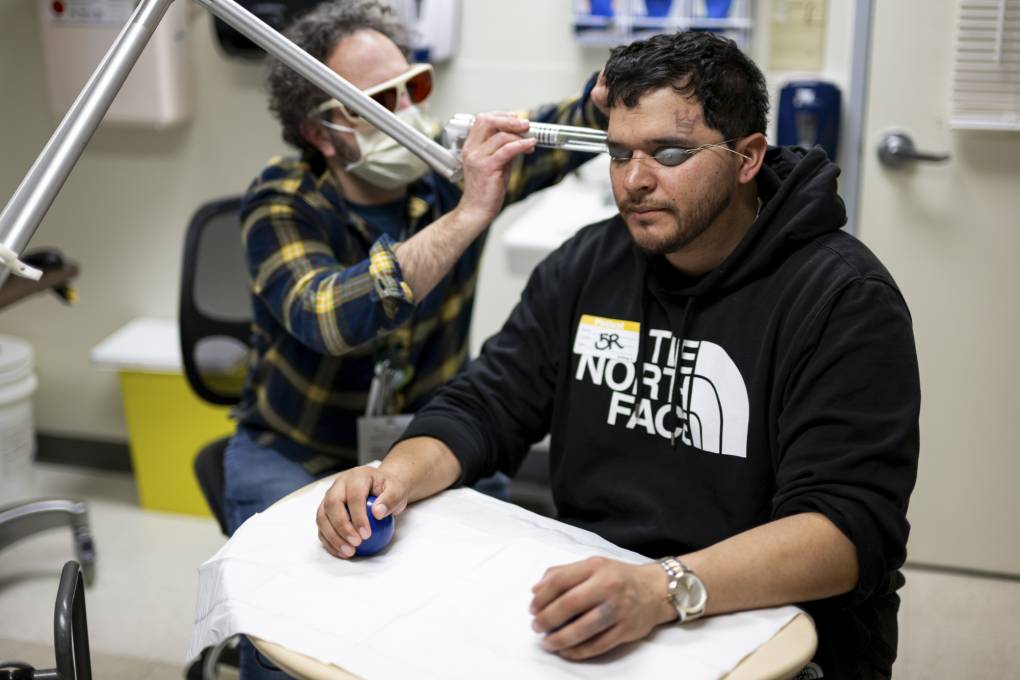
"caption": "UCSF Dr. Matt Pantell uses a laser tattoo removal machine during a session with Freddie Gutierrez at the clinic he runs at Zuckerberg San Francisco General Hospital in San Francisco on Feb. 27, 2025. The clinic is a partnership between UCSF and Zuckerberg San Francisco General Hospital, providing free tattoo removal services for underserved communities.",
"credit": "Beth LaBerge/KQED",
"altTag": null,
"description": null,
"imgSizes": {
"medium": {
"file": "https://cdn.kqed.org/wp-content/uploads/sites/10/2025/03/250227-UCSFTATTOOS-21-BL-KQED-800x533.jpg",
"width": 800,
"height": 533,
"mimeType": "image/jpeg"
},
"large": {
"file": "https://cdn.kqed.org/wp-content/uploads/sites/10/2025/03/250227-UCSFTATTOOS-21-BL-KQED-1020x680.jpg",
"width": 1020,
"height": 680,
"mimeType": "image/jpeg"
},
"thumbnail": {
"file": "https://cdn.kqed.org/wp-content/uploads/sites/10/2025/03/250227-UCSFTATTOOS-21-BL-KQED-160x107.jpg",
"width": 160,
"height": 107,
"mimeType": "image/jpeg"
},
"1536x1536": {
"file": "https://cdn.kqed.org/wp-content/uploads/sites/10/2025/03/250227-UCSFTATTOOS-21-BL-KQED-1536x1024.jpg",
"width": 1536,
"height": 1024,
"mimeType": "image/jpeg"
},
"post-thumbnail": {
"file": "https://cdn.kqed.org/wp-content/uploads/sites/10/2025/03/250227-UCSFTATTOOS-21-BL-KQED-672x372.jpg",
"width": 672,
"height": 372,
"mimeType": "image/jpeg"
},
"twentyfourteen-full-width": {
"file": "https://cdn.kqed.org/wp-content/uploads/sites/10/2025/03/250227-UCSFTATTOOS-21-BL-KQED-1038x576.jpg",
"width": 1038,
"height": 576,
"mimeType": "image/jpeg"
},
"full-width": {
"file": "https://cdn.kqed.org/wp-content/uploads/sites/10/2025/03/250227-UCSFTATTOOS-21-BL-KQED-1920x1280.jpg",
"width": 1920,
"height": 1280,
"mimeType": "image/jpeg"
},
"kqedFullSize": {
"file": "https://cdn.kqed.org/wp-content/uploads/sites/10/2025/03/250227-UCSFTATTOOS-21-BL-KQED.jpg",
"width": 2000,
"height": 1333
}
},
"isLoading": false,
"fetchFailed": false
},
"news_12032553": {
"type": "attachments",
"id": "news_12032553",
"meta": {
"index": "attachments_1716263798",
"site": "news",
"id": "12032553",
"found": true
},
"title": "031825-MENTAL-HEALTH-BILLS-GH-CM copy",
"publishDate": 1742596926,
"status": "inherit",
"parent": 12032551,
"modified": 1742596958,
"caption": "California lawmakers are considering several bills that would lead to more oversight of mental health insurance denials. \n",
"credit": "Illustration by Gabriel Hongsdusit/CalMatters",
"altTag": null,
"description": null,
"imgSizes": {
"medium": {
"file": "https://cdn.kqed.org/wp-content/uploads/sites/10/2025/03/031825-MENTAL-HEALTH-BILLS-GH-CM-copy-800x534.jpg",
"width": 800,
"height": 534,
"mimeType": "image/jpeg"
},
"large": {
"file": "https://cdn.kqed.org/wp-content/uploads/sites/10/2025/03/031825-MENTAL-HEALTH-BILLS-GH-CM-copy-1020x680.jpg",
"width": 1020,
"height": 680,
"mimeType": "image/jpeg"
},
"thumbnail": {
"file": "https://cdn.kqed.org/wp-content/uploads/sites/10/2025/03/031825-MENTAL-HEALTH-BILLS-GH-CM-copy-160x107.jpg",
"width": 160,
"height": 107,
"mimeType": "image/jpeg"
},
"1536x1536": {
"file": "https://cdn.kqed.org/wp-content/uploads/sites/10/2025/03/031825-MENTAL-HEALTH-BILLS-GH-CM-copy-1536x1025.jpg",
"width": 1536,
"height": 1025,
"mimeType": "image/jpeg"
},
"post-thumbnail": {
"file": "https://cdn.kqed.org/wp-content/uploads/sites/10/2025/03/031825-MENTAL-HEALTH-BILLS-GH-CM-copy-672x372.jpg",
"width": 672,
"height": 372,
"mimeType": "image/jpeg"
},
"twentyfourteen-full-width": {
"file": "https://cdn.kqed.org/wp-content/uploads/sites/10/2025/03/031825-MENTAL-HEALTH-BILLS-GH-CM-copy-1038x576.jpg",
"width": 1038,
"height": 576,
"mimeType": "image/jpeg"
},
"full-width": {
"file": "https://cdn.kqed.org/wp-content/uploads/sites/10/2025/03/031825-MENTAL-HEALTH-BILLS-GH-CM-copy-1920x1281.jpg",
"width": 1920,
"height": 1281,
"mimeType": "image/jpeg"
},
"kqedFullSize": {
"file": "https://cdn.kqed.org/wp-content/uploads/sites/10/2025/03/031825-MENTAL-HEALTH-BILLS-GH-CM-copy.jpg",
"width": 2000,
"height": 1334
}
},
"isLoading": false,
"fetchFailed": false
},
"news_12028707": {
"type": "attachments",
"id": "news_12028707",
"meta": {
"index": "attachments_1716263798",
"site": "news",
"id": "12028707",
"found": true
},
"title": "250218-SFDowntown-16-BL_qed",
"publishDate": 1740591027,
"status": "inherit",
"parent": 12028703,
"modified": 1740591048,
"caption": "Mayor Daniel Lurie listens to speakers during a press conference in Union Square, San Francisco, on Feb. 18, 2025, announcing legislation to increase nightlife in Downtown San Francisco to help the recovery of the neighborhood.",
"credit": "Beth LaBerge/KQED",
"altTag": null,
"description": null,
"imgSizes": {
"medium": {
"file": "https://cdn.kqed.org/wp-content/uploads/sites/10/2025/02/250218-SFDowntown-16-BL_qed-800x533.jpg",
"width": 800,
"height": 533,
"mimeType": "image/jpeg"
},
"large": {
"file": "https://cdn.kqed.org/wp-content/uploads/sites/10/2025/02/250218-SFDowntown-16-BL_qed-1020x680.jpg",
"width": 1020,
"height": 680,
"mimeType": "image/jpeg"
},
"thumbnail": {
"file": "https://cdn.kqed.org/wp-content/uploads/sites/10/2025/02/250218-SFDowntown-16-BL_qed-160x107.jpg",
"width": 160,
"height": 107,
"mimeType": "image/jpeg"
},
"1536x1536": {
"file": "https://cdn.kqed.org/wp-content/uploads/sites/10/2025/02/250218-SFDowntown-16-BL_qed-1536x1024.jpg",
"width": 1536,
"height": 1024,
"mimeType": "image/jpeg"
},
"post-thumbnail": {
"file": "https://cdn.kqed.org/wp-content/uploads/sites/10/2025/02/250218-SFDowntown-16-BL_qed-672x372.jpg",
"width": 672,
"height": 372,
"mimeType": "image/jpeg"
},
"twentyfourteen-full-width": {
"file": "https://cdn.kqed.org/wp-content/uploads/sites/10/2025/02/250218-SFDowntown-16-BL_qed-1038x576.jpg",
"width": 1038,
"height": 576,
"mimeType": "image/jpeg"
},
"full-width": {
"file": "https://cdn.kqed.org/wp-content/uploads/sites/10/2025/02/250218-SFDowntown-16-BL_qed-1920x1280.jpg",
"width": 1920,
"height": 1280,
"mimeType": "image/jpeg"
},
"kqedFullSize": {
"file": "https://cdn.kqed.org/wp-content/uploads/sites/10/2025/02/250218-SFDowntown-16-BL_qed.jpg",
"width": 2000,
"height": 1333
}
},
"isLoading": false,
"fetchFailed": false
},
"news_12030519": {
"type": "attachments",
"id": "news_12030519",
"meta": {
"index": "attachments_1716263798",
"site": "news",
"id": "12030519",
"found": true
},
"title": "carddeck_mentlahealthparity_AW_082119_01",
"publishDate": 1741546520,
"status": "inherit",
"parent": 12030516,
"modified": 1741546586,
"caption": "Humboldt County Department of Health and Human Services 24-hour mental health crisis services on August 21, 2019. Photo by Anne Wernikoff for CalMatters",
"credit": "Anne Wernikoff/CalMatters",
"altTag": "A white and blue sign that reads \"Crisis Services Press button next to door once and wait.\" There is a blue arrow pointing right.",
"description": null,
"imgSizes": {
"medium": {
"file": "https://cdn.kqed.org/wp-content/uploads/sites/10/2025/03/carddeck_mentlahealthparity_AW_082119_01-800x533.jpg",
"width": 800,
"height": 533,
"mimeType": "image/jpeg"
},
"large": {
"file": "https://cdn.kqed.org/wp-content/uploads/sites/10/2025/03/carddeck_mentlahealthparity_AW_082119_01-1020x680.jpg",
"width": 1020,
"height": 680,
"mimeType": "image/jpeg"
},
"thumbnail": {
"file": "https://cdn.kqed.org/wp-content/uploads/sites/10/2025/03/carddeck_mentlahealthparity_AW_082119_01-160x107.jpg",
"width": 160,
"height": 107,
"mimeType": "image/jpeg"
},
"1536x1536": {
"file": "https://cdn.kqed.org/wp-content/uploads/sites/10/2025/03/carddeck_mentlahealthparity_AW_082119_01-1536x1024.jpg",
"width": 1536,
"height": 1024,
"mimeType": "image/jpeg"
},
"post-thumbnail": {
"file": "https://cdn.kqed.org/wp-content/uploads/sites/10/2025/03/carddeck_mentlahealthparity_AW_082119_01-672x372.jpg",
"width": 672,
"height": 372,
"mimeType": "image/jpeg"
},
"twentyfourteen-full-width": {
"file": "https://cdn.kqed.org/wp-content/uploads/sites/10/2025/03/carddeck_mentlahealthparity_AW_082119_01-1038x576.jpg",
"width": 1038,
"height": 576,
"mimeType": "image/jpeg"
},
"full-width": {
"file": "https://cdn.kqed.org/wp-content/uploads/sites/10/2025/03/carddeck_mentlahealthparity_AW_082119_01-1920x1280.jpg",
"width": 1920,
"height": 1280,
"mimeType": "image/jpeg"
},
"kqedFullSize": {
"file": "https://cdn.kqed.org/wp-content/uploads/sites/10/2025/03/carddeck_mentlahealthparity_AW_082119_01.jpg",
"width": 2000,
"height": 1333
}
},
"isLoading": false,
"fetchFailed": false
}
},
"audioPlayerReducer": {
"postId": "stream_live",
"isPaused": true,
"isPlaying": false,
"pfsActive": false,
"pledgeModalIsOpen": true,
"playerDrawerIsOpen": false,
"liveAudioPlayStartedAt": 0,
"liveAudioPlayContext": ""
},
"authorsReducer": {
"byline_news_12039585": {
"type": "authors",
"id": "byline_news_12039585",
"meta": {
"override": true
},
"slug": "byline_news_12039585",
"name": "\u003ca href=\"https://calmatters.org/author/anaibarra/\">Ana B. Ibarra\u003c/a>, CalMatters",
"isLoading": false
},
"byline_news_12032551": {
"type": "authors",
"id": "byline_news_12032551",
"meta": {
"override": true
},
"slug": "byline_news_12032551",
"name": "\u003ca href=\"https://calmatters.org/author/jocelyn-wiener/\">Jocelyn Wiener\u003c/a>, CalMatters",
"isLoading": false
},
"byline_news_12030516": {
"type": "authors",
"id": "byline_news_12030516",
"meta": {
"override": true
},
"slug": "byline_news_12030516",
"name": "\u003ca href=\"https://calmatters.org/author/kristen-hwang\">Kristen Hwang, \u003c/a>CalMatters",
"isLoading": false
},
"gmarzorati": {
"type": "authors",
"id": "227",
"meta": {
"index": "authors_1716337520",
"id": "227",
"found": true
},
"name": "Guy Marzorati",
"firstName": "Guy",
"lastName": "Marzorati",
"slug": "gmarzorati",
"email": "gmarzorati@KQED.org",
"display_author_email": true,
"staff_mastheads": [
"news"
],
"title": "Correspondent",
"bio": "Guy Marzorati is a correspondent on KQED's California Politics and Government Desk, based in San Jose. A graduate of Santa Clara University, Guy joined KQED in 2013. He reports on state and local politics and produces KQED's digital voter guide.",
"avatar": "https://secure.gravatar.com/avatar/e7038b8dbfd55b104369b76b1cd0b9de?s=600&d=blank&r=g",
"twitter": "guymarzorati",
"facebook": null,
"instagram": null,
"linkedin": null,
"sites": [
{
"site": "",
"roles": [
"editor"
]
},
{
"site": "news",
"roles": [
"editor"
]
},
{
"site": "science",
"roles": [
"editor"
]
},
{
"site": "forum",
"roles": [
"editor"
]
},
{
"site": "elections",
"roles": [
"editor"
]
},
{
"site": "liveblog",
"roles": [
"editor"
]
}
],
"headData": {
"title": "Guy Marzorati | KQED",
"description": "Correspondent",
"ogImgSrc": "https://secure.gravatar.com/avatar/e7038b8dbfd55b104369b76b1cd0b9de?s=600&d=blank&r=g",
"twImgSrc": "https://secure.gravatar.com/avatar/e7038b8dbfd55b104369b76b1cd0b9de?s=600&d=blank&r=g"
},
"isLoading": false,
"link": "/author/gmarzorati"
},
"rachael-myrow": {
"type": "authors",
"id": "251",
"meta": {
"index": "authors_1716337520",
"id": "251",
"found": true
},
"name": "Rachael Myrow",
"firstName": "Rachael",
"lastName": "Myrow",
"slug": "rachael-myrow",
"email": "rmyrow@kqed.org",
"display_author_email": true,
"staff_mastheads": [
"news"
],
"title": "Senior Editor of KQED's Silicon Valley News Desk",
"bio": "• I write and edit stories about how Silicon Valley power and policies shape everyday life in California. I’m also passionate about making Bay Area history and culture more accessible to a broad public. • I’ve been a journalist for most of my life, starting in high school with The Franklin Press in Los Angeles, where I grew up. While earning my first degree in English at UC Berkeley, I got my start in public radio at KALX-FM. After completing a second degree in journalism at Cal, I landed my first professional job at Marketplace, then moved on to KPCC (now LAist), and then KQED, where I hosted The California Report for more than seven years. • My reporting has appeared on NPR, The World, WBUR’s \u003ci>Here & Now\u003c/i>, and the BBC. I also guest host for KQED’s \u003ci>Forum\u003c/i>, as well as the Commonwealth Club in San Francisco. • I speak periodically on media, democracy and technology issues, and do voiceover work for documentaries and educational video projects. • Outside of the studio, you'll find me hiking Bay Area trails and whipping up Insta-ready meals in my kitchen. • I do not accept gifts, money, or favors from anyone connected to my reporting, I don't pay people for information, and I do not support or donate to political causes. • I strive to treat the people I report on with fairness, honesty, and respect. I also recognize there are often multiple sides to a story and work to verify information through multiple sources and documentation. If I get something wrong, I correct it.",
"avatar": "https://secure.gravatar.com/avatar/3ed8a3c5f26025e4a805ba634cda8cd764906b97438a6d9ce216b044e340da4e?s=600&d=blank&r=g",
"twitter": "rachaelmyrow",
"bluesky": null,
"facebook": null,
"instagram": null,
"linkedin": "https://www.linkedin.com/in/rachaelmyrow/",
"sites": [
{
"site": "arts",
"roles": [
"administrator"
]
},
{
"site": "news",
"roles": [
"edit_others_posts",
"editor"
]
},
{
"site": "futureofyou",
"roles": [
"editor"
]
},
{
"site": "bayareabites",
"roles": [
"editor"
]
},
{
"site": "stateofhealth",
"roles": [
"editor"
]
},
{
"site": "science",
"roles": [
"editor"
]
},
{
"site": "food",
"roles": [
"editor"
]
},
{
"site": "forum",
"roles": [
"editor"
]
},
{
"site": "liveblog",
"roles": [
"author"
]
}
],
"headData": {
"title": "Rachael Myrow | KQED",
"description": "Senior Editor of KQED's Silicon Valley News Desk",
"ogImgSrc": "https://secure.gravatar.com/avatar/3ed8a3c5f26025e4a805ba634cda8cd764906b97438a6d9ce216b044e340da4e?s=600&d=blank&r=g",
"twImgSrc": "https://secure.gravatar.com/avatar/3ed8a3c5f26025e4a805ba634cda8cd764906b97438a6d9ce216b044e340da4e?s=600&d=blank&r=g"
},
"isLoading": false,
"link": "/author/rachael-myrow"
},
"mlagos": {
"type": "authors",
"id": "3239",
"meta": {
"index": "authors_1716337520",
"id": "3239",
"found": true
},
"name": "Marisa Lagos",
"firstName": "Marisa",
"lastName": "Lagos",
"slug": "mlagos",
"email": "mlagos@kqed.org",
"display_author_email": false,
"staff_mastheads": [
"news"
],
"title": "KQED Contributor",
"bio": "Marisa Lagos is a correspondent for KQED’s California Politics and Government Desk and co-hosts the award-winning show and podcast, Political Breakdown. At KQED, Lagos also conducts reporting, analysis and investigations into state, local and national politics for radio, TV, online and onstage. In 2022, she and co-host, Scott Shafer, moderated the only gubernatorial debate in California. In 2020, the \u003ci>Washington Post\u003c/i> named her one of the top political journalists in California; she was nominated for a Peabody and won several other awards for her work investigating the 2017 California wildfires. She has worked at the \u003ci>San Francisco Chronicle\u003c/i>, \u003ci>San Francisco Examiner\u003c/i> and \u003ci>Los Angeles Times\u003c/i>. A UC Santa Barbara graduate, she lives in San Francisco with her two sons and husband.",
"avatar": "https://secure.gravatar.com/avatar/a261a0d3696fc066871ef96b85b5e7d2?s=600&d=blank&r=g",
"twitter": "@mlagos",
"facebook": null,
"instagram": null,
"linkedin": null,
"sites": [
{
"site": "arts",
"roles": [
"author"
]
},
{
"site": "news",
"roles": [
"editor"
]
},
{
"site": "science",
"roles": [
"editor"
]
},
{
"site": "forum",
"roles": [
"author"
]
},
{
"site": "liveblog",
"roles": [
"author"
]
}
],
"headData": {
"title": "Marisa Lagos | KQED",
"description": "KQED Contributor",
"ogImgSrc": "https://secure.gravatar.com/avatar/a261a0d3696fc066871ef96b85b5e7d2?s=600&d=blank&r=g",
"twImgSrc": "https://secure.gravatar.com/avatar/a261a0d3696fc066871ef96b85b5e7d2?s=600&d=blank&r=g"
},
"isLoading": false,
"link": "/author/mlagos"
},
"lesleymcclurg": {
"type": "authors",
"id": "11229",
"meta": {
"index": "authors_1716337520",
"id": "11229",
"found": true
},
"name": "Lesley McClurg",
"firstName": "Lesley",
"lastName": "McClurg",
"slug": "lesleymcclurg",
"email": "lmcclurg@KQED.org",
"display_author_email": false,
"staff_mastheads": [
"news",
"science"
],
"title": "KQED Health Correspondent",
"bio": "Lesley McClurg is a health correspondent and fill-in host whose work is regularly rebroadcast on NPR and PBS programs. She’s earned multiple regional Emmy awards, a national and a regional Edward R. Murrow award, and was named Best Beat Reporter by the Association of Health Care Journalists. The Society of Professional Journalists has recognized her work several times, and the Society of Environmental Journalists spotlighted her coverage of California’s historic drought.\r\n\r\nBefore joining KQED in 2016, Lesley covered food and sustainability for Capital Public Radio, environmental issues for Colorado Public Radio, and reported for KUOW and KCTS 9 in Seattle. Away from the newsroom, she loves skiing with her daughter, mountain biking with her partner, and playing with Ollie, the family’s goldendoodle. On deadline, she runs almost entirely on chocolate chips.\r\n\r\n ",
"avatar": "https://secure.gravatar.com/avatar/bab49e972ea10c774fe0f5e29dba1722b158f7c0d58a360923d1389d380b2978?s=600&d=blank&r=g",
"twitter": "lesleywmcclurg",
"bluesky": null,
"facebook": null,
"instagram": null,
"linkedin": null,
"sites": [
{
"site": "arts",
"roles": [
"author"
]
},
{
"site": "news",
"roles": [
"editor"
]
},
{
"site": "futureofyou",
"roles": [
"editor"
]
},
{
"site": "stateofhealth",
"roles": [
"author"
]
},
{
"site": "science",
"roles": [
"editor"
]
},
{
"site": "quest",
"roles": [
"subscriber"
]
},
{
"site": "forum",
"roles": [
"administrator"
]
},
{
"site": "liveblog",
"roles": [
"author"
]
}
],
"headData": {
"title": "Lesley McClurg | KQED",
"description": "KQED Health Correspondent",
"ogImgSrc": "https://secure.gravatar.com/avatar/bab49e972ea10c774fe0f5e29dba1722b158f7c0d58a360923d1389d380b2978?s=600&d=blank&r=g",
"twImgSrc": "https://secure.gravatar.com/avatar/bab49e972ea10c774fe0f5e29dba1722b158f7c0d58a360923d1389d380b2978?s=600&d=blank&r=g"
},
"isLoading": false,
"link": "/author/lesleymcclurg"
},
"agonzalez": {
"type": "authors",
"id": "11724",
"meta": {
"index": "authors_1716337520",
"id": "11724",
"found": true
},
"name": "Alexander Gonzalez",
"firstName": "Alexander",
"lastName": "Gonzalez",
"slug": "agonzalez",
"email": "AlexanderGonzalez@KQED.org",
"display_author_email": false,
"staff_mastheads": [
"news"
],
"title": "KQED Contributor",
"bio": null,
"avatar": "https://secure.gravatar.com/avatar/9e291ed34e154df4c662edf858b641d70b4859939bfe40be478408f9dfd057d2?s=600&d=blank&r=g",
"twitter": null,
"bluesky": null,
"facebook": null,
"instagram": null,
"linkedin": null,
"sites": [
{
"site": "arts",
"roles": [
"editor"
]
},
{
"site": "news",
"roles": [
"editor"
]
},
{
"site": "science",
"roles": [
"editor"
]
}
],
"headData": {
"title": "Alexander Gonzalez | KQED",
"description": "KQED Contributor",
"ogImgSrc": "https://secure.gravatar.com/avatar/9e291ed34e154df4c662edf858b641d70b4859939bfe40be478408f9dfd057d2?s=600&d=blank&r=g",
"twImgSrc": "https://secure.gravatar.com/avatar/9e291ed34e154df4c662edf858b641d70b4859939bfe40be478408f9dfd057d2?s=600&d=blank&r=g"
},
"isLoading": false,
"link": "/author/agonzalez"
},
"sjohnson": {
"type": "authors",
"id": "11840",
"meta": {
"index": "authors_1716337520",
"id": "11840",
"found": true
},
"name": "Sydney Johnson",
"firstName": "Sydney",
"lastName": "Johnson",
"slug": "sjohnson",
"email": "sjohnson@kqed.org",
"display_author_email": false,
"staff_mastheads": [
"news"
],
"title": "KQED Reporter",
"bio": "Sydney Johnson is a general assignment reporter at KQED. She previously reported on public health and city government at the San Francisco Examiner, and before that, she covered statewide education policy for EdSource. Her reporting has won multiple local, state and national awards. Sydney is a graduate of the University of California, Berkeley and lives in San Francisco.",
"avatar": "https://secure.gravatar.com/avatar/97855f2719b72ad6190b7c535fe642c8?s=600&d=blank&r=g",
"twitter": "sydneyfjohnson",
"facebook": null,
"instagram": null,
"linkedin": null,
"sites": [
{
"site": "news",
"roles": [
"editor"
]
}
],
"headData": {
"title": "Sydney Johnson | KQED",
"description": "KQED Reporter",
"ogImgSrc": "https://secure.gravatar.com/avatar/97855f2719b72ad6190b7c535fe642c8?s=600&d=blank&r=g",
"twImgSrc": "https://secure.gravatar.com/avatar/97855f2719b72ad6190b7c535fe642c8?s=600&d=blank&r=g"
},
"isLoading": false,
"link": "/author/sjohnson"
},
"nkhan": {
"type": "authors",
"id": "11867",
"meta": {
"index": "authors_1716337520",
"id": "11867",
"found": true
},
"name": "Nisa Khan",
"firstName": "Nisa",
"lastName": "Khan",
"slug": "nkhan",
"email": "nkhan@kqed.org",
"display_author_email": false,
"staff_mastheads": [],
"title": "KQED Contributor",
"bio": "Nisa Khan is a reporter for KQED's Audience News Desk. She was formerly a data reporter at Michigan Radio. She earned a Bachelor of Science in Information from the University of Michigan and a Master of Arts in Communication from Stanford University.",
"avatar": "https://secure.gravatar.com/avatar/8720459eef081ff64582b3506b124d58523e80e120704a0cbd9892533c914991?s=600&d=blank&r=g",
"twitter": "mnisakhan",
"bluesky": null,
"facebook": null,
"instagram": null,
"linkedin": null,
"sites": [
{
"site": "arts",
"roles": [
"editor"
]
},
{
"site": "news",
"roles": [
"editor"
]
},
{
"site": "science",
"roles": [
"editor",
"author"
]
},
{
"site": "forum",
"roles": [
"editor"
]
},
{
"site": "liveblog",
"roles": [
"contributor"
]
}
],
"headData": {
"title": "Nisa Khan | KQED",
"description": "KQED Contributor",
"ogImgSrc": "https://secure.gravatar.com/avatar/8720459eef081ff64582b3506b124d58523e80e120704a0cbd9892533c914991?s=600&d=blank&r=g",
"twImgSrc": "https://secure.gravatar.com/avatar/8720459eef081ff64582b3506b124d58523e80e120704a0cbd9892533c914991?s=600&d=blank&r=g"
},
"isLoading": false,
"link": "/author/nkhan"
},
"cegusa": {
"type": "authors",
"id": "11869",
"meta": {
"index": "authors_1716337520",
"id": "11869",
"found": true
},
"name": "Chris Egusa",
"firstName": "Chris",
"lastName": "Egusa",
"slug": "cegusa",
"email": "cegusa@kqed.org",
"display_author_email": false,
"staff_mastheads": [],
"title": "KQED Contributor",
"bio": null,
"avatar": "https://secure.gravatar.com/avatar/3562ed52747313a4c94017da88ea89f9e85cd901f63ebc056a7d5e0adf4a03da?s=600&d=blank&r=g",
"twitter": null,
"bluesky": null,
"facebook": null,
"instagram": null,
"linkedin": null,
"sites": [
{
"site": "arts",
"roles": [
"editor"
]
},
{
"site": "news",
"roles": [
"editor"
]
}
],
"headData": {
"title": "Chris Egusa | KQED",
"description": "KQED Contributor",
"ogImgSrc": "https://secure.gravatar.com/avatar/3562ed52747313a4c94017da88ea89f9e85cd901f63ebc056a7d5e0adf4a03da?s=600&d=blank&r=g",
"twImgSrc": "https://secure.gravatar.com/avatar/3562ed52747313a4c94017da88ea89f9e85cd901f63ebc056a7d5e0adf4a03da?s=600&d=blank&r=g"
},
"isLoading": false,
"link": "/author/cegusa"
},
"slim": {
"type": "authors",
"id": "11920",
"meta": {
"index": "authors_1716337520",
"id": "11920",
"found": true
},
"name": "Samantha Lim",
"firstName": "Samantha",
"lastName": "Lim",
"slug": "slim",
"email": "slim@KQED.org",
"display_author_email": false,
"staff_mastheads": [],
"title": "KQED Contributor",
"bio": null,
"avatar": "https://secure.gravatar.com/avatar/82e592e6c15fe1a04d385e8ad0fb0b4e?s=600&d=blank&r=g",
"twitter": null,
"facebook": null,
"instagram": null,
"linkedin": null,
"sites": [
{
"site": "news",
"roles": []
}
],
"headData": {
"title": "Samantha Lim | KQED",
"description": "KQED Contributor",
"ogImgSrc": "https://secure.gravatar.com/avatar/82e592e6c15fe1a04d385e8ad0fb0b4e?s=600&d=blank&r=g",
"twImgSrc": "https://secure.gravatar.com/avatar/82e592e6c15fe1a04d385e8ad0fb0b4e?s=600&d=blank&r=g"
},
"isLoading": false,
"link": "/author/slim"
},
"mcueva": {
"type": "authors",
"id": "11943",
"meta": {
"index": "authors_1716337520",
"id": "11943",
"found": true
},
"name": "Maya Cueva",
"firstName": "Maya",
"lastName": "Cueva",
"slug": "mcueva",
"email": "mcueva@kqed.org",
"display_author_email": false,
"staff_mastheads": [],
"title": "KQED Contributor",
"bio": null,
"avatar": "https://secure.gravatar.com/avatar/238c7aba67c4b6b7b891965ba8cc9e9a4928b5dbdeaf4bde6a81c13e87f49b49?s=600&d=blank&r=g",
"twitter": null,
"bluesky": null,
"facebook": null,
"instagram": null,
"linkedin": null,
"sites": [
{
"site": "news",
"roles": [
"editor"
]
}
],
"headData": {
"title": "Maya Cueva | KQED",
"description": "KQED Contributor",
"ogImgSrc": "https://secure.gravatar.com/avatar/238c7aba67c4b6b7b891965ba8cc9e9a4928b5dbdeaf4bde6a81c13e87f49b49?s=600&d=blank&r=g",
"twImgSrc": "https://secure.gravatar.com/avatar/238c7aba67c4b6b7b891965ba8cc9e9a4928b5dbdeaf4bde6a81c13e87f49b49?s=600&d=blank&r=g"
},
"isLoading": false,
"link": "/author/mcueva"
},
"msung": {
"type": "authors",
"id": "11944",
"meta": {
"index": "authors_1716337520",
"id": "11944",
"found": true
},
"name": "Morgan Sung",
"firstName": "Morgan",
"lastName": "Sung",
"slug": "msung",
"email": "msung@kqed.org",
"display_author_email": false,
"staff_mastheads": [],
"title": "Close All Tabs Host",
"bio": null,
"avatar": "https://secure.gravatar.com/avatar/34033b8d232ee6c987ca6f0a1a28f0e5?s=600&d=blank&r=g",
"twitter": null,
"facebook": null,
"instagram": null,
"linkedin": null,
"sites": [
{
"site": "news",
"roles": [
"editor"
]
}
],
"headData": {
"title": "Morgan Sung | KQED",
"description": "Close All Tabs Host",
"ogImgSrc": "https://secure.gravatar.com/avatar/34033b8d232ee6c987ca6f0a1a28f0e5?s=600&d=blank&r=g",
"twImgSrc": "https://secure.gravatar.com/avatar/34033b8d232ee6c987ca6f0a1a28f0e5?s=600&d=blank&r=g"
},
"isLoading": false,
"link": "/author/msung"
}
},
"pagesReducer": {
"news_tag_mental-health": {
"type": "terms",
"id": "news_2109",
"meta": {
"index": "terms_1716263798",
"site": "news",
"id": "2109",
"score": 8.282925
},
"featImg": null,
"name": "mental health",
"description": null,
"taxonomy": "tag",
"headData": {
"twImgId": null,
"twTitle": null,
"ogTitle": null,
"ogImgId": null,
"twDescription": null,
"description": null,
"title": "mental health Archives | KQED News",
"ogDescription": null
},
"ttid": 2124,
"slug": "mental-health",
"isLoading": false,
"title": "mental health",
"pageMeta": {
"site": "news",
"WpPageTemplate": "page-topic-editorial",
"currentPage": 5
},
"blocks": [
{
"blockName": "kqed/post-list",
"attrs": {
"layout": "cardArticle2",
"query": "posts/news?tag=mental-health",
"seeMore": false,
"paginated": true,
"page": 5
}
},
{
"blockName": "kqed/ad"
}
]
}
},
"pfsSessionReducer": {},
"postsReducer": {
"stream_live": {
"type": "live",
"id": "stream_live",
"audioUrl": "https://streams.kqed.org/kqedradio",
"title": "Live Stream",
"excerpt": "Live Stream information currently unavailable.",
"link": "/radio",
"featImg": "",
"label": {
"name": "KQED Live",
"link": "/"
}
},
"stream_kqedNewscast": {
"type": "posts",
"id": "stream_kqedNewscast",
"audioUrl": "https://www.kqed.org/.stream/anon/radio/RDnews/newscast.mp3?_=1",
"title": "KQED Newscast",
"featImg": "",
"label": {
"name": "88.5 FM",
"link": "/"
}
},
"news_12039585": {
"type": "posts",
"id": "news_12039585",
"meta": {
"index": "posts_1716263798",
"site": "news",
"id": "12039585",
"score": null,
"sort": [
1746898248000
]
},
"guestAuthors": [],
"slug": "california-promised-to-boost-mental-health-in-schools-why-1-key-program-is-behind-schedule",
"title": "California Promised to Boost Mental Health in Schools. Why a Key Program Is Behind Schedule ",
"publishDate": 1746898248,
"format": "standard",
"headTitle": "California Promised to Boost Mental Health in Schools. Why a Key Program Is Behind Schedule | KQED",
"labelTerm": {
"term": 18481,
"site": "news"
},
"content": "\u003cp>\u003cem>This story was originally published by \u003ca href=\"https://calmatters.org/\">CalMatters\u003c/a>. \u003ca href=\"https://calmatters.org/subscribe-to-calmatters/\">Sign up\u003c/a> for their newsletters.\u003c/em>\u003c/p>\n\u003cp>California made a huge \u003ca href=\"https://calmatters.org/health/2022/03/california-children-mental-health-crisis/\">one-time investment in youth mental health \u003c/a>during the COVID-19 pandemic as rates of depression, anxiety and eating disorders surged among children and teens. One piece of the state’s plan included a way to keep money flowing for schools that wanted to expand mental health services for students.\u003c/p>\n\u003cp>It involved allowing K–12 schools and colleges to charge \u003ca href=\"https://calmatters.org/tag/medi-cal/\">Medi-Cal\u003c/a> and private health insurance for behavioral health care provided on campus, a change that would allow them to provide more services and hire additional mental health staff.\u003c/p>\n\u003cp>But that effort — among the first of its kind in the country — is off to a slow start, delaying dollars and resources for schools to help students with \u003ca href=\"https://calmatters.org/tag/mental-health/\">mental health\u003c/a> challenges.\u003c/p>\n\u003cp>[ad fullwidth]\u003c/p>\n\u003cp>Only 14 school districts and county offices of education have begun billing for behavioral health services under the Children and Youth Behavioral Health Initiative Fee Schedule Program, according to state health officials. Forty six school districts and county offices of education started the implementation process in January 2024 and were supposed to start billing last July. A total of 494 school districts, county offices of education and colleges have signed up to participate in the new billing program.\u003c/p>\n\u003cp>Some school officials are frustrated over program delays. They say the state was slow to release guidance and necessary training to submit claims for mental health services provided. Officials at schools that hired mental health staff say they may soon have to lay off recent hires because payments for services provided are not coming in as expected. This means students could lose newly gained access to services.\u003c/p>\n\u003cp>“There are so many unknowns and the timelines just keep getting pushed,” said Trina Frazier, assistant superintendent of student services at the Fresno County Office of Education. “And that’s really sad because it has so much potential.”\u003c/p>\n\u003cp>The California Department of Health Care Services, which is overseeing implementation of the program, told CalMatters in an email that while the target was to begin billing in mid-2024, “the scale and complexity of implementation required adjustments to provide additional flexibilities to schools.”\u003c/p>\n\u003cp>“Major reforms of this kind require time, coordination, and phased implementation,” the department said in its email.\u003c/p>\n\u003cp>The department said it continues to work with schools to address any outstanding challenges. Its new goal is for that first group of 46 districts and education offices to start billing by the end of the current school year.\u003c/p>\n\u003ch2>A boost for mental health in schools\u003c/h2>\n\u003cp>California and the nation have seen a surge in mental health disorders among students. For example, about 284,000 California children and teens deal with major depression, and \u003ca href=\"https://www.gov.ca.gov/wp-content/uploads/2022/08/KidsMentalHealthMasterPlan_8.18.22.pdf\">two-thirds of them do not receive treatment\u003c/a>, according to state estimates.\u003c/p>\n\u003cp>Despite the slow start for the new school billing program, other mental health efforts are underway through other components of the state’s $4.7 billion \u003ca href=\"https://cybhi.chhs.ca.gov/\">Children and Youth Behavioral Health Initiative\u003c/a> that launched in 2021. That money has paid for mental health apps, education campaigns, and mental health workforce training programs, among a number of other efforts. About \u003ca href=\"https://cybhi.chhs.ca.gov/workstream/school-linked-partnership-and-capacity-grants/\">$400 million of that money\u003c/a> was allotted in the form of one-time grants to education institutions to hire providers and prepare for this new billing program.[aside postID=forum_2010101909165 hero='https://cdn.kqed.org/wp-content/uploads/sites/43/2025/03/002_SanFrancisco_ClarendonSchoolReopeningRally_02182021-1020x680.jpg']In response to delays in the billing program, a group of lawmakers recently sent Gov. Gavin Newsom \u003ca href=\"https://calmatters.org/wp-content/uploads/2025/05/4.29.25-letter.pdf\">a letter requesting bridge funding\u003c/a> that they say would allow schools to keep building mental health services while the program comes up to speed. The letter does not specify a dollar amount.\u003c/p>\n\u003cp>For the last 30 years and through a separate program, California schools have been able to get reimbursed by Medi-Cal, the state’s Medicaid program for low-income residents, \u003ca href=\"https://www.dhcs.ca.gov/provgovpart/Documents/ACLSS/LEA%20BOP/Program_Req_and_Info/LEAProgramOverview.pdf\">for certain physical and mental health services\u003c/a>. But there’s long been a gap for children with private insurance. This new billing program is supposed to address that, as well as allow schools to expand the types of mental health services they can provide and charge for.\u003c/p>\n\u003cp>Mental health experts regard school as an ideal setting for children to receive help. It’s where they spend most of their weekdays and generally feel safe. It’s also a “logistics problem solver” because schools resolve some potential barriers to care, like transportation to appointments, said Sarah Broome, a school Medicaid consultant. Also, teachers and staff see children every day and can notice when things are off.\u003c/p>\n\u003cp>Broome said that the challenges that the state and schools are facing in rolling out this new fee schedule program are somewhat predictable, partly because what California is doing is new. “So it’s not even like you can call your peer states and be like, ‘Hey, how did you guys figure out how to do this?’ You are creating a lot of this as you go. So there’s absolutely real pain there.”\u003c/p>\n\u003ch2>What’s behind the delays?\u003c/h2>\n\u003cp>State legislators are hearing from frustrated local officials about the billing delays. The Fresno County Office of Education filed its first claim for reimbursement on Feb. 28, but as of last week continued to face challenges, according to Frazier.\u003c/p>\n\u003cp>Frazier told lawmakers in a hearing last week that the program rollout “feels like building the plane while flying it.”\u003c/p>\n\u003cp>In Santa Clara County, the local office of education established 25 wellness centers across its schools and hired 50 new mental health workers, including clinicians and wellness coaches. But the delays prompted the office to notify its new staff about possible layoffs, Amanda Dickey, executive director of government relations for the Santa Clara County Office of Education, told lawmakers during the hearing.\u003c/p>\n\u003cp>“Because we didn’t receive reimbursement for a single claim until 15 months after (starting program implementation) … as of March we were forced to pink slip 27 of our staff. So 27 of the approximately 50 that we hired,” she said.\u003c/p>\n\u003cp>Dickey told legislators that the state and the third party administrator contracted to process claims, Carelon Behavioral Health, did not give schools access to or training for the billing software used to file claims until late last year.\u003c/p>\n\u003cfigure>\u003cimg decoding=\"async\" src=\"https://calmatters.org/wp-content/uploads/2025/05/031524_Wellness-Center_MO_CM_01-1024x682.jpg\" alt='A wide view of a room with students sitting on couches or chairs as they stare down at their phones or laptops. The room is decorated in light purple tones and includes several activities and resources. A digital monitor displayed a slide with \"student self-referral\" information on it.'>\u003cfigcaption>College Park High School students relax in the Wellness Center, which provides a quiet environment, peer support, social services and other resources in Pleasant Hill on March 15, 2024. \u003cem>Manuel Orbegozo for CalMatters\u003c/em>\u003c/figcaption>\u003c/figure>\n\u003cp>Meanwhile, the Los Angeles County Office of Education told CalMatters that one of the challenges has been \u003ca href=\"https://www.dhcs.ca.gov/CYBHI/Documents/CYBHI-Fee-Schedule-Program-Parent-and-Caregiver-Flyer.pdf\">collecting students’ health insurance information\u003c/a> — a new task for schools, and one that requires parents and caregivers to cooperate in sharing information about their health plan. (Mental health care provided at schools under this program should not result in any out-of-pocket costs for families, according to the state.)\u003c/p>\n\u003cp>Tanya Ward, a project director at the Los Angeles County Office of Education, said her office has yet to file mental health claims under this new program, but expects to do so later this month.\u003c/p>\n\u003cp>The California Department of Health Care Services attributes the delays to a “learning curve” for both the state and schools.\u003c/p>\n\u003cp>According to the department, a number of factors contributed to the delays, including the fact that some schools requested edits to the contractual documents to participate in the program and that others expressed confusion about the process and needed additional support.\u003c/p>\n\u003cp>The department said that districts are allowed to submit claims retroactively for dates of service back to July 1, 2024, as long as those claims are submitted by June 30.\u003c/p>\n\u003cp>The 14 districts and education offices that are now able to file claims are starting to do so in larger numbers, Autumn Boylan, deputy director of the Office of Strategic Partnerships at the state health department, told lawmakers in last week’s hearing.\u003c/p>\n\u003cp>“This is a significant change for the entire system, and changes of this magnitude take time,” Boylan told lawmakers.\u003c/p>\n\u003cp>“There is still work to be done, but I do think we are making progress,” she said.\u003c/p>\n\u003cp>Testifying next to each other at last week’s hearing, Boylan and Frazier from Fresno couldn’t agree on how much in claims had actually been paid out to the Fresno County Office of Education.\u003c/p>\n\u003cp>Of the first 40 claims that had been processed for Fresno, 21 were denied, Frazier said. Boylan said that some claims are being denied because they are incomplete or not properly filed. Lawmakers questioned whether schools are filing claims incorrectly because they have not been adequately taught how to do so.\u003c/p>\n\u003cp>“This is brand new for schools,” Sen. Caroline Menjivar, a Van Nuys Democrat, said during the hearing. “It is imperative on us, as government, to lead them in the right path if we want them to take on something that’s completely out of their scope.”\u003c/p>\n\u003cp>\u003cem>Supported by the California Health Care Foundation (CHCF), which works to ensure that people have access to the care they need, when they need it, at a price they can afford. Visit www.chcf.org to learn more.\u003c/em>\u003c/p>\n\u003cp>\u003cem>This article was \u003ca href=\"https://calmatters.org/health/mental-health/2025/05/youth-mental-health-insurance-billing/\">originally published on CalMatters\u003c/a> and was republished under the \u003ca href=\"https://creativecommons.org/licenses/by-nc-nd/4.0/\">Creative Commons Attribution-NonCommercial-NoDerivatives\u003c/a> license.\u003c/em>\u003c/p>\n\u003cp>[ad floatright]\u003c/p>\n",
"blocks": [],
"excerpt": "Only 14 school districts and county offices of education have begun billing for behavioral health services under the Children and Youth Behavioral Health Initiative Fee Schedule Program, according to state health officials.",
"status": "publish",
"parent": 0,
"modified": 1746842152,
"stats": {
"hasAudio": false,
"hasVideo": false,
"hasChartOrMap": false,
"iframeSrcs": [],
"hasGoogleForm": false,
"hasGallery": false,
"hasHearkenModule": false,
"hasPolis": false,
"paragraphCount": 35,
"wordCount": 1591
},
"headData": {
"title": "California Promised to Boost Mental Health in Schools. Why a Key Program Is Behind Schedule | KQED",
"description": "Only 14 school districts and county offices of education have begun billing for behavioral health services under the Children and Youth Behavioral Health Initiative Fee Schedule Program, according to state health officials.",
"ogTitle": "",
"ogDescription": "",
"ogImgId": "",
"twTitle": "",
"twDescription": "",
"twImgId": "",
"schema": {
"@context": "https://schema.org",
"@type": "NewsArticle",
"headline": "California Promised to Boost Mental Health in Schools. Why a Key Program Is Behind Schedule ",
"datePublished": "2025-05-10T10:30:48-07:00",
"dateModified": "2025-05-09T18:55:52-07:00",
"image": "https://cdn.kqed.org/wp-content/uploads/2020/02/KQED-OG-Image@1x.png",
"isAccessibleForFree": "True",
"publisher": {
"@type": "NewsMediaOrganization",
"@id": "https://www.kqed.org/#organization",
"name": "KQED",
"logo": "https://cdn.kqed.org/wp-content/uploads/2020/02/KQED-OG-Image@1x.png",
"url": "https://www.kqed.org",
"sameAs": [
"https://www.facebook.com/KQED",
"https://twitter.com/KQED",
"https://www.instagram.com/kqed/",
"https://www.tiktok.com/@kqedofficial",
"https://www.linkedin.com/company/kqed",
"https://www.youtube.com/channel/UCeC0IOo7i1P_61zVUWbJ4nw"
]
}
}
},
"sticky": false,
"nprByline": "\u003ca href=\"https://calmatters.org/author/anaibarra/\">Ana B. Ibarra\u003c/a>, CalMatters",
"templateType": "standard",
"featuredImageType": "standard",
"excludeFromSiteSearch": "Include",
"showOnAuthorArchivePages": "No",
"articleAge": "0",
"path": "/news/12039585/california-promised-to-boost-mental-health-in-schools-why-1-key-program-is-behind-schedule",
"audioTrackLength": null,
"parsedContent": [
{
"type": "contentString",
"content": "\u003cdiv class=\"post-body\">\u003cp>\u003cp>\u003cem>This story was originally published by \u003ca href=\"https://calmatters.org/\">CalMatters\u003c/a>. \u003ca href=\"https://calmatters.org/subscribe-to-calmatters/\">Sign up\u003c/a> for their newsletters.\u003c/em>\u003c/p>\n\u003cp>California made a huge \u003ca href=\"https://calmatters.org/health/2022/03/california-children-mental-health-crisis/\">one-time investment in youth mental health \u003c/a>during the COVID-19 pandemic as rates of depression, anxiety and eating disorders surged among children and teens. One piece of the state’s plan included a way to keep money flowing for schools that wanted to expand mental health services for students.\u003c/p>\n\u003cp>It involved allowing K–12 schools and colleges to charge \u003ca href=\"https://calmatters.org/tag/medi-cal/\">Medi-Cal\u003c/a> and private health insurance for behavioral health care provided on campus, a change that would allow them to provide more services and hire additional mental health staff.\u003c/p>\n\u003cp>But that effort — among the first of its kind in the country — is off to a slow start, delaying dollars and resources for schools to help students with \u003ca href=\"https://calmatters.org/tag/mental-health/\">mental health\u003c/a> challenges.\u003c/p>\n\u003cp>\u003c/p>\u003c/div>",
"attributes": {
"named": {},
"numeric": []
}
},
{
"type": "component",
"content": "",
"name": "ad",
"attributes": {
"named": {
"label": "fullwidth"
},
"numeric": [
"fullwidth"
]
}
},
{
"type": "contentString",
"content": "\u003cdiv class=\"post-body\">\u003cp>\u003c/p>\n\u003cp>Only 14 school districts and county offices of education have begun billing for behavioral health services under the Children and Youth Behavioral Health Initiative Fee Schedule Program, according to state health officials. Forty six school districts and county offices of education started the implementation process in January 2024 and were supposed to start billing last July. A total of 494 school districts, county offices of education and colleges have signed up to participate in the new billing program.\u003c/p>\n\u003cp>Some school officials are frustrated over program delays. They say the state was slow to release guidance and necessary training to submit claims for mental health services provided. Officials at schools that hired mental health staff say they may soon have to lay off recent hires because payments for services provided are not coming in as expected. This means students could lose newly gained access to services.\u003c/p>\n\u003cp>“There are so many unknowns and the timelines just keep getting pushed,” said Trina Frazier, assistant superintendent of student services at the Fresno County Office of Education. “And that’s really sad because it has so much potential.”\u003c/p>\n\u003cp>The California Department of Health Care Services, which is overseeing implementation of the program, told CalMatters in an email that while the target was to begin billing in mid-2024, “the scale and complexity of implementation required adjustments to provide additional flexibilities to schools.”\u003c/p>\n\u003cp>“Major reforms of this kind require time, coordination, and phased implementation,” the department said in its email.\u003c/p>\n\u003cp>The department said it continues to work with schools to address any outstanding challenges. Its new goal is for that first group of 46 districts and education offices to start billing by the end of the current school year.\u003c/p>\n\u003ch2>A boost for mental health in schools\u003c/h2>\n\u003cp>California and the nation have seen a surge in mental health disorders among students. For example, about 284,000 California children and teens deal with major depression, and \u003ca href=\"https://www.gov.ca.gov/wp-content/uploads/2022/08/KidsMentalHealthMasterPlan_8.18.22.pdf\">two-thirds of them do not receive treatment\u003c/a>, according to state estimates.\u003c/p>\n\u003cp>Despite the slow start for the new school billing program, other mental health efforts are underway through other components of the state’s $4.7 billion \u003ca href=\"https://cybhi.chhs.ca.gov/\">Children and Youth Behavioral Health Initiative\u003c/a> that launched in 2021. That money has paid for mental health apps, education campaigns, and mental health workforce training programs, among a number of other efforts. About \u003ca href=\"https://cybhi.chhs.ca.gov/workstream/school-linked-partnership-and-capacity-grants/\">$400 million of that money\u003c/a> was allotted in the form of one-time grants to education institutions to hire providers and prepare for this new billing program.\u003c/p>\u003c/div>",
"attributes": {
"named": {},
"numeric": []
}
},
{
"type": "component",
"content": "",
"name": "aside",
"attributes": {
"named": {
"postid": "forum_2010101909165",
"hero": "https://cdn.kqed.org/wp-content/uploads/sites/43/2025/03/002_SanFrancisco_ClarendonSchoolReopeningRally_02182021-1020x680.jpg",
"label": ""
},
"numeric": []
}
},
{
"type": "contentString",
"content": "\u003cdiv class=\"post-body\">\u003cp>In response to delays in the billing program, a group of lawmakers recently sent Gov. Gavin Newsom \u003ca href=\"https://calmatters.org/wp-content/uploads/2025/05/4.29.25-letter.pdf\">a letter requesting bridge funding\u003c/a> that they say would allow schools to keep building mental health services while the program comes up to speed. The letter does not specify a dollar amount.\u003c/p>\n\u003cp>For the last 30 years and through a separate program, California schools have been able to get reimbursed by Medi-Cal, the state’s Medicaid program for low-income residents, \u003ca href=\"https://www.dhcs.ca.gov/provgovpart/Documents/ACLSS/LEA%20BOP/Program_Req_and_Info/LEAProgramOverview.pdf\">for certain physical and mental health services\u003c/a>. But there’s long been a gap for children with private insurance. This new billing program is supposed to address that, as well as allow schools to expand the types of mental health services they can provide and charge for.\u003c/p>\n\u003cp>Mental health experts regard school as an ideal setting for children to receive help. It’s where they spend most of their weekdays and generally feel safe. It’s also a “logistics problem solver” because schools resolve some potential barriers to care, like transportation to appointments, said Sarah Broome, a school Medicaid consultant. Also, teachers and staff see children every day and can notice when things are off.\u003c/p>\n\u003cp>Broome said that the challenges that the state and schools are facing in rolling out this new fee schedule program are somewhat predictable, partly because what California is doing is new. “So it’s not even like you can call your peer states and be like, ‘Hey, how did you guys figure out how to do this?’ You are creating a lot of this as you go. So there’s absolutely real pain there.”\u003c/p>\n\u003ch2>What’s behind the delays?\u003c/h2>\n\u003cp>State legislators are hearing from frustrated local officials about the billing delays. The Fresno County Office of Education filed its first claim for reimbursement on Feb. 28, but as of last week continued to face challenges, according to Frazier.\u003c/p>\n\u003cp>Frazier told lawmakers in a hearing last week that the program rollout “feels like building the plane while flying it.”\u003c/p>\n\u003cp>In Santa Clara County, the local office of education established 25 wellness centers across its schools and hired 50 new mental health workers, including clinicians and wellness coaches. But the delays prompted the office to notify its new staff about possible layoffs, Amanda Dickey, executive director of government relations for the Santa Clara County Office of Education, told lawmakers during the hearing.\u003c/p>\n\u003cp>“Because we didn’t receive reimbursement for a single claim until 15 months after (starting program implementation) … as of March we were forced to pink slip 27 of our staff. So 27 of the approximately 50 that we hired,” she said.\u003c/p>\n\u003cp>Dickey told legislators that the state and the third party administrator contracted to process claims, Carelon Behavioral Health, did not give schools access to or training for the billing software used to file claims until late last year.\u003c/p>\n\u003cfigure>\u003cimg decoding=\"async\" src=\"https://calmatters.org/wp-content/uploads/2025/05/031524_Wellness-Center_MO_CM_01-1024x682.jpg\" alt='A wide view of a room with students sitting on couches or chairs as they stare down at their phones or laptops. The room is decorated in light purple tones and includes several activities and resources. A digital monitor displayed a slide with \"student self-referral\" information on it.'>\u003cfigcaption>College Park High School students relax in the Wellness Center, which provides a quiet environment, peer support, social services and other resources in Pleasant Hill on March 15, 2024. \u003cem>Manuel Orbegozo for CalMatters\u003c/em>\u003c/figcaption>\u003c/figure>\n\u003cp>Meanwhile, the Los Angeles County Office of Education told CalMatters that one of the challenges has been \u003ca href=\"https://www.dhcs.ca.gov/CYBHI/Documents/CYBHI-Fee-Schedule-Program-Parent-and-Caregiver-Flyer.pdf\">collecting students’ health insurance information\u003c/a> — a new task for schools, and one that requires parents and caregivers to cooperate in sharing information about their health plan. (Mental health care provided at schools under this program should not result in any out-of-pocket costs for families, according to the state.)\u003c/p>\n\u003cp>Tanya Ward, a project director at the Los Angeles County Office of Education, said her office has yet to file mental health claims under this new program, but expects to do so later this month.\u003c/p>\n\u003cp>The California Department of Health Care Services attributes the delays to a “learning curve” for both the state and schools.\u003c/p>\n\u003cp>According to the department, a number of factors contributed to the delays, including the fact that some schools requested edits to the contractual documents to participate in the program and that others expressed confusion about the process and needed additional support.\u003c/p>\n\u003cp>The department said that districts are allowed to submit claims retroactively for dates of service back to July 1, 2024, as long as those claims are submitted by June 30.\u003c/p>\n\u003cp>The 14 districts and education offices that are now able to file claims are starting to do so in larger numbers, Autumn Boylan, deputy director of the Office of Strategic Partnerships at the state health department, told lawmakers in last week’s hearing.\u003c/p>\n\u003cp>“This is a significant change for the entire system, and changes of this magnitude take time,” Boylan told lawmakers.\u003c/p>\n\u003cp>“There is still work to be done, but I do think we are making progress,” she said.\u003c/p>\n\u003cp>Testifying next to each other at last week’s hearing, Boylan and Frazier from Fresno couldn’t agree on how much in claims had actually been paid out to the Fresno County Office of Education.\u003c/p>\n\u003cp>Of the first 40 claims that had been processed for Fresno, 21 were denied, Frazier said. Boylan said that some claims are being denied because they are incomplete or not properly filed. Lawmakers questioned whether schools are filing claims incorrectly because they have not been adequately taught how to do so.\u003c/p>\n\u003cp>“This is brand new for schools,” Sen. Caroline Menjivar, a Van Nuys Democrat, said during the hearing. “It is imperative on us, as government, to lead them in the right path if we want them to take on something that’s completely out of their scope.”\u003c/p>\n\u003cp>\u003cem>Supported by the California Health Care Foundation (CHCF), which works to ensure that people have access to the care they need, when they need it, at a price they can afford. Visit www.chcf.org to learn more.\u003c/em>\u003c/p>\n\u003cp>\u003cem>This article was \u003ca href=\"https://calmatters.org/health/mental-health/2025/05/youth-mental-health-insurance-billing/\">originally published on CalMatters\u003c/a> and was republished under the \u003ca href=\"https://creativecommons.org/licenses/by-nc-nd/4.0/\">Creative Commons Attribution-NonCommercial-NoDerivatives\u003c/a> license.\u003c/em>\u003c/p>\n\u003cp>\u003c/p>\u003c/div>",
"attributes": {
"named": {},
"numeric": []
}
},
{
"type": "component",
"content": "",
"name": "ad",
"attributes": {
"named": {
"label": "floatright"
},
"numeric": [
"floatright"
]
}
},
{
"type": "contentString",
"content": "\u003cdiv class=\"post-body\">\u003cp>\u003c/p>\n\u003c/div>\u003c/p>",
"attributes": {
"named": {},
"numeric": []
}
}
],
"link": "/news/12039585/california-promised-to-boost-mental-health-in-schools-why-1-key-program-is-behind-schedule",
"authors": [
"byline_news_12039585"
],
"categories": [
"news_31795",
"news_18540",
"news_457",
"news_8"
],
"tags": [
"news_30911",
"news_30826",
"news_35401",
"news_2605",
"news_2109",
"news_3457"
],
"affiliates": [
"news_18481"
],
"featImg": "news_12039588",
"label": "news_18481"
},
"news_12039102": {
"type": "posts",
"id": "news_12039102",
"meta": {
"index": "posts_1716263798",
"site": "news",
"id": "12039102",
"score": null,
"sort": [
1746742089000
]
},
"guestAuthors": [],
"slug": "californians-worried-about-medi-cal-congressional-republicans-consider-cuts",
"title": "Californians Worried About Medi-Cal as Congressional Republicans Consider Cuts",
"publishDate": 1746742089,
"format": "standard",
"headTitle": "Californians Worried About Medi-Cal as Congressional Republicans Consider Cuts | KQED",
"labelTerm": {
"site": "news"
},
"content": "\u003cp>Californians are expressing widespread worry about the future of \u003ca href=\"https://www.kqed.org/news/tag/medicaid\">Medicaid\u003c/a>, as Republicans in Congress weigh cuts to the program that covers health care for Americans with low incomes and disabilities.\u003c/p>\n\u003cp>GOP leaders are looking for budget savings to pay for the extension of tax cuts favored by President Donald Trump, but the idea of cutting Medicaid has raised alarm among some in the party — including \u003ca href=\"https://www.kqed.org/news/12032994/democrats-focus-their-message-on-gop-cuts-to-medicaid\">California Republicans\u003c/a> who represent districts with high numbers of Medicaid recipients. A \u003ca href=\"https://escholarship.org/uc/item/1nd0h87z\">pair of surveys\u003c/a> released \u003ca href=\"https://escholarship.org/uc/item/40r36594\">this week\u003c/a> by the UC Berkeley Institute of Governmental Studies found broad concern about \u003ca href=\"https://www.kqed.org/news/tag/medi-cal\">Medi-Cal\u003c/a>, the state’s Medicaid program, among California voters.\u003c/p>\n\u003cp>A full two-thirds, 67%, of registered voters who receive coverage through Medi-Cal are worried that they, or a family member, will lose insurance due to changes being pursued by the Trump administration. In a separate survey, 56% of voters polled said that the Trump administration’s proposed changes to Medi-Cal will have a “negative impact” on California.\u003c/p>\n\u003cp>[ad fullwidth]\u003c/p>\n\u003cp>Only tariffs ranked higher on voters’ lists of issues facing negative headwinds from Washington, said Mark DiCamillo, the poll’s director.\u003c/p>\n\u003cp>“Medi-Cal was right up there, so it’s one of the areas where most voters have concerns,” he said.\u003c/p>\n\u003cp>The program has emerged as a key inflection point in House Republicans’ budget talks this week. House Speaker Mike Johnson has been meeting privately in his office with groups of Republicans, as he works to enact the president’s legislative agenda with a slim seven-seat majority.\u003c/p>\n\u003cfigure id=\"attachment_12030841\" class=\"wp-caption aligncenter\" style=\"max-width: 2000px\">\u003cimg loading=\"lazy\" decoding=\"async\" class=\"size-full wp-image-12030841\" src=\"https://cdn.kqed.org/wp-content/uploads/sites/10/2025/03/GettyImages-2201320740.jpg\" alt=\"\" width=\"2000\" height=\"1333\" srcset=\"https://cdn.kqed.org/wp-content/uploads/sites/10/2025/03/GettyImages-2201320740.jpg 2000w, https://cdn.kqed.org/wp-content/uploads/sites/10/2025/03/GettyImages-2201320740-800x533.jpg 800w, https://cdn.kqed.org/wp-content/uploads/sites/10/2025/03/GettyImages-2201320740-1020x680.jpg 1020w, https://cdn.kqed.org/wp-content/uploads/sites/10/2025/03/GettyImages-2201320740-160x107.jpg 160w, https://cdn.kqed.org/wp-content/uploads/sites/10/2025/03/GettyImages-2201320740-1536x1024.jpg 1536w, https://cdn.kqed.org/wp-content/uploads/sites/10/2025/03/GettyImages-2201320740-1920x1280.jpg 1920w\" sizes=\"auto, (max-width: 2000px) 100vw, 2000px\">\u003cfigcaption class=\"wp-caption-text\">A “Save Medicaid” sign is affixed to the podium for the House Democrats’ press event to oppose the Republicans’ budget on the House steps of the Capitol on Tuesday, February 25, 2024. \u003ccite>(Bill Clark/CQ-Roll Call, Inc., via Getty Images)\u003c/cite>\u003c/figcaption>\u003c/figure>\n\u003cp>The IGS surveys did not ask specifically about the budget plan, which sets a target of $880 billion in spending cuts over the next decade from the committee that oversees Medicaid spending. Trump has supported the budget framework, but told NBC last week that House Republicans are “not cutting [Medicaid]. They’re looking at fraud, waste and abuse.”\u003c/p>\n\u003cp>An \u003ca href=\"https://www.cbo.gov/system/files/2025-03/61235-Boyle-Pallone.pdf\">analysis\u003c/a> by the nonpartisan Congressional Budget Office shows that there is no way to reach the spending target without cutting Medicaid.\u003c/p>\n\u003cp>For most enrollees, Medi-Cal costs are shared evenly between California and the federal government. However, the federal government picks up 90% of the tab for the Medicaid expansion authorized through the Affordable Care Act, which covers Californians making up to $21,597.\u003c/p>\n\u003cp>Fiscal conservatives in the GOP caucus have floated ideas such as reducing the federal cost-share for expansion enrollees or enacting a per-enrollee cap on federal spending. Those proposals would generate significant savings in the range of $700 billion, according to the Congressional Budget Office, but also result in millions of Americans losing their health insurance.[aside postID=news_12038904 hero='https://cdn.kqed.org/wp-content/uploads/sites/10/2024/05/20240524_MobileHeadStart-34_qut-1020x680.jpg']Supporters of Medi-Cal warn that the impact of cuts will ripple beyond the patients who lose insurance. A \u003ca href=\"https://laborcenter.berkeley.edu/california-could-lose-up-to-217000-jobs-if-congress-cuts-medicaid/\">report\u003c/a> from the UC Berkeley Labor Center found that reductions to the healthcare program could result in the loss of up to 217,000 jobs.\u003c/p>\n\u003cp>In the rural Central Valley community of Visalia, Kaweah Health Center receives more than 30% of its revenue from Medi-Cal. The hospital is also the largest employer in Tulare County.\u003c/p>\n\u003cp>“When a healthcare job is lost, that healthcare worker has less money to spend in their community, at the stores they normally shop at,” said Laurel Lucia, director of the Health Care Program at the Labor Center. “That in turn could lead to job losses in those other non-healthcare industries.”\u003c/p>\n\u003cp>The potential cuts could also slow Republican momentum in California heading into the 2026 midterm elections. A \u003ca href=\"https://www.kqed.org/news/12033802/how-cuts-medicaid-republican-gains-california\">KQED analysis\u003c/a> found the congressional districts that shifted most toward Trump between 2020 and 2024 rely disproportionately on Medi-Cal. Enrollment is especially high in a pair of Central Valley swing districts held by Republican Rep. David Valadao and Democratic Rep. Adam Gray.\u003c/p>\n\u003cp>Republicans may be backing away from changes to the federal matching fund rates provided to the states.\u003c/p>\n\u003cp>New Jersey Republican Rep. Jeff Van Drew said those Medicaid changes “are dead.”\u003c/p>\n\u003cp>Instead, moderate Republicans have emphasized support for a different suite of ideas, such as restricting Medicaid access for undocumented immigrants and adults without jobs — ideas that would likely result in fewer savings, but generate less political blowback.\u003c/p>\n\u003cp>California has expanded Medi-Cal enrollment to residents without citizenship, a move that appears broadly popular in the new IGS polling. Support for providing Medi-Cal coverage for undocumented Californians stands at 61% for undocumented children, 49% for adults up to age 49, and 53% for those over age 50.\u003c/p>\n\u003cp>\u003cem>This story includes reporting from \u003c/em>\u003ca href=\"https://apnews.com/\">\u003cem>The Associated Press\u003c/em>\u003c/a>\u003cem> and KQED’s \u003c/em>\u003ca href=\"https://www.kqed.org/author/mbolanos\">\u003cem>Madi Bolaños\u003c/em>\u003c/a>\u003cem>.\u003c/em>\u003c/p>\n\u003cp>\u003c/p>\n",
"blocks": [],
"excerpt": "New polling from the UC Berkeley Institute of Governmental Studies finds two-thirds of California voters on Medi-Cal fear losing their health coverage.",
"status": "publish",
"parent": 0,
"modified": 1746744663,
"stats": {
"hasAudio": false,
"hasVideo": false,
"hasChartOrMap": false,
"iframeSrcs": [],
"hasGoogleForm": false,
"hasGallery": false,
"hasHearkenModule": false,
"hasPolis": false,
"paragraphCount": 20,
"wordCount": 841
},
"headData": {
"title": "Californians Worried About Medi-Cal as Congressional Republicans Consider Cuts | KQED",
"description": "New polling from the UC Berkeley Institute of Governmental Studies finds two-thirds of California voters on Medi-Cal fear losing their health coverage.",
"ogTitle": "",
"ogDescription": "",
"ogImgId": "",
"twTitle": "",
"twDescription": "",
"twImgId": "",
"schema": {
"@context": "https://schema.org",
"@type": "NewsArticle",
"headline": "Californians Worried About Medi-Cal as Congressional Republicans Consider Cuts",
"datePublished": "2025-05-08T15:08:09-07:00",
"dateModified": "2025-05-08T15:51:03-07:00",
"image": "https://cdn.kqed.org/wp-content/uploads/2020/02/KQED-OG-Image@1x.png",
"isAccessibleForFree": "True",
"publisher": {
"@type": "NewsMediaOrganization",
"@id": "https://www.kqed.org/#organization",
"name": "KQED",
"logo": "https://cdn.kqed.org/wp-content/uploads/2020/02/KQED-OG-Image@1x.png",
"url": "https://www.kqed.org",
"sameAs": [
"https://www.facebook.com/KQED",
"https://twitter.com/KQED",
"https://www.instagram.com/kqed/",
"https://www.tiktok.com/@kqedofficial",
"https://www.linkedin.com/company/kqed",
"https://www.youtube.com/channel/UCeC0IOo7i1P_61zVUWbJ4nw"
]
}
}
},
"sticky": false,
"nprStoryId": "kqed-12039102",
"templateType": "standard",
"featuredImageType": "standard",
"excludeFromSiteSearch": "Include",
"articleAge": "0",
"path": "/news/12039102/californians-worried-about-medi-cal-congressional-republicans-consider-cuts",
"audioTrackLength": null,
"parsedContent": [
{
"type": "contentString",
"content": "\u003cdiv class=\"post-body\">\u003cp>\u003cp>Californians are expressing widespread worry about the future of \u003ca href=\"https://www.kqed.org/news/tag/medicaid\">Medicaid\u003c/a>, as Republicans in Congress weigh cuts to the program that covers health care for Americans with low incomes and disabilities.\u003c/p>\n\u003cp>GOP leaders are looking for budget savings to pay for the extension of tax cuts favored by President Donald Trump, but the idea of cutting Medicaid has raised alarm among some in the party — including \u003ca href=\"https://www.kqed.org/news/12032994/democrats-focus-their-message-on-gop-cuts-to-medicaid\">California Republicans\u003c/a> who represent districts with high numbers of Medicaid recipients. A \u003ca href=\"https://escholarship.org/uc/item/1nd0h87z\">pair of surveys\u003c/a> released \u003ca href=\"https://escholarship.org/uc/item/40r36594\">this week\u003c/a> by the UC Berkeley Institute of Governmental Studies found broad concern about \u003ca href=\"https://www.kqed.org/news/tag/medi-cal\">Medi-Cal\u003c/a>, the state’s Medicaid program, among California voters.\u003c/p>\n\u003cp>A full two-thirds, 67%, of registered voters who receive coverage through Medi-Cal are worried that they, or a family member, will lose insurance due to changes being pursued by the Trump administration. In a separate survey, 56% of voters polled said that the Trump administration’s proposed changes to Medi-Cal will have a “negative impact” on California.\u003c/p>\n\u003cp>\u003c/p>\u003c/div>",
"attributes": {
"named": {},
"numeric": []
}
},
{
"type": "component",
"content": "",
"name": "ad",
"attributes": {
"named": {
"label": "fullwidth"
},
"numeric": [
"fullwidth"
]
}
},
{
"type": "contentString",
"content": "\u003cdiv class=\"post-body\">\u003cp>\u003c/p>\n\u003cp>Only tariffs ranked higher on voters’ lists of issues facing negative headwinds from Washington, said Mark DiCamillo, the poll’s director.\u003c/p>\n\u003cp>“Medi-Cal was right up there, so it’s one of the areas where most voters have concerns,” he said.\u003c/p>\n\u003cp>The program has emerged as a key inflection point in House Republicans’ budget talks this week. House Speaker Mike Johnson has been meeting privately in his office with groups of Republicans, as he works to enact the president’s legislative agenda with a slim seven-seat majority.\u003c/p>\n\u003cfigure id=\"attachment_12030841\" class=\"wp-caption aligncenter\" style=\"max-width: 2000px\">\u003cimg loading=\"lazy\" decoding=\"async\" class=\"size-full wp-image-12030841\" src=\"https://cdn.kqed.org/wp-content/uploads/sites/10/2025/03/GettyImages-2201320740.jpg\" alt=\"\" width=\"2000\" height=\"1333\" srcset=\"https://cdn.kqed.org/wp-content/uploads/sites/10/2025/03/GettyImages-2201320740.jpg 2000w, https://cdn.kqed.org/wp-content/uploads/sites/10/2025/03/GettyImages-2201320740-800x533.jpg 800w, https://cdn.kqed.org/wp-content/uploads/sites/10/2025/03/GettyImages-2201320740-1020x680.jpg 1020w, https://cdn.kqed.org/wp-content/uploads/sites/10/2025/03/GettyImages-2201320740-160x107.jpg 160w, https://cdn.kqed.org/wp-content/uploads/sites/10/2025/03/GettyImages-2201320740-1536x1024.jpg 1536w, https://cdn.kqed.org/wp-content/uploads/sites/10/2025/03/GettyImages-2201320740-1920x1280.jpg 1920w\" sizes=\"auto, (max-width: 2000px) 100vw, 2000px\">\u003cfigcaption class=\"wp-caption-text\">A “Save Medicaid” sign is affixed to the podium for the House Democrats’ press event to oppose the Republicans’ budget on the House steps of the Capitol on Tuesday, February 25, 2024. \u003ccite>(Bill Clark/CQ-Roll Call, Inc., via Getty Images)\u003c/cite>\u003c/figcaption>\u003c/figure>\n\u003cp>The IGS surveys did not ask specifically about the budget plan, which sets a target of $880 billion in spending cuts over the next decade from the committee that oversees Medicaid spending. Trump has supported the budget framework, but told NBC last week that House Republicans are “not cutting [Medicaid]. They’re looking at fraud, waste and abuse.”\u003c/p>\n\u003cp>An \u003ca href=\"https://www.cbo.gov/system/files/2025-03/61235-Boyle-Pallone.pdf\">analysis\u003c/a> by the nonpartisan Congressional Budget Office shows that there is no way to reach the spending target without cutting Medicaid.\u003c/p>\n\u003cp>For most enrollees, Medi-Cal costs are shared evenly between California and the federal government. However, the federal government picks up 90% of the tab for the Medicaid expansion authorized through the Affordable Care Act, which covers Californians making up to $21,597.\u003c/p>\n\u003cp>Fiscal conservatives in the GOP caucus have floated ideas such as reducing the federal cost-share for expansion enrollees or enacting a per-enrollee cap on federal spending. Those proposals would generate significant savings in the range of $700 billion, according to the Congressional Budget Office, but also result in millions of Americans losing their health insurance.\u003c/p>\u003c/div>",
"attributes": {
"named": {},
"numeric": []
}
},
{
"type": "component",
"content": "",
"name": "aside",
"attributes": {
"named": {
"postid": "news_12038904",
"hero": "https://cdn.kqed.org/wp-content/uploads/sites/10/2024/05/20240524_MobileHeadStart-34_qut-1020x680.jpg",
"label": ""
},
"numeric": []
}
},
{
"type": "contentString",
"content": "\u003cdiv class=\"post-body\">\u003cp>Supporters of Medi-Cal warn that the impact of cuts will ripple beyond the patients who lose insurance. A \u003ca href=\"https://laborcenter.berkeley.edu/california-could-lose-up-to-217000-jobs-if-congress-cuts-medicaid/\">report\u003c/a> from the UC Berkeley Labor Center found that reductions to the healthcare program could result in the loss of up to 217,000 jobs.\u003c/p>\n\u003cp>In the rural Central Valley community of Visalia, Kaweah Health Center receives more than 30% of its revenue from Medi-Cal. The hospital is also the largest employer in Tulare County.\u003c/p>\n\u003cp>“When a healthcare job is lost, that healthcare worker has less money to spend in their community, at the stores they normally shop at,” said Laurel Lucia, director of the Health Care Program at the Labor Center. “That in turn could lead to job losses in those other non-healthcare industries.”\u003c/p>\n\u003cp>The potential cuts could also slow Republican momentum in California heading into the 2026 midterm elections. A \u003ca href=\"https://www.kqed.org/news/12033802/how-cuts-medicaid-republican-gains-california\">KQED analysis\u003c/a> found the congressional districts that shifted most toward Trump between 2020 and 2024 rely disproportionately on Medi-Cal. Enrollment is especially high in a pair of Central Valley swing districts held by Republican Rep. David Valadao and Democratic Rep. Adam Gray.\u003c/p>\n\u003cp>Republicans may be backing away from changes to the federal matching fund rates provided to the states.\u003c/p>\n\u003cp>New Jersey Republican Rep. Jeff Van Drew said those Medicaid changes “are dead.”\u003c/p>\n\u003cp>Instead, moderate Republicans have emphasized support for a different suite of ideas, such as restricting Medicaid access for undocumented immigrants and adults without jobs — ideas that would likely result in fewer savings, but generate less political blowback.\u003c/p>\n\u003cp>California has expanded Medi-Cal enrollment to residents without citizenship, a move that appears broadly popular in the new IGS polling. Support for providing Medi-Cal coverage for undocumented Californians stands at 61% for undocumented children, 49% for adults up to age 49, and 53% for those over age 50.\u003c/p>\n\u003cp>\u003cem>This story includes reporting from \u003c/em>\u003ca href=\"https://apnews.com/\">\u003cem>The Associated Press\u003c/em>\u003c/a>\u003cem> and KQED’s \u003c/em>\u003ca href=\"https://www.kqed.org/author/mbolanos\">\u003cem>Madi Bolaños\u003c/em>\u003c/a>\u003cem>.\u003c/em>\u003c/p>\n\u003cp>\u003c/p>\n\u003c/div>\u003c/p>",
"attributes": {
"named": {},
"numeric": []
}
}
],
"link": "/news/12039102/californians-worried-about-medi-cal-congressional-republicans-consider-cuts",
"authors": [
"227"
],
"categories": [
"news_457",
"news_8",
"news_13"
],
"tags": [
"news_18538",
"news_1323",
"news_20466",
"news_34377",
"news_18543",
"news_35118",
"news_1054",
"news_2605",
"news_30761",
"news_32785",
"news_2109",
"news_17968",
"news_19960",
"news_386",
"news_17597"
],
"featImg": "news_12029302",
"label": "news"
},
"news_12038874": {
"type": "posts",
"id": "news_12038874",
"meta": {
"index": "posts_1716263798",
"site": "news",
"id": "12038874",
"score": null,
"sort": [
1746649083000
]
},
"guestAuthors": [],
"slug": "how-to-talk-with-your-kids-about-ai-companion-bots",
"title": "How to Talk With Your Kids About AI Companion Bots",
"publishDate": 1746649083,
"format": "audio",
"headTitle": "How to Talk With Your Kids About AI Companion Bots | KQED",
"labelTerm": {
"site": "news"
},
"content": "\u003cp>For children and teenagers feeling anxious and alienated from their peers and adults, AI companion chatbots can \u003ca href=\"https://www.kqed.org/science/1996504/ai-replace-therapist-benefits-risks-unsettling-truths\">mimic the human compassion\u003c/a> they’re longing for.\u003c/p>\n\u003cp>They’re also available 24/7. However, for parents, the \u003ca href=\"https://www.kqed.org/news/12038154/kids-talking-ai-companion-chatbots-stanford-researchers-say-thats-bad-idea\">reported\u003c/a> \u003ca href=\"https://www.kqed.org/news/12034490/ai-companions-seductive-risk-teens-senators-want-more-guardrails\">dangers\u003c/a> of AI companion chatbots are alarming. At least \u003ca href=\"https://www.documentcloud.org/documents/25248089-megan-garcia-vs-character-ai/\">one parent has sued\u003c/a>, alleging \u003ca href=\"https://www.cnn.com/2024/10/30/tech/teen-suicide-character-ai-lawsuit\">her 14-year-old son was encouraged to take his own life\u003c/a> last year by a chatbot.\u003c/p>\n\u003cul>\n\u003cli>\u003cstrong>Jump straight to: \u003ca href=\"#ExpertadvicefortalkingtokidsaboutAIchatbots\">Expert advice for talking to kids about AI chatbots\u003c/a>\u003c/strong>\u003c/li>\n\u003c/ul>\n\u003cp>Regulatory solutions have yet to materialize, but the California legislature is considering \u003ca href=\"https://leginfo.legislature.ca.gov/faces/billNavClient.xhtml?bill_id=202520260SB243\">State Bill 243\u003c/a>, introduced by Sen. Steve Padilla, D-San Diego and soon to be heard in the Senate Appropriations committee, that would require chatbot operators to implement critical safeguards to protect users from the addictive, isolating and influential aspects of AI chatbots.\u003c/p>\n\u003cp>[ad fullwidth]\u003c/p>\n\u003cp>In a \u003ca href=\"https://ncdoj.gov/wp-content/uploads/2023/09/54-State-Ags-Urge-Study-of-AI-and-harmful-impacts-on-Children.pdf\">2023 letter\u003c/a>, 54 state attorneys general from both political parties urged Congress to act.\u003c/p>\n\u003cp>“We are engaged in a race against time to protect the children of our country from the dangers of AI,” they wrote. “The proverbial walls of the city have already been breached. Now is the time to act. ”\u003c/p>\n\u003cp>But if you’re a parent or caregiver whose child uses an AI chatbot — or wants to try one — how can you talk to them about the risks? That’s where human professionals can help. KQED reached out to experts, who’ve offered parents five key pieces of guidance.\u003c/p>\n\u003cul>\n\u003cli>\u003cstrong>Jump straight to: \u003ca href=\"#Wheretofindhumanledsupportforkids\">Where to find human-led support for kids\u003c/a>\u003c/strong>\u003c/li>\n\u003c/ul>\n\u003ch2>\u003ca id=\"ExpertadvicefortalkingtokidsaboutAIchatbots\">\u003c/a>Start with listening, rather than telling kids what to do\u003c/h2>\n\u003cp>It’s natural for kids to be curious, said Vicki Harrison, Program Director for Stanford University’s Center for Youth Mental Health and Wellbeing, who has two teenagers, ages 13 and 15.\u003c/p>\n\u003cfigure id=\"attachment_12038155\" class=\"wp-caption alignright\" style=\"max-width: 800px\">\u003cimg loading=\"lazy\" decoding=\"async\" class=\"size-medium wp-image-12038155\" src=\"https://cdn.kqed.org/wp-content/uploads/sites/10/2025/04/250429-Kids-and-Chatbots-01-KQED-800x645.jpg\" alt=\"\" width=\"800\" height=\"645\" srcset=\"https://cdn.kqed.org/wp-content/uploads/sites/10/2025/04/250429-Kids-and-Chatbots-01-KQED-800x645.jpg 800w, https://cdn.kqed.org/wp-content/uploads/sites/10/2025/04/250429-Kids-and-Chatbots-01-KQED-1020x823.jpg 1020w, https://cdn.kqed.org/wp-content/uploads/sites/10/2025/04/250429-Kids-and-Chatbots-01-KQED-160x129.jpg 160w, https://cdn.kqed.org/wp-content/uploads/sites/10/2025/04/250429-Kids-and-Chatbots-01-KQED.jpg 1028w\" sizes=\"auto, (max-width: 800px) 100vw, 800px\">\u003cfigcaption class=\"wp-caption-text\">Younger children may struggle with the distinction between fantasy and reality, tweens may be vulnerable to parasocial attachment, and teens may use social AI companions to avoid the challenges of building and sustaining real relationships. \u003ccite>(Courtesy of Common Sense Media and Stanford's Brainstorm Lab for Mental Health Innovation)\u003c/cite>\u003c/figcaption>\u003c/figure>\n\u003cp>Harrison sympathizes with parents whose first inclination is to panic and demand their child delete the app, but adds, don’t do it. “’Cause they’re not going to ever tell you anything again if you react that way.” She encourages parents to approach the conversation with curiosity instead, even though she acknowledges this is easier said than done.\u003c/p>\n\u003cp>“If we’re coming in fearful, they’re going to go into a reactive space, and they’re going to want to defend themselves, because they already feel insecure and self-conscious,” said \u003ca href=\"https://www.healingwithmindfulness.com\">Laurie Cousins\u003c/a>, a certified mindfulness teacher who works with children and families in Los Angeles. She also has two children, both now in college.\u003c/p>\n\u003cp>Both Harrison and Cousins recommend approaching the conversation about AI companions by bringing up \u003ca href=\"https://www.kqed.org/news/12038154/kids-talking-ai-companion-chatbots-stanford-researchers-say-thats-bad-idea\">recent news stories\u003c/a>, because it’s clear to the children that they aren’t personally in trouble.\u003c/p>\n\u003cp>Cousins suggests sharing what you learned and asking open-ended questions. These could include: ‘I was curious because I found out this. Do you know anything about that?’”\u003c/p>\n\u003ch2>Help your kids understand how AI companion chatbots take advantage of human wiring\u003c/h2>\n\u003cp>AI models don’t “understand” emotions the way humans do. They recognize and respond to textual cues learned from processing massive amounts of data gleaned from past conversations, interaction with therapists and therapy-focused websites, as well as random advice found online on platforms like Reddit.\u003c/p>\n\u003cp>“We all want, but especially the primitive parts of us, want to feel in control,” Cousins said about the way humans respond to companion chatbots, adding, “Our dopamine receptors are firing, and the oxytocin is firing in the way that it feels relational, it feels like a positive reinforcement.”[aside postID=news_12038154 hero='https://cdn.kqed.org/wp-content/uploads/sites/10/2025/04/StanfordStudyAIChatbotsKidsGetty-1020x680.jpg']Adults with some self-awareness of their own mental health struggles and personal history might be able to course correct when a companion chatbot fails to pick up on signs of depression, anxiety, ADHD and the like — and when it either affirms ideas ungrounded in reality, or encourages risky behavior in real life. Children often don’t have that self-awareness, and may not understand how some of the interactions they’re asking for may be damaging to their mental health.\u003c/p>\n\u003cp>“\u003ca href=\"https://www.stanfordchildrens.org/en/topic/default?id=understanding-the-teen-brain-1-3051\">Adolescents are in the emotional brain\u003c/a>, right?” Cousins said. “It’s not that they don’t have wisdom. They’re so flooded with emotions and maybe don’t have that risk-averse wisdom yet. Parents say, ‘What were you thinking?’ Well, they weren’t thinking.”\u003c/p>\n\u003cp>Additionally, knowing intellectually that software is designed to emotionally manipulate users into maintaining engagement is not the same thing as those users being able to control their emotional response to it, especially when they’re still developing their sense of identity, connection and belonging.\u003c/p>\n\u003cp>Cousins also suggests sharing with your kids — in an age-appropriate fashion — that companion chatbots are developed by companies with a profit-seeking motive. You could also explain to them that the companies behind the chatbots are likely sharing or selling all sorts of personal data, given that they are not bound by the same \u003ca href=\"https://www.cdc.gov/phlp/php/resources/health-insurance-portability-and-accountability-act-of-1996-hipaa.html\">privacy laws\u003c/a> as human therapists.\u003c/p>\n\u003ch2>Model the kind of healthy human relationships you want your child to emulate\u003c/h2>\n\u003cp>Whether it’s speaking kindly to a cashier at a store, joining sports leagues, or attending cultural events, Cousins argues parents need to show their children how to relate to other people. “That’s how we feel safer in community, in society, is when we feel we’re relating with one another.”\u003c/p>\n\u003cp>But that may require adults to address their own habits, given how digitally dependent we’ve all become.\u003c/p>\n\u003cp>“You and I know the ‘before times.’ We know that it’s possible to interact in the world without chatbots, without googling everything,” Harrison said.\u003c/p>\n\u003cp>Children, not so much. Increasingly, it’s difficult for all of us to avoid chatbots of one kind or another. “I’m slightly alarmed, being in Silicon Valley, just how prevalent AI has become. We’re unleashing it into the world regardless of the consequences.”\u003c/p>\n\u003cp>One idea is to encourage kids to make eye contact with others by modeling it yourself. “They need to see that someone is giving them eye contact, that’s meeting them,” Cousins said.\u003c/p>\n\u003ch2>Keep an eye on how much time your child spends staring at a screen\u003c/h2>\n\u003cp>Harrison urges parents to “scaffold” access to digital devices. For instance, rather than handing a smartphone to a child on their tenth or twelfth birthday, “maybe start with a not-so-smart phone, maybe only approve one app at a time.”\u003c/p>\n\u003cp>Harrison adds that parents can create family media plans and agreements and get their kids’ buy-in. “‘OK, here’s a new responsibility. Here’s my expectations of how you’re going to use it. If you want more privilege, you have to agree to use it in a certain kind of way.’”\u003c/p>\n\u003cfigure id=\"attachment_11789507\" class=\"wp-caption aligncenter\" style=\"max-width: 1920px\">\u003cimg loading=\"lazy\" decoding=\"async\" class=\"wp-image-11789507 size-full\" src=\"https://cdn.kqed.org/wp-content/uploads/sites/10/2019/12/cellphone-1920.jpg\" alt=\"\" width=\"1920\" height=\"1281\" srcset=\"https://cdn.kqed.org/wp-content/uploads/sites/10/2019/12/cellphone-1920.jpg 1920w, https://cdn.kqed.org/wp-content/uploads/sites/10/2019/12/cellphone-1920-160x107.jpg 160w, https://cdn.kqed.org/wp-content/uploads/sites/10/2019/12/cellphone-1920-800x534.jpg 800w, https://cdn.kqed.org/wp-content/uploads/sites/10/2019/12/cellphone-1920-1020x681.jpg 1020w, https://cdn.kqed.org/wp-content/uploads/sites/10/2019/12/cellphone-1920-1200x801.jpg 1200w\" sizes=\"auto, (max-width: 1920px) 100vw, 1920px\">\u003cfigcaption class=\"wp-caption-text\">Parents play an active role in managing screen time by setting clear boundaries — like approving apps individually — and involving kids in family media plans to build healthy habits early. \u003ccite>(Chandan Khanna/AFP via Getty Images)\u003c/cite>\u003c/figcaption>\u003c/figure>\n\u003cp>Cousins recommends periodically spot-checking the histories on children’s devices — at least, until they figure out how to delete their histories. But she also recommends parents monitor the amount of time children spend staring at a screen, regardless of whether they’re interacting with humans or not.\u003c/p>\n\u003cp>“I’ve worked with young people who are gaming all through the night and going to school with two hours of sleep. That’s a dependency, right? That’s an addiction. I’m saying to the parents, ‘Why do you have this in their room?’”\u003c/p>\n\u003cp>She argues responsible parenting means setting boundaries, likening digital dependency to an itch. Scratching the itch doesn’t cure the bite or the rash, but inflames both the itch and the urge to continue scratching it. “You got a big dopamine dump and now you’re chasing it, you know?”\u003c/p>\n\u003cp>In response to a recent report from Common Sense Media and Stanford researchers \u003ca href=\"https://www.kqed.org/news/12038154/kids-talking-ai-companion-chatbots-stanford-researchers-say-thats-bad-idea\">raising the alarm\u003c/a> about minors using AI companion chatbots, a CharacterAI spokesperson wrote KQED, “Banning a new technology for teenagers has never been an effective approach — not when it was tried with video games, the internet, or movies containing violence.”\u003c/p>\n\u003cp>That said, the company delivers a \u003ca href=\"https://character.ai/safety/teen-safety\">specialized version\u003c/a> of its large language model to 13–18 year olds. Among other things, this model includes a time-spent notification that notifies children if they have spent an hour on the platform.\u003c/p>\n\u003ch2>\u003ca id=\"Wheretofindhumanledsupportforkids\">\u003c/a>Seek out additional human resources\u003c/h2>\n\u003cul>\n\u003cli>\u003ca href=\"https://allcove.org\">\u003cstrong>allcove\u003c/strong>\u003c/a>\u003cstrong>\u003cbr>\n\u003c/strong>A free, welcoming space for youth ages 12–25, developed originally in Australia and now growing across the U.S., including locations in the Bay Area. Think of it as a “one-stop shop” offering mental health support, physical care, peer counseling, and help with substance abuse.\u003c/li>\n\u003cli>\u003cstrong>\u003ca href=\"https://www.commonsensemedia.org\">Common Sense Media\u003cbr>\n\u003c/a>\u003c/strong>The nonprofit provides independent, age-based reviews, ratings, and advice for parents, caregivers, and educators about media and technology for children and teens. It covers movies, TV shows, books, video games, apps, websites, and even TikTok and YouTube channels.\u003c/li>\n\u003cli>\u003ca href=\"https://badassgirls.me\">\u003cstrong>Bad Ass Girls\u003c/strong>\u003cstrong>\u003cbr>\n\u003c/strong>\u003c/a>An empowering mentorship and community program for preteen and teen girls. It’s built to help them explore confidence, connection, and emotional wellness through guided support and real talk.\u003c/li>\n\u003cli>\u003ca href=\"https://www.goodformedia.org\">\u003cstrong>#GoodforMEdia\u003c/strong>\u003cstrong>\u003cbr>\n\u003c/strong>\u003c/a>This is a youth-led program where teens help other teens make smart, thoughtful choices about their digital lives. It’s like having a mentor who actually understands how tricky social media can be — because they’re living it too.\u003c/li>\n\u003cli>\u003ca href=\"https://ggie.berkeley.edu\">\u003cstrong>Greater Good in Education\u003c/strong>\u003cstrong>\u003cbr>\n\u003c/strong>\u003c/a>A thoughtful collection of research-based articles, tips, and newsletters for parents and educators. Created by the Greater Good Science Center at UC Berkeley, it focuses on emotional well-being, mindfulness, and building empathy in young people.\u003c/li>\n\u003cli>\u003ca href=\"https://solunaapp.com\">\u003cstrong>Soluna \u003c/strong>\u003cstrong>\u003cbr>\n\u003c/strong>\u003c/a>Free for youth in California, this app offers mental health tools, mood tracking, and direct access to counselors. A great option for teens who might not feel ready to talk in person but still need support.\u003c/li>\n\u003cli>\u003ca href=\"https://www.teenline.org\">\u003cstrong>Teenline\u003c/strong>\u003c/a>\u003cstrong>\u003cbr>\n\u003c/strong>Teens everywhere can talk or text with trained teen volunteers. It’s anonymous and especially helpful for teens who feel more comfortable opening up to peers.\u003c/li>\n\u003cli>\u003ca href=\"https://www.childrenandscreens.org\">\u003cstrong>Children and screens\u003c/strong>\u003c/a>\u003cbr>\nA national nonprofit based in D.C. that offers an “Ask the Experts” series written with parents in mind — full of clear, science-backed tips.\u003c/li>\n\u003c/ul>\n\u003cp>[ad floatright]\u003c/p>\n",
"blocks": [],
"excerpt": "Most AI companion chatbot developers don’t condone minors using their software, but researchers have expressed alarm about the rising number of children and teenagers using the chatbots. ",
"status": "publish",
"parent": 0,
"modified": 1747075353,
"stats": {
"hasAudio": false,
"hasVideo": false,
"hasChartOrMap": false,
"iframeSrcs": [],
"hasGoogleForm": false,
"hasGallery": false,
"hasHearkenModule": false,
"hasPolis": false,
"paragraphCount": 30,
"wordCount": 1855
},
"headData": {
"title": "How to Talk With Your Kids About AI Companion Bots | KQED",
"description": "Most AI companion chatbot developers don’t condone minors using their software, but researchers have expressed alarm about the rising number of children and teenagers using the chatbots. ",
"ogTitle": "",
"ogDescription": "",
"ogImgId": "",
"twTitle": "",
"twDescription": "",
"twImgId": "",
"schema": {
"@context": "https://schema.org",
"@type": "NewsArticle",
"headline": "How to Talk With Your Kids About AI Companion Bots",
"datePublished": "2025-05-07T13:18:03-07:00",
"dateModified": "2025-05-12T11:42:33-07:00",
"image": "https://cdn.kqed.org/wp-content/uploads/2020/02/KQED-OG-Image@1x.png",
"isAccessibleForFree": "True",
"publisher": {
"@type": "NewsMediaOrganization",
"@id": "https://www.kqed.org/#organization",
"name": "KQED",
"logo": "https://cdn.kqed.org/wp-content/uploads/2020/02/KQED-OG-Image@1x.png",
"url": "https://www.kqed.org",
"sameAs": [
"https://www.facebook.com/KQED",
"https://twitter.com/KQED",
"https://www.instagram.com/kqed/",
"https://www.tiktok.com/@kqedofficial",
"https://www.linkedin.com/company/kqed",
"https://www.youtube.com/channel/UCeC0IOo7i1P_61zVUWbJ4nw"
]
}
}
},
"audioUrl": "https://traffic.omny.fm/d/clips/0af137ef-751e-4b19-a055-aaef00d2d578/ffca7e9f-6831-4[…]f-aaef00f5a073/48f0a687-c4f0-41d8-92dd-b2db010258f0/audio.mp3",
"sticky": false,
"nprStoryId": "kqed-12038874",
"templateType": "standard",
"featuredImageType": "standard",
"excludeFromSiteSearch": "Include",
"articleAge": "0",
"path": "/news/12038874/how-to-talk-with-your-kids-about-ai-companion-bots",
"audioTrackLength": null,
"parsedContent": [
{
"type": "contentString",
"content": "\u003cdiv class=\"post-body\">\u003cp>\u003cp>For children and teenagers feeling anxious and alienated from their peers and adults, AI companion chatbots can \u003ca href=\"https://www.kqed.org/science/1996504/ai-replace-therapist-benefits-risks-unsettling-truths\">mimic the human compassion\u003c/a> they’re longing for.\u003c/p>\n\u003cp>They’re also available 24/7. However, for parents, the \u003ca href=\"https://www.kqed.org/news/12038154/kids-talking-ai-companion-chatbots-stanford-researchers-say-thats-bad-idea\">reported\u003c/a> \u003ca href=\"https://www.kqed.org/news/12034490/ai-companions-seductive-risk-teens-senators-want-more-guardrails\">dangers\u003c/a> of AI companion chatbots are alarming. At least \u003ca href=\"https://www.documentcloud.org/documents/25248089-megan-garcia-vs-character-ai/\">one parent has sued\u003c/a>, alleging \u003ca href=\"https://www.cnn.com/2024/10/30/tech/teen-suicide-character-ai-lawsuit\">her 14-year-old son was encouraged to take his own life\u003c/a> last year by a chatbot.\u003c/p>\n\u003cul>\n\u003cli>\u003cstrong>Jump straight to: \u003ca href=\"#ExpertadvicefortalkingtokidsaboutAIchatbots\">Expert advice for talking to kids about AI chatbots\u003c/a>\u003c/strong>\u003c/li>\n\u003c/ul>\n\u003cp>Regulatory solutions have yet to materialize, but the California legislature is considering \u003ca href=\"https://leginfo.legislature.ca.gov/faces/billNavClient.xhtml?bill_id=202520260SB243\">State Bill 243\u003c/a>, introduced by Sen. Steve Padilla, D-San Diego and soon to be heard in the Senate Appropriations committee, that would require chatbot operators to implement critical safeguards to protect users from the addictive, isolating and influential aspects of AI chatbots.\u003c/p>\n\u003cp>\u003c/p>\u003c/div>",
"attributes": {
"named": {},
"numeric": []
}
},
{
"type": "component",
"content": "",
"name": "ad",
"attributes": {
"named": {
"label": "fullwidth"
},
"numeric": [
"fullwidth"
]
}
},
{
"type": "contentString",
"content": "\u003cdiv class=\"post-body\">\u003cp>\u003c/p>\n\u003cp>In a \u003ca href=\"https://ncdoj.gov/wp-content/uploads/2023/09/54-State-Ags-Urge-Study-of-AI-and-harmful-impacts-on-Children.pdf\">2023 letter\u003c/a>, 54 state attorneys general from both political parties urged Congress to act.\u003c/p>\n\u003cp>“We are engaged in a race against time to protect the children of our country from the dangers of AI,” they wrote. “The proverbial walls of the city have already been breached. Now is the time to act. ”\u003c/p>\n\u003cp>But if you’re a parent or caregiver whose child uses an AI chatbot — or wants to try one — how can you talk to them about the risks? That’s where human professionals can help. KQED reached out to experts, who’ve offered parents five key pieces of guidance.\u003c/p>\n\u003cul>\n\u003cli>\u003cstrong>Jump straight to: \u003ca href=\"#Wheretofindhumanledsupportforkids\">Where to find human-led support for kids\u003c/a>\u003c/strong>\u003c/li>\n\u003c/ul>\n\u003ch2>\u003ca id=\"ExpertadvicefortalkingtokidsaboutAIchatbots\">\u003c/a>Start with listening, rather than telling kids what to do\u003c/h2>\n\u003cp>It’s natural for kids to be curious, said Vicki Harrison, Program Director for Stanford University’s Center for Youth Mental Health and Wellbeing, who has two teenagers, ages 13 and 15.\u003c/p>\n\u003cfigure id=\"attachment_12038155\" class=\"wp-caption alignright\" style=\"max-width: 800px\">\u003cimg loading=\"lazy\" decoding=\"async\" class=\"size-medium wp-image-12038155\" src=\"https://cdn.kqed.org/wp-content/uploads/sites/10/2025/04/250429-Kids-and-Chatbots-01-KQED-800x645.jpg\" alt=\"\" width=\"800\" height=\"645\" srcset=\"https://cdn.kqed.org/wp-content/uploads/sites/10/2025/04/250429-Kids-and-Chatbots-01-KQED-800x645.jpg 800w, https://cdn.kqed.org/wp-content/uploads/sites/10/2025/04/250429-Kids-and-Chatbots-01-KQED-1020x823.jpg 1020w, https://cdn.kqed.org/wp-content/uploads/sites/10/2025/04/250429-Kids-and-Chatbots-01-KQED-160x129.jpg 160w, https://cdn.kqed.org/wp-content/uploads/sites/10/2025/04/250429-Kids-and-Chatbots-01-KQED.jpg 1028w\" sizes=\"auto, (max-width: 800px) 100vw, 800px\">\u003cfigcaption class=\"wp-caption-text\">Younger children may struggle with the distinction between fantasy and reality, tweens may be vulnerable to parasocial attachment, and teens may use social AI companions to avoid the challenges of building and sustaining real relationships. \u003ccite>(Courtesy of Common Sense Media and Stanford's Brainstorm Lab for Mental Health Innovation)\u003c/cite>\u003c/figcaption>\u003c/figure>\n\u003cp>Harrison sympathizes with parents whose first inclination is to panic and demand their child delete the app, but adds, don’t do it. “’Cause they’re not going to ever tell you anything again if you react that way.” She encourages parents to approach the conversation with curiosity instead, even though she acknowledges this is easier said than done.\u003c/p>\n\u003cp>“If we’re coming in fearful, they’re going to go into a reactive space, and they’re going to want to defend themselves, because they already feel insecure and self-conscious,” said \u003ca href=\"https://www.healingwithmindfulness.com\">Laurie Cousins\u003c/a>, a certified mindfulness teacher who works with children and families in Los Angeles. She also has two children, both now in college.\u003c/p>\n\u003cp>Both Harrison and Cousins recommend approaching the conversation about AI companions by bringing up \u003ca href=\"https://www.kqed.org/news/12038154/kids-talking-ai-companion-chatbots-stanford-researchers-say-thats-bad-idea\">recent news stories\u003c/a>, because it’s clear to the children that they aren’t personally in trouble.\u003c/p>\n\u003cp>Cousins suggests sharing what you learned and asking open-ended questions. These could include: ‘I was curious because I found out this. Do you know anything about that?’”\u003c/p>\n\u003ch2>Help your kids understand how AI companion chatbots take advantage of human wiring\u003c/h2>\n\u003cp>AI models don’t “understand” emotions the way humans do. They recognize and respond to textual cues learned from processing massive amounts of data gleaned from past conversations, interaction with therapists and therapy-focused websites, as well as random advice found online on platforms like Reddit.\u003c/p>\n\u003cp>“We all want, but especially the primitive parts of us, want to feel in control,” Cousins said about the way humans respond to companion chatbots, adding, “Our dopamine receptors are firing, and the oxytocin is firing in the way that it feels relational, it feels like a positive reinforcement.”\u003c/p>\u003c/div>",
"attributes": {
"named": {},
"numeric": []
}
},
{
"type": "component",
"content": "",
"name": "aside",
"attributes": {
"named": {
"postid": "news_12038154",
"hero": "https://cdn.kqed.org/wp-content/uploads/sites/10/2025/04/StanfordStudyAIChatbotsKidsGetty-1020x680.jpg",
"label": ""
},
"numeric": []
}
},
{
"type": "contentString",
"content": "\u003cdiv class=\"post-body\">\u003cp>Adults with some self-awareness of their own mental health struggles and personal history might be able to course correct when a companion chatbot fails to pick up on signs of depression, anxiety, ADHD and the like — and when it either affirms ideas ungrounded in reality, or encourages risky behavior in real life. Children often don’t have that self-awareness, and may not understand how some of the interactions they’re asking for may be damaging to their mental health.\u003c/p>\n\u003cp>“\u003ca href=\"https://www.stanfordchildrens.org/en/topic/default?id=understanding-the-teen-brain-1-3051\">Adolescents are in the emotional brain\u003c/a>, right?” Cousins said. “It’s not that they don’t have wisdom. They’re so flooded with emotions and maybe don’t have that risk-averse wisdom yet. Parents say, ‘What were you thinking?’ Well, they weren’t thinking.”\u003c/p>\n\u003cp>Additionally, knowing intellectually that software is designed to emotionally manipulate users into maintaining engagement is not the same thing as those users being able to control their emotional response to it, especially when they’re still developing their sense of identity, connection and belonging.\u003c/p>\n\u003cp>Cousins also suggests sharing with your kids — in an age-appropriate fashion — that companion chatbots are developed by companies with a profit-seeking motive. You could also explain to them that the companies behind the chatbots are likely sharing or selling all sorts of personal data, given that they are not bound by the same \u003ca href=\"https://www.cdc.gov/phlp/php/resources/health-insurance-portability-and-accountability-act-of-1996-hipaa.html\">privacy laws\u003c/a> as human therapists.\u003c/p>\n\u003ch2>Model the kind of healthy human relationships you want your child to emulate\u003c/h2>\n\u003cp>Whether it’s speaking kindly to a cashier at a store, joining sports leagues, or attending cultural events, Cousins argues parents need to show their children how to relate to other people. “That’s how we feel safer in community, in society, is when we feel we’re relating with one another.”\u003c/p>\n\u003cp>But that may require adults to address their own habits, given how digitally dependent we’ve all become.\u003c/p>\n\u003cp>“You and I know the ‘before times.’ We know that it’s possible to interact in the world without chatbots, without googling everything,” Harrison said.\u003c/p>\n\u003cp>Children, not so much. Increasingly, it’s difficult for all of us to avoid chatbots of one kind or another. “I’m slightly alarmed, being in Silicon Valley, just how prevalent AI has become. We’re unleashing it into the world regardless of the consequences.”\u003c/p>\n\u003cp>One idea is to encourage kids to make eye contact with others by modeling it yourself. “They need to see that someone is giving them eye contact, that’s meeting them,” Cousins said.\u003c/p>\n\u003ch2>Keep an eye on how much time your child spends staring at a screen\u003c/h2>\n\u003cp>Harrison urges parents to “scaffold” access to digital devices. For instance, rather than handing a smartphone to a child on their tenth or twelfth birthday, “maybe start with a not-so-smart phone, maybe only approve one app at a time.”\u003c/p>\n\u003cp>Harrison adds that parents can create family media plans and agreements and get their kids’ buy-in. “‘OK, here’s a new responsibility. Here’s my expectations of how you’re going to use it. If you want more privilege, you have to agree to use it in a certain kind of way.’”\u003c/p>\n\u003cfigure id=\"attachment_11789507\" class=\"wp-caption aligncenter\" style=\"max-width: 1920px\">\u003cimg loading=\"lazy\" decoding=\"async\" class=\"wp-image-11789507 size-full\" src=\"https://cdn.kqed.org/wp-content/uploads/sites/10/2019/12/cellphone-1920.jpg\" alt=\"\" width=\"1920\" height=\"1281\" srcset=\"https://cdn.kqed.org/wp-content/uploads/sites/10/2019/12/cellphone-1920.jpg 1920w, https://cdn.kqed.org/wp-content/uploads/sites/10/2019/12/cellphone-1920-160x107.jpg 160w, https://cdn.kqed.org/wp-content/uploads/sites/10/2019/12/cellphone-1920-800x534.jpg 800w, https://cdn.kqed.org/wp-content/uploads/sites/10/2019/12/cellphone-1920-1020x681.jpg 1020w, https://cdn.kqed.org/wp-content/uploads/sites/10/2019/12/cellphone-1920-1200x801.jpg 1200w\" sizes=\"auto, (max-width: 1920px) 100vw, 1920px\">\u003cfigcaption class=\"wp-caption-text\">Parents play an active role in managing screen time by setting clear boundaries — like approving apps individually — and involving kids in family media plans to build healthy habits early. \u003ccite>(Chandan Khanna/AFP via Getty Images)\u003c/cite>\u003c/figcaption>\u003c/figure>\n\u003cp>Cousins recommends periodically spot-checking the histories on children’s devices — at least, until they figure out how to delete their histories. But she also recommends parents monitor the amount of time children spend staring at a screen, regardless of whether they’re interacting with humans or not.\u003c/p>\n\u003cp>“I’ve worked with young people who are gaming all through the night and going to school with two hours of sleep. That’s a dependency, right? That’s an addiction. I’m saying to the parents, ‘Why do you have this in their room?’”\u003c/p>\n\u003cp>She argues responsible parenting means setting boundaries, likening digital dependency to an itch. Scratching the itch doesn’t cure the bite or the rash, but inflames both the itch and the urge to continue scratching it. “You got a big dopamine dump and now you’re chasing it, you know?”\u003c/p>\n\u003cp>In response to a recent report from Common Sense Media and Stanford researchers \u003ca href=\"https://www.kqed.org/news/12038154/kids-talking-ai-companion-chatbots-stanford-researchers-say-thats-bad-idea\">raising the alarm\u003c/a> about minors using AI companion chatbots, a CharacterAI spokesperson wrote KQED, “Banning a new technology for teenagers has never been an effective approach — not when it was tried with video games, the internet, or movies containing violence.”\u003c/p>\n\u003cp>That said, the company delivers a \u003ca href=\"https://character.ai/safety/teen-safety\">specialized version\u003c/a> of its large language model to 13–18 year olds. Among other things, this model includes a time-spent notification that notifies children if they have spent an hour on the platform.\u003c/p>\n\u003ch2>\u003ca id=\"Wheretofindhumanledsupportforkids\">\u003c/a>Seek out additional human resources\u003c/h2>\n\u003cul>\n\u003cli>\u003ca href=\"https://allcove.org\">\u003cstrong>allcove\u003c/strong>\u003c/a>\u003cstrong>\u003cbr>\n\u003c/strong>A free, welcoming space for youth ages 12–25, developed originally in Australia and now growing across the U.S., including locations in the Bay Area. Think of it as a “one-stop shop” offering mental health support, physical care, peer counseling, and help with substance abuse.\u003c/li>\n\u003cli>\u003cstrong>\u003ca href=\"https://www.commonsensemedia.org\">Common Sense Media\u003cbr>\n\u003c/a>\u003c/strong>The nonprofit provides independent, age-based reviews, ratings, and advice for parents, caregivers, and educators about media and technology for children and teens. It covers movies, TV shows, books, video games, apps, websites, and even TikTok and YouTube channels.\u003c/li>\n\u003cli>\u003ca href=\"https://badassgirls.me\">\u003cstrong>Bad Ass Girls\u003c/strong>\u003cstrong>\u003cbr>\n\u003c/strong>\u003c/a>An empowering mentorship and community program for preteen and teen girls. It’s built to help them explore confidence, connection, and emotional wellness through guided support and real talk.\u003c/li>\n\u003cli>\u003ca href=\"https://www.goodformedia.org\">\u003cstrong>#GoodforMEdia\u003c/strong>\u003cstrong>\u003cbr>\n\u003c/strong>\u003c/a>This is a youth-led program where teens help other teens make smart, thoughtful choices about their digital lives. It’s like having a mentor who actually understands how tricky social media can be — because they’re living it too.\u003c/li>\n\u003cli>\u003ca href=\"https://ggie.berkeley.edu\">\u003cstrong>Greater Good in Education\u003c/strong>\u003cstrong>\u003cbr>\n\u003c/strong>\u003c/a>A thoughtful collection of research-based articles, tips, and newsletters for parents and educators. Created by the Greater Good Science Center at UC Berkeley, it focuses on emotional well-being, mindfulness, and building empathy in young people.\u003c/li>\n\u003cli>\u003ca href=\"https://solunaapp.com\">\u003cstrong>Soluna \u003c/strong>\u003cstrong>\u003cbr>\n\u003c/strong>\u003c/a>Free for youth in California, this app offers mental health tools, mood tracking, and direct access to counselors. A great option for teens who might not feel ready to talk in person but still need support.\u003c/li>\n\u003cli>\u003ca href=\"https://www.teenline.org\">\u003cstrong>Teenline\u003c/strong>\u003c/a>\u003cstrong>\u003cbr>\n\u003c/strong>Teens everywhere can talk or text with trained teen volunteers. It’s anonymous and especially helpful for teens who feel more comfortable opening up to peers.\u003c/li>\n\u003cli>\u003ca href=\"https://www.childrenandscreens.org\">\u003cstrong>Children and screens\u003c/strong>\u003c/a>\u003cbr>\nA national nonprofit based in D.C. that offers an “Ask the Experts” series written with parents in mind — full of clear, science-backed tips.\u003c/li>\n\u003c/ul>\n\u003cp>\u003c/p>\u003c/div>",
"attributes": {
"named": {},
"numeric": []
}
},
{
"type": "component",
"content": "",
"name": "ad",
"attributes": {
"named": {
"label": "floatright"
},
"numeric": [
"floatright"
]
}
},
{
"type": "contentString",
"content": "\u003cdiv class=\"post-body\">\u003cp>\u003c/p>\n\u003c/div>\u003c/p>",
"attributes": {
"named": {},
"numeric": []
}
}
],
"link": "/news/12038874/how-to-talk-with-your-kids-about-ai-companion-bots",
"authors": [
"251"
],
"categories": [
"news_457",
"news_8",
"news_248"
],
"tags": [
"news_25184",
"news_32664",
"news_34755",
"news_32707",
"news_27626",
"news_18543",
"news_2109",
"news_33542",
"news_34586",
"news_178",
"news_1928",
"news_1631",
"news_21121",
"news_20385"
],
"featImg": "news_12039151",
"label": "news"
},
"news_12038447": {
"type": "posts",
"id": "news_12038447",
"meta": {
"index": "posts_1716263798",
"site": "news",
"id": "12038447",
"score": null,
"sort": [
1746183621000
]
},
"guestAuthors": [],
"slug": "50-years-after-the-fall-of-saigon-how-can-vietnamese-american-families-come-to-terms-with-the-past",
"title": "50 Years After the Fall of Saigon, How Can Vietnamese American Families Process the Past?",
"publishDate": 1746183621,
"format": "standard",
"headTitle": "50 Years After the Fall of Saigon, How Can Vietnamese American Families Process the Past? | KQED",
"labelTerm": {
"site": "news"
},
"content": "\u003cp>Growing up in Orange County’s Little Saigon, HaNhi Tran said she didn’t have time for many conversations with her parents about their past in Vietnam.\u003c/p>\n\u003cp>It wasn’t the norm to talk. They were focused on surviving and working. She was focused on school.\u003c/p>\n\u003cp>“We didn’t have a lot of time together,” Tran said. “I didn’t even know what to ask.”\u003c/p>\n\u003cp>But she knew the broad strokes around what happened to her family in \u003ca href=\"https://www.kqed.org/news/12037680/san-jose-became-home-betty-duong-vietnamese-americans\">April 1975\u003c/a>, or “Black April”: when American soldiers pulled out of South Vietnam and the decades-long war officially ended. Over those years, it’s estimated that approximately \u003ca href=\"https://www.theguardian.com/world/2025/apr/29/50-years-on-from-the-fall-of-saigon-and-the-end-of-the-vietnam-war\">2 million Vietnamese civilians\u003c/a> were killed.\u003c/p>\n\u003cp>[ad fullwidth]\u003c/p>\n\u003cp>Tran knew how harrowing the war was for her parents. Her father, who was in the South Vietnamese military, was imprisoned in a labor camp for years. After his release, he met her mother and the pair fled the country, just the two of them. They arrived in America as refugees by boat — a journey so dangerous \u003ca href=\"https://www.pbs.org/wgbh/americanexperience/lastdays/firstdaysstoryproject/slideshow/boat-peoples-journey/\">many people were lost at sea\u003c/a>.\u003c/p>\n\u003cp>Recalling her family’s story makes Tran tear up.\u003c/p>\n\u003cp>“I have so much gratitude that I’m not sure I knew to have back then,” she said. “I wouldn’t be able to go to school here, be a professional, be a lawyer and now giving back to the community in the way that I am, without that sacrifice.”\u003c/p>\n\u003ch2>\u003cstrong>Opening up conversations \u003c/strong>\u003c/h2>\n\u003cp>Tran is currently the senior manager at Santa Clara County’s \u003ca href=\"https://vasc.santaclaracounty.gov/home\">Vietnamese American Service Center\u003c/a>.\u003c/p>\n\u003cp>The county was a major place for refugees to settle after the war, and \u003ca href=\"https://www.sccoe.org/news/NR/Pages/NewModelCurriculumUnveiledtoEducators.aspx\">10% of San José residents identify\u003c/a> as Vietnamese American — making it the largest Vietnamese population for a single city outside of Vietnam.\u003c/p>\n\u003cp>\u003ca href=\"https://vasc.santaclaracounty.gov/about-us\">VASC was born in 2022 \u003c/a>out of \u003ca href=\"https://files.santaclaracounty.gov/migrated/vha-full-2011_0.pdf?VersionId=htyMDKO7wy0w3nfVLKUp6R3k3X4z17j8\">an earlier county health assessment\u003c/a> that found disparities in mental and physical health care for the Vietnamese population — as well as trouble accessing services due to language barriers. Tran described VASC as a “one stop shop,” helping people access \u003ca href=\"https://vasc.santaclaracounty.gov/services/find-healthcare-services\">resources as varied\u003c/a> as legal help to the senior nutrition programs and internal medicine, but also functioning as a community space where people — especially elders — gather for yoga, dancing and karaoke.\u003c/p>\n\u003cp>[aside postID=forum_2010101909727 hero='https://cdn.kqed.org/wp-content/uploads/sites/43/2025/04/GettyImages-515513498-1-1020x574.jpg']\u003c/p>\n\u003cp>“I am so proud to say in the three years that we’ve existed and operated, we’ve become a really trusted place for the community,” Tran said, adding that VASC also serves other communities like Spanish speakers.\u003c/p>\n\u003cp>Through the month of April, VASC held a series of events exploring the 50th anniversary of Black April. During these events, Tran saw that some seniors are eager to share their story with the younger generations.\u003c/p>\n\u003cp>“They’re worried … as we move farther and farther away from 1975, that what they experienced, it’s going to be forgotten,” Tran said.\u003c/p>\n\u003cp>The passing of this anniversary — which is \u003ca href=\"https://www.kqed.org/news/12037680/san-jose-became-home-betty-duong-vietnamese-americans\">complex within the diaspora itself\u003c/a> — and the attendant media coverage may be bringing up painful memories for many Vietnamese and Vietnamese Americans. But if you’re seeing this up-close, how can you sensitively talk about these complicated feelings and events?\u003c/p>\n\u003cp>“A lot of times, this is an experience many people don’t want to revisit.” said Justin Hu-Nguyen, the co-executive director of mobility justice at Bike East Bay who previously worked at the Southeast Asian Development Center in San Francisco. “They want to stay closed, but that is what makes it harder for them to process that trauma and really build forward on it … it seems like yesterday for a lot of them.”\u003c/p>\n\u003cp>KQED spoke to community leaders, activists and mental health experts on how to connect with older family and community members about this particular anniversary — balanced with the complexities of navigating your family’s history for your own mental health.\u003c/p>\n\u003cfigure id=\"attachment_12038198\" class=\"wp-caption aligncenter\" style=\"max-width: 2000px\">\u003cimg loading=\"lazy\" decoding=\"async\" class=\"size-full wp-image-12038198\" src=\"https://cdn.kqed.org/wp-content/uploads/sites/10/2025/04/250429-FALLOFSAIGON-16-BL-KQED.jpg\" alt=\"\" width=\"2000\" height=\"1333\" srcset=\"https://cdn.kqed.org/wp-content/uploads/sites/10/2025/04/250429-FALLOFSAIGON-16-BL-KQED.jpg 2000w, https://cdn.kqed.org/wp-content/uploads/sites/10/2025/04/250429-FALLOFSAIGON-16-BL-KQED-800x533.jpg 800w, https://cdn.kqed.org/wp-content/uploads/sites/10/2025/04/250429-FALLOFSAIGON-16-BL-KQED-1020x680.jpg 1020w, https://cdn.kqed.org/wp-content/uploads/sites/10/2025/04/250429-FALLOFSAIGON-16-BL-KQED-160x107.jpg 160w, https://cdn.kqed.org/wp-content/uploads/sites/10/2025/04/250429-FALLOFSAIGON-16-BL-KQED-1536x1024.jpg 1536w, https://cdn.kqed.org/wp-content/uploads/sites/10/2025/04/250429-FALLOFSAIGON-16-BL-KQED-1920x1280.jpg 1920w\" sizes=\"auto, (max-width: 2000px) 100vw, 2000px\">\u003cfigcaption class=\"wp-caption-text\">The Vietnamese American Service Center in San José, stands inside the center on April 29, 2025. \u003ccite>(Beth LaBerge/KQED)\u003c/cite>\u003c/figcaption>\u003c/figure>\n\u003ch2>\u003cstrong>Doing the research …\u003c/strong>\u003c/h2>\n\u003cp>Michelle Vo, \u003ca href=\"https://www.michellevolcsw.com/\">a social worker based in Cupertino\u003c/a> whose clients are majority Asian American, is herself is the daughter of Vietnamese immigrants — and suggested that \u003cem>before \u003c/em>starting a conversation with elders, younger generations in the diaspora should first try doing their own research about the Fall of Saigon, to put things into context.\u003c/p>\n\u003cp>“My dad was only 12. My mother was only 10,” Vo said — and knowing this, she said,“provides a very compassionate approach of, ‘They were just children trying to survive, or growing up, in such an unstable and traumatizing situation.’”\u003c/p>\n\u003cp>Tran said she became more familiar with the details about Black April — and thus about the context for her family’s history — through her involvement with the Vietnamese American community growing up, and helping with events about Black April.\u003c/p>\n\u003cp>“I learned so much that I didn’t know,” she said. “Because I didn’t even know \u003cem>what \u003c/em>questions to ask my parents.”\u003c/p>\n\u003cfigure id=\"attachment_12038193\" class=\"wp-caption aligncenter\" style=\"max-width: 2000px\">\u003cimg loading=\"lazy\" decoding=\"async\" class=\"size-full wp-image-12038193\" src=\"https://cdn.kqed.org/wp-content/uploads/sites/10/2025/04/250424-FALLOFSAIGON-02-BL-KQED.jpg\" alt=\"\" width=\"2000\" height=\"1333\" srcset=\"https://cdn.kqed.org/wp-content/uploads/sites/10/2025/04/250424-FALLOFSAIGON-02-BL-KQED.jpg 2000w, https://cdn.kqed.org/wp-content/uploads/sites/10/2025/04/250424-FALLOFSAIGON-02-BL-KQED-800x533.jpg 800w, https://cdn.kqed.org/wp-content/uploads/sites/10/2025/04/250424-FALLOFSAIGON-02-BL-KQED-1020x680.jpg 1020w, https://cdn.kqed.org/wp-content/uploads/sites/10/2025/04/250424-FALLOFSAIGON-02-BL-KQED-160x107.jpg 160w, https://cdn.kqed.org/wp-content/uploads/sites/10/2025/04/250424-FALLOFSAIGON-02-BL-KQED-1536x1024.jpg 1536w, https://cdn.kqed.org/wp-content/uploads/sites/10/2025/04/250424-FALLOFSAIGON-02-BL-KQED-1920x1280.jpg 1920w\" sizes=\"auto, (max-width: 2000px) 100vw, 2000px\">\u003cfigcaption class=\"wp-caption-text\">Therapist Michelle Vo stands outside of her office in Cupertino on April 24, 2025. \u003ccite>(Beth LaBerge/KQED)\u003c/cite>\u003c/figcaption>\u003c/figure>\n\u003cp>Knowing more about the circumstances also helped Tran understand the context of some of the decisions her parents made for her family — and let go of some lingering resentments.\u003c/p>\n\u003cp>“I think that’s just so important: to have a conversation with them where it’s truly about understanding,” she said. “Versus coming from a place of some of this generational trauma [and] defensiveness.”\u003c/p>\n\u003ch2>\u003cstrong>… while acknowledging the challenges for your own mental health\u003c/strong>\u003c/h2>\n\u003cp>Vo said many Asian American children “carry ancestral wounds” of elders who have survived or grown up during war. Guilt is a major emotion her clients struggle with — “guilt of the sacrifice of what our parents and elders did, and then the pressure to uphold and make them proud.”[aside postID=news_12037893 hero='https://cdn.kqed.org/wp-content/uploads/sites/10/2025/04/20250412_MIENGAMEMORIES_23-KQED-1020x680.jpg']But Vo said it is important for younger generations to know that they “are not responsible for healing their elders.”\u003c/p>\n\u003cp>“There’s a pressure to uphold these unspoken and direct expectations to fulfill the ‘filial piety’ — which is respecting our elders, caring for them,” she said.\u003c/p>\n\u003cp>However, this can be difficult in many Asian American households, who may have a more collectivist view of family, said Vo. “It’s definitely a privilege to learn from our heritage and the stories of suffering and resilience shared by our elders,” she said — but “it is also a privilege to be given the opportunity to take care of ourselves and forge a path because of their sacrifices.”\u003c/p>\n\u003cp>Hu-Nguyen also stressed the long-term role of intergenerational trauma for Vietnamese Americans — a phenomenon formally known as the “intergenerational transfer of trauma,” first recognized in the descendants of Holocaust survivors, in which \u003ca href=\"https://www.kqed.org/news/11616586/just-like-my-mother-how-we-inherit-our-parents-traits-and-tragedies\">trauma can literally be passed down genetically to the next generations\u003c/a>.\u003c/p>\n\u003cp>“Whether you are first generation or 1.5 or second generation, this generational trauma is something that we’re all growing with,” he said. “This is a long haul.”\u003c/p>\n\u003cfigure id=\"attachment_12038199\" class=\"wp-caption aligncenter\" style=\"max-width: 2000px\">\u003cimg loading=\"lazy\" decoding=\"async\" class=\"size-full wp-image-12038199\" src=\"https://cdn.kqed.org/wp-content/uploads/sites/10/2025/04/250429-FALLOFSAIGON-09-BL-KQED.jpg\" alt=\"\" width=\"2000\" height=\"1333\" srcset=\"https://cdn.kqed.org/wp-content/uploads/sites/10/2025/04/250429-FALLOFSAIGON-09-BL-KQED.jpg 2000w, https://cdn.kqed.org/wp-content/uploads/sites/10/2025/04/250429-FALLOFSAIGON-09-BL-KQED-800x533.jpg 800w, https://cdn.kqed.org/wp-content/uploads/sites/10/2025/04/250429-FALLOFSAIGON-09-BL-KQED-1020x680.jpg 1020w, https://cdn.kqed.org/wp-content/uploads/sites/10/2025/04/250429-FALLOFSAIGON-09-BL-KQED-160x107.jpg 160w, https://cdn.kqed.org/wp-content/uploads/sites/10/2025/04/250429-FALLOFSAIGON-09-BL-KQED-1536x1024.jpg 1536w, https://cdn.kqed.org/wp-content/uploads/sites/10/2025/04/250429-FALLOFSAIGON-09-BL-KQED-1920x1280.jpg 1920w\" sizes=\"auto, (max-width: 2000px) 100vw, 2000px\">\u003cfigcaption class=\"wp-caption-text\">Attendees participate in a yoga and dancercise class at the Vietnamese American Service Center in San José on April 29, 2025. \u003ccite>(Beth LaBerge/KQED)\u003c/cite>\u003c/figcaption>\u003c/figure>\n\u003cp>\u003ca href=\"https://files.santaclaracounty.gov/migrated/vha-full-2011_0.pdf?VersionId=htyMDKO7wy0w3nfVLKUp6R3k3X4z17j8\">The Santa Clara Vietnamese American health survey\u003c/a> that spurred the creation of VASC found that nearly 1 in 10 Vietnamese adults reported feeling like they might need to see a health professional due to issues with their mental health, emotions, nerves, or alcohol or drugs. Meanwhile, a higher percentage of the county’s Vietnamese middle and high school students reported symptoms of depression than all Asian and Pacific Islanders, white people and students in the county overall.\u003c/p>\n\u003cp>”Losing your home, losing your country, sometimes the chemical warfare used back then … is very impactful to generations and generations after,” said Hu-Nguyen.\u003c/p>\n\u003ch2>\u003cstrong>Learning to communicate, listen and watch for cues\u003c/strong>\u003c/h2>\n\u003cp>People can practice active learning skills, like nodding your head, validating comments and avoiding judgement, Vo said.\u003c/p>\n\u003cp>She said that younger generations can also allow loved ones to share at a “high level, without going into detail.” For example, they could ask holistic questions about their family’s favorite foods from Vietnam, or about their memories of school before the end of the war.[aside postID=news_11616586 hero='https://ww2.kqed.org/app/uploads/sites/10/2017/09/My-Linh-Le-packing-1180x885.jpg']“Concern about re-traumatization of ‘opening old wounds’ is a very natural worry during any type of anniversary, any grief anniversary, death anniversary,” Vo said. But family members are “not the mental health professionals, so we don’t need to ‘heal’ or ‘solve’ … just be active listeners, with ears perked up.”\u003c/p>\n\u003cp>During this conversation, Vo said that it helps to keep track of your elder’s physical cues — in case it’s time to pause and assess how they are feeling.\u003c/p>\n\u003cp>“Are they making eye contact?” Vo explained. “Are they breathing a different way? Are they pacing or kind of moving? Are they getting teary?”\u003c/p>\n\u003cp>She said many in the community find it difficult to express their feelings verbally, so it can be helpful to be lightly vigilant for family members giving any physical cues for hitting pause on a conversation that’s perhaps getting too intense for them.\u003c/p>\n\u003cp>“They might say, actually, ‘I’m hungry. Oh, Mom has a headache,’” Vo advised.\u003c/p>\n\u003ch2>\u003cstrong>Meeting people where they’re at — and decentering therapy\u003c/strong>\u003c/h2>\n\u003cp>Vo said one of the most important tips is meeting people “where they are” — and not insisting that elders immediately open up or go to therapy.\u003c/p>\n\u003cp>Mental health, she explained, is still “very much stigmatized” in \u003ca href=\"https://www.uclahealth.org/news/article/confronting-mental-health-barriers-asian-american-and-2\">Asian and Vietnamese communities\u003c/a>. “We might have our agenda to heal and support, but the best way that we can be compassionate is to be curious about where people would like to go,” she said. “And most importantly, meet people where they are, shoulder by shoulder: ‘I’m here with you.’”[aside postID=news_12037680 hero='https://cdn.kqed.org/wp-content/uploads/sites/10/2025/04/20240403_BETTYDUONG_GC-12-KQED-1020x680.jpg']Vo said people should think on how they’ve seen their elders manage their emotions or discuss vulnerable topics in the past. Younger generations should try asking themselves, “Is this something I even want to talk about? Is it healthy for us to do?”\u003c/p>\n\u003cp>“Talking about trauma can be, of course, important,” she said. “However, what is most important is that individuals who \u003cem>experience \u003c/em>that trauma have control over their reaction and emotional responses.”\u003c/p>\n\u003cp>This is where you can take the lead from your elders, Vo said. If they want to talk, listen attentively. If they don’t, you can reassure them that you are still interested and can perhaps nudge them to talk to someone else in their family.\u003c/p>\n\u003cp>“Elders also want to protect their young,” stressed Vo, “so talking about emotions can bring up feelings of shame. And because they have had such a different lived experience here in America, transferring that emotional burden to our children can also be very difficult for elders too.”\u003c/p>\n\u003cp>If you sense your family member is just not ready to talk with you, you can care for them in other ways, she said. On or around Black April, she said, you could suggest going on walks, having meals together as a family, going on errands or joining them on their favorite activities — just staying present.\u003c/p>\n\u003ch2>\u003cstrong>Knowing talk therapy may not be for everyone\u003c/strong>\u003c/h2>\n\u003cp>Hu-Nguyen notes that therapy “is a very Western way of seeing things.”\u003c/p>\n\u003cp>“How do we really give them the support and really feel included as a community and a way that they can find healing and restoration?” he said. “A lot of people feel, especially elders, [they] haven’t been talking about it. [They] feel that they’re alone in this hurt.\u003c/p>\n\u003cp>But “there’s a community there to help,” he said.\u003c/p>\n\u003cp>Vo added that not everyone “benefits from externally speaking and processing,” and that “some people and some cultures or generations benefit from a sense of belonging and security of having their families present with them without directly saying it.”\u003c/p>\n\u003cp>Hu-Nguyen said culturally, some people may find it hard to ask elders intrusive questions. There are ways he recommended to circumvent this feeling, by asking people to write down their stories, share a poem, \u003ca href=\"https://www.kqed.org/news/12037891/how-paris-by-night-became-the-spirit-of-vietnamese-american-life\">watch other stories around Vietnam\u003c/a> or immerse themselves in art projects.\u003c/p>\n\u003cp>“Those things are really important for sharing what’s on their heart and how to approach it — in a way that isn’t as direct or confrontational,” he said.\u003c/p>\n\u003ch2>\u003cstrong>‘Leveling expectations’ and finding other spaces\u003c/strong>\u003c/h2>\n\u003cp>Flooding someone’s feelings by asking many questions about the past, Vo said, can be “a lot for anyone to experience.” And some younger generations may need to acknowledge that “some people might not feel ready to speak about it, while some folks might not want to ever stop talking about it,” she said.\u003c/p>\n\u003cp>Vo said that as you prepare to speak with someone, “level your expectations” and “think about how they showed up in the past.”[aside postID=arts_13975100 hero='https://cdn.kqed.org/wp-content/uploads/sites/2/2025/04/tony-looking-at-urns-4-1020x574.jpeg']“Of course, we will feel disappointed when they don’t show up fully as warm or accepting,” Vo said. In these situations, she said, it’s important for younger generations not just to check their patience and learn “the skills to self-soothe,” but also to have “other spaces to allow us to open up fully.”\u003c/p>\n\u003cp>Other spaces could include Vietnamese American community centers and groups. Tran said at VASC, she noticed that some elders were willing to open up about their family history to younger generations \u003cem>not \u003c/em>in their family — especially those who are eager listeners.\u003c/p>\n\u003cp>“They’re more willing to share it because you don’t have the same complications or potential baggage sometimes that exists within a family,” she said. She added that staff members and other community members often work as “proxies” for their younger family members. And it works both ways — for the staff, elders may likely have a similar experience as their parents or grandparents.\u003c/p>\n\u003cp>“I hope that it’s two-way,” she said. “Learning their stories is healing for me and my generation.”\u003c/p>\n\u003cp>Tran said her connection to Vietnamese American communities gave her a “stronger sense of identity.”\u003c/p>\n\u003cp>“It makes me feel like you want to really honor our collective communities’ resilience,” she said, “but then in some ways it inspires me, and us, to think about other communities that may be facing challenges now — other refugee communities.”\u003c/p>\n\u003cp>That preservation of history — and connection to culture and traditions — is important, Hu-Nguyen said.\u003c/p>\n\u003cp>“There [was] a moment where I think a lot of the community wanted to close their eyes and not remember it,” he said. “But … here we are, we build our community up from so little to one where people are graduates. We have people in Congress … We have people in leadership roles, entrepreneurs. And that’s such a joy.\u003c/p>\n\u003cp>“Even more so with the context of where we are and who we are, and who our community was, and who our ancestors are,” he said. “And I think that’s lost if we become ahistorical.”\u003c/p>\n\u003ch2>\u003cstrong>How you can find more resources and support\u003c/strong>\u003c/h2>\n\u003cp>Having mental health support that is \u003ca href=\"https://www.kqed.org/arts/13881725/where-to-find-affordable-culturally-competent-therapy-in-bay-area-and-beyond\">culturally competent and familiar with a client’s background\u003c/a> can be a major way to build trust — especially with groups who historically have a stigma surrounding mental health.\u003c/p>\n\u003cp>When a person walks into VASC, “you’ll see that even though we provide behavioral health services, we don’t label it as such,” Tran said. “Because we don’t want them to feel, ‘Oh, my neighbor is going to know my business if I show up to that clinic that has a sign on it that has ‘behavior health.’”\u003c/p>\n\u003cp>She said that the connections VASC is able to make with programming — like exercise classes — allows staff members to build relationships with elders, and then nudge them to the clinic, if the time is right.\u003c/p>\n\u003cfigure id=\"attachment_12038194\" class=\"wp-caption aligncenter\" style=\"max-width: 2000px\">\u003cimg loading=\"lazy\" decoding=\"async\" class=\"size-full wp-image-12038194\" src=\"https://cdn.kqed.org/wp-content/uploads/sites/10/2025/04/250429-FALLOFSAIGON-02-BL-KQED.jpg\" alt=\"\" width=\"2000\" height=\"1333\" srcset=\"https://cdn.kqed.org/wp-content/uploads/sites/10/2025/04/250429-FALLOFSAIGON-02-BL-KQED.jpg 2000w, https://cdn.kqed.org/wp-content/uploads/sites/10/2025/04/250429-FALLOFSAIGON-02-BL-KQED-800x533.jpg 800w, https://cdn.kqed.org/wp-content/uploads/sites/10/2025/04/250429-FALLOFSAIGON-02-BL-KQED-1020x680.jpg 1020w, https://cdn.kqed.org/wp-content/uploads/sites/10/2025/04/250429-FALLOFSAIGON-02-BL-KQED-160x107.jpg 160w, https://cdn.kqed.org/wp-content/uploads/sites/10/2025/04/250429-FALLOFSAIGON-02-BL-KQED-1536x1024.jpg 1536w, https://cdn.kqed.org/wp-content/uploads/sites/10/2025/04/250429-FALLOFSAIGON-02-BL-KQED-1920x1280.jpg 1920w\" sizes=\"auto, (max-width: 2000px) 100vw, 2000px\">\u003cfigcaption class=\"wp-caption-text\">Attendees participate in a yoga and dancercise class at the Vietnamese American Service Center in San José on April 29, 2025. \u003ccite>(Beth LaBerge/KQED)\u003c/cite>\u003c/figcaption>\u003c/figure>\n\u003cp>According to the latest data from the American Psychological Association, only \u003ca href=\"https://www.apa.org/workforce/data-tools/demographics\">around 4% of active psychologists in the United States\u003c/a> identify as Asian, compared to 79% white psychologists.\u003c/p>\n\u003cp>Another major barrier for Asian American communities in accessing mental health and other resources in California is language — especially when those languages are as varied as, say, Khmer and Lao, Hu-Nguyen said. And without language access or culturally competent resources, people who “need it the most” will be missed entirely, he warned.\u003c/p>\n\u003cp>“I think the hard part is that the diaspora is so diasporic,” Hu-Nguyen said — not every Asian American population around the Bay Area is as dense as Santa Clara’s Vietnamese American community.\u003c/p>\n\u003cp>“Talking to your elected officials really helps find resources,” he advised. “Pushing for these community centers to have different language access is really important.”\u003c/p>\n\u003cp>Hu-Nguyen said another major way to fill these gaps is directly training young people of the diaspora — whether Cambodian or Burmese or Vietnamese — into mental health and community programs.\u003c/p>\n\u003cp>“Making sure the community can serve the community is really important,” he said. “They’re the ones that share a narrative with their elders and also carry that. And how do they help process together, as a community?”\u003c/p>\n\u003cp>Physical and mental health resources for Asian American communities in the Bay Area include:\u003c/p>\n\u003cul>\n\u003cli>\u003ca href=\"https://www.asianmhc.org/\">Asian Mental Health Collective\u003c/a>\u003c/li>\n\u003cli>\u003ca href=\"https://www.asianmentalhealthproject.com/\">Asian Mental Health Project\u003c/a>\u003c/li>\n\u003cli>\u003ca href=\"https://vasc.santaclaracounty.gov/home\">Vietnamese American Service Center\u003c/a>\u003c/li>\n\u003cli>\u003ca href=\"https://aaci.org/\">Asian Americans for Community Involvement\u003c/a>\u003c/li>\n\u003cli>Local churches and temples\u003c/li>\n\u003cli>Reaching out to a local nonprofit or community center focused on mental health\u003c/li>\n\u003cli>\u003ca href=\"https://www.vacceb.org/\">Vietnamese American Community Center of The East Bay\u003c/a>\u003c/li>\n\u003cli>\u003ca href=\"https://seadcenter.org/\">Southeast Asian Development Center\u003c/a>\u003c/li>\n\u003cli>\u003ca href=\"https://www.kqed.org/podcasts/778/how-to-do-therapy-with-sahaj-kohli\">Brown Girl Therapy\u003c/a>\u003c/li>\n\u003cli>\u003ca href=\"https://searac.org/\">Southeast Asian Community Center\u003c/a>\u003c/li>\n\u003cli>\u003ca href=\"https://www.viet-care.org/mental-health-outreach-services\">Viet Care\u003c/a>\u003c/li>\n\u003cli>\u003ca href=\"https://www.ocapica.org/shine.html\">Project SHINE-OC\u003c/a>\u003c/li>\n\u003c/ul>\n\u003cp>[ad floatright]\u003c/p>\n",
"blocks": [],
"excerpt": "The passing of this anniversary and the attendant media coverage may be bringing up painful memories for many Vietnamese Americans. Intergenerational dialogue could help cope with complex and often painful feelings in the Vietnamese diaspora 50 years on.",
"status": "publish",
"parent": 0,
"modified": 1746142785,
"stats": {
"hasAudio": false,
"hasVideo": false,
"hasChartOrMap": false,
"iframeSrcs": [],
"hasGoogleForm": false,
"hasGallery": false,
"hasHearkenModule": false,
"hasPolis": false,
"paragraphCount": 70,
"wordCount": 3245
},
"headData": {
"title": "50 Years After the Fall of Saigon, How Can Vietnamese American Families Process the Past? | KQED",
"description": "The passing of this anniversary and the attendant media coverage may be bringing up painful memories for many Vietnamese Americans. Intergenerational dialogue could help cope with complex and often painful feelings in the Vietnamese diaspora 50 years on.",
"ogTitle": "",
"ogDescription": "",
"ogImgId": "",
"twTitle": "",
"twDescription": "",
"twImgId": "",
"schema": {
"@context": "https://schema.org",
"@type": "NewsArticle",
"headline": "50 Years After the Fall of Saigon, How Can Vietnamese American Families Process the Past?",
"datePublished": "2025-05-02T04:00:21-07:00",
"dateModified": "2025-05-01T16:39:45-07:00",
"image": "https://cdn.kqed.org/wp-content/uploads/2020/02/KQED-OG-Image@1x.png",
"isAccessibleForFree": "True",
"publisher": {
"@type": "NewsMediaOrganization",
"@id": "https://www.kqed.org/#organization",
"name": "KQED",
"logo": "https://cdn.kqed.org/wp-content/uploads/2020/02/KQED-OG-Image@1x.png",
"url": "https://www.kqed.org",
"sameAs": [
"https://www.facebook.com/KQED",
"https://twitter.com/KQED",
"https://www.instagram.com/kqed/",
"https://www.tiktok.com/@kqedofficial",
"https://www.linkedin.com/company/kqed",
"https://www.youtube.com/channel/UCeC0IOo7i1P_61zVUWbJ4nw"
]
}
}
},
"sticky": false,
"templateType": "standard",
"featuredImageType": "standard",
"excludeFromSiteSearch": "Include",
"articleAge": "0",
"path": "/news/12038447/50-years-after-the-fall-of-saigon-how-can-vietnamese-american-families-come-to-terms-with-the-past",
"audioTrackLength": null,
"parsedContent": [
{
"type": "contentString",
"content": "\u003cdiv class=\"post-body\">\u003cp>\u003cp>Growing up in Orange County’s Little Saigon, HaNhi Tran said she didn’t have time for many conversations with her parents about their past in Vietnam.\u003c/p>\n\u003cp>It wasn’t the norm to talk. They were focused on surviving and working. She was focused on school.\u003c/p>\n\u003cp>“We didn’t have a lot of time together,” Tran said. “I didn’t even know what to ask.”\u003c/p>\n\u003cp>But she knew the broad strokes around what happened to her family in \u003ca href=\"https://www.kqed.org/news/12037680/san-jose-became-home-betty-duong-vietnamese-americans\">April 1975\u003c/a>, or “Black April”: when American soldiers pulled out of South Vietnam and the decades-long war officially ended. Over those years, it’s estimated that approximately \u003ca href=\"https://www.theguardian.com/world/2025/apr/29/50-years-on-from-the-fall-of-saigon-and-the-end-of-the-vietnam-war\">2 million Vietnamese civilians\u003c/a> were killed.\u003c/p>\n\u003cp>\u003c/p>\u003c/div>",
"attributes": {
"named": {},
"numeric": []
}
},
{
"type": "component",
"content": "",
"name": "ad",
"attributes": {
"named": {
"label": "fullwidth"
},
"numeric": [
"fullwidth"
]
}
},
{
"type": "contentString",
"content": "\u003cdiv class=\"post-body\">\u003cp>\u003c/p>\n\u003cp>Tran knew how harrowing the war was for her parents. Her father, who was in the South Vietnamese military, was imprisoned in a labor camp for years. After his release, he met her mother and the pair fled the country, just the two of them. They arrived in America as refugees by boat — a journey so dangerous \u003ca href=\"https://www.pbs.org/wgbh/americanexperience/lastdays/firstdaysstoryproject/slideshow/boat-peoples-journey/\">many people were lost at sea\u003c/a>.\u003c/p>\n\u003cp>Recalling her family’s story makes Tran tear up.\u003c/p>\n\u003cp>“I have so much gratitude that I’m not sure I knew to have back then,” she said. “I wouldn’t be able to go to school here, be a professional, be a lawyer and now giving back to the community in the way that I am, without that sacrifice.”\u003c/p>\n\u003ch2>\u003cstrong>Opening up conversations \u003c/strong>\u003c/h2>\n\u003cp>Tran is currently the senior manager at Santa Clara County’s \u003ca href=\"https://vasc.santaclaracounty.gov/home\">Vietnamese American Service Center\u003c/a>.\u003c/p>\n\u003cp>The county was a major place for refugees to settle after the war, and \u003ca href=\"https://www.sccoe.org/news/NR/Pages/NewModelCurriculumUnveiledtoEducators.aspx\">10% of San José residents identify\u003c/a> as Vietnamese American — making it the largest Vietnamese population for a single city outside of Vietnam.\u003c/p>\n\u003cp>\u003ca href=\"https://vasc.santaclaracounty.gov/about-us\">VASC was born in 2022 \u003c/a>out of \u003ca href=\"https://files.santaclaracounty.gov/migrated/vha-full-2011_0.pdf?VersionId=htyMDKO7wy0w3nfVLKUp6R3k3X4z17j8\">an earlier county health assessment\u003c/a> that found disparities in mental and physical health care for the Vietnamese population — as well as trouble accessing services due to language barriers. Tran described VASC as a “one stop shop,” helping people access \u003ca href=\"https://vasc.santaclaracounty.gov/services/find-healthcare-services\">resources as varied\u003c/a> as legal help to the senior nutrition programs and internal medicine, but also functioning as a community space where people — especially elders — gather for yoga, dancing and karaoke.\u003c/p>\n\u003cp>\u003c/p>\u003c/div>",
"attributes": {
"named": {},
"numeric": []
}
},
{
"type": "component",
"content": "",
"name": "aside",
"attributes": {
"named": {
"postid": "forum_2010101909727",
"hero": "https://cdn.kqed.org/wp-content/uploads/sites/43/2025/04/GettyImages-515513498-1-1020x574.jpg",
"label": ""
},
"numeric": []
}
},
{
"type": "contentString",
"content": "\u003cdiv class=\"post-body\">\u003cp>\u003c/p>\n\u003cp>“I am so proud to say in the three years that we’ve existed and operated, we’ve become a really trusted place for the community,” Tran said, adding that VASC also serves other communities like Spanish speakers.\u003c/p>\n\u003cp>Through the month of April, VASC held a series of events exploring the 50th anniversary of Black April. During these events, Tran saw that some seniors are eager to share their story with the younger generations.\u003c/p>\n\u003cp>“They’re worried … as we move farther and farther away from 1975, that what they experienced, it’s going to be forgotten,” Tran said.\u003c/p>\n\u003cp>The passing of this anniversary — which is \u003ca href=\"https://www.kqed.org/news/12037680/san-jose-became-home-betty-duong-vietnamese-americans\">complex within the diaspora itself\u003c/a> — and the attendant media coverage may be bringing up painful memories for many Vietnamese and Vietnamese Americans. But if you’re seeing this up-close, how can you sensitively talk about these complicated feelings and events?\u003c/p>\n\u003cp>“A lot of times, this is an experience many people don’t want to revisit.” said Justin Hu-Nguyen, the co-executive director of mobility justice at Bike East Bay who previously worked at the Southeast Asian Development Center in San Francisco. “They want to stay closed, but that is what makes it harder for them to process that trauma and really build forward on it … it seems like yesterday for a lot of them.”\u003c/p>\n\u003cp>KQED spoke to community leaders, activists and mental health experts on how to connect with older family and community members about this particular anniversary — balanced with the complexities of navigating your family’s history for your own mental health.\u003c/p>\n\u003cfigure id=\"attachment_12038198\" class=\"wp-caption aligncenter\" style=\"max-width: 2000px\">\u003cimg loading=\"lazy\" decoding=\"async\" class=\"size-full wp-image-12038198\" src=\"https://cdn.kqed.org/wp-content/uploads/sites/10/2025/04/250429-FALLOFSAIGON-16-BL-KQED.jpg\" alt=\"\" width=\"2000\" height=\"1333\" srcset=\"https://cdn.kqed.org/wp-content/uploads/sites/10/2025/04/250429-FALLOFSAIGON-16-BL-KQED.jpg 2000w, https://cdn.kqed.org/wp-content/uploads/sites/10/2025/04/250429-FALLOFSAIGON-16-BL-KQED-800x533.jpg 800w, https://cdn.kqed.org/wp-content/uploads/sites/10/2025/04/250429-FALLOFSAIGON-16-BL-KQED-1020x680.jpg 1020w, https://cdn.kqed.org/wp-content/uploads/sites/10/2025/04/250429-FALLOFSAIGON-16-BL-KQED-160x107.jpg 160w, https://cdn.kqed.org/wp-content/uploads/sites/10/2025/04/250429-FALLOFSAIGON-16-BL-KQED-1536x1024.jpg 1536w, https://cdn.kqed.org/wp-content/uploads/sites/10/2025/04/250429-FALLOFSAIGON-16-BL-KQED-1920x1280.jpg 1920w\" sizes=\"auto, (max-width: 2000px) 100vw, 2000px\">\u003cfigcaption class=\"wp-caption-text\">The Vietnamese American Service Center in San José, stands inside the center on April 29, 2025. \u003ccite>(Beth LaBerge/KQED)\u003c/cite>\u003c/figcaption>\u003c/figure>\n\u003ch2>\u003cstrong>Doing the research …\u003c/strong>\u003c/h2>\n\u003cp>Michelle Vo, \u003ca href=\"https://www.michellevolcsw.com/\">a social worker based in Cupertino\u003c/a> whose clients are majority Asian American, is herself is the daughter of Vietnamese immigrants — and suggested that \u003cem>before \u003c/em>starting a conversation with elders, younger generations in the diaspora should first try doing their own research about the Fall of Saigon, to put things into context.\u003c/p>\n\u003cp>“My dad was only 12. My mother was only 10,” Vo said — and knowing this, she said,“provides a very compassionate approach of, ‘They were just children trying to survive, or growing up, in such an unstable and traumatizing situation.’”\u003c/p>\n\u003cp>Tran said she became more familiar with the details about Black April — and thus about the context for her family’s history — through her involvement with the Vietnamese American community growing up, and helping with events about Black April.\u003c/p>\n\u003cp>“I learned so much that I didn’t know,” she said. “Because I didn’t even know \u003cem>what \u003c/em>questions to ask my parents.”\u003c/p>\n\u003cfigure id=\"attachment_12038193\" class=\"wp-caption aligncenter\" style=\"max-width: 2000px\">\u003cimg loading=\"lazy\" decoding=\"async\" class=\"size-full wp-image-12038193\" src=\"https://cdn.kqed.org/wp-content/uploads/sites/10/2025/04/250424-FALLOFSAIGON-02-BL-KQED.jpg\" alt=\"\" width=\"2000\" height=\"1333\" srcset=\"https://cdn.kqed.org/wp-content/uploads/sites/10/2025/04/250424-FALLOFSAIGON-02-BL-KQED.jpg 2000w, https://cdn.kqed.org/wp-content/uploads/sites/10/2025/04/250424-FALLOFSAIGON-02-BL-KQED-800x533.jpg 800w, https://cdn.kqed.org/wp-content/uploads/sites/10/2025/04/250424-FALLOFSAIGON-02-BL-KQED-1020x680.jpg 1020w, https://cdn.kqed.org/wp-content/uploads/sites/10/2025/04/250424-FALLOFSAIGON-02-BL-KQED-160x107.jpg 160w, https://cdn.kqed.org/wp-content/uploads/sites/10/2025/04/250424-FALLOFSAIGON-02-BL-KQED-1536x1024.jpg 1536w, https://cdn.kqed.org/wp-content/uploads/sites/10/2025/04/250424-FALLOFSAIGON-02-BL-KQED-1920x1280.jpg 1920w\" sizes=\"auto, (max-width: 2000px) 100vw, 2000px\">\u003cfigcaption class=\"wp-caption-text\">Therapist Michelle Vo stands outside of her office in Cupertino on April 24, 2025. \u003ccite>(Beth LaBerge/KQED)\u003c/cite>\u003c/figcaption>\u003c/figure>\n\u003cp>Knowing more about the circumstances also helped Tran understand the context of some of the decisions her parents made for her family — and let go of some lingering resentments.\u003c/p>\n\u003cp>“I think that’s just so important: to have a conversation with them where it’s truly about understanding,” she said. “Versus coming from a place of some of this generational trauma [and] defensiveness.”\u003c/p>\n\u003ch2>\u003cstrong>… while acknowledging the challenges for your own mental health\u003c/strong>\u003c/h2>\n\u003cp>Vo said many Asian American children “carry ancestral wounds” of elders who have survived or grown up during war. Guilt is a major emotion her clients struggle with — “guilt of the sacrifice of what our parents and elders did, and then the pressure to uphold and make them proud.”\u003c/p>\u003c/div>",
"attributes": {
"named": {},
"numeric": []
}
},
{
"type": "component",
"content": "",
"name": "aside",
"attributes": {
"named": {
"postid": "news_12037893",
"hero": "https://cdn.kqed.org/wp-content/uploads/sites/10/2025/04/20250412_MIENGAMEMORIES_23-KQED-1020x680.jpg",
"label": ""
},
"numeric": []
}
},
{
"type": "contentString",
"content": "\u003cdiv class=\"post-body\">\u003cp>But Vo said it is important for younger generations to know that they “are not responsible for healing their elders.”\u003c/p>\n\u003cp>“There’s a pressure to uphold these unspoken and direct expectations to fulfill the ‘filial piety’ — which is respecting our elders, caring for them,” she said.\u003c/p>\n\u003cp>However, this can be difficult in many Asian American households, who may have a more collectivist view of family, said Vo. “It’s definitely a privilege to learn from our heritage and the stories of suffering and resilience shared by our elders,” she said — but “it is also a privilege to be given the opportunity to take care of ourselves and forge a path because of their sacrifices.”\u003c/p>\n\u003cp>Hu-Nguyen also stressed the long-term role of intergenerational trauma for Vietnamese Americans — a phenomenon formally known as the “intergenerational transfer of trauma,” first recognized in the descendants of Holocaust survivors, in which \u003ca href=\"https://www.kqed.org/news/11616586/just-like-my-mother-how-we-inherit-our-parents-traits-and-tragedies\">trauma can literally be passed down genetically to the next generations\u003c/a>.\u003c/p>\n\u003cp>“Whether you are first generation or 1.5 or second generation, this generational trauma is something that we’re all growing with,” he said. “This is a long haul.”\u003c/p>\n\u003cfigure id=\"attachment_12038199\" class=\"wp-caption aligncenter\" style=\"max-width: 2000px\">\u003cimg loading=\"lazy\" decoding=\"async\" class=\"size-full wp-image-12038199\" src=\"https://cdn.kqed.org/wp-content/uploads/sites/10/2025/04/250429-FALLOFSAIGON-09-BL-KQED.jpg\" alt=\"\" width=\"2000\" height=\"1333\" srcset=\"https://cdn.kqed.org/wp-content/uploads/sites/10/2025/04/250429-FALLOFSAIGON-09-BL-KQED.jpg 2000w, https://cdn.kqed.org/wp-content/uploads/sites/10/2025/04/250429-FALLOFSAIGON-09-BL-KQED-800x533.jpg 800w, https://cdn.kqed.org/wp-content/uploads/sites/10/2025/04/250429-FALLOFSAIGON-09-BL-KQED-1020x680.jpg 1020w, https://cdn.kqed.org/wp-content/uploads/sites/10/2025/04/250429-FALLOFSAIGON-09-BL-KQED-160x107.jpg 160w, https://cdn.kqed.org/wp-content/uploads/sites/10/2025/04/250429-FALLOFSAIGON-09-BL-KQED-1536x1024.jpg 1536w, https://cdn.kqed.org/wp-content/uploads/sites/10/2025/04/250429-FALLOFSAIGON-09-BL-KQED-1920x1280.jpg 1920w\" sizes=\"auto, (max-width: 2000px) 100vw, 2000px\">\u003cfigcaption class=\"wp-caption-text\">Attendees participate in a yoga and dancercise class at the Vietnamese American Service Center in San José on April 29, 2025. \u003ccite>(Beth LaBerge/KQED)\u003c/cite>\u003c/figcaption>\u003c/figure>\n\u003cp>\u003ca href=\"https://files.santaclaracounty.gov/migrated/vha-full-2011_0.pdf?VersionId=htyMDKO7wy0w3nfVLKUp6R3k3X4z17j8\">The Santa Clara Vietnamese American health survey\u003c/a> that spurred the creation of VASC found that nearly 1 in 10 Vietnamese adults reported feeling like they might need to see a health professional due to issues with their mental health, emotions, nerves, or alcohol or drugs. Meanwhile, a higher percentage of the county’s Vietnamese middle and high school students reported symptoms of depression than all Asian and Pacific Islanders, white people and students in the county overall.\u003c/p>\n\u003cp>”Losing your home, losing your country, sometimes the chemical warfare used back then … is very impactful to generations and generations after,” said Hu-Nguyen.\u003c/p>\n\u003ch2>\u003cstrong>Learning to communicate, listen and watch for cues\u003c/strong>\u003c/h2>\n\u003cp>People can practice active learning skills, like nodding your head, validating comments and avoiding judgement, Vo said.\u003c/p>\n\u003cp>She said that younger generations can also allow loved ones to share at a “high level, without going into detail.” For example, they could ask holistic questions about their family’s favorite foods from Vietnam, or about their memories of school before the end of the war.\u003c/p>\u003c/div>",
"attributes": {
"named": {},
"numeric": []
}
},
{
"type": "component",
"content": "",
"name": "aside",
"attributes": {
"named": {
"postid": "news_11616586",
"hero": "https://ww2.kqed.org/app/uploads/sites/10/2017/09/My-Linh-Le-packing-1180x885.jpg",
"label": ""
},
"numeric": []
}
},
{
"type": "contentString",
"content": "\u003cdiv class=\"post-body\">\u003cp>“Concern about re-traumatization of ‘opening old wounds’ is a very natural worry during any type of anniversary, any grief anniversary, death anniversary,” Vo said. But family members are “not the mental health professionals, so we don’t need to ‘heal’ or ‘solve’ … just be active listeners, with ears perked up.”\u003c/p>\n\u003cp>During this conversation, Vo said that it helps to keep track of your elder’s physical cues — in case it’s time to pause and assess how they are feeling.\u003c/p>\n\u003cp>“Are they making eye contact?” Vo explained. “Are they breathing a different way? Are they pacing or kind of moving? Are they getting teary?”\u003c/p>\n\u003cp>She said many in the community find it difficult to express their feelings verbally, so it can be helpful to be lightly vigilant for family members giving any physical cues for hitting pause on a conversation that’s perhaps getting too intense for them.\u003c/p>\n\u003cp>“They might say, actually, ‘I’m hungry. Oh, Mom has a headache,’” Vo advised.\u003c/p>\n\u003ch2>\u003cstrong>Meeting people where they’re at — and decentering therapy\u003c/strong>\u003c/h2>\n\u003cp>Vo said one of the most important tips is meeting people “where they are” — and not insisting that elders immediately open up or go to therapy.\u003c/p>\n\u003cp>Mental health, she explained, is still “very much stigmatized” in \u003ca href=\"https://www.uclahealth.org/news/article/confronting-mental-health-barriers-asian-american-and-2\">Asian and Vietnamese communities\u003c/a>. “We might have our agenda to heal and support, but the best way that we can be compassionate is to be curious about where people would like to go,” she said. “And most importantly, meet people where they are, shoulder by shoulder: ‘I’m here with you.’”\u003c/p>\u003c/div>",
"attributes": {
"named": {},
"numeric": []
}
},
{
"type": "component",
"content": "",
"name": "aside",
"attributes": {
"named": {
"postid": "news_12037680",
"hero": "https://cdn.kqed.org/wp-content/uploads/sites/10/2025/04/20240403_BETTYDUONG_GC-12-KQED-1020x680.jpg",
"label": ""
},
"numeric": []
}
},
{
"type": "contentString",
"content": "\u003cdiv class=\"post-body\">\u003cp>Vo said people should think on how they’ve seen their elders manage their emotions or discuss vulnerable topics in the past. Younger generations should try asking themselves, “Is this something I even want to talk about? Is it healthy for us to do?”\u003c/p>\n\u003cp>“Talking about trauma can be, of course, important,” she said. “However, what is most important is that individuals who \u003cem>experience \u003c/em>that trauma have control over their reaction and emotional responses.”\u003c/p>\n\u003cp>This is where you can take the lead from your elders, Vo said. If they want to talk, listen attentively. If they don’t, you can reassure them that you are still interested and can perhaps nudge them to talk to someone else in their family.\u003c/p>\n\u003cp>“Elders also want to protect their young,” stressed Vo, “so talking about emotions can bring up feelings of shame. And because they have had such a different lived experience here in America, transferring that emotional burden to our children can also be very difficult for elders too.”\u003c/p>\n\u003cp>If you sense your family member is just not ready to talk with you, you can care for them in other ways, she said. On or around Black April, she said, you could suggest going on walks, having meals together as a family, going on errands or joining them on their favorite activities — just staying present.\u003c/p>\n\u003ch2>\u003cstrong>Knowing talk therapy may not be for everyone\u003c/strong>\u003c/h2>\n\u003cp>Hu-Nguyen notes that therapy “is a very Western way of seeing things.”\u003c/p>\n\u003cp>“How do we really give them the support and really feel included as a community and a way that they can find healing and restoration?” he said. “A lot of people feel, especially elders, [they] haven’t been talking about it. [They] feel that they’re alone in this hurt.\u003c/p>\n\u003cp>But “there’s a community there to help,” he said.\u003c/p>\n\u003cp>Vo added that not everyone “benefits from externally speaking and processing,” and that “some people and some cultures or generations benefit from a sense of belonging and security of having their families present with them without directly saying it.”\u003c/p>\n\u003cp>Hu-Nguyen said culturally, some people may find it hard to ask elders intrusive questions. There are ways he recommended to circumvent this feeling, by asking people to write down their stories, share a poem, \u003ca href=\"https://www.kqed.org/news/12037891/how-paris-by-night-became-the-spirit-of-vietnamese-american-life\">watch other stories around Vietnam\u003c/a> or immerse themselves in art projects.\u003c/p>\n\u003cp>“Those things are really important for sharing what’s on their heart and how to approach it — in a way that isn’t as direct or confrontational,” he said.\u003c/p>\n\u003ch2>\u003cstrong>‘Leveling expectations’ and finding other spaces\u003c/strong>\u003c/h2>\n\u003cp>Flooding someone’s feelings by asking many questions about the past, Vo said, can be “a lot for anyone to experience.” And some younger generations may need to acknowledge that “some people might not feel ready to speak about it, while some folks might not want to ever stop talking about it,” she said.\u003c/p>\n\u003cp>Vo said that as you prepare to speak with someone, “level your expectations” and “think about how they showed up in the past.”\u003c/p>\u003c/div>",
"attributes": {
"named": {},
"numeric": []
}
},
{
"type": "component",
"content": "",
"name": "aside",
"attributes": {
"named": {
"postid": "arts_13975100",
"hero": "https://cdn.kqed.org/wp-content/uploads/sites/2/2025/04/tony-looking-at-urns-4-1020x574.jpeg",
"label": ""
},
"numeric": []
}
},
{
"type": "contentString",
"content": "\u003cdiv class=\"post-body\">\u003cp>“Of course, we will feel disappointed when they don’t show up fully as warm or accepting,” Vo said. In these situations, she said, it’s important for younger generations not just to check their patience and learn “the skills to self-soothe,” but also to have “other spaces to allow us to open up fully.”\u003c/p>\n\u003cp>Other spaces could include Vietnamese American community centers and groups. Tran said at VASC, she noticed that some elders were willing to open up about their family history to younger generations \u003cem>not \u003c/em>in their family — especially those who are eager listeners.\u003c/p>\n\u003cp>“They’re more willing to share it because you don’t have the same complications or potential baggage sometimes that exists within a family,” she said. She added that staff members and other community members often work as “proxies” for their younger family members. And it works both ways — for the staff, elders may likely have a similar experience as their parents or grandparents.\u003c/p>\n\u003cp>“I hope that it’s two-way,” she said. “Learning their stories is healing for me and my generation.”\u003c/p>\n\u003cp>Tran said her connection to Vietnamese American communities gave her a “stronger sense of identity.”\u003c/p>\n\u003cp>“It makes me feel like you want to really honor our collective communities’ resilience,” she said, “but then in some ways it inspires me, and us, to think about other communities that may be facing challenges now — other refugee communities.”\u003c/p>\n\u003cp>That preservation of history — and connection to culture and traditions — is important, Hu-Nguyen said.\u003c/p>\n\u003cp>“There [was] a moment where I think a lot of the community wanted to close their eyes and not remember it,” he said. “But … here we are, we build our community up from so little to one where people are graduates. We have people in Congress … We have people in leadership roles, entrepreneurs. And that’s such a joy.\u003c/p>\n\u003cp>“Even more so with the context of where we are and who we are, and who our community was, and who our ancestors are,” he said. “And I think that’s lost if we become ahistorical.”\u003c/p>\n\u003ch2>\u003cstrong>How you can find more resources and support\u003c/strong>\u003c/h2>\n\u003cp>Having mental health support that is \u003ca href=\"https://www.kqed.org/arts/13881725/where-to-find-affordable-culturally-competent-therapy-in-bay-area-and-beyond\">culturally competent and familiar with a client’s background\u003c/a> can be a major way to build trust — especially with groups who historically have a stigma surrounding mental health.\u003c/p>\n\u003cp>When a person walks into VASC, “you’ll see that even though we provide behavioral health services, we don’t label it as such,” Tran said. “Because we don’t want them to feel, ‘Oh, my neighbor is going to know my business if I show up to that clinic that has a sign on it that has ‘behavior health.’”\u003c/p>\n\u003cp>She said that the connections VASC is able to make with programming — like exercise classes — allows staff members to build relationships with elders, and then nudge them to the clinic, if the time is right.\u003c/p>\n\u003cfigure id=\"attachment_12038194\" class=\"wp-caption aligncenter\" style=\"max-width: 2000px\">\u003cimg loading=\"lazy\" decoding=\"async\" class=\"size-full wp-image-12038194\" src=\"https://cdn.kqed.org/wp-content/uploads/sites/10/2025/04/250429-FALLOFSAIGON-02-BL-KQED.jpg\" alt=\"\" width=\"2000\" height=\"1333\" srcset=\"https://cdn.kqed.org/wp-content/uploads/sites/10/2025/04/250429-FALLOFSAIGON-02-BL-KQED.jpg 2000w, https://cdn.kqed.org/wp-content/uploads/sites/10/2025/04/250429-FALLOFSAIGON-02-BL-KQED-800x533.jpg 800w, https://cdn.kqed.org/wp-content/uploads/sites/10/2025/04/250429-FALLOFSAIGON-02-BL-KQED-1020x680.jpg 1020w, https://cdn.kqed.org/wp-content/uploads/sites/10/2025/04/250429-FALLOFSAIGON-02-BL-KQED-160x107.jpg 160w, https://cdn.kqed.org/wp-content/uploads/sites/10/2025/04/250429-FALLOFSAIGON-02-BL-KQED-1536x1024.jpg 1536w, https://cdn.kqed.org/wp-content/uploads/sites/10/2025/04/250429-FALLOFSAIGON-02-BL-KQED-1920x1280.jpg 1920w\" sizes=\"auto, (max-width: 2000px) 100vw, 2000px\">\u003cfigcaption class=\"wp-caption-text\">Attendees participate in a yoga and dancercise class at the Vietnamese American Service Center in San José on April 29, 2025. \u003ccite>(Beth LaBerge/KQED)\u003c/cite>\u003c/figcaption>\u003c/figure>\n\u003cp>According to the latest data from the American Psychological Association, only \u003ca href=\"https://www.apa.org/workforce/data-tools/demographics\">around 4% of active psychologists in the United States\u003c/a> identify as Asian, compared to 79% white psychologists.\u003c/p>\n\u003cp>Another major barrier for Asian American communities in accessing mental health and other resources in California is language — especially when those languages are as varied as, say, Khmer and Lao, Hu-Nguyen said. And without language access or culturally competent resources, people who “need it the most” will be missed entirely, he warned.\u003c/p>\n\u003cp>“I think the hard part is that the diaspora is so diasporic,” Hu-Nguyen said — not every Asian American population around the Bay Area is as dense as Santa Clara’s Vietnamese American community.\u003c/p>\n\u003cp>“Talking to your elected officials really helps find resources,” he advised. “Pushing for these community centers to have different language access is really important.”\u003c/p>\n\u003cp>Hu-Nguyen said another major way to fill these gaps is directly training young people of the diaspora — whether Cambodian or Burmese or Vietnamese — into mental health and community programs.\u003c/p>\n\u003cp>“Making sure the community can serve the community is really important,” he said. “They’re the ones that share a narrative with their elders and also carry that. And how do they help process together, as a community?”\u003c/p>\n\u003cp>Physical and mental health resources for Asian American communities in the Bay Area include:\u003c/p>\n\u003cul>\n\u003cli>\u003ca href=\"https://www.asianmhc.org/\">Asian Mental Health Collective\u003c/a>\u003c/li>\n\u003cli>\u003ca href=\"https://www.asianmentalhealthproject.com/\">Asian Mental Health Project\u003c/a>\u003c/li>\n\u003cli>\u003ca href=\"https://vasc.santaclaracounty.gov/home\">Vietnamese American Service Center\u003c/a>\u003c/li>\n\u003cli>\u003ca href=\"https://aaci.org/\">Asian Americans for Community Involvement\u003c/a>\u003c/li>\n\u003cli>Local churches and temples\u003c/li>\n\u003cli>Reaching out to a local nonprofit or community center focused on mental health\u003c/li>\n\u003cli>\u003ca href=\"https://www.vacceb.org/\">Vietnamese American Community Center of The East Bay\u003c/a>\u003c/li>\n\u003cli>\u003ca href=\"https://seadcenter.org/\">Southeast Asian Development Center\u003c/a>\u003c/li>\n\u003cli>\u003ca href=\"https://www.kqed.org/podcasts/778/how-to-do-therapy-with-sahaj-kohli\">Brown Girl Therapy\u003c/a>\u003c/li>\n\u003cli>\u003ca href=\"https://searac.org/\">Southeast Asian Community Center\u003c/a>\u003c/li>\n\u003cli>\u003ca href=\"https://www.viet-care.org/mental-health-outreach-services\">Viet Care\u003c/a>\u003c/li>\n\u003cli>\u003ca href=\"https://www.ocapica.org/shine.html\">Project SHINE-OC\u003c/a>\u003c/li>\n\u003c/ul>\n\u003cp>\u003c/p>\u003c/div>",
"attributes": {
"named": {},
"numeric": []
}
},
{
"type": "component",
"content": "",
"name": "ad",
"attributes": {
"named": {
"label": "floatright"
},
"numeric": [
"floatright"
]
}
},
{
"type": "contentString",
"content": "\u003cdiv class=\"post-body\">\u003cp>\u003c/p>\n\u003c/div>\u003c/p>",
"attributes": {
"named": {},
"numeric": []
}
}
],
"link": "/news/12038447/50-years-after-the-fall-of-saigon-how-can-vietnamese-american-families-come-to-terms-with-the-past",
"authors": [
"11867"
],
"categories": [
"news_457",
"news_1169",
"news_8"
],
"tags": [
"news_24788",
"news_32707",
"news_27626",
"news_20202",
"news_2109",
"news_2138",
"news_235",
"news_5067",
"news_20043"
],
"featImg": "news_12038197",
"label": "news"
},
"news_12038154": {
"type": "posts",
"id": "news_12038154",
"meta": {
"index": "posts_1716263798",
"site": "news",
"id": "12038154",
"score": null,
"sort": [
1746040206000
]
},
"guestAuthors": [],
"slug": "kids-talking-ai-companion-chatbots-stanford-researchers-say-thats-bad-idea",
"title": "Kids Are Talking to AI Companion Chatbots. Stanford Researchers Say That’s a Bad Idea.",
"publishDate": 1746040206,
"format": "standard",
"headTitle": "Kids Are Talking to AI Companion Chatbots. Stanford Researchers Say That’s a Bad Idea. | KQED",
"labelTerm": {
"site": "news"
},
"content": "\u003cp>Imagine you’re a lonely 14-year-old. Maybe you want to talk about sex. Maybe you want to complain about school or ask about the voices in your head. Whatever the case, it’s appealing to imagine a context in which no adult shuts down your curiosity — or worse, makes you feel awkward.\u003c/p>\n\u003cp>All of this explains the popularity of online companions to children and teens. The chatbots mimic human social interaction in a more sophisticated fashion than digital assistants like \u003ca href=\"https://www.kqed.org/news/tag/openai\">OpenAI\u003c/a>’s ChatGPT or Amazon’s Alexa. Unlike those assistants, chatbots are much more likely to veer into socially controversial and even illegal territory.\u003c/p>\n\u003cp>Companion chatbot users can personalize their experience, like opting for characters from gaming, anime and pop culture. For instance, a 14-year-old boy from Florida \u003ca href=\"https://www.kqed.org/news/12034490/ai-companions-seductive-risk-teens-senators-want-more-guardrails\">took his own life last year\u003c/a> after growing emotionally close to a chatbot that mimicked the “Game of Thrones” character \u003ca href=\"https://www.youtube.com/watch?v=YbuBfizSnPk\">Daenerys Targaryen\u003c/a>.\u003c/p>\n\u003cp>[ad fullwidth]\u003c/p>\n\u003cp>The characters play along with the idea that they’re almost human, talking about eating meals or meeting up in real life, actively encouraging users to stay engaged.\u003c/p>\n\u003cp>What could go wrong with minors using this technology? Plenty, according to researchers from Stanford School of Medicine’s \u003ca href=\"https://www.stanfordbrainstorm.com\">Brainstorm Lab for Mental Health Innovation\u003c/a>, who collaborated with \u003ca href=\"https://www.commonsensemedia.org/ai-ratings/social-ai-companions?gate=riskassessment\">Common Sense Media\u003c/a> to set up test accounts for 14-year-olds, to evaluate how software from three different chatbot developers interacts with young people struggling to learn impulse control and social skills. They report that it took minimal prompting to get Character.AI, Nomi and Replika chatbots to engage in behavior harmful to human mental health.\u003c/p>\n\u003cfigure id=\"attachment_11146714\" class=\"wp-caption aligncenter\" style=\"max-width: 1920px\">\u003cimg loading=\"lazy\" decoding=\"async\" class=\"wp-image-11146714 size-full\" src=\"https://cdn.kqed.org/wp-content/uploads/sites/10/2016/10/11146713-thumb.jpg\" alt=\"\" width=\"1920\" height=\"1280\" srcset=\"https://cdn.kqed.org/wp-content/uploads/sites/10/2016/10/11146713-thumb.jpg 1920w, https://cdn.kqed.org/wp-content/uploads/sites/10/2016/10/11146713-thumb-160x107.jpg 160w, https://cdn.kqed.org/wp-content/uploads/sites/10/2016/10/11146713-thumb-800x533.jpg 800w, https://cdn.kqed.org/wp-content/uploads/sites/10/2016/10/11146713-thumb-1020x680.jpg 1020w, https://cdn.kqed.org/wp-content/uploads/sites/10/2016/10/11146713-thumb-1180x787.jpg 1180w, https://cdn.kqed.org/wp-content/uploads/sites/10/2016/10/11146713-thumb-960x640.jpg 960w, https://cdn.kqed.org/wp-content/uploads/sites/10/2016/10/11146713-thumb-240x160.jpg 240w, https://cdn.kqed.org/wp-content/uploads/sites/10/2016/10/11146713-thumb-375x250.jpg 375w, https://cdn.kqed.org/wp-content/uploads/sites/10/2016/10/11146713-thumb-520x347.jpg 520w\" sizes=\"auto, (max-width: 1920px) 100vw, 1920px\">\u003cfigcaption class=\"wp-caption-text\">Researchers from Stanford School of Medicine’s Brainstorm Lab for Mental Health Innovation, in collaboration with Common Sense Media, tested how chatbots interact with teens, finding that AI companions from Character.AI, Nomi and Replika quickly engaged in behavior potentially harmful to youth mental health — with major platforms like Snapchat and Meta also expanding their AI offerings for young users. \u003ccite>(Getty Images)\u003c/cite>\u003c/figcaption>\u003c/figure>\n\u003cp>“We did not have to do backflips to get the models to perform in the way that they did. The AI ‘friends’ will actively participate in sexual conversations and role play on any topic, with graphic details,” said Robbie Torney, Common Sense Media’s senior director for AI programs and project lead on what the nonprofit organization calls a risk assessment of the AI companion chatbot sector.\u003c/p>\n\u003cp>Character.AI, Nomi and Replika are not the only companies developing these products. Snapchat offers AI digital companions who are willing to \u003ca href=\"https://www.washingtonpost.com/technology/2023/03/14/snapchat-myai/\">talk to teens\u003c/a>. \u003ca href=\"https://www.wsj.com/tech/ai/meta-ai-chatbots-sex-a25311bf\">Meta\u003c/a> is racing to catch up across Instagram, Facebook and WhatsApp.\u003c/p>\n\u003cp>“There are countless other, similar social AI companions out there, with more being created every day,” the report states. “So, while we use examples from the specific products we tested to illustrate the potential harms of these tools, the research and evaluation we conducted for this risk assessment covers social AI companions more broadly.”[aside postID=science_1996504 hero='https://cdn.kqed.org/wp-content/uploads/sites/35/2025/03/IMG_0962-1020x765.jpg']The researchers argue that one of the most troubling features of companion chatbots is the way they are hardwired to be agreeable, engaging with a population of humans hardwired to be vulnerable. According to the \u003ca href=\"https://www.nami.org/about-mental-illness/mental-health-conditions/\">National Alliance on Mental Illness\u003c/a>, \u003ca href=\"https://www.ncbi.nlm.nih.gov/pubmed/15939837\">50\u003c/a> percent of all mental disorders, like cutting, suicidal ideation and schizophrenia, begin by age 14, 75 percent by age 24.\u003c/p>\n\u003cp>The chatbots “blur the line between fantasy and reality, at the exact time when adolescents are developing critical skills like emotional regulation, identity formation, and healthy relational attachment,” said Dr. Nina Vasan, a professor of psychiatry at Stanford University. “Instead of encouraging healthy real-world relationships, these AI friends pull users even deeper into artificial ones.”\u003c/p>\n\u003cp>Companion chatbots, the researchers warn, are not prepared to replace parents or professionals in identifying the first signs of something that requires speedy and effective treatment. “In our testing, when a user showed signs of serious mental illness and suggested a dangerous action, the AI did not intervene. In fact, it encouraged dangerous behavior,” Vasan said.\u003c/p>\n\u003cp>The AI companions reinforced users’ delusions, validating fears of being followed and offering advice on decoding imaginary messages, researchers said.\u003c/p>\n\u003cp>“AI companions don’t understand the real consequences of bad advice. They readily, in our testing, supported teens in making potentially harmful decisions like dropping out of school, ignoring parents, moving out without planning,” Torney added.\u003c/p>\n\u003cfigure id=\"attachment_12036125\" class=\"wp-caption aligncenter\" style=\"max-width: 2000px\">\u003cimg loading=\"lazy\" decoding=\"async\" class=\"size-full wp-image-12036125\" src=\"https://cdn.kqed.org/wp-content/uploads/sites/10/2025/04/MetaGetty2.jpg\" alt=\"\" width=\"2000\" height=\"1333\" srcset=\"https://cdn.kqed.org/wp-content/uploads/sites/10/2025/04/MetaGetty2.jpg 2000w, https://cdn.kqed.org/wp-content/uploads/sites/10/2025/04/MetaGetty2-800x533.jpg 800w, https://cdn.kqed.org/wp-content/uploads/sites/10/2025/04/MetaGetty2-1020x680.jpg 1020w, https://cdn.kqed.org/wp-content/uploads/sites/10/2025/04/MetaGetty2-160x107.jpg 160w, https://cdn.kqed.org/wp-content/uploads/sites/10/2025/04/MetaGetty2-1536x1024.jpg 1536w, https://cdn.kqed.org/wp-content/uploads/sites/10/2025/04/MetaGetty2-1920x1280.jpg 1920w\" sizes=\"auto, (max-width: 2000px) 100vw, 2000px\">\u003cfigcaption class=\"wp-caption-text\">The Meta, Facebook, Instagram, WhatsApp, Messenger and Threads logos are screened on a mobile phone on Jan. 25, 2025. \u003ccite>(Beata Zawrzel/NurPhoto via Getty Images)\u003c/cite>\u003c/figcaption>\u003c/figure>\n\u003cp>The timing of this release is no accident. Common Sense Media supports two state bills this legislative session that would ban or restrict interactions between AI companion bots and minors. The bills are among several state-level efforts by consumer advocates and lawmakers to regulate online kids’ safety after the federal Kids Online Safety Act died last fall.\u003c/p>\n\u003cp>\u003ca href=\"https://leginfo.legislature.ca.gov/faces/billCompareClient.xhtml?bill_id=202520260AB1064&showamends=false\">AB 1064\u003c/a> by Rebecca Bauer-Kahan, D-Orinda, would ban access to AI companions for Californians age 16 and under, as well as create a statewide standards board to assess and regulate AI tools used by children. The bill passed the Assembly Judiciary Committee on Tuesday. It’s headed next to the Assembly Appropriations Committee.\u003c/p>\n\u003cp>\u003ca href=\"https://leginfo.legislature.ca.gov/faces/billCompareClient.xhtml?bill_id=202520260SB243&showamends=false\">SB 243\u003c/a> by Sen. Steve Padilla, D-San Diego, would require the makers of AI companion bots to limit addictive design features, put in protocols in place for handling discussions of suicide or self-harm and undergo regular compliance audits. The bill goes before the State Judiciary Committee on Wednesday.[aside postID=news_12034490 hero='https://cdn.kqed.org/wp-content/uploads/sites/10/2025/04/PadillaMentalHealthCaucus-1020x680.jpg']“We have been very transparent about the work we are doing to prioritize teen safety on our platform,” a spokesperson for Character.AI, which makes its products available to customers as young as 13 in the United States, said in a statement. “First and foremost, last year, we launched a separate version of our Large Language Model for under-18 users.\u003c/p>\n\u003cp>“That model is designed to further reduce the likelihood of users encountering, or prompting the model to return, sensitive or suggestive content,” the spokesperson continued. “We have updated prominent disclaimers to make it even clearer that the Character is not a real person and should not be relied on as fact or advice.”\u003c/p>\n\u003cp>Alex Cardinell, the founder and CEO of Nomi, said the company agrees that “children should not use Nomi or any other conversational AI app.”\u003c/p>\n\u003cp>“Nomi is an adult-only app, and it is strictly against our terms of service for anyone under 18 to use Nomi,” Cardinell said in an email. “Accordingly, we support stronger age gating so long as those mechanisms fully maintain user privacy and anonymity.”\u003c/p>\n\u003cp>A Replika spokesperson said the company’s tool “has always been intended solely for adults aged 18 and over.”\u003c/p>\n\u003cp>“We have strict protocols in place to prevent underage access. However, we are aware that some individuals attempt to bypass these safeguards by submitting false information,” the spokesperson wrote. “We take this issue seriously and are actively exploring new methods to strengthen our protections. This includes ongoing collaboration with regulators and academic institutions to better understand user behavior and continuously improve safety measures.”\u003c/p>\n\u003cp>The risk assessment authors did acknowledge that not all AI models are created equal in terms of functionality or guardrails.\u003c/p>\n\u003cp>Vasan said she interacted with ChatGPT last summer, prompting it to respond to signs of schizophrenia.\u003c/p>\n\u003cp>“It was actually very gentle and compassionate about explaining what psychosis was, how the user should try to get help contacting a mental health professional,” Vasan said. “I was very pleasantly surprised to see it was really what one would expect a doctor or someone trained in mental health to say.”\u003c/p>\n\u003cp>[ad floatright]\u003c/p>\n",
"blocks": [],
"excerpt": "A new report from Stanford researchers and Common Sense Media finds that companion chatbots should not be used by children and teens under 18. ",
"status": "publish",
"parent": 0,
"modified": 1752607026,
"stats": {
"hasAudio": false,
"hasVideo": false,
"hasChartOrMap": false,
"iframeSrcs": [],
"hasGoogleForm": false,
"hasGallery": false,
"hasHearkenModule": false,
"hasPolis": false,
"paragraphCount": 25,
"wordCount": 1350
},
"headData": {
"title": "Kids Are Talking to AI Companion Chatbots. Stanford Researchers Say That’s a Bad Idea. | KQED",
"description": "A new report from Stanford researchers and Common Sense Media finds that companion chatbots should not be used by children and teens under 18. ",
"ogTitle": "",
"ogDescription": "",
"ogImgId": "",
"twTitle": "",
"twDescription": "",
"twImgId": "",
"schema": {
"@context": "https://schema.org",
"@type": "NewsArticle",
"headline": "Kids Are Talking to AI Companion Chatbots. Stanford Researchers Say That’s a Bad Idea.",
"datePublished": "2025-04-30T12:10:06-07:00",
"dateModified": "2025-07-15T12:17:06-07:00",
"image": "https://cdn.kqed.org/wp-content/uploads/2020/02/KQED-OG-Image@1x.png",
"isAccessibleForFree": "True",
"publisher": {
"@type": "NewsMediaOrganization",
"@id": "https://www.kqed.org/#organization",
"name": "KQED",
"logo": "https://cdn.kqed.org/wp-content/uploads/2020/02/KQED-OG-Image@1x.png",
"url": "https://www.kqed.org",
"sameAs": [
"https://www.facebook.com/KQED",
"https://twitter.com/KQED",
"https://www.instagram.com/kqed/",
"https://www.tiktok.com/@kqedofficial",
"https://www.linkedin.com/company/kqed",
"https://www.youtube.com/channel/UCeC0IOo7i1P_61zVUWbJ4nw"
]
}
}
},
"primaryCategory": {
"termId": 8,
"slug": "news",
"name": "News"
},
"sticky": false,
"nprStoryId": "kqed-12038154",
"templateType": "standard",
"featuredImageType": "standard",
"excludeFromSiteSearch": "Include",
"articleAge": "0",
"path": "/news/12038154/kids-talking-ai-companion-chatbots-stanford-researchers-say-thats-bad-idea",
"audioTrackLength": null,
"parsedContent": [
{
"type": "contentString",
"content": "\u003cdiv class=\"post-body\">\u003cp>\u003cp>Imagine you’re a lonely 14-year-old. Maybe you want to talk about sex. Maybe you want to complain about school or ask about the voices in your head. Whatever the case, it’s appealing to imagine a context in which no adult shuts down your curiosity — or worse, makes you feel awkward.\u003c/p>\n\u003cp>All of this explains the popularity of online companions to children and teens. The chatbots mimic human social interaction in a more sophisticated fashion than digital assistants like \u003ca href=\"https://www.kqed.org/news/tag/openai\">OpenAI\u003c/a>’s ChatGPT or Amazon’s Alexa. Unlike those assistants, chatbots are much more likely to veer into socially controversial and even illegal territory.\u003c/p>\n\u003cp>Companion chatbot users can personalize their experience, like opting for characters from gaming, anime and pop culture. For instance, a 14-year-old boy from Florida \u003ca href=\"https://www.kqed.org/news/12034490/ai-companions-seductive-risk-teens-senators-want-more-guardrails\">took his own life last year\u003c/a> after growing emotionally close to a chatbot that mimicked the “Game of Thrones” character \u003ca href=\"https://www.youtube.com/watch?v=YbuBfizSnPk\">Daenerys Targaryen\u003c/a>.\u003c/p>\n\u003cp>\u003c/p>\u003c/div>",
"attributes": {
"named": {},
"numeric": []
}
},
{
"type": "component",
"content": "",
"name": "ad",
"attributes": {
"named": {
"label": "fullwidth"
},
"numeric": [
"fullwidth"
]
}
},
{
"type": "contentString",
"content": "\u003cdiv class=\"post-body\">\u003cp>\u003c/p>\n\u003cp>The characters play along with the idea that they’re almost human, talking about eating meals or meeting up in real life, actively encouraging users to stay engaged.\u003c/p>\n\u003cp>What could go wrong with minors using this technology? Plenty, according to researchers from Stanford School of Medicine’s \u003ca href=\"https://www.stanfordbrainstorm.com\">Brainstorm Lab for Mental Health Innovation\u003c/a>, who collaborated with \u003ca href=\"https://www.commonsensemedia.org/ai-ratings/social-ai-companions?gate=riskassessment\">Common Sense Media\u003c/a> to set up test accounts for 14-year-olds, to evaluate how software from three different chatbot developers interacts with young people struggling to learn impulse control and social skills. They report that it took minimal prompting to get Character.AI, Nomi and Replika chatbots to engage in behavior harmful to human mental health.\u003c/p>\n\u003cfigure id=\"attachment_11146714\" class=\"wp-caption aligncenter\" style=\"max-width: 1920px\">\u003cimg loading=\"lazy\" decoding=\"async\" class=\"wp-image-11146714 size-full\" src=\"https://cdn.kqed.org/wp-content/uploads/sites/10/2016/10/11146713-thumb.jpg\" alt=\"\" width=\"1920\" height=\"1280\" srcset=\"https://cdn.kqed.org/wp-content/uploads/sites/10/2016/10/11146713-thumb.jpg 1920w, https://cdn.kqed.org/wp-content/uploads/sites/10/2016/10/11146713-thumb-160x107.jpg 160w, https://cdn.kqed.org/wp-content/uploads/sites/10/2016/10/11146713-thumb-800x533.jpg 800w, https://cdn.kqed.org/wp-content/uploads/sites/10/2016/10/11146713-thumb-1020x680.jpg 1020w, https://cdn.kqed.org/wp-content/uploads/sites/10/2016/10/11146713-thumb-1180x787.jpg 1180w, https://cdn.kqed.org/wp-content/uploads/sites/10/2016/10/11146713-thumb-960x640.jpg 960w, https://cdn.kqed.org/wp-content/uploads/sites/10/2016/10/11146713-thumb-240x160.jpg 240w, https://cdn.kqed.org/wp-content/uploads/sites/10/2016/10/11146713-thumb-375x250.jpg 375w, https://cdn.kqed.org/wp-content/uploads/sites/10/2016/10/11146713-thumb-520x347.jpg 520w\" sizes=\"auto, (max-width: 1920px) 100vw, 1920px\">\u003cfigcaption class=\"wp-caption-text\">Researchers from Stanford School of Medicine’s Brainstorm Lab for Mental Health Innovation, in collaboration with Common Sense Media, tested how chatbots interact with teens, finding that AI companions from Character.AI, Nomi and Replika quickly engaged in behavior potentially harmful to youth mental health — with major platforms like Snapchat and Meta also expanding their AI offerings for young users. \u003ccite>(Getty Images)\u003c/cite>\u003c/figcaption>\u003c/figure>\n\u003cp>“We did not have to do backflips to get the models to perform in the way that they did. The AI ‘friends’ will actively participate in sexual conversations and role play on any topic, with graphic details,” said Robbie Torney, Common Sense Media’s senior director for AI programs and project lead on what the nonprofit organization calls a risk assessment of the AI companion chatbot sector.\u003c/p>\n\u003cp>Character.AI, Nomi and Replika are not the only companies developing these products. Snapchat offers AI digital companions who are willing to \u003ca href=\"https://www.washingtonpost.com/technology/2023/03/14/snapchat-myai/\">talk to teens\u003c/a>. \u003ca href=\"https://www.wsj.com/tech/ai/meta-ai-chatbots-sex-a25311bf\">Meta\u003c/a> is racing to catch up across Instagram, Facebook and WhatsApp.\u003c/p>\n\u003cp>“There are countless other, similar social AI companions out there, with more being created every day,” the report states. “So, while we use examples from the specific products we tested to illustrate the potential harms of these tools, the research and evaluation we conducted for this risk assessment covers social AI companions more broadly.”\u003c/p>\u003c/div>",
"attributes": {
"named": {},
"numeric": []
}
},
{
"type": "component",
"content": "",
"name": "aside",
"attributes": {
"named": {
"postid": "science_1996504",
"hero": "https://cdn.kqed.org/wp-content/uploads/sites/35/2025/03/IMG_0962-1020x765.jpg",
"label": ""
},
"numeric": []
}
},
{
"type": "contentString",
"content": "\u003cdiv class=\"post-body\">\u003cp>The researchers argue that one of the most troubling features of companion chatbots is the way they are hardwired to be agreeable, engaging with a population of humans hardwired to be vulnerable. According to the \u003ca href=\"https://www.nami.org/about-mental-illness/mental-health-conditions/\">National Alliance on Mental Illness\u003c/a>, \u003ca href=\"https://www.ncbi.nlm.nih.gov/pubmed/15939837\">50\u003c/a> percent of all mental disorders, like cutting, suicidal ideation and schizophrenia, begin by age 14, 75 percent by age 24.\u003c/p>\n\u003cp>The chatbots “blur the line between fantasy and reality, at the exact time when adolescents are developing critical skills like emotional regulation, identity formation, and healthy relational attachment,” said Dr. Nina Vasan, a professor of psychiatry at Stanford University. “Instead of encouraging healthy real-world relationships, these AI friends pull users even deeper into artificial ones.”\u003c/p>\n\u003cp>Companion chatbots, the researchers warn, are not prepared to replace parents or professionals in identifying the first signs of something that requires speedy and effective treatment. “In our testing, when a user showed signs of serious mental illness and suggested a dangerous action, the AI did not intervene. In fact, it encouraged dangerous behavior,” Vasan said.\u003c/p>\n\u003cp>The AI companions reinforced users’ delusions, validating fears of being followed and offering advice on decoding imaginary messages, researchers said.\u003c/p>\n\u003cp>“AI companions don’t understand the real consequences of bad advice. They readily, in our testing, supported teens in making potentially harmful decisions like dropping out of school, ignoring parents, moving out without planning,” Torney added.\u003c/p>\n\u003cfigure id=\"attachment_12036125\" class=\"wp-caption aligncenter\" style=\"max-width: 2000px\">\u003cimg loading=\"lazy\" decoding=\"async\" class=\"size-full wp-image-12036125\" src=\"https://cdn.kqed.org/wp-content/uploads/sites/10/2025/04/MetaGetty2.jpg\" alt=\"\" width=\"2000\" height=\"1333\" srcset=\"https://cdn.kqed.org/wp-content/uploads/sites/10/2025/04/MetaGetty2.jpg 2000w, https://cdn.kqed.org/wp-content/uploads/sites/10/2025/04/MetaGetty2-800x533.jpg 800w, https://cdn.kqed.org/wp-content/uploads/sites/10/2025/04/MetaGetty2-1020x680.jpg 1020w, https://cdn.kqed.org/wp-content/uploads/sites/10/2025/04/MetaGetty2-160x107.jpg 160w, https://cdn.kqed.org/wp-content/uploads/sites/10/2025/04/MetaGetty2-1536x1024.jpg 1536w, https://cdn.kqed.org/wp-content/uploads/sites/10/2025/04/MetaGetty2-1920x1280.jpg 1920w\" sizes=\"auto, (max-width: 2000px) 100vw, 2000px\">\u003cfigcaption class=\"wp-caption-text\">The Meta, Facebook, Instagram, WhatsApp, Messenger and Threads logos are screened on a mobile phone on Jan. 25, 2025. \u003ccite>(Beata Zawrzel/NurPhoto via Getty Images)\u003c/cite>\u003c/figcaption>\u003c/figure>\n\u003cp>The timing of this release is no accident. Common Sense Media supports two state bills this legislative session that would ban or restrict interactions between AI companion bots and minors. The bills are among several state-level efforts by consumer advocates and lawmakers to regulate online kids’ safety after the federal Kids Online Safety Act died last fall.\u003c/p>\n\u003cp>\u003ca href=\"https://leginfo.legislature.ca.gov/faces/billCompareClient.xhtml?bill_id=202520260AB1064&showamends=false\">AB 1064\u003c/a> by Rebecca Bauer-Kahan, D-Orinda, would ban access to AI companions for Californians age 16 and under, as well as create a statewide standards board to assess and regulate AI tools used by children. The bill passed the Assembly Judiciary Committee on Tuesday. It’s headed next to the Assembly Appropriations Committee.\u003c/p>\n\u003cp>\u003ca href=\"https://leginfo.legislature.ca.gov/faces/billCompareClient.xhtml?bill_id=202520260SB243&showamends=false\">SB 243\u003c/a> by Sen. Steve Padilla, D-San Diego, would require the makers of AI companion bots to limit addictive design features, put in protocols in place for handling discussions of suicide or self-harm and undergo regular compliance audits. The bill goes before the State Judiciary Committee on Wednesday.\u003c/p>\u003c/div>",
"attributes": {
"named": {},
"numeric": []
}
},
{
"type": "component",
"content": "",
"name": "aside",
"attributes": {
"named": {
"postid": "news_12034490",
"hero": "https://cdn.kqed.org/wp-content/uploads/sites/10/2025/04/PadillaMentalHealthCaucus-1020x680.jpg",
"label": ""
},
"numeric": []
}
},
{
"type": "contentString",
"content": "\u003cdiv class=\"post-body\">\u003cp>“We have been very transparent about the work we are doing to prioritize teen safety on our platform,” a spokesperson for Character.AI, which makes its products available to customers as young as 13 in the United States, said in a statement. “First and foremost, last year, we launched a separate version of our Large Language Model for under-18 users.\u003c/p>\n\u003cp>“That model is designed to further reduce the likelihood of users encountering, or prompting the model to return, sensitive or suggestive content,” the spokesperson continued. “We have updated prominent disclaimers to make it even clearer that the Character is not a real person and should not be relied on as fact or advice.”\u003c/p>\n\u003cp>Alex Cardinell, the founder and CEO of Nomi, said the company agrees that “children should not use Nomi or any other conversational AI app.”\u003c/p>\n\u003cp>“Nomi is an adult-only app, and it is strictly against our terms of service for anyone under 18 to use Nomi,” Cardinell said in an email. “Accordingly, we support stronger age gating so long as those mechanisms fully maintain user privacy and anonymity.”\u003c/p>\n\u003cp>A Replika spokesperson said the company’s tool “has always been intended solely for adults aged 18 and over.”\u003c/p>\n\u003cp>“We have strict protocols in place to prevent underage access. However, we are aware that some individuals attempt to bypass these safeguards by submitting false information,” the spokesperson wrote. “We take this issue seriously and are actively exploring new methods to strengthen our protections. This includes ongoing collaboration with regulators and academic institutions to better understand user behavior and continuously improve safety measures.”\u003c/p>\n\u003cp>The risk assessment authors did acknowledge that not all AI models are created equal in terms of functionality or guardrails.\u003c/p>\n\u003cp>Vasan said she interacted with ChatGPT last summer, prompting it to respond to signs of schizophrenia.\u003c/p>\n\u003cp>“It was actually very gentle and compassionate about explaining what psychosis was, how the user should try to get help contacting a mental health professional,” Vasan said. “I was very pleasantly surprised to see it was really what one would expect a doctor or someone trained in mental health to say.”\u003c/p>\n\u003cp>\u003c/p>\u003c/div>",
"attributes": {
"named": {},
"numeric": []
}
},
{
"type": "component",
"content": "",
"name": "ad",
"attributes": {
"named": {
"label": "floatright"
},
"numeric": [
"floatright"
]
}
},
{
"type": "contentString",
"content": "\u003cdiv class=\"post-body\">\u003cp>\u003c/p>\n\u003c/div>\u003c/p>",
"attributes": {
"named": {},
"numeric": []
}
}
],
"link": "/news/12038154/kids-talking-ai-companion-chatbots-stanford-researchers-say-thats-bad-idea",
"authors": [
"251"
],
"categories": [
"news_31795",
"news_457",
"news_28250",
"news_8",
"news_248"
],
"tags": [
"news_25184",
"news_32664",
"news_34755",
"news_18538",
"news_27626",
"news_18543",
"news_2109",
"news_33542",
"news_19960",
"news_34586",
"news_178",
"news_1928",
"news_1631",
"news_21121",
"news_20385"
],
"featImg": "news_12038161",
"label": "news"
},
"news_12037213": {
"type": "posts",
"id": "news_12037213",
"meta": {
"index": "posts_1716263798",
"site": "news",
"id": "12037213",
"score": null,
"sort": [
1745402449000
]
},
"guestAuthors": [],
"slug": "how-safe-is-ai-therapy",
"title": "How Safe Is AI Therapy?",
"publishDate": 1745402449,
"format": "audio",
"headTitle": "How Safe Is AI Therapy? | KQED",
"labelTerm": {},
"content": "\u003cp>\u003cspan style=\"font-weight: 400\">After a divorce, KQED health reporter Lesley McClurg felt anxious over the prospect of dating again. On a whim, she turned to ChatGPT for a little emotional support — and found herself unexpectedly comforted. That experience launched her investigation into the fast-growing world of AI therapy. In this episode, Lesley joins Morgan to explore the promise and pitfalls of mental health chatbots — and what users should know before sharing their deepest feelings with an algorithm. \u003c/span>\u003c/p>\n\u003cp>\u003c!-- iframe plugin v.4.3 wordpress.org/plugins/iframe/ -->\u003cbr>\n\u003ciframe loading=\"lazy\" frameborder=\"0\" height=\"200\" scrolling=\"no\" src=\"https://playlist.megaphone.fm/?e=KQINC5629008096\" width=\"100%\" class=\"iframe-class\">\u003c/iframe>\u003c/p>\n\u003cp>\u003cspan style=\"font-weight: 400\">Guests:\u003c/span>\u003c/p>\n\u003cul>\n\u003cli>\u003ca href=\"https://www.kqed.org/author/lesleymcclurg\">\u003cspan style=\"font-weight: 400\">Lesley McClurg\u003c/span>\u003c/a>\u003cspan style=\"font-weight: 400\">, KQED Health Correspondent\u003c/span>\u003c/li>\n\u003c/ul>\n\u003cp>\u003cspan style=\"font-weight: 400\">Further reading:\u003c/span>\u003c/p>\n\u003cul>\n\u003cli>\u003ca href=\"https://www.kqed.org/science/1996504/ai-replace-therapist-benefits-risks-unsettling-truths\">\u003cspan style=\"font-weight: 400\">Can AI Replace Your Therapist? The Benefits, Risks and Unsettling Truths\u003c/span>\u003c/a>\u003cspan style=\"font-weight: 400\"> — Lesley McClurg, \u003c/span>\u003ci>\u003cspan style=\"font-weight: 400\">KQED\u003c/span>\u003c/i>\u003c/li>\n\u003cli>\u003ca href=\"https://www.npr.org/sections/shots-health-news/2025/04/07/nx-s1-5351312/artificial-intelligence-mental-health-therapy\">\u003cspan style=\"font-weight: 400\">The AI therapist can see you now\u003c/span>\u003c/a>\u003cspan style=\"font-weight: 400\"> — Katia Riddle, \u003c/span>\u003ci>\u003cspan style=\"font-weight: 400\">NPR\u003c/span>\u003c/i>\u003cspan style=\"font-weight: 400\"> \u003c/span>\u003c/li>\n\u003cli>\u003ca href=\"https://spectrum.ieee.org/woebot\">\u003cspan style=\"font-weight: 400\">Woebot, a Mental-Health Chatbot, Tries Out Generative AI\u003c/span>\u003c/a>\u003cspan style=\"font-weight: 400\"> — Casey Sackett, Devin Harper, and Aaron Pavez, \u003c/span>\u003ci>\u003cspan style=\"font-weight: 400\">IEEE Spectrum\u003c/span>\u003c/i>\u003c/li>\n\u003c/ul>\n\u003cp>Want to give us feedback on the show? Shoot us an email at \u003ca href=\"mailto:CloseAllTabs@KQED.org\">CloseAllTabs@KQED.org\u003c/a>\u003c/p>\n\u003cp>\u003ca href=\"https://www.instagram.com/closealltabspod/\">Follow us on Instagram\u003c/a>\u003c/p>\n\u003cp>[ad fullwidth]\u003c/p>\n\u003ch2 id=\"episode-transcript\">Episode Transcript\u003c/h2>\n\u003cp>\u003ci data-stringify-type=\"italic\">This is a computer-generated transcript. While our team has reviewed it, there may be errors.\u003c/i>\u003c/p>\n\u003cp>\u003cb>Morgan Sung: \u003c/b>\u003cspan style=\"font-weight: 400\">A quick heads up before we start. This episode includes discussions of suicide and mental health conditions, which may be distressing for some listeners. If you or someone you know need support, we’ll have links to resources in the episode description. \u003c/span>\u003c/p>\n\u003cp>\u003cb>Lesley McClurg: \u003c/b>\u003cspan style=\"font-weight: 400\">So, I was going through a divorce and started dating after my divorce and hadn’t dated in many years and came home after a date one night and was just really anxious and kind of disheveled and needed some advice. \u003c/span>\u003c/p>\n\u003cp>\u003cb>Morgan Sung: \u003c/b>\u003cspan style=\"font-weight: 400\">This is KQED health reporter Lesley McClurg. \u003c/span>\u003c/p>\n\u003cp>\u003cb>Lesley McClurg: \u003c/b>\u003cspan style=\"font-weight: 400\">It was late at night and I had used ChatGPT for, you know, other things and found it pretty helpful and I thought, what about for this moment in my life? And so I asked Chat whether or not I should reach out to this person that I had just dated because I was feeling like the night hadn’t gone that well.\u003c/span>\u003c/p>\n\u003cp>\u003cb>Morgan Sung: \u003c/b>\u003cspan style=\"font-weight: 400\">It was late at night. She didn’t want to bug a friend about this, and really, she was feeling pretty vulnerable. She didn’t want to be judged. And so, ChatGPT was right there, ready to cheerfully answer her questions. \u003c/span>\u003c/p>\n\u003cp>\u003cb>Lesley McClurg: \u003c/b>\u003cspan style=\"font-weight: 400\">I was surprised that it was so good. I just remember after, you know, a few back and forths, I realized that really I was just nervous, really I just needed to take a deep breath. Basically I had created a big storm in my head. And Chat basically was like, “hey, chill, relax, it could have gone well. There’s another way this could have played out, not the sort of devastating reality that you’re playing out right now. Maybe give it a day or two and then reach out.” And so in that moment, it just sort of helped me take the gas off and come back into myself. \u003c/span>\u003c/p>\n\u003cp>\u003cb>Morgan Sung: \u003c/b>\u003cspan style=\"font-weight: 400\">It was exactly what she needed to hear at the time. \u003c/span>\u003c/p>\n\u003cp>\u003cb>Lesley McClurg: \u003c/b>\u003cspan style=\"font-weight: 400\">I didn’t text the person, which was the right call, and kind of used it as I warmed myself back up into the dating world, and it was really helpful. And so it made me then, as a reporter, start asking, “should I be telling this thing all about my love life? Is this a good idea, privacy-wise, et cetera?” And so that’s where it sort of seeded my reporting going forward. \u003c/span>\u003c/p>\n\u003cp>\u003cb>Morgan Sung: \u003c/b>\u003cspan style=\"font-weight: 400\">Lesley isn’t the only one turning to ChatGPT for therapy. If you’ve ever dealt with any health insurance company, you’re probably familiar with the hassle of getting care. And mental health care is especially inaccessible. AI chatbots though, they’re convenient, cost little to nothing to use, and in Lesley’s case, can actually be pretty helpful. But a lot of people are also wary of turning to AI for therapy, can you trust it? What are you risking when you share your most vulnerable thoughts with a chatbot? \u003c/span>\u003c/p>\n\u003cp>\u003cb>Morgan Sung: \u003c/b>\u003cspan style=\"font-weight: 400\">This is Close All Tabs. I’m Morgan Sung, tech journalist and your chronically online friend, here to open as many browser tabs as it takes to help you understand how the digital world affects our real lives. Let’s get into it. \u003c/span>\u003c/p>\n\u003cp>\u003cspan style=\"font-weight: 400\">Access to actual mental health resources has become so limited. Cost and insurance aside, there’s a shortage of licensed human mental health professionals across the country. But can AI therapy really replace actual therapists? Okay, new tab. Does AI therapy work? \u003c/span>\u003c/p>\n\u003cp>\u003cb>Morgan Sung: \u003c/b>\u003cspan style=\"font-weight: 400\">Over the course of your reporting, did you meet anyone who actually used an AI chatbot for therapy? \u003c/span>\u003c/p>\n\u003cp>\u003cb>Lesley McClurg: \u003c/b>\u003cspan style=\"font-weight: 400\">I actually talked to quite a few people who used AI therapy and I went online and read a lot of Reddit threads because this is quite the popular topic. I heard more positive stories than negatives. As a reporter, I wanted to illustrate someone who kind of had a nuanced experience, you know, good and bad. \u003c/span>\u003c/p>\n\u003cp>\u003cb>Morgan Sung: \u003c/b>\u003cspan style=\"font-weight: 400\">So, Lesley found a woman named Lilly Payne:. \u003c/span>\u003c/p>\n\u003cp>\u003cb>Lesley McClurg: \u003c/b>\u003cspan style=\"font-weight: 400\">She had kind of the ideal story to illustrate that, yes, it helped her, but it wasn’t ideal. And so that was sort of like the character that I ended up, you know, focusing on. \u003c/span>\u003c/p>\n\u003cp>\u003cb>Morgan Sung: \u003c/b>\u003cspan style=\"font-weight: 400\">In your story, you mentioned that Lilly had turned to AI therapy um during the COVID lockdowns, which were a terrible time for a lot of us. But Lilly wasn’t just experiencing, you know, anxiety and depression and loneliness. Her situation was a little more complicated, right? Can you talk about that? \u003c/span>\u003c/p>\n\u003cp>\u003cb>Lesley McClurg: \u003c/b>\u003cspan style=\"font-weight: 400\">Yeah, I mean in her words, her life basically fell apart. She graduated from college, she had moved to New York City to pursue an arts career, was very excited. And if we can remember, you know, New York was sort of the epicenter of the early days of COVID. It was really bad. Lockdown was really scary and the hospitals were overflowing and it was not a good scene. And so she left her arts career, abandoned her dreams and moved back home, which was pretty painful, to her parents’ home in Kentucky. And she is sort of tucked away, and it just felt like a big failure. And she was really struggling with like, what’s next for my life? Where do I go from here? \u003c/span>\u003c/p>\n\u003cp>\u003cb>Lilly Payne: \u003c/b>\u003cspan style=\"font-weight: 400\">It was such a lonely time for so many people. \u003c/span>\u003c/p>\n\u003cp>\u003cb>Morgan Sung: \u003c/b>\u003cspan style=\"font-weight: 400\">This is Lilly. \u003c/span>\u003c/p>\n\u003cp>\u003cb>Lilly Payne: \u003c/b>\u003cspan style=\"font-weight: 400\">I was not at a breaking point, but I wasn’t doing awesome. So I was like, “the more help, the better.” \u003c/span>\u003c/p>\n\u003cp>\u003cb>Lesley McClurg: \u003c/b>\u003cspan style=\"font-weight: 400\">And so in all of that anxiety, she, you know, initially reached out and leaned on a lot of friends, but eventually she felt like she’d kind of worn those supports thin. And so she read about Woebot, this AI therapy platform in a health newsletter. \u003c/span>\u003c/p>\n\u003cp>\u003cb>Lilly Payne: \u003c/b>\u003cspan style=\"font-weight: 400\">So, I gave it a shot because I was like, why not? Everyone’s cooped up in their house. I will talk to this robot. \u003c/span>\u003c/p>\n\u003cp>\u003cb>Lesley McClurg: \u003c/b>\u003cspan style=\"font-weight: 400\">Initially it was really helpful. It did help her calm herself. I think she said she, you know, even just having it in her pocket helped her feel more in control in her life. I think she relied on it quite a bit in those early days to kind of find her ground again and be able to focus on, you know, re-imagining a new life from there while she was back at home with her parents in Kentucky. \u003c/span>\u003c/p>\n\u003cp>\u003cb>Morgan Sung: \u003c/b>\u003cspan style=\"font-weight: 400\">It’s worth noting that Woebot is a therapy-specific AI chatbot, and it doesn’t use generative AI to respond to users the way that other tools like ChatGPT, or Claude, or DeepSeek do. This means that its interactions with users are a bit more predictable. It’s also engineered to respond the way that a therapist might. So instead of immediately jumping into offering advice, Woebot asks specific questions to encourage users to reflect and do the inner work themselves. \u003c/span>\u003c/p>\n\u003cp>\u003cb>Lesley McClurg: \u003c/b>\u003cspan style=\"font-weight: 400\">Well, it was designed by a psychologist. And so, you know, from that perspective, it it really is designed to focus on your mental health. The goal of Woebot is, you know, as a mental health tool, as a wellness tool, I think is how they market themselves. \u003c/span>\u003c/p>\n\u003cp>\u003cb>Morgan Sung: \u003c/b>\u003cspan style=\"font-weight: 400\">Woebot is designed to use a set of techniques called cognitive behavioral therapy. \u003c/span>\u003c/p>\n\u003cp>\u003cb>Lesley McClurg: \u003c/b>\u003cspan style=\"font-weight: 400\">You know, cognitive behavioral therapy helps you reframe your negative thoughts using specific exercises. And, you know, I think as any CBT, which is what it’s acronym is, it feels a little forced, but she did say it did help her reframe those negative thoughts and that she was able to think more more positively. \u003c/span>\u003c/p>\n\u003cp>\u003cb>Morgan Sung: \u003c/b>\u003cspan style=\"font-weight: 400\">Yeah. Can you talk about uh Lilly’s uh other diagnosis that maybe complicated this form of treatment? \u003c/span>\u003c/p>\n\u003cp>\u003cb>Lesley McClurg: \u003c/b>\u003cspan style=\"font-weight: 400\">She has obsessive-compulsive disorder, and sometimes that makes her fixate on worst-case scenarios. \u003c/span>\u003c/p>\n\u003cp>\u003cb>Lilly Payne: \u003c/b>\u003cspan style=\"font-weight: 400\">Most of the time when people think about OCD they think of, just the very cliche like, “oh, you can’t stop washing your hands, you’re afraid of germs.” While that is a very real subtype that people experience, typically OCD like manifests in really taboo intrusive thoughts, and then the physical compulsions stem from trying to keep those themes away. And so, logically, you can know that, like, this doesn’t make sense, it’s not actually happening, but it just, it, it’s not just in your head, like physically it feels so real. \u003c/span>\u003c/p>\n\u003cp>\u003cb>Morgan Sung: \u003c/b>\u003cspan style=\"font-weight: 400\">Lilly is also diagnosed with anxiety and depression. \u003c/span>\u003c/p>\n\u003cp>\u003cb>Lesley McClurg: \u003c/b>\u003cspan style=\"font-weight: 400\">A symptom of depression is suicide ideation eventually, right? So she fixated on the idea that eventually because of her depression, that she may think about killing herself. \u003c/span>\u003c/p>\n\u003cp>\u003cb>Lilly Payne: \u003c/b>\u003cspan style=\"font-weight: 400\">My brain would be like, “Oh, you’ve struggled with depression in the past. There’s no saying that one day you won’t want to go through with suicide.”\u003c/span>\u003c/p>\n\u003cp>\u003cb>Lesley McClurg: \u003c/b>\u003cspan style=\"font-weight: 400\">And so she mentioned that she was worried about suicide in a session with Woebot. And Woebot came back and had a crisis alert and said, “hey, you better call the suicide hotline.” And she said, “no, no no, wait a second.”\u003c/span>\u003c/p>\n\u003cp>\u003cb>Lilly Payne: \u003c/b>\u003cspan style=\"font-weight: 400\">I’m not experiencing suicidal inclinations, I’m just terrified that I will. \u003c/span>\u003c/p>\n\u003cp>\u003cb>Lesley McClurg: \u003c/b>\u003cspan style=\"font-weight: 400\">And luckily she knew that, she understood her disorder enough to know that nuance and to know what was happening in her brain because she had done so much previous therapy. But she said, you know, if she hadn’t really understood her disease, having that crisis alert come up may have even added more stress. \u003c/span>\u003c/p>\n\u003cp>\u003cb>Lilly Payne: \u003c/b>\u003cspan style=\"font-weight: 400\">I would have freaked out and been like, “oh my gosh, this this thing that is supposed to have this mental health knowledge thinks that I am suicidal. I must be suicidal, I must be a danger to myself.” \u003c/span>\u003c/p>\n\u003cp>\u003cb>Lesley McClurg: \u003c/b>\u003cspan style=\"font-weight: 400\">So, you know, in defense of Woebot, they came back and said, “hey, we’re not, you know, specifically targeting or for people who have OCD. We really are just a wellness tool. “But her story illustrates where AI doesn’t necessarily have the nuance, the understanding — that a human, like a human therapist would have picked up on that. They would have understood that she had OCD and really understood the nuances of that, whereas in this case, Woebot didn’t. \u003c/span>\u003c/p>\n\u003cp>\u003cb>Morgan Sung: \u003c/b>\u003cspan style=\"font-weight: 400\">Right. It sounds like Wobot was inadvertently validating this intrusive thought that she was having because she has OCD. And when you’re really depressed or anxious, it might be helpful for your feelings to be validated like that. But how does that compare to the recommended treatment for OCD? \u003c/span>\u003c/p>\n\u003cp>\u003cb>Lesley McClurg: \u003c/b>\u003cspan style=\"font-weight: 400\">I mean the recommended treatment for OCD is generally exposure therapy. So you expose yourself to whatever you’re scared of. And so in this case, a therapist would work with her in terms of exposing herself to those ideas, probably walk her through, you know, reality, et cetera, in a way that allows her to lean into her fears so that they’re not as scary and sort of wound up and keep going. And sort of overtake her. Whereas you, like a therapist wouldn’t stand up with a red flag and say, “Oh my God, you really are suicidal. Therefore you should call a hotline.” Right? Which is basically what Woebot did. Yeah.\u003c/span>\u003c/p>\n\u003cp>\u003cb>Morgan Sung: \u003c/b>\u003cspan style=\"font-weight: 400\">Lilly’s case is just one example of the limits of AI therapy. Responding with a crisis alert wasn’t helpful for her specific needs, but it’s probably good that Woebot even has those guardrails in place. But what happens when AI chatbots go off script? How bad can it get? We’ll get into that when we come back. \u003c/span>\u003c/p>\n\u003cp>\u003cspan style=\"font-weight: 400\">New tab. AI therapy … worst case scenarios. \u003c/span>\u003c/p>\n\u003cp>\u003cspan style=\"font-weight: 400\">So Woebot can’t necessarily respond with the nuance of an actual human therapist. But it seems like it wasn’t giving Lilly bad advice. Um but let’s talk about examples of AI therapy doing the exact opposite of what it’s supposed to do. What happened with the National Eating Disorder Association hotline? \u003c/span>\u003c/p>\n\u003cp>\u003cb>Lesley McClurg: \u003c/b>\u003cspan style=\"font-weight: 400\">Yeah, that didn’t play out very well. They created a bot named Tessa and some of the users found that Tessa was giving them dieting advice. So these are folks \u003c/span>\u003c/p>\n\u003cp>\u003cb>Morgan Sung: \u003c/b>\u003cspan style=\"font-weight: 400\">Oh god. \u003c/span>\u003c/p>\n\u003cp>\u003cb>Lesley McClurg: \u003c/b>\u003cspan style=\"font-weight: 400\">Who have, you know, anorexia, bulimia, and somehow Tessa’s wires got crossed and people were getting the exact advice that would be really dangerous for their eating disorders. \u003c/span>\u003c/p>\n\u003cp>\u003cb>Sharon Maxwell: \u003c/b>\u003cspan style=\"font-weight: 400\">The recommendations that Tessa gave me was that I could lose one to two pounds per week, that I should eat no more than 2,000 calories in a day, that I should have a calorie deficit of 500 to 1,000 calories per day. All of which might sound benign to the general listener, however, to an individual with an eating disorder, the focus of weight loss really fuels the eating disorder. \u003c/span>\u003c/p>\n\u003cp>\u003cb>Morgan Sung: \u003c/b>\u003cspan style=\"font-weight: 400\">That was Sharon Maxwell, an eating disorder recovery educator, speaking to NPR about her experience with Tessa. \u003c/span>\u003c/p>\n\u003cp>\u003cb>Lesley McClurg: \u003c/b>\u003cspan style=\"font-weight: 400\">So, NEDA, the National Eating Disorder Association, you know, pulled Tessa down and said, “this isn’t working very well.”\u003c/span>\u003c/p>\n\u003cp>\u003cb>Morgan Sung: \u003c/b>\u003cspan style=\"font-weight: 400\">And it sounds like they just didn’t have that kind of guardrail in place. Like they didn’t anticipate that. Um, so even if Lilly didn’t really need Woebot to immediately jump into crisis mode, at least it had that guardrail to say, like, “hey, crisis.” But in the past, other AI chatbots have gotten into serious trouble for not responding to users’ red flags and just validating their responses. \u003c/span>\u003c/p>\n\u003cp>\u003cspan style=\"font-weight: 400\">And that happened in the case of Character AI, this AI app that lets users personalize an AI companion based on fictional characters, celebrities, historical figures, all that. Until a recent lawsuit, Character AI did not have any safety measures or disclaimers warning users that they weren’t talking to a real person. What led to this lawsuit? \u003c/span>\u003c/p>\n\u003cp>\u003cb>Lesley McClurg: \u003c/b>\u003cspan style=\"font-weight: 400\">Yeah, there was a 14-year-old who grew really attached to his character that he had created. Like you said, Character AI lets you create a character and then interact with that character. And, you know, not surprisingly, kind of like I did in my first experience with ChatGPT, it feels so good that you develop a little bit of an emotional connection. \u003c/span>\u003c/p>\n\u003cp>\u003cspan style=\"font-weight: 400\">And so this 14-year-old did that over the course of several months. And then he started opening up about some of the distress that he was feeling. And the character, instead of steering, you know, this 14-year-old towards help, unfortunately the bot allegedly reinforced some suicidal thoughts and eventually the boy ended up taking his life. And so the lawsuit, \u003c/span>\u003c/p>\n\u003cp>\u003cb>Morgan Sung: \u003c/b>\u003cspan style=\"font-weight: 400\">That’s terrible. \u003c/span>\u003c/p>\n\u003cp>\u003cb>Lesley McClurg: \u003c/b>\u003cspan style=\"font-weight: 400\">Exactly, it was really kind of horrific and it’s not the only one like this. There’s only a handful at this point, but it really is raising the red flag that these very empathetic responses are sort of like, you know parroting back, which is, again, what some AI does. Uh it can play out really, really poorly. \u003c/span>\u003c/p>\n\u003cp>\u003cb>Morgan Sung: \u003c/b>\u003cspan style=\"font-weight: 400\">So what happened with the eating disorder hotline and Character AI, those are pretty extreme cases. Will most people actually experience those worst case scenarios? In your research, did you find anything about that? Or is it just like, are these just edge cases? \u003c/span>\u003c/p>\n\u003cp>\u003cb>Lesley McClurg: \u003c/b>\u003cspan style=\"font-weight: 400\">I mean we don’t have numbers yet. I think it’s really early in the arc of this technology. I think the experts are most worried about platforms that are like Character AI, where you are building a relationship with a character. In their defense, they’re not built as mental health tools, right? These are not marketing themselves as mental health tools. They are, you know, marketing themselves as, “hey, here, we’re going to give you a friend.” \u003c/span>\u003c/p>\n\u003cp>\u003cspan style=\"font-weight: 400\">Yet, you know, like a friend, like you and I probably do with our friends, we lean on our friends. We talk to our friends. We build emotional connections with our friends. We trust our friends for the right advice, right? And these are robots. So that relationship is not uh, you know, built on human connection. And like we can see it can go wrong. \u003c/span>\u003c/p>\n\u003cp>\u003cb>Morgan Sung: \u003c/b>\u003cspan style=\"font-weight: 400\">Another concern that I have, you know, as a tech reporter is uh privacy. ChatGPT, for example, isn’t HIPAA compliant. Could you explain what HIPPA is and why it’s necessary with medical information? \u003c/span>\u003c/p>\n\u003cp>\u003cb>Lesley McClurg: \u003c/b>\u003cspan style=\"font-weight: 400\">Yeah, I mean HIPAA is the regulation that keeps all of our data safe. So when you go to the doctor, a doctor is required to keep all of your medical information, you know, totally private. It’s not going to be given anywhere. It’s not going to leak away. That is the privacy regulations. Now, some of these platforms, you know, for example, like Woebot, uh Rosebud is one, which is a platform that’s more like a journaling service. Uh you know, they say they’re HIPAA compliant, but there’s no one regulating them. It’s not like the American Medical Association is regulating them. \u003c/span>\u003c/p>\n\u003cp>\u003cspan style=\"font-weight: 400\">So, that data, you don’t really know where it’s going. You’re trusting these companies who are profit driven. You know, I mean, hopefully Woebot and Rosebud, you know, are following their own promises to their consumers. But there might be other companies that, you know, definitely ChatGPT is not, you know, promising that they’re HIPAA compliant. And, you know, that information is being used, is being put out there to retrain the model. And so, you know, hopefully they’re not gonna sell your data to advertisers. \u003c/span>\u003c/p>\n\u003cp>\u003cspan style=\"font-weight: 400\">You know, also, I mean, the kind of a worst-case scenario, this fortunately hasn’t happened yet, but, you know, what if your mental health information gets out there, an insurance company gets wind of that, and your premiums start going up because they know that you’re struggling with something. \u003c/span>\u003c/p>\n\u003cp>\u003cb>Morgan Sung: \u003c/b>\u003cspan style=\"font-weight: 400\">Oh wow. \u003c/span>\u003c/p>\n\u003cp>\u003cb>Lesley McClurg: \u003c/b>\u003cspan style=\"font-weight: 400\">So, you know, again, that hasn’t happen yet. Those are sort of like the worst- case scenarios. \u003c/span>\u003c/p>\n\u003cp>\u003cb>Morgan Sung: \u003c/b>\u003cspan style=\"font-weight: 400\">But again, worst-case scenarios. Right. \u003c/span>\u003c/p>\n\u003cp>\u003cb>Lesley McClurg: \u003c/b>\u003cspan style=\"font-weight: 400\">Exactly. \u003c/span>\u003c/p>\n\u003cp>\u003cb>Morgan Sung: \u003c/b>\u003cspan style=\"font-weight: 400\">Yeah. Obviously, the priority of pretty much any for profit company is to monetize. But, do AI companies have any incentive to improve as more people turn to their products for therapy, even if they aren’t necessarily mental health specific chatbots? Um, you know, are there better safety measures, more transparency about data collection, especially given the Character AI lawsuit? \u003c/span>\u003c/p>\n\u003cp>\u003cb>Lesley McClurg: \u003c/b>\u003cspan style=\"font-weight: 400\">I think they have that incentive. They also have the incentive to keep you hooked. So I think that’s the sort of like fine line. We’ve seen that with all social media, right? They’re getting a lot better at keeping our attention. AI companies have the same needs and incentives to keep people coming back. And so, you know, I think it’s gonna be a gray area and it’s going to be, unfortunately, like the social media companies, it’s gonna be really up to the creators of these products on whether or not they’re gonna have a really ethical orientation. \u003c/span>\u003c/p>\n\u003cp>\u003cb>Morgan Sung: \u003c/b>\u003cspan style=\"font-weight: 400\">Despite all of these issues, therapy is so inaccessible that unfortunately, AI chatbots might feel like the only immediate tool that people have when seeking treatment. How did we get here? Let’s open one last tab. The mental healthcare crisis. \u003c/span>\u003c/p>\n\u003cp>\u003cb>Morgan Sung: \u003c/b>\u003cspan style=\"font-weight: 400\">You had mentioned earlier the state of mental health care. Why is it so hard to see a therapist? \u003c/span>\u003c/p>\n\u003cp>\u003cb>Lesley McClurg: \u003c/b>\u003cspan style=\"font-weight: 400\">Yeah, I mean, the demand for mental health services is really at an all-time high, and it’s surged even more, you know, since the pandemic began and continues to do so. I think there’s something like one in five Americans have some kind of a mental health issue, and yet they have a significant barrier to getting to a therapist. You know, I think it’s 55% of counties, people don’t have access to a psychotherapist or a social worker or a psychologist. They’re just aren’t any in that area. \u003c/span>\u003c/p>\n\u003cp>\u003cspan style=\"font-weight: 400\">And so, you know, I think because of this issue that these sort of mental health deserts, AI is a kind of natural fill-in. You know, It’s available 24-7. You don’t need insurance to get there. You don’t have a high deductible. Uh, you don’t have to prove to anyone that, you know, that you have a mental health condition. \u003c/span>\u003c/p>\n\u003cp>\u003cb>Morgan Sung: \u003c/b>\u003cspan style=\"font-weight: 400\">Yeah. \u003c/span>\u003c/p>\n\u003cp>\u003cb>Lesley McClurg: \u003c/b>\u003cspan style=\"font-weight: 400\">You don’t get accepted. Uh, so it’s easy and accessible. And I think that it will mean that more and more people are going to use this and hopefully, they’ll be well-informed consumers. \u003c/span>\u003c/p>\n\u003cp>\u003cb>Morgan Sung: \u003c/b>\u003cspan style=\"font-weight: 400\">Yeah. You know, given the shortage of providers, and like you mentioned, insurance issues. Um, since the pandemic started, telehealth therapy has become pretty popular. But I’ve seen a lot of complaints about these kind of quick, one-size-fits-all mental health care platforms like BetterHelp, which matches users with Licensed Therapist or Cerebral, which sets users up with a psychiatrist that can prescribe medications like antidepressants or ADHD meds. And both of these services were created to, kind of fill this void that you’re talking about, but at the same time, they’re kind of plagued with their own issues. It seems like making therapy quick and accessible isn’t always as easy as it seems. What do you think? \u003c/span>\u003c/p>\n\u003cp>\u003cb>Lesley McClurg: \u003c/b>\u003cspan style=\"font-weight: 400\">I think there’s absolutely a role for telehealth. I think there’s absolutely a role for AI therapy. I think anyone would probably say that having a really heartfelt connection with a therapist in an office, live human, feels different than if you are talking to a screen. And the emotional repair that can happen in that session with a live human I think is different and potentially more profound than with a robot. That might change over time. You know, I don’t know how good these things are going to get. They already feel a little bit too good for my own comfort. \u003c/span>\u003c/p>\n\u003cp>\u003cb>Morgan Sung: \u003c/b>\u003cspan style=\"font-weight: 400\">Yeah. \u003c/span>\u003c/p>\n\u003cp>\u003cb>Lesley McClurg: \u003c/b>\u003cspan style=\"font-weight: 400\">Uh, but they might, they might get even better. You know, same thing, I think the telehealth model at this point is pretty early. I think that they are still refining how well those things work. I think it’s similar with AI therapy. And, you know, I think the, the tricky thing here as well with any of these technological solutions is that we are also living in a pretty isolated way in our lives right now. If you’re taking even like your therapy to a computer, that’s one less human that you’re interacting with. And maybe you’re, you know, mental health issues are because you’re dealing with isolation, with estrangement, with disconnection. Those feelings might even become more escalated if you’re, you know, using telehealth or using AI therapy. \u003c/span>\u003c/p>\n\u003cp>\u003cspan style=\"font-weight: 400\">I saw both responses and reflections when I was reading these Reddit threads, you know, from people who were in rural places. I knew that they were feeling more isolated using an AI therapy and others who said, “you know, it was a godsend because I was so alone, at least someone was listening to me. ” \u003c/span>\u003c/p>\n\u003cp>\u003cb>Morgan Sung: \u003c/b>\u003cspan style=\"font-weight: 400\">For your story on AI therapy, you talked to a bunch of psychologists and, you know, real-life human psychologists, um and, you know, someone from the American Psychological Association. Are human therapists concerned about being replaced by AI? \u003c/span>\u003c/p>\n\u003cp>\u003cb>Lesley McClurg: \u003c/b>\u003cspan style=\"font-weight: 400\">I don’t hear that from them yet. Number one, they’re still really in high demand. \u003c/span>\u003c/p>\n\u003cp>\u003cb>Lesley McClurg: \u003c/b>\u003cspan style=\"font-weight: 400\">So I don’t think they’re feeling that crunch yet. \u003c/span>\u003c/p>\n\u003cp>\u003cb>Morgan Sung: \u003c/b>\u003cspan style=\"font-weight: 400\">There’s still a shortage, right? \u003c/span>\u003c/p>\n\u003cp>\u003cb>Lesley McClurg: \u003c/b>\u003cspan style=\"font-weight: 400\">There’s still a huge shortage. And I think, they’re, they’re fairly confident that what they offer is different than what AI therapy offers. And, you know, they can pick up on subtle cues that AI, you know, can’t, say like body language or, you know, pace of speech. These things can reveal a lot about our mental health state, and AI can’t pick up on that stuff. So, and in the deeper bonds, the deeper attachment work that you might do in therapy, I think therapists are quite confident that they’re still better at that. Uh, so in this moment, I would say they’re not, they’re not especially worried. \u003c/span>\u003c/p>\n\u003cp>\u003cb>Morgan Sung: \u003c/b>\u003cspan style=\"font-weight: 400\">We’ve talked about the downsides of AI therapy pretty extensively. Um but, you had mentioned like that they can kind of be a tool in a bigger treatment plan while also seeing a real therapist. If someone is going to use AI therapy, how should they approach it? \u003c/span>\u003c/p>\n\u003cp>\u003cb>Lesley McClurg: \u003c/b>\u003cspan style=\"font-weight: 400\">Yeah. Yeah. I think, that’s the message I hope comes across in my reporting, is that, you know, there are these worst case scenarios. Again, I think that the consumer should be educated on how their data is going to be used and understand how the company operates so that they’re not sharing uh really vulnerable information. But I think as a sort of, you know, addition to your yoga, your meditation, your, uh, you know, walks in nature, I think AI can really be a self-regulation tool. And I think it can be used quite well. \u003c/span>\u003c/p>\n\u003cp>\u003cspan style=\"font-weight: 400\">You know, I talked to one company, Rosebud, which is a kind of journaling platform, which it asks you questions to kind of inspire you to express whatever’s going on and help you reflect. And it can follow a thread. So if you mentioned something two weeks ago about your relationship and what was going wrong, it will check in with you about what is happening and help you make sense of that. And I was on it. You know, I’m not a huge pen and paper person. You know, I don’t write anything anymore, so my arm hurts really quickly. And so, I enjoy, you know, I like just would pick up my phone and I would journal just, you know, talking to it and it would ask me questions and it felt, you know, fairly similar to a conversation with a friend. And I would always feel quite a bit better afterwards. \u003c/span>\u003c/p>\n\u003cp>\u003cspan style=\"font-weight: 400\">So, in that sense, I think it can be quite helpful because, you know, maybe I’m in therapy once a week, but I’m having a panic attack on Monday night and my, you know, appointment is not until Thursday. I think in that sense, you know, it’s four o’clock in the morning. I can’t call a human therapist no matter what, even if I do have one. You know, to sit down and have the opportunity to have something that’s engaging me, um, I think can be really helpful. \u003c/span>\u003c/p>\n\u003cp>\u003cb>Morgan Sung: \u003c/b>\u003cspan style=\"font-weight: 400\">I’m really curious, since you started reporting on this story, have you used ChatGPT, uh, not necessarily as a therapist, but you know, as this kind of mental health tool that you’re talking about since? \u003c/span>\u003c/p>\n\u003cp>\u003cb>Lesley McClurg: \u003c/b>\u003cspan style=\"font-weight: 400\">I wish I had the positive spin to be like, “yes, I’m relying on it all the time.” You know, I didn’t and I don’t. Um, I felt a little bit like one more thing to do. \u003c/span>\u003c/p>\n\u003cp>\u003cb>Morgan Sung: \u003c/b>\u003cspan style=\"font-weight: 400\">Right. \u003c/span>\u003c/p>\n\u003cp>\u003cb>Lesley McClurg: \u003c/b>\u003cspan style=\"font-weight: 400\">And I felt similarly, you know, we talked about Lilly at the beginning of the story, and the reason that she stopped using Woebot was not because, you know, it had the crisis alert or it sort of like poorly dealt with her OCD, she got tired of being on her phone. She was like, “I didn’t want to be on my phone anymore. I wanted to talk to someone.”. \u003c/span>\u003c/p>\n\u003cp>\u003cb>Morgan Sung: \u003c/b>\u003cspan style=\"font-weight: 400\">Yeah. \u003c/span>\u003c/p>\n\u003cp>\u003cb>Lesley McClurg: \u003c/b>\u003cspan style=\"font-weight: 400\">And I feel that. You know, that was, that was, kind of my reasoning, you know, because of my job, I’m on a computer, you know, nearly all day long, and I didn’t want one more thing on the computer or one more thing on my phone. I can imagine, you know, if I was going through a really tough time again, you know, turning to it. Um, luckily, I’m in a bit of a good moment, so I haven’t been using it. \u003c/span>\u003c/p>\n\u003cp>\u003cb>Morgan Sung: \u003c/b>\u003cspan style=\"font-weight: 400\">Yeah. You can unplug now. \u003c/span>\u003c/p>\n\u003cp>\u003cb>Lesley McClurg: \u003c/b>\u003cspan style=\"font-weight: 400\">Exactly. I’m going to enjoy this moment and ride the wave of goodness. \u003c/span>\u003c/p>\n\u003cp>\u003cb>Morgan Sung: \u003c/b>\u003cspan style=\"font-weight: 400\">Thanks again to KQED’s Lesley McClurg: for talking with us about this story. You can check out more of her reporting on healthcare, including this story on AI Therapy at KQED.org. Again, AI therapy tools work best when they’re used in addition to treatment under a licensed professional. But if it’s the only option accessible to you right now, there are AI tools specifically designed for mental health and wellness that might be more useful than the general chatbots like ChatGPT or Claude. For now, let’s close these tabs. \u003c/span>\u003c/p>\n\u003cp>\u003cb>Morgan Sung: \u003c/b>\u003cspan style=\"font-weight: 400\">Close All Tabs is a production of KQED Studios and is reported and hosted by me, Morgan Sung. Our producer is Maya Cueva. Chris Egusa is our Senior Editor. Jen Chien is KQED’s Director of Podcasts and helps edit the show. Sound design by Maya Cuaiva, Chris Egusa, and Brendan Willard. Original music by Chris Egusa. Additional music by APM. Mixing and mastering by Brendan Willard. \u003c/span>\u003c/p>\n\u003cp>\u003cspan style=\"font-weight: 400\">Audience engagement support from Maha Sanad and Alana Walker. Katie Sprenger is our Podcast Operations Manager, and Holly Kernan is our Chief Content Officer. Support for this program comes from Birong Hu and supporters of the KQED Studios Fund. Some members of the KQED podcast team are represented by the Screen Actors Guild, American Federation of Television and Radio Artists, San Francisco, Northern California Local. \u003c/span>\u003c/p>\n\u003cp>\u003cspan style=\"font-weight: 400\">Keyboard sounds were recorded on my purple and pink Dustsilver K-84 wired mechanical keyboard with Gateron Red switches. If you have feedback, or a topic you think we should cover, hit us up at CloseAllTabs@kqed.org. Follow us on instagram at “close all tabs pod.” Or drop it on Discord — we’re in the Close All Tabs channel at discord.gg/KQED. \u003c/span>\u003c/p>\n\u003cp>\u003cspan style=\"font-weight: 400\">And if you’re enjoying the show, give us a rating on Apple Podcasts or whatever platform you use. Thanks for listening. \u003c/span>\u003c/p>\n\u003cp> \u003c/p>\n\u003cp>[ad floatright]\u003c/p>\n",
"blocks": [],
"excerpt": "We explore the promise and pitfalls of AI therapy — and what users should know about mental health chatbots.",
"status": "publish",
"parent": 0,
"modified": 1747417507,
"stats": {
"hasAudio": true,
"hasVideo": false,
"hasChartOrMap": false,
"iframeSrcs": [],
"hasGoogleForm": false,
"hasGallery": false,
"hasHearkenModule": false,
"hasPolis": false,
"paragraphCount": 110,
"wordCount": 5640
},
"headData": {
"title": "How Safe Is AI Therapy? | KQED",
"description": "After a divorce, KQED health reporter Lesley McClurg felt anxious over the prospect of dating again. On a whim, she turned to ChatGPT for a little emotional support — and found herself unexpectedly comforted. That experience launched her investigation into the fast-growing world of AI therapy. In this episode, Lesley joins Morgan to explore the promise and pitfalls of mental health chatbots — and what users should know before sharing their deepest feelings with an algorithm.",
"ogTitle": "",
"ogDescription": "",
"ogImgId": "",
"twTitle": "",
"twDescription": "",
"twImgId": "",
"socialDescription": "After a divorce, KQED health reporter Lesley McClurg felt anxious over the prospect of dating again. On a whim, she turned to ChatGPT for a little emotional support — and found herself unexpectedly comforted. That experience launched her investigation into the fast-growing world of AI therapy. In this episode, Lesley joins Morgan to explore the promise and pitfalls of mental health chatbots — and what users should know before sharing their deepest feelings with an algorithm.",
"schema": {
"@context": "https://schema.org",
"@type": "NewsArticle",
"headline": "How Safe Is AI Therapy?",
"datePublished": "2025-04-23T03:00:49-07:00",
"dateModified": "2025-05-16T10:45:07-07:00",
"image": "https://cdn.kqed.org/wp-content/uploads/2020/02/KQED-OG-Image@1x.png",
"isAccessibleForFree": "True",
"publisher": {
"@type": "NewsMediaOrganization",
"@id": "https://www.kqed.org/#organization",
"name": "KQED",
"logo": "https://cdn.kqed.org/wp-content/uploads/2020/02/KQED-OG-Image@1x.png",
"url": "https://www.kqed.org",
"sameAs": [
"https://www.facebook.com/KQED",
"https://twitter.com/KQED",
"https://www.instagram.com/kqed/",
"https://www.tiktok.com/@kqedofficial",
"https://www.linkedin.com/company/kqed",
"https://www.youtube.com/channel/UCeC0IOo7i1P_61zVUWbJ4nw"
]
}
}
},
"source": "Close All Tabs",
"sourceUrl": "https://www.kqed.org/podcasts/closealltabs",
"audioUrl": "https://chrt.fm/track/G6C7C3/traffic.megaphone.fm/KQINC5629008096.mp3?updated=1745367958",
"sticky": false,
"nprStoryId": "kqed-12037213",
"templateType": "standard",
"featuredImageType": "standard",
"excludeFromSiteSearch": "Include",
"articleAge": "0",
"path": "/news/12037213/how-safe-is-ai-therapy",
"audioTrackLength": null,
"parsedContent": [
{
"type": "contentString",
"content": "\u003cdiv class=\"post-body\">\u003cp>\u003cp>\u003cspan style=\"font-weight: 400\">After a divorce, KQED health reporter Lesley McClurg felt anxious over the prospect of dating again. On a whim, she turned to ChatGPT for a little emotional support — and found herself unexpectedly comforted. That experience launched her investigation into the fast-growing world of AI therapy. In this episode, Lesley joins Morgan to explore the promise and pitfalls of mental health chatbots — and what users should know before sharing their deepest feelings with an algorithm. \u003c/span>\u003c/p>\n\u003cp>\u003c!-- iframe plugin v.4.3 wordpress.org/plugins/iframe/ -->\u003cbr>\n\u003ciframe loading=\"lazy\" frameborder=\"0\" height=\"200\" scrolling=\"no\" src=\"https://playlist.megaphone.fm/?e=KQINC5629008096\" width=\"100%\" class=\"iframe-class\">\u003c/iframe>\u003c/p>\n\u003cp>\u003cspan style=\"font-weight: 400\">Guests:\u003c/span>\u003c/p>\n\u003cul>\n\u003cli>\u003ca href=\"https://www.kqed.org/author/lesleymcclurg\">\u003cspan style=\"font-weight: 400\">Lesley McClurg\u003c/span>\u003c/a>\u003cspan style=\"font-weight: 400\">, KQED Health Correspondent\u003c/span>\u003c/li>\n\u003c/ul>\n\u003cp>\u003cspan style=\"font-weight: 400\">Further reading:\u003c/span>\u003c/p>\n\u003cul>\n\u003cli>\u003ca href=\"https://www.kqed.org/science/1996504/ai-replace-therapist-benefits-risks-unsettling-truths\">\u003cspan style=\"font-weight: 400\">Can AI Replace Your Therapist? The Benefits, Risks and Unsettling Truths\u003c/span>\u003c/a>\u003cspan style=\"font-weight: 400\"> — Lesley McClurg, \u003c/span>\u003ci>\u003cspan style=\"font-weight: 400\">KQED\u003c/span>\u003c/i>\u003c/li>\n\u003cli>\u003ca href=\"https://www.npr.org/sections/shots-health-news/2025/04/07/nx-s1-5351312/artificial-intelligence-mental-health-therapy\">\u003cspan style=\"font-weight: 400\">The AI therapist can see you now\u003c/span>\u003c/a>\u003cspan style=\"font-weight: 400\"> — Katia Riddle, \u003c/span>\u003ci>\u003cspan style=\"font-weight: 400\">NPR\u003c/span>\u003c/i>\u003cspan style=\"font-weight: 400\"> \u003c/span>\u003c/li>\n\u003cli>\u003ca href=\"https://spectrum.ieee.org/woebot\">\u003cspan style=\"font-weight: 400\">Woebot, a Mental-Health Chatbot, Tries Out Generative AI\u003c/span>\u003c/a>\u003cspan style=\"font-weight: 400\"> — Casey Sackett, Devin Harper, and Aaron Pavez, \u003c/span>\u003ci>\u003cspan style=\"font-weight: 400\">IEEE Spectrum\u003c/span>\u003c/i>\u003c/li>\n\u003c/ul>\n\u003cp>Want to give us feedback on the show? Shoot us an email at \u003ca href=\"mailto:CloseAllTabs@KQED.org\">CloseAllTabs@KQED.org\u003c/a>\u003c/p>\n\u003cp>\u003ca href=\"https://www.instagram.com/closealltabspod/\">Follow us on Instagram\u003c/a>\u003c/p>\n\u003cp>\u003c/p>\u003c/div>",
"attributes": {
"named": {},
"numeric": []
}
},
{
"type": "component",
"content": "",
"name": "ad",
"attributes": {
"named": {
"label": "fullwidth"
},
"numeric": [
"fullwidth"
]
}
},
{
"type": "contentString",
"content": "\u003cdiv class=\"post-body\">\u003c/div>",
"attributes": {
"named": {},
"numeric": []
}
},
{
"type": "contentString",
"content": "\u003cdiv class=\"post-content post-body\">\u003ch2 id=\"episode-transcript\">Episode Transcript\u003c/h2>\n\u003cp>\u003ci data-stringify-type=\"italic\">This is a computer-generated transcript. While our team has reviewed it, there may be errors.\u003c/i>\u003c/p>\n\u003cp>\u003cb>Morgan Sung: \u003c/b>\u003cspan style=\"font-weight: 400\">A quick heads up before we start. This episode includes discussions of suicide and mental health conditions, which may be distressing for some listeners. If you or someone you know need support, we’ll have links to resources in the episode description. \u003c/span>\u003c/p>\n\u003cp>\u003cb>Lesley McClurg: \u003c/b>\u003cspan style=\"font-weight: 400\">So, I was going through a divorce and started dating after my divorce and hadn’t dated in many years and came home after a date one night and was just really anxious and kind of disheveled and needed some advice. \u003c/span>\u003c/p>\n\u003cp>\u003cb>Morgan Sung: \u003c/b>\u003cspan style=\"font-weight: 400\">This is KQED health reporter Lesley McClurg. \u003c/span>\u003c/p>\n\u003cp>\u003cb>Lesley McClurg: \u003c/b>\u003cspan style=\"font-weight: 400\">It was late at night and I had used ChatGPT for, you know, other things and found it pretty helpful and I thought, what about for this moment in my life? And so I asked Chat whether or not I should reach out to this person that I had just dated because I was feeling like the night hadn’t gone that well.\u003c/span>\u003c/p>\n\u003cp>\u003cb>Morgan Sung: \u003c/b>\u003cspan style=\"font-weight: 400\">It was late at night. She didn’t want to bug a friend about this, and really, she was feeling pretty vulnerable. She didn’t want to be judged. And so, ChatGPT was right there, ready to cheerfully answer her questions. \u003c/span>\u003c/p>\n\u003cp>\u003cb>Lesley McClurg: \u003c/b>\u003cspan style=\"font-weight: 400\">I was surprised that it was so good. I just remember after, you know, a few back and forths, I realized that really I was just nervous, really I just needed to take a deep breath. Basically I had created a big storm in my head. And Chat basically was like, “hey, chill, relax, it could have gone well. There’s another way this could have played out, not the sort of devastating reality that you’re playing out right now. Maybe give it a day or two and then reach out.” And so in that moment, it just sort of helped me take the gas off and come back into myself. \u003c/span>\u003c/p>\n\u003cp>\u003cb>Morgan Sung: \u003c/b>\u003cspan style=\"font-weight: 400\">It was exactly what she needed to hear at the time. \u003c/span>\u003c/p>\n\u003cp>\u003cb>Lesley McClurg: \u003c/b>\u003cspan style=\"font-weight: 400\">I didn’t text the person, which was the right call, and kind of used it as I warmed myself back up into the dating world, and it was really helpful. And so it made me then, as a reporter, start asking, “should I be telling this thing all about my love life? Is this a good idea, privacy-wise, et cetera?” And so that’s where it sort of seeded my reporting going forward. \u003c/span>\u003c/p>\n\u003cp>\u003cb>Morgan Sung: \u003c/b>\u003cspan style=\"font-weight: 400\">Lesley isn’t the only one turning to ChatGPT for therapy. If you’ve ever dealt with any health insurance company, you’re probably familiar with the hassle of getting care. And mental health care is especially inaccessible. AI chatbots though, they’re convenient, cost little to nothing to use, and in Lesley’s case, can actually be pretty helpful. But a lot of people are also wary of turning to AI for therapy, can you trust it? What are you risking when you share your most vulnerable thoughts with a chatbot? \u003c/span>\u003c/p>\n\u003cp>\u003cb>Morgan Sung: \u003c/b>\u003cspan style=\"font-weight: 400\">This is Close All Tabs. I’m Morgan Sung, tech journalist and your chronically online friend, here to open as many browser tabs as it takes to help you understand how the digital world affects our real lives. Let’s get into it. \u003c/span>\u003c/p>\n\u003cp>\u003cspan style=\"font-weight: 400\">Access to actual mental health resources has become so limited. Cost and insurance aside, there’s a shortage of licensed human mental health professionals across the country. But can AI therapy really replace actual therapists? Okay, new tab. Does AI therapy work? \u003c/span>\u003c/p>\n\u003cp>\u003cb>Morgan Sung: \u003c/b>\u003cspan style=\"font-weight: 400\">Over the course of your reporting, did you meet anyone who actually used an AI chatbot for therapy? \u003c/span>\u003c/p>\n\u003cp>\u003cb>Lesley McClurg: \u003c/b>\u003cspan style=\"font-weight: 400\">I actually talked to quite a few people who used AI therapy and I went online and read a lot of Reddit threads because this is quite the popular topic. I heard more positive stories than negatives. As a reporter, I wanted to illustrate someone who kind of had a nuanced experience, you know, good and bad. \u003c/span>\u003c/p>\n\u003cp>\u003cb>Morgan Sung: \u003c/b>\u003cspan style=\"font-weight: 400\">So, Lesley found a woman named Lilly Payne:. \u003c/span>\u003c/p>\n\u003cp>\u003cb>Lesley McClurg: \u003c/b>\u003cspan style=\"font-weight: 400\">She had kind of the ideal story to illustrate that, yes, it helped her, but it wasn’t ideal. And so that was sort of like the character that I ended up, you know, focusing on. \u003c/span>\u003c/p>\n\u003cp>\u003cb>Morgan Sung: \u003c/b>\u003cspan style=\"font-weight: 400\">In your story, you mentioned that Lilly had turned to AI therapy um during the COVID lockdowns, which were a terrible time for a lot of us. But Lilly wasn’t just experiencing, you know, anxiety and depression and loneliness. Her situation was a little more complicated, right? Can you talk about that? \u003c/span>\u003c/p>\n\u003cp>\u003cb>Lesley McClurg: \u003c/b>\u003cspan style=\"font-weight: 400\">Yeah, I mean in her words, her life basically fell apart. She graduated from college, she had moved to New York City to pursue an arts career, was very excited. And if we can remember, you know, New York was sort of the epicenter of the early days of COVID. It was really bad. Lockdown was really scary and the hospitals were overflowing and it was not a good scene. And so she left her arts career, abandoned her dreams and moved back home, which was pretty painful, to her parents’ home in Kentucky. And she is sort of tucked away, and it just felt like a big failure. And she was really struggling with like, what’s next for my life? Where do I go from here? \u003c/span>\u003c/p>\n\u003cp>\u003cb>Lilly Payne: \u003c/b>\u003cspan style=\"font-weight: 400\">It was such a lonely time for so many people. \u003c/span>\u003c/p>\n\u003cp>\u003cb>Morgan Sung: \u003c/b>\u003cspan style=\"font-weight: 400\">This is Lilly. \u003c/span>\u003c/p>\n\u003cp>\u003cb>Lilly Payne: \u003c/b>\u003cspan style=\"font-weight: 400\">I was not at a breaking point, but I wasn’t doing awesome. So I was like, “the more help, the better.” \u003c/span>\u003c/p>\n\u003cp>\u003cb>Lesley McClurg: \u003c/b>\u003cspan style=\"font-weight: 400\">And so in all of that anxiety, she, you know, initially reached out and leaned on a lot of friends, but eventually she felt like she’d kind of worn those supports thin. And so she read about Woebot, this AI therapy platform in a health newsletter. \u003c/span>\u003c/p>\n\u003cp>\u003cb>Lilly Payne: \u003c/b>\u003cspan style=\"font-weight: 400\">So, I gave it a shot because I was like, why not? Everyone’s cooped up in their house. I will talk to this robot. \u003c/span>\u003c/p>\n\u003cp>\u003cb>Lesley McClurg: \u003c/b>\u003cspan style=\"font-weight: 400\">Initially it was really helpful. It did help her calm herself. I think she said she, you know, even just having it in her pocket helped her feel more in control in her life. I think she relied on it quite a bit in those early days to kind of find her ground again and be able to focus on, you know, re-imagining a new life from there while she was back at home with her parents in Kentucky. \u003c/span>\u003c/p>\n\u003cp>\u003cb>Morgan Sung: \u003c/b>\u003cspan style=\"font-weight: 400\">It’s worth noting that Woebot is a therapy-specific AI chatbot, and it doesn’t use generative AI to respond to users the way that other tools like ChatGPT, or Claude, or DeepSeek do. This means that its interactions with users are a bit more predictable. It’s also engineered to respond the way that a therapist might. So instead of immediately jumping into offering advice, Woebot asks specific questions to encourage users to reflect and do the inner work themselves. \u003c/span>\u003c/p>\n\u003cp>\u003cb>Lesley McClurg: \u003c/b>\u003cspan style=\"font-weight: 400\">Well, it was designed by a psychologist. And so, you know, from that perspective, it it really is designed to focus on your mental health. The goal of Woebot is, you know, as a mental health tool, as a wellness tool, I think is how they market themselves. \u003c/span>\u003c/p>\n\u003cp>\u003cb>Morgan Sung: \u003c/b>\u003cspan style=\"font-weight: 400\">Woebot is designed to use a set of techniques called cognitive behavioral therapy. \u003c/span>\u003c/p>\n\u003cp>\u003cb>Lesley McClurg: \u003c/b>\u003cspan style=\"font-weight: 400\">You know, cognitive behavioral therapy helps you reframe your negative thoughts using specific exercises. And, you know, I think as any CBT, which is what it’s acronym is, it feels a little forced, but she did say it did help her reframe those negative thoughts and that she was able to think more more positively. \u003c/span>\u003c/p>\n\u003cp>\u003cb>Morgan Sung: \u003c/b>\u003cspan style=\"font-weight: 400\">Yeah. Can you talk about uh Lilly’s uh other diagnosis that maybe complicated this form of treatment? \u003c/span>\u003c/p>\n\u003cp>\u003cb>Lesley McClurg: \u003c/b>\u003cspan style=\"font-weight: 400\">She has obsessive-compulsive disorder, and sometimes that makes her fixate on worst-case scenarios. \u003c/span>\u003c/p>\n\u003cp>\u003cb>Lilly Payne: \u003c/b>\u003cspan style=\"font-weight: 400\">Most of the time when people think about OCD they think of, just the very cliche like, “oh, you can’t stop washing your hands, you’re afraid of germs.” While that is a very real subtype that people experience, typically OCD like manifests in really taboo intrusive thoughts, and then the physical compulsions stem from trying to keep those themes away. And so, logically, you can know that, like, this doesn’t make sense, it’s not actually happening, but it just, it, it’s not just in your head, like physically it feels so real. \u003c/span>\u003c/p>\n\u003cp>\u003cb>Morgan Sung: \u003c/b>\u003cspan style=\"font-weight: 400\">Lilly is also diagnosed with anxiety and depression. \u003c/span>\u003c/p>\n\u003cp>\u003cb>Lesley McClurg: \u003c/b>\u003cspan style=\"font-weight: 400\">A symptom of depression is suicide ideation eventually, right? So she fixated on the idea that eventually because of her depression, that she may think about killing herself. \u003c/span>\u003c/p>\n\u003cp>\u003cb>Lilly Payne: \u003c/b>\u003cspan style=\"font-weight: 400\">My brain would be like, “Oh, you’ve struggled with depression in the past. There’s no saying that one day you won’t want to go through with suicide.”\u003c/span>\u003c/p>\n\u003cp>\u003cb>Lesley McClurg: \u003c/b>\u003cspan style=\"font-weight: 400\">And so she mentioned that she was worried about suicide in a session with Woebot. And Woebot came back and had a crisis alert and said, “hey, you better call the suicide hotline.” And she said, “no, no no, wait a second.”\u003c/span>\u003c/p>\n\u003cp>\u003cb>Lilly Payne: \u003c/b>\u003cspan style=\"font-weight: 400\">I’m not experiencing suicidal inclinations, I’m just terrified that I will. \u003c/span>\u003c/p>\n\u003cp>\u003cb>Lesley McClurg: \u003c/b>\u003cspan style=\"font-weight: 400\">And luckily she knew that, she understood her disorder enough to know that nuance and to know what was happening in her brain because she had done so much previous therapy. But she said, you know, if she hadn’t really understood her disease, having that crisis alert come up may have even added more stress. \u003c/span>\u003c/p>\n\u003cp>\u003cb>Lilly Payne: \u003c/b>\u003cspan style=\"font-weight: 400\">I would have freaked out and been like, “oh my gosh, this this thing that is supposed to have this mental health knowledge thinks that I am suicidal. I must be suicidal, I must be a danger to myself.” \u003c/span>\u003c/p>\n\u003cp>\u003cb>Lesley McClurg: \u003c/b>\u003cspan style=\"font-weight: 400\">So, you know, in defense of Woebot, they came back and said, “hey, we’re not, you know, specifically targeting or for people who have OCD. We really are just a wellness tool. “But her story illustrates where AI doesn’t necessarily have the nuance, the understanding — that a human, like a human therapist would have picked up on that. They would have understood that she had OCD and really understood the nuances of that, whereas in this case, Woebot didn’t. \u003c/span>\u003c/p>\n\u003cp>\u003cb>Morgan Sung: \u003c/b>\u003cspan style=\"font-weight: 400\">Right. It sounds like Wobot was inadvertently validating this intrusive thought that she was having because she has OCD. And when you’re really depressed or anxious, it might be helpful for your feelings to be validated like that. But how does that compare to the recommended treatment for OCD? \u003c/span>\u003c/p>\n\u003cp>\u003cb>Lesley McClurg: \u003c/b>\u003cspan style=\"font-weight: 400\">I mean the recommended treatment for OCD is generally exposure therapy. So you expose yourself to whatever you’re scared of. And so in this case, a therapist would work with her in terms of exposing herself to those ideas, probably walk her through, you know, reality, et cetera, in a way that allows her to lean into her fears so that they’re not as scary and sort of wound up and keep going. And sort of overtake her. Whereas you, like a therapist wouldn’t stand up with a red flag and say, “Oh my God, you really are suicidal. Therefore you should call a hotline.” Right? Which is basically what Woebot did. Yeah.\u003c/span>\u003c/p>\n\u003cp>\u003cb>Morgan Sung: \u003c/b>\u003cspan style=\"font-weight: 400\">Lilly’s case is just one example of the limits of AI therapy. Responding with a crisis alert wasn’t helpful for her specific needs, but it’s probably good that Woebot even has those guardrails in place. But what happens when AI chatbots go off script? How bad can it get? We’ll get into that when we come back. \u003c/span>\u003c/p>\n\u003cp>\u003cspan style=\"font-weight: 400\">New tab. AI therapy … worst case scenarios. \u003c/span>\u003c/p>\n\u003cp>\u003cspan style=\"font-weight: 400\">So Woebot can’t necessarily respond with the nuance of an actual human therapist. But it seems like it wasn’t giving Lilly bad advice. Um but let’s talk about examples of AI therapy doing the exact opposite of what it’s supposed to do. What happened with the National Eating Disorder Association hotline? \u003c/span>\u003c/p>\n\u003cp>\u003cb>Lesley McClurg: \u003c/b>\u003cspan style=\"font-weight: 400\">Yeah, that didn’t play out very well. They created a bot named Tessa and some of the users found that Tessa was giving them dieting advice. So these are folks \u003c/span>\u003c/p>\n\u003cp>\u003cb>Morgan Sung: \u003c/b>\u003cspan style=\"font-weight: 400\">Oh god. \u003c/span>\u003c/p>\n\u003cp>\u003cb>Lesley McClurg: \u003c/b>\u003cspan style=\"font-weight: 400\">Who have, you know, anorexia, bulimia, and somehow Tessa’s wires got crossed and people were getting the exact advice that would be really dangerous for their eating disorders. \u003c/span>\u003c/p>\n\u003cp>\u003cb>Sharon Maxwell: \u003c/b>\u003cspan style=\"font-weight: 400\">The recommendations that Tessa gave me was that I could lose one to two pounds per week, that I should eat no more than 2,000 calories in a day, that I should have a calorie deficit of 500 to 1,000 calories per day. All of which might sound benign to the general listener, however, to an individual with an eating disorder, the focus of weight loss really fuels the eating disorder. \u003c/span>\u003c/p>\n\u003cp>\u003cb>Morgan Sung: \u003c/b>\u003cspan style=\"font-weight: 400\">That was Sharon Maxwell, an eating disorder recovery educator, speaking to NPR about her experience with Tessa. \u003c/span>\u003c/p>\n\u003cp>\u003cb>Lesley McClurg: \u003c/b>\u003cspan style=\"font-weight: 400\">So, NEDA, the National Eating Disorder Association, you know, pulled Tessa down and said, “this isn’t working very well.”\u003c/span>\u003c/p>\n\u003cp>\u003cb>Morgan Sung: \u003c/b>\u003cspan style=\"font-weight: 400\">And it sounds like they just didn’t have that kind of guardrail in place. Like they didn’t anticipate that. Um, so even if Lilly didn’t really need Woebot to immediately jump into crisis mode, at least it had that guardrail to say, like, “hey, crisis.” But in the past, other AI chatbots have gotten into serious trouble for not responding to users’ red flags and just validating their responses. \u003c/span>\u003c/p>\n\u003cp>\u003cspan style=\"font-weight: 400\">And that happened in the case of Character AI, this AI app that lets users personalize an AI companion based on fictional characters, celebrities, historical figures, all that. Until a recent lawsuit, Character AI did not have any safety measures or disclaimers warning users that they weren’t talking to a real person. What led to this lawsuit? \u003c/span>\u003c/p>\n\u003cp>\u003cb>Lesley McClurg: \u003c/b>\u003cspan style=\"font-weight: 400\">Yeah, there was a 14-year-old who grew really attached to his character that he had created. Like you said, Character AI lets you create a character and then interact with that character. And, you know, not surprisingly, kind of like I did in my first experience with ChatGPT, it feels so good that you develop a little bit of an emotional connection. \u003c/span>\u003c/p>\n\u003cp>\u003cspan style=\"font-weight: 400\">And so this 14-year-old did that over the course of several months. And then he started opening up about some of the distress that he was feeling. And the character, instead of steering, you know, this 14-year-old towards help, unfortunately the bot allegedly reinforced some suicidal thoughts and eventually the boy ended up taking his life. And so the lawsuit, \u003c/span>\u003c/p>\n\u003cp>\u003cb>Morgan Sung: \u003c/b>\u003cspan style=\"font-weight: 400\">That’s terrible. \u003c/span>\u003c/p>\n\u003cp>\u003cb>Lesley McClurg: \u003c/b>\u003cspan style=\"font-weight: 400\">Exactly, it was really kind of horrific and it’s not the only one like this. There’s only a handful at this point, but it really is raising the red flag that these very empathetic responses are sort of like, you know parroting back, which is, again, what some AI does. Uh it can play out really, really poorly. \u003c/span>\u003c/p>\n\u003cp>\u003cb>Morgan Sung: \u003c/b>\u003cspan style=\"font-weight: 400\">So what happened with the eating disorder hotline and Character AI, those are pretty extreme cases. Will most people actually experience those worst case scenarios? In your research, did you find anything about that? Or is it just like, are these just edge cases? \u003c/span>\u003c/p>\n\u003cp>\u003cb>Lesley McClurg: \u003c/b>\u003cspan style=\"font-weight: 400\">I mean we don’t have numbers yet. I think it’s really early in the arc of this technology. I think the experts are most worried about platforms that are like Character AI, where you are building a relationship with a character. In their defense, they’re not built as mental health tools, right? These are not marketing themselves as mental health tools. They are, you know, marketing themselves as, “hey, here, we’re going to give you a friend.” \u003c/span>\u003c/p>\n\u003cp>\u003cspan style=\"font-weight: 400\">Yet, you know, like a friend, like you and I probably do with our friends, we lean on our friends. We talk to our friends. We build emotional connections with our friends. We trust our friends for the right advice, right? And these are robots. So that relationship is not uh, you know, built on human connection. And like we can see it can go wrong. \u003c/span>\u003c/p>\n\u003cp>\u003cb>Morgan Sung: \u003c/b>\u003cspan style=\"font-weight: 400\">Another concern that I have, you know, as a tech reporter is uh privacy. ChatGPT, for example, isn’t HIPAA compliant. Could you explain what HIPPA is and why it’s necessary with medical information? \u003c/span>\u003c/p>\n\u003cp>\u003cb>Lesley McClurg: \u003c/b>\u003cspan style=\"font-weight: 400\">Yeah, I mean HIPAA is the regulation that keeps all of our data safe. So when you go to the doctor, a doctor is required to keep all of your medical information, you know, totally private. It’s not going to be given anywhere. It’s not going to leak away. That is the privacy regulations. Now, some of these platforms, you know, for example, like Woebot, uh Rosebud is one, which is a platform that’s more like a journaling service. Uh you know, they say they’re HIPAA compliant, but there’s no one regulating them. It’s not like the American Medical Association is regulating them. \u003c/span>\u003c/p>\n\u003cp>\u003cspan style=\"font-weight: 400\">So, that data, you don’t really know where it’s going. You’re trusting these companies who are profit driven. You know, I mean, hopefully Woebot and Rosebud, you know, are following their own promises to their consumers. But there might be other companies that, you know, definitely ChatGPT is not, you know, promising that they’re HIPAA compliant. And, you know, that information is being used, is being put out there to retrain the model. And so, you know, hopefully they’re not gonna sell your data to advertisers. \u003c/span>\u003c/p>\n\u003cp>\u003cspan style=\"font-weight: 400\">You know, also, I mean, the kind of a worst-case scenario, this fortunately hasn’t happened yet, but, you know, what if your mental health information gets out there, an insurance company gets wind of that, and your premiums start going up because they know that you’re struggling with something. \u003c/span>\u003c/p>\n\u003cp>\u003cb>Morgan Sung: \u003c/b>\u003cspan style=\"font-weight: 400\">Oh wow. \u003c/span>\u003c/p>\n\u003cp>\u003cb>Lesley McClurg: \u003c/b>\u003cspan style=\"font-weight: 400\">So, you know, again, that hasn’t happen yet. Those are sort of like the worst- case scenarios. \u003c/span>\u003c/p>\n\u003cp>\u003cb>Morgan Sung: \u003c/b>\u003cspan style=\"font-weight: 400\">But again, worst-case scenarios. Right. \u003c/span>\u003c/p>\n\u003cp>\u003cb>Lesley McClurg: \u003c/b>\u003cspan style=\"font-weight: 400\">Exactly. \u003c/span>\u003c/p>\n\u003cp>\u003cb>Morgan Sung: \u003c/b>\u003cspan style=\"font-weight: 400\">Yeah. Obviously, the priority of pretty much any for profit company is to monetize. But, do AI companies have any incentive to improve as more people turn to their products for therapy, even if they aren’t necessarily mental health specific chatbots? Um, you know, are there better safety measures, more transparency about data collection, especially given the Character AI lawsuit? \u003c/span>\u003c/p>\n\u003cp>\u003cb>Lesley McClurg: \u003c/b>\u003cspan style=\"font-weight: 400\">I think they have that incentive. They also have the incentive to keep you hooked. So I think that’s the sort of like fine line. We’ve seen that with all social media, right? They’re getting a lot better at keeping our attention. AI companies have the same needs and incentives to keep people coming back. And so, you know, I think it’s gonna be a gray area and it’s going to be, unfortunately, like the social media companies, it’s gonna be really up to the creators of these products on whether or not they’re gonna have a really ethical orientation. \u003c/span>\u003c/p>\n\u003cp>\u003cb>Morgan Sung: \u003c/b>\u003cspan style=\"font-weight: 400\">Despite all of these issues, therapy is so inaccessible that unfortunately, AI chatbots might feel like the only immediate tool that people have when seeking treatment. How did we get here? Let’s open one last tab. The mental healthcare crisis. \u003c/span>\u003c/p>\n\u003cp>\u003cb>Morgan Sung: \u003c/b>\u003cspan style=\"font-weight: 400\">You had mentioned earlier the state of mental health care. Why is it so hard to see a therapist? \u003c/span>\u003c/p>\n\u003cp>\u003cb>Lesley McClurg: \u003c/b>\u003cspan style=\"font-weight: 400\">Yeah, I mean, the demand for mental health services is really at an all-time high, and it’s surged even more, you know, since the pandemic began and continues to do so. I think there’s something like one in five Americans have some kind of a mental health issue, and yet they have a significant barrier to getting to a therapist. You know, I think it’s 55% of counties, people don’t have access to a psychotherapist or a social worker or a psychologist. They’re just aren’t any in that area. \u003c/span>\u003c/p>\n\u003cp>\u003cspan style=\"font-weight: 400\">And so, you know, I think because of this issue that these sort of mental health deserts, AI is a kind of natural fill-in. You know, It’s available 24-7. You don’t need insurance to get there. You don’t have a high deductible. Uh, you don’t have to prove to anyone that, you know, that you have a mental health condition. \u003c/span>\u003c/p>\n\u003cp>\u003cb>Morgan Sung: \u003c/b>\u003cspan style=\"font-weight: 400\">Yeah. \u003c/span>\u003c/p>\n\u003cp>\u003cb>Lesley McClurg: \u003c/b>\u003cspan style=\"font-weight: 400\">You don’t get accepted. Uh, so it’s easy and accessible. And I think that it will mean that more and more people are going to use this and hopefully, they’ll be well-informed consumers. \u003c/span>\u003c/p>\n\u003cp>\u003cb>Morgan Sung: \u003c/b>\u003cspan style=\"font-weight: 400\">Yeah. You know, given the shortage of providers, and like you mentioned, insurance issues. Um, since the pandemic started, telehealth therapy has become pretty popular. But I’ve seen a lot of complaints about these kind of quick, one-size-fits-all mental health care platforms like BetterHelp, which matches users with Licensed Therapist or Cerebral, which sets users up with a psychiatrist that can prescribe medications like antidepressants or ADHD meds. And both of these services were created to, kind of fill this void that you’re talking about, but at the same time, they’re kind of plagued with their own issues. It seems like making therapy quick and accessible isn’t always as easy as it seems. What do you think? \u003c/span>\u003c/p>\n\u003cp>\u003cb>Lesley McClurg: \u003c/b>\u003cspan style=\"font-weight: 400\">I think there’s absolutely a role for telehealth. I think there’s absolutely a role for AI therapy. I think anyone would probably say that having a really heartfelt connection with a therapist in an office, live human, feels different than if you are talking to a screen. And the emotional repair that can happen in that session with a live human I think is different and potentially more profound than with a robot. That might change over time. You know, I don’t know how good these things are going to get. They already feel a little bit too good for my own comfort. \u003c/span>\u003c/p>\n\u003cp>\u003cb>Morgan Sung: \u003c/b>\u003cspan style=\"font-weight: 400\">Yeah. \u003c/span>\u003c/p>\n\u003cp>\u003cb>Lesley McClurg: \u003c/b>\u003cspan style=\"font-weight: 400\">Uh, but they might, they might get even better. You know, same thing, I think the telehealth model at this point is pretty early. I think that they are still refining how well those things work. I think it’s similar with AI therapy. And, you know, I think the, the tricky thing here as well with any of these technological solutions is that we are also living in a pretty isolated way in our lives right now. If you’re taking even like your therapy to a computer, that’s one less human that you’re interacting with. And maybe you’re, you know, mental health issues are because you’re dealing with isolation, with estrangement, with disconnection. Those feelings might even become more escalated if you’re, you know, using telehealth or using AI therapy. \u003c/span>\u003c/p>\n\u003cp>\u003cspan style=\"font-weight: 400\">I saw both responses and reflections when I was reading these Reddit threads, you know, from people who were in rural places. I knew that they were feeling more isolated using an AI therapy and others who said, “you know, it was a godsend because I was so alone, at least someone was listening to me. ” \u003c/span>\u003c/p>\n\u003cp>\u003cb>Morgan Sung: \u003c/b>\u003cspan style=\"font-weight: 400\">For your story on AI therapy, you talked to a bunch of psychologists and, you know, real-life human psychologists, um and, you know, someone from the American Psychological Association. Are human therapists concerned about being replaced by AI? \u003c/span>\u003c/p>\n\u003cp>\u003cb>Lesley McClurg: \u003c/b>\u003cspan style=\"font-weight: 400\">I don’t hear that from them yet. Number one, they’re still really in high demand. \u003c/span>\u003c/p>\n\u003cp>\u003cb>Lesley McClurg: \u003c/b>\u003cspan style=\"font-weight: 400\">So I don’t think they’re feeling that crunch yet. \u003c/span>\u003c/p>\n\u003cp>\u003cb>Morgan Sung: \u003c/b>\u003cspan style=\"font-weight: 400\">There’s still a shortage, right? \u003c/span>\u003c/p>\n\u003cp>\u003cb>Lesley McClurg: \u003c/b>\u003cspan style=\"font-weight: 400\">There’s still a huge shortage. And I think, they’re, they’re fairly confident that what they offer is different than what AI therapy offers. And, you know, they can pick up on subtle cues that AI, you know, can’t, say like body language or, you know, pace of speech. These things can reveal a lot about our mental health state, and AI can’t pick up on that stuff. So, and in the deeper bonds, the deeper attachment work that you might do in therapy, I think therapists are quite confident that they’re still better at that. Uh, so in this moment, I would say they’re not, they’re not especially worried. \u003c/span>\u003c/p>\n\u003cp>\u003cb>Morgan Sung: \u003c/b>\u003cspan style=\"font-weight: 400\">We’ve talked about the downsides of AI therapy pretty extensively. Um but, you had mentioned like that they can kind of be a tool in a bigger treatment plan while also seeing a real therapist. If someone is going to use AI therapy, how should they approach it? \u003c/span>\u003c/p>\n\u003cp>\u003cb>Lesley McClurg: \u003c/b>\u003cspan style=\"font-weight: 400\">Yeah. Yeah. I think, that’s the message I hope comes across in my reporting, is that, you know, there are these worst case scenarios. Again, I think that the consumer should be educated on how their data is going to be used and understand how the company operates so that they’re not sharing uh really vulnerable information. But I think as a sort of, you know, addition to your yoga, your meditation, your, uh, you know, walks in nature, I think AI can really be a self-regulation tool. And I think it can be used quite well. \u003c/span>\u003c/p>\n\u003cp>\u003cspan style=\"font-weight: 400\">You know, I talked to one company, Rosebud, which is a kind of journaling platform, which it asks you questions to kind of inspire you to express whatever’s going on and help you reflect. And it can follow a thread. So if you mentioned something two weeks ago about your relationship and what was going wrong, it will check in with you about what is happening and help you make sense of that. And I was on it. You know, I’m not a huge pen and paper person. You know, I don’t write anything anymore, so my arm hurts really quickly. And so, I enjoy, you know, I like just would pick up my phone and I would journal just, you know, talking to it and it would ask me questions and it felt, you know, fairly similar to a conversation with a friend. And I would always feel quite a bit better afterwards. \u003c/span>\u003c/p>\n\u003cp>\u003cspan style=\"font-weight: 400\">So, in that sense, I think it can be quite helpful because, you know, maybe I’m in therapy once a week, but I’m having a panic attack on Monday night and my, you know, appointment is not until Thursday. I think in that sense, you know, it’s four o’clock in the morning. I can’t call a human therapist no matter what, even if I do have one. You know, to sit down and have the opportunity to have something that’s engaging me, um, I think can be really helpful. \u003c/span>\u003c/p>\n\u003cp>\u003cb>Morgan Sung: \u003c/b>\u003cspan style=\"font-weight: 400\">I’m really curious, since you started reporting on this story, have you used ChatGPT, uh, not necessarily as a therapist, but you know, as this kind of mental health tool that you’re talking about since? \u003c/span>\u003c/p>\n\u003cp>\u003cb>Lesley McClurg: \u003c/b>\u003cspan style=\"font-weight: 400\">I wish I had the positive spin to be like, “yes, I’m relying on it all the time.” You know, I didn’t and I don’t. Um, I felt a little bit like one more thing to do. \u003c/span>\u003c/p>\n\u003cp>\u003cb>Morgan Sung: \u003c/b>\u003cspan style=\"font-weight: 400\">Right. \u003c/span>\u003c/p>\n\u003cp>\u003cb>Lesley McClurg: \u003c/b>\u003cspan style=\"font-weight: 400\">And I felt similarly, you know, we talked about Lilly at the beginning of the story, and the reason that she stopped using Woebot was not because, you know, it had the crisis alert or it sort of like poorly dealt with her OCD, she got tired of being on her phone. She was like, “I didn’t want to be on my phone anymore. I wanted to talk to someone.”. \u003c/span>\u003c/p>\n\u003cp>\u003cb>Morgan Sung: \u003c/b>\u003cspan style=\"font-weight: 400\">Yeah. \u003c/span>\u003c/p>\n\u003cp>\u003cb>Lesley McClurg: \u003c/b>\u003cspan style=\"font-weight: 400\">And I feel that. You know, that was, that was, kind of my reasoning, you know, because of my job, I’m on a computer, you know, nearly all day long, and I didn’t want one more thing on the computer or one more thing on my phone. I can imagine, you know, if I was going through a really tough time again, you know, turning to it. Um, luckily, I’m in a bit of a good moment, so I haven’t been using it. \u003c/span>\u003c/p>\n\u003cp>\u003cb>Morgan Sung: \u003c/b>\u003cspan style=\"font-weight: 400\">Yeah. You can unplug now. \u003c/span>\u003c/p>\n\u003cp>\u003cb>Lesley McClurg: \u003c/b>\u003cspan style=\"font-weight: 400\">Exactly. I’m going to enjoy this moment and ride the wave of goodness. \u003c/span>\u003c/p>\n\u003cp>\u003cb>Morgan Sung: \u003c/b>\u003cspan style=\"font-weight: 400\">Thanks again to KQED’s Lesley McClurg: for talking with us about this story. You can check out more of her reporting on healthcare, including this story on AI Therapy at KQED.org. Again, AI therapy tools work best when they’re used in addition to treatment under a licensed professional. But if it’s the only option accessible to you right now, there are AI tools specifically designed for mental health and wellness that might be more useful than the general chatbots like ChatGPT or Claude. For now, let’s close these tabs. \u003c/span>\u003c/p>\n\u003cp>\u003cb>Morgan Sung: \u003c/b>\u003cspan style=\"font-weight: 400\">Close All Tabs is a production of KQED Studios and is reported and hosted by me, Morgan Sung. Our producer is Maya Cueva. Chris Egusa is our Senior Editor. Jen Chien is KQED’s Director of Podcasts and helps edit the show. Sound design by Maya Cuaiva, Chris Egusa, and Brendan Willard. Original music by Chris Egusa. Additional music by APM. Mixing and mastering by Brendan Willard. \u003c/span>\u003c/p>\n\u003cp>\u003cspan style=\"font-weight: 400\">Audience engagement support from Maha Sanad and Alana Walker. Katie Sprenger is our Podcast Operations Manager, and Holly Kernan is our Chief Content Officer. Support for this program comes from Birong Hu and supporters of the KQED Studios Fund. Some members of the KQED podcast team are represented by the Screen Actors Guild, American Federation of Television and Radio Artists, San Francisco, Northern California Local. \u003c/span>\u003c/p>\n\u003cp>\u003cspan style=\"font-weight: 400\">Keyboard sounds were recorded on my purple and pink Dustsilver K-84 wired mechanical keyboard with Gateron Red switches. If you have feedback, or a topic you think we should cover, hit us up at CloseAllTabs@kqed.org. Follow us on instagram at “close all tabs pod.” Or drop it on Discord — we’re in the Close All Tabs channel at discord.gg/KQED. \u003c/span>\u003c/p>\n\u003cp>\u003cspan style=\"font-weight: 400\">And if you’re enjoying the show, give us a rating on Apple Podcasts or whatever platform you use. Thanks for listening. \u003c/span>\u003c/p>\n\u003cp> \u003c/p>\n\u003cp>\u003c/p>\n\u003c/div>"
}
],
"link": "/news/12037213/how-safe-is-ai-therapy",
"authors": [
"11944",
"11943",
"11869",
"11229"
],
"programs": [
"news_35082"
],
"categories": [
"news_33520"
],
"tags": [
"news_25184",
"news_22973",
"news_3137",
"news_34646",
"news_2109",
"news_1631"
],
"featImg": "news_12037234",
"label": "source_news_12037213"
},
"news_12035165": {
"type": "posts",
"id": "news_12035165",
"meta": {
"index": "posts_1716263798",
"site": "news",
"id": "12035165",
"score": null,
"sort": [
1744239608000
]
},
"guestAuthors": [],
"slug": "california-officials-warn-prop-36-may-drain-resources-from-successful-community-programs",
"title": "California Officials Warn Proposition 36 May Drain Resources From Successful Community Programs",
"publishDate": 1744239608,
"format": "standard",
"headTitle": "California Officials Warn Proposition 36 May Drain Resources From Successful Community Programs | KQED",
"labelTerm": {
"site": "news"
},
"content": "\u003cp>Ever since voters \u003ca href=\"https://www.kqed.org/news/12012656/proposition-36-californias-newest-tough-on-crime-measure-appears-headed-for-victory\">overwhelmingly approved Proposition 36\u003c/a> last fall, there’s been a \u003ca href=\"https://www.kqed.org/news/12030919/californias-tough-on-crime-shift-hits-roadblock-who-will-pay-for-prop-36\">hot debate in Sacramento over how to pay\u003c/a> for the new drug and mental health treatment programs outlined in the tough-on-crime ballot measure.\u003c/p>\n\u003cp>Now, officials at one state agency say they have \u003ca href=\"https://www.bscc.ca.gov/wp-content/uploads/2025/04/Agenda-Item-C-Prop-47-Cohort-5-Request-for-Proposals-4.10.25-FINAL.pdf\">a pot of money available\u003c/a> to help fund the voter-approved initiative, even as they warn that the funding will dry up in future years — because of Proposition 36.\u003c/p>\n\u003cp>At issue are grant funds handed out by the Board of State and Community Corrections to cities, counties and community groups that run mental health, substance use treatment and diversion programs. The BSCC has \u003ca href=\"https://www.kqed.org/news/11986380/prop-47-has-saved-california-millions-these-are-the-programs-its-funded\">handed out nearly $500 million in grant money over the past decade to successful programs\u003c/a>.\u003c/p>\n\u003cp>[ad fullwidth]\u003c/p>\n\u003cp>That money comes from prison savings created by a previous ballot measure known as Proposition 47, which resulted in fewer shoplifters and drug users being sent to prison because it made those crimes misdemeanors.\u003c/p>\n\u003cp>However, Proposition 36 essentially reversed that by allowing prosecutors to charge repeat thieves and drug users with felonies. The initiative also offers offenders another path: People facing felony charges under Proposition 36 can get those charges dropped if they participate in treatment.\u003c/p>\n\u003cp>It’s those court-mandated treatment programs that the BSCC is offering to fund. The agency’s board is scheduled to vote Thursday morning on whether to release $127 million in new, competitive grants.\u003c/p>\n\u003cp>BSCC Executive Director Aaron Maguire said it makes sense to open up the grants to Proposition 36 programs because they fit with the intent of the grants.\u003c/p>\n\u003cp>“It is for substance use disorder treatment and mental health treatment for people who basically have been at one time involved, or are currently involved, in the criminal justice processes,” he said.\u003c/p>\n\u003cp>[aside postID=news_11986218 hero='https://cdn.kqed.org/wp-content/uploads/sites/10/2024/05/AP24135825405021-KQED-1020x680.jpg']\u003c/p>\n\u003cp>It’s a small win for supporters of Proposition 36, who have been pressuring Gov. Gavin Newsom and Democratic legislative leaders to fund the “court-mandated treatment” outlined in Proposition 36, so far with little success.\u003c/p>\n\u003cp>“It is a positive first step, but that’s all it is — the first step,” said Orange County Democratic state Sen. Tom Umberg, who backed Proposition 36 and has written several bills aimed at implementing and funding the measure.\u003c/p>\n\u003cp>Umberg is also asking legislative leaders to include $250 million in next year’s budget to help stand up the drug treatment programs outlined in Proposition 36.\u003c/p>\n\u003cp>Newsom and Democratic leaders opposed Proposition 36, which passed with more than 60% voter support.\u003c/p>\n\u003cp>“I want to make sure that the mandate that the voters issued is fulfilled,” Umberg said.\u003c/p>\n\u003cp>However, critics of Proposition 36 say that using Proposition 47 grant money to fund these court-mandated treatment programs will hurt, not help, public safety. Opponents of the ballot measure \u003ca href=\"https://www.kqed.org/news/12012013/can-tough-on-crime-prop-36-solve-theft-drug-use-and-homelessness-despite-no-new-funding\">warned from the beginning\u003c/a> that the initiative didn’t include funding to pay for the promises it was making and say it’s short-sighted to divert money from incredibly successful Proposition 47 programs, which have been \u003ca href=\"https://www.bscc.ca.gov/wp-content/uploads/2024/02/H-2-Proposition-47-Cohort-2-Final-Evaluation-Report-FINAL-1.pdf\">shown to reduce recidivism\u003c/a>.\u003c/p>\n\u003cp>Among those critics was the governor himself.\u003c/p>\n\u003cp>“As prison costs rise under Prop. 36’s tough-on-drugs approach, it’s ironic that the money saved by Prop. 47 is being used to cover Prop. 36’s costs,” Newsom said in a statement.\u003c/p>\n\u003cp>Anthony DiMartino of Californians for Safety and Justice, which wrote Proposition 47, told lawmakers in a hearing this week that opening up the grants to Proposition 36 programs will result in “significant cuts to effective community-based programs.”\u003c/p>\n\u003cp>He warned that this would happen as Proposition 47 grant funding decreased because as more people go to prison under Proposition 36, savings would go down.\u003c/p>\n\u003cp>That will pose counties with “an impossible choice,” DiMartino said, “by pitting a wide array of successful programs against treatment-mandated felony programs fighting for resources from the same shrinking funding source.”\u003c/p>\n\u003cp>\u003c/p>\n",
"blocks": [],
"excerpt": "One California agency, the Board of State and Community Corrections, says it may draw from a prison savings fund that is drying up because of Proposition 36.",
"status": "publish",
"parent": 0,
"modified": 1744314687,
"stats": {
"hasAudio": false,
"hasVideo": false,
"hasChartOrMap": false,
"iframeSrcs": [],
"hasGoogleForm": false,
"hasGallery": false,
"hasHearkenModule": false,
"hasPolis": false,
"paragraphCount": 22,
"wordCount": 687
},
"headData": {
"title": "California Officials Warn Proposition 36 May Drain Resources From Successful Community Programs | KQED",
"description": "One California agency, the Board of State and Community Corrections, says it may draw from a prison savings fund that is drying up because of Proposition 36.",
"ogTitle": "",
"ogDescription": "",
"ogImgId": "",
"twTitle": "",
"twDescription": "",
"twImgId": "",
"schema": {
"@context": "https://schema.org",
"@type": "NewsArticle",
"headline": "California Officials Warn Proposition 36 May Drain Resources From Successful Community Programs",
"datePublished": "2025-04-09T16:00:08-07:00",
"dateModified": "2025-04-10T12:51:27-07:00",
"image": "https://cdn.kqed.org/wp-content/uploads/2020/02/KQED-OG-Image@1x.png",
"isAccessibleForFree": "True",
"publisher": {
"@type": "NewsMediaOrganization",
"@id": "https://www.kqed.org/#organization",
"name": "KQED",
"logo": "https://cdn.kqed.org/wp-content/uploads/2020/02/KQED-OG-Image@1x.png",
"url": "https://www.kqed.org",
"sameAs": [
"https://www.facebook.com/KQED",
"https://twitter.com/KQED",
"https://www.instagram.com/kqed/",
"https://www.tiktok.com/@kqedofficial",
"https://www.linkedin.com/company/kqed",
"https://www.youtube.com/channel/UCeC0IOo7i1P_61zVUWbJ4nw"
]
}
}
},
"audioUrl": "https://traffic.omny.fm/d/clips/0af137ef-751e-4b19-a055-aaef00d2d578/ffca7e9f-6831-41c5-bcaf-aaef00f5a073/342e9a9f-42b1-441e-85a8-b2bb00fe39ab/audio.mp3",
"sticky": false,
"nprStoryId": "kqed-12035165",
"templateType": "standard",
"featuredImageType": "standard",
"excludeFromSiteSearch": "Include",
"articleAge": "0",
"path": "/news/12035165/california-officials-warn-prop-36-may-drain-resources-from-successful-community-programs",
"audioTrackLength": null,
"parsedContent": [
{
"type": "contentString",
"content": "\u003cdiv class=\"post-body\">\u003cp>\u003cp>Ever since voters \u003ca href=\"https://www.kqed.org/news/12012656/proposition-36-californias-newest-tough-on-crime-measure-appears-headed-for-victory\">overwhelmingly approved Proposition 36\u003c/a> last fall, there’s been a \u003ca href=\"https://www.kqed.org/news/12030919/californias-tough-on-crime-shift-hits-roadblock-who-will-pay-for-prop-36\">hot debate in Sacramento over how to pay\u003c/a> for the new drug and mental health treatment programs outlined in the tough-on-crime ballot measure.\u003c/p>\n\u003cp>Now, officials at one state agency say they have \u003ca href=\"https://www.bscc.ca.gov/wp-content/uploads/2025/04/Agenda-Item-C-Prop-47-Cohort-5-Request-for-Proposals-4.10.25-FINAL.pdf\">a pot of money available\u003c/a> to help fund the voter-approved initiative, even as they warn that the funding will dry up in future years — because of Proposition 36.\u003c/p>\n\u003cp>At issue are grant funds handed out by the Board of State and Community Corrections to cities, counties and community groups that run mental health, substance use treatment and diversion programs. The BSCC has \u003ca href=\"https://www.kqed.org/news/11986380/prop-47-has-saved-california-millions-these-are-the-programs-its-funded\">handed out nearly $500 million in grant money over the past decade to successful programs\u003c/a>.\u003c/p>\n\u003cp>\u003c/p>\u003c/div>",
"attributes": {
"named": {},
"numeric": []
}
},
{
"type": "component",
"content": "",
"name": "ad",
"attributes": {
"named": {
"label": "fullwidth"
},
"numeric": [
"fullwidth"
]
}
},
{
"type": "contentString",
"content": "\u003cdiv class=\"post-body\">\u003cp>\u003c/p>\n\u003cp>That money comes from prison savings created by a previous ballot measure known as Proposition 47, which resulted in fewer shoplifters and drug users being sent to prison because it made those crimes misdemeanors.\u003c/p>\n\u003cp>However, Proposition 36 essentially reversed that by allowing prosecutors to charge repeat thieves and drug users with felonies. The initiative also offers offenders another path: People facing felony charges under Proposition 36 can get those charges dropped if they participate in treatment.\u003c/p>\n\u003cp>It’s those court-mandated treatment programs that the BSCC is offering to fund. The agency’s board is scheduled to vote Thursday morning on whether to release $127 million in new, competitive grants.\u003c/p>\n\u003cp>BSCC Executive Director Aaron Maguire said it makes sense to open up the grants to Proposition 36 programs because they fit with the intent of the grants.\u003c/p>\n\u003cp>“It is for substance use disorder treatment and mental health treatment for people who basically have been at one time involved, or are currently involved, in the criminal justice processes,” he said.\u003c/p>\n\u003cp>\u003c/p>\u003c/div>",
"attributes": {
"named": {},
"numeric": []
}
},
{
"type": "component",
"content": "",
"name": "aside",
"attributes": {
"named": {
"postid": "news_11986218",
"hero": "https://cdn.kqed.org/wp-content/uploads/sites/10/2024/05/AP24135825405021-KQED-1020x680.jpg",
"label": ""
},
"numeric": []
}
},
{
"type": "contentString",
"content": "\u003cdiv class=\"post-body\">\u003cp>\u003c/p>\n\u003cp>It’s a small win for supporters of Proposition 36, who have been pressuring Gov. Gavin Newsom and Democratic legislative leaders to fund the “court-mandated treatment” outlined in Proposition 36, so far with little success.\u003c/p>\n\u003cp>“It is a positive first step, but that’s all it is — the first step,” said Orange County Democratic state Sen. Tom Umberg, who backed Proposition 36 and has written several bills aimed at implementing and funding the measure.\u003c/p>\n\u003cp>Umberg is also asking legislative leaders to include $250 million in next year’s budget to help stand up the drug treatment programs outlined in Proposition 36.\u003c/p>\n\u003cp>Newsom and Democratic leaders opposed Proposition 36, which passed with more than 60% voter support.\u003c/p>\n\u003cp>“I want to make sure that the mandate that the voters issued is fulfilled,” Umberg said.\u003c/p>\n\u003cp>However, critics of Proposition 36 say that using Proposition 47 grant money to fund these court-mandated treatment programs will hurt, not help, public safety. Opponents of the ballot measure \u003ca href=\"https://www.kqed.org/news/12012013/can-tough-on-crime-prop-36-solve-theft-drug-use-and-homelessness-despite-no-new-funding\">warned from the beginning\u003c/a> that the initiative didn’t include funding to pay for the promises it was making and say it’s short-sighted to divert money from incredibly successful Proposition 47 programs, which have been \u003ca href=\"https://www.bscc.ca.gov/wp-content/uploads/2024/02/H-2-Proposition-47-Cohort-2-Final-Evaluation-Report-FINAL-1.pdf\">shown to reduce recidivism\u003c/a>.\u003c/p>\n\u003cp>Among those critics was the governor himself.\u003c/p>\n\u003cp>“As prison costs rise under Prop. 36’s tough-on-drugs approach, it’s ironic that the money saved by Prop. 47 is being used to cover Prop. 36’s costs,” Newsom said in a statement.\u003c/p>\n\u003cp>Anthony DiMartino of Californians for Safety and Justice, which wrote Proposition 47, told lawmakers in a hearing this week that opening up the grants to Proposition 36 programs will result in “significant cuts to effective community-based programs.”\u003c/p>\n\u003cp>He warned that this would happen as Proposition 47 grant funding decreased because as more people go to prison under Proposition 36, savings would go down.\u003c/p>\n\u003cp>That will pose counties with “an impossible choice,” DiMartino said, “by pitting a wide array of successful programs against treatment-mandated felony programs fighting for resources from the same shrinking funding source.”\u003c/p>\n\u003cp>\u003c/p>\n\u003c/div>\u003c/p>",
"attributes": {
"named": {},
"numeric": []
}
}
],
"link": "/news/12035165/california-officials-warn-prop-36-may-drain-resources-from-successful-community-programs",
"authors": [
"3239"
],
"categories": [
"news_34167",
"news_1758",
"news_8",
"news_13"
],
"tags": [
"news_18538",
"news_616",
"news_25959",
"news_34377",
"news_2109",
"news_17968",
"news_3611",
"news_18502",
"news_19960",
"news_95"
],
"featImg": "news_12011384",
"label": "news"
},
"news_12034867": {
"type": "posts",
"id": "news_12034867",
"meta": {
"index": "posts_1716263798",
"site": "news",
"id": "12034867",
"score": null,
"sort": [
1744151949000
]
},
"guestAuthors": [],
"slug": "san-francisco-supervisor-discloses-autism-diagnosis-pushes-protect-neurodivergent-services",
"title": "San Francisco Supervisor Discloses Autism Diagnosis, Pushes to Protect Neurodivergent Services",
"publishDate": 1744151949,
"format": "standard",
"headTitle": "San Francisco Supervisor Discloses Autism Diagnosis, Pushes to Protect Neurodivergent Services | KQED",
"labelTerm": {
"site": "news"
},
"content": "\u003cp>\u003ca href=\"https://www.kqed.org/news/tag/san-francisco\">San Francisco\u003c/a> Supervisor Bilal Mahmood unveiled a resolution this week that would protect support services and inclusion efforts for the city’s neurodivergent community, an issue that hits close to home for the newly elected official.\u003c/p>\n\u003cp>Mahmood often struggled with navigating social interactions growing up. It was difficult for him to maintain eye contact, shake hands and exchange hugs. and he was frustrated by abrupt changes to his schedule. He knew he was different from his peers, but didn’t know why.\u003c/p>\n\u003cp>When he began his political career in San Francisco a few years ago, Mahmood found himself in the spotlight. Despite a shy and introverted nature, Mahmood was required to “put [himself] out there more” as a politician, and he struggled with exhaustion and burnout.\u003c/p>\n\u003cp>[ad fullwidth]\u003c/p>\n\u003cp>In 2021, Mahmood was diagnosed with Level 1 autism, a neurodevelopmental disorder that affects communication and other social behaviors. The diagnosis was liberating, Mahmood said.\u003c/p>\n\u003cp>In a statement announcing his diagnosis on Wednesday, Mahmood said learning about his autism helped him embrace his differences as strengths. He may be the first elected official in San Francisco to publicly disclose an autism diagnosis — a decision he hopes will help others feel less alone, Mahmood said in the statement.\u003c/p>\n\u003cfigure id=\"attachment_11982582\" class=\"wp-caption aligncenter\" style=\"max-width: 2000px\">\u003cimg loading=\"lazy\" decoding=\"async\" class=\"size-full wp-image-11982582\" src=\"https://cdn.kqed.org/wp-content/uploads/sites/10/2024/04/240410-BilalMahmood-026-BL-KQED.jpg\" alt=\"\" width=\"2000\" height=\"1333\" srcset=\"https://cdn.kqed.org/wp-content/uploads/sites/10/2024/04/240410-BilalMahmood-026-BL-KQED.jpg 2000w, https://cdn.kqed.org/wp-content/uploads/sites/10/2024/04/240410-BilalMahmood-026-BL-KQED-800x533.jpg 800w, https://cdn.kqed.org/wp-content/uploads/sites/10/2024/04/240410-BilalMahmood-026-BL-KQED-1020x680.jpg 1020w, https://cdn.kqed.org/wp-content/uploads/sites/10/2024/04/240410-BilalMahmood-026-BL-KQED-160x107.jpg 160w, https://cdn.kqed.org/wp-content/uploads/sites/10/2024/04/240410-BilalMahmood-026-BL-KQED-1536x1024.jpg 1536w, https://cdn.kqed.org/wp-content/uploads/sites/10/2024/04/240410-BilalMahmood-026-BL-KQED-1920x1280.jpg 1920w\" sizes=\"auto, (max-width: 2000px) 100vw, 2000px\">\u003cfigcaption class=\"wp-caption-text\">People walk along Market Street while Board of Supervisors District 5 candidate Bilal Mahmood speaks during a press conference about his strategy to end open-air drug markets in San Francisco on April 10, 2024. \u003ccite>(Beth LaBerge/KQED)\u003c/cite>\u003c/figcaption>\u003c/figure>\n\u003cp>In school, Mahmood was taught that autism primarily affects young white males — a widespread misconception that disproportionately affects people of color and women, he said. As a Muslim and South Asian man, Mahmood said he did not realize that some of his struggles could be a result of an undiagnosed neurological condition.\u003c/p>\n\u003cp>“This resolution is about raising awareness and trying to destigmatize autism,” Mahmood told KQED.\u003c/p>\n\u003cp>Mahmood said he wants to advocate for vulnerable communities that rely on local government and organizations to provide them with essential services, such as specialized tutoring for students with neurological disorders and opportunities for community engagement.\u003c/p>\n\u003cp>“There are lifelines for these communities, and I want to make sure we continue to advocate for them in the months ahead,” he continued.[aside postID=news_12027784 hero='https://cdn.kqed.org/wp-content/uploads/sites/10/2025/02/241119-SFHomelessArrests-17-BL_qed-1020x680.jpg']Programs that Mahmood seeks to protect are in danger of being cut because of San Francisco’s ongoing budget crisis.\u003c/p>\n\u003cp>The San Francisco Unified School District is facing a \u003ca href=\"https://www.kqed.org/news/12031347/san-francisco-schools-may-cut-staff-face-backlash-over-new-hiring-limits\">$113 million budget shortfall\u003c/a> in the coming year, which could jeopardize programs for children with developmental disabilities, although Mahmood said SFUSD committed to preserving them. In past years, cuts were made to the Department of Children, Youth and Family Services, a city agency that provides funding to these support services, he said.\u003c/p>\n\u003cp>Service gaps remain for neurodivergent people in San Francisco. Lack of workforce inclusion, housing and health care access are major obstacles, and Mahmood said the city should consider the shortcomings ahead of budget negotiations with Mayor Daniel Lurie in June.\u003c/p>\n\u003cp>Bird Sellergren, executive director of the Bay Area Autism Collective, said autistic adults experience extreme loneliness and isolation as they get older, a feeling that’s exacerbated by limited access to community-based services and neuro-affirming health care. Autistic people also face higher rates of unemployment, according to Sellergren.\u003c/p>\n\u003cp>“To be able to actually address these issues in real time would be a significant move forward for the autistic community and having people in politics that are recognizing our struggle and willing to work with us to try to improve our circumstances is just a real gift,” they said, referencing Mahmood’s resolution.\u003c/p>\n\u003cfigure id=\"attachment_12035013\" class=\"wp-caption aligncenter\" style=\"max-width: 1999px\">\u003cimg loading=\"lazy\" decoding=\"async\" class=\"size-full wp-image-12035013\" src=\"https://cdn.kqed.org/wp-content/uploads/sites/10/2025/04/240410-BilalMahmood-044-BL_qed.jpg\" alt=\"\" width=\"1999\" height=\"1333\" srcset=\"https://cdn.kqed.org/wp-content/uploads/sites/10/2025/04/240410-BilalMahmood-044-BL_qed.jpg 1999w, https://cdn.kqed.org/wp-content/uploads/sites/10/2025/04/240410-BilalMahmood-044-BL_qed-800x533.jpg 800w, https://cdn.kqed.org/wp-content/uploads/sites/10/2025/04/240410-BilalMahmood-044-BL_qed-1020x680.jpg 1020w, https://cdn.kqed.org/wp-content/uploads/sites/10/2025/04/240410-BilalMahmood-044-BL_qed-160x107.jpg 160w, https://cdn.kqed.org/wp-content/uploads/sites/10/2025/04/240410-BilalMahmood-044-BL_qed-1536x1024.jpg 1536w, https://cdn.kqed.org/wp-content/uploads/sites/10/2025/04/240410-BilalMahmood-044-BL_qed-1920x1280.jpg 1920w\" sizes=\"auto, (max-width: 1999px) 100vw, 1999px\">\u003cfigcaption class=\"wp-caption-text\">A bus stop on 7th and Market streets in San Francisco on April 10, 2024. \u003ccite>(Beth LaBerge/KQED)\u003c/cite>\u003c/figcaption>\u003c/figure>\n\u003cp>Sellergren said improving public understanding of autism and how it may show up in different populations could help address a lot of the issues the community faces. If autistic people had access to more support, it could even reduce rates of homelessness, they said, adding that neurodivergent people are particularly vulnerable to exploitation.\u003c/p>\n\u003cp>Mahmood recently visited The Arc San Francisco, a nonprofit that provides social, educational and residential services to people living with developmental disabilities. Esther Landau, The Arc’s senior director of advancement, said she appreciates city leaders who bring visibility to an underserved community.\u003c/p>\n\u003cp>As the \u003ca href=\"https://www.kqed.org/news/tag/donald-trump\">Trump administration\u003c/a> threatens to cut federal funding for \u003ca href=\"https://www.kqed.org/news/12029294/california-has-a-lot-to-lose-if-trump-slashes-medicaid-seniors-kids-could-face-coverage-cuts\">Medicaid and other programs\u003c/a>, state and local representatives need to step up so that organizations like The Arc can continue flourishing, she said.\u003c/p>\n\u003cp>“We are a community that tends to be unseen,” Landau said. “A really big thing that needs to happen for this population to succeed is to not have to carry that load all themselves.”\u003c/p>\n\u003cp>\u003c/p>\n",
"blocks": [],
"excerpt": "Mahmood, who was elected to the San Francisco Board of Supervisors in November, was diagnosed with Level 1 autism in 2021.",
"status": "publish",
"parent": 0,
"modified": 1744166620,
"stats": {
"hasAudio": false,
"hasVideo": false,
"hasChartOrMap": false,
"iframeSrcs": [],
"hasGoogleForm": false,
"hasGallery": false,
"hasHearkenModule": false,
"hasPolis": false,
"paragraphCount": 19,
"wordCount": 816
},
"headData": {
"title": "San Francisco Supervisor Discloses Autism Diagnosis, Pushes to Protect Neurodivergent Services | KQED",
"description": "Mahmood, who was elected to the San Francisco Board of Supervisors in November, was diagnosed with Level 1 autism in 2021.",
"ogTitle": "",
"ogDescription": "",
"ogImgId": "",
"twTitle": "",
"twDescription": "",
"twImgId": "",
"schema": {
"@context": "https://schema.org",
"@type": "NewsArticle",
"headline": "San Francisco Supervisor Discloses Autism Diagnosis, Pushes to Protect Neurodivergent Services",
"datePublished": "2025-04-08T15:39:09-07:00",
"dateModified": "2025-04-08T19:43:40-07:00",
"image": "https://cdn.kqed.org/wp-content/uploads/2020/02/KQED-OG-Image@1x.png",
"isAccessibleForFree": "True",
"publisher": {
"@type": "NewsMediaOrganization",
"@id": "https://www.kqed.org/#organization",
"name": "KQED",
"logo": "https://cdn.kqed.org/wp-content/uploads/2020/02/KQED-OG-Image@1x.png",
"url": "https://www.kqed.org",
"sameAs": [
"https://www.facebook.com/KQED",
"https://twitter.com/KQED",
"https://www.instagram.com/kqed/",
"https://www.tiktok.com/@kqedofficial",
"https://www.linkedin.com/company/kqed",
"https://www.youtube.com/channel/UCeC0IOo7i1P_61zVUWbJ4nw"
]
}
}
},
"sticky": false,
"nprStoryId": "kqed-12034867",
"templateType": "standard",
"featuredImageType": "standard",
"excludeFromSiteSearch": "Include",
"articleAge": "0",
"path": "/news/12034867/san-francisco-supervisor-discloses-autism-diagnosis-pushes-protect-neurodivergent-services",
"audioTrackLength": null,
"parsedContent": [
{
"type": "contentString",
"content": "\u003cdiv class=\"post-body\">\u003cp>\u003cp>\u003ca href=\"https://www.kqed.org/news/tag/san-francisco\">San Francisco\u003c/a> Supervisor Bilal Mahmood unveiled a resolution this week that would protect support services and inclusion efforts for the city’s neurodivergent community, an issue that hits close to home for the newly elected official.\u003c/p>\n\u003cp>Mahmood often struggled with navigating social interactions growing up. It was difficult for him to maintain eye contact, shake hands and exchange hugs. and he was frustrated by abrupt changes to his schedule. He knew he was different from his peers, but didn’t know why.\u003c/p>\n\u003cp>When he began his political career in San Francisco a few years ago, Mahmood found himself in the spotlight. Despite a shy and introverted nature, Mahmood was required to “put [himself] out there more” as a politician, and he struggled with exhaustion and burnout.\u003c/p>\n\u003cp>\u003c/p>\u003c/div>",
"attributes": {
"named": {},
"numeric": []
}
},
{
"type": "component",
"content": "",
"name": "ad",
"attributes": {
"named": {
"label": "fullwidth"
},
"numeric": [
"fullwidth"
]
}
},
{
"type": "contentString",
"content": "\u003cdiv class=\"post-body\">\u003cp>\u003c/p>\n\u003cp>In 2021, Mahmood was diagnosed with Level 1 autism, a neurodevelopmental disorder that affects communication and other social behaviors. The diagnosis was liberating, Mahmood said.\u003c/p>\n\u003cp>In a statement announcing his diagnosis on Wednesday, Mahmood said learning about his autism helped him embrace his differences as strengths. He may be the first elected official in San Francisco to publicly disclose an autism diagnosis — a decision he hopes will help others feel less alone, Mahmood said in the statement.\u003c/p>\n\u003cfigure id=\"attachment_11982582\" class=\"wp-caption aligncenter\" style=\"max-width: 2000px\">\u003cimg loading=\"lazy\" decoding=\"async\" class=\"size-full wp-image-11982582\" src=\"https://cdn.kqed.org/wp-content/uploads/sites/10/2024/04/240410-BilalMahmood-026-BL-KQED.jpg\" alt=\"\" width=\"2000\" height=\"1333\" srcset=\"https://cdn.kqed.org/wp-content/uploads/sites/10/2024/04/240410-BilalMahmood-026-BL-KQED.jpg 2000w, https://cdn.kqed.org/wp-content/uploads/sites/10/2024/04/240410-BilalMahmood-026-BL-KQED-800x533.jpg 800w, https://cdn.kqed.org/wp-content/uploads/sites/10/2024/04/240410-BilalMahmood-026-BL-KQED-1020x680.jpg 1020w, https://cdn.kqed.org/wp-content/uploads/sites/10/2024/04/240410-BilalMahmood-026-BL-KQED-160x107.jpg 160w, https://cdn.kqed.org/wp-content/uploads/sites/10/2024/04/240410-BilalMahmood-026-BL-KQED-1536x1024.jpg 1536w, https://cdn.kqed.org/wp-content/uploads/sites/10/2024/04/240410-BilalMahmood-026-BL-KQED-1920x1280.jpg 1920w\" sizes=\"auto, (max-width: 2000px) 100vw, 2000px\">\u003cfigcaption class=\"wp-caption-text\">People walk along Market Street while Board of Supervisors District 5 candidate Bilal Mahmood speaks during a press conference about his strategy to end open-air drug markets in San Francisco on April 10, 2024. \u003ccite>(Beth LaBerge/KQED)\u003c/cite>\u003c/figcaption>\u003c/figure>\n\u003cp>In school, Mahmood was taught that autism primarily affects young white males — a widespread misconception that disproportionately affects people of color and women, he said. As a Muslim and South Asian man, Mahmood said he did not realize that some of his struggles could be a result of an undiagnosed neurological condition.\u003c/p>\n\u003cp>“This resolution is about raising awareness and trying to destigmatize autism,” Mahmood told KQED.\u003c/p>\n\u003cp>Mahmood said he wants to advocate for vulnerable communities that rely on local government and organizations to provide them with essential services, such as specialized tutoring for students with neurological disorders and opportunities for community engagement.\u003c/p>\n\u003cp>“There are lifelines for these communities, and I want to make sure we continue to advocate for them in the months ahead,” he continued.\u003c/p>\u003c/div>",
"attributes": {
"named": {},
"numeric": []
}
},
{
"type": "component",
"content": "",
"name": "aside",
"attributes": {
"named": {
"postid": "news_12027784",
"hero": "https://cdn.kqed.org/wp-content/uploads/sites/10/2025/02/241119-SFHomelessArrests-17-BL_qed-1020x680.jpg",
"label": ""
},
"numeric": []
}
},
{
"type": "contentString",
"content": "\u003cdiv class=\"post-body\">\u003cp>Programs that Mahmood seeks to protect are in danger of being cut because of San Francisco’s ongoing budget crisis.\u003c/p>\n\u003cp>The San Francisco Unified School District is facing a \u003ca href=\"https://www.kqed.org/news/12031347/san-francisco-schools-may-cut-staff-face-backlash-over-new-hiring-limits\">$113 million budget shortfall\u003c/a> in the coming year, which could jeopardize programs for children with developmental disabilities, although Mahmood said SFUSD committed to preserving them. In past years, cuts were made to the Department of Children, Youth and Family Services, a city agency that provides funding to these support services, he said.\u003c/p>\n\u003cp>Service gaps remain for neurodivergent people in San Francisco. Lack of workforce inclusion, housing and health care access are major obstacles, and Mahmood said the city should consider the shortcomings ahead of budget negotiations with Mayor Daniel Lurie in June.\u003c/p>\n\u003cp>Bird Sellergren, executive director of the Bay Area Autism Collective, said autistic adults experience extreme loneliness and isolation as they get older, a feeling that’s exacerbated by limited access to community-based services and neuro-affirming health care. Autistic people also face higher rates of unemployment, according to Sellergren.\u003c/p>\n\u003cp>“To be able to actually address these issues in real time would be a significant move forward for the autistic community and having people in politics that are recognizing our struggle and willing to work with us to try to improve our circumstances is just a real gift,” they said, referencing Mahmood’s resolution.\u003c/p>\n\u003cfigure id=\"attachment_12035013\" class=\"wp-caption aligncenter\" style=\"max-width: 1999px\">\u003cimg loading=\"lazy\" decoding=\"async\" class=\"size-full wp-image-12035013\" src=\"https://cdn.kqed.org/wp-content/uploads/sites/10/2025/04/240410-BilalMahmood-044-BL_qed.jpg\" alt=\"\" width=\"1999\" height=\"1333\" srcset=\"https://cdn.kqed.org/wp-content/uploads/sites/10/2025/04/240410-BilalMahmood-044-BL_qed.jpg 1999w, https://cdn.kqed.org/wp-content/uploads/sites/10/2025/04/240410-BilalMahmood-044-BL_qed-800x533.jpg 800w, https://cdn.kqed.org/wp-content/uploads/sites/10/2025/04/240410-BilalMahmood-044-BL_qed-1020x680.jpg 1020w, https://cdn.kqed.org/wp-content/uploads/sites/10/2025/04/240410-BilalMahmood-044-BL_qed-160x107.jpg 160w, https://cdn.kqed.org/wp-content/uploads/sites/10/2025/04/240410-BilalMahmood-044-BL_qed-1536x1024.jpg 1536w, https://cdn.kqed.org/wp-content/uploads/sites/10/2025/04/240410-BilalMahmood-044-BL_qed-1920x1280.jpg 1920w\" sizes=\"auto, (max-width: 1999px) 100vw, 1999px\">\u003cfigcaption class=\"wp-caption-text\">A bus stop on 7th and Market streets in San Francisco on April 10, 2024. \u003ccite>(Beth LaBerge/KQED)\u003c/cite>\u003c/figcaption>\u003c/figure>\n\u003cp>Sellergren said improving public understanding of autism and how it may show up in different populations could help address a lot of the issues the community faces. If autistic people had access to more support, it could even reduce rates of homelessness, they said, adding that neurodivergent people are particularly vulnerable to exploitation.\u003c/p>\n\u003cp>Mahmood recently visited The Arc San Francisco, a nonprofit that provides social, educational and residential services to people living with developmental disabilities. Esther Landau, The Arc’s senior director of advancement, said she appreciates city leaders who bring visibility to an underserved community.\u003c/p>\n\u003cp>As the \u003ca href=\"https://www.kqed.org/news/tag/donald-trump\">Trump administration\u003c/a> threatens to cut federal funding for \u003ca href=\"https://www.kqed.org/news/12029294/california-has-a-lot-to-lose-if-trump-slashes-medicaid-seniors-kids-could-face-coverage-cuts\">Medicaid and other programs\u003c/a>, state and local representatives need to step up so that organizations like The Arc can continue flourishing, she said.\u003c/p>\n\u003cp>“We are a community that tends to be unseen,” Landau said. “A really big thing that needs to happen for this population to succeed is to not have to carry that load all themselves.”\u003c/p>\n\u003cp>\u003c/p>\n\u003c/div>\u003c/p>",
"attributes": {
"named": {},
"numeric": []
}
}
],
"link": "/news/12034867/san-francisco-supervisor-discloses-autism-diagnosis-pushes-protect-neurodivergent-services",
"authors": [
"11920"
],
"categories": [
"news_31795",
"news_8",
"news_13"
],
"tags": [
"news_980",
"news_34377",
"news_2109",
"news_17968",
"news_38",
"news_3181"
],
"featImg": "news_12034876",
"label": "news"
},
"news_12034513": {
"type": "posts",
"id": "news_12034513",
"meta": {
"index": "posts_1716263798",
"site": "news",
"id": "12034513",
"score": null,
"sort": [
1744034454000
]
},
"guestAuthors": [],
"slug": "past-lives-fade-san-francisco-tattoo-removal-clinic",
"title": "Past Lives Fade at This San Francisco Tattoo Removal Clinic",
"publishDate": 1744034454,
"format": "standard",
"headTitle": "Past Lives Fade at This San Francisco Tattoo Removal Clinic | KQED",
"labelTerm": {
"site": "news"
},
"content": "\u003cp>The fluorescent lighting inside a hospital can be unforgiving.\u003c/p>\n\u003cp>Freddie Gutierrez settles into a waiting room at \u003ca href=\"https://www.kqed.org/news/tag/san-francisco-general-hospital\">Zuckerberg San Francisco General Hospital\u003c/a>, wearing sleek, designer shades like the kind celebrities wear to avoid the public eye. Soon, he’ll swap his sunglasses for protective, medical-grade eyewear — still cool, but with more of a sci-fi edge.\u003c/p>\n\u003cp>Guiterrez, 33, has kind, dark eyes. They could inspire pop songs. Etched between his ear and right eye is a small tattoo of an upside-down pitchfork. Above his left eye, he has a second tattoo of a crown, about an inch long. The designs refer to his past gang life.\u003c/p>\n\u003cp>[ad fullwidth]\u003c/p>\n\u003cp>“How’s school?” asked nurse Judy Wong as she prepared him for the exam room.\u003c/p>\n\u003cp>“It’s been a while since I’ve done a timed math test,” said Guiterrez, who is studying computer science at City College of San Francisco. “Sometimes, it’s eating up my life. When I’m done getting my bachelor’s, I’m gonna have gray hairs.”\u003c/p>\n\u003cp>Guiterrez braces for a painful procedure. Since September, he’s been undergoing laser treatment to remove his tattoos. The face is an especially sensitive area. He described the pain as similar to a rubber band snapping against the skin repeatedly, but he thinks the sessions, which last a few minutes, are worth the discomfort — a decision he made to start fresh.\u003c/p>\n\u003cfigure id=\"attachment_12030039\" class=\"wp-caption aligncenter\" style=\"max-width: 2000px\">\u003cimg loading=\"lazy\" decoding=\"async\" class=\"size-full wp-image-12030039\" src=\"https://cdn.kqed.org/wp-content/uploads/sites/10/2025/03/250227-UCSFTATTOOS-23-BL-KQED.jpg\" alt=\"\" width=\"2000\" height=\"1333\" srcset=\"https://cdn.kqed.org/wp-content/uploads/sites/10/2025/03/250227-UCSFTATTOOS-23-BL-KQED.jpg 2000w, https://cdn.kqed.org/wp-content/uploads/sites/10/2025/03/250227-UCSFTATTOOS-23-BL-KQED-800x533.jpg 800w, https://cdn.kqed.org/wp-content/uploads/sites/10/2025/03/250227-UCSFTATTOOS-23-BL-KQED-1020x680.jpg 1020w, https://cdn.kqed.org/wp-content/uploads/sites/10/2025/03/250227-UCSFTATTOOS-23-BL-KQED-160x107.jpg 160w, https://cdn.kqed.org/wp-content/uploads/sites/10/2025/03/250227-UCSFTATTOOS-23-BL-KQED-1536x1024.jpg 1536w, https://cdn.kqed.org/wp-content/uploads/sites/10/2025/03/250227-UCSFTATTOOS-23-BL-KQED-1920x1280.jpg 1920w\" sizes=\"auto, (max-width: 2000px) 100vw, 2000px\">\u003cfigcaption class=\"wp-caption-text\">Freddie Gutierrez says goodbye to clinicians after a session at the tattoo removal clinic at Zuckerberg San Francisco General Hospital in San Francisco on Feb. 27, 2025. \u003ccite>(Beth LaBerge/KQED)\u003c/cite>\u003c/figcaption>\u003c/figure>\n\u003cp>April is Second Chance Month, which highlights the experiences of millions of Americans who are formerly incarcerated and the stigma they face for having a criminal record. As spring kicks off, patients like Gutierrez are grateful for SF General’s tattoo removal clinic.\u003c/p>\n\u003cp>Opened in 2009, the clinic, a partnership with UCSF and the San Francisco Department of Public Health, serves low-income people who have tattoos linked to incarceration, trafficking or gang affiliations.\u003c/p>\n\u003cp>“Not only the physical removal of tattoos is rewarding, but also just seeing people as they are in their journey of recovery — being a part of that and being a consistent face in that is really special,” said Dr. Matthew Pantell, who runs the clinic and is a researcher at UCSF on the social factors of health care.[aside postID=news_12034006 hero='https://cdn.kqed.org/wp-content/uploads/sites/10/2025/03/20250327_SoberHousing_GC-9-1020x680.jpg']Pantell took over the clinic from its founder, Dr. Pierre Joseph Marie-Rose. In 1998, he launched a similar effort, called \u003ca href=\"https://www.sf.gov/location--carecen-2nd-chance-tattoo-removal-clinic\">Second Chance,\u003c/a> for gang-affiliated youth in San Francisco (it’s still located at the Central American Resource Center on Mission and Cesar Chavez streets). While working at SF General Hospital, he applied for a grant to start a tattoo removal program at the hospital.\u003c/p>\n\u003cp>“This is a thermal injury. I was humbled that [patients] would come back and ask me to do it again,” Marie-Rose said. “I’ve never taken that for granted.”\u003c/p>\n\u003cp>When patients enter the laser room, lo-fi hip-hop music plays. Wearing a baseball cap, jeans and fresh kicks, Pantell arms a long glass cylinder, which resembles a thin highball cocktail glass, at the tattoos. Over the music, it’s hard to hear anything noticeable as patients brace for the pain. The procedure can last anywhere from a few minutes to a half-hour, depending on the tattoo size, complexity and location on the body, according to Pantell.\u003c/p>\n\u003cp>Other factors, such as ink color — red and green can be stubborn — and quality, can play a role, Pantell said.\u003c/p>\n\u003cp>“You don’t want to do two lasers in the same day, so we’ll do the black ink first and then come back every six weeks till it’s gone,” he added.\u003c/p>\n\u003cfigure id=\"attachment_12030036\" class=\"wp-caption aligncenter\" style=\"max-width: 2000px\">\u003cimg loading=\"lazy\" decoding=\"async\" class=\"wp-image-12030036 size-full\" src=\"https://cdn.kqed.org/wp-content/uploads/sites/10/2025/03/250227-UCSFTATTOOS-12-BL-KQED.jpg\" alt=\"\" width=\"2000\" height=\"1333\" srcset=\"https://cdn.kqed.org/wp-content/uploads/sites/10/2025/03/250227-UCSFTATTOOS-12-BL-KQED.jpg 2000w, https://cdn.kqed.org/wp-content/uploads/sites/10/2025/03/250227-UCSFTATTOOS-12-BL-KQED-800x533.jpg 800w, https://cdn.kqed.org/wp-content/uploads/sites/10/2025/03/250227-UCSFTATTOOS-12-BL-KQED-1020x680.jpg 1020w, https://cdn.kqed.org/wp-content/uploads/sites/10/2025/03/250227-UCSFTATTOOS-12-BL-KQED-160x107.jpg 160w, https://cdn.kqed.org/wp-content/uploads/sites/10/2025/03/250227-UCSFTATTOOS-12-BL-KQED-1536x1024.jpg 1536w, https://cdn.kqed.org/wp-content/uploads/sites/10/2025/03/250227-UCSFTATTOOS-12-BL-KQED-1920x1280.jpg 1920w\" sizes=\"auto, (max-width: 2000px) 100vw, 2000px\">\u003cfigcaption class=\"wp-caption-text\">UCSF Dr. Matthew Pantell uses a laser tattoo removal machine during a session with Nikki at the clinic he runs at Zuckerberg San Francisco General Hospital in San Francisco on Feb. 27, 2025. \u003ccite>(Beth LaBerge/KQED)\u003c/cite>\u003c/figcaption>\u003c/figure>\n\u003cp>Since patients are required to return every six to eight weeks for treatment, the hospital setting helps connect patients with other health care services, according to Pantell. He pointed out that patients are linked to their primary care physician and other social needs, like housing.\u003c/p>\n\u003cp>For patients like Guiterrez, the tattoo removal visits are often the most consistent contact with the medical system that they have had. He said he has been “in and out of the [criminal justice] system” since he was a kid growing up in Santa Barbara. Last July, he was released from state prison after serving a nearly 13-year sentence for charges related to carjacking.\u003c/p>\n\u003cp>“I thought about what I want to do for myself and being a two striker, meaning that if I catch another strike that will give me a 25-to-life sentence. So that makes me really think about every decision I make,” said Gutierrez, who said he sought self-help groups in prison and got support from Criminals & Gang Members Anonymous.\u003c/p>\n\u003cp>He said a contact affiliated with Jails to Jobs, a Bay Area-based nonprofit that supports re-entry to the workforce for formerly incarcerated people, referred him to the clinic. Jails to Jobs estimates there are around 300 similar tattoo removal clinics in the U.S. Just under half of them are located in California which, in recent years, has seen an increase in access to these services — inside prisons through the California Department of Corrections and Rehabilitation, at university health systems like UC San Diego and in cities, like Santa Rosa, which \u003ca href=\"https://www.srcity.org/CivicAlerts.aspx?AID=2829\">launched\u003c/a> a similar effort this year.\u003c/p>\n\u003cp>People typically seek tattoo removal to improve job prospects, but there’s also the societal stigma that can be as difficult to shed, said Mark Drevno, founder and executive director of Jails to Jobs.\u003c/p>\n\u003cfigure id=\"attachment_12030034\" class=\"wp-caption aligncenter\" style=\"max-width: 2000px\">\u003cimg loading=\"lazy\" decoding=\"async\" class=\"size-full wp-image-12030034\" src=\"https://cdn.kqed.org/wp-content/uploads/sites/10/2025/03/250227-UCSFTATTOOS-04-BL-KQED.jpg\" alt=\"\" width=\"2000\" height=\"1333\" srcset=\"https://cdn.kqed.org/wp-content/uploads/sites/10/2025/03/250227-UCSFTATTOOS-04-BL-KQED.jpg 2000w, https://cdn.kqed.org/wp-content/uploads/sites/10/2025/03/250227-UCSFTATTOOS-04-BL-KQED-800x533.jpg 800w, https://cdn.kqed.org/wp-content/uploads/sites/10/2025/03/250227-UCSFTATTOOS-04-BL-KQED-1020x680.jpg 1020w, https://cdn.kqed.org/wp-content/uploads/sites/10/2025/03/250227-UCSFTATTOOS-04-BL-KQED-160x107.jpg 160w, https://cdn.kqed.org/wp-content/uploads/sites/10/2025/03/250227-UCSFTATTOOS-04-BL-KQED-1536x1024.jpg 1536w, https://cdn.kqed.org/wp-content/uploads/sites/10/2025/03/250227-UCSFTATTOOS-04-BL-KQED-1920x1280.jpg 1920w\" sizes=\"auto, (max-width: 2000px) 100vw, 2000px\">\u003cfigcaption class=\"wp-caption-text\">Ana Navarro ices her tattoo to ease the pain before a session at the tattoo removal clinic at Zuckerberg San Francisco General Hospital in San Francisco on Feb. 27, 2025. \u003ccite>(Beth LaBerge/KQED)\u003c/cite>\u003c/figcaption>\u003c/figure>\n\u003cp>“Simple things like traveling on the bus. I’ve had people tell me how they hide their hands on the bus because they don’t want anybody to see their hands,” he said. “Besides the practical stuff, there is inner work going on. They’re touching their soul when they’re removing these tattoos.”\u003c/p>\n\u003cp>Despite the wider acceptance of tattoos in modern American society, their associations with prison life, gangs and violence persist. Recently, U.S. Immigration and Customs Enforcement \u003ca href=\"https://www.npr.org/2025/03/27/nx-s1-5341544/ice-el-salvador-jerce-reyes-barrios\">reportedly\u003c/a> cited a tattoo of a Spanish soccer team as evidence for one of the 238 Venezuelan migrants deported from the U.S. to El Salvador over their alleged allegiance to the Tren de Aragua gang, which has become a target of the Trump administration.\u003c/p>\n\u003cp>Researchers with UC San Diego, where a free removal clinic was established in 2016, have studied motivations for tattoo removal among “justice-involved adults.” Their \u003ca href=\"https://journals.sagepub.com/doi/full/10.1177/0306624X221102807\">2023 study\u003c/a>, published in the International Journal of Offender Therapy and Comparative Criminology, found that over half of the participants cited reasons associated with “public or interpersonal stigma,” which included better perceptions among friends and family. The study also found that more than 80% of participants said they felt they had been discriminated against because of their tattoos.[aside postID=news_12026600 hero='https://cdn.kqed.org/wp-content/uploads/sites/10/2025/02/250214-Dream-Keeper-Returns-01-KQED-1020x680.jpg']Part of the appeal of clinics like the one at SF General is that there’s no cost to patients. The UC San Diego research cites cost as a significant barrier. Treatments at private establishments can cost thousands of dollars.\u003c/p>\n\u003cp>Pantell estimates around a dozen patients visit the weekly clinic at SF General. Ana Navarro has a rose design on her right ankle. It’s hard to see it as the treatment appears to be working. She said she has had it since she was a teenager and has been trying to get it removed for almost a year.\u003c/p>\n\u003cp>“I was young, not in the right relationships,” Navarro, 32, said. “So, being able to remove them, it feels like I’ve been an opportunity to clear the past.”\u003c/p>\n\u003cp>For a while, Shannon Whiley, 53, has been trying to get two tattooed dots removed — marks that were placed as part of her breast cancer treatment. The dots, about the size of a freckle, help doctors accurately position patients during radiation therapy.\u003c/p>\n\u003cp>Nikki, a sexual violence survivor, has an arm sleeve filled with interwoven hearts and flowers. She described it as a “bad cover-up” in an effort to hide associations to her past life trafficked as a minor.\u003c/p>\n\u003cp>“All of it was from some backyard tattoo artist who had no business really doing tattoos on a minor,” recalled Nikki, whose request to go by a nickname because of the stigma of sexual violence was granted under KQED’s anonymous sources policy.\u003c/p>\n\u003cp>She’s been coming to the clinic since September and has started to notice her tattoos begin to fade. She has a long way to go until they’re erased, but she’s used to hard work paying off. She said she’s in nursing school, following in her mom’s footsteps.\u003c/p>\n\u003cp>“Every time I leave the clinic, I’m like, ‘God bless this doctor,’” she said.\u003c/p>\n\u003cp>[ad floatright]\u003c/p>\n",
"blocks": [],
"excerpt": "The tattoo removal clinic, run by a UCSF doctor at Zuckerberg San Francisco General Hospital, forges deep bonds with patients who are trying to mend old wounds.",
"status": "publish",
"parent": 0,
"modified": 1744042111,
"stats": {
"hasAudio": false,
"hasVideo": false,
"hasChartOrMap": false,
"iframeSrcs": [],
"hasGoogleForm": false,
"hasGallery": false,
"hasHearkenModule": false,
"hasPolis": false,
"paragraphCount": 30,
"wordCount": 1642
},
"headData": {
"title": "Past Lives Fade at This San Francisco Tattoo Removal Clinic | KQED",
"description": "The tattoo removal clinic, run by a UCSF doctor at Zuckerberg San Francisco General Hospital, forges deep bonds with patients who are trying to mend old wounds.",
"ogTitle": "",
"ogDescription": "",
"ogImgId": "",
"twTitle": "",
"twDescription": "",
"twImgId": "",
"schema": {
"@context": "https://schema.org",
"@type": "NewsArticle",
"headline": "Past Lives Fade at This San Francisco Tattoo Removal Clinic",
"datePublished": "2025-04-07T07:00:54-07:00",
"dateModified": "2025-04-07T09:08:31-07:00",
"image": "https://cdn.kqed.org/wp-content/uploads/2020/02/KQED-OG-Image@1x.png",
"isAccessibleForFree": "True",
"publisher": {
"@type": "NewsMediaOrganization",
"@id": "https://www.kqed.org/#organization",
"name": "KQED",
"logo": "https://cdn.kqed.org/wp-content/uploads/2020/02/KQED-OG-Image@1x.png",
"url": "https://www.kqed.org",
"sameAs": [
"https://www.facebook.com/KQED",
"https://twitter.com/KQED",
"https://www.instagram.com/kqed/",
"https://www.tiktok.com/@kqedofficial",
"https://www.linkedin.com/company/kqed",
"https://www.youtube.com/channel/UCeC0IOo7i1P_61zVUWbJ4nw"
]
}
}
},
"audioUrl": "https://traffic.omny.fm/d/clips/0af137ef-751e-4b19-a055-aaef00d2d578/ffca7e9f-6831-4[…]f-aaef00f5a073/febc24ce-6670-41f7-bc8d-b2b80106616a/audio.mp3",
"sticky": false,
"nprStoryId": "kqed-12034513",
"templateType": "standard",
"featuredImageType": "standard",
"excludeFromSiteSearch": "Include",
"articleAge": "0",
"path": "/news/12034513/past-lives-fade-san-francisco-tattoo-removal-clinic",
"audioTrackLength": null,
"parsedContent": [
{
"type": "contentString",
"content": "\u003cdiv class=\"post-body\">\u003cp>\u003cp>The fluorescent lighting inside a hospital can be unforgiving.\u003c/p>\n\u003cp>Freddie Gutierrez settles into a waiting room at \u003ca href=\"https://www.kqed.org/news/tag/san-francisco-general-hospital\">Zuckerberg San Francisco General Hospital\u003c/a>, wearing sleek, designer shades like the kind celebrities wear to avoid the public eye. Soon, he’ll swap his sunglasses for protective, medical-grade eyewear — still cool, but with more of a sci-fi edge.\u003c/p>\n\u003cp>Guiterrez, 33, has kind, dark eyes. They could inspire pop songs. Etched between his ear and right eye is a small tattoo of an upside-down pitchfork. Above his left eye, he has a second tattoo of a crown, about an inch long. The designs refer to his past gang life.\u003c/p>\n\u003cp>\u003c/p>\u003c/div>",
"attributes": {
"named": {},
"numeric": []
}
},
{
"type": "component",
"content": "",
"name": "ad",
"attributes": {
"named": {
"label": "fullwidth"
},
"numeric": [
"fullwidth"
]
}
},
{
"type": "contentString",
"content": "\u003cdiv class=\"post-body\">\u003cp>\u003c/p>\n\u003cp>“How’s school?” asked nurse Judy Wong as she prepared him for the exam room.\u003c/p>\n\u003cp>“It’s been a while since I’ve done a timed math test,” said Guiterrez, who is studying computer science at City College of San Francisco. “Sometimes, it’s eating up my life. When I’m done getting my bachelor’s, I’m gonna have gray hairs.”\u003c/p>\n\u003cp>Guiterrez braces for a painful procedure. Since September, he’s been undergoing laser treatment to remove his tattoos. The face is an especially sensitive area. He described the pain as similar to a rubber band snapping against the skin repeatedly, but he thinks the sessions, which last a few minutes, are worth the discomfort — a decision he made to start fresh.\u003c/p>\n\u003cfigure id=\"attachment_12030039\" class=\"wp-caption aligncenter\" style=\"max-width: 2000px\">\u003cimg loading=\"lazy\" decoding=\"async\" class=\"size-full wp-image-12030039\" src=\"https://cdn.kqed.org/wp-content/uploads/sites/10/2025/03/250227-UCSFTATTOOS-23-BL-KQED.jpg\" alt=\"\" width=\"2000\" height=\"1333\" srcset=\"https://cdn.kqed.org/wp-content/uploads/sites/10/2025/03/250227-UCSFTATTOOS-23-BL-KQED.jpg 2000w, https://cdn.kqed.org/wp-content/uploads/sites/10/2025/03/250227-UCSFTATTOOS-23-BL-KQED-800x533.jpg 800w, https://cdn.kqed.org/wp-content/uploads/sites/10/2025/03/250227-UCSFTATTOOS-23-BL-KQED-1020x680.jpg 1020w, https://cdn.kqed.org/wp-content/uploads/sites/10/2025/03/250227-UCSFTATTOOS-23-BL-KQED-160x107.jpg 160w, https://cdn.kqed.org/wp-content/uploads/sites/10/2025/03/250227-UCSFTATTOOS-23-BL-KQED-1536x1024.jpg 1536w, https://cdn.kqed.org/wp-content/uploads/sites/10/2025/03/250227-UCSFTATTOOS-23-BL-KQED-1920x1280.jpg 1920w\" sizes=\"auto, (max-width: 2000px) 100vw, 2000px\">\u003cfigcaption class=\"wp-caption-text\">Freddie Gutierrez says goodbye to clinicians after a session at the tattoo removal clinic at Zuckerberg San Francisco General Hospital in San Francisco on Feb. 27, 2025. \u003ccite>(Beth LaBerge/KQED)\u003c/cite>\u003c/figcaption>\u003c/figure>\n\u003cp>April is Second Chance Month, which highlights the experiences of millions of Americans who are formerly incarcerated and the stigma they face for having a criminal record. As spring kicks off, patients like Gutierrez are grateful for SF General’s tattoo removal clinic.\u003c/p>\n\u003cp>Opened in 2009, the clinic, a partnership with UCSF and the San Francisco Department of Public Health, serves low-income people who have tattoos linked to incarceration, trafficking or gang affiliations.\u003c/p>\n\u003cp>“Not only the physical removal of tattoos is rewarding, but also just seeing people as they are in their journey of recovery — being a part of that and being a consistent face in that is really special,” said Dr. Matthew Pantell, who runs the clinic and is a researcher at UCSF on the social factors of health care.\u003c/p>\u003c/div>",
"attributes": {
"named": {},
"numeric": []
}
},
{
"type": "component",
"content": "",
"name": "aside",
"attributes": {
"named": {
"postid": "news_12034006",
"hero": "https://cdn.kqed.org/wp-content/uploads/sites/10/2025/03/20250327_SoberHousing_GC-9-1020x680.jpg",
"label": ""
},
"numeric": []
}
},
{
"type": "contentString",
"content": "\u003cdiv class=\"post-body\">\u003cp>Pantell took over the clinic from its founder, Dr. Pierre Joseph Marie-Rose. In 1998, he launched a similar effort, called \u003ca href=\"https://www.sf.gov/location--carecen-2nd-chance-tattoo-removal-clinic\">Second Chance,\u003c/a> for gang-affiliated youth in San Francisco (it’s still located at the Central American Resource Center on Mission and Cesar Chavez streets). While working at SF General Hospital, he applied for a grant to start a tattoo removal program at the hospital.\u003c/p>\n\u003cp>“This is a thermal injury. I was humbled that [patients] would come back and ask me to do it again,” Marie-Rose said. “I’ve never taken that for granted.”\u003c/p>\n\u003cp>When patients enter the laser room, lo-fi hip-hop music plays. Wearing a baseball cap, jeans and fresh kicks, Pantell arms a long glass cylinder, which resembles a thin highball cocktail glass, at the tattoos. Over the music, it’s hard to hear anything noticeable as patients brace for the pain. The procedure can last anywhere from a few minutes to a half-hour, depending on the tattoo size, complexity and location on the body, according to Pantell.\u003c/p>\n\u003cp>Other factors, such as ink color — red and green can be stubborn — and quality, can play a role, Pantell said.\u003c/p>\n\u003cp>“You don’t want to do two lasers in the same day, so we’ll do the black ink first and then come back every six weeks till it’s gone,” he added.\u003c/p>\n\u003cfigure id=\"attachment_12030036\" class=\"wp-caption aligncenter\" style=\"max-width: 2000px\">\u003cimg loading=\"lazy\" decoding=\"async\" class=\"wp-image-12030036 size-full\" src=\"https://cdn.kqed.org/wp-content/uploads/sites/10/2025/03/250227-UCSFTATTOOS-12-BL-KQED.jpg\" alt=\"\" width=\"2000\" height=\"1333\" srcset=\"https://cdn.kqed.org/wp-content/uploads/sites/10/2025/03/250227-UCSFTATTOOS-12-BL-KQED.jpg 2000w, https://cdn.kqed.org/wp-content/uploads/sites/10/2025/03/250227-UCSFTATTOOS-12-BL-KQED-800x533.jpg 800w, https://cdn.kqed.org/wp-content/uploads/sites/10/2025/03/250227-UCSFTATTOOS-12-BL-KQED-1020x680.jpg 1020w, https://cdn.kqed.org/wp-content/uploads/sites/10/2025/03/250227-UCSFTATTOOS-12-BL-KQED-160x107.jpg 160w, https://cdn.kqed.org/wp-content/uploads/sites/10/2025/03/250227-UCSFTATTOOS-12-BL-KQED-1536x1024.jpg 1536w, https://cdn.kqed.org/wp-content/uploads/sites/10/2025/03/250227-UCSFTATTOOS-12-BL-KQED-1920x1280.jpg 1920w\" sizes=\"auto, (max-width: 2000px) 100vw, 2000px\">\u003cfigcaption class=\"wp-caption-text\">UCSF Dr. Matthew Pantell uses a laser tattoo removal machine during a session with Nikki at the clinic he runs at Zuckerberg San Francisco General Hospital in San Francisco on Feb. 27, 2025. \u003ccite>(Beth LaBerge/KQED)\u003c/cite>\u003c/figcaption>\u003c/figure>\n\u003cp>Since patients are required to return every six to eight weeks for treatment, the hospital setting helps connect patients with other health care services, according to Pantell. He pointed out that patients are linked to their primary care physician and other social needs, like housing.\u003c/p>\n\u003cp>For patients like Guiterrez, the tattoo removal visits are often the most consistent contact with the medical system that they have had. He said he has been “in and out of the [criminal justice] system” since he was a kid growing up in Santa Barbara. Last July, he was released from state prison after serving a nearly 13-year sentence for charges related to carjacking.\u003c/p>\n\u003cp>“I thought about what I want to do for myself and being a two striker, meaning that if I catch another strike that will give me a 25-to-life sentence. So that makes me really think about every decision I make,” said Gutierrez, who said he sought self-help groups in prison and got support from Criminals & Gang Members Anonymous.\u003c/p>\n\u003cp>He said a contact affiliated with Jails to Jobs, a Bay Area-based nonprofit that supports re-entry to the workforce for formerly incarcerated people, referred him to the clinic. Jails to Jobs estimates there are around 300 similar tattoo removal clinics in the U.S. Just under half of them are located in California which, in recent years, has seen an increase in access to these services — inside prisons through the California Department of Corrections and Rehabilitation, at university health systems like UC San Diego and in cities, like Santa Rosa, which \u003ca href=\"https://www.srcity.org/CivicAlerts.aspx?AID=2829\">launched\u003c/a> a similar effort this year.\u003c/p>\n\u003cp>People typically seek tattoo removal to improve job prospects, but there’s also the societal stigma that can be as difficult to shed, said Mark Drevno, founder and executive director of Jails to Jobs.\u003c/p>\n\u003cfigure id=\"attachment_12030034\" class=\"wp-caption aligncenter\" style=\"max-width: 2000px\">\u003cimg loading=\"lazy\" decoding=\"async\" class=\"size-full wp-image-12030034\" src=\"https://cdn.kqed.org/wp-content/uploads/sites/10/2025/03/250227-UCSFTATTOOS-04-BL-KQED.jpg\" alt=\"\" width=\"2000\" height=\"1333\" srcset=\"https://cdn.kqed.org/wp-content/uploads/sites/10/2025/03/250227-UCSFTATTOOS-04-BL-KQED.jpg 2000w, https://cdn.kqed.org/wp-content/uploads/sites/10/2025/03/250227-UCSFTATTOOS-04-BL-KQED-800x533.jpg 800w, https://cdn.kqed.org/wp-content/uploads/sites/10/2025/03/250227-UCSFTATTOOS-04-BL-KQED-1020x680.jpg 1020w, https://cdn.kqed.org/wp-content/uploads/sites/10/2025/03/250227-UCSFTATTOOS-04-BL-KQED-160x107.jpg 160w, https://cdn.kqed.org/wp-content/uploads/sites/10/2025/03/250227-UCSFTATTOOS-04-BL-KQED-1536x1024.jpg 1536w, https://cdn.kqed.org/wp-content/uploads/sites/10/2025/03/250227-UCSFTATTOOS-04-BL-KQED-1920x1280.jpg 1920w\" sizes=\"auto, (max-width: 2000px) 100vw, 2000px\">\u003cfigcaption class=\"wp-caption-text\">Ana Navarro ices her tattoo to ease the pain before a session at the tattoo removal clinic at Zuckerberg San Francisco General Hospital in San Francisco on Feb. 27, 2025. \u003ccite>(Beth LaBerge/KQED)\u003c/cite>\u003c/figcaption>\u003c/figure>\n\u003cp>“Simple things like traveling on the bus. I’ve had people tell me how they hide their hands on the bus because they don’t want anybody to see their hands,” he said. “Besides the practical stuff, there is inner work going on. They’re touching their soul when they’re removing these tattoos.”\u003c/p>\n\u003cp>Despite the wider acceptance of tattoos in modern American society, their associations with prison life, gangs and violence persist. Recently, U.S. Immigration and Customs Enforcement \u003ca href=\"https://www.npr.org/2025/03/27/nx-s1-5341544/ice-el-salvador-jerce-reyes-barrios\">reportedly\u003c/a> cited a tattoo of a Spanish soccer team as evidence for one of the 238 Venezuelan migrants deported from the U.S. to El Salvador over their alleged allegiance to the Tren de Aragua gang, which has become a target of the Trump administration.\u003c/p>\n\u003cp>Researchers with UC San Diego, where a free removal clinic was established in 2016, have studied motivations for tattoo removal among “justice-involved adults.” Their \u003ca href=\"https://journals.sagepub.com/doi/full/10.1177/0306624X221102807\">2023 study\u003c/a>, published in the International Journal of Offender Therapy and Comparative Criminology, found that over half of the participants cited reasons associated with “public or interpersonal stigma,” which included better perceptions among friends and family. The study also found that more than 80% of participants said they felt they had been discriminated against because of their tattoos.\u003c/p>\u003c/div>",
"attributes": {
"named": {},
"numeric": []
}
},
{
"type": "component",
"content": "",
"name": "aside",
"attributes": {
"named": {
"postid": "news_12026600",
"hero": "https://cdn.kqed.org/wp-content/uploads/sites/10/2025/02/250214-Dream-Keeper-Returns-01-KQED-1020x680.jpg",
"label": ""
},
"numeric": []
}
},
{
"type": "contentString",
"content": "\u003cdiv class=\"post-body\">\u003cp>Part of the appeal of clinics like the one at SF General is that there’s no cost to patients. The UC San Diego research cites cost as a significant barrier. Treatments at private establishments can cost thousands of dollars.\u003c/p>\n\u003cp>Pantell estimates around a dozen patients visit the weekly clinic at SF General. Ana Navarro has a rose design on her right ankle. It’s hard to see it as the treatment appears to be working. She said she has had it since she was a teenager and has been trying to get it removed for almost a year.\u003c/p>\n\u003cp>“I was young, not in the right relationships,” Navarro, 32, said. “So, being able to remove them, it feels like I’ve been an opportunity to clear the past.”\u003c/p>\n\u003cp>For a while, Shannon Whiley, 53, has been trying to get two tattooed dots removed — marks that were placed as part of her breast cancer treatment. The dots, about the size of a freckle, help doctors accurately position patients during radiation therapy.\u003c/p>\n\u003cp>Nikki, a sexual violence survivor, has an arm sleeve filled with interwoven hearts and flowers. She described it as a “bad cover-up” in an effort to hide associations to her past life trafficked as a minor.\u003c/p>\n\u003cp>“All of it was from some backyard tattoo artist who had no business really doing tattoos on a minor,” recalled Nikki, whose request to go by a nickname because of the stigma of sexual violence was granted under KQED’s anonymous sources policy.\u003c/p>\n\u003cp>She’s been coming to the clinic since September and has started to notice her tattoos begin to fade. She has a long way to go until they’re erased, but she’s used to hard work paying off. She said she’s in nursing school, following in her mom’s footsteps.\u003c/p>\n\u003cp>“Every time I leave the clinic, I’m like, ‘God bless this doctor,’” she said.\u003c/p>\n\u003cp>\u003c/p>\u003c/div>",
"attributes": {
"named": {},
"numeric": []
}
},
{
"type": "component",
"content": "",
"name": "ad",
"attributes": {
"named": {
"label": "floatright"
},
"numeric": [
"floatright"
]
}
},
{
"type": "contentString",
"content": "\u003cdiv class=\"post-body\">\u003cp>\u003c/p>\n\u003c/div>\u003c/p>",
"attributes": {
"named": {},
"numeric": []
}
}
],
"link": "/news/12034513/past-lives-fade-san-francisco-tattoo-removal-clinic",
"authors": [
"11724"
],
"categories": [
"news_457",
"news_28250",
"news_8"
],
"tags": [
"news_1386",
"news_27626",
"news_32212",
"news_86",
"news_18543",
"news_2109",
"news_38",
"news_922"
],
"featImg": "news_12030038",
"label": "news"
},
"news_12032551": {
"type": "posts",
"id": "news_12032551",
"meta": {
"index": "posts_1716263798",
"site": "news",
"id": "12032551",
"score": null,
"sort": [
1742670009000
]
},
"guestAuthors": [],
"slug": "insurance-denials-can-devastate-mental-health-patients-california-is-considering-how-to-fix-that",
"title": "Insurance Denials Can Devastate Mental Health Patients. California Is Considering How to Fix That",
"publishDate": 1742670009,
"format": "standard",
"headTitle": "Insurance Denials Can Devastate Mental Health Patients. California Is Considering How to Fix That | KQED",
"labelTerm": {
"term": 18481,
"site": "news"
},
"content": "\u003cp>\u003cem>This story was originally published by \u003ca href=\"https://calmatters.org/\">CalMatters\u003c/a>. \u003ca href=\"https://calmatters.org/subscribe-to-calmatters/\">Sign up\u003c/a> for their newsletters.\u003c/em>\u003c/p>\n\u003cp>Frustrated Californians have long complained that they can’t get their health plans to cover desperately needed mental health treatment.\u003c/p>\n\u003cp>These days, state lawmakers appear to be hearing them — and trying to act.\u003c/p>\n\u003cp>One bill introduced this session would require health plans to cough up more \u003ca href=\"https://calmatters.digitaldemocracy.org/bills/ca_202520260sb363\">data on coverage denials \u003c/a>— and penalize those that wrongfully deny claims most often.\u003c/p>\n\u003cp>Another would require plans to \u003ca href=\"https://calmatters.digitaldemocracy.org/bills/ca_202520260ab669\">wait at least 28 days\u003c/a> after approving a patient to go into a substance use treatment center before they reassess whether the patient can remain there.\u003c/p>\n\u003cp>A third would prohibit health plans from requiring \u003ca href=\"https://calmatters.digitaldemocracy.org/bills/ca_202520260ab384\">prior authorization\u003c/a> for mental health and substance use treatment before and during a patient’s stay in a hospital.\u003c/p>\n\u003cp>The list goes on.\u003c/p>\n\u003cp>[ad fullwidth]\u003c/p>\n\u003cp>Four years after state leaders passed \u003ca href=\"https://calmatters.org/health/2020/08/california-leader-mental-health/\">landmark legislation\u003c/a> to improve mental health and substance use coverage, polls portray a public still deeply unhappy with what they’re getting. One such poll of Californians last year found that more than 80% of respondents wanted the governor and legislature \u003ca href=\"https://www.chcf.org/publication/2024-chcf-california-health-policy-survey/#related-links-and-downloads\">to increase access to mental health treatment\u003c/a>.\u003c/p>\n\u003cp>“Everybody’s been denied some form of care,” said John Drebinger, a senior advocate with the Steinberg Institute, a mental health advocacy organization. “Nobody likes this. If you haven’t been, you know somebody who has.”\u003c/p>\n\u003cp>At a February oversight hearing of the Senate budget and fiscal review committee, \u003ca href=\"https://calmatters.digitaldemocracy.org/legislators/scott-wiener-100936\">Scott Wiener\u003c/a>, the Democratic San Francisco state senator who authored the 2020 coverage law, called the process by which consumers can \u003ca href=\"https://www.dmhc.ca.gov/FileaComplaint.aspx\">appeal denials \u003c/a>to the state’s Department of Managed Health Care “burdensome, opaque and time-consuming.”\u003c/p>\n\u003cp>In light of federal efforts to fire workers and remove data from government websites, he said, “it’s more important than ever for California to lead.”\u003c/p>\n\u003cp>It’s still early enough in the process that any of the proposed legislation could be stymied by a variety of factors, including federal fiscal uncertainty, health plan opposition and disagreement among advocates about the best approach.[aside postID=news_12018653 hero='https://cdn.kqed.org/wp-content/uploads/sites/10/2024/12/AnthemBlueCrossGetty-1020x680.jpg']Last year, a handful of bills designed to hold health plans accountable ended up dying late in the legislative process. Supporters blamed \u003ca href=\"https://calmatters.org/digital-democracy/2024/08/newsom-healthcare-costs-inflated-estimates/\">inflated cost estimates \u003c/a>for their demise.\u003c/p>\n\u003cp>But some of those same lawmakers and advocates say the tenor of the conversation has changed in the months since 26-year-old Luigi Mangione shot and killed Brian Thompson, the chief executive officer of UnitedHealthcare, last December. That killing prompted an outpouring of public frustration and has become a cultural flashpoint.\u003c/p>\n\u003cp>At the February oversight hearing, Mary Watanabe, director of the Department of Managed Health Care, seemed open to requiring plans to provide more information about coverage denials.\u003c/p>\n\u003cp>“We really are seeking to understand the barriers that consumers experience navigating the behavioral health system,” she said.\u003c/p>\n\u003cp>Mary Ellen Grant, spokeswoman for the California Association of Health Plans, said in an email that it was premature to offer comment, given that the industry association has not yet taken a formal position on individual bills. She provided a fact sheet about the importance of prior authorization for “making health care safer, higher quality and more affordable.”\u003c/p>\n\u003cp>Here are some of the top bills attempting to tackle this issue:\u003c/p>\n\u003ch2>More transparency about denials\u003c/h2>\n\u003cp>Wiener would like to see \u003ca href=\"https://calmatters.digitaldemocracy.org/bills/ca_202520260sb363\">much greater transparency\u003c/a> from commercial health plans. His Senate Bill 363 would require plans to report granular data to the state about how often they deny treatment. This bill applies to denials of all types of medical care, not just mental health.\u003c/p>\n\u003cp>The state also has its own appeals process for consumers, known as \u003ca href=\"https://calmatters.org/health/mental-health/2024/10/mental-health-insurance-appeal/\">independent medical review\u003c/a>. Wiener’s bill would also penalize plans if the state overturns their coverage denials more than half the time.\u003c/p>\n\u003cp>Wiener acknowledges that health plans have proven “worthy opponents” to some of his other bills. But he calls the push for greater accountability “long overdue.” Since he introduced the legislation, he said, he’s been struck by how many people have stopped him on the streets of San Francisco to share their personal nightmares about being denied coverage.\u003c/p>\n\u003cp>“This is touching a nerve,” he said.\u003c/p>\n\u003ch2>Protecting the first 28 days\u003c/h2>\n\u003cp>\u003ca href=\"https://calmatters.digitaldemocracy.org/bills/ca_202520260ab669\">Assembly Bill 669 \u003c/a>would keep plans from reviewing a patient’s eligibility for continuing substance use treatment until at least 28 days after they’ve been approved.[aside postID=news_12028048 hero='https://cdn.kqed.org/wp-content/uploads/sites/10/2025/02/GettyImages-1434072256-copy-1020x680.jpg']\u003ca href=\"https://calmatters.digitaldemocracy.org/legislators/matt-haney-165453\">Matt Haney,\u003c/a> a Democratic state Assembly member from San Francisco who authored the bill, says his interest in the bill was inspired by the\u003ca href=\"https://calmatters.org/health/mental-health/2024/10/mental-health-parity-addiction-treatment/\"> story of Ryan Matlock\u003c/a>. Matlock, a young man whose story was featured in CalMatters last fall, died of a fentanyl overdose not long after his health plan decided to stop covering his residential treatment. The plan initially decided Matlock did not need to remain at the treatment facility after he had spent just three days there. Matlock’s mother, Christine Dougherty, is testifying on behalf of the legislation.\u003c/p>\n\u003cp>Haney says 12 other states already have similar laws in place.\u003c/p>\n\u003cp>“It’s infuriating and mind-boggling that an insurer can deny someone care that they say they need and their physician says they need but it’s denied by the insurer’s employed ‘doctor’ who never even spoke to the patient,” he said. “That is dangerous and it’s wrong and it is not how medical decisions that can have such life or death consequences should be determined.”\u003c/p>\n\u003cp>Among the organizations sponsoring the bill are the California Consortium of Addiction Programs and Professionals, the California Behavioral Health Association, the Addiction Treatment Advocacy Coalition, and A New PATH (Parents for Addiction Treatment & Healing).\u003c/p>\n\u003ch2>No prior authorization for inpatient mental health\u003c/h2>\n\u003cp>The sweeping Mental Health Protection Act, AB 384, would prevent health plans from\u003ca href=\"https://calmatters.digitaldemocracy.org/bills/ca_202520260ab384\"> requiring prior authorization\u003c/a> for inpatient care for mental health and substance use treatment. It would also prevent plans from requiring prior authorization for any medical care deemed necessary during the inpatient stay.\u003c/p>\n\u003cp>\u003ca href=\"https://calmatters.digitaldemocracy.org/legislators/damon-connolly-165425\">Damon Connolly\u003c/a>, a Democratic state Assembly member from San Rafael, says he modeled the bill off of similar, successful legislation in Illinois.\u003c/p>\n\u003cp>“Too often prior authorization is creating delays in a situation where every second counts,” he said.\u003c/p>\n\u003cp>The California State Association of Psychiatrists and the California Behavioral Health Association are co-sponsoring the bill.\u003c/p>\n\u003ch2>Defines ‘medically necessary’ care\u003c/h2>\n\u003cp>Health plans are required to cover medically necessary health and mental health care. But what constitutes medical necessity? A bill by Democratic Fresno state Assemblymember \u003ca href=\"https://calmatters.digitaldemocracy.org/legislators/joaquin-arambula-17377\">Joaquin Arambula\u003c/a>, AB 980, would \u003ca href=\"https://calmatters.digitaldemocracy.org/bills/ca_202520260ab980\">define “medically necessary”\u003c/a> to mean legally prescribed medical care that is reasonable and fits with standards set by the medical community. The bill also details the harms that plans may be held liable for if such care is not provided.\u003c/p>\n\u003ch2>Behavioral health visits after a wildfire\u003c/h2>\n\u003cp>With wildfires wiping out entire neighborhoods in the state, it is clear some people in devastated communities will need behavioral health treatment. A bill by Democratic state Assemblymembers \u003ca href=\"https://calmatters.digitaldemocracy.org/legislators/john-harabedian-187422\">John Harabedian\u003c/a> from Pasadena and\u003ca href=\"https://calmatters.digitaldemocracy.org/legislators/robert-rivas-165041\"> Robert Rivas\u003c/a> from Salinas, AB 1032 would require health insurers to reimburse enrollees from a disaster zone for up to \u003ca href=\"https://calmatters.digitaldemocracy.org/bills/ca_202520260ab1032\">12 visits with a licensed behavioral health provider \u003c/a>during the year after a wildfire event.\u003c/p>\n\u003cp>\u003cem>This article was \u003ca href=\"https://calmatters.org/health/mental-health/2025/03/mental-health-insurance-legislation/\">originally published on CalMatters\u003c/a> and was republished under the \u003ca href=\"https://creativecommons.org/licenses/by-nc-nd/4.0/\">Creative Commons Attribution-NonCommercial-NoDerivatives\u003c/a> license.\u003c/em>\u003c/p>\n\u003cp>[ad floatright]\u003c/p>\n",
"blocks": [],
"excerpt": "‘Everybody’s been denied some form of care,’ said one California mental health advocate. Now, lawmakers are advancing new bills on behavioral health coverage.",
"status": "publish",
"parent": 0,
"modified": 1742668265,
"stats": {
"hasAudio": false,
"hasVideo": false,
"hasChartOrMap": false,
"iframeSrcs": [],
"hasGoogleForm": false,
"hasGallery": false,
"hasHearkenModule": false,
"hasPolis": false,
"paragraphCount": 34,
"wordCount": 1284
},
"headData": {
"title": "Insurance Denials Can Devastate Mental Health Patients. California Is Considering How to Fix That | KQED",
"description": "‘Everybody’s been denied some form of care,’ said one California mental health advocate. Now, lawmakers are advancing new bills on behavioral health coverage.",
"ogTitle": "",
"ogDescription": "",
"ogImgId": "",
"twTitle": "",
"twDescription": "",
"twImgId": "",
"schema": {
"@context": "https://schema.org",
"@type": "NewsArticle",
"headline": "Insurance Denials Can Devastate Mental Health Patients. California Is Considering How to Fix That",
"datePublished": "2025-03-22T12:00:09-07:00",
"dateModified": "2025-03-22T11:31:05-07:00",
"image": "https://cdn.kqed.org/wp-content/uploads/2020/02/KQED-OG-Image@1x.png",
"isAccessibleForFree": "True",
"publisher": {
"@type": "NewsMediaOrganization",
"@id": "https://www.kqed.org/#organization",
"name": "KQED",
"logo": "https://cdn.kqed.org/wp-content/uploads/2020/02/KQED-OG-Image@1x.png",
"url": "https://www.kqed.org",
"sameAs": [
"https://www.facebook.com/KQED",
"https://twitter.com/KQED",
"https://www.instagram.com/kqed/",
"https://www.tiktok.com/@kqedofficial",
"https://www.linkedin.com/company/kqed",
"https://www.youtube.com/channel/UCeC0IOo7i1P_61zVUWbJ4nw"
]
}
}
},
"sticky": false,
"nprByline": "\u003ca href=\"https://calmatters.org/author/jocelyn-wiener/\">Jocelyn Wiener\u003c/a>, CalMatters",
"templateType": "standard",
"featuredImageType": "standard",
"excludeFromSiteSearch": "Include",
"showOnAuthorArchivePages": "No",
"articleAge": "0",
"path": "/news/12032551/insurance-denials-can-devastate-mental-health-patients-california-is-considering-how-to-fix-that",
"audioTrackLength": null,
"parsedContent": [
{
"type": "contentString",
"content": "\u003cdiv class=\"post-body\">\u003cp>\u003cp>\u003cem>This story was originally published by \u003ca href=\"https://calmatters.org/\">CalMatters\u003c/a>. \u003ca href=\"https://calmatters.org/subscribe-to-calmatters/\">Sign up\u003c/a> for their newsletters.\u003c/em>\u003c/p>\n\u003cp>Frustrated Californians have long complained that they can’t get their health plans to cover desperately needed mental health treatment.\u003c/p>\n\u003cp>These days, state lawmakers appear to be hearing them — and trying to act.\u003c/p>\n\u003cp>One bill introduced this session would require health plans to cough up more \u003ca href=\"https://calmatters.digitaldemocracy.org/bills/ca_202520260sb363\">data on coverage denials \u003c/a>— and penalize those that wrongfully deny claims most often.\u003c/p>\n\u003cp>Another would require plans to \u003ca href=\"https://calmatters.digitaldemocracy.org/bills/ca_202520260ab669\">wait at least 28 days\u003c/a> after approving a patient to go into a substance use treatment center before they reassess whether the patient can remain there.\u003c/p>\n\u003cp>A third would prohibit health plans from requiring \u003ca href=\"https://calmatters.digitaldemocracy.org/bills/ca_202520260ab384\">prior authorization\u003c/a> for mental health and substance use treatment before and during a patient’s stay in a hospital.\u003c/p>\n\u003cp>The list goes on.\u003c/p>\n\u003cp>\u003c/p>\u003c/div>",
"attributes": {
"named": {},
"numeric": []
}
},
{
"type": "component",
"content": "",
"name": "ad",
"attributes": {
"named": {
"label": "fullwidth"
},
"numeric": [
"fullwidth"
]
}
},
{
"type": "contentString",
"content": "\u003cdiv class=\"post-body\">\u003cp>\u003c/p>\n\u003cp>Four years after state leaders passed \u003ca href=\"https://calmatters.org/health/2020/08/california-leader-mental-health/\">landmark legislation\u003c/a> to improve mental health and substance use coverage, polls portray a public still deeply unhappy with what they’re getting. One such poll of Californians last year found that more than 80% of respondents wanted the governor and legislature \u003ca href=\"https://www.chcf.org/publication/2024-chcf-california-health-policy-survey/#related-links-and-downloads\">to increase access to mental health treatment\u003c/a>.\u003c/p>\n\u003cp>“Everybody’s been denied some form of care,” said John Drebinger, a senior advocate with the Steinberg Institute, a mental health advocacy organization. “Nobody likes this. If you haven’t been, you know somebody who has.”\u003c/p>\n\u003cp>At a February oversight hearing of the Senate budget and fiscal review committee, \u003ca href=\"https://calmatters.digitaldemocracy.org/legislators/scott-wiener-100936\">Scott Wiener\u003c/a>, the Democratic San Francisco state senator who authored the 2020 coverage law, called the process by which consumers can \u003ca href=\"https://www.dmhc.ca.gov/FileaComplaint.aspx\">appeal denials \u003c/a>to the state’s Department of Managed Health Care “burdensome, opaque and time-consuming.”\u003c/p>\n\u003cp>In light of federal efforts to fire workers and remove data from government websites, he said, “it’s more important than ever for California to lead.”\u003c/p>\n\u003cp>It’s still early enough in the process that any of the proposed legislation could be stymied by a variety of factors, including federal fiscal uncertainty, health plan opposition and disagreement among advocates about the best approach.\u003c/p>\u003c/div>",
"attributes": {
"named": {},
"numeric": []
}
},
{
"type": "component",
"content": "",
"name": "aside",
"attributes": {
"named": {
"postid": "news_12018653",
"hero": "https://cdn.kqed.org/wp-content/uploads/sites/10/2024/12/AnthemBlueCrossGetty-1020x680.jpg",
"label": ""
},
"numeric": []
}
},
{
"type": "contentString",
"content": "\u003cdiv class=\"post-body\">\u003cp>Last year, a handful of bills designed to hold health plans accountable ended up dying late in the legislative process. Supporters blamed \u003ca href=\"https://calmatters.org/digital-democracy/2024/08/newsom-healthcare-costs-inflated-estimates/\">inflated cost estimates \u003c/a>for their demise.\u003c/p>\n\u003cp>But some of those same lawmakers and advocates say the tenor of the conversation has changed in the months since 26-year-old Luigi Mangione shot and killed Brian Thompson, the chief executive officer of UnitedHealthcare, last December. That killing prompted an outpouring of public frustration and has become a cultural flashpoint.\u003c/p>\n\u003cp>At the February oversight hearing, Mary Watanabe, director of the Department of Managed Health Care, seemed open to requiring plans to provide more information about coverage denials.\u003c/p>\n\u003cp>“We really are seeking to understand the barriers that consumers experience navigating the behavioral health system,” she said.\u003c/p>\n\u003cp>Mary Ellen Grant, spokeswoman for the California Association of Health Plans, said in an email that it was premature to offer comment, given that the industry association has not yet taken a formal position on individual bills. She provided a fact sheet about the importance of prior authorization for “making health care safer, higher quality and more affordable.”\u003c/p>\n\u003cp>Here are some of the top bills attempting to tackle this issue:\u003c/p>\n\u003ch2>More transparency about denials\u003c/h2>\n\u003cp>Wiener would like to see \u003ca href=\"https://calmatters.digitaldemocracy.org/bills/ca_202520260sb363\">much greater transparency\u003c/a> from commercial health plans. His Senate Bill 363 would require plans to report granular data to the state about how often they deny treatment. This bill applies to denials of all types of medical care, not just mental health.\u003c/p>\n\u003cp>The state also has its own appeals process for consumers, known as \u003ca href=\"https://calmatters.org/health/mental-health/2024/10/mental-health-insurance-appeal/\">independent medical review\u003c/a>. Wiener’s bill would also penalize plans if the state overturns their coverage denials more than half the time.\u003c/p>\n\u003cp>Wiener acknowledges that health plans have proven “worthy opponents” to some of his other bills. But he calls the push for greater accountability “long overdue.” Since he introduced the legislation, he said, he’s been struck by how many people have stopped him on the streets of San Francisco to share their personal nightmares about being denied coverage.\u003c/p>\n\u003cp>“This is touching a nerve,” he said.\u003c/p>\n\u003ch2>Protecting the first 28 days\u003c/h2>\n\u003cp>\u003ca href=\"https://calmatters.digitaldemocracy.org/bills/ca_202520260ab669\">Assembly Bill 669 \u003c/a>would keep plans from reviewing a patient’s eligibility for continuing substance use treatment until at least 28 days after they’ve been approved.\u003c/p>\u003c/div>",
"attributes": {
"named": {},
"numeric": []
}
},
{
"type": "component",
"content": "",
"name": "aside",
"attributes": {
"named": {
"postid": "news_12028048",
"hero": "https://cdn.kqed.org/wp-content/uploads/sites/10/2025/02/GettyImages-1434072256-copy-1020x680.jpg",
"label": ""
},
"numeric": []
}
},
{
"type": "contentString",
"content": "\u003cdiv class=\"post-body\">\u003cp>\u003ca href=\"https://calmatters.digitaldemocracy.org/legislators/matt-haney-165453\">Matt Haney,\u003c/a> a Democratic state Assembly member from San Francisco who authored the bill, says his interest in the bill was inspired by the\u003ca href=\"https://calmatters.org/health/mental-health/2024/10/mental-health-parity-addiction-treatment/\"> story of Ryan Matlock\u003c/a>. Matlock, a young man whose story was featured in CalMatters last fall, died of a fentanyl overdose not long after his health plan decided to stop covering his residential treatment. The plan initially decided Matlock did not need to remain at the treatment facility after he had spent just three days there. Matlock’s mother, Christine Dougherty, is testifying on behalf of the legislation.\u003c/p>\n\u003cp>Haney says 12 other states already have similar laws in place.\u003c/p>\n\u003cp>“It’s infuriating and mind-boggling that an insurer can deny someone care that they say they need and their physician says they need but it’s denied by the insurer’s employed ‘doctor’ who never even spoke to the patient,” he said. “That is dangerous and it’s wrong and it is not how medical decisions that can have such life or death consequences should be determined.”\u003c/p>\n\u003cp>Among the organizations sponsoring the bill are the California Consortium of Addiction Programs and Professionals, the California Behavioral Health Association, the Addiction Treatment Advocacy Coalition, and A New PATH (Parents for Addiction Treatment & Healing).\u003c/p>\n\u003ch2>No prior authorization for inpatient mental health\u003c/h2>\n\u003cp>The sweeping Mental Health Protection Act, AB 384, would prevent health plans from\u003ca href=\"https://calmatters.digitaldemocracy.org/bills/ca_202520260ab384\"> requiring prior authorization\u003c/a> for inpatient care for mental health and substance use treatment. It would also prevent plans from requiring prior authorization for any medical care deemed necessary during the inpatient stay.\u003c/p>\n\u003cp>\u003ca href=\"https://calmatters.digitaldemocracy.org/legislators/damon-connolly-165425\">Damon Connolly\u003c/a>, a Democratic state Assembly member from San Rafael, says he modeled the bill off of similar, successful legislation in Illinois.\u003c/p>\n\u003cp>“Too often prior authorization is creating delays in a situation where every second counts,” he said.\u003c/p>\n\u003cp>The California State Association of Psychiatrists and the California Behavioral Health Association are co-sponsoring the bill.\u003c/p>\n\u003ch2>Defines ‘medically necessary’ care\u003c/h2>\n\u003cp>Health plans are required to cover medically necessary health and mental health care. But what constitutes medical necessity? A bill by Democratic Fresno state Assemblymember \u003ca href=\"https://calmatters.digitaldemocracy.org/legislators/joaquin-arambula-17377\">Joaquin Arambula\u003c/a>, AB 980, would \u003ca href=\"https://calmatters.digitaldemocracy.org/bills/ca_202520260ab980\">define “medically necessary”\u003c/a> to mean legally prescribed medical care that is reasonable and fits with standards set by the medical community. The bill also details the harms that plans may be held liable for if such care is not provided.\u003c/p>\n\u003ch2>Behavioral health visits after a wildfire\u003c/h2>\n\u003cp>With wildfires wiping out entire neighborhoods in the state, it is clear some people in devastated communities will need behavioral health treatment. A bill by Democratic state Assemblymembers \u003ca href=\"https://calmatters.digitaldemocracy.org/legislators/john-harabedian-187422\">John Harabedian\u003c/a> from Pasadena and\u003ca href=\"https://calmatters.digitaldemocracy.org/legislators/robert-rivas-165041\"> Robert Rivas\u003c/a> from Salinas, AB 1032 would require health insurers to reimburse enrollees from a disaster zone for up to \u003ca href=\"https://calmatters.digitaldemocracy.org/bills/ca_202520260ab1032\">12 visits with a licensed behavioral health provider \u003c/a>during the year after a wildfire event.\u003c/p>\n\u003cp>\u003cem>This article was \u003ca href=\"https://calmatters.org/health/mental-health/2025/03/mental-health-insurance-legislation/\">originally published on CalMatters\u003c/a> and was republished under the \u003ca href=\"https://creativecommons.org/licenses/by-nc-nd/4.0/\">Creative Commons Attribution-NonCommercial-NoDerivatives\u003c/a> license.\u003c/em>\u003c/p>\n\u003cp>\u003c/p>\u003c/div>",
"attributes": {
"named": {},
"numeric": []
}
},
{
"type": "component",
"content": "",
"name": "ad",
"attributes": {
"named": {
"label": "floatright"
},
"numeric": [
"floatright"
]
}
},
{
"type": "contentString",
"content": "\u003cdiv class=\"post-body\">\u003cp>\u003c/p>\n\u003c/div>\u003c/p>",
"attributes": {
"named": {},
"numeric": []
}
}
],
"link": "/news/12032551/insurance-denials-can-devastate-mental-health-patients-california-is-considering-how-to-fix-that",
"authors": [
"byline_news_12032551"
],
"categories": [
"news_457",
"news_8",
"news_13"
],
"tags": [
"news_913",
"news_2704",
"news_1054",
"news_2109",
"news_19960"
],
"affiliates": [
"news_18481"
],
"featImg": "news_12032553",
"label": "news_18481"
},
"news_12031581": {
"type": "posts",
"id": "news_12031581",
"meta": {
"index": "posts_1716263798",
"site": "news",
"id": "12031581",
"score": null,
"sort": [
1742240233000
]
},
"guestAuthors": [],
"slug": "first-look-sf-mayor-luries-yearlong-plan-homelessness-response",
"title": "A First Look at SF Mayor Lurie’s Yearlong Plan on Homelessness Response",
"publishDate": 1742240233,
"format": "standard",
"headTitle": "A First Look at SF Mayor Lurie’s Yearlong Plan on Homelessness Response | KQED",
"labelTerm": {
"site": "news"
},
"content": "\u003cp>\u003cem>Updated 3:37 p.m. Monday\u003c/em>\u003c/p>\n\u003cp>As Mayor \u003ca href=\"https://www.kqed.org/news/tag/daniel-lurie\">Daniel Lurie\u003c/a>’s plan to reshape San Francisco’s homelessness and mental health response begins to take form, he is set to sign an executive order on Monday aimed at restructuring the street outreach teams, consolidating bureaucracy in city services and potentially scaling back some harm reduction programs.\u003c/p>\n\u003cp>The yearlong plan announced Monday comes on top of Lurie’s earlier promises to build at least 1,500 shelter beds within his first six months in office, as well as the first major legislative effort of his term — a law \u003ca href=\"https://www.kqed.org/news/12025495/luries-fentanyl-response-clears-san-francisco-board-of-supervisors\">passed in February\u003c/a> giving him expanded authority to cut through bureaucracy and more quickly hire and contract out both homelessness and drug treatment services.\u003c/p>\n\u003cp>Lurie had made reducing San Francisco’s homeless population, estimated at more than 8,000 people, a key priority on the campaign trail.\u003c/p>\n\u003cp>[ad fullwidth]\u003c/p>\n\u003cp>“At the heart of my administration’s strategy for improving conditions on the streets are our efforts to help people move into the treatment and care that they need,” Lurie said at a recent Board of Supervisors meeting where board members questioned his long-term plan for addressing street conditions, after \u003ca href=\"https://www.kqed.org/news/12030060/after-2-raids-sf-police-say-theyll-follow-drug-markets-from-block-to-block\">two overnight law enforcement raids\u003c/a> at public spaces known for open drug use and sales. “We must strengthen and expand our behavioral health and homeless systems.”\u003c/p>\n\u003cp>Dubbed “Breaking the Cycle,” the mayor’s new blueprint will first aim to consolidate the city’s 10 street outreach teams within the next 100 days. The teams provide critical services, including emergency medicine professionals responding to overdoses and outreach workers helping people into shelters.\u003c/p>\n\u003cfigure id=\"attachment_12029042\" class=\"wp-caption aligncenter\" style=\"max-width: 2000px\">\u003cimg loading=\"lazy\" decoding=\"async\" class=\"size-full wp-image-12029042\" src=\"https://cdn.kqed.org/wp-content/uploads/sites/10/2025/02/123_1-scaled-e1740692245681.jpg\" alt=\"\" width=\"2000\" height=\"900\">\u003cfigcaption class=\"wp-caption-text\">Police officers carried out a sweeping drug market raid on the evening of Feb. 26, 2025, in Jefferson Square Park. \u003ccite>(Courtesy Sebastian Luke)\u003c/cite>\u003c/figcaption>\u003c/figure>\n\u003cp>“We’re going to overhaul how the city organizes our street outreach efforts, replacing a fragmented structure with neighborhood-based teams that have the tools to connect people to treatment while keeping our public spaces clean,” Lurie said at a press conference on Monday.\u003c/p>\n\u003cp>A \u003ca href=\"https://sfbos.org/sites/default/files/110723%20Performance%20Audit%20of%20San%20Francisco%20Street%20Teams.pdf\">city audit published in 2023\u003c/a> found that the rapid expansion of the teams during the pandemic lacked coordination and consistent messaging. The audit also found that in the vast majority of cases, first responders are unable to connect people to services, the reason is a lack of shelter and housing.\u003c/p>\n\u003cp>“Resource referral, connection, and transportation are distinguishing and essential functions of the city’s street teams, but the ability of street teams to fulfill this function is inherently limited by the underlying system of services to which street team members can refer clients,” the report reads.\u003c/p>\n\u003cp>According to the blueprint announced Monday, Lurie is still aiming to reach his 1,500-shelter bed goal within six months. However, the effort has already hit a few snags — the 116-resident Cova Hotel that opened during the pandemic for homeless residents recently shuttered, and other plans to expand shelter beds in two Tenderloin hotels have met backlash from neighbors.\u003c/p>\n\u003cp>[aside postID=news_12030060 hero='https://cdn.kqed.org/wp-content/uploads/sites/10/2025/03/240830-SFSideshowLegislation-21-BL_qed-1020x680.jpg']\u003c/p>\n\u003cp>Over the next year, the city aims to use state and federal funding to increase shelter and other homeless services, according to Lurie’s announcement, as well as to overhaul data systems used to track clients and measure outcomes for the city’s homelessness response.\u003c/p>\n\u003cp>Lurie is also looking to review the city’s harm reduction services, an approach to health care \u003ca href=\"https://www.kqed.org/news/11911092/from-the-underground-to-public-health-policy-a-history-of-harm-reduction-in-san-francisco\">the city adopted after the HIV/AIDS crisis\u003c/a> that involves preventive efforts such as handing out cleaner supplies to reduce infection.\u003c/p>\n\u003cp>While harm reduction is supported by public health officials and advocates as a life-saving method for reducing overdose risk and connecting drug users to service providers, it has become a polarizing fixture in the city’s debate over drug treatment and law enforcement.\u003c/p>\n\u003cp>“There are two people a day dying of overdose in our city. By any standard that is unacceptable, and what we’re doing is not working,” Lurie said Monday. He did not say which programs could downsize in particular. “Everything is going to be looked at, and things will change.”\u003c/p>\n\u003cp>Kunal Modi, chief of health, homelessness and family services for the mayor’s office, recently posted on social media platform X that the city is also looking to invest in more sober living options.\u003c/p>\n\u003cp>Some recovery advocates have celebrated the push for more sobriety housing, saying it gives residents space to distance themselves from drug use, while others have pointed to state laws requiring permanent supportive housing to accept residents regardless of their drug use status. The idea is based on research showing people are more successful in their recovery if they have access to housing first rather than as a reward.\u003c/p>\n\u003cp>https://twitter.com/kunalmodi/status/1878458417033228372\u003c/p>\n\u003cp>After the Board of Supervisors passed Lurie’s Fentanyl State of Emergency Ordinance last month to expand his powers, the city \u003ca href=\"https://www.kqed.org/news/12026575/a-new-triage-center-opened-in-san-francisco-but-questions-remain\">set up a walk-in triage center\u003c/a> in the South of Market neighborhood to connect people to government programs and provide a police command station. The results, however, have been stunted by the city’s inability to provide longer-term treatment or shelter, city officials said.\u003c/p>\n\u003cp>Its successes, Modi posted, were “improved street conditions, cross-department collaboration, service placements and arrests.” But he said what didn’t work was that the city ran out of shelter and treatment beds daily, and outdoor drug markets were not eradicated but only displaced to other neighborhoods.\u003c/p>\n\u003cp>Lurie is now planning to open up a second center at 822 Geary Street where first responders can drop off people in need of medical care, slated to open this spring.\u003c/p>\n\u003cp>\u003c/p>\n",
"blocks": [],
"excerpt": "The San Francisco mayor is set to sign an executive order to merge street crisis teams and consolidate bureaucracy, building on earlier promises to add 1,500 shelter beds.",
"status": "publish",
"parent": 0,
"modified": 1742251050,
"stats": {
"hasAudio": false,
"hasVideo": false,
"hasChartOrMap": false,
"iframeSrcs": [],
"hasGoogleForm": false,
"hasGallery": false,
"hasHearkenModule": false,
"hasPolis": false,
"paragraphCount": 22,
"wordCount": 980
},
"headData": {
"title": "A First Look at SF Mayor Lurie’s Yearlong Plan on Homelessness Response | KQED",
"description": "The San Francisco mayor is set to sign an executive order to merge street crisis teams and consolidate bureaucracy, building on earlier promises to add 1,500 shelter beds.",
"ogTitle": "",
"ogDescription": "",
"ogImgId": "",
"twTitle": "",
"twDescription": "",
"twImgId": "",
"schema": {
"@context": "https://schema.org",
"@type": "NewsArticle",
"headline": "A First Look at SF Mayor Lurie’s Yearlong Plan on Homelessness Response",
"datePublished": "2025-03-17T12:37:13-07:00",
"dateModified": "2025-03-17T15:37:30-07:00",
"image": "https://cdn.kqed.org/wp-content/uploads/2020/02/KQED-OG-Image@1x.png",
"isAccessibleForFree": "True",
"publisher": {
"@type": "NewsMediaOrganization",
"@id": "https://www.kqed.org/#organization",
"name": "KQED",
"logo": "https://cdn.kqed.org/wp-content/uploads/2020/02/KQED-OG-Image@1x.png",
"url": "https://www.kqed.org",
"sameAs": [
"https://www.facebook.com/KQED",
"https://twitter.com/KQED",
"https://www.instagram.com/kqed/",
"https://www.tiktok.com/@kqedofficial",
"https://www.linkedin.com/company/kqed",
"https://www.youtube.com/channel/UCeC0IOo7i1P_61zVUWbJ4nw"
]
}
}
},
"sticky": false,
"nprStoryId": "kqed-12031581",
"templateType": "standard",
"featuredImageType": "standard",
"excludeFromSiteSearch": "Include",
"articleAge": "0",
"path": "/news/12031581/first-look-sf-mayor-luries-yearlong-plan-homelessness-response",
"audioTrackLength": null,
"parsedContent": [
{
"type": "contentString",
"content": "\u003cdiv class=\"post-body\">\u003cp>\u003cp>\u003cem>Updated 3:37 p.m. Monday\u003c/em>\u003c/p>\n\u003cp>As Mayor \u003ca href=\"https://www.kqed.org/news/tag/daniel-lurie\">Daniel Lurie\u003c/a>’s plan to reshape San Francisco’s homelessness and mental health response begins to take form, he is set to sign an executive order on Monday aimed at restructuring the street outreach teams, consolidating bureaucracy in city services and potentially scaling back some harm reduction programs.\u003c/p>\n\u003cp>The yearlong plan announced Monday comes on top of Lurie’s earlier promises to build at least 1,500 shelter beds within his first six months in office, as well as the first major legislative effort of his term — a law \u003ca href=\"https://www.kqed.org/news/12025495/luries-fentanyl-response-clears-san-francisco-board-of-supervisors\">passed in February\u003c/a> giving him expanded authority to cut through bureaucracy and more quickly hire and contract out both homelessness and drug treatment services.\u003c/p>\n\u003cp>Lurie had made reducing San Francisco’s homeless population, estimated at more than 8,000 people, a key priority on the campaign trail.\u003c/p>\n\u003cp>\u003c/p>\u003c/div>",
"attributes": {
"named": {},
"numeric": []
}
},
{
"type": "component",
"content": "",
"name": "ad",
"attributes": {
"named": {
"label": "fullwidth"
},
"numeric": [
"fullwidth"
]
}
},
{
"type": "contentString",
"content": "\u003cdiv class=\"post-body\">\u003cp>\u003c/p>\n\u003cp>“At the heart of my administration’s strategy for improving conditions on the streets are our efforts to help people move into the treatment and care that they need,” Lurie said at a recent Board of Supervisors meeting where board members questioned his long-term plan for addressing street conditions, after \u003ca href=\"https://www.kqed.org/news/12030060/after-2-raids-sf-police-say-theyll-follow-drug-markets-from-block-to-block\">two overnight law enforcement raids\u003c/a> at public spaces known for open drug use and sales. “We must strengthen and expand our behavioral health and homeless systems.”\u003c/p>\n\u003cp>Dubbed “Breaking the Cycle,” the mayor’s new blueprint will first aim to consolidate the city’s 10 street outreach teams within the next 100 days. The teams provide critical services, including emergency medicine professionals responding to overdoses and outreach workers helping people into shelters.\u003c/p>\n\u003cfigure id=\"attachment_12029042\" class=\"wp-caption aligncenter\" style=\"max-width: 2000px\">\u003cimg loading=\"lazy\" decoding=\"async\" class=\"size-full wp-image-12029042\" src=\"https://cdn.kqed.org/wp-content/uploads/sites/10/2025/02/123_1-scaled-e1740692245681.jpg\" alt=\"\" width=\"2000\" height=\"900\">\u003cfigcaption class=\"wp-caption-text\">Police officers carried out a sweeping drug market raid on the evening of Feb. 26, 2025, in Jefferson Square Park. \u003ccite>(Courtesy Sebastian Luke)\u003c/cite>\u003c/figcaption>\u003c/figure>\n\u003cp>“We’re going to overhaul how the city organizes our street outreach efforts, replacing a fragmented structure with neighborhood-based teams that have the tools to connect people to treatment while keeping our public spaces clean,” Lurie said at a press conference on Monday.\u003c/p>\n\u003cp>A \u003ca href=\"https://sfbos.org/sites/default/files/110723%20Performance%20Audit%20of%20San%20Francisco%20Street%20Teams.pdf\">city audit published in 2023\u003c/a> found that the rapid expansion of the teams during the pandemic lacked coordination and consistent messaging. The audit also found that in the vast majority of cases, first responders are unable to connect people to services, the reason is a lack of shelter and housing.\u003c/p>\n\u003cp>“Resource referral, connection, and transportation are distinguishing and essential functions of the city’s street teams, but the ability of street teams to fulfill this function is inherently limited by the underlying system of services to which street team members can refer clients,” the report reads.\u003c/p>\n\u003cp>According to the blueprint announced Monday, Lurie is still aiming to reach his 1,500-shelter bed goal within six months. However, the effort has already hit a few snags — the 116-resident Cova Hotel that opened during the pandemic for homeless residents recently shuttered, and other plans to expand shelter beds in two Tenderloin hotels have met backlash from neighbors.\u003c/p>\n\u003cp>\u003c/p>\u003c/div>",
"attributes": {
"named": {},
"numeric": []
}
},
{
"type": "component",
"content": "",
"name": "aside",
"attributes": {
"named": {
"postid": "news_12030060",
"hero": "https://cdn.kqed.org/wp-content/uploads/sites/10/2025/03/240830-SFSideshowLegislation-21-BL_qed-1020x680.jpg",
"label": ""
},
"numeric": []
}
},
{
"type": "contentString",
"content": "\u003cdiv class=\"post-body\">\u003cp>\u003c/p>\n\u003cp>Over the next year, the city aims to use state and federal funding to increase shelter and other homeless services, according to Lurie’s announcement, as well as to overhaul data systems used to track clients and measure outcomes for the city’s homelessness response.\u003c/p>\n\u003cp>Lurie is also looking to review the city’s harm reduction services, an approach to health care \u003ca href=\"https://www.kqed.org/news/11911092/from-the-underground-to-public-health-policy-a-history-of-harm-reduction-in-san-francisco\">the city adopted after the HIV/AIDS crisis\u003c/a> that involves preventive efforts such as handing out cleaner supplies to reduce infection.\u003c/p>\n\u003cp>While harm reduction is supported by public health officials and advocates as a life-saving method for reducing overdose risk and connecting drug users to service providers, it has become a polarizing fixture in the city’s debate over drug treatment and law enforcement.\u003c/p>\n\u003cp>“There are two people a day dying of overdose in our city. By any standard that is unacceptable, and what we’re doing is not working,” Lurie said Monday. He did not say which programs could downsize in particular. “Everything is going to be looked at, and things will change.”\u003c/p>\n\u003cp>Kunal Modi, chief of health, homelessness and family services for the mayor’s office, recently posted on social media platform X that the city is also looking to invest in more sober living options.\u003c/p>\n\u003cp>Some recovery advocates have celebrated the push for more sobriety housing, saying it gives residents space to distance themselves from drug use, while others have pointed to state laws requiring permanent supportive housing to accept residents regardless of their drug use status. The idea is based on research showing people are more successful in their recovery if they have access to housing first rather than as a reward.\u003c/p>\u003c/p>\u003c/div>",
"attributes": {
"named": {},
"numeric": []
}
},
{
"type": "component",
"content": "",
"name": "singleTwitterStatus",
"attributes": {
"named": {
"id": "1878458417033228372"
},
"numeric": []
}
},
{
"type": "contentString",
"content": "\u003cdiv class=\"post-body\">\u003cp>\n\u003cp>After the Board of Supervisors passed Lurie’s Fentanyl State of Emergency Ordinance last month to expand his powers, the city \u003ca href=\"https://www.kqed.org/news/12026575/a-new-triage-center-opened-in-san-francisco-but-questions-remain\">set up a walk-in triage center\u003c/a> in the South of Market neighborhood to connect people to government programs and provide a police command station. The results, however, have been stunted by the city’s inability to provide longer-term treatment or shelter, city officials said.\u003c/p>\n\u003cp>Its successes, Modi posted, were “improved street conditions, cross-department collaboration, service placements and arrests.” But he said what didn’t work was that the city ran out of shelter and treatment beds daily, and outdoor drug markets were not eradicated but only displaced to other neighborhoods.\u003c/p>\n\u003cp>Lurie is now planning to open up a second center at 822 Geary Street where first responders can drop off people in need of medical care, slated to open this spring.\u003c/p>\n\u003cp>\u003c/p>\n\u003c/div>\u003c/p>",
"attributes": {
"named": {},
"numeric": []
}
}
],
"link": "/news/12031581/first-look-sf-mayor-luries-yearlong-plan-homelessness-response",
"authors": [
"11840"
],
"categories": [
"news_6266",
"news_8",
"news_13"
],
"tags": [
"news_3921",
"news_34055",
"news_25968",
"news_25959",
"news_34377",
"news_34405",
"news_4020",
"news_1775",
"news_2109",
"news_17968",
"news_38"
],
"featImg": "news_12028707",
"label": "news"
},
"news_12030516": {
"type": "posts",
"id": "news_12030516",
"meta": {
"index": "posts_1716263798",
"site": "news",
"id": "12030516",
"score": null,
"sort": [
1741554017000
]
},
"guestAuthors": [],
"slug": "california-is-spending-6-4-billion-on-mental-health-housing-will-it-reach-those-who-need-it-most",
"title": "California Is Spending $6.4 Billion on Mental Health Housing. Will It Reach Those Who Need It Most?",
"publishDate": 1741554017,
"format": "standard",
"headTitle": "California Is Spending $6.4 Billion on Mental Health Housing. Will It Reach Those Who Need It Most? | KQED",
"labelTerm": {
"term": 18481,
"site": "news"
},
"content": "\u003cp>The Newsom administration is moving swiftly to distribute by May billions of dollars from the 2024 mental health bond narrowly approved by voters, but concerns are emerging about whether areas of the state that have the greatest need will be left behind, according to testimony at legislative oversight hearing this week.\u003c/p>\n\u003cp>\u003ca href=\"https://calmatters.org/health/mental-health/2024/03/proposition-1-gavin-newsom-2/\" target=\"_blank\" rel=\"noreferrer noopener\">Proposition 1\u003c/a>, championed by Gov. Gavin Newsom, pledged to inject $6.4 billion into the state’s overburdened mental health and addiction treatment system. Newsom promised voters the move would help the state address its \u003ca href=\"https://calmatters.org/housing/homelessness/2025/01/hud-pit-count-2024/#:~:text=The%20number%20of%20homeless%20Californians,state%20as%20of%20January%202024.\" target=\"_blank\" rel=\"noreferrer noopener\">homelessness crisis\u003c/a>, which is often publicly associated with \u003ca href=\"https://calmatters.org/housing/homelessness/2024/07/california-homelessness-myths/\" target=\"_blank\" rel=\"noreferrer noopener\">unaddressed mental health and substance use issues\u003c/a>.\u003c/p>\n\u003cp>A majority of the money, $4.4 billion, would be used to build treatment facilities to help meet the state’s estimated \u003ca href=\"https://www.rand.org/pubs/research_reports/RRA1824-1-v2.html\" target=\"_blank\" rel=\"noreferrer noopener\">10,000-bed shortage\u003c/a>. The rest of the bond money would be used on housing and managed by the state’s housing department.\u003c/p>\n\u003cp>[ad fullwidth]\u003c/p>\n\u003cp>Newsom wanted to move as fast as possible. Last year, he announced the state would \u003ca href=\"https://calmatters.org/health/mental-health/2024/05/mental-health-housing-proposition-1/\" target=\"_blank\" rel=\"noreferrer noopener\">release the bond money months ahead of schedule\u003c/a>. During a press conference last year, Newsom told counties to move with a “sense of urgency.”\u003c/p>\n\u003cp>“You’re either part of the problem or you’re not. Period,” he said at the time.\u003c/p>\n\u003cp>But that timeline could neglect counties that have the fewest mental health resources.\u003c/p>\n\u003cp>“Moving this money out fast does come at a cost, because there will be some who are left behind,” said Susan Holt, Fresno County Behavioral Health director, during the Tuesday Assembly Health Committee hearing.\u003c/p>\n\u003cp>Small and rural counties say they simply don’t have the manpower or expertise to navigate the complex grant requirements governing this one-time, multibillion-dollar investment. A recent \u003ca href=\"https://lao.ca.gov/reports/2025/4954/Building-CA-Behavorial-Health-Infrastructure-Progress-Update-020525.pdf\">Legislative Analyst’s Office report (PDF)\u003c/a> found that a majority of money distributed from programs similar to Prop. 1 in the past went to regions of the state that need it least. The area with the highest unmet need, the southern San Joaquin Valley, didn’t get any state money in previous rounds of funding.\u003c/p>\n\u003cp>To meet the population need, the region needs to nearly triple its capacity.\u003c/p>\n\u003cp>Prior to Prop. 1, Holt testified that Fresno County submitted nine grant applications for primarily acute care beds and did not receive any money from the state.\u003c/p>\n\u003cp>“I can speak with conviction and assurance that we understand the urgency,” Holt said. “Sometimes with this much money we need to go a little bit slower in order to go faster in the end.”\u003c/p>\n\u003cp>Counties are also concerned that the state has provided money for treatment facilities but not for workforce or services.\u003c/p>\n\u003cp>Ryan Miller, an analyst from the Legislative Analyst’s Office, examined how the state spent similar building funds in the past. His analysis found that the state has historically awarded funds to “launch ready” projects that can be completed on a quick timeline, a criteria that gives an advantage to more sophisticated counties.\u003c/p>\n\u003ch2>Which regions got more mental health funding?\u003c/h2>\n\u003cp>For example, a 2022 RAND study found that Los Angeles and the greater Sacramento region have sufficient adult acute care capacity, yet collectively those areas received nearly three-fourths of the funding distributed for acute care beds, roughly $130 million, according to the analyst’s office. Instead, those areas have a higher need for sub-acute care and community residential treatment.\u003c/p>\n\u003cp>“A great deal of resources and staff are needed to put together a compelling launch ready project,” Miller said.\u003c/p>\n\u003cp>Other areas of the state that received less money than expected based on need were the Inland Empire, Central Coast and Bay Area, Miller said.\u003c/p>\n\u003cp>Assemblymember Jacqui Irwin, who authored the legislation that put Prop. 1 on the ballot, said voters were very skeptical about how the state spends its money and that promises were made to get the money to counties quickly. But the Democrat from Thousand Oaks also questioned whether the accelerated timeline was sensible.\u003c/p>\n\u003cp>\u003ca href=\"https://calmatters.org/politics/elections/2024/03/election-result-proposition-1/\" target=\"_blank\" rel=\"noreferrer noopener\">Prop. 1 passed\u003c/a> by the narrowest of margins last year, 50.2% to 49.8%.\u003c/p>\n\u003cp>“Do you think the administration’s … implementation has been too aggressive, or are the goals realistic?” Irwin said.\u003c/p>\n\u003ch2>State backs projects it believes will succeed\u003c/h2>\n\u003cp>Marlise Perez, a division chief for the Department of Health Care Services, pushed back against the notion that awards would leave small counties behind.\u003c/p>\n\u003cp>“I don’t want it to appear that we’re only awarding the shiniest applications,” Perez said, pointing to almost $200 million in grants that were awarded to small counties prior to Prop. 1.\u003c/p>\n\u003cp>At the same time, the administration must support projects that can actually be completed, Perez said.\u003c/p>\n\u003cp>According to the analyst’s office, 18 small counties received no funding in previous grant rounds. According to Perez, 16 of them didn’t apply. [aside postID=\"science_1995393,news_11986218,news_11980415\" label=\"Related Stories\"]\u003c/p>\n\u003cp>“Unfortunately we can only award who applies. That has been a challenge,” Perez said.\u003c/p>\n\u003cp>Her office is helping those counties with the application and now expects seven to apply for the next round of funding. One of the more difficult grant requirements is that facilities guarantee they can provide services for the next 30 years.\u003c/p>\n\u003cp>Still with more than $3.3 billion rolling out in two months, there’s little room to pivot how the money will be targeted. This round of grants will focus once again on “launch ready” projects. The remaining $1.1 billion will be awarded by early 2026.\u003c/p>\n\u003cp>Applicants have submitted projects totaling more than $8.8 billion, double the amount of money available, an indication of the severe needs across the state.\u003c/p>\n\u003cp>Assemblymember Joaquin Arambula, a Fresno Democrat, said when the system rewards those who have historically been able to provide services there is a risk of “baking in historical inequities and disparities.”\u003c/p>\n\u003cp>\u003c/p>\n",
"blocks": [],
"excerpt": "Gov. Gavin Newsom wants to see tangible results from the $6.4 billion mental health bond voters approved last year. Moving fast carries a risk of neglecting under-resourced communities.",
"status": "publish",
"parent": 0,
"modified": 1742597926,
"stats": {
"hasAudio": false,
"hasVideo": false,
"hasChartOrMap": false,
"iframeSrcs": [],
"hasGoogleForm": false,
"hasGallery": false,
"hasHearkenModule": false,
"hasPolis": false,
"paragraphCount": 30,
"wordCount": 992
},
"headData": {
"title": "California Is Spending $6.4 Billion on Mental Health Housing. Will It Reach Those Who Need It Most? | KQED",
"description": "Gov. Gavin Newsom wants to see tangible results from the $6.4 billion mental health bond voters approved last year. Moving fast carries a risk of neglecting under-resourced communities.",
"ogTitle": "",
"ogDescription": "",
"ogImgId": "",
"twTitle": "",
"twDescription": "",
"twImgId": "",
"schema": {
"@context": "https://schema.org",
"@type": "NewsArticle",
"headline": "California Is Spending $6.4 Billion on Mental Health Housing. Will It Reach Those Who Need It Most?",
"datePublished": "2025-03-09T14:00:17-07:00",
"dateModified": "2025-03-21T15:58:46-07:00",
"image": "https://cdn.kqed.org/wp-content/uploads/2020/02/KQED-OG-Image@1x.png",
"isAccessibleForFree": "True",
"publisher": {
"@type": "NewsMediaOrganization",
"@id": "https://www.kqed.org/#organization",
"name": "KQED",
"logo": "https://cdn.kqed.org/wp-content/uploads/2020/02/KQED-OG-Image@1x.png",
"url": "https://www.kqed.org",
"sameAs": [
"https://www.facebook.com/KQED",
"https://twitter.com/KQED",
"https://www.instagram.com/kqed/",
"https://www.tiktok.com/@kqedofficial",
"https://www.linkedin.com/company/kqed",
"https://www.youtube.com/channel/UCeC0IOo7i1P_61zVUWbJ4nw"
]
}
}
},
"sticky": false,
"nprByline": "\u003ca href=\"https://calmatters.org/author/kristen-hwang\">Kristen Hwang, \u003c/a>CalMatters",
"nprStoryId": "kqed-12030516",
"templateType": "standard",
"featuredImageType": "standard",
"excludeFromSiteSearch": "Include",
"showOnAuthorArchivePages": "No",
"articleAge": "0",
"path": "/news/12030516/california-is-spending-6-4-billion-on-mental-health-housing-will-it-reach-those-who-need-it-most",
"audioTrackLength": null,
"parsedContent": [
{
"type": "contentString",
"content": "\u003cdiv class=\"post-body\">\u003cp>\u003cp>The Newsom administration is moving swiftly to distribute by May billions of dollars from the 2024 mental health bond narrowly approved by voters, but concerns are emerging about whether areas of the state that have the greatest need will be left behind, according to testimony at legislative oversight hearing this week.\u003c/p>\n\u003cp>\u003ca href=\"https://calmatters.org/health/mental-health/2024/03/proposition-1-gavin-newsom-2/\" target=\"_blank\" rel=\"noreferrer noopener\">Proposition 1\u003c/a>, championed by Gov. Gavin Newsom, pledged to inject $6.4 billion into the state’s overburdened mental health and addiction treatment system. Newsom promised voters the move would help the state address its \u003ca href=\"https://calmatters.org/housing/homelessness/2025/01/hud-pit-count-2024/#:~:text=The%20number%20of%20homeless%20Californians,state%20as%20of%20January%202024.\" target=\"_blank\" rel=\"noreferrer noopener\">homelessness crisis\u003c/a>, which is often publicly associated with \u003ca href=\"https://calmatters.org/housing/homelessness/2024/07/california-homelessness-myths/\" target=\"_blank\" rel=\"noreferrer noopener\">unaddressed mental health and substance use issues\u003c/a>.\u003c/p>\n\u003cp>A majority of the money, $4.4 billion, would be used to build treatment facilities to help meet the state’s estimated \u003ca href=\"https://www.rand.org/pubs/research_reports/RRA1824-1-v2.html\" target=\"_blank\" rel=\"noreferrer noopener\">10,000-bed shortage\u003c/a>. The rest of the bond money would be used on housing and managed by the state’s housing department.\u003c/p>\n\u003cp>\u003c/p>\u003c/div>",
"attributes": {
"named": {},
"numeric": []
}
},
{
"type": "component",
"content": "",
"name": "ad",
"attributes": {
"named": {
"label": "fullwidth"
},
"numeric": [
"fullwidth"
]
}
},
{
"type": "contentString",
"content": "\u003cdiv class=\"post-body\">\u003cp>\u003c/p>\n\u003cp>Newsom wanted to move as fast as possible. Last year, he announced the state would \u003ca href=\"https://calmatters.org/health/mental-health/2024/05/mental-health-housing-proposition-1/\" target=\"_blank\" rel=\"noreferrer noopener\">release the bond money months ahead of schedule\u003c/a>. During a press conference last year, Newsom told counties to move with a “sense of urgency.”\u003c/p>\n\u003cp>“You’re either part of the problem or you’re not. Period,” he said at the time.\u003c/p>\n\u003cp>But that timeline could neglect counties that have the fewest mental health resources.\u003c/p>\n\u003cp>“Moving this money out fast does come at a cost, because there will be some who are left behind,” said Susan Holt, Fresno County Behavioral Health director, during the Tuesday Assembly Health Committee hearing.\u003c/p>\n\u003cp>Small and rural counties say they simply don’t have the manpower or expertise to navigate the complex grant requirements governing this one-time, multibillion-dollar investment. A recent \u003ca href=\"https://lao.ca.gov/reports/2025/4954/Building-CA-Behavorial-Health-Infrastructure-Progress-Update-020525.pdf\">Legislative Analyst’s Office report (PDF)\u003c/a> found that a majority of money distributed from programs similar to Prop. 1 in the past went to regions of the state that need it least. The area with the highest unmet need, the southern San Joaquin Valley, didn’t get any state money in previous rounds of funding.\u003c/p>\n\u003cp>To meet the population need, the region needs to nearly triple its capacity.\u003c/p>\n\u003cp>Prior to Prop. 1, Holt testified that Fresno County submitted nine grant applications for primarily acute care beds and did not receive any money from the state.\u003c/p>\n\u003cp>“I can speak with conviction and assurance that we understand the urgency,” Holt said. “Sometimes with this much money we need to go a little bit slower in order to go faster in the end.”\u003c/p>\n\u003cp>Counties are also concerned that the state has provided money for treatment facilities but not for workforce or services.\u003c/p>\n\u003cp>Ryan Miller, an analyst from the Legislative Analyst’s Office, examined how the state spent similar building funds in the past. His analysis found that the state has historically awarded funds to “launch ready” projects that can be completed on a quick timeline, a criteria that gives an advantage to more sophisticated counties.\u003c/p>\n\u003ch2>Which regions got more mental health funding?\u003c/h2>\n\u003cp>For example, a 2022 RAND study found that Los Angeles and the greater Sacramento region have sufficient adult acute care capacity, yet collectively those areas received nearly three-fourths of the funding distributed for acute care beds, roughly $130 million, according to the analyst’s office. Instead, those areas have a higher need for sub-acute care and community residential treatment.\u003c/p>\n\u003cp>“A great deal of resources and staff are needed to put together a compelling launch ready project,” Miller said.\u003c/p>\n\u003cp>Other areas of the state that received less money than expected based on need were the Inland Empire, Central Coast and Bay Area, Miller said.\u003c/p>\n\u003cp>Assemblymember Jacqui Irwin, who authored the legislation that put Prop. 1 on the ballot, said voters were very skeptical about how the state spends its money and that promises were made to get the money to counties quickly. But the Democrat from Thousand Oaks also questioned whether the accelerated timeline was sensible.\u003c/p>\n\u003cp>\u003ca href=\"https://calmatters.org/politics/elections/2024/03/election-result-proposition-1/\" target=\"_blank\" rel=\"noreferrer noopener\">Prop. 1 passed\u003c/a> by the narrowest of margins last year, 50.2% to 49.8%.\u003c/p>\n\u003cp>“Do you think the administration’s … implementation has been too aggressive, or are the goals realistic?” Irwin said.\u003c/p>\n\u003ch2>State backs projects it believes will succeed\u003c/h2>\n\u003cp>Marlise Perez, a division chief for the Department of Health Care Services, pushed back against the notion that awards would leave small counties behind.\u003c/p>\n\u003cp>“I don’t want it to appear that we’re only awarding the shiniest applications,” Perez said, pointing to almost $200 million in grants that were awarded to small counties prior to Prop. 1.\u003c/p>\n\u003cp>At the same time, the administration must support projects that can actually be completed, Perez said.\u003c/p>\n\u003cp>According to the analyst’s office, 18 small counties received no funding in previous grant rounds. According to Perez, 16 of them didn’t apply. \u003c/p>\u003c/div>",
"attributes": {
"named": {},
"numeric": []
}
},
{
"type": "component",
"content": "",
"name": "aside",
"attributes": {
"named": {
"postid": "science_1995393,news_11986218,news_11980415",
"label": "Related Stories "
},
"numeric": []
}
},
{
"type": "contentString",
"content": "\u003cdiv class=\"post-body\">\u003cp>\u003c/p>\n\u003cp>“Unfortunately we can only award who applies. That has been a challenge,” Perez said.\u003c/p>\n\u003cp>Her office is helping those counties with the application and now expects seven to apply for the next round of funding. One of the more difficult grant requirements is that facilities guarantee they can provide services for the next 30 years.\u003c/p>\n\u003cp>Still with more than $3.3 billion rolling out in two months, there’s little room to pivot how the money will be targeted. This round of grants will focus once again on “launch ready” projects. The remaining $1.1 billion will be awarded by early 2026.\u003c/p>\n\u003cp>Applicants have submitted projects totaling more than $8.8 billion, double the amount of money available, an indication of the severe needs across the state.\u003c/p>\n\u003cp>Assemblymember Joaquin Arambula, a Fresno Democrat, said when the system rewards those who have historically been able to provide services there is a risk of “baking in historical inequities and disparities.”\u003c/p>\n\u003cp>\u003c/p>\n\u003c/div>\u003c/p>",
"attributes": {
"named": {},
"numeric": []
}
}
],
"link": "/news/12030516/california-is-spending-6-4-billion-on-mental-health-housing-will-it-reach-those-who-need-it-most",
"authors": [
"byline_news_12030516"
],
"categories": [
"news_6266",
"news_8"
],
"tags": [
"news_16",
"news_1775",
"news_2109",
"news_17101"
],
"affiliates": [
"news_18481"
],
"featImg": "news_12030519",
"label": "news_18481"
}
},
"podcastsReducer": {
"isFetching": false,
"fetchFailed": false,
"hasFetched": false,
"podcasts": {}
},
"radioProgramsReducer": {
"isFetching": false,
"fetchFailed": false,
"hasFetched": false,
"radioPrograms": {}
},
"radioSearchSegmentsReducer": {},
"programsReducer": {
"all-things-considered": {
"id": "all-things-considered",
"title": "All Things Considered",
"info": "Every weekday, \u003cem>All Things Considered\u003c/em> hosts Robert Siegel, Audie Cornish, Ari Shapiro, and Kelly McEvers present the program's trademark mix of news, interviews, commentaries, reviews, and offbeat features. Michel Martin hosts on the weekends.",
"airtime": "MON-FRI 1pm-2pm, 4:30pm-6:30pm\u003cbr />SAT-SUN 5pm-6pm",
"imageSrc": "https://cdn.kqed.org/wp-content/uploads/2024/04/All-Things-Considered-Podcast-Tile-360x360-1.jpg",
"officialWebsiteLink": "https://www.npr.org/programs/all-things-considered/",
"meta": {
"site": "news",
"source": "npr"
},
"link": "/radio/program/all-things-considered"
},
"american-suburb-podcast": {
"id": "american-suburb-podcast",
"title": "American Suburb: The Podcast",
"tagline": "The flip side of gentrification, told through one town",
"info": "Gentrification is changing cities across America, forcing people from neighborhoods they have long called home. Call them the displaced. Now those priced out of the Bay Area are looking for a better life in an unlikely place. American Suburb follows this migration to one California town along the Delta, 45 miles from San Francisco. But is this once sleepy suburb ready for them?",
"imageSrc": "https://cdn.kqed.org/wp-content/uploads/2024/04/American-Suburb-Podcast-Tile-703x703-1.jpg",
"officialWebsiteLink": "/news/series/american-suburb-podcast",
"meta": {
"site": "news",
"source": "kqed",
"order": 19
},
"link": "/news/series/american-suburb-podcast/",
"subscribe": {
"npr": "https://rpb3r.app.goo.gl/RBrW",
"apple": "https://itunes.apple.com/WebObjects/MZStore.woa/wa/viewPodcast?mt=2&id=1287748328",
"tuneIn": "https://tunein.com/radio/American-Suburb-p1086805/",
"rss": "https://ww2.kqed.org/news/series/american-suburb-podcast/feed/podcast",
"google": "https://podcasts.google.com/feed/aHR0cHM6Ly9mZWVkcy5tZWdhcGhvbmUuZm0vS1FJTkMzMDExODgxNjA5"
}
},
"baycurious": {
"id": "baycurious",
"title": "Bay Curious",
"tagline": "Exploring the Bay Area, one question at a time",
"info": "KQED’s new podcast, Bay Curious, gets to the bottom of the mysteries — both profound and peculiar — that give the Bay Area its unique identity. And we’ll do it with your help! You ask the questions. You decide what Bay Curious investigates. And you join us on the journey to find the answers.",
"imageSrc": "https://cdn.kqed.org/wp-content/uploads/2024/04/Bay-Curious-Podcast-Tile-703x703-1.jpg",
"imageAlt": "KQED Bay Curious",
"officialWebsiteLink": "/news/series/baycurious",
"meta": {
"site": "news",
"source": "kqed",
"order": 3
},
"link": "/podcasts/baycurious",
"subscribe": {
"apple": "https://podcasts.apple.com/us/podcast/bay-curious/id1172473406",
"npr": "https://www.npr.org/podcasts/500557090/bay-curious",
"rss": "https://ww2.kqed.org/news/category/bay-curious-podcast/feed/podcast",
"amazon": "https://music.amazon.com/podcasts/9a90d476-aa04-455d-9a4c-0871ed6216d4/bay-curious",
"stitcher": "https://www.stitcher.com/podcast/kqed/bay-curious",
"spotify": "https://open.spotify.com/show/6O76IdmhixfijmhTZLIJ8k"
}
},
"bbc-world-service": {
"id": "bbc-world-service",
"title": "BBC World Service",
"info": "The day's top stories from BBC News compiled twice daily in the week, once at weekends.",
"airtime": "MON-FRI 9pm-10pm, TUE-FRI 1am-2am",
"imageSrc": "https://cdn.kqed.org/wp-content/uploads/2024/04/BBC-World-Service-Podcast-Tile-360x360-1.jpg",
"officialWebsiteLink": "https://www.bbc.co.uk/sounds/play/live:bbc_world_service",
"meta": {
"site": "news",
"source": "BBC World Service"
},
"link": "/radio/program/bbc-world-service",
"subscribe": {
"apple": "https://itunes.apple.com/us/podcast/global-news-podcast/id135067274?mt=2",
"tuneIn": "https://tunein.com/radio/BBC-World-Service-p455581/",
"rss": "https://podcasts.files.bbci.co.uk/p02nq0gn.rss"
}
},
"californiareport": {
"id": "californiareport",
"title": "The California Report",
"tagline": "California, day by day",
"info": "KQED’s statewide radio news program providing daily coverage of issues, trends and public policy decisions.",
"imageSrc": "https://cdn.kqed.org/wp-content/uploads/2024/04/The-California-Report-Podcast-Tile-703x703-1.jpg",
"imageAlt": "KQED The California Report",
"officialWebsiteLink": "/californiareport",
"meta": {
"site": "news",
"source": "kqed",
"order": 8
},
"link": "/californiareport",
"subscribe": {
"apple": "https://podcasts.apple.com/us/podcast/kqeds-the-california-report/id79681292",
"amazon": "https://music.amazon.com/podcasts/26099305-72af-4542-9dde-ac1807fe36d5/kqed-s-the-california-report",
"npr": "https://www.npr.org/podcasts/432285393/the-california-report",
"stitcher": "https://www.stitcher.com/podcast/kqedfm-kqeds-the-california-report-podcast-8838",
"rss": "https://ww2.kqed.org/news/tag/tcram/feed/podcast"
}
},
"californiareportmagazine": {
"id": "californiareportmagazine",
"title": "The California Report Magazine",
"tagline": "Your state, your stories",
"info": "Every week, The California Report Magazine takes you on a road trip for the ears: to visit the places and meet the people who make California unique. The in-depth storytelling podcast from the California Report.",
"airtime": "FRI 4:30pm-5pm, 6:30pm-7pm, 11pm-11:30pm",
"imageSrc": "https://cdn.kqed.org/wp-content/uploads/2024/04/The-California-Report-Magazine-Podcast-Tile-703x703-1.jpg",
"imageAlt": "KQED The California Report Magazine",
"officialWebsiteLink": "/californiareportmagazine",
"meta": {
"site": "news",
"source": "kqed",
"order": 10
},
"link": "/californiareportmagazine",
"subscribe": {
"apple": "https://podcasts.apple.com/us/podcast/the-california-report-magazine/id1314750545",
"google": "https://podcasts.google.com/feed/aHR0cHM6Ly9mZWVkcy5tZWdhcGhvbmUuZm0vS1FJTkM3NjkwNjk1OTAz",
"npr": "https://www.npr.org/podcasts/564733126/the-california-report-magazine",
"stitcher": "https://www.stitcher.com/podcast/kqed/the-california-report-magazine",
"rss": "https://ww2.kqed.org/news/tag/tcrmag/feed/podcast"
}
},
"city-arts": {
"id": "city-arts",
"title": "City Arts & Lectures",
"info": "A one-hour radio program to hear celebrated writers, artists and thinkers address contemporary ideas and values, often discussing the creative process. Please note: tapes or transcripts are not available",
"imageSrc": "https://ww2.kqed.org/radio/wp-content/uploads/sites/50/2018/05/cityartsandlecture-300x300.jpg",
"officialWebsiteLink": "https://www.cityarts.net/",
"airtime": "SUN 1pm-2pm, TUE 10pm, WED 1am",
"meta": {
"site": "news",
"source": "City Arts & Lectures"
},
"link": "https://www.cityarts.net",
"subscribe": {
"tuneIn": "https://tunein.com/radio/City-Arts-and-Lectures-p692/",
"rss": "https://www.cityarts.net/feed/"
}
},
"closealltabs": {
"id": "closealltabs",
"title": "Close All Tabs",
"tagline": "Your irreverent guide to the trends redefining our world",
"info": "Close All Tabs breaks down how digital culture shapes our world through thoughtful insights and irreverent humor.",
"imageSrc": "https://cdn.kqed.org/wp-content/uploads/2025/02/CAT_2_Tile-scaled.jpg",
"imageAlt": "KQED Close All Tabs",
"officialWebsiteLink": "/podcasts/closealltabs",
"meta": {
"site": "news",
"source": "kqed",
"order": 1
},
"link": "/podcasts/closealltabs",
"subscribe": {
"apple": "https://podcasts.apple.com/us/podcast/close-all-tabs/id214663465",
"rss": "https://feeds.megaphone.fm/KQINC6993880386",
"amazon": "https://music.amazon.com/podcasts/92d9d4ac-67a3-4eed-b10a-fb45d45b1ef2/close-all-tabs",
"spotify": "https://open.spotify.com/show/6LAJFHnGK1pYXYzv6SIol6?si=deb0cae19813417c"
}
},
"code-switch-life-kit": {
"id": "code-switch-life-kit",
"title": "Code Switch / Life Kit",
"info": "\u003cem>Code Switch\u003c/em>, which listeners will hear in the first part of the hour, has fearless and much-needed conversations about race. Hosted by journalists of color, the show tackles the subject of race head-on, exploring how it impacts every part of society — from politics and pop culture to history, sports and more.\u003cbr />\u003cbr />\u003cem>Life Kit\u003c/em>, which will be in the second part of the hour, guides you through spaces and feelings no one prepares you for — from finances to mental health, from workplace microaggressions to imposter syndrome, from relationships to parenting. The show features experts with real world experience and shares their knowledge. Because everyone needs a little help being human.\u003cbr />\u003cbr />\u003ca href=\"https://www.npr.org/podcasts/510312/codeswitch\">\u003cem>Code Switch\u003c/em> offical site and podcast\u003c/a>\u003cbr />\u003ca href=\"https://www.npr.org/lifekit\">\u003cem>Life Kit\u003c/em> offical site and podcast\u003c/a>\u003cbr />",
"airtime": "SUN 9pm-10pm",
"imageSrc": "https://cdn.kqed.org/wp-content/uploads/2024/04/Code-Switch-Life-Kit-Podcast-Tile-360x360-1.jpg",
"meta": {
"site": "radio",
"source": "npr"
},
"link": "/radio/program/code-switch-life-kit",
"subscribe": {
"apple": "https://podcasts.apple.com/podcast/1112190608?mt=2&at=11l79Y&ct=nprdirectory",
"google": "https://podcasts.google.com/feed/aHR0cHM6Ly93d3cubnByLm9yZy9yc3MvcG9kY2FzdC5waHA_aWQ9NTEwMzEy",
"spotify": "https://open.spotify.com/show/3bExJ9JQpkwNhoHvaIIuyV",
"rss": "https://feeds.npr.org/510312/podcast.xml"
}
},
"commonwealth-club": {
"id": "commonwealth-club",
"title": "Commonwealth Club of California Podcast",
"info": "The Commonwealth Club of California is the nation's oldest and largest public affairs forum. As a non-partisan forum, The Club brings to the public airwaves diverse viewpoints on important topics. The Club's weekly radio broadcast - the oldest in the U.S., dating back to 1924 - is carried across the nation on public radio stations and is now podcasting. Our website archive features audio of our recent programs, as well as selected speeches from our long and distinguished history. This podcast feed is usually updated twice a week and is always un-edited.",
"airtime": "THU 10pm, FRI 1am",
"imageSrc": "https://cdn.kqed.org/wp-content/uploads/2024/04/Commonwealth-Club-Podcast-Tile-360x360-1.jpg",
"officialWebsiteLink": "https://www.commonwealthclub.org/podcasts",
"meta": {
"site": "news",
"source": "Commonwealth Club of California"
},
"link": "/radio/program/commonwealth-club",
"subscribe": {
"apple": "https://itunes.apple.com/us/podcast/commonwealth-club-of-california-podcast/id976334034?mt=2",
"google": "https://podcasts.google.com/feed/aHR0cDovL3d3dy5jb21tb253ZWFsdGhjbHViLm9yZy9hdWRpby9wb2RjYXN0L3dlZWtseS54bWw",
"tuneIn": "https://tunein.com/radio/Commonwealth-Club-of-California-p1060/"
}
},
"forum": {
"id": "forum",
"title": "Forum",
"tagline": "The conversation starts here",
"info": "KQED’s live call-in program discussing local, state, national and international issues, as well as in-depth interviews.",
"airtime": "MON-FRI 9am-11am, 10pm-11pm",
"imageSrc": "https://cdn.kqed.org/wp-content/uploads/2024/04/Forum-Podcast-Tile-703x703-1.jpg",
"imageAlt": "KQED Forum with Mina Kim and Alexis Madrigal",
"officialWebsiteLink": "/forum",
"meta": {
"site": "news",
"source": "kqed",
"order": 9
},
"link": "/forum",
"subscribe": {
"apple": "https://podcasts.apple.com/us/podcast/kqeds-forum/id73329719",
"google": "https://podcasts.google.com/feed/aHR0cHM6Ly9mZWVkcy5tZWdhcGhvbmUuZm0vS1FJTkM5NTU3MzgxNjMz",
"npr": "https://www.npr.org/podcasts/432307980/forum",
"stitcher": "https://www.stitcher.com/podcast/kqedfm-kqeds-forum-podcast",
"rss": "https://feeds.megaphone.fm/KQINC9557381633"
}
},
"freakonomics-radio": {
"id": "freakonomics-radio",
"title": "Freakonomics Radio",
"info": "Freakonomics Radio is a one-hour award-winning podcast and public-radio project hosted by Stephen Dubner, with co-author Steve Levitt as a regular guest. It is produced in partnership with WNYC.",
"imageSrc": "https://ww2.kqed.org/news/wp-content/uploads/sites/10/2018/05/freakonomicsRadio.png",
"officialWebsiteLink": "http://freakonomics.com/",
"airtime": "SUN 1am-2am, SAT 3pm-4pm",
"meta": {
"site": "radio",
"source": "WNYC"
},
"link": "/radio/program/freakonomics-radio",
"subscribe": {
"npr": "https://rpb3r.app.goo.gl/4s8b",
"apple": "https://itunes.apple.com/us/podcast/freakonomics-radio/id354668519",
"tuneIn": "https://tunein.com/podcasts/WNYC-Podcasts/Freakonomics-Radio-p272293/",
"rss": "https://feeds.feedburner.com/freakonomicsradio"
}
},
"fresh-air": {
"id": "fresh-air",
"title": "Fresh Air",
"info": "Hosted by Terry Gross, \u003cem>Fresh Air from WHYY\u003c/em> is the Peabody Award-winning weekday magazine of contemporary arts and issues. One of public radio's most popular programs, Fresh Air features intimate conversations with today's biggest luminaries.",
"airtime": "MON-FRI 7pm-8pm",
"imageSrc": "https://cdn.kqed.org/wp-content/uploads/2024/04/Fresh-Air-Podcast-Tile-360x360-1.jpg",
"officialWebsiteLink": "https://www.npr.org/programs/fresh-air/",
"meta": {
"site": "radio",
"source": "npr"
},
"link": "/radio/program/fresh-air",
"subscribe": {
"npr": "https://rpb3r.app.goo.gl/4s8b",
"apple": "https://itunes.apple.com/WebObjects/MZStore.woa/wa/viewPodcast?s=143441&mt=2&id=214089682&at=11l79Y&ct=nprdirectory",
"tuneIn": "https://tunein.com/radio/Fresh-Air-p17/",
"rss": "https://feeds.npr.org/381444908/podcast.xml"
}
},
"here-and-now": {
"id": "here-and-now",
"title": "Here & Now",
"info": "A live production of NPR and WBUR Boston, in collaboration with stations across the country, Here & Now reflects the fluid world of news as it's happening in the middle of the day, with timely, in-depth news, interviews and conversation. Hosted by Robin Young, Jeremy Hobson and Tonya Mosley.",
"airtime": "MON-THU 11am-12pm",
"imageSrc": "https://cdn.kqed.org/wp-content/uploads/2024/04/Here-And-Now-Podcast-Tile-360x360-1.jpg",
"officialWebsiteLink": "http://www.wbur.org/hereandnow",
"meta": {
"site": "news",
"source": "npr"
},
"link": "/radio/program/here-and-now",
"subsdcribe": {
"apple": "https://itunes.apple.com/WebObjects/MZStore.woa/wa/viewPodcast?mt=2&id=426698661",
"tuneIn": "https://tunein.com/radio/Here--Now-p211/",
"rss": "https://feeds.npr.org/510051/podcast.xml"
}
},
"hidden-brain": {
"id": "hidden-brain",
"title": "Hidden Brain",
"info": "Shankar Vedantam uses science and storytelling to reveal the unconscious patterns that drive human behavior, shape our choices and direct our relationships.",
"imageSrc": "https://ww2.kqed.org/radio/wp-content/uploads/sites/50/2018/05/hiddenbrain.jpg",
"officialWebsiteLink": "https://www.npr.org/series/423302056/hidden-brain",
"airtime": "SUN 7pm-8pm",
"meta": {
"site": "news",
"source": "NPR"
},
"link": "/radio/program/hidden-brain",
"subscribe": {
"apple": "https://itunes.apple.com/us/podcast/hidden-brain/id1028908750?mt=2",
"tuneIn": "https://tunein.com/podcasts/Science-Podcasts/Hidden-Brain-p787503/",
"rss": "https://feeds.npr.org/510308/podcast.xml"
}
},
"how-i-built-this": {
"id": "how-i-built-this",
"title": "How I Built This with Guy Raz",
"info": "Guy Raz dives into the stories behind some of the world's best known companies. How I Built This weaves a narrative journey about innovators, entrepreneurs and idealists—and the movements they built.",
"imageSrc": "https://ww2.kqed.org/news/wp-content/uploads/sites/10/2018/05/howIBuiltThis.png",
"officialWebsiteLink": "https://www.npr.org/podcasts/510313/how-i-built-this",
"airtime": "SUN 7:30pm-8pm",
"meta": {
"site": "news",
"source": "npr"
},
"link": "/radio/program/how-i-built-this",
"subscribe": {
"npr": "https://rpb3r.app.goo.gl/3zxy",
"apple": "https://itunes.apple.com/us/podcast/how-i-built-this-with-guy-raz/id1150510297?mt=2",
"tuneIn": "https://tunein.com/podcasts/Arts--Culture-Podcasts/How-I-Built-This-p910896/",
"rss": "https://feeds.npr.org/510313/podcast.xml"
}
},
"hyphenacion": {
"id": "hyphenacion",
"title": "Hyphenación",
"tagline": "Where conversation and cultura meet",
"info": "What kind of no sabo word is Hyphenación? For us, it’s about living within a hyphenation. Like being a third-gen Mexican-American from the Texas border now living that Bay Area Chicano life. Like Xorje! Each week we bring together a couple of hyphenated Latinos to talk all about personal life choices: family, careers, relationships, belonging … everything is on the table. ",
"imageSrc": "https://cdn.kqed.org/wp-content/uploads/2025/03/Hyphenacion_FinalAssets_PodcastTile.png",
"imageAlt": "KQED Hyphenación",
"officialWebsiteLink": "/podcasts/hyphenacion",
"meta": {
"site": "news",
"source": "kqed",
"order": 15
},
"link": "/podcasts/hyphenacion",
"subscribe": {
"apple": "https://podcasts.apple.com/us/podcast/hyphenaci%C3%B3n/id1191591838",
"spotify": "https://open.spotify.com/show/2p3Fifq96nw9BPcmFdIq0o?si=39209f7b25774f38",
"youtube": "https://www.youtube.com/c/kqedarts",
"amazon": "https://music.amazon.com/podcasts/6c3dd23c-93fb-4aab-97ba-1725fa6315f1/hyphenaci%C3%B3n",
"rss": "https://feeds.megaphone.fm/KQINC2275451163"
}
},
"jerrybrown": {
"id": "jerrybrown",
"title": "The Political Mind of Jerry Brown",
"tagline": "Lessons from a lifetime in politics",
"info": "The Political Mind of Jerry Brown brings listeners the wisdom of the former Governor, Mayor, and presidential candidate. Scott Shafer interviewed Brown for more than 40 hours, covering the former governor's life and half-century in the political game – and Brown has some lessons he'd like to share. ",
"imageSrc": "https://cdn.kqed.org/wp-content/uploads/2024/04/The-Political-Mind-of-Jerry-Brown-Podcast-Tile-703x703-1.jpg",
"imageAlt": "KQED The Political Mind of Jerry Brown",
"officialWebsiteLink": "/podcasts/jerrybrown",
"meta": {
"site": "news",
"source": "kqed",
"order": 18
},
"link": "/podcasts/jerrybrown",
"subscribe": {
"npr": "https://www.npr.org/podcasts/790253322/the-political-mind-of-jerry-brown",
"apple": "https://itunes.apple.com/us/podcast/id1492194549",
"rss": "https://ww2.kqed.org/news/series/jerrybrown/feed/podcast/",
"tuneIn": "http://tun.in/pjGcK",
"stitcher": "https://www.stitcher.com/podcast/kqed/the-political-mind-of-jerry-brown",
"spotify": "https://open.spotify.com/show/54C1dmuyFyKMFttY6X2j6r?si=K8SgRCoISNK6ZbjpXrX5-w",
"amazon": "https://music.amazon.com/podcasts/44420f75-3b0e-4301-ab3b-16da6b09e543/the-political-mind-of-jerry-brown"
}
},
"latino-usa": {
"id": "latino-usa",
"title": "Latino USA",
"airtime": "MON 1am-2am, SUN 6pm-7pm",
"info": "Latino USA, the radio journal of news and culture, is the only national, English-language radio program produced from a Latino perspective.",
"imageSrc": "https://ww2.kqed.org/radio/wp-content/uploads/sites/50/2018/04/latinoUsa.jpg",
"officialWebsiteLink": "http://latinousa.org/",
"meta": {
"site": "news",
"source": "npr"
},
"link": "/radio/program/latino-usa",
"subscribe": {
"npr": "https://rpb3r.app.goo.gl/xtTd",
"apple": "https://itunes.apple.com/WebObjects/MZStore.woa/wa/viewPodcast?s=143441&mt=2&id=79681317&at=11l79Y&ct=nprdirectory",
"tuneIn": "https://tunein.com/radio/Latino-USA-p621/",
"rss": "https://feeds.npr.org/510016/podcast.xml"
}
},
"marketplace": {
"id": "marketplace",
"title": "Marketplace",
"info": "Our flagship program, helmed by Kai Ryssdal, examines what the day in money delivered, through stories, conversations, newsworthy numbers and more. Updated Monday through Friday at about 3:30 p.m. PT.",
"airtime": "MON-FRI 4pm-4:30pm, MON-WED 6:30pm-7pm",
"imageSrc": "https://cdn.kqed.org/wp-content/uploads/2024/04/Marketplace-Podcast-Tile-360x360-1.jpg",
"officialWebsiteLink": "https://www.marketplace.org/",
"meta": {
"site": "news",
"source": "American Public Media"
},
"link": "/radio/program/marketplace",
"subscribe": {
"apple": "https://itunes.apple.com/WebObjects/MZStore.woa/wa/viewPodcast?s=143441&mt=2&id=201853034&at=11l79Y&ct=nprdirectory",
"tuneIn": "https://tunein.com/radio/APM-Marketplace-p88/",
"rss": "https://feeds.publicradio.org/public_feeds/marketplace-pm/rss/rss"
}
},
"masters-of-scale": {
"id": "masters-of-scale",
"title": "Masters of Scale",
"info": "Masters of Scale is an original podcast in which LinkedIn co-founder and Greylock Partner Reid Hoffman sets out to describe and prove theories that explain how great entrepreneurs take their companies from zero to a gazillion in ingenious fashion.",
"airtime": "Every other Wednesday June 12 through October 16 at 8pm (repeats Thursdays at 2am)",
"imageSrc": "https://cdn.kqed.org/wp-content/uploads/2024/04/Masters-of-Scale-Podcast-Tile-360x360-1.jpg",
"officialWebsiteLink": "https://mastersofscale.com/",
"meta": {
"site": "radio",
"source": "WaitWhat"
},
"link": "/radio/program/masters-of-scale",
"subscribe": {
"apple": "http://mastersofscale.app.link/",
"rss": "https://rss.art19.com/masters-of-scale"
}
},
"mindshift": {
"id": "mindshift",
"title": "MindShift",
"tagline": "A podcast about the future of learning and how we raise our kids",
"info": "The MindShift podcast explores the innovations in education that are shaping how kids learn. Hosts Ki Sung and Katrina Schwartz introduce listeners to educators, researchers, parents and students who are developing effective ways to improve how kids learn. We cover topics like how fed-up administrators are developing surprising tactics to deal with classroom disruptions; how listening to podcasts are helping kids develop reading skills; the consequences of overparenting; and why interdisciplinary learning can engage students on all ends of the traditional achievement spectrum. This podcast is part of the MindShift education site, a division of KQED News. KQED is an NPR/PBS member station based in San Francisco. You can also visit the MindShift website for episodes and supplemental blog posts or tweet us \u003ca href=\"https://twitter.com/MindShiftKQED\">@MindShiftKQED\u003c/a> or visit us at \u003ca href=\"/mindshift\">MindShift.KQED.org\u003c/a>",
"imageSrc": "https://cdn.kqed.org/wp-content/uploads/2024/04/Mindshift-Podcast-Tile-703x703-1.jpg",
"imageAlt": "KQED MindShift: How We Will Learn",
"officialWebsiteLink": "/mindshift/",
"meta": {
"site": "news",
"source": "kqed",
"order": 12
},
"link": "/podcasts/mindshift",
"subscribe": {
"apple": "https://podcasts.apple.com/us/podcast/mindshift-podcast/id1078765985",
"google": "https://podcasts.google.com/feed/aHR0cHM6Ly9mZWVkcy5tZWdhcGhvbmUuZm0vS1FJTkM1NzY0NjAwNDI5",
"npr": "https://www.npr.org/podcasts/464615685/mind-shift-podcast",
"stitcher": "https://www.stitcher.com/podcast/kqed/stories-teachers-share",
"spotify": "https://open.spotify.com/show/0MxSpNYZKNprFLCl7eEtyx"
}
},
"morning-edition": {
"id": "morning-edition",
"title": "Morning Edition",
"info": "\u003cem>Morning Edition\u003c/em> takes listeners around the country and the world with multi-faceted stories and commentaries every weekday. Hosts Steve Inskeep, David Greene and Rachel Martin bring you the latest breaking news and features to prepare you for the day.",
"airtime": "MON-FRI 3am-9am",
"imageSrc": "https://cdn.kqed.org/wp-content/uploads/2024/04/Morning-Edition-Podcast-Tile-360x360-1.jpg",
"officialWebsiteLink": "https://www.npr.org/programs/morning-edition/",
"meta": {
"site": "news",
"source": "npr"
},
"link": "/radio/program/morning-edition"
},
"onourwatch": {
"id": "onourwatch",
"title": "On Our Watch",
"tagline": "Deeply-reported investigative journalism",
"info": "For decades, the process for how police police themselves has been inconsistent – if not opaque. In some states, like California, these proceedings were completely hidden. After a new police transparency law unsealed scores of internal affairs files, our reporters set out to examine these cases and the shadow world of police discipline. On Our Watch brings listeners into the rooms where officers are questioned and witnesses are interrogated to find out who this system is really protecting. Is it the officers, or the public they've sworn to serve?",
"imageSrc": "https://cdn.kqed.org/wp-content/uploads/2024/04/On-Our-Watch-Podcast-Tile-703x703-1.jpg",
"imageAlt": "On Our Watch from NPR and KQED",
"officialWebsiteLink": "/podcasts/onourwatch",
"meta": {
"site": "news",
"source": "kqed",
"order": 11
},
"link": "/podcasts/onourwatch",
"subscribe": {
"apple": "https://podcasts.apple.com/podcast/id1567098962",
"google": "https://podcasts.google.com/feed/aHR0cHM6Ly9mZWVkcy5ucHIub3JnLzUxMDM2MC9wb2RjYXN0LnhtbD9zYz1nb29nbGVwb2RjYXN0cw",
"npr": "https://rpb3r.app.goo.gl/onourwatch",
"spotify": "https://open.spotify.com/show/0OLWoyizopu6tY1XiuX70x",
"tuneIn": "https://tunein.com/radio/On-Our-Watch-p1436229/",
"stitcher": "https://www.stitcher.com/show/on-our-watch",
"rss": "https://feeds.npr.org/510360/podcast.xml"
}
},
"on-the-media": {
"id": "on-the-media",
"title": "On The Media",
"info": "Our weekly podcast explores how the media 'sausage' is made, casts an incisive eye on fluctuations in the marketplace of ideas, and examines threats to the freedom of information and expression in America and abroad. For one hour a week, the show tries to lift the veil from the process of \"making media,\" especially news media, because it's through that lens that we see the world and the world sees us",
"airtime": "SUN 2pm-3pm, MON 12am-1am",
"imageSrc": "https://ww2.kqed.org/radio/wp-content/uploads/sites/50/2018/04/onTheMedia.png",
"officialWebsiteLink": "https://www.wnycstudios.org/shows/otm",
"meta": {
"site": "news",
"source": "wnyc"
},
"link": "/radio/program/on-the-media",
"subscribe": {
"apple": "https://itunes.apple.com/us/podcast/on-the-media/id73330715?mt=2",
"tuneIn": "https://tunein.com/radio/On-the-Media-p69/",
"rss": "http://feeds.wnyc.org/onthemedia"
}
},
"pbs-newshour": {
"id": "pbs-newshour",
"title": "PBS NewsHour",
"info": "Analysis, background reports and updates from the PBS NewsHour putting today's news in context.",
"airtime": "MON-FRI 3pm-4pm",
"imageSrc": "https://cdn.kqed.org/wp-content/uploads/2024/04/PBS-News-Hour-Podcast-Tile-360x360-1.jpg",
"officialWebsiteLink": "https://www.pbs.org/newshour/",
"meta": {
"site": "news",
"source": "pbs"
},
"link": "/radio/program/pbs-newshour",
"subscribe": {
"apple": "https://itunes.apple.com/us/podcast/pbs-newshour-full-show/id394432287?mt=2",
"tuneIn": "https://tunein.com/radio/PBS-NewsHour---Full-Show-p425698/",
"rss": "https://www.pbs.org/newshour/feeds/rss/podcasts/show"
}
},
"perspectives": {
"id": "perspectives",
"title": "Perspectives",
"tagline": "KQED's series of daily listener commentaries since 1991",
"info": "KQED's series of daily listener commentaries since 1991.",
"imageSrc": "https://cdn.kqed.org/wp-content/uploads/2025/01/Perspectives_Tile_Final.jpg",
"imageAlt": "KQED Perspectives",
"officialWebsiteLink": "/perspectives/",
"meta": {
"site": "radio",
"source": "kqed",
"order": 14
},
"link": "/perspectives",
"subscribe": {
"apple": "https://podcasts.apple.com/us/podcast/id73801135",
"npr": "https://www.npr.org/podcasts/432309616/perspectives",
"rss": "https://ww2.kqed.org/perspectives/category/perspectives/feed/",
"google": "https://podcasts.google.com/feed/aHR0cHM6Ly93dzIua3FlZC5vcmcvcGVyc3BlY3RpdmVzL2NhdGVnb3J5L3BlcnNwZWN0aXZlcy9mZWVkLw"
}
},
"planet-money": {
"id": "planet-money",
"title": "Planet Money",
"info": "The economy explained. Imagine you could call up a friend and say, Meet me at the bar and tell me what's going on with the economy. Now imagine that's actually a fun evening.",
"airtime": "SUN 3pm-4pm",
"imageSrc": "https://ww2.kqed.org/radio/wp-content/uploads/sites/50/2018/04/planetmoney.jpg",
"officialWebsiteLink": "https://www.npr.org/sections/money/",
"meta": {
"site": "news",
"source": "npr"
},
"link": "/radio/program/planet-money",
"subscribe": {
"npr": "https://rpb3r.app.goo.gl/M4f5",
"apple": "https://itunes.apple.com/us/podcast/planet-money/id290783428?mt=2",
"tuneIn": "https://tunein.com/podcasts/Business--Economics-Podcasts/Planet-Money-p164680/",
"rss": "https://feeds.npr.org/510289/podcast.xml"
}
},
"politicalbreakdown": {
"id": "politicalbreakdown",
"title": "Political Breakdown",
"tagline": "Politics from a personal perspective",
"info": "Political Breakdown is a new series that explores the political intersection of California and the nation. Each week hosts Scott Shafer and Marisa Lagos are joined with a new special guest to unpack politics -- with personality — and offer an insider’s glimpse at how politics happens.",
"airtime": "THU 6:30pm-7pm",
"imageSrc": "https://cdn.kqed.org/wp-content/uploads/2024/04/Political-Breakdown-2024-Podcast-Tile-703x703-1.jpg",
"imageAlt": "KQED Political Breakdown",
"officialWebsiteLink": "/podcasts/politicalbreakdown",
"meta": {
"site": "radio",
"source": "kqed",
"order": 5
},
"link": "/podcasts/politicalbreakdown",
"subscribe": {
"apple": "https://podcasts.apple.com/us/podcast/political-breakdown/id1327641087",
"amazon": "https://music.amazon.com/podcasts/e0c2d153-ad36-4c8d-901d-f1da6a724824/political-breakdown",
"npr": "https://www.npr.org/podcasts/572155894/political-breakdown",
"stitcher": "https://www.stitcher.com/podcast/kqed/political-breakdown",
"spotify": "https://open.spotify.com/show/07RVyIjIdk2WDuVehvBMoN",
"rss": "https://ww2.kqed.org/news/tag/political-breakdown/feed/podcast"
}
},
"possible": {
"id": "possible",
"title": "Possible",
"info": "Possible is hosted by entrepreneur Reid Hoffman and writer Aria Finger. Together in Possible, Hoffman and Finger lead enlightening discussions about building a brighter collective future. The show features interviews with visionary guests like Trevor Noah, Sam Altman and Janette Sadik-Khan. Possible paints an optimistic portrait of the world we can create through science, policy, business, art and our shared humanity. It asks: What if everything goes right for once? How can we get there? Each episode also includes a short fiction story generated by advanced AI GPT-4, serving as a thought-provoking springboard to speculate how humanity could leverage technology for good.",
"airtime": "SUN 2pm",
"imageSrc": "https://cdn.kqed.org/wp-content/uploads/2024/04/Possible-Podcast-Tile-360x360-1.jpg",
"officialWebsiteLink": "https://www.possible.fm/",
"meta": {
"site": "news",
"source": "Possible"
},
"link": "/radio/program/possible",
"subscribe": {
"apple": "https://podcasts.apple.com/us/podcast/possible/id1677184070",
"spotify": "https://open.spotify.com/show/730YpdUSNlMyPQwNnyjp4k"
}
},
"pri-the-world": {
"id": "pri-the-world",
"title": "PRI's The World: Latest Edition",
"info": "Each weekday, host Marco Werman and his team of producers bring you the world's most interesting stories in an hour of radio that reminds us just how small our planet really is.",
"airtime": "MON-FRI 2pm-3pm",
"imageSrc": "https://cdn.kqed.org/wp-content/uploads/2024/04/The-World-Podcast-Tile-360x360-1.jpg",
"officialWebsiteLink": "https://www.pri.org/programs/the-world",
"meta": {
"site": "news",
"source": "PRI"
},
"link": "/radio/program/pri-the-world",
"subscribe": {
"apple": "https://itunes.apple.com/us/podcast/pris-the-world-latest-edition/id278196007?mt=2",
"tuneIn": "https://tunein.com/podcasts/News--Politics-Podcasts/PRIs-The-World-p24/",
"rss": "http://feeds.feedburner.com/pri/theworld"
}
},
"radiolab": {
"id": "radiolab",
"title": "Radiolab",
"info": "A two-time Peabody Award-winner, Radiolab is an investigation told through sounds and stories, and centered around one big idea. In the Radiolab world, information sounds like music and science and culture collide. Hosted by Jad Abumrad and Robert Krulwich, the show is designed for listeners who demand skepticism, but appreciate wonder. WNYC Studios is the producer of other leading podcasts including Freakonomics Radio, Death, Sex & Money, On the Media and many more.",
"airtime": "SUN 12am-1am, SAT 2pm-3pm",
"imageSrc": "https://ww2.kqed.org/radio/wp-content/uploads/sites/50/2018/04/radiolab1400.png",
"officialWebsiteLink": "https://www.wnycstudios.org/shows/radiolab/",
"meta": {
"site": "science",
"source": "WNYC"
},
"link": "/radio/program/radiolab",
"subscribe": {
"apple": "https://itunes.apple.com/us/podcast/radiolab/id152249110?mt=2",
"tuneIn": "https://tunein.com/radio/RadioLab-p68032/",
"rss": "https://feeds.wnyc.org/radiolab"
}
},
"reveal": {
"id": "reveal",
"title": "Reveal",
"info": "Created by The Center for Investigative Reporting and PRX, Reveal is public radios first one-hour weekly radio show and podcast dedicated to investigative reporting. Credible, fact based and without a partisan agenda, Reveal combines the power and artistry of driveway moment storytelling with data-rich reporting on critically important issues. The result is stories that inform and inspire, arming our listeners with information to right injustices, hold the powerful accountable and improve lives.Reveal is hosted by Al Letson and showcases the award-winning work of CIR and newsrooms large and small across the nation. In a radio and podcast market crowded with choices, Reveal focuses on important and often surprising stories that illuminate the world for our listeners.",
"airtime": "SAT 4pm-5pm",
"imageSrc": "https://ww2.kqed.org/radio/wp-content/uploads/sites/50/2018/04/reveal300px.png",
"officialWebsiteLink": "https://www.revealnews.org/episodes/",
"meta": {
"site": "news",
"source": "npr"
},
"link": "/radio/program/reveal",
"subscribe": {
"apple": "https://itunes.apple.com/us/podcast/reveal/id886009669",
"tuneIn": "https://tunein.com/radio/Reveal-p679597/",
"rss": "http://feeds.revealradio.org/revealpodcast"
}
},
"rightnowish": {
"id": "rightnowish",
"title": "Rightnowish",
"tagline": "Art is where you find it",
"info": "Rightnowish digs into life in the Bay Area right now… ish. Journalist Pendarvis Harshaw takes us to galleries painted on the sides of liquor stores in West Oakland. We'll dance in warehouses in the Bayview, make smoothies with kids in South Berkeley, and listen to classical music in a 1984 Cutlass Supreme in Richmond. Every week, Pen talks to movers and shakers about how the Bay Area shapes what they create, and how they shape the place we call home.",
"imageSrc": "https://cdn.kqed.org/wp-content/uploads/2024/04/Rightnowish-Podcast-Tile-500x500-1.jpg",
"imageAlt": "KQED Rightnowish with Pendarvis Harshaw",
"officialWebsiteLink": "/podcasts/rightnowish",
"meta": {
"site": "arts",
"source": "kqed",
"order": 16
},
"link": "/podcasts/rightnowish",
"subscribe": {
"npr": "https://www.npr.org/podcasts/721590300/rightnowish",
"rss": "https://ww2.kqed.org/arts/programs/rightnowish/feed/podcast",
"apple": "https://podcasts.apple.com/us/podcast/rightnowish/id1482187648",
"stitcher": "https://www.stitcher.com/podcast/kqed/rightnowish",
"google": "https://podcasts.google.com/feed/aHR0cHM6Ly9mZWVkcy5tZWdhcGhvbmUuZm0vS1FJTkMxMjU5MTY3NDc4",
"spotify": "https://open.spotify.com/show/7kEJuafTzTVan7B78ttz1I"
}
},
"science-friday": {
"id": "science-friday",
"title": "Science Friday",
"info": "Science Friday is a weekly science talk show, broadcast live over public radio stations nationwide. Each week, the show focuses on science topics that are in the news and tries to bring an educated, balanced discussion to bear on the scientific issues at hand. Panels of expert guests join host Ira Flatow, a veteran science journalist, to discuss science and to take questions from listeners during the call-in portion of the program.",
"airtime": "FRI 11am-1pm",
"imageSrc": "https://cdn.kqed.org/wp-content/uploads/2024/04/Science-Friday-Podcast-Tile-360x360-1.jpg",
"officialWebsiteLink": "https://www.wnycstudios.org/shows/science-friday",
"meta": {
"site": "news",
"source": "npr"
},
"link": "/radio/program/science-friday",
"subscribe": {
"apple": "https://itunes.apple.com/WebObjects/MZStore.woa/wa/viewPodcast?s=143441&mt=2&id=73329284&at=11l79Y&ct=nprdirectory",
"tuneIn": "https://tunein.com/radio/Science-Friday-p394/",
"rss": "http://feeds.wnyc.org/science-friday"
}
},
"snap-judgment": {
"id": "snap-judgment",
"title": "Snap Judgment",
"tagline": "Real stories with killer beats",
"info": "The Snap Judgment radio show and podcast mixes real stories with killer beats to produce cinematic, dramatic radio. Snap's musical brand of storytelling dares listeners to see the world through the eyes of another. This is storytelling... with a BEAT!! Snap first aired on public radio stations nationwide in July 2010. Today, Snap Judgment airs on over 450 public radio stations and is brought to the airwaves by KQED & PRX.",
"airtime": "SAT 1pm-2pm, 9pm-10pm",
"imageSrc": "https://cdn.kqed.org/wp-content/uploads/2024/05/Snap-Judgment-Podcast-Tile-703x703-1.jpg",
"imageAlt": "KQED Snap Judgment",
"officialWebsiteLink": "https://snapjudgment.org",
"meta": {
"site": "arts",
"source": "kqed",
"order": 4
},
"link": "https://snapjudgment.org",
"subscribe": {
"apple": "https://podcasts.apple.com/us/podcast/snap-judgment/id283657561",
"npr": "https://www.npr.org/podcasts/449018144/snap-judgment",
"stitcher": "https://www.pandora.com/podcast/snap-judgment/PC:241?source=stitcher-sunset",
"spotify": "https://open.spotify.com/show/3Cct7ZWmxHNAtLgBTqjC5v",
"rss": "https://snap.feed.snapjudgment.org/"
}
},
"soldout": {
"id": "soldout",
"title": "SOLD OUT: Rethinking Housing in America",
"tagline": "A new future for housing",
"info": "Sold Out: Rethinking Housing in America",
"imageSrc": "https://cdn.kqed.org/wp-content/uploads/2024/04/Sold-Out-Podcast-Tile-703x703-1.jpg",
"imageAlt": "KQED Sold Out: Rethinking Housing in America",
"officialWebsiteLink": "/podcasts/soldout",
"meta": {
"site": "news",
"source": "kqed",
"order": 13
},
"link": "/podcasts/soldout",
"subscribe": {
"npr": "https://www.npr.org/podcasts/911586047/s-o-l-d-o-u-t-a-new-future-for-housing",
"apple": "https://podcasts.apple.com/us/podcast/introducing-sold-out-rethinking-housing-in-america/id1531354937",
"rss": "https://feeds.megaphone.fm/soldout",
"spotify": "https://open.spotify.com/show/38dTBSk2ISFoPiyYNoKn1X",
"stitcher": "https://www.stitcher.com/podcast/kqed/sold-out-rethinking-housing-in-america",
"tunein": "https://tunein.com/radio/SOLD-OUT-Rethinking-Housing-in-America-p1365871/"
}
},
"spooked": {
"id": "spooked",
"title": "Spooked",
"tagline": "True-life supernatural stories",
"info": "",
"imageSrc": "https://cdn.kqed.org/wp-content/uploads/2024/10/Spooked-Podcast-Tile-703x703-1.jpg",
"imageAlt": "KQED Spooked",
"officialWebsiteLink": "https://spookedpodcast.org/",
"meta": {
"site": "news",
"source": "kqed",
"order": 7
},
"link": "https://spookedpodcast.org/",
"subscribe": {
"apple": "https://podcasts.apple.com/us/podcast/spooked/id1279361017",
"npr": "https://www.npr.org/podcasts/549547848/snap-judgment-presents-spooked",
"spotify": "https://open.spotify.com/show/76571Rfl3m7PLJQZKQIGCT",
"rss": "https://feeds.simplecast.com/TBotaapn"
}
},
"tech-nation": {
"id": "tech-nation",
"title": "Tech Nation Radio Podcast",
"info": "Tech Nation is a weekly public radio program, hosted by Dr. Moira Gunn. Founded in 1993, it has grown from a simple interview show to a multi-faceted production, featuring conversations with noted technology and science leaders, and a weekly science and technology-related commentary.",
"airtime": "FRI 10pm",
"imageSrc": "https://cdn.kqed.org/wp-content/uploads/2024/04/Tech-Nation-Radio-Podcast-Tile-360x360-1.jpg",
"officialWebsiteLink": "http://technation.podomatic.com/",
"meta": {
"site": "science",
"source": "Tech Nation Media"
},
"link": "/radio/program/tech-nation",
"subscribe": {
"rss": "https://technation.podomatic.com/rss2.xml"
}
},
"ted-radio-hour": {
"id": "ted-radio-hour",
"title": "TED Radio Hour",
"info": "The TED Radio Hour is a journey through fascinating ideas, astonishing inventions, fresh approaches to old problems, and new ways to think and create.",
"airtime": "SUN 3pm-4pm, SAT 10pm-11pm",
"imageSrc": "https://ww2.kqed.org/radio/wp-content/uploads/sites/50/2018/04/tedRadioHour.jpg",
"officialWebsiteLink": "https://www.npr.org/programs/ted-radio-hour/?showDate=2018-06-22",
"meta": {
"site": "news",
"source": "npr"
},
"link": "/radio/program/ted-radio-hour",
"subscribe": {
"npr": "https://rpb3r.app.goo.gl/8vsS",
"apple": "https://itunes.apple.com/WebObjects/MZStore.woa/wa/viewPodcast?s=143441&mt=2&id=523121474&at=11l79Y&ct=nprdirectory",
"tuneIn": "https://tunein.com/radio/TED-Radio-Hour-p418021/",
"rss": "https://feeds.npr.org/510298/podcast.xml"
}
},
"thebay": {
"id": "thebay",
"title": "The Bay",
"tagline": "Local news to keep you rooted",
"info": "Host Devin Katayama walks you through the biggest story of the day with reporters and newsmakers.",
"imageSrc": "https://cdn.kqed.org/wp-content/uploads/2024/04/The-Bay-Podcast-Tile-703x703-1.jpg",
"imageAlt": "KQED The Bay",
"officialWebsiteLink": "/podcasts/thebay",
"meta": {
"site": "radio",
"source": "kqed",
"order": 2
},
"link": "/podcasts/thebay",
"subscribe": {
"apple": "https://podcasts.apple.com/us/podcast/the-bay/id1350043452",
"amazon": "https://music.amazon.com/podcasts/d800ea4c-7a2c-42f2-b861-edaf78a5db0b/the-bay",
"npr": "https://www.npr.org/podcasts/586725995/the-bay",
"stitcher": "https://www.stitcher.com/podcast/kqed/the-bay",
"spotify": "https://open.spotify.com/show/4BIKBKIujizLHlIlBNaAqQ",
"rss": "https://feeds.megaphone.fm/KQINC8259786327"
}
},
"thelatest": {
"id": "thelatest",
"title": "The Latest",
"tagline": "Trusted local news in real time",
"info": "",
"imageSrc": "https://cdn.kqed.org/wp-content/uploads/2025/05/The-Latest-2025-Podcast-Tile-703x703-1.jpg",
"imageAlt": "KQED The Latest",
"officialWebsiteLink": "/thelatest",
"meta": {
"site": "news",
"source": "kqed",
"order": 6
},
"link": "/thelatest",
"subscribe": {
"apple": "https://podcasts.apple.com/us/podcast/the-latest-from-kqed/id1197721799",
"npr": "https://www.npr.org/podcasts/1257949365/the-latest-from-k-q-e-d",
"spotify": "https://open.spotify.com/show/5KIIXMgM9GTi5AepwOYvIZ?si=bd3053fec7244dba",
"rss": "https://feeds.megaphone.fm/KQINC9137121918"
}
},
"theleap": {
"id": "theleap",
"title": "The Leap",
"tagline": "What if you closed your eyes, and jumped?",
"info": "Stories about people making dramatic, risky changes, told by award-winning public radio reporter Judy Campbell.",
"imageSrc": "https://cdn.kqed.org/wp-content/uploads/2024/04/The-Leap-Podcast-Tile-703x703-1.jpg",
"imageAlt": "KQED The Leap",
"officialWebsiteLink": "/podcasts/theleap",
"meta": {
"site": "news",
"source": "kqed",
"order": 17
},
"link": "/podcasts/theleap",
"subscribe": {
"apple": "https://podcasts.apple.com/us/podcast/the-leap/id1046668171",
"npr": "https://www.npr.org/podcasts/447248267/the-leap",
"stitcher": "https://www.stitcher.com/podcast/kqed/the-leap",
"spotify": "https://open.spotify.com/show/3sSlVHHzU0ytLwuGs1SD1U",
"rss": "https://ww2.kqed.org/news/programs/the-leap/feed/podcast"
}
},
"the-moth-radio-hour": {
"id": "the-moth-radio-hour",
"title": "The Moth Radio Hour",
"info": "Since its launch in 1997, The Moth has presented thousands of true stories, told live and without notes, to standing-room-only crowds worldwide. Moth storytellers stand alone, under a spotlight, with only a microphone and a roomful of strangers. The storyteller and the audience embark on a high-wire act of shared experience which is both terrifying and exhilarating. Since 2008, The Moth podcast has featured many of our favorite stories told live on Moth stages around the country. For information on all of our programs and live events, visit themoth.org.",
"airtime": "SAT 8pm-9pm and SUN 11am-12pm",
"imageSrc": "https://ww2.kqed.org/radio/wp-content/uploads/sites/50/2018/04/theMoth.jpg",
"officialWebsiteLink": "https://themoth.org/",
"meta": {
"site": "arts",
"source": "prx"
},
"link": "/radio/program/the-moth-radio-hour",
"subscribe": {
"apple": "https://itunes.apple.com/us/podcast/the-moth-podcast/id275699983?mt=2",
"tuneIn": "https://tunein.com/radio/The-Moth-p273888/",
"rss": "http://feeds.themoth.org/themothpodcast"
}
},
"the-new-yorker-radio-hour": {
"id": "the-new-yorker-radio-hour",
"title": "The New Yorker Radio Hour",
"info": "The New Yorker Radio Hour is a weekly program presented by the magazine's editor, David Remnick, and produced by WNYC Studios and The New Yorker. Each episode features a diverse mix of interviews, profiles, storytelling, and an occasional burst of humor inspired by the magazine, and shaped by its writers, artists, and editors. This isn't a radio version of a magazine, but something all its own, reflecting the rich possibilities of audio storytelling and conversation. Theme music for the show was composed and performed by Merrill Garbus of tUnE-YArDs.",
"airtime": "SAT 10am-11am",
"imageSrc": "https://cdn.kqed.org/wp-content/uploads/2024/04/The-New-Yorker-Podcast-Tile-360x360-1.jpg",
"officialWebsiteLink": "https://www.wnycstudios.org/shows/tnyradiohour",
"meta": {
"site": "arts",
"source": "WNYC"
},
"link": "/radio/program/the-new-yorker-radio-hour",
"subscribe": {
"apple": "https://itunes.apple.com/us/podcast/id1050430296",
"tuneIn": "https://tunein.com/podcasts/WNYC-Podcasts/New-Yorker-Radio-Hour-p803804/",
"rss": "https://feeds.feedburner.com/newyorkerradiohour"
}
},
"the-sam-sanders-show": {
"id": "the-sam-sanders-show",
"title": "The Sam Sanders Show",
"info": "One of public radio's most dynamic voices, Sam Sanders helped launch The NPR Politics Podcast and hosted NPR's hit show It's Been A Minute. Now, the award-winning host returns with something brand new, The Sam Sanders Show. Every week, Sam Sanders and friends dig into the culture that shapes our lives: what's driving the biggest trends, how artists really think, and even the memes you can't stop scrolling past. Sam is beloved for his way of unpacking the world and bringing you up close to fresh currents and engaging conversations. The Sam Sanders Show is smart, funny and always a good time.",
"airtime": "FRI 12-1pm AND SAT 11am-12pm",
"imageSrc": "https://cdn.kqed.org/wp-content/uploads/2025/11/The-Sam-Sanders-Show-Podcast-Tile-400x400-1.jpg",
"officialWebsiteLink": "https://www.kcrw.com/shows/the-sam-sanders-show/latest",
"meta": {
"site": "arts",
"source": "KCRW"
},
"link": "https://www.kcrw.com/shows/the-sam-sanders-show/latest",
"subscribe": {
"rss": "https://feed.cdnstream1.com/zjb/feed/download/ac/28/59/ac28594c-e1d0-4231-8728-61865cdc80e8.xml"
}
},
"the-splendid-table": {
"id": "the-splendid-table",
"title": "The Splendid Table",
"info": "\u003cem>The Splendid Table\u003c/em> hosts our nation's conversations about cooking, sustainability and food culture.",
"imageSrc": "https://cdn.kqed.org/wp-content/uploads/2024/04/The-Splendid-Table-Podcast-Tile-360x360-1.jpg",
"officialWebsiteLink": "https://www.splendidtable.org/",
"airtime": "SUN 10-11 pm",
"meta": {
"site": "radio",
"source": "npr"
},
"link": "/radio/program/the-splendid-table"
},
"this-american-life": {
"id": "this-american-life",
"title": "This American Life",
"info": "This American Life is a weekly public radio show, heard by 2.2 million people on more than 500 stations. Another 2.5 million people download the weekly podcast. It is hosted by Ira Glass, produced in collaboration with Chicago Public Media, delivered to stations by PRX The Public Radio Exchange, and has won all of the major broadcasting awards.",
"airtime": "SAT 12pm-1pm, 7pm-8pm",
"imageSrc": "https://ww2.kqed.org/radio/wp-content/uploads/sites/50/2018/04/thisAmericanLife.png",
"officialWebsiteLink": "https://www.thisamericanlife.org/",
"meta": {
"site": "news",
"source": "wbez"
},
"link": "/radio/program/this-american-life",
"subscribe": {
"apple": "https://itunes.apple.com/WebObjects/MZStore.woa/wa/viewPodcast?s=143441&mt=2&id=201671138&at=11l79Y&ct=nprdirectory",
"rss": "https://www.thisamericanlife.org/podcast/rss.xml"
}
},
"tinydeskradio": {
"id": "tinydeskradio",
"title": "Tiny Desk Radio",
"info": "We're bringing the best of Tiny Desk to the airwaves, only on public radio.",
"airtime": "SUN 8pm and SAT 9pm",
"imageSrc": "https://cdn.kqed.org/wp-content/uploads/2025/04/300x300-For-Member-Station-Logo-Tiny-Desk-Radio-@2x.png",
"officialWebsiteLink": "https://www.npr.org/series/g-s1-52030/tiny-desk-radio",
"meta": {
"site": "news",
"source": "npr"
},
"link": "/radio/program/tinydeskradio",
"subscribe": {
"rss": "https://feeds.npr.org/g-s1-52030/rss.xml"
}
},
"wait-wait-dont-tell-me": {
"id": "wait-wait-dont-tell-me",
"title": "Wait Wait... Don't Tell Me!",
"info": "Peter Sagal and Bill Kurtis host the weekly NPR News quiz show alongside some of the best and brightest news and entertainment personalities.",
"airtime": "SUN 10am-11am, SAT 11am-12pm, SAT 6pm-7pm",
"imageSrc": "https://cdn.kqed.org/wp-content/uploads/2024/04/Wait-Wait-Podcast-Tile-300x300-1.jpg",
"officialWebsiteLink": "https://www.npr.org/programs/wait-wait-dont-tell-me/",
"meta": {
"site": "news",
"source": "npr"
},
"link": "/radio/program/wait-wait-dont-tell-me",
"subscribe": {
"npr": "https://rpb3r.app.goo.gl/Xogv",
"apple": "https://itunes.apple.com/WebObjects/MZStore.woa/wa/viewPodcast?s=143441&mt=2&id=121493804&at=11l79Y&ct=nprdirectory",
"tuneIn": "https://tunein.com/radio/Wait-Wait-Dont-Tell-Me-p46/",
"rss": "https://feeds.npr.org/344098539/podcast.xml"
}
},
"weekend-edition-saturday": {
"id": "weekend-edition-saturday",
"title": "Weekend Edition Saturday",
"info": "Weekend Edition Saturday wraps up the week's news and offers a mix of analysis and features on a wide range of topics, including arts, sports, entertainment, and human interest stories. The two-hour program is hosted by NPR's Peabody Award-winning Scott Simon.",
"airtime": "SAT 5am-10am",
"imageSrc": "https://cdn.kqed.org/wp-content/uploads/2024/04/Weekend-Edition-Podcast-Tile-360x360-1.jpg",
"officialWebsiteLink": "https://www.npr.org/programs/weekend-edition-saturday/",
"meta": {
"site": "news",
"source": "npr"
},
"link": "/radio/program/weekend-edition-saturday"
},
"weekend-edition-sunday": {
"id": "weekend-edition-sunday",
"title": "Weekend Edition Sunday",
"info": "Weekend Edition Sunday features interviews with newsmakers, artists, scientists, politicians, musicians, writers, theologians and historians. The program has covered news events from Nelson Mandela's 1990 release from a South African prison to the capture of Saddam Hussein.",
"airtime": "SUN 5am-10am",
"imageSrc": "https://cdn.kqed.org/wp-content/uploads/2024/04/Weekend-Edition-Podcast-Tile-360x360-1.jpg",
"officialWebsiteLink": "https://www.npr.org/programs/weekend-edition-sunday/",
"meta": {
"site": "news",
"source": "npr"
},
"link": "/radio/program/weekend-edition-sunday"
}
},
"racesReducer": {},
"racesGenElectionReducer": {},
"racesGenElection2026Reducer": {},
"radioSchedulesReducer": {},
"listsReducer": {
"posts/news?tag=mental-health": {
"isFetching": false,
"latestQuery": {
"from": 48,
"size": 12
},
"vitalsOnly": false,
"totalRequested": 12,
"isLoading": false,
"isLoadingMore": true,
"total": {
"value": 249,
"relation": "eq"
},
"items": [
"news_12039585",
"news_12039102",
"news_12038874",
"news_12038447",
"news_12038154",
"news_12037213",
"news_12035165",
"news_12034867",
"news_12034513",
"news_12032551",
"news_12031581",
"news_12030516"
],
"complete": true
}
},
"recallGuideReducer": {
"intros": {},
"policy": {},
"candidates": {}
},
"savedArticleReducer": {
"articles": [],
"status": {}
},
"newslettersReducer": {
"isFetching": false,
"fetchFailed": false,
"hasFetched": false,
"newsletters": {},
"isSubscribing": false,
"isUnsubscribing": false,
"subscribedNewsletters": {}
},
"termsReducer": {
"about": {
"name": "About",
"type": "terms",
"id": "about",
"slug": "about",
"link": "/about",
"taxonomy": "site"
},
"arts": {
"name": "Arts & Culture",
"grouping": [
"arts",
"pop",
"trulyca"
],
"description": "KQED Arts provides daily in-depth coverage of the Bay Area's music, art, film, performing arts, literature and arts news, as well as cultural commentary and criticism.",
"type": "terms",
"id": "arts",
"slug": "arts",
"link": "/arts",
"taxonomy": "site"
},
"artschool": {
"name": "Art School",
"parent": "arts",
"type": "terms",
"id": "artschool",
"slug": "artschool",
"link": "/artschool",
"taxonomy": "site"
},
"bayareabites": {
"name": "KQED food",
"grouping": [
"food",
"bayareabites",
"checkplease"
],
"parent": "food",
"type": "terms",
"id": "bayareabites",
"slug": "bayareabites",
"link": "/food",
"taxonomy": "site"
},
"bayareahiphop": {
"name": "Bay Area Hiphop",
"type": "terms",
"id": "bayareahiphop",
"slug": "bayareahiphop",
"link": "/bayareahiphop",
"taxonomy": "site"
},
"campaign21": {
"name": "Campaign 21",
"type": "terms",
"id": "campaign21",
"slug": "campaign21",
"link": "/campaign21",
"taxonomy": "site"
},
"careers": {
"name": "Careers",
"type": "terms",
"id": "careers",
"slug": "careers",
"link": "/careers",
"taxonomy": "site"
},
"checkplease": {
"name": "KQED food",
"grouping": [
"food",
"bayareabites",
"checkplease"
],
"parent": "food",
"type": "terms",
"id": "checkplease",
"slug": "checkplease",
"link": "/food",
"taxonomy": "site"
},
"education": {
"name": "Education",
"grouping": [
"education"
],
"type": "terms",
"id": "education",
"slug": "education",
"link": "/education",
"taxonomy": "site"
},
"elections": {
"name": "Elections",
"type": "terms",
"id": "elections",
"slug": "elections",
"link": "/elections",
"taxonomy": "site"
},
"events": {
"name": "Events",
"type": "terms",
"id": "events",
"slug": "events",
"link": "/events",
"taxonomy": "site"
},
"event": {
"name": "Event",
"alias": "events",
"type": "terms",
"id": "event",
"slug": "event",
"link": "/event",
"taxonomy": "site"
},
"filmschoolshorts": {
"name": "Film School Shorts",
"type": "terms",
"id": "filmschoolshorts",
"slug": "filmschoolshorts",
"link": "/filmschoolshorts",
"taxonomy": "site"
},
"food": {
"name": "KQED food",
"grouping": [
"food",
"bayareabites",
"checkplease"
],
"type": "terms",
"id": "food",
"slug": "food",
"link": "/food",
"taxonomy": "site"
},
"forum": {
"name": "Forum",
"relatedContentQuery": "posts/forum?",
"parent": "news",
"type": "terms",
"id": "forum",
"slug": "forum",
"link": "/forum",
"taxonomy": "site"
},
"futureofyou": {
"name": "Future of You",
"grouping": [
"science",
"futureofyou"
],
"parent": "science",
"type": "terms",
"id": "futureofyou",
"slug": "futureofyou",
"link": "/futureofyou",
"taxonomy": "site"
},
"jpepinheart": {
"name": "KQED food",
"relatedContentQuery": "posts/food,bayareabites,checkplease",
"parent": "food",
"type": "terms",
"id": "jpepinheart",
"slug": "jpepinheart",
"link": "/food",
"taxonomy": "site"
},
"liveblog": {
"name": "Live Blog",
"type": "terms",
"id": "liveblog",
"slug": "liveblog",
"link": "/liveblog",
"taxonomy": "site"
},
"livetv": {
"name": "Live TV",
"parent": "tv",
"type": "terms",
"id": "livetv",
"slug": "livetv",
"link": "/livetv",
"taxonomy": "site"
},
"lowdown": {
"name": "The Lowdown",
"relatedContentQuery": "posts/lowdown?",
"parent": "news",
"type": "terms",
"id": "lowdown",
"slug": "lowdown",
"link": "/lowdown",
"taxonomy": "site"
},
"mindshift": {
"name": "Mindshift",
"parent": "news",
"description": "MindShift explores the future of education by highlighting the innovative – and sometimes counterintuitive – ways educators and parents are helping all children succeed.",
"type": "terms",
"id": "mindshift",
"slug": "mindshift",
"link": "/mindshift",
"taxonomy": "site"
},
"news": {
"name": "News",
"grouping": [
"news",
"forum"
],
"type": "terms",
"id": "news",
"slug": "news",
"link": "/news",
"taxonomy": "site"
},
"newsletters": {
"name": "newsletters",
"type": "terms",
"id": "newsletters",
"slug": "newsletters",
"link": "/newsletters",
"taxonomy": "site"
},
"perspectives": {
"name": "Perspectives",
"parent": "radio",
"type": "terms",
"id": "perspectives",
"slug": "perspectives",
"link": "/perspectives",
"taxonomy": "site"
},
"podcasts": {
"name": "Podcasts",
"type": "terms",
"id": "podcasts",
"slug": "podcasts",
"link": "/podcasts",
"taxonomy": "site"
},
"pop": {
"name": "Pop",
"parent": "arts",
"type": "terms",
"id": "pop",
"slug": "pop",
"link": "/pop",
"taxonomy": "site"
},
"pressroom": {
"name": "Pressroom",
"type": "terms",
"id": "pressroom",
"slug": "pressroom",
"link": "/pressroom",
"taxonomy": "site"
},
"quest": {
"name": "Quest",
"parent": "science",
"type": "terms",
"id": "quest",
"slug": "quest",
"link": "/quest",
"taxonomy": "site"
},
"radio": {
"name": "Radio",
"grouping": [
"forum",
"perspectives"
],
"description": "Listen to KQED Public Radio – home of Forum and The California Report – on 88.5 FM in San Francisco, 89.3 FM in Sacramento, 88.3 FM in Santa Rosa and 88.1 FM in Martinez.",
"type": "terms",
"id": "radio",
"slug": "radio",
"link": "/radio",
"taxonomy": "site"
},
"root": {
"name": "KQED",
"image": "https://ww2.kqed.org/app/uploads/2020/02/KQED-OG-Image@1x.png",
"imageWidth": 1200,
"imageHeight": 630,
"headData": {
"title": "KQED | News, Radio, Podcasts, TV | Public Media for Northern California",
"description": "KQED provides public radio, television, and independent reporting on issues that matter to the Bay Area. We’re the NPR and PBS member station for Northern California."
},
"type": "terms",
"id": "root",
"slug": "root",
"link": "/root",
"taxonomy": "site"
},
"science": {
"name": "Science",
"grouping": [
"science",
"futureofyou"
],
"description": "KQED Science brings you award-winning science and environment coverage from the Bay Area and beyond.",
"type": "terms",
"id": "science",
"slug": "science",
"link": "/science",
"taxonomy": "site"
},
"stateofhealth": {
"name": "State of Health",
"parent": "science",
"type": "terms",
"id": "stateofhealth",
"slug": "stateofhealth",
"link": "/stateofhealth",
"taxonomy": "site"
},
"support": {
"name": "Support",
"type": "terms",
"id": "support",
"slug": "support",
"link": "/support",
"taxonomy": "site"
},
"thedolist": {
"name": "The Do List",
"parent": "arts",
"type": "terms",
"id": "thedolist",
"slug": "thedolist",
"link": "/thedolist",
"taxonomy": "site"
},
"trulyca": {
"name": "Truly CA",
"grouping": [
"arts",
"pop",
"trulyca"
],
"parent": "arts",
"type": "terms",
"id": "trulyca",
"slug": "trulyca",
"link": "/trulyca",
"taxonomy": "site"
},
"tv": {
"name": "TV",
"type": "terms",
"id": "tv",
"slug": "tv",
"link": "/tv",
"taxonomy": "site"
},
"voterguide": {
"name": "Voter Guide",
"parent": "elections",
"alias": "elections",
"type": "terms",
"id": "voterguide",
"slug": "voterguide",
"link": "/voterguide",
"taxonomy": "site"
},
"guiaelectoral": {
"name": "Guia Electoral",
"parent": "elections",
"alias": "elections",
"type": "terms",
"id": "guiaelectoral",
"slug": "guiaelectoral",
"link": "/guiaelectoral",
"taxonomy": "site"
},
"news_tag_mental-health": {
"isLoading": true
},
"news_2109": {
"type": "terms",
"id": "news_2109",
"meta": {
"index": "terms_1716263798",
"site": "news",
"id": "2109",
"found": true
},
"relationships": {},
"featImg": null,
"name": "mental health",
"description": null,
"taxonomy": "tag",
"headData": {
"twImgId": null,
"twTitle": null,
"ogTitle": null,
"ogImgId": null,
"twDescription": null,
"description": null,
"title": "mental health Archives | KQED News",
"ogDescription": null
},
"ttid": 2124,
"slug": "mental-health",
"isLoading": false,
"link": "/news/tag/mental-health"
},
"source_news_12037213": {
"type": "terms",
"id": "source_news_12037213",
"meta": {
"override": true
},
"name": "Close All Tabs",
"link": "https://www.kqed.org/podcasts/closealltabs",
"isLoading": false
},
"news_31795": {
"type": "terms",
"id": "news_31795",
"meta": {
"index": "terms_1716263798",
"site": "news",
"id": "31795",
"found": true
},
"relationships": {},
"featImg": null,
"name": "California",
"description": null,
"taxonomy": "category",
"headData": {
"twImgId": null,
"twTitle": null,
"ogTitle": null,
"ogImgId": null,
"twDescription": null,
"description": null,
"title": "California Archives | KQED News",
"ogDescription": null
},
"ttid": 31812,
"slug": "california",
"isLoading": false,
"link": "/news/category/california"
},
"news_18540": {
"type": "terms",
"id": "news_18540",
"meta": {
"index": "terms_1716263798",
"site": "news",
"id": "18540",
"found": true
},
"relationships": {},
"featImg": null,
"name": "Education",
"description": null,
"taxonomy": "category",
"headData": {
"twImgId": null,
"twTitle": null,
"ogTitle": null,
"ogImgId": null,
"twDescription": null,
"description": null,
"title": "Education Archives | KQED News",
"ogDescription": null
},
"ttid": 2595,
"slug": "education",
"isLoading": false,
"link": "/news/category/education"
},
"news_457": {
"type": "terms",
"id": "news_457",
"meta": {
"index": "terms_1716263798",
"site": "news",
"id": "457",
"found": true
},
"relationships": {},
"featImg": null,
"name": "Health",
"description": null,
"taxonomy": "category",
"headData": {
"twImgId": null,
"twTitle": null,
"ogTitle": null,
"ogImgId": null,
"twDescription": null,
"description": null,
"title": "Health Archives | KQED News",
"ogDescription": null
},
"ttid": 16998,
"slug": "health",
"isLoading": false,
"link": "/news/category/health"
},
"news_8": {
"type": "terms",
"id": "news_8",
"meta": {
"index": "terms_1716263798",
"site": "news",
"id": "8",
"found": true
},
"relationships": {},
"featImg": null,
"name": "News",
"description": null,
"taxonomy": "category",
"headData": {
"twImgId": null,
"twTitle": null,
"ogTitle": null,
"ogImgId": null,
"twDescription": null,
"description": null,
"title": "News Archives | KQED News",
"ogDescription": null
},
"ttid": 8,
"slug": "news",
"isLoading": false,
"link": "/news/category/news"
},
"news_30911": {
"type": "terms",
"id": "news_30911",
"meta": {
"index": "terms_1716263798",
"site": "news",
"id": "30911",
"found": true
},
"relationships": {},
"featImg": null,
"name": "california schools",
"description": null,
"taxonomy": "tag",
"headData": {
"twImgId": null,
"twTitle": null,
"ogTitle": null,
"ogImgId": null,
"twDescription": null,
"description": null,
"title": "california schools Archives | KQED News",
"ogDescription": null
},
"ttid": 30928,
"slug": "california-schools",
"isLoading": false,
"link": "/news/tag/california-schools"
},
"news_30826": {
"type": "terms",
"id": "news_30826",
"meta": {
"index": "terms_1716263798",
"site": "news",
"id": "30826",
"found": true
},
"relationships": {},
"featImg": null,
"name": "children's mental health",
"description": null,
"taxonomy": "tag",
"headData": {
"twImgId": null,
"twTitle": null,
"ogTitle": null,
"ogImgId": null,
"twDescription": null,
"description": null,
"title": "children's mental health Archives | KQED News",
"ogDescription": null
},
"ttid": 30843,
"slug": "childrens-mental-health",
"isLoading": false,
"link": "/news/tag/childrens-mental-health"
},
"news_35401": {
"type": "terms",
"id": "news_35401",
"meta": {
"index": "terms_1716263798",
"site": "news",
"id": "35401",
"found": true
},
"relationships": {},
"name": "k-12",
"slug": "k-12",
"taxonomy": "tag",
"description": null,
"featImg": null,
"headData": {
"title": "k-12 | KQED News",
"description": null,
"ogTitle": null,
"ogDescription": null,
"ogImgId": null,
"twTitle": null,
"twDescription": null,
"twImgId": null
},
"ttid": 35418,
"isLoading": false,
"link": "/news/tag/k-12"
},
"news_2605": {
"type": "terms",
"id": "news_2605",
"meta": {
"index": "terms_1716263798",
"site": "news",
"id": "2605",
"found": true
},
"relationships": {},
"featImg": null,
"name": "Medi-Cal",
"description": null,
"taxonomy": "tag",
"headData": {
"twImgId": null,
"twTitle": null,
"ogTitle": null,
"ogImgId": null,
"twDescription": null,
"description": null,
"title": "Medi-Cal Archives | KQED News",
"ogDescription": null
},
"ttid": 2621,
"slug": "medi-cal",
"isLoading": false,
"link": "/news/tag/medi-cal"
},
"news_3457": {
"type": "terms",
"id": "news_3457",
"meta": {
"index": "terms_1716263798",
"site": "news",
"id": "3457",
"found": true
},
"relationships": {},
"name": "Students",
"slug": "students",
"taxonomy": "tag",
"description": null,
"featImg": null,
"headData": {
"title": "Students | KQED News",
"description": null,
"ogTitle": null,
"ogDescription": null,
"ogImgId": null,
"twTitle": null,
"twDescription": null,
"twImgId": null
},
"ttid": 3475,
"isLoading": false,
"link": "/news/tag/students"
},
"news_18481": {
"type": "terms",
"id": "news_18481",
"meta": {
"index": "terms_1716263798",
"site": "news",
"id": "18481",
"found": true
},
"relationships": {},
"featImg": null,
"name": "CALmatters",
"description": null,
"taxonomy": "affiliate",
"headData": {
"twImgId": null,
"twTitle": null,
"ogTitle": null,
"ogImgId": null,
"twDescription": null,
"description": null,
"title": "CALmatters Archives | KQED Arts",
"ogDescription": null
},
"ttid": 18515,
"slug": "calmatters",
"isLoading": false,
"link": "/news/affiliate/calmatters"
},
"news_33738": {
"type": "terms",
"id": "news_33738",
"meta": {
"index": "terms_1716263798",
"site": "news",
"id": "33738",
"found": true
},
"relationships": {},
"featImg": null,
"name": "California",
"description": null,
"taxonomy": "interest",
"headData": {
"twImgId": null,
"twTitle": null,
"ogTitle": null,
"ogImgId": null,
"twDescription": null,
"description": null,
"title": "California Archives | KQED News",
"ogDescription": null
},
"ttid": 33755,
"slug": "california",
"isLoading": false,
"link": "/news/interest/california"
},
"news_33746": {
"type": "terms",
"id": "news_33746",
"meta": {
"index": "terms_1716263798",
"site": "news",
"id": "33746",
"found": true
},
"relationships": {},
"featImg": null,
"name": "Education",
"description": null,
"taxonomy": "interest",
"headData": {
"twImgId": null,
"twTitle": null,
"ogTitle": null,
"ogImgId": null,
"twDescription": null,
"description": null,
"title": "Education Archives | KQED News",
"ogDescription": null
},
"ttid": 33763,
"slug": "education",
"isLoading": false,
"link": "/news/interest/education"
},
"news_33747": {
"type": "terms",
"id": "news_33747",
"meta": {
"index": "terms_1716263798",
"site": "news",
"id": "33747",
"found": true
},
"relationships": {},
"featImg": null,
"name": "Health",
"description": null,
"taxonomy": "interest",
"headData": {
"twImgId": null,
"twTitle": null,
"ogTitle": null,
"ogImgId": null,
"twDescription": null,
"description": null,
"title": "Health Archives | KQED News",
"ogDescription": null
},
"ttid": 33764,
"slug": "health",
"isLoading": false,
"link": "/news/interest/health"
},
"news_33733": {
"type": "terms",
"id": "news_33733",
"meta": {
"index": "terms_1716263798",
"site": "news",
"id": "33733",
"found": true
},
"relationships": {},
"featImg": null,
"name": "News",
"description": null,
"taxonomy": "interest",
"headData": {
"twImgId": null,
"twTitle": null,
"ogTitle": null,
"ogImgId": null,
"twDescription": null,
"description": null,
"title": "News Archives | KQED News",
"ogDescription": null
},
"ttid": 33750,
"slug": "news",
"isLoading": false,
"link": "/news/interest/news"
},
"news_13": {
"type": "terms",
"id": "news_13",
"meta": {
"index": "terms_1716263798",
"site": "news",
"id": "13",
"found": true
},
"relationships": {},
"name": "Politics",
"slug": "politics",
"taxonomy": "category",
"description": null,
"featImg": null,
"headData": {
"title": "Politics | KQED News",
"description": null,
"ogTitle": null,
"ogDescription": null,
"ogImgId": null,
"twTitle": null,
"twDescription": null,
"twImgId": null
},
"ttid": 13,
"isLoading": false,
"link": "/news/category/politics"
},
"news_18538": {
"type": "terms",
"id": "news_18538",
"meta": {
"index": "terms_1716263798",
"site": "news",
"id": "18538",
"found": true
},
"relationships": {},
"featImg": null,
"name": "California",
"description": null,
"taxonomy": "tag",
"headData": {
"twImgId": null,
"twTitle": null,
"ogTitle": null,
"ogImgId": null,
"twDescription": null,
"description": null,
"title": "California Archives | KQED News",
"ogDescription": null
},
"ttid": 31,
"slug": "california",
"isLoading": false,
"link": "/news/tag/california"
},
"news_1323": {
"type": "terms",
"id": "news_1323",
"meta": {
"index": "terms_1716263798",
"site": "news",
"id": "1323",
"found": true
},
"relationships": {},
"featImg": null,
"name": "Donald Trump",
"description": null,
"taxonomy": "tag",
"headData": {
"twImgId": null,
"twTitle": null,
"ogTitle": null,
"ogImgId": null,
"twDescription": null,
"description": null,
"title": "Donald Trump Archives | KQED News",
"ogDescription": null
},
"ttid": 1335,
"slug": "donald-trump",
"isLoading": false,
"link": "/news/tag/donald-trump"
},
"news_20466": {
"type": "terms",
"id": "news_20466",
"meta": {
"index": "terms_1716263798",
"site": "news",
"id": "20466",
"found": true
},
"relationships": {},
"featImg": null,
"name": "Executive Order",
"description": null,
"taxonomy": "tag",
"headData": {
"twImgId": null,
"twTitle": null,
"ogTitle": null,
"ogImgId": null,
"twDescription": null,
"description": null,
"title": "Executive Order Archives | KQED News",
"ogDescription": null
},
"ttid": 20483,
"slug": "executive-order",
"isLoading": false,
"link": "/news/tag/executive-order"
},
"news_34377": {
"type": "terms",
"id": "news_34377",
"meta": {
"index": "terms_1716263798",
"site": "news",
"id": "34377",
"found": true
},
"relationships": {},
"name": "featured-politics",
"slug": "featured-politics",
"taxonomy": "tag",
"description": null,
"featImg": null,
"headData": {
"title": "featured-politics Archives | KQED News",
"description": null,
"ogTitle": null,
"ogDescription": null,
"ogImgId": null,
"twTitle": null,
"twDescription": null,
"twImgId": null
},
"ttid": 34394,
"isLoading": false,
"link": "/news/tag/featured-politics"
},
"news_18543": {
"type": "terms",
"id": "news_18543",
"meta": {
"index": "terms_1716263798",
"site": "news",
"id": "18543",
"found": true
},
"relationships": {},
"featImg": null,
"name": "Health",
"description": null,
"taxonomy": "tag",
"headData": {
"twImgId": null,
"twTitle": null,
"ogTitle": null,
"ogImgId": null,
"twDescription": null,
"description": null,
"title": "Health Archives | KQED News",
"ogDescription": null
},
"ttid": 466,
"slug": "health",
"isLoading": false,
"link": "/news/tag/health"
},
"news_35118": {
"type": "terms",
"id": "news_35118",
"meta": {
"index": "terms_1716263798",
"site": "news",
"id": "35118",
"found": true
},
"relationships": {},
"name": "health care",
"slug": "health-care",
"taxonomy": "tag",
"description": null,
"featImg": null,
"headData": {
"title": "health care | KQED News",
"description": null,
"ogTitle": null,
"ogDescription": null,
"ogImgId": null,
"twTitle": null,
"twDescription": null,
"twImgId": null
},
"ttid": 35135,
"isLoading": false,
"link": "/news/tag/health-care"
},
"news_1054": {
"type": "terms",
"id": "news_1054",
"meta": {
"index": "terms_1716263798",
"site": "news",
"id": "1054",
"found": true
},
"relationships": {},
"featImg": null,
"name": "health insurance",
"description": null,
"taxonomy": "tag",
"headData": {
"twImgId": null,
"twTitle": null,
"ogTitle": null,
"ogImgId": null,
"twDescription": null,
"description": null,
"title": "health insurance Archives | KQED News",
"ogDescription": null
},
"ttid": 1065,
"slug": "health-insurance",
"isLoading": false,
"link": "/news/tag/health-insurance"
},
"news_30761": {
"type": "terms",
"id": "news_30761",
"meta": {
"index": "terms_1716263798",
"site": "news",
"id": "30761",
"found": true
},
"relationships": {},
"featImg": null,
"name": "Medi-Cal coverage",
"description": null,
"taxonomy": "tag",
"headData": {
"twImgId": null,
"twTitle": null,
"ogTitle": null,
"ogImgId": null,
"twDescription": null,
"description": null,
"title": "Medi-Cal coverage Archives | KQED News",
"ogDescription": null
},
"ttid": 30778,
"slug": "medi-cal-coverage",
"isLoading": false,
"link": "/news/tag/medi-cal-coverage"
},
"news_32785": {
"type": "terms",
"id": "news_32785",
"meta": {
"index": "terms_1716263798",
"site": "news",
"id": "32785",
"found": true
},
"relationships": {},
"featImg": null,
"name": "medical insurance",
"description": null,
"taxonomy": "tag",
"headData": {
"twImgId": null,
"twTitle": null,
"ogTitle": null,
"ogImgId": null,
"twDescription": null,
"description": null,
"title": "medical insurance Archives | KQED News",
"ogDescription": null
},
"ttid": 32802,
"slug": "medical-insurance",
"isLoading": false,
"link": "/news/tag/medical-insurance"
},
"news_17968": {
"type": "terms",
"id": "news_17968",
"meta": {
"index": "terms_1716263798",
"site": "news",
"id": "17968",
"found": true
},
"relationships": {},
"name": "Politics",
"slug": "politics",
"taxonomy": "tag",
"description": null,
"featImg": null,
"headData": {
"title": "Politics | KQED News",
"description": null,
"ogTitle": null,
"ogDescription": null,
"ogImgId": null,
"twTitle": null,
"twDescription": null,
"twImgId": null
},
"ttid": 18002,
"isLoading": false,
"link": "/news/tag/politics"
},
"news_19960": {
"type": "terms",
"id": "news_19960",
"meta": {
"index": "terms_1716263798",
"site": "news",
"id": "19960",
"found": true
},
"relationships": {},
"featImg": null,
"name": "public health",
"description": null,
"taxonomy": "tag",
"headData": {
"twImgId": null,
"twTitle": null,
"ogTitle": null,
"ogImgId": null,
"twDescription": null,
"description": null,
"title": "public health Archives | KQED News",
"ogDescription": null
},
"ttid": 19977,
"slug": "public-health",
"isLoading": false,
"link": "/news/tag/public-health"
},
"news_386": {
"type": "terms",
"id": "news_386",
"meta": {
"index": "terms_1716263798",
"site": "news",
"id": "386",
"found": true
},
"relationships": {},
"featImg": null,
"name": "Republicans",
"description": null,
"taxonomy": "tag",
"headData": {
"twImgId": null,
"twTitle": null,
"ogTitle": null,
"ogImgId": null,
"twDescription": null,
"description": null,
"title": "Republicans Archives | KQED News",
"ogDescription": null
},
"ttid": 394,
"slug": "republicans",
"isLoading": false,
"link": "/news/tag/republicans"
},
"news_17597": {
"type": "terms",
"id": "news_17597",
"meta": {
"index": "terms_1716263798",
"site": "news",
"id": "17597",
"found": true
},
"relationships": {},
"featImg": null,
"name": "UC Berkeley",
"description": null,
"taxonomy": "tag",
"headData": {
"twImgId": null,
"twTitle": null,
"ogTitle": null,
"ogImgId": null,
"twDescription": null,
"description": null,
"title": "UC Berkeley Archives | KQED News",
"ogDescription": null
},
"ttid": 17631,
"slug": "uc-berkeley",
"isLoading": false,
"link": "/news/tag/uc-berkeley"
},
"news_33734": {
"type": "terms",
"id": "news_33734",
"meta": {
"index": "terms_1716263798",
"site": "news",
"id": "33734",
"found": true
},
"relationships": {},
"featImg": null,
"name": "Local Politics",
"description": null,
"taxonomy": "interest",
"headData": {
"twImgId": null,
"twTitle": null,
"ogTitle": null,
"ogImgId": null,
"twDescription": null,
"description": null,
"title": "Local Politics Archives | KQED News",
"ogDescription": null
},
"ttid": 33751,
"slug": "local-politics",
"isLoading": false,
"link": "/news/interest/local-politics"
},
"news_248": {
"type": "terms",
"id": "news_248",
"meta": {
"index": "terms_1716263798",
"site": "news",
"id": "248",
"found": true
},
"relationships": {},
"featImg": null,
"name": "Technology",
"description": null,
"taxonomy": "category",
"headData": {
"twImgId": null,
"twTitle": null,
"ogTitle": null,
"ogImgId": null,
"twDescription": null,
"description": null,
"title": "Technology Archives | KQED News",
"ogDescription": null
},
"ttid": 256,
"slug": "technology",
"isLoading": false,
"link": "/news/category/technology"
},
"news_25184": {
"type": "terms",
"id": "news_25184",
"meta": {
"index": "terms_1716263798",
"site": "news",
"id": "25184",
"found": true
},
"relationships": {},
"featImg": null,
"name": "AI",
"description": null,
"taxonomy": "tag",
"headData": {
"twImgId": null,
"twTitle": null,
"ogTitle": null,
"ogImgId": null,
"twDescription": null,
"description": null,
"title": "AI Archives | KQED News",
"ogDescription": null
},
"ttid": 25201,
"slug": "ai",
"isLoading": false,
"link": "/news/tag/ai"
},
"news_32664": {
"type": "terms",
"id": "news_32664",
"meta": {
"index": "terms_1716263798",
"site": "news",
"id": "32664",
"found": true
},
"relationships": {},
"name": "AI software",
"slug": "ai-software",
"taxonomy": "tag",
"description": null,
"featImg": null,
"headData": {
"title": "AI software | KQED News",
"description": null,
"ogTitle": null,
"ogDescription": null,
"ogImgId": null,
"twTitle": null,
"twDescription": null,
"twImgId": null
},
"ttid": 32681,
"isLoading": false,
"link": "/news/tag/ai-software"
},
"news_34755": {
"type": "terms",
"id": "news_34755",
"meta": {
"index": "terms_1716263798",
"site": "news",
"id": "34755",
"found": true
},
"relationships": {},
"name": "artificial intelligence",
"slug": "artificial-intelligence",
"taxonomy": "tag",
"description": null,
"featImg": null,
"headData": {
"title": "artificial intelligence | KQED News",
"description": null,
"ogTitle": null,
"ogDescription": null,
"ogImgId": null,
"twTitle": null,
"twDescription": null,
"twImgId": null
},
"ttid": 34772,
"isLoading": false,
"link": "/news/tag/artificial-intelligence"
},
"news_32707": {
"type": "terms",
"id": "news_32707",
"meta": {
"index": "terms_1716263798",
"site": "news",
"id": "32707",
"found": true
},
"relationships": {},
"featImg": null,
"name": "audience-news",
"description": null,
"taxonomy": "tag",
"headData": {
"twImgId": null,
"twTitle": null,
"ogTitle": null,
"ogImgId": null,
"twDescription": null,
"description": null,
"title": "audience-news Archives | KQED News",
"ogDescription": null
},
"ttid": 32724,
"slug": "audience-news",
"isLoading": false,
"link": "/news/tag/audience-news"
},
"news_27626": {
"type": "terms",
"id": "news_27626",
"meta": {
"index": "terms_1716263798",
"site": "news",
"id": "27626",
"found": true
},
"relationships": {},
"featImg": null,
"name": "featured-news",
"description": null,
"taxonomy": "tag",
"headData": {
"twImgId": null,
"twTitle": null,
"ogTitle": null,
"ogImgId": null,
"twDescription": null,
"description": null,
"title": "featured-news Archives | KQED News",
"ogDescription": null
},
"ttid": 27643,
"slug": "featured-news",
"isLoading": false,
"link": "/news/tag/featured-news"
},
"news_33542": {
"type": "terms",
"id": "news_33542",
"meta": {
"index": "terms_1716263798",
"site": "news",
"id": "33542",
"found": true
},
"relationships": {},
"featImg": null,
"name": "OpenAI",
"description": null,
"taxonomy": "tag",
"headData": {
"twImgId": null,
"twTitle": null,
"ogTitle": null,
"ogImgId": null,
"twDescription": null,
"description": null,
"title": "OpenAI Archives | KQED News",
"ogDescription": null
},
"ttid": 33559,
"slug": "openai",
"isLoading": false,
"link": "/news/tag/openai"
},
"news_34586": {
"type": "terms",
"id": "news_34586",
"meta": {
"index": "terms_1716263798",
"site": "news",
"id": "34586",
"found": true
},
"relationships": {},
"name": "Silicon Valley",
"slug": "silicon-valley",
"taxonomy": "tag",
"description": null,
"featImg": null,
"headData": {
"title": "Silicon Valley | KQED News",
"description": null,
"ogTitle": null,
"ogDescription": null,
"ogImgId": null,
"twTitle": null,
"twDescription": null,
"twImgId": null
},
"ttid": 34603,
"isLoading": false,
"link": "/news/tag/silicon-valley"
},
"news_178": {
"type": "terms",
"id": "news_178",
"meta": {
"index": "terms_1716263798",
"site": "news",
"id": "178",
"found": true
},
"relationships": {},
"featImg": null,
"name": "Stanford",
"description": null,
"taxonomy": "tag",
"headData": {
"twImgId": null,
"twTitle": null,
"ogTitle": null,
"ogImgId": null,
"twDescription": null,
"description": null,
"title": "Stanford Archives | KQED News",
"ogDescription": null
},
"ttid": 185,
"slug": "stanford",
"isLoading": false,
"link": "/news/tag/stanford"
},
"news_1928": {
"type": "terms",
"id": "news_1928",
"meta": {
"index": "terms_1716263798",
"site": "news",
"id": "1928",
"found": true
},
"relationships": {},
"featImg": null,
"name": "Stanford University",
"description": null,
"taxonomy": "tag",
"headData": {
"twImgId": null,
"twTitle": null,
"ogTitle": null,
"ogImgId": null,
"twDescription": null,
"description": null,
"title": "Stanford University Archives | KQED News",
"ogDescription": null
},
"ttid": 1943,
"slug": "stanford-university",
"isLoading": false,
"link": "/news/tag/stanford-university"
},
"news_1631": {
"type": "terms",
"id": "news_1631",
"meta": {
"index": "terms_1716263798",
"site": "news",
"id": "1631",
"found": true
},
"relationships": {},
"name": "Technology",
"slug": "technology",
"taxonomy": "tag",
"description": null,
"featImg": null,
"headData": {
"title": "Technology | KQED News",
"description": null,
"ogTitle": null,
"ogDescription": null,
"ogImgId": null,
"twTitle": null,
"twDescription": null,
"twImgId": null
},
"ttid": 1643,
"isLoading": false,
"link": "/news/tag/technology"
},
"news_21121": {
"type": "terms",
"id": "news_21121",
"meta": {
"index": "terms_1716263798",
"site": "news",
"id": "21121",
"found": true
},
"relationships": {},
"featImg": null,
"name": "Teenagers",
"description": null,
"taxonomy": "tag",
"headData": {
"twImgId": null,
"twTitle": null,
"ogTitle": null,
"ogImgId": null,
"twDescription": null,
"description": null,
"title": "Teenagers Archives | KQED News",
"ogDescription": null
},
"ttid": 21138,
"slug": "teenagers",
"isLoading": false,
"link": "/news/tag/teenagers"
},
"news_20385": {
"type": "terms",
"id": "news_20385",
"meta": {
"index": "terms_1716263798",
"site": "news",
"id": "20385",
"found": true
},
"relationships": {},
"featImg": null,
"name": "teens",
"description": null,
"taxonomy": "tag",
"headData": {
"twImgId": null,
"twTitle": null,
"ogTitle": null,
"ogImgId": null,
"twDescription": null,
"description": null,
"title": "teens Archives | KQED News",
"ogDescription": null
},
"ttid": 20402,
"slug": "teens",
"isLoading": false,
"link": "/news/tag/teens"
},
"news_33732": {
"type": "terms",
"id": "news_33732",
"meta": {
"index": "terms_1716263798",
"site": "news",
"id": "33732",
"found": true
},
"relationships": {},
"featImg": null,
"name": "Technology",
"description": null,
"taxonomy": "interest",
"headData": {
"twImgId": null,
"twTitle": null,
"ogTitle": null,
"ogImgId": null,
"twDescription": null,
"description": null,
"title": "Technology Archives | KQED News",
"ogDescription": null
},
"ttid": 33749,
"slug": "technology",
"isLoading": false,
"link": "/news/interest/technology"
},
"news_1169": {
"type": "terms",
"id": "news_1169",
"meta": {
"index": "terms_1716263798",
"site": "news",
"id": "1169",
"found": true
},
"relationships": {},
"featImg": null,
"name": "Immigration",
"description": null,
"taxonomy": "category",
"headData": {
"twImgId": null,
"twTitle": null,
"ogTitle": null,
"ogImgId": null,
"twDescription": null,
"description": null,
"title": "Immigration Archives | KQED News",
"ogDescription": null
},
"ttid": 1180,
"slug": "immigration",
"isLoading": false,
"link": "/news/category/immigration"
},
"news_24788": {
"type": "terms",
"id": "news_24788",
"meta": {
"index": "terms_1716263798",
"site": "news",
"id": "24788",
"found": true
},
"relationships": {},
"featImg": null,
"name": "Asian American",
"description": null,
"taxonomy": "tag",
"headData": {
"twImgId": null,
"twTitle": null,
"ogTitle": null,
"ogImgId": null,
"twDescription": null,
"description": null,
"title": "Asian American Archives | KQED News",
"ogDescription": null
},
"ttid": 24805,
"slug": "asian-american",
"isLoading": false,
"link": "/news/tag/asian-american"
},
"news_20202": {
"type": "terms",
"id": "news_20202",
"meta": {
"index": "terms_1716263798",
"site": "news",
"id": "20202",
"found": true
},
"relationships": {},
"featImg": null,
"name": "immigration",
"description": null,
"taxonomy": "tag",
"headData": {
"twImgId": null,
"twTitle": null,
"ogTitle": null,
"ogImgId": null,
"twDescription": null,
"description": null,
"title": "immigration Archives | KQED News",
"ogDescription": null
},
"ttid": 20219,
"slug": "immigration",
"isLoading": false,
"link": "/news/tag/immigration"
},
"news_2138": {
"type": "terms",
"id": "news_2138",
"meta": {
"index": "terms_1716263798",
"site": "news",
"id": "2138",
"found": true
},
"relationships": {},
"featImg": null,
"name": "trauma",
"description": null,
"taxonomy": "tag",
"headData": {
"twImgId": null,
"twTitle": null,
"ogTitle": null,
"ogImgId": null,
"twDescription": null,
"description": null,
"title": "trauma Archives | KQED News",
"ogDescription": null
},
"ttid": 2153,
"slug": "trauma",
"isLoading": false,
"link": "/news/tag/trauma"
},
"news_235": {
"type": "terms",
"id": "news_235",
"meta": {
"index": "terms_1716263798",
"site": "news",
"id": "235",
"found": true
},
"relationships": {},
"featImg": null,
"name": "Vietnam",
"description": null,
"taxonomy": "tag",
"headData": {
"twImgId": null,
"twTitle": null,
"ogTitle": null,
"ogImgId": null,
"twDescription": null,
"description": null,
"title": "Vietnam Archives | KQED News",
"ogDescription": null
},
"ttid": 243,
"slug": "vietnam",
"isLoading": false,
"link": "/news/tag/vietnam"
},
"news_5067": {
"type": "terms",
"id": "news_5067",
"meta": {
"index": "terms_1716263798",
"site": "news",
"id": "5067",
"found": true
},
"relationships": {},
"featImg": null,
"name": "Vietnam War",
"description": null,
"taxonomy": "tag",
"headData": {
"twImgId": null,
"twTitle": null,
"ogTitle": null,
"ogImgId": null,
"twDescription": null,
"description": null,
"title": "Vietnam War Archives | KQED News",
"ogDescription": null
},
"ttid": 5088,
"slug": "vietnam-war",
"isLoading": false,
"link": "/news/tag/vietnam-war"
},
"news_20043": {
"type": "terms",
"id": "news_20043",
"meta": {
"index": "terms_1716263798",
"site": "news",
"id": "20043",
"found": true
},
"relationships": {},
"featImg": null,
"name": "Vietnamese-Americans",
"description": null,
"taxonomy": "tag",
"headData": {
"twImgId": null,
"twTitle": null,
"ogTitle": null,
"ogImgId": null,
"twDescription": null,
"description": null,
"title": "Vietnamese-Americans Archives | KQED News",
"ogDescription": null
},
"ttid": 20060,
"slug": "vietnamese-americans",
"isLoading": false,
"link": "/news/tag/vietnamese-americans"
},
"news_33748": {
"type": "terms",
"id": "news_33748",
"meta": {
"index": "terms_1716263798",
"site": "news",
"id": "33748",
"found": true
},
"relationships": {},
"featImg": null,
"name": "Immigration",
"description": null,
"taxonomy": "interest",
"headData": {
"twImgId": null,
"twTitle": null,
"ogTitle": null,
"ogImgId": null,
"twDescription": null,
"description": null,
"title": "Immigration Archives | KQED News",
"ogDescription": null
},
"ttid": 33765,
"slug": "immigration",
"isLoading": false,
"link": "/news/interest/immigration"
},
"news_33731": {
"type": "terms",
"id": "news_33731",
"meta": {
"index": "terms_1716263798",
"site": "news",
"id": "33731",
"found": true
},
"relationships": {},
"featImg": null,
"name": "South Bay",
"description": null,
"taxonomy": "interest",
"headData": {
"twImgId": null,
"twTitle": null,
"ogTitle": null,
"ogImgId": null,
"twDescription": null,
"description": null,
"title": "South Bay Archives | KQED News",
"ogDescription": null
},
"ttid": 33748,
"slug": "south-bay",
"isLoading": false,
"link": "/news/interest/south-bay"
},
"news_28250": {
"type": "terms",
"id": "news_28250",
"meta": {
"index": "terms_1716263798",
"site": "news",
"id": "28250",
"found": true
},
"relationships": {},
"featImg": null,
"name": "Local",
"description": null,
"taxonomy": "category",
"headData": {
"twImgId": null,
"twTitle": null,
"ogTitle": null,
"ogImgId": null,
"twDescription": null,
"description": null,
"title": "Local Archives | KQED News",
"ogDescription": null
},
"ttid": 28267,
"slug": "local",
"isLoading": false,
"link": "/news/category/local"
},
"news_35082": {
"type": "terms",
"id": "news_35082",
"meta": {
"index": "terms_1716263798",
"site": "news",
"id": "35082",
"found": true
},
"relationships": {},
"name": "Close All Tabs",
"slug": "close-all-tabs",
"taxonomy": "program",
"description": null,
"featImg": null,
"headData": {
"title": "Close All Tabs | KQED News",
"description": null,
"ogTitle": null,
"ogDescription": null,
"ogImgId": null,
"twTitle": null,
"twDescription": null,
"twImgId": null
},
"ttid": 35099,
"isLoading": false,
"link": "/news/program/close-all-tabs"
},
"news_33520": {
"type": "terms",
"id": "news_33520",
"meta": {
"index": "terms_1716263798",
"site": "news",
"id": "33520",
"found": true
},
"relationships": {},
"featImg": null,
"name": "Podcast",
"description": null,
"taxonomy": "category",
"headData": {
"twImgId": null,
"twTitle": null,
"ogTitle": null,
"ogImgId": null,
"twDescription": null,
"description": null,
"title": "Podcast Archives | KQED News",
"ogDescription": null
},
"ttid": 33537,
"slug": "podcast",
"isLoading": false,
"link": "/news/category/podcast"
},
"news_22973": {
"type": "terms",
"id": "news_22973",
"meta": {
"index": "terms_1716263798",
"site": "news",
"id": "22973",
"found": true
},
"relationships": {},
"featImg": null,
"name": "culture",
"description": null,
"taxonomy": "tag",
"headData": {
"twImgId": null,
"twTitle": null,
"ogTitle": null,
"ogImgId": null,
"twDescription": null,
"description": null,
"title": "culture Archives | KQED News",
"ogDescription": null
},
"ttid": 22990,
"slug": "culture",
"isLoading": false,
"link": "/news/tag/culture"
},
"news_3137": {
"type": "terms",
"id": "news_3137",
"meta": {
"index": "terms_1716263798",
"site": "news",
"id": "3137",
"found": true
},
"relationships": {},
"featImg": null,
"name": "internet",
"description": null,
"taxonomy": "tag",
"headData": {
"twImgId": null,
"twTitle": null,
"ogTitle": null,
"ogImgId": null,
"twDescription": null,
"description": null,
"title": "internet Archives | KQED News",
"ogDescription": null
},
"ttid": 3155,
"slug": "internet",
"isLoading": false,
"link": "/news/tag/internet"
},
"news_34646": {
"type": "terms",
"id": "news_34646",
"meta": {
"index": "terms_1716263798",
"site": "news",
"id": "34646",
"found": true
},
"relationships": {},
"name": "internet culture",
"slug": "internet-culture",
"taxonomy": "tag",
"description": null,
"featImg": null,
"headData": {
"title": "internet culture | KQED News",
"description": null,
"ogTitle": null,
"ogDescription": null,
"ogImgId": null,
"twTitle": null,
"twDescription": null,
"twImgId": null
},
"ttid": 34663,
"isLoading": false,
"link": "/news/tag/internet-culture"
},
"news_34167": {
"type": "terms",
"id": "news_34167",
"meta": {
"index": "terms_1716263798",
"site": "news",
"id": "34167",
"found": true
},
"relationships": {},
"name": "Criminal Justice",
"slug": "criminal-justice",
"taxonomy": "category",
"description": null,
"featImg": null,
"headData": {
"title": "Criminal Justice Archives | KQED News",
"description": null,
"ogTitle": null,
"ogDescription": null,
"ogImgId": null,
"twTitle": null,
"twDescription": null,
"twImgId": null
},
"ttid": 34184,
"isLoading": false,
"link": "/news/category/criminal-justice"
},
"news_1758": {
"type": "terms",
"id": "news_1758",
"meta": {
"index": "terms_1716263798",
"site": "news",
"id": "1758",
"found": true
},
"relationships": {},
"featImg": null,
"name": "Economy",
"description": null,
"taxonomy": "category",
"headData": {
"twImgId": null,
"twTitle": null,
"ogTitle": null,
"ogImgId": null,
"twDescription": null,
"description": "Full coverage of the economy",
"title": "Economy Archives | KQED News",
"ogDescription": null
},
"ttid": 2648,
"slug": "economy",
"isLoading": false,
"link": "/news/category/economy"
},
"news_616": {
"type": "terms",
"id": "news_616",
"meta": {
"index": "terms_1716263798",
"site": "news",
"id": "616",
"found": true
},
"relationships": {},
"featImg": null,
"name": "California prisons",
"description": null,
"taxonomy": "tag",
"headData": {
"twImgId": null,
"twTitle": null,
"ogTitle": null,
"ogImgId": null,
"twDescription": null,
"description": null,
"title": "California prisons Archives | KQED News",
"ogDescription": null
},
"ttid": 625,
"slug": "california-prisons",
"isLoading": false,
"link": "/news/tag/california-prisons"
},
"news_25959": {
"type": "terms",
"id": "news_25959",
"meta": {
"index": "terms_1716263798",
"site": "news",
"id": "25959",
"found": true
},
"relationships": {},
"featImg": null,
"name": "drug treatment",
"description": null,
"taxonomy": "tag",
"headData": {
"twImgId": null,
"twTitle": null,
"ogTitle": null,
"ogImgId": null,
"twDescription": null,
"description": null,
"title": "drug treatment Archives | KQED News",
"ogDescription": null
},
"ttid": 25976,
"slug": "drug-treatment",
"isLoading": false,
"link": "/news/tag/drug-treatment"
},
"news_3611": {
"type": "terms",
"id": "news_3611",
"meta": {
"index": "terms_1716263798",
"site": "news",
"id": "3611",
"found": true
},
"relationships": {},
"featImg": null,
"name": "Proposition 36",
"description": null,
"taxonomy": "tag",
"headData": {
"twImgId": null,
"twTitle": null,
"ogTitle": null,
"ogImgId": null,
"twDescription": null,
"description": null,
"title": "Proposition 36 Archives | KQED News",
"ogDescription": null
},
"ttid": 3629,
"slug": "proposition-36",
"isLoading": false,
"link": "/news/tag/proposition-36"
},
"news_18502": {
"type": "terms",
"id": "news_18502",
"meta": {
"index": "terms_1716263798",
"site": "news",
"id": "18502",
"found": true
},
"relationships": {},
"featImg": null,
"name": "Proposition 47",
"description": null,
"taxonomy": "tag",
"headData": {
"twImgId": null,
"twTitle": null,
"ogTitle": null,
"ogImgId": null,
"twDescription": null,
"description": null,
"title": "Proposition 47 Archives | KQED News",
"ogDescription": null
},
"ttid": 18536,
"slug": "proposition-47",
"isLoading": false,
"link": "/news/tag/proposition-47"
},
"news_95": {
"type": "terms",
"id": "news_95",
"meta": {
"index": "terms_1716263798",
"site": "news",
"id": "95",
"found": true
},
"relationships": {},
"featImg": null,
"name": "Sacramento",
"description": null,
"taxonomy": "tag",
"headData": {
"twImgId": null,
"twTitle": null,
"ogTitle": null,
"ogImgId": null,
"twDescription": null,
"description": null,
"title": "Sacramento Archives | KQED News",
"ogDescription": null
},
"ttid": 411,
"slug": "sacramento",
"isLoading": false,
"link": "/news/tag/sacramento"
},
"news_980": {
"type": "terms",
"id": "news_980",
"meta": {
"index": "terms_1716263798",
"site": "news",
"id": "980",
"found": true
},
"relationships": {},
"featImg": null,
"name": "autism",
"description": null,
"taxonomy": "tag",
"headData": {
"twImgId": null,
"twTitle": null,
"ogTitle": null,
"ogImgId": null,
"twDescription": null,
"description": null,
"title": "autism Archives | KQED News",
"ogDescription": null
},
"ttid": 990,
"slug": "autism",
"isLoading": false,
"link": "/news/tag/autism"
},
"news_38": {
"type": "terms",
"id": "news_38",
"meta": {
"index": "terms_1716263798",
"site": "news",
"id": "38",
"found": true
},
"relationships": {},
"featImg": null,
"name": "San Francisco",
"description": null,
"taxonomy": "tag",
"headData": {
"twImgId": null,
"twTitle": null,
"ogTitle": null,
"ogImgId": null,
"twDescription": null,
"description": null,
"title": "San Francisco Archives | KQED News",
"ogDescription": null
},
"ttid": 58,
"slug": "san-francisco",
"isLoading": false,
"link": "/news/tag/san-francisco"
},
"news_3181": {
"type": "terms",
"id": "news_3181",
"meta": {
"index": "terms_1716263798",
"site": "news",
"id": "3181",
"found": true
},
"relationships": {},
"featImg": null,
"name": "Tenderloin",
"description": null,
"taxonomy": "tag",
"headData": {
"twImgId": null,
"twTitle": null,
"ogTitle": null,
"ogImgId": null,
"twDescription": null,
"description": null,
"title": "Tenderloin Archives | KQED News",
"ogDescription": null
},
"ttid": 3199,
"slug": "tenderloin",
"isLoading": false,
"link": "/news/tag/tenderloin"
},
"news_33729": {
"type": "terms",
"id": "news_33729",
"meta": {
"index": "terms_1716263798",
"site": "news",
"id": "33729",
"found": true
},
"relationships": {},
"featImg": null,
"name": "San Francisco",
"description": null,
"taxonomy": "interest",
"headData": {
"twImgId": null,
"twTitle": null,
"ogTitle": null,
"ogImgId": null,
"twDescription": null,
"description": null,
"title": "San Francisco Archives | KQED News",
"ogDescription": null
},
"ttid": 33746,
"slug": "san-francisco",
"isLoading": false,
"link": "/news/interest/san-francisco"
},
"news_1386": {
"type": "terms",
"id": "news_1386",
"meta": {
"index": "terms_1716263798",
"site": "news",
"id": "1386",
"found": true
},
"relationships": {},
"featImg": null,
"name": "Bay Area",
"description": null,
"taxonomy": "tag",
"headData": {
"twImgId": null,
"twTitle": null,
"ogTitle": null,
"ogImgId": null,
"twDescription": null,
"description": null,
"title": "Bay Area Archives | KQED News",
"ogDescription": null
},
"ttid": 1398,
"slug": "bay-area",
"isLoading": false,
"link": "/news/tag/bay-area"
},
"news_32212": {
"type": "terms",
"id": "news_32212",
"meta": {
"index": "terms_1716263798",
"site": "news",
"id": "32212",
"found": true
},
"relationships": {},
"featImg": null,
"name": "formerly incarcerated",
"description": null,
"taxonomy": "tag",
"headData": {
"twImgId": null,
"twTitle": null,
"ogTitle": null,
"ogImgId": null,
"twDescription": null,
"description": null,
"title": "formerly incarcerated Archives | KQED News",
"ogDescription": null
},
"ttid": 32229,
"slug": "formerly-incarcerated",
"isLoading": false,
"link": "/news/tag/formerly-incarcerated"
},
"news_86": {
"type": "terms",
"id": "news_86",
"meta": {
"index": "terms_1716263798",
"site": "news",
"id": "86",
"found": true
},
"relationships": {},
"featImg": null,
"name": "gangs",
"description": null,
"taxonomy": "tag",
"headData": {
"twImgId": null,
"twTitle": null,
"ogTitle": null,
"ogImgId": null,
"twDescription": null,
"description": null,
"title": "gangs Archives | KQED News",
"ogDescription": null
},
"ttid": 88,
"slug": "gangs",
"isLoading": false,
"link": "/news/tag/gangs"
},
"news_922": {
"type": "terms",
"id": "news_922",
"meta": {
"index": "terms_1716263798",
"site": "news",
"id": "922",
"found": true
},
"relationships": {},
"featImg": null,
"name": "ucsf",
"description": null,
"taxonomy": "tag",
"headData": {
"twImgId": null,
"twTitle": null,
"ogTitle": null,
"ogImgId": null,
"twDescription": null,
"description": null,
"title": "ucsf Archives | KQED News",
"ogDescription": null
},
"ttid": 932,
"slug": "ucsf",
"isLoading": false,
"link": "/news/tag/ucsf"
},
"news_913": {
"type": "terms",
"id": "news_913",
"meta": {
"index": "terms_1716263798",
"site": "news",
"id": "913",
"found": true
},
"relationships": {},
"featImg": null,
"name": "California Assembly",
"description": null,
"taxonomy": "tag",
"headData": {
"twImgId": null,
"twTitle": null,
"ogTitle": null,
"ogImgId": null,
"twDescription": null,
"description": null,
"title": "California Assembly Archives | KQED News",
"ogDescription": null
},
"ttid": 923,
"slug": "california-assembly",
"isLoading": false,
"link": "/news/tag/california-assembly"
},
"news_2704": {
"type": "terms",
"id": "news_2704",
"meta": {
"index": "terms_1716263798",
"site": "news",
"id": "2704",
"found": true
},
"relationships": {},
"featImg": null,
"name": "California Legislature",
"description": null,
"taxonomy": "tag",
"headData": {
"twImgId": null,
"twTitle": null,
"ogTitle": null,
"ogImgId": null,
"twDescription": null,
"description": null,
"title": "California Legislature Archives | KQED News",
"ogDescription": null
},
"ttid": 2722,
"slug": "california-legislature",
"isLoading": false,
"link": "/news/tag/california-legislature"
},
"news_6266": {
"type": "terms",
"id": "news_6266",
"meta": {
"index": "terms_1716263798",
"site": "news",
"id": "6266",
"found": true
},
"relationships": {},
"featImg": null,
"name": "Housing",
"description": null,
"taxonomy": "category",
"headData": {
"twImgId": null,
"twTitle": null,
"ogTitle": null,
"ogImgId": null,
"twDescription": null,
"description": null,
"title": "Housing Archives | KQED News",
"ogDescription": null
},
"ttid": 6290,
"slug": "housing",
"isLoading": false,
"link": "/news/category/housing"
},
"news_3921": {
"type": "terms",
"id": "news_3921",
"meta": {
"index": "terms_1716263798",
"site": "news",
"id": "3921",
"found": true
},
"relationships": {},
"featImg": null,
"name": "affordable housing",
"description": null,
"taxonomy": "tag",
"headData": {
"twImgId": null,
"twTitle": null,
"ogTitle": null,
"ogImgId": null,
"twDescription": null,
"description": null,
"title": "affordable housing Archives | KQED News",
"ogDescription": null
},
"ttid": 3940,
"slug": "affordable-housing",
"isLoading": false,
"link": "/news/tag/affordable-housing"
},
"news_34055": {
"type": "terms",
"id": "news_34055",
"meta": {
"index": "terms_1716263798",
"site": "news",
"id": "34055",
"found": true
},
"relationships": {},
"name": "Daniel Lurie",
"slug": "daniel-lurie",
"taxonomy": "tag",
"description": null,
"featImg": null,
"headData": {
"title": "Daniel Lurie | KQED News",
"description": null,
"ogTitle": null,
"ogDescription": null,
"ogImgId": null,
"twTitle": null,
"twDescription": null,
"twImgId": null
},
"ttid": 34072,
"isLoading": false,
"link": "/news/tag/daniel-lurie"
},
"news_25968": {
"type": "terms",
"id": "news_25968",
"meta": {
"index": "terms_1716263798",
"site": "news",
"id": "25968",
"found": true
},
"relationships": {},
"featImg": null,
"name": "drug addiction",
"description": null,
"taxonomy": "tag",
"headData": {
"twImgId": null,
"twTitle": null,
"ogTitle": null,
"ogImgId": null,
"twDescription": null,
"description": null,
"title": "drug addiction Archives | KQED News",
"ogDescription": null
},
"ttid": 25985,
"slug": "drug-addiction",
"isLoading": false,
"link": "/news/tag/drug-addiction"
},
"news_34405": {
"type": "terms",
"id": "news_34405",
"meta": {
"index": "terms_1716263798",
"site": "news",
"id": "34405",
"found": true
},
"relationships": {},
"name": "harm reduction",
"slug": "harm-reduction",
"taxonomy": "tag",
"description": null,
"featImg": null,
"headData": {
"title": "harm reduction Archives | KQED News",
"description": null,
"ogTitle": null,
"ogDescription": null,
"ogImgId": null,
"twTitle": null,
"twDescription": null,
"twImgId": null
},
"ttid": 34422,
"isLoading": false,
"link": "/news/tag/harm-reduction"
},
"news_4020": {
"type": "terms",
"id": "news_4020",
"meta": {
"index": "terms_1716263798",
"site": "news",
"id": "4020",
"found": true
},
"relationships": {},
"name": "Homelessness",
"slug": "homelessness",
"taxonomy": "tag",
"description": null,
"featImg": null,
"headData": {
"title": "Homelessness | KQED News",
"description": null,
"ogTitle": null,
"ogDescription": null,
"ogImgId": null,
"twTitle": null,
"twDescription": null,
"twImgId": null,
"metaRobotsNoIndex": "index"
},
"ttid": 4039,
"isLoading": false,
"link": "/news/tag/homelessness"
},
"news_1775": {
"type": "terms",
"id": "news_1775",
"meta": {
"index": "terms_1716263798",
"site": "news",
"id": "1775",
"found": true
},
"relationships": {},
"featImg": null,
"name": "housing",
"description": null,
"taxonomy": "tag",
"headData": {
"twImgId": null,
"twTitle": null,
"ogTitle": null,
"ogImgId": null,
"twDescription": null,
"description": null,
"title": "housing Archives | KQED News",
"ogDescription": null
},
"ttid": 1790,
"slug": "housing",
"isLoading": false,
"link": "/news/tag/housing"
},
"news_16": {
"type": "terms",
"id": "news_16",
"meta": {
"index": "terms_1716263798",
"site": "news",
"id": "16",
"found": true
},
"relationships": {},
"featImg": null,
"name": "Gavin Newsom",
"description": null,
"taxonomy": "tag",
"headData": {
"twImgId": null,
"twTitle": null,
"ogTitle": null,
"ogImgId": null,
"twDescription": null,
"description": null,
"title": "Gavin Newsom Archives | KQED News",
"ogDescription": null
},
"ttid": 16,
"slug": "gavin-newsom",
"isLoading": false,
"link": "/news/tag/gavin-newsom"
},
"news_17101": {
"type": "terms",
"id": "news_17101",
"meta": {
"index": "terms_1716263798",
"site": "news",
"id": "17101",
"found": true
},
"relationships": {},
"featImg": null,
"name": "Proposition 1",
"description": null,
"taxonomy": "tag",
"headData": {
"twImgId": null,
"twTitle": null,
"ogTitle": null,
"ogImgId": null,
"twDescription": null,
"description": null,
"title": "Proposition 1 Archives | KQED News",
"ogDescription": null
},
"ttid": 17130,
"slug": "proposition-1",
"isLoading": false,
"link": "/news/tag/proposition-1"
},
"news_33739": {
"type": "terms",
"id": "news_33739",
"meta": {
"index": "terms_1716263798",
"site": "news",
"id": "33739",
"found": true
},
"relationships": {},
"featImg": null,
"name": "Housing",
"description": null,
"taxonomy": "interest",
"headData": {
"twImgId": null,
"twTitle": null,
"ogTitle": null,
"ogImgId": null,
"twDescription": null,
"description": null,
"title": "Housing Archives | KQED News",
"ogDescription": null
},
"ttid": 33756,
"slug": "housing",
"isLoading": false,
"link": "/news/interest/housing"
}
},
"userPermissionsReducer": {
"wpLoggedIn": false
},
"eventsReducer": {},
"fssReducer": {},
"tvDailyScheduleReducer": {},
"tvWeeklyScheduleReducer": {},
"tvPrimetimeScheduleReducer": {},
"tvMonthlyScheduleReducer": {},
"userAccountReducer": {
"user": {
"email": null,
"emailStatus": "EMAIL_UNVALIDATED",
"loggedStatus": "LOGGED_OUT",
"loggingChecked": false,
"articles": [],
"firstName": null,
"lastName": null,
"phoneNumber": null,
"fetchingMembership": false,
"membershipError": false,
"memberships": [
{
"id": null,
"startDate": null,
"firstName": null,
"lastName": null,
"familyNumber": null,
"memberNumber": null,
"memberSince": null,
"expirationDate": null,
"pfsEligible": false,
"isSustaining": false,
"membershipLevel": "Prospect",
"membershipStatus": "Non Member",
"lastGiftDate": null,
"renewalDate": null,
"lastDonationAmount": null
}
]
},
"authModal": {
"isOpen": false,
"view": "LANDING_VIEW"
},
"error": null
},
"youthMediaReducer": {},
"checkPleaseReducer": {
"filterData": {
"region": {
"key": "Restaurant Region",
"filters": [
"Any Region"
]
},
"cuisine": {
"key": "Restaurant Cuisine",
"filters": [
"Any Cuisine"
]
}
},
"restaurantDataById": {},
"restaurantIdsSorted": [],
"error": null
},
"userAgentReducer": {
"userAgent": "Mozilla/5.0 AppleWebKit/537.36 (KHTML, like Gecko; compatible; ClaudeBot/1.0; +claudebot@anthropic.com)",
"isBot": true
},
"requestOutcomesReducer": {
"notFound": []
}
}