window.__IS_SSR__=true
window.__INITIAL_STATE__={
"attachmentsReducer": {
"audio_0": {
"type": "attachments",
"id": "audio_0",
"imgSizes": {
"kqedFullSize": {
"file": "https://ww2.kqed.org/news/wp-content/themes/KQED-unified/img/audio_bgs/background0.jpg"
}
}
},
"audio_1": {
"type": "attachments",
"id": "audio_1",
"imgSizes": {
"kqedFullSize": {
"file": "https://ww2.kqed.org/news/wp-content/themes/KQED-unified/img/audio_bgs/background1.jpg"
}
}
},
"audio_2": {
"type": "attachments",
"id": "audio_2",
"imgSizes": {
"kqedFullSize": {
"file": "https://ww2.kqed.org/news/wp-content/themes/KQED-unified/img/audio_bgs/background2.jpg"
}
}
},
"audio_3": {
"type": "attachments",
"id": "audio_3",
"imgSizes": {
"kqedFullSize": {
"file": "https://ww2.kqed.org/news/wp-content/themes/KQED-unified/img/audio_bgs/background3.jpg"
}
}
},
"audio_4": {
"type": "attachments",
"id": "audio_4",
"imgSizes": {
"kqedFullSize": {
"file": "https://ww2.kqed.org/news/wp-content/themes/KQED-unified/img/audio_bgs/background4.jpg"
}
}
},
"placeholder": {
"type": "attachments",
"id": "placeholder",
"imgSizes": {
"thumbnail": {
"file": "https://cdn.kqed.org/wp-content/uploads/2024/12/KQED-Default-Image-816638274-2000x1333-1-160x107.jpg",
"width": 160,
"height": 107,
"mimeType": "image/jpeg"
},
"medium": {
"file": "https://cdn.kqed.org/wp-content/uploads/2024/12/KQED-Default-Image-816638274-2000x1333-1-800x533.jpg",
"width": 800,
"height": 533,
"mimeType": "image/jpeg"
},
"medium_large": {
"file": "https://cdn.kqed.org/wp-content/uploads/2024/12/KQED-Default-Image-816638274-2000x1333-1-768x512.jpg",
"width": 768,
"height": 512,
"mimeType": "image/jpeg"
},
"large": {
"file": "https://cdn.kqed.org/wp-content/uploads/2024/12/KQED-Default-Image-816638274-2000x1333-1-1020x680.jpg",
"width": 1020,
"height": 680,
"mimeType": "image/jpeg"
},
"1536x1536": {
"file": "https://cdn.kqed.org/wp-content/uploads/2024/12/KQED-Default-Image-816638274-2000x1333-1-1536x1024.jpg",
"width": 1536,
"height": 1024,
"mimeType": "image/jpeg"
},
"fd-lrg": {
"file": "https://cdn.kqed.org/wp-content/uploads/2024/12/KQED-Default-Image-816638274-2000x1333-1-1536x1024.jpg",
"width": 1536,
"height": 1024,
"mimeType": "image/jpeg"
},
"fd-med": {
"file": "https://cdn.kqed.org/wp-content/uploads/2024/12/KQED-Default-Image-816638274-2000x1333-1-1020x680.jpg",
"width": 1020,
"height": 680,
"mimeType": "image/jpeg"
},
"fd-sm": {
"file": "https://cdn.kqed.org/wp-content/uploads/2024/12/KQED-Default-Image-816638274-2000x1333-1-800x533.jpg",
"width": 800,
"height": 533,
"mimeType": "image/jpeg"
},
"post-thumbnail": {
"file": "https://cdn.kqed.org/wp-content/uploads/2024/12/KQED-Default-Image-816638274-2000x1333-1-672x372.jpg",
"width": 672,
"height": 372,
"mimeType": "image/jpeg"
},
"twentyfourteen-full-width": {
"file": "https://cdn.kqed.org/wp-content/uploads/2024/12/KQED-Default-Image-816638274-2000x1333-1-1038x576.jpg",
"width": 1038,
"height": 576,
"mimeType": "image/jpeg"
},
"xxsmall": {
"file": "https://cdn.kqed.org/wp-content/uploads/2024/12/KQED-Default-Image-816638274-2000x1333-1-160x107.jpg",
"width": 160,
"height": 107,
"mimeType": "image/jpeg"
},
"xsmall": {
"file": "https://cdn.kqed.org/wp-content/uploads/2024/12/KQED-Default-Image-816638274-2000x1333-1-672x372.jpg",
"width": 672,
"height": 372,
"mimeType": "image/jpeg"
},
"small": {
"file": "https://cdn.kqed.org/wp-content/uploads/2024/12/KQED-Default-Image-816638274-2000x1333-1-672x372.jpg",
"width": 672,
"height": 372,
"mimeType": "image/jpeg"
},
"xlarge": {
"file": "https://cdn.kqed.org/wp-content/uploads/2024/12/KQED-Default-Image-816638274-2000x1333-1-1020x680.jpg",
"width": 1020,
"height": 680,
"mimeType": "image/jpeg"
},
"full-width": {
"file": "https://cdn.kqed.org/wp-content/uploads/2024/12/KQED-Default-Image-816638274-2000x1333-1-1920x1280.jpg",
"width": 1920,
"height": 1280,
"mimeType": "image/jpeg"
},
"guest-author-32": {
"file": "https://cdn.kqed.org/wp-content/uploads/2025/01/KQED-Default-Image-816638274-1333x1333-1-160x160.jpg",
"width": 32,
"height": 32,
"mimeType": "image/jpeg"
},
"guest-author-50": {
"file": "https://cdn.kqed.org/wp-content/uploads/2025/01/KQED-Default-Image-816638274-1333x1333-1-160x160.jpg",
"width": 50,
"height": 50,
"mimeType": "image/jpeg"
},
"guest-author-64": {
"file": "https://cdn.kqed.org/wp-content/uploads/2025/01/KQED-Default-Image-816638274-1333x1333-1-160x160.jpg",
"width": 64,
"height": 64,
"mimeType": "image/jpeg"
},
"guest-author-96": {
"file": "https://cdn.kqed.org/wp-content/uploads/2025/01/KQED-Default-Image-816638274-1333x1333-1-160x160.jpg",
"width": 96,
"height": 96,
"mimeType": "image/jpeg"
},
"guest-author-128": {
"file": "https://cdn.kqed.org/wp-content/uploads/2025/01/KQED-Default-Image-816638274-1333x1333-1-160x160.jpg",
"width": 128,
"height": 128,
"mimeType": "image/jpeg"
},
"detail": {
"file": "https://cdn.kqed.org/wp-content/uploads/2025/01/KQED-Default-Image-816638274-1333x1333-1-160x160.jpg",
"width": 160,
"height": 160,
"mimeType": "image/jpeg"
},
"kqedFullSize": {
"file": "https://cdn.kqed.org/wp-content/uploads/2024/12/KQED-Default-Image-816638274-2000x1333-1.jpg",
"width": 2000,
"height": 1333
}
}
},
"news_11754056": {
"type": "attachments",
"id": "news_11754056",
"meta": {
"index": "attachments_1716263798",
"site": "news",
"id": "11754056",
"found": true
},
"parent": 11754005,
"imgSizes": {
"apple_news_ca_landscape_5_5": {
"file": "https://ww2.kqed.org/app/uploads/sites/10/2019/06/Shell-Oil-Refinery-Martinez-1044x783.jpg",
"width": 1044,
"mimeType": "image/jpeg",
"height": 783
},
"apple_news_ca_square_4_0": {
"file": "https://ww2.kqed.org/app/uploads/sites/10/2019/06/Shell-Oil-Refinery-Martinez-470x470.jpg",
"width": 470,
"mimeType": "image/jpeg",
"height": 470
},
"twentyfourteen-full-width": {
"file": "https://ww2.kqed.org/app/uploads/sites/10/2019/06/Shell-Oil-Refinery-Martinez-1038x576.jpg",
"width": 1038,
"mimeType": "image/jpeg",
"height": 576
},
"thumbnail": {
"file": "https://ww2.kqed.org/app/uploads/sites/10/2019/06/Shell-Oil-Refinery-Martinez-160x107.jpg",
"width": 160,
"mimeType": "image/jpeg",
"height": 107
},
"post-thumbnail": {
"file": "https://ww2.kqed.org/app/uploads/sites/10/2019/06/Shell-Oil-Refinery-Martinez-672x372.jpg",
"width": 672,
"mimeType": "image/jpeg",
"height": 372
},
"kqedFullSize": {
"file": "https://ww2.kqed.org/app/uploads/sites/10/2019/06/Shell-Oil-Refinery-Martinez.jpg",
"width": 1920,
"height": 1280
},
"apple_news_ca_landscape_4_7": {
"file": "https://ww2.kqed.org/app/uploads/sites/10/2019/06/Shell-Oil-Refinery-Martinez-632x474.jpg",
"width": 632,
"mimeType": "image/jpeg",
"height": 474
},
"large": {
"file": "https://ww2.kqed.org/app/uploads/sites/10/2019/06/Shell-Oil-Refinery-Martinez-1020x680.jpg",
"width": 1020,
"mimeType": "image/jpeg",
"height": 680
},
"complete_open_graph": {
"file": "https://ww2.kqed.org/app/uploads/sites/10/2019/06/Shell-Oil-Refinery-Martinez-1200x800.jpg",
"width": 1200,
"mimeType": "image/jpeg",
"height": 800
},
"apple_news_ca_landscape_4_0": {
"file": "https://ww2.kqed.org/app/uploads/sites/10/2019/06/Shell-Oil-Refinery-Martinez-536x402.jpg",
"width": 536,
"mimeType": "image/jpeg",
"height": 402
},
"apple_news_ca_portrait_12_9": {
"file": "https://ww2.kqed.org/app/uploads/sites/10/2019/06/Shell-Oil-Refinery-Martinez-1122x1280.jpg",
"width": 1122,
"mimeType": "image/jpeg",
"height": 1280
},
"medium": {
"file": "https://ww2.kqed.org/app/uploads/sites/10/2019/06/Shell-Oil-Refinery-Martinez-800x533.jpg",
"width": 800,
"mimeType": "image/jpeg",
"height": 533
},
"apple_news_ca_portrait_4_0": {
"file": "https://ww2.kqed.org/app/uploads/sites/10/2019/06/Shell-Oil-Refinery-Martinez-354x472.jpg",
"width": 354,
"mimeType": "image/jpeg",
"height": 472
},
"apple_news_ca_portrait_9_7": {
"file": "https://ww2.kqed.org/app/uploads/sites/10/2019/06/Shell-Oil-Refinery-Martinez-840x1120.jpg",
"width": 840,
"mimeType": "image/jpeg",
"height": 1120
},
"apple_news_ca_landscape_12_9": {
"file": "https://ww2.kqed.org/app/uploads/sites/10/2019/06/Shell-Oil-Refinery-Martinez-1832x1280.jpg",
"width": 1832,
"mimeType": "image/jpeg",
"height": 1280
},
"apple_news_ca_square_9_7": {
"file": "https://ww2.kqed.org/app/uploads/sites/10/2019/06/Shell-Oil-Refinery-Martinez-1104x1104.jpg",
"width": 1104,
"mimeType": "image/jpeg",
"height": 1104
},
"apple_news_ca_portrait_4_7": {
"file": "https://ww2.kqed.org/app/uploads/sites/10/2019/06/Shell-Oil-Refinery-Martinez-414x552.jpg",
"width": 414,
"mimeType": "image/jpeg",
"height": 552
},
"apple_news_ca_square_12_9": {
"file": "https://ww2.kqed.org/app/uploads/sites/10/2019/06/Shell-Oil-Refinery-Martinez-1472x1280.jpg",
"width": 1472,
"mimeType": "image/jpeg",
"height": 1280
},
"apple_news_ca_portrait_5_5": {
"file": "https://ww2.kqed.org/app/uploads/sites/10/2019/06/Shell-Oil-Refinery-Martinez-687x916.jpg",
"width": 687,
"mimeType": "image/jpeg",
"height": 916
},
"full-width": {
"file": "https://ww2.kqed.org/app/uploads/sites/10/2019/06/Shell-Oil-Refinery-Martinez-1920x1280.jpg",
"width": 1920,
"mimeType": "image/jpeg",
"height": 1280
},
"apple_news_ca_square_4_7": {
"file": "https://ww2.kqed.org/app/uploads/sites/10/2019/06/Shell-Oil-Refinery-Martinez-550x550.jpg",
"width": 550,
"mimeType": "image/jpeg",
"height": 550
},
"apple_news_ca_landscape_9_7": {
"file": "https://ww2.kqed.org/app/uploads/sites/10/2019/06/Shell-Oil-Refinery-Martinez-1376x1032.jpg",
"width": 1376,
"mimeType": "image/jpeg",
"height": 1032
},
"apple_news_ca_square_5_5": {
"file": "https://ww2.kqed.org/app/uploads/sites/10/2019/06/Shell-Oil-Refinery-Martinez-912x912.jpg",
"width": 912,
"mimeType": "image/jpeg",
"height": 912
}
},
"publishDate": 1560297519,
"modified": 1587605233,
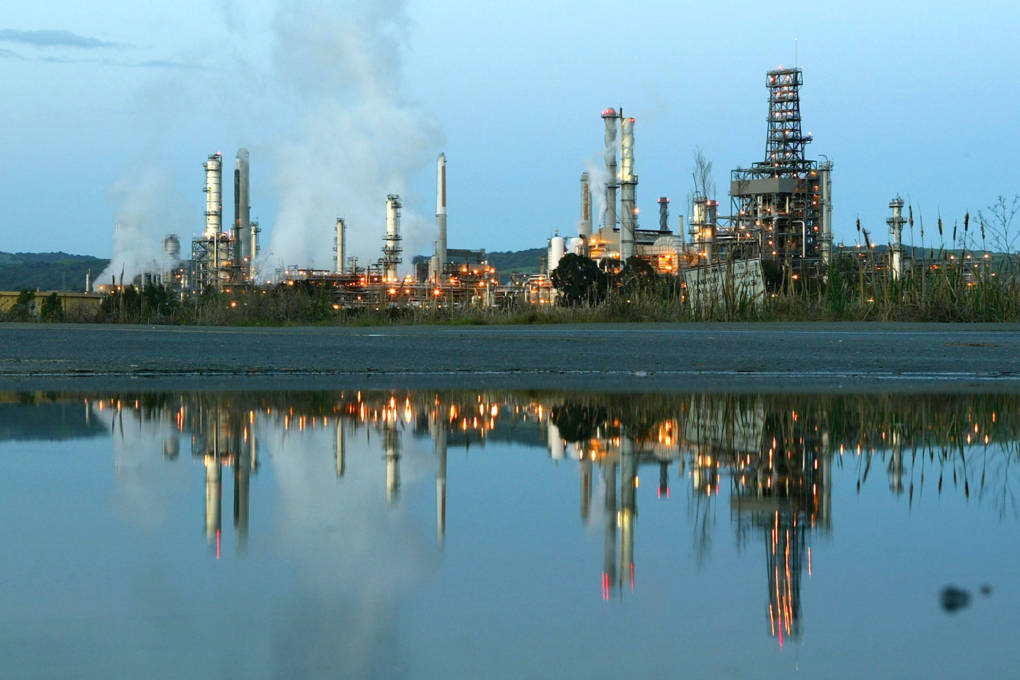
"caption": "The former Shell Oil refinery in Martinez, now owned and operated by New Jersey-based PBF Energy. ",
"description": "The Shell Oil refinery in Martinez.",
"title": "PBF Energy Refinery-Martinez",
"credit": "Justin Sullivan/Getty Images",
"status": "inherit",
"isLoading": false,
"fetchFailed": false
},
"news_11753771": {
"type": "attachments",
"id": "news_11753771",
"meta": {
"index": "attachments_1716263798",
"site": "news",
"id": "11753771",
"found": true
},
"parent": 11753680,
"imgSizes": {
"apple_news_ca_landscape_5_5": {
"file": "https://ww2.kqed.org/app/uploads/sites/10/2019/06/Jake-Larson-1044x783.jpg",
"width": 1044,
"mimeType": "image/jpeg",
"height": 783
},
"apple_news_ca_square_4_0": {
"file": "https://ww2.kqed.org/app/uploads/sites/10/2019/06/Jake-Larson-470x470.jpg",
"width": 470,
"mimeType": "image/jpeg",
"height": 470
},
"twentyfourteen-full-width": {
"file": "https://ww2.kqed.org/app/uploads/sites/10/2019/06/Jake-Larson-1038x576.jpg",
"width": 1038,
"mimeType": "image/jpeg",
"height": 576
},
"thumbnail": {
"file": "https://ww2.kqed.org/app/uploads/sites/10/2019/06/Jake-Larson-160x122.jpg",
"width": 160,
"mimeType": "image/jpeg",
"height": 122
},
"post-thumbnail": {
"file": "https://ww2.kqed.org/app/uploads/sites/10/2019/06/Jake-Larson-672x372.jpg",
"width": 672,
"mimeType": "image/jpeg",
"height": 372
},
"kqedFullSize": {
"file": "https://ww2.kqed.org/app/uploads/sites/10/2019/06/Jake-Larson.jpg",
"width": 1920,
"height": 1465
},
"apple_news_ca_landscape_4_7": {
"file": "https://ww2.kqed.org/app/uploads/sites/10/2019/06/Jake-Larson-632x474.jpg",
"width": 632,
"mimeType": "image/jpeg",
"height": 474
},
"large": {
"file": "https://ww2.kqed.org/app/uploads/sites/10/2019/06/Jake-Larson-1020x778.jpg",
"width": 1020,
"mimeType": "image/jpeg",
"height": 778
},
"complete_open_graph": {
"file": "https://ww2.kqed.org/app/uploads/sites/10/2019/06/Jake-Larson-1200x916.jpg",
"width": 1200,
"mimeType": "image/jpeg",
"height": 916
},
"apple_news_ca_landscape_4_0": {
"file": "https://ww2.kqed.org/app/uploads/sites/10/2019/06/Jake-Larson-536x402.jpg",
"width": 536,
"mimeType": "image/jpeg",
"height": 402
},
"apple_news_ca_portrait_12_9": {
"file": "https://ww2.kqed.org/app/uploads/sites/10/2019/06/Jake-Larson-1122x1465.jpg",
"width": 1122,
"mimeType": "image/jpeg",
"height": 1465
},
"medium": {
"file": "https://ww2.kqed.org/app/uploads/sites/10/2019/06/Jake-Larson-800x610.jpg",
"width": 800,
"mimeType": "image/jpeg",
"height": 610
},
"apple_news_ca_portrait_4_0": {
"file": "https://ww2.kqed.org/app/uploads/sites/10/2019/06/Jake-Larson-354x472.jpg",
"width": 354,
"mimeType": "image/jpeg",
"height": 472
},
"apple_news_ca_portrait_9_7": {
"file": "https://ww2.kqed.org/app/uploads/sites/10/2019/06/Jake-Larson-840x1120.jpg",
"width": 840,
"mimeType": "image/jpeg",
"height": 1120
},
"apple_news_ca_landscape_12_9": {
"file": "https://ww2.kqed.org/app/uploads/sites/10/2019/06/Jake-Larson-1832x1374.jpg",
"width": 1832,
"mimeType": "image/jpeg",
"height": 1374
},
"apple_news_ca_square_9_7": {
"file": "https://ww2.kqed.org/app/uploads/sites/10/2019/06/Jake-Larson-1104x1104.jpg",
"width": 1104,
"mimeType": "image/jpeg",
"height": 1104
},
"apple_news_ca_portrait_4_7": {
"file": "https://ww2.kqed.org/app/uploads/sites/10/2019/06/Jake-Larson-414x552.jpg",
"width": 414,
"mimeType": "image/jpeg",
"height": 552
},
"apple_news_ca_square_12_9": {
"file": "https://ww2.kqed.org/app/uploads/sites/10/2019/06/Jake-Larson-1472x1465.jpg",
"width": 1472,
"mimeType": "image/jpeg",
"height": 1465
},
"apple_news_ca_portrait_5_5": {
"file": "https://ww2.kqed.org/app/uploads/sites/10/2019/06/Jake-Larson-687x916.jpg",
"width": 687,
"mimeType": "image/jpeg",
"height": 916
},
"full-width": {
"file": "https://ww2.kqed.org/app/uploads/sites/10/2019/06/Jake-Larson-1920x1465.jpg",
"width": 1920,
"mimeType": "image/jpeg",
"height": 1465
},
"apple_news_ca_square_4_7": {
"file": "https://ww2.kqed.org/app/uploads/sites/10/2019/06/Jake-Larson-550x550.jpg",
"width": 550,
"mimeType": "image/jpeg",
"height": 550
},
"apple_news_ca_landscape_9_7": {
"file": "https://ww2.kqed.org/app/uploads/sites/10/2019/06/Jake-Larson-1376x1032.jpg",
"width": 1376,
"mimeType": "image/jpeg",
"height": 1032
},
"apple_news_ca_square_5_5": {
"file": "https://ww2.kqed.org/app/uploads/sites/10/2019/06/Jake-Larson-912x912.jpg",
"width": 912,
"mimeType": "image/jpeg",
"height": 912
}
},
"publishDate": 1560209093,
"modified": 1560209387,
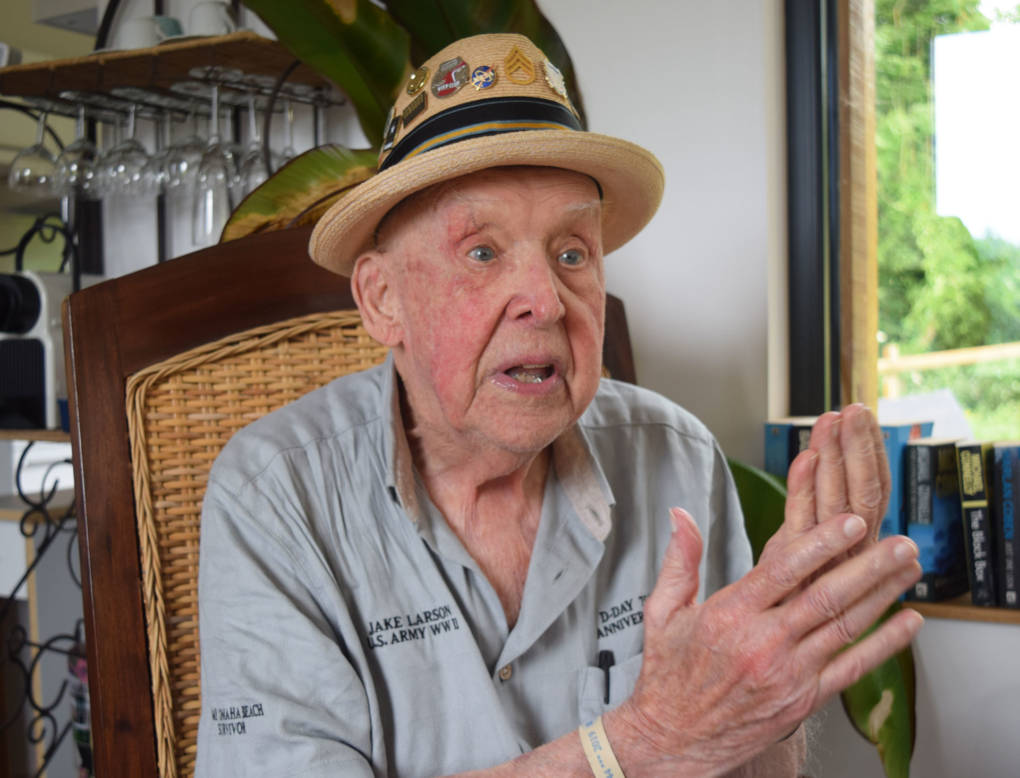
"caption": "Jake Larson, 96, of Martinez, returned to Normandy for the second time last week, to mark the 75th anniversary of the D-Day invasion he took part in.",
"description": "Jake Larson, 96, of Martinez, returned to Normandy for the second time last week, to mark the 75th anniversary of the D-Day invasion he took part in.",
"title": "Jake-Larson",
"credit": "Rebecca Rosman/KQED",
"status": "inherit",
"isLoading": false,
"fetchFailed": false
},
"news_11685494": {
"type": "attachments",
"id": "news_11685494",
"meta": {
"index": "attachments_1716263798",
"site": "news",
"id": "11685494",
"found": true
},
"parent": 11685038,
"imgSizes": {
"small": {
"file": "https://ww2.kqed.org/app/uploads/sites/10/2018/08/GettyImages-3188658-520x338.jpg",
"width": 520,
"mimeType": "image/jpeg",
"height": 338
},
"twentyfourteen-full-width": {
"file": "https://ww2.kqed.org/app/uploads/sites/10/2018/08/GettyImages-3188658-1038x576.jpg",
"width": 1038,
"mimeType": "image/jpeg",
"height": 576
},
"thumbnail": {
"file": "https://ww2.kqed.org/app/uploads/sites/10/2018/08/GettyImages-3188658-160x104.jpg",
"width": 160,
"mimeType": "image/jpeg",
"height": 104
},
"fd-sm": {
"file": "https://ww2.kqed.org/app/uploads/sites/10/2018/08/GettyImages-3188658-960x623.jpg",
"width": 960,
"mimeType": "image/jpeg",
"height": 623
},
"post-thumbnail": {
"file": "https://ww2.kqed.org/app/uploads/sites/10/2018/08/GettyImages-3188658-672x372.jpg",
"width": 672,
"mimeType": "image/jpeg",
"height": 372
},
"xsmall": {
"file": "https://ww2.kqed.org/app/uploads/sites/10/2018/08/GettyImages-3188658-375x244.jpg",
"width": 375,
"mimeType": "image/jpeg",
"height": 244
},
"kqedFullSize": {
"file": "https://ww2.kqed.org/app/uploads/sites/10/2018/08/GettyImages-3188658-e1552593074481.jpg",
"width": 1920,
"height": 1247
},
"large": {
"file": "https://ww2.kqed.org/app/uploads/sites/10/2018/08/GettyImages-3188658-1020x662.jpg",
"width": 1020,
"mimeType": "image/jpeg",
"height": 662
},
"xlarge": {
"file": "https://ww2.kqed.org/app/uploads/sites/10/2018/08/GettyImages-3188658-1180x766.jpg",
"width": 1180,
"mimeType": "image/jpeg",
"height": 766
},
"complete_open_graph": {
"file": "https://ww2.kqed.org/app/uploads/sites/10/2018/08/GettyImages-3188658-1200x779.jpg",
"width": 1200,
"mimeType": "image/jpeg",
"height": 779
},
"guest-author-50": {
"file": "https://ww2.kqed.org/app/uploads/sites/10/2018/08/GettyImages-3188658-50x50.jpg",
"width": 50,
"mimeType": "image/jpeg",
"height": 50
},
"guest-author-96": {
"file": "https://ww2.kqed.org/app/uploads/sites/10/2018/08/GettyImages-3188658-96x96.jpg",
"width": 96,
"mimeType": "image/jpeg",
"height": 96
},
"medium": {
"file": "https://ww2.kqed.org/app/uploads/sites/10/2018/08/GettyImages-3188658-800x519.jpg",
"width": 800,
"mimeType": "image/jpeg",
"height": 519
},
"guest-author-64": {
"file": "https://ww2.kqed.org/app/uploads/sites/10/2018/08/GettyImages-3188658-64x64.jpg",
"width": 64,
"mimeType": "image/jpeg",
"height": 64
},
"guest-author-32": {
"file": "https://ww2.kqed.org/app/uploads/sites/10/2018/08/GettyImages-3188658-32x32.jpg",
"width": 32,
"mimeType": "image/jpeg",
"height": 32
},
"fd-lrg": {
"file": "https://ww2.kqed.org/app/uploads/sites/10/2018/08/GettyImages-3188658-1920x1247.jpg",
"width": 1920,
"mimeType": "image/jpeg",
"height": 1247
},
"fd-med": {
"file": "https://ww2.kqed.org/app/uploads/sites/10/2018/08/GettyImages-3188658-1180x766.jpg",
"width": 1180,
"mimeType": "image/jpeg",
"height": 766
},
"full-width": {
"file": "https://ww2.kqed.org/app/uploads/sites/10/2018/08/GettyImages-3188658-1920x1247.jpg",
"width": 1920,
"mimeType": "image/jpeg",
"height": 1247
},
"detail": {
"file": "https://ww2.kqed.org/app/uploads/sites/10/2018/08/GettyImages-3188658-150x150.jpg",
"width": 150,
"mimeType": "image/jpeg",
"height": 150
},
"guest-author-128": {
"file": "https://ww2.kqed.org/app/uploads/sites/10/2018/08/GettyImages-3188658-128x128.jpg",
"width": 128,
"mimeType": "image/jpeg",
"height": 128
},
"xxsmall": {
"file": "https://ww2.kqed.org/app/uploads/sites/10/2018/08/GettyImages-3188658-240x156.jpg",
"width": 240,
"mimeType": "image/jpeg",
"height": 156
}
},
"publishDate": 1533677464,
"modified": 1626902651,
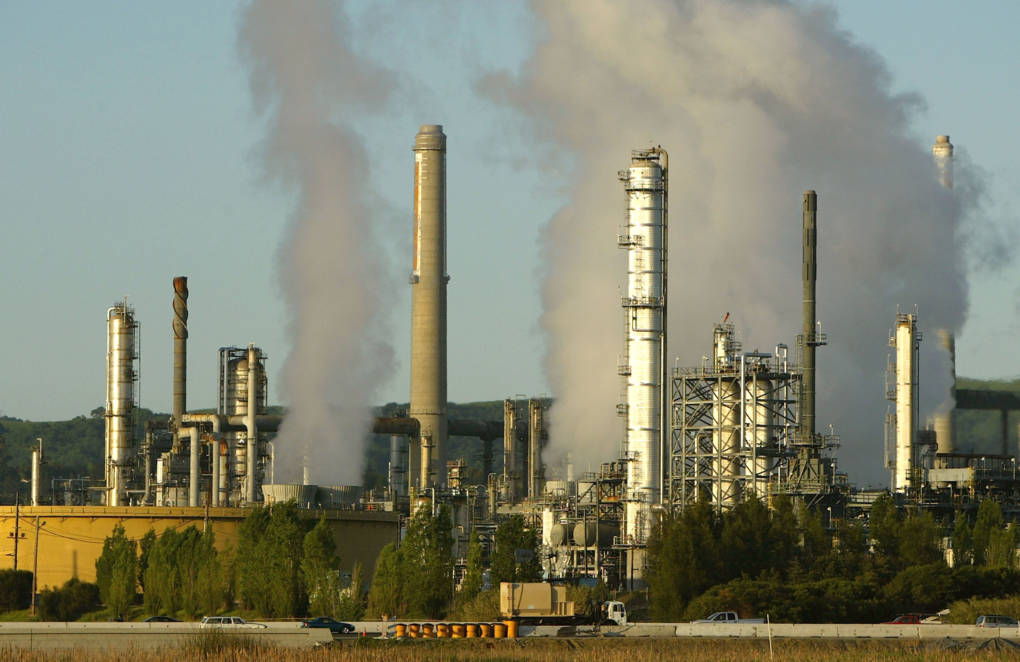
"caption": "The PBF Energy refinery in Martinez, pictured in August 2018 when it was owned by Shell. ",
"description": "The PBF Energy refinery in Martinez, pictured in August 2018 when it was owned by Shell. ",
"title": "The Martinez Refining Company Refinery",
"credit": "Justin Sullivan/Getty Images",
"status": "inherit",
"altTag": null,
"isLoading": false,
"fetchFailed": false
},
"news_11703177": {
"type": "attachments",
"id": "news_11703177",
"meta": {
"index": "attachments_1716263798",
"site": "news",
"id": "11703177",
"found": true
},
"parent": 11703167,
"imgSizes": {
"small": {
"file": "https://ww2.kqed.org/app/uploads/sites/10/2018/11/RS33506_IMG_3934-qut-520x390.jpg",
"width": 520,
"mimeType": "image/jpeg",
"height": 390
},
"twentyfourteen-full-width": {
"file": "https://ww2.kqed.org/app/uploads/sites/10/2018/11/RS33506_IMG_3934-qut-1038x576.jpg",
"width": 1038,
"mimeType": "image/jpeg",
"height": 576
},
"thumbnail": {
"file": "https://ww2.kqed.org/app/uploads/sites/10/2018/11/RS33506_IMG_3934-qut-160x120.jpg",
"width": 160,
"mimeType": "image/jpeg",
"height": 120
},
"fd-sm": {
"file": "https://ww2.kqed.org/app/uploads/sites/10/2018/11/RS33506_IMG_3934-qut-960x720.jpg",
"width": 960,
"mimeType": "image/jpeg",
"height": 720
},
"post-thumbnail": {
"file": "https://ww2.kqed.org/app/uploads/sites/10/2018/11/RS33506_IMG_3934-qut-672x372.jpg",
"width": 672,
"mimeType": "image/jpeg",
"height": 372
},
"xsmall": {
"file": "https://ww2.kqed.org/app/uploads/sites/10/2018/11/RS33506_IMG_3934-qut-375x281.jpg",
"width": 375,
"mimeType": "image/jpeg",
"height": 281
},
"kqedFullSize": {
"file": "https://ww2.kqed.org/app/uploads/sites/10/2018/11/RS33506_IMG_3934-qut.jpg",
"width": 1920,
"height": 1440
},
"large": {
"file": "https://ww2.kqed.org/app/uploads/sites/10/2018/11/RS33506_IMG_3934-qut-1020x765.jpg",
"width": 1020,
"mimeType": "image/jpeg",
"height": 765
},
"xlarge": {
"file": "https://ww2.kqed.org/app/uploads/sites/10/2018/11/RS33506_IMG_3934-qut-1180x885.jpg",
"width": 1180,
"mimeType": "image/jpeg",
"height": 885
},
"complete_open_graph": {
"file": "https://ww2.kqed.org/app/uploads/sites/10/2018/11/RS33506_IMG_3934-qut-1200x900.jpg",
"width": 1200,
"mimeType": "image/jpeg",
"height": 900
},
"guest-author-50": {
"file": "https://ww2.kqed.org/app/uploads/sites/10/2018/11/RS33506_IMG_3934-qut-50x50.jpg",
"width": 50,
"mimeType": "image/jpeg",
"height": 50
},
"guest-author-96": {
"file": "https://ww2.kqed.org/app/uploads/sites/10/2018/11/RS33506_IMG_3934-qut-96x96.jpg",
"width": 96,
"mimeType": "image/jpeg",
"height": 96
},
"medium": {
"file": "https://ww2.kqed.org/app/uploads/sites/10/2018/11/RS33506_IMG_3934-qut-800x600.jpg",
"width": 800,
"mimeType": "image/jpeg",
"height": 600
},
"guest-author-64": {
"file": "https://ww2.kqed.org/app/uploads/sites/10/2018/11/RS33506_IMG_3934-qut-64x64.jpg",
"width": 64,
"mimeType": "image/jpeg",
"height": 64
},
"guest-author-32": {
"file": "https://ww2.kqed.org/app/uploads/sites/10/2018/11/RS33506_IMG_3934-qut-32x32.jpg",
"width": 32,
"mimeType": "image/jpeg",
"height": 32
},
"fd-lrg": {
"file": "https://ww2.kqed.org/app/uploads/sites/10/2018/11/RS33506_IMG_3934-qut-1920x1440.jpg",
"width": 1920,
"mimeType": "image/jpeg",
"height": 1440
},
"fd-med": {
"file": "https://ww2.kqed.org/app/uploads/sites/10/2018/11/RS33506_IMG_3934-qut-1180x885.jpg",
"width": 1180,
"mimeType": "image/jpeg",
"height": 885
},
"full-width": {
"file": "https://ww2.kqed.org/app/uploads/sites/10/2018/11/RS33506_IMG_3934-qut-1920x1440.jpg",
"width": 1920,
"mimeType": "image/jpeg",
"height": 1440
},
"detail": {
"file": "https://ww2.kqed.org/app/uploads/sites/10/2018/11/RS33506_IMG_3934-qut-150x150.jpg",
"width": 150,
"mimeType": "image/jpeg",
"height": 150
},
"guest-author-128": {
"file": "https://ww2.kqed.org/app/uploads/sites/10/2018/11/RS33506_IMG_3934-qut-128x128.jpg",
"width": 128,
"mimeType": "image/jpeg",
"height": 128
},
"xxsmall": {
"file": "https://ww2.kqed.org/app/uploads/sites/10/2018/11/RS33506_IMG_3934-qut-240x180.jpg",
"width": 240,
"mimeType": "image/jpeg",
"height": 180
}
},
"publishDate": 1541170049,
"modified": 1541170149,
"caption": "Gabriel Clothes is the Lead Bar at Salt House in San Francisco.",
"description": null,
"title": "RS33506_IMG_3934-qut",
"credit": "Bianca Taylor/KQED",
"status": "inherit",
"isLoading": false,
"fetchFailed": false
},
"news_10795577": {
"type": "attachments",
"id": "news_10795577",
"meta": {
"index": "attachments_1716263798",
"site": "news",
"id": "10795577",
"found": true
},
"parent": 10795565,
"imgSizes": {
"jmtc-small-thumb": {
"file": "https://ww2.kqed.org/app/uploads/sites/10/2015/12/Tesoro-280x150.jpg",
"width": 280,
"mimeType": "image/jpeg",
"height": 150
},
"thumbnail": {
"file": "https://ww2.kqed.org/app/uploads/sites/10/2015/12/Tesoro-400x300.jpg",
"width": 400,
"mimeType": "image/jpeg",
"height": 300
},
"post-thumbnail": {
"file": "https://ww2.kqed.org/app/uploads/sites/10/2015/12/Tesoro-600x372.jpg",
"width": 600,
"mimeType": "image/jpeg",
"height": 372
},
"kqedFullSize": {
"file": "https://ww2.kqed.org/app/uploads/sites/10/2015/12/Tesoro.jpg",
"width": 600,
"height": 450
},
"guest-author-96": {
"file": "https://ww2.kqed.org/app/uploads/sites/10/2015/12/Tesoro-96x96.jpg",
"width": 96,
"mimeType": "image/jpeg",
"height": 96
},
"guest-author-64": {
"file": "https://ww2.kqed.org/app/uploads/sites/10/2015/12/Tesoro-64x64.jpg",
"width": 64,
"mimeType": "image/jpeg",
"height": 64
},
"detail": {
"file": "https://ww2.kqed.org/app/uploads/sites/10/2015/12/Tesoro-75x75.jpg",
"width": 75,
"mimeType": "image/jpeg",
"height": 75
},
"guest-author-32": {
"file": "https://ww2.kqed.org/app/uploads/sites/10/2015/12/Tesoro-32x32.jpg",
"width": 32,
"mimeType": "image/jpeg",
"height": 32
},
"guest-author-128": {
"file": "https://ww2.kqed.org/app/uploads/sites/10/2015/12/Tesoro-128x128.jpg",
"width": 128,
"mimeType": "image/jpeg",
"height": 128
}
},
"publishDate": 1450213117,
"modified": 1450724016,
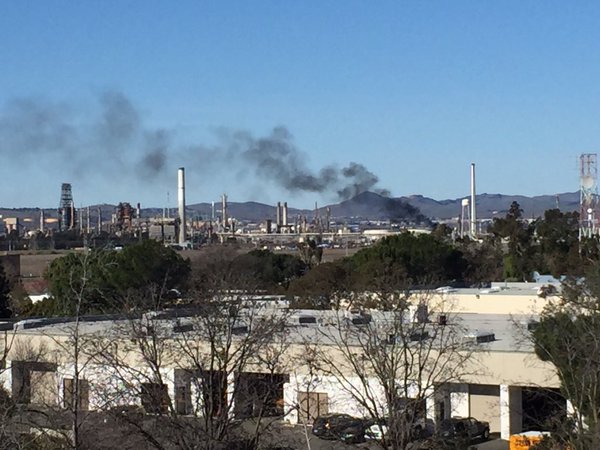
"caption": "Smoke plume rises from Tesoro's refinery in Martinez on Dec. 15. ",
"description": null,
"title": "Tesoro",
"credit": "Andrew/News 24-680 via Twitter",
"status": "inherit",
"isLoading": false,
"fetchFailed": false
},
"news_10846589": {
"type": "attachments",
"id": "news_10846589",
"meta": {
"index": "attachments_1716263798",
"site": "news",
"id": "10846589",
"found": true
},
"parent": 10845833,
"imgSizes": {
"twentyfourteen-full-width": {
"file": "https://ww2.kqed.org/app/uploads/sites/10/2016/01/IMG_0613-1038x576.jpg",
"width": 1038,
"mimeType": "image/jpeg",
"height": 576
},
"thumbnail": {
"file": "https://ww2.kqed.org/app/uploads/sites/10/2016/01/IMG_0613-400x300.jpg",
"width": 400,
"mimeType": "image/jpeg",
"height": 300
},
"fd-sm": {
"file": "https://ww2.kqed.org/app/uploads/sites/10/2016/01/IMG_0613-960x720.jpg",
"width": 960,
"mimeType": "image/jpeg",
"height": 720
},
"post-thumbnail": {
"file": "https://ww2.kqed.org/app/uploads/sites/10/2016/01/IMG_0613-672x372.jpg",
"width": 672,
"mimeType": "image/jpeg",
"height": 372
},
"kqedFullSize": {
"file": "https://ww2.kqed.org/app/uploads/sites/10/2016/01/IMG_0613.jpg",
"width": 1280,
"height": 960
},
"guest-author-96": {
"file": "https://ww2.kqed.org/app/uploads/sites/10/2016/01/IMG_0613-96x96.jpg",
"width": 96,
"mimeType": "image/jpeg",
"height": 96
},
"medium": {
"file": "https://ww2.kqed.org/app/uploads/sites/10/2016/01/IMG_0613-800x600.jpg",
"width": 800,
"mimeType": "image/jpeg",
"height": 600
},
"guest-author-64": {
"file": "https://ww2.kqed.org/app/uploads/sites/10/2016/01/IMG_0613-64x64.jpg",
"width": 64,
"mimeType": "image/jpeg",
"height": 64
},
"guest-author-32": {
"file": "https://ww2.kqed.org/app/uploads/sites/10/2016/01/IMG_0613-32x32.jpg",
"width": 32,
"mimeType": "image/jpeg",
"height": 32
},
"jmtc-small-thumb": {
"file": "https://ww2.kqed.org/app/uploads/sites/10/2016/01/IMG_0613-280x150.jpg",
"width": 280,
"mimeType": "image/jpeg",
"height": 150
},
"fd-med": {
"file": "https://ww2.kqed.org/app/uploads/sites/10/2016/01/IMG_0613-1180x885.jpg",
"width": 1180,
"mimeType": "image/jpeg",
"height": 885
},
"detail": {
"file": "https://ww2.kqed.org/app/uploads/sites/10/2016/01/IMG_0613-75x75.jpg",
"width": 75,
"mimeType": "image/jpeg",
"height": 75
},
"medium_large": {
"file": "https://ww2.kqed.org/app/uploads/sites/10/2016/01/IMG_0613-768x576.jpg",
"width": 768,
"mimeType": "image/jpeg",
"height": 576
},
"guest-author-128": {
"file": "https://ww2.kqed.org/app/uploads/sites/10/2016/01/IMG_0613-128x128.jpg",
"width": 128,
"mimeType": "image/jpeg",
"height": 128
}
},
"publishDate": 1453910498,
"modified": 1453916022,
"caption": "Workers at the scene of a Jan. 20 tanker car derailment adjacent to Interstate 680 in Martinez.",
"description": null,
"title": "Contra Costa County Train Derailment",
"credit": "Contra Costa County Health Agency",
"status": "inherit",
"isLoading": false,
"fetchFailed": false
}
},
"audioPlayerReducer": {
"postId": "stream_live",
"isPaused": true,
"isPlaying": false,
"pfsActive": false,
"pledgeModalIsOpen": true,
"playerDrawerIsOpen": false,
"liveAudioPlayStartedAt": 0,
"liveAudioPlayContext": ""
},
"authorsReducer": {
"byline_news_11753680": {
"type": "authors",
"id": "byline_news_11753680",
"meta": {
"override": true
},
"slug": "byline_news_11753680",
"name": "Rebecca Rosman",
"isLoading": false
},
"lisapickoffwhite-2": {
"type": "authors",
"id": "199",
"meta": {
"index": "authors_1716337520",
"id": "199",
"found": true
},
"name": "Lisa Pickoff-White",
"firstName": "Lisa",
"lastName": "Pickoff-White",
"slug": "lisapickoffwhite-2",
"email": "lpickoffwhite@kqed.org",
"display_author_email": false,
"staff_mastheads": [
"news"
],
"title": "Data Journalist, Senior Producer",
"bio": "Lisa Pickoff-White is KQED's data reporter. Lisa specializes in simplifying complex topics and bringing them to life through compelling visuals, including photography and data visualizations. She previously has worked at the Center for Investigative Reporting and other national outlets. Her work has been honored with awards from the Online News Association, Investigative Reporters and Editors, the Society of Professional Journalists and SXSW Interactive. \u003cstrong> \u003c/strong>",
"avatar": "https://secure.gravatar.com/avatar/5513c5f3967df792aa65bee2501e84d6?s=600&d=blank&r=g",
"twitter": "pickoffwhite",
"facebook": null,
"instagram": null,
"linkedin": null,
"sites": [
{
"site": "",
"roles": [
"editor"
]
},
{
"site": "arts",
"roles": []
},
{
"site": "news",
"roles": [
"administrator"
]
},
{
"site": "about",
"roles": [
"editor"
]
},
{
"site": "stateofhealth",
"roles": [
"administrator"
]
},
{
"site": "science",
"roles": [
"editor"
]
},
{
"site": "quest",
"roles": [
"editor"
]
},
{
"site": "forum",
"roles": [
"editor"
]
}
],
"headData": {
"title": "Lisa Pickoff-White | KQED",
"description": "Data Journalist, Senior Producer",
"ogImgSrc": "https://secure.gravatar.com/avatar/5513c5f3967df792aa65bee2501e84d6?s=600&d=blank&r=g",
"twImgSrc": "https://secure.gravatar.com/avatar/5513c5f3967df792aa65bee2501e84d6?s=600&d=blank&r=g"
},
"isLoading": false,
"link": "/author/lisapickoffwhite-2"
},
"danbrekke": {
"type": "authors",
"id": "222",
"meta": {
"index": "authors_1716337520",
"id": "222",
"found": true
},
"name": "Dan Brekke",
"firstName": "Dan",
"lastName": "Brekke",
"slug": "danbrekke",
"email": "dbrekke@kqed.org",
"display_author_email": true,
"staff_mastheads": [
"news",
"science"
],
"title": "KQED Editor and Reporter",
"bio": "Dan Brekke is a reporter and editor for KQED News, responsible for coverage of topics ranging from California water issues to the Bay Area's transportation challenges. In a newsroom career that began in Chicago in 1972, Dan has worked for \u003cem>The San Francisco Examiner,\u003c/em> Wired and TechTV and has been published in The New York Times, The New York Times Magazine, Business 2.0, Salon and elsewhere.\r\n\r\nSince joining KQED in 2007, Dan has reported, edited and produced both radio and online features and breaking news pieces. He has shared as both editor and reporter in four Society of Professional Journalists Norcal Excellence in Journalism awards and one Edward R. Murrow regional award. He was chosen for a spring 2017 residency at the Mesa Refuge to advance his research on California salmon.\r\n\r\nEmail Dan at: \u003ca href=\"mailto:dbrekke@kqed.org\">dbrekke@kqed.org\u003c/a>\r\n\r\n\u003cstrong>Twitter:\u003c/strong> \u003ca href=\"https://twitter.com/danbrekke\" rel=\"noopener noreferrer\">twitter.com/danbrekke\u003c/a>\r\n\u003cstrong>Facebook:\u003c/strong> \u003ca href=\"https://www.facebook.com/danbrekke\" rel=\"noopener noreferrer\">www.facebook.com/danbrekke\u003c/a>\r\n\u003cstrong>LinkedIn:\u003c/strong> \u003ca href=\"https://www.linkedin.com/in/danbrekke\" rel=\"noopener noreferrer\">www.linkedin.com/in/danbrekke\u003c/a>",
"avatar": "https://secure.gravatar.com/avatar/c8126230345efca3f7aa89b1a402be45?s=600&d=mm&r=g",
"twitter": "danbrekke",
"facebook": null,
"instagram": "https://www.instagram.com/dan.brekke/",
"linkedin": "https://www.linkedin.com/in/danbrekke/",
"sites": [
{
"site": "news",
"roles": [
"administrator",
"create_posts"
]
},
{
"site": "stateofhealth",
"roles": [
"editor"
]
},
{
"site": "science",
"roles": [
"editor"
]
},
{
"site": "quest",
"roles": [
"contributor"
]
},
{
"site": "food",
"roles": [
"contributor"
]
},
{
"site": "forum",
"roles": [
"contributor"
]
},
{
"site": "liveblog",
"roles": [
"editor"
]
}
],
"headData": {
"title": "Dan Brekke | KQED",
"description": "KQED Editor and Reporter",
"ogImgSrc": "https://secure.gravatar.com/avatar/c8126230345efca3f7aa89b1a402be45?s=600&d=mm&r=g",
"twImgSrc": "https://secure.gravatar.com/avatar/c8126230345efca3f7aa89b1a402be45?s=600&d=mm&r=g"
},
"isLoading": false,
"link": "/author/danbrekke"
},
"tgoldberg": {
"type": "authors",
"id": "258",
"meta": {
"index": "authors_1716337520",
"id": "258",
"found": true
},
"name": "Ted Goldberg",
"firstName": "Ted",
"lastName": "Goldberg",
"slug": "tgoldberg",
"email": "tgoldberg@kqed.org",
"display_author_email": true,
"staff_mastheads": [
"news"
],
"title": "KQED Managing Editor, News and Newscasts",
"bio": "Ted Goldberg is Managing Editor of News and Newscasts at KQED. His main reporting beat is the Bay Area's oil refining industry.\r\n\r\nPrior to joining KQED in 2014, Ted worked at CBS News and WCBS AM in New York and Bay City News and KCBS Radio in San Francisco. He graduated from Oberlin College in Ohio in 1998.",
"avatar": "https://secure.gravatar.com/avatar/30ce2e4fe89135e104f89be2394d16225b9d36c121b5b3cb7651ce642978b96f?s=600&d=blank&r=g",
"twitter": "TedrickG",
"bluesky": null,
"facebook": null,
"instagram": null,
"linkedin": null,
"sites": [
{
"site": "news",
"roles": [
"editor"
]
},
{
"site": "science",
"roles": [
"editor"
]
}
],
"headData": {
"title": "Ted Goldberg | KQED",
"description": "KQED Managing Editor, News and Newscasts",
"ogImgSrc": "https://secure.gravatar.com/avatar/30ce2e4fe89135e104f89be2394d16225b9d36c121b5b3cb7651ce642978b96f?s=600&d=blank&r=g",
"twImgSrc": "https://secure.gravatar.com/avatar/30ce2e4fe89135e104f89be2394d16225b9d36c121b5b3cb7651ce642978b96f?s=600&d=blank&r=g"
},
"isLoading": false,
"link": "/author/tgoldberg"
},
"lairdharrison": {
"type": "authors",
"id": "1367",
"meta": {
"index": "authors_1716337520",
"id": "1367",
"found": true
},
"name": "Laird Harrison",
"firstName": "Laird",
"lastName": "Harrison",
"slug": "lairdharrison",
"email": "laird_harrison@yahoo.com",
"display_author_email": false,
"staff_mastheads": [],
"title": null,
"bio": null,
"avatar": "https://secure.gravatar.com/avatar/cd1a94b071427a71ecfcbc115c6b0efe?s=600&d=blank&r=g",
"twitter": null,
"facebook": null,
"instagram": null,
"linkedin": null,
"sites": [
{
"site": "news",
"roles": [
"subscriber"
]
}
],
"headData": {
"title": "Laird Harrison | KQED",
"description": null,
"ogImgSrc": "https://secure.gravatar.com/avatar/cd1a94b071427a71ecfcbc115c6b0efe?s=600&d=blank&r=g",
"twImgSrc": "https://secure.gravatar.com/avatar/cd1a94b071427a71ecfcbc115c6b0efe?s=600&d=blank&r=g"
},
"isLoading": false,
"link": "/author/lairdharrison"
},
"btaylor": {
"type": "authors",
"id": "11365",
"meta": {
"index": "authors_1716337520",
"id": "11365",
"found": true
},
"name": "Bianca Taylor",
"firstName": "Bianca",
"lastName": "Taylor",
"slug": "btaylor",
"email": "btaylor@KQED.org",
"display_author_email": false,
"staff_mastheads": [
"news"
],
"title": "Host and Producer ",
"bio": "Bianca Taylor is a news producer and host of KQED's The Latest podcast.\r\n\r\nHer work with KQED has been honored by the Society of Professional Journalists NorCal, the Webby's, the Regional Murrow Awards, and ONA. She has also worked with NPR, the BBC World Service, and the Washington Post Creative Group.\r\n\r\nBianca is represented by SAG-AFTRA.",
"avatar": "https://secure.gravatar.com/avatar/6b9d3f6552dd10470c5d1c2e58cfe717?s=600&d=blank&r=g",
"twitter": "SoundsLkeBianca",
"facebook": null,
"instagram": null,
"linkedin": null,
"sites": [
{
"site": "arts",
"roles": [
"editor"
]
},
{
"site": "news",
"roles": [
"edit_others_posts",
"editor"
]
},
{
"site": "pop",
"roles": [
"editor"
]
},
{
"site": "bayareabites",
"roles": [
"author"
]
},
{
"site": "science",
"roles": [
"editor"
]
},
{
"site": "forum",
"roles": [
"editor"
]
},
{
"site": "radio",
"roles": [
"editor"
]
},
{
"site": "podcasts",
"roles": [
"editor"
]
}
],
"headData": {
"title": "Bianca Taylor | KQED",
"description": "Host and Producer ",
"ogImgSrc": "https://secure.gravatar.com/avatar/6b9d3f6552dd10470c5d1c2e58cfe717?s=600&d=blank&r=g",
"twImgSrc": "https://secure.gravatar.com/avatar/6b9d3f6552dd10470c5d1c2e58cfe717?s=600&d=blank&r=g"
},
"isLoading": false,
"link": "/author/btaylor"
}
},
"pagesReducer": {
"news_tag_martinez": {
"type": "terms",
"id": "news_227",
"meta": {
"index": "terms_1716263798",
"site": "news",
"id": "227",
"score": 9.555889
},
"featImg": null,
"name": "Martinez",
"description": null,
"taxonomy": "tag",
"headData": {
"twImgId": null,
"twTitle": null,
"ogTitle": null,
"ogImgId": null,
"twDescription": null,
"description": null,
"title": "Martinez Archives | KQED News",
"ogDescription": null
},
"ttid": 235,
"slug": "martinez",
"isLoading": false,
"title": "Martinez",
"pageMeta": {
"site": "news",
"WpPageTemplate": "page-topic-editorial",
"currentPage": 3
},
"blocks": [
{
"blockName": "kqed/post-list",
"attrs": {
"layout": "cardArticle2",
"query": "posts/news?tag=martinez",
"seeMore": false,
"paginated": true,
"page": 3
}
},
{
"blockName": "kqed/ad"
}
]
}
},
"pfsSessionReducer": {},
"postsReducer": {
"stream_live": {
"type": "live",
"id": "stream_live",
"audioUrl": "https://streams.kqed.org/kqedradio",
"title": "Live Stream",
"excerpt": "Live Stream information currently unavailable.",
"link": "/radio",
"featImg": "",
"label": {
"name": "KQED Live",
"link": "/"
}
},
"stream_kqedNewscast": {
"type": "posts",
"id": "stream_kqedNewscast",
"audioUrl": "https://www.kqed.org/.stream/anon/radio/RDnews/newscast.mp3?_=1",
"title": "KQED Newscast",
"featImg": "",
"label": {
"name": "88.5 FM",
"link": "/"
}
},
"news_11754005": {
"type": "posts",
"id": "news_11754005",
"meta": {
"index": "posts_1716263798",
"site": "news",
"id": "11754005",
"score": null,
"sort": [
1560297408000
]
},
"parent": 0,
"labelTerm": {
"site": "news"
},
"blocks": [],
"publishDate": 1560297408,
"format": "standard",
"disqusTitle": "Shell to Sell Martinez Refinery for $1 Billion",
"title": "Shell to Sell Martinez Refinery for $1 Billion",
"headTitle": "KQED News",
"content": "\u003cp>Shell Oil has agreed to sell its Martinez refinery to PBF Energy, a large independent refining company, for up to $1 billion, the two companies announced Tuesday.\u003c/p>\n\u003cp>The chief executive for New Jersey-based \u003ca href=\"https://investors.pbfenergy.com/news/2019/06-11-2019-210941867\" target=\"_blank\" rel=\"noopener noreferrer\">PBF\u003c/a> called the Contra Costa County facility, which has refining capacity of 160,000 barrels a day, the best refinery in the Bay Area.\u003c/p>\n\u003cp>[aside postID=news_11732859 label='Related Coverage']\u003c/p>\n\u003cp>\"The Martinez acquisition is too compelling for us to pass up,\" Tom Nimbley, the company's chairman and CEO, said during a conference call with analysts Tuesday afternoon. \"We are buying a world-class asset at a fair price and an opportune time.\"\u003c/p>\n\u003cp>\u003ca href=\"https://www.shell.com/media/news-and-media-releases/2019/shell-agrees-to-sale-of-martinez-refinery.html\" target=\"_blank\" rel=\"noopener noreferrer\">Shell\u003c/a> executives say the sale is part of the company's effort to make significant changes in the oil industry. The oil giant, in a press release, said it wants to \"reshape efforts toward a smaller, smarter refining portfolio.\"\u003c/p>\n\u003cp>\"This deal is another step in our transformation,\" said Shell Downstream Director John Abbott.\u003c/p>\n\u003cp>Local workers employed at the Martinez site are expected to be offered jobs at PBF. Shell says it employs more than 700 people at the site.\u003c/p>\n\u003cp>\"We look forward to welcoming Martinez's employees to the PBF family and continuing Shell's dedicated community partnerships,\" said Nimbley.\u003c/p>\n\u003cp>PBF operates \u003ca href=\"https://www.pbfenergy.com/refineries\" target=\"_blank\" rel=\"noopener noreferrer\">several oil refineries\u003c/a> and related facilities throughout the country, including one of its most recent purchases, a refinery in Torrance (Los Angeles County).\u003c/p>\n\u003cp>Both companies expect the sale of the refinery to close by the end of the year.\u003c/p>\n\u003cp>[ad fullwidth]\u003c/p>\n\u003cp>While the deal has been in the works for months, a PBF representative said he was unaware of which agencies would need to approve it.\u003c/p>\n\u003cp>\"Now that we have announced the pending acquisition of the Martinez refinery from Shell, we will begin identifying which agencies have oversight responsibilities for the transaction,\" PBF spokesman Michael Karlovich said in an email.\u003c/p>\n\u003cp>In fact, the Federal Trade Commission and the California Attorney General's Office would be tasked with overseeing the purchase, according to Edward Ortiz, a spokesman for the California Energy Commission.\u003c/p>\n\u003cp>The Shell facility is one of the Bay Area's five oil refining facilities and two in the Martinez area.\u003c/p>\n\u003cp>The company says the refinery has been in operation since 1915 and has touted it as one of the most complex in the world. It converts crude into vehicle gasoline, jet fuel, diesel and asphalt, among other products.\u003c/p>\n\u003cp>In March local air regulators announced that Shell agreed to pay $165,000 to \u003ca href=\"https://www.kqed.org/news/11732859/shell-martinez-refinery-fine-for-2016-air-pollution-incident\" target=\"_blank\" rel=\"noopener noreferrer\">settle 16 air violations\u003c/a> at the Martinez refinery that took place between late 2015 and 2016. That included several penalties associated with an outage in Dec. 19, 2016, which forced the refinery to flare off nearly 20 tons of gases and send flames and black smoke into the sky.\u003c/p>\n\u003cp>Like other Bay Area refineries, the facility has experienced a number of minor flaring incidents in recent years. According to the Bay Area Air Quality Management District, problems at the refinery led the Shell Martinez plant to send gases to its flares \u003ca href=\"http://www.baaqmd.gov/~/media/files/compliance-and-enforcement/flares/graphs/flare-emissions-charts/frequency-pdf.pdf\" target=\"_blank\" rel=\"noopener noreferrer\">73\u003c/a> times between 2005 and last year.\u003c/p>\n\u003cp>Last Friday the refinery experienced a pump fire in a process unit, prompting workers to evacuate that part of the facility.\u003c/p>\n\u003cp>Environmentalists have not been happy with the refinery for years, and the change in ownership will probably not change that perception.\u003c/p>\n\u003cp>\"Good riddance to Shell,\" said Hollin Kretzmann, an Oakland-based attorney with the Center for Biological Diversity.\u003c/p>\n\u003cp>\"But the new operator has a history of excessive flaring at its other California refinery, so communities near this dirty refinery aren't likely to see these problems go away,\" Kretzmann said.\u003c/p>\n\u003cp>Kretzmann pointed toward a \u003ca href=\"https://www.dailybreeze.com/2018/02/18/fines-air-quality-violations-continue-at-the-pbf-owned-refinery-in-torrance/\" target=\"_blank\" rel=\"noopener noreferrer\">series of violations\u003c/a> PBF's Torrance refinery committed in recent years that led to investigations and fines by the South Coast Air Quality Management District.\u003c/p>\n\u003cp>\u003c/p>\n",
"disqusIdentifier": "11754005 https://ww2.kqed.org/news/?p=11754005",
"disqusUrl": "https://ww2.kqed.org/news/2019/06/11/shell-to-sell-martinez-refinery-for-1-billion/",
"stats": {
"hasVideo": false,
"hasChartOrMap": false,
"hasAudio": false,
"hasPolis": false,
"wordCount": 633,
"hasGoogleForm": false,
"hasGallery": false,
"hasHearkenModule": false,
"iframeSrcs": [],
"paragraphCount": 24
},
"modified": 1577732898,
"excerpt": "PBF, a New Jersey-based refining company, believes the sale should close by the end of the year. ",
"headData": {
"twImgId": "",
"twTitle": "",
"ogTitle": "",
"ogImgId": "",
"twDescription": "",
"description": "PBF, a New Jersey-based refining company, believes the sale should close by the end of the year. ",
"title": "Shell to Sell Martinez Refinery for $1 Billion | KQED",
"ogDescription": "",
"schema": {
"@context": "https://schema.org",
"@type": "NewsArticle",
"headline": "Shell to Sell Martinez Refinery for $1 Billion",
"datePublished": "2019-06-11T16:56:48-07:00",
"dateModified": "2019-12-30T11:08:18-08:00",
"image": "https://cdn.kqed.org/wp-content/uploads/2020/02/KQED-OG-Image@1x.png",
"isAccessibleForFree": "True",
"publisher": {
"@type": "NewsMediaOrganization",
"@id": "https://www.kqed.org/#organization",
"name": "KQED",
"logo": "https://cdn.kqed.org/wp-content/uploads/2020/02/KQED-OG-Image@1x.png",
"url": "https://www.kqed.org",
"sameAs": [
"https://www.facebook.com/KQED",
"https://twitter.com/KQED",
"https://www.instagram.com/kqed/",
"https://www.tiktok.com/@kqedofficial",
"https://www.linkedin.com/company/kqed",
"https://www.youtube.com/channel/UCeC0IOo7i1P_61zVUWbJ4nw"
]
}
}
},
"guestAuthors": [],
"slug": "shell-to-sell-martinez-refinery-for-1-billion",
"status": "publish",
"path": "/news/11754005/shell-to-sell-martinez-refinery-for-1-billion",
"audioTrackLength": null,
"parsedContent": [
{
"type": "contentString",
"content": "\u003cdiv class=\"post-body\">\u003cp>\u003cp>Shell Oil has agreed to sell its Martinez refinery to PBF Energy, a large independent refining company, for up to $1 billion, the two companies announced Tuesday.\u003c/p>\n\u003cp>The chief executive for New Jersey-based \u003ca href=\"https://investors.pbfenergy.com/news/2019/06-11-2019-210941867\" target=\"_blank\" rel=\"noopener noreferrer\">PBF\u003c/a> called the Contra Costa County facility, which has refining capacity of 160,000 barrels a day, the best refinery in the Bay Area.\u003c/p>\n\u003cp>\u003c/p>\u003c/div>",
"attributes": {
"named": {},
"numeric": []
}
},
{
"type": "component",
"content": "",
"name": "aside",
"attributes": {
"named": {
"postid": "news_11732859",
"label": "Related Coverage "
},
"numeric": []
}
},
{
"type": "contentString",
"content": "\u003cdiv class=\"post-body\">\u003cp>\u003c/p>\n\u003cp>\"The Martinez acquisition is too compelling for us to pass up,\" Tom Nimbley, the company's chairman and CEO, said during a conference call with analysts Tuesday afternoon. \"We are buying a world-class asset at a fair price and an opportune time.\"\u003c/p>\n\u003cp>\u003ca href=\"https://www.shell.com/media/news-and-media-releases/2019/shell-agrees-to-sale-of-martinez-refinery.html\" target=\"_blank\" rel=\"noopener noreferrer\">Shell\u003c/a> executives say the sale is part of the company's effort to make significant changes in the oil industry. The oil giant, in a press release, said it wants to \"reshape efforts toward a smaller, smarter refining portfolio.\"\u003c/p>\n\u003cp>\"This deal is another step in our transformation,\" said Shell Downstream Director John Abbott.\u003c/p>\n\u003cp>Local workers employed at the Martinez site are expected to be offered jobs at PBF. Shell says it employs more than 700 people at the site.\u003c/p>\n\u003cp>\"We look forward to welcoming Martinez's employees to the PBF family and continuing Shell's dedicated community partnerships,\" said Nimbley.\u003c/p>\n\u003cp>PBF operates \u003ca href=\"https://www.pbfenergy.com/refineries\" target=\"_blank\" rel=\"noopener noreferrer\">several oil refineries\u003c/a> and related facilities throughout the country, including one of its most recent purchases, a refinery in Torrance (Los Angeles County).\u003c/p>\n\u003cp>Both companies expect the sale of the refinery to close by the end of the year.\u003c/p>\n\u003cp>\u003c/p>\u003c/div>",
"attributes": {
"named": {},
"numeric": []
}
},
{
"type": "component",
"content": "",
"name": "ad",
"attributes": {
"named": {
"label": "fullwidth"
},
"numeric": [
"fullwidth"
]
}
},
{
"type": "contentString",
"content": "\u003cdiv class=\"post-body\">\u003cp>\u003c/p>\n\u003cp>While the deal has been in the works for months, a PBF representative said he was unaware of which agencies would need to approve it.\u003c/p>\n\u003cp>\"Now that we have announced the pending acquisition of the Martinez refinery from Shell, we will begin identifying which agencies have oversight responsibilities for the transaction,\" PBF spokesman Michael Karlovich said in an email.\u003c/p>\n\u003cp>In fact, the Federal Trade Commission and the California Attorney General's Office would be tasked with overseeing the purchase, according to Edward Ortiz, a spokesman for the California Energy Commission.\u003c/p>\n\u003cp>The Shell facility is one of the Bay Area's five oil refining facilities and two in the Martinez area.\u003c/p>\n\u003cp>The company says the refinery has been in operation since 1915 and has touted it as one of the most complex in the world. It converts crude into vehicle gasoline, jet fuel, diesel and asphalt, among other products.\u003c/p>\n\u003cp>In March local air regulators announced that Shell agreed to pay $165,000 to \u003ca href=\"https://www.kqed.org/news/11732859/shell-martinez-refinery-fine-for-2016-air-pollution-incident\" target=\"_blank\" rel=\"noopener noreferrer\">settle 16 air violations\u003c/a> at the Martinez refinery that took place between late 2015 and 2016. That included several penalties associated with an outage in Dec. 19, 2016, which forced the refinery to flare off nearly 20 tons of gases and send flames and black smoke into the sky.\u003c/p>\n\u003cp>Like other Bay Area refineries, the facility has experienced a number of minor flaring incidents in recent years. According to the Bay Area Air Quality Management District, problems at the refinery led the Shell Martinez plant to send gases to its flares \u003ca href=\"http://www.baaqmd.gov/~/media/files/compliance-and-enforcement/flares/graphs/flare-emissions-charts/frequency-pdf.pdf\" target=\"_blank\" rel=\"noopener noreferrer\">73\u003c/a> times between 2005 and last year.\u003c/p>\n\u003cp>Last Friday the refinery experienced a pump fire in a process unit, prompting workers to evacuate that part of the facility.\u003c/p>\n\u003cp>Environmentalists have not been happy with the refinery for years, and the change in ownership will probably not change that perception.\u003c/p>\n\u003cp>\"Good riddance to Shell,\" said Hollin Kretzmann, an Oakland-based attorney with the Center for Biological Diversity.\u003c/p>\n\u003cp>\"But the new operator has a history of excessive flaring at its other California refinery, so communities near this dirty refinery aren't likely to see these problems go away,\" Kretzmann said.\u003c/p>\n\u003cp>Kretzmann pointed toward a \u003ca href=\"https://www.dailybreeze.com/2018/02/18/fines-air-quality-violations-continue-at-the-pbf-owned-refinery-in-torrance/\" target=\"_blank\" rel=\"noopener noreferrer\">series of violations\u003c/a> PBF's Torrance refinery committed in recent years that led to investigations and fines by the South Coast Air Quality Management District.\u003c/p>\n\u003cp>\u003c/p>\n\u003c/div>\u003c/p>",
"attributes": {
"named": {},
"numeric": []
}
}
],
"link": "/news/11754005/shell-to-sell-martinez-refinery-for-1-billion",
"authors": [
"258"
],
"categories": [
"news_1758",
"news_19906",
"news_457",
"news_8",
"news_356",
"news_1397"
],
"tags": [
"news_227",
"news_20455",
"news_20456"
],
"featImg": "news_11754056",
"label": "news"
},
"news_11753680": {
"type": "posts",
"id": "news_11753680",
"meta": {
"index": "posts_1716263798",
"site": "news",
"id": "11753680",
"score": null,
"sort": [
1560212175000
]
},
"parent": 0,
"labelTerm": {
"site": "news",
"term": 72
},
"blocks": [],
"publishDate": 1560212175,
"format": "audio",
"disqusTitle": "D-Day Veteran From the Bay Area on Returning to the French Village He Helped Liberate",
"title": "D-Day Veteran From the Bay Area on Returning to the French Village He Helped Liberate",
"headTitle": "The California Report | KQED News",
"content": "\u003cp>BONNEVILLE-LA-LOUVET, FRANCE — Ninety-six-year-old Jake Larson of Martinez is one of the last living veterans who stormed Normandy's Omaha Beach on D-Day.\u003c/p>\n\u003cp>Last week, he returned to France for just the second time since June 6, 1944, to mark the 75th anniversary of the landmark World War II invasion that marked the beginning of the Allied liberation of Nazi-occupied France.\u003c/p>\n\u003cp>The first thing Larson wants you to know about his life's story is that he isn’t making any of it up.\u003c/p>\n\u003cp>\"How could I?!\" he exclaims. His blue eyes widen, and he slams his left fist on the arm of his rocking chair.\u003c/p>\n\u003cp>The last time he landed here, he was a 21-year-old sergeant dodging machine gun bullets on D-Day. Panicked by the chaos, Larson pulled out a cigarette and asked a younger soldier next to him for a match. But when he turned toward him, he saw there was no head under the helmet. So Larson dropped his cigarette and ran as fast as he could toward some cliffs about 1,000 yards away.\u003c/p>\n\u003cp>[ad fullwidth]\u003c/p>\n\u003cp>“While I was running I looked up and said, ‘God, what the hell am I doing here?!' ” he remembers. “But it’s moments like this that saved my life.”\u003c/p>\n\u003cp>Larson, the last surviving member of the 135th Regiment of the 34th Infantry Division of the U.S. Army, began his journey into the military with a trip to the movies. He was a bored 15-year-old living in Minnesota, and the latest Gene Autry cowboy film seemed like a great escape.\u003c/p>\n\u003cp>But when Larson and his cousin arrived at the cinema, they realized neither of them could afford the 10-cent ticket entry. So they both lied about their age and signed up for National Guard, where they could make $12 once every three months.\u003c/p>\n\u003cp>“We thought we had struck gold! Mind you at that time eggs were 1 cent a piece and beef was only 1 cent a pound.”\u003c/p>\n\u003cp>Larson was transferred to Louisiana and eventually to Europe, where he was made an operations sergeant. He was among those that helped plan the D-Day invasion and later the Battle of the Bulge.\u003c/p>\n\u003cfigure id=\"attachment_11753786\" class=\"wp-caption alignright\" style=\"max-width: 800px\">\u003cimg class=\"size-medium wp-image-11753786\" src=\"https://ww2.kqed.org/news/wp-content/uploads/sites/10/2019/06/Jake-Larson-WWII-800x1147.jpg\" alt=\"Jake Larson during World War II.\" width=\"800\" height=\"1147\" srcset=\"https://ww2.kqed.org/app/uploads/sites/10/2019/06/Jake-Larson-WWII-800x1147.jpg 800w, https://ww2.kqed.org/app/uploads/sites/10/2019/06/Jake-Larson-WWII-160x229.jpg 160w, https://ww2.kqed.org/app/uploads/sites/10/2019/06/Jake-Larson-WWII.jpg 807w\" sizes=\"(max-width: 800px) 100vw, 800px\">\u003cfigcaption class=\"wp-caption-text\">Jake Larson during World War II. \u003ccite>(Courtesy Karlan Larson)\u003c/cite>\u003c/figcaption>\u003c/figure>\n\u003cp>Being in France for the first time, Larson said he was welcomed as a savior. “We were like angels, flying in with our wings,” he says.\u003c/p>\n\u003cp>It was here in Normandy, after D-Day, that he had his first taste of Camembert and first sip of Champagne. The latter proved to be a steady remedy for his frequent insomnia.\u003c/p>\n\u003cp>He tasted both again in Bonneville-la-Louvet, a small hamlet that hosted Larson and his family during the visit last week.\u003c/p>\n\u003cp>“It’s a great honor for us,” says Brigitte Perkins, one of the owners of the bed-and-breakfast where Larson stayed. “I can even say that I am crying a little bit ... to have him for a second time after 75 years, it’s quite heavy emotion for us.”\u003c/p>\n\u003cp>Their first evening in Bonneville-la-Louvet, the Larsons were invited to a special reception dinner hosted by the town’s mayor.\u003c/p>\n\u003cp>Memories of World War II have always held a special significance across Normandy, where memorial sites are scattered throughout the region.\u003c/p>\n\u003cp>One thing that’s fading, however, is the firsthand memories of those who lived through the war.\u003c/p>\n\u003cp>“When I heard that [Larson] was coming, I thought it was a real opportunity for us,” says Philippe Baron, a local breadmaker. “This is the 75th anniversary, after all.”\u003c/p>\n\u003cp>\u003cstrong>'Better Off Without War'\u003c/strong>\u003c/p>\n\u003cp>Asked if he would do it all over again, Larson doesn’t even hesitate. “Of course! $12 was a lot of money back in those days.”\u003c/p>\n\u003cp>These days, however, Larson says he’s more skeptical about war.\u003c/p>\n\u003cp>That’s part of why he’s back in Normandy, this time with his two sons and two of his grandsons.\u003c/p>\n\u003cp>“I want them to know that peace is the most wonderful thing in the world. The world is better off without war,” he says.\u003c/p>\n\u003cp>On Thursday, Larson was one of 60 U.S. veterans who participated in the 75th commemoration ceremony on Omaha Beach, where President Trump and French President Emmanuel Macron were also present.\u003c/p>\n\u003cp>Sitting on the stage, Larson said he couldn’t stop himself from feeling survivor’s guilt.\u003c/p>\n\u003cp>\"How come I’m one of these guys that is still left when the other thousands are gone? God, I hope I’m doing something good for those that are left and those who have lost their families.\"\u003c/p>\n\u003cfigure id=\"attachment_11753797\" class=\"wp-caption aligncenter\" style=\"max-width: 800px\">\u003cimg class=\"size-medium wp-image-11753797\" src=\"https://ww2.kqed.org/news/wp-content/uploads/sites/10/2019/06/Omaha-Beach-800x533.jpg\" alt=\"An American flag, likely left by a visitor, flies on Omaha Beach in Normandy on the 75th anniversary of the World War II Allied D-Day invasion on June 06, 2019 near Colleville-Sur-Mer, France.\" width=\"800\" height=\"533\" srcset=\"https://ww2.kqed.org/app/uploads/sites/10/2019/06/Omaha-Beach-800x533.jpg 800w, https://ww2.kqed.org/app/uploads/sites/10/2019/06/Omaha-Beach-160x107.jpg 160w, https://ww2.kqed.org/app/uploads/sites/10/2019/06/Omaha-Beach-1020x680.jpg 1020w, https://ww2.kqed.org/app/uploads/sites/10/2019/06/Omaha-Beach-1200x800.jpg 1200w, https://ww2.kqed.org/app/uploads/sites/10/2019/06/Omaha-Beach.jpg 1920w\" sizes=\"(max-width: 800px) 100vw, 800px\">\u003cfigcaption class=\"wp-caption-text\">An American flag, likely left by a visitor, flies on Omaha Beach in Normandy on the 75th anniversary of the World War II Allied D-Day invasion on June 6, 2019 near Colleville-Sur-Mer, France. \u003ccite>(Sean Gallup/Getty Images)\u003c/cite>\u003c/figcaption>\u003c/figure>\n\u003cp>After the war Larson moved back to Minnesota, where he met his wife, a woman named Lola Marie.\u003c/p>\n\u003cp>They eventually moved to California, where he became a printer and worked until he was 73 years old.\u003c/p>\n\u003cp>It was only in recent years that Larson started opening up about his experiences during the war.\u003c/p>\n\u003cp>“I decided I wanted my sons to know about the hell I went through,” Larson says. “But coming back here I knew I’d gone to heaven.”\u003c/p>\n\u003cp>\u003cstrong>A Ticket Thanks to Crowdfunding by a Coffee Shop\u003c/strong>\u003c/p>\n\u003cp>Larson’s second trip to Normandy almost didn’t happen.\u003c/p>\n\u003cp>His military records were destroyed in a fire in 1973, which made him ineligible to have his trip sponsored by the U.S. government.\u003c/p>\n\u003cp>But then a couple of friends from Larson’s neighborhood coffee shop, the Bagel Street Cafe in Martinez, intervened.\u003c/p>\n\u003cp>After hearing about Larson’s predicament, Linda Linnell and Angela Larsen started a GoFundMe Campaign with the goal of raising $10,000. They ended up raising more than $11,000 for Larson and his family to attend the ceremony.\u003c/p>\n\u003cp>Struggling to put the words together to thank those that donated to the campaign, Larson started to tear up.\u003c/p>\n\u003cp>“I’m kind of a sentimental old man and I get a tear in my eye every once in awhile. And I got one in there right now for all the people that put their money where it counts.”\u003c/p>\n\u003cp>[ad floatright]\u003c/p>\n\u003cp>When he arrives back in the Bay Area this week, Larson says he’ll start the final chapter of a memoir he’s been working on. He plans to call the book “The Luckiest Man in the World.\"\u003c/p>\n\n",
"disqusIdentifier": "11753680 https://ww2.kqed.org/news/?p=11753680",
"disqusUrl": "https://ww2.kqed.org/news/2019/06/10/d-day-veteran-from-the-bay-area-returns-to-french-village-he-helped-liberate/",
"stats": {
"hasVideo": false,
"hasChartOrMap": false,
"hasAudio": false,
"hasPolis": false,
"wordCount": 1144,
"hasGoogleForm": false,
"hasGallery": false,
"hasHearkenModule": false,
"iframeSrcs": [],
"paragraphCount": 40
},
"modified": 1560213983,
"excerpt": "Last week, 96-year-old Jake Larson of Martinez returned to France for just the second time since June 6, 1944, to mark the 75th anniversary of the landmark World War II invasion.",
"headData": {
"twImgId": "",
"twTitle": "",
"ogTitle": "",
"ogImgId": "",
"twDescription": "",
"description": "Last week, 96-year-old Jake Larson of Martinez returned to France for just the second time since June 6, 1944, to mark the 75th anniversary of the landmark World War II invasion.",
"title": "D-Day Veteran From the Bay Area on Returning to the French Village He Helped Liberate | KQED",
"ogDescription": "",
"schema": {
"@context": "https://schema.org",
"@type": "NewsArticle",
"headline": "D-Day Veteran From the Bay Area on Returning to the French Village He Helped Liberate",
"datePublished": "2019-06-10T17:16:15-07:00",
"dateModified": "2019-06-10T17:46:23-07:00",
"image": "https://cdn.kqed.org/wp-content/uploads/2020/02/KQED-OG-Image@1x.png",
"isAccessibleForFree": "True",
"publisher": {
"@type": "NewsMediaOrganization",
"@id": "https://www.kqed.org/#organization",
"name": "KQED",
"logo": "https://cdn.kqed.org/wp-content/uploads/2020/02/KQED-OG-Image@1x.png",
"url": "https://www.kqed.org",
"sameAs": [
"https://www.facebook.com/KQED",
"https://twitter.com/KQED",
"https://www.instagram.com/kqed/",
"https://www.tiktok.com/@kqedofficial",
"https://www.linkedin.com/company/kqed",
"https://www.youtube.com/channel/UCeC0IOo7i1P_61zVUWbJ4nw"
]
}
}
},
"guestAuthors": [],
"slug": "d-day-veteran-from-the-bay-area-returns-to-french-village-he-helped-liberate",
"status": "publish",
"audioUrl": "https://www.kqed.org/.stream/anon/radio/tcr/2019/06/Dday.mp3",
"nprByline": "Rebecca Rosman",
"audioTrackLength": 184,
"path": "/news/11753680/d-day-veteran-from-the-bay-area-returns-to-french-village-he-helped-liberate",
"audioDuration": 171000,
"parsedContent": [
{
"type": "contentString",
"content": "\u003cdiv class=\"post-body\">\u003cp>\u003cp>BONNEVILLE-LA-LOUVET, FRANCE — Ninety-six-year-old Jake Larson of Martinez is one of the last living veterans who stormed Normandy's Omaha Beach on D-Day.\u003c/p>\n\u003cp>Last week, he returned to France for just the second time since June 6, 1944, to mark the 75th anniversary of the landmark World War II invasion that marked the beginning of the Allied liberation of Nazi-occupied France.\u003c/p>\n\u003cp>The first thing Larson wants you to know about his life's story is that he isn’t making any of it up.\u003c/p>\n\u003cp>\"How could I?!\" he exclaims. His blue eyes widen, and he slams his left fist on the arm of his rocking chair.\u003c/p>\n\u003cp>The last time he landed here, he was a 21-year-old sergeant dodging machine gun bullets on D-Day. Panicked by the chaos, Larson pulled out a cigarette and asked a younger soldier next to him for a match. But when he turned toward him, he saw there was no head under the helmet. So Larson dropped his cigarette and ran as fast as he could toward some cliffs about 1,000 yards away.\u003c/p>\n\u003cp>\u003c/p>\u003c/div>",
"attributes": {
"named": {},
"numeric": []
}
},
{
"type": "component",
"content": "",
"name": "ad",
"attributes": {
"named": {
"label": "fullwidth"
},
"numeric": [
"fullwidth"
]
}
},
{
"type": "contentString",
"content": "\u003cdiv class=\"post-body\">\u003cp>\u003c/p>\n\u003cp>“While I was running I looked up and said, ‘God, what the hell am I doing here?!' ” he remembers. “But it’s moments like this that saved my life.”\u003c/p>\n\u003cp>Larson, the last surviving member of the 135th Regiment of the 34th Infantry Division of the U.S. Army, began his journey into the military with a trip to the movies. He was a bored 15-year-old living in Minnesota, and the latest Gene Autry cowboy film seemed like a great escape.\u003c/p>\n\u003cp>But when Larson and his cousin arrived at the cinema, they realized neither of them could afford the 10-cent ticket entry. So they both lied about their age and signed up for National Guard, where they could make $12 once every three months.\u003c/p>\n\u003cp>“We thought we had struck gold! Mind you at that time eggs were 1 cent a piece and beef was only 1 cent a pound.”\u003c/p>\n\u003cp>Larson was transferred to Louisiana and eventually to Europe, where he was made an operations sergeant. He was among those that helped plan the D-Day invasion and later the Battle of the Bulge.\u003c/p>\n\u003cfigure id=\"attachment_11753786\" class=\"wp-caption alignright\" style=\"max-width: 800px\">\u003cimg class=\"size-medium wp-image-11753786\" src=\"https://ww2.kqed.org/news/wp-content/uploads/sites/10/2019/06/Jake-Larson-WWII-800x1147.jpg\" alt=\"Jake Larson during World War II.\" width=\"800\" height=\"1147\" srcset=\"https://ww2.kqed.org/app/uploads/sites/10/2019/06/Jake-Larson-WWII-800x1147.jpg 800w, https://ww2.kqed.org/app/uploads/sites/10/2019/06/Jake-Larson-WWII-160x229.jpg 160w, https://ww2.kqed.org/app/uploads/sites/10/2019/06/Jake-Larson-WWII.jpg 807w\" sizes=\"(max-width: 800px) 100vw, 800px\">\u003cfigcaption class=\"wp-caption-text\">Jake Larson during World War II. \u003ccite>(Courtesy Karlan Larson)\u003c/cite>\u003c/figcaption>\u003c/figure>\n\u003cp>Being in France for the first time, Larson said he was welcomed as a savior. “We were like angels, flying in with our wings,” he says.\u003c/p>\n\u003cp>It was here in Normandy, after D-Day, that he had his first taste of Camembert and first sip of Champagne. The latter proved to be a steady remedy for his frequent insomnia.\u003c/p>\n\u003cp>He tasted both again in Bonneville-la-Louvet, a small hamlet that hosted Larson and his family during the visit last week.\u003c/p>\n\u003cp>“It’s a great honor for us,” says Brigitte Perkins, one of the owners of the bed-and-breakfast where Larson stayed. “I can even say that I am crying a little bit ... to have him for a second time after 75 years, it’s quite heavy emotion for us.”\u003c/p>\n\u003cp>Their first evening in Bonneville-la-Louvet, the Larsons were invited to a special reception dinner hosted by the town’s mayor.\u003c/p>\n\u003cp>Memories of World War II have always held a special significance across Normandy, where memorial sites are scattered throughout the region.\u003c/p>\n\u003cp>One thing that’s fading, however, is the firsthand memories of those who lived through the war.\u003c/p>\n\u003cp>“When I heard that [Larson] was coming, I thought it was a real opportunity for us,” says Philippe Baron, a local breadmaker. “This is the 75th anniversary, after all.”\u003c/p>\n\u003cp>\u003cstrong>'Better Off Without War'\u003c/strong>\u003c/p>\n\u003cp>Asked if he would do it all over again, Larson doesn’t even hesitate. “Of course! $12 was a lot of money back in those days.”\u003c/p>\n\u003cp>These days, however, Larson says he’s more skeptical about war.\u003c/p>\n\u003cp>That’s part of why he’s back in Normandy, this time with his two sons and two of his grandsons.\u003c/p>\n\u003cp>“I want them to know that peace is the most wonderful thing in the world. The world is better off without war,” he says.\u003c/p>\n\u003cp>On Thursday, Larson was one of 60 U.S. veterans who participated in the 75th commemoration ceremony on Omaha Beach, where President Trump and French President Emmanuel Macron were also present.\u003c/p>\n\u003cp>Sitting on the stage, Larson said he couldn’t stop himself from feeling survivor’s guilt.\u003c/p>\n\u003cp>\"How come I’m one of these guys that is still left when the other thousands are gone? God, I hope I’m doing something good for those that are left and those who have lost their families.\"\u003c/p>\n\u003cfigure id=\"attachment_11753797\" class=\"wp-caption aligncenter\" style=\"max-width: 800px\">\u003cimg class=\"size-medium wp-image-11753797\" src=\"https://ww2.kqed.org/news/wp-content/uploads/sites/10/2019/06/Omaha-Beach-800x533.jpg\" alt=\"An American flag, likely left by a visitor, flies on Omaha Beach in Normandy on the 75th anniversary of the World War II Allied D-Day invasion on June 06, 2019 near Colleville-Sur-Mer, France.\" width=\"800\" height=\"533\" srcset=\"https://ww2.kqed.org/app/uploads/sites/10/2019/06/Omaha-Beach-800x533.jpg 800w, https://ww2.kqed.org/app/uploads/sites/10/2019/06/Omaha-Beach-160x107.jpg 160w, https://ww2.kqed.org/app/uploads/sites/10/2019/06/Omaha-Beach-1020x680.jpg 1020w, https://ww2.kqed.org/app/uploads/sites/10/2019/06/Omaha-Beach-1200x800.jpg 1200w, https://ww2.kqed.org/app/uploads/sites/10/2019/06/Omaha-Beach.jpg 1920w\" sizes=\"(max-width: 800px) 100vw, 800px\">\u003cfigcaption class=\"wp-caption-text\">An American flag, likely left by a visitor, flies on Omaha Beach in Normandy on the 75th anniversary of the World War II Allied D-Day invasion on June 6, 2019 near Colleville-Sur-Mer, France. \u003ccite>(Sean Gallup/Getty Images)\u003c/cite>\u003c/figcaption>\u003c/figure>\n\u003cp>After the war Larson moved back to Minnesota, where he met his wife, a woman named Lola Marie.\u003c/p>\n\u003cp>They eventually moved to California, where he became a printer and worked until he was 73 years old.\u003c/p>\n\u003cp>It was only in recent years that Larson started opening up about his experiences during the war.\u003c/p>\n\u003cp>“I decided I wanted my sons to know about the hell I went through,” Larson says. “But coming back here I knew I’d gone to heaven.”\u003c/p>\n\u003cp>\u003cstrong>A Ticket Thanks to Crowdfunding by a Coffee Shop\u003c/strong>\u003c/p>\n\u003cp>Larson’s second trip to Normandy almost didn’t happen.\u003c/p>\n\u003cp>His military records were destroyed in a fire in 1973, which made him ineligible to have his trip sponsored by the U.S. government.\u003c/p>\n\u003cp>But then a couple of friends from Larson’s neighborhood coffee shop, the Bagel Street Cafe in Martinez, intervened.\u003c/p>\n\u003cp>After hearing about Larson’s predicament, Linda Linnell and Angela Larsen started a GoFundMe Campaign with the goal of raising $10,000. They ended up raising more than $11,000 for Larson and his family to attend the ceremony.\u003c/p>\n\u003cp>Struggling to put the words together to thank those that donated to the campaign, Larson started to tear up.\u003c/p>\n\u003cp>“I’m kind of a sentimental old man and I get a tear in my eye every once in awhile. And I got one in there right now for all the people that put their money where it counts.”\u003c/p>\n\u003cp>\u003c/p>\u003c/div>",
"attributes": {
"named": {},
"numeric": []
}
},
{
"type": "component",
"content": "",
"name": "ad",
"attributes": {
"named": {
"label": "floatright"
},
"numeric": [
"floatright"
]
}
},
{
"type": "contentString",
"content": "\u003cdiv class=\"post-body\">\u003cp>\u003c/p>\n\u003cp>When he arrives back in the Bay Area this week, Larson says he’ll start the final chapter of a memoir he’s been working on. He plans to call the book “The Luckiest Man in the World.\"\u003c/p>\n\n\u003c/div>\u003c/p>",
"attributes": {
"named": {},
"numeric": []
}
}
],
"link": "/news/11753680/d-day-veteran-from-the-bay-area-returns-to-french-village-he-helped-liberate",
"authors": [
"byline_news_11753680"
],
"programs": [
"news_72"
],
"categories": [
"news_8",
"news_13"
],
"tags": [
"news_160",
"news_227",
"news_236"
],
"featImg": "news_11753771",
"label": "news_72"
},
"news_11732859": {
"type": "posts",
"id": "news_11732859",
"meta": {
"index": "posts_1716263798",
"site": "news",
"id": "11732859",
"score": null,
"sort": [
1552593329000
]
},
"guestAuthors": [],
"slug": "shell-martinez-refinery-fine-for-2016-air-pollution-incident",
"title": "Shell to Pay $50,000 Fine for Releasing 20 Tons of Gas From Martinez Refinery",
"publishDate": 1552593329,
"format": "standard",
"headTitle": "Shell to Pay $50,000 Fine for Releasing 20 Tons of Gas From Martinez Refinery | KQED",
"labelTerm": {
"site": "news"
},
"content": "\u003cp>Shell has agreed to pay $50,000 to settle several air pollution violations stemming from a major release of toxic gas at its Martinez refinery in 2016.\u003c/p>\n\u003cp>The penalty amounts are renewing criticism from environmentalists who say air quality penalties are too low — a year after an effort to increase the fines failed to even get a hearing in the state Legislature.\u003c/p>\n\u003cp>“These fines are a gentle tap on the wrist for an oil giant like Shell,” said Hollin Kretzmann, an Oakland-based attorney for the Center for Biological Diversity.\u003c/p>\n\u003cp>“It’s no surprise that these accidents keep happening when the air district fines are too small to change Shell’s bad behavior,” Kretzmann said. “Martinez and other communities near these dangerous refineries need and deserve better protection from public officials.”\u003c/p>\n\u003cp>The Bay Area Air Quality Management District \u003ca href=\"http://www.baaqmd.gov/news-and-events/page-resources/2019-news/031319-shell-settlement\" target=\"_blank\" rel=\"noopener\">announced Wednesday\u003c/a> that Shell would pay a total of $165,000 to settle 16 violations at the Martinez facility that took place between late 2015 and the end of 2016.\u003c/p>\n\u003cp>[ad fullwidth]\u003c/p>\n\u003cp>The violations included penalties for exceeding sulfur dioxide and hydrogen sulfide release limits, broken tank seals and overdue emission leak tests.\u003c/p>\n\u003cp>Four of the violations stemmed from an incident on Dec. 19, 2016, when parts of \u003ca href=\"https://www.kqed.org/news/11233969/shells-martinez-refinery-sent-close-to-20-tons-of-gas-to-its-flares-during-monday-outage\" target=\"_blank\" rel=\"noopener\">the refinery lost power\u003c/a>. The outage forced the facility to flare off nearly 20 tons of gases and sent flames and black smoke into the sky.\u003c/p>\n\u003cp>The incident prompted local health officials authorities to issue an hours-long health advisory for people near the facility.\u003c/p>\n\u003cp>The problem began when electrical engineers troubleshooting a problem with an alarm accidentally \u003ca style=\"color: #41a62a;\" href=\"https://www.kqed.org/news/11286402/shell-wont-say-what-gases-its-martinez-refinery-sent-into-the-air-during-outage\" target=\"_blank\" rel=\"noopener\">tripped a circuit breaker\u003c/a> connected to a substation that feeds power to the refinery.\u003c/p>\n\u003cp>The refinery later reported that a significant portion of the gas sent to its flares was hydrogen sulfide. When that gas burns through flaring it turns into sulfur dioxide, a pollutant that can harm the respiratory system and make breathing difficult. High levels of sulfur dioxide can damage trees and plants, and it also contributes to the formation of acid rain.\u003c/p>\n\u003cp>The air district fined Shell $20,000 for releasing sulfur dioxide into the air for four hours, according to air district spokesman Ralph Borrmann. The agency issued three $10,000 fines against the company for other emissions from three of the facility’s boilers, Borrmann said.\u003c/p>\n\u003cp>Shell says it has made fixes to prevent a repeat of the December 2016 episode.\u003c/p>\n\u003cp>“Even though these violations did not result in significant impacts to people or the environment, we take them seriously and aim to prevent them from happening again,” said the Martinez refinery’s spokeswoman, Ann Notarangelo, in an emailed statement.\u003c/p>\n\u003cp>“The Bay Area is home to some of the strictest air quality standards in the world, and those standards we embrace,” Notarangelo said. “When we fall short of them, we want to immediately report and correct.”\u003c/p>\n\u003cp>Last year, after several serious refinery malfunctions at Benicia’s Valero refinery and the Phillips 66 facility in Rodeo, state Sen. Bill Dodd, D-Napa, proposed tripling many fines for refineries that violate air quality laws.\u003c/p>\n\u003cp>Two Bay Area mayors and environmental groups said the proposal was too weak, and the Western States Petroleum Association, which represents the state’s major oil companies, opposed it as unnecessary.\u003c/p>\n\u003cp>\u003c/p>\n\u003cp>The bill was \u003ca href=\"https://www.kqed.org/news/11660005/facing-widespread-opposition-lawmaker-ends-effort-to-increase-refinery-penalties\" target=\"_blank\" rel=\"noopener\">killed\u003c/a> before it received its first hearing.\u003c/p>\n\n",
"blocks": [],
"excerpt": "December 2016 release happened after a power outage to the facility. Environmental group calls the fine a 'gentle tap on the wrist.'",
"status": "publish",
"parent": 0,
"modified": 1721109103,
"stats": {
"hasAudio": false,
"hasVideo": false,
"hasChartOrMap": false,
"iframeSrcs": [],
"hasGoogleForm": false,
"hasGallery": false,
"hasHearkenModule": false,
"hasPolis": false,
"paragraphCount": 19,
"wordCount": 577
},
"headData": {
"title": "Shell to Pay $50,000 Fine for Releasing 20 Tons of Gas From Martinez Refinery | KQED",
"description": "December 2016 release happened after a power outage to the facility. Environmental group calls the fine a 'gentle tap on the wrist.'",
"ogTitle": "",
"ogDescription": "",
"ogImgId": "",
"twTitle": "",
"twDescription": "",
"twImgId": "",
"schema": {
"@context": "https://schema.org",
"@type": "NewsArticle",
"headline": "Shell to Pay $50,000 Fine for Releasing 20 Tons of Gas From Martinez Refinery",
"datePublished": "2019-03-14T12:55:29-07:00",
"dateModified": "2024-07-15T22:51:43-07:00",
"image": "https://cdn.kqed.org/wp-content/uploads/2020/02/KQED-OG-Image@1x.png",
"isAccessibleForFree": "True",
"publisher": {
"@type": "NewsMediaOrganization",
"@id": "https://www.kqed.org/#organization",
"name": "KQED",
"logo": "https://cdn.kqed.org/wp-content/uploads/2020/02/KQED-OG-Image@1x.png",
"url": "https://www.kqed.org",
"sameAs": [
"https://www.facebook.com/KQED",
"https://twitter.com/KQED",
"https://www.instagram.com/kqed/",
"https://www.tiktok.com/@kqedofficial",
"https://www.linkedin.com/company/kqed",
"https://www.youtube.com/channel/UCeC0IOo7i1P_61zVUWbJ4nw"
]
}
}
},
"sticky": false,
"path": "/news/11732859/shell-martinez-refinery-fine-for-2016-air-pollution-incident",
"audioTrackLength": null,
"parsedContent": [
{
"type": "contentString",
"content": "\u003cdiv class=\"post-body\">\u003cp>\u003cp>Shell has agreed to pay $50,000 to settle several air pollution violations stemming from a major release of toxic gas at its Martinez refinery in 2016.\u003c/p>\n\u003cp>The penalty amounts are renewing criticism from environmentalists who say air quality penalties are too low — a year after an effort to increase the fines failed to even get a hearing in the state Legislature.\u003c/p>\n\u003cp>“These fines are a gentle tap on the wrist for an oil giant like Shell,” said Hollin Kretzmann, an Oakland-based attorney for the Center for Biological Diversity.\u003c/p>\n\u003cp>“It’s no surprise that these accidents keep happening when the air district fines are too small to change Shell’s bad behavior,” Kretzmann said. “Martinez and other communities near these dangerous refineries need and deserve better protection from public officials.”\u003c/p>\n\u003cp>The Bay Area Air Quality Management District \u003ca href=\"http://www.baaqmd.gov/news-and-events/page-resources/2019-news/031319-shell-settlement\" target=\"_blank\" rel=\"noopener\">announced Wednesday\u003c/a> that Shell would pay a total of $165,000 to settle 16 violations at the Martinez facility that took place between late 2015 and the end of 2016.\u003c/p>\n\u003cp>\u003c/p>\u003c/div>",
"attributes": {
"named": {},
"numeric": []
}
},
{
"type": "component",
"content": "",
"name": "ad",
"attributes": {
"named": {
"label": "fullwidth"
},
"numeric": [
"fullwidth"
]
}
},
{
"type": "contentString",
"content": "\u003cdiv class=\"post-body\">\u003cp>\u003c/p>\n\u003cp>The violations included penalties for exceeding sulfur dioxide and hydrogen sulfide release limits, broken tank seals and overdue emission leak tests.\u003c/p>\n\u003cp>Four of the violations stemmed from an incident on Dec. 19, 2016, when parts of \u003ca href=\"https://www.kqed.org/news/11233969/shells-martinez-refinery-sent-close-to-20-tons-of-gas-to-its-flares-during-monday-outage\" target=\"_blank\" rel=\"noopener\">the refinery lost power\u003c/a>. The outage forced the facility to flare off nearly 20 tons of gases and sent flames and black smoke into the sky.\u003c/p>\n\u003cp>The incident prompted local health officials authorities to issue an hours-long health advisory for people near the facility.\u003c/p>\n\u003cp>The problem began when electrical engineers troubleshooting a problem with an alarm accidentally \u003ca style=\"color: #41a62a;\" href=\"https://www.kqed.org/news/11286402/shell-wont-say-what-gases-its-martinez-refinery-sent-into-the-air-during-outage\" target=\"_blank\" rel=\"noopener\">tripped a circuit breaker\u003c/a> connected to a substation that feeds power to the refinery.\u003c/p>\n\u003cp>The refinery later reported that a significant portion of the gas sent to its flares was hydrogen sulfide. When that gas burns through flaring it turns into sulfur dioxide, a pollutant that can harm the respiratory system and make breathing difficult. High levels of sulfur dioxide can damage trees and plants, and it also contributes to the formation of acid rain.\u003c/p>\n\u003cp>The air district fined Shell $20,000 for releasing sulfur dioxide into the air for four hours, according to air district spokesman Ralph Borrmann. The agency issued three $10,000 fines against the company for other emissions from three of the facility’s boilers, Borrmann said.\u003c/p>\n\u003cp>Shell says it has made fixes to prevent a repeat of the December 2016 episode.\u003c/p>\n\u003cp>“Even though these violations did not result in significant impacts to people or the environment, we take them seriously and aim to prevent them from happening again,” said the Martinez refinery’s spokeswoman, Ann Notarangelo, in an emailed statement.\u003c/p>\n\u003cp>“The Bay Area is home to some of the strictest air quality standards in the world, and those standards we embrace,” Notarangelo said. “When we fall short of them, we want to immediately report and correct.”\u003c/p>\n\u003cp>Last year, after several serious refinery malfunctions at Benicia’s Valero refinery and the Phillips 66 facility in Rodeo, state Sen. Bill Dodd, D-Napa, proposed tripling many fines for refineries that violate air quality laws.\u003c/p>\n\u003cp>Two Bay Area mayors and environmental groups said the proposal was too weak, and the Western States Petroleum Association, which represents the state’s major oil companies, opposed it as unnecessary.\u003c/p>\n\u003cp>\u003c/p>\n\u003cp>The bill was \u003ca href=\"https://www.kqed.org/news/11660005/facing-widespread-opposition-lawmaker-ends-effort-to-increase-refinery-penalties\" target=\"_blank\" rel=\"noopener\">killed\u003c/a> before it received its first hearing.\u003c/p>\n\n\u003c/div>\u003c/p>",
"attributes": {
"named": {},
"numeric": []
}
}
],
"link": "/news/11732859/shell-martinez-refinery-fine-for-2016-air-pollution-incident",
"authors": [
"258"
],
"categories": [
"news_19906",
"news_8",
"news_356"
],
"tags": [
"news_227",
"news_20455",
"news_3111",
"news_20456"
],
"featImg": "news_11685494",
"label": "news"
},
"news_11703167": {
"type": "posts",
"id": "news_11703167",
"meta": {
"index": "posts_1716263798",
"site": "news",
"id": "11703167",
"score": null,
"sort": [
1541271610000
]
},
"guestAuthors": [],
"slug": "golden-state-plate-the-story-of-the-martini-straight-up-with-a-twist",
"title": "Golden State Plate: The Story of the Martini, Straight Up, With a Twist",
"publishDate": 1541271610,
"format": "audio",
"headTitle": "Golden State Plate: The Story of the Martini, Straight Up, With a Twist | KQED",
"labelTerm": {},
"content": "\u003cp>The martini is iconic. Not just because of James Bond, but the glass it’s served in, those neon signs in front of old school bars … it even has its own emoji.\u003c/p>\n\u003cp>https://www.youtube.com/watch?v=OUUq5mRCimo\u003c/p>\n\u003cp>The martini is also the first cocktail Tamir Ben-Shalom learned how to make.\u003c/p>\n\u003cp>Ben-Shalom is bar manager at the \u003ca href=\"http://www.bullvalleyroadhouse.com/\" target=\"_blank\" rel=\"noopener\">Bull Valley Roadhouse\u003c/a> in the tiny East Bay town of Port Costa. He makes a mean martini: two parts of Old Tom Gin, one part Turino vermouth blend, and orange bitters.\u003c/p>\n\u003cfigure id=\"attachment_11703176\" class=\"wp-caption alignnone\" style=\"max-width: 800px\">\u003cimg loading=\"lazy\" decoding=\"async\" class=\"size-medium wp-image-11703176\" src=\"https://ww2.kqed.org/news/wp-content/uploads/sites/10/2018/11/RS33552_IMG_4072-qut-800x600.jpg\" alt=\"\" width=\"800\" height=\"600\" srcset=\"https://cdn.kqed.org/wp-content/uploads/sites/10/2018/11/RS33552_IMG_4072-qut-800x600.jpg 800w, https://cdn.kqed.org/wp-content/uploads/sites/10/2018/11/RS33552_IMG_4072-qut-160x120.jpg 160w, https://cdn.kqed.org/wp-content/uploads/sites/10/2018/11/RS33552_IMG_4072-qut-1020x765.jpg 1020w, https://cdn.kqed.org/wp-content/uploads/sites/10/2018/11/RS33552_IMG_4072-qut-1200x900.jpg 1200w, https://cdn.kqed.org/wp-content/uploads/sites/10/2018/11/RS33552_IMG_4072-qut.jpg 1920w, https://cdn.kqed.org/wp-content/uploads/sites/10/2018/11/RS33552_IMG_4072-qut-1180x885.jpg 1180w, https://cdn.kqed.org/wp-content/uploads/sites/10/2018/11/RS33552_IMG_4072-qut-960x720.jpg 960w, https://cdn.kqed.org/wp-content/uploads/sites/10/2018/11/RS33552_IMG_4072-qut-240x180.jpg 240w, https://cdn.kqed.org/wp-content/uploads/sites/10/2018/11/RS33552_IMG_4072-qut-375x281.jpg 375w, https://cdn.kqed.org/wp-content/uploads/sites/10/2018/11/RS33552_IMG_4072-qut-520x390.jpg 520w\" sizes=\"(max-width: 800px) 100vw, 800px\">\u003cfigcaption class=\"wp-caption-text\">Tamir Ben-Shalom is the Bar Manager at Bull Valley Road House in Port Costa, a tiny town in the East Bay. \u003ccite>(Bianca Taylor/KQED)\u003c/cite>\u003c/figcaption>\u003c/figure>\n\u003cfigure id=\"attachment_11703175\" class=\"wp-caption alignnone\" style=\"max-width: 800px\">\u003cimg loading=\"lazy\" decoding=\"async\" class=\"size-medium wp-image-11703175\" src=\"https://ww2.kqed.org/news/wp-content/uploads/sites/10/2018/11/RS33512_IMG_4071-qut-800x600.jpg\" alt=\"\" width=\"800\" height=\"600\" srcset=\"https://cdn.kqed.org/wp-content/uploads/sites/10/2018/11/RS33512_IMG_4071-qut-800x600.jpg 800w, https://cdn.kqed.org/wp-content/uploads/sites/10/2018/11/RS33512_IMG_4071-qut-160x120.jpg 160w, https://cdn.kqed.org/wp-content/uploads/sites/10/2018/11/RS33512_IMG_4071-qut-1020x765.jpg 1020w, https://cdn.kqed.org/wp-content/uploads/sites/10/2018/11/RS33512_IMG_4071-qut-1200x900.jpg 1200w, https://cdn.kqed.org/wp-content/uploads/sites/10/2018/11/RS33512_IMG_4071-qut.jpg 1920w, https://cdn.kqed.org/wp-content/uploads/sites/10/2018/11/RS33512_IMG_4071-qut-1180x885.jpg 1180w, https://cdn.kqed.org/wp-content/uploads/sites/10/2018/11/RS33512_IMG_4071-qut-960x720.jpg 960w, https://cdn.kqed.org/wp-content/uploads/sites/10/2018/11/RS33512_IMG_4071-qut-240x180.jpg 240w, https://cdn.kqed.org/wp-content/uploads/sites/10/2018/11/RS33512_IMG_4071-qut-375x281.jpg 375w, https://cdn.kqed.org/wp-content/uploads/sites/10/2018/11/RS33512_IMG_4071-qut-520x390.jpg 520w\" sizes=\"(max-width: 800px) 100vw, 800px\">\u003cfigcaption class=\"wp-caption-text\">Lemon, gin and vermouth go into the martini at the Bull Valley Roadhouse. \u003ccite>(Bianca Taylor/KQED)\u003c/cite>\u003c/figcaption>\u003c/figure>\n\u003cp>But he tells me that if I want to get to the bottom of the martini mystery, I really need to drive 20 minutes to Martinez. So, I get in my car until I hit the intersection of Masonic and Alhambra Streets. It’s an unassuming parking lot, except for a plaque on a giant boulder that claims \u003cem>this\u003c/em> is the site of the martini’s invention.\u003c/p>\n\u003cfigure id=\"attachment_11703173\" class=\"wp-caption alignright\" style=\"max-width: 800px\">\u003cimg loading=\"lazy\" decoding=\"async\" class=\"wp-image-11703173 size-medium\" src=\"https://ww2.kqed.org/news/wp-content/uploads/sites/10/2018/11/RS33511_alt_797-800x1067.jpg\" alt=\"In the middle of a parking lot in Martinez, there is a plaque that claims it is the site of the invention of the martini.\" width=\"800\" height=\"1067\" srcset=\"https://cdn.kqed.org/wp-content/uploads/sites/10/2018/11/RS33511_alt_797-800x1067.jpg 800w, https://cdn.kqed.org/wp-content/uploads/sites/10/2018/11/RS33511_alt_797-160x213.jpg 160w, https://cdn.kqed.org/wp-content/uploads/sites/10/2018/11/RS33511_alt_797-1020x1360.jpg 1020w, https://cdn.kqed.org/wp-content/uploads/sites/10/2018/11/RS33511_alt_797-900x1200.jpg 900w, https://cdn.kqed.org/wp-content/uploads/sites/10/2018/11/RS33511_alt_797-1920x2560.jpg 1920w, https://cdn.kqed.org/wp-content/uploads/sites/10/2018/11/RS33511_alt_797-1180x1573.jpg 1180w, https://cdn.kqed.org/wp-content/uploads/sites/10/2018/11/RS33511_alt_797-960x1280.jpg 960w, https://cdn.kqed.org/wp-content/uploads/sites/10/2018/11/RS33511_alt_797-240x320.jpg 240w, https://cdn.kqed.org/wp-content/uploads/sites/10/2018/11/RS33511_alt_797-375x500.jpg 375w, https://cdn.kqed.org/wp-content/uploads/sites/10/2018/11/RS33511_alt_797-520x693.jpg 520w\" sizes=\"(max-width: 800px) 100vw, 800px\">\u003cfigcaption class=\"wp-caption-text\">In the middle of a parking lot in Martinez, there is a plaque that claims it is the site of the invention of the martini. \u003ccite>(Bianca Taylor/KQED)\u003c/cite>\u003c/figcaption>\u003c/figure>\n\u003cp>The plaque reads: “On this site in 1874, Julio Richelieu, bartender, served up the first martini when a miner came into his saloon with a fistful of nuggets and asked for something special. He was served a Martinez Special. After three or four drinks, however, the Z would get very much in the way. The drink consisted of two thirds gin, one third vermouth, a dash of orange bitters, poured over crushed ice and served with an olive.”\u003c/p>\n\u003cp>Not only does Martinez lay claim to the drink with a plaque, it throws an \u003ca href=\"http://www.martinezchamber.com/martinis-on-the-plaza-gala\" target=\"_blank\" rel=\"noopener\">annual Martini’s on the Plaza Gaza\u003c/a>, and the drink’s origin story is on the \u003ca href=\"http://www.cityofmartinez.org/our_city/martini.asp\" target=\"_blank\" rel=\"noopener\">city’s official website.\u003c/a>\u003c/p>\n\u003cp>But Gabriel Clothes, a San Francisco bartender who collects and studies old cocktail recipes, says there’s actually a lot of controversy about where — and who — invented the martini.\u003c/p>\n\u003cp>“These origins are so murky. Especially a drink, it’s not entered into the public record,” he says.\u003c/p>\n\u003cfigure id=\"attachment_11703179\" class=\"wp-caption alignleft\" style=\"max-width: 347px\">\u003cimg loading=\"lazy\" decoding=\"async\" class=\"wp-image-11703179 \" src=\"https://ww2.kqed.org/news/wp-content/uploads/sites/10/2018/11/RS33514_JerryThomas01-qut.jpg\" alt=\"\" width=\"347\" height=\"310\" srcset=\"https://cdn.kqed.org/wp-content/uploads/sites/10/2018/11/RS33514_JerryThomas01-qut.jpg 294w, https://cdn.kqed.org/wp-content/uploads/sites/10/2018/11/RS33514_JerryThomas01-qut-160x143.jpg 160w, https://cdn.kqed.org/wp-content/uploads/sites/10/2018/11/RS33514_JerryThomas01-qut-240x215.jpg 240w\" sizes=\"(max-width: 347px) 100vw, 347px\">\u003cfigcaption class=\"wp-caption-text\">An 1862 engraving of Jerry Thomas. His ‘Bartenders Guide’ is a seminal cocktail recipe book. \u003ccite>(Wikimedia Commons: Museum of the American Cocktail)\u003c/cite>\u003c/figcaption>\u003c/figure>\n\u003cp>But Clothes tells me a really similar origin story — it also takes place during the 1870s, but this time it happens in San Francisco.\u003c/p>\n\u003cp>It starts with a miner with a sack of gold who went into the bar at the \u003ca href=\"https://en.wikipedia.org/wiki/Occidental_Hotel\" target=\"_blank\" rel=\"noopener\">Occidental Hotel\u003c/a> hoping to trade it for a bottle of whiskey.\u003c/p>\n\u003cp>Bartender \u003ca href=\"https://en.wikipedia.org/wiki/Jerry_Thomas_(bartender)\" target=\"_blank\" rel=\"noopener\">Jerry Thomas\u003c/a> gave him the whiskey AND a special drink he invented off the cuff — the Martinez.\u003c/p>\n\u003cp>In 1887, the recipe for the Martinez was documented for the first time, in Jerry Thomas’ Bartender’s Guide.\u003c/p>\n\u003cp>And his recipe looks a lot like the classic martini : one part Old Tom gin, and two parts vermouth.\u003c/p>\n\u003cfigure id=\"attachment_11703178\" class=\"wp-caption alignright\" style=\"max-width: 292px\">\u003cimg loading=\"lazy\" decoding=\"async\" class=\" wp-image-11703178\" src=\"https://ww2.kqed.org/news/wp-content/uploads/sites/10/2018/11/RS33515_bartenders-guide-qut.jpg\" alt=\"\" width=\"292\" height=\"440\" srcset=\"https://cdn.kqed.org/wp-content/uploads/sites/10/2018/11/RS33515_bartenders-guide-qut.jpg 199w, https://cdn.kqed.org/wp-content/uploads/sites/10/2018/11/RS33515_bartenders-guide-qut-160x241.jpg 160w\" sizes=\"(max-width: 292px) 100vw, 292px\">\u003cfigcaption class=\"wp-caption-text\">Jerry Thomas’ Bartenders Guide (first published in 1862) was reprinted in 1887 with a recipe for the Martinez. \u003ccite>(Courtesy of Jennifer Colliau)\u003c/cite>\u003c/figcaption>\u003c/figure>\n\u003cp>To try to clarify the Martinez-Martini confusion, I consult with Jennifer Colliau, an an award-winning bartender and self-proclaimed cocktail nerd.\u003c/p>\n\u003cp>“I love that there’s this air of mystery to it,” she says of the cocktail. “[American writer] H.L. Mencken called the martini ‘the only American invention as perfect as the sonnet.'”\u003c/p>\n\u003cp>She loves the martini so much, she’s created a spreadsheet of all the different variations she’s found over the years. It has whopping 469 entries.\u003c/p>\n\u003cp>Some of the drinks she’s documented are made with exact same recipe but different names: the Chris Racquet Club, the Duey, the Dry Martini, the Marguerite and the Nutting.\u003c/p>\n\u003cfigure id=\"attachment_11703180\" class=\"wp-caption alignnone\" style=\"max-width: 640px\">\u003cimg loading=\"lazy\" decoding=\"async\" class=\"wp-image-11703180 size-full\" src=\"https://ww2.kqed.org/news/wp-content/uploads/sites/10/2018/11/RS33516_JENNIFER-colliau-qut.jpg\" alt=\"\" width=\"640\" height=\"415\" srcset=\"https://cdn.kqed.org/wp-content/uploads/sites/10/2018/11/RS33516_JENNIFER-colliau-qut.jpg 640w, https://cdn.kqed.org/wp-content/uploads/sites/10/2018/11/RS33516_JENNIFER-colliau-qut-160x104.jpg 160w, https://cdn.kqed.org/wp-content/uploads/sites/10/2018/11/RS33516_JENNIFER-colliau-qut-240x156.jpg 240w, https://cdn.kqed.org/wp-content/uploads/sites/10/2018/11/RS33516_JENNIFER-colliau-qut-375x243.jpg 375w, https://cdn.kqed.org/wp-content/uploads/sites/10/2018/11/RS33516_JENNIFER-colliau-qut-520x337.jpg 520w\" sizes=\"(max-width: 640px) 100vw, 640px\">\u003cfigcaption class=\"wp-caption-text\">Jennifer Colliau is founder of Small Hand Foods, and an award-winning bartender. \u003ccite>(Courtesy of Jennifer Colliau)\u003c/cite>\u003c/figcaption>\u003c/figure>\n\u003cp>All of those drinks are made with the same ingredients: 1 to 1 gin and dry vermouth with orange bitters. So which one is one?\u003c/p>\n\u003cp>Colliau says I’m asking the wrong question: “There is nothing empirical here. There are people writing other people’s recipes. There are people naming drinks after themselves or after the bars they work in.”\u003c/p>\n\u003cp>This explains why it’s \u003cem>so\u003c/em> hard to nail down the difference between a Martinez and a martini, let alone where it was invented. But regardless of what it was called…it’s obvious that a martini-type gin drink was very popular at the turn of the century.\u003c/p>\n\u003cp>[ad fullwidth]\u003c/p>\n\u003cp>“People always drank whatever they had around and you know when America was being settled, there was a lot of gin here,” says Colliau.\u003c/p>\n\u003cp>And that wasn’t an accident. Gin’s popularity can really be traced back to \u003ca href=\"https://en.wikipedia.org/wiki/Prohibition_in_the_United_States\" target=\"_blank\" rel=\"noopener\">Prohibition\u003c/a>.\u003c/p>\n\u003cp>When the manufacturing and selling of alcohol became illegal in 1920, people got…creative. Ever heard of bathtub gin? That was literally gin made in a bathtub. It was cheap and easy, and there was a lot of it.\u003c/p>\n\u003cfigure id=\"attachment_11703181\" class=\"wp-caption alignnone\" style=\"max-width: 472px\">\u003cimg loading=\"lazy\" decoding=\"async\" class=\"size-full wp-image-11703181\" src=\"https://ww2.kqed.org/news/wp-content/uploads/sites/10/2018/11/RS33553_prohibition-qut.jpg\" alt=\"\" width=\"472\" height=\"372\" srcset=\"https://cdn.kqed.org/wp-content/uploads/sites/10/2018/11/RS33553_prohibition-qut.jpg 472w, https://cdn.kqed.org/wp-content/uploads/sites/10/2018/11/RS33553_prohibition-qut-160x126.jpg 160w, https://cdn.kqed.org/wp-content/uploads/sites/10/2018/11/RS33553_prohibition-qut-240x189.jpg 240w, https://cdn.kqed.org/wp-content/uploads/sites/10/2018/11/RS33553_prohibition-qut-375x296.jpg 375w\" sizes=\"(max-width: 472px) 100vw, 472px\">\u003cfigcaption class=\"wp-caption-text\">Prohibition agents destroying barrels of alcohol. \u003ccite>(Wikimedia Commons: Chicago Daily News negatives collection, Chicago Historical Society.)\u003c/cite>\u003c/figcaption>\u003c/figure>\n\u003cp>And the martini profile got a boost when President Roosevelt repealed Prohibition thirteen years later. According to Gabriel Clothes, Roosevelt even toasted the end of Prohibition with — a martini.\u003c/p>\n\u003cp>Colliau considers the martini the “granddaddy of cocktails”.\u003c/p>\n\u003cp>And this granddaddy came from here — the San Francisco Bay Area. Well it PROBABLY came from here…\u003c/p>\n\u003cp>According to the \u003ca href=\"https://www.mercurynews.com/2015/11/27/move-over-san-francisco-the-martini-has-a-home-in-contra-costa-county-seat/\" target=\"_blank\" rel=\"noopener\">San Jose Mercury News\u003c/a>, in 1983, the San Francisco Court of Historical Review — a group with no actual legal authority — held a mock trial over the origin of the martini, determining that their city was the cocktail’s rightful birthplace.\u003c/p>\n\u003cfigure id=\"attachment_11703182\" class=\"wp-caption alignleft\" style=\"max-width: 287px\">\u003cimg loading=\"lazy\" decoding=\"async\" class=\"wp-image-11703182\" src=\"https://ww2.kqed.org/news/wp-content/uploads/sites/10/2018/11/RS33508_alt_798-1-800x1067.jpg\" alt=\"\" width=\"287\" height=\"383\" srcset=\"https://cdn.kqed.org/wp-content/uploads/sites/10/2018/11/RS33508_alt_798-1-800x1067.jpg 800w, https://cdn.kqed.org/wp-content/uploads/sites/10/2018/11/RS33508_alt_798-1-160x213.jpg 160w, https://cdn.kqed.org/wp-content/uploads/sites/10/2018/11/RS33508_alt_798-1-1020x1360.jpg 1020w, https://cdn.kqed.org/wp-content/uploads/sites/10/2018/11/RS33508_alt_798-1-900x1200.jpg 900w, https://cdn.kqed.org/wp-content/uploads/sites/10/2018/11/RS33508_alt_798-1-1180x1573.jpg 1180w, https://cdn.kqed.org/wp-content/uploads/sites/10/2018/11/RS33508_alt_798-1-960x1280.jpg 960w, https://cdn.kqed.org/wp-content/uploads/sites/10/2018/11/RS33508_alt_798-1-240x320.jpg 240w, https://cdn.kqed.org/wp-content/uploads/sites/10/2018/11/RS33508_alt_798-1-375x500.jpg 375w, https://cdn.kqed.org/wp-content/uploads/sites/10/2018/11/RS33508_alt_798-1-520x693.jpg 520w, https://cdn.kqed.org/wp-content/uploads/sites/10/2018/11/RS33508_alt_798-1.jpg 1512w\" sizes=\"(max-width: 287px) 100vw, 287px\">\u003cfigcaption class=\"wp-caption-text\">A martini with a twist. \u003ccite>(Bianca Taylor/KQED)\u003c/cite>\u003c/figcaption>\u003c/figure>\n\u003cp>But not to be outdone, a mock court in Martinez overturned the ruling shortly after.\u003c/p>\n\u003cp>When I press Jennifer Colliau, Tamir Ben-Shalom, and Gabriel Clothes on the martini was invented, no one is willing to say anything definitively.\u003c/p>\n\u003cp>Finally, when I ask Colliau if she thinks it’s important that people know where the martini comes from, she gives it to me straight:\u003c/p>\n\u003cp>“Oh god no no no. No one needs to know any of this,” she says laughing. Then she adds, “I mean if you’re enjoying yourself at my bar that’s really all that I care about.”\u003c/p>\n\u003cp>Cheers to that!\u003c/p>\n\u003cp>[ad floatright]\u003c/p>\n",
"blocks": [],
"excerpt": "The drink was originally concocted in the Bay Area. But where exactly the cocktail was invented, how it got its name, and what it's made of — that's where it gets muddled.",
"status": "publish",
"parent": 0,
"modified": 1721154161,
"stats": {
"hasAudio": false,
"hasVideo": true,
"hasChartOrMap": false,
"iframeSrcs": [],
"hasGoogleForm": false,
"hasGallery": false,
"hasHearkenModule": false,
"hasPolis": false,
"paragraphCount": 34,
"wordCount": 1154
},
"headData": {
"title": "Golden State Plate: The Story of the Martini, Straight Up, With a Twist | KQED",
"description": "The drink was originally concocted in the Bay Area. But where exactly the cocktail was invented, how it got its name, and what it's made of — that's where it gets muddled.",
"ogTitle": "",
"ogDescription": "",
"ogImgId": "",
"twTitle": "",
"twDescription": "",
"twImgId": "",
"schema": {
"@context": "https://schema.org",
"@type": "NewsArticle",
"headline": "Golden State Plate: The Story of the Martini, Straight Up, With a Twist",
"datePublished": "2018-11-03T12:00:10-07:00",
"dateModified": "2024-07-16T11:22:41-07:00",
"image": "https://cdn.kqed.org/wp-content/uploads/2020/02/KQED-OG-Image@1x.png",
"isAccessibleForFree": "True",
"publisher": {
"@type": "NewsMediaOrganization",
"@id": "https://www.kqed.org/#organization",
"name": "KQED",
"logo": "https://cdn.kqed.org/wp-content/uploads/2020/02/KQED-OG-Image@1x.png",
"url": "https://www.kqed.org",
"sameAs": [
"https://www.facebook.com/KQED",
"https://twitter.com/KQED",
"https://www.instagram.com/kqed/",
"https://www.tiktok.com/@kqedofficial",
"https://www.linkedin.com/company/kqed",
"https://www.youtube.com/channel/UCeC0IOo7i1P_61zVUWbJ4nw"
]
}
}
},
"source": "Food",
"sourceUrl": "https://www.kqed.org/food",
"audioUrl": "https://www.kqed.org/.stream/anon/radio/tcrmag/2018/11/martinitaylor.mp3",
"sticky": false,
"audioTrackLength": 418,
"templateType": "standard",
"featuredImageType": "standard",
"excludeFromSiteSearch": "Include",
"articleAge": "0",
"path": "/news/11703167/golden-state-plate-the-story-of-the-martini-straight-up-with-a-twist",
"parsedContent": [
{
"type": "contentString",
"content": "\u003cdiv class=\"post-body\">\u003cp>\u003cp>The martini is iconic. Not just because of James Bond, but the glass it’s served in, those neon signs in front of old school bars … it even has its own emoji.\u003c/p>\u003c/p>\u003cp>\u003cspan class='utils-parseShortcode-shortcodes-__youtubeShortcode__embedYoutube'>\n \u003cspan class='utils-parseShortcode-shortcodes-__youtubeShortcode__embedYoutubeInside'>\n \u003ciframe\n loading='lazy'\n class='utils-parseShortcode-shortcodes-__youtubeShortcode__youtubePlayer'\n type='text/html'\n src='//www.youtube.com/embed/OUUq5mRCimo'\n title='//www.youtube.com/embed/OUUq5mRCimo'\n allowfullscreen='true'\n style='border:0;'>\u003c/iframe>\n \u003c/span>\n \u003c/span>\u003c/p>\u003cp>\u003cp>The martini is also the first cocktail Tamir Ben-Shalom learned how to make.\u003c/p>\n\u003cp>Ben-Shalom is bar manager at the \u003ca href=\"http://www.bullvalleyroadhouse.com/\" target=\"_blank\" rel=\"noopener\">Bull Valley Roadhouse\u003c/a> in the tiny East Bay town of Port Costa. He makes a mean martini: two parts of Old Tom Gin, one part Turino vermouth blend, and orange bitters.\u003c/p>\n\u003cfigure id=\"attachment_11703176\" class=\"wp-caption alignnone\" style=\"max-width: 800px\">\u003cimg loading=\"lazy\" decoding=\"async\" class=\"size-medium wp-image-11703176\" src=\"https://ww2.kqed.org/news/wp-content/uploads/sites/10/2018/11/RS33552_IMG_4072-qut-800x600.jpg\" alt=\"\" width=\"800\" height=\"600\" srcset=\"https://cdn.kqed.org/wp-content/uploads/sites/10/2018/11/RS33552_IMG_4072-qut-800x600.jpg 800w, https://cdn.kqed.org/wp-content/uploads/sites/10/2018/11/RS33552_IMG_4072-qut-160x120.jpg 160w, https://cdn.kqed.org/wp-content/uploads/sites/10/2018/11/RS33552_IMG_4072-qut-1020x765.jpg 1020w, https://cdn.kqed.org/wp-content/uploads/sites/10/2018/11/RS33552_IMG_4072-qut-1200x900.jpg 1200w, https://cdn.kqed.org/wp-content/uploads/sites/10/2018/11/RS33552_IMG_4072-qut.jpg 1920w, https://cdn.kqed.org/wp-content/uploads/sites/10/2018/11/RS33552_IMG_4072-qut-1180x885.jpg 1180w, https://cdn.kqed.org/wp-content/uploads/sites/10/2018/11/RS33552_IMG_4072-qut-960x720.jpg 960w, https://cdn.kqed.org/wp-content/uploads/sites/10/2018/11/RS33552_IMG_4072-qut-240x180.jpg 240w, https://cdn.kqed.org/wp-content/uploads/sites/10/2018/11/RS33552_IMG_4072-qut-375x281.jpg 375w, https://cdn.kqed.org/wp-content/uploads/sites/10/2018/11/RS33552_IMG_4072-qut-520x390.jpg 520w\" sizes=\"(max-width: 800px) 100vw, 800px\">\u003cfigcaption class=\"wp-caption-text\">Tamir Ben-Shalom is the Bar Manager at Bull Valley Road House in Port Costa, a tiny town in the East Bay. \u003ccite>(Bianca Taylor/KQED)\u003c/cite>\u003c/figcaption>\u003c/figure>\n\u003cfigure id=\"attachment_11703175\" class=\"wp-caption alignnone\" style=\"max-width: 800px\">\u003cimg loading=\"lazy\" decoding=\"async\" class=\"size-medium wp-image-11703175\" src=\"https://ww2.kqed.org/news/wp-content/uploads/sites/10/2018/11/RS33512_IMG_4071-qut-800x600.jpg\" alt=\"\" width=\"800\" height=\"600\" srcset=\"https://cdn.kqed.org/wp-content/uploads/sites/10/2018/11/RS33512_IMG_4071-qut-800x600.jpg 800w, https://cdn.kqed.org/wp-content/uploads/sites/10/2018/11/RS33512_IMG_4071-qut-160x120.jpg 160w, https://cdn.kqed.org/wp-content/uploads/sites/10/2018/11/RS33512_IMG_4071-qut-1020x765.jpg 1020w, https://cdn.kqed.org/wp-content/uploads/sites/10/2018/11/RS33512_IMG_4071-qut-1200x900.jpg 1200w, https://cdn.kqed.org/wp-content/uploads/sites/10/2018/11/RS33512_IMG_4071-qut.jpg 1920w, https://cdn.kqed.org/wp-content/uploads/sites/10/2018/11/RS33512_IMG_4071-qut-1180x885.jpg 1180w, https://cdn.kqed.org/wp-content/uploads/sites/10/2018/11/RS33512_IMG_4071-qut-960x720.jpg 960w, https://cdn.kqed.org/wp-content/uploads/sites/10/2018/11/RS33512_IMG_4071-qut-240x180.jpg 240w, https://cdn.kqed.org/wp-content/uploads/sites/10/2018/11/RS33512_IMG_4071-qut-375x281.jpg 375w, https://cdn.kqed.org/wp-content/uploads/sites/10/2018/11/RS33512_IMG_4071-qut-520x390.jpg 520w\" sizes=\"(max-width: 800px) 100vw, 800px\">\u003cfigcaption class=\"wp-caption-text\">Lemon, gin and vermouth go into the martini at the Bull Valley Roadhouse. \u003ccite>(Bianca Taylor/KQED)\u003c/cite>\u003c/figcaption>\u003c/figure>\n\u003cp>But he tells me that if I want to get to the bottom of the martini mystery, I really need to drive 20 minutes to Martinez. So, I get in my car until I hit the intersection of Masonic and Alhambra Streets. It’s an unassuming parking lot, except for a plaque on a giant boulder that claims \u003cem>this\u003c/em> is the site of the martini’s invention.\u003c/p>\n\u003cfigure id=\"attachment_11703173\" class=\"wp-caption alignright\" style=\"max-width: 800px\">\u003cimg loading=\"lazy\" decoding=\"async\" class=\"wp-image-11703173 size-medium\" src=\"https://ww2.kqed.org/news/wp-content/uploads/sites/10/2018/11/RS33511_alt_797-800x1067.jpg\" alt=\"In the middle of a parking lot in Martinez, there is a plaque that claims it is the site of the invention of the martini.\" width=\"800\" height=\"1067\" srcset=\"https://cdn.kqed.org/wp-content/uploads/sites/10/2018/11/RS33511_alt_797-800x1067.jpg 800w, https://cdn.kqed.org/wp-content/uploads/sites/10/2018/11/RS33511_alt_797-160x213.jpg 160w, https://cdn.kqed.org/wp-content/uploads/sites/10/2018/11/RS33511_alt_797-1020x1360.jpg 1020w, https://cdn.kqed.org/wp-content/uploads/sites/10/2018/11/RS33511_alt_797-900x1200.jpg 900w, https://cdn.kqed.org/wp-content/uploads/sites/10/2018/11/RS33511_alt_797-1920x2560.jpg 1920w, https://cdn.kqed.org/wp-content/uploads/sites/10/2018/11/RS33511_alt_797-1180x1573.jpg 1180w, https://cdn.kqed.org/wp-content/uploads/sites/10/2018/11/RS33511_alt_797-960x1280.jpg 960w, https://cdn.kqed.org/wp-content/uploads/sites/10/2018/11/RS33511_alt_797-240x320.jpg 240w, https://cdn.kqed.org/wp-content/uploads/sites/10/2018/11/RS33511_alt_797-375x500.jpg 375w, https://cdn.kqed.org/wp-content/uploads/sites/10/2018/11/RS33511_alt_797-520x693.jpg 520w\" sizes=\"(max-width: 800px) 100vw, 800px\">\u003cfigcaption class=\"wp-caption-text\">In the middle of a parking lot in Martinez, there is a plaque that claims it is the site of the invention of the martini. \u003ccite>(Bianca Taylor/KQED)\u003c/cite>\u003c/figcaption>\u003c/figure>\n\u003cp>The plaque reads: “On this site in 1874, Julio Richelieu, bartender, served up the first martini when a miner came into his saloon with a fistful of nuggets and asked for something special. He was served a Martinez Special. After three or four drinks, however, the Z would get very much in the way. The drink consisted of two thirds gin, one third vermouth, a dash of orange bitters, poured over crushed ice and served with an olive.”\u003c/p>\n\u003cp>Not only does Martinez lay claim to the drink with a plaque, it throws an \u003ca href=\"http://www.martinezchamber.com/martinis-on-the-plaza-gala\" target=\"_blank\" rel=\"noopener\">annual Martini’s on the Plaza Gaza\u003c/a>, and the drink’s origin story is on the \u003ca href=\"http://www.cityofmartinez.org/our_city/martini.asp\" target=\"_blank\" rel=\"noopener\">city’s official website.\u003c/a>\u003c/p>\n\u003cp>But Gabriel Clothes, a San Francisco bartender who collects and studies old cocktail recipes, says there’s actually a lot of controversy about where — and who — invented the martini.\u003c/p>\n\u003cp>“These origins are so murky. Especially a drink, it’s not entered into the public record,” he says.\u003c/p>\n\u003cfigure id=\"attachment_11703179\" class=\"wp-caption alignleft\" style=\"max-width: 347px\">\u003cimg loading=\"lazy\" decoding=\"async\" class=\"wp-image-11703179 \" src=\"https://ww2.kqed.org/news/wp-content/uploads/sites/10/2018/11/RS33514_JerryThomas01-qut.jpg\" alt=\"\" width=\"347\" height=\"310\" srcset=\"https://cdn.kqed.org/wp-content/uploads/sites/10/2018/11/RS33514_JerryThomas01-qut.jpg 294w, https://cdn.kqed.org/wp-content/uploads/sites/10/2018/11/RS33514_JerryThomas01-qut-160x143.jpg 160w, https://cdn.kqed.org/wp-content/uploads/sites/10/2018/11/RS33514_JerryThomas01-qut-240x215.jpg 240w\" sizes=\"(max-width: 347px) 100vw, 347px\">\u003cfigcaption class=\"wp-caption-text\">An 1862 engraving of Jerry Thomas. His ‘Bartenders Guide’ is a seminal cocktail recipe book. \u003ccite>(Wikimedia Commons: Museum of the American Cocktail)\u003c/cite>\u003c/figcaption>\u003c/figure>\n\u003cp>But Clothes tells me a really similar origin story — it also takes place during the 1870s, but this time it happens in San Francisco.\u003c/p>\n\u003cp>It starts with a miner with a sack of gold who went into the bar at the \u003ca href=\"https://en.wikipedia.org/wiki/Occidental_Hotel\" target=\"_blank\" rel=\"noopener\">Occidental Hotel\u003c/a> hoping to trade it for a bottle of whiskey.\u003c/p>\n\u003cp>Bartender \u003ca href=\"https://en.wikipedia.org/wiki/Jerry_Thomas_(bartender)\" target=\"_blank\" rel=\"noopener\">Jerry Thomas\u003c/a> gave him the whiskey AND a special drink he invented off the cuff — the Martinez.\u003c/p>\n\u003cp>In 1887, the recipe for the Martinez was documented for the first time, in Jerry Thomas’ Bartender’s Guide.\u003c/p>\n\u003cp>And his recipe looks a lot like the classic martini : one part Old Tom gin, and two parts vermouth.\u003c/p>\n\u003cfigure id=\"attachment_11703178\" class=\"wp-caption alignright\" style=\"max-width: 292px\">\u003cimg loading=\"lazy\" decoding=\"async\" class=\" wp-image-11703178\" src=\"https://ww2.kqed.org/news/wp-content/uploads/sites/10/2018/11/RS33515_bartenders-guide-qut.jpg\" alt=\"\" width=\"292\" height=\"440\" srcset=\"https://cdn.kqed.org/wp-content/uploads/sites/10/2018/11/RS33515_bartenders-guide-qut.jpg 199w, https://cdn.kqed.org/wp-content/uploads/sites/10/2018/11/RS33515_bartenders-guide-qut-160x241.jpg 160w\" sizes=\"(max-width: 292px) 100vw, 292px\">\u003cfigcaption class=\"wp-caption-text\">Jerry Thomas’ Bartenders Guide (first published in 1862) was reprinted in 1887 with a recipe for the Martinez. \u003ccite>(Courtesy of Jennifer Colliau)\u003c/cite>\u003c/figcaption>\u003c/figure>\n\u003cp>To try to clarify the Martinez-Martini confusion, I consult with Jennifer Colliau, an an award-winning bartender and self-proclaimed cocktail nerd.\u003c/p>\n\u003cp>“I love that there’s this air of mystery to it,” she says of the cocktail. “[American writer] H.L. Mencken called the martini ‘the only American invention as perfect as the sonnet.'”\u003c/p>\n\u003cp>She loves the martini so much, she’s created a spreadsheet of all the different variations she’s found over the years. It has whopping 469 entries.\u003c/p>\n\u003cp>Some of the drinks she’s documented are made with exact same recipe but different names: the Chris Racquet Club, the Duey, the Dry Martini, the Marguerite and the Nutting.\u003c/p>\n\u003cfigure id=\"attachment_11703180\" class=\"wp-caption alignnone\" style=\"max-width: 640px\">\u003cimg loading=\"lazy\" decoding=\"async\" class=\"wp-image-11703180 size-full\" src=\"https://ww2.kqed.org/news/wp-content/uploads/sites/10/2018/11/RS33516_JENNIFER-colliau-qut.jpg\" alt=\"\" width=\"640\" height=\"415\" srcset=\"https://cdn.kqed.org/wp-content/uploads/sites/10/2018/11/RS33516_JENNIFER-colliau-qut.jpg 640w, https://cdn.kqed.org/wp-content/uploads/sites/10/2018/11/RS33516_JENNIFER-colliau-qut-160x104.jpg 160w, https://cdn.kqed.org/wp-content/uploads/sites/10/2018/11/RS33516_JENNIFER-colliau-qut-240x156.jpg 240w, https://cdn.kqed.org/wp-content/uploads/sites/10/2018/11/RS33516_JENNIFER-colliau-qut-375x243.jpg 375w, https://cdn.kqed.org/wp-content/uploads/sites/10/2018/11/RS33516_JENNIFER-colliau-qut-520x337.jpg 520w\" sizes=\"(max-width: 640px) 100vw, 640px\">\u003cfigcaption class=\"wp-caption-text\">Jennifer Colliau is founder of Small Hand Foods, and an award-winning bartender. \u003ccite>(Courtesy of Jennifer Colliau)\u003c/cite>\u003c/figcaption>\u003c/figure>\n\u003cp>All of those drinks are made with the same ingredients: 1 to 1 gin and dry vermouth with orange bitters. So which one is one?\u003c/p>\n\u003cp>Colliau says I’m asking the wrong question: “There is nothing empirical here. There are people writing other people’s recipes. There are people naming drinks after themselves or after the bars they work in.”\u003c/p>\n\u003cp>This explains why it’s \u003cem>so\u003c/em> hard to nail down the difference between a Martinez and a martini, let alone where it was invented. But regardless of what it was called…it’s obvious that a martini-type gin drink was very popular at the turn of the century.\u003c/p>\n\u003cp>\u003c/p>\u003c/div>",
"attributes": {
"named": {},
"numeric": []
}
},
{
"type": "component",
"content": "",
"name": "ad",
"attributes": {
"named": {
"label": "fullwidth"
},
"numeric": [
"fullwidth"
]
}
},
{
"type": "contentString",
"content": "\u003cdiv class=\"post-body\">\u003cp>\u003c/p>\n\u003cp>“People always drank whatever they had around and you know when America was being settled, there was a lot of gin here,” says Colliau.\u003c/p>\n\u003cp>And that wasn’t an accident. Gin’s popularity can really be traced back to \u003ca href=\"https://en.wikipedia.org/wiki/Prohibition_in_the_United_States\" target=\"_blank\" rel=\"noopener\">Prohibition\u003c/a>.\u003c/p>\n\u003cp>When the manufacturing and selling of alcohol became illegal in 1920, people got…creative. Ever heard of bathtub gin? That was literally gin made in a bathtub. It was cheap and easy, and there was a lot of it.\u003c/p>\n\u003cfigure id=\"attachment_11703181\" class=\"wp-caption alignnone\" style=\"max-width: 472px\">\u003cimg loading=\"lazy\" decoding=\"async\" class=\"size-full wp-image-11703181\" src=\"https://ww2.kqed.org/news/wp-content/uploads/sites/10/2018/11/RS33553_prohibition-qut.jpg\" alt=\"\" width=\"472\" height=\"372\" srcset=\"https://cdn.kqed.org/wp-content/uploads/sites/10/2018/11/RS33553_prohibition-qut.jpg 472w, https://cdn.kqed.org/wp-content/uploads/sites/10/2018/11/RS33553_prohibition-qut-160x126.jpg 160w, https://cdn.kqed.org/wp-content/uploads/sites/10/2018/11/RS33553_prohibition-qut-240x189.jpg 240w, https://cdn.kqed.org/wp-content/uploads/sites/10/2018/11/RS33553_prohibition-qut-375x296.jpg 375w\" sizes=\"(max-width: 472px) 100vw, 472px\">\u003cfigcaption class=\"wp-caption-text\">Prohibition agents destroying barrels of alcohol. \u003ccite>(Wikimedia Commons: Chicago Daily News negatives collection, Chicago Historical Society.)\u003c/cite>\u003c/figcaption>\u003c/figure>\n\u003cp>And the martini profile got a boost when President Roosevelt repealed Prohibition thirteen years later. According to Gabriel Clothes, Roosevelt even toasted the end of Prohibition with — a martini.\u003c/p>\n\u003cp>Colliau considers the martini the “granddaddy of cocktails”.\u003c/p>\n\u003cp>And this granddaddy came from here — the San Francisco Bay Area. Well it PROBABLY came from here…\u003c/p>\n\u003cp>According to the \u003ca href=\"https://www.mercurynews.com/2015/11/27/move-over-san-francisco-the-martini-has-a-home-in-contra-costa-county-seat/\" target=\"_blank\" rel=\"noopener\">San Jose Mercury News\u003c/a>, in 1983, the San Francisco Court of Historical Review — a group with no actual legal authority — held a mock trial over the origin of the martini, determining that their city was the cocktail’s rightful birthplace.\u003c/p>\n\u003cfigure id=\"attachment_11703182\" class=\"wp-caption alignleft\" style=\"max-width: 287px\">\u003cimg loading=\"lazy\" decoding=\"async\" class=\"wp-image-11703182\" src=\"https://ww2.kqed.org/news/wp-content/uploads/sites/10/2018/11/RS33508_alt_798-1-800x1067.jpg\" alt=\"\" width=\"287\" height=\"383\" srcset=\"https://cdn.kqed.org/wp-content/uploads/sites/10/2018/11/RS33508_alt_798-1-800x1067.jpg 800w, https://cdn.kqed.org/wp-content/uploads/sites/10/2018/11/RS33508_alt_798-1-160x213.jpg 160w, https://cdn.kqed.org/wp-content/uploads/sites/10/2018/11/RS33508_alt_798-1-1020x1360.jpg 1020w, https://cdn.kqed.org/wp-content/uploads/sites/10/2018/11/RS33508_alt_798-1-900x1200.jpg 900w, https://cdn.kqed.org/wp-content/uploads/sites/10/2018/11/RS33508_alt_798-1-1180x1573.jpg 1180w, https://cdn.kqed.org/wp-content/uploads/sites/10/2018/11/RS33508_alt_798-1-960x1280.jpg 960w, https://cdn.kqed.org/wp-content/uploads/sites/10/2018/11/RS33508_alt_798-1-240x320.jpg 240w, https://cdn.kqed.org/wp-content/uploads/sites/10/2018/11/RS33508_alt_798-1-375x500.jpg 375w, https://cdn.kqed.org/wp-content/uploads/sites/10/2018/11/RS33508_alt_798-1-520x693.jpg 520w, https://cdn.kqed.org/wp-content/uploads/sites/10/2018/11/RS33508_alt_798-1.jpg 1512w\" sizes=\"(max-width: 287px) 100vw, 287px\">\u003cfigcaption class=\"wp-caption-text\">A martini with a twist. \u003ccite>(Bianca Taylor/KQED)\u003c/cite>\u003c/figcaption>\u003c/figure>\n\u003cp>But not to be outdone, a mock court in Martinez overturned the ruling shortly after.\u003c/p>\n\u003cp>When I press Jennifer Colliau, Tamir Ben-Shalom, and Gabriel Clothes on the martini was invented, no one is willing to say anything definitively.\u003c/p>\n\u003cp>Finally, when I ask Colliau if she thinks it’s important that people know where the martini comes from, she gives it to me straight:\u003c/p>\n\u003cp>“Oh god no no no. No one needs to know any of this,” she says laughing. Then she adds, “I mean if you’re enjoying yourself at my bar that’s really all that I care about.”\u003c/p>\n\u003cp>Cheers to that!\u003c/p>\n\u003cp>\u003c/p>\u003c/div>",
"attributes": {
"named": {},
"numeric": []
}
},
{
"type": "component",
"content": "",
"name": "ad",
"attributes": {
"named": {
"label": "floatright"
},
"numeric": [
"floatright"
]
}
},
{
"type": "contentString",
"content": "\u003cdiv class=\"post-body\">\u003cp>\u003c/p>\n\u003c/div>\u003c/p>",
"attributes": {
"named": {},
"numeric": []
}
}
],
"link": "/news/11703167/golden-state-plate-the-story-of-the-martini-straight-up-with-a-twist",
"authors": [
"11365"
],
"programs": [
"news_33523",
"news_72"
],
"series": [
"news_17986",
"news_24115"
],
"categories": [
"news_223",
"news_24114",
"news_8",
"news_33520"
],
"tags": [
"news_19133",
"news_24374",
"news_18607",
"news_24116",
"news_227",
"news_38"
],
"featImg": "news_11703177",
"label": "source_news_11703167"
},
"news_10876945": {
"type": "posts",
"id": "news_10876945",
"meta": {
"index": "posts_1716263798",
"site": "news",
"id": "10876945",
"score": null,
"sort": [
1456518111000
]
},
"parent": 0,
"labelTerm": {
"site": "news",
"term": 6944
},
"blocks": [],
"publishDate": 1456518111,
"format": "standard",
"disqusTitle": "Martinez Refinery Incident Triggered When Someone Hit the Wrong Button",
"title": "Martinez Refinery Incident Triggered When Someone Hit the Wrong Button",
"headTitle": "News Fix | KQED News",
"content": "\u003cp>A large part of Tesoro's Martinez refinery shut down last December because someone accidentally pressed the wrong button.\u003c/p>\n\u003cp>The company spent the last few months working to ensure that its workers don't inadvertently cause the facility's main units to break down like they did Dec. 15 -- an incident that will lead local air regulators to penalize the company.\u003c/p>\n\u003cp>Tesoro's brief shutdown caused flaring and sent a large \u003ca href=\"http://ww2.kqed.org/news/2015/12/15/martinez-refinery-flare-prompts-health-advisory\" target=\"_blank\">plume of black smoke\u003c/a> into the air, prompting Contra Costa County officials to issue a health alert for several communities near the refinery.\u003c/p>\n\u003cp>Officials later disclosed that Tesoro \u003ca href=\"http://ww2.kqed.org/news/2015/12/21/tesoro-mistakenly-issued-test-alert-during-martinez-refinery-problem\" target=\"_blank\">mistakenly issued a test alert\u003c/a> in the middle of the real emergency, leading to a delay of a public warning about the incident.\u003c/p>\n\u003cp>The company has now released the results of its investigation into why the refinery lost fuel gas used to power a boiler unit, halting the facility's operations.\u003c/p>\n\u003cp>[ad fullwidth]\u003c/p>\n\u003cp>A button used for testing an electrical switch was accidentally pressed, cutting off fuel to the boiler unit, according to the root-cause analysis Tesoro filed with the county's hazardous materials program earlier this month.\u003c/p>\n\u003cp>It's unclear who pressed the button.\u003c/p>\n\u003cp>\"There were staging and electrical crews working in the area during the time of the incident,\" said James Jeter, an environmental health and safety manager at Tesoro, in the report. \"In addition the area is congested and the button is at elbow height.\"\u003c/p>\n\u003cp>Tesoro may not have known the button could disrupt operations.\u003c/p>\n\u003cp>\"I think they didn't realize if that button was pressed that it would shut down the whole system,\" said Randy Sawyer, Contra Costa County's chief environmental health and hazardous materials officer. \"Someone could have been working around it, and they could have hit it with their elbow and not even realize they did it.\"\u003c/p>\n\u003cp>A boiler that produces steam is located inside the refinery's power plant. That plant connects to equipment throughout the facility.\u003c/p>\n\u003cp>When the button was pressed, power was shut off to a valve that controls how much gas is brought into the boiler unit. The boiler shut down, stopping steam from driving some of the refinery's compressors and pumps, causing them to turn off.\u003c/p>\n\u003cp>The high pressure gas in those units then went to the facility's vent system. Because the refinery wasn't able to produce steam, instead of just flaring, Tesoro sent a large plume of smoke into the air.\u003c/p>\n\u003cp>\"It was a vulnerable point,\" said Eric Smith, associate director of the Tulane Energy Institute, who read the company's report and specializes in oil and gas production.\u003c/p>\n\u003cp>Initially, Tesoro put a physical covering around the test button to make it harder for it to be accidentally pressed. In January, it removed the button entirely, said company spokeswoman Patty Deutsche in an email.\u003c/p>\n\u003cp>\"No more possibility of human factors for that issue,\" she said. \"We took it one step further.\"\u003c/p>\n\u003cp>The Bay Area Air Quality Management District is investigating the incident.\u003c/p>\n\u003cp>\u003c/p>\n\u003cp>The agency issued a notice of violation for excessive smoke, according to district spokeswoman Kristine Roselius. When the district's probe ends, it's expected to decide what kind of fine Tesoro will face, Roselius said in an email.\u003c/p>\n\n",
"disqusIdentifier": "10876945 http://ww2.kqed.org/news/?p=10876945",
"disqusUrl": "https://ww2.kqed.org/news/2016/02/26/martinez-refinery-incident-triggered-when-someone-hit-the-wrong-button/",
"stats": {
"hasVideo": false,
"hasChartOrMap": false,
"hasAudio": false,
"hasPolis": false,
"wordCount": 539,
"hasGoogleForm": false,
"hasGallery": false,
"hasHearkenModule": false,
"iframeSrcs": [],
"paragraphCount": 20
},
"modified": 1456526711,
"excerpt": "Unidentified worker hit device meant to test electrical switch, leading to a chain of events that resulted in release of a smoke plume. ",
"headData": {
"twImgId": "",
"twTitle": "",
"ogTitle": "",
"ogImgId": "",
"twDescription": "",
"description": "Unidentified worker hit device meant to test electrical switch, leading to a chain of events that resulted in release of a smoke plume. ",
"title": "Martinez Refinery Incident Triggered When Someone Hit the Wrong Button | KQED",
"ogDescription": "",
"schema": {
"@context": "https://schema.org",
"@type": "NewsArticle",
"headline": "Martinez Refinery Incident Triggered When Someone Hit the Wrong Button",
"datePublished": "2016-02-26T12:21:51-08:00",
"dateModified": "2016-02-26T14:45:11-08:00",
"image": "https://cdn.kqed.org/wp-content/uploads/2020/02/KQED-OG-Image@1x.png",
"isAccessibleForFree": "True",
"publisher": {
"@type": "NewsMediaOrganization",
"@id": "https://www.kqed.org/#organization",
"name": "KQED",
"logo": "https://cdn.kqed.org/wp-content/uploads/2020/02/KQED-OG-Image@1x.png",
"url": "https://www.kqed.org",
"sameAs": [
"https://www.facebook.com/KQED",
"https://twitter.com/KQED",
"https://www.instagram.com/kqed/",
"https://www.tiktok.com/@kqedofficial",
"https://www.linkedin.com/company/kqed",
"https://www.youtube.com/channel/UCeC0IOo7i1P_61zVUWbJ4nw"
]
}
}
},
"guestAuthors": [],
"slug": "martinez-refinery-incident-triggered-when-someone-hit-the-wrong-button",
"status": "publish",
"path": "/news/10876945/martinez-refinery-incident-triggered-when-someone-hit-the-wrong-button",
"audioTrackLength": null,
"parsedContent": [
{
"type": "contentString",
"content": "\u003cdiv class=\"post-body\">\u003cp>\u003cp>A large part of Tesoro's Martinez refinery shut down last December because someone accidentally pressed the wrong button.\u003c/p>\n\u003cp>The company spent the last few months working to ensure that its workers don't inadvertently cause the facility's main units to break down like they did Dec. 15 -- an incident that will lead local air regulators to penalize the company.\u003c/p>\n\u003cp>Tesoro's brief shutdown caused flaring and sent a large \u003ca href=\"http://ww2.kqed.org/news/2015/12/15/martinez-refinery-flare-prompts-health-advisory\" target=\"_blank\">plume of black smoke\u003c/a> into the air, prompting Contra Costa County officials to issue a health alert for several communities near the refinery.\u003c/p>\n\u003cp>Officials later disclosed that Tesoro \u003ca href=\"http://ww2.kqed.org/news/2015/12/21/tesoro-mistakenly-issued-test-alert-during-martinez-refinery-problem\" target=\"_blank\">mistakenly issued a test alert\u003c/a> in the middle of the real emergency, leading to a delay of a public warning about the incident.\u003c/p>\n\u003cp>The company has now released the results of its investigation into why the refinery lost fuel gas used to power a boiler unit, halting the facility's operations.\u003c/p>\n\u003cp>\u003c/p>\u003c/div>",
"attributes": {
"named": {},
"numeric": []
}
},
{
"type": "component",
"content": "",
"name": "ad",
"attributes": {
"named": {
"label": "fullwidth"
},
"numeric": [
"fullwidth"
]
}
},
{
"type": "contentString",
"content": "\u003cdiv class=\"post-body\">\u003cp>\u003c/p>\n\u003cp>A button used for testing an electrical switch was accidentally pressed, cutting off fuel to the boiler unit, according to the root-cause analysis Tesoro filed with the county's hazardous materials program earlier this month.\u003c/p>\n\u003cp>It's unclear who pressed the button.\u003c/p>\n\u003cp>\"There were staging and electrical crews working in the area during the time of the incident,\" said James Jeter, an environmental health and safety manager at Tesoro, in the report. \"In addition the area is congested and the button is at elbow height.\"\u003c/p>\n\u003cp>Tesoro may not have known the button could disrupt operations.\u003c/p>\n\u003cp>\"I think they didn't realize if that button was pressed that it would shut down the whole system,\" said Randy Sawyer, Contra Costa County's chief environmental health and hazardous materials officer. \"Someone could have been working around it, and they could have hit it with their elbow and not even realize they did it.\"\u003c/p>\n\u003cp>A boiler that produces steam is located inside the refinery's power plant. That plant connects to equipment throughout the facility.\u003c/p>\n\u003cp>When the button was pressed, power was shut off to a valve that controls how much gas is brought into the boiler unit. The boiler shut down, stopping steam from driving some of the refinery's compressors and pumps, causing them to turn off.\u003c/p>\n\u003cp>The high pressure gas in those units then went to the facility's vent system. Because the refinery wasn't able to produce steam, instead of just flaring, Tesoro sent a large plume of smoke into the air.\u003c/p>\n\u003cp>\"It was a vulnerable point,\" said Eric Smith, associate director of the Tulane Energy Institute, who read the company's report and specializes in oil and gas production.\u003c/p>\n\u003cp>Initially, Tesoro put a physical covering around the test button to make it harder for it to be accidentally pressed. In January, it removed the button entirely, said company spokeswoman Patty Deutsche in an email.\u003c/p>\n\u003cp>\"No more possibility of human factors for that issue,\" she said. \"We took it one step further.\"\u003c/p>\n\u003cp>The Bay Area Air Quality Management District is investigating the incident.\u003c/p>\n\u003cp>\u003c/p>\n\u003cp>The agency issued a notice of violation for excessive smoke, according to district spokeswoman Kristine Roselius. When the district's probe ends, it's expected to decide what kind of fine Tesoro will face, Roselius said in an email.\u003c/p>\n\n\u003c/div>\u003c/p>",
"attributes": {
"named": {},
"numeric": []
}
}
],
"link": "/news/10876945/martinez-refinery-incident-triggered-when-someone-hit-the-wrong-button",
"authors": [
"258"
],
"programs": [
"news_6944"
],
"categories": [
"news_19906",
"news_356"
],
"tags": [
"news_227",
"news_18991"
],
"featImg": "news_10795577",
"label": "news_6944"
},
"news_10845833": {
"type": "posts",
"id": "news_10845833",
"meta": {
"index": "posts_1716263798",
"site": "news",
"id": "10845833",
"score": null,
"sort": [
1454022003000
]
},
"parent": 0,
"labelTerm": {
"site": "news",
"term": 6944
},
"blocks": [],
"publishDate": 1454022003,
"format": "standard",
"disqusTitle": "Union Pacific Blames Local Company for Martinez Train Derailment",
"title": "Union Pacific Blames Local Company for Martinez Train Derailment",
"headTitle": "News Fix | KQED News",
"content": "\u003cp>\u003cstrong>Update, 3 p.m. Thursday:\u003c/strong> The company handling three tanker cars that derailed in Martinez last week failed to apply enough brakes, according to a \u003ca href=\"http://cchealth.org/hazmat/pdf/ecoservices-2016-0120-FRA-Form-F-6180-54.pdf\" target=\"_blank\">report \u003c/a>that Union Pacific filed with the Federal Railroad Administration.\u003c/p>\n\u003cp>When the firm, Eco Services, pulled eight cars into its plant near the Benicia Bridge last Wednesday, a dozen other cars they were separated from began rolling away and under Interstate 680.\u003c/p>\n\u003cp>\"There's handbrakes on the cars to keep the cars stationary, and if they didn't set those handbrakes before they decoupled those eight, they could start rolling. And that looks like what happened,\" said Randy Sawyer, Contra Costa county's chief environmental health and hazardous materials officer. \"It is a cause for concern.\"\u003c/p>\n\u003cp>The Union Pacific report also found that the incident caused more than $13,000 in damage.\u003c/p>\n\u003cp>Eco Services, Union Pacific and the Federal Railroad Administration have yet to comment.\u003c/p>\n\u003cp>[ad fullwidth]\u003c/p>\n\u003cp>\u003cstrong>Original post:\u003c/strong> The California Public Utilities Commission has opened an investigation into the derailment of three tanker cars carrying oil-refining chemicals in Martinez last week.\u003c/p>\n\u003cp>The CPUC's probe of the incident just south of the Benicia Bridge comes amid new disclosures that the company in charge of the train at the time lost control of a dozen cars carrying spent sulfuric acid just before the derailment.\u003c/p>\n\u003cp>And county officials say the local agency in charge of responding to hazardous material incidents was not notified about the derailment until two hours after the cars left the tracks.\u003c/p>\n\u003cp>The company that was handling the material was Eco Services. Union Pacific delivered 20 tanker cars to the firm's plant in Martinez on Jan. 19.\u003c/p>\n\u003cp>Early the next morning Eco Services workers began moving eight of the cars into its processing facility, according to a \u003ca href=\"http://cchealth.org/hazmat/pdf/ecoservices-2016-0120-72-hour-report.pdf\" target=\"_blank\">company incident report\u003c/a> filed with county officials this week.\u003c/p>\n\u003cp>\"As soon as the separation took place, the remaining 12 cars started rolling southward and down gradient toward Marina Vista Ave[nue],\" wrote Anthony Koo, a senior environmental engineer at Eco Services.\u003c/p>\n\u003cp>The fact that a dozen rail cars carrying chemicals were briefly out of control near a busy freeway, Interstate 680, and one of the region's major bridges prompted concern from the county's chief environmental health and hazardous materials officer, Randy Sawyer.\u003c/p>\n\u003cp>The tanker cars \"were moving when they weren't supposed to be moving,\" Sawyer said in an interview. \"I would think they would have some kind of braking system that would keep them from doing that.\"\u003c/p>\n\u003cp>According to the report, the three cars that left the tracks first passed under the I-680 overpass before hitting a derail device just west of the structure.\u003c/p>\n\u003cp>Sawyer said that device is a safety feature designed to prevent rail cars from entering a main track and colliding with a moving train. That safety system worked. No chemicals leaked from the three derailed cars, and no one was injured.\u003c/p>\n\u003cp>Sawyer also expressed concern about the delay in notifying his agency -- a process that took nearly two hours.\u003c/p>\n\u003cp>\"We would expect notification sooner,\" he said.\u003c/p>\n\u003cp>According to the Eco Services report, the derailment occurred at 6:45 a.m. on Jan. 20. The company says it notified Union Pacific 17 minutes later.\u003c/p>\n\u003cp>Sawyer said the rail company then contacted the Governor's Office of Emergency Services, which then sent the county an email about the incident at 8:33 a.m.\u003c/p>\n\u003cp>Eco Services said it made a \"courtesy call\" to the hazardous materials program just over an hour after that.\u003c/p>\n\u003cp>The delayed notification was most likely because no hazardous materials spilled, but \"they did not notify us as quickly as we would have wished,\" Sawyer said.\u003c/p>\n\u003cp>The CPUC, meanwhile, is looking into whether Eco Services or Union Pacific were following state regulations at the time of the derailment, that agency's spokeswoman, Constance Gordon, said in an email.\u003c/p>\n\u003cp>Eco Services has not returned calls for comment.\u003c/p>\n\u003cp>\u003c/p>\n\u003cp>A Union Pacific spokesman says the company will cooperate with the CPUC in its investigation.\u003c/p>\n\n",
"disqusIdentifier": "10845833 http://ww2.kqed.org/news/?p=10845833",
"disqusUrl": "https://ww2.kqed.org/news/2016/01/28/state-regulators-investigating-derailment-of-chemical-tankers-in-martinez/",
"stats": {
"hasVideo": false,
"hasChartOrMap": false,
"hasAudio": false,
"hasPolis": false,
"wordCount": 667,
"hasGoogleForm": false,
"hasGallery": false,
"hasHearkenModule": false,
"iframeSrcs": [],
"paragraphCount": 26
},
"modified": 1454023519,
"excerpt": "In Jan. 20 incident, tanker cars carrying spent sulfuric acid rolled out of control under a freeway overpass before leaving tracks.",
"headData": {
"twImgId": "",
"twTitle": "",
"ogTitle": "",
"ogImgId": "",
"twDescription": "",
"description": "In Jan. 20 incident, tanker cars carrying spent sulfuric acid rolled out of control under a freeway overpass before leaving tracks.",
"title": "Union Pacific Blames Local Company for Martinez Train Derailment | KQED",
"ogDescription": "",
"schema": {
"@context": "https://schema.org",
"@type": "NewsArticle",
"headline": "Union Pacific Blames Local Company for Martinez Train Derailment",
"datePublished": "2016-01-28T15:00:03-08:00",
"dateModified": "2016-01-28T15:25:19-08:00",
"image": "https://cdn.kqed.org/wp-content/uploads/2020/02/KQED-OG-Image@1x.png",
"isAccessibleForFree": "True",
"publisher": {
"@type": "NewsMediaOrganization",
"@id": "https://www.kqed.org/#organization",
"name": "KQED",
"logo": "https://cdn.kqed.org/wp-content/uploads/2020/02/KQED-OG-Image@1x.png",
"url": "https://www.kqed.org",
"sameAs": [
"https://www.facebook.com/KQED",
"https://twitter.com/KQED",
"https://www.instagram.com/kqed/",
"https://www.tiktok.com/@kqedofficial",
"https://www.linkedin.com/company/kqed",
"https://www.youtube.com/channel/UCeC0IOo7i1P_61zVUWbJ4nw"
]
}
}
},
"guestAuthors": [],
"slug": "state-regulators-investigating-derailment-of-chemical-tankers-in-martinez",
"status": "publish",
"customPermalink": "2016/01/27/martinez-train-derailment-eco-services-sulfuric-acid-tankers/",
"nprStoryId": "464570049",
"path": "/news/10845833/state-regulators-investigating-derailment-of-chemical-tankers-in-martinez",
"audioTrackLength": null,
"parsedContent": [
{
"type": "contentString",
"content": "\u003cdiv class=\"post-body\">\u003cp>\u003cp>\u003cstrong>Update, 3 p.m. Thursday:\u003c/strong> The company handling three tanker cars that derailed in Martinez last week failed to apply enough brakes, according to a \u003ca href=\"http://cchealth.org/hazmat/pdf/ecoservices-2016-0120-FRA-Form-F-6180-54.pdf\" target=\"_blank\">report \u003c/a>that Union Pacific filed with the Federal Railroad Administration.\u003c/p>\n\u003cp>When the firm, Eco Services, pulled eight cars into its plant near the Benicia Bridge last Wednesday, a dozen other cars they were separated from began rolling away and under Interstate 680.\u003c/p>\n\u003cp>\"There's handbrakes on the cars to keep the cars stationary, and if they didn't set those handbrakes before they decoupled those eight, they could start rolling. And that looks like what happened,\" said Randy Sawyer, Contra Costa county's chief environmental health and hazardous materials officer. \"It is a cause for concern.\"\u003c/p>\n\u003cp>The Union Pacific report also found that the incident caused more than $13,000 in damage.\u003c/p>\n\u003cp>Eco Services, Union Pacific and the Federal Railroad Administration have yet to comment.\u003c/p>\n\u003cp>\u003c/p>\u003c/div>",
"attributes": {
"named": {},
"numeric": []
}
},
{
"type": "component",
"content": "",
"name": "ad",
"attributes": {
"named": {
"label": "fullwidth"
},
"numeric": [
"fullwidth"
]
}
},
{
"type": "contentString",
"content": "\u003cdiv class=\"post-body\">\u003cp>\u003c/p>\n\u003cp>\u003cstrong>Original post:\u003c/strong> The California Public Utilities Commission has opened an investigation into the derailment of three tanker cars carrying oil-refining chemicals in Martinez last week.\u003c/p>\n\u003cp>The CPUC's probe of the incident just south of the Benicia Bridge comes amid new disclosures that the company in charge of the train at the time lost control of a dozen cars carrying spent sulfuric acid just before the derailment.\u003c/p>\n\u003cp>And county officials say the local agency in charge of responding to hazardous material incidents was not notified about the derailment until two hours after the cars left the tracks.\u003c/p>\n\u003cp>The company that was handling the material was Eco Services. Union Pacific delivered 20 tanker cars to the firm's plant in Martinez on Jan. 19.\u003c/p>\n\u003cp>Early the next morning Eco Services workers began moving eight of the cars into its processing facility, according to a \u003ca href=\"http://cchealth.org/hazmat/pdf/ecoservices-2016-0120-72-hour-report.pdf\" target=\"_blank\">company incident report\u003c/a> filed with county officials this week.\u003c/p>\n\u003cp>\"As soon as the separation took place, the remaining 12 cars started rolling southward and down gradient toward Marina Vista Ave[nue],\" wrote Anthony Koo, a senior environmental engineer at Eco Services.\u003c/p>\n\u003cp>The fact that a dozen rail cars carrying chemicals were briefly out of control near a busy freeway, Interstate 680, and one of the region's major bridges prompted concern from the county's chief environmental health and hazardous materials officer, Randy Sawyer.\u003c/p>\n\u003cp>The tanker cars \"were moving when they weren't supposed to be moving,\" Sawyer said in an interview. \"I would think they would have some kind of braking system that would keep them from doing that.\"\u003c/p>\n\u003cp>According to the report, the three cars that left the tracks first passed under the I-680 overpass before hitting a derail device just west of the structure.\u003c/p>\n\u003cp>Sawyer said that device is a safety feature designed to prevent rail cars from entering a main track and colliding with a moving train. That safety system worked. No chemicals leaked from the three derailed cars, and no one was injured.\u003c/p>\n\u003cp>Sawyer also expressed concern about the delay in notifying his agency -- a process that took nearly two hours.\u003c/p>\n\u003cp>\"We would expect notification sooner,\" he said.\u003c/p>\n\u003cp>According to the Eco Services report, the derailment occurred at 6:45 a.m. on Jan. 20. The company says it notified Union Pacific 17 minutes later.\u003c/p>\n\u003cp>Sawyer said the rail company then contacted the Governor's Office of Emergency Services, which then sent the county an email about the incident at 8:33 a.m.\u003c/p>\n\u003cp>Eco Services said it made a \"courtesy call\" to the hazardous materials program just over an hour after that.\u003c/p>\n\u003cp>The delayed notification was most likely because no hazardous materials spilled, but \"they did not notify us as quickly as we would have wished,\" Sawyer said.\u003c/p>\n\u003cp>The CPUC, meanwhile, is looking into whether Eco Services or Union Pacific were following state regulations at the time of the derailment, that agency's spokeswoman, Constance Gordon, said in an email.\u003c/p>\n\u003cp>Eco Services has not returned calls for comment.\u003c/p>\n\u003cp>\u003c/p>\n\u003cp>A Union Pacific spokesman says the company will cooperate with the CPUC in its investigation.\u003c/p>\n\n\u003c/div>\u003c/p>",
"attributes": {
"named": {},
"numeric": []
}
}
],
"link": "/news/10845833/state-regulators-investigating-derailment-of-chemical-tankers-in-martinez",
"authors": [
"258"
],
"programs": [
"news_6944"
],
"categories": [
"news_19906",
"news_1397"
],
"tags": [
"news_227"
],
"featImg": "news_10846589",
"label": "news_6944"
},
"news_10801607": {
"type": "posts",
"id": "news_10801607",
"meta": {
"index": "posts_1716263798",
"site": "news",
"id": "10801607",
"score": null,
"sort": [
1450724416000
]
},
"parent": 0,
"labelTerm": {
"site": "news",
"term": 6944
},
"blocks": [],
"publishDate": 1450724416,
"format": "standard",
"disqusTitle": "Tesoro Mistakenly Issued Test Alert During Martinez Refinery Problem",
"title": "Tesoro Mistakenly Issued Test Alert During Martinez Refinery Problem",
"headTitle": "News Fix | KQED News",
"content": "\u003cp>The Tesoro refinery in Martinez mistakenly issued a test alert to the surrounding community in the middle of a real emergency last Tuesday that caused flaring and sent a large plume of black smoke into the air.\u003c/p>\n\u003cp>A major part of the refinery, which can process 166,000 barrels of crude oil a day, \u003ca href=\"http://ww2.kqed.org/news/2015/12/15/martinez-refinery-flare-prompts-health-advisory\" target=\"_blank\">malfunctioned and halted operations\u003c/a> at several of the facility's units. The problem eventually led to a real Level Two community warning, advising nearby residents with respiratory problems to stay indoors because of the smoke drifting from Tesoro's property.\u003c/p>\n\u003cp>While no one was injured and no one reported becoming ill from the smoke, the company's delay in sending out the actual alert has led a top East Bay health official to call on Tesoro to better train its employees during emergencies.\u003c/p>\n\u003cp>\"They hit the wrong one, the one for test instead of the one for the actual condition. It's a training issue that needs to be addressed,\" Randy Sawyer, Contra Costa County's chief environmental health and hazardous materials officer, said in an interview.\u003c/p>\n\u003cp>The shift superintendent who issued the notification as a test was actually in training, according to Tesoro's preliminary report on the incident.\u003c/p>\n\u003cp>[ad fullwidth]\u003c/p>\n\u003cp>That worker issued the test notification 12 minutes after the first unit went offline. Flaring and intense smoke spewed from the refinery for 15 minutes after that before the trainee issued a Level 1 Community Warning System alert. Four minutes later, the superintendent issued a Level 2 alert.\u003c/p>\n\u003cp>\"We are aware of the issue in this past week's initial notification and are addressing it internally,\" Patty Deutsche, a Tesoro spokeswoman, said in an emailed statement. \"We absolutely take community notifications seriously and provide complete training to designated personnel.\"\u003c/p>\n\u003cp>Tesoro sent a \u003ca href=\"http://cchealth.org/hazmat/pdf/tesoro-incident-2015-1215-72-hour-report.pdf\" target=\"_blank\">72-hour report\u003c/a> about the incident to the county on Friday afternoon. It describes a chain of events that would eventually cause flaring that released at least 500 pounds of sulfur dioxide into the air.\u003c/p>\n\u003cp>It may not be known what else was in the plume until the company provides a more detailed investigative report next month.\u003c/p>\n\u003cp>\"There was other stuff that was released and I don't think they know exactly all the gas that was released,\" Sawyer said.\u003c/p>\n\u003cp>According to Tesoro's report, a loss of fuel gas caused a boiler unit to stop working. That put a fluid catalytic cracking unit, which helps produce gasoline, offline.\u003c/p>\n\u003cp>\"My biggest thing that raised a flag ... is it looks like the initial cause of the incident was the loss of fuel gas,\" Sawyer said. \"It's something that normally should not happen, and if it does you could have another upset.\"\u003c/p>\n\u003cp>In a boiler unit, gas is burned to heat water that produces high-pressure steam. That steam is sent throughout parts of the refinery to drive turbines that power fuel compressors.\u003c/p>\n\u003cp>\"When they lost the steam, their compressors went down,\" Sawyer said. That allowed lots of pressure to build up inside several units, which caused the facility's safety guards to activate, leading to the flaring.\u003c/p>\n\u003cp>\"The concern whenever you shut down a unit like this, there's always more opportunity for something unexpected to happen where you could have an uncontrolled release,\" Sawyer said.\u003c/p>\n\u003cp>The refinery's steam generation system was back online around two hours after the incident began, Deutsche said.\u003c/p>\n\u003cp>The Bay Area Air Quality Management district launched an investigation into the incident on Tuesday afternoon, said district spokesman Ralph Borrmann.\u003c/p>\n\u003cp>\u003c/p>\n\u003cp>You can see a rundown of Contra Costa's hazardous materials incident notification policy \u003ca href=\"http://cchealth.org/hazmat/pdf/incident_notification_policy.pdf\" target=\"_blank\">here\u003c/a>.\u003c/p>\n\n",
"disqusIdentifier": "10801607 http://ww2.kqed.org/news/?p=10801607",
"disqusUrl": "https://ww2.kqed.org/news/2015/12/21/tesoro-mistakenly-issued-test-alert-during-martinez-refinery-problem/",
"stats": {
"hasVideo": false,
"hasChartOrMap": false,
"hasAudio": false,
"hasPolis": false,
"wordCount": 602,
"hasGoogleForm": false,
"hasGallery": false,
"hasHearkenModule": false,
"iframeSrcs": [],
"paragraphCount": 20
},
"modified": 1450738419,
"excerpt": "'It's a training issue that needs to be addressed,' said a top Contra Costa County health official.",
"headData": {
"twImgId": "",
"twTitle": "",
"ogTitle": "",
"ogImgId": "",
"twDescription": "",
"description": "'It's a training issue that needs to be addressed,' said a top Contra Costa County health official.",
"title": "Tesoro Mistakenly Issued Test Alert During Martinez Refinery Problem | KQED",
"ogDescription": "",
"schema": {
"@context": "https://schema.org",
"@type": "NewsArticle",
"headline": "Tesoro Mistakenly Issued Test Alert During Martinez Refinery Problem",
"datePublished": "2015-12-21T11:00:16-08:00",
"dateModified": "2015-12-21T14:53:39-08:00",
"image": "https://cdn.kqed.org/wp-content/uploads/2020/02/KQED-OG-Image@1x.png",
"isAccessibleForFree": "True",
"publisher": {
"@type": "NewsMediaOrganization",
"@id": "https://www.kqed.org/#organization",
"name": "KQED",
"logo": "https://cdn.kqed.org/wp-content/uploads/2020/02/KQED-OG-Image@1x.png",
"url": "https://www.kqed.org",
"sameAs": [
"https://www.facebook.com/KQED",
"https://twitter.com/KQED",
"https://www.instagram.com/kqed/",
"https://www.tiktok.com/@kqedofficial",
"https://www.linkedin.com/company/kqed",
"https://www.youtube.com/channel/UCeC0IOo7i1P_61zVUWbJ4nw"
]
}
}
},
"guestAuthors": [],
"slug": "tesoro-mistakenly-issued-test-alert-during-martinez-refinery-problem",
"status": "publish",
"path": "/news/10801607/tesoro-mistakenly-issued-test-alert-during-martinez-refinery-problem",
"audioTrackLength": null,
"parsedContent": [
{
"type": "contentString",
"content": "\u003cdiv class=\"post-body\">\u003cp>\u003cp>The Tesoro refinery in Martinez mistakenly issued a test alert to the surrounding community in the middle of a real emergency last Tuesday that caused flaring and sent a large plume of black smoke into the air.\u003c/p>\n\u003cp>A major part of the refinery, which can process 166,000 barrels of crude oil a day, \u003ca href=\"http://ww2.kqed.org/news/2015/12/15/martinez-refinery-flare-prompts-health-advisory\" target=\"_blank\">malfunctioned and halted operations\u003c/a> at several of the facility's units. The problem eventually led to a real Level Two community warning, advising nearby residents with respiratory problems to stay indoors because of the smoke drifting from Tesoro's property.\u003c/p>\n\u003cp>While no one was injured and no one reported becoming ill from the smoke, the company's delay in sending out the actual alert has led a top East Bay health official to call on Tesoro to better train its employees during emergencies.\u003c/p>\n\u003cp>\"They hit the wrong one, the one for test instead of the one for the actual condition. It's a training issue that needs to be addressed,\" Randy Sawyer, Contra Costa County's chief environmental health and hazardous materials officer, said in an interview.\u003c/p>\n\u003cp>The shift superintendent who issued the notification as a test was actually in training, according to Tesoro's preliminary report on the incident.\u003c/p>\n\u003cp>\u003c/p>\u003c/div>",
"attributes": {
"named": {},
"numeric": []
}
},
{
"type": "component",
"content": "",
"name": "ad",
"attributes": {
"named": {
"label": "fullwidth"
},
"numeric": [
"fullwidth"
]
}
},
{
"type": "contentString",
"content": "\u003cdiv class=\"post-body\">\u003cp>\u003c/p>\n\u003cp>That worker issued the test notification 12 minutes after the first unit went offline. Flaring and intense smoke spewed from the refinery for 15 minutes after that before the trainee issued a Level 1 Community Warning System alert. Four minutes later, the superintendent issued a Level 2 alert.\u003c/p>\n\u003cp>\"We are aware of the issue in this past week's initial notification and are addressing it internally,\" Patty Deutsche, a Tesoro spokeswoman, said in an emailed statement. \"We absolutely take community notifications seriously and provide complete training to designated personnel.\"\u003c/p>\n\u003cp>Tesoro sent a \u003ca href=\"http://cchealth.org/hazmat/pdf/tesoro-incident-2015-1215-72-hour-report.pdf\" target=\"_blank\">72-hour report\u003c/a> about the incident to the county on Friday afternoon. It describes a chain of events that would eventually cause flaring that released at least 500 pounds of sulfur dioxide into the air.\u003c/p>\n\u003cp>It may not be known what else was in the plume until the company provides a more detailed investigative report next month.\u003c/p>\n\u003cp>\"There was other stuff that was released and I don't think they know exactly all the gas that was released,\" Sawyer said.\u003c/p>\n\u003cp>According to Tesoro's report, a loss of fuel gas caused a boiler unit to stop working. That put a fluid catalytic cracking unit, which helps produce gasoline, offline.\u003c/p>\n\u003cp>\"My biggest thing that raised a flag ... is it looks like the initial cause of the incident was the loss of fuel gas,\" Sawyer said. \"It's something that normally should not happen, and if it does you could have another upset.\"\u003c/p>\n\u003cp>In a boiler unit, gas is burned to heat water that produces high-pressure steam. That steam is sent throughout parts of the refinery to drive turbines that power fuel compressors.\u003c/p>\n\u003cp>\"When they lost the steam, their compressors went down,\" Sawyer said. That allowed lots of pressure to build up inside several units, which caused the facility's safety guards to activate, leading to the flaring.\u003c/p>\n\u003cp>\"The concern whenever you shut down a unit like this, there's always more opportunity for something unexpected to happen where you could have an uncontrolled release,\" Sawyer said.\u003c/p>\n\u003cp>The refinery's steam generation system was back online around two hours after the incident began, Deutsche said.\u003c/p>\n\u003cp>The Bay Area Air Quality Management district launched an investigation into the incident on Tuesday afternoon, said district spokesman Ralph Borrmann.\u003c/p>\n\u003cp>\u003c/p>\n\u003cp>You can see a rundown of Contra Costa's hazardous materials incident notification policy \u003ca href=\"http://cchealth.org/hazmat/pdf/incident_notification_policy.pdf\" target=\"_blank\">here\u003c/a>.\u003c/p>\n\n\u003c/div>\u003c/p>",
"attributes": {
"named": {},
"numeric": []
}
}
],
"link": "/news/10801607/tesoro-mistakenly-issued-test-alert-during-martinez-refinery-problem",
"authors": [
"258"
],
"programs": [
"news_6944"
],
"categories": [
"news_19906",
"news_356"
],
"tags": [
"news_227",
"news_18991"
],
"featImg": "news_10795577",
"label": "news_6944"
},
"news_10795565": {
"type": "posts",
"id": "news_10795565",
"meta": {
"index": "posts_1716263798",
"site": "news",
"id": "10795565",
"score": null,
"sort": [
1450217422000
]
},
"parent": 0,
"labelTerm": {
"site": "news",
"term": 6944
},
"blocks": [],
"publishDate": 1450217422,
"format": "standard",
"disqusTitle": "Martinez Refinery Flare Prompts Brief Contra Costa Health Advisory",
"title": "Martinez Refinery Flare Prompts Brief Contra Costa Health Advisory",
"headTitle": "News Fix | KQED News",
"content": "\u003cp>\u003cem>Updated, 2:10 p.m.\u003c/em>\u003c/p>\n\u003cp>A flaring incident at the Tesoro oil refinery in Martinez prompted Contra Costa County health officials to issue a health alert in several communities early Tuesday afternoon.\u003c/p>\n\u003cp>\u003ca href=\"http://Public%20Health%20Advisory%20for%20Martinez,%20Pacheco,%20North%20Concord%20and%20Clyde\" target=\"_blank\">The Level 2 alert\u003c/a> was issued for people in Martinez, Pacheco, North Concord and Clyde who have \"respiratory sensitivities.\"\u003c/p>\n\u003cp>The alert was canceled at about 1:30 p.m., after smoke produced by the flaring dissipated.\u003c/p>\n\u003cp>Maria Duazo, with the county Department of Health Services' hazardous materials program, said the flaring occurred after a boiler in a unit of the refinery malfunctioned at around 12:15 p.m.\u003c/p>\n\u003cp>[ad fullwidth]\u003c/p>\n\u003cp>\"As a result there was some black smoke that came off,\" Duazo said. \"It appears that some odors came off, so we have some air monitors downwind from the refinery.\"\u003c/p>\n\u003cp>The Department of Health Services says the smoke, which was rapidly dispersed by brisk northerly winds, should not pose a hazard to most people in the area.\u003c/p>\n\u003cp>Just after 2 p.m., Tesoro issued a statement on the incident:\u003c/p>\n\u003cblockquote>\u003cp>At approximately 11:47 PST this morning, Tesoro Martinez experienced a loss of our primary steam generation unit that caused upsets in several process units. These upsets resulted in flaring with visible smoke. A Community Warning System Level 2 was activated per procedure, due to the smoke drifting offsite.\u003c/p>\n\u003cp>There were no injuries as a result of this event. We do not expect any adverse health effects. We are working closely with Contra Costa County health personnel and other regulatory agencies.\u003c/p>\n\u003cp>At this time, the steam generation unit is back on-line, and the refinery is currently in stable condition at reduced rates. The refinery is no longer flaring.\u003c/p>\n\u003cp>Our main priority is to safely return the refinery to normal operations and to minimize the impact to the community and the environment.\u003c/p>\n\u003cp>As of 1400, the event has been downgraded to a CWS Level 0. Additional information will be provided as it becomes available.\u003c/p>\u003c/blockquote>\n\u003cp>\u003c/p>\n\u003cp>The hazardous materials program is expected to require Tesoro to provide a report on the incident within the next 72 hours.\u003c/p>\n\n",
"disqusIdentifier": "10795565 http://ww2.kqed.org/news/?p=10795565",
"disqusUrl": "https://ww2.kqed.org/news/2015/12/15/martinez-refinery-flare-prompts-health-advisory/",
"stats": {
"hasVideo": false,
"hasChartOrMap": false,
"hasAudio": false,
"hasPolis": false,
"wordCount": 345,
"hasGoogleForm": false,
"hasGallery": false,
"hasHearkenModule": false,
"iframeSrcs": [],
"paragraphCount": 16
},
"modified": 1450220925,
"excerpt": "Smoke from a unit shutdown at Tesoro facility in Contra Costa County triggered advisory for those suffering from respiratory conditions. ",
"headData": {
"twImgId": "",
"twTitle": "",
"ogTitle": "",
"ogImgId": "",
"twDescription": "",
"description": "Smoke from a unit shutdown at Tesoro facility in Contra Costa County triggered advisory for those suffering from respiratory conditions. ",
"title": "Martinez Refinery Flare Prompts Brief Contra Costa Health Advisory | KQED",
"ogDescription": "",
"schema": {
"@context": "https://schema.org",
"@type": "NewsArticle",
"headline": "Martinez Refinery Flare Prompts Brief Contra Costa Health Advisory",
"datePublished": "2015-12-15T14:10:22-08:00",
"dateModified": "2015-12-15T15:08:45-08:00",
"image": "https://cdn.kqed.org/wp-content/uploads/2020/02/KQED-OG-Image@1x.png",
"isAccessibleForFree": "True",
"publisher": {
"@type": "NewsMediaOrganization",
"@id": "https://www.kqed.org/#organization",
"name": "KQED",
"logo": "https://cdn.kqed.org/wp-content/uploads/2020/02/KQED-OG-Image@1x.png",
"url": "https://www.kqed.org",
"sameAs": [
"https://www.facebook.com/KQED",
"https://twitter.com/KQED",
"https://www.instagram.com/kqed/",
"https://www.tiktok.com/@kqedofficial",
"https://www.linkedin.com/company/kqed",
"https://www.youtube.com/channel/UCeC0IOo7i1P_61zVUWbJ4nw"
]
}
}
},
"guestAuthors": [],
"slug": "martinez-refinery-flare-prompts-health-advisory",
"status": "publish",
"path": "/news/10795565/martinez-refinery-flare-prompts-health-advisory",
"audioTrackLength": null,
"parsedContent": [
{
"type": "contentString",
"content": "\u003cdiv class=\"post-body\">\u003cp>\u003cp>\u003cem>Updated, 2:10 p.m.\u003c/em>\u003c/p>\n\u003cp>A flaring incident at the Tesoro oil refinery in Martinez prompted Contra Costa County health officials to issue a health alert in several communities early Tuesday afternoon.\u003c/p>\n\u003cp>\u003ca href=\"http://Public%20Health%20Advisory%20for%20Martinez,%20Pacheco,%20North%20Concord%20and%20Clyde\" target=\"_blank\">The Level 2 alert\u003c/a> was issued for people in Martinez, Pacheco, North Concord and Clyde who have \"respiratory sensitivities.\"\u003c/p>\n\u003cp>The alert was canceled at about 1:30 p.m., after smoke produced by the flaring dissipated.\u003c/p>\n\u003cp>Maria Duazo, with the county Department of Health Services' hazardous materials program, said the flaring occurred after a boiler in a unit of the refinery malfunctioned at around 12:15 p.m.\u003c/p>\n\u003cp>\u003c/p>\u003c/div>",
"attributes": {
"named": {},
"numeric": []
}
},
{
"type": "component",
"content": "",
"name": "ad",
"attributes": {
"named": {
"label": "fullwidth"
},
"numeric": [
"fullwidth"
]
}
},
{
"type": "contentString",
"content": "\u003cdiv class=\"post-body\">\u003cp>\u003c/p>\n\u003cp>\"As a result there was some black smoke that came off,\" Duazo said. \"It appears that some odors came off, so we have some air monitors downwind from the refinery.\"\u003c/p>\n\u003cp>The Department of Health Services says the smoke, which was rapidly dispersed by brisk northerly winds, should not pose a hazard to most people in the area.\u003c/p>\n\u003cp>Just after 2 p.m., Tesoro issued a statement on the incident:\u003c/p>\n\u003cblockquote>\u003cp>At approximately 11:47 PST this morning, Tesoro Martinez experienced a loss of our primary steam generation unit that caused upsets in several process units. These upsets resulted in flaring with visible smoke. A Community Warning System Level 2 was activated per procedure, due to the smoke drifting offsite.\u003c/p>\n\u003cp>There were no injuries as a result of this event. We do not expect any adverse health effects. We are working closely with Contra Costa County health personnel and other regulatory agencies.\u003c/p>\n\u003cp>At this time, the steam generation unit is back on-line, and the refinery is currently in stable condition at reduced rates. The refinery is no longer flaring.\u003c/p>\n\u003cp>Our main priority is to safely return the refinery to normal operations and to minimize the impact to the community and the environment.\u003c/p>\n\u003cp>As of 1400, the event has been downgraded to a CWS Level 0. Additional information will be provided as it becomes available.\u003c/p>\u003c/blockquote>\n\u003cp>\u003c/p>\n\u003cp>The hazardous materials program is expected to require Tesoro to provide a report on the incident within the next 72 hours.\u003c/p>\n\n\u003c/div>\u003c/p>",
"attributes": {
"named": {},
"numeric": []
}
}
],
"link": "/news/10795565/martinez-refinery-flare-prompts-health-advisory",
"authors": [
"222"
],
"programs": [
"news_6944"
],
"categories": [
"news_8"
],
"tags": [
"news_227",
"news_18991"
],
"featImg": "news_10795577",
"label": "news_6944"
},
"news_94349": {
"type": "posts",
"id": "news_94349",
"meta": {
"index": "posts_1716263798",
"site": "news",
"id": "94349",
"score": null,
"sort": [
1366129027000
]
},
"parent": 0,
"labelTerm": {
"site": "news",
"term": 6944
},
"blocks": [],
"publishDate": 1366129027,
"format": "aside",
"disqusTitle": "11-Year-Old Martinez Boy Injured in Boston Bombings",
"title": "11-Year-Old Martinez Boy Injured in Boston Bombings",
"headTitle": "News Fix | KQED News",
"content": "\u003cp>Aaron Hern, a 11-year-old from Martinez, needed surgery to treat a wound inflicted by the Boston Marathon bombings, his mother Katherine reported on her Facebook page on Monday night.\u003c/p>\n\u003cfigure id=\"attachment_94359\" class=\"wp-caption alignright\" style=\"max-width: 300px\">\u003ca href=\"http://ww2.kqed.org/news/2013/04/16/11-year-old-martinez-boy-injured-in-boston-bombings/boston-marathon-running/\" rel=\"attachment wp-att-94359\">\u003cimg class=\"size-full wp-image-94359\" src=\"http://ww2.kqed.org/news/wp-content/uploads/sites/10/2013/04/boston-marathon-running.jpg\" alt=\" Participants run down Boylston Street toward the finish line during the 114th Boston Marathon on April 19, 2010 in Boston, Massachusetts. (Photo by Jim Rogash/Getty Images)\" width=\"300\" height=\"425\">\u003c/a>\u003cfigcaption class=\"wp-caption-text\">Participants run down Boylston Street toward the finish line during the 114th Boston Marathon on April 19, 2010 in Boston, Mass. Jim Rogash/Getty Images\u003c/figcaption>\u003c/figure>\n\u003cp>From \u003ca href=\"http://www.contracostatimes.com/breaking-news/ci_23032244/boston-marathon-bombings-martinez-boy-12-injured-by\">the Contra Costa Times\u003c/a>:\u003c/p>\n\u003cblockquote>\u003cp>The boy was waiting at the finish line for his mother, 40-year-old Katherine Hern, who was about 200 feet away from the finish line of the prestigious race, said Gay Gerlack, a former Martinez city council candidate and member of the Kiwanis Club of Martinez with Katherine Hern.\u003c/p>\u003c/blockquote>\n\u003cp>Katherine Hern posted this on her \u003ca href=\"https://www.facebook.com/katherine.hern.3\">Facebook page\u003c/a> around 8 p.m. Monday night.\u003c/p>\n\u003cblockquote>\u003cp>Ok. Hey everyone. I'll keep this short because I need to get back to Aaron and try to get some sleep. First, thank you all so much for your thoughts and prayers. Aaron is in the ICU but stable. Has many lacerations but mostly superficial except one. One on his upper left thigh needs more surgery and just not sure yet the extent of the damage. Will be here about 7-10 days with follow up surgeries.\u003cbr>\nThey say there's a website I can set up here for updates and will direct you to that if I get it set up. But there really won't be any new news until Wednesday when he has his next surgery. Thank you all and good night.\u003c/p>\u003c/blockquote>\n\u003cp>Aaron, who turns 12 in a couple of weeks, was eagerly waiting to take pictures of his mother when the bomb blast sent shrapnel through his leg, \u003ca href=\"http://abclocal.go.com/kgo/story?section=news/local/east_bay&id=9066460\">ABC reports\u003c/a>:\u003c/p>\n\u003cblockquote>\u003cp>Aaron was in the middle of the chaos, severely wounded by shrapnel that dug right to the bones in his thigh and hip. His father was nearby on the reviewing stand while Aaron was at street level waiting for his mother who was a few hundred yards from finishing the race.\u003c/p>\n\u003cp>\"Dad was up on the bleachers looking down and the crowd got chaotic and he found him lying down,\" said Sides.\u003c/p>\u003c/blockquote>\n\u003cp>Paramedics used a tourniquet on the wound, and rushed Aaron to Boston Children's Hospital, where at first his father, Alan Hern, could not find him, ABC reported.\u003c/p>\n\u003cp>[ad fullwidth]\u003c/p>\n\u003cp>\u003c/p>\n\u003cp>The network said Aaron is expected to spend seven to 10 days at the hospital. Alan Hern is football coach at Alhambra High School.\u003c/p>\n\n",
"disqusIdentifier": "94349 http://ww2.kqed.org/news/?p=94349",
"disqusUrl": "https://ww2.kqed.org/news/2013/04/16/11-year-old-martinez-boy-injured-in-boston-bombings/",
"stats": {
"hasVideo": false,
"hasChartOrMap": false,
"hasAudio": false,
"hasPolis": false,
"wordCount": 407,
"hasGoogleForm": false,
"hasGallery": false,
"hasHearkenModule": false,
"iframeSrcs": [],
"paragraphCount": 12
},
"modified": 1398475066,
"excerpt": null,
"headData": {
"twImgId": "",
"twTitle": "",
"ogTitle": "",
"ogImgId": "",
"twDescription": "",
"description": "Aaron Hern, a 11-year-old from Martinez, needed surgery to treat a wound inflicted by the Boston Marathon bombings, his mother Katherine reported on her Facebook page on Monday night. From the Contra Costa Times: The boy was waiting at the finish line for his mother, 40-year-old Katherine Hern, who was about 200 feet away from the",
"title": "11-Year-Old Martinez Boy Injured in Boston Bombings | KQED",
"ogDescription": "",
"schema": {
"@context": "https://schema.org",
"@type": "NewsArticle",
"headline": "11-Year-Old Martinez Boy Injured in Boston Bombings",
"datePublished": "2013-04-16T09:17:07-07:00",
"dateModified": "2014-04-25T18:17:46-07:00",
"image": "https://cdn.kqed.org/wp-content/uploads/2020/02/KQED-OG-Image@1x.png",
"isAccessibleForFree": "True",
"publisher": {
"@type": "NewsMediaOrganization",
"@id": "https://www.kqed.org/#organization",
"name": "KQED",
"logo": "https://cdn.kqed.org/wp-content/uploads/2020/02/KQED-OG-Image@1x.png",
"url": "https://www.kqed.org",
"sameAs": [
"https://www.facebook.com/KQED",
"https://twitter.com/KQED",
"https://www.instagram.com/kqed/",
"https://www.tiktok.com/@kqedofficial",
"https://www.linkedin.com/company/kqed",
"https://www.youtube.com/channel/UCeC0IOo7i1P_61zVUWbJ4nw"
]
}
}
},
"guestAuthors": [],
"slug": "11-year-old-martinez-boy-injured-in-boston-bombings",
"status": "publish",
"path": "/news/94349/11-year-old-martinez-boy-injured-in-boston-bombings",
"audioTrackLength": null,
"parsedContent": [
{
"type": "contentString",
"content": "\u003cdiv class=\"post-body\">\u003cp>\u003cp>Aaron Hern, a 11-year-old from Martinez, needed surgery to treat a wound inflicted by the Boston Marathon bombings, his mother Katherine reported on her Facebook page on Monday night.\u003c/p>\n\u003cfigure id=\"attachment_94359\" class=\"wp-caption alignright\" style=\"max-width: 300px\">\u003ca href=\"http://ww2.kqed.org/news/2013/04/16/11-year-old-martinez-boy-injured-in-boston-bombings/boston-marathon-running/\" rel=\"attachment wp-att-94359\">\u003cimg class=\"size-full wp-image-94359\" src=\"http://ww2.kqed.org/news/wp-content/uploads/sites/10/2013/04/boston-marathon-running.jpg\" alt=\" Participants run down Boylston Street toward the finish line during the 114th Boston Marathon on April 19, 2010 in Boston, Massachusetts. (Photo by Jim Rogash/Getty Images)\" width=\"300\" height=\"425\">\u003c/a>\u003cfigcaption class=\"wp-caption-text\">Participants run down Boylston Street toward the finish line during the 114th Boston Marathon on April 19, 2010 in Boston, Mass. Jim Rogash/Getty Images\u003c/figcaption>\u003c/figure>\n\u003cp>From \u003ca href=\"http://www.contracostatimes.com/breaking-news/ci_23032244/boston-marathon-bombings-martinez-boy-12-injured-by\">the Contra Costa Times\u003c/a>:\u003c/p>\n\u003cblockquote>\u003cp>The boy was waiting at the finish line for his mother, 40-year-old Katherine Hern, who was about 200 feet away from the finish line of the prestigious race, said Gay Gerlack, a former Martinez city council candidate and member of the Kiwanis Club of Martinez with Katherine Hern.\u003c/p>\u003c/blockquote>\n\u003cp>Katherine Hern posted this on her \u003ca href=\"https://www.facebook.com/katherine.hern.3\">Facebook page\u003c/a> around 8 p.m. Monday night.\u003c/p>\n\u003cblockquote>\u003cp>Ok. Hey everyone. I'll keep this short because I need to get back to Aaron and try to get some sleep. First, thank you all so much for your thoughts and prayers. Aaron is in the ICU but stable. Has many lacerations but mostly superficial except one. One on his upper left thigh needs more surgery and just not sure yet the extent of the damage. Will be here about 7-10 days with follow up surgeries.\u003cbr>\nThey say there's a website I can set up here for updates and will direct you to that if I get it set up. But there really won't be any new news until Wednesday when he has his next surgery. Thank you all and good night.\u003c/p>\u003c/blockquote>\n\u003cp>Aaron, who turns 12 in a couple of weeks, was eagerly waiting to take pictures of his mother when the bomb blast sent shrapnel through his leg, \u003ca href=\"http://abclocal.go.com/kgo/story?section=news/local/east_bay&id=9066460\">ABC reports\u003c/a>:\u003c/p>\n\u003cblockquote>\u003cp>Aaron was in the middle of the chaos, severely wounded by shrapnel that dug right to the bones in his thigh and hip. His father was nearby on the reviewing stand while Aaron was at street level waiting for his mother who was a few hundred yards from finishing the race.\u003c/p>\n\u003cp>\"Dad was up on the bleachers looking down and the crowd got chaotic and he found him lying down,\" said Sides.\u003c/p>\u003c/blockquote>\n\u003cp>Paramedics used a tourniquet on the wound, and rushed Aaron to Boston Children's Hospital, where at first his father, Alan Hern, could not find him, ABC reported.\u003c/p>\n\u003cp>\u003c/p>\u003c/div>",
"attributes": {
"named": {},
"numeric": []
}
},
{
"type": "component",
"content": "",
"name": "ad",
"attributes": {
"named": {
"label": "fullwidth"
},
"numeric": [
"fullwidth"
]
}
},
{
"type": "contentString",
"content": "\u003cdiv class=\"post-body\">\u003cp>\u003c/p>\n\u003cp>\u003c/p>\n\u003cp>The network said Aaron is expected to spend seven to 10 days at the hospital. Alan Hern is football coach at Alhambra High School.\u003c/p>\n\n\u003c/div>\u003c/p>",
"attributes": {
"named": {},
"numeric": []
}
}
],
"link": "/news/94349/11-year-old-martinez-boy-injured-in-boston-bombings",
"authors": [
"1367"
],
"programs": [
"news_6944"
],
"categories": [
"news_6188"
],
"tags": [
"news_4240",
"news_4235",
"news_227"
],
"label": "news_6944"
},
"news_5330": {
"type": "posts",
"id": "news_5330",
"meta": {
"index": "posts_1716263798",
"site": "news",
"id": "5330",
"score": null,
"sort": [
1289438758000
]
},
"parent": 0,
"labelTerm": {
"site": "news",
"term": 6944
},
"blocks": [],
"publishDate": 1289438758,
"format": "aside",
"disqusTitle": "Tesoro Refinery Flare-Up in Martinez",
"title": "Tesoro Refinery Flare-Up in Martinez",
"headTitle": "News Fix | KQED News",
"content": "\u003cp>A power outage at Tesoro's Golden Eagle refinery in Martinez caused excessive flaring at the refinery. Health officials are issuing a warning for communities downwind of the plant.\u003c/p>\n\u003cp>The Bay Area Quality Management District explains:\u003c/p>\n\u003cblockquote>\u003cp>The Tesoro Refinery reported the incident at their Martinez facility at 4:12 p.m. today. The Air District has several inspectors on site to assist Contra Costa County first responders.\u003c/p>\n\u003cp>Refineries use flares as emergency devices to prevent catastrophic failure of equipment. Flares are designed to funnel emissions high up into the air to minimize the impact on the surrounding area.\u003c/p>\u003c/blockquote>\n\u003cp>\"What's happening is the smoke contains a lot of unburned hydrocarbons, a lot of unburned materials, and smoke just typically is not healthy to breathe, and so we want people to avoid breathing it, especially people with pre-existing respiratory conditions,\" Steve Morioka told KQED, the assistant director of the Contra Costa Health Services Hazardous Materials Program. \u003c/p>\n\u003cp>The Contra Costa's Sheriff's office warns that anyone experiencing eye, skin, nose or throat irritation are advised to go indoors and rinse any irritated area of their body with water, according to the \u003ca href=\"http://www.contracostatimes.com/top-stories/ci_16577505?nclick_check=1\">Contra Costa Times\u003c/a>.\u003c/p>\n\u003cp>Contra Costa Health Services says that people in Clyde and North Concord should go inside, close all windows and doors, and turn off all heaters, air conditioners and fans. \u003c/p>\n\u003cp>[ad fullwidth]\u003c/p>\n\u003cp>The refinery is on the outskirts of Martinez, near North Concord. Though the smoke is expected to move toward Clyde and Bay Point because of wind conditions.\u003c/p>\n\u003cp>The initial PG&E power outage that caused the flare affected about 17,000 customers in the area. By 6 pm most customers had their service restored.\u003c/p>\n\u003cp>\u003c/p>\n\u003cp>\u003cstrong>UPDATED 7:23 pm:\u003c/strong> The Shelter-in-Place has been lifted, but a health advisory remains in effect for the areas of Avon, Clyde, all of Concord, Port Chicago, and the neighborhood of east of Highway 242, south of Highway 4 and north of Olivera Road. People with preexisting medical conditions like asthma should continue to take precautions like staying inside and keeping outside air from coming indoors, according to Contra Costa Health Services.\u003c/p>\n\n",
"disqusIdentifier": "5330 http://ww2.kqed.org/news/?p=5330",
"disqusUrl": "https://ww2.kqed.org/news/2010/11/10/tesoro-refinery-flare-up/",
"stats": {
"hasVideo": false,
"hasChartOrMap": false,
"hasAudio": false,
"hasPolis": false,
"wordCount": 354,
"hasGoogleForm": false,
"hasGallery": false,
"hasHearkenModule": false,
"iframeSrcs": [],
"paragraphCount": 12
},
"modified": 1289445937,
"excerpt": null,
"headData": {
"twImgId": "",
"twTitle": "",
"ogTitle": "",
"ogImgId": "",
"twDescription": "",
"description": "A power outage at Tesoro's Golden Eagle refinery in Martinez caused excessive flaring at the refinery. Health officials are issuing a warning for communities downwind of the plant. The Bay Area Quality Management District explains: The Tesoro Refinery reported the incident at their Martinez facility at 4:12 p.m. today. The Air District has several inspectors",
"title": "Tesoro Refinery Flare-Up in Martinez | KQED",
"ogDescription": "",
"schema": {
"@context": "https://schema.org",
"@type": "NewsArticle",
"headline": "Tesoro Refinery Flare-Up in Martinez",
"datePublished": "2010-11-10T17:25:58-08:00",
"dateModified": "2010-11-10T19:25:37-08:00",
"image": "https://cdn.kqed.org/wp-content/uploads/2020/02/KQED-OG-Image@1x.png",
"isAccessibleForFree": "True",
"publisher": {
"@type": "NewsMediaOrganization",
"@id": "https://www.kqed.org/#organization",
"name": "KQED",
"logo": "https://cdn.kqed.org/wp-content/uploads/2020/02/KQED-OG-Image@1x.png",
"url": "https://www.kqed.org",
"sameAs": [
"https://www.facebook.com/KQED",
"https://twitter.com/KQED",
"https://www.instagram.com/kqed/",
"https://www.tiktok.com/@kqedofficial",
"https://www.linkedin.com/company/kqed",
"https://www.youtube.com/channel/UCeC0IOo7i1P_61zVUWbJ4nw"
]
}
}
},
"guestAuthors": [],
"slug": "tesoro-refinery-flare-up",
"status": "publish",
"path": "/news/5330/tesoro-refinery-flare-up",
"audioTrackLength": null,
"parsedContent": [
{
"type": "contentString",
"content": "\u003cdiv class=\"post-body\">\u003cp>\u003cp>A power outage at Tesoro's Golden Eagle refinery in Martinez caused excessive flaring at the refinery. Health officials are issuing a warning for communities downwind of the plant.\u003c/p>\n\u003cp>The Bay Area Quality Management District explains:\u003c/p>\n\u003cblockquote>\u003cp>The Tesoro Refinery reported the incident at their Martinez facility at 4:12 p.m. today. The Air District has several inspectors on site to assist Contra Costa County first responders.\u003c/p>\n\u003cp>Refineries use flares as emergency devices to prevent catastrophic failure of equipment. Flares are designed to funnel emissions high up into the air to minimize the impact on the surrounding area.\u003c/p>\u003c/blockquote>\n\u003cp>\"What's happening is the smoke contains a lot of unburned hydrocarbons, a lot of unburned materials, and smoke just typically is not healthy to breathe, and so we want people to avoid breathing it, especially people with pre-existing respiratory conditions,\" Steve Morioka told KQED, the assistant director of the Contra Costa Health Services Hazardous Materials Program. \u003c/p>\n\u003cp>The Contra Costa's Sheriff's office warns that anyone experiencing eye, skin, nose or throat irritation are advised to go indoors and rinse any irritated area of their body with water, according to the \u003ca href=\"http://www.contracostatimes.com/top-stories/ci_16577505?nclick_check=1\">Contra Costa Times\u003c/a>.\u003c/p>\n\u003cp>Contra Costa Health Services says that people in Clyde and North Concord should go inside, close all windows and doors, and turn off all heaters, air conditioners and fans. \u003c/p>\n\u003cp>\u003c/p>\u003c/div>",
"attributes": {
"named": {},
"numeric": []
}
},
{
"type": "component",
"content": "",
"name": "ad",
"attributes": {
"named": {
"label": "fullwidth"
},
"numeric": [
"fullwidth"
]
}
},
{
"type": "contentString",
"content": "\u003cdiv class=\"post-body\">\u003cp>\u003c/p>\n\u003cp>The refinery is on the outskirts of Martinez, near North Concord. Though the smoke is expected to move toward Clyde and Bay Point because of wind conditions.\u003c/p>\n\u003cp>The initial PG&E power outage that caused the flare affected about 17,000 customers in the area. By 6 pm most customers had their service restored.\u003c/p>\n\u003cp>\u003c/p>\n\u003cp>\u003cstrong>UPDATED 7:23 pm:\u003c/strong> The Shelter-in-Place has been lifted, but a health advisory remains in effect for the areas of Avon, Clyde, all of Concord, Port Chicago, and the neighborhood of east of Highway 242, south of Highway 4 and north of Olivera Road. People with preexisting medical conditions like asthma should continue to take precautions like staying inside and keeping outside air from coming indoors, according to Contra Costa Health Services.\u003c/p>\n\n\u003c/div>\u003c/p>",
"attributes": {
"named": {},
"numeric": []
}
}
],
"link": "/news/5330/tesoro-refinery-flare-up",
"authors": [
"199"
],
"programs": [
"news_6944"
],
"tags": [
"news_212",
"news_227",
"news_226"
],
"label": "news_6944"
}
},
"podcastsReducer": {
"isFetching": false,
"fetchFailed": false,
"hasFetched": false,
"podcasts": {}
},
"radioProgramsReducer": {
"isFetching": false,
"fetchFailed": false,
"hasFetched": false,
"radioPrograms": {}
},
"radioSearchSegmentsReducer": {},
"programsReducer": {
"all-things-considered": {
"id": "all-things-considered",
"title": "All Things Considered",
"info": "Every weekday, \u003cem>All Things Considered\u003c/em> hosts Robert Siegel, Audie Cornish, Ari Shapiro, and Kelly McEvers present the program's trademark mix of news, interviews, commentaries, reviews, and offbeat features. Michel Martin hosts on the weekends.",
"airtime": "MON-FRI 1pm-2pm, 4:30pm-6:30pm\u003cbr />SAT-SUN 5pm-6pm",
"imageSrc": "https://cdn.kqed.org/wp-content/uploads/2024/04/All-Things-Considered-Podcast-Tile-360x360-1.jpg",
"officialWebsiteLink": "https://www.npr.org/programs/all-things-considered/",
"meta": {
"site": "news",
"source": "npr"
},
"link": "/radio/program/all-things-considered"
},
"american-suburb-podcast": {
"id": "american-suburb-podcast",
"title": "American Suburb: The Podcast",
"tagline": "The flip side of gentrification, told through one town",
"info": "Gentrification is changing cities across America, forcing people from neighborhoods they have long called home. Call them the displaced. Now those priced out of the Bay Area are looking for a better life in an unlikely place. American Suburb follows this migration to one California town along the Delta, 45 miles from San Francisco. But is this once sleepy suburb ready for them?",
"imageSrc": "https://cdn.kqed.org/wp-content/uploads/2024/04/American-Suburb-Podcast-Tile-703x703-1.jpg",
"officialWebsiteLink": "/news/series/american-suburb-podcast",
"meta": {
"site": "news",
"source": "kqed",
"order": 19
},
"link": "/news/series/american-suburb-podcast/",
"subscribe": {
"npr": "https://rpb3r.app.goo.gl/RBrW",
"apple": "https://itunes.apple.com/WebObjects/MZStore.woa/wa/viewPodcast?mt=2&id=1287748328",
"tuneIn": "https://tunein.com/radio/American-Suburb-p1086805/",
"rss": "https://ww2.kqed.org/news/series/american-suburb-podcast/feed/podcast",
"google": "https://podcasts.google.com/feed/aHR0cHM6Ly9mZWVkcy5tZWdhcGhvbmUuZm0vS1FJTkMzMDExODgxNjA5"
}
},
"baycurious": {
"id": "baycurious",
"title": "Bay Curious",
"tagline": "Exploring the Bay Area, one question at a time",
"info": "KQED’s new podcast, Bay Curious, gets to the bottom of the mysteries — both profound and peculiar — that give the Bay Area its unique identity. And we’ll do it with your help! You ask the questions. You decide what Bay Curious investigates. And you join us on the journey to find the answers.",
"imageSrc": "https://cdn.kqed.org/wp-content/uploads/2024/04/Bay-Curious-Podcast-Tile-703x703-1.jpg",
"imageAlt": "KQED Bay Curious",
"officialWebsiteLink": "/news/series/baycurious",
"meta": {
"site": "news",
"source": "kqed",
"order": 3
},
"link": "/podcasts/baycurious",
"subscribe": {
"apple": "https://podcasts.apple.com/us/podcast/bay-curious/id1172473406",
"npr": "https://www.npr.org/podcasts/500557090/bay-curious",
"rss": "https://ww2.kqed.org/news/category/bay-curious-podcast/feed/podcast",
"amazon": "https://music.amazon.com/podcasts/9a90d476-aa04-455d-9a4c-0871ed6216d4/bay-curious",
"stitcher": "https://www.stitcher.com/podcast/kqed/bay-curious",
"spotify": "https://open.spotify.com/show/6O76IdmhixfijmhTZLIJ8k"
}
},
"bbc-world-service": {
"id": "bbc-world-service",
"title": "BBC World Service",
"info": "The day's top stories from BBC News compiled twice daily in the week, once at weekends.",
"airtime": "MON-FRI 9pm-10pm, TUE-FRI 1am-2am",
"imageSrc": "https://cdn.kqed.org/wp-content/uploads/2024/04/BBC-World-Service-Podcast-Tile-360x360-1.jpg",
"officialWebsiteLink": "https://www.bbc.co.uk/sounds/play/live:bbc_world_service",
"meta": {
"site": "news",
"source": "BBC World Service"
},
"link": "/radio/program/bbc-world-service",
"subscribe": {
"apple": "https://itunes.apple.com/us/podcast/global-news-podcast/id135067274?mt=2",
"tuneIn": "https://tunein.com/radio/BBC-World-Service-p455581/",
"rss": "https://podcasts.files.bbci.co.uk/p02nq0gn.rss"
}
},
"californiareport": {
"id": "californiareport",
"title": "The California Report",
"tagline": "California, day by day",
"info": "KQED’s statewide radio news program providing daily coverage of issues, trends and public policy decisions.",
"imageSrc": "https://cdn.kqed.org/wp-content/uploads/2024/04/The-California-Report-Podcast-Tile-703x703-1.jpg",
"imageAlt": "KQED The California Report",
"officialWebsiteLink": "/californiareport",
"meta": {
"site": "news",
"source": "kqed",
"order": 8
},
"link": "/californiareport",
"subscribe": {
"apple": "https://podcasts.apple.com/us/podcast/kqeds-the-california-report/id79681292",
"amazon": "https://music.amazon.com/podcasts/26099305-72af-4542-9dde-ac1807fe36d5/kqed-s-the-california-report",
"npr": "https://www.npr.org/podcasts/432285393/the-california-report",
"stitcher": "https://www.stitcher.com/podcast/kqedfm-kqeds-the-california-report-podcast-8838",
"rss": "https://ww2.kqed.org/news/tag/tcram/feed/podcast"
}
},
"californiareportmagazine": {
"id": "californiareportmagazine",
"title": "The California Report Magazine",
"tagline": "Your state, your stories",
"info": "Every week, The California Report Magazine takes you on a road trip for the ears: to visit the places and meet the people who make California unique. The in-depth storytelling podcast from the California Report.",
"airtime": "FRI 4:30pm-5pm, 6:30pm-7pm, 11pm-11:30pm",
"imageSrc": "https://cdn.kqed.org/wp-content/uploads/2024/04/The-California-Report-Magazine-Podcast-Tile-703x703-1.jpg",
"imageAlt": "KQED The California Report Magazine",
"officialWebsiteLink": "/californiareportmagazine",
"meta": {
"site": "news",
"source": "kqed",
"order": 10
},
"link": "/californiareportmagazine",
"subscribe": {
"apple": "https://podcasts.apple.com/us/podcast/the-california-report-magazine/id1314750545",
"google": "https://podcasts.google.com/feed/aHR0cHM6Ly9mZWVkcy5tZWdhcGhvbmUuZm0vS1FJTkM3NjkwNjk1OTAz",
"npr": "https://www.npr.org/podcasts/564733126/the-california-report-magazine",
"stitcher": "https://www.stitcher.com/podcast/kqed/the-california-report-magazine",
"rss": "https://ww2.kqed.org/news/tag/tcrmag/feed/podcast"
}
},
"city-arts": {
"id": "city-arts",
"title": "City Arts & Lectures",
"info": "A one-hour radio program to hear celebrated writers, artists and thinkers address contemporary ideas and values, often discussing the creative process. Please note: tapes or transcripts are not available",
"imageSrc": "https://ww2.kqed.org/radio/wp-content/uploads/sites/50/2018/05/cityartsandlecture-300x300.jpg",
"officialWebsiteLink": "https://www.cityarts.net/",
"airtime": "SUN 1pm-2pm, TUE 10pm, WED 1am",
"meta": {
"site": "news",
"source": "City Arts & Lectures"
},
"link": "https://www.cityarts.net",
"subscribe": {
"tuneIn": "https://tunein.com/radio/City-Arts-and-Lectures-p692/",
"rss": "https://www.cityarts.net/feed/"
}
},
"closealltabs": {
"id": "closealltabs",
"title": "Close All Tabs",
"tagline": "Your irreverent guide to the trends redefining our world",
"info": "Close All Tabs breaks down how digital culture shapes our world through thoughtful insights and irreverent humor.",
"imageSrc": "https://cdn.kqed.org/wp-content/uploads/2025/02/CAT_2_Tile-scaled.jpg",
"imageAlt": "KQED Close All Tabs",
"officialWebsiteLink": "/podcasts/closealltabs",
"meta": {
"site": "news",
"source": "kqed",
"order": 1
},
"link": "/podcasts/closealltabs",
"subscribe": {
"apple": "https://podcasts.apple.com/us/podcast/close-all-tabs/id214663465",
"rss": "https://feeds.megaphone.fm/KQINC6993880386",
"amazon": "https://music.amazon.com/podcasts/92d9d4ac-67a3-4eed-b10a-fb45d45b1ef2/close-all-tabs",
"spotify": "https://open.spotify.com/show/6LAJFHnGK1pYXYzv6SIol6?si=deb0cae19813417c"
}
},
"code-switch-life-kit": {
"id": "code-switch-life-kit",
"title": "Code Switch / Life Kit",
"info": "\u003cem>Code Switch\u003c/em>, which listeners will hear in the first part of the hour, has fearless and much-needed conversations about race. Hosted by journalists of color, the show tackles the subject of race head-on, exploring how it impacts every part of society — from politics and pop culture to history, sports and more.\u003cbr />\u003cbr />\u003cem>Life Kit\u003c/em>, which will be in the second part of the hour, guides you through spaces and feelings no one prepares you for — from finances to mental health, from workplace microaggressions to imposter syndrome, from relationships to parenting. The show features experts with real world experience and shares their knowledge. Because everyone needs a little help being human.\u003cbr />\u003cbr />\u003ca href=\"https://www.npr.org/podcasts/510312/codeswitch\">\u003cem>Code Switch\u003c/em> offical site and podcast\u003c/a>\u003cbr />\u003ca href=\"https://www.npr.org/lifekit\">\u003cem>Life Kit\u003c/em> offical site and podcast\u003c/a>\u003cbr />",
"airtime": "SUN 9pm-10pm",
"imageSrc": "https://cdn.kqed.org/wp-content/uploads/2024/04/Code-Switch-Life-Kit-Podcast-Tile-360x360-1.jpg",
"meta": {
"site": "radio",
"source": "npr"
},
"link": "/radio/program/code-switch-life-kit",
"subscribe": {
"apple": "https://podcasts.apple.com/podcast/1112190608?mt=2&at=11l79Y&ct=nprdirectory",
"google": "https://podcasts.google.com/feed/aHR0cHM6Ly93d3cubnByLm9yZy9yc3MvcG9kY2FzdC5waHA_aWQ9NTEwMzEy",
"spotify": "https://open.spotify.com/show/3bExJ9JQpkwNhoHvaIIuyV",
"rss": "https://feeds.npr.org/510312/podcast.xml"
}
},
"commonwealth-club": {
"id": "commonwealth-club",
"title": "Commonwealth Club of California Podcast",
"info": "The Commonwealth Club of California is the nation's oldest and largest public affairs forum. As a non-partisan forum, The Club brings to the public airwaves diverse viewpoints on important topics. The Club's weekly radio broadcast - the oldest in the U.S., dating back to 1924 - is carried across the nation on public radio stations and is now podcasting. Our website archive features audio of our recent programs, as well as selected speeches from our long and distinguished history. This podcast feed is usually updated twice a week and is always un-edited.",
"airtime": "THU 10pm, FRI 1am",
"imageSrc": "https://cdn.kqed.org/wp-content/uploads/2024/04/Commonwealth-Club-Podcast-Tile-360x360-1.jpg",
"officialWebsiteLink": "https://www.commonwealthclub.org/podcasts",
"meta": {
"site": "news",
"source": "Commonwealth Club of California"
},
"link": "/radio/program/commonwealth-club",
"subscribe": {
"apple": "https://itunes.apple.com/us/podcast/commonwealth-club-of-california-podcast/id976334034?mt=2",
"google": "https://podcasts.google.com/feed/aHR0cDovL3d3dy5jb21tb253ZWFsdGhjbHViLm9yZy9hdWRpby9wb2RjYXN0L3dlZWtseS54bWw",
"tuneIn": "https://tunein.com/radio/Commonwealth-Club-of-California-p1060/"
}
},
"forum": {
"id": "forum",
"title": "Forum",
"tagline": "The conversation starts here",
"info": "KQED’s live call-in program discussing local, state, national and international issues, as well as in-depth interviews.",
"airtime": "MON-FRI 9am-11am, 10pm-11pm",
"imageSrc": "https://cdn.kqed.org/wp-content/uploads/2024/04/Forum-Podcast-Tile-703x703-1.jpg",
"imageAlt": "KQED Forum with Mina Kim and Alexis Madrigal",
"officialWebsiteLink": "/forum",
"meta": {
"site": "news",
"source": "kqed",
"order": 9
},
"link": "/forum",
"subscribe": {
"apple": "https://podcasts.apple.com/us/podcast/kqeds-forum/id73329719",
"google": "https://podcasts.google.com/feed/aHR0cHM6Ly9mZWVkcy5tZWdhcGhvbmUuZm0vS1FJTkM5NTU3MzgxNjMz",
"npr": "https://www.npr.org/podcasts/432307980/forum",
"stitcher": "https://www.stitcher.com/podcast/kqedfm-kqeds-forum-podcast",
"rss": "https://feeds.megaphone.fm/KQINC9557381633"
}
},
"freakonomics-radio": {
"id": "freakonomics-radio",
"title": "Freakonomics Radio",
"info": "Freakonomics Radio is a one-hour award-winning podcast and public-radio project hosted by Stephen Dubner, with co-author Steve Levitt as a regular guest. It is produced in partnership with WNYC.",
"imageSrc": "https://ww2.kqed.org/news/wp-content/uploads/sites/10/2018/05/freakonomicsRadio.png",
"officialWebsiteLink": "http://freakonomics.com/",
"airtime": "SUN 1am-2am, SAT 3pm-4pm",
"meta": {
"site": "radio",
"source": "WNYC"
},
"link": "/radio/program/freakonomics-radio",
"subscribe": {
"npr": "https://rpb3r.app.goo.gl/4s8b",
"apple": "https://itunes.apple.com/us/podcast/freakonomics-radio/id354668519",
"tuneIn": "https://tunein.com/podcasts/WNYC-Podcasts/Freakonomics-Radio-p272293/",
"rss": "https://feeds.feedburner.com/freakonomicsradio"
}
},
"fresh-air": {
"id": "fresh-air",
"title": "Fresh Air",
"info": "Hosted by Terry Gross, \u003cem>Fresh Air from WHYY\u003c/em> is the Peabody Award-winning weekday magazine of contemporary arts and issues. One of public radio's most popular programs, Fresh Air features intimate conversations with today's biggest luminaries.",
"airtime": "MON-FRI 7pm-8pm",
"imageSrc": "https://cdn.kqed.org/wp-content/uploads/2024/04/Fresh-Air-Podcast-Tile-360x360-1.jpg",
"officialWebsiteLink": "https://www.npr.org/programs/fresh-air/",
"meta": {
"site": "radio",
"source": "npr"
},
"link": "/radio/program/fresh-air",
"subscribe": {
"npr": "https://rpb3r.app.goo.gl/4s8b",
"apple": "https://itunes.apple.com/WebObjects/MZStore.woa/wa/viewPodcast?s=143441&mt=2&id=214089682&at=11l79Y&ct=nprdirectory",
"tuneIn": "https://tunein.com/radio/Fresh-Air-p17/",
"rss": "https://feeds.npr.org/381444908/podcast.xml"
}
},
"here-and-now": {
"id": "here-and-now",
"title": "Here & Now",
"info": "A live production of NPR and WBUR Boston, in collaboration with stations across the country, Here & Now reflects the fluid world of news as it's happening in the middle of the day, with timely, in-depth news, interviews and conversation. Hosted by Robin Young, Jeremy Hobson and Tonya Mosley.",
"airtime": "MON-THU 11am-12pm",
"imageSrc": "https://cdn.kqed.org/wp-content/uploads/2024/04/Here-And-Now-Podcast-Tile-360x360-1.jpg",
"officialWebsiteLink": "http://www.wbur.org/hereandnow",
"meta": {
"site": "news",
"source": "npr"
},
"link": "/radio/program/here-and-now",
"subsdcribe": {
"apple": "https://itunes.apple.com/WebObjects/MZStore.woa/wa/viewPodcast?mt=2&id=426698661",
"tuneIn": "https://tunein.com/radio/Here--Now-p211/",
"rss": "https://feeds.npr.org/510051/podcast.xml"
}
},
"hidden-brain": {
"id": "hidden-brain",
"title": "Hidden Brain",
"info": "Shankar Vedantam uses science and storytelling to reveal the unconscious patterns that drive human behavior, shape our choices and direct our relationships.",
"imageSrc": "https://ww2.kqed.org/radio/wp-content/uploads/sites/50/2018/05/hiddenbrain.jpg",
"officialWebsiteLink": "https://www.npr.org/series/423302056/hidden-brain",
"airtime": "SUN 7pm-8pm",
"meta": {
"site": "news",
"source": "NPR"
},
"link": "/radio/program/hidden-brain",
"subscribe": {
"apple": "https://itunes.apple.com/us/podcast/hidden-brain/id1028908750?mt=2",
"tuneIn": "https://tunein.com/podcasts/Science-Podcasts/Hidden-Brain-p787503/",
"rss": "https://feeds.npr.org/510308/podcast.xml"
}
},
"how-i-built-this": {
"id": "how-i-built-this",
"title": "How I Built This with Guy Raz",
"info": "Guy Raz dives into the stories behind some of the world's best known companies. How I Built This weaves a narrative journey about innovators, entrepreneurs and idealists—and the movements they built.",
"imageSrc": "https://ww2.kqed.org/news/wp-content/uploads/sites/10/2018/05/howIBuiltThis.png",
"officialWebsiteLink": "https://www.npr.org/podcasts/510313/how-i-built-this",
"airtime": "SUN 7:30pm-8pm",
"meta": {
"site": "news",
"source": "npr"
},
"link": "/radio/program/how-i-built-this",
"subscribe": {
"npr": "https://rpb3r.app.goo.gl/3zxy",
"apple": "https://itunes.apple.com/us/podcast/how-i-built-this-with-guy-raz/id1150510297?mt=2",
"tuneIn": "https://tunein.com/podcasts/Arts--Culture-Podcasts/How-I-Built-This-p910896/",
"rss": "https://feeds.npr.org/510313/podcast.xml"
}
},
"hyphenacion": {
"id": "hyphenacion",
"title": "Hyphenación",
"tagline": "Where conversation and cultura meet",
"info": "What kind of no sabo word is Hyphenación? For us, it’s about living within a hyphenation. Like being a third-gen Mexican-American from the Texas border now living that Bay Area Chicano life. Like Xorje! Each week we bring together a couple of hyphenated Latinos to talk all about personal life choices: family, careers, relationships, belonging … everything is on the table. ",
"imageSrc": "https://cdn.kqed.org/wp-content/uploads/2025/03/Hyphenacion_FinalAssets_PodcastTile.png",
"imageAlt": "KQED Hyphenación",
"officialWebsiteLink": "/podcasts/hyphenacion",
"meta": {
"site": "news",
"source": "kqed",
"order": 15
},
"link": "/podcasts/hyphenacion",
"subscribe": {
"apple": "https://podcasts.apple.com/us/podcast/hyphenaci%C3%B3n/id1191591838",
"spotify": "https://open.spotify.com/show/2p3Fifq96nw9BPcmFdIq0o?si=39209f7b25774f38",
"youtube": "https://www.youtube.com/c/kqedarts",
"amazon": "https://music.amazon.com/podcasts/6c3dd23c-93fb-4aab-97ba-1725fa6315f1/hyphenaci%C3%B3n",
"rss": "https://feeds.megaphone.fm/KQINC2275451163"
}
},
"jerrybrown": {
"id": "jerrybrown",
"title": "The Political Mind of Jerry Brown",
"tagline": "Lessons from a lifetime in politics",
"info": "The Political Mind of Jerry Brown brings listeners the wisdom of the former Governor, Mayor, and presidential candidate. Scott Shafer interviewed Brown for more than 40 hours, covering the former governor's life and half-century in the political game – and Brown has some lessons he'd like to share. ",
"imageSrc": "https://cdn.kqed.org/wp-content/uploads/2024/04/The-Political-Mind-of-Jerry-Brown-Podcast-Tile-703x703-1.jpg",
"imageAlt": "KQED The Political Mind of Jerry Brown",
"officialWebsiteLink": "/podcasts/jerrybrown",
"meta": {
"site": "news",
"source": "kqed",
"order": 18
},
"link": "/podcasts/jerrybrown",
"subscribe": {
"npr": "https://www.npr.org/podcasts/790253322/the-political-mind-of-jerry-brown",
"apple": "https://itunes.apple.com/us/podcast/id1492194549",
"rss": "https://ww2.kqed.org/news/series/jerrybrown/feed/podcast/",
"tuneIn": "http://tun.in/pjGcK",
"stitcher": "https://www.stitcher.com/podcast/kqed/the-political-mind-of-jerry-brown",
"spotify": "https://open.spotify.com/show/54C1dmuyFyKMFttY6X2j6r?si=K8SgRCoISNK6ZbjpXrX5-w",
"amazon": "https://music.amazon.com/podcasts/44420f75-3b0e-4301-ab3b-16da6b09e543/the-political-mind-of-jerry-brown"
}
},
"latino-usa": {
"id": "latino-usa",
"title": "Latino USA",
"airtime": "MON 1am-2am, SUN 6pm-7pm",
"info": "Latino USA, the radio journal of news and culture, is the only national, English-language radio program produced from a Latino perspective.",
"imageSrc": "https://ww2.kqed.org/radio/wp-content/uploads/sites/50/2018/04/latinoUsa.jpg",
"officialWebsiteLink": "http://latinousa.org/",
"meta": {
"site": "news",
"source": "npr"
},
"link": "/radio/program/latino-usa",
"subscribe": {
"npr": "https://rpb3r.app.goo.gl/xtTd",
"apple": "https://itunes.apple.com/WebObjects/MZStore.woa/wa/viewPodcast?s=143441&mt=2&id=79681317&at=11l79Y&ct=nprdirectory",
"tuneIn": "https://tunein.com/radio/Latino-USA-p621/",
"rss": "https://feeds.npr.org/510016/podcast.xml"
}
},
"marketplace": {
"id": "marketplace",
"title": "Marketplace",
"info": "Our flagship program, helmed by Kai Ryssdal, examines what the day in money delivered, through stories, conversations, newsworthy numbers and more. Updated Monday through Friday at about 3:30 p.m. PT.",
"airtime": "MON-FRI 4pm-4:30pm, MON-WED 6:30pm-7pm",
"imageSrc": "https://cdn.kqed.org/wp-content/uploads/2024/04/Marketplace-Podcast-Tile-360x360-1.jpg",
"officialWebsiteLink": "https://www.marketplace.org/",
"meta": {
"site": "news",
"source": "American Public Media"
},
"link": "/radio/program/marketplace",
"subscribe": {
"apple": "https://itunes.apple.com/WebObjects/MZStore.woa/wa/viewPodcast?s=143441&mt=2&id=201853034&at=11l79Y&ct=nprdirectory",
"tuneIn": "https://tunein.com/radio/APM-Marketplace-p88/",
"rss": "https://feeds.publicradio.org/public_feeds/marketplace-pm/rss/rss"
}
},
"masters-of-scale": {
"id": "masters-of-scale",
"title": "Masters of Scale",
"info": "Masters of Scale is an original podcast in which LinkedIn co-founder and Greylock Partner Reid Hoffman sets out to describe and prove theories that explain how great entrepreneurs take their companies from zero to a gazillion in ingenious fashion.",
"airtime": "Every other Wednesday June 12 through October 16 at 8pm (repeats Thursdays at 2am)",
"imageSrc": "https://cdn.kqed.org/wp-content/uploads/2024/04/Masters-of-Scale-Podcast-Tile-360x360-1.jpg",
"officialWebsiteLink": "https://mastersofscale.com/",
"meta": {
"site": "radio",
"source": "WaitWhat"
},
"link": "/radio/program/masters-of-scale",
"subscribe": {
"apple": "http://mastersofscale.app.link/",
"rss": "https://rss.art19.com/masters-of-scale"
}
},
"mindshift": {
"id": "mindshift",
"title": "MindShift",
"tagline": "A podcast about the future of learning and how we raise our kids",
"info": "The MindShift podcast explores the innovations in education that are shaping how kids learn. Hosts Ki Sung and Katrina Schwartz introduce listeners to educators, researchers, parents and students who are developing effective ways to improve how kids learn. We cover topics like how fed-up administrators are developing surprising tactics to deal with classroom disruptions; how listening to podcasts are helping kids develop reading skills; the consequences of overparenting; and why interdisciplinary learning can engage students on all ends of the traditional achievement spectrum. This podcast is part of the MindShift education site, a division of KQED News. KQED is an NPR/PBS member station based in San Francisco. You can also visit the MindShift website for episodes and supplemental blog posts or tweet us \u003ca href=\"https://twitter.com/MindShiftKQED\">@MindShiftKQED\u003c/a> or visit us at \u003ca href=\"/mindshift\">MindShift.KQED.org\u003c/a>",
"imageSrc": "https://cdn.kqed.org/wp-content/uploads/2024/04/Mindshift-Podcast-Tile-703x703-1.jpg",
"imageAlt": "KQED MindShift: How We Will Learn",
"officialWebsiteLink": "/mindshift/",
"meta": {
"site": "news",
"source": "kqed",
"order": 12
},
"link": "/podcasts/mindshift",
"subscribe": {
"apple": "https://podcasts.apple.com/us/podcast/mindshift-podcast/id1078765985",
"google": "https://podcasts.google.com/feed/aHR0cHM6Ly9mZWVkcy5tZWdhcGhvbmUuZm0vS1FJTkM1NzY0NjAwNDI5",
"npr": "https://www.npr.org/podcasts/464615685/mind-shift-podcast",
"stitcher": "https://www.stitcher.com/podcast/kqed/stories-teachers-share",
"spotify": "https://open.spotify.com/show/0MxSpNYZKNprFLCl7eEtyx"
}
},
"morning-edition": {
"id": "morning-edition",
"title": "Morning Edition",
"info": "\u003cem>Morning Edition\u003c/em> takes listeners around the country and the world with multi-faceted stories and commentaries every weekday. Hosts Steve Inskeep, David Greene and Rachel Martin bring you the latest breaking news and features to prepare you for the day.",
"airtime": "MON-FRI 3am-9am",
"imageSrc": "https://cdn.kqed.org/wp-content/uploads/2024/04/Morning-Edition-Podcast-Tile-360x360-1.jpg",
"officialWebsiteLink": "https://www.npr.org/programs/morning-edition/",
"meta": {
"site": "news",
"source": "npr"
},
"link": "/radio/program/morning-edition"
},
"onourwatch": {
"id": "onourwatch",
"title": "On Our Watch",
"tagline": "Deeply-reported investigative journalism",
"info": "For decades, the process for how police police themselves has been inconsistent – if not opaque. In some states, like California, these proceedings were completely hidden. After a new police transparency law unsealed scores of internal affairs files, our reporters set out to examine these cases and the shadow world of police discipline. On Our Watch brings listeners into the rooms where officers are questioned and witnesses are interrogated to find out who this system is really protecting. Is it the officers, or the public they've sworn to serve?",
"imageSrc": "https://cdn.kqed.org/wp-content/uploads/2024/04/On-Our-Watch-Podcast-Tile-703x703-1.jpg",
"imageAlt": "On Our Watch from NPR and KQED",
"officialWebsiteLink": "/podcasts/onourwatch",
"meta": {
"site": "news",
"source": "kqed",
"order": 11
},
"link": "/podcasts/onourwatch",
"subscribe": {
"apple": "https://podcasts.apple.com/podcast/id1567098962",
"google": "https://podcasts.google.com/feed/aHR0cHM6Ly9mZWVkcy5ucHIub3JnLzUxMDM2MC9wb2RjYXN0LnhtbD9zYz1nb29nbGVwb2RjYXN0cw",
"npr": "https://rpb3r.app.goo.gl/onourwatch",
"spotify": "https://open.spotify.com/show/0OLWoyizopu6tY1XiuX70x",
"tuneIn": "https://tunein.com/radio/On-Our-Watch-p1436229/",
"stitcher": "https://www.stitcher.com/show/on-our-watch",
"rss": "https://feeds.npr.org/510360/podcast.xml"
}
},
"on-the-media": {
"id": "on-the-media",
"title": "On The Media",
"info": "Our weekly podcast explores how the media 'sausage' is made, casts an incisive eye on fluctuations in the marketplace of ideas, and examines threats to the freedom of information and expression in America and abroad. For one hour a week, the show tries to lift the veil from the process of \"making media,\" especially news media, because it's through that lens that we see the world and the world sees us",
"airtime": "SUN 2pm-3pm, MON 12am-1am",
"imageSrc": "https://ww2.kqed.org/radio/wp-content/uploads/sites/50/2018/04/onTheMedia.png",
"officialWebsiteLink": "https://www.wnycstudios.org/shows/otm",
"meta": {
"site": "news",
"source": "wnyc"
},
"link": "/radio/program/on-the-media",
"subscribe": {
"apple": "https://itunes.apple.com/us/podcast/on-the-media/id73330715?mt=2",
"tuneIn": "https://tunein.com/radio/On-the-Media-p69/",
"rss": "http://feeds.wnyc.org/onthemedia"
}
},
"pbs-newshour": {
"id": "pbs-newshour",
"title": "PBS NewsHour",
"info": "Analysis, background reports and updates from the PBS NewsHour putting today's news in context.",
"airtime": "MON-FRI 3pm-4pm",
"imageSrc": "https://cdn.kqed.org/wp-content/uploads/2024/04/PBS-News-Hour-Podcast-Tile-360x360-1.jpg",
"officialWebsiteLink": "https://www.pbs.org/newshour/",
"meta": {
"site": "news",
"source": "pbs"
},
"link": "/radio/program/pbs-newshour",
"subscribe": {
"apple": "https://itunes.apple.com/us/podcast/pbs-newshour-full-show/id394432287?mt=2",
"tuneIn": "https://tunein.com/radio/PBS-NewsHour---Full-Show-p425698/",
"rss": "https://www.pbs.org/newshour/feeds/rss/podcasts/show"
}
},
"perspectives": {
"id": "perspectives",
"title": "Perspectives",
"tagline": "KQED's series of daily listener commentaries since 1991",
"info": "KQED's series of daily listener commentaries since 1991.",
"imageSrc": "https://cdn.kqed.org/wp-content/uploads/2025/01/Perspectives_Tile_Final.jpg",
"imageAlt": "KQED Perspectives",
"officialWebsiteLink": "/perspectives/",
"meta": {
"site": "radio",
"source": "kqed",
"order": 14
},
"link": "/perspectives",
"subscribe": {
"apple": "https://podcasts.apple.com/us/podcast/id73801135",
"npr": "https://www.npr.org/podcasts/432309616/perspectives",
"rss": "https://ww2.kqed.org/perspectives/category/perspectives/feed/",
"google": "https://podcasts.google.com/feed/aHR0cHM6Ly93dzIua3FlZC5vcmcvcGVyc3BlY3RpdmVzL2NhdGVnb3J5L3BlcnNwZWN0aXZlcy9mZWVkLw"
}
},
"planet-money": {
"id": "planet-money",
"title": "Planet Money",
"info": "The economy explained. Imagine you could call up a friend and say, Meet me at the bar and tell me what's going on with the economy. Now imagine that's actually a fun evening.",
"airtime": "SUN 3pm-4pm",
"imageSrc": "https://ww2.kqed.org/radio/wp-content/uploads/sites/50/2018/04/planetmoney.jpg",
"officialWebsiteLink": "https://www.npr.org/sections/money/",
"meta": {
"site": "news",
"source": "npr"
},
"link": "/radio/program/planet-money",
"subscribe": {
"npr": "https://rpb3r.app.goo.gl/M4f5",
"apple": "https://itunes.apple.com/us/podcast/planet-money/id290783428?mt=2",
"tuneIn": "https://tunein.com/podcasts/Business--Economics-Podcasts/Planet-Money-p164680/",
"rss": "https://feeds.npr.org/510289/podcast.xml"
}
},
"politicalbreakdown": {
"id": "politicalbreakdown",
"title": "Political Breakdown",
"tagline": "Politics from a personal perspective",
"info": "Political Breakdown is a new series that explores the political intersection of California and the nation. Each week hosts Scott Shafer and Marisa Lagos are joined with a new special guest to unpack politics -- with personality — and offer an insider’s glimpse at how politics happens.",
"airtime": "THU 6:30pm-7pm",
"imageSrc": "https://cdn.kqed.org/wp-content/uploads/2024/04/Political-Breakdown-2024-Podcast-Tile-703x703-1.jpg",
"imageAlt": "KQED Political Breakdown",
"officialWebsiteLink": "/podcasts/politicalbreakdown",
"meta": {
"site": "radio",
"source": "kqed",
"order": 5
},
"link": "/podcasts/politicalbreakdown",
"subscribe": {
"apple": "https://podcasts.apple.com/us/podcast/political-breakdown/id1327641087",
"amazon": "https://music.amazon.com/podcasts/e0c2d153-ad36-4c8d-901d-f1da6a724824/political-breakdown",
"npr": "https://www.npr.org/podcasts/572155894/political-breakdown",
"stitcher": "https://www.stitcher.com/podcast/kqed/political-breakdown",
"spotify": "https://open.spotify.com/show/07RVyIjIdk2WDuVehvBMoN",
"rss": "https://ww2.kqed.org/news/tag/political-breakdown/feed/podcast"
}
},
"possible": {
"id": "possible",
"title": "Possible",
"info": "Possible is hosted by entrepreneur Reid Hoffman and writer Aria Finger. Together in Possible, Hoffman and Finger lead enlightening discussions about building a brighter collective future. The show features interviews with visionary guests like Trevor Noah, Sam Altman and Janette Sadik-Khan. Possible paints an optimistic portrait of the world we can create through science, policy, business, art and our shared humanity. It asks: What if everything goes right for once? How can we get there? Each episode also includes a short fiction story generated by advanced AI GPT-4, serving as a thought-provoking springboard to speculate how humanity could leverage technology for good.",
"airtime": "SUN 2pm",
"imageSrc": "https://cdn.kqed.org/wp-content/uploads/2024/04/Possible-Podcast-Tile-360x360-1.jpg",
"officialWebsiteLink": "https://www.possible.fm/",
"meta": {
"site": "news",
"source": "Possible"
},
"link": "/radio/program/possible",
"subscribe": {
"apple": "https://podcasts.apple.com/us/podcast/possible/id1677184070",
"spotify": "https://open.spotify.com/show/730YpdUSNlMyPQwNnyjp4k"
}
},
"pri-the-world": {
"id": "pri-the-world",
"title": "PRI's The World: Latest Edition",
"info": "Each weekday, host Marco Werman and his team of producers bring you the world's most interesting stories in an hour of radio that reminds us just how small our planet really is.",
"airtime": "MON-FRI 2pm-3pm",
"imageSrc": "https://cdn.kqed.org/wp-content/uploads/2024/04/The-World-Podcast-Tile-360x360-1.jpg",
"officialWebsiteLink": "https://www.pri.org/programs/the-world",
"meta": {
"site": "news",
"source": "PRI"
},
"link": "/radio/program/pri-the-world",
"subscribe": {
"apple": "https://itunes.apple.com/us/podcast/pris-the-world-latest-edition/id278196007?mt=2",
"tuneIn": "https://tunein.com/podcasts/News--Politics-Podcasts/PRIs-The-World-p24/",
"rss": "http://feeds.feedburner.com/pri/theworld"
}
},
"radiolab": {
"id": "radiolab",
"title": "Radiolab",
"info": "A two-time Peabody Award-winner, Radiolab is an investigation told through sounds and stories, and centered around one big idea. In the Radiolab world, information sounds like music and science and culture collide. Hosted by Jad Abumrad and Robert Krulwich, the show is designed for listeners who demand skepticism, but appreciate wonder. WNYC Studios is the producer of other leading podcasts including Freakonomics Radio, Death, Sex & Money, On the Media and many more.",
"airtime": "SUN 12am-1am, SAT 2pm-3pm",
"imageSrc": "https://ww2.kqed.org/radio/wp-content/uploads/sites/50/2018/04/radiolab1400.png",
"officialWebsiteLink": "https://www.wnycstudios.org/shows/radiolab/",
"meta": {
"site": "science",
"source": "WNYC"
},
"link": "/radio/program/radiolab",
"subscribe": {
"apple": "https://itunes.apple.com/us/podcast/radiolab/id152249110?mt=2",
"tuneIn": "https://tunein.com/radio/RadioLab-p68032/",
"rss": "https://feeds.wnyc.org/radiolab"
}
},
"reveal": {
"id": "reveal",
"title": "Reveal",
"info": "Created by The Center for Investigative Reporting and PRX, Reveal is public radios first one-hour weekly radio show and podcast dedicated to investigative reporting. Credible, fact based and without a partisan agenda, Reveal combines the power and artistry of driveway moment storytelling with data-rich reporting on critically important issues. The result is stories that inform and inspire, arming our listeners with information to right injustices, hold the powerful accountable and improve lives.Reveal is hosted by Al Letson and showcases the award-winning work of CIR and newsrooms large and small across the nation. In a radio and podcast market crowded with choices, Reveal focuses on important and often surprising stories that illuminate the world for our listeners.",
"airtime": "SAT 4pm-5pm",
"imageSrc": "https://ww2.kqed.org/radio/wp-content/uploads/sites/50/2018/04/reveal300px.png",
"officialWebsiteLink": "https://www.revealnews.org/episodes/",
"meta": {
"site": "news",
"source": "npr"
},
"link": "/radio/program/reveal",
"subscribe": {
"apple": "https://itunes.apple.com/us/podcast/reveal/id886009669",
"tuneIn": "https://tunein.com/radio/Reveal-p679597/",
"rss": "http://feeds.revealradio.org/revealpodcast"
}
},
"rightnowish": {
"id": "rightnowish",
"title": "Rightnowish",
"tagline": "Art is where you find it",
"info": "Rightnowish digs into life in the Bay Area right now… ish. Journalist Pendarvis Harshaw takes us to galleries painted on the sides of liquor stores in West Oakland. We'll dance in warehouses in the Bayview, make smoothies with kids in South Berkeley, and listen to classical music in a 1984 Cutlass Supreme in Richmond. Every week, Pen talks to movers and shakers about how the Bay Area shapes what they create, and how they shape the place we call home.",
"imageSrc": "https://cdn.kqed.org/wp-content/uploads/2024/04/Rightnowish-Podcast-Tile-500x500-1.jpg",
"imageAlt": "KQED Rightnowish with Pendarvis Harshaw",
"officialWebsiteLink": "/podcasts/rightnowish",
"meta": {
"site": "arts",
"source": "kqed",
"order": 16
},
"link": "/podcasts/rightnowish",
"subscribe": {
"npr": "https://www.npr.org/podcasts/721590300/rightnowish",
"rss": "https://ww2.kqed.org/arts/programs/rightnowish/feed/podcast",
"apple": "https://podcasts.apple.com/us/podcast/rightnowish/id1482187648",
"stitcher": "https://www.stitcher.com/podcast/kqed/rightnowish",
"google": "https://podcasts.google.com/feed/aHR0cHM6Ly9mZWVkcy5tZWdhcGhvbmUuZm0vS1FJTkMxMjU5MTY3NDc4",
"spotify": "https://open.spotify.com/show/7kEJuafTzTVan7B78ttz1I"
}
},
"science-friday": {
"id": "science-friday",
"title": "Science Friday",
"info": "Science Friday is a weekly science talk show, broadcast live over public radio stations nationwide. Each week, the show focuses on science topics that are in the news and tries to bring an educated, balanced discussion to bear on the scientific issues at hand. Panels of expert guests join host Ira Flatow, a veteran science journalist, to discuss science and to take questions from listeners during the call-in portion of the program.",
"airtime": "FRI 11am-1pm",
"imageSrc": "https://cdn.kqed.org/wp-content/uploads/2024/04/Science-Friday-Podcast-Tile-360x360-1.jpg",
"officialWebsiteLink": "https://www.wnycstudios.org/shows/science-friday",
"meta": {
"site": "news",
"source": "npr"
},
"link": "/radio/program/science-friday",
"subscribe": {
"apple": "https://itunes.apple.com/WebObjects/MZStore.woa/wa/viewPodcast?s=143441&mt=2&id=73329284&at=11l79Y&ct=nprdirectory",
"tuneIn": "https://tunein.com/radio/Science-Friday-p394/",
"rss": "http://feeds.wnyc.org/science-friday"
}
},
"snap-judgment": {
"id": "snap-judgment",
"title": "Snap Judgment",
"tagline": "Real stories with killer beats",
"info": "The Snap Judgment radio show and podcast mixes real stories with killer beats to produce cinematic, dramatic radio. Snap's musical brand of storytelling dares listeners to see the world through the eyes of another. This is storytelling... with a BEAT!! Snap first aired on public radio stations nationwide in July 2010. Today, Snap Judgment airs on over 450 public radio stations and is brought to the airwaves by KQED & PRX.",
"airtime": "SAT 1pm-2pm, 9pm-10pm",
"imageSrc": "https://cdn.kqed.org/wp-content/uploads/2024/05/Snap-Judgment-Podcast-Tile-703x703-1.jpg",
"imageAlt": "KQED Snap Judgment",
"officialWebsiteLink": "https://snapjudgment.org",
"meta": {
"site": "arts",
"source": "kqed",
"order": 4
},
"link": "https://snapjudgment.org",
"subscribe": {
"apple": "https://podcasts.apple.com/us/podcast/snap-judgment/id283657561",
"npr": "https://www.npr.org/podcasts/449018144/snap-judgment",
"stitcher": "https://www.pandora.com/podcast/snap-judgment/PC:241?source=stitcher-sunset",
"spotify": "https://open.spotify.com/show/3Cct7ZWmxHNAtLgBTqjC5v",
"rss": "https://snap.feed.snapjudgment.org/"
}
},
"soldout": {
"id": "soldout",
"title": "SOLD OUT: Rethinking Housing in America",
"tagline": "A new future for housing",
"info": "Sold Out: Rethinking Housing in America",
"imageSrc": "https://cdn.kqed.org/wp-content/uploads/2024/04/Sold-Out-Podcast-Tile-703x703-1.jpg",
"imageAlt": "KQED Sold Out: Rethinking Housing in America",
"officialWebsiteLink": "/podcasts/soldout",
"meta": {
"site": "news",
"source": "kqed",
"order": 13
},
"link": "/podcasts/soldout",
"subscribe": {
"npr": "https://www.npr.org/podcasts/911586047/s-o-l-d-o-u-t-a-new-future-for-housing",
"apple": "https://podcasts.apple.com/us/podcast/introducing-sold-out-rethinking-housing-in-america/id1531354937",
"rss": "https://feeds.megaphone.fm/soldout",
"spotify": "https://open.spotify.com/show/38dTBSk2ISFoPiyYNoKn1X",
"stitcher": "https://www.stitcher.com/podcast/kqed/sold-out-rethinking-housing-in-america",
"tunein": "https://tunein.com/radio/SOLD-OUT-Rethinking-Housing-in-America-p1365871/"
}
},
"spooked": {
"id": "spooked",
"title": "Spooked",
"tagline": "True-life supernatural stories",
"info": "",
"imageSrc": "https://cdn.kqed.org/wp-content/uploads/2024/10/Spooked-Podcast-Tile-703x703-1.jpg",
"imageAlt": "KQED Spooked",
"officialWebsiteLink": "https://spookedpodcast.org/",
"meta": {
"site": "news",
"source": "kqed",
"order": 7
},
"link": "https://spookedpodcast.org/",
"subscribe": {
"apple": "https://podcasts.apple.com/us/podcast/spooked/id1279361017",
"npr": "https://www.npr.org/podcasts/549547848/snap-judgment-presents-spooked",
"spotify": "https://open.spotify.com/show/76571Rfl3m7PLJQZKQIGCT",
"rss": "https://feeds.simplecast.com/TBotaapn"
}
},
"tech-nation": {
"id": "tech-nation",
"title": "Tech Nation Radio Podcast",
"info": "Tech Nation is a weekly public radio program, hosted by Dr. Moira Gunn. Founded in 1993, it has grown from a simple interview show to a multi-faceted production, featuring conversations with noted technology and science leaders, and a weekly science and technology-related commentary.",
"airtime": "FRI 10pm",
"imageSrc": "https://cdn.kqed.org/wp-content/uploads/2024/04/Tech-Nation-Radio-Podcast-Tile-360x360-1.jpg",
"officialWebsiteLink": "http://technation.podomatic.com/",
"meta": {
"site": "science",
"source": "Tech Nation Media"
},
"link": "/radio/program/tech-nation",
"subscribe": {
"rss": "https://technation.podomatic.com/rss2.xml"
}
},
"ted-radio-hour": {
"id": "ted-radio-hour",
"title": "TED Radio Hour",
"info": "The TED Radio Hour is a journey through fascinating ideas, astonishing inventions, fresh approaches to old problems, and new ways to think and create.",
"airtime": "SUN 3pm-4pm, SAT 10pm-11pm",
"imageSrc": "https://ww2.kqed.org/radio/wp-content/uploads/sites/50/2018/04/tedRadioHour.jpg",
"officialWebsiteLink": "https://www.npr.org/programs/ted-radio-hour/?showDate=2018-06-22",
"meta": {
"site": "news",
"source": "npr"
},
"link": "/radio/program/ted-radio-hour",
"subscribe": {
"npr": "https://rpb3r.app.goo.gl/8vsS",
"apple": "https://itunes.apple.com/WebObjects/MZStore.woa/wa/viewPodcast?s=143441&mt=2&id=523121474&at=11l79Y&ct=nprdirectory",
"tuneIn": "https://tunein.com/radio/TED-Radio-Hour-p418021/",
"rss": "https://feeds.npr.org/510298/podcast.xml"
}
},
"thebay": {
"id": "thebay",
"title": "The Bay",
"tagline": "Local news to keep you rooted",
"info": "Host Devin Katayama walks you through the biggest story of the day with reporters and newsmakers.",
"imageSrc": "https://cdn.kqed.org/wp-content/uploads/2024/04/The-Bay-Podcast-Tile-703x703-1.jpg",
"imageAlt": "KQED The Bay",
"officialWebsiteLink": "/podcasts/thebay",
"meta": {
"site": "radio",
"source": "kqed",
"order": 2
},
"link": "/podcasts/thebay",
"subscribe": {
"apple": "https://podcasts.apple.com/us/podcast/the-bay/id1350043452",
"amazon": "https://music.amazon.com/podcasts/d800ea4c-7a2c-42f2-b861-edaf78a5db0b/the-bay",
"npr": "https://www.npr.org/podcasts/586725995/the-bay",
"stitcher": "https://www.stitcher.com/podcast/kqed/the-bay",
"spotify": "https://open.spotify.com/show/4BIKBKIujizLHlIlBNaAqQ",
"rss": "https://feeds.megaphone.fm/KQINC8259786327"
}
},
"thelatest": {
"id": "thelatest",
"title": "The Latest",
"tagline": "Trusted local news in real time",
"info": "",
"imageSrc": "https://cdn.kqed.org/wp-content/uploads/2025/05/The-Latest-2025-Podcast-Tile-703x703-1.jpg",
"imageAlt": "KQED The Latest",
"officialWebsiteLink": "/thelatest",
"meta": {
"site": "news",
"source": "kqed",
"order": 6
},
"link": "/thelatest",
"subscribe": {
"apple": "https://podcasts.apple.com/us/podcast/the-latest-from-kqed/id1197721799",
"npr": "https://www.npr.org/podcasts/1257949365/the-latest-from-k-q-e-d",
"spotify": "https://open.spotify.com/show/5KIIXMgM9GTi5AepwOYvIZ?si=bd3053fec7244dba",
"rss": "https://feeds.megaphone.fm/KQINC9137121918"
}
},
"theleap": {
"id": "theleap",
"title": "The Leap",
"tagline": "What if you closed your eyes, and jumped?",
"info": "Stories about people making dramatic, risky changes, told by award-winning public radio reporter Judy Campbell.",
"imageSrc": "https://cdn.kqed.org/wp-content/uploads/2024/04/The-Leap-Podcast-Tile-703x703-1.jpg",
"imageAlt": "KQED The Leap",
"officialWebsiteLink": "/podcasts/theleap",
"meta": {
"site": "news",
"source": "kqed",
"order": 17
},
"link": "/podcasts/theleap",
"subscribe": {
"apple": "https://podcasts.apple.com/us/podcast/the-leap/id1046668171",
"npr": "https://www.npr.org/podcasts/447248267/the-leap",
"stitcher": "https://www.stitcher.com/podcast/kqed/the-leap",
"spotify": "https://open.spotify.com/show/3sSlVHHzU0ytLwuGs1SD1U",
"rss": "https://ww2.kqed.org/news/programs/the-leap/feed/podcast"
}
},
"the-moth-radio-hour": {
"id": "the-moth-radio-hour",
"title": "The Moth Radio Hour",
"info": "Since its launch in 1997, The Moth has presented thousands of true stories, told live and without notes, to standing-room-only crowds worldwide. Moth storytellers stand alone, under a spotlight, with only a microphone and a roomful of strangers. The storyteller and the audience embark on a high-wire act of shared experience which is both terrifying and exhilarating. Since 2008, The Moth podcast has featured many of our favorite stories told live on Moth stages around the country. For information on all of our programs and live events, visit themoth.org.",
"airtime": "SAT 8pm-9pm and SUN 11am-12pm",
"imageSrc": "https://ww2.kqed.org/radio/wp-content/uploads/sites/50/2018/04/theMoth.jpg",
"officialWebsiteLink": "https://themoth.org/",
"meta": {
"site": "arts",
"source": "prx"
},
"link": "/radio/program/the-moth-radio-hour",
"subscribe": {
"apple": "https://itunes.apple.com/us/podcast/the-moth-podcast/id275699983?mt=2",
"tuneIn": "https://tunein.com/radio/The-Moth-p273888/",
"rss": "http://feeds.themoth.org/themothpodcast"
}
},
"the-new-yorker-radio-hour": {
"id": "the-new-yorker-radio-hour",
"title": "The New Yorker Radio Hour",
"info": "The New Yorker Radio Hour is a weekly program presented by the magazine's editor, David Remnick, and produced by WNYC Studios and The New Yorker. Each episode features a diverse mix of interviews, profiles, storytelling, and an occasional burst of humor inspired by the magazine, and shaped by its writers, artists, and editors. This isn't a radio version of a magazine, but something all its own, reflecting the rich possibilities of audio storytelling and conversation. Theme music for the show was composed and performed by Merrill Garbus of tUnE-YArDs.",
"airtime": "SAT 10am-11am",
"imageSrc": "https://cdn.kqed.org/wp-content/uploads/2024/04/The-New-Yorker-Podcast-Tile-360x360-1.jpg",
"officialWebsiteLink": "https://www.wnycstudios.org/shows/tnyradiohour",
"meta": {
"site": "arts",
"source": "WNYC"
},
"link": "/radio/program/the-new-yorker-radio-hour",
"subscribe": {
"apple": "https://itunes.apple.com/us/podcast/id1050430296",
"tuneIn": "https://tunein.com/podcasts/WNYC-Podcasts/New-Yorker-Radio-Hour-p803804/",
"rss": "https://feeds.feedburner.com/newyorkerradiohour"
}
},
"the-sam-sanders-show": {
"id": "the-sam-sanders-show",
"title": "The Sam Sanders Show",
"info": "One of public radio's most dynamic voices, Sam Sanders helped launch The NPR Politics Podcast and hosted NPR's hit show It's Been A Minute. Now, the award-winning host returns with something brand new, The Sam Sanders Show. Every week, Sam Sanders and friends dig into the culture that shapes our lives: what's driving the biggest trends, how artists really think, and even the memes you can't stop scrolling past. Sam is beloved for his way of unpacking the world and bringing you up close to fresh currents and engaging conversations. The Sam Sanders Show is smart, funny and always a good time.",
"airtime": "FRI 12-1pm AND SAT 11am-12pm",
"imageSrc": "https://cdn.kqed.org/wp-content/uploads/2025/11/The-Sam-Sanders-Show-Podcast-Tile-400x400-1.jpg",
"officialWebsiteLink": "https://www.kcrw.com/shows/the-sam-sanders-show/latest",
"meta": {
"site": "arts",
"source": "KCRW"
},
"link": "https://www.kcrw.com/shows/the-sam-sanders-show/latest",
"subscribe": {
"rss": "https://feed.cdnstream1.com/zjb/feed/download/ac/28/59/ac28594c-e1d0-4231-8728-61865cdc80e8.xml"
}
},
"the-splendid-table": {
"id": "the-splendid-table",
"title": "The Splendid Table",
"info": "\u003cem>The Splendid Table\u003c/em> hosts our nation's conversations about cooking, sustainability and food culture.",
"imageSrc": "https://cdn.kqed.org/wp-content/uploads/2024/04/The-Splendid-Table-Podcast-Tile-360x360-1.jpg",
"officialWebsiteLink": "https://www.splendidtable.org/",
"airtime": "SUN 10-11 pm",
"meta": {
"site": "radio",
"source": "npr"
},
"link": "/radio/program/the-splendid-table"
},
"this-american-life": {
"id": "this-american-life",
"title": "This American Life",
"info": "This American Life is a weekly public radio show, heard by 2.2 million people on more than 500 stations. Another 2.5 million people download the weekly podcast. It is hosted by Ira Glass, produced in collaboration with Chicago Public Media, delivered to stations by PRX The Public Radio Exchange, and has won all of the major broadcasting awards.",
"airtime": "SAT 12pm-1pm, 7pm-8pm",
"imageSrc": "https://ww2.kqed.org/radio/wp-content/uploads/sites/50/2018/04/thisAmericanLife.png",
"officialWebsiteLink": "https://www.thisamericanlife.org/",
"meta": {
"site": "news",
"source": "wbez"
},
"link": "/radio/program/this-american-life",
"subscribe": {
"apple": "https://itunes.apple.com/WebObjects/MZStore.woa/wa/viewPodcast?s=143441&mt=2&id=201671138&at=11l79Y&ct=nprdirectory",
"rss": "https://www.thisamericanlife.org/podcast/rss.xml"
}
},
"tinydeskradio": {
"id": "tinydeskradio",
"title": "Tiny Desk Radio",
"info": "We're bringing the best of Tiny Desk to the airwaves, only on public radio.",
"airtime": "SUN 8pm and SAT 9pm",
"imageSrc": "https://cdn.kqed.org/wp-content/uploads/2025/04/300x300-For-Member-Station-Logo-Tiny-Desk-Radio-@2x.png",
"officialWebsiteLink": "https://www.npr.org/series/g-s1-52030/tiny-desk-radio",
"meta": {
"site": "news",
"source": "npr"
},
"link": "/radio/program/tinydeskradio",
"subscribe": {
"rss": "https://feeds.npr.org/g-s1-52030/rss.xml"
}
},
"wait-wait-dont-tell-me": {
"id": "wait-wait-dont-tell-me",
"title": "Wait Wait... Don't Tell Me!",
"info": "Peter Sagal and Bill Kurtis host the weekly NPR News quiz show alongside some of the best and brightest news and entertainment personalities.",
"airtime": "SUN 10am-11am, SAT 11am-12pm, SAT 6pm-7pm",
"imageSrc": "https://cdn.kqed.org/wp-content/uploads/2024/04/Wait-Wait-Podcast-Tile-300x300-1.jpg",
"officialWebsiteLink": "https://www.npr.org/programs/wait-wait-dont-tell-me/",
"meta": {
"site": "news",
"source": "npr"
},
"link": "/radio/program/wait-wait-dont-tell-me",
"subscribe": {
"npr": "https://rpb3r.app.goo.gl/Xogv",
"apple": "https://itunes.apple.com/WebObjects/MZStore.woa/wa/viewPodcast?s=143441&mt=2&id=121493804&at=11l79Y&ct=nprdirectory",
"tuneIn": "https://tunein.com/radio/Wait-Wait-Dont-Tell-Me-p46/",
"rss": "https://feeds.npr.org/344098539/podcast.xml"
}
},
"weekend-edition-saturday": {
"id": "weekend-edition-saturday",
"title": "Weekend Edition Saturday",
"info": "Weekend Edition Saturday wraps up the week's news and offers a mix of analysis and features on a wide range of topics, including arts, sports, entertainment, and human interest stories. The two-hour program is hosted by NPR's Peabody Award-winning Scott Simon.",
"airtime": "SAT 5am-10am",
"imageSrc": "https://cdn.kqed.org/wp-content/uploads/2024/04/Weekend-Edition-Podcast-Tile-360x360-1.jpg",
"officialWebsiteLink": "https://www.npr.org/programs/weekend-edition-saturday/",
"meta": {
"site": "news",
"source": "npr"
},
"link": "/radio/program/weekend-edition-saturday"
},
"weekend-edition-sunday": {
"id": "weekend-edition-sunday",
"title": "Weekend Edition Sunday",
"info": "Weekend Edition Sunday features interviews with newsmakers, artists, scientists, politicians, musicians, writers, theologians and historians. The program has covered news events from Nelson Mandela's 1990 release from a South African prison to the capture of Saddam Hussein.",
"airtime": "SUN 5am-10am",
"imageSrc": "https://cdn.kqed.org/wp-content/uploads/2024/04/Weekend-Edition-Podcast-Tile-360x360-1.jpg",
"officialWebsiteLink": "https://www.npr.org/programs/weekend-edition-sunday/",
"meta": {
"site": "news",
"source": "npr"
},
"link": "/radio/program/weekend-edition-sunday"
}
},
"racesReducer": {},
"racesGenElectionReducer": {},
"racesGenElection2026Reducer": {},
"radioSchedulesReducer": {},
"listsReducer": {
"posts/news?tag=martinez": {
"isFetching": false,
"latestQuery": {
"from": 24,
"size": 12
},
"vitalsOnly": false,
"totalRequested": 10,
"isLoading": false,
"isLoadingMore": true,
"total": {
"value": 34,
"relation": "eq"
},
"items": [
"news_11754005",
"news_11753680",
"news_11732859",
"news_11703167",
"news_10876945",
"news_10845833",
"news_10801607",
"news_10795565",
"news_94349",
"news_5330"
],
"complete": true
}
},
"recallGuideReducer": {
"intros": {},
"policy": {},
"candidates": {}
},
"savedArticleReducer": {
"articles": [],
"status": {}
},
"newslettersReducer": {
"isFetching": false,
"fetchFailed": false,
"hasFetched": false,
"newsletters": {},
"isSubscribing": false,
"isUnsubscribing": false,
"subscribedNewsletters": {}
},
"termsReducer": {
"about": {
"name": "About",
"type": "terms",
"id": "about",
"slug": "about",
"link": "/about",
"taxonomy": "site"
},
"arts": {
"name": "Arts & Culture",
"grouping": [
"arts",
"pop",
"trulyca"
],
"description": "KQED Arts provides daily in-depth coverage of the Bay Area's music, art, film, performing arts, literature and arts news, as well as cultural commentary and criticism.",
"type": "terms",
"id": "arts",
"slug": "arts",
"link": "/arts",
"taxonomy": "site"
},
"artschool": {
"name": "Art School",
"parent": "arts",
"type": "terms",
"id": "artschool",
"slug": "artschool",
"link": "/artschool",
"taxonomy": "site"
},
"bayareabites": {
"name": "KQED food",
"grouping": [
"food",
"bayareabites",
"checkplease"
],
"parent": "food",
"type": "terms",
"id": "bayareabites",
"slug": "bayareabites",
"link": "/food",
"taxonomy": "site"
},
"bayareahiphop": {
"name": "Bay Area Hiphop",
"type": "terms",
"id": "bayareahiphop",
"slug": "bayareahiphop",
"link": "/bayareahiphop",
"taxonomy": "site"
},
"campaign21": {
"name": "Campaign 21",
"type": "terms",
"id": "campaign21",
"slug": "campaign21",
"link": "/campaign21",
"taxonomy": "site"
},
"careers": {
"name": "Careers",
"type": "terms",
"id": "careers",
"slug": "careers",
"link": "/careers",
"taxonomy": "site"
},
"checkplease": {
"name": "KQED food",
"grouping": [
"food",
"bayareabites",
"checkplease"
],
"parent": "food",
"type": "terms",
"id": "checkplease",
"slug": "checkplease",
"link": "/food",
"taxonomy": "site"
},
"education": {
"name": "Education",
"grouping": [
"education"
],
"type": "terms",
"id": "education",
"slug": "education",
"link": "/education",
"taxonomy": "site"
},
"elections": {
"name": "Elections",
"type": "terms",
"id": "elections",
"slug": "elections",
"link": "/elections",
"taxonomy": "site"
},
"events": {
"name": "Events",
"type": "terms",
"id": "events",
"slug": "events",
"link": "/events",
"taxonomy": "site"
},
"event": {
"name": "Event",
"alias": "events",
"type": "terms",
"id": "event",
"slug": "event",
"link": "/event",
"taxonomy": "site"
},
"filmschoolshorts": {
"name": "Film School Shorts",
"type": "terms",
"id": "filmschoolshorts",
"slug": "filmschoolshorts",
"link": "/filmschoolshorts",
"taxonomy": "site"
},
"food": {
"name": "KQED food",
"grouping": [
"food",
"bayareabites",
"checkplease"
],
"type": "terms",
"id": "food",
"slug": "food",
"link": "/food",
"taxonomy": "site"
},
"forum": {
"name": "Forum",
"relatedContentQuery": "posts/forum?",
"parent": "news",
"type": "terms",
"id": "forum",
"slug": "forum",
"link": "/forum",
"taxonomy": "site"
},
"futureofyou": {
"name": "Future of You",
"grouping": [
"science",
"futureofyou"
],
"parent": "science",
"type": "terms",
"id": "futureofyou",
"slug": "futureofyou",
"link": "/futureofyou",
"taxonomy": "site"
},
"jpepinheart": {
"name": "KQED food",
"relatedContentQuery": "posts/food,bayareabites,checkplease",
"parent": "food",
"type": "terms",
"id": "jpepinheart",
"slug": "jpepinheart",
"link": "/food",
"taxonomy": "site"
},
"liveblog": {
"name": "Live Blog",
"type": "terms",
"id": "liveblog",
"slug": "liveblog",
"link": "/liveblog",
"taxonomy": "site"
},
"livetv": {
"name": "Live TV",
"parent": "tv",
"type": "terms",
"id": "livetv",
"slug": "livetv",
"link": "/livetv",
"taxonomy": "site"
},
"lowdown": {
"name": "The Lowdown",
"relatedContentQuery": "posts/lowdown?",
"parent": "news",
"type": "terms",
"id": "lowdown",
"slug": "lowdown",
"link": "/lowdown",
"taxonomy": "site"
},
"mindshift": {
"name": "Mindshift",
"parent": "news",
"description": "MindShift explores the future of education by highlighting the innovative – and sometimes counterintuitive – ways educators and parents are helping all children succeed.",
"type": "terms",
"id": "mindshift",
"slug": "mindshift",
"link": "/mindshift",
"taxonomy": "site"
},
"news": {
"name": "News",
"grouping": [
"news",
"forum"
],
"type": "terms",
"id": "news",
"slug": "news",
"link": "/news",
"taxonomy": "site"
},
"newsletters": {
"name": "newsletters",
"type": "terms",
"id": "newsletters",
"slug": "newsletters",
"link": "/newsletters",
"taxonomy": "site"
},
"perspectives": {
"name": "Perspectives",
"parent": "radio",
"type": "terms",
"id": "perspectives",
"slug": "perspectives",
"link": "/perspectives",
"taxonomy": "site"
},
"podcasts": {
"name": "Podcasts",
"type": "terms",
"id": "podcasts",
"slug": "podcasts",
"link": "/podcasts",
"taxonomy": "site"
},
"pop": {
"name": "Pop",
"parent": "arts",
"type": "terms",
"id": "pop",
"slug": "pop",
"link": "/pop",
"taxonomy": "site"
},
"pressroom": {
"name": "Pressroom",
"type": "terms",
"id": "pressroom",
"slug": "pressroom",
"link": "/pressroom",
"taxonomy": "site"
},
"quest": {
"name": "Quest",
"parent": "science",
"type": "terms",
"id": "quest",
"slug": "quest",
"link": "/quest",
"taxonomy": "site"
},
"radio": {
"name": "Radio",
"grouping": [
"forum",
"perspectives"
],
"description": "Listen to KQED Public Radio – home of Forum and The California Report – on 88.5 FM in San Francisco, 89.3 FM in Sacramento, 88.3 FM in Santa Rosa and 88.1 FM in Martinez.",
"type": "terms",
"id": "radio",
"slug": "radio",
"link": "/radio",
"taxonomy": "site"
},
"root": {
"name": "KQED",
"image": "https://ww2.kqed.org/app/uploads/2020/02/KQED-OG-Image@1x.png",
"imageWidth": 1200,
"imageHeight": 630,
"headData": {
"title": "KQED | News, Radio, Podcasts, TV | Public Media for Northern California",
"description": "KQED provides public radio, television, and independent reporting on issues that matter to the Bay Area. We’re the NPR and PBS member station for Northern California."
},
"type": "terms",
"id": "root",
"slug": "root",
"link": "/root",
"taxonomy": "site"
},
"science": {
"name": "Science",
"grouping": [
"science",
"futureofyou"
],
"description": "KQED Science brings you award-winning science and environment coverage from the Bay Area and beyond.",
"type": "terms",
"id": "science",
"slug": "science",
"link": "/science",
"taxonomy": "site"
},
"stateofhealth": {
"name": "State of Health",
"parent": "science",
"type": "terms",
"id": "stateofhealth",
"slug": "stateofhealth",
"link": "/stateofhealth",
"taxonomy": "site"
},
"support": {
"name": "Support",
"type": "terms",
"id": "support",
"slug": "support",
"link": "/support",
"taxonomy": "site"
},
"thedolist": {
"name": "The Do List",
"parent": "arts",
"type": "terms",
"id": "thedolist",
"slug": "thedolist",
"link": "/thedolist",
"taxonomy": "site"
},
"trulyca": {
"name": "Truly CA",
"grouping": [
"arts",
"pop",
"trulyca"
],
"parent": "arts",
"type": "terms",
"id": "trulyca",
"slug": "trulyca",
"link": "/trulyca",
"taxonomy": "site"
},
"tv": {
"name": "TV",
"type": "terms",
"id": "tv",
"slug": "tv",
"link": "/tv",
"taxonomy": "site"
},
"voterguide": {
"name": "Voter Guide",
"parent": "elections",
"alias": "elections",
"type": "terms",
"id": "voterguide",
"slug": "voterguide",
"link": "/voterguide",
"taxonomy": "site"
},
"guiaelectoral": {
"name": "Guia Electoral",
"parent": "elections",
"alias": "elections",
"type": "terms",
"id": "guiaelectoral",
"slug": "guiaelectoral",
"link": "/guiaelectoral",
"taxonomy": "site"
},
"news_tag_martinez": {
"isLoading": true
},
"news_227": {
"type": "terms",
"id": "news_227",
"meta": {
"index": "terms_1716263798",
"site": "news",
"id": "227",
"found": true
},
"relationships": {},
"featImg": null,
"name": "Martinez",
"description": null,
"taxonomy": "tag",
"headData": {
"twImgId": null,
"twTitle": null,
"ogTitle": null,
"ogImgId": null,
"twDescription": null,
"description": null,
"title": "Martinez Archives | KQED News",
"ogDescription": null
},
"ttid": 235,
"slug": "martinez",
"isLoading": false,
"link": "/news/tag/martinez"
},
"source_news_11703167": {
"type": "terms",
"id": "source_news_11703167",
"meta": {
"override": true
},
"name": "Food",
"link": "https://www.kqed.org/food",
"isLoading": false
},
"news_1758": {
"type": "terms",
"id": "news_1758",
"meta": {
"index": "terms_1716263798",
"site": "news",
"id": "1758",
"found": true
},
"relationships": {},
"featImg": null,
"name": "Economy",
"description": null,
"taxonomy": "category",
"headData": {
"twImgId": null,
"twTitle": null,
"ogTitle": null,
"ogImgId": null,
"twDescription": null,
"description": "Full coverage of the economy",
"title": "Economy Archives | KQED News",
"ogDescription": null
},
"ttid": 2648,
"slug": "economy",
"isLoading": false,
"link": "/news/category/economy"
},
"news_19906": {
"type": "terms",
"id": "news_19906",
"meta": {
"index": "terms_1716263798",
"site": "news",
"id": "19906",
"found": true
},
"relationships": {},
"featImg": null,
"name": "Environment",
"description": null,
"taxonomy": "category",
"headData": {
"twImgId": null,
"twTitle": null,
"ogTitle": null,
"ogImgId": null,
"twDescription": null,
"description": null,
"title": "Environment Archives | KQED News",
"ogDescription": null
},
"ttid": 19923,
"slug": "environment",
"isLoading": false,
"link": "/news/category/environment"
},
"news_457": {
"type": "terms",
"id": "news_457",
"meta": {
"index": "terms_1716263798",
"site": "news",
"id": "457",
"found": true
},
"relationships": {},
"featImg": null,
"name": "Health",
"description": null,
"taxonomy": "category",
"headData": {
"twImgId": null,
"twTitle": null,
"ogTitle": null,
"ogImgId": null,
"twDescription": null,
"description": null,
"title": "Health Archives | KQED News",
"ogDescription": null
},
"ttid": 16998,
"slug": "health",
"isLoading": false,
"link": "/news/category/health"
},
"news_8": {
"type": "terms",
"id": "news_8",
"meta": {
"index": "terms_1716263798",
"site": "news",
"id": "8",
"found": true
},
"relationships": {},
"featImg": null,
"name": "News",
"description": null,
"taxonomy": "category",
"headData": {
"twImgId": null,
"twTitle": null,
"ogTitle": null,
"ogImgId": null,
"twDescription": null,
"description": null,
"title": "News Archives | KQED News",
"ogDescription": null
},
"ttid": 8,
"slug": "news",
"isLoading": false,
"link": "/news/category/news"
},
"news_356": {
"type": "terms",
"id": "news_356",
"meta": {
"index": "terms_1716263798",
"site": "news",
"id": "356",
"found": true
},
"relationships": {},
"featImg": null,
"name": "Science",
"description": null,
"taxonomy": "category",
"headData": {
"twImgId": null,
"twTitle": null,
"ogTitle": null,
"ogImgId": null,
"twDescription": null,
"description": null,
"title": "Science Archives | KQED News",
"ogDescription": null
},
"ttid": 364,
"slug": "science",
"isLoading": false,
"link": "/news/category/science"
},
"news_1397": {
"type": "terms",
"id": "news_1397",
"meta": {
"index": "terms_1716263798",
"site": "news",
"id": "1397",
"found": true
},
"relationships": {},
"featImg": null,
"name": "Transportation",
"description": null,
"taxonomy": "category",
"headData": {
"twImgId": null,
"twTitle": null,
"ogTitle": null,
"ogImgId": null,
"twDescription": null,
"description": null,
"title": "Transportation Archives | KQED News",
"ogDescription": null
},
"ttid": 1409,
"slug": "transportation",
"isLoading": false,
"link": "/news/category/transportation"
},
"news_20455": {
"type": "terms",
"id": "news_20455",
"meta": {
"index": "terms_1716263798",
"site": "news",
"id": "20455",
"found": true
},
"relationships": {},
"featImg": null,
"name": "Martinez Refinery",
"description": null,
"taxonomy": "tag",
"headData": {
"twImgId": null,
"twTitle": null,
"ogTitle": null,
"ogImgId": null,
"twDescription": null,
"description": null,
"title": "Martinez Refinery Archives | KQED News",
"ogDescription": null
},
"ttid": 20472,
"slug": "martinez-refinery",
"isLoading": false,
"link": "/news/tag/martinez-refinery"
},
"news_20456": {
"type": "terms",
"id": "news_20456",
"meta": {
"index": "terms_1716263798",
"site": "news",
"id": "20456",
"found": true
},
"relationships": {},
"featImg": null,
"name": "Shell Oil",
"description": null,
"taxonomy": "tag",
"headData": {
"twImgId": null,
"twTitle": null,
"ogTitle": null,
"ogImgId": null,
"twDescription": null,
"description": null,
"title": "Shell Oil Archives | KQED News",
"ogDescription": null
},
"ttid": 20473,
"slug": "shell-oil",
"isLoading": false,
"link": "/news/tag/shell-oil"
},
"news_72": {
"type": "terms",
"id": "news_72",
"meta": {
"index": "terms_1716263798",
"site": "news",
"id": "72",
"found": true
},
"relationships": {},
"featImg": "https://ww2.kqed.org/app/uploads/sites/10/2014/10/TCR-2-Logo-Web-Banners-03.png",
"name": "The California Report",
"description": null,
"taxonomy": "program",
"headData": {
"twImgId": null,
"twTitle": null,
"ogTitle": null,
"ogImgId": null,
"twDescription": null,
"description": null,
"title": "The California Report Archives | KQED News",
"ogDescription": null
},
"ttid": 6969,
"slug": "the-california-report",
"isLoading": false,
"link": "/news/program/the-california-report"
},
"news_13": {
"type": "terms",
"id": "news_13",
"meta": {
"index": "terms_1716263798",
"site": "news",
"id": "13",
"found": true
},
"relationships": {},
"name": "Politics",
"slug": "politics",
"taxonomy": "category",
"description": null,
"featImg": null,
"headData": {
"title": "Politics | KQED News",
"description": null,
"ogTitle": null,
"ogDescription": null,
"ogImgId": null,
"twTitle": null,
"twDescription": null,
"twImgId": null
},
"ttid": 13,
"isLoading": false,
"link": "/news/category/politics"
},
"news_160": {
"type": "terms",
"id": "news_160",
"meta": {
"index": "terms_1716263798",
"site": "news",
"id": "160",
"found": true
},
"relationships": {},
"featImg": null,
"name": "history",
"description": null,
"taxonomy": "tag",
"headData": {
"twImgId": null,
"twTitle": null,
"ogTitle": null,
"ogImgId": null,
"twDescription": null,
"description": null,
"title": "history Archives | KQED News",
"ogDescription": null
},
"ttid": 167,
"slug": "history",
"isLoading": false,
"link": "/news/tag/history"
},
"news_236": {
"type": "terms",
"id": "news_236",
"meta": {
"index": "terms_1716263798",
"site": "news",
"id": "236",
"found": true
},
"relationships": {},
"featImg": null,
"name": "World War II",
"description": null,
"taxonomy": "tag",
"headData": {
"twImgId": null,
"twTitle": null,
"ogTitle": null,
"ogImgId": null,
"twDescription": null,
"description": null,
"title": "World War II Archives | KQED News",
"ogDescription": null
},
"ttid": 244,
"slug": "world-war-ii",
"isLoading": false,
"link": "/news/tag/world-war-ii"
},
"news_3111": {
"type": "terms",
"id": "news_3111",
"meta": {
"index": "terms_1716263798",
"site": "news",
"id": "3111",
"found": true
},
"relationships": {},
"featImg": null,
"name": "oil",
"description": null,
"taxonomy": "tag",
"headData": {
"twImgId": null,
"twTitle": null,
"ogTitle": null,
"ogImgId": null,
"twDescription": null,
"description": null,
"title": "oil Archives | KQED News",
"ogDescription": null
},
"ttid": 3129,
"slug": "oil",
"isLoading": false,
"link": "/news/tag/oil"
},
"news_33523": {
"type": "terms",
"id": "news_33523",
"meta": {
"index": "terms_1716263798",
"site": "news",
"id": "33523",
"found": true
},
"relationships": {},
"featImg": null,
"name": "Bay Curious",
"description": null,
"taxonomy": "program",
"headData": {
"twImgId": null,
"twTitle": null,
"ogTitle": null,
"ogImgId": null,
"twDescription": null,
"description": null,
"title": "Bay Curious Archives | KQED News",
"ogDescription": null
},
"ttid": 33540,
"slug": "bay-curious",
"isLoading": false,
"link": "/news/program/bay-curious"
},
"news_17986": {
"type": "terms",
"id": "news_17986",
"meta": {
"index": "terms_1716263798",
"site": "news",
"id": "17986",
"found": true
},
"relationships": {},
"featImg": "https://ww2.kqed.org/app/uploads/sites/10/2016/11/BayCuriousLogoFinal01-e1493662037229.png",
"name": "Bay Curious",
"description": "\u003ch2>A podcast exploring the Bay Area one question at a time\u003c/h2>\r\n\r\n\u003caside>\r\n\u003cdiv style=\"width: 100%; padding-right: 20px;\">\r\n\r\nKQED’s \u003cstrong>Bay Curious\u003c/strong> gets to the bottom of the mysteries — both profound and peculiar — that give the Bay Area its unique identity. And we’ll do it with your help! You ask the questions. You decide what Bay Curious investigates. And you join us on the journey to find the answers.\r\n\u003cbr />\r\n\u003cspan class=\"alignleft\">\u003ca href=\"https://itunes.apple.com/us/podcast/id1172473406\">\u003cimg width=\"75px\" src=\"https://ww2.kqed.org/news/wp-content/uploads/sites/10/2016/11/DownloadOniTunes_100x100.png\">\u003c/a> \u003ca href=\"https://goo.gl/app/playmusic?ibi=com.google.PlayMusic&isi=691797987&ius=googleplaymusic&link=https://play.google.com/music/m/Ipi2mc5aqfen4nr2daayiziiyuy?t%3DBay_Curious\">\u003cimg width=\"75px\" src=\"https://ww2.kqed.org/news/wp-content/uploads/sites/10/2016/11/Google_Play_100x100.png\">\u003c/a>\u003c/span>\u003c/div>\r\n\u003c/aside> \r\n\u003ch2>What's your question?\u003c/h2>\r\n\u003cdiv id=\"huxq6\" class=\"curiosity-module\" data-pym-src=\"//modules.wearehearken.com/kqed/curiosity_modules/133\">\u003c/div>\r\n\u003cscript src=\"//assets.wearehearken.com/production/thirdparty/p.m.js\">\u003c/script>\r\n\u003ch2>Bay Curious monthly newsletter\u003c/h2>\r\nWe're launching it soon! \u003ca href=\"https://docs.google.com/forms/d/e/1FAIpQLSdEtzbyNbSQkRHCCAkKhoGiAl3Bd0zWxhk0ZseJ1KH_o_ZDjQ/viewform\" target=\"_blank\">Sign up\u003c/a> so you don't miss it when it drops.\r\n",
"taxonomy": "series",
"headData": {
"twImgId": null,
"twTitle": null,
"ogTitle": null,
"ogImgId": null,
"twDescription": null,
"description": "A podcast exploring the Bay Area one question at a time KQED’s Bay Curious gets to the bottom of the mysteries — both profound and peculiar — that give the Bay Area its unique identity. And we’ll do it with your help! You ask the questions. You decide what Bay Curious investigates. And you join us on the journey to find the answers. What's your question? Bay Curious monthly newsletter We're launching it soon! Sign up so you don't miss it when it drops.",
"title": "Bay Curious Archives | KQED News",
"ogDescription": null
},
"ttid": 18020,
"slug": "baycurious",
"isLoading": false,
"link": "/news/series/baycurious"
},
"news_24115": {
"type": "terms",
"id": "news_24115",
"meta": {
"index": "terms_1716263798",
"site": "news",
"id": "24115",
"found": true
},
"relationships": {},
"featImg": null,
"name": "Golden State Plate",
"description": null,
"taxonomy": "series",
"headData": {
"twImgId": null,
"twTitle": null,
"ogTitle": null,
"ogImgId": null,
"twDescription": null,
"description": null,
"title": "Golden State Plate Archives | KQED News",
"ogDescription": null
},
"ttid": 24132,
"slug": "golden-state-plate",
"isLoading": false,
"link": "/news/series/golden-state-plate"
},
"news_223": {
"type": "terms",
"id": "news_223",
"meta": {
"index": "terms_1716263798",
"site": "news",
"id": "223",
"found": true
},
"relationships": {},
"featImg": null,
"name": "Arts and Culture",
"description": null,
"taxonomy": "category",
"headData": {
"twImgId": null,
"twTitle": null,
"ogTitle": null,
"ogImgId": null,
"twDescription": null,
"description": null,
"title": "Arts and Culture Archives | KQED News",
"ogDescription": null
},
"ttid": 231,
"slug": "arts-and-culture",
"isLoading": false,
"link": "/news/category/arts-and-culture"
},
"news_24114": {
"type": "terms",
"id": "news_24114",
"meta": {
"index": "terms_1716263798",
"site": "news",
"id": "24114",
"found": true
},
"relationships": {},
"featImg": null,
"name": "Food",
"description": null,
"taxonomy": "category",
"headData": {
"twImgId": null,
"twTitle": null,
"ogTitle": null,
"ogImgId": null,
"twDescription": null,
"description": null,
"title": "Food Archives | KQED News",
"ogDescription": null
},
"ttid": 24131,
"slug": "food",
"isLoading": false,
"link": "/news/category/food"
},
"news_33520": {
"type": "terms",
"id": "news_33520",
"meta": {
"index": "terms_1716263798",
"site": "news",
"id": "33520",
"found": true
},
"relationships": {},
"featImg": null,
"name": "Podcast",
"description": null,
"taxonomy": "category",
"headData": {
"twImgId": null,
"twTitle": null,
"ogTitle": null,
"ogImgId": null,
"twDescription": null,
"description": null,
"title": "Podcast Archives | KQED News",
"ogDescription": null
},
"ttid": 33537,
"slug": "podcast",
"isLoading": false,
"link": "/news/category/podcast"
},
"news_19133": {
"type": "terms",
"id": "news_19133",
"meta": {
"index": "terms_1716263798",
"site": "news",
"id": "19133",
"found": true
},
"relationships": {},
"featImg": null,
"name": "Arts",
"description": null,
"taxonomy": "tag",
"headData": {
"twImgId": null,
"twTitle": null,
"ogTitle": null,
"ogImgId": null,
"twDescription": null,
"description": null,
"title": "Arts Archives | KQED News",
"ogDescription": null
},
"ttid": 19150,
"slug": "arts",
"isLoading": false,
"link": "/news/tag/arts"
},
"news_24374": {
"type": "terms",
"id": "news_24374",
"meta": {
"index": "terms_1716263798",
"site": "news",
"id": "24374",
"found": true
},
"relationships": {},
"featImg": null,
"name": "Bay Curious featured",
"description": null,
"taxonomy": "tag",
"headData": {
"twImgId": null,
"twTitle": null,
"ogTitle": null,
"ogImgId": null,
"twDescription": null,
"description": null,
"title": "Bay Curious featured Archives | KQED News",
"ogDescription": null
},
"ttid": 24391,
"slug": "bay-curious-featured",
"isLoading": false,
"link": "/news/tag/bay-curious-featured"
},
"news_18607": {
"type": "terms",
"id": "news_18607",
"meta": {
"index": "terms_1716263798",
"site": "news",
"id": "18607",
"found": true
},
"relationships": {},
"featImg": null,
"name": "Gold rush",
"description": null,
"taxonomy": "tag",
"headData": {
"twImgId": null,
"twTitle": null,
"ogTitle": null,
"ogImgId": null,
"twDescription": null,
"description": null,
"title": "Gold rush Archives | KQED News",
"ogDescription": null
},
"ttid": 18624,
"slug": "gold-rush",
"isLoading": false,
"link": "/news/tag/gold-rush"
},
"news_24116": {
"type": "terms",
"id": "news_24116",
"meta": {
"index": "terms_1716263798",
"site": "news",
"id": "24116",
"found": true
},
"relationships": {},
"featImg": null,
"name": "Golden State Plate",
"description": null,
"taxonomy": "tag",
"headData": {
"twImgId": null,
"twTitle": null,
"ogTitle": null,
"ogImgId": null,
"twDescription": null,
"description": null,
"title": "Golden State Plate Archives | KQED News",
"ogDescription": null
},
"ttid": 24133,
"slug": "golden-state-plate",
"isLoading": false,
"link": "/news/tag/golden-state-plate"
},
"news_38": {
"type": "terms",
"id": "news_38",
"meta": {
"index": "terms_1716263798",
"site": "news",
"id": "38",
"found": true
},
"relationships": {},
"featImg": null,
"name": "San Francisco",
"description": null,
"taxonomy": "tag",
"headData": {
"twImgId": null,
"twTitle": null,
"ogTitle": null,
"ogImgId": null,
"twDescription": null,
"description": null,
"title": "San Francisco Archives | KQED News",
"ogDescription": null
},
"ttid": 58,
"slug": "san-francisco",
"isLoading": false,
"link": "/news/tag/san-francisco"
},
"news_6944": {
"type": "terms",
"id": "news_6944",
"meta": {
"index": "terms_1716263798",
"site": "news",
"id": "6944",
"found": true
},
"relationships": {},
"featImg": "https://ww2.kqed.org/app/uploads/sites/10/2014/10/News-Fix-Logo-Web-Banners-04.png",
"name": "News Fix",
"description": null,
"taxonomy": "program",
"headData": {
"twImgId": null,
"twTitle": null,
"ogTitle": null,
"ogImgId": null,
"twDescription": null,
"description": "The News Fix is a daily news podcast from KQED that breaks down the latest headlines and provides in-depth analysis of the stories that matter to the Bay Area.",
"title": "News Fix - Daily Dose of Bay Area News | KQED",
"ogDescription": null
},
"ttid": 6968,
"slug": "news-fix",
"isLoading": false,
"link": "/news/program/news-fix"
},
"news_18991": {
"type": "terms",
"id": "news_18991",
"meta": {
"index": "terms_1716263798",
"site": "news",
"id": "18991",
"found": true
},
"relationships": {},
"name": "Tesoro",
"slug": "tesoro",
"taxonomy": "tag",
"description": null,
"featImg": null,
"headData": {
"title": "Tesoro | KQED News",
"description": null,
"ogTitle": null,
"ogDescription": null,
"ogImgId": null,
"twTitle": null,
"twDescription": null,
"twImgId": null,
"metaRobotsNoIndex": "noindex"
},
"ttid": 19008,
"isLoading": false,
"link": "/news/tag/tesoro"
},
"news_6188": {
"type": "terms",
"id": "news_6188",
"meta": {
"index": "terms_1716263798",
"site": "news",
"id": "6188",
"found": true
},
"relationships": {},
"featImg": null,
"name": "Law and Justice",
"description": null,
"taxonomy": "category",
"headData": {
"twImgId": null,
"twTitle": null,
"ogTitle": null,
"ogImgId": null,
"twDescription": null,
"description": null,
"title": "Law and Justice Archives | KQED News",
"ogDescription": null
},
"ttid": 6212,
"slug": "law-and-justice",
"isLoading": false,
"link": "/news/category/law-and-justice"
},
"news_4240": {
"type": "terms",
"id": "news_4240",
"meta": {
"index": "terms_1716263798",
"site": "news",
"id": "4240",
"found": true
},
"relationships": {},
"featImg": null,
"name": "Aaron Hern",
"description": null,
"taxonomy": "tag",
"headData": {
"twImgId": null,
"twTitle": null,
"ogTitle": null,
"ogImgId": null,
"twDescription": null,
"description": null,
"title": "Aaron Hern Archives | KQED News",
"ogDescription": null
},
"ttid": 4259,
"slug": "aaron-hern",
"isLoading": false,
"link": "/news/tag/aaron-hern"
},
"news_4235": {
"type": "terms",
"id": "news_4235",
"meta": {
"index": "terms_1716263798",
"site": "news",
"id": "4235",
"found": true
},
"relationships": {},
"featImg": null,
"name": "Boston Marathon",
"description": null,
"taxonomy": "tag",
"headData": {
"twImgId": null,
"twTitle": null,
"ogTitle": null,
"ogImgId": null,
"twDescription": null,
"description": null,
"title": "Boston Marathon Archives | KQED News",
"ogDescription": null
},
"ttid": 4254,
"slug": "boston-marathon",
"isLoading": false,
"link": "/news/tag/boston-marathon"
},
"news_212": {
"type": "terms",
"id": "news_212",
"meta": {
"index": "terms_1716263798",
"site": "news",
"id": "212",
"found": true
},
"relationships": {},
"featImg": null,
"name": "Fire",
"description": null,
"taxonomy": "tag",
"headData": {
"twImgId": null,
"twTitle": null,
"ogTitle": null,
"ogImgId": null,
"twDescription": null,
"description": null,
"title": "Fire Archives | KQED News",
"ogDescription": null
},
"ttid": 220,
"slug": "fire",
"isLoading": false,
"link": "/news/tag/fire"
},
"news_226": {
"type": "terms",
"id": "news_226",
"meta": {
"index": "terms_1716263798",
"site": "news",
"id": "226",
"found": true
},
"relationships": {},
"featImg": null,
"name": "oil refinery",
"description": null,
"taxonomy": "tag",
"headData": {
"twImgId": null,
"twTitle": null,
"ogTitle": null,
"ogImgId": null,
"twDescription": null,
"description": null,
"title": "oil refinery Archives | KQED News",
"ogDescription": null
},
"ttid": 234,
"slug": "oil-refinery",
"isLoading": false,
"link": "/news/tag/oil-refinery"
}
},
"userPermissionsReducer": {
"wpLoggedIn": false
},
"eventsReducer": {},
"fssReducer": {},
"tvDailyScheduleReducer": {},
"tvWeeklyScheduleReducer": {},
"tvPrimetimeScheduleReducer": {},
"tvMonthlyScheduleReducer": {},
"userAccountReducer": {
"user": {
"email": null,
"emailStatus": "EMAIL_UNVALIDATED",
"loggedStatus": "LOGGED_OUT",
"loggingChecked": false,
"articles": [],
"firstName": null,
"lastName": null,
"phoneNumber": null,
"fetchingMembership": false,
"membershipError": false,
"memberships": [
{
"id": null,
"startDate": null,
"firstName": null,
"lastName": null,
"familyNumber": null,
"memberNumber": null,
"memberSince": null,
"expirationDate": null,
"pfsEligible": false,
"isSustaining": false,
"membershipLevel": "Prospect",
"membershipStatus": "Non Member",
"lastGiftDate": null,
"renewalDate": null,
"lastDonationAmount": null
}
]
},
"authModal": {
"isOpen": false,
"view": "LANDING_VIEW"
},
"error": null
},
"youthMediaReducer": {},
"checkPleaseReducer": {
"filterData": {
"region": {
"key": "Restaurant Region",
"filters": [
"Any Region"
]
},
"cuisine": {
"key": "Restaurant Cuisine",
"filters": [
"Any Cuisine"
]
}
},
"restaurantDataById": {},
"restaurantIdsSorted": [],
"error": null
},
"userAgentReducer": {
"userAgent": "Mozilla/5.0 AppleWebKit/537.36 (KHTML, like Gecko; compatible; ClaudeBot/1.0; +claudebot@anthropic.com)",
"isBot": true
},
"requestOutcomesReducer": {
"notFound": []
}
}