window.__IS_SSR__=true
window.__INITIAL_STATE__={
"attachmentsReducer": {
"audio_0": {
"type": "attachments",
"id": "audio_0",
"imgSizes": {
"kqedFullSize": {
"file": "https://ww2.kqed.org/news/wp-content/themes/KQED-unified/img/audio_bgs/background0.jpg"
}
}
},
"audio_1": {
"type": "attachments",
"id": "audio_1",
"imgSizes": {
"kqedFullSize": {
"file": "https://ww2.kqed.org/news/wp-content/themes/KQED-unified/img/audio_bgs/background1.jpg"
}
}
},
"audio_2": {
"type": "attachments",
"id": "audio_2",
"imgSizes": {
"kqedFullSize": {
"file": "https://ww2.kqed.org/news/wp-content/themes/KQED-unified/img/audio_bgs/background2.jpg"
}
}
},
"audio_3": {
"type": "attachments",
"id": "audio_3",
"imgSizes": {
"kqedFullSize": {
"file": "https://ww2.kqed.org/news/wp-content/themes/KQED-unified/img/audio_bgs/background3.jpg"
}
}
},
"audio_4": {
"type": "attachments",
"id": "audio_4",
"imgSizes": {
"kqedFullSize": {
"file": "https://ww2.kqed.org/news/wp-content/themes/KQED-unified/img/audio_bgs/background4.jpg"
}
}
},
"placeholder": {
"type": "attachments",
"id": "placeholder",
"imgSizes": {
"thumbnail": {
"file": "https://cdn.kqed.org/wp-content/uploads/2024/12/KQED-Default-Image-816638274-2000x1333-1-160x107.jpg",
"width": 160,
"height": 107,
"mimeType": "image/jpeg"
},
"medium": {
"file": "https://cdn.kqed.org/wp-content/uploads/2024/12/KQED-Default-Image-816638274-2000x1333-1-800x533.jpg",
"width": 800,
"height": 533,
"mimeType": "image/jpeg"
},
"medium_large": {
"file": "https://cdn.kqed.org/wp-content/uploads/2024/12/KQED-Default-Image-816638274-2000x1333-1-768x512.jpg",
"width": 768,
"height": 512,
"mimeType": "image/jpeg"
},
"large": {
"file": "https://cdn.kqed.org/wp-content/uploads/2024/12/KQED-Default-Image-816638274-2000x1333-1-1020x680.jpg",
"width": 1020,
"height": 680,
"mimeType": "image/jpeg"
},
"1536x1536": {
"file": "https://cdn.kqed.org/wp-content/uploads/2024/12/KQED-Default-Image-816638274-2000x1333-1-1536x1024.jpg",
"width": 1536,
"height": 1024,
"mimeType": "image/jpeg"
},
"fd-lrg": {
"file": "https://cdn.kqed.org/wp-content/uploads/2024/12/KQED-Default-Image-816638274-2000x1333-1-1536x1024.jpg",
"width": 1536,
"height": 1024,
"mimeType": "image/jpeg"
},
"fd-med": {
"file": "https://cdn.kqed.org/wp-content/uploads/2024/12/KQED-Default-Image-816638274-2000x1333-1-1020x680.jpg",
"width": 1020,
"height": 680,
"mimeType": "image/jpeg"
},
"fd-sm": {
"file": "https://cdn.kqed.org/wp-content/uploads/2024/12/KQED-Default-Image-816638274-2000x1333-1-800x533.jpg",
"width": 800,
"height": 533,
"mimeType": "image/jpeg"
},
"post-thumbnail": {
"file": "https://cdn.kqed.org/wp-content/uploads/2024/12/KQED-Default-Image-816638274-2000x1333-1-672x372.jpg",
"width": 672,
"height": 372,
"mimeType": "image/jpeg"
},
"twentyfourteen-full-width": {
"file": "https://cdn.kqed.org/wp-content/uploads/2024/12/KQED-Default-Image-816638274-2000x1333-1-1038x576.jpg",
"width": 1038,
"height": 576,
"mimeType": "image/jpeg"
},
"xxsmall": {
"file": "https://cdn.kqed.org/wp-content/uploads/2024/12/KQED-Default-Image-816638274-2000x1333-1-160x107.jpg",
"width": 160,
"height": 107,
"mimeType": "image/jpeg"
},
"xsmall": {
"file": "https://cdn.kqed.org/wp-content/uploads/2024/12/KQED-Default-Image-816638274-2000x1333-1-672x372.jpg",
"width": 672,
"height": 372,
"mimeType": "image/jpeg"
},
"small": {
"file": "https://cdn.kqed.org/wp-content/uploads/2024/12/KQED-Default-Image-816638274-2000x1333-1-672x372.jpg",
"width": 672,
"height": 372,
"mimeType": "image/jpeg"
},
"xlarge": {
"file": "https://cdn.kqed.org/wp-content/uploads/2024/12/KQED-Default-Image-816638274-2000x1333-1-1020x680.jpg",
"width": 1020,
"height": 680,
"mimeType": "image/jpeg"
},
"full-width": {
"file": "https://cdn.kqed.org/wp-content/uploads/2024/12/KQED-Default-Image-816638274-2000x1333-1-1920x1280.jpg",
"width": 1920,
"height": 1280,
"mimeType": "image/jpeg"
},
"guest-author-32": {
"file": "https://cdn.kqed.org/wp-content/uploads/2025/01/KQED-Default-Image-816638274-1333x1333-1-160x160.jpg",
"width": 32,
"height": 32,
"mimeType": "image/jpeg"
},
"guest-author-50": {
"file": "https://cdn.kqed.org/wp-content/uploads/2025/01/KQED-Default-Image-816638274-1333x1333-1-160x160.jpg",
"width": 50,
"height": 50,
"mimeType": "image/jpeg"
},
"guest-author-64": {
"file": "https://cdn.kqed.org/wp-content/uploads/2025/01/KQED-Default-Image-816638274-1333x1333-1-160x160.jpg",
"width": 64,
"height": 64,
"mimeType": "image/jpeg"
},
"guest-author-96": {
"file": "https://cdn.kqed.org/wp-content/uploads/2025/01/KQED-Default-Image-816638274-1333x1333-1-160x160.jpg",
"width": 96,
"height": 96,
"mimeType": "image/jpeg"
},
"guest-author-128": {
"file": "https://cdn.kqed.org/wp-content/uploads/2025/01/KQED-Default-Image-816638274-1333x1333-1-160x160.jpg",
"width": 128,
"height": 128,
"mimeType": "image/jpeg"
},
"detail": {
"file": "https://cdn.kqed.org/wp-content/uploads/2025/01/KQED-Default-Image-816638274-1333x1333-1-160x160.jpg",
"width": 160,
"height": 160,
"mimeType": "image/jpeg"
},
"kqedFullSize": {
"file": "https://cdn.kqed.org/wp-content/uploads/2024/12/KQED-Default-Image-816638274-2000x1333-1.jpg",
"width": 2000,
"height": 1333
}
}
},
"news_12024165": {
"type": "attachments",
"id": "news_12024165",
"meta": {
"index": "attachments_1716263798",
"site": "news",
"id": "12024165",
"found": true
},
"title": "US-WEATHER-FIRE-HUGHES",
"publishDate": 1737853340,
"status": "inherit",
"parent": 12024163,
"modified": 1737853388,
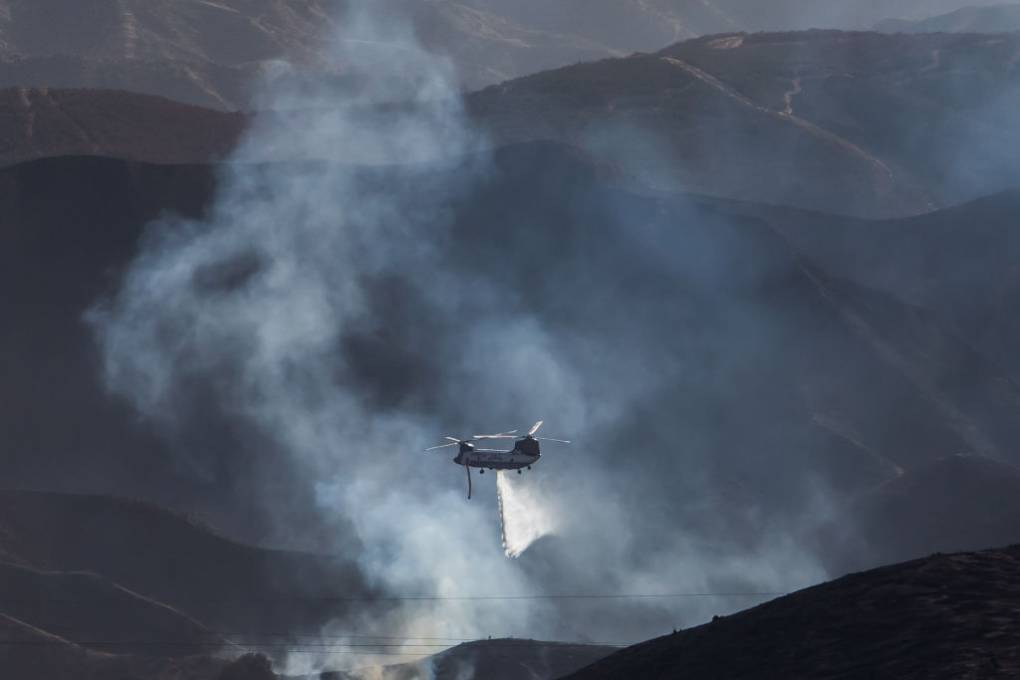
"caption": "A firefighting helicopter drops water over the Hughes Fire in Castaic, a northwestern neighborhood of Los Angeles County, on Jan. 23, 2025. ",
"credit": "Apu Gomes/AFP via Getty Images",
"altTag": null,
"description": null,
"imgSizes": {
"medium": {
"file": "https://cdn.kqed.org/wp-content/uploads/sites/10/2025/01/GettyImages-2194939588-800x534.jpg",
"width": 800,
"height": 534,
"mimeType": "image/jpeg"
},
"large": {
"file": "https://cdn.kqed.org/wp-content/uploads/sites/10/2025/01/GettyImages-2194939588-1020x680.jpg",
"width": 1020,
"height": 680,
"mimeType": "image/jpeg"
},
"thumbnail": {
"file": "https://cdn.kqed.org/wp-content/uploads/sites/10/2025/01/GettyImages-2194939588-160x107.jpg",
"width": 160,
"height": 107,
"mimeType": "image/jpeg"
},
"post-thumbnail": {
"file": "https://cdn.kqed.org/wp-content/uploads/sites/10/2025/01/GettyImages-2194939588-672x372.jpg",
"width": 672,
"height": 372,
"mimeType": "image/jpeg"
},
"twentyfourteen-full-width": {
"file": "https://cdn.kqed.org/wp-content/uploads/sites/10/2025/01/GettyImages-2194939588-1024x576.jpg",
"width": 1024,
"height": 576,
"mimeType": "image/jpeg"
},
"kqedFullSize": {
"file": "https://cdn.kqed.org/wp-content/uploads/sites/10/2025/01/GettyImages-2194939588.jpg",
"width": 1024,
"height": 683
}
},
"isLoading": false,
"fetchFailed": false
},
"news_12024152": {
"type": "attachments",
"id": "news_12024152",
"meta": {
"index": "attachments_1716263798",
"site": "news",
"id": "12024152",
"found": true
},
"title": "102425-Newsom-Trump-LA-Fires-AP-CM-03 copy",
"publishDate": 1737836365,
"status": "inherit",
"parent": 12024151,
"modified": 1739130531,
"caption": "President Donald Trump talks with Gov. Gavin Newsom after arriving on Air Force One at Los Angeles International Airport in Los Angeles, on Jan. 24, 2025. \n",
"credit": "Mark Schiefelbein/AP Photo",
"altTag": "Two men wearing jackets and the man on the right wearing a black hat stand near each other talking.",
"description": null,
"imgSizes": {
"medium": {
"file": "https://cdn.kqed.org/wp-content/uploads/sites/10/2025/01/102425-Newsom-Trump-LA-Fires-AP-CM-03-copy-800x534.jpg",
"width": 800,
"height": 534,
"mimeType": "image/jpeg"
},
"large": {
"file": "https://cdn.kqed.org/wp-content/uploads/sites/10/2025/01/102425-Newsom-Trump-LA-Fires-AP-CM-03-copy-1020x681.jpg",
"width": 1020,
"height": 681,
"mimeType": "image/jpeg"
},
"thumbnail": {
"file": "https://cdn.kqed.org/wp-content/uploads/sites/10/2025/01/102425-Newsom-Trump-LA-Fires-AP-CM-03-copy-160x107.jpg",
"width": 160,
"height": 107,
"mimeType": "image/jpeg"
},
"1536x1536": {
"file": "https://cdn.kqed.org/wp-content/uploads/sites/10/2025/01/102425-Newsom-Trump-LA-Fires-AP-CM-03-copy-1536x1026.jpg",
"width": 1536,
"height": 1026,
"mimeType": "image/jpeg"
},
"post-thumbnail": {
"file": "https://cdn.kqed.org/wp-content/uploads/sites/10/2025/01/102425-Newsom-Trump-LA-Fires-AP-CM-03-copy-672x372.jpg",
"width": 672,
"height": 372,
"mimeType": "image/jpeg"
},
"twentyfourteen-full-width": {
"file": "https://cdn.kqed.org/wp-content/uploads/sites/10/2025/01/102425-Newsom-Trump-LA-Fires-AP-CM-03-copy-1038x576.jpg",
"width": 1038,
"height": 576,
"mimeType": "image/jpeg"
},
"full-width": {
"file": "https://cdn.kqed.org/wp-content/uploads/sites/10/2025/01/102425-Newsom-Trump-LA-Fires-AP-CM-03-copy-1920x1283.jpg",
"width": 1920,
"height": 1283,
"mimeType": "image/jpeg"
},
"kqedFullSize": {
"file": "https://cdn.kqed.org/wp-content/uploads/sites/10/2025/01/102425-Newsom-Trump-LA-Fires-AP-CM-03-copy.jpg",
"width": 2000,
"height": 1336
}
},
"isLoading": false,
"fetchFailed": false
},
"news_12023730": {
"type": "attachments",
"id": "news_12023730",
"meta": {
"index": "attachments_1716263798",
"site": "news",
"id": "12023730",
"found": true
},
"title": "US-WEATHER-FIRE",
"publishDate": 1737657154,
"status": "inherit",
"parent": 12023695,
"modified": 1737659770,
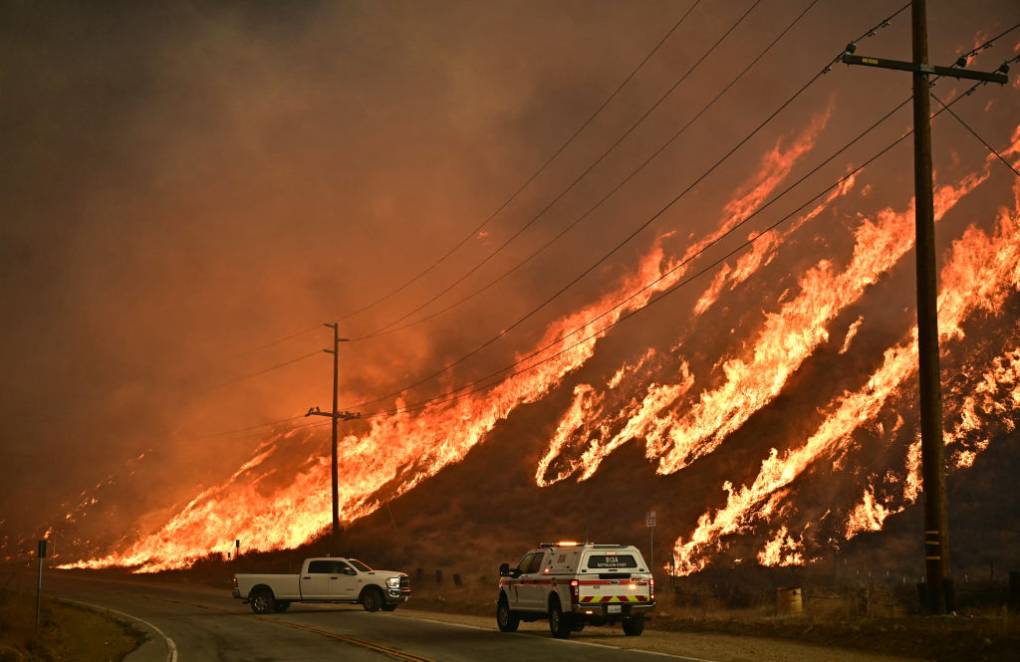
"caption": "Flames from the Hughes Fire race up a hillside in Castaic, a northwestern neighborhood of Los Angeles, on Jan. 22, 2025. The blaze exploded on Wednesday morning and had already charred 10,000 acres by the end of the day, forcing thousands to evacuate.",
"credit": "Frederic J. Brown/AFP via Getty Images",
"altTag": "A hillside on fire, with fire trucks on the road.",
"description": null,
"imgSizes": {
"medium": {
"file": "https://cdn.kqed.org/wp-content/uploads/sites/10/2025/01/GettyImages-2194732613-800x520.jpg",
"width": 800,
"height": 520,
"mimeType": "image/jpeg"
},
"large": {
"file": "https://cdn.kqed.org/wp-content/uploads/sites/10/2025/01/GettyImages-2194732613-1020x662.jpg",
"width": 1020,
"height": 662,
"mimeType": "image/jpeg"
},
"thumbnail": {
"file": "https://cdn.kqed.org/wp-content/uploads/sites/10/2025/01/GettyImages-2194732613-160x104.jpg",
"width": 160,
"height": 104,
"mimeType": "image/jpeg"
},
"post-thumbnail": {
"file": "https://cdn.kqed.org/wp-content/uploads/sites/10/2025/01/GettyImages-2194732613-672x372.jpg",
"width": 672,
"height": 372,
"mimeType": "image/jpeg"
},
"twentyfourteen-full-width": {
"file": "https://cdn.kqed.org/wp-content/uploads/sites/10/2025/01/GettyImages-2194732613-1024x576.jpg",
"width": 1024,
"height": 576,
"mimeType": "image/jpeg"
},
"kqedFullSize": {
"file": "https://cdn.kqed.org/wp-content/uploads/sites/10/2025/01/GettyImages-2194732613.jpg",
"width": 1024,
"height": 665
}
},
"isLoading": false,
"fetchFailed": false
},
"news_12022720": {
"type": "attachments",
"id": "news_12022720",
"meta": {
"index": "attachments_1716263798",
"site": "news",
"id": "12022720",
"found": true
},
"title": "ReligiousCenterFire1",
"publishDate": 1737135043,
"status": "inherit",
"parent": 0,
"modified": 1737140373,
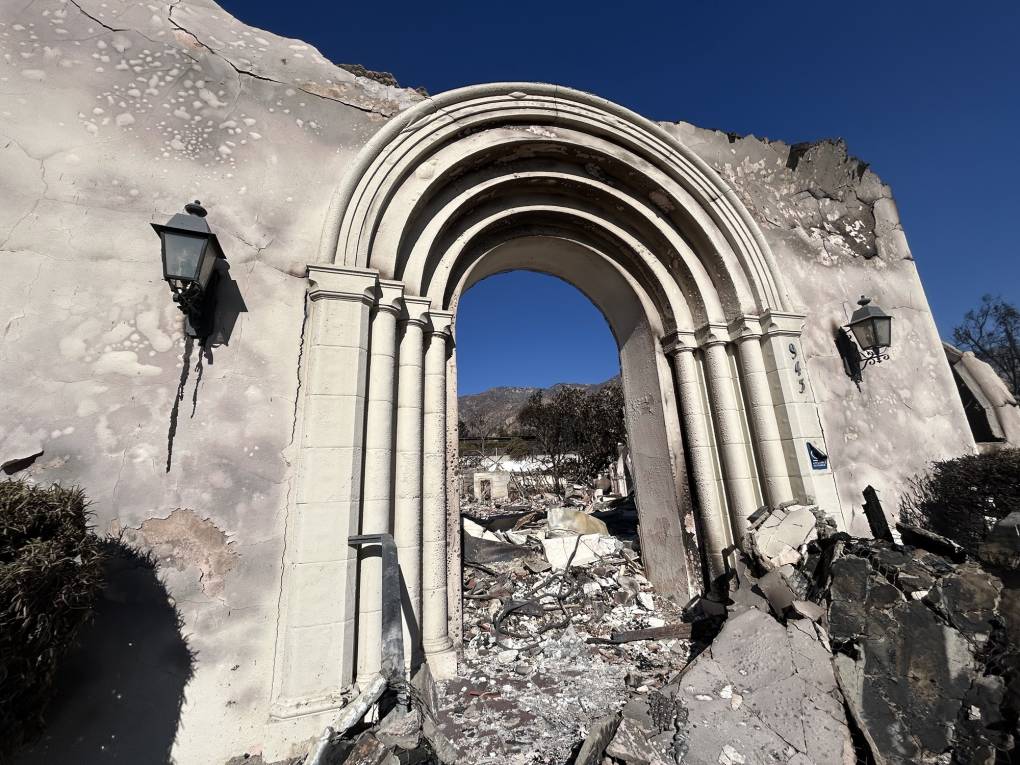
"caption": "The Altadena Community Church sits completely destroyed by the Eaton Fire on Jan. 14, 2025, leaving only the front wall standing.",
"credit": "Ezra David Romero/KQED",
"altTag": "A front archway to a tan church stands amongst the charred rubble of a burned church.",
"description": null,
"imgSizes": {
"medium": {
"file": "https://cdn.kqed.org/wp-content/uploads/sites/10/2025/01/ReligiousCenterFire1-800x600.jpg",
"width": 800,
"height": 600,
"mimeType": "image/jpeg"
},
"large": {
"file": "https://cdn.kqed.org/wp-content/uploads/sites/10/2025/01/ReligiousCenterFire1-1020x765.jpg",
"width": 1020,
"height": 765,
"mimeType": "image/jpeg"
},
"thumbnail": {
"file": "https://cdn.kqed.org/wp-content/uploads/sites/10/2025/01/ReligiousCenterFire1-160x120.jpg",
"width": 160,
"height": 120,
"mimeType": "image/jpeg"
},
"1536x1536": {
"file": "https://cdn.kqed.org/wp-content/uploads/sites/10/2025/01/ReligiousCenterFire1-1536x1152.jpg",
"width": 1536,
"height": 1152,
"mimeType": "image/jpeg"
},
"post-thumbnail": {
"file": "https://cdn.kqed.org/wp-content/uploads/sites/10/2025/01/ReligiousCenterFire1-672x372.jpg",
"width": 672,
"height": 372,
"mimeType": "image/jpeg"
},
"twentyfourteen-full-width": {
"file": "https://cdn.kqed.org/wp-content/uploads/sites/10/2025/01/ReligiousCenterFire1-1038x576.jpg",
"width": 1038,
"height": 576,
"mimeType": "image/jpeg"
},
"full-width": {
"file": "https://cdn.kqed.org/wp-content/uploads/sites/10/2025/01/ReligiousCenterFire1-1920x1440.jpg",
"width": 1920,
"height": 1440,
"mimeType": "image/jpeg"
},
"kqedFullSize": {
"file": "https://cdn.kqed.org/wp-content/uploads/sites/10/2025/01/ReligiousCenterFire1.jpg",
"width": 2000,
"height": 1500
}
},
"isLoading": false,
"fetchFailed": false
},
"news_12021323": {
"type": "attachments",
"id": "news_12021323",
"meta": {
"index": "attachments_1716263798",
"site": "news",
"id": "12021323",
"found": true
},
"title": "240109-CAWindStorm-056",
"publishDate": 1736467983,
"status": "inherit",
"parent": 0,
"modified": 1737076475,
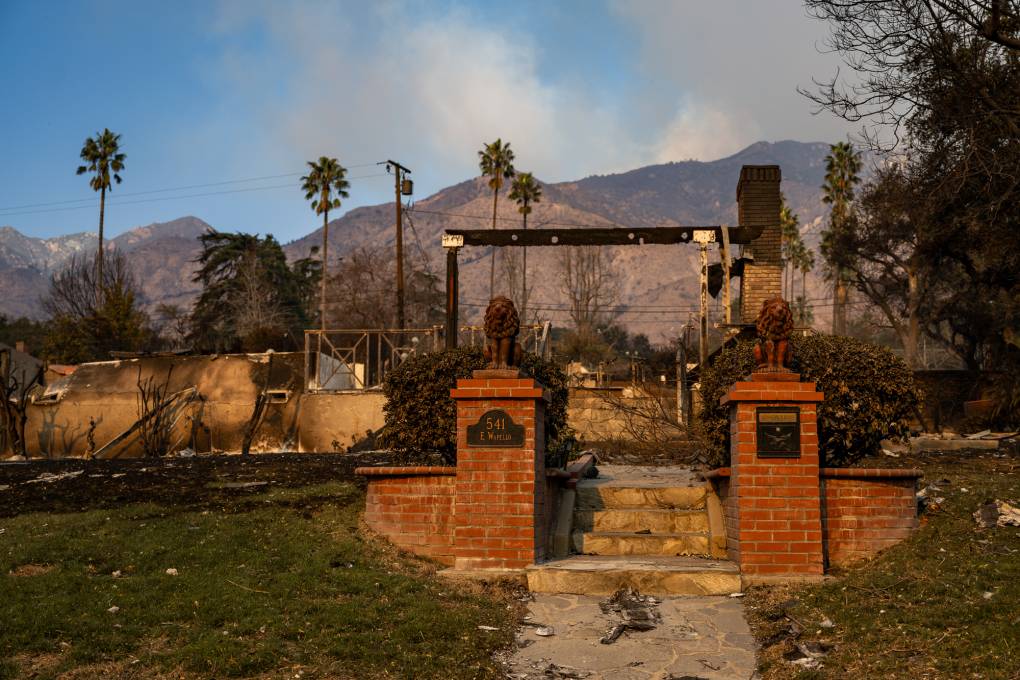
"caption": "The remains of a house in Altadena, California, after the Eaton Fire swept through the area northeast of Los Angeles on Thursday, Jan. 9, 2025.",
"credit": "Beth LaBerge/KQED",
"altTag": null,
"description": null,
"imgSizes": {
"medium": {
"file": "https://cdn.kqed.org/wp-content/uploads/sites/10/2025/01/240109-CAWindStorm-056-800x533.jpg",
"width": 800,
"height": 533,
"mimeType": "image/jpeg"
},
"large": {
"file": "https://cdn.kqed.org/wp-content/uploads/sites/10/2025/01/240109-CAWindStorm-056-1020x680.jpg",
"width": 1020,
"height": 680,
"mimeType": "image/jpeg"
},
"thumbnail": {
"file": "https://cdn.kqed.org/wp-content/uploads/sites/10/2025/01/240109-CAWindStorm-056-160x107.jpg",
"width": 160,
"height": 107,
"mimeType": "image/jpeg"
},
"1536x1536": {
"file": "https://cdn.kqed.org/wp-content/uploads/sites/10/2025/01/240109-CAWindStorm-056-1536x1024.jpg",
"width": 1536,
"height": 1024,
"mimeType": "image/jpeg"
},
"post-thumbnail": {
"file": "https://cdn.kqed.org/wp-content/uploads/sites/10/2025/01/240109-CAWindStorm-056-672x372.jpg",
"width": 672,
"height": 372,
"mimeType": "image/jpeg"
},
"twentyfourteen-full-width": {
"file": "https://cdn.kqed.org/wp-content/uploads/sites/10/2025/01/240109-CAWindStorm-056-1038x576.jpg",
"width": 1038,
"height": 576,
"mimeType": "image/jpeg"
},
"full-width": {
"file": "https://cdn.kqed.org/wp-content/uploads/sites/10/2025/01/240109-CAWindStorm-056-1920x1280.jpg",
"width": 1920,
"height": 1280,
"mimeType": "image/jpeg"
},
"kqedFullSize": {
"file": "https://cdn.kqed.org/wp-content/uploads/sites/10/2025/01/240109-CAWindStorm-056.jpg",
"width": 2000,
"height": 1333
}
},
"isLoading": false,
"fetchFailed": false
},
"news_12022694": {
"type": "attachments",
"id": "news_12022694",
"meta": {
"index": "attachments_1716263798",
"site": "news",
"id": "12022694",
"found": true
},
"title": "Gg4EOtTaMAA2rIR",
"publishDate": 1737077351,
"status": "inherit",
"parent": 12022659,
"modified": 1737077861,
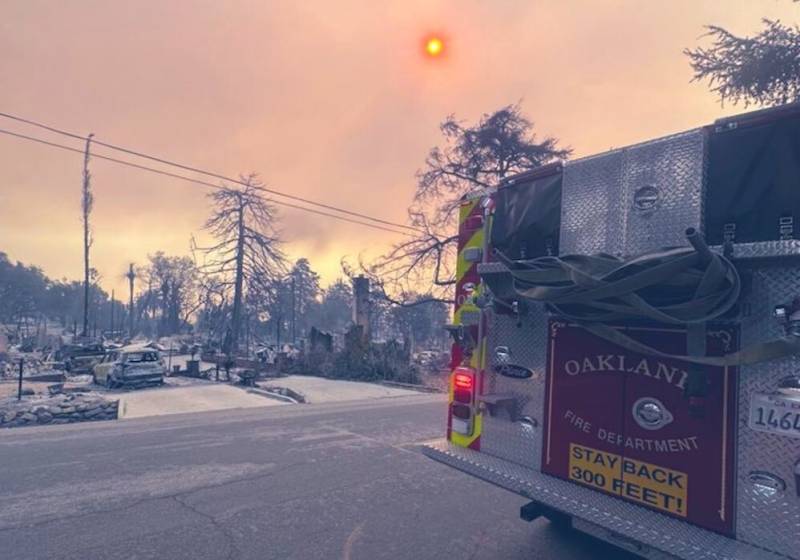
"caption": "An Oakland Fire Department fire truck is seen in Los Angeles to support the response to the ongoing wildfires on Thursday, Jan. 9, 2025.",
"credit": "Photo from Oakland Fire Department on X",
"altTag": null,
"description": null,
"imgSizes": {
"medium": {
"file": "https://cdn.kqed.org/wp-content/uploads/sites/10/2025/01/Gg4EOtTaMAA2rIR-800x560.jpeg",
"width": 800,
"height": 560,
"mimeType": "image/jpeg"
},
"thumbnail": {
"file": "https://cdn.kqed.org/wp-content/uploads/sites/10/2025/01/Gg4EOtTaMAA2rIR-160x112.jpeg",
"width": 160,
"height": 112,
"mimeType": "image/jpeg"
},
"post-thumbnail": {
"file": "https://cdn.kqed.org/wp-content/uploads/sites/10/2025/01/Gg4EOtTaMAA2rIR-672x372.jpeg",
"width": 672,
"height": 372,
"mimeType": "image/jpeg"
},
"twentyfourteen-full-width": {
"file": "https://cdn.kqed.org/wp-content/uploads/sites/10/2025/01/Gg4EOtTaMAA2rIR-998x576.jpeg",
"width": 998,
"height": 576,
"mimeType": "image/jpeg"
},
"kqedFullSize": {
"file": "https://cdn.kqed.org/wp-content/uploads/sites/10/2025/01/Gg4EOtTaMAA2rIR.jpeg",
"width": 998,
"height": 698
}
},
"isLoading": false,
"fetchFailed": false
},
"news_12022599": {
"type": "attachments",
"id": "news_12022599",
"meta": {
"index": "attachments_1716263798",
"site": "news",
"id": "12022599",
"found": true
},
"title": "20250116_FireAnimalShelter-27_qed",
"publishDate": 1737056486,
"status": "inherit",
"parent": 0,
"modified": 1737057882,
"caption": "Sarah Leonard, intake coordinator at Muttville Senior Dog Rescue in San Francisco, plays with Lois on Thursday, Jan. 16, 2025. Lois is one of two pit bulls to arrive from Los Angeles following the fires who will now stay at Muttville.",
"credit": "Gina Castro/KQED",
"altTag": null,
"description": null,
"imgSizes": {
"medium": {
"file": "https://cdn.kqed.org/wp-content/uploads/sites/10/2025/01/20250116_FireAnimalShelter-27_qed-800x554.jpg",
"width": 800,
"height": 554,
"mimeType": "image/jpeg"
},
"large": {
"file": "https://cdn.kqed.org/wp-content/uploads/sites/10/2025/01/20250116_FireAnimalShelter-27_qed-1020x706.jpg",
"width": 1020,
"height": 706,
"mimeType": "image/jpeg"
},
"thumbnail": {
"file": "https://cdn.kqed.org/wp-content/uploads/sites/10/2025/01/20250116_FireAnimalShelter-27_qed-160x111.jpg",
"width": 160,
"height": 111,
"mimeType": "image/jpeg"
},
"1536x1536": {
"file": "https://cdn.kqed.org/wp-content/uploads/sites/10/2025/01/20250116_FireAnimalShelter-27_qed-1536x1064.jpg",
"width": 1536,
"height": 1064,
"mimeType": "image/jpeg"
},
"post-thumbnail": {
"file": "https://cdn.kqed.org/wp-content/uploads/sites/10/2025/01/20250116_FireAnimalShelter-27_qed-672x372.jpg",
"width": 672,
"height": 372,
"mimeType": "image/jpeg"
},
"twentyfourteen-full-width": {
"file": "https://cdn.kqed.org/wp-content/uploads/sites/10/2025/01/20250116_FireAnimalShelter-27_qed-1038x576.jpg",
"width": 1038,
"height": 576,
"mimeType": "image/jpeg"
},
"full-width": {
"file": "https://cdn.kqed.org/wp-content/uploads/sites/10/2025/01/20250116_FireAnimalShelter-27_qed-1920x1330.jpg",
"width": 1920,
"height": 1330,
"mimeType": "image/jpeg"
},
"kqedFullSize": {
"file": "https://cdn.kqed.org/wp-content/uploads/sites/10/2025/01/20250116_FireAnimalShelter-27_qed.jpg",
"width": 1925,
"height": 1333
}
},
"isLoading": false,
"fetchFailed": false
},
"news_12022545": {
"type": "attachments",
"id": "news_12022545",
"meta": {
"index": "attachments_1716263798",
"site": "news",
"id": "12022545",
"found": true
},
"title": "Damage after Palisade Fire in Pacific Palisades, California",
"publishDate": 1737051035,
"status": "inherit",
"parent": 12022540,
"modified": 1737055758,
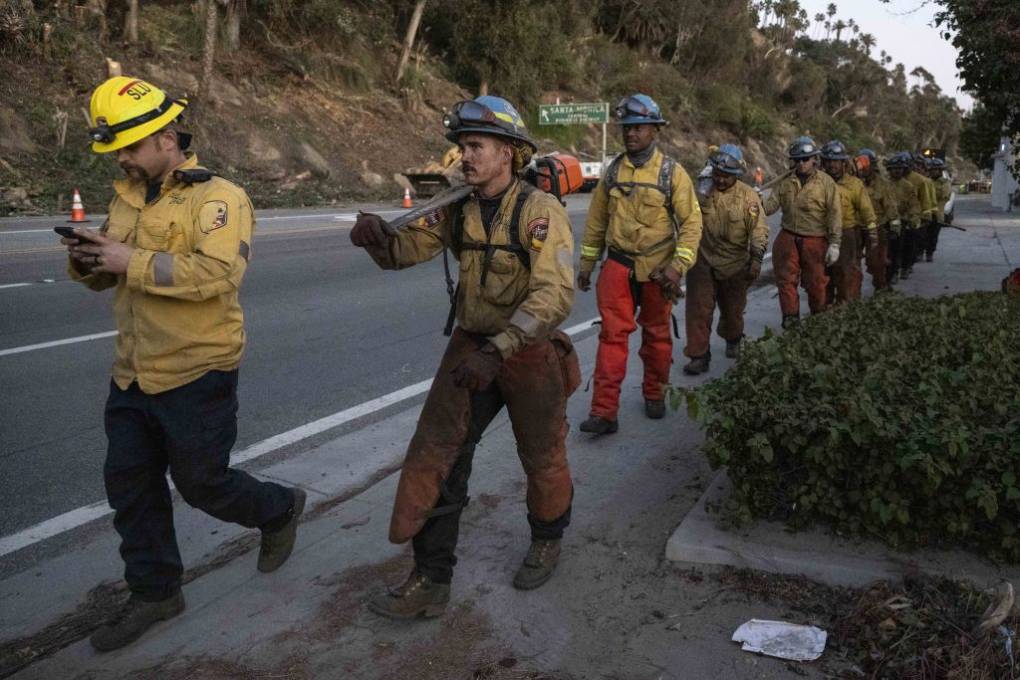
"caption": "Cal Firefighters arrive to remove brush from the hillside of Santa Monica to prevent a potential fire threat again after the Palisade Fire caused destruction in Pacific Palisades, Los Angeles, on Jan. 15, 2025. ",
"credit": "Jon Putman/Anadolu via Getty Images",
"altTag": null,
"description": null,
"imgSizes": {
"medium": {
"file": "https://cdn.kqed.org/wp-content/uploads/sites/10/2025/01/GettyImages-2193560363-800x534.jpg",
"width": 800,
"height": 534,
"mimeType": "image/jpeg"
},
"large": {
"file": "https://cdn.kqed.org/wp-content/uploads/sites/10/2025/01/GettyImages-2193560363-1020x680.jpg",
"width": 1020,
"height": 680,
"mimeType": "image/jpeg"
},
"thumbnail": {
"file": "https://cdn.kqed.org/wp-content/uploads/sites/10/2025/01/GettyImages-2193560363-160x107.jpg",
"width": 160,
"height": 107,
"mimeType": "image/jpeg"
},
"post-thumbnail": {
"file": "https://cdn.kqed.org/wp-content/uploads/sites/10/2025/01/GettyImages-2193560363-672x372.jpg",
"width": 672,
"height": 372,
"mimeType": "image/jpeg"
},
"twentyfourteen-full-width": {
"file": "https://cdn.kqed.org/wp-content/uploads/sites/10/2025/01/GettyImages-2193560363-1024x576.jpg",
"width": 1024,
"height": 576,
"mimeType": "image/jpeg"
},
"kqedFullSize": {
"file": "https://cdn.kqed.org/wp-content/uploads/sites/10/2025/01/GettyImages-2193560363.jpg",
"width": 1024,
"height": 683
}
},
"isLoading": false,
"fetchFailed": false
},
"news_12022498": {
"type": "attachments",
"id": "news_12022498",
"meta": {
"index": "attachments_1716263798",
"site": "news",
"id": "12022498",
"found": true
},
"title": "California Wildfire-Victims",
"publishDate": 1736989053,
"status": "inherit",
"parent": 12022496,
"modified": 1736989093,
"caption": "Dalyce Kelley holds up a picture of her grandmother, 95-year-old Dalyce Curry, on Tuesday, Jan. 14, 2025, days after Curry died in the California wildfires. ",
"credit": "Eugene Garcia/AP Photo",
"altTag": null,
"description": null,
"imgSizes": {
"medium": {
"file": "https://cdn.kqed.org/wp-content/uploads/sites/10/2025/01/AP25015622620938-800x600.jpg",
"width": 800,
"height": 600,
"mimeType": "image/jpeg"
},
"large": {
"file": "https://cdn.kqed.org/wp-content/uploads/sites/10/2025/01/AP25015622620938-1020x765.jpg",
"width": 1020,
"height": 765,
"mimeType": "image/jpeg"
},
"thumbnail": {
"file": "https://cdn.kqed.org/wp-content/uploads/sites/10/2025/01/AP25015622620938-160x120.jpg",
"width": 160,
"height": 120,
"mimeType": "image/jpeg"
},
"1536x1536": {
"file": "https://cdn.kqed.org/wp-content/uploads/sites/10/2025/01/AP25015622620938-1536x1152.jpg",
"width": 1536,
"height": 1152,
"mimeType": "image/jpeg"
},
"2048x2048": {
"file": "https://cdn.kqed.org/wp-content/uploads/sites/10/2025/01/AP25015622620938-2048x1536.jpg",
"width": 2048,
"height": 1536,
"mimeType": "image/jpeg"
},
"post-thumbnail": {
"file": "https://cdn.kqed.org/wp-content/uploads/sites/10/2025/01/AP25015622620938-672x372.jpg",
"width": 672,
"height": 372,
"mimeType": "image/jpeg"
},
"twentyfourteen-full-width": {
"file": "https://cdn.kqed.org/wp-content/uploads/sites/10/2025/01/AP25015622620938-1038x576.jpg",
"width": 1038,
"height": 576,
"mimeType": "image/jpeg"
},
"full-width": {
"file": "https://cdn.kqed.org/wp-content/uploads/sites/10/2025/01/AP25015622620938-1920x1440.jpg",
"width": 1920,
"height": 1440,
"mimeType": "image/jpeg"
},
"kqedFullSize": {
"file": "https://cdn.kqed.org/wp-content/uploads/sites/10/2025/01/AP25015622620938-scaled.jpg",
"width": 2560,
"height": 1920
}
},
"isLoading": false,
"fetchFailed": false
},
"news_12021500": {
"type": "attachments",
"id": "news_12021500",
"meta": {
"index": "attachments_1716263798",
"site": "news",
"id": "12021500",
"found": true
},
"title": "240110-CAWindStorm-004",
"publishDate": 1736540122,
"status": "inherit",
"parent": 0,
"modified": 1736817814,
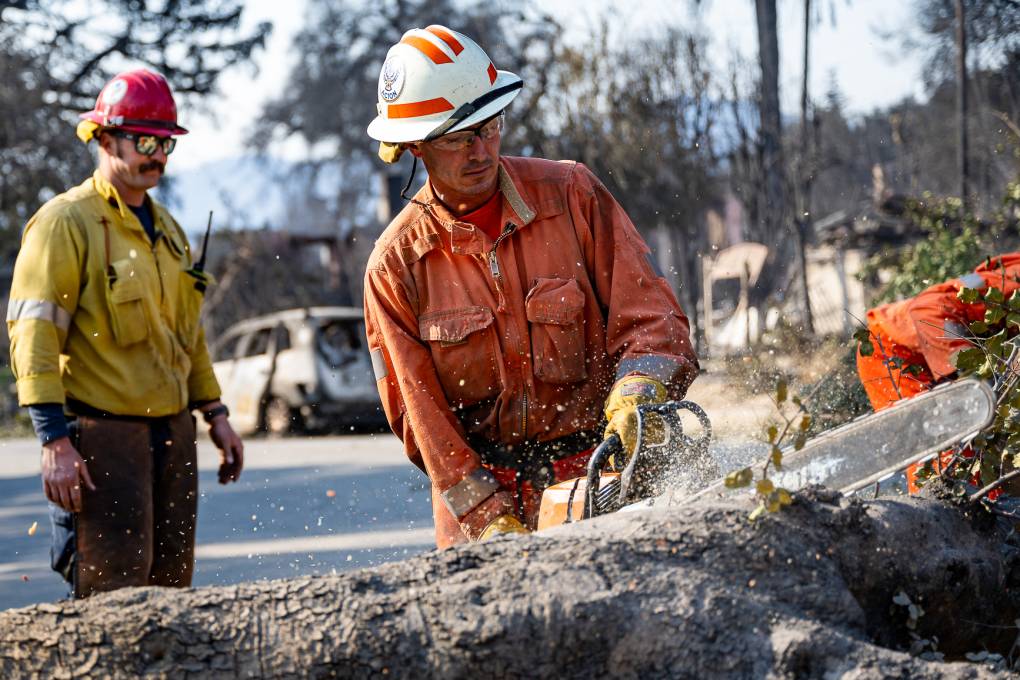
"caption": "Foreman Mihlhauser (left) works with Acton Conservation Camp Crew 11-1, an incarcerated fire team, to fell burned trees in Altadena, California, on Jan. 10, 2025, after the Eaton Fire destroyed much of the area. The Los Angeles County Fire Department and the California Department of Corrections and Rehabilitation operate the camp to train incarcerated hand crews to fight fires around Los Angeles and California.",
"credit": "Beth LaBerge/KQED",
"altTag": null,
"description": null,
"imgSizes": {
"medium": {
"file": "https://cdn.kqed.org/wp-content/uploads/sites/10/2025/01/240110-CAWindStorm-004-800x533.jpg",
"width": 800,
"height": 533,
"mimeType": "image/jpeg"
},
"large": {
"file": "https://cdn.kqed.org/wp-content/uploads/sites/10/2025/01/240110-CAWindStorm-004-1020x680.jpg",
"width": 1020,
"height": 680,
"mimeType": "image/jpeg"
},
"thumbnail": {
"file": "https://cdn.kqed.org/wp-content/uploads/sites/10/2025/01/240110-CAWindStorm-004-160x107.jpg",
"width": 160,
"height": 107,
"mimeType": "image/jpeg"
},
"1536x1536": {
"file": "https://cdn.kqed.org/wp-content/uploads/sites/10/2025/01/240110-CAWindStorm-004-1536x1024.jpg",
"width": 1536,
"height": 1024,
"mimeType": "image/jpeg"
},
"post-thumbnail": {
"file": "https://cdn.kqed.org/wp-content/uploads/sites/10/2025/01/240110-CAWindStorm-004-672x372.jpg",
"width": 672,
"height": 372,
"mimeType": "image/jpeg"
},
"twentyfourteen-full-width": {
"file": "https://cdn.kqed.org/wp-content/uploads/sites/10/2025/01/240110-CAWindStorm-004-1038x576.jpg",
"width": 1038,
"height": 576,
"mimeType": "image/jpeg"
},
"kqedFullSize": {
"file": "https://cdn.kqed.org/wp-content/uploads/sites/10/2025/01/240110-CAWindStorm-004.jpg",
"width": 1734,
"height": 1156
}
},
"isLoading": false,
"fetchFailed": false
},
"news_12022441": {
"type": "attachments",
"id": "news_12022441",
"meta": {
"index": "attachments_1716263798",
"site": "news",
"id": "12022441",
"found": true
},
"title": "011025_LA-Wildfires_JH_CM_14 copy",
"publishDate": 1736981756,
"status": "inherit",
"parent": 12022439,
"modified": 1736981781,
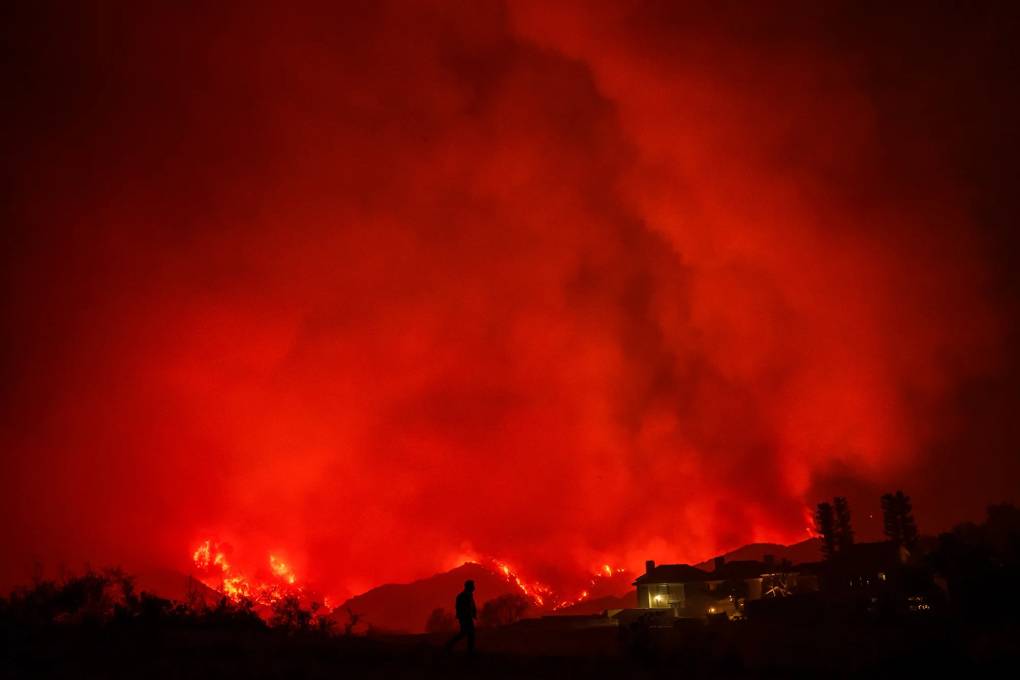
"caption": "The western hills of Mandeville Canyon burning as the Palisades Fire continues to spread in Los Angeles on Jan. 10, 2025.",
"credit": "Jules Hotz for CalMatters",
"altTag": null,
"description": null,
"imgSizes": {
"medium": {
"file": "https://cdn.kqed.org/wp-content/uploads/sites/10/2025/01/011025_LA-Wildfires_JH_CM_14-copy-800x533.jpg",
"width": 800,
"height": 533,
"mimeType": "image/jpeg"
},
"large": {
"file": "https://cdn.kqed.org/wp-content/uploads/sites/10/2025/01/011025_LA-Wildfires_JH_CM_14-copy-1020x680.jpg",
"width": 1020,
"height": 680,
"mimeType": "image/jpeg"
},
"thumbnail": {
"file": "https://cdn.kqed.org/wp-content/uploads/sites/10/2025/01/011025_LA-Wildfires_JH_CM_14-copy-160x107.jpg",
"width": 160,
"height": 107,
"mimeType": "image/jpeg"
},
"1536x1536": {
"file": "https://cdn.kqed.org/wp-content/uploads/sites/10/2025/01/011025_LA-Wildfires_JH_CM_14-copy-1536x1024.jpg",
"width": 1536,
"height": 1024,
"mimeType": "image/jpeg"
},
"post-thumbnail": {
"file": "https://cdn.kqed.org/wp-content/uploads/sites/10/2025/01/011025_LA-Wildfires_JH_CM_14-copy-672x372.jpg",
"width": 672,
"height": 372,
"mimeType": "image/jpeg"
},
"twentyfourteen-full-width": {
"file": "https://cdn.kqed.org/wp-content/uploads/sites/10/2025/01/011025_LA-Wildfires_JH_CM_14-copy-1038x576.jpg",
"width": 1038,
"height": 576,
"mimeType": "image/jpeg"
},
"full-width": {
"file": "https://cdn.kqed.org/wp-content/uploads/sites/10/2025/01/011025_LA-Wildfires_JH_CM_14-copy-1920x1280.jpg",
"width": 1920,
"height": 1280,
"mimeType": "image/jpeg"
},
"kqedFullSize": {
"file": "https://cdn.kqed.org/wp-content/uploads/sites/10/2025/01/011025_LA-Wildfires_JH_CM_14-copy.jpg",
"width": 2000,
"height": 1333
}
},
"isLoading": false,
"fetchFailed": false
},
"news_12022088": {
"type": "attachments",
"id": "news_12022088",
"meta": {
"index": "attachments_1716263798",
"site": "news",
"id": "12022088",
"found": true
},
"title": "npr.brightspotcdn copy",
"publishDate": 1736885383,
"status": "inherit",
"parent": 12022087,
"modified": 1736885428,
"caption": "NPR has tracked the prices of dozens of items at one Walmart in Georgia over multiple years.",
"credit": "Alina Selyukh/NPR",
"altTag": "Items of shopping in a grocery store aisle, sitting in a shopping cart.",
"description": null,
"imgSizes": {
"medium": {
"file": "https://cdn.kqed.org/wp-content/uploads/sites/10/2025/01/npr.brightspotcdn-copy-38-800x600.jpg",
"width": 800,
"height": 600,
"mimeType": "image/jpeg"
},
"large": {
"file": "https://cdn.kqed.org/wp-content/uploads/sites/10/2025/01/npr.brightspotcdn-copy-38-1020x765.jpg",
"width": 1020,
"height": 765,
"mimeType": "image/jpeg"
},
"thumbnail": {
"file": "https://cdn.kqed.org/wp-content/uploads/sites/10/2025/01/npr.brightspotcdn-copy-38-160x120.jpg",
"width": 160,
"height": 120,
"mimeType": "image/jpeg"
},
"post-thumbnail": {
"file": "https://cdn.kqed.org/wp-content/uploads/sites/10/2025/01/npr.brightspotcdn-copy-38-672x372.jpg",
"width": 672,
"height": 372,
"mimeType": "image/jpeg"
},
"twentyfourteen-full-width": {
"file": "https://cdn.kqed.org/wp-content/uploads/sites/10/2025/01/npr.brightspotcdn-copy-38-1038x576.jpg",
"width": 1038,
"height": 576,
"mimeType": "image/jpeg"
},
"kqedFullSize": {
"file": "https://cdn.kqed.org/wp-content/uploads/sites/10/2025/01/npr.brightspotcdn-copy-38.jpg",
"width": 1100,
"height": 825
}
},
"isLoading": false,
"fetchFailed": false
}
},
"audioPlayerReducer": {
"postId": "stream_live",
"isPaused": true,
"isPlaying": false,
"pfsActive": false,
"pledgeModalIsOpen": true,
"playerDrawerIsOpen": false,
"liveAudioPlayStartedAt": 0,
"liveAudioPlayContext": ""
},
"authorsReducer": {
"byline_news_12024163": {
"type": "authors",
"id": "byline_news_12024163",
"meta": {
"override": true
},
"slug": "byline_news_12024163",
"name": "The Associated Press",
"isLoading": false
},
"byline_news_12024151": {
"type": "authors",
"id": "byline_news_12024151",
"meta": {
"override": true
},
"slug": "byline_news_12024151",
"name": "\u003ca>Alexei Koseff\u003c/a>, CalMatters",
"isLoading": false
},
"byline_news_12023695": {
"type": "authors",
"id": "byline_news_12023695",
"meta": {
"override": true
},
"slug": "byline_news_12023695",
"name": "Christopher Weber and Marcio Jose Sanchez, Associated Press",
"isLoading": false
},
"byline_news_12022540": {
"type": "authors",
"id": "byline_news_12022540",
"meta": {
"override": true
},
"slug": "byline_news_12022540",
"name": "Jaimie Ding, Christopher Weber and Julie Watson, Associated Press",
"isLoading": false
},
"byline_news_12022496": {
"type": "authors",
"id": "byline_news_12022496",
"meta": {
"override": true
},
"slug": "byline_news_12022496",
"name": "Mark Thiessen, Associated Press",
"isLoading": false
},
"byline_news_12022439": {
"type": "authors",
"id": "byline_news_12022439",
"meta": {
"override": true
},
"slug": "byline_news_12022439",
"name": "\u003ca href=\"https://calmatters.org/author/marisa-kendall/\">Marisa Kendall\u003c/a>, CalMatters",
"isLoading": false
},
"byline_news_12022087": {
"type": "authors",
"id": "byline_news_12022087",
"meta": {
"override": true
},
"slug": "byline_news_12022087",
"name": "\u003ca href=\"https://www.npr.org/people/447244385/alina-selyukh\">Alina Selyukh\u003c/a> and \u003ca href=\"https://www.npr.org/people/g-s1-33335/juweek-adolphe\">Juweek Adolphe\u003c/a>, NPR",
"isLoading": false
},
"eromero": {
"type": "authors",
"id": "11746",
"meta": {
"index": "authors_1716337520",
"id": "11746",
"found": true
},
"name": "Ezra David Romero",
"firstName": "Ezra David",
"lastName": "Romero",
"slug": "eromero",
"email": "eromero@kqed.org",
"display_author_email": true,
"staff_mastheads": [
"news",
"science"
],
"title": "Climate Reporter",
"bio": "Ezra David Romero is a climate reporter for KQED News. He covers the absence and excess of water in the Bay Area — think sea level rise, flooding and drought. For nearly a decade he’s covered how warming temperatures are altering the lives of Californians. He’s reported on farmers worried their pistachio trees aren’t getting enough sleep, families desperate for water, scientists studying dying giant sequoias, and alongside firefighters containing wildfires. His work has appeared on local stations across California and nationally on public radio shows like Morning Edition, Here and Now, All Things Considered and Science Friday. ",
"avatar": "https://secure.gravatar.com/avatar/c76404d287c10ed40224227551ac36e24352c7306f106632caf6fead76f8801f?s=600&d=blank&r=g",
"twitter": "ezraromero",
"bluesky": null,
"facebook": null,
"instagram": null,
"linkedin": null,
"sites": [
{
"site": "arts",
"roles": [
"editor"
]
},
{
"site": "news",
"roles": [
"editor"
]
},
{
"site": "science",
"roles": [
"editor"
]
},
{
"site": "liveblog",
"roles": [
"author"
]
}
],
"headData": {
"title": "Ezra David Romero | KQED",
"description": "Climate Reporter",
"ogImgSrc": "https://secure.gravatar.com/avatar/c76404d287c10ed40224227551ac36e24352c7306f106632caf6fead76f8801f?s=600&d=blank&r=g",
"twImgSrc": "https://secure.gravatar.com/avatar/c76404d287c10ed40224227551ac36e24352c7306f106632caf6fead76f8801f?s=600&d=blank&r=g"
},
"isLoading": false,
"link": "/author/eromero"
},
"kmonahan": {
"type": "authors",
"id": "11842",
"meta": {
"index": "authors_1716337520",
"id": "11842",
"found": true
},
"name": "Katherine Monahan",
"firstName": "Katherine",
"lastName": "Monahan",
"slug": "kmonahan",
"email": "kmonahan@kqed.org",
"display_author_email": true,
"staff_mastheads": [],
"title": "Reporter / Sound Engineer",
"bio": "I cover state and local news. I’m also a sound engineer at the station, mixing stories and running live broadcasts. I link to source materials so that readers can draw their own conclusions, and seek comment from a range of perspectives, including from people directly affected by events. Awards received include from the Society of Professional Journalists, Northern California chapter and the Alaska Press Club. I speak multiple languages and have reported and engineered in the Bay Area, Alaska, West Africa and Latin America.",
"avatar": "https://secure.gravatar.com/avatar/ff257b3a5da88893781a3d3266904b2d2f91c7f0e1bbf728f61f5fb81b74a669?s=600&d=blank&r=g",
"twitter": null,
"bluesky": null,
"facebook": null,
"instagram": null,
"linkedin": null,
"sites": [
{
"site": "news",
"roles": [
"editor"
]
},
{
"site": "science",
"roles": [
"contributor"
]
}
],
"headData": {
"title": "Katherine Monahan | KQED",
"description": "Reporter / Sound Engineer",
"ogImgSrc": "https://secure.gravatar.com/avatar/ff257b3a5da88893781a3d3266904b2d2f91c7f0e1bbf728f61f5fb81b74a669?s=600&d=blank&r=g",
"twImgSrc": "https://secure.gravatar.com/avatar/ff257b3a5da88893781a3d3266904b2d2f91c7f0e1bbf728f61f5fb81b74a669?s=600&d=blank&r=g"
},
"isLoading": false,
"link": "/author/kmonahan"
},
"kdebenedetti": {
"type": "authors",
"id": "11913",
"meta": {
"index": "authors_1716337520",
"id": "11913",
"found": true
},
"name": "Katie DeBenedetti",
"firstName": "Katie",
"lastName": "DeBenedetti",
"slug": "kdebenedetti",
"email": "kdebenedetti@kqed.org",
"display_author_email": false,
"staff_mastheads": [
"news",
"science"
],
"title": "KQED Contributor",
"bio": "Katie DeBenedetti is a digital reporter covering daily news for the Express Desk. Prior to joining KQED as a culture reporting intern in January 2024, she covered education and city government for the Napa Valley Register.",
"avatar": "https://secure.gravatar.com/avatar/6e31073cb8f7e4214ab03f42771d0f45?s=600&d=blank&r=g",
"twitter": null,
"facebook": null,
"instagram": null,
"linkedin": null,
"sites": [
{
"site": "news",
"roles": [
"author"
]
},
{
"site": "science",
"roles": [
"author"
]
},
{
"site": "liveblog",
"roles": [
"author"
]
}
],
"headData": {
"title": "Katie DeBenedetti | KQED",
"description": "KQED Contributor",
"ogImgSrc": "https://secure.gravatar.com/avatar/6e31073cb8f7e4214ab03f42771d0f45?s=600&d=blank&r=g",
"twImgSrc": "https://secure.gravatar.com/avatar/6e31073cb8f7e4214ab03f42771d0f45?s=600&d=blank&r=g"
},
"isLoading": false,
"link": "/author/kdebenedetti"
},
"slim": {
"type": "authors",
"id": "11920",
"meta": {
"index": "authors_1716337520",
"id": "11920",
"found": true
},
"name": "Samantha Lim",
"firstName": "Samantha",
"lastName": "Lim",
"slug": "slim",
"email": "slim@KQED.org",
"display_author_email": false,
"staff_mastheads": [],
"title": "KQED Contributor",
"bio": null,
"avatar": "https://secure.gravatar.com/avatar/82e592e6c15fe1a04d385e8ad0fb0b4e?s=600&d=blank&r=g",
"twitter": null,
"facebook": null,
"instagram": null,
"linkedin": null,
"sites": [
{
"site": "news",
"roles": []
}
],
"headData": {
"title": "Samantha Lim | KQED",
"description": "KQED Contributor",
"ogImgSrc": "https://secure.gravatar.com/avatar/82e592e6c15fe1a04d385e8ad0fb0b4e?s=600&d=blank&r=g",
"twImgSrc": "https://secure.gravatar.com/avatar/82e592e6c15fe1a04d385e8ad0fb0b4e?s=600&d=blank&r=g"
},
"isLoading": false,
"link": "/author/slim"
},
"bkrans": {
"type": "authors",
"id": "11923",
"meta": {
"index": "authors_1716337520",
"id": "11923",
"found": true
},
"name": "Brian Krans",
"firstName": "Brian",
"lastName": "Krans",
"slug": "bkrans",
"email": "bkrans@kqed.org",
"display_author_email": false,
"staff_mastheads": [
"news"
],
"title": "KQED Contributing Reporter",
"bio": "Brian Krans is an award-winning local news and investigative reporter who has been proudly working as a general assignment reporter for KQED since August 2023. He lives in Richmond, where he also reports on air pollution for Richmondside. He is also a founding member of the Vallejo Sun.",
"avatar": "https://secure.gravatar.com/avatar/d1014d604089314a94807d2c4f2d3e06?s=600&d=blank&r=g",
"twitter": "citizenkrans",
"facebook": null,
"instagram": null,
"linkedin": null,
"sites": [
{
"site": "news",
"roles": [
"editor"
]
}
],
"headData": {
"title": "Brian Krans | KQED",
"description": "KQED Contributing Reporter",
"ogImgSrc": "https://secure.gravatar.com/avatar/d1014d604089314a94807d2c4f2d3e06?s=600&d=blank&r=g",
"twImgSrc": "https://secure.gravatar.com/avatar/d1014d604089314a94807d2c4f2d3e06?s=600&d=blank&r=g"
},
"isLoading": false,
"link": "/author/bkrans"
}
},
"pagesReducer": {
"news_tag_los-angeles": {
"type": "terms",
"id": "news_4",
"meta": {
"index": "terms_1716263798",
"site": "news",
"id": "4",
"score": 8.557587
},
"featImg": null,
"name": "los angeles",
"description": null,
"taxonomy": "tag",
"headData": {
"twImgId": null,
"twTitle": null,
"ogTitle": null,
"ogImgId": null,
"twDescription": null,
"description": null,
"title": "los angeles Archives | KQED News",
"ogDescription": null
},
"ttid": 4,
"slug": "los-angeles",
"isLoading": false,
"title": "los angeles",
"pageMeta": {
"site": "news",
"WpPageTemplate": "page-topic-editorial",
"currentPage": 7
},
"blocks": [
{
"blockName": "kqed/post-list",
"attrs": {
"layout": "cardArticle2",
"query": "posts/news?tag=los-angeles",
"seeMore": false,
"paginated": true,
"page": 7
}
},
{
"blockName": "kqed/ad"
}
]
}
},
"pfsSessionReducer": {},
"postsReducer": {
"stream_live": {
"type": "live",
"id": "stream_live",
"audioUrl": "https://streams.kqed.org/kqedradio",
"title": "Live Stream",
"excerpt": "Live Stream information currently unavailable.",
"link": "/radio",
"featImg": "",
"label": {
"name": "KQED Live",
"link": "/"
}
},
"stream_kqedNewscast": {
"type": "posts",
"id": "stream_kqedNewscast",
"audioUrl": "https://www.kqed.org/.stream/anon/radio/RDnews/newscast.mp3?_=1",
"title": "KQED Newscast",
"featImg": "",
"label": {
"name": "88.5 FM",
"link": "/"
}
},
"news_12024163": {
"type": "posts",
"id": "news_12024163",
"meta": {
"index": "posts_1716263798",
"site": "news",
"id": "12024163",
"score": null,
"sort": [
1737853682000
]
},
"guestAuthors": [],
"slug": "rain-in-southern-california-will-aid-firefighters-but-create-a-risk-of-toxic-ash-runoff",
"title": "Rain in Southern California Will Aid Firefighters but Create a Risk of Toxic Ash Runoff",
"publishDate": 1737853682,
"format": "standard",
"headTitle": "Rain in Southern California Will Aid Firefighters but Create a Risk of Toxic Ash Runoff | KQED",
"labelTerm": {
"site": "news"
},
"content": "\u003cp>Rain on the way to parched Southern California on Saturday will aid firefighters mopping up multiple wildfires. But heavy downpours on charred hillsides could bring the threat of new troubles like \u003ca href=\"https://apnews.com/article/california-wildfires-toxic-ash-health-fa845b7573ba463bf2e61ea3042c66a2\">toxic ash runoff\u003c/a>.\u003c/p>\n\u003cp>Los Angeles County crews spent much of the week removing vegetation, shoring up slopes and reinforcing roads in devastated areas of the Palisades and Eaton fires, which reduced entire neighborhoods to rubble and ash after breaking out during powerful winds Jan. 7.\u003c/p>\n\u003cp>Most of the region will likely get around an inch of precipitation over several days, but “the threat is high enough to prepare for the worst-case scenario” of localized cloudbursts causing mud and debris to flow down hills, the National Weather Service said on social media.\u003c/p>\n\u003cp>[ad fullwidth]\u003c/p>\n\u003cp>“So the problem would be if one of those showers happens to park itself over a burn area,” weather service meteorologist Carol Smith said Saturday. “That could be enough to create debris flows.”\u003c/p>\n\u003cp>Rain was expected to begin late Saturday, increase throughout the weekend and possibly last into early Tuesday, Smith said. Flood watches were issued for some burn areas. Snow was likely in the mountains.\u003c/p>\n\u003cp>Los Angeles Mayor Karen Bass \u003ca href=\"https://apnews.com/article/california-fires-los-angeles-winds-red-flag-warnings-5e599783ebd34a446e5b6690e0ecc777\">issued an executive order this week\u003c/a> to expedite cleanup efforts and mitigate the environmental impacts of fire-related pollutants. L.A. County supervisors also approved an emergency motion to install flood-control infrastructure and expedite and remove sediment in fire-impacted areas.\u003c/p>\n\u003cp>Fire crews filled sandbags for communities while county workers installed barriers and cleared drainage pipes and basins.\u003c/p>\n\u003cp>Officials cautioned that ash in recent burn zones was \u003ca href=\"https://apnews.com/article/california-fires-children-schools-toxic-ash-3295ce74c5b4d41d7db6a08428ddd2e8\">a toxic mix\u003c/a> of incinerated cars, electronics, batteries, building materials, paints, furniture and other household items. It contains pesticides, asbestos, plastics and lead. Residents were urged to wear protective gear while cleaning up.\u003c/p>\n\u003cp>Concerns about post-fire debris flows have been especially high since 2018, when the town of Montecito up the coast from L.A. was \u003ca href=\"https://apnews.com/article/ec4b52c64e954c5c91ad5d9dcb29ca98\">ravaged by mudslides\u003c/a> after a downpour hit mountain slopes burned bare by a huge blaze. Twenty-three people died, and hundreds of homes were damaged.[aside label=\"Related Stories\" postID=\"news_12023695,news_12021661,news_12024151\"]While the impending wet weather ended weeks of dangerous gusts and reduced humidity, several wildfires were still burning Saturday across Southern California. Those included the Palisades and Eaton fires, which \u003ca href=\"https://apnews.com/article/california-wildfires-victim-zhao-altadena-a59f2cf70d1b0f6736b4819031b3727c\">killed at least 28 people\u003c/a> and destroyed more than 14,000 structures. Containment of the Palisades Fire reached 81%, and the Eaton Fire was at 95% containment.\u003c/p>\n\u003cp>In northern Los Angeles County, firefighters made significant progress against the Hughes Fire, which prompted evacuations for tens of thousands of people when it erupted Wednesday in mountains near Lake Castaic.\u003c/p>\n\u003cp>And in San Diego County, there was still little containment of the Border 2 Fire churning through a remote area of the Otay Mountain Wilderness near the U.S.-Mexico border.\u003c/p>\n\u003cp>The rain was expected to snap a near-record streak of dry weather for Southern California. Much of the region has received less than 5% of the average rainfall for this point in the water year, which began Oct. 1, the \u003cem>Los Angeles Times\u003c/em> reported Saturday.\u003c/p>\n\u003cp>Most of Southern California is now either in “extreme drought” or “severe drought,” according to the \u003ca href=\"https://droughtmonitor.unl.edu/CurrentMap/StateDroughtMonitor.aspx?West\">U.S. Drought Monitor\u003c/a>.\u003c/p>\n\u003cp>\u003c/p>\n",
"blocks": [],
"excerpt": "Heavy downpours on charred hillsides could bring the threat of new troubles like toxic ash runoff with the possibility of mud and debris flowing down hills.",
"status": "publish",
"parent": 0,
"modified": 1737853682,
"stats": {
"hasAudio": false,
"hasVideo": false,
"hasChartOrMap": false,
"iframeSrcs": [],
"hasGoogleForm": false,
"hasGallery": false,
"hasHearkenModule": false,
"hasPolis": false,
"paragraphCount": 15,
"wordCount": 557
},
"headData": {
"title": "Rain in Southern California Will Aid Firefighters but Create a Risk of Toxic Ash Runoff | KQED",
"description": "Heavy downpours on charred hillsides could bring the threat of new troubles like toxic ash runoff with the possibility of mud and debris flowing down hills.",
"ogTitle": "",
"ogDescription": "",
"ogImgId": "",
"twTitle": "",
"twDescription": "",
"twImgId": "",
"schema": {
"@context": "https://schema.org",
"@type": "NewsArticle",
"headline": "Rain in Southern California Will Aid Firefighters but Create a Risk of Toxic Ash Runoff",
"datePublished": "2025-01-25T17:08:02-08:00",
"dateModified": "2025-01-25T17:08:02-08:00",
"image": "https://cdn.kqed.org/wp-content/uploads/2020/02/KQED-OG-Image@1x.png",
"isAccessibleForFree": "True",
"publisher": {
"@type": "NewsMediaOrganization",
"@id": "https://www.kqed.org/#organization",
"name": "KQED",
"logo": "https://cdn.kqed.org/wp-content/uploads/2020/02/KQED-OG-Image@1x.png",
"url": "https://www.kqed.org",
"sameAs": [
"https://www.facebook.com/KQED",
"https://twitter.com/KQED",
"https://www.instagram.com/kqed/",
"https://www.tiktok.com/@kqedofficial",
"https://www.linkedin.com/company/kqed",
"https://www.youtube.com/channel/UCeC0IOo7i1P_61zVUWbJ4nw"
]
}
}
},
"sticky": false,
"nprByline": "The Associated Press",
"nprStoryId": "kqed-12024163",
"excludeFromSiteSearch": "Include",
"showOnAuthorArchivePages": "No",
"articleAge": "0",
"path": "/news/12024163/rain-in-southern-california-will-aid-firefighters-but-create-a-risk-of-toxic-ash-runoff",
"audioTrackLength": null,
"parsedContent": [
{
"type": "contentString",
"content": "\u003cdiv class=\"post-body\">\u003cp>\u003cp>Rain on the way to parched Southern California on Saturday will aid firefighters mopping up multiple wildfires. But heavy downpours on charred hillsides could bring the threat of new troubles like \u003ca href=\"https://apnews.com/article/california-wildfires-toxic-ash-health-fa845b7573ba463bf2e61ea3042c66a2\">toxic ash runoff\u003c/a>.\u003c/p>\n\u003cp>Los Angeles County crews spent much of the week removing vegetation, shoring up slopes and reinforcing roads in devastated areas of the Palisades and Eaton fires, which reduced entire neighborhoods to rubble and ash after breaking out during powerful winds Jan. 7.\u003c/p>\n\u003cp>Most of the region will likely get around an inch of precipitation over several days, but “the threat is high enough to prepare for the worst-case scenario” of localized cloudbursts causing mud and debris to flow down hills, the National Weather Service said on social media.\u003c/p>\n\u003cp>\u003c/p>\u003c/div>",
"attributes": {
"named": {},
"numeric": []
}
},
{
"type": "component",
"content": "",
"name": "ad",
"attributes": {
"named": {
"label": "fullwidth"
},
"numeric": [
"fullwidth"
]
}
},
{
"type": "contentString",
"content": "\u003cdiv class=\"post-body\">\u003cp>\u003c/p>\n\u003cp>“So the problem would be if one of those showers happens to park itself over a burn area,” weather service meteorologist Carol Smith said Saturday. “That could be enough to create debris flows.”\u003c/p>\n\u003cp>Rain was expected to begin late Saturday, increase throughout the weekend and possibly last into early Tuesday, Smith said. Flood watches were issued for some burn areas. Snow was likely in the mountains.\u003c/p>\n\u003cp>Los Angeles Mayor Karen Bass \u003ca href=\"https://apnews.com/article/california-fires-los-angeles-winds-red-flag-warnings-5e599783ebd34a446e5b6690e0ecc777\">issued an executive order this week\u003c/a> to expedite cleanup efforts and mitigate the environmental impacts of fire-related pollutants. L.A. County supervisors also approved an emergency motion to install flood-control infrastructure and expedite and remove sediment in fire-impacted areas.\u003c/p>\n\u003cp>Fire crews filled sandbags for communities while county workers installed barriers and cleared drainage pipes and basins.\u003c/p>\n\u003cp>Officials cautioned that ash in recent burn zones was \u003ca href=\"https://apnews.com/article/california-fires-children-schools-toxic-ash-3295ce74c5b4d41d7db6a08428ddd2e8\">a toxic mix\u003c/a> of incinerated cars, electronics, batteries, building materials, paints, furniture and other household items. It contains pesticides, asbestos, plastics and lead. Residents were urged to wear protective gear while cleaning up.\u003c/p>\n\u003cp>Concerns about post-fire debris flows have been especially high since 2018, when the town of Montecito up the coast from L.A. was \u003ca href=\"https://apnews.com/article/ec4b52c64e954c5c91ad5d9dcb29ca98\">ravaged by mudslides\u003c/a> after a downpour hit mountain slopes burned bare by a huge blaze. Twenty-three people died, and hundreds of homes were damaged.\u003c/p>\u003c/div>",
"attributes": {
"named": {},
"numeric": []
}
},
{
"type": "component",
"content": "",
"name": "aside",
"attributes": {
"named": {
"label": "Related Stories ",
"postid": "news_12023695,news_12021661,news_12024151"
},
"numeric": []
}
},
{
"type": "contentString",
"content": "\u003cdiv class=\"post-body\">\u003cp>While the impending wet weather ended weeks of dangerous gusts and reduced humidity, several wildfires were still burning Saturday across Southern California. Those included the Palisades and Eaton fires, which \u003ca href=\"https://apnews.com/article/california-wildfires-victim-zhao-altadena-a59f2cf70d1b0f6736b4819031b3727c\">killed at least 28 people\u003c/a> and destroyed more than 14,000 structures. Containment of the Palisades Fire reached 81%, and the Eaton Fire was at 95% containment.\u003c/p>\n\u003cp>In northern Los Angeles County, firefighters made significant progress against the Hughes Fire, which prompted evacuations for tens of thousands of people when it erupted Wednesday in mountains near Lake Castaic.\u003c/p>\n\u003cp>And in San Diego County, there was still little containment of the Border 2 Fire churning through a remote area of the Otay Mountain Wilderness near the U.S.-Mexico border.\u003c/p>\n\u003cp>The rain was expected to snap a near-record streak of dry weather for Southern California. Much of the region has received less than 5% of the average rainfall for this point in the water year, which began Oct. 1, the \u003cem>Los Angeles Times\u003c/em> reported Saturday.\u003c/p>\n\u003cp>Most of Southern California is now either in “extreme drought” or “severe drought,” according to the \u003ca href=\"https://droughtmonitor.unl.edu/CurrentMap/StateDroughtMonitor.aspx?West\">U.S. Drought Monitor\u003c/a>.\u003c/p>\n\u003cp>\u003c/p>\n\u003c/div>\u003c/p>",
"attributes": {
"named": {},
"numeric": []
}
}
],
"link": "/news/12024163/rain-in-southern-california-will-aid-firefighters-but-create-a-risk-of-toxic-ash-runoff",
"authors": [
"byline_news_12024163"
],
"categories": [
"news_31795",
"news_34165",
"news_19906",
"news_457",
"news_8",
"news_356"
],
"tags": [
"news_25135",
"news_4",
"news_34868",
"news_4463"
],
"featImg": "news_12024165",
"label": "news"
},
"news_12024151": {
"type": "posts",
"id": "news_12024151",
"meta": {
"index": "posts_1716263798",
"site": "news",
"id": "12024151",
"score": null,
"sort": [
1737837525000
]
},
"guestAuthors": [],
"slug": "trump-and-newsom-embrace-in-fire-ravaged-la-but-the-president-wants-to-tie-federal-aid-to-voter-id",
"title": "Trump and Newsom Embrace in Fire-Ravaged LA, but the President Wants to Tie Federal Aid to Voter ID",
"publishDate": 1737837525,
"format": "standard",
"headTitle": "Trump and Newsom Embrace in Fire-Ravaged LA, but the President Wants to Tie Federal Aid to Voter ID | KQED",
"labelTerm": {
"site": "news"
},
"content": "\u003cp>President Donald Trump has repeatedly railed against California’s governor as “Newscum,” spread misinformation about the causes of the Los Angeles fires and suggested that California \u003ca href=\"https://calmatters.org/environment/wildfires/2025/01/california-fires-donald-trump-money/\">will not receive the typical federal aid\u003c/a> for recovery unless it changes its water policy. Or its \u003ca href=\"https://nypost.com/2025/01/22/us-news/trump-rips-gov-gavin-newsom-for-not-managing-california-forests-before-devastating-la-wildfires-like-a-nuclear-weapon-went-off/\">forestry policy\u003c/a>. Or its \u003ca href=\"https://www.whitehouse.gov/presidential-actions/2025/01/protecting-the-american-people-against-invasion/\">immigration sanctuary policy\u003c/a>.\u003c/p>\n\u003cp>This morning, as he prepared to fly to the fire zone, he added a new one: voter ID.\u003c/p>\n\u003cp>“I just want voter ID as a start, and I want the water to be released,” Trump \u003ca href=\"https://x.com/jwheelertv/status/1882825851827609647?s=46&t=k2NuVvIZrKUCtjcbukymHQ\">told reporters\u003c/a> on the tarmac during a stop in North Carolina. “After that, I will be the greatest president that California has ever seen.”\u003c/p>\n\u003cp>The demand further politicized a fragile situation that has left Gov. Gavin Newsom scrambling to respond to the whims of the president — or even to speak with him at all — to secure billions of dollars from the federal government to help Los Angeles fight an ongoing firestorm and rebuild. For days after Trump announced his intent to travel to Los Angeles to survey fire damage, it was unclear whether the president would invite Newsom to join him.\u003c/p>\n\u003cp>[ad fullwidth]\u003c/p>\n\u003cp>Yet by the time he arrived in California, Trump seemed to have found his West Coast chill. Newsom was indeed waiting for the president on the tarmac at LAX this afternoon and Trump greeted him warmly, shaking his hand, embracing him and repeatedly patting him on the arm as he promised to “take care of things.”\u003c/p>\n\u003cp>“We’re going to get it fixed — though we’ll get it permanently fixed so it can’t happen again,” Trump told reporters. He expressed awe at the scale of the damage, which he compared to the destruction of World War II: “It’s like you got hit by a bomb.”\u003c/p>\n\u003cp>“We’re going to need a lot of federal help,” Newsom said, before brushing off a question about Trump’s voter ID demand. “I have all the confidence in the world we’ll work that out.”\u003c/p>\n\u003cp>The whiplash reflects the complicated balancing act for Newsom as he tries to advocate for his state while simultaneously appeasing a president for whom California has served as a \u003ca href=\"https://calmatters.org/politics/elections/2024/09/trump-harris-california-fact-check/\">frequent political foil\u003c/a>. While the White House did ultimately confirm, a few hours before Trump’s arrival, that Newsom could greet him at the airport, the governor was not included in a tour of Pacific Palisades where Trump met first responders and residents who lost their homes.\u003c/p>\n\u003cp>And when Trump later hosted a televised roundtable discussion with local officials such as Los Angeles Mayor Karen Bass and selected members of California’s congressional delegation, he kept Newsom — \u003ca href=\"https://calmatters.org/politics/2023/11/newsom-desantis-debate/\">a vigorous would-be debater\u003c/a> — out of the room and off TV. That left the president free to attack the state’s environmental policies largely unchallenged, vowing “to override the Coastal Commission. I’m not going to let them get away with their antics.”\u003c/p>\n\u003cp>Tension between the newly reinstalled Republican president and California’s Democratic governor — longtime political nemeses who nevertheless \u003ca href=\"https://calmatters.org/politics/2020/09/newsom-trump-california-meeting/\">routinely worked together on disaster recovery\u003c/a> during Trump’s first term — exploded alongside the fires that have burned through Pacific Palisades, Altadena and other swaths of the Los Angeles region over the past two weeks.\u003c/p>\n\u003cp>The governor had quickly \u003ca href=\"https://calmatters.org/environment/wildfires/2025/01/trump-los-angeles-fire-aid-newsom/\">extended an invitation to Trump\u003c/a> to visit Los Angeles, an effort to lower the temperature as partisan demands soared to punish California for supposedly mismanaging the disaster. But Newsom acknowledged late Thursday afternoon that he had still not heard back from the president, less than a day before his expected touchdown in California.\u003c/p>\n\u003cp>The governor remained outwardly optimistic about the strength of their relationship as he spoke with reporters Thursday, after \u003ca href=\"https://calmatters.org/digital-democracy/2025/01/la-fires-relief-legislature/\">approving $2.5 billion in fire recovery funds\u003c/a> that he hopes will eventually be reimbursed by the federal government.\u003c/p>\n\u003cp>“I’m glad he’s coming out here. I’m grateful that the president’s taking the time,” Newsom said. “And I hope he comes with a spirit of cooperation and collaboration. That’s the spirit to which we welcome him.”\u003c/p>\n\u003ch2>‘More delicate under this president’\u003c/h2>\n\u003cp>It’s common for presidents and governors of opposing political parties to do battle on policy differences and then come together when natural disasters strike, said state Sen. Ben Allen, a Santa Monica Democrat whose district has been badly damaged by the Palisades fire.\u003c/p>\n\u003cp>“It would be a delicate balance under any president and certainly, it’s more delicate under this president,” he told CalMatters. “It may appear a little messy, and perhaps it is, but it’s also an integral part of our federal system.”\u003c/p>\n\u003cp>Trump reportedly invited California’s two Democratic U.S. senators — Alex Padilla and Adam Schiff, whom he dubbed “Shifty Schiff” for investigating him during his first term — to join him in the fire zone, but they stayed in Washington, D.C., for floor votes.[aside label=\"Related Stories\" postID=\"news_12021740,news_12023677,news_12024085\"]“While his continued comments threatening conditions on federal aid and to eliminate FEMA are deeply concerning, we remain hopeful this visit moves the President and Congress closer to focus on relief over partisanship,” they said in a joint statement. “Americans should be able to count on our support to recover and rebuild in the wake of these tragedies, no matter what state they call home.”\u003c/p>\n\u003cp>As for Newsom, he’s at a precarious moment in his relationship with the president. While he initially positioned California at the forefront of a renewed resistance after Trump won a second term in November, even calling a special session to \u003ca href=\"https://calmatters.org/politics/capitol/2024/11/gavin-newsom-special-session-trump-resistance/\">fund litigation against the incoming administration\u003c/a>, Newsom now finds himself dependent on the goodwill of a federal government almost fully under the sway of Trump.\u003c/p>\n\u003cp>It’s unclear how forthcoming federal assistance will be. Since the outbreak of the Los Angeles fires more than two weeks ago, Trump has continued to inaccurately claim \u003ca href=\"https://calmatters.org/environment/wildfires/2025/01/la-fires-donald-trump-fact-check/\">that Los Angeles lacked water\u003c/a> to fight these fires because the state does not send enough water south from Northern California. He has depicted them as Newsom’s fault and even demanded that he resign, although fire and climate experts have repeatedly attributed the blazes to off-the-charts \u003ca href=\"https://calmatters.org/environment/wildfires/2025/01/dry-danger-zone-california-fires-climate-change/\">dry conditions in the face of ferocious Santa Ana winds\u003c/a>.\u003c/p>\n\u003cp>Nonetheless, with the support of many congressional Republicans, the president has threatened to withhold or condition disaster aid.\u003c/p>\n\u003cp>Trump’s interest in voter ID goes back to at least 2016, when he began insisting, without any evidence, that he failed to win the deep blue state of California because \u003ca href=\"https://www.washingtonpost.com/politics/2019/07/23/yet-again-trump-falsely-blames-illegal-voting-getting-walloped-california/\">people who aren’t citizens participated in the presidential election\u003c/a>. A new California law that took effect this year \u003ca href=\"https://calmatters.digitaldemocracy.org/bills/ca_202320240sb1174\">prohibits local governments from requiring voters to present identification\u003c/a> to cast their ballots in an election.\u003c/p>\n\u003cp>In a \u003ca href=\"https://x.com/GovPressOffice/status/1882851719710978552\">post on social media\u003c/a>, Newsom’s press office pointed out that California requires people to present identification when they register to vote and wrote, “Conditioning aid for American citizens is wrong.”\u003c/p>\n\u003cp>Newsom has substantially, though not entirely, pulled his punches against Trump in recent weeks. He largely kept a low profile leading up to the president’s visit, working on fire response from Los Angeles. After the president erroneously complained in Monday’s inauguration speech that the fires were burning “without even a token of defense,” Newsom issued a gentle statement that emphasized “finding common ground and striving toward shared goals” with the Trump administration.\u003c/p>\n\u003cp>“In the face of one of the worst natural disasters in America’s history, this moment underscores the critical need for partnership, a shared commitment to facts, and mutual respect,” Newsom said.\u003c/p>\n\u003cp>Yet he also, on social media, slammed several of Trump’s early executive orders on immigration and climate change, then sent an email to supporters deriding the passage from Trump’s inaugural speech as “nonsense” and “insulting” to firefighters.\u003c/p>\n\u003cp>Meanwhile, the governor’s special session to “safeguard California values” from the Trump administration continues on, with Democrats in the state Senate voting Thursday to advance $25 million for legal fees. Republican lawmakers have lambasted the session as a distraction from wildfire response and an unnecessary poke at the president.\u003c/p>\n\u003cp>Allen, the senator from Santa Monica, said he understood that Trump is fulfilling his campaign promises to the Americans who supported him, but that California politicians would be derelict if they didn’t push back, because voters had elected them with a different vision for how to run the country.\u003c/p>\n\u003cp>“We want, and our constituents want us, to cooperate with the federal government to help on the areas of mutual agreement and need,” he said. “The flip side is, we are also part of the loyal opposition.”\u003c/p>\n\u003cp>Newsom told reporters Thursday that it was important for the state to prepare to fight Trump at the same time that he is courting the president’s help, noting that Trump “already assaulted the Fourteenth Amendment” with his day one executive order challenging birthright citizenship, which \u003ca href=\"https://calmatters.org/newsletter/california-trump-lawsuit-birthright-citizenship/\">California immediately sued to stop\u003c/a>.\u003c/p>\n\u003cp>The governor evoked the “great relationship” he had with Trump during the COVID pandemic, when they spoke nearly every week, and said he did not expect the special session to affect that because it was “nothing personal,” but rather based on “fundamental policy disagreements.”\u003c/p>\n\u003cp>“This is situational. Don’t color it in any more than it needs to be,” Newsom said. “I’m here for the long haul, to support the president where we can, to defend our values where we must.”\u003c/p>\n\u003cp>[ad floatright]\u003c/p>\n",
"blocks": [],
"excerpt": "The president excluded Gov. Newsom from plans for his visit to fire-ravaged Los Angeles today, but the governor showed up on the tarmac anyway, and the two said they would cooperate.",
"status": "publish",
"parent": 0,
"modified": 1737837525,
"stats": {
"hasAudio": false,
"hasVideo": false,
"hasChartOrMap": false,
"iframeSrcs": [],
"hasGoogleForm": false,
"hasGallery": false,
"hasHearkenModule": false,
"hasPolis": false,
"paragraphCount": 32,
"wordCount": 1701
},
"headData": {
"title": "Trump and Newsom Embrace in Fire-Ravaged LA, but the President Wants to Tie Federal Aid to Voter ID | KQED",
"description": "The president excluded Gov. Newsom from plans for his visit to fire-ravaged Los Angeles today, but the governor showed up on the tarmac anyway, and the two said they would cooperate.",
"ogTitle": "",
"ogDescription": "",
"ogImgId": "",
"twTitle": "",
"twDescription": "",
"twImgId": "",
"schema": {
"@context": "https://schema.org",
"@type": "NewsArticle",
"headline": "Trump and Newsom Embrace in Fire-Ravaged LA, but the President Wants to Tie Federal Aid to Voter ID",
"datePublished": "2025-01-25T12:38:45-08:00",
"dateModified": "2025-01-25T12:38:45-08:00",
"image": "https://cdn.kqed.org/wp-content/uploads/2020/02/KQED-OG-Image@1x.png",
"isAccessibleForFree": "True",
"publisher": {
"@type": "NewsMediaOrganization",
"@id": "https://www.kqed.org/#organization",
"name": "KQED",
"logo": "https://cdn.kqed.org/wp-content/uploads/2020/02/KQED-OG-Image@1x.png",
"url": "https://www.kqed.org",
"sameAs": [
"https://www.facebook.com/KQED",
"https://twitter.com/KQED",
"https://www.instagram.com/kqed/",
"https://www.tiktok.com/@kqedofficial",
"https://www.linkedin.com/company/kqed",
"https://www.youtube.com/channel/UCeC0IOo7i1P_61zVUWbJ4nw"
]
}
}
},
"sticky": false,
"nprByline": "\u003ca>Alexei Koseff\u003c/a>, CalMatters",
"nprStoryId": "kqed-12024151",
"excludeFromSiteSearch": "Include",
"showOnAuthorArchivePages": "No",
"articleAge": "0",
"path": "/news/12024151/trump-and-newsom-embrace-in-fire-ravaged-la-but-the-president-wants-to-tie-federal-aid-to-voter-id",
"audioTrackLength": null,
"parsedContent": [
{
"type": "contentString",
"content": "\u003cdiv class=\"post-body\">\u003cp>\u003cp>President Donald Trump has repeatedly railed against California’s governor as “Newscum,” spread misinformation about the causes of the Los Angeles fires and suggested that California \u003ca href=\"https://calmatters.org/environment/wildfires/2025/01/california-fires-donald-trump-money/\">will not receive the typical federal aid\u003c/a> for recovery unless it changes its water policy. Or its \u003ca href=\"https://nypost.com/2025/01/22/us-news/trump-rips-gov-gavin-newsom-for-not-managing-california-forests-before-devastating-la-wildfires-like-a-nuclear-weapon-went-off/\">forestry policy\u003c/a>. Or its \u003ca href=\"https://www.whitehouse.gov/presidential-actions/2025/01/protecting-the-american-people-against-invasion/\">immigration sanctuary policy\u003c/a>.\u003c/p>\n\u003cp>This morning, as he prepared to fly to the fire zone, he added a new one: voter ID.\u003c/p>\n\u003cp>“I just want voter ID as a start, and I want the water to be released,” Trump \u003ca href=\"https://x.com/jwheelertv/status/1882825851827609647?s=46&t=k2NuVvIZrKUCtjcbukymHQ\">told reporters\u003c/a> on the tarmac during a stop in North Carolina. “After that, I will be the greatest president that California has ever seen.”\u003c/p>\n\u003cp>The demand further politicized a fragile situation that has left Gov. Gavin Newsom scrambling to respond to the whims of the president — or even to speak with him at all — to secure billions of dollars from the federal government to help Los Angeles fight an ongoing firestorm and rebuild. For days after Trump announced his intent to travel to Los Angeles to survey fire damage, it was unclear whether the president would invite Newsom to join him.\u003c/p>\n\u003cp>\u003c/p>\u003c/div>",
"attributes": {
"named": {},
"numeric": []
}
},
{
"type": "component",
"content": "",
"name": "ad",
"attributes": {
"named": {
"label": "fullwidth"
},
"numeric": [
"fullwidth"
]
}
},
{
"type": "contentString",
"content": "\u003cdiv class=\"post-body\">\u003cp>\u003c/p>\n\u003cp>Yet by the time he arrived in California, Trump seemed to have found his West Coast chill. Newsom was indeed waiting for the president on the tarmac at LAX this afternoon and Trump greeted him warmly, shaking his hand, embracing him and repeatedly patting him on the arm as he promised to “take care of things.”\u003c/p>\n\u003cp>“We’re going to get it fixed — though we’ll get it permanently fixed so it can’t happen again,” Trump told reporters. He expressed awe at the scale of the damage, which he compared to the destruction of World War II: “It’s like you got hit by a bomb.”\u003c/p>\n\u003cp>“We’re going to need a lot of federal help,” Newsom said, before brushing off a question about Trump’s voter ID demand. “I have all the confidence in the world we’ll work that out.”\u003c/p>\n\u003cp>The whiplash reflects the complicated balancing act for Newsom as he tries to advocate for his state while simultaneously appeasing a president for whom California has served as a \u003ca href=\"https://calmatters.org/politics/elections/2024/09/trump-harris-california-fact-check/\">frequent political foil\u003c/a>. While the White House did ultimately confirm, a few hours before Trump’s arrival, that Newsom could greet him at the airport, the governor was not included in a tour of Pacific Palisades where Trump met first responders and residents who lost their homes.\u003c/p>\n\u003cp>And when Trump later hosted a televised roundtable discussion with local officials such as Los Angeles Mayor Karen Bass and selected members of California’s congressional delegation, he kept Newsom — \u003ca href=\"https://calmatters.org/politics/2023/11/newsom-desantis-debate/\">a vigorous would-be debater\u003c/a> — out of the room and off TV. That left the president free to attack the state’s environmental policies largely unchallenged, vowing “to override the Coastal Commission. I’m not going to let them get away with their antics.”\u003c/p>\n\u003cp>Tension between the newly reinstalled Republican president and California’s Democratic governor — longtime political nemeses who nevertheless \u003ca href=\"https://calmatters.org/politics/2020/09/newsom-trump-california-meeting/\">routinely worked together on disaster recovery\u003c/a> during Trump’s first term — exploded alongside the fires that have burned through Pacific Palisades, Altadena and other swaths of the Los Angeles region over the past two weeks.\u003c/p>\n\u003cp>The governor had quickly \u003ca href=\"https://calmatters.org/environment/wildfires/2025/01/trump-los-angeles-fire-aid-newsom/\">extended an invitation to Trump\u003c/a> to visit Los Angeles, an effort to lower the temperature as partisan demands soared to punish California for supposedly mismanaging the disaster. But Newsom acknowledged late Thursday afternoon that he had still not heard back from the president, less than a day before his expected touchdown in California.\u003c/p>\n\u003cp>The governor remained outwardly optimistic about the strength of their relationship as he spoke with reporters Thursday, after \u003ca href=\"https://calmatters.org/digital-democracy/2025/01/la-fires-relief-legislature/\">approving $2.5 billion in fire recovery funds\u003c/a> that he hopes will eventually be reimbursed by the federal government.\u003c/p>\n\u003cp>“I’m glad he’s coming out here. I’m grateful that the president’s taking the time,” Newsom said. “And I hope he comes with a spirit of cooperation and collaboration. That’s the spirit to which we welcome him.”\u003c/p>\n\u003ch2>‘More delicate under this president’\u003c/h2>\n\u003cp>It’s common for presidents and governors of opposing political parties to do battle on policy differences and then come together when natural disasters strike, said state Sen. Ben Allen, a Santa Monica Democrat whose district has been badly damaged by the Palisades fire.\u003c/p>\n\u003cp>“It would be a delicate balance under any president and certainly, it’s more delicate under this president,” he told CalMatters. “It may appear a little messy, and perhaps it is, but it’s also an integral part of our federal system.”\u003c/p>\n\u003cp>Trump reportedly invited California’s two Democratic U.S. senators — Alex Padilla and Adam Schiff, whom he dubbed “Shifty Schiff” for investigating him during his first term — to join him in the fire zone, but they stayed in Washington, D.C., for floor votes.\u003c/p>\u003c/div>",
"attributes": {
"named": {},
"numeric": []
}
},
{
"type": "component",
"content": "",
"name": "aside",
"attributes": {
"named": {
"label": "Related Stories ",
"postid": "news_12021740,news_12023677,news_12024085"
},
"numeric": []
}
},
{
"type": "contentString",
"content": "\u003cdiv class=\"post-body\">\u003cp>“While his continued comments threatening conditions on federal aid and to eliminate FEMA are deeply concerning, we remain hopeful this visit moves the President and Congress closer to focus on relief over partisanship,” they said in a joint statement. “Americans should be able to count on our support to recover and rebuild in the wake of these tragedies, no matter what state they call home.”\u003c/p>\n\u003cp>As for Newsom, he’s at a precarious moment in his relationship with the president. While he initially positioned California at the forefront of a renewed resistance after Trump won a second term in November, even calling a special session to \u003ca href=\"https://calmatters.org/politics/capitol/2024/11/gavin-newsom-special-session-trump-resistance/\">fund litigation against the incoming administration\u003c/a>, Newsom now finds himself dependent on the goodwill of a federal government almost fully under the sway of Trump.\u003c/p>\n\u003cp>It’s unclear how forthcoming federal assistance will be. Since the outbreak of the Los Angeles fires more than two weeks ago, Trump has continued to inaccurately claim \u003ca href=\"https://calmatters.org/environment/wildfires/2025/01/la-fires-donald-trump-fact-check/\">that Los Angeles lacked water\u003c/a> to fight these fires because the state does not send enough water south from Northern California. He has depicted them as Newsom’s fault and even demanded that he resign, although fire and climate experts have repeatedly attributed the blazes to off-the-charts \u003ca href=\"https://calmatters.org/environment/wildfires/2025/01/dry-danger-zone-california-fires-climate-change/\">dry conditions in the face of ferocious Santa Ana winds\u003c/a>.\u003c/p>\n\u003cp>Nonetheless, with the support of many congressional Republicans, the president has threatened to withhold or condition disaster aid.\u003c/p>\n\u003cp>Trump’s interest in voter ID goes back to at least 2016, when he began insisting, without any evidence, that he failed to win the deep blue state of California because \u003ca href=\"https://www.washingtonpost.com/politics/2019/07/23/yet-again-trump-falsely-blames-illegal-voting-getting-walloped-california/\">people who aren’t citizens participated in the presidential election\u003c/a>. A new California law that took effect this year \u003ca href=\"https://calmatters.digitaldemocracy.org/bills/ca_202320240sb1174\">prohibits local governments from requiring voters to present identification\u003c/a> to cast their ballots in an election.\u003c/p>\n\u003cp>In a \u003ca href=\"https://x.com/GovPressOffice/status/1882851719710978552\">post on social media\u003c/a>, Newsom’s press office pointed out that California requires people to present identification when they register to vote and wrote, “Conditioning aid for American citizens is wrong.”\u003c/p>\n\u003cp>Newsom has substantially, though not entirely, pulled his punches against Trump in recent weeks. He largely kept a low profile leading up to the president’s visit, working on fire response from Los Angeles. After the president erroneously complained in Monday’s inauguration speech that the fires were burning “without even a token of defense,” Newsom issued a gentle statement that emphasized “finding common ground and striving toward shared goals” with the Trump administration.\u003c/p>\n\u003cp>“In the face of one of the worst natural disasters in America’s history, this moment underscores the critical need for partnership, a shared commitment to facts, and mutual respect,” Newsom said.\u003c/p>\n\u003cp>Yet he also, on social media, slammed several of Trump’s early executive orders on immigration and climate change, then sent an email to supporters deriding the passage from Trump’s inaugural speech as “nonsense” and “insulting” to firefighters.\u003c/p>\n\u003cp>Meanwhile, the governor’s special session to “safeguard California values” from the Trump administration continues on, with Democrats in the state Senate voting Thursday to advance $25 million for legal fees. Republican lawmakers have lambasted the session as a distraction from wildfire response and an unnecessary poke at the president.\u003c/p>\n\u003cp>Allen, the senator from Santa Monica, said he understood that Trump is fulfilling his campaign promises to the Americans who supported him, but that California politicians would be derelict if they didn’t push back, because voters had elected them with a different vision for how to run the country.\u003c/p>\n\u003cp>“We want, and our constituents want us, to cooperate with the federal government to help on the areas of mutual agreement and need,” he said. “The flip side is, we are also part of the loyal opposition.”\u003c/p>\n\u003cp>Newsom told reporters Thursday that it was important for the state to prepare to fight Trump at the same time that he is courting the president’s help, noting that Trump “already assaulted the Fourteenth Amendment” with his day one executive order challenging birthright citizenship, which \u003ca href=\"https://calmatters.org/newsletter/california-trump-lawsuit-birthright-citizenship/\">California immediately sued to stop\u003c/a>.\u003c/p>\n\u003cp>The governor evoked the “great relationship” he had with Trump during the COVID pandemic, when they spoke nearly every week, and said he did not expect the special session to affect that because it was “nothing personal,” but rather based on “fundamental policy disagreements.”\u003c/p>\n\u003cp>“This is situational. Don’t color it in any more than it needs to be,” Newsom said. “I’m here for the long haul, to support the president where we can, to defend our values where we must.”\u003c/p>\n\u003cp>\u003c/p>\u003c/div>",
"attributes": {
"named": {},
"numeric": []
}
},
{
"type": "component",
"content": "",
"name": "ad",
"attributes": {
"named": {
"label": "floatright"
},
"numeric": [
"floatright"
]
}
},
{
"type": "contentString",
"content": "\u003cdiv class=\"post-body\">\u003cp>\u003c/p>\n\u003c/div>\u003c/p>",
"attributes": {
"named": {},
"numeric": []
}
}
],
"link": "/news/12024151/trump-and-newsom-embrace-in-fire-ravaged-la-but-the-president-wants-to-tie-federal-aid-to-voter-id",
"authors": [
"byline_news_12024151"
],
"categories": [
"news_31795",
"news_34165",
"news_19906",
"news_8",
"news_13"
],
"tags": [
"news_1323",
"news_21917",
"news_16",
"news_4",
"news_34868"
],
"featImg": "news_12024152",
"label": "news"
},
"news_12023695": {
"type": "posts",
"id": "news_12023695",
"meta": {
"index": "posts_1716263798",
"site": "news",
"id": "12023695",
"score": null,
"sort": [
1737655078000
]
},
"guestAuthors": [],
"slug": "fire-crews-battle-to-contain-huge-new-blaze-north-of-los-angeles",
"title": "Aerial Attack Helps Firefighters Stop Spread of Huge Blaze North of Los Angeles",
"publishDate": 1737655078,
"format": "standard",
"headTitle": "Aerial Attack Helps Firefighters Stop Spread of Huge Blaze North of Los Angeles | KQED",
"labelTerm": {
"site": "news"
},
"content": "\u003cp>\u003cem>Updated 4 p.m. Thursday\u003c/em>\u003c/p>\n\u003cp>Evacuation orders were lifted Thursday for tens of thousands of people as firefighters with air support slowed the spread of a huge wildfire churning through rugged mountains north of Los Angeles where dangerous winds gained strength again.\u003c/p>\n\u003cp>The Hughes Fire \u003ca href=\"https://apnews.com/article/california-fires-los-angeles-winds-300bac5d21394adf9d44493c4ccd337b\">broke out late Wednesday morning\u003c/a> and, in less than a day, had charred nearly 10,000 acres of trees and brush near Castaic Lake, a popular recreation area about 40 miles from the devastating \u003ca href=\"https://apnews.com/article/los-angeles-wildfires-volunteer-victims-3cc6e6453fe65813a162692b7b59d088\">Eaton and Palisades fires\u003c/a> that have been burning for more than two weeks.\u003c/p>\n\u003cp>There was no growth overnight, and crews were jumping on flareups to keep the flames within containment lines, fire spokesperson Jeremy Ruiz said Thursday morning.\u003c/p>\n\u003cp>“We had helicopters dropping water until around 3 a.m. That kept it in check,” he said.\u003c/p>\n\u003cp>\u003c!-- iframe plugin v.4.3 wordpress.org/plugins/iframe/ -->\u003cbr>\n\u003ciframe loading=\"lazy\" src=\"https://kqedsf.maps.arcgis.com/apps/instant/basic/index.html?appid=13f73646f68948f09b608050136e96bd\" width=\"1000\" height=\"500\" scrolling=\"yes\" class=\"iframe-class\" frameborder=\"0\">\u003c/iframe>\u003c/p>\n\u003cp>\u003ca href=\"https://www.fire.ca.gov/incidents/2025/1/22/hughes-fire/\">Containment of the fire reached 24%\u003c/a> as of Thursday afternoon. Nearly 54,000 residents in the Castaic area were still under evacuation warnings, the Los Angeles County Sheriff’s Department said Thursday. There were no reports of homes or other structures burned.\u003c/p>\n\u003cp>Meanwhile, \u003ca href=\"https://www.fire.ca.gov/incidents/\">two new fires\u003c/a> were reported Thursday in the San Diego area. Evacuations were ordered after the Gilman Fire erupted in brush near densely populated neighborhoods north of downtown in La Jolla, not far from the UC San Diego School of Medicine campus. Southeast of downtown, the Border Fire was quickly spreading through a mountainous area of the Otay Mountain Wilderness.\u003c/p>\n\u003cp>And in Ventura County, a new fire briefly prompted the evacuation of California State University Channel Islands in Camarillo. Water-dropping helicopters made quick progress against the Laguna Fire that erupted in hills above the campus, where about 7,000 students are enrolled. The evacuation order was later downgraded to a warning.\u003c/p>\n\u003cp>Though the region was under a red flag warning for critical fire risk, winds were not as strong as they had been when the Palisades and Eaton fires broke out, allowing for firefighting aircraft to dump tens of thousands of gallons of \u003ca href=\"https://apnews.com/article/los-angeles-california-wildfires-fire-suppressant-retardant-ce138f475de856a72eb61ce03af23060\">fire retardant\u003c/a> on the Hughes Fire.\u003c/p>\n\u003cp>Red flag warnings were extended through Friday morning in L.A. and Ventura counties.\u003c/p>\n\u003cp>[ad fullwidth]\u003c/p>\n\u003cp>Parts of Interstate 5 near the Hughes Fire that had been closed reopened Wednesday evening.\u003c/p>\n\u003cp>Kayla Amara drove to Castaic’s Stonegate neighborhood to collect items from the home of a friend who had rushed to pick up her daughter at preschool. As Amara was packing the car, she learned the fire had exploded in size and decided to hose down the property.\u003c/p>\n\u003cp>\u003c!-- iframe plugin v.4.3 wordpress.org/plugins/iframe/ -->\u003cbr>\n\u003ciframe loading=\"lazy\" src=\"https://kqedsf.maps.arcgis.com/apps/instant/basic/index.html?appid=57a6f1241aaa49b4b0e3dac2a91b981d\" width=\"1000\" height=\"600\" scrolling=\"yes\" class=\"iframe-class\" frameborder=\"0\">\u003c/iframe>\u003c/p>\n\u003cp>“Other people are hosing down their houses, too. I hope there’s a house here to return to,” Amara said as police cars raced through the streets and flames engulfed trees on a hillside in the distance.\u003c/p>\n\u003cp>Amara, a nurse who lives in nearby Valencia, said she’s been on edge for weeks as major blazes devastated Southern California.\u003c/p>\n\u003cp>“It’s been stressful with those other fires, but now that this one is close to home, it’s just super stressful,” she said.\u003c/p>\n\u003cp>Closer to Los Angeles, residents in Sherman Oaks received an evacuation warning on Wednesday night after a brush fire broke out on the Sepulveda Pass near the I-405 Freeway. The blaze was first reported just after 11 p.m., but the Los Angeles Fire Department said Thursday that forward progress had been stopped at about 40 acres (16 hectares), and the evacuation warning was lifted. No structures were damaged and no injuries were reported, fire officials said, but firefighters remained at the scene.\u003c/p>\n\u003cp>https://twitter.com/KTLA/status/1882257766699655297\u003cbr>\nThe low humidity, bone-dry vegetation and strong winds came as firefighters continued battling the \u003ca href=\"https://apnews.com/article/los-angeles-california-wildfires-3a20ed3149cfeebd91dd462fb64ebb51\">Palisades and Eaton fires\u003c/a>. Officials remained concerned that those fires could break their \u003ca href=\"https://apnews.com/article/wildfire-terms-contained-acc21dd0f6824df715caff1e46918eda\">containment\u003c/a> lines as firefighters continued watching for hot spots. Containment of the Palisades Fire reached 72%, and the Eaton Fire was at 95%.\u003c/p>\n\u003cp>The Palisades and Eaton fires have \u003ca href=\"https://apnews.com/article/california-wildfires-victim-zhao-altadena-a59f2cf70d1b0f6736b4819031b3727c\">killed at least 28 people\u003c/a> and destroyed more than 14,000 structures since they broke out on Jan. 7.\u003c/p>\n\u003cp>[aside label=\"more on the la fires\" tag=\"los-angeles-fires\"]L.A. County Sheriff Robert Luna said Wednesday his department was still investigating 22 active missing person reports in both fire zones. All reported missing are adults, he said.\u003c/p>\n\u003cp>Ahead of the weekend, Los Angeles officials were \u003ca href=\"https://apnews.com/article/california-fires-los-angeles-winds-red-flag-warnings-5e599783ebd34a446e5b6690e0ecc777\">preparing for potential rain\u003c/a> even as some residents were allowed to return to the charred \u003ca href=\"https://apnews.com/article/los-angeles-wildfires-volunteer-victims-3cc6e6453fe65813a162692b7b59d088\">Pacific Palisades and Altadena areas\u003c/a>. Gusty weather was expected to last through Thursday, and precipitation was possible starting Saturday, according to the weather service.\u003c/p>\n\u003cp>The California fires have overall caused at least $28 billion in insured damage and probably a little more in uninsured damage, according to Karen Clark and Company, a disaster modeling firm known for accurate post-catastrophe damage assessments.\u003c/p>\n\u003cp>On the heels of that assessment, California Republicans are \u003ca href=\"https://apnews.com/article/california-wildfires-conditional-aid-washington-trump-johnson-12c779b96e04d564802d4d06348aa0fc\">pushing back\u003c/a> against suggestions by President Donald Trump, House Speaker Mike Johnson and others that federal disaster aid for victims of wildfires should come with strings attached.\u003c/p>\n\u003cp>The state Legislature on Thursday approved a more than \u003ca href=\"https://apnews.com/article/california-fire-relief-newsom-la-special-session-ab1e62d70198b5a7086e77932da93be9\">$2.5 billion fire relief package\u003c/a>, in part to help the Los Angeles area recover from the fires.\u003c/p>\n\u003cp>Trump plans to travel to the state to see the damage firsthand Friday, but it wasn’t clear whether he and \u003ca href=\"https://apnews.com/article/gavin-newsom-democrat-fire-president-politics-ec1c7c6ecb558583aa548f190822940d\">Democratic Gov. Gavin Newsom\u003c/a> will meet during the visit.\u003c/p>\n\u003cp>\u003ci>Maps by Matthew Green/KQED\u003c/i>\u003c/p>\n\u003cp>\u003c/p>\n",
"blocks": [],
"excerpt": "The Hughes Fire broke out late Wednesday morning and, in less than a day, had charred nearly 10,000 acres of trees and brush near Castaic Lake, about 40 miles from the devastating Eaton and Palisades fires that have been burning for more than two weeks. ",
"status": "publish",
"parent": 0,
"modified": 1737701686,
"stats": {
"hasAudio": false,
"hasVideo": false,
"hasChartOrMap": true,
"iframeSrcs": [
"https://kqedsf.maps.arcgis.com/apps/instant/basic/index.html"
],
"hasGoogleForm": false,
"hasGallery": false,
"hasHearkenModule": false,
"hasPolis": false,
"paragraphCount": 28,
"wordCount": 914
},
"headData": {
"title": "Aerial Attack Helps Firefighters Stop Spread of Huge Blaze North of Los Angeles | KQED",
"description": "The Hughes Fire broke out late Wednesday morning and, in less than a day, had charred nearly 10,000 acres of trees and brush near Castaic Lake, about 40 miles from the devastating Eaton and Palisades fires that have been burning for more than two weeks. ",
"ogTitle": "",
"ogDescription": "",
"ogImgId": "",
"twTitle": "",
"twDescription": "",
"twImgId": "",
"schema": {
"@context": "https://schema.org",
"@type": "NewsArticle",
"headline": "Aerial Attack Helps Firefighters Stop Spread of Huge Blaze North of Los Angeles",
"datePublished": "2025-01-23T09:57:58-08:00",
"dateModified": "2025-01-23T22:54:46-08:00",
"image": "https://cdn.kqed.org/wp-content/uploads/2020/02/KQED-OG-Image@1x.png",
"isAccessibleForFree": "True",
"publisher": {
"@type": "NewsMediaOrganization",
"@id": "https://www.kqed.org/#organization",
"name": "KQED",
"logo": "https://cdn.kqed.org/wp-content/uploads/2020/02/KQED-OG-Image@1x.png",
"url": "https://www.kqed.org",
"sameAs": [
"https://www.facebook.com/KQED",
"https://twitter.com/KQED",
"https://www.instagram.com/kqed/",
"https://www.tiktok.com/@kqedofficial",
"https://www.linkedin.com/company/kqed",
"https://www.youtube.com/channel/UCeC0IOo7i1P_61zVUWbJ4nw"
]
}
}
},
"sticky": false,
"nprByline": "Christopher Weber and Marcio Jose Sanchez, Associated Press",
"nprStoryId": "kqed-12023695",
"excludeFromSiteSearch": "Include",
"showOnAuthorArchivePages": "No",
"articleAge": "0",
"path": "/news/12023695/fire-crews-battle-to-contain-huge-new-blaze-north-of-los-angeles",
"audioTrackLength": null,
"parsedContent": [
{
"type": "contentString",
"content": "\u003cdiv class=\"post-body\">\u003cp>\u003cp>\u003cem>Updated 4 p.m. Thursday\u003c/em>\u003c/p>\n\u003cp>Evacuation orders were lifted Thursday for tens of thousands of people as firefighters with air support slowed the spread of a huge wildfire churning through rugged mountains north of Los Angeles where dangerous winds gained strength again.\u003c/p>\n\u003cp>The Hughes Fire \u003ca href=\"https://apnews.com/article/california-fires-los-angeles-winds-300bac5d21394adf9d44493c4ccd337b\">broke out late Wednesday morning\u003c/a> and, in less than a day, had charred nearly 10,000 acres of trees and brush near Castaic Lake, a popular recreation area about 40 miles from the devastating \u003ca href=\"https://apnews.com/article/los-angeles-wildfires-volunteer-victims-3cc6e6453fe65813a162692b7b59d088\">Eaton and Palisades fires\u003c/a> that have been burning for more than two weeks.\u003c/p>\n\u003cp>There was no growth overnight, and crews were jumping on flareups to keep the flames within containment lines, fire spokesperson Jeremy Ruiz said Thursday morning.\u003c/p>\n\u003cp>“We had helicopters dropping water until around 3 a.m. That kept it in check,” he said.\u003c/p>\n\u003cp>\u003c!-- iframe plugin v.4.3 wordpress.org/plugins/iframe/ -->\u003cbr>\n\u003ciframe loading=\"lazy\" src=\"https://kqedsf.maps.arcgis.com/apps/instant/basic/index.html?appid=13f73646f68948f09b608050136e96bd\" width=\"1000\" height=\"500\" scrolling=\"yes\" class=\"iframe-class\" frameborder=\"0\">\u003c/iframe>\u003c/p>\n\u003cp>\u003ca href=\"https://www.fire.ca.gov/incidents/2025/1/22/hughes-fire/\">Containment of the fire reached 24%\u003c/a> as of Thursday afternoon. Nearly 54,000 residents in the Castaic area were still under evacuation warnings, the Los Angeles County Sheriff’s Department said Thursday. There were no reports of homes or other structures burned.\u003c/p>\n\u003cp>Meanwhile, \u003ca href=\"https://www.fire.ca.gov/incidents/\">two new fires\u003c/a> were reported Thursday in the San Diego area. Evacuations were ordered after the Gilman Fire erupted in brush near densely populated neighborhoods north of downtown in La Jolla, not far from the UC San Diego School of Medicine campus. Southeast of downtown, the Border Fire was quickly spreading through a mountainous area of the Otay Mountain Wilderness.\u003c/p>\n\u003cp>And in Ventura County, a new fire briefly prompted the evacuation of California State University Channel Islands in Camarillo. Water-dropping helicopters made quick progress against the Laguna Fire that erupted in hills above the campus, where about 7,000 students are enrolled. The evacuation order was later downgraded to a warning.\u003c/p>\n\u003cp>Though the region was under a red flag warning for critical fire risk, winds were not as strong as they had been when the Palisades and Eaton fires broke out, allowing for firefighting aircraft to dump tens of thousands of gallons of \u003ca href=\"https://apnews.com/article/los-angeles-california-wildfires-fire-suppressant-retardant-ce138f475de856a72eb61ce03af23060\">fire retardant\u003c/a> on the Hughes Fire.\u003c/p>\n\u003cp>Red flag warnings were extended through Friday morning in L.A. and Ventura counties.\u003c/p>\n\u003cp>\u003c/p>\u003c/div>",
"attributes": {
"named": {},
"numeric": []
}
},
{
"type": "component",
"content": "",
"name": "ad",
"attributes": {
"named": {
"label": "fullwidth"
},
"numeric": [
"fullwidth"
]
}
},
{
"type": "contentString",
"content": "\u003cdiv class=\"post-body\">\u003cp>\u003c/p>\n\u003cp>Parts of Interstate 5 near the Hughes Fire that had been closed reopened Wednesday evening.\u003c/p>\n\u003cp>Kayla Amara drove to Castaic’s Stonegate neighborhood to collect items from the home of a friend who had rushed to pick up her daughter at preschool. As Amara was packing the car, she learned the fire had exploded in size and decided to hose down the property.\u003c/p>\n\u003cp>\u003c!-- iframe plugin v.4.3 wordpress.org/plugins/iframe/ -->\u003cbr>\n\u003ciframe loading=\"lazy\" src=\"https://kqedsf.maps.arcgis.com/apps/instant/basic/index.html?appid=57a6f1241aaa49b4b0e3dac2a91b981d\" width=\"1000\" height=\"600\" scrolling=\"yes\" class=\"iframe-class\" frameborder=\"0\">\u003c/iframe>\u003c/p>\n\u003cp>“Other people are hosing down their houses, too. I hope there’s a house here to return to,” Amara said as police cars raced through the streets and flames engulfed trees on a hillside in the distance.\u003c/p>\n\u003cp>Amara, a nurse who lives in nearby Valencia, said she’s been on edge for weeks as major blazes devastated Southern California.\u003c/p>\n\u003cp>“It’s been stressful with those other fires, but now that this one is close to home, it’s just super stressful,” she said.\u003c/p>\n\u003cp>Closer to Los Angeles, residents in Sherman Oaks received an evacuation warning on Wednesday night after a brush fire broke out on the Sepulveda Pass near the I-405 Freeway. The blaze was first reported just after 11 p.m., but the Los Angeles Fire Department said Thursday that forward progress had been stopped at about 40 acres (16 hectares), and the evacuation warning was lifted. No structures were damaged and no injuries were reported, fire officials said, but firefighters remained at the scene.\u003c/p>\u003c/p>\u003c/div>",
"attributes": {
"named": {},
"numeric": []
}
},
{
"type": "component",
"content": "",
"name": "singleTwitterStatus",
"attributes": {
"named": {
"id": "1882257766699655297"
},
"numeric": []
}
},
{
"type": "contentString",
"content": "\u003cdiv class=\"post-body\">\u003cp>\u003cbr>\nThe low humidity, bone-dry vegetation and strong winds came as firefighters continued battling the \u003ca href=\"https://apnews.com/article/los-angeles-california-wildfires-3a20ed3149cfeebd91dd462fb64ebb51\">Palisades and Eaton fires\u003c/a>. Officials remained concerned that those fires could break their \u003ca href=\"https://apnews.com/article/wildfire-terms-contained-acc21dd0f6824df715caff1e46918eda\">containment\u003c/a> lines as firefighters continued watching for hot spots. Containment of the Palisades Fire reached 72%, and the Eaton Fire was at 95%.\u003c/p>\n\u003cp>The Palisades and Eaton fires have \u003ca href=\"https://apnews.com/article/california-wildfires-victim-zhao-altadena-a59f2cf70d1b0f6736b4819031b3727c\">killed at least 28 people\u003c/a> and destroyed more than 14,000 structures since they broke out on Jan. 7.\u003c/p>\n\u003cp>\u003c/p>\u003c/div>",
"attributes": {
"named": {},
"numeric": []
}
},
{
"type": "component",
"content": "",
"name": "aside",
"attributes": {
"named": {
"label": "more on the la fires ",
"tag": "los-angeles-fires"
},
"numeric": []
}
},
{
"type": "contentString",
"content": "\u003cdiv class=\"post-body\">\u003cp>L.A. County Sheriff Robert Luna said Wednesday his department was still investigating 22 active missing person reports in both fire zones. All reported missing are adults, he said.\u003c/p>\n\u003cp>Ahead of the weekend, Los Angeles officials were \u003ca href=\"https://apnews.com/article/california-fires-los-angeles-winds-red-flag-warnings-5e599783ebd34a446e5b6690e0ecc777\">preparing for potential rain\u003c/a> even as some residents were allowed to return to the charred \u003ca href=\"https://apnews.com/article/los-angeles-wildfires-volunteer-victims-3cc6e6453fe65813a162692b7b59d088\">Pacific Palisades and Altadena areas\u003c/a>. Gusty weather was expected to last through Thursday, and precipitation was possible starting Saturday, according to the weather service.\u003c/p>\n\u003cp>The California fires have overall caused at least $28 billion in insured damage and probably a little more in uninsured damage, according to Karen Clark and Company, a disaster modeling firm known for accurate post-catastrophe damage assessments.\u003c/p>\n\u003cp>On the heels of that assessment, California Republicans are \u003ca href=\"https://apnews.com/article/california-wildfires-conditional-aid-washington-trump-johnson-12c779b96e04d564802d4d06348aa0fc\">pushing back\u003c/a> against suggestions by President Donald Trump, House Speaker Mike Johnson and others that federal disaster aid for victims of wildfires should come with strings attached.\u003c/p>\n\u003cp>The state Legislature on Thursday approved a more than \u003ca href=\"https://apnews.com/article/california-fire-relief-newsom-la-special-session-ab1e62d70198b5a7086e77932da93be9\">$2.5 billion fire relief package\u003c/a>, in part to help the Los Angeles area recover from the fires.\u003c/p>\n\u003cp>Trump plans to travel to the state to see the damage firsthand Friday, but it wasn’t clear whether he and \u003ca href=\"https://apnews.com/article/gavin-newsom-democrat-fire-president-politics-ec1c7c6ecb558583aa548f190822940d\">Democratic Gov. Gavin Newsom\u003c/a> will meet during the visit.\u003c/p>\n\u003cp>\u003ci>Maps by Matthew Green/KQED\u003c/i>\u003c/p>\n\u003cp>\u003c/p>\n\u003c/div>\u003c/p>",
"attributes": {
"named": {},
"numeric": []
}
}
],
"link": "/news/12023695/fire-crews-battle-to-contain-huge-new-blaze-north-of-los-angeles",
"authors": [
"byline_news_12023695"
],
"categories": [
"news_31795",
"news_8"
],
"tags": [
"news_6383",
"news_25135",
"news_4",
"news_34868",
"news_4463"
],
"featImg": "news_12023730",
"label": "news"
},
"news_12022718": {
"type": "posts",
"id": "news_12022718",
"meta": {
"index": "posts_1716263798",
"site": "news",
"id": "12022718",
"score": null,
"sort": [
1737298819000
]
},
"guestAuthors": [],
"slug": "altadena-rallies-to-rebuild-burned-spiritual-centers",
"title": "Scorched Sanctuaries: Altadena Rallies to Rebuild Burned Spiritual Centers",
"publishDate": 1737298819,
"format": "standard",
"headTitle": "Scorched Sanctuaries: Altadena Rallies to Rebuild Burned Spiritual Centers | KQED",
"labelTerm": {
"site": "news"
},
"content": "\u003cp>The Southern California \u003ca href=\"https://www.kqed.org/wildfires\">wildfires\u003c/a> didn’t just leave torched homes and businesses in ruin. They also consumed spiritual centers.\u003c/p>\n\u003cp>At least three houses of worship — Altadena Community Church, Pasadena Jewish Temple and Center and Masjid Al-Taqwa — burned in the Eaton Fire, destroying irreplaceable artifacts. The congregations are left with a major loss, but their leaders said they have felt an outpouring of generosity from the larger community, spurring hopes of rebuilding.\u003c/p>\n\u003cp>On Jan. 7, the fire ignited in Eaton Canyon in the San Gabriel Mountains before swiftly moving toward urban areas such as Altadena and Pasadena, burning more than \u003ca href=\"https://www.fire.ca.gov/incidents/2025/1/7/eaton-fire\">14,000 acres and destroying more than 7,000 structures\u003c/a>. The cause of the blaze is under investigation.\u003c/p>\n\u003cp>[ad fullwidth]\u003c/p>\n\u003cp>Paul Tellström, Altadena Community Church’s pastor, lives a few blocks from the fire evacuation line in Pasadena. Embers landed on the church, igniting the fire that consumed all but the arches and front wall.\u003c/p>\n\u003cp>All that was left of the front door was the frame, which looked as if it were a window to a magnificent view of the San Gabriel mountains. Half of the front wall of what used to be a cream-colored church, now charred black, fell on top of Tellström’s old office. The word “church,” outlined in metal, is the only word that remains of an otherwise obliterated welcome sign.\u003c/p>\n\u003cfigure id=\"attachment_12022722\" class=\"wp-caption aligncenter\" style=\"max-width: 2000px\">\u003cimg loading=\"lazy\" decoding=\"async\" class=\"size-full wp-image-12022722\" src=\"https://cdn.kqed.org/wp-content/uploads/sites/10/2025/01/ReligiousCenterFire3.jpg\" alt=\"The word 'CHURCH' in metal on a wall laying on top of a pile of debris.\" width=\"2000\" height=\"1500\" srcset=\"https://cdn.kqed.org/wp-content/uploads/sites/10/2025/01/ReligiousCenterFire3.jpg 2000w, https://cdn.kqed.org/wp-content/uploads/sites/10/2025/01/ReligiousCenterFire3-800x600.jpg 800w, https://cdn.kqed.org/wp-content/uploads/sites/10/2025/01/ReligiousCenterFire3-1020x765.jpg 1020w, https://cdn.kqed.org/wp-content/uploads/sites/10/2025/01/ReligiousCenterFire3-160x120.jpg 160w, https://cdn.kqed.org/wp-content/uploads/sites/10/2025/01/ReligiousCenterFire3-1536x1152.jpg 1536w, https://cdn.kqed.org/wp-content/uploads/sites/10/2025/01/ReligiousCenterFire3-1920x1440.jpg 1920w\" sizes=\"auto, (max-width: 2000px) 100vw, 2000px\">\u003cfigcaption class=\"wp-caption-text\">Altadena Community Church was completely destroyed by the Eaton Fire that ignited on Jan. 7, 2025. \u003ccite>(Ezra David Romero/KQED)\u003c/cite>\u003c/figcaption>\u003c/figure>\n\u003cp>Tellström has not been back to visit yet, but he said he hopes a clavichord — a stringed keyboard instrument he and his dad constructed many years ago — survived the fire.\u003c/p>\n\u003cp>“It was played for the first time in public on Christmas Eve,” he said.\u003c/p>\n\u003cp>The building was constructed in the late 1940s. Tellström said the congregation of about 60 is just beginning the hard conversation about whether or not to rebuild. They’re proud of being an openly queer-affirming church, and he said they refuse to see their message of acceptance incinerated by the flames.\u003c/p>\n\u003cp>“I will honor whatever they want to do,” said Tellström, who retires next month. “Churches are shrinking across America right now. They’re harder to maintain. On the other hand, [our congregation] loves what they stand for.”\u003c/p>\n\u003cfigure id=\"attachment_12022832\" class=\"wp-caption aligncenter\" style=\"max-width: 2000px\">\u003cimg loading=\"lazy\" decoding=\"async\" class=\"size-full wp-image-12022832\" src=\"https://cdn.kqed.org/wp-content/uploads/sites/10/2025/01/ReligiousCenterFirePasadenaJewishTempleGetty.jpg\" alt=\"\" width=\"2000\" height=\"1315\" srcset=\"https://cdn.kqed.org/wp-content/uploads/sites/10/2025/01/ReligiousCenterFirePasadenaJewishTempleGetty.jpg 2000w, https://cdn.kqed.org/wp-content/uploads/sites/10/2025/01/ReligiousCenterFirePasadenaJewishTempleGetty-800x526.jpg 800w, https://cdn.kqed.org/wp-content/uploads/sites/10/2025/01/ReligiousCenterFirePasadenaJewishTempleGetty-1020x671.jpg 1020w, https://cdn.kqed.org/wp-content/uploads/sites/10/2025/01/ReligiousCenterFirePasadenaJewishTempleGetty-160x105.jpg 160w, https://cdn.kqed.org/wp-content/uploads/sites/10/2025/01/ReligiousCenterFirePasadenaJewishTempleGetty-1536x1010.jpg 1536w, https://cdn.kqed.org/wp-content/uploads/sites/10/2025/01/ReligiousCenterFirePasadenaJewishTempleGetty-1920x1262.jpg 1920w\" sizes=\"auto, (max-width: 2000px) 100vw, 2000px\">\u003cfigcaption class=\"wp-caption-text\">The Pasadena Jewish Temple & Center burns during the Eaton fire in Pasadena, California, on Jan. 7, 2025. \u003ccite>(Josh Edelson/AFP via Getty Images)\u003c/cite>\u003c/figcaption>\u003c/figure>\n\u003cp>A few miles from the church, the Pasadena Jewish Temple and Center was also consumed by the Eaton Fire. Rabbi Jill Gold Wright said the temple, which was older than a century, boasts a large congregation with around 450 families. She was at the synagogue before the flames engulfed the church on Jan. 7, a night she described as harrowing.\u003c/p>\n\u003cp>Embers violently flared across the property as volunteers scrambled to determine what to save. The smoke was so thick inside the synagogue they could only rescue 11 Torah scrolls.\u003c/p>\n\u003cp>“There was no more time for them to rescue anything else,” Gold Wright said. “So they got into their cars with the Torah scrolls and drove away, and then our synagogue was on fire.”\u003c/p>\n\u003cp>She said at least one scroll dates back to the 17th century. Nine scrolls will be held indefinitely in the Huntington Library’s archives. The synagogue kept two for when the congregation gathers to worship online and at temporary venues. Gold Wright said at least 22 families lost their homes, and she is unsure if the congregation will decide to rebuild at the same site.\u003c/p>\n\u003cp>“I’m holding the grief and the loss and also holding a real confidence that the community will thrive and that we will stay together,” she said. “That is a very Jewish thing — to hold two seemingly opposing but actually very human experiences at the same time.”\u003c/p>\n\u003cfigure id=\"attachment_12022829\" class=\"wp-caption aligncenter\" style=\"max-width: 2000px\">\u003cimg loading=\"lazy\" decoding=\"async\" class=\"size-full wp-image-12022829\" src=\"https://cdn.kqed.org/wp-content/uploads/sites/10/2025/01/ReligiousCenterFireMosqueGetty.jpg\" alt=\"\" width=\"2000\" height=\"1333\" srcset=\"https://cdn.kqed.org/wp-content/uploads/sites/10/2025/01/ReligiousCenterFireMosqueGetty.jpg 2000w, https://cdn.kqed.org/wp-content/uploads/sites/10/2025/01/ReligiousCenterFireMosqueGetty-800x533.jpg 800w, https://cdn.kqed.org/wp-content/uploads/sites/10/2025/01/ReligiousCenterFireMosqueGetty-1020x680.jpg 1020w, https://cdn.kqed.org/wp-content/uploads/sites/10/2025/01/ReligiousCenterFireMosqueGetty-160x107.jpg 160w, https://cdn.kqed.org/wp-content/uploads/sites/10/2025/01/ReligiousCenterFireMosqueGetty-1536x1024.jpg 1536w, https://cdn.kqed.org/wp-content/uploads/sites/10/2025/01/ReligiousCenterFireMosqueGetty-1920x1280.jpg 1920w\" sizes=\"auto, (max-width: 2000px) 100vw, 2000px\">\u003cfigcaption class=\"wp-caption-text\">A worker with Southern California Edison walks through the ruins of the Masjid Al-Taqwa that was destroyed in the Eaton fire at 2183 N. Lake Avenue in Altadena on Jan. 15, 2025. \u003ccite>(Genaro Molina/Los Angeles Times via Getty Images)\u003c/cite>\u003c/figcaption>\u003c/figure>\n\u003cp>Masjid Al-Taqwa, the only mosque serving the area, was founded around 40 years ago by African-American Muslims, according to former Imam Jihad Saafir, who has been speaking to the media on the mosque’s behalf.\u003c/p>\n\u003cp>“This beautiful masjid that was beloved to us for years burnt down, and it broke all of our hearts,” he said, referring to the mosque in Arabic.\u003c/p>\n\u003cp>One of the mosque’s board members lost their home and business, while another’s home is the only house left standing on its block. Saafir said the community hopes to rebuild, but they need time to heal before making a decision.\u003c/p>\n\u003cp>[aside postID=news_12022146 hero='https://cdn.kqed.org/wp-content/uploads/sites/10/2025/01/240109-CAWindStorm-056-1020x680.jpg']\u003c/p>\n\u003cp>“This is a setback for a beautiful comeback, but we leave that up to the creator,” he said. “The future is looking bright even though we didn’t know what to think.”\u003c/p>\n\u003cp>He’s aware that rebuilding on the same site could mean a repeat of a future fire, and he is cognizant that \u003ca href=\"https://www.kqed.org/science/1995420/climate-scientists-warn-of-growing-whiplash-effect-on-weather-patterns\">human-caused climate change\u003c/a> led to the dry conditions that caused the fire to burn out of control. However, he is unsure where else to rebuild. Like the other congregations in this story, the mosque is seeking financial donations.\u003c/p>\n\u003cp>“The beautiful part is that the day we found out it burned, we started a \u003ca href=\"https://www.launchgood.com/v4/campaign/help_restore_our_beloved_masjid_in_altadena\">GoFundMe and a LaunchGood\u003c/a>,” he said. “We’re almost at a million dollars.”\u003c/p>\n\u003cp>Altadena Community Church is \u003ca href=\"https://altadenaucc.org/\">collecting donations through its website\u003c/a>. Pasadena Jewish Temple and Center has raised almost $150,000 of a \u003ca href=\"https://www.gofundme.com/f/help-pjtc-rebuild-after-the-eaton-canyon-fire\">$500,000 goal on GoFundMe\u003c/a>. Gold Wright said the temple is “raising funds more immediately for our families who have been impacted.”\u003c/p>\n\u003cp>All three leaders said that even though their physical buildings are gone, the spiritual home that remains within the heart of the community is still very much alive.\u003c/p>\n\u003cp>“The building is not the church,” Tellström said. “The people — that’s the church.”\u003c/p>\n\u003cp>\u003c/p>\n",
"blocks": [],
"excerpt": "The Southern California blazes left churches, temples and mosques in ash and debris, leaving congregations without spiritual homes.",
"status": "publish",
"parent": 0,
"modified": 1737314949,
"stats": {
"hasAudio": false,
"hasVideo": false,
"hasChartOrMap": false,
"iframeSrcs": [],
"hasGoogleForm": false,
"hasGallery": false,
"hasHearkenModule": false,
"hasPolis": false,
"paragraphCount": 26,
"wordCount": 1075
},
"headData": {
"title": "Scorched Sanctuaries: Altadena Rallies to Rebuild Burned Spiritual Centers | KQED",
"description": "The Southern California blazes left churches, temples and mosques in ash and debris, leaving congregations without spiritual homes.",
"ogTitle": "",
"ogDescription": "",
"ogImgId": "",
"twTitle": "",
"twDescription": "",
"twImgId": "",
"schema": {
"@context": "https://schema.org",
"@type": "NewsArticle",
"headline": "Scorched Sanctuaries: Altadena Rallies to Rebuild Burned Spiritual Centers",
"datePublished": "2025-01-19T07:00:19-08:00",
"dateModified": "2025-01-19T11:29:09-08:00",
"image": "https://cdn.kqed.org/wp-content/uploads/2020/02/KQED-OG-Image@1x.png",
"isAccessibleForFree": "True",
"publisher": {
"@type": "NewsMediaOrganization",
"@id": "https://www.kqed.org/#organization",
"name": "KQED",
"logo": "https://cdn.kqed.org/wp-content/uploads/2020/02/KQED-OG-Image@1x.png",
"url": "https://www.kqed.org",
"sameAs": [
"https://www.facebook.com/KQED",
"https://twitter.com/KQED",
"https://www.instagram.com/kqed/",
"https://www.tiktok.com/@kqedofficial",
"https://www.linkedin.com/company/kqed",
"https://www.youtube.com/channel/UCeC0IOo7i1P_61zVUWbJ4nw"
]
}
}
},
"audioUrl": "https://traffic.omny.fm/d/clips/0af137ef-751e-4b19-a055-aaef00d2d578/ffca7e9f-6831-41c5-bcaf-aaef00f5a073/624fcaee-bbf5-4cd9-8a14-b26801188391/audio.mp3",
"sticky": false,
"nprStoryId": "kqed-12022718",
"excludeFromSiteSearch": "Include",
"articleAge": "0",
"path": "/news/12022718/altadena-rallies-to-rebuild-burned-spiritual-centers",
"audioTrackLength": null,
"parsedContent": [
{
"type": "contentString",
"content": "\u003cdiv class=\"post-body\">\u003cp>\u003cp>The Southern California \u003ca href=\"https://www.kqed.org/wildfires\">wildfires\u003c/a> didn’t just leave torched homes and businesses in ruin. They also consumed spiritual centers.\u003c/p>\n\u003cp>At least three houses of worship — Altadena Community Church, Pasadena Jewish Temple and Center and Masjid Al-Taqwa — burned in the Eaton Fire, destroying irreplaceable artifacts. The congregations are left with a major loss, but their leaders said they have felt an outpouring of generosity from the larger community, spurring hopes of rebuilding.\u003c/p>\n\u003cp>On Jan. 7, the fire ignited in Eaton Canyon in the San Gabriel Mountains before swiftly moving toward urban areas such as Altadena and Pasadena, burning more than \u003ca href=\"https://www.fire.ca.gov/incidents/2025/1/7/eaton-fire\">14,000 acres and destroying more than 7,000 structures\u003c/a>. The cause of the blaze is under investigation.\u003c/p>\n\u003cp>\u003c/p>\u003c/div>",
"attributes": {
"named": {},
"numeric": []
}
},
{
"type": "component",
"content": "",
"name": "ad",
"attributes": {
"named": {
"label": "fullwidth"
},
"numeric": [
"fullwidth"
]
}
},
{
"type": "contentString",
"content": "\u003cdiv class=\"post-body\">\u003cp>\u003c/p>\n\u003cp>Paul Tellström, Altadena Community Church’s pastor, lives a few blocks from the fire evacuation line in Pasadena. Embers landed on the church, igniting the fire that consumed all but the arches and front wall.\u003c/p>\n\u003cp>All that was left of the front door was the frame, which looked as if it were a window to a magnificent view of the San Gabriel mountains. Half of the front wall of what used to be a cream-colored church, now charred black, fell on top of Tellström’s old office. The word “church,” outlined in metal, is the only word that remains of an otherwise obliterated welcome sign.\u003c/p>\n\u003cfigure id=\"attachment_12022722\" class=\"wp-caption aligncenter\" style=\"max-width: 2000px\">\u003cimg loading=\"lazy\" decoding=\"async\" class=\"size-full wp-image-12022722\" src=\"https://cdn.kqed.org/wp-content/uploads/sites/10/2025/01/ReligiousCenterFire3.jpg\" alt=\"The word 'CHURCH' in metal on a wall laying on top of a pile of debris.\" width=\"2000\" height=\"1500\" srcset=\"https://cdn.kqed.org/wp-content/uploads/sites/10/2025/01/ReligiousCenterFire3.jpg 2000w, https://cdn.kqed.org/wp-content/uploads/sites/10/2025/01/ReligiousCenterFire3-800x600.jpg 800w, https://cdn.kqed.org/wp-content/uploads/sites/10/2025/01/ReligiousCenterFire3-1020x765.jpg 1020w, https://cdn.kqed.org/wp-content/uploads/sites/10/2025/01/ReligiousCenterFire3-160x120.jpg 160w, https://cdn.kqed.org/wp-content/uploads/sites/10/2025/01/ReligiousCenterFire3-1536x1152.jpg 1536w, https://cdn.kqed.org/wp-content/uploads/sites/10/2025/01/ReligiousCenterFire3-1920x1440.jpg 1920w\" sizes=\"auto, (max-width: 2000px) 100vw, 2000px\">\u003cfigcaption class=\"wp-caption-text\">Altadena Community Church was completely destroyed by the Eaton Fire that ignited on Jan. 7, 2025. \u003ccite>(Ezra David Romero/KQED)\u003c/cite>\u003c/figcaption>\u003c/figure>\n\u003cp>Tellström has not been back to visit yet, but he said he hopes a clavichord — a stringed keyboard instrument he and his dad constructed many years ago — survived the fire.\u003c/p>\n\u003cp>“It was played for the first time in public on Christmas Eve,” he said.\u003c/p>\n\u003cp>The building was constructed in the late 1940s. Tellström said the congregation of about 60 is just beginning the hard conversation about whether or not to rebuild. They’re proud of being an openly queer-affirming church, and he said they refuse to see their message of acceptance incinerated by the flames.\u003c/p>\n\u003cp>“I will honor whatever they want to do,” said Tellström, who retires next month. “Churches are shrinking across America right now. They’re harder to maintain. On the other hand, [our congregation] loves what they stand for.”\u003c/p>\n\u003cfigure id=\"attachment_12022832\" class=\"wp-caption aligncenter\" style=\"max-width: 2000px\">\u003cimg loading=\"lazy\" decoding=\"async\" class=\"size-full wp-image-12022832\" src=\"https://cdn.kqed.org/wp-content/uploads/sites/10/2025/01/ReligiousCenterFirePasadenaJewishTempleGetty.jpg\" alt=\"\" width=\"2000\" height=\"1315\" srcset=\"https://cdn.kqed.org/wp-content/uploads/sites/10/2025/01/ReligiousCenterFirePasadenaJewishTempleGetty.jpg 2000w, https://cdn.kqed.org/wp-content/uploads/sites/10/2025/01/ReligiousCenterFirePasadenaJewishTempleGetty-800x526.jpg 800w, https://cdn.kqed.org/wp-content/uploads/sites/10/2025/01/ReligiousCenterFirePasadenaJewishTempleGetty-1020x671.jpg 1020w, https://cdn.kqed.org/wp-content/uploads/sites/10/2025/01/ReligiousCenterFirePasadenaJewishTempleGetty-160x105.jpg 160w, https://cdn.kqed.org/wp-content/uploads/sites/10/2025/01/ReligiousCenterFirePasadenaJewishTempleGetty-1536x1010.jpg 1536w, https://cdn.kqed.org/wp-content/uploads/sites/10/2025/01/ReligiousCenterFirePasadenaJewishTempleGetty-1920x1262.jpg 1920w\" sizes=\"auto, (max-width: 2000px) 100vw, 2000px\">\u003cfigcaption class=\"wp-caption-text\">The Pasadena Jewish Temple & Center burns during the Eaton fire in Pasadena, California, on Jan. 7, 2025. \u003ccite>(Josh Edelson/AFP via Getty Images)\u003c/cite>\u003c/figcaption>\u003c/figure>\n\u003cp>A few miles from the church, the Pasadena Jewish Temple and Center was also consumed by the Eaton Fire. Rabbi Jill Gold Wright said the temple, which was older than a century, boasts a large congregation with around 450 families. She was at the synagogue before the flames engulfed the church on Jan. 7, a night she described as harrowing.\u003c/p>\n\u003cp>Embers violently flared across the property as volunteers scrambled to determine what to save. The smoke was so thick inside the synagogue they could only rescue 11 Torah scrolls.\u003c/p>\n\u003cp>“There was no more time for them to rescue anything else,” Gold Wright said. “So they got into their cars with the Torah scrolls and drove away, and then our synagogue was on fire.”\u003c/p>\n\u003cp>She said at least one scroll dates back to the 17th century. Nine scrolls will be held indefinitely in the Huntington Library’s archives. The synagogue kept two for when the congregation gathers to worship online and at temporary venues. Gold Wright said at least 22 families lost their homes, and she is unsure if the congregation will decide to rebuild at the same site.\u003c/p>\n\u003cp>“I’m holding the grief and the loss and also holding a real confidence that the community will thrive and that we will stay together,” she said. “That is a very Jewish thing — to hold two seemingly opposing but actually very human experiences at the same time.”\u003c/p>\n\u003cfigure id=\"attachment_12022829\" class=\"wp-caption aligncenter\" style=\"max-width: 2000px\">\u003cimg loading=\"lazy\" decoding=\"async\" class=\"size-full wp-image-12022829\" src=\"https://cdn.kqed.org/wp-content/uploads/sites/10/2025/01/ReligiousCenterFireMosqueGetty.jpg\" alt=\"\" width=\"2000\" height=\"1333\" srcset=\"https://cdn.kqed.org/wp-content/uploads/sites/10/2025/01/ReligiousCenterFireMosqueGetty.jpg 2000w, https://cdn.kqed.org/wp-content/uploads/sites/10/2025/01/ReligiousCenterFireMosqueGetty-800x533.jpg 800w, https://cdn.kqed.org/wp-content/uploads/sites/10/2025/01/ReligiousCenterFireMosqueGetty-1020x680.jpg 1020w, https://cdn.kqed.org/wp-content/uploads/sites/10/2025/01/ReligiousCenterFireMosqueGetty-160x107.jpg 160w, https://cdn.kqed.org/wp-content/uploads/sites/10/2025/01/ReligiousCenterFireMosqueGetty-1536x1024.jpg 1536w, https://cdn.kqed.org/wp-content/uploads/sites/10/2025/01/ReligiousCenterFireMosqueGetty-1920x1280.jpg 1920w\" sizes=\"auto, (max-width: 2000px) 100vw, 2000px\">\u003cfigcaption class=\"wp-caption-text\">A worker with Southern California Edison walks through the ruins of the Masjid Al-Taqwa that was destroyed in the Eaton fire at 2183 N. Lake Avenue in Altadena on Jan. 15, 2025. \u003ccite>(Genaro Molina/Los Angeles Times via Getty Images)\u003c/cite>\u003c/figcaption>\u003c/figure>\n\u003cp>Masjid Al-Taqwa, the only mosque serving the area, was founded around 40 years ago by African-American Muslims, according to former Imam Jihad Saafir, who has been speaking to the media on the mosque’s behalf.\u003c/p>\n\u003cp>“This beautiful masjid that was beloved to us for years burnt down, and it broke all of our hearts,” he said, referring to the mosque in Arabic.\u003c/p>\n\u003cp>One of the mosque’s board members lost their home and business, while another’s home is the only house left standing on its block. Saafir said the community hopes to rebuild, but they need time to heal before making a decision.\u003c/p>\n\u003cp>\u003c/p>\u003c/div>",
"attributes": {
"named": {},
"numeric": []
}
},
{
"type": "component",
"content": "",
"name": "aside",
"attributes": {
"named": {
"postid": "news_12022146",
"hero": "https://cdn.kqed.org/wp-content/uploads/sites/10/2025/01/240109-CAWindStorm-056-1020x680.jpg",
"label": ""
},
"numeric": []
}
},
{
"type": "contentString",
"content": "\u003cdiv class=\"post-body\">\u003cp>\u003c/p>\n\u003cp>“This is a setback for a beautiful comeback, but we leave that up to the creator,” he said. “The future is looking bright even though we didn’t know what to think.”\u003c/p>\n\u003cp>He’s aware that rebuilding on the same site could mean a repeat of a future fire, and he is cognizant that \u003ca href=\"https://www.kqed.org/science/1995420/climate-scientists-warn-of-growing-whiplash-effect-on-weather-patterns\">human-caused climate change\u003c/a> led to the dry conditions that caused the fire to burn out of control. However, he is unsure where else to rebuild. Like the other congregations in this story, the mosque is seeking financial donations.\u003c/p>\n\u003cp>“The beautiful part is that the day we found out it burned, we started a \u003ca href=\"https://www.launchgood.com/v4/campaign/help_restore_our_beloved_masjid_in_altadena\">GoFundMe and a LaunchGood\u003c/a>,” he said. “We’re almost at a million dollars.”\u003c/p>\n\u003cp>Altadena Community Church is \u003ca href=\"https://altadenaucc.org/\">collecting donations through its website\u003c/a>. Pasadena Jewish Temple and Center has raised almost $150,000 of a \u003ca href=\"https://www.gofundme.com/f/help-pjtc-rebuild-after-the-eaton-canyon-fire\">$500,000 goal on GoFundMe\u003c/a>. Gold Wright said the temple is “raising funds more immediately for our families who have been impacted.”\u003c/p>\n\u003cp>All three leaders said that even though their physical buildings are gone, the spiritual home that remains within the heart of the community is still very much alive.\u003c/p>\n\u003cp>“The building is not the church,” Tellström said. “The people — that’s the church.”\u003c/p>\n\u003cp>\u003c/p>\n\u003c/div>\u003c/p>",
"attributes": {
"named": {},
"numeric": []
}
}
],
"link": "/news/12022718/altadena-rallies-to-rebuild-burned-spiritual-centers",
"authors": [
"11746"
],
"categories": [
"news_31795",
"news_34165",
"news_8"
],
"tags": [
"news_18538",
"news_21641",
"news_19204",
"news_255",
"news_27626",
"news_28199",
"news_4",
"news_21238",
"news_881",
"news_856",
"news_4463"
],
"featImg": "news_12022720",
"label": "news"
},
"news_12022146": {
"type": "posts",
"id": "news_12022146",
"meta": {
"index": "posts_1716263798",
"site": "news",
"id": "12022146",
"score": null,
"sort": [
1737127859000
]
},
"guestAuthors": [],
"slug": "california-fast-tracks-wildfire-recovery-eases-key-building-regulations-temporarily",
"title": "California Fast-Tracks Wildfire Recovery, Eases Key Building Regulations Temporarily",
"publishDate": 1737127859,
"format": "standard",
"headTitle": "California Fast-Tracks Wildfire Recovery, Eases Key Building Regulations Temporarily | KQED",
"labelTerm": {
"site": "news"
},
"content": "\u003cp>\u003ca href=\"https://www.kqed.org/news/tag/gavin-newsom\">Gov. Gavin Newsom\u003c/a> signed an executive order suspending environmental review processes for victims looking to rebuild after the \u003ca href=\"https://www.kqed.org/news/tag/wildfire\">Los Angeles wildfires\u003c/a> destroyed over 40,000 acres of land and more than 12,000 structures.\u003c/p>\n\u003cp>The decision, which effectively waives the California Environmental Quality Act and the California Coastal Act, comes as a surprise in a state that boasts some of the strictest building regulations and environmental review processes. California has received criticism for the difficulty of getting building projects approved, a process that is also notoriously expensive.\u003c/p>\n\u003cp>Under the order Newsom signed Sunday, state and local agencies are directed to help the residents of Los Angeles and Ventura Counties by expediting processes that would hinder reconstruction. They have also been tasked with identifying additional building codes that can be safely suspended.\u003c/p>\n\u003cp>[ad fullwidth]\u003c/p>\n\u003cp>“When the fires are extinguished, victims who have lost their homes and businesses must be able to rebuild quickly and without roadblocks,” Newsom said in a Sunday \u003ca href=\"https://www.gov.ca.gov/2025/01/12/governor-newsom-signs-executive-order-to-help-los-angeles-rebuild-faster-and-stronger/\">press release\u003c/a>. “The executive order I signed today will help cut permitting delays, an important first step in allowing our communities to recover faster and stronger.”\u003c/p>\n\u003cp>The environmental safety restrictions that govern construction projects are an obstacle for anyone looking to build in the state. Legislators have also expanded regulations aimed at \u003ca href=\"https://www.kqed.org/news/12021125/la-fires-renew-debate-over-prescribed-burns-and-fire-preparedness-in-california\">improving fire and earthquake resilience\u003c/a> in fire-prone neighborhoods. These requirements, like installing sprinkler systems and external water tanks, can be cost-prohibitive for homeowners.\u003c/p>\n\u003cfigure id=\"attachment_12021322\" class=\"wp-caption aligncenter\" style=\"max-width: 2000px\">\u003cimg loading=\"lazy\" decoding=\"async\" class=\"size-full wp-image-12021322\" src=\"https://cdn.kqed.org/wp-content/uploads/sites/10/2025/01/240109-CAWindStorm-055.jpg\" alt=\"\" width=\"2000\" height=\"1333\" srcset=\"https://cdn.kqed.org/wp-content/uploads/sites/10/2025/01/240109-CAWindStorm-055.jpg 2000w, https://cdn.kqed.org/wp-content/uploads/sites/10/2025/01/240109-CAWindStorm-055-800x533.jpg 800w, https://cdn.kqed.org/wp-content/uploads/sites/10/2025/01/240109-CAWindStorm-055-1020x680.jpg 1020w, https://cdn.kqed.org/wp-content/uploads/sites/10/2025/01/240109-CAWindStorm-055-160x107.jpg 160w, https://cdn.kqed.org/wp-content/uploads/sites/10/2025/01/240109-CAWindStorm-055-1536x1024.jpg 1536w, https://cdn.kqed.org/wp-content/uploads/sites/10/2025/01/240109-CAWindStorm-055-1920x1280.jpg 1920w\" sizes=\"auto, (max-width: 2000px) 100vw, 2000px\">\u003cfigcaption class=\"wp-caption-text\">The remains of a house in Altadena, California, after the Eaton Fire swept through the area northeast of Los Angeles, California, on Thursday, Jan. 9, 2025. \u003ccite>(Beth LaBerge/KQED)\u003c/cite>\u003c/figcaption>\u003c/figure>\n\u003cp>Some state residents have also questioned why the process for rebuilding was not streamlined after other wildfires. Republican Assemblymember David Tangipa, who represents the Central Valley, said that wildfire victims are still recovering from the Creek Fire in 2020 in a \u003ca href=\"https://x.com/DavidTangipa/status/1878470719161700812\">social media post\u003c/a> and called on the state government to address the disparity.\u003c/p>\n\u003cp>Matt Sedlar, a climate analyst at the Center for Economic and Policy Research, said the issue is more complex than simply rebuilding. He said he’s worried that Newsom’s order may come with unintended consequences.\u003c/p>\n\u003cp>“CEQA review is something that’s been a thorn in the side of many housing advocates because a lot of localities use that to hold up development,” Sedlar said. “My concern is that there’s a bullet point that directs state agencies to identify additional permanent requirements, including provisions of the building code, that can safely be suspended to accelerate rebuilding.”\u003c/p>\n\u003cp>Sedlar noted that in areas like Los Angeles County, a high risk of wildfires necessitates resiliency measures when it comes to rebuilding.\u003c/p>\n\u003cfigure id=\"attachment_12021263\" class=\"wp-caption aligncenter\" style=\"max-width: 2000px\">\u003cimg loading=\"lazy\" decoding=\"async\" class=\"size-full wp-image-12021263\" src=\"https://cdn.kqed.org/wp-content/uploads/sites/10/2025/01/240109-CAWindStorm-043.jpg\" alt=\"\" width=\"2000\" height=\"1333\" srcset=\"https://cdn.kqed.org/wp-content/uploads/sites/10/2025/01/240109-CAWindStorm-043.jpg 2000w, https://cdn.kqed.org/wp-content/uploads/sites/10/2025/01/240109-CAWindStorm-043-800x533.jpg 800w, https://cdn.kqed.org/wp-content/uploads/sites/10/2025/01/240109-CAWindStorm-043-1020x680.jpg 1020w, https://cdn.kqed.org/wp-content/uploads/sites/10/2025/01/240109-CAWindStorm-043-160x107.jpg 160w, https://cdn.kqed.org/wp-content/uploads/sites/10/2025/01/240109-CAWindStorm-043-1536x1024.jpg 1536w, https://cdn.kqed.org/wp-content/uploads/sites/10/2025/01/240109-CAWindStorm-043-1920x1280.jpg 1920w\" sizes=\"auto, (max-width: 2000px) 100vw, 2000px\">\u003cfigcaption class=\"wp-caption-text\">Buildings are destroyed along Fair Oaks Avenue in Altadena, California, after the Eaton Fire swept through the area northeast of Los Angeles, California, on Thursday, Jan. 9, 2025. \u003ccite>(Beth LaBerge/KQED)\u003c/cite>\u003c/figcaption>\u003c/figure>\n\u003cp>“It wouldn’t make a whole lot of sense to rebuild as things were before because that’s the opposite of adaptive resilience,” he said.\u003c/p>\n\u003cp>The focus instead should be on mitigating the costs associated with making these neighborhoods safer, whether that’s through state or federal assistance, according to Sedlar.\u003c/p>\n\u003cp>In the United States, experts and state officials are working together to find solutions that account for rising building costs, environmental safety and the need for hardened homes. In 2006, Florida legislators introduced \u003ca href=\"https://mysafeflhome.com/\">My Safe Florida Home\u003c/a>, a program that distributes funds to applicants looking to improve the resiliency of their homes against natural disasters like hurricanes. The program is wildly popular.\u003c/p>\n\u003cp>[aside postID=news_12022375 hero='https://cdn.kqed.org/wp-content/uploads/sites/10/2025/01/PacificPalisadesRebuild2-1020x827.jpg']\u003c/p>\n\u003cp>When Florida Gov. Ron DeSantis allocated $200 million to the program in July, funding ran out in less than 10 days, according to \u003ca href=\"https://www.fox13news.com/news/part-my-safe-florida-home-program-runs-out-funding-2-weeks-after-applications-open\">news reports\u003c/a>. Because applications were divided into five groups based on need, only lower-income applicants aged 60 were eligible for consideration.\u003c/p>\n\u003cp>Given California’s large population size, Sedlar said, the state would face similar difficulties in creating a grant program that covers all interested homeowners.\u003c/p>\n\u003cp>“There’s a huge risk of wildfire throughout the state,” Sedlar said. “How do you allocate enough money to cover everyone? Obviously, there are areas that are less susceptible to fires — urban fires, wildfires — than others, but it’s still going to be extremely competitive.”\u003c/p>\n\u003cp>Since the wildfires broke, several conservative politicians, pundits and donors have spread misinformation and criticized state leaders, alleging that inept policymaking led to disaster. President-elect Donald Trump’s comments have caused some state officials to \u003ca href=\"https://www.kqed.org/news/12021435/trumps-misinformation-la-fires-fuels-concerns-over-future-disaster-aid-california\">worry over how a Trump administration may affect future federal aid\u003c/a>.\u003c/p>\n\u003cp>Republican Congressional leaders have touted the idea of \u003ca href=\"https://www.kqed.org/news/12022111/republican-leaders-push-conditions-disaster-relief-california-wildfire-victims\">placing conditions\u003c/a> on federal assistance for California wildfire victims. At a Monday press conference, House Speaker Mike Johnson claimed, without evidence, that state and local officials were complicit in the scope of the fires.\u003c/p>\n\u003cfigure id=\"attachment_12021951\" class=\"wp-caption aligncenter\" style=\"max-width: 2000px\">\u003cimg loading=\"lazy\" decoding=\"async\" class=\"size-full wp-image-12021951\" src=\"https://cdn.kqed.org/wp-content/uploads/sites/10/2025/01/CAWildfireSchoolAP.jpg\" alt=\"\" width=\"2000\" height=\"1328\" srcset=\"https://cdn.kqed.org/wp-content/uploads/sites/10/2025/01/CAWildfireSchoolAP.jpg 2000w, https://cdn.kqed.org/wp-content/uploads/sites/10/2025/01/CAWildfireSchoolAP-800x531.jpg 800w, https://cdn.kqed.org/wp-content/uploads/sites/10/2025/01/CAWildfireSchoolAP-1020x677.jpg 1020w, https://cdn.kqed.org/wp-content/uploads/sites/10/2025/01/CAWildfireSchoolAP-160x106.jpg 160w, https://cdn.kqed.org/wp-content/uploads/sites/10/2025/01/CAWildfireSchoolAP-1536x1020.jpg 1536w, https://cdn.kqed.org/wp-content/uploads/sites/10/2025/01/CAWildfireSchoolAP-1920x1275.jpg 1920w\" sizes=\"auto, (max-width: 2000px) 100vw, 2000px\">\u003cfigcaption class=\"wp-caption-text\">A firefighter studies the charred remains of St. Mark’s School, a preschool and K-6 grade school on Altadena Drive, on Friday, Jan. 10, 2025, in Altadena, California. \u003ccite>(Chris Pizzello/AP Photo)\u003c/cite>\u003c/figcaption>\u003c/figure>\n\u003cp>Johnson and other conservatives have also suggested that federal assistance be made contingent upon California Democrats agreeing to raise the national debt ceiling, an issue that Trump has been vocal about in the past.\u003c/p>\n\u003cp>“What do we need to do to reduce the risk and make the Pacific Palisades buildable again?” said Bill Jackson, who leads the San Francisco Republican Party. “Our national governments are not piggy banks for communities that do not have a realistic approach toward sustaining themselves and defending themselves in the event of a natural disaster.”\u003c/p>\n\u003cp>California leaders have introduced several proposals to address fire mitigation. On Monday, Newsom \u003ca href=\"https://www.kqed.org/news/12021941/newsom-expands-special-session-speed-up-los-angeles-wildfire-relief-funds\">expanded the special session\u003c/a> that began in December to include $1.5 billion for fire preparedness.\u003c/p>\n\u003cp>The California Department of Insurance also introduced plans for a statewide home-hardening grant program that would fund projects such as installing fire-resistant roofs and defensible spaces.\u003c/p>\n\u003cp>“Making homes and communities safer from wildfires needs to be a top priority for our state,” Insurance Commissioner Ricardo Lara said during a press conference last week. “Looking forward, I will also work with the state Legislature and the Governor’s Administration to support my proposal to provide consumers with home hardening grants.”\u003c/p>\n\u003cp>[ad floatright]\u003c/p>\n",
"blocks": [],
"excerpt": "After L.A. wildfires scorched 40,000 acres and 12,000 structures, Gov. Gavin Newsom suspended environmental reviews to speed up rebuilding and reduce costly delays.",
"status": "publish",
"parent": 0,
"modified": 1737076938,
"stats": {
"hasAudio": false,
"hasVideo": false,
"hasChartOrMap": false,
"iframeSrcs": [],
"hasGoogleForm": false,
"hasGallery": false,
"hasHearkenModule": false,
"hasPolis": false,
"paragraphCount": 25,
"wordCount": 1076
},
"headData": {
"title": "California Fast-Tracks Wildfire Recovery, Eases Key Building Regulations Temporarily | KQED",
"description": "After L.A. wildfires scorched 40,000 acres and 12,000 structures, Gov. Gavin Newsom suspended environmental reviews to speed up rebuilding and reduce costly delays.",
"ogTitle": "",
"ogDescription": "",
"ogImgId": "",
"twTitle": "",
"twDescription": "",
"twImgId": "",
"schema": {
"@context": "https://schema.org",
"@type": "NewsArticle",
"headline": "California Fast-Tracks Wildfire Recovery, Eases Key Building Regulations Temporarily",
"datePublished": "2025-01-17T07:30:59-08:00",
"dateModified": "2025-01-16T17:22:18-08:00",
"image": "https://cdn.kqed.org/wp-content/uploads/2020/02/KQED-OG-Image@1x.png",
"isAccessibleForFree": "True",
"publisher": {
"@type": "NewsMediaOrganization",
"@id": "https://www.kqed.org/#organization",
"name": "KQED",
"logo": "https://cdn.kqed.org/wp-content/uploads/2020/02/KQED-OG-Image@1x.png",
"url": "https://www.kqed.org",
"sameAs": [
"https://www.facebook.com/KQED",
"https://twitter.com/KQED",
"https://www.instagram.com/kqed/",
"https://www.tiktok.com/@kqedofficial",
"https://www.linkedin.com/company/kqed",
"https://www.youtube.com/channel/UCeC0IOo7i1P_61zVUWbJ4nw"
]
}
}
},
"sticky": false,
"excludeFromSiteSearch": "Include",
"articleAge": "0",
"path": "/news/12022146/california-fast-tracks-wildfire-recovery-eases-key-building-regulations-temporarily",
"audioTrackLength": null,
"parsedContent": [
{
"type": "contentString",
"content": "\u003cdiv class=\"post-body\">\u003cp>\u003cp>\u003ca href=\"https://www.kqed.org/news/tag/gavin-newsom\">Gov. Gavin Newsom\u003c/a> signed an executive order suspending environmental review processes for victims looking to rebuild after the \u003ca href=\"https://www.kqed.org/news/tag/wildfire\">Los Angeles wildfires\u003c/a> destroyed over 40,000 acres of land and more than 12,000 structures.\u003c/p>\n\u003cp>The decision, which effectively waives the California Environmental Quality Act and the California Coastal Act, comes as a surprise in a state that boasts some of the strictest building regulations and environmental review processes. California has received criticism for the difficulty of getting building projects approved, a process that is also notoriously expensive.\u003c/p>\n\u003cp>Under the order Newsom signed Sunday, state and local agencies are directed to help the residents of Los Angeles and Ventura Counties by expediting processes that would hinder reconstruction. They have also been tasked with identifying additional building codes that can be safely suspended.\u003c/p>\n\u003cp>\u003c/p>\u003c/div>",
"attributes": {
"named": {},
"numeric": []
}
},
{
"type": "component",
"content": "",
"name": "ad",
"attributes": {
"named": {
"label": "fullwidth"
},
"numeric": [
"fullwidth"
]
}
},
{
"type": "contentString",
"content": "\u003cdiv class=\"post-body\">\u003cp>\u003c/p>\n\u003cp>“When the fires are extinguished, victims who have lost their homes and businesses must be able to rebuild quickly and without roadblocks,” Newsom said in a Sunday \u003ca href=\"https://www.gov.ca.gov/2025/01/12/governor-newsom-signs-executive-order-to-help-los-angeles-rebuild-faster-and-stronger/\">press release\u003c/a>. “The executive order I signed today will help cut permitting delays, an important first step in allowing our communities to recover faster and stronger.”\u003c/p>\n\u003cp>The environmental safety restrictions that govern construction projects are an obstacle for anyone looking to build in the state. Legislators have also expanded regulations aimed at \u003ca href=\"https://www.kqed.org/news/12021125/la-fires-renew-debate-over-prescribed-burns-and-fire-preparedness-in-california\">improving fire and earthquake resilience\u003c/a> in fire-prone neighborhoods. These requirements, like installing sprinkler systems and external water tanks, can be cost-prohibitive for homeowners.\u003c/p>\n\u003cfigure id=\"attachment_12021322\" class=\"wp-caption aligncenter\" style=\"max-width: 2000px\">\u003cimg loading=\"lazy\" decoding=\"async\" class=\"size-full wp-image-12021322\" src=\"https://cdn.kqed.org/wp-content/uploads/sites/10/2025/01/240109-CAWindStorm-055.jpg\" alt=\"\" width=\"2000\" height=\"1333\" srcset=\"https://cdn.kqed.org/wp-content/uploads/sites/10/2025/01/240109-CAWindStorm-055.jpg 2000w, https://cdn.kqed.org/wp-content/uploads/sites/10/2025/01/240109-CAWindStorm-055-800x533.jpg 800w, https://cdn.kqed.org/wp-content/uploads/sites/10/2025/01/240109-CAWindStorm-055-1020x680.jpg 1020w, https://cdn.kqed.org/wp-content/uploads/sites/10/2025/01/240109-CAWindStorm-055-160x107.jpg 160w, https://cdn.kqed.org/wp-content/uploads/sites/10/2025/01/240109-CAWindStorm-055-1536x1024.jpg 1536w, https://cdn.kqed.org/wp-content/uploads/sites/10/2025/01/240109-CAWindStorm-055-1920x1280.jpg 1920w\" sizes=\"auto, (max-width: 2000px) 100vw, 2000px\">\u003cfigcaption class=\"wp-caption-text\">The remains of a house in Altadena, California, after the Eaton Fire swept through the area northeast of Los Angeles, California, on Thursday, Jan. 9, 2025. \u003ccite>(Beth LaBerge/KQED)\u003c/cite>\u003c/figcaption>\u003c/figure>\n\u003cp>Some state residents have also questioned why the process for rebuilding was not streamlined after other wildfires. Republican Assemblymember David Tangipa, who represents the Central Valley, said that wildfire victims are still recovering from the Creek Fire in 2020 in a \u003ca href=\"https://x.com/DavidTangipa/status/1878470719161700812\">social media post\u003c/a> and called on the state government to address the disparity.\u003c/p>\n\u003cp>Matt Sedlar, a climate analyst at the Center for Economic and Policy Research, said the issue is more complex than simply rebuilding. He said he’s worried that Newsom’s order may come with unintended consequences.\u003c/p>\n\u003cp>“CEQA review is something that’s been a thorn in the side of many housing advocates because a lot of localities use that to hold up development,” Sedlar said. “My concern is that there’s a bullet point that directs state agencies to identify additional permanent requirements, including provisions of the building code, that can safely be suspended to accelerate rebuilding.”\u003c/p>\n\u003cp>Sedlar noted that in areas like Los Angeles County, a high risk of wildfires necessitates resiliency measures when it comes to rebuilding.\u003c/p>\n\u003cfigure id=\"attachment_12021263\" class=\"wp-caption aligncenter\" style=\"max-width: 2000px\">\u003cimg loading=\"lazy\" decoding=\"async\" class=\"size-full wp-image-12021263\" src=\"https://cdn.kqed.org/wp-content/uploads/sites/10/2025/01/240109-CAWindStorm-043.jpg\" alt=\"\" width=\"2000\" height=\"1333\" srcset=\"https://cdn.kqed.org/wp-content/uploads/sites/10/2025/01/240109-CAWindStorm-043.jpg 2000w, https://cdn.kqed.org/wp-content/uploads/sites/10/2025/01/240109-CAWindStorm-043-800x533.jpg 800w, https://cdn.kqed.org/wp-content/uploads/sites/10/2025/01/240109-CAWindStorm-043-1020x680.jpg 1020w, https://cdn.kqed.org/wp-content/uploads/sites/10/2025/01/240109-CAWindStorm-043-160x107.jpg 160w, https://cdn.kqed.org/wp-content/uploads/sites/10/2025/01/240109-CAWindStorm-043-1536x1024.jpg 1536w, https://cdn.kqed.org/wp-content/uploads/sites/10/2025/01/240109-CAWindStorm-043-1920x1280.jpg 1920w\" sizes=\"auto, (max-width: 2000px) 100vw, 2000px\">\u003cfigcaption class=\"wp-caption-text\">Buildings are destroyed along Fair Oaks Avenue in Altadena, California, after the Eaton Fire swept through the area northeast of Los Angeles, California, on Thursday, Jan. 9, 2025. \u003ccite>(Beth LaBerge/KQED)\u003c/cite>\u003c/figcaption>\u003c/figure>\n\u003cp>“It wouldn’t make a whole lot of sense to rebuild as things were before because that’s the opposite of adaptive resilience,” he said.\u003c/p>\n\u003cp>The focus instead should be on mitigating the costs associated with making these neighborhoods safer, whether that’s through state or federal assistance, according to Sedlar.\u003c/p>\n\u003cp>In the United States, experts and state officials are working together to find solutions that account for rising building costs, environmental safety and the need for hardened homes. In 2006, Florida legislators introduced \u003ca href=\"https://mysafeflhome.com/\">My Safe Florida Home\u003c/a>, a program that distributes funds to applicants looking to improve the resiliency of their homes against natural disasters like hurricanes. The program is wildly popular.\u003c/p>\n\u003cp>\u003c/p>\u003c/div>",
"attributes": {
"named": {},
"numeric": []
}
},
{
"type": "component",
"content": "",
"name": "aside",
"attributes": {
"named": {
"postid": "news_12022375",
"hero": "https://cdn.kqed.org/wp-content/uploads/sites/10/2025/01/PacificPalisadesRebuild2-1020x827.jpg",
"label": ""
},
"numeric": []
}
},
{
"type": "contentString",
"content": "\u003cdiv class=\"post-body\">\u003cp>\u003c/p>\n\u003cp>When Florida Gov. Ron DeSantis allocated $200 million to the program in July, funding ran out in less than 10 days, according to \u003ca href=\"https://www.fox13news.com/news/part-my-safe-florida-home-program-runs-out-funding-2-weeks-after-applications-open\">news reports\u003c/a>. Because applications were divided into five groups based on need, only lower-income applicants aged 60 were eligible for consideration.\u003c/p>\n\u003cp>Given California’s large population size, Sedlar said, the state would face similar difficulties in creating a grant program that covers all interested homeowners.\u003c/p>\n\u003cp>“There’s a huge risk of wildfire throughout the state,” Sedlar said. “How do you allocate enough money to cover everyone? Obviously, there are areas that are less susceptible to fires — urban fires, wildfires — than others, but it’s still going to be extremely competitive.”\u003c/p>\n\u003cp>Since the wildfires broke, several conservative politicians, pundits and donors have spread misinformation and criticized state leaders, alleging that inept policymaking led to disaster. President-elect Donald Trump’s comments have caused some state officials to \u003ca href=\"https://www.kqed.org/news/12021435/trumps-misinformation-la-fires-fuels-concerns-over-future-disaster-aid-california\">worry over how a Trump administration may affect future federal aid\u003c/a>.\u003c/p>\n\u003cp>Republican Congressional leaders have touted the idea of \u003ca href=\"https://www.kqed.org/news/12022111/republican-leaders-push-conditions-disaster-relief-california-wildfire-victims\">placing conditions\u003c/a> on federal assistance for California wildfire victims. At a Monday press conference, House Speaker Mike Johnson claimed, without evidence, that state and local officials were complicit in the scope of the fires.\u003c/p>\n\u003cfigure id=\"attachment_12021951\" class=\"wp-caption aligncenter\" style=\"max-width: 2000px\">\u003cimg loading=\"lazy\" decoding=\"async\" class=\"size-full wp-image-12021951\" src=\"https://cdn.kqed.org/wp-content/uploads/sites/10/2025/01/CAWildfireSchoolAP.jpg\" alt=\"\" width=\"2000\" height=\"1328\" srcset=\"https://cdn.kqed.org/wp-content/uploads/sites/10/2025/01/CAWildfireSchoolAP.jpg 2000w, https://cdn.kqed.org/wp-content/uploads/sites/10/2025/01/CAWildfireSchoolAP-800x531.jpg 800w, https://cdn.kqed.org/wp-content/uploads/sites/10/2025/01/CAWildfireSchoolAP-1020x677.jpg 1020w, https://cdn.kqed.org/wp-content/uploads/sites/10/2025/01/CAWildfireSchoolAP-160x106.jpg 160w, https://cdn.kqed.org/wp-content/uploads/sites/10/2025/01/CAWildfireSchoolAP-1536x1020.jpg 1536w, https://cdn.kqed.org/wp-content/uploads/sites/10/2025/01/CAWildfireSchoolAP-1920x1275.jpg 1920w\" sizes=\"auto, (max-width: 2000px) 100vw, 2000px\">\u003cfigcaption class=\"wp-caption-text\">A firefighter studies the charred remains of St. Mark’s School, a preschool and K-6 grade school on Altadena Drive, on Friday, Jan. 10, 2025, in Altadena, California. \u003ccite>(Chris Pizzello/AP Photo)\u003c/cite>\u003c/figcaption>\u003c/figure>\n\u003cp>Johnson and other conservatives have also suggested that federal assistance be made contingent upon California Democrats agreeing to raise the national debt ceiling, an issue that Trump has been vocal about in the past.\u003c/p>\n\u003cp>“What do we need to do to reduce the risk and make the Pacific Palisades buildable again?” said Bill Jackson, who leads the San Francisco Republican Party. “Our national governments are not piggy banks for communities that do not have a realistic approach toward sustaining themselves and defending themselves in the event of a natural disaster.”\u003c/p>\n\u003cp>California leaders have introduced several proposals to address fire mitigation. On Monday, Newsom \u003ca href=\"https://www.kqed.org/news/12021941/newsom-expands-special-session-speed-up-los-angeles-wildfire-relief-funds\">expanded the special session\u003c/a> that began in December to include $1.5 billion for fire preparedness.\u003c/p>\n\u003cp>The California Department of Insurance also introduced plans for a statewide home-hardening grant program that would fund projects such as installing fire-resistant roofs and defensible spaces.\u003c/p>\n\u003cp>“Making homes and communities safer from wildfires needs to be a top priority for our state,” Insurance Commissioner Ricardo Lara said during a press conference last week. “Looking forward, I will also work with the state Legislature and the Governor’s Administration to support my proposal to provide consumers with home hardening grants.”\u003c/p>\n\u003cp>\u003c/p>\u003c/div>",
"attributes": {
"named": {},
"numeric": []
}
},
{
"type": "component",
"content": "",
"name": "ad",
"attributes": {
"named": {
"label": "floatright"
},
"numeric": [
"floatright"
]
}
},
{
"type": "contentString",
"content": "\u003cdiv class=\"post-body\">\u003cp>\u003c/p>\n\u003c/div>\u003c/p>",
"attributes": {
"named": {},
"numeric": []
}
}
],
"link": "/news/12022146/california-fast-tracks-wildfire-recovery-eases-key-building-regulations-temporarily",
"authors": [
"11920"
],
"categories": [
"news_31795",
"news_6266",
"news_8"
],
"tags": [
"news_3921",
"news_18538",
"news_19204",
"news_255",
"news_1323",
"news_20023",
"news_16",
"news_34178",
"news_1775",
"news_4",
"news_21238",
"news_33426",
"news_881",
"news_4463"
],
"featImg": "news_12021323",
"label": "news"
},
"news_12022659": {
"type": "posts",
"id": "news_12022659",
"meta": {
"index": "posts_1716263798",
"site": "news",
"id": "12022659",
"score": null,
"sort": [
1737122423000
]
},
"guestAuthors": [],
"slug": "nearly-90-bay-area-fire-departments-are-lending-a-hand-battling-the-la-blazes",
"title": "Nearly 90 Bay Area Fire Departments Have Helped Battle the LA Fires",
"publishDate": 1737122423,
"format": "standard",
"headTitle": "Nearly 90 Bay Area Fire Departments Have Helped Battle the LA Fires | KQED",
"labelTerm": {
"site": "news"
},
"content": "\u003cp>Firefighters and other personnel from nearly 90 fire departments spanning all nine Bay Area counties are helping to battle the cascade of wildfires that have ravaged large swaths of Los Angeles over the last nearly two weeks.\u003c/p>\n\u003cp>That’s according to the California Governor’s Office of Emergency Services, or Cal OES, which oversees the state’s \u003ca href=\"https://www.caloes.ca.gov/office-of-the-director/operations/response-operations/fire-rescue/fire-operations/\">fire and rescue mutual aid system\u003c/a>, aimed at ensuring that emergency units are at the ready whenever the \u003ca href=\"https://www.weather.gov/mqt/redflagtips\">National Weather Service issues a Red Flag Warning\u003c/a> for extreme fire danger.\u003c/p>\n\u003cp>Those participating include the San Francisco Fire Department, which said it had sent 29 personnel as of earlier this week. A group of 10 firefighters from Oakland, Hayward, and Fremont, all trained in urban search and rescue, also headed to the L.A. area on Monday with the sole intent of helping to search burned areas for bodies.\u003c/p>\n\u003cp>\u003ca href=\"https://docs.google.com/spreadsheets/d/13wRw8UlfYeBWahaf3OFH4yoN_dCJrxMwIT0Jmjg1cnY/edit?usp=sharing\">The extensive list of participating Bay Area departments\u003c/a>, big and small, covers every corner of the region, from Gilroy, San Bruno, Watsonville, San Mateo and Hollister to San Ramon, Fremont, Kelseyville, Vallejo and Geyersville.\u003c/p>\n\u003cp>[ad fullwidth]\u003c/p>\n\u003cp>Since first breaking out on Jan. 7 and rapidly spreading throughout the region, the blazes have killed at least 25 people and destroyed upwards of 12,000 structures, scorching a vast expanse of more than 40,000 acres, \u003ca href=\"https://twitter.com/OaklandFireCA/status/1877442748443168913\">according to Cal Fire\u003c/a>.\u003c/p>\n\u003cp>Michael Hunt, public information officer for the Oakland Fire Department, said the first OFD team hit the road for Los Angeles around 11 p.m. on Jan. 7. As of Monday, the department had sent down 19 firefighters, including three engine companies, one water tender and three more senior department officials to help organize command efforts on the ground, Hunt said.\u003c/p>\n\u003cp>“We were already in touch with Cal OES when the winds were first forecasted,” he said.\u003c/p>\n\u003cp>Many significantly smaller Bay Area fire departments have also been assisting with the effort, including the single-station department in Albany, which has a total of just 21 firefighters.\u003c/p>\n\u003cp>Albany Fire Chief Jim Boito said three of his firefighters headed to L.A. last week in a brush truck — a rig designed to fight wildfires in rough terrain — joining a multi-unit task force battling the Eaton Fire.\u003c/p>\n\u003cp>“Their first charge is always to save lives and then property. All the resources went into saving lives. The crews down there are working great,” Boito said, adding that crews there are working 24-hour shifts with 24 hours off for two-week deployments.\u003c/p>\n\u003cp>Boito started working for the Albany Fire Department in 1996, with the devastating 1991 Oakland Hills fire still fresh in the Bay Area’s memory. The coordinated response to that fire, the largest urban wildfire at the time, was complicated by the fact that many different responding agencies couldn’t communicate with one another because their radios didn’t broadcast on shared frequencies, he said. Firefighting efforts were further hampered because some of the nozzles on the hoses used by some of the departments that came to help fight the blaze weren’t compatible with fire hydrants in Oakland and Berkeley.\u003c/p>\n\u003cp>In the years that followed, federal, state and local leaders examined the shortcomings of the collective response, \u003ca href=\"https://www.fema.gov/disaster/919\">coming up with detailed plans\u003c/a> to prevent that level of miscommunication from never happening again. The effort led to a revamping of the state’s mutual aid system that had been in place since 1950.\u003c/p>\n\u003cp>“The problems we experienced in the ’91 fire have all been alleviated,” Boito said. “We learned some lessons.”\u003c/p>\n\u003cp>Among the lessons learned from the Oakland Hills fire was the need, during extreme fire emergencies, to summon not only other nearby departments, but also those farther away, and to have equipment ready and waiting for them.[aside label=\"Related Stories\" postID=\"news_12020393,news_12021147,news_12022540\"]Hunt, from OFD, said Cal OES now has rigs stationed across the state that are put into position to fight fires anytime there’s a Red Flag Warning, such as in October, when the \u003ca href=\"https://www.kqed.org/news/12010151/oakland-fire-spreads-to-nearby-homes-amid-dry-windy-conditions\">Keller Fire spread in the Oakland Hills\u003c/a> but was quickly contained.\u003c/p>\n\u003cp>Oakland’s diverse landscape has also helped its firefighters take on the mountainous terrain of Los Angeles County, Hunt said.\u003c/p>\n\u003cp>“Oakland firefighters are uniquely prepared to battle fires on complex terrains,” he said.\u003c/p>\n\u003cp>Hunt said Oakland and other jurisdictions that could be prone to a massively destructive urban wildfire continually train together in preparation to attack large-scale fires as a coordinated unit. That, along with mitigation strategies — like \u003ca href=\"https://oaklandside.org/2021/07/29/oaklands-fire-fighting-goats-are-finishing-up-their-seasonal-work/\">brush-eating goats\u003c/a>, controlled burns and public education — has helped the region, so far steer clear of additional blazes on the scale of the 1991 Oakland Hills Firestorm.\u003c/p>\n\u003cp>“It all helps that they can all talk to each other and use the same equipment,” Hunt said. “It’s not an accident that we haven’t had a major fire here in 30 years.”\u003c/p>\n\u003cp>\u003c/p>\n",
"blocks": [],
"excerpt": "Both large and small departments in all nine Bay Area counties have sent crews down to LA as part of the state’s fire and rescue mutual aid system. ",
"status": "publish",
"parent": 0,
"modified": 1737139920,
"stats": {
"hasAudio": false,
"hasVideo": false,
"hasChartOrMap": false,
"iframeSrcs": [],
"hasGoogleForm": false,
"hasGallery": false,
"hasHearkenModule": false,
"hasPolis": false,
"paragraphCount": 20,
"wordCount": 836
},
"headData": {
"title": "Nearly 90 Bay Area Fire Departments Have Helped Battle the LA Fires | KQED",
"description": "Both large and small departments in all nine Bay Area counties have sent crews down to LA as part of the state’s fire and rescue mutual aid system. ",
"ogTitle": "",
"ogDescription": "",
"ogImgId": "",
"twTitle": "",
"twDescription": "",
"twImgId": "",
"schema": {
"@context": "https://schema.org",
"@type": "NewsArticle",
"headline": "Nearly 90 Bay Area Fire Departments Have Helped Battle the LA Fires",
"datePublished": "2025-01-17T06:00:23-08:00",
"dateModified": "2025-01-17T10:52:00-08:00",
"image": "https://cdn.kqed.org/wp-content/uploads/2020/02/KQED-OG-Image@1x.png",
"isAccessibleForFree": "True",
"publisher": {
"@type": "NewsMediaOrganization",
"@id": "https://www.kqed.org/#organization",
"name": "KQED",
"logo": "https://cdn.kqed.org/wp-content/uploads/2020/02/KQED-OG-Image@1x.png",
"url": "https://www.kqed.org",
"sameAs": [
"https://www.facebook.com/KQED",
"https://twitter.com/KQED",
"https://www.instagram.com/kqed/",
"https://www.tiktok.com/@kqedofficial",
"https://www.linkedin.com/company/kqed",
"https://www.youtube.com/channel/UCeC0IOo7i1P_61zVUWbJ4nw"
]
}
}
},
"sticky": false,
"nprStoryId": "kqed-12022659",
"excludeFromSiteSearch": "Include",
"articleAge": "0",
"path": "/news/12022659/nearly-90-bay-area-fire-departments-are-lending-a-hand-battling-the-la-blazes",
"audioTrackLength": null,
"parsedContent": [
{
"type": "contentString",
"content": "\u003cdiv class=\"post-body\">\u003cp>\u003cp>Firefighters and other personnel from nearly 90 fire departments spanning all nine Bay Area counties are helping to battle the cascade of wildfires that have ravaged large swaths of Los Angeles over the last nearly two weeks.\u003c/p>\n\u003cp>That’s according to the California Governor’s Office of Emergency Services, or Cal OES, which oversees the state’s \u003ca href=\"https://www.caloes.ca.gov/office-of-the-director/operations/response-operations/fire-rescue/fire-operations/\">fire and rescue mutual aid system\u003c/a>, aimed at ensuring that emergency units are at the ready whenever the \u003ca href=\"https://www.weather.gov/mqt/redflagtips\">National Weather Service issues a Red Flag Warning\u003c/a> for extreme fire danger.\u003c/p>\n\u003cp>Those participating include the San Francisco Fire Department, which said it had sent 29 personnel as of earlier this week. A group of 10 firefighters from Oakland, Hayward, and Fremont, all trained in urban search and rescue, also headed to the L.A. area on Monday with the sole intent of helping to search burned areas for bodies.\u003c/p>\n\u003cp>\u003ca href=\"https://docs.google.com/spreadsheets/d/13wRw8UlfYeBWahaf3OFH4yoN_dCJrxMwIT0Jmjg1cnY/edit?usp=sharing\">The extensive list of participating Bay Area departments\u003c/a>, big and small, covers every corner of the region, from Gilroy, San Bruno, Watsonville, San Mateo and Hollister to San Ramon, Fremont, Kelseyville, Vallejo and Geyersville.\u003c/p>\n\u003cp>\u003c/p>\u003c/div>",
"attributes": {
"named": {},
"numeric": []
}
},
{
"type": "component",
"content": "",
"name": "ad",
"attributes": {
"named": {
"label": "fullwidth"
},
"numeric": [
"fullwidth"
]
}
},
{
"type": "contentString",
"content": "\u003cdiv class=\"post-body\">\u003cp>\u003c/p>\n\u003cp>Since first breaking out on Jan. 7 and rapidly spreading throughout the region, the blazes have killed at least 25 people and destroyed upwards of 12,000 structures, scorching a vast expanse of more than 40,000 acres, \u003ca href=\"https://twitter.com/OaklandFireCA/status/1877442748443168913\">according to Cal Fire\u003c/a>.\u003c/p>\n\u003cp>Michael Hunt, public information officer for the Oakland Fire Department, said the first OFD team hit the road for Los Angeles around 11 p.m. on Jan. 7. As of Monday, the department had sent down 19 firefighters, including three engine companies, one water tender and three more senior department officials to help organize command efforts on the ground, Hunt said.\u003c/p>\n\u003cp>“We were already in touch with Cal OES when the winds were first forecasted,” he said.\u003c/p>\n\u003cp>Many significantly smaller Bay Area fire departments have also been assisting with the effort, including the single-station department in Albany, which has a total of just 21 firefighters.\u003c/p>\n\u003cp>Albany Fire Chief Jim Boito said three of his firefighters headed to L.A. last week in a brush truck — a rig designed to fight wildfires in rough terrain — joining a multi-unit task force battling the Eaton Fire.\u003c/p>\n\u003cp>“Their first charge is always to save lives and then property. All the resources went into saving lives. The crews down there are working great,” Boito said, adding that crews there are working 24-hour shifts with 24 hours off for two-week deployments.\u003c/p>\n\u003cp>Boito started working for the Albany Fire Department in 1996, with the devastating 1991 Oakland Hills fire still fresh in the Bay Area’s memory. The coordinated response to that fire, the largest urban wildfire at the time, was complicated by the fact that many different responding agencies couldn’t communicate with one another because their radios didn’t broadcast on shared frequencies, he said. Firefighting efforts were further hampered because some of the nozzles on the hoses used by some of the departments that came to help fight the blaze weren’t compatible with fire hydrants in Oakland and Berkeley.\u003c/p>\n\u003cp>In the years that followed, federal, state and local leaders examined the shortcomings of the collective response, \u003ca href=\"https://www.fema.gov/disaster/919\">coming up with detailed plans\u003c/a> to prevent that level of miscommunication from never happening again. The effort led to a revamping of the state’s mutual aid system that had been in place since 1950.\u003c/p>\n\u003cp>“The problems we experienced in the ’91 fire have all been alleviated,” Boito said. “We learned some lessons.”\u003c/p>\n\u003cp>Among the lessons learned from the Oakland Hills fire was the need, during extreme fire emergencies, to summon not only other nearby departments, but also those farther away, and to have equipment ready and waiting for them.\u003c/p>\u003c/div>",
"attributes": {
"named": {},
"numeric": []
}
},
{
"type": "component",
"content": "",
"name": "aside",
"attributes": {
"named": {
"label": "Related Stories ",
"postid": "news_12020393,news_12021147,news_12022540"
},
"numeric": []
}
},
{
"type": "contentString",
"content": "\u003cdiv class=\"post-body\">\u003cp>Hunt, from OFD, said Cal OES now has rigs stationed across the state that are put into position to fight fires anytime there’s a Red Flag Warning, such as in October, when the \u003ca href=\"https://www.kqed.org/news/12010151/oakland-fire-spreads-to-nearby-homes-amid-dry-windy-conditions\">Keller Fire spread in the Oakland Hills\u003c/a> but was quickly contained.\u003c/p>\n\u003cp>Oakland’s diverse landscape has also helped its firefighters take on the mountainous terrain of Los Angeles County, Hunt said.\u003c/p>\n\u003cp>“Oakland firefighters are uniquely prepared to battle fires on complex terrains,” he said.\u003c/p>\n\u003cp>Hunt said Oakland and other jurisdictions that could be prone to a massively destructive urban wildfire continually train together in preparation to attack large-scale fires as a coordinated unit. That, along with mitigation strategies — like \u003ca href=\"https://oaklandside.org/2021/07/29/oaklands-fire-fighting-goats-are-finishing-up-their-seasonal-work/\">brush-eating goats\u003c/a>, controlled burns and public education — has helped the region, so far steer clear of additional blazes on the scale of the 1991 Oakland Hills Firestorm.\u003c/p>\n\u003cp>“It all helps that they can all talk to each other and use the same equipment,” Hunt said. “It’s not an accident that we haven’t had a major fire here in 30 years.”\u003c/p>\n\u003cp>\u003c/p>\n\u003c/div>\u003c/p>",
"attributes": {
"named": {},
"numeric": []
}
}
],
"link": "/news/12022659/nearly-90-bay-area-fire-departments-are-lending-a-hand-battling-the-la-blazes",
"authors": [
"11923"
],
"categories": [
"news_34165",
"news_19906",
"news_8"
],
"tags": [
"news_34875",
"news_25135",
"news_4",
"news_34868",
"news_34054",
"news_1994",
"news_4463"
],
"featImg": "news_12022694",
"label": "news"
},
"news_12022406": {
"type": "posts",
"id": "news_12022406",
"meta": {
"index": "posts_1716263798",
"site": "news",
"id": "12022406",
"score": null,
"sort": [
1737070104000
]
},
"guestAuthors": [],
"slug": "bay-area-animal-shelters-band-together-relieve-overcrowding-la-after-fires",
"title": "Bay Area Animal Shelters Band Together to Relieve Overcrowding in LA After Fires",
"publishDate": 1737070104,
"format": "standard",
"headTitle": "Bay Area Animal Shelters Band Together to Relieve Overcrowding in LA After Fires | KQED",
"labelTerm": {
"site": "news"
},
"content": "\u003cp>Muttville Senior Dog Rescue in San Francisco on Thursday morning welcomed its two newest “fire girls,” as founder Sherri Franklin has dubbed the shelter’s latest additions.\u003c/p>\n\u003cp>Now wagging their tails in the main playroom, the six senior dogs Muttville has taken in from the Los Angeles area so far have been in rescue centers since before the \u003ca href=\"https://www.kqed.org/news/12022540/windy-flame-fanning-weather-eases-up-as-progress-made-on-la-area-fires\">Eaton and Palisades fires\u003c/a> broke out. Franklin said Bay Area organizations are bringing the animals north to make room in overwhelmed Southern California shelters.\u003c/p>\n\u003cp>Senior pit bulls Lola and Cherry wagged their tails as they walked through the gates to the “Home of New Beginnings,” Muttville’s intake center.\u003c/p>\n\u003cp>[ad fullwidth]\u003c/p>\n\u003cp>“Welcome to Lombark Street, curviest dog path in the world,” volunteer Craig Hermes said as he guided a timid and slow-moving Cherry up the winding path.\u003c/p>\n\u003cp>Cherry and Lola — now bounding ahead — had just made the 400-mile trip up Interstate 5 on Wednesday afternoon from Downey Animal Care Center in Los Angeles to San Francisco’s Mission District.\u003c/p>\n\u003cfigure id=\"attachment_12022597\" class=\"wp-caption aligncenter\" style=\"max-width: 2000px\">\u003cimg loading=\"lazy\" decoding=\"async\" class=\"size-full wp-image-12022597\" src=\"https://cdn.kqed.org/wp-content/uploads/sites/10/2025/01/20250116_FireAnimalShelter-13_qed.jpg\" alt=\"\" width=\"2000\" height=\"1333\" srcset=\"https://cdn.kqed.org/wp-content/uploads/sites/10/2025/01/20250116_FireAnimalShelter-13_qed.jpg 2000w, https://cdn.kqed.org/wp-content/uploads/sites/10/2025/01/20250116_FireAnimalShelter-13_qed-800x533.jpg 800w, https://cdn.kqed.org/wp-content/uploads/sites/10/2025/01/20250116_FireAnimalShelter-13_qed-1020x680.jpg 1020w, https://cdn.kqed.org/wp-content/uploads/sites/10/2025/01/20250116_FireAnimalShelter-13_qed-160x107.jpg 160w, https://cdn.kqed.org/wp-content/uploads/sites/10/2025/01/20250116_FireAnimalShelter-13_qed-1536x1024.jpg 1536w, https://cdn.kqed.org/wp-content/uploads/sites/10/2025/01/20250116_FireAnimalShelter-13_qed-1920x1280.jpg 1920w\" sizes=\"auto, (max-width: 2000px) 100vw, 2000px\">\u003cfigcaption class=\"wp-caption-text\">Cherry, a pit bull, arrives at Muttville Senior Dog Rescue in San Francisco on Thursday, Jan. 16, 2025, after being brought from a shelter in Los Angeles. \u003ccite>(Gina Castro/KQED)\u003c/cite>\u003c/figcaption>\u003c/figure>\n\u003cp>Muttville volunteers plan to drive down to Ventura for four more senior dogs next week, hoping to relieve pressure on L.A.-area shelters for \u003ca href=\"https://www.kqed.org/news/12020808/as-la-fires-rage-harrowing-evacuations-play-out-on-traffic-choked-roads\">evacuated owners\u003c/a> looking to reunite in the coming days with pets they were separated from.\u003c/p>\n\u003cp>The East Bay SPCA has also taken in 10 dogs, and San Francisco’s branch brought 20 dogs and 10 cats to the city on Wednesday, including Lola and Cherry. They have been working with three shelters in the L.A. area since the fires began.\u003c/p>\n\u003cp>Muttville’s in-house veterinary staff could also head down to L.A. in the coming days to help shelters treating \u003ca href=\"https://www.kqed.org/news/12021824/how-pasadena-humane-mobilized-take-in-pets-wildlife-escaping-eaton-fire\">burned and injured animals\u003c/a> there, and all of the locations are busy making room for more incoming pups since the fires’ impact will likely last weeks.\u003c/p>\n\u003cfigure id=\"attachment_12022595\" class=\"wp-caption aligncenter\" style=\"max-width: 2000px\">\u003cimg loading=\"lazy\" decoding=\"async\" class=\"size-full wp-image-12022595\" src=\"https://cdn.kqed.org/wp-content/uploads/sites/10/2025/01/20250116_FireAnimalShelter-1_qed.jpg\" alt=\"\" width=\"2000\" height=\"1333\" srcset=\"https://cdn.kqed.org/wp-content/uploads/sites/10/2025/01/20250116_FireAnimalShelter-1_qed.jpg 2000w, https://cdn.kqed.org/wp-content/uploads/sites/10/2025/01/20250116_FireAnimalShelter-1_qed-800x533.jpg 800w, https://cdn.kqed.org/wp-content/uploads/sites/10/2025/01/20250116_FireAnimalShelter-1_qed-1020x680.jpg 1020w, https://cdn.kqed.org/wp-content/uploads/sites/10/2025/01/20250116_FireAnimalShelter-1_qed-160x107.jpg 160w, https://cdn.kqed.org/wp-content/uploads/sites/10/2025/01/20250116_FireAnimalShelter-1_qed-1536x1024.jpg 1536w, https://cdn.kqed.org/wp-content/uploads/sites/10/2025/01/20250116_FireAnimalShelter-1_qed-1920x1280.jpg 1920w\" sizes=\"auto, (max-width: 2000px) 100vw, 2000px\">\u003cfigcaption class=\"wp-caption-text\">Sierra, a 7-year-old Shih Tzu Maltese mix, arrived at Muttville Senior Dog Rescue in San Francisco on Monday from Los Angeles. \u003ccite>(Gina Castro/KQED)\u003c/cite>\u003c/figcaption>\u003c/figure>\n\u003cp>“It’s not all at the front,” Franklin told KQED. “Some of this will be a few months out, which will be very sad because some of the people will realize they can’t keep these animals.”\u003c/p>\n\u003cp>Shelters generally work hard to post potentially displaced animals on social media to help them find their families, and Los Angeles is in the process of setting up a website to reunite microchipped pets with their owners, according to Franklin.\u003c/p>\n\u003cp>[aside postID=news_12021824 hero='https://cdn.kqed.org/wp-content/uploads/sites/10/2025/01/240110-CAWindStorm-046-1020x680.jpg']\u003c/p>\n\u003cp>As weeks go by, though, there will likely be some who can’t be reconnected. Even before the blazes, many of the shelters in Southern California were already overflowing, according to Anne Moellering, the San Francisco SPCA’s chief of rescue and welfare. She said the best way people here can help is by taking in a rescue pet.\u003c/p>\n\u003cp>“We’re filling our shelter with the animals that are coming up here, as are some of the partner shelters that we’re working with to take more of the animals, so adoption is the number one [way people] can pull animals out of a shelter,” she told KQED. “Another great way to go is foster. That’s just a short-term hold of the animal, and that helps us to have more capacity for bringing in animals.”\u003c/p>\n\u003cp>Both the East Bay and San Francisco SPCAs are participating in free adoption events for puppies through Sunday to help clear their shelters. Both centers have adoption hours Wednesday through Sunday, and San Francisco’s is also open Tuesday afternoons.\u003c/p>\n\u003cp>“Come on down and talk to us and meet the animals,” Moellering said. “There’s no pressure, but we have an amazing team of adoption counselors here that can help you find exactly the right animal for you.”\u003c/p>\n\u003cp>\u003c/p>\n",
"blocks": [],
"excerpt": "By plane and by car, Bay Area animal rescues have taken in dozens of pets to make room in overwhelmed Southern California shelters. Now, they need people to adopt or foster.",
"status": "publish",
"parent": 0,
"modified": 1737071769,
"stats": {
"hasAudio": false,
"hasVideo": false,
"hasChartOrMap": false,
"iframeSrcs": [],
"hasGoogleForm": false,
"hasGallery": false,
"hasHearkenModule": false,
"hasPolis": false,
"paragraphCount": 17,
"wordCount": 705
},
"headData": {
"title": "Bay Area Animal Shelters Band Together to Relieve Overcrowding in LA After Fires | KQED",
"description": "By plane and by car, Bay Area animal rescues have taken in dozens of pets to make room in overwhelmed Southern California shelters. Now, they need people to adopt or foster.",
"ogTitle": "",
"ogDescription": "",
"ogImgId": "",
"twTitle": "",
"twDescription": "",
"twImgId": "",
"schema": {
"@context": "https://schema.org",
"@type": "NewsArticle",
"headline": "Bay Area Animal Shelters Band Together to Relieve Overcrowding in LA After Fires",
"datePublished": "2025-01-16T15:28:24-08:00",
"dateModified": "2025-01-16T15:56:09-08:00",
"image": "https://cdn.kqed.org/wp-content/uploads/2020/02/KQED-OG-Image@1x.png",
"isAccessibleForFree": "True",
"publisher": {
"@type": "NewsMediaOrganization",
"@id": "https://www.kqed.org/#organization",
"name": "KQED",
"logo": "https://cdn.kqed.org/wp-content/uploads/2020/02/KQED-OG-Image@1x.png",
"url": "https://www.kqed.org",
"sameAs": [
"https://www.facebook.com/KQED",
"https://twitter.com/KQED",
"https://www.instagram.com/kqed/",
"https://www.tiktok.com/@kqedofficial",
"https://www.linkedin.com/company/kqed",
"https://www.youtube.com/channel/UCeC0IOo7i1P_61zVUWbJ4nw"
]
}
}
},
"sticky": false,
"nprStoryId": "kqed-12022406",
"excludeFromSiteSearch": "Include",
"articleAge": "0",
"path": "/news/12022406/bay-area-animal-shelters-band-together-relieve-overcrowding-la-after-fires",
"audioTrackLength": null,
"parsedContent": [
{
"type": "contentString",
"content": "\u003cdiv class=\"post-body\">\u003cp>\u003cp>Muttville Senior Dog Rescue in San Francisco on Thursday morning welcomed its two newest “fire girls,” as founder Sherri Franklin has dubbed the shelter’s latest additions.\u003c/p>\n\u003cp>Now wagging their tails in the main playroom, the six senior dogs Muttville has taken in from the Los Angeles area so far have been in rescue centers since before the \u003ca href=\"https://www.kqed.org/news/12022540/windy-flame-fanning-weather-eases-up-as-progress-made-on-la-area-fires\">Eaton and Palisades fires\u003c/a> broke out. Franklin said Bay Area organizations are bringing the animals north to make room in overwhelmed Southern California shelters.\u003c/p>\n\u003cp>Senior pit bulls Lola and Cherry wagged their tails as they walked through the gates to the “Home of New Beginnings,” Muttville’s intake center.\u003c/p>\n\u003cp>\u003c/p>\u003c/div>",
"attributes": {
"named": {},
"numeric": []
}
},
{
"type": "component",
"content": "",
"name": "ad",
"attributes": {
"named": {
"label": "fullwidth"
},
"numeric": [
"fullwidth"
]
}
},
{
"type": "contentString",
"content": "\u003cdiv class=\"post-body\">\u003cp>\u003c/p>\n\u003cp>“Welcome to Lombark Street, curviest dog path in the world,” volunteer Craig Hermes said as he guided a timid and slow-moving Cherry up the winding path.\u003c/p>\n\u003cp>Cherry and Lola — now bounding ahead — had just made the 400-mile trip up Interstate 5 on Wednesday afternoon from Downey Animal Care Center in Los Angeles to San Francisco’s Mission District.\u003c/p>\n\u003cfigure id=\"attachment_12022597\" class=\"wp-caption aligncenter\" style=\"max-width: 2000px\">\u003cimg loading=\"lazy\" decoding=\"async\" class=\"size-full wp-image-12022597\" src=\"https://cdn.kqed.org/wp-content/uploads/sites/10/2025/01/20250116_FireAnimalShelter-13_qed.jpg\" alt=\"\" width=\"2000\" height=\"1333\" srcset=\"https://cdn.kqed.org/wp-content/uploads/sites/10/2025/01/20250116_FireAnimalShelter-13_qed.jpg 2000w, https://cdn.kqed.org/wp-content/uploads/sites/10/2025/01/20250116_FireAnimalShelter-13_qed-800x533.jpg 800w, https://cdn.kqed.org/wp-content/uploads/sites/10/2025/01/20250116_FireAnimalShelter-13_qed-1020x680.jpg 1020w, https://cdn.kqed.org/wp-content/uploads/sites/10/2025/01/20250116_FireAnimalShelter-13_qed-160x107.jpg 160w, https://cdn.kqed.org/wp-content/uploads/sites/10/2025/01/20250116_FireAnimalShelter-13_qed-1536x1024.jpg 1536w, https://cdn.kqed.org/wp-content/uploads/sites/10/2025/01/20250116_FireAnimalShelter-13_qed-1920x1280.jpg 1920w\" sizes=\"auto, (max-width: 2000px) 100vw, 2000px\">\u003cfigcaption class=\"wp-caption-text\">Cherry, a pit bull, arrives at Muttville Senior Dog Rescue in San Francisco on Thursday, Jan. 16, 2025, after being brought from a shelter in Los Angeles. \u003ccite>(Gina Castro/KQED)\u003c/cite>\u003c/figcaption>\u003c/figure>\n\u003cp>Muttville volunteers plan to drive down to Ventura for four more senior dogs next week, hoping to relieve pressure on L.A.-area shelters for \u003ca href=\"https://www.kqed.org/news/12020808/as-la-fires-rage-harrowing-evacuations-play-out-on-traffic-choked-roads\">evacuated owners\u003c/a> looking to reunite in the coming days with pets they were separated from.\u003c/p>\n\u003cp>The East Bay SPCA has also taken in 10 dogs, and San Francisco’s branch brought 20 dogs and 10 cats to the city on Wednesday, including Lola and Cherry. They have been working with three shelters in the L.A. area since the fires began.\u003c/p>\n\u003cp>Muttville’s in-house veterinary staff could also head down to L.A. in the coming days to help shelters treating \u003ca href=\"https://www.kqed.org/news/12021824/how-pasadena-humane-mobilized-take-in-pets-wildlife-escaping-eaton-fire\">burned and injured animals\u003c/a> there, and all of the locations are busy making room for more incoming pups since the fires’ impact will likely last weeks.\u003c/p>\n\u003cfigure id=\"attachment_12022595\" class=\"wp-caption aligncenter\" style=\"max-width: 2000px\">\u003cimg loading=\"lazy\" decoding=\"async\" class=\"size-full wp-image-12022595\" src=\"https://cdn.kqed.org/wp-content/uploads/sites/10/2025/01/20250116_FireAnimalShelter-1_qed.jpg\" alt=\"\" width=\"2000\" height=\"1333\" srcset=\"https://cdn.kqed.org/wp-content/uploads/sites/10/2025/01/20250116_FireAnimalShelter-1_qed.jpg 2000w, https://cdn.kqed.org/wp-content/uploads/sites/10/2025/01/20250116_FireAnimalShelter-1_qed-800x533.jpg 800w, https://cdn.kqed.org/wp-content/uploads/sites/10/2025/01/20250116_FireAnimalShelter-1_qed-1020x680.jpg 1020w, https://cdn.kqed.org/wp-content/uploads/sites/10/2025/01/20250116_FireAnimalShelter-1_qed-160x107.jpg 160w, https://cdn.kqed.org/wp-content/uploads/sites/10/2025/01/20250116_FireAnimalShelter-1_qed-1536x1024.jpg 1536w, https://cdn.kqed.org/wp-content/uploads/sites/10/2025/01/20250116_FireAnimalShelter-1_qed-1920x1280.jpg 1920w\" sizes=\"auto, (max-width: 2000px) 100vw, 2000px\">\u003cfigcaption class=\"wp-caption-text\">Sierra, a 7-year-old Shih Tzu Maltese mix, arrived at Muttville Senior Dog Rescue in San Francisco on Monday from Los Angeles. \u003ccite>(Gina Castro/KQED)\u003c/cite>\u003c/figcaption>\u003c/figure>\n\u003cp>“It’s not all at the front,” Franklin told KQED. “Some of this will be a few months out, which will be very sad because some of the people will realize they can’t keep these animals.”\u003c/p>\n\u003cp>Shelters generally work hard to post potentially displaced animals on social media to help them find their families, and Los Angeles is in the process of setting up a website to reunite microchipped pets with their owners, according to Franklin.\u003c/p>\n\u003cp>\u003c/p>\u003c/div>",
"attributes": {
"named": {},
"numeric": []
}
},
{
"type": "component",
"content": "",
"name": "aside",
"attributes": {
"named": {
"postid": "news_12021824",
"hero": "https://cdn.kqed.org/wp-content/uploads/sites/10/2025/01/240110-CAWindStorm-046-1020x680.jpg",
"label": ""
},
"numeric": []
}
},
{
"type": "contentString",
"content": "\u003cdiv class=\"post-body\">\u003cp>\u003c/p>\n\u003cp>As weeks go by, though, there will likely be some who can’t be reconnected. Even before the blazes, many of the shelters in Southern California were already overflowing, according to Anne Moellering, the San Francisco SPCA’s chief of rescue and welfare. She said the best way people here can help is by taking in a rescue pet.\u003c/p>\n\u003cp>“We’re filling our shelter with the animals that are coming up here, as are some of the partner shelters that we’re working with to take more of the animals, so adoption is the number one [way people] can pull animals out of a shelter,” she told KQED. “Another great way to go is foster. That’s just a short-term hold of the animal, and that helps us to have more capacity for bringing in animals.”\u003c/p>\n\u003cp>Both the East Bay and San Francisco SPCAs are participating in free adoption events for puppies through Sunday to help clear their shelters. Both centers have adoption hours Wednesday through Sunday, and San Francisco’s is also open Tuesday afternoons.\u003c/p>\n\u003cp>“Come on down and talk to us and meet the animals,” Moellering said. “There’s no pressure, but we have an amazing team of adoption counselors here that can help you find exactly the right animal for you.”\u003c/p>\n\u003cp>\u003c/p>\n\u003c/div>\u003c/p>",
"attributes": {
"named": {},
"numeric": []
}
}
],
"link": "/news/12022406/bay-area-animal-shelters-band-together-relieve-overcrowding-la-after-fires",
"authors": [
"11913"
],
"categories": [
"news_31795",
"news_34165",
"news_8"
],
"tags": [
"news_34576",
"news_18132",
"news_1386",
"news_18538",
"news_19204",
"news_255",
"news_19201",
"news_4",
"news_21238",
"news_881",
"news_38",
"news_4463"
],
"featImg": "news_12022599",
"label": "news"
},
"news_12022540": {
"type": "posts",
"id": "news_12022540",
"meta": {
"index": "posts_1716263798",
"site": "news",
"id": "12022540",
"score": null,
"sort": [
1737051684000
]
},
"guestAuthors": [],
"slug": "windy-flame-fanning-weather-eases-up-as-progress-made-on-la-area-fires",
"title": "Windy, Flame-Fanning Weather Eases Up as Progress Made on LA-Area Fires",
"publishDate": 1737051684,
"format": "standard",
"headTitle": "Windy, Flame-Fanning Weather Eases Up as Progress Made on LA-Area Fires | KQED",
"labelTerm": {
"site": "news"
},
"content": "\u003cp>The windy, flame-fanning weather that put the nation’s second most populous metropolitan region on edge eased up Wednesday as firefighters made significant gains against the \u003ca href=\"https://apnews.com/article/california-wildfires-gofundme-01bc1eaec701d862f442c35a8438519f\">two massive wildfires\u003c/a> burning around Los Angeles.\u003c/p>\n\u003cp>A “Particularly Dangerous Situation” red-flag warning expired without causing explosive fire growth as feared, though forecasters said \u003ca href=\"https://apnews.com/article/los-angeles-wind-wildfires-climate-change-weather-42b55ae1e66b56a6375300e448f01946\">gusty winds\u003c/a> could linger into early Thursday, mostly in the mountains. Temperatures were predicted to drop, and a deep marine layer was expected to move in over the weekend, according to the National Weather Service in Los Angeles.\u003c/p>\n\u003cp>Those improved conditions should help fire crews make \u003ca href=\"https://apnews.com/article/california-wildfires-los-angeles-calmer-weather-explainer-10031db80379c587db6af6879f03f01b\">even more headway\u003c/a> and allow residents to return to their neighborhoods to begin rebuilding.\u003c/p>\n\u003cp>But \u003ca href=\"https://apnews.com/article/los-angeles-wind-wildfires-climate-change-weather-42b55ae1e66b56a6375300e448f01946\">Santa Ana winds\u003c/a> could return early next week.\u003c/p>\n\u003cp>“Good news: We are expecting a much-needed break from the fire weather concerns to close this week,” the weather service posted on social media Wednesday afternoon. “Bad News: Next week is a concern. While confident that we will NOT see a repeat of last week, dangerous fire weather conditions are expected.”\u003c/p>\n\u003cp>[ad fullwidth]\u003c/p>\n\u003cp>Still, firefighters and police faced new challenges. Since the beginning of the outbreak last week, authorities have arrested about half a dozen people accused of setting new, small fires that were quickly knocked down.\u003c/p>\n\u003cp>One suspect admitted starting a fire in a tree “because he liked the smell of burning leaves,” Los Angeles Police Chief Jim McDonnell said. Another said “she enjoyed causing chaos and destruction,” the chief said Wednesday.\u003c/p>\n\u003cp>Authorities have not determined a cause for the major blazes in what is on track to become the nation’s costliest fire disaster, with at least 25 people dead and thousands of homes destroyed.\u003c/p>\n\u003cfigure id=\"attachment_12022546\" class=\"wp-caption aligncenter\" style=\"max-width: 1024px\">\u003cimg loading=\"lazy\" decoding=\"async\" class=\"size-full wp-image-12022546\" src=\"https://cdn.kqed.org/wp-content/uploads/sites/10/2025/01/GettyImages-2194137909.jpg\" alt=\"\" width=\"1024\" height=\"699\" srcset=\"https://cdn.kqed.org/wp-content/uploads/sites/10/2025/01/GettyImages-2194137909.jpg 1024w, https://cdn.kqed.org/wp-content/uploads/sites/10/2025/01/GettyImages-2194137909-800x546.jpg 800w, https://cdn.kqed.org/wp-content/uploads/sites/10/2025/01/GettyImages-2194137909-1020x696.jpg 1020w, https://cdn.kqed.org/wp-content/uploads/sites/10/2025/01/GettyImages-2194137909-160x109.jpg 160w\" sizes=\"auto, (max-width: 1024px) 100vw, 1024px\">\u003cfigcaption class=\"wp-caption-text\">An aerial view of beachfront homes that burned in the Palisades Fire as wildfires cause damage and loss through the LA region on Jan. 15, 2025, in Malibu, Los Angeles County. \u003ccite>(Mario Tama/Getty Images)\u003c/cite>\u003c/figcaption>\u003c/figure>\n\u003ch2 class=\"mb-0 pb-2 ap-font-bold\">Officials facing questions over response\u003c/h2>\n\u003cp>LA officials, who already were criticized for hydrants running dry, faced more questions. Fire officials chose not to double the number of firefighters on duty last Tuesday as winds increased, and only five of more than 40 engines were deployed, according to internal records obtained by \u003cem>The Los Angeles Times\u003c/em> and interviews with fire commanders.\u003c/p>\n\u003cp>The department also did not call in off-duty firefighters until after the Palisades Fire erupted.\u003c/p>\n\u003cp>Los Angeles Fire Chief Kristin Crowley defended her decisions. “I can tell you and stand before you, we did everything in our capability to surge where we could,” she told a news conference.\u003c/p>\n\u003cp>Crowley said that despite “limited capacity” within the department, crews were able to respond swiftly by calling for assistance from other agencies and seeking help from off-duty firefighters.\u003c/p>\n\u003cfigure id=\"attachment_12022547\" class=\"wp-caption aligncenter\" style=\"max-width: 1024px\">\u003cimg loading=\"lazy\" decoding=\"async\" class=\"size-full wp-image-12022547\" src=\"https://cdn.kqed.org/wp-content/uploads/sites/10/2025/01/GettyImages-2193560399.jpg\" alt=\"\" width=\"1024\" height=\"683\" srcset=\"https://cdn.kqed.org/wp-content/uploads/sites/10/2025/01/GettyImages-2193560399.jpg 1024w, https://cdn.kqed.org/wp-content/uploads/sites/10/2025/01/GettyImages-2193560399-800x534.jpg 800w, https://cdn.kqed.org/wp-content/uploads/sites/10/2025/01/GettyImages-2193560399-1020x680.jpg 1020w, https://cdn.kqed.org/wp-content/uploads/sites/10/2025/01/GettyImages-2193560399-160x107.jpg 160w\" sizes=\"auto, (max-width: 1024px) 100vw, 1024px\">\u003cfigcaption class=\"wp-caption-text\">A National Guard Army soldier holds a road closed from the Palisade Fire in Pacific Palisades, Los Angeles County on Jan. 15, 2025. \u003ccite>(Jon Putman/Anadolu via Getty Images)\u003c/cite>\u003c/figcaption>\u003c/figure>\n\u003ch2 class=\"mb-0 pb-2 ap-font-bold\">Increasing containment on the biggest fires\u003c/h2>\n\u003cp>More manageable winds Tuesday allowed firefighters to make gains on the two most destructive fires. Almost half of the Eaton Fire just north of LA was contained, and one-fifth of the fire that destroyed much of the seaside neighborhood of Pacific Palisades was surrounded.\u003c/p>\n\u003cp>Both of those \u003ca href=\"https://apnews.com/article/california-fires-things-to-know-winds-f93d41dc901e352b63e86ab67ef7790e\">broke out on Jan. 7\u003c/a> in conditions similar to what was expected Wednesday, though winds were higher last week when they pushed flames at remarkable speed and carried \u003ca href=\"https://apnews.com/article/california-wildfires-embers-spread-9d2eff9cac9d355f906ea5f63ace1957\">fire-sparking embers\u003c/a> for miles.\u003c/p>\n\u003cfigure id=\"attachment_12022548\" class=\"wp-caption aligncenter\" style=\"max-width: 1024px\">\u003cimg loading=\"lazy\" decoding=\"async\" class=\"size-full wp-image-12022548\" src=\"https://cdn.kqed.org/wp-content/uploads/sites/10/2025/01/GettyImages-2193547533.jpg\" alt=\"\" width=\"1024\" height=\"683\" srcset=\"https://cdn.kqed.org/wp-content/uploads/sites/10/2025/01/GettyImages-2193547533.jpg 1024w, https://cdn.kqed.org/wp-content/uploads/sites/10/2025/01/GettyImages-2193547533-800x534.jpg 800w, https://cdn.kqed.org/wp-content/uploads/sites/10/2025/01/GettyImages-2193547533-1020x680.jpg 1020w, https://cdn.kqed.org/wp-content/uploads/sites/10/2025/01/GettyImages-2193547533-160x107.jpg 160w\" sizes=\"auto, (max-width: 1024px) 100vw, 1024px\">\u003cfigcaption class=\"wp-caption-text\">Volunteers with National Day Laborer Organizing Network helps distribute water, food, clothing, toiletries, diapers and other items for victims of the Eaton fire along East Villa Street in Pasadena on Jan. 15, 2025. \u003ccite>(Genaro Molina/Los Angeles Times via Getty Images)\u003c/cite>\u003c/figcaption>\u003c/figure>\n\u003ch2 class=\"mb-0 pb-2 ap-font-bold\">Packed and ready to go\u003c/h2>\n\u003cp>\u003ca href=\"https://apnews.com/article/california-wildfires-escape-evacuate-senior-citizens-7068811f9be7a03c4932817320d97b73\">Weary and anxious residents\u003c/a> said they were ready to make a hasty escape amid \u003ca href=\"https://apnews.com/article/firenado-fire-tornado-california-wildfire-dd53971839343ff6737156af3b983d0b\">the threat from intense winds\u003c/a>.[aside label=\"Related Stories\" postID=\"news_12022475,news_12020988,news_12021702\"]Javier Vega, who said he feels like he has been “sleeping with one eye open,” and his girlfriend have planned out how they can quickly pack up their two cats, eight fish and leopard gecko if they get orders to evacuate.\u003c/p>\n\u003cp>“Typically, on any other night, hearing helicopters flying overhead from midnight to 4 in the morning, that would drive anyone crazy,” Vega said. But figuring they were helping firefighters to keep the flames from threatening their neighborhood, he explained, “It was actually soothing for me to go to sleep.”\u003c/p>\n\u003ch2 class=\"mb-0 pb-2 ap-font-bold\">Long road of rebuilding ahead\u003c/h2>\n\u003cp>Los Angeles authorities promised to do everything they could to help people recover and rebuild. However, Mayor Karen Bass acknowledged there is no way to replace much of what has been lost.\u003c/p>\n\u003cp>“You’ve lost memories, family. All of the experiences that took place there are gone, and gone unexpectedly, gone rapidly,” Bass said.\u003c/p>\n\u003cp>This week, the mayor issued an executive order to eliminate red tape and allow people to live in tiny homes and trailers while they rebuild.\u003c/p>\n\u003ch2 class=\"mb-0 pb-2 ap-font-bold\">Different kind of disaster\u003c/h2>\n\u003cp>Thomas Martin works with Calvary Disaster Relief, a group that responds to disasters all over the world. Most times, he shows up after floods, tornadoes and hurricanes, helping people repair their roofs and rip out soggy carpet.\u003c/p>\n\u003cp>“This is different,” he said. “This is total devastation. There’s nothing much we can do other than pray for the folks.”\u003c/p>\n\u003ch2 class=\"mb-0 pb-2 ap-font-bold\">Wildfires on the rise across LA\u003c/h2>\n\u003cp>With almost no rain in more than eight months, the \u003ca href=\"https://apnews.com/article/fire-devastation-climate-change-santa-ana-winds-a46e2bb6785b1e325f6076fb22c8fcc5\">brush-filled region\u003c/a> has had more than a dozen wildfires this year, mostly in the greater Los Angeles area.\u003c/p>\n\u003cp>The four largest ones have scorched more than 63 square miles (163 square kilometers), roughly three times the size of Manhattan.\u003c/p>\n\u003cfigure id=\"attachment_12022550\" class=\"wp-caption aligncenter\" style=\"max-width: 1024px\">\u003cimg loading=\"lazy\" decoding=\"async\" class=\"size-full wp-image-12022550\" src=\"https://cdn.kqed.org/wp-content/uploads/sites/10/2025/01/GettyImages-2194136388.jpg\" alt=\"\" width=\"1024\" height=\"700\" srcset=\"https://cdn.kqed.org/wp-content/uploads/sites/10/2025/01/GettyImages-2194136388.jpg 1024w, https://cdn.kqed.org/wp-content/uploads/sites/10/2025/01/GettyImages-2194136388-800x547.jpg 800w, https://cdn.kqed.org/wp-content/uploads/sites/10/2025/01/GettyImages-2194136388-1020x697.jpg 1020w, https://cdn.kqed.org/wp-content/uploads/sites/10/2025/01/GettyImages-2194136388-160x109.jpg 160w\" sizes=\"auto, (max-width: 1024px) 100vw, 1024px\">\u003cfigcaption class=\"wp-caption-text\">An aerial view of repair vehicles near beachside homes that burned in the Palisades Fire as wildfires cause damage and loss through the LA region on Jan. 15, 2025, in Malibu, Los Angeles County. \u003ccite>(Mario Tama/Getty Images)\u003c/cite>\u003c/figcaption>\u003c/figure>\n\u003ch2 class=\"mb-0 pb-2 ap-font-bold\">Searching for victims\u003c/h2>\n\u003cp>Nearly 30 people were still missing, Los Angeles County Sheriff Robert Luna said Wednesday.\u003c/p>\n\u003cp>Deputies have searched more than 5,500 properties for victims from the Eaton Fire and hoped to finish in that area by Thursday, he said.\u003c/p>\n\u003cp>One of the victims of the Eaton Fire, \u003ca href=\"https://apnews.com/article/california-fire-victim-hollywood-extra-1b1fb3385aca3b3f922f12a588b87fc8\">95-year-old Dalyce Curry\u003c/a>, loved wearing big hair and makeup, her family said. She hobnobbed with stars from old Hollywood, appearing as an extra with Diana Ross in \u003cem>Lady Sings the Blues\u003c/em> and in 1956’s \u003cem>The Ten Commandments\u003c/em>.\u003c/p>\n\u003cfigure id=\"attachment_12022551\" class=\"wp-caption aligncenter\" style=\"max-width: 1024px\">\u003cimg loading=\"lazy\" decoding=\"async\" class=\"size-full wp-image-12022551\" src=\"https://cdn.kqed.org/wp-content/uploads/sites/10/2025/01/GettyImages-2193530810.jpg\" alt=\"\" width=\"1024\" height=\"683\" srcset=\"https://cdn.kqed.org/wp-content/uploads/sites/10/2025/01/GettyImages-2193530810.jpg 1024w, https://cdn.kqed.org/wp-content/uploads/sites/10/2025/01/GettyImages-2193530810-800x534.jpg 800w, https://cdn.kqed.org/wp-content/uploads/sites/10/2025/01/GettyImages-2193530810-1020x680.jpg 1020w, https://cdn.kqed.org/wp-content/uploads/sites/10/2025/01/GettyImages-2193530810-160x107.jpg 160w\" sizes=\"auto, (max-width: 1024px) 100vw, 1024px\">\u003cfigcaption class=\"wp-caption-text\">Tents line the grass of Eaton fire base camp at the Rose Bowl in Pasadena, Los Angeles County, on Jan. 14, 2025. \u003ccite>(Hans Gutknecht/MediaNews Group/Los Angeles Daily News via Getty Images)\u003c/cite>\u003c/figcaption>\u003c/figure>\n\u003ch2 class=\"mb-0 pb-2 ap-font-bold\">Entertainment community responds\u003c/h2>\n\u003cp>The Grammy awards ceremony will happen Feb. 2 and focus on helping the city’s recovery.\u003c/p>\n\u003cp>“In challenging times, music has the power to heal, comfort and unite like nothing else,” Recording Academy CEO Harvey Mason Jr. and Tammy Hurt, chair of the board of trustees, said in a letter sent to academy members that \u003cem>The Associated Press\u003c/em> obtained.\u003c/p>\n\u003cp>\u003cem>This story has been updated to correct the date of the Grammys awards ceremony to Feb. 2, not Sunday. Watson reported from San Diego. Associated Press journalists Lindsey Bahr in Los Angeles, John Seewer in Toledo, Ohio, Mark Thiessen in Anchorage, Alaska, Josh Funk in Omaha, Nebraska, Hallie Golden in Seattle, Lisa Baumann in Bellingham, Washington, and Julie Walker in New York contributed.\u003c/em>\u003c/p>\n\u003cp>[ad floatright]\u003c/p>\n",
"blocks": [],
"excerpt": "A 'Particularly Dangerous Situation' red-flag warning has expired, but dry conditions and gusty winds are expected to linger. Improved conditions expected later this week could allow residents to return to their neighborhoods. ",
"status": "publish",
"parent": 0,
"modified": 1737055896,
"stats": {
"hasAudio": false,
"hasVideo": false,
"hasChartOrMap": false,
"iframeSrcs": [],
"hasGoogleForm": false,
"hasGallery": false,
"hasHearkenModule": false,
"hasPolis": false,
"paragraphCount": 31,
"wordCount": 1272
},
"headData": {
"title": "Windy, Flame-Fanning Weather Eases Up as Progress Made on LA-Area Fires | KQED",
"description": "A 'Particularly Dangerous Situation' red-flag warning has expired, but dry conditions and gusty winds are expected to linger. Improved conditions expected later this week could allow residents to return to their neighborhoods. ",
"ogTitle": "",
"ogDescription": "",
"ogImgId": "",
"twTitle": "",
"twDescription": "",
"twImgId": "",
"schema": {
"@context": "https://schema.org",
"@type": "NewsArticle",
"headline": "Windy, Flame-Fanning Weather Eases Up as Progress Made on LA-Area Fires",
"datePublished": "2025-01-16T10:21:24-08:00",
"dateModified": "2025-01-16T11:31:36-08:00",
"image": "https://cdn.kqed.org/wp-content/uploads/2020/02/KQED-OG-Image@1x.png",
"isAccessibleForFree": "True",
"publisher": {
"@type": "NewsMediaOrganization",
"@id": "https://www.kqed.org/#organization",
"name": "KQED",
"logo": "https://cdn.kqed.org/wp-content/uploads/2020/02/KQED-OG-Image@1x.png",
"url": "https://www.kqed.org",
"sameAs": [
"https://www.facebook.com/KQED",
"https://twitter.com/KQED",
"https://www.instagram.com/kqed/",
"https://www.tiktok.com/@kqedofficial",
"https://www.linkedin.com/company/kqed",
"https://www.youtube.com/channel/UCeC0IOo7i1P_61zVUWbJ4nw"
]
}
}
},
"sticky": false,
"nprByline": "Jaimie Ding, Christopher Weber and Julie Watson, Associated Press",
"nprStoryId": "kqed-12022540",
"excludeFromSiteSearch": "Include",
"showOnAuthorArchivePages": "No",
"articleAge": "0",
"path": "/news/12022540/windy-flame-fanning-weather-eases-up-as-progress-made-on-la-area-fires",
"audioTrackLength": null,
"parsedContent": [
{
"type": "contentString",
"content": "\u003cdiv class=\"post-body\">\u003cp>\u003cp>The windy, flame-fanning weather that put the nation’s second most populous metropolitan region on edge eased up Wednesday as firefighters made significant gains against the \u003ca href=\"https://apnews.com/article/california-wildfires-gofundme-01bc1eaec701d862f442c35a8438519f\">two massive wildfires\u003c/a> burning around Los Angeles.\u003c/p>\n\u003cp>A “Particularly Dangerous Situation” red-flag warning expired without causing explosive fire growth as feared, though forecasters said \u003ca href=\"https://apnews.com/article/los-angeles-wind-wildfires-climate-change-weather-42b55ae1e66b56a6375300e448f01946\">gusty winds\u003c/a> could linger into early Thursday, mostly in the mountains. Temperatures were predicted to drop, and a deep marine layer was expected to move in over the weekend, according to the National Weather Service in Los Angeles.\u003c/p>\n\u003cp>Those improved conditions should help fire crews make \u003ca href=\"https://apnews.com/article/california-wildfires-los-angeles-calmer-weather-explainer-10031db80379c587db6af6879f03f01b\">even more headway\u003c/a> and allow residents to return to their neighborhoods to begin rebuilding.\u003c/p>\n\u003cp>But \u003ca href=\"https://apnews.com/article/los-angeles-wind-wildfires-climate-change-weather-42b55ae1e66b56a6375300e448f01946\">Santa Ana winds\u003c/a> could return early next week.\u003c/p>\n\u003cp>“Good news: We are expecting a much-needed break from the fire weather concerns to close this week,” the weather service posted on social media Wednesday afternoon. “Bad News: Next week is a concern. While confident that we will NOT see a repeat of last week, dangerous fire weather conditions are expected.”\u003c/p>\n\u003cp>\u003c/p>\u003c/div>",
"attributes": {
"named": {},
"numeric": []
}
},
{
"type": "component",
"content": "",
"name": "ad",
"attributes": {
"named": {
"label": "fullwidth"
},
"numeric": [
"fullwidth"
]
}
},
{
"type": "contentString",
"content": "\u003cdiv class=\"post-body\">\u003cp>\u003c/p>\n\u003cp>Still, firefighters and police faced new challenges. Since the beginning of the outbreak last week, authorities have arrested about half a dozen people accused of setting new, small fires that were quickly knocked down.\u003c/p>\n\u003cp>One suspect admitted starting a fire in a tree “because he liked the smell of burning leaves,” Los Angeles Police Chief Jim McDonnell said. Another said “she enjoyed causing chaos and destruction,” the chief said Wednesday.\u003c/p>\n\u003cp>Authorities have not determined a cause for the major blazes in what is on track to become the nation’s costliest fire disaster, with at least 25 people dead and thousands of homes destroyed.\u003c/p>\n\u003cfigure id=\"attachment_12022546\" class=\"wp-caption aligncenter\" style=\"max-width: 1024px\">\u003cimg loading=\"lazy\" decoding=\"async\" class=\"size-full wp-image-12022546\" src=\"https://cdn.kqed.org/wp-content/uploads/sites/10/2025/01/GettyImages-2194137909.jpg\" alt=\"\" width=\"1024\" height=\"699\" srcset=\"https://cdn.kqed.org/wp-content/uploads/sites/10/2025/01/GettyImages-2194137909.jpg 1024w, https://cdn.kqed.org/wp-content/uploads/sites/10/2025/01/GettyImages-2194137909-800x546.jpg 800w, https://cdn.kqed.org/wp-content/uploads/sites/10/2025/01/GettyImages-2194137909-1020x696.jpg 1020w, https://cdn.kqed.org/wp-content/uploads/sites/10/2025/01/GettyImages-2194137909-160x109.jpg 160w\" sizes=\"auto, (max-width: 1024px) 100vw, 1024px\">\u003cfigcaption class=\"wp-caption-text\">An aerial view of beachfront homes that burned in the Palisades Fire as wildfires cause damage and loss through the LA region on Jan. 15, 2025, in Malibu, Los Angeles County. \u003ccite>(Mario Tama/Getty Images)\u003c/cite>\u003c/figcaption>\u003c/figure>\n\u003ch2 class=\"mb-0 pb-2 ap-font-bold\">Officials facing questions over response\u003c/h2>\n\u003cp>LA officials, who already were criticized for hydrants running dry, faced more questions. Fire officials chose not to double the number of firefighters on duty last Tuesday as winds increased, and only five of more than 40 engines were deployed, according to internal records obtained by \u003cem>The Los Angeles Times\u003c/em> and interviews with fire commanders.\u003c/p>\n\u003cp>The department also did not call in off-duty firefighters until after the Palisades Fire erupted.\u003c/p>\n\u003cp>Los Angeles Fire Chief Kristin Crowley defended her decisions. “I can tell you and stand before you, we did everything in our capability to surge where we could,” she told a news conference.\u003c/p>\n\u003cp>Crowley said that despite “limited capacity” within the department, crews were able to respond swiftly by calling for assistance from other agencies and seeking help from off-duty firefighters.\u003c/p>\n\u003cfigure id=\"attachment_12022547\" class=\"wp-caption aligncenter\" style=\"max-width: 1024px\">\u003cimg loading=\"lazy\" decoding=\"async\" class=\"size-full wp-image-12022547\" src=\"https://cdn.kqed.org/wp-content/uploads/sites/10/2025/01/GettyImages-2193560399.jpg\" alt=\"\" width=\"1024\" height=\"683\" srcset=\"https://cdn.kqed.org/wp-content/uploads/sites/10/2025/01/GettyImages-2193560399.jpg 1024w, https://cdn.kqed.org/wp-content/uploads/sites/10/2025/01/GettyImages-2193560399-800x534.jpg 800w, https://cdn.kqed.org/wp-content/uploads/sites/10/2025/01/GettyImages-2193560399-1020x680.jpg 1020w, https://cdn.kqed.org/wp-content/uploads/sites/10/2025/01/GettyImages-2193560399-160x107.jpg 160w\" sizes=\"auto, (max-width: 1024px) 100vw, 1024px\">\u003cfigcaption class=\"wp-caption-text\">A National Guard Army soldier holds a road closed from the Palisade Fire in Pacific Palisades, Los Angeles County on Jan. 15, 2025. \u003ccite>(Jon Putman/Anadolu via Getty Images)\u003c/cite>\u003c/figcaption>\u003c/figure>\n\u003ch2 class=\"mb-0 pb-2 ap-font-bold\">Increasing containment on the biggest fires\u003c/h2>\n\u003cp>More manageable winds Tuesday allowed firefighters to make gains on the two most destructive fires. Almost half of the Eaton Fire just north of LA was contained, and one-fifth of the fire that destroyed much of the seaside neighborhood of Pacific Palisades was surrounded.\u003c/p>\n\u003cp>Both of those \u003ca href=\"https://apnews.com/article/california-fires-things-to-know-winds-f93d41dc901e352b63e86ab67ef7790e\">broke out on Jan. 7\u003c/a> in conditions similar to what was expected Wednesday, though winds were higher last week when they pushed flames at remarkable speed and carried \u003ca href=\"https://apnews.com/article/california-wildfires-embers-spread-9d2eff9cac9d355f906ea5f63ace1957\">fire-sparking embers\u003c/a> for miles.\u003c/p>\n\u003cfigure id=\"attachment_12022548\" class=\"wp-caption aligncenter\" style=\"max-width: 1024px\">\u003cimg loading=\"lazy\" decoding=\"async\" class=\"size-full wp-image-12022548\" src=\"https://cdn.kqed.org/wp-content/uploads/sites/10/2025/01/GettyImages-2193547533.jpg\" alt=\"\" width=\"1024\" height=\"683\" srcset=\"https://cdn.kqed.org/wp-content/uploads/sites/10/2025/01/GettyImages-2193547533.jpg 1024w, https://cdn.kqed.org/wp-content/uploads/sites/10/2025/01/GettyImages-2193547533-800x534.jpg 800w, https://cdn.kqed.org/wp-content/uploads/sites/10/2025/01/GettyImages-2193547533-1020x680.jpg 1020w, https://cdn.kqed.org/wp-content/uploads/sites/10/2025/01/GettyImages-2193547533-160x107.jpg 160w\" sizes=\"auto, (max-width: 1024px) 100vw, 1024px\">\u003cfigcaption class=\"wp-caption-text\">Volunteers with National Day Laborer Organizing Network helps distribute water, food, clothing, toiletries, diapers and other items for victims of the Eaton fire along East Villa Street in Pasadena on Jan. 15, 2025. \u003ccite>(Genaro Molina/Los Angeles Times via Getty Images)\u003c/cite>\u003c/figcaption>\u003c/figure>\n\u003ch2 class=\"mb-0 pb-2 ap-font-bold\">Packed and ready to go\u003c/h2>\n\u003cp>\u003ca href=\"https://apnews.com/article/california-wildfires-escape-evacuate-senior-citizens-7068811f9be7a03c4932817320d97b73\">Weary and anxious residents\u003c/a> said they were ready to make a hasty escape amid \u003ca href=\"https://apnews.com/article/firenado-fire-tornado-california-wildfire-dd53971839343ff6737156af3b983d0b\">the threat from intense winds\u003c/a>.\u003c/p>\u003c/div>",
"attributes": {
"named": {},
"numeric": []
}
},
{
"type": "component",
"content": "",
"name": "aside",
"attributes": {
"named": {
"label": "Related Stories ",
"postid": "news_12022475,news_12020988,news_12021702"
},
"numeric": []
}
},
{
"type": "contentString",
"content": "\u003cdiv class=\"post-body\">\u003cp>Javier Vega, who said he feels like he has been “sleeping with one eye open,” and his girlfriend have planned out how they can quickly pack up their two cats, eight fish and leopard gecko if they get orders to evacuate.\u003c/p>\n\u003cp>“Typically, on any other night, hearing helicopters flying overhead from midnight to 4 in the morning, that would drive anyone crazy,” Vega said. But figuring they were helping firefighters to keep the flames from threatening their neighborhood, he explained, “It was actually soothing for me to go to sleep.”\u003c/p>\n\u003ch2 class=\"mb-0 pb-2 ap-font-bold\">Long road of rebuilding ahead\u003c/h2>\n\u003cp>Los Angeles authorities promised to do everything they could to help people recover and rebuild. However, Mayor Karen Bass acknowledged there is no way to replace much of what has been lost.\u003c/p>\n\u003cp>“You’ve lost memories, family. All of the experiences that took place there are gone, and gone unexpectedly, gone rapidly,” Bass said.\u003c/p>\n\u003cp>This week, the mayor issued an executive order to eliminate red tape and allow people to live in tiny homes and trailers while they rebuild.\u003c/p>\n\u003ch2 class=\"mb-0 pb-2 ap-font-bold\">Different kind of disaster\u003c/h2>\n\u003cp>Thomas Martin works with Calvary Disaster Relief, a group that responds to disasters all over the world. Most times, he shows up after floods, tornadoes and hurricanes, helping people repair their roofs and rip out soggy carpet.\u003c/p>\n\u003cp>“This is different,” he said. “This is total devastation. There’s nothing much we can do other than pray for the folks.”\u003c/p>\n\u003ch2 class=\"mb-0 pb-2 ap-font-bold\">Wildfires on the rise across LA\u003c/h2>\n\u003cp>With almost no rain in more than eight months, the \u003ca href=\"https://apnews.com/article/fire-devastation-climate-change-santa-ana-winds-a46e2bb6785b1e325f6076fb22c8fcc5\">brush-filled region\u003c/a> has had more than a dozen wildfires this year, mostly in the greater Los Angeles area.\u003c/p>\n\u003cp>The four largest ones have scorched more than 63 square miles (163 square kilometers), roughly three times the size of Manhattan.\u003c/p>\n\u003cfigure id=\"attachment_12022550\" class=\"wp-caption aligncenter\" style=\"max-width: 1024px\">\u003cimg loading=\"lazy\" decoding=\"async\" class=\"size-full wp-image-12022550\" src=\"https://cdn.kqed.org/wp-content/uploads/sites/10/2025/01/GettyImages-2194136388.jpg\" alt=\"\" width=\"1024\" height=\"700\" srcset=\"https://cdn.kqed.org/wp-content/uploads/sites/10/2025/01/GettyImages-2194136388.jpg 1024w, https://cdn.kqed.org/wp-content/uploads/sites/10/2025/01/GettyImages-2194136388-800x547.jpg 800w, https://cdn.kqed.org/wp-content/uploads/sites/10/2025/01/GettyImages-2194136388-1020x697.jpg 1020w, https://cdn.kqed.org/wp-content/uploads/sites/10/2025/01/GettyImages-2194136388-160x109.jpg 160w\" sizes=\"auto, (max-width: 1024px) 100vw, 1024px\">\u003cfigcaption class=\"wp-caption-text\">An aerial view of repair vehicles near beachside homes that burned in the Palisades Fire as wildfires cause damage and loss through the LA region on Jan. 15, 2025, in Malibu, Los Angeles County. \u003ccite>(Mario Tama/Getty Images)\u003c/cite>\u003c/figcaption>\u003c/figure>\n\u003ch2 class=\"mb-0 pb-2 ap-font-bold\">Searching for victims\u003c/h2>\n\u003cp>Nearly 30 people were still missing, Los Angeles County Sheriff Robert Luna said Wednesday.\u003c/p>\n\u003cp>Deputies have searched more than 5,500 properties for victims from the Eaton Fire and hoped to finish in that area by Thursday, he said.\u003c/p>\n\u003cp>One of the victims of the Eaton Fire, \u003ca href=\"https://apnews.com/article/california-fire-victim-hollywood-extra-1b1fb3385aca3b3f922f12a588b87fc8\">95-year-old Dalyce Curry\u003c/a>, loved wearing big hair and makeup, her family said. She hobnobbed with stars from old Hollywood, appearing as an extra with Diana Ross in \u003cem>Lady Sings the Blues\u003c/em> and in 1956’s \u003cem>The Ten Commandments\u003c/em>.\u003c/p>\n\u003cfigure id=\"attachment_12022551\" class=\"wp-caption aligncenter\" style=\"max-width: 1024px\">\u003cimg loading=\"lazy\" decoding=\"async\" class=\"size-full wp-image-12022551\" src=\"https://cdn.kqed.org/wp-content/uploads/sites/10/2025/01/GettyImages-2193530810.jpg\" alt=\"\" width=\"1024\" height=\"683\" srcset=\"https://cdn.kqed.org/wp-content/uploads/sites/10/2025/01/GettyImages-2193530810.jpg 1024w, https://cdn.kqed.org/wp-content/uploads/sites/10/2025/01/GettyImages-2193530810-800x534.jpg 800w, https://cdn.kqed.org/wp-content/uploads/sites/10/2025/01/GettyImages-2193530810-1020x680.jpg 1020w, https://cdn.kqed.org/wp-content/uploads/sites/10/2025/01/GettyImages-2193530810-160x107.jpg 160w\" sizes=\"auto, (max-width: 1024px) 100vw, 1024px\">\u003cfigcaption class=\"wp-caption-text\">Tents line the grass of Eaton fire base camp at the Rose Bowl in Pasadena, Los Angeles County, on Jan. 14, 2025. \u003ccite>(Hans Gutknecht/MediaNews Group/Los Angeles Daily News via Getty Images)\u003c/cite>\u003c/figcaption>\u003c/figure>\n\u003ch2 class=\"mb-0 pb-2 ap-font-bold\">Entertainment community responds\u003c/h2>\n\u003cp>The Grammy awards ceremony will happen Feb. 2 and focus on helping the city’s recovery.\u003c/p>\n\u003cp>“In challenging times, music has the power to heal, comfort and unite like nothing else,” Recording Academy CEO Harvey Mason Jr. and Tammy Hurt, chair of the board of trustees, said in a letter sent to academy members that \u003cem>The Associated Press\u003c/em> obtained.\u003c/p>\n\u003cp>\u003cem>This story has been updated to correct the date of the Grammys awards ceremony to Feb. 2, not Sunday. Watson reported from San Diego. Associated Press journalists Lindsey Bahr in Los Angeles, John Seewer in Toledo, Ohio, Mark Thiessen in Anchorage, Alaska, Josh Funk in Omaha, Nebraska, Hallie Golden in Seattle, Lisa Baumann in Bellingham, Washington, and Julie Walker in New York contributed.\u003c/em>\u003c/p>\n\u003cp>\u003c/p>\u003c/div>",
"attributes": {
"named": {},
"numeric": []
}
},
{
"type": "component",
"content": "",
"name": "ad",
"attributes": {
"named": {
"label": "floatright"
},
"numeric": [
"floatright"
]
}
},
{
"type": "contentString",
"content": "\u003cdiv class=\"post-body\">\u003cp>\u003c/p>\n\u003c/div>\u003c/p>",
"attributes": {
"named": {},
"numeric": []
}
}
],
"link": "/news/12022540/windy-flame-fanning-weather-eases-up-as-progress-made-on-la-area-fires",
"authors": [
"byline_news_12022540"
],
"categories": [
"news_34165",
"news_19906",
"news_8"
],
"tags": [
"news_25135",
"news_19204",
"news_4",
"news_21238",
"news_4463"
],
"featImg": "news_12022545",
"label": "news"
},
"news_12022496": {
"type": "posts",
"id": "news_12022496",
"meta": {
"index": "posts_1716263798",
"site": "news",
"id": "12022496",
"score": null,
"sort": [
1737050419000
]
},
"guestAuthors": [],
"slug": "fabulous-95-year-old-grandmother-with-ties-to-old-hollywood-among-california-fire-victims",
"title": "'Fabulous' 95-Year-Old Grandmother With Ties to Old Hollywood Among California Fire Victims",
"publishDate": 1737050419,
"format": "standard",
"headTitle": "‘Fabulous’ 95-Year-Old Grandmother With Ties to Old Hollywood Among California Fire Victims | KQED",
"labelTerm": {
"site": "news"
},
"content": "\u003cp>At age 95, there was no other way to describe Dalyce Curry, or “Momma Dee” to her large extended family, other than “fabulous.”\u003c/p>\n\u003cp>”My grandmother still wore her big hair, glasses, nails, you know, painted makeup,” her granddaughter and namesake Dalyce Kelley said, “You know, she was just fabulous, period.”\u003c/p>\n\u003cp>Born in Little Rock, Arkansas, in 1929, that big personality was destined for one place: Hollywood.\u003c/p>\n\u003cp>She settled in Los Angeles, where she never became a star but did rub shoulders with some of the elites of old Hollywood, including backing up singer Pearl Bailey, being an extra in a scene with Diana Ross in \u003cem>Lady Sings the Blues\u003c/em> and being mentored by the first Black woman to ever sign a movie contract.\u003c/p>\n\u003cp>[ad fullwidth]\u003c/p>\n\u003cp>Curry died last week at her home in Altadena as the Eaton Fire raged through the community.\u003c/p>\n\u003cp>Her granddaughter had dropped her off at her house about 11:30 p.m., after she spent the day in the hospital for tests after she felt dizzy. On the drive, they saw the fire far off in the distance and power was out as they exited the interstate in Altadena.\u003c/p>\n\u003cp>But power was on in her grandmother’s neighborhood, and there was no sign of immediate danger, so Kelley told her grandmother she’d check in later and left. She asked in a neighborhood text group for someone to call her if there were evacuations.\u003c/p>\n\u003cp>She woke about 5:30 a.m. the next morning to an urgent message in the group text, asking if Curry got out during the overnight evacuations.\u003c/p>\n\u003cp>Kelley rushed to Altadena but wasn’t allowed past a police barricade. An officer called her, saying her grandmother’s cottage burned to the ground. Then she frantically looked for her grandmother in shelters.\u003c/p>\n\u003cp>Four days later, the family received confirmation from the Los Angeles Coroner’s office that Curry had died, one of at least 25 victims of the devastating Los Angeles fires.\u003c/p>\n\u003cp>Curry said all the family mementos, including photos going back nine decades, and all were lost in the fire.\u003c/p>\n\u003cp>The only thing of her grandmother’s that escaped unscathed was a 1981 midnight blue Cadillac Fleetwood Brougham. It didn’t run, but Curry had been hoping to fix it up and rent it out to production companies making movies set in the 1980s.\u003c/p>\n\u003cp>Curry had other ties to the movie industry, starting after she struck up a friendship with Nellie Crawford, who went by the stage name of Madame Sul-Te-Wan, at a Los Angeles beauty salon in the early 1950s, Kelley says, telling her grandmother’s stories as best she can.[aside label=\"Related Stories\" postID=\"news_12022023,news_12022057,news_12021777\"]Crawford was the first Black woman to be featured in films after signing her contract with Fine Arts. She appeared in such movies as the 1915 landmark film \u003cem>Birth of a Nation\u003c/em>. When Curry told Crawford she was interested in arts and theater, Crawford said: “’Well, that’s it. I’m going to take you under my wing. You’re my goddaughter”.\u003c/p>\n\u003cp>That led to Curry getting extra work in 1956’s \u003cem>The Ten Commandments\u003c/em>, in which she danced and bowed before king.\u003c/p>\n\u003cp>“It was a small part, but we were big proud,” Kelley said. Curry also worked as an extra in\u003cem> Lady Sings the Blues\u003c/em> and \u003cem>The Blues Brothers\u003c/em>, her granddaughter said, and sang and danced backing up Pearl Bailey in venues across the U.S.\u003c/p>\n\u003cp>In later life Curry became a nurse, working in convalescent homes and in private care. Curry, who used her maiden name, had one son. She also is survived by seven grandchildren and many great-grandchildren.\u003c/p>\n\u003cp>Kelley said she will miss her grandmother’s positivity, energy, light, strength, and her signature phrase: “Nothing is as bad as it seems, even at its worst.”\u003c/p>\n\u003cp>“Everyone should just kind of live by that, even the people that have been victims of this fire and lost loved ones and lost everything, lost their homes and have had to see this devastation,” Kelley said.\u003c/p>\n\u003cp>\u003c/p>\n",
"blocks": [],
"excerpt": "The 95-year-old Curry was among at least 25 victims of the devastating California wildfires, dying at her home in Altadena.",
"status": "publish",
"parent": 0,
"modified": 1736989505,
"stats": {
"hasAudio": false,
"hasVideo": false,
"hasChartOrMap": false,
"iframeSrcs": [],
"hasGoogleForm": false,
"hasGallery": false,
"hasHearkenModule": false,
"hasPolis": false,
"paragraphCount": 20,
"wordCount": 706
},
"headData": {
"title": "'Fabulous' 95-Year-Old Grandmother With Ties to Old Hollywood Among California Fire Victims | KQED",
"description": "The 95-year-old Curry was among at least 25 victims of the devastating California wildfires, dying at her home in Altadena.",
"ogTitle": "",
"ogDescription": "",
"ogImgId": "",
"twTitle": "",
"twDescription": "",
"twImgId": "",
"schema": {
"@context": "https://schema.org",
"@type": "NewsArticle",
"headline": "'Fabulous' 95-Year-Old Grandmother With Ties to Old Hollywood Among California Fire Victims",
"datePublished": "2025-01-16T10:00:19-08:00",
"dateModified": "2025-01-15T17:05:05-08:00",
"image": "https://cdn.kqed.org/wp-content/uploads/2020/02/KQED-OG-Image@1x.png",
"isAccessibleForFree": "True",
"publisher": {
"@type": "NewsMediaOrganization",
"@id": "https://www.kqed.org/#organization",
"name": "KQED",
"logo": "https://cdn.kqed.org/wp-content/uploads/2020/02/KQED-OG-Image@1x.png",
"url": "https://www.kqed.org",
"sameAs": [
"https://www.facebook.com/KQED",
"https://twitter.com/KQED",
"https://www.instagram.com/kqed/",
"https://www.tiktok.com/@kqedofficial",
"https://www.linkedin.com/company/kqed",
"https://www.youtube.com/channel/UCeC0IOo7i1P_61zVUWbJ4nw"
]
}
}
},
"sticky": false,
"nprByline": "Mark Thiessen, Associated Press",
"excludeFromSiteSearch": "Include",
"showOnAuthorArchivePages": "No",
"articleAge": "0",
"path": "/news/12022496/fabulous-95-year-old-grandmother-with-ties-to-old-hollywood-among-california-fire-victims",
"audioTrackLength": null,
"parsedContent": [
{
"type": "contentString",
"content": "\u003cdiv class=\"post-body\">\u003cp>\u003cp>At age 95, there was no other way to describe Dalyce Curry, or “Momma Dee” to her large extended family, other than “fabulous.”\u003c/p>\n\u003cp>”My grandmother still wore her big hair, glasses, nails, you know, painted makeup,” her granddaughter and namesake Dalyce Kelley said, “You know, she was just fabulous, period.”\u003c/p>\n\u003cp>Born in Little Rock, Arkansas, in 1929, that big personality was destined for one place: Hollywood.\u003c/p>\n\u003cp>She settled in Los Angeles, where she never became a star but did rub shoulders with some of the elites of old Hollywood, including backing up singer Pearl Bailey, being an extra in a scene with Diana Ross in \u003cem>Lady Sings the Blues\u003c/em> and being mentored by the first Black woman to ever sign a movie contract.\u003c/p>\n\u003cp>\u003c/p>\u003c/div>",
"attributes": {
"named": {},
"numeric": []
}
},
{
"type": "component",
"content": "",
"name": "ad",
"attributes": {
"named": {
"label": "fullwidth"
},
"numeric": [
"fullwidth"
]
}
},
{
"type": "contentString",
"content": "\u003cdiv class=\"post-body\">\u003cp>\u003c/p>\n\u003cp>Curry died last week at her home in Altadena as the Eaton Fire raged through the community.\u003c/p>\n\u003cp>Her granddaughter had dropped her off at her house about 11:30 p.m., after she spent the day in the hospital for tests after she felt dizzy. On the drive, they saw the fire far off in the distance and power was out as they exited the interstate in Altadena.\u003c/p>\n\u003cp>But power was on in her grandmother’s neighborhood, and there was no sign of immediate danger, so Kelley told her grandmother she’d check in later and left. She asked in a neighborhood text group for someone to call her if there were evacuations.\u003c/p>\n\u003cp>She woke about 5:30 a.m. the next morning to an urgent message in the group text, asking if Curry got out during the overnight evacuations.\u003c/p>\n\u003cp>Kelley rushed to Altadena but wasn’t allowed past a police barricade. An officer called her, saying her grandmother’s cottage burned to the ground. Then she frantically looked for her grandmother in shelters.\u003c/p>\n\u003cp>Four days later, the family received confirmation from the Los Angeles Coroner’s office that Curry had died, one of at least 25 victims of the devastating Los Angeles fires.\u003c/p>\n\u003cp>Curry said all the family mementos, including photos going back nine decades, and all were lost in the fire.\u003c/p>\n\u003cp>The only thing of her grandmother’s that escaped unscathed was a 1981 midnight blue Cadillac Fleetwood Brougham. It didn’t run, but Curry had been hoping to fix it up and rent it out to production companies making movies set in the 1980s.\u003c/p>\n\u003cp>Curry had other ties to the movie industry, starting after she struck up a friendship with Nellie Crawford, who went by the stage name of Madame Sul-Te-Wan, at a Los Angeles beauty salon in the early 1950s, Kelley says, telling her grandmother’s stories as best she can.\u003c/p>\u003c/div>",
"attributes": {
"named": {},
"numeric": []
}
},
{
"type": "component",
"content": "",
"name": "aside",
"attributes": {
"named": {
"label": "Related Stories ",
"postid": "news_12022023,news_12022057,news_12021777"
},
"numeric": []
}
},
{
"type": "contentString",
"content": "\u003cdiv class=\"post-body\">\u003cp>Crawford was the first Black woman to be featured in films after signing her contract with Fine Arts. She appeared in such movies as the 1915 landmark film \u003cem>Birth of a Nation\u003c/em>. When Curry told Crawford she was interested in arts and theater, Crawford said: “’Well, that’s it. I’m going to take you under my wing. You’re my goddaughter”.\u003c/p>\n\u003cp>That led to Curry getting extra work in 1956’s \u003cem>The Ten Commandments\u003c/em>, in which she danced and bowed before king.\u003c/p>\n\u003cp>“It was a small part, but we were big proud,” Kelley said. Curry also worked as an extra in\u003cem> Lady Sings the Blues\u003c/em> and \u003cem>The Blues Brothers\u003c/em>, her granddaughter said, and sang and danced backing up Pearl Bailey in venues across the U.S.\u003c/p>\n\u003cp>In later life Curry became a nurse, working in convalescent homes and in private care. Curry, who used her maiden name, had one son. She also is survived by seven grandchildren and many great-grandchildren.\u003c/p>\n\u003cp>Kelley said she will miss her grandmother’s positivity, energy, light, strength, and her signature phrase: “Nothing is as bad as it seems, even at its worst.”\u003c/p>\n\u003cp>“Everyone should just kind of live by that, even the people that have been victims of this fire and lost loved ones and lost everything, lost their homes and have had to see this devastation,” Kelley said.\u003c/p>\n\u003cp>\u003c/p>\n\u003c/div>\u003c/p>",
"attributes": {
"named": {},
"numeric": []
}
}
],
"link": "/news/12022496/fabulous-95-year-old-grandmother-with-ties-to-old-hollywood-among-california-fire-victims",
"authors": [
"byline_news_12022496"
],
"categories": [
"news_34165",
"news_8"
],
"tags": [
"news_25135",
"news_22434",
"news_21878",
"news_4",
"news_21238",
"news_4463"
],
"featImg": "news_12022498",
"label": "news"
},
"news_12022402": {
"type": "posts",
"id": "news_12022402",
"meta": {
"index": "posts_1716263798",
"site": "news",
"id": "12022402",
"score": null,
"sort": [
1736985332000
]
},
"guestAuthors": [],
"slug": "incarcerated-crews-fight-fires-for-dollars-a-day-once-free-jobs-hard-to-get",
"title": "Incarcerated Crews Fight Fires for Dollars a Day. Once Free, Jobs Are Hard to Get",
"publishDate": 1736985332,
"format": "standard",
"headTitle": "Incarcerated Crews Fight Fires for Dollars a Day. Once Free, Jobs Are Hard to Get | KQED",
"labelTerm": {
"site": "news"
},
"content": "\u003cp>Among the army of firefighters trying to contain the blazes in the \u003ca href=\"https://www.kqed.org/news/tag/los-angeles\">Los Angeles\u003c/a> area are over 1,000 incarcerated individuals hacking out fire lines with hand tools in rugged terrain for just dollars a day.\u003c/p>\n\u003cp>Despite the experience they gain, those who want to be hired as firefighters after their release will face an uphill battle. Now, lawmakers are considering legislation to make it easier for them to have their records cleared, smoothing their path to firefighting work.\u003c/p>\n\u003cp>Eddie Herrera Jr. served 18 years in state and county correctional facilities. After demonstrating good behavior, he was allowed to work as a firefighter.\u003c/p>\n\u003cp>[ad fullwidth]\u003c/p>\n\u003cp>One day, he was called to the burning home of a correctional officer from the prison where he was housed.\u003c/p>\n\u003cp>“We saved it,” Herrera said. “And I just remember them coming and shaking our hands afterwards. And I was like, ‘Whoa, this is surreal.’”\u003c/p>\n\u003cfigure id=\"attachment_12021502\" class=\"wp-caption aligncenter\" style=\"max-width: 1648px\">\u003cimg loading=\"lazy\" decoding=\"async\" class=\"size-full wp-image-12021502\" src=\"https://cdn.kqed.org/wp-content/uploads/sites/10/2025/01/240110-CAWindStorm-016.jpg\" alt=\"\" width=\"1648\" height=\"1098\" srcset=\"https://cdn.kqed.org/wp-content/uploads/sites/10/2025/01/240110-CAWindStorm-016.jpg 1648w, https://cdn.kqed.org/wp-content/uploads/sites/10/2025/01/240110-CAWindStorm-016-800x533.jpg 800w, https://cdn.kqed.org/wp-content/uploads/sites/10/2025/01/240110-CAWindStorm-016-1020x680.jpg 1020w, https://cdn.kqed.org/wp-content/uploads/sites/10/2025/01/240110-CAWindStorm-016-160x107.jpg 160w, https://cdn.kqed.org/wp-content/uploads/sites/10/2025/01/240110-CAWindStorm-016-1536x1023.jpg 1536w\" sizes=\"auto, (max-width: 1648px) 100vw, 1648px\">\u003cfigcaption class=\"wp-caption-text\">A member of Acton Conservation Camp Crew 11-1, an incarcerated fire team, works to fell burned trees in Altadena, California, on Jan. 10, 2025, after the Eaton Fire destroyed much of the area. \u003ccite>(Beth LaBerge/KQED)\u003c/cite>\u003c/figcaption>\u003c/figure>\n\u003cp>Herrera, who worked on a county crew, said his top pay was $56 a month. Wildland firefighters make between \u003ca href=\"https://www.cdcr.ca.gov/facility-locator/conservation-camps/faq-conservation-fire-camp-program/#:~:text=Are%20camp%20participants%20paid%20for,FIRE%2C%20regardless%20of%20skill%20level.\">$5.80 and $10.24 per day\u003c/a> from the California Department of Corrections and Rehabilitation, plus $1 an hour from Cal Fire while working active emergencies like the current Los Angeles fires.\u003c/p>\n\u003cp>Many of them say the experience alone is worth it.\u003c/p>\n\u003cp>“I didn’t even do it for the money,” said Herrera. “Because at the end of the day, giving back to the community, knowing you’re providing a service … you can’t put a price on that.”\u003c/p>\n\u003cp>However, those who wish to continue the work after their release often find that their criminal record poses a major obstacle.\u003c/p>\n\u003cp>Royal Ramey, who co-founded the Forestry and Fire Recruitment Program to help people through the process, said it’s especially difficult to get municipal firefighting jobs like the one Herrera trained in.\u003c/p>\n\u003cp>Those jobs require EMT certification. That’s a particular hurdle because \u003ca href=\"https://www.law.cornell.edu/regulations/california/22-CCR-100214.3\">California law\u003c/a> prohibits people with felony convictions from getting certified, effectively blocking many formerly incarcerated firefighters from jobs at county or city fire stations — jobs that tend to provide good benefits.\u003c/p>\n\u003cfigure id=\"attachment_12021503\" class=\"wp-caption aligncenter\" style=\"max-width: 2000px\">\u003cimg loading=\"lazy\" decoding=\"async\" class=\"size-full wp-image-12021503\" src=\"https://cdn.kqed.org/wp-content/uploads/sites/10/2025/01/240110-CAWindStorm-020.jpg\" alt=\"\" width=\"2000\" height=\"1333\" srcset=\"https://cdn.kqed.org/wp-content/uploads/sites/10/2025/01/240110-CAWindStorm-020.jpg 2000w, https://cdn.kqed.org/wp-content/uploads/sites/10/2025/01/240110-CAWindStorm-020-800x533.jpg 800w, https://cdn.kqed.org/wp-content/uploads/sites/10/2025/01/240110-CAWindStorm-020-1020x680.jpg 1020w, https://cdn.kqed.org/wp-content/uploads/sites/10/2025/01/240110-CAWindStorm-020-160x107.jpg 160w, https://cdn.kqed.org/wp-content/uploads/sites/10/2025/01/240110-CAWindStorm-020-1536x1024.jpg 1536w, https://cdn.kqed.org/wp-content/uploads/sites/10/2025/01/240110-CAWindStorm-020-1920x1280.jpg 1920w\" sizes=\"auto, (max-width: 2000px) 100vw, 2000px\">\u003cfigcaption class=\"wp-caption-text\">Members of Acton Conservation Camp Crew 11-1, an incarcerated fire team, work to fell burned trees in Altadena, California, on Jan. 10, 2025, after the Eaton Fire destroyed much of the area. \u003ccite>(Beth LaBerge/KQED)\u003c/cite>\u003c/figcaption>\u003c/figure>\n\u003cp>To try to ease some of those barriers, Gov. Gavin Newsom signed \u003ca href=\"https://www.gov.ca.gov/2020/09/11/governor-newsom-signs-bill-eliminating-barriers-that-block-former-inmate-fire-crews-from-becoming-career-firefighters-after-serving-their-sentences/\">AB 2147\u003c/a> in 2020. It allows nonviolent offenders who fought fires with prison crews to petition to get their records expunged.\u003c/p>\n\u003cp>But it’s not a sure thing, said Ramey.\u003c/p>\n\u003cp>“They are eligible for expungement, but it’s up to the judge’s discretion. So it all depends on the situation, the crime, how long they’ve been out, have they been rehabilitated, what have they been doing since they’ve been home.”\u003c/p>\n\u003cp>Esteban Núñez, a member of the Anti-Recidivism Coalition, has been communicating with state Sen. Eloise Reyes (D–San Bernardino) and Attorney General Rob Bonta’s office about follow-up legislation to AB 2147 to simplify and expedite the record-clearing process.\u003c/p>\n\u003cp>The idea is to have CDCR automatically provide the attorney general’s office with a record showing that a person has completed the fire camp program and then notify the person of their eligibility for having their record expunged.\u003c/p>\n\u003cp>“It would make it so that the responsibility doesn’t solely fall on the individual to have to file and either seek out a public defender or an attorney to help them file,” Núñez said.\u003c/p>\n\u003cp>[aside postID=news_12021720 hero='https://cdn.kqed.org/wp-content/uploads/sites/10/2025/01/GettyImages-2192478140-1020x680.jpg']\u003c/p>\n\u003cp>A judge would still have the final say in whether to grant the expungement petition.\u003c/p>\n\u003cp>Núñez expects the new bill to be introduced within the next month.\u003c/p>\n\u003cp>Helping more formerly incarcerated firefighters enter the workforce could be a boon for California, whose need for firefighters is only expected to grow as wildfires become bigger and more common with the effects of human-caused climate change. The Nature Conservancy estimates that the state will face a \u003ca href=\"https://www.scienceforconservation.org/assets/downloads/Building_CAs_Forest_Resilience_Workforce.pdf\">labor shortage\u003c/a> of close to 10,000 forestry workers by 2028.\u003c/p>\n\u003cp>During the COVID-19 pandemic, Newsom granted \u003ca href=\"https://www.cdcr.ca.gov/news/2020/07/10/cdcr-announces-additional-actions-to-reduce-population-and-maximize-space-systemwide-to-address-covid-19/\">early release\u003c/a> to some incarcerated firefighters, and he has \u003ca href=\"https://www.latimes.com/local/lanow/la-me-ln-inmate-fire-crew-civilian-recruitment-20160914-snap-story.html\">scaled back\u003c/a> the CDCR fire crew program while building up the civilian California Conservation Corps for young adults.\u003c/p>\n\u003cp>Scott McLean, a spokesperson for Cal Fire, said he’s noticed the reduction in the state’s use of incarcerated fire crews.\u003c/p>\n\u003cp>“There are fewer crews,” he said. “But we fill that void with our seasonal firefighter hand crews as well as [having] the CCC on board.”\u003c/p>\n\u003cp>For those who are released, the new legislation being considered by state officials would make it easier for them to help fill that shortage — and continue their rehabilitation in the process, Núñez said.\u003c/p>\n\u003cp>“There’s no better way to demonstrate restorative justice,” he said, “than to have folks who have previously harmed their communities really go out to preserve and protect other communities.”\u003c/p>\n\u003cp>\u003c/p>\n",
"blocks": [],
"excerpt": "California lawmakers are considering legislation to make it easier for nonviolent offenders to have their records expunged after working with prison fire crews.",
"status": "publish",
"parent": 0,
"modified": 1736987218,
"stats": {
"hasAudio": false,
"hasVideo": false,
"hasChartOrMap": false,
"iframeSrcs": [],
"hasGoogleForm": false,
"hasGallery": false,
"hasHearkenModule": false,
"hasPolis": false,
"paragraphCount": 28,
"wordCount": 920
},
"headData": {
"title": "Incarcerated Crews Fight Fires for Dollars a Day. Once Free, Jobs Are Hard to Get | KQED",
"description": "California lawmakers are considering legislation to make it easier for nonviolent offenders to have their records expunged after working with prison fire crews.",
"ogTitle": "",
"ogDescription": "",
"ogImgId": "",
"twTitle": "",
"twDescription": "",
"twImgId": "",
"schema": {
"@context": "https://schema.org",
"@type": "NewsArticle",
"headline": "Incarcerated Crews Fight Fires for Dollars a Day. Once Free, Jobs Are Hard to Get",
"datePublished": "2025-01-15T15:55:32-08:00",
"dateModified": "2025-01-15T16:26:58-08:00",
"image": "https://cdn.kqed.org/wp-content/uploads/2020/02/KQED-OG-Image@1x.png",
"isAccessibleForFree": "True",
"publisher": {
"@type": "NewsMediaOrganization",
"@id": "https://www.kqed.org/#organization",
"name": "KQED",
"logo": "https://cdn.kqed.org/wp-content/uploads/2020/02/KQED-OG-Image@1x.png",
"url": "https://www.kqed.org",
"sameAs": [
"https://www.facebook.com/KQED",
"https://twitter.com/KQED",
"https://www.instagram.com/kqed/",
"https://www.tiktok.com/@kqedofficial",
"https://www.linkedin.com/company/kqed",
"https://www.youtube.com/channel/UCeC0IOo7i1P_61zVUWbJ4nw"
]
}
}
},
"audioUrl": "https://traffic.omny.fm/d/clips/0af137ef-751e-4b19-a055-aaef00d2d578/ffca7e9f-6831-41c5-bcaf-aaef00f5a073/583b5a5a-8a3c-4909-a0c2-b26601113d90/audio.mp3",
"sticky": false,
"nprStoryId": "kqed-12022402",
"excludeFromSiteSearch": "Include",
"articleAge": "0",
"path": "/news/12022402/incarcerated-crews-fight-fires-for-dollars-a-day-once-free-jobs-hard-to-get",
"audioTrackLength": null,
"parsedContent": [
{
"type": "contentString",
"content": "\u003cdiv class=\"post-body\">\u003cp>\u003cp>Among the army of firefighters trying to contain the blazes in the \u003ca href=\"https://www.kqed.org/news/tag/los-angeles\">Los Angeles\u003c/a> area are over 1,000 incarcerated individuals hacking out fire lines with hand tools in rugged terrain for just dollars a day.\u003c/p>\n\u003cp>Despite the experience they gain, those who want to be hired as firefighters after their release will face an uphill battle. Now, lawmakers are considering legislation to make it easier for them to have their records cleared, smoothing their path to firefighting work.\u003c/p>\n\u003cp>Eddie Herrera Jr. served 18 years in state and county correctional facilities. After demonstrating good behavior, he was allowed to work as a firefighter.\u003c/p>\n\u003cp>\u003c/p>\u003c/div>",
"attributes": {
"named": {},
"numeric": []
}
},
{
"type": "component",
"content": "",
"name": "ad",
"attributes": {
"named": {
"label": "fullwidth"
},
"numeric": [
"fullwidth"
]
}
},
{
"type": "contentString",
"content": "\u003cdiv class=\"post-body\">\u003cp>\u003c/p>\n\u003cp>One day, he was called to the burning home of a correctional officer from the prison where he was housed.\u003c/p>\n\u003cp>“We saved it,” Herrera said. “And I just remember them coming and shaking our hands afterwards. And I was like, ‘Whoa, this is surreal.’”\u003c/p>\n\u003cfigure id=\"attachment_12021502\" class=\"wp-caption aligncenter\" style=\"max-width: 1648px\">\u003cimg loading=\"lazy\" decoding=\"async\" class=\"size-full wp-image-12021502\" src=\"https://cdn.kqed.org/wp-content/uploads/sites/10/2025/01/240110-CAWindStorm-016.jpg\" alt=\"\" width=\"1648\" height=\"1098\" srcset=\"https://cdn.kqed.org/wp-content/uploads/sites/10/2025/01/240110-CAWindStorm-016.jpg 1648w, https://cdn.kqed.org/wp-content/uploads/sites/10/2025/01/240110-CAWindStorm-016-800x533.jpg 800w, https://cdn.kqed.org/wp-content/uploads/sites/10/2025/01/240110-CAWindStorm-016-1020x680.jpg 1020w, https://cdn.kqed.org/wp-content/uploads/sites/10/2025/01/240110-CAWindStorm-016-160x107.jpg 160w, https://cdn.kqed.org/wp-content/uploads/sites/10/2025/01/240110-CAWindStorm-016-1536x1023.jpg 1536w\" sizes=\"auto, (max-width: 1648px) 100vw, 1648px\">\u003cfigcaption class=\"wp-caption-text\">A member of Acton Conservation Camp Crew 11-1, an incarcerated fire team, works to fell burned trees in Altadena, California, on Jan. 10, 2025, after the Eaton Fire destroyed much of the area. \u003ccite>(Beth LaBerge/KQED)\u003c/cite>\u003c/figcaption>\u003c/figure>\n\u003cp>Herrera, who worked on a county crew, said his top pay was $56 a month. Wildland firefighters make between \u003ca href=\"https://www.cdcr.ca.gov/facility-locator/conservation-camps/faq-conservation-fire-camp-program/#:~:text=Are%20camp%20participants%20paid%20for,FIRE%2C%20regardless%20of%20skill%20level.\">$5.80 and $10.24 per day\u003c/a> from the California Department of Corrections and Rehabilitation, plus $1 an hour from Cal Fire while working active emergencies like the current Los Angeles fires.\u003c/p>\n\u003cp>Many of them say the experience alone is worth it.\u003c/p>\n\u003cp>“I didn’t even do it for the money,” said Herrera. “Because at the end of the day, giving back to the community, knowing you’re providing a service … you can’t put a price on that.”\u003c/p>\n\u003cp>However, those who wish to continue the work after their release often find that their criminal record poses a major obstacle.\u003c/p>\n\u003cp>Royal Ramey, who co-founded the Forestry and Fire Recruitment Program to help people through the process, said it’s especially difficult to get municipal firefighting jobs like the one Herrera trained in.\u003c/p>\n\u003cp>Those jobs require EMT certification. That’s a particular hurdle because \u003ca href=\"https://www.law.cornell.edu/regulations/california/22-CCR-100214.3\">California law\u003c/a> prohibits people with felony convictions from getting certified, effectively blocking many formerly incarcerated firefighters from jobs at county or city fire stations — jobs that tend to provide good benefits.\u003c/p>\n\u003cfigure id=\"attachment_12021503\" class=\"wp-caption aligncenter\" style=\"max-width: 2000px\">\u003cimg loading=\"lazy\" decoding=\"async\" class=\"size-full wp-image-12021503\" src=\"https://cdn.kqed.org/wp-content/uploads/sites/10/2025/01/240110-CAWindStorm-020.jpg\" alt=\"\" width=\"2000\" height=\"1333\" srcset=\"https://cdn.kqed.org/wp-content/uploads/sites/10/2025/01/240110-CAWindStorm-020.jpg 2000w, https://cdn.kqed.org/wp-content/uploads/sites/10/2025/01/240110-CAWindStorm-020-800x533.jpg 800w, https://cdn.kqed.org/wp-content/uploads/sites/10/2025/01/240110-CAWindStorm-020-1020x680.jpg 1020w, https://cdn.kqed.org/wp-content/uploads/sites/10/2025/01/240110-CAWindStorm-020-160x107.jpg 160w, https://cdn.kqed.org/wp-content/uploads/sites/10/2025/01/240110-CAWindStorm-020-1536x1024.jpg 1536w, https://cdn.kqed.org/wp-content/uploads/sites/10/2025/01/240110-CAWindStorm-020-1920x1280.jpg 1920w\" sizes=\"auto, (max-width: 2000px) 100vw, 2000px\">\u003cfigcaption class=\"wp-caption-text\">Members of Acton Conservation Camp Crew 11-1, an incarcerated fire team, work to fell burned trees in Altadena, California, on Jan. 10, 2025, after the Eaton Fire destroyed much of the area. \u003ccite>(Beth LaBerge/KQED)\u003c/cite>\u003c/figcaption>\u003c/figure>\n\u003cp>To try to ease some of those barriers, Gov. Gavin Newsom signed \u003ca href=\"https://www.gov.ca.gov/2020/09/11/governor-newsom-signs-bill-eliminating-barriers-that-block-former-inmate-fire-crews-from-becoming-career-firefighters-after-serving-their-sentences/\">AB 2147\u003c/a> in 2020. It allows nonviolent offenders who fought fires with prison crews to petition to get their records expunged.\u003c/p>\n\u003cp>But it’s not a sure thing, said Ramey.\u003c/p>\n\u003cp>“They are eligible for expungement, but it’s up to the judge’s discretion. So it all depends on the situation, the crime, how long they’ve been out, have they been rehabilitated, what have they been doing since they’ve been home.”\u003c/p>\n\u003cp>Esteban Núñez, a member of the Anti-Recidivism Coalition, has been communicating with state Sen. Eloise Reyes (D–San Bernardino) and Attorney General Rob Bonta’s office about follow-up legislation to AB 2147 to simplify and expedite the record-clearing process.\u003c/p>\n\u003cp>The idea is to have CDCR automatically provide the attorney general’s office with a record showing that a person has completed the fire camp program and then notify the person of their eligibility for having their record expunged.\u003c/p>\n\u003cp>“It would make it so that the responsibility doesn’t solely fall on the individual to have to file and either seek out a public defender or an attorney to help them file,” Núñez said.\u003c/p>\n\u003cp>\u003c/p>\u003c/div>",
"attributes": {
"named": {},
"numeric": []
}
},
{
"type": "component",
"content": "",
"name": "aside",
"attributes": {
"named": {
"postid": "news_12021720",
"hero": "https://cdn.kqed.org/wp-content/uploads/sites/10/2025/01/GettyImages-2192478140-1020x680.jpg",
"label": ""
},
"numeric": []
}
},
{
"type": "contentString",
"content": "\u003cdiv class=\"post-body\">\u003cp>\u003c/p>\n\u003cp>A judge would still have the final say in whether to grant the expungement petition.\u003c/p>\n\u003cp>Núñez expects the new bill to be introduced within the next month.\u003c/p>\n\u003cp>Helping more formerly incarcerated firefighters enter the workforce could be a boon for California, whose need for firefighters is only expected to grow as wildfires become bigger and more common with the effects of human-caused climate change. The Nature Conservancy estimates that the state will face a \u003ca href=\"https://www.scienceforconservation.org/assets/downloads/Building_CAs_Forest_Resilience_Workforce.pdf\">labor shortage\u003c/a> of close to 10,000 forestry workers by 2028.\u003c/p>\n\u003cp>During the COVID-19 pandemic, Newsom granted \u003ca href=\"https://www.cdcr.ca.gov/news/2020/07/10/cdcr-announces-additional-actions-to-reduce-population-and-maximize-space-systemwide-to-address-covid-19/\">early release\u003c/a> to some incarcerated firefighters, and he has \u003ca href=\"https://www.latimes.com/local/lanow/la-me-ln-inmate-fire-crew-civilian-recruitment-20160914-snap-story.html\">scaled back\u003c/a> the CDCR fire crew program while building up the civilian California Conservation Corps for young adults.\u003c/p>\n\u003cp>Scott McLean, a spokesperson for Cal Fire, said he’s noticed the reduction in the state’s use of incarcerated fire crews.\u003c/p>\n\u003cp>“There are fewer crews,” he said. “But we fill that void with our seasonal firefighter hand crews as well as [having] the CCC on board.”\u003c/p>\n\u003cp>For those who are released, the new legislation being considered by state officials would make it easier for them to help fill that shortage — and continue their rehabilitation in the process, Núñez said.\u003c/p>\n\u003cp>“There’s no better way to demonstrate restorative justice,” he said, “than to have folks who have previously harmed their communities really go out to preserve and protect other communities.”\u003c/p>\n\u003cp>\u003c/p>\n\u003c/div>\u003c/p>",
"attributes": {
"named": {},
"numeric": []
}
}
],
"link": "/news/12022402/incarcerated-crews-fight-fires-for-dollars-a-day-once-free-jobs-hard-to-get",
"authors": [
"11842"
],
"categories": [
"news_31795",
"news_34551",
"news_8"
],
"tags": [
"news_18538",
"news_19204",
"news_255",
"news_27626",
"news_28199",
"news_34300",
"news_21241",
"news_19904",
"news_4",
"news_21238",
"news_881",
"news_4463"
],
"featImg": "news_12021500",
"label": "news"
},
"news_12022439": {
"type": "posts",
"id": "news_12022439",
"meta": {
"index": "posts_1716263798",
"site": "news",
"id": "12022439",
"score": null,
"sort": [
1736983400000
]
},
"guestAuthors": [],
"slug": "the-crisis-is-here-la-fires-could-exacerbate-californias-homelessness-problem",
"title": "'The Crisis Is Here': LA Fires Could Exacerbate California's Homelessness Problem",
"publishDate": 1736983400,
"format": "standard",
"headTitle": "‘The Crisis Is Here’: LA Fires Could Exacerbate California’s Homelessness Problem | KQED",
"labelTerm": {
"term": 18481,
"site": "news"
},
"content": "\u003cp>Jennielynn Holmes stood in the middle of a makeshift evacuation center when the scope of the crisis hit her.\u003c/p>\n\u003cp>Surrounded by thousands of people who had just fled the Tubbs Fire, which burned through Santa Rosa in 2017, Holmes realized many of these people would soon be added to the area’s already extensive caseload of unhoused clients.\u003c/p>\n\u003cp>“This is the group of people (that) is one crisis away from entering homelessness,” thought Holmes, who helps lead the area’s homelessness response as CEO of Catholic Charities of the Diocese of Santa Rosa. “And the crisis is here.”\u003c/p>\n\u003cp>[ad fullwidth]\u003c/p>\n\u003cp>As \u003ca href=\"https://calmatters.org/environment/wildfires/2025/01/la-fires-size-mapped/\">multiple wildfires\u003c/a> continue to incinerate homes and displace tens of thousands of people in Los Angeles County, experts worry about the long-term effects the fires will have on the state’s already dire homelessness crisis. In other parts of California burned by past wildfires, communities are still dealing with the fallout years later.\u003c/p>\n\u003cp>People who had too little or no insurance on their homes, or who rented, sometimes end up on the street when their home burns and they can’t find another place to live.\u003c/p>\n\u003cp>But it’s not just people whose homes burn down that feel the pain. Renters in undamaged buildings get evicted because their landlord raises rents to take advantage of refugees’ desperation — or because the landlord lost another home in the fire and needs to move into their rental unit.[aside label=\"Related Stories\" postID=\"news_12021019,news_12022375,news_12022057\"]And when a community loses thousands of homes at once when they already have a housing shortage, prices go up across the board, displacing even more people. To make the situation worse, each fire threatens to raise already sky-high home \u003ca href=\"https://calmatters.org/economy/2025/01/la-fires-california-insurance/\">insurance rates\u003c/a>, making rebuilding or buying a new home even more prohibitively expensive.\u003c/p>\n\u003cp>As climate change leads to hotter and drier seasons in California, these \u003ca href=\"https://calmatters.org/explainers/california-wildfire-season-worsening-explained/\">wildfires\u003c/a> have become more unpredictable and extreme. Each new, devastating fire sets the state back in its fight against homelessness.\u003c/p>\n\u003cp>“It’s really putting a strain on all of California at this point,” said Matt Plotkin, who helped lead recovery efforts for the 2018 Camp Fire in Butte County as head of what is now the Camp Fire Collaborative, before landing in his current role as director of equity and advocacy for United Way of Northern California.\u003c/p>\n\u003cp>The fires in Los Angeles County have burned more than 40,000 acres, killed at least 24 people and damaged or destroyed an estimated 12,000 homes and other structures — a loss sure to further exacerbate the housing shortage in a county that already has more than \u003ca href=\"https://www.lahsa.org/documents?id=8170-los-angeles-county-hc2024-data-summary\">75,000 homeless residents\u003c/a>. While much of the attention around the current fires has been on destruction in the wealthy enclave of \u003ca href=\"https://www.nytimes.com/2025/01/12/us/palisades-wildfires.html\">Pacific Palisades\u003c/a>, experts say the rich won’t be the only ones affected.\u003c/p>\n\u003cp>An analysis of three past California wildfires sheds some light on what might happen once the smoke clears in Los Angeles County.\u003c/p>\n\u003ch2>Camp Fire\u003c/h2>\n\u003cp>After the 2018 \u003ca href=\"https://www.fire.ca.gov/incidents/2018/11/8/camp-fire/\">Camp Fire\u003c/a> destroyed much of the rural town of Paradise in Butte County, thousands of evacuees poured into Chico, about 15 miles away. Now, more than six years later, the Sacramento Valley city still feels the effects.\u003c/p>\n\u003cp>“We are still dealing with people being now, unfortunately, chronically houseless due to the Camp Fire,” Plotkin said. “The impact, I would not use the word ‘impacted’ because that is past tense. I would say it is still current, present. So I still say ‘impact.’”\u003c/p>\n\u003cp>Paradise lost about 15,000 homes in the fire. So far, only about 2,900 single-family homes and 550 multi-family units have been rebuilt, according to Mayor Steve Crowder. The loss had a large ripple effect. After the fire, vacancy rates in Butte County dropped to 1% or less, according to the county’s 2023 homeless point-in-time count \u003ca href=\"https://www.buttehomelesscoc.com/uploads/1/1/7/5/117500423/2023_pit_executive_summary.pdf\">report (PDF)\u003c/a>.\u003c/p>\n\u003cfigure id=\"attachment_12022442\" class=\"wp-caption aligncenter\" style=\"max-width: 1568px\">\u003cimg loading=\"lazy\" decoding=\"async\" class=\"size-full wp-image-12022442\" src=\"https://cdn.kqed.org/wp-content/uploads/sites/10/2025/01/100119_Paradise_AW_CM_019-copy.jpg\" alt=\"\" width=\"1568\" height=\"1045\" srcset=\"https://cdn.kqed.org/wp-content/uploads/sites/10/2025/01/100119_Paradise_AW_CM_019-copy.jpg 1568w, https://cdn.kqed.org/wp-content/uploads/sites/10/2025/01/100119_Paradise_AW_CM_019-copy-800x533.jpg 800w, https://cdn.kqed.org/wp-content/uploads/sites/10/2025/01/100119_Paradise_AW_CM_019-copy-1020x680.jpg 1020w, https://cdn.kqed.org/wp-content/uploads/sites/10/2025/01/100119_Paradise_AW_CM_019-copy-160x107.jpg 160w, https://cdn.kqed.org/wp-content/uploads/sites/10/2025/01/100119_Paradise_AW_CM_019-copy-1536x1024.jpg 1536w\" sizes=\"auto, (max-width: 1568px) 100vw, 1568px\">\u003cfigcaption class=\"wp-caption-text\">A worker walks among the debris at Evergreen Mobile Home Park in Paradise on Oct. 1, 2019. Nearly eleven months after the Camp Fire, California Recycle and other agencies are still working to remove wildfire debris from the area. \u003ccite>(Anne Wernikoff for CalMatters)\u003c/cite>\u003c/figcaption>\u003c/figure>\n\u003cp>The fire also made life more difficult for people who were already homeless in Paradise. Before the fire, the town had a few homeless shelters operated by local churches. Those are all gone now, Crowder said.\u003c/p>\n\u003cp>Immediately after the fire, Paradise passed an ordinance allowing survivors to live in trailers or RVs on their burned-out properties while they rebuild. It was supposed to be a temporary measure, but, in many cases, rebuilding took years as people waited for slow-moving insurance, federal funds and money from a settlement with PG&E to reach them. About 100 trailers remain — and some have no sewage hookup, creating unsanitary conditions, Crowder said.\u003c/p>\n\u003cp>The town soon will have to figure out how to remove those trailers and try to find permanent housing for their occupants, he said.\u003c/p>\n\u003ch2>CZU Lightning Complex\u003c/h2>\n\u003cp>The 2020 CZU Lightning Complex, made up of multiple fires sparked by lightning strikes, destroyed nearly 700 homes in Santa Cruz County.\u003c/p>\n\u003cp>Four years later, only about a third of those residences were being rebuilt, according to a 2024 Santa Cruz County Civil Grand Jury \u003ca href=\"https://www.santacruzcountyca.gov/Portals/0/County/GrandJury/GJ2024_final/2024-6_CZU_Report.pdf\">report (PDF)\u003c/a>.\u003c/p>\n\u003cp>For several years, people displaced either directly or indirectly by the fires showed up at homeless service provider Housing Matters asking for help, said the nonprofit’s Chief Initiatives Officer Tom Stagg. While no one collected comprehensive data on how many people became homeless specifically because of the fire, the anecdotal evidence was everywhere, he said.\u003c/p>\n\u003cp>“I remember definitely seeing an increase in RVs that people were staying in in town for up to two years after the fire,” he said.\u003c/p>\n\u003cp>The CZU fires tore through rural communities in the Santa Cruz Mountains, including the San Lorenzo Valley, which used to be an affordable refuge for people priced out of other areas, Stagg said. Losing homes there has made the region’s affordable housing crisis even worse, he said.\u003c/p>\n\u003cfigure id=\"attachment_12022443\" class=\"wp-caption aligncenter\" style=\"max-width: 1568px\">\u003cimg loading=\"lazy\" decoding=\"async\" class=\"size-full wp-image-12022443\" src=\"https://cdn.kqed.org/wp-content/uploads/sites/10/2025/01/SJM_BoulderCreekCZU_082320_01-copy.jpg\" alt=\"\" width=\"1568\" height=\"1045\" srcset=\"https://cdn.kqed.org/wp-content/uploads/sites/10/2025/01/SJM_BoulderCreekCZU_082320_01-copy.jpg 1568w, https://cdn.kqed.org/wp-content/uploads/sites/10/2025/01/SJM_BoulderCreekCZU_082320_01-copy-800x533.jpg 800w, https://cdn.kqed.org/wp-content/uploads/sites/10/2025/01/SJM_BoulderCreekCZU_082320_01-copy-1020x680.jpg 1020w, https://cdn.kqed.org/wp-content/uploads/sites/10/2025/01/SJM_BoulderCreekCZU_082320_01-copy-160x107.jpg 160w, https://cdn.kqed.org/wp-content/uploads/sites/10/2025/01/SJM_BoulderCreekCZU_082320_01-copy-1536x1024.jpg 1536w\" sizes=\"auto, (max-width: 1568px) 100vw, 1568px\">\u003cfigcaption class=\"wp-caption-text\">Burned cars in the rubble of a home during the CZU Lightning Complex Fire, near Boulder Creek, on Aug. 23, 2020. \u003ccite>(Aric Crabb/Bay Area News Group)\u003c/cite>\u003c/figcaption>\u003c/figure>\n\u003cp>In addition, people burned out of the Santa Cruz Mountains — or trying to escape the threat of fire there — moved into the city of Santa Cruz, stressing the city’s housing market and bringing down the vacancy rate, said Robert Ratner, director of Santa Cruz County’s Housing for Health.\u003c/p>\n\u003cp>It’s common for people to migrate after a fire, traveling to places where they have friends and family or where they believe they can find affordable housing. That fact makes every California wildfire a regional — even statewide — event. Even before the CZU fires, Stagg’s team saw people end up homeless in Santa Cruz after being displaced from Paradise by the Camp Fire.\u003c/p>\n\u003cp>It’s difficult to track exactly how many people are made homeless by a fire, but as fires increasingly ravage California, some communities are interested in trying.\u003c/p>\n\u003cp>Because of the COVID-19 pandemic, Santa Cruz County did not conduct a homeless census in the year after the CZU fires. Later counts asked participants about the primary reason they became homeless, listing natural disaster as an option. Few people ever chose that answer, but Ratner thinks that may be because there are so many combined factors that lead to homelessness. For example, someone might be displaced by a fire, but it’s ultimately their economic insecurity that prevents them from finding a new place to live.\u003c/p>\n\u003cp>Wording the question differently might produce better data, Ratner said.\u003c/p>\n\u003cp>“It feels like something we need to start asking about so we can get better information,” he said.\u003c/p>\n\u003cp>Some rural counties in the far north of the state, where wildfires are frequent, already ask. In 2023, nearly a quarter of Siskiyou County’s 507 homeless residents said they were homeless as a result of fire, according to the county’s most recent \u003ca href=\"https://files.cityofredding.gov/Document%20Center/Departments/Housing/NorCal%20COC/PIT/Reports/2023%20NorCal%20CoC%20PIT%20Report.pdf\">point-in-time count (PDF)\u003c/a>.\u003c/p>\n\u003ch2>Tubbs Fire\u003c/h2>\n\u003cp>After the 2017 \u003ca href=\"https://www.fire.ca.gov/incidents/2017/10/8/tubbs-fire-central-lnu-complex/\">Tubbs Fire\u003c/a> burned through Napa and Sonoma counties in the Bay Area’s wine country, local service providers saw a spike in homelessness about a year and a half later, Holmes said.\u003c/p>\n\u003cp>Immediately after the fire, money and other aid from FEMA, the local and state government, and philanthropic organizations poured in. Many people were able to live doubled or tripled-up with friends or family for a period of time. But when the money ran out, and those cramped living situations became unsustainable, people found themselves out on the street.\u003c/p>\n\u003cp>It’s a situation that could repeat in Los Angeles County, Holmes said.\u003c/p>\n\u003cp>“It’s incredibly challenging because you’re dealing with a huge new homeless population,” she said. “People who lost their homes are now technically homeless. So with already a crazy amount of people experiencing homelessness, particularly in Southern California, and now you add on potentially tens of thousands more.”\u003c/p>\n\u003cfigure id=\"attachment_12022444\" class=\"wp-caption aligncenter\" style=\"max-width: 1568px\">\u003cimg loading=\"lazy\" decoding=\"async\" class=\"size-full wp-image-12022444\" src=\"https://cdn.kqed.org/wp-content/uploads/sites/10/2025/01/011425-Tubbs-Fire-JH-AP-01-copy.jpg\" alt=\"\" width=\"1568\" height=\"1046\" srcset=\"https://cdn.kqed.org/wp-content/uploads/sites/10/2025/01/011425-Tubbs-Fire-JH-AP-01-copy.jpg 1568w, https://cdn.kqed.org/wp-content/uploads/sites/10/2025/01/011425-Tubbs-Fire-JH-AP-01-copy-800x534.jpg 800w, https://cdn.kqed.org/wp-content/uploads/sites/10/2025/01/011425-Tubbs-Fire-JH-AP-01-copy-1020x680.jpg 1020w, https://cdn.kqed.org/wp-content/uploads/sites/10/2025/01/011425-Tubbs-Fire-JH-AP-01-copy-160x107.jpg 160w, https://cdn.kqed.org/wp-content/uploads/sites/10/2025/01/011425-Tubbs-Fire-JH-AP-01-copy-1536x1025.jpg 1536w\" sizes=\"auto, (max-width: 1568px) 100vw, 1568px\">\u003cfigcaption class=\"wp-caption-text\">In this Oct. 13, 2017, file photo, a row of chimneys stand in a neighborhood devastated by the Tubbs Fire near Santa Rosa, Sonoma County. In an order dated July 12, 2021, Los Angeles County Superior Court Judge Mary Strobel ruled that California Insurance Commissioner Richard Lara has the power to order the state’s ‘Insurer of last resort’ to offer more options for homeowners who can’t buy traditional coverage because they live in areas threatened by wildfires. \u003ccite>(Jae C. Hong/AP Photo)\u003c/cite>\u003c/figcaption>\u003c/figure>\n\u003cp>After the Tubbs Fires, the Catholic Charities of the Diocese of Santa Rosa (the organization Holmes runs) created a disaster case management team with up to 20 case managers and wrote a disaster case management playbook. The organization thought it would be a temporary program. But the fires continued, and it’s now become a permanent fixture.\u003c/p>\n\u003cp>For several years following the fire, Sonoma County included fire-related questions in its annual \u003ca href=\"https://sonomacounty.ca.gov/Microsites/Permit%20Sonoma/Documents/Archive/Misc/2018_HomelessCensusReport.pdf\">homeless point-in-time count (PDF)\u003c/a>. The year after the disaster, more than a third of homeless survey respondents said their previous housing or sleeping location had been affected by the fire in some way — including 12% who said it had been burned or otherwise destroyed.\u003c/p>\n\u003cp>The county also surveyed people who were housed to determine how many people might be at risk of becoming homeless. The survey found about 7% of Sonoma County households had someone living with them temporarily in the year after the fire. Using that data, the researchers estimated that 21,482 people were living temporarily doubled-up. Of those, nearly 40% said they were living that way because they lost their housing as a direct result of the fire. An additional 11% said they lost their housing because their landlord moved in or the rent increased because of the fire.\u003c/p>\n\u003cp>The city of Santa Rosa has \u003ca href=\"https://santarosa.maps.arcgis.com/apps/dashboards/07e39ea4077c42a883430a9f60103bc2\">permitted\u003c/a> 3,220 new residential units since the 2017 fire, according to city data. That includes more than 370 affordable units, said Megan Basinger, the city’s director of housing and community services.\u003c/p>\n\u003cp>“We’ve seen more restricted units come online since the fire than I think we’ve ever seen,” she said.\u003c/p>\n\u003cp>As Los Angeles County starts to think about rebuilding, no one is watching with more empathy than those who have been through it before, Holmes said.\u003c/p>\n\u003cp>“We just feel so much for what’s going on down there because we know what it feels like,” she said, “to watch a community you love just be taken away so quickly.”\u003c/p>\n\u003cp>[ad floatright]\u003c/p>\n",
"blocks": [],
"excerpt": "As wildfires continue to incinerate homes and displace tens of thousands of people in L.A. County, experts worry about the long-term effects the fires will have on the state’s already dire homelessness crisis.",
"status": "publish",
"parent": 0,
"modified": 1736985328,
"stats": {
"hasAudio": false,
"hasVideo": false,
"hasChartOrMap": false,
"iframeSrcs": [],
"hasGoogleForm": false,
"hasGallery": false,
"hasHearkenModule": false,
"hasPolis": false,
"paragraphCount": 41,
"wordCount": 1996
},
"headData": {
"title": "'The Crisis Is Here': LA Fires Could Exacerbate California's Homelessness Problem | KQED",
"description": "As wildfires continue to incinerate homes and displace tens of thousands of people in L.A. County, experts worry about the long-term effects the fires will have on the state’s already dire homelessness crisis.",
"ogTitle": "",
"ogDescription": "",
"ogImgId": "",
"twTitle": "",
"twDescription": "",
"twImgId": "",
"schema": {
"@context": "https://schema.org",
"@type": "NewsArticle",
"headline": "'The Crisis Is Here': LA Fires Could Exacerbate California's Homelessness Problem",
"datePublished": "2025-01-15T15:23:20-08:00",
"dateModified": "2025-01-15T15:55:28-08:00",
"image": "https://cdn.kqed.org/wp-content/uploads/2020/02/KQED-OG-Image@1x.png",
"isAccessibleForFree": "True",
"publisher": {
"@type": "NewsMediaOrganization",
"@id": "https://www.kqed.org/#organization",
"name": "KQED",
"logo": "https://cdn.kqed.org/wp-content/uploads/2020/02/KQED-OG-Image@1x.png",
"url": "https://www.kqed.org",
"sameAs": [
"https://www.facebook.com/KQED",
"https://twitter.com/KQED",
"https://www.instagram.com/kqed/",
"https://www.tiktok.com/@kqedofficial",
"https://www.linkedin.com/company/kqed",
"https://www.youtube.com/channel/UCeC0IOo7i1P_61zVUWbJ4nw"
]
}
}
},
"sticky": false,
"nprByline": "\u003ca href=\"https://calmatters.org/author/marisa-kendall/\">Marisa Kendall\u003c/a>, CalMatters",
"nprStoryId": "kqed-12022439",
"excludeFromSiteSearch": "Include",
"showOnAuthorArchivePages": "No",
"articleAge": "0",
"path": "/news/12022439/the-crisis-is-here-la-fires-could-exacerbate-californias-homelessness-problem",
"audioTrackLength": null,
"parsedContent": [
{
"type": "contentString",
"content": "\u003cdiv class=\"post-body\">\u003cp>\u003cp>Jennielynn Holmes stood in the middle of a makeshift evacuation center when the scope of the crisis hit her.\u003c/p>\n\u003cp>Surrounded by thousands of people who had just fled the Tubbs Fire, which burned through Santa Rosa in 2017, Holmes realized many of these people would soon be added to the area’s already extensive caseload of unhoused clients.\u003c/p>\n\u003cp>“This is the group of people (that) is one crisis away from entering homelessness,” thought Holmes, who helps lead the area’s homelessness response as CEO of Catholic Charities of the Diocese of Santa Rosa. “And the crisis is here.”\u003c/p>\n\u003cp>\u003c/p>\u003c/div>",
"attributes": {
"named": {},
"numeric": []
}
},
{
"type": "component",
"content": "",
"name": "ad",
"attributes": {
"named": {
"label": "fullwidth"
},
"numeric": [
"fullwidth"
]
}
},
{
"type": "contentString",
"content": "\u003cdiv class=\"post-body\">\u003cp>\u003c/p>\n\u003cp>As \u003ca href=\"https://calmatters.org/environment/wildfires/2025/01/la-fires-size-mapped/\">multiple wildfires\u003c/a> continue to incinerate homes and displace tens of thousands of people in Los Angeles County, experts worry about the long-term effects the fires will have on the state’s already dire homelessness crisis. In other parts of California burned by past wildfires, communities are still dealing with the fallout years later.\u003c/p>\n\u003cp>People who had too little or no insurance on their homes, or who rented, sometimes end up on the street when their home burns and they can’t find another place to live.\u003c/p>\n\u003cp>But it’s not just people whose homes burn down that feel the pain. Renters in undamaged buildings get evicted because their landlord raises rents to take advantage of refugees’ desperation — or because the landlord lost another home in the fire and needs to move into their rental unit.\u003c/p>\u003c/div>",
"attributes": {
"named": {},
"numeric": []
}
},
{
"type": "component",
"content": "",
"name": "aside",
"attributes": {
"named": {
"label": "Related Stories ",
"postid": "news_12021019,news_12022375,news_12022057"
},
"numeric": []
}
},
{
"type": "contentString",
"content": "\u003cdiv class=\"post-body\">\u003cp>And when a community loses thousands of homes at once when they already have a housing shortage, prices go up across the board, displacing even more people. To make the situation worse, each fire threatens to raise already sky-high home \u003ca href=\"https://calmatters.org/economy/2025/01/la-fires-california-insurance/\">insurance rates\u003c/a>, making rebuilding or buying a new home even more prohibitively expensive.\u003c/p>\n\u003cp>As climate change leads to hotter and drier seasons in California, these \u003ca href=\"https://calmatters.org/explainers/california-wildfire-season-worsening-explained/\">wildfires\u003c/a> have become more unpredictable and extreme. Each new, devastating fire sets the state back in its fight against homelessness.\u003c/p>\n\u003cp>“It’s really putting a strain on all of California at this point,” said Matt Plotkin, who helped lead recovery efforts for the 2018 Camp Fire in Butte County as head of what is now the Camp Fire Collaborative, before landing in his current role as director of equity and advocacy for United Way of Northern California.\u003c/p>\n\u003cp>The fires in Los Angeles County have burned more than 40,000 acres, killed at least 24 people and damaged or destroyed an estimated 12,000 homes and other structures — a loss sure to further exacerbate the housing shortage in a county that already has more than \u003ca href=\"https://www.lahsa.org/documents?id=8170-los-angeles-county-hc2024-data-summary\">75,000 homeless residents\u003c/a>. While much of the attention around the current fires has been on destruction in the wealthy enclave of \u003ca href=\"https://www.nytimes.com/2025/01/12/us/palisades-wildfires.html\">Pacific Palisades\u003c/a>, experts say the rich won’t be the only ones affected.\u003c/p>\n\u003cp>An analysis of three past California wildfires sheds some light on what might happen once the smoke clears in Los Angeles County.\u003c/p>\n\u003ch2>Camp Fire\u003c/h2>\n\u003cp>After the 2018 \u003ca href=\"https://www.fire.ca.gov/incidents/2018/11/8/camp-fire/\">Camp Fire\u003c/a> destroyed much of the rural town of Paradise in Butte County, thousands of evacuees poured into Chico, about 15 miles away. Now, more than six years later, the Sacramento Valley city still feels the effects.\u003c/p>\n\u003cp>“We are still dealing with people being now, unfortunately, chronically houseless due to the Camp Fire,” Plotkin said. “The impact, I would not use the word ‘impacted’ because that is past tense. I would say it is still current, present. So I still say ‘impact.’”\u003c/p>\n\u003cp>Paradise lost about 15,000 homes in the fire. So far, only about 2,900 single-family homes and 550 multi-family units have been rebuilt, according to Mayor Steve Crowder. The loss had a large ripple effect. After the fire, vacancy rates in Butte County dropped to 1% or less, according to the county’s 2023 homeless point-in-time count \u003ca href=\"https://www.buttehomelesscoc.com/uploads/1/1/7/5/117500423/2023_pit_executive_summary.pdf\">report (PDF)\u003c/a>.\u003c/p>\n\u003cfigure id=\"attachment_12022442\" class=\"wp-caption aligncenter\" style=\"max-width: 1568px\">\u003cimg loading=\"lazy\" decoding=\"async\" class=\"size-full wp-image-12022442\" src=\"https://cdn.kqed.org/wp-content/uploads/sites/10/2025/01/100119_Paradise_AW_CM_019-copy.jpg\" alt=\"\" width=\"1568\" height=\"1045\" srcset=\"https://cdn.kqed.org/wp-content/uploads/sites/10/2025/01/100119_Paradise_AW_CM_019-copy.jpg 1568w, https://cdn.kqed.org/wp-content/uploads/sites/10/2025/01/100119_Paradise_AW_CM_019-copy-800x533.jpg 800w, https://cdn.kqed.org/wp-content/uploads/sites/10/2025/01/100119_Paradise_AW_CM_019-copy-1020x680.jpg 1020w, https://cdn.kqed.org/wp-content/uploads/sites/10/2025/01/100119_Paradise_AW_CM_019-copy-160x107.jpg 160w, https://cdn.kqed.org/wp-content/uploads/sites/10/2025/01/100119_Paradise_AW_CM_019-copy-1536x1024.jpg 1536w\" sizes=\"auto, (max-width: 1568px) 100vw, 1568px\">\u003cfigcaption class=\"wp-caption-text\">A worker walks among the debris at Evergreen Mobile Home Park in Paradise on Oct. 1, 2019. Nearly eleven months after the Camp Fire, California Recycle and other agencies are still working to remove wildfire debris from the area. \u003ccite>(Anne Wernikoff for CalMatters)\u003c/cite>\u003c/figcaption>\u003c/figure>\n\u003cp>The fire also made life more difficult for people who were already homeless in Paradise. Before the fire, the town had a few homeless shelters operated by local churches. Those are all gone now, Crowder said.\u003c/p>\n\u003cp>Immediately after the fire, Paradise passed an ordinance allowing survivors to live in trailers or RVs on their burned-out properties while they rebuild. It was supposed to be a temporary measure, but, in many cases, rebuilding took years as people waited for slow-moving insurance, federal funds and money from a settlement with PG&E to reach them. About 100 trailers remain — and some have no sewage hookup, creating unsanitary conditions, Crowder said.\u003c/p>\n\u003cp>The town soon will have to figure out how to remove those trailers and try to find permanent housing for their occupants, he said.\u003c/p>\n\u003ch2>CZU Lightning Complex\u003c/h2>\n\u003cp>The 2020 CZU Lightning Complex, made up of multiple fires sparked by lightning strikes, destroyed nearly 700 homes in Santa Cruz County.\u003c/p>\n\u003cp>Four years later, only about a third of those residences were being rebuilt, according to a 2024 Santa Cruz County Civil Grand Jury \u003ca href=\"https://www.santacruzcountyca.gov/Portals/0/County/GrandJury/GJ2024_final/2024-6_CZU_Report.pdf\">report (PDF)\u003c/a>.\u003c/p>\n\u003cp>For several years, people displaced either directly or indirectly by the fires showed up at homeless service provider Housing Matters asking for help, said the nonprofit’s Chief Initiatives Officer Tom Stagg. While no one collected comprehensive data on how many people became homeless specifically because of the fire, the anecdotal evidence was everywhere, he said.\u003c/p>\n\u003cp>“I remember definitely seeing an increase in RVs that people were staying in in town for up to two years after the fire,” he said.\u003c/p>\n\u003cp>The CZU fires tore through rural communities in the Santa Cruz Mountains, including the San Lorenzo Valley, which used to be an affordable refuge for people priced out of other areas, Stagg said. Losing homes there has made the region’s affordable housing crisis even worse, he said.\u003c/p>\n\u003cfigure id=\"attachment_12022443\" class=\"wp-caption aligncenter\" style=\"max-width: 1568px\">\u003cimg loading=\"lazy\" decoding=\"async\" class=\"size-full wp-image-12022443\" src=\"https://cdn.kqed.org/wp-content/uploads/sites/10/2025/01/SJM_BoulderCreekCZU_082320_01-copy.jpg\" alt=\"\" width=\"1568\" height=\"1045\" srcset=\"https://cdn.kqed.org/wp-content/uploads/sites/10/2025/01/SJM_BoulderCreekCZU_082320_01-copy.jpg 1568w, https://cdn.kqed.org/wp-content/uploads/sites/10/2025/01/SJM_BoulderCreekCZU_082320_01-copy-800x533.jpg 800w, https://cdn.kqed.org/wp-content/uploads/sites/10/2025/01/SJM_BoulderCreekCZU_082320_01-copy-1020x680.jpg 1020w, https://cdn.kqed.org/wp-content/uploads/sites/10/2025/01/SJM_BoulderCreekCZU_082320_01-copy-160x107.jpg 160w, https://cdn.kqed.org/wp-content/uploads/sites/10/2025/01/SJM_BoulderCreekCZU_082320_01-copy-1536x1024.jpg 1536w\" sizes=\"auto, (max-width: 1568px) 100vw, 1568px\">\u003cfigcaption class=\"wp-caption-text\">Burned cars in the rubble of a home during the CZU Lightning Complex Fire, near Boulder Creek, on Aug. 23, 2020. \u003ccite>(Aric Crabb/Bay Area News Group)\u003c/cite>\u003c/figcaption>\u003c/figure>\n\u003cp>In addition, people burned out of the Santa Cruz Mountains — or trying to escape the threat of fire there — moved into the city of Santa Cruz, stressing the city’s housing market and bringing down the vacancy rate, said Robert Ratner, director of Santa Cruz County’s Housing for Health.\u003c/p>\n\u003cp>It’s common for people to migrate after a fire, traveling to places where they have friends and family or where they believe they can find affordable housing. That fact makes every California wildfire a regional — even statewide — event. Even before the CZU fires, Stagg’s team saw people end up homeless in Santa Cruz after being displaced from Paradise by the Camp Fire.\u003c/p>\n\u003cp>It’s difficult to track exactly how many people are made homeless by a fire, but as fires increasingly ravage California, some communities are interested in trying.\u003c/p>\n\u003cp>Because of the COVID-19 pandemic, Santa Cruz County did not conduct a homeless census in the year after the CZU fires. Later counts asked participants about the primary reason they became homeless, listing natural disaster as an option. Few people ever chose that answer, but Ratner thinks that may be because there are so many combined factors that lead to homelessness. For example, someone might be displaced by a fire, but it’s ultimately their economic insecurity that prevents them from finding a new place to live.\u003c/p>\n\u003cp>Wording the question differently might produce better data, Ratner said.\u003c/p>\n\u003cp>“It feels like something we need to start asking about so we can get better information,” he said.\u003c/p>\n\u003cp>Some rural counties in the far north of the state, where wildfires are frequent, already ask. In 2023, nearly a quarter of Siskiyou County’s 507 homeless residents said they were homeless as a result of fire, according to the county’s most recent \u003ca href=\"https://files.cityofredding.gov/Document%20Center/Departments/Housing/NorCal%20COC/PIT/Reports/2023%20NorCal%20CoC%20PIT%20Report.pdf\">point-in-time count (PDF)\u003c/a>.\u003c/p>\n\u003ch2>Tubbs Fire\u003c/h2>\n\u003cp>After the 2017 \u003ca href=\"https://www.fire.ca.gov/incidents/2017/10/8/tubbs-fire-central-lnu-complex/\">Tubbs Fire\u003c/a> burned through Napa and Sonoma counties in the Bay Area’s wine country, local service providers saw a spike in homelessness about a year and a half later, Holmes said.\u003c/p>\n\u003cp>Immediately after the fire, money and other aid from FEMA, the local and state government, and philanthropic organizations poured in. Many people were able to live doubled or tripled-up with friends or family for a period of time. But when the money ran out, and those cramped living situations became unsustainable, people found themselves out on the street.\u003c/p>\n\u003cp>It’s a situation that could repeat in Los Angeles County, Holmes said.\u003c/p>\n\u003cp>“It’s incredibly challenging because you’re dealing with a huge new homeless population,” she said. “People who lost their homes are now technically homeless. So with already a crazy amount of people experiencing homelessness, particularly in Southern California, and now you add on potentially tens of thousands more.”\u003c/p>\n\u003cfigure id=\"attachment_12022444\" class=\"wp-caption aligncenter\" style=\"max-width: 1568px\">\u003cimg loading=\"lazy\" decoding=\"async\" class=\"size-full wp-image-12022444\" src=\"https://cdn.kqed.org/wp-content/uploads/sites/10/2025/01/011425-Tubbs-Fire-JH-AP-01-copy.jpg\" alt=\"\" width=\"1568\" height=\"1046\" srcset=\"https://cdn.kqed.org/wp-content/uploads/sites/10/2025/01/011425-Tubbs-Fire-JH-AP-01-copy.jpg 1568w, https://cdn.kqed.org/wp-content/uploads/sites/10/2025/01/011425-Tubbs-Fire-JH-AP-01-copy-800x534.jpg 800w, https://cdn.kqed.org/wp-content/uploads/sites/10/2025/01/011425-Tubbs-Fire-JH-AP-01-copy-1020x680.jpg 1020w, https://cdn.kqed.org/wp-content/uploads/sites/10/2025/01/011425-Tubbs-Fire-JH-AP-01-copy-160x107.jpg 160w, https://cdn.kqed.org/wp-content/uploads/sites/10/2025/01/011425-Tubbs-Fire-JH-AP-01-copy-1536x1025.jpg 1536w\" sizes=\"auto, (max-width: 1568px) 100vw, 1568px\">\u003cfigcaption class=\"wp-caption-text\">In this Oct. 13, 2017, file photo, a row of chimneys stand in a neighborhood devastated by the Tubbs Fire near Santa Rosa, Sonoma County. In an order dated July 12, 2021, Los Angeles County Superior Court Judge Mary Strobel ruled that California Insurance Commissioner Richard Lara has the power to order the state’s ‘Insurer of last resort’ to offer more options for homeowners who can’t buy traditional coverage because they live in areas threatened by wildfires. \u003ccite>(Jae C. Hong/AP Photo)\u003c/cite>\u003c/figcaption>\u003c/figure>\n\u003cp>After the Tubbs Fires, the Catholic Charities of the Diocese of Santa Rosa (the organization Holmes runs) created a disaster case management team with up to 20 case managers and wrote a disaster case management playbook. The organization thought it would be a temporary program. But the fires continued, and it’s now become a permanent fixture.\u003c/p>\n\u003cp>For several years following the fire, Sonoma County included fire-related questions in its annual \u003ca href=\"https://sonomacounty.ca.gov/Microsites/Permit%20Sonoma/Documents/Archive/Misc/2018_HomelessCensusReport.pdf\">homeless point-in-time count (PDF)\u003c/a>. The year after the disaster, more than a third of homeless survey respondents said their previous housing or sleeping location had been affected by the fire in some way — including 12% who said it had been burned or otherwise destroyed.\u003c/p>\n\u003cp>The county also surveyed people who were housed to determine how many people might be at risk of becoming homeless. The survey found about 7% of Sonoma County households had someone living with them temporarily in the year after the fire. Using that data, the researchers estimated that 21,482 people were living temporarily doubled-up. Of those, nearly 40% said they were living that way because they lost their housing as a direct result of the fire. An additional 11% said they lost their housing because their landlord moved in or the rent increased because of the fire.\u003c/p>\n\u003cp>The city of Santa Rosa has \u003ca href=\"https://santarosa.maps.arcgis.com/apps/dashboards/07e39ea4077c42a883430a9f60103bc2\">permitted\u003c/a> 3,220 new residential units since the 2017 fire, according to city data. That includes more than 370 affordable units, said Megan Basinger, the city’s director of housing and community services.\u003c/p>\n\u003cp>“We’ve seen more restricted units come online since the fire than I think we’ve ever seen,” she said.\u003c/p>\n\u003cp>As Los Angeles County starts to think about rebuilding, no one is watching with more empathy than those who have been through it before, Holmes said.\u003c/p>\n\u003cp>“We just feel so much for what’s going on down there because we know what it feels like,” she said, “to watch a community you love just be taken away so quickly.”\u003c/p>\n\u003cp>\u003c/p>\u003c/div>",
"attributes": {
"named": {},
"numeric": []
}
},
{
"type": "component",
"content": "",
"name": "ad",
"attributes": {
"named": {
"label": "floatright"
},
"numeric": [
"floatright"
]
}
},
{
"type": "contentString",
"content": "\u003cdiv class=\"post-body\">\u003cp>\u003c/p>\n\u003c/div>\u003c/p>",
"attributes": {
"named": {},
"numeric": []
}
}
],
"link": "/news/12022439/the-crisis-is-here-la-fires-could-exacerbate-californias-homelessness-problem",
"authors": [
"byline_news_12022439"
],
"categories": [
"news_31795",
"news_34165",
"news_6266",
"news_8"
],
"tags": [
"news_4020",
"news_1775",
"news_4",
"news_21238",
"news_4463"
],
"affiliates": [
"news_18481"
],
"featImg": "news_12022441",
"label": "news_18481"
},
"news_12022087": {
"type": "posts",
"id": "news_12022087",
"meta": {
"index": "posts_1716263798",
"site": "news",
"id": "12022087",
"score": null,
"sort": [
1736964054000
]
},
"guestAuthors": [],
"slug": "npr-shopped-for-96-items-at-walmart-to-track-how-prices-are-really-changing",
"title": "NPR Shopped for 96 Items at Walmart to Track How Prices Are Really Changing",
"publishDate": 1736964054,
"format": "standard",
"headTitle": "NPR Shopped for 96 Items at Walmart to Track How Prices Are Really Changing | KQED",
"labelTerm": {},
"content": "\u003cp>LIBERTY COUNTY, Georgia — Ask almost any shopper outside this sprawling Walmart southeast of Savannah, and they’ll tell you about rising prices.\u003c/p>\n\u003cp>“The meat is going up. Milk, eggs, everything is going up,” says Cicely Gardner, rolling a cart with some doughnuts in the parking lot.\u003c/p>\n\u003cp>But wait. The rate of inflation has cooled for two years, and not everything is going up in price. So why does paying at checkout still cause such heartburn? What gives?\u003c/p>\n\u003cp>NPR set off to answer that question at the most popular retailer in the United States. For six years, \u003ca href=\"https://www.npr.org/tags/755496161/npr-shopping-cart\">we have tracked\u003c/a> the prices of dozens of items at this very Walmart superstore. And here’s what we learned on our latest visit, in December. \u003cem>(Or \u003c/em>\u003ca href=\"https://www.npr.org/2025/01/14/nx-s1-5241014/walmart-prices-npr-shopping-cart-2024/#resnx-s1-5241014-105\">\u003cem>skip the analysis\u003c/em>\u003c/a>\u003cem> to see the full details of NPR’s shopping cart.)\u003c/em>\u003c/p>\n\u003cp>[ad fullwidth]\u003c/p>\n\u003ch2>On average, prices ticked up 0.7% last year\u003c/h2>\n\u003cp>NPR’s list includes 96 items from virtually every Walmart aisle: chips and veggies, shampoo and T-shirts, dog food and paper towels. To account for changes in package sizes, we focus on the price per unit, typically per ounce, whether it’s toothpaste in a tube or soup in a can.\u003c/p>\n\u003cp>Over the course of 2024, the tracked prices on average increased just 0.7%\u003cstrong> \u003c/strong>— far less than overall annual inflation, which was \u003ca href=\"https://www.bls.gov/news.release/cpi.nr0.htm\">2.7% in November\u003c/a>. (December’s inflation data will be released on Wednesday.)\u003c/p>\n\u003cp>That’s because exactly half of our tracked prices stayed the same from December 2023 to December 2024 — a notable relief after the COVID-19 pandemic, when most prices jumped year to year because of turmoil in supply chains and labor markets.\u003c/p>\n\u003cp>\u003c!-- iframe plugin v.4.3 wordpress.org/plugins/iframe/ -->\u003cbr>\n\u003ciframe loading=\"lazy\" src=\"https://apps.npr.org/dailygraphics/graphics/walmart-shopping-cart-20241212/?initialWidth=910&childId=responsive-embed-walmart-shopping-cart-20241212&parentTitle=NPR%20shopped%20at%20Walmart%20to%20track%20how%20inflation%20is%20changing%20prices%20%3A%20NPR&parentUrl=https%3A%2F%2Fwww.npr.org%2F2025%2F01%2F14%2Fnx-s1-5241014%2Fwalmart-prices-npr-shopping-cart-2024\" width=\"800\" height=\"600\" scrolling=\"yes\" class=\"iframe-class\" frameborder=\"0\">\u003c/iframe>\u003c/p>\n\u003cp>Twenty-one items in NPR’s shopping cart actually got cheaper during the year, including garlic, bananas and salmon. Another 27 products got more expensive, including eggs, ground beef and laundry detergent.\u003c/p>\n\u003cp>\u003c!-- iframe plugin v.4.3 wordpress.org/plugins/iframe/ -->\u003cbr>\n\u003ciframe loading=\"lazy\" src=\"https://apps.npr.org/datawrapper/uDESu/33/?initialWidth=910&childId=responsive-embed-uDESu&parentTitle=NPR%20shopped%20at%20Walmart%20to%20track%20how%20inflation%20is%20changing%20prices%20%3A%20NPR&parentUrl=https%3A%2F%2Fwww.npr.org%2F2025%2F01%2F14%2Fnx-s1-5241014%2Fwalmart-prices-npr-shopping-cart-2024\" width=\"800\" height=\"1150\" scrolling=\"yes\" class=\"iframe-class\" frameborder=\"0\">\u003c/iframe>\u003c/p>\n\u003ch2>The 5-year view is much more painful\u003c/h2>\n\u003cp>Items in NPR’s shopping cart are much pricier since mid-2019, \u003ca href=\"https://www.npr.org/2019/09/16/753712449/npr-shopping-cart-economics-how-prices-changed-at-a-walmart-in-1-year\">our last check\u003c/a> before the pandemic. On average, those tracked prices have increased around 25%. And that’s not far from federal inflation data: Cumulatively, U.S. prices are up 23% since 2019.\u003c/p>\n\u003cp>For example, a 4-pound bag of Domino sugar now costs $4.46. That’s 74% more compared with NPR’s visit to Walmart in 2019. A dozen eggs cost $4.90, or 83% more than they cost five years ago. Tide liquid laundry detergent now comes in a smaller container — 84 ounces instead of 100 ounces — but costs $1 more, in a classic case of \u003ca href=\"https://www.npr.org/2024/03/08/1236921674/biden-state-of-the-union-shrinkflation-prices\">shrinkflation\u003c/a>. Regular family grocery runs add up.\u003c/p>\n\u003cp>\u003c!-- iframe plugin v.4.3 wordpress.org/plugins/iframe/ -->\u003cbr>\n\u003ciframe loading=\"lazy\" src=\"https://apps.npr.org/dailygraphics/graphics/walmart-shopping-cart-20241212/index2019.html?initialWidth=910&childId=responsive-embed-walmart-shopping-cart-20241212-index2019&parentTitle=NPR%20shopped%20at%20Walmart%20to%20track%20how%20inflation%20is%20changing%20prices%20%3A%20NPR&parentUrl=https%3A%2F%2Fwww.npr.org%2F2025%2F01%2F14%2Fnx-s1-5241014%2Fwalmart-prices-npr-shopping-cart-2024\" width=\"800\" height=\"600\" scrolling=\"yes\" class=\"iframe-class\" frameborder=\"0\">\u003c/iframe>\u003c/p>\n\u003cp>Back in 2019, NPR’s visit to this suburban Walmart, near a large Army base, focused on the impact of \u003ca href=\"https://www.npr.org/2019/09/16/753712449/npr-shopping-cart-economics-how-prices-changed-at-a-walmart-in-1-year\" target=\"_blank\" rel=\"noopener\">then-President Donald Trump’s trade war with China\u003c/a>. Our shopping cart was smaller, filled with many products either imported or made with imported parts. Only a few of those items have now gotten cheaper, including frozen shrimp, swai fish and — most dramatically — screwdrivers. (Walmart has switched brands, and the price is now 60% lower than it was.)\u003c/p>\n\u003ch2 class=\"edTag\">2019 prices will stay in the past\u003c/h2>\n\u003cp>Big price increases are rarely followed by equally big price decreases, historically. That’s because seismic shifts in the global economy cannot simply be undone.\u003c/p>\n\u003cp>For example, it still costs more than it did in 2019 to ship things across the world. It costs more to fertilize soil where our food grows, because \u003ca href=\"https://www.npr.org/2022/05/10/1093066817/ukraine-war-gas-prices-refugees\" target=\"_blank\" rel=\"noopener\">Russia is one of the biggest exporters\u003c/a> of fertilizer. Prices have grown for paper and corrugated cardboard used in packaging. President Biden has largely kept Trump’s tariffs on Chinese imports, which means U.S. companies are paying higher import fees — and passing some of that cost on to shoppers.\u003c/p>\n\u003cp>Stores, factories, farms and warehouses are paying more for utilities and insurance. Gas prices affect the cost of trucking. American wages, on average, have \u003ca href=\"https://www.npr.org/2025/01/10/nx-s1-5254674/jobs-labor-market-unemployment-trump-biden\" target=\"_blank\" rel=\"noopener\">outpaced inflation\u003c/a> for more than a year and a half, with some wage increases affecting the cost of making, packing, selling and delivering our purchases.\u003c/p>\n\u003cp>Some items — like eggs, beef, \u003ca href=\"https://www.npr.org/2024/02/12/1230120289/valentines-day-chocolate-cocoa-prices\" target=\"_blank\" rel=\"noopener\">chocolate\u003c/a> and coffee — have faced specific troubles. Cases of \u003ca href=\"https://www.npr.org/tags/140039925/avian-flu\" target=\"_blank\" rel=\"noopener\">avian flu have continued\u003c/a> in chickens and cows. Dairy and cattle farmers also point to droughts increasing the cost of feed. Extreme weather has damaged harvests of coffee and cocoa, leading to \u003ca href=\"https://www.npr.org/2024/12/17/nx-s1-5228008/coffee-prices-brazil-drought-weather\" target=\"_blank\" rel=\"noopener\">record wholesale prices\u003c/a>.\u003c/p>\n\u003ch2 class=\"edTag\">Here’s what Walmart and manufacturers had to say\u003c/h2>\n\u003cp>NPR asked the companies that make the items in our shopping cart to explain their price increases. Some didn’t respond, including PepsiCo’s Frito-Lay, Eggland’s Best and Unilever, which makes Dove, Degree and Vaseline. And from those that did reply, we heard a common refrain: It simply costs more to make stuff.\u003c/p>\n\u003cp>The maker of Domino sugar, ASR Group, sent a detailed list of price increases it has faced since the start of the pandemic: general freight trucking costs up 19%, deep-sea shipping up 45%, rail-freight shipping 17%, wages 15%.\u003c/p>\n\u003cp>General Mills, whose Yoplait yogurt cup is 17 cents (or 28%) pricier than it was in mid-2019, said \u003ca href=\"https://fred.stlouisfed.org/series/APU0000709112\" target=\"_blank\" rel=\"noopener\">dairy inflation is worse\u003c/a> than general inflation.\u003c/p>\n\u003cp>A 16-ounce jar of Jif peanut butter is 90 cents (or 41%) more than it was in mid-2019; its maker, J.M. Smucker, said shelled peanut prices rose about 44%.\u003c/p>\n\u003cp>Welch’s, whose grape jelly went up almost 68% since mid-2019, said many farmers in its cooperative went into the pandemic already financially struggling, prompting the company to “increase returns to growers” to sustain those family farms.\u003c/p>\n\u003cp>Many brands also said Walmart is the final arbiter of prices on its shelves.\u003c/p>\n\u003cp>Walmart does have the power to sell some popular items at break-even prices or even below cost, making up for the lost profits by charging a bit more for other products. But overall, supermarket prices are a complex amalgam of both the expenses and markups of manufacturers, wholesalers and the retailer as they respond to a myriad of factors, including harvests, seasons and shoppers’ loyalties.\u003c/p>\n\u003cp>Walmart, as the largest U.S. retailer, tends to extract lowest-priced deals from suppliers. In November, \u003ca href=\"https://www.fool.com/earnings/call-transcripts/2024/11/19/walmart-wmt-q3-2025-earnings-call-transcript/\" target=\"_blank\" rel=\"noopener\">Walmart’s CEO said\u003c/a> the chain had lowered prices on 6,000 items, half of which were groceries. Walmart’s scale also enables it to keep prices as stable as possible, which was a key reason NPR chose the chain for this project.\u003c/p>\n\u003cp>“We are committed to providing an Every Day Low Price experience both in stores and online,” a Walmart representative said in a written statement to NPR, “with the goal of having the lowest price on a basket of goods over time.”\u003c/p>\n\u003cp>\u003c!-- iframe plugin v.4.3 wordpress.org/plugins/iframe/ -->\u003cbr>\n\u003ciframe loading=\"lazy\" src=\"https://apps.npr.org/datawrapper/3FGqu/41/?initialWidth=910&childId=responsive-embed-3FGqu&parentTitle=NPR%20shopped%20at%20Walmart%20to%20track%20how%20inflation%20is%20changing%20prices%20%3A%20NPR&parentUrl=https%3A%2F%2Fwww.npr.org%2F2025%2F01%2F14%2Fnx-s1-5241014%2Fwalmart-prices-npr-shopping-cart-2024\" width=\"800\" height=\"1300\" scrolling=\"yes\" class=\"iframe-class\" frameborder=\"0\">\u003c/iframe>\u003c/p>\n\u003cp>\u003cem>Research and analysis by Alina Selyukh/NPR. Graphics by Juweek Adolphe/NPR.\u003c/em>\u003c/p>\n\u003cp>[ad floatright]\u003c/p>\n",
"blocks": [],
"excerpt": "NPR shopped for 96 items at Walmart to track how prices are really changing.",
"status": "publish",
"parent": 0,
"modified": 1736900435,
"stats": {
"hasAudio": false,
"hasVideo": false,
"hasChartOrMap": true,
"iframeSrcs": [
"https://apps.npr.org/dailygraphics/graphics/walmart-shopping-cart-20241212/",
"https://apps.npr.org/datawrapper/uDESu/33/",
"https://apps.npr.org/dailygraphics/graphics/walmart-shopping-cart-20241212/index2019.html",
"https://apps.npr.org/datawrapper/3FGqu/41/"
],
"hasGoogleForm": false,
"hasGallery": false,
"hasHearkenModule": false,
"hasPolis": false,
"paragraphCount": 31,
"wordCount": 1179
},
"headData": {
"title": "NPR Shopped for 96 Items at Walmart to Track How Prices Are Really Changing | KQED",
"description": "NPR shopped for 96 items at Walmart to track how prices are really changing.",
"ogTitle": "",
"ogDescription": "",
"ogImgId": "",
"twTitle": "",
"twDescription": "",
"twImgId": "",
"schema": {
"@context": "https://schema.org",
"@type": "NewsArticle",
"headline": "NPR Shopped for 96 Items at Walmart to Track How Prices Are Really Changing",
"datePublished": "2025-01-15T10:00:54-08:00",
"dateModified": "2025-01-14T16:20:35-08:00",
"image": "https://cdn.kqed.org/wp-content/uploads/2020/02/KQED-OG-Image@1x.png",
"isAccessibleForFree": "True",
"publisher": {
"@type": "NewsMediaOrganization",
"@id": "https://www.kqed.org/#organization",
"name": "KQED",
"logo": "https://cdn.kqed.org/wp-content/uploads/2020/02/KQED-OG-Image@1x.png",
"url": "https://www.kqed.org",
"sameAs": [
"https://www.facebook.com/KQED",
"https://twitter.com/KQED",
"https://www.instagram.com/kqed/",
"https://www.tiktok.com/@kqedofficial",
"https://www.linkedin.com/company/kqed",
"https://www.youtube.com/channel/UCeC0IOo7i1P_61zVUWbJ4nw"
]
}
}
},
"source": "Food",
"sourceUrl": "https://www.kqed.org/food",
"sticky": false,
"nprByline": "\u003ca href=\"https://www.npr.org/people/447244385/alina-selyukh\">Alina Selyukh\u003c/a> and \u003ca href=\"https://www.npr.org/people/g-s1-33335/juweek-adolphe\">Juweek Adolphe\u003c/a>, NPR",
"excludeFromSiteSearch": "Include",
"showOnAuthorArchivePages": "No",
"articleAge": "0",
"path": "/news/12022087/npr-shopped-for-96-items-at-walmart-to-track-how-prices-are-really-changing",
"audioTrackLength": null,
"parsedContent": [
{
"type": "contentString",
"content": "\u003cdiv class=\"post-body\">\u003cp>\u003cp>LIBERTY COUNTY, Georgia — Ask almost any shopper outside this sprawling Walmart southeast of Savannah, and they’ll tell you about rising prices.\u003c/p>\n\u003cp>“The meat is going up. Milk, eggs, everything is going up,” says Cicely Gardner, rolling a cart with some doughnuts in the parking lot.\u003c/p>\n\u003cp>But wait. The rate of inflation has cooled for two years, and not everything is going up in price. So why does paying at checkout still cause such heartburn? What gives?\u003c/p>\n\u003cp>NPR set off to answer that question at the most popular retailer in the United States. For six years, \u003ca href=\"https://www.npr.org/tags/755496161/npr-shopping-cart\">we have tracked\u003c/a> the prices of dozens of items at this very Walmart superstore. And here’s what we learned on our latest visit, in December. \u003cem>(Or \u003c/em>\u003ca href=\"https://www.npr.org/2025/01/14/nx-s1-5241014/walmart-prices-npr-shopping-cart-2024/#resnx-s1-5241014-105\">\u003cem>skip the analysis\u003c/em>\u003c/a>\u003cem> to see the full details of NPR’s shopping cart.)\u003c/em>\u003c/p>\n\u003cp>\u003c/p>\u003c/div>",
"attributes": {
"named": {},
"numeric": []
}
},
{
"type": "component",
"content": "",
"name": "ad",
"attributes": {
"named": {
"label": "fullwidth"
},
"numeric": [
"fullwidth"
]
}
},
{
"type": "contentString",
"content": "\u003cdiv class=\"post-body\">\u003cp>\u003c/p>\n\u003ch2>On average, prices ticked up 0.7% last year\u003c/h2>\n\u003cp>NPR’s list includes 96 items from virtually every Walmart aisle: chips and veggies, shampoo and T-shirts, dog food and paper towels. To account for changes in package sizes, we focus on the price per unit, typically per ounce, whether it’s toothpaste in a tube or soup in a can.\u003c/p>\n\u003cp>Over the course of 2024, the tracked prices on average increased just 0.7%\u003cstrong> \u003c/strong>— far less than overall annual inflation, which was \u003ca href=\"https://www.bls.gov/news.release/cpi.nr0.htm\">2.7% in November\u003c/a>. (December’s inflation data will be released on Wednesday.)\u003c/p>\n\u003cp>That’s because exactly half of our tracked prices stayed the same from December 2023 to December 2024 — a notable relief after the COVID-19 pandemic, when most prices jumped year to year because of turmoil in supply chains and labor markets.\u003c/p>\n\u003cp>\u003c!-- iframe plugin v.4.3 wordpress.org/plugins/iframe/ -->\u003cbr>\n\u003ciframe loading=\"lazy\" src=\"https://apps.npr.org/dailygraphics/graphics/walmart-shopping-cart-20241212/?initialWidth=910&childId=responsive-embed-walmart-shopping-cart-20241212&parentTitle=NPR%20shopped%20at%20Walmart%20to%20track%20how%20inflation%20is%20changing%20prices%20%3A%20NPR&parentUrl=https%3A%2F%2Fwww.npr.org%2F2025%2F01%2F14%2Fnx-s1-5241014%2Fwalmart-prices-npr-shopping-cart-2024\" width=\"800\" height=\"600\" scrolling=\"yes\" class=\"iframe-class\" frameborder=\"0\">\u003c/iframe>\u003c/p>\n\u003cp>Twenty-one items in NPR’s shopping cart actually got cheaper during the year, including garlic, bananas and salmon. Another 27 products got more expensive, including eggs, ground beef and laundry detergent.\u003c/p>\n\u003cp>\u003c!-- iframe plugin v.4.3 wordpress.org/plugins/iframe/ -->\u003cbr>\n\u003ciframe loading=\"lazy\" src=\"https://apps.npr.org/datawrapper/uDESu/33/?initialWidth=910&childId=responsive-embed-uDESu&parentTitle=NPR%20shopped%20at%20Walmart%20to%20track%20how%20inflation%20is%20changing%20prices%20%3A%20NPR&parentUrl=https%3A%2F%2Fwww.npr.org%2F2025%2F01%2F14%2Fnx-s1-5241014%2Fwalmart-prices-npr-shopping-cart-2024\" width=\"800\" height=\"1150\" scrolling=\"yes\" class=\"iframe-class\" frameborder=\"0\">\u003c/iframe>\u003c/p>\n\u003ch2>The 5-year view is much more painful\u003c/h2>\n\u003cp>Items in NPR’s shopping cart are much pricier since mid-2019, \u003ca href=\"https://www.npr.org/2019/09/16/753712449/npr-shopping-cart-economics-how-prices-changed-at-a-walmart-in-1-year\">our last check\u003c/a> before the pandemic. On average, those tracked prices have increased around 25%. And that’s not far from federal inflation data: Cumulatively, U.S. prices are up 23% since 2019.\u003c/p>\n\u003cp>For example, a 4-pound bag of Domino sugar now costs $4.46. That’s 74% more compared with NPR’s visit to Walmart in 2019. A dozen eggs cost $4.90, or 83% more than they cost five years ago. Tide liquid laundry detergent now comes in a smaller container — 84 ounces instead of 100 ounces — but costs $1 more, in a classic case of \u003ca href=\"https://www.npr.org/2024/03/08/1236921674/biden-state-of-the-union-shrinkflation-prices\">shrinkflation\u003c/a>. Regular family grocery runs add up.\u003c/p>\n\u003cp>\u003c!-- iframe plugin v.4.3 wordpress.org/plugins/iframe/ -->\u003cbr>\n\u003ciframe loading=\"lazy\" src=\"https://apps.npr.org/dailygraphics/graphics/walmart-shopping-cart-20241212/index2019.html?initialWidth=910&childId=responsive-embed-walmart-shopping-cart-20241212-index2019&parentTitle=NPR%20shopped%20at%20Walmart%20to%20track%20how%20inflation%20is%20changing%20prices%20%3A%20NPR&parentUrl=https%3A%2F%2Fwww.npr.org%2F2025%2F01%2F14%2Fnx-s1-5241014%2Fwalmart-prices-npr-shopping-cart-2024\" width=\"800\" height=\"600\" scrolling=\"yes\" class=\"iframe-class\" frameborder=\"0\">\u003c/iframe>\u003c/p>\n\u003cp>Back in 2019, NPR’s visit to this suburban Walmart, near a large Army base, focused on the impact of \u003ca href=\"https://www.npr.org/2019/09/16/753712449/npr-shopping-cart-economics-how-prices-changed-at-a-walmart-in-1-year\" target=\"_blank\" rel=\"noopener\">then-President Donald Trump’s trade war with China\u003c/a>. Our shopping cart was smaller, filled with many products either imported or made with imported parts. Only a few of those items have now gotten cheaper, including frozen shrimp, swai fish and — most dramatically — screwdrivers. (Walmart has switched brands, and the price is now 60% lower than it was.)\u003c/p>\n\u003ch2 class=\"edTag\">2019 prices will stay in the past\u003c/h2>\n\u003cp>Big price increases are rarely followed by equally big price decreases, historically. That’s because seismic shifts in the global economy cannot simply be undone.\u003c/p>\n\u003cp>For example, it still costs more than it did in 2019 to ship things across the world. It costs more to fertilize soil where our food grows, because \u003ca href=\"https://www.npr.org/2022/05/10/1093066817/ukraine-war-gas-prices-refugees\" target=\"_blank\" rel=\"noopener\">Russia is one of the biggest exporters\u003c/a> of fertilizer. Prices have grown for paper and corrugated cardboard used in packaging. President Biden has largely kept Trump’s tariffs on Chinese imports, which means U.S. companies are paying higher import fees — and passing some of that cost on to shoppers.\u003c/p>\n\u003cp>Stores, factories, farms and warehouses are paying more for utilities and insurance. Gas prices affect the cost of trucking. American wages, on average, have \u003ca href=\"https://www.npr.org/2025/01/10/nx-s1-5254674/jobs-labor-market-unemployment-trump-biden\" target=\"_blank\" rel=\"noopener\">outpaced inflation\u003c/a> for more than a year and a half, with some wage increases affecting the cost of making, packing, selling and delivering our purchases.\u003c/p>\n\u003cp>Some items — like eggs, beef, \u003ca href=\"https://www.npr.org/2024/02/12/1230120289/valentines-day-chocolate-cocoa-prices\" target=\"_blank\" rel=\"noopener\">chocolate\u003c/a> and coffee — have faced specific troubles. Cases of \u003ca href=\"https://www.npr.org/tags/140039925/avian-flu\" target=\"_blank\" rel=\"noopener\">avian flu have continued\u003c/a> in chickens and cows. Dairy and cattle farmers also point to droughts increasing the cost of feed. Extreme weather has damaged harvests of coffee and cocoa, leading to \u003ca href=\"https://www.npr.org/2024/12/17/nx-s1-5228008/coffee-prices-brazil-drought-weather\" target=\"_blank\" rel=\"noopener\">record wholesale prices\u003c/a>.\u003c/p>\n\u003ch2 class=\"edTag\">Here’s what Walmart and manufacturers had to say\u003c/h2>\n\u003cp>NPR asked the companies that make the items in our shopping cart to explain their price increases. Some didn’t respond, including PepsiCo’s Frito-Lay, Eggland’s Best and Unilever, which makes Dove, Degree and Vaseline. And from those that did reply, we heard a common refrain: It simply costs more to make stuff.\u003c/p>\n\u003cp>The maker of Domino sugar, ASR Group, sent a detailed list of price increases it has faced since the start of the pandemic: general freight trucking costs up 19%, deep-sea shipping up 45%, rail-freight shipping 17%, wages 15%.\u003c/p>\n\u003cp>General Mills, whose Yoplait yogurt cup is 17 cents (or 28%) pricier than it was in mid-2019, said \u003ca href=\"https://fred.stlouisfed.org/series/APU0000709112\" target=\"_blank\" rel=\"noopener\">dairy inflation is worse\u003c/a> than general inflation.\u003c/p>\n\u003cp>A 16-ounce jar of Jif peanut butter is 90 cents (or 41%) more than it was in mid-2019; its maker, J.M. Smucker, said shelled peanut prices rose about 44%.\u003c/p>\n\u003cp>Welch’s, whose grape jelly went up almost 68% since mid-2019, said many farmers in its cooperative went into the pandemic already financially struggling, prompting the company to “increase returns to growers” to sustain those family farms.\u003c/p>\n\u003cp>Many brands also said Walmart is the final arbiter of prices on its shelves.\u003c/p>\n\u003cp>Walmart does have the power to sell some popular items at break-even prices or even below cost, making up for the lost profits by charging a bit more for other products. But overall, supermarket prices are a complex amalgam of both the expenses and markups of manufacturers, wholesalers and the retailer as they respond to a myriad of factors, including harvests, seasons and shoppers’ loyalties.\u003c/p>\n\u003cp>Walmart, as the largest U.S. retailer, tends to extract lowest-priced deals from suppliers. In November, \u003ca href=\"https://www.fool.com/earnings/call-transcripts/2024/11/19/walmart-wmt-q3-2025-earnings-call-transcript/\" target=\"_blank\" rel=\"noopener\">Walmart’s CEO said\u003c/a> the chain had lowered prices on 6,000 items, half of which were groceries. Walmart’s scale also enables it to keep prices as stable as possible, which was a key reason NPR chose the chain for this project.\u003c/p>\n\u003cp>“We are committed to providing an Every Day Low Price experience both in stores and online,” a Walmart representative said in a written statement to NPR, “with the goal of having the lowest price on a basket of goods over time.”\u003c/p>\n\u003cp>\u003c!-- iframe plugin v.4.3 wordpress.org/plugins/iframe/ -->\u003cbr>\n\u003ciframe loading=\"lazy\" src=\"https://apps.npr.org/datawrapper/3FGqu/41/?initialWidth=910&childId=responsive-embed-3FGqu&parentTitle=NPR%20shopped%20at%20Walmart%20to%20track%20how%20inflation%20is%20changing%20prices%20%3A%20NPR&parentUrl=https%3A%2F%2Fwww.npr.org%2F2025%2F01%2F14%2Fnx-s1-5241014%2Fwalmart-prices-npr-shopping-cart-2024\" width=\"800\" height=\"1300\" scrolling=\"yes\" class=\"iframe-class\" frameborder=\"0\">\u003c/iframe>\u003c/p>\n\u003cp>\u003cem>Research and analysis by Alina Selyukh/NPR. Graphics by Juweek Adolphe/NPR.\u003c/em>\u003c/p>\n\u003cp>\u003c/p>\u003c/div>",
"attributes": {
"named": {},
"numeric": []
}
},
{
"type": "component",
"content": "",
"name": "ad",
"attributes": {
"named": {
"label": "floatright"
},
"numeric": [
"floatright"
]
}
},
{
"type": "contentString",
"content": "\u003cdiv class=\"post-body\">\u003cp>\u003c/p>\n\u003c/div>\u003c/p>",
"attributes": {
"named": {},
"numeric": []
}
}
],
"link": "/news/12022087/npr-shopped-for-96-items-at-walmart-to-track-how-prices-are-really-changing",
"authors": [
"byline_news_12022087"
],
"categories": [
"news_31795",
"news_34165",
"news_1758",
"news_24114",
"news_8"
],
"tags": [
"news_34283",
"news_34418",
"news_4",
"news_21238"
],
"affiliates": [
"news_253"
],
"featImg": "news_12022088",
"label": "source_news_12022087"
}
},
"podcastsReducer": {
"isFetching": false,
"fetchFailed": false,
"hasFetched": false,
"podcasts": {}
},
"radioProgramsReducer": {
"isFetching": false,
"fetchFailed": false,
"hasFetched": false,
"radioPrograms": {}
},
"radioSearchSegmentsReducer": {},
"programsReducer": {
"all-things-considered": {
"id": "all-things-considered",
"title": "All Things Considered",
"info": "Every weekday, \u003cem>All Things Considered\u003c/em> hosts Robert Siegel, Audie Cornish, Ari Shapiro, and Kelly McEvers present the program's trademark mix of news, interviews, commentaries, reviews, and offbeat features. Michel Martin hosts on the weekends.",
"airtime": "MON-FRI 1pm-2pm, 4:30pm-6:30pm\u003cbr />SAT-SUN 5pm-6pm",
"imageSrc": "https://cdn.kqed.org/wp-content/uploads/2024/04/All-Things-Considered-Podcast-Tile-360x360-1.jpg",
"officialWebsiteLink": "https://www.npr.org/programs/all-things-considered/",
"meta": {
"site": "news",
"source": "npr"
},
"link": "/radio/program/all-things-considered"
},
"american-suburb-podcast": {
"id": "american-suburb-podcast",
"title": "American Suburb: The Podcast",
"tagline": "The flip side of gentrification, told through one town",
"info": "Gentrification is changing cities across America, forcing people from neighborhoods they have long called home. Call them the displaced. Now those priced out of the Bay Area are looking for a better life in an unlikely place. American Suburb follows this migration to one California town along the Delta, 45 miles from San Francisco. But is this once sleepy suburb ready for them?",
"imageSrc": "https://cdn.kqed.org/wp-content/uploads/2024/04/American-Suburb-Podcast-Tile-703x703-1.jpg",
"officialWebsiteLink": "/news/series/american-suburb-podcast",
"meta": {
"site": "news",
"source": "kqed",
"order": 19
},
"link": "/news/series/american-suburb-podcast/",
"subscribe": {
"npr": "https://rpb3r.app.goo.gl/RBrW",
"apple": "https://itunes.apple.com/WebObjects/MZStore.woa/wa/viewPodcast?mt=2&id=1287748328",
"tuneIn": "https://tunein.com/radio/American-Suburb-p1086805/",
"rss": "https://ww2.kqed.org/news/series/american-suburb-podcast/feed/podcast",
"google": "https://podcasts.google.com/feed/aHR0cHM6Ly9mZWVkcy5tZWdhcGhvbmUuZm0vS1FJTkMzMDExODgxNjA5"
}
},
"baycurious": {
"id": "baycurious",
"title": "Bay Curious",
"tagline": "Exploring the Bay Area, one question at a time",
"info": "KQED’s new podcast, Bay Curious, gets to the bottom of the mysteries — both profound and peculiar — that give the Bay Area its unique identity. And we’ll do it with your help! You ask the questions. You decide what Bay Curious investigates. And you join us on the journey to find the answers.",
"imageSrc": "https://cdn.kqed.org/wp-content/uploads/2024/04/Bay-Curious-Podcast-Tile-703x703-1.jpg",
"imageAlt": "KQED Bay Curious",
"officialWebsiteLink": "/news/series/baycurious",
"meta": {
"site": "news",
"source": "kqed",
"order": 3
},
"link": "/podcasts/baycurious",
"subscribe": {
"apple": "https://podcasts.apple.com/us/podcast/bay-curious/id1172473406",
"npr": "https://www.npr.org/podcasts/500557090/bay-curious",
"rss": "https://ww2.kqed.org/news/category/bay-curious-podcast/feed/podcast",
"amazon": "https://music.amazon.com/podcasts/9a90d476-aa04-455d-9a4c-0871ed6216d4/bay-curious",
"stitcher": "https://www.stitcher.com/podcast/kqed/bay-curious",
"spotify": "https://open.spotify.com/show/6O76IdmhixfijmhTZLIJ8k"
}
},
"bbc-world-service": {
"id": "bbc-world-service",
"title": "BBC World Service",
"info": "The day's top stories from BBC News compiled twice daily in the week, once at weekends.",
"airtime": "MON-FRI 9pm-10pm, TUE-FRI 1am-2am",
"imageSrc": "https://cdn.kqed.org/wp-content/uploads/2024/04/BBC-World-Service-Podcast-Tile-360x360-1.jpg",
"officialWebsiteLink": "https://www.bbc.co.uk/sounds/play/live:bbc_world_service",
"meta": {
"site": "news",
"source": "BBC World Service"
},
"link": "/radio/program/bbc-world-service",
"subscribe": {
"apple": "https://itunes.apple.com/us/podcast/global-news-podcast/id135067274?mt=2",
"tuneIn": "https://tunein.com/radio/BBC-World-Service-p455581/",
"rss": "https://podcasts.files.bbci.co.uk/p02nq0gn.rss"
}
},
"californiareport": {
"id": "californiareport",
"title": "The California Report",
"tagline": "California, day by day",
"info": "KQED’s statewide radio news program providing daily coverage of issues, trends and public policy decisions.",
"imageSrc": "https://cdn.kqed.org/wp-content/uploads/2024/04/The-California-Report-Podcast-Tile-703x703-1.jpg",
"imageAlt": "KQED The California Report",
"officialWebsiteLink": "/californiareport",
"meta": {
"site": "news",
"source": "kqed",
"order": 8
},
"link": "/californiareport",
"subscribe": {
"apple": "https://podcasts.apple.com/us/podcast/kqeds-the-california-report/id79681292",
"amazon": "https://music.amazon.com/podcasts/26099305-72af-4542-9dde-ac1807fe36d5/kqed-s-the-california-report",
"npr": "https://www.npr.org/podcasts/432285393/the-california-report",
"stitcher": "https://www.stitcher.com/podcast/kqedfm-kqeds-the-california-report-podcast-8838",
"rss": "https://ww2.kqed.org/news/tag/tcram/feed/podcast"
}
},
"californiareportmagazine": {
"id": "californiareportmagazine",
"title": "The California Report Magazine",
"tagline": "Your state, your stories",
"info": "Every week, The California Report Magazine takes you on a road trip for the ears: to visit the places and meet the people who make California unique. The in-depth storytelling podcast from the California Report.",
"airtime": "FRI 4:30pm-5pm, 6:30pm-7pm, 11pm-11:30pm",
"imageSrc": "https://cdn.kqed.org/wp-content/uploads/2024/04/The-California-Report-Magazine-Podcast-Tile-703x703-1.jpg",
"imageAlt": "KQED The California Report Magazine",
"officialWebsiteLink": "/californiareportmagazine",
"meta": {
"site": "news",
"source": "kqed",
"order": 10
},
"link": "/californiareportmagazine",
"subscribe": {
"apple": "https://podcasts.apple.com/us/podcast/the-california-report-magazine/id1314750545",
"google": "https://podcasts.google.com/feed/aHR0cHM6Ly9mZWVkcy5tZWdhcGhvbmUuZm0vS1FJTkM3NjkwNjk1OTAz",
"npr": "https://www.npr.org/podcasts/564733126/the-california-report-magazine",
"stitcher": "https://www.stitcher.com/podcast/kqed/the-california-report-magazine",
"rss": "https://ww2.kqed.org/news/tag/tcrmag/feed/podcast"
}
},
"city-arts": {
"id": "city-arts",
"title": "City Arts & Lectures",
"info": "A one-hour radio program to hear celebrated writers, artists and thinkers address contemporary ideas and values, often discussing the creative process. Please note: tapes or transcripts are not available",
"imageSrc": "https://ww2.kqed.org/radio/wp-content/uploads/sites/50/2018/05/cityartsandlecture-300x300.jpg",
"officialWebsiteLink": "https://www.cityarts.net/",
"airtime": "SUN 1pm-2pm, TUE 10pm, WED 1am",
"meta": {
"site": "news",
"source": "City Arts & Lectures"
},
"link": "https://www.cityarts.net",
"subscribe": {
"tuneIn": "https://tunein.com/radio/City-Arts-and-Lectures-p692/",
"rss": "https://www.cityarts.net/feed/"
}
},
"closealltabs": {
"id": "closealltabs",
"title": "Close All Tabs",
"tagline": "Your irreverent guide to the trends redefining our world",
"info": "Close All Tabs breaks down how digital culture shapes our world through thoughtful insights and irreverent humor.",
"imageSrc": "https://cdn.kqed.org/wp-content/uploads/2025/02/CAT_2_Tile-scaled.jpg",
"imageAlt": "KQED Close All Tabs",
"officialWebsiteLink": "/podcasts/closealltabs",
"meta": {
"site": "news",
"source": "kqed",
"order": 1
},
"link": "/podcasts/closealltabs",
"subscribe": {
"apple": "https://podcasts.apple.com/us/podcast/close-all-tabs/id214663465",
"rss": "https://feeds.megaphone.fm/KQINC6993880386",
"amazon": "https://music.amazon.com/podcasts/92d9d4ac-67a3-4eed-b10a-fb45d45b1ef2/close-all-tabs",
"spotify": "https://open.spotify.com/show/6LAJFHnGK1pYXYzv6SIol6?si=deb0cae19813417c"
}
},
"code-switch-life-kit": {
"id": "code-switch-life-kit",
"title": "Code Switch / Life Kit",
"info": "\u003cem>Code Switch\u003c/em>, which listeners will hear in the first part of the hour, has fearless and much-needed conversations about race. Hosted by journalists of color, the show tackles the subject of race head-on, exploring how it impacts every part of society — from politics and pop culture to history, sports and more.\u003cbr />\u003cbr />\u003cem>Life Kit\u003c/em>, which will be in the second part of the hour, guides you through spaces and feelings no one prepares you for — from finances to mental health, from workplace microaggressions to imposter syndrome, from relationships to parenting. The show features experts with real world experience and shares their knowledge. Because everyone needs a little help being human.\u003cbr />\u003cbr />\u003ca href=\"https://www.npr.org/podcasts/510312/codeswitch\">\u003cem>Code Switch\u003c/em> offical site and podcast\u003c/a>\u003cbr />\u003ca href=\"https://www.npr.org/lifekit\">\u003cem>Life Kit\u003c/em> offical site and podcast\u003c/a>\u003cbr />",
"airtime": "SUN 9pm-10pm",
"imageSrc": "https://cdn.kqed.org/wp-content/uploads/2024/04/Code-Switch-Life-Kit-Podcast-Tile-360x360-1.jpg",
"meta": {
"site": "radio",
"source": "npr"
},
"link": "/radio/program/code-switch-life-kit",
"subscribe": {
"apple": "https://podcasts.apple.com/podcast/1112190608?mt=2&at=11l79Y&ct=nprdirectory",
"google": "https://podcasts.google.com/feed/aHR0cHM6Ly93d3cubnByLm9yZy9yc3MvcG9kY2FzdC5waHA_aWQ9NTEwMzEy",
"spotify": "https://open.spotify.com/show/3bExJ9JQpkwNhoHvaIIuyV",
"rss": "https://feeds.npr.org/510312/podcast.xml"
}
},
"commonwealth-club": {
"id": "commonwealth-club",
"title": "Commonwealth Club of California Podcast",
"info": "The Commonwealth Club of California is the nation's oldest and largest public affairs forum. As a non-partisan forum, The Club brings to the public airwaves diverse viewpoints on important topics. The Club's weekly radio broadcast - the oldest in the U.S., dating back to 1924 - is carried across the nation on public radio stations and is now podcasting. Our website archive features audio of our recent programs, as well as selected speeches from our long and distinguished history. This podcast feed is usually updated twice a week and is always un-edited.",
"airtime": "THU 10pm, FRI 1am",
"imageSrc": "https://cdn.kqed.org/wp-content/uploads/2024/04/Commonwealth-Club-Podcast-Tile-360x360-1.jpg",
"officialWebsiteLink": "https://www.commonwealthclub.org/podcasts",
"meta": {
"site": "news",
"source": "Commonwealth Club of California"
},
"link": "/radio/program/commonwealth-club",
"subscribe": {
"apple": "https://itunes.apple.com/us/podcast/commonwealth-club-of-california-podcast/id976334034?mt=2",
"google": "https://podcasts.google.com/feed/aHR0cDovL3d3dy5jb21tb253ZWFsdGhjbHViLm9yZy9hdWRpby9wb2RjYXN0L3dlZWtseS54bWw",
"tuneIn": "https://tunein.com/radio/Commonwealth-Club-of-California-p1060/"
}
},
"forum": {
"id": "forum",
"title": "Forum",
"tagline": "The conversation starts here",
"info": "KQED’s live call-in program discussing local, state, national and international issues, as well as in-depth interviews.",
"airtime": "MON-FRI 9am-11am, 10pm-11pm",
"imageSrc": "https://cdn.kqed.org/wp-content/uploads/2024/04/Forum-Podcast-Tile-703x703-1.jpg",
"imageAlt": "KQED Forum with Mina Kim and Alexis Madrigal",
"officialWebsiteLink": "/forum",
"meta": {
"site": "news",
"source": "kqed",
"order": 9
},
"link": "/forum",
"subscribe": {
"apple": "https://podcasts.apple.com/us/podcast/kqeds-forum/id73329719",
"google": "https://podcasts.google.com/feed/aHR0cHM6Ly9mZWVkcy5tZWdhcGhvbmUuZm0vS1FJTkM5NTU3MzgxNjMz",
"npr": "https://www.npr.org/podcasts/432307980/forum",
"stitcher": "https://www.stitcher.com/podcast/kqedfm-kqeds-forum-podcast",
"rss": "https://feeds.megaphone.fm/KQINC9557381633"
}
},
"freakonomics-radio": {
"id": "freakonomics-radio",
"title": "Freakonomics Radio",
"info": "Freakonomics Radio is a one-hour award-winning podcast and public-radio project hosted by Stephen Dubner, with co-author Steve Levitt as a regular guest. It is produced in partnership with WNYC.",
"imageSrc": "https://ww2.kqed.org/news/wp-content/uploads/sites/10/2018/05/freakonomicsRadio.png",
"officialWebsiteLink": "http://freakonomics.com/",
"airtime": "SUN 1am-2am, SAT 3pm-4pm",
"meta": {
"site": "radio",
"source": "WNYC"
},
"link": "/radio/program/freakonomics-radio",
"subscribe": {
"npr": "https://rpb3r.app.goo.gl/4s8b",
"apple": "https://itunes.apple.com/us/podcast/freakonomics-radio/id354668519",
"tuneIn": "https://tunein.com/podcasts/WNYC-Podcasts/Freakonomics-Radio-p272293/",
"rss": "https://feeds.feedburner.com/freakonomicsradio"
}
},
"fresh-air": {
"id": "fresh-air",
"title": "Fresh Air",
"info": "Hosted by Terry Gross, \u003cem>Fresh Air from WHYY\u003c/em> is the Peabody Award-winning weekday magazine of contemporary arts and issues. One of public radio's most popular programs, Fresh Air features intimate conversations with today's biggest luminaries.",
"airtime": "MON-FRI 7pm-8pm",
"imageSrc": "https://cdn.kqed.org/wp-content/uploads/2024/04/Fresh-Air-Podcast-Tile-360x360-1.jpg",
"officialWebsiteLink": "https://www.npr.org/programs/fresh-air/",
"meta": {
"site": "radio",
"source": "npr"
},
"link": "/radio/program/fresh-air",
"subscribe": {
"npr": "https://rpb3r.app.goo.gl/4s8b",
"apple": "https://itunes.apple.com/WebObjects/MZStore.woa/wa/viewPodcast?s=143441&mt=2&id=214089682&at=11l79Y&ct=nprdirectory",
"tuneIn": "https://tunein.com/radio/Fresh-Air-p17/",
"rss": "https://feeds.npr.org/381444908/podcast.xml"
}
},
"here-and-now": {
"id": "here-and-now",
"title": "Here & Now",
"info": "A live production of NPR and WBUR Boston, in collaboration with stations across the country, Here & Now reflects the fluid world of news as it's happening in the middle of the day, with timely, in-depth news, interviews and conversation. Hosted by Robin Young, Jeremy Hobson and Tonya Mosley.",
"airtime": "MON-THU 11am-12pm",
"imageSrc": "https://cdn.kqed.org/wp-content/uploads/2024/04/Here-And-Now-Podcast-Tile-360x360-1.jpg",
"officialWebsiteLink": "http://www.wbur.org/hereandnow",
"meta": {
"site": "news",
"source": "npr"
},
"link": "/radio/program/here-and-now",
"subsdcribe": {
"apple": "https://itunes.apple.com/WebObjects/MZStore.woa/wa/viewPodcast?mt=2&id=426698661",
"tuneIn": "https://tunein.com/radio/Here--Now-p211/",
"rss": "https://feeds.npr.org/510051/podcast.xml"
}
},
"hidden-brain": {
"id": "hidden-brain",
"title": "Hidden Brain",
"info": "Shankar Vedantam uses science and storytelling to reveal the unconscious patterns that drive human behavior, shape our choices and direct our relationships.",
"imageSrc": "https://ww2.kqed.org/radio/wp-content/uploads/sites/50/2018/05/hiddenbrain.jpg",
"officialWebsiteLink": "https://www.npr.org/series/423302056/hidden-brain",
"airtime": "SUN 7pm-8pm",
"meta": {
"site": "news",
"source": "NPR"
},
"link": "/radio/program/hidden-brain",
"subscribe": {
"apple": "https://itunes.apple.com/us/podcast/hidden-brain/id1028908750?mt=2",
"tuneIn": "https://tunein.com/podcasts/Science-Podcasts/Hidden-Brain-p787503/",
"rss": "https://feeds.npr.org/510308/podcast.xml"
}
},
"how-i-built-this": {
"id": "how-i-built-this",
"title": "How I Built This with Guy Raz",
"info": "Guy Raz dives into the stories behind some of the world's best known companies. How I Built This weaves a narrative journey about innovators, entrepreneurs and idealists—and the movements they built.",
"imageSrc": "https://ww2.kqed.org/news/wp-content/uploads/sites/10/2018/05/howIBuiltThis.png",
"officialWebsiteLink": "https://www.npr.org/podcasts/510313/how-i-built-this",
"airtime": "SUN 7:30pm-8pm",
"meta": {
"site": "news",
"source": "npr"
},
"link": "/radio/program/how-i-built-this",
"subscribe": {
"npr": "https://rpb3r.app.goo.gl/3zxy",
"apple": "https://itunes.apple.com/us/podcast/how-i-built-this-with-guy-raz/id1150510297?mt=2",
"tuneIn": "https://tunein.com/podcasts/Arts--Culture-Podcasts/How-I-Built-This-p910896/",
"rss": "https://feeds.npr.org/510313/podcast.xml"
}
},
"hyphenacion": {
"id": "hyphenacion",
"title": "Hyphenación",
"tagline": "Where conversation and cultura meet",
"info": "What kind of no sabo word is Hyphenación? For us, it’s about living within a hyphenation. Like being a third-gen Mexican-American from the Texas border now living that Bay Area Chicano life. Like Xorje! Each week we bring together a couple of hyphenated Latinos to talk all about personal life choices: family, careers, relationships, belonging … everything is on the table. ",
"imageSrc": "https://cdn.kqed.org/wp-content/uploads/2025/03/Hyphenacion_FinalAssets_PodcastTile.png",
"imageAlt": "KQED Hyphenación",
"officialWebsiteLink": "/podcasts/hyphenacion",
"meta": {
"site": "news",
"source": "kqed",
"order": 15
},
"link": "/podcasts/hyphenacion",
"subscribe": {
"apple": "https://podcasts.apple.com/us/podcast/hyphenaci%C3%B3n/id1191591838",
"spotify": "https://open.spotify.com/show/2p3Fifq96nw9BPcmFdIq0o?si=39209f7b25774f38",
"youtube": "https://www.youtube.com/c/kqedarts",
"amazon": "https://music.amazon.com/podcasts/6c3dd23c-93fb-4aab-97ba-1725fa6315f1/hyphenaci%C3%B3n",
"rss": "https://feeds.megaphone.fm/KQINC2275451163"
}
},
"jerrybrown": {
"id": "jerrybrown",
"title": "The Political Mind of Jerry Brown",
"tagline": "Lessons from a lifetime in politics",
"info": "The Political Mind of Jerry Brown brings listeners the wisdom of the former Governor, Mayor, and presidential candidate. Scott Shafer interviewed Brown for more than 40 hours, covering the former governor's life and half-century in the political game – and Brown has some lessons he'd like to share. ",
"imageSrc": "https://cdn.kqed.org/wp-content/uploads/2024/04/The-Political-Mind-of-Jerry-Brown-Podcast-Tile-703x703-1.jpg",
"imageAlt": "KQED The Political Mind of Jerry Brown",
"officialWebsiteLink": "/podcasts/jerrybrown",
"meta": {
"site": "news",
"source": "kqed",
"order": 18
},
"link": "/podcasts/jerrybrown",
"subscribe": {
"npr": "https://www.npr.org/podcasts/790253322/the-political-mind-of-jerry-brown",
"apple": "https://itunes.apple.com/us/podcast/id1492194549",
"rss": "https://ww2.kqed.org/news/series/jerrybrown/feed/podcast/",
"tuneIn": "http://tun.in/pjGcK",
"stitcher": "https://www.stitcher.com/podcast/kqed/the-political-mind-of-jerry-brown",
"spotify": "https://open.spotify.com/show/54C1dmuyFyKMFttY6X2j6r?si=K8SgRCoISNK6ZbjpXrX5-w",
"amazon": "https://music.amazon.com/podcasts/44420f75-3b0e-4301-ab3b-16da6b09e543/the-political-mind-of-jerry-brown"
}
},
"latino-usa": {
"id": "latino-usa",
"title": "Latino USA",
"airtime": "MON 1am-2am, SUN 6pm-7pm",
"info": "Latino USA, the radio journal of news and culture, is the only national, English-language radio program produced from a Latino perspective.",
"imageSrc": "https://ww2.kqed.org/radio/wp-content/uploads/sites/50/2018/04/latinoUsa.jpg",
"officialWebsiteLink": "http://latinousa.org/",
"meta": {
"site": "news",
"source": "npr"
},
"link": "/radio/program/latino-usa",
"subscribe": {
"npr": "https://rpb3r.app.goo.gl/xtTd",
"apple": "https://itunes.apple.com/WebObjects/MZStore.woa/wa/viewPodcast?s=143441&mt=2&id=79681317&at=11l79Y&ct=nprdirectory",
"tuneIn": "https://tunein.com/radio/Latino-USA-p621/",
"rss": "https://feeds.npr.org/510016/podcast.xml"
}
},
"marketplace": {
"id": "marketplace",
"title": "Marketplace",
"info": "Our flagship program, helmed by Kai Ryssdal, examines what the day in money delivered, through stories, conversations, newsworthy numbers and more. Updated Monday through Friday at about 3:30 p.m. PT.",
"airtime": "MON-FRI 4pm-4:30pm, MON-WED 6:30pm-7pm",
"imageSrc": "https://cdn.kqed.org/wp-content/uploads/2024/04/Marketplace-Podcast-Tile-360x360-1.jpg",
"officialWebsiteLink": "https://www.marketplace.org/",
"meta": {
"site": "news",
"source": "American Public Media"
},
"link": "/radio/program/marketplace",
"subscribe": {
"apple": "https://itunes.apple.com/WebObjects/MZStore.woa/wa/viewPodcast?s=143441&mt=2&id=201853034&at=11l79Y&ct=nprdirectory",
"tuneIn": "https://tunein.com/radio/APM-Marketplace-p88/",
"rss": "https://feeds.publicradio.org/public_feeds/marketplace-pm/rss/rss"
}
},
"masters-of-scale": {
"id": "masters-of-scale",
"title": "Masters of Scale",
"info": "Masters of Scale is an original podcast in which LinkedIn co-founder and Greylock Partner Reid Hoffman sets out to describe and prove theories that explain how great entrepreneurs take their companies from zero to a gazillion in ingenious fashion.",
"airtime": "Every other Wednesday June 12 through October 16 at 8pm (repeats Thursdays at 2am)",
"imageSrc": "https://cdn.kqed.org/wp-content/uploads/2024/04/Masters-of-Scale-Podcast-Tile-360x360-1.jpg",
"officialWebsiteLink": "https://mastersofscale.com/",
"meta": {
"site": "radio",
"source": "WaitWhat"
},
"link": "/radio/program/masters-of-scale",
"subscribe": {
"apple": "http://mastersofscale.app.link/",
"rss": "https://rss.art19.com/masters-of-scale"
}
},
"mindshift": {
"id": "mindshift",
"title": "MindShift",
"tagline": "A podcast about the future of learning and how we raise our kids",
"info": "The MindShift podcast explores the innovations in education that are shaping how kids learn. Hosts Ki Sung and Katrina Schwartz introduce listeners to educators, researchers, parents and students who are developing effective ways to improve how kids learn. We cover topics like how fed-up administrators are developing surprising tactics to deal with classroom disruptions; how listening to podcasts are helping kids develop reading skills; the consequences of overparenting; and why interdisciplinary learning can engage students on all ends of the traditional achievement spectrum. This podcast is part of the MindShift education site, a division of KQED News. KQED is an NPR/PBS member station based in San Francisco. You can also visit the MindShift website for episodes and supplemental blog posts or tweet us \u003ca href=\"https://twitter.com/MindShiftKQED\">@MindShiftKQED\u003c/a> or visit us at \u003ca href=\"/mindshift\">MindShift.KQED.org\u003c/a>",
"imageSrc": "https://cdn.kqed.org/wp-content/uploads/2024/04/Mindshift-Podcast-Tile-703x703-1.jpg",
"imageAlt": "KQED MindShift: How We Will Learn",
"officialWebsiteLink": "/mindshift/",
"meta": {
"site": "news",
"source": "kqed",
"order": 12
},
"link": "/podcasts/mindshift",
"subscribe": {
"apple": "https://podcasts.apple.com/us/podcast/mindshift-podcast/id1078765985",
"google": "https://podcasts.google.com/feed/aHR0cHM6Ly9mZWVkcy5tZWdhcGhvbmUuZm0vS1FJTkM1NzY0NjAwNDI5",
"npr": "https://www.npr.org/podcasts/464615685/mind-shift-podcast",
"stitcher": "https://www.stitcher.com/podcast/kqed/stories-teachers-share",
"spotify": "https://open.spotify.com/show/0MxSpNYZKNprFLCl7eEtyx"
}
},
"morning-edition": {
"id": "morning-edition",
"title": "Morning Edition",
"info": "\u003cem>Morning Edition\u003c/em> takes listeners around the country and the world with multi-faceted stories and commentaries every weekday. Hosts Steve Inskeep, David Greene and Rachel Martin bring you the latest breaking news and features to prepare you for the day.",
"airtime": "MON-FRI 3am-9am",
"imageSrc": "https://cdn.kqed.org/wp-content/uploads/2024/04/Morning-Edition-Podcast-Tile-360x360-1.jpg",
"officialWebsiteLink": "https://www.npr.org/programs/morning-edition/",
"meta": {
"site": "news",
"source": "npr"
},
"link": "/radio/program/morning-edition"
},
"onourwatch": {
"id": "onourwatch",
"title": "On Our Watch",
"tagline": "Deeply-reported investigative journalism",
"info": "For decades, the process for how police police themselves has been inconsistent – if not opaque. In some states, like California, these proceedings were completely hidden. After a new police transparency law unsealed scores of internal affairs files, our reporters set out to examine these cases and the shadow world of police discipline. On Our Watch brings listeners into the rooms where officers are questioned and witnesses are interrogated to find out who this system is really protecting. Is it the officers, or the public they've sworn to serve?",
"imageSrc": "https://cdn.kqed.org/wp-content/uploads/2024/04/On-Our-Watch-Podcast-Tile-703x703-1.jpg",
"imageAlt": "On Our Watch from NPR and KQED",
"officialWebsiteLink": "/podcasts/onourwatch",
"meta": {
"site": "news",
"source": "kqed",
"order": 11
},
"link": "/podcasts/onourwatch",
"subscribe": {
"apple": "https://podcasts.apple.com/podcast/id1567098962",
"google": "https://podcasts.google.com/feed/aHR0cHM6Ly9mZWVkcy5ucHIub3JnLzUxMDM2MC9wb2RjYXN0LnhtbD9zYz1nb29nbGVwb2RjYXN0cw",
"npr": "https://rpb3r.app.goo.gl/onourwatch",
"spotify": "https://open.spotify.com/show/0OLWoyizopu6tY1XiuX70x",
"tuneIn": "https://tunein.com/radio/On-Our-Watch-p1436229/",
"stitcher": "https://www.stitcher.com/show/on-our-watch",
"rss": "https://feeds.npr.org/510360/podcast.xml"
}
},
"on-the-media": {
"id": "on-the-media",
"title": "On The Media",
"info": "Our weekly podcast explores how the media 'sausage' is made, casts an incisive eye on fluctuations in the marketplace of ideas, and examines threats to the freedom of information and expression in America and abroad. For one hour a week, the show tries to lift the veil from the process of \"making media,\" especially news media, because it's through that lens that we see the world and the world sees us",
"airtime": "SUN 2pm-3pm, MON 12am-1am",
"imageSrc": "https://ww2.kqed.org/radio/wp-content/uploads/sites/50/2018/04/onTheMedia.png",
"officialWebsiteLink": "https://www.wnycstudios.org/shows/otm",
"meta": {
"site": "news",
"source": "wnyc"
},
"link": "/radio/program/on-the-media",
"subscribe": {
"apple": "https://itunes.apple.com/us/podcast/on-the-media/id73330715?mt=2",
"tuneIn": "https://tunein.com/radio/On-the-Media-p69/",
"rss": "http://feeds.wnyc.org/onthemedia"
}
},
"pbs-newshour": {
"id": "pbs-newshour",
"title": "PBS NewsHour",
"info": "Analysis, background reports and updates from the PBS NewsHour putting today's news in context.",
"airtime": "MON-FRI 3pm-4pm",
"imageSrc": "https://cdn.kqed.org/wp-content/uploads/2024/04/PBS-News-Hour-Podcast-Tile-360x360-1.jpg",
"officialWebsiteLink": "https://www.pbs.org/newshour/",
"meta": {
"site": "news",
"source": "pbs"
},
"link": "/radio/program/pbs-newshour",
"subscribe": {
"apple": "https://itunes.apple.com/us/podcast/pbs-newshour-full-show/id394432287?mt=2",
"tuneIn": "https://tunein.com/radio/PBS-NewsHour---Full-Show-p425698/",
"rss": "https://www.pbs.org/newshour/feeds/rss/podcasts/show"
}
},
"perspectives": {
"id": "perspectives",
"title": "Perspectives",
"tagline": "KQED's series of daily listener commentaries since 1991",
"info": "KQED's series of daily listener commentaries since 1991.",
"imageSrc": "https://cdn.kqed.org/wp-content/uploads/2025/01/Perspectives_Tile_Final.jpg",
"imageAlt": "KQED Perspectives",
"officialWebsiteLink": "/perspectives/",
"meta": {
"site": "radio",
"source": "kqed",
"order": 14
},
"link": "/perspectives",
"subscribe": {
"apple": "https://podcasts.apple.com/us/podcast/id73801135",
"npr": "https://www.npr.org/podcasts/432309616/perspectives",
"rss": "https://ww2.kqed.org/perspectives/category/perspectives/feed/",
"google": "https://podcasts.google.com/feed/aHR0cHM6Ly93dzIua3FlZC5vcmcvcGVyc3BlY3RpdmVzL2NhdGVnb3J5L3BlcnNwZWN0aXZlcy9mZWVkLw"
}
},
"planet-money": {
"id": "planet-money",
"title": "Planet Money",
"info": "The economy explained. Imagine you could call up a friend and say, Meet me at the bar and tell me what's going on with the economy. Now imagine that's actually a fun evening.",
"airtime": "SUN 3pm-4pm",
"imageSrc": "https://ww2.kqed.org/radio/wp-content/uploads/sites/50/2018/04/planetmoney.jpg",
"officialWebsiteLink": "https://www.npr.org/sections/money/",
"meta": {
"site": "news",
"source": "npr"
},
"link": "/radio/program/planet-money",
"subscribe": {
"npr": "https://rpb3r.app.goo.gl/M4f5",
"apple": "https://itunes.apple.com/us/podcast/planet-money/id290783428?mt=2",
"tuneIn": "https://tunein.com/podcasts/Business--Economics-Podcasts/Planet-Money-p164680/",
"rss": "https://feeds.npr.org/510289/podcast.xml"
}
},
"politicalbreakdown": {
"id": "politicalbreakdown",
"title": "Political Breakdown",
"tagline": "Politics from a personal perspective",
"info": "Political Breakdown is a new series that explores the political intersection of California and the nation. Each week hosts Scott Shafer and Marisa Lagos are joined with a new special guest to unpack politics -- with personality — and offer an insider’s glimpse at how politics happens.",
"airtime": "THU 6:30pm-7pm",
"imageSrc": "https://cdn.kqed.org/wp-content/uploads/2024/04/Political-Breakdown-2024-Podcast-Tile-703x703-1.jpg",
"imageAlt": "KQED Political Breakdown",
"officialWebsiteLink": "/podcasts/politicalbreakdown",
"meta": {
"site": "radio",
"source": "kqed",
"order": 5
},
"link": "/podcasts/politicalbreakdown",
"subscribe": {
"apple": "https://podcasts.apple.com/us/podcast/political-breakdown/id1327641087",
"amazon": "https://music.amazon.com/podcasts/e0c2d153-ad36-4c8d-901d-f1da6a724824/political-breakdown",
"npr": "https://www.npr.org/podcasts/572155894/political-breakdown",
"stitcher": "https://www.stitcher.com/podcast/kqed/political-breakdown",
"spotify": "https://open.spotify.com/show/07RVyIjIdk2WDuVehvBMoN",
"rss": "https://ww2.kqed.org/news/tag/political-breakdown/feed/podcast"
}
},
"possible": {
"id": "possible",
"title": "Possible",
"info": "Possible is hosted by entrepreneur Reid Hoffman and writer Aria Finger. Together in Possible, Hoffman and Finger lead enlightening discussions about building a brighter collective future. The show features interviews with visionary guests like Trevor Noah, Sam Altman and Janette Sadik-Khan. Possible paints an optimistic portrait of the world we can create through science, policy, business, art and our shared humanity. It asks: What if everything goes right for once? How can we get there? Each episode also includes a short fiction story generated by advanced AI GPT-4, serving as a thought-provoking springboard to speculate how humanity could leverage technology for good.",
"airtime": "SUN 2pm",
"imageSrc": "https://cdn.kqed.org/wp-content/uploads/2024/04/Possible-Podcast-Tile-360x360-1.jpg",
"officialWebsiteLink": "https://www.possible.fm/",
"meta": {
"site": "news",
"source": "Possible"
},
"link": "/radio/program/possible",
"subscribe": {
"apple": "https://podcasts.apple.com/us/podcast/possible/id1677184070",
"spotify": "https://open.spotify.com/show/730YpdUSNlMyPQwNnyjp4k"
}
},
"pri-the-world": {
"id": "pri-the-world",
"title": "PRI's The World: Latest Edition",
"info": "Each weekday, host Marco Werman and his team of producers bring you the world's most interesting stories in an hour of radio that reminds us just how small our planet really is.",
"airtime": "MON-FRI 2pm-3pm",
"imageSrc": "https://cdn.kqed.org/wp-content/uploads/2024/04/The-World-Podcast-Tile-360x360-1.jpg",
"officialWebsiteLink": "https://www.pri.org/programs/the-world",
"meta": {
"site": "news",
"source": "PRI"
},
"link": "/radio/program/pri-the-world",
"subscribe": {
"apple": "https://itunes.apple.com/us/podcast/pris-the-world-latest-edition/id278196007?mt=2",
"tuneIn": "https://tunein.com/podcasts/News--Politics-Podcasts/PRIs-The-World-p24/",
"rss": "http://feeds.feedburner.com/pri/theworld"
}
},
"radiolab": {
"id": "radiolab",
"title": "Radiolab",
"info": "A two-time Peabody Award-winner, Radiolab is an investigation told through sounds and stories, and centered around one big idea. In the Radiolab world, information sounds like music and science and culture collide. Hosted by Jad Abumrad and Robert Krulwich, the show is designed for listeners who demand skepticism, but appreciate wonder. WNYC Studios is the producer of other leading podcasts including Freakonomics Radio, Death, Sex & Money, On the Media and many more.",
"airtime": "SUN 12am-1am, SAT 2pm-3pm",
"imageSrc": "https://ww2.kqed.org/radio/wp-content/uploads/sites/50/2018/04/radiolab1400.png",
"officialWebsiteLink": "https://www.wnycstudios.org/shows/radiolab/",
"meta": {
"site": "science",
"source": "WNYC"
},
"link": "/radio/program/radiolab",
"subscribe": {
"apple": "https://itunes.apple.com/us/podcast/radiolab/id152249110?mt=2",
"tuneIn": "https://tunein.com/radio/RadioLab-p68032/",
"rss": "https://feeds.wnyc.org/radiolab"
}
},
"reveal": {
"id": "reveal",
"title": "Reveal",
"info": "Created by The Center for Investigative Reporting and PRX, Reveal is public radios first one-hour weekly radio show and podcast dedicated to investigative reporting. Credible, fact based and without a partisan agenda, Reveal combines the power and artistry of driveway moment storytelling with data-rich reporting on critically important issues. The result is stories that inform and inspire, arming our listeners with information to right injustices, hold the powerful accountable and improve lives.Reveal is hosted by Al Letson and showcases the award-winning work of CIR and newsrooms large and small across the nation. In a radio and podcast market crowded with choices, Reveal focuses on important and often surprising stories that illuminate the world for our listeners.",
"airtime": "SAT 4pm-5pm",
"imageSrc": "https://ww2.kqed.org/radio/wp-content/uploads/sites/50/2018/04/reveal300px.png",
"officialWebsiteLink": "https://www.revealnews.org/episodes/",
"meta": {
"site": "news",
"source": "npr"
},
"link": "/radio/program/reveal",
"subscribe": {
"apple": "https://itunes.apple.com/us/podcast/reveal/id886009669",
"tuneIn": "https://tunein.com/radio/Reveal-p679597/",
"rss": "http://feeds.revealradio.org/revealpodcast"
}
},
"rightnowish": {
"id": "rightnowish",
"title": "Rightnowish",
"tagline": "Art is where you find it",
"info": "Rightnowish digs into life in the Bay Area right now… ish. Journalist Pendarvis Harshaw takes us to galleries painted on the sides of liquor stores in West Oakland. We'll dance in warehouses in the Bayview, make smoothies with kids in South Berkeley, and listen to classical music in a 1984 Cutlass Supreme in Richmond. Every week, Pen talks to movers and shakers about how the Bay Area shapes what they create, and how they shape the place we call home.",
"imageSrc": "https://cdn.kqed.org/wp-content/uploads/2024/04/Rightnowish-Podcast-Tile-500x500-1.jpg",
"imageAlt": "KQED Rightnowish with Pendarvis Harshaw",
"officialWebsiteLink": "/podcasts/rightnowish",
"meta": {
"site": "arts",
"source": "kqed",
"order": 16
},
"link": "/podcasts/rightnowish",
"subscribe": {
"npr": "https://www.npr.org/podcasts/721590300/rightnowish",
"rss": "https://ww2.kqed.org/arts/programs/rightnowish/feed/podcast",
"apple": "https://podcasts.apple.com/us/podcast/rightnowish/id1482187648",
"stitcher": "https://www.stitcher.com/podcast/kqed/rightnowish",
"google": "https://podcasts.google.com/feed/aHR0cHM6Ly9mZWVkcy5tZWdhcGhvbmUuZm0vS1FJTkMxMjU5MTY3NDc4",
"spotify": "https://open.spotify.com/show/7kEJuafTzTVan7B78ttz1I"
}
},
"science-friday": {
"id": "science-friday",
"title": "Science Friday",
"info": "Science Friday is a weekly science talk show, broadcast live over public radio stations nationwide. Each week, the show focuses on science topics that are in the news and tries to bring an educated, balanced discussion to bear on the scientific issues at hand. Panels of expert guests join host Ira Flatow, a veteran science journalist, to discuss science and to take questions from listeners during the call-in portion of the program.",
"airtime": "FRI 11am-1pm",
"imageSrc": "https://cdn.kqed.org/wp-content/uploads/2024/04/Science-Friday-Podcast-Tile-360x360-1.jpg",
"officialWebsiteLink": "https://www.wnycstudios.org/shows/science-friday",
"meta": {
"site": "news",
"source": "npr"
},
"link": "/radio/program/science-friday",
"subscribe": {
"apple": "https://itunes.apple.com/WebObjects/MZStore.woa/wa/viewPodcast?s=143441&mt=2&id=73329284&at=11l79Y&ct=nprdirectory",
"tuneIn": "https://tunein.com/radio/Science-Friday-p394/",
"rss": "http://feeds.wnyc.org/science-friday"
}
},
"snap-judgment": {
"id": "snap-judgment",
"title": "Snap Judgment",
"tagline": "Real stories with killer beats",
"info": "The Snap Judgment radio show and podcast mixes real stories with killer beats to produce cinematic, dramatic radio. Snap's musical brand of storytelling dares listeners to see the world through the eyes of another. This is storytelling... with a BEAT!! Snap first aired on public radio stations nationwide in July 2010. Today, Snap Judgment airs on over 450 public radio stations and is brought to the airwaves by KQED & PRX.",
"airtime": "SAT 1pm-2pm, 9pm-10pm",
"imageSrc": "https://cdn.kqed.org/wp-content/uploads/2024/05/Snap-Judgment-Podcast-Tile-703x703-1.jpg",
"imageAlt": "KQED Snap Judgment",
"officialWebsiteLink": "https://snapjudgment.org",
"meta": {
"site": "arts",
"source": "kqed",
"order": 4
},
"link": "https://snapjudgment.org",
"subscribe": {
"apple": "https://podcasts.apple.com/us/podcast/snap-judgment/id283657561",
"npr": "https://www.npr.org/podcasts/449018144/snap-judgment",
"stitcher": "https://www.pandora.com/podcast/snap-judgment/PC:241?source=stitcher-sunset",
"spotify": "https://open.spotify.com/show/3Cct7ZWmxHNAtLgBTqjC5v",
"rss": "https://snap.feed.snapjudgment.org/"
}
},
"soldout": {
"id": "soldout",
"title": "SOLD OUT: Rethinking Housing in America",
"tagline": "A new future for housing",
"info": "Sold Out: Rethinking Housing in America",
"imageSrc": "https://cdn.kqed.org/wp-content/uploads/2024/04/Sold-Out-Podcast-Tile-703x703-1.jpg",
"imageAlt": "KQED Sold Out: Rethinking Housing in America",
"officialWebsiteLink": "/podcasts/soldout",
"meta": {
"site": "news",
"source": "kqed",
"order": 13
},
"link": "/podcasts/soldout",
"subscribe": {
"npr": "https://www.npr.org/podcasts/911586047/s-o-l-d-o-u-t-a-new-future-for-housing",
"apple": "https://podcasts.apple.com/us/podcast/introducing-sold-out-rethinking-housing-in-america/id1531354937",
"rss": "https://feeds.megaphone.fm/soldout",
"spotify": "https://open.spotify.com/show/38dTBSk2ISFoPiyYNoKn1X",
"stitcher": "https://www.stitcher.com/podcast/kqed/sold-out-rethinking-housing-in-america",
"tunein": "https://tunein.com/radio/SOLD-OUT-Rethinking-Housing-in-America-p1365871/"
}
},
"spooked": {
"id": "spooked",
"title": "Spooked",
"tagline": "True-life supernatural stories",
"info": "",
"imageSrc": "https://cdn.kqed.org/wp-content/uploads/2024/10/Spooked-Podcast-Tile-703x703-1.jpg",
"imageAlt": "KQED Spooked",
"officialWebsiteLink": "https://spookedpodcast.org/",
"meta": {
"site": "news",
"source": "kqed",
"order": 7
},
"link": "https://spookedpodcast.org/",
"subscribe": {
"apple": "https://podcasts.apple.com/us/podcast/spooked/id1279361017",
"npr": "https://www.npr.org/podcasts/549547848/snap-judgment-presents-spooked",
"spotify": "https://open.spotify.com/show/76571Rfl3m7PLJQZKQIGCT",
"rss": "https://feeds.simplecast.com/TBotaapn"
}
},
"tech-nation": {
"id": "tech-nation",
"title": "Tech Nation Radio Podcast",
"info": "Tech Nation is a weekly public radio program, hosted by Dr. Moira Gunn. Founded in 1993, it has grown from a simple interview show to a multi-faceted production, featuring conversations with noted technology and science leaders, and a weekly science and technology-related commentary.",
"airtime": "FRI 10pm",
"imageSrc": "https://cdn.kqed.org/wp-content/uploads/2024/04/Tech-Nation-Radio-Podcast-Tile-360x360-1.jpg",
"officialWebsiteLink": "http://technation.podomatic.com/",
"meta": {
"site": "science",
"source": "Tech Nation Media"
},
"link": "/radio/program/tech-nation",
"subscribe": {
"rss": "https://technation.podomatic.com/rss2.xml"
}
},
"ted-radio-hour": {
"id": "ted-radio-hour",
"title": "TED Radio Hour",
"info": "The TED Radio Hour is a journey through fascinating ideas, astonishing inventions, fresh approaches to old problems, and new ways to think and create.",
"airtime": "SUN 3pm-4pm, SAT 10pm-11pm",
"imageSrc": "https://ww2.kqed.org/radio/wp-content/uploads/sites/50/2018/04/tedRadioHour.jpg",
"officialWebsiteLink": "https://www.npr.org/programs/ted-radio-hour/?showDate=2018-06-22",
"meta": {
"site": "news",
"source": "npr"
},
"link": "/radio/program/ted-radio-hour",
"subscribe": {
"npr": "https://rpb3r.app.goo.gl/8vsS",
"apple": "https://itunes.apple.com/WebObjects/MZStore.woa/wa/viewPodcast?s=143441&mt=2&id=523121474&at=11l79Y&ct=nprdirectory",
"tuneIn": "https://tunein.com/radio/TED-Radio-Hour-p418021/",
"rss": "https://feeds.npr.org/510298/podcast.xml"
}
},
"thebay": {
"id": "thebay",
"title": "The Bay",
"tagline": "Local news to keep you rooted",
"info": "Host Devin Katayama walks you through the biggest story of the day with reporters and newsmakers.",
"imageSrc": "https://cdn.kqed.org/wp-content/uploads/2024/04/The-Bay-Podcast-Tile-703x703-1.jpg",
"imageAlt": "KQED The Bay",
"officialWebsiteLink": "/podcasts/thebay",
"meta": {
"site": "radio",
"source": "kqed",
"order": 2
},
"link": "/podcasts/thebay",
"subscribe": {
"apple": "https://podcasts.apple.com/us/podcast/the-bay/id1350043452",
"amazon": "https://music.amazon.com/podcasts/d800ea4c-7a2c-42f2-b861-edaf78a5db0b/the-bay",
"npr": "https://www.npr.org/podcasts/586725995/the-bay",
"stitcher": "https://www.stitcher.com/podcast/kqed/the-bay",
"spotify": "https://open.spotify.com/show/4BIKBKIujizLHlIlBNaAqQ",
"rss": "https://feeds.megaphone.fm/KQINC8259786327"
}
},
"thelatest": {
"id": "thelatest",
"title": "The Latest",
"tagline": "Trusted local news in real time",
"info": "",
"imageSrc": "https://cdn.kqed.org/wp-content/uploads/2025/05/The-Latest-2025-Podcast-Tile-703x703-1.jpg",
"imageAlt": "KQED The Latest",
"officialWebsiteLink": "/thelatest",
"meta": {
"site": "news",
"source": "kqed",
"order": 6
},
"link": "/thelatest",
"subscribe": {
"apple": "https://podcasts.apple.com/us/podcast/the-latest-from-kqed/id1197721799",
"npr": "https://www.npr.org/podcasts/1257949365/the-latest-from-k-q-e-d",
"spotify": "https://open.spotify.com/show/5KIIXMgM9GTi5AepwOYvIZ?si=bd3053fec7244dba",
"rss": "https://feeds.megaphone.fm/KQINC9137121918"
}
},
"theleap": {
"id": "theleap",
"title": "The Leap",
"tagline": "What if you closed your eyes, and jumped?",
"info": "Stories about people making dramatic, risky changes, told by award-winning public radio reporter Judy Campbell.",
"imageSrc": "https://cdn.kqed.org/wp-content/uploads/2024/04/The-Leap-Podcast-Tile-703x703-1.jpg",
"imageAlt": "KQED The Leap",
"officialWebsiteLink": "/podcasts/theleap",
"meta": {
"site": "news",
"source": "kqed",
"order": 17
},
"link": "/podcasts/theleap",
"subscribe": {
"apple": "https://podcasts.apple.com/us/podcast/the-leap/id1046668171",
"npr": "https://www.npr.org/podcasts/447248267/the-leap",
"stitcher": "https://www.stitcher.com/podcast/kqed/the-leap",
"spotify": "https://open.spotify.com/show/3sSlVHHzU0ytLwuGs1SD1U",
"rss": "https://ww2.kqed.org/news/programs/the-leap/feed/podcast"
}
},
"the-moth-radio-hour": {
"id": "the-moth-radio-hour",
"title": "The Moth Radio Hour",
"info": "Since its launch in 1997, The Moth has presented thousands of true stories, told live and without notes, to standing-room-only crowds worldwide. Moth storytellers stand alone, under a spotlight, with only a microphone and a roomful of strangers. The storyteller and the audience embark on a high-wire act of shared experience which is both terrifying and exhilarating. Since 2008, The Moth podcast has featured many of our favorite stories told live on Moth stages around the country. For information on all of our programs and live events, visit themoth.org.",
"airtime": "SAT 8pm-9pm and SUN 11am-12pm",
"imageSrc": "https://ww2.kqed.org/radio/wp-content/uploads/sites/50/2018/04/theMoth.jpg",
"officialWebsiteLink": "https://themoth.org/",
"meta": {
"site": "arts",
"source": "prx"
},
"link": "/radio/program/the-moth-radio-hour",
"subscribe": {
"apple": "https://itunes.apple.com/us/podcast/the-moth-podcast/id275699983?mt=2",
"tuneIn": "https://tunein.com/radio/The-Moth-p273888/",
"rss": "http://feeds.themoth.org/themothpodcast"
}
},
"the-new-yorker-radio-hour": {
"id": "the-new-yorker-radio-hour",
"title": "The New Yorker Radio Hour",
"info": "The New Yorker Radio Hour is a weekly program presented by the magazine's editor, David Remnick, and produced by WNYC Studios and The New Yorker. Each episode features a diverse mix of interviews, profiles, storytelling, and an occasional burst of humor inspired by the magazine, and shaped by its writers, artists, and editors. This isn't a radio version of a magazine, but something all its own, reflecting the rich possibilities of audio storytelling and conversation. Theme music for the show was composed and performed by Merrill Garbus of tUnE-YArDs.",
"airtime": "SAT 10am-11am",
"imageSrc": "https://cdn.kqed.org/wp-content/uploads/2024/04/The-New-Yorker-Podcast-Tile-360x360-1.jpg",
"officialWebsiteLink": "https://www.wnycstudios.org/shows/tnyradiohour",
"meta": {
"site": "arts",
"source": "WNYC"
},
"link": "/radio/program/the-new-yorker-radio-hour",
"subscribe": {
"apple": "https://itunes.apple.com/us/podcast/id1050430296",
"tuneIn": "https://tunein.com/podcasts/WNYC-Podcasts/New-Yorker-Radio-Hour-p803804/",
"rss": "https://feeds.feedburner.com/newyorkerradiohour"
}
},
"the-sam-sanders-show": {
"id": "the-sam-sanders-show",
"title": "The Sam Sanders Show",
"info": "One of public radio's most dynamic voices, Sam Sanders helped launch The NPR Politics Podcast and hosted NPR's hit show It's Been A Minute. Now, the award-winning host returns with something brand new, The Sam Sanders Show. Every week, Sam Sanders and friends dig into the culture that shapes our lives: what's driving the biggest trends, how artists really think, and even the memes you can't stop scrolling past. Sam is beloved for his way of unpacking the world and bringing you up close to fresh currents and engaging conversations. The Sam Sanders Show is smart, funny and always a good time.",
"airtime": "FRI 12-1pm AND SAT 11am-12pm",
"imageSrc": "https://cdn.kqed.org/wp-content/uploads/2025/11/The-Sam-Sanders-Show-Podcast-Tile-400x400-1.jpg",
"officialWebsiteLink": "https://www.kcrw.com/shows/the-sam-sanders-show/latest",
"meta": {
"site": "arts",
"source": "KCRW"
},
"link": "https://www.kcrw.com/shows/the-sam-sanders-show/latest",
"subscribe": {
"rss": "https://feed.cdnstream1.com/zjb/feed/download/ac/28/59/ac28594c-e1d0-4231-8728-61865cdc80e8.xml"
}
},
"the-splendid-table": {
"id": "the-splendid-table",
"title": "The Splendid Table",
"info": "\u003cem>The Splendid Table\u003c/em> hosts our nation's conversations about cooking, sustainability and food culture.",
"imageSrc": "https://cdn.kqed.org/wp-content/uploads/2024/04/The-Splendid-Table-Podcast-Tile-360x360-1.jpg",
"officialWebsiteLink": "https://www.splendidtable.org/",
"airtime": "SUN 10-11 pm",
"meta": {
"site": "radio",
"source": "npr"
},
"link": "/radio/program/the-splendid-table"
},
"this-american-life": {
"id": "this-american-life",
"title": "This American Life",
"info": "This American Life is a weekly public radio show, heard by 2.2 million people on more than 500 stations. Another 2.5 million people download the weekly podcast. It is hosted by Ira Glass, produced in collaboration with Chicago Public Media, delivered to stations by PRX The Public Radio Exchange, and has won all of the major broadcasting awards.",
"airtime": "SAT 12pm-1pm, 7pm-8pm",
"imageSrc": "https://ww2.kqed.org/radio/wp-content/uploads/sites/50/2018/04/thisAmericanLife.png",
"officialWebsiteLink": "https://www.thisamericanlife.org/",
"meta": {
"site": "news",
"source": "wbez"
},
"link": "/radio/program/this-american-life",
"subscribe": {
"apple": "https://itunes.apple.com/WebObjects/MZStore.woa/wa/viewPodcast?s=143441&mt=2&id=201671138&at=11l79Y&ct=nprdirectory",
"rss": "https://www.thisamericanlife.org/podcast/rss.xml"
}
},
"tinydeskradio": {
"id": "tinydeskradio",
"title": "Tiny Desk Radio",
"info": "We're bringing the best of Tiny Desk to the airwaves, only on public radio.",
"airtime": "SUN 8pm and SAT 9pm",
"imageSrc": "https://cdn.kqed.org/wp-content/uploads/2025/04/300x300-For-Member-Station-Logo-Tiny-Desk-Radio-@2x.png",
"officialWebsiteLink": "https://www.npr.org/series/g-s1-52030/tiny-desk-radio",
"meta": {
"site": "news",
"source": "npr"
},
"link": "/radio/program/tinydeskradio",
"subscribe": {
"rss": "https://feeds.npr.org/g-s1-52030/rss.xml"
}
},
"wait-wait-dont-tell-me": {
"id": "wait-wait-dont-tell-me",
"title": "Wait Wait... Don't Tell Me!",
"info": "Peter Sagal and Bill Kurtis host the weekly NPR News quiz show alongside some of the best and brightest news and entertainment personalities.",
"airtime": "SUN 10am-11am, SAT 11am-12pm, SAT 6pm-7pm",
"imageSrc": "https://cdn.kqed.org/wp-content/uploads/2024/04/Wait-Wait-Podcast-Tile-300x300-1.jpg",
"officialWebsiteLink": "https://www.npr.org/programs/wait-wait-dont-tell-me/",
"meta": {
"site": "news",
"source": "npr"
},
"link": "/radio/program/wait-wait-dont-tell-me",
"subscribe": {
"npr": "https://rpb3r.app.goo.gl/Xogv",
"apple": "https://itunes.apple.com/WebObjects/MZStore.woa/wa/viewPodcast?s=143441&mt=2&id=121493804&at=11l79Y&ct=nprdirectory",
"tuneIn": "https://tunein.com/radio/Wait-Wait-Dont-Tell-Me-p46/",
"rss": "https://feeds.npr.org/344098539/podcast.xml"
}
},
"weekend-edition-saturday": {
"id": "weekend-edition-saturday",
"title": "Weekend Edition Saturday",
"info": "Weekend Edition Saturday wraps up the week's news and offers a mix of analysis and features on a wide range of topics, including arts, sports, entertainment, and human interest stories. The two-hour program is hosted by NPR's Peabody Award-winning Scott Simon.",
"airtime": "SAT 5am-10am",
"imageSrc": "https://cdn.kqed.org/wp-content/uploads/2024/04/Weekend-Edition-Podcast-Tile-360x360-1.jpg",
"officialWebsiteLink": "https://www.npr.org/programs/weekend-edition-saturday/",
"meta": {
"site": "news",
"source": "npr"
},
"link": "/radio/program/weekend-edition-saturday"
},
"weekend-edition-sunday": {
"id": "weekend-edition-sunday",
"title": "Weekend Edition Sunday",
"info": "Weekend Edition Sunday features interviews with newsmakers, artists, scientists, politicians, musicians, writers, theologians and historians. The program has covered news events from Nelson Mandela's 1990 release from a South African prison to the capture of Saddam Hussein.",
"airtime": "SUN 5am-10am",
"imageSrc": "https://cdn.kqed.org/wp-content/uploads/2024/04/Weekend-Edition-Podcast-Tile-360x360-1.jpg",
"officialWebsiteLink": "https://www.npr.org/programs/weekend-edition-sunday/",
"meta": {
"site": "news",
"source": "npr"
},
"link": "/radio/program/weekend-edition-sunday"
}
},
"racesReducer": {},
"racesGenElectionReducer": {},
"racesGenElection2026Reducer": {},
"radioSchedulesReducer": {},
"listsReducer": {
"posts/news?tag=los-angeles": {
"isFetching": false,
"latestQuery": {
"from": 72,
"size": 12
},
"vitalsOnly": false,
"totalRequested": 12,
"isLoading": false,
"isLoadingMore": true,
"total": {
"value": 431,
"relation": "eq"
},
"items": [
"news_12024163",
"news_12024151",
"news_12023695",
"news_12022718",
"news_12022146",
"news_12022659",
"news_12022406",
"news_12022540",
"news_12022496",
"news_12022402",
"news_12022439",
"news_12022087"
],
"complete": true
}
},
"recallGuideReducer": {
"intros": {},
"policy": {},
"candidates": {}
},
"savedArticleReducer": {
"articles": [],
"status": {}
},
"newslettersReducer": {
"isFetching": false,
"fetchFailed": false,
"hasFetched": false,
"newsletters": {},
"isSubscribing": false,
"isUnsubscribing": false,
"subscribedNewsletters": {}
},
"termsReducer": {
"about": {
"name": "About",
"type": "terms",
"id": "about",
"slug": "about",
"link": "/about",
"taxonomy": "site"
},
"arts": {
"name": "Arts & Culture",
"grouping": [
"arts",
"pop",
"trulyca"
],
"description": "KQED Arts provides daily in-depth coverage of the Bay Area's music, art, film, performing arts, literature and arts news, as well as cultural commentary and criticism.",
"type": "terms",
"id": "arts",
"slug": "arts",
"link": "/arts",
"taxonomy": "site"
},
"artschool": {
"name": "Art School",
"parent": "arts",
"type": "terms",
"id": "artschool",
"slug": "artschool",
"link": "/artschool",
"taxonomy": "site"
},
"bayareabites": {
"name": "KQED food",
"grouping": [
"food",
"bayareabites",
"checkplease"
],
"parent": "food",
"type": "terms",
"id": "bayareabites",
"slug": "bayareabites",
"link": "/food",
"taxonomy": "site"
},
"bayareahiphop": {
"name": "Bay Area Hiphop",
"type": "terms",
"id": "bayareahiphop",
"slug": "bayareahiphop",
"link": "/bayareahiphop",
"taxonomy": "site"
},
"campaign21": {
"name": "Campaign 21",
"type": "terms",
"id": "campaign21",
"slug": "campaign21",
"link": "/campaign21",
"taxonomy": "site"
},
"careers": {
"name": "Careers",
"type": "terms",
"id": "careers",
"slug": "careers",
"link": "/careers",
"taxonomy": "site"
},
"checkplease": {
"name": "KQED food",
"grouping": [
"food",
"bayareabites",
"checkplease"
],
"parent": "food",
"type": "terms",
"id": "checkplease",
"slug": "checkplease",
"link": "/food",
"taxonomy": "site"
},
"education": {
"name": "Education",
"grouping": [
"education"
],
"type": "terms",
"id": "education",
"slug": "education",
"link": "/education",
"taxonomy": "site"
},
"elections": {
"name": "Elections",
"type": "terms",
"id": "elections",
"slug": "elections",
"link": "/elections",
"taxonomy": "site"
},
"events": {
"name": "Events",
"type": "terms",
"id": "events",
"slug": "events",
"link": "/events",
"taxonomy": "site"
},
"event": {
"name": "Event",
"alias": "events",
"type": "terms",
"id": "event",
"slug": "event",
"link": "/event",
"taxonomy": "site"
},
"filmschoolshorts": {
"name": "Film School Shorts",
"type": "terms",
"id": "filmschoolshorts",
"slug": "filmschoolshorts",
"link": "/filmschoolshorts",
"taxonomy": "site"
},
"food": {
"name": "KQED food",
"grouping": [
"food",
"bayareabites",
"checkplease"
],
"type": "terms",
"id": "food",
"slug": "food",
"link": "/food",
"taxonomy": "site"
},
"forum": {
"name": "Forum",
"relatedContentQuery": "posts/forum?",
"parent": "news",
"type": "terms",
"id": "forum",
"slug": "forum",
"link": "/forum",
"taxonomy": "site"
},
"futureofyou": {
"name": "Future of You",
"grouping": [
"science",
"futureofyou"
],
"parent": "science",
"type": "terms",
"id": "futureofyou",
"slug": "futureofyou",
"link": "/futureofyou",
"taxonomy": "site"
},
"jpepinheart": {
"name": "KQED food",
"relatedContentQuery": "posts/food,bayareabites,checkplease",
"parent": "food",
"type": "terms",
"id": "jpepinheart",
"slug": "jpepinheart",
"link": "/food",
"taxonomy": "site"
},
"liveblog": {
"name": "Live Blog",
"type": "terms",
"id": "liveblog",
"slug": "liveblog",
"link": "/liveblog",
"taxonomy": "site"
},
"livetv": {
"name": "Live TV",
"parent": "tv",
"type": "terms",
"id": "livetv",
"slug": "livetv",
"link": "/livetv",
"taxonomy": "site"
},
"lowdown": {
"name": "The Lowdown",
"relatedContentQuery": "posts/lowdown?",
"parent": "news",
"type": "terms",
"id": "lowdown",
"slug": "lowdown",
"link": "/lowdown",
"taxonomy": "site"
},
"mindshift": {
"name": "Mindshift",
"parent": "news",
"description": "MindShift explores the future of education by highlighting the innovative – and sometimes counterintuitive – ways educators and parents are helping all children succeed.",
"type": "terms",
"id": "mindshift",
"slug": "mindshift",
"link": "/mindshift",
"taxonomy": "site"
},
"news": {
"name": "News",
"grouping": [
"news",
"forum"
],
"type": "terms",
"id": "news",
"slug": "news",
"link": "/news",
"taxonomy": "site"
},
"newsletters": {
"name": "newsletters",
"type": "terms",
"id": "newsletters",
"slug": "newsletters",
"link": "/newsletters",
"taxonomy": "site"
},
"perspectives": {
"name": "Perspectives",
"parent": "radio",
"type": "terms",
"id": "perspectives",
"slug": "perspectives",
"link": "/perspectives",
"taxonomy": "site"
},
"podcasts": {
"name": "Podcasts",
"type": "terms",
"id": "podcasts",
"slug": "podcasts",
"link": "/podcasts",
"taxonomy": "site"
},
"pop": {
"name": "Pop",
"parent": "arts",
"type": "terms",
"id": "pop",
"slug": "pop",
"link": "/pop",
"taxonomy": "site"
},
"pressroom": {
"name": "Pressroom",
"type": "terms",
"id": "pressroom",
"slug": "pressroom",
"link": "/pressroom",
"taxonomy": "site"
},
"quest": {
"name": "Quest",
"parent": "science",
"type": "terms",
"id": "quest",
"slug": "quest",
"link": "/quest",
"taxonomy": "site"
},
"radio": {
"name": "Radio",
"grouping": [
"forum",
"perspectives"
],
"description": "Listen to KQED Public Radio – home of Forum and The California Report – on 88.5 FM in San Francisco, 89.3 FM in Sacramento, 88.3 FM in Santa Rosa and 88.1 FM in Martinez.",
"type": "terms",
"id": "radio",
"slug": "radio",
"link": "/radio",
"taxonomy": "site"
},
"root": {
"name": "KQED",
"image": "https://ww2.kqed.org/app/uploads/2020/02/KQED-OG-Image@1x.png",
"imageWidth": 1200,
"imageHeight": 630,
"headData": {
"title": "KQED | News, Radio, Podcasts, TV | Public Media for Northern California",
"description": "KQED provides public radio, television, and independent reporting on issues that matter to the Bay Area. We’re the NPR and PBS member station for Northern California."
},
"type": "terms",
"id": "root",
"slug": "root",
"link": "/root",
"taxonomy": "site"
},
"science": {
"name": "Science",
"grouping": [
"science",
"futureofyou"
],
"description": "KQED Science brings you award-winning science and environment coverage from the Bay Area and beyond.",
"type": "terms",
"id": "science",
"slug": "science",
"link": "/science",
"taxonomy": "site"
},
"stateofhealth": {
"name": "State of Health",
"parent": "science",
"type": "terms",
"id": "stateofhealth",
"slug": "stateofhealth",
"link": "/stateofhealth",
"taxonomy": "site"
},
"support": {
"name": "Support",
"type": "terms",
"id": "support",
"slug": "support",
"link": "/support",
"taxonomy": "site"
},
"thedolist": {
"name": "The Do List",
"parent": "arts",
"type": "terms",
"id": "thedolist",
"slug": "thedolist",
"link": "/thedolist",
"taxonomy": "site"
},
"trulyca": {
"name": "Truly CA",
"grouping": [
"arts",
"pop",
"trulyca"
],
"parent": "arts",
"type": "terms",
"id": "trulyca",
"slug": "trulyca",
"link": "/trulyca",
"taxonomy": "site"
},
"tv": {
"name": "TV",
"type": "terms",
"id": "tv",
"slug": "tv",
"link": "/tv",
"taxonomy": "site"
},
"voterguide": {
"name": "Voter Guide",
"parent": "elections",
"alias": "elections",
"type": "terms",
"id": "voterguide",
"slug": "voterguide",
"link": "/voterguide",
"taxonomy": "site"
},
"guiaelectoral": {
"name": "Guia Electoral",
"parent": "elections",
"alias": "elections",
"type": "terms",
"id": "guiaelectoral",
"slug": "guiaelectoral",
"link": "/guiaelectoral",
"taxonomy": "site"
},
"news_tag_los-angeles": {
"isLoading": true
},
"news_4": {
"type": "terms",
"id": "news_4",
"meta": {
"index": "terms_1716263798",
"site": "news",
"id": "4",
"found": true
},
"relationships": {},
"featImg": null,
"name": "los angeles",
"description": null,
"taxonomy": "tag",
"headData": {
"twImgId": null,
"twTitle": null,
"ogTitle": null,
"ogImgId": null,
"twDescription": null,
"description": null,
"title": "los angeles Archives | KQED News",
"ogDescription": null
},
"ttid": 4,
"slug": "los-angeles",
"isLoading": false,
"link": "/news/tag/los-angeles"
},
"source_news_12022087": {
"type": "terms",
"id": "source_news_12022087",
"meta": {
"override": true
},
"name": "Food",
"link": "https://www.kqed.org/food",
"isLoading": false
},
"news_31795": {
"type": "terms",
"id": "news_31795",
"meta": {
"index": "terms_1716263798",
"site": "news",
"id": "31795",
"found": true
},
"relationships": {},
"featImg": null,
"name": "California",
"description": null,
"taxonomy": "category",
"headData": {
"twImgId": null,
"twTitle": null,
"ogTitle": null,
"ogImgId": null,
"twDescription": null,
"description": null,
"title": "California Archives | KQED News",
"ogDescription": null
},
"ttid": 31812,
"slug": "california",
"isLoading": false,
"link": "/news/category/california"
},
"news_34165": {
"type": "terms",
"id": "news_34165",
"meta": {
"index": "terms_1716263798",
"site": "news",
"id": "34165",
"found": true
},
"relationships": {},
"name": "Climate",
"slug": "climate",
"taxonomy": "category",
"description": null,
"featImg": null,
"headData": {
"title": "Climate Archives | KQED News",
"description": null,
"ogTitle": null,
"ogDescription": null,
"ogImgId": null,
"twTitle": null,
"twDescription": null,
"twImgId": null
},
"ttid": 34182,
"isLoading": false,
"link": "/news/category/climate"
},
"news_19906": {
"type": "terms",
"id": "news_19906",
"meta": {
"index": "terms_1716263798",
"site": "news",
"id": "19906",
"found": true
},
"relationships": {},
"featImg": null,
"name": "Environment",
"description": null,
"taxonomy": "category",
"headData": {
"twImgId": null,
"twTitle": null,
"ogTitle": null,
"ogImgId": null,
"twDescription": null,
"description": null,
"title": "Environment Archives | KQED News",
"ogDescription": null
},
"ttid": 19923,
"slug": "environment",
"isLoading": false,
"link": "/news/category/environment"
},
"news_457": {
"type": "terms",
"id": "news_457",
"meta": {
"index": "terms_1716263798",
"site": "news",
"id": "457",
"found": true
},
"relationships": {},
"featImg": null,
"name": "Health",
"description": null,
"taxonomy": "category",
"headData": {
"twImgId": null,
"twTitle": null,
"ogTitle": null,
"ogImgId": null,
"twDescription": null,
"description": null,
"title": "Health Archives | KQED News",
"ogDescription": null
},
"ttid": 16998,
"slug": "health",
"isLoading": false,
"link": "/news/category/health"
},
"news_8": {
"type": "terms",
"id": "news_8",
"meta": {
"index": "terms_1716263798",
"site": "news",
"id": "8",
"found": true
},
"relationships": {},
"featImg": null,
"name": "News",
"description": null,
"taxonomy": "category",
"headData": {
"twImgId": null,
"twTitle": null,
"ogTitle": null,
"ogImgId": null,
"twDescription": null,
"description": null,
"title": "News Archives | KQED News",
"ogDescription": null
},
"ttid": 8,
"slug": "news",
"isLoading": false,
"link": "/news/category/news"
},
"news_356": {
"type": "terms",
"id": "news_356",
"meta": {
"index": "terms_1716263798",
"site": "news",
"id": "356",
"found": true
},
"relationships": {},
"featImg": null,
"name": "Science",
"description": null,
"taxonomy": "category",
"headData": {
"twImgId": null,
"twTitle": null,
"ogTitle": null,
"ogImgId": null,
"twDescription": null,
"description": null,
"title": "Science Archives | KQED News",
"ogDescription": null
},
"ttid": 364,
"slug": "science",
"isLoading": false,
"link": "/news/category/science"
},
"news_25135": {
"type": "terms",
"id": "news_25135",
"meta": {
"index": "terms_1716263798",
"site": "news",
"id": "25135",
"found": true
},
"relationships": {},
"featImg": null,
"name": "California fires",
"description": null,
"taxonomy": "tag",
"headData": {
"twImgId": null,
"twTitle": null,
"ogTitle": null,
"ogImgId": null,
"twDescription": null,
"description": null,
"title": "California fires Archives | KQED News",
"ogDescription": null
},
"ttid": 25152,
"slug": "california-fires",
"isLoading": false,
"link": "/news/tag/california-fires"
},
"news_34868": {
"type": "terms",
"id": "news_34868",
"meta": {
"index": "terms_1716263798",
"site": "news",
"id": "34868",
"found": true
},
"relationships": {},
"name": "los angeles fires",
"slug": "los-angeles-fires",
"taxonomy": "tag",
"description": null,
"featImg": null,
"headData": {
"title": "los angeles fires | KQED News",
"description": null,
"ogTitle": null,
"ogDescription": null,
"ogImgId": null,
"twTitle": null,
"twDescription": null,
"twImgId": null
},
"ttid": 34885,
"isLoading": false,
"link": "/news/tag/los-angeles-fires"
},
"news_4463": {
"type": "terms",
"id": "news_4463",
"meta": {
"index": "terms_1716263798",
"site": "news",
"id": "4463",
"found": true
},
"relationships": {},
"featImg": null,
"name": "wildfires",
"description": null,
"taxonomy": "tag",
"headData": {
"twImgId": null,
"twTitle": null,
"ogTitle": null,
"ogImgId": null,
"twDescription": null,
"description": null,
"title": "wildfires Archives | KQED News",
"ogDescription": null
},
"ttid": 4482,
"slug": "wildfires",
"isLoading": false,
"link": "/news/tag/wildfires"
},
"news_33738": {
"type": "terms",
"id": "news_33738",
"meta": {
"index": "terms_1716263798",
"site": "news",
"id": "33738",
"found": true
},
"relationships": {},
"featImg": null,
"name": "California",
"description": null,
"taxonomy": "interest",
"headData": {
"twImgId": null,
"twTitle": null,
"ogTitle": null,
"ogImgId": null,
"twDescription": null,
"description": null,
"title": "California Archives | KQED News",
"ogDescription": null
},
"ttid": 33755,
"slug": "california",
"isLoading": false,
"link": "/news/interest/california"
},
"news_33750": {
"type": "terms",
"id": "news_33750",
"meta": {
"index": "terms_1716263798",
"site": "news",
"id": "33750",
"found": true
},
"relationships": {},
"featImg": null,
"name": "Climate",
"description": null,
"taxonomy": "interest",
"headData": {
"twImgId": null,
"twTitle": null,
"ogTitle": null,
"ogImgId": null,
"twDescription": null,
"description": null,
"title": "Climate Archives | KQED News",
"ogDescription": null
},
"ttid": 33767,
"slug": "climate",
"isLoading": false,
"link": "/news/interest/climate"
},
"news_33747": {
"type": "terms",
"id": "news_33747",
"meta": {
"index": "terms_1716263798",
"site": "news",
"id": "33747",
"found": true
},
"relationships": {},
"featImg": null,
"name": "Health",
"description": null,
"taxonomy": "interest",
"headData": {
"twImgId": null,
"twTitle": null,
"ogTitle": null,
"ogImgId": null,
"twDescription": null,
"description": null,
"title": "Health Archives | KQED News",
"ogDescription": null
},
"ttid": 33764,
"slug": "health",
"isLoading": false,
"link": "/news/interest/health"
},
"news_33733": {
"type": "terms",
"id": "news_33733",
"meta": {
"index": "terms_1716263798",
"site": "news",
"id": "33733",
"found": true
},
"relationships": {},
"featImg": null,
"name": "News",
"description": null,
"taxonomy": "interest",
"headData": {
"twImgId": null,
"twTitle": null,
"ogTitle": null,
"ogImgId": null,
"twDescription": null,
"description": null,
"title": "News Archives | KQED News",
"ogDescription": null
},
"ttid": 33750,
"slug": "news",
"isLoading": false,
"link": "/news/interest/news"
},
"news_33737": {
"type": "terms",
"id": "news_33737",
"meta": {
"index": "terms_1716263798",
"site": "news",
"id": "33737",
"found": true
},
"relationships": {},
"featImg": null,
"name": "Science",
"description": null,
"taxonomy": "interest",
"headData": {
"twImgId": null,
"twTitle": null,
"ogTitle": null,
"ogImgId": null,
"twDescription": null,
"description": null,
"title": "Science Archives | KQED News",
"ogDescription": null
},
"ttid": 33754,
"slug": "science",
"isLoading": false,
"link": "/news/interest/science"
},
"news_13": {
"type": "terms",
"id": "news_13",
"meta": {
"index": "terms_1716263798",
"site": "news",
"id": "13",
"found": true
},
"relationships": {},
"name": "Politics",
"slug": "politics",
"taxonomy": "category",
"description": null,
"featImg": null,
"headData": {
"title": "Politics | KQED News",
"description": null,
"ogTitle": null,
"ogDescription": null,
"ogImgId": null,
"twTitle": null,
"twDescription": null,
"twImgId": null
},
"ttid": 13,
"isLoading": false,
"link": "/news/category/politics"
},
"news_1323": {
"type": "terms",
"id": "news_1323",
"meta": {
"index": "terms_1716263798",
"site": "news",
"id": "1323",
"found": true
},
"relationships": {},
"featImg": null,
"name": "Donald Trump",
"description": null,
"taxonomy": "tag",
"headData": {
"twImgId": null,
"twTitle": null,
"ogTitle": null,
"ogImgId": null,
"twDescription": null,
"description": null,
"title": "Donald Trump Archives | KQED News",
"ogDescription": null
},
"ttid": 1335,
"slug": "donald-trump",
"isLoading": false,
"link": "/news/tag/donald-trump"
},
"news_21917": {
"type": "terms",
"id": "news_21917",
"meta": {
"index": "terms_1716263798",
"site": "news",
"id": "21917",
"found": true
},
"relationships": {},
"featImg": null,
"name": "FEMA",
"description": null,
"taxonomy": "tag",
"headData": {
"twImgId": null,
"twTitle": null,
"ogTitle": null,
"ogImgId": null,
"twDescription": null,
"description": null,
"title": "FEMA Archives | KQED News",
"ogDescription": null
},
"ttid": 21934,
"slug": "fema",
"isLoading": false,
"link": "/news/tag/fema"
},
"news_16": {
"type": "terms",
"id": "news_16",
"meta": {
"index": "terms_1716263798",
"site": "news",
"id": "16",
"found": true
},
"relationships": {},
"featImg": null,
"name": "Gavin Newsom",
"description": null,
"taxonomy": "tag",
"headData": {
"twImgId": null,
"twTitle": null,
"ogTitle": null,
"ogImgId": null,
"twDescription": null,
"description": null,
"title": "Gavin Newsom Archives | KQED News",
"ogDescription": null
},
"ttid": 16,
"slug": "gavin-newsom",
"isLoading": false,
"link": "/news/tag/gavin-newsom"
},
"news_6383": {
"type": "terms",
"id": "news_6383",
"meta": {
"index": "terms_1716263798",
"site": "news",
"id": "6383",
"found": true
},
"relationships": {},
"featImg": null,
"name": "Cal Fire",
"description": null,
"taxonomy": "tag",
"headData": {
"twImgId": null,
"twTitle": null,
"ogTitle": null,
"ogImgId": null,
"twDescription": null,
"description": null,
"title": "Cal Fire Archives | KQED News",
"ogDescription": null
},
"ttid": 6407,
"slug": "cal-fire",
"isLoading": false,
"link": "/news/tag/cal-fire"
},
"news_18538": {
"type": "terms",
"id": "news_18538",
"meta": {
"index": "terms_1716263798",
"site": "news",
"id": "18538",
"found": true
},
"relationships": {},
"featImg": null,
"name": "California",
"description": null,
"taxonomy": "tag",
"headData": {
"twImgId": null,
"twTitle": null,
"ogTitle": null,
"ogImgId": null,
"twDescription": null,
"description": null,
"title": "California Archives | KQED News",
"ogDescription": null
},
"ttid": 31,
"slug": "california",
"isLoading": false,
"link": "/news/tag/california"
},
"news_21641": {
"type": "terms",
"id": "news_21641",
"meta": {
"index": "terms_1716263798",
"site": "news",
"id": "21641",
"found": true
},
"relationships": {},
"featImg": null,
"name": "churches",
"description": null,
"taxonomy": "tag",
"headData": {
"twImgId": null,
"twTitle": null,
"ogTitle": null,
"ogImgId": null,
"twDescription": null,
"description": null,
"title": "churches Archives | KQED News",
"ogDescription": null
},
"ttid": 21658,
"slug": "churches",
"isLoading": false,
"link": "/news/tag/churches"
},
"news_19204": {
"type": "terms",
"id": "news_19204",
"meta": {
"index": "terms_1716263798",
"site": "news",
"id": "19204",
"found": true
},
"relationships": {},
"featImg": null,
"name": "climate",
"description": null,
"taxonomy": "tag",
"headData": {
"twImgId": null,
"twTitle": null,
"ogTitle": null,
"ogImgId": null,
"twDescription": null,
"description": null,
"title": "climate Archives | KQED News",
"ogDescription": null
},
"ttid": 19221,
"slug": "climate",
"isLoading": false,
"link": "/news/tag/climate"
},
"news_255": {
"type": "terms",
"id": "news_255",
"meta": {
"index": "terms_1716263798",
"site": "news",
"id": "255",
"found": true
},
"relationships": {},
"featImg": null,
"name": "climate change",
"description": null,
"taxonomy": "tag",
"headData": {
"twImgId": null,
"twTitle": null,
"ogTitle": null,
"ogImgId": null,
"twDescription": null,
"description": null,
"title": "climate change Archives | KQED News",
"ogDescription": null
},
"ttid": 263,
"slug": "climate-change",
"isLoading": false,
"link": "/news/tag/climate-change"
},
"news_27626": {
"type": "terms",
"id": "news_27626",
"meta": {
"index": "terms_1716263798",
"site": "news",
"id": "27626",
"found": true
},
"relationships": {},
"featImg": null,
"name": "featured-news",
"description": null,
"taxonomy": "tag",
"headData": {
"twImgId": null,
"twTitle": null,
"ogTitle": null,
"ogImgId": null,
"twDescription": null,
"description": null,
"title": "featured-news Archives | KQED News",
"ogDescription": null
},
"ttid": 27643,
"slug": "featured-news",
"isLoading": false,
"link": "/news/tag/featured-news"
},
"news_28199": {
"type": "terms",
"id": "news_28199",
"meta": {
"index": "terms_1716263798",
"site": "news",
"id": "28199",
"found": true
},
"relationships": {},
"featImg": null,
"name": "featured-science",
"description": null,
"taxonomy": "tag",
"headData": {
"twImgId": null,
"twTitle": null,
"ogTitle": null,
"ogImgId": null,
"twDescription": null,
"description": null,
"title": "featured-science Archives | KQED News",
"ogDescription": null
},
"ttid": 28216,
"slug": "featured-science",
"isLoading": false,
"link": "/news/tag/featured-science"
},
"news_21238": {
"type": "terms",
"id": "news_21238",
"meta": {
"index": "terms_1716263798",
"site": "news",
"id": "21238",
"found": true
},
"relationships": {},
"featImg": null,
"name": "Los Angeles County",
"description": null,
"taxonomy": "tag",
"headData": {
"twImgId": null,
"twTitle": null,
"ogTitle": null,
"ogImgId": null,
"twDescription": null,
"description": null,
"title": "Los Angeles County Archives | KQED News",
"ogDescription": null
},
"ttid": 21255,
"slug": "los-angeles-county",
"isLoading": false,
"link": "/news/tag/los-angeles-county"
},
"news_881": {
"type": "terms",
"id": "news_881",
"meta": {
"index": "terms_1716263798",
"site": "news",
"id": "881",
"found": true
},
"relationships": {},
"featImg": null,
"name": "Natural Disasters",
"description": null,
"taxonomy": "tag",
"headData": {
"twImgId": null,
"twTitle": null,
"ogTitle": null,
"ogImgId": null,
"twDescription": null,
"description": null,
"title": "Natural Disasters Archives | KQED News",
"ogDescription": null
},
"ttid": 891,
"slug": "natural-disasters",
"isLoading": false,
"link": "/news/tag/natural-disasters"
},
"news_856": {
"type": "terms",
"id": "news_856",
"meta": {
"index": "terms_1716263798",
"site": "news",
"id": "856",
"found": true
},
"relationships": {},
"featImg": null,
"name": "Religion",
"description": null,
"taxonomy": "tag",
"headData": {
"twImgId": null,
"twTitle": null,
"ogTitle": null,
"ogImgId": null,
"twDescription": null,
"description": null,
"title": "Religion Archives | KQED News",
"ogDescription": null
},
"ttid": 866,
"slug": "religion",
"isLoading": false,
"link": "/news/tag/religion"
},
"news_6266": {
"type": "terms",
"id": "news_6266",
"meta": {
"index": "terms_1716263798",
"site": "news",
"id": "6266",
"found": true
},
"relationships": {},
"featImg": null,
"name": "Housing",
"description": null,
"taxonomy": "category",
"headData": {
"twImgId": null,
"twTitle": null,
"ogTitle": null,
"ogImgId": null,
"twDescription": null,
"description": null,
"title": "Housing Archives | KQED News",
"ogDescription": null
},
"ttid": 6290,
"slug": "housing",
"isLoading": false,
"link": "/news/category/housing"
},
"news_3921": {
"type": "terms",
"id": "news_3921",
"meta": {
"index": "terms_1716263798",
"site": "news",
"id": "3921",
"found": true
},
"relationships": {},
"featImg": null,
"name": "affordable housing",
"description": null,
"taxonomy": "tag",
"headData": {
"twImgId": null,
"twTitle": null,
"ogTitle": null,
"ogImgId": null,
"twDescription": null,
"description": null,
"title": "affordable housing Archives | KQED News",
"ogDescription": null
},
"ttid": 3940,
"slug": "affordable-housing",
"isLoading": false,
"link": "/news/tag/affordable-housing"
},
"news_20023": {
"type": "terms",
"id": "news_20023",
"meta": {
"index": "terms_1716263798",
"site": "news",
"id": "20023",
"found": true
},
"relationships": {},
"featImg": null,
"name": "environment",
"description": null,
"taxonomy": "tag",
"headData": {
"twImgId": null,
"twTitle": null,
"ogTitle": null,
"ogImgId": null,
"twDescription": null,
"description": null,
"title": "environment Archives | KQED News",
"ogDescription": null
},
"ttid": 20040,
"slug": "environment",
"isLoading": false,
"link": "/news/tag/environment"
},
"news_34178": {
"type": "terms",
"id": "news_34178",
"meta": {
"index": "terms_1716263798",
"site": "news",
"id": "34178",
"found": true
},
"relationships": {},
"name": "home insurance",
"slug": "home-insurance",
"taxonomy": "tag",
"description": null,
"featImg": null,
"headData": {
"title": "home insurance Archives | KQED News",
"description": null,
"ogTitle": null,
"ogDescription": null,
"ogImgId": null,
"twTitle": null,
"twDescription": null,
"twImgId": null
},
"ttid": 34195,
"isLoading": false,
"link": "/news/tag/home-insurance"
},
"news_1775": {
"type": "terms",
"id": "news_1775",
"meta": {
"index": "terms_1716263798",
"site": "news",
"id": "1775",
"found": true
},
"relationships": {},
"featImg": null,
"name": "housing",
"description": null,
"taxonomy": "tag",
"headData": {
"twImgId": null,
"twTitle": null,
"ogTitle": null,
"ogImgId": null,
"twDescription": null,
"description": null,
"title": "housing Archives | KQED News",
"ogDescription": null
},
"ttid": 1790,
"slug": "housing",
"isLoading": false,
"link": "/news/tag/housing"
},
"news_33426": {
"type": "terms",
"id": "news_33426",
"meta": {
"index": "terms_1716263798",
"site": "news",
"id": "33426",
"found": true
},
"relationships": {},
"featImg": null,
"name": "Mike Johnson",
"description": null,
"taxonomy": "tag",
"headData": {
"twImgId": null,
"twTitle": null,
"ogTitle": null,
"ogImgId": null,
"twDescription": null,
"description": null,
"title": "Mike Johnson Archives | KQED News",
"ogDescription": null
},
"ttid": 33443,
"slug": "mike-johnson",
"isLoading": false,
"link": "/news/tag/mike-johnson"
},
"news_33739": {
"type": "terms",
"id": "news_33739",
"meta": {
"index": "terms_1716263798",
"site": "news",
"id": "33739",
"found": true
},
"relationships": {},
"featImg": null,
"name": "Housing",
"description": null,
"taxonomy": "interest",
"headData": {
"twImgId": null,
"twTitle": null,
"ogTitle": null,
"ogImgId": null,
"twDescription": null,
"description": null,
"title": "Housing Archives | KQED News",
"ogDescription": null
},
"ttid": 33756,
"slug": "housing",
"isLoading": false,
"link": "/news/interest/housing"
},
"news_34875": {
"type": "terms",
"id": "news_34875",
"meta": {
"index": "terms_1716263798",
"site": "news",
"id": "34875",
"found": true
},
"relationships": {},
"name": "Cal OES",
"slug": "cal-oes",
"taxonomy": "tag",
"description": null,
"featImg": null,
"headData": {
"title": "Cal OES | KQED News",
"description": null,
"ogTitle": null,
"ogDescription": null,
"ogImgId": null,
"twTitle": null,
"twDescription": null,
"twImgId": null
},
"ttid": 34892,
"isLoading": false,
"link": "/news/tag/cal-oes"
},
"news_34054": {
"type": "terms",
"id": "news_34054",
"meta": {
"index": "terms_1716263798",
"site": "news",
"id": "34054",
"found": true
},
"relationships": {},
"featImg": null,
"name": "oakland",
"description": null,
"taxonomy": "tag",
"headData": {
"twImgId": null,
"twTitle": null,
"ogTitle": null,
"ogImgId": null,
"twDescription": null,
"description": null,
"title": "oakland Archives | KQED News",
"ogDescription": null
},
"ttid": 34071,
"slug": "oakland",
"isLoading": false,
"link": "/news/tag/oakland"
},
"news_1994": {
"type": "terms",
"id": "news_1994",
"meta": {
"index": "terms_1716263798",
"site": "news",
"id": "1994",
"found": true
},
"relationships": {},
"featImg": null,
"name": "Oakland Fire Department",
"description": null,
"taxonomy": "tag",
"headData": {
"twImgId": null,
"twTitle": null,
"ogTitle": null,
"ogImgId": null,
"twDescription": null,
"description": null,
"title": "Oakland Fire Department Archives | KQED News",
"ogDescription": null
},
"ttid": 2009,
"slug": "oakland-fire-department",
"isLoading": false,
"link": "/news/tag/oakland-fire-department"
},
"news_33730": {
"type": "terms",
"id": "news_33730",
"meta": {
"index": "terms_1716263798",
"site": "news",
"id": "33730",
"found": true
},
"relationships": {},
"featImg": null,
"name": "Oakland",
"description": null,
"taxonomy": "interest",
"headData": {
"twImgId": null,
"twTitle": null,
"ogTitle": null,
"ogImgId": null,
"twDescription": null,
"description": null,
"title": "Oakland Archives | KQED News",
"ogDescription": null
},
"ttid": 33747,
"slug": "oakland",
"isLoading": false,
"link": "/news/interest/oakland"
},
"news_34576": {
"type": "terms",
"id": "news_34576",
"meta": {
"index": "terms_1716263798",
"site": "news",
"id": "34576",
"found": true
},
"relationships": {},
"name": "animal welfare",
"slug": "animal-welfare",
"taxonomy": "tag",
"description": null,
"featImg": null,
"headData": {
"title": "animal welfare | KQED News",
"description": null,
"ogTitle": null,
"ogDescription": null,
"ogImgId": null,
"twTitle": null,
"twDescription": null,
"twImgId": null
},
"ttid": 34593,
"isLoading": false,
"link": "/news/tag/animal-welfare"
},
"news_18132": {
"type": "terms",
"id": "news_18132",
"meta": {
"index": "terms_1716263798",
"site": "news",
"id": "18132",
"found": true
},
"relationships": {},
"featImg": null,
"name": "animals",
"description": null,
"taxonomy": "tag",
"headData": {
"twImgId": null,
"twTitle": null,
"ogTitle": null,
"ogImgId": null,
"twDescription": null,
"description": null,
"title": "animals Archives | KQED News",
"ogDescription": null
},
"ttid": 18166,
"slug": "animals",
"isLoading": false,
"link": "/news/tag/animals"
},
"news_1386": {
"type": "terms",
"id": "news_1386",
"meta": {
"index": "terms_1716263798",
"site": "news",
"id": "1386",
"found": true
},
"relationships": {},
"featImg": null,
"name": "Bay Area",
"description": null,
"taxonomy": "tag",
"headData": {
"twImgId": null,
"twTitle": null,
"ogTitle": null,
"ogImgId": null,
"twDescription": null,
"description": null,
"title": "Bay Area Archives | KQED News",
"ogDescription": null
},
"ttid": 1398,
"slug": "bay-area",
"isLoading": false,
"link": "/news/tag/bay-area"
},
"news_19201": {
"type": "terms",
"id": "news_19201",
"meta": {
"index": "terms_1716263798",
"site": "news",
"id": "19201",
"found": true
},
"relationships": {},
"featImg": null,
"name": "Dogs",
"description": null,
"taxonomy": "tag",
"headData": {
"twImgId": null,
"twTitle": null,
"ogTitle": null,
"ogImgId": null,
"twDescription": null,
"description": null,
"title": "Dogs Archives | KQED News",
"ogDescription": null
},
"ttid": 19218,
"slug": "dogs",
"isLoading": false,
"link": "/news/tag/dogs"
},
"news_38": {
"type": "terms",
"id": "news_38",
"meta": {
"index": "terms_1716263798",
"site": "news",
"id": "38",
"found": true
},
"relationships": {},
"featImg": null,
"name": "San Francisco",
"description": null,
"taxonomy": "tag",
"headData": {
"twImgId": null,
"twTitle": null,
"ogTitle": null,
"ogImgId": null,
"twDescription": null,
"description": null,
"title": "San Francisco Archives | KQED News",
"ogDescription": null
},
"ttid": 58,
"slug": "san-francisco",
"isLoading": false,
"link": "/news/tag/san-francisco"
},
"news_22434": {
"type": "terms",
"id": "news_22434",
"meta": {
"index": "terms_1716263798",
"site": "news",
"id": "22434",
"found": true
},
"relationships": {},
"featImg": null,
"name": "death",
"description": null,
"taxonomy": "tag",
"headData": {
"twImgId": null,
"twTitle": null,
"ogTitle": null,
"ogImgId": null,
"twDescription": null,
"description": null,
"title": "death Archives | KQED News",
"ogDescription": null
},
"ttid": 22451,
"slug": "death",
"isLoading": false,
"link": "/news/tag/death"
},
"news_21878": {
"type": "terms",
"id": "news_21878",
"meta": {
"index": "terms_1716263798",
"site": "news",
"id": "21878",
"found": true
},
"relationships": {},
"featImg": null,
"name": "fire victims",
"description": null,
"taxonomy": "tag",
"headData": {
"twImgId": null,
"twTitle": null,
"ogTitle": null,
"ogImgId": null,
"twDescription": null,
"description": null,
"title": "fire victims Archives | KQED News",
"ogDescription": null
},
"ttid": 21895,
"slug": "fire-victims",
"isLoading": false,
"link": "/news/tag/fire-victims"
},
"news_34551": {
"type": "terms",
"id": "news_34551",
"meta": {
"index": "terms_1716263798",
"site": "news",
"id": "34551",
"found": true
},
"relationships": {},
"name": "Labor",
"slug": "labor",
"taxonomy": "category",
"description": "We examine worker safety, workplace regulation, employment trends and union organizing.",
"featImg": null,
"headData": {
"title": "Labor | KQED News",
"description": "We examine worker safety, workplace regulation, employment trends and union organizing.",
"ogTitle": null,
"ogDescription": null,
"ogImgId": null,
"twTitle": null,
"twDescription": null,
"twImgId": null
},
"ttid": 34568,
"isLoading": false,
"link": "/news/category/labor"
},
"news_34300": {
"type": "terms",
"id": "news_34300",
"meta": {
"index": "terms_1716263798",
"site": "news",
"id": "34300",
"found": true
},
"relationships": {},
"name": "forced labor",
"slug": "forced-labor",
"taxonomy": "tag",
"description": null,
"featImg": null,
"headData": {
"title": "forced labor Archives | KQED News",
"description": null,
"ogTitle": null,
"ogDescription": null,
"ogImgId": null,
"twTitle": null,
"twDescription": null,
"twImgId": null
},
"ttid": 34317,
"isLoading": false,
"link": "/news/tag/forced-labor"
},
"news_21241": {
"type": "terms",
"id": "news_21241",
"meta": {
"index": "terms_1716263798",
"site": "news",
"id": "21241",
"found": true
},
"relationships": {},
"featImg": null,
"name": "Inmate firefighters",
"description": null,
"taxonomy": "tag",
"headData": {
"twImgId": null,
"twTitle": null,
"ogTitle": null,
"ogImgId": null,
"twDescription": null,
"description": null,
"title": "Inmate firefighters Archives | KQED News",
"ogDescription": null
},
"ttid": 21258,
"slug": "inmate-firefighters",
"isLoading": false,
"link": "/news/tag/inmate-firefighters"
},
"news_19904": {
"type": "terms",
"id": "news_19904",
"meta": {
"index": "terms_1716263798",
"site": "news",
"id": "19904",
"found": true
},
"relationships": {},
"name": "Labor",
"slug": "labor",
"taxonomy": "tag",
"description": null,
"featImg": null,
"headData": {
"title": "Labor | KQED News",
"description": null,
"ogTitle": null,
"ogDescription": null,
"ogImgId": null,
"twTitle": null,
"twDescription": null,
"twImgId": null
},
"ttid": 19921,
"isLoading": false,
"link": "/news/tag/labor"
},
"news_4020": {
"type": "terms",
"id": "news_4020",
"meta": {
"index": "terms_1716263798",
"site": "news",
"id": "4020",
"found": true
},
"relationships": {},
"name": "Homelessness",
"slug": "homelessness",
"taxonomy": "tag",
"description": null,
"featImg": null,
"headData": {
"title": "Homelessness | KQED News",
"description": null,
"ogTitle": null,
"ogDescription": null,
"ogImgId": null,
"twTitle": null,
"twDescription": null,
"twImgId": null,
"metaRobotsNoIndex": "index"
},
"ttid": 4039,
"isLoading": false,
"link": "/news/tag/homelessness"
},
"news_18481": {
"type": "terms",
"id": "news_18481",
"meta": {
"index": "terms_1716263798",
"site": "news",
"id": "18481",
"found": true
},
"relationships": {},
"featImg": null,
"name": "CALmatters",
"description": null,
"taxonomy": "affiliate",
"headData": {
"twImgId": null,
"twTitle": null,
"ogTitle": null,
"ogImgId": null,
"twDescription": null,
"description": null,
"title": "CALmatters Archives | KQED Arts",
"ogDescription": null
},
"ttid": 18515,
"slug": "calmatters",
"isLoading": false,
"link": "/news/affiliate/calmatters"
},
"news_1758": {
"type": "terms",
"id": "news_1758",
"meta": {
"index": "terms_1716263798",
"site": "news",
"id": "1758",
"found": true
},
"relationships": {},
"featImg": null,
"name": "Economy",
"description": null,
"taxonomy": "category",
"headData": {
"twImgId": null,
"twTitle": null,
"ogTitle": null,
"ogImgId": null,
"twDescription": null,
"description": "Full coverage of the economy",
"title": "Economy Archives | KQED News",
"ogDescription": null
},
"ttid": 2648,
"slug": "economy",
"isLoading": false,
"link": "/news/category/economy"
},
"news_24114": {
"type": "terms",
"id": "news_24114",
"meta": {
"index": "terms_1716263798",
"site": "news",
"id": "24114",
"found": true
},
"relationships": {},
"featImg": null,
"name": "Food",
"description": null,
"taxonomy": "category",
"headData": {
"twImgId": null,
"twTitle": null,
"ogTitle": null,
"ogImgId": null,
"twDescription": null,
"description": null,
"title": "Food Archives | KQED News",
"ogDescription": null
},
"ttid": 24131,
"slug": "food",
"isLoading": false,
"link": "/news/category/food"
},
"news_34283": {
"type": "terms",
"id": "news_34283",
"meta": {
"index": "terms_1716263798",
"site": "news",
"id": "34283",
"found": true
},
"relationships": {},
"name": "food prices",
"slug": "food-prices",
"taxonomy": "tag",
"description": null,
"featImg": null,
"headData": {
"title": "food prices Archives | KQED News",
"description": null,
"ogTitle": null,
"ogDescription": null,
"ogImgId": null,
"twTitle": null,
"twDescription": null,
"twImgId": null
},
"ttid": 34300,
"isLoading": false,
"link": "/news/tag/food-prices"
},
"news_34418": {
"type": "terms",
"id": "news_34418",
"meta": {
"index": "terms_1716263798",
"site": "news",
"id": "34418",
"found": true
},
"relationships": {},
"name": "grocery prices",
"slug": "grocery-prices",
"taxonomy": "tag",
"description": null,
"featImg": null,
"headData": {
"title": "grocery prices | KQED News",
"description": null,
"ogTitle": null,
"ogDescription": null,
"ogImgId": null,
"twTitle": null,
"twDescription": null,
"twImgId": null
},
"ttid": 34435,
"isLoading": false,
"link": "/news/tag/grocery-prices"
},
"news_253": {
"type": "terms",
"id": "news_253",
"meta": {
"index": "terms_1716263798",
"site": "news",
"id": "253",
"found": true
},
"relationships": {},
"featImg": null,
"name": "NPR",
"description": null,
"taxonomy": "affiliate",
"headData": {
"twImgId": null,
"twTitle": null,
"ogTitle": null,
"ogImgId": null,
"twDescription": null,
"description": "KQED is the NPR station for the Bay Area, providing award-winning news, programming, and community engagement.",
"title": "NPR Archives - Get the Latest News and Reports from California | KQED",
"ogDescription": null
},
"ttid": 7083,
"slug": "npr",
"isLoading": false,
"link": "/news/affiliate/npr"
},
"news_33735": {
"type": "terms",
"id": "news_33735",
"meta": {
"index": "terms_1716263798",
"site": "news",
"id": "33735",
"found": true
},
"relationships": {},
"featImg": null,
"name": "Food and Drink",
"description": null,
"taxonomy": "interest",
"headData": {
"twImgId": null,
"twTitle": null,
"ogTitle": null,
"ogImgId": null,
"twDescription": null,
"description": null,
"title": "Food and Drink Archives | KQED News",
"ogDescription": null
},
"ttid": 33752,
"slug": "food-and-drink",
"isLoading": false,
"link": "/news/interest/food-and-drink"
}
},
"userPermissionsReducer": {
"wpLoggedIn": false
},
"eventsReducer": {},
"fssReducer": {},
"tvDailyScheduleReducer": {},
"tvWeeklyScheduleReducer": {},
"tvPrimetimeScheduleReducer": {},
"tvMonthlyScheduleReducer": {},
"userAccountReducer": {
"user": {
"email": null,
"emailStatus": "EMAIL_UNVALIDATED",
"loggedStatus": "LOGGED_OUT",
"loggingChecked": false,
"articles": [],
"firstName": null,
"lastName": null,
"phoneNumber": null,
"fetchingMembership": false,
"membershipError": false,
"memberships": [
{
"id": null,
"startDate": null,
"firstName": null,
"lastName": null,
"familyNumber": null,
"memberNumber": null,
"memberSince": null,
"expirationDate": null,
"pfsEligible": false,
"isSustaining": false,
"membershipLevel": "Prospect",
"membershipStatus": "Non Member",
"lastGiftDate": null,
"renewalDate": null,
"lastDonationAmount": null
}
]
},
"authModal": {
"isOpen": false,
"view": "LANDING_VIEW"
},
"error": null
},
"youthMediaReducer": {},
"checkPleaseReducer": {
"filterData": {
"region": {
"key": "Restaurant Region",
"filters": [
"Any Region"
]
},
"cuisine": {
"key": "Restaurant Cuisine",
"filters": [
"Any Cuisine"
]
}
},
"restaurantDataById": {},
"restaurantIdsSorted": [],
"error": null
},
"userAgentReducer": {
"userAgent": "Mozilla/5.0 AppleWebKit/537.36 (KHTML, like Gecko; compatible; ClaudeBot/1.0; +claudebot@anthropic.com)",
"isBot": true
},
"requestOutcomesReducer": {
"notFound": []
}
}