window.__IS_SSR__=true
window.__INITIAL_STATE__={
"attachmentsReducer": {
"audio_0": {
"type": "attachments",
"id": "audio_0",
"imgSizes": {
"kqedFullSize": {
"file": "https://ww2.kqed.org/news/wp-content/themes/KQED-unified/img/audio_bgs/background0.jpg"
}
}
},
"audio_1": {
"type": "attachments",
"id": "audio_1",
"imgSizes": {
"kqedFullSize": {
"file": "https://ww2.kqed.org/news/wp-content/themes/KQED-unified/img/audio_bgs/background1.jpg"
}
}
},
"audio_2": {
"type": "attachments",
"id": "audio_2",
"imgSizes": {
"kqedFullSize": {
"file": "https://ww2.kqed.org/news/wp-content/themes/KQED-unified/img/audio_bgs/background2.jpg"
}
}
},
"audio_3": {
"type": "attachments",
"id": "audio_3",
"imgSizes": {
"kqedFullSize": {
"file": "https://ww2.kqed.org/news/wp-content/themes/KQED-unified/img/audio_bgs/background3.jpg"
}
}
},
"audio_4": {
"type": "attachments",
"id": "audio_4",
"imgSizes": {
"kqedFullSize": {
"file": "https://ww2.kqed.org/news/wp-content/themes/KQED-unified/img/audio_bgs/background4.jpg"
}
}
},
"placeholder": {
"type": "attachments",
"id": "placeholder",
"imgSizes": {
"thumbnail": {
"file": "https://cdn.kqed.org/wp-content/uploads/2024/12/KQED-Default-Image-816638274-2000x1333-1-160x107.jpg",
"width": 160,
"height": 107,
"mimeType": "image/jpeg"
},
"medium": {
"file": "https://cdn.kqed.org/wp-content/uploads/2024/12/KQED-Default-Image-816638274-2000x1333-1-800x533.jpg",
"width": 800,
"height": 533,
"mimeType": "image/jpeg"
},
"medium_large": {
"file": "https://cdn.kqed.org/wp-content/uploads/2024/12/KQED-Default-Image-816638274-2000x1333-1-768x512.jpg",
"width": 768,
"height": 512,
"mimeType": "image/jpeg"
},
"large": {
"file": "https://cdn.kqed.org/wp-content/uploads/2024/12/KQED-Default-Image-816638274-2000x1333-1-1020x680.jpg",
"width": 1020,
"height": 680,
"mimeType": "image/jpeg"
},
"1536x1536": {
"file": "https://cdn.kqed.org/wp-content/uploads/2024/12/KQED-Default-Image-816638274-2000x1333-1-1536x1024.jpg",
"width": 1536,
"height": 1024,
"mimeType": "image/jpeg"
},
"fd-lrg": {
"file": "https://cdn.kqed.org/wp-content/uploads/2024/12/KQED-Default-Image-816638274-2000x1333-1-1536x1024.jpg",
"width": 1536,
"height": 1024,
"mimeType": "image/jpeg"
},
"fd-med": {
"file": "https://cdn.kqed.org/wp-content/uploads/2024/12/KQED-Default-Image-816638274-2000x1333-1-1020x680.jpg",
"width": 1020,
"height": 680,
"mimeType": "image/jpeg"
},
"fd-sm": {
"file": "https://cdn.kqed.org/wp-content/uploads/2024/12/KQED-Default-Image-816638274-2000x1333-1-800x533.jpg",
"width": 800,
"height": 533,
"mimeType": "image/jpeg"
},
"post-thumbnail": {
"file": "https://cdn.kqed.org/wp-content/uploads/2024/12/KQED-Default-Image-816638274-2000x1333-1-672x372.jpg",
"width": 672,
"height": 372,
"mimeType": "image/jpeg"
},
"twentyfourteen-full-width": {
"file": "https://cdn.kqed.org/wp-content/uploads/2024/12/KQED-Default-Image-816638274-2000x1333-1-1038x576.jpg",
"width": 1038,
"height": 576,
"mimeType": "image/jpeg"
},
"xxsmall": {
"file": "https://cdn.kqed.org/wp-content/uploads/2024/12/KQED-Default-Image-816638274-2000x1333-1-160x107.jpg",
"width": 160,
"height": 107,
"mimeType": "image/jpeg"
},
"xsmall": {
"file": "https://cdn.kqed.org/wp-content/uploads/2024/12/KQED-Default-Image-816638274-2000x1333-1-672x372.jpg",
"width": 672,
"height": 372,
"mimeType": "image/jpeg"
},
"small": {
"file": "https://cdn.kqed.org/wp-content/uploads/2024/12/KQED-Default-Image-816638274-2000x1333-1-672x372.jpg",
"width": 672,
"height": 372,
"mimeType": "image/jpeg"
},
"xlarge": {
"file": "https://cdn.kqed.org/wp-content/uploads/2024/12/KQED-Default-Image-816638274-2000x1333-1-1020x680.jpg",
"width": 1020,
"height": 680,
"mimeType": "image/jpeg"
},
"full-width": {
"file": "https://cdn.kqed.org/wp-content/uploads/2024/12/KQED-Default-Image-816638274-2000x1333-1-1920x1280.jpg",
"width": 1920,
"height": 1280,
"mimeType": "image/jpeg"
},
"guest-author-32": {
"file": "https://cdn.kqed.org/wp-content/uploads/2025/01/KQED-Default-Image-816638274-1333x1333-1-160x160.jpg",
"width": 32,
"height": 32,
"mimeType": "image/jpeg"
},
"guest-author-50": {
"file": "https://cdn.kqed.org/wp-content/uploads/2025/01/KQED-Default-Image-816638274-1333x1333-1-160x160.jpg",
"width": 50,
"height": 50,
"mimeType": "image/jpeg"
},
"guest-author-64": {
"file": "https://cdn.kqed.org/wp-content/uploads/2025/01/KQED-Default-Image-816638274-1333x1333-1-160x160.jpg",
"width": 64,
"height": 64,
"mimeType": "image/jpeg"
},
"guest-author-96": {
"file": "https://cdn.kqed.org/wp-content/uploads/2025/01/KQED-Default-Image-816638274-1333x1333-1-160x160.jpg",
"width": 96,
"height": 96,
"mimeType": "image/jpeg"
},
"guest-author-128": {
"file": "https://cdn.kqed.org/wp-content/uploads/2025/01/KQED-Default-Image-816638274-1333x1333-1-160x160.jpg",
"width": 128,
"height": 128,
"mimeType": "image/jpeg"
},
"detail": {
"file": "https://cdn.kqed.org/wp-content/uploads/2025/01/KQED-Default-Image-816638274-1333x1333-1-160x160.jpg",
"width": 160,
"height": 160,
"mimeType": "image/jpeg"
},
"kqedFullSize": {
"file": "https://cdn.kqed.org/wp-content/uploads/2024/12/KQED-Default-Image-816638274-2000x1333-1.jpg",
"width": 2000,
"height": 1333
}
}
},
"news_10349199": {
"type": "attachments",
"id": "news_10349199",
"meta": {
"index": "attachments_1716263798",
"site": "news",
"id": "10349199",
"found": true
},
"parent": 10349197,
"imgSizes": {
"twentyfourteen-full-width": {
"file": "https://ww2.kqed.org/app/uploads/sites/10/2014/11/85505320-1038x576.jpg",
"width": 1038,
"mimeType": "image/jpeg",
"height": 576
},
"thumbnail": {
"file": "https://ww2.kqed.org/app/uploads/sites/10/2014/11/85505320-400x490.jpg",
"width": 400,
"mimeType": "image/jpeg",
"height": 490
},
"post-thumbnail": {
"file": "https://ww2.kqed.org/app/uploads/sites/10/2014/11/85505320-672x372.jpg",
"width": 672,
"mimeType": "image/jpeg",
"height": 372
},
"kqedFullSize": {
"file": "https://ww2.kqed.org/app/uploads/sites/10/2014/11/85505320-e1416262404816.jpg",
"width": 1440,
"height": 1765
},
"large": {
"file": "https://ww2.kqed.org/app/uploads/sites/10/2014/11/85505320-1440x1765.jpg",
"width": 1440,
"mimeType": "image/jpeg",
"height": 1765
},
"guest-author-96": {
"file": "https://ww2.kqed.org/app/uploads/sites/10/2014/11/85505320-96x96.jpg",
"width": 96,
"mimeType": "image/jpeg",
"height": 96
},
"medium": {
"file": "https://ww2.kqed.org/app/uploads/sites/10/2014/11/85505320-800x980.jpg",
"width": 800,
"mimeType": "image/jpeg",
"height": 980
},
"guest-author-64": {
"file": "https://ww2.kqed.org/app/uploads/sites/10/2014/11/85505320-64x64.jpg",
"width": 64,
"mimeType": "image/jpeg",
"height": 64
},
"detail": {
"file": "https://ww2.kqed.org/app/uploads/sites/10/2014/11/85505320-75x75.jpg",
"width": 75,
"mimeType": "image/jpeg",
"height": 75
},
"guest-author-32": {
"file": "https://ww2.kqed.org/app/uploads/sites/10/2014/11/85505320-32x32.jpg",
"width": 32,
"mimeType": "image/jpeg",
"height": 32
},
"guest-author-128": {
"file": "https://ww2.kqed.org/app/uploads/sites/10/2014/11/85505320-128x128.jpg",
"width": 128,
"mimeType": "image/jpeg",
"height": 128
}
},
"publishDate": 1416262322,
"modified": 1483579415,
"caption": "Charles Manson in 2009 photograph released by the California Department of Corrections and Rehabilitation. ",
"description": "CORCORAN STATE PRISON - MARCH 18: In this handout photo from the California Department of Corrections and Rehabilitation, Charles Manson, 74, poses for a photo on March 18, 2009 at Corcoran State Prison, California. Manson is serving a life sentence for conspiring to murder seven people during the \"Manson family\" killings in 1969. The picture was taken as a regular update of the prison's files. (Photo by California Department of Corrections and Rehabilitation via Getty Images)",
"title": "Charles Manson",
"credit": "Getty Images",
"status": "inherit",
"isLoading": false,
"fetchFailed": false
},
"news_11632117": {
"type": "attachments",
"id": "news_11632117",
"meta": {
"index": "attachments_1716263798",
"site": "news",
"id": "11632117",
"found": true
},
"parent": 11631543,
"imgSizes": {
"small": {
"file": "https://ww2.kqed.org/app/uploads/sites/10/2017/11/DomingoMain-2-520x476.jpg",
"width": 520,
"mimeType": "image/jpeg",
"height": 476
},
"twentyfourteen-full-width": {
"file": "https://ww2.kqed.org/app/uploads/sites/10/2017/11/DomingoMain-2-1038x576.jpg",
"width": 1038,
"mimeType": "image/jpeg",
"height": 576
},
"thumbnail": {
"file": "https://ww2.kqed.org/app/uploads/sites/10/2017/11/DomingoMain-2-160x147.jpg",
"width": 160,
"mimeType": "image/jpeg",
"height": 147
},
"fd-sm": {
"file": "https://ww2.kqed.org/app/uploads/sites/10/2017/11/DomingoMain-2-960x880.jpg",
"width": 960,
"mimeType": "image/jpeg",
"height": 880
},
"post-thumbnail": {
"file": "https://ww2.kqed.org/app/uploads/sites/10/2017/11/DomingoMain-2-672x372.jpg",
"width": 672,
"mimeType": "image/jpeg",
"height": 372
},
"xsmall": {
"file": "https://ww2.kqed.org/app/uploads/sites/10/2017/11/DomingoMain-2-375x344.jpg",
"width": 375,
"mimeType": "image/jpeg",
"height": 344
},
"kqedFullSize": {
"file": "https://ww2.kqed.org/app/uploads/sites/10/2017/11/DomingoMain-2.jpg",
"width": 1920,
"height": 1759
},
"large": {
"file": "https://ww2.kqed.org/app/uploads/sites/10/2017/11/DomingoMain-2-1020x934.jpg",
"width": 1020,
"mimeType": "image/jpeg",
"height": 934
},
"xlarge": {
"file": "https://ww2.kqed.org/app/uploads/sites/10/2017/11/DomingoMain-2-1180x1081.jpg",
"width": 1180,
"mimeType": "image/jpeg",
"height": 1081
},
"guest-author-50": {
"file": "https://ww2.kqed.org/app/uploads/sites/10/2017/11/DomingoMain-2-50x50.jpg",
"width": 50,
"mimeType": "image/jpeg",
"height": 50
},
"guest-author-96": {
"file": "https://ww2.kqed.org/app/uploads/sites/10/2017/11/DomingoMain-2-96x96.jpg",
"width": 96,
"mimeType": "image/jpeg",
"height": 96
},
"medium": {
"file": "https://ww2.kqed.org/app/uploads/sites/10/2017/11/DomingoMain-2-800x733.jpg",
"width": 800,
"mimeType": "image/jpeg",
"height": 733
},
"guest-author-64": {
"file": "https://ww2.kqed.org/app/uploads/sites/10/2017/11/DomingoMain-2-64x64.jpg",
"width": 64,
"mimeType": "image/jpeg",
"height": 64
},
"guest-author-32": {
"file": "https://ww2.kqed.org/app/uploads/sites/10/2017/11/DomingoMain-2-32x32.jpg",
"width": 32,
"mimeType": "image/jpeg",
"height": 32
},
"fd-lrg": {
"file": "https://ww2.kqed.org/app/uploads/sites/10/2017/11/DomingoMain-2-1920x1759.jpg",
"width": 1920,
"mimeType": "image/jpeg",
"height": 1759
},
"fd-med": {
"file": "https://ww2.kqed.org/app/uploads/sites/10/2017/11/DomingoMain-2-1180x1081.jpg",
"width": 1180,
"mimeType": "image/jpeg",
"height": 1081
},
"full-width": {
"file": "https://ww2.kqed.org/app/uploads/sites/10/2017/11/DomingoMain-2-1920x1759.jpg",
"width": 1920,
"mimeType": "image/jpeg",
"height": 1759
},
"detail": {
"file": "https://ww2.kqed.org/app/uploads/sites/10/2017/11/DomingoMain-2-150x150.jpg",
"width": 150,
"mimeType": "image/jpeg",
"height": 150
},
"guest-author-128": {
"file": "https://ww2.kqed.org/app/uploads/sites/10/2017/11/DomingoMain-2-128x128.jpg",
"width": 128,
"mimeType": "image/jpeg",
"height": 128
},
"xxsmall": {
"file": "https://ww2.kqed.org/app/uploads/sites/10/2017/11/DomingoMain-2-240x220.jpg",
"width": 240,
"mimeType": "image/jpeg",
"height": 220
}
},
"publishDate": 1510973498,
"modified": 1510973525,
"caption": "Plácido Domingo in LA Opera’s 2017 production of Giuseppe Verdi’s ‘Nabucco.'",
"description": "Plácido Domingo in LA Opera’s 2017 production of Giuseppe Verdi’s ‘Nabucco.'",
"title": "DomingoMain",
"credit": "Ken Howard/LA Opera",
"status": "inherit",
"isLoading": false,
"fetchFailed": false
},
"news_11627878": {
"type": "attachments",
"id": "news_11627878",
"meta": {
"index": "attachments_1716263798",
"site": "news",
"id": "11627878",
"found": true
},
"parent": 11627875,
"imgSizes": {
"small": {
"file": "https://ww2.kqed.org/app/uploads/sites/10/2017/11/IMG_3051-520x338.jpg",
"width": 520,
"mimeType": "image/jpeg",
"height": 338
},
"twentyfourteen-full-width": {
"file": "https://ww2.kqed.org/app/uploads/sites/10/2017/11/IMG_3051-1038x576.jpg",
"width": 1038,
"mimeType": "image/jpeg",
"height": 576
},
"thumbnail": {
"file": "https://ww2.kqed.org/app/uploads/sites/10/2017/11/IMG_3051-160x104.jpg",
"width": 160,
"mimeType": "image/jpeg",
"height": 104
},
"fd-sm": {
"file": "https://ww2.kqed.org/app/uploads/sites/10/2017/11/IMG_3051-960x625.jpg",
"width": 960,
"mimeType": "image/jpeg",
"height": 625
},
"post-thumbnail": {
"file": "https://ww2.kqed.org/app/uploads/sites/10/2017/11/IMG_3051-672x372.jpg",
"width": 672,
"mimeType": "image/jpeg",
"height": 372
},
"xsmall": {
"file": "https://ww2.kqed.org/app/uploads/sites/10/2017/11/IMG_3051-375x244.jpg",
"width": 375,
"mimeType": "image/jpeg",
"height": 244
},
"kqedFullSize": {
"file": "https://ww2.kqed.org/app/uploads/sites/10/2017/11/IMG_3051.jpg",
"width": 1920,
"height": 1249
},
"large": {
"file": "https://ww2.kqed.org/app/uploads/sites/10/2017/11/IMG_3051-1020x664.jpg",
"width": 1020,
"mimeType": "image/jpeg",
"height": 664
},
"xlarge": {
"file": "https://ww2.kqed.org/app/uploads/sites/10/2017/11/IMG_3051-1180x768.jpg",
"width": 1180,
"mimeType": "image/jpeg",
"height": 768
},
"guest-author-50": {
"file": "https://ww2.kqed.org/app/uploads/sites/10/2017/11/IMG_3051-50x50.jpg",
"width": 50,
"mimeType": "image/jpeg",
"height": 50
},
"guest-author-96": {
"file": "https://ww2.kqed.org/app/uploads/sites/10/2017/11/IMG_3051-96x96.jpg",
"width": 96,
"mimeType": "image/jpeg",
"height": 96
},
"medium": {
"file": "https://ww2.kqed.org/app/uploads/sites/10/2017/11/IMG_3051-800x520.jpg",
"width": 800,
"mimeType": "image/jpeg",
"height": 520
},
"guest-author-64": {
"file": "https://ww2.kqed.org/app/uploads/sites/10/2017/11/IMG_3051-64x64.jpg",
"width": 64,
"mimeType": "image/jpeg",
"height": 64
},
"guest-author-32": {
"file": "https://ww2.kqed.org/app/uploads/sites/10/2017/11/IMG_3051-32x32.jpg",
"width": 32,
"mimeType": "image/jpeg",
"height": 32
},
"fd-lrg": {
"file": "https://ww2.kqed.org/app/uploads/sites/10/2017/11/IMG_3051-1920x1249.jpg",
"width": 1920,
"mimeType": "image/jpeg",
"height": 1249
},
"fd-med": {
"file": "https://ww2.kqed.org/app/uploads/sites/10/2017/11/IMG_3051-1180x768.jpg",
"width": 1180,
"mimeType": "image/jpeg",
"height": 768
},
"full-width": {
"file": "https://ww2.kqed.org/app/uploads/sites/10/2017/11/IMG_3051-1920x1249.jpg",
"width": 1920,
"mimeType": "image/jpeg",
"height": 1249
},
"detail": {
"file": "https://ww2.kqed.org/app/uploads/sites/10/2017/11/IMG_3051-150x150.jpg",
"width": 150,
"mimeType": "image/jpeg",
"height": 150
},
"guest-author-128": {
"file": "https://ww2.kqed.org/app/uploads/sites/10/2017/11/IMG_3051-128x128.jpg",
"width": 128,
"mimeType": "image/jpeg",
"height": 128
},
"xxsmall": {
"file": "https://ww2.kqed.org/app/uploads/sites/10/2017/11/IMG_3051-240x156.jpg",
"width": 240,
"mimeType": "image/jpeg",
"height": 156
}
},
"publishDate": 1509725871,
"modified": 1509743936,
"caption": "Dia de Los Muertos typically blends sacred religious iconography with decidedly non-religious items and images to reflect the spiritual and the temporal life, as here during a celebration last month at Hollywood Forever Cemetery.",
"description": "Dia de Los Muertos typically blends sacred religious iconography with decidedly non-religious items and images to reflect the spiritual and the temporal life, as here during a celebration last month at Hollywood Forever Cemetery.",
"title": "IMG_3051",
"credit": "Steven Cuevas/KQED",
"status": "inherit",
"isLoading": false,
"fetchFailed": false
},
"news_11626196": {
"type": "attachments",
"id": "news_11626196",
"meta": {
"index": "attachments_1716263798",
"site": "news",
"id": "11626196",
"found": true
},
"parent": 11623012,
"imgSizes": {
"small": {
"file": "https://ww2.kqed.org/app/uploads/sites/10/2017/10/2nd-street-camp-close-520x390.jpg",
"width": 520,
"mimeType": "image/jpeg",
"height": 390
},
"twentyfourteen-full-width": {
"file": "https://ww2.kqed.org/app/uploads/sites/10/2017/10/2nd-street-camp-close-1038x576.jpg",
"width": 1038,
"mimeType": "image/jpeg",
"height": 576
},
"thumbnail": {
"file": "https://ww2.kqed.org/app/uploads/sites/10/2017/10/2nd-street-camp-close-160x120.jpg",
"width": 160,
"mimeType": "image/jpeg",
"height": 120
},
"fd-sm": {
"file": "https://ww2.kqed.org/app/uploads/sites/10/2017/10/2nd-street-camp-close-960x720.jpg",
"width": 960,
"mimeType": "image/jpeg",
"height": 720
},
"post-thumbnail": {
"file": "https://ww2.kqed.org/app/uploads/sites/10/2017/10/2nd-street-camp-close-672x372.jpg",
"width": 672,
"mimeType": "image/jpeg",
"height": 372
},
"xsmall": {
"file": "https://ww2.kqed.org/app/uploads/sites/10/2017/10/2nd-street-camp-close-375x281.jpg",
"width": 375,
"mimeType": "image/jpeg",
"height": 281
},
"kqedFullSize": {
"file": "https://ww2.kqed.org/app/uploads/sites/10/2017/10/2nd-street-camp-close.jpg",
"width": 1920,
"height": 1440
},
"large": {
"file": "https://ww2.kqed.org/app/uploads/sites/10/2017/10/2nd-street-camp-close-1020x765.jpg",
"width": 1020,
"mimeType": "image/jpeg",
"height": 765
},
"xlarge": {
"file": "https://ww2.kqed.org/app/uploads/sites/10/2017/10/2nd-street-camp-close-1180x885.jpg",
"width": 1180,
"mimeType": "image/jpeg",
"height": 885
},
"guest-author-50": {
"file": "https://ww2.kqed.org/app/uploads/sites/10/2017/10/2nd-street-camp-close-50x50.jpg",
"width": 50,
"mimeType": "image/jpeg",
"height": 50
},
"guest-author-96": {
"file": "https://ww2.kqed.org/app/uploads/sites/10/2017/10/2nd-street-camp-close-96x96.jpg",
"width": 96,
"mimeType": "image/jpeg",
"height": 96
},
"medium": {
"file": "https://ww2.kqed.org/app/uploads/sites/10/2017/10/2nd-street-camp-close-800x600.jpg",
"width": 800,
"mimeType": "image/jpeg",
"height": 600
},
"guest-author-64": {
"file": "https://ww2.kqed.org/app/uploads/sites/10/2017/10/2nd-street-camp-close-64x64.jpg",
"width": 64,
"mimeType": "image/jpeg",
"height": 64
},
"guest-author-32": {
"file": "https://ww2.kqed.org/app/uploads/sites/10/2017/10/2nd-street-camp-close-32x32.jpg",
"width": 32,
"mimeType": "image/jpeg",
"height": 32
},
"fd-lrg": {
"file": "https://ww2.kqed.org/app/uploads/sites/10/2017/10/2nd-street-camp-close-1920x1440.jpg",
"width": 1920,
"mimeType": "image/jpeg",
"height": 1440
},
"fd-med": {
"file": "https://ww2.kqed.org/app/uploads/sites/10/2017/10/2nd-street-camp-close-1180x885.jpg",
"width": 1180,
"mimeType": "image/jpeg",
"height": 885
},
"full-width": {
"file": "https://ww2.kqed.org/app/uploads/sites/10/2017/10/2nd-street-camp-close-1920x1440.jpg",
"width": 1920,
"mimeType": "image/jpeg",
"height": 1440
},
"detail": {
"file": "https://ww2.kqed.org/app/uploads/sites/10/2017/10/2nd-street-camp-close-150x150.jpg",
"width": 150,
"mimeType": "image/jpeg",
"height": 150
},
"guest-author-128": {
"file": "https://ww2.kqed.org/app/uploads/sites/10/2017/10/2nd-street-camp-close-128x128.jpg",
"width": 128,
"mimeType": "image/jpeg",
"height": 128
},
"xxsmall": {
"file": "https://ww2.kqed.org/app/uploads/sites/10/2017/10/2nd-street-camp-close-240x180.jpg",
"width": 240,
"mimeType": "image/jpeg",
"height": 180
}
},
"publishDate": 1509044206,
"modified": 1509044360,
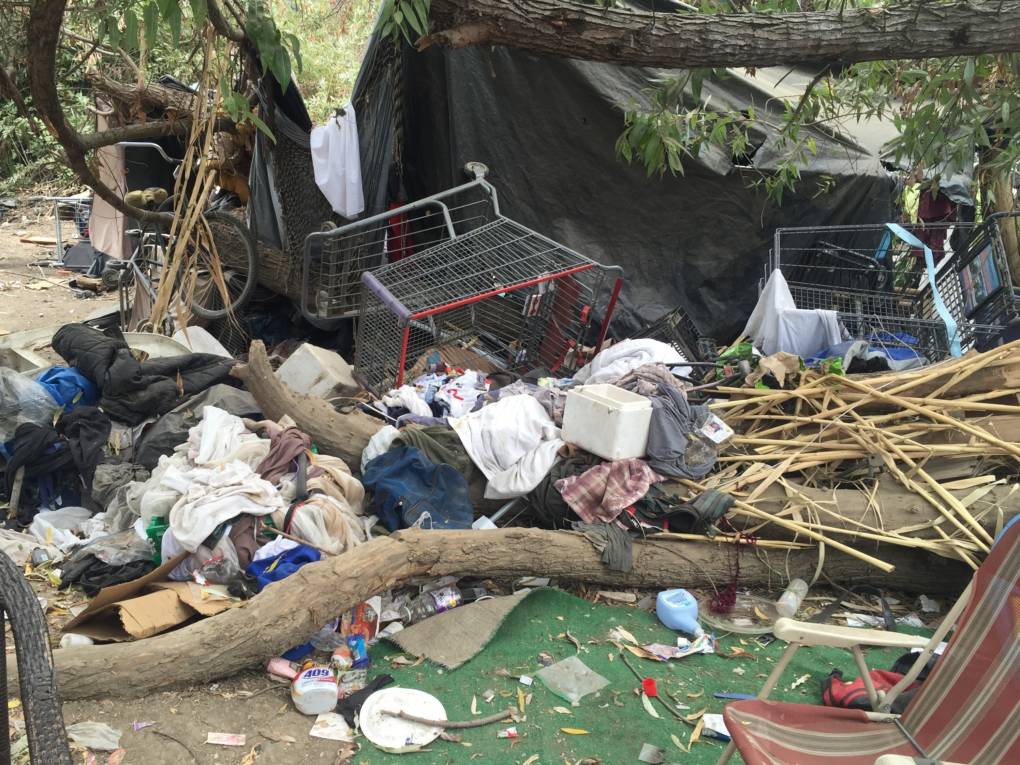
"caption": "A small homeless encampment sprung up earlier this year not far from KQEDs LA bureau. ",
"description": null,
"title": "2nd street camp close",
"credit": "Steven Cuevas / KQED",
"status": "inherit",
"isLoading": false,
"fetchFailed": false
},
"news_11626216": {
"type": "attachments",
"id": "news_11626216",
"meta": {
"index": "attachments_1716263798",
"site": "news",
"id": "11626216",
"found": true
},
"parent": 11626206,
"imgSizes": {
"small": {
"file": "https://ww2.kqed.org/app/uploads/sites/10/2017/10/RS18012_GettyImages-492659230-520x347.jpg",
"width": 520,
"mimeType": "image/jpeg",
"height": 347
},
"twentyfourteen-full-width": {
"file": "https://ww2.kqed.org/app/uploads/sites/10/2017/10/RS18012_GettyImages-492659230-1038x576.jpg",
"width": 1038,
"mimeType": "image/jpeg",
"height": 576
},
"thumbnail": {
"file": "https://ww2.kqed.org/app/uploads/sites/10/2017/10/RS18012_GettyImages-492659230-160x107.jpg",
"width": 160,
"mimeType": "image/jpeg",
"height": 107
},
"fd-sm": {
"file": "https://ww2.kqed.org/app/uploads/sites/10/2017/10/RS18012_GettyImages-492659230-960x640.jpg",
"width": 960,
"mimeType": "image/jpeg",
"height": 640
},
"post-thumbnail": {
"file": "https://ww2.kqed.org/app/uploads/sites/10/2017/10/RS18012_GettyImages-492659230-672x372.jpg",
"width": 672,
"mimeType": "image/jpeg",
"height": 372
},
"xsmall": {
"file": "https://ww2.kqed.org/app/uploads/sites/10/2017/10/RS18012_GettyImages-492659230-375x250.jpg",
"width": 375,
"mimeType": "image/jpeg",
"height": 250
},
"kqedFullSize": {
"file": "https://ww2.kqed.org/app/uploads/sites/10/2017/10/RS18012_GettyImages-492659230-e1509046076403.jpg",
"width": 1920,
"height": 1280
},
"large": {
"file": "https://ww2.kqed.org/app/uploads/sites/10/2017/10/RS18012_GettyImages-492659230-1020x680.jpg",
"width": 1020,
"mimeType": "image/jpeg",
"height": 680
},
"xlarge": {
"file": "https://ww2.kqed.org/app/uploads/sites/10/2017/10/RS18012_GettyImages-492659230-1180x787.jpg",
"width": 1180,
"mimeType": "image/jpeg",
"height": 787
},
"guest-author-50": {
"file": "https://ww2.kqed.org/app/uploads/sites/10/2017/10/RS18012_GettyImages-492659230-50x50.jpg",
"width": 50,
"mimeType": "image/jpeg",
"height": 50
},
"guest-author-96": {
"file": "https://ww2.kqed.org/app/uploads/sites/10/2017/10/RS18012_GettyImages-492659230-96x96.jpg",
"width": 96,
"mimeType": "image/jpeg",
"height": 96
},
"medium": {
"file": "https://ww2.kqed.org/app/uploads/sites/10/2017/10/RS18012_GettyImages-492659230-800x533.jpg",
"width": 800,
"mimeType": "image/jpeg",
"height": 533
},
"guest-author-64": {
"file": "https://ww2.kqed.org/app/uploads/sites/10/2017/10/RS18012_GettyImages-492659230-64x64.jpg",
"width": 64,
"mimeType": "image/jpeg",
"height": 64
},
"guest-author-32": {
"file": "https://ww2.kqed.org/app/uploads/sites/10/2017/10/RS18012_GettyImages-492659230-32x32.jpg",
"width": 32,
"mimeType": "image/jpeg",
"height": 32
},
"fd-lrg": {
"file": "https://ww2.kqed.org/app/uploads/sites/10/2017/10/RS18012_GettyImages-492659230-1920x1280.jpg",
"width": 1920,
"mimeType": "image/jpeg",
"height": 1280
},
"fd-med": {
"file": "https://ww2.kqed.org/app/uploads/sites/10/2017/10/RS18012_GettyImages-492659230-1180x787.jpg",
"width": 1180,
"mimeType": "image/jpeg",
"height": 787
},
"full-width": {
"file": "https://ww2.kqed.org/app/uploads/sites/10/2017/10/RS18012_GettyImages-492659230-1920x1280.jpg",
"width": 1920,
"mimeType": "image/jpeg",
"height": 1280
},
"detail": {
"file": "https://ww2.kqed.org/app/uploads/sites/10/2017/10/RS18012_GettyImages-492659230-150x150.jpg",
"width": 150,
"mimeType": "image/jpeg",
"height": 150
},
"guest-author-128": {
"file": "https://ww2.kqed.org/app/uploads/sites/10/2017/10/RS18012_GettyImages-492659230-128x128.jpg",
"width": 128,
"mimeType": "image/jpeg",
"height": 128
},
"xxsmall": {
"file": "https://ww2.kqed.org/app/uploads/sites/10/2017/10/RS18012_GettyImages-492659230-240x160.jpg",
"width": 240,
"mimeType": "image/jpeg",
"height": 160
}
},
"publishDate": 1509045956,
"modified": 1509046055,
"caption": "A U.S. Immigration and Customs Enforcement (ICE) agent detains an immigrant in Los Angeles in 2015.",
"description": "A U.S. Immigration and Customs Enforcement (ICE) agent detains an immigrant in Los Angeles in 2015.",
"title": "ICE Agents Detain Suspected Undocumented Immigrants In Raids",
"credit": "John Moore/Getty Images",
"status": "inherit",
"isLoading": false,
"fetchFailed": false
},
"news_11625530": {
"type": "attachments",
"id": "news_11625530",
"meta": {
"index": "attachments_1716263798",
"site": "news",
"id": "11625530",
"found": true
},
"parent": 11625529,
"imgSizes": {
"small": {
"file": "https://ww2.kqed.org/app/uploads/sites/10/2017/10/scott-encampment-3-3dff89c02ab6a4bc0571317de7dba82010da3360-520x390.jpg",
"width": 520,
"mimeType": "image/jpeg",
"height": 390
},
"twentyfourteen-full-width": {
"file": "https://ww2.kqed.org/app/uploads/sites/10/2017/10/scott-encampment-3-3dff89c02ab6a4bc0571317de7dba82010da3360-1038x576.jpg",
"width": 1038,
"mimeType": "image/jpeg",
"height": 576
},
"thumbnail": {
"file": "https://ww2.kqed.org/app/uploads/sites/10/2017/10/scott-encampment-3-3dff89c02ab6a4bc0571317de7dba82010da3360-160x120.jpg",
"width": 160,
"mimeType": "image/jpeg",
"height": 120
},
"fd-sm": {
"file": "https://ww2.kqed.org/app/uploads/sites/10/2017/10/scott-encampment-3-3dff89c02ab6a4bc0571317de7dba82010da3360-960x720.jpg",
"width": 960,
"mimeType": "image/jpeg",
"height": 720
},
"post-thumbnail": {
"file": "https://ww2.kqed.org/app/uploads/sites/10/2017/10/scott-encampment-3-3dff89c02ab6a4bc0571317de7dba82010da3360-672x372.jpg",
"width": 672,
"mimeType": "image/jpeg",
"height": 372
},
"xsmall": {
"file": "https://ww2.kqed.org/app/uploads/sites/10/2017/10/scott-encampment-3-3dff89c02ab6a4bc0571317de7dba82010da3360-375x281.jpg",
"width": 375,
"mimeType": "image/jpeg",
"height": 281
},
"kqedFullSize": {
"file": "https://ww2.kqed.org/app/uploads/sites/10/2017/10/scott-encampment-3-3dff89c02ab6a4bc0571317de7dba82010da3360-e1508801097318.jpg",
"width": 1920,
"height": 1440
},
"large": {
"file": "https://ww2.kqed.org/app/uploads/sites/10/2017/10/scott-encampment-3-3dff89c02ab6a4bc0571317de7dba82010da3360-1020x765.jpg",
"width": 1020,
"mimeType": "image/jpeg",
"height": 765
},
"xlarge": {
"file": "https://ww2.kqed.org/app/uploads/sites/10/2017/10/scott-encampment-3-3dff89c02ab6a4bc0571317de7dba82010da3360-1180x885.jpg",
"width": 1180,
"mimeType": "image/jpeg",
"height": 885
},
"guest-author-50": {
"file": "https://ww2.kqed.org/app/uploads/sites/10/2017/10/scott-encampment-3-3dff89c02ab6a4bc0571317de7dba82010da3360-50x50.jpg",
"width": 50,
"mimeType": "image/jpeg",
"height": 50
},
"guest-author-96": {
"file": "https://ww2.kqed.org/app/uploads/sites/10/2017/10/scott-encampment-3-3dff89c02ab6a4bc0571317de7dba82010da3360-96x96.jpg",
"width": 96,
"mimeType": "image/jpeg",
"height": 96
},
"medium": {
"file": "https://ww2.kqed.org/app/uploads/sites/10/2017/10/scott-encampment-3-3dff89c02ab6a4bc0571317de7dba82010da3360-800x600.jpg",
"width": 800,
"mimeType": "image/jpeg",
"height": 600
},
"guest-author-64": {
"file": "https://ww2.kqed.org/app/uploads/sites/10/2017/10/scott-encampment-3-3dff89c02ab6a4bc0571317de7dba82010da3360-64x64.jpg",
"width": 64,
"mimeType": "image/jpeg",
"height": 64
},
"guest-author-32": {
"file": "https://ww2.kqed.org/app/uploads/sites/10/2017/10/scott-encampment-3-3dff89c02ab6a4bc0571317de7dba82010da3360-32x32.jpg",
"width": 32,
"mimeType": "image/jpeg",
"height": 32
},
"fd-lrg": {
"file": "https://ww2.kqed.org/app/uploads/sites/10/2017/10/scott-encampment-3-3dff89c02ab6a4bc0571317de7dba82010da3360-1920x1440.jpg",
"width": 1920,
"mimeType": "image/jpeg",
"height": 1440
},
"fd-med": {
"file": "https://ww2.kqed.org/app/uploads/sites/10/2017/10/scott-encampment-3-3dff89c02ab6a4bc0571317de7dba82010da3360-1180x885.jpg",
"width": 1180,
"mimeType": "image/jpeg",
"height": 885
},
"full-width": {
"file": "https://ww2.kqed.org/app/uploads/sites/10/2017/10/scott-encampment-3-3dff89c02ab6a4bc0571317de7dba82010da3360-1920x1440.jpg",
"width": 1920,
"mimeType": "image/jpeg",
"height": 1440
},
"detail": {
"file": "https://ww2.kqed.org/app/uploads/sites/10/2017/10/scott-encampment-3-3dff89c02ab6a4bc0571317de7dba82010da3360-150x150.jpg",
"width": 150,
"mimeType": "image/jpeg",
"height": 150
},
"guest-author-128": {
"file": "https://ww2.kqed.org/app/uploads/sites/10/2017/10/scott-encampment-3-3dff89c02ab6a4bc0571317de7dba82010da3360-128x128.jpg",
"width": 128,
"mimeType": "image/jpeg",
"height": 128
},
"xxsmall": {
"file": "https://ww2.kqed.org/app/uploads/sites/10/2017/10/scott-encampment-3-3dff89c02ab6a4bc0571317de7dba82010da3360-240x180.jpg",
"width": 240,
"mimeType": "image/jpeg",
"height": 180
}
},
"publishDate": 1508801011,
"modified": 1508801114,
"caption": "The latest homeless count showed a 64 percent increase in the number of 18- to 24-year-olds on the streets over last year. Authorities are better at counting them but the problem is also getting worse.",
"description": "The latest homeless count showed a 64 percent increase in the number of 18- to 24-year-olds on the streets over last year. Authorities are better at counting them but the problem is also getting worse.",
"title": "The latest homeless count showed a 64 percent increase in the number of 18- to 24-year-olds on the streets over last year. Authorities are better at counting them but the problem is also getting worse.",
"credit": "Anna Scott/KCRW",
"status": "inherit",
"isLoading": false,
"fetchFailed": false
},
"news_11624630": {
"type": "attachments",
"id": "news_11624630",
"meta": {
"index": "attachments_1716263798",
"site": "news",
"id": "11624630",
"found": true
},
"parent": 11624629,
"imgSizes": {
"small": {
"file": "https://ww2.kqed.org/app/uploads/sites/10/2017/10/gettyimages-55832883_custom-325b6bc9d96d00f74b7f55d43449f560a1f5e40d-520x323.jpg",
"width": 520,
"mimeType": "image/jpeg",
"height": 323
},
"twentyfourteen-full-width": {
"file": "https://ww2.kqed.org/app/uploads/sites/10/2017/10/gettyimages-55832883_custom-325b6bc9d96d00f74b7f55d43449f560a1f5e40d-1038x576.jpg",
"width": 1038,
"mimeType": "image/jpeg",
"height": 576
},
"thumbnail": {
"file": "https://ww2.kqed.org/app/uploads/sites/10/2017/10/gettyimages-55832883_custom-325b6bc9d96d00f74b7f55d43449f560a1f5e40d-160x99.jpg",
"width": 160,
"mimeType": "image/jpeg",
"height": 99
},
"fd-sm": {
"file": "https://ww2.kqed.org/app/uploads/sites/10/2017/10/gettyimages-55832883_custom-325b6bc9d96d00f74b7f55d43449f560a1f5e40d-960x596.jpg",
"width": 960,
"mimeType": "image/jpeg",
"height": 596
},
"post-thumbnail": {
"file": "https://ww2.kqed.org/app/uploads/sites/10/2017/10/gettyimages-55832883_custom-325b6bc9d96d00f74b7f55d43449f560a1f5e40d-672x372.jpg",
"width": 672,
"mimeType": "image/jpeg",
"height": 372
},
"xsmall": {
"file": "https://ww2.kqed.org/app/uploads/sites/10/2017/10/gettyimages-55832883_custom-325b6bc9d96d00f74b7f55d43449f560a1f5e40d-375x233.jpg",
"width": 375,
"mimeType": "image/jpeg",
"height": 233
},
"kqedFullSize": {
"file": "https://ww2.kqed.org/app/uploads/sites/10/2017/10/gettyimages-55832883_custom-325b6bc9d96d00f74b7f55d43449f560a1f5e40d-e1508448013482.jpg",
"width": 1920,
"height": 1192
},
"large": {
"file": "https://ww2.kqed.org/app/uploads/sites/10/2017/10/gettyimages-55832883_custom-325b6bc9d96d00f74b7f55d43449f560a1f5e40d-1020x633.jpg",
"width": 1020,
"mimeType": "image/jpeg",
"height": 633
},
"xlarge": {
"file": "https://ww2.kqed.org/app/uploads/sites/10/2017/10/gettyimages-55832883_custom-325b6bc9d96d00f74b7f55d43449f560a1f5e40d-1180x733.jpg",
"width": 1180,
"mimeType": "image/jpeg",
"height": 733
},
"guest-author-50": {
"file": "https://ww2.kqed.org/app/uploads/sites/10/2017/10/gettyimages-55832883_custom-325b6bc9d96d00f74b7f55d43449f560a1f5e40d-50x50.jpg",
"width": 50,
"mimeType": "image/jpeg",
"height": 50
},
"guest-author-96": {
"file": "https://ww2.kqed.org/app/uploads/sites/10/2017/10/gettyimages-55832883_custom-325b6bc9d96d00f74b7f55d43449f560a1f5e40d-96x96.jpg",
"width": 96,
"mimeType": "image/jpeg",
"height": 96
},
"medium": {
"file": "https://ww2.kqed.org/app/uploads/sites/10/2017/10/gettyimages-55832883_custom-325b6bc9d96d00f74b7f55d43449f560a1f5e40d-800x497.jpg",
"width": 800,
"mimeType": "image/jpeg",
"height": 497
},
"guest-author-64": {
"file": "https://ww2.kqed.org/app/uploads/sites/10/2017/10/gettyimages-55832883_custom-325b6bc9d96d00f74b7f55d43449f560a1f5e40d-64x64.jpg",
"width": 64,
"mimeType": "image/jpeg",
"height": 64
},
"guest-author-32": {
"file": "https://ww2.kqed.org/app/uploads/sites/10/2017/10/gettyimages-55832883_custom-325b6bc9d96d00f74b7f55d43449f560a1f5e40d-32x32.jpg",
"width": 32,
"mimeType": "image/jpeg",
"height": 32
},
"fd-lrg": {
"file": "https://ww2.kqed.org/app/uploads/sites/10/2017/10/gettyimages-55832883_custom-325b6bc9d96d00f74b7f55d43449f560a1f5e40d-1920x1192.jpg",
"width": 1920,
"mimeType": "image/jpeg",
"height": 1192
},
"fd-med": {
"file": "https://ww2.kqed.org/app/uploads/sites/10/2017/10/gettyimages-55832883_custom-325b6bc9d96d00f74b7f55d43449f560a1f5e40d-1180x733.jpg",
"width": 1180,
"mimeType": "image/jpeg",
"height": 733
},
"full-width": {
"file": "https://ww2.kqed.org/app/uploads/sites/10/2017/10/gettyimages-55832883_custom-325b6bc9d96d00f74b7f55d43449f560a1f5e40d-1920x1192.jpg",
"width": 1920,
"mimeType": "image/jpeg",
"height": 1192
},
"detail": {
"file": "https://ww2.kqed.org/app/uploads/sites/10/2017/10/gettyimages-55832883_custom-325b6bc9d96d00f74b7f55d43449f560a1f5e40d-150x150.jpg",
"width": 150,
"mimeType": "image/jpeg",
"height": 150
},
"guest-author-128": {
"file": "https://ww2.kqed.org/app/uploads/sites/10/2017/10/gettyimages-55832883_custom-325b6bc9d96d00f74b7f55d43449f560a1f5e40d-128x128.jpg",
"width": 128,
"mimeType": "image/jpeg",
"height": 128
},
"xxsmall": {
"file": "https://ww2.kqed.org/app/uploads/sites/10/2017/10/gettyimages-55832883_custom-325b6bc9d96d00f74b7f55d43449f560a1f5e40d-240x149.jpg",
"width": 240,
"mimeType": "image/jpeg",
"height": 149
}
},
"publishDate": 1508442376,
"modified": 1508447998,
"caption": "The Trump National Golf Club in Rancho Palos Verdes, seen in 2005, has removed a list of charitable donations it once posted on its website. An NPR examination of that list reveals inconsistencies and errors.",
"description": "The Trump National Golf Club in Rancho Palos Verdes, seen in 2005, has removed a list of charitable donations it once posted on its website. An NPR examination of that list reveals inconsistencies and error",
"title": "The Trump National Golf Club in Rancho Palos Verdes, seen in 2005, has removed a list of charitable donations it once posted on its website. An NPR examination of that list reveals inconsistencies and errors.",
"credit": "Jeff Gross/Getty Images",
"status": "inherit",
"isLoading": false,
"fetchFailed": false
},
"news_11619992": {
"type": "attachments",
"id": "news_11619992",
"meta": {
"index": "attachments_1716263798",
"site": "news",
"id": "11619992",
"found": true
},
"parent": 11619987,
"imgSizes": {
"small": {
"file": "https://ww2.kqed.org/app/uploads/sites/10/2017/09/Capt-Sara-Rathbun_1-520x390.jpg",
"width": 520,
"mimeType": "image/jpeg",
"height": 390
},
"twentyfourteen-full-width": {
"file": "https://ww2.kqed.org/app/uploads/sites/10/2017/09/Capt-Sara-Rathbun_1-1038x576.jpg",
"width": 1038,
"mimeType": "image/jpeg",
"height": 576
},
"thumbnail": {
"file": "https://ww2.kqed.org/app/uploads/sites/10/2017/09/Capt-Sara-Rathbun_1-160x120.jpg",
"width": 160,
"mimeType": "image/jpeg",
"height": 120
},
"fd-sm": {
"file": "https://ww2.kqed.org/app/uploads/sites/10/2017/09/Capt-Sara-Rathbun_1-960x720.jpg",
"width": 960,
"mimeType": "image/jpeg",
"height": 720
},
"post-thumbnail": {
"file": "https://ww2.kqed.org/app/uploads/sites/10/2017/09/Capt-Sara-Rathbun_1-672x372.jpg",
"width": 672,
"mimeType": "image/jpeg",
"height": 372
},
"xsmall": {
"file": "https://ww2.kqed.org/app/uploads/sites/10/2017/09/Capt-Sara-Rathbun_1-375x281.jpg",
"width": 375,
"mimeType": "image/jpeg",
"height": 281
},
"kqedFullSize": {
"file": "https://ww2.kqed.org/app/uploads/sites/10/2017/09/Capt-Sara-Rathbun_1-e1506719658457.jpg",
"width": 1920,
"height": 1440
},
"large": {
"file": "https://ww2.kqed.org/app/uploads/sites/10/2017/09/Capt-Sara-Rathbun_1-1020x765.jpg",
"width": 1020,
"mimeType": "image/jpeg",
"height": 765
},
"xlarge": {
"file": "https://ww2.kqed.org/app/uploads/sites/10/2017/09/Capt-Sara-Rathbun_1-1180x885.jpg",
"width": 1180,
"mimeType": "image/jpeg",
"height": 885
},
"guest-author-50": {
"file": "https://ww2.kqed.org/app/uploads/sites/10/2017/09/Capt-Sara-Rathbun_1-50x50.jpg",
"width": 50,
"mimeType": "image/jpeg",
"height": 50
},
"guest-author-96": {
"file": "https://ww2.kqed.org/app/uploads/sites/10/2017/09/Capt-Sara-Rathbun_1-96x96.jpg",
"width": 96,
"mimeType": "image/jpeg",
"height": 96
},
"medium": {
"file": "https://ww2.kqed.org/app/uploads/sites/10/2017/09/Capt-Sara-Rathbun_1-800x600.jpg",
"width": 800,
"mimeType": "image/jpeg",
"height": 600
},
"guest-author-64": {
"file": "https://ww2.kqed.org/app/uploads/sites/10/2017/09/Capt-Sara-Rathbun_1-64x64.jpg",
"width": 64,
"mimeType": "image/jpeg",
"height": 64
},
"guest-author-32": {
"file": "https://ww2.kqed.org/app/uploads/sites/10/2017/09/Capt-Sara-Rathbun_1-32x32.jpg",
"width": 32,
"mimeType": "image/jpeg",
"height": 32
},
"fd-lrg": {
"file": "https://ww2.kqed.org/app/uploads/sites/10/2017/09/Capt-Sara-Rathbun_1-1920x1440.jpg",
"width": 1920,
"mimeType": "image/jpeg",
"height": 1440
},
"fd-med": {
"file": "https://ww2.kqed.org/app/uploads/sites/10/2017/09/Capt-Sara-Rathbun_1-1180x885.jpg",
"width": 1180,
"mimeType": "image/jpeg",
"height": 885
},
"full-width": {
"file": "https://ww2.kqed.org/app/uploads/sites/10/2017/09/Capt-Sara-Rathbun_1-1920x1440.jpg",
"width": 1920,
"mimeType": "image/jpeg",
"height": 1440
},
"detail": {
"file": "https://ww2.kqed.org/app/uploads/sites/10/2017/09/Capt-Sara-Rathbun_1-150x150.jpg",
"width": 150,
"mimeType": "image/jpeg",
"height": 150
},
"guest-author-128": {
"file": "https://ww2.kqed.org/app/uploads/sites/10/2017/09/Capt-Sara-Rathbun_1-128x128.jpg",
"width": 128,
"mimeType": "image/jpeg",
"height": 128
},
"xxsmall": {
"file": "https://ww2.kqed.org/app/uploads/sites/10/2017/09/Capt-Sara-Rathbun_1-240x180.jpg",
"width": 240,
"mimeType": "image/jpeg",
"height": 180
}
},
"publishDate": 1506712263,
"modified": 1507250835,
"caption": "California Urban Search and Rescue Task Force-2 Capt. Sara Rathbun.",
"description": "California Urban Search and Rescue Task Force-2 Captain Sara Rathbun.",
"title": "CA-Task Force 2 Captain Sara Rathbun. KQED/Emily Green",
"credit": "Emily Green/KQED",
"status": "inherit",
"isLoading": false,
"fetchFailed": false
},
"news_11619347": {
"type": "attachments",
"id": "news_11619347",
"meta": {
"index": "attachments_1716263798",
"site": "news",
"id": "11619347",
"found": true
},
"parent": 11619344,
"imgSizes": {
"small": {
"file": "https://ww2.kqed.org/app/uploads/sites/10/2017/09/PUERTO-relief-parade-520x264.jpg",
"width": 520,
"mimeType": "image/jpeg",
"height": 264
},
"twentyfourteen-full-width": {
"file": "https://ww2.kqed.org/app/uploads/sites/10/2017/09/PUERTO-relief-parade-1038x576.jpg",
"width": 1038,
"mimeType": "image/jpeg",
"height": 576
},
"thumbnail": {
"file": "https://ww2.kqed.org/app/uploads/sites/10/2017/09/PUERTO-relief-parade-160x81.jpg",
"width": 160,
"mimeType": "image/jpeg",
"height": 81
},
"fd-sm": {
"file": "https://ww2.kqed.org/app/uploads/sites/10/2017/09/PUERTO-relief-parade-960x488.jpg",
"width": 960,
"mimeType": "image/jpeg",
"height": 488
},
"post-thumbnail": {
"file": "https://ww2.kqed.org/app/uploads/sites/10/2017/09/PUERTO-relief-parade-672x372.jpg",
"width": 672,
"mimeType": "image/jpeg",
"height": 372
},
"xsmall": {
"file": "https://ww2.kqed.org/app/uploads/sites/10/2017/09/PUERTO-relief-parade-375x191.jpg",
"width": 375,
"mimeType": "image/jpeg",
"height": 191
},
"kqedFullSize": {
"file": "https://ww2.kqed.org/app/uploads/sites/10/2017/09/PUERTO-relief-parade.jpg",
"width": 1920,
"height": 976
},
"large": {
"file": "https://ww2.kqed.org/app/uploads/sites/10/2017/09/PUERTO-relief-parade-1020x519.jpg",
"width": 1020,
"mimeType": "image/jpeg",
"height": 519
},
"xlarge": {
"file": "https://ww2.kqed.org/app/uploads/sites/10/2017/09/PUERTO-relief-parade-1180x600.jpg",
"width": 1180,
"mimeType": "image/jpeg",
"height": 600
},
"guest-author-50": {
"file": "https://ww2.kqed.org/app/uploads/sites/10/2017/09/PUERTO-relief-parade-50x50.jpg",
"width": 50,
"mimeType": "image/jpeg",
"height": 50
},
"guest-author-96": {
"file": "https://ww2.kqed.org/app/uploads/sites/10/2017/09/PUERTO-relief-parade-96x96.jpg",
"width": 96,
"mimeType": "image/jpeg",
"height": 96
},
"medium": {
"file": "https://ww2.kqed.org/app/uploads/sites/10/2017/09/PUERTO-relief-parade-800x407.jpg",
"width": 800,
"mimeType": "image/jpeg",
"height": 407
},
"guest-author-64": {
"file": "https://ww2.kqed.org/app/uploads/sites/10/2017/09/PUERTO-relief-parade-64x64.jpg",
"width": 64,
"mimeType": "image/jpeg",
"height": 64
},
"guest-author-32": {
"file": "https://ww2.kqed.org/app/uploads/sites/10/2017/09/PUERTO-relief-parade-32x32.jpg",
"width": 32,
"mimeType": "image/jpeg",
"height": 32
},
"fd-lrg": {
"file": "https://ww2.kqed.org/app/uploads/sites/10/2017/09/PUERTO-relief-parade-1920x976.jpg",
"width": 1920,
"mimeType": "image/jpeg",
"height": 976
},
"fd-med": {
"file": "https://ww2.kqed.org/app/uploads/sites/10/2017/09/PUERTO-relief-parade-1180x600.jpg",
"width": 1180,
"mimeType": "image/jpeg",
"height": 600
},
"full-width": {
"file": "https://ww2.kqed.org/app/uploads/sites/10/2017/09/PUERTO-relief-parade-1920x976.jpg",
"width": 1920,
"mimeType": "image/jpeg",
"height": 976
},
"detail": {
"file": "https://ww2.kqed.org/app/uploads/sites/10/2017/09/PUERTO-relief-parade-150x150.jpg",
"width": 150,
"mimeType": "image/jpeg",
"height": 150
},
"guest-author-128": {
"file": "https://ww2.kqed.org/app/uploads/sites/10/2017/09/PUERTO-relief-parade-128x128.jpg",
"width": 128,
"mimeType": "image/jpeg",
"height": 128
},
"xxsmall": {
"file": "https://ww2.kqed.org/app/uploads/sites/10/2017/09/PUERTO-relief-parade-240x122.jpg",
"width": 240,
"mimeType": "image/jpeg",
"height": 122
}
},
"publishDate": 1506526318,
"modified": 1506540260,
"caption": "Members of the South L.A.-based California Puerto Rican Parade & Festival are helping coordinate a hurricane relief effort for the island. ",
"description": "Members of the South L.A.-based California Puerto Rican Parade & Festival are helping coordinate a hurricane relief effort for the island. ",
"title": "PUERTO relief parade",
"credit": "California Puerto Rican Parade & Festival ",
"status": "inherit",
"isLoading": false,
"fetchFailed": false
},
"news_11618576": {
"type": "attachments",
"id": "news_11618576",
"meta": {
"index": "attachments_1716263798",
"site": "news",
"id": "11618576",
"found": true
},
"parent": 11618155,
"imgSizes": {
"small": {
"file": "https://ww2.kqed.org/app/uploads/sites/10/2017/09/placita-praying-520x390.jpg",
"width": 520,
"mimeType": "image/jpeg",
"height": 390
},
"twentyfourteen-full-width": {
"file": "https://ww2.kqed.org/app/uploads/sites/10/2017/09/placita-praying-1038x576.jpg",
"width": 1038,
"mimeType": "image/jpeg",
"height": 576
},
"thumbnail": {
"file": "https://ww2.kqed.org/app/uploads/sites/10/2017/09/placita-praying-160x120.jpg",
"width": 160,
"mimeType": "image/jpeg",
"height": 120
},
"fd-sm": {
"file": "https://ww2.kqed.org/app/uploads/sites/10/2017/09/placita-praying-960x720.jpg",
"width": 960,
"mimeType": "image/jpeg",
"height": 720
},
"post-thumbnail": {
"file": "https://ww2.kqed.org/app/uploads/sites/10/2017/09/placita-praying-672x372.jpg",
"width": 672,
"mimeType": "image/jpeg",
"height": 372
},
"xsmall": {
"file": "https://ww2.kqed.org/app/uploads/sites/10/2017/09/placita-praying-375x281.jpg",
"width": 375,
"mimeType": "image/jpeg",
"height": 281
},
"kqedFullSize": {
"file": "https://ww2.kqed.org/app/uploads/sites/10/2017/09/placita-praying.jpg",
"width": 1920,
"height": 1440
},
"large": {
"file": "https://ww2.kqed.org/app/uploads/sites/10/2017/09/placita-praying-1020x765.jpg",
"width": 1020,
"mimeType": "image/jpeg",
"height": 765
},
"xlarge": {
"file": "https://ww2.kqed.org/app/uploads/sites/10/2017/09/placita-praying-1180x885.jpg",
"width": 1180,
"mimeType": "image/jpeg",
"height": 885
},
"guest-author-50": {
"file": "https://ww2.kqed.org/app/uploads/sites/10/2017/09/placita-praying-50x50.jpg",
"width": 50,
"mimeType": "image/jpeg",
"height": 50
},
"guest-author-96": {
"file": "https://ww2.kqed.org/app/uploads/sites/10/2017/09/placita-praying-96x96.jpg",
"width": 96,
"mimeType": "image/jpeg",
"height": 96
},
"medium": {
"file": "https://ww2.kqed.org/app/uploads/sites/10/2017/09/placita-praying-800x600.jpg",
"width": 800,
"mimeType": "image/jpeg",
"height": 600
},
"guest-author-64": {
"file": "https://ww2.kqed.org/app/uploads/sites/10/2017/09/placita-praying-64x64.jpg",
"width": 64,
"mimeType": "image/jpeg",
"height": 64
},
"guest-author-32": {
"file": "https://ww2.kqed.org/app/uploads/sites/10/2017/09/placita-praying-32x32.jpg",
"width": 32,
"mimeType": "image/jpeg",
"height": 32
},
"fd-lrg": {
"file": "https://ww2.kqed.org/app/uploads/sites/10/2017/09/placita-praying-1920x1440.jpg",
"width": 1920,
"mimeType": "image/jpeg",
"height": 1440
},
"fd-med": {
"file": "https://ww2.kqed.org/app/uploads/sites/10/2017/09/placita-praying-1180x885.jpg",
"width": 1180,
"mimeType": "image/jpeg",
"height": 885
},
"full-width": {
"file": "https://ww2.kqed.org/app/uploads/sites/10/2017/09/placita-praying-1920x1440.jpg",
"width": 1920,
"mimeType": "image/jpeg",
"height": 1440
},
"detail": {
"file": "https://ww2.kqed.org/app/uploads/sites/10/2017/09/placita-praying-150x150.jpg",
"width": 150,
"mimeType": "image/jpeg",
"height": 150
},
"guest-author-128": {
"file": "https://ww2.kqed.org/app/uploads/sites/10/2017/09/placita-praying-128x128.jpg",
"width": 128,
"mimeType": "image/jpeg",
"height": 128
},
"xxsmall": {
"file": "https://ww2.kqed.org/app/uploads/sites/10/2017/09/placita-praying-240x180.jpg",
"width": 240,
"mimeType": "image/jpeg",
"height": 180
}
},
"publishDate": 1506107315,
"modified": 1506107383,
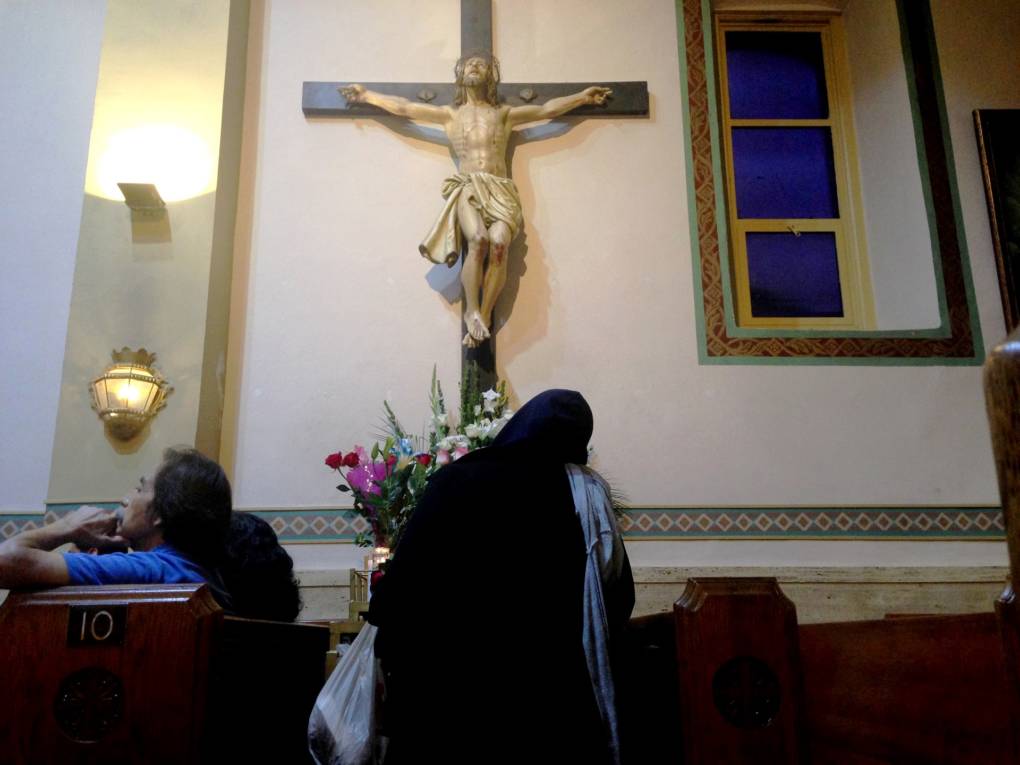
"caption": "L.A.’s historic Our Lady Queen of Angels church, is commemorating victims of the Mexico earthquake with several days of church service dedications, vigils and fundraising.",
"description": null,
"title": "placita praying",
"credit": "Steven CUevas / KQED",
"status": "inherit",
"isLoading": false,
"fetchFailed": false
},
"news_11616103": {
"type": "attachments",
"id": "news_11616103",
"meta": {
"index": "attachments_1716263798",
"site": "news",
"id": "11616103",
"found": true
},
"parent": 11616098,
"imgSizes": {
"small": {
"file": "https://ww2.kqed.org/app/uploads/sites/10/2017/09/Carlos-w-painting-520x390.jpg",
"width": 520,
"mimeType": "image/jpeg",
"height": 390
},
"twentyfourteen-full-width": {
"file": "https://ww2.kqed.org/app/uploads/sites/10/2017/09/Carlos-w-painting-1038x576.jpg",
"width": 1038,
"mimeType": "image/jpeg",
"height": 576
},
"thumbnail": {
"file": "https://ww2.kqed.org/app/uploads/sites/10/2017/09/Carlos-w-painting-160x120.jpg",
"width": 160,
"mimeType": "image/jpeg",
"height": 120
},
"fd-sm": {
"file": "https://ww2.kqed.org/app/uploads/sites/10/2017/09/Carlos-w-painting-960x720.jpg",
"width": 960,
"mimeType": "image/jpeg",
"height": 720
},
"post-thumbnail": {
"file": "https://ww2.kqed.org/app/uploads/sites/10/2017/09/Carlos-w-painting-672x372.jpg",
"width": 672,
"mimeType": "image/jpeg",
"height": 372
},
"xsmall": {
"file": "https://ww2.kqed.org/app/uploads/sites/10/2017/09/Carlos-w-painting-375x281.jpg",
"width": 375,
"mimeType": "image/jpeg",
"height": 281
},
"kqedFullSize": {
"file": "https://ww2.kqed.org/app/uploads/sites/10/2017/09/Carlos-w-painting.jpg",
"width": 1920,
"height": 1440
},
"large": {
"file": "https://ww2.kqed.org/app/uploads/sites/10/2017/09/Carlos-w-painting-1020x765.jpg",
"width": 1020,
"mimeType": "image/jpeg",
"height": 765
},
"xlarge": {
"file": "https://ww2.kqed.org/app/uploads/sites/10/2017/09/Carlos-w-painting-1180x885.jpg",
"width": 1180,
"mimeType": "image/jpeg",
"height": 885
},
"guest-author-50": {
"file": "https://ww2.kqed.org/app/uploads/sites/10/2017/09/Carlos-w-painting-50x50.jpg",
"width": 50,
"mimeType": "image/jpeg",
"height": 50
},
"guest-author-96": {
"file": "https://ww2.kqed.org/app/uploads/sites/10/2017/09/Carlos-w-painting-96x96.jpg",
"width": 96,
"mimeType": "image/jpeg",
"height": 96
},
"medium": {
"file": "https://ww2.kqed.org/app/uploads/sites/10/2017/09/Carlos-w-painting-800x600.jpg",
"width": 800,
"mimeType": "image/jpeg",
"height": 600
},
"guest-author-64": {
"file": "https://ww2.kqed.org/app/uploads/sites/10/2017/09/Carlos-w-painting-64x64.jpg",
"width": 64,
"mimeType": "image/jpeg",
"height": 64
},
"guest-author-32": {
"file": "https://ww2.kqed.org/app/uploads/sites/10/2017/09/Carlos-w-painting-32x32.jpg",
"width": 32,
"mimeType": "image/jpeg",
"height": 32
},
"fd-lrg": {
"file": "https://ww2.kqed.org/app/uploads/sites/10/2017/09/Carlos-w-painting-1920x1440.jpg",
"width": 1920,
"mimeType": "image/jpeg",
"height": 1440
},
"fd-med": {
"file": "https://ww2.kqed.org/app/uploads/sites/10/2017/09/Carlos-w-painting-1180x885.jpg",
"width": 1180,
"mimeType": "image/jpeg",
"height": 885
},
"full-width": {
"file": "https://ww2.kqed.org/app/uploads/sites/10/2017/09/Carlos-w-painting-1920x1440.jpg",
"width": 1920,
"mimeType": "image/jpeg",
"height": 1440
},
"detail": {
"file": "https://ww2.kqed.org/app/uploads/sites/10/2017/09/Carlos-w-painting-150x150.jpg",
"width": 150,
"mimeType": "image/jpeg",
"height": 150
},
"guest-author-128": {
"file": "https://ww2.kqed.org/app/uploads/sites/10/2017/09/Carlos-w-painting-128x128.jpg",
"width": 128,
"mimeType": "image/jpeg",
"height": 128
},
"xxsmall": {
"file": "https://ww2.kqed.org/app/uploads/sites/10/2017/09/Carlos-w-painting-240x180.jpg",
"width": 240,
"mimeType": "image/jpeg",
"height": 180
}
},
"publishDate": 1504905963,
"modified": 1504906067,
"caption": "Snapshot of Carlos Almaráz with one of his freeway car crash paintings. ",
"description": null,
"title": "Carlos w painting",
"credit": "Los Angeles County Museum of Art / Steven Cuevas (KQED)",
"status": "inherit",
"isLoading": false,
"fetchFailed": false
},
"news_11615306": {
"type": "attachments",
"id": "news_11615306",
"meta": {
"index": "attachments_1716263798",
"site": "news",
"id": "11615306",
"found": true
},
"parent": 11615303,
"imgSizes": {
"small": {
"file": "https://ww2.kqed.org/app/uploads/sites/10/2017/09/YimbysMain-520x316.jpg",
"width": 520,
"mimeType": "image/jpeg",
"height": 316
},
"twentyfourteen-full-width": {
"file": "https://ww2.kqed.org/app/uploads/sites/10/2017/09/YimbysMain-1038x576.jpg",
"width": 1038,
"mimeType": "image/jpeg",
"height": 576
},
"thumbnail": {
"file": "https://ww2.kqed.org/app/uploads/sites/10/2017/09/YimbysMain-160x97.jpg",
"width": 160,
"mimeType": "image/jpeg",
"height": 97
},
"fd-sm": {
"file": "https://ww2.kqed.org/app/uploads/sites/10/2017/09/YimbysMain-960x583.jpg",
"width": 960,
"mimeType": "image/jpeg",
"height": 583
},
"post-thumbnail": {
"file": "https://ww2.kqed.org/app/uploads/sites/10/2017/09/YimbysMain-672x372.jpg",
"width": 672,
"mimeType": "image/jpeg",
"height": 372
},
"xsmall": {
"file": "https://ww2.kqed.org/app/uploads/sites/10/2017/09/YimbysMain-375x228.jpg",
"width": 375,
"mimeType": "image/jpeg",
"height": 228
},
"kqedFullSize": {
"file": "https://ww2.kqed.org/app/uploads/sites/10/2017/09/YimbysMain.jpg",
"width": 1920,
"height": 1165
},
"large": {
"file": "https://ww2.kqed.org/app/uploads/sites/10/2017/09/YimbysMain-1020x619.jpg",
"width": 1020,
"mimeType": "image/jpeg",
"height": 619
},
"xlarge": {
"file": "https://ww2.kqed.org/app/uploads/sites/10/2017/09/YimbysMain-1180x716.jpg",
"width": 1180,
"mimeType": "image/jpeg",
"height": 716
},
"guest-author-50": {
"file": "https://ww2.kqed.org/app/uploads/sites/10/2017/09/YimbysMain-50x50.jpg",
"width": 50,
"mimeType": "image/jpeg",
"height": 50
},
"guest-author-96": {
"file": "https://ww2.kqed.org/app/uploads/sites/10/2017/09/YimbysMain-96x96.jpg",
"width": 96,
"mimeType": "image/jpeg",
"height": 96
},
"medium": {
"file": "https://ww2.kqed.org/app/uploads/sites/10/2017/09/YimbysMain-800x485.jpg",
"width": 800,
"mimeType": "image/jpeg",
"height": 485
},
"guest-author-64": {
"file": "https://ww2.kqed.org/app/uploads/sites/10/2017/09/YimbysMain-64x64.jpg",
"width": 64,
"mimeType": "image/jpeg",
"height": 64
},
"guest-author-32": {
"file": "https://ww2.kqed.org/app/uploads/sites/10/2017/09/YimbysMain-32x32.jpg",
"width": 32,
"mimeType": "image/jpeg",
"height": 32
},
"fd-lrg": {
"file": "https://ww2.kqed.org/app/uploads/sites/10/2017/09/YimbysMain-1920x1165.jpg",
"width": 1920,
"mimeType": "image/jpeg",
"height": 1165
},
"fd-med": {
"file": "https://ww2.kqed.org/app/uploads/sites/10/2017/09/YimbysMain-1180x716.jpg",
"width": 1180,
"mimeType": "image/jpeg",
"height": 716
},
"full-width": {
"file": "https://ww2.kqed.org/app/uploads/sites/10/2017/09/YimbysMain-1920x1165.jpg",
"width": 1920,
"mimeType": "image/jpeg",
"height": 1165
},
"detail": {
"file": "https://ww2.kqed.org/app/uploads/sites/10/2017/09/YimbysMain-150x150.jpg",
"width": 150,
"mimeType": "image/jpeg",
"height": 150
},
"guest-author-128": {
"file": "https://ww2.kqed.org/app/uploads/sites/10/2017/09/YimbysMain-128x128.jpg",
"width": 128,
"mimeType": "image/jpeg",
"height": 128
},
"xxsmall": {
"file": "https://ww2.kqed.org/app/uploads/sites/10/2017/09/YimbysMain-240x146.jpg",
"width": 240,
"mimeType": "image/jpeg",
"height": 146
}
},
"publishDate": 1504302389,
"modified": 1504302442,
"caption": "Brent Gaisford, 27, leads Abundant Housing L.A., one of the area's YIMBY organizations. Behind him is the M Lofts in Palms, the kind of development he said L.A. should be building more of.",
"description": "Brent Gaisford, 27, leads Abundant Housing L.A., one of the area's YIMBY organizations. Behind him is the M Lofts in Palms, the kind of development he said L.A. should be building more of.",
"title": "YimbysMain",
"credit": "Josie Huang/KPCC",
"status": "inherit",
"isLoading": false,
"fetchFailed": false
}
},
"audioPlayerReducer": {
"postId": "stream_live",
"isPaused": true,
"isPlaying": false,
"pfsActive": false,
"pledgeModalIsOpen": true,
"playerDrawerIsOpen": false,
"liveAudioPlayStartedAt": 0,
"liveAudioPlayContext": ""
},
"authorsReducer": {
"byline_news_11632299": {
"type": "authors",
"id": "byline_news_11632299",
"meta": {
"override": true
},
"slug": "byline_news_11632299",
"name": "\u003cstrong>John Rogers\u003cbr />Associated Press\u003c/strong>",
"isLoading": false
},
"byline_news_11626206": {
"type": "authors",
"id": "byline_news_11626206",
"meta": {
"override": true
},
"slug": "byline_news_11626206",
"name": "\u003cstrong>\u003ca href=\"https://www.scpr.org/about/people/staff/leslie-berestein-rojas\">Leslie Berestein Rojas\u003c/a>\u003c/strong>",
"isLoading": false
},
"byline_news_11625529": {
"type": "authors",
"id": "byline_news_11625529",
"meta": {
"override": true
},
"slug": "byline_news_11625529",
"name": "Anna Scott",
"isLoading": false
},
"byline_news_11624629": {
"type": "authors",
"id": "byline_news_11624629",
"meta": {
"override": true
},
"slug": "byline_news_11624629",
"name": "\u003cstrong>\u003ca href=\"http://www.npr.org/people/548681780/emily-sullivan\">Emily Sullivan\u003c/a> and \u003ca href=\"http://www.npr.org/people/349305392/tom-dreisbach\">Tom Dreisbach\u003c/a>\u003c/strong>",
"isLoading": false
},
"byline_news_11619987": {
"type": "authors",
"id": "byline_news_11619987",
"meta": {
"override": true
},
"slug": "byline_news_11619987",
"name": "Emily Green",
"isLoading": false
},
"byline_news_11615303": {
"type": "authors",
"id": "byline_news_11615303",
"meta": {
"override": true
},
"slug": "byline_news_11615303",
"name": "\u003cstrong>\u003ca href=\"https://www.scpr.org/about/people/staff/josie-huang\">Josie Huang\u003c/a>\u003c/strong>",
"isLoading": false
},
"scuevas": {
"type": "authors",
"id": "2600",
"meta": {
"index": "authors_1716337520",
"id": "2600",
"found": true
},
"name": "Steven Cuevas",
"firstName": "Steven",
"lastName": "Cuevas",
"slug": "scuevas",
"email": "scuevas@kqed.org",
"display_author_email": false,
"staff_mastheads": [],
"title": "KQED Contributor",
"bio": "Steven is a former Los Angeles bureau chief for The California Report.\r\n\r\nHe reports on an array of issues across the Southland, from immigration and regional politics to religion, the performing arts and pop culture.\r\n\r\nPrior to joining KQED in 2012, Steven covered Inland southern California for KPCC in Pasadena. He also helped establish the first newsroom at \u003ca href=\"http://kut.org/\">KUT\u003c/a> in Austin, Texas where he was a general assignment reporter.\r\n\r\nSteven has received numerous awards for his reporting including an RTNDA Edward R. Murrow Award for investigative reporting in addition to awards from the LA Press Club, the Associated Press and the Society for Professional Journalists.\r\n\r\nSteven grew up in and around San Francisco and now lives in Pasadena just a short jog from the foot of the San Gabriel Mountains.",
"avatar": "https://secure.gravatar.com/avatar/2d253580794f8e026100fae05cfabbbd4889b4fe15146146cacb82a01974c538?s=600&d=blank&r=g",
"twitter": null,
"bluesky": null,
"facebook": null,
"instagram": null,
"linkedin": null,
"sites": [
{
"site": "news",
"roles": [
"subscriber"
]
}
],
"headData": {
"title": "Steven Cuevas | KQED",
"description": "KQED Contributor",
"ogImgSrc": "https://secure.gravatar.com/avatar/2d253580794f8e026100fae05cfabbbd4889b4fe15146146cacb82a01974c538?s=600&d=blank&r=g",
"twImgSrc": "https://secure.gravatar.com/avatar/2d253580794f8e026100fae05cfabbbd4889b4fe15146146cacb82a01974c538?s=600&d=blank&r=g"
},
"isLoading": false,
"link": "/author/scuevas"
}
},
"pagesReducer": {
"news_tag_los-angeles": {
"type": "terms",
"id": "news_4",
"meta": {
"index": "terms_1716263798",
"site": "news",
"id": "4",
"score": 8.557587
},
"featImg": null,
"name": "los angeles",
"description": null,
"taxonomy": "tag",
"headData": {
"twImgId": null,
"twTitle": null,
"ogTitle": null,
"ogImgId": null,
"twDescription": null,
"description": null,
"title": "los angeles Archives | KQED News",
"ogDescription": null
},
"ttid": 4,
"slug": "los-angeles",
"isLoading": false,
"title": "los angeles",
"pageMeta": {
"site": "news",
"WpPageTemplate": "page-topic-editorial",
"currentPage": 23
},
"blocks": [
{
"blockName": "kqed/post-list",
"attrs": {
"layout": "cardArticle2",
"query": "posts/news?tag=los-angeles",
"seeMore": false,
"paginated": true,
"page": 23
}
},
{
"blockName": "kqed/ad"
}
]
}
},
"pfsSessionReducer": {},
"postsReducer": {
"stream_live": {
"type": "live",
"id": "stream_live",
"audioUrl": "https://streams.kqed.org/kqedradio",
"title": "Live Stream",
"excerpt": "Live Stream information currently unavailable.",
"link": "/radio",
"featImg": "",
"label": {
"name": "KQED Live",
"link": "/"
}
},
"stream_kqedNewscast": {
"type": "posts",
"id": "stream_kqedNewscast",
"audioUrl": "https://www.kqed.org/.stream/anon/radio/RDnews/newscast.mp3?_=1",
"title": "KQED Newscast",
"featImg": "",
"label": {
"name": "88.5 FM",
"link": "/"
}
},
"news_11632299": {
"type": "posts",
"id": "news_11632299",
"meta": {
"index": "posts_1716263798",
"site": "news",
"id": "11632299",
"score": null,
"sort": [
1511159091000
]
},
"parent": 0,
"labelTerm": {
"site": "news",
"term": 72
},
"blocks": [],
"publishDate": 1511159091,
"format": "standard",
"disqusTitle": "Charles Manson, Architect of Grisly 1969 Murders, Is Dead",
"title": "Charles Manson, Architect of Grisly 1969 Murders, Is Dead",
"headTitle": "The California Report | KQED News",
"content": "\u003cp>Charles Manson, the cult leader seen as the mesmerizing face of evil across America after orchestrating the gruesome murders of pregnant actress Sharon Tate and six others in Los Angeles during the summer of 1969, died Sunday night after nearly a half-century in prison. He was 83.\u003c/p>\n\u003cp>Manson died at 8:13 p.m of natural causes at a Kern County hospital, according to a California Department of Corrections statement.\u003c/p>\n\u003cp>Michele Hanisee, president of the Association of Deputy District Attorneys, reacted to the death by quoting the late Vincent Bugliosi, the Los Angeles prosecutor who put Manson behind bars. Bugliosi said: \"Manson was an evil, sophisticated con man with twisted and warped moral values.\"\u003c/p>\n\u003cp>\"Today, Manson's victims are the ones who should be remembered and mourned on the occasion of his death,\" Hanisee said.\u003c/p>\n\u003cp>A petty criminal who had been in and out of jail since childhood, the charismatic, guru-like Manson surrounded himself in the 1960s with runaways and other lost souls and then sent his disciples to butcher some of L.A.'s rich and famous in what prosecutors said was a bid to trigger a race war — an idea he got from a twisted reading of the Beatles song \"Helter Skelter.\"\u003c/p>\n\u003cp>[ad fullwidth]\u003c/p>\n\u003cp>Despite the overwhelming evidence against him, Manson maintained during his tumultuous trial in 1970 that he was innocent and that society itself was guilty.\u003c/p>\n\u003cp>\"These children that come at you with knives, they are your children. You taught them; I didn't teach them. I just tried to help them stand up,\" he said in a courtroom soliloquy.\u003c/p>\n\u003cp>\u003cstrong>August Murders and 'End of the Sixties'\u003c/strong>\u003c/p>\n\u003cp>The Manson Family, as his followers were called, slaughtered five of its victims on Aug. 9, 1969, at Tate's home: the actress, who was 8½ months pregnant, coffee heiress Abigail Folger, celebrity hairdresser Jay Sebring, Polish movie director Voityck Frykowski and Steven Parent, a friend of the estate's caretaker. Tate's husband, \"Rosemary's Baby\" director Roman Polanski, was out of the country at the time.\u003c/p>\n\u003cp>The next night, a wealthy grocer and his wife, Leno and Rosemary LaBianca, were stabbed to death in their home across town.\u003c/p>\n\u003cp>The killers scrawled such phrases as \"Pigs\" and \"Healter Skelter\" (sic) in blood at the crime scenes.\u003c/p>\n\u003cp>Three months later, a Manson follower was jailed on an unrelated charge and told a cellmate about the bloodbath, leading to the cult leader's arrest.\u003c/p>\n\u003cp>In the annals of American crime, Manson became the embodiment of evil, a short, shaggy-haired, bearded figure with a demonic stare and an \"X'' — later turned into a swastika — carved into his forehead.\u003c/p>\n\u003cp>\"Many people I know in Los Angeles believe that the Sixties ended abruptly on August 9, 1969,\" author Joan Didion wrote in her 1979 book \"The White Album.\"\u003c/p>\n\u003cp>Linda Deutsch, the longtime courts reporter for The Associated Press who covered the Manson case, said he \"left a legacy of evil and hate and murder.\"\u003c/p>\n\u003cp>\"He was able to take young people who were impressionable and convince them he had the answer to everything and he turned them into killers,\" she said. \"It was beyond anything we had ever seen before in this country.\"\u003c/p>\n\u003cp>After a trial that lasted nearly a year, Manson and three followers — Susan Atkins, Patricia Krenwinkel and Leslie Van Houten — were found guilty of murder and sentenced to death. Another defendant, Charles \"Tex\" Watson, was convicted later. All were spared execution and given life sentences after the California Supreme Court struck down the death penalty in 1972.\u003c/p>\n\u003cp>Atkins died behind bars in 2009. Krenwinkel, Van Houten and Watson remain in prison.\u003c/p>\n\u003cp>Another Manson devotee, Lynette \"Squeaky\" Fromme, tried to assassinate President Gerald Ford in 1975, but her gun jammed. She served 34 years in prison.\u003c/p>\n\u003cp>\u003cstrong>A Future Killer's Early Life and S.F. Connection\u003c/strong>\u003c/p>\n\u003cp>Manson was born in Cincinnati on Nov. 12, 1934, to a teenager, possibly a prostitute, and was in reform school by the time he was 8. After serving a 10-year sentence for check forgery in the 1960s, Manson was said to have pleaded with authorities not to release him because he considered prison home.\u003c/p>\n\u003cp>\"My father is the jailhouse. My father is your system,\" he would later say in a monologue on the witness stand. \"I am only what you made me. I am only a reflection of you.\"\u003c/p>\n\u003cp>He was set free in San Francisco during the heyday of the hippie movement in the city's Haight-Ashbury district, and though he was in his mid-30s by then, he began collecting followers, mostly women, who likened him to Jesus Christ. Most were teenagers; many came from good homes but were at odds with their parents.\u003c/p>\n\u003cp>The \"family\" eventually established a commune-like base at the Spahn Ranch, a ramshackle former movie location outside Los Angeles, where Manson manipulated his followers with drugs, supervised orgies and subjected them to bizarre lectures.\u003c/p>\n\u003cp>He had musical ambitions and befriended rock stars, including Beach Boy Dennis Wilson. He also met Terry Melcher, a music producer who had lived in the same house that Polanski and Tate later rented.\u003c/p>\n\u003cp>By the summer 1969, Manson had failed to sell his songs, and the rejection was later seen as a trigger for the violence. He complained that Wilson took a Manson song called \"Cease to Exist,\" revised it into \"Never Learn Not to Love\" and recorded it with the Beach Boys without giving Manson credit.\u003c/p>\n\u003cp>Manson was obsessed with Beatles music, particularly \"Piggies\" and \"Helter Skelter,\" a hard-rocking song that he interpreted as forecasting the end of the world. He told his followers that \"Helter Skelter is coming down\" and predicted a race war would destroy the planet.\u003c/p>\n\u003cp>\"Everybody attached themselves to us, whether it was our fault or not,\" the Beatles' George Harrison, who wrote \"Piggies,\" later said of the murders. \"It was upsetting to be associated with something so sleazy as Charles Manson.\"\u003c/p>\n\u003cp>\u003cstrong>An Order to Kill\u003c/strong>\u003c/p>\n\u003cp>According to testimony, Manson sent his devotees out on the night of Tate's murder with instructions to \"do something witchy.\" The state's star witness, Linda Kasabian, who was granted immunity, testified that Manson tied up the LaBiancas, then ordered his followers to kill. But Manson insisted: \"I have killed no one, and I have ordered no one to be killed.\"\u003c/p>\n\u003cp>His trial was nearly scuttled when President Richard Nixon said Manson was \"guilty, directly or indirectly.\" Manson grabbed a newspaper and held up the front-page headline for jurors to read: \"Manson Guilty, Nixon Declares.\" Attorneys demanded a mistrial but were turned down.\u003c/p>\n\u003cp>From then on, jurors, sequestered at a hotel for 10 months, traveled to and from the courtroom in buses with blacked-out windows so they could not read the headlines on newsstands.\u003c/p>\n\u003cp>Manson was also later convicted of the slayings of musician Gary Hinman and stuntman Donald \"Shorty\" Shea.\u003c/p>\n\u003cp>Over the decades, Manson and his followers appeared sporadically at parole hearings, where their bids for freedom were repeatedly rejected. The women suggested they had been rehabilitated, but Manson himself stopped attending, saying prison had become his home.\u003c/p>\n\u003cp>The killings inspired movies and TV shows, and Manson prosecutor Vincent Bugliosi wrote a best-selling book about the murders, \"Helter Skelter.\" The macabre shock rocker Marilyn Manson borrowed part of his stage name from the killer.\u003c/p>\n\u003cp>\"The Manson case, to this day, remains one of the most chilling in crime history,\" prominent criminal justice reporter Theo Wilson wrote in her 1998 memoir, \"Headline Justice: Inside the Courtroom — The Country's Most Controversial Trials .\"\u003c/p>\n\u003cp>\"Even people who were not yet born when the murders took place,\" Wilson wrote, \"know the name Charles Manson, and shudder.\"\u003c/p>\n\u003cp>California Corrections spokeswoman Vicky Waters said an autopsy will be performed but what comes after that is unclear. Prison officials previously said Manson had no known next of kin and state law says that if no relative or legal representative surfaces within 10 days, then it's up to the department to determine whether the body is cremated or buried.\u003c/p>\n\u003cp>It's not known if Manson requested funeral services of any sort. It's also unclear what happens to his property, which is said to include artwork and at least two guitars. State law says the department must maintain his property for up to a year in anticipation there might be legal battles over who can make a legitimate claim to it.\u003c/p>\n\u003cp>[ad floatright]\u003c/p>\n\u003cp>\u003cem>This story contains biographical information compiled by former AP Special Correspondent Linda Deutsch. Deutsch covered the Tate-La Bianca killings and the Manson trial for The Associated Press and has written about the Manson family for four decades.\u003c/em>\u003c/p>\n\n",
"disqusIdentifier": "11632299 https://ww2.kqed.org/news/?p=11632299",
"disqusUrl": "https://ww2.kqed.org/news/2017/11/19/charles-manson-architect-of-grisly-1969-murders-is-dead/",
"stats": {
"hasVideo": false,
"hasChartOrMap": false,
"hasAudio": false,
"hasPolis": false,
"wordCount": 1450,
"hasGoogleForm": false,
"hasGallery": false,
"hasHearkenModule": false,
"iframeSrcs": [],
"paragraphCount": 42
},
"modified": 1511162674,
"excerpt": "Cult figure was convicted of murder for encouraging acolytes to try to start a race war with 'Helter Skelter' killings in Los Angeles.",
"headData": {
"twImgId": "",
"twTitle": "",
"ogTitle": "",
"ogImgId": "",
"twDescription": "",
"description": "Cult figure was convicted of murder for encouraging acolytes to try to start a race war with 'Helter Skelter' killings in Los Angeles.",
"title": "Charles Manson, Architect of Grisly 1969 Murders, Is Dead | KQED",
"ogDescription": "",
"schema": {
"@context": "https://schema.org",
"@type": "NewsArticle",
"headline": "Charles Manson, Architect of Grisly 1969 Murders, Is Dead",
"datePublished": "2017-11-19T22:24:51-08:00",
"dateModified": "2017-11-19T23:24:34-08:00",
"image": "https://cdn.kqed.org/wp-content/uploads/2020/02/KQED-OG-Image@1x.png",
"isAccessibleForFree": "True",
"publisher": {
"@type": "NewsMediaOrganization",
"@id": "https://www.kqed.org/#organization",
"name": "KQED",
"logo": "https://cdn.kqed.org/wp-content/uploads/2020/02/KQED-OG-Image@1x.png",
"url": "https://www.kqed.org",
"sameAs": [
"https://www.facebook.com/KQED",
"https://twitter.com/KQED",
"https://www.instagram.com/kqed/",
"https://www.tiktok.com/@kqedofficial",
"https://www.linkedin.com/company/kqed",
"https://www.youtube.com/channel/UCeC0IOo7i1P_61zVUWbJ4nw"
]
}
}
},
"guestAuthors": [],
"slug": "charles-manson-architect-of-grisly-1969-murders-is-dead",
"status": "publish",
"nprByline": "\u003cstrong>John Rogers\u003cbr />Associated Press\u003c/strong>",
"path": "/news/11632299/charles-manson-architect-of-grisly-1969-murders-is-dead",
"audioTrackLength": null,
"parsedContent": [
{
"type": "contentString",
"content": "\u003cdiv class=\"post-body\">\u003cp>\u003cp>Charles Manson, the cult leader seen as the mesmerizing face of evil across America after orchestrating the gruesome murders of pregnant actress Sharon Tate and six others in Los Angeles during the summer of 1969, died Sunday night after nearly a half-century in prison. He was 83.\u003c/p>\n\u003cp>Manson died at 8:13 p.m of natural causes at a Kern County hospital, according to a California Department of Corrections statement.\u003c/p>\n\u003cp>Michele Hanisee, president of the Association of Deputy District Attorneys, reacted to the death by quoting the late Vincent Bugliosi, the Los Angeles prosecutor who put Manson behind bars. Bugliosi said: \"Manson was an evil, sophisticated con man with twisted and warped moral values.\"\u003c/p>\n\u003cp>\"Today, Manson's victims are the ones who should be remembered and mourned on the occasion of his death,\" Hanisee said.\u003c/p>\n\u003cp>A petty criminal who had been in and out of jail since childhood, the charismatic, guru-like Manson surrounded himself in the 1960s with runaways and other lost souls and then sent his disciples to butcher some of L.A.'s rich and famous in what prosecutors said was a bid to trigger a race war — an idea he got from a twisted reading of the Beatles song \"Helter Skelter.\"\u003c/p>\n\u003cp>\u003c/p>\u003c/div>",
"attributes": {
"named": {},
"numeric": []
}
},
{
"type": "component",
"content": "",
"name": "ad",
"attributes": {
"named": {
"label": "fullwidth"
},
"numeric": [
"fullwidth"
]
}
},
{
"type": "contentString",
"content": "\u003cdiv class=\"post-body\">\u003cp>\u003c/p>\n\u003cp>Despite the overwhelming evidence against him, Manson maintained during his tumultuous trial in 1970 that he was innocent and that society itself was guilty.\u003c/p>\n\u003cp>\"These children that come at you with knives, they are your children. You taught them; I didn't teach them. I just tried to help them stand up,\" he said in a courtroom soliloquy.\u003c/p>\n\u003cp>\u003cstrong>August Murders and 'End of the Sixties'\u003c/strong>\u003c/p>\n\u003cp>The Manson Family, as his followers were called, slaughtered five of its victims on Aug. 9, 1969, at Tate's home: the actress, who was 8½ months pregnant, coffee heiress Abigail Folger, celebrity hairdresser Jay Sebring, Polish movie director Voityck Frykowski and Steven Parent, a friend of the estate's caretaker. Tate's husband, \"Rosemary's Baby\" director Roman Polanski, was out of the country at the time.\u003c/p>\n\u003cp>The next night, a wealthy grocer and his wife, Leno and Rosemary LaBianca, were stabbed to death in their home across town.\u003c/p>\n\u003cp>The killers scrawled such phrases as \"Pigs\" and \"Healter Skelter\" (sic) in blood at the crime scenes.\u003c/p>\n\u003cp>Three months later, a Manson follower was jailed on an unrelated charge and told a cellmate about the bloodbath, leading to the cult leader's arrest.\u003c/p>\n\u003cp>In the annals of American crime, Manson became the embodiment of evil, a short, shaggy-haired, bearded figure with a demonic stare and an \"X'' — later turned into a swastika — carved into his forehead.\u003c/p>\n\u003cp>\"Many people I know in Los Angeles believe that the Sixties ended abruptly on August 9, 1969,\" author Joan Didion wrote in her 1979 book \"The White Album.\"\u003c/p>\n\u003cp>Linda Deutsch, the longtime courts reporter for The Associated Press who covered the Manson case, said he \"left a legacy of evil and hate and murder.\"\u003c/p>\n\u003cp>\"He was able to take young people who were impressionable and convince them he had the answer to everything and he turned them into killers,\" she said. \"It was beyond anything we had ever seen before in this country.\"\u003c/p>\n\u003cp>After a trial that lasted nearly a year, Manson and three followers — Susan Atkins, Patricia Krenwinkel and Leslie Van Houten — were found guilty of murder and sentenced to death. Another defendant, Charles \"Tex\" Watson, was convicted later. All were spared execution and given life sentences after the California Supreme Court struck down the death penalty in 1972.\u003c/p>\n\u003cp>Atkins died behind bars in 2009. Krenwinkel, Van Houten and Watson remain in prison.\u003c/p>\n\u003cp>Another Manson devotee, Lynette \"Squeaky\" Fromme, tried to assassinate President Gerald Ford in 1975, but her gun jammed. She served 34 years in prison.\u003c/p>\n\u003cp>\u003cstrong>A Future Killer's Early Life and S.F. Connection\u003c/strong>\u003c/p>\n\u003cp>Manson was born in Cincinnati on Nov. 12, 1934, to a teenager, possibly a prostitute, and was in reform school by the time he was 8. After serving a 10-year sentence for check forgery in the 1960s, Manson was said to have pleaded with authorities not to release him because he considered prison home.\u003c/p>\n\u003cp>\"My father is the jailhouse. My father is your system,\" he would later say in a monologue on the witness stand. \"I am only what you made me. I am only a reflection of you.\"\u003c/p>\n\u003cp>He was set free in San Francisco during the heyday of the hippie movement in the city's Haight-Ashbury district, and though he was in his mid-30s by then, he began collecting followers, mostly women, who likened him to Jesus Christ. Most were teenagers; many came from good homes but were at odds with their parents.\u003c/p>\n\u003cp>The \"family\" eventually established a commune-like base at the Spahn Ranch, a ramshackle former movie location outside Los Angeles, where Manson manipulated his followers with drugs, supervised orgies and subjected them to bizarre lectures.\u003c/p>\n\u003cp>He had musical ambitions and befriended rock stars, including Beach Boy Dennis Wilson. He also met Terry Melcher, a music producer who had lived in the same house that Polanski and Tate later rented.\u003c/p>\n\u003cp>By the summer 1969, Manson had failed to sell his songs, and the rejection was later seen as a trigger for the violence. He complained that Wilson took a Manson song called \"Cease to Exist,\" revised it into \"Never Learn Not to Love\" and recorded it with the Beach Boys without giving Manson credit.\u003c/p>\n\u003cp>Manson was obsessed with Beatles music, particularly \"Piggies\" and \"Helter Skelter,\" a hard-rocking song that he interpreted as forecasting the end of the world. He told his followers that \"Helter Skelter is coming down\" and predicted a race war would destroy the planet.\u003c/p>\n\u003cp>\"Everybody attached themselves to us, whether it was our fault or not,\" the Beatles' George Harrison, who wrote \"Piggies,\" later said of the murders. \"It was upsetting to be associated with something so sleazy as Charles Manson.\"\u003c/p>\n\u003cp>\u003cstrong>An Order to Kill\u003c/strong>\u003c/p>\n\u003cp>According to testimony, Manson sent his devotees out on the night of Tate's murder with instructions to \"do something witchy.\" The state's star witness, Linda Kasabian, who was granted immunity, testified that Manson tied up the LaBiancas, then ordered his followers to kill. But Manson insisted: \"I have killed no one, and I have ordered no one to be killed.\"\u003c/p>\n\u003cp>His trial was nearly scuttled when President Richard Nixon said Manson was \"guilty, directly or indirectly.\" Manson grabbed a newspaper and held up the front-page headline for jurors to read: \"Manson Guilty, Nixon Declares.\" Attorneys demanded a mistrial but were turned down.\u003c/p>\n\u003cp>From then on, jurors, sequestered at a hotel for 10 months, traveled to and from the courtroom in buses with blacked-out windows so they could not read the headlines on newsstands.\u003c/p>\n\u003cp>Manson was also later convicted of the slayings of musician Gary Hinman and stuntman Donald \"Shorty\" Shea.\u003c/p>\n\u003cp>Over the decades, Manson and his followers appeared sporadically at parole hearings, where their bids for freedom were repeatedly rejected. The women suggested they had been rehabilitated, but Manson himself stopped attending, saying prison had become his home.\u003c/p>\n\u003cp>The killings inspired movies and TV shows, and Manson prosecutor Vincent Bugliosi wrote a best-selling book about the murders, \"Helter Skelter.\" The macabre shock rocker Marilyn Manson borrowed part of his stage name from the killer.\u003c/p>\n\u003cp>\"The Manson case, to this day, remains one of the most chilling in crime history,\" prominent criminal justice reporter Theo Wilson wrote in her 1998 memoir, \"Headline Justice: Inside the Courtroom — The Country's Most Controversial Trials .\"\u003c/p>\n\u003cp>\"Even people who were not yet born when the murders took place,\" Wilson wrote, \"know the name Charles Manson, and shudder.\"\u003c/p>\n\u003cp>California Corrections spokeswoman Vicky Waters said an autopsy will be performed but what comes after that is unclear. Prison officials previously said Manson had no known next of kin and state law says that if no relative or legal representative surfaces within 10 days, then it's up to the department to determine whether the body is cremated or buried.\u003c/p>\n\u003cp>It's not known if Manson requested funeral services of any sort. It's also unclear what happens to his property, which is said to include artwork and at least two guitars. State law says the department must maintain his property for up to a year in anticipation there might be legal battles over who can make a legitimate claim to it.\u003c/p>\n\u003cp>\u003c/p>\u003c/div>",
"attributes": {
"named": {},
"numeric": []
}
},
{
"type": "component",
"content": "",
"name": "ad",
"attributes": {
"named": {
"label": "floatright"
},
"numeric": [
"floatright"
]
}
},
{
"type": "contentString",
"content": "\u003cdiv class=\"post-body\">\u003cp>\u003c/p>\n\u003cp>\u003cem>This story contains biographical information compiled by former AP Special Correspondent Linda Deutsch. Deutsch covered the Tate-La Bianca killings and the Manson trial for The Associated Press and has written about the Manson family for four decades.\u003c/em>\u003c/p>\n\n\u003c/div>\u003c/p>",
"attributes": {
"named": {},
"numeric": []
}
}
],
"link": "/news/11632299/charles-manson-architect-of-grisly-1969-murders-is-dead",
"authors": [
"byline_news_11632299"
],
"programs": [
"news_6944",
"news_72"
],
"categories": [
"news_6188",
"news_8"
],
"tags": [
"news_20360",
"news_17626",
"news_4",
"news_17286"
],
"featImg": "news_10349199",
"label": "news_72"
},
"news_11631543": {
"type": "posts",
"id": "news_11631543",
"meta": {
"index": "posts_1716263798",
"site": "news",
"id": "11631543",
"score": null,
"sort": [
1510973061000
]
},
"guestAuthors": [],
"slug": "legendary-tenor-marks-50-years-as-la-opera-pioneer-and-leader",
"title": "A Legendary Tenor Marks 50 Years as LA Opera Pioneer and Leader",
"publishDate": 1510973061,
"format": "audio",
"headTitle": "A Legendary Tenor Marks 50 Years as LA Opera Pioneer and Leader | KQED",
"labelTerm": {
"term": 72,
"site": "news"
},
"content": "\u003cp>It’s not your typical opera setting. The auditorium is small. The audience didn’t pay a dime to get in. And the performers have limited stage experience — except one.\u003c/p>\n\u003cp>It was a rare opportunity to see \u003ca href=\"http://www.placidodomingo.com/\" target=\"_blank\" rel=\"noopener\">Plácido Domingo\u003c/a>, \u003cem>teacher\u003c/em>, leading a master class at UCLA this past weekend with four young singers including Eric Levintow, a 25-year-old tenor from San Francisco.\u003c/p>\n\u003cp>After listening to Levintow performing the aria “Una Furtiva Lagrima,” from \u003ca href=\"https://en.wikipedia.org/wiki/Gaetano_Donizetti\">Gaetano Donizetti\u003c/a>’s “L’Elisir d’Amore,” Domingo tells him to sing it again. This time he gently interrupts Levintow throughout to discuss character motivation and phrasing. He corrects breathing and posture.\u003c/p>\n\u003cp>Domingo joined UCLA as an adjunct professor in 1994. The master class performance was part of a daylong event honoring his dedication to music education and the arts in Los Angeles — a celebration that included \u003ca href=\"http://newsroom.ucla.edu/stories/opera-legend-placido-domingo-receives-ucla-medal\" rel=\"noopener\" target=\"_blank\">awarding him\u003c/a> the university’s highest honor: the UCLA Medal.\u003c/p>\n\u003cfigure id=\"attachment_11631566\" class=\"wp-caption alignright\" style=\"max-width: 640px\">\u003ca href=\"https://ww2.kqed.org/news/wp-content/uploads/sites/10/2017/11/IMG_3210.jpg\">\u003cimg loading=\"lazy\" decoding=\"async\" src=\"https://ww2.kqed.org/news/wp-content/uploads/sites/10/2017/11/IMG_3210-1020x680.jpg\" alt=\"\" width=\"640\" height=\"427\" class=\"size-large wp-image-11631566\" srcset=\"https://cdn.kqed.org/wp-content/uploads/sites/10/2017/11/IMG_3210-1020x680.jpg 1020w, https://cdn.kqed.org/wp-content/uploads/sites/10/2017/11/IMG_3210-160x107.jpg 160w, https://cdn.kqed.org/wp-content/uploads/sites/10/2017/11/IMG_3210-800x533.jpg 800w, https://cdn.kqed.org/wp-content/uploads/sites/10/2017/11/IMG_3210.jpg 1920w, https://cdn.kqed.org/wp-content/uploads/sites/10/2017/11/IMG_3210-1180x787.jpg 1180w, https://cdn.kqed.org/wp-content/uploads/sites/10/2017/11/IMG_3210-960x640.jpg 960w, https://cdn.kqed.org/wp-content/uploads/sites/10/2017/11/IMG_3210-240x160.jpg 240w, https://cdn.kqed.org/wp-content/uploads/sites/10/2017/11/IMG_3210-375x250.jpg 375w, https://cdn.kqed.org/wp-content/uploads/sites/10/2017/11/IMG_3210-520x347.jpg 520w\" sizes=\"(max-width: 640px) 100vw, 640px\">\u003c/a>\u003cfigcaption class=\"wp-caption-text\">Plácido Domingo with tenor Eric Levintow at a recent master class performance at UCLA. \u003ccite>(Steven Cuevas / KQED)\u003c/cite>\u003c/figcaption>\u003c/figure>\n\u003cp>“When I first came to Los Angeles 50 years ago, I never could’ve imagined that this city would someday become a second home,” he said in prepared remarks. “The world was just beginning to open up for me.”\u003c/p>\n\u003cp>[ad fullwidth]\u003c/p>\n\u003cp>Domingo first set foot on a Los Angeles opera stage in 1967, playing the king \u003ca href=\"http://www.nytimes.com/1964/08/09/ginasteras-don-rodrigo.html\" target=\"_blank\" rel=\"noopener\">Don Rodrigo\u003c/a> in composer Alberto Ginastera’s jagged, modern opera of the same name.\u003c/p>\n\u003cp>“It was my first visit to Los Angeles and when you’re 26 years [old] and you’re coming to Hollywood, it’s very exciting,” he said.\u003c/p>\n\u003cp>Following the medal ceremony, master class and a private reception, Domingo settled into a backstage green room with his wife and opera stage director Marta close by, just as she has been for the past 55 years.\u003c/p>\n\u003cp>“And then I was involved in really forming \u003ca href=\"https://www.laopera.org/\">LA Opera\u003c/a>,” said Domingo. “I [got] the idea that I should move the people to have an opera company. And we did, and here we are.”\u003c/p>\n\u003cp>Before Domingo, opera in Los Angeles battled for a place in the spotlight. Performances tended to be upstaged by the more established Los Angeles Philharmonic. There was an over-reliance on visiting opera companies. But LA Opera CEO Christopher Koelsch says Domingo tapped into a hunger — and rallied a group of local and loyal benefactors who’ve helped grow and sustain LA Opera for over 30 years.\u003c/p>\n\u003cfigure id=\"attachment_11631568\" class=\"wp-caption aligncenter\" style=\"max-width: 800px\">\u003cimg loading=\"lazy\" decoding=\"async\" class=\"size-medium wp-image-11631568\" src=\"https://ww2.kqed.org/news/wp-content/uploads/sites/10/2017/11/IMG_7468-800x600.jpg\" alt=\"\" width=\"800\" height=\"600\" srcset=\"https://cdn.kqed.org/wp-content/uploads/sites/10/2017/11/IMG_7468-800x600.jpg 800w, https://cdn.kqed.org/wp-content/uploads/sites/10/2017/11/IMG_7468-160x120.jpg 160w, https://cdn.kqed.org/wp-content/uploads/sites/10/2017/11/IMG_7468-1020x765.jpg 1020w, https://cdn.kqed.org/wp-content/uploads/sites/10/2017/11/IMG_7468.jpg 1920w, https://cdn.kqed.org/wp-content/uploads/sites/10/2017/11/IMG_7468-1180x885.jpg 1180w, https://cdn.kqed.org/wp-content/uploads/sites/10/2017/11/IMG_7468-960x720.jpg 960w, https://cdn.kqed.org/wp-content/uploads/sites/10/2017/11/IMG_7468-240x180.jpg 240w, https://cdn.kqed.org/wp-content/uploads/sites/10/2017/11/IMG_7468-375x281.jpg 375w, https://cdn.kqed.org/wp-content/uploads/sites/10/2017/11/IMG_7468-520x390.jpg 520w\" sizes=\"(max-width: 800px) 100vw, 800px\">\u003cfigcaption class=\"wp-caption-text\">Plácido and Marta Domingo at a private reception after he received the UCLA Medal on Nov 12. \u003ccite>(Steven Cuevas / KQED)\u003c/cite>\u003c/figcaption>\u003c/figure>\n\u003cp>“I don’t think it’s going too far to say that opera in Los Angeles would not exist without his leadership,” Koelsch said. “I think in the end he’s an evangelist for the art form. I think he saw an incredible opportunity here, a growing density of culture.”\u003c/p>\n\u003cp>While LA Opera took flight in the mid-1980s, Domingo was at his zenith, in demand as both a performer and a conductor across the globe.\u003c/p>\n\u003cp>But as he cut back on performing, his LA Opera duties expanded, from artistic consultant to general director following \u003ca href=\"http://articles.latimes.com/2002/jan/04/local/me-20173\" rel=\"noopener\" target=\"_blank\">the passing\u003c/a> of founding director Peter Hemmings 15 years ago. \u003c/p>\n\u003cp>“I would love very much that the company can grow at the turn of the decade,” said Domingo. “Where we are now about six or seven productions [per season], my dream would be that we can have like eight productions.”\u003c/p>\n\u003cp>LA Opera dialed back on main stage productions during the global economic crisis. But under Domingo’s leadership, the company also launched a program to showcase new, \u003ca href=\"http://www.latimes.com/entertainment/arts/la-et-cm-la-opera-persona-review-20171111-story.html\" target=\"_blank\" rel=\"noopener\">more experimental works\u003c/a> at smaller venues through its Off Grand initiative.\u003c/p>\n\u003cp>“There are still things he wants to accomplish and I have so much respect for that idea of a quest,” Koelsch said. “That’s an incredible energy to organize an opera house around. It pushes the entire entity to try and reach that goal.”\u003c/p>\n\u003cp>This weekend, Domingo wraps up a monthlong engagement at LA Opera playing, as he did 50 years ago, a king. This time however it’s the aging king who descends into madness at the heart of \u003ca href=\"https://www.laopera.org/season/1718-Season/Nabucco/\" target=\"_blank\" rel=\"noopener\">Giuseppe Verdi’s “Nabucco.”\u003c/a>\u003c/p>\n\u003cp>It’s an intensely physical role that has the 76-year-old tenor falling to his knees, getting yanked around by henchmen and delivering one aria while sprawled on his belly.\u003c/p>\n\u003cp>“One is tempted to say that this guy has a bargain with some really important supernatural beings,” laughs \u003ca href=\"https://www.music.ucla.edu/kazaras-peter\" target=\"_blank\" rel=\"noopener\">Peter Kazaras, \u003c/a>the director of Opera UCLA who first saw Domingo on stage in the late 1960s.\u003c/p>\n\u003cfigure id=\"attachment_11631581\" class=\"wp-caption aligncenter\" style=\"max-width: 800px\">\u003cimg loading=\"lazy\" decoding=\"async\" class=\"size-medium wp-image-11631581\" src=\"https://ww2.kqed.org/news/wp-content/uploads/sites/10/2017/11/nab_2497p-800x533.jpg\" alt=\"\" width=\"800\" height=\"533\" srcset=\"https://cdn.kqed.org/wp-content/uploads/sites/10/2017/11/nab_2497p-800x533.jpg 800w, https://cdn.kqed.org/wp-content/uploads/sites/10/2017/11/nab_2497p-160x107.jpg 160w, https://cdn.kqed.org/wp-content/uploads/sites/10/2017/11/nab_2497p-1020x680.jpg 1020w, https://cdn.kqed.org/wp-content/uploads/sites/10/2017/11/nab_2497p.jpg 1920w, https://cdn.kqed.org/wp-content/uploads/sites/10/2017/11/nab_2497p-1180x787.jpg 1180w, https://cdn.kqed.org/wp-content/uploads/sites/10/2017/11/nab_2497p-960x640.jpg 960w, https://cdn.kqed.org/wp-content/uploads/sites/10/2017/11/nab_2497p-240x160.jpg 240w, https://cdn.kqed.org/wp-content/uploads/sites/10/2017/11/nab_2497p-375x250.jpg 375w, https://cdn.kqed.org/wp-content/uploads/sites/10/2017/11/nab_2497p-520x347.jpg 520w\" sizes=\"(max-width: 800px) 100vw, 800px\">\u003cfigcaption class=\"wp-caption-text\">Plácido Domingo in L.A. Opera’s 2017 production of Giuseppe Verdi’s ‘Nabucco’ \u003ccite>(Steven Cuevas / KQED)\u003c/cite>\u003c/figcaption>\u003c/figure>\n\u003cp>“Most people at his age, they physically cannot do it. The apparatus has given out,” Kazaras said. “He’s like a pitcher who is still pitching at the age of 50. So it seems clear that he’ll go for as long as he wants to go.”\u003c/p>\n\u003cp>“Music is my life, opera is my life,” Domingo said softly, his voice quavering a bit during his comments at UCLA. “And I feel blessed to have been given a gift that I can share with other people, and that I can use to bring joy into their lives.”\u003c/p>\n\u003cfigure id=\"attachment_11631584\" class=\"wp-caption alignright\" style=\"max-width: 800px\">\u003cimg loading=\"lazy\" decoding=\"async\" class=\"size-medium wp-image-11631584\" src=\"https://ww2.kqed.org/news/wp-content/uploads/sites/10/2017/11/IMG_3196-800x533.jpg\" alt=\"\" width=\"800\" height=\"533\" srcset=\"https://cdn.kqed.org/wp-content/uploads/sites/10/2017/11/IMG_3196-800x533.jpg 800w, https://cdn.kqed.org/wp-content/uploads/sites/10/2017/11/IMG_3196-160x107.jpg 160w, https://cdn.kqed.org/wp-content/uploads/sites/10/2017/11/IMG_3196-1020x680.jpg 1020w, https://cdn.kqed.org/wp-content/uploads/sites/10/2017/11/IMG_3196.jpg 1920w, https://cdn.kqed.org/wp-content/uploads/sites/10/2017/11/IMG_3196-1180x787.jpg 1180w, https://cdn.kqed.org/wp-content/uploads/sites/10/2017/11/IMG_3196-960x640.jpg 960w, https://cdn.kqed.org/wp-content/uploads/sites/10/2017/11/IMG_3196-240x160.jpg 240w, https://cdn.kqed.org/wp-content/uploads/sites/10/2017/11/IMG_3196-375x250.jpg 375w, https://cdn.kqed.org/wp-content/uploads/sites/10/2017/11/IMG_3196-520x347.jpg 520w\" sizes=\"(max-width: 800px) 100vw, 800px\">\u003cfigcaption class=\"wp-caption-text\">Plácido Domingo delivers remarks after receiving the UCLA Medal on Nov 12. \u003ccite>(Steven Cuevas / KQED)\u003c/cite>\u003c/figcaption>\u003c/figure>\n\u003cp>Despite some recent health setbacks, Domingo continues to perform and conduct around the world, though his main-stage opera performances are getting further and further apart.\u003c/p>\n\u003cp>But Domingo confirms that he intends to perform in the yet to be announced 2018-2019 LA Opera season.\u003c/p>\n\u003cp>“Surely if I am in a good voice and if I am in good health. And if the planet is still here, then yes,” he laughed.\u003c/p>\n\u003cp>\u003c/p>\n\u003cp>Plácido Domingo closes out the LA Opera season this weekend with a 50th anniversary tribute concert and one final performance of Verdi’s “Nabucco.”\u003c/p>\n\n",
"blocks": [],
"excerpt": "Plácido Domingo first appeared on a Los Angeles stage in 1967 -- and became a moving force in creating the city's celebrated company.",
"status": "publish",
"parent": 0,
"modified": 1721110951,
"stats": {
"hasAudio": false,
"hasVideo": false,
"hasChartOrMap": false,
"iframeSrcs": [],
"hasGoogleForm": false,
"hasGallery": false,
"hasHearkenModule": false,
"hasPolis": false,
"paragraphCount": 27,
"wordCount": 1067
},
"headData": {
"title": "A Legendary Tenor Marks 50 Years as LA Opera Pioneer and Leader | KQED",
"description": "Plácido Domingo first appeared on a Los Angeles stage in 1967 -- and became a moving force in creating the city's celebrated company.",
"ogTitle": "",
"ogDescription": "",
"ogImgId": "",
"twTitle": "",
"twDescription": "",
"twImgId": "",
"schema": {
"@context": "https://schema.org",
"@type": "NewsArticle",
"headline": "A Legendary Tenor Marks 50 Years as LA Opera Pioneer and Leader",
"datePublished": "2017-11-17T18:44:21-08:00",
"dateModified": "2024-07-15T23:22:31-07:00",
"image": "https://cdn.kqed.org/wp-content/uploads/2020/02/KQED-OG-Image@1x.png",
"isAccessibleForFree": "True",
"publisher": {
"@type": "NewsMediaOrganization",
"@id": "https://www.kqed.org/#organization",
"name": "KQED",
"logo": "https://cdn.kqed.org/wp-content/uploads/2020/02/KQED-OG-Image@1x.png",
"url": "https://www.kqed.org",
"sameAs": [
"https://www.facebook.com/KQED",
"https://twitter.com/KQED",
"https://www.instagram.com/kqed/",
"https://www.tiktok.com/@kqedofficial",
"https://www.linkedin.com/company/kqed",
"https://www.youtube.com/channel/UCeC0IOo7i1P_61zVUWbJ4nw"
]
}
}
},
"audioUrl": "https://www.kqed.org/.stream/anon/radio/tcrmag/2017/11/TCRMagPlacidoDomingo1.mp3",
"sticky": false,
"path": "/news/11631543/legendary-tenor-marks-50-years-as-la-opera-pioneer-and-leader",
"audioDuration": 385000,
"audioTrackLength": null,
"parsedContent": [
{
"type": "contentString",
"content": "\u003cdiv class=\"post-body\">\u003cp>\u003cp>It’s not your typical opera setting. The auditorium is small. The audience didn’t pay a dime to get in. And the performers have limited stage experience — except one.\u003c/p>\n\u003cp>It was a rare opportunity to see \u003ca href=\"http://www.placidodomingo.com/\" target=\"_blank\" rel=\"noopener\">Plácido Domingo\u003c/a>, \u003cem>teacher\u003c/em>, leading a master class at UCLA this past weekend with four young singers including Eric Levintow, a 25-year-old tenor from San Francisco.\u003c/p>\n\u003cp>After listening to Levintow performing the aria “Una Furtiva Lagrima,” from \u003ca href=\"https://en.wikipedia.org/wiki/Gaetano_Donizetti\">Gaetano Donizetti\u003c/a>’s “L’Elisir d’Amore,” Domingo tells him to sing it again. This time he gently interrupts Levintow throughout to discuss character motivation and phrasing. He corrects breathing and posture.\u003c/p>\n\u003cp>Domingo joined UCLA as an adjunct professor in 1994. The master class performance was part of a daylong event honoring his dedication to music education and the arts in Los Angeles — a celebration that included \u003ca href=\"http://newsroom.ucla.edu/stories/opera-legend-placido-domingo-receives-ucla-medal\" rel=\"noopener\" target=\"_blank\">awarding him\u003c/a> the university’s highest honor: the UCLA Medal.\u003c/p>\n\u003cfigure id=\"attachment_11631566\" class=\"wp-caption alignright\" style=\"max-width: 640px\">\u003ca href=\"https://ww2.kqed.org/news/wp-content/uploads/sites/10/2017/11/IMG_3210.jpg\">\u003cimg loading=\"lazy\" decoding=\"async\" src=\"https://ww2.kqed.org/news/wp-content/uploads/sites/10/2017/11/IMG_3210-1020x680.jpg\" alt=\"\" width=\"640\" height=\"427\" class=\"size-large wp-image-11631566\" srcset=\"https://cdn.kqed.org/wp-content/uploads/sites/10/2017/11/IMG_3210-1020x680.jpg 1020w, https://cdn.kqed.org/wp-content/uploads/sites/10/2017/11/IMG_3210-160x107.jpg 160w, https://cdn.kqed.org/wp-content/uploads/sites/10/2017/11/IMG_3210-800x533.jpg 800w, https://cdn.kqed.org/wp-content/uploads/sites/10/2017/11/IMG_3210.jpg 1920w, https://cdn.kqed.org/wp-content/uploads/sites/10/2017/11/IMG_3210-1180x787.jpg 1180w, https://cdn.kqed.org/wp-content/uploads/sites/10/2017/11/IMG_3210-960x640.jpg 960w, https://cdn.kqed.org/wp-content/uploads/sites/10/2017/11/IMG_3210-240x160.jpg 240w, https://cdn.kqed.org/wp-content/uploads/sites/10/2017/11/IMG_3210-375x250.jpg 375w, https://cdn.kqed.org/wp-content/uploads/sites/10/2017/11/IMG_3210-520x347.jpg 520w\" sizes=\"(max-width: 640px) 100vw, 640px\">\u003c/a>\u003cfigcaption class=\"wp-caption-text\">Plácido Domingo with tenor Eric Levintow at a recent master class performance at UCLA. \u003ccite>(Steven Cuevas / KQED)\u003c/cite>\u003c/figcaption>\u003c/figure>\n\u003cp>“When I first came to Los Angeles 50 years ago, I never could’ve imagined that this city would someday become a second home,” he said in prepared remarks. “The world was just beginning to open up for me.”\u003c/p>\n\u003cp>\u003c/p>\u003c/div>",
"attributes": {
"named": {},
"numeric": []
}
},
{
"type": "component",
"content": "",
"name": "ad",
"attributes": {
"named": {
"label": "fullwidth"
},
"numeric": [
"fullwidth"
]
}
},
{
"type": "contentString",
"content": "\u003cdiv class=\"post-body\">\u003cp>\u003c/p>\n\u003cp>Domingo first set foot on a Los Angeles opera stage in 1967, playing the king \u003ca href=\"http://www.nytimes.com/1964/08/09/ginasteras-don-rodrigo.html\" target=\"_blank\" rel=\"noopener\">Don Rodrigo\u003c/a> in composer Alberto Ginastera’s jagged, modern opera of the same name.\u003c/p>\n\u003cp>“It was my first visit to Los Angeles and when you’re 26 years [old] and you’re coming to Hollywood, it’s very exciting,” he said.\u003c/p>\n\u003cp>Following the medal ceremony, master class and a private reception, Domingo settled into a backstage green room with his wife and opera stage director Marta close by, just as she has been for the past 55 years.\u003c/p>\n\u003cp>“And then I was involved in really forming \u003ca href=\"https://www.laopera.org/\">LA Opera\u003c/a>,” said Domingo. “I [got] the idea that I should move the people to have an opera company. And we did, and here we are.”\u003c/p>\n\u003cp>Before Domingo, opera in Los Angeles battled for a place in the spotlight. Performances tended to be upstaged by the more established Los Angeles Philharmonic. There was an over-reliance on visiting opera companies. But LA Opera CEO Christopher Koelsch says Domingo tapped into a hunger — and rallied a group of local and loyal benefactors who’ve helped grow and sustain LA Opera for over 30 years.\u003c/p>\n\u003cfigure id=\"attachment_11631568\" class=\"wp-caption aligncenter\" style=\"max-width: 800px\">\u003cimg loading=\"lazy\" decoding=\"async\" class=\"size-medium wp-image-11631568\" src=\"https://ww2.kqed.org/news/wp-content/uploads/sites/10/2017/11/IMG_7468-800x600.jpg\" alt=\"\" width=\"800\" height=\"600\" srcset=\"https://cdn.kqed.org/wp-content/uploads/sites/10/2017/11/IMG_7468-800x600.jpg 800w, https://cdn.kqed.org/wp-content/uploads/sites/10/2017/11/IMG_7468-160x120.jpg 160w, https://cdn.kqed.org/wp-content/uploads/sites/10/2017/11/IMG_7468-1020x765.jpg 1020w, https://cdn.kqed.org/wp-content/uploads/sites/10/2017/11/IMG_7468.jpg 1920w, https://cdn.kqed.org/wp-content/uploads/sites/10/2017/11/IMG_7468-1180x885.jpg 1180w, https://cdn.kqed.org/wp-content/uploads/sites/10/2017/11/IMG_7468-960x720.jpg 960w, https://cdn.kqed.org/wp-content/uploads/sites/10/2017/11/IMG_7468-240x180.jpg 240w, https://cdn.kqed.org/wp-content/uploads/sites/10/2017/11/IMG_7468-375x281.jpg 375w, https://cdn.kqed.org/wp-content/uploads/sites/10/2017/11/IMG_7468-520x390.jpg 520w\" sizes=\"(max-width: 800px) 100vw, 800px\">\u003cfigcaption class=\"wp-caption-text\">Plácido and Marta Domingo at a private reception after he received the UCLA Medal on Nov 12. \u003ccite>(Steven Cuevas / KQED)\u003c/cite>\u003c/figcaption>\u003c/figure>\n\u003cp>“I don’t think it’s going too far to say that opera in Los Angeles would not exist without his leadership,” Koelsch said. “I think in the end he’s an evangelist for the art form. I think he saw an incredible opportunity here, a growing density of culture.”\u003c/p>\n\u003cp>While LA Opera took flight in the mid-1980s, Domingo was at his zenith, in demand as both a performer and a conductor across the globe.\u003c/p>\n\u003cp>But as he cut back on performing, his LA Opera duties expanded, from artistic consultant to general director following \u003ca href=\"http://articles.latimes.com/2002/jan/04/local/me-20173\" rel=\"noopener\" target=\"_blank\">the passing\u003c/a> of founding director Peter Hemmings 15 years ago. \u003c/p>\n\u003cp>“I would love very much that the company can grow at the turn of the decade,” said Domingo. “Where we are now about six or seven productions [per season], my dream would be that we can have like eight productions.”\u003c/p>\n\u003cp>LA Opera dialed back on main stage productions during the global economic crisis. But under Domingo’s leadership, the company also launched a program to showcase new, \u003ca href=\"http://www.latimes.com/entertainment/arts/la-et-cm-la-opera-persona-review-20171111-story.html\" target=\"_blank\" rel=\"noopener\">more experimental works\u003c/a> at smaller venues through its Off Grand initiative.\u003c/p>\n\u003cp>“There are still things he wants to accomplish and I have so much respect for that idea of a quest,” Koelsch said. “That’s an incredible energy to organize an opera house around. It pushes the entire entity to try and reach that goal.”\u003c/p>\n\u003cp>This weekend, Domingo wraps up a monthlong engagement at LA Opera playing, as he did 50 years ago, a king. This time however it’s the aging king who descends into madness at the heart of \u003ca href=\"https://www.laopera.org/season/1718-Season/Nabucco/\" target=\"_blank\" rel=\"noopener\">Giuseppe Verdi’s “Nabucco.”\u003c/a>\u003c/p>\n\u003cp>It’s an intensely physical role that has the 76-year-old tenor falling to his knees, getting yanked around by henchmen and delivering one aria while sprawled on his belly.\u003c/p>\n\u003cp>“One is tempted to say that this guy has a bargain with some really important supernatural beings,” laughs \u003ca href=\"https://www.music.ucla.edu/kazaras-peter\" target=\"_blank\" rel=\"noopener\">Peter Kazaras, \u003c/a>the director of Opera UCLA who first saw Domingo on stage in the late 1960s.\u003c/p>\n\u003cfigure id=\"attachment_11631581\" class=\"wp-caption aligncenter\" style=\"max-width: 800px\">\u003cimg loading=\"lazy\" decoding=\"async\" class=\"size-medium wp-image-11631581\" src=\"https://ww2.kqed.org/news/wp-content/uploads/sites/10/2017/11/nab_2497p-800x533.jpg\" alt=\"\" width=\"800\" height=\"533\" srcset=\"https://cdn.kqed.org/wp-content/uploads/sites/10/2017/11/nab_2497p-800x533.jpg 800w, https://cdn.kqed.org/wp-content/uploads/sites/10/2017/11/nab_2497p-160x107.jpg 160w, https://cdn.kqed.org/wp-content/uploads/sites/10/2017/11/nab_2497p-1020x680.jpg 1020w, https://cdn.kqed.org/wp-content/uploads/sites/10/2017/11/nab_2497p.jpg 1920w, https://cdn.kqed.org/wp-content/uploads/sites/10/2017/11/nab_2497p-1180x787.jpg 1180w, https://cdn.kqed.org/wp-content/uploads/sites/10/2017/11/nab_2497p-960x640.jpg 960w, https://cdn.kqed.org/wp-content/uploads/sites/10/2017/11/nab_2497p-240x160.jpg 240w, https://cdn.kqed.org/wp-content/uploads/sites/10/2017/11/nab_2497p-375x250.jpg 375w, https://cdn.kqed.org/wp-content/uploads/sites/10/2017/11/nab_2497p-520x347.jpg 520w\" sizes=\"(max-width: 800px) 100vw, 800px\">\u003cfigcaption class=\"wp-caption-text\">Plácido Domingo in L.A. Opera’s 2017 production of Giuseppe Verdi’s ‘Nabucco’ \u003ccite>(Steven Cuevas / KQED)\u003c/cite>\u003c/figcaption>\u003c/figure>\n\u003cp>“Most people at his age, they physically cannot do it. The apparatus has given out,” Kazaras said. “He’s like a pitcher who is still pitching at the age of 50. So it seems clear that he’ll go for as long as he wants to go.”\u003c/p>\n\u003cp>“Music is my life, opera is my life,” Domingo said softly, his voice quavering a bit during his comments at UCLA. “And I feel blessed to have been given a gift that I can share with other people, and that I can use to bring joy into their lives.”\u003c/p>\n\u003cfigure id=\"attachment_11631584\" class=\"wp-caption alignright\" style=\"max-width: 800px\">\u003cimg loading=\"lazy\" decoding=\"async\" class=\"size-medium wp-image-11631584\" src=\"https://ww2.kqed.org/news/wp-content/uploads/sites/10/2017/11/IMG_3196-800x533.jpg\" alt=\"\" width=\"800\" height=\"533\" srcset=\"https://cdn.kqed.org/wp-content/uploads/sites/10/2017/11/IMG_3196-800x533.jpg 800w, https://cdn.kqed.org/wp-content/uploads/sites/10/2017/11/IMG_3196-160x107.jpg 160w, https://cdn.kqed.org/wp-content/uploads/sites/10/2017/11/IMG_3196-1020x680.jpg 1020w, https://cdn.kqed.org/wp-content/uploads/sites/10/2017/11/IMG_3196.jpg 1920w, https://cdn.kqed.org/wp-content/uploads/sites/10/2017/11/IMG_3196-1180x787.jpg 1180w, https://cdn.kqed.org/wp-content/uploads/sites/10/2017/11/IMG_3196-960x640.jpg 960w, https://cdn.kqed.org/wp-content/uploads/sites/10/2017/11/IMG_3196-240x160.jpg 240w, https://cdn.kqed.org/wp-content/uploads/sites/10/2017/11/IMG_3196-375x250.jpg 375w, https://cdn.kqed.org/wp-content/uploads/sites/10/2017/11/IMG_3196-520x347.jpg 520w\" sizes=\"(max-width: 800px) 100vw, 800px\">\u003cfigcaption class=\"wp-caption-text\">Plácido Domingo delivers remarks after receiving the UCLA Medal on Nov 12. \u003ccite>(Steven Cuevas / KQED)\u003c/cite>\u003c/figcaption>\u003c/figure>\n\u003cp>Despite some recent health setbacks, Domingo continues to perform and conduct around the world, though his main-stage opera performances are getting further and further apart.\u003c/p>\n\u003cp>But Domingo confirms that he intends to perform in the yet to be announced 2018-2019 LA Opera season.\u003c/p>\n\u003cp>“Surely if I am in a good voice and if I am in good health. And if the planet is still here, then yes,” he laughed.\u003c/p>\n\u003cp>\u003c/p>\n\u003cp>Plácido Domingo closes out the LA Opera season this weekend with a 50th anniversary tribute concert and one final performance of Verdi’s “Nabucco.”\u003c/p>\n\n\u003c/div>\u003c/p>",
"attributes": {
"named": {},
"numeric": []
}
}
],
"link": "/news/11631543/legendary-tenor-marks-50-years-as-la-opera-pioneer-and-leader",
"authors": [
"2600"
],
"programs": [
"news_72"
],
"categories": [
"news_223",
"news_8"
],
"tags": [
"news_19133",
"news_4",
"news_1425",
"news_17286"
],
"featImg": "news_11632117",
"label": "news_72"
},
"news_11627875": {
"type": "posts",
"id": "news_11627875",
"meta": {
"index": "posts_1716263798",
"site": "news",
"id": "11627875",
"score": null,
"sort": [
1509745341000
]
},
"guestAuthors": [],
"slug": "l-a-catholic-archdiocese-widens-embrace-of-dia-de-los-muertos",
"title": "L.A. Catholic Archdiocese Widens Embrace of Dia de Los Muertos",
"publishDate": 1509745341,
"format": "audio",
"headTitle": "L.A. Catholic Archdiocese Widens Embrace of Dia de Los Muertos | KQED",
"labelTerm": {
"term": 72,
"site": "news"
},
"content": "\u003cp>Ernesto Vega leans over an enormous bed of yellow-and-orange marigolds fanning out over the cool marble floor of \u003ca href=\"http://catholiccm.org/location/calvary-cemetery-la/\" target=\"_blank\" rel=\"noopener\">Calvary Cemetery and Mortuary\u003c/a> in East Los Angeles, home to fabled movie stars and everyday Angelenos.\u003c/p>\n\u003cp>The bed of flowers spreads out in the shape of an immense cross. But Vega, of the \u003ca href=\"http://www.la-archdiocese.org/org/ore/Pages/default.aspx\" target=\"_blank\" rel=\"noopener\">Los Angeles Catholic Archdiocese Office of Religious Education\u003c/a>, is more taken with a pair of small, exotic-looking ears of corn with crimson-and-yellow kernels.\u003c/p>\n\u003cp>“I don’t know where they got this real corn, but it’s so tiny! Oh my God, this is exotic type of corn,” he says, rubbing the dry, rough husks in his fingers.\u003c/p>\n\u003cfigure id=\"attachment_11627877\" class=\"wp-caption aligncenter\" style=\"max-width: 800px\">\u003cimg loading=\"lazy\" decoding=\"async\" class=\"wp-image-11627877 size-medium\" src=\"https://ww2.kqed.org/news/wp-content/uploads/sites/10/2017/11/IMG_7340-800x600.jpg\" alt=\"\" width=\"800\" height=\"600\" srcset=\"https://cdn.kqed.org/wp-content/uploads/sites/10/2017/11/IMG_7340-800x600.jpg 800w, https://cdn.kqed.org/wp-content/uploads/sites/10/2017/11/IMG_7340-160x120.jpg 160w, https://cdn.kqed.org/wp-content/uploads/sites/10/2017/11/IMG_7340-1020x765.jpg 1020w, https://cdn.kqed.org/wp-content/uploads/sites/10/2017/11/IMG_7340.jpg 1920w, https://cdn.kqed.org/wp-content/uploads/sites/10/2017/11/IMG_7340-1180x885.jpg 1180w, https://cdn.kqed.org/wp-content/uploads/sites/10/2017/11/IMG_7340-960x720.jpg 960w, https://cdn.kqed.org/wp-content/uploads/sites/10/2017/11/IMG_7340-240x180.jpg 240w, https://cdn.kqed.org/wp-content/uploads/sites/10/2017/11/IMG_7340-375x281.jpg 375w, https://cdn.kqed.org/wp-content/uploads/sites/10/2017/11/IMG_7340-520x390.jpg 520w\" sizes=\"(max-width: 800px) 100vw, 800px\">\u003cfigcaption class=\"wp-caption-text\">Ernesto Vega from the L.A. Archdiocese Office of Religious Education takes in all the intricate detail of a family-made Dia de Los Muertos altar at Calvary Cemetery. \u003ccite>(Steven Cuevas / KQED)\u003c/cite>\u003c/figcaption>\u003c/figure>\n\u003cp>The corn, the flowers and everything else in this Dia de Los Muertos altar were assembled by a trio of sisters, parishioners from a local Catholic church.\u003c/p>\n\u003cp>“Their mother passed away recently and when we called them, right away they said ‘yes.’ They started crying because they were going to do an altar,” says Calvary manager Blanca Martinez, who on this day is wearing a crown of blood-red flowers in her hair and “half-skull’” face paint traditional for Dia de Los Muertos celebrations.\u003c/p>\n\u003cfigure id=\"attachment_11627880\" class=\"wp-caption aligncenter\" style=\"max-width: 800px\">\u003cimg loading=\"lazy\" decoding=\"async\" class=\"size-medium wp-image-11627880\" src=\"https://ww2.kqed.org/news/wp-content/uploads/sites/10/2017/11/IMG_7342-800x600.jpg\" alt=\"\" width=\"800\" height=\"600\" srcset=\"https://cdn.kqed.org/wp-content/uploads/sites/10/2017/11/IMG_7342-800x600.jpg 800w, https://cdn.kqed.org/wp-content/uploads/sites/10/2017/11/IMG_7342-160x120.jpg 160w, https://cdn.kqed.org/wp-content/uploads/sites/10/2017/11/IMG_7342-1020x765.jpg 1020w, https://cdn.kqed.org/wp-content/uploads/sites/10/2017/11/IMG_7342.jpg 1920w, https://cdn.kqed.org/wp-content/uploads/sites/10/2017/11/IMG_7342-1180x885.jpg 1180w, https://cdn.kqed.org/wp-content/uploads/sites/10/2017/11/IMG_7342-960x720.jpg 960w, https://cdn.kqed.org/wp-content/uploads/sites/10/2017/11/IMG_7342-240x180.jpg 240w, https://cdn.kqed.org/wp-content/uploads/sites/10/2017/11/IMG_7342-375x281.jpg 375w, https://cdn.kqed.org/wp-content/uploads/sites/10/2017/11/IMG_7342-520x390.jpg 520w\" sizes=\"(max-width: 800px) 100vw, 800px\">\u003cfigcaption class=\"wp-caption-text\">Calvary Cemetery and Mortuary in East Los Angeles is decked out with Dia de Los Muertos themed decorations and parishioner-created altars. \u003ccite>(Steven Cuevas / KQED)\u003c/cite>\u003c/figcaption>\u003c/figure>\n\u003cp>Calvary invited and helped guide dozens of parishioners through the process of creating Dia de Los Muertos altars for loved ones who had passed away this year. More than 70 more were created for \u003ca href=\"http://www.santaclaramortuary.org/\" target=\"_blank\" rel=\"noopener\">Santa Clara Cemetery in Oxnard\u003c/a>.\u003c/p>\n\u003cp>[ad fullwidth]\u003c/p>\n\u003cp>“So little by little, they come every day, and they add an item to the altar. They come on a daily basis,” says Martinez of the sisters.\u003c/p>\n\u003cfigure id=\"attachment_11627882\" class=\"wp-caption aligncenter\" style=\"max-width: 800px\">\u003cimg loading=\"lazy\" decoding=\"async\" class=\"size-medium wp-image-11627882\" src=\"https://ww2.kqed.org/news/wp-content/uploads/sites/10/2017/11/IMG_7344-800x603.jpg\" alt=\"\" width=\"800\" height=\"603\" srcset=\"https://cdn.kqed.org/wp-content/uploads/sites/10/2017/11/IMG_7344-800x603.jpg 800w, https://cdn.kqed.org/wp-content/uploads/sites/10/2017/11/IMG_7344-160x121.jpg 160w, https://cdn.kqed.org/wp-content/uploads/sites/10/2017/11/IMG_7344-1020x769.jpg 1020w, https://cdn.kqed.org/wp-content/uploads/sites/10/2017/11/IMG_7344.jpg 1920w, https://cdn.kqed.org/wp-content/uploads/sites/10/2017/11/IMG_7344-1180x889.jpg 1180w, https://cdn.kqed.org/wp-content/uploads/sites/10/2017/11/IMG_7344-960x724.jpg 960w, https://cdn.kqed.org/wp-content/uploads/sites/10/2017/11/IMG_7344-240x181.jpg 240w, https://cdn.kqed.org/wp-content/uploads/sites/10/2017/11/IMG_7344-375x283.jpg 375w, https://cdn.kqed.org/wp-content/uploads/sites/10/2017/11/IMG_7344-520x392.jpg 520w\" sizes=\"(max-width: 800px) 100vw, 800px\">\u003cfigcaption class=\"wp-caption-text\">Calvary Cemetery manager Blanca Martinez helped coordinate an outreach effort inviting parishioners to create altars for their dearly departed. \u003ccite>(Steven Cuevas / KQED)\u003c/cite>\u003c/figcaption>\u003c/figure>\n\u003cp>The altar, one of more than 30 on display inside the mausoleum and outside in its grand entryway and courtyard, also includes little things relished in life; a bottle of soda pop, candy, a bag of Cheetos, along with a host of religious icons and personal family photographs.\u003c/p>\n\u003cp>“People that are not educated or are unfamiliar with this tradition, they might see it as something pagan or something that is not within the Catholic Church,” says Vega, whose face is also playfully smeared in skull makeup.\u003c/p>\n\u003cfigure id=\"attachment_11627885\" class=\"wp-caption aligncenter\" style=\"max-width: 800px\">\u003cimg loading=\"lazy\" decoding=\"async\" class=\"size-medium wp-image-11627885\" src=\"https://ww2.kqed.org/news/wp-content/uploads/sites/10/2017/11/IMG_7339-800x600.jpg\" alt=\"\" width=\"800\" height=\"600\" srcset=\"https://cdn.kqed.org/wp-content/uploads/sites/10/2017/11/IMG_7339-800x600.jpg 800w, https://cdn.kqed.org/wp-content/uploads/sites/10/2017/11/IMG_7339-160x120.jpg 160w, https://cdn.kqed.org/wp-content/uploads/sites/10/2017/11/IMG_7339-1020x765.jpg 1020w, https://cdn.kqed.org/wp-content/uploads/sites/10/2017/11/IMG_7339.jpg 1920w, https://cdn.kqed.org/wp-content/uploads/sites/10/2017/11/IMG_7339-1180x885.jpg 1180w, https://cdn.kqed.org/wp-content/uploads/sites/10/2017/11/IMG_7339-960x720.jpg 960w, https://cdn.kqed.org/wp-content/uploads/sites/10/2017/11/IMG_7339-240x180.jpg 240w, https://cdn.kqed.org/wp-content/uploads/sites/10/2017/11/IMG_7339-375x281.jpg 375w, https://cdn.kqed.org/wp-content/uploads/sites/10/2017/11/IMG_7339-520x390.jpg 520w\" sizes=\"(max-width: 800px) 100vw, 800px\">\u003cfigcaption class=\"wp-caption-text\">Calvary Cemetery and Mortuary in East Los Angeles is decked out with Dia de Los Muertos-themed decoration and parishioner-created altars. \u003ccite>(Steven Cuevas / KQED)\u003c/cite>\u003c/figcaption>\u003c/figure>\n\u003cp>Vega says that for decades and even to this day, some Catholics may view Dia de Los Muertos as somehow sacrilegious.\u003c/p>\n\u003cp>Seeing a homemade altar with religions icons like the Virgin Mary alongside a bottle of dad’s favorite beer can just rub some people the wrong way. But those personal touches are intended to venerate the deceased, not blaspheme the sacred.\u003c/p>\n\u003cp>“In reality, the celebration of the Day of the Dead with altars, food and flowers was very traditional and for thousands of years the indigenous people celebrated,” says Vega.\u003c/p>\n\u003cp>“But when the Europeans arrived with Christianity they basically forbid the indigenous people to celebrate many of their rituals and celebrations.”\u003c/p>\n\u003cfigure id=\"attachment_11627886\" class=\"wp-caption aligncenter\" style=\"max-width: 800px\">\u003cimg loading=\"lazy\" decoding=\"async\" class=\"size-medium wp-image-11627886\" src=\"https://ww2.kqed.org/news/wp-content/uploads/sites/10/2017/11/IMG_7347-800x663.jpg\" alt=\"\" width=\"800\" height=\"663\" srcset=\"https://cdn.kqed.org/wp-content/uploads/sites/10/2017/11/IMG_7347-800x663.jpg 800w, https://cdn.kqed.org/wp-content/uploads/sites/10/2017/11/IMG_7347-160x133.jpg 160w, https://cdn.kqed.org/wp-content/uploads/sites/10/2017/11/IMG_7347-1020x846.jpg 1020w, https://cdn.kqed.org/wp-content/uploads/sites/10/2017/11/IMG_7347.jpg 1920w, https://cdn.kqed.org/wp-content/uploads/sites/10/2017/11/IMG_7347-1180x978.jpg 1180w, https://cdn.kqed.org/wp-content/uploads/sites/10/2017/11/IMG_7347-960x796.jpg 960w, https://cdn.kqed.org/wp-content/uploads/sites/10/2017/11/IMG_7347-240x199.jpg 240w, https://cdn.kqed.org/wp-content/uploads/sites/10/2017/11/IMG_7347-375x311.jpg 375w, https://cdn.kqed.org/wp-content/uploads/sites/10/2017/11/IMG_7347-520x431.jpg 520w\" sizes=\"(max-width: 800px) 100vw, 800px\">\u003cfigcaption class=\"wp-caption-text\">Dia de Los Muertos altars typically mix sacred religious iconography with decidedly non-religious items savored by those being venerated, like candy, jewelry, family photos and even alcoholic beverages. \u003ccite>(Steven Cuevas / KPCC)\u003c/cite>\u003c/figcaption>\u003c/figure>\n\u003cp>Over time, Dia de Los Muertos has been embraced by the Latino Catholic mainstream. This year the L.A. Catholic Archdiocese officially sponsored two consecutive weekends of celebrations in Los Angeles and \u003ca href=\"http://www.dailynews.com/2017/10/28/dia-de-los-muertos-celebration-in-oxnard-features-blessing-of-70-altars/\" target=\"_blank\" rel=\"noopener\">Ventura County\u003c/a>, though individual churches have done so for years, says Vega of the archdiocese.\u003c/p>\n\u003cp>“(But) officially coming from the archdiocese, it fosters not only the faith but also the tradition. And that can help society to understand and celebrate life in a different perspective,” he says.\u003c/p>\n\u003cfigure id=\"attachment_11627888\" class=\"wp-caption aligncenter\" style=\"max-width: 800px\">\u003cimg loading=\"lazy\" decoding=\"async\" class=\"size-medium wp-image-11627888\" src=\"https://ww2.kqed.org/news/wp-content/uploads/sites/10/2017/11/IMG_3037-800x533.jpg\" alt=\"\" width=\"800\" height=\"533\" srcset=\"https://cdn.kqed.org/wp-content/uploads/sites/10/2017/11/IMG_3037-800x533.jpg 800w, https://cdn.kqed.org/wp-content/uploads/sites/10/2017/11/IMG_3037-160x107.jpg 160w, https://cdn.kqed.org/wp-content/uploads/sites/10/2017/11/IMG_3037-1020x680.jpg 1020w, https://cdn.kqed.org/wp-content/uploads/sites/10/2017/11/IMG_3037.jpg 1920w, https://cdn.kqed.org/wp-content/uploads/sites/10/2017/11/IMG_3037-1180x787.jpg 1180w, https://cdn.kqed.org/wp-content/uploads/sites/10/2017/11/IMG_3037-960x640.jpg 960w, https://cdn.kqed.org/wp-content/uploads/sites/10/2017/11/IMG_3037-240x160.jpg 240w, https://cdn.kqed.org/wp-content/uploads/sites/10/2017/11/IMG_3037-375x250.jpg 375w, https://cdn.kqed.org/wp-content/uploads/sites/10/2017/11/IMG_3037-520x347.jpg 520w\" sizes=\"(max-width: 800px) 100vw, 800px\">\u003cfigcaption class=\"wp-caption-text\">Dia de Los Muertos typically blends sacred religious iconography with decidedly non-religious items and images to reflect the spiritual and the temporal life, as seen here during a celebration last month at Hollywood Forever Cemetery in Hollywood. \u003ccite>(Steven Cuevas / KQED)\u003c/cite>\u003c/figcaption>\u003c/figure>\n\u003cp>Celebrations culminate Saturday when Archbishop \u003ca href=\"https://twitter.com/ArchbishopGomez?ref_src=twsrc%5Egoogle%7Ctwcamp%5Eserp%7Ctwgr%5Eauthor\" target=\"_blank\" rel=\"noopener\">José H. Gomez \u003c/a>for the first time presides over a Dia de Los Muertos open air Mass at Calvary Cemetery.\u003c/p>\n\u003cp>“So truly the Day of the Dead Mass is a celebration of life, that our home truly is going to be in the other dimension,” says Vega.\u003c/p>\n\u003cp>\u003c/p>\n\u003cp>“And Christ calls us. Because of him we are invited to eternal life.”\u003c/p>\n\n",
"blocks": [],
"excerpt": "Its direct sponsorship of Day of the Dead celebrations might help to change the minds of Catholics who may view the tradition as somehow sacrilegious.",
"status": "publish",
"parent": 0,
"modified": 1721112230,
"stats": {
"hasAudio": false,
"hasVideo": false,
"hasChartOrMap": false,
"iframeSrcs": [],
"hasGoogleForm": false,
"hasGallery": false,
"hasHearkenModule": false,
"hasPolis": false,
"paragraphCount": 20,
"wordCount": 815
},
"headData": {
"title": "L.A. Catholic Archdiocese Widens Embrace of Dia de Los Muertos | KQED",
"description": "Its direct sponsorship of Day of the Dead celebrations might help to change the minds of Catholics who may view the tradition as somehow sacrilegious.",
"ogTitle": "",
"ogDescription": "",
"ogImgId": "",
"twTitle": "",
"twDescription": "",
"twImgId": "",
"schema": {
"@context": "https://schema.org",
"@type": "NewsArticle",
"headline": "L.A. Catholic Archdiocese Widens Embrace of Dia de Los Muertos",
"datePublished": "2017-11-03T14:42:21-07:00",
"dateModified": "2024-07-15T23:43:50-07:00",
"image": "https://cdn.kqed.org/wp-content/uploads/2020/02/KQED-OG-Image@1x.png",
"isAccessibleForFree": "True",
"publisher": {
"@type": "NewsMediaOrganization",
"@id": "https://www.kqed.org/#organization",
"name": "KQED",
"logo": "https://cdn.kqed.org/wp-content/uploads/2020/02/KQED-OG-Image@1x.png",
"url": "https://www.kqed.org",
"sameAs": [
"https://www.facebook.com/KQED",
"https://twitter.com/KQED",
"https://www.instagram.com/kqed/",
"https://www.tiktok.com/@kqedofficial",
"https://www.linkedin.com/company/kqed",
"https://www.youtube.com/channel/UCeC0IOo7i1P_61zVUWbJ4nw"
]
}
}
},
"audioUrl": "https://www.kqed.org/.stream/anon/radio/tcr/2017/11/LAdiadelosmuertoscuevas171103.mp3",
"sticky": false,
"path": "/news/11627875/l-a-catholic-archdiocese-widens-embrace-of-dia-de-los-muertos",
"audioTrackLength": null,
"parsedContent": [
{
"type": "contentString",
"content": "\u003cdiv class=\"post-body\">\u003cp>\u003cp>Ernesto Vega leans over an enormous bed of yellow-and-orange marigolds fanning out over the cool marble floor of \u003ca href=\"http://catholiccm.org/location/calvary-cemetery-la/\" target=\"_blank\" rel=\"noopener\">Calvary Cemetery and Mortuary\u003c/a> in East Los Angeles, home to fabled movie stars and everyday Angelenos.\u003c/p>\n\u003cp>The bed of flowers spreads out in the shape of an immense cross. But Vega, of the \u003ca href=\"http://www.la-archdiocese.org/org/ore/Pages/default.aspx\" target=\"_blank\" rel=\"noopener\">Los Angeles Catholic Archdiocese Office of Religious Education\u003c/a>, is more taken with a pair of small, exotic-looking ears of corn with crimson-and-yellow kernels.\u003c/p>\n\u003cp>“I don’t know where they got this real corn, but it’s so tiny! Oh my God, this is exotic type of corn,” he says, rubbing the dry, rough husks in his fingers.\u003c/p>\n\u003cfigure id=\"attachment_11627877\" class=\"wp-caption aligncenter\" style=\"max-width: 800px\">\u003cimg loading=\"lazy\" decoding=\"async\" class=\"wp-image-11627877 size-medium\" src=\"https://ww2.kqed.org/news/wp-content/uploads/sites/10/2017/11/IMG_7340-800x600.jpg\" alt=\"\" width=\"800\" height=\"600\" srcset=\"https://cdn.kqed.org/wp-content/uploads/sites/10/2017/11/IMG_7340-800x600.jpg 800w, https://cdn.kqed.org/wp-content/uploads/sites/10/2017/11/IMG_7340-160x120.jpg 160w, https://cdn.kqed.org/wp-content/uploads/sites/10/2017/11/IMG_7340-1020x765.jpg 1020w, https://cdn.kqed.org/wp-content/uploads/sites/10/2017/11/IMG_7340.jpg 1920w, https://cdn.kqed.org/wp-content/uploads/sites/10/2017/11/IMG_7340-1180x885.jpg 1180w, https://cdn.kqed.org/wp-content/uploads/sites/10/2017/11/IMG_7340-960x720.jpg 960w, https://cdn.kqed.org/wp-content/uploads/sites/10/2017/11/IMG_7340-240x180.jpg 240w, https://cdn.kqed.org/wp-content/uploads/sites/10/2017/11/IMG_7340-375x281.jpg 375w, https://cdn.kqed.org/wp-content/uploads/sites/10/2017/11/IMG_7340-520x390.jpg 520w\" sizes=\"(max-width: 800px) 100vw, 800px\">\u003cfigcaption class=\"wp-caption-text\">Ernesto Vega from the L.A. Archdiocese Office of Religious Education takes in all the intricate detail of a family-made Dia de Los Muertos altar at Calvary Cemetery. \u003ccite>(Steven Cuevas / KQED)\u003c/cite>\u003c/figcaption>\u003c/figure>\n\u003cp>The corn, the flowers and everything else in this Dia de Los Muertos altar were assembled by a trio of sisters, parishioners from a local Catholic church.\u003c/p>\n\u003cp>“Their mother passed away recently and when we called them, right away they said ‘yes.’ They started crying because they were going to do an altar,” says Calvary manager Blanca Martinez, who on this day is wearing a crown of blood-red flowers in her hair and “half-skull’” face paint traditional for Dia de Los Muertos celebrations.\u003c/p>\n\u003cfigure id=\"attachment_11627880\" class=\"wp-caption aligncenter\" style=\"max-width: 800px\">\u003cimg loading=\"lazy\" decoding=\"async\" class=\"size-medium wp-image-11627880\" src=\"https://ww2.kqed.org/news/wp-content/uploads/sites/10/2017/11/IMG_7342-800x600.jpg\" alt=\"\" width=\"800\" height=\"600\" srcset=\"https://cdn.kqed.org/wp-content/uploads/sites/10/2017/11/IMG_7342-800x600.jpg 800w, https://cdn.kqed.org/wp-content/uploads/sites/10/2017/11/IMG_7342-160x120.jpg 160w, https://cdn.kqed.org/wp-content/uploads/sites/10/2017/11/IMG_7342-1020x765.jpg 1020w, https://cdn.kqed.org/wp-content/uploads/sites/10/2017/11/IMG_7342.jpg 1920w, https://cdn.kqed.org/wp-content/uploads/sites/10/2017/11/IMG_7342-1180x885.jpg 1180w, https://cdn.kqed.org/wp-content/uploads/sites/10/2017/11/IMG_7342-960x720.jpg 960w, https://cdn.kqed.org/wp-content/uploads/sites/10/2017/11/IMG_7342-240x180.jpg 240w, https://cdn.kqed.org/wp-content/uploads/sites/10/2017/11/IMG_7342-375x281.jpg 375w, https://cdn.kqed.org/wp-content/uploads/sites/10/2017/11/IMG_7342-520x390.jpg 520w\" sizes=\"(max-width: 800px) 100vw, 800px\">\u003cfigcaption class=\"wp-caption-text\">Calvary Cemetery and Mortuary in East Los Angeles is decked out with Dia de Los Muertos themed decorations and parishioner-created altars. \u003ccite>(Steven Cuevas / KQED)\u003c/cite>\u003c/figcaption>\u003c/figure>\n\u003cp>Calvary invited and helped guide dozens of parishioners through the process of creating Dia de Los Muertos altars for loved ones who had passed away this year. More than 70 more were created for \u003ca href=\"http://www.santaclaramortuary.org/\" target=\"_blank\" rel=\"noopener\">Santa Clara Cemetery in Oxnard\u003c/a>.\u003c/p>\n\u003cp>\u003c/p>\u003c/div>",
"attributes": {
"named": {},
"numeric": []
}
},
{
"type": "component",
"content": "",
"name": "ad",
"attributes": {
"named": {
"label": "fullwidth"
},
"numeric": [
"fullwidth"
]
}
},
{
"type": "contentString",
"content": "\u003cdiv class=\"post-body\">\u003cp>\u003c/p>\n\u003cp>“So little by little, they come every day, and they add an item to the altar. They come on a daily basis,” says Martinez of the sisters.\u003c/p>\n\u003cfigure id=\"attachment_11627882\" class=\"wp-caption aligncenter\" style=\"max-width: 800px\">\u003cimg loading=\"lazy\" decoding=\"async\" class=\"size-medium wp-image-11627882\" src=\"https://ww2.kqed.org/news/wp-content/uploads/sites/10/2017/11/IMG_7344-800x603.jpg\" alt=\"\" width=\"800\" height=\"603\" srcset=\"https://cdn.kqed.org/wp-content/uploads/sites/10/2017/11/IMG_7344-800x603.jpg 800w, https://cdn.kqed.org/wp-content/uploads/sites/10/2017/11/IMG_7344-160x121.jpg 160w, https://cdn.kqed.org/wp-content/uploads/sites/10/2017/11/IMG_7344-1020x769.jpg 1020w, https://cdn.kqed.org/wp-content/uploads/sites/10/2017/11/IMG_7344.jpg 1920w, https://cdn.kqed.org/wp-content/uploads/sites/10/2017/11/IMG_7344-1180x889.jpg 1180w, https://cdn.kqed.org/wp-content/uploads/sites/10/2017/11/IMG_7344-960x724.jpg 960w, https://cdn.kqed.org/wp-content/uploads/sites/10/2017/11/IMG_7344-240x181.jpg 240w, https://cdn.kqed.org/wp-content/uploads/sites/10/2017/11/IMG_7344-375x283.jpg 375w, https://cdn.kqed.org/wp-content/uploads/sites/10/2017/11/IMG_7344-520x392.jpg 520w\" sizes=\"(max-width: 800px) 100vw, 800px\">\u003cfigcaption class=\"wp-caption-text\">Calvary Cemetery manager Blanca Martinez helped coordinate an outreach effort inviting parishioners to create altars for their dearly departed. \u003ccite>(Steven Cuevas / KQED)\u003c/cite>\u003c/figcaption>\u003c/figure>\n\u003cp>The altar, one of more than 30 on display inside the mausoleum and outside in its grand entryway and courtyard, also includes little things relished in life; a bottle of soda pop, candy, a bag of Cheetos, along with a host of religious icons and personal family photographs.\u003c/p>\n\u003cp>“People that are not educated or are unfamiliar with this tradition, they might see it as something pagan or something that is not within the Catholic Church,” says Vega, whose face is also playfully smeared in skull makeup.\u003c/p>\n\u003cfigure id=\"attachment_11627885\" class=\"wp-caption aligncenter\" style=\"max-width: 800px\">\u003cimg loading=\"lazy\" decoding=\"async\" class=\"size-medium wp-image-11627885\" src=\"https://ww2.kqed.org/news/wp-content/uploads/sites/10/2017/11/IMG_7339-800x600.jpg\" alt=\"\" width=\"800\" height=\"600\" srcset=\"https://cdn.kqed.org/wp-content/uploads/sites/10/2017/11/IMG_7339-800x600.jpg 800w, https://cdn.kqed.org/wp-content/uploads/sites/10/2017/11/IMG_7339-160x120.jpg 160w, https://cdn.kqed.org/wp-content/uploads/sites/10/2017/11/IMG_7339-1020x765.jpg 1020w, https://cdn.kqed.org/wp-content/uploads/sites/10/2017/11/IMG_7339.jpg 1920w, https://cdn.kqed.org/wp-content/uploads/sites/10/2017/11/IMG_7339-1180x885.jpg 1180w, https://cdn.kqed.org/wp-content/uploads/sites/10/2017/11/IMG_7339-960x720.jpg 960w, https://cdn.kqed.org/wp-content/uploads/sites/10/2017/11/IMG_7339-240x180.jpg 240w, https://cdn.kqed.org/wp-content/uploads/sites/10/2017/11/IMG_7339-375x281.jpg 375w, https://cdn.kqed.org/wp-content/uploads/sites/10/2017/11/IMG_7339-520x390.jpg 520w\" sizes=\"(max-width: 800px) 100vw, 800px\">\u003cfigcaption class=\"wp-caption-text\">Calvary Cemetery and Mortuary in East Los Angeles is decked out with Dia de Los Muertos-themed decoration and parishioner-created altars. \u003ccite>(Steven Cuevas / KQED)\u003c/cite>\u003c/figcaption>\u003c/figure>\n\u003cp>Vega says that for decades and even to this day, some Catholics may view Dia de Los Muertos as somehow sacrilegious.\u003c/p>\n\u003cp>Seeing a homemade altar with religions icons like the Virgin Mary alongside a bottle of dad’s favorite beer can just rub some people the wrong way. But those personal touches are intended to venerate the deceased, not blaspheme the sacred.\u003c/p>\n\u003cp>“In reality, the celebration of the Day of the Dead with altars, food and flowers was very traditional and for thousands of years the indigenous people celebrated,” says Vega.\u003c/p>\n\u003cp>“But when the Europeans arrived with Christianity they basically forbid the indigenous people to celebrate many of their rituals and celebrations.”\u003c/p>\n\u003cfigure id=\"attachment_11627886\" class=\"wp-caption aligncenter\" style=\"max-width: 800px\">\u003cimg loading=\"lazy\" decoding=\"async\" class=\"size-medium wp-image-11627886\" src=\"https://ww2.kqed.org/news/wp-content/uploads/sites/10/2017/11/IMG_7347-800x663.jpg\" alt=\"\" width=\"800\" height=\"663\" srcset=\"https://cdn.kqed.org/wp-content/uploads/sites/10/2017/11/IMG_7347-800x663.jpg 800w, https://cdn.kqed.org/wp-content/uploads/sites/10/2017/11/IMG_7347-160x133.jpg 160w, https://cdn.kqed.org/wp-content/uploads/sites/10/2017/11/IMG_7347-1020x846.jpg 1020w, https://cdn.kqed.org/wp-content/uploads/sites/10/2017/11/IMG_7347.jpg 1920w, https://cdn.kqed.org/wp-content/uploads/sites/10/2017/11/IMG_7347-1180x978.jpg 1180w, https://cdn.kqed.org/wp-content/uploads/sites/10/2017/11/IMG_7347-960x796.jpg 960w, https://cdn.kqed.org/wp-content/uploads/sites/10/2017/11/IMG_7347-240x199.jpg 240w, https://cdn.kqed.org/wp-content/uploads/sites/10/2017/11/IMG_7347-375x311.jpg 375w, https://cdn.kqed.org/wp-content/uploads/sites/10/2017/11/IMG_7347-520x431.jpg 520w\" sizes=\"(max-width: 800px) 100vw, 800px\">\u003cfigcaption class=\"wp-caption-text\">Dia de Los Muertos altars typically mix sacred religious iconography with decidedly non-religious items savored by those being venerated, like candy, jewelry, family photos and even alcoholic beverages. \u003ccite>(Steven Cuevas / KPCC)\u003c/cite>\u003c/figcaption>\u003c/figure>\n\u003cp>Over time, Dia de Los Muertos has been embraced by the Latino Catholic mainstream. This year the L.A. Catholic Archdiocese officially sponsored two consecutive weekends of celebrations in Los Angeles and \u003ca href=\"http://www.dailynews.com/2017/10/28/dia-de-los-muertos-celebration-in-oxnard-features-blessing-of-70-altars/\" target=\"_blank\" rel=\"noopener\">Ventura County\u003c/a>, though individual churches have done so for years, says Vega of the archdiocese.\u003c/p>\n\u003cp>“(But) officially coming from the archdiocese, it fosters not only the faith but also the tradition. And that can help society to understand and celebrate life in a different perspective,” he says.\u003c/p>\n\u003cfigure id=\"attachment_11627888\" class=\"wp-caption aligncenter\" style=\"max-width: 800px\">\u003cimg loading=\"lazy\" decoding=\"async\" class=\"size-medium wp-image-11627888\" src=\"https://ww2.kqed.org/news/wp-content/uploads/sites/10/2017/11/IMG_3037-800x533.jpg\" alt=\"\" width=\"800\" height=\"533\" srcset=\"https://cdn.kqed.org/wp-content/uploads/sites/10/2017/11/IMG_3037-800x533.jpg 800w, https://cdn.kqed.org/wp-content/uploads/sites/10/2017/11/IMG_3037-160x107.jpg 160w, https://cdn.kqed.org/wp-content/uploads/sites/10/2017/11/IMG_3037-1020x680.jpg 1020w, https://cdn.kqed.org/wp-content/uploads/sites/10/2017/11/IMG_3037.jpg 1920w, https://cdn.kqed.org/wp-content/uploads/sites/10/2017/11/IMG_3037-1180x787.jpg 1180w, https://cdn.kqed.org/wp-content/uploads/sites/10/2017/11/IMG_3037-960x640.jpg 960w, https://cdn.kqed.org/wp-content/uploads/sites/10/2017/11/IMG_3037-240x160.jpg 240w, https://cdn.kqed.org/wp-content/uploads/sites/10/2017/11/IMG_3037-375x250.jpg 375w, https://cdn.kqed.org/wp-content/uploads/sites/10/2017/11/IMG_3037-520x347.jpg 520w\" sizes=\"(max-width: 800px) 100vw, 800px\">\u003cfigcaption class=\"wp-caption-text\">Dia de Los Muertos typically blends sacred religious iconography with decidedly non-religious items and images to reflect the spiritual and the temporal life, as seen here during a celebration last month at Hollywood Forever Cemetery in Hollywood. \u003ccite>(Steven Cuevas / KQED)\u003c/cite>\u003c/figcaption>\u003c/figure>\n\u003cp>Celebrations culminate Saturday when Archbishop \u003ca href=\"https://twitter.com/ArchbishopGomez?ref_src=twsrc%5Egoogle%7Ctwcamp%5Eserp%7Ctwgr%5Eauthor\" target=\"_blank\" rel=\"noopener\">José H. Gomez \u003c/a>for the first time presides over a Dia de Los Muertos open air Mass at Calvary Cemetery.\u003c/p>\n\u003cp>“So truly the Day of the Dead Mass is a celebration of life, that our home truly is going to be in the other dimension,” says Vega.\u003c/p>\n\u003cp>\u003c/p>\n\u003cp>“And Christ calls us. Because of him we are invited to eternal life.”\u003c/p>\n\n\u003c/div>\u003c/p>",
"attributes": {
"named": {},
"numeric": []
}
}
],
"link": "/news/11627875/l-a-catholic-archdiocese-widens-embrace-of-dia-de-los-muertos",
"authors": [
"2600"
],
"programs": [
"news_72"
],
"categories": [
"news_223",
"news_8"
],
"tags": [
"news_20132",
"news_4",
"news_856",
"news_17286"
],
"featImg": "news_11627878",
"label": "news_72"
},
"news_11623012": {
"type": "posts",
"id": "news_11623012",
"meta": {
"index": "posts_1716263798",
"site": "news",
"id": "11623012",
"score": null,
"sort": [
1509199230000
]
},
"parent": 0,
"labelTerm": {
"site": "news",
"term": 72
},
"blocks": [],
"publishDate": 1509199230,
"format": "audio",
"disqusTitle": "L.A. 'Street Teams' Mobilize to Help Curb Rise in Sidewalk Camps",
"title": "L.A. 'Street Teams' Mobilize to Help Curb Rise in Sidewalk Camps",
"headTitle": "The California Report | KQED News",
"content": "\u003cp>I noticed the first couple of tents near KQED’s Los Angeles bureau several months ago on a busy thoroughfare connecting downtown to Koreatown and MacArthur Park. That’s around the time Arnell Lee staked out the area and pitched camp.\u003c/p>\n\u003cp>“Oh, I was like the first one that stayed right here, right there next to the palm tree,” says Lee leaning up against a retaining wall awash in graffiti behind a tent belonging to Jeremy Thompson.\u003c/p>\n\u003cp>“I had a friend of mine, told him, 'man don't tell nobody about this spot,' it's a good area you know what I mean,” says Lee.\u003c/p>\n\u003cp>“People just don't take care of the spot and there are too many people,” says Thompson from his tent, wrapping grip tape around a pair of handlebars. There are stacks of bicycle tires, frames, tools and other parts behind and inside the tent.\u003c/p>\n\u003cfigure id=\"attachment_11626198\" class=\"wp-caption aligncenter\" style=\"max-width: 800px\">\u003cimg class=\"size-medium wp-image-11626198\" src=\"https://ww2.kqed.org/news/wp-content/uploads/sites/10/2017/10/Arnell-3-800x600.jpg\" alt=\"\" width=\"800\" height=\"600\" srcset=\"https://ww2.kqed.org/app/uploads/sites/10/2017/10/Arnell-3-800x600.jpg 800w, https://ww2.kqed.org/app/uploads/sites/10/2017/10/Arnell-3-160x120.jpg 160w, https://ww2.kqed.org/app/uploads/sites/10/2017/10/Arnell-3-1020x765.jpg 1020w, https://ww2.kqed.org/app/uploads/sites/10/2017/10/Arnell-3.jpg 1920w, https://ww2.kqed.org/app/uploads/sites/10/2017/10/Arnell-3-1180x885.jpg 1180w, https://ww2.kqed.org/app/uploads/sites/10/2017/10/Arnell-3-960x720.jpg 960w, https://ww2.kqed.org/app/uploads/sites/10/2017/10/Arnell-3-240x180.jpg 240w, https://ww2.kqed.org/app/uploads/sites/10/2017/10/Arnell-3-375x281.jpg 375w, https://ww2.kqed.org/app/uploads/sites/10/2017/10/Arnell-3-520x390.jpg 520w\" sizes=\"(max-width: 800px) 100vw, 800px\">\u003cfigcaption class=\"wp-caption-text\">'Oh I was like the first one that stayed right here,' says Arnell Lee of a small homeless encampment that sprung up at the edge of downtown L.A. \u003ccite>(Steven Cuevas/KQED)\u003c/cite>\u003c/figcaption>\u003c/figure>\n\u003cp>Thompson says police confiscated some older bike parts a while ago, suspecting it was all stolen. He insists he’s no thief. He’s just good with his hands.\u003c/p>\n\u003cp>[ad fullwidth]\u003c/p>\n\u003cp>“They were fine with everything, and the next day they came back and did bulk property removal and threw out about $4,000 worth of frames, just drug ‘em off threw them away,” says Thompson.\u003c/p>\n\u003cp>Thompson says he used to run his own bike shop and other businesses back in the Midwest where he’s from. He’s vague about what brought him to L.A., why things took a turn in his life.\u003c/p>\n\u003cp>“Chasing a woman,” he laughs.\u003c/p>\n\u003cp>“I make next to nothing off this,” he says of his makeshift bike repair. “I don't even break even it's just a labor of love.”\u003c/p>\n\u003cfigure id=\"attachment_11626203\" class=\"wp-caption aligncenter\" style=\"max-width: 800px\">\u003cimg class=\"size-medium wp-image-11626203\" src=\"https://ww2.kqed.org/news/wp-content/uploads/sites/10/2017/10/2nd-street-camp-wide-800x554.jpg\" alt=\"\" width=\"800\" height=\"554\" srcset=\"https://ww2.kqed.org/app/uploads/sites/10/2017/10/2nd-street-camp-wide-800x554.jpg 800w, https://ww2.kqed.org/app/uploads/sites/10/2017/10/2nd-street-camp-wide-160x111.jpg 160w, https://ww2.kqed.org/app/uploads/sites/10/2017/10/2nd-street-camp-wide-1020x706.jpg 1020w, https://ww2.kqed.org/app/uploads/sites/10/2017/10/2nd-street-camp-wide.jpg 1920w, https://ww2.kqed.org/app/uploads/sites/10/2017/10/2nd-street-camp-wide-1180x817.jpg 1180w, https://ww2.kqed.org/app/uploads/sites/10/2017/10/2nd-street-camp-wide-960x665.jpg 960w, https://ww2.kqed.org/app/uploads/sites/10/2017/10/2nd-street-camp-wide-240x166.jpg 240w, https://ww2.kqed.org/app/uploads/sites/10/2017/10/2nd-street-camp-wide-375x260.jpg 375w, https://ww2.kqed.org/app/uploads/sites/10/2017/10/2nd-street-camp-wide-520x360.jpg 520w\" sizes=\"(max-width: 800px) 100vw, 800px\">\u003cfigcaption class=\"wp-caption-text\">New 'micro' homeless encampments have been popping up more and more around L.A. including this one near KQED's L.A. bureau. \u003ccite>(Steven Cuevas / KQED)\u003c/cite>\u003c/figcaption>\u003c/figure>\n\u003cp>What's a little unusual about this encampment is that it's only about a 20-minute walk from the heart of L.A.'s Skid Row, the largest concentration of homeless people in the nation. Skid Row also has the biggest concentration of homeless services, supportive housing and shelter space -- when there’s vacancy that is.\u003c/p>\n\u003cp>So why pitch camp on this patch of sidewalk down the hill from a public school and across the street from a pair of vehicle maintenance yards?\u003c/p>\n\u003cp>“Before here I was just bouncing around from place to place,” says Lee.\u003c/p>\n\u003cp>“I can't stand Skid Row, I can't stand it man. It's too cluttered, too many people, it smells, too much drama,” he says.\u003c/p>\n\u003cp>“It’s cannibalistic and parasitic,” chimes in Thompson. “We all have each other’s back right here.\"\u003c/p>\n\u003cfigure id=\"attachment_11626277\" class=\"wp-caption aligncenter\" style=\"max-width: 800px\">\u003cimg class=\"size-medium wp-image-11626277\" src=\"https://ww2.kqed.org/news/wp-content/uploads/sites/10/2017/10/meas-H-800x533.jpg\" alt=\"\" width=\"800\" height=\"533\" srcset=\"https://ww2.kqed.org/app/uploads/sites/10/2017/10/meas-H-800x533.jpg 800w, https://ww2.kqed.org/app/uploads/sites/10/2017/10/meas-H-160x107.jpg 160w, https://ww2.kqed.org/app/uploads/sites/10/2017/10/meas-H-1020x680.jpg 1020w, https://ww2.kqed.org/app/uploads/sites/10/2017/10/meas-H.jpg 1920w, https://ww2.kqed.org/app/uploads/sites/10/2017/10/meas-H-1180x787.jpg 1180w, https://ww2.kqed.org/app/uploads/sites/10/2017/10/meas-H-960x640.jpg 960w, https://ww2.kqed.org/app/uploads/sites/10/2017/10/meas-H-240x160.jpg 240w, https://ww2.kqed.org/app/uploads/sites/10/2017/10/meas-H-375x250.jpg 375w, https://ww2.kqed.org/app/uploads/sites/10/2017/10/meas-H-520x347.jpg 520w\" sizes=\"(max-width: 800px) 100vw, 800px\">\u003cfigcaption class=\"wp-caption-text\">Measure H aims to raise millions for homeless services through a hike in L.A. County’s sales tax. \u003ccite>(Steven Cuevas/KQED)\u003c/cite>\u003c/figcaption>\u003c/figure>\n\u003cp>An ever tightening housing market, a shortage of low income housing and finite public services for the homeless spurred Los Angeles city and county to declare a ‘homeless emergency’ last year. And to push hard for passage of two landmark, voter-approved funding efforts \u003ca href=\"http://homeless.lacounty.gov/measure-h/\" target=\"_blank\" rel=\"noopener\">Measure H\u003c/a> and \u003ca href=\"http://cao.lacity.org/Homeless/PropHHHAOC-20170223b.pdf\" target=\"_blank\" rel=\"noopener\">Proposition HHH \u003c/a>to bankroll homeless services and supportive housing.\u003c/p>\n\u003cp>“And so our goal is providing integrated services to our homeless brothers and sisters along with the resources to succeed and to thrive,” declared \u003ca href=\"http://ridley-thomas.lacounty.gov/\" target=\"_blank\" rel=\"noopener\">L.A. County supervisor Mark Ridley-Thomas \u003c/a>earlier this month during a news conference in the parking of the non-profit Homeless Outreach Program Integrated Care System or HOPICS in South Los Angeles.\u003c/p>\n\u003cp>“Thrive,” says Ridley-Thomas. “That's what we're here to do.”\u003c/p>\n\u003cfigure id=\"attachment_11626282\" class=\"wp-caption aligncenter\" style=\"max-width: 800px\">\u003cimg src=\"https://ww2.kqed.org/news/wp-content/uploads/sites/10/2017/10/Mark-RT-800x533.jpg\" alt=\"L.A. County Supervisor Mark Ridley Thomas at a recent in event in South L.A. trumpeting an increased outreach effort to bring the homeless off the street.\" width=\"800\" height=\"533\" class=\"size-medium wp-image-11626282\" srcset=\"https://ww2.kqed.org/app/uploads/sites/10/2017/10/Mark-RT-800x533.jpg 800w, https://ww2.kqed.org/app/uploads/sites/10/2017/10/Mark-RT-160x107.jpg 160w, https://ww2.kqed.org/app/uploads/sites/10/2017/10/Mark-RT-1020x680.jpg 1020w, https://ww2.kqed.org/app/uploads/sites/10/2017/10/Mark-RT.jpg 1920w, https://ww2.kqed.org/app/uploads/sites/10/2017/10/Mark-RT-1180x787.jpg 1180w, https://ww2.kqed.org/app/uploads/sites/10/2017/10/Mark-RT-960x640.jpg 960w, https://ww2.kqed.org/app/uploads/sites/10/2017/10/Mark-RT-240x160.jpg 240w, https://ww2.kqed.org/app/uploads/sites/10/2017/10/Mark-RT-375x250.jpg 375w, https://ww2.kqed.org/app/uploads/sites/10/2017/10/Mark-RT-520x347.jpg 520w\" sizes=\"(max-width: 800px) 100vw, 800px\">\u003cfigcaption class=\"wp-caption-text\">L.A. County Supervisor Mark Ridley Thomas at a recent in event in South L.A. trumpeting an increased outreach effort to bring the homeless off the street. \u003ccite>(Steven Cuevas/KQED)\u003c/cite>\u003c/figcaption>\u003c/figure>\n\u003cp>Ridley-Thomas trumpeted a renewed effort to partner with community groups like \u003ca href=\"https://www.hopics.org/\" target=\"_blank\" rel=\"noopener\">HOPICS\u003c/a> and \u003ca href=\"http://www.thesoh.org/\" target=\"_blank\" rel=\"noopener\">Sanctuary of Hope \u003c/a>youth services to create a virtual army of street outreach teams with the aid of Measure H money. \u003c/p>\n\u003cp>The aim is to steer people living on the streets to services, find temporary shelter and hopefully put them on a path to permanent housing.\u003c/p>\n\u003cp>On a residential street abutting the 110 Freeway in South L.A., there’s a settlement of tarps, tents and small RVs that stretches for two city blocks. A couple of outreach workers with the \u003ca href=\"https://www.lahsa.org/\" target=\"_blank\" rel=\"noopener\">L.A. County Homeless Services Authority\u003c/a> knocked on RV doors and called into open tent tent flaps to check in on people and offer a menu of possible services.\u003c/p>\n\u003cfigure id=\"attachment_11626292\" class=\"wp-caption aligncenter\" style=\"max-width: 800px\">\u003cimg src=\"https://ww2.kqed.org/news/wp-content/uploads/sites/10/2017/10/lahsa-workers-800x600.jpg\" alt=\"A street team with L.A. County’s Homeless Services Authority visits with residents of a sprawling sidewalk encampment in South Los Angeles.\" width=\"800\" height=\"600\" class=\"size-medium wp-image-11626292\" srcset=\"https://ww2.kqed.org/app/uploads/sites/10/2017/10/lahsa-workers-800x600.jpg 800w, https://ww2.kqed.org/app/uploads/sites/10/2017/10/lahsa-workers-160x120.jpg 160w, https://ww2.kqed.org/app/uploads/sites/10/2017/10/lahsa-workers-1020x765.jpg 1020w, https://ww2.kqed.org/app/uploads/sites/10/2017/10/lahsa-workers.jpg 1920w, https://ww2.kqed.org/app/uploads/sites/10/2017/10/lahsa-workers-1180x885.jpg 1180w, https://ww2.kqed.org/app/uploads/sites/10/2017/10/lahsa-workers-960x720.jpg 960w, https://ww2.kqed.org/app/uploads/sites/10/2017/10/lahsa-workers-240x180.jpg 240w, https://ww2.kqed.org/app/uploads/sites/10/2017/10/lahsa-workers-375x281.jpg 375w, https://ww2.kqed.org/app/uploads/sites/10/2017/10/lahsa-workers-520x390.jpg 520w\" sizes=\"(max-width: 800px) 100vw, 800px\">\u003cfigcaption class=\"wp-caption-text\">A street team with L.A. County’s Homeless Services Authority visits with residents of a sprawling sidewalk encampment in South Los Angeles. \u003ccite>(Steven Cuevas/KQED )\u003c/cite>\u003c/figcaption>\u003c/figure>\n\u003cp>The encampment is a mix of single women, white men, black millennials and Latino immigrants. It sprung up about 18 months ago or so says LAHSA outreach worker Crystal Clarke.\u003c/p>\n\u003cp>“We saw encampments definitely grow, and we're also seeing it move into areas it never was before,” says LAHSA’s outreach coordinator Colleen Murphy.\u003c/p>\n\u003cp>“I think there is community pressure, law enforcement pressures where encampments will start one place and then move. So we have to stay on our toes and know where that's happening and then move our services there,” says Murphy.\u003c/p>\n\u003cp>“With Measure H we have a lot more resources flowing down the pike, whether it's rapid re-housing, more shelter beds.”\u003c/p>\n\u003cp>I tell Murphy about Arnell and Jeremy, the guys I met living in tents near my office, about how they stay away from Skid Row, and are leery of shelters.\u003c/p>\n\u003cp>“Those folks don't have to go to a shelter, we can work with them straight from their encampments,” says Murphy.\u003c/p>\n\u003cp>Down the block, street outreach volunteer Reba Stevens is working alongside a team from Sanctuary of Hope youth services. Stevens was homeless for years herself she says.\u003c/p>\n\u003cp>“And there was nothing like this,” she says referring to the street outreach teams. Had there been, she might have gotten off the streets sooner.\u003c/p>\n\u003cfigure id=\"attachment_11626297\" class=\"wp-caption aligncenter\" style=\"max-width: 800px\">\u003cimg src=\"https://ww2.kqed.org/news/wp-content/uploads/sites/10/2017/10/OUTREACH-ILLUSTRATION-800x563.jpg\" alt=\"A promotional illustration mapping out L.A. County’s multi-teared approach to getting the homeless housed and connected to the services they need.\" width=\"800\" height=\"563\" class=\"size-medium wp-image-11626297\" srcset=\"https://ww2.kqed.org/app/uploads/sites/10/2017/10/OUTREACH-ILLUSTRATION-800x563.jpg 800w, https://ww2.kqed.org/app/uploads/sites/10/2017/10/OUTREACH-ILLUSTRATION-160x113.jpg 160w, https://ww2.kqed.org/app/uploads/sites/10/2017/10/OUTREACH-ILLUSTRATION-1020x718.jpg 1020w, https://ww2.kqed.org/app/uploads/sites/10/2017/10/OUTREACH-ILLUSTRATION.jpg 1920w, https://ww2.kqed.org/app/uploads/sites/10/2017/10/OUTREACH-ILLUSTRATION-1180x830.jpg 1180w, https://ww2.kqed.org/app/uploads/sites/10/2017/10/OUTREACH-ILLUSTRATION-960x676.jpg 960w, https://ww2.kqed.org/app/uploads/sites/10/2017/10/OUTREACH-ILLUSTRATION-240x169.jpg 240w, https://ww2.kqed.org/app/uploads/sites/10/2017/10/OUTREACH-ILLUSTRATION-375x264.jpg 375w, https://ww2.kqed.org/app/uploads/sites/10/2017/10/OUTREACH-ILLUSTRATION-520x366.jpg 520w\" sizes=\"(max-width: 800px) 100vw, 800px\">\u003cfigcaption class=\"wp-caption-text\">A promotional illustration mapping out L.A. County’s multi-teared approach to getting the homeless housed and connected to the services they need. \u003ccite>(Steven Cuevas/KQED)\u003c/cite>\u003c/figcaption>\u003c/figure>\n\u003cp>Stevens speaks to a tall, trim young black man with an orange bandana around his neck named Craig. He doesn’t want to give his last name. Craig is 25. He says he used to live around here, with a godmother. He moved in with her after his mom died years ago. Then there were conflicts over his sexuality and apparent substance abuse.\u003c/p>\n\u003cp>“If we could get you into a shelter today, would you go,” asks Stevens leaning in close to Craig.\u003c/p>\n\u003cp>He says he wants to but he’s unsure. The shelters are crowded, big, no privacy.\u003c/p>\n\u003cp>Craig is eventually persuaded to take a spot at a youth shelter. At 25 he just qualifies. Someone calls to arrange a pickup. It’s the kind of breakthrough you hope for everyday says Colleen Murphy.\u003c/p>\n\u003cp>“We don't give up that's our mantra,” says Murphy.\u003c/p>\n\u003cp>\"We do whatever it takes, we don't give up and we may get ‘NO’ ten times and we will just keep coming back until we get the ‘YES’.\"\u003c/p>\n\u003cp>Turns out, they’ll probably have to come back and ask Craig again too. In the time it took for Murphy and I to reach the end of the block and walk back, he’d changed his mind. He’s not ready to come in off the streets just yet.\u003c/p>\n\u003cp>I call out to him as he heads off down the street.\u003c/p>\n\u003cp>“So, are you going?” I ask.\u003c/p>\n\u003cp>He shrugs his shoulders and smiles sheepishly.\u003c/p>\n\u003cp>[ad floatright]\u003c/p>\n\u003cp>“Thank you,” he says and walks on.\u003c/p>\n\n",
"disqusIdentifier": "11623012 https://ww2.kqed.org/news/?p=11623012",
"disqusUrl": "https://ww2.kqed.org/news/2017/10/28/l-a-street-teams-mobilize-to-help-curb-rise-in-sidewalk-camps/",
"stats": {
"hasVideo": false,
"hasChartOrMap": false,
"hasAudio": false,
"hasPolis": false,
"wordCount": 1393,
"hasGoogleForm": false,
"hasGallery": false,
"hasHearkenModule": false,
"iframeSrcs": [],
"paragraphCount": 41
},
"modified": 1509139068,
"excerpt": "Two voter-approved initiatives are providing funding for Los Angeles to aid more homeless people.",
"headData": {
"twImgId": "",
"twTitle": "",
"ogTitle": "",
"ogImgId": "",
"twDescription": "",
"description": "Two voter-approved initiatives are providing funding for Los Angeles to aid more homeless people.",
"title": "L.A. 'Street Teams' Mobilize to Help Curb Rise in Sidewalk Camps | KQED",
"ogDescription": "",
"schema": {
"@context": "https://schema.org",
"@type": "NewsArticle",
"headline": "L.A. 'Street Teams' Mobilize to Help Curb Rise in Sidewalk Camps",
"datePublished": "2017-10-28T07:00:30-07:00",
"dateModified": "2017-10-27T14:17:48-07:00",
"image": "https://cdn.kqed.org/wp-content/uploads/2020/02/KQED-OG-Image@1x.png",
"isAccessibleForFree": "True",
"publisher": {
"@type": "NewsMediaOrganization",
"@id": "https://www.kqed.org/#organization",
"name": "KQED",
"logo": "https://cdn.kqed.org/wp-content/uploads/2020/02/KQED-OG-Image@1x.png",
"url": "https://www.kqed.org",
"sameAs": [
"https://www.facebook.com/KQED",
"https://twitter.com/KQED",
"https://www.instagram.com/kqed/",
"https://www.tiktok.com/@kqedofficial",
"https://www.linkedin.com/company/kqed",
"https://www.youtube.com/channel/UCeC0IOo7i1P_61zVUWbJ4nw"
]
}
}
},
"guestAuthors": [],
"slug": "l-a-street-teams-mobilize-to-help-curb-rise-in-sidewalk-camps",
"status": "publish",
"audioUrl": "https://www.kqed.org/.stream/anon/radio/tcr/2017/10/HomelessCamps2CuevasTCRAM171016.mp3",
"path": "/news/11623012/l-a-street-teams-mobilize-to-help-curb-rise-in-sidewalk-camps",
"audioDuration": 247000,
"audioTrackLength": null,
"parsedContent": [
{
"type": "contentString",
"content": "\u003cdiv class=\"post-body\">\u003cp>\u003cp>I noticed the first couple of tents near KQED’s Los Angeles bureau several months ago on a busy thoroughfare connecting downtown to Koreatown and MacArthur Park. That’s around the time Arnell Lee staked out the area and pitched camp.\u003c/p>\n\u003cp>“Oh, I was like the first one that stayed right here, right there next to the palm tree,” says Lee leaning up against a retaining wall awash in graffiti behind a tent belonging to Jeremy Thompson.\u003c/p>\n\u003cp>“I had a friend of mine, told him, 'man don't tell nobody about this spot,' it's a good area you know what I mean,” says Lee.\u003c/p>\n\u003cp>“People just don't take care of the spot and there are too many people,” says Thompson from his tent, wrapping grip tape around a pair of handlebars. There are stacks of bicycle tires, frames, tools and other parts behind and inside the tent.\u003c/p>\n\u003cfigure id=\"attachment_11626198\" class=\"wp-caption aligncenter\" style=\"max-width: 800px\">\u003cimg class=\"size-medium wp-image-11626198\" src=\"https://ww2.kqed.org/news/wp-content/uploads/sites/10/2017/10/Arnell-3-800x600.jpg\" alt=\"\" width=\"800\" height=\"600\" srcset=\"https://ww2.kqed.org/app/uploads/sites/10/2017/10/Arnell-3-800x600.jpg 800w, https://ww2.kqed.org/app/uploads/sites/10/2017/10/Arnell-3-160x120.jpg 160w, https://ww2.kqed.org/app/uploads/sites/10/2017/10/Arnell-3-1020x765.jpg 1020w, https://ww2.kqed.org/app/uploads/sites/10/2017/10/Arnell-3.jpg 1920w, https://ww2.kqed.org/app/uploads/sites/10/2017/10/Arnell-3-1180x885.jpg 1180w, https://ww2.kqed.org/app/uploads/sites/10/2017/10/Arnell-3-960x720.jpg 960w, https://ww2.kqed.org/app/uploads/sites/10/2017/10/Arnell-3-240x180.jpg 240w, https://ww2.kqed.org/app/uploads/sites/10/2017/10/Arnell-3-375x281.jpg 375w, https://ww2.kqed.org/app/uploads/sites/10/2017/10/Arnell-3-520x390.jpg 520w\" sizes=\"(max-width: 800px) 100vw, 800px\">\u003cfigcaption class=\"wp-caption-text\">'Oh I was like the first one that stayed right here,' says Arnell Lee of a small homeless encampment that sprung up at the edge of downtown L.A. \u003ccite>(Steven Cuevas/KQED)\u003c/cite>\u003c/figcaption>\u003c/figure>\n\u003cp>Thompson says police confiscated some older bike parts a while ago, suspecting it was all stolen. He insists he’s no thief. He’s just good with his hands.\u003c/p>\n\u003cp>\u003c/p>\u003c/div>",
"attributes": {
"named": {},
"numeric": []
}
},
{
"type": "component",
"content": "",
"name": "ad",
"attributes": {
"named": {
"label": "fullwidth"
},
"numeric": [
"fullwidth"
]
}
},
{
"type": "contentString",
"content": "\u003cdiv class=\"post-body\">\u003cp>\u003c/p>\n\u003cp>“They were fine with everything, and the next day they came back and did bulk property removal and threw out about $4,000 worth of frames, just drug ‘em off threw them away,” says Thompson.\u003c/p>\n\u003cp>Thompson says he used to run his own bike shop and other businesses back in the Midwest where he’s from. He’s vague about what brought him to L.A., why things took a turn in his life.\u003c/p>\n\u003cp>“Chasing a woman,” he laughs.\u003c/p>\n\u003cp>“I make next to nothing off this,” he says of his makeshift bike repair. “I don't even break even it's just a labor of love.”\u003c/p>\n\u003cfigure id=\"attachment_11626203\" class=\"wp-caption aligncenter\" style=\"max-width: 800px\">\u003cimg class=\"size-medium wp-image-11626203\" src=\"https://ww2.kqed.org/news/wp-content/uploads/sites/10/2017/10/2nd-street-camp-wide-800x554.jpg\" alt=\"\" width=\"800\" height=\"554\" srcset=\"https://ww2.kqed.org/app/uploads/sites/10/2017/10/2nd-street-camp-wide-800x554.jpg 800w, https://ww2.kqed.org/app/uploads/sites/10/2017/10/2nd-street-camp-wide-160x111.jpg 160w, https://ww2.kqed.org/app/uploads/sites/10/2017/10/2nd-street-camp-wide-1020x706.jpg 1020w, https://ww2.kqed.org/app/uploads/sites/10/2017/10/2nd-street-camp-wide.jpg 1920w, https://ww2.kqed.org/app/uploads/sites/10/2017/10/2nd-street-camp-wide-1180x817.jpg 1180w, https://ww2.kqed.org/app/uploads/sites/10/2017/10/2nd-street-camp-wide-960x665.jpg 960w, https://ww2.kqed.org/app/uploads/sites/10/2017/10/2nd-street-camp-wide-240x166.jpg 240w, https://ww2.kqed.org/app/uploads/sites/10/2017/10/2nd-street-camp-wide-375x260.jpg 375w, https://ww2.kqed.org/app/uploads/sites/10/2017/10/2nd-street-camp-wide-520x360.jpg 520w\" sizes=\"(max-width: 800px) 100vw, 800px\">\u003cfigcaption class=\"wp-caption-text\">New 'micro' homeless encampments have been popping up more and more around L.A. including this one near KQED's L.A. bureau. \u003ccite>(Steven Cuevas / KQED)\u003c/cite>\u003c/figcaption>\u003c/figure>\n\u003cp>What's a little unusual about this encampment is that it's only about a 20-minute walk from the heart of L.A.'s Skid Row, the largest concentration of homeless people in the nation. Skid Row also has the biggest concentration of homeless services, supportive housing and shelter space -- when there’s vacancy that is.\u003c/p>\n\u003cp>So why pitch camp on this patch of sidewalk down the hill from a public school and across the street from a pair of vehicle maintenance yards?\u003c/p>\n\u003cp>“Before here I was just bouncing around from place to place,” says Lee.\u003c/p>\n\u003cp>“I can't stand Skid Row, I can't stand it man. It's too cluttered, too many people, it smells, too much drama,” he says.\u003c/p>\n\u003cp>“It’s cannibalistic and parasitic,” chimes in Thompson. “We all have each other’s back right here.\"\u003c/p>\n\u003cfigure id=\"attachment_11626277\" class=\"wp-caption aligncenter\" style=\"max-width: 800px\">\u003cimg class=\"size-medium wp-image-11626277\" src=\"https://ww2.kqed.org/news/wp-content/uploads/sites/10/2017/10/meas-H-800x533.jpg\" alt=\"\" width=\"800\" height=\"533\" srcset=\"https://ww2.kqed.org/app/uploads/sites/10/2017/10/meas-H-800x533.jpg 800w, https://ww2.kqed.org/app/uploads/sites/10/2017/10/meas-H-160x107.jpg 160w, https://ww2.kqed.org/app/uploads/sites/10/2017/10/meas-H-1020x680.jpg 1020w, https://ww2.kqed.org/app/uploads/sites/10/2017/10/meas-H.jpg 1920w, https://ww2.kqed.org/app/uploads/sites/10/2017/10/meas-H-1180x787.jpg 1180w, https://ww2.kqed.org/app/uploads/sites/10/2017/10/meas-H-960x640.jpg 960w, https://ww2.kqed.org/app/uploads/sites/10/2017/10/meas-H-240x160.jpg 240w, https://ww2.kqed.org/app/uploads/sites/10/2017/10/meas-H-375x250.jpg 375w, https://ww2.kqed.org/app/uploads/sites/10/2017/10/meas-H-520x347.jpg 520w\" sizes=\"(max-width: 800px) 100vw, 800px\">\u003cfigcaption class=\"wp-caption-text\">Measure H aims to raise millions for homeless services through a hike in L.A. County’s sales tax. \u003ccite>(Steven Cuevas/KQED)\u003c/cite>\u003c/figcaption>\u003c/figure>\n\u003cp>An ever tightening housing market, a shortage of low income housing and finite public services for the homeless spurred Los Angeles city and county to declare a ‘homeless emergency’ last year. And to push hard for passage of two landmark, voter-approved funding efforts \u003ca href=\"http://homeless.lacounty.gov/measure-h/\" target=\"_blank\" rel=\"noopener\">Measure H\u003c/a> and \u003ca href=\"http://cao.lacity.org/Homeless/PropHHHAOC-20170223b.pdf\" target=\"_blank\" rel=\"noopener\">Proposition HHH \u003c/a>to bankroll homeless services and supportive housing.\u003c/p>\n\u003cp>“And so our goal is providing integrated services to our homeless brothers and sisters along with the resources to succeed and to thrive,” declared \u003ca href=\"http://ridley-thomas.lacounty.gov/\" target=\"_blank\" rel=\"noopener\">L.A. County supervisor Mark Ridley-Thomas \u003c/a>earlier this month during a news conference in the parking of the non-profit Homeless Outreach Program Integrated Care System or HOPICS in South Los Angeles.\u003c/p>\n\u003cp>“Thrive,” says Ridley-Thomas. “That's what we're here to do.”\u003c/p>\n\u003cfigure id=\"attachment_11626282\" class=\"wp-caption aligncenter\" style=\"max-width: 800px\">\u003cimg src=\"https://ww2.kqed.org/news/wp-content/uploads/sites/10/2017/10/Mark-RT-800x533.jpg\" alt=\"L.A. County Supervisor Mark Ridley Thomas at a recent in event in South L.A. trumpeting an increased outreach effort to bring the homeless off the street.\" width=\"800\" height=\"533\" class=\"size-medium wp-image-11626282\" srcset=\"https://ww2.kqed.org/app/uploads/sites/10/2017/10/Mark-RT-800x533.jpg 800w, https://ww2.kqed.org/app/uploads/sites/10/2017/10/Mark-RT-160x107.jpg 160w, https://ww2.kqed.org/app/uploads/sites/10/2017/10/Mark-RT-1020x680.jpg 1020w, https://ww2.kqed.org/app/uploads/sites/10/2017/10/Mark-RT.jpg 1920w, https://ww2.kqed.org/app/uploads/sites/10/2017/10/Mark-RT-1180x787.jpg 1180w, https://ww2.kqed.org/app/uploads/sites/10/2017/10/Mark-RT-960x640.jpg 960w, https://ww2.kqed.org/app/uploads/sites/10/2017/10/Mark-RT-240x160.jpg 240w, https://ww2.kqed.org/app/uploads/sites/10/2017/10/Mark-RT-375x250.jpg 375w, https://ww2.kqed.org/app/uploads/sites/10/2017/10/Mark-RT-520x347.jpg 520w\" sizes=\"(max-width: 800px) 100vw, 800px\">\u003cfigcaption class=\"wp-caption-text\">L.A. County Supervisor Mark Ridley Thomas at a recent in event in South L.A. trumpeting an increased outreach effort to bring the homeless off the street. \u003ccite>(Steven Cuevas/KQED)\u003c/cite>\u003c/figcaption>\u003c/figure>\n\u003cp>Ridley-Thomas trumpeted a renewed effort to partner with community groups like \u003ca href=\"https://www.hopics.org/\" target=\"_blank\" rel=\"noopener\">HOPICS\u003c/a> and \u003ca href=\"http://www.thesoh.org/\" target=\"_blank\" rel=\"noopener\">Sanctuary of Hope \u003c/a>youth services to create a virtual army of street outreach teams with the aid of Measure H money. \u003c/p>\n\u003cp>The aim is to steer people living on the streets to services, find temporary shelter and hopefully put them on a path to permanent housing.\u003c/p>\n\u003cp>On a residential street abutting the 110 Freeway in South L.A., there’s a settlement of tarps, tents and small RVs that stretches for two city blocks. A couple of outreach workers with the \u003ca href=\"https://www.lahsa.org/\" target=\"_blank\" rel=\"noopener\">L.A. County Homeless Services Authority\u003c/a> knocked on RV doors and called into open tent tent flaps to check in on people and offer a menu of possible services.\u003c/p>\n\u003cfigure id=\"attachment_11626292\" class=\"wp-caption aligncenter\" style=\"max-width: 800px\">\u003cimg src=\"https://ww2.kqed.org/news/wp-content/uploads/sites/10/2017/10/lahsa-workers-800x600.jpg\" alt=\"A street team with L.A. County’s Homeless Services Authority visits with residents of a sprawling sidewalk encampment in South Los Angeles.\" width=\"800\" height=\"600\" class=\"size-medium wp-image-11626292\" srcset=\"https://ww2.kqed.org/app/uploads/sites/10/2017/10/lahsa-workers-800x600.jpg 800w, https://ww2.kqed.org/app/uploads/sites/10/2017/10/lahsa-workers-160x120.jpg 160w, https://ww2.kqed.org/app/uploads/sites/10/2017/10/lahsa-workers-1020x765.jpg 1020w, https://ww2.kqed.org/app/uploads/sites/10/2017/10/lahsa-workers.jpg 1920w, https://ww2.kqed.org/app/uploads/sites/10/2017/10/lahsa-workers-1180x885.jpg 1180w, https://ww2.kqed.org/app/uploads/sites/10/2017/10/lahsa-workers-960x720.jpg 960w, https://ww2.kqed.org/app/uploads/sites/10/2017/10/lahsa-workers-240x180.jpg 240w, https://ww2.kqed.org/app/uploads/sites/10/2017/10/lahsa-workers-375x281.jpg 375w, https://ww2.kqed.org/app/uploads/sites/10/2017/10/lahsa-workers-520x390.jpg 520w\" sizes=\"(max-width: 800px) 100vw, 800px\">\u003cfigcaption class=\"wp-caption-text\">A street team with L.A. County’s Homeless Services Authority visits with residents of a sprawling sidewalk encampment in South Los Angeles. \u003ccite>(Steven Cuevas/KQED )\u003c/cite>\u003c/figcaption>\u003c/figure>\n\u003cp>The encampment is a mix of single women, white men, black millennials and Latino immigrants. It sprung up about 18 months ago or so says LAHSA outreach worker Crystal Clarke.\u003c/p>\n\u003cp>“We saw encampments definitely grow, and we're also seeing it move into areas it never was before,” says LAHSA’s outreach coordinator Colleen Murphy.\u003c/p>\n\u003cp>“I think there is community pressure, law enforcement pressures where encampments will start one place and then move. So we have to stay on our toes and know where that's happening and then move our services there,” says Murphy.\u003c/p>\n\u003cp>“With Measure H we have a lot more resources flowing down the pike, whether it's rapid re-housing, more shelter beds.”\u003c/p>\n\u003cp>I tell Murphy about Arnell and Jeremy, the guys I met living in tents near my office, about how they stay away from Skid Row, and are leery of shelters.\u003c/p>\n\u003cp>“Those folks don't have to go to a shelter, we can work with them straight from their encampments,” says Murphy.\u003c/p>\n\u003cp>Down the block, street outreach volunteer Reba Stevens is working alongside a team from Sanctuary of Hope youth services. Stevens was homeless for years herself she says.\u003c/p>\n\u003cp>“And there was nothing like this,” she says referring to the street outreach teams. Had there been, she might have gotten off the streets sooner.\u003c/p>\n\u003cfigure id=\"attachment_11626297\" class=\"wp-caption aligncenter\" style=\"max-width: 800px\">\u003cimg src=\"https://ww2.kqed.org/news/wp-content/uploads/sites/10/2017/10/OUTREACH-ILLUSTRATION-800x563.jpg\" alt=\"A promotional illustration mapping out L.A. County’s multi-teared approach to getting the homeless housed and connected to the services they need.\" width=\"800\" height=\"563\" class=\"size-medium wp-image-11626297\" srcset=\"https://ww2.kqed.org/app/uploads/sites/10/2017/10/OUTREACH-ILLUSTRATION-800x563.jpg 800w, https://ww2.kqed.org/app/uploads/sites/10/2017/10/OUTREACH-ILLUSTRATION-160x113.jpg 160w, https://ww2.kqed.org/app/uploads/sites/10/2017/10/OUTREACH-ILLUSTRATION-1020x718.jpg 1020w, https://ww2.kqed.org/app/uploads/sites/10/2017/10/OUTREACH-ILLUSTRATION.jpg 1920w, https://ww2.kqed.org/app/uploads/sites/10/2017/10/OUTREACH-ILLUSTRATION-1180x830.jpg 1180w, https://ww2.kqed.org/app/uploads/sites/10/2017/10/OUTREACH-ILLUSTRATION-960x676.jpg 960w, https://ww2.kqed.org/app/uploads/sites/10/2017/10/OUTREACH-ILLUSTRATION-240x169.jpg 240w, https://ww2.kqed.org/app/uploads/sites/10/2017/10/OUTREACH-ILLUSTRATION-375x264.jpg 375w, https://ww2.kqed.org/app/uploads/sites/10/2017/10/OUTREACH-ILLUSTRATION-520x366.jpg 520w\" sizes=\"(max-width: 800px) 100vw, 800px\">\u003cfigcaption class=\"wp-caption-text\">A promotional illustration mapping out L.A. County’s multi-teared approach to getting the homeless housed and connected to the services they need. \u003ccite>(Steven Cuevas/KQED)\u003c/cite>\u003c/figcaption>\u003c/figure>\n\u003cp>Stevens speaks to a tall, trim young black man with an orange bandana around his neck named Craig. He doesn’t want to give his last name. Craig is 25. He says he used to live around here, with a godmother. He moved in with her after his mom died years ago. Then there were conflicts over his sexuality and apparent substance abuse.\u003c/p>\n\u003cp>“If we could get you into a shelter today, would you go,” asks Stevens leaning in close to Craig.\u003c/p>\n\u003cp>He says he wants to but he’s unsure. The shelters are crowded, big, no privacy.\u003c/p>\n\u003cp>Craig is eventually persuaded to take a spot at a youth shelter. At 25 he just qualifies. Someone calls to arrange a pickup. It’s the kind of breakthrough you hope for everyday says Colleen Murphy.\u003c/p>\n\u003cp>“We don't give up that's our mantra,” says Murphy.\u003c/p>\n\u003cp>\"We do whatever it takes, we don't give up and we may get ‘NO’ ten times and we will just keep coming back until we get the ‘YES’.\"\u003c/p>\n\u003cp>Turns out, they’ll probably have to come back and ask Craig again too. In the time it took for Murphy and I to reach the end of the block and walk back, he’d changed his mind. He’s not ready to come in off the streets just yet.\u003c/p>\n\u003cp>I call out to him as he heads off down the street.\u003c/p>\n\u003cp>“So, are you going?” I ask.\u003c/p>\n\u003cp>He shrugs his shoulders and smiles sheepishly.\u003c/p>\n\u003cp>\u003c/p>\u003c/div>",
"attributes": {
"named": {},
"numeric": []
}
},
{
"type": "component",
"content": "",
"name": "ad",
"attributes": {
"named": {
"label": "floatright"
},
"numeric": [
"floatright"
]
}
},
{
"type": "contentString",
"content": "\u003cdiv class=\"post-body\">\u003cp>\u003c/p>\n\u003cp>“Thank you,” he says and walks on.\u003c/p>\n\n\u003c/div>\u003c/p>",
"attributes": {
"named": {},
"numeric": []
}
}
],
"link": "/news/11623012/l-a-street-teams-mobilize-to-help-curb-rise-in-sidewalk-camps",
"authors": [
"2600"
],
"programs": [
"news_72"
],
"categories": [
"news_6266",
"news_8"
],
"tags": [
"news_3921",
"news_4020",
"news_4",
"news_17286"
],
"featImg": "news_11626196",
"label": "news_72"
},
"news_11626206": {
"type": "posts",
"id": "news_11626206",
"meta": {
"index": "posts_1716263798",
"site": "news",
"id": "11626206",
"score": null,
"sort": [
1509046671000
]
},
"parent": 0,
"labelTerm": {},
"blocks": [],
"publishDate": 1509046671,
"format": "audio",
"disqusTitle": "ICE Arrests Cambodians Who Have Deportation Orders",
"title": "ICE Arrests Cambodians Who Have Deportation Orders",
"headTitle": "The California Report | KQED News",
"content": "\u003cp>Immigration officials have been arresting Cambodian nationals in California in recent weeks as the Trump administration moves to send back those with deportation orders.\u003c/p>\n\u003cp>As many as 100 Cambodians nationwide may have been detained, according to community advocates, some in the Long Beach area where the immigrants have settled as part of a tight community and busy business district.\u003c/p>\n\u003cp>Last Friday, Posda Tuot said he took his cousin, Nak Kim Chhouen, to his scheduled check-in with immigration officials. Chhouen, known by friends and family as Rickie, had been attending the appointments for years but this time, things were different.\u003c/p>\n\u003cp>\"I dropped him off at the federal building Friday morning, and he just never walked out,” Tuot said.\u003c/p>\n\u003cp>Chhouen, a 42-year-old refugee who lives in Long Beach, was detained by immigration officials. Now he's in a local detention center awaiting deportation. \u003c/p>\n\u003cp>[ad fullwidth]\u003c/p>\n\u003cp>[contextly_sidebar id=\"6b0BYBPlQN1uRw4fZUPK5x78zEeBBpgq\"]\u003c/p>\n\u003cp>Immigration officials said Chhouen was ordered deported in 2001 after a criminal conviction, which officials only described as an \"aggravated felony, among other convictions, in 1999.\" He remained in the U.S. on supervised release, which allowed him to live and work here legally so long as he checked in.\u003c/p>\n\u003cp>Officials said Chhouen's arrest is part of an ongoing effort to repatriate Cambodian nationals with deportation orders. Last month, the Trump administration \u003ca href=\"https://www.dhs.gov/news/2017/09/13/dhs-announces-implementation-visa-sanctions-four-countries\" rel=\"noopener\" target=\"_blank\">imposed visa sanctions\u003c/a> on Cambodia and three other countries for not accepting deportees.\u003c/p>\n\u003cp>“The United States continues to work with the Government of Cambodia to establish a reliable processes for the issuance of travel documents and their acceptance of the prompt, lawful return of Cambodian nationals who are subject to removal from the United States,\" ICE spokeswoman Lauren Mack said in an email.\u003c/p>\n\u003cp>According to his family, Chhouen arrived in the United States when he was a child, and is unfamiliar with Cambodia.\u003c/p>\n\u003cp>ICE would not confirm how many Cambodians have been arrested in recent weeks, but community groups say there are many.\u003c/p>\n\u003cp>“There has been a lot of fear in the community because there have been so many people rounded up, over a hundred,\" said Katrina Dizon, immigration policy manager with the Southeast Asia Resource Action Center, an advocacy group with offices in Sacramento and Washington, D.C.\u003c/p>\n\u003cp>Dizon said her group has fielded calls over a couple of weeks about Cambodian immigrants arrested nationwide, mostly in California. \u003c/p>\n\u003cp>\"I have folks from Fresno, Monterey Park, Anaheim, Stockton, Orange, Long Beach, Oakland,\" Dizon said.\u003c/p>\n\u003cp>[contextly_sidebar id=\"A7tF1jOimRgHQZpJoTOoOqlQiHIJKvgu\"]\u003c/p>\n\u003cp>Davisna Oum with United Cambodian Community of Long Beach, a community group in the city's Cambodia Town neighborhood, said his group has also received calls from family members about arrests of relatives over the past two weeks.\u003c/p>\n\u003cp>In a letter this week, Los Angeles County Supervisor Janice Hahn urged U.S. Department of Homeland Security officials to not use the arrested immigrants as \"bargaining chips\" in negotiations with the Cambodian government.\u003c/p>\n\u003cp>Cambodia has long been considered among so-called \u003ca href=\"https://oversight.house.gov/hearing/recalcitrant-countries-denying-visas-to-countries-that-refuse-to-take-back-their-deported-nationals/\" rel=\"noopener\" target=\"_blank\">\"recalcitrant\" nations\u003c/a> that do not fully cooperate with U.S. officials in accepting back deported nationals. While Cambodians have been deported over the years, U.S. officials have had problems getting that country's officials to issue travel documents, which are needed to repatriate deportees.\u003c/p>\n\u003cp>In September, the Trump administration announced visa sanctions against Cambodia, Eritra, Guinea, and Sierra Leone \"due to lack of cooperation in accepting their nationals ordered removed from the United States.\" Temporary visitor visas for traveling Cambodians were discontinued as a result. \u003c/p>\n\u003cp>ICE spokeswoman Mack said the U.S. has more than 500 travel document requests pending with the Cambodian government, some dating back nearly a decade. She said there are more than 1,900 Cambodian nationals in the U.S. who have final deportation orders, and that the majority of these have criminal convictions.\u003c/p>\n\u003cp>Tuot said that his cousin, Chhouen, served his time many years ago but has led a stable life since then, working for a telephone company and staying out of trouble.\u003c/p>\n\u003cp>\"He's been a changed man since he came out, trying to stay positive, trying to keep his life on track,\" according to Tuot.\u003c/p>\n\u003cp>\u003c/p>\n\u003cp>Tuot, who lives in Philadelphia, was visiting his cousin in Long Beach last week when Chhouen was detained. He said the family has hired an attorney in hopes of keeping Chhouen in the country.\u003c/p>\n\n",
"disqusIdentifier": "11626206 https://ww2.kqed.org/news/?p=11626206",
"disqusUrl": "https://ww2.kqed.org/news/2017/10/26/ice-arrests-cambodians-who-have-deportation-orders/",
"stats": {
"hasVideo": false,
"hasChartOrMap": false,
"hasAudio": false,
"hasPolis": false,
"wordCount": 719,
"hasGoogleForm": false,
"hasGallery": false,
"hasHearkenModule": false,
"iframeSrcs": [],
"paragraphCount": 25
},
"modified": 1509047351,
"excerpt": "As many as 100 Cambodians nationwide may have been detained, most of them in California, according to community advocates.",
"headData": {
"twImgId": "",
"twTitle": "",
"ogTitle": "",
"ogImgId": "",
"twDescription": "",
"description": "As many as 100 Cambodians nationwide may have been detained, most of them in California, according to community advocates.",
"title": "ICE Arrests Cambodians Who Have Deportation Orders | KQED",
"ogDescription": "",
"schema": {
"@context": "https://schema.org",
"@type": "NewsArticle",
"headline": "ICE Arrests Cambodians Who Have Deportation Orders",
"datePublished": "2017-10-26T12:37:51-07:00",
"dateModified": "2017-10-26T12:49:11-07:00",
"image": "https://cdn.kqed.org/wp-content/uploads/2020/02/KQED-OG-Image@1x.png",
"isAccessibleForFree": "True",
"publisher": {
"@type": "NewsMediaOrganization",
"@id": "https://www.kqed.org/#organization",
"name": "KQED",
"logo": "https://cdn.kqed.org/wp-content/uploads/2020/02/KQED-OG-Image@1x.png",
"url": "https://www.kqed.org",
"sameAs": [
"https://www.facebook.com/KQED",
"https://twitter.com/KQED",
"https://www.instagram.com/kqed/",
"https://www.tiktok.com/@kqedofficial",
"https://www.linkedin.com/company/kqed",
"https://www.youtube.com/channel/UCeC0IOo7i1P_61zVUWbJ4nw"
]
}
}
},
"guestAuthors": [],
"slug": "ice-arrests-cambodians-who-have-deportation-orders",
"status": "publish",
"sourceUrl": "https://www.scpr.org/",
"audioUrl": "https://www.kqed.org/.stream/anon/radio/tcr/2017/10/CambodiaICEBeresteinRojasREV171026.mp3",
"nprByline": "\u003cstrong>\u003ca href=\"https://www.scpr.org/about/people/staff/leslie-berestein-rojas\">Leslie Berestein Rojas\u003c/a>\u003c/strong>",
"source": "KPCC",
"path": "/news/11626206/ice-arrests-cambodians-who-have-deportation-orders",
"audioDuration": 97000,
"audioTrackLength": null,
"parsedContent": [
{
"type": "contentString",
"content": "\u003cdiv class=\"post-body\">\u003cp>\u003cp>Immigration officials have been arresting Cambodian nationals in California in recent weeks as the Trump administration moves to send back those with deportation orders.\u003c/p>\n\u003cp>As many as 100 Cambodians nationwide may have been detained, according to community advocates, some in the Long Beach area where the immigrants have settled as part of a tight community and busy business district.\u003c/p>\n\u003cp>Last Friday, Posda Tuot said he took his cousin, Nak Kim Chhouen, to his scheduled check-in with immigration officials. Chhouen, known by friends and family as Rickie, had been attending the appointments for years but this time, things were different.\u003c/p>\n\u003cp>\"I dropped him off at the federal building Friday morning, and he just never walked out,” Tuot said.\u003c/p>\n\u003cp>Chhouen, a 42-year-old refugee who lives in Long Beach, was detained by immigration officials. Now he's in a local detention center awaiting deportation. \u003c/p>\n\u003cp>\u003c/p>\u003c/div>",
"attributes": {
"named": {},
"numeric": []
}
},
{
"type": "component",
"content": "",
"name": "ad",
"attributes": {
"named": {
"label": "fullwidth"
},
"numeric": [
"fullwidth"
]
}
},
{
"type": "contentString",
"content": "\u003cdiv class=\"post-body\">\u003cp>\u003c/p>\n\u003cp>\u003c/p>\u003cp>\u003c/p>\u003cp>\u003c/p>\n\u003cp>Immigration officials said Chhouen was ordered deported in 2001 after a criminal conviction, which officials only described as an \"aggravated felony, among other convictions, in 1999.\" He remained in the U.S. on supervised release, which allowed him to live and work here legally so long as he checked in.\u003c/p>\n\u003cp>Officials said Chhouen's arrest is part of an ongoing effort to repatriate Cambodian nationals with deportation orders. Last month, the Trump administration \u003ca href=\"https://www.dhs.gov/news/2017/09/13/dhs-announces-implementation-visa-sanctions-four-countries\" rel=\"noopener\" target=\"_blank\">imposed visa sanctions\u003c/a> on Cambodia and three other countries for not accepting deportees.\u003c/p>\n\u003cp>“The United States continues to work with the Government of Cambodia to establish a reliable processes for the issuance of travel documents and their acceptance of the prompt, lawful return of Cambodian nationals who are subject to removal from the United States,\" ICE spokeswoman Lauren Mack said in an email.\u003c/p>\n\u003cp>According to his family, Chhouen arrived in the United States when he was a child, and is unfamiliar with Cambodia.\u003c/p>\n\u003cp>ICE would not confirm how many Cambodians have been arrested in recent weeks, but community groups say there are many.\u003c/p>\n\u003cp>“There has been a lot of fear in the community because there have been so many people rounded up, over a hundred,\" said Katrina Dizon, immigration policy manager with the Southeast Asia Resource Action Center, an advocacy group with offices in Sacramento and Washington, D.C.\u003c/p>\n\u003cp>Dizon said her group has fielded calls over a couple of weeks about Cambodian immigrants arrested nationwide, mostly in California. \u003c/p>\n\u003cp>\"I have folks from Fresno, Monterey Park, Anaheim, Stockton, Orange, Long Beach, Oakland,\" Dizon said.\u003c/p>\n\u003cp>\u003c/p>\u003cp>\u003c/p>\u003cp>\u003c/p>\n\u003cp>Davisna Oum with United Cambodian Community of Long Beach, a community group in the city's Cambodia Town neighborhood, said his group has also received calls from family members about arrests of relatives over the past two weeks.\u003c/p>\n\u003cp>In a letter this week, Los Angeles County Supervisor Janice Hahn urged U.S. Department of Homeland Security officials to not use the arrested immigrants as \"bargaining chips\" in negotiations with the Cambodian government.\u003c/p>\n\u003cp>Cambodia has long been considered among so-called \u003ca href=\"https://oversight.house.gov/hearing/recalcitrant-countries-denying-visas-to-countries-that-refuse-to-take-back-their-deported-nationals/\" rel=\"noopener\" target=\"_blank\">\"recalcitrant\" nations\u003c/a> that do not fully cooperate with U.S. officials in accepting back deported nationals. While Cambodians have been deported over the years, U.S. officials have had problems getting that country's officials to issue travel documents, which are needed to repatriate deportees.\u003c/p>\n\u003cp>In September, the Trump administration announced visa sanctions against Cambodia, Eritra, Guinea, and Sierra Leone \"due to lack of cooperation in accepting their nationals ordered removed from the United States.\" Temporary visitor visas for traveling Cambodians were discontinued as a result. \u003c/p>\n\u003cp>ICE spokeswoman Mack said the U.S. has more than 500 travel document requests pending with the Cambodian government, some dating back nearly a decade. She said there are more than 1,900 Cambodian nationals in the U.S. who have final deportation orders, and that the majority of these have criminal convictions.\u003c/p>\n\u003cp>Tuot said that his cousin, Chhouen, served his time many years ago but has led a stable life since then, working for a telephone company and staying out of trouble.\u003c/p>\n\u003cp>\"He's been a changed man since he came out, trying to stay positive, trying to keep his life on track,\" according to Tuot.\u003c/p>\n\u003cp>\u003c/p>\n\u003cp>Tuot, who lives in Philadelphia, was visiting his cousin in Long Beach last week when Chhouen was detained. He said the family has hired an attorney in hopes of keeping Chhouen in the country.\u003c/p>\n\n\u003c/div>\u003c/p>",
"attributes": {
"named": {},
"numeric": []
}
}
],
"link": "/news/11626206/ice-arrests-cambodians-who-have-deportation-orders",
"authors": [
"byline_news_11626206"
],
"programs": [
"news_6944",
"news_72"
],
"categories": [
"news_1169",
"news_6188",
"news_8",
"news_13"
],
"tags": [
"news_4",
"news_17286",
"news_20529"
],
"affiliates": [
"news_7055"
],
"featImg": "news_11626216",
"label": "source_news_11626206"
},
"news_11625529": {
"type": "posts",
"id": "news_11625529",
"meta": {
"index": "posts_1716263798",
"site": "news",
"id": "11625529",
"score": null,
"sort": [
1508801424000
]
},
"guestAuthors": [],
"slug": "nowhere-to-sleep-los-angeles-sees-increase-in-young-homeless",
"title": "'Nowhere to Sleep': Los Angeles Sees Increase in Young Homeless",
"publishDate": 1508801424,
"format": "standard",
"headTitle": "‘Nowhere to Sleep’: Los Angeles Sees Increase in Young Homeless | KQED",
"labelTerm": {},
"content": "\u003cp>Dressed in jeans and carrying a backpack, 21-year-old Santa Monica College freshman Japheth Craig Dyer looks like a typical college kid who might have just pulled an all-nighter. But he wasn’t up late studying.\u003c/p>\n\u003cp>“I didn’t have nowhere to sleep last night,” he says. “So … kind of tired, but I’m not too worried about it. I’ll just make sure I get some rest whenever I can.”\u003c/p>\n\u003cp>He’s sitting on a bench in the shade — just inside, the cafeteria teems with students eating, chatting and studying.\u003c/p>\n\u003cp>Dyer is part of a homeless population that’s been invisible for a long time. \u003ca href=\"http://www.vchcorp.org/wp-content/uploads/2017/06/2017-Homeless-Count-Results.pdf\">The latest homeless count in Los Angeles showed a 64 percent increase\u003c/a> in the number of 18- to 24-year-olds on the streets since last year, to a total of nearly 6,000. But experts say that dramatic rise is largely due to the fact that authorities got better at counting.\u003c/p>\n\u003cp>[contextly_sidebar id=”HjFtUsWVHLbosTQ03QasPLW3z5x4x3FH”]\u003c/p>\n\u003cp>Bill Bedrossian, the \u003ca href=\"https://covenanthousecalifornia.org/\">CEO of Covenant House California\u003c/a>, a nonprofit specifically serving homeless 18- to 24-year-olds, says the latest number “is the number we’ve been saying for the last five to six years.”\u003c/p>\n\u003cp>[ad fullwidth]\u003c/p>\n\u003cp>Homeless people in this age group are frequently hidden from plain sight, Bedrossian says. Instead of sleeping on sidewalks or in shelters, they often stay with friends or keep odd hours. This year, the Los Angeles Homeless Services Authority took that into account and surveyed young people about where to find their peers before the annual count.\u003c/p>\n\u003cp>“They really talked to young people about how, when and where to count them,” Bedrossian said.\u003c/p>\n\u003cp>Better counting could also explain why other communities around the country have seen similar increases, like San Diego, Atlanta and Seattle. Still, the uptick isn’t entirely due to better counting. It also reflects a real problem that’s getting worse. Bedrossian says Covenant House has seen more young men and women seeking help in recent years, though it’s difficult to quantify exactly how many more. About half are former foster kids, like Japheth Craig Dyer.\u003c/p>\n\u003cp>Dyer lived in foster care until he was 18 and then stayed with his grandmother for a short time, but says they didn’t get along. He ended up on the street about two years ago. Sometimes he stays with friends, but he spends a lot of nights aimlessly riding the bus, which he describes as “demoralizing.”\u003c/p>\n\u003cfigure id=\"attachment_11625531\" class=\"wp-caption aligncenter\" style=\"max-width: 800px\">\u003cimg loading=\"lazy\" decoding=\"async\" class=\"size-medium wp-image-11625531\" src=\"https://ww2.kqed.org/news/wp-content/uploads/sites/10/2017/10/scott-encampment-1_wide-48099f9e7d750d2c4f0a92c29eb9b22536d9436b-800x450.jpg\" alt=\"A bike, sofa and other belongings are stored in this makeshift shelter.\" width=\"800\" height=\"450\">\u003cfigcaption class=\"wp-caption-text\">A bike, sofa and other belongings are stored in this makeshift shelter. \u003ccite>(Anna Scott/KCRW)\u003c/cite>\u003c/figcaption>\u003c/figure>\n\u003cp>Bedrossian says Dyer isn’t alone, and that foster care often doesn’t provide the stability people need to successfully step into adulthood.\u003c/p>\n\u003cp>“They’re not in homes long enough to really develop family relationships when they turn 18,” Bedrossian said. “The design of the foster care system is to keep your children safe. It’s not to raise children.”\u003c/p>\n\u003cp>L.A. County Supervisor Sheila Kuehl points out that California does offer some services to young people for three years after leaving foster care. But she agrees with Bedrossian that it only goes so far. Once somebody turns 18, she says, “We can’t tell you what to do. We can’t order people to take you in, because you’re an adult.”\u003c/p>\n\u003cp>[contextly_sidebar id=”vdbFsNNIQqZdkIGSnC9SKqjOL6GADF53″]\u003c/p>\n\u003cp>Kuehl says the city and county recently adopted several new measures aimed at stopping former foster youth from slipping through the cracks after turning 18, including more temporary shelters for young people and help for colleges to identify and track homeless students. Students like Japheth Craig Dyer.\u003c/p>\n\u003cp>He plans to become a nurse, and eventually a nursing professor, but he has a long road ahead.\u003c/p>\n\u003cp>“I know I am going to get off the streets,” Dyer said. “It might take however long but it’s coming, gradually, slowly. I’m taking steppingstones.”\u003c/p>\n\u003cp>\u003c/p>\n\u003cp>Next step: Finding a permanent place to sleep, instead of crashing in a friend’s van or napping between classes. He recently applied for room in a shelter just for college students, but won’t be able to move in until next year.\u003c/p>\n\u003cdiv class=\"fullattribution\">Copyright 2017 KCRW. To see more, visit \u003ca href=\"http://www.kcrw.com\">KCRW\u003c/a>.\u003cimg decoding=\"async\" src=\"https://www.google-analytics.com/__utm.gif?utmac=UA-5828686-4&utmdt=%27Nowhere+To+Sleep%27%3A+Los+Angeles+Sees+Increase+In+Young+Homeless++&utme=8(APIKey)9(MDAxOTAwOTE4MDEyMTkxMDAzNjczZDljZA004)\">\u003c/div>\n\n",
"blocks": [],
"excerpt": "The latest count showed a 64 percent increase in the number of 18- to 24-year-olds on the streets. Authorities are better at counting them, but more foster kids are also aging out of the system.",
"status": "publish",
"parent": 0,
"modified": 1740530069,
"stats": {
"hasAudio": false,
"hasVideo": false,
"hasChartOrMap": false,
"iframeSrcs": [],
"hasGoogleForm": false,
"hasGallery": false,
"hasHearkenModule": false,
"hasPolis": false,
"paragraphCount": 20,
"wordCount": 740
},
"headData": {
"title": "'Nowhere to Sleep': Los Angeles Sees Increase in Young Homeless | KQED",
"description": "The latest count showed a 64 percent increase in the number of 18- to 24-year-olds on the streets. Authorities are better at counting them, but more foster kids are also aging out of the system.",
"ogTitle": "",
"ogDescription": "",
"ogImgId": "",
"twTitle": "",
"twDescription": "",
"twImgId": "",
"schema": {
"@context": "https://schema.org",
"@type": "NewsArticle",
"headline": "'Nowhere to Sleep': Los Angeles Sees Increase in Young Homeless",
"datePublished": "2017-10-23T16:30:24-07:00",
"dateModified": "2025-02-25T16:34:29-08:00",
"image": "https://cdn.kqed.org/wp-content/uploads/2020/02/KQED-OG-Image@1x.png",
"isAccessibleForFree": "True",
"publisher": {
"@type": "NewsMediaOrganization",
"@id": "https://www.kqed.org/#organization",
"name": "KQED",
"logo": "https://cdn.kqed.org/wp-content/uploads/2020/02/KQED-OG-Image@1x.png",
"url": "https://www.kqed.org",
"sameAs": [
"https://www.facebook.com/KQED",
"https://twitter.com/KQED",
"https://www.instagram.com/kqed/",
"https://www.tiktok.com/@kqedofficial",
"https://www.linkedin.com/company/kqed",
"https://www.youtube.com/channel/UCeC0IOo7i1P_61zVUWbJ4nw"
]
}
}
},
"source": "NPR",
"sourceUrl": "http://www.npr.org/",
"sticky": false,
"nprImageCredit": "Anna Scott",
"nprByline": "Anna Scott",
"nprImageAgency": "KCRW",
"nprStoryId": "559525728",
"nprApiLink": "http://api.npr.org/query?id=559525728&apiKey=MDAxOTAwOTE4MDEyMTkxMDAzNjczZDljZA004",
"nprHtmlLink": "http://www.npr.org/2017/10/23/559525728/nowhere-to-sleep-los-angeles-sees-increase-in-young-homeless?ft=nprml&f=559525728",
"nprRetrievedStory": "1",
"nprPubDate": "Mon, 23 Oct 2017 14:32:00 -0400",
"nprStoryDate": "Mon, 23 Oct 2017 14:29:18 -0400",
"nprLastModifiedDate": "Mon, 23 Oct 2017 16:01:34 -0400",
"path": "/news/11625529/nowhere-to-sleep-los-angeles-sees-increase-in-young-homeless",
"audioTrackLength": null,
"parsedContent": [
{
"type": "contentString",
"content": "\u003cdiv class=\"post-body\">\u003cp>\u003cp>Dressed in jeans and carrying a backpack, 21-year-old Santa Monica College freshman Japheth Craig Dyer looks like a typical college kid who might have just pulled an all-nighter. But he wasn’t up late studying.\u003c/p>\n\u003cp>“I didn’t have nowhere to sleep last night,” he says. “So … kind of tired, but I’m not too worried about it. I’ll just make sure I get some rest whenever I can.”\u003c/p>\n\u003cp>He’s sitting on a bench in the shade — just inside, the cafeteria teems with students eating, chatting and studying.\u003c/p>\n\u003cp>Dyer is part of a homeless population that’s been invisible for a long time. \u003ca href=\"http://www.vchcorp.org/wp-content/uploads/2017/06/2017-Homeless-Count-Results.pdf\">The latest homeless count in Los Angeles showed a 64 percent increase\u003c/a> in the number of 18- to 24-year-olds on the streets since last year, to a total of nearly 6,000. But experts say that dramatic rise is largely due to the fact that authorities got better at counting.\u003c/p>\n\u003cp>\u003c/p>\u003cp>\u003c/p>\u003cp>\u003c/p>\n\u003cp>Bill Bedrossian, the \u003ca href=\"https://covenanthousecalifornia.org/\">CEO of Covenant House California\u003c/a>, a nonprofit specifically serving homeless 18- to 24-year-olds, says the latest number “is the number we’ve been saying for the last five to six years.”\u003c/p>\n\u003cp>\u003c/p>\u003c/div>",
"attributes": {
"named": {},
"numeric": []
}
},
{
"type": "component",
"content": "",
"name": "ad",
"attributes": {
"named": {
"label": "fullwidth"
},
"numeric": [
"fullwidth"
]
}
},
{
"type": "contentString",
"content": "\u003cdiv class=\"post-body\">\u003cp>\u003c/p>\n\u003cp>Homeless people in this age group are frequently hidden from plain sight, Bedrossian says. Instead of sleeping on sidewalks or in shelters, they often stay with friends or keep odd hours. This year, the Los Angeles Homeless Services Authority took that into account and surveyed young people about where to find their peers before the annual count.\u003c/p>\n\u003cp>“They really talked to young people about how, when and where to count them,” Bedrossian said.\u003c/p>\n\u003cp>Better counting could also explain why other communities around the country have seen similar increases, like San Diego, Atlanta and Seattle. Still, the uptick isn’t entirely due to better counting. It also reflects a real problem that’s getting worse. Bedrossian says Covenant House has seen more young men and women seeking help in recent years, though it’s difficult to quantify exactly how many more. About half are former foster kids, like Japheth Craig Dyer.\u003c/p>\n\u003cp>Dyer lived in foster care until he was 18 and then stayed with his grandmother for a short time, but says they didn’t get along. He ended up on the street about two years ago. Sometimes he stays with friends, but he spends a lot of nights aimlessly riding the bus, which he describes as “demoralizing.”\u003c/p>\n\u003cfigure id=\"attachment_11625531\" class=\"wp-caption aligncenter\" style=\"max-width: 800px\">\u003cimg loading=\"lazy\" decoding=\"async\" class=\"size-medium wp-image-11625531\" src=\"https://ww2.kqed.org/news/wp-content/uploads/sites/10/2017/10/scott-encampment-1_wide-48099f9e7d750d2c4f0a92c29eb9b22536d9436b-800x450.jpg\" alt=\"A bike, sofa and other belongings are stored in this makeshift shelter.\" width=\"800\" height=\"450\">\u003cfigcaption class=\"wp-caption-text\">A bike, sofa and other belongings are stored in this makeshift shelter. \u003ccite>(Anna Scott/KCRW)\u003c/cite>\u003c/figcaption>\u003c/figure>\n\u003cp>Bedrossian says Dyer isn’t alone, and that foster care often doesn’t provide the stability people need to successfully step into adulthood.\u003c/p>\n\u003cp>“They’re not in homes long enough to really develop family relationships when they turn 18,” Bedrossian said. “The design of the foster care system is to keep your children safe. It’s not to raise children.”\u003c/p>\n\u003cp>L.A. County Supervisor Sheila Kuehl points out that California does offer some services to young people for three years after leaving foster care. But she agrees with Bedrossian that it only goes so far. Once somebody turns 18, she says, “We can’t tell you what to do. We can’t order people to take you in, because you’re an adult.”\u003c/p>\n\u003cp>\u003c/p>\u003cp>\u003c/p>\u003cp>\u003c/p>\n\u003cp>Kuehl says the city and county recently adopted several new measures aimed at stopping former foster youth from slipping through the cracks after turning 18, including more temporary shelters for young people and help for colleges to identify and track homeless students. Students like Japheth Craig Dyer.\u003c/p>\n\u003cp>He plans to become a nurse, and eventually a nursing professor, but he has a long road ahead.\u003c/p>\n\u003cp>“I know I am going to get off the streets,” Dyer said. “It might take however long but it’s coming, gradually, slowly. I’m taking steppingstones.”\u003c/p>\n\u003cp>\u003c/p>\n\u003cp>Next step: Finding a permanent place to sleep, instead of crashing in a friend’s van or napping between classes. He recently applied for room in a shelter just for college students, but won’t be able to move in until next year.\u003c/p>\n\u003cdiv class=\"fullattribution\">Copyright 2017 KCRW. To see more, visit \u003ca href=\"http://www.kcrw.com\">KCRW\u003c/a>.\u003cimg decoding=\"async\" src=\"https://www.google-analytics.com/__utm.gif?utmac=UA-5828686-4&utmdt=%27Nowhere+To+Sleep%27%3A+Los+Angeles+Sees+Increase+In+Young+Homeless++&utme=8(APIKey)9(MDAxOTAwOTE4MDEyMTkxMDAzNjczZDljZA004)\">\u003c/div>\n\n\u003c/div>\u003c/p>",
"attributes": {
"named": {},
"numeric": []
}
}
],
"link": "/news/11625529/nowhere-to-sleep-los-angeles-sees-increase-in-young-homeless",
"authors": [
"byline_news_11625529"
],
"programs": [
"news_72"
],
"categories": [
"news_1758",
"news_6266",
"news_8",
"news_33520"
],
"tags": [
"news_4020",
"news_4",
"news_17286"
],
"featImg": "news_11625530",
"label": "source_news_11625529"
},
"news_11624629": {
"type": "posts",
"id": "news_11624629",
"meta": {
"index": "posts_1716263798",
"site": "news",
"id": "11624629",
"score": null,
"sort": [
1508448923000
]
},
"parent": 0,
"labelTerm": {},
"blocks": [],
"publishDate": 1508448923,
"format": "image",
"disqusTitle": "A Trump Golf Course Said It Gave Millions to Charity. Here's What the Numbers Say",
"title": "A Trump Golf Course Said It Gave Millions to Charity. Here's What the Numbers Say",
"headTitle": "The California Report | KQED News",
"content": "\u003cp>Throughout his presidential campaign and since, President Trump has made bold assertions about his charitable giving. But as the \u003cem>Washington Post\u003c/em>\u003ca href=\"https://www.washingtonpost.com/lifestyle/style/washington-posts-david-fahrenthold-wins-pulitzer-prize-for-dogged-reporting-of-trumps-philanthropy/2017/04/10/dd535d2e-1dfb-11e7-be2a-3a1fb24d4671_story.html?utm_term=.9c73d5f29b4a\"> has thoroughly documented\u003c/a>, those boasts of philanthropy don't always stand up to scrutiny.\u003c/p>\n\u003cp>Now NPR has taken a closer look at the charitable-giving claims made by a Trump property, the Trump National Golf Club, Los Angeles. We have found that the golf club's charitable giving has followed the same pattern — falling far short of what the organization claimed.\u003c/p>\n\u003cp>As recently as this summer, the club declared on its website: \"We are proud to have provided $5 million to the following charitable causes since our opening.\" It listed nearly 200 recipients.\u003c/p>\n\u003cp>For weeks, NPR's \u003cem>Embedded\u003c/em> podcast and conflicts-of-interest team combed through that list to verify the assertions.\u003ca href=\"https://assets.documentcloud.org/documents/2797213/Trump-Donations.pdf\"> NPR cross-referenced the golf club's website with a document\u003c/a> that the Trump campaign gave to The Associated Press in 2015, detailing charitable gifts from 2010 to 2015. NPR also called and emailed dozens of organizations to find out whether they have a record of a donation from the Trump National Golf Club, the Trump Organization or VH Property Corp., the LLC that technically owns the golf course.\u003c/p>\n\u003cp>That reporting suggests the club's donations have fallen well short of $5 million and are much closer to approximately $800,000.\u003c/p>\n\u003cp>[ad fullwidth]\u003c/p>\n\u003cp>\u003c!-- iframe plugin v.4.3 wordpress.org/plugins/iframe/ -->\u003cbr>\n\u003ciframe src=\"https://www.npr.org/player/embed/558352411/558558747\" width=\"100%\" height=\"290\" frameborder=\"0\" scrolling=\"no\" title=\"NPR embedded audio player\" class=\"iframe-class\">\u003c/iframe>\u003c/p>\n\u003cp>NPR has repeatedly contacted the Trump Organization and the golf club manager, sending questions via phone calls, emails, letters and a fax message. They have not responded.\u003c/p>\n\u003cp>However, the club did change its assertions. In early September, about a month into NPR's reporting, the Trump Organization took down the list of organizations from its website and removed the claim about having donated $5 million. (You can still view the page via the \u003ca href=\"https://web.archive.org/web/20170630114313/http:/www.trumpnationallosangeles.com/philanthrophy\">Internet Archive\u003c/a> as well as \u003ca href=\"http://archive.is/http:/www.trumpnationallosangeles.com/philanthrophy\">archive.is\u003c/a>. For comparison, \u003ca href=\"http://www.trumpnationallosangeles.com/philanthrophy\">here is the current webpage\u003c/a>.)\u003c/p>\n\u003cp>[contextly_sidebar id=\"i2WprzrzHgqq65wrWZp8TDWVySTgvt86\"]\u003c/p>\n\u003cp>To be clear, NPR did confirm that the club, located outside Los Angeles in Rancho Palos Verdes, has made charitable donations. The discrepancies involve the amounts of gifts and numbers of recipients.\u003c/p>\n\u003cp>Through interviews and examinations of publicly available documents, here's what NPR has found:\u003c/p>\n\u003cul>\n\u003cli>Seventeen organizations listed on the Trump National website said that they could not find any record of a donation from the golf club.\u003c/li>\n\u003cli>Several organizations listed on the website are not charities at all. The list includes a city government, a state agency and a branch of the U.S. military.\u003c/li>\n\u003cli>Most organizations received small contributions from the golf club, including donations of $140. Most of the contributions to organizations on the list were not in the form of cash but in-kind donations, like a gift certificate for a round of golf or \"Sunday brunch for two.\"\u003c/li>\n\u003cli>In the end, NPR was able to confirm only about $800,000 in donations, less than one-fifth of what was claimed.\u003c/li>\n\u003c/ul>\n\u003cp>[TrumpGiving]\u003c/p>\n\u003ch2>Missing Donations and Discrepancies\u003c/h2>\n\u003cp>As several organizations pointed out, the fact that 17 of them could not find a record of a donation does not necessarily mean they never received one. It could suggest that the donations were not significant enough to be remembered or written down, or it might be chalked up to a lack of precision in naming the recipients.\u003c/p>\n\u003cp>For example, the Trump Campaign document listed more than $21,000 in donations to the \"UCLA Foundation\" and the \"UCLA Women's Golf Program.\" Brian Haas, a spokesman for the university, said UCLA searched multiple times for records of donations, but came up empty-handed.\u003c/p>\n\u003cp>\"We are unaware of these particular donations,\" Haas wrote in an email. \"If you can coax some additional information from the Trump Organization, perhaps that would help.\"\u003c/p>\n\u003cp>[contextly_sidebar id=\"rFyxKo32ECifNdOhdcK1YHBkIwYr2KC9\"]\u003c/p>\n\u003cp>The Trump website also cited a donation to \"Cystic Fibrosis\" — as in the genetic disease, rather than a specific charity supporting research. The Trump Campaign document also has an entry for a $1,182.50 donation to \"Child Abuse.\"\u003c/p>\n\u003cp>Several organizations listed are not charities at all, such as the City of Avalon, California, and the California Department of Veteran Affairs. Both said they could find no record of a donation from Trump or his golf club.\u003c/p>\n\u003cp>Then there's the entry for a $152.14 donation to the \"U.S. Department of the Navy.\" (That amount indicates the donation was for a gift certificate for \"Sunday brunch or two\" at the golf club.) In an email, a Navy official told NPR, \"We have no information about whether or how this specific gift was given to the Navy.\"\u003c/p>\n\u003cp>But a handful of organizations in the Rancho Palos Verdes area do report receiving \"generous\" cash contributions.\u003c/p>\n\u003cp>One example comes from John Williams. A former Kiwanis Club president, Williams now runs the Peninsula Symphony, a small orchestra that performs free concerts. He says Trump helped support the Kiwanis Club's Palos Verdes Marathon from 2005 to 2007, with three donations of $15,000 each, and has supported the symphony through in-kind donations.\u003c/p>\n\u003cp>\"I would have to say he's been a very good community supporter,\" Williams said.\u003c/p>\n\u003ch2>In-kind Donations\u003c/h2>\n\u003cp>NPR's other key finding was that overwhelmingly, charitable giving by Trump National involved gift certificates, such as the \"Sunday brunch for two\" or \"twosome for golf\" (worth approximately $600).\u003c/p>\n\u003cp>\u003cem>The Washington Post\u003c/em> has \u003ca href=\"https://www.washingtonpost.com/politics/a-portrait-of-trump-the-donor-free-rounds-of-golf-but-no-personal-cash/2016/04/10/373b9b92-fb40-11e5-9140-e61d062438bb_story.html?utm_term=.fe3ad4ea93f4\">documented\u003c/a> that Trump properties around the country also prefer this type of donation. Some nonprofits welcome such gifts.\u003c/p>\n\u003caside class=\"pullquote alignright\">'It may not be altruism. It may just be marketing his business.'\u003ccite>Daniel Borochoff, CharityWatch\u003c/cite>\u003c/aside>\n\u003cp>Judith Opdahl, the executive director of the \u003ca href=\"http://www.cancersupportredondobeach.org/\">Cancer Support Community Redondo Beach\u003c/a>, did not offer specific dollar amounts but says the Trump Organization has been \"very philanthropic\" by providing discounted event space and in-kind donations for charity auctions.\u003c/p>\n\u003cp>Daniel Borochoff, of the charity watchdog CharityWatch, says many companies use in-kind donations as a way to promote their business and build goodwill.\u003c/p>\n\u003cp>\"If the public or potential customers have good feelings towards the business, they're more likely to play golf there or shop there,\" Borochoff said.\u003c/p>\n\u003cp>But he is skeptical about the value of such philanthropy, noting that such donations help build the Trump brand and bring in new customers.\u003c/p>\n\u003cp>\"It may not be altruism,\" Borochoff said. \"It may just be marketing his business.\"\u003c/p>\n\u003cp>Borochoff says another reason companies offer in-kind donations is that such gifts rarely cost the company much money. They also frequently come with strings attached.\u003c/p>\n\u003cp>[contextly_sidebar id=\"fYC7k4IloWdidnt6quuJg3b6SSC9DqcR\"]\u003c/p>\n\u003cp>For example, a \u003ca href=\"http://www.cui.edu/LinkClick.aspx?fileticket=S1iocEalHjA%3D&portalid=0&language=en-US\">charity event held by Concordia University, Irvine\u003c/a> auctioned a \"twosome of Golf\" at the Trump golf club. But the gift certificate was valid only Mondays through Thursdays and expired within six months.\u003c/p>\n\u003cp>In most cases, experts say, cash donations are also much more valuable to a charity than in-kind donations. To turn a gift certificate into cash, a charity typically must hold an auction, which takes time and effort. And the bid usually comes in at less than the market value of the in-kind donation.\u003c/p>\n\u003cp>Jacob Harold, the president of GuideStar, which tracks nonprofits, says when companies claim an in-kind donation is worth the full sticker price, it can create a false impression.\u003c/p>\n\u003cp>\"If you are saying, 'We gave $5 million away over the last few years,' and that's at market prices,\" says Harold, \"that's actually somewhat misleading.\"\u003c/p>\n\u003ch2>A Controversial Source for the $5 Million Estimate\u003c/h2>\n\u003cp>So how does the total charitable giving of Trump's golf club stack up? NPR was able to verify only about $800,000 in charitable gifts, even treating in-kind donations at full market value.\u003c/p>\n\u003cp>Because the Trump Organization did not respond, NPR could not ask how the club reached the $5 million figure listed on its website.\u003c/p>\n\u003cp>It's possible the club was including a sometimes controversial federal tax break: conservation easements.\u003c/p>\n\u003cp>In January 2015, Trump made an agreement with the Palos Verdes Peninsula Land Conservancy to set aside the golf course's 11.5-acre driving range as environmentally valuable open space.\u003c/p>\n\u003cp>[contextly_sidebar id=\"XzZs3sMTB9Fc5FpydKa5CTq40Kp5g1Vy\"]\u003c/p>\n\u003cp>\"The easement protects the land and prohibits harmful uses on the property such as dumping, landfill, and also has restrictions on waste and impermeable surfacing among many other items,\" said a \u003ca href=\"http://pvplc.org/_news/docs/releases/TrumpConEasementEDNoQuote.pdf\">press release\u003c/a> from the land conservancy. \u003ca href=\"http://www.dailybreeze.com/environment-and-nature/20150115/donald-trump-turns-over-115-acre-easement-in-rancho-palos-verdes-for-open-space\">Trump said\u003c/a> the easement represented a significant gift, because the land was worth \"much more than $25 million,\" and he could get a windfall if he built and sold houses on that property.\u003c/p>\n\u003cp>Though, \u003ca href=\"http://www.pbs.org/newshour/rundown/review-finds-trumps-charity-donations-modest/\">as The Associated Press has reported\u003c/a>, it's unclear whether Trump ever had concrete plans to build houses on the property. City officials also told NPR that Trump faced significant barriers to building because of the area's geological instability.\u003c/p>\n\u003cp>Conservation easements can help protect the environment and can also offer valuable tax breaks for companies, especially golf courses. They've also come under \u003ca href=\"https://www.wsj.com/articles/donald-trumps-land-donations-put-him-in-line-for-conservation-tax-breaks-1457656717\">increased scrutiny from the Internal Revenue Service.\u003c/a>\u003c/p>\n\u003cp>Trump's California golf course before and after the agreement looks the same. The driving range is still a driving range.\u003c/p>\n\u003cp>\"The smell test isn't great in that case,\" Harold, of GuideStar, said. Claiming a charitable donation for preserving a driving range as open space \"doesn't feel like a sacrifice.\"\u003c/p>\n\u003cp>It's unclear what, if any, deductions Trump or the Trump Organization claimed from the easement agreement. The land conservancy itself says it does not assign dollar values to the land. So that may be a question only Trump's tax returns can answer.\u003c/p>\n\u003cp>He has not released those.\u003c/p>\n\u003cp>\u003cem>If your organization has received a donation from Trump National Golf Club, Los Angeles, or if you believe your organization was wrongly included on the golf club's website, please let us know. You can reach Tom Dreisbach at \u003c/em>\u003ca href=\"mailto:tdreisbach@npr.org\">\u003cem>tdreisbach@npr.org\u003c/em>\u003c/a>\u003cem>.\u003c/em>\u003c/p>\n\u003cp>[ad floatright]\u003c/p>\n\u003cp>\u003cem>NPR's Sonari Glinton contributed to this report.\u003c/em>\u003c/p>\n\u003cdiv class=\"fullattribution\">Copyright 2017 NPR. To see more, visit http://www.npr.org/.\u003cimg src=\"https://www.google-analytics.com/__utm.gif?utmac=UA-5828686-4&utmdt=A+Trump+Golf+Course+Said+It+Gave+Millions+To+Charity.+Here%27s+What+The+Numbers+Say&utme=8(APIKey)9(MDAxOTAwOTE4MDEyMTkxMDAzNjczZDljZA004)\">\u003c/div>\n\n",
"disqusIdentifier": "11624629 https://ww2.kqed.org/news/?p=11624629",
"disqusUrl": "https://ww2.kqed.org/news/2017/10/19/a-trump-golf-course-said-it-gave-millions-to-charity-heres-what-the-numbers-say/",
"stats": {
"hasVideo": false,
"hasChartOrMap": false,
"hasAudio": false,
"hasPolis": false,
"wordCount": 1640,
"hasGoogleForm": false,
"hasGallery": false,
"hasHearkenModule": false,
"iframeSrcs": [],
"paragraphCount": 51
},
"modified": 1508460899,
"excerpt": "Trump National Golf Club, Los Angeles, fell far short of its bold claims of philanthropic giving, according to an NPR analysis. The documents are no longer posted on the club's site.",
"headData": {
"twImgId": "",
"twTitle": "",
"ogTitle": "",
"ogImgId": "",
"twDescription": "",
"description": "Trump National Golf Club, Los Angeles, fell far short of its bold claims of philanthropic giving, according to an NPR analysis. The documents are no longer posted on the club's site.",
"title": "A Trump Golf Course Said It Gave Millions to Charity. Here's What the Numbers Say | KQED",
"ogDescription": "",
"schema": {
"@context": "https://schema.org",
"@type": "NewsArticle",
"headline": "A Trump Golf Course Said It Gave Millions to Charity. Here's What the Numbers Say",
"datePublished": "2017-10-19T14:35:23-07:00",
"dateModified": "2017-10-19T17:54:59-07:00",
"image": "https://cdn.kqed.org/wp-content/uploads/2020/02/KQED-OG-Image@1x.png",
"isAccessibleForFree": "True",
"publisher": {
"@type": "NewsMediaOrganization",
"@id": "https://www.kqed.org/#organization",
"name": "KQED",
"logo": "https://cdn.kqed.org/wp-content/uploads/2020/02/KQED-OG-Image@1x.png",
"url": "https://www.kqed.org",
"sameAs": [
"https://www.facebook.com/KQED",
"https://twitter.com/KQED",
"https://www.instagram.com/kqed/",
"https://www.tiktok.com/@kqedofficial",
"https://www.linkedin.com/company/kqed",
"https://www.youtube.com/channel/UCeC0IOo7i1P_61zVUWbJ4nw"
]
}
}
},
"guestAuthors": [],
"slug": "a-trump-golf-course-said-it-gave-millions-to-charity-heres-what-the-numbers-say",
"status": "publish",
"nprApiLink": "http://api.npr.org/query?id=558352411&apiKey=MDAxOTAwOTE4MDEyMTkxMDAzNjczZDljZA004",
"nprStoryDate": "Wed, 18 Oct 2017 14:41:30 -0400",
"nprLastModifiedDate": "Wed, 18 Oct 2017 17:16:18 -0400",
"nprHtmlLink": "http://www.npr.org/2017/10/18/558352411/a-trump-golf-course-said-it-gave-millions-to-charity-heres-what-the-numbers-say?ft=nprml&f=558352411",
"nprAudio": "https://ondemand.npr.org/anon.npr-mp3/npr/me/2017/10/20171018_me_numbers_disagree_with_trump_golf_course_claim_of_millions_to_charity.mp3?orgId=1&topicId=1014&aggIds=469833353&d=209&story=558352411&ft=nprml&f=558352411",
"nprImageAgency": "Getty Images",
"source": "NPR",
"nprAudioM3u": "http://api.npr.org/m3u/1558558747-bc510b.m3u?orgId=1&topicId=1014&aggIds=469833353&d=209&story=558352411&ft=nprml&f=558352411",
"nprStoryId": "558352411",
"sourceUrl": "http://www.npr.org/",
"nprByline": "\u003cstrong>\u003ca href=\"http://www.npr.org/people/548681780/emily-sullivan\">Emily Sullivan\u003c/a> and \u003ca href=\"http://www.npr.org/people/349305392/tom-dreisbach\">Tom Dreisbach\u003c/a>\u003c/strong>",
"nprImageCredit": "Jeff Gross",
"nprRetrievedStory": "1",
"nprPubDate": "Wed, 18 Oct 2017 15:49:00 -0400",
"path": "/news/11624629/a-trump-golf-course-said-it-gave-millions-to-charity-heres-what-the-numbers-say",
"audioUrl": "https://ondemand.npr.org/anon.npr-mp3/npr/me/2017/10/20171018_me_numbers_disagree_with_trump_golf_course_claim_of_millions_to_charity.mp3?orgId=1&topicId=1014&aggIds=469833353&d=209&story=558352411&ft=nprml&f=558352411",
"audioTrackLength": null,
"parsedContent": [
{
"type": "contentString",
"content": "\u003cdiv class=\"post-body\">\u003cp>\u003cp>Throughout his presidential campaign and since, President Trump has made bold assertions about his charitable giving. But as the \u003cem>Washington Post\u003c/em>\u003ca href=\"https://www.washingtonpost.com/lifestyle/style/washington-posts-david-fahrenthold-wins-pulitzer-prize-for-dogged-reporting-of-trumps-philanthropy/2017/04/10/dd535d2e-1dfb-11e7-be2a-3a1fb24d4671_story.html?utm_term=.9c73d5f29b4a\"> has thoroughly documented\u003c/a>, those boasts of philanthropy don't always stand up to scrutiny.\u003c/p>\n\u003cp>Now NPR has taken a closer look at the charitable-giving claims made by a Trump property, the Trump National Golf Club, Los Angeles. We have found that the golf club's charitable giving has followed the same pattern — falling far short of what the organization claimed.\u003c/p>\n\u003cp>As recently as this summer, the club declared on its website: \"We are proud to have provided $5 million to the following charitable causes since our opening.\" It listed nearly 200 recipients.\u003c/p>\n\u003cp>For weeks, NPR's \u003cem>Embedded\u003c/em> podcast and conflicts-of-interest team combed through that list to verify the assertions.\u003ca href=\"https://assets.documentcloud.org/documents/2797213/Trump-Donations.pdf\"> NPR cross-referenced the golf club's website with a document\u003c/a> that the Trump campaign gave to The Associated Press in 2015, detailing charitable gifts from 2010 to 2015. NPR also called and emailed dozens of organizations to find out whether they have a record of a donation from the Trump National Golf Club, the Trump Organization or VH Property Corp., the LLC that technically owns the golf course.\u003c/p>\n\u003cp>That reporting suggests the club's donations have fallen well short of $5 million and are much closer to approximately $800,000.\u003c/p>\n\u003cp>\u003c/p>\u003c/div>",
"attributes": {
"named": {},
"numeric": []
}
},
{
"type": "component",
"content": "",
"name": "ad",
"attributes": {
"named": {
"label": "fullwidth"
},
"numeric": [
"fullwidth"
]
}
},
{
"type": "contentString",
"content": "\u003cdiv class=\"post-body\">\u003cp>\u003c/p>\n\u003cp>\u003c!-- iframe plugin v.4.3 wordpress.org/plugins/iframe/ -->\u003cbr>\n\u003ciframe src=\"https://www.npr.org/player/embed/558352411/558558747\" width=\"100%\" height=\"290\" frameborder=\"0\" scrolling=\"no\" title=\"NPR embedded audio player\" class=\"iframe-class\">\u003c/iframe>\u003c/p>\n\u003cp>NPR has repeatedly contacted the Trump Organization and the golf club manager, sending questions via phone calls, emails, letters and a fax message. They have not responded.\u003c/p>\n\u003cp>However, the club did change its assertions. In early September, about a month into NPR's reporting, the Trump Organization took down the list of organizations from its website and removed the claim about having donated $5 million. (You can still view the page via the \u003ca href=\"https://web.archive.org/web/20170630114313/http:/www.trumpnationallosangeles.com/philanthrophy\">Internet Archive\u003c/a> as well as \u003ca href=\"http://archive.is/http:/www.trumpnationallosangeles.com/philanthrophy\">archive.is\u003c/a>. For comparison, \u003ca href=\"http://www.trumpnationallosangeles.com/philanthrophy\">here is the current webpage\u003c/a>.)\u003c/p>\n\u003cp>\u003c/p>\u003cp>\u003c/p>\u003cp>\u003c/p>\n\u003cp>To be clear, NPR did confirm that the club, located outside Los Angeles in Rancho Palos Verdes, has made charitable donations. The discrepancies involve the amounts of gifts and numbers of recipients.\u003c/p>\n\u003cp>Through interviews and examinations of publicly available documents, here's what NPR has found:\u003c/p>\n\u003cul>\n\u003cli>Seventeen organizations listed on the Trump National website said that they could not find any record of a donation from the golf club.\u003c/li>\n\u003cli>Several organizations listed on the website are not charities at all. The list includes a city government, a state agency and a branch of the U.S. military.\u003c/li>\n\u003cli>Most organizations received small contributions from the golf club, including donations of $140. Most of the contributions to organizations on the list were not in the form of cash but in-kind donations, like a gift certificate for a round of golf or \"Sunday brunch for two.\"\u003c/li>\n\u003cli>In the end, NPR was able to confirm only about $800,000 in donations, less than one-fifth of what was claimed.\u003c/li>\n\u003c/ul>\n\u003cp>[TrumpGiving]\u003c/p>\n\u003ch2>Missing Donations and Discrepancies\u003c/h2>\n\u003cp>As several organizations pointed out, the fact that 17 of them could not find a record of a donation does not necessarily mean they never received one. It could suggest that the donations were not significant enough to be remembered or written down, or it might be chalked up to a lack of precision in naming the recipients.\u003c/p>\n\u003cp>For example, the Trump Campaign document listed more than $21,000 in donations to the \"UCLA Foundation\" and the \"UCLA Women's Golf Program.\" Brian Haas, a spokesman for the university, said UCLA searched multiple times for records of donations, but came up empty-handed.\u003c/p>\n\u003cp>\"We are unaware of these particular donations,\" Haas wrote in an email. \"If you can coax some additional information from the Trump Organization, perhaps that would help.\"\u003c/p>\n\u003cp>\u003c/p>\u003cp>\u003c/p>\u003cp>\u003c/p>\n\u003cp>The Trump website also cited a donation to \"Cystic Fibrosis\" — as in the genetic disease, rather than a specific charity supporting research. The Trump Campaign document also has an entry for a $1,182.50 donation to \"Child Abuse.\"\u003c/p>\n\u003cp>Several organizations listed are not charities at all, such as the City of Avalon, California, and the California Department of Veteran Affairs. Both said they could find no record of a donation from Trump or his golf club.\u003c/p>\n\u003cp>Then there's the entry for a $152.14 donation to the \"U.S. Department of the Navy.\" (That amount indicates the donation was for a gift certificate for \"Sunday brunch or two\" at the golf club.) In an email, a Navy official told NPR, \"We have no information about whether or how this specific gift was given to the Navy.\"\u003c/p>\n\u003cp>But a handful of organizations in the Rancho Palos Verdes area do report receiving \"generous\" cash contributions.\u003c/p>\n\u003cp>One example comes from John Williams. A former Kiwanis Club president, Williams now runs the Peninsula Symphony, a small orchestra that performs free concerts. He says Trump helped support the Kiwanis Club's Palos Verdes Marathon from 2005 to 2007, with three donations of $15,000 each, and has supported the symphony through in-kind donations.\u003c/p>\n\u003cp>\"I would have to say he's been a very good community supporter,\" Williams said.\u003c/p>\n\u003ch2>In-kind Donations\u003c/h2>\n\u003cp>NPR's other key finding was that overwhelmingly, charitable giving by Trump National involved gift certificates, such as the \"Sunday brunch for two\" or \"twosome for golf\" (worth approximately $600).\u003c/p>\n\u003cp>\u003cem>The Washington Post\u003c/em> has \u003ca href=\"https://www.washingtonpost.com/politics/a-portrait-of-trump-the-donor-free-rounds-of-golf-but-no-personal-cash/2016/04/10/373b9b92-fb40-11e5-9140-e61d062438bb_story.html?utm_term=.fe3ad4ea93f4\">documented\u003c/a> that Trump properties around the country also prefer this type of donation. Some nonprofits welcome such gifts.\u003c/p>\n\u003caside class=\"pullquote alignright\">'It may not be altruism. It may just be marketing his business.'\u003ccite>Daniel Borochoff, CharityWatch\u003c/cite>\u003c/aside>\n\u003cp>Judith Opdahl, the executive director of the \u003ca href=\"http://www.cancersupportredondobeach.org/\">Cancer Support Community Redondo Beach\u003c/a>, did not offer specific dollar amounts but says the Trump Organization has been \"very philanthropic\" by providing discounted event space and in-kind donations for charity auctions.\u003c/p>\n\u003cp>Daniel Borochoff, of the charity watchdog CharityWatch, says many companies use in-kind donations as a way to promote their business and build goodwill.\u003c/p>\n\u003cp>\"If the public or potential customers have good feelings towards the business, they're more likely to play golf there or shop there,\" Borochoff said.\u003c/p>\n\u003cp>But he is skeptical about the value of such philanthropy, noting that such donations help build the Trump brand and bring in new customers.\u003c/p>\n\u003cp>\"It may not be altruism,\" Borochoff said. \"It may just be marketing his business.\"\u003c/p>\n\u003cp>Borochoff says another reason companies offer in-kind donations is that such gifts rarely cost the company much money. They also frequently come with strings attached.\u003c/p>\n\u003cp>\u003c/p>\u003cp>\u003c/p>\u003cp>\u003c/p>\n\u003cp>For example, a \u003ca href=\"http://www.cui.edu/LinkClick.aspx?fileticket=S1iocEalHjA%3D&portalid=0&language=en-US\">charity event held by Concordia University, Irvine\u003c/a> auctioned a \"twosome of Golf\" at the Trump golf club. But the gift certificate was valid only Mondays through Thursdays and expired within six months.\u003c/p>\n\u003cp>In most cases, experts say, cash donations are also much more valuable to a charity than in-kind donations. To turn a gift certificate into cash, a charity typically must hold an auction, which takes time and effort. And the bid usually comes in at less than the market value of the in-kind donation.\u003c/p>\n\u003cp>Jacob Harold, the president of GuideStar, which tracks nonprofits, says when companies claim an in-kind donation is worth the full sticker price, it can create a false impression.\u003c/p>\n\u003cp>\"If you are saying, 'We gave $5 million away over the last few years,' and that's at market prices,\" says Harold, \"that's actually somewhat misleading.\"\u003c/p>\n\u003ch2>A Controversial Source for the $5 Million Estimate\u003c/h2>\n\u003cp>So how does the total charitable giving of Trump's golf club stack up? NPR was able to verify only about $800,000 in charitable gifts, even treating in-kind donations at full market value.\u003c/p>\n\u003cp>Because the Trump Organization did not respond, NPR could not ask how the club reached the $5 million figure listed on its website.\u003c/p>\n\u003cp>It's possible the club was including a sometimes controversial federal tax break: conservation easements.\u003c/p>\n\u003cp>In January 2015, Trump made an agreement with the Palos Verdes Peninsula Land Conservancy to set aside the golf course's 11.5-acre driving range as environmentally valuable open space.\u003c/p>\n\u003cp>\u003c/p>\u003cp>\u003c/p>\u003cp>\u003c/p>\n\u003cp>\"The easement protects the land and prohibits harmful uses on the property such as dumping, landfill, and also has restrictions on waste and impermeable surfacing among many other items,\" said a \u003ca href=\"http://pvplc.org/_news/docs/releases/TrumpConEasementEDNoQuote.pdf\">press release\u003c/a> from the land conservancy. \u003ca href=\"http://www.dailybreeze.com/environment-and-nature/20150115/donald-trump-turns-over-115-acre-easement-in-rancho-palos-verdes-for-open-space\">Trump said\u003c/a> the easement represented a significant gift, because the land was worth \"much more than $25 million,\" and he could get a windfall if he built and sold houses on that property.\u003c/p>\n\u003cp>Though, \u003ca href=\"http://www.pbs.org/newshour/rundown/review-finds-trumps-charity-donations-modest/\">as The Associated Press has reported\u003c/a>, it's unclear whether Trump ever had concrete plans to build houses on the property. City officials also told NPR that Trump faced significant barriers to building because of the area's geological instability.\u003c/p>\n\u003cp>Conservation easements can help protect the environment and can also offer valuable tax breaks for companies, especially golf courses. They've also come under \u003ca href=\"https://www.wsj.com/articles/donald-trumps-land-donations-put-him-in-line-for-conservation-tax-breaks-1457656717\">increased scrutiny from the Internal Revenue Service.\u003c/a>\u003c/p>\n\u003cp>Trump's California golf course before and after the agreement looks the same. The driving range is still a driving range.\u003c/p>\n\u003cp>\"The smell test isn't great in that case,\" Harold, of GuideStar, said. Claiming a charitable donation for preserving a driving range as open space \"doesn't feel like a sacrifice.\"\u003c/p>\n\u003cp>It's unclear what, if any, deductions Trump or the Trump Organization claimed from the easement agreement. The land conservancy itself says it does not assign dollar values to the land. So that may be a question only Trump's tax returns can answer.\u003c/p>\n\u003cp>He has not released those.\u003c/p>\n\u003cp>\u003cem>If your organization has received a donation from Trump National Golf Club, Los Angeles, or if you believe your organization was wrongly included on the golf club's website, please let us know. You can reach Tom Dreisbach at \u003c/em>\u003ca href=\"mailto:tdreisbach@npr.org\">\u003cem>tdreisbach@npr.org\u003c/em>\u003c/a>\u003cem>.\u003c/em>\u003c/p>\n\u003cp>\u003c/p>\u003c/div>",
"attributes": {
"named": {},
"numeric": []
}
},
{
"type": "component",
"content": "",
"name": "ad",
"attributes": {
"named": {
"label": "floatright"
},
"numeric": [
"floatright"
]
}
},
{
"type": "contentString",
"content": "\u003cdiv class=\"post-body\">\u003cp>\u003c/p>\n\u003cp>\u003cem>NPR's Sonari Glinton contributed to this report.\u003c/em>\u003c/p>\n\u003cdiv class=\"fullattribution\">Copyright 2017 NPR. To see more, visit http://www.npr.org/.\u003cimg src=\"https://www.google-analytics.com/__utm.gif?utmac=UA-5828686-4&utmdt=A+Trump+Golf+Course+Said+It+Gave+Millions+To+Charity.+Here%27s+What+The+Numbers+Say&utme=8(APIKey)9(MDAxOTAwOTE4MDEyMTkxMDAzNjczZDljZA004)\">\u003c/div>\n\n\u003c/div>\u003c/p>",
"attributes": {
"named": {},
"numeric": []
}
}
],
"link": "/news/11624629/a-trump-golf-course-said-it-gave-millions-to-charity-heres-what-the-numbers-say",
"authors": [
"byline_news_11624629"
],
"programs": [
"news_6944",
"news_72"
],
"categories": [
"news_8",
"news_13"
],
"tags": [
"news_1323",
"news_4",
"news_2173",
"news_17286"
],
"affiliates": [
"news_253"
],
"featImg": "news_11624630",
"label": "source_news_11624629"
},
"news_11619987": {
"type": "posts",
"id": "news_11619987",
"meta": {
"index": "posts_1716263798",
"site": "news",
"id": "11619987",
"score": null,
"sort": [
1506726070000
]
},
"guestAuthors": [],
"slug": "elite-l-a-search-and-rescue-team-member-hopes-to-inspire-other-women",
"title": "Elite L.A. Search and Rescue Team Member Hopes to Inspire Other Women",
"publishDate": 1506726070,
"format": "standard",
"headTitle": "Elite L.A. Search and Rescue Team Member Hopes to Inspire Other Women | KQED",
"labelTerm": {
"term": 72,
"site": "news"
},
"content": "\u003cp>Over the past week, 67 members of \u003ca href=\"http://www.caloes.ca.gov/cal-oes-divisions/fire-rescue/special-operations/urban-search-rescue-task-forces\">California Urban Search and Rescue Task Force-2\u003c/a> — an elite search and rescue team out of the Los Angeles County Fire Department — have worked around the clock in Mexico City helping the city recover from the devastating \u003ca href=\"http://www.latimes.com/world/la-fg-mexico-earthquake-20170919-story.html\">7.1-magnitude earthquake\u003c/a>.\u003c/p>\n\u003cp>Two women are on the team. One of them is 36-year-old Capt. Sara Rathbun, a communications specialist.\u003c/p>\n\u003cp>“That means gadgets,” she says.\u003c/p>\n\u003cp>In other words, it means making sure the rescue team has functioning radios and setting up satellite internet, among a whole lot of other responsibilities. But don’t mistake Rathbun for a gadget geek. She’s also trained as a rescue worker — that’s what she did after the 2011 earthquake and tsunami in Japan — and as a medical specialist, which she worked as after the 2015 earthquake in Nepal.\u003c/p>\n\u003cp>Rathbun has been breaking stereotypes for a long time.\u003c/p>\n\u003cp>[ad fullwidth]\u003c/p>\n\u003cp>As a high school senior in Los Angeles County, she went to pick up her younger brother from football practice. The coach invited her to join the team.\u003c/p>\n\u003cp>“And I said, ‘You would mess yourself if I came out here. What a nightmare for you.’ And he said, ‘No, if you’re really interested. I’ve seen you. You’re an athlete. You’ve been out on the track. I see you pole vaulting and doing soccer and stuff. I’d love to have you.'”\u003c/p>\n\u003cp>So she joined the team as a cornerback, tackling the opposing teams’ wide receivers.\u003c/p>\n\u003cfigure id=\"attachment_11619996\" class=\"wp-caption aligncenter\" style=\"max-width: 800px\">\u003cimg loading=\"lazy\" decoding=\"async\" class=\"size-medium wp-image-11619996\" src=\"https://ww2.kqed.org/news/wp-content/uploads/sites/10/2017/09/Sara-Rathbun_football-800x999.jpg\" alt=\"Sara Rathbun on the football team.\" width=\"800\" height=\"999\" srcset=\"https://cdn.kqed.org/wp-content/uploads/sites/10/2017/09/Sara-Rathbun_football-800x999.jpg 800w, https://cdn.kqed.org/wp-content/uploads/sites/10/2017/09/Sara-Rathbun_football-160x200.jpg 160w, https://cdn.kqed.org/wp-content/uploads/sites/10/2017/09/Sara-Rathbun_football-1020x1274.jpg 1020w, https://cdn.kqed.org/wp-content/uploads/sites/10/2017/09/Sara-Rathbun_football-1180x1474.jpg 1180w, https://cdn.kqed.org/wp-content/uploads/sites/10/2017/09/Sara-Rathbun_football-960x1199.jpg 960w, https://cdn.kqed.org/wp-content/uploads/sites/10/2017/09/Sara-Rathbun_football-240x300.jpg 240w, https://cdn.kqed.org/wp-content/uploads/sites/10/2017/09/Sara-Rathbun_football-375x468.jpg 375w, https://cdn.kqed.org/wp-content/uploads/sites/10/2017/09/Sara-Rathbun_football-520x649.jpg 520w, https://cdn.kqed.org/wp-content/uploads/sites/10/2017/09/Sara-Rathbun_football.jpg 1189w\" sizes=\"(max-width: 800px) 100vw, 800px\">\u003cfigcaption class=\"wp-caption-text\">Sara Rathbun on the football team. \u003ccite>(Courtesy of Sara Rathbun)\u003c/cite>\u003c/figcaption>\u003c/figure>\n\u003cp>Rathbun’s parents raised her to believe she could do anything she wanted to. But she says it wasn’t until she saw a woman rappelling out of a helicopter with her paramedic bag that it all clicked.\u003c/p>\n\u003cp>That image led her to join the Los Angeles Fire Department and eventually Task Force-2, one of the elite search-and-rescue teams the U.S. government sends around the world to provide assistance after a disaster. Rathbun calls it the “best job in the world.”\u003c/p>\n\u003cp>Rathbun says being a woman on the team has its challenges. For example, some cultures aren’t comfortable with a female rescue worker, in which case she willingly takes a behind-the-scenes role (not the case in Mexico).\u003c/p>\n\u003cp>But being a woman also has its benefits. Rathbun says children in crisis often gravitate toward female figures. And there’s the fact that her team sees some terrible things.\u003c/p>\n\u003cp>“What is ironic is I have more tools to deal with it than perhaps the men do, because they are in a position where it is not socially acceptable for them to show as much emotion as it is for me,” she says.\u003c/p>\n\u003cfigure id=\"attachment_11620001\" class=\"wp-caption aligncenter\" style=\"max-width: 800px\">\u003cimg loading=\"lazy\" decoding=\"async\" class=\"size-medium wp-image-11620001\" src=\"https://ww2.kqed.org/news/wp-content/uploads/sites/10/2017/09/Capt-Sara-Rathbun_2-800x1067.jpg\" alt=\"Captain Sara Rathbun on the job.\" width=\"800\" height=\"1067\" srcset=\"https://cdn.kqed.org/wp-content/uploads/sites/10/2017/09/Capt-Sara-Rathbun_2-800x1067.jpg 800w, https://cdn.kqed.org/wp-content/uploads/sites/10/2017/09/Capt-Sara-Rathbun_2-160x213.jpg 160w, https://cdn.kqed.org/wp-content/uploads/sites/10/2017/09/Capt-Sara-Rathbun_2-1020x1360.jpg 1020w, https://cdn.kqed.org/wp-content/uploads/sites/10/2017/09/Capt-Sara-Rathbun_2-1180x1573.jpg 1180w, https://cdn.kqed.org/wp-content/uploads/sites/10/2017/09/Capt-Sara-Rathbun_2-960x1280.jpg 960w, https://cdn.kqed.org/wp-content/uploads/sites/10/2017/09/Capt-Sara-Rathbun_2-240x320.jpg 240w, https://cdn.kqed.org/wp-content/uploads/sites/10/2017/09/Capt-Sara-Rathbun_2-375x500.jpg 375w, https://cdn.kqed.org/wp-content/uploads/sites/10/2017/09/Capt-Sara-Rathbun_2-520x693.jpg 520w, https://cdn.kqed.org/wp-content/uploads/sites/10/2017/09/Capt-Sara-Rathbun_2.jpg 1536w\" sizes=\"(max-width: 800px) 100vw, 800px\">\u003cfigcaption class=\"wp-caption-text\">Capt. Sara Rathbun on the job. \u003ccite>(Courtesy Sara Rathbun)\u003c/cite>\u003c/figcaption>\u003c/figure>\n\u003cp>Just as it was the woman rappelling out of a helicopter that inspired Rathbun, she hopes other women will be inspired by her example.\u003c/p>\n\u003cp>\u003c/p>\n\u003cp>California Task Force-2 is packing up to head home to Los Angeles this week. Until the next time they get called out.\u003c/p>\n\n",
"blocks": [],
"excerpt": "Traveling around the globe to assist after disasters with California Task Force-2 is the ‘best job in the world,’ says Capt. Sara Rathbun.",
"status": "publish",
"parent": 0,
"modified": 1721112304,
"stats": {
"hasAudio": false,
"hasVideo": false,
"hasChartOrMap": false,
"iframeSrcs": [],
"hasGoogleForm": false,
"hasGallery": false,
"hasHearkenModule": false,
"hasPolis": false,
"paragraphCount": 17,
"wordCount": 543
},
"headData": {
"title": "Elite L.A. Search and Rescue Team Member Hopes to Inspire Other Women | KQED",
"description": "Traveling around the globe to assist after disasters with California Task Force-2 is the ‘best job in the world,’ says Capt. Sara Rathbun.",
"ogTitle": "",
"ogDescription": "",
"ogImgId": "",
"twTitle": "",
"twDescription": "",
"twImgId": "",
"schema": {
"@context": "https://schema.org",
"@type": "NewsArticle",
"headline": "Elite L.A. Search and Rescue Team Member Hopes to Inspire Other Women",
"datePublished": "2017-09-29T16:01:10-07:00",
"dateModified": "2024-07-15T23:45:04-07:00",
"image": "https://cdn.kqed.org/wp-content/uploads/2020/02/KQED-OG-Image@1x.png",
"isAccessibleForFree": "True",
"publisher": {
"@type": "NewsMediaOrganization",
"@id": "https://www.kqed.org/#organization",
"name": "KQED",
"logo": "https://cdn.kqed.org/wp-content/uploads/2020/02/KQED-OG-Image@1x.png",
"url": "https://www.kqed.org",
"sameAs": [
"https://www.facebook.com/KQED",
"https://twitter.com/KQED",
"https://www.instagram.com/kqed/",
"https://www.tiktok.com/@kqedofficial",
"https://www.linkedin.com/company/kqed",
"https://www.youtube.com/channel/UCeC0IOo7i1P_61zVUWbJ4nw"
]
}
}
},
"sticky": false,
"nprByline": "Emily Green",
"path": "/news/11619987/elite-l-a-search-and-rescue-team-member-hopes-to-inspire-other-women",
"audioTrackLength": null,
"parsedContent": [
{
"type": "contentString",
"content": "\u003cdiv class=\"post-body\">\u003cp>\u003cp>Over the past week, 67 members of \u003ca href=\"http://www.caloes.ca.gov/cal-oes-divisions/fire-rescue/special-operations/urban-search-rescue-task-forces\">California Urban Search and Rescue Task Force-2\u003c/a> — an elite search and rescue team out of the Los Angeles County Fire Department — have worked around the clock in Mexico City helping the city recover from the devastating \u003ca href=\"http://www.latimes.com/world/la-fg-mexico-earthquake-20170919-story.html\">7.1-magnitude earthquake\u003c/a>.\u003c/p>\n\u003cp>Two women are on the team. One of them is 36-year-old Capt. Sara Rathbun, a communications specialist.\u003c/p>\n\u003cp>“That means gadgets,” she says.\u003c/p>\n\u003cp>In other words, it means making sure the rescue team has functioning radios and setting up satellite internet, among a whole lot of other responsibilities. But don’t mistake Rathbun for a gadget geek. She’s also trained as a rescue worker — that’s what she did after the 2011 earthquake and tsunami in Japan — and as a medical specialist, which she worked as after the 2015 earthquake in Nepal.\u003c/p>\n\u003cp>Rathbun has been breaking stereotypes for a long time.\u003c/p>\n\u003cp>\u003c/p>\u003c/div>",
"attributes": {
"named": {},
"numeric": []
}
},
{
"type": "component",
"content": "",
"name": "ad",
"attributes": {
"named": {
"label": "fullwidth"
},
"numeric": [
"fullwidth"
]
}
},
{
"type": "contentString",
"content": "\u003cdiv class=\"post-body\">\u003cp>\u003c/p>\n\u003cp>As a high school senior in Los Angeles County, she went to pick up her younger brother from football practice. The coach invited her to join the team.\u003c/p>\n\u003cp>“And I said, ‘You would mess yourself if I came out here. What a nightmare for you.’ And he said, ‘No, if you’re really interested. I’ve seen you. You’re an athlete. You’ve been out on the track. I see you pole vaulting and doing soccer and stuff. I’d love to have you.'”\u003c/p>\n\u003cp>So she joined the team as a cornerback, tackling the opposing teams’ wide receivers.\u003c/p>\n\u003cfigure id=\"attachment_11619996\" class=\"wp-caption aligncenter\" style=\"max-width: 800px\">\u003cimg loading=\"lazy\" decoding=\"async\" class=\"size-medium wp-image-11619996\" src=\"https://ww2.kqed.org/news/wp-content/uploads/sites/10/2017/09/Sara-Rathbun_football-800x999.jpg\" alt=\"Sara Rathbun on the football team.\" width=\"800\" height=\"999\" srcset=\"https://cdn.kqed.org/wp-content/uploads/sites/10/2017/09/Sara-Rathbun_football-800x999.jpg 800w, https://cdn.kqed.org/wp-content/uploads/sites/10/2017/09/Sara-Rathbun_football-160x200.jpg 160w, https://cdn.kqed.org/wp-content/uploads/sites/10/2017/09/Sara-Rathbun_football-1020x1274.jpg 1020w, https://cdn.kqed.org/wp-content/uploads/sites/10/2017/09/Sara-Rathbun_football-1180x1474.jpg 1180w, https://cdn.kqed.org/wp-content/uploads/sites/10/2017/09/Sara-Rathbun_football-960x1199.jpg 960w, https://cdn.kqed.org/wp-content/uploads/sites/10/2017/09/Sara-Rathbun_football-240x300.jpg 240w, https://cdn.kqed.org/wp-content/uploads/sites/10/2017/09/Sara-Rathbun_football-375x468.jpg 375w, https://cdn.kqed.org/wp-content/uploads/sites/10/2017/09/Sara-Rathbun_football-520x649.jpg 520w, https://cdn.kqed.org/wp-content/uploads/sites/10/2017/09/Sara-Rathbun_football.jpg 1189w\" sizes=\"(max-width: 800px) 100vw, 800px\">\u003cfigcaption class=\"wp-caption-text\">Sara Rathbun on the football team. \u003ccite>(Courtesy of Sara Rathbun)\u003c/cite>\u003c/figcaption>\u003c/figure>\n\u003cp>Rathbun’s parents raised her to believe she could do anything she wanted to. But she says it wasn’t until she saw a woman rappelling out of a helicopter with her paramedic bag that it all clicked.\u003c/p>\n\u003cp>That image led her to join the Los Angeles Fire Department and eventually Task Force-2, one of the elite search-and-rescue teams the U.S. government sends around the world to provide assistance after a disaster. Rathbun calls it the “best job in the world.”\u003c/p>\n\u003cp>Rathbun says being a woman on the team has its challenges. For example, some cultures aren’t comfortable with a female rescue worker, in which case she willingly takes a behind-the-scenes role (not the case in Mexico).\u003c/p>\n\u003cp>But being a woman also has its benefits. Rathbun says children in crisis often gravitate toward female figures. And there’s the fact that her team sees some terrible things.\u003c/p>\n\u003cp>“What is ironic is I have more tools to deal with it than perhaps the men do, because they are in a position where it is not socially acceptable for them to show as much emotion as it is for me,” she says.\u003c/p>\n\u003cfigure id=\"attachment_11620001\" class=\"wp-caption aligncenter\" style=\"max-width: 800px\">\u003cimg loading=\"lazy\" decoding=\"async\" class=\"size-medium wp-image-11620001\" src=\"https://ww2.kqed.org/news/wp-content/uploads/sites/10/2017/09/Capt-Sara-Rathbun_2-800x1067.jpg\" alt=\"Captain Sara Rathbun on the job.\" width=\"800\" height=\"1067\" srcset=\"https://cdn.kqed.org/wp-content/uploads/sites/10/2017/09/Capt-Sara-Rathbun_2-800x1067.jpg 800w, https://cdn.kqed.org/wp-content/uploads/sites/10/2017/09/Capt-Sara-Rathbun_2-160x213.jpg 160w, https://cdn.kqed.org/wp-content/uploads/sites/10/2017/09/Capt-Sara-Rathbun_2-1020x1360.jpg 1020w, https://cdn.kqed.org/wp-content/uploads/sites/10/2017/09/Capt-Sara-Rathbun_2-1180x1573.jpg 1180w, https://cdn.kqed.org/wp-content/uploads/sites/10/2017/09/Capt-Sara-Rathbun_2-960x1280.jpg 960w, https://cdn.kqed.org/wp-content/uploads/sites/10/2017/09/Capt-Sara-Rathbun_2-240x320.jpg 240w, https://cdn.kqed.org/wp-content/uploads/sites/10/2017/09/Capt-Sara-Rathbun_2-375x500.jpg 375w, https://cdn.kqed.org/wp-content/uploads/sites/10/2017/09/Capt-Sara-Rathbun_2-520x693.jpg 520w, https://cdn.kqed.org/wp-content/uploads/sites/10/2017/09/Capt-Sara-Rathbun_2.jpg 1536w\" sizes=\"(max-width: 800px) 100vw, 800px\">\u003cfigcaption class=\"wp-caption-text\">Capt. Sara Rathbun on the job. \u003ccite>(Courtesy Sara Rathbun)\u003c/cite>\u003c/figcaption>\u003c/figure>\n\u003cp>Just as it was the woman rappelling out of a helicopter that inspired Rathbun, she hopes other women will be inspired by her example.\u003c/p>\n\u003cp>\u003c/p>\n\u003cp>California Task Force-2 is packing up to head home to Los Angeles this week. Until the next time they get called out.\u003c/p>\n\n\u003c/div>\u003c/p>",
"attributes": {
"named": {},
"numeric": []
}
}
],
"link": "/news/11619987/elite-l-a-search-and-rescue-team-member-hopes-to-inspire-other-women",
"authors": [
"byline_news_11619987"
],
"programs": [
"news_72"
],
"categories": [
"news_8"
],
"tags": [
"news_1012",
"news_18512",
"news_4",
"news_17286"
],
"featImg": "news_11619992",
"label": "news_72"
},
"news_11619344": {
"type": "posts",
"id": "news_11619344",
"meta": {
"index": "posts_1716263798",
"site": "news",
"id": "11619344",
"score": null,
"sort": [
1506541441000
]
},
"guestAuthors": [],
"slug": "puerto-ricans-in-l-a-rally-for-hurricane-relief-effort",
"title": "Puerto Ricans in L.A. Rally for Hurricane Relief Effort",
"publishDate": 1506541441,
"format": "audio",
"headTitle": "Puerto Ricans in L.A. Rally for Hurricane Relief Effort | KQED",
"labelTerm": {
"term": 72,
"site": "news"
},
"content": "\u003cp>Nicole Hernandez was supposed to reunite with her dad and other family in Puerto Rico this week for a family cruise. Then the hurricanes hit — first Irma at the start of September and then a crushing blow from Maria last week. Her dad is OK.\u003c/p>\n\u003cp>“He said, ‘We wants to stay, we wants to help rebuild.’ But he said if gas doesn’t become more available, things are going to get worse,” says Hernandez.\u003c/p>\n\u003cp>She is the founder of \u003ca href=\"https://www.facebook.com/PuertoRicansInAction.LA/\" target=\"_blank\" rel=\"noopener\">Puerto Ricans in Action\u003c/a>, an L.A. nonprofit that formed just last year to raise the profile of Puerto Ricans across the Southland. The group established \u003ca href=\"https://www.gofundme.com/PuertoRicoHurricaneRelief\" target=\"_blank\" rel=\"noopener\">a GoFundMe account \u003c/a>that as of Tuesday already had raised nearly $26,000.\u003c/p>\n\u003cp>[contextly_sidebar id=”qRTdFWJDFrMuSd6p89vpJ50rfyXbVZBR”]\u003c/p>\n\u003cp>The group is also mobilizing a small but close-knit network of Puerto Rican restaurants, shops and other businesses to raise money and gather donations for residents. Like most everyone else on the island, Hernandez’ dad has no electricity, limited water and a finite supply of food. Stores are reopening but basic supplies are tight.\u003c/p>\n\u003cp>[ad fullwidth]\u003c/p>\n\u003cp>“He asked for bread, bring bread. For my grandmother he asked, ‘Can you bring us diapers and a hand-crank radio,’ ” says Hernandez, speaking by phone during a lunch break at work.\u003c/p>\n\u003cp>A South L.A. organization that sponsors the annual \u003ca href=\"https://www.facebook.com/pg/CALIFORNIA-PUERTO-RICAN-PARADE-AND-FESTIVAL-132505590098964/about/?ref=page_internal\" target=\"_blank\" rel=\"noopener\">California Puerto Rican Parade & Festival\u003c/a> is coordinating efforts with Puerto Ricans in Action. It established a network of donation drop-off sites at Puerto Rican-owned businesses from L.A. to Orange County. Whatever they collect will get shipped out once a week.\u003c/p>\n\u003cp>“We’re gonna be sending out shipments every Monday, but this week they said we could get one out Thursday, whatever we have at the time,” says organizer Nicky Caludio.\u003c/p>\n\u003caside class=\"pullquote alignright\">‘I think Maria just took the bottom out of people that have already been in a free fall.’\u003ccite>Nicole Hernandez\u003c/cite>\u003c/aside>\n\u003cp>President Trump plans to visit Puerto Rico next week. When asked if the federal response has been fast enough, Nicole Hernandez chooses her word carefully.\u003c/p>\n\u003cp>“Response has been …,” her voice trails off, and she pauses.\u003c/p>\n\u003cp>“Puerto Rico is still a colony and that’s how it’s always been treated,” says Hernandez.\u003c/p>\n\u003cp>Island residents may be U.S. citizens and may pay the same rate in taxes for things like Medicare — yet many feel they get less in return when compared with the 50 states. That’s in addition to a host of other woes, like a crushing economic crisis, double-digit unemployment and neglected infrastructure repairs. A pair of monstrous hurricanes was the last thing the island needed.\u003c/p>\n\u003cp>“So, I think Maria just took the bottom out of people that have already been in a free fall,” says Hernandez.\u003c/p>\n\u003cp>\u003c/p>\n\u003cp>After speaking with her father, Hernandez says she’ll probably postpone plans to visit. Or maybe, like his daughter and scores of other Puerto Ricans in recent years, he’ll come to the mainland instead.\u003c/p>\n\n",
"blocks": [],
"excerpt": "A small but close-knit network of Puerto Rican restaurants, shops and other businesses is raising money and gathering donations.",
"status": "publish",
"parent": 0,
"modified": 1721153268,
"stats": {
"hasAudio": false,
"hasVideo": false,
"hasChartOrMap": false,
"iframeSrcs": [],
"hasGoogleForm": false,
"hasGallery": false,
"hasHearkenModule": false,
"hasPolis": false,
"paragraphCount": 16,
"wordCount": 519
},
"headData": {
"title": "Puerto Ricans in L.A. Rally for Hurricane Relief Effort | KQED",
"description": "A small but close-knit network of Puerto Rican restaurants, shops and other businesses is raising money and gathering donations.",
"ogTitle": "",
"ogDescription": "",
"ogImgId": "",
"twTitle": "",
"twDescription": "",
"twImgId": "",
"schema": {
"@context": "https://schema.org",
"@type": "NewsArticle",
"headline": "Puerto Ricans in L.A. Rally for Hurricane Relief Effort",
"datePublished": "2017-09-27T12:44:01-07:00",
"dateModified": "2024-07-16T11:07:48-07:00",
"image": "https://cdn.kqed.org/wp-content/uploads/2020/02/KQED-OG-Image@1x.png",
"isAccessibleForFree": "True",
"publisher": {
"@type": "NewsMediaOrganization",
"@id": "https://www.kqed.org/#organization",
"name": "KQED",
"logo": "https://cdn.kqed.org/wp-content/uploads/2020/02/KQED-OG-Image@1x.png",
"url": "https://www.kqed.org",
"sameAs": [
"https://www.facebook.com/KQED",
"https://twitter.com/KQED",
"https://www.instagram.com/kqed/",
"https://www.tiktok.com/@kqedofficial",
"https://www.linkedin.com/company/kqed",
"https://www.youtube.com/channel/UCeC0IOo7i1P_61zVUWbJ4nw"
]
}
}
},
"audioUrl": "https://www.kqed.org/.stream/anon/radio/tcr/2017/09/CuevasPuertoRicansLA.mp3",
"sticky": false,
"path": "/news/11619344/puerto-ricans-in-l-a-rally-for-hurricane-relief-effort",
"audioDuration": null,
"audioTrackLength": null,
"parsedContent": [
{
"type": "contentString",
"content": "\u003cdiv class=\"post-body\">\u003cp>\u003cp>Nicole Hernandez was supposed to reunite with her dad and other family in Puerto Rico this week for a family cruise. Then the hurricanes hit — first Irma at the start of September and then a crushing blow from Maria last week. Her dad is OK.\u003c/p>\n\u003cp>“He said, ‘We wants to stay, we wants to help rebuild.’ But he said if gas doesn’t become more available, things are going to get worse,” says Hernandez.\u003c/p>\n\u003cp>She is the founder of \u003ca href=\"https://www.facebook.com/PuertoRicansInAction.LA/\" target=\"_blank\" rel=\"noopener\">Puerto Ricans in Action\u003c/a>, an L.A. nonprofit that formed just last year to raise the profile of Puerto Ricans across the Southland. The group established \u003ca href=\"https://www.gofundme.com/PuertoRicoHurricaneRelief\" target=\"_blank\" rel=\"noopener\">a GoFundMe account \u003c/a>that as of Tuesday already had raised nearly $26,000.\u003c/p>\n\u003cp>\u003c/p>\u003cp>\u003c/p>\u003cp>\u003c/p>\n\u003cp>The group is also mobilizing a small but close-knit network of Puerto Rican restaurants, shops and other businesses to raise money and gather donations for residents. Like most everyone else on the island, Hernandez’ dad has no electricity, limited water and a finite supply of food. Stores are reopening but basic supplies are tight.\u003c/p>\n\u003cp>\u003c/p>\u003c/div>",
"attributes": {
"named": {},
"numeric": []
}
},
{
"type": "component",
"content": "",
"name": "ad",
"attributes": {
"named": {
"label": "fullwidth"
},
"numeric": [
"fullwidth"
]
}
},
{
"type": "contentString",
"content": "\u003cdiv class=\"post-body\">\u003cp>\u003c/p>\n\u003cp>“He asked for bread, bring bread. For my grandmother he asked, ‘Can you bring us diapers and a hand-crank radio,’ ” says Hernandez, speaking by phone during a lunch break at work.\u003c/p>\n\u003cp>A South L.A. organization that sponsors the annual \u003ca href=\"https://www.facebook.com/pg/CALIFORNIA-PUERTO-RICAN-PARADE-AND-FESTIVAL-132505590098964/about/?ref=page_internal\" target=\"_blank\" rel=\"noopener\">California Puerto Rican Parade & Festival\u003c/a> is coordinating efforts with Puerto Ricans in Action. It established a network of donation drop-off sites at Puerto Rican-owned businesses from L.A. to Orange County. Whatever they collect will get shipped out once a week.\u003c/p>\n\u003cp>“We’re gonna be sending out shipments every Monday, but this week they said we could get one out Thursday, whatever we have at the time,” says organizer Nicky Caludio.\u003c/p>\n\u003caside class=\"pullquote alignright\">‘I think Maria just took the bottom out of people that have already been in a free fall.’\u003ccite>Nicole Hernandez\u003c/cite>\u003c/aside>\n\u003cp>President Trump plans to visit Puerto Rico next week. When asked if the federal response has been fast enough, Nicole Hernandez chooses her word carefully.\u003c/p>\n\u003cp>“Response has been …,” her voice trails off, and she pauses.\u003c/p>\n\u003cp>“Puerto Rico is still a colony and that’s how it’s always been treated,” says Hernandez.\u003c/p>\n\u003cp>Island residents may be U.S. citizens and may pay the same rate in taxes for things like Medicare — yet many feel they get less in return when compared with the 50 states. That’s in addition to a host of other woes, like a crushing economic crisis, double-digit unemployment and neglected infrastructure repairs. A pair of monstrous hurricanes was the last thing the island needed.\u003c/p>\n\u003cp>“So, I think Maria just took the bottom out of people that have already been in a free fall,” says Hernandez.\u003c/p>\n\u003cp>\u003c/p>\n\u003cp>After speaking with her father, Hernandez says she’ll probably postpone plans to visit. Or maybe, like his daughter and scores of other Puerto Ricans in recent years, he’ll come to the mainland instead.\u003c/p>\n\n\u003c/div>\u003c/p>",
"attributes": {
"named": {},
"numeric": []
}
}
],
"link": "/news/11619344/puerto-ricans-in-l-a-rally-for-hurricane-relief-effort",
"authors": [
"2600"
],
"programs": [
"news_72"
],
"categories": [
"news_8"
],
"tags": [
"news_4",
"news_17286"
],
"featImg": "news_11619347",
"label": "news_72"
},
"news_11618155": {
"type": "posts",
"id": "news_11618155",
"meta": {
"index": "posts_1716263798",
"site": "news",
"id": "11618155",
"score": null,
"sort": [
1506103214000
]
},
"guestAuthors": [],
"slug": "l-a-s-oldest-roman-catholic-church-mobilizes-mexico-earthquake-relief-effort",
"title": "L.A.'s Oldest Roman Catholic Church Mobilizes Mexico Earthquake Relief Effort",
"publishDate": 1506103214,
"format": "audio",
"headTitle": "L.A.’s Oldest Roman Catholic Church Mobilizes Mexico Earthquake Relief Effort | KQED",
"labelTerm": {
"term": 72,
"site": "news"
},
"content": "\u003cp>As search teams continue to \u003ca href=\"http://www.npr.org/sections/thetwo-way/2017/09/20/552306866/mexico-combs-rubble-for-survivors-after-earthquake-kills-more-than-200\" target=\"_blank\" rel=\"noopener noreferrer\">dig through mountains of rubble and ruin\u003c/a> in the aftermath of this week’s deadly Mexico earthquake, Mexican president Enrique Peña Nieto has declared three days of national mourning.\u003c/p>\n\u003cp>In Los Angeles, the grief runs deep throughout the city’s sprawling \u003ca href=\"http://www.la-archdiocese.org/Pages/default.aspx\" target=\"_blank\" rel=\"noopener noreferrer\">Roman Catholic Archdiocese\u003c/a>.\u003c/p>\n\u003cp>L.A.’s historic \u003ca href=\"http://laplacita.org/\" target=\"_blank\" rel=\"noopener noreferrer\">Our Lady Queen of Angels\u003c/a> church, known as La Placita, is considered the spiritual cradle of Catholicism in the city.\u003c/p>\n\u003cfigure id=\"attachment_11618235\" class=\"wp-caption alignright\" style=\"max-width: 800px\">\u003cimg loading=\"lazy\" decoding=\"async\" class=\"size-medium wp-image-11618235\" src=\"https://ww2.kqed.org/news/wp-content/uploads/sites/10/2017/09/ChurchMain-800x494.jpg\" alt=\"L.A.’s historic Our Lady Queen of Angels church.\" width=\"800\" height=\"494\" srcset=\"https://cdn.kqed.org/wp-content/uploads/sites/10/2017/09/ChurchMain-800x494.jpg 800w, https://cdn.kqed.org/wp-content/uploads/sites/10/2017/09/ChurchMain-160x99.jpg 160w, https://cdn.kqed.org/wp-content/uploads/sites/10/2017/09/ChurchMain-1020x630.jpg 1020w, https://cdn.kqed.org/wp-content/uploads/sites/10/2017/09/ChurchMain.jpg 1920w, https://cdn.kqed.org/wp-content/uploads/sites/10/2017/09/ChurchMain-1180x728.jpg 1180w, https://cdn.kqed.org/wp-content/uploads/sites/10/2017/09/ChurchMain-960x593.jpg 960w, https://cdn.kqed.org/wp-content/uploads/sites/10/2017/09/ChurchMain-240x148.jpg 240w, https://cdn.kqed.org/wp-content/uploads/sites/10/2017/09/ChurchMain-375x231.jpg 375w, https://cdn.kqed.org/wp-content/uploads/sites/10/2017/09/ChurchMain-520x321.jpg 520w\" sizes=\"(max-width: 800px) 100vw, 800px\">\u003cfigcaption class=\"wp-caption-text\">L.A.’s historic Our Lady Queen of Angels church. \u003ccite>(Steven Cuevas/KQED)\u003c/cite>\u003c/figcaption>\u003c/figure>\n\u003cp>The church and adjacent Spanish Mission-style buildings on the edge of Chinatown date back to the late 18th century and the predominantly Latino congregation and clergy have deep ties to Mexico. All daily church services are in Spanish.\u003c/p>\n\u003cp>[contextly_sidebar id=”6le9wQS7b5C8cCJn5wZV7yxXLa9zBLkH”]\u003c/p>\n\u003cp>“The archdiocese has 284 parishes and this is the first one, founded back in 1781,” says the Rev. Luis Estrada Rivera, an associate pastor at the church.\u003c/p>\n\u003cp>[ad fullwidth]\u003c/p>\n\u003cp>La Placita is commemorating victims of the Mexico earthquake with several days of church service dedications, vigils and fundraising.\u003c/p>\n\u003cp>“We will do special Masses for the rest of this week and through the weekend and perhaps even on into next week,” says Estrada Rivera.\u003c/p>\n\u003cp>A small crowd of worshipers gathered inside the ornate downtown church on Thursday night. Together their voices unified in hymns, could fill the heavens.\u003c/p>\n\u003cfigure id=\"attachment_11618581\" class=\"wp-caption alignleft\" style=\"max-width: 800px\">\u003cimg loading=\"lazy\" decoding=\"async\" class=\"size-medium wp-image-11618581\" src=\"https://ww2.kqed.org/news/wp-content/uploads/sites/10/2017/09/PLACITA-mass-fr-back-800x600.jpg\" alt=\"\" width=\"800\" height=\"600\" srcset=\"https://cdn.kqed.org/wp-content/uploads/sites/10/2017/09/PLACITA-mass-fr-back-800x600.jpg 800w, https://cdn.kqed.org/wp-content/uploads/sites/10/2017/09/PLACITA-mass-fr-back-160x120.jpg 160w, https://cdn.kqed.org/wp-content/uploads/sites/10/2017/09/PLACITA-mass-fr-back-1020x765.jpg 1020w, https://cdn.kqed.org/wp-content/uploads/sites/10/2017/09/PLACITA-mass-fr-back.jpg 1920w, https://cdn.kqed.org/wp-content/uploads/sites/10/2017/09/PLACITA-mass-fr-back-1180x885.jpg 1180w, https://cdn.kqed.org/wp-content/uploads/sites/10/2017/09/PLACITA-mass-fr-back-960x720.jpg 960w, https://cdn.kqed.org/wp-content/uploads/sites/10/2017/09/PLACITA-mass-fr-back-240x180.jpg 240w, https://cdn.kqed.org/wp-content/uploads/sites/10/2017/09/PLACITA-mass-fr-back-375x281.jpg 375w, https://cdn.kqed.org/wp-content/uploads/sites/10/2017/09/PLACITA-mass-fr-back-520x390.jpg 520w\" sizes=\"(max-width: 800px) 100vw, 800px\">\u003cfigcaption class=\"wp-caption-text\">Victims, survivors, the spirit of Mexico itself were mourned for and celebrated in song and prayer during a two hour evening Mass and vigil Thursday night at L.A.’s historic Our Lady Queen of Angels church. \u003ccite>(Steven Cuevas / KQED)\u003c/cite>\u003c/figcaption>\u003c/figure>\n\u003cp>Victims, survivors, the spirit of Mexico itself were mourned for and celebrated in song and prayer during a two hour evening Mass and vigil.\u003c/p>\n\u003cp>Outside the church, Galilea Camposano lit a candle at a shrine for the Virgin of Guadalupe.\u003c/p>\n\u003cp>“Every week, I’ve (come) to bring the candles and cry and I ask ‘help me please, the situation is bad, you know,’” says Camposano.\u003c/p>\n\u003cp>Camposano says a prayer to the Virgin helps get her through life’s every day travails, this week especially.\u003c/p>\n\u003cp>She left the Cuernavaca area 29 years age as a teenager. She’s only returned once. The region was hit hard. Her sister is still there, other family and friends too so Thursday night’s prayers were special\u003c/p>\n\u003cp>“I pray for them for the people,” says Camposano. “I was in front of the Virgin of Guadalupe, and my heart is broken because my city, you know? My people,” she adds, her voice trailing off.\u003c/p>\n\u003cfigure id=\"attachment_11618240\" class=\"wp-caption alignleft\" style=\"max-width: 800px\">\u003cimg loading=\"lazy\" decoding=\"async\" class=\"size-medium wp-image-11618240\" src=\"https://ww2.kqed.org/news/wp-content/uploads/sites/10/2017/09/ReinaMural-800x406.jpg\" alt=\"The immense Our Lady of Guadalupe mural at L.A.’s historic Our Lady Queen of Angels church.\" width=\"800\" height=\"406\" srcset=\"https://cdn.kqed.org/wp-content/uploads/sites/10/2017/09/ReinaMural-800x406.jpg 800w, https://cdn.kqed.org/wp-content/uploads/sites/10/2017/09/ReinaMural-160x81.jpg 160w, https://cdn.kqed.org/wp-content/uploads/sites/10/2017/09/ReinaMural-1020x517.jpg 1020w, https://cdn.kqed.org/wp-content/uploads/sites/10/2017/09/ReinaMural.jpg 1920w, https://cdn.kqed.org/wp-content/uploads/sites/10/2017/09/ReinaMural-1180x599.jpg 1180w, https://cdn.kqed.org/wp-content/uploads/sites/10/2017/09/ReinaMural-960x487.jpg 960w, https://cdn.kqed.org/wp-content/uploads/sites/10/2017/09/ReinaMural-240x122.jpg 240w, https://cdn.kqed.org/wp-content/uploads/sites/10/2017/09/ReinaMural-375x190.jpg 375w, https://cdn.kqed.org/wp-content/uploads/sites/10/2017/09/ReinaMural-520x264.jpg 520w\" sizes=\"(max-width: 800px) 100vw, 800px\">\u003cfigcaption class=\"wp-caption-text\">The immense Our Lady of Guadalupe mural at L.A.’s historic Our Lady Queen of Angels church. \u003ccite>(Steven Cuevas/KQED)\u003c/cite>\u003c/figcaption>\u003c/figure>\n\u003cp>Many parishioners, even some from Guatemala and El Salvador, said they have no family in areas rocked by the earthquake. Yet they came to pray for their Mexican sisters and brothers. At a time like this said one woman , “We’re all Mexican, we’re all one.”\u003c/p>\n\u003cp>“I see a lot of unity and I see a lot of devotion in the families that we have here,” says the Rev. Luis Estrada Rivera. “They come with open hearts willing to pray, willing to do anything for our brothers and sisters who got devastated in this earthquake.”\u003c/p>\n\u003cp>Church employee Medea Lopez has family on the edge of Mexico City. They’re safe, but without power. Water is being trucked in. The family home is standing. But the store her relatives work in is badly damaged, so they don’t know how they’ll earn money.\u003c/p>\n\u003cp>Asked what her family and their neighbors need most?\u003c/p>\n\u003cp>“Oración,” says Lopez in Spanish.\u003c/p>\n\u003cp>“Oracion y ayuda monetaria.”\u003c/p>\n\u003cp>Prayers and financial help.\u003c/p>\n\u003cp>The Archdiocese of Los Angeles has not finalized a formal earthquake relief effort, but a spokeswoman says individual churches are already directing efforts of their own.\u003c/p>\n\u003cfigure id=\"attachment_11618201\" class=\"wp-caption aligncenter\" style=\"max-width: 800px\">\u003cimg loading=\"lazy\" decoding=\"async\" class=\"wp-image-11618201 size-medium\" src=\"https://ww2.kqed.org/news/wp-content/uploads/sites/10/2017/09/LA-PLACITA-pastors-1-800x586.jpg\" alt=\"\" width=\"800\" height=\"586\" srcset=\"https://cdn.kqed.org/wp-content/uploads/sites/10/2017/09/LA-PLACITA-pastors-1-800x586.jpg 800w, https://cdn.kqed.org/wp-content/uploads/sites/10/2017/09/LA-PLACITA-pastors-1-160x117.jpg 160w, https://cdn.kqed.org/wp-content/uploads/sites/10/2017/09/LA-PLACITA-pastors-1-1020x748.jpg 1020w, https://cdn.kqed.org/wp-content/uploads/sites/10/2017/09/LA-PLACITA-pastors-1-1180x865.jpg 1180w, https://cdn.kqed.org/wp-content/uploads/sites/10/2017/09/LA-PLACITA-pastors-1-960x704.jpg 960w, https://cdn.kqed.org/wp-content/uploads/sites/10/2017/09/LA-PLACITA-pastors-1-240x176.jpg 240w, https://cdn.kqed.org/wp-content/uploads/sites/10/2017/09/LA-PLACITA-pastors-1-375x275.jpg 375w, https://cdn.kqed.org/wp-content/uploads/sites/10/2017/09/LA-PLACITA-pastors-1-520x381.jpg 520w, https://cdn.kqed.org/wp-content/uploads/sites/10/2017/09/LA-PLACITA-pastors-1.jpg 1228w\" sizes=\"(max-width: 800px) 100vw, 800px\">\u003cfigcaption class=\"wp-caption-text\">The Rev. Arturo Corral (r) and associate pastor the Rev. Luis Estrada Rivera (l) of Our Lady Queen of Angels church in Los Angeles are helping their Latino congregation cope after a massive earthquake in Mexico. \u003ccite>(Roman Catholic Archdiocese of Los Angeles)\u003c/cite>\u003c/figcaption>\u003c/figure>\n\u003cp>Estrada Rivera says they collected about $7,000 during last Sunday’s services. That and future collections will now be steered to earthquake relief.\u003c/p>\n\u003cp>“And right after I finish with you, I’m going to go to the bank and do the wire transaction. It will go to Mexico,” he says.\u003c/p>\n\u003cp>The church has also been collecting money for victims of the massive earthquake that rumbled across parts of southern Mexico two weeks ago.\u003c/p>\n\u003cp>“We can pray for them and we can unite in prayer, but we need to help our brothers and sisters who are in need financially,” he says.\u003c/p>\n\u003cp>\u003c/p>\n\u003cp>\u003cem>This post has been updated.\u003c/em>\u003c/p>\n\n",
"blocks": [],
"excerpt": "'I see a lot of unity in the families that we have here. They come with open hearts... willing to do anything for our brothers and sisters who got devastated in this earthquake,' says the Rev. Luis Estrada Rivera.",
"status": "publish",
"parent": 0,
"modified": 1721112250,
"stats": {
"hasAudio": false,
"hasVideo": false,
"hasChartOrMap": false,
"iframeSrcs": [],
"hasGoogleForm": false,
"hasGallery": false,
"hasHearkenModule": false,
"hasPolis": false,
"paragraphCount": 30,
"wordCount": 845
},
"headData": {
"title": "L.A.'s Oldest Roman Catholic Church Mobilizes Mexico Earthquake Relief Effort | KQED",
"description": "'I see a lot of unity in the families that we have here. They come with open hearts... willing to do anything for our brothers and sisters who got devastated in this earthquake,' says the Rev. Luis Estrada Rivera.",
"ogTitle": "",
"ogDescription": "",
"ogImgId": "",
"twTitle": "",
"twDescription": "",
"twImgId": "",
"schema": {
"@context": "https://schema.org",
"@type": "NewsArticle",
"headline": "L.A.'s Oldest Roman Catholic Church Mobilizes Mexico Earthquake Relief Effort",
"datePublished": "2017-09-22T11:00:14-07:00",
"dateModified": "2024-07-15T23:44:10-07:00",
"image": "https://cdn.kqed.org/wp-content/uploads/2020/02/KQED-OG-Image@1x.png",
"isAccessibleForFree": "True",
"publisher": {
"@type": "NewsMediaOrganization",
"@id": "https://www.kqed.org/#organization",
"name": "KQED",
"logo": "https://cdn.kqed.org/wp-content/uploads/2020/02/KQED-OG-Image@1x.png",
"url": "https://www.kqed.org",
"sameAs": [
"https://www.facebook.com/KQED",
"https://twitter.com/KQED",
"https://www.instagram.com/kqed/",
"https://www.tiktok.com/@kqedofficial",
"https://www.linkedin.com/company/kqed",
"https://www.youtube.com/channel/UCeC0IOo7i1P_61zVUWbJ4nw"
]
}
}
},
"audioUrl": "https://www.kqed.org/.stream/anon/radio/tcr/2017/09/20170922tcrcuevasmexicoquakemass.mp3",
"sticky": false,
"path": "/news/11618155/l-a-s-oldest-roman-catholic-church-mobilizes-mexico-earthquake-relief-effort",
"audioDuration": null,
"audioTrackLength": null,
"parsedContent": [
{
"type": "contentString",
"content": "\u003cdiv class=\"post-body\">\u003cp>\u003cp>As search teams continue to \u003ca href=\"http://www.npr.org/sections/thetwo-way/2017/09/20/552306866/mexico-combs-rubble-for-survivors-after-earthquake-kills-more-than-200\" target=\"_blank\" rel=\"noopener noreferrer\">dig through mountains of rubble and ruin\u003c/a> in the aftermath of this week’s deadly Mexico earthquake, Mexican president Enrique Peña Nieto has declared three days of national mourning.\u003c/p>\n\u003cp>In Los Angeles, the grief runs deep throughout the city’s sprawling \u003ca href=\"http://www.la-archdiocese.org/Pages/default.aspx\" target=\"_blank\" rel=\"noopener noreferrer\">Roman Catholic Archdiocese\u003c/a>.\u003c/p>\n\u003cp>L.A.’s historic \u003ca href=\"http://laplacita.org/\" target=\"_blank\" rel=\"noopener noreferrer\">Our Lady Queen of Angels\u003c/a> church, known as La Placita, is considered the spiritual cradle of Catholicism in the city.\u003c/p>\n\u003cfigure id=\"attachment_11618235\" class=\"wp-caption alignright\" style=\"max-width: 800px\">\u003cimg loading=\"lazy\" decoding=\"async\" class=\"size-medium wp-image-11618235\" src=\"https://ww2.kqed.org/news/wp-content/uploads/sites/10/2017/09/ChurchMain-800x494.jpg\" alt=\"L.A.’s historic Our Lady Queen of Angels church.\" width=\"800\" height=\"494\" srcset=\"https://cdn.kqed.org/wp-content/uploads/sites/10/2017/09/ChurchMain-800x494.jpg 800w, https://cdn.kqed.org/wp-content/uploads/sites/10/2017/09/ChurchMain-160x99.jpg 160w, https://cdn.kqed.org/wp-content/uploads/sites/10/2017/09/ChurchMain-1020x630.jpg 1020w, https://cdn.kqed.org/wp-content/uploads/sites/10/2017/09/ChurchMain.jpg 1920w, https://cdn.kqed.org/wp-content/uploads/sites/10/2017/09/ChurchMain-1180x728.jpg 1180w, https://cdn.kqed.org/wp-content/uploads/sites/10/2017/09/ChurchMain-960x593.jpg 960w, https://cdn.kqed.org/wp-content/uploads/sites/10/2017/09/ChurchMain-240x148.jpg 240w, https://cdn.kqed.org/wp-content/uploads/sites/10/2017/09/ChurchMain-375x231.jpg 375w, https://cdn.kqed.org/wp-content/uploads/sites/10/2017/09/ChurchMain-520x321.jpg 520w\" sizes=\"(max-width: 800px) 100vw, 800px\">\u003cfigcaption class=\"wp-caption-text\">L.A.’s historic Our Lady Queen of Angels church. \u003ccite>(Steven Cuevas/KQED)\u003c/cite>\u003c/figcaption>\u003c/figure>\n\u003cp>The church and adjacent Spanish Mission-style buildings on the edge of Chinatown date back to the late 18th century and the predominantly Latino congregation and clergy have deep ties to Mexico. All daily church services are in Spanish.\u003c/p>\n\u003cp>\u003c/p>\u003cp>\u003c/p>\u003cp>\u003c/p>\n\u003cp>“The archdiocese has 284 parishes and this is the first one, founded back in 1781,” says the Rev. Luis Estrada Rivera, an associate pastor at the church.\u003c/p>\n\u003cp>\u003c/p>\u003c/div>",
"attributes": {
"named": {},
"numeric": []
}
},
{
"type": "component",
"content": "",
"name": "ad",
"attributes": {
"named": {
"label": "fullwidth"
},
"numeric": [
"fullwidth"
]
}
},
{
"type": "contentString",
"content": "\u003cdiv class=\"post-body\">\u003cp>\u003c/p>\n\u003cp>La Placita is commemorating victims of the Mexico earthquake with several days of church service dedications, vigils and fundraising.\u003c/p>\n\u003cp>“We will do special Masses for the rest of this week and through the weekend and perhaps even on into next week,” says Estrada Rivera.\u003c/p>\n\u003cp>A small crowd of worshipers gathered inside the ornate downtown church on Thursday night. Together their voices unified in hymns, could fill the heavens.\u003c/p>\n\u003cfigure id=\"attachment_11618581\" class=\"wp-caption alignleft\" style=\"max-width: 800px\">\u003cimg loading=\"lazy\" decoding=\"async\" class=\"size-medium wp-image-11618581\" src=\"https://ww2.kqed.org/news/wp-content/uploads/sites/10/2017/09/PLACITA-mass-fr-back-800x600.jpg\" alt=\"\" width=\"800\" height=\"600\" srcset=\"https://cdn.kqed.org/wp-content/uploads/sites/10/2017/09/PLACITA-mass-fr-back-800x600.jpg 800w, https://cdn.kqed.org/wp-content/uploads/sites/10/2017/09/PLACITA-mass-fr-back-160x120.jpg 160w, https://cdn.kqed.org/wp-content/uploads/sites/10/2017/09/PLACITA-mass-fr-back-1020x765.jpg 1020w, https://cdn.kqed.org/wp-content/uploads/sites/10/2017/09/PLACITA-mass-fr-back.jpg 1920w, https://cdn.kqed.org/wp-content/uploads/sites/10/2017/09/PLACITA-mass-fr-back-1180x885.jpg 1180w, https://cdn.kqed.org/wp-content/uploads/sites/10/2017/09/PLACITA-mass-fr-back-960x720.jpg 960w, https://cdn.kqed.org/wp-content/uploads/sites/10/2017/09/PLACITA-mass-fr-back-240x180.jpg 240w, https://cdn.kqed.org/wp-content/uploads/sites/10/2017/09/PLACITA-mass-fr-back-375x281.jpg 375w, https://cdn.kqed.org/wp-content/uploads/sites/10/2017/09/PLACITA-mass-fr-back-520x390.jpg 520w\" sizes=\"(max-width: 800px) 100vw, 800px\">\u003cfigcaption class=\"wp-caption-text\">Victims, survivors, the spirit of Mexico itself were mourned for and celebrated in song and prayer during a two hour evening Mass and vigil Thursday night at L.A.’s historic Our Lady Queen of Angels church. \u003ccite>(Steven Cuevas / KQED)\u003c/cite>\u003c/figcaption>\u003c/figure>\n\u003cp>Victims, survivors, the spirit of Mexico itself were mourned for and celebrated in song and prayer during a two hour evening Mass and vigil.\u003c/p>\n\u003cp>Outside the church, Galilea Camposano lit a candle at a shrine for the Virgin of Guadalupe.\u003c/p>\n\u003cp>“Every week, I’ve (come) to bring the candles and cry and I ask ‘help me please, the situation is bad, you know,’” says Camposano.\u003c/p>\n\u003cp>Camposano says a prayer to the Virgin helps get her through life’s every day travails, this week especially.\u003c/p>\n\u003cp>She left the Cuernavaca area 29 years age as a teenager. She’s only returned once. The region was hit hard. Her sister is still there, other family and friends too so Thursday night’s prayers were special\u003c/p>\n\u003cp>“I pray for them for the people,” says Camposano. “I was in front of the Virgin of Guadalupe, and my heart is broken because my city, you know? My people,” she adds, her voice trailing off.\u003c/p>\n\u003cfigure id=\"attachment_11618240\" class=\"wp-caption alignleft\" style=\"max-width: 800px\">\u003cimg loading=\"lazy\" decoding=\"async\" class=\"size-medium wp-image-11618240\" src=\"https://ww2.kqed.org/news/wp-content/uploads/sites/10/2017/09/ReinaMural-800x406.jpg\" alt=\"The immense Our Lady of Guadalupe mural at L.A.’s historic Our Lady Queen of Angels church.\" width=\"800\" height=\"406\" srcset=\"https://cdn.kqed.org/wp-content/uploads/sites/10/2017/09/ReinaMural-800x406.jpg 800w, https://cdn.kqed.org/wp-content/uploads/sites/10/2017/09/ReinaMural-160x81.jpg 160w, https://cdn.kqed.org/wp-content/uploads/sites/10/2017/09/ReinaMural-1020x517.jpg 1020w, https://cdn.kqed.org/wp-content/uploads/sites/10/2017/09/ReinaMural.jpg 1920w, https://cdn.kqed.org/wp-content/uploads/sites/10/2017/09/ReinaMural-1180x599.jpg 1180w, https://cdn.kqed.org/wp-content/uploads/sites/10/2017/09/ReinaMural-960x487.jpg 960w, https://cdn.kqed.org/wp-content/uploads/sites/10/2017/09/ReinaMural-240x122.jpg 240w, https://cdn.kqed.org/wp-content/uploads/sites/10/2017/09/ReinaMural-375x190.jpg 375w, https://cdn.kqed.org/wp-content/uploads/sites/10/2017/09/ReinaMural-520x264.jpg 520w\" sizes=\"(max-width: 800px) 100vw, 800px\">\u003cfigcaption class=\"wp-caption-text\">The immense Our Lady of Guadalupe mural at L.A.’s historic Our Lady Queen of Angels church. \u003ccite>(Steven Cuevas/KQED)\u003c/cite>\u003c/figcaption>\u003c/figure>\n\u003cp>Many parishioners, even some from Guatemala and El Salvador, said they have no family in areas rocked by the earthquake. Yet they came to pray for their Mexican sisters and brothers. At a time like this said one woman , “We’re all Mexican, we’re all one.”\u003c/p>\n\u003cp>“I see a lot of unity and I see a lot of devotion in the families that we have here,” says the Rev. Luis Estrada Rivera. “They come with open hearts willing to pray, willing to do anything for our brothers and sisters who got devastated in this earthquake.”\u003c/p>\n\u003cp>Church employee Medea Lopez has family on the edge of Mexico City. They’re safe, but without power. Water is being trucked in. The family home is standing. But the store her relatives work in is badly damaged, so they don’t know how they’ll earn money.\u003c/p>\n\u003cp>Asked what her family and their neighbors need most?\u003c/p>\n\u003cp>“Oración,” says Lopez in Spanish.\u003c/p>\n\u003cp>“Oracion y ayuda monetaria.”\u003c/p>\n\u003cp>Prayers and financial help.\u003c/p>\n\u003cp>The Archdiocese of Los Angeles has not finalized a formal earthquake relief effort, but a spokeswoman says individual churches are already directing efforts of their own.\u003c/p>\n\u003cfigure id=\"attachment_11618201\" class=\"wp-caption aligncenter\" style=\"max-width: 800px\">\u003cimg loading=\"lazy\" decoding=\"async\" class=\"wp-image-11618201 size-medium\" src=\"https://ww2.kqed.org/news/wp-content/uploads/sites/10/2017/09/LA-PLACITA-pastors-1-800x586.jpg\" alt=\"\" width=\"800\" height=\"586\" srcset=\"https://cdn.kqed.org/wp-content/uploads/sites/10/2017/09/LA-PLACITA-pastors-1-800x586.jpg 800w, https://cdn.kqed.org/wp-content/uploads/sites/10/2017/09/LA-PLACITA-pastors-1-160x117.jpg 160w, https://cdn.kqed.org/wp-content/uploads/sites/10/2017/09/LA-PLACITA-pastors-1-1020x748.jpg 1020w, https://cdn.kqed.org/wp-content/uploads/sites/10/2017/09/LA-PLACITA-pastors-1-1180x865.jpg 1180w, https://cdn.kqed.org/wp-content/uploads/sites/10/2017/09/LA-PLACITA-pastors-1-960x704.jpg 960w, https://cdn.kqed.org/wp-content/uploads/sites/10/2017/09/LA-PLACITA-pastors-1-240x176.jpg 240w, https://cdn.kqed.org/wp-content/uploads/sites/10/2017/09/LA-PLACITA-pastors-1-375x275.jpg 375w, https://cdn.kqed.org/wp-content/uploads/sites/10/2017/09/LA-PLACITA-pastors-1-520x381.jpg 520w, https://cdn.kqed.org/wp-content/uploads/sites/10/2017/09/LA-PLACITA-pastors-1.jpg 1228w\" sizes=\"(max-width: 800px) 100vw, 800px\">\u003cfigcaption class=\"wp-caption-text\">The Rev. Arturo Corral (r) and associate pastor the Rev. Luis Estrada Rivera (l) of Our Lady Queen of Angels church in Los Angeles are helping their Latino congregation cope after a massive earthquake in Mexico. \u003ccite>(Roman Catholic Archdiocese of Los Angeles)\u003c/cite>\u003c/figcaption>\u003c/figure>\n\u003cp>Estrada Rivera says they collected about $7,000 during last Sunday’s services. That and future collections will now be steered to earthquake relief.\u003c/p>\n\u003cp>“And right after I finish with you, I’m going to go to the bank and do the wire transaction. It will go to Mexico,” he says.\u003c/p>\n\u003cp>The church has also been collecting money for victims of the massive earthquake that rumbled across parts of southern Mexico two weeks ago.\u003c/p>\n\u003cp>“We can pray for them and we can unite in prayer, but we need to help our brothers and sisters who are in need financially,” he says.\u003c/p>\n\u003cp>\u003c/p>\n\u003cp>\u003cem>This post has been updated.\u003c/em>\u003c/p>\n\n\u003c/div>\u003c/p>",
"attributes": {
"named": {},
"numeric": []
}
}
],
"link": "/news/11618155/l-a-s-oldest-roman-catholic-church-mobilizes-mexico-earthquake-relief-effort",
"authors": [
"2600"
],
"programs": [
"news_72"
],
"categories": [
"news_8"
],
"tags": [
"news_1177",
"news_21641",
"news_1012",
"news_20023",
"news_4",
"news_2403",
"news_856",
"news_17286"
],
"featImg": "news_11618576",
"label": "news_72"
},
"news_11616098": {
"type": "posts",
"id": "news_11616098",
"meta": {
"index": "posts_1716263798",
"site": "news",
"id": "11616098",
"score": null,
"sort": [
1505435451000
]
},
"parent": 0,
"labelTerm": {
"site": "news",
"term": 72
},
"blocks": [],
"publishDate": 1505435451,
"format": "audio",
"disqusTitle": "The 'Fiery' Visions of Iconic L.A. Artist Carlos Almaráz",
"title": "The 'Fiery' Visions of Iconic L.A. Artist Carlos Almaráz",
"headTitle": "The California Report | KQED News",
"content": "\u003cp>Actor, comedian and \u003ca href=\"http://cheechmarin.com/chicano-art/\" target=\"_blank\" rel=\"noopener noreferrer\">art collector Cheech Marin \u003c/a>calls \u003ca href=\"https://www.visualaids.org/artists/detail/carlos-almaraz\" target=\"_blank\" rel=\"noopener noreferrer\">Carlos Almaráz \u003c/a>the John Coltrane of Chicano art.\u003c/p>\n\u003cp>Like Coltrane, Almaráz’s life was cut short by illness before he was able to reach his full potential. But in his 48 years, he created dozens of paintings, \u003ca href=\"http://www.muralconservancy.org/\" target=\"_blank\" rel=\"noopener noreferrer\">street murals\u003c/a> and other works.\u003c/p>\n\u003cfigure id=\"attachment_11616108\" class=\"wp-caption aligncenter\" style=\"max-width: 800px\">\u003cimg class=\"size-medium wp-image-11616108\" src=\"https://ww2.kqed.org/news/wp-content/uploads/sites/10/2017/09/ECHO-1-4-800x600.jpg\" alt=\"\" width=\"800\" height=\"600\" srcset=\"https://ww2.kqed.org/app/uploads/sites/10/2017/09/ECHO-1-4-800x600.jpg 800w, https://ww2.kqed.org/app/uploads/sites/10/2017/09/ECHO-1-4-160x120.jpg 160w, https://ww2.kqed.org/app/uploads/sites/10/2017/09/ECHO-1-4-1020x765.jpg 1020w, https://ww2.kqed.org/app/uploads/sites/10/2017/09/ECHO-1-4.jpg 1920w, https://ww2.kqed.org/app/uploads/sites/10/2017/09/ECHO-1-4-1180x885.jpg 1180w, https://ww2.kqed.org/app/uploads/sites/10/2017/09/ECHO-1-4-960x720.jpg 960w, https://ww2.kqed.org/app/uploads/sites/10/2017/09/ECHO-1-4-240x180.jpg 240w, https://ww2.kqed.org/app/uploads/sites/10/2017/09/ECHO-1-4-375x281.jpg 375w, https://ww2.kqed.org/app/uploads/sites/10/2017/09/ECHO-1-4-520x390.jpg 520w\" sizes=\"(max-width: 800px) 100vw, 800px\">\u003cfigcaption class=\"wp-caption-text\">‘Echo Park nos 1-4’ (1982), a 24-foot long, four-panel work by Carlos Almaráz. Each panel is owned by a different collector. This is the first time the complete work has been available for public view in years. \u003ccite>(Steven Cuevas / KQED)\u003c/cite>\u003c/figcaption>\u003c/figure>\n\u003cp>More than 60 paintings, sketches, notebooks and other ephemera are collected in \u003ca href=\"http://www.lacma.org/art/exhibition/playing-fire-paintings-carlos-almaraz\" target=\"_blank\" rel=\"noopener noreferrer\">‘Playing With Fire: Paintings by Carlos Almaráz’ \u003c/a>at the Los Angeles County Museum of Art. It’s the first comprehensive retrospective of the Mexican-born artist’s work in decades.\u003c/p>\n\u003cp>Almaráz’s formative years in Los Angeles were as a founding member of \u003ca href=\"https://latinomurals.wordpress.com/2014/05/27/losfour/\" target=\"_blank\" rel=\"noopener noreferrer\">Los Four\u003c/a>, a Chicano artists collective that also included Frank Romero, Beto de la Rocha and Gilbert Luján. Los Four formed in the early 1970s to create art for the people, for \u003cem>la lucha\u003c/em>; the struggle.\u003c/p>\n\u003cfigure id=\"attachment_11616116\" class=\"wp-caption alignright\" style=\"max-width: 550px\">\u003cimg class=\"size-full wp-image-11616116\" src=\"https://ww2.kqed.org/news/wp-content/uploads/sites/10/2017/09/Artist_Carlos_Almaraz_1974_Los_Angeles.jpg\" alt=\"\" width=\"550\" height=\"550\" srcset=\"https://ww2.kqed.org/app/uploads/sites/10/2017/09/Artist_Carlos_Almaraz_1974_Los_Angeles.jpg 550w, https://ww2.kqed.org/app/uploads/sites/10/2017/09/Artist_Carlos_Almaraz_1974_Los_Angeles-160x160.jpg 160w, https://ww2.kqed.org/app/uploads/sites/10/2017/09/Artist_Carlos_Almaraz_1974_Los_Angeles-240x240.jpg 240w, https://ww2.kqed.org/app/uploads/sites/10/2017/09/Artist_Carlos_Almaraz_1974_Los_Angeles-375x375.jpg 375w, https://ww2.kqed.org/app/uploads/sites/10/2017/09/Artist_Carlos_Almaraz_1974_Los_Angeles-520x520.jpg 520w, https://ww2.kqed.org/app/uploads/sites/10/2017/09/Artist_Carlos_Almaraz_1974_Los_Angeles-32x32.jpg 32w, https://ww2.kqed.org/app/uploads/sites/10/2017/09/Artist_Carlos_Almaraz_1974_Los_Angeles-50x50.jpg 50w, https://ww2.kqed.org/app/uploads/sites/10/2017/09/Artist_Carlos_Almaraz_1974_Los_Angeles-64x64.jpg 64w, https://ww2.kqed.org/app/uploads/sites/10/2017/09/Artist_Carlos_Almaraz_1974_Los_Angeles-96x96.jpg 96w, https://ww2.kqed.org/app/uploads/sites/10/2017/09/Artist_Carlos_Almaraz_1974_Los_Angeles-128x128.jpg 128w, https://ww2.kqed.org/app/uploads/sites/10/2017/09/Artist_Carlos_Almaraz_1974_Los_Angeles-150x150.jpg 150w\" sizes=\"(max-width: 550px) 100vw, 550px\">\u003cfigcaption class=\"wp-caption-text\">Carlos Almaraz in 1974 during the installation of the \"Los Four\" exhibition at LACMA, Los Angeles CA. \u003ccite>(Wikipedia )\u003c/cite>\u003c/figcaption>\u003c/figure>\n\u003cp>“They had some pretty grandiose ideas with Chicano art at the center,” explains actor, comedian and filmmaker Richard Montoya. He’s wrapping up a documentary of the artist called\u003ca href=\"https://www.indiegogo.com/projects/carlos-almaraz-documentary-film-project--2#/\" target=\"_blank\" rel=\"noopener noreferrer\"> “Carlos in Wonderland.\"\u003c/a>\u003c/p>\n\u003cp>[ad fullwidth]\u003c/p>\n\u003cp>“These were big personalities to maintain in kind of healthy, sometimes unhealthy competition.”\u003c/p>\n\u003cp>Almaráz began to chafe within the rigid ideological frame of the collective. He wanted to take his art further, says Montoya. And he wanted more control.\u003c/p>\n\u003cp>“Carlos kind of takes off as an individual artist. There’s a need for him to pull away from movement identity politics and into the studio for much more personal and private work.”\u003c/p>\n\u003cp>Work that reflected more universal if very personal themes; his own bisexuality, the metaphysical, Mexican mythology. But the L.A. neighborhoods he knew and loved best -- Boyle Heights, Echo Park, East L.A. -- were never too far away.\u003c/p>\n\u003cp>You catch glimpses of them throughout \"Playing with Fire.\"\u003c/p>\n\u003cfigure id=\"attachment_11616121\" class=\"wp-caption aligncenter\" style=\"max-width: 800px\">\u003cimg class=\"size-medium wp-image-11616121\" src=\"https://ww2.kqed.org/news/wp-content/uploads/sites/10/2017/09/ECHO-Lake-detail-w-bridge-800x600.jpg\" alt=\"\" width=\"800\" height=\"600\" srcset=\"https://ww2.kqed.org/app/uploads/sites/10/2017/09/ECHO-Lake-detail-w-bridge-800x600.jpg 800w, https://ww2.kqed.org/app/uploads/sites/10/2017/09/ECHO-Lake-detail-w-bridge-160x120.jpg 160w, https://ww2.kqed.org/app/uploads/sites/10/2017/09/ECHO-Lake-detail-w-bridge-1020x765.jpg 1020w, https://ww2.kqed.org/app/uploads/sites/10/2017/09/ECHO-Lake-detail-w-bridge.jpg 1920w, https://ww2.kqed.org/app/uploads/sites/10/2017/09/ECHO-Lake-detail-w-bridge-1180x885.jpg 1180w, https://ww2.kqed.org/app/uploads/sites/10/2017/09/ECHO-Lake-detail-w-bridge-960x720.jpg 960w, https://ww2.kqed.org/app/uploads/sites/10/2017/09/ECHO-Lake-detail-w-bridge-240x180.jpg 240w, https://ww2.kqed.org/app/uploads/sites/10/2017/09/ECHO-Lake-detail-w-bridge-375x281.jpg 375w, https://ww2.kqed.org/app/uploads/sites/10/2017/09/ECHO-Lake-detail-w-bridge-520x390.jpg 520w\" sizes=\"(max-width: 800px) 100vw, 800px\">\u003cfigcaption class=\"wp-caption-text\">Detail of another Carlos Almaraz painting depicting L.A.'s Echo Park Lake. \u003ccite>(Steven Cuevas / KQED)\u003c/cite>\u003c/figcaption>\u003c/figure>\n\u003cp>I spent an afternoon with Montoya and exhibit curator Howard Fox at LACMA. Here’s some highlights of our conversation.\u003c/p>\n\u003cp>\u003cstrong>On Almaráz's L.A. urban landscapes and his iconic freeway car crash paintings, arguably his most well-known paintings:\u003c/strong>\u003c/p>\n\u003cp>Fox: “We respond to the imagery almost viscerally like you would if you saw an actual car crash, you can’t not look at it. But with the thick buttery impasto that he paints these desperate images with, it’s almost as if you want to go up and lick the painting, but don’t do that please!”\u003c/p>\n\u003cfigure id=\"attachment_11616124\" class=\"wp-caption aligncenter\" style=\"max-width: 800px\">\u003cimg class=\"size-medium wp-image-11616124\" src=\"https://ww2.kqed.org/news/wp-content/uploads/sites/10/2017/09/FREEWAY-CAR-CRASH-2-cars-800x600.jpg\" alt=\"\" width=\"800\" height=\"600\" srcset=\"https://ww2.kqed.org/app/uploads/sites/10/2017/09/FREEWAY-CAR-CRASH-2-cars-800x600.jpg 800w, https://ww2.kqed.org/app/uploads/sites/10/2017/09/FREEWAY-CAR-CRASH-2-cars-160x120.jpg 160w, https://ww2.kqed.org/app/uploads/sites/10/2017/09/FREEWAY-CAR-CRASH-2-cars-1020x765.jpg 1020w, https://ww2.kqed.org/app/uploads/sites/10/2017/09/FREEWAY-CAR-CRASH-2-cars.jpg 1920w, https://ww2.kqed.org/app/uploads/sites/10/2017/09/FREEWAY-CAR-CRASH-2-cars-1180x885.jpg 1180w, https://ww2.kqed.org/app/uploads/sites/10/2017/09/FREEWAY-CAR-CRASH-2-cars-960x720.jpg 960w, https://ww2.kqed.org/app/uploads/sites/10/2017/09/FREEWAY-CAR-CRASH-2-cars-240x180.jpg 240w, https://ww2.kqed.org/app/uploads/sites/10/2017/09/FREEWAY-CAR-CRASH-2-cars-375x281.jpg 375w, https://ww2.kqed.org/app/uploads/sites/10/2017/09/FREEWAY-CAR-CRASH-2-cars-520x390.jpg 520w\" sizes=\"(max-width: 800px) 100vw, 800px\">\u003cfigcaption class=\"wp-caption-text\">One in a series of freeway car crash paintings from the 1980’s by Carlos Almaráz. \u003ccite>(Steven Cuevas / KQED)\u003c/cite>\u003c/figcaption>\u003c/figure>\n\u003cfigure id=\"attachment_11616127\" class=\"wp-caption aligncenter\" style=\"max-width: 800px\">\u003cimg class=\"size-medium wp-image-11616127\" src=\"https://ww2.kqed.org/news/wp-content/uploads/sites/10/2017/09/FREEWAY-CAR-CRASH-detail-800x600.jpg\" alt=\"\" width=\"800\" height=\"600\" srcset=\"https://ww2.kqed.org/app/uploads/sites/10/2017/09/FREEWAY-CAR-CRASH-detail-800x600.jpg 800w, https://ww2.kqed.org/app/uploads/sites/10/2017/09/FREEWAY-CAR-CRASH-detail-160x120.jpg 160w, https://ww2.kqed.org/app/uploads/sites/10/2017/09/FREEWAY-CAR-CRASH-detail-1020x765.jpg 1020w, https://ww2.kqed.org/app/uploads/sites/10/2017/09/FREEWAY-CAR-CRASH-detail.jpg 1920w, https://ww2.kqed.org/app/uploads/sites/10/2017/09/FREEWAY-CAR-CRASH-detail-1180x885.jpg 1180w, https://ww2.kqed.org/app/uploads/sites/10/2017/09/FREEWAY-CAR-CRASH-detail-960x720.jpg 960w, https://ww2.kqed.org/app/uploads/sites/10/2017/09/FREEWAY-CAR-CRASH-detail-240x180.jpg 240w, https://ww2.kqed.org/app/uploads/sites/10/2017/09/FREEWAY-CAR-CRASH-detail-375x281.jpg 375w, https://ww2.kqed.org/app/uploads/sites/10/2017/09/FREEWAY-CAR-CRASH-detail-520x390.jpg 520w\" sizes=\"(max-width: 800px) 100vw, 800px\">\u003cfigcaption class=\"wp-caption-text\">Detail of one of Carlos Almaraz’s freeway car crash paintings from the 1980’s. \u003ccite>(Steven Cuevas / KQED)\u003c/cite>\u003c/figcaption>\u003c/figure>\n\u003cp>Montoya: “It’s got these Disney colors too, so he’s drinking in California; the open sky, the things he couldn’t see in Mexico City as a kid. But he comes to L.A. and my God there’s these things called freeways that rise over the barrios and there are these skies and these colors.”\u003c/p>\n\u003cp>Fox: “You’ll see grand cityscapes featuring naked people cavorting in the streets, freeways zooming and zigzagging all over the place and buildings themselves are wagging like puppy dogs tails, it’s visually in your face.”\u003c/p>\n\u003cfigure id=\"attachment_11616130\" class=\"wp-caption aligncenter\" style=\"max-width: 800px\">\u003cimg class=\"size-medium wp-image-11616130\" src=\"https://ww2.kqed.org/news/wp-content/uploads/sites/10/2017/09/ECHO-1-4-detail-2-800x656.jpg\" alt=\"\" width=\"800\" height=\"656\" srcset=\"https://ww2.kqed.org/app/uploads/sites/10/2017/09/ECHO-1-4-detail-2-800x656.jpg 800w, https://ww2.kqed.org/app/uploads/sites/10/2017/09/ECHO-1-4-detail-2-160x131.jpg 160w, https://ww2.kqed.org/app/uploads/sites/10/2017/09/ECHO-1-4-detail-2-1020x836.jpg 1020w, https://ww2.kqed.org/app/uploads/sites/10/2017/09/ECHO-1-4-detail-2.jpg 1920w, https://ww2.kqed.org/app/uploads/sites/10/2017/09/ECHO-1-4-detail-2-1180x967.jpg 1180w, https://ww2.kqed.org/app/uploads/sites/10/2017/09/ECHO-1-4-detail-2-960x787.jpg 960w, https://ww2.kqed.org/app/uploads/sites/10/2017/09/ECHO-1-4-detail-2-240x197.jpg 240w, https://ww2.kqed.org/app/uploads/sites/10/2017/09/ECHO-1-4-detail-2-375x307.jpg 375w, https://ww2.kqed.org/app/uploads/sites/10/2017/09/ECHO-1-4-detail-2-520x426.jpg 520w\" sizes=\"(max-width: 800px) 100vw, 800px\">\u003cfigcaption class=\"wp-caption-text\">‘Echo Park nos 1-4’ (detail) \u003ccite>(Steven Cuevas / KQED)\u003c/cite>\u003c/figcaption>\u003c/figure>\n\u003cp>\u003cstrong>On his role in Los Four, the Chicano art-collective:\u003c/strong>\u003c/p>\n\u003cp>Montoya: “It was a movement that demanded to know how militant you were, how Chicano you were, how authentic you were. It wasn’t the place to explore one’s gender or spirituality. Carlos was one of the first, but not the only artist, to retreat from that — for much more personal and private work, exploring gender for example. That’s a heartbreak for a Chicano artist such as myself. But the good news for me, the thank you I feel I owe to Almaráz is that he leaves the movement, but that he leaves the art and the conversation in a better place than where he found it.”\u003c/p>\n\u003cp>\u003cstrong>On whether Almaráz would embrace or resist the title of 'Chicano artist':\u003c/strong>\u003c/p>\n\u003cp>Fox: “Carlos said, \u003cem>I’m an American artist [who] also happens to be a Chicano.\u003c/em> So he acknowledges the heritage, he embraces it, but he does not typify himself, he does not specify or pigeonhole himself.”\u003c/p>\n\u003cfigure id=\"attachment_11616141\" class=\"wp-caption alignright\" style=\"max-width: 421px\">\u003cimg class=\"size-full wp-image-11616141\" src=\"https://ww2.kqed.org/news/wp-content/uploads/sites/10/2017/09/Mujeres-MURAL.jpg\" alt=\"\" width=\"421\" height=\"330\" srcset=\"https://ww2.kqed.org/app/uploads/sites/10/2017/09/Mujeres-MURAL.jpg 421w, https://ww2.kqed.org/app/uploads/sites/10/2017/09/Mujeres-MURAL-160x125.jpg 160w, https://ww2.kqed.org/app/uploads/sites/10/2017/09/Mujeres-MURAL-240x188.jpg 240w, https://ww2.kqed.org/app/uploads/sites/10/2017/09/Mujeres-MURAL-375x294.jpg 375w\" sizes=\"(max-width: 421px) 100vw, 421px\">\u003cfigcaption class=\"wp-caption-text\">Detail of ‘La Mujer de Aztlan’ street mural at Ramona Housing project in L.A.’s Boyle Heights, created by Judith Hernandez and Carlos Almaráz in 1976. \u003ccite>(Mural Conservancy of Los Angeles)\u003c/cite>\u003c/figcaption>\u003c/figure>\n\u003cp>Montoya: “I’ve never felt that \u003cem>Chicanismo \u003c/em>was something that needed to be transcended. Or that we grow to a greater appreciation of art. For me, his genius is taking the best of all these things, and I felt that Howard [Fox] wasn’t taking any of that away. There’s a moment in the show, in a room that carefully looks at the gay aspect of Carlos’ life. That’s super important to so many of our transgender kids, our LGBT youngsters, our undocumented kids. He was an immigrant. Each one of those things has tremendous value.\"\u003c/p>\n\u003cp>\u003cstrong>On Almaráz living on the border of multiple identities: Mexican/American, bisexual:\u003c/strong>\u003c/p>\n\u003cp>Fox: “One of his paintings, titled “Europe and the Jaguar,” I was really entranced by that because it showed a half-man half-jaguar -- a symbol right out of Mesoamerican mythology -- juxtaposed with a classical female nude, right out of European old master paintings. And between those two promenading figures, there’s this dapper young man, in a blue suit and a blue fedora. I realized, intuitively, that this was a self-portrait of the artist paying homage to the Mesoamerican mythology, modern and traditional European art.\"\u003c/p>\n\u003cfigure id=\"attachment_11616138\" class=\"wp-caption alignright\" style=\"max-width: 800px\">\u003cimg class=\"size-medium wp-image-11616138\" src=\"https://ww2.kqed.org/news/wp-content/uploads/sites/10/2017/09/Llorona-800x600.jpg\" alt=\"\" width=\"800\" height=\"600\" srcset=\"https://ww2.kqed.org/app/uploads/sites/10/2017/09/Llorona-800x600.jpg 800w, https://ww2.kqed.org/app/uploads/sites/10/2017/09/Llorona-160x120.jpg 160w, https://ww2.kqed.org/app/uploads/sites/10/2017/09/Llorona-1020x765.jpg 1020w, https://ww2.kqed.org/app/uploads/sites/10/2017/09/Llorona.jpg 1920w, https://ww2.kqed.org/app/uploads/sites/10/2017/09/Llorona-1180x885.jpg 1180w, https://ww2.kqed.org/app/uploads/sites/10/2017/09/Llorona-960x720.jpg 960w, https://ww2.kqed.org/app/uploads/sites/10/2017/09/Llorona-240x180.jpg 240w, https://ww2.kqed.org/app/uploads/sites/10/2017/09/Llorona-375x281.jpg 375w, https://ww2.kqed.org/app/uploads/sites/10/2017/09/Llorona-520x390.jpg 520w\" sizes=\"(max-width: 800px) 100vw, 800px\">\u003cfigcaption class=\"wp-caption-text\">A vision of La Llorona, the crying woman, by Carlos Almaraz. La Llorona is a popular character in Latino folklore. \u003ccite>(Steven Cuevas / KQED)\u003c/cite>\u003c/figcaption>\u003c/figure>\n\u003cp>Fox: \"A lot of people thought you could not combine them successfully, that the juxtaposition would be too much of a clangorous rupture. But Almaráz embraced those traditions in a really interesting hybrid way.”\u003c/p>\n\u003cp>\u003cstrong>On why it took 30 years for a major Los Angeles museum to stage a Carlos Almaráz retrospective, despite many art critics considering him one of the most important California artists of the 20\u003csup>th\u003c/sup> Century. \u003c/strong>\u003c/p>\n\u003cp>Fox: “That’s a very good question and I’m afraid that any of the answers would point to curatorial neglect.\"\u003c/p>\n\u003cp>Montoya: “It’s not just that we’re in an “Oscars-So-White” town. The battle now moves into the large museums and into the theaters as well. We’re keeping it up because Carlos is kind of shoving open a door for us. And now that we’re in, with help of the curators and the third-tier allies, we’re in a tremendously exciting time. But there can be no let-up. We must continue to push forward.”\u003c/p>\n\u003cp>[ad floatright]\u003c/p>\n\u003cp>\u003cem>Special thanks to Oscar Garza and Jonathan Shifflett of KPCC’s The Frame for their production help on this story.\u003c/em>\u003c/p>\n\n",
"disqusIdentifier": "11616098 https://ww2.kqed.org/news/?p=11616098",
"disqusUrl": "https://ww2.kqed.org/news/2017/09/14/the-fiery-visions-of-iconic-l-a-artist-carlos-almaraz/",
"stats": {
"hasVideo": false,
"hasChartOrMap": false,
"hasAudio": false,
"hasPolis": false,
"wordCount": 1327,
"hasGoogleForm": false,
"hasGallery": false,
"hasHearkenModule": false,
"iframeSrcs": [],
"paragraphCount": 29
},
"modified": 1505458580,
"excerpt": "The L.A. County Museum of Art is showcasing the first comprehensive retrospective of his work in decades.",
"headData": {
"twImgId": "",
"twTitle": "",
"ogTitle": "",
"ogImgId": "",
"twDescription": "",
"description": "The L.A. County Museum of Art is showcasing the first comprehensive retrospective of his work in decades.",
"title": "The 'Fiery' Visions of Iconic L.A. Artist Carlos Almaráz | KQED",
"ogDescription": "",
"schema": {
"@context": "https://schema.org",
"@type": "NewsArticle",
"headline": "The 'Fiery' Visions of Iconic L.A. Artist Carlos Almaráz",
"datePublished": "2017-09-14T17:30:51-07:00",
"dateModified": "2017-09-14T23:56:20-07:00",
"image": "https://cdn.kqed.org/wp-content/uploads/2020/02/KQED-OG-Image@1x.png",
"isAccessibleForFree": "True",
"publisher": {
"@type": "NewsMediaOrganization",
"@id": "https://www.kqed.org/#organization",
"name": "KQED",
"logo": "https://cdn.kqed.org/wp-content/uploads/2020/02/KQED-OG-Image@1x.png",
"url": "https://www.kqed.org",
"sameAs": [
"https://www.facebook.com/KQED",
"https://twitter.com/KQED",
"https://www.instagram.com/kqed/",
"https://www.tiktok.com/@kqedofficial",
"https://www.linkedin.com/company/kqed",
"https://www.youtube.com/channel/UCeC0IOo7i1P_61zVUWbJ4nw"
]
}
}
},
"guestAuthors": [],
"slug": "the-fiery-visions-of-iconic-l-a-artist-carlos-almaraz",
"status": "publish",
"audioUrl": "https://www.kqed.org/.stream/anon/radio/tcrmag/2017/09/TCRPM20170908CarlosAlmaraz.mp3",
"path": "/news/11616098/the-fiery-visions-of-iconic-l-a-artist-carlos-almaraz",
"audioDuration": null,
"audioTrackLength": null,
"parsedContent": [
{
"type": "contentString",
"content": "\u003cdiv class=\"post-body\">\u003cp>\u003cp>Actor, comedian and \u003ca href=\"http://cheechmarin.com/chicano-art/\" target=\"_blank\" rel=\"noopener noreferrer\">art collector Cheech Marin \u003c/a>calls \u003ca href=\"https://www.visualaids.org/artists/detail/carlos-almaraz\" target=\"_blank\" rel=\"noopener noreferrer\">Carlos Almaráz \u003c/a>the John Coltrane of Chicano art.\u003c/p>\n\u003cp>Like Coltrane, Almaráz’s life was cut short by illness before he was able to reach his full potential. But in his 48 years, he created dozens of paintings, \u003ca href=\"http://www.muralconservancy.org/\" target=\"_blank\" rel=\"noopener noreferrer\">street murals\u003c/a> and other works.\u003c/p>\n\u003cfigure id=\"attachment_11616108\" class=\"wp-caption aligncenter\" style=\"max-width: 800px\">\u003cimg class=\"size-medium wp-image-11616108\" src=\"https://ww2.kqed.org/news/wp-content/uploads/sites/10/2017/09/ECHO-1-4-800x600.jpg\" alt=\"\" width=\"800\" height=\"600\" srcset=\"https://ww2.kqed.org/app/uploads/sites/10/2017/09/ECHO-1-4-800x600.jpg 800w, https://ww2.kqed.org/app/uploads/sites/10/2017/09/ECHO-1-4-160x120.jpg 160w, https://ww2.kqed.org/app/uploads/sites/10/2017/09/ECHO-1-4-1020x765.jpg 1020w, https://ww2.kqed.org/app/uploads/sites/10/2017/09/ECHO-1-4.jpg 1920w, https://ww2.kqed.org/app/uploads/sites/10/2017/09/ECHO-1-4-1180x885.jpg 1180w, https://ww2.kqed.org/app/uploads/sites/10/2017/09/ECHO-1-4-960x720.jpg 960w, https://ww2.kqed.org/app/uploads/sites/10/2017/09/ECHO-1-4-240x180.jpg 240w, https://ww2.kqed.org/app/uploads/sites/10/2017/09/ECHO-1-4-375x281.jpg 375w, https://ww2.kqed.org/app/uploads/sites/10/2017/09/ECHO-1-4-520x390.jpg 520w\" sizes=\"(max-width: 800px) 100vw, 800px\">\u003cfigcaption class=\"wp-caption-text\">‘Echo Park nos 1-4’ (1982), a 24-foot long, four-panel work by Carlos Almaráz. Each panel is owned by a different collector. This is the first time the complete work has been available for public view in years. \u003ccite>(Steven Cuevas / KQED)\u003c/cite>\u003c/figcaption>\u003c/figure>\n\u003cp>More than 60 paintings, sketches, notebooks and other ephemera are collected in \u003ca href=\"http://www.lacma.org/art/exhibition/playing-fire-paintings-carlos-almaraz\" target=\"_blank\" rel=\"noopener noreferrer\">‘Playing With Fire: Paintings by Carlos Almaráz’ \u003c/a>at the Los Angeles County Museum of Art. It’s the first comprehensive retrospective of the Mexican-born artist’s work in decades.\u003c/p>\n\u003cp>Almaráz’s formative years in Los Angeles were as a founding member of \u003ca href=\"https://latinomurals.wordpress.com/2014/05/27/losfour/\" target=\"_blank\" rel=\"noopener noreferrer\">Los Four\u003c/a>, a Chicano artists collective that also included Frank Romero, Beto de la Rocha and Gilbert Luján. Los Four formed in the early 1970s to create art for the people, for \u003cem>la lucha\u003c/em>; the struggle.\u003c/p>\n\u003cfigure id=\"attachment_11616116\" class=\"wp-caption alignright\" style=\"max-width: 550px\">\u003cimg class=\"size-full wp-image-11616116\" src=\"https://ww2.kqed.org/news/wp-content/uploads/sites/10/2017/09/Artist_Carlos_Almaraz_1974_Los_Angeles.jpg\" alt=\"\" width=\"550\" height=\"550\" srcset=\"https://ww2.kqed.org/app/uploads/sites/10/2017/09/Artist_Carlos_Almaraz_1974_Los_Angeles.jpg 550w, https://ww2.kqed.org/app/uploads/sites/10/2017/09/Artist_Carlos_Almaraz_1974_Los_Angeles-160x160.jpg 160w, https://ww2.kqed.org/app/uploads/sites/10/2017/09/Artist_Carlos_Almaraz_1974_Los_Angeles-240x240.jpg 240w, https://ww2.kqed.org/app/uploads/sites/10/2017/09/Artist_Carlos_Almaraz_1974_Los_Angeles-375x375.jpg 375w, https://ww2.kqed.org/app/uploads/sites/10/2017/09/Artist_Carlos_Almaraz_1974_Los_Angeles-520x520.jpg 520w, https://ww2.kqed.org/app/uploads/sites/10/2017/09/Artist_Carlos_Almaraz_1974_Los_Angeles-32x32.jpg 32w, https://ww2.kqed.org/app/uploads/sites/10/2017/09/Artist_Carlos_Almaraz_1974_Los_Angeles-50x50.jpg 50w, https://ww2.kqed.org/app/uploads/sites/10/2017/09/Artist_Carlos_Almaraz_1974_Los_Angeles-64x64.jpg 64w, https://ww2.kqed.org/app/uploads/sites/10/2017/09/Artist_Carlos_Almaraz_1974_Los_Angeles-96x96.jpg 96w, https://ww2.kqed.org/app/uploads/sites/10/2017/09/Artist_Carlos_Almaraz_1974_Los_Angeles-128x128.jpg 128w, https://ww2.kqed.org/app/uploads/sites/10/2017/09/Artist_Carlos_Almaraz_1974_Los_Angeles-150x150.jpg 150w\" sizes=\"(max-width: 550px) 100vw, 550px\">\u003cfigcaption class=\"wp-caption-text\">Carlos Almaraz in 1974 during the installation of the \"Los Four\" exhibition at LACMA, Los Angeles CA. \u003ccite>(Wikipedia )\u003c/cite>\u003c/figcaption>\u003c/figure>\n\u003cp>“They had some pretty grandiose ideas with Chicano art at the center,” explains actor, comedian and filmmaker Richard Montoya. He’s wrapping up a documentary of the artist called\u003ca href=\"https://www.indiegogo.com/projects/carlos-almaraz-documentary-film-project--2#/\" target=\"_blank\" rel=\"noopener noreferrer\"> “Carlos in Wonderland.\"\u003c/a>\u003c/p>\n\u003cp>\u003c/p>\u003c/div>",
"attributes": {
"named": {},
"numeric": []
}
},
{
"type": "component",
"content": "",
"name": "ad",
"attributes": {
"named": {
"label": "fullwidth"
},
"numeric": [
"fullwidth"
]
}
},
{
"type": "contentString",
"content": "\u003cdiv class=\"post-body\">\u003cp>\u003c/p>\n\u003cp>“These were big personalities to maintain in kind of healthy, sometimes unhealthy competition.”\u003c/p>\n\u003cp>Almaráz began to chafe within the rigid ideological frame of the collective. He wanted to take his art further, says Montoya. And he wanted more control.\u003c/p>\n\u003cp>“Carlos kind of takes off as an individual artist. There’s a need for him to pull away from movement identity politics and into the studio for much more personal and private work.”\u003c/p>\n\u003cp>Work that reflected more universal if very personal themes; his own bisexuality, the metaphysical, Mexican mythology. But the L.A. neighborhoods he knew and loved best -- Boyle Heights, Echo Park, East L.A. -- were never too far away.\u003c/p>\n\u003cp>You catch glimpses of them throughout \"Playing with Fire.\"\u003c/p>\n\u003cfigure id=\"attachment_11616121\" class=\"wp-caption aligncenter\" style=\"max-width: 800px\">\u003cimg class=\"size-medium wp-image-11616121\" src=\"https://ww2.kqed.org/news/wp-content/uploads/sites/10/2017/09/ECHO-Lake-detail-w-bridge-800x600.jpg\" alt=\"\" width=\"800\" height=\"600\" srcset=\"https://ww2.kqed.org/app/uploads/sites/10/2017/09/ECHO-Lake-detail-w-bridge-800x600.jpg 800w, https://ww2.kqed.org/app/uploads/sites/10/2017/09/ECHO-Lake-detail-w-bridge-160x120.jpg 160w, https://ww2.kqed.org/app/uploads/sites/10/2017/09/ECHO-Lake-detail-w-bridge-1020x765.jpg 1020w, https://ww2.kqed.org/app/uploads/sites/10/2017/09/ECHO-Lake-detail-w-bridge.jpg 1920w, https://ww2.kqed.org/app/uploads/sites/10/2017/09/ECHO-Lake-detail-w-bridge-1180x885.jpg 1180w, https://ww2.kqed.org/app/uploads/sites/10/2017/09/ECHO-Lake-detail-w-bridge-960x720.jpg 960w, https://ww2.kqed.org/app/uploads/sites/10/2017/09/ECHO-Lake-detail-w-bridge-240x180.jpg 240w, https://ww2.kqed.org/app/uploads/sites/10/2017/09/ECHO-Lake-detail-w-bridge-375x281.jpg 375w, https://ww2.kqed.org/app/uploads/sites/10/2017/09/ECHO-Lake-detail-w-bridge-520x390.jpg 520w\" sizes=\"(max-width: 800px) 100vw, 800px\">\u003cfigcaption class=\"wp-caption-text\">Detail of another Carlos Almaraz painting depicting L.A.'s Echo Park Lake. \u003ccite>(Steven Cuevas / KQED)\u003c/cite>\u003c/figcaption>\u003c/figure>\n\u003cp>I spent an afternoon with Montoya and exhibit curator Howard Fox at LACMA. Here’s some highlights of our conversation.\u003c/p>\n\u003cp>\u003cstrong>On Almaráz's L.A. urban landscapes and his iconic freeway car crash paintings, arguably his most well-known paintings:\u003c/strong>\u003c/p>\n\u003cp>Fox: “We respond to the imagery almost viscerally like you would if you saw an actual car crash, you can’t not look at it. But with the thick buttery impasto that he paints these desperate images with, it’s almost as if you want to go up and lick the painting, but don’t do that please!”\u003c/p>\n\u003cfigure id=\"attachment_11616124\" class=\"wp-caption aligncenter\" style=\"max-width: 800px\">\u003cimg class=\"size-medium wp-image-11616124\" src=\"https://ww2.kqed.org/news/wp-content/uploads/sites/10/2017/09/FREEWAY-CAR-CRASH-2-cars-800x600.jpg\" alt=\"\" width=\"800\" height=\"600\" srcset=\"https://ww2.kqed.org/app/uploads/sites/10/2017/09/FREEWAY-CAR-CRASH-2-cars-800x600.jpg 800w, https://ww2.kqed.org/app/uploads/sites/10/2017/09/FREEWAY-CAR-CRASH-2-cars-160x120.jpg 160w, https://ww2.kqed.org/app/uploads/sites/10/2017/09/FREEWAY-CAR-CRASH-2-cars-1020x765.jpg 1020w, https://ww2.kqed.org/app/uploads/sites/10/2017/09/FREEWAY-CAR-CRASH-2-cars.jpg 1920w, https://ww2.kqed.org/app/uploads/sites/10/2017/09/FREEWAY-CAR-CRASH-2-cars-1180x885.jpg 1180w, https://ww2.kqed.org/app/uploads/sites/10/2017/09/FREEWAY-CAR-CRASH-2-cars-960x720.jpg 960w, https://ww2.kqed.org/app/uploads/sites/10/2017/09/FREEWAY-CAR-CRASH-2-cars-240x180.jpg 240w, https://ww2.kqed.org/app/uploads/sites/10/2017/09/FREEWAY-CAR-CRASH-2-cars-375x281.jpg 375w, https://ww2.kqed.org/app/uploads/sites/10/2017/09/FREEWAY-CAR-CRASH-2-cars-520x390.jpg 520w\" sizes=\"(max-width: 800px) 100vw, 800px\">\u003cfigcaption class=\"wp-caption-text\">One in a series of freeway car crash paintings from the 1980’s by Carlos Almaráz. \u003ccite>(Steven Cuevas / KQED)\u003c/cite>\u003c/figcaption>\u003c/figure>\n\u003cfigure id=\"attachment_11616127\" class=\"wp-caption aligncenter\" style=\"max-width: 800px\">\u003cimg class=\"size-medium wp-image-11616127\" src=\"https://ww2.kqed.org/news/wp-content/uploads/sites/10/2017/09/FREEWAY-CAR-CRASH-detail-800x600.jpg\" alt=\"\" width=\"800\" height=\"600\" srcset=\"https://ww2.kqed.org/app/uploads/sites/10/2017/09/FREEWAY-CAR-CRASH-detail-800x600.jpg 800w, https://ww2.kqed.org/app/uploads/sites/10/2017/09/FREEWAY-CAR-CRASH-detail-160x120.jpg 160w, https://ww2.kqed.org/app/uploads/sites/10/2017/09/FREEWAY-CAR-CRASH-detail-1020x765.jpg 1020w, https://ww2.kqed.org/app/uploads/sites/10/2017/09/FREEWAY-CAR-CRASH-detail.jpg 1920w, https://ww2.kqed.org/app/uploads/sites/10/2017/09/FREEWAY-CAR-CRASH-detail-1180x885.jpg 1180w, https://ww2.kqed.org/app/uploads/sites/10/2017/09/FREEWAY-CAR-CRASH-detail-960x720.jpg 960w, https://ww2.kqed.org/app/uploads/sites/10/2017/09/FREEWAY-CAR-CRASH-detail-240x180.jpg 240w, https://ww2.kqed.org/app/uploads/sites/10/2017/09/FREEWAY-CAR-CRASH-detail-375x281.jpg 375w, https://ww2.kqed.org/app/uploads/sites/10/2017/09/FREEWAY-CAR-CRASH-detail-520x390.jpg 520w\" sizes=\"(max-width: 800px) 100vw, 800px\">\u003cfigcaption class=\"wp-caption-text\">Detail of one of Carlos Almaraz’s freeway car crash paintings from the 1980’s. \u003ccite>(Steven Cuevas / KQED)\u003c/cite>\u003c/figcaption>\u003c/figure>\n\u003cp>Montoya: “It’s got these Disney colors too, so he’s drinking in California; the open sky, the things he couldn’t see in Mexico City as a kid. But he comes to L.A. and my God there’s these things called freeways that rise over the barrios and there are these skies and these colors.”\u003c/p>\n\u003cp>Fox: “You’ll see grand cityscapes featuring naked people cavorting in the streets, freeways zooming and zigzagging all over the place and buildings themselves are wagging like puppy dogs tails, it’s visually in your face.”\u003c/p>\n\u003cfigure id=\"attachment_11616130\" class=\"wp-caption aligncenter\" style=\"max-width: 800px\">\u003cimg class=\"size-medium wp-image-11616130\" src=\"https://ww2.kqed.org/news/wp-content/uploads/sites/10/2017/09/ECHO-1-4-detail-2-800x656.jpg\" alt=\"\" width=\"800\" height=\"656\" srcset=\"https://ww2.kqed.org/app/uploads/sites/10/2017/09/ECHO-1-4-detail-2-800x656.jpg 800w, https://ww2.kqed.org/app/uploads/sites/10/2017/09/ECHO-1-4-detail-2-160x131.jpg 160w, https://ww2.kqed.org/app/uploads/sites/10/2017/09/ECHO-1-4-detail-2-1020x836.jpg 1020w, https://ww2.kqed.org/app/uploads/sites/10/2017/09/ECHO-1-4-detail-2.jpg 1920w, https://ww2.kqed.org/app/uploads/sites/10/2017/09/ECHO-1-4-detail-2-1180x967.jpg 1180w, https://ww2.kqed.org/app/uploads/sites/10/2017/09/ECHO-1-4-detail-2-960x787.jpg 960w, https://ww2.kqed.org/app/uploads/sites/10/2017/09/ECHO-1-4-detail-2-240x197.jpg 240w, https://ww2.kqed.org/app/uploads/sites/10/2017/09/ECHO-1-4-detail-2-375x307.jpg 375w, https://ww2.kqed.org/app/uploads/sites/10/2017/09/ECHO-1-4-detail-2-520x426.jpg 520w\" sizes=\"(max-width: 800px) 100vw, 800px\">\u003cfigcaption class=\"wp-caption-text\">‘Echo Park nos 1-4’ (detail) \u003ccite>(Steven Cuevas / KQED)\u003c/cite>\u003c/figcaption>\u003c/figure>\n\u003cp>\u003cstrong>On his role in Los Four, the Chicano art-collective:\u003c/strong>\u003c/p>\n\u003cp>Montoya: “It was a movement that demanded to know how militant you were, how Chicano you were, how authentic you were. It wasn’t the place to explore one’s gender or spirituality. Carlos was one of the first, but not the only artist, to retreat from that — for much more personal and private work, exploring gender for example. That’s a heartbreak for a Chicano artist such as myself. But the good news for me, the thank you I feel I owe to Almaráz is that he leaves the movement, but that he leaves the art and the conversation in a better place than where he found it.”\u003c/p>\n\u003cp>\u003cstrong>On whether Almaráz would embrace or resist the title of 'Chicano artist':\u003c/strong>\u003c/p>\n\u003cp>Fox: “Carlos said, \u003cem>I’m an American artist [who] also happens to be a Chicano.\u003c/em> So he acknowledges the heritage, he embraces it, but he does not typify himself, he does not specify or pigeonhole himself.”\u003c/p>\n\u003cfigure id=\"attachment_11616141\" class=\"wp-caption alignright\" style=\"max-width: 421px\">\u003cimg class=\"size-full wp-image-11616141\" src=\"https://ww2.kqed.org/news/wp-content/uploads/sites/10/2017/09/Mujeres-MURAL.jpg\" alt=\"\" width=\"421\" height=\"330\" srcset=\"https://ww2.kqed.org/app/uploads/sites/10/2017/09/Mujeres-MURAL.jpg 421w, https://ww2.kqed.org/app/uploads/sites/10/2017/09/Mujeres-MURAL-160x125.jpg 160w, https://ww2.kqed.org/app/uploads/sites/10/2017/09/Mujeres-MURAL-240x188.jpg 240w, https://ww2.kqed.org/app/uploads/sites/10/2017/09/Mujeres-MURAL-375x294.jpg 375w\" sizes=\"(max-width: 421px) 100vw, 421px\">\u003cfigcaption class=\"wp-caption-text\">Detail of ‘La Mujer de Aztlan’ street mural at Ramona Housing project in L.A.’s Boyle Heights, created by Judith Hernandez and Carlos Almaráz in 1976. \u003ccite>(Mural Conservancy of Los Angeles)\u003c/cite>\u003c/figcaption>\u003c/figure>\n\u003cp>Montoya: “I’ve never felt that \u003cem>Chicanismo \u003c/em>was something that needed to be transcended. Or that we grow to a greater appreciation of art. For me, his genius is taking the best of all these things, and I felt that Howard [Fox] wasn’t taking any of that away. There’s a moment in the show, in a room that carefully looks at the gay aspect of Carlos’ life. That’s super important to so many of our transgender kids, our LGBT youngsters, our undocumented kids. He was an immigrant. Each one of those things has tremendous value.\"\u003c/p>\n\u003cp>\u003cstrong>On Almaráz living on the border of multiple identities: Mexican/American, bisexual:\u003c/strong>\u003c/p>\n\u003cp>Fox: “One of his paintings, titled “Europe and the Jaguar,” I was really entranced by that because it showed a half-man half-jaguar -- a symbol right out of Mesoamerican mythology -- juxtaposed with a classical female nude, right out of European old master paintings. And between those two promenading figures, there’s this dapper young man, in a blue suit and a blue fedora. I realized, intuitively, that this was a self-portrait of the artist paying homage to the Mesoamerican mythology, modern and traditional European art.\"\u003c/p>\n\u003cfigure id=\"attachment_11616138\" class=\"wp-caption alignright\" style=\"max-width: 800px\">\u003cimg class=\"size-medium wp-image-11616138\" src=\"https://ww2.kqed.org/news/wp-content/uploads/sites/10/2017/09/Llorona-800x600.jpg\" alt=\"\" width=\"800\" height=\"600\" srcset=\"https://ww2.kqed.org/app/uploads/sites/10/2017/09/Llorona-800x600.jpg 800w, https://ww2.kqed.org/app/uploads/sites/10/2017/09/Llorona-160x120.jpg 160w, https://ww2.kqed.org/app/uploads/sites/10/2017/09/Llorona-1020x765.jpg 1020w, https://ww2.kqed.org/app/uploads/sites/10/2017/09/Llorona.jpg 1920w, https://ww2.kqed.org/app/uploads/sites/10/2017/09/Llorona-1180x885.jpg 1180w, https://ww2.kqed.org/app/uploads/sites/10/2017/09/Llorona-960x720.jpg 960w, https://ww2.kqed.org/app/uploads/sites/10/2017/09/Llorona-240x180.jpg 240w, https://ww2.kqed.org/app/uploads/sites/10/2017/09/Llorona-375x281.jpg 375w, https://ww2.kqed.org/app/uploads/sites/10/2017/09/Llorona-520x390.jpg 520w\" sizes=\"(max-width: 800px) 100vw, 800px\">\u003cfigcaption class=\"wp-caption-text\">A vision of La Llorona, the crying woman, by Carlos Almaraz. La Llorona is a popular character in Latino folklore. \u003ccite>(Steven Cuevas / KQED)\u003c/cite>\u003c/figcaption>\u003c/figure>\n\u003cp>Fox: \"A lot of people thought you could not combine them successfully, that the juxtaposition would be too much of a clangorous rupture. But Almaráz embraced those traditions in a really interesting hybrid way.”\u003c/p>\n\u003cp>\u003cstrong>On why it took 30 years for a major Los Angeles museum to stage a Carlos Almaráz retrospective, despite many art critics considering him one of the most important California artists of the 20\u003csup>th\u003c/sup> Century. \u003c/strong>\u003c/p>\n\u003cp>Fox: “That’s a very good question and I’m afraid that any of the answers would point to curatorial neglect.\"\u003c/p>\n\u003cp>Montoya: “It’s not just that we’re in an “Oscars-So-White” town. The battle now moves into the large museums and into the theaters as well. We’re keeping it up because Carlos is kind of shoving open a door for us. And now that we’re in, with help of the curators and the third-tier allies, we’re in a tremendously exciting time. But there can be no let-up. We must continue to push forward.”\u003c/p>\n\u003cp>\u003c/p>\u003c/div>",
"attributes": {
"named": {},
"numeric": []
}
},
{
"type": "component",
"content": "",
"name": "ad",
"attributes": {
"named": {
"label": "floatright"
},
"numeric": [
"floatright"
]
}
},
{
"type": "contentString",
"content": "\u003cdiv class=\"post-body\">\u003cp>\u003c/p>\n\u003cp>\u003cem>Special thanks to Oscar Garza and Jonathan Shifflett of KPCC’s The Frame for their production help on this story.\u003c/em>\u003c/p>\n\n\u003c/div>\u003c/p>",
"attributes": {
"named": {},
"numeric": []
}
}
],
"link": "/news/11616098/the-fiery-visions-of-iconic-l-a-artist-carlos-almaraz",
"authors": [
"2600"
],
"programs": [
"news_72"
],
"categories": [
"news_223",
"news_8"
],
"tags": [
"news_20257",
"news_20135",
"news_4",
"news_17286"
],
"featImg": "news_11616103",
"label": "news_72"
},
"news_11615303": {
"type": "posts",
"id": "news_11615303",
"meta": {
"index": "posts_1716263798",
"site": "news",
"id": "11615303",
"score": null,
"sort": [
1504307268000
]
},
"parent": 0,
"labelTerm": {},
"blocks": [],
"publishDate": 1504307268,
"format": "standard",
"disqusTitle": "Searching for Solutions to SoCal's Housing Crisis, YIMBYs Say 'Yes' to Development",
"title": "Searching for Solutions to SoCal's Housing Crisis, YIMBYs Say 'Yes' to Development",
"headTitle": "The California Report | KQED News",
"content": "\u003cp>A backlash against high rents and home prices in Los Angeles has produced a movement that is so open to new development that many call themselves YIMBYs — as in “Yes in My Backyard.\"\u003c/p>\n\u003cp>Their mantra is \"build everything\" — be it subsidized affordable units or pricey condos. Local YIMBY leader Brent Gaisford, 27, of the group Abundant Housing L.A., is on a mission to show how adding homes for people of all incomes is good for the entire market.\u003c/p>\n\u003cp>\"It helps me, because those who can afford luxury units stop competing with me on apartments,\" Gaisford said. \"The housing market is like a game of musical chairs, but like a sinister one where if you have more money you can always take my chair.\"\u003c/p>\n\u003cp>This pro-development stance clashes with other housing activists who want to focus on building below-market rate housing, and also with — not surprisingly — the \"Not in My Backyard\" contingent, a mix of homeowners fearing more crowding and traffic and tenants worried about gentrification.\u003c/p>\n\u003cp>[contextly_sidebar id=\"10dPkS1mnDaoUxoT8YwvJRYIQEq4GIm3\"]\u003c/p>\n\u003cp>The wide gulf between those who support construction above all else and those that oppose development at every turn shows why solving the housing crisis is so intractable.\u003c/p>\n\u003cp>[ad fullwidth]\u003c/p>\n\u003cp>The state Legislature is taking up a\u003ca href=\"https://www.scpr.org/news/2017/08/28/75118/housing-deal-reached-by-gov-brown-legislative-demo/\"> package of bills\u003c/a> that if approved would provide funding for affordable housing and streamlining the development process. But it's not clear how far the legislation would go in solving a decades-long problem in a deep and significant way.\u003c/p>\n\u003cfigure id=\"attachment_11615308\" class=\"wp-caption aligncenter\" style=\"max-width: 800px\">\u003cimg class=\"size-medium wp-image-11615308\" src=\"https://ww2.kqed.org/news/wp-content/uploads/sites/10/2017/09/YIMBYGroup-800x534.jpg\" alt=\"The YIMBY group Abundant Housing L.A. hosted a well-attended event with state legislators speaking about their housing bills.\" width=\"800\" height=\"534\" srcset=\"https://ww2.kqed.org/app/uploads/sites/10/2017/09/YIMBYGroup-800x534.jpg 800w, https://ww2.kqed.org/app/uploads/sites/10/2017/09/YIMBYGroup-160x107.jpg 160w, https://ww2.kqed.org/app/uploads/sites/10/2017/09/YIMBYGroup-1020x681.jpg 1020w, https://ww2.kqed.org/app/uploads/sites/10/2017/09/YIMBYGroup.jpg 1920w, https://ww2.kqed.org/app/uploads/sites/10/2017/09/YIMBYGroup-1180x787.jpg 1180w, https://ww2.kqed.org/app/uploads/sites/10/2017/09/YIMBYGroup-960x641.jpg 960w, https://ww2.kqed.org/app/uploads/sites/10/2017/09/YIMBYGroup-240x160.jpg 240w, https://ww2.kqed.org/app/uploads/sites/10/2017/09/YIMBYGroup-375x250.jpg 375w, https://ww2.kqed.org/app/uploads/sites/10/2017/09/YIMBYGroup-520x347.jpg 520w\" sizes=\"(max-width: 800px) 100vw, 800px\">\u003cfigcaption class=\"wp-caption-text\">The YIMBY group Abundant Housing L.A. hosted a well-attended event with state legislators speaking about their housing bills. \u003ccite>(Josie Huang/KPCC)\u003c/cite>\u003c/figcaption>\u003c/figure>\n\u003cp>Since its formation two years ago, Abundant Housing has lobbied for denser, taller projects by mass transit and state legislation that removes obstacles to development.\u003c/p>\n\u003cp>Earlier this year, they worked on a successful campaign to defeat \u003ca href=\"http://www.scpr.org/news/2017/03/08/69706/why-did-measure-s-lose-so-badly/\">Measure S\u003c/a>, a ballot measure that would have put a two-year freeze on major construction in L.A. Members spent hundreds of hours knocking on doors and working the phones in what Gaisford calls the group's \"big coming-out party.\"\u003c/p>\n\u003caside class=\"pullquote alignright\">'The housing market is like a game of musical chairs, but like a sinister one where if you have more money you can always take my chair.'\u003ccite>Brent Gaisford, Abundant Housing L.A.\u003c/cite>\u003c/aside>\n\u003cp>Gaisford counts more than 900 members in his group, including students, urbanists, progressives and developers. Gaisford himself left a job as a management consultant last year to try his hand at building apartments, and perhaps, he said, help solve the housing shortage.\u003c/p>\n\u003cp>\"I love it here. I would love to stay,\" Gaisford said of L.A. \"But the number one thing that makes it hard for me to envision is the cost of living.\"\u003c/p>\n\u003cp>One of the featured speakers at a recent Abundant Housing event held at USC earlier this month was state Sen. Scott Wiener, a Democrat from San Francisco, a hotbed of YIMBY organizing. Wiener, a self-proclaimed YIMBY, credited the movement with providing support for pro-housing legislation like his.\u003c/p>\n\u003cp>\"I want to thank the YIMBY movement in general for activating so many people — and so many young people — into housing activism,\" Wiener told the audience.\u003c/p>\n\u003cfigure id=\"attachment_11615348\" class=\"wp-caption aligncenter\" style=\"max-width: 800px\">\u003cimg class=\"wp-image-11615348 size-medium\" src=\"https://ww2.kqed.org/news/wp-content/uploads/sites/10/2017/09/Weiner-800x526.jpg\" alt=\"State Sen. Scott Wiener (D-San Francisco) speaks to an attendee at an Abundant Housing LA event.\" width=\"800\" height=\"526\" srcset=\"https://ww2.kqed.org/app/uploads/sites/10/2017/09/Weiner-800x526.jpg 800w, https://ww2.kqed.org/app/uploads/sites/10/2017/09/Weiner-160x105.jpg 160w, https://ww2.kqed.org/app/uploads/sites/10/2017/09/Weiner-1020x670.jpg 1020w, https://ww2.kqed.org/app/uploads/sites/10/2017/09/Weiner.jpg 1920w, https://ww2.kqed.org/app/uploads/sites/10/2017/09/Weiner-1180x776.jpg 1180w, https://ww2.kqed.org/app/uploads/sites/10/2017/09/Weiner-960x631.jpg 960w, https://ww2.kqed.org/app/uploads/sites/10/2017/09/Weiner-240x158.jpg 240w, https://ww2.kqed.org/app/uploads/sites/10/2017/09/Weiner-375x246.jpg 375w, https://ww2.kqed.org/app/uploads/sites/10/2017/09/Weiner-520x342.jpg 520w\" sizes=\"(max-width: 800px) 100vw, 800px\">\u003cfigcaption class=\"wp-caption-text\">State Sen. Scott Wiener (D-San Francisco) speaks to an attendee at an Abundant Housing L.A. event. \u003ccite>(Josie Huang/KPCC)\u003c/cite>\u003c/figcaption>\u003c/figure>\n\u003cp>Wiener's bill, SB 35, is a key component of the state's package of housing legislation being considered in Sacramento. The bill would speed up the approval process for multifamily developments in cities that fall short of their goals for building new housing. In some cases, that could include housing units that sell at market-rate prices.\u003c/p>\n\u003cp>YIMBY groups around the state, such as Abundant Housing, have registered their support for the legislation, arguing that increased housing will help go long way toward easing the housing shortage.\u003c/p>\n\u003cp>[contextly_sidebar id=\"OQi4kL4IbeQ2elKy7GehHIwLSoLPkPP6\"]\u003c/p>\n\u003cp>It's a theory accepted by many housing economists, including Richard Green, director of USC’s Lusk Center for Real Estate.\u003c/p>\n\u003cp>\"It’s like anything else, the more you produce of something, the less expensive it’s going to be,\" Green said. \"That part of economics really does work.\"\u003c/p>\n\u003cp>But other housing activists are wary of allowing for an influx of even more expensive housing, which already makes up the vast majority of what developers are building in L.A. as they seek to cover their high land and construction costs.\u003c/p>\n\u003cp>\"A lot of people are just leaving the city because there’s nowhere you can afford to move to,\" said Laura Raymond of ACT-LA, a pro-housing and transit group. Data \u003ca href=\"http://www.scpr.org/news/2017/08/15/74539/many-renters-in-los-angeles-don-t-plan-to-settle-d/\">bear that out\u003c/a>. Raymond said solutions to the crisis should prioritize creating affordable housing.\u003c/p>\n\u003cfigure id=\"attachment_11615352\" class=\"wp-caption aligncenter\" style=\"max-width: 800px\">\u003cimg class=\"size-medium wp-image-11615352\" src=\"https://ww2.kqed.org/news/wp-content/uploads/sites/10/2017/09/Huizar-800x610.jpg\" alt=\"Councilmember José Huizar advocates for a linkage fee before the planning panel meeting he helmed.\" width=\"800\" height=\"610\" srcset=\"https://ww2.kqed.org/app/uploads/sites/10/2017/09/Huizar-800x610.jpg 800w, https://ww2.kqed.org/app/uploads/sites/10/2017/09/Huizar-160x122.jpg 160w, https://ww2.kqed.org/app/uploads/sites/10/2017/09/Huizar-1020x777.jpg 1020w, https://ww2.kqed.org/app/uploads/sites/10/2017/09/Huizar.jpg 1920w, https://ww2.kqed.org/app/uploads/sites/10/2017/09/Huizar-1180x899.jpg 1180w, https://ww2.kqed.org/app/uploads/sites/10/2017/09/Huizar-960x732.jpg 960w, https://ww2.kqed.org/app/uploads/sites/10/2017/09/Huizar-240x183.jpg 240w, https://ww2.kqed.org/app/uploads/sites/10/2017/09/Huizar-375x286.jpg 375w, https://ww2.kqed.org/app/uploads/sites/10/2017/09/Huizar-520x396.jpg 520w\" sizes=\"(max-width: 800px) 100vw, 800px\">\u003cfigcaption class=\"wp-caption-text\">Councilman José Huizar advocates for a linkage fee before the planning panel meeting he helmed. \u003ccite>(Josie Huang/KPCC)\u003c/cite>\u003c/figcaption>\u003c/figure>\n\u003cp>Recent months have underscored the differences between YIMBYs and their fellow housing activists. A proposal by L.A. city officials to charge developers a so-called linkage fee to pay for affordable units has the widespread support of housing advocates who turned out by the dozens for a \u003ca href=\"https://www.scpr.org/news/2017/08/23/74894/fee-on-new-construction-in-la-up-for-council-vote/\">recent hearing\u003c/a> to show their support.\u003c/p>\n\u003cp>The same advocates are pressing the city to adopt \"inclusionary zoning,\" which would force developers who build market-rate housing to designate a certain percentage of their units for subsidized housing. Santa Monica \u003ca href=\"http://www.scpr.org/news/2017/07/31/74251/developers-in-santa-monica-face-experiment-in-prov/\">recently adopted\u003c/a> a version of inclusionary zoning and plans to monitor its impact.\u003c/p>\n\u003cp>Housing advocate Neil McGuffin of the Little Tokyo Service Center said that state and local leaders need to encourage affordable housing to prevent the displacement of longtime residents that's taken place in neighborhoods like Little Tokyo in recent years.\u003c/p>\n\u003cp>[contextly_sidebar id=\"RPg3Lh19ATLPyViRl8lJBGmqdWPgXtHQ\"]\u003c/p>\n\u003cp>\"There’s been about a thousand units of housing developed and that housing is not affordable for people who are living or have lived in the community,\" McGuffin said.\u003c/p>\n\u003cp>Abundant Housing agrees that funding affordable housing is critical but warns both a linkage fee and inclusionary zoning will only add to construction costs, and stop projects from getting built. The group would rather raise the money for affordable housing by increasing the city's real estate transfer fees or coax developers into constructing more below-market units in exchange for more building height through what’s called density bonuses.\u003c/p>\n\u003cp>\"You want to provide a carrot to incentivize people to build as much affordable housing as possible and at the same time build as much market–rate housing as we can,\" Gaisford said.\u003c/p>\n\u003cp>Gaisford acknowledged that density bonus programs could be improved. An \u003ca href=\"http://www.scpr.org/news/2017/01/24/68410/los-angeles-affordable-housing-incentive-program-i/\">audit released\u003c/a> by City Controller Ron Galperin in January showed density bonuses have produced an underwhelming number of affordable units and not living up to their potential.\u003c/p>\n\u003cfigure id=\"attachment_11615358\" class=\"wp-caption aligncenter\" style=\"max-width: 800px\">\u003cimg class=\"size-medium wp-image-11615358\" src=\"https://ww2.kqed.org/news/wp-content/uploads/sites/10/2017/09/MeasureS-800x557.jpg\" alt=\"Housing activists joined forces with labor unions to defeat the anti-development Measure S this spring.\" width=\"800\" height=\"557\" srcset=\"https://ww2.kqed.org/app/uploads/sites/10/2017/09/MeasureS-800x557.jpg 800w, https://ww2.kqed.org/app/uploads/sites/10/2017/09/MeasureS-160x111.jpg 160w, https://ww2.kqed.org/app/uploads/sites/10/2017/09/MeasureS-1020x710.jpg 1020w, https://ww2.kqed.org/app/uploads/sites/10/2017/09/MeasureS.jpg 1920w, https://ww2.kqed.org/app/uploads/sites/10/2017/09/MeasureS-1180x821.jpg 1180w, https://ww2.kqed.org/app/uploads/sites/10/2017/09/MeasureS-960x668.jpg 960w, https://ww2.kqed.org/app/uploads/sites/10/2017/09/MeasureS-240x167.jpg 240w, https://ww2.kqed.org/app/uploads/sites/10/2017/09/MeasureS-375x261.jpg 375w, https://ww2.kqed.org/app/uploads/sites/10/2017/09/MeasureS-520x362.jpg 520w\" sizes=\"(max-width: 800px) 100vw, 800px\">\u003cfigcaption class=\"wp-caption-text\">Housing activists joined forces with labor unions to defeat the anti-development Measure S this spring. \u003ccite>(Josie Huang/KPCC)\u003c/cite>\u003c/figcaption>\u003c/figure>\n\u003cp>For all their differences over how L.A. should be building, housing activists share a common goal of reducing rents and protecting tenant rights, and there are some affordable housing developers who also consider themselves YIMBYs. The theme of the upcoming annual conference for the Southern California Association of Non Profit Housing, in fact, is \"YIMBY.\"\u003c/p>\n\u003cp>Housing activists forcefully came together earlier this year, partnering with labor unions to defeat a common foe at the ballot box. \u003ca href=\"http://www.scpr.org/news/2017/03/08/69706/why-did-measure-s-lose-so-badly/\">Measure S\u003c/a> would have put a two-year freeze on major construction in L.A.\u003c/p>\n\u003cp>For YIMBYs, it was a victory over self-proclaimed NIMBYs like Richard Close, president of the Sherman Oaks Homeowners Association. He acknowledged that the city has to fix its housing shortage, and that developers should focus on areas that want the new construction, such as the northeast part of the San Fernando Valley.\u003c/p>\n\u003cp>\"The problem is developers like to build in Sherman Oaks and other nice areas of the city where they can get the highest profit,\" Close said.\u003c/p>\n\u003cp>He said his work is to protect his community from the extra traffic and change in neighborhood character that often comes with new development.\u003c/p>\n\u003cp>\"What we see is people on the other side that have no regard for the current conditions in the community,\" Close said. \"They’re focused simply on a single issue, like more housing.\"\u003c/p>\n\u003cp>Despite their loss on Measure S, NIMBYs like Close remain a powerful political force in L.A. that can kill or stall a project. Abundant Housing leader Gaisford knows that to match their strength, YIMBYs need more allies pushing for denser buildings.\u003c/p>\n\u003cp>[ad floatright]\u003c/p>\n\u003cp>\"I think there is a large majority who’s just not informed about the issues,\" Gaisford said. \"We're trying to talk about this as much as we can.\"\u003c/p>\n\n",
"disqusIdentifier": "11615303 https://ww2.kqed.org/news/?p=11615303",
"disqusUrl": "https://ww2.kqed.org/news/2017/09/01/searching-for-solutions-to-socals-housing-crisis-yimbys-say-yes-to-development/",
"stats": {
"hasVideo": false,
"hasChartOrMap": false,
"hasAudio": false,
"hasPolis": false,
"wordCount": 1469,
"hasGoogleForm": false,
"hasGallery": false,
"hasHearkenModule": false,
"iframeSrcs": [],
"paragraphCount": 38
},
"modified": 1504309974,
"excerpt": "A backlash against high rent and home prices in L.A. has produced a movement with a mantra of 'build everything' -- be it subsidized affordable units or pricey condos.",
"headData": {
"twImgId": "",
"twTitle": "",
"ogTitle": "",
"ogImgId": "",
"twDescription": "",
"description": "A backlash against high rent and home prices in L.A. has produced a movement with a mantra of 'build everything' -- be it subsidized affordable units or pricey condos.",
"title": "Searching for Solutions to SoCal's Housing Crisis, YIMBYs Say 'Yes' to Development | KQED",
"ogDescription": "",
"schema": {
"@context": "https://schema.org",
"@type": "NewsArticle",
"headline": "Searching for Solutions to SoCal's Housing Crisis, YIMBYs Say 'Yes' to Development",
"datePublished": "2017-09-01T16:07:48-07:00",
"dateModified": "2017-09-01T16:52:54-07:00",
"image": "https://cdn.kqed.org/wp-content/uploads/2020/02/KQED-OG-Image@1x.png",
"isAccessibleForFree": "True",
"publisher": {
"@type": "NewsMediaOrganization",
"@id": "https://www.kqed.org/#organization",
"name": "KQED",
"logo": "https://cdn.kqed.org/wp-content/uploads/2020/02/KQED-OG-Image@1x.png",
"url": "https://www.kqed.org",
"sameAs": [
"https://www.facebook.com/KQED",
"https://twitter.com/KQED",
"https://www.instagram.com/kqed/",
"https://www.tiktok.com/@kqedofficial",
"https://www.linkedin.com/company/kqed",
"https://www.youtube.com/channel/UCeC0IOo7i1P_61zVUWbJ4nw"
]
}
}
},
"guestAuthors": [],
"slug": "searching-for-solutions-to-socals-housing-crisis-yimbys-say-yes-to-development",
"status": "publish",
"sourceUrl": "https://www.scpr.org/",
"nprByline": "\u003cstrong>\u003ca href=\"https://www.scpr.org/about/people/staff/josie-huang\">Josie Huang\u003c/a>\u003c/strong>",
"source": "KPCC",
"path": "/news/11615303/searching-for-solutions-to-socals-housing-crisis-yimbys-say-yes-to-development",
"audioTrackLength": null,
"parsedContent": [
{
"type": "contentString",
"content": "\u003cdiv class=\"post-body\">\u003cp>\u003cp>A backlash against high rents and home prices in Los Angeles has produced a movement that is so open to new development that many call themselves YIMBYs — as in “Yes in My Backyard.\"\u003c/p>\n\u003cp>Their mantra is \"build everything\" — be it subsidized affordable units or pricey condos. Local YIMBY leader Brent Gaisford, 27, of the group Abundant Housing L.A., is on a mission to show how adding homes for people of all incomes is good for the entire market.\u003c/p>\n\u003cp>\"It helps me, because those who can afford luxury units stop competing with me on apartments,\" Gaisford said. \"The housing market is like a game of musical chairs, but like a sinister one where if you have more money you can always take my chair.\"\u003c/p>\n\u003cp>This pro-development stance clashes with other housing activists who want to focus on building below-market rate housing, and also with — not surprisingly — the \"Not in My Backyard\" contingent, a mix of homeowners fearing more crowding and traffic and tenants worried about gentrification.\u003c/p>\n\u003cp>\u003c/p>\u003cp>\u003c/p>\u003cp>\u003c/p>\n\u003cp>The wide gulf between those who support construction above all else and those that oppose development at every turn shows why solving the housing crisis is so intractable.\u003c/p>\n\u003cp>\u003c/p>\u003c/div>",
"attributes": {
"named": {},
"numeric": []
}
},
{
"type": "component",
"content": "",
"name": "ad",
"attributes": {
"named": {
"label": "fullwidth"
},
"numeric": [
"fullwidth"
]
}
},
{
"type": "contentString",
"content": "\u003cdiv class=\"post-body\">\u003cp>\u003c/p>\n\u003cp>The state Legislature is taking up a\u003ca href=\"https://www.scpr.org/news/2017/08/28/75118/housing-deal-reached-by-gov-brown-legislative-demo/\"> package of bills\u003c/a> that if approved would provide funding for affordable housing and streamlining the development process. But it's not clear how far the legislation would go in solving a decades-long problem in a deep and significant way.\u003c/p>\n\u003cfigure id=\"attachment_11615308\" class=\"wp-caption aligncenter\" style=\"max-width: 800px\">\u003cimg class=\"size-medium wp-image-11615308\" src=\"https://ww2.kqed.org/news/wp-content/uploads/sites/10/2017/09/YIMBYGroup-800x534.jpg\" alt=\"The YIMBY group Abundant Housing L.A. hosted a well-attended event with state legislators speaking about their housing bills.\" width=\"800\" height=\"534\" srcset=\"https://ww2.kqed.org/app/uploads/sites/10/2017/09/YIMBYGroup-800x534.jpg 800w, https://ww2.kqed.org/app/uploads/sites/10/2017/09/YIMBYGroup-160x107.jpg 160w, https://ww2.kqed.org/app/uploads/sites/10/2017/09/YIMBYGroup-1020x681.jpg 1020w, https://ww2.kqed.org/app/uploads/sites/10/2017/09/YIMBYGroup.jpg 1920w, https://ww2.kqed.org/app/uploads/sites/10/2017/09/YIMBYGroup-1180x787.jpg 1180w, https://ww2.kqed.org/app/uploads/sites/10/2017/09/YIMBYGroup-960x641.jpg 960w, https://ww2.kqed.org/app/uploads/sites/10/2017/09/YIMBYGroup-240x160.jpg 240w, https://ww2.kqed.org/app/uploads/sites/10/2017/09/YIMBYGroup-375x250.jpg 375w, https://ww2.kqed.org/app/uploads/sites/10/2017/09/YIMBYGroup-520x347.jpg 520w\" sizes=\"(max-width: 800px) 100vw, 800px\">\u003cfigcaption class=\"wp-caption-text\">The YIMBY group Abundant Housing L.A. hosted a well-attended event with state legislators speaking about their housing bills. \u003ccite>(Josie Huang/KPCC)\u003c/cite>\u003c/figcaption>\u003c/figure>\n\u003cp>Since its formation two years ago, Abundant Housing has lobbied for denser, taller projects by mass transit and state legislation that removes obstacles to development.\u003c/p>\n\u003cp>Earlier this year, they worked on a successful campaign to defeat \u003ca href=\"http://www.scpr.org/news/2017/03/08/69706/why-did-measure-s-lose-so-badly/\">Measure S\u003c/a>, a ballot measure that would have put a two-year freeze on major construction in L.A. Members spent hundreds of hours knocking on doors and working the phones in what Gaisford calls the group's \"big coming-out party.\"\u003c/p>\n\u003caside class=\"pullquote alignright\">'The housing market is like a game of musical chairs, but like a sinister one where if you have more money you can always take my chair.'\u003ccite>Brent Gaisford, Abundant Housing L.A.\u003c/cite>\u003c/aside>\n\u003cp>Gaisford counts more than 900 members in his group, including students, urbanists, progressives and developers. Gaisford himself left a job as a management consultant last year to try his hand at building apartments, and perhaps, he said, help solve the housing shortage.\u003c/p>\n\u003cp>\"I love it here. I would love to stay,\" Gaisford said of L.A. \"But the number one thing that makes it hard for me to envision is the cost of living.\"\u003c/p>\n\u003cp>One of the featured speakers at a recent Abundant Housing event held at USC earlier this month was state Sen. Scott Wiener, a Democrat from San Francisco, a hotbed of YIMBY organizing. Wiener, a self-proclaimed YIMBY, credited the movement with providing support for pro-housing legislation like his.\u003c/p>\n\u003cp>\"I want to thank the YIMBY movement in general for activating so many people — and so many young people — into housing activism,\" Wiener told the audience.\u003c/p>\n\u003cfigure id=\"attachment_11615348\" class=\"wp-caption aligncenter\" style=\"max-width: 800px\">\u003cimg class=\"wp-image-11615348 size-medium\" src=\"https://ww2.kqed.org/news/wp-content/uploads/sites/10/2017/09/Weiner-800x526.jpg\" alt=\"State Sen. Scott Wiener (D-San Francisco) speaks to an attendee at an Abundant Housing LA event.\" width=\"800\" height=\"526\" srcset=\"https://ww2.kqed.org/app/uploads/sites/10/2017/09/Weiner-800x526.jpg 800w, https://ww2.kqed.org/app/uploads/sites/10/2017/09/Weiner-160x105.jpg 160w, https://ww2.kqed.org/app/uploads/sites/10/2017/09/Weiner-1020x670.jpg 1020w, https://ww2.kqed.org/app/uploads/sites/10/2017/09/Weiner.jpg 1920w, https://ww2.kqed.org/app/uploads/sites/10/2017/09/Weiner-1180x776.jpg 1180w, https://ww2.kqed.org/app/uploads/sites/10/2017/09/Weiner-960x631.jpg 960w, https://ww2.kqed.org/app/uploads/sites/10/2017/09/Weiner-240x158.jpg 240w, https://ww2.kqed.org/app/uploads/sites/10/2017/09/Weiner-375x246.jpg 375w, https://ww2.kqed.org/app/uploads/sites/10/2017/09/Weiner-520x342.jpg 520w\" sizes=\"(max-width: 800px) 100vw, 800px\">\u003cfigcaption class=\"wp-caption-text\">State Sen. Scott Wiener (D-San Francisco) speaks to an attendee at an Abundant Housing L.A. event. \u003ccite>(Josie Huang/KPCC)\u003c/cite>\u003c/figcaption>\u003c/figure>\n\u003cp>Wiener's bill, SB 35, is a key component of the state's package of housing legislation being considered in Sacramento. The bill would speed up the approval process for multifamily developments in cities that fall short of their goals for building new housing. In some cases, that could include housing units that sell at market-rate prices.\u003c/p>\n\u003cp>YIMBY groups around the state, such as Abundant Housing, have registered their support for the legislation, arguing that increased housing will help go long way toward easing the housing shortage.\u003c/p>\n\u003cp>\u003c/p>\u003cp>\u003c/p>\u003cp>\u003c/p>\n\u003cp>It's a theory accepted by many housing economists, including Richard Green, director of USC’s Lusk Center for Real Estate.\u003c/p>\n\u003cp>\"It’s like anything else, the more you produce of something, the less expensive it’s going to be,\" Green said. \"That part of economics really does work.\"\u003c/p>\n\u003cp>But other housing activists are wary of allowing for an influx of even more expensive housing, which already makes up the vast majority of what developers are building in L.A. as they seek to cover their high land and construction costs.\u003c/p>\n\u003cp>\"A lot of people are just leaving the city because there’s nowhere you can afford to move to,\" said Laura Raymond of ACT-LA, a pro-housing and transit group. Data \u003ca href=\"http://www.scpr.org/news/2017/08/15/74539/many-renters-in-los-angeles-don-t-plan-to-settle-d/\">bear that out\u003c/a>. Raymond said solutions to the crisis should prioritize creating affordable housing.\u003c/p>\n\u003cfigure id=\"attachment_11615352\" class=\"wp-caption aligncenter\" style=\"max-width: 800px\">\u003cimg class=\"size-medium wp-image-11615352\" src=\"https://ww2.kqed.org/news/wp-content/uploads/sites/10/2017/09/Huizar-800x610.jpg\" alt=\"Councilmember José Huizar advocates for a linkage fee before the planning panel meeting he helmed.\" width=\"800\" height=\"610\" srcset=\"https://ww2.kqed.org/app/uploads/sites/10/2017/09/Huizar-800x610.jpg 800w, https://ww2.kqed.org/app/uploads/sites/10/2017/09/Huizar-160x122.jpg 160w, https://ww2.kqed.org/app/uploads/sites/10/2017/09/Huizar-1020x777.jpg 1020w, https://ww2.kqed.org/app/uploads/sites/10/2017/09/Huizar.jpg 1920w, https://ww2.kqed.org/app/uploads/sites/10/2017/09/Huizar-1180x899.jpg 1180w, https://ww2.kqed.org/app/uploads/sites/10/2017/09/Huizar-960x732.jpg 960w, https://ww2.kqed.org/app/uploads/sites/10/2017/09/Huizar-240x183.jpg 240w, https://ww2.kqed.org/app/uploads/sites/10/2017/09/Huizar-375x286.jpg 375w, https://ww2.kqed.org/app/uploads/sites/10/2017/09/Huizar-520x396.jpg 520w\" sizes=\"(max-width: 800px) 100vw, 800px\">\u003cfigcaption class=\"wp-caption-text\">Councilman José Huizar advocates for a linkage fee before the planning panel meeting he helmed. \u003ccite>(Josie Huang/KPCC)\u003c/cite>\u003c/figcaption>\u003c/figure>\n\u003cp>Recent months have underscored the differences between YIMBYs and their fellow housing activists. A proposal by L.A. city officials to charge developers a so-called linkage fee to pay for affordable units has the widespread support of housing advocates who turned out by the dozens for a \u003ca href=\"https://www.scpr.org/news/2017/08/23/74894/fee-on-new-construction-in-la-up-for-council-vote/\">recent hearing\u003c/a> to show their support.\u003c/p>\n\u003cp>The same advocates are pressing the city to adopt \"inclusionary zoning,\" which would force developers who build market-rate housing to designate a certain percentage of their units for subsidized housing. Santa Monica \u003ca href=\"http://www.scpr.org/news/2017/07/31/74251/developers-in-santa-monica-face-experiment-in-prov/\">recently adopted\u003c/a> a version of inclusionary zoning and plans to monitor its impact.\u003c/p>\n\u003cp>Housing advocate Neil McGuffin of the Little Tokyo Service Center said that state and local leaders need to encourage affordable housing to prevent the displacement of longtime residents that's taken place in neighborhoods like Little Tokyo in recent years.\u003c/p>\n\u003cp>\u003c/p>\u003cp>\u003c/p>\u003cp>\u003c/p>\n\u003cp>\"There’s been about a thousand units of housing developed and that housing is not affordable for people who are living or have lived in the community,\" McGuffin said.\u003c/p>\n\u003cp>Abundant Housing agrees that funding affordable housing is critical but warns both a linkage fee and inclusionary zoning will only add to construction costs, and stop projects from getting built. The group would rather raise the money for affordable housing by increasing the city's real estate transfer fees or coax developers into constructing more below-market units in exchange for more building height through what’s called density bonuses.\u003c/p>\n\u003cp>\"You want to provide a carrot to incentivize people to build as much affordable housing as possible and at the same time build as much market–rate housing as we can,\" Gaisford said.\u003c/p>\n\u003cp>Gaisford acknowledged that density bonus programs could be improved. An \u003ca href=\"http://www.scpr.org/news/2017/01/24/68410/los-angeles-affordable-housing-incentive-program-i/\">audit released\u003c/a> by City Controller Ron Galperin in January showed density bonuses have produced an underwhelming number of affordable units and not living up to their potential.\u003c/p>\n\u003cfigure id=\"attachment_11615358\" class=\"wp-caption aligncenter\" style=\"max-width: 800px\">\u003cimg class=\"size-medium wp-image-11615358\" src=\"https://ww2.kqed.org/news/wp-content/uploads/sites/10/2017/09/MeasureS-800x557.jpg\" alt=\"Housing activists joined forces with labor unions to defeat the anti-development Measure S this spring.\" width=\"800\" height=\"557\" srcset=\"https://ww2.kqed.org/app/uploads/sites/10/2017/09/MeasureS-800x557.jpg 800w, https://ww2.kqed.org/app/uploads/sites/10/2017/09/MeasureS-160x111.jpg 160w, https://ww2.kqed.org/app/uploads/sites/10/2017/09/MeasureS-1020x710.jpg 1020w, https://ww2.kqed.org/app/uploads/sites/10/2017/09/MeasureS.jpg 1920w, https://ww2.kqed.org/app/uploads/sites/10/2017/09/MeasureS-1180x821.jpg 1180w, https://ww2.kqed.org/app/uploads/sites/10/2017/09/MeasureS-960x668.jpg 960w, https://ww2.kqed.org/app/uploads/sites/10/2017/09/MeasureS-240x167.jpg 240w, https://ww2.kqed.org/app/uploads/sites/10/2017/09/MeasureS-375x261.jpg 375w, https://ww2.kqed.org/app/uploads/sites/10/2017/09/MeasureS-520x362.jpg 520w\" sizes=\"(max-width: 800px) 100vw, 800px\">\u003cfigcaption class=\"wp-caption-text\">Housing activists joined forces with labor unions to defeat the anti-development Measure S this spring. \u003ccite>(Josie Huang/KPCC)\u003c/cite>\u003c/figcaption>\u003c/figure>\n\u003cp>For all their differences over how L.A. should be building, housing activists share a common goal of reducing rents and protecting tenant rights, and there are some affordable housing developers who also consider themselves YIMBYs. The theme of the upcoming annual conference for the Southern California Association of Non Profit Housing, in fact, is \"YIMBY.\"\u003c/p>\n\u003cp>Housing activists forcefully came together earlier this year, partnering with labor unions to defeat a common foe at the ballot box. \u003ca href=\"http://www.scpr.org/news/2017/03/08/69706/why-did-measure-s-lose-so-badly/\">Measure S\u003c/a> would have put a two-year freeze on major construction in L.A.\u003c/p>\n\u003cp>For YIMBYs, it was a victory over self-proclaimed NIMBYs like Richard Close, president of the Sherman Oaks Homeowners Association. He acknowledged that the city has to fix its housing shortage, and that developers should focus on areas that want the new construction, such as the northeast part of the San Fernando Valley.\u003c/p>\n\u003cp>\"The problem is developers like to build in Sherman Oaks and other nice areas of the city where they can get the highest profit,\" Close said.\u003c/p>\n\u003cp>He said his work is to protect his community from the extra traffic and change in neighborhood character that often comes with new development.\u003c/p>\n\u003cp>\"What we see is people on the other side that have no regard for the current conditions in the community,\" Close said. \"They’re focused simply on a single issue, like more housing.\"\u003c/p>\n\u003cp>Despite their loss on Measure S, NIMBYs like Close remain a powerful political force in L.A. that can kill or stall a project. Abundant Housing leader Gaisford knows that to match their strength, YIMBYs need more allies pushing for denser buildings.\u003c/p>\n\u003cp>\u003c/p>\u003c/div>",
"attributes": {
"named": {},
"numeric": []
}
},
{
"type": "component",
"content": "",
"name": "ad",
"attributes": {
"named": {
"label": "floatright"
},
"numeric": [
"floatright"
]
}
},
{
"type": "contentString",
"content": "\u003cdiv class=\"post-body\">\u003cp>\u003c/p>\n\u003cp>\"I think there is a large majority who’s just not informed about the issues,\" Gaisford said. \"We're trying to talk about this as much as we can.\"\u003c/p>\n\n\u003c/div>\u003c/p>",
"attributes": {
"named": {},
"numeric": []
}
}
],
"link": "/news/11615303/searching-for-solutions-to-socals-housing-crisis-yimbys-say-yes-to-development",
"authors": [
"byline_news_11615303"
],
"programs": [
"news_6944",
"news_72"
],
"categories": [
"news_1758",
"news_6266",
"news_8"
],
"tags": [
"news_3921",
"news_4",
"news_17286"
],
"affiliates": [
"news_7055"
],
"featImg": "news_11615306",
"label": "source_news_11615303"
}
},
"podcastsReducer": {
"isFetching": false,
"fetchFailed": false,
"hasFetched": false,
"podcasts": {}
},
"radioProgramsReducer": {
"isFetching": false,
"fetchFailed": false,
"hasFetched": false,
"radioPrograms": {}
},
"radioSearchSegmentsReducer": {},
"programsReducer": {
"all-things-considered": {
"id": "all-things-considered",
"title": "All Things Considered",
"info": "Every weekday, \u003cem>All Things Considered\u003c/em> hosts Robert Siegel, Audie Cornish, Ari Shapiro, and Kelly McEvers present the program's trademark mix of news, interviews, commentaries, reviews, and offbeat features. Michel Martin hosts on the weekends.",
"airtime": "MON-FRI 1pm-2pm, 4:30pm-6:30pm\u003cbr />SAT-SUN 5pm-6pm",
"imageSrc": "https://cdn.kqed.org/wp-content/uploads/2024/04/All-Things-Considered-Podcast-Tile-360x360-1.jpg",
"officialWebsiteLink": "https://www.npr.org/programs/all-things-considered/",
"meta": {
"site": "news",
"source": "npr"
},
"link": "/radio/program/all-things-considered"
},
"american-suburb-podcast": {
"id": "american-suburb-podcast",
"title": "American Suburb: The Podcast",
"tagline": "The flip side of gentrification, told through one town",
"info": "Gentrification is changing cities across America, forcing people from neighborhoods they have long called home. Call them the displaced. Now those priced out of the Bay Area are looking for a better life in an unlikely place. American Suburb follows this migration to one California town along the Delta, 45 miles from San Francisco. But is this once sleepy suburb ready for them?",
"imageSrc": "https://cdn.kqed.org/wp-content/uploads/2024/04/American-Suburb-Podcast-Tile-703x703-1.jpg",
"officialWebsiteLink": "/news/series/american-suburb-podcast",
"meta": {
"site": "news",
"source": "kqed",
"order": 19
},
"link": "/news/series/american-suburb-podcast/",
"subscribe": {
"npr": "https://rpb3r.app.goo.gl/RBrW",
"apple": "https://itunes.apple.com/WebObjects/MZStore.woa/wa/viewPodcast?mt=2&id=1287748328",
"tuneIn": "https://tunein.com/radio/American-Suburb-p1086805/",
"rss": "https://ww2.kqed.org/news/series/american-suburb-podcast/feed/podcast",
"google": "https://podcasts.google.com/feed/aHR0cHM6Ly9mZWVkcy5tZWdhcGhvbmUuZm0vS1FJTkMzMDExODgxNjA5"
}
},
"baycurious": {
"id": "baycurious",
"title": "Bay Curious",
"tagline": "Exploring the Bay Area, one question at a time",
"info": "KQED’s new podcast, Bay Curious, gets to the bottom of the mysteries — both profound and peculiar — that give the Bay Area its unique identity. And we’ll do it with your help! You ask the questions. You decide what Bay Curious investigates. And you join us on the journey to find the answers.",
"imageSrc": "https://cdn.kqed.org/wp-content/uploads/2024/04/Bay-Curious-Podcast-Tile-703x703-1.jpg",
"imageAlt": "KQED Bay Curious",
"officialWebsiteLink": "/news/series/baycurious",
"meta": {
"site": "news",
"source": "kqed",
"order": 3
},
"link": "/podcasts/baycurious",
"subscribe": {
"apple": "https://podcasts.apple.com/us/podcast/bay-curious/id1172473406",
"npr": "https://www.npr.org/podcasts/500557090/bay-curious",
"rss": "https://ww2.kqed.org/news/category/bay-curious-podcast/feed/podcast",
"amazon": "https://music.amazon.com/podcasts/9a90d476-aa04-455d-9a4c-0871ed6216d4/bay-curious",
"stitcher": "https://www.stitcher.com/podcast/kqed/bay-curious",
"spotify": "https://open.spotify.com/show/6O76IdmhixfijmhTZLIJ8k"
}
},
"bbc-world-service": {
"id": "bbc-world-service",
"title": "BBC World Service",
"info": "The day's top stories from BBC News compiled twice daily in the week, once at weekends.",
"airtime": "MON-FRI 9pm-10pm, TUE-FRI 1am-2am",
"imageSrc": "https://cdn.kqed.org/wp-content/uploads/2024/04/BBC-World-Service-Podcast-Tile-360x360-1.jpg",
"officialWebsiteLink": "https://www.bbc.co.uk/sounds/play/live:bbc_world_service",
"meta": {
"site": "news",
"source": "BBC World Service"
},
"link": "/radio/program/bbc-world-service",
"subscribe": {
"apple": "https://itunes.apple.com/us/podcast/global-news-podcast/id135067274?mt=2",
"tuneIn": "https://tunein.com/radio/BBC-World-Service-p455581/",
"rss": "https://podcasts.files.bbci.co.uk/p02nq0gn.rss"
}
},
"californiareport": {
"id": "californiareport",
"title": "The California Report",
"tagline": "California, day by day",
"info": "KQED’s statewide radio news program providing daily coverage of issues, trends and public policy decisions.",
"imageSrc": "https://cdn.kqed.org/wp-content/uploads/2024/04/The-California-Report-Podcast-Tile-703x703-1.jpg",
"imageAlt": "KQED The California Report",
"officialWebsiteLink": "/californiareport",
"meta": {
"site": "news",
"source": "kqed",
"order": 8
},
"link": "/californiareport",
"subscribe": {
"apple": "https://podcasts.apple.com/us/podcast/kqeds-the-california-report/id79681292",
"amazon": "https://music.amazon.com/podcasts/26099305-72af-4542-9dde-ac1807fe36d5/kqed-s-the-california-report",
"npr": "https://www.npr.org/podcasts/432285393/the-california-report",
"stitcher": "https://www.stitcher.com/podcast/kqedfm-kqeds-the-california-report-podcast-8838",
"rss": "https://ww2.kqed.org/news/tag/tcram/feed/podcast"
}
},
"californiareportmagazine": {
"id": "californiareportmagazine",
"title": "The California Report Magazine",
"tagline": "Your state, your stories",
"info": "Every week, The California Report Magazine takes you on a road trip for the ears: to visit the places and meet the people who make California unique. The in-depth storytelling podcast from the California Report.",
"airtime": "FRI 4:30pm-5pm, 6:30pm-7pm, 11pm-11:30pm",
"imageSrc": "https://cdn.kqed.org/wp-content/uploads/2024/04/The-California-Report-Magazine-Podcast-Tile-703x703-1.jpg",
"imageAlt": "KQED The California Report Magazine",
"officialWebsiteLink": "/californiareportmagazine",
"meta": {
"site": "news",
"source": "kqed",
"order": 10
},
"link": "/californiareportmagazine",
"subscribe": {
"apple": "https://podcasts.apple.com/us/podcast/the-california-report-magazine/id1314750545",
"google": "https://podcasts.google.com/feed/aHR0cHM6Ly9mZWVkcy5tZWdhcGhvbmUuZm0vS1FJTkM3NjkwNjk1OTAz",
"npr": "https://www.npr.org/podcasts/564733126/the-california-report-magazine",
"stitcher": "https://www.stitcher.com/podcast/kqed/the-california-report-magazine",
"rss": "https://ww2.kqed.org/news/tag/tcrmag/feed/podcast"
}
},
"city-arts": {
"id": "city-arts",
"title": "City Arts & Lectures",
"info": "A one-hour radio program to hear celebrated writers, artists and thinkers address contemporary ideas and values, often discussing the creative process. Please note: tapes or transcripts are not available",
"imageSrc": "https://ww2.kqed.org/radio/wp-content/uploads/sites/50/2018/05/cityartsandlecture-300x300.jpg",
"officialWebsiteLink": "https://www.cityarts.net/",
"airtime": "SUN 1pm-2pm, TUE 10pm, WED 1am",
"meta": {
"site": "news",
"source": "City Arts & Lectures"
},
"link": "https://www.cityarts.net",
"subscribe": {
"tuneIn": "https://tunein.com/radio/City-Arts-and-Lectures-p692/",
"rss": "https://www.cityarts.net/feed/"
}
},
"closealltabs": {
"id": "closealltabs",
"title": "Close All Tabs",
"tagline": "Your irreverent guide to the trends redefining our world",
"info": "Close All Tabs breaks down how digital culture shapes our world through thoughtful insights and irreverent humor.",
"imageSrc": "https://cdn.kqed.org/wp-content/uploads/2025/02/CAT_2_Tile-scaled.jpg",
"imageAlt": "KQED Close All Tabs",
"officialWebsiteLink": "/podcasts/closealltabs",
"meta": {
"site": "news",
"source": "kqed",
"order": 1
},
"link": "/podcasts/closealltabs",
"subscribe": {
"apple": "https://podcasts.apple.com/us/podcast/close-all-tabs/id214663465",
"rss": "https://feeds.megaphone.fm/KQINC6993880386",
"amazon": "https://music.amazon.com/podcasts/92d9d4ac-67a3-4eed-b10a-fb45d45b1ef2/close-all-tabs",
"spotify": "https://open.spotify.com/show/6LAJFHnGK1pYXYzv6SIol6?si=deb0cae19813417c"
}
},
"code-switch-life-kit": {
"id": "code-switch-life-kit",
"title": "Code Switch / Life Kit",
"info": "\u003cem>Code Switch\u003c/em>, which listeners will hear in the first part of the hour, has fearless and much-needed conversations about race. Hosted by journalists of color, the show tackles the subject of race head-on, exploring how it impacts every part of society — from politics and pop culture to history, sports and more.\u003cbr />\u003cbr />\u003cem>Life Kit\u003c/em>, which will be in the second part of the hour, guides you through spaces and feelings no one prepares you for — from finances to mental health, from workplace microaggressions to imposter syndrome, from relationships to parenting. The show features experts with real world experience and shares their knowledge. Because everyone needs a little help being human.\u003cbr />\u003cbr />\u003ca href=\"https://www.npr.org/podcasts/510312/codeswitch\">\u003cem>Code Switch\u003c/em> offical site and podcast\u003c/a>\u003cbr />\u003ca href=\"https://www.npr.org/lifekit\">\u003cem>Life Kit\u003c/em> offical site and podcast\u003c/a>\u003cbr />",
"airtime": "SUN 9pm-10pm",
"imageSrc": "https://cdn.kqed.org/wp-content/uploads/2024/04/Code-Switch-Life-Kit-Podcast-Tile-360x360-1.jpg",
"meta": {
"site": "radio",
"source": "npr"
},
"link": "/radio/program/code-switch-life-kit",
"subscribe": {
"apple": "https://podcasts.apple.com/podcast/1112190608?mt=2&at=11l79Y&ct=nprdirectory",
"google": "https://podcasts.google.com/feed/aHR0cHM6Ly93d3cubnByLm9yZy9yc3MvcG9kY2FzdC5waHA_aWQ9NTEwMzEy",
"spotify": "https://open.spotify.com/show/3bExJ9JQpkwNhoHvaIIuyV",
"rss": "https://feeds.npr.org/510312/podcast.xml"
}
},
"commonwealth-club": {
"id": "commonwealth-club",
"title": "Commonwealth Club of California Podcast",
"info": "The Commonwealth Club of California is the nation's oldest and largest public affairs forum. As a non-partisan forum, The Club brings to the public airwaves diverse viewpoints on important topics. The Club's weekly radio broadcast - the oldest in the U.S., dating back to 1924 - is carried across the nation on public radio stations and is now podcasting. Our website archive features audio of our recent programs, as well as selected speeches from our long and distinguished history. This podcast feed is usually updated twice a week and is always un-edited.",
"airtime": "THU 10pm, FRI 1am",
"imageSrc": "https://cdn.kqed.org/wp-content/uploads/2024/04/Commonwealth-Club-Podcast-Tile-360x360-1.jpg",
"officialWebsiteLink": "https://www.commonwealthclub.org/podcasts",
"meta": {
"site": "news",
"source": "Commonwealth Club of California"
},
"link": "/radio/program/commonwealth-club",
"subscribe": {
"apple": "https://itunes.apple.com/us/podcast/commonwealth-club-of-california-podcast/id976334034?mt=2",
"google": "https://podcasts.google.com/feed/aHR0cDovL3d3dy5jb21tb253ZWFsdGhjbHViLm9yZy9hdWRpby9wb2RjYXN0L3dlZWtseS54bWw",
"tuneIn": "https://tunein.com/radio/Commonwealth-Club-of-California-p1060/"
}
},
"forum": {
"id": "forum",
"title": "Forum",
"tagline": "The conversation starts here",
"info": "KQED’s live call-in program discussing local, state, national and international issues, as well as in-depth interviews.",
"airtime": "MON-FRI 9am-11am, 10pm-11pm",
"imageSrc": "https://cdn.kqed.org/wp-content/uploads/2024/04/Forum-Podcast-Tile-703x703-1.jpg",
"imageAlt": "KQED Forum with Mina Kim and Alexis Madrigal",
"officialWebsiteLink": "/forum",
"meta": {
"site": "news",
"source": "kqed",
"order": 9
},
"link": "/forum",
"subscribe": {
"apple": "https://podcasts.apple.com/us/podcast/kqeds-forum/id73329719",
"google": "https://podcasts.google.com/feed/aHR0cHM6Ly9mZWVkcy5tZWdhcGhvbmUuZm0vS1FJTkM5NTU3MzgxNjMz",
"npr": "https://www.npr.org/podcasts/432307980/forum",
"stitcher": "https://www.stitcher.com/podcast/kqedfm-kqeds-forum-podcast",
"rss": "https://feeds.megaphone.fm/KQINC9557381633"
}
},
"freakonomics-radio": {
"id": "freakonomics-radio",
"title": "Freakonomics Radio",
"info": "Freakonomics Radio is a one-hour award-winning podcast and public-radio project hosted by Stephen Dubner, with co-author Steve Levitt as a regular guest. It is produced in partnership with WNYC.",
"imageSrc": "https://ww2.kqed.org/news/wp-content/uploads/sites/10/2018/05/freakonomicsRadio.png",
"officialWebsiteLink": "http://freakonomics.com/",
"airtime": "SUN 1am-2am, SAT 3pm-4pm",
"meta": {
"site": "radio",
"source": "WNYC"
},
"link": "/radio/program/freakonomics-radio",
"subscribe": {
"npr": "https://rpb3r.app.goo.gl/4s8b",
"apple": "https://itunes.apple.com/us/podcast/freakonomics-radio/id354668519",
"tuneIn": "https://tunein.com/podcasts/WNYC-Podcasts/Freakonomics-Radio-p272293/",
"rss": "https://feeds.feedburner.com/freakonomicsradio"
}
},
"fresh-air": {
"id": "fresh-air",
"title": "Fresh Air",
"info": "Hosted by Terry Gross, \u003cem>Fresh Air from WHYY\u003c/em> is the Peabody Award-winning weekday magazine of contemporary arts and issues. One of public radio's most popular programs, Fresh Air features intimate conversations with today's biggest luminaries.",
"airtime": "MON-FRI 7pm-8pm",
"imageSrc": "https://cdn.kqed.org/wp-content/uploads/2024/04/Fresh-Air-Podcast-Tile-360x360-1.jpg",
"officialWebsiteLink": "https://www.npr.org/programs/fresh-air/",
"meta": {
"site": "radio",
"source": "npr"
},
"link": "/radio/program/fresh-air",
"subscribe": {
"npr": "https://rpb3r.app.goo.gl/4s8b",
"apple": "https://itunes.apple.com/WebObjects/MZStore.woa/wa/viewPodcast?s=143441&mt=2&id=214089682&at=11l79Y&ct=nprdirectory",
"tuneIn": "https://tunein.com/radio/Fresh-Air-p17/",
"rss": "https://feeds.npr.org/381444908/podcast.xml"
}
},
"here-and-now": {
"id": "here-and-now",
"title": "Here & Now",
"info": "A live production of NPR and WBUR Boston, in collaboration with stations across the country, Here & Now reflects the fluid world of news as it's happening in the middle of the day, with timely, in-depth news, interviews and conversation. Hosted by Robin Young, Jeremy Hobson and Tonya Mosley.",
"airtime": "MON-THU 11am-12pm",
"imageSrc": "https://cdn.kqed.org/wp-content/uploads/2024/04/Here-And-Now-Podcast-Tile-360x360-1.jpg",
"officialWebsiteLink": "http://www.wbur.org/hereandnow",
"meta": {
"site": "news",
"source": "npr"
},
"link": "/radio/program/here-and-now",
"subsdcribe": {
"apple": "https://itunes.apple.com/WebObjects/MZStore.woa/wa/viewPodcast?mt=2&id=426698661",
"tuneIn": "https://tunein.com/radio/Here--Now-p211/",
"rss": "https://feeds.npr.org/510051/podcast.xml"
}
},
"hidden-brain": {
"id": "hidden-brain",
"title": "Hidden Brain",
"info": "Shankar Vedantam uses science and storytelling to reveal the unconscious patterns that drive human behavior, shape our choices and direct our relationships.",
"imageSrc": "https://ww2.kqed.org/radio/wp-content/uploads/sites/50/2018/05/hiddenbrain.jpg",
"officialWebsiteLink": "https://www.npr.org/series/423302056/hidden-brain",
"airtime": "SUN 7pm-8pm",
"meta": {
"site": "news",
"source": "NPR"
},
"link": "/radio/program/hidden-brain",
"subscribe": {
"apple": "https://itunes.apple.com/us/podcast/hidden-brain/id1028908750?mt=2",
"tuneIn": "https://tunein.com/podcasts/Science-Podcasts/Hidden-Brain-p787503/",
"rss": "https://feeds.npr.org/510308/podcast.xml"
}
},
"how-i-built-this": {
"id": "how-i-built-this",
"title": "How I Built This with Guy Raz",
"info": "Guy Raz dives into the stories behind some of the world's best known companies. How I Built This weaves a narrative journey about innovators, entrepreneurs and idealists—and the movements they built.",
"imageSrc": "https://ww2.kqed.org/news/wp-content/uploads/sites/10/2018/05/howIBuiltThis.png",
"officialWebsiteLink": "https://www.npr.org/podcasts/510313/how-i-built-this",
"airtime": "SUN 7:30pm-8pm",
"meta": {
"site": "news",
"source": "npr"
},
"link": "/radio/program/how-i-built-this",
"subscribe": {
"npr": "https://rpb3r.app.goo.gl/3zxy",
"apple": "https://itunes.apple.com/us/podcast/how-i-built-this-with-guy-raz/id1150510297?mt=2",
"tuneIn": "https://tunein.com/podcasts/Arts--Culture-Podcasts/How-I-Built-This-p910896/",
"rss": "https://feeds.npr.org/510313/podcast.xml"
}
},
"hyphenacion": {
"id": "hyphenacion",
"title": "Hyphenación",
"tagline": "Where conversation and cultura meet",
"info": "What kind of no sabo word is Hyphenación? For us, it’s about living within a hyphenation. Like being a third-gen Mexican-American from the Texas border now living that Bay Area Chicano life. Like Xorje! Each week we bring together a couple of hyphenated Latinos to talk all about personal life choices: family, careers, relationships, belonging … everything is on the table. ",
"imageSrc": "https://cdn.kqed.org/wp-content/uploads/2025/03/Hyphenacion_FinalAssets_PodcastTile.png",
"imageAlt": "KQED Hyphenación",
"officialWebsiteLink": "/podcasts/hyphenacion",
"meta": {
"site": "news",
"source": "kqed",
"order": 15
},
"link": "/podcasts/hyphenacion",
"subscribe": {
"apple": "https://podcasts.apple.com/us/podcast/hyphenaci%C3%B3n/id1191591838",
"spotify": "https://open.spotify.com/show/2p3Fifq96nw9BPcmFdIq0o?si=39209f7b25774f38",
"youtube": "https://www.youtube.com/c/kqedarts",
"amazon": "https://music.amazon.com/podcasts/6c3dd23c-93fb-4aab-97ba-1725fa6315f1/hyphenaci%C3%B3n",
"rss": "https://feeds.megaphone.fm/KQINC2275451163"
}
},
"jerrybrown": {
"id": "jerrybrown",
"title": "The Political Mind of Jerry Brown",
"tagline": "Lessons from a lifetime in politics",
"info": "The Political Mind of Jerry Brown brings listeners the wisdom of the former Governor, Mayor, and presidential candidate. Scott Shafer interviewed Brown for more than 40 hours, covering the former governor's life and half-century in the political game – and Brown has some lessons he'd like to share. ",
"imageSrc": "https://cdn.kqed.org/wp-content/uploads/2024/04/The-Political-Mind-of-Jerry-Brown-Podcast-Tile-703x703-1.jpg",
"imageAlt": "KQED The Political Mind of Jerry Brown",
"officialWebsiteLink": "/podcasts/jerrybrown",
"meta": {
"site": "news",
"source": "kqed",
"order": 18
},
"link": "/podcasts/jerrybrown",
"subscribe": {
"npr": "https://www.npr.org/podcasts/790253322/the-political-mind-of-jerry-brown",
"apple": "https://itunes.apple.com/us/podcast/id1492194549",
"rss": "https://ww2.kqed.org/news/series/jerrybrown/feed/podcast/",
"tuneIn": "http://tun.in/pjGcK",
"stitcher": "https://www.stitcher.com/podcast/kqed/the-political-mind-of-jerry-brown",
"spotify": "https://open.spotify.com/show/54C1dmuyFyKMFttY6X2j6r?si=K8SgRCoISNK6ZbjpXrX5-w",
"amazon": "https://music.amazon.com/podcasts/44420f75-3b0e-4301-ab3b-16da6b09e543/the-political-mind-of-jerry-brown"
}
},
"latino-usa": {
"id": "latino-usa",
"title": "Latino USA",
"airtime": "MON 1am-2am, SUN 6pm-7pm",
"info": "Latino USA, the radio journal of news and culture, is the only national, English-language radio program produced from a Latino perspective.",
"imageSrc": "https://ww2.kqed.org/radio/wp-content/uploads/sites/50/2018/04/latinoUsa.jpg",
"officialWebsiteLink": "http://latinousa.org/",
"meta": {
"site": "news",
"source": "npr"
},
"link": "/radio/program/latino-usa",
"subscribe": {
"npr": "https://rpb3r.app.goo.gl/xtTd",
"apple": "https://itunes.apple.com/WebObjects/MZStore.woa/wa/viewPodcast?s=143441&mt=2&id=79681317&at=11l79Y&ct=nprdirectory",
"tuneIn": "https://tunein.com/radio/Latino-USA-p621/",
"rss": "https://feeds.npr.org/510016/podcast.xml"
}
},
"marketplace": {
"id": "marketplace",
"title": "Marketplace",
"info": "Our flagship program, helmed by Kai Ryssdal, examines what the day in money delivered, through stories, conversations, newsworthy numbers and more. Updated Monday through Friday at about 3:30 p.m. PT.",
"airtime": "MON-FRI 4pm-4:30pm, MON-WED 6:30pm-7pm",
"imageSrc": "https://cdn.kqed.org/wp-content/uploads/2024/04/Marketplace-Podcast-Tile-360x360-1.jpg",
"officialWebsiteLink": "https://www.marketplace.org/",
"meta": {
"site": "news",
"source": "American Public Media"
},
"link": "/radio/program/marketplace",
"subscribe": {
"apple": "https://itunes.apple.com/WebObjects/MZStore.woa/wa/viewPodcast?s=143441&mt=2&id=201853034&at=11l79Y&ct=nprdirectory",
"tuneIn": "https://tunein.com/radio/APM-Marketplace-p88/",
"rss": "https://feeds.publicradio.org/public_feeds/marketplace-pm/rss/rss"
}
},
"masters-of-scale": {
"id": "masters-of-scale",
"title": "Masters of Scale",
"info": "Masters of Scale is an original podcast in which LinkedIn co-founder and Greylock Partner Reid Hoffman sets out to describe and prove theories that explain how great entrepreneurs take their companies from zero to a gazillion in ingenious fashion.",
"airtime": "Every other Wednesday June 12 through October 16 at 8pm (repeats Thursdays at 2am)",
"imageSrc": "https://cdn.kqed.org/wp-content/uploads/2024/04/Masters-of-Scale-Podcast-Tile-360x360-1.jpg",
"officialWebsiteLink": "https://mastersofscale.com/",
"meta": {
"site": "radio",
"source": "WaitWhat"
},
"link": "/radio/program/masters-of-scale",
"subscribe": {
"apple": "http://mastersofscale.app.link/",
"rss": "https://rss.art19.com/masters-of-scale"
}
},
"mindshift": {
"id": "mindshift",
"title": "MindShift",
"tagline": "A podcast about the future of learning and how we raise our kids",
"info": "The MindShift podcast explores the innovations in education that are shaping how kids learn. Hosts Ki Sung and Katrina Schwartz introduce listeners to educators, researchers, parents and students who are developing effective ways to improve how kids learn. We cover topics like how fed-up administrators are developing surprising tactics to deal with classroom disruptions; how listening to podcasts are helping kids develop reading skills; the consequences of overparenting; and why interdisciplinary learning can engage students on all ends of the traditional achievement spectrum. This podcast is part of the MindShift education site, a division of KQED News. KQED is an NPR/PBS member station based in San Francisco. You can also visit the MindShift website for episodes and supplemental blog posts or tweet us \u003ca href=\"https://twitter.com/MindShiftKQED\">@MindShiftKQED\u003c/a> or visit us at \u003ca href=\"/mindshift\">MindShift.KQED.org\u003c/a>",
"imageSrc": "https://cdn.kqed.org/wp-content/uploads/2024/04/Mindshift-Podcast-Tile-703x703-1.jpg",
"imageAlt": "KQED MindShift: How We Will Learn",
"officialWebsiteLink": "/mindshift/",
"meta": {
"site": "news",
"source": "kqed",
"order": 12
},
"link": "/podcasts/mindshift",
"subscribe": {
"apple": "https://podcasts.apple.com/us/podcast/mindshift-podcast/id1078765985",
"google": "https://podcasts.google.com/feed/aHR0cHM6Ly9mZWVkcy5tZWdhcGhvbmUuZm0vS1FJTkM1NzY0NjAwNDI5",
"npr": "https://www.npr.org/podcasts/464615685/mind-shift-podcast",
"stitcher": "https://www.stitcher.com/podcast/kqed/stories-teachers-share",
"spotify": "https://open.spotify.com/show/0MxSpNYZKNprFLCl7eEtyx"
}
},
"morning-edition": {
"id": "morning-edition",
"title": "Morning Edition",
"info": "\u003cem>Morning Edition\u003c/em> takes listeners around the country and the world with multi-faceted stories and commentaries every weekday. Hosts Steve Inskeep, David Greene and Rachel Martin bring you the latest breaking news and features to prepare you for the day.",
"airtime": "MON-FRI 3am-9am",
"imageSrc": "https://cdn.kqed.org/wp-content/uploads/2024/04/Morning-Edition-Podcast-Tile-360x360-1.jpg",
"officialWebsiteLink": "https://www.npr.org/programs/morning-edition/",
"meta": {
"site": "news",
"source": "npr"
},
"link": "/radio/program/morning-edition"
},
"onourwatch": {
"id": "onourwatch",
"title": "On Our Watch",
"tagline": "Deeply-reported investigative journalism",
"info": "For decades, the process for how police police themselves has been inconsistent – if not opaque. In some states, like California, these proceedings were completely hidden. After a new police transparency law unsealed scores of internal affairs files, our reporters set out to examine these cases and the shadow world of police discipline. On Our Watch brings listeners into the rooms where officers are questioned and witnesses are interrogated to find out who this system is really protecting. Is it the officers, or the public they've sworn to serve?",
"imageSrc": "https://cdn.kqed.org/wp-content/uploads/2024/04/On-Our-Watch-Podcast-Tile-703x703-1.jpg",
"imageAlt": "On Our Watch from NPR and KQED",
"officialWebsiteLink": "/podcasts/onourwatch",
"meta": {
"site": "news",
"source": "kqed",
"order": 11
},
"link": "/podcasts/onourwatch",
"subscribe": {
"apple": "https://podcasts.apple.com/podcast/id1567098962",
"google": "https://podcasts.google.com/feed/aHR0cHM6Ly9mZWVkcy5ucHIub3JnLzUxMDM2MC9wb2RjYXN0LnhtbD9zYz1nb29nbGVwb2RjYXN0cw",
"npr": "https://rpb3r.app.goo.gl/onourwatch",
"spotify": "https://open.spotify.com/show/0OLWoyizopu6tY1XiuX70x",
"tuneIn": "https://tunein.com/radio/On-Our-Watch-p1436229/",
"stitcher": "https://www.stitcher.com/show/on-our-watch",
"rss": "https://feeds.npr.org/510360/podcast.xml"
}
},
"on-the-media": {
"id": "on-the-media",
"title": "On The Media",
"info": "Our weekly podcast explores how the media 'sausage' is made, casts an incisive eye on fluctuations in the marketplace of ideas, and examines threats to the freedom of information and expression in America and abroad. For one hour a week, the show tries to lift the veil from the process of \"making media,\" especially news media, because it's through that lens that we see the world and the world sees us",
"airtime": "SUN 2pm-3pm, MON 12am-1am",
"imageSrc": "https://ww2.kqed.org/radio/wp-content/uploads/sites/50/2018/04/onTheMedia.png",
"officialWebsiteLink": "https://www.wnycstudios.org/shows/otm",
"meta": {
"site": "news",
"source": "wnyc"
},
"link": "/radio/program/on-the-media",
"subscribe": {
"apple": "https://itunes.apple.com/us/podcast/on-the-media/id73330715?mt=2",
"tuneIn": "https://tunein.com/radio/On-the-Media-p69/",
"rss": "http://feeds.wnyc.org/onthemedia"
}
},
"pbs-newshour": {
"id": "pbs-newshour",
"title": "PBS NewsHour",
"info": "Analysis, background reports and updates from the PBS NewsHour putting today's news in context.",
"airtime": "MON-FRI 3pm-4pm",
"imageSrc": "https://cdn.kqed.org/wp-content/uploads/2024/04/PBS-News-Hour-Podcast-Tile-360x360-1.jpg",
"officialWebsiteLink": "https://www.pbs.org/newshour/",
"meta": {
"site": "news",
"source": "pbs"
},
"link": "/radio/program/pbs-newshour",
"subscribe": {
"apple": "https://itunes.apple.com/us/podcast/pbs-newshour-full-show/id394432287?mt=2",
"tuneIn": "https://tunein.com/radio/PBS-NewsHour---Full-Show-p425698/",
"rss": "https://www.pbs.org/newshour/feeds/rss/podcasts/show"
}
},
"perspectives": {
"id": "perspectives",
"title": "Perspectives",
"tagline": "KQED's series of daily listener commentaries since 1991",
"info": "KQED's series of daily listener commentaries since 1991.",
"imageSrc": "https://cdn.kqed.org/wp-content/uploads/2025/01/Perspectives_Tile_Final.jpg",
"imageAlt": "KQED Perspectives",
"officialWebsiteLink": "/perspectives/",
"meta": {
"site": "radio",
"source": "kqed",
"order": 14
},
"link": "/perspectives",
"subscribe": {
"apple": "https://podcasts.apple.com/us/podcast/id73801135",
"npr": "https://www.npr.org/podcasts/432309616/perspectives",
"rss": "https://ww2.kqed.org/perspectives/category/perspectives/feed/",
"google": "https://podcasts.google.com/feed/aHR0cHM6Ly93dzIua3FlZC5vcmcvcGVyc3BlY3RpdmVzL2NhdGVnb3J5L3BlcnNwZWN0aXZlcy9mZWVkLw"
}
},
"planet-money": {
"id": "planet-money",
"title": "Planet Money",
"info": "The economy explained. Imagine you could call up a friend and say, Meet me at the bar and tell me what's going on with the economy. Now imagine that's actually a fun evening.",
"airtime": "SUN 3pm-4pm",
"imageSrc": "https://ww2.kqed.org/radio/wp-content/uploads/sites/50/2018/04/planetmoney.jpg",
"officialWebsiteLink": "https://www.npr.org/sections/money/",
"meta": {
"site": "news",
"source": "npr"
},
"link": "/radio/program/planet-money",
"subscribe": {
"npr": "https://rpb3r.app.goo.gl/M4f5",
"apple": "https://itunes.apple.com/us/podcast/planet-money/id290783428?mt=2",
"tuneIn": "https://tunein.com/podcasts/Business--Economics-Podcasts/Planet-Money-p164680/",
"rss": "https://feeds.npr.org/510289/podcast.xml"
}
},
"politicalbreakdown": {
"id": "politicalbreakdown",
"title": "Political Breakdown",
"tagline": "Politics from a personal perspective",
"info": "Political Breakdown is a new series that explores the political intersection of California and the nation. Each week hosts Scott Shafer and Marisa Lagos are joined with a new special guest to unpack politics -- with personality — and offer an insider’s glimpse at how politics happens.",
"airtime": "THU 6:30pm-7pm",
"imageSrc": "https://cdn.kqed.org/wp-content/uploads/2024/04/Political-Breakdown-2024-Podcast-Tile-703x703-1.jpg",
"imageAlt": "KQED Political Breakdown",
"officialWebsiteLink": "/podcasts/politicalbreakdown",
"meta": {
"site": "radio",
"source": "kqed",
"order": 5
},
"link": "/podcasts/politicalbreakdown",
"subscribe": {
"apple": "https://podcasts.apple.com/us/podcast/political-breakdown/id1327641087",
"amazon": "https://music.amazon.com/podcasts/e0c2d153-ad36-4c8d-901d-f1da6a724824/political-breakdown",
"npr": "https://www.npr.org/podcasts/572155894/political-breakdown",
"stitcher": "https://www.stitcher.com/podcast/kqed/political-breakdown",
"spotify": "https://open.spotify.com/show/07RVyIjIdk2WDuVehvBMoN",
"rss": "https://ww2.kqed.org/news/tag/political-breakdown/feed/podcast"
}
},
"possible": {
"id": "possible",
"title": "Possible",
"info": "Possible is hosted by entrepreneur Reid Hoffman and writer Aria Finger. Together in Possible, Hoffman and Finger lead enlightening discussions about building a brighter collective future. The show features interviews with visionary guests like Trevor Noah, Sam Altman and Janette Sadik-Khan. Possible paints an optimistic portrait of the world we can create through science, policy, business, art and our shared humanity. It asks: What if everything goes right for once? How can we get there? Each episode also includes a short fiction story generated by advanced AI GPT-4, serving as a thought-provoking springboard to speculate how humanity could leverage technology for good.",
"airtime": "SUN 2pm",
"imageSrc": "https://cdn.kqed.org/wp-content/uploads/2024/04/Possible-Podcast-Tile-360x360-1.jpg",
"officialWebsiteLink": "https://www.possible.fm/",
"meta": {
"site": "news",
"source": "Possible"
},
"link": "/radio/program/possible",
"subscribe": {
"apple": "https://podcasts.apple.com/us/podcast/possible/id1677184070",
"spotify": "https://open.spotify.com/show/730YpdUSNlMyPQwNnyjp4k"
}
},
"pri-the-world": {
"id": "pri-the-world",
"title": "PRI's The World: Latest Edition",
"info": "Each weekday, host Marco Werman and his team of producers bring you the world's most interesting stories in an hour of radio that reminds us just how small our planet really is.",
"airtime": "MON-FRI 2pm-3pm",
"imageSrc": "https://cdn.kqed.org/wp-content/uploads/2024/04/The-World-Podcast-Tile-360x360-1.jpg",
"officialWebsiteLink": "https://www.pri.org/programs/the-world",
"meta": {
"site": "news",
"source": "PRI"
},
"link": "/radio/program/pri-the-world",
"subscribe": {
"apple": "https://itunes.apple.com/us/podcast/pris-the-world-latest-edition/id278196007?mt=2",
"tuneIn": "https://tunein.com/podcasts/News--Politics-Podcasts/PRIs-The-World-p24/",
"rss": "http://feeds.feedburner.com/pri/theworld"
}
},
"radiolab": {
"id": "radiolab",
"title": "Radiolab",
"info": "A two-time Peabody Award-winner, Radiolab is an investigation told through sounds and stories, and centered around one big idea. In the Radiolab world, information sounds like music and science and culture collide. Hosted by Jad Abumrad and Robert Krulwich, the show is designed for listeners who demand skepticism, but appreciate wonder. WNYC Studios is the producer of other leading podcasts including Freakonomics Radio, Death, Sex & Money, On the Media and many more.",
"airtime": "SUN 12am-1am, SAT 2pm-3pm",
"imageSrc": "https://ww2.kqed.org/radio/wp-content/uploads/sites/50/2018/04/radiolab1400.png",
"officialWebsiteLink": "https://www.wnycstudios.org/shows/radiolab/",
"meta": {
"site": "science",
"source": "WNYC"
},
"link": "/radio/program/radiolab",
"subscribe": {
"apple": "https://itunes.apple.com/us/podcast/radiolab/id152249110?mt=2",
"tuneIn": "https://tunein.com/radio/RadioLab-p68032/",
"rss": "https://feeds.wnyc.org/radiolab"
}
},
"reveal": {
"id": "reveal",
"title": "Reveal",
"info": "Created by The Center for Investigative Reporting and PRX, Reveal is public radios first one-hour weekly radio show and podcast dedicated to investigative reporting. Credible, fact based and without a partisan agenda, Reveal combines the power and artistry of driveway moment storytelling with data-rich reporting on critically important issues. The result is stories that inform and inspire, arming our listeners with information to right injustices, hold the powerful accountable and improve lives.Reveal is hosted by Al Letson and showcases the award-winning work of CIR and newsrooms large and small across the nation. In a radio and podcast market crowded with choices, Reveal focuses on important and often surprising stories that illuminate the world for our listeners.",
"airtime": "SAT 4pm-5pm",
"imageSrc": "https://ww2.kqed.org/radio/wp-content/uploads/sites/50/2018/04/reveal300px.png",
"officialWebsiteLink": "https://www.revealnews.org/episodes/",
"meta": {
"site": "news",
"source": "npr"
},
"link": "/radio/program/reveal",
"subscribe": {
"apple": "https://itunes.apple.com/us/podcast/reveal/id886009669",
"tuneIn": "https://tunein.com/radio/Reveal-p679597/",
"rss": "http://feeds.revealradio.org/revealpodcast"
}
},
"rightnowish": {
"id": "rightnowish",
"title": "Rightnowish",
"tagline": "Art is where you find it",
"info": "Rightnowish digs into life in the Bay Area right now… ish. Journalist Pendarvis Harshaw takes us to galleries painted on the sides of liquor stores in West Oakland. We'll dance in warehouses in the Bayview, make smoothies with kids in South Berkeley, and listen to classical music in a 1984 Cutlass Supreme in Richmond. Every week, Pen talks to movers and shakers about how the Bay Area shapes what they create, and how they shape the place we call home.",
"imageSrc": "https://cdn.kqed.org/wp-content/uploads/2024/04/Rightnowish-Podcast-Tile-500x500-1.jpg",
"imageAlt": "KQED Rightnowish with Pendarvis Harshaw",
"officialWebsiteLink": "/podcasts/rightnowish",
"meta": {
"site": "arts",
"source": "kqed",
"order": 16
},
"link": "/podcasts/rightnowish",
"subscribe": {
"npr": "https://www.npr.org/podcasts/721590300/rightnowish",
"rss": "https://ww2.kqed.org/arts/programs/rightnowish/feed/podcast",
"apple": "https://podcasts.apple.com/us/podcast/rightnowish/id1482187648",
"stitcher": "https://www.stitcher.com/podcast/kqed/rightnowish",
"google": "https://podcasts.google.com/feed/aHR0cHM6Ly9mZWVkcy5tZWdhcGhvbmUuZm0vS1FJTkMxMjU5MTY3NDc4",
"spotify": "https://open.spotify.com/show/7kEJuafTzTVan7B78ttz1I"
}
},
"science-friday": {
"id": "science-friday",
"title": "Science Friday",
"info": "Science Friday is a weekly science talk show, broadcast live over public radio stations nationwide. Each week, the show focuses on science topics that are in the news and tries to bring an educated, balanced discussion to bear on the scientific issues at hand. Panels of expert guests join host Ira Flatow, a veteran science journalist, to discuss science and to take questions from listeners during the call-in portion of the program.",
"airtime": "FRI 11am-1pm",
"imageSrc": "https://cdn.kqed.org/wp-content/uploads/2024/04/Science-Friday-Podcast-Tile-360x360-1.jpg",
"officialWebsiteLink": "https://www.wnycstudios.org/shows/science-friday",
"meta": {
"site": "news",
"source": "npr"
},
"link": "/radio/program/science-friday",
"subscribe": {
"apple": "https://itunes.apple.com/WebObjects/MZStore.woa/wa/viewPodcast?s=143441&mt=2&id=73329284&at=11l79Y&ct=nprdirectory",
"tuneIn": "https://tunein.com/radio/Science-Friday-p394/",
"rss": "http://feeds.wnyc.org/science-friday"
}
},
"snap-judgment": {
"id": "snap-judgment",
"title": "Snap Judgment",
"tagline": "Real stories with killer beats",
"info": "The Snap Judgment radio show and podcast mixes real stories with killer beats to produce cinematic, dramatic radio. Snap's musical brand of storytelling dares listeners to see the world through the eyes of another. This is storytelling... with a BEAT!! Snap first aired on public radio stations nationwide in July 2010. Today, Snap Judgment airs on over 450 public radio stations and is brought to the airwaves by KQED & PRX.",
"airtime": "SAT 1pm-2pm, 9pm-10pm",
"imageSrc": "https://cdn.kqed.org/wp-content/uploads/2024/05/Snap-Judgment-Podcast-Tile-703x703-1.jpg",
"imageAlt": "KQED Snap Judgment",
"officialWebsiteLink": "https://snapjudgment.org",
"meta": {
"site": "arts",
"source": "kqed",
"order": 4
},
"link": "https://snapjudgment.org",
"subscribe": {
"apple": "https://podcasts.apple.com/us/podcast/snap-judgment/id283657561",
"npr": "https://www.npr.org/podcasts/449018144/snap-judgment",
"stitcher": "https://www.pandora.com/podcast/snap-judgment/PC:241?source=stitcher-sunset",
"spotify": "https://open.spotify.com/show/3Cct7ZWmxHNAtLgBTqjC5v",
"rss": "https://snap.feed.snapjudgment.org/"
}
},
"soldout": {
"id": "soldout",
"title": "SOLD OUT: Rethinking Housing in America",
"tagline": "A new future for housing",
"info": "Sold Out: Rethinking Housing in America",
"imageSrc": "https://cdn.kqed.org/wp-content/uploads/2024/04/Sold-Out-Podcast-Tile-703x703-1.jpg",
"imageAlt": "KQED Sold Out: Rethinking Housing in America",
"officialWebsiteLink": "/podcasts/soldout",
"meta": {
"site": "news",
"source": "kqed",
"order": 13
},
"link": "/podcasts/soldout",
"subscribe": {
"npr": "https://www.npr.org/podcasts/911586047/s-o-l-d-o-u-t-a-new-future-for-housing",
"apple": "https://podcasts.apple.com/us/podcast/introducing-sold-out-rethinking-housing-in-america/id1531354937",
"rss": "https://feeds.megaphone.fm/soldout",
"spotify": "https://open.spotify.com/show/38dTBSk2ISFoPiyYNoKn1X",
"stitcher": "https://www.stitcher.com/podcast/kqed/sold-out-rethinking-housing-in-america",
"tunein": "https://tunein.com/radio/SOLD-OUT-Rethinking-Housing-in-America-p1365871/"
}
},
"spooked": {
"id": "spooked",
"title": "Spooked",
"tagline": "True-life supernatural stories",
"info": "",
"imageSrc": "https://cdn.kqed.org/wp-content/uploads/2024/10/Spooked-Podcast-Tile-703x703-1.jpg",
"imageAlt": "KQED Spooked",
"officialWebsiteLink": "https://spookedpodcast.org/",
"meta": {
"site": "news",
"source": "kqed",
"order": 7
},
"link": "https://spookedpodcast.org/",
"subscribe": {
"apple": "https://podcasts.apple.com/us/podcast/spooked/id1279361017",
"npr": "https://www.npr.org/podcasts/549547848/snap-judgment-presents-spooked",
"spotify": "https://open.spotify.com/show/76571Rfl3m7PLJQZKQIGCT",
"rss": "https://feeds.simplecast.com/TBotaapn"
}
},
"tech-nation": {
"id": "tech-nation",
"title": "Tech Nation Radio Podcast",
"info": "Tech Nation is a weekly public radio program, hosted by Dr. Moira Gunn. Founded in 1993, it has grown from a simple interview show to a multi-faceted production, featuring conversations with noted technology and science leaders, and a weekly science and technology-related commentary.",
"airtime": "FRI 10pm",
"imageSrc": "https://cdn.kqed.org/wp-content/uploads/2024/04/Tech-Nation-Radio-Podcast-Tile-360x360-1.jpg",
"officialWebsiteLink": "http://technation.podomatic.com/",
"meta": {
"site": "science",
"source": "Tech Nation Media"
},
"link": "/radio/program/tech-nation",
"subscribe": {
"rss": "https://technation.podomatic.com/rss2.xml"
}
},
"ted-radio-hour": {
"id": "ted-radio-hour",
"title": "TED Radio Hour",
"info": "The TED Radio Hour is a journey through fascinating ideas, astonishing inventions, fresh approaches to old problems, and new ways to think and create.",
"airtime": "SUN 3pm-4pm, SAT 10pm-11pm",
"imageSrc": "https://ww2.kqed.org/radio/wp-content/uploads/sites/50/2018/04/tedRadioHour.jpg",
"officialWebsiteLink": "https://www.npr.org/programs/ted-radio-hour/?showDate=2018-06-22",
"meta": {
"site": "news",
"source": "npr"
},
"link": "/radio/program/ted-radio-hour",
"subscribe": {
"npr": "https://rpb3r.app.goo.gl/8vsS",
"apple": "https://itunes.apple.com/WebObjects/MZStore.woa/wa/viewPodcast?s=143441&mt=2&id=523121474&at=11l79Y&ct=nprdirectory",
"tuneIn": "https://tunein.com/radio/TED-Radio-Hour-p418021/",
"rss": "https://feeds.npr.org/510298/podcast.xml"
}
},
"thebay": {
"id": "thebay",
"title": "The Bay",
"tagline": "Local news to keep you rooted",
"info": "Host Devin Katayama walks you through the biggest story of the day with reporters and newsmakers.",
"imageSrc": "https://cdn.kqed.org/wp-content/uploads/2024/04/The-Bay-Podcast-Tile-703x703-1.jpg",
"imageAlt": "KQED The Bay",
"officialWebsiteLink": "/podcasts/thebay",
"meta": {
"site": "radio",
"source": "kqed",
"order": 2
},
"link": "/podcasts/thebay",
"subscribe": {
"apple": "https://podcasts.apple.com/us/podcast/the-bay/id1350043452",
"amazon": "https://music.amazon.com/podcasts/d800ea4c-7a2c-42f2-b861-edaf78a5db0b/the-bay",
"npr": "https://www.npr.org/podcasts/586725995/the-bay",
"stitcher": "https://www.stitcher.com/podcast/kqed/the-bay",
"spotify": "https://open.spotify.com/show/4BIKBKIujizLHlIlBNaAqQ",
"rss": "https://feeds.megaphone.fm/KQINC8259786327"
}
},
"thelatest": {
"id": "thelatest",
"title": "The Latest",
"tagline": "Trusted local news in real time",
"info": "",
"imageSrc": "https://cdn.kqed.org/wp-content/uploads/2025/05/The-Latest-2025-Podcast-Tile-703x703-1.jpg",
"imageAlt": "KQED The Latest",
"officialWebsiteLink": "/thelatest",
"meta": {
"site": "news",
"source": "kqed",
"order": 6
},
"link": "/thelatest",
"subscribe": {
"apple": "https://podcasts.apple.com/us/podcast/the-latest-from-kqed/id1197721799",
"npr": "https://www.npr.org/podcasts/1257949365/the-latest-from-k-q-e-d",
"spotify": "https://open.spotify.com/show/5KIIXMgM9GTi5AepwOYvIZ?si=bd3053fec7244dba",
"rss": "https://feeds.megaphone.fm/KQINC9137121918"
}
},
"theleap": {
"id": "theleap",
"title": "The Leap",
"tagline": "What if you closed your eyes, and jumped?",
"info": "Stories about people making dramatic, risky changes, told by award-winning public radio reporter Judy Campbell.",
"imageSrc": "https://cdn.kqed.org/wp-content/uploads/2024/04/The-Leap-Podcast-Tile-703x703-1.jpg",
"imageAlt": "KQED The Leap",
"officialWebsiteLink": "/podcasts/theleap",
"meta": {
"site": "news",
"source": "kqed",
"order": 17
},
"link": "/podcasts/theleap",
"subscribe": {
"apple": "https://podcasts.apple.com/us/podcast/the-leap/id1046668171",
"npr": "https://www.npr.org/podcasts/447248267/the-leap",
"stitcher": "https://www.stitcher.com/podcast/kqed/the-leap",
"spotify": "https://open.spotify.com/show/3sSlVHHzU0ytLwuGs1SD1U",
"rss": "https://ww2.kqed.org/news/programs/the-leap/feed/podcast"
}
},
"the-moth-radio-hour": {
"id": "the-moth-radio-hour",
"title": "The Moth Radio Hour",
"info": "Since its launch in 1997, The Moth has presented thousands of true stories, told live and without notes, to standing-room-only crowds worldwide. Moth storytellers stand alone, under a spotlight, with only a microphone and a roomful of strangers. The storyteller and the audience embark on a high-wire act of shared experience which is both terrifying and exhilarating. Since 2008, The Moth podcast has featured many of our favorite stories told live on Moth stages around the country. For information on all of our programs and live events, visit themoth.org.",
"airtime": "SAT 8pm-9pm and SUN 11am-12pm",
"imageSrc": "https://ww2.kqed.org/radio/wp-content/uploads/sites/50/2018/04/theMoth.jpg",
"officialWebsiteLink": "https://themoth.org/",
"meta": {
"site": "arts",
"source": "prx"
},
"link": "/radio/program/the-moth-radio-hour",
"subscribe": {
"apple": "https://itunes.apple.com/us/podcast/the-moth-podcast/id275699983?mt=2",
"tuneIn": "https://tunein.com/radio/The-Moth-p273888/",
"rss": "http://feeds.themoth.org/themothpodcast"
}
},
"the-new-yorker-radio-hour": {
"id": "the-new-yorker-radio-hour",
"title": "The New Yorker Radio Hour",
"info": "The New Yorker Radio Hour is a weekly program presented by the magazine's editor, David Remnick, and produced by WNYC Studios and The New Yorker. Each episode features a diverse mix of interviews, profiles, storytelling, and an occasional burst of humor inspired by the magazine, and shaped by its writers, artists, and editors. This isn't a radio version of a magazine, but something all its own, reflecting the rich possibilities of audio storytelling and conversation. Theme music for the show was composed and performed by Merrill Garbus of tUnE-YArDs.",
"airtime": "SAT 10am-11am",
"imageSrc": "https://cdn.kqed.org/wp-content/uploads/2024/04/The-New-Yorker-Podcast-Tile-360x360-1.jpg",
"officialWebsiteLink": "https://www.wnycstudios.org/shows/tnyradiohour",
"meta": {
"site": "arts",
"source": "WNYC"
},
"link": "/radio/program/the-new-yorker-radio-hour",
"subscribe": {
"apple": "https://itunes.apple.com/us/podcast/id1050430296",
"tuneIn": "https://tunein.com/podcasts/WNYC-Podcasts/New-Yorker-Radio-Hour-p803804/",
"rss": "https://feeds.feedburner.com/newyorkerradiohour"
}
},
"the-sam-sanders-show": {
"id": "the-sam-sanders-show",
"title": "The Sam Sanders Show",
"info": "One of public radio's most dynamic voices, Sam Sanders helped launch The NPR Politics Podcast and hosted NPR's hit show It's Been A Minute. Now, the award-winning host returns with something brand new, The Sam Sanders Show. Every week, Sam Sanders and friends dig into the culture that shapes our lives: what's driving the biggest trends, how artists really think, and even the memes you can't stop scrolling past. Sam is beloved for his way of unpacking the world and bringing you up close to fresh currents and engaging conversations. The Sam Sanders Show is smart, funny and always a good time.",
"airtime": "FRI 12-1pm AND SAT 11am-12pm",
"imageSrc": "https://cdn.kqed.org/wp-content/uploads/2025/11/The-Sam-Sanders-Show-Podcast-Tile-400x400-1.jpg",
"officialWebsiteLink": "https://www.kcrw.com/shows/the-sam-sanders-show/latest",
"meta": {
"site": "arts",
"source": "KCRW"
},
"link": "https://www.kcrw.com/shows/the-sam-sanders-show/latest",
"subscribe": {
"rss": "https://feed.cdnstream1.com/zjb/feed/download/ac/28/59/ac28594c-e1d0-4231-8728-61865cdc80e8.xml"
}
},
"the-splendid-table": {
"id": "the-splendid-table",
"title": "The Splendid Table",
"info": "\u003cem>The Splendid Table\u003c/em> hosts our nation's conversations about cooking, sustainability and food culture.",
"imageSrc": "https://cdn.kqed.org/wp-content/uploads/2024/04/The-Splendid-Table-Podcast-Tile-360x360-1.jpg",
"officialWebsiteLink": "https://www.splendidtable.org/",
"airtime": "SUN 10-11 pm",
"meta": {
"site": "radio",
"source": "npr"
},
"link": "/radio/program/the-splendid-table"
},
"this-american-life": {
"id": "this-american-life",
"title": "This American Life",
"info": "This American Life is a weekly public radio show, heard by 2.2 million people on more than 500 stations. Another 2.5 million people download the weekly podcast. It is hosted by Ira Glass, produced in collaboration with Chicago Public Media, delivered to stations by PRX The Public Radio Exchange, and has won all of the major broadcasting awards.",
"airtime": "SAT 12pm-1pm, 7pm-8pm",
"imageSrc": "https://ww2.kqed.org/radio/wp-content/uploads/sites/50/2018/04/thisAmericanLife.png",
"officialWebsiteLink": "https://www.thisamericanlife.org/",
"meta": {
"site": "news",
"source": "wbez"
},
"link": "/radio/program/this-american-life",
"subscribe": {
"apple": "https://itunes.apple.com/WebObjects/MZStore.woa/wa/viewPodcast?s=143441&mt=2&id=201671138&at=11l79Y&ct=nprdirectory",
"rss": "https://www.thisamericanlife.org/podcast/rss.xml"
}
},
"tinydeskradio": {
"id": "tinydeskradio",
"title": "Tiny Desk Radio",
"info": "We're bringing the best of Tiny Desk to the airwaves, only on public radio.",
"airtime": "SUN 8pm and SAT 9pm",
"imageSrc": "https://cdn.kqed.org/wp-content/uploads/2025/04/300x300-For-Member-Station-Logo-Tiny-Desk-Radio-@2x.png",
"officialWebsiteLink": "https://www.npr.org/series/g-s1-52030/tiny-desk-radio",
"meta": {
"site": "news",
"source": "npr"
},
"link": "/radio/program/tinydeskradio",
"subscribe": {
"rss": "https://feeds.npr.org/g-s1-52030/rss.xml"
}
},
"wait-wait-dont-tell-me": {
"id": "wait-wait-dont-tell-me",
"title": "Wait Wait... Don't Tell Me!",
"info": "Peter Sagal and Bill Kurtis host the weekly NPR News quiz show alongside some of the best and brightest news and entertainment personalities.",
"airtime": "SUN 10am-11am, SAT 11am-12pm, SAT 6pm-7pm",
"imageSrc": "https://cdn.kqed.org/wp-content/uploads/2024/04/Wait-Wait-Podcast-Tile-300x300-1.jpg",
"officialWebsiteLink": "https://www.npr.org/programs/wait-wait-dont-tell-me/",
"meta": {
"site": "news",
"source": "npr"
},
"link": "/radio/program/wait-wait-dont-tell-me",
"subscribe": {
"npr": "https://rpb3r.app.goo.gl/Xogv",
"apple": "https://itunes.apple.com/WebObjects/MZStore.woa/wa/viewPodcast?s=143441&mt=2&id=121493804&at=11l79Y&ct=nprdirectory",
"tuneIn": "https://tunein.com/radio/Wait-Wait-Dont-Tell-Me-p46/",
"rss": "https://feeds.npr.org/344098539/podcast.xml"
}
},
"weekend-edition-saturday": {
"id": "weekend-edition-saturday",
"title": "Weekend Edition Saturday",
"info": "Weekend Edition Saturday wraps up the week's news and offers a mix of analysis and features on a wide range of topics, including arts, sports, entertainment, and human interest stories. The two-hour program is hosted by NPR's Peabody Award-winning Scott Simon.",
"airtime": "SAT 5am-10am",
"imageSrc": "https://cdn.kqed.org/wp-content/uploads/2024/04/Weekend-Edition-Podcast-Tile-360x360-1.jpg",
"officialWebsiteLink": "https://www.npr.org/programs/weekend-edition-saturday/",
"meta": {
"site": "news",
"source": "npr"
},
"link": "/radio/program/weekend-edition-saturday"
},
"weekend-edition-sunday": {
"id": "weekend-edition-sunday",
"title": "Weekend Edition Sunday",
"info": "Weekend Edition Sunday features interviews with newsmakers, artists, scientists, politicians, musicians, writers, theologians and historians. The program has covered news events from Nelson Mandela's 1990 release from a South African prison to the capture of Saddam Hussein.",
"airtime": "SUN 5am-10am",
"imageSrc": "https://cdn.kqed.org/wp-content/uploads/2024/04/Weekend-Edition-Podcast-Tile-360x360-1.jpg",
"officialWebsiteLink": "https://www.npr.org/programs/weekend-edition-sunday/",
"meta": {
"site": "news",
"source": "npr"
},
"link": "/radio/program/weekend-edition-sunday"
}
},
"racesReducer": {},
"racesGenElectionReducer": {},
"racesGenElection2026Reducer": {},
"radioSchedulesReducer": {},
"listsReducer": {
"posts/news?tag=los-angeles": {
"isFetching": false,
"latestQuery": {
"from": 264,
"size": 12
},
"vitalsOnly": false,
"totalRequested": 12,
"isLoading": false,
"isLoadingMore": true,
"total": {
"value": 431,
"relation": "eq"
},
"items": [
"news_11632299",
"news_11631543",
"news_11627875",
"news_11623012",
"news_11626206",
"news_11625529",
"news_11624629",
"news_11619987",
"news_11619344",
"news_11618155",
"news_11616098",
"news_11615303"
],
"complete": true
}
},
"recallGuideReducer": {
"intros": {},
"policy": {},
"candidates": {}
},
"savedArticleReducer": {
"articles": [],
"status": {}
},
"newslettersReducer": {
"isFetching": false,
"fetchFailed": false,
"hasFetched": false,
"newsletters": {},
"isSubscribing": false,
"isUnsubscribing": false,
"subscribedNewsletters": {}
},
"termsReducer": {
"about": {
"name": "About",
"type": "terms",
"id": "about",
"slug": "about",
"link": "/about",
"taxonomy": "site"
},
"arts": {
"name": "Arts & Culture",
"grouping": [
"arts",
"pop",
"trulyca"
],
"description": "KQED Arts provides daily in-depth coverage of the Bay Area's music, art, film, performing arts, literature and arts news, as well as cultural commentary and criticism.",
"type": "terms",
"id": "arts",
"slug": "arts",
"link": "/arts",
"taxonomy": "site"
},
"artschool": {
"name": "Art School",
"parent": "arts",
"type": "terms",
"id": "artschool",
"slug": "artschool",
"link": "/artschool",
"taxonomy": "site"
},
"bayareabites": {
"name": "KQED food",
"grouping": [
"food",
"bayareabites",
"checkplease"
],
"parent": "food",
"type": "terms",
"id": "bayareabites",
"slug": "bayareabites",
"link": "/food",
"taxonomy": "site"
},
"bayareahiphop": {
"name": "Bay Area Hiphop",
"type": "terms",
"id": "bayareahiphop",
"slug": "bayareahiphop",
"link": "/bayareahiphop",
"taxonomy": "site"
},
"campaign21": {
"name": "Campaign 21",
"type": "terms",
"id": "campaign21",
"slug": "campaign21",
"link": "/campaign21",
"taxonomy": "site"
},
"careers": {
"name": "Careers",
"type": "terms",
"id": "careers",
"slug": "careers",
"link": "/careers",
"taxonomy": "site"
},
"checkplease": {
"name": "KQED food",
"grouping": [
"food",
"bayareabites",
"checkplease"
],
"parent": "food",
"type": "terms",
"id": "checkplease",
"slug": "checkplease",
"link": "/food",
"taxonomy": "site"
},
"education": {
"name": "Education",
"grouping": [
"education"
],
"type": "terms",
"id": "education",
"slug": "education",
"link": "/education",
"taxonomy": "site"
},
"elections": {
"name": "Elections",
"type": "terms",
"id": "elections",
"slug": "elections",
"link": "/elections",
"taxonomy": "site"
},
"events": {
"name": "Events",
"type": "terms",
"id": "events",
"slug": "events",
"link": "/events",
"taxonomy": "site"
},
"event": {
"name": "Event",
"alias": "events",
"type": "terms",
"id": "event",
"slug": "event",
"link": "/event",
"taxonomy": "site"
},
"filmschoolshorts": {
"name": "Film School Shorts",
"type": "terms",
"id": "filmschoolshorts",
"slug": "filmschoolshorts",
"link": "/filmschoolshorts",
"taxonomy": "site"
},
"food": {
"name": "KQED food",
"grouping": [
"food",
"bayareabites",
"checkplease"
],
"type": "terms",
"id": "food",
"slug": "food",
"link": "/food",
"taxonomy": "site"
},
"forum": {
"name": "Forum",
"relatedContentQuery": "posts/forum?",
"parent": "news",
"type": "terms",
"id": "forum",
"slug": "forum",
"link": "/forum",
"taxonomy": "site"
},
"futureofyou": {
"name": "Future of You",
"grouping": [
"science",
"futureofyou"
],
"parent": "science",
"type": "terms",
"id": "futureofyou",
"slug": "futureofyou",
"link": "/futureofyou",
"taxonomy": "site"
},
"jpepinheart": {
"name": "KQED food",
"relatedContentQuery": "posts/food,bayareabites,checkplease",
"parent": "food",
"type": "terms",
"id": "jpepinheart",
"slug": "jpepinheart",
"link": "/food",
"taxonomy": "site"
},
"liveblog": {
"name": "Live Blog",
"type": "terms",
"id": "liveblog",
"slug": "liveblog",
"link": "/liveblog",
"taxonomy": "site"
},
"livetv": {
"name": "Live TV",
"parent": "tv",
"type": "terms",
"id": "livetv",
"slug": "livetv",
"link": "/livetv",
"taxonomy": "site"
},
"lowdown": {
"name": "The Lowdown",
"relatedContentQuery": "posts/lowdown?",
"parent": "news",
"type": "terms",
"id": "lowdown",
"slug": "lowdown",
"link": "/lowdown",
"taxonomy": "site"
},
"mindshift": {
"name": "Mindshift",
"parent": "news",
"description": "MindShift explores the future of education by highlighting the innovative – and sometimes counterintuitive – ways educators and parents are helping all children succeed.",
"type": "terms",
"id": "mindshift",
"slug": "mindshift",
"link": "/mindshift",
"taxonomy": "site"
},
"news": {
"name": "News",
"grouping": [
"news",
"forum"
],
"type": "terms",
"id": "news",
"slug": "news",
"link": "/news",
"taxonomy": "site"
},
"newsletters": {
"name": "newsletters",
"type": "terms",
"id": "newsletters",
"slug": "newsletters",
"link": "/newsletters",
"taxonomy": "site"
},
"perspectives": {
"name": "Perspectives",
"parent": "radio",
"type": "terms",
"id": "perspectives",
"slug": "perspectives",
"link": "/perspectives",
"taxonomy": "site"
},
"podcasts": {
"name": "Podcasts",
"type": "terms",
"id": "podcasts",
"slug": "podcasts",
"link": "/podcasts",
"taxonomy": "site"
},
"pop": {
"name": "Pop",
"parent": "arts",
"type": "terms",
"id": "pop",
"slug": "pop",
"link": "/pop",
"taxonomy": "site"
},
"pressroom": {
"name": "Pressroom",
"type": "terms",
"id": "pressroom",
"slug": "pressroom",
"link": "/pressroom",
"taxonomy": "site"
},
"quest": {
"name": "Quest",
"parent": "science",
"type": "terms",
"id": "quest",
"slug": "quest",
"link": "/quest",
"taxonomy": "site"
},
"radio": {
"name": "Radio",
"grouping": [
"forum",
"perspectives"
],
"description": "Listen to KQED Public Radio – home of Forum and The California Report – on 88.5 FM in San Francisco, 89.3 FM in Sacramento, 88.3 FM in Santa Rosa and 88.1 FM in Martinez.",
"type": "terms",
"id": "radio",
"slug": "radio",
"link": "/radio",
"taxonomy": "site"
},
"root": {
"name": "KQED",
"image": "https://ww2.kqed.org/app/uploads/2020/02/KQED-OG-Image@1x.png",
"imageWidth": 1200,
"imageHeight": 630,
"headData": {
"title": "KQED | News, Radio, Podcasts, TV | Public Media for Northern California",
"description": "KQED provides public radio, television, and independent reporting on issues that matter to the Bay Area. We’re the NPR and PBS member station for Northern California."
},
"type": "terms",
"id": "root",
"slug": "root",
"link": "/root",
"taxonomy": "site"
},
"science": {
"name": "Science",
"grouping": [
"science",
"futureofyou"
],
"description": "KQED Science brings you award-winning science and environment coverage from the Bay Area and beyond.",
"type": "terms",
"id": "science",
"slug": "science",
"link": "/science",
"taxonomy": "site"
},
"stateofhealth": {
"name": "State of Health",
"parent": "science",
"type": "terms",
"id": "stateofhealth",
"slug": "stateofhealth",
"link": "/stateofhealth",
"taxonomy": "site"
},
"support": {
"name": "Support",
"type": "terms",
"id": "support",
"slug": "support",
"link": "/support",
"taxonomy": "site"
},
"thedolist": {
"name": "The Do List",
"parent": "arts",
"type": "terms",
"id": "thedolist",
"slug": "thedolist",
"link": "/thedolist",
"taxonomy": "site"
},
"trulyca": {
"name": "Truly CA",
"grouping": [
"arts",
"pop",
"trulyca"
],
"parent": "arts",
"type": "terms",
"id": "trulyca",
"slug": "trulyca",
"link": "/trulyca",
"taxonomy": "site"
},
"tv": {
"name": "TV",
"type": "terms",
"id": "tv",
"slug": "tv",
"link": "/tv",
"taxonomy": "site"
},
"voterguide": {
"name": "Voter Guide",
"parent": "elections",
"alias": "elections",
"type": "terms",
"id": "voterguide",
"slug": "voterguide",
"link": "/voterguide",
"taxonomy": "site"
},
"guiaelectoral": {
"name": "Guia Electoral",
"parent": "elections",
"alias": "elections",
"type": "terms",
"id": "guiaelectoral",
"slug": "guiaelectoral",
"link": "/guiaelectoral",
"taxonomy": "site"
},
"news_tag_los-angeles": {
"isLoading": true
},
"news_4": {
"type": "terms",
"id": "news_4",
"meta": {
"index": "terms_1716263798",
"site": "news",
"id": "4",
"found": true
},
"relationships": {},
"featImg": null,
"name": "los angeles",
"description": null,
"taxonomy": "tag",
"headData": {
"twImgId": null,
"twTitle": null,
"ogTitle": null,
"ogImgId": null,
"twDescription": null,
"description": null,
"title": "los angeles Archives | KQED News",
"ogDescription": null
},
"ttid": 4,
"slug": "los-angeles",
"isLoading": false,
"link": "/news/tag/los-angeles"
},
"source_news_11626206": {
"type": "terms",
"id": "source_news_11626206",
"meta": {
"override": true
},
"name": "KPCC",
"link": "https://www.scpr.org/",
"isLoading": false
},
"source_news_11625529": {
"type": "terms",
"id": "source_news_11625529",
"meta": {
"override": true
},
"name": "NPR",
"link": "http://www.npr.org/",
"isLoading": false
},
"source_news_11624629": {
"type": "terms",
"id": "source_news_11624629",
"meta": {
"override": true
},
"name": "NPR",
"link": "http://www.npr.org/",
"isLoading": false
},
"source_news_11615303": {
"type": "terms",
"id": "source_news_11615303",
"meta": {
"override": true
},
"name": "KPCC",
"link": "https://www.scpr.org/",
"isLoading": false
},
"news_6944": {
"type": "terms",
"id": "news_6944",
"meta": {
"index": "terms_1716263798",
"site": "news",
"id": "6944",
"found": true
},
"relationships": {},
"featImg": "https://ww2.kqed.org/app/uploads/sites/10/2014/10/News-Fix-Logo-Web-Banners-04.png",
"name": "News Fix",
"description": null,
"taxonomy": "program",
"headData": {
"twImgId": null,
"twTitle": null,
"ogTitle": null,
"ogImgId": null,
"twDescription": null,
"description": "The News Fix is a daily news podcast from KQED that breaks down the latest headlines and provides in-depth analysis of the stories that matter to the Bay Area.",
"title": "News Fix - Daily Dose of Bay Area News | KQED",
"ogDescription": null
},
"ttid": 6968,
"slug": "news-fix",
"isLoading": false,
"link": "/news/program/news-fix"
},
"news_72": {
"type": "terms",
"id": "news_72",
"meta": {
"index": "terms_1716263798",
"site": "news",
"id": "72",
"found": true
},
"relationships": {},
"featImg": "https://ww2.kqed.org/app/uploads/sites/10/2014/10/TCR-2-Logo-Web-Banners-03.png",
"name": "The California Report",
"description": null,
"taxonomy": "program",
"headData": {
"twImgId": null,
"twTitle": null,
"ogTitle": null,
"ogImgId": null,
"twDescription": null,
"description": null,
"title": "The California Report Archives | KQED News",
"ogDescription": null
},
"ttid": 6969,
"slug": "the-california-report",
"isLoading": false,
"link": "/news/program/the-california-report"
},
"news_6188": {
"type": "terms",
"id": "news_6188",
"meta": {
"index": "terms_1716263798",
"site": "news",
"id": "6188",
"found": true
},
"relationships": {},
"featImg": null,
"name": "Law and Justice",
"description": null,
"taxonomy": "category",
"headData": {
"twImgId": null,
"twTitle": null,
"ogTitle": null,
"ogImgId": null,
"twDescription": null,
"description": null,
"title": "Law and Justice Archives | KQED News",
"ogDescription": null
},
"ttid": 6212,
"slug": "law-and-justice",
"isLoading": false,
"link": "/news/category/law-and-justice"
},
"news_8": {
"type": "terms",
"id": "news_8",
"meta": {
"index": "terms_1716263798",
"site": "news",
"id": "8",
"found": true
},
"relationships": {},
"featImg": null,
"name": "News",
"description": null,
"taxonomy": "category",
"headData": {
"twImgId": null,
"twTitle": null,
"ogTitle": null,
"ogImgId": null,
"twDescription": null,
"description": null,
"title": "News Archives | KQED News",
"ogDescription": null
},
"ttid": 8,
"slug": "news",
"isLoading": false,
"link": "/news/category/news"
},
"news_20360": {
"type": "terms",
"id": "news_20360",
"meta": {
"index": "terms_1716263798",
"site": "news",
"id": "20360",
"found": true
},
"relationships": {},
"featImg": null,
"name": "Charles Manson",
"description": null,
"taxonomy": "tag",
"headData": {
"twImgId": null,
"twTitle": null,
"ogTitle": null,
"ogImgId": null,
"twDescription": null,
"description": null,
"title": "Charles Manson Archives | KQED News",
"ogDescription": null
},
"ttid": 20377,
"slug": "charles-manson",
"isLoading": false,
"link": "/news/tag/charles-manson"
},
"news_17626": {
"type": "terms",
"id": "news_17626",
"meta": {
"index": "terms_1716263798",
"site": "news",
"id": "17626",
"found": true
},
"relationships": {},
"featImg": null,
"name": "crime",
"description": null,
"taxonomy": "tag",
"headData": {
"twImgId": null,
"twTitle": null,
"ogTitle": null,
"ogImgId": null,
"twDescription": null,
"description": null,
"title": "crime Archives | KQED News",
"ogDescription": null
},
"ttid": 17660,
"slug": "crime",
"isLoading": false,
"link": "/news/tag/crime"
},
"news_17286": {
"type": "terms",
"id": "news_17286",
"meta": {
"index": "terms_1716263798",
"site": "news",
"id": "17286",
"found": true
},
"relationships": {},
"featImg": null,
"name": "tcr",
"description": null,
"taxonomy": "tag",
"headData": {
"twImgId": null,
"twTitle": null,
"ogTitle": null,
"ogImgId": null,
"twDescription": null,
"description": null,
"title": "tcr Archives | KQED News",
"ogDescription": null
},
"ttid": 17318,
"slug": "tcr",
"isLoading": false,
"link": "/news/tag/tcr"
},
"news_223": {
"type": "terms",
"id": "news_223",
"meta": {
"index": "terms_1716263798",
"site": "news",
"id": "223",
"found": true
},
"relationships": {},
"featImg": null,
"name": "Arts and Culture",
"description": null,
"taxonomy": "category",
"headData": {
"twImgId": null,
"twTitle": null,
"ogTitle": null,
"ogImgId": null,
"twDescription": null,
"description": null,
"title": "Arts and Culture Archives | KQED News",
"ogDescription": null
},
"ttid": 231,
"slug": "arts-and-culture",
"isLoading": false,
"link": "/news/category/arts-and-culture"
},
"news_19133": {
"type": "terms",
"id": "news_19133",
"meta": {
"index": "terms_1716263798",
"site": "news",
"id": "19133",
"found": true
},
"relationships": {},
"featImg": null,
"name": "Arts",
"description": null,
"taxonomy": "tag",
"headData": {
"twImgId": null,
"twTitle": null,
"ogTitle": null,
"ogImgId": null,
"twDescription": null,
"description": null,
"title": "Arts Archives | KQED News",
"ogDescription": null
},
"ttid": 19150,
"slug": "arts",
"isLoading": false,
"link": "/news/tag/arts"
},
"news_1425": {
"type": "terms",
"id": "news_1425",
"meta": {
"index": "terms_1716263798",
"site": "news",
"id": "1425",
"found": true
},
"relationships": {},
"featImg": null,
"name": "music",
"description": null,
"taxonomy": "tag",
"headData": {
"twImgId": null,
"twTitle": null,
"ogTitle": null,
"ogImgId": null,
"twDescription": null,
"description": null,
"title": "music Archives | KQED News",
"ogDescription": null
},
"ttid": 1437,
"slug": "music",
"isLoading": false,
"link": "/news/tag/music"
},
"news_20132": {
"type": "terms",
"id": "news_20132",
"meta": {
"index": "terms_1716263798",
"site": "news",
"id": "20132",
"found": true
},
"relationships": {},
"featImg": null,
"name": "Dia de Los Muertos",
"description": null,
"taxonomy": "tag",
"headData": {
"twImgId": null,
"twTitle": null,
"ogTitle": null,
"ogImgId": null,
"twDescription": null,
"description": null,
"title": "Dia de Los Muertos Archives | KQED News",
"ogDescription": null
},
"ttid": 20149,
"slug": "dia-de-los-muertos",
"isLoading": false,
"link": "/news/tag/dia-de-los-muertos"
},
"news_856": {
"type": "terms",
"id": "news_856",
"meta": {
"index": "terms_1716263798",
"site": "news",
"id": "856",
"found": true
},
"relationships": {},
"featImg": null,
"name": "Religion",
"description": null,
"taxonomy": "tag",
"headData": {
"twImgId": null,
"twTitle": null,
"ogTitle": null,
"ogImgId": null,
"twDescription": null,
"description": null,
"title": "Religion Archives | KQED News",
"ogDescription": null
},
"ttid": 866,
"slug": "religion",
"isLoading": false,
"link": "/news/tag/religion"
},
"news_6266": {
"type": "terms",
"id": "news_6266",
"meta": {
"index": "terms_1716263798",
"site": "news",
"id": "6266",
"found": true
},
"relationships": {},
"featImg": null,
"name": "Housing",
"description": null,
"taxonomy": "category",
"headData": {
"twImgId": null,
"twTitle": null,
"ogTitle": null,
"ogImgId": null,
"twDescription": null,
"description": null,
"title": "Housing Archives | KQED News",
"ogDescription": null
},
"ttid": 6290,
"slug": "housing",
"isLoading": false,
"link": "/news/category/housing"
},
"news_3921": {
"type": "terms",
"id": "news_3921",
"meta": {
"index": "terms_1716263798",
"site": "news",
"id": "3921",
"found": true
},
"relationships": {},
"featImg": null,
"name": "affordable housing",
"description": null,
"taxonomy": "tag",
"headData": {
"twImgId": null,
"twTitle": null,
"ogTitle": null,
"ogImgId": null,
"twDescription": null,
"description": null,
"title": "affordable housing Archives | KQED News",
"ogDescription": null
},
"ttid": 3940,
"slug": "affordable-housing",
"isLoading": false,
"link": "/news/tag/affordable-housing"
},
"news_4020": {
"type": "terms",
"id": "news_4020",
"meta": {
"index": "terms_1716263798",
"site": "news",
"id": "4020",
"found": true
},
"relationships": {},
"name": "Homelessness",
"slug": "homelessness",
"taxonomy": "tag",
"description": null,
"featImg": null,
"headData": {
"title": "Homelessness | KQED News",
"description": null,
"ogTitle": null,
"ogDescription": null,
"ogImgId": null,
"twTitle": null,
"twDescription": null,
"twImgId": null,
"metaRobotsNoIndex": "index"
},
"ttid": 4039,
"isLoading": false,
"link": "/news/tag/homelessness"
},
"news_1169": {
"type": "terms",
"id": "news_1169",
"meta": {
"index": "terms_1716263798",
"site": "news",
"id": "1169",
"found": true
},
"relationships": {},
"featImg": null,
"name": "Immigration",
"description": null,
"taxonomy": "category",
"headData": {
"twImgId": null,
"twTitle": null,
"ogTitle": null,
"ogImgId": null,
"twDescription": null,
"description": null,
"title": "Immigration Archives | KQED News",
"ogDescription": null
},
"ttid": 1180,
"slug": "immigration",
"isLoading": false,
"link": "/news/category/immigration"
},
"news_13": {
"type": "terms",
"id": "news_13",
"meta": {
"index": "terms_1716263798",
"site": "news",
"id": "13",
"found": true
},
"relationships": {},
"name": "Politics",
"slug": "politics",
"taxonomy": "category",
"description": null,
"featImg": null,
"headData": {
"title": "Politics | KQED News",
"description": null,
"ogTitle": null,
"ogDescription": null,
"ogImgId": null,
"twTitle": null,
"twDescription": null,
"twImgId": null
},
"ttid": 13,
"isLoading": false,
"link": "/news/category/politics"
},
"news_20529": {
"type": "terms",
"id": "news_20529",
"meta": {
"index": "terms_1716263798",
"site": "news",
"id": "20529",
"found": true
},
"relationships": {},
"featImg": null,
"name": "U.S. Immigration and Customs Enforcement",
"description": null,
"taxonomy": "tag",
"headData": {
"twImgId": null,
"twTitle": null,
"ogTitle": null,
"ogImgId": null,
"twDescription": null,
"description": null,
"title": "U.S. Immigration and Customs Enforcement Archives | KQED News",
"ogDescription": null
},
"ttid": 20546,
"slug": "u-s-immigration-and-customs-enforcement",
"isLoading": false,
"link": "/news/tag/u-s-immigration-and-customs-enforcement"
},
"news_7055": {
"type": "terms",
"id": "news_7055",
"meta": {
"index": "terms_1716263798",
"site": "news",
"id": "7055",
"found": true
},
"relationships": {},
"featImg": null,
"name": "KPCC",
"description": null,
"taxonomy": "affiliate",
"headData": {
"twImgId": null,
"twTitle": null,
"ogTitle": null,
"ogImgId": null,
"twDescription": null,
"description": null,
"title": "KPCC Archives | KQED Arts",
"ogDescription": null
},
"ttid": 7082,
"slug": "kpcc",
"isLoading": false,
"link": "/news/affiliate/kpcc"
},
"news_1758": {
"type": "terms",
"id": "news_1758",
"meta": {
"index": "terms_1716263798",
"site": "news",
"id": "1758",
"found": true
},
"relationships": {},
"featImg": null,
"name": "Economy",
"description": null,
"taxonomy": "category",
"headData": {
"twImgId": null,
"twTitle": null,
"ogTitle": null,
"ogImgId": null,
"twDescription": null,
"description": "Full coverage of the economy",
"title": "Economy Archives | KQED News",
"ogDescription": null
},
"ttid": 2648,
"slug": "economy",
"isLoading": false,
"link": "/news/category/economy"
},
"news_33520": {
"type": "terms",
"id": "news_33520",
"meta": {
"index": "terms_1716263798",
"site": "news",
"id": "33520",
"found": true
},
"relationships": {},
"featImg": null,
"name": "Podcast",
"description": null,
"taxonomy": "category",
"headData": {
"twImgId": null,
"twTitle": null,
"ogTitle": null,
"ogImgId": null,
"twDescription": null,
"description": null,
"title": "Podcast Archives | KQED News",
"ogDescription": null
},
"ttid": 33537,
"slug": "podcast",
"isLoading": false,
"link": "/news/category/podcast"
},
"news_1323": {
"type": "terms",
"id": "news_1323",
"meta": {
"index": "terms_1716263798",
"site": "news",
"id": "1323",
"found": true
},
"relationships": {},
"featImg": null,
"name": "Donald Trump",
"description": null,
"taxonomy": "tag",
"headData": {
"twImgId": null,
"twTitle": null,
"ogTitle": null,
"ogImgId": null,
"twDescription": null,
"description": null,
"title": "Donald Trump Archives | KQED News",
"ogDescription": null
},
"ttid": 1335,
"slug": "donald-trump",
"isLoading": false,
"link": "/news/tag/donald-trump"
},
"news_2173": {
"type": "terms",
"id": "news_2173",
"meta": {
"index": "terms_1716263798",
"site": "news",
"id": "2173",
"found": true
},
"relationships": {},
"featImg": null,
"name": "Philanthropy",
"description": null,
"taxonomy": "tag",
"headData": {
"twImgId": null,
"twTitle": null,
"ogTitle": null,
"ogImgId": null,
"twDescription": null,
"description": null,
"title": "Philanthropy Archives | KQED News",
"ogDescription": null
},
"ttid": 2188,
"slug": "philanthropy",
"isLoading": false,
"link": "/news/tag/philanthropy"
},
"news_253": {
"type": "terms",
"id": "news_253",
"meta": {
"index": "terms_1716263798",
"site": "news",
"id": "253",
"found": true
},
"relationships": {},
"featImg": null,
"name": "NPR",
"description": null,
"taxonomy": "affiliate",
"headData": {
"twImgId": null,
"twTitle": null,
"ogTitle": null,
"ogImgId": null,
"twDescription": null,
"description": "KQED is the NPR station for the Bay Area, providing award-winning news, programming, and community engagement.",
"title": "NPR Archives - Get the Latest News and Reports from California | KQED",
"ogDescription": null
},
"ttid": 7083,
"slug": "npr",
"isLoading": false,
"link": "/news/affiliate/npr"
},
"news_1012": {
"type": "terms",
"id": "news_1012",
"meta": {
"index": "terms_1716263798",
"site": "news",
"id": "1012",
"found": true
},
"relationships": {},
"featImg": null,
"name": "earthquake",
"description": null,
"taxonomy": "tag",
"headData": {
"twImgId": null,
"twTitle": null,
"ogTitle": null,
"ogImgId": null,
"twDescription": null,
"description": null,
"title": "earthquake Archives | KQED News",
"ogDescription": null
},
"ttid": 1022,
"slug": "earthquake",
"isLoading": false,
"link": "/news/tag/earthquake"
},
"news_18512": {
"type": "terms",
"id": "news_18512",
"meta": {
"index": "terms_1716263798",
"site": "news",
"id": "18512",
"found": true
},
"relationships": {},
"featImg": null,
"name": "firefighters",
"description": null,
"taxonomy": "tag",
"headData": {
"twImgId": null,
"twTitle": null,
"ogTitle": null,
"ogImgId": null,
"twDescription": null,
"description": null,
"title": "firefighters Archives | KQED News",
"ogDescription": null
},
"ttid": 18546,
"slug": "firefighters",
"isLoading": false,
"link": "/news/tag/firefighters"
},
"news_1177": {
"type": "terms",
"id": "news_1177",
"meta": {
"index": "terms_1716263798",
"site": "news",
"id": "1177",
"found": true
},
"relationships": {},
"featImg": null,
"name": "Catholic Church",
"description": null,
"taxonomy": "tag",
"headData": {
"twImgId": null,
"twTitle": null,
"ogTitle": null,
"ogImgId": null,
"twDescription": null,
"description": null,
"title": "Catholic Church Archives | KQED News",
"ogDescription": null
},
"ttid": 1188,
"slug": "catholic-church",
"isLoading": false,
"link": "/news/tag/catholic-church"
},
"news_21641": {
"type": "terms",
"id": "news_21641",
"meta": {
"index": "terms_1716263798",
"site": "news",
"id": "21641",
"found": true
},
"relationships": {},
"featImg": null,
"name": "churches",
"description": null,
"taxonomy": "tag",
"headData": {
"twImgId": null,
"twTitle": null,
"ogTitle": null,
"ogImgId": null,
"twDescription": null,
"description": null,
"title": "churches Archives | KQED News",
"ogDescription": null
},
"ttid": 21658,
"slug": "churches",
"isLoading": false,
"link": "/news/tag/churches"
},
"news_20023": {
"type": "terms",
"id": "news_20023",
"meta": {
"index": "terms_1716263798",
"site": "news",
"id": "20023",
"found": true
},
"relationships": {},
"featImg": null,
"name": "environment",
"description": null,
"taxonomy": "tag",
"headData": {
"twImgId": null,
"twTitle": null,
"ogTitle": null,
"ogImgId": null,
"twDescription": null,
"description": null,
"title": "environment Archives | KQED News",
"ogDescription": null
},
"ttid": 20040,
"slug": "environment",
"isLoading": false,
"link": "/news/tag/environment"
},
"news_2403": {
"type": "terms",
"id": "news_2403",
"meta": {
"index": "terms_1716263798",
"site": "news",
"id": "2403",
"found": true
},
"relationships": {},
"featImg": null,
"name": "Mexico",
"description": null,
"taxonomy": "tag",
"headData": {
"twImgId": null,
"twTitle": null,
"ogTitle": null,
"ogImgId": null,
"twDescription": null,
"description": null,
"title": "Mexico Archives | KQED News",
"ogDescription": null
},
"ttid": 2418,
"slug": "mexico",
"isLoading": false,
"link": "/news/tag/mexico"
},
"news_20257": {
"type": "terms",
"id": "news_20257",
"meta": {
"index": "terms_1716263798",
"site": "news",
"id": "20257",
"found": true
},
"relationships": {},
"featImg": null,
"name": "art",
"description": null,
"taxonomy": "tag",
"headData": {
"twImgId": null,
"twTitle": null,
"ogTitle": null,
"ogImgId": null,
"twDescription": null,
"description": null,
"title": "art Archives | KQED News",
"ogDescription": null
},
"ttid": 20274,
"slug": "art",
"isLoading": false,
"link": "/news/tag/art"
},
"news_20135": {
"type": "terms",
"id": "news_20135",
"meta": {
"index": "terms_1716263798",
"site": "news",
"id": "20135",
"found": true
},
"relationships": {},
"featImg": null,
"name": "Chicano",
"description": null,
"taxonomy": "tag",
"headData": {
"twImgId": null,
"twTitle": null,
"ogTitle": null,
"ogImgId": null,
"twDescription": null,
"description": null,
"title": "Chicano Archives | KQED News",
"ogDescription": null
},
"ttid": 20152,
"slug": "chicano",
"isLoading": false,
"link": "/news/tag/chicano"
}
},
"userPermissionsReducer": {
"wpLoggedIn": false
},
"eventsReducer": {},
"fssReducer": {},
"tvDailyScheduleReducer": {},
"tvWeeklyScheduleReducer": {},
"tvPrimetimeScheduleReducer": {},
"tvMonthlyScheduleReducer": {},
"userAccountReducer": {
"user": {
"email": null,
"emailStatus": "EMAIL_UNVALIDATED",
"loggedStatus": "LOGGED_OUT",
"loggingChecked": false,
"articles": [],
"firstName": null,
"lastName": null,
"phoneNumber": null,
"fetchingMembership": false,
"membershipError": false,
"memberships": [
{
"id": null,
"startDate": null,
"firstName": null,
"lastName": null,
"familyNumber": null,
"memberNumber": null,
"memberSince": null,
"expirationDate": null,
"pfsEligible": false,
"isSustaining": false,
"membershipLevel": "Prospect",
"membershipStatus": "Non Member",
"lastGiftDate": null,
"renewalDate": null,
"lastDonationAmount": null
}
]
},
"authModal": {
"isOpen": false,
"view": "LANDING_VIEW"
},
"error": null
},
"youthMediaReducer": {},
"checkPleaseReducer": {
"filterData": {
"region": {
"key": "Restaurant Region",
"filters": [
"Any Region"
]
},
"cuisine": {
"key": "Restaurant Cuisine",
"filters": [
"Any Cuisine"
]
}
},
"restaurantDataById": {},
"restaurantIdsSorted": [],
"error": null
},
"userAgentReducer": {
"userAgent": "Mozilla/5.0 AppleWebKit/537.36 (KHTML, like Gecko; compatible; ClaudeBot/1.0; +claudebot@anthropic.com)",
"isBot": true
},
"requestOutcomesReducer": {
"notFound": []
}
}