window.__IS_SSR__=true
window.__INITIAL_STATE__={
"attachmentsReducer": {
"audio_0": {
"type": "attachments",
"id": "audio_0",
"imgSizes": {
"kqedFullSize": {
"file": "https://ww2.kqed.org/news/wp-content/themes/KQED-unified/img/audio_bgs/background0.jpg"
}
}
},
"audio_1": {
"type": "attachments",
"id": "audio_1",
"imgSizes": {
"kqedFullSize": {
"file": "https://ww2.kqed.org/news/wp-content/themes/KQED-unified/img/audio_bgs/background1.jpg"
}
}
},
"audio_2": {
"type": "attachments",
"id": "audio_2",
"imgSizes": {
"kqedFullSize": {
"file": "https://ww2.kqed.org/news/wp-content/themes/KQED-unified/img/audio_bgs/background2.jpg"
}
}
},
"audio_3": {
"type": "attachments",
"id": "audio_3",
"imgSizes": {
"kqedFullSize": {
"file": "https://ww2.kqed.org/news/wp-content/themes/KQED-unified/img/audio_bgs/background3.jpg"
}
}
},
"audio_4": {
"type": "attachments",
"id": "audio_4",
"imgSizes": {
"kqedFullSize": {
"file": "https://ww2.kqed.org/news/wp-content/themes/KQED-unified/img/audio_bgs/background4.jpg"
}
}
},
"placeholder": {
"type": "attachments",
"id": "placeholder",
"imgSizes": {
"thumbnail": {
"file": "https://cdn.kqed.org/wp-content/uploads/2024/12/KQED-Default-Image-816638274-2000x1333-1-160x107.jpg",
"width": 160,
"height": 107,
"mimeType": "image/jpeg"
},
"medium": {
"file": "https://cdn.kqed.org/wp-content/uploads/2024/12/KQED-Default-Image-816638274-2000x1333-1-800x533.jpg",
"width": 800,
"height": 533,
"mimeType": "image/jpeg"
},
"medium_large": {
"file": "https://cdn.kqed.org/wp-content/uploads/2024/12/KQED-Default-Image-816638274-2000x1333-1-768x512.jpg",
"width": 768,
"height": 512,
"mimeType": "image/jpeg"
},
"large": {
"file": "https://cdn.kqed.org/wp-content/uploads/2024/12/KQED-Default-Image-816638274-2000x1333-1-1020x680.jpg",
"width": 1020,
"height": 680,
"mimeType": "image/jpeg"
},
"1536x1536": {
"file": "https://cdn.kqed.org/wp-content/uploads/2024/12/KQED-Default-Image-816638274-2000x1333-1-1536x1024.jpg",
"width": 1536,
"height": 1024,
"mimeType": "image/jpeg"
},
"fd-lrg": {
"file": "https://cdn.kqed.org/wp-content/uploads/2024/12/KQED-Default-Image-816638274-2000x1333-1-1536x1024.jpg",
"width": 1536,
"height": 1024,
"mimeType": "image/jpeg"
},
"fd-med": {
"file": "https://cdn.kqed.org/wp-content/uploads/2024/12/KQED-Default-Image-816638274-2000x1333-1-1020x680.jpg",
"width": 1020,
"height": 680,
"mimeType": "image/jpeg"
},
"fd-sm": {
"file": "https://cdn.kqed.org/wp-content/uploads/2024/12/KQED-Default-Image-816638274-2000x1333-1-800x533.jpg",
"width": 800,
"height": 533,
"mimeType": "image/jpeg"
},
"post-thumbnail": {
"file": "https://cdn.kqed.org/wp-content/uploads/2024/12/KQED-Default-Image-816638274-2000x1333-1-672x372.jpg",
"width": 672,
"height": 372,
"mimeType": "image/jpeg"
},
"twentyfourteen-full-width": {
"file": "https://cdn.kqed.org/wp-content/uploads/2024/12/KQED-Default-Image-816638274-2000x1333-1-1038x576.jpg",
"width": 1038,
"height": 576,
"mimeType": "image/jpeg"
},
"xxsmall": {
"file": "https://cdn.kqed.org/wp-content/uploads/2024/12/KQED-Default-Image-816638274-2000x1333-1-160x107.jpg",
"width": 160,
"height": 107,
"mimeType": "image/jpeg"
},
"xsmall": {
"file": "https://cdn.kqed.org/wp-content/uploads/2024/12/KQED-Default-Image-816638274-2000x1333-1-672x372.jpg",
"width": 672,
"height": 372,
"mimeType": "image/jpeg"
},
"small": {
"file": "https://cdn.kqed.org/wp-content/uploads/2024/12/KQED-Default-Image-816638274-2000x1333-1-672x372.jpg",
"width": 672,
"height": 372,
"mimeType": "image/jpeg"
},
"xlarge": {
"file": "https://cdn.kqed.org/wp-content/uploads/2024/12/KQED-Default-Image-816638274-2000x1333-1-1020x680.jpg",
"width": 1020,
"height": 680,
"mimeType": "image/jpeg"
},
"full-width": {
"file": "https://cdn.kqed.org/wp-content/uploads/2024/12/KQED-Default-Image-816638274-2000x1333-1-1920x1280.jpg",
"width": 1920,
"height": 1280,
"mimeType": "image/jpeg"
},
"guest-author-32": {
"file": "https://cdn.kqed.org/wp-content/uploads/2025/01/KQED-Default-Image-816638274-1333x1333-1-160x160.jpg",
"width": 32,
"height": 32,
"mimeType": "image/jpeg"
},
"guest-author-50": {
"file": "https://cdn.kqed.org/wp-content/uploads/2025/01/KQED-Default-Image-816638274-1333x1333-1-160x160.jpg",
"width": 50,
"height": 50,
"mimeType": "image/jpeg"
},
"guest-author-64": {
"file": "https://cdn.kqed.org/wp-content/uploads/2025/01/KQED-Default-Image-816638274-1333x1333-1-160x160.jpg",
"width": 64,
"height": 64,
"mimeType": "image/jpeg"
},
"guest-author-96": {
"file": "https://cdn.kqed.org/wp-content/uploads/2025/01/KQED-Default-Image-816638274-1333x1333-1-160x160.jpg",
"width": 96,
"height": 96,
"mimeType": "image/jpeg"
},
"guest-author-128": {
"file": "https://cdn.kqed.org/wp-content/uploads/2025/01/KQED-Default-Image-816638274-1333x1333-1-160x160.jpg",
"width": 128,
"height": 128,
"mimeType": "image/jpeg"
},
"detail": {
"file": "https://cdn.kqed.org/wp-content/uploads/2025/01/KQED-Default-Image-816638274-1333x1333-1-160x160.jpg",
"width": 160,
"height": 160,
"mimeType": "image/jpeg"
},
"kqedFullSize": {
"file": "https://cdn.kqed.org/wp-content/uploads/2024/12/KQED-Default-Image-816638274-2000x1333-1.jpg",
"width": 2000,
"height": 1333
}
}
},
"news_12053836": {
"type": "attachments",
"id": "news_12053836",
"meta": {
"index": "attachments_1716263798",
"site": "news",
"id": "12053836",
"found": true
},
"title": "An activist seen holding a placard that says keep your laws",
"publishDate": 1756250193,
"status": "inherit",
"parent": 12053640,
"modified": 1756323141,
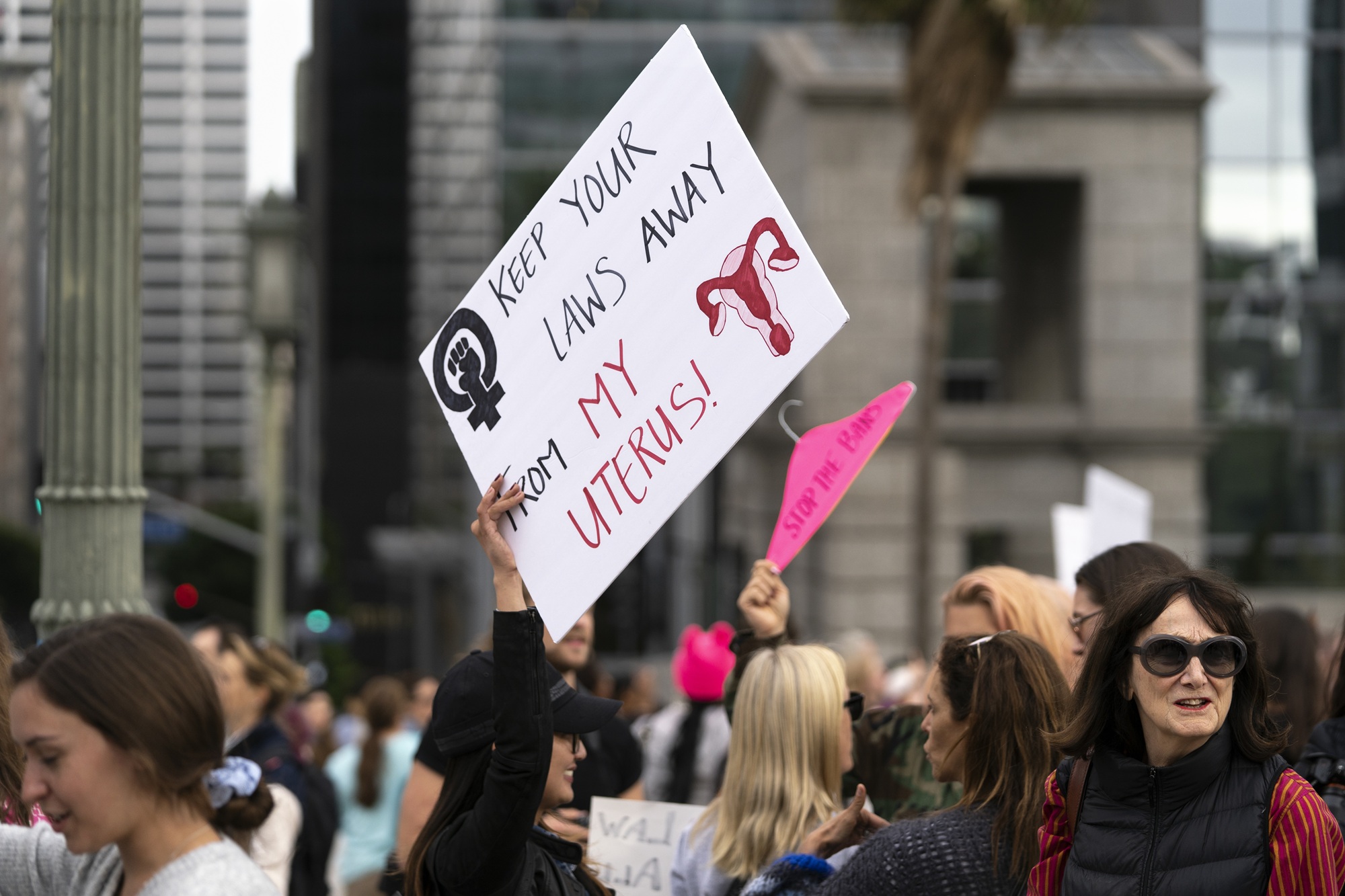
"caption": "Women rights activists in Los Angeles on May 21, 2019, protested against restrictions on abortions after Alabama passed the most restrictive abortion bans in the U.S. A federal funding cutoff threatens California’s sex education program for at-risk youth after the state refused to remove lessons on gender identity, impacting thousands of students and nonprofits.",
"credit": "Ronen Tivony/SOPA Images/LightRocket via Getty Images",
"altTag": null,
"description": null,
"imgSizes": {
"thumbnail": {
"file": "https://cdn.kqed.org/wp-content/uploads/sites/10/2025/08/SexEducationGetty-160x107.jpg",
"width": 160,
"height": 107,
"mimeType": "image/jpeg"
},
"1536x1536": {
"file": "https://cdn.kqed.org/wp-content/uploads/sites/10/2025/08/SexEducationGetty-1536x1024.jpg",
"width": 1536,
"height": 1024,
"mimeType": "image/jpeg"
},
"post-thumbnail": {
"file": "https://cdn.kqed.org/wp-content/uploads/sites/10/2025/08/SexEducationGetty-672x372.jpg",
"width": 672,
"height": 372,
"mimeType": "image/jpeg"
},
"twentyfourteen-full-width": {
"file": "https://cdn.kqed.org/wp-content/uploads/sites/10/2025/08/SexEducationGetty-1038x576.jpg",
"width": 1038,
"height": 576,
"mimeType": "image/jpeg"
},
"kqedFullSize": {
"file": "https://cdn.kqed.org/wp-content/uploads/sites/10/2025/08/SexEducationGetty.jpg",
"width": 2000,
"height": 1333
}
},
"isLoading": false,
"fetchFailed": false
},
"news_12053096": {
"type": "attachments",
"id": "news_12053096",
"meta": {
"index": "attachments_1716263798",
"site": "news",
"id": "12053096",
"found": true
},
"title": "Trans Flag Hung From El Capitan",
"publishDate": 1755734796,
"status": "inherit",
"parent": 12053078,
"modified": 1755734855,
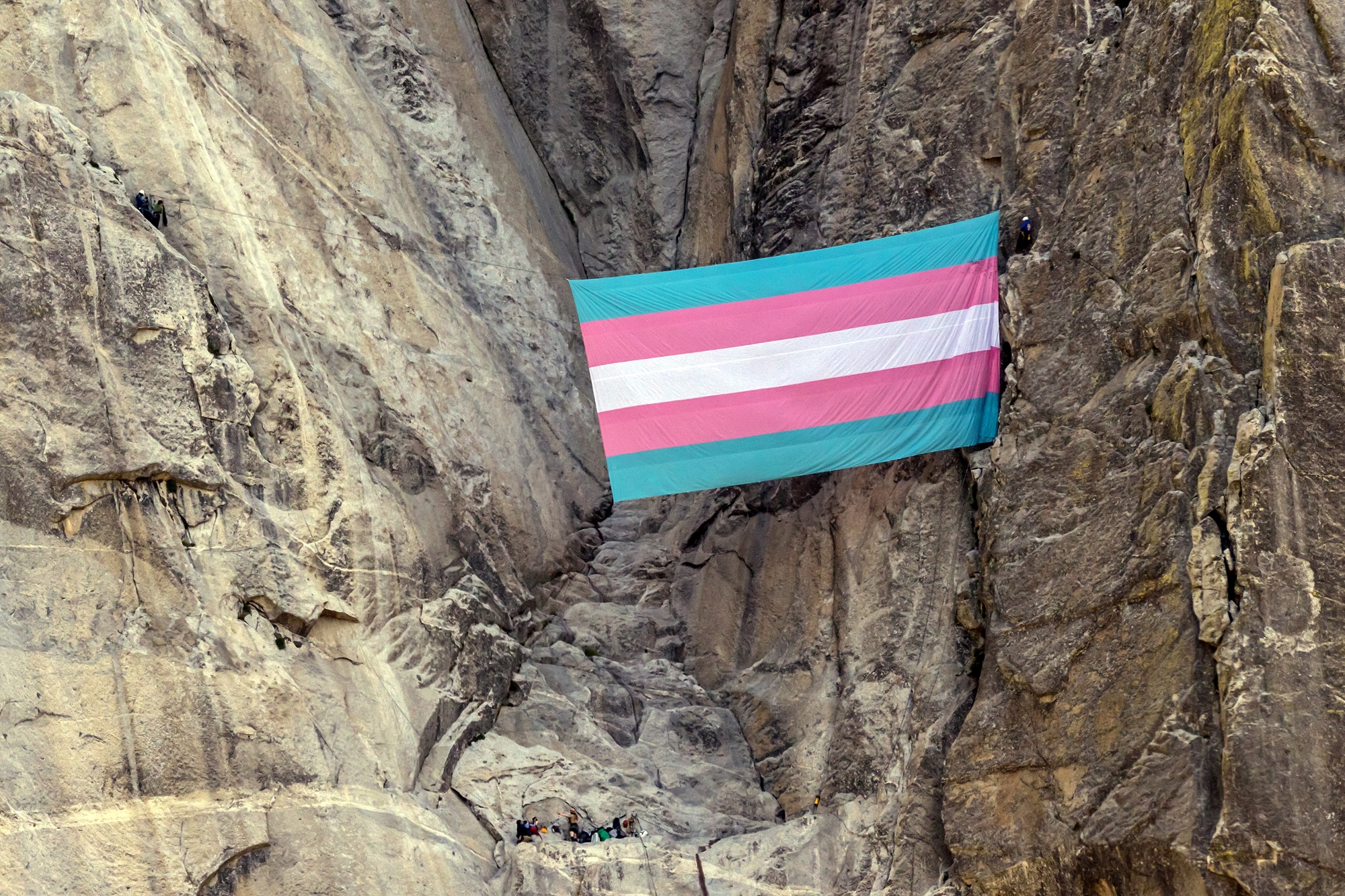
"caption": "A group of transgender, queer and allied climbers unfurled a trans pride flag on El Capitan in Yosemite National Park, California, on May 20, 2025. The flag is the largest flag ever flown on the famed granite monolith in the park, and hangs beneath Heart Ledges, a symbolic location near the literal and figurative heart of El Capitan. ",
"credit": "Carlos Avila Gonzalez/San Francisco Chronicle via Getty Images",
"altTag": null,
"description": null,
"imgSizes": {
"thumbnail": {
"file": "https://cdn.kqed.org/wp-content/uploads/sites/10/2025/08/YosemiteTransFlagGetty-160x107.jpg",
"width": 160,
"height": 107,
"mimeType": "image/jpeg"
},
"1536x1536": {
"file": "https://cdn.kqed.org/wp-content/uploads/sites/10/2025/08/YosemiteTransFlagGetty-1536x1024.jpg",
"width": 1536,
"height": 1024,
"mimeType": "image/jpeg"
},
"post-thumbnail": {
"file": "https://cdn.kqed.org/wp-content/uploads/sites/10/2025/08/YosemiteTransFlagGetty-672x372.jpg",
"width": 672,
"height": 372,
"mimeType": "image/jpeg"
},
"twentyfourteen-full-width": {
"file": "https://cdn.kqed.org/wp-content/uploads/sites/10/2025/08/YosemiteTransFlagGetty-1038x576.jpg",
"width": 1038,
"height": 576,
"mimeType": "image/jpeg"
},
"kqedFullSize": {
"file": "https://cdn.kqed.org/wp-content/uploads/sites/10/2025/08/YosemiteTransFlagGetty.jpg",
"width": 2000,
"height": 1333
}
},
"isLoading": false,
"fetchFailed": false
},
"news_12050964": {
"type": "attachments",
"id": "news_12050964",
"meta": {
"index": "attachments_1716263798",
"site": "news",
"id": "12050964",
"found": true
},
"title": "20250725_KaiserTransProtest_GC-1_qed",
"publishDate": 1754419388,
"status": "inherit",
"parent": 12050945,
"modified": 1754419407,
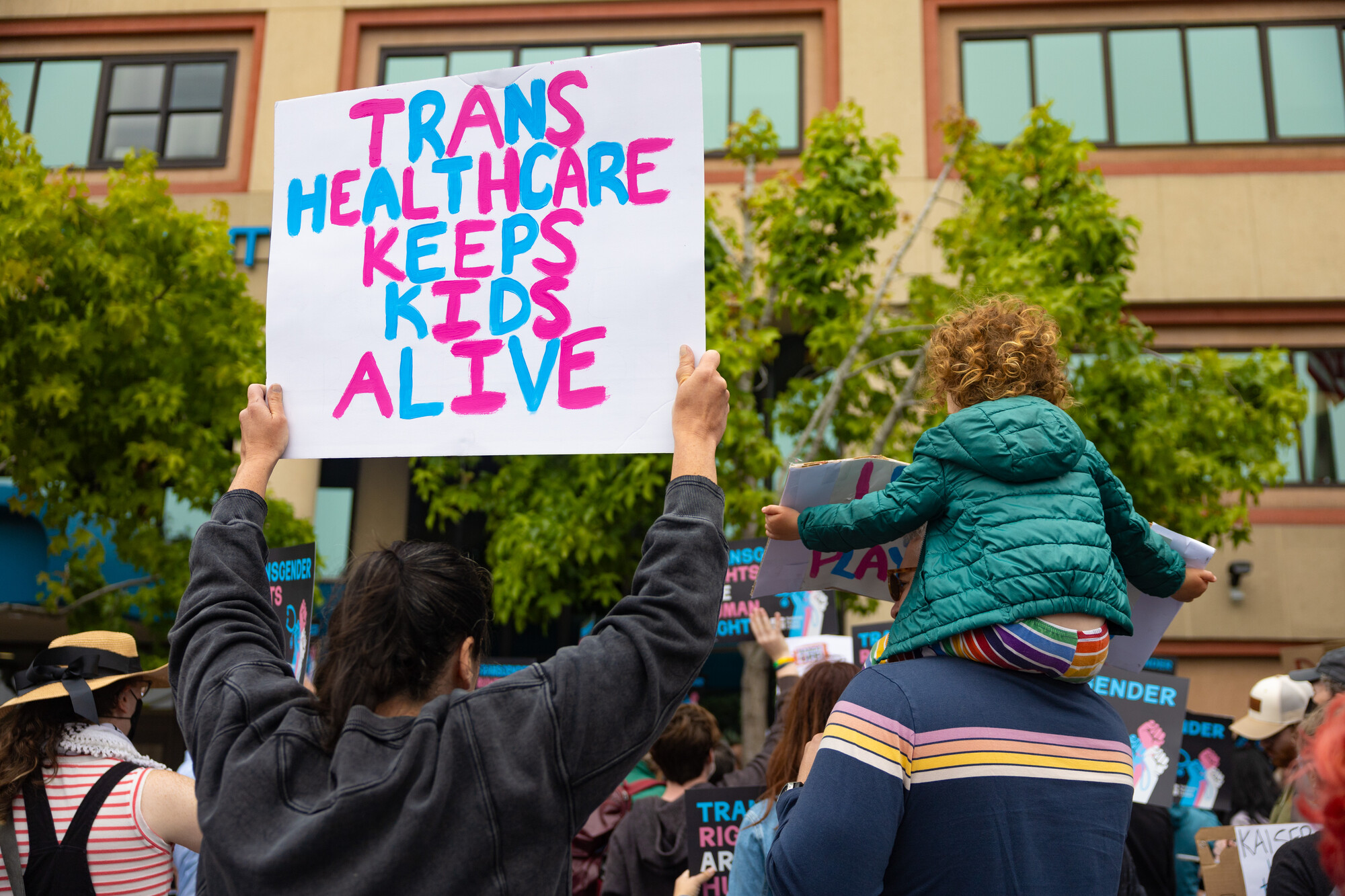
"caption": "Union nurses and community supporters rally outside of Kaiser Permanente, honoring transgender patients affected by Kaiser’s decision to halt gender-affirming care to minors, on July 25, 2025.",
"credit": "Gina Castro/KQED",
"altTag": null,
"description": null,
"imgSizes": {
"thumbnail": {
"file": "https://cdn.kqed.org/wp-content/uploads/sites/10/2025/08/20250725_KaiserTransProtest_GC-1_qed-160x107.jpg",
"width": 160,
"height": 107,
"mimeType": "image/jpeg"
},
"1536x1536": {
"file": "https://cdn.kqed.org/wp-content/uploads/sites/10/2025/08/20250725_KaiserTransProtest_GC-1_qed-1536x1024.jpg",
"width": 1536,
"height": 1024,
"mimeType": "image/jpeg"
},
"post-thumbnail": {
"file": "https://cdn.kqed.org/wp-content/uploads/sites/10/2025/08/20250725_KaiserTransProtest_GC-1_qed-672x372.jpg",
"width": 672,
"height": 372,
"mimeType": "image/jpeg"
},
"twentyfourteen-full-width": {
"file": "https://cdn.kqed.org/wp-content/uploads/sites/10/2025/08/20250725_KaiserTransProtest_GC-1_qed-1038x576.jpg",
"width": 1038,
"height": 576,
"mimeType": "image/jpeg"
},
"kqedFullSize": {
"file": "https://cdn.kqed.org/wp-content/uploads/sites/10/2025/08/20250725_KaiserTransProtest_GC-1_qed.jpg",
"width": 2000,
"height": 1333
}
},
"isLoading": false,
"fetchFailed": false
},
"news_12049935": {
"type": "attachments",
"id": "news_12049935",
"meta": {
"index": "attachments_1716263798",
"site": "news",
"id": "12049935",
"found": true
},
"title": "20250725_KaiserTransProtest_GC-7_qed",
"publishDate": 1753496897,
"status": "inherit",
"parent": 12049666,
"modified": 1753496913,
"caption": "Union nurses and community supporters rally outside of Kaiser Permanente, honoring transgender patients affected by Kaiser’s decision to halt gender-affirming care to minors, on July 25, 2025.",
"credit": "Gina Castro/KQED",
"altTag": null,
"description": null,
"imgSizes": {
"thumbnail": {
"file": "https://cdn.kqed.org/wp-content/uploads/sites/10/2025/07/20250725_KaiserTransProtest_GC-7_qed-160x107.jpg",
"width": 160,
"height": 107,
"mimeType": "image/jpeg"
},
"1536x1536": {
"file": "https://cdn.kqed.org/wp-content/uploads/sites/10/2025/07/20250725_KaiserTransProtest_GC-7_qed-1536x1024.jpg",
"width": 1536,
"height": 1024,
"mimeType": "image/jpeg"
},
"post-thumbnail": {
"file": "https://cdn.kqed.org/wp-content/uploads/sites/10/2025/07/20250725_KaiserTransProtest_GC-7_qed-672x372.jpg",
"width": 672,
"height": 372,
"mimeType": "image/jpeg"
},
"twentyfourteen-full-width": {
"file": "https://cdn.kqed.org/wp-content/uploads/sites/10/2025/07/20250725_KaiserTransProtest_GC-7_qed-1038x576.jpg",
"width": 1038,
"height": 576,
"mimeType": "image/jpeg"
},
"kqedFullSize": {
"file": "https://cdn.kqed.org/wp-content/uploads/sites/10/2025/07/20250725_KaiserTransProtest_GC-7_qed.jpg",
"width": 2000,
"height": 1333
}
},
"isLoading": false,
"fetchFailed": false
},
"news_11963409": {
"type": "attachments",
"id": "news_11963409",
"meta": {
"index": "attachments_1716263798",
"site": "news",
"id": "11963409",
"found": true
},
"title": "The Kaiser Permanente Oakland Medical Center in Oakland on Oct. 4, 2023",
"publishDate": 1696444787,
"status": "inherit",
"parent": 12059551,
"modified": 1760140155,
"caption": "The Kaiser Permanente Oakland Medical Center in Oakland on Oct. 4, 2023.",
"credit": "Martin do Nascimento/KQED",
"altTag": "A large modern building with the words \"Kaiser Permanente\" across the top.",
"description": null,
"imgSizes": {
"medium": {
"file": "https://cdn.kqed.org/wp-content/uploads/sites/10/2023/10/231004-KAISER-STRIKE-MD-10-KQED-800x533.jpg",
"width": 800,
"height": 533,
"mimeType": "image/jpeg"
},
"large": {
"file": "https://cdn.kqed.org/wp-content/uploads/sites/10/2023/10/231004-KAISER-STRIKE-MD-10-KQED-1020x680.jpg",
"width": 1020,
"height": 680,
"mimeType": "image/jpeg"
},
"thumbnail": {
"file": "https://cdn.kqed.org/wp-content/uploads/sites/10/2023/10/231004-KAISER-STRIKE-MD-10-KQED-160x107.jpg",
"width": 160,
"height": 107,
"mimeType": "image/jpeg"
},
"1536x1536": {
"file": "https://cdn.kqed.org/wp-content/uploads/sites/10/2023/10/231004-KAISER-STRIKE-MD-10-KQED-1536x1024.jpg",
"width": 1536,
"height": 1024,
"mimeType": "image/jpeg"
},
"post-thumbnail": {
"file": "https://cdn.kqed.org/wp-content/uploads/sites/10/2023/10/231004-KAISER-STRIKE-MD-10-KQED-672x372.jpg",
"width": 672,
"height": 372,
"mimeType": "image/jpeg"
},
"twentyfourteen-full-width": {
"file": "https://cdn.kqed.org/wp-content/uploads/sites/10/2023/10/231004-KAISER-STRIKE-MD-10-KQED-1038x576.jpg",
"width": 1038,
"height": 576,
"mimeType": "image/jpeg"
},
"full-width": {
"file": "https://cdn.kqed.org/wp-content/uploads/sites/10/2023/10/231004-KAISER-STRIKE-MD-10-KQED-1920x1280.jpg",
"width": 1920,
"height": 1280,
"mimeType": "image/jpeg"
},
"kqedFullSize": {
"file": "https://cdn.kqed.org/wp-content/uploads/sites/10/2023/10/231004-KAISER-STRIKE-MD-10-KQED.jpg",
"width": 2000,
"height": 1333
}
},
"isLoading": false,
"fetchFailed": false
},
"news_11884072": {
"type": "attachments",
"id": "news_11884072",
"meta": {
"index": "attachments_1716263798",
"site": "news",
"id": "11884072",
"found": true
},
"title": "RS50353_007_LosGatos_HighSchool_07212021-qut",
"publishDate": 1628243552,
"status": "inherit",
"parent": 11884066,
"modified": 1752085293,
"caption": "The football field and track at Los Gatos High School sit empty during summer vacation on July 21, 2021.",
"credit": "Beth LaBerge/KQED",
"altTag": null,
"description": null,
"imgSizes": {
"medium": {
"file": "https://cdn.kqed.org/wp-content/uploads/sites/10/2021/08/RS50353_007_LosGatos_HighSchool_07212021-qut-800x533.jpg",
"width": 800,
"height": 533,
"mimeType": "image/jpeg"
},
"large": {
"file": "https://cdn.kqed.org/wp-content/uploads/sites/10/2021/08/RS50353_007_LosGatos_HighSchool_07212021-qut-1020x680.jpg",
"width": 1020,
"height": 680,
"mimeType": "image/jpeg"
},
"thumbnail": {
"file": "https://cdn.kqed.org/wp-content/uploads/sites/10/2021/08/RS50353_007_LosGatos_HighSchool_07212021-qut-160x107.jpg",
"width": 160,
"height": 107,
"mimeType": "image/jpeg"
},
"1536x1536": {
"file": "https://cdn.kqed.org/wp-content/uploads/sites/10/2021/08/RS50353_007_LosGatos_HighSchool_07212021-qut-1536x1024.jpg",
"width": 1536,
"height": 1024,
"mimeType": "image/jpeg"
},
"post-thumbnail": {
"file": "https://cdn.kqed.org/wp-content/uploads/sites/10/2021/08/RS50353_007_LosGatos_HighSchool_07212021-qut-672x372.jpg",
"width": 672,
"height": 372,
"mimeType": "image/jpeg"
},
"twentyfourteen-full-width": {
"file": "https://cdn.kqed.org/wp-content/uploads/sites/10/2021/08/RS50353_007_LosGatos_HighSchool_07212021-qut-1038x576.jpg",
"width": 1038,
"height": 576,
"mimeType": "image/jpeg"
},
"kqedFullSize": {
"file": "https://cdn.kqed.org/wp-content/uploads/sites/10/2021/08/RS50353_007_LosGatos_HighSchool_07212021-qut.jpg",
"width": 1920,
"height": 1280
}
},
"isLoading": false,
"fetchFailed": false
},
"news_12046496": {
"type": "attachments",
"id": "news_12046496",
"meta": {
"index": "attachments_1716263798",
"site": "news",
"id": "12046496",
"found": true
},
"title": "250629-SFPrideParade-04-BL",
"publishDate": 1751233790,
"status": "inherit",
"parent": 0,
"modified": 1751234683,
"caption": "Juanita MORE! (center), drag performer and longtime LGBTQ+ activist, marches in the San Francisco Pride Parade on June 29, 2025.",
"credit": "Beth LaBerge/KQED",
"altTag": "Three people walk ahead of a parade with thousands of people marching behind them holding signs.",
"description": null,
"imgSizes": {
"thumbnail": {
"file": "https://cdn.kqed.org/wp-content/uploads/sites/10/2025/06/250629-SFPrideParade-04-BL-160x107.jpg",
"width": 160,
"height": 107,
"mimeType": "image/jpeg"
},
"1536x1536": {
"file": "https://cdn.kqed.org/wp-content/uploads/sites/10/2025/06/250629-SFPrideParade-04-BL-1536x1024.jpg",
"width": 1536,
"height": 1024,
"mimeType": "image/jpeg"
},
"post-thumbnail": {
"file": "https://cdn.kqed.org/wp-content/uploads/sites/10/2025/06/250629-SFPrideParade-04-BL-672x372.jpg",
"width": 672,
"height": 372,
"mimeType": "image/jpeg"
},
"twentyfourteen-full-width": {
"file": "https://cdn.kqed.org/wp-content/uploads/sites/10/2025/06/250629-SFPrideParade-04-BL-1038x576.jpg",
"width": 1038,
"height": 576,
"mimeType": "image/jpeg"
},
"kqedFullSize": {
"file": "https://cdn.kqed.org/wp-content/uploads/sites/10/2025/06/250629-SFPrideParade-04-BL.jpg",
"width": 2000,
"height": 1333
}
},
"isLoading": false,
"fetchFailed": false
},
"news_12046520": {
"type": "attachments",
"id": "news_12046520",
"meta": {
"index": "attachments_1716263798",
"site": "news",
"id": "12046520",
"found": true
},
"title": "IMG_7669",
"publishDate": 1751238109,
"status": "inherit",
"parent": 12046470,
"modified": 1751238634,
"caption": "A still image of Panda Dulce from the film \"After What Happened At The Library.\"",
"credit": "Photo Courtesy of Kyle Casey Chu",
"altTag": "A closeup of a person with light blue hair and makeup.",
"description": null,
"imgSizes": {
"thumbnail": {
"file": "https://cdn.kqed.org/wp-content/uploads/sites/10/2025/06/IMG_7669-160x87.jpg",
"width": 160,
"height": 87,
"mimeType": "image/jpeg"
},
"post-thumbnail": {
"file": "https://cdn.kqed.org/wp-content/uploads/sites/10/2025/06/IMG_7669-672x372.jpg",
"width": 672,
"height": 372,
"mimeType": "image/jpeg"
},
"kqedFullSize": {
"file": "https://cdn.kqed.org/wp-content/uploads/sites/10/2025/06/IMG_7669.jpg",
"width": 960,
"height": 524
}
},
"isLoading": false,
"fetchFailed": false
},
"news_12046209": {
"type": "attachments",
"id": "news_12046209",
"meta": {
"index": "attachments_1716263798",
"site": "news",
"id": "12046209",
"found": true
},
"title": "IMG_1062",
"publishDate": 1750976420,
"status": "inherit",
"parent": 12045988,
"modified": 1750976436,
"caption": null,
"credit": "Illustration by Anna Vignet",
"altTag": null,
"description": null,
"imgSizes": {
"medium": {
"file": "https://cdn.kqed.org/wp-content/uploads/sites/10/2025/06/IMG_1062-2000x1500.jpg",
"width": 2000,
"height": 1500,
"mimeType": "image/jpeg"
},
"large": {
"file": "https://cdn.kqed.org/wp-content/uploads/sites/10/2025/06/IMG_1062-2000x1500.jpg",
"width": 2000,
"height": 1500,
"mimeType": "image/jpeg"
},
"thumbnail": {
"file": "https://cdn.kqed.org/wp-content/uploads/sites/10/2025/06/IMG_1062-160x120.jpg",
"width": 160,
"height": 120,
"mimeType": "image/jpeg"
},
"1536x1536": {
"file": "https://cdn.kqed.org/wp-content/uploads/sites/10/2025/06/IMG_1062-1536x1152.jpg",
"width": 1536,
"height": 1152,
"mimeType": "image/jpeg"
},
"2048x2048": {
"file": "https://cdn.kqed.org/wp-content/uploads/sites/10/2025/06/IMG_1062-2048x1536.jpg",
"width": 2048,
"height": 1536,
"mimeType": "image/jpeg"
},
"post-thumbnail": {
"file": "https://cdn.kqed.org/wp-content/uploads/sites/10/2025/06/IMG_1062-672x372.jpg",
"width": 672,
"height": 372,
"mimeType": "image/jpeg"
},
"twentyfourteen-full-width": {
"file": "https://cdn.kqed.org/wp-content/uploads/sites/10/2025/06/IMG_1062-1038x576.jpg",
"width": 1038,
"height": 576,
"mimeType": "image/jpeg"
},
"full-width": {
"file": "https://cdn.kqed.org/wp-content/uploads/sites/10/2025/06/IMG_1062-2000x1500.jpg",
"width": 2000,
"height": 1500,
"mimeType": "image/jpeg"
},
"kqedFullSize": {
"file": "https://cdn.kqed.org/wp-content/uploads/sites/10/2025/06/IMG_1062.jpg",
"width": 2560,
"height": 1920
}
},
"isLoading": false,
"fetchFailed": false
},
"news_12041664": {
"type": "attachments",
"id": "news_12041664",
"meta": {
"index": "attachments_1716263798",
"site": "news",
"id": "12041664",
"found": true
},
"title": "Chinatown Pride 2025",
"publishDate": 1748352201,
"status": "inherit",
"parent": 12045988,
"modified": 1750889785,
"caption": "Peipei Ma’Bilz performs outside of the Chinese Culture Center in San Francisco during the 2025 Chinatown Pride celebration on Saturday, May 24, 2025.",
"credit": "Estefany Gonzalez for KQED",
"altTag": null,
"description": null,
"imgSizes": {
"medium": {
"file": "https://cdn.kqed.org/wp-content/uploads/sites/10/2025/05/05242025_CHINATOWNPRIDEWALKINGTOUR_EG060_QED-KQED-800x533.jpg",
"width": 800,
"height": 533,
"mimeType": "image/jpeg"
},
"large": {
"file": "https://cdn.kqed.org/wp-content/uploads/sites/10/2025/05/05242025_CHINATOWNPRIDEWALKINGTOUR_EG060_QED-KQED-1020x680.jpg",
"width": 1020,
"height": 680,
"mimeType": "image/jpeg"
},
"thumbnail": {
"file": "https://cdn.kqed.org/wp-content/uploads/sites/10/2025/05/05242025_CHINATOWNPRIDEWALKINGTOUR_EG060_QED-KQED-160x107.jpg",
"width": 160,
"height": 107,
"mimeType": "image/jpeg"
},
"1536x1536": {
"file": "https://cdn.kqed.org/wp-content/uploads/sites/10/2025/05/05242025_CHINATOWNPRIDEWALKINGTOUR_EG060_QED-KQED-1536x1024.jpg",
"width": 1536,
"height": 1024,
"mimeType": "image/jpeg"
},
"post-thumbnail": {
"file": "https://cdn.kqed.org/wp-content/uploads/sites/10/2025/05/05242025_CHINATOWNPRIDEWALKINGTOUR_EG060_QED-KQED-672x372.jpg",
"width": 672,
"height": 372,
"mimeType": "image/jpeg"
},
"twentyfourteen-full-width": {
"file": "https://cdn.kqed.org/wp-content/uploads/sites/10/2025/05/05242025_CHINATOWNPRIDEWALKINGTOUR_EG060_QED-KQED-1038x576.jpg",
"width": 1038,
"height": 576,
"mimeType": "image/jpeg"
},
"full-width": {
"file": "https://cdn.kqed.org/wp-content/uploads/sites/10/2025/05/05242025_CHINATOWNPRIDEWALKINGTOUR_EG060_QED-KQED-1920x1280.jpg",
"width": 1920,
"height": 1280,
"mimeType": "image/jpeg"
},
"kqedFullSize": {
"file": "https://cdn.kqed.org/wp-content/uploads/sites/10/2025/05/05242025_CHINATOWNPRIDEWALKINGTOUR_EG060_QED-KQED.jpg",
"width": 2000,
"height": 1333
}
},
"isLoading": false,
"fetchFailed": false
},
"news_12045910": {
"type": "attachments",
"id": "news_12045910",
"meta": {
"index": "attachments_1716263798",
"site": "news",
"id": "12045910",
"found": true
},
"title": "007_KQED_SFDykeMarch_06252022_qed",
"publishDate": 1750873530,
"status": "inherit",
"parent": 12045907,
"modified": 1750873542,
"caption": "The San Francisco Dyke March fills 16th Street in the Mission District on June 25, 2022.",
"credit": "Beth LaBerge/KQED",
"altTag": null,
"description": null,
"imgSizes": {
"thumbnail": {
"file": "https://cdn.kqed.org/wp-content/uploads/sites/10/2025/06/007_KQED_SFDykeMarch_06252022_qed-160x107.jpg",
"width": 160,
"height": 107,
"mimeType": "image/jpeg"
},
"1536x1536": {
"file": "https://cdn.kqed.org/wp-content/uploads/sites/10/2025/06/007_KQED_SFDykeMarch_06252022_qed-1536x1024.jpg",
"width": 1536,
"height": 1024,
"mimeType": "image/jpeg"
},
"post-thumbnail": {
"file": "https://cdn.kqed.org/wp-content/uploads/sites/10/2025/06/007_KQED_SFDykeMarch_06252022_qed-672x372.jpg",
"width": 672,
"height": 372,
"mimeType": "image/jpeg"
},
"twentyfourteen-full-width": {
"file": "https://cdn.kqed.org/wp-content/uploads/sites/10/2025/06/007_KQED_SFDykeMarch_06252022_qed-1038x576.jpg",
"width": 1038,
"height": 576,
"mimeType": "image/jpeg"
},
"kqedFullSize": {
"file": "https://cdn.kqed.org/wp-content/uploads/sites/10/2025/06/007_KQED_SFDykeMarch_06252022_qed.jpg",
"width": 2000,
"height": 1333
}
},
"isLoading": false,
"fetchFailed": false
},
"news_11992016": {
"type": "attachments",
"id": "news_11992016",
"meta": {
"index": "attachments_1716263798",
"site": "news",
"id": "11992016",
"found": true
},
"title": "017_KQED_SFPrideParade_06262022",
"publishDate": 1719376408,
"status": "inherit",
"parent": 11991990,
"modified": 1719376451,
"caption": "Drag queens Nicki Jizz, Heaven on Earth and Snaxx dance on the Oasis SF float during the San Francisco Pride Parade on June 26, 2022.",
"credit": "Beth LaBerge/KQED",
"altTag": "Drag dancer dance on an outdoor stage.",
"description": null,
"imgSizes": {
"medium": {
"file": "https://cdn.kqed.org/wp-content/uploads/sites/10/2024/06/017_KQED_SFPrideParade_06262022-800x533.jpg",
"width": 800,
"height": 533,
"mimeType": "image/jpeg"
},
"large": {
"file": "https://cdn.kqed.org/wp-content/uploads/sites/10/2024/06/017_KQED_SFPrideParade_06262022-1020x680.jpg",
"width": 1020,
"height": 680,
"mimeType": "image/jpeg"
},
"thumbnail": {
"file": "https://cdn.kqed.org/wp-content/uploads/sites/10/2024/06/017_KQED_SFPrideParade_06262022-160x107.jpg",
"width": 160,
"height": 107,
"mimeType": "image/jpeg"
},
"1536x1536": {
"file": "https://cdn.kqed.org/wp-content/uploads/sites/10/2024/06/017_KQED_SFPrideParade_06262022-1536x1024.jpg",
"width": 1536,
"height": 1024,
"mimeType": "image/jpeg"
},
"2048x2048": {
"file": "https://cdn.kqed.org/wp-content/uploads/sites/10/2024/06/017_KQED_SFPrideParade_06262022-2048x1365.jpg",
"width": 2048,
"height": 1365,
"mimeType": "image/jpeg"
},
"post-thumbnail": {
"file": "https://cdn.kqed.org/wp-content/uploads/sites/10/2024/06/017_KQED_SFPrideParade_06262022-672x372.jpg",
"width": 672,
"height": 372,
"mimeType": "image/jpeg"
},
"twentyfourteen-full-width": {
"file": "https://cdn.kqed.org/wp-content/uploads/sites/10/2024/06/017_KQED_SFPrideParade_06262022-1038x576.jpg",
"width": 1038,
"height": 576,
"mimeType": "image/jpeg"
},
"full-width": {
"file": "https://cdn.kqed.org/wp-content/uploads/sites/10/2024/06/017_KQED_SFPrideParade_06262022-1920x1280.jpg",
"width": 1920,
"height": 1280,
"mimeType": "image/jpeg"
},
"kqedFullSize": {
"file": "https://cdn.kqed.org/wp-content/uploads/sites/10/2024/06/017_KQED_SFPrideParade_06262022-scaled.jpg",
"width": 2560,
"height": 1707
}
},
"isLoading": false,
"fetchFailed": false
}
},
"audioPlayerReducer": {
"postId": "stream_live",
"isPaused": true,
"isPlaying": false,
"pfsActive": false,
"pledgeModalIsOpen": true,
"playerDrawerIsOpen": false,
"liveAudioPlayStartedAt": 0,
"liveAudioPlayContext": ""
},
"authorsReducer": {
"kqed": {
"type": "authors",
"id": "236",
"meta": {
"index": "authors_1716337520",
"id": "236",
"found": true
},
"name": "KQED News Staff",
"firstName": "KQED News Staff",
"lastName": null,
"slug": "kqed",
"email": "faq@kqed.org",
"display_author_email": false,
"staff_mastheads": [],
"title": null,
"bio": null,
"avatar": "https://secure.gravatar.com/avatar/ef0e801a68c4c54afa9180db14084167?s=600&d=blank&r=g",
"twitter": null,
"facebook": null,
"instagram": null,
"linkedin": null,
"sites": [
{
"site": "arts",
"roles": [
"contributor"
]
},
{
"site": "news",
"roles": [
"editor"
]
},
{
"site": "futureofyou",
"roles": [
"author"
]
}
],
"headData": {
"title": "KQED News Staff | KQED",
"description": null,
"ogImgSrc": "https://secure.gravatar.com/avatar/ef0e801a68c4c54afa9180db14084167?s=600&d=blank&r=g",
"twImgSrc": "https://secure.gravatar.com/avatar/ef0e801a68c4c54afa9180db14084167?s=600&d=blank&r=g"
},
"isLoading": false,
"link": "/author/kqed"
},
"matthewgreen": {
"type": "authors",
"id": "1263",
"meta": {
"index": "authors_1716337520",
"id": "1263",
"found": true
},
"name": "Matthew Green",
"firstName": "Matthew",
"lastName": "Green",
"slug": "matthewgreen",
"email": "mgreen@kqed.org",
"display_author_email": false,
"staff_mastheads": [],
"title": "KQED Editor/Reporter",
"bio": "Matthew Green is a digital media producer for KQED News. He previously produced \u003ca href=\"http://www.kqed.org/lowdown\">The Lowdown\u003c/a>, KQED’s multimedia news education blog. Matthew's written for numerous Bay Area publications, including the Oakland Tribune and San Francisco Chronicle. He also taught journalism classes at Fremont High School in East Oakland.\r\n\r\nEmail: mgreen@kqed.org; Twitter: @MGreenKQED",
"avatar": "https://secure.gravatar.com/avatar/3bf498d1267ca02c8494f33d8cfc575e?s=600&d=blank&r=g",
"twitter": "MGreenKQED",
"facebook": null,
"instagram": null,
"linkedin": null,
"sites": [
{
"site": "news",
"roles": []
},
{
"site": "lowdown",
"roles": []
},
{
"site": "science",
"roles": []
},
{
"site": "education",
"roles": []
},
{
"site": "quest",
"roles": []
},
{
"site": "liveblog",
"roles": []
}
],
"headData": {
"title": "Matthew Green | KQED",
"description": "KQED Editor/Reporter",
"ogImgSrc": "https://secure.gravatar.com/avatar/3bf498d1267ca02c8494f33d8cfc575e?s=600&d=blank&r=g",
"twImgSrc": "https://secure.gravatar.com/avatar/3bf498d1267ca02c8494f33d8cfc575e?s=600&d=blank&r=g"
},
"isLoading": false,
"link": "/author/matthewgreen"
},
"carlysevern": {
"type": "authors",
"id": "3243",
"meta": {
"index": "authors_1716337520",
"id": "3243",
"found": true
},
"name": "Carly Severn",
"firstName": "Carly",
"lastName": "Severn",
"slug": "carlysevern",
"email": "csevern@kqed.org",
"display_author_email": false,
"staff_mastheads": [
"news"
],
"title": "Senior Editor, Audience News ",
"bio": "Carly is KQED's Senior Editor of Audience News on the Digital News team, and has reported for the California Report Magazine, Bay Curious and KQED Arts. She's formerly the host of \u003ca href=\"http://ww2.kqed.org/pop/category/the-cooler/\" rel=\"noopener noreferrer\">The Cooler\u003c/a> podcast.",
"avatar": "https://secure.gravatar.com/avatar/54037bf5c128fe678f0ef26cec97a93f2e7f220a22d7285703328f12c42c1b1d?s=600&d=blank&r=g",
"twitter": "teacupinthebay",
"bluesky": null,
"facebook": null,
"instagram": null,
"linkedin": null,
"sites": [
{
"site": "",
"roles": [
"editor"
]
},
{
"site": "arts",
"roles": [
"editor"
]
},
{
"site": "news",
"roles": [
"administrator"
]
},
{
"site": "pop",
"roles": [
"editor"
]
},
{
"site": "futureofyou",
"roles": [
"editor"
]
},
{
"site": "about",
"roles": [
"administrator"
]
},
{
"site": "mindshift",
"roles": [
"editor"
]
},
{
"site": "bayareabites",
"roles": [
"editor"
]
},
{
"site": "stateofhealth",
"roles": [
"editor"
]
},
{
"site": "science",
"roles": [
"editor"
]
},
{
"site": "food",
"roles": [
"contributor"
]
},
{
"site": "forum",
"roles": [
"editor"
]
},
{
"site": "perspectives",
"roles": [
"administrator"
]
},
{
"site": "liveblog",
"roles": [
"editor"
]
}
],
"headData": {
"title": "Carly Severn | KQED",
"description": "Senior Editor, Audience News ",
"ogImgSrc": "https://secure.gravatar.com/avatar/54037bf5c128fe678f0ef26cec97a93f2e7f220a22d7285703328f12c42c1b1d?s=600&d=blank&r=g",
"twImgSrc": "https://secure.gravatar.com/avatar/54037bf5c128fe678f0ef26cec97a93f2e7f220a22d7285703328f12c42c1b1d?s=600&d=blank&r=g"
},
"isLoading": false,
"link": "/author/carlysevern"
},
"ccabreralomeli": {
"type": "authors",
"id": "11708",
"meta": {
"index": "authors_1716337520",
"id": "11708",
"found": true
},
"name": "Carlos Cabrera-Lomelí",
"firstName": "Carlos",
"lastName": "Cabrera-Lomelí",
"slug": "ccabreralomeli",
"email": "ccabreralomeli@KQED.org",
"display_author_email": true,
"staff_mastheads": [
"news"
],
"title": "Community Reporter",
"bio": "Carlos Cabrera-Lomelí is a community reporter with KQED's digital engagement team. He also reports and co-produces for KQED's bilingual news hub KQED en Español. He grew up in San Francisco's Mission District and has previously worked with Univision, 48 Hills and REFORMA in Mexico City.",
"avatar": "https://secure.gravatar.com/avatar/c309be9665e484f887b818c89e273ecc673004f426f36b24d00a4d813a2e0518?s=600&d=blank&r=g",
"twitter": "@LomeliCabrera",
"bluesky": null,
"facebook": null,
"instagram": null,
"linkedin": null,
"sites": [
{
"site": "arts",
"roles": [
"editor"
]
},
{
"site": "news",
"roles": [
"editor"
]
},
{
"site": "about",
"roles": [
"editor"
]
},
{
"site": "science",
"roles": [
"editor"
]
},
{
"site": "perspectives",
"roles": [
"editor"
]
},
{
"site": "elections",
"roles": [
"editor"
]
},
{
"site": "liveblog",
"roles": [
"contributor"
]
}
],
"headData": {
"title": "Carlos Cabrera-Lomelí | KQED",
"description": "Community Reporter",
"ogImgSrc": "https://secure.gravatar.com/avatar/c309be9665e484f887b818c89e273ecc673004f426f36b24d00a4d813a2e0518?s=600&d=blank&r=g",
"twImgSrc": "https://secure.gravatar.com/avatar/c309be9665e484f887b818c89e273ecc673004f426f36b24d00a4d813a2e0518?s=600&d=blank&r=g"
},
"isLoading": false,
"link": "/author/ccabreralomeli"
},
"nnavarro": {
"type": "authors",
"id": "11756",
"meta": {
"index": "authors_1716337520",
"id": "11756",
"found": true
},
"name": "Natalia Navarro",
"firstName": "Natalia",
"lastName": "Navarro",
"slug": "nnavarro",
"email": "nnavarro@kqed.org",
"display_author_email": true,
"staff_mastheads": [
"news"
],
"title": "Afternoon News Anchor",
"bio": "Natalia Navarro is KQED's afternoon radio news anchor. She covers daily breaking news, and specializes in covering LGBTQ+ communities and women's sports. Natalia came to KQED in 2021 from Colorado Public Radio, where she was a reporter and host, and worked on a health team to cover the COVID-19 pandemic. She has received several awards for her work from organizations including the San Francisco Press Club, Society of Professional Journalists and the Colorado Broadcasters Association. Natalia is originally from Tucson, Arizona, where she got her start in journalism writing for the Arizona Daily Star, Arizona Public Media and the Tucson Weekly. Natalia earned her bachelor's degree in journalism and economics, and her master's degree in journalism from the University of Arizona.",
"avatar": "https://secure.gravatar.com/avatar/a2bdb19fd9520bdea295a2d5f9b2ad65ec51cf0bf559fb1cc041d3a0a04d62ad?s=600&d=blank&r=g",
"twitter": null,
"bluesky": null,
"facebook": null,
"instagram": "https://www.instagram.com/radionavarro/",
"linkedin": null,
"sites": [
{
"site": "news",
"roles": [
"editor"
]
}
],
"headData": {
"title": "Natalia Navarro | KQED",
"description": "Afternoon News Anchor",
"ogImgSrc": "https://secure.gravatar.com/avatar/a2bdb19fd9520bdea295a2d5f9b2ad65ec51cf0bf559fb1cc041d3a0a04d62ad?s=600&d=blank&r=g",
"twImgSrc": "https://secure.gravatar.com/avatar/a2bdb19fd9520bdea295a2d5f9b2ad65ec51cf0bf559fb1cc041d3a0a04d62ad?s=600&d=blank&r=g"
},
"isLoading": false,
"link": "/author/nnavarro"
},
"rvasquez": {
"type": "authors",
"id": "11860",
"meta": {
"index": "authors_1716337520",
"id": "11860",
"found": true
},
"name": "Rachael Vasquez",
"firstName": "Rachael",
"lastName": "Vasquez",
"slug": "rvasquez",
"email": "rvasquez@KQED.org",
"display_author_email": false,
"staff_mastheads": [
"news"
],
"title": "KQED Contributor",
"bio": "Rachael Vasquez is a weekend host and editor at KQED. She’s worked in public radio for years, most recently at Wisconsin Public Radio in Madison, Wis. where she woke up very early as a producer for the network’s statewide \"Morning Edition\" broadcast, later serving as a producer for the stations’s afternoon talk show \"Central Time,\" and going on to report on business and economics during the coronavirus pandemic. In addition to hearing her anchor the afternoon newscasts every weekend at KQED, you can find her working with a number of different teams including the weekday newsroom and \"Forum.\" Rachael is an East Bay native who loves watching old movies and cooking her abuelita’s recipes.",
"avatar": "https://secure.gravatar.com/avatar/a1defdae97cbdde04c13baacacd7c94a?s=600&d=blank&r=g",
"twitter": null,
"facebook": null,
"instagram": null,
"linkedin": null,
"sites": [
{
"site": "news",
"roles": [
"editor"
]
}
],
"headData": {
"title": "Rachael Vasquez | KQED",
"description": "KQED Contributor",
"ogImgSrc": "https://secure.gravatar.com/avatar/a1defdae97cbdde04c13baacacd7c94a?s=600&d=blank&r=g",
"twImgSrc": "https://secure.gravatar.com/avatar/a1defdae97cbdde04c13baacacd7c94a?s=600&d=blank&r=g"
},
"isLoading": false,
"link": "/author/rvasquez"
},
"nkhan": {
"type": "authors",
"id": "11867",
"meta": {
"index": "authors_1716337520",
"id": "11867",
"found": true
},
"name": "Nisa Khan",
"firstName": "Nisa",
"lastName": "Khan",
"slug": "nkhan",
"email": "nkhan@kqed.org",
"display_author_email": false,
"staff_mastheads": [],
"title": "KQED Contributor",
"bio": "Nisa Khan is a reporter for KQED's Audience News Desk. She was formerly a data reporter at Michigan Radio. She earned a Bachelor of Science in Information from the University of Michigan and a Master of Arts in Communication from Stanford University.",
"avatar": "https://secure.gravatar.com/avatar/8720459eef081ff64582b3506b124d58523e80e120704a0cbd9892533c914991?s=600&d=blank&r=g",
"twitter": "mnisakhan",
"bluesky": null,
"facebook": null,
"instagram": null,
"linkedin": null,
"sites": [
{
"site": "arts",
"roles": [
"editor"
]
},
{
"site": "news",
"roles": [
"editor"
]
},
{
"site": "science",
"roles": [
"editor",
"author"
]
},
{
"site": "forum",
"roles": [
"editor"
]
},
{
"site": "liveblog",
"roles": [
"contributor"
]
}
],
"headData": {
"title": "Nisa Khan | KQED",
"description": "KQED Contributor",
"ogImgSrc": "https://secure.gravatar.com/avatar/8720459eef081ff64582b3506b124d58523e80e120704a0cbd9892533c914991?s=600&d=blank&r=g",
"twImgSrc": "https://secure.gravatar.com/avatar/8720459eef081ff64582b3506b124d58523e80e120704a0cbd9892533c914991?s=600&d=blank&r=g"
},
"isLoading": false,
"link": "/author/nkhan"
},
"jservantez": {
"type": "authors",
"id": "11909",
"meta": {
"index": "authors_1716337520",
"id": "11909",
"found": true
},
"name": "Jared Servantez",
"firstName": "Jared",
"lastName": "Servantez",
"slug": "jservantez",
"email": "jservantez@kqed.org",
"display_author_email": true,
"staff_mastheads": [
"news"
],
"title": "KQED Contributor",
"bio": "Jared Servantez is the editor of KQED's Express Desk, leading the newsroom's online breaking news operation. He most recently worked for the Los Angeles Times, where he served as a breaking news editor, the Metro Desk's night editor, and a copy editor. Jared is a graduate of the USC Annenberg School for Communication and Journalism.",
"avatar": "https://secure.gravatar.com/avatar/f0e317c67bb498c3f077f033d1cc79e62f3bc1303fa20a14e8880d31fbe7e01e?s=600&d=blank&r=g",
"twitter": "jservantez",
"bluesky": null,
"facebook": null,
"instagram": null,
"linkedin": null,
"sites": [
{
"site": "news",
"roles": [
"editor"
]
},
{
"site": "science",
"roles": [
"editor",
"author"
]
},
{
"site": "liveblog",
"roles": [
"editor"
]
}
],
"headData": {
"title": "Jared Servantez | KQED",
"description": "KQED Contributor",
"ogImgSrc": "https://secure.gravatar.com/avatar/f0e317c67bb498c3f077f033d1cc79e62f3bc1303fa20a14e8880d31fbe7e01e?s=600&d=blank&r=g",
"twImgSrc": "https://secure.gravatar.com/avatar/f0e317c67bb498c3f077f033d1cc79e62f3bc1303fa20a14e8880d31fbe7e01e?s=600&d=blank&r=g"
},
"isLoading": false,
"link": "/author/jservantez"
},
"kdebenedetti": {
"type": "authors",
"id": "11913",
"meta": {
"index": "authors_1716337520",
"id": "11913",
"found": true
},
"name": "Katie DeBenedetti",
"firstName": "Katie",
"lastName": "DeBenedetti",
"slug": "kdebenedetti",
"email": "kdebenedetti@kqed.org",
"display_author_email": false,
"staff_mastheads": [
"news",
"science"
],
"title": "KQED Contributor",
"bio": "Katie DeBenedetti is a digital reporter covering daily news for the Express Desk. Prior to joining KQED as a culture reporting intern in January 2024, she covered education and city government for the Napa Valley Register.",
"avatar": "https://secure.gravatar.com/avatar/6e31073cb8f7e4214ab03f42771d0f45?s=600&d=blank&r=g",
"twitter": null,
"facebook": null,
"instagram": null,
"linkedin": null,
"sites": [
{
"site": "news",
"roles": [
"author"
]
},
{
"site": "science",
"roles": [
"author"
]
},
{
"site": "liveblog",
"roles": [
"author"
]
}
],
"headData": {
"title": "Katie DeBenedetti | KQED",
"description": "KQED Contributor",
"ogImgSrc": "https://secure.gravatar.com/avatar/6e31073cb8f7e4214ab03f42771d0f45?s=600&d=blank&r=g",
"twImgSrc": "https://secure.gravatar.com/avatar/6e31073cb8f7e4214ab03f42771d0f45?s=600&d=blank&r=g"
},
"isLoading": false,
"link": "/author/kdebenedetti"
},
"bkrans": {
"type": "authors",
"id": "11923",
"meta": {
"index": "authors_1716337520",
"id": "11923",
"found": true
},
"name": "Brian Krans",
"firstName": "Brian",
"lastName": "Krans",
"slug": "bkrans",
"email": "bkrans@kqed.org",
"display_author_email": false,
"staff_mastheads": [
"news"
],
"title": "KQED Contributing Reporter",
"bio": "Brian Krans is an award-winning local news and investigative reporter who has been proudly working as a general assignment reporter for KQED since August 2023. He lives in Richmond, where he also reports on air pollution for Richmondside. He is also a founding member of the Vallejo Sun.",
"avatar": "https://secure.gravatar.com/avatar/71fa91f931774612559f7640390b53d9c2840ff72b20f195a25239aab2d9fbb9?s=600&d=blank&r=g",
"twitter": "citizenkrans",
"bluesky": null,
"facebook": null,
"instagram": null,
"linkedin": null,
"sites": [
{
"site": "news",
"roles": [
"editor"
]
}
],
"headData": {
"title": "Brian Krans | KQED",
"description": "KQED Contributing Reporter",
"ogImgSrc": "https://secure.gravatar.com/avatar/71fa91f931774612559f7640390b53d9c2840ff72b20f195a25239aab2d9fbb9?s=600&d=blank&r=g",
"twImgSrc": "https://secure.gravatar.com/avatar/71fa91f931774612559f7640390b53d9c2840ff72b20f195a25239aab2d9fbb9?s=600&d=blank&r=g"
},
"isLoading": false,
"link": "/author/bkrans"
},
"emanoukian": {
"type": "authors",
"id": "11925",
"meta": {
"index": "authors_1716337520",
"id": "11925",
"found": true
},
"name": "Elize Manoukian",
"firstName": "Elize",
"lastName": "Manoukian",
"slug": "emanoukian",
"email": "emanoukian@KQED.org",
"display_author_email": false,
"staff_mastheads": [
"news"
],
"title": "Digital News Editor",
"bio": "Elize Manoukian is an award-winning audio producer and editor on the Express Desk, KQED's digital news platform. Her work has appeared on KPFA, Interlochen Public Radio, Oregon Public Broadcast, the New York Daily News, LA Times and the San Diego Union-Tribune. You can reach her at emanoukian@kqed.org.",
"avatar": "https://secure.gravatar.com/avatar/4525f1a8e46ccb30933b32653d9772064cfefe3fa655eb45b3b3a80341f6bdad?s=600&d=blank&r=g",
"twitter": null,
"bluesky": null,
"facebook": null,
"instagram": null,
"linkedin": null,
"sites": [
{
"site": "arts",
"roles": [
"editor"
]
},
{
"site": "news",
"roles": [
"editor"
]
},
{
"site": "science",
"roles": [
"editor"
]
}
],
"headData": {
"title": "Elize Manoukian | KQED",
"description": "Digital News Editor",
"ogImgSrc": "https://secure.gravatar.com/avatar/4525f1a8e46ccb30933b32653d9772064cfefe3fa655eb45b3b3a80341f6bdad?s=600&d=blank&r=g",
"twImgSrc": "https://secure.gravatar.com/avatar/4525f1a8e46ccb30933b32653d9772064cfefe3fa655eb45b3b3a80341f6bdad?s=600&d=blank&r=g"
},
"isLoading": false,
"link": "/author/emanoukian"
},
"sarahwright": {
"type": "authors",
"id": "11956",
"meta": {
"index": "authors_1716337520",
"id": "11956",
"found": true
},
"name": "Sarah Wright",
"firstName": "Sarah",
"lastName": "Wright",
"slug": "sarahwright",
"email": "swright@kqed.org",
"display_author_email": true,
"staff_mastheads": [],
"title": "Outdoors Engagement Reporter",
"bio": "Sarah Wright is KQED's Outdoors Engagement Reporter. Originally from Lake Tahoe, she completed a thru-hike of the Pacific Crest Trail in 2019 and was a U.S. Fulbright Program grantee to Argentina in 2023. Her journalism has appeared in The Guardian, The San Francisco Standard, The Palo Alto Weekly and the Half Moon Bay Review.",
"avatar": "https://secure.gravatar.com/avatar/c161a3d6441865cba25e6db4fa561099ad665799e9432e34da2b84d7e371524c?s=600&d=blank&r=g",
"twitter": null,
"bluesky": null,
"facebook": null,
"instagram": null,
"linkedin": null,
"sites": [
{
"site": "arts",
"roles": [
"editor"
]
},
{
"site": "news",
"roles": [
"editor"
]
},
{
"site": "science",
"roles": [
"contributor",
"author"
]
},
{
"site": "forum",
"roles": [
"editor"
]
}
],
"headData": {
"title": "Sarah Wright | KQED",
"description": "Outdoors Engagement Reporter",
"ogImgSrc": "https://secure.gravatar.com/avatar/c161a3d6441865cba25e6db4fa561099ad665799e9432e34da2b84d7e371524c?s=600&d=blank&r=g",
"twImgSrc": "https://secure.gravatar.com/avatar/c161a3d6441865cba25e6db4fa561099ad665799e9432e34da2b84d7e371524c?s=600&d=blank&r=g"
},
"isLoading": false,
"link": "/author/sarahwright"
}
},
"pagesReducer": {
"news_tag_lgbtq": {
"type": "terms",
"id": "news_20004",
"meta": {
"index": "terms_1716263798",
"site": "news",
"id": "20004",
"score": 8.288143
},
"featImg": null,
"name": "LGBTQ",
"description": null,
"taxonomy": "tag",
"headData": {
"twImgId": null,
"twTitle": null,
"ogTitle": null,
"ogImgId": null,
"twDescription": null,
"description": null,
"title": "LGBTQ Archives | KQED News",
"ogDescription": null
},
"ttid": 20021,
"slug": "lgbtq",
"isLoading": false,
"title": "LGBTQ",
"pageMeta": {
"site": "news",
"WpPageTemplate": "page-topic-editorial",
"currentPage": 5
},
"blocks": [
{
"blockName": "kqed/post-list",
"attrs": {
"layout": "cardArticle2",
"query": "posts/news?tag=lgbtq",
"seeMore": false,
"paginated": true,
"page": 5
}
},
{
"blockName": "kqed/ad"
}
]
}
},
"pfsSessionReducer": {},
"postsReducer": {
"stream_live": {
"type": "live",
"id": "stream_live",
"audioUrl": "https://hls.kqed.org/hls/kqed_app/playlist.m3u8",
"title": "Live Stream",
"excerpt": "Live Stream information currently unavailable.",
"link": "/radio",
"featImg": "",
"label": {
"name": "KQED Live",
"link": "/"
}
},
"stream_kqedNewscast": {
"type": "posts",
"id": "stream_kqedNewscast",
"audioUrl": "https://www.kqed.org/.stream/anon/radio/RDnews/newscast.mp3?_=1",
"title": "KQED Newscast",
"featImg": "",
"label": {
"name": "88.5 FM",
"link": "/"
}
},
"news_12053640": {
"type": "posts",
"id": "news_12053640",
"meta": {
"index": "posts_1716263798",
"site": "news",
"id": "12053640",
"score": null,
"sort": [
1756322865000
]
},
"guestAuthors": [],
"slug": "trump-administration-cuts-california-sex-ed-funding-over-gender-identity-content",
"title": "Trump Administration Cuts California Sex Ed Funding Over Gender Identity Content",
"publishDate": 1756322865,
"format": "standard",
"headTitle": "Trump Administration Cuts California Sex Ed Funding Over Gender Identity Content | KQED",
"labelTerm": {
"site": "news"
},
"content": "\u003cp>The Trump Administration last week canceled funding for a \u003ca href=\"https://www.kqed.org/news/tag/california\">California\u003c/a> sexual health education program serving homeless, foster care and incarcerated youth, alleging it is an “attempt to indoctrinate children with gender ideology.”\u003c/p>\n\u003cp>At issue is California’s curricula, which teach that gender identity can differ from biological sex and that trans and nonbinary people exist.\u003c/p>\n\u003cp>“We know that trans people exist and we know that there are trans kids in our schools,” said Perryn Reis, a longtime sex and puberty educator. “They need to feel included and seen in the curriculum and ultimately to try to decrease bullying, to try to increase comfort for them in their school communities.”\u003c/p>\n\u003cp>[ad fullwidth]\u003c/p>\n\u003cp>California law requires public and charter schools to teach comprehensive, inclusive and medically accurate sex and relationship education, including information about gender, gender expression and gender identity, a California Department of Public Health spokesperson said in a statement.\u003c/p>\n\u003cp>The California Personal Responsibility Education Program, known as CA PREP, provides grants to 20 schools and local nonprofits to offer classes, reaching about 13,000 youth annually across the state.\u003c/p>\n\u003cp>“California’s students deserve access to educational information and materials that help them make healthy decisions about sexual activity, including the decision to delay sexual activity, while honoring and respecting their dignity, including gender identity,” CDPH said in a statement. “California maintains its position that the curriculum is medically accurate, comprehensive, and age-appropriate.”\u003c/p>\n\u003cfigure id=\"attachment_12023046\" class=\"wp-caption aligncenter\" style=\"max-width: 2000px\">\u003cimg loading=\"lazy\" decoding=\"async\" class=\"wp-image-12023046 size-full\" src=\"https://cdn.kqed.org/wp-content/uploads/sites/10/2025/01/20250118_Peoples-March_DMB_00192.jpg\" alt='A woman wearing a white hat holds a white sign with the word \"Obsessed\" in large letters.' width=\"2000\" height=\"1333\" srcset=\"https://cdn.kqed.org/wp-content/uploads/sites/10/2025/01/20250118_Peoples-March_DMB_00192.jpg 2000w, https://cdn.kqed.org/wp-content/uploads/sites/10/2025/01/20250118_Peoples-March_DMB_00192-800x533.jpg 800w, https://cdn.kqed.org/wp-content/uploads/sites/10/2025/01/20250118_Peoples-March_DMB_00192-1020x680.jpg 1020w, https://cdn.kqed.org/wp-content/uploads/sites/10/2025/01/20250118_Peoples-March_DMB_00192-160x107.jpg 160w, https://cdn.kqed.org/wp-content/uploads/sites/10/2025/01/20250118_Peoples-March_DMB_00192-1536x1024.jpg 1536w, https://cdn.kqed.org/wp-content/uploads/sites/10/2025/01/20250118_Peoples-March_DMB_00192-1920x1280.jpg 1920w\" sizes=\"auto, (max-width: 2000px) 100vw, 2000px\">\u003cfigcaption class=\"wp-caption-text\">A demonstrator holds a sign for women’s rights while marching with hundreds who came out to protest along 24th Street for the People’s March in San Francisco’s Mission District, on Jan. 18, 2025. The protesters represent several causes, including the war in Gaza, women’s rights, targeting of undocumented people, minorities and more, part of a nationwide day of action protesting President-elect Donald Trump’s second term. \u003ccite>(David M. Barreda/KQED)\u003c/cite>\u003c/figcaption>\u003c/figure>\n\u003cp>In the Bay Area, Health Initiatives for Youth was awarded $274,398 for services in Alameda County.\u003c/p>\n\u003cp>The curricula used by CA PREP were previously reviewed and approved by the federal Administration for Children and Families, but the Trump administration is now revoking that approval. California is now about $5.8 million in federal funding for local organizations and schools.\u003c/p>\n\u003cp>That loss will likely fall on the grantees who serve high-needs children, who are already struggling financially, Reis said.[aside postID=news_12050618 hero='https://cdn.kqed.org/wp-content/uploads/sites/10/2025/07/20250725_KaiserTransProtest_GC-7_qed.jpg']“I don’t know who’s going to make up the funding,” Reis said. “I think there’s just going to be a lack of services for our young people, and I think the burden will fall more on our state government to make up the funding or on schools … to make up the difference to either train teachers or hire outside folks to come in and teach a sex ed curriculum, or then they wouldn’t be in compliance with the Ed code.”\u003c/p>\n\u003cp>Of the California grantees losing funding, three are Planned Parenthood affiliates.\u003c/p>\n\u003cp>Shelby McMichael with the Planned Parenthood Affiliates of California called the cuts an attack not only on reproductive health care, but also “a clear attack on California and its values.”\u003c/p>\n\u003cp>“Make no mistake, these cuts will cause harm: unplanned teen pregnancies will go up, the STI crisis will worsen, and countless youth across the state will be deprived of the knowledge they need to make the decisions that are best for their health, relationships, and lives,” McMichael said.\u003c/p>\n\u003cp>California has 30 days to appeal, but CDPH has not confirmed whether or not it will do so.\u003c/p>\n\u003cp>In a letter to the federal Administration for Children and Families before the funding cutoff, Matthew Green with the Center for Family Health at CDPH said the department would not change its curricula.\u003c/p>\n\u003cfigure id=\"attachment_11913111\" class=\"wp-caption aligncenter\" style=\"max-width: 1920px\">\u003cimg loading=\"lazy\" decoding=\"async\" class=\"size-full wp-image-11913111\" src=\"https://cdn.kqed.org/wp-content/uploads/sites/10/2022/05/Image-from-iOS-4-scaled-e1651632298608.jpg\" alt='A large crowed assembles in downtown San Francisco. Many are chanting and holding up signs. One sign reads, \"My body, my choice.\"' width=\"1920\" height=\"1278\">\u003cfigcaption class=\"wp-caption-text\">Hundreds gathered outside the Phillip Burton Federal Building in San Francisco on May 3, 2022, in support of abortion rights after the Supreme Court’s draft opinion of Dobbs v. Jackson Women’s Health Organization was leaked. \u003ccite>(Beth LaBerge/KQED)\u003c/cite>\u003c/figcaption>\u003c/figure>\n\u003cp>“The materials are medically accurate and directly relevant to the purposes of personal responsibility education programs set out in the authorizing statute,” Green wrote. “In short, CDPH will continue to comply with federal and California law regarding personal responsibility and sexual health education of youth and pupils in the state.”\u003c/p>\n\u003cp>California is one of just five states that require comprehensive sex education in schools by law.\u003c/p>\n\u003cp>Reis said she hopes California stands strong and continues to offer trans-inclusive sex education.\u003c/p>\n\u003cp>“None of the curricula out there are trying to change people’s mind or they’re trying to get kids to go through operations or things like that,” she said. “It’s just about recognizing the diversity in the world and that our world is really diverse … and our bodies are really diverse.”\u003c/p>\n\u003cp>\u003c/p>\n",
"blocks": [],
"excerpt": "A federal funding cutoff threatens California’s sex education program for at-risk youth after the state refused to remove lessons on gender identity, impacting thousands of students and nonprofits.",
"status": "publish",
"parent": 0,
"modified": 1756324115,
"stats": {
"hasAudio": false,
"hasVideo": false,
"hasChartOrMap": false,
"iframeSrcs": [],
"hasGoogleForm": false,
"hasGallery": false,
"hasHearkenModule": false,
"hasPolis": false,
"paragraphCount": 20,
"wordCount": 848
},
"headData": {
"title": "Trump Administration Cuts California Sex Ed Funding Over Gender Identity Content | KQED",
"description": "A federal funding cutoff threatens California’s sex education program for at-risk youth after the state refused to remove lessons on gender identity, impacting thousands of students and nonprofits.",
"ogTitle": "",
"ogDescription": "",
"ogImgId": "",
"twTitle": "",
"twDescription": "",
"twImgId": "",
"schema": {
"@context": "https://schema.org",
"@type": "NewsArticle",
"headline": "Trump Administration Cuts California Sex Ed Funding Over Gender Identity Content",
"datePublished": "2025-08-27T12:27:45-07:00",
"dateModified": "2025-08-27T12:48:35-07:00",
"image": "https://cdn.kqed.org/wp-content/uploads/2020/02/KQED-OG-Image@1x.png",
"isAccessibleForFree": "True",
"publisher": {
"@type": "NewsMediaOrganization",
"@id": "https://www.kqed.org/#organization",
"name": "KQED",
"logo": "https://cdn.kqed.org/wp-content/uploads/2020/02/KQED-OG-Image@1x.png",
"url": "https://www.kqed.org",
"sameAs": [
"https://www.facebook.com/KQED",
"https://twitter.com/KQED",
"https://www.instagram.com/kqed/",
"https://www.tiktok.com/@kqedofficial",
"https://www.linkedin.com/company/kqed",
"https://www.youtube.com/channel/UCeC0IOo7i1P_61zVUWbJ4nw"
]
}
}
},
"primaryCategory": {
"termId": 8,
"slug": "news",
"name": "News"
},
"sticky": false,
"nprStoryId": "kqed-12053640",
"templateType": "standard",
"featuredImageType": "standard",
"excludeFromSiteSearch": "Include",
"articleAge": "0",
"path": "/news/12053640/trump-administration-cuts-california-sex-ed-funding-over-gender-identity-content",
"audioTrackLength": null,
"parsedContent": [
{
"type": "contentString",
"content": "\u003cdiv class=\"post-body\">\u003cp>\u003cp>The Trump Administration last week canceled funding for a \u003ca href=\"https://www.kqed.org/news/tag/california\">California\u003c/a> sexual health education program serving homeless, foster care and incarcerated youth, alleging it is an “attempt to indoctrinate children with gender ideology.”\u003c/p>\n\u003cp>At issue is California’s curricula, which teach that gender identity can differ from biological sex and that trans and nonbinary people exist.\u003c/p>\n\u003cp>“We know that trans people exist and we know that there are trans kids in our schools,” said Perryn Reis, a longtime sex and puberty educator. “They need to feel included and seen in the curriculum and ultimately to try to decrease bullying, to try to increase comfort for them in their school communities.”\u003c/p>\n\u003cp>\u003c/p>\u003c/div>",
"attributes": {
"named": {},
"numeric": []
}
},
{
"type": "component",
"content": "",
"name": "ad",
"attributes": {
"named": {
"label": "fullwidth"
},
"numeric": [
"fullwidth"
]
}
},
{
"type": "contentString",
"content": "\u003cdiv class=\"post-body\">\u003cp>\u003c/p>\n\u003cp>California law requires public and charter schools to teach comprehensive, inclusive and medically accurate sex and relationship education, including information about gender, gender expression and gender identity, a California Department of Public Health spokesperson said in a statement.\u003c/p>\n\u003cp>The California Personal Responsibility Education Program, known as CA PREP, provides grants to 20 schools and local nonprofits to offer classes, reaching about 13,000 youth annually across the state.\u003c/p>\n\u003cp>“California’s students deserve access to educational information and materials that help them make healthy decisions about sexual activity, including the decision to delay sexual activity, while honoring and respecting their dignity, including gender identity,” CDPH said in a statement. “California maintains its position that the curriculum is medically accurate, comprehensive, and age-appropriate.”\u003c/p>\n\u003cfigure id=\"attachment_12023046\" class=\"wp-caption aligncenter\" style=\"max-width: 2000px\">\u003cimg loading=\"lazy\" decoding=\"async\" class=\"wp-image-12023046 size-full\" src=\"https://cdn.kqed.org/wp-content/uploads/sites/10/2025/01/20250118_Peoples-March_DMB_00192.jpg\" alt='A woman wearing a white hat holds a white sign with the word \"Obsessed\" in large letters.' width=\"2000\" height=\"1333\" srcset=\"https://cdn.kqed.org/wp-content/uploads/sites/10/2025/01/20250118_Peoples-March_DMB_00192.jpg 2000w, https://cdn.kqed.org/wp-content/uploads/sites/10/2025/01/20250118_Peoples-March_DMB_00192-800x533.jpg 800w, https://cdn.kqed.org/wp-content/uploads/sites/10/2025/01/20250118_Peoples-March_DMB_00192-1020x680.jpg 1020w, https://cdn.kqed.org/wp-content/uploads/sites/10/2025/01/20250118_Peoples-March_DMB_00192-160x107.jpg 160w, https://cdn.kqed.org/wp-content/uploads/sites/10/2025/01/20250118_Peoples-March_DMB_00192-1536x1024.jpg 1536w, https://cdn.kqed.org/wp-content/uploads/sites/10/2025/01/20250118_Peoples-March_DMB_00192-1920x1280.jpg 1920w\" sizes=\"auto, (max-width: 2000px) 100vw, 2000px\">\u003cfigcaption class=\"wp-caption-text\">A demonstrator holds a sign for women’s rights while marching with hundreds who came out to protest along 24th Street for the People’s March in San Francisco’s Mission District, on Jan. 18, 2025. The protesters represent several causes, including the war in Gaza, women’s rights, targeting of undocumented people, minorities and more, part of a nationwide day of action protesting President-elect Donald Trump’s second term. \u003ccite>(David M. Barreda/KQED)\u003c/cite>\u003c/figcaption>\u003c/figure>\n\u003cp>In the Bay Area, Health Initiatives for Youth was awarded $274,398 for services in Alameda County.\u003c/p>\n\u003cp>The curricula used by CA PREP were previously reviewed and approved by the federal Administration for Children and Families, but the Trump administration is now revoking that approval. California is now about $5.8 million in federal funding for local organizations and schools.\u003c/p>\n\u003cp>That loss will likely fall on the grantees who serve high-needs children, who are already struggling financially, Reis said.\u003c/p>\u003c/div>",
"attributes": {
"named": {},
"numeric": []
}
},
{
"type": "component",
"content": "",
"name": "aside",
"attributes": {
"named": {
"postid": "news_12050618",
"hero": "https://cdn.kqed.org/wp-content/uploads/sites/10/2025/07/20250725_KaiserTransProtest_GC-7_qed.jpg",
"label": ""
},
"numeric": []
}
},
{
"type": "contentString",
"content": "\u003cdiv class=\"post-body\">\u003cp>“I don’t know who’s going to make up the funding,” Reis said. “I think there’s just going to be a lack of services for our young people, and I think the burden will fall more on our state government to make up the funding or on schools … to make up the difference to either train teachers or hire outside folks to come in and teach a sex ed curriculum, or then they wouldn’t be in compliance with the Ed code.”\u003c/p>\n\u003cp>Of the California grantees losing funding, three are Planned Parenthood affiliates.\u003c/p>\n\u003cp>Shelby McMichael with the Planned Parenthood Affiliates of California called the cuts an attack not only on reproductive health care, but also “a clear attack on California and its values.”\u003c/p>\n\u003cp>“Make no mistake, these cuts will cause harm: unplanned teen pregnancies will go up, the STI crisis will worsen, and countless youth across the state will be deprived of the knowledge they need to make the decisions that are best for their health, relationships, and lives,” McMichael said.\u003c/p>\n\u003cp>California has 30 days to appeal, but CDPH has not confirmed whether or not it will do so.\u003c/p>\n\u003cp>In a letter to the federal Administration for Children and Families before the funding cutoff, Matthew Green with the Center for Family Health at CDPH said the department would not change its curricula.\u003c/p>\n\u003cfigure id=\"attachment_11913111\" class=\"wp-caption aligncenter\" style=\"max-width: 1920px\">\u003cimg loading=\"lazy\" decoding=\"async\" class=\"size-full wp-image-11913111\" src=\"https://cdn.kqed.org/wp-content/uploads/sites/10/2022/05/Image-from-iOS-4-scaled-e1651632298608.jpg\" alt='A large crowed assembles in downtown San Francisco. Many are chanting and holding up signs. One sign reads, \"My body, my choice.\"' width=\"1920\" height=\"1278\">\u003cfigcaption class=\"wp-caption-text\">Hundreds gathered outside the Phillip Burton Federal Building in San Francisco on May 3, 2022, in support of abortion rights after the Supreme Court’s draft opinion of Dobbs v. Jackson Women’s Health Organization was leaked. \u003ccite>(Beth LaBerge/KQED)\u003c/cite>\u003c/figcaption>\u003c/figure>\n\u003cp>“The materials are medically accurate and directly relevant to the purposes of personal responsibility education programs set out in the authorizing statute,” Green wrote. “In short, CDPH will continue to comply with federal and California law regarding personal responsibility and sexual health education of youth and pupils in the state.”\u003c/p>\n\u003cp>California is one of just five states that require comprehensive sex education in schools by law.\u003c/p>\n\u003cp>Reis said she hopes California stands strong and continues to offer trans-inclusive sex education.\u003c/p>\n\u003cp>“None of the curricula out there are trying to change people’s mind or they’re trying to get kids to go through operations or things like that,” she said. “It’s just about recognizing the diversity in the world and that our world is really diverse … and our bodies are really diverse.”\u003c/p>\n\u003cp>\u003c/p>\n\u003c/div>\u003c/p>",
"attributes": {
"named": {},
"numeric": []
}
}
],
"link": "/news/12053640/trump-administration-cuts-california-sex-ed-funding-over-gender-identity-content",
"authors": [
"11756"
],
"categories": [
"news_31795",
"news_18540",
"news_8"
],
"tags": [
"news_18538",
"news_1323",
"news_20013",
"news_27626",
"news_34377",
"news_18543",
"news_35118",
"news_20004",
"news_20003",
"news_19345",
"news_32549",
"news_17968",
"news_5850",
"news_35628",
"news_18077",
"news_1917"
],
"featImg": "news_12053836",
"label": "news"
},
"news_12053078": {
"type": "posts",
"id": "news_12053078",
"meta": {
"index": "posts_1716263798",
"site": "news",
"id": "12053078",
"score": null,
"sort": [
1755793388000
]
},
"guestAuthors": [],
"slug": "yosemite-biologist-fired-after-hanging-transgender-pride-flag-from-el-capitan",
"title": "Yosemite Biologist Fired After Hanging Transgender Pride Flag From El Capitan",
"publishDate": 1755793388,
"format": "standard",
"headTitle": "Yosemite Biologist Fired After Hanging Transgender Pride Flag From El Capitan | KQED",
"labelTerm": {
"site": "news"
},
"content": "\u003cp>A \u003ca href=\"https://www.kqed.org/news/tag/yosemite-national-park\">Yosemite National Park\u003c/a> ranger was fired last week after they hung a transgender pride flag from famed climbing wall El Capitan this spring.\u003c/p>\n\u003cp>SJ Joslin, formerly a wildlife biologist at Yosemite, and several others lugged a 58 lb flag up the imposing wall and flew the flag on a heart-shaped feature of the rock for two hours in a celebration of their transgender identity, they said in an interview with KQED.\u003c/p>\n\u003cp>Joslin was not on duty at the time and was not acting on behalf of the National Parks Service, they said.\u003c/p>\n\u003cp>[ad fullwidth]\u003c/p>\n\u003cp>“I just thought: What better of a place to hang a huge flag whose entire point is acceptance and celebration of a group of people — and really everyone?” they said.\u003c/p>\n\u003cp>But last week, Joslin received their termination letter, which said they “failed to demonstrate acceptable conduct.”\u003c/p>\n\u003cp>Rachel Pawlitz, spokesperson for the National Park Service, would not comment on Joslin’s specific case, but confirmed NPS is “pursuing administrative action against multiple employees for failing to follow National Park Service regulations.”\u003c/p>\n\u003cfigure id=\"attachment_11947774\" class=\"wp-caption aligncenter\" style=\"max-width: 1920px\">\u003cimg loading=\"lazy\" decoding=\"async\" class=\"size-full wp-image-11947774\" src=\"https://cdn.kqed.org/wp-content/uploads/sites/10/2023/04/RS64733_GettyImages-1244209043-qut.jpg\" alt=\"A view of El Capitan in Yosemite, a sheer rock face with a bright blue sky behind it. An orange car drives on the road in the foreground.\" width=\"1920\" height=\"1280\" srcset=\"https://cdn.kqed.org/wp-content/uploads/sites/10/2023/04/RS64733_GettyImages-1244209043-qut.jpg 1920w, https://cdn.kqed.org/wp-content/uploads/sites/10/2023/04/RS64733_GettyImages-1244209043-qut-800x533.jpg 800w, https://cdn.kqed.org/wp-content/uploads/sites/10/2023/04/RS64733_GettyImages-1244209043-qut-1020x680.jpg 1020w, https://cdn.kqed.org/wp-content/uploads/sites/10/2023/04/RS64733_GettyImages-1244209043-qut-160x107.jpg 160w, https://cdn.kqed.org/wp-content/uploads/sites/10/2023/04/RS64733_GettyImages-1244209043-qut-1536x1024.jpg 1536w\" sizes=\"auto, (max-width: 1920px) 100vw, 1920px\">\u003cfigcaption class=\"wp-caption-text\">A view of El Capitan in Yosemite National Park on Oct. 23, 2022. \u003ccite>(Tayfun Coskun/Anadolu Agency via Getty Images)\u003c/cite>\u003c/figcaption>\u003c/figure>\n\u003cp>Pawlitz wrote in a statement that there have been multiple “unauthorized demonstrations involving El Capitan” and that “displaying signs, banners, and flags outside of designated First-Amendment areas detracts from the visitor experience and the protection of the park.” Demonstrations, she added, require a \u003ca href=\"https://www.nps.gov/yose/learn/management/upload/ep-compendium.pdf\">permit\u003c/a>.\u003c/p>\n\u003cp>Yosemite has First Amendment \u003ca href=\"https://public-nps.opendata.arcgis.com/datasets/nps::yosemite-national-park-designated-first-amendment-areas-open-data/about\">zones\u003c/a>, where 25 or more people can gather in permitted demonstrations.\u003c/p>\n\u003cp>“We want to emphasize that we take the protection of the park’s resources and the experience of our visitors very seriously, and will not tolerate violations of laws and regulations that impact those resources and experiences,” Pawlitz wrote.\u003c/p>\n\u003cp>Joslin said flying the flag was not a demonstration, but rather a celebration of identity, and criticized the parks service for taking action against them and not others who have similarly displayed flags on the prominent rock wall facing Yosemite Valley.[aside postID=news_12050945 hero='https://cdn.kqed.org/wp-content/uploads/sites/10/2025/08/20250725_KaiserTransProtest_GC-1_qed.jpg']In fact, the park changed its flag-flying \u003ca href=\"https://www.climbing.com/news/yosemite-bans-large-flags-on-el-cap-and-other-walls/\">policy \u003c/a>just one day after Joslin scaled the wall, banning large flags over 15 square feet in wilderness areas within the park.\u003c/p>\n\u003cp>“Hanging flags on El Capitan goes back decades,” they said, referring to a recent “\u003ca href=\"https://www.climbing.com/news/stop-the-genocide-banner-from-el-capitan/\">Stop the Genocide” flag\u003c/a> hung in 2024 and an upside-down\u003ca href=\"https://www.cnn.com/2025/02/24/travel/upside-down-american-flag-firefall-yosemite\"> American flag\u003c/a> flown in February of this year, among many others.\u003c/p>\n\u003cp>Yet, “we are the only group of people that have been prosecuted for hanging a flag.”\u003c/p>\n\u003cp>Joanna Citron Day, \u003ca href=\"https://peer.org/\">general counsel\u003c/a> at Public Employees for Environmental Responsibility, a legal assistance group that plans to assist Joslin in pursuing reinstatement to their position, said Joslin’s firing was arbitrary and “politically motivated.”\u003c/p>\n\u003cp>“SJ got fired for exercising their First Amendment right — period,” she said. “The message it sends is be scared and be quiet.”\u003c/p>\n\u003cp>LGBTQ+ advocates in the Bay Area condemned Joslin’s dismissal as part of the administration’s ongoing attacks on the trans community.\u003c/p>\n\u003cp>\u003ca href=\"https://www.pattiegonia.net/\">Pattie Gonia\u003c/a>, a drag queen and environmental activist, who was also involved in hanging the flag, defended Joslin, writing in a statement that their firing “is not just an attack on SJ, but a targeted move by the Trump administration to silence and punish anyone who practices free speech and dares to stand in defiance of the erasure of trans people.”\u003c/p>\n\u003cfigure id=\"attachment_11643341\" class=\"wp-caption aligncenter\" style=\"max-width: 1920px\">\u003cimg loading=\"lazy\" decoding=\"async\" class=\"size-full wp-image-11643341\" src=\"https://cdn.kqed.org/wp-content/uploads/sites/10/2018/01/RS16413_GettyImages-476571408-qut.jpg\" alt=\"Some visitors to many parks, monuments and public lands were frustrated with spotty service caused by the government shutdown. The El Capitan monolith in the Yosemite National Park in California.\" width=\"1920\" height=\"1378\" srcset=\"https://cdn.kqed.org/wp-content/uploads/sites/10/2018/01/RS16413_GettyImages-476571408-qut.jpg 1920w, https://cdn.kqed.org/wp-content/uploads/sites/10/2018/01/RS16413_GettyImages-476571408-qut-160x115.jpg 160w, https://cdn.kqed.org/wp-content/uploads/sites/10/2018/01/RS16413_GettyImages-476571408-qut-800x574.jpg 800w, https://cdn.kqed.org/wp-content/uploads/sites/10/2018/01/RS16413_GettyImages-476571408-qut-1020x732.jpg 1020w, https://cdn.kqed.org/wp-content/uploads/sites/10/2018/01/RS16413_GettyImages-476571408-qut-1180x847.jpg 1180w, https://cdn.kqed.org/wp-content/uploads/sites/10/2018/01/RS16413_GettyImages-476571408-qut-960x689.jpg 960w, https://cdn.kqed.org/wp-content/uploads/sites/10/2018/01/RS16413_GettyImages-476571408-qut-240x172.jpg 240w, https://cdn.kqed.org/wp-content/uploads/sites/10/2018/01/RS16413_GettyImages-476571408-qut-375x269.jpg 375w, https://cdn.kqed.org/wp-content/uploads/sites/10/2018/01/RS16413_GettyImages-476571408-qut-520x373.jpg 520w\" sizes=\"auto, (max-width: 1920px) 100vw, 1920px\">\u003cfigcaption class=\"wp-caption-text\">The El Capitan monolith in the Yosemite National Park in California. \u003ccite>(Mark Ralston/AFP/Getty Images)\u003c/cite>\u003c/figcaption>\u003c/figure>\n\u003cp>Elizabeth Villano, an organizer with \u003ca href=\"https://www.resistancerangers.org/\">Resistance Rangers\u003c/a>, an unofficial group of off-duty rangers advocating for public lands, said Joslin’s firing — along with a recently-revoked Department of Interior order that asked applicants to government jobs to answer questions about how they would help \u003ca href=\"https://subscriber.politicopro.com/article/eenews/2025/07/02/opm-backs-off-pro-trump-essay-requirement-for-job-applicants-00437027\">implement \u003c/a>Trump’s agenda — is part of a concerted effort to make what should be nonpartisan work ideological.\u003c/p>\n\u003cp>“What the Trump administration is trying to do is to make sure that those people who are on the ground in these bipartisan jobs are only supporting his agenda,” Villano said. “It seems as though what they’re slowly trying to do is weed out the people who disagree with them.”\u003c/p>\n\u003cp>Villano said the rules National Parks rangers must abide by while on duty are strict — they can’t so much as recommend their favorite restaurant to a visitor, for example — but those rules don’t apply when they are off-duty.\u003c/p>\n\u003cp>Plus, she said, Joslin’s firing also goes against Trump’s early 2025 \u003ca href=\"https://www.whitehouse.gov/presidential-actions/2025/01/restoring-freedom-of-speech-and-ending-federal-censorship/\">order \u003c/a>that bars federal officials from infringing upon free speech, creating “a really disturbing pattern.”\u003c/p>\n\u003cp>“It makes you wonder what they mean when they say they want to bring back free speech,” Villano said. “To me, the harder they push back on that, the more it reminds us of how powerful it is when we speak out.”\u003c/p>\n\u003cp>Joslin said they plan to pursue legal action to try to get their job back, and that their firing indicates that “the rules only apply to certain people.”\u003c/p>\n\u003cp>“I think that my firing is a signal to other federal workers, especially NPS workers, that if you don’t comply with the ideology or the message that this current administration wants to send, then you will be eliminated,” they said. “I really care about Yosemite National Park and I want to continue caring for it in my role as a wildlife biologist.”\u003c/p>\n\u003cp>\u003c/p>\n",
"blocks": [],
"excerpt": "Advocates say the National Park Service ranger’s firing constitutes a First Amendment violation.\r\n",
"status": "publish",
"parent": 0,
"modified": 1755797760,
"stats": {
"hasAudio": false,
"hasVideo": false,
"hasChartOrMap": false,
"iframeSrcs": [],
"hasGoogleForm": false,
"hasGallery": false,
"hasHearkenModule": false,
"hasPolis": false,
"paragraphCount": 25,
"wordCount": 969
},
"headData": {
"title": "Yosemite Biologist Fired After Hanging Transgender Pride Flag From El Capitan | KQED",
"description": "Advocates say the National Park Service ranger’s firing constitutes a First Amendment violation.\r\n",
"ogTitle": "",
"ogDescription": "",
"ogImgId": "",
"twTitle": "",
"twDescription": "",
"twImgId": "",
"schema": {
"@context": "https://schema.org",
"@type": "NewsArticle",
"headline": "Yosemite Biologist Fired After Hanging Transgender Pride Flag From El Capitan",
"datePublished": "2025-08-21T09:23:08-07:00",
"dateModified": "2025-08-21T10:36:00-07:00",
"image": "https://cdn.kqed.org/wp-content/uploads/2020/02/KQED-OG-Image@1x.png",
"isAccessibleForFree": "True",
"publisher": {
"@type": "NewsMediaOrganization",
"@id": "https://www.kqed.org/#organization",
"name": "KQED",
"logo": "https://cdn.kqed.org/wp-content/uploads/2020/02/KQED-OG-Image@1x.png",
"url": "https://www.kqed.org",
"sameAs": [
"https://www.facebook.com/KQED",
"https://twitter.com/KQED",
"https://www.instagram.com/kqed/",
"https://www.tiktok.com/@kqedofficial",
"https://www.linkedin.com/company/kqed",
"https://www.youtube.com/channel/UCeC0IOo7i1P_61zVUWbJ4nw"
]
}
}
},
"primaryCategory": {
"termId": 8,
"slug": "news",
"name": "News"
},
"sticky": false,
"nprStoryId": "kqed-12053078",
"templateType": "standard",
"featuredImageType": "standard",
"excludeFromSiteSearch": "Include",
"articleAge": "0",
"path": "/news/12053078/yosemite-biologist-fired-after-hanging-transgender-pride-flag-from-el-capitan",
"audioTrackLength": null,
"parsedContent": [
{
"type": "contentString",
"content": "\u003cdiv class=\"post-body\">\u003cp>\u003cp>A \u003ca href=\"https://www.kqed.org/news/tag/yosemite-national-park\">Yosemite National Park\u003c/a> ranger was fired last week after they hung a transgender pride flag from famed climbing wall El Capitan this spring.\u003c/p>\n\u003cp>SJ Joslin, formerly a wildlife biologist at Yosemite, and several others lugged a 58 lb flag up the imposing wall and flew the flag on a heart-shaped feature of the rock for two hours in a celebration of their transgender identity, they said in an interview with KQED.\u003c/p>\n\u003cp>Joslin was not on duty at the time and was not acting on behalf of the National Parks Service, they said.\u003c/p>\n\u003cp>\u003c/p>\u003c/div>",
"attributes": {
"named": {},
"numeric": []
}
},
{
"type": "component",
"content": "",
"name": "ad",
"attributes": {
"named": {
"label": "fullwidth"
},
"numeric": [
"fullwidth"
]
}
},
{
"type": "contentString",
"content": "\u003cdiv class=\"post-body\">\u003cp>\u003c/p>\n\u003cp>“I just thought: What better of a place to hang a huge flag whose entire point is acceptance and celebration of a group of people — and really everyone?” they said.\u003c/p>\n\u003cp>But last week, Joslin received their termination letter, which said they “failed to demonstrate acceptable conduct.”\u003c/p>\n\u003cp>Rachel Pawlitz, spokesperson for the National Park Service, would not comment on Joslin’s specific case, but confirmed NPS is “pursuing administrative action against multiple employees for failing to follow National Park Service regulations.”\u003c/p>\n\u003cfigure id=\"attachment_11947774\" class=\"wp-caption aligncenter\" style=\"max-width: 1920px\">\u003cimg loading=\"lazy\" decoding=\"async\" class=\"size-full wp-image-11947774\" src=\"https://cdn.kqed.org/wp-content/uploads/sites/10/2023/04/RS64733_GettyImages-1244209043-qut.jpg\" alt=\"A view of El Capitan in Yosemite, a sheer rock face with a bright blue sky behind it. An orange car drives on the road in the foreground.\" width=\"1920\" height=\"1280\" srcset=\"https://cdn.kqed.org/wp-content/uploads/sites/10/2023/04/RS64733_GettyImages-1244209043-qut.jpg 1920w, https://cdn.kqed.org/wp-content/uploads/sites/10/2023/04/RS64733_GettyImages-1244209043-qut-800x533.jpg 800w, https://cdn.kqed.org/wp-content/uploads/sites/10/2023/04/RS64733_GettyImages-1244209043-qut-1020x680.jpg 1020w, https://cdn.kqed.org/wp-content/uploads/sites/10/2023/04/RS64733_GettyImages-1244209043-qut-160x107.jpg 160w, https://cdn.kqed.org/wp-content/uploads/sites/10/2023/04/RS64733_GettyImages-1244209043-qut-1536x1024.jpg 1536w\" sizes=\"auto, (max-width: 1920px) 100vw, 1920px\">\u003cfigcaption class=\"wp-caption-text\">A view of El Capitan in Yosemite National Park on Oct. 23, 2022. \u003ccite>(Tayfun Coskun/Anadolu Agency via Getty Images)\u003c/cite>\u003c/figcaption>\u003c/figure>\n\u003cp>Pawlitz wrote in a statement that there have been multiple “unauthorized demonstrations involving El Capitan” and that “displaying signs, banners, and flags outside of designated First-Amendment areas detracts from the visitor experience and the protection of the park.” Demonstrations, she added, require a \u003ca href=\"https://www.nps.gov/yose/learn/management/upload/ep-compendium.pdf\">permit\u003c/a>.\u003c/p>\n\u003cp>Yosemite has First Amendment \u003ca href=\"https://public-nps.opendata.arcgis.com/datasets/nps::yosemite-national-park-designated-first-amendment-areas-open-data/about\">zones\u003c/a>, where 25 or more people can gather in permitted demonstrations.\u003c/p>\n\u003cp>“We want to emphasize that we take the protection of the park’s resources and the experience of our visitors very seriously, and will not tolerate violations of laws and regulations that impact those resources and experiences,” Pawlitz wrote.\u003c/p>\n\u003cp>Joslin said flying the flag was not a demonstration, but rather a celebration of identity, and criticized the parks service for taking action against them and not others who have similarly displayed flags on the prominent rock wall facing Yosemite Valley.\u003c/p>\u003c/div>",
"attributes": {
"named": {},
"numeric": []
}
},
{
"type": "component",
"content": "",
"name": "aside",
"attributes": {
"named": {
"postid": "news_12050945",
"hero": "https://cdn.kqed.org/wp-content/uploads/sites/10/2025/08/20250725_KaiserTransProtest_GC-1_qed.jpg",
"label": ""
},
"numeric": []
}
},
{
"type": "contentString",
"content": "\u003cdiv class=\"post-body\">\u003cp>In fact, the park changed its flag-flying \u003ca href=\"https://www.climbing.com/news/yosemite-bans-large-flags-on-el-cap-and-other-walls/\">policy \u003c/a>just one day after Joslin scaled the wall, banning large flags over 15 square feet in wilderness areas within the park.\u003c/p>\n\u003cp>“Hanging flags on El Capitan goes back decades,” they said, referring to a recent “\u003ca href=\"https://www.climbing.com/news/stop-the-genocide-banner-from-el-capitan/\">Stop the Genocide” flag\u003c/a> hung in 2024 and an upside-down\u003ca href=\"https://www.cnn.com/2025/02/24/travel/upside-down-american-flag-firefall-yosemite\"> American flag\u003c/a> flown in February of this year, among many others.\u003c/p>\n\u003cp>Yet, “we are the only group of people that have been prosecuted for hanging a flag.”\u003c/p>\n\u003cp>Joanna Citron Day, \u003ca href=\"https://peer.org/\">general counsel\u003c/a> at Public Employees for Environmental Responsibility, a legal assistance group that plans to assist Joslin in pursuing reinstatement to their position, said Joslin’s firing was arbitrary and “politically motivated.”\u003c/p>\n\u003cp>“SJ got fired for exercising their First Amendment right — period,” she said. “The message it sends is be scared and be quiet.”\u003c/p>\n\u003cp>LGBTQ+ advocates in the Bay Area condemned Joslin’s dismissal as part of the administration’s ongoing attacks on the trans community.\u003c/p>\n\u003cp>\u003ca href=\"https://www.pattiegonia.net/\">Pattie Gonia\u003c/a>, a drag queen and environmental activist, who was also involved in hanging the flag, defended Joslin, writing in a statement that their firing “is not just an attack on SJ, but a targeted move by the Trump administration to silence and punish anyone who practices free speech and dares to stand in defiance of the erasure of trans people.”\u003c/p>\n\u003cfigure id=\"attachment_11643341\" class=\"wp-caption aligncenter\" style=\"max-width: 1920px\">\u003cimg loading=\"lazy\" decoding=\"async\" class=\"size-full wp-image-11643341\" src=\"https://cdn.kqed.org/wp-content/uploads/sites/10/2018/01/RS16413_GettyImages-476571408-qut.jpg\" alt=\"Some visitors to many parks, monuments and public lands were frustrated with spotty service caused by the government shutdown. The El Capitan monolith in the Yosemite National Park in California.\" width=\"1920\" height=\"1378\" srcset=\"https://cdn.kqed.org/wp-content/uploads/sites/10/2018/01/RS16413_GettyImages-476571408-qut.jpg 1920w, https://cdn.kqed.org/wp-content/uploads/sites/10/2018/01/RS16413_GettyImages-476571408-qut-160x115.jpg 160w, https://cdn.kqed.org/wp-content/uploads/sites/10/2018/01/RS16413_GettyImages-476571408-qut-800x574.jpg 800w, https://cdn.kqed.org/wp-content/uploads/sites/10/2018/01/RS16413_GettyImages-476571408-qut-1020x732.jpg 1020w, https://cdn.kqed.org/wp-content/uploads/sites/10/2018/01/RS16413_GettyImages-476571408-qut-1180x847.jpg 1180w, https://cdn.kqed.org/wp-content/uploads/sites/10/2018/01/RS16413_GettyImages-476571408-qut-960x689.jpg 960w, https://cdn.kqed.org/wp-content/uploads/sites/10/2018/01/RS16413_GettyImages-476571408-qut-240x172.jpg 240w, https://cdn.kqed.org/wp-content/uploads/sites/10/2018/01/RS16413_GettyImages-476571408-qut-375x269.jpg 375w, https://cdn.kqed.org/wp-content/uploads/sites/10/2018/01/RS16413_GettyImages-476571408-qut-520x373.jpg 520w\" sizes=\"auto, (max-width: 1920px) 100vw, 1920px\">\u003cfigcaption class=\"wp-caption-text\">The El Capitan monolith in the Yosemite National Park in California. \u003ccite>(Mark Ralston/AFP/Getty Images)\u003c/cite>\u003c/figcaption>\u003c/figure>\n\u003cp>Elizabeth Villano, an organizer with \u003ca href=\"https://www.resistancerangers.org/\">Resistance Rangers\u003c/a>, an unofficial group of off-duty rangers advocating for public lands, said Joslin’s firing — along with a recently-revoked Department of Interior order that asked applicants to government jobs to answer questions about how they would help \u003ca href=\"https://subscriber.politicopro.com/article/eenews/2025/07/02/opm-backs-off-pro-trump-essay-requirement-for-job-applicants-00437027\">implement \u003c/a>Trump’s agenda — is part of a concerted effort to make what should be nonpartisan work ideological.\u003c/p>\n\u003cp>“What the Trump administration is trying to do is to make sure that those people who are on the ground in these bipartisan jobs are only supporting his agenda,” Villano said. “It seems as though what they’re slowly trying to do is weed out the people who disagree with them.”\u003c/p>\n\u003cp>Villano said the rules National Parks rangers must abide by while on duty are strict — they can’t so much as recommend their favorite restaurant to a visitor, for example — but those rules don’t apply when they are off-duty.\u003c/p>\n\u003cp>Plus, she said, Joslin’s firing also goes against Trump’s early 2025 \u003ca href=\"https://www.whitehouse.gov/presidential-actions/2025/01/restoring-freedom-of-speech-and-ending-federal-censorship/\">order \u003c/a>that bars federal officials from infringing upon free speech, creating “a really disturbing pattern.”\u003c/p>\n\u003cp>“It makes you wonder what they mean when they say they want to bring back free speech,” Villano said. “To me, the harder they push back on that, the more it reminds us of how powerful it is when we speak out.”\u003c/p>\n\u003cp>Joslin said they plan to pursue legal action to try to get their job back, and that their firing indicates that “the rules only apply to certain people.”\u003c/p>\n\u003cp>“I think that my firing is a signal to other federal workers, especially NPS workers, that if you don’t comply with the ideology or the message that this current administration wants to send, then you will be eliminated,” they said. “I really care about Yosemite National Park and I want to continue caring for it in my role as a wildlife biologist.”\u003c/p>\n\u003cp>\u003c/p>\n\u003c/div>\u003c/p>",
"attributes": {
"named": {},
"numeric": []
}
}
],
"link": "/news/12053078/yosemite-biologist-fired-after-hanging-transgender-pride-flag-from-el-capitan",
"authors": [
"11956"
],
"categories": [
"news_31795",
"news_8",
"news_13"
],
"tags": [
"news_32707",
"news_18538",
"news_27626",
"news_23960",
"news_19904",
"news_20004",
"news_19345",
"news_17898",
"news_2715",
"news_17968",
"news_2486",
"news_17603",
"news_4746"
],
"featImg": "news_12053096",
"label": "news"
},
"news_12050945": {
"type": "posts",
"id": "news_12050945",
"meta": {
"index": "posts_1716263798",
"site": "news",
"id": "12050945",
"score": null,
"sort": [
1754488816000
]
},
"guestAuthors": [],
"slug": "dangerous-how-a-top-civil-rights-attorney-describes-attack-on-trans-health-care",
"title": "‘Dangerous’: How a Top Civil Rights Attorney Describes Attack on Trans Health Care",
"publishDate": 1754488816,
"format": "standard",
"headTitle": "‘Dangerous’: How a Top Civil Rights Attorney Describes Attack on Trans Health Care | KQED",
"labelTerm": {
"site": "news"
},
"content": "\u003cp>In recent weeks, the Bay Area’s trans community has experienced a series of painful political setbacks, following a wave of backlash across the country.\u003c/p>\n\u003cp>On July 24, \u003ca href=\"https://www.kqed.org/news/12049555/kaiser-to-stop-gender-affirming-surgeries-for-minors-leaving-trans-kids-with-fewer-options\">Oakland-based Kaiser Permanente\u003c/a> said it would join a growing list of medical providers in the state to roll back or fully restrict gender-affirming surgical treatment for trans youth in July, \u003ca href=\"https://www.kqed.org/news/12049666/nowhere-else-to-go-sf-families-protest-kaisers-new-limits-on-gender-affirming-care\">leaving patients and families with few options\u003c/a> for care.\u003c/p>\n\u003cp>Kaiser cited a challenging “legal and regulatory environment” — a clear takeaway from the Trump administration’s January \u003ca href=\"https://www.whitehouse.gov/presidential-actions/2025/01/protecting-children-from-chemical-and-surgical-mutilation/\">executive order\u003c/a> that sought to target funding and other support for hospitals that provide such care. And last month, the \u003ca href=\"https://www.justice.gov/opa/pr/department-justice-subpoenas-doctors-and-clinics-involved-performing-transgender-medical\">Department of Justice subpoenaed\u003c/a> more than 20 doctors and clinics that perform gender-affirming procedures on minors.\u003c/p>\n\u003cp>[ad fullwidth]\u003c/p>\n\u003cp>California has pushed back, with state Attorney General Rob Bonta \u003ca href=\"https://www.kqed.org/news/12050618/california-sues-trump-administration-over-efforts-to-deny-gender-affirming-health-care\">filing a lawsuit\u003c/a> against the administration on Friday on behalf of more than a dozen other states. Bonta framed the issue as a life-and-death matter, citing the higher rates of suicide and other forms of self-harm among young people whose assigned gender at birth doesn’t match their identity. To deny these youth lifesaving care, Bonta argued, is both “cruel and irresponsible.”\u003c/p>\n\u003cp>According to Shannon Minter, legal director at the National Center for LGBTQ Rights and a longtime civil rights attorney, Trump’s order represents a broader legal threat to doctor-patient confidentiality and sets a troubling precedent for federal overreach.\u003c/p>\n\u003cp>Minter, who led the fight for marriage equality in California’s landmark 2009 case, spoke with KQED from his home in East Texas about the legal implications of this order — and why everyone, not just trans people, should be paying attention.\u003c/p>\n\u003cfigure id=\"attachment_12051038\" class=\"wp-caption aligncenter\" style=\"max-width: 800px\">\u003cimg loading=\"lazy\" decoding=\"async\" class=\"wp-image-12051038 size-full\" src=\"https://cdn.kqed.org/wp-content/uploads/sites/10/2025/08/ShannonMinter.jpg\" alt=\"\" width=\"800\" height=\"640\" srcset=\"https://cdn.kqed.org/wp-content/uploads/sites/10/2025/08/ShannonMinter.jpg 800w, https://cdn.kqed.org/wp-content/uploads/sites/10/2025/08/ShannonMinter-160x128.jpg 160w\" sizes=\"auto, (max-width: 800px) 100vw, 800px\">\u003cfigcaption class=\"wp-caption-text\">Shannon Minter is the legal director at the National Center for LGBTQ Rights and a civil rights attorney. Minter criticized President Donald Trump’s criminalization of health care for trans youth and said the president’s executive orders have no legal basis. \u003ccite>(Courtesy of Shannon Minter)\u003c/cite>\u003c/figcaption>\u003c/figure>\n\u003cp>\u003cstrong>KQED:\u003c/strong> Could I get your initial reaction to the news that California is suing the Trump administration over the president’s successful efforts to deny gender-affirming care to youth across the country?\u003c/p>\n\u003cp>\u003cstrong>Minter: \u003c/strong>I’m very grateful to California for pushing back on this. I don’t think I’ve ever seen anything like this level of intimidation and bullying and harassment from the federal government going after medical providers. And it’s just absolutely essential that states stand up for patients and for the families who need this care and for medical privacy for all of us.\u003c/p>\n\u003cp>\u003cstrong>KQED:\u003c/strong> What is the legal basis for Trump’s executive orders? Is there a precedent for this kind of top-down action?\u003c/p>\n\u003cp>\u003cstrong>Minter:\u003c/strong> Unprecedented, and there is absolutely zero legal basis for these orders. The federal government has ordered the Department of Justice to threaten — with criminal and civil prosecution — hospitals who are simply providing medical care to these young people. The lawsuit points out that there is no basis for it.[aside postID=news_12050618 hero='https://cdn.kqed.org/wp-content/uploads/sites/10/2025/07/20250725_KaiserTransProtest_GC-7_qed.jpg']This is really mafia-like behavior on the part of the federal government, just pure intimidation and coercion. There is not a single federal law that in any way prohibits, much less criminalizes, providing medical care to these young people.\u003c/p>\n\u003cp>\u003cstrong>KQED:\u003c/strong> What are the chances of success for this lawsuit?\u003c/p>\n\u003cp>\u003cstrong>Minter: \u003c/strong>Very, very high. Some of the challenges are tougher than others. This one, I think, has got an extremely high likelihood of success because there’s just no legal foundation for what the federal government is doing here.\u003c/p>\n\u003cp>There’s literally no federal law that supports them coming after these hospitals and asking for medical records and threatening some kind of vague civil or criminal prosecution. That’s just not the way our legal system works.\u003c/p>\n\u003cp>The federal government, if they’re going to threaten any of us with a criminal prosecution or civil prosecution, they have to be able to point to a law that we are allegedly violating. And the problem for the federal government here, is there is no federal law that prohibits doctors or hospitals from providing this medical care.\u003c/p>\n\u003cp>There’s just nothing to back up this use of force by the Department of Justice. That’s why I say this is really kind of like mafia-like behavior. It’s just a sheer exercise of federal coercion and abuse of federal power. And I do believe the courts will shut this down very quickly.\u003c/p>\n\u003cfigure id=\"attachment_12029440\" class=\"wp-caption aligncenter\" style=\"max-width: 2000px\">\u003cimg loading=\"lazy\" decoding=\"async\" class=\"size-full wp-image-12029440\" src=\"https://cdn.kqed.org/wp-content/uploads/sites/10/2025/03/TransIdentityAP.jpg\" alt=\"\" width=\"2000\" height=\"1333\" srcset=\"https://cdn.kqed.org/wp-content/uploads/sites/10/2025/03/TransIdentityAP.jpg 2000w, https://cdn.kqed.org/wp-content/uploads/sites/10/2025/03/TransIdentityAP-800x533.jpg 800w, https://cdn.kqed.org/wp-content/uploads/sites/10/2025/03/TransIdentityAP-1020x680.jpg 1020w, https://cdn.kqed.org/wp-content/uploads/sites/10/2025/03/TransIdentityAP-160x107.jpg 160w, https://cdn.kqed.org/wp-content/uploads/sites/10/2025/03/TransIdentityAP-1536x1024.jpg 1536w, https://cdn.kqed.org/wp-content/uploads/sites/10/2025/03/TransIdentityAP-1920x1280.jpg 1920w\" sizes=\"auto, (max-width: 2000px) 100vw, 2000px\">\u003cfigcaption class=\"wp-caption-text\">A protester is silhouetted against a trans pride flag during a pro-transgender rights protest outside of Seattle Children’s Hospital, in Seattle, on Feb. 9, 2025. \u003ccite>(Lindsey Wasson/AP Photo)\u003c/cite>\u003c/figcaption>\u003c/figure>\n\u003cp>\u003cstrong>KQED: \u003c/strong>And a presidential executive order doesn’t count as legal precedent?\u003c/p>\n\u003cp>\u003cstrong>Minter: \u003c/strong>No, no, the president can’t just make something up out of thin air and threaten criminal prosecution based on an executive order.\u003c/p>\n\u003cp>\u003cstrong>KQED: \u003c/strong>What legal rights to care do young people seeking gender-affirming care in California have in California?\u003c/p>\n\u003cp>\u003cstrong>Minter:\u003c/strong> California, as well as many other states, have enacted laws that prohibit discrimination against transgender people in health care. Those laws are fully operative in California and many other states.\u003c/p>\n\u003cp>And that’s also one of the bases for the claims in this lawsuit: that the federal government is trying to interfere with and override state law in an area in which the federal government has no business.\u003c/p>\n\u003cp>Nothing in our Constitution gives the federal government any authority whatsoever to regulate medical care. That’s something that is left to the states. Traditionally, in our system of government, that’s something the states do.\u003c/p>\n\u003cp>The 10th Amendment prohibits the federal government from doing anything to interfere with areas in which states have authority. And so this lawsuit is saying, among other things, this order violates the 10th Amendment.\u003c/p>\n\u003cfigure id=\"attachment_12050962\" class=\"wp-caption aligncenter\" style=\"max-width: 2000px\">\u003cimg loading=\"lazy\" decoding=\"async\" class=\"size-full wp-image-12050962\" src=\"https://cdn.kqed.org/wp-content/uploads/sites/10/2025/08/20250725_KaiserTransProtest_GC-14_qed.jpg\" alt=\"\" width=\"2000\" height=\"1333\" srcset=\"https://cdn.kqed.org/wp-content/uploads/sites/10/2025/08/20250725_KaiserTransProtest_GC-14_qed.jpg 2000w, https://cdn.kqed.org/wp-content/uploads/sites/10/2025/08/20250725_KaiserTransProtest_GC-14_qed-160x107.jpg 160w, https://cdn.kqed.org/wp-content/uploads/sites/10/2025/08/20250725_KaiserTransProtest_GC-14_qed-1536x1024.jpg 1536w\" sizes=\"auto, (max-width: 2000px) 100vw, 2000px\">\u003cfigcaption class=\"wp-caption-text\">Union nurses and community supporters rally outside of Kaiser Permanente, honoring transgender patients affected by Kaiser’s decision to halt gender-affirming care to minors, on July 25, 2025. \u003ccite>(Gina Castro/KQED)\u003c/cite>\u003c/figcaption>\u003c/figure>\n\u003cp>\u003cstrong>KQED: \u003c/strong>Is it not ironic that the federal government is typically in favor of states’ rights when it comes to regulating issues like abortion, but then, when it comes to gender-affirming care, the federal government is now actively interfering with state laws?\u003c/p>\n\u003cp>\u003cstrong>Minter:\u003c/strong> It is ironic. I really hope people recognize the federal government is taking advantage of the fact that many people don’t know much about transgender people.\u003c/p>\n\u003cp>They may think, ‘Oh, this has nothing to do with me.’\u003c/p>\n\u003cp>Maybe people even don’t approve of the care themselves, so they’re not paying attention to it. But this sets a terrible precedent. This is the federal government literally coming in, demanding private patient medical records from hospitals, and also purporting to tell states and hospitals how to perform health care, like what types of care they can and cannot perform.\u003c/p>\n\u003cp>This is a federal takeover of our state health care system, getting us all used to the idea that the federal government can demand any of our private records anytime they want to for any reason they want to. That is so dangerous.\u003c/p>\n\u003cp>\u003cstrong>KQED: \u003c/strong>What’s at stake for the young people and families who are being affected by this?[aside postID=news_12049666 hero='https://cdn.kqed.org/wp-content/uploads/sites/10/2025/07/20250725_KaiserTransProtest_GC-31_qed.jpg']\u003cstrong>Minter:\u003c/strong> It’s terrible for these families. Nobody knows a child better than that child’s parents. These are parents who have been through a process consulting with medical experts, coming to terms with the fact that their child has a very serious medical condition — gender dysphoria — and that their child is among the very small number of young people who really need and benefit from medical treatment for that condition.\u003c/p>\n\u003cp>This care is so effective, and many kids who receive it are doing great. There was a really comprehensive study systematic review that was just \u003ca href=\"https://www.sltrib.com/news/politics/2025/05/22/utah-lawmakers-own-study-found/\">conducted by the University of Utah\u003c/a> that looked at every available study on this topic and found that the care is safe and effective, that it significantly reduces suicidality in young people. And that there are virtually no regrets — almost no one who obtains this care has any reason to wish they hadn’t.\u003c/p>\n\u003cp>Losing that care for these families is really devastating. You can only imagine — if you know your child is getting the care they need, and they’re doing great, and you know what will happen if they lose that care, that they’re going to be really severely harmed. Parents are in a panic, understandably.\u003c/p>\n\u003cp>\u003cstrong>KQED:\u003c/strong> What other legal action can the state or patients and their allies take?\u003c/p>\n\u003cp>\u003cstrong>Minter: \u003c/strong>Well, the state is doing the best thing it can do, which is ask a federal court to tell the federal government to knock it off and to leave these providers alone.\u003c/p>\n\u003cp>In terms of what families can do, a lot of families are making sure to notify these hospitals that they do not give the hospitals permission in any way, shape or form to share their private medical records. So that’s always a good thing to do.\u003c/p>\n\u003cp>All of us can reach out to these hospitals and express support and tell them, please do keep providing this care and please do not cooperate with these unlawful subpoenas. We don’t want hospitals to ever, ever violate their oath of confidentiality to patients. The more everyone can speak up and not be misled — don’t be distracted by the fact that this is about one particular group of people. This is really about protecting all of our medical freedom and the privacy of our medical information.\u003c/p>\n\u003cp>\u003cstrong>KQED: \u003c/strong>Do you think Bonta should sue providers for denying patients their legal care or are providers in between a rock and a hard place?\u003c/p>\n\u003cp>\u003cstrong>Minter: \u003c/strong>I do think that providers need to comply with state law.\u003c/p>\n\u003cp>I understand it’s frightening to be served with a subpoena by the federal government. But it’s disappointing to see providers pausing the care. I think we might have a moment of grace — maybe it was a spur-of-the-moment reaction to being served with the subpoena like that.\u003c/p>\n\u003cp>But it’s unlawful, it’s wrong, they’re betraying their patients and they need to get back to providing this care. And if they don’t, yes — I think the attorney general can and will and should sue them if necessary. I like to think it wouldn’t come to that.\u003c/p>\n\u003cp>Families can also sue them, and I’m pretty sure that will happen if these providers recover and get back to doing what they’re supposed to be doing, which is serve all their patients. Of course, you can’t just decide you’re gonna stop providing care to a particular group of people because the federal government is targeting that group. That is really a blatant violation of California law.\u003c/p>\n\u003cp>[ad floatright]\u003c/p>\n",
"blocks": [],
"excerpt": "Shannon Minter, legal director for the National Center for LGBTQ Rights, criticized President Donald Trump’s criminalization of health care for trans youth and said the president’s executive orders have no legal basis. ",
"status": "publish",
"parent": 0,
"modified": 1754441924,
"stats": {
"hasAudio": false,
"hasVideo": false,
"hasChartOrMap": false,
"iframeSrcs": [],
"hasGoogleForm": false,
"hasGallery": false,
"hasHearkenModule": false,
"hasPolis": false,
"paragraphCount": 41,
"wordCount": 1902
},
"headData": {
"title": "‘Dangerous’: How a Top Civil Rights Attorney Describes Attack on Trans Health Care | KQED",
"description": "Shannon Minter, legal director for the National Center for LGBTQ Rights, criticized President Donald Trump’s criminalization of health care for trans youth and said the president’s executive orders have no legal basis. ",
"ogTitle": "",
"ogDescription": "",
"ogImgId": "",
"twTitle": "",
"twDescription": "",
"twImgId": "",
"schema": {
"@context": "https://schema.org",
"@type": "NewsArticle",
"headline": "‘Dangerous’: How a Top Civil Rights Attorney Describes Attack on Trans Health Care",
"datePublished": "2025-08-06T07:00:16-07:00",
"dateModified": "2025-08-05T17:58:44-07:00",
"image": "https://cdn.kqed.org/wp-content/uploads/2020/02/KQED-OG-Image@1x.png",
"isAccessibleForFree": "True",
"publisher": {
"@type": "NewsMediaOrganization",
"@id": "https://www.kqed.org/#organization",
"name": "KQED",
"logo": "https://cdn.kqed.org/wp-content/uploads/2020/02/KQED-OG-Image@1x.png",
"url": "https://www.kqed.org",
"sameAs": [
"https://www.facebook.com/KQED",
"https://twitter.com/KQED",
"https://www.instagram.com/kqed/",
"https://www.tiktok.com/@kqedofficial",
"https://www.linkedin.com/company/kqed",
"https://www.youtube.com/channel/UCeC0IOo7i1P_61zVUWbJ4nw"
]
}
}
},
"primaryCategory": {
"termId": 8,
"slug": "news",
"name": "News"
},
"sticky": false,
"templateType": "standard",
"featuredImageType": "standard",
"excludeFromSiteSearch": "Include",
"articleAge": "0",
"path": "/news/12050945/dangerous-how-a-top-civil-rights-attorney-describes-attack-on-trans-health-care",
"audioTrackLength": null,
"parsedContent": [
{
"type": "contentString",
"content": "\u003cdiv class=\"post-body\">\u003cp>\u003cp>In recent weeks, the Bay Area’s trans community has experienced a series of painful political setbacks, following a wave of backlash across the country.\u003c/p>\n\u003cp>On July 24, \u003ca href=\"https://www.kqed.org/news/12049555/kaiser-to-stop-gender-affirming-surgeries-for-minors-leaving-trans-kids-with-fewer-options\">Oakland-based Kaiser Permanente\u003c/a> said it would join a growing list of medical providers in the state to roll back or fully restrict gender-affirming surgical treatment for trans youth in July, \u003ca href=\"https://www.kqed.org/news/12049666/nowhere-else-to-go-sf-families-protest-kaisers-new-limits-on-gender-affirming-care\">leaving patients and families with few options\u003c/a> for care.\u003c/p>\n\u003cp>Kaiser cited a challenging “legal and regulatory environment” — a clear takeaway from the Trump administration’s January \u003ca href=\"https://www.whitehouse.gov/presidential-actions/2025/01/protecting-children-from-chemical-and-surgical-mutilation/\">executive order\u003c/a> that sought to target funding and other support for hospitals that provide such care. And last month, the \u003ca href=\"https://www.justice.gov/opa/pr/department-justice-subpoenas-doctors-and-clinics-involved-performing-transgender-medical\">Department of Justice subpoenaed\u003c/a> more than 20 doctors and clinics that perform gender-affirming procedures on minors.\u003c/p>\n\u003cp>\u003c/p>\u003c/div>",
"attributes": {
"named": {},
"numeric": []
}
},
{
"type": "component",
"content": "",
"name": "ad",
"attributes": {
"named": {
"label": "fullwidth"
},
"numeric": [
"fullwidth"
]
}
},
{
"type": "contentString",
"content": "\u003cdiv class=\"post-body\">\u003cp>\u003c/p>\n\u003cp>California has pushed back, with state Attorney General Rob Bonta \u003ca href=\"https://www.kqed.org/news/12050618/california-sues-trump-administration-over-efforts-to-deny-gender-affirming-health-care\">filing a lawsuit\u003c/a> against the administration on Friday on behalf of more than a dozen other states. Bonta framed the issue as a life-and-death matter, citing the higher rates of suicide and other forms of self-harm among young people whose assigned gender at birth doesn’t match their identity. To deny these youth lifesaving care, Bonta argued, is both “cruel and irresponsible.”\u003c/p>\n\u003cp>According to Shannon Minter, legal director at the National Center for LGBTQ Rights and a longtime civil rights attorney, Trump’s order represents a broader legal threat to doctor-patient confidentiality and sets a troubling precedent for federal overreach.\u003c/p>\n\u003cp>Minter, who led the fight for marriage equality in California’s landmark 2009 case, spoke with KQED from his home in East Texas about the legal implications of this order — and why everyone, not just trans people, should be paying attention.\u003c/p>\n\u003cfigure id=\"attachment_12051038\" class=\"wp-caption aligncenter\" style=\"max-width: 800px\">\u003cimg loading=\"lazy\" decoding=\"async\" class=\"wp-image-12051038 size-full\" src=\"https://cdn.kqed.org/wp-content/uploads/sites/10/2025/08/ShannonMinter.jpg\" alt=\"\" width=\"800\" height=\"640\" srcset=\"https://cdn.kqed.org/wp-content/uploads/sites/10/2025/08/ShannonMinter.jpg 800w, https://cdn.kqed.org/wp-content/uploads/sites/10/2025/08/ShannonMinter-160x128.jpg 160w\" sizes=\"auto, (max-width: 800px) 100vw, 800px\">\u003cfigcaption class=\"wp-caption-text\">Shannon Minter is the legal director at the National Center for LGBTQ Rights and a civil rights attorney. Minter criticized President Donald Trump’s criminalization of health care for trans youth and said the president’s executive orders have no legal basis. \u003ccite>(Courtesy of Shannon Minter)\u003c/cite>\u003c/figcaption>\u003c/figure>\n\u003cp>\u003cstrong>KQED:\u003c/strong> Could I get your initial reaction to the news that California is suing the Trump administration over the president’s successful efforts to deny gender-affirming care to youth across the country?\u003c/p>\n\u003cp>\u003cstrong>Minter: \u003c/strong>I’m very grateful to California for pushing back on this. I don’t think I’ve ever seen anything like this level of intimidation and bullying and harassment from the federal government going after medical providers. And it’s just absolutely essential that states stand up for patients and for the families who need this care and for medical privacy for all of us.\u003c/p>\n\u003cp>\u003cstrong>KQED:\u003c/strong> What is the legal basis for Trump’s executive orders? Is there a precedent for this kind of top-down action?\u003c/p>\n\u003cp>\u003cstrong>Minter:\u003c/strong> Unprecedented, and there is absolutely zero legal basis for these orders. The federal government has ordered the Department of Justice to threaten — with criminal and civil prosecution — hospitals who are simply providing medical care to these young people. The lawsuit points out that there is no basis for it.\u003c/p>\u003c/div>",
"attributes": {
"named": {},
"numeric": []
}
},
{
"type": "component",
"content": "",
"name": "aside",
"attributes": {
"named": {
"postid": "news_12050618",
"hero": "https://cdn.kqed.org/wp-content/uploads/sites/10/2025/07/20250725_KaiserTransProtest_GC-7_qed.jpg",
"label": ""
},
"numeric": []
}
},
{
"type": "contentString",
"content": "\u003cdiv class=\"post-body\">\u003cp>This is really mafia-like behavior on the part of the federal government, just pure intimidation and coercion. There is not a single federal law that in any way prohibits, much less criminalizes, providing medical care to these young people.\u003c/p>\n\u003cp>\u003cstrong>KQED:\u003c/strong> What are the chances of success for this lawsuit?\u003c/p>\n\u003cp>\u003cstrong>Minter: \u003c/strong>Very, very high. Some of the challenges are tougher than others. This one, I think, has got an extremely high likelihood of success because there’s just no legal foundation for what the federal government is doing here.\u003c/p>\n\u003cp>There’s literally no federal law that supports them coming after these hospitals and asking for medical records and threatening some kind of vague civil or criminal prosecution. That’s just not the way our legal system works.\u003c/p>\n\u003cp>The federal government, if they’re going to threaten any of us with a criminal prosecution or civil prosecution, they have to be able to point to a law that we are allegedly violating. And the problem for the federal government here, is there is no federal law that prohibits doctors or hospitals from providing this medical care.\u003c/p>\n\u003cp>There’s just nothing to back up this use of force by the Department of Justice. That’s why I say this is really kind of like mafia-like behavior. It’s just a sheer exercise of federal coercion and abuse of federal power. And I do believe the courts will shut this down very quickly.\u003c/p>\n\u003cfigure id=\"attachment_12029440\" class=\"wp-caption aligncenter\" style=\"max-width: 2000px\">\u003cimg loading=\"lazy\" decoding=\"async\" class=\"size-full wp-image-12029440\" src=\"https://cdn.kqed.org/wp-content/uploads/sites/10/2025/03/TransIdentityAP.jpg\" alt=\"\" width=\"2000\" height=\"1333\" srcset=\"https://cdn.kqed.org/wp-content/uploads/sites/10/2025/03/TransIdentityAP.jpg 2000w, https://cdn.kqed.org/wp-content/uploads/sites/10/2025/03/TransIdentityAP-800x533.jpg 800w, https://cdn.kqed.org/wp-content/uploads/sites/10/2025/03/TransIdentityAP-1020x680.jpg 1020w, https://cdn.kqed.org/wp-content/uploads/sites/10/2025/03/TransIdentityAP-160x107.jpg 160w, https://cdn.kqed.org/wp-content/uploads/sites/10/2025/03/TransIdentityAP-1536x1024.jpg 1536w, https://cdn.kqed.org/wp-content/uploads/sites/10/2025/03/TransIdentityAP-1920x1280.jpg 1920w\" sizes=\"auto, (max-width: 2000px) 100vw, 2000px\">\u003cfigcaption class=\"wp-caption-text\">A protester is silhouetted against a trans pride flag during a pro-transgender rights protest outside of Seattle Children’s Hospital, in Seattle, on Feb. 9, 2025. \u003ccite>(Lindsey Wasson/AP Photo)\u003c/cite>\u003c/figcaption>\u003c/figure>\n\u003cp>\u003cstrong>KQED: \u003c/strong>And a presidential executive order doesn’t count as legal precedent?\u003c/p>\n\u003cp>\u003cstrong>Minter: \u003c/strong>No, no, the president can’t just make something up out of thin air and threaten criminal prosecution based on an executive order.\u003c/p>\n\u003cp>\u003cstrong>KQED: \u003c/strong>What legal rights to care do young people seeking gender-affirming care in California have in California?\u003c/p>\n\u003cp>\u003cstrong>Minter:\u003c/strong> California, as well as many other states, have enacted laws that prohibit discrimination against transgender people in health care. Those laws are fully operative in California and many other states.\u003c/p>\n\u003cp>And that’s also one of the bases for the claims in this lawsuit: that the federal government is trying to interfere with and override state law in an area in which the federal government has no business.\u003c/p>\n\u003cp>Nothing in our Constitution gives the federal government any authority whatsoever to regulate medical care. That’s something that is left to the states. Traditionally, in our system of government, that’s something the states do.\u003c/p>\n\u003cp>The 10th Amendment prohibits the federal government from doing anything to interfere with areas in which states have authority. And so this lawsuit is saying, among other things, this order violates the 10th Amendment.\u003c/p>\n\u003cfigure id=\"attachment_12050962\" class=\"wp-caption aligncenter\" style=\"max-width: 2000px\">\u003cimg loading=\"lazy\" decoding=\"async\" class=\"size-full wp-image-12050962\" src=\"https://cdn.kqed.org/wp-content/uploads/sites/10/2025/08/20250725_KaiserTransProtest_GC-14_qed.jpg\" alt=\"\" width=\"2000\" height=\"1333\" srcset=\"https://cdn.kqed.org/wp-content/uploads/sites/10/2025/08/20250725_KaiserTransProtest_GC-14_qed.jpg 2000w, https://cdn.kqed.org/wp-content/uploads/sites/10/2025/08/20250725_KaiserTransProtest_GC-14_qed-160x107.jpg 160w, https://cdn.kqed.org/wp-content/uploads/sites/10/2025/08/20250725_KaiserTransProtest_GC-14_qed-1536x1024.jpg 1536w\" sizes=\"auto, (max-width: 2000px) 100vw, 2000px\">\u003cfigcaption class=\"wp-caption-text\">Union nurses and community supporters rally outside of Kaiser Permanente, honoring transgender patients affected by Kaiser’s decision to halt gender-affirming care to minors, on July 25, 2025. \u003ccite>(Gina Castro/KQED)\u003c/cite>\u003c/figcaption>\u003c/figure>\n\u003cp>\u003cstrong>KQED: \u003c/strong>Is it not ironic that the federal government is typically in favor of states’ rights when it comes to regulating issues like abortion, but then, when it comes to gender-affirming care, the federal government is now actively interfering with state laws?\u003c/p>\n\u003cp>\u003cstrong>Minter:\u003c/strong> It is ironic. I really hope people recognize the federal government is taking advantage of the fact that many people don’t know much about transgender people.\u003c/p>\n\u003cp>They may think, ‘Oh, this has nothing to do with me.’\u003c/p>\n\u003cp>Maybe people even don’t approve of the care themselves, so they’re not paying attention to it. But this sets a terrible precedent. This is the federal government literally coming in, demanding private patient medical records from hospitals, and also purporting to tell states and hospitals how to perform health care, like what types of care they can and cannot perform.\u003c/p>\n\u003cp>This is a federal takeover of our state health care system, getting us all used to the idea that the federal government can demand any of our private records anytime they want to for any reason they want to. That is so dangerous.\u003c/p>\n\u003cp>\u003cstrong>KQED: \u003c/strong>What’s at stake for the young people and families who are being affected by this?\u003c/p>\u003c/div>",
"attributes": {
"named": {},
"numeric": []
}
},
{
"type": "component",
"content": "",
"name": "aside",
"attributes": {
"named": {
"postid": "news_12049666",
"hero": "https://cdn.kqed.org/wp-content/uploads/sites/10/2025/07/20250725_KaiserTransProtest_GC-31_qed.jpg",
"label": ""
},
"numeric": []
}
},
{
"type": "contentString",
"content": "\u003cdiv class=\"post-body\">\u003cp>\u003cstrong>Minter:\u003c/strong> It’s terrible for these families. Nobody knows a child better than that child’s parents. These are parents who have been through a process consulting with medical experts, coming to terms with the fact that their child has a very serious medical condition — gender dysphoria — and that their child is among the very small number of young people who really need and benefit from medical treatment for that condition.\u003c/p>\n\u003cp>This care is so effective, and many kids who receive it are doing great. There was a really comprehensive study systematic review that was just \u003ca href=\"https://www.sltrib.com/news/politics/2025/05/22/utah-lawmakers-own-study-found/\">conducted by the University of Utah\u003c/a> that looked at every available study on this topic and found that the care is safe and effective, that it significantly reduces suicidality in young people. And that there are virtually no regrets — almost no one who obtains this care has any reason to wish they hadn’t.\u003c/p>\n\u003cp>Losing that care for these families is really devastating. You can only imagine — if you know your child is getting the care they need, and they’re doing great, and you know what will happen if they lose that care, that they’re going to be really severely harmed. Parents are in a panic, understandably.\u003c/p>\n\u003cp>\u003cstrong>KQED:\u003c/strong> What other legal action can the state or patients and their allies take?\u003c/p>\n\u003cp>\u003cstrong>Minter: \u003c/strong>Well, the state is doing the best thing it can do, which is ask a federal court to tell the federal government to knock it off and to leave these providers alone.\u003c/p>\n\u003cp>In terms of what families can do, a lot of families are making sure to notify these hospitals that they do not give the hospitals permission in any way, shape or form to share their private medical records. So that’s always a good thing to do.\u003c/p>\n\u003cp>All of us can reach out to these hospitals and express support and tell them, please do keep providing this care and please do not cooperate with these unlawful subpoenas. We don’t want hospitals to ever, ever violate their oath of confidentiality to patients. The more everyone can speak up and not be misled — don’t be distracted by the fact that this is about one particular group of people. This is really about protecting all of our medical freedom and the privacy of our medical information.\u003c/p>\n\u003cp>\u003cstrong>KQED: \u003c/strong>Do you think Bonta should sue providers for denying patients their legal care or are providers in between a rock and a hard place?\u003c/p>\n\u003cp>\u003cstrong>Minter: \u003c/strong>I do think that providers need to comply with state law.\u003c/p>\n\u003cp>I understand it’s frightening to be served with a subpoena by the federal government. But it’s disappointing to see providers pausing the care. I think we might have a moment of grace — maybe it was a spur-of-the-moment reaction to being served with the subpoena like that.\u003c/p>\n\u003cp>But it’s unlawful, it’s wrong, they’re betraying their patients and they need to get back to providing this care. And if they don’t, yes — I think the attorney general can and will and should sue them if necessary. I like to think it wouldn’t come to that.\u003c/p>\n\u003cp>Families can also sue them, and I’m pretty sure that will happen if these providers recover and get back to doing what they’re supposed to be doing, which is serve all their patients. Of course, you can’t just decide you’re gonna stop providing care to a particular group of people because the federal government is targeting that group. That is really a blatant violation of California law.\u003c/p>\n\u003cp>\u003c/p>\u003c/div>",
"attributes": {
"named": {},
"numeric": []
}
},
{
"type": "component",
"content": "",
"name": "ad",
"attributes": {
"named": {
"label": "floatright"
},
"numeric": [
"floatright"
]
}
},
{
"type": "contentString",
"content": "\u003cdiv class=\"post-body\">\u003cp>\u003c/p>\n\u003c/div>\u003c/p>",
"attributes": {
"named": {},
"numeric": []
}
}
],
"link": "/news/12050945/dangerous-how-a-top-civil-rights-attorney-describes-attack-on-trans-health-care",
"authors": [
"11925"
],
"categories": [
"news_457",
"news_8",
"news_13"
],
"tags": [
"news_18538",
"news_1323",
"news_31843",
"news_17911",
"news_34905",
"news_18543",
"news_35118",
"news_20004",
"news_20003",
"news_19345",
"news_32549",
"news_2486",
"news_35628"
],
"featImg": "news_12050964",
"label": "news"
},
"news_12050618": {
"type": "posts",
"id": "news_12050618",
"meta": {
"index": "posts_1716263798",
"site": "news",
"id": "12050618",
"score": null,
"sort": [
1754069780000
]
},
"guestAuthors": [],
"slug": "california-sues-trump-administration-over-efforts-to-deny-gender-affirming-health-care",
"title": "California Sues Trump Administration Over Efforts to Deny Gender-Affirming Health Care",
"publishDate": 1754069780,
"format": "standard",
"headTitle": "California Sues Trump Administration Over Efforts to Deny Gender-Affirming Health Care | KQED",
"labelTerm": {
"site": "news"
},
"content": "\u003cp>\u003cem>Updated 12:31 p.m. Friday\u003c/em>\u003c/p>\n\u003cp>California is leading a coalition of more than a dozen states suing the Trump administration over its restrictions on \u003ca href=\"https://www.kqed.org/news/12049666/nowhere-else-to-go-sf-families-protest-kaisers-new-limits-on-gender-affirming-care\">gender-affirming health care\u003c/a>, Attorney General Rob Bonta announced Friday morning.\u003c/p>\n\u003cp>Bonta said President Trump and U.S. Attorney General Pam Bondi’s orders and directives restricting that care to people under the age of 19 infringe upon states’ laws that protect their residents’ access to gender-affirming care.\u003c/p>\n\u003cp>The lawsuit is joined by 15 other states and the District of Columbia.\u003c/p>\n\u003cp>[ad fullwidth]\u003c/p>\n\u003cp>Bonta framed the issue as a life-and-death matter, citing the higher rates of suicide and other forms of self-harm among young people whose assigned gender at birth doesn’t match their identity.\u003c/p>\n\u003cp>The Trump administration’s “demands that our healthcare providers discriminate against transgender individuals and deny them access to medically-necessary healthcare is cruel and irresponsible,” Bonta said in a statement. “These actions have created a chilling effect in which providers are pressured to scale back on their care for fear of prosecution, leaving countless individuals without the critical care they need and are entitled to under law.”\u003c/p>\n\u003cfigure id=\"attachment_11959336\" class=\"wp-caption aligncenter\" style=\"max-width: 2000px\">\u003cimg loading=\"lazy\" decoding=\"async\" class=\"size-full wp-image-11959336\" src=\"https://cdn.kqed.org/wp-content/uploads/sites/10/2023/08/230828-ROB-BONTA-AP-MJS-KQED.jpg\" alt=\"A man wearing a navy blue suit, white shirt and blue foulard tie speaks into a microphone.\" width=\"2000\" height=\"1333\" srcset=\"https://cdn.kqed.org/wp-content/uploads/sites/10/2023/08/230828-ROB-BONTA-AP-MJS-KQED.jpg 2000w, https://cdn.kqed.org/wp-content/uploads/sites/10/2023/08/230828-ROB-BONTA-AP-MJS-KQED-800x533.jpg 800w, https://cdn.kqed.org/wp-content/uploads/sites/10/2023/08/230828-ROB-BONTA-AP-MJS-KQED-1020x680.jpg 1020w, https://cdn.kqed.org/wp-content/uploads/sites/10/2023/08/230828-ROB-BONTA-AP-MJS-KQED-160x107.jpg 160w, https://cdn.kqed.org/wp-content/uploads/sites/10/2023/08/230828-ROB-BONTA-AP-MJS-KQED-1536x1024.jpg 1536w, https://cdn.kqed.org/wp-content/uploads/sites/10/2023/08/230828-ROB-BONTA-AP-MJS-KQED-1920x1280.jpg 1920w\" sizes=\"auto, (max-width: 2000px) 100vw, 2000px\">\u003cfigcaption class=\"wp-caption-text\">California Attorney General Rob Bonta fields questions during a press conference on Monday, Aug. 28, 2023, in Los Angeles. \u003ccite>(Marcio Jose Sanchez/AP Photo)\u003c/cite>\u003c/figcaption>\u003c/figure>\n\u003cp>Oakland-based Kaiser Permanente recently announced it was following \u003ca href=\"https://www.kqed.org/science/1997491/stanford-scales-back-trans-care-for-minors-amid-federal-crackdown\">Stanford Medicine\u003c/a> and other health care providers in \u003ca href=\"https://www.kqed.org/news/12049555/kaiser-to-stop-gender-affirming-surgeries-for-minors-leaving-trans-kids-with-fewer-options\">pausing gender-affirming surgeries\u003c/a> for patients under 19 — something Bonta warned hospitals not to do.\u003c/p>\n\u003cp>Kaiser, which serves 12 million people across eight states, cited the “significant risks” created by the current legal and regulatory environment surrounding care for transgender minors.\u003c/p>\n\u003cp>The health care giant pointed to a \u003ca href=\"https://www.whitehouse.gov/presidential-actions/2025/01/protecting-children-from-chemical-and-surgical-mutilation/\">January executive order\u003c/a> from Trump threatening funding for medical centers that provide gender-affirming care to minors. The order directs agencies to “not fund, sponsor, promote, assist, or support the so‑called ‘transition’ of a child from one sex to another.”\u003c/p>\n\u003cp>Kaiser also cited changes to insurance coverage and ongoing federal investigations. Last month, for example, the \u003ca href=\"https://www.justice.gov/opa/pr/department-justice-subpoenas-doctors-and-clinics-involved-performing-transgender-medical\">Department of Justice subpoenaed\u003c/a> more than 20 doctors and clinics that perform gender-affirming procedures on minors.\u003c/p>\n\u003cp>Equality California, a statewide LGBTQ+ rights organization, said the Trump administration was bullying hospitals and doctors into curtailing gender-affirming treatments, calling the lawsuit announced Friday “a critical step toward protecting access to lifesaving healthcare for transgender youth — and pushing back against a coordinated political assault on our community.” [aside postID=news_12049666 hero='https://cdn.kqed.org/wp-content/uploads/sites/10/2025/07/20250725_KaiserTransProtest_GC-31_qed.jpg']“These attacks are not about fairness or safety — they are about fearmongering, erasure, and punishing transgender people for simply existing,” Equality California executive director Tony Hoang said in a statement. “The Trump administration’s actions are not just discriminatory — they are dangerous, and fly in the face of both medical standards and basic human decency.”\u003c/p>\n\u003cp>While several Republican-led states have moved to restrict surgeries and other care for transgender youth, California has doubled down on \u003ca href=\"https://www.kqed.org/news/11929233/california-becomes-first-sanctuary-state-for-transgender-youth-seeking-medical-care\">shielding such medical services\u003c/a>. State law bars hospitals from refusing to provide health care to transgender people, and Bonta has warned providers that denying or pausing care for trans youth based on political pressure could be illegal.\u003c/p>\n\u003cp>State Sen. Scott Wiener (D–San Francisco), who authored a 2022 law to make California a \u003ca href=\"https://sd11.senate.ca.gov/news/senator-wieners-historic-bill-provide-refuge-trans-kids-and-their-families-signed-law\">safe refuge for transgender youth\u003c/a> seeking medical care, previously told KQED that state politicians should put pressure on Bonta’s office to enforce state law on access to health care.\u003c/p>\n\u003cp>“I don’t want the state to have to fight with Kaiser or with Stanford or with any of our great health systems, but we have to enforce the law,” he said. “California should be a safe place for trans people and LGBTQ people generally, and this is not what should be happening.”\u003c/p>\n\u003cp>Groups including the \u003ca href=\"https://www.ama-assn.org/press-center/ama-press-releases/ama-states-stop-interfering-health-care-transgender-children\">American Medical Association\u003c/a> and the \u003ca href=\"https://publications.aap.org/aapnews/news/25340/AAP-reaffirms-gender-affirming-care-policy?autologincheck=redirected\">American Pediatrics Association\u003c/a> maintain that gender-affirming care, including surgeries in some cases, can be medically necessary for both children and adults. A 2022 study by researchers at Stanford University \u003ca href=\"https://med.stanford.edu/news/all-news/2022/01/mental-health-hormone-treatment-transgender-people.html\">found better mental health outcomes\u003c/a> for transgender people who started receiving hormone therapy as teens compared with those who waited until they were adults.\u003c/p>\n\u003cp>Amy Whelan, a senior staff attorney with the National Center for LGBTQ Rights, told KQED earlier that “there are very few patients under 19 who receive surgery, but for those who do, this is very essential health care.”\u003c/p>\n\u003cp>A \u003ca href=\"https://hsph.harvard.edu/news/gender-affirming-surgeries-rarely-performed-on-transgender-youth/\">recent study\u003c/a> from researchers at Harvard University’s T.H. Chan School of Public Health found that gender-affirming surgeries were rarely performed on transgender or gender-diverse (TGS) youth in the U.S. For 15- to 17-year-olds, the rate of gender-affirming surgeries associated with a TGS-related diagnosis in 2019 was just 2 in 100,000. The rate was 0.1 in 100,000 for 13- and 14-year-olds, and the study found no such surgeries on trans children under 12.\u003c/p>\n\u003cp>Still, some medical experts have \u003ca href=\"https://bmjgroup.com/gender-dysphoria-is-rising-and-so-is-professional-disagreement/\">urged greater caution\u003c/a>, calling for more scrutiny of the evidence underpinning these gender-affirming treatments. Critics have also questioned the strength of long-term data and raised concerns about the potential irreversibility of certain medical interventions — concerns echoed in a recent \u003ca href=\"https://opa.hhs.gov/gender-dysphoria-report\">report on gender dysphoria\u003c/a> commissioned by the Trump administration.\u003c/p>\n\u003cp>\u003c/p>\n",
"blocks": [],
"excerpt": "California and over a dozen other states filed the lawsuit over the restrictions, which Attorney General Rob Bonta framed as a life-and-death matter for young transgender people.",
"status": "publish",
"parent": 0,
"modified": 1754076727,
"stats": {
"hasAudio": false,
"hasVideo": false,
"hasChartOrMap": false,
"iframeSrcs": [],
"hasGoogleForm": false,
"hasGallery": false,
"hasHearkenModule": false,
"hasPolis": false,
"paragraphCount": 20,
"wordCount": 912
},
"headData": {
"title": "California Sues Trump Administration Over Efforts to Deny Gender-Affirming Health Care | KQED",
"description": "California and over a dozen other states filed the lawsuit over the restrictions, which Attorney General Rob Bonta framed as a life-and-death matter for young transgender people.",
"ogTitle": "",
"ogDescription": "",
"ogImgId": "",
"twTitle": "",
"twDescription": "",
"twImgId": "",
"schema": {
"@context": "https://schema.org",
"@type": "NewsArticle",
"headline": "California Sues Trump Administration Over Efforts to Deny Gender-Affirming Health Care",
"datePublished": "2025-08-01T10:36:20-07:00",
"dateModified": "2025-08-01T12:32:07-07:00",
"image": "https://cdn.kqed.org/wp-content/uploads/2020/02/KQED-OG-Image@1x.png",
"isAccessibleForFree": "True",
"publisher": {
"@type": "NewsMediaOrganization",
"@id": "https://www.kqed.org/#organization",
"name": "KQED",
"logo": "https://cdn.kqed.org/wp-content/uploads/2020/02/KQED-OG-Image@1x.png",
"url": "https://www.kqed.org",
"sameAs": [
"https://www.facebook.com/KQED",
"https://twitter.com/KQED",
"https://www.instagram.com/kqed/",
"https://www.tiktok.com/@kqedofficial",
"https://www.linkedin.com/company/kqed",
"https://www.youtube.com/channel/UCeC0IOo7i1P_61zVUWbJ4nw"
]
}
}
},
"primaryCategory": {
"termId": 8,
"slug": "news",
"name": "News"
},
"sticky": false,
"nprStoryId": "kqed-12050618",
"templateType": "standard",
"featuredImageType": "standard",
"excludeFromSiteSearch": "Include",
"articleAge": "0",
"path": "/news/12050618/california-sues-trump-administration-over-efforts-to-deny-gender-affirming-health-care",
"audioTrackLength": null,
"parsedContent": [
{
"type": "contentString",
"content": "\u003cdiv class=\"post-body\">\u003cp>\u003cp>\u003cem>Updated 12:31 p.m. Friday\u003c/em>\u003c/p>\n\u003cp>California is leading a coalition of more than a dozen states suing the Trump administration over its restrictions on \u003ca href=\"https://www.kqed.org/news/12049666/nowhere-else-to-go-sf-families-protest-kaisers-new-limits-on-gender-affirming-care\">gender-affirming health care\u003c/a>, Attorney General Rob Bonta announced Friday morning.\u003c/p>\n\u003cp>Bonta said President Trump and U.S. Attorney General Pam Bondi’s orders and directives restricting that care to people under the age of 19 infringe upon states’ laws that protect their residents’ access to gender-affirming care.\u003c/p>\n\u003cp>The lawsuit is joined by 15 other states and the District of Columbia.\u003c/p>\n\u003cp>\u003c/p>\u003c/div>",
"attributes": {
"named": {},
"numeric": []
}
},
{
"type": "component",
"content": "",
"name": "ad",
"attributes": {
"named": {
"label": "fullwidth"
},
"numeric": [
"fullwidth"
]
}
},
{
"type": "contentString",
"content": "\u003cdiv class=\"post-body\">\u003cp>\u003c/p>\n\u003cp>Bonta framed the issue as a life-and-death matter, citing the higher rates of suicide and other forms of self-harm among young people whose assigned gender at birth doesn’t match their identity.\u003c/p>\n\u003cp>The Trump administration’s “demands that our healthcare providers discriminate against transgender individuals and deny them access to medically-necessary healthcare is cruel and irresponsible,” Bonta said in a statement. “These actions have created a chilling effect in which providers are pressured to scale back on their care for fear of prosecution, leaving countless individuals without the critical care they need and are entitled to under law.”\u003c/p>\n\u003cfigure id=\"attachment_11959336\" class=\"wp-caption aligncenter\" style=\"max-width: 2000px\">\u003cimg loading=\"lazy\" decoding=\"async\" class=\"size-full wp-image-11959336\" src=\"https://cdn.kqed.org/wp-content/uploads/sites/10/2023/08/230828-ROB-BONTA-AP-MJS-KQED.jpg\" alt=\"A man wearing a navy blue suit, white shirt and blue foulard tie speaks into a microphone.\" width=\"2000\" height=\"1333\" srcset=\"https://cdn.kqed.org/wp-content/uploads/sites/10/2023/08/230828-ROB-BONTA-AP-MJS-KQED.jpg 2000w, https://cdn.kqed.org/wp-content/uploads/sites/10/2023/08/230828-ROB-BONTA-AP-MJS-KQED-800x533.jpg 800w, https://cdn.kqed.org/wp-content/uploads/sites/10/2023/08/230828-ROB-BONTA-AP-MJS-KQED-1020x680.jpg 1020w, https://cdn.kqed.org/wp-content/uploads/sites/10/2023/08/230828-ROB-BONTA-AP-MJS-KQED-160x107.jpg 160w, https://cdn.kqed.org/wp-content/uploads/sites/10/2023/08/230828-ROB-BONTA-AP-MJS-KQED-1536x1024.jpg 1536w, https://cdn.kqed.org/wp-content/uploads/sites/10/2023/08/230828-ROB-BONTA-AP-MJS-KQED-1920x1280.jpg 1920w\" sizes=\"auto, (max-width: 2000px) 100vw, 2000px\">\u003cfigcaption class=\"wp-caption-text\">California Attorney General Rob Bonta fields questions during a press conference on Monday, Aug. 28, 2023, in Los Angeles. \u003ccite>(Marcio Jose Sanchez/AP Photo)\u003c/cite>\u003c/figcaption>\u003c/figure>\n\u003cp>Oakland-based Kaiser Permanente recently announced it was following \u003ca href=\"https://www.kqed.org/science/1997491/stanford-scales-back-trans-care-for-minors-amid-federal-crackdown\">Stanford Medicine\u003c/a> and other health care providers in \u003ca href=\"https://www.kqed.org/news/12049555/kaiser-to-stop-gender-affirming-surgeries-for-minors-leaving-trans-kids-with-fewer-options\">pausing gender-affirming surgeries\u003c/a> for patients under 19 — something Bonta warned hospitals not to do.\u003c/p>\n\u003cp>Kaiser, which serves 12 million people across eight states, cited the “significant risks” created by the current legal and regulatory environment surrounding care for transgender minors.\u003c/p>\n\u003cp>The health care giant pointed to a \u003ca href=\"https://www.whitehouse.gov/presidential-actions/2025/01/protecting-children-from-chemical-and-surgical-mutilation/\">January executive order\u003c/a> from Trump threatening funding for medical centers that provide gender-affirming care to minors. The order directs agencies to “not fund, sponsor, promote, assist, or support the so‑called ‘transition’ of a child from one sex to another.”\u003c/p>\n\u003cp>Kaiser also cited changes to insurance coverage and ongoing federal investigations. Last month, for example, the \u003ca href=\"https://www.justice.gov/opa/pr/department-justice-subpoenas-doctors-and-clinics-involved-performing-transgender-medical\">Department of Justice subpoenaed\u003c/a> more than 20 doctors and clinics that perform gender-affirming procedures on minors.\u003c/p>\n\u003cp>Equality California, a statewide LGBTQ+ rights organization, said the Trump administration was bullying hospitals and doctors into curtailing gender-affirming treatments, calling the lawsuit announced Friday “a critical step toward protecting access to lifesaving healthcare for transgender youth — and pushing back against a coordinated political assault on our community.” \u003c/p>\u003c/div>",
"attributes": {
"named": {},
"numeric": []
}
},
{
"type": "component",
"content": "",
"name": "aside",
"attributes": {
"named": {
"postid": "news_12049666",
"hero": "https://cdn.kqed.org/wp-content/uploads/sites/10/2025/07/20250725_KaiserTransProtest_GC-31_qed.jpg",
"label": ""
},
"numeric": []
}
},
{
"type": "contentString",
"content": "\u003cdiv class=\"post-body\">\u003cp>“These attacks are not about fairness or safety — they are about fearmongering, erasure, and punishing transgender people for simply existing,” Equality California executive director Tony Hoang said in a statement. “The Trump administration’s actions are not just discriminatory — they are dangerous, and fly in the face of both medical standards and basic human decency.”\u003c/p>\n\u003cp>While several Republican-led states have moved to restrict surgeries and other care for transgender youth, California has doubled down on \u003ca href=\"https://www.kqed.org/news/11929233/california-becomes-first-sanctuary-state-for-transgender-youth-seeking-medical-care\">shielding such medical services\u003c/a>. State law bars hospitals from refusing to provide health care to transgender people, and Bonta has warned providers that denying or pausing care for trans youth based on political pressure could be illegal.\u003c/p>\n\u003cp>State Sen. Scott Wiener (D–San Francisco), who authored a 2022 law to make California a \u003ca href=\"https://sd11.senate.ca.gov/news/senator-wieners-historic-bill-provide-refuge-trans-kids-and-their-families-signed-law\">safe refuge for transgender youth\u003c/a> seeking medical care, previously told KQED that state politicians should put pressure on Bonta’s office to enforce state law on access to health care.\u003c/p>\n\u003cp>“I don’t want the state to have to fight with Kaiser or with Stanford or with any of our great health systems, but we have to enforce the law,” he said. “California should be a safe place for trans people and LGBTQ people generally, and this is not what should be happening.”\u003c/p>\n\u003cp>Groups including the \u003ca href=\"https://www.ama-assn.org/press-center/ama-press-releases/ama-states-stop-interfering-health-care-transgender-children\">American Medical Association\u003c/a> and the \u003ca href=\"https://publications.aap.org/aapnews/news/25340/AAP-reaffirms-gender-affirming-care-policy?autologincheck=redirected\">American Pediatrics Association\u003c/a> maintain that gender-affirming care, including surgeries in some cases, can be medically necessary for both children and adults. A 2022 study by researchers at Stanford University \u003ca href=\"https://med.stanford.edu/news/all-news/2022/01/mental-health-hormone-treatment-transgender-people.html\">found better mental health outcomes\u003c/a> for transgender people who started receiving hormone therapy as teens compared with those who waited until they were adults.\u003c/p>\n\u003cp>Amy Whelan, a senior staff attorney with the National Center for LGBTQ Rights, told KQED earlier that “there are very few patients under 19 who receive surgery, but for those who do, this is very essential health care.”\u003c/p>\n\u003cp>A \u003ca href=\"https://hsph.harvard.edu/news/gender-affirming-surgeries-rarely-performed-on-transgender-youth/\">recent study\u003c/a> from researchers at Harvard University’s T.H. Chan School of Public Health found that gender-affirming surgeries were rarely performed on transgender or gender-diverse (TGS) youth in the U.S. For 15- to 17-year-olds, the rate of gender-affirming surgeries associated with a TGS-related diagnosis in 2019 was just 2 in 100,000. The rate was 0.1 in 100,000 for 13- and 14-year-olds, and the study found no such surgeries on trans children under 12.\u003c/p>\n\u003cp>Still, some medical experts have \u003ca href=\"https://bmjgroup.com/gender-dysphoria-is-rising-and-so-is-professional-disagreement/\">urged greater caution\u003c/a>, calling for more scrutiny of the evidence underpinning these gender-affirming treatments. Critics have also questioned the strength of long-term data and raised concerns about the potential irreversibility of certain medical interventions — concerns echoed in a recent \u003ca href=\"https://opa.hhs.gov/gender-dysphoria-report\">report on gender dysphoria\u003c/a> commissioned by the Trump administration.\u003c/p>\n\u003cp>\u003c/p>\n\u003c/div>\u003c/p>",
"attributes": {
"named": {},
"numeric": []
}
}
],
"link": "/news/12050618/california-sues-trump-administration-over-efforts-to-deny-gender-affirming-health-care",
"authors": [
"11923",
"11909"
],
"categories": [
"news_457",
"news_8",
"news_13"
],
"tags": [
"news_18538",
"news_1323",
"news_27626",
"news_34377",
"news_16",
"news_31843",
"news_34905",
"news_18543",
"news_35118",
"news_20004",
"news_20003",
"news_19345",
"news_17968",
"news_3674",
"news_2486",
"news_35628"
],
"featImg": "news_12049935",
"label": "news"
},
"news_12049555": {
"type": "posts",
"id": "news_12049555",
"meta": {
"index": "posts_1716263798",
"site": "news",
"id": "12049555",
"score": null,
"sort": [
1753382353000
]
},
"guestAuthors": [],
"slug": "kaiser-to-stop-gender-affirming-surgeries-for-minors-leaving-trans-kids-with-fewer-options",
"title": "Kaiser to Stop Gender-Affirming Surgeries for Minors, Leaving Trans Kids With Fewer Options",
"publishDate": 1753382353,
"format": "standard",
"headTitle": "Kaiser to Stop Gender-Affirming Surgeries for Minors, Leaving Trans Kids With Fewer Options | KQED",
"labelTerm": {
"site": "news"
},
"content": "\u003cp>Calder Storm doesn’t know where to turn for gender-affirming care for his 16-year-old daughter.\u003c/p>\n\u003cp>After Palo Alto-based Stanford Medicine \u003ca href=\"https://www.kqed.org/science/1997491/stanford-scales-back-trans-care-for-minors-amid-federal-crackdown\">stopped offering gender-related surgical procedures\u003c/a> for minors last month, he planned to enroll her as a\u003ca href=\"https://www.kqed.org/news/tag/kaiser-permanente\"> patient at Kaiser Permanente \u003c/a>— widely regarded as a bastion of trans health care.\u003c/p>\n\u003cp>But on Wednesday, the health care giant announced that it would follow suit, pausing gender-affirming surgeries for patients under 19.\u003c/p>\n\u003cp>[ad fullwidth]\u003c/p>\n\u003cp>“Kaiser was supposed to be our safe haven,” Storm told KQED on Wednesday. “Everyone in the trans community thought we had the best chance possible within the Kaiser system. And furthermore, we thought we had the best chance in the Northern California Kaiser system.”\u003c/p>\n\u003cp>Oakland-based Kaiser Permanente, which serves more than 12 million people across eight states, said Wednesday it would stop offering surgical gender-affirming treatments for trans minors next month, citing “significant risks” created by the current legal and regulatory environment surrounding care for transgender children.\u003c/p>\n\u003cp>“Since January, there has been significant focus by the federal government on gender-affirming care, specifically for patients under the age of 19,” the health care provider said in a statement, citing a \u003ca href=\"https://www.whitehouse.gov/presidential-actions/2025/01/protecting-children-from-chemical-and-surgical-mutilation/\">January executive order\u003c/a> from President Donald Trump threatening funding for medical centers that provide such care, changes to insurance coverage and ongoing federal investigations.\u003c/p>\n\u003cfigure id=\"attachment_12023855\" class=\"wp-caption aligncenter\" style=\"max-width: 2000px\">\u003cimg loading=\"lazy\" decoding=\"async\" class=\"size-full wp-image-12023855\" src=\"https://cdn.kqed.org/wp-content/uploads/sites/10/2025/01/0M6A0870_qed.jpg\" alt=\"\" width=\"2000\" height=\"1333\" srcset=\"https://cdn.kqed.org/wp-content/uploads/sites/10/2025/01/0M6A0870_qed.jpg 2000w, https://cdn.kqed.org/wp-content/uploads/sites/10/2025/01/0M6A0870_qed-800x533.jpg 800w, https://cdn.kqed.org/wp-content/uploads/sites/10/2025/01/0M6A0870_qed-1020x680.jpg 1020w, https://cdn.kqed.org/wp-content/uploads/sites/10/2025/01/0M6A0870_qed-160x107.jpg 160w, https://cdn.kqed.org/wp-content/uploads/sites/10/2025/01/0M6A0870_qed-1536x1024.jpg 1536w, https://cdn.kqed.org/wp-content/uploads/sites/10/2025/01/0M6A0870_qed-1920x1280.jpg 1920w\" sizes=\"auto, (max-width: 2000px) 100vw, 2000px\">\u003cfigcaption class=\"wp-caption-text\">A demonstrator proudly waves a transgender pride flag during Pride Month in San Francisco, California, on June 28, 2019. \u003ccite>(Sruti Mamidanna/KQED)\u003c/cite>\u003c/figcaption>\u003c/figure>\n\u003cp>Earlier this month, the\u003ca href=\"https://www.justice.gov/opa/pr/department-justice-subpoenas-doctors-and-clinics-involved-performing-transgender-medical\"> Department of Justice subpoenaed\u003c/a> more than 20 doctors and clinics that perform gender-affirming procedures on minors.\u003c/p>\n\u003cp>“We recognize that this is an extremely challenging and stressful time for our patients seeking care, as well as for our clinicians whose mission is to care for them,” the statement continued.\u003c/p>\n\u003cp>Kaiser joins a growing list of health care providers moving to limit care for trans youth under building pressure from the Trump administration. In June, Stanford’s \u003ca href=\"https://www.kqed.org/science/1997491/stanford-scales-back-trans-care-for-minors-amid-federal-crackdown\">pause of gender-affirming surgeries\u003c/a> included prescribing puberty blockers to youth, Storm said. And just this week, Los Angeles Children’s Hospital closed its \u003ca href=\"https://www.kqed.org/news/12049310/childrens-hospital-los-angeles-ends-transgender-care\">Center for Transyouth Health and Development\u003c/a>, which has been a leader in gender-affirming care for the last 30 years.\u003c/p>\n\u003cp>Storm thought Kaiser would be different, since the closed health care system doesn’t rely on federal research funding like Stanford, L.A. Children’s and many others do. And just months ago, California Attorney General Rob Bonta \u003ca href=\"https://oag.ca.gov/news/press-releases/attorney-general-bonta-reminds-hospitals-and-clinics-anti-discrimination-laws\">preemptively warned the state’s health care providers\u003c/a> that capitulating to political pressure and pausing gender-affirming care would violate state law.[aside postID=news_12049310 hero='https://cdn.kqed.org/wp-content/uploads/sites/10/2025/07/trans-health-6880e51cc03ba.jpg']But Lady Rainsard, a registered nurse in plastic surgery at Kaiser’s San Francisco campus, said that’s exactly what the health care system is doing.\u003c/p>\n\u003cp>“Medical providers, not politicians, know what’s best for our patients,” she said in a statement from California Nurses Association, a union representing 25,000 Kaiser nurses. “Right now, we deem it a much greater risk to cave to this kind of government overreach than it is to provide this care to our patients, no matter their age.”\u003c/p>\n\u003cp>Kaiser medical centers will continue to offer non-surgical care for minors and all gender-affirming care for trans adults.\u003c/p>\n\u003cp>According to State Sen. Scott Wiener, D-San Francisco, refusing to offer these procedures for young people is a step towards Trump’s goal to eliminate all trans health care.\u003c/p>\n\u003cp>“It’s important for us not to just cave in to Donald Trump’s bullying,” he told KQED on Wednesday. “It’s hard and it’s scary, but this is how fascists succeed — when institutions start backing down.”\u003c/p>\n\u003cp>Wiener said the next step for the state’s politicians will be to put pressure on Bonta’s office to enforce California law, which bars hospitals from refusing to provide health care to trans people.\u003c/p>\n\u003cfigure id=\"attachment_12043149\" class=\"wp-caption aligncenter\" style=\"max-width: 2000px\">\u003cimg loading=\"lazy\" decoding=\"async\" class=\"size-full wp-image-12043149\" src=\"https://cdn.kqed.org/wp-content/uploads/sites/10/2025/06/HarveyMilkFolo2.jpg\" alt=\"\" width=\"2000\" height=\"1500\" srcset=\"https://cdn.kqed.org/wp-content/uploads/sites/10/2025/06/HarveyMilkFolo2.jpg 2000w, https://cdn.kqed.org/wp-content/uploads/sites/10/2025/06/HarveyMilkFolo2-160x120.jpg 160w, https://cdn.kqed.org/wp-content/uploads/sites/10/2025/06/HarveyMilkFolo2-1536x1152.jpg 1536w\" sizes=\"auto, (max-width: 2000px) 100vw, 2000px\">\u003cfigcaption class=\"wp-caption-text\">Sen. Scott Wiener speaks at a press conference at Jane Warner Plaza in San Francisco on June 6, 2025. \u003ccite>(Samantha Kennedy/KQED)\u003c/cite>\u003c/figcaption>\u003c/figure>\n\u003cp>“I don’t want the state to have to fight with Kaiser or with Stanford or with any of our great health systems, but we have to enforce the law,” he said. “California should be a safe place for trans people and LGBTQ people generally, and this is not what should be happening.”\u003c/p>\n\u003cp>Amy Whelan, a senior staff attorney with the National Center for LGBTQ Rights, said the organization is in close contact with families of patients affected by the Stanford and Los Angeles Children’s Hospital policy changes and working on the issue.\u003c/p>\n\u003cp>“There are very few patients under 19 who receive surgery, but for those who do, this is very essential health care,” she said.\u003c/p>\n\u003cp>A \u003ca href=\"https://hsph.harvard.edu/news/gender-affirming-surgeries-rarely-performed-on-transgender-youth/\">recent study\u003c/a> from researchers at Harvard’s T.H. Chan School of Public Health found little to no utilization of gender-affirming surgeries by transgender and gender diverse minors in the U.S., with a rate of two in 100,000 15- to 17-year-olds undergoing gender-affirming breast reduction surgeries in 2019. The study found that 0.1 in 100,000 13- and 14-year-olds received the procedure, and no trans children under 12 did.\u003c/p>\n\u003cp>Cisgender minors, on the other hand, received surgical gender-affirming care at “substantially” higher rates.\u003c/p>\n\u003cp>Advocates plan to rally outside Kaiser’s Medical Center at 2425 Geary Blvd. on Friday at 4 p.m.\u003c/p>\n\u003cp>\u003cem>KQED’s \u003c/em>\u003ca href=\"https://www.kqed.org/author/nnavarro\">\u003cem>Natalia Navarro\u003c/em>\u003c/a>\u003cem> contributed to this report.\u003c/em>\u003c/p>\n\u003cp>\u003c/p>\n",
"blocks": [],
"excerpt": "Oakland-based Kaiser Permanente has said it will cease surgical gender-affirming care for trans minors, citing political pressure from the Trump administration. ",
"status": "publish",
"parent": 0,
"modified": 1753464698,
"stats": {
"hasAudio": false,
"hasVideo": false,
"hasChartOrMap": false,
"iframeSrcs": [],
"hasGoogleForm": false,
"hasGallery": false,
"hasHearkenModule": false,
"hasPolis": false,
"paragraphCount": 24,
"wordCount": 963
},
"headData": {
"title": "Kaiser to Stop Gender-Affirming Surgeries for Minors, Leaving Trans Kids With Fewer Options | KQED",
"description": "Oakland-based Kaiser Permanente has said it will cease surgical gender-affirming care for trans minors, citing political pressure from the Trump administration. ",
"ogTitle": "",
"ogDescription": "",
"ogImgId": "",
"twTitle": "",
"twDescription": "",
"twImgId": "",
"schema": {
"@context": "https://schema.org",
"@type": "NewsArticle",
"headline": "Kaiser to Stop Gender-Affirming Surgeries for Minors, Leaving Trans Kids With Fewer Options",
"datePublished": "2025-07-24T11:39:13-07:00",
"dateModified": "2025-07-25T10:31:38-07:00",
"image": "https://cdn.kqed.org/wp-content/uploads/2020/02/KQED-OG-Image@1x.png",
"isAccessibleForFree": "True",
"publisher": {
"@type": "NewsMediaOrganization",
"@id": "https://www.kqed.org/#organization",
"name": "KQED",
"logo": "https://cdn.kqed.org/wp-content/uploads/2020/02/KQED-OG-Image@1x.png",
"url": "https://www.kqed.org",
"sameAs": [
"https://www.facebook.com/KQED",
"https://twitter.com/KQED",
"https://www.instagram.com/kqed/",
"https://www.tiktok.com/@kqedofficial",
"https://www.linkedin.com/company/kqed",
"https://www.youtube.com/channel/UCeC0IOo7i1P_61zVUWbJ4nw"
]
}
}
},
"primaryCategory": {
"termId": 8,
"slug": "news",
"name": "News"
},
"audioUrl": "https://traffic.omny.fm/d/clips/0af137ef-751e-4b19-a055-aaef00d2d578/ffca7e9f-6831-41c5-bcaf-aaef00f5a073/726fc9e6-b9ca-4eec-a459-b325010d5867/audio.mp3",
"sticky": false,
"nprStoryId": "kqed-12049555",
"templateType": "standard",
"featuredImageType": "standard",
"excludeFromSiteSearch": "Include",
"articleAge": "0",
"path": "/news/12049555/kaiser-to-stop-gender-affirming-surgeries-for-minors-leaving-trans-kids-with-fewer-options",
"audioTrackLength": null,
"parsedContent": [
{
"type": "contentString",
"content": "\u003cdiv class=\"post-body\">\u003cp>\u003cp>Calder Storm doesn’t know where to turn for gender-affirming care for his 16-year-old daughter.\u003c/p>\n\u003cp>After Palo Alto-based Stanford Medicine \u003ca href=\"https://www.kqed.org/science/1997491/stanford-scales-back-trans-care-for-minors-amid-federal-crackdown\">stopped offering gender-related surgical procedures\u003c/a> for minors last month, he planned to enroll her as a\u003ca href=\"https://www.kqed.org/news/tag/kaiser-permanente\"> patient at Kaiser Permanente \u003c/a>— widely regarded as a bastion of trans health care.\u003c/p>\n\u003cp>But on Wednesday, the health care giant announced that it would follow suit, pausing gender-affirming surgeries for patients under 19.\u003c/p>\n\u003cp>\u003c/p>\u003c/div>",
"attributes": {
"named": {},
"numeric": []
}
},
{
"type": "component",
"content": "",
"name": "ad",
"attributes": {
"named": {
"label": "fullwidth"
},
"numeric": [
"fullwidth"
]
}
},
{
"type": "contentString",
"content": "\u003cdiv class=\"post-body\">\u003cp>\u003c/p>\n\u003cp>“Kaiser was supposed to be our safe haven,” Storm told KQED on Wednesday. “Everyone in the trans community thought we had the best chance possible within the Kaiser system. And furthermore, we thought we had the best chance in the Northern California Kaiser system.”\u003c/p>\n\u003cp>Oakland-based Kaiser Permanente, which serves more than 12 million people across eight states, said Wednesday it would stop offering surgical gender-affirming treatments for trans minors next month, citing “significant risks” created by the current legal and regulatory environment surrounding care for transgender children.\u003c/p>\n\u003cp>“Since January, there has been significant focus by the federal government on gender-affirming care, specifically for patients under the age of 19,” the health care provider said in a statement, citing a \u003ca href=\"https://www.whitehouse.gov/presidential-actions/2025/01/protecting-children-from-chemical-and-surgical-mutilation/\">January executive order\u003c/a> from President Donald Trump threatening funding for medical centers that provide such care, changes to insurance coverage and ongoing federal investigations.\u003c/p>\n\u003cfigure id=\"attachment_12023855\" class=\"wp-caption aligncenter\" style=\"max-width: 2000px\">\u003cimg loading=\"lazy\" decoding=\"async\" class=\"size-full wp-image-12023855\" src=\"https://cdn.kqed.org/wp-content/uploads/sites/10/2025/01/0M6A0870_qed.jpg\" alt=\"\" width=\"2000\" height=\"1333\" srcset=\"https://cdn.kqed.org/wp-content/uploads/sites/10/2025/01/0M6A0870_qed.jpg 2000w, https://cdn.kqed.org/wp-content/uploads/sites/10/2025/01/0M6A0870_qed-800x533.jpg 800w, https://cdn.kqed.org/wp-content/uploads/sites/10/2025/01/0M6A0870_qed-1020x680.jpg 1020w, https://cdn.kqed.org/wp-content/uploads/sites/10/2025/01/0M6A0870_qed-160x107.jpg 160w, https://cdn.kqed.org/wp-content/uploads/sites/10/2025/01/0M6A0870_qed-1536x1024.jpg 1536w, https://cdn.kqed.org/wp-content/uploads/sites/10/2025/01/0M6A0870_qed-1920x1280.jpg 1920w\" sizes=\"auto, (max-width: 2000px) 100vw, 2000px\">\u003cfigcaption class=\"wp-caption-text\">A demonstrator proudly waves a transgender pride flag during Pride Month in San Francisco, California, on June 28, 2019. \u003ccite>(Sruti Mamidanna/KQED)\u003c/cite>\u003c/figcaption>\u003c/figure>\n\u003cp>Earlier this month, the\u003ca href=\"https://www.justice.gov/opa/pr/department-justice-subpoenas-doctors-and-clinics-involved-performing-transgender-medical\"> Department of Justice subpoenaed\u003c/a> more than 20 doctors and clinics that perform gender-affirming procedures on minors.\u003c/p>\n\u003cp>“We recognize that this is an extremely challenging and stressful time for our patients seeking care, as well as for our clinicians whose mission is to care for them,” the statement continued.\u003c/p>\n\u003cp>Kaiser joins a growing list of health care providers moving to limit care for trans youth under building pressure from the Trump administration. In June, Stanford’s \u003ca href=\"https://www.kqed.org/science/1997491/stanford-scales-back-trans-care-for-minors-amid-federal-crackdown\">pause of gender-affirming surgeries\u003c/a> included prescribing puberty blockers to youth, Storm said. And just this week, Los Angeles Children’s Hospital closed its \u003ca href=\"https://www.kqed.org/news/12049310/childrens-hospital-los-angeles-ends-transgender-care\">Center for Transyouth Health and Development\u003c/a>, which has been a leader in gender-affirming care for the last 30 years.\u003c/p>\n\u003cp>Storm thought Kaiser would be different, since the closed health care system doesn’t rely on federal research funding like Stanford, L.A. Children’s and many others do. And just months ago, California Attorney General Rob Bonta \u003ca href=\"https://oag.ca.gov/news/press-releases/attorney-general-bonta-reminds-hospitals-and-clinics-anti-discrimination-laws\">preemptively warned the state’s health care providers\u003c/a> that capitulating to political pressure and pausing gender-affirming care would violate state law.\u003c/p>\u003c/div>",
"attributes": {
"named": {},
"numeric": []
}
},
{
"type": "component",
"content": "",
"name": "aside",
"attributes": {
"named": {
"postid": "news_12049310",
"hero": "https://cdn.kqed.org/wp-content/uploads/sites/10/2025/07/trans-health-6880e51cc03ba.jpg",
"label": ""
},
"numeric": []
}
},
{
"type": "contentString",
"content": "\u003cdiv class=\"post-body\">\u003cp>But Lady Rainsard, a registered nurse in plastic surgery at Kaiser’s San Francisco campus, said that’s exactly what the health care system is doing.\u003c/p>\n\u003cp>“Medical providers, not politicians, know what’s best for our patients,” she said in a statement from California Nurses Association, a union representing 25,000 Kaiser nurses. “Right now, we deem it a much greater risk to cave to this kind of government overreach than it is to provide this care to our patients, no matter their age.”\u003c/p>\n\u003cp>Kaiser medical centers will continue to offer non-surgical care for minors and all gender-affirming care for trans adults.\u003c/p>\n\u003cp>According to State Sen. Scott Wiener, D-San Francisco, refusing to offer these procedures for young people is a step towards Trump’s goal to eliminate all trans health care.\u003c/p>\n\u003cp>“It’s important for us not to just cave in to Donald Trump’s bullying,” he told KQED on Wednesday. “It’s hard and it’s scary, but this is how fascists succeed — when institutions start backing down.”\u003c/p>\n\u003cp>Wiener said the next step for the state’s politicians will be to put pressure on Bonta’s office to enforce California law, which bars hospitals from refusing to provide health care to trans people.\u003c/p>\n\u003cfigure id=\"attachment_12043149\" class=\"wp-caption aligncenter\" style=\"max-width: 2000px\">\u003cimg loading=\"lazy\" decoding=\"async\" class=\"size-full wp-image-12043149\" src=\"https://cdn.kqed.org/wp-content/uploads/sites/10/2025/06/HarveyMilkFolo2.jpg\" alt=\"\" width=\"2000\" height=\"1500\" srcset=\"https://cdn.kqed.org/wp-content/uploads/sites/10/2025/06/HarveyMilkFolo2.jpg 2000w, https://cdn.kqed.org/wp-content/uploads/sites/10/2025/06/HarveyMilkFolo2-160x120.jpg 160w, https://cdn.kqed.org/wp-content/uploads/sites/10/2025/06/HarveyMilkFolo2-1536x1152.jpg 1536w\" sizes=\"auto, (max-width: 2000px) 100vw, 2000px\">\u003cfigcaption class=\"wp-caption-text\">Sen. Scott Wiener speaks at a press conference at Jane Warner Plaza in San Francisco on June 6, 2025. \u003ccite>(Samantha Kennedy/KQED)\u003c/cite>\u003c/figcaption>\u003c/figure>\n\u003cp>“I don’t want the state to have to fight with Kaiser or with Stanford or with any of our great health systems, but we have to enforce the law,” he said. “California should be a safe place for trans people and LGBTQ people generally, and this is not what should be happening.”\u003c/p>\n\u003cp>Amy Whelan, a senior staff attorney with the National Center for LGBTQ Rights, said the organization is in close contact with families of patients affected by the Stanford and Los Angeles Children’s Hospital policy changes and working on the issue.\u003c/p>\n\u003cp>“There are very few patients under 19 who receive surgery, but for those who do, this is very essential health care,” she said.\u003c/p>\n\u003cp>A \u003ca href=\"https://hsph.harvard.edu/news/gender-affirming-surgeries-rarely-performed-on-transgender-youth/\">recent study\u003c/a> from researchers at Harvard’s T.H. Chan School of Public Health found little to no utilization of gender-affirming surgeries by transgender and gender diverse minors in the U.S., with a rate of two in 100,000 15- to 17-year-olds undergoing gender-affirming breast reduction surgeries in 2019. The study found that 0.1 in 100,000 13- and 14-year-olds received the procedure, and no trans children under 12 did.\u003c/p>\n\u003cp>Cisgender minors, on the other hand, received surgical gender-affirming care at “substantially” higher rates.\u003c/p>\n\u003cp>Advocates plan to rally outside Kaiser’s Medical Center at 2425 Geary Blvd. on Friday at 4 p.m.\u003c/p>\n\u003cp>\u003cem>KQED’s \u003c/em>\u003ca href=\"https://www.kqed.org/author/nnavarro\">\u003cem>Natalia Navarro\u003c/em>\u003c/a>\u003cem> contributed to this report.\u003c/em>\u003c/p>\n\u003cp>\u003c/p>\n\u003c/div>\u003c/p>",
"attributes": {
"named": {},
"numeric": []
}
}
],
"link": "/news/12049555/kaiser-to-stop-gender-affirming-surgeries-for-minors-leaving-trans-kids-with-fewer-options",
"authors": [
"11913"
],
"categories": [
"news_457",
"news_8",
"news_13"
],
"tags": [
"news_27626",
"news_18543",
"news_35118",
"news_21790",
"news_421",
"news_20004",
"news_20003",
"news_19345",
"news_17968",
"news_2486",
"news_35628"
],
"featImg": "news_11963409",
"label": "news"
},
"news_12047432": {
"type": "posts",
"id": "news_12047432",
"meta": {
"index": "posts_1716263798",
"site": "news",
"id": "12047432",
"score": null,
"sort": [
1752094816000
]
},
"guestAuthors": [],
"slug": "us-sues-california-over-its-refusal-to-ban-transgender-athletes-from-girls-sports",
"title": "US Sues California Over Its Refusal to Ban Transgender Athletes From Girls’ Sports",
"publishDate": 1752094816,
"format": "standard",
"headTitle": "US Sues California Over Its Refusal to Ban Transgender Athletes From Girls’ Sports | KQED",
"labelTerm": {
"site": "news"
},
"content": "\u003cp>\u003cem>Updated 2 p.m. Wednesday\u003c/em>\u003c/p>\n\u003cp>The Trump administration sued California on Wednesday over its policy permitting \u003ca href=\"https://www.kqed.org/news/12041770/california-tweaks-trans-athlete-rules-after-trump-threatens-to-halt-federal-funding\">transgender high school athletes\u003c/a> to participate on teams that match their gender identity.\u003c/p>\n\u003cp>The suit comes just days after the California Interscholastic Federation and the state’s Department of Education declined to sign a resolution agreeing to comply with the U.S. Department of Education’s push to ban transgender athletes from women’s sports.\u003c/p>\n\u003cp>The lawsuit alleges that by allowing transgender athletes to participate on girls’ sports teams, California is discriminating against women and girls, ignoring “undeniable biological differences.” According to the U.S. Department of Justice, the state’s policies violate Title IX, the landmark civil rights law that protects against discrimination based on sex in schools that receive federal funding.\u003c/p>\n\u003cp>[ad fullwidth]\u003c/p>\n\u003cp>“Girls are displaced from podiums, denied awards, and miss out on critical visibility for college scholarships and recognition,” the suit reads.\u003c/p>\n\u003cp>In a statement, Gov. Gavin Newsom’s office said the CIF and the state Education Department are following existing state law, which he said is in line with 21 other states’ laws and doesn’t violate Title IX.\u003c/p>\n\u003cp>“No court has adopted the interpretation of Title IX advanced by the federal government and neither the governor, nor they, get to wave a magic wand and override it,” Newsom’s office said via email. “Unlike Donald Trump, California follows the law.”\u003c/p>\n\u003cfigure id=\"attachment_12043426\" class=\"wp-caption aligncenter\" style=\"max-width: 2000px\">\u003cimg loading=\"lazy\" decoding=\"async\" class=\"size-full wp-image-12043426\" src=\"https://cdn.kqed.org/wp-content/uploads/sites/10/2025/06/GavinNewsomRobBontaGetty.jpg\" alt=\"\" width=\"2000\" height=\"1491\" srcset=\"https://cdn.kqed.org/wp-content/uploads/sites/10/2025/06/GavinNewsomRobBontaGetty.jpg 2000w, https://cdn.kqed.org/wp-content/uploads/sites/10/2025/06/GavinNewsomRobBontaGetty-160x119.jpg 160w, https://cdn.kqed.org/wp-content/uploads/sites/10/2025/06/GavinNewsomRobBontaGetty-1536x1145.jpg 1536w\" sizes=\"auto, (max-width: 2000px) 100vw, 2000px\">\u003cfigcaption class=\"wp-caption-text\">Gov. Gavin Newsom (right) speaks as Attorney General Rob Bonta looks on during a news conference on April 16, 2025, in Ceres, California. \u003ccite>(Justin Sullivan/Getty Images)\u003c/cite>\u003c/figcaption>\u003c/figure>\n\u003cp>California state law requires public schools to allow students to participate in all school activities, including sports teams, that match their gender identity. Pushback against it, as well as similar legislation in other states, intensified during the 2024 presidential campaign, when opposition to transgender athletes’ participation in sports became a linchpin of Trump’s platform.\u003c/p>\n\u003cp>“Transgender youth are at the center of this administration’s cruel and discriminatory policies,” said Heron Greenesmith, deputy director of policy at the Transgender Law Center. “Their attempts at wielding Title IX against the very students it is supposed to protect is characteristic of a government that has no issues with continuing to attack an already marginalized group, push a harmful and misinformed narrative about transgender youth, and create confusing and hostile conditions for students and school[s].”\u003c/p>\n\u003cp>Shortly after Trump took office, he signed an \u003ca href=\"https://www.whitehouse.gov/presidential-actions/2025/02/keeping-men-out-of-womens-sports/\">executive order\u003c/a> that sought to ban trans women from competing in women’s sports by rescinding federal funding from educational programs that didn’t comply. In February, his Department of Education launched an investigation into California’s Title IX compliance.[aside postID=news_12041770 hero='https://cdn.kqed.org/wp-content/uploads/sites/10/2025/05/TrumpTransAthletesGetty-1020x638.jpg']In June, the U.S. Department of Education’s investigation found that the state had violated regulations, and it also gave California an ultimatum requiring it to ban transgender athletes from participating in women’s sports and apologize to female athletes who had lost to transgender competitors within 10 days. If the state refused to do so, the letter said, the U.S. Department of Education could move to withhold funding or refer the case to the Department of Justice.\u003c/p>\n\u003cp>CIF and the state Department of Education sent letters to the U.S. Department of Education declining to sign a resolution agreement on Monday, saying that they disagreed with its Office of Civil Rights’ analysis. CIF and the state Education Department declined to comment, citing pending litigation.\u003c/p>\n\u003cp>The suit filed Wednesday is the second such lawsuit filed by the U.S. Department of Justice against a state that declined to comply with the federal order. It seeks to require California to ban transgender girls from competing in female sports in schools that receive federal funding and to provide compensation for athletes who the suit said have been denied equal athletic opportunities because of the state’s alleged Title IX violations.\u003c/p>\n\u003cp>Among the other states with laws like California’s is Maine, which the DOJ filed a similar suit against in April over its refusal to ban transgender athletes’ participation in sports.\u003c/p>\n\u003cp>Billions of dollars in federal funding could be at stake. According to the complaint, the U.S. Department of Education has allocated about $44.3 billion to California for fiscal year 2025, with about $3.8 billion of that still “available for drawdown … including both discretionary grants and formula grants.”\u003c/p>\n\u003cp>Attorneys for the DOJ specifically cite California’s high school track and field championships this year, at which a transgender athlete from Riverside County competed in the girls’ high jump, triple jump and long jump. \u003c/p>\n\u003cp>The athlete’s \u003ca href=\"https://www.kqed.org/news/12042352/trans-athlete-shines-in-california-high-school-track-finals-ignites-amid-policy-debate\">dominance in some of the events\u003c/a> spurred controversy leading up to the meet, amplified by Trump when he threatened on Truth Social to withhold federal funding from California if it did not prohibit the athlete from competing in alignment with his executive order.\u003c/p>\n\u003cp>Hours later, CIF announced that it would pilot a first-of-its-kind entry process at the track and field competition that allowed an additional athlete to advance to the finals and place in events with a transgender competitor. \u003c/p>\n\u003cp>According to the DOJ’s lawsuit, CIF’s rule change allowed for an additional placement in the finals for a “biological female,” and in doing so “acknowledged the inherent athletic advantage males have over ‘biological female[s]’ and that allowing males to compete in female athletic competitions displaces girls and denies girls equal athletic opportunities.”\u003c/p>\n\u003cp>Throughout, the lawsuit also jabs at Newsom, who said in a March episode of his podcast “This is Gavin Newsom” that trans athletes’ participation in women’s sports \u003ca href=\"https://www.kqed.org/news/12030376/newsom-splits-with-democrats-on-trans-athletes-in-sports\">was “deeply unfair.”\u003c/a>\u003c/p>\n\u003cp>The complaint included an email CIF Executive Director Ronald Nocetti sent to State Superintendent of Public Instruction Tony Thurmond following the podcast. In the email, Nocetti asked for clarification on the state policy on trans athletes, saying comments made by Newsom “increased the level of confusion and concern of the CIF and our member schools.”\u003c/p>\n\u003cp>\u003c/p>\n",
"blocks": [],
"excerpt": "The Trump administration’s lawsuit accuses California of Title IX discrimination by allowing trans high school athletes to participate on teams that match their gender identity.",
"status": "publish",
"parent": 0,
"modified": 1752094865,
"stats": {
"hasAudio": false,
"hasVideo": false,
"hasChartOrMap": false,
"iframeSrcs": [],
"hasGoogleForm": false,
"hasGallery": false,
"hasHearkenModule": false,
"hasPolis": false,
"paragraphCount": 22,
"wordCount": 1055
},
"headData": {
"title": "US Sues California Over Its Refusal to Ban Transgender Athletes From Girls’ Sports | KQED",
"description": "The Trump administration’s lawsuit accuses California of Title IX discrimination by allowing trans high school athletes to participate on teams that match their gender identity.",
"ogTitle": "",
"ogDescription": "",
"ogImgId": "",
"twTitle": "",
"twDescription": "",
"twImgId": "",
"schema": {
"@context": "https://schema.org",
"@type": "NewsArticle",
"headline": "US Sues California Over Its Refusal to Ban Transgender Athletes From Girls’ Sports",
"datePublished": "2025-07-09T14:00:16-07:00",
"dateModified": "2025-07-09T14:01:05-07:00",
"image": "https://cdn.kqed.org/wp-content/uploads/2020/02/KQED-OG-Image@1x.png",
"isAccessibleForFree": "True",
"publisher": {
"@type": "NewsMediaOrganization",
"@id": "https://www.kqed.org/#organization",
"name": "KQED",
"logo": "https://cdn.kqed.org/wp-content/uploads/2020/02/KQED-OG-Image@1x.png",
"url": "https://www.kqed.org",
"sameAs": [
"https://www.facebook.com/KQED",
"https://twitter.com/KQED",
"https://www.instagram.com/kqed/",
"https://www.tiktok.com/@kqedofficial",
"https://www.linkedin.com/company/kqed",
"https://www.youtube.com/channel/UCeC0IOo7i1P_61zVUWbJ4nw"
]
}
}
},
"primaryCategory": {
"termId": 8,
"slug": "news",
"name": "News"
},
"sticky": false,
"nprStoryId": "kqed-12047432",
"templateType": "standard",
"featuredImageType": "standard",
"excludeFromSiteSearch": "Include",
"articleAge": "0",
"path": "/news/12047432/us-sues-california-over-its-refusal-to-ban-transgender-athletes-from-girls-sports",
"audioTrackLength": null,
"parsedContent": [
{
"type": "contentString",
"content": "\u003cdiv class=\"post-body\">\u003cp>\u003cp>\u003cem>Updated 2 p.m. Wednesday\u003c/em>\u003c/p>\n\u003cp>The Trump administration sued California on Wednesday over its policy permitting \u003ca href=\"https://www.kqed.org/news/12041770/california-tweaks-trans-athlete-rules-after-trump-threatens-to-halt-federal-funding\">transgender high school athletes\u003c/a> to participate on teams that match their gender identity.\u003c/p>\n\u003cp>The suit comes just days after the California Interscholastic Federation and the state’s Department of Education declined to sign a resolution agreeing to comply with the U.S. Department of Education’s push to ban transgender athletes from women’s sports.\u003c/p>\n\u003cp>The lawsuit alleges that by allowing transgender athletes to participate on girls’ sports teams, California is discriminating against women and girls, ignoring “undeniable biological differences.” According to the U.S. Department of Justice, the state’s policies violate Title IX, the landmark civil rights law that protects against discrimination based on sex in schools that receive federal funding.\u003c/p>\n\u003cp>\u003c/p>\u003c/div>",
"attributes": {
"named": {},
"numeric": []
}
},
{
"type": "component",
"content": "",
"name": "ad",
"attributes": {
"named": {
"label": "fullwidth"
},
"numeric": [
"fullwidth"
]
}
},
{
"type": "contentString",
"content": "\u003cdiv class=\"post-body\">\u003cp>\u003c/p>\n\u003cp>“Girls are displaced from podiums, denied awards, and miss out on critical visibility for college scholarships and recognition,” the suit reads.\u003c/p>\n\u003cp>In a statement, Gov. Gavin Newsom’s office said the CIF and the state Education Department are following existing state law, which he said is in line with 21 other states’ laws and doesn’t violate Title IX.\u003c/p>\n\u003cp>“No court has adopted the interpretation of Title IX advanced by the federal government and neither the governor, nor they, get to wave a magic wand and override it,” Newsom’s office said via email. “Unlike Donald Trump, California follows the law.”\u003c/p>\n\u003cfigure id=\"attachment_12043426\" class=\"wp-caption aligncenter\" style=\"max-width: 2000px\">\u003cimg loading=\"lazy\" decoding=\"async\" class=\"size-full wp-image-12043426\" src=\"https://cdn.kqed.org/wp-content/uploads/sites/10/2025/06/GavinNewsomRobBontaGetty.jpg\" alt=\"\" width=\"2000\" height=\"1491\" srcset=\"https://cdn.kqed.org/wp-content/uploads/sites/10/2025/06/GavinNewsomRobBontaGetty.jpg 2000w, https://cdn.kqed.org/wp-content/uploads/sites/10/2025/06/GavinNewsomRobBontaGetty-160x119.jpg 160w, https://cdn.kqed.org/wp-content/uploads/sites/10/2025/06/GavinNewsomRobBontaGetty-1536x1145.jpg 1536w\" sizes=\"auto, (max-width: 2000px) 100vw, 2000px\">\u003cfigcaption class=\"wp-caption-text\">Gov. Gavin Newsom (right) speaks as Attorney General Rob Bonta looks on during a news conference on April 16, 2025, in Ceres, California. \u003ccite>(Justin Sullivan/Getty Images)\u003c/cite>\u003c/figcaption>\u003c/figure>\n\u003cp>California state law requires public schools to allow students to participate in all school activities, including sports teams, that match their gender identity. Pushback against it, as well as similar legislation in other states, intensified during the 2024 presidential campaign, when opposition to transgender athletes’ participation in sports became a linchpin of Trump’s platform.\u003c/p>\n\u003cp>“Transgender youth are at the center of this administration’s cruel and discriminatory policies,” said Heron Greenesmith, deputy director of policy at the Transgender Law Center. “Their attempts at wielding Title IX against the very students it is supposed to protect is characteristic of a government that has no issues with continuing to attack an already marginalized group, push a harmful and misinformed narrative about transgender youth, and create confusing and hostile conditions for students and school[s].”\u003c/p>\n\u003cp>Shortly after Trump took office, he signed an \u003ca href=\"https://www.whitehouse.gov/presidential-actions/2025/02/keeping-men-out-of-womens-sports/\">executive order\u003c/a> that sought to ban trans women from competing in women’s sports by rescinding federal funding from educational programs that didn’t comply. In February, his Department of Education launched an investigation into California’s Title IX compliance.\u003c/p>\u003c/div>",
"attributes": {
"named": {},
"numeric": []
}
},
{
"type": "component",
"content": "",
"name": "aside",
"attributes": {
"named": {
"postid": "news_12041770",
"hero": "https://cdn.kqed.org/wp-content/uploads/sites/10/2025/05/TrumpTransAthletesGetty-1020x638.jpg",
"label": ""
},
"numeric": []
}
},
{
"type": "contentString",
"content": "\u003cdiv class=\"post-body\">\u003cp>In June, the U.S. Department of Education’s investigation found that the state had violated regulations, and it also gave California an ultimatum requiring it to ban transgender athletes from participating in women’s sports and apologize to female athletes who had lost to transgender competitors within 10 days. If the state refused to do so, the letter said, the U.S. Department of Education could move to withhold funding or refer the case to the Department of Justice.\u003c/p>\n\u003cp>CIF and the state Department of Education sent letters to the U.S. Department of Education declining to sign a resolution agreement on Monday, saying that they disagreed with its Office of Civil Rights’ analysis. CIF and the state Education Department declined to comment, citing pending litigation.\u003c/p>\n\u003cp>The suit filed Wednesday is the second such lawsuit filed by the U.S. Department of Justice against a state that declined to comply with the federal order. It seeks to require California to ban transgender girls from competing in female sports in schools that receive federal funding and to provide compensation for athletes who the suit said have been denied equal athletic opportunities because of the state’s alleged Title IX violations.\u003c/p>\n\u003cp>Among the other states with laws like California’s is Maine, which the DOJ filed a similar suit against in April over its refusal to ban transgender athletes’ participation in sports.\u003c/p>\n\u003cp>Billions of dollars in federal funding could be at stake. According to the complaint, the U.S. Department of Education has allocated about $44.3 billion to California for fiscal year 2025, with about $3.8 billion of that still “available for drawdown … including both discretionary grants and formula grants.”\u003c/p>\n\u003cp>Attorneys for the DOJ specifically cite California’s high school track and field championships this year, at which a transgender athlete from Riverside County competed in the girls’ high jump, triple jump and long jump. \u003c/p>\n\u003cp>The athlete’s \u003ca href=\"https://www.kqed.org/news/12042352/trans-athlete-shines-in-california-high-school-track-finals-ignites-amid-policy-debate\">dominance in some of the events\u003c/a> spurred controversy leading up to the meet, amplified by Trump when he threatened on Truth Social to withhold federal funding from California if it did not prohibit the athlete from competing in alignment with his executive order.\u003c/p>\n\u003cp>Hours later, CIF announced that it would pilot a first-of-its-kind entry process at the track and field competition that allowed an additional athlete to advance to the finals and place in events with a transgender competitor. \u003c/p>\n\u003cp>According to the DOJ’s lawsuit, CIF’s rule change allowed for an additional placement in the finals for a “biological female,” and in doing so “acknowledged the inherent athletic advantage males have over ‘biological female[s]’ and that allowing males to compete in female athletic competitions displaces girls and denies girls equal athletic opportunities.”\u003c/p>\n\u003cp>Throughout, the lawsuit also jabs at Newsom, who said in a March episode of his podcast “This is Gavin Newsom” that trans athletes’ participation in women’s sports \u003ca href=\"https://www.kqed.org/news/12030376/newsom-splits-with-democrats-on-trans-athletes-in-sports\">was “deeply unfair.”\u003c/a>\u003c/p>\n\u003cp>The complaint included an email CIF Executive Director Ronald Nocetti sent to State Superintendent of Public Instruction Tony Thurmond following the podcast. In the email, Nocetti asked for clarification on the state policy on trans athletes, saying comments made by Newsom “increased the level of confusion and concern of the CIF and our member schools.”\u003c/p>\n\u003cp>\u003c/p>\n\u003c/div>\u003c/p>",
"attributes": {
"named": {},
"numeric": []
}
}
],
"link": "/news/12047432/us-sues-california-over-its-refusal-to-ban-transgender-athletes-from-girls-sports",
"authors": [
"11913"
],
"categories": [
"news_31795",
"news_8",
"news_13",
"news_10"
],
"tags": [
"news_18538",
"news_1323",
"news_27626",
"news_34377",
"news_16",
"news_34508",
"news_20004",
"news_20003",
"news_17968",
"news_34078",
"news_2486",
"news_20058",
"news_25293"
],
"featImg": "news_11884072",
"label": "news"
},
"news_12046464": {
"type": "posts",
"id": "news_12046464",
"meta": {
"index": "posts_1716263798",
"site": "news",
"id": "12046464",
"score": null,
"sort": [
1751223632000
]
},
"guestAuthors": [],
"slug": "55th-annual-sf-pride-parade-focuses-on-queer-joy-as-resistance",
"title": "55th Annual SF Pride Parade Focuses on Queer Joy as Resistance",
"publishDate": 1751223632,
"format": "standard",
"headTitle": "55th Annual SF Pride Parade Focuses on Queer Joy as Resistance | KQED",
"labelTerm": {
"site": "news"
},
"content": "\u003cp>San Francisco’s Pride Festival culminated in its annual parade on a cloudless Sunday morning, bringing big crowds and a sea of rainbows into the heart of the city for a celebration centered around joy and resistance.\u003c/p>\n\u003cfigure id=\"attachment_12046503\" class=\"wp-caption aligncenter\" style=\"max-width: 2000px\">\u003ca href=\"https://cdn.kqed.org/wp-content/uploads/sites/10/2025/06/250629-SFPrideParade-19-BL.jpg\">\u003cimg loading=\"lazy\" decoding=\"async\" class=\"size-full wp-image-12046503\" src=\"https://cdn.kqed.org/wp-content/uploads/sites/10/2025/06/250629-SFPrideParade-19-BL.jpg\" alt='People march in the street holding a multicolored sign that reads \"SF LGBT CENTER.\"' width=\"2000\" height=\"1333\" srcset=\"https://cdn.kqed.org/wp-content/uploads/sites/10/2025/06/250629-SFPrideParade-19-BL.jpg 2000w, https://cdn.kqed.org/wp-content/uploads/sites/10/2025/06/250629-SFPrideParade-19-BL-160x107.jpg 160w, https://cdn.kqed.org/wp-content/uploads/sites/10/2025/06/250629-SFPrideParade-19-BL-1536x1024.jpg 1536w\" sizes=\"auto, (max-width: 2000px) 100vw, 2000px\">\u003c/a>\u003cfigcaption class=\"wp-caption-text\">Members of the San Francisco LGBT Center march in the San Francisco Pride Parade. \u003ccite>(Beth LaBerge/KQED)\u003c/cite>\u003c/figcaption>\u003c/figure>\n\u003cp>The parade stretched down Market Street, from Embarcadero to Civic Center. [aside postID=news_12044243 hero='https://cdn.kqed.org/wp-content/uploads/sites/10/2024/06/017_KQED_SFPrideParade_06262022-1020x680.jpg']Organizers say the event brings in nearly a million people every year, making it one of the largest Pride celebrations in the world.\u003c/p>\n\u003cp>The theme of this year’s festival – which spans the whole weekend – is “Queer Joy is Resistance,” which resonated with many in attendance, who said it not only tapped into Pride’s roots in the Stonewall riots in 1969 but also the continued attacks on the LGBTQ community from President Trump and his followers.\u003c/p>\n\u003cfigure id=\"attachment_12046494\" class=\"wp-caption aligncenter\" style=\"max-width: 2000px\">\u003ca href=\"https://cdn.kqed.org/wp-content/uploads/sites/10/2025/06/250629-SFPrideParade-01-BL.jpg\">\u003cimg loading=\"lazy\" decoding=\"async\" class=\"size-full wp-image-12046494\" src=\"https://cdn.kqed.org/wp-content/uploads/sites/10/2025/06/250629-SFPrideParade-01-BL.jpg\" alt=\"Two people wearing colorful outfits embrace on the street.\" width=\"2000\" height=\"1333\" srcset=\"https://cdn.kqed.org/wp-content/uploads/sites/10/2025/06/250629-SFPrideParade-01-BL.jpg 2000w, https://cdn.kqed.org/wp-content/uploads/sites/10/2025/06/250629-SFPrideParade-01-BL-160x107.jpg 160w, https://cdn.kqed.org/wp-content/uploads/sites/10/2025/06/250629-SFPrideParade-01-BL-1536x1024.jpg 1536w\" sizes=\"auto, (max-width: 2000px) 100vw, 2000px\">\u003c/a>\u003cfigcaption class=\"wp-caption-text\">Kitty hugs a friend before walking with Openhouse, a nonprofit supporting LGBTQ+ seniors, in the San Francisco Pride Parade. \u003ccite>(Beth LaBerge/KQED)\u003c/cite>\u003c/figcaption>\u003c/figure>\n\u003cp>“It is so important to be visible, to be out, to be loud, to push back [and] to not let what’s happening in Washington get you down,” said Lara Starr, a member of Free Mom Hugs, a nationwide organization that focuses on celebrating the LGBTQ community. “It is exhausting, but we got to keep turning out.”\u003c/p>\n\u003cfigure id=\"attachment_12046499\" class=\"wp-caption aligncenter\" style=\"max-width: 2000px\">\u003ca href=\"https://cdn.kqed.org/wp-content/uploads/sites/10/2025/06/250629-SFPrideParade-09-BL.jpg\">\u003cimg loading=\"lazy\" decoding=\"async\" class=\"size-full wp-image-12046499\" src=\"https://cdn.kqed.org/wp-content/uploads/sites/10/2025/06/250629-SFPrideParade-09-BL.jpg\" alt=\"A person wearing multicolored indigenous clothing dances in the street.\" width=\"2000\" height=\"1333\" srcset=\"https://cdn.kqed.org/wp-content/uploads/sites/10/2025/06/250629-SFPrideParade-09-BL.jpg 2000w, https://cdn.kqed.org/wp-content/uploads/sites/10/2025/06/250629-SFPrideParade-09-BL-160x107.jpg 160w, https://cdn.kqed.org/wp-content/uploads/sites/10/2025/06/250629-SFPrideParade-09-BL-1536x1024.jpg 1536w\" sizes=\"auto, (max-width: 2000px) 100vw, 2000px\">\u003c/a>\u003cfigcaption class=\"wp-caption-text\">A member of BAAITS ((Bay Area American Indian Two‑Spirits), a group supporting Two-Spirit Indigenous people, walks in the San Francisco Pride Parade. \u003ccite>(Beth LaBerge/KQED)\u003c/cite>\u003c/figcaption>\u003c/figure>\n\u003cfigure id=\"attachment_12046498\" class=\"wp-caption aligncenter\" style=\"max-width: 2000px\">\u003ca href=\"https://cdn.kqed.org/wp-content/uploads/sites/10/2025/06/250629-SFPrideParade-07-BL.jpg\">\u003cimg loading=\"lazy\" decoding=\"async\" class=\"size-full wp-image-12046498\" src=\"https://cdn.kqed.org/wp-content/uploads/sites/10/2025/06/250629-SFPrideParade-07-BL.jpg\" alt=\"A person wearing beads a white t-shirt and holding a rainbow flag and bubble gun walks in the street.\" width=\"2000\" height=\"1333\" srcset=\"https://cdn.kqed.org/wp-content/uploads/sites/10/2025/06/250629-SFPrideParade-07-BL.jpg 2000w, https://cdn.kqed.org/wp-content/uploads/sites/10/2025/06/250629-SFPrideParade-07-BL-160x107.jpg 160w, https://cdn.kqed.org/wp-content/uploads/sites/10/2025/06/250629-SFPrideParade-07-BL-1536x1024.jpg 1536w\" sizes=\"auto, (max-width: 2000px) 100vw, 2000px\">\u003c/a>\u003cfigcaption class=\"wp-caption-text\">Members of the Marin LGBTQ+ Center march in the San Francisco Pride Parade. \u003ccite>(Beth LaBerge/KQED)\u003c/cite>\u003c/figcaption>\u003c/figure>\n\u003cp>Jessy Ruiz, one of the Community Grand Marshals selected by the SF Pride Board of Directors, said he wanted to come out to support the Latinx community.\u003c/p>\n\u003cfigure id=\"attachment_12046504\" class=\"wp-caption aligncenter\" style=\"max-width: 2000px\">\u003ca href=\"https://cdn.kqed.org/wp-content/uploads/sites/10/2025/06/250629-SFPrideParade-23-BL.jpg\">\u003cimg loading=\"lazy\" decoding=\"async\" class=\"size-full wp-image-12046504\" src=\"https://cdn.kqed.org/wp-content/uploads/sites/10/2025/06/250629-SFPrideParade-23-BL.jpg\" alt=\"A person wearing a pink top and a holding a white fan above their head in the street among several people.\" width=\"2000\" height=\"1333\" srcset=\"https://cdn.kqed.org/wp-content/uploads/sites/10/2025/06/250629-SFPrideParade-23-BL.jpg 2000w, https://cdn.kqed.org/wp-content/uploads/sites/10/2025/06/250629-SFPrideParade-23-BL-160x107.jpg 160w, https://cdn.kqed.org/wp-content/uploads/sites/10/2025/06/250629-SFPrideParade-23-BL-1536x1024.jpg 1536w\" sizes=\"auto, (max-width: 2000px) 100vw, 2000px\">\u003c/a>\u003cfigcaption class=\"wp-caption-text\">San Francisco Pride Parade participants wave to the crowd. \u003ccite>(Beth LaBerge/KQED)\u003c/cite>\u003c/figcaption>\u003c/figure>\n\u003cp>“It is very important [for] everyone to support each other,” said Ruiz. “I tell everyone, ‘Don’t be scared in these hard times’ and [to] come and enjoy Pride.”\u003c/p>\n\u003cfigure id=\"attachment_12046509\" class=\"wp-caption aligncenter\" style=\"max-width: 2000px\">\u003ca href=\"https://cdn.kqed.org/wp-content/uploads/sites/10/2025/06/250629-SFPrideParade-21-BL.jpg\">\u003cimg loading=\"lazy\" decoding=\"async\" class=\"size-full wp-image-12046509\" src=\"https://cdn.kqed.org/wp-content/uploads/sites/10/2025/06/250629-SFPrideParade-21-BL.jpg\" alt=\"Several people wearing colorful clothing stand next to each other behind a barricade.\" width=\"2000\" height=\"1333\" srcset=\"https://cdn.kqed.org/wp-content/uploads/sites/10/2025/06/250629-SFPrideParade-21-BL.jpg 2000w, https://cdn.kqed.org/wp-content/uploads/sites/10/2025/06/250629-SFPrideParade-21-BL-160x107.jpg 160w, https://cdn.kqed.org/wp-content/uploads/sites/10/2025/06/250629-SFPrideParade-21-BL-1536x1024.jpg 1536w\" sizes=\"auto, (max-width: 2000px) 100vw, 2000px\">\u003c/a>\u003cfigcaption class=\"wp-caption-text\">A crowd watches the San Francisco Pride Parade on June 29, 2025. \u003ccite>(Beth LaBerge/KQED)\u003c/cite>\u003c/figcaption>\u003c/figure>\n\u003cp>“Our administration is not recognizing us equally like the rest of the population,” said Jesse Crosslin, a 63-year-old San Francisco resident who has attended Pride with his friends for decades. “We celebrate through love and unity and just show a positive resistance through peace.”\u003c/p>\n\u003cfigure id=\"attachment_12046505\" class=\"wp-caption aligncenter\" style=\"max-width: 2000px\">\u003ca href=\"https://cdn.kqed.org/wp-content/uploads/sites/10/2025/06/250629-SFPrideParade-24-BL.jpg\">\u003cimg loading=\"lazy\" decoding=\"async\" class=\"size-full wp-image-12046505\" src=\"https://cdn.kqed.org/wp-content/uploads/sites/10/2025/06/250629-SFPrideParade-24-BL.jpg\" alt=\"Several people behind barricades hold rainbow flags as a man wearing a white dress shirt points at them.\" width=\"2000\" height=\"1333\" srcset=\"https://cdn.kqed.org/wp-content/uploads/sites/10/2025/06/250629-SFPrideParade-24-BL.jpg 2000w, https://cdn.kqed.org/wp-content/uploads/sites/10/2025/06/250629-SFPrideParade-24-BL-160x107.jpg 160w, https://cdn.kqed.org/wp-content/uploads/sites/10/2025/06/250629-SFPrideParade-24-BL-1536x1024.jpg 1536w\" sizes=\"auto, (max-width: 2000px) 100vw, 2000px\">\u003c/a>\u003cfigcaption class=\"wp-caption-text\">San Francisco Mayor Daniel Lurie marches in the San Francisco Pride Parade. \u003ccite>(Beth LaBerge/KQED)\u003c/cite>\u003c/figcaption>\u003c/figure>\n\u003cp>Also in attendance on Sunday was San Francisco Mayor Daniel Lurie, who marched in the parade and spoke to attendees at the Civic Center afterward.\u003c/p>\n\u003cp>[ad fullwidth]\u003c/p>\n\u003cp>“We stand side to side with our LGBTQ+ community,” he said. “This is the city that knows how to take care of every single person.”\u003c/p>\n\u003cfigure id=\"attachment_12046495\" class=\"wp-caption aligncenter\" style=\"max-width: 2000px\">\u003ca href=\"https://cdn.kqed.org/wp-content/uploads/sites/10/2025/06/250629-SFPrideParade-02-BL.jpg\">\u003cimg loading=\"lazy\" decoding=\"async\" class=\"size-full wp-image-12046495\" src=\"https://cdn.kqed.org/wp-content/uploads/sites/10/2025/06/250629-SFPrideParade-02-BL.jpg\" alt=\"Two people ride on a motorcycle together with a rainbow flag behind them.\" width=\"2000\" height=\"1333\" srcset=\"https://cdn.kqed.org/wp-content/uploads/sites/10/2025/06/250629-SFPrideParade-02-BL.jpg 2000w, https://cdn.kqed.org/wp-content/uploads/sites/10/2025/06/250629-SFPrideParade-02-BL-160x107.jpg 160w, https://cdn.kqed.org/wp-content/uploads/sites/10/2025/06/250629-SFPrideParade-02-BL-1536x1024.jpg 1536w\" sizes=\"auto, (max-width: 2000px) 100vw, 2000px\">\u003c/a>\u003cfigcaption class=\"wp-caption-text\">Members of the Dykes on Bikes contingent lead the San Francisco Pride Parade through downtown San Francisco. \u003ccite>(Beth LaBerge/KQED)\u003c/cite>\u003c/figcaption>\u003c/figure>\n\u003cp>Pride festivities kicked off Saturday, where Michelle Gutierrez from Sunnyvale was at the Free Mom Hugs booth “sharing the love with not just sons and daughters, but grandsons, brothers, and sisters.”\u003c/p>\n\u003cfigure id=\"attachment_12046501\" class=\"wp-caption aligncenter\" style=\"max-width: 2000px\">\u003ca href=\"https://cdn.kqed.org/wp-content/uploads/sites/10/2025/06/250629-SFPrideParade-13-BL.jpg\">\u003cimg loading=\"lazy\" decoding=\"async\" class=\"size-full wp-image-12046501\" src=\"https://cdn.kqed.org/wp-content/uploads/sites/10/2025/06/250629-SFPrideParade-13-BL.jpg\" alt=\"A person wearing blue paint and a colorful costume on the street surrounded by people.\" width=\"2000\" height=\"1333\" srcset=\"https://cdn.kqed.org/wp-content/uploads/sites/10/2025/06/250629-SFPrideParade-13-BL.jpg 2000w, https://cdn.kqed.org/wp-content/uploads/sites/10/2025/06/250629-SFPrideParade-13-BL-160x107.jpg 160w, https://cdn.kqed.org/wp-content/uploads/sites/10/2025/06/250629-SFPrideParade-13-BL-1536x1024.jpg 1536w\" sizes=\"auto, (max-width: 2000px) 100vw, 2000px\">\u003c/a>\u003cfigcaption class=\"wp-caption-text\">Members of the Openhouse contingent, a nonprofit serving LGBTQ+ seniors, walk in the San Francisco Pride Parade. \u003ccite>(Beth LaBerge/KQED)\u003c/cite>\u003c/figcaption>\u003c/figure>\n\u003cp>“We feel that love overcomes hate, leading into this year’s theme regarding resistance,” Gutierrez said. “Love ultimately has more power, and it’s a form of peaceful protest, if you will, because we can fight back without using bullets and weapons. We can fight back with the love we have to give.”\u003c/p>\n\u003cfigure id=\"attachment_12046502\" class=\"wp-caption aligncenter\" style=\"max-width: 2000px\">\u003ca href=\"https://cdn.kqed.org/wp-content/uploads/sites/10/2025/06/250629-SFPrideParade-15-BL.jpg\">\u003cimg loading=\"lazy\" decoding=\"async\" class=\"size-full wp-image-12046502\" src=\"https://cdn.kqed.org/wp-content/uploads/sites/10/2025/06/250629-SFPrideParade-15-BL.jpg\" alt=\"Two people wearing blue costumes walk on the street.\" width=\"2000\" height=\"1333\" srcset=\"https://cdn.kqed.org/wp-content/uploads/sites/10/2025/06/250629-SFPrideParade-15-BL.jpg 2000w, https://cdn.kqed.org/wp-content/uploads/sites/10/2025/06/250629-SFPrideParade-15-BL-160x107.jpg 160w, https://cdn.kqed.org/wp-content/uploads/sites/10/2025/06/250629-SFPrideParade-15-BL-1536x1024.jpg 1536w\" sizes=\"auto, (max-width: 2000px) 100vw, 2000px\">\u003c/a>\u003cfigcaption class=\"wp-caption-text\">Members of the Openhouse contingent, a nonprofit supporting LGBTQ+ seniors, walk in the San Francisco Pride Parade. \u003ccite>(Beth LaBerge/KQED)\u003c/cite>\u003c/figcaption>\u003c/figure>\n\u003cp>[aside postID=arts_13978009 hero='https://cdn.kqed.org/wp-content/uploads/sites/2/2025/06/GettyImages-1501334621.jpg'] Jeff Cotter, founder and president of \u003ca href=\"https://www.rainbowfund.org/\">Rainbow World Fund\u003c/a>, had their bus parked outside Civic Center plaza Saturday. The organization is celebrating 25 years of educating and developing philanthropy within the LGBTQ community for humanitarian aid.\u003c/p>\n\u003cp>“It’s important that we don’t let people take our joy away,” Cotter said. “Having joy is one of the most important things we can do and showing up for Pride is one of the most important ways that we can practice our civil disobedience.”\u003c/p>\n\u003cfigure id=\"attachment_12046511\" class=\"wp-caption aligncenter\" style=\"max-width: 2000px\">\u003ca href=\"https://cdn.kqed.org/wp-content/uploads/sites/10/2025/06/250629-SFPrideParade-22-BL.jpg\">\u003cimg loading=\"lazy\" decoding=\"async\" class=\"size-full wp-image-12046511\" src=\"https://cdn.kqed.org/wp-content/uploads/sites/10/2025/06/250629-SFPrideParade-22-BL.jpg\" alt=\"A person wearing an elaborate dress walks in the street.\" width=\"2000\" height=\"1333\" srcset=\"https://cdn.kqed.org/wp-content/uploads/sites/10/2025/06/250629-SFPrideParade-22-BL.jpg 2000w, https://cdn.kqed.org/wp-content/uploads/sites/10/2025/06/250629-SFPrideParade-22-BL-160x107.jpg 160w, https://cdn.kqed.org/wp-content/uploads/sites/10/2025/06/250629-SFPrideParade-22-BL-1536x1024.jpg 1536w\" sizes=\"auto, (max-width: 2000px) 100vw, 2000px\">\u003c/a>\u003cfigcaption class=\"wp-caption-text\">Siam Phusri, a Thai drag performer, marches in the San Francisco Pride Parade. \u003ccite>(Beth LaBerge/KQED)\u003c/cite>\u003c/figcaption>\u003c/figure>\n\u003cp>elita layà with \u003ca href=\"https://www.stopcopcitybayarea.com/\">Stop Cop City Bay Area\u003c/a>, which opposes the $47 million regional police training facility being built in San Pablo, said joy as resistance recognizes that pride is “rooted in disrupting hyper surveillance and disrupting police surveillance.”\u003c/p>\n\u003cfigure id=\"attachment_12046500\" class=\"wp-caption aligncenter\" style=\"max-width: 2000px\">\u003ca href=\"https://cdn.kqed.org/wp-content/uploads/sites/10/2025/06/250629-SFPrideParade-11-BL.jpg\">\u003cimg loading=\"lazy\" decoding=\"async\" class=\"size-full wp-image-12046500\" src=\"https://cdn.kqed.org/wp-content/uploads/sites/10/2025/06/250629-SFPrideParade-11-BL.jpg\" alt=\"Two people hug amongst a large crowd on the street.\" width=\"2000\" height=\"1333\" srcset=\"https://cdn.kqed.org/wp-content/uploads/sites/10/2025/06/250629-SFPrideParade-11-BL.jpg 2000w, https://cdn.kqed.org/wp-content/uploads/sites/10/2025/06/250629-SFPrideParade-11-BL-160x107.jpg 160w, https://cdn.kqed.org/wp-content/uploads/sites/10/2025/06/250629-SFPrideParade-11-BL-1536x1024.jpg 1536w\" sizes=\"auto, (max-width: 2000px) 100vw, 2000px\">\u003c/a>\u003cfigcaption class=\"wp-caption-text\">A member of BAAITS (Bay Area American Indian Two‑Spirits), a group supporting Two-Spirit Indigenous people, hugs a person in the crowd during the San Francisco Pride Parade. \u003ccite>(Beth LaBerge/KQED)\u003c/cite>\u003c/figcaption>\u003c/figure>\n\u003cp>“We’re seeing our neighbors be kidnapped. We’re seeing that folks are losing faith in the system, and so I see joy and restoring and reminding ourselves of the faith that we should have in one another,” they said.\u003c/p>\n\u003cfigure id=\"attachment_12046506\" class=\"wp-caption aligncenter\" style=\"max-width: 2000px\">\u003ca href=\"https://cdn.kqed.org/wp-content/uploads/sites/10/2025/06/250629-SFPrideParade-26-BL.jpg\">\u003cimg loading=\"lazy\" decoding=\"async\" class=\"size-full wp-image-12046506\" src=\"https://cdn.kqed.org/wp-content/uploads/sites/10/2025/06/250629-SFPrideParade-26-BL.jpg\" alt=\"A person wearing a pink shirt holds a rainbow flag.\" width=\"2000\" height=\"1333\" srcset=\"https://cdn.kqed.org/wp-content/uploads/sites/10/2025/06/250629-SFPrideParade-26-BL.jpg 2000w, https://cdn.kqed.org/wp-content/uploads/sites/10/2025/06/250629-SFPrideParade-26-BL-160x107.jpg 160w, https://cdn.kqed.org/wp-content/uploads/sites/10/2025/06/250629-SFPrideParade-26-BL-1536x1024.jpg 1536w\" sizes=\"auto, (max-width: 2000px) 100vw, 2000px\">\u003c/a>\u003cfigcaption class=\"wp-caption-text\">A participant waves a rainbow flag. \u003ccite>(Beth LaBerge/KQED)\u003c/cite>\u003c/figcaption>\u003c/figure>\n\u003cp>On Friday, thousands of people participated in the annual Trans March according to organizers, taking over Dolores Park along Market Street to Turk and Taylor in the Tenderloin where an anti-police brutality riot led by transgender people took place in 1966 at Compton’s Cafeteria.\u003c/p>\n\u003cfigure id=\"attachment_12046508\" class=\"wp-caption aligncenter\" style=\"max-width: 2000px\">\u003ca href=\"https://cdn.kqed.org/wp-content/uploads/sites/10/2025/06/250629-SFPrideParade-31-BL.jpg\">\u003cimg loading=\"lazy\" decoding=\"async\" class=\"size-full wp-image-12046508\" src=\"https://cdn.kqed.org/wp-content/uploads/sites/10/2025/06/250629-SFPrideParade-31-BL.jpg\" alt=\"Several people in a red car wave to people standing behind barricades.\" width=\"2000\" height=\"1333\" srcset=\"https://cdn.kqed.org/wp-content/uploads/sites/10/2025/06/250629-SFPrideParade-31-BL.jpg 2000w, https://cdn.kqed.org/wp-content/uploads/sites/10/2025/06/250629-SFPrideParade-31-BL-160x107.jpg 160w, https://cdn.kqed.org/wp-content/uploads/sites/10/2025/06/250629-SFPrideParade-31-BL-1536x1024.jpg 1536w\" sizes=\"auto, (max-width: 2000px) 100vw, 2000px\">\u003c/a>\u003cfigcaption class=\"wp-caption-text\">Assemblymember Matt Haney waves to the crowd. \u003ccite>(Beth LaBerge/KQED)\u003c/cite>\u003c/figcaption>\u003c/figure>\n\u003cp>And Saturday saw the return of the city’s Dyke March, which hasn’t taken place in an official capacity since before the COVID-19 pandemic.\u003c/p>\n\u003cp>\u003c/p>\n\u003cp>\u003cem>KQED’s Brian Krans, Billy Cruz, Spencer Whitney and Dana Cronin contributed to this story.\u003c/em>\u003c/p>\n\n",
"blocks": [],
"excerpt": "Big crowds lined Market Street Sunday morning for the annual San Francisco Pride parade, which organizers say is one of the largest in the world.",
"status": "publish",
"parent": 0,
"modified": 1751287257,
"stats": {
"hasAudio": false,
"hasVideo": false,
"hasChartOrMap": false,
"iframeSrcs": [],
"hasGoogleForm": false,
"hasGallery": false,
"hasHearkenModule": false,
"hasPolis": false,
"paragraphCount": 20,
"wordCount": 1010
},
"headData": {
"title": "55th Annual SF Pride Parade Focuses on Queer Joy as Resistance | KQED",
"description": "Big crowds lined Market Street Sunday morning for the annual San Francisco Pride parade, which organizers say is one of the largest in the world.",
"ogTitle": "",
"ogDescription": "",
"ogImgId": "",
"twTitle": "",
"twDescription": "",
"twImgId": "",
"schema": {
"@context": "https://schema.org",
"@type": "NewsArticle",
"headline": "55th Annual SF Pride Parade Focuses on Queer Joy as Resistance",
"datePublished": "2025-06-29T12:00:32-07:00",
"dateModified": "2025-06-30T05:40:57-07:00",
"image": "https://cdn.kqed.org/wp-content/uploads/2020/02/KQED-OG-Image@1x.png",
"isAccessibleForFree": "True",
"publisher": {
"@type": "NewsMediaOrganization",
"@id": "https://www.kqed.org/#organization",
"name": "KQED",
"logo": "https://cdn.kqed.org/wp-content/uploads/2020/02/KQED-OG-Image@1x.png",
"url": "https://www.kqed.org",
"sameAs": [
"https://www.facebook.com/KQED",
"https://twitter.com/KQED",
"https://www.instagram.com/kqed/",
"https://www.tiktok.com/@kqedofficial",
"https://www.linkedin.com/company/kqed",
"https://www.youtube.com/channel/UCeC0IOo7i1P_61zVUWbJ4nw"
]
}
}
},
"primaryCategory": {
"termId": 8,
"slug": "news",
"name": "News"
},
"sticky": false,
"nprStoryId": "kqed-12046464",
"templateType": "standard",
"featuredImageType": "standard",
"excludeFromSiteSearch": "Include",
"articleAge": "0",
"path": "/news/12046464/55th-annual-sf-pride-parade-focuses-on-queer-joy-as-resistance",
"audioTrackLength": null,
"parsedContent": [
{
"type": "contentString",
"content": "\u003cdiv class=\"post-body\">\u003cp>\u003cp>San Francisco’s Pride Festival culminated in its annual parade on a cloudless Sunday morning, bringing big crowds and a sea of rainbows into the heart of the city for a celebration centered around joy and resistance.\u003c/p>\n\u003cfigure id=\"attachment_12046503\" class=\"wp-caption aligncenter\" style=\"max-width: 2000px\">\u003ca href=\"https://cdn.kqed.org/wp-content/uploads/sites/10/2025/06/250629-SFPrideParade-19-BL.jpg\">\u003cimg loading=\"lazy\" decoding=\"async\" class=\"size-full wp-image-12046503\" src=\"https://cdn.kqed.org/wp-content/uploads/sites/10/2025/06/250629-SFPrideParade-19-BL.jpg\" alt='People march in the street holding a multicolored sign that reads \"SF LGBT CENTER.\"' width=\"2000\" height=\"1333\" srcset=\"https://cdn.kqed.org/wp-content/uploads/sites/10/2025/06/250629-SFPrideParade-19-BL.jpg 2000w, https://cdn.kqed.org/wp-content/uploads/sites/10/2025/06/250629-SFPrideParade-19-BL-160x107.jpg 160w, https://cdn.kqed.org/wp-content/uploads/sites/10/2025/06/250629-SFPrideParade-19-BL-1536x1024.jpg 1536w\" sizes=\"auto, (max-width: 2000px) 100vw, 2000px\">\u003c/a>\u003cfigcaption class=\"wp-caption-text\">Members of the San Francisco LGBT Center march in the San Francisco Pride Parade. \u003ccite>(Beth LaBerge/KQED)\u003c/cite>\u003c/figcaption>\u003c/figure>\n\u003cp>The parade stretched down Market Street, from Embarcadero to Civic Center. \u003c/p>\u003c/div>",
"attributes": {
"named": {},
"numeric": []
}
},
{
"type": "component",
"content": "",
"name": "aside",
"attributes": {
"named": {
"postid": "news_12044243",
"hero": "https://cdn.kqed.org/wp-content/uploads/sites/10/2024/06/017_KQED_SFPrideParade_06262022-1020x680.jpg",
"label": ""
},
"numeric": []
}
},
{
"type": "contentString",
"content": "\u003cdiv class=\"post-body\">\u003cp>Organizers say the event brings in nearly a million people every year, making it one of the largest Pride celebrations in the world.\u003c/p>\n\u003cp>The theme of this year’s festival – which spans the whole weekend – is “Queer Joy is Resistance,” which resonated with many in attendance, who said it not only tapped into Pride’s roots in the Stonewall riots in 1969 but also the continued attacks on the LGBTQ community from President Trump and his followers.\u003c/p>\n\u003cfigure id=\"attachment_12046494\" class=\"wp-caption aligncenter\" style=\"max-width: 2000px\">\u003ca href=\"https://cdn.kqed.org/wp-content/uploads/sites/10/2025/06/250629-SFPrideParade-01-BL.jpg\">\u003cimg loading=\"lazy\" decoding=\"async\" class=\"size-full wp-image-12046494\" src=\"https://cdn.kqed.org/wp-content/uploads/sites/10/2025/06/250629-SFPrideParade-01-BL.jpg\" alt=\"Two people wearing colorful outfits embrace on the street.\" width=\"2000\" height=\"1333\" srcset=\"https://cdn.kqed.org/wp-content/uploads/sites/10/2025/06/250629-SFPrideParade-01-BL.jpg 2000w, https://cdn.kqed.org/wp-content/uploads/sites/10/2025/06/250629-SFPrideParade-01-BL-160x107.jpg 160w, https://cdn.kqed.org/wp-content/uploads/sites/10/2025/06/250629-SFPrideParade-01-BL-1536x1024.jpg 1536w\" sizes=\"auto, (max-width: 2000px) 100vw, 2000px\">\u003c/a>\u003cfigcaption class=\"wp-caption-text\">Kitty hugs a friend before walking with Openhouse, a nonprofit supporting LGBTQ+ seniors, in the San Francisco Pride Parade. \u003ccite>(Beth LaBerge/KQED)\u003c/cite>\u003c/figcaption>\u003c/figure>\n\u003cp>“It is so important to be visible, to be out, to be loud, to push back [and] to not let what’s happening in Washington get you down,” said Lara Starr, a member of Free Mom Hugs, a nationwide organization that focuses on celebrating the LGBTQ community. “It is exhausting, but we got to keep turning out.”\u003c/p>\n\u003cfigure id=\"attachment_12046499\" class=\"wp-caption aligncenter\" style=\"max-width: 2000px\">\u003ca href=\"https://cdn.kqed.org/wp-content/uploads/sites/10/2025/06/250629-SFPrideParade-09-BL.jpg\">\u003cimg loading=\"lazy\" decoding=\"async\" class=\"size-full wp-image-12046499\" src=\"https://cdn.kqed.org/wp-content/uploads/sites/10/2025/06/250629-SFPrideParade-09-BL.jpg\" alt=\"A person wearing multicolored indigenous clothing dances in the street.\" width=\"2000\" height=\"1333\" srcset=\"https://cdn.kqed.org/wp-content/uploads/sites/10/2025/06/250629-SFPrideParade-09-BL.jpg 2000w, https://cdn.kqed.org/wp-content/uploads/sites/10/2025/06/250629-SFPrideParade-09-BL-160x107.jpg 160w, https://cdn.kqed.org/wp-content/uploads/sites/10/2025/06/250629-SFPrideParade-09-BL-1536x1024.jpg 1536w\" sizes=\"auto, (max-width: 2000px) 100vw, 2000px\">\u003c/a>\u003cfigcaption class=\"wp-caption-text\">A member of BAAITS ((Bay Area American Indian Two‑Spirits), a group supporting Two-Spirit Indigenous people, walks in the San Francisco Pride Parade. \u003ccite>(Beth LaBerge/KQED)\u003c/cite>\u003c/figcaption>\u003c/figure>\n\u003cfigure id=\"attachment_12046498\" class=\"wp-caption aligncenter\" style=\"max-width: 2000px\">\u003ca href=\"https://cdn.kqed.org/wp-content/uploads/sites/10/2025/06/250629-SFPrideParade-07-BL.jpg\">\u003cimg loading=\"lazy\" decoding=\"async\" class=\"size-full wp-image-12046498\" src=\"https://cdn.kqed.org/wp-content/uploads/sites/10/2025/06/250629-SFPrideParade-07-BL.jpg\" alt=\"A person wearing beads a white t-shirt and holding a rainbow flag and bubble gun walks in the street.\" width=\"2000\" height=\"1333\" srcset=\"https://cdn.kqed.org/wp-content/uploads/sites/10/2025/06/250629-SFPrideParade-07-BL.jpg 2000w, https://cdn.kqed.org/wp-content/uploads/sites/10/2025/06/250629-SFPrideParade-07-BL-160x107.jpg 160w, https://cdn.kqed.org/wp-content/uploads/sites/10/2025/06/250629-SFPrideParade-07-BL-1536x1024.jpg 1536w\" sizes=\"auto, (max-width: 2000px) 100vw, 2000px\">\u003c/a>\u003cfigcaption class=\"wp-caption-text\">Members of the Marin LGBTQ+ Center march in the San Francisco Pride Parade. \u003ccite>(Beth LaBerge/KQED)\u003c/cite>\u003c/figcaption>\u003c/figure>\n\u003cp>Jessy Ruiz, one of the Community Grand Marshals selected by the SF Pride Board of Directors, said he wanted to come out to support the Latinx community.\u003c/p>\n\u003cfigure id=\"attachment_12046504\" class=\"wp-caption aligncenter\" style=\"max-width: 2000px\">\u003ca href=\"https://cdn.kqed.org/wp-content/uploads/sites/10/2025/06/250629-SFPrideParade-23-BL.jpg\">\u003cimg loading=\"lazy\" decoding=\"async\" class=\"size-full wp-image-12046504\" src=\"https://cdn.kqed.org/wp-content/uploads/sites/10/2025/06/250629-SFPrideParade-23-BL.jpg\" alt=\"A person wearing a pink top and a holding a white fan above their head in the street among several people.\" width=\"2000\" height=\"1333\" srcset=\"https://cdn.kqed.org/wp-content/uploads/sites/10/2025/06/250629-SFPrideParade-23-BL.jpg 2000w, https://cdn.kqed.org/wp-content/uploads/sites/10/2025/06/250629-SFPrideParade-23-BL-160x107.jpg 160w, https://cdn.kqed.org/wp-content/uploads/sites/10/2025/06/250629-SFPrideParade-23-BL-1536x1024.jpg 1536w\" sizes=\"auto, (max-width: 2000px) 100vw, 2000px\">\u003c/a>\u003cfigcaption class=\"wp-caption-text\">San Francisco Pride Parade participants wave to the crowd. \u003ccite>(Beth LaBerge/KQED)\u003c/cite>\u003c/figcaption>\u003c/figure>\n\u003cp>“It is very important [for] everyone to support each other,” said Ruiz. “I tell everyone, ‘Don’t be scared in these hard times’ and [to] come and enjoy Pride.”\u003c/p>\n\u003cfigure id=\"attachment_12046509\" class=\"wp-caption aligncenter\" style=\"max-width: 2000px\">\u003ca href=\"https://cdn.kqed.org/wp-content/uploads/sites/10/2025/06/250629-SFPrideParade-21-BL.jpg\">\u003cimg loading=\"lazy\" decoding=\"async\" class=\"size-full wp-image-12046509\" src=\"https://cdn.kqed.org/wp-content/uploads/sites/10/2025/06/250629-SFPrideParade-21-BL.jpg\" alt=\"Several people wearing colorful clothing stand next to each other behind a barricade.\" width=\"2000\" height=\"1333\" srcset=\"https://cdn.kqed.org/wp-content/uploads/sites/10/2025/06/250629-SFPrideParade-21-BL.jpg 2000w, https://cdn.kqed.org/wp-content/uploads/sites/10/2025/06/250629-SFPrideParade-21-BL-160x107.jpg 160w, https://cdn.kqed.org/wp-content/uploads/sites/10/2025/06/250629-SFPrideParade-21-BL-1536x1024.jpg 1536w\" sizes=\"auto, (max-width: 2000px) 100vw, 2000px\">\u003c/a>\u003cfigcaption class=\"wp-caption-text\">A crowd watches the San Francisco Pride Parade on June 29, 2025. \u003ccite>(Beth LaBerge/KQED)\u003c/cite>\u003c/figcaption>\u003c/figure>\n\u003cp>“Our administration is not recognizing us equally like the rest of the population,” said Jesse Crosslin, a 63-year-old San Francisco resident who has attended Pride with his friends for decades. “We celebrate through love and unity and just show a positive resistance through peace.”\u003c/p>\n\u003cfigure id=\"attachment_12046505\" class=\"wp-caption aligncenter\" style=\"max-width: 2000px\">\u003ca href=\"https://cdn.kqed.org/wp-content/uploads/sites/10/2025/06/250629-SFPrideParade-24-BL.jpg\">\u003cimg loading=\"lazy\" decoding=\"async\" class=\"size-full wp-image-12046505\" src=\"https://cdn.kqed.org/wp-content/uploads/sites/10/2025/06/250629-SFPrideParade-24-BL.jpg\" alt=\"Several people behind barricades hold rainbow flags as a man wearing a white dress shirt points at them.\" width=\"2000\" height=\"1333\" srcset=\"https://cdn.kqed.org/wp-content/uploads/sites/10/2025/06/250629-SFPrideParade-24-BL.jpg 2000w, https://cdn.kqed.org/wp-content/uploads/sites/10/2025/06/250629-SFPrideParade-24-BL-160x107.jpg 160w, https://cdn.kqed.org/wp-content/uploads/sites/10/2025/06/250629-SFPrideParade-24-BL-1536x1024.jpg 1536w\" sizes=\"auto, (max-width: 2000px) 100vw, 2000px\">\u003c/a>\u003cfigcaption class=\"wp-caption-text\">San Francisco Mayor Daniel Lurie marches in the San Francisco Pride Parade. \u003ccite>(Beth LaBerge/KQED)\u003c/cite>\u003c/figcaption>\u003c/figure>\n\u003cp>Also in attendance on Sunday was San Francisco Mayor Daniel Lurie, who marched in the parade and spoke to attendees at the Civic Center afterward.\u003c/p>\n\u003cp>\u003c/p>\u003c/div>",
"attributes": {
"named": {},
"numeric": []
}
},
{
"type": "component",
"content": "",
"name": "ad",
"attributes": {
"named": {
"label": "fullwidth"
},
"numeric": [
"fullwidth"
]
}
},
{
"type": "contentString",
"content": "\u003cdiv class=\"post-body\">\u003cp>\u003c/p>\n\u003cp>“We stand side to side with our LGBTQ+ community,” he said. “This is the city that knows how to take care of every single person.”\u003c/p>\n\u003cfigure id=\"attachment_12046495\" class=\"wp-caption aligncenter\" style=\"max-width: 2000px\">\u003ca href=\"https://cdn.kqed.org/wp-content/uploads/sites/10/2025/06/250629-SFPrideParade-02-BL.jpg\">\u003cimg loading=\"lazy\" decoding=\"async\" class=\"size-full wp-image-12046495\" src=\"https://cdn.kqed.org/wp-content/uploads/sites/10/2025/06/250629-SFPrideParade-02-BL.jpg\" alt=\"Two people ride on a motorcycle together with a rainbow flag behind them.\" width=\"2000\" height=\"1333\" srcset=\"https://cdn.kqed.org/wp-content/uploads/sites/10/2025/06/250629-SFPrideParade-02-BL.jpg 2000w, https://cdn.kqed.org/wp-content/uploads/sites/10/2025/06/250629-SFPrideParade-02-BL-160x107.jpg 160w, https://cdn.kqed.org/wp-content/uploads/sites/10/2025/06/250629-SFPrideParade-02-BL-1536x1024.jpg 1536w\" sizes=\"auto, (max-width: 2000px) 100vw, 2000px\">\u003c/a>\u003cfigcaption class=\"wp-caption-text\">Members of the Dykes on Bikes contingent lead the San Francisco Pride Parade through downtown San Francisco. \u003ccite>(Beth LaBerge/KQED)\u003c/cite>\u003c/figcaption>\u003c/figure>\n\u003cp>Pride festivities kicked off Saturday, where Michelle Gutierrez from Sunnyvale was at the Free Mom Hugs booth “sharing the love with not just sons and daughters, but grandsons, brothers, and sisters.”\u003c/p>\n\u003cfigure id=\"attachment_12046501\" class=\"wp-caption aligncenter\" style=\"max-width: 2000px\">\u003ca href=\"https://cdn.kqed.org/wp-content/uploads/sites/10/2025/06/250629-SFPrideParade-13-BL.jpg\">\u003cimg loading=\"lazy\" decoding=\"async\" class=\"size-full wp-image-12046501\" src=\"https://cdn.kqed.org/wp-content/uploads/sites/10/2025/06/250629-SFPrideParade-13-BL.jpg\" alt=\"A person wearing blue paint and a colorful costume on the street surrounded by people.\" width=\"2000\" height=\"1333\" srcset=\"https://cdn.kqed.org/wp-content/uploads/sites/10/2025/06/250629-SFPrideParade-13-BL.jpg 2000w, https://cdn.kqed.org/wp-content/uploads/sites/10/2025/06/250629-SFPrideParade-13-BL-160x107.jpg 160w, https://cdn.kqed.org/wp-content/uploads/sites/10/2025/06/250629-SFPrideParade-13-BL-1536x1024.jpg 1536w\" sizes=\"auto, (max-width: 2000px) 100vw, 2000px\">\u003c/a>\u003cfigcaption class=\"wp-caption-text\">Members of the Openhouse contingent, a nonprofit serving LGBTQ+ seniors, walk in the San Francisco Pride Parade. \u003ccite>(Beth LaBerge/KQED)\u003c/cite>\u003c/figcaption>\u003c/figure>\n\u003cp>“We feel that love overcomes hate, leading into this year’s theme regarding resistance,” Gutierrez said. “Love ultimately has more power, and it’s a form of peaceful protest, if you will, because we can fight back without using bullets and weapons. We can fight back with the love we have to give.”\u003c/p>\n\u003cfigure id=\"attachment_12046502\" class=\"wp-caption aligncenter\" style=\"max-width: 2000px\">\u003ca href=\"https://cdn.kqed.org/wp-content/uploads/sites/10/2025/06/250629-SFPrideParade-15-BL.jpg\">\u003cimg loading=\"lazy\" decoding=\"async\" class=\"size-full wp-image-12046502\" src=\"https://cdn.kqed.org/wp-content/uploads/sites/10/2025/06/250629-SFPrideParade-15-BL.jpg\" alt=\"Two people wearing blue costumes walk on the street.\" width=\"2000\" height=\"1333\" srcset=\"https://cdn.kqed.org/wp-content/uploads/sites/10/2025/06/250629-SFPrideParade-15-BL.jpg 2000w, https://cdn.kqed.org/wp-content/uploads/sites/10/2025/06/250629-SFPrideParade-15-BL-160x107.jpg 160w, https://cdn.kqed.org/wp-content/uploads/sites/10/2025/06/250629-SFPrideParade-15-BL-1536x1024.jpg 1536w\" sizes=\"auto, (max-width: 2000px) 100vw, 2000px\">\u003c/a>\u003cfigcaption class=\"wp-caption-text\">Members of the Openhouse contingent, a nonprofit supporting LGBTQ+ seniors, walk in the San Francisco Pride Parade. \u003ccite>(Beth LaBerge/KQED)\u003c/cite>\u003c/figcaption>\u003c/figure>\n\u003cp>\u003c/p>\u003c/div>",
"attributes": {
"named": {},
"numeric": []
}
},
{
"type": "component",
"content": "",
"name": "aside",
"attributes": {
"named": {
"postid": "arts_13978009",
"hero": "https://cdn.kqed.org/wp-content/uploads/sites/2/2025/06/GettyImages-1501334621.jpg",
"label": ""
},
"numeric": []
}
},
{
"type": "contentString",
"content": "\u003cdiv class=\"post-body\">\u003cp> Jeff Cotter, founder and president of \u003ca href=\"https://www.rainbowfund.org/\">Rainbow World Fund\u003c/a>, had their bus parked outside Civic Center plaza Saturday. The organization is celebrating 25 years of educating and developing philanthropy within the LGBTQ community for humanitarian aid.\u003c/p>\n\u003cp>“It’s important that we don’t let people take our joy away,” Cotter said. “Having joy is one of the most important things we can do and showing up for Pride is one of the most important ways that we can practice our civil disobedience.”\u003c/p>\n\u003cfigure id=\"attachment_12046511\" class=\"wp-caption aligncenter\" style=\"max-width: 2000px\">\u003ca href=\"https://cdn.kqed.org/wp-content/uploads/sites/10/2025/06/250629-SFPrideParade-22-BL.jpg\">\u003cimg loading=\"lazy\" decoding=\"async\" class=\"size-full wp-image-12046511\" src=\"https://cdn.kqed.org/wp-content/uploads/sites/10/2025/06/250629-SFPrideParade-22-BL.jpg\" alt=\"A person wearing an elaborate dress walks in the street.\" width=\"2000\" height=\"1333\" srcset=\"https://cdn.kqed.org/wp-content/uploads/sites/10/2025/06/250629-SFPrideParade-22-BL.jpg 2000w, https://cdn.kqed.org/wp-content/uploads/sites/10/2025/06/250629-SFPrideParade-22-BL-160x107.jpg 160w, https://cdn.kqed.org/wp-content/uploads/sites/10/2025/06/250629-SFPrideParade-22-BL-1536x1024.jpg 1536w\" sizes=\"auto, (max-width: 2000px) 100vw, 2000px\">\u003c/a>\u003cfigcaption class=\"wp-caption-text\">Siam Phusri, a Thai drag performer, marches in the San Francisco Pride Parade. \u003ccite>(Beth LaBerge/KQED)\u003c/cite>\u003c/figcaption>\u003c/figure>\n\u003cp>elita layà with \u003ca href=\"https://www.stopcopcitybayarea.com/\">Stop Cop City Bay Area\u003c/a>, which opposes the $47 million regional police training facility being built in San Pablo, said joy as resistance recognizes that pride is “rooted in disrupting hyper surveillance and disrupting police surveillance.”\u003c/p>\n\u003cfigure id=\"attachment_12046500\" class=\"wp-caption aligncenter\" style=\"max-width: 2000px\">\u003ca href=\"https://cdn.kqed.org/wp-content/uploads/sites/10/2025/06/250629-SFPrideParade-11-BL.jpg\">\u003cimg loading=\"lazy\" decoding=\"async\" class=\"size-full wp-image-12046500\" src=\"https://cdn.kqed.org/wp-content/uploads/sites/10/2025/06/250629-SFPrideParade-11-BL.jpg\" alt=\"Two people hug amongst a large crowd on the street.\" width=\"2000\" height=\"1333\" srcset=\"https://cdn.kqed.org/wp-content/uploads/sites/10/2025/06/250629-SFPrideParade-11-BL.jpg 2000w, https://cdn.kqed.org/wp-content/uploads/sites/10/2025/06/250629-SFPrideParade-11-BL-160x107.jpg 160w, https://cdn.kqed.org/wp-content/uploads/sites/10/2025/06/250629-SFPrideParade-11-BL-1536x1024.jpg 1536w\" sizes=\"auto, (max-width: 2000px) 100vw, 2000px\">\u003c/a>\u003cfigcaption class=\"wp-caption-text\">A member of BAAITS (Bay Area American Indian Two‑Spirits), a group supporting Two-Spirit Indigenous people, hugs a person in the crowd during the San Francisco Pride Parade. \u003ccite>(Beth LaBerge/KQED)\u003c/cite>\u003c/figcaption>\u003c/figure>\n\u003cp>“We’re seeing our neighbors be kidnapped. We’re seeing that folks are losing faith in the system, and so I see joy and restoring and reminding ourselves of the faith that we should have in one another,” they said.\u003c/p>\n\u003cfigure id=\"attachment_12046506\" class=\"wp-caption aligncenter\" style=\"max-width: 2000px\">\u003ca href=\"https://cdn.kqed.org/wp-content/uploads/sites/10/2025/06/250629-SFPrideParade-26-BL.jpg\">\u003cimg loading=\"lazy\" decoding=\"async\" class=\"size-full wp-image-12046506\" src=\"https://cdn.kqed.org/wp-content/uploads/sites/10/2025/06/250629-SFPrideParade-26-BL.jpg\" alt=\"A person wearing a pink shirt holds a rainbow flag.\" width=\"2000\" height=\"1333\" srcset=\"https://cdn.kqed.org/wp-content/uploads/sites/10/2025/06/250629-SFPrideParade-26-BL.jpg 2000w, https://cdn.kqed.org/wp-content/uploads/sites/10/2025/06/250629-SFPrideParade-26-BL-160x107.jpg 160w, https://cdn.kqed.org/wp-content/uploads/sites/10/2025/06/250629-SFPrideParade-26-BL-1536x1024.jpg 1536w\" sizes=\"auto, (max-width: 2000px) 100vw, 2000px\">\u003c/a>\u003cfigcaption class=\"wp-caption-text\">A participant waves a rainbow flag. \u003ccite>(Beth LaBerge/KQED)\u003c/cite>\u003c/figcaption>\u003c/figure>\n\u003cp>On Friday, thousands of people participated in the annual Trans March according to organizers, taking over Dolores Park along Market Street to Turk and Taylor in the Tenderloin where an anti-police brutality riot led by transgender people took place in 1966 at Compton’s Cafeteria.\u003c/p>\n\u003cfigure id=\"attachment_12046508\" class=\"wp-caption aligncenter\" style=\"max-width: 2000px\">\u003ca href=\"https://cdn.kqed.org/wp-content/uploads/sites/10/2025/06/250629-SFPrideParade-31-BL.jpg\">\u003cimg loading=\"lazy\" decoding=\"async\" class=\"size-full wp-image-12046508\" src=\"https://cdn.kqed.org/wp-content/uploads/sites/10/2025/06/250629-SFPrideParade-31-BL.jpg\" alt=\"Several people in a red car wave to people standing behind barricades.\" width=\"2000\" height=\"1333\" srcset=\"https://cdn.kqed.org/wp-content/uploads/sites/10/2025/06/250629-SFPrideParade-31-BL.jpg 2000w, https://cdn.kqed.org/wp-content/uploads/sites/10/2025/06/250629-SFPrideParade-31-BL-160x107.jpg 160w, https://cdn.kqed.org/wp-content/uploads/sites/10/2025/06/250629-SFPrideParade-31-BL-1536x1024.jpg 1536w\" sizes=\"auto, (max-width: 2000px) 100vw, 2000px\">\u003c/a>\u003cfigcaption class=\"wp-caption-text\">Assemblymember Matt Haney waves to the crowd. \u003ccite>(Beth LaBerge/KQED)\u003c/cite>\u003c/figcaption>\u003c/figure>\n\u003cp>And Saturday saw the return of the city’s Dyke March, which hasn’t taken place in an official capacity since before the COVID-19 pandemic.\u003c/p>\n\u003cp>\u003c/p>\n\u003cp>\u003cem>KQED’s Brian Krans, Billy Cruz, Spencer Whitney and Dana Cronin contributed to this story.\u003c/em>\u003c/p>\n\n\u003c/div>\u003c/p>",
"attributes": {
"named": {},
"numeric": []
}
}
],
"link": "/news/12046464/55th-annual-sf-pride-parade-focuses-on-queer-joy-as-resistance",
"authors": [
"236"
],
"categories": [
"news_223",
"news_8"
],
"tags": [
"news_27626",
"news_138",
"news_20004",
"news_20003",
"news_2672",
"news_3123",
"news_38",
"news_1345"
],
"featImg": "news_12046496",
"label": "news"
},
"news_12046470": {
"type": "posts",
"id": "news_12046470",
"meta": {
"index": "posts_1716263798",
"site": "news",
"id": "12046470",
"score": null,
"sort": [
1751216424000
]
},
"guestAuthors": [],
"slug": "her-drag-story-hour-was-interrupted-by-the-proud-boys-no-one-was-held-accountable",
"title": "Her Drag Story Hour Was Interrupted by the Proud Boys. No One Was Held Accountable.",
"publishDate": 1751216424,
"format": "standard",
"headTitle": "Her Drag Story Hour Was Interrupted by the Proud Boys. No One Was Held Accountable. | KQED",
"labelTerm": {
"site": "news"
},
"content": "\u003cp>\u003cspan style=\"font-weight: 400\">Three years ago this month, Kyle Casey Chu was reading stories to children at the San Lorenzo Public Library as part of a Drag Story Hour.\u003c/span>\u003c/p>\n\u003cp>Shortly after, \u003ca href=\"https://www.kqed.org/news/11916918/sheriffs-investigating-hate-crime-after-alleged-proud-boys-disrupt-drag-queen-story-hour-with-homophobic-slurs\">members of the far-right Proud Boys interrupted the event\u003c/a>\u003cspan style=\"font-weight: 400\">, criticizing parents for bringing their kids and shouting slurs at Chu, who’s also known by her drag name Panda Dulce.\u003c/span>\u003c/p>\n\u003cp>Now, Chu is out with a new short film reflecting on the experience, the lack of justice in the case and the aftermath of public notoriety. It’s called \u003cspan style=\"font-weight: 400\">called \u003cem>After What Happened at the Library\u003c/em>. \u003c/span>\u003c/p>\n\u003cp>\u003cem>This interview has been edited and cut for clarity.\u003c/em>\u003c/p>\n\u003cp>[ad fullwidth]\u003c/p>\n\u003cp>\u003cstrong>Rachael Vazquez: We know from the title that this short film is focused on what happened \u003cem>after\u003c/em> that 2022 incident at the library in San Lorenzo. Why was it important for you to tell \u003cem>that\u003c/em> story?\u003c/strong>\u003c/p>\n\u003cfigure id=\"attachment_12046521\" class=\"wp-caption alignright\" style=\"max-width: 160px\">\u003ca href=\"https://cdn.kqed.org/wp-content/uploads/sites/10/2025/06/AWHATL-Poster-With-Laurels.png\">\u003cimg loading=\"lazy\" decoding=\"async\" class=\"size-thumbnail wp-image-12046521\" src=\"https://cdn.kqed.org/wp-content/uploads/sites/10/2025/06/AWHATL-Poster-With-Laurels-160x237.png\" alt=\"A film poster showing a person behind a desk.\" width=\"160\" height=\"237\" srcset=\"https://cdn.kqed.org/wp-content/uploads/sites/10/2025/06/AWHATL-Poster-With-Laurels-160x237.png 160w, https://cdn.kqed.org/wp-content/uploads/sites/10/2025/06/AWHATL-Poster-With-Laurels-2000x2963.png 2000w, https://cdn.kqed.org/wp-content/uploads/sites/10/2025/06/AWHATL-Poster-With-Laurels-1037x1536.png 1037w, https://cdn.kqed.org/wp-content/uploads/sites/10/2025/06/AWHATL-Poster-With-Laurels-1382x2048.png 1382w\" sizes=\"auto, (max-width: 160px) 100vw, 160px\">\u003c/a>\u003cfigcaption class=\"wp-caption-text\">The film poster for “After What Happened At The Library.” \u003ccite>(Photo Courtesy of Kyle Casey Chu)\u003c/cite>\u003c/figcaption>\u003c/figure>\n\u003cp>\u003cstrong>Kyle Casey Chu:\u003c/strong> I’m really glad you asked this too, because a lot of my screenwriting and film enthusiast friends ask the same question. If the library is where it all went down, then why are we focusing on \u003cem>after\u003c/em> the drama? And to me, in my life, this event constituted an inciting incident as opposed to the bulk of the drama itself. And so, of course, you can never be prepared for a traumatic incident like that. But what I was also wholly unprepared for was the aftermath of public notoriety, which is being deluged by love letters and trauma dumps and journalistic requests to relive the experience over and over again. I really wanted to focus on what it means to be the subject of trauma and scrutiny, and what that looks like in the age of social media.\u003c/p>\n\u003cp>\u003cstrong>A big part of this film is about what it’s like to be the subject of really intense media interest. Can you say more about what that was like for you?\u003c/strong>\u003c/p>\n\u003cp>So I think, especially in this day and age when so much of the world we see and perceive is consumed through the small frame of our phone, it can be really easy to consume a moment in time and then forget that it had ever happened, just because we have such a rapidly cycling newsfeed. But for me, obviously, this is an event that is going to affect me for the rest of my life. And I think a lot of people who hear the story feel some sort of resonance to it, and they want to reach out to express support, to express disdain, hate, whatever it is. In the process, there are a lot of different opinions and polarizing views that are projected onto me. At the same time, there’s an expectation that as a public victim we are supposed to manage their responses and kind of interact with all of these conversations at once. And so this can add to the feeling of overwhelm at a time when we’re already struggling to make basic decisions in our lives and our executive functioning is sort of shot. And so I wanted to talk about this additional dimension because it kind of added to the alienation of being turned into a political football at a point when drag was vilified by the right.\u003c/p>\n\u003cp>\u003cstrong>This is also in part about the response from local law enforcement. Can you tell us about that?\u003c/strong>[aside postID=news_11916918 hero='https://ww2.kqed.org/app/uploads/sites/10/2022/06/AllegedProudBoys-1020x638.jpg']Another dimension on this incident is it ultimately resulted in zero consequences for those involved. Ultimately, the authorities said that this was out of their hands. There was nothing they could do. There was not enough evidence to constitute a hate crime when, in fact, hate crime measures are enhancements and so it can be added to an existing crime — for example, graffiti or harassing children. And in this case, this constituted an instance of harassment of children. And I believe it fit the category of a hate crime because of all the expletives and the transphobic insults they were hurling. But no names were taken. They were politely dismissed and asked to leave. And it was ultimately left to me to kind of clean up the aftermath and follow up with the department. And nothing came of it. And so it’s a little harrowing to think that something like this can happen. And you know, there’ll be lip service paid to say, ‘We don’t want this to happen again, this is unfortunate, etc.’ And then it’s ultimately toothless because these perpetrators are being told that they can do this again and again without any sort of repercussion.\u003c/p>\n\u003cp>\u003cem>[Editor’s note: No one was arrested and no charges were filed against anyone involved in the incident. In a statement, the Alameda County Sheriff’s Office said “while the disturbance may have been a criminal act, it did not meet the elements of a hate crime.” \u003cspan style=\"font-weight: 400\">The sheriff’s office also said they identified several individuals connected to the incident and forwarded the case to the Alameda County District Attorney’s Office to determine whether to file charges. The DA’s office told KQED\u003c/span> they couldn’t speculate about why former DA Pamela Price’s office didn’t press charges. \u003cspan style=\"font-weight: 400\">They said the statute of limitations has since run out.\u003c/span>]\u003c/em>\u003c/p>\n\u003cp>\u003cstrong>When I was watching this, I really felt the stress of the aftermath of that moment. And then there’s a part where you’re getting ready and doing your makeup, and it felt really grounding, almost like a ritual. Is that how it feels for you?\u003c/strong>\u003c/p>\n\u003cp>It is, and I’m so glad you said that, because it feels witchy and ritualistic to me as well, and I think for a lot of my drag sisters. I felt it was important that we talk about drag as a safe place to feel magical, to feel like the most powerful versions of ourselves and, when that’s taken away from us, in order to feel the loss of that, we need to understand what it meant to this character and the world that it offered her. And so the reason why we have this sort of surrealistic drag ritual is to show exactly what it means to her. It’s this place where she feels protected and safe and free. And for me, whenever you get into drag, it’s like one to two to three hours of just making yourself as beautiful as you possibly can. And my relationship to drag has fundamentally changed after this incident. And so I thought it’s important to kind of honor the process in that way.\u003c/p>\n\u003cp>\u003cstrong>We’re a few years out from this incident. How do you feel when you reflect on what you went through?\u003c/strong>\u003c/p>\n\u003cp>The pain of it dulls as time goes on. And at the same time, I’m also seeing a lot of conservative pundits make examples and political footballs out of fellow artists who I know. And I do my best to reach out to them and to advise them they don’t have to take every interview. They can do whatever they need to do to preserve themselves, especially when they’re in an acute crisis that feels like they must act on a fight-or-flight instinct. It’s something that’s going to be kind of a lingering sector in my drag practice whenever I take on a gig. Like, I don’t know, especially growing up in San Francisco, I started drag really young and it was just always a place of imagination and play, and nothing further really. And I think now there’s a shadow clinging to the underbelly that is going to be persistent, and it only means that I have to be more persistent and returning to it.\u003c/p>\n\u003cfigure id=\"attachment_12046519\" class=\"wp-caption aligncenter\" style=\"max-width: 2560px\">\u003ca href=\"https://cdn.kqed.org/wp-content/uploads/sites/10/2025/06/%E2%9C%A8-AWHATL-Still-6-scaled.jpg\">\u003cimg loading=\"lazy\" decoding=\"async\" class=\"size-full wp-image-12046519\" src=\"https://cdn.kqed.org/wp-content/uploads/sites/10/2025/06/%E2%9C%A8-AWHATL-Still-6-scaled.jpg\" alt=\"An image of the back of a person's head facing a mirror with lights around it.\" width=\"2560\" height=\"1440\" srcset=\"https://cdn.kqed.org/wp-content/uploads/sites/10/2025/06/✨-AWHATL-Still-6-scaled.jpg 2560w, https://cdn.kqed.org/wp-content/uploads/sites/10/2025/06/✨-AWHATL-Still-6-2000x1125.jpg 2000w, https://cdn.kqed.org/wp-content/uploads/sites/10/2025/06/✨-AWHATL-Still-6-160x90.jpg 160w, https://cdn.kqed.org/wp-content/uploads/sites/10/2025/06/✨-AWHATL-Still-6-1536x864.jpg 1536w, https://cdn.kqed.org/wp-content/uploads/sites/10/2025/06/✨-AWHATL-Still-6-2048x1152.jpg 2048w\" sizes=\"auto, (max-width: 2560px) 100vw, 2560px\">\u003c/a>\u003cfigcaption class=\"wp-caption-text\">A still image from the film “After What Happened At The Library.” \u003ccite>(Photo Courtesy of Kyle Casey Chu)\u003c/cite>\u003c/figcaption>\u003c/figure>\n\u003cp>\u003cstrong>This film has been competing in different film festivals across the country. Can you talk about what the reaction to it has been?\u003c/strong>\u003c/p>\n\u003cp>It is such as a real experience to actually share this project after three years in the making. You know, it started off as a Word doc with my best friend and I … a private little document where we just, you know, spilled our guts out. And from script to screen, it’s incredibly rewarding to see in live theater screenings the real time reactions that people are laughing where we want them to laugh and they’re quiet and ruminative at the exact beats that we wanted them to be. It feels like a well-crafted machine that’s finally being shared — if I can use a mechanical metaphor, which I usually never do. But it’s ultimately very rewarding and cathartic. To come out of this experience feeling voiceless and powerless and kind of robbed of my own agency and authorship over my story, and to re-enter this process having shot on location at San Lorenzo Public Library, to play the role and to revisit the scene of the crime surrounded by loved ones and collaborators and people who I really love and trust… has transformed the experience for me. It was the ultimate exercise in an exorcism, and I would recommend that to anyone who has has any sort incident or rumination that’s bouncing around in their heads.\u003c/p>\n\u003cp>[ad floatright]\u003c/p>\n",
"blocks": [],
"excerpt": "An interview with Kyle Casey Chu, writer and star of the new short film 'After What Happened at the Library,' about how the incident — and the aftermath of public notoriety — changed her life.",
"status": "publish",
"parent": 0,
"modified": 1751240029,
"stats": {
"hasAudio": false,
"hasVideo": false,
"hasChartOrMap": false,
"iframeSrcs": [],
"hasGoogleForm": false,
"hasGallery": false,
"hasHearkenModule": false,
"hasPolis": false,
"paragraphCount": 18,
"wordCount": 1644
},
"headData": {
"title": "Her Drag Story Hour Was Interrupted by the Proud Boys. No One Was Held Accountable. | KQED",
"description": "An interview with Kyle Casey Chu, writer and star of the new short film 'After What Happened at the Library,' about how the incident — and the aftermath of public notoriety — changed her life.",
"ogTitle": "",
"ogDescription": "",
"ogImgId": "",
"twTitle": "",
"twDescription": "",
"twImgId": "",
"schema": {
"@context": "https://schema.org",
"@type": "NewsArticle",
"headline": "Her Drag Story Hour Was Interrupted by the Proud Boys. No One Was Held Accountable.",
"datePublished": "2025-06-29T10:00:24-07:00",
"dateModified": "2025-06-29T16:33:49-07:00",
"image": "https://cdn.kqed.org/wp-content/uploads/2020/02/KQED-OG-Image@1x.png",
"isAccessibleForFree": "True",
"publisher": {
"@type": "NewsMediaOrganization",
"@id": "https://www.kqed.org/#organization",
"name": "KQED",
"logo": "https://cdn.kqed.org/wp-content/uploads/2020/02/KQED-OG-Image@1x.png",
"url": "https://www.kqed.org",
"sameAs": [
"https://www.facebook.com/KQED",
"https://twitter.com/KQED",
"https://www.instagram.com/kqed/",
"https://www.tiktok.com/@kqedofficial",
"https://www.linkedin.com/company/kqed",
"https://www.youtube.com/channel/UCeC0IOo7i1P_61zVUWbJ4nw"
]
}
}
},
"primaryCategory": {
"termId": 8,
"slug": "news",
"name": "News"
},
"audioUrl": "https://cdn.kqed.org/wp-content/uploads/sites/10/2025/06/AftertheLibrary2wayVasquez.mp3",
"sticky": false,
"nprStoryId": "kqed-12046470",
"templateType": "standard",
"featuredImageType": "standard",
"excludeFromSiteSearch": "Include",
"articleAge": "0",
"path": "/news/12046470/her-drag-story-hour-was-interrupted-by-the-proud-boys-no-one-was-held-accountable",
"audioTrackLength": null,
"parsedContent": [
{
"type": "contentString",
"content": "\u003cdiv class=\"post-body\">\u003cp>\u003cp>\u003cspan style=\"font-weight: 400\">Three years ago this month, Kyle Casey Chu was reading stories to children at the San Lorenzo Public Library as part of a Drag Story Hour.\u003c/span>\u003c/p>\n\u003cp>Shortly after, \u003ca href=\"https://www.kqed.org/news/11916918/sheriffs-investigating-hate-crime-after-alleged-proud-boys-disrupt-drag-queen-story-hour-with-homophobic-slurs\">members of the far-right Proud Boys interrupted the event\u003c/a>\u003cspan style=\"font-weight: 400\">, criticizing parents for bringing their kids and shouting slurs at Chu, who’s also known by her drag name Panda Dulce.\u003c/span>\u003c/p>\n\u003cp>Now, Chu is out with a new short film reflecting on the experience, the lack of justice in the case and the aftermath of public notoriety. It’s called \u003cspan style=\"font-weight: 400\">called \u003cem>After What Happened at the Library\u003c/em>. \u003c/span>\u003c/p>\n\u003cp>\u003cem>This interview has been edited and cut for clarity.\u003c/em>\u003c/p>\n\u003cp>\u003c/p>\u003c/div>",
"attributes": {
"named": {},
"numeric": []
}
},
{
"type": "component",
"content": "",
"name": "ad",
"attributes": {
"named": {
"label": "fullwidth"
},
"numeric": [
"fullwidth"
]
}
},
{
"type": "contentString",
"content": "\u003cdiv class=\"post-body\">\u003cp>\u003c/p>\n\u003cp>\u003cstrong>Rachael Vazquez: We know from the title that this short film is focused on what happened \u003cem>after\u003c/em> that 2022 incident at the library in San Lorenzo. Why was it important for you to tell \u003cem>that\u003c/em> story?\u003c/strong>\u003c/p>\n\u003cfigure id=\"attachment_12046521\" class=\"wp-caption alignright\" style=\"max-width: 160px\">\u003ca href=\"https://cdn.kqed.org/wp-content/uploads/sites/10/2025/06/AWHATL-Poster-With-Laurels.png\">\u003cimg loading=\"lazy\" decoding=\"async\" class=\"size-thumbnail wp-image-12046521\" src=\"https://cdn.kqed.org/wp-content/uploads/sites/10/2025/06/AWHATL-Poster-With-Laurels-160x237.png\" alt=\"A film poster showing a person behind a desk.\" width=\"160\" height=\"237\" srcset=\"https://cdn.kqed.org/wp-content/uploads/sites/10/2025/06/AWHATL-Poster-With-Laurels-160x237.png 160w, https://cdn.kqed.org/wp-content/uploads/sites/10/2025/06/AWHATL-Poster-With-Laurels-2000x2963.png 2000w, https://cdn.kqed.org/wp-content/uploads/sites/10/2025/06/AWHATL-Poster-With-Laurels-1037x1536.png 1037w, https://cdn.kqed.org/wp-content/uploads/sites/10/2025/06/AWHATL-Poster-With-Laurels-1382x2048.png 1382w\" sizes=\"auto, (max-width: 160px) 100vw, 160px\">\u003c/a>\u003cfigcaption class=\"wp-caption-text\">The film poster for “After What Happened At The Library.” \u003ccite>(Photo Courtesy of Kyle Casey Chu)\u003c/cite>\u003c/figcaption>\u003c/figure>\n\u003cp>\u003cstrong>Kyle Casey Chu:\u003c/strong> I’m really glad you asked this too, because a lot of my screenwriting and film enthusiast friends ask the same question. If the library is where it all went down, then why are we focusing on \u003cem>after\u003c/em> the drama? And to me, in my life, this event constituted an inciting incident as opposed to the bulk of the drama itself. And so, of course, you can never be prepared for a traumatic incident like that. But what I was also wholly unprepared for was the aftermath of public notoriety, which is being deluged by love letters and trauma dumps and journalistic requests to relive the experience over and over again. I really wanted to focus on what it means to be the subject of trauma and scrutiny, and what that looks like in the age of social media.\u003c/p>\n\u003cp>\u003cstrong>A big part of this film is about what it’s like to be the subject of really intense media interest. Can you say more about what that was like for you?\u003c/strong>\u003c/p>\n\u003cp>So I think, especially in this day and age when so much of the world we see and perceive is consumed through the small frame of our phone, it can be really easy to consume a moment in time and then forget that it had ever happened, just because we have such a rapidly cycling newsfeed. But for me, obviously, this is an event that is going to affect me for the rest of my life. And I think a lot of people who hear the story feel some sort of resonance to it, and they want to reach out to express support, to express disdain, hate, whatever it is. In the process, there are a lot of different opinions and polarizing views that are projected onto me. At the same time, there’s an expectation that as a public victim we are supposed to manage their responses and kind of interact with all of these conversations at once. And so this can add to the feeling of overwhelm at a time when we’re already struggling to make basic decisions in our lives and our executive functioning is sort of shot. And so I wanted to talk about this additional dimension because it kind of added to the alienation of being turned into a political football at a point when drag was vilified by the right.\u003c/p>\n\u003cp>\u003cstrong>This is also in part about the response from local law enforcement. Can you tell us about that?\u003c/strong>\u003c/p>\u003c/div>",
"attributes": {
"named": {},
"numeric": []
}
},
{
"type": "component",
"content": "",
"name": "aside",
"attributes": {
"named": {
"postid": "news_11916918",
"hero": "https://ww2.kqed.org/app/uploads/sites/10/2022/06/AllegedProudBoys-1020x638.jpg",
"label": ""
},
"numeric": []
}
},
{
"type": "contentString",
"content": "\u003cdiv class=\"post-body\">\u003cp>Another dimension on this incident is it ultimately resulted in zero consequences for those involved. Ultimately, the authorities said that this was out of their hands. There was nothing they could do. There was not enough evidence to constitute a hate crime when, in fact, hate crime measures are enhancements and so it can be added to an existing crime — for example, graffiti or harassing children. And in this case, this constituted an instance of harassment of children. And I believe it fit the category of a hate crime because of all the expletives and the transphobic insults they were hurling. But no names were taken. They were politely dismissed and asked to leave. And it was ultimately left to me to kind of clean up the aftermath and follow up with the department. And nothing came of it. And so it’s a little harrowing to think that something like this can happen. And you know, there’ll be lip service paid to say, ‘We don’t want this to happen again, this is unfortunate, etc.’ And then it’s ultimately toothless because these perpetrators are being told that they can do this again and again without any sort of repercussion.\u003c/p>\n\u003cp>\u003cem>[Editor’s note: No one was arrested and no charges were filed against anyone involved in the incident. In a statement, the Alameda County Sheriff’s Office said “while the disturbance may have been a criminal act, it did not meet the elements of a hate crime.” \u003cspan style=\"font-weight: 400\">The sheriff’s office also said they identified several individuals connected to the incident and forwarded the case to the Alameda County District Attorney’s Office to determine whether to file charges. The DA’s office told KQED\u003c/span> they couldn’t speculate about why former DA Pamela Price’s office didn’t press charges. \u003cspan style=\"font-weight: 400\">They said the statute of limitations has since run out.\u003c/span>]\u003c/em>\u003c/p>\n\u003cp>\u003cstrong>When I was watching this, I really felt the stress of the aftermath of that moment. And then there’s a part where you’re getting ready and doing your makeup, and it felt really grounding, almost like a ritual. Is that how it feels for you?\u003c/strong>\u003c/p>\n\u003cp>It is, and I’m so glad you said that, because it feels witchy and ritualistic to me as well, and I think for a lot of my drag sisters. I felt it was important that we talk about drag as a safe place to feel magical, to feel like the most powerful versions of ourselves and, when that’s taken away from us, in order to feel the loss of that, we need to understand what it meant to this character and the world that it offered her. And so the reason why we have this sort of surrealistic drag ritual is to show exactly what it means to her. It’s this place where she feels protected and safe and free. And for me, whenever you get into drag, it’s like one to two to three hours of just making yourself as beautiful as you possibly can. And my relationship to drag has fundamentally changed after this incident. And so I thought it’s important to kind of honor the process in that way.\u003c/p>\n\u003cp>\u003cstrong>We’re a few years out from this incident. How do you feel when you reflect on what you went through?\u003c/strong>\u003c/p>\n\u003cp>The pain of it dulls as time goes on. And at the same time, I’m also seeing a lot of conservative pundits make examples and political footballs out of fellow artists who I know. And I do my best to reach out to them and to advise them they don’t have to take every interview. They can do whatever they need to do to preserve themselves, especially when they’re in an acute crisis that feels like they must act on a fight-or-flight instinct. It’s something that’s going to be kind of a lingering sector in my drag practice whenever I take on a gig. Like, I don’t know, especially growing up in San Francisco, I started drag really young and it was just always a place of imagination and play, and nothing further really. And I think now there’s a shadow clinging to the underbelly that is going to be persistent, and it only means that I have to be more persistent and returning to it.\u003c/p>\n\u003cfigure id=\"attachment_12046519\" class=\"wp-caption aligncenter\" style=\"max-width: 2560px\">\u003ca href=\"https://cdn.kqed.org/wp-content/uploads/sites/10/2025/06/%E2%9C%A8-AWHATL-Still-6-scaled.jpg\">\u003cimg loading=\"lazy\" decoding=\"async\" class=\"size-full wp-image-12046519\" src=\"https://cdn.kqed.org/wp-content/uploads/sites/10/2025/06/%E2%9C%A8-AWHATL-Still-6-scaled.jpg\" alt=\"An image of the back of a person's head facing a mirror with lights around it.\" width=\"2560\" height=\"1440\" srcset=\"https://cdn.kqed.org/wp-content/uploads/sites/10/2025/06/✨-AWHATL-Still-6-scaled.jpg 2560w, https://cdn.kqed.org/wp-content/uploads/sites/10/2025/06/✨-AWHATL-Still-6-2000x1125.jpg 2000w, https://cdn.kqed.org/wp-content/uploads/sites/10/2025/06/✨-AWHATL-Still-6-160x90.jpg 160w, https://cdn.kqed.org/wp-content/uploads/sites/10/2025/06/✨-AWHATL-Still-6-1536x864.jpg 1536w, https://cdn.kqed.org/wp-content/uploads/sites/10/2025/06/✨-AWHATL-Still-6-2048x1152.jpg 2048w\" sizes=\"auto, (max-width: 2560px) 100vw, 2560px\">\u003c/a>\u003cfigcaption class=\"wp-caption-text\">A still image from the film “After What Happened At The Library.” \u003ccite>(Photo Courtesy of Kyle Casey Chu)\u003c/cite>\u003c/figcaption>\u003c/figure>\n\u003cp>\u003cstrong>This film has been competing in different film festivals across the country. Can you talk about what the reaction to it has been?\u003c/strong>\u003c/p>\n\u003cp>It is such as a real experience to actually share this project after three years in the making. You know, it started off as a Word doc with my best friend and I … a private little document where we just, you know, spilled our guts out. And from script to screen, it’s incredibly rewarding to see in live theater screenings the real time reactions that people are laughing where we want them to laugh and they’re quiet and ruminative at the exact beats that we wanted them to be. It feels like a well-crafted machine that’s finally being shared — if I can use a mechanical metaphor, which I usually never do. But it’s ultimately very rewarding and cathartic. To come out of this experience feeling voiceless and powerless and kind of robbed of my own agency and authorship over my story, and to re-enter this process having shot on location at San Lorenzo Public Library, to play the role and to revisit the scene of the crime surrounded by loved ones and collaborators and people who I really love and trust… has transformed the experience for me. It was the ultimate exercise in an exorcism, and I would recommend that to anyone who has has any sort incident or rumination that’s bouncing around in their heads.\u003c/p>\n\u003cp>\u003c/p>\u003c/div>",
"attributes": {
"named": {},
"numeric": []
}
},
{
"type": "component",
"content": "",
"name": "ad",
"attributes": {
"named": {
"label": "floatright"
},
"numeric": [
"floatright"
]
}
},
{
"type": "contentString",
"content": "\u003cdiv class=\"post-body\">\u003cp>\u003c/p>\n\u003c/div>\u003c/p>",
"attributes": {
"named": {},
"numeric": []
}
}
],
"link": "/news/12046470/her-drag-story-hour-was-interrupted-by-the-proud-boys-no-one-was-held-accountable",
"authors": [
"11860"
],
"categories": [
"news_223",
"news_8"
],
"tags": [
"news_4750",
"news_4273",
"news_4691",
"news_20004",
"news_28616",
"news_2486"
],
"featImg": "news_12046520",
"label": "news"
},
"news_12045988": {
"type": "posts",
"id": "news_12045988",
"meta": {
"index": "posts_1716263798",
"site": "news",
"id": "12045988",
"score": null,
"sort": [
1751034634000
]
},
"guestAuthors": [],
"slug": "take-yourself-on-a-self-guided-tour-of-chinatowns-queer-past-and-present",
"title": "Take Yourself on a Self-Guided Tour of Chinatown’s Queer Past and Present",
"publishDate": 1751034634,
"format": "standard",
"headTitle": "Take Yourself on a Self-Guided Tour of Chinatown’s Queer Past and Present | KQED",
"labelTerm": {
"site": "news"
},
"content": "\u003cp>\u003cem>Updated July 2\u003c/em>\u003c/p>\n\u003cp>\u003ca href=\"https://www.kqed.org/news/12046464/55th-annual-sf-pride-parade-focuses-on-queer-joy-as-resistance\">San Francisco’s iconic Pride celebrations\u003c/a> saw community groups and artists organize rallies, concerts and film festivals that explored the spectrum of experiences across the LGBTQ+ community in June.\u003c/p>\n\u003cp>But there’s something you can do in San Francisco any day of the year: a self-guided tour of Chinatown’s historical queer landmarks.\u003c/p>\n\u003cp>Heading out on this independent walking guide is also a particularly good option for anyone who missed the \u003ca href=\"https://www.kqed.org/arts/13976447/chinatown-pride-san-francisco-lgbtq-chinese-culture-center\">second annual Chinatown Pride\u003c/a> back in May, organized by the \u003ca href=\"https://www.cccsf.us/\">Chinese Cultural Center\u003c/a> and contemporary arts organization \u003ca href=\"https://www.edgeonthesquare.org/\">Edge on the Square\u003c/a>. As part of the celebration, drag queens with the \u003ca href=\"https://www.instagram.com/ricerockettes/?hl=en\">Rice Rockettes\u003c/a> and the \u003ca href=\"https://www.gapa.org/\">GLBTQ+ Asian Pacific Alliance\u003c/a> led a procession of hundreds of residents throughout the neighborhood on a six-stop tour of places connected to Chinatown’s LGBTQ+ community.\u003c/p>\n\u003cp>[ad fullwidth]\u003c/p>\n\u003cp>“Chinatown holds so many untold queer stories,” said YY Zhu, director of galleries and programs at CCC, whose team spent months researching and talking to elders in the community to identify the places in the neighborhood where LGBTQ+ individuals lived, connected and organized. “This is really our invitation to people to come to Chinatown and interact with this history,” she said.\u003c/p>\n\u003cp>So, for those who want to recreate this tour for themselves, we chatted to Chinatown Pride’s organizers to learn how folks can follow the procession’s footsteps. Each stop is only one or two blocks from the starting point, so if you are walking, the whole tour should take less than an hour.\u003c/p>\n\u003cfigure id=\"attachment_12041664\" class=\"wp-caption aligncenter\" style=\"max-width: 2000px\">\u003ca href=\"https://cdn.kqed.org/wp-content/uploads/sites/10/2025/05/05242025_CHINATOWNPRIDEWALKINGTOUR_EG060_QED-KQED.jpg\">\u003cimg loading=\"lazy\" decoding=\"async\" class=\"size-full wp-image-12041664\" src=\"https://cdn.kqed.org/wp-content/uploads/sites/10/2025/05/05242025_CHINATOWNPRIDEWALKINGTOUR_EG060_QED-KQED.jpg\" alt=\"\" width=\"2000\" height=\"1333\" srcset=\"https://cdn.kqed.org/wp-content/uploads/sites/10/2025/05/05242025_CHINATOWNPRIDEWALKINGTOUR_EG060_QED-KQED.jpg 2000w, https://cdn.kqed.org/wp-content/uploads/sites/10/2025/05/05242025_CHINATOWNPRIDEWALKINGTOUR_EG060_QED-KQED-800x533.jpg 800w, https://cdn.kqed.org/wp-content/uploads/sites/10/2025/05/05242025_CHINATOWNPRIDEWALKINGTOUR_EG060_QED-KQED-1020x680.jpg 1020w, https://cdn.kqed.org/wp-content/uploads/sites/10/2025/05/05242025_CHINATOWNPRIDEWALKINGTOUR_EG060_QED-KQED-160x107.jpg 160w, https://cdn.kqed.org/wp-content/uploads/sites/10/2025/05/05242025_CHINATOWNPRIDEWALKINGTOUR_EG060_QED-KQED-1536x1024.jpg 1536w, https://cdn.kqed.org/wp-content/uploads/sites/10/2025/05/05242025_CHINATOWNPRIDEWALKINGTOUR_EG060_QED-KQED-1920x1280.jpg 1920w\" sizes=\"auto, (max-width: 2000px) 100vw, 2000px\">\u003c/a>\u003cfigcaption class=\"wp-caption-text\">Peipei Ma’Bilz performs outside of the Chinese Culture Center in San Francisco during the 2025 Chinatown Pride celebration on Saturday, May 24, 2025. \u003ccite>(Estefany Gonzalez for KQED)\u003c/cite>\u003c/figcaption>\u003c/figure>\n\u003cp>“We might not recognize this landscape as queer — but now we do,” said Erika Pallasigue, art and public programs manager at Edge on the Square. “You don’t have to be queer, you don’t have to be Asian, you don’t need to be any of those identities — but think about which parts of \u003cem>you \u003c/em>are coming up as you’re in these spaces.”\u003c/p>\n\u003cp>Keep reading to learn the location of each stop and what motivated organizers to include it in the tour — and use our Google Map below to guide your journey:\u003c/p>\n\u003cp>\u003c!-- iframe plugin v.4.3 wordpress.org/plugins/iframe/ -->\u003cbr>\n\u003ciframe src=\"https://www.google.com/maps/embed?pb=!1m52!1m12!1m3!1d3152.777105925208!2d-122.40876392411549!3d37.79526307198029!2m3!1f0!2f0!3f0!3m2!1i1024!2i768!4f13.1!4m37!3e2!4m5!1s0x8085808b44883cad%3A0xd750b48a84be159b!2s800%20Grant%20Ave%2C%20San%20Francisco%2C%20CA%2094108!3m2!1d37.7943718!2d-122.4062012!4m5!1s0x808580f4b208980f%3A0x79f4a6ea2653f493!2s916%20Grant%20Ave%2C%20San%20Francisco%2C%20CA%2094108!3m2!1d37.795432!2d-122.4063589!4m5!1s0x8085808b4d0a5ab7%3A0x66e0e066e2685cbc!2s743%20Washington%20Street%2C%20San%20Francisco%2C%20CA!3m2!1d37.7950577!2d-122.4062732!4m5!1s0x808580f35bc71103%3A0x5c021c2e2c24075a!2s41%20Ross%20Alley%2C%20San%20Francisco%2C%20CA%2094108!3m2!1d37.795611099999995!2d-122.40751829999999!4m5!1s0x808580f4d3d446af%3A0x3331b3be07e21a26!2s848%20Kearny%20Street%2C%20San%20Francisco%2C%20CA!3m2!1d37.7960717!2d-122.4049677!4m5!1s0x8085808b37612399%3A0xf31611c8c7750f1!2s745%20Kearny%20St%2C%20San%20Francisco%2C%20CA%2094108!3m2!1d37.7948832!2d-122.4054149!5e0!3m2!1sen!2sus!4v1750884488990!5m2!1sen!2sus\" width=\"1920\" height=\"1000\" style=\"border:0;\" allowfullscreen loading=\"lazy\" scrolling=\"yes\" class=\"iframe-class\" frameborder=\"0\">\u003c/iframe>\u003c/p>\n\u003ch2>Stop #1: Edge on the Square, 800 Grant Ave.\u003c/h2>\n\u003cp>A few feet away from Portsmouth Square, Edge on the Square is an art exhibition and performance space that first opened in 2021 — on the same corner once occupied by retail store Asian Image and the iconic Shing Chong market \u003ca href=\"https://www.instagram.com/p/CqlwOixLIge/\">before that\u003c/a>.\u003c/p>\n\u003cp>Edge on the Square is currently hosting the exhibit “All Eyes on Us: Invention & Ingenuity During Artistic Diasporas,” which features artists representing a wide range of mediums. This includes \u003ca href=\"https://www.edgeonthesquare.org/yumei-hou\">Hou Yumei\u003c/a>’s art of paper cutting, installations by \u003ca href=\"https://www.edgeonthesquare.org/sun-park\">Sun Park\u003c/a>, illustrations by Chinatown’s own \u003ca href=\"https://www.edgeonthesquare.org/leland-wong\">Leland Wong\u003c/a> and drawings by \u003ca href=\"https://www.edgeonthesquare.org/jeanette-lazam\">Jeanette Lazam\u003c/a> — who you’ll see again later on in your tour, thanks to her role as \u003ca href=\"https://www.historypin.org/en/manilatown-heritage-foundation-s-collection/manilatown-manang-jeanette-gandiongco-lazam-2/geo/37.796126,-122.404933,17/bounds/37.793722,-122.4071,37.798529,-122.402766/paging/1/project/about\">an openly queer tenant organizer\u003c/a> in the struggle to \u003ca href=\"https://www.instagram.com/kqed/reel/DAt5-VRqL3z/?locale=uken1&hl=en\">save the neighborhood’s International Hotel\u003c/a>.\u003c/p>\n\u003cp>The exhibit, curated by Candace Huey, frames these artists as “hidden dragons,” \u003ca href=\"https://www.edgeonthesquare.org/all-eyes-on-us\">producing their work\u003c/a> while adapting to the challenges of “immigration, assimilation and survival.”\u003c/p>\n\u003cp>While social circumstances may have limited the visibility of some of these artists, Edge on the Square’s Pallasigue encourages visitors to also think about how staying under the radar can serve as a form of protection. “Marginalized communities — not just queer communities — have to negotiate what it means to be out or visible,” she said. “They may choose \u003cem>not \u003c/em>to be out or visible as a form of safety, protection and resilience.”\u003c/p>\n\u003cfigure id=\"attachment_12041654\" class=\"wp-caption aligncenter\" style=\"max-width: 2000px\">\u003ca href=\"https://cdn.kqed.org/wp-content/uploads/sites/10/2025/05/05242025_CHINATOWNPRIDEWALKINGTOUR_EG025_QED-KQED.jpg\">\u003cimg loading=\"lazy\" decoding=\"async\" class=\"size-full wp-image-12041654\" src=\"https://cdn.kqed.org/wp-content/uploads/sites/10/2025/05/05242025_CHINATOWNPRIDEWALKINGTOUR_EG025_QED-KQED.jpg\" alt=\"\" width=\"2000\" height=\"1333\" srcset=\"https://cdn.kqed.org/wp-content/uploads/sites/10/2025/05/05242025_CHINATOWNPRIDEWALKINGTOUR_EG025_QED-KQED.jpg 2000w, https://cdn.kqed.org/wp-content/uploads/sites/10/2025/05/05242025_CHINATOWNPRIDEWALKINGTOUR_EG025_QED-KQED-800x533.jpg 800w, https://cdn.kqed.org/wp-content/uploads/sites/10/2025/05/05242025_CHINATOWNPRIDEWALKINGTOUR_EG025_QED-KQED-1020x680.jpg 1020w, https://cdn.kqed.org/wp-content/uploads/sites/10/2025/05/05242025_CHINATOWNPRIDEWALKINGTOUR_EG025_QED-KQED-160x107.jpg 160w, https://cdn.kqed.org/wp-content/uploads/sites/10/2025/05/05242025_CHINATOWNPRIDEWALKINGTOUR_EG025_QED-KQED-1536x1024.jpg 1536w, https://cdn.kqed.org/wp-content/uploads/sites/10/2025/05/05242025_CHINATOWNPRIDEWALKINGTOUR_EG025_QED-KQED-1920x1280.jpg 1920w\" sizes=\"auto, (max-width: 2000px) 100vw, 2000px\">\u003c/a>\u003cfigcaption class=\"wp-caption-text\">Kotobuki Taiko performs during the inaugural Chinatown Pride procession through San Francisco’s Chinatown on Saturday, May 24, 2025. The event, co-presented by the Chinese Culture Center and Edge on the Square, featured a walking tour highlighting historic queer landmarks and honored the neighborhood’s LGBTQIA+ history dating back to the 1930s. \u003ccite>(Estefany Gonzalez for KQED)\u003c/cite>\u003c/figcaption>\u003c/figure>\n\u003ch2>Stop #2: Bars and shops along Grant Avenue\u003c/h2>\n\u003cp>From Edge on the Square, head north on Grant Avenue. Along these next few blocks, you’ll see staple Chinatown bars Li Po Cocktail Lounge on your right and Buddha Lounge on your left.\u003c/p>\n\u003cp>These spots are remnants of the time when Chinatown was \u003ca href=\"https://www.kqed.org/arts/13904467/chinatown-nightclubs-showgirl-magic-museum\">a big nightlife destination\u003c/a>.\u003c/p>\n\u003cp>From the 1930s to 1960s, clubs like Forbidden City and Chinese Sky Room threw glamorous shows featuring big bands and showgirl troupes — drawing in major celebrities like Frank Sinatra and \u003ca href=\"https://sfmuseum.org/hist10/forbidcity.html\">then-actor President Ronald Reagan\u003c/a>.[aside postID=news_12044243 hero='https://cdn.kqed.org/wp-content/uploads/sites/10/2024/06/017_KQED_SFPrideParade_06262022-1020x680.jpg']“But the queer history here is that there were several underground bars that served as gathering spaces for the community,” Pallasigue said. People who frequented these establishments often had to live a double life, she said, transforming into a version of themselves devoid of queerness during the daytime.\u003c/p>\n\u003cp>“Based on our research, it’s during the 1940s and ’50s that the queer nightlife in Chinatown was thriving,” Zhu said. “Chinatown was the go-to space where you could have a relatively safe environment to hang out and be yourself.”\u003c/p>\n\u003cp>Groups like CCC continue working on recovering the history of these underground bars. In the meantime, if you want to learn more about Chinatown’s nightlife boom and the Asian and Asian American performers behind it, visit the \u003ca href=\"https://www.theclarionsf.org/showgirl-magic-museum\">Showgirl Magic Museum\u003c/a> at 2 Waverly Place, a block away from the Grant and Sacramento street intersection.\u003c/p>\n\u003ch2>Stop #3: East West Bank, formerly the site of Telephone Exchange, 743 Washington St.\u003c/h2>\n\u003cfigure id=\"attachment_12041659\" class=\"wp-caption aligncenter\" style=\"max-width: 2000px\">\u003ca href=\"https://cdn.kqed.org/wp-content/uploads/sites/10/2025/05/05242025_CHINATOWNPRIDEWALKINGTOUR_EG039_QED-KQED.jpg\">\u003cimg loading=\"lazy\" decoding=\"async\" class=\"size-full wp-image-12041659\" src=\"https://cdn.kqed.org/wp-content/uploads/sites/10/2025/05/05242025_CHINATOWNPRIDEWALKINGTOUR_EG039_QED-KQED.jpg\" alt=\"\" width=\"2000\" height=\"1333\" srcset=\"https://cdn.kqed.org/wp-content/uploads/sites/10/2025/05/05242025_CHINATOWNPRIDEWALKINGTOUR_EG039_QED-KQED.jpg 2000w, https://cdn.kqed.org/wp-content/uploads/sites/10/2025/05/05242025_CHINATOWNPRIDEWALKINGTOUR_EG039_QED-KQED-800x533.jpg 800w, https://cdn.kqed.org/wp-content/uploads/sites/10/2025/05/05242025_CHINATOWNPRIDEWALKINGTOUR_EG039_QED-KQED-1020x680.jpg 1020w, https://cdn.kqed.org/wp-content/uploads/sites/10/2025/05/05242025_CHINATOWNPRIDEWALKINGTOUR_EG039_QED-KQED-160x107.jpg 160w, https://cdn.kqed.org/wp-content/uploads/sites/10/2025/05/05242025_CHINATOWNPRIDEWALKINGTOUR_EG039_QED-KQED-1536x1024.jpg 1536w, https://cdn.kqed.org/wp-content/uploads/sites/10/2025/05/05242025_CHINATOWNPRIDEWALKINGTOUR_EG039_QED-KQED-1920x1280.jpg 1920w\" sizes=\"auto, (max-width: 2000px) 100vw, 2000px\">\u003c/a>\u003cfigcaption class=\"wp-caption-text\">Lotus speaks outside of East West Bank on Washington St, the 3rd stop on the Chinatown Pride procession route through San Francisco’s Chinatown on Saturday, May 24, 2025. \u003ccite>(Estefany Gonzalez for KQED)\u003c/cite>\u003c/figcaption>\u003c/figure>\n\u003cp>From Buddha Lounge, cross Washington Street. On your left side, you’ll see a three-tiered pagoda painted in red and green. Now a branch office of East West Bank, this building served \u003ca href=\"https://hoodline.com/2016/04/plugged-in-the-fascinating-history-of-the-chinese-telephone-exchange/\">as the home of the Chinatown Telephone Exchange\u003c/a> from the end of the 19th century till 1949. Before cell phones or even landline telephones with dials, you would have to first call your local telephone exchange and ask the operator — \u003cem>an actual human\u003c/em> — to connect you to the person you were trying to reach.\u003c/p>\n\u003cp>At the Chinatown Telephone Exchange, a team of dozens of women connected the neighborhood’s thousands of residents to the outside world. As part of their jobs, these female operators were required to wear traditional qipao dresses every day and be fluent in multiple languages, Zhu said.[aside postID=arts_13977169 hero='https://cdn.kqed.org/wp-content/uploads/sites/2/2025/06/glbths_1997_13_Box4_DE_PatronsAtComptons-cropped.png']During the Chinatown Pride procession, an elderly woman approached Zhu to share that she herself had worked at a telephone exchange in the city similar to the one located on Washington Street.\u003c/p>\n\u003cp>At work, “she saw women flirting with each other,” Zhu said. “While they connected the outside world to Chinatown, there was this concealed intimacy. She was sure that there were other queer women operators besides her.”\u003c/p>\n\u003cp>The Exchange’s architecture is also a symbol of Chinatown’s ability to transform in order to survive, Pallasigue said. The 1906 earthquake destroyed most of Chinatown and local officials saw that as an opportunity to remove the Chinese community from this part of the city.\u003c/p>\n\u003cp>But Chinese and Chinese American business groups instead proposed that in order to boost tourism, the neighborhood \u003ca href=\"https://www.pbs.org/kqed/chinatown/resourceguide/story.html\">be protected and rebuilt\u003c/a> as an exaggerated version of what Westerners at the time imagined China to be like. Up went the paper lanterns, neon lights and pagodas — including those at the Chinatown Telephone Exchange.\u003c/p>\n\u003cp>“This is built into Chinatown’s DNA,” Pallasigue said: “Being creative with the use of space as a form of resilience in order to preserve the culture and community.”\u003c/p>\n\u003ch2>Stop #4: 41ross, 41 Ross Alley\u003c/h2>\n\u003cfigure id=\"attachment_12041660\" class=\"wp-caption aligncenter\" style=\"max-width: 2000px\">\u003ca href=\"https://cdn.kqed.org/wp-content/uploads/sites/10/2025/05/05242025_CHINATOWNPRIDEWALKINGTOUR_EG042_QED-KQED.jpg\">\u003cimg loading=\"lazy\" decoding=\"async\" class=\"size-full wp-image-12041660\" src=\"https://cdn.kqed.org/wp-content/uploads/sites/10/2025/05/05242025_CHINATOWNPRIDEWALKINGTOUR_EG042_QED-KQED.jpg\" alt=\"\" width=\"2000\" height=\"1333\" srcset=\"https://cdn.kqed.org/wp-content/uploads/sites/10/2025/05/05242025_CHINATOWNPRIDEWALKINGTOUR_EG042_QED-KQED.jpg 2000w, https://cdn.kqed.org/wp-content/uploads/sites/10/2025/05/05242025_CHINATOWNPRIDEWALKINGTOUR_EG042_QED-KQED-800x533.jpg 800w, https://cdn.kqed.org/wp-content/uploads/sites/10/2025/05/05242025_CHINATOWNPRIDEWALKINGTOUR_EG042_QED-KQED-1020x680.jpg 1020w, https://cdn.kqed.org/wp-content/uploads/sites/10/2025/05/05242025_CHINATOWNPRIDEWALKINGTOUR_EG042_QED-KQED-160x107.jpg 160w, https://cdn.kqed.org/wp-content/uploads/sites/10/2025/05/05242025_CHINATOWNPRIDEWALKINGTOUR_EG042_QED-KQED-1536x1024.jpg 1536w, https://cdn.kqed.org/wp-content/uploads/sites/10/2025/05/05242025_CHINATOWNPRIDEWALKINGTOUR_EG042_QED-KQED-1920x1280.jpg 1920w\" sizes=\"auto, (max-width: 2000px) 100vw, 2000px\">\u003c/a>\u003cfigcaption class=\"wp-caption-text\">Kalypso (right) walks to Ross Alley, the 4th stop on the Chinatown Pride procession route through San Francisco’s Chinatown on Saturday, May 24, 2025. \u003ccite>(Estefany Gonzalez for KQED)\u003c/cite>\u003c/figcaption>\u003c/figure>\n\u003cp>From the old Telephone Exchange building, walk up the hill on Washington Street and turn right at Ross Alley. On the left side, you’ll find 41ross, a gallery space managed by CCC that has hosted the work of dozens of LGBTQ+ artists over its 11 years in operation.\u003c/p>\n\u003cp>“The goal for this space is really to support artists and provide a platform for them — not only to showcase their work, but to also sell it,” she said, adding that 41ross includes a design store where visitors can find works by Jeanette Lazam, Hou Yumei, Leland Wong and other artists \u003ca href=\"https://www.edgeonthesquare.org/all-eyes-on-us\">currently featured at Edge on the Square\u003c/a>.\u003c/p>\n\u003cp>In 2024, 41ross collaborated with queer artist-activist Xiangqi Chen \u003ca href=\"https://www.cccsf.us/post/out-%E5%87%BA-museum-a-chinese-queer-museum-%E4%B8%AD%E5%9C%8B%E9%85%B7%E5%85%92%E5%8D%9A%E7%89%A9%E9%A4%A8\">to host “OUT/出 MUSEUM,”\u003c/a> a museum prototype focused on Chinese queer art. Visitors can ask the 41ross staff to learn more about ongoing work to find a permanent home for Chen’s collection.\u003c/p>\n\u003ch2>Stop #5: International Hotel Senior Housing, 848 Kearny St.\u003c/h2>\n\u003cp>Stepping out of 41ross, take a left and then a right on Jackson Street. Walk downhill on Jackson until you reach the intersection with Kearny Street, where you’ll see a tall apartment building behind a Muni bus stop. This is International Hotel Senior Housing, an affordable housing complex that opened in 2005 for lower-income seniors — and it stands on the site of the former \u003ca href=\"https://www.ihotel-sf.org/\">International Hotel\u003c/a> (or I-Hotel), where \u003ca href=\"https://www.ihotel-sf.org/history/\">one of the most extensive struggles\u003c/a> between tenants and developers in the city’s history went down.[aside postID=science_1997508 hero='https://cdn.kqed.org/wp-content/uploads/sites/35/2025/06/250603-QUEERKAYAK-20-BL-KQED.jpg']Since the 1920s, the I-Hotel housed hundreds of elderly and impoverished Filipino and Chinese men who shared cramped living quarters known as single room occupancies, or SROs.\u003c/p>\n\u003cp>When the property owners decided in 1968 that they wanted to turn the hotel into a parking lot and \u003ca href=\"https://www.kqed.org/arts/13964200/violeta-marasigan-bullet-filipina-activist-ihotel-manilatown-san-francisco-marcos\">started handing out eviction notices to residents\u003c/a>, students, activists and other community members quickly rallied in support of the hotel’s tenants, sparking \u003ca href=\"https://www.ihotel-sf.org/timeline/\">a nine-year battle\u003c/a> to prevent evictions. And although the owners ultimately succeeded in removing all residents in 1977, the struggle for the I-Hotel formed a generation of activists in Chinatown, Pallasigue said.\u003c/p>\n\u003cp>“The struggle for the I-Hotel was about displacement, gentrification and the question: who belongs here?,” she said — adding that even within this movement, “there weren’t many queer leaders at the forefront because they tended to be pushed out.”\u003c/p>\n\u003cp>One of the younger I-Hotel tenants at the time of the 1977 evictions was Jeanette Lazam — one of the artists currently featured at Edge on the Square. During the struggle to save the I-Hotel, she \u003ca href=\"https://convergencemag.com/articles/coming-home-jeanette-lazam-returns-to-the-i-hotel/\">pushed for Asian American activists from different generations to work together\u003c/a>, all the while \u003ca href=\"https://vdoc.pub/documents/san-franciscos-international-hotel-mobilizing-the-filipino-american-community-in-the-anti-eviction-movement-asian-american-history-cultu-k9benlnleos0\">defying homophobia and sexism\u003c/a>.\u003c/p>\n\u003cp>And when a group of nonprofits succeeded in transforming the former I-Hotel site into affordable housing, Lazam was one of the few surviving former tenants who returned.\u003c/p>\n\u003ch2>Stop #6: Crossing Portsmouth Square pedestrian bridge, 745 Kearny St.\u003c/h2>\n\u003cfigure id=\"attachment_12041663\" class=\"wp-caption aligncenter\" style=\"max-width: 2000px\">\u003ca href=\"https://cdn.kqed.org/wp-content/uploads/sites/10/2025/05/05242025_CHINATOWNPRIDEWALKINGTOUR_EG054_QED_DUPE1-KQED.jpg\">\u003cimg loading=\"lazy\" decoding=\"async\" class=\"size-full wp-image-12041663\" src=\"https://cdn.kqed.org/wp-content/uploads/sites/10/2025/05/05242025_CHINATOWNPRIDEWALKINGTOUR_EG054_QED_DUPE1-KQED.jpg\" alt=\"\" width=\"2000\" height=\"1333\" srcset=\"https://cdn.kqed.org/wp-content/uploads/sites/10/2025/05/05242025_CHINATOWNPRIDEWALKINGTOUR_EG054_QED_DUPE1-KQED.jpg 2000w, https://cdn.kqed.org/wp-content/uploads/sites/10/2025/05/05242025_CHINATOWNPRIDEWALKINGTOUR_EG054_QED_DUPE1-KQED-800x533.jpg 800w, https://cdn.kqed.org/wp-content/uploads/sites/10/2025/05/05242025_CHINATOWNPRIDEWALKINGTOUR_EG054_QED_DUPE1-KQED-1020x680.jpg 1020w, https://cdn.kqed.org/wp-content/uploads/sites/10/2025/05/05242025_CHINATOWNPRIDEWALKINGTOUR_EG054_QED_DUPE1-KQED-160x107.jpg 160w, https://cdn.kqed.org/wp-content/uploads/sites/10/2025/05/05242025_CHINATOWNPRIDEWALKINGTOUR_EG054_QED_DUPE1-KQED-1536x1024.jpg 1536w, https://cdn.kqed.org/wp-content/uploads/sites/10/2025/05/05242025_CHINATOWNPRIDEWALKINGTOUR_EG054_QED_DUPE1-KQED-1920x1280.jpg 1920w\" sizes=\"auto, (max-width: 2000px) 100vw, 2000px\">\u003c/a>\u003cfigcaption class=\"wp-caption-text\">Alfred Twu and others gather on Portsmouth Square Pedestrian Bridge, the 6th stop on the Chinatown Pride procession route on Saturday, May 24, 2025. \u003ccite>(Estefany Gonzalez for KQED)\u003c/cite>\u003c/figcaption>\u003c/figure>\n\u003cp>To wrap up your tour, head south to Portsmouth Square and step on the pedestrian bridge over Kearny Street. During the procession, Pallasigue and Zhu recalled that drag queens led the crowd across the bridge to the sound of taiko drums, with Pride flags flying high in the air. “This is the immortal runway,” Zhu said.\u003c/p>\n\u003cp>Ending the procession at the bridge was intentional, Zhu said — because this landmark will soon disappear.\u003c/p>\n\u003cp>As part of a city-led improvement project, the bridge is \u003ca href=\"https://sfrecpark.org/CivicAlerts.aspx?AID=1911\">scheduled to be demolished later this year\u003c/a>. But “even if the bridge goes away, even if these landmarks, one day, are physically gone, we still have the fact that we’ve brought all of these different people together — and they’re now telling these stories,” Pallasigue said. “We’ve woven ourselves into it.”\u003c/p>\n\u003cfigure id=\"attachment_12041662\" class=\"wp-caption aligncenter\" style=\"max-width: 2000px\">\u003ca href=\"https://cdn.kqed.org/wp-content/uploads/sites/10/2025/05/05242025_CHINATOWNPRIDEWALKINGTOUR_EG052_QED-KQED.jpg\">\u003cimg loading=\"lazy\" decoding=\"async\" class=\"size-full wp-image-12041662\" src=\"https://cdn.kqed.org/wp-content/uploads/sites/10/2025/05/05242025_CHINATOWNPRIDEWALKINGTOUR_EG052_QED-KQED.jpg\" alt=\"\" width=\"2000\" height=\"1333\" srcset=\"https://cdn.kqed.org/wp-content/uploads/sites/10/2025/05/05242025_CHINATOWNPRIDEWALKINGTOUR_EG052_QED-KQED.jpg 2000w, https://cdn.kqed.org/wp-content/uploads/sites/10/2025/05/05242025_CHINATOWNPRIDEWALKINGTOUR_EG052_QED-KQED-800x533.jpg 800w, https://cdn.kqed.org/wp-content/uploads/sites/10/2025/05/05242025_CHINATOWNPRIDEWALKINGTOUR_EG052_QED-KQED-1020x680.jpg 1020w, https://cdn.kqed.org/wp-content/uploads/sites/10/2025/05/05242025_CHINATOWNPRIDEWALKINGTOUR_EG052_QED-KQED-160x107.jpg 160w, https://cdn.kqed.org/wp-content/uploads/sites/10/2025/05/05242025_CHINATOWNPRIDEWALKINGTOUR_EG052_QED-KQED-1536x1024.jpg 1536w, https://cdn.kqed.org/wp-content/uploads/sites/10/2025/05/05242025_CHINATOWNPRIDEWALKINGTOUR_EG052_QED-KQED-1920x1280.jpg 1920w\" sizes=\"auto, (max-width: 2000px) 100vw, 2000px\">\u003c/a>\u003cfigcaption class=\"wp-caption-text\">Peipei Ma’Bilz (center left) walks across Portsmouth Square Pedestrian Bridge, the 6th stop on the Chinatown Pride procession route on Saturday, May 24, 2025. \u003ccite>(Estefany Gonzalez for KQED)\u003c/cite>\u003c/figcaption>\u003c/figure>\n\u003cp>\u003cem>This story includes reporting from KQED’s Nastia Voynovskaya and Rae Alexandra and NPR’s Chloe Veltman.\u003c/em>\u003c/p>\n\u003cp>[ad floatright]\u003c/p>\n",
"blocks": [],
"excerpt": "For Chinatown Pride 2025, community groups visited the neighborhood’s queer landmarks. You can now follow their steps.",
"status": "publish",
"parent": 0,
"modified": 1751482453,
"stats": {
"hasAudio": false,
"hasVideo": false,
"hasChartOrMap": true,
"iframeSrcs": [
"https://www.google.com/maps/embed"
],
"hasGoogleForm": false,
"hasGallery": false,
"hasHearkenModule": false,
"hasPolis": false,
"paragraphCount": 38,
"wordCount": 2170
},
"headData": {
"title": "Take Yourself on a Self-Guided Tour of Chinatown’s Queer Past and Present | KQED",
"description": "For Chinatown Pride 2025, community groups visited the neighborhood’s queer landmarks. You can now follow their steps.",
"ogTitle": "",
"ogDescription": "",
"ogImgId": "",
"twTitle": "",
"twDescription": "",
"twImgId": "",
"schema": {
"@context": "https://schema.org",
"@type": "NewsArticle",
"headline": "Take Yourself on a Self-Guided Tour of Chinatown’s Queer Past and Present",
"datePublished": "2025-06-27T07:30:34-07:00",
"dateModified": "2025-07-02T11:54:13-07:00",
"image": "https://cdn.kqed.org/wp-content/uploads/2020/02/KQED-OG-Image@1x.png",
"isAccessibleForFree": "True",
"publisher": {
"@type": "NewsMediaOrganization",
"@id": "https://www.kqed.org/#organization",
"name": "KQED",
"logo": "https://cdn.kqed.org/wp-content/uploads/2020/02/KQED-OG-Image@1x.png",
"url": "https://www.kqed.org",
"sameAs": [
"https://www.facebook.com/KQED",
"https://twitter.com/KQED",
"https://www.instagram.com/kqed/",
"https://www.tiktok.com/@kqedofficial",
"https://www.linkedin.com/company/kqed",
"https://www.youtube.com/channel/UCeC0IOo7i1P_61zVUWbJ4nw"
]
}
}
},
"primaryCategory": {
"termId": 34168,
"slug": "guides-and-explainers",
"name": "Guides and Explainers"
},
"sticky": false,
"nprStoryId": "kqed-12045988",
"templateType": "standard",
"featuredImageType": "standard",
"excludeFromSiteSearch": "Include",
"articleAge": "0",
"path": "/news/12045988/take-yourself-on-a-self-guided-tour-of-chinatowns-queer-past-and-present",
"audioTrackLength": null,
"parsedContent": [
{
"type": "contentString",
"content": "\u003cdiv class=\"post-body\">\u003cp>\u003cp>\u003cem>Updated July 2\u003c/em>\u003c/p>\n\u003cp>\u003ca href=\"https://www.kqed.org/news/12046464/55th-annual-sf-pride-parade-focuses-on-queer-joy-as-resistance\">San Francisco’s iconic Pride celebrations\u003c/a> saw community groups and artists organize rallies, concerts and film festivals that explored the spectrum of experiences across the LGBTQ+ community in June.\u003c/p>\n\u003cp>But there’s something you can do in San Francisco any day of the year: a self-guided tour of Chinatown’s historical queer landmarks.\u003c/p>\n\u003cp>Heading out on this independent walking guide is also a particularly good option for anyone who missed the \u003ca href=\"https://www.kqed.org/arts/13976447/chinatown-pride-san-francisco-lgbtq-chinese-culture-center\">second annual Chinatown Pride\u003c/a> back in May, organized by the \u003ca href=\"https://www.cccsf.us/\">Chinese Cultural Center\u003c/a> and contemporary arts organization \u003ca href=\"https://www.edgeonthesquare.org/\">Edge on the Square\u003c/a>. As part of the celebration, drag queens with the \u003ca href=\"https://www.instagram.com/ricerockettes/?hl=en\">Rice Rockettes\u003c/a> and the \u003ca href=\"https://www.gapa.org/\">GLBTQ+ Asian Pacific Alliance\u003c/a> led a procession of hundreds of residents throughout the neighborhood on a six-stop tour of places connected to Chinatown’s LGBTQ+ community.\u003c/p>\n\u003cp>\u003c/p>\u003c/div>",
"attributes": {
"named": {},
"numeric": []
}
},
{
"type": "component",
"content": "",
"name": "ad",
"attributes": {
"named": {
"label": "fullwidth"
},
"numeric": [
"fullwidth"
]
}
},
{
"type": "contentString",
"content": "\u003cdiv class=\"post-body\">\u003cp>\u003c/p>\n\u003cp>“Chinatown holds so many untold queer stories,” said YY Zhu, director of galleries and programs at CCC, whose team spent months researching and talking to elders in the community to identify the places in the neighborhood where LGBTQ+ individuals lived, connected and organized. “This is really our invitation to people to come to Chinatown and interact with this history,” she said.\u003c/p>\n\u003cp>So, for those who want to recreate this tour for themselves, we chatted to Chinatown Pride’s organizers to learn how folks can follow the procession’s footsteps. Each stop is only one or two blocks from the starting point, so if you are walking, the whole tour should take less than an hour.\u003c/p>\n\u003cfigure id=\"attachment_12041664\" class=\"wp-caption aligncenter\" style=\"max-width: 2000px\">\u003ca href=\"https://cdn.kqed.org/wp-content/uploads/sites/10/2025/05/05242025_CHINATOWNPRIDEWALKINGTOUR_EG060_QED-KQED.jpg\">\u003cimg loading=\"lazy\" decoding=\"async\" class=\"size-full wp-image-12041664\" src=\"https://cdn.kqed.org/wp-content/uploads/sites/10/2025/05/05242025_CHINATOWNPRIDEWALKINGTOUR_EG060_QED-KQED.jpg\" alt=\"\" width=\"2000\" height=\"1333\" srcset=\"https://cdn.kqed.org/wp-content/uploads/sites/10/2025/05/05242025_CHINATOWNPRIDEWALKINGTOUR_EG060_QED-KQED.jpg 2000w, https://cdn.kqed.org/wp-content/uploads/sites/10/2025/05/05242025_CHINATOWNPRIDEWALKINGTOUR_EG060_QED-KQED-800x533.jpg 800w, https://cdn.kqed.org/wp-content/uploads/sites/10/2025/05/05242025_CHINATOWNPRIDEWALKINGTOUR_EG060_QED-KQED-1020x680.jpg 1020w, https://cdn.kqed.org/wp-content/uploads/sites/10/2025/05/05242025_CHINATOWNPRIDEWALKINGTOUR_EG060_QED-KQED-160x107.jpg 160w, https://cdn.kqed.org/wp-content/uploads/sites/10/2025/05/05242025_CHINATOWNPRIDEWALKINGTOUR_EG060_QED-KQED-1536x1024.jpg 1536w, https://cdn.kqed.org/wp-content/uploads/sites/10/2025/05/05242025_CHINATOWNPRIDEWALKINGTOUR_EG060_QED-KQED-1920x1280.jpg 1920w\" sizes=\"auto, (max-width: 2000px) 100vw, 2000px\">\u003c/a>\u003cfigcaption class=\"wp-caption-text\">Peipei Ma’Bilz performs outside of the Chinese Culture Center in San Francisco during the 2025 Chinatown Pride celebration on Saturday, May 24, 2025. \u003ccite>(Estefany Gonzalez for KQED)\u003c/cite>\u003c/figcaption>\u003c/figure>\n\u003cp>“We might not recognize this landscape as queer — but now we do,” said Erika Pallasigue, art and public programs manager at Edge on the Square. “You don’t have to be queer, you don’t have to be Asian, you don’t need to be any of those identities — but think about which parts of \u003cem>you \u003c/em>are coming up as you’re in these spaces.”\u003c/p>\n\u003cp>Keep reading to learn the location of each stop and what motivated organizers to include it in the tour — and use our Google Map below to guide your journey:\u003c/p>\n\u003cp>\u003c!-- iframe plugin v.4.3 wordpress.org/plugins/iframe/ -->\u003cbr>\n\u003ciframe src=\"https://www.google.com/maps/embed?pb=!1m52!1m12!1m3!1d3152.777105925208!2d-122.40876392411549!3d37.79526307198029!2m3!1f0!2f0!3f0!3m2!1i1024!2i768!4f13.1!4m37!3e2!4m5!1s0x8085808b44883cad%3A0xd750b48a84be159b!2s800%20Grant%20Ave%2C%20San%20Francisco%2C%20CA%2094108!3m2!1d37.7943718!2d-122.4062012!4m5!1s0x808580f4b208980f%3A0x79f4a6ea2653f493!2s916%20Grant%20Ave%2C%20San%20Francisco%2C%20CA%2094108!3m2!1d37.795432!2d-122.4063589!4m5!1s0x8085808b4d0a5ab7%3A0x66e0e066e2685cbc!2s743%20Washington%20Street%2C%20San%20Francisco%2C%20CA!3m2!1d37.7950577!2d-122.4062732!4m5!1s0x808580f35bc71103%3A0x5c021c2e2c24075a!2s41%20Ross%20Alley%2C%20San%20Francisco%2C%20CA%2094108!3m2!1d37.795611099999995!2d-122.40751829999999!4m5!1s0x808580f4d3d446af%3A0x3331b3be07e21a26!2s848%20Kearny%20Street%2C%20San%20Francisco%2C%20CA!3m2!1d37.7960717!2d-122.4049677!4m5!1s0x8085808b37612399%3A0xf31611c8c7750f1!2s745%20Kearny%20St%2C%20San%20Francisco%2C%20CA%2094108!3m2!1d37.7948832!2d-122.4054149!5e0!3m2!1sen!2sus!4v1750884488990!5m2!1sen!2sus\" width=\"1920\" height=\"1000\" style=\"border:0;\" allowfullscreen loading=\"lazy\" scrolling=\"yes\" class=\"iframe-class\" frameborder=\"0\">\u003c/iframe>\u003c/p>\n\u003ch2>Stop #1: Edge on the Square, 800 Grant Ave.\u003c/h2>\n\u003cp>A few feet away from Portsmouth Square, Edge on the Square is an art exhibition and performance space that first opened in 2021 — on the same corner once occupied by retail store Asian Image and the iconic Shing Chong market \u003ca href=\"https://www.instagram.com/p/CqlwOixLIge/\">before that\u003c/a>.\u003c/p>\n\u003cp>Edge on the Square is currently hosting the exhibit “All Eyes on Us: Invention & Ingenuity During Artistic Diasporas,” which features artists representing a wide range of mediums. This includes \u003ca href=\"https://www.edgeonthesquare.org/yumei-hou\">Hou Yumei\u003c/a>’s art of paper cutting, installations by \u003ca href=\"https://www.edgeonthesquare.org/sun-park\">Sun Park\u003c/a>, illustrations by Chinatown’s own \u003ca href=\"https://www.edgeonthesquare.org/leland-wong\">Leland Wong\u003c/a> and drawings by \u003ca href=\"https://www.edgeonthesquare.org/jeanette-lazam\">Jeanette Lazam\u003c/a> — who you’ll see again later on in your tour, thanks to her role as \u003ca href=\"https://www.historypin.org/en/manilatown-heritage-foundation-s-collection/manilatown-manang-jeanette-gandiongco-lazam-2/geo/37.796126,-122.404933,17/bounds/37.793722,-122.4071,37.798529,-122.402766/paging/1/project/about\">an openly queer tenant organizer\u003c/a> in the struggle to \u003ca href=\"https://www.instagram.com/kqed/reel/DAt5-VRqL3z/?locale=uken1&hl=en\">save the neighborhood’s International Hotel\u003c/a>.\u003c/p>\n\u003cp>The exhibit, curated by Candace Huey, frames these artists as “hidden dragons,” \u003ca href=\"https://www.edgeonthesquare.org/all-eyes-on-us\">producing their work\u003c/a> while adapting to the challenges of “immigration, assimilation and survival.”\u003c/p>\n\u003cp>While social circumstances may have limited the visibility of some of these artists, Edge on the Square’s Pallasigue encourages visitors to also think about how staying under the radar can serve as a form of protection. “Marginalized communities — not just queer communities — have to negotiate what it means to be out or visible,” she said. “They may choose \u003cem>not \u003c/em>to be out or visible as a form of safety, protection and resilience.”\u003c/p>\n\u003cfigure id=\"attachment_12041654\" class=\"wp-caption aligncenter\" style=\"max-width: 2000px\">\u003ca href=\"https://cdn.kqed.org/wp-content/uploads/sites/10/2025/05/05242025_CHINATOWNPRIDEWALKINGTOUR_EG025_QED-KQED.jpg\">\u003cimg loading=\"lazy\" decoding=\"async\" class=\"size-full wp-image-12041654\" src=\"https://cdn.kqed.org/wp-content/uploads/sites/10/2025/05/05242025_CHINATOWNPRIDEWALKINGTOUR_EG025_QED-KQED.jpg\" alt=\"\" width=\"2000\" height=\"1333\" srcset=\"https://cdn.kqed.org/wp-content/uploads/sites/10/2025/05/05242025_CHINATOWNPRIDEWALKINGTOUR_EG025_QED-KQED.jpg 2000w, https://cdn.kqed.org/wp-content/uploads/sites/10/2025/05/05242025_CHINATOWNPRIDEWALKINGTOUR_EG025_QED-KQED-800x533.jpg 800w, https://cdn.kqed.org/wp-content/uploads/sites/10/2025/05/05242025_CHINATOWNPRIDEWALKINGTOUR_EG025_QED-KQED-1020x680.jpg 1020w, https://cdn.kqed.org/wp-content/uploads/sites/10/2025/05/05242025_CHINATOWNPRIDEWALKINGTOUR_EG025_QED-KQED-160x107.jpg 160w, https://cdn.kqed.org/wp-content/uploads/sites/10/2025/05/05242025_CHINATOWNPRIDEWALKINGTOUR_EG025_QED-KQED-1536x1024.jpg 1536w, https://cdn.kqed.org/wp-content/uploads/sites/10/2025/05/05242025_CHINATOWNPRIDEWALKINGTOUR_EG025_QED-KQED-1920x1280.jpg 1920w\" sizes=\"auto, (max-width: 2000px) 100vw, 2000px\">\u003c/a>\u003cfigcaption class=\"wp-caption-text\">Kotobuki Taiko performs during the inaugural Chinatown Pride procession through San Francisco’s Chinatown on Saturday, May 24, 2025. The event, co-presented by the Chinese Culture Center and Edge on the Square, featured a walking tour highlighting historic queer landmarks and honored the neighborhood’s LGBTQIA+ history dating back to the 1930s. \u003ccite>(Estefany Gonzalez for KQED)\u003c/cite>\u003c/figcaption>\u003c/figure>\n\u003ch2>Stop #2: Bars and shops along Grant Avenue\u003c/h2>\n\u003cp>From Edge on the Square, head north on Grant Avenue. Along these next few blocks, you’ll see staple Chinatown bars Li Po Cocktail Lounge on your right and Buddha Lounge on your left.\u003c/p>\n\u003cp>These spots are remnants of the time when Chinatown was \u003ca href=\"https://www.kqed.org/arts/13904467/chinatown-nightclubs-showgirl-magic-museum\">a big nightlife destination\u003c/a>.\u003c/p>\n\u003cp>From the 1930s to 1960s, clubs like Forbidden City and Chinese Sky Room threw glamorous shows featuring big bands and showgirl troupes — drawing in major celebrities like Frank Sinatra and \u003ca href=\"https://sfmuseum.org/hist10/forbidcity.html\">then-actor President Ronald Reagan\u003c/a>.\u003c/p>\u003c/div>",
"attributes": {
"named": {},
"numeric": []
}
},
{
"type": "component",
"content": "",
"name": "aside",
"attributes": {
"named": {
"postid": "news_12044243",
"hero": "https://cdn.kqed.org/wp-content/uploads/sites/10/2024/06/017_KQED_SFPrideParade_06262022-1020x680.jpg",
"label": ""
},
"numeric": []
}
},
{
"type": "contentString",
"content": "\u003cdiv class=\"post-body\">\u003cp>“But the queer history here is that there were several underground bars that served as gathering spaces for the community,” Pallasigue said. People who frequented these establishments often had to live a double life, she said, transforming into a version of themselves devoid of queerness during the daytime.\u003c/p>\n\u003cp>“Based on our research, it’s during the 1940s and ’50s that the queer nightlife in Chinatown was thriving,” Zhu said. “Chinatown was the go-to space where you could have a relatively safe environment to hang out and be yourself.”\u003c/p>\n\u003cp>Groups like CCC continue working on recovering the history of these underground bars. In the meantime, if you want to learn more about Chinatown’s nightlife boom and the Asian and Asian American performers behind it, visit the \u003ca href=\"https://www.theclarionsf.org/showgirl-magic-museum\">Showgirl Magic Museum\u003c/a> at 2 Waverly Place, a block away from the Grant and Sacramento street intersection.\u003c/p>\n\u003ch2>Stop #3: East West Bank, formerly the site of Telephone Exchange, 743 Washington St.\u003c/h2>\n\u003cfigure id=\"attachment_12041659\" class=\"wp-caption aligncenter\" style=\"max-width: 2000px\">\u003ca href=\"https://cdn.kqed.org/wp-content/uploads/sites/10/2025/05/05242025_CHINATOWNPRIDEWALKINGTOUR_EG039_QED-KQED.jpg\">\u003cimg loading=\"lazy\" decoding=\"async\" class=\"size-full wp-image-12041659\" src=\"https://cdn.kqed.org/wp-content/uploads/sites/10/2025/05/05242025_CHINATOWNPRIDEWALKINGTOUR_EG039_QED-KQED.jpg\" alt=\"\" width=\"2000\" height=\"1333\" srcset=\"https://cdn.kqed.org/wp-content/uploads/sites/10/2025/05/05242025_CHINATOWNPRIDEWALKINGTOUR_EG039_QED-KQED.jpg 2000w, https://cdn.kqed.org/wp-content/uploads/sites/10/2025/05/05242025_CHINATOWNPRIDEWALKINGTOUR_EG039_QED-KQED-800x533.jpg 800w, https://cdn.kqed.org/wp-content/uploads/sites/10/2025/05/05242025_CHINATOWNPRIDEWALKINGTOUR_EG039_QED-KQED-1020x680.jpg 1020w, https://cdn.kqed.org/wp-content/uploads/sites/10/2025/05/05242025_CHINATOWNPRIDEWALKINGTOUR_EG039_QED-KQED-160x107.jpg 160w, https://cdn.kqed.org/wp-content/uploads/sites/10/2025/05/05242025_CHINATOWNPRIDEWALKINGTOUR_EG039_QED-KQED-1536x1024.jpg 1536w, https://cdn.kqed.org/wp-content/uploads/sites/10/2025/05/05242025_CHINATOWNPRIDEWALKINGTOUR_EG039_QED-KQED-1920x1280.jpg 1920w\" sizes=\"auto, (max-width: 2000px) 100vw, 2000px\">\u003c/a>\u003cfigcaption class=\"wp-caption-text\">Lotus speaks outside of East West Bank on Washington St, the 3rd stop on the Chinatown Pride procession route through San Francisco’s Chinatown on Saturday, May 24, 2025. \u003ccite>(Estefany Gonzalez for KQED)\u003c/cite>\u003c/figcaption>\u003c/figure>\n\u003cp>From Buddha Lounge, cross Washington Street. On your left side, you’ll see a three-tiered pagoda painted in red and green. Now a branch office of East West Bank, this building served \u003ca href=\"https://hoodline.com/2016/04/plugged-in-the-fascinating-history-of-the-chinese-telephone-exchange/\">as the home of the Chinatown Telephone Exchange\u003c/a> from the end of the 19th century till 1949. Before cell phones or even landline telephones with dials, you would have to first call your local telephone exchange and ask the operator — \u003cem>an actual human\u003c/em> — to connect you to the person you were trying to reach.\u003c/p>\n\u003cp>At the Chinatown Telephone Exchange, a team of dozens of women connected the neighborhood’s thousands of residents to the outside world. As part of their jobs, these female operators were required to wear traditional qipao dresses every day and be fluent in multiple languages, Zhu said.\u003c/p>\u003c/div>",
"attributes": {
"named": {},
"numeric": []
}
},
{
"type": "component",
"content": "",
"name": "aside",
"attributes": {
"named": {
"postid": "arts_13977169",
"hero": "https://cdn.kqed.org/wp-content/uploads/sites/2/2025/06/glbths_1997_13_Box4_DE_PatronsAtComptons-cropped.png",
"label": ""
},
"numeric": []
}
},
{
"type": "contentString",
"content": "\u003cdiv class=\"post-body\">\u003cp>During the Chinatown Pride procession, an elderly woman approached Zhu to share that she herself had worked at a telephone exchange in the city similar to the one located on Washington Street.\u003c/p>\n\u003cp>At work, “she saw women flirting with each other,” Zhu said. “While they connected the outside world to Chinatown, there was this concealed intimacy. She was sure that there were other queer women operators besides her.”\u003c/p>\n\u003cp>The Exchange’s architecture is also a symbol of Chinatown’s ability to transform in order to survive, Pallasigue said. The 1906 earthquake destroyed most of Chinatown and local officials saw that as an opportunity to remove the Chinese community from this part of the city.\u003c/p>\n\u003cp>But Chinese and Chinese American business groups instead proposed that in order to boost tourism, the neighborhood \u003ca href=\"https://www.pbs.org/kqed/chinatown/resourceguide/story.html\">be protected and rebuilt\u003c/a> as an exaggerated version of what Westerners at the time imagined China to be like. Up went the paper lanterns, neon lights and pagodas — including those at the Chinatown Telephone Exchange.\u003c/p>\n\u003cp>“This is built into Chinatown’s DNA,” Pallasigue said: “Being creative with the use of space as a form of resilience in order to preserve the culture and community.”\u003c/p>\n\u003ch2>Stop #4: 41ross, 41 Ross Alley\u003c/h2>\n\u003cfigure id=\"attachment_12041660\" class=\"wp-caption aligncenter\" style=\"max-width: 2000px\">\u003ca href=\"https://cdn.kqed.org/wp-content/uploads/sites/10/2025/05/05242025_CHINATOWNPRIDEWALKINGTOUR_EG042_QED-KQED.jpg\">\u003cimg loading=\"lazy\" decoding=\"async\" class=\"size-full wp-image-12041660\" src=\"https://cdn.kqed.org/wp-content/uploads/sites/10/2025/05/05242025_CHINATOWNPRIDEWALKINGTOUR_EG042_QED-KQED.jpg\" alt=\"\" width=\"2000\" height=\"1333\" srcset=\"https://cdn.kqed.org/wp-content/uploads/sites/10/2025/05/05242025_CHINATOWNPRIDEWALKINGTOUR_EG042_QED-KQED.jpg 2000w, https://cdn.kqed.org/wp-content/uploads/sites/10/2025/05/05242025_CHINATOWNPRIDEWALKINGTOUR_EG042_QED-KQED-800x533.jpg 800w, https://cdn.kqed.org/wp-content/uploads/sites/10/2025/05/05242025_CHINATOWNPRIDEWALKINGTOUR_EG042_QED-KQED-1020x680.jpg 1020w, https://cdn.kqed.org/wp-content/uploads/sites/10/2025/05/05242025_CHINATOWNPRIDEWALKINGTOUR_EG042_QED-KQED-160x107.jpg 160w, https://cdn.kqed.org/wp-content/uploads/sites/10/2025/05/05242025_CHINATOWNPRIDEWALKINGTOUR_EG042_QED-KQED-1536x1024.jpg 1536w, https://cdn.kqed.org/wp-content/uploads/sites/10/2025/05/05242025_CHINATOWNPRIDEWALKINGTOUR_EG042_QED-KQED-1920x1280.jpg 1920w\" sizes=\"auto, (max-width: 2000px) 100vw, 2000px\">\u003c/a>\u003cfigcaption class=\"wp-caption-text\">Kalypso (right) walks to Ross Alley, the 4th stop on the Chinatown Pride procession route through San Francisco’s Chinatown on Saturday, May 24, 2025. \u003ccite>(Estefany Gonzalez for KQED)\u003c/cite>\u003c/figcaption>\u003c/figure>\n\u003cp>From the old Telephone Exchange building, walk up the hill on Washington Street and turn right at Ross Alley. On the left side, you’ll find 41ross, a gallery space managed by CCC that has hosted the work of dozens of LGBTQ+ artists over its 11 years in operation.\u003c/p>\n\u003cp>“The goal for this space is really to support artists and provide a platform for them — not only to showcase their work, but to also sell it,” she said, adding that 41ross includes a design store where visitors can find works by Jeanette Lazam, Hou Yumei, Leland Wong and other artists \u003ca href=\"https://www.edgeonthesquare.org/all-eyes-on-us\">currently featured at Edge on the Square\u003c/a>.\u003c/p>\n\u003cp>In 2024, 41ross collaborated with queer artist-activist Xiangqi Chen \u003ca href=\"https://www.cccsf.us/post/out-%E5%87%BA-museum-a-chinese-queer-museum-%E4%B8%AD%E5%9C%8B%E9%85%B7%E5%85%92%E5%8D%9A%E7%89%A9%E9%A4%A8\">to host “OUT/出 MUSEUM,”\u003c/a> a museum prototype focused on Chinese queer art. Visitors can ask the 41ross staff to learn more about ongoing work to find a permanent home for Chen’s collection.\u003c/p>\n\u003ch2>Stop #5: International Hotel Senior Housing, 848 Kearny St.\u003c/h2>\n\u003cp>Stepping out of 41ross, take a left and then a right on Jackson Street. Walk downhill on Jackson until you reach the intersection with Kearny Street, where you’ll see a tall apartment building behind a Muni bus stop. This is International Hotel Senior Housing, an affordable housing complex that opened in 2005 for lower-income seniors — and it stands on the site of the former \u003ca href=\"https://www.ihotel-sf.org/\">International Hotel\u003c/a> (or I-Hotel), where \u003ca href=\"https://www.ihotel-sf.org/history/\">one of the most extensive struggles\u003c/a> between tenants and developers in the city’s history went down.\u003c/p>\u003c/div>",
"attributes": {
"named": {},
"numeric": []
}
},
{
"type": "component",
"content": "",
"name": "aside",
"attributes": {
"named": {
"postid": "science_1997508",
"hero": "https://cdn.kqed.org/wp-content/uploads/sites/35/2025/06/250603-QUEERKAYAK-20-BL-KQED.jpg",
"label": ""
},
"numeric": []
}
},
{
"type": "contentString",
"content": "\u003cdiv class=\"post-body\">\u003cp>Since the 1920s, the I-Hotel housed hundreds of elderly and impoverished Filipino and Chinese men who shared cramped living quarters known as single room occupancies, or SROs.\u003c/p>\n\u003cp>When the property owners decided in 1968 that they wanted to turn the hotel into a parking lot and \u003ca href=\"https://www.kqed.org/arts/13964200/violeta-marasigan-bullet-filipina-activist-ihotel-manilatown-san-francisco-marcos\">started handing out eviction notices to residents\u003c/a>, students, activists and other community members quickly rallied in support of the hotel’s tenants, sparking \u003ca href=\"https://www.ihotel-sf.org/timeline/\">a nine-year battle\u003c/a> to prevent evictions. And although the owners ultimately succeeded in removing all residents in 1977, the struggle for the I-Hotel formed a generation of activists in Chinatown, Pallasigue said.\u003c/p>\n\u003cp>“The struggle for the I-Hotel was about displacement, gentrification and the question: who belongs here?,” she said — adding that even within this movement, “there weren’t many queer leaders at the forefront because they tended to be pushed out.”\u003c/p>\n\u003cp>One of the younger I-Hotel tenants at the time of the 1977 evictions was Jeanette Lazam — one of the artists currently featured at Edge on the Square. During the struggle to save the I-Hotel, she \u003ca href=\"https://convergencemag.com/articles/coming-home-jeanette-lazam-returns-to-the-i-hotel/\">pushed for Asian American activists from different generations to work together\u003c/a>, all the while \u003ca href=\"https://vdoc.pub/documents/san-franciscos-international-hotel-mobilizing-the-filipino-american-community-in-the-anti-eviction-movement-asian-american-history-cultu-k9benlnleos0\">defying homophobia and sexism\u003c/a>.\u003c/p>\n\u003cp>And when a group of nonprofits succeeded in transforming the former I-Hotel site into affordable housing, Lazam was one of the few surviving former tenants who returned.\u003c/p>\n\u003ch2>Stop #6: Crossing Portsmouth Square pedestrian bridge, 745 Kearny St.\u003c/h2>\n\u003cfigure id=\"attachment_12041663\" class=\"wp-caption aligncenter\" style=\"max-width: 2000px\">\u003ca href=\"https://cdn.kqed.org/wp-content/uploads/sites/10/2025/05/05242025_CHINATOWNPRIDEWALKINGTOUR_EG054_QED_DUPE1-KQED.jpg\">\u003cimg loading=\"lazy\" decoding=\"async\" class=\"size-full wp-image-12041663\" src=\"https://cdn.kqed.org/wp-content/uploads/sites/10/2025/05/05242025_CHINATOWNPRIDEWALKINGTOUR_EG054_QED_DUPE1-KQED.jpg\" alt=\"\" width=\"2000\" height=\"1333\" srcset=\"https://cdn.kqed.org/wp-content/uploads/sites/10/2025/05/05242025_CHINATOWNPRIDEWALKINGTOUR_EG054_QED_DUPE1-KQED.jpg 2000w, https://cdn.kqed.org/wp-content/uploads/sites/10/2025/05/05242025_CHINATOWNPRIDEWALKINGTOUR_EG054_QED_DUPE1-KQED-800x533.jpg 800w, https://cdn.kqed.org/wp-content/uploads/sites/10/2025/05/05242025_CHINATOWNPRIDEWALKINGTOUR_EG054_QED_DUPE1-KQED-1020x680.jpg 1020w, https://cdn.kqed.org/wp-content/uploads/sites/10/2025/05/05242025_CHINATOWNPRIDEWALKINGTOUR_EG054_QED_DUPE1-KQED-160x107.jpg 160w, https://cdn.kqed.org/wp-content/uploads/sites/10/2025/05/05242025_CHINATOWNPRIDEWALKINGTOUR_EG054_QED_DUPE1-KQED-1536x1024.jpg 1536w, https://cdn.kqed.org/wp-content/uploads/sites/10/2025/05/05242025_CHINATOWNPRIDEWALKINGTOUR_EG054_QED_DUPE1-KQED-1920x1280.jpg 1920w\" sizes=\"auto, (max-width: 2000px) 100vw, 2000px\">\u003c/a>\u003cfigcaption class=\"wp-caption-text\">Alfred Twu and others gather on Portsmouth Square Pedestrian Bridge, the 6th stop on the Chinatown Pride procession route on Saturday, May 24, 2025. \u003ccite>(Estefany Gonzalez for KQED)\u003c/cite>\u003c/figcaption>\u003c/figure>\n\u003cp>To wrap up your tour, head south to Portsmouth Square and step on the pedestrian bridge over Kearny Street. During the procession, Pallasigue and Zhu recalled that drag queens led the crowd across the bridge to the sound of taiko drums, with Pride flags flying high in the air. “This is the immortal runway,” Zhu said.\u003c/p>\n\u003cp>Ending the procession at the bridge was intentional, Zhu said — because this landmark will soon disappear.\u003c/p>\n\u003cp>As part of a city-led improvement project, the bridge is \u003ca href=\"https://sfrecpark.org/CivicAlerts.aspx?AID=1911\">scheduled to be demolished later this year\u003c/a>. But “even if the bridge goes away, even if these landmarks, one day, are physically gone, we still have the fact that we’ve brought all of these different people together — and they’re now telling these stories,” Pallasigue said. “We’ve woven ourselves into it.”\u003c/p>\n\u003cfigure id=\"attachment_12041662\" class=\"wp-caption aligncenter\" style=\"max-width: 2000px\">\u003ca href=\"https://cdn.kqed.org/wp-content/uploads/sites/10/2025/05/05242025_CHINATOWNPRIDEWALKINGTOUR_EG052_QED-KQED.jpg\">\u003cimg loading=\"lazy\" decoding=\"async\" class=\"size-full wp-image-12041662\" src=\"https://cdn.kqed.org/wp-content/uploads/sites/10/2025/05/05242025_CHINATOWNPRIDEWALKINGTOUR_EG052_QED-KQED.jpg\" alt=\"\" width=\"2000\" height=\"1333\" srcset=\"https://cdn.kqed.org/wp-content/uploads/sites/10/2025/05/05242025_CHINATOWNPRIDEWALKINGTOUR_EG052_QED-KQED.jpg 2000w, https://cdn.kqed.org/wp-content/uploads/sites/10/2025/05/05242025_CHINATOWNPRIDEWALKINGTOUR_EG052_QED-KQED-800x533.jpg 800w, https://cdn.kqed.org/wp-content/uploads/sites/10/2025/05/05242025_CHINATOWNPRIDEWALKINGTOUR_EG052_QED-KQED-1020x680.jpg 1020w, https://cdn.kqed.org/wp-content/uploads/sites/10/2025/05/05242025_CHINATOWNPRIDEWALKINGTOUR_EG052_QED-KQED-160x107.jpg 160w, https://cdn.kqed.org/wp-content/uploads/sites/10/2025/05/05242025_CHINATOWNPRIDEWALKINGTOUR_EG052_QED-KQED-1536x1024.jpg 1536w, https://cdn.kqed.org/wp-content/uploads/sites/10/2025/05/05242025_CHINATOWNPRIDEWALKINGTOUR_EG052_QED-KQED-1920x1280.jpg 1920w\" sizes=\"auto, (max-width: 2000px) 100vw, 2000px\">\u003c/a>\u003cfigcaption class=\"wp-caption-text\">Peipei Ma’Bilz (center left) walks across Portsmouth Square Pedestrian Bridge, the 6th stop on the Chinatown Pride procession route on Saturday, May 24, 2025. \u003ccite>(Estefany Gonzalez for KQED)\u003c/cite>\u003c/figcaption>\u003c/figure>\n\u003cp>\u003cem>This story includes reporting from KQED’s Nastia Voynovskaya and Rae Alexandra and NPR’s Chloe Veltman.\u003c/em>\u003c/p>\n\u003cp>\u003c/p>\u003c/div>",
"attributes": {
"named": {},
"numeric": []
}
},
{
"type": "component",
"content": "",
"name": "ad",
"attributes": {
"named": {
"label": "floatright"
},
"numeric": [
"floatright"
]
}
},
{
"type": "contentString",
"content": "\u003cdiv class=\"post-body\">\u003cp>\u003c/p>\n\u003c/div>\u003c/p>",
"attributes": {
"named": {},
"numeric": []
}
}
],
"link": "/news/12045988/take-yourself-on-a-self-guided-tour-of-chinatowns-queer-past-and-present",
"authors": [
"11708"
],
"categories": [
"news_31795",
"news_34168",
"news_8"
],
"tags": [
"news_32707",
"news_18538",
"news_26702",
"news_20004",
"news_20003",
"news_3123",
"news_30076",
"news_1579"
],
"featImg": "news_12046209",
"label": "news"
},
"news_12046129": {
"type": "posts",
"id": "news_12046129",
"meta": {
"index": "posts_1716263798",
"site": "news",
"id": "12046129",
"score": null,
"sort": [
1750973108000
]
},
"guestAuthors": [],
"slug": "party-like-public-safety-is-watching-city-leaders-say-ahead-of-sf-pride",
"title": "‘Party Like Public Safety Is Watching’ City Leaders Say, Ahead of SF Pride",
"publishDate": 1750973108,
"format": "standard",
"headTitle": "‘Party Like Public Safety Is Watching’ City Leaders Say, Ahead of SF Pride | KQED",
"labelTerm": {
"site": "news"
},
"content": "\u003cp>In reviewing safety preparations for this weekend’s massive \u003ca href=\"https://www.kqed.org/arts/13978009/2025-san-francisco-pride-party-guide-lgbtq-queer-events\">Pride festivities\u003c/a> in \u003ca href=\"https://www.kqed.org/news/tag/san-francisco\">San Francisco\u003c/a>, Sheriff Paul Miyamoto delivered an unambiguous, if cautionary, message:\u003c/p>\n\u003cp>“Dance like nobody’s watching, but party like public safety \u003cem>is\u003c/em> watching,” he said at a Thursday press conference outside police department headquarters, flanked by Mayor Daniel Lurie and the city’s top public safety officials.\u003c/p>\n\u003cp>As happens every year, hundreds of thousands of people are expected to descend on the city throughout the weekend for one of the largest celebrations of LGBTQ+ rights and culture in the world. But city leaders noted the exceptional circumstances heading into this year’s festivities that they say warrant a heightened level of vigilance and increased public safety presence.\u003c/p>\n\u003cp>[ad fullwidth]\u003c/p>\n\u003cp>“My top priority remains making sure everyone feels safe and free to be themselves,” Lurie said, listing a spate of city agencies, including the Fire Department and Department of Emergency Management, that have been working closely to “make that happen.”\u003c/p>\n\u003cp>“We will be appropriately staffed and resources effectively deployed throughout the city,” he added. “San Francisco is on the rise, and we’re bringing that momentum into pride.”\u003c/p>\n\u003cp>Lurie, who spoke to reporters just hours after \u003ca href=\"https://www.kqed.org/news/12045893/sf-supervisors-preserve-millions-for-homeless-prevention-housing-in-budget\">reaching a hard-fought deal\u003c/a> over his two-year budget proposal, called Pride one of the city’s largest and “most meaningful events.”\u003c/p>\n\u003cfigure id=\"attachment_12046133\" class=\"wp-caption aligncenter\" style=\"max-width: 2000px\">\u003cimg loading=\"lazy\" decoding=\"async\" class=\"size-full wp-image-12046133\" src=\"https://cdn.kqed.org/wp-content/uploads/sites/10/2025/06/20240630_Pride_GC-29_qed.jpg\" alt=\"\" width=\"2000\" height=\"1333\" srcset=\"https://cdn.kqed.org/wp-content/uploads/sites/10/2025/06/20240630_Pride_GC-29_qed.jpg 2000w, https://cdn.kqed.org/wp-content/uploads/sites/10/2025/06/20240630_Pride_GC-29_qed-160x107.jpg 160w, https://cdn.kqed.org/wp-content/uploads/sites/10/2025/06/20240630_Pride_GC-29_qed-1536x1024.jpg 1536w\" sizes=\"auto, (max-width: 2000px) 100vw, 2000px\">\u003cfigcaption class=\"wp-caption-text\">Spectators celebrate the Pride Parade in San Francisco on June 30, 2024. \u003ccite>(Gina Castro/KQED)\u003c/cite>\u003c/figcaption>\u003c/figure>\n\u003cp>“It’s a true example of San Franciscans coming together for their values,” he said. “And I know our city will show up like we always do.”\u003c/p>\n\u003cp>\u003ca href=\"https://www.kqed.org/news/12044243/san-francisco-pride-2025-parade-route-times-street-closures-safety-lgbtq\">This year’s festivities\u003c/a>, which include headliner events at Civic Center, marches and parties throughout the city, and Sunday’s culminating Pride Parade, take place against the backdrop of the Trump administration’s \u003ca href=\"https://www.kqed.org/news/12023784/after-trumps-order-on-two-genders-trans-rights-groups-taking-action\">assault on trans rights\u003c/a> and its aggressive crackdown on \u003ca href=\"https://www.kqed.org/news/tag/dei\">diversity, equity and inclusion efforts\u003c/a>. Of the 932 reported anti-LGBTQ+ incidents across the United States in the past year, more than half targeted transgender and gender-nonconforming people, a marked increase over the previous year, according to a May \u003ca href=\"https://glaad.org/glaad-alert-desk-data-shows-dramatic-rise-in-anti-trans-hate-incidents/\">report\u003c/a> from the LGBTQ advocacy group GLAAD.\u003c/p>\n\u003cp>As such, the theme of this year’s \u003ca href=\"https://sfpride.org/theme/\">event \u003c/a>is “Queer Joy is Resistance,” which organizers said “serves as a unifying message and a reflection of the current social and political climate.”\u003c/p>\n\u003cp>The celebration comes as a growing number of longtime corporate sponsors of the event have \u003ca href=\"https://www.kqed.org/news/12031588/san-francisco-pride-struggles-secure-sponsorships-ahead-2025-parade\">withdrawn their financial support\u003c/a> this year — seemingly to avoid retaliation from the Trump administration — leaving SF Pride about $180,000 short of its $2.3 million fundraising goal, the \u003cem>San Francisco Standard \u003c/em>\u003ca href=\"https://sfstandard.com/2025/06/20/sf-pride-fundraising-struggles-donor-dropouts-trump/\">reported\u003c/a>.[aside postID=news_12044243 hero='https://cdn.kqed.org/wp-content/uploads/sites/10/2024/06/017_KQED_SFPrideParade_06262022-1020x680.jpg']SF Pride declined KQED’s request for an interview. In a statement, the group said it has been working closely with the Mayor’s office and Police Department, enlisted scores of volunteers, and invested heavily in safety infrastructure, including private security and barricades.\u003c/p>\n\u003cp>“While we recognize heightened concerns nationally, our level of preparation this year is consistent with what we do every year to keep our community safe and proud,” Suzanne Ford, SF Pride executive director, said in the statement.\u003c/p>\n\u003cp>At Thursday’s press conference, San Francisco Deputy Police Chief Derrick Lew acknowledged the event was a “heavy lift” for law enforcement, but said it was “also an opportunity to show SF is a safe city” and a refuge for the queer community.\u003c/p>\n\u003cp>\u003cstrong>“\u003c/strong>As you all are aware, this year also brings new concerns and challenges,” he said. “Tensions are heightened due to national and global events, but our message is clear: San Francisco is ready.”\u003c/p>\n\u003cp>Along with increased staffing over the weekend, Lew said his department is prepared to call up additional resources if necessary, in light of the “unknowns coming from the spontaneous protests and whatnot.”\u003c/p>\n\u003cp>“We also know in law enforcement that historically this has been a weekend where we often experience a great deal of crime,” added San Francisco District Attorney Brooke Jenkins, who said her office is ready to prosecute any lawbreakers.\u003c/p>\n\u003cp>“And so I’m here to say that we are setting the tone now, that if you were thinking of committing hate crimes, robberies, breaking into anyone’s car, San Francisco is not the place,” she said. “So celebrate safely, celebrate wisely. And happy Pride.”\u003c/p>\n\u003cp>\u003cem>Safety officials are encouraging people to call 911 for emergencies and 311 for non-emergencies. Attendees can also sign up for text message alerts at alertsf.org or by texting their zip code to 888-777. \u003c/em>\u003c/p>\n\u003cp>\u003c/p>\n",
"blocks": [],
"excerpt": "Officials noted the exceptional circumstances heading into this year’s festivities that they say warrant a heightened vigilance and increased police presence.",
"status": "publish",
"parent": 0,
"modified": 1750983225,
"stats": {
"hasAudio": false,
"hasVideo": false,
"hasChartOrMap": false,
"iframeSrcs": [],
"hasGoogleForm": false,
"hasGallery": false,
"hasHearkenModule": false,
"hasPolis": false,
"paragraphCount": 19,
"wordCount": 814
},
"headData": {
"title": "‘Party Like Public Safety Is Watching’ City Leaders Say, Ahead of SF Pride | KQED",
"description": "Officials noted the exceptional circumstances heading into this year’s festivities that they say warrant a heightened vigilance and increased police presence.",
"ogTitle": "",
"ogDescription": "",
"ogImgId": "",
"twTitle": "",
"twDescription": "",
"twImgId": "",
"schema": {
"@context": "https://schema.org",
"@type": "NewsArticle",
"headline": "‘Party Like Public Safety Is Watching’ City Leaders Say, Ahead of SF Pride",
"datePublished": "2025-06-26T14:25:08-07:00",
"dateModified": "2025-06-26T17:13:45-07:00",
"image": "https://cdn.kqed.org/wp-content/uploads/2020/02/KQED-OG-Image@1x.png",
"isAccessibleForFree": "True",
"publisher": {
"@type": "NewsMediaOrganization",
"@id": "https://www.kqed.org/#organization",
"name": "KQED",
"logo": "https://cdn.kqed.org/wp-content/uploads/2020/02/KQED-OG-Image@1x.png",
"url": "https://www.kqed.org",
"sameAs": [
"https://www.facebook.com/KQED",
"https://twitter.com/KQED",
"https://www.instagram.com/kqed/",
"https://www.tiktok.com/@kqedofficial",
"https://www.linkedin.com/company/kqed",
"https://www.youtube.com/channel/UCeC0IOo7i1P_61zVUWbJ4nw"
]
}
}
},
"primaryCategory": {
"termId": 8,
"slug": "news",
"name": "News"
},
"sticky": false,
"nprStoryId": "kqed-12046129",
"templateType": "standard",
"featuredImageType": "standard",
"excludeFromSiteSearch": "Include",
"articleAge": "0",
"path": "/news/12046129/party-like-public-safety-is-watching-city-leaders-say-ahead-of-sf-pride",
"audioTrackLength": null,
"parsedContent": [
{
"type": "contentString",
"content": "\u003cdiv class=\"post-body\">\u003cp>\u003cp>In reviewing safety preparations for this weekend’s massive \u003ca href=\"https://www.kqed.org/arts/13978009/2025-san-francisco-pride-party-guide-lgbtq-queer-events\">Pride festivities\u003c/a> in \u003ca href=\"https://www.kqed.org/news/tag/san-francisco\">San Francisco\u003c/a>, Sheriff Paul Miyamoto delivered an unambiguous, if cautionary, message:\u003c/p>\n\u003cp>“Dance like nobody’s watching, but party like public safety \u003cem>is\u003c/em> watching,” he said at a Thursday press conference outside police department headquarters, flanked by Mayor Daniel Lurie and the city’s top public safety officials.\u003c/p>\n\u003cp>As happens every year, hundreds of thousands of people are expected to descend on the city throughout the weekend for one of the largest celebrations of LGBTQ+ rights and culture in the world. But city leaders noted the exceptional circumstances heading into this year’s festivities that they say warrant a heightened level of vigilance and increased public safety presence.\u003c/p>\n\u003cp>\u003c/p>\u003c/div>",
"attributes": {
"named": {},
"numeric": []
}
},
{
"type": "component",
"content": "",
"name": "ad",
"attributes": {
"named": {
"label": "fullwidth"
},
"numeric": [
"fullwidth"
]
}
},
{
"type": "contentString",
"content": "\u003cdiv class=\"post-body\">\u003cp>\u003c/p>\n\u003cp>“My top priority remains making sure everyone feels safe and free to be themselves,” Lurie said, listing a spate of city agencies, including the Fire Department and Department of Emergency Management, that have been working closely to “make that happen.”\u003c/p>\n\u003cp>“We will be appropriately staffed and resources effectively deployed throughout the city,” he added. “San Francisco is on the rise, and we’re bringing that momentum into pride.”\u003c/p>\n\u003cp>Lurie, who spoke to reporters just hours after \u003ca href=\"https://www.kqed.org/news/12045893/sf-supervisors-preserve-millions-for-homeless-prevention-housing-in-budget\">reaching a hard-fought deal\u003c/a> over his two-year budget proposal, called Pride one of the city’s largest and “most meaningful events.”\u003c/p>\n\u003cfigure id=\"attachment_12046133\" class=\"wp-caption aligncenter\" style=\"max-width: 2000px\">\u003cimg loading=\"lazy\" decoding=\"async\" class=\"size-full wp-image-12046133\" src=\"https://cdn.kqed.org/wp-content/uploads/sites/10/2025/06/20240630_Pride_GC-29_qed.jpg\" alt=\"\" width=\"2000\" height=\"1333\" srcset=\"https://cdn.kqed.org/wp-content/uploads/sites/10/2025/06/20240630_Pride_GC-29_qed.jpg 2000w, https://cdn.kqed.org/wp-content/uploads/sites/10/2025/06/20240630_Pride_GC-29_qed-160x107.jpg 160w, https://cdn.kqed.org/wp-content/uploads/sites/10/2025/06/20240630_Pride_GC-29_qed-1536x1024.jpg 1536w\" sizes=\"auto, (max-width: 2000px) 100vw, 2000px\">\u003cfigcaption class=\"wp-caption-text\">Spectators celebrate the Pride Parade in San Francisco on June 30, 2024. \u003ccite>(Gina Castro/KQED)\u003c/cite>\u003c/figcaption>\u003c/figure>\n\u003cp>“It’s a true example of San Franciscans coming together for their values,” he said. “And I know our city will show up like we always do.”\u003c/p>\n\u003cp>\u003ca href=\"https://www.kqed.org/news/12044243/san-francisco-pride-2025-parade-route-times-street-closures-safety-lgbtq\">This year’s festivities\u003c/a>, which include headliner events at Civic Center, marches and parties throughout the city, and Sunday’s culminating Pride Parade, take place against the backdrop of the Trump administration’s \u003ca href=\"https://www.kqed.org/news/12023784/after-trumps-order-on-two-genders-trans-rights-groups-taking-action\">assault on trans rights\u003c/a> and its aggressive crackdown on \u003ca href=\"https://www.kqed.org/news/tag/dei\">diversity, equity and inclusion efforts\u003c/a>. Of the 932 reported anti-LGBTQ+ incidents across the United States in the past year, more than half targeted transgender and gender-nonconforming people, a marked increase over the previous year, according to a May \u003ca href=\"https://glaad.org/glaad-alert-desk-data-shows-dramatic-rise-in-anti-trans-hate-incidents/\">report\u003c/a> from the LGBTQ advocacy group GLAAD.\u003c/p>\n\u003cp>As such, the theme of this year’s \u003ca href=\"https://sfpride.org/theme/\">event \u003c/a>is “Queer Joy is Resistance,” which organizers said “serves as a unifying message and a reflection of the current social and political climate.”\u003c/p>\n\u003cp>The celebration comes as a growing number of longtime corporate sponsors of the event have \u003ca href=\"https://www.kqed.org/news/12031588/san-francisco-pride-struggles-secure-sponsorships-ahead-2025-parade\">withdrawn their financial support\u003c/a> this year — seemingly to avoid retaliation from the Trump administration — leaving SF Pride about $180,000 short of its $2.3 million fundraising goal, the \u003cem>San Francisco Standard \u003c/em>\u003ca href=\"https://sfstandard.com/2025/06/20/sf-pride-fundraising-struggles-donor-dropouts-trump/\">reported\u003c/a>.\u003c/p>\u003c/div>",
"attributes": {
"named": {},
"numeric": []
}
},
{
"type": "component",
"content": "",
"name": "aside",
"attributes": {
"named": {
"postid": "news_12044243",
"hero": "https://cdn.kqed.org/wp-content/uploads/sites/10/2024/06/017_KQED_SFPrideParade_06262022-1020x680.jpg",
"label": ""
},
"numeric": []
}
},
{
"type": "contentString",
"content": "\u003cdiv class=\"post-body\">\u003cp>SF Pride declined KQED’s request for an interview. In a statement, the group said it has been working closely with the Mayor’s office and Police Department, enlisted scores of volunteers, and invested heavily in safety infrastructure, including private security and barricades.\u003c/p>\n\u003cp>“While we recognize heightened concerns nationally, our level of preparation this year is consistent with what we do every year to keep our community safe and proud,” Suzanne Ford, SF Pride executive director, said in the statement.\u003c/p>\n\u003cp>At Thursday’s press conference, San Francisco Deputy Police Chief Derrick Lew acknowledged the event was a “heavy lift” for law enforcement, but said it was “also an opportunity to show SF is a safe city” and a refuge for the queer community.\u003c/p>\n\u003cp>\u003cstrong>“\u003c/strong>As you all are aware, this year also brings new concerns and challenges,” he said. “Tensions are heightened due to national and global events, but our message is clear: San Francisco is ready.”\u003c/p>\n\u003cp>Along with increased staffing over the weekend, Lew said his department is prepared to call up additional resources if necessary, in light of the “unknowns coming from the spontaneous protests and whatnot.”\u003c/p>\n\u003cp>“We also know in law enforcement that historically this has been a weekend where we often experience a great deal of crime,” added San Francisco District Attorney Brooke Jenkins, who said her office is ready to prosecute any lawbreakers.\u003c/p>\n\u003cp>“And so I’m here to say that we are setting the tone now, that if you were thinking of committing hate crimes, robberies, breaking into anyone’s car, San Francisco is not the place,” she said. “So celebrate safely, celebrate wisely. And happy Pride.”\u003c/p>\n\u003cp>\u003cem>Safety officials are encouraging people to call 911 for emergencies and 311 for non-emergencies. Attendees can also sign up for text message alerts at alertsf.org or by texting their zip code to 888-777. \u003c/em>\u003c/p>\n\u003cp>\u003c/p>\n\u003c/div>\u003c/p>",
"attributes": {
"named": {},
"numeric": []
}
}
],
"link": "/news/12046129/party-like-public-safety-is-watching-city-leaders-say-ahead-of-sf-pride",
"authors": [
"1263"
],
"categories": [
"news_223",
"news_31795",
"news_28250",
"news_8"
],
"tags": [
"news_32662",
"news_22973",
"news_27626",
"news_20004",
"news_20003",
"news_22456",
"news_38",
"news_1579",
"news_1345"
],
"featImg": "news_12041664",
"label": "news"
},
"news_12045907": {
"type": "posts",
"id": "news_12045907",
"meta": {
"index": "posts_1716263798",
"site": "news",
"id": "12045907",
"score": null,
"sort": [
1750946434000
]
},
"guestAuthors": [],
"slug": "sf-dyke-march-returns-in-full-force-for-pride-weekend-with-inclusivity-at-its-core",
"title": "SF Dyke March Returns in Full Force for Pride Weekend With Inclusivity at Its Core",
"publishDate": 1750946434,
"format": "standard",
"headTitle": "SF Dyke March Returns in Full Force for Pride Weekend With Inclusivity at Its Core | KQED",
"labelTerm": {
"site": "news"
},
"content": "\u003cp>The \u003ca href=\"https://www.kqed.org/news/11992072/dyke-march-canceled-for-san-francisco-pride-organizers-say\">San Francisco Dyke March\u003c/a> will return to Dolores Park this weekend as an organized march and rally for the first time in six years, and it’s more inclusive than ever, according to its new leaders.\u003c/p>\n\u003cp>Interim leadership has worked for the last year to mount a comeback on Saturday after the last leaders resigned two weeks before last year’s Pride weekend.\u003c/p>\n\u003cp>The slogan for this year is “Dyke Solidarity, Dyke Resistance.”\u003c/p>\n\u003cp>[ad fullwidth]\u003c/p>\n\u003cp>“In this time of immense oppression from our regime in power, visibility is critical to show that we care about the world that’s happening around us, and we deserve to take space and to exhibit the power that we have,” said M Rocket, interim project director for the march.\u003c/p>\n\u003cp>The long-running Pride institution has been taking place at Dolores Park since the early 1990s, but since 2018, the Dyke March organizing group dwindled due to internal conflicts around racism and trans inclusion, the deaths of several leaders and burnout. Smaller renegade marches have taken place instead in recent years.\u003c/p>\n\u003cfigure id=\"attachment_12032189\" class=\"wp-caption aligncenter\" style=\"max-width: 2000px\">\u003ca href=\"https://cdn.kqed.org/wp-content/uploads/sites/10/2025/03/040_KQEDArts_SFDykeMarch_06252022_qed.jpg\">\u003cimg loading=\"lazy\" decoding=\"async\" class=\"size-full wp-image-12032189\" src=\"https://cdn.kqed.org/wp-content/uploads/sites/10/2025/03/040_KQEDArts_SFDykeMarch_06252022_qed.jpg\" alt=\"\" width=\"2000\" height=\"1333\" srcset=\"https://cdn.kqed.org/wp-content/uploads/sites/10/2025/03/040_KQEDArts_SFDykeMarch_06252022_qed.jpg 2000w, https://cdn.kqed.org/wp-content/uploads/sites/10/2025/03/040_KQEDArts_SFDykeMarch_06252022_qed-800x533.jpg 800w, https://cdn.kqed.org/wp-content/uploads/sites/10/2025/03/040_KQEDArts_SFDykeMarch_06252022_qed-1020x680.jpg 1020w, https://cdn.kqed.org/wp-content/uploads/sites/10/2025/03/040_KQEDArts_SFDykeMarch_06252022_qed-160x107.jpg 160w, https://cdn.kqed.org/wp-content/uploads/sites/10/2025/03/040_KQEDArts_SFDykeMarch_06252022_qed-1536x1024.jpg 1536w, https://cdn.kqed.org/wp-content/uploads/sites/10/2025/03/040_KQEDArts_SFDykeMarch_06252022_qed-1920x1280.jpg 1920w\" sizes=\"auto, (max-width: 2000px) 100vw, 2000px\">\u003c/a>\u003cfigcaption class=\"wp-caption-text\">The license plate of a Harley Davidson at the end of the San Francisco Dyke March at Dolores Park on June 25, 2022. \u003ccite>(Beth LaBerge/KQED)\u003c/cite>\u003c/figcaption>\u003c/figure>\n\u003cp>A group of four queer organizers wanted to bring the Dyke March back in full force, and it turned out they weren’t the only ones. The interim steering committee held four town halls over the last eight months to gauge interest and gather support, and found more than 200 people passionate about the march to return.\u003c/p>\n\u003cp>“Some people still see the Dyke March as some sort of authoritative entity. And it’s not,” Rocket said. “It’s a loose organization made up of dedicated volunteers who care about keeping it going. And all of us are in positions of service, not of authority.”\u003c/p>\n\u003cp>For the steering committee, “dyke” is more than a sexuality or a reclaimed slur; it’s a political identity.\u003c/p>\n\u003cp>The town halls were a forum for sometimes heated debates about what the organization’s values would be, especially around the inclusion of transgender people and opposing Israel’s war in Gaza. The group took feedback from community members and published their \u003ca href=\"https://www.thedykemarch.org/about\">value statement\u003c/a> in May, which proclaims they are “against war, imperialism, and all forms of genocide,” embraces all gender expressions and sexualities, and declares bodily autonomy an “absolute right.”[aside postID=news_12044243 hero='https://cdn.kqed.org/wp-content/uploads/sites/10/2024/06/017_KQED_SFPrideParade_06262022-1020x680.jpg']“There had been trouble in years past of trans exclusionists, you know, dykes not wanting trans people in our spaces, which is absurd,” Rocket said. “Trans dykes are dykes, and so we wanted to ensure that that was explicit throughout all of our values and it’s the most trans-positive set of values to come out of the Dyke March ever. I’m really proud of that.”\u003c/p>\n\u003cp>The group expects up to 20,000 people to show up at Dolores Park on Saturday.\u003c/p>\n\u003cp>Rocket estimates the cost of running the march and rally is around $80,000, including the cost of city permits and trash, bathroom and medical services at the park.\u003c/p>\n\u003cp>The interim steering committee has so far \u003ca href=\"https://give.communityin.org/sfdykemarch25?ref=ab_7nso2pFFiWl7nso2pFFiWl\">raised nearly $70,000\u003c/a>, and will hold a final \u003ca href=\"https://www.eventbrite.com/e/moby-dyke-night-fundraiser-for-the-san-francisco-dyke-march-tickets-1415441316079?utm_experiment=test_share_listing&aff=ebdsshios\">pre-Pride fundraiser\u003c/a> at Moby Dick bar in the Castro on Thursday.\u003c/p>\n\u003cp>“I’m really excited for the rally in the park,” Rocket said. “That’s my favorite part, is to exhibit our power, our visibility, our art and culture, and our activism from the platform of the stage.”\u003c/p>\n\u003cp>The rally will run from 11 a.m. to 5 p.m. Saturday with music, drag, comedy and speeches.\u003c/p>\n\u003cp>Performers include East Bay band Skip the Needle, jazz pianist Tammy Hall, comedian Marga Gomez and drag king Leigh Crow. Speakers include Imani Rupert-Gordon, executive director of the National Center for LGBTQ Rights in San Francisco; retired San Francisco Fire Chief Jeanine Nicholson, who was the first openly LGBTQ chief of the SFFD; and Franco Stevens, founder of the Curve Foundation and Curve Magazine.\u003c/p>\n\u003cp>After the rally, \u003ca href=\"https://www.instagram.com/p/DLQUDi2yhy2/\">the march\u003c/a> will leave from and return to Dolores Park.\u003c/p>\n\u003cp>In August, Dyke March leaders will hold another town hall to roll out a new organizational membership model, and then hold elections for a new board in September.\u003c/p>\n\u003cp>\u003c/p>\n",
"blocks": [],
"excerpt": "Interim San Francisco Dyke March leadership has been working to bring an organized march and rally back to Dolores Park for the first time in six years. \r\n",
"status": "publish",
"parent": 0,
"modified": 1750968126,
"stats": {
"hasAudio": false,
"hasVideo": false,
"hasChartOrMap": false,
"iframeSrcs": [],
"hasGoogleForm": false,
"hasGallery": false,
"hasHearkenModule": false,
"hasPolis": false,
"paragraphCount": 19,
"wordCount": 753
},
"headData": {
"title": "SF Dyke March Returns in Full Force for Pride Weekend With Inclusivity at Its Core | KQED",
"description": "Interim San Francisco Dyke March leadership has been working to bring an organized march and rally back to Dolores Park for the first time in six years. \r\n",
"ogTitle": "",
"ogDescription": "",
"ogImgId": "",
"twTitle": "",
"twDescription": "",
"twImgId": "",
"schema": {
"@context": "https://schema.org",
"@type": "NewsArticle",
"headline": "SF Dyke March Returns in Full Force for Pride Weekend With Inclusivity at Its Core",
"datePublished": "2025-06-26T07:00:34-07:00",
"dateModified": "2025-06-26T13:02:06-07:00",
"image": "https://cdn.kqed.org/wp-content/uploads/2020/02/KQED-OG-Image@1x.png",
"isAccessibleForFree": "True",
"publisher": {
"@type": "NewsMediaOrganization",
"@id": "https://www.kqed.org/#organization",
"name": "KQED",
"logo": "https://cdn.kqed.org/wp-content/uploads/2020/02/KQED-OG-Image@1x.png",
"url": "https://www.kqed.org",
"sameAs": [
"https://www.facebook.com/KQED",
"https://twitter.com/KQED",
"https://www.instagram.com/kqed/",
"https://www.tiktok.com/@kqedofficial",
"https://www.linkedin.com/company/kqed",
"https://www.youtube.com/channel/UCeC0IOo7i1P_61zVUWbJ4nw"
]
}
}
},
"primaryCategory": {
"termId": 8,
"slug": "news",
"name": "News"
},
"sticky": false,
"nprStoryId": "kqed-12045907",
"templateType": "standard",
"featuredImageType": "standard",
"excludeFromSiteSearch": "Include",
"articleAge": "0",
"path": "/news/12045907/sf-dyke-march-returns-in-full-force-for-pride-weekend-with-inclusivity-at-its-core",
"audioTrackLength": null,
"parsedContent": [
{
"type": "contentString",
"content": "\u003cdiv class=\"post-body\">\u003cp>\u003cp>The \u003ca href=\"https://www.kqed.org/news/11992072/dyke-march-canceled-for-san-francisco-pride-organizers-say\">San Francisco Dyke March\u003c/a> will return to Dolores Park this weekend as an organized march and rally for the first time in six years, and it’s more inclusive than ever, according to its new leaders.\u003c/p>\n\u003cp>Interim leadership has worked for the last year to mount a comeback on Saturday after the last leaders resigned two weeks before last year’s Pride weekend.\u003c/p>\n\u003cp>The slogan for this year is “Dyke Solidarity, Dyke Resistance.”\u003c/p>\n\u003cp>\u003c/p>\u003c/div>",
"attributes": {
"named": {},
"numeric": []
}
},
{
"type": "component",
"content": "",
"name": "ad",
"attributes": {
"named": {
"label": "fullwidth"
},
"numeric": [
"fullwidth"
]
}
},
{
"type": "contentString",
"content": "\u003cdiv class=\"post-body\">\u003cp>\u003c/p>\n\u003cp>“In this time of immense oppression from our regime in power, visibility is critical to show that we care about the world that’s happening around us, and we deserve to take space and to exhibit the power that we have,” said M Rocket, interim project director for the march.\u003c/p>\n\u003cp>The long-running Pride institution has been taking place at Dolores Park since the early 1990s, but since 2018, the Dyke March organizing group dwindled due to internal conflicts around racism and trans inclusion, the deaths of several leaders and burnout. Smaller renegade marches have taken place instead in recent years.\u003c/p>\n\u003cfigure id=\"attachment_12032189\" class=\"wp-caption aligncenter\" style=\"max-width: 2000px\">\u003ca href=\"https://cdn.kqed.org/wp-content/uploads/sites/10/2025/03/040_KQEDArts_SFDykeMarch_06252022_qed.jpg\">\u003cimg loading=\"lazy\" decoding=\"async\" class=\"size-full wp-image-12032189\" src=\"https://cdn.kqed.org/wp-content/uploads/sites/10/2025/03/040_KQEDArts_SFDykeMarch_06252022_qed.jpg\" alt=\"\" width=\"2000\" height=\"1333\" srcset=\"https://cdn.kqed.org/wp-content/uploads/sites/10/2025/03/040_KQEDArts_SFDykeMarch_06252022_qed.jpg 2000w, https://cdn.kqed.org/wp-content/uploads/sites/10/2025/03/040_KQEDArts_SFDykeMarch_06252022_qed-800x533.jpg 800w, https://cdn.kqed.org/wp-content/uploads/sites/10/2025/03/040_KQEDArts_SFDykeMarch_06252022_qed-1020x680.jpg 1020w, https://cdn.kqed.org/wp-content/uploads/sites/10/2025/03/040_KQEDArts_SFDykeMarch_06252022_qed-160x107.jpg 160w, https://cdn.kqed.org/wp-content/uploads/sites/10/2025/03/040_KQEDArts_SFDykeMarch_06252022_qed-1536x1024.jpg 1536w, https://cdn.kqed.org/wp-content/uploads/sites/10/2025/03/040_KQEDArts_SFDykeMarch_06252022_qed-1920x1280.jpg 1920w\" sizes=\"auto, (max-width: 2000px) 100vw, 2000px\">\u003c/a>\u003cfigcaption class=\"wp-caption-text\">The license plate of a Harley Davidson at the end of the San Francisco Dyke March at Dolores Park on June 25, 2022. \u003ccite>(Beth LaBerge/KQED)\u003c/cite>\u003c/figcaption>\u003c/figure>\n\u003cp>A group of four queer organizers wanted to bring the Dyke March back in full force, and it turned out they weren’t the only ones. The interim steering committee held four town halls over the last eight months to gauge interest and gather support, and found more than 200 people passionate about the march to return.\u003c/p>\n\u003cp>“Some people still see the Dyke March as some sort of authoritative entity. And it’s not,” Rocket said. “It’s a loose organization made up of dedicated volunteers who care about keeping it going. And all of us are in positions of service, not of authority.”\u003c/p>\n\u003cp>For the steering committee, “dyke” is more than a sexuality or a reclaimed slur; it’s a political identity.\u003c/p>\n\u003cp>The town halls were a forum for sometimes heated debates about what the organization’s values would be, especially around the inclusion of transgender people and opposing Israel’s war in Gaza. The group took feedback from community members and published their \u003ca href=\"https://www.thedykemarch.org/about\">value statement\u003c/a> in May, which proclaims they are “against war, imperialism, and all forms of genocide,” embraces all gender expressions and sexualities, and declares bodily autonomy an “absolute right.”\u003c/p>\u003c/div>",
"attributes": {
"named": {},
"numeric": []
}
},
{
"type": "component",
"content": "",
"name": "aside",
"attributes": {
"named": {
"postid": "news_12044243",
"hero": "https://cdn.kqed.org/wp-content/uploads/sites/10/2024/06/017_KQED_SFPrideParade_06262022-1020x680.jpg",
"label": ""
},
"numeric": []
}
},
{
"type": "contentString",
"content": "\u003cdiv class=\"post-body\">\u003cp>“There had been trouble in years past of trans exclusionists, you know, dykes not wanting trans people in our spaces, which is absurd,” Rocket said. “Trans dykes are dykes, and so we wanted to ensure that that was explicit throughout all of our values and it’s the most trans-positive set of values to come out of the Dyke March ever. I’m really proud of that.”\u003c/p>\n\u003cp>The group expects up to 20,000 people to show up at Dolores Park on Saturday.\u003c/p>\n\u003cp>Rocket estimates the cost of running the march and rally is around $80,000, including the cost of city permits and trash, bathroom and medical services at the park.\u003c/p>\n\u003cp>The interim steering committee has so far \u003ca href=\"https://give.communityin.org/sfdykemarch25?ref=ab_7nso2pFFiWl7nso2pFFiWl\">raised nearly $70,000\u003c/a>, and will hold a final \u003ca href=\"https://www.eventbrite.com/e/moby-dyke-night-fundraiser-for-the-san-francisco-dyke-march-tickets-1415441316079?utm_experiment=test_share_listing&aff=ebdsshios\">pre-Pride fundraiser\u003c/a> at Moby Dick bar in the Castro on Thursday.\u003c/p>\n\u003cp>“I’m really excited for the rally in the park,” Rocket said. “That’s my favorite part, is to exhibit our power, our visibility, our art and culture, and our activism from the platform of the stage.”\u003c/p>\n\u003cp>The rally will run from 11 a.m. to 5 p.m. Saturday with music, drag, comedy and speeches.\u003c/p>\n\u003cp>Performers include East Bay band Skip the Needle, jazz pianist Tammy Hall, comedian Marga Gomez and drag king Leigh Crow. Speakers include Imani Rupert-Gordon, executive director of the National Center for LGBTQ Rights in San Francisco; retired San Francisco Fire Chief Jeanine Nicholson, who was the first openly LGBTQ chief of the SFFD; and Franco Stevens, founder of the Curve Foundation and Curve Magazine.\u003c/p>\n\u003cp>After the rally, \u003ca href=\"https://www.instagram.com/p/DLQUDi2yhy2/\">the march\u003c/a> will leave from and return to Dolores Park.\u003c/p>\n\u003cp>In August, Dyke March leaders will hold another town hall to roll out a new organizational membership model, and then hold elections for a new board in September.\u003c/p>\n\u003cp>\u003c/p>\n\u003c/div>\u003c/p>",
"attributes": {
"named": {},
"numeric": []
}
}
],
"link": "/news/12045907/sf-dyke-march-returns-in-full-force-for-pride-weekend-with-inclusivity-at-its-core",
"authors": [
"11756"
],
"categories": [
"news_28250",
"news_8",
"news_13"
],
"tags": [
"news_1386",
"news_20004",
"news_20003",
"news_38"
],
"featImg": "news_12045910",
"label": "news"
},
"news_12044243": {
"type": "posts",
"id": "news_12044243",
"meta": {
"index": "posts_1716263798",
"site": "news",
"id": "12044243",
"score": null,
"sort": [
1750773950000
]
},
"guestAuthors": [],
"slug": "san-francisco-pride-2025-parade-route-times-street-closures-safety-lgbtq",
"title": "San Francisco Pride 2025: Your Parade Times, Maps, Street Closures and Safety Advice",
"publishDate": 1750773950,
"format": "standard",
"headTitle": "San Francisco Pride 2025: Your Parade Times, Maps, Street Closures and Safety Advice | KQED",
"labelTerm": {
"site": "news"
},
"content": "\u003cp>\u003ca href=\"https://www.kqed.org/news/tag/san-francisco-pride\">San Francisco Pride\u003c/a> 2025 — one of the biggest LGBTQ+ events in the world — is this weekend.\u003c/p>\n\u003cp>The theme this year is “Queer Joy is Resistance,” which \u003ca href=\"https://sfpride.org/theme/\">SF Pride organizers say “serves as a unifying message\u003c/a> and \u003ca href=\"https://apnews.com/article/trump-lgbt-pride-8891156c62d55273fe22b56c3b98ce97\">a reflection of the current social and political climate.\u003c/a>”\u003c/p>\n\u003cp>And this year, SF Pride is taking place against the backdrop of\u003ca href=\"https://www.kqed.org/news/12023784/after-trumps-order-on-two-genders-trans-rights-groups-taking-action\"> the White House’s attacks on the rights of trans people \u003c/a>and President Donald Trump’s \u003ca href=\"https://www.kqed.org/news/tag/dei\">hostility toward diversity, equity and inclusion efforts\u003c/a>, which earlier this month extended to a threat to \u003ca href=\"https://www.kqed.org/news/12042566/shameful-bay-area-leaders-condemn-trumps-threat-to-rename-usns-harvey-milk\">remove Harvey Milk’s name from a U.S. Navy ship.\u003c/a> Several previous corporate sponsors have also \u003ca href=\"https://www.kqed.org/news/12031588/san-francisco-pride-struggles-secure-sponsorships-ahead-2025-parade\">withdrawn their financial support from the 2025 San Francisco celebrations.\u003c/a>\u003c/p>\n\u003cp>[ad fullwidth]\u003c/p>\n\u003cul>\n\u003cli>\u003cstrong>Jump straight to: \u003ca href=\"#when-is-sf-pride-2025\">When does SF Pride 2025 start?\u003c/a>\u003c/strong>\u003c/li>\n\u003c/ul>\n\u003cp>But amid all this, SF Pride weekend still promises \u003ca href=\"https://sfpride.org/events/\">a slate of parties, joyful celebrations and, of course, the iconic SF Pride Parade on Sunday\u003c/a>. So, whether it’s your first Pride or your 30th, keep reading for all the details about the parade and celebrations happening at Civic Center and beyond this weekend.\u003c/p>\n\u003cfigure id=\"attachment_11991991\" class=\"wp-caption alignnone\" style=\"max-width: 2000px\">\u003cimg loading=\"lazy\" decoding=\"async\" class=\"size-full wp-image-11991991\" src=\"https://cdn.kqed.org/wp-content/uploads/sites/10/2024/06/047_KQED_SFPRIDEPARADE_06262022-KQED.jpg\" alt=\"A group of flag twirlers holding rainbow flags perform on a street.\" width=\"2000\" height=\"1333\" srcset=\"https://cdn.kqed.org/wp-content/uploads/sites/10/2024/06/047_KQED_SFPRIDEPARADE_06262022-KQED.jpg 2000w, https://cdn.kqed.org/wp-content/uploads/sites/10/2024/06/047_KQED_SFPRIDEPARADE_06262022-KQED-800x533.jpg 800w, https://cdn.kqed.org/wp-content/uploads/sites/10/2024/06/047_KQED_SFPRIDEPARADE_06262022-KQED-1020x680.jpg 1020w, https://cdn.kqed.org/wp-content/uploads/sites/10/2024/06/047_KQED_SFPRIDEPARADE_06262022-KQED-160x107.jpg 160w, https://cdn.kqed.org/wp-content/uploads/sites/10/2024/06/047_KQED_SFPRIDEPARADE_06262022-KQED-1536x1024.jpg 1536w, https://cdn.kqed.org/wp-content/uploads/sites/10/2024/06/047_KQED_SFPRIDEPARADE_06262022-KQED-1920x1280.jpg 1920w\" sizes=\"auto, (max-width: 2000px) 100vw, 2000px\">\u003cfigcaption class=\"wp-caption-text\">Members of the Righteously Outrageous Twirling Corps perform during the San Francisco Pride Parade on June 26, 2022. \u003ccite>(Beth LaBerge/KQED)\u003c/cite>\u003c/figcaption>\u003c/figure>\n\u003cp>\u003cstrong>Jump straight to:\u003c/strong>\u003c/p>\n\u003cul>\n\u003cli>\u003cstrong>\u003ca href=\"#sf-pride-parade-route-map\">What is the route for the SF Pride Parade?\u003c/a>\u003c/strong>\u003c/li>\n\u003cli>\u003cstrong>\u003ca href=\"#sf-pride-parade-street-closures\">Can I get a map of which streets will be closed during the SF Pride?\u003c/a>\u003c/strong>\u003c/li>\n\u003cli>\u003cstrong>\u003ca href=\"#sf-pride-transit-muni-bart-parking\">\u003cstrong>Will I be able to find parking for the SF Pride Parade?\u003c/strong>\u003c/a>\u003c/strong>\u003c/li>\n\u003cli>\u003ca href=\"#sf-pride-accessibility\">\u003cstrong>Can I get accessibility accommodations at SF Pride?\u003c/strong>\u003c/a>\u003c/li>\n\u003c/ul>\n\u003cp>And regardless of how you plan to celebrate or who you hope to meet, this guide also offers some important tips on how to reduce STI and overdose risks.\u003c/p>\n\u003cp>“It’s Pride — we’re all going to these events to have a good time,” said Samuel Cuadra, associate director of community engagement at the \u003ca href=\"https://www.sfcommunityhealth.org/about\">San Francisco Community Health Center\u003c/a>, which provides medical services to lower-income residents, primarily communities of color, as well as LGBTQ+ and unhoused individuals.\u003c/p>\n\u003cp>“Having a plan in place ensures you have a good time, you’re safe, you hang out with your friends and make memories at Pride that are good and not regretful,” Cuadra told KQED in 2024.\u003c/p>\n\u003cp>\u003cstrong>Jump straight to:\u003c/strong>\u003c/p>\n\u003cul>\n\u003cli>\u003ca href=\"#drug-testing-sf-pride\">\u003cstrong>What should I know about drugs at SF Pride?\u003c/strong>\u003c/a>\u003c/li>\n\u003cli>\u003ca href=\"#safer-sex-sf-pride-testing\">\u003cstrong>How do I prepare for potentially having new sexual partners?\u003c/strong>\u003c/a>\u003c/li>\n\u003c/ul>\n\u003ch2>\u003ca id=\"when-is-sf-pride-2025\">\u003c/a>When is SF Pride 2025?\u003c/h2>\n\u003cp>This year, SF Pride falls on June 28 and June 29: this weekend.\u003c/p>\n\u003cp>The SF Pride Celebration is a free \u003ca href=\"https://sfpride.org/entertainment/\">two-day event in the city’s Civic Center\u003c/a> that includes several block parties and musical performances. The celebration will happen from noon–6 p.m. on both days.\u003c/p>\n\u003cp>SF Pride’s legendary \u003ca href=\"https://sfpride.org/parade\">Pride Parade \u003c/a>takes place at 10 a.m. Sunday.\u003c/p>\n\u003cp>There are \u003ca href=\"https://sfpride.org/events/\">many more events, \u003c/a>official and unofficial, taking place in the days leading up to SF Pride weekend There will also be \u003ca href=\"https://www.tixr.com/groups/so-sf/events/pride-25-block-party-w-kim-petras-tinashe-more-138898\">a Pride Block Party on Saturday\u003c/a>, headlined by performers Kim Petras and Tinashe. Drag queen Nicki Jizz — who, alongside previous headliner Kehlani, was \u003ca href=\"https://www.sfchronicle.com/entertainment/article/pride-so-sf-adam-kraft-nicki-jizz-palestine-israel-20369155.php\">one of several artists to pull out of performing at the Block Party\u003c/a> — is now hosting \u003ca href=\"https://www.eventbrite.com/e/envy-tickets-1310542109729?aff=oddtdtcreator\">a separate Pride party at El Rio in the Mission District\u003c/a> on Sunday.\u003c/p>\n\u003cp>Two more events taking place that week which aren’t produced by SF Pride: \u003ca href=\"https://www.transmarch.org/\">The SF Trans March \u003c/a>will take place on Friday. \u003ca href=\"https://give.communityin.org/sfdykemarch25?ref=ab_A6UxUGXr77uA6UxUGXr77u\">The SF Dyke March\u003c/a>, which was \u003ca href=\"https://www.kqed.org/news/11992072/dyke-march-canceled-for-san-francisco-pride-organizers-say\">canceled for 2024\u003c/a>, will return on Saturday.\u003c/p>\n\u003cfigure id=\"attachment_12044625\" class=\"wp-caption alignnone\" style=\"max-width: 846px\">\u003cimg loading=\"lazy\" decoding=\"async\" class=\"size-full wp-image-12044625\" src=\"https://cdn.kqed.org/wp-content/uploads/sites/10/2025/06/lineup2025-1.png\" alt=\"\" width=\"846\" height=\"1078\" srcset=\"https://cdn.kqed.org/wp-content/uploads/sites/10/2025/06/lineup2025-1.png 846w, https://cdn.kqed.org/wp-content/uploads/sites/10/2025/06/lineup2025-1-160x204.png 160w\" sizes=\"auto, (max-width: 846px) 100vw, 846px\">\u003cfigcaption class=\"wp-caption-text\">Photo courtesy of SF Pride\u003c/figcaption>\u003c/figure>\n\u003ch2>\u003ca id=\"sf-pride-parade-route-map\">\u003c/a>When is the SF Pride Parade? And what’s the parade route?\u003c/h2>\n\u003cp>The SF Pride Parade is one of the nation’s oldest Pride traditions, with hundreds of different floats and thousands of people marching, representing the wide variety of LGBTQ+ experiences.\u003c/p>\n\u003cp>The parade on Sunday starts at 10 a.m. on Market Street at Embarcadero Plaza. The parade goes down Market Street and ends around Market and 9th streets, where the rest of the celebration will take place.\u003c/p>\n\u003cp>Your \u003ca href=\"https://sfpride.org/transit/\">closest BART station\u003c/a> to join those festivities will be Civic Center BART. You can visit \u003ca href=\"https://511.org/\">511.org to plan out your route.\u003c/a>\u003c/p>\n\u003ch2>\u003ca id=\"sf-pride-parade-street-closures\">\u003c/a>What streets will be closed for the SF Pride Parade and Celebration?\u003c/h2>\n\u003cp>You should expect multiple street closures on SF Pride weekend, as well as several Muni routes in the city to be rerouted. Keep an eye on \u003ca href=\"https://www.sfmta.com/\">sfmta.com\u003c/a> for the latest updates.\u003c/p>\n\u003cp>\u003cstrong>Street closures on Thursday for SF Pride setup\u003c/strong>\u003c/p>\n\u003cp>SFMTA says that street closures and Muni service changes will begin on Thursday and last through around 6 a.m. on Monday.\u003c/p>\n\u003cp>According to the SFMTA, Grove between Polk and Larkin Streets will be closed for the SF Pride setup all day Thursday. Then, these streets will be closed from 7 p.m. on Thursday to 6 a.m. Monday:\u003c/p>\n\u003cul>\n\u003cli>Polk between McAllister and Grove\u003c/li>\n\u003cli>Larkin between McAllister and Market\u003c/li>\n\u003cli>Fulton between Hyde and Larkin.\u003c/li>\n\u003c/ul>\n\u003cp>\u003ca href=\"https://www.sfmta.com/travel-updates/sf-pride-festival-set-thursday-june-26-2025\">Read more information about street closures and rerouted Muni lines on Thursday from sfmta.com.\u003c/a>\u003c/p>\n\u003cfigure id=\"attachment_12045663\" class=\"wp-caption alignnone\" style=\"max-width: 604px\">\u003cimg loading=\"lazy\" decoding=\"async\" class=\"size-full wp-image-12045663\" src=\"https://cdn.kqed.org/wp-content/uploads/sites/10/2025/06/Set-Up-1.jpeg\" alt=\"\" width=\"604\" height=\"580\" srcset=\"https://cdn.kqed.org/wp-content/uploads/sites/10/2025/06/Set-Up-1.jpeg 604w, https://cdn.kqed.org/wp-content/uploads/sites/10/2025/06/Set-Up-1-160x154.jpeg 160w\" sizes=\"auto, (max-width: 604px) 100vw, 604px\">\u003cfigcaption class=\"wp-caption-text\">Street closures and rerouted Muni lines on Thursday for SF Pride setup. \u003ccite>(Courtesy SFMTA)\u003c/cite>\u003c/figcaption>\u003c/figure>\n\u003cp>\u003cstrong>Street closures on Friday and Saturday for the SF Pride Celebration\u003c/strong>\u003c/p>\n\u003cp>According to the SFMTA, streets that will be closed for the SF Pride Celebration will be:\u003c/p>\n\u003cul>\n\u003cli>Polk between Turk and Market\u003c/li>\n\u003cli>Larkin between Turk and Market\u003c/li>\n\u003cli>Hyde between Turk and Market\u003c/li>\n\u003cli>Golden Gate between Van Ness and Leavenworth\u003c/li>\n\u003cli>McAllister between Van Ness and Leavenworth\u003c/li>\n\u003cli>Fulton between Hyde and Larkin\u003c/li>\n\u003cli>Grove between Van Ness and Hyde.\u003c/li>\n\u003c/ul>\n\u003cp>A map showing street closures and rerouted Muni lines for the SF Pride Celebrations on Saturday:\u003c/p>\n\u003cfigure id=\"attachment_12045614\" class=\"wp-caption alignnone\" style=\"max-width: 533px\">\u003cimg loading=\"lazy\" decoding=\"async\" class=\"wp-image-12045614 size-full\" src=\"https://cdn.kqed.org/wp-content/uploads/sites/10/2025/06/SF-Celebration-Parade-map.png\" alt=\"\" width=\"533\" height=\"509\" srcset=\"https://cdn.kqed.org/wp-content/uploads/sites/10/2025/06/SF-Celebration-Parade-map.png 533w, https://cdn.kqed.org/wp-content/uploads/sites/10/2025/06/SF-Celebration-Parade-map-160x153.png 160w\" sizes=\"auto, (max-width: 533px) 100vw, 533px\">\u003cfigcaption class=\"wp-caption-text\">Street closures and Muni reroutes on Saturday (courtesy SFMTA)\u003c/figcaption>\u003c/figure>\n\u003cp>\u003cstrong>Street closures on Sunday for the SF Pride Parade\u003c/strong>\u003c/p>\n\u003cp>For the parade on Sunday, the following streets will be closed all day:\u003c/p>\n\u003cul>\n\u003cli>Polk between Turk and Market\u003c/li>\n\u003cli>Larkin between Turk and Market\u003c/li>\n\u003cli>Hyde between Turk and Market\u003c/li>\n\u003cli>Golden Gate between Van Ness and Leavenworth\u003c/li>\n\u003cli>McAllister between Van Ness and Leavenworth\u003c/li>\n\u003cli>Fulton between Hyde and Larkin\u003c/li>\n\u003cli>Grove between Van Ness and Hyde.\u003c/li>\n\u003c/ul>\n\u003cp>The following streets will be closed from 12 a.m. to 5 p.m. on Sunday:\u003c/p>\n\u003cul>\n\u003cli>Leavenworth between McAllister and Market\u003c/li>\n\u003cli>Sutter between Sansome and Market\u003c/li>\n\u003cli>Sansome northbound lanes between Sutter and Bush.\u003c/li>\n\u003c/ul>\n\u003cp>These streets will be closed from 6 a.m. to 5 p.m. on Sunday:\u003c/p>\n\u003cul>\n\u003cli>Market between 8th St and 9th\u003c/li>\n\u003cli>Steuart from Market to Howard Streets\u003c/li>\n\u003cli>Spear from Market to Folsom (Intersections will be open.)\u003c/li>\n\u003cli>Main from Market to Folsom (Intersections will be open.)\u003c/li>\n\u003cli>Beale from Market to Mission\u003c/li>\n\u003cli>Beale regular traffic lanes from Mission to Howard (although the Muni lane and access to the Transit Center will stay open)\u003c/li>\n\u003cli>Beale from Mission to Folsom (although intersections will be open.)\u003c/li>\n\u003c/ul>\n\u003cp>Market St from Beale to 9th — the Parade route — will remain closed until 8 p.m. on Sunday.\u003c/p>\n\u003cfigure id=\"attachment_12045615\" class=\"wp-caption alignnone\" style=\"max-width: 617px\">\u003cimg loading=\"lazy\" decoding=\"async\" class=\"wp-image-12045615 size-full\" src=\"https://cdn.kqed.org/wp-content/uploads/sites/10/2025/06/SF-Parade-map.png\" alt=\"\" width=\"617\" height=\"604\" srcset=\"https://cdn.kqed.org/wp-content/uploads/sites/10/2025/06/SF-Parade-map.png 617w, https://cdn.kqed.org/wp-content/uploads/sites/10/2025/06/SF-Parade-map-160x157.png 160w\" sizes=\"auto, (max-width: 617px) 100vw, 617px\">\u003cfigcaption class=\"wp-caption-text\">Street closures and Muni reroutes on Sunday (courtesy SFMTA)\u003c/figcaption>\u003c/figure>\n\u003ch2>\u003ca id=\"sf-pride-transit-muni-bart-parking\">\u003c/a>Will I be able to find parking at SF Pride?\u003c/h2>\n\u003cp>If you plan to park near Market Street on June 29 for the SF Pride Parade, you may want to rethink that strategy.\u003c/p>\n\u003cp>Finding a public parking spot in downtown San Francisco is already difficult on any other day of the year and nearly impossible during Pride. That said, there are private parking lots downtown, but they can be pricey, usually charging at least $30–$40 per car — and likely more during big events. You may need to drive to pretty far-off neighborhoods to find a spot, or you can \u003ca href=\"https://spothero.com/search?kind=address&latitude=37.793301236424945&longitude=-122.39645940189274&%243p=a_hasoffers&%24affiliate_json=http%3A%2F%2Ftracking.spothero.com%2Faff_c%3Foffer_id%3D1%26aff_id%3D1433%26file_id%3D28%26source%3Dsfpridestartline%26aff_sub2%3Dparkingpage%26format%3Djson&_branch_match_id=1326649323374618505&utm_source=Partnerships&utm_campaign=Tune_Platform&utm_medium=paid+advertising&_branch_referrer=H4sIAAAAAAAAA32SwU7EIBCGn6bc7LZA260JMSbq0Yvx3MxSusVlCwI18e0dtnWzrsaEy%2FzDzPzzwRijC7ebTXA2jsrbHJzLjZ4OmxhKR5%2FfX1R5d9BTL6DvvQqBGIg6zr0SrMmblrGipKzmlLe8IsZO%2ByV5U1Kas7bmVcuLctvShpOMcuYEdCMEOwzKh6TAMGijIaruLdhJjOgnY%2FcZfcITPUicvc%2FP7qQ9oo41nczY06lLp%2FuMPZQZrZO8BJwxjLGxWgS6xTDY2UuFURic170KEXzEVdVaGuYdxawDn2Y62KfEYP0RIsrJHZm9OTkMZ4u%2FuCXbZ3LoMaNVWhs7XCyOja%2B8Z82jNFoeVqWgTVNx4JzSpq4L2FY71ZYVg%2B1OFut1G2InZ%2B%2FVJD%2Bx5vXl4SLxAWZOu66Xg5J26sF%2Fdm7eGR3QMiYTlBG68xOs0j%2Bc9hZMgkRJkKM6qoUGGXGk%2BIWCOIij%2BAHkjz9waiko%2BQYiSrI4ENfzyQUk8T8icg1IIB7yA44ovgD2DmjT%2FAIAAA%3D%3D&view=dl\">reserve a parking spot ahead of time using SpotHero\u003c/a>.\u003c/p>\n\u003cp>Another option is to drive to a BART station outside the city, park there, and take BART to any of the downtown San Francisco stations on Market Street (Civic Center, Powell, Montgomery and Embarcadero). That way, you’ll avoid the weekend traffic coming into the city on the Bay Bridge or Highway 101.\u003cbr>\n\u003ca id=\"anchor3\">\u003c/a>\u003c/p>\n\u003ch2>Are there things I \u003ci>can’t\u003c/i> bring to San Francisco Pride?\u003c/h2>\n\u003cp>There are usually security checkpoints to get into both the Pride parade and celebrations taking place at the Civic Center.\u003c/p>\n\u003cp>\u003ca href=\"https://web.archive.org/web/20240601162439/https://sfpride.org/faq/\">In past years\u003c/a>, event organizers have strongly discouraged people from bringing “bags of any kind into the celebration.” But there are still some bags that will be allowed into the event, including:\u003c/p>\n\u003cul>\n\u003cli>Totally clear plastic bags that do not exceed 12” x 6” x 12.”\u003c/li>\n\u003cli>Small clutch bags, smaller than 4.5” x 6.5” in size, with or without a handle.\u003c/li>\n\u003cli>Fanny packs/crossbody bags that are smaller than 12” x 6” x 4.”\u003c/li>\n\u003c/ul>\n\u003cp>In the past, organizers have also published a list of prohibited items at the parade and celebrations. The list includes:\u003c/p>\n\u003cul>\n\u003cli>Water bottles with any liquid in them (even if they are sealed). Empty water bottles, however, are allowed, and refilling stations are available in the Civic Center celebration space.\u003c/li>\n\u003cli>Weapons, regardless of permit.\u003c/li>\n\u003cli>Umbrellas.\u003c/li>\n\u003cli>Cans, thermoses and glass bottles.\u003c/li>\n\u003cli>Outside food products and containers.\u003c/li>\n\u003cli>Alcoholic beverages.\u003c/li>\n\u003cli>Chairs of any kind.\u003c/li>\n\u003cli>Brooms, poles and sticks (including selfie sticks).\u003c/li>\n\u003cli>Beach balls and inflatables.\u003c/li>\n\u003cli>Banners, totems or oversized signage.\u003c/li>\n\u003c/ul>\n\u003ch2>What’s the weather like in San Francisco during Pride weekend?\u003c/h2>\n\u003cp>You can monitor the \u003ca href=\"https://forecast.weather.gov/MapClick.php?lat=37.781539&lon=-122.416571\">National Weather Service\u003c/a> to see what the weather will be like for the weekend. Currently, it is forecasted to be sunny during the day on Saturday, with a high of 69°F, and mostly sunny on Sunday, with a high of 68°F.\u003c/p>\n\u003cp>While that sounds like perfect weather for Pride, just remember that this is San Francisco and the weather can change very quickly. Even on a sunny day, it’s normal for the weather to still feel chilly, thanks to the strong winds pushing in from the bay.[aside postID=arts_13977374 hero='https://cdn.kqed.org/wp-content/uploads/sites/2/2025/06/teresita-at-proyecto-2000x1125.jpg']No matter the weather, remember to drink water, especially if you’re planning on drinking alcohol or taking any drugs. Cuadra, from SFCHC, said some mistakenly think that drinking water will prevent you from feeling the effects of alcohol or drugs.\u003c/p>\n\u003cp>“But it really doesn’t — it will just help your body regulate itself,” he said. “So if you’re drinking alcohol, having a cup of water between each [drink] isn’t going to stop you from getting drunk. … But you will feel much less hungover the next day.”\u003c/p>\n\u003cp>If you plan to bring water bottles to either the parade or the celebration at the Civic Center, don’t forget that they have to be empty plastic bottles that you can refill at each event.\u003c/p>\n\u003ch2>\u003ca id=\"sf-pride-accessibility\">\u003c/a>What to know about accessibility at Pride\u003c/h2>\n\u003cp>The Pride parade has \u003ca href=\"https://sfpride.org/accessibility/\">a free accessible viewing area\u003c/a>, which organizers say provides an “unobstructed view” of the parade for each person who needs it, plus one guest. This area at the parade grandstands also has accessible restroom facilities. In order to request a spot, \u003ca href=\"https://docs.google.com/forms/d/e/1FAIpQLSfsSAMJ_jH4mwg3hMMClLSsVuwqPqqTEn4kYIA1RIBA11igEQ/viewform\" target=\"_blank\" rel=\"noopener\">you will need to complete an online form\u003c/a>.\u003c/p>\n\u003cp>According to \u003ca href=\"https://docs.google.com/forms/d/e/1FAIpQLSfsSAMJ_jH4mwg3hMMClLSsVuwqPqqTEn4kYIA1RIBA11igEQ/viewform\" target=\"_blank\" rel=\"noopener\">the form\u003c/a>, “we try to reserve a space with unobstructed view for every person who needs this accommodation, but due to limited capacity it is available on a ‘first come, first served’ basis.”\u003c/p>\n\u003cp>SF Pride also offers American Sign Language (ASL) interpretation and a special seating platform at the main stage on both days for deaf or hard of hearing ticket holders. To access this service, you will need to pick up a wristband at the SF Pride information booth at Fulton and Larkin streets. This service is first-come, first-served.\u003c/p>\n\u003cp>For the parade, there is also \u003ca href=\"https://www.eventbrite.com/e/2025-san-francisco-pride-parade-grandstand-seating-tickets-1235165285619?aff=ebdsoporgprofile\">a ticketed option for around $75\u003c/a>, if you want to guarantee a seat.\u003c/p>\n\u003cp>If you need more assistance on the day, you can visit the SF Pride information booth at Fulton and Larkin streets.\u003c/p>\n\u003cp>\u003cstrong>Taking BART to Pride?\u003c/strong>\u003c/p>\n\u003cp>All BART stations have accessible elevators, but being prepared for issues with those elevators is a good idea. You can sign up for \u003ca href=\"https://www.bart.gov/news/alerts\">BART alerts\u003c/a> to be notified of an issue with the elevator at the station you plan to use or check the status of elevator operations at any station by calling 510-834-LIFT.\u003c/p>\n\u003cfigure id=\"attachment_11991999\" class=\"wp-caption alignnone\" style=\"max-width: 2560px\">\u003ca href=\"https://cdn.kqed.org/wp-content/uploads/sites/10/2024/06/043_KQED_SFPrideParade_06262022-scaled.jpg\">\u003cimg loading=\"lazy\" decoding=\"async\" class=\"wp-image-11991999 size-full\" src=\"https://cdn.kqed.org/wp-content/uploads/sites/10/2024/06/043_KQED_SFPrideParade_06262022-scaled.jpg\" alt=\"A festively dressed dancer performs in front of samba drummer on the street, with the San Francisco Ferry Building in the background.\" width=\"2560\" height=\"1707\" srcset=\"https://cdn.kqed.org/wp-content/uploads/sites/10/2024/06/043_KQED_SFPrideParade_06262022-scaled.jpg 2560w, https://cdn.kqed.org/wp-content/uploads/sites/10/2024/06/043_KQED_SFPrideParade_06262022-800x533.jpg 800w, https://cdn.kqed.org/wp-content/uploads/sites/10/2024/06/043_KQED_SFPrideParade_06262022-1020x680.jpg 1020w, https://cdn.kqed.org/wp-content/uploads/sites/10/2024/06/043_KQED_SFPrideParade_06262022-160x107.jpg 160w, https://cdn.kqed.org/wp-content/uploads/sites/10/2024/06/043_KQED_SFPrideParade_06262022-1536x1024.jpg 1536w, https://cdn.kqed.org/wp-content/uploads/sites/10/2024/06/043_KQED_SFPrideParade_06262022-2048x1365.jpg 2048w, https://cdn.kqed.org/wp-content/uploads/sites/10/2024/06/043_KQED_SFPrideParade_06262022-1920x1280.jpg 1920w\" sizes=\"auto, (max-width: 2560px) 100vw, 2560px\">\u003c/a>\u003cfigcaption class=\"wp-caption-text\">A group of samba dancers and drummers participate in the Pride Parade on Market Street in San Francisco on June 26, 2022. \u003ccite>(Beth LaBerge/KQED)\u003c/cite>\u003c/figcaption>\u003c/figure>\n\u003ch2>\u003ca id=\"drug-testing-sf-pride\">\u003c/a>My friends and I are thinking of doing drugs during Pride weekend. How do we keep each other safe?\u003c/h2>\n\u003cp>Taking party drugs (molly, cocaine, ketamine, 2C-B or “tusi”) has become more dangerous in recent years as these drugs are now being laced with fentanyl more frequently. And while we’re certainly not encouraging folks to do drugs at Pride, we do hope this information can help reduce the risk of a bad trip or an accidental overdose.\u003c/p>\n\u003cp>\u003cstrong>Before going out …\u003c/strong>\u003c/p>\n\u003cp>First off, Cuadra said, check in with yourself now, before the weekend starts, about what type of experience you want to have. “If you’re being realistic with yourself and you would like to do some drugs this weekend,” he said, “that’s probably something you want to prepare for ahead of time.”\u003c/p>\n\u003cp>Making a decision now about what you want to do can keep you from making risky decisions later on, Cuadra said.\u003c/p>\n\u003cp>“You run a risk whenever you take any drugs, but I think the risk is heightened if you’re at a club and looking for drugs right there and then,” he said. “Maybe you don’t know the person that’s selling it to you at the club. You just might be a little bit more desperate for whatever you can get your hands on.”\u003c/p>\n\u003cp>Cuadra adds that if you do buy drugs, it’s best to do so in advance and from someone you know and trust — which, in turn, gives you more time to test for fentanyl. Many party drugs are increasingly laced with fentanyl, many times without the user’s knowledge. A 2022 scientific study found that \u003ca href=\"https://www.npr.org/sections/health-shots/2023/09/14/1199396794/fentanyl-mixed-with-cocaine-or-meth-is-driving-the-4th-wave-of-the-overdose-cris\">nearly a third of overdoses reported nationwide in 2021 involved both fentanyl and stimulants such as \u003c/a>cocaine.\u003c/p>\n\u003cp>Even if you were told by someone else that none of your drugs have fentanyl, it’s still a good idea to test them for yourself, Cuadra said.\u003c/p>\n\u003cp>“People who do drugs that are not opioids sometimes think, ‘Well, I’m not doing opioids, so why should I be testing for fentanyl?’” he said. “Unfortunately, more opioid overdoses happen with people who are not used to those drugs because your body hasn’t built up a tolerance.”\u003c/p>\n\u003cp>The nonprofit FentCheck \u003ca href=\"https://fentcheck.org/check-your-drugs-1\">provides a list of bars and other community spaces\u003c/a> that offer fentanyl test strips and Narcan. The group also has a \u003ca href=\"https://fentcheck.org/check-your-drugs\">step-by-step tutorial on using test strips\u003c/a>.\u003c/p>\n\u003cp>\u003cstrong>While you’re out …\u003c/strong>\u003c/p>\n\u003cp>Wherever you end up on Pride weekend, go with a group of friends. Even if you end up meeting someone else, Cuadra said, having your friends nearby can make the night less anxiety-inducing, especially if you’re having a bad trip.\u003c/p>\n\u003cp>“Even if you’re taking a drug regularly, it might not have the desired effect that day,” he said. “It might just mean you’re in a different space, and it’s just nice to check in with someone and take whatever steps you need to get into a better headspace or a safer environment.”\u003c/p>\n\u003cp>Something else to consider bringing with you when going out: Narcan. Narcan is the brand name for a naloxone nasal spray that is administered to someone when they are experiencing an opioid overdose (including from fentanyl).\u003c/p>\n\u003cp>Anyone can buy Narcan at a pharmacy without needing a prescription, and you can also get it free of charge at the \u003ca href=\"https://www.sf.gov/location/behavioral-health-access-center-bhac\">San Francisco Department of Public Health’s Community Behavioral Health Services\u003c/a> pharmacy at 1380 Howard St. The pharmacy is open Monday to Friday from 8 a.m. to 7 p.m. and on weekdays from 9 a.m. to 4 p.m.\u003c/p>\n\u003ch2>\u003ca id=\"safer-sex-sf-pride-testing\">\u003c/a>Hooking up with somebody new? Protect each other’s sexual health\u003c/h2>\n\u003cp>For decades, Pride in San Francisco has been a time when LGBTQ+ people have come together \u003ca href=\"https://www.sfaf.org/resource-library/sfaf-history/\">to advocate for the health needs of their community\u003c/a>. Part of celebrating Pride is honoring that legacy and protecting our own sexual health and that of our partners.\u003c/p>\n\u003cp>“One of the most important things one can do before initiating a new sexual relationship is to get screened for HIV and STIs (sexually transmitted infections) and to know your status,” said Dr. Stephanie Cohen, director of HIV and STI prevention at the San Francisco Department of Public Health (SFDPH).\u003c/p>\n\u003cp>If you have insurance, call your health care provider and share that you need to know your status ahead of Pride weekend. And if you are uninsured, multiple clinics around the Bay Area offer free or low-cost STI testing. Here’s just a handful of them:\u003c/p>\n\u003cul>\n\u003cli>San Francisco: \u003ca href=\"https://www.sfaf.org/programs/magnet/\">Magnet (the sexual health clinic located at Strut\u003c/a>) and the \u003ca href=\"https://www.sfcityclinic.org/services/sti-and-hiv-testing\">SF Free Clinic\u003c/a>.\u003c/li>\n\u003cli>Oakland: \u003ca href=\"https://www.oaklandlgbtqcenter.org/sexual-health-services\">The Glenn Burke Wellness Clinic at the LGBTQ Community Center\u003c/a>.\u003c/li>\n\u003cli>San José: \u003ca href=\"https://publichealth.sccgov.org/sti-and-hiv-testing-services\">The Crane Center\u003c/a>.\u003c/li>\n\u003c/ul>\n\u003cp>“We have more ways than ever to stay healthy and protect ourselves from HIV and STIs,” Cohen said, adding that people can talk to their providers about HIV pre-exposure prophylaxis — or HIV PrEP — which comes either as a pill or injection and can help protect people from HIV infection.\u003c/p>\n\u003cp>“HIV PrEP starts working quickly,” she said. “If somebody is not on HIV PrEP but anticipates that they may be having new partners during Pride, they can start and will be protected by [Pride] weekend.”\u003c/p>\n\u003cfigure id=\"attachment_11992016\" class=\"wp-caption alignnone\" style=\"max-width: 2560px\">\u003ca href=\"https://cdn.kqed.org/wp-content/uploads/sites/10/2024/06/017_KQED_SFPrideParade_06262022-scaled.jpg\">\u003cimg loading=\"lazy\" decoding=\"async\" class=\"size-full wp-image-11992016\" src=\"https://cdn.kqed.org/wp-content/uploads/sites/10/2024/06/017_KQED_SFPrideParade_06262022-scaled.jpg\" alt=\"Drag dancer dance on an outdoor stage.\" width=\"2560\" height=\"1707\" srcset=\"https://cdn.kqed.org/wp-content/uploads/sites/10/2024/06/017_KQED_SFPrideParade_06262022-scaled.jpg 2560w, https://cdn.kqed.org/wp-content/uploads/sites/10/2024/06/017_KQED_SFPrideParade_06262022-800x533.jpg 800w, https://cdn.kqed.org/wp-content/uploads/sites/10/2024/06/017_KQED_SFPrideParade_06262022-1020x680.jpg 1020w, https://cdn.kqed.org/wp-content/uploads/sites/10/2024/06/017_KQED_SFPrideParade_06262022-160x107.jpg 160w, https://cdn.kqed.org/wp-content/uploads/sites/10/2024/06/017_KQED_SFPrideParade_06262022-1536x1024.jpg 1536w, https://cdn.kqed.org/wp-content/uploads/sites/10/2024/06/017_KQED_SFPrideParade_06262022-2048x1365.jpg 2048w, https://cdn.kqed.org/wp-content/uploads/sites/10/2024/06/017_KQED_SFPrideParade_06262022-1920x1280.jpg 1920w\" sizes=\"auto, (max-width: 2560px) 100vw, 2560px\">\u003c/a>\u003cfigcaption class=\"wp-caption-text\">Drag queens Nicki Jizz, Heaven on Earth and Snaxx dance on the Oasis SF float during the San Francisco Pride Parade on June 26, 2022. \u003ccite>(Beth LaBerge/KQED)\u003c/cite>\u003c/figcaption>\u003c/figure>\n\u003cp>Cohen also points out that \u003ca href=\"https://www.ucsf.edu/news/2023/02/424861/doxycycline-sti-prevention-highly-effective-minimal-drug-resistance\">doxycycline post-exposure prophylaxis — or DoxyPEP —\u003c/a> an antibiotic taken after sex, can help prevent infections from other STIs, like chlamydia and syphilis. “We’ve shown through research that that strategy is very effective at preventing bacterial STIs,” she said.\u003c/p>\n\u003cp>\u003ca href=\"https://www.sf.gov/get-mpox-vaccines-testing-and-treatment\">Vaccines for mpox are still available\u003c/a>, and San Francisco health officials are encouraging at-risk populations, like men who have sex with men, to get vaccinated. Public health experts say we haven’t seen an outbreak this year like the one in 2022, \u003ca href=\"https://www.kqed.org/news/11988079/2024-mpox-vaccine-formerly-monkeypox-symptoms-rash\">but getting vaccinated continues to be a way to protect the wider community from another potential outbreak\u003c/a>.\u003c/p>\n\u003cp>Cohen said that although talking to your physician about STI prevention is critical, the conversations you have with your partner before having sex are equally important.\u003c/p>\n\u003cp>“We never want to leave out talking to your partner,” she said. She acknowledges these talks can sometimes be a bit awkward, especially if you are just getting to know the person. “Some people prefer to have those conversations via chat, especially if they’re meeting someone on an app,” she said. “That’s perhaps a little lower stress than a face-to-face conversation.”\u003c/p>\n\u003cp>And remember, these conversations don’t have to be a thorough examination of each other’s dating history. They can be pretty straightforward.\u003c/p>\n\u003cp>“Make sure to ask your partner if they’ve been tested, what prevention strategies they use and decide [on] condoms or something that you or your partner also want to use as an additional layer of protection,” Cohen said. “We always want to think about all these different options together.”\u003c/p>\n\u003cp>\u003cem>This story was originally published on June 18.\u003c/em>\u003c/p>\n\u003cp>[ad floatright]\u003c/p>\n",
"blocks": [],
"excerpt": "When is SF Pride 2025? What's the parade route? And what parties and events are taking place for SF Pride this weekend? We've got the answers.",
"status": "publish",
"parent": 0,
"modified": 1750789640,
"stats": {
"hasAudio": false,
"hasVideo": false,
"hasChartOrMap": false,
"iframeSrcs": [],
"hasGoogleForm": false,
"hasGallery": false,
"hasHearkenModule": false,
"hasPolis": false,
"paragraphCount": 75,
"wordCount": 3322
},
"headData": {
"title": "San Francisco Pride 2025: Your Parade Times, Maps, Street Closures and Safety Advice | KQED",
"description": "When is SF Pride 2025? What's the parade route? And what parties and events are taking place for SF Pride this weekend? We've got the answers.",
"ogTitle": "",
"ogDescription": "",
"ogImgId": "",
"twTitle": "",
"twDescription": "",
"twImgId": "",
"schema": {
"@context": "https://schema.org",
"@type": "NewsArticle",
"headline": "San Francisco Pride 2025: Your Parade Times, Maps, Street Closures and Safety Advice",
"datePublished": "2025-06-24T07:05:50-07:00",
"dateModified": "2025-06-24T11:27:20-07:00",
"image": "https://cdn.kqed.org/wp-content/uploads/2020/02/KQED-OG-Image@1x.png",
"isAccessibleForFree": "True",
"publisher": {
"@type": "NewsMediaOrganization",
"@id": "https://www.kqed.org/#organization",
"name": "KQED",
"logo": "https://cdn.kqed.org/wp-content/uploads/2020/02/KQED-OG-Image@1x.png",
"url": "https://www.kqed.org",
"sameAs": [
"https://www.facebook.com/KQED",
"https://twitter.com/KQED",
"https://www.instagram.com/kqed/",
"https://www.tiktok.com/@kqedofficial",
"https://www.linkedin.com/company/kqed",
"https://www.youtube.com/channel/UCeC0IOo7i1P_61zVUWbJ4nw"
]
}
}
},
"sticky": false,
"nprStoryId": "kqed-12044243",
"templateType": "standard",
"featuredImageType": "standard",
"excludeFromSiteSearch": "Include",
"articleAge": "0",
"path": "/news/12044243/san-francisco-pride-2025-parade-route-times-street-closures-safety-lgbtq",
"audioTrackLength": null,
"parsedContent": [
{
"type": "contentString",
"content": "\u003cdiv class=\"post-body\">\u003cp>\u003cp>\u003ca href=\"https://www.kqed.org/news/tag/san-francisco-pride\">San Francisco Pride\u003c/a> 2025 — one of the biggest LGBTQ+ events in the world — is this weekend.\u003c/p>\n\u003cp>The theme this year is “Queer Joy is Resistance,” which \u003ca href=\"https://sfpride.org/theme/\">SF Pride organizers say “serves as a unifying message\u003c/a> and \u003ca href=\"https://apnews.com/article/trump-lgbt-pride-8891156c62d55273fe22b56c3b98ce97\">a reflection of the current social and political climate.\u003c/a>”\u003c/p>\n\u003cp>And this year, SF Pride is taking place against the backdrop of\u003ca href=\"https://www.kqed.org/news/12023784/after-trumps-order-on-two-genders-trans-rights-groups-taking-action\"> the White House’s attacks on the rights of trans people \u003c/a>and President Donald Trump’s \u003ca href=\"https://www.kqed.org/news/tag/dei\">hostility toward diversity, equity and inclusion efforts\u003c/a>, which earlier this month extended to a threat to \u003ca href=\"https://www.kqed.org/news/12042566/shameful-bay-area-leaders-condemn-trumps-threat-to-rename-usns-harvey-milk\">remove Harvey Milk’s name from a U.S. Navy ship.\u003c/a> Several previous corporate sponsors have also \u003ca href=\"https://www.kqed.org/news/12031588/san-francisco-pride-struggles-secure-sponsorships-ahead-2025-parade\">withdrawn their financial support from the 2025 San Francisco celebrations.\u003c/a>\u003c/p>\n\u003cp>\u003c/p>\u003c/div>",
"attributes": {
"named": {},
"numeric": []
}
},
{
"type": "component",
"content": "",
"name": "ad",
"attributes": {
"named": {
"label": "fullwidth"
},
"numeric": [
"fullwidth"
]
}
},
{
"type": "contentString",
"content": "\u003cdiv class=\"post-body\">\u003cp>\u003c/p>\n\u003cul>\n\u003cli>\u003cstrong>Jump straight to: \u003ca href=\"#when-is-sf-pride-2025\">When does SF Pride 2025 start?\u003c/a>\u003c/strong>\u003c/li>\n\u003c/ul>\n\u003cp>But amid all this, SF Pride weekend still promises \u003ca href=\"https://sfpride.org/events/\">a slate of parties, joyful celebrations and, of course, the iconic SF Pride Parade on Sunday\u003c/a>. So, whether it’s your first Pride or your 30th, keep reading for all the details about the parade and celebrations happening at Civic Center and beyond this weekend.\u003c/p>\n\u003cfigure id=\"attachment_11991991\" class=\"wp-caption alignnone\" style=\"max-width: 2000px\">\u003cimg loading=\"lazy\" decoding=\"async\" class=\"size-full wp-image-11991991\" src=\"https://cdn.kqed.org/wp-content/uploads/sites/10/2024/06/047_KQED_SFPRIDEPARADE_06262022-KQED.jpg\" alt=\"A group of flag twirlers holding rainbow flags perform on a street.\" width=\"2000\" height=\"1333\" srcset=\"https://cdn.kqed.org/wp-content/uploads/sites/10/2024/06/047_KQED_SFPRIDEPARADE_06262022-KQED.jpg 2000w, https://cdn.kqed.org/wp-content/uploads/sites/10/2024/06/047_KQED_SFPRIDEPARADE_06262022-KQED-800x533.jpg 800w, https://cdn.kqed.org/wp-content/uploads/sites/10/2024/06/047_KQED_SFPRIDEPARADE_06262022-KQED-1020x680.jpg 1020w, https://cdn.kqed.org/wp-content/uploads/sites/10/2024/06/047_KQED_SFPRIDEPARADE_06262022-KQED-160x107.jpg 160w, https://cdn.kqed.org/wp-content/uploads/sites/10/2024/06/047_KQED_SFPRIDEPARADE_06262022-KQED-1536x1024.jpg 1536w, https://cdn.kqed.org/wp-content/uploads/sites/10/2024/06/047_KQED_SFPRIDEPARADE_06262022-KQED-1920x1280.jpg 1920w\" sizes=\"auto, (max-width: 2000px) 100vw, 2000px\">\u003cfigcaption class=\"wp-caption-text\">Members of the Righteously Outrageous Twirling Corps perform during the San Francisco Pride Parade on June 26, 2022. \u003ccite>(Beth LaBerge/KQED)\u003c/cite>\u003c/figcaption>\u003c/figure>\n\u003cp>\u003cstrong>Jump straight to:\u003c/strong>\u003c/p>\n\u003cul>\n\u003cli>\u003cstrong>\u003ca href=\"#sf-pride-parade-route-map\">What is the route for the SF Pride Parade?\u003c/a>\u003c/strong>\u003c/li>\n\u003cli>\u003cstrong>\u003ca href=\"#sf-pride-parade-street-closures\">Can I get a map of which streets will be closed during the SF Pride?\u003c/a>\u003c/strong>\u003c/li>\n\u003cli>\u003cstrong>\u003ca href=\"#sf-pride-transit-muni-bart-parking\">\u003cstrong>Will I be able to find parking for the SF Pride Parade?\u003c/strong>\u003c/a>\u003c/strong>\u003c/li>\n\u003cli>\u003ca href=\"#sf-pride-accessibility\">\u003cstrong>Can I get accessibility accommodations at SF Pride?\u003c/strong>\u003c/a>\u003c/li>\n\u003c/ul>\n\u003cp>And regardless of how you plan to celebrate or who you hope to meet, this guide also offers some important tips on how to reduce STI and overdose risks.\u003c/p>\n\u003cp>“It’s Pride — we’re all going to these events to have a good time,” said Samuel Cuadra, associate director of community engagement at the \u003ca href=\"https://www.sfcommunityhealth.org/about\">San Francisco Community Health Center\u003c/a>, which provides medical services to lower-income residents, primarily communities of color, as well as LGBTQ+ and unhoused individuals.\u003c/p>\n\u003cp>“Having a plan in place ensures you have a good time, you’re safe, you hang out with your friends and make memories at Pride that are good and not regretful,” Cuadra told KQED in 2024.\u003c/p>\n\u003cp>\u003cstrong>Jump straight to:\u003c/strong>\u003c/p>\n\u003cul>\n\u003cli>\u003ca href=\"#drug-testing-sf-pride\">\u003cstrong>What should I know about drugs at SF Pride?\u003c/strong>\u003c/a>\u003c/li>\n\u003cli>\u003ca href=\"#safer-sex-sf-pride-testing\">\u003cstrong>How do I prepare for potentially having new sexual partners?\u003c/strong>\u003c/a>\u003c/li>\n\u003c/ul>\n\u003ch2>\u003ca id=\"when-is-sf-pride-2025\">\u003c/a>When is SF Pride 2025?\u003c/h2>\n\u003cp>This year, SF Pride falls on June 28 and June 29: this weekend.\u003c/p>\n\u003cp>The SF Pride Celebration is a free \u003ca href=\"https://sfpride.org/entertainment/\">two-day event in the city’s Civic Center\u003c/a> that includes several block parties and musical performances. The celebration will happen from noon–6 p.m. on both days.\u003c/p>\n\u003cp>SF Pride’s legendary \u003ca href=\"https://sfpride.org/parade\">Pride Parade \u003c/a>takes place at 10 a.m. Sunday.\u003c/p>\n\u003cp>There are \u003ca href=\"https://sfpride.org/events/\">many more events, \u003c/a>official and unofficial, taking place in the days leading up to SF Pride weekend There will also be \u003ca href=\"https://www.tixr.com/groups/so-sf/events/pride-25-block-party-w-kim-petras-tinashe-more-138898\">a Pride Block Party on Saturday\u003c/a>, headlined by performers Kim Petras and Tinashe. Drag queen Nicki Jizz — who, alongside previous headliner Kehlani, was \u003ca href=\"https://www.sfchronicle.com/entertainment/article/pride-so-sf-adam-kraft-nicki-jizz-palestine-israel-20369155.php\">one of several artists to pull out of performing at the Block Party\u003c/a> — is now hosting \u003ca href=\"https://www.eventbrite.com/e/envy-tickets-1310542109729?aff=oddtdtcreator\">a separate Pride party at El Rio in the Mission District\u003c/a> on Sunday.\u003c/p>\n\u003cp>Two more events taking place that week which aren’t produced by SF Pride: \u003ca href=\"https://www.transmarch.org/\">The SF Trans March \u003c/a>will take place on Friday. \u003ca href=\"https://give.communityin.org/sfdykemarch25?ref=ab_A6UxUGXr77uA6UxUGXr77u\">The SF Dyke March\u003c/a>, which was \u003ca href=\"https://www.kqed.org/news/11992072/dyke-march-canceled-for-san-francisco-pride-organizers-say\">canceled for 2024\u003c/a>, will return on Saturday.\u003c/p>\n\u003cfigure id=\"attachment_12044625\" class=\"wp-caption alignnone\" style=\"max-width: 846px\">\u003cimg loading=\"lazy\" decoding=\"async\" class=\"size-full wp-image-12044625\" src=\"https://cdn.kqed.org/wp-content/uploads/sites/10/2025/06/lineup2025-1.png\" alt=\"\" width=\"846\" height=\"1078\" srcset=\"https://cdn.kqed.org/wp-content/uploads/sites/10/2025/06/lineup2025-1.png 846w, https://cdn.kqed.org/wp-content/uploads/sites/10/2025/06/lineup2025-1-160x204.png 160w\" sizes=\"auto, (max-width: 846px) 100vw, 846px\">\u003cfigcaption class=\"wp-caption-text\">Photo courtesy of SF Pride\u003c/figcaption>\u003c/figure>\n\u003ch2>\u003ca id=\"sf-pride-parade-route-map\">\u003c/a>When is the SF Pride Parade? And what’s the parade route?\u003c/h2>\n\u003cp>The SF Pride Parade is one of the nation’s oldest Pride traditions, with hundreds of different floats and thousands of people marching, representing the wide variety of LGBTQ+ experiences.\u003c/p>\n\u003cp>The parade on Sunday starts at 10 a.m. on Market Street at Embarcadero Plaza. The parade goes down Market Street and ends around Market and 9th streets, where the rest of the celebration will take place.\u003c/p>\n\u003cp>Your \u003ca href=\"https://sfpride.org/transit/\">closest BART station\u003c/a> to join those festivities will be Civic Center BART. You can visit \u003ca href=\"https://511.org/\">511.org to plan out your route.\u003c/a>\u003c/p>\n\u003ch2>\u003ca id=\"sf-pride-parade-street-closures\">\u003c/a>What streets will be closed for the SF Pride Parade and Celebration?\u003c/h2>\n\u003cp>You should expect multiple street closures on SF Pride weekend, as well as several Muni routes in the city to be rerouted. Keep an eye on \u003ca href=\"https://www.sfmta.com/\">sfmta.com\u003c/a> for the latest updates.\u003c/p>\n\u003cp>\u003cstrong>Street closures on Thursday for SF Pride setup\u003c/strong>\u003c/p>\n\u003cp>SFMTA says that street closures and Muni service changes will begin on Thursday and last through around 6 a.m. on Monday.\u003c/p>\n\u003cp>According to the SFMTA, Grove between Polk and Larkin Streets will be closed for the SF Pride setup all day Thursday. Then, these streets will be closed from 7 p.m. on Thursday to 6 a.m. Monday:\u003c/p>\n\u003cul>\n\u003cli>Polk between McAllister and Grove\u003c/li>\n\u003cli>Larkin between McAllister and Market\u003c/li>\n\u003cli>Fulton between Hyde and Larkin.\u003c/li>\n\u003c/ul>\n\u003cp>\u003ca href=\"https://www.sfmta.com/travel-updates/sf-pride-festival-set-thursday-june-26-2025\">Read more information about street closures and rerouted Muni lines on Thursday from sfmta.com.\u003c/a>\u003c/p>\n\u003cfigure id=\"attachment_12045663\" class=\"wp-caption alignnone\" style=\"max-width: 604px\">\u003cimg loading=\"lazy\" decoding=\"async\" class=\"size-full wp-image-12045663\" src=\"https://cdn.kqed.org/wp-content/uploads/sites/10/2025/06/Set-Up-1.jpeg\" alt=\"\" width=\"604\" height=\"580\" srcset=\"https://cdn.kqed.org/wp-content/uploads/sites/10/2025/06/Set-Up-1.jpeg 604w, https://cdn.kqed.org/wp-content/uploads/sites/10/2025/06/Set-Up-1-160x154.jpeg 160w\" sizes=\"auto, (max-width: 604px) 100vw, 604px\">\u003cfigcaption class=\"wp-caption-text\">Street closures and rerouted Muni lines on Thursday for SF Pride setup. \u003ccite>(Courtesy SFMTA)\u003c/cite>\u003c/figcaption>\u003c/figure>\n\u003cp>\u003cstrong>Street closures on Friday and Saturday for the SF Pride Celebration\u003c/strong>\u003c/p>\n\u003cp>According to the SFMTA, streets that will be closed for the SF Pride Celebration will be:\u003c/p>\n\u003cul>\n\u003cli>Polk between Turk and Market\u003c/li>\n\u003cli>Larkin between Turk and Market\u003c/li>\n\u003cli>Hyde between Turk and Market\u003c/li>\n\u003cli>Golden Gate between Van Ness and Leavenworth\u003c/li>\n\u003cli>McAllister between Van Ness and Leavenworth\u003c/li>\n\u003cli>Fulton between Hyde and Larkin\u003c/li>\n\u003cli>Grove between Van Ness and Hyde.\u003c/li>\n\u003c/ul>\n\u003cp>A map showing street closures and rerouted Muni lines for the SF Pride Celebrations on Saturday:\u003c/p>\n\u003cfigure id=\"attachment_12045614\" class=\"wp-caption alignnone\" style=\"max-width: 533px\">\u003cimg loading=\"lazy\" decoding=\"async\" class=\"wp-image-12045614 size-full\" src=\"https://cdn.kqed.org/wp-content/uploads/sites/10/2025/06/SF-Celebration-Parade-map.png\" alt=\"\" width=\"533\" height=\"509\" srcset=\"https://cdn.kqed.org/wp-content/uploads/sites/10/2025/06/SF-Celebration-Parade-map.png 533w, https://cdn.kqed.org/wp-content/uploads/sites/10/2025/06/SF-Celebration-Parade-map-160x153.png 160w\" sizes=\"auto, (max-width: 533px) 100vw, 533px\">\u003cfigcaption class=\"wp-caption-text\">Street closures and Muni reroutes on Saturday (courtesy SFMTA)\u003c/figcaption>\u003c/figure>\n\u003cp>\u003cstrong>Street closures on Sunday for the SF Pride Parade\u003c/strong>\u003c/p>\n\u003cp>For the parade on Sunday, the following streets will be closed all day:\u003c/p>\n\u003cul>\n\u003cli>Polk between Turk and Market\u003c/li>\n\u003cli>Larkin between Turk and Market\u003c/li>\n\u003cli>Hyde between Turk and Market\u003c/li>\n\u003cli>Golden Gate between Van Ness and Leavenworth\u003c/li>\n\u003cli>McAllister between Van Ness and Leavenworth\u003c/li>\n\u003cli>Fulton between Hyde and Larkin\u003c/li>\n\u003cli>Grove between Van Ness and Hyde.\u003c/li>\n\u003c/ul>\n\u003cp>The following streets will be closed from 12 a.m. to 5 p.m. on Sunday:\u003c/p>\n\u003cul>\n\u003cli>Leavenworth between McAllister and Market\u003c/li>\n\u003cli>Sutter between Sansome and Market\u003c/li>\n\u003cli>Sansome northbound lanes between Sutter and Bush.\u003c/li>\n\u003c/ul>\n\u003cp>These streets will be closed from 6 a.m. to 5 p.m. on Sunday:\u003c/p>\n\u003cul>\n\u003cli>Market between 8th St and 9th\u003c/li>\n\u003cli>Steuart from Market to Howard Streets\u003c/li>\n\u003cli>Spear from Market to Folsom (Intersections will be open.)\u003c/li>\n\u003cli>Main from Market to Folsom (Intersections will be open.)\u003c/li>\n\u003cli>Beale from Market to Mission\u003c/li>\n\u003cli>Beale regular traffic lanes from Mission to Howard (although the Muni lane and access to the Transit Center will stay open)\u003c/li>\n\u003cli>Beale from Mission to Folsom (although intersections will be open.)\u003c/li>\n\u003c/ul>\n\u003cp>Market St from Beale to 9th — the Parade route — will remain closed until 8 p.m. on Sunday.\u003c/p>\n\u003cfigure id=\"attachment_12045615\" class=\"wp-caption alignnone\" style=\"max-width: 617px\">\u003cimg loading=\"lazy\" decoding=\"async\" class=\"wp-image-12045615 size-full\" src=\"https://cdn.kqed.org/wp-content/uploads/sites/10/2025/06/SF-Parade-map.png\" alt=\"\" width=\"617\" height=\"604\" srcset=\"https://cdn.kqed.org/wp-content/uploads/sites/10/2025/06/SF-Parade-map.png 617w, https://cdn.kqed.org/wp-content/uploads/sites/10/2025/06/SF-Parade-map-160x157.png 160w\" sizes=\"auto, (max-width: 617px) 100vw, 617px\">\u003cfigcaption class=\"wp-caption-text\">Street closures and Muni reroutes on Sunday (courtesy SFMTA)\u003c/figcaption>\u003c/figure>\n\u003ch2>\u003ca id=\"sf-pride-transit-muni-bart-parking\">\u003c/a>Will I be able to find parking at SF Pride?\u003c/h2>\n\u003cp>If you plan to park near Market Street on June 29 for the SF Pride Parade, you may want to rethink that strategy.\u003c/p>\n\u003cp>Finding a public parking spot in downtown San Francisco is already difficult on any other day of the year and nearly impossible during Pride. That said, there are private parking lots downtown, but they can be pricey, usually charging at least $30–$40 per car — and likely more during big events. You may need to drive to pretty far-off neighborhoods to find a spot, or you can \u003ca href=\"https://spothero.com/search?kind=address&latitude=37.793301236424945&longitude=-122.39645940189274&%243p=a_hasoffers&%24affiliate_json=http%3A%2F%2Ftracking.spothero.com%2Faff_c%3Foffer_id%3D1%26aff_id%3D1433%26file_id%3D28%26source%3Dsfpridestartline%26aff_sub2%3Dparkingpage%26format%3Djson&_branch_match_id=1326649323374618505&utm_source=Partnerships&utm_campaign=Tune_Platform&utm_medium=paid+advertising&_branch_referrer=H4sIAAAAAAAAA32SwU7EIBCGn6bc7LZA260JMSbq0Yvx3MxSusVlCwI18e0dtnWzrsaEy%2FzDzPzzwRijC7ebTXA2jsrbHJzLjZ4OmxhKR5%2FfX1R5d9BTL6DvvQqBGIg6zr0SrMmblrGipKzmlLe8IsZO%2ByV5U1Kas7bmVcuLctvShpOMcuYEdCMEOwzKh6TAMGijIaruLdhJjOgnY%2FcZfcITPUicvc%2FP7qQ9oo41nczY06lLp%2FuMPZQZrZO8BJwxjLGxWgS6xTDY2UuFURic170KEXzEVdVaGuYdxawDn2Y62KfEYP0RIsrJHZm9OTkMZ4u%2FuCXbZ3LoMaNVWhs7XCyOja%2B8Z82jNFoeVqWgTVNx4JzSpq4L2FY71ZYVg%2B1OFut1G2InZ%2B%2FVJD%2Bx5vXl4SLxAWZOu66Xg5J26sF%2Fdm7eGR3QMiYTlBG68xOs0j%2Bc9hZMgkRJkKM6qoUGGXGk%2BIWCOIij%2BAHkjz9waiko%2BQYiSrI4ENfzyQUk8T8icg1IIB7yA44ovgD2DmjT%2FAIAAA%3D%3D&view=dl\">reserve a parking spot ahead of time using SpotHero\u003c/a>.\u003c/p>\n\u003cp>Another option is to drive to a BART station outside the city, park there, and take BART to any of the downtown San Francisco stations on Market Street (Civic Center, Powell, Montgomery and Embarcadero). That way, you’ll avoid the weekend traffic coming into the city on the Bay Bridge or Highway 101.\u003cbr>\n\u003ca id=\"anchor3\">\u003c/a>\u003c/p>\n\u003ch2>Are there things I \u003ci>can’t\u003c/i> bring to San Francisco Pride?\u003c/h2>\n\u003cp>There are usually security checkpoints to get into both the Pride parade and celebrations taking place at the Civic Center.\u003c/p>\n\u003cp>\u003ca href=\"https://web.archive.org/web/20240601162439/https://sfpride.org/faq/\">In past years\u003c/a>, event organizers have strongly discouraged people from bringing “bags of any kind into the celebration.” But there are still some bags that will be allowed into the event, including:\u003c/p>\n\u003cul>\n\u003cli>Totally clear plastic bags that do not exceed 12” x 6” x 12.”\u003c/li>\n\u003cli>Small clutch bags, smaller than 4.5” x 6.5” in size, with or without a handle.\u003c/li>\n\u003cli>Fanny packs/crossbody bags that are smaller than 12” x 6” x 4.”\u003c/li>\n\u003c/ul>\n\u003cp>In the past, organizers have also published a list of prohibited items at the parade and celebrations. The list includes:\u003c/p>\n\u003cul>\n\u003cli>Water bottles with any liquid in them (even if they are sealed). Empty water bottles, however, are allowed, and refilling stations are available in the Civic Center celebration space.\u003c/li>\n\u003cli>Weapons, regardless of permit.\u003c/li>\n\u003cli>Umbrellas.\u003c/li>\n\u003cli>Cans, thermoses and glass bottles.\u003c/li>\n\u003cli>Outside food products and containers.\u003c/li>\n\u003cli>Alcoholic beverages.\u003c/li>\n\u003cli>Chairs of any kind.\u003c/li>\n\u003cli>Brooms, poles and sticks (including selfie sticks).\u003c/li>\n\u003cli>Beach balls and inflatables.\u003c/li>\n\u003cli>Banners, totems or oversized signage.\u003c/li>\n\u003c/ul>\n\u003ch2>What’s the weather like in San Francisco during Pride weekend?\u003c/h2>\n\u003cp>You can monitor the \u003ca href=\"https://forecast.weather.gov/MapClick.php?lat=37.781539&lon=-122.416571\">National Weather Service\u003c/a> to see what the weather will be like for the weekend. Currently, it is forecasted to be sunny during the day on Saturday, with a high of 69°F, and mostly sunny on Sunday, with a high of 68°F.\u003c/p>\n\u003cp>While that sounds like perfect weather for Pride, just remember that this is San Francisco and the weather can change very quickly. Even on a sunny day, it’s normal for the weather to still feel chilly, thanks to the strong winds pushing in from the bay.\u003c/p>\u003c/div>",
"attributes": {
"named": {},
"numeric": []
}
},
{
"type": "component",
"content": "",
"name": "aside",
"attributes": {
"named": {
"postid": "arts_13977374",
"hero": "https://cdn.kqed.org/wp-content/uploads/sites/2/2025/06/teresita-at-proyecto-2000x1125.jpg",
"label": ""
},
"numeric": []
}
},
{
"type": "contentString",
"content": "\u003cdiv class=\"post-body\">\u003cp>No matter the weather, remember to drink water, especially if you’re planning on drinking alcohol or taking any drugs. Cuadra, from SFCHC, said some mistakenly think that drinking water will prevent you from feeling the effects of alcohol or drugs.\u003c/p>\n\u003cp>“But it really doesn’t — it will just help your body regulate itself,” he said. “So if you’re drinking alcohol, having a cup of water between each [drink] isn’t going to stop you from getting drunk. … But you will feel much less hungover the next day.”\u003c/p>\n\u003cp>If you plan to bring water bottles to either the parade or the celebration at the Civic Center, don’t forget that they have to be empty plastic bottles that you can refill at each event.\u003c/p>\n\u003ch2>\u003ca id=\"sf-pride-accessibility\">\u003c/a>What to know about accessibility at Pride\u003c/h2>\n\u003cp>The Pride parade has \u003ca href=\"https://sfpride.org/accessibility/\">a free accessible viewing area\u003c/a>, which organizers say provides an “unobstructed view” of the parade for each person who needs it, plus one guest. This area at the parade grandstands also has accessible restroom facilities. In order to request a spot, \u003ca href=\"https://docs.google.com/forms/d/e/1FAIpQLSfsSAMJ_jH4mwg3hMMClLSsVuwqPqqTEn4kYIA1RIBA11igEQ/viewform\" target=\"_blank\" rel=\"noopener\">you will need to complete an online form\u003c/a>.\u003c/p>\n\u003cp>According to \u003ca href=\"https://docs.google.com/forms/d/e/1FAIpQLSfsSAMJ_jH4mwg3hMMClLSsVuwqPqqTEn4kYIA1RIBA11igEQ/viewform\" target=\"_blank\" rel=\"noopener\">the form\u003c/a>, “we try to reserve a space with unobstructed view for every person who needs this accommodation, but due to limited capacity it is available on a ‘first come, first served’ basis.”\u003c/p>\n\u003cp>SF Pride also offers American Sign Language (ASL) interpretation and a special seating platform at the main stage on both days for deaf or hard of hearing ticket holders. To access this service, you will need to pick up a wristband at the SF Pride information booth at Fulton and Larkin streets. This service is first-come, first-served.\u003c/p>\n\u003cp>For the parade, there is also \u003ca href=\"https://www.eventbrite.com/e/2025-san-francisco-pride-parade-grandstand-seating-tickets-1235165285619?aff=ebdsoporgprofile\">a ticketed option for around $75\u003c/a>, if you want to guarantee a seat.\u003c/p>\n\u003cp>If you need more assistance on the day, you can visit the SF Pride information booth at Fulton and Larkin streets.\u003c/p>\n\u003cp>\u003cstrong>Taking BART to Pride?\u003c/strong>\u003c/p>\n\u003cp>All BART stations have accessible elevators, but being prepared for issues with those elevators is a good idea. You can sign up for \u003ca href=\"https://www.bart.gov/news/alerts\">BART alerts\u003c/a> to be notified of an issue with the elevator at the station you plan to use or check the status of elevator operations at any station by calling 510-834-LIFT.\u003c/p>\n\u003cfigure id=\"attachment_11991999\" class=\"wp-caption alignnone\" style=\"max-width: 2560px\">\u003ca href=\"https://cdn.kqed.org/wp-content/uploads/sites/10/2024/06/043_KQED_SFPrideParade_06262022-scaled.jpg\">\u003cimg loading=\"lazy\" decoding=\"async\" class=\"wp-image-11991999 size-full\" src=\"https://cdn.kqed.org/wp-content/uploads/sites/10/2024/06/043_KQED_SFPrideParade_06262022-scaled.jpg\" alt=\"A festively dressed dancer performs in front of samba drummer on the street, with the San Francisco Ferry Building in the background.\" width=\"2560\" height=\"1707\" srcset=\"https://cdn.kqed.org/wp-content/uploads/sites/10/2024/06/043_KQED_SFPrideParade_06262022-scaled.jpg 2560w, https://cdn.kqed.org/wp-content/uploads/sites/10/2024/06/043_KQED_SFPrideParade_06262022-800x533.jpg 800w, https://cdn.kqed.org/wp-content/uploads/sites/10/2024/06/043_KQED_SFPrideParade_06262022-1020x680.jpg 1020w, https://cdn.kqed.org/wp-content/uploads/sites/10/2024/06/043_KQED_SFPrideParade_06262022-160x107.jpg 160w, https://cdn.kqed.org/wp-content/uploads/sites/10/2024/06/043_KQED_SFPrideParade_06262022-1536x1024.jpg 1536w, https://cdn.kqed.org/wp-content/uploads/sites/10/2024/06/043_KQED_SFPrideParade_06262022-2048x1365.jpg 2048w, https://cdn.kqed.org/wp-content/uploads/sites/10/2024/06/043_KQED_SFPrideParade_06262022-1920x1280.jpg 1920w\" sizes=\"auto, (max-width: 2560px) 100vw, 2560px\">\u003c/a>\u003cfigcaption class=\"wp-caption-text\">A group of samba dancers and drummers participate in the Pride Parade on Market Street in San Francisco on June 26, 2022. \u003ccite>(Beth LaBerge/KQED)\u003c/cite>\u003c/figcaption>\u003c/figure>\n\u003ch2>\u003ca id=\"drug-testing-sf-pride\">\u003c/a>My friends and I are thinking of doing drugs during Pride weekend. How do we keep each other safe?\u003c/h2>\n\u003cp>Taking party drugs (molly, cocaine, ketamine, 2C-B or “tusi”) has become more dangerous in recent years as these drugs are now being laced with fentanyl more frequently. And while we’re certainly not encouraging folks to do drugs at Pride, we do hope this information can help reduce the risk of a bad trip or an accidental overdose.\u003c/p>\n\u003cp>\u003cstrong>Before going out …\u003c/strong>\u003c/p>\n\u003cp>First off, Cuadra said, check in with yourself now, before the weekend starts, about what type of experience you want to have. “If you’re being realistic with yourself and you would like to do some drugs this weekend,” he said, “that’s probably something you want to prepare for ahead of time.”\u003c/p>\n\u003cp>Making a decision now about what you want to do can keep you from making risky decisions later on, Cuadra said.\u003c/p>\n\u003cp>“You run a risk whenever you take any drugs, but I think the risk is heightened if you’re at a club and looking for drugs right there and then,” he said. “Maybe you don’t know the person that’s selling it to you at the club. You just might be a little bit more desperate for whatever you can get your hands on.”\u003c/p>\n\u003cp>Cuadra adds that if you do buy drugs, it’s best to do so in advance and from someone you know and trust — which, in turn, gives you more time to test for fentanyl. Many party drugs are increasingly laced with fentanyl, many times without the user’s knowledge. A 2022 scientific study found that \u003ca href=\"https://www.npr.org/sections/health-shots/2023/09/14/1199396794/fentanyl-mixed-with-cocaine-or-meth-is-driving-the-4th-wave-of-the-overdose-cris\">nearly a third of overdoses reported nationwide in 2021 involved both fentanyl and stimulants such as \u003c/a>cocaine.\u003c/p>\n\u003cp>Even if you were told by someone else that none of your drugs have fentanyl, it’s still a good idea to test them for yourself, Cuadra said.\u003c/p>\n\u003cp>“People who do drugs that are not opioids sometimes think, ‘Well, I’m not doing opioids, so why should I be testing for fentanyl?’” he said. “Unfortunately, more opioid overdoses happen with people who are not used to those drugs because your body hasn’t built up a tolerance.”\u003c/p>\n\u003cp>The nonprofit FentCheck \u003ca href=\"https://fentcheck.org/check-your-drugs-1\">provides a list of bars and other community spaces\u003c/a> that offer fentanyl test strips and Narcan. The group also has a \u003ca href=\"https://fentcheck.org/check-your-drugs\">step-by-step tutorial on using test strips\u003c/a>.\u003c/p>\n\u003cp>\u003cstrong>While you’re out …\u003c/strong>\u003c/p>\n\u003cp>Wherever you end up on Pride weekend, go with a group of friends. Even if you end up meeting someone else, Cuadra said, having your friends nearby can make the night less anxiety-inducing, especially if you’re having a bad trip.\u003c/p>\n\u003cp>“Even if you’re taking a drug regularly, it might not have the desired effect that day,” he said. “It might just mean you’re in a different space, and it’s just nice to check in with someone and take whatever steps you need to get into a better headspace or a safer environment.”\u003c/p>\n\u003cp>Something else to consider bringing with you when going out: Narcan. Narcan is the brand name for a naloxone nasal spray that is administered to someone when they are experiencing an opioid overdose (including from fentanyl).\u003c/p>\n\u003cp>Anyone can buy Narcan at a pharmacy without needing a prescription, and you can also get it free of charge at the \u003ca href=\"https://www.sf.gov/location/behavioral-health-access-center-bhac\">San Francisco Department of Public Health’s Community Behavioral Health Services\u003c/a> pharmacy at 1380 Howard St. The pharmacy is open Monday to Friday from 8 a.m. to 7 p.m. and on weekdays from 9 a.m. to 4 p.m.\u003c/p>\n\u003ch2>\u003ca id=\"safer-sex-sf-pride-testing\">\u003c/a>Hooking up with somebody new? Protect each other’s sexual health\u003c/h2>\n\u003cp>For decades, Pride in San Francisco has been a time when LGBTQ+ people have come together \u003ca href=\"https://www.sfaf.org/resource-library/sfaf-history/\">to advocate for the health needs of their community\u003c/a>. Part of celebrating Pride is honoring that legacy and protecting our own sexual health and that of our partners.\u003c/p>\n\u003cp>“One of the most important things one can do before initiating a new sexual relationship is to get screened for HIV and STIs (sexually transmitted infections) and to know your status,” said Dr. Stephanie Cohen, director of HIV and STI prevention at the San Francisco Department of Public Health (SFDPH).\u003c/p>\n\u003cp>If you have insurance, call your health care provider and share that you need to know your status ahead of Pride weekend. And if you are uninsured, multiple clinics around the Bay Area offer free or low-cost STI testing. Here’s just a handful of them:\u003c/p>\n\u003cul>\n\u003cli>San Francisco: \u003ca href=\"https://www.sfaf.org/programs/magnet/\">Magnet (the sexual health clinic located at Strut\u003c/a>) and the \u003ca href=\"https://www.sfcityclinic.org/services/sti-and-hiv-testing\">SF Free Clinic\u003c/a>.\u003c/li>\n\u003cli>Oakland: \u003ca href=\"https://www.oaklandlgbtqcenter.org/sexual-health-services\">The Glenn Burke Wellness Clinic at the LGBTQ Community Center\u003c/a>.\u003c/li>\n\u003cli>San José: \u003ca href=\"https://publichealth.sccgov.org/sti-and-hiv-testing-services\">The Crane Center\u003c/a>.\u003c/li>\n\u003c/ul>\n\u003cp>“We have more ways than ever to stay healthy and protect ourselves from HIV and STIs,” Cohen said, adding that people can talk to their providers about HIV pre-exposure prophylaxis — or HIV PrEP — which comes either as a pill or injection and can help protect people from HIV infection.\u003c/p>\n\u003cp>“HIV PrEP starts working quickly,” she said. “If somebody is not on HIV PrEP but anticipates that they may be having new partners during Pride, they can start and will be protected by [Pride] weekend.”\u003c/p>\n\u003cfigure id=\"attachment_11992016\" class=\"wp-caption alignnone\" style=\"max-width: 2560px\">\u003ca href=\"https://cdn.kqed.org/wp-content/uploads/sites/10/2024/06/017_KQED_SFPrideParade_06262022-scaled.jpg\">\u003cimg loading=\"lazy\" decoding=\"async\" class=\"size-full wp-image-11992016\" src=\"https://cdn.kqed.org/wp-content/uploads/sites/10/2024/06/017_KQED_SFPrideParade_06262022-scaled.jpg\" alt=\"Drag dancer dance on an outdoor stage.\" width=\"2560\" height=\"1707\" srcset=\"https://cdn.kqed.org/wp-content/uploads/sites/10/2024/06/017_KQED_SFPrideParade_06262022-scaled.jpg 2560w, https://cdn.kqed.org/wp-content/uploads/sites/10/2024/06/017_KQED_SFPrideParade_06262022-800x533.jpg 800w, https://cdn.kqed.org/wp-content/uploads/sites/10/2024/06/017_KQED_SFPrideParade_06262022-1020x680.jpg 1020w, https://cdn.kqed.org/wp-content/uploads/sites/10/2024/06/017_KQED_SFPrideParade_06262022-160x107.jpg 160w, https://cdn.kqed.org/wp-content/uploads/sites/10/2024/06/017_KQED_SFPrideParade_06262022-1536x1024.jpg 1536w, https://cdn.kqed.org/wp-content/uploads/sites/10/2024/06/017_KQED_SFPrideParade_06262022-2048x1365.jpg 2048w, https://cdn.kqed.org/wp-content/uploads/sites/10/2024/06/017_KQED_SFPrideParade_06262022-1920x1280.jpg 1920w\" sizes=\"auto, (max-width: 2560px) 100vw, 2560px\">\u003c/a>\u003cfigcaption class=\"wp-caption-text\">Drag queens Nicki Jizz, Heaven on Earth and Snaxx dance on the Oasis SF float during the San Francisco Pride Parade on June 26, 2022. \u003ccite>(Beth LaBerge/KQED)\u003c/cite>\u003c/figcaption>\u003c/figure>\n\u003cp>Cohen also points out that \u003ca href=\"https://www.ucsf.edu/news/2023/02/424861/doxycycline-sti-prevention-highly-effective-minimal-drug-resistance\">doxycycline post-exposure prophylaxis — or DoxyPEP —\u003c/a> an antibiotic taken after sex, can help prevent infections from other STIs, like chlamydia and syphilis. “We’ve shown through research that that strategy is very effective at preventing bacterial STIs,” she said.\u003c/p>\n\u003cp>\u003ca href=\"https://www.sf.gov/get-mpox-vaccines-testing-and-treatment\">Vaccines for mpox are still available\u003c/a>, and San Francisco health officials are encouraging at-risk populations, like men who have sex with men, to get vaccinated. Public health experts say we haven’t seen an outbreak this year like the one in 2022, \u003ca href=\"https://www.kqed.org/news/11988079/2024-mpox-vaccine-formerly-monkeypox-symptoms-rash\">but getting vaccinated continues to be a way to protect the wider community from another potential outbreak\u003c/a>.\u003c/p>\n\u003cp>Cohen said that although talking to your physician about STI prevention is critical, the conversations you have with your partner before having sex are equally important.\u003c/p>\n\u003cp>“We never want to leave out talking to your partner,” she said. She acknowledges these talks can sometimes be a bit awkward, especially if you are just getting to know the person. “Some people prefer to have those conversations via chat, especially if they’re meeting someone on an app,” she said. “That’s perhaps a little lower stress than a face-to-face conversation.”\u003c/p>\n\u003cp>And remember, these conversations don’t have to be a thorough examination of each other’s dating history. They can be pretty straightforward.\u003c/p>\n\u003cp>“Make sure to ask your partner if they’ve been tested, what prevention strategies they use and decide [on] condoms or something that you or your partner also want to use as an additional layer of protection,” Cohen said. “We always want to think about all these different options together.”\u003c/p>\n\u003cp>\u003cem>This story was originally published on June 18.\u003c/em>\u003c/p>\n\u003cp>\u003c/p>\u003c/div>",
"attributes": {
"named": {},
"numeric": []
}
},
{
"type": "component",
"content": "",
"name": "ad",
"attributes": {
"named": {
"label": "floatright"
},
"numeric": [
"floatright"
]
}
},
{
"type": "contentString",
"content": "\u003cdiv class=\"post-body\">\u003cp>\u003c/p>\n\u003c/div>\u003c/p>",
"attributes": {
"named": {},
"numeric": []
}
}
],
"link": "/news/12044243/san-francisco-pride-2025-parade-route-times-street-closures-safety-lgbtq",
"authors": [
"11708",
"11867",
"3243"
],
"categories": [
"news_28250",
"news_8"
],
"tags": [
"news_32707",
"news_138",
"news_20004",
"news_20003",
"news_19345",
"news_38",
"news_1345"
],
"featImg": "news_11992016",
"label": "news"
}
},
"podcastsReducer": {
"isFetching": false,
"fetchFailed": false,
"hasFetched": false,
"podcasts": {}
},
"radioProgramsReducer": {
"isFetching": false,
"fetchFailed": false,
"hasFetched": false,
"radioPrograms": {}
},
"radioSearchSegmentsReducer": {},
"programsReducer": {
"all-things-considered": {
"id": "all-things-considered",
"title": "All Things Considered",
"info": "Every weekday, \u003cem>All Things Considered\u003c/em> hosts Robert Siegel, Audie Cornish, Ari Shapiro, and Kelly McEvers present the program's trademark mix of news, interviews, commentaries, reviews, and offbeat features. Michel Martin hosts on the weekends.",
"airtime": "MON-FRI 1pm-2pm, 4:30pm-6:30pm\u003cbr />SAT-SUN 5pm-6pm",
"imageSrc": "https://cdn.kqed.org/wp-content/uploads/2024/04/All-Things-Considered-Podcast-Tile-360x360-1.jpg",
"officialWebsiteLink": "https://www.npr.org/programs/all-things-considered/",
"meta": {
"site": "news",
"source": "npr"
},
"link": "/radio/program/all-things-considered"
},
"american-suburb-podcast": {
"id": "american-suburb-podcast",
"title": "American Suburb: The Podcast",
"tagline": "The flip side of gentrification, told through one town",
"info": "Gentrification is changing cities across America, forcing people from neighborhoods they have long called home. Call them the displaced. Now those priced out of the Bay Area are looking for a better life in an unlikely place. American Suburb follows this migration to one California town along the Delta, 45 miles from San Francisco. But is this once sleepy suburb ready for them?",
"imageSrc": "https://cdn.kqed.org/wp-content/uploads/2024/04/American-Suburb-Podcast-Tile-703x703-1.jpg",
"officialWebsiteLink": "/news/series/american-suburb-podcast",
"meta": {
"site": "news",
"source": "kqed",
"order": 19
},
"link": "/news/series/american-suburb-podcast/",
"subscribe": {
"npr": "https://rpb3r.app.goo.gl/RBrW",
"apple": "https://itunes.apple.com/WebObjects/MZStore.woa/wa/viewPodcast?mt=2&id=1287748328",
"tuneIn": "https://tunein.com/radio/American-Suburb-p1086805/",
"rss": "https://ww2.kqed.org/news/series/american-suburb-podcast/feed/podcast",
"google": "https://podcasts.google.com/feed/aHR0cHM6Ly9mZWVkcy5tZWdhcGhvbmUuZm0vS1FJTkMzMDExODgxNjA5"
}
},
"baycurious": {
"id": "baycurious",
"title": "Bay Curious",
"tagline": "Exploring the Bay Area, one question at a time",
"info": "KQED’s new podcast, Bay Curious, gets to the bottom of the mysteries — both profound and peculiar — that give the Bay Area its unique identity. And we’ll do it with your help! You ask the questions. You decide what Bay Curious investigates. And you join us on the journey to find the answers.",
"imageSrc": "https://cdn.kqed.org/wp-content/uploads/2024/04/Bay-Curious-Podcast-Tile-703x703-1.jpg",
"imageAlt": "KQED Bay Curious",
"officialWebsiteLink": "/news/series/baycurious",
"meta": {
"site": "news",
"source": "kqed",
"order": 3
},
"link": "/podcasts/baycurious",
"subscribe": {
"apple": "https://podcasts.apple.com/us/podcast/bay-curious/id1172473406",
"npr": "https://www.npr.org/podcasts/500557090/bay-curious",
"rss": "https://ww2.kqed.org/news/category/bay-curious-podcast/feed/podcast",
"amazon": "https://music.amazon.com/podcasts/9a90d476-aa04-455d-9a4c-0871ed6216d4/bay-curious",
"stitcher": "https://www.stitcher.com/podcast/kqed/bay-curious",
"spotify": "https://open.spotify.com/show/6O76IdmhixfijmhTZLIJ8k"
}
},
"bbc-world-service": {
"id": "bbc-world-service",
"title": "BBC World Service",
"info": "The day's top stories from BBC News compiled twice daily in the week, once at weekends.",
"airtime": "MON-FRI 9pm-10pm, TUE-FRI 1am-2am",
"imageSrc": "https://cdn.kqed.org/wp-content/uploads/2024/04/BBC-World-Service-Podcast-Tile-360x360-1.jpg",
"officialWebsiteLink": "https://www.bbc.co.uk/sounds/play/live:bbc_world_service",
"meta": {
"site": "news",
"source": "BBC World Service"
},
"link": "/radio/program/bbc-world-service",
"subscribe": {
"apple": "https://itunes.apple.com/us/podcast/global-news-podcast/id135067274?mt=2",
"tuneIn": "https://tunein.com/radio/BBC-World-Service-p455581/",
"rss": "https://podcasts.files.bbci.co.uk/p02nq0gn.rss"
}
},
"californiareport": {
"id": "californiareport",
"title": "The California Report",
"tagline": "California, day by day",
"info": "KQED’s statewide radio news program providing daily coverage of issues, trends and public policy decisions.",
"imageSrc": "https://cdn.kqed.org/wp-content/uploads/2024/04/The-California-Report-Podcast-Tile-703x703-1.jpg",
"imageAlt": "KQED The California Report",
"officialWebsiteLink": "/californiareport",
"meta": {
"site": "news",
"source": "kqed",
"order": 8
},
"link": "/californiareport",
"subscribe": {
"apple": "https://podcasts.apple.com/us/podcast/kqeds-the-california-report/id79681292",
"amazon": "https://music.amazon.com/podcasts/26099305-72af-4542-9dde-ac1807fe36d5/kqed-s-the-california-report",
"npr": "https://www.npr.org/podcasts/432285393/the-california-report",
"stitcher": "https://www.stitcher.com/podcast/kqedfm-kqeds-the-california-report-podcast-8838",
"rss": "https://ww2.kqed.org/news/tag/tcram/feed/podcast"
}
},
"californiareportmagazine": {
"id": "californiareportmagazine",
"title": "The California Report Magazine",
"tagline": "Your state, your stories",
"info": "Every week, The California Report Magazine takes you on a road trip for the ears: to visit the places and meet the people who make California unique. The in-depth storytelling podcast from the California Report.",
"airtime": "FRI 4:30pm-5pm, 6:30pm-7pm, 11pm-11:30pm",
"imageSrc": "https://cdn.kqed.org/wp-content/uploads/2024/04/The-California-Report-Magazine-Podcast-Tile-703x703-1.jpg",
"imageAlt": "KQED The California Report Magazine",
"officialWebsiteLink": "/californiareportmagazine",
"meta": {
"site": "news",
"source": "kqed",
"order": 10
},
"link": "/californiareportmagazine",
"subscribe": {
"apple": "https://podcasts.apple.com/us/podcast/the-california-report-magazine/id1314750545",
"google": "https://podcasts.google.com/feed/aHR0cHM6Ly9mZWVkcy5tZWdhcGhvbmUuZm0vS1FJTkM3NjkwNjk1OTAz",
"npr": "https://www.npr.org/podcasts/564733126/the-california-report-magazine",
"stitcher": "https://www.stitcher.com/podcast/kqed/the-california-report-magazine",
"rss": "https://ww2.kqed.org/news/tag/tcrmag/feed/podcast"
}
},
"city-arts": {
"id": "city-arts",
"title": "City Arts & Lectures",
"info": "A one-hour radio program to hear celebrated writers, artists and thinkers address contemporary ideas and values, often discussing the creative process. Please note: tapes or transcripts are not available",
"imageSrc": "https://ww2.kqed.org/radio/wp-content/uploads/sites/50/2018/05/cityartsandlecture-300x300.jpg",
"officialWebsiteLink": "https://www.cityarts.net/",
"airtime": "SUN 1pm-2pm, TUE 10pm, WED 1am",
"meta": {
"site": "news",
"source": "City Arts & Lectures"
},
"link": "https://www.cityarts.net",
"subscribe": {
"tuneIn": "https://tunein.com/radio/City-Arts-and-Lectures-p692/",
"rss": "https://www.cityarts.net/feed/"
}
},
"closealltabs": {
"id": "closealltabs",
"title": "Close All Tabs",
"tagline": "Your irreverent guide to the trends redefining our world",
"info": "Close All Tabs breaks down how digital culture shapes our world through thoughtful insights and irreverent humor.",
"imageSrc": "https://cdn.kqed.org/wp-content/uploads/2025/02/CAT_2_Tile-scaled.jpg",
"imageAlt": "KQED Close All Tabs",
"officialWebsiteLink": "/podcasts/closealltabs",
"meta": {
"site": "news",
"source": "kqed",
"order": 1
},
"link": "/podcasts/closealltabs",
"subscribe": {
"apple": "https://podcasts.apple.com/us/podcast/close-all-tabs/id214663465",
"rss": "https://feeds.megaphone.fm/KQINC6993880386",
"amazon": "https://music.amazon.com/podcasts/92d9d4ac-67a3-4eed-b10a-fb45d45b1ef2/close-all-tabs",
"spotify": "https://open.spotify.com/show/6LAJFHnGK1pYXYzv6SIol6?si=deb0cae19813417c"
}
},
"code-switch-life-kit": {
"id": "code-switch-life-kit",
"title": "Code Switch / Life Kit",
"info": "\u003cem>Code Switch\u003c/em>, which listeners will hear in the first part of the hour, has fearless and much-needed conversations about race. Hosted by journalists of color, the show tackles the subject of race head-on, exploring how it impacts every part of society — from politics and pop culture to history, sports and more.\u003cbr />\u003cbr />\u003cem>Life Kit\u003c/em>, which will be in the second part of the hour, guides you through spaces and feelings no one prepares you for — from finances to mental health, from workplace microaggressions to imposter syndrome, from relationships to parenting. The show features experts with real world experience and shares their knowledge. Because everyone needs a little help being human.\u003cbr />\u003cbr />\u003ca href=\"https://www.npr.org/podcasts/510312/codeswitch\">\u003cem>Code Switch\u003c/em> offical site and podcast\u003c/a>\u003cbr />\u003ca href=\"https://www.npr.org/lifekit\">\u003cem>Life Kit\u003c/em> offical site and podcast\u003c/a>\u003cbr />",
"airtime": "SUN 9pm-10pm",
"imageSrc": "https://cdn.kqed.org/wp-content/uploads/2024/04/Code-Switch-Life-Kit-Podcast-Tile-360x360-1.jpg",
"meta": {
"site": "radio",
"source": "npr"
},
"link": "/radio/program/code-switch-life-kit",
"subscribe": {
"apple": "https://podcasts.apple.com/podcast/1112190608?mt=2&at=11l79Y&ct=nprdirectory",
"google": "https://podcasts.google.com/feed/aHR0cHM6Ly93d3cubnByLm9yZy9yc3MvcG9kY2FzdC5waHA_aWQ9NTEwMzEy",
"spotify": "https://open.spotify.com/show/3bExJ9JQpkwNhoHvaIIuyV",
"rss": "https://feeds.npr.org/510312/podcast.xml"
}
},
"commonwealth-club": {
"id": "commonwealth-club",
"title": "Commonwealth Club of California Podcast",
"info": "The Commonwealth Club of California is the nation's oldest and largest public affairs forum. As a non-partisan forum, The Club brings to the public airwaves diverse viewpoints on important topics. The Club's weekly radio broadcast - the oldest in the U.S., dating back to 1924 - is carried across the nation on public radio stations and is now podcasting. Our website archive features audio of our recent programs, as well as selected speeches from our long and distinguished history. This podcast feed is usually updated twice a week and is always un-edited.",
"airtime": "THU 10pm, FRI 1am",
"imageSrc": "https://cdn.kqed.org/wp-content/uploads/2024/04/Commonwealth-Club-Podcast-Tile-360x360-1.jpg",
"officialWebsiteLink": "https://www.commonwealthclub.org/podcasts",
"meta": {
"site": "news",
"source": "Commonwealth Club of California"
},
"link": "/radio/program/commonwealth-club",
"subscribe": {
"apple": "https://itunes.apple.com/us/podcast/commonwealth-club-of-california-podcast/id976334034?mt=2",
"google": "https://podcasts.google.com/feed/aHR0cDovL3d3dy5jb21tb253ZWFsdGhjbHViLm9yZy9hdWRpby9wb2RjYXN0L3dlZWtseS54bWw",
"tuneIn": "https://tunein.com/radio/Commonwealth-Club-of-California-p1060/"
}
},
"forum": {
"id": "forum",
"title": "Forum",
"tagline": "The conversation starts here",
"info": "KQED’s live call-in program discussing local, state, national and international issues, as well as in-depth interviews.",
"airtime": "MON-FRI 9am-11am, 10pm-11pm",
"imageSrc": "https://cdn.kqed.org/wp-content/uploads/2024/04/Forum-Podcast-Tile-703x703-1.jpg",
"imageAlt": "KQED Forum with Mina Kim and Alexis Madrigal",
"officialWebsiteLink": "/forum",
"meta": {
"site": "news",
"source": "kqed",
"order": 9
},
"link": "/forum",
"subscribe": {
"apple": "https://podcasts.apple.com/us/podcast/kqeds-forum/id73329719",
"google": "https://podcasts.google.com/feed/aHR0cHM6Ly9mZWVkcy5tZWdhcGhvbmUuZm0vS1FJTkM5NTU3MzgxNjMz",
"npr": "https://www.npr.org/podcasts/432307980/forum",
"stitcher": "https://www.stitcher.com/podcast/kqedfm-kqeds-forum-podcast",
"rss": "https://feeds.megaphone.fm/KQINC9557381633"
}
},
"freakonomics-radio": {
"id": "freakonomics-radio",
"title": "Freakonomics Radio",
"info": "Freakonomics Radio is a one-hour award-winning podcast and public-radio project hosted by Stephen Dubner, with co-author Steve Levitt as a regular guest. It is produced in partnership with WNYC.",
"imageSrc": "https://ww2.kqed.org/news/wp-content/uploads/sites/10/2018/05/freakonomicsRadio.png",
"officialWebsiteLink": "http://freakonomics.com/",
"airtime": "SUN 1am-2am, SAT 3pm-4pm",
"meta": {
"site": "radio",
"source": "WNYC"
},
"link": "/radio/program/freakonomics-radio",
"subscribe": {
"npr": "https://rpb3r.app.goo.gl/4s8b",
"apple": "https://itunes.apple.com/us/podcast/freakonomics-radio/id354668519",
"tuneIn": "https://tunein.com/podcasts/WNYC-Podcasts/Freakonomics-Radio-p272293/",
"rss": "https://feeds.feedburner.com/freakonomicsradio"
}
},
"fresh-air": {
"id": "fresh-air",
"title": "Fresh Air",
"info": "Hosted by Terry Gross, \u003cem>Fresh Air from WHYY\u003c/em> is the Peabody Award-winning weekday magazine of contemporary arts and issues. One of public radio's most popular programs, Fresh Air features intimate conversations with today's biggest luminaries.",
"airtime": "MON-FRI 7pm-8pm",
"imageSrc": "https://cdn.kqed.org/wp-content/uploads/2024/04/Fresh-Air-Podcast-Tile-360x360-1.jpg",
"officialWebsiteLink": "https://www.npr.org/programs/fresh-air/",
"meta": {
"site": "radio",
"source": "npr"
},
"link": "/radio/program/fresh-air",
"subscribe": {
"npr": "https://rpb3r.app.goo.gl/4s8b",
"apple": "https://itunes.apple.com/WebObjects/MZStore.woa/wa/viewPodcast?s=143441&mt=2&id=214089682&at=11l79Y&ct=nprdirectory",
"tuneIn": "https://tunein.com/radio/Fresh-Air-p17/",
"rss": "https://feeds.npr.org/381444908/podcast.xml"
}
},
"here-and-now": {
"id": "here-and-now",
"title": "Here & Now",
"info": "A live production of NPR and WBUR Boston, in collaboration with stations across the country, Here & Now reflects the fluid world of news as it's happening in the middle of the day, with timely, in-depth news, interviews and conversation. Hosted by Robin Young, Jeremy Hobson and Tonya Mosley.",
"airtime": "MON-THU 11am-12pm",
"imageSrc": "https://cdn.kqed.org/wp-content/uploads/2024/04/Here-And-Now-Podcast-Tile-360x360-1.jpg",
"officialWebsiteLink": "http://www.wbur.org/hereandnow",
"meta": {
"site": "news",
"source": "npr"
},
"link": "/radio/program/here-and-now",
"subsdcribe": {
"apple": "https://itunes.apple.com/WebObjects/MZStore.woa/wa/viewPodcast?mt=2&id=426698661",
"tuneIn": "https://tunein.com/radio/Here--Now-p211/",
"rss": "https://feeds.npr.org/510051/podcast.xml"
}
},
"hidden-brain": {
"id": "hidden-brain",
"title": "Hidden Brain",
"info": "Shankar Vedantam uses science and storytelling to reveal the unconscious patterns that drive human behavior, shape our choices and direct our relationships.",
"imageSrc": "https://ww2.kqed.org/radio/wp-content/uploads/sites/50/2018/05/hiddenbrain.jpg",
"officialWebsiteLink": "https://www.npr.org/series/423302056/hidden-brain",
"airtime": "SUN 7pm-8pm",
"meta": {
"site": "news",
"source": "NPR"
},
"link": "/radio/program/hidden-brain",
"subscribe": {
"apple": "https://itunes.apple.com/us/podcast/hidden-brain/id1028908750?mt=2",
"tuneIn": "https://tunein.com/podcasts/Science-Podcasts/Hidden-Brain-p787503/",
"rss": "https://feeds.npr.org/510308/podcast.xml"
}
},
"how-i-built-this": {
"id": "how-i-built-this",
"title": "How I Built This with Guy Raz",
"info": "Guy Raz dives into the stories behind some of the world's best known companies. How I Built This weaves a narrative journey about innovators, entrepreneurs and idealists—and the movements they built.",
"imageSrc": "https://ww2.kqed.org/news/wp-content/uploads/sites/10/2018/05/howIBuiltThis.png",
"officialWebsiteLink": "https://www.npr.org/podcasts/510313/how-i-built-this",
"airtime": "SUN 7:30pm-8pm",
"meta": {
"site": "news",
"source": "npr"
},
"link": "/radio/program/how-i-built-this",
"subscribe": {
"npr": "https://rpb3r.app.goo.gl/3zxy",
"apple": "https://itunes.apple.com/us/podcast/how-i-built-this-with-guy-raz/id1150510297?mt=2",
"tuneIn": "https://tunein.com/podcasts/Arts--Culture-Podcasts/How-I-Built-This-p910896/",
"rss": "https://feeds.npr.org/510313/podcast.xml"
}
},
"hyphenacion": {
"id": "hyphenacion",
"title": "Hyphenación",
"tagline": "Where conversation and cultura meet",
"info": "What kind of no sabo word is Hyphenación? For us, it’s about living within a hyphenation. Like being a third-gen Mexican-American from the Texas border now living that Bay Area Chicano life. Like Xorje! Each week we bring together a couple of hyphenated Latinos to talk all about personal life choices: family, careers, relationships, belonging … everything is on the table. ",
"imageSrc": "https://cdn.kqed.org/wp-content/uploads/2025/03/Hyphenacion_FinalAssets_PodcastTile.png",
"imageAlt": "KQED Hyphenación",
"officialWebsiteLink": "/podcasts/hyphenacion",
"meta": {
"site": "news",
"source": "kqed",
"order": 15
},
"link": "/podcasts/hyphenacion",
"subscribe": {
"apple": "https://podcasts.apple.com/us/podcast/hyphenaci%C3%B3n/id1191591838",
"spotify": "https://open.spotify.com/show/2p3Fifq96nw9BPcmFdIq0o?si=39209f7b25774f38",
"youtube": "https://www.youtube.com/c/kqedarts",
"amazon": "https://music.amazon.com/podcasts/6c3dd23c-93fb-4aab-97ba-1725fa6315f1/hyphenaci%C3%B3n",
"rss": "https://feeds.megaphone.fm/KQINC2275451163"
}
},
"jerrybrown": {
"id": "jerrybrown",
"title": "The Political Mind of Jerry Brown",
"tagline": "Lessons from a lifetime in politics",
"info": "The Political Mind of Jerry Brown brings listeners the wisdom of the former Governor, Mayor, and presidential candidate. Scott Shafer interviewed Brown for more than 40 hours, covering the former governor's life and half-century in the political game – and Brown has some lessons he'd like to share. ",
"imageSrc": "https://cdn.kqed.org/wp-content/uploads/2024/04/The-Political-Mind-of-Jerry-Brown-Podcast-Tile-703x703-1.jpg",
"imageAlt": "KQED The Political Mind of Jerry Brown",
"officialWebsiteLink": "/podcasts/jerrybrown",
"meta": {
"site": "news",
"source": "kqed",
"order": 18
},
"link": "/podcasts/jerrybrown",
"subscribe": {
"npr": "https://www.npr.org/podcasts/790253322/the-political-mind-of-jerry-brown",
"apple": "https://itunes.apple.com/us/podcast/id1492194549",
"rss": "https://ww2.kqed.org/news/series/jerrybrown/feed/podcast/",
"tuneIn": "http://tun.in/pjGcK",
"stitcher": "https://www.stitcher.com/podcast/kqed/the-political-mind-of-jerry-brown",
"spotify": "https://open.spotify.com/show/54C1dmuyFyKMFttY6X2j6r?si=K8SgRCoISNK6ZbjpXrX5-w",
"amazon": "https://music.amazon.com/podcasts/44420f75-3b0e-4301-ab3b-16da6b09e543/the-political-mind-of-jerry-brown"
}
},
"latino-usa": {
"id": "latino-usa",
"title": "Latino USA",
"airtime": "MON 1am-2am, SUN 6pm-7pm",
"info": "Latino USA, the radio journal of news and culture, is the only national, English-language radio program produced from a Latino perspective.",
"imageSrc": "https://ww2.kqed.org/radio/wp-content/uploads/sites/50/2018/04/latinoUsa.jpg",
"officialWebsiteLink": "http://latinousa.org/",
"meta": {
"site": "news",
"source": "npr"
},
"link": "/radio/program/latino-usa",
"subscribe": {
"npr": "https://rpb3r.app.goo.gl/xtTd",
"apple": "https://itunes.apple.com/WebObjects/MZStore.woa/wa/viewPodcast?s=143441&mt=2&id=79681317&at=11l79Y&ct=nprdirectory",
"tuneIn": "https://tunein.com/radio/Latino-USA-p621/",
"rss": "https://feeds.npr.org/510016/podcast.xml"
}
},
"marketplace": {
"id": "marketplace",
"title": "Marketplace",
"info": "Our flagship program, helmed by Kai Ryssdal, examines what the day in money delivered, through stories, conversations, newsworthy numbers and more. Updated Monday through Friday at about 3:30 p.m. PT.",
"airtime": "MON-FRI 4pm-4:30pm, MON-WED 6:30pm-7pm",
"imageSrc": "https://cdn.kqed.org/wp-content/uploads/2024/04/Marketplace-Podcast-Tile-360x360-1.jpg",
"officialWebsiteLink": "https://www.marketplace.org/",
"meta": {
"site": "news",
"source": "American Public Media"
},
"link": "/radio/program/marketplace",
"subscribe": {
"apple": "https://itunes.apple.com/WebObjects/MZStore.woa/wa/viewPodcast?s=143441&mt=2&id=201853034&at=11l79Y&ct=nprdirectory",
"tuneIn": "https://tunein.com/radio/APM-Marketplace-p88/",
"rss": "https://feeds.publicradio.org/public_feeds/marketplace-pm/rss/rss"
}
},
"masters-of-scale": {
"id": "masters-of-scale",
"title": "Masters of Scale",
"info": "Masters of Scale is an original podcast in which LinkedIn co-founder and Greylock Partner Reid Hoffman sets out to describe and prove theories that explain how great entrepreneurs take their companies from zero to a gazillion in ingenious fashion.",
"airtime": "Every other Wednesday June 12 through October 16 at 8pm (repeats Thursdays at 2am)",
"imageSrc": "https://cdn.kqed.org/wp-content/uploads/2024/04/Masters-of-Scale-Podcast-Tile-360x360-1.jpg",
"officialWebsiteLink": "https://mastersofscale.com/",
"meta": {
"site": "radio",
"source": "WaitWhat"
},
"link": "/radio/program/masters-of-scale",
"subscribe": {
"apple": "http://mastersofscale.app.link/",
"rss": "https://rss.art19.com/masters-of-scale"
}
},
"mindshift": {
"id": "mindshift",
"title": "MindShift",
"tagline": "A podcast about the future of learning and how we raise our kids",
"info": "The MindShift podcast explores the innovations in education that are shaping how kids learn. Hosts Ki Sung and Katrina Schwartz introduce listeners to educators, researchers, parents and students who are developing effective ways to improve how kids learn. We cover topics like how fed-up administrators are developing surprising tactics to deal with classroom disruptions; how listening to podcasts are helping kids develop reading skills; the consequences of overparenting; and why interdisciplinary learning can engage students on all ends of the traditional achievement spectrum. This podcast is part of the MindShift education site, a division of KQED News. KQED is an NPR/PBS member station based in San Francisco. You can also visit the MindShift website for episodes and supplemental blog posts or tweet us \u003ca href=\"https://twitter.com/MindShiftKQED\">@MindShiftKQED\u003c/a> or visit us at \u003ca href=\"/mindshift\">MindShift.KQED.org\u003c/a>",
"imageSrc": "https://cdn.kqed.org/wp-content/uploads/2024/04/Mindshift-Podcast-Tile-703x703-1.jpg",
"imageAlt": "KQED MindShift: How We Will Learn",
"officialWebsiteLink": "/mindshift/",
"meta": {
"site": "news",
"source": "kqed",
"order": 12
},
"link": "/podcasts/mindshift",
"subscribe": {
"apple": "https://podcasts.apple.com/us/podcast/mindshift-podcast/id1078765985",
"google": "https://podcasts.google.com/feed/aHR0cHM6Ly9mZWVkcy5tZWdhcGhvbmUuZm0vS1FJTkM1NzY0NjAwNDI5",
"npr": "https://www.npr.org/podcasts/464615685/mind-shift-podcast",
"stitcher": "https://www.stitcher.com/podcast/kqed/stories-teachers-share",
"spotify": "https://open.spotify.com/show/0MxSpNYZKNprFLCl7eEtyx"
}
},
"morning-edition": {
"id": "morning-edition",
"title": "Morning Edition",
"info": "\u003cem>Morning Edition\u003c/em> takes listeners around the country and the world with multi-faceted stories and commentaries every weekday. Hosts Steve Inskeep, David Greene and Rachel Martin bring you the latest breaking news and features to prepare you for the day.",
"airtime": "MON-FRI 3am-9am",
"imageSrc": "https://cdn.kqed.org/wp-content/uploads/2024/04/Morning-Edition-Podcast-Tile-360x360-1.jpg",
"officialWebsiteLink": "https://www.npr.org/programs/morning-edition/",
"meta": {
"site": "news",
"source": "npr"
},
"link": "/radio/program/morning-edition"
},
"onourwatch": {
"id": "onourwatch",
"title": "On Our Watch",
"tagline": "Deeply-reported investigative journalism",
"info": "For decades, the process for how police police themselves has been inconsistent – if not opaque. In some states, like California, these proceedings were completely hidden. After a new police transparency law unsealed scores of internal affairs files, our reporters set out to examine these cases and the shadow world of police discipline. On Our Watch brings listeners into the rooms where officers are questioned and witnesses are interrogated to find out who this system is really protecting. Is it the officers, or the public they've sworn to serve?",
"imageSrc": "https://cdn.kqed.org/wp-content/uploads/2024/04/On-Our-Watch-Podcast-Tile-703x703-1.jpg",
"imageAlt": "On Our Watch from NPR and KQED",
"officialWebsiteLink": "/podcasts/onourwatch",
"meta": {
"site": "news",
"source": "kqed",
"order": 11
},
"link": "/podcasts/onourwatch",
"subscribe": {
"apple": "https://podcasts.apple.com/podcast/id1567098962",
"google": "https://podcasts.google.com/feed/aHR0cHM6Ly9mZWVkcy5ucHIub3JnLzUxMDM2MC9wb2RjYXN0LnhtbD9zYz1nb29nbGVwb2RjYXN0cw",
"npr": "https://rpb3r.app.goo.gl/onourwatch",
"spotify": "https://open.spotify.com/show/0OLWoyizopu6tY1XiuX70x",
"tuneIn": "https://tunein.com/radio/On-Our-Watch-p1436229/",
"stitcher": "https://www.stitcher.com/show/on-our-watch",
"rss": "https://feeds.npr.org/510360/podcast.xml"
}
},
"on-the-media": {
"id": "on-the-media",
"title": "On The Media",
"info": "Our weekly podcast explores how the media 'sausage' is made, casts an incisive eye on fluctuations in the marketplace of ideas, and examines threats to the freedom of information and expression in America and abroad. For one hour a week, the show tries to lift the veil from the process of \"making media,\" especially news media, because it's through that lens that we see the world and the world sees us",
"airtime": "SUN 2pm-3pm, MON 12am-1am",
"imageSrc": "https://ww2.kqed.org/radio/wp-content/uploads/sites/50/2018/04/onTheMedia.png",
"officialWebsiteLink": "https://www.wnycstudios.org/shows/otm",
"meta": {
"site": "news",
"source": "wnyc"
},
"link": "/radio/program/on-the-media",
"subscribe": {
"apple": "https://itunes.apple.com/us/podcast/on-the-media/id73330715?mt=2",
"tuneIn": "https://tunein.com/radio/On-the-Media-p69/",
"rss": "http://feeds.wnyc.org/onthemedia"
}
},
"pbs-newshour": {
"id": "pbs-newshour",
"title": "PBS NewsHour",
"info": "Analysis, background reports and updates from the PBS NewsHour putting today's news in context.",
"airtime": "MON-FRI 3pm-4pm",
"imageSrc": "https://cdn.kqed.org/wp-content/uploads/2024/04/PBS-News-Hour-Podcast-Tile-360x360-1.jpg",
"officialWebsiteLink": "https://www.pbs.org/newshour/",
"meta": {
"site": "news",
"source": "pbs"
},
"link": "/radio/program/pbs-newshour",
"subscribe": {
"apple": "https://itunes.apple.com/us/podcast/pbs-newshour-full-show/id394432287?mt=2",
"tuneIn": "https://tunein.com/radio/PBS-NewsHour---Full-Show-p425698/",
"rss": "https://www.pbs.org/newshour/feeds/rss/podcasts/show"
}
},
"perspectives": {
"id": "perspectives",
"title": "Perspectives",
"tagline": "KQED's series of daily listener commentaries since 1991",
"info": "KQED's series of daily listener commentaries since 1991.",
"imageSrc": "https://cdn.kqed.org/wp-content/uploads/2025/01/Perspectives_Tile_Final.jpg",
"imageAlt": "KQED Perspectives",
"officialWebsiteLink": "/perspectives/",
"meta": {
"site": "radio",
"source": "kqed",
"order": 14
},
"link": "/perspectives",
"subscribe": {
"apple": "https://podcasts.apple.com/us/podcast/id73801135",
"npr": "https://www.npr.org/podcasts/432309616/perspectives",
"rss": "https://ww2.kqed.org/perspectives/category/perspectives/feed/",
"google": "https://podcasts.google.com/feed/aHR0cHM6Ly93dzIua3FlZC5vcmcvcGVyc3BlY3RpdmVzL2NhdGVnb3J5L3BlcnNwZWN0aXZlcy9mZWVkLw"
}
},
"planet-money": {
"id": "planet-money",
"title": "Planet Money",
"info": "The economy explained. Imagine you could call up a friend and say, Meet me at the bar and tell me what's going on with the economy. Now imagine that's actually a fun evening.",
"airtime": "SUN 3pm-4pm",
"imageSrc": "https://ww2.kqed.org/radio/wp-content/uploads/sites/50/2018/04/planetmoney.jpg",
"officialWebsiteLink": "https://www.npr.org/sections/money/",
"meta": {
"site": "news",
"source": "npr"
},
"link": "/radio/program/planet-money",
"subscribe": {
"npr": "https://rpb3r.app.goo.gl/M4f5",
"apple": "https://itunes.apple.com/us/podcast/planet-money/id290783428?mt=2",
"tuneIn": "https://tunein.com/podcasts/Business--Economics-Podcasts/Planet-Money-p164680/",
"rss": "https://feeds.npr.org/510289/podcast.xml"
}
},
"politicalbreakdown": {
"id": "politicalbreakdown",
"title": "Political Breakdown",
"tagline": "Politics from a personal perspective",
"info": "Political Breakdown is a new series that explores the political intersection of California and the nation. Each week hosts Scott Shafer and Marisa Lagos are joined with a new special guest to unpack politics -- with personality — and offer an insider’s glimpse at how politics happens.",
"airtime": "THU 6:30pm-7pm",
"imageSrc": "https://cdn.kqed.org/wp-content/uploads/2024/04/Political-Breakdown-2024-Podcast-Tile-703x703-1.jpg",
"imageAlt": "KQED Political Breakdown",
"officialWebsiteLink": "/podcasts/politicalbreakdown",
"meta": {
"site": "radio",
"source": "kqed",
"order": 5
},
"link": "/podcasts/politicalbreakdown",
"subscribe": {
"apple": "https://podcasts.apple.com/us/podcast/political-breakdown/id1327641087",
"amazon": "https://music.amazon.com/podcasts/e0c2d153-ad36-4c8d-901d-f1da6a724824/political-breakdown",
"npr": "https://www.npr.org/podcasts/572155894/political-breakdown",
"stitcher": "https://www.stitcher.com/podcast/kqed/political-breakdown",
"spotify": "https://open.spotify.com/show/07RVyIjIdk2WDuVehvBMoN",
"rss": "https://ww2.kqed.org/news/tag/political-breakdown/feed/podcast"
}
},
"possible": {
"id": "possible",
"title": "Possible",
"info": "Possible is hosted by entrepreneur Reid Hoffman and writer Aria Finger. Together in Possible, Hoffman and Finger lead enlightening discussions about building a brighter collective future. The show features interviews with visionary guests like Trevor Noah, Sam Altman and Janette Sadik-Khan. Possible paints an optimistic portrait of the world we can create through science, policy, business, art and our shared humanity. It asks: What if everything goes right for once? How can we get there? Each episode also includes a short fiction story generated by advanced AI GPT-4, serving as a thought-provoking springboard to speculate how humanity could leverage technology for good.",
"airtime": "SUN 2pm",
"imageSrc": "https://cdn.kqed.org/wp-content/uploads/2024/04/Possible-Podcast-Tile-360x360-1.jpg",
"officialWebsiteLink": "https://www.possible.fm/",
"meta": {
"site": "news",
"source": "Possible"
},
"link": "/radio/program/possible",
"subscribe": {
"apple": "https://podcasts.apple.com/us/podcast/possible/id1677184070",
"spotify": "https://open.spotify.com/show/730YpdUSNlMyPQwNnyjp4k"
}
},
"pri-the-world": {
"id": "pri-the-world",
"title": "PRI's The World: Latest Edition",
"info": "Each weekday, host Marco Werman and his team of producers bring you the world's most interesting stories in an hour of radio that reminds us just how small our planet really is.",
"airtime": "MON-FRI 2pm-3pm",
"imageSrc": "https://cdn.kqed.org/wp-content/uploads/2024/04/The-World-Podcast-Tile-360x360-1.jpg",
"officialWebsiteLink": "https://www.pri.org/programs/the-world",
"meta": {
"site": "news",
"source": "PRI"
},
"link": "/radio/program/pri-the-world",
"subscribe": {
"apple": "https://itunes.apple.com/us/podcast/pris-the-world-latest-edition/id278196007?mt=2",
"tuneIn": "https://tunein.com/podcasts/News--Politics-Podcasts/PRIs-The-World-p24/",
"rss": "http://feeds.feedburner.com/pri/theworld"
}
},
"radiolab": {
"id": "radiolab",
"title": "Radiolab",
"info": "A two-time Peabody Award-winner, Radiolab is an investigation told through sounds and stories, and centered around one big idea. In the Radiolab world, information sounds like music and science and culture collide. Hosted by Jad Abumrad and Robert Krulwich, the show is designed for listeners who demand skepticism, but appreciate wonder. WNYC Studios is the producer of other leading podcasts including Freakonomics Radio, Death, Sex & Money, On the Media and many more.",
"airtime": "SUN 12am-1am, SAT 2pm-3pm",
"imageSrc": "https://ww2.kqed.org/radio/wp-content/uploads/sites/50/2018/04/radiolab1400.png",
"officialWebsiteLink": "https://www.wnycstudios.org/shows/radiolab/",
"meta": {
"site": "science",
"source": "WNYC"
},
"link": "/radio/program/radiolab",
"subscribe": {
"apple": "https://itunes.apple.com/us/podcast/radiolab/id152249110?mt=2",
"tuneIn": "https://tunein.com/radio/RadioLab-p68032/",
"rss": "https://feeds.wnyc.org/radiolab"
}
},
"reveal": {
"id": "reveal",
"title": "Reveal",
"info": "Created by The Center for Investigative Reporting and PRX, Reveal is public radios first one-hour weekly radio show and podcast dedicated to investigative reporting. Credible, fact based and without a partisan agenda, Reveal combines the power and artistry of driveway moment storytelling with data-rich reporting on critically important issues. The result is stories that inform and inspire, arming our listeners with information to right injustices, hold the powerful accountable and improve lives.Reveal is hosted by Al Letson and showcases the award-winning work of CIR and newsrooms large and small across the nation. In a radio and podcast market crowded with choices, Reveal focuses on important and often surprising stories that illuminate the world for our listeners.",
"airtime": "SAT 4pm-5pm",
"imageSrc": "https://ww2.kqed.org/radio/wp-content/uploads/sites/50/2018/04/reveal300px.png",
"officialWebsiteLink": "https://www.revealnews.org/episodes/",
"meta": {
"site": "news",
"source": "npr"
},
"link": "/radio/program/reveal",
"subscribe": {
"apple": "https://itunes.apple.com/us/podcast/reveal/id886009669",
"tuneIn": "https://tunein.com/radio/Reveal-p679597/",
"rss": "http://feeds.revealradio.org/revealpodcast"
}
},
"rightnowish": {
"id": "rightnowish",
"title": "Rightnowish",
"tagline": "Art is where you find it",
"info": "Rightnowish digs into life in the Bay Area right now… ish. Journalist Pendarvis Harshaw takes us to galleries painted on the sides of liquor stores in West Oakland. We'll dance in warehouses in the Bayview, make smoothies with kids in South Berkeley, and listen to classical music in a 1984 Cutlass Supreme in Richmond. Every week, Pen talks to movers and shakers about how the Bay Area shapes what they create, and how they shape the place we call home.",
"imageSrc": "https://cdn.kqed.org/wp-content/uploads/2024/04/Rightnowish-Podcast-Tile-500x500-1.jpg",
"imageAlt": "KQED Rightnowish with Pendarvis Harshaw",
"officialWebsiteLink": "/podcasts/rightnowish",
"meta": {
"site": "arts",
"source": "kqed",
"order": 16
},
"link": "/podcasts/rightnowish",
"subscribe": {
"npr": "https://www.npr.org/podcasts/721590300/rightnowish",
"rss": "https://ww2.kqed.org/arts/programs/rightnowish/feed/podcast",
"apple": "https://podcasts.apple.com/us/podcast/rightnowish/id1482187648",
"stitcher": "https://www.stitcher.com/podcast/kqed/rightnowish",
"google": "https://podcasts.google.com/feed/aHR0cHM6Ly9mZWVkcy5tZWdhcGhvbmUuZm0vS1FJTkMxMjU5MTY3NDc4",
"spotify": "https://open.spotify.com/show/7kEJuafTzTVan7B78ttz1I"
}
},
"science-friday": {
"id": "science-friday",
"title": "Science Friday",
"info": "Science Friday is a weekly science talk show, broadcast live over public radio stations nationwide. Each week, the show focuses on science topics that are in the news and tries to bring an educated, balanced discussion to bear on the scientific issues at hand. Panels of expert guests join host Ira Flatow, a veteran science journalist, to discuss science and to take questions from listeners during the call-in portion of the program.",
"airtime": "FRI 11am-1pm",
"imageSrc": "https://cdn.kqed.org/wp-content/uploads/2024/04/Science-Friday-Podcast-Tile-360x360-1.jpg",
"officialWebsiteLink": "https://www.wnycstudios.org/shows/science-friday",
"meta": {
"site": "news",
"source": "npr"
},
"link": "/radio/program/science-friday",
"subscribe": {
"apple": "https://itunes.apple.com/WebObjects/MZStore.woa/wa/viewPodcast?s=143441&mt=2&id=73329284&at=11l79Y&ct=nprdirectory",
"tuneIn": "https://tunein.com/radio/Science-Friday-p394/",
"rss": "http://feeds.wnyc.org/science-friday"
}
},
"snap-judgment": {
"id": "snap-judgment",
"title": "Snap Judgment",
"tagline": "Real stories with killer beats",
"info": "The Snap Judgment radio show and podcast mixes real stories with killer beats to produce cinematic, dramatic radio. Snap's musical brand of storytelling dares listeners to see the world through the eyes of another. This is storytelling... with a BEAT!! Snap first aired on public radio stations nationwide in July 2010. Today, Snap Judgment airs on over 450 public radio stations and is brought to the airwaves by KQED & PRX.",
"airtime": "SAT 1pm-2pm, 9pm-10pm",
"imageSrc": "https://cdn.kqed.org/wp-content/uploads/2024/05/Snap-Judgment-Podcast-Tile-703x703-1.jpg",
"imageAlt": "KQED Snap Judgment",
"officialWebsiteLink": "https://snapjudgment.org",
"meta": {
"site": "arts",
"source": "kqed",
"order": 4
},
"link": "https://snapjudgment.org",
"subscribe": {
"apple": "https://podcasts.apple.com/us/podcast/snap-judgment/id283657561",
"npr": "https://www.npr.org/podcasts/449018144/snap-judgment",
"stitcher": "https://www.pandora.com/podcast/snap-judgment/PC:241?source=stitcher-sunset",
"spotify": "https://open.spotify.com/show/3Cct7ZWmxHNAtLgBTqjC5v",
"rss": "https://snap.feed.snapjudgment.org/"
}
},
"soldout": {
"id": "soldout",
"title": "SOLD OUT: Rethinking Housing in America",
"tagline": "A new future for housing",
"info": "Sold Out: Rethinking Housing in America",
"imageSrc": "https://cdn.kqed.org/wp-content/uploads/2024/04/Sold-Out-Podcast-Tile-703x703-1.jpg",
"imageAlt": "KQED Sold Out: Rethinking Housing in America",
"officialWebsiteLink": "/podcasts/soldout",
"meta": {
"site": "news",
"source": "kqed",
"order": 13
},
"link": "/podcasts/soldout",
"subscribe": {
"npr": "https://www.npr.org/podcasts/911586047/s-o-l-d-o-u-t-a-new-future-for-housing",
"apple": "https://podcasts.apple.com/us/podcast/introducing-sold-out-rethinking-housing-in-america/id1531354937",
"rss": "https://feeds.megaphone.fm/soldout",
"spotify": "https://open.spotify.com/show/38dTBSk2ISFoPiyYNoKn1X",
"stitcher": "https://www.stitcher.com/podcast/kqed/sold-out-rethinking-housing-in-america",
"tunein": "https://tunein.com/radio/SOLD-OUT-Rethinking-Housing-in-America-p1365871/"
}
},
"spooked": {
"id": "spooked",
"title": "Spooked",
"tagline": "True-life supernatural stories",
"info": "",
"imageSrc": "https://cdn.kqed.org/wp-content/uploads/2024/10/Spooked-Podcast-Tile-703x703-1.jpg",
"imageAlt": "KQED Spooked",
"officialWebsiteLink": "https://spookedpodcast.org/",
"meta": {
"site": "news",
"source": "kqed",
"order": 7
},
"link": "https://spookedpodcast.org/",
"subscribe": {
"apple": "https://podcasts.apple.com/us/podcast/spooked/id1279361017",
"npr": "https://www.npr.org/podcasts/549547848/snap-judgment-presents-spooked",
"spotify": "https://open.spotify.com/show/76571Rfl3m7PLJQZKQIGCT",
"rss": "https://feeds.simplecast.com/TBotaapn"
}
},
"tech-nation": {
"id": "tech-nation",
"title": "Tech Nation Radio Podcast",
"info": "Tech Nation is a weekly public radio program, hosted by Dr. Moira Gunn. Founded in 1993, it has grown from a simple interview show to a multi-faceted production, featuring conversations with noted technology and science leaders, and a weekly science and technology-related commentary.",
"airtime": "FRI 10pm",
"imageSrc": "https://cdn.kqed.org/wp-content/uploads/2024/04/Tech-Nation-Radio-Podcast-Tile-360x360-1.jpg",
"officialWebsiteLink": "http://technation.podomatic.com/",
"meta": {
"site": "science",
"source": "Tech Nation Media"
},
"link": "/radio/program/tech-nation",
"subscribe": {
"rss": "https://technation.podomatic.com/rss2.xml"
}
},
"ted-radio-hour": {
"id": "ted-radio-hour",
"title": "TED Radio Hour",
"info": "The TED Radio Hour is a journey through fascinating ideas, astonishing inventions, fresh approaches to old problems, and new ways to think and create.",
"airtime": "SUN 3pm-4pm, SAT 10pm-11pm",
"imageSrc": "https://ww2.kqed.org/radio/wp-content/uploads/sites/50/2018/04/tedRadioHour.jpg",
"officialWebsiteLink": "https://www.npr.org/programs/ted-radio-hour/?showDate=2018-06-22",
"meta": {
"site": "news",
"source": "npr"
},
"link": "/radio/program/ted-radio-hour",
"subscribe": {
"npr": "https://rpb3r.app.goo.gl/8vsS",
"apple": "https://itunes.apple.com/WebObjects/MZStore.woa/wa/viewPodcast?s=143441&mt=2&id=523121474&at=11l79Y&ct=nprdirectory",
"tuneIn": "https://tunein.com/radio/TED-Radio-Hour-p418021/",
"rss": "https://feeds.npr.org/510298/podcast.xml"
}
},
"thebay": {
"id": "thebay",
"title": "The Bay",
"tagline": "Local news to keep you rooted",
"info": "Host Devin Katayama walks you through the biggest story of the day with reporters and newsmakers.",
"imageSrc": "https://cdn.kqed.org/wp-content/uploads/2024/04/The-Bay-Podcast-Tile-703x703-1.jpg",
"imageAlt": "KQED The Bay",
"officialWebsiteLink": "/podcasts/thebay",
"meta": {
"site": "radio",
"source": "kqed",
"order": 2
},
"link": "/podcasts/thebay",
"subscribe": {
"apple": "https://podcasts.apple.com/us/podcast/the-bay/id1350043452",
"amazon": "https://music.amazon.com/podcasts/d800ea4c-7a2c-42f2-b861-edaf78a5db0b/the-bay",
"npr": "https://www.npr.org/podcasts/586725995/the-bay",
"stitcher": "https://www.stitcher.com/podcast/kqed/the-bay",
"spotify": "https://open.spotify.com/show/4BIKBKIujizLHlIlBNaAqQ",
"rss": "https://feeds.megaphone.fm/KQINC8259786327"
}
},
"thelatest": {
"id": "thelatest",
"title": "The Latest",
"tagline": "Trusted local news in real time",
"info": "",
"imageSrc": "https://cdn.kqed.org/wp-content/uploads/2025/05/The-Latest-2025-Podcast-Tile-703x703-1.jpg",
"imageAlt": "KQED The Latest",
"officialWebsiteLink": "/thelatest",
"meta": {
"site": "news",
"source": "kqed",
"order": 6
},
"link": "/thelatest",
"subscribe": {
"apple": "https://podcasts.apple.com/us/podcast/the-latest-from-kqed/id1197721799",
"npr": "https://www.npr.org/podcasts/1257949365/the-latest-from-k-q-e-d",
"spotify": "https://open.spotify.com/show/5KIIXMgM9GTi5AepwOYvIZ?si=bd3053fec7244dba",
"rss": "https://feeds.megaphone.fm/KQINC9137121918"
}
},
"theleap": {
"id": "theleap",
"title": "The Leap",
"tagline": "What if you closed your eyes, and jumped?",
"info": "Stories about people making dramatic, risky changes, told by award-winning public radio reporter Judy Campbell.",
"imageSrc": "https://cdn.kqed.org/wp-content/uploads/2024/04/The-Leap-Podcast-Tile-703x703-1.jpg",
"imageAlt": "KQED The Leap",
"officialWebsiteLink": "/podcasts/theleap",
"meta": {
"site": "news",
"source": "kqed",
"order": 17
},
"link": "/podcasts/theleap",
"subscribe": {
"apple": "https://podcasts.apple.com/us/podcast/the-leap/id1046668171",
"npr": "https://www.npr.org/podcasts/447248267/the-leap",
"stitcher": "https://www.stitcher.com/podcast/kqed/the-leap",
"spotify": "https://open.spotify.com/show/3sSlVHHzU0ytLwuGs1SD1U",
"rss": "https://ww2.kqed.org/news/programs/the-leap/feed/podcast"
}
},
"the-moth-radio-hour": {
"id": "the-moth-radio-hour",
"title": "The Moth Radio Hour",
"info": "Since its launch in 1997, The Moth has presented thousands of true stories, told live and without notes, to standing-room-only crowds worldwide. Moth storytellers stand alone, under a spotlight, with only a microphone and a roomful of strangers. The storyteller and the audience embark on a high-wire act of shared experience which is both terrifying and exhilarating. Since 2008, The Moth podcast has featured many of our favorite stories told live on Moth stages around the country. For information on all of our programs and live events, visit themoth.org.",
"airtime": "SAT 8pm-9pm and SUN 11am-12pm",
"imageSrc": "https://ww2.kqed.org/radio/wp-content/uploads/sites/50/2018/04/theMoth.jpg",
"officialWebsiteLink": "https://themoth.org/",
"meta": {
"site": "arts",
"source": "prx"
},
"link": "/radio/program/the-moth-radio-hour",
"subscribe": {
"apple": "https://itunes.apple.com/us/podcast/the-moth-podcast/id275699983?mt=2",
"tuneIn": "https://tunein.com/radio/The-Moth-p273888/",
"rss": "http://feeds.themoth.org/themothpodcast"
}
},
"the-new-yorker-radio-hour": {
"id": "the-new-yorker-radio-hour",
"title": "The New Yorker Radio Hour",
"info": "The New Yorker Radio Hour is a weekly program presented by the magazine's editor, David Remnick, and produced by WNYC Studios and The New Yorker. Each episode features a diverse mix of interviews, profiles, storytelling, and an occasional burst of humor inspired by the magazine, and shaped by its writers, artists, and editors. This isn't a radio version of a magazine, but something all its own, reflecting the rich possibilities of audio storytelling and conversation. Theme music for the show was composed and performed by Merrill Garbus of tUnE-YArDs.",
"airtime": "SAT 10am-11am",
"imageSrc": "https://cdn.kqed.org/wp-content/uploads/2024/04/The-New-Yorker-Podcast-Tile-360x360-1.jpg",
"officialWebsiteLink": "https://www.wnycstudios.org/shows/tnyradiohour",
"meta": {
"site": "arts",
"source": "WNYC"
},
"link": "/radio/program/the-new-yorker-radio-hour",
"subscribe": {
"apple": "https://itunes.apple.com/us/podcast/id1050430296",
"tuneIn": "https://tunein.com/podcasts/WNYC-Podcasts/New-Yorker-Radio-Hour-p803804/",
"rss": "https://feeds.feedburner.com/newyorkerradiohour"
}
},
"the-sam-sanders-show": {
"id": "the-sam-sanders-show",
"title": "The Sam Sanders Show",
"info": "One of public radio's most dynamic voices, Sam Sanders helped launch The NPR Politics Podcast and hosted NPR's hit show It's Been A Minute. Now, the award-winning host returns with something brand new, The Sam Sanders Show. Every week, Sam Sanders and friends dig into the culture that shapes our lives: what's driving the biggest trends, how artists really think, and even the memes you can't stop scrolling past. Sam is beloved for his way of unpacking the world and bringing you up close to fresh currents and engaging conversations. The Sam Sanders Show is smart, funny and always a good time.",
"airtime": "FRI 12-1pm AND SAT 11am-12pm",
"imageSrc": "https://cdn.kqed.org/wp-content/uploads/2025/11/The-Sam-Sanders-Show-Podcast-Tile-400x400-1.jpg",
"officialWebsiteLink": "https://www.kcrw.com/shows/the-sam-sanders-show/latest",
"meta": {
"site": "arts",
"source": "KCRW"
},
"link": "https://www.kcrw.com/shows/the-sam-sanders-show/latest",
"subscribe": {
"rss": "https://feed.cdnstream1.com/zjb/feed/download/ac/28/59/ac28594c-e1d0-4231-8728-61865cdc80e8.xml"
}
},
"the-splendid-table": {
"id": "the-splendid-table",
"title": "The Splendid Table",
"info": "\u003cem>The Splendid Table\u003c/em> hosts our nation's conversations about cooking, sustainability and food culture.",
"imageSrc": "https://cdn.kqed.org/wp-content/uploads/2024/04/The-Splendid-Table-Podcast-Tile-360x360-1.jpg",
"officialWebsiteLink": "https://www.splendidtable.org/",
"airtime": "SUN 10-11 pm",
"meta": {
"site": "radio",
"source": "npr"
},
"link": "/radio/program/the-splendid-table"
},
"this-american-life": {
"id": "this-american-life",
"title": "This American Life",
"info": "This American Life is a weekly public radio show, heard by 2.2 million people on more than 500 stations. Another 2.5 million people download the weekly podcast. It is hosted by Ira Glass, produced in collaboration with Chicago Public Media, delivered to stations by PRX The Public Radio Exchange, and has won all of the major broadcasting awards.",
"airtime": "SAT 12pm-1pm, 7pm-8pm",
"imageSrc": "https://ww2.kqed.org/radio/wp-content/uploads/sites/50/2018/04/thisAmericanLife.png",
"officialWebsiteLink": "https://www.thisamericanlife.org/",
"meta": {
"site": "news",
"source": "wbez"
},
"link": "/radio/program/this-american-life",
"subscribe": {
"apple": "https://itunes.apple.com/WebObjects/MZStore.woa/wa/viewPodcast?s=143441&mt=2&id=201671138&at=11l79Y&ct=nprdirectory",
"rss": "https://www.thisamericanlife.org/podcast/rss.xml"
}
},
"tinydeskradio": {
"id": "tinydeskradio",
"title": "Tiny Desk Radio",
"info": "We're bringing the best of Tiny Desk to the airwaves, only on public radio.",
"airtime": "SUN 8pm and SAT 9pm",
"imageSrc": "https://cdn.kqed.org/wp-content/uploads/2025/04/300x300-For-Member-Station-Logo-Tiny-Desk-Radio-@2x.png",
"officialWebsiteLink": "https://www.npr.org/series/g-s1-52030/tiny-desk-radio",
"meta": {
"site": "news",
"source": "npr"
},
"link": "/radio/program/tinydeskradio",
"subscribe": {
"rss": "https://feeds.npr.org/g-s1-52030/rss.xml"
}
},
"wait-wait-dont-tell-me": {
"id": "wait-wait-dont-tell-me",
"title": "Wait Wait... Don't Tell Me!",
"info": "Peter Sagal and Bill Kurtis host the weekly NPR News quiz show alongside some of the best and brightest news and entertainment personalities.",
"airtime": "SUN 10am-11am, SAT 11am-12pm, SAT 6pm-7pm",
"imageSrc": "https://cdn.kqed.org/wp-content/uploads/2024/04/Wait-Wait-Podcast-Tile-300x300-1.jpg",
"officialWebsiteLink": "https://www.npr.org/programs/wait-wait-dont-tell-me/",
"meta": {
"site": "news",
"source": "npr"
},
"link": "/radio/program/wait-wait-dont-tell-me",
"subscribe": {
"npr": "https://rpb3r.app.goo.gl/Xogv",
"apple": "https://itunes.apple.com/WebObjects/MZStore.woa/wa/viewPodcast?s=143441&mt=2&id=121493804&at=11l79Y&ct=nprdirectory",
"tuneIn": "https://tunein.com/radio/Wait-Wait-Dont-Tell-Me-p46/",
"rss": "https://feeds.npr.org/344098539/podcast.xml"
}
},
"weekend-edition-saturday": {
"id": "weekend-edition-saturday",
"title": "Weekend Edition Saturday",
"info": "Weekend Edition Saturday wraps up the week's news and offers a mix of analysis and features on a wide range of topics, including arts, sports, entertainment, and human interest stories. The two-hour program is hosted by NPR's Peabody Award-winning Scott Simon.",
"airtime": "SAT 5am-10am",
"imageSrc": "https://cdn.kqed.org/wp-content/uploads/2024/04/Weekend-Edition-Podcast-Tile-360x360-1.jpg",
"officialWebsiteLink": "https://www.npr.org/programs/weekend-edition-saturday/",
"meta": {
"site": "news",
"source": "npr"
},
"link": "/radio/program/weekend-edition-saturday"
},
"weekend-edition-sunday": {
"id": "weekend-edition-sunday",
"title": "Weekend Edition Sunday",
"info": "Weekend Edition Sunday features interviews with newsmakers, artists, scientists, politicians, musicians, writers, theologians and historians. The program has covered news events from Nelson Mandela's 1990 release from a South African prison to the capture of Saddam Hussein.",
"airtime": "SUN 5am-10am",
"imageSrc": "https://cdn.kqed.org/wp-content/uploads/2024/04/Weekend-Edition-Podcast-Tile-360x360-1.jpg",
"officialWebsiteLink": "https://www.npr.org/programs/weekend-edition-sunday/",
"meta": {
"site": "news",
"source": "npr"
},
"link": "/radio/program/weekend-edition-sunday"
}
},
"racesReducer": {},
"racesGenElectionReducer": {},
"racesGenElection2026Reducer": {},
"racesGeneralEl2026Reducer": {},
"radioSchedulesReducer": {},
"listsReducer": {
"posts/news?tag=lgbtq": {
"isFetching": false,
"latestQuery": {
"from": 48,
"size": 12
},
"vitalsOnly": false,
"totalRequested": 12,
"isLoading": false,
"isLoadingMore": true,
"total": {
"value": 267,
"relation": "eq"
},
"items": [
"news_12053640",
"news_12053078",
"news_12050945",
"news_12050618",
"news_12049555",
"news_12047432",
"news_12046464",
"news_12046470",
"news_12045988",
"news_12046129",
"news_12045907",
"news_12044243"
],
"complete": true
}
},
"recallGuideReducer": {
"intros": {},
"policy": {},
"candidates": {}
},
"savedArticleReducer": {
"articles": [],
"status": {}
},
"newslettersReducer": {
"isFetching": false,
"fetchFailed": false,
"hasFetched": false,
"newsletters": {},
"isSubscribing": false,
"isUnsubscribing": false,
"subscribedNewsletters": {}
},
"termsReducer": {
"about": {
"name": "About",
"type": "terms",
"id": "about",
"slug": "about",
"link": "/about",
"taxonomy": "site"
},
"arts": {
"name": "Arts & Culture",
"grouping": [
"arts",
"pop",
"trulyca"
],
"description": "KQED Arts provides daily in-depth coverage of the Bay Area's music, art, film, performing arts, literature and arts news, as well as cultural commentary and criticism.",
"type": "terms",
"id": "arts",
"slug": "arts",
"link": "/arts",
"taxonomy": "site"
},
"artschool": {
"name": "Art School",
"parent": "arts",
"type": "terms",
"id": "artschool",
"slug": "artschool",
"link": "/artschool",
"taxonomy": "site"
},
"bayareabites": {
"name": "KQED food",
"grouping": [
"food",
"bayareabites",
"checkplease"
],
"parent": "food",
"type": "terms",
"id": "bayareabites",
"slug": "bayareabites",
"link": "/food",
"taxonomy": "site"
},
"bayareahiphop": {
"name": "Bay Area Hiphop",
"type": "terms",
"id": "bayareahiphop",
"slug": "bayareahiphop",
"link": "/bayareahiphop",
"taxonomy": "site"
},
"campaign21": {
"name": "Campaign 21",
"type": "terms",
"id": "campaign21",
"slug": "campaign21",
"link": "/campaign21",
"taxonomy": "site"
},
"careers": {
"name": "Careers",
"type": "terms",
"id": "careers",
"slug": "careers",
"link": "/careers",
"taxonomy": "site"
},
"checkplease": {
"name": "KQED food",
"grouping": [
"food",
"bayareabites",
"checkplease"
],
"parent": "food",
"type": "terms",
"id": "checkplease",
"slug": "checkplease",
"link": "/food",
"taxonomy": "site"
},
"education": {
"name": "Education",
"grouping": [
"education"
],
"type": "terms",
"id": "education",
"slug": "education",
"link": "/education",
"taxonomy": "site"
},
"elections": {
"name": "Elections",
"type": "terms",
"id": "elections",
"slug": "elections",
"link": "/elections",
"taxonomy": "site"
},
"events": {
"name": "Events",
"type": "terms",
"id": "events",
"slug": "events",
"link": "/events",
"taxonomy": "site"
},
"event": {
"name": "Event",
"alias": "events",
"type": "terms",
"id": "event",
"slug": "event",
"link": "/event",
"taxonomy": "site"
},
"filmschoolshorts": {
"name": "Film School Shorts",
"type": "terms",
"id": "filmschoolshorts",
"slug": "filmschoolshorts",
"link": "/filmschoolshorts",
"taxonomy": "site"
},
"food": {
"name": "KQED food",
"grouping": [
"food",
"bayareabites",
"checkplease"
],
"type": "terms",
"id": "food",
"slug": "food",
"link": "/food",
"taxonomy": "site"
},
"forum": {
"name": "Forum",
"relatedContentQuery": "posts/forum?",
"parent": "news",
"type": "terms",
"id": "forum",
"slug": "forum",
"link": "/forum",
"taxonomy": "site"
},
"futureofyou": {
"name": "Future of You",
"grouping": [
"science",
"futureofyou"
],
"parent": "science",
"type": "terms",
"id": "futureofyou",
"slug": "futureofyou",
"link": "/futureofyou",
"taxonomy": "site"
},
"jpepinheart": {
"name": "KQED food",
"relatedContentQuery": "posts/food,bayareabites,checkplease",
"parent": "food",
"type": "terms",
"id": "jpepinheart",
"slug": "jpepinheart",
"link": "/food",
"taxonomy": "site"
},
"liveblog": {
"name": "Live Blog",
"type": "terms",
"id": "liveblog",
"slug": "liveblog",
"link": "/liveblog",
"taxonomy": "site"
},
"livetv": {
"name": "Live TV",
"parent": "tv",
"type": "terms",
"id": "livetv",
"slug": "livetv",
"link": "/livetv",
"taxonomy": "site"
},
"lowdown": {
"name": "The Lowdown",
"relatedContentQuery": "posts/lowdown?",
"parent": "news",
"type": "terms",
"id": "lowdown",
"slug": "lowdown",
"link": "/lowdown",
"taxonomy": "site"
},
"mindshift": {
"name": "Mindshift",
"parent": "news",
"description": "MindShift explores the future of education by highlighting the innovative – and sometimes counterintuitive – ways educators and parents are helping all children succeed.",
"type": "terms",
"id": "mindshift",
"slug": "mindshift",
"link": "/mindshift",
"taxonomy": "site"
},
"news": {
"name": "News",
"grouping": [
"news",
"forum"
],
"type": "terms",
"id": "news",
"slug": "news",
"link": "/news",
"taxonomy": "site"
},
"newsletters": {
"name": "newsletters",
"type": "terms",
"id": "newsletters",
"slug": "newsletters",
"link": "/newsletters",
"taxonomy": "site"
},
"perspectives": {
"name": "Perspectives",
"parent": "radio",
"type": "terms",
"id": "perspectives",
"slug": "perspectives",
"link": "/perspectives",
"taxonomy": "site"
},
"podcasts": {
"name": "Podcasts",
"type": "terms",
"id": "podcasts",
"slug": "podcasts",
"link": "/podcasts",
"taxonomy": "site"
},
"pop": {
"name": "Pop",
"parent": "arts",
"type": "terms",
"id": "pop",
"slug": "pop",
"link": "/pop",
"taxonomy": "site"
},
"pressroom": {
"name": "Pressroom",
"type": "terms",
"id": "pressroom",
"slug": "pressroom",
"link": "/pressroom",
"taxonomy": "site"
},
"quest": {
"name": "Quest",
"parent": "science",
"type": "terms",
"id": "quest",
"slug": "quest",
"link": "/quest",
"taxonomy": "site"
},
"radio": {
"name": "Radio",
"grouping": [
"forum",
"perspectives"
],
"description": "Listen to KQED Public Radio – home of Forum and The California Report – on 88.5 FM in San Francisco, 89.3 FM in Sacramento, 88.3 FM in Santa Rosa and 88.1 FM in Martinez.",
"type": "terms",
"id": "radio",
"slug": "radio",
"link": "/radio",
"taxonomy": "site"
},
"root": {
"name": "KQED",
"image": "https://ww2.kqed.org/app/uploads/2020/02/KQED-OG-Image@1x.png",
"imageWidth": 1200,
"imageHeight": 630,
"headData": {
"title": "KQED | News, Radio, Podcasts, TV | Public Media for Northern California",
"description": "KQED provides public radio, television, and independent reporting on issues that matter to the Bay Area. We’re the NPR and PBS member station for Northern California."
},
"type": "terms",
"id": "root",
"slug": "root",
"link": "/root",
"taxonomy": "site"
},
"science": {
"name": "Science",
"grouping": [
"science",
"futureofyou"
],
"description": "KQED Science brings you award-winning science and environment coverage from the Bay Area and beyond.",
"type": "terms",
"id": "science",
"slug": "science",
"link": "/science",
"taxonomy": "site"
},
"stateofhealth": {
"name": "State of Health",
"parent": "science",
"type": "terms",
"id": "stateofhealth",
"slug": "stateofhealth",
"link": "/stateofhealth",
"taxonomy": "site"
},
"support": {
"name": "Support",
"type": "terms",
"id": "support",
"slug": "support",
"link": "/support",
"taxonomy": "site"
},
"thedolist": {
"name": "The Do List",
"parent": "arts",
"type": "terms",
"id": "thedolist",
"slug": "thedolist",
"link": "/thedolist",
"taxonomy": "site"
},
"trulyca": {
"name": "Truly CA",
"grouping": [
"arts",
"pop",
"trulyca"
],
"parent": "arts",
"type": "terms",
"id": "trulyca",
"slug": "trulyca",
"link": "/trulyca",
"taxonomy": "site"
},
"tv": {
"name": "TV",
"type": "terms",
"id": "tv",
"slug": "tv",
"link": "/tv",
"taxonomy": "site"
},
"voterguide": {
"name": "Voter Guide",
"parent": "elections",
"alias": "elections",
"type": "terms",
"id": "voterguide",
"slug": "voterguide",
"link": "/voterguide",
"taxonomy": "site"
},
"guiaelectoral": {
"name": "Guia Electoral",
"parent": "elections",
"alias": "elections",
"type": "terms",
"id": "guiaelectoral",
"slug": "guiaelectoral",
"link": "/guiaelectoral",
"taxonomy": "site"
},
"news_tag_lgbtq": {
"isLoading": true
},
"news_20004": {
"type": "terms",
"id": "news_20004",
"meta": {
"index": "terms_1716263798",
"site": "news",
"id": "20004",
"found": true
},
"relationships": {},
"featImg": null,
"name": "LGBTQ",
"description": null,
"taxonomy": "tag",
"headData": {
"twImgId": null,
"twTitle": null,
"ogTitle": null,
"ogImgId": null,
"twDescription": null,
"description": null,
"title": "LGBTQ Archives | KQED News",
"ogDescription": null
},
"ttid": 20021,
"slug": "lgbtq",
"isLoading": false,
"link": "/news/tag/lgbtq"
},
"news_31795": {
"type": "terms",
"id": "news_31795",
"meta": {
"index": "terms_1716263798",
"site": "news",
"id": "31795",
"found": true
},
"relationships": {},
"featImg": null,
"name": "California",
"description": null,
"taxonomy": "category",
"headData": {
"twImgId": null,
"twTitle": null,
"ogTitle": null,
"ogImgId": null,
"twDescription": null,
"description": null,
"title": "California Archives | KQED News",
"ogDescription": null
},
"ttid": 31812,
"slug": "california",
"isLoading": false,
"link": "/news/category/california"
},
"news_18540": {
"type": "terms",
"id": "news_18540",
"meta": {
"index": "terms_1716263798",
"site": "news",
"id": "18540",
"found": true
},
"relationships": {},
"featImg": null,
"name": "Education",
"description": null,
"taxonomy": "category",
"headData": {
"twImgId": null,
"twTitle": null,
"ogTitle": null,
"ogImgId": null,
"twDescription": null,
"description": null,
"title": "Education Archives | KQED News",
"ogDescription": null
},
"ttid": 2595,
"slug": "education",
"isLoading": false,
"link": "/news/category/education"
},
"news_8": {
"type": "terms",
"id": "news_8",
"meta": {
"index": "terms_1716263798",
"site": "news",
"id": "8",
"found": true
},
"relationships": {},
"featImg": null,
"name": "News",
"description": null,
"taxonomy": "category",
"headData": {
"twImgId": null,
"twTitle": null,
"ogTitle": null,
"ogImgId": null,
"twDescription": null,
"description": null,
"title": "News Archives | KQED News",
"ogDescription": null
},
"ttid": 8,
"slug": "news",
"isLoading": false,
"link": "/news/category/news"
},
"news_18538": {
"type": "terms",
"id": "news_18538",
"meta": {
"index": "terms_1716263798",
"site": "news",
"id": "18538",
"found": true
},
"relationships": {},
"featImg": null,
"name": "California",
"description": null,
"taxonomy": "tag",
"headData": {
"twImgId": null,
"twTitle": null,
"ogTitle": null,
"ogImgId": null,
"twDescription": null,
"description": null,
"title": "California Archives | KQED News",
"ogDescription": null
},
"ttid": 31,
"slug": "california",
"isLoading": false,
"link": "/news/tag/california"
},
"news_1323": {
"type": "terms",
"id": "news_1323",
"meta": {
"index": "terms_1716263798",
"site": "news",
"id": "1323",
"found": true
},
"relationships": {},
"featImg": null,
"name": "Donald Trump",
"description": null,
"taxonomy": "tag",
"headData": {
"twImgId": null,
"twTitle": null,
"ogTitle": null,
"ogImgId": null,
"twDescription": null,
"description": null,
"title": "Donald Trump Archives | KQED News",
"ogDescription": null
},
"ttid": 1335,
"slug": "donald-trump",
"isLoading": false,
"link": "/news/tag/donald-trump"
},
"news_20013": {
"type": "terms",
"id": "news_20013",
"meta": {
"index": "terms_1716263798",
"site": "news",
"id": "20013",
"found": true
},
"relationships": {},
"featImg": null,
"name": "education",
"description": null,
"taxonomy": "tag",
"headData": {
"twImgId": null,
"twTitle": null,
"ogTitle": null,
"ogImgId": null,
"twDescription": null,
"description": null,
"title": "education Archives | KQED News",
"ogDescription": null
},
"ttid": 20030,
"slug": "education",
"isLoading": false,
"link": "/news/tag/education"
},
"news_27626": {
"type": "terms",
"id": "news_27626",
"meta": {
"index": "terms_1716263798",
"site": "news",
"id": "27626",
"found": true
},
"relationships": {},
"featImg": null,
"name": "featured-news",
"description": null,
"taxonomy": "tag",
"headData": {
"twImgId": null,
"twTitle": null,
"ogTitle": null,
"ogImgId": null,
"twDescription": null,
"description": null,
"title": "featured-news Archives | KQED News",
"ogDescription": null
},
"ttid": 27643,
"slug": "featured-news",
"isLoading": false,
"link": "/news/tag/featured-news"
},
"news_34377": {
"type": "terms",
"id": "news_34377",
"meta": {
"index": "terms_1716263798",
"site": "news",
"id": "34377",
"found": true
},
"relationships": {},
"name": "featured-politics",
"slug": "featured-politics",
"taxonomy": "tag",
"description": null,
"featImg": null,
"headData": {
"title": "featured-politics Archives | KQED News",
"description": null,
"ogTitle": null,
"ogDescription": null,
"ogImgId": null,
"twTitle": null,
"twDescription": null,
"twImgId": null
},
"ttid": 34394,
"isLoading": false,
"link": "/news/tag/featured-politics"
},
"news_18543": {
"type": "terms",
"id": "news_18543",
"meta": {
"index": "terms_1716263798",
"site": "news",
"id": "18543",
"found": true
},
"relationships": {},
"featImg": null,
"name": "Health",
"description": null,
"taxonomy": "tag",
"headData": {
"twImgId": null,
"twTitle": null,
"ogTitle": null,
"ogImgId": null,
"twDescription": null,
"description": null,
"title": "Health Archives | KQED News",
"ogDescription": null
},
"ttid": 466,
"slug": "health",
"isLoading": false,
"link": "/news/tag/health"
},
"news_35118": {
"type": "terms",
"id": "news_35118",
"meta": {
"index": "terms_1716263798",
"site": "news",
"id": "35118",
"found": true
},
"relationships": {},
"name": "health care",
"slug": "health-care",
"taxonomy": "tag",
"description": null,
"featImg": null,
"headData": {
"title": "health care | KQED News",
"description": null,
"ogTitle": null,
"ogDescription": null,
"ogImgId": null,
"twTitle": null,
"twDescription": null,
"twImgId": null
},
"ttid": 35135,
"isLoading": false,
"link": "/news/tag/health-care"
},
"news_20003": {
"type": "terms",
"id": "news_20003",
"meta": {
"index": "terms_1716263798",
"site": "news",
"id": "20003",
"found": true
},
"relationships": {},
"featImg": null,
"name": "LGBTQ community",
"description": null,
"taxonomy": "tag",
"headData": {
"twImgId": null,
"twTitle": null,
"ogTitle": null,
"ogImgId": null,
"twDescription": null,
"description": null,
"title": "LGBTQ community Archives | KQED News",
"ogDescription": null
},
"ttid": 20020,
"slug": "lgbtq-community",
"isLoading": false,
"link": "/news/tag/lgbtq-community"
},
"news_19345": {
"type": "terms",
"id": "news_19345",
"meta": {
"index": "terms_1716263798",
"site": "news",
"id": "19345",
"found": true
},
"relationships": {},
"featImg": null,
"name": "LGBTQ rights",
"description": null,
"taxonomy": "tag",
"headData": {
"twImgId": null,
"twTitle": null,
"ogTitle": null,
"ogImgId": null,
"twDescription": null,
"description": null,
"title": "LGBTQ rights Archives | KQED News",
"ogDescription": null
},
"ttid": 19362,
"slug": "lgbtq-rights",
"isLoading": false,
"link": "/news/tag/lgbtq-rights"
},
"news_32549": {
"type": "terms",
"id": "news_32549",
"meta": {
"index": "terms_1716263798",
"site": "news",
"id": "32549",
"found": true
},
"relationships": {},
"featImg": null,
"name": "LGBTQ youth",
"description": null,
"taxonomy": "tag",
"headData": {
"twImgId": null,
"twTitle": null,
"ogTitle": null,
"ogImgId": null,
"twDescription": null,
"description": null,
"title": "LGBTQ youth Archives | KQED News",
"ogDescription": null
},
"ttid": 32566,
"slug": "lgbtq-youth",
"isLoading": false,
"link": "/news/tag/lgbtq-youth"
},
"news_17968": {
"type": "terms",
"id": "news_17968",
"meta": {
"index": "terms_1716263798",
"site": "news",
"id": "17968",
"found": true
},
"relationships": {},
"name": "Politics",
"slug": "politics",
"taxonomy": "tag",
"description": null,
"featImg": null,
"headData": {
"title": "Politics | KQED News",
"description": null,
"ogTitle": null,
"ogDescription": null,
"ogImgId": null,
"twTitle": null,
"twDescription": null,
"twImgId": null
},
"ttid": 18002,
"isLoading": false,
"link": "/news/tag/politics"
},
"news_5850": {
"type": "terms",
"id": "news_5850",
"meta": {
"index": "terms_1716263798",
"site": "news",
"id": "5850",
"found": true
},
"relationships": {},
"featImg": null,
"name": "sex education",
"description": null,
"taxonomy": "tag",
"headData": {
"twImgId": null,
"twTitle": null,
"ogTitle": null,
"ogImgId": null,
"twDescription": null,
"description": null,
"title": "sex education Archives | KQED News",
"ogDescription": null
},
"ttid": 5874,
"slug": "sex-education",
"isLoading": false,
"link": "/news/tag/sex-education"
},
"news_35628": {
"type": "terms",
"id": "news_35628",
"meta": {
"index": "terms_1716263798",
"site": "news",
"id": "35628",
"found": true
},
"relationships": {},
"name": "transgender rights",
"slug": "transgender-rights",
"taxonomy": "tag",
"description": null,
"featImg": null,
"headData": {
"title": "transgender rights | KQED News",
"description": null,
"ogTitle": null,
"ogDescription": null,
"ogImgId": null,
"twTitle": null,
"twDescription": null,
"twImgId": null
},
"ttid": 35645,
"isLoading": false,
"link": "/news/tag/transgender-rights"
},
"news_18077": {
"type": "terms",
"id": "news_18077",
"meta": {
"index": "terms_1716263798",
"site": "news",
"id": "18077",
"found": true
},
"relationships": {},
"featImg": null,
"name": "Women's Health",
"description": null,
"taxonomy": "tag",
"headData": {
"twImgId": null,
"twTitle": null,
"ogTitle": null,
"ogImgId": null,
"twDescription": null,
"description": null,
"title": "Women's Health Archives | KQED News",
"ogDescription": null
},
"ttid": 18111,
"slug": "womens-health",
"isLoading": false,
"link": "/news/tag/womens-health"
},
"news_1917": {
"type": "terms",
"id": "news_1917",
"meta": {
"index": "terms_1716263798",
"site": "news",
"id": "1917",
"found": true
},
"relationships": {},
"featImg": null,
"name": "women's rights",
"description": null,
"taxonomy": "tag",
"headData": {
"twImgId": null,
"twTitle": null,
"ogTitle": null,
"ogImgId": null,
"twDescription": null,
"description": null,
"title": "women's rights Archives | KQED News",
"ogDescription": null
},
"ttid": 1932,
"slug": "womens-rights",
"isLoading": false,
"link": "/news/tag/womens-rights"
},
"news_33738": {
"type": "terms",
"id": "news_33738",
"meta": {
"index": "terms_1716263798",
"site": "news",
"id": "33738",
"found": true
},
"relationships": {},
"featImg": null,
"name": "California",
"description": null,
"taxonomy": "interest",
"headData": {
"twImgId": null,
"twTitle": null,
"ogTitle": null,
"ogImgId": null,
"twDescription": null,
"description": null,
"title": "California Archives | KQED News",
"ogDescription": null
},
"ttid": 33755,
"slug": "california",
"isLoading": false,
"link": "/news/interest/california"
},
"news_33746": {
"type": "terms",
"id": "news_33746",
"meta": {
"index": "terms_1716263798",
"site": "news",
"id": "33746",
"found": true
},
"relationships": {},
"featImg": null,
"name": "Education",
"description": null,
"taxonomy": "interest",
"headData": {
"twImgId": null,
"twTitle": null,
"ogTitle": null,
"ogImgId": null,
"twDescription": null,
"description": null,
"title": "Education Archives | KQED News",
"ogDescription": null
},
"ttid": 33763,
"slug": "education",
"isLoading": false,
"link": "/news/interest/education"
},
"news_33733": {
"type": "terms",
"id": "news_33733",
"meta": {
"index": "terms_1716263798",
"site": "news",
"id": "33733",
"found": true
},
"relationships": {},
"featImg": null,
"name": "News",
"description": null,
"taxonomy": "interest",
"headData": {
"twImgId": null,
"twTitle": null,
"ogTitle": null,
"ogImgId": null,
"twDescription": null,
"description": null,
"title": "News Archives | KQED News",
"ogDescription": null
},
"ttid": 33750,
"slug": "news",
"isLoading": false,
"link": "/news/interest/news"
},
"news_13": {
"type": "terms",
"id": "news_13",
"meta": {
"index": "terms_1716263798",
"site": "news",
"id": "13",
"found": true
},
"relationships": {},
"name": "Politics",
"slug": "politics",
"taxonomy": "category",
"description": null,
"featImg": null,
"headData": {
"title": "Politics | KQED News",
"description": null,
"ogTitle": null,
"ogDescription": null,
"ogImgId": null,
"twTitle": null,
"twDescription": null,
"twImgId": null
},
"ttid": 13,
"isLoading": false,
"link": "/news/category/politics"
},
"news_32707": {
"type": "terms",
"id": "news_32707",
"meta": {
"index": "terms_1716263798",
"site": "news",
"id": "32707",
"found": true
},
"relationships": {},
"featImg": null,
"name": "audience-news",
"description": null,
"taxonomy": "tag",
"headData": {
"twImgId": null,
"twTitle": null,
"ogTitle": null,
"ogImgId": null,
"twDescription": null,
"description": null,
"title": "audience-news Archives | KQED News",
"ogDescription": null
},
"ttid": 32724,
"slug": "audience-news",
"isLoading": false,
"link": "/news/tag/audience-news"
},
"news_23960": {
"type": "terms",
"id": "news_23960",
"meta": {
"index": "terms_1716263798",
"site": "news",
"id": "23960",
"found": true
},
"relationships": {},
"featImg": null,
"name": "First Amendment",
"description": null,
"taxonomy": "tag",
"headData": {
"twImgId": null,
"twTitle": null,
"ogTitle": null,
"ogImgId": null,
"twDescription": null,
"description": null,
"title": "First Amendment Archives | KQED News",
"ogDescription": null
},
"ttid": 23977,
"slug": "first-amendment",
"isLoading": false,
"link": "/news/tag/first-amendment"
},
"news_19904": {
"type": "terms",
"id": "news_19904",
"meta": {
"index": "terms_1716263798",
"site": "news",
"id": "19904",
"found": true
},
"relationships": {},
"name": "Labor",
"slug": "labor",
"taxonomy": "tag",
"description": null,
"featImg": null,
"headData": {
"title": "Labor | KQED News",
"description": null,
"ogTitle": null,
"ogDescription": null,
"ogImgId": null,
"twTitle": null,
"twDescription": null,
"twImgId": null
},
"ttid": 19921,
"isLoading": false,
"link": "/news/tag/labor"
},
"news_17898": {
"type": "terms",
"id": "news_17898",
"meta": {
"index": "terms_1716263798",
"site": "news",
"id": "17898",
"found": true
},
"relationships": {},
"featImg": null,
"name": "National Park Service",
"description": null,
"taxonomy": "tag",
"headData": {
"twImgId": null,
"twTitle": null,
"ogTitle": null,
"ogImgId": null,
"twDescription": null,
"description": null,
"title": "National Park Service Archives | KQED News",
"ogDescription": null
},
"ttid": 17932,
"slug": "national-park-service",
"isLoading": false,
"link": "/news/tag/national-park-service"
},
"news_2715": {
"type": "terms",
"id": "news_2715",
"meta": {
"index": "terms_1716263798",
"site": "news",
"id": "2715",
"found": true
},
"relationships": {},
"featImg": null,
"name": "national parks",
"description": null,
"taxonomy": "tag",
"headData": {
"twImgId": null,
"twTitle": null,
"ogTitle": null,
"ogImgId": null,
"twDescription": null,
"description": null,
"title": "national parks Archives | KQED News",
"ogDescription": null
},
"ttid": 2733,
"slug": "national-parks",
"isLoading": false,
"link": "/news/tag/national-parks"
},
"news_2486": {
"type": "terms",
"id": "news_2486",
"meta": {
"index": "terms_1716263798",
"site": "news",
"id": "2486",
"found": true
},
"relationships": {},
"featImg": null,
"name": "transgender",
"description": null,
"taxonomy": "tag",
"headData": {
"twImgId": null,
"twTitle": null,
"ogTitle": null,
"ogImgId": null,
"twDescription": null,
"description": null,
"title": "transgender Archives | KQED News",
"ogDescription": null
},
"ttid": 2501,
"slug": "transgender",
"isLoading": false,
"link": "/news/tag/transgender"
},
"news_17603": {
"type": "terms",
"id": "news_17603",
"meta": {
"index": "terms_1716263798",
"site": "news",
"id": "17603",
"found": true
},
"relationships": {},
"featImg": null,
"name": "Yosemite",
"description": null,
"taxonomy": "tag",
"headData": {
"twImgId": null,
"twTitle": null,
"ogTitle": null,
"ogImgId": null,
"twDescription": null,
"description": null,
"title": "Yosemite Archives | KQED News",
"ogDescription": null
},
"ttid": 17637,
"slug": "yosemite",
"isLoading": false,
"link": "/news/tag/yosemite"
},
"news_4746": {
"type": "terms",
"id": "news_4746",
"meta": {
"index": "terms_1716263798",
"site": "news",
"id": "4746",
"found": true
},
"relationships": {},
"featImg": null,
"name": "Yosemite National Park",
"description": null,
"taxonomy": "tag",
"headData": {
"twImgId": null,
"twTitle": null,
"ogTitle": null,
"ogImgId": null,
"twDescription": null,
"description": null,
"title": "Yosemite National Park Archives | KQED News",
"ogDescription": null
},
"ttid": 4765,
"slug": "yosemite-national-park",
"isLoading": false,
"link": "/news/tag/yosemite-national-park"
},
"news_33734": {
"type": "terms",
"id": "news_33734",
"meta": {
"index": "terms_1716263798",
"site": "news",
"id": "33734",
"found": true
},
"relationships": {},
"featImg": null,
"name": "Local Politics",
"description": null,
"taxonomy": "interest",
"headData": {
"twImgId": null,
"twTitle": null,
"ogTitle": null,
"ogImgId": null,
"twDescription": null,
"description": null,
"title": "Local Politics Archives | KQED News",
"ogDescription": null
},
"ttid": 33751,
"slug": "local-politics",
"isLoading": false,
"link": "/news/interest/local-politics"
},
"news_457": {
"type": "terms",
"id": "news_457",
"meta": {
"index": "terms_1716263798",
"site": "news",
"id": "457",
"found": true
},
"relationships": {},
"featImg": null,
"name": "Health",
"description": null,
"taxonomy": "category",
"headData": {
"twImgId": null,
"twTitle": null,
"ogTitle": null,
"ogImgId": null,
"twDescription": null,
"description": null,
"title": "Health Archives | KQED News",
"ogDescription": null
},
"ttid": 16998,
"slug": "health",
"isLoading": false,
"link": "/news/category/health"
},
"news_31843": {
"type": "terms",
"id": "news_31843",
"meta": {
"index": "terms_1716263798",
"site": "news",
"id": "31843",
"found": true
},
"relationships": {},
"featImg": null,
"name": "gender affirming care",
"description": null,
"taxonomy": "tag",
"headData": {
"twImgId": null,
"twTitle": null,
"ogTitle": null,
"ogImgId": null,
"twDescription": null,
"description": null,
"title": "gender affirming care Archives | KQED News",
"ogDescription": null
},
"ttid": 31860,
"slug": "gender-affirming-care",
"isLoading": false,
"link": "/news/tag/gender-affirming-care"
},
"news_17911": {
"type": "terms",
"id": "news_17911",
"meta": {
"index": "terms_1716263798",
"site": "news",
"id": "17911",
"found": true
},
"relationships": {},
"featImg": null,
"name": "gender discrimination",
"description": null,
"taxonomy": "tag",
"headData": {
"twImgId": null,
"twTitle": null,
"ogTitle": null,
"ogImgId": null,
"twDescription": null,
"description": null,
"title": "gender discrimination Archives | KQED News",
"ogDescription": null
},
"ttid": 17945,
"slug": "gender-discrimination",
"isLoading": false,
"link": "/news/tag/gender-discrimination"
},
"news_34905": {
"type": "terms",
"id": "news_34905",
"meta": {
"index": "terms_1716263798",
"site": "news",
"id": "34905",
"found": true
},
"relationships": {},
"name": "gender identity",
"slug": "gender-identity",
"taxonomy": "tag",
"description": null,
"featImg": null,
"headData": {
"title": "gender identity | KQED News",
"description": null,
"ogTitle": null,
"ogDescription": null,
"ogImgId": null,
"twTitle": null,
"twDescription": null,
"twImgId": null
},
"ttid": 34922,
"isLoading": false,
"link": "/news/tag/gender-identity"
},
"news_33747": {
"type": "terms",
"id": "news_33747",
"meta": {
"index": "terms_1716263798",
"site": "news",
"id": "33747",
"found": true
},
"relationships": {},
"featImg": null,
"name": "Health",
"description": null,
"taxonomy": "interest",
"headData": {
"twImgId": null,
"twTitle": null,
"ogTitle": null,
"ogImgId": null,
"twDescription": null,
"description": null,
"title": "Health Archives | KQED News",
"ogDescription": null
},
"ttid": 33764,
"slug": "health",
"isLoading": false,
"link": "/news/interest/health"
},
"news_16": {
"type": "terms",
"id": "news_16",
"meta": {
"index": "terms_1716263798",
"site": "news",
"id": "16",
"found": true
},
"relationships": {},
"featImg": null,
"name": "Gavin Newsom",
"description": null,
"taxonomy": "tag",
"headData": {
"twImgId": null,
"twTitle": null,
"ogTitle": null,
"ogImgId": null,
"twDescription": null,
"description": null,
"title": "Gavin Newsom Archives | KQED News",
"ogDescription": null
},
"ttid": 16,
"slug": "gavin-newsom",
"isLoading": false,
"link": "/news/tag/gavin-newsom"
},
"news_3674": {
"type": "terms",
"id": "news_3674",
"meta": {
"index": "terms_1716263798",
"site": "news",
"id": "3674",
"found": true
},
"relationships": {},
"featImg": null,
"name": "Rob Bonta",
"description": null,
"taxonomy": "tag",
"headData": {
"twImgId": null,
"twTitle": null,
"ogTitle": null,
"ogImgId": null,
"twDescription": null,
"description": null,
"title": "Rob Bonta Archives | KQED News",
"ogDescription": null
},
"ttid": 3692,
"slug": "rob-bonta",
"isLoading": false,
"link": "/news/tag/rob-bonta"
},
"news_21790": {
"type": "terms",
"id": "news_21790",
"meta": {
"index": "terms_1716263798",
"site": "news",
"id": "21790",
"found": true
},
"relationships": {},
"featImg": null,
"name": "Kaiser",
"description": null,
"taxonomy": "tag",
"headData": {
"twImgId": null,
"twTitle": null,
"ogTitle": null,
"ogImgId": null,
"twDescription": null,
"description": null,
"title": "Kaiser Archives | KQED News",
"ogDescription": null
},
"ttid": 21807,
"slug": "kaiser",
"isLoading": false,
"link": "/news/tag/kaiser"
},
"news_421": {
"type": "terms",
"id": "news_421",
"meta": {
"index": "terms_1716263798",
"site": "news",
"id": "421",
"found": true
},
"relationships": {},
"featImg": null,
"name": "Kaiser Permanente",
"description": null,
"taxonomy": "tag",
"headData": {
"twImgId": null,
"twTitle": null,
"ogTitle": null,
"ogImgId": null,
"twDescription": null,
"description": null,
"title": "Kaiser Permanente Archives | KQED News",
"ogDescription": null
},
"ttid": 430,
"slug": "kaiser-permanente",
"isLoading": false,
"link": "/news/tag/kaiser-permanente"
},
"news_10": {
"type": "terms",
"id": "news_10",
"meta": {
"index": "terms_1716263798",
"site": "news",
"id": "10",
"found": true
},
"relationships": {},
"featImg": null,
"name": "Sports",
"description": null,
"taxonomy": "category",
"headData": {
"twImgId": null,
"twTitle": null,
"ogTitle": null,
"ogImgId": null,
"twDescription": null,
"description": null,
"title": "Sports Archives | KQED News",
"ogDescription": null
},
"ttid": 10,
"slug": "sports",
"isLoading": false,
"link": "/news/category/sports"
},
"news_34508": {
"type": "terms",
"id": "news_34508",
"meta": {
"index": "terms_1716263798",
"site": "news",
"id": "34508",
"found": true
},
"relationships": {},
"name": "high school sports",
"slug": "high-school-sports",
"taxonomy": "tag",
"description": null,
"featImg": null,
"headData": {
"title": "high school sports | KQED News",
"description": null,
"ogTitle": null,
"ogDescription": null,
"ogImgId": null,
"twTitle": null,
"twDescription": null,
"twImgId": null
},
"ttid": 34525,
"isLoading": false,
"link": "/news/tag/high-school-sports"
},
"news_34078": {
"type": "terms",
"id": "news_34078",
"meta": {
"index": "terms_1716263798",
"site": "news",
"id": "34078",
"found": true
},
"relationships": {},
"featImg": null,
"name": "sports",
"description": null,
"taxonomy": "tag",
"headData": {
"twImgId": null,
"twTitle": null,
"ogTitle": null,
"ogImgId": null,
"twDescription": null,
"description": null,
"title": "sports Archives | KQED News",
"ogDescription": null
},
"ttid": 34095,
"slug": "sports",
"isLoading": false,
"link": "/news/tag/sports"
},
"news_20058": {
"type": "terms",
"id": "news_20058",
"meta": {
"index": "terms_1716263798",
"site": "news",
"id": "20058",
"found": true
},
"relationships": {},
"featImg": null,
"name": "U.S. Department of Justice",
"description": null,
"taxonomy": "tag",
"headData": {
"twImgId": null,
"twTitle": null,
"ogTitle": null,
"ogImgId": null,
"twDescription": null,
"description": null,
"title": "U.S. Department of Justice Archives | KQED News",
"ogDescription": null
},
"ttid": 20075,
"slug": "u-s-department-of-justice",
"isLoading": false,
"link": "/news/tag/u-s-department-of-justice"
},
"news_25293": {
"type": "terms",
"id": "news_25293",
"meta": {
"index": "terms_1716263798",
"site": "news",
"id": "25293",
"found": true
},
"relationships": {},
"featImg": null,
"name": "women's sports",
"description": null,
"taxonomy": "tag",
"headData": {
"twImgId": null,
"twTitle": null,
"ogTitle": null,
"ogImgId": null,
"twDescription": null,
"description": null,
"title": "women's sports Archives | KQED News",
"ogDescription": null
},
"ttid": 25310,
"slug": "womens-sports",
"isLoading": false,
"link": "/news/tag/womens-sports"
},
"news_223": {
"type": "terms",
"id": "news_223",
"meta": {
"index": "terms_1716263798",
"site": "news",
"id": "223",
"found": true
},
"relationships": {},
"featImg": null,
"name": "Arts and Culture",
"description": null,
"taxonomy": "category",
"headData": {
"twImgId": null,
"twTitle": null,
"ogTitle": null,
"ogImgId": null,
"twDescription": null,
"description": null,
"title": "Arts and Culture Archives | KQED News",
"ogDescription": null
},
"ttid": 231,
"slug": "arts-and-culture",
"isLoading": false,
"link": "/news/category/arts-and-culture"
},
"news_138": {
"type": "terms",
"id": "news_138",
"meta": {
"index": "terms_1716263798",
"site": "news",
"id": "138",
"found": true
},
"relationships": {},
"featImg": null,
"name": "Gay Pride",
"description": null,
"taxonomy": "tag",
"headData": {
"twImgId": null,
"twTitle": null,
"ogTitle": null,
"ogImgId": null,
"twDescription": null,
"description": null,
"title": "Gay Pride Archives | KQED News",
"ogDescription": null
},
"ttid": 142,
"slug": "gay-pride",
"isLoading": false,
"link": "/news/tag/gay-pride"
},
"news_2672": {
"type": "terms",
"id": "news_2672",
"meta": {
"index": "terms_1716263798",
"site": "news",
"id": "2672",
"found": true
},
"relationships": {},
"featImg": null,
"name": "Photography",
"description": "Witness the Bay Area through captivating images and compelling narratives. Explore the latest visually-driven storytelling by KQED and immerse yourself in the heart of our community.",
"taxonomy": "tag",
"headData": {
"twImgId": null,
"twTitle": null,
"ogTitle": null,
"ogImgId": null,
"twDescription": null,
"description": "Witness the Bay Area through captivating images and compelling narratives. Explore the latest visually-driven storytelling by KQED and immerse yourself in the heart of our community.",
"title": "Photography Archives | KQED News",
"ogDescription": null
},
"ttid": 2689,
"slug": "photography",
"isLoading": false,
"link": "/news/tag/photography"
},
"news_3123": {
"type": "terms",
"id": "news_3123",
"meta": {
"index": "terms_1716263798",
"site": "news",
"id": "3123",
"found": true
},
"relationships": {},
"featImg": null,
"name": "pride",
"description": null,
"taxonomy": "tag",
"headData": {
"twImgId": null,
"twTitle": null,
"ogTitle": null,
"ogImgId": null,
"twDescription": null,
"description": null,
"title": "pride Archives | KQED News",
"ogDescription": null
},
"ttid": 3141,
"slug": "pride",
"isLoading": false,
"link": "/news/tag/pride"
},
"news_38": {
"type": "terms",
"id": "news_38",
"meta": {
"index": "terms_1716263798",
"site": "news",
"id": "38",
"found": true
},
"relationships": {},
"featImg": null,
"name": "San Francisco",
"description": null,
"taxonomy": "tag",
"headData": {
"twImgId": null,
"twTitle": null,
"ogTitle": null,
"ogImgId": null,
"twDescription": null,
"description": null,
"title": "San Francisco Archives | KQED News",
"ogDescription": null
},
"ttid": 58,
"slug": "san-francisco",
"isLoading": false,
"link": "/news/tag/san-francisco"
},
"news_1345": {
"type": "terms",
"id": "news_1345",
"meta": {
"index": "terms_1716263798",
"site": "news",
"id": "1345",
"found": true
},
"relationships": {},
"featImg": null,
"name": "SF Pride",
"description": null,
"taxonomy": "tag",
"headData": {
"twImgId": null,
"twTitle": null,
"ogTitle": null,
"ogImgId": null,
"twDescription": null,
"description": null,
"title": "SF Pride Archives | KQED News",
"ogDescription": null
},
"ttid": 1357,
"slug": "sf-pride",
"isLoading": false,
"link": "/news/tag/sf-pride"
},
"news_33736": {
"type": "terms",
"id": "news_33736",
"meta": {
"index": "terms_1716263798",
"site": "news",
"id": "33736",
"found": true
},
"relationships": {},
"featImg": null,
"name": "Arts and Culture",
"description": null,
"taxonomy": "interest",
"headData": {
"twImgId": null,
"twTitle": null,
"ogTitle": null,
"ogImgId": null,
"twDescription": null,
"description": null,
"title": "Arts and Culture Archives | KQED News",
"ogDescription": null
},
"ttid": 33753,
"slug": "arts-and-culture",
"isLoading": false,
"link": "/news/interest/arts-and-culture"
},
"news_33749": {
"type": "terms",
"id": "news_33749",
"meta": {
"index": "terms_1716263798",
"site": "news",
"id": "33749",
"found": true
},
"relationships": {},
"featImg": null,
"name": "Entertainment",
"description": null,
"taxonomy": "interest",
"headData": {
"twImgId": null,
"twTitle": null,
"ogTitle": null,
"ogImgId": null,
"twDescription": null,
"description": null,
"title": "Entertainment Archives | KQED News",
"ogDescription": null
},
"ttid": 33766,
"slug": "entertainment",
"isLoading": false,
"link": "/news/interest/entertainment"
},
"news_33740": {
"type": "terms",
"id": "news_33740",
"meta": {
"index": "terms_1716263798",
"site": "news",
"id": "33740",
"found": true
},
"relationships": {},
"featImg": null,
"name": "Events",
"description": null,
"taxonomy": "interest",
"headData": {
"twImgId": null,
"twTitle": null,
"ogTitle": null,
"ogImgId": null,
"twDescription": null,
"description": null,
"title": "Events Archives | KQED News",
"ogDescription": null
},
"ttid": 33757,
"slug": "events",
"isLoading": false,
"link": "/news/interest/events"
},
"news_33729": {
"type": "terms",
"id": "news_33729",
"meta": {
"index": "terms_1716263798",
"site": "news",
"id": "33729",
"found": true
},
"relationships": {},
"featImg": null,
"name": "San Francisco",
"description": null,
"taxonomy": "interest",
"headData": {
"twImgId": null,
"twTitle": null,
"ogTitle": null,
"ogImgId": null,
"twDescription": null,
"description": null,
"title": "San Francisco Archives | KQED News",
"ogDescription": null
},
"ttid": 33746,
"slug": "san-francisco",
"isLoading": false,
"link": "/news/interest/san-francisco"
},
"news_4750": {
"type": "terms",
"id": "news_4750",
"meta": {
"index": "terms_1716263798",
"site": "news",
"id": "4750",
"found": true
},
"relationships": {},
"featImg": null,
"name": "civil rights",
"description": null,
"taxonomy": "tag",
"headData": {
"twImgId": null,
"twTitle": null,
"ogTitle": null,
"ogImgId": null,
"twDescription": null,
"description": null,
"title": "civil rights Archives | KQED News",
"ogDescription": null
},
"ttid": 4769,
"slug": "civil-rights",
"isLoading": false,
"link": "/news/tag/civil-rights"
},
"news_4273": {
"type": "terms",
"id": "news_4273",
"meta": {
"index": "terms_1716263798",
"site": "news",
"id": "4273",
"found": true
},
"relationships": {},
"featImg": null,
"name": "hate crimes",
"description": null,
"taxonomy": "tag",
"headData": {
"twImgId": null,
"twTitle": null,
"ogTitle": null,
"ogImgId": null,
"twDescription": null,
"description": null,
"title": "hate crimes Archives | KQED News",
"ogDescription": null
},
"ttid": 4292,
"slug": "hate-crimes",
"isLoading": false,
"link": "/news/tag/hate-crimes"
},
"news_4691": {
"type": "terms",
"id": "news_4691",
"meta": {
"index": "terms_1716263798",
"site": "news",
"id": "4691",
"found": true
},
"relationships": {},
"featImg": null,
"name": "human rights",
"description": null,
"taxonomy": "tag",
"headData": {
"twImgId": null,
"twTitle": null,
"ogTitle": null,
"ogImgId": null,
"twDescription": null,
"description": null,
"title": "human rights Archives | KQED News",
"ogDescription": null
},
"ttid": 4710,
"slug": "human-rights-2",
"isLoading": false,
"link": "/news/tag/human-rights-2"
},
"news_28616": {
"type": "terms",
"id": "news_28616",
"meta": {
"index": "terms_1716263798",
"site": "news",
"id": "28616",
"found": true
},
"relationships": {},
"featImg": null,
"name": "Proud Boys",
"description": null,
"taxonomy": "tag",
"headData": {
"twImgId": null,
"twTitle": null,
"ogTitle": null,
"ogImgId": null,
"twDescription": null,
"description": null,
"title": "Proud Boys Archives | KQED News",
"ogDescription": null
},
"ttid": 28633,
"slug": "proud-boys",
"isLoading": false,
"link": "/news/tag/proud-boys"
},
"news_34168": {
"type": "terms",
"id": "news_34168",
"meta": {
"index": "terms_1716263798",
"site": "news",
"id": "34168",
"found": true
},
"relationships": {},
"name": "Guides",
"slug": "guides",
"taxonomy": "category",
"description": null,
"featImg": null,
"headData": {
"title": "Guides | KQED News",
"description": null,
"ogTitle": null,
"ogDescription": null,
"ogImgId": null,
"twTitle": null,
"twDescription": null,
"twImgId": null
},
"ttid": 34185,
"isLoading": false,
"link": "/news/category/guides"
},
"news_26702": {
"type": "terms",
"id": "news_26702",
"meta": {
"index": "terms_1716263798",
"site": "news",
"id": "26702",
"found": true
},
"relationships": {},
"featImg": null,
"name": "KQED guides",
"description": null,
"taxonomy": "tag",
"headData": {
"twImgId": null,
"twTitle": null,
"ogTitle": null,
"ogImgId": null,
"twDescription": null,
"description": null,
"title": "KQED guides Archives | KQED News",
"ogDescription": null
},
"ttid": 26719,
"slug": "kqed-guides",
"isLoading": false,
"link": "/news/tag/kqed-guides"
},
"news_30076": {
"type": "terms",
"id": "news_30076",
"meta": {
"index": "terms_1716263798",
"site": "news",
"id": "30076",
"found": true
},
"relationships": {},
"featImg": null,
"name": "San Francisco Chinatown",
"description": null,
"taxonomy": "tag",
"headData": {
"twImgId": null,
"twTitle": null,
"ogTitle": null,
"ogImgId": null,
"twDescription": null,
"description": null,
"title": "San Francisco Chinatown Archives | KQED News",
"ogDescription": null
},
"ttid": 30093,
"slug": "san-francisco-chinatown",
"isLoading": false,
"link": "/news/tag/san-francisco-chinatown"
},
"news_1579": {
"type": "terms",
"id": "news_1579",
"meta": {
"index": "terms_1716263798",
"site": "news",
"id": "1579",
"found": true
},
"relationships": {},
"featImg": null,
"name": "San Francisco Pride",
"description": null,
"taxonomy": "tag",
"headData": {
"twImgId": null,
"twTitle": null,
"ogTitle": null,
"ogImgId": null,
"twDescription": null,
"description": null,
"title": "San Francisco Pride Archives | KQED News",
"ogDescription": null
},
"ttid": 1591,
"slug": "san-francisco-pride",
"isLoading": false,
"link": "/news/tag/san-francisco-pride"
},
"news_28250": {
"type": "terms",
"id": "news_28250",
"meta": {
"index": "terms_1716263798",
"site": "news",
"id": "28250",
"found": true
},
"relationships": {},
"featImg": null,
"name": "Local",
"description": null,
"taxonomy": "category",
"headData": {
"twImgId": null,
"twTitle": null,
"ogTitle": null,
"ogImgId": null,
"twDescription": null,
"description": null,
"title": "Local Archives | KQED News",
"ogDescription": null
},
"ttid": 28267,
"slug": "local",
"isLoading": false,
"link": "/news/category/local"
},
"news_32662": {
"type": "terms",
"id": "news_32662",
"meta": {
"index": "terms_1716263798",
"site": "news",
"id": "32662",
"found": true
},
"relationships": {},
"featImg": null,
"name": "arts and culture",
"description": null,
"taxonomy": "tag",
"headData": {
"twImgId": null,
"twTitle": null,
"ogTitle": null,
"ogImgId": null,
"twDescription": null,
"description": null,
"title": "arts and culture Archives | KQED News",
"ogDescription": null
},
"ttid": 32679,
"slug": "arts-and-culture",
"isLoading": false,
"link": "/news/tag/arts-and-culture"
},
"news_22973": {
"type": "terms",
"id": "news_22973",
"meta": {
"index": "terms_1716263798",
"site": "news",
"id": "22973",
"found": true
},
"relationships": {},
"featImg": null,
"name": "culture",
"description": null,
"taxonomy": "tag",
"headData": {
"twImgId": null,
"twTitle": null,
"ogTitle": null,
"ogImgId": null,
"twDescription": null,
"description": null,
"title": "culture Archives | KQED News",
"ogDescription": null
},
"ttid": 22990,
"slug": "culture",
"isLoading": false,
"link": "/news/tag/culture"
},
"news_22456": {
"type": "terms",
"id": "news_22456",
"meta": {
"index": "terms_1716263798",
"site": "news",
"id": "22456",
"found": true
},
"relationships": {},
"featImg": null,
"name": "public safety",
"description": null,
"taxonomy": "tag",
"headData": {
"twImgId": null,
"twTitle": null,
"ogTitle": null,
"ogImgId": null,
"twDescription": null,
"description": null,
"title": "public safety Archives | KQED News",
"ogDescription": null
},
"ttid": 22473,
"slug": "public-safety",
"isLoading": false,
"link": "/news/tag/public-safety"
},
"news_1386": {
"type": "terms",
"id": "news_1386",
"meta": {
"index": "terms_1716263798",
"site": "news",
"id": "1386",
"found": true
},
"relationships": {},
"featImg": null,
"name": "Bay Area",
"description": null,
"taxonomy": "tag",
"headData": {
"twImgId": null,
"twTitle": null,
"ogTitle": null,
"ogImgId": null,
"twDescription": null,
"description": null,
"title": "Bay Area Archives | KQED News",
"ogDescription": null
},
"ttid": 1398,
"slug": "bay-area",
"isLoading": false,
"link": "/news/tag/bay-area"
}
},
"userPermissionsReducer": {
"wpLoggedIn": false
},
"eventsReducer": {},
"fssReducer": {},
"tvDailyScheduleReducer": {},
"tvWeeklyScheduleReducer": {},
"tvPrimetimeScheduleReducer": {},
"tvMonthlyScheduleReducer": {},
"userAccountReducer": {
"user": {
"email": null,
"emailStatus": "EMAIL_UNVALIDATED",
"loggedStatus": "LOGGED_OUT",
"loggingChecked": false,
"articles": [],
"firstName": null,
"lastName": null,
"phoneNumber": null,
"fetchingMembership": false,
"membershipError": false,
"memberships": [
{
"id": null,
"startDate": null,
"firstName": null,
"lastName": null,
"familyNumber": null,
"memberNumber": null,
"memberSince": null,
"expirationDate": null,
"pfsEligible": false,
"isSustaining": false,
"membershipLevel": "Prospect",
"membershipStatus": "Non Member",
"lastGiftDate": null,
"renewalDate": null,
"lastDonationAmount": null
}
]
},
"authModal": {
"isOpen": false,
"view": "LANDING_VIEW"
},
"error": null
},
"youthMediaReducer": {},
"checkPleaseReducer": {
"filterData": {
"region": {
"key": "Restaurant Region",
"filters": [
"Any Region"
]
},
"cuisine": {
"key": "Restaurant Cuisine",
"filters": [
"Any Cuisine"
]
}
},
"restaurantDataById": {},
"restaurantIdsSorted": [],
"error": null
},
"userAgentReducer": {
"userAgent": "Mozilla/5.0 AppleWebKit/537.36 (KHTML, like Gecko; compatible; ClaudeBot/1.0; +claudebot@anthropic.com)",
"isBot": true
},
"requestOutcomesReducer": {
"notFound": []
},
"navPromosReducer": {
"isFetching": false,
"fetchFailed": false,
"hasFetched": true,
"promos": {
"news": {},
"podcasts-radio": {},
"video-tv": {},
"events": {},
"support": {
"name": "Shop exclusive Bay Area offers",
"link": "https://shop.kqed.org/",
"imageURL": "https://cdn.kqed.org/wp-content/uploads/2026/11/Nav-Support-KQED-Marketplace@2x-e29b8111.png",
"description": "100% of net proceeds go to support KQED’s mission."
}
}
}
}