window.__IS_SSR__=true
window.__INITIAL_STATE__={
"attachmentsReducer": {
"audio_0": {
"type": "attachments",
"id": "audio_0",
"imgSizes": {
"kqedFullSize": {
"file": "https://ww2.kqed.org/news/wp-content/themes/KQED-unified/img/audio_bgs/background0.jpg"
}
}
},
"audio_1": {
"type": "attachments",
"id": "audio_1",
"imgSizes": {
"kqedFullSize": {
"file": "https://ww2.kqed.org/news/wp-content/themes/KQED-unified/img/audio_bgs/background1.jpg"
}
}
},
"audio_2": {
"type": "attachments",
"id": "audio_2",
"imgSizes": {
"kqedFullSize": {
"file": "https://ww2.kqed.org/news/wp-content/themes/KQED-unified/img/audio_bgs/background2.jpg"
}
}
},
"audio_3": {
"type": "attachments",
"id": "audio_3",
"imgSizes": {
"kqedFullSize": {
"file": "https://ww2.kqed.org/news/wp-content/themes/KQED-unified/img/audio_bgs/background3.jpg"
}
}
},
"audio_4": {
"type": "attachments",
"id": "audio_4",
"imgSizes": {
"kqedFullSize": {
"file": "https://ww2.kqed.org/news/wp-content/themes/KQED-unified/img/audio_bgs/background4.jpg"
}
}
},
"placeholder": {
"type": "attachments",
"id": "placeholder",
"imgSizes": {
"thumbnail": {
"file": "https://cdn.kqed.org/wp-content/uploads/2024/12/KQED-Default-Image-816638274-2000x1333-1-160x107.jpg",
"width": 160,
"height": 107,
"mimeType": "image/jpeg"
},
"medium": {
"file": "https://cdn.kqed.org/wp-content/uploads/2024/12/KQED-Default-Image-816638274-2000x1333-1-800x533.jpg",
"width": 800,
"height": 533,
"mimeType": "image/jpeg"
},
"medium_large": {
"file": "https://cdn.kqed.org/wp-content/uploads/2024/12/KQED-Default-Image-816638274-2000x1333-1-768x512.jpg",
"width": 768,
"height": 512,
"mimeType": "image/jpeg"
},
"large": {
"file": "https://cdn.kqed.org/wp-content/uploads/2024/12/KQED-Default-Image-816638274-2000x1333-1-1020x680.jpg",
"width": 1020,
"height": 680,
"mimeType": "image/jpeg"
},
"1536x1536": {
"file": "https://cdn.kqed.org/wp-content/uploads/2024/12/KQED-Default-Image-816638274-2000x1333-1-1536x1024.jpg",
"width": 1536,
"height": 1024,
"mimeType": "image/jpeg"
},
"fd-lrg": {
"file": "https://cdn.kqed.org/wp-content/uploads/2024/12/KQED-Default-Image-816638274-2000x1333-1-1536x1024.jpg",
"width": 1536,
"height": 1024,
"mimeType": "image/jpeg"
},
"fd-med": {
"file": "https://cdn.kqed.org/wp-content/uploads/2024/12/KQED-Default-Image-816638274-2000x1333-1-1020x680.jpg",
"width": 1020,
"height": 680,
"mimeType": "image/jpeg"
},
"fd-sm": {
"file": "https://cdn.kqed.org/wp-content/uploads/2024/12/KQED-Default-Image-816638274-2000x1333-1-800x533.jpg",
"width": 800,
"height": 533,
"mimeType": "image/jpeg"
},
"post-thumbnail": {
"file": "https://cdn.kqed.org/wp-content/uploads/2024/12/KQED-Default-Image-816638274-2000x1333-1-672x372.jpg",
"width": 672,
"height": 372,
"mimeType": "image/jpeg"
},
"twentyfourteen-full-width": {
"file": "https://cdn.kqed.org/wp-content/uploads/2024/12/KQED-Default-Image-816638274-2000x1333-1-1038x576.jpg",
"width": 1038,
"height": 576,
"mimeType": "image/jpeg"
},
"xxsmall": {
"file": "https://cdn.kqed.org/wp-content/uploads/2024/12/KQED-Default-Image-816638274-2000x1333-1-160x107.jpg",
"width": 160,
"height": 107,
"mimeType": "image/jpeg"
},
"xsmall": {
"file": "https://cdn.kqed.org/wp-content/uploads/2024/12/KQED-Default-Image-816638274-2000x1333-1-672x372.jpg",
"width": 672,
"height": 372,
"mimeType": "image/jpeg"
},
"small": {
"file": "https://cdn.kqed.org/wp-content/uploads/2024/12/KQED-Default-Image-816638274-2000x1333-1-672x372.jpg",
"width": 672,
"height": 372,
"mimeType": "image/jpeg"
},
"xlarge": {
"file": "https://cdn.kqed.org/wp-content/uploads/2024/12/KQED-Default-Image-816638274-2000x1333-1-1020x680.jpg",
"width": 1020,
"height": 680,
"mimeType": "image/jpeg"
},
"full-width": {
"file": "https://cdn.kqed.org/wp-content/uploads/2024/12/KQED-Default-Image-816638274-2000x1333-1-1920x1280.jpg",
"width": 1920,
"height": 1280,
"mimeType": "image/jpeg"
},
"guest-author-32": {
"file": "https://cdn.kqed.org/wp-content/uploads/2025/01/KQED-Default-Image-816638274-1333x1333-1-160x160.jpg",
"width": 32,
"height": 32,
"mimeType": "image/jpeg"
},
"guest-author-50": {
"file": "https://cdn.kqed.org/wp-content/uploads/2025/01/KQED-Default-Image-816638274-1333x1333-1-160x160.jpg",
"width": 50,
"height": 50,
"mimeType": "image/jpeg"
},
"guest-author-64": {
"file": "https://cdn.kqed.org/wp-content/uploads/2025/01/KQED-Default-Image-816638274-1333x1333-1-160x160.jpg",
"width": 64,
"height": 64,
"mimeType": "image/jpeg"
},
"guest-author-96": {
"file": "https://cdn.kqed.org/wp-content/uploads/2025/01/KQED-Default-Image-816638274-1333x1333-1-160x160.jpg",
"width": 96,
"height": 96,
"mimeType": "image/jpeg"
},
"guest-author-128": {
"file": "https://cdn.kqed.org/wp-content/uploads/2025/01/KQED-Default-Image-816638274-1333x1333-1-160x160.jpg",
"width": 128,
"height": 128,
"mimeType": "image/jpeg"
},
"detail": {
"file": "https://cdn.kqed.org/wp-content/uploads/2025/01/KQED-Default-Image-816638274-1333x1333-1-160x160.jpg",
"width": 160,
"height": 160,
"mimeType": "image/jpeg"
},
"kqedFullSize": {
"file": "https://cdn.kqed.org/wp-content/uploads/2024/12/KQED-Default-Image-816638274-2000x1333-1.jpg",
"width": 2000,
"height": 1333
}
}
},
"news_11745055": {
"type": "attachments",
"id": "news_11745055",
"meta": {
"index": "attachments_1716263798",
"site": "news",
"id": "11745055",
"found": true
},
"parent": 11744484,
"imgSizes": {
"apple_news_ca_landscape_5_5": {
"file": "https://ww2.kqed.org/app/uploads/sites/10/2019/05/Image-from-iOS-750x783.png",
"width": 750,
"mimeType": "image/png",
"height": 783
},
"apple_news_ca_square_4_0": {
"file": "https://ww2.kqed.org/app/uploads/sites/10/2019/05/Image-from-iOS-e1556927745236-470x470.png",
"width": 470,
"mimeType": "image/png",
"height": 470
},
"twentyfourteen-full-width": {
"file": "https://ww2.kqed.org/app/uploads/sites/10/2019/05/Image-from-iOS-750x576.png",
"width": 750,
"mimeType": "image/png",
"height": 576
},
"thumbnail": {
"file": "https://ww2.kqed.org/app/uploads/sites/10/2019/05/Image-from-iOS-e1556927745236-160x119.png",
"width": 160,
"mimeType": "image/png",
"height": 119
},
"post-thumbnail": {
"file": "https://ww2.kqed.org/app/uploads/sites/10/2019/05/Image-from-iOS-e1556927745236-672x372.png",
"width": 672,
"mimeType": "image/png",
"height": 372
},
"kqedFullSize": {
"file": "https://ww2.kqed.org/app/uploads/sites/10/2019/05/Image-from-iOS-e1556927745236.png",
"width": 750,
"height": 558
},
"apple_news_ca_landscape_4_7": {
"file": "https://ww2.kqed.org/app/uploads/sites/10/2019/05/Image-from-iOS-e1556927745236-632x474.png",
"width": 632,
"mimeType": "image/png",
"height": 474
},
"complete_open_graph": {
"file": "https://ww2.kqed.org/app/uploads/sites/10/2019/05/Image-from-iOS-675x1200.png",
"width": 675,
"mimeType": "image/png",
"height": 1200
},
"apple_news_ca_landscape_4_0": {
"file": "https://ww2.kqed.org/app/uploads/sites/10/2019/05/Image-from-iOS-e1556927745236-536x402.png",
"width": 536,
"mimeType": "image/png",
"height": 402
},
"apple_news_ca_portrait_4_0": {
"file": "https://ww2.kqed.org/app/uploads/sites/10/2019/05/Image-from-iOS-e1556927745236-354x472.png",
"width": 354,
"mimeType": "image/png",
"height": 472
},
"apple_news_ca_portrait_9_7": {
"file": "https://ww2.kqed.org/app/uploads/sites/10/2019/05/Image-from-iOS-750x1120.png",
"width": 750,
"mimeType": "image/png",
"height": 1120
},
"apple_news_ca_square_9_7": {
"file": "https://ww2.kqed.org/app/uploads/sites/10/2019/05/Image-from-iOS-750x1104.png",
"width": 750,
"mimeType": "image/png",
"height": 1104
},
"apple_news_ca_portrait_4_7": {
"file": "https://ww2.kqed.org/app/uploads/sites/10/2019/05/Image-from-iOS-e1556927745236-414x552.png",
"width": 414,
"mimeType": "image/png",
"height": 552
},
"apple_news_ca_portrait_5_5": {
"file": "https://ww2.kqed.org/app/uploads/sites/10/2019/05/Image-from-iOS-e1556927745236-687x558.png",
"width": 687,
"mimeType": "image/png",
"height": 558
},
"apple_news_ca_square_4_7": {
"file": "https://ww2.kqed.org/app/uploads/sites/10/2019/05/Image-from-iOS-e1556927745236-550x550.png",
"width": 550,
"mimeType": "image/png",
"height": 550
},
"apple_news_ca_landscape_9_7": {
"file": "https://ww2.kqed.org/app/uploads/sites/10/2019/05/Image-from-iOS-750x1032.png",
"width": 750,
"mimeType": "image/png",
"height": 1032
},
"apple_news_ca_square_5_5": {
"file": "https://ww2.kqed.org/app/uploads/sites/10/2019/05/Image-from-iOS-750x912.png",
"width": 750,
"mimeType": "image/png",
"height": 912
}
},
"publishDate": 1556927694,
"modified": 1556928042,
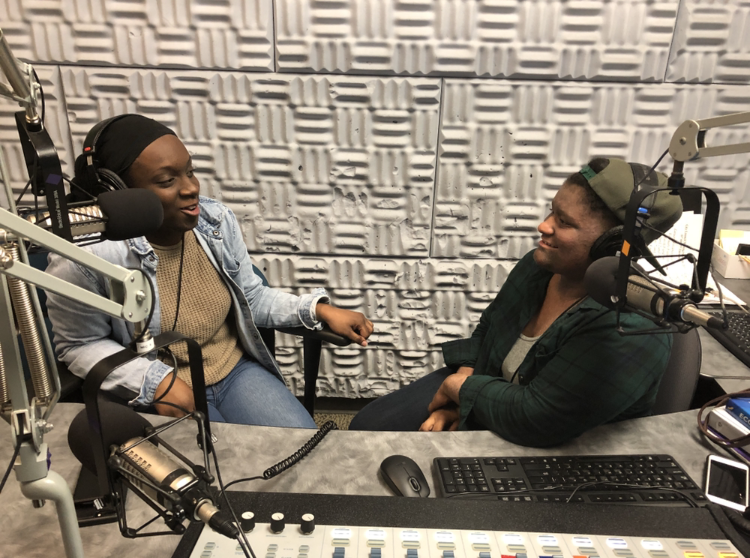
"caption": "Sam Mann (right) and Ragan Foster in the studio of keCg, El Cerrito High School's radio station.",
"description": null,
"title": "Image from iOS",
"credit": "Mary Franklin Harvin/KQED",
"status": "inherit",
"isLoading": false,
"fetchFailed": false
},
"news_11743313": {
"type": "attachments",
"id": "news_11743313",
"meta": {
"index": "attachments_1716263798",
"site": "news",
"id": "11743313",
"found": true
},
"parent": 11743312,
"imgSizes": {
"twentyfourteen-full-width": {
"file": "https://ww2.kqed.org/app/uploads/sites/10/2019/04/image-from-ios-10-_wide-5985992c0ceb11be4f11756c9db36bc610e55e59-1038x576.jpg",
"width": 1038,
"mimeType": "image/jpeg",
"height": 576
},
"thumbnail": {
"file": "https://ww2.kqed.org/app/uploads/sites/10/2019/04/image-from-ios-10-_wide-5985992c0ceb11be4f11756c9db36bc610e55e59-160x90.jpg",
"width": 160,
"mimeType": "image/jpeg",
"height": 90
},
"post-thumbnail": {
"file": "https://ww2.kqed.org/app/uploads/sites/10/2019/04/image-from-ios-10-_wide-5985992c0ceb11be4f11756c9db36bc610e55e59-672x372.jpg",
"width": 672,
"mimeType": "image/jpeg",
"height": 372
},
"kqedFullSize": {
"file": "https://ww2.kqed.org/app/uploads/sites/10/2019/04/image-from-ios-10-_wide-5985992c0ceb11be4f11756c9db36bc610e55e59-e1556383268710.jpg",
"width": 1920,
"height": 1080
},
"large": {
"file": "https://ww2.kqed.org/app/uploads/sites/10/2019/04/image-from-ios-10-_wide-5985992c0ceb11be4f11756c9db36bc610e55e59-1020x574.jpg",
"width": 1020,
"mimeType": "image/jpeg",
"height": 574
},
"complete_open_graph": {
"file": "https://ww2.kqed.org/app/uploads/sites/10/2019/04/image-from-ios-10-_wide-5985992c0ceb11be4f11756c9db36bc610e55e59-1200x675.jpg",
"width": 1200,
"mimeType": "image/jpeg",
"height": 675
},
"full-width": {
"file": "https://ww2.kqed.org/app/uploads/sites/10/2019/04/image-from-ios-10-_wide-5985992c0ceb11be4f11756c9db36bc610e55e59-1920x1080.jpg",
"width": 1920,
"mimeType": "image/jpeg",
"height": 1080
},
"medium": {
"file": "https://ww2.kqed.org/app/uploads/sites/10/2019/04/image-from-ios-10-_wide-5985992c0ceb11be4f11756c9db36bc610e55e59-800x450.jpg",
"width": 800,
"mimeType": "image/jpeg",
"height": 450
}
},
"publishDate": 1556381172,
"modified": 1556381172,
"caption": null,
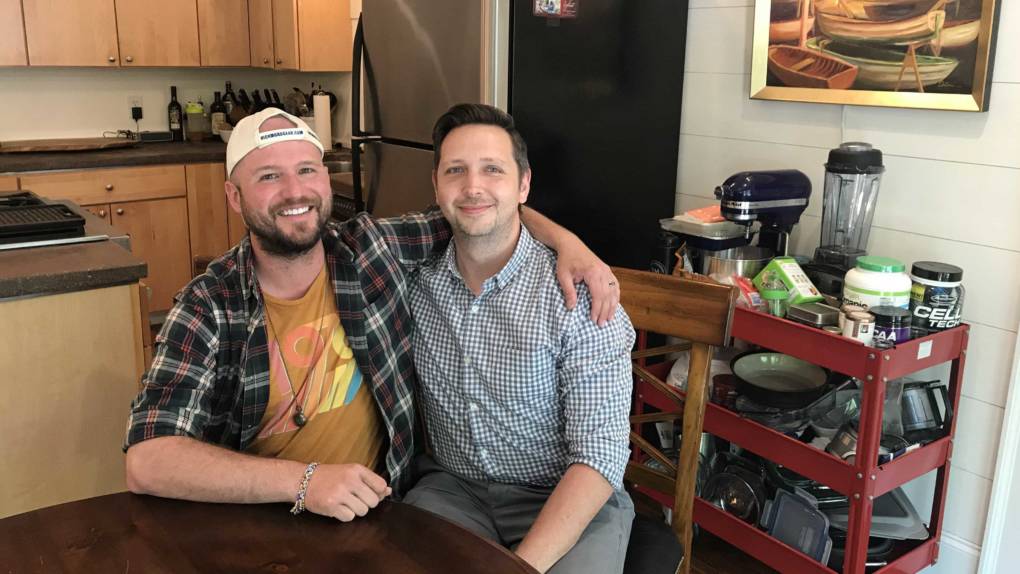
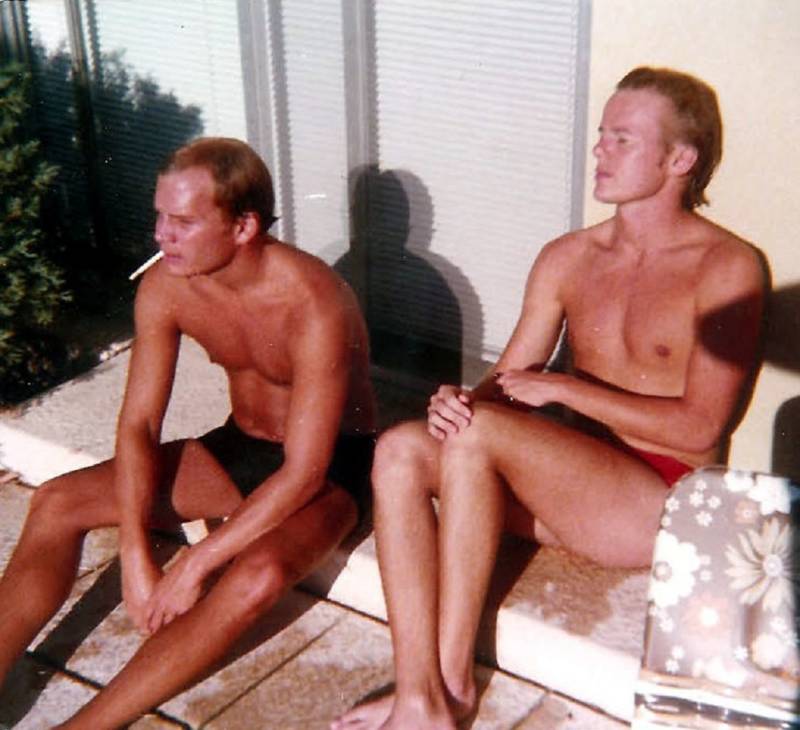
"description": "Greg McDonald Jr. (left) sits with his fiancé Jon Jost. McDonald's parents considered sending him to counseling when they were concerned he was gay. Now they support a ban on conversion therapy",
"title": "Greg McDonald Jr. (left) sits with his fiancé Jon Jost. McDonald's parents considered sending him to counseling when they were concerned he was gay. Now they support a ban on conversion therapy.",
"credit": null,
"status": "inherit",
"isLoading": false,
"fetchFailed": false
},
"news_11737701": {
"type": "attachments",
"id": "news_11737701",
"meta": {
"index": "attachments_1716263798",
"site": "news",
"id": "11737701",
"found": true
},
"parent": 11737559,
"imgSizes": {
"post-thumbnail": {
"file": "https://ww2.kqed.org/app/uploads/sites/10/2019/04/Xavier-Becerra-Bans-California-State-Travel-to-South-Carolina-672x372.jpg",
"width": 672,
"mimeType": "image/jpeg",
"height": 372
},
"kqedFullSize": {
"file": "https://ww2.kqed.org/app/uploads/sites/10/2019/04/Xavier-Becerra-Bans-California-State-Travel-to-South-Carolina.jpg",
"width": 1920,
"height": 1322
},
"guest-author-50": {
"file": "https://ww2.kqed.org/app/uploads/sites/10/2019/04/Xavier-Becerra-Bans-California-State-Travel-to-South-Carolina-50x50.jpg",
"width": 50,
"mimeType": "image/jpeg",
"height": 50
},
"guest-author-96": {
"file": "https://ww2.kqed.org/app/uploads/sites/10/2019/04/Xavier-Becerra-Bans-California-State-Travel-to-South-Carolina-96x96.jpg",
"width": 96,
"mimeType": "image/jpeg",
"height": 96
},
"apple_news_ca_portrait_12_9": {
"file": "https://ww2.kqed.org/app/uploads/sites/10/2019/04/Xavier-Becerra-Bans-California-State-Travel-to-South-Carolina-1122x1322.jpg",
"width": 1122,
"mimeType": "image/jpeg",
"height": 1322
},
"medium": {
"file": "https://ww2.kqed.org/app/uploads/sites/10/2019/04/Xavier-Becerra-Bans-California-State-Travel-to-South-Carolina-800x551.jpg",
"width": 800,
"mimeType": "image/jpeg",
"height": 551
},
"guest-author-32": {
"file": "https://ww2.kqed.org/app/uploads/sites/10/2019/04/Xavier-Becerra-Bans-California-State-Travel-to-South-Carolina-32x32.jpg",
"width": 32,
"mimeType": "image/jpeg",
"height": 32
},
"apple_news_ca_portrait_9_7": {
"file": "https://ww2.kqed.org/app/uploads/sites/10/2019/04/Xavier-Becerra-Bans-California-State-Travel-to-South-Carolina-840x1120.jpg",
"width": 840,
"mimeType": "image/jpeg",
"height": 1120
},
"apple_news_ca_square_9_7": {
"file": "https://ww2.kqed.org/app/uploads/sites/10/2019/04/Xavier-Becerra-Bans-California-State-Travel-to-South-Carolina-1104x1104.jpg",
"width": 1104,
"mimeType": "image/jpeg",
"height": 1104
},
"apple_news_ca_portrait_4_7": {
"file": "https://ww2.kqed.org/app/uploads/sites/10/2019/04/Xavier-Becerra-Bans-California-State-Travel-to-South-Carolina-414x552.jpg",
"width": 414,
"mimeType": "image/jpeg",
"height": 552
},
"apple_news_ca_square_12_9": {
"file": "https://ww2.kqed.org/app/uploads/sites/10/2019/04/Xavier-Becerra-Bans-California-State-Travel-to-South-Carolina-1472x1322.jpg",
"width": 1472,
"mimeType": "image/jpeg",
"height": 1322
},
"apple_news_ca_portrait_5_5": {
"file": "https://ww2.kqed.org/app/uploads/sites/10/2019/04/Xavier-Becerra-Bans-California-State-Travel-to-South-Carolina-687x916.jpg",
"width": 687,
"mimeType": "image/jpeg",
"height": 916
},
"apple_news_ca_square_4_7": {
"file": "https://ww2.kqed.org/app/uploads/sites/10/2019/04/Xavier-Becerra-Bans-California-State-Travel-to-South-Carolina-550x550.jpg",
"width": 550,
"mimeType": "image/jpeg",
"height": 550
},
"apple_news_ca_square_5_5": {
"file": "https://ww2.kqed.org/app/uploads/sites/10/2019/04/Xavier-Becerra-Bans-California-State-Travel-to-South-Carolina-912x912.jpg",
"width": 912,
"mimeType": "image/jpeg",
"height": 912
},
"apple_news_ca_landscape_5_5": {
"file": "https://ww2.kqed.org/app/uploads/sites/10/2019/04/Xavier-Becerra-Bans-California-State-Travel-to-South-Carolina-1044x783.jpg",
"width": 1044,
"mimeType": "image/jpeg",
"height": 783
},
"apple_news_ca_square_4_0": {
"file": "https://ww2.kqed.org/app/uploads/sites/10/2019/04/Xavier-Becerra-Bans-California-State-Travel-to-South-Carolina-470x470.jpg",
"width": 470,
"mimeType": "image/jpeg",
"height": 470
},
"twentyfourteen-full-width": {
"file": "https://ww2.kqed.org/app/uploads/sites/10/2019/04/Xavier-Becerra-Bans-California-State-Travel-to-South-Carolina-1038x576.jpg",
"width": 1038,
"mimeType": "image/jpeg",
"height": 576
},
"thumbnail": {
"file": "https://ww2.kqed.org/app/uploads/sites/10/2019/04/Xavier-Becerra-Bans-California-State-Travel-to-South-Carolina-160x110.jpg",
"width": 160,
"mimeType": "image/jpeg",
"height": 110
},
"apple_news_ca_landscape_4_7": {
"file": "https://ww2.kqed.org/app/uploads/sites/10/2019/04/Xavier-Becerra-Bans-California-State-Travel-to-South-Carolina-632x474.jpg",
"width": 632,
"mimeType": "image/jpeg",
"height": 474
},
"large": {
"file": "https://ww2.kqed.org/app/uploads/sites/10/2019/04/Xavier-Becerra-Bans-California-State-Travel-to-South-Carolina-1020x702.jpg",
"width": 1020,
"mimeType": "image/jpeg",
"height": 702
},
"complete_open_graph": {
"file": "https://ww2.kqed.org/app/uploads/sites/10/2019/04/Xavier-Becerra-Bans-California-State-Travel-to-South-Carolina-1200x826.jpg",
"width": 1200,
"mimeType": "image/jpeg",
"height": 826
},
"apple_news_ca_landscape_4_0": {
"file": "https://ww2.kqed.org/app/uploads/sites/10/2019/04/Xavier-Becerra-Bans-California-State-Travel-to-South-Carolina-536x402.jpg",
"width": 536,
"mimeType": "image/jpeg",
"height": 402
},
"guest-author-64": {
"file": "https://ww2.kqed.org/app/uploads/sites/10/2019/04/Xavier-Becerra-Bans-California-State-Travel-to-South-Carolina-64x64.jpg",
"width": 64,
"mimeType": "image/jpeg",
"height": 64
},
"apple_news_ca_portrait_4_0": {
"file": "https://ww2.kqed.org/app/uploads/sites/10/2019/04/Xavier-Becerra-Bans-California-State-Travel-to-South-Carolina-354x472.jpg",
"width": 354,
"mimeType": "image/jpeg",
"height": 472
},
"apple_news_ca_landscape_12_9": {
"file": "https://ww2.kqed.org/app/uploads/sites/10/2019/04/Xavier-Becerra-Bans-California-State-Travel-to-South-Carolina-1832x1322.jpg",
"width": 1832,
"mimeType": "image/jpeg",
"height": 1322
},
"full-width": {
"file": "https://ww2.kqed.org/app/uploads/sites/10/2019/04/Xavier-Becerra-Bans-California-State-Travel-to-South-Carolina-1920x1322.jpg",
"width": 1920,
"mimeType": "image/jpeg",
"height": 1322
},
"guest-author-128": {
"file": "https://ww2.kqed.org/app/uploads/sites/10/2019/04/Xavier-Becerra-Bans-California-State-Travel-to-South-Carolina-128x128.jpg",
"width": 128,
"mimeType": "image/jpeg",
"height": 128
},
"apple_news_ca_landscape_9_7": {
"file": "https://ww2.kqed.org/app/uploads/sites/10/2019/04/Xavier-Becerra-Bans-California-State-Travel-to-South-Carolina-1376x1032.jpg",
"width": 1376,
"mimeType": "image/jpeg",
"height": 1032
}
},
"publishDate": 1554338909,
"modified": 1554338948,
"caption": "California Attorney General Xavier Becerra speaks to reporters on March 5.",
"description": "California Attorney General Xavier Becerra speaks to reporters on March 5.",
"title": "Xavier-Becerra-Bans-California-State-Travel-to-South-Carolina",
"credit": "Justin Sullivan/Getty Images",
"status": "inherit",
"isLoading": false,
"fetchFailed": false
},
"news_11736556": {
"type": "attachments",
"id": "news_11736556",
"meta": {
"index": "attachments_1716263798",
"site": "news",
"id": "11736556",
"found": true
},
"parent": 11736415,
"imgSizes": {
"apple_news_ca_landscape_5_5": {
"file": "https://ww2.kqed.org/app/uploads/sites/10/2019/03/IMG_1322-1044x783.jpg",
"width": 1044,
"mimeType": "image/jpeg",
"height": 783
},
"apple_news_ca_square_4_0": {
"file": "https://ww2.kqed.org/app/uploads/sites/10/2019/03/IMG_1322-470x470.jpg",
"width": 470,
"mimeType": "image/jpeg",
"height": 470
},
"twentyfourteen-full-width": {
"file": "https://ww2.kqed.org/app/uploads/sites/10/2019/03/IMG_1322-1038x576.jpg",
"width": 1038,
"mimeType": "image/jpeg",
"height": 576
},
"thumbnail": {
"file": "https://ww2.kqed.org/app/uploads/sites/10/2019/03/IMG_1322-160x120.jpg",
"width": 160,
"mimeType": "image/jpeg",
"height": 120
},
"post-thumbnail": {
"file": "https://ww2.kqed.org/app/uploads/sites/10/2019/03/IMG_1322-672x372.jpg",
"width": 672,
"mimeType": "image/jpeg",
"height": 372
},
"kqedFullSize": {
"file": "https://ww2.kqed.org/app/uploads/sites/10/2019/03/IMG_1322.jpg",
"width": 1119,
"height": 839
},
"apple_news_ca_landscape_4_7": {
"file": "https://ww2.kqed.org/app/uploads/sites/10/2019/03/IMG_1322-632x474.jpg",
"width": 632,
"mimeType": "image/jpeg",
"height": 474
},
"large": {
"file": "https://ww2.kqed.org/app/uploads/sites/10/2019/03/IMG_1322-1020x765.jpg",
"width": 1020,
"mimeType": "image/jpeg",
"height": 765
},
"guest-author-50": {
"file": "https://ww2.kqed.org/app/uploads/sites/10/2019/03/IMG_1322-50x50.jpg",
"width": 50,
"mimeType": "image/jpeg",
"height": 50
},
"guest-author-96": {
"file": "https://ww2.kqed.org/app/uploads/sites/10/2019/03/IMG_1322-96x96.jpg",
"width": 96,
"mimeType": "image/jpeg",
"height": 96
},
"apple_news_ca_landscape_4_0": {
"file": "https://ww2.kqed.org/app/uploads/sites/10/2019/03/IMG_1322-536x402.jpg",
"width": 536,
"mimeType": "image/jpeg",
"height": 402
},
"medium": {
"file": "https://ww2.kqed.org/app/uploads/sites/10/2019/03/IMG_1322-800x600.jpg",
"width": 800,
"mimeType": "image/jpeg",
"height": 600
},
"guest-author-64": {
"file": "https://ww2.kqed.org/app/uploads/sites/10/2019/03/IMG_1322-64x64.jpg",
"width": 64,
"mimeType": "image/jpeg",
"height": 64
},
"guest-author-32": {
"file": "https://ww2.kqed.org/app/uploads/sites/10/2019/03/IMG_1322-32x32.jpg",
"width": 32,
"mimeType": "image/jpeg",
"height": 32
},
"apple_news_ca_portrait_4_0": {
"file": "https://ww2.kqed.org/app/uploads/sites/10/2019/03/IMG_1322-354x472.jpg",
"width": 354,
"mimeType": "image/jpeg",
"height": 472
},
"apple_news_ca_portrait_9_7": {
"file": "https://ww2.kqed.org/app/uploads/sites/10/2019/03/IMG_1322-840x839.jpg",
"width": 840,
"mimeType": "image/jpeg",
"height": 839
},
"apple_news_ca_square_9_7": {
"file": "https://ww2.kqed.org/app/uploads/sites/10/2019/03/IMG_1322-1104x839.jpg",
"width": 1104,
"mimeType": "image/jpeg",
"height": 839
},
"apple_news_ca_portrait_4_7": {
"file": "https://ww2.kqed.org/app/uploads/sites/10/2019/03/IMG_1322-414x552.jpg",
"width": 414,
"mimeType": "image/jpeg",
"height": 552
},
"apple_news_ca_portrait_5_5": {
"file": "https://ww2.kqed.org/app/uploads/sites/10/2019/03/IMG_1322-687x839.jpg",
"width": 687,
"mimeType": "image/jpeg",
"height": 839
},
"apple_news_ca_square_4_7": {
"file": "https://ww2.kqed.org/app/uploads/sites/10/2019/03/IMG_1322-550x550.jpg",
"width": 550,
"mimeType": "image/jpeg",
"height": 550
},
"guest-author-128": {
"file": "https://ww2.kqed.org/app/uploads/sites/10/2019/03/IMG_1322-128x128.jpg",
"width": 128,
"mimeType": "image/jpeg",
"height": 128
},
"apple_news_ca_square_5_5": {
"file": "https://ww2.kqed.org/app/uploads/sites/10/2019/03/IMG_1322-912x839.jpg",
"width": 912,
"mimeType": "image/jpeg",
"height": 839
}
},
"publishDate": 1553897904,
"modified": 1553897922,
"caption": "Derrick Knight, an LGBTQ activist, and his friend Amaya, at the South LA transgender career fair.",
"description": null,
"title": "IMG_1322",
"credit": "Avishay Artsy/KQED",
"status": "inherit",
"isLoading": false,
"fetchFailed": false
},
"news_11724857": {
"type": "attachments",
"id": "news_11724857",
"meta": {
"index": "attachments_1716263798",
"site": "news",
"id": "11724857",
"found": true
},
"parent": 11723590,
"imgSizes": {
"twentyfourteen-full-width": {
"file": "https://ww2.kqed.org/app/uploads/sites/10/2019/02/RS35157_IMG_6943-qut-crop-1020x679-1-1038x576.jpg",
"width": 1038,
"mimeType": "image/jpeg",
"height": 576
},
"thumbnail": {
"file": "https://ww2.kqed.org/app/uploads/sites/10/2019/02/RS35157_IMG_6943-qut-crop-1020x679-1-160x107.jpg",
"width": 160,
"mimeType": "image/jpeg",
"height": 107
},
"post-thumbnail": {
"file": "https://ww2.kqed.org/app/uploads/sites/10/2019/02/RS35157_IMG_6943-qut-crop-1020x679-1-672x372.jpg",
"width": 672,
"mimeType": "image/jpeg",
"height": 372
},
"kqedFullSize": {
"file": "https://ww2.kqed.org/app/uploads/sites/10/2019/02/RS35157_IMG_6943-qut-crop-1020x679-1.jpg",
"width": 1920,
"height": 1278
},
"large": {
"file": "https://ww2.kqed.org/app/uploads/sites/10/2019/02/RS35157_IMG_6943-qut-crop-1020x679-1-1020x679.jpg",
"width": 1020,
"mimeType": "image/jpeg",
"height": 679
},
"complete_open_graph": {
"file": "https://ww2.kqed.org/app/uploads/sites/10/2019/02/RS35157_IMG_6943-qut-crop-1020x679-1-1200x799.jpg",
"width": 1200,
"mimeType": "image/jpeg",
"height": 799
},
"guest-author-50": {
"file": "https://ww2.kqed.org/app/uploads/sites/10/2019/02/RS35157_IMG_6943-qut-crop-1020x679-1-50x50.jpg",
"width": 50,
"mimeType": "image/jpeg",
"height": 50
},
"guest-author-96": {
"file": "https://ww2.kqed.org/app/uploads/sites/10/2019/02/RS35157_IMG_6943-qut-crop-1020x679-1-96x96.jpg",
"width": 96,
"mimeType": "image/jpeg",
"height": 96
},
"medium": {
"file": "https://ww2.kqed.org/app/uploads/sites/10/2019/02/RS35157_IMG_6943-qut-crop-1020x679-1-800x533.jpg",
"width": 800,
"mimeType": "image/jpeg",
"height": 533
},
"guest-author-64": {
"file": "https://ww2.kqed.org/app/uploads/sites/10/2019/02/RS35157_IMG_6943-qut-crop-1020x679-1-64x64.jpg",
"width": 64,
"mimeType": "image/jpeg",
"height": 64
},
"guest-author-32": {
"file": "https://ww2.kqed.org/app/uploads/sites/10/2019/02/RS35157_IMG_6943-qut-crop-1020x679-1-32x32.jpg",
"width": 32,
"mimeType": "image/jpeg",
"height": 32
},
"full-width": {
"file": "https://ww2.kqed.org/app/uploads/sites/10/2019/02/RS35157_IMG_6943-qut-crop-1020x679-1-1920x1278.jpg",
"width": 1920,
"mimeType": "image/jpeg",
"height": 1278
},
"detail": {
"file": "https://ww2.kqed.org/app/uploads/sites/10/2019/02/RS35157_IMG_6943-qut-crop-1020x679-1-150x150.jpg",
"width": 150,
"mimeType": "image/jpeg",
"height": 150
},
"guest-author-128": {
"file": "https://ww2.kqed.org/app/uploads/sites/10/2019/02/RS35157_IMG_6943-qut-crop-1020x679-1-128x128.jpg",
"width": 128,
"mimeType": "image/jpeg",
"height": 128
}
},
"publishDate": 1549669538,
"modified": 1549669572,
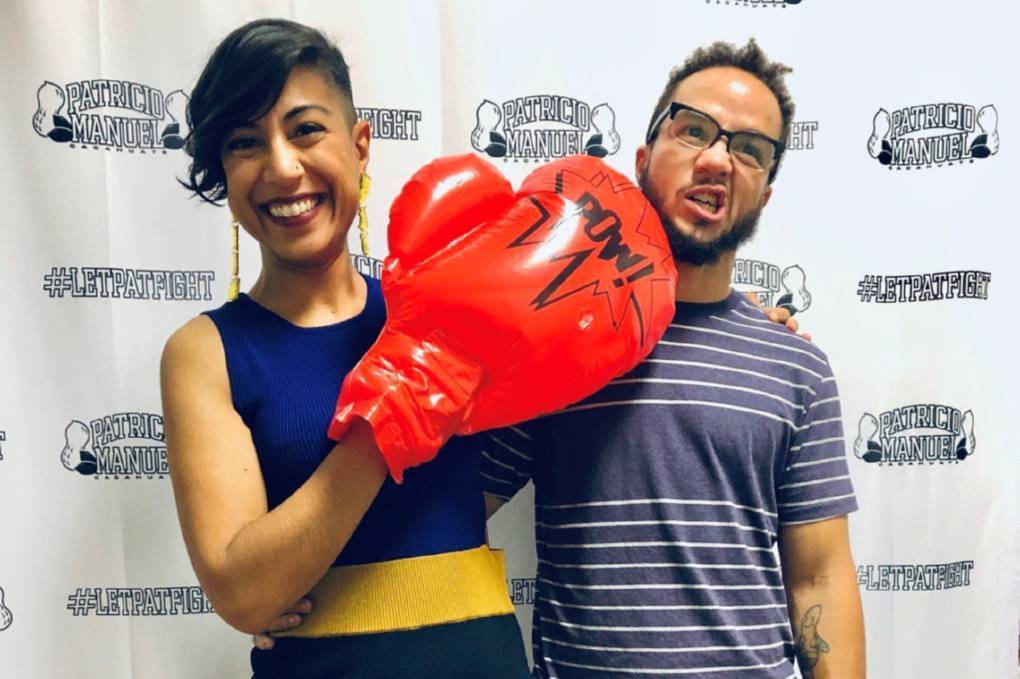
"caption": "Amita Swadhin and Patricio Manuel pose in the photo booth at a fundraiser supporting Manuel's pro debut.",
"description": null,
"title": "RS35157_IMG_6943-qut-crop-1020x679",
"credit": "Courtesy of Patricio Manuel",
"status": "inherit",
"isLoading": false,
"fetchFailed": false
},
"news_11724264": {
"type": "attachments",
"id": "news_11724264",
"meta": {
"index": "attachments_1716263798",
"site": "news",
"id": "11724264",
"found": true
},
"parent": 11724262,
"imgSizes": {
"twentyfourteen-full-width": {
"file": "https://ww2.kqed.org/app/uploads/sites/10/2019/02/Screen-Shot-2019-02-06-at-4.24.56-PM-803x576.png",
"width": 803,
"mimeType": "image/png",
"height": 576
},
"thumbnail": {
"file": "https://ww2.kqed.org/app/uploads/sites/10/2019/02/Screen-Shot-2019-02-06-at-4.24.56-PM-160x117.png",
"width": 160,
"mimeType": "image/png",
"height": 117
},
"post-thumbnail": {
"file": "https://ww2.kqed.org/app/uploads/sites/10/2019/02/Screen-Shot-2019-02-06-at-4.24.56-PM-672x372.png",
"width": 672,
"mimeType": "image/png",
"height": 372
},
"kqedFullSize": {
"file": "https://ww2.kqed.org/app/uploads/sites/10/2019/02/Screen-Shot-2019-02-06-at-4.24.56-PM.png",
"width": 803,
"height": 585
},
"guest-author-50": {
"file": "https://ww2.kqed.org/app/uploads/sites/10/2019/02/Screen-Shot-2019-02-06-at-4.24.56-PM-50x50.png",
"width": 50,
"mimeType": "image/png",
"height": 50
},
"guest-author-96": {
"file": "https://ww2.kqed.org/app/uploads/sites/10/2019/02/Screen-Shot-2019-02-06-at-4.24.56-PM-96x96.png",
"width": 96,
"mimeType": "image/png",
"height": 96
},
"medium": {
"file": "https://ww2.kqed.org/app/uploads/sites/10/2019/02/Screen-Shot-2019-02-06-at-4.24.56-PM-800x583.png",
"width": 800,
"mimeType": "image/png",
"height": 583
},
"guest-author-64": {
"file": "https://ww2.kqed.org/app/uploads/sites/10/2019/02/Screen-Shot-2019-02-06-at-4.24.56-PM-64x64.png",
"width": 64,
"mimeType": "image/png",
"height": 64
},
"detail": {
"file": "https://ww2.kqed.org/app/uploads/sites/10/2019/02/Screen-Shot-2019-02-06-at-4.24.56-PM-150x150.png",
"width": 150,
"mimeType": "image/png",
"height": 150
},
"guest-author-32": {
"file": "https://ww2.kqed.org/app/uploads/sites/10/2019/02/Screen-Shot-2019-02-06-at-4.24.56-PM-32x32.png",
"width": 32,
"mimeType": "image/png",
"height": 32
},
"guest-author-128": {
"file": "https://ww2.kqed.org/app/uploads/sites/10/2019/02/Screen-Shot-2019-02-06-at-4.24.56-PM-128x128.png",
"width": 128,
"mimeType": "image/png",
"height": 128
}
},
"publishDate": 1549499131,
"modified": 1549501942,
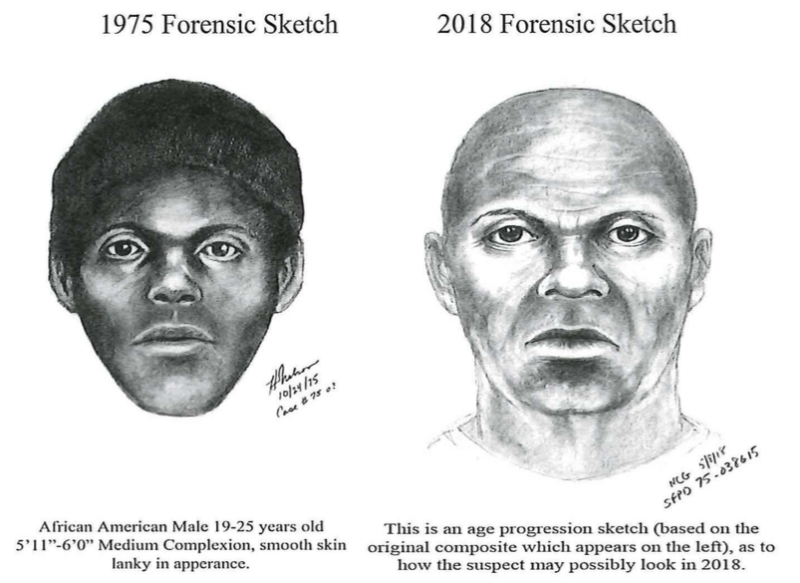
"caption": "The newly released sketch (right) depicts the suspect's age progression based on the original composite (right) from 1975.",
"description": null,
"title": "Screen Shot 2019-02-06 at 4.24.56 PM",
"credit": "Courtesy of the San Francisco Police Department",
"status": "inherit",
"isLoading": false,
"fetchFailed": false
},
"news_11723011": {
"type": "attachments",
"id": "news_11723011",
"meta": {
"index": "attachments_1716263798",
"site": "news",
"id": "11723011",
"found": true
},
"parent": 11720206,
"imgSizes": {
"twentyfourteen-full-width": {
"file": "https://ww2.kqed.org/app/uploads/sites/10/2019/02/letter-1000x576.jpg",
"width": 1000,
"mimeType": "image/jpeg",
"height": 576
},
"thumbnail": {
"file": "https://ww2.kqed.org/app/uploads/sites/10/2019/02/letter-160x146.jpg",
"width": 160,
"mimeType": "image/jpeg",
"height": 146
},
"post-thumbnail": {
"file": "https://ww2.kqed.org/app/uploads/sites/10/2019/02/letter-672x372.jpg",
"width": 672,
"mimeType": "image/jpeg",
"height": 372
},
"kqedFullSize": {
"file": "https://ww2.kqed.org/app/uploads/sites/10/2019/02/letter.jpg",
"width": 1000,
"height": 913
},
"guest-author-50": {
"file": "https://ww2.kqed.org/app/uploads/sites/10/2019/02/letter-50x50.jpg",
"width": 50,
"mimeType": "image/jpeg",
"height": 50
},
"guest-author-96": {
"file": "https://ww2.kqed.org/app/uploads/sites/10/2019/02/letter-96x96.jpg",
"width": 96,
"mimeType": "image/jpeg",
"height": 96
},
"medium": {
"file": "https://ww2.kqed.org/app/uploads/sites/10/2019/02/letter-800x730.jpg",
"width": 800,
"mimeType": "image/jpeg",
"height": 730
},
"guest-author-64": {
"file": "https://ww2.kqed.org/app/uploads/sites/10/2019/02/letter-64x64.jpg",
"width": 64,
"mimeType": "image/jpeg",
"height": 64
},
"detail": {
"file": "https://ww2.kqed.org/app/uploads/sites/10/2019/02/letter-150x150.jpg",
"width": 150,
"mimeType": "image/jpeg",
"height": 150
},
"guest-author-32": {
"file": "https://ww2.kqed.org/app/uploads/sites/10/2019/02/letter-32x32.jpg",
"width": 32,
"mimeType": "image/jpeg",
"height": 32
},
"guest-author-128": {
"file": "https://ww2.kqed.org/app/uploads/sites/10/2019/02/letter-128x128.jpg",
"width": 128,
"mimeType": "image/jpeg",
"height": 128
}
},
"publishDate": 1549147743,
"modified": 1549147826,
"caption": "Gregory Hinton (R) with his brother, Scott (L), in Palm Springs, CA.",
"description": null,
"title": "letter",
"credit": "Courtesy of Gregory Hinton",
"status": "inherit",
"isLoading": false,
"fetchFailed": false
},
"news_11717676": {
"type": "attachments",
"id": "news_11717676",
"meta": {
"index": "attachments_1716263798",
"site": "news",
"id": "11717676",
"found": true
},
"parent": 11717648,
"imgSizes": {
"twentyfourteen-full-width": {
"file": "https://ww2.kqed.org/app/uploads/sites/10/2019/01/honey-mahogany-e1547414696964-1038x576.jpg",
"width": 1038,
"mimeType": "image/jpeg",
"height": 576
},
"thumbnail": {
"file": "https://ww2.kqed.org/app/uploads/sites/10/2019/01/honey-mahogany-e1547414696964-160x120.jpg",
"width": 160,
"mimeType": "image/jpeg",
"height": 120
},
"post-thumbnail": {
"file": "https://ww2.kqed.org/app/uploads/sites/10/2019/01/honey-mahogany-e1547414696964-672x372.jpg",
"width": 672,
"mimeType": "image/jpeg",
"height": 372
},
"kqedFullSize": {
"file": "https://ww2.kqed.org/app/uploads/sites/10/2019/01/honey-mahogany-e1547414696964.jpg",
"width": 1920,
"height": 1440
},
"large": {
"file": "https://ww2.kqed.org/app/uploads/sites/10/2019/01/honey-mahogany-e1547414696964-1020x765.jpg",
"width": 1020,
"mimeType": "image/jpeg",
"height": 765
},
"complete_open_graph": {
"file": "https://ww2.kqed.org/app/uploads/sites/10/2019/01/honey-mahogany-e1547414696964-1200x900.jpg",
"width": 1200,
"mimeType": "image/jpeg",
"height": 900
},
"guest-author-50": {
"file": "https://ww2.kqed.org/app/uploads/sites/10/2019/01/honey-mahogany-e1547414696964-50x50.jpg",
"width": 50,
"mimeType": "image/jpeg",
"height": 50
},
"guest-author-96": {
"file": "https://ww2.kqed.org/app/uploads/sites/10/2019/01/honey-mahogany-e1547414696964-96x96.jpg",
"width": 96,
"mimeType": "image/jpeg",
"height": 96
},
"medium": {
"file": "https://ww2.kqed.org/app/uploads/sites/10/2019/01/honey-mahogany-e1547414696964-800x600.jpg",
"width": 800,
"mimeType": "image/jpeg",
"height": 600
},
"guest-author-64": {
"file": "https://ww2.kqed.org/app/uploads/sites/10/2019/01/honey-mahogany-e1547414696964-64x64.jpg",
"width": 64,
"mimeType": "image/jpeg",
"height": 64
},
"guest-author-32": {
"file": "https://ww2.kqed.org/app/uploads/sites/10/2019/01/honey-mahogany-e1547414696964-32x32.jpg",
"width": 32,
"mimeType": "image/jpeg",
"height": 32
},
"full-width": {
"file": "https://ww2.kqed.org/app/uploads/sites/10/2019/01/honey-mahogany-e1547414696964-1920x1440.jpg",
"width": 1920,
"mimeType": "image/jpeg",
"height": 1440
},
"detail": {
"file": "https://ww2.kqed.org/app/uploads/sites/10/2019/01/honey-mahogany-e1547414696964-150x150.jpg",
"width": 150,
"mimeType": "image/jpeg",
"height": 150
},
"guest-author-128": {
"file": "https://ww2.kqed.org/app/uploads/sites/10/2019/01/honey-mahogany-e1547414696964-128x128.jpg",
"width": 128,
"mimeType": "image/jpeg",
"height": 128
}
},
"publishDate": 1547237497,
"modified": 1547237725,
"caption": "Drag artist and political activist Honey Mahogany helped to found the Compton's Transgender Cultural District.",
"description": "Drag artist and political activist Honey Mahogany helped to found the Compton's Transgender Cultural District.",
"title": "honey mahogany",
"credit": "Chloe Veltman/KQED",
"status": "inherit",
"isLoading": false,
"fetchFailed": false
},
"news_11713239": {
"type": "attachments",
"id": "news_11713239",
"meta": {
"index": "attachments_1716263798",
"site": "news",
"id": "11713239",
"found": true
},
"parent": 11713238,
"imgSizes": {
"small": {
"file": "https://ww2.kqed.org/app/uploads/sites/10/2018/12/ap_18345303048869-d76e06b4633e39b7945b924c586bd3ec4c93da54-520x390.jpg",
"width": 520,
"mimeType": "image/jpeg",
"height": 390
},
"twentyfourteen-full-width": {
"file": "https://ww2.kqed.org/app/uploads/sites/10/2018/12/ap_18345303048869-d76e06b4633e39b7945b924c586bd3ec4c93da54-1038x576.jpg",
"width": 1038,
"mimeType": "image/jpeg",
"height": 576
},
"thumbnail": {
"file": "https://ww2.kqed.org/app/uploads/sites/10/2018/12/ap_18345303048869-d76e06b4633e39b7945b924c586bd3ec4c93da54-160x120.jpg",
"width": 160,
"mimeType": "image/jpeg",
"height": 120
},
"fd-sm": {
"file": "https://ww2.kqed.org/app/uploads/sites/10/2018/12/ap_18345303048869-d76e06b4633e39b7945b924c586bd3ec4c93da54-960x720.jpg",
"width": 960,
"mimeType": "image/jpeg",
"height": 720
},
"post-thumbnail": {
"file": "https://ww2.kqed.org/app/uploads/sites/10/2018/12/ap_18345303048869-d76e06b4633e39b7945b924c586bd3ec4c93da54-672x372.jpg",
"width": 672,
"mimeType": "image/jpeg",
"height": 372
},
"xsmall": {
"file": "https://ww2.kqed.org/app/uploads/sites/10/2018/12/ap_18345303048869-d76e06b4633e39b7945b924c586bd3ec4c93da54-375x281.jpg",
"width": 375,
"mimeType": "image/jpeg",
"height": 281
},
"kqedFullSize": {
"file": "https://ww2.kqed.org/app/uploads/sites/10/2018/12/ap_18345303048869-d76e06b4633e39b7945b924c586bd3ec4c93da54-e1545100207251.jpg",
"width": 1920,
"height": 1440
},
"large": {
"file": "https://ww2.kqed.org/app/uploads/sites/10/2018/12/ap_18345303048869-d76e06b4633e39b7945b924c586bd3ec4c93da54-1020x765.jpg",
"width": 1020,
"mimeType": "image/jpeg",
"height": 765
},
"xlarge": {
"file": "https://ww2.kqed.org/app/uploads/sites/10/2018/12/ap_18345303048869-d76e06b4633e39b7945b924c586bd3ec4c93da54-1180x885.jpg",
"width": 1180,
"mimeType": "image/jpeg",
"height": 885
},
"complete_open_graph": {
"file": "https://ww2.kqed.org/app/uploads/sites/10/2018/12/ap_18345303048869-d76e06b4633e39b7945b924c586bd3ec4c93da54-1200x900.jpg",
"width": 1200,
"mimeType": "image/jpeg",
"height": 900
},
"guest-author-50": {
"file": "https://ww2.kqed.org/app/uploads/sites/10/2018/12/ap_18345303048869-d76e06b4633e39b7945b924c586bd3ec4c93da54-50x50.jpg",
"width": 50,
"mimeType": "image/jpeg",
"height": 50
},
"guest-author-96": {
"file": "https://ww2.kqed.org/app/uploads/sites/10/2018/12/ap_18345303048869-d76e06b4633e39b7945b924c586bd3ec4c93da54-96x96.jpg",
"width": 96,
"mimeType": "image/jpeg",
"height": 96
},
"medium": {
"file": "https://ww2.kqed.org/app/uploads/sites/10/2018/12/ap_18345303048869-d76e06b4633e39b7945b924c586bd3ec4c93da54-800x600.jpg",
"width": 800,
"mimeType": "image/jpeg",
"height": 600
},
"guest-author-64": {
"file": "https://ww2.kqed.org/app/uploads/sites/10/2018/12/ap_18345303048869-d76e06b4633e39b7945b924c586bd3ec4c93da54-64x64.jpg",
"width": 64,
"mimeType": "image/jpeg",
"height": 64
},
"guest-author-32": {
"file": "https://ww2.kqed.org/app/uploads/sites/10/2018/12/ap_18345303048869-d76e06b4633e39b7945b924c586bd3ec4c93da54-32x32.jpg",
"width": 32,
"mimeType": "image/jpeg",
"height": 32
},
"fd-lrg": {
"file": "https://ww2.kqed.org/app/uploads/sites/10/2018/12/ap_18345303048869-d76e06b4633e39b7945b924c586bd3ec4c93da54-1920x1440.jpg",
"width": 1920,
"mimeType": "image/jpeg",
"height": 1440
},
"fd-med": {
"file": "https://ww2.kqed.org/app/uploads/sites/10/2018/12/ap_18345303048869-d76e06b4633e39b7945b924c586bd3ec4c93da54-1180x885.jpg",
"width": 1180,
"mimeType": "image/jpeg",
"height": 885
},
"full-width": {
"file": "https://ww2.kqed.org/app/uploads/sites/10/2018/12/ap_18345303048869-d76e06b4633e39b7945b924c586bd3ec4c93da54-1920x1440.jpg",
"width": 1920,
"mimeType": "image/jpeg",
"height": 1440
},
"detail": {
"file": "https://ww2.kqed.org/app/uploads/sites/10/2018/12/ap_18345303048869-d76e06b4633e39b7945b924c586bd3ec4c93da54-150x150.jpg",
"width": 150,
"mimeType": "image/jpeg",
"height": 150
},
"guest-author-128": {
"file": "https://ww2.kqed.org/app/uploads/sites/10/2018/12/ap_18345303048869-d76e06b4633e39b7945b924c586bd3ec4c93da54-128x128.jpg",
"width": 128,
"mimeType": "image/jpeg",
"height": 128
},
"xxsmall": {
"file": "https://ww2.kqed.org/app/uploads/sites/10/2018/12/ap_18345303048869-d76e06b4633e39b7945b924c586bd3ec4c93da54-240x180.jpg",
"width": 240,
"mimeType": "image/jpeg",
"height": 180
}
},
"publishDate": 1545100042,
"modified": 1545100042,
"caption": null,
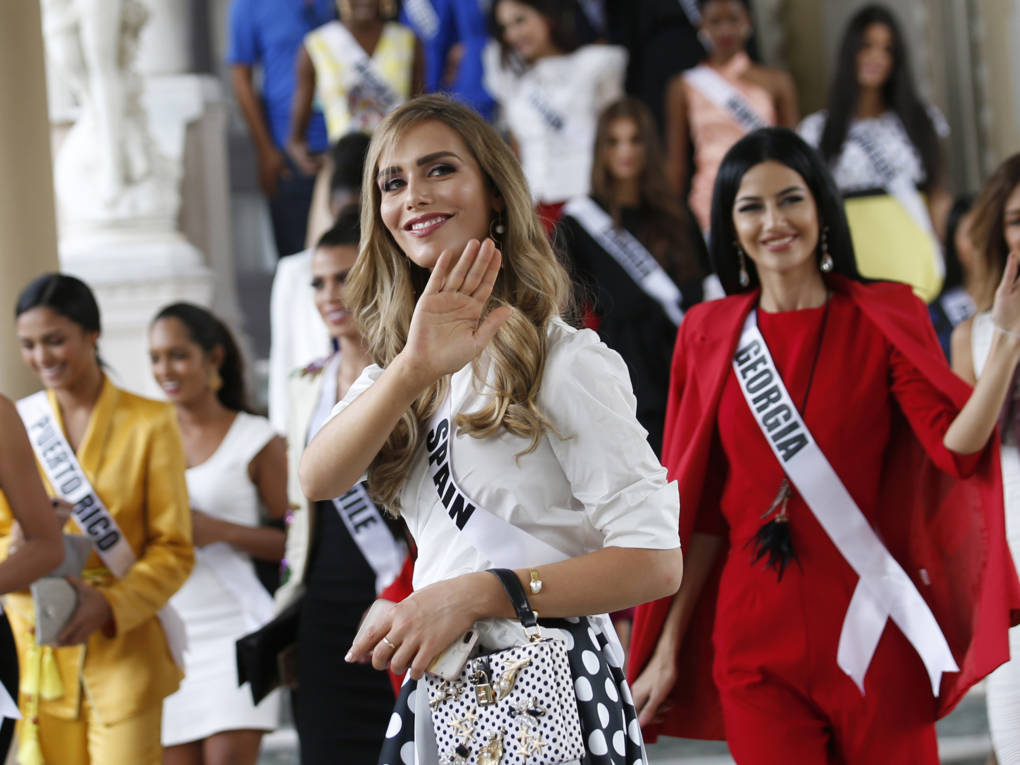
"description": "Angela Ponce, Miss Spain (center), is the first transgender contestant to compete for Miss Universe. She and other contestants are seen visiting the Government House in Bangkok last week.",
"title": "Angela Ponce, Miss Spain (center), is the first transgender contestant to compete for Miss Universe. She and other contestants are seen visiting the Government House in Bangkok last week.",
"credit": null,
"status": "inherit",
"isLoading": false,
"fetchFailed": false
},
"news_11710563": {
"type": "attachments",
"id": "news_11710563",
"meta": {
"index": "attachments_1716263798",
"site": "news",
"id": "11710563",
"found": true
},
"parent": 11710546,
"imgSizes": {
"twentyfourteen-full-width": {
"file": "https://ww2.kqed.org/app/uploads/sites/10/2018/12/GettyImages-975840050-e1544134714617-1038x576.jpg",
"width": 1038,
"mimeType": "image/jpeg",
"height": 576
},
"thumbnail": {
"file": "https://ww2.kqed.org/app/uploads/sites/10/2018/12/GettyImages-975840050-e1544134714617-160x107.jpg",
"width": 160,
"mimeType": "image/jpeg",
"height": 107
},
"post-thumbnail": {
"file": "https://ww2.kqed.org/app/uploads/sites/10/2018/12/GettyImages-975840050-e1544134714617-672x372.jpg",
"width": 672,
"mimeType": "image/jpeg",
"height": 372
},
"kqedFullSize": {
"file": "https://ww2.kqed.org/app/uploads/sites/10/2018/12/GettyImages-975840050-e1544134714617.jpg",
"width": 1920,
"height": 1280
},
"large": {
"file": "https://ww2.kqed.org/app/uploads/sites/10/2018/12/GettyImages-975840050-e1544134714617-1020x680.jpg",
"width": 1020,
"mimeType": "image/jpeg",
"height": 680
},
"complete_open_graph": {
"file": "https://ww2.kqed.org/app/uploads/sites/10/2018/12/GettyImages-975840050-e1544134714617-1200x800.jpg",
"width": 1200,
"mimeType": "image/jpeg",
"height": 800
},
"guest-author-50": {
"file": "https://ww2.kqed.org/app/uploads/sites/10/2018/12/GettyImages-975840050-e1544134714617-50x50.jpg",
"width": 50,
"mimeType": "image/jpeg",
"height": 50
},
"guest-author-96": {
"file": "https://ww2.kqed.org/app/uploads/sites/10/2018/12/GettyImages-975840050-e1544134714617-96x96.jpg",
"width": 96,
"mimeType": "image/jpeg",
"height": 96
},
"medium": {
"file": "https://ww2.kqed.org/app/uploads/sites/10/2018/12/GettyImages-975840050-e1544134714617-800x533.jpg",
"width": 800,
"mimeType": "image/jpeg",
"height": 533
},
"guest-author-64": {
"file": "https://ww2.kqed.org/app/uploads/sites/10/2018/12/GettyImages-975840050-e1544134714617-64x64.jpg",
"width": 64,
"mimeType": "image/jpeg",
"height": 64
},
"guest-author-32": {
"file": "https://ww2.kqed.org/app/uploads/sites/10/2018/12/GettyImages-975840050-e1544134714617-32x32.jpg",
"width": 32,
"mimeType": "image/jpeg",
"height": 32
},
"full-width": {
"file": "https://ww2.kqed.org/app/uploads/sites/10/2018/12/GettyImages-975840050-e1544134714617-1920x1280.jpg",
"width": 1920,
"mimeType": "image/jpeg",
"height": 1280
},
"detail": {
"file": "https://ww2.kqed.org/app/uploads/sites/10/2018/12/GettyImages-975840050-e1544134714617-150x150.jpg",
"width": 150,
"mimeType": "image/jpeg",
"height": 150
},
"guest-author-128": {
"file": "https://ww2.kqed.org/app/uploads/sites/10/2018/12/GettyImages-975840050-e1544134714617-128x128.jpg",
"width": 128,
"mimeType": "image/jpeg",
"height": 128
}
},
"publishDate": 1544134649,
"modified": 1544145070,
"caption": "A member of the Pink Unity Collective holds a poster demanding justice in the death of Honduran transgender woman Roxana Hernàndez, in San Pedro Sula, on June 3, 2018. ",
"description": "A member of the Pink Unity Collective holds a poster demanding justice in the death of Honduran transgender woman Roxana Hernàndez, in San Pedro Sula, on June 3, 2018. ",
"title": "HONDURAS-US-MIGRATION-LGBT",
"credit": "Orlando Sierra/AFP/Getty Images",
"status": "inherit",
"isLoading": false,
"fetchFailed": false
},
"news_11706010": {
"type": "attachments",
"id": "news_11706010",
"meta": {
"index": "attachments_1716263798",
"site": "news",
"id": "11706010",
"found": true
},
"parent": 11705992,
"imgSizes": {
"twentyfourteen-full-width": {
"file": "https://ww2.kqed.org/app/uploads/sites/10/2018/11/GettyImages-1056338190-e1542140626798-1038x576.jpg",
"width": 1038,
"mimeType": "image/jpeg",
"height": 576
},
"thumbnail": {
"file": "https://ww2.kqed.org/app/uploads/sites/10/2018/11/GettyImages-1056338190-e1542140626798-160x107.jpg",
"width": 160,
"mimeType": "image/jpeg",
"height": 107
},
"post-thumbnail": {
"file": "https://ww2.kqed.org/app/uploads/sites/10/2018/11/GettyImages-1056338190-e1542140626798-672x372.jpg",
"width": 672,
"mimeType": "image/jpeg",
"height": 372
},
"kqedFullSize": {
"file": "https://ww2.kqed.org/app/uploads/sites/10/2018/11/GettyImages-1056338190-e1542140626798.jpg",
"width": 1920,
"height": 1280
},
"large": {
"file": "https://ww2.kqed.org/app/uploads/sites/10/2018/11/GettyImages-1056338190-e1542140626798-1020x680.jpg",
"width": 1020,
"mimeType": "image/jpeg",
"height": 680
},
"complete_open_graph": {
"file": "https://ww2.kqed.org/app/uploads/sites/10/2018/11/GettyImages-1056338190-e1542140626798-1200x800.jpg",
"width": 1200,
"mimeType": "image/jpeg",
"height": 800
},
"guest-author-50": {
"file": "https://ww2.kqed.org/app/uploads/sites/10/2018/11/GettyImages-1056338190-e1542140626798-50x50.jpg",
"width": 50,
"mimeType": "image/jpeg",
"height": 50
},
"guest-author-96": {
"file": "https://ww2.kqed.org/app/uploads/sites/10/2018/11/GettyImages-1056338190-e1542140626798-96x96.jpg",
"width": 96,
"mimeType": "image/jpeg",
"height": 96
},
"medium": {
"file": "https://ww2.kqed.org/app/uploads/sites/10/2018/11/GettyImages-1056338190-e1542140626798-800x533.jpg",
"width": 800,
"mimeType": "image/jpeg",
"height": 533
},
"guest-author-64": {
"file": "https://ww2.kqed.org/app/uploads/sites/10/2018/11/GettyImages-1056338190-e1542140626798-64x64.jpg",
"width": 64,
"mimeType": "image/jpeg",
"height": 64
},
"guest-author-32": {
"file": "https://ww2.kqed.org/app/uploads/sites/10/2018/11/GettyImages-1056338190-e1542140626798-32x32.jpg",
"width": 32,
"mimeType": "image/jpeg",
"height": 32
},
"full-width": {
"file": "https://ww2.kqed.org/app/uploads/sites/10/2018/11/GettyImages-1056338190-e1542140626798-1920x1280.jpg",
"width": 1920,
"mimeType": "image/jpeg",
"height": 1280
},
"detail": {
"file": "https://ww2.kqed.org/app/uploads/sites/10/2018/11/GettyImages-1056338190-e1542140626798-150x150.jpg",
"width": 150,
"mimeType": "image/jpeg",
"height": 150
},
"guest-author-128": {
"file": "https://ww2.kqed.org/app/uploads/sites/10/2018/11/GettyImages-1056338190-e1542140626798-128x128.jpg",
"width": 128,
"mimeType": "image/jpeg",
"height": 128
}
},
"publishDate": 1542140562,
"modified": 1542150351,
"caption": "Members of an LGBT group traveling with the other Central American migrant caravan wait for a ride on Nov. 1, 2018, in Juchitan de Zaragoza, Mexico. The group of migrants, many of them fleeing violence in their home countries, took a rest day and then resumed their journey toward the United States border. ",
"description": null,
"title": "Thousands Of Hondurans In Migrant Caravan Continue March Through Mexico",
"credit": "Spencer Platt/Getty Images",
"status": "inherit",
"isLoading": false,
"fetchFailed": false
},
"news_11700424": {
"type": "attachments",
"id": "news_11700424",
"meta": {
"index": "attachments_1716263798",
"site": "news",
"id": "11700424",
"found": true
},
"parent": 11700353,
"imgSizes": {
"small": {
"file": "https://ww2.kqed.org/app/uploads/sites/10/2018/10/redefining_082218_transflag_final-520x330.jpg",
"width": 520,
"mimeType": "image/jpeg",
"height": 330
},
"twentyfourteen-full-width": {
"file": "https://ww2.kqed.org/app/uploads/sites/10/2018/10/redefining_082218_transflag_final-1038x576.jpg",
"width": 1038,
"mimeType": "image/jpeg",
"height": 576
},
"thumbnail": {
"file": "https://ww2.kqed.org/app/uploads/sites/10/2018/10/redefining_082218_transflag_final-160x102.jpg",
"width": 160,
"mimeType": "image/jpeg",
"height": 102
},
"fd-sm": {
"file": "https://ww2.kqed.org/app/uploads/sites/10/2018/10/redefining_082218_transflag_final-960x610.jpg",
"width": 960,
"mimeType": "image/jpeg",
"height": 610
},
"post-thumbnail": {
"file": "https://ww2.kqed.org/app/uploads/sites/10/2018/10/redefining_082218_transflag_final-672x372.jpg",
"width": 672,
"mimeType": "image/jpeg",
"height": 372
},
"xsmall": {
"file": "https://ww2.kqed.org/app/uploads/sites/10/2018/10/redefining_082218_transflag_final-375x238.jpg",
"width": 375,
"mimeType": "image/jpeg",
"height": 238
},
"kqedFullSize": {
"file": "https://ww2.kqed.org/app/uploads/sites/10/2018/10/redefining_082218_transflag_final.jpg",
"width": 1920,
"height": 1220
},
"large": {
"file": "https://ww2.kqed.org/app/uploads/sites/10/2018/10/redefining_082218_transflag_final-1020x648.jpg",
"width": 1020,
"mimeType": "image/jpeg",
"height": 648
},
"xlarge": {
"file": "https://ww2.kqed.org/app/uploads/sites/10/2018/10/redefining_082218_transflag_final-1180x750.jpg",
"width": 1180,
"mimeType": "image/jpeg",
"height": 750
},
"complete_open_graph": {
"file": "https://ww2.kqed.org/app/uploads/sites/10/2018/10/redefining_082218_transflag_final-1200x763.jpg",
"width": 1200,
"mimeType": "image/jpeg",
"height": 763
},
"guest-author-50": {
"file": "https://ww2.kqed.org/app/uploads/sites/10/2018/10/redefining_082218_transflag_final-50x50.jpg",
"width": 50,
"mimeType": "image/jpeg",
"height": 50
},
"guest-author-96": {
"file": "https://ww2.kqed.org/app/uploads/sites/10/2018/10/redefining_082218_transflag_final-96x96.jpg",
"width": 96,
"mimeType": "image/jpeg",
"height": 96
},
"medium": {
"file": "https://ww2.kqed.org/app/uploads/sites/10/2018/10/redefining_082218_transflag_final-800x508.jpg",
"width": 800,
"mimeType": "image/jpeg",
"height": 508
},
"guest-author-64": {
"file": "https://ww2.kqed.org/app/uploads/sites/10/2018/10/redefining_082218_transflag_final-64x64.jpg",
"width": 64,
"mimeType": "image/jpeg",
"height": 64
},
"guest-author-32": {
"file": "https://ww2.kqed.org/app/uploads/sites/10/2018/10/redefining_082218_transflag_final-32x32.jpg",
"width": 32,
"mimeType": "image/jpeg",
"height": 32
},
"fd-lrg": {
"file": "https://ww2.kqed.org/app/uploads/sites/10/2018/10/redefining_082218_transflag_final-1920x1220.jpg",
"width": 1920,
"mimeType": "image/jpeg",
"height": 1220
},
"fd-med": {
"file": "https://ww2.kqed.org/app/uploads/sites/10/2018/10/redefining_082218_transflag_final-1180x750.jpg",
"width": 1180,
"mimeType": "image/jpeg",
"height": 750
},
"full-width": {
"file": "https://ww2.kqed.org/app/uploads/sites/10/2018/10/redefining_082218_transflag_final-1920x1220.jpg",
"width": 1920,
"mimeType": "image/jpeg",
"height": 1220
},
"detail": {
"file": "https://ww2.kqed.org/app/uploads/sites/10/2018/10/redefining_082218_transflag_final-150x150.jpg",
"width": 150,
"mimeType": "image/jpeg",
"height": 150
},
"guest-author-128": {
"file": "https://ww2.kqed.org/app/uploads/sites/10/2018/10/redefining_082218_transflag_final-128x128.jpg",
"width": 128,
"mimeType": "image/jpeg",
"height": 128
},
"xxsmall": {
"file": "https://ww2.kqed.org/app/uploads/sites/10/2018/10/redefining_082218_transflag_final-240x153.jpg",
"width": 240,
"mimeType": "image/jpeg",
"height": 153
}
},
"publishDate": 1540246231,
"modified": 1540246255,
"caption": null,
"description": null,
"title": "redefining_082218_transflag_final",
"credit": null,
"status": "inherit",
"isLoading": false,
"fetchFailed": false
}
},
"audioPlayerReducer": {
"postId": "stream_live",
"isPaused": true,
"isPlaying": false,
"pfsActive": false,
"pledgeModalIsOpen": true,
"playerDrawerIsOpen": false,
"liveAudioPlayStartedAt": 0,
"liveAudioPlayContext": ""
},
"authorsReducer": {
"byline_news_11743312": {
"type": "authors",
"id": "byline_news_11743312",
"meta": {
"override": true
},
"slug": "byline_news_11743312",
"name": "Leila Fadel",
"isLoading": false
},
"byline_news_11736415": {
"type": "authors",
"id": "byline_news_11736415",
"meta": {
"override": true
},
"slug": "byline_news_11736415",
"name": "Avishay Artsy",
"isLoading": false
},
"byline_news_11724262": {
"type": "authors",
"id": "byline_news_11724262",
"meta": {
"override": true
},
"slug": "byline_news_11724262",
"name": "\u003cstrong>Olga R. Rodriguez and Jocelyn Gecker\u003cbr>Associated Press\u003c/strong>",
"isLoading": false
},
"byline_news_11720206": {
"type": "authors",
"id": "byline_news_11720206",
"meta": {
"override": true
},
"slug": "byline_news_11720206",
"name": "Gregory Hinton",
"isLoading": false
},
"byline_news_11713238": {
"type": "authors",
"id": "byline_news_11713238",
"meta": {
"override": true
},
"slug": "byline_news_11713238",
"name": "\u003cstrong>Laurel Wamsley\u003c/br>NPR\u003c/strong>",
"isLoading": false
},
"byline_news_11710546": {
"type": "authors",
"id": "byline_news_11710546",
"meta": {
"override": true
},
"slug": "byline_news_11710546",
"name": "Susan Montoya Bryan\u003cbr>Associated Press",
"isLoading": false
},
"byline_news_11705992": {
"type": "authors",
"id": "byline_news_11705992",
"meta": {
"override": true
},
"slug": "byline_news_11705992",
"name": "\u003cstrong>Sonia Perez D. \u003cbr />Associated Press\u003c/strong>",
"isLoading": false
},
"markfiore": {
"type": "authors",
"id": "3236",
"meta": {
"index": "authors_1716337520",
"id": "3236",
"found": true
},
"name": "Mark Fiore",
"firstName": "Mark",
"lastName": "Fiore",
"slug": "markfiore",
"email": "mark@markfiore.com",
"display_author_email": false,
"staff_mastheads": [
"news"
],
"title": "KQED News Cartoonist",
"bio": "\u003ca href=\"http://www.MarkFiore.com\">MarkFiore.com\u003c/a> | \u003ca href=\"https://twitter.com/markfiore\">Follow on Twitter\u003c/a> | \u003ca href=\"https://www.facebook.com/pages/Mark-Fiore-Animated-Political-Cartoons/94451707396?ref=bookmarks\">Facebook\u003c/a> | \u003ca href=\"mailto:mark@markfiore.com\">email\u003c/a>\r\n\r\nPulitzer Prize-winner, Mark Fiore, who the Wall Street Journal has called “the undisputed guru of the form,” creates animated political cartoons in San Francisco, where his work has been featured regularly on the San Francisco Chronicle’s web site, SFGate.com. His work has appeared on Newsweek.com, Slate.com, CBSNews.com, MotherJones.com, DailyKos.com and NPR’s web site. Fiore’s political animation has appeared on CNN, Frontline, Bill Moyers Journal, Salon.com and cable and broadcast outlets across the globe.\r\n\r\nBeginning his professional life by drawing traditional political cartoons for newspapers, Fiore’s work appeared in publications ranging from the Washington Post to the Los Angeles Times. In the late 1990s, he began to experiment with animating political cartoons and, after a short stint at the San Jose Mercury News as their staff cartoonist, Fiore devoted all his energies to animation.\r\nGrowing up in California, Fiore also spent a good portion of his life in the backwoods of Idaho. It was this combination that shaped him politically. Mark majored in political science at Colorado College, where, in a perfect send-off for a cartoonist, he received his diploma in 1991 as commencement speaker Dick Cheney smiled approvingly.\r\nMark Fiore was awarded the Pulitzer Prize for political cartooning in 2010, a Robert F. Kennedy Journalism Award in 2004 and has twice received an Online Journalism Award for commentary from the Online News Association (2002, 2008). Fiore has received two awards for his work in new media from the National Cartoonists Society (2001, 2002), and in 2006 received The James Madison Freedom of Information Award from The Society of Professional Journalists.",
"avatar": "https://secure.gravatar.com/avatar/fc4e2a612b15b67bad0c6f0e1db4ca9b?s=600&d=blank&r=g",
"twitter": "MarkFiore",
"facebook": null,
"instagram": "https://www.instagram.com/markfiore/?hl=en",
"linkedin": null,
"sites": [
{
"site": "arts",
"roles": [
"contributor"
]
},
{
"site": "news",
"roles": [
"editor"
]
},
{
"site": "futureofyou",
"roles": [
"editor"
]
},
{
"site": "science",
"roles": [
"editor"
]
}
],
"headData": {
"title": "Mark Fiore | KQED",
"description": "KQED News Cartoonist",
"ogImgSrc": "https://secure.gravatar.com/avatar/fc4e2a612b15b67bad0c6f0e1db4ca9b?s=600&d=blank&r=g",
"twImgSrc": "https://secure.gravatar.com/avatar/fc4e2a612b15b67bad0c6f0e1db4ca9b?s=600&d=blank&r=g"
},
"isLoading": false,
"link": "/author/markfiore"
},
"cveltman": {
"type": "authors",
"id": "8608",
"meta": {
"index": "authors_1716337520",
"id": "8608",
"found": true
},
"name": "Chloe Veltman",
"firstName": "Chloe",
"lastName": "Veltman",
"slug": "cveltman",
"email": "cveltman@kqed.org",
"display_author_email": true,
"staff_mastheads": [],
"title": "Arts and Culture Reporter",
"bio": "Chloe Veltman is a former arts and culture reporter for KQED. Prior to joining the organization, she launched and led the arts bureau at Colorado Public Radio, served as the Bay Area's culture columnist for the New York Times, and was the founder, host and executive producer of VoiceBox, a national award-winning weekly podcast/radio show and live events series all about the human voice. Chloe is the recipient of numerous prizes, grants and fellowships including a Webby Award for her work on interactive storytelling, both the John S Knight Journalism Fellowship and Humanities Center Fellowship at Stanford University, the Sundance Arts Writing Fellowship and a Library of Congress Research Fellowship. She is the author of the book \"On Acting\" and has appeared as a guest lecturer at Yale University and the San Francisco Conservatory of Music among other institutions. She holds a BA in english literature from King's College, Cambridge, and a Masters in Dramaturgy from the Central School of Speech and Drama/Harvard Institute for Advanced Theater Training.\r\n\u003ca href=\"https://www.chloeveltman.com\">www.chloeveltman.com\u003c/a>",
"avatar": "https://secure.gravatar.com/avatar/55403394b00a1ddab683952c2eb2cf85?s=600&d=blank&r=g",
"twitter": "chloeveltman",
"facebook": null,
"instagram": null,
"linkedin": null,
"sites": [
{
"site": "arts",
"roles": []
},
{
"site": "news",
"roles": [
"author"
]
},
{
"site": "pop",
"roles": [
"editor"
]
},
{
"site": "science",
"roles": []
}
],
"headData": {
"title": "Chloe Veltman | KQED",
"description": "Arts and Culture Reporter",
"ogImgSrc": "https://secure.gravatar.com/avatar/55403394b00a1ddab683952c2eb2cf85?s=600&d=blank&r=g",
"twImgSrc": "https://secure.gravatar.com/avatar/55403394b00a1ddab683952c2eb2cf85?s=600&d=blank&r=g"
},
"isLoading": false,
"link": "/author/cveltman"
},
"mleitsinger": {
"type": "authors",
"id": "11310",
"meta": {
"index": "authors_1716337520",
"id": "11310",
"found": true
},
"name": "Miranda Leitsinger",
"firstName": "Miranda",
"lastName": "Leitsinger",
"slug": "mleitsinger",
"email": "mleitsinger@KQED.org",
"display_author_email": false,
"staff_mastheads": [
"news"
],
"title": "KQED Contributor",
"bio": "Miranda Leitsinger has worked in journalism as a reporter and editor since 2000, including seven years at The Associated Press in locales such as Cambodia and Puerto Rico, four years at NBC News Digital in New York and 2.5 years at CNN.com International in Hong Kong. Major stories she has covered included sexual abuse in the yoga community, the rise of women in local politics post-2016 election, the struggle over LGBTQ inclusion in the Boy Scouts, aftermath of the 2004 and 2011 tsunamis, the Aurora movie theater attack, the Newtown school shooting, Superstorm Sandy and the Boston Marathon bombing.",
"avatar": "https://secure.gravatar.com/avatar/cdd00de7be92aab3b7fd3d915e02033d?s=600&d=blank&r=g",
"twitter": "mimileitsinger",
"facebook": null,
"instagram": null,
"linkedin": null,
"sites": [
{
"site": "arts",
"roles": [
"author"
]
},
{
"site": "news",
"roles": [
"subscriber"
]
},
{
"site": "futureofyou",
"roles": [
"editor"
]
},
{
"site": "stateofhealth",
"roles": [
"editor"
]
}
],
"headData": {
"title": "Miranda Leitsinger | KQED",
"description": "KQED Contributor",
"ogImgSrc": "https://secure.gravatar.com/avatar/cdd00de7be92aab3b7fd3d915e02033d?s=600&d=blank&r=g",
"twImgSrc": "https://secure.gravatar.com/avatar/cdd00de7be92aab3b7fd3d915e02033d?s=600&d=blank&r=g"
},
"isLoading": false,
"link": "/author/mleitsinger"
},
"btaylor": {
"type": "authors",
"id": "11365",
"meta": {
"index": "authors_1716337520",
"id": "11365",
"found": true
},
"name": "Bianca Taylor",
"firstName": "Bianca",
"lastName": "Taylor",
"slug": "btaylor",
"email": "btaylor@KQED.org",
"display_author_email": false,
"staff_mastheads": [
"news"
],
"title": "Host and Producer ",
"bio": "Bianca Taylor is a news producer and host of KQED's The Latest podcast.\r\n\r\nHer work with KQED has been honored by the Society of Professional Journalists NorCal, the Webby's, the Regional Murrow Awards, and ONA. She has also worked with NPR, the BBC World Service, and the Washington Post Creative Group.\r\n\r\nBianca is represented by SAG-AFTRA.",
"avatar": "https://secure.gravatar.com/avatar/6b9d3f6552dd10470c5d1c2e58cfe717?s=600&d=blank&r=g",
"twitter": "SoundsLkeBianca",
"facebook": null,
"instagram": null,
"linkedin": null,
"sites": [
{
"site": "arts",
"roles": [
"editor"
]
},
{
"site": "news",
"roles": [
"edit_others_posts",
"editor"
]
},
{
"site": "pop",
"roles": [
"editor"
]
},
{
"site": "bayareabites",
"roles": [
"author"
]
},
{
"site": "science",
"roles": [
"editor"
]
},
{
"site": "forum",
"roles": [
"editor"
]
},
{
"site": "radio",
"roles": [
"editor"
]
},
{
"site": "podcasts",
"roles": [
"editor"
]
}
],
"headData": {
"title": "Bianca Taylor | KQED",
"description": "Host and Producer ",
"ogImgSrc": "https://secure.gravatar.com/avatar/6b9d3f6552dd10470c5d1c2e58cfe717?s=600&d=blank&r=g",
"twImgSrc": "https://secure.gravatar.com/avatar/6b9d3f6552dd10470c5d1c2e58cfe717?s=600&d=blank&r=g"
},
"isLoading": false,
"link": "/author/btaylor"
},
"mfharvin": {
"type": "authors",
"id": "11583",
"meta": {
"index": "authors_1716337520",
"id": "11583",
"found": true
},
"name": "Mary Franklin Harvin",
"firstName": "Mary Franklin",
"lastName": "Harvin",
"slug": "mfharvin",
"email": "mfharvin@KQED.org",
"display_author_email": false,
"staff_mastheads": [
"news"
],
"title": "KQED Contributor",
"bio": null,
"avatar": "https://secure.gravatar.com/avatar/0e53510a7d48cfbdebfc9b11357d845f?s=600&d=blank&r=g",
"twitter": "EmEffHarvin",
"facebook": null,
"instagram": null,
"linkedin": null,
"sites": [
{
"site": "news",
"roles": [
"author",
"edit_others_posts"
]
},
{
"site": "science",
"roles": [
"editor"
]
}
],
"headData": {
"title": "Mary Franklin Harvin | KQED",
"description": "KQED Contributor",
"ogImgSrc": "https://secure.gravatar.com/avatar/0e53510a7d48cfbdebfc9b11357d845f?s=600&d=blank&r=g",
"twImgSrc": "https://secure.gravatar.com/avatar/0e53510a7d48cfbdebfc9b11357d845f?s=600&d=blank&r=g"
},
"isLoading": false,
"link": "/author/mfharvin"
}
},
"pagesReducer": {
"news_tag_lgbtq": {
"type": "terms",
"id": "news_20004",
"meta": {
"index": "terms_1716263798",
"site": "news",
"id": "20004",
"score": 8.284364
},
"featImg": null,
"name": "LGBTQ",
"description": null,
"taxonomy": "tag",
"headData": {
"twImgId": null,
"twTitle": null,
"ogTitle": null,
"ogImgId": null,
"twDescription": null,
"description": null,
"title": "LGBTQ Archives | KQED News",
"ogDescription": null
},
"ttid": 20021,
"slug": "lgbtq",
"isLoading": false,
"title": "LGBTQ",
"pageMeta": {
"site": "news",
"WpPageTemplate": "page-topic-editorial",
"currentPage": 18
},
"blocks": [
{
"blockName": "kqed/post-list",
"attrs": {
"layout": "cardArticle2",
"query": "posts/news?tag=lgbtq",
"seeMore": false,
"paginated": true,
"page": 18
}
},
{
"blockName": "kqed/ad"
}
]
}
},
"pfsSessionReducer": {},
"postsReducer": {
"stream_live": {
"type": "live",
"id": "stream_live",
"audioUrl": "https://streams.kqed.org/kqedradio",
"title": "Live Stream",
"excerpt": "Live Stream information currently unavailable.",
"link": "/radio",
"featImg": "",
"label": {
"name": "KQED Live",
"link": "/"
}
},
"stream_kqedNewscast": {
"type": "posts",
"id": "stream_kqedNewscast",
"audioUrl": "https://www.kqed.org/.stream/anon/radio/RDnews/newscast.mp3?_=1",
"title": "KQED Newscast",
"featImg": "",
"label": {
"name": "88.5 FM",
"link": "/"
}
},
"news_11744484": {
"type": "posts",
"id": "news_11744484",
"meta": {
"index": "posts_1716263798",
"site": "news",
"id": "11744484",
"score": null,
"sort": [
1557173445000
]
},
"guestAuthors": [],
"slug": "two-bay-area-teens-on-figuring-out-gender-identity-and-high-school-together",
"title": "Two Bay Area Teens on Figuring Out Gender Identity — and High School — Together",
"publishDate": 1557173445,
"format": "standard",
"headTitle": "Two Bay Area Teens on Figuring Out Gender Identity — and High School — Together | KQED",
"labelTerm": {},
"content": "\u003cp>\u003ci>This story was produced as part of KQED’s \u003ca href=\"https://ww2.kqed.org/news/tag/youth-takeover\" target=\"_blank\" rel=\"noopener\">Youth Takeover\u003c/a> week.\u003c/i>\u003c/p>\n\u003cp>[aside label=\"more stories from the youth takeover\" tag=\"youth-takeover\"]\u003c/p>\n\u003cp>Sam Mann and Ragan Foster, two seniors at El Cerrito High School, are having a casual conversation about “\u003ca href=\"https://www.merriam-webster.com/dictionary/manspreading\" target=\"_blank\" rel=\"noopener\">manspreading\u003c/a>.”\u003c/p>\n\u003cp>Sam, who identifies as gender nonbinary and prefers the pronouns “they” and “them,” weighs in: “What is perceived as manspreading should be changed, because it’s not only men that do that. My mom hates it when I manspread [but] it’s natural for me. Do you feel comfortable when you manspread?”\u003c/p>\n\u003cp>“Ninety percent of the time when I’m sitting down, I’m manspreading,” Ragan responds. “And then people are like, ‘Ragan, you have on a certain type of clothing, you can’t have your leg like that.’ I’m like, dude it’s fine … chill.’ ”\u003c/p>\n\u003cp>[ad fullwidth]\u003c/p>\n\u003cp>Sam started feeling disconnected from their biological gender in elementary school. They first heard the words “nonbinary” in a YouTube video, and when they Googled the term, the results were an epiphany for them.\u003c/p>\n\u003cp>“I actually exited out of that video,” Sam says. “I didn’t finish it and I typed in ‘nonbinary.’ I was like, I wonder what that means. It brought tears to my eyes because I thought, that describes me so much. … There’s more people like me. This is amazing.”\u003c/p>\n\u003cp>Ragan, who is cisgender, meaning she identifies with her birth sex, has a condition called \u003ca href=\"https://www.mayoclinic.org/diseases-conditions/pcos/symptoms-causes/syc-20353439\">polycystic ovary syndrome\u003c/a>, or PCOS, which boosts her male hormone levels and has given her more typically masculine qualities like facial hair, a deeper voice and muscular arms.\u003c/p>\n\u003cp>“I don’t know if you’ve seen “What’s Love Got to Do With It,” the movie with Angela Bassett, like how muscular her arms were,” she says. “I’ve had those type of arms since I was a little kid.”\u003c/p>\n\u003cp>Ragan says other students at school have approached her about rumors they’ve heard that she is transgender. Sam talks about receiving similarly insensitive remarks.\u003c/p>\n\u003cp>“I, for one, feel like it brought me closer to Sam, because it wasn’t the same things, but we bonded over similar situations where people would tell us how they perceive us and our gender, or how we sound … and how we look,” Ragan says.\u003c/p>\n\u003cp>Some of Sam and Ragan’s teachers are incorporating nonbinary pronouns into their foreign-language curriculum, but both students say there’s still a lot of progress that needs to be made at school, like designating more bathrooms gender-neutral. But Sam says they are glad to live in a state like California that is embracing gender expansiveness much more than in other places.\u003c/p>\n\u003cp>Sam talks about their reaction after finding out about California’s new law making nonbinary a legal gender:\u003c/p>\n\u003cp>“The news app on my phone … reminded me, saying that like, oh, California now validates nonbinary as an actual gender, and I was like, that’s great,” they said. “And then I think, like, either last year or a few months after that, they said now California IDs [can] say nonbinary, and I was really excited!”\u003c/p>\n\u003cp>Sam and Ragan were both pretty timid when they started high school, but, as they near graduation, they feel like they’ve found their own voices.\u003c/p>\n\u003cp>“I was shy ’cause I felt like, if I did something out of pocket, I’d be viewed as weird,” Sam says. “Now I’m like, if they view me as weird, I don’t really care. Weird is the new normal. I was quiet, but now I’m loud. I want my voice heard.”\u003c/p>\n\u003cp>\u003c/p>\n\u003cp>\u003ci>Sam Mann and Ragan Foster are both seniors at El Cerrito High School.\u003c/i>\u003c/p>\n\n",
"blocks": [],
"excerpt": "Two El Cerrito High School seniors discuss what it means to feel unique and realize you’re not alone.",
"status": "publish",
"parent": 0,
"modified": 1721105667,
"stats": {
"hasAudio": false,
"hasVideo": false,
"hasChartOrMap": false,
"iframeSrcs": [],
"hasGoogleForm": false,
"hasGallery": false,
"hasHearkenModule": false,
"hasPolis": false,
"paragraphCount": 19,
"wordCount": 682
},
"headData": {
"title": "Two Bay Area Teens on Figuring Out Gender Identity — and High School — Together | KQED",
"description": "Two El Cerrito High School seniors discuss what it means to feel unique and realize you’re not alone.",
"ogTitle": "",
"ogDescription": "",
"ogImgId": "",
"twTitle": "",
"twDescription": "",
"twImgId": "",
"schema": {
"@context": "https://schema.org",
"@type": "NewsArticle",
"headline": "Two Bay Area Teens on Figuring Out Gender Identity — and High School — Together",
"datePublished": "2019-05-06T13:10:45-07:00",
"dateModified": "2024-07-15T21:54:27-07:00",
"image": "https://cdn.kqed.org/wp-content/uploads/2020/02/KQED-OG-Image@1x.png",
"isAccessibleForFree": "True",
"publisher": {
"@type": "NewsMediaOrganization",
"@id": "https://www.kqed.org/#organization",
"name": "KQED",
"logo": "https://cdn.kqed.org/wp-content/uploads/2020/02/KQED-OG-Image@1x.png",
"url": "https://www.kqed.org",
"sameAs": [
"https://www.facebook.com/KQED",
"https://twitter.com/KQED",
"https://www.instagram.com/kqed/",
"https://www.tiktok.com/@kqedofficial",
"https://www.linkedin.com/company/kqed",
"https://www.youtube.com/channel/UCeC0IOo7i1P_61zVUWbJ4nw"
]
}
}
},
"source": "Youth Takeover",
"sourceUrl": "https://www.kqed.org/news/tag/youth-takeover",
"audioUrl": "https://www.kqed.org/.stream/anon/radio/tcr/2019/05/HarvinYTOgenderTCRAM190502.mp3",
"sticky": false,
"audioTrackLength": 186,
"path": "/news/11744484/two-bay-area-teens-on-figuring-out-gender-identity-and-high-school-together",
"parsedContent": [
{
"type": "contentString",
"content": "\u003cdiv class=\"post-body\">\u003cp>\u003cp>\u003ci>This story was produced as part of KQED’s \u003ca href=\"https://ww2.kqed.org/news/tag/youth-takeover\" target=\"_blank\" rel=\"noopener\">Youth Takeover\u003c/a> week.\u003c/i>\u003c/p>\n\u003cp>\u003c/p>\u003c/div>",
"attributes": {
"named": {},
"numeric": []
}
},
{
"type": "component",
"content": "",
"name": "aside",
"attributes": {
"named": {
"label": "more stories from the youth takeover ",
"tag": "youth-takeover"
},
"numeric": []
}
},
{
"type": "contentString",
"content": "\u003cdiv class=\"post-body\">\u003cp>\u003c/p>\n\u003cp>Sam Mann and Ragan Foster, two seniors at El Cerrito High School, are having a casual conversation about “\u003ca href=\"https://www.merriam-webster.com/dictionary/manspreading\" target=\"_blank\" rel=\"noopener\">manspreading\u003c/a>.”\u003c/p>\n\u003cp>Sam, who identifies as gender nonbinary and prefers the pronouns “they” and “them,” weighs in: “What is perceived as manspreading should be changed, because it’s not only men that do that. My mom hates it when I manspread [but] it’s natural for me. Do you feel comfortable when you manspread?”\u003c/p>\n\u003cp>“Ninety percent of the time when I’m sitting down, I’m manspreading,” Ragan responds. “And then people are like, ‘Ragan, you have on a certain type of clothing, you can’t have your leg like that.’ I’m like, dude it’s fine … chill.’ ”\u003c/p>\n\u003cp>\u003c/p>\u003c/div>",
"attributes": {
"named": {},
"numeric": []
}
},
{
"type": "component",
"content": "",
"name": "ad",
"attributes": {
"named": {
"label": "fullwidth"
},
"numeric": [
"fullwidth"
]
}
},
{
"type": "contentString",
"content": "\u003cdiv class=\"post-body\">\u003cp>\u003c/p>\n\u003cp>Sam started feeling disconnected from their biological gender in elementary school. They first heard the words “nonbinary” in a YouTube video, and when they Googled the term, the results were an epiphany for them.\u003c/p>\n\u003cp>“I actually exited out of that video,” Sam says. “I didn’t finish it and I typed in ‘nonbinary.’ I was like, I wonder what that means. It brought tears to my eyes because I thought, that describes me so much. … There’s more people like me. This is amazing.”\u003c/p>\n\u003cp>Ragan, who is cisgender, meaning she identifies with her birth sex, has a condition called \u003ca href=\"https://www.mayoclinic.org/diseases-conditions/pcos/symptoms-causes/syc-20353439\">polycystic ovary syndrome\u003c/a>, or PCOS, which boosts her male hormone levels and has given her more typically masculine qualities like facial hair, a deeper voice and muscular arms.\u003c/p>\n\u003cp>“I don’t know if you’ve seen “What’s Love Got to Do With It,” the movie with Angela Bassett, like how muscular her arms were,” she says. “I’ve had those type of arms since I was a little kid.”\u003c/p>\n\u003cp>Ragan says other students at school have approached her about rumors they’ve heard that she is transgender. Sam talks about receiving similarly insensitive remarks.\u003c/p>\n\u003cp>“I, for one, feel like it brought me closer to Sam, because it wasn’t the same things, but we bonded over similar situations where people would tell us how they perceive us and our gender, or how we sound … and how we look,” Ragan says.\u003c/p>\n\u003cp>Some of Sam and Ragan’s teachers are incorporating nonbinary pronouns into their foreign-language curriculum, but both students say there’s still a lot of progress that needs to be made at school, like designating more bathrooms gender-neutral. But Sam says they are glad to live in a state like California that is embracing gender expansiveness much more than in other places.\u003c/p>\n\u003cp>Sam talks about their reaction after finding out about California’s new law making nonbinary a legal gender:\u003c/p>\n\u003cp>“The news app on my phone … reminded me, saying that like, oh, California now validates nonbinary as an actual gender, and I was like, that’s great,” they said. “And then I think, like, either last year or a few months after that, they said now California IDs [can] say nonbinary, and I was really excited!”\u003c/p>\n\u003cp>Sam and Ragan were both pretty timid when they started high school, but, as they near graduation, they feel like they’ve found their own voices.\u003c/p>\n\u003cp>“I was shy ’cause I felt like, if I did something out of pocket, I’d be viewed as weird,” Sam says. “Now I’m like, if they view me as weird, I don’t really care. Weird is the new normal. I was quiet, but now I’m loud. I want my voice heard.”\u003c/p>\n\u003cp>\u003c/p>\n\u003cp>\u003ci>Sam Mann and Ragan Foster are both seniors at El Cerrito High School.\u003c/i>\u003c/p>\n\n\u003c/div>\u003c/p>",
"attributes": {
"named": {},
"numeric": []
}
}
],
"link": "/news/11744484/two-bay-area-teens-on-figuring-out-gender-identity-and-high-school-together",
"authors": [
"11583"
],
"categories": [
"news_8",
"news_25641"
],
"tags": [
"news_20004",
"news_2486",
"news_23013"
],
"featImg": "news_11745055",
"label": "source_news_11744484"
},
"news_11743312": {
"type": "posts",
"id": "news_11743312",
"meta": {
"index": "posts_1716263798",
"site": "news",
"id": "11743312",
"score": null,
"sort": [
1556383284000
]
},
"guestAuthors": [],
"slug": "activists-and-suicide-prevention-groups-seek-bans-on-conversion-therapy-for-minors",
"title": "Activists and Suicide Prevention Groups Seek Bans on Conversion Therapy for Minors",
"publishDate": 1556383284,
"format": "standard",
"headTitle": "Activists and Suicide Prevention Groups Seek Bans on Conversion Therapy for Minors | KQED",
"labelTerm": {
"term": 72,
"site": "news"
},
"content": "\u003cp>Peter Nunn is 32 and he’s happy. He lives just outside Atlanta with his husband Monte, his dog Amelie, and their cat Hollow. \u003c/p>\n\u003cp>The dining room is decorated with a photo gallery wall of family — his husband dancing with his mother at their wedding and pictures of the couple. But it took a long time and work to get to a place where Nunn said he accepted and loved himself. \u003c/p>\n\u003cp>As a gay man, Nunn said, his father tried to change him. \u003c/p>\n\u003cp>“When I was 15, my parents found a men’s workout magazine that I had and drew their own conclusions,” he said. “My dad told me we were going to go on a trip and didn’t tell me where we were going.”\u003c/p>\n\u003cp>On the way to their mystery destination, Nunn’s father turned to him.\u003c/p>\n\u003cp>[ad fullwidth]\u003c/p>\n\u003cp>“He said he was going to take me to a therapy center to deal with whatever weird sexual stuff I had going on,” Nunn said. “If it didn’t work, he was going to send me to military school to make a man out of me.”\u003c/p>\n\u003cp>In that moment, everything he knew felt threatened: his relationship with his parents, his home, his social circle. He said that every day for two weeks at a therapy center in Iowa, licensed mental health professionals told him that what he was feeling was sinful, that he needed to change or his soul was in jeopardy, that he was broken. \u003c/p>\n\u003cp>What Nunn was going through was conversion therapy, also known as reparative therapy. It is a widely discredited practice aimed at changing a person’s sexual orientation or gender identity. In most of the country, the therapy is still legal for minors. But advocacy groups are trying to change that by pushing legislation in statehouses across the country to ban licensed mental health professionals from practicing conversion therapy on minors. So far 16 states, Washington, D.C., and Puerto Rico have banned the practice. Colorado is expected to sign a ban into law soon. \u003c/p>\n\u003cp>And Nunn is trying to help get it passed in Georgia where \u003ca href=\"http://www.legis.ga.gov/Legislation/en-US/display/20192020/HB/580\">House Bill 580\u003c/a> was recently introduced. He’s supporting the bill to help other young people avoid the trauma he lived through. \u003c/p>\n\u003cp>“Conversion therapy is something that at its core is telling somebody that there’s something fundamentally broken with them and not only can it be fixed, it needs to be fixed,” Nunn said in his living room. “That’s a lot of trauma, especially for somebody that’s 15 years old or 10 years old or however old.”\u003c/p>\n\u003cp>\u003cstrong>Suicide as a side effect\u003c/strong> \u003c/p>\n\u003cp>At 15, Nunn was convinced he needed to be “fixed.” When he wasn’t, he tried to take his life in the woods behind a friend’s house. A note in his pocket said, “God forgive me.”\u003c/p>\n\u003cp>His suicide attempt is an all-too-frequent side effect of conversion therapy. LGBT youth are already much more likely to try to take their life than their peers are. But kids whose parents try to change their sexual orientation \u003ca href=\"https://familyproject.sfsu.edu/conversion-therapy-begins-at-home\">attempt suicide at more than double the rate\u003c/a> of their LGBT peers; the suicide rate is nearly triple among young people who also deal with intervention from “therapists and religious leaders.”\u003c/p>\n\u003cp>Matthew Wilson, a Democratic state representative in Georgia, introduced the legislation in a majority Republican State House. \u003c/p>\n\u003cp>“I specifically asked just for a hearing this year, no vote, so that we could use this year as an educational moment to really raise awareness about the need for this and how there really is no controversy here, people really aren’t opposing this, at least not in Georgia,” he said. \u003c/p>\n\u003cp>The bill has the same language as other bills that have passed or introduced. It would bar mental health professionals in the state from practicing conversion therapy on minors. When people turn 18, they can put themselves through conversion therapy.\u003cstrong> \u003c/strong>If passed, the law wouldn’t interfere with clergy and religious counseling. \u003c/p>\n\u003cp>“There’s been an outcry, not just from the victims and the LGBTQ community,” Wilson said. “But from the medical professionals who say this is not medicine and not only is it not medicine but the harm is very real and lasts a lifetime.”\u003c/p>\n\u003cp>\u003cstrong>Medical and mental health professions decry practice\u003c/strong>\u003c/p>\n\u003cp>Nearly 700,000 adults have gone through conversion therapy, some half of them as minors, according to a \u003ca href=\"https://williamsinstitute.law.ucla.edu/wp-content/uploads/Conversion-Therapy-LGBT-Youth-Jan-2018.pdf\">2018 study \u003c/a>from The Williams Institute at the UCLA School of Law. \u003c/p>\n\u003cp>A number of medical and mental health associations list the practice as something that doesn’t work and is harmful. The \u003ca href=\"https://www.apa.org/pi/lgbt/resources/just-the-facts\">American Psychological Association\u003c/a> says conversion therapy has “serious potential to harm young people because they present the view that the sexual orientation of lesbian, gay and bisexual youth is a mental illness or disorder, and they often frame the inability to change one’s sexual orientation as a personal and moral failure.\u003csup>“\u003c/sup>\u003c/p>\n\u003cp>The American Psychiatric Association says ethical practitioners shouldn’t try to change someone’s sexuality because of their responsibility to do no harm. In a \u003ca href=\"https://www.hrc.org/resources/policy-and-position-statements-on-conversion-therapy\">position statement in 2000\u003c/a>, the association wrote that, after four decades, practitioners of “reparative” therapy, “have not produced any rigorous scientific research to substantiate their claims of cure,” meanwhile there are “anecdotal claims of psychological harm.”\u003c/p>\n\u003cp>So national organizations like the \u003ca href=\"https://afsp.org/\">American Foundation for Suicide Prevention \u003c/a>and \u003ca href=\"https://www.thetrevorproject.org/get-involved/trevor-advocacy/50-bills-50-states/#sm.0000l6fe581d7pf4xuvie6tiawg92\">The Trevor Project\u003c/a> are trying to get this legislation passed in all 50 states. \u003c/p>\n\u003cp>\u003cstrong>Conversion therapy can be a lot of different things\u003c/strong>\u003c/p>\n\u003cp>“Sometimes this takes the form of religious prayer. This is where you get the ‘pray the gay away’ kind of concept,” said Sam Brinton, the head of advocacy and government affairs for the Trevor Project. “Sometimes this takes the form of talk therapy where a person may be sitting on a couch and thinking that their mother was overbearing or their father was distant and this is what made them gay … and then in some rare cases, there is a version of this therapy where people try to attach a negative stimulus to an action.”\u003c/p>\n\u003cp>Brinton went through the most extreme version, electroshock therapy so that they would hate “any connection that I had to my homosexuality.”\u003c/p>\n\u003cp>All of these practices can lead to depression, self-harm and, in some cases, suicide.\u003c/p>\n\u003cp>“It’s really important that we recognize that parents are actually being lied to here,” Brinton said. “So although I want to support a parent’s ability to raise their child as they see fit, we still have protections in this country that protect youth from harm despite any objections of the parent. And we also have laws that make sure that parents shouldn’t be lied to or defrauded by these snake oil salesmen.”\u003c/p>\n\u003cp>One of the most well-known national organizations providing conversion therapy, \u003ca href=\"https://www.firststone.org/articles/post/concerning-our-transition-from-exodus-international-to-restored-hope-network\">Exodus International\u003c/a>, disbanded after the president, Alan Chambers, disavowed the therapy in 2012 and apologized for any harm or pain it had caused. John Paulk, a known advocate of conversion therapy and of the “ex-gay” movement, came out in 2013 and disavowed the therapy. \u003c/p>\n\u003cp>But not everyone is on board with legislation to ban the practice. \u003ca href=\"https://www.lc.org\">Liberty Counsel\u003c/a>, an evangelical Christian group, is trying to stop the bans through the courts. \u003c/p>\n\u003cp>“The counselors that we work with, they try to respect the wishes of the client and the client is that minor. It’s not the parents, it’s the client and that’s who they have the responsibility to,” said Mat Staver, the head of Liberty Counsel. “And some of those particular clients want to be affirmed in these attractions. Others want to overcome those attractions or live with them but ultimately not engage in certain desires that they may have. So they work with those clients on an individual basis.”\u003c/p>\n\u003cp>Staver says conversion therapy bans are a violation of free speech for counselors and a minor’s right to “self-autonomy.” He takes issue with the term “conversion therapy” calling it a politicized term used to conjure up dangerous images of what goes on in this type of counseling. \u003c/p>\n\u003cp>“There’s no other area in counseling where the government has barged into the private counseling room and this should be no exception,” he said. “And it’s just a matter of time before the High Court expressly overrules all these cases and all these laws.”\u003c/p>\n\u003cp>Recently, the Supreme Court declined to take a case that would have challenged the conversion therapy ban in New Jersey. \u003c/p>\n\u003cp>Advocates of the ban say that if a practice is deemed harmful or abusive to children in other cases, the state does intervene.\u003c/p>\n\u003cp>\u003cstrong>Embracing the journey\u003c/strong>\u003c/p>\n\u003cp>The depth of that harm is something Greg and Lynn McDonald, of Johns Creek, Ga., say they didn’t understand when they found out their son, Greg, was gay. They describe themselves as conservative Christians and were worried that their son was committing a sin. \u003c/p>\n\u003cp>“We thought that Greg somehow missed something along the way and that if he had someone to walk with and talk with in regards to it, he’d see and desire to be heterosexual,” Lynn McDonald said. \u003c/p>\n\u003cp>So, at that time, when their 34-year-old son was 17, they met with a counselor about conversion therapy, which is legal in Michigan where they lived at the time and in Georgia. If it had been illegal, things might have been different. \u003c/p>\n\u003cp>“It would have made me really pause to know that it’s illegal to do that to a minor,” Greg said. \u003c/p>\n\u003cp>Their son refused conversion therapy, and they didn’t force him. It took a few years, but Greg and Lynn say that they realized they couldn’t change him and that, as Christians, they shouldn’t try to change him. They found that answer, they said, in the Bible. \u003c/p>\n\u003cp>“As a Christian not only am I not supposed to shun my child, I’m actually supposed to love my child and not only supposed to, I’m commanded to.” Lynn McDonald said. “It’s the greatest commandment.”\u003c/p>\n\u003cp>Today, they say, they’re ashamed that they ever considered conversion therapy. But when they found out their son was gay, they didn’t know how to handle it and they felt isolated in their community. It’s why they started a nonprofit, \u003ca href=\"https://www.embracingthejourney.org\">Embracing the Journey\u003c/a>, aimed at helping other conservative Christians who feel alone as parents of LGBTQ kids. \u003c/p>\n\u003cp>They are supporters of a conversion therapy ban. \u003c/p>\n\u003cp>[ad floatright]\u003c/p>\n\u003cp>“Before anybody even thinks about sending their son or daughter to one of these places,”\u003cstrong> \u003c/strong>Lynn McDonald said, “they have to be so educated in understanding what this can do to your child for the rest of their lives what kind of pain that can bring.” \u003c/p>\n\u003cdiv class=\"fullattribution\">Copyright 2019 NPR. To see more, visit https://www.npr.org.\u003cimg decoding=\"async\" src=\"https://www.google-analytics.com/__utm.gif?utmac=UA-5828686-4&utmdt=Activists+And+Suicide+Prevention+Groups+Seek+Bans+On+Conversion+Therapy+For+Minors+&utme=8(APIKey)9(MDAxOTAwOTE4MDEyMTkxMDAzNjczZDljZA004)\">\u003c/div>\n\n",
"blocks": [],
"excerpt": "Conversion therapy aims to change a person's sexual orientation or gender identity. The practice is discredited by mental health professionals and is linked to higher rates of suicide. ",
"status": "publish",
"parent": 0,
"modified": 1721103994,
"stats": {
"hasAudio": false,
"hasVideo": false,
"hasChartOrMap": false,
"iframeSrcs": [],
"hasGoogleForm": false,
"hasGallery": false,
"hasHearkenModule": false,
"hasPolis": false,
"paragraphCount": 46,
"wordCount": 1911
},
"headData": {
"title": "Activists and Suicide Prevention Groups Seek Bans on Conversion Therapy for Minors | KQED",
"description": "Conversion therapy aims to change a person's sexual orientation or gender identity. The practice is discredited by mental health professionals and is linked to higher rates of suicide. ",
"ogTitle": "",
"ogDescription": "",
"ogImgId": "",
"twTitle": "",
"twDescription": "",
"twImgId": "",
"schema": {
"@context": "https://schema.org",
"@type": "NewsArticle",
"headline": "Activists and Suicide Prevention Groups Seek Bans on Conversion Therapy for Minors",
"datePublished": "2019-04-27T09:41:24-07:00",
"dateModified": "2024-07-15T21:26:34-07:00",
"image": "https://cdn.kqed.org/wp-content/uploads/2020/02/KQED-OG-Image@1x.png",
"isAccessibleForFree": "True",
"publisher": {
"@type": "NewsMediaOrganization",
"@id": "https://www.kqed.org/#organization",
"name": "KQED",
"logo": "https://cdn.kqed.org/wp-content/uploads/2020/02/KQED-OG-Image@1x.png",
"url": "https://www.kqed.org",
"sameAs": [
"https://www.facebook.com/KQED",
"https://twitter.com/KQED",
"https://www.instagram.com/kqed/",
"https://www.tiktok.com/@kqedofficial",
"https://www.linkedin.com/company/kqed",
"https://www.youtube.com/channel/UCeC0IOo7i1P_61zVUWbJ4nw"
]
}
}
},
"sticky": false,
"nprImageCredit": "Leila Fadel",
"nprByline": "Leila Fadel",
"nprImageAgency": "NPR",
"nprStoryId": "716416764",
"nprApiLink": "http://api.npr.org/query?id=716416764&apiKey=MDAxOTAwOTE4MDEyMTkxMDAzNjczZDljZA004",
"nprHtmlLink": "https://www.npr.org/2019/04/26/716416764/activists-and-suicide-prevention-groups-seek-bans-on-conversion-therapy-for-mino?ft=nprml&f=716416764",
"nprRetrievedStory": "1",
"nprPubDate": "Fri, 26 Apr 2019 22:01:00 -0400",
"nprStoryDate": "Fri, 26 Apr 2019 05:06:00 -0400",
"nprLastModifiedDate": "Fri, 26 Apr 2019 22:01:54 -0400",
"nprAudio": "https://ondemand.npr.org/anon.npr-mp3/npr/me/2019/04/20190426_me_activists_and_suicide_prevention_groups_seek_bans_on_conversion_therapy_for_minors_.mp3?orgId=1&topicId=1003&d=323&p=3&story=716416764&ft=nprml&f=716416764",
"nprAudioM3u": "http://api.npr.org/m3u/1717389611-386d8a.m3u?orgId=1&topicId=1003&d=323&p=3&story=716416764&ft=nprml&f=716416764",
"audioTrackLength": 324,
"path": "/news/11743312/activists-and-suicide-prevention-groups-seek-bans-on-conversion-therapy-for-minors",
"audioUrl": "https://ondemand.npr.org/anon.npr-mp3/npr/me/2019/04/20190426_me_activists_and_suicide_prevention_groups_seek_bans_on_conversion_therapy_for_minors_.mp3?orgId=1&topicId=1003&d=323&p=3&story=716416764&ft=nprml&f=716416764",
"parsedContent": [
{
"type": "contentString",
"content": "\u003cdiv class=\"post-body\">\u003cp>\u003cp>Peter Nunn is 32 and he’s happy. He lives just outside Atlanta with his husband Monte, his dog Amelie, and their cat Hollow. \u003c/p>\n\u003cp>The dining room is decorated with a photo gallery wall of family — his husband dancing with his mother at their wedding and pictures of the couple. But it took a long time and work to get to a place where Nunn said he accepted and loved himself. \u003c/p>\n\u003cp>As a gay man, Nunn said, his father tried to change him. \u003c/p>\n\u003cp>“When I was 15, my parents found a men’s workout magazine that I had and drew their own conclusions,” he said. “My dad told me we were going to go on a trip and didn’t tell me where we were going.”\u003c/p>\n\u003cp>On the way to their mystery destination, Nunn’s father turned to him.\u003c/p>\n\u003cp>\u003c/p>\u003c/div>",
"attributes": {
"named": {},
"numeric": []
}
},
{
"type": "component",
"content": "",
"name": "ad",
"attributes": {
"named": {
"label": "fullwidth"
},
"numeric": [
"fullwidth"
]
}
},
{
"type": "contentString",
"content": "\u003cdiv class=\"post-body\">\u003cp>\u003c/p>\n\u003cp>“He said he was going to take me to a therapy center to deal with whatever weird sexual stuff I had going on,” Nunn said. “If it didn’t work, he was going to send me to military school to make a man out of me.”\u003c/p>\n\u003cp>In that moment, everything he knew felt threatened: his relationship with his parents, his home, his social circle. He said that every day for two weeks at a therapy center in Iowa, licensed mental health professionals told him that what he was feeling was sinful, that he needed to change or his soul was in jeopardy, that he was broken. \u003c/p>\n\u003cp>What Nunn was going through was conversion therapy, also known as reparative therapy. It is a widely discredited practice aimed at changing a person’s sexual orientation or gender identity. In most of the country, the therapy is still legal for minors. But advocacy groups are trying to change that by pushing legislation in statehouses across the country to ban licensed mental health professionals from practicing conversion therapy on minors. So far 16 states, Washington, D.C., and Puerto Rico have banned the practice. Colorado is expected to sign a ban into law soon. \u003c/p>\n\u003cp>And Nunn is trying to help get it passed in Georgia where \u003ca href=\"http://www.legis.ga.gov/Legislation/en-US/display/20192020/HB/580\">House Bill 580\u003c/a> was recently introduced. He’s supporting the bill to help other young people avoid the trauma he lived through. \u003c/p>\n\u003cp>“Conversion therapy is something that at its core is telling somebody that there’s something fundamentally broken with them and not only can it be fixed, it needs to be fixed,” Nunn said in his living room. “That’s a lot of trauma, especially for somebody that’s 15 years old or 10 years old or however old.”\u003c/p>\n\u003cp>\u003cstrong>Suicide as a side effect\u003c/strong> \u003c/p>\n\u003cp>At 15, Nunn was convinced he needed to be “fixed.” When he wasn’t, he tried to take his life in the woods behind a friend’s house. A note in his pocket said, “God forgive me.”\u003c/p>\n\u003cp>His suicide attempt is an all-too-frequent side effect of conversion therapy. LGBT youth are already much more likely to try to take their life than their peers are. But kids whose parents try to change their sexual orientation \u003ca href=\"https://familyproject.sfsu.edu/conversion-therapy-begins-at-home\">attempt suicide at more than double the rate\u003c/a> of their LGBT peers; the suicide rate is nearly triple among young people who also deal with intervention from “therapists and religious leaders.”\u003c/p>\n\u003cp>Matthew Wilson, a Democratic state representative in Georgia, introduced the legislation in a majority Republican State House. \u003c/p>\n\u003cp>“I specifically asked just for a hearing this year, no vote, so that we could use this year as an educational moment to really raise awareness about the need for this and how there really is no controversy here, people really aren’t opposing this, at least not in Georgia,” he said. \u003c/p>\n\u003cp>The bill has the same language as other bills that have passed or introduced. It would bar mental health professionals in the state from practicing conversion therapy on minors. When people turn 18, they can put themselves through conversion therapy.\u003cstrong> \u003c/strong>If passed, the law wouldn’t interfere with clergy and religious counseling. \u003c/p>\n\u003cp>“There’s been an outcry, not just from the victims and the LGBTQ community,” Wilson said. “But from the medical professionals who say this is not medicine and not only is it not medicine but the harm is very real and lasts a lifetime.”\u003c/p>\n\u003cp>\u003cstrong>Medical and mental health professions decry practice\u003c/strong>\u003c/p>\n\u003cp>Nearly 700,000 adults have gone through conversion therapy, some half of them as minors, according to a \u003ca href=\"https://williamsinstitute.law.ucla.edu/wp-content/uploads/Conversion-Therapy-LGBT-Youth-Jan-2018.pdf\">2018 study \u003c/a>from The Williams Institute at the UCLA School of Law. \u003c/p>\n\u003cp>A number of medical and mental health associations list the practice as something that doesn’t work and is harmful. The \u003ca href=\"https://www.apa.org/pi/lgbt/resources/just-the-facts\">American Psychological Association\u003c/a> says conversion therapy has “serious potential to harm young people because they present the view that the sexual orientation of lesbian, gay and bisexual youth is a mental illness or disorder, and they often frame the inability to change one’s sexual orientation as a personal and moral failure.\u003csup>“\u003c/sup>\u003c/p>\n\u003cp>The American Psychiatric Association says ethical practitioners shouldn’t try to change someone’s sexuality because of their responsibility to do no harm. In a \u003ca href=\"https://www.hrc.org/resources/policy-and-position-statements-on-conversion-therapy\">position statement in 2000\u003c/a>, the association wrote that, after four decades, practitioners of “reparative” therapy, “have not produced any rigorous scientific research to substantiate their claims of cure,” meanwhile there are “anecdotal claims of psychological harm.”\u003c/p>\n\u003cp>So national organizations like the \u003ca href=\"https://afsp.org/\">American Foundation for Suicide Prevention \u003c/a>and \u003ca href=\"https://www.thetrevorproject.org/get-involved/trevor-advocacy/50-bills-50-states/#sm.0000l6fe581d7pf4xuvie6tiawg92\">The Trevor Project\u003c/a> are trying to get this legislation passed in all 50 states. \u003c/p>\n\u003cp>\u003cstrong>Conversion therapy can be a lot of different things\u003c/strong>\u003c/p>\n\u003cp>“Sometimes this takes the form of religious prayer. This is where you get the ‘pray the gay away’ kind of concept,” said Sam Brinton, the head of advocacy and government affairs for the Trevor Project. “Sometimes this takes the form of talk therapy where a person may be sitting on a couch and thinking that their mother was overbearing or their father was distant and this is what made them gay … and then in some rare cases, there is a version of this therapy where people try to attach a negative stimulus to an action.”\u003c/p>\n\u003cp>Brinton went through the most extreme version, electroshock therapy so that they would hate “any connection that I had to my homosexuality.”\u003c/p>\n\u003cp>All of these practices can lead to depression, self-harm and, in some cases, suicide.\u003c/p>\n\u003cp>“It’s really important that we recognize that parents are actually being lied to here,” Brinton said. “So although I want to support a parent’s ability to raise their child as they see fit, we still have protections in this country that protect youth from harm despite any objections of the parent. And we also have laws that make sure that parents shouldn’t be lied to or defrauded by these snake oil salesmen.”\u003c/p>\n\u003cp>One of the most well-known national organizations providing conversion therapy, \u003ca href=\"https://www.firststone.org/articles/post/concerning-our-transition-from-exodus-international-to-restored-hope-network\">Exodus International\u003c/a>, disbanded after the president, Alan Chambers, disavowed the therapy in 2012 and apologized for any harm or pain it had caused. John Paulk, a known advocate of conversion therapy and of the “ex-gay” movement, came out in 2013 and disavowed the therapy. \u003c/p>\n\u003cp>But not everyone is on board with legislation to ban the practice. \u003ca href=\"https://www.lc.org\">Liberty Counsel\u003c/a>, an evangelical Christian group, is trying to stop the bans through the courts. \u003c/p>\n\u003cp>“The counselors that we work with, they try to respect the wishes of the client and the client is that minor. It’s not the parents, it’s the client and that’s who they have the responsibility to,” said Mat Staver, the head of Liberty Counsel. “And some of those particular clients want to be affirmed in these attractions. Others want to overcome those attractions or live with them but ultimately not engage in certain desires that they may have. So they work with those clients on an individual basis.”\u003c/p>\n\u003cp>Staver says conversion therapy bans are a violation of free speech for counselors and a minor’s right to “self-autonomy.” He takes issue with the term “conversion therapy” calling it a politicized term used to conjure up dangerous images of what goes on in this type of counseling. \u003c/p>\n\u003cp>“There’s no other area in counseling where the government has barged into the private counseling room and this should be no exception,” he said. “And it’s just a matter of time before the High Court expressly overrules all these cases and all these laws.”\u003c/p>\n\u003cp>Recently, the Supreme Court declined to take a case that would have challenged the conversion therapy ban in New Jersey. \u003c/p>\n\u003cp>Advocates of the ban say that if a practice is deemed harmful or abusive to children in other cases, the state does intervene.\u003c/p>\n\u003cp>\u003cstrong>Embracing the journey\u003c/strong>\u003c/p>\n\u003cp>The depth of that harm is something Greg and Lynn McDonald, of Johns Creek, Ga., say they didn’t understand when they found out their son, Greg, was gay. They describe themselves as conservative Christians and were worried that their son was committing a sin. \u003c/p>\n\u003cp>“We thought that Greg somehow missed something along the way and that if he had someone to walk with and talk with in regards to it, he’d see and desire to be heterosexual,” Lynn McDonald said. \u003c/p>\n\u003cp>So, at that time, when their 34-year-old son was 17, they met with a counselor about conversion therapy, which is legal in Michigan where they lived at the time and in Georgia. If it had been illegal, things might have been different. \u003c/p>\n\u003cp>“It would have made me really pause to know that it’s illegal to do that to a minor,” Greg said. \u003c/p>\n\u003cp>Their son refused conversion therapy, and they didn’t force him. It took a few years, but Greg and Lynn say that they realized they couldn’t change him and that, as Christians, they shouldn’t try to change him. They found that answer, they said, in the Bible. \u003c/p>\n\u003cp>“As a Christian not only am I not supposed to shun my child, I’m actually supposed to love my child and not only supposed to, I’m commanded to.” Lynn McDonald said. “It’s the greatest commandment.”\u003c/p>\n\u003cp>Today, they say, they’re ashamed that they ever considered conversion therapy. But when they found out their son was gay, they didn’t know how to handle it and they felt isolated in their community. It’s why they started a nonprofit, \u003ca href=\"https://www.embracingthejourney.org\">Embracing the Journey\u003c/a>, aimed at helping other conservative Christians who feel alone as parents of LGBTQ kids. \u003c/p>\n\u003cp>They are supporters of a conversion therapy ban. \u003c/p>\n\u003cp>\u003c/p>\u003c/div>",
"attributes": {
"named": {},
"numeric": []
}
},
{
"type": "component",
"content": "",
"name": "ad",
"attributes": {
"named": {
"label": "floatright"
},
"numeric": [
"floatright"
]
}
},
{
"type": "contentString",
"content": "\u003cdiv class=\"post-body\">\u003cp>\u003c/p>\n\u003cp>“Before anybody even thinks about sending their son or daughter to one of these places,”\u003cstrong> \u003c/strong>Lynn McDonald said, “they have to be so educated in understanding what this can do to your child for the rest of their lives what kind of pain that can bring.” \u003c/p>\n\u003cdiv class=\"fullattribution\">Copyright 2019 NPR. To see more, visit https://www.npr.org.\u003cimg decoding=\"async\" src=\"https://www.google-analytics.com/__utm.gif?utmac=UA-5828686-4&utmdt=Activists+And+Suicide+Prevention+Groups+Seek+Bans+On+Conversion+Therapy+For+Minors+&utme=8(APIKey)9(MDAxOTAwOTE4MDEyMTkxMDAzNjczZDljZA004)\">\u003c/div>\n\n\u003c/div>\u003c/p>",
"attributes": {
"named": {},
"numeric": []
}
}
],
"link": "/news/11743312/activists-and-suicide-prevention-groups-seek-bans-on-conversion-therapy-for-minors",
"authors": [
"byline_news_11743312"
],
"programs": [
"news_72"
],
"categories": [
"news_457",
"news_8"
],
"tags": [
"news_20004"
],
"featImg": "news_11743313",
"label": "news_72"
},
"news_11737559": {
"type": "posts",
"id": "news_11737559",
"meta": {
"index": "posts_1716263798",
"site": "news",
"id": "11737559",
"score": null,
"sort": [
1554325458000
]
},
"guestAuthors": [],
"slug": "california-bans-state-funded-travel-to-south-carolina-over-lgbtq-discrimination",
"title": "California Bans State-Funded Travel to South Carolina Over LGBTQ Discrimination",
"publishDate": 1554325458,
"format": "audio",
"headTitle": "California Bans State-Funded Travel to South Carolina Over LGBTQ Discrimination | KQED",
"labelTerm": {
"term": 72,
"site": "news"
},
"content": "\u003cp>State-sponsored travel to South Carolina will be banned starting April 15 due to that state’s law allowing private, faith-based child placement agencies to discriminate against LGBTQ people who want to foster or adopt children, California Attorney General Xavier Becerra said.\u003c/p>\n\u003cp>[aside tag='gay-rights' label='KQED coverage of LGBTQ Rights']\u003c/p>\n\u003cp>A provision in the \u003ca href=\"https://www.scstatehouse.gov/sess122_2017-2018/appropriations2018/tap1b.pdf\" target=\"_blank\" rel=\"noopener\">South Carolina law\u003c/a>, enacted in July 2018, does not explicitly mention sexual orientation but is written broadly enough to enable such discrimination, Becerra said Tuesday. California law \u003ca href=\"https://www.oag.ca.gov/ab1887\" target=\"_blank\" rel=\"noopener\">AB 1887\u003c/a>, he added, prohibits state-funded and sponsored travel to states with laws discriminating against LGBTQ people.\u003c/p>\n\u003cp>“The state of South Carolina recently enacted a measure that sanctions discrimination against families in the placement of children in need of homes,” Becerra said in a statement. “The state of California stands strongly against any form of discrimination. AB 1887 authorizes my office to make that promise real. California will now bar state-funded or sponsored travel to South Carolina.”\u003c/p>\n\u003cp>Nine other states, mostly in the South, are also subject to the travel ban: Alabama, Kansas, Kentucky, Mississippi, North Carolina, Oklahoma, South Dakota, Tennessee and Texas, Becerra’s office said.\u003c/p>\n\u003cp>[ad fullwidth]\u003c/p>\n\u003cp>Brian Symmes, a spokesman for South Carolina Gov. Henry McMaster, did not respond to a request for comment, but posted this retort on Twitter:\u003c/p>\n\u003cp>https://twitter.com/BrianSymmes/status/1113179324524494850\u003c/p>\n\u003cp>“If Attorney General Becerra was interested in the truth, he would know this is all about protecting South Carolinians’ religious freedom — regardless of their faith,” Symmes told \u003ca href=\"https://www.thestate.com/news/politics-government/article228748179.html\" target=\"_blank\" rel=\"noopener\">The State\u003c/a>. “While he tries to score cheap political points, we’ll be more than happy to continue recruiting businesses that are leaving overregulated, high tax states like California to come to South Carolina and create opportunities for our people.”\u003c/p>\n\u003cp>The South Carolina Chamber of Commerce also declined to comment.\u003c/p>\n\u003cp>Becerra said South Carolina has recently engaged in other forms of discrimination, including in 2018 when McMaster asked the Trump administration for a waiver to allow faith-based foster care agencies that receive public funds to discriminate on any basis consistent with their religious beliefs. The administration granted the request in January 2019.\u003c/p>\n\u003cp>California’s restriction on using state funds for travel applies to state agencies, departments and boards, and includes some units of the University of California, the Board of Regents of the University of California and California State University.\u003c/p>\n\u003cp>\u003cem>Anna Sturla of KQED News contributed to this report.\u003c/em>\u003c/p>\n\u003cp>\u003c/p>\n\u003cp>\u003cem>Got a news tip or comment? Email the reporter: mleitsinger@kqed.org. You can also reach her on the encrypted communications app, Signal: 650-888-2765.\u003c/em>\u003c/p>\n\n",
"blocks": [],
"excerpt": "California law bars state-funded and sponsored travel to states with laws discriminating against LGBTQ people. Ten states are currently subject to the travel ban.",
"status": "publish",
"parent": 0,
"modified": 1721120619,
"stats": {
"hasAudio": false,
"hasVideo": false,
"hasChartOrMap": false,
"iframeSrcs": [],
"hasGoogleForm": false,
"hasGallery": false,
"hasHearkenModule": false,
"hasPolis": false,
"paragraphCount": 14,
"wordCount": 443
},
"headData": {
"title": "California Bans State-Funded Travel to South Carolina Over LGBTQ Discrimination | KQED",
"description": "California law bars state-funded and sponsored travel to states with laws discriminating against LGBTQ people. Ten states are currently subject to the travel ban.",
"ogTitle": "",
"ogDescription": "",
"ogImgId": "",
"twTitle": "",
"twDescription": "",
"twImgId": "",
"schema": {
"@context": "https://schema.org",
"@type": "NewsArticle",
"headline": "California Bans State-Funded Travel to South Carolina Over LGBTQ Discrimination",
"datePublished": "2019-04-03T14:04:18-07:00",
"dateModified": "2024-07-16T02:03:39-07:00",
"image": "https://cdn.kqed.org/wp-content/uploads/2020/02/KQED-OG-Image@1x.png",
"isAccessibleForFree": "True",
"publisher": {
"@type": "NewsMediaOrganization",
"@id": "https://www.kqed.org/#organization",
"name": "KQED",
"logo": "https://cdn.kqed.org/wp-content/uploads/2020/02/KQED-OG-Image@1x.png",
"url": "https://www.kqed.org",
"sameAs": [
"https://www.facebook.com/KQED",
"https://twitter.com/KQED",
"https://www.instagram.com/kqed/",
"https://www.tiktok.com/@kqedofficial",
"https://www.linkedin.com/company/kqed",
"https://www.youtube.com/channel/UCeC0IOo7i1P_61zVUWbJ4nw"
]
}
}
},
"audioUrl": "https://www.kqed.org/.stream/anon/radio/RDnews/2019/04/Becerra2way.mp3",
"sticky": false,
"audioTrackLength": 232,
"path": "/news/11737559/california-bans-state-funded-travel-to-south-carolina-over-lgbtq-discrimination",
"audioDuration": 232000,
"parsedContent": [
{
"type": "contentString",
"content": "\u003cdiv class=\"post-body\">\u003cp>\u003cp>State-sponsored travel to South Carolina will be banned starting April 15 due to that state’s law allowing private, faith-based child placement agencies to discriminate against LGBTQ people who want to foster or adopt children, California Attorney General Xavier Becerra said.\u003c/p>\n\u003cp>\u003c/p>\u003c/div>",
"attributes": {
"named": {},
"numeric": []
}
},
{
"type": "component",
"content": "",
"name": "aside",
"attributes": {
"named": {
"tag": "gay-rights",
"label": "KQED coverage of LGBTQ Rights "
},
"numeric": []
}
},
{
"type": "contentString",
"content": "\u003cdiv class=\"post-body\">\u003cp>\u003c/p>\n\u003cp>A provision in the \u003ca href=\"https://www.scstatehouse.gov/sess122_2017-2018/appropriations2018/tap1b.pdf\" target=\"_blank\" rel=\"noopener\">South Carolina law\u003c/a>, enacted in July 2018, does not explicitly mention sexual orientation but is written broadly enough to enable such discrimination, Becerra said Tuesday. California law \u003ca href=\"https://www.oag.ca.gov/ab1887\" target=\"_blank\" rel=\"noopener\">AB 1887\u003c/a>, he added, prohibits state-funded and sponsored travel to states with laws discriminating against LGBTQ people.\u003c/p>\n\u003cp>“The state of South Carolina recently enacted a measure that sanctions discrimination against families in the placement of children in need of homes,” Becerra said in a statement. “The state of California stands strongly against any form of discrimination. AB 1887 authorizes my office to make that promise real. California will now bar state-funded or sponsored travel to South Carolina.”\u003c/p>\n\u003cp>Nine other states, mostly in the South, are also subject to the travel ban: Alabama, Kansas, Kentucky, Mississippi, North Carolina, Oklahoma, South Dakota, Tennessee and Texas, Becerra’s office said.\u003c/p>\n\u003cp>\u003c/p>\u003c/div>",
"attributes": {
"named": {},
"numeric": []
}
},
{
"type": "component",
"content": "",
"name": "ad",
"attributes": {
"named": {
"label": "fullwidth"
},
"numeric": [
"fullwidth"
]
}
},
{
"type": "contentString",
"content": "\u003cdiv class=\"post-body\">\u003cp>\u003c/p>\n\u003cp>Brian Symmes, a spokesman for South Carolina Gov. Henry McMaster, did not respond to a request for comment, but posted this retort on Twitter:\u003c/p>\u003c/p>\u003c/div>",
"attributes": {
"named": {},
"numeric": []
}
},
{
"type": "component",
"content": "",
"name": "singleTwitterStatus",
"attributes": {
"named": {
"id": "1113179324524494850"
},
"numeric": []
}
},
{
"type": "contentString",
"content": "\u003cdiv class=\"post-body\">\u003cp>\n\u003cp>“If Attorney General Becerra was interested in the truth, he would know this is all about protecting South Carolinians’ religious freedom — regardless of their faith,” Symmes told \u003ca href=\"https://www.thestate.com/news/politics-government/article228748179.html\" target=\"_blank\" rel=\"noopener\">The State\u003c/a>. “While he tries to score cheap political points, we’ll be more than happy to continue recruiting businesses that are leaving overregulated, high tax states like California to come to South Carolina and create opportunities for our people.”\u003c/p>\n\u003cp>The South Carolina Chamber of Commerce also declined to comment.\u003c/p>\n\u003cp>Becerra said South Carolina has recently engaged in other forms of discrimination, including in 2018 when McMaster asked the Trump administration for a waiver to allow faith-based foster care agencies that receive public funds to discriminate on any basis consistent with their religious beliefs. The administration granted the request in January 2019.\u003c/p>\n\u003cp>California’s restriction on using state funds for travel applies to state agencies, departments and boards, and includes some units of the University of California, the Board of Regents of the University of California and California State University.\u003c/p>\n\u003cp>\u003cem>Anna Sturla of KQED News contributed to this report.\u003c/em>\u003c/p>\n\u003cp>\u003c/p>\n\u003cp>\u003cem>Got a news tip or comment? Email the reporter: mleitsinger@kqed.org. You can also reach her on the encrypted communications app, Signal: 650-888-2765.\u003c/em>\u003c/p>\n\n\u003c/div>\u003c/p>",
"attributes": {
"named": {},
"numeric": []
}
}
],
"link": "/news/11737559/california-bans-state-funded-travel-to-south-carolina-over-lgbtq-discrimination",
"authors": [
"11310"
],
"programs": [
"news_72"
],
"categories": [
"news_6188",
"news_8",
"news_13"
],
"tags": [
"news_19542",
"news_5438",
"news_20004",
"news_20003",
"news_19345",
"news_17041"
],
"featImg": "news_11737701",
"label": "news_72"
},
"news_11736415": {
"type": "posts",
"id": "news_11736415",
"meta": {
"index": "posts_1716263798",
"site": "news",
"id": "11736415",
"score": null,
"sort": [
1554103832000
]
},
"parent": 0,
"labelTerm": {
"site": "news",
"term": 72
},
"blocks": [],
"publishDate": 1554103832,
"format": "audio",
"title": "South L.A. Hosts First Job Fair for Transgender Workers",
"headTitle": "South L.A. Hosts First Job Fair for Transgender Workers | KQED",
"content": "\u003cp>On a recent Wednesday afternoon, employers set up displays in a big white tent at Los Angeles Trade-Tech College for what was billed as the first transgender career fair in South L.A.\u003c/p>\n\u003cp>Seventy-six employers showed up, ranging from Starbucks and Trader Joe’s to Bank of America and Disney. Brochures were laid out along with applications for entry-level to senior management positions. Organizers say 772 job seekers showed up.\u003c/p>\n\u003cp>[aside label=\"More KQED coverage of LGBTQ issues\" tag=\"lgbtq\"]\u003c/p>\n\u003cp>People who identify as transgender are more likely to have difficulty finding work and keeping their jobs. Studies have found that the unemployment rate for transgender workers is two to three times higher than it is for the overall U.S. workforce.\u003c/p>\n\u003cp>According to the \u003ca href=\"http://www.ustranssurvey.org/reports\" target=\"_blank\" rel=\"noopener\">2015 U.S. Transgender Survey\u003c/a>, “thirty percent of respondents who had a job reported being fired, denied a promotion, or experiencing some other form of mistreatment in the workplace due to their gender identity or expression, such as being verbally harassed or physically or sexually assaulted at work.”\u003c/p>\n\u003cfigure id=\"attachment_11736552\" class=\"wp-caption alignright\" style=\"max-width: 1119px\">\u003ca href=\"https://ww2.kqed.org/news/wp-content/uploads/sites/10/2019/03/IMG_1318.jpg\">\u003cimg decoding=\"async\" loading=\"lazy\" class=\"size-full wp-image-11736552\" src=\"https://ww2.kqed.org/news/wp-content/uploads/sites/10/2019/03/IMG_1318.jpg\" alt=\"\" width=\"1119\" height=\"839\" srcset=\"https://ww2.kqed.org/app/uploads/sites/10/2019/03/IMG_1318.jpg 1119w, https://ww2.kqed.org/app/uploads/sites/10/2019/03/IMG_1318-160x120.jpg 160w, https://ww2.kqed.org/app/uploads/sites/10/2019/03/IMG_1318-800x600.jpg 800w, https://ww2.kqed.org/app/uploads/sites/10/2019/03/IMG_1318-1020x765.jpg 1020w, https://ww2.kqed.org/app/uploads/sites/10/2019/03/IMG_1318-1044x783.jpg 1044w, https://ww2.kqed.org/app/uploads/sites/10/2019/03/IMG_1318-632x474.jpg 632w, https://ww2.kqed.org/app/uploads/sites/10/2019/03/IMG_1318-536x402.jpg 536w\" sizes=\"(max-width: 1119px) 100vw, 1119px\">\u003c/a>\u003cfigcaption class=\"wp-caption-text\">Anthony Daniel, a transgender activist, says managers have harassed him because of his gender identity. \u003ccite>(Avishay Artsy/KQED)\u003c/cite>\u003c/figcaption>\u003c/figure>\n\u003cp>In 2017, California \u003ca href=\"https://www.goodwinlaw.com/publications/2017/11/ca-employer_transgender-persons-in-workplace\" target=\"_blank\" rel=\"noopener\">expanded protections\u003c/a> of transgender people in the workplace. These new regulations, among other things, bar employers from asking about a person’s sex, gender identity or gender expression; requires employers to use the employee’s preferred gender, name or pronoun; and expands protections to include “transitioning” employees.\u003c/p>\n\u003cp>Still, companies can do more, says Rex Wilde, program director for the nonprofit \u003ca href=\"https://transcanwork.org\" target=\"_blank\" rel=\"noopener\">TransCanWork\u003c/a>.\u003c/p>\n\u003cp>“The best way to become a trans affirming employer is to provide gender inclusion trainings to all of your staff from the top to the bottom,” Wilde said. The career fair began with a gender inclusion training seminar for all participating employers.\u003c/p>\n\u003cp>Wilde said the job seekers ranged from recent high school graduates to people with master’s degrees and with military experience.\u003c/p>\n\u003cp>“The industry is changing drastically and we are casting a wider net,” said Chantel Diaz, coordinator of global diversity and inclusion for AEG, the live sports and entertainment company. “The equity of the people that you have working for your company is very important. A lot of companies that are more diverse do better.”\u003c/p>\n\u003cp>This event was billed as the first South L.A. transgender career fair. South L.A. is roughly 64 percent Latino and 31 percent black, and transgender people of color face even more barriers to finding professional work.\u003c/p>\n\u003cp>“This is where the homeless rates are very high — 41 percent and above,” said Rizi Timane, transgender health program manager at St. John’s Well Child and Family Center.\u003cbr>\n[ad fullwidth]\u003c/p>\n\u003cp>Timane says trans people of color are especially at risk of financial instability, which leads to higher risk of homelessness, depression and suicide.\u003c/p>\n\u003cp>“In an internal survey of St. John’s patients, we have about 2,500-plus trans patients, and 50 percent of them registered as homeless. And it’s all part of the employment discrimination, not having jobs, it’s all intertwined,” he said.\u003c/p>\n\u003cp>Organizers hope to make the South L.A. transgender career fair an annual event.\u003c/p>\n\u003cp>\u003c/p>\n",
"stats": {
"hasVideo": false,
"hasChartOrMap": false,
"hasAudio": false,
"hasPolis": false,
"wordCount": 547,
"hasGoogleForm": false,
"hasGallery": false,
"hasHearkenModule": false,
"iframeSrcs": [],
"paragraphCount": 16
},
"modified": 1697568679,
"excerpt": "Seventy-six employers showed up, ranging from Starbucks and Trader Joe’s to Bank of America and Disney. ",
"headData": {
"twImgId": "",
"twTitle": "",
"ogTitle": "",
"ogImgId": "",
"twDescription": "",
"description": "Seventy-six employers showed up, ranging from Starbucks and Trader Joe’s to Bank of America and Disney. ",
"title": "South L.A. Hosts First Job Fair for Transgender Workers | KQED",
"ogDescription": "",
"schema": {
"@context": "https://schema.org",
"@type": "NewsArticle",
"headline": "South L.A. Hosts First Job Fair for Transgender Workers",
"datePublished": "2019-04-01T00:30:32-07:00",
"dateModified": "2023-10-17T11:51:19-07:00",
"image": "https://cdn.kqed.org/wp-content/uploads/2020/02/KQED-OG-Image@1x.png",
"isAccessibleForFree": "True",
"publisher": {
"@type": "NewsMediaOrganization",
"@id": "https://www.kqed.org/#organization",
"name": "KQED",
"logo": "https://cdn.kqed.org/wp-content/uploads/2020/02/KQED-OG-Image@1x.png",
"url": "https://www.kqed.org",
"sameAs": [
"https://www.facebook.com/KQED",
"https://twitter.com/KQED",
"https://www.instagram.com/kqed/",
"https://www.tiktok.com/@kqedofficial",
"https://www.linkedin.com/company/kqed",
"https://www.youtube.com/channel/UCeC0IOo7i1P_61zVUWbJ4nw"
]
}
}
},
"guestAuthors": [],
"slug": "first-ever-job-fair-for-transgender-workers-in-south-l-a",
"status": "publish",
"audioUrl": "https://www.kqed.org/.stream/anon/radio/tcr/2019/04/ArtsyTransJobFair.mp3",
"nprByline": "Avishay Artsy",
"excludeFromSiteSearch": "Include",
"audioTrackLength": 127,
"showOnAuthorArchivePages": "No",
"articleAge": "0",
"path": "/news/11736415/first-ever-job-fair-for-transgender-workers-in-south-l-a",
"audioDuration": 127000,
"parsedContent": [
{
"type": "contentString",
"content": "\u003cdiv class=\"post-body\">\u003cp>\u003cp>On a recent Wednesday afternoon, employers set up displays in a big white tent at Los Angeles Trade-Tech College for what was billed as the first transgender career fair in South L.A.\u003c/p>\n\u003cp>Seventy-six employers showed up, ranging from Starbucks and Trader Joe’s to Bank of America and Disney. Brochures were laid out along with applications for entry-level to senior management positions. Organizers say 772 job seekers showed up.\u003c/p>\n\u003cp>\u003c/p>\u003c/div>",
"attributes": {
"named": {},
"numeric": []
}
},
{
"type": "component",
"content": "",
"name": "aside",
"attributes": {
"named": {
"label": "More KQED coverage of LGBTQ issues ",
"tag": "lgbtq"
},
"numeric": []
}
},
{
"type": "contentString",
"content": "\u003cdiv class=\"post-body\">\u003cp>\u003c/p>\n\u003cp>People who identify as transgender are more likely to have difficulty finding work and keeping their jobs. Studies have found that the unemployment rate for transgender workers is two to three times higher than it is for the overall U.S. workforce.\u003c/p>\n\u003cp>According to the \u003ca href=\"http://www.ustranssurvey.org/reports\" target=\"_blank\" rel=\"noopener\">2015 U.S. Transgender Survey\u003c/a>, “thirty percent of respondents who had a job reported being fired, denied a promotion, or experiencing some other form of mistreatment in the workplace due to their gender identity or expression, such as being verbally harassed or physically or sexually assaulted at work.”\u003c/p>\n\u003cfigure id=\"attachment_11736552\" class=\"wp-caption alignright\" style=\"max-width: 1119px\">\u003ca href=\"https://ww2.kqed.org/news/wp-content/uploads/sites/10/2019/03/IMG_1318.jpg\">\u003cimg decoding=\"async\" loading=\"lazy\" class=\"size-full wp-image-11736552\" src=\"https://ww2.kqed.org/news/wp-content/uploads/sites/10/2019/03/IMG_1318.jpg\" alt=\"\" width=\"1119\" height=\"839\" srcset=\"https://ww2.kqed.org/app/uploads/sites/10/2019/03/IMG_1318.jpg 1119w, https://ww2.kqed.org/app/uploads/sites/10/2019/03/IMG_1318-160x120.jpg 160w, https://ww2.kqed.org/app/uploads/sites/10/2019/03/IMG_1318-800x600.jpg 800w, https://ww2.kqed.org/app/uploads/sites/10/2019/03/IMG_1318-1020x765.jpg 1020w, https://ww2.kqed.org/app/uploads/sites/10/2019/03/IMG_1318-1044x783.jpg 1044w, https://ww2.kqed.org/app/uploads/sites/10/2019/03/IMG_1318-632x474.jpg 632w, https://ww2.kqed.org/app/uploads/sites/10/2019/03/IMG_1318-536x402.jpg 536w\" sizes=\"(max-width: 1119px) 100vw, 1119px\">\u003c/a>\u003cfigcaption class=\"wp-caption-text\">Anthony Daniel, a transgender activist, says managers have harassed him because of his gender identity. \u003ccite>(Avishay Artsy/KQED)\u003c/cite>\u003c/figcaption>\u003c/figure>\n\u003cp>In 2017, California \u003ca href=\"https://www.goodwinlaw.com/publications/2017/11/ca-employer_transgender-persons-in-workplace\" target=\"_blank\" rel=\"noopener\">expanded protections\u003c/a> of transgender people in the workplace. These new regulations, among other things, bar employers from asking about a person’s sex, gender identity or gender expression; requires employers to use the employee’s preferred gender, name or pronoun; and expands protections to include “transitioning” employees.\u003c/p>\n\u003cp>Still, companies can do more, says Rex Wilde, program director for the nonprofit \u003ca href=\"https://transcanwork.org\" target=\"_blank\" rel=\"noopener\">TransCanWork\u003c/a>.\u003c/p>\n\u003cp>“The best way to become a trans affirming employer is to provide gender inclusion trainings to all of your staff from the top to the bottom,” Wilde said. The career fair began with a gender inclusion training seminar for all participating employers.\u003c/p>\n\u003cp>Wilde said the job seekers ranged from recent high school graduates to people with master’s degrees and with military experience.\u003c/p>\n\u003cp>“The industry is changing drastically and we are casting a wider net,” said Chantel Diaz, coordinator of global diversity and inclusion for AEG, the live sports and entertainment company. “The equity of the people that you have working for your company is very important. A lot of companies that are more diverse do better.”\u003c/p>\n\u003cp>This event was billed as the first South L.A. transgender career fair. South L.A. is roughly 64 percent Latino and 31 percent black, and transgender people of color face even more barriers to finding professional work.\u003c/p>\n\u003cp>“This is where the homeless rates are very high — 41 percent and above,” said Rizi Timane, transgender health program manager at St. John’s Well Child and Family Center.\u003cbr>\n\u003c/p>\u003c/div>",
"attributes": {
"named": {},
"numeric": []
}
},
{
"type": "component",
"content": "",
"name": "ad",
"attributes": {
"named": {
"label": "fullwidth"
},
"numeric": [
"fullwidth"
]
}
},
{
"type": "contentString",
"content": "\u003cdiv class=\"post-body\">\u003cp>\u003c/p>\n\u003cp>Timane says trans people of color are especially at risk of financial instability, which leads to higher risk of homelessness, depression and suicide.\u003c/p>\n\u003cp>“In an internal survey of St. John’s patients, we have about 2,500-plus trans patients, and 50 percent of them registered as homeless. And it’s all part of the employment discrimination, not having jobs, it’s all intertwined,” he said.\u003c/p>\n\u003cp>Organizers hope to make the South L.A. transgender career fair an annual event.\u003c/p>\n\u003cp>\u003c/p>\n\u003c/div>\u003c/p>",
"attributes": {
"named": {},
"numeric": []
}
}
],
"link": "/news/11736415/first-ever-job-fair-for-transgender-workers-in-south-l-a",
"authors": [
"byline_news_11736415"
],
"programs": [
"news_72"
],
"categories": [
"news_1758",
"news_8"
],
"tags": [
"news_20004",
"news_4",
"news_2486"
],
"featImg": "news_11736556",
"label": "news_72"
},
"news_11723590": {
"type": "posts",
"id": "news_11723590",
"meta": {
"index": "posts_1716263798",
"site": "news",
"id": "11723590",
"score": null,
"sort": [
1549675476000
]
},
"guestAuthors": [],
"slug": "a-love-worth-fighting-for",
"title": "A Love Worth Fighting For",
"publishDate": 1549675476,
"format": "audio",
"headTitle": "A Love Worth Fighting For | KQED",
"labelTerm": {
"term": 72,
"site": "news"
},
"content": "\u003cp>Patricio Manuel and Amita Swadhin might seem like an unlikely couple. One is a professional boxer, the other is an anti-violence advocate.\u003c/p>\n\u003cp>In December 2018, Manuel — who goes by the name “\u003ca href=\"https://twitter.com/peanutmanuel?lang=fr\" target=\"_blank\" rel=\"noopener\">Cacahuate\u003c/a>” in the ring — became the first transgender boxer to fight and win a pro match in the U.S.\u003c/p>\n\u003cp>Swadhin (who uses the pronoun they) heads \u003ca href=\"https://mirrormemoirs.com/\" target=\"_blank\" rel=\"noopener\">Mirror Memoirs\u003c/a>, an organization that collects stories of sexual assault survivors. They also \u003ca href=\"https://www.nbcnews.com/news/asian-america/sexual-assault-survivor-amita-swadhin-urges-senate-reject-jeff-sessions-n706126\" rel=\"noopener\" target=\"_blank\">testified in front of Congress in early 2017\u003c/a> against the appointment of Jeff Sessions as attorney general, citing the childhood sexual assault they endured at the hands of their father and Session’s record on sexual assault and LGBTQ issues.\u003c/p>\n\u003cp>Manuel and Swadhin have been together for four years, and share a home in Los Angeles, where they joined the California Report Magazine from a studio to talk about what they have learned from each other about strength, vulnerability and fighting for what they believe in — in and out of the ring. \u003c/p>\n\u003cp>Here’s an excerpt of that conversation:\u003c/p>\n\u003cfigure id=\"attachment_11723650\" class=\"wp-caption aligncenter\" style=\"max-width: 800px\">\u003cimg loading=\"lazy\" decoding=\"async\" class=\"size-medium wp-image-11723650\" src=\"https://ww2.kqed.org/news/wp-content/uploads/sites/10/2019/02/RS35159_IMG_8383-qut-e1549492012659-800x828.jpg\" alt=\"\" width=\"800\" height=\"828\" srcset=\"https://cdn.kqed.org/wp-content/uploads/sites/10/2019/02/RS35159_IMG_8383-qut-e1549492012659-800x828.jpg 800w, https://cdn.kqed.org/wp-content/uploads/sites/10/2019/02/RS35159_IMG_8383-qut-e1549492012659-160x166.jpg 160w, https://cdn.kqed.org/wp-content/uploads/sites/10/2019/02/RS35159_IMG_8383-qut-e1549492012659-1020x1056.jpg 1020w, https://cdn.kqed.org/wp-content/uploads/sites/10/2019/02/RS35159_IMG_8383-qut-e1549492012659-1159x1200.jpg 1159w, https://cdn.kqed.org/wp-content/uploads/sites/10/2019/02/RS35159_IMG_8383-qut-e1549492012659-32x32.jpg 32w, https://cdn.kqed.org/wp-content/uploads/sites/10/2019/02/RS35159_IMG_8383-qut-e1549492012659.jpg 1534w\" sizes=\"(max-width: 800px) 100vw, 800px\">\u003cfigcaption class=\"wp-caption-text\">Amita Swadhin and Patricio Manuel speak with Manuel’s coaches (not pictured) directly after his pro debut victory. \u003ccite>(Texas Isaiah)\u003c/cite>\u003c/figcaption>\u003c/figure>\n\u003cp>\u003cstrong>On meeting and falling in love:\u003c/strong>\u003c/p>\n\u003cp>[ad fullwidth]\u003c/p>\n\u003cp>\u003cstrong>Amita Swadhin:\u003c/strong> We met in 2014, but we didn’t really get to know each other until I hired Patricio as my personal trainer about six months later. He is a \u003cem>very\u003c/em> professional trainer and I’m sure he would tell anyone that he has never dated a client before … but it became really apparent to me that I was falling for him. I actually wrote a note in a book [asking him out].\u003c/p>\n\u003cp>\u003cstrong>Patricio Manuel:\u003c/strong> There’s definitely a lot about Amita that draws people in. For me, one of the things that stands out the most [is] I am so invested in my authenticity, and Amita being who they are — speaking about being a [childhood sexual assault] survivor and holding space for survivors — I think that was really the main thing that drew me to them.\u003c/p>\n\u003cp>\u003cstrong>On Manuel’s historic boxing win in December:\u003c/strong>\u003c/p>\n\u003cp>\u003cstrong>Manuel:\u003c/strong> I was definitely very happy, but I had already imagined that victory so many times that it wasn’t a surprise. It was just like this was meant to be, and it happened.\u003c/p>\n\u003cp>\u003cstrong>Swadhin:\u003c/strong> My favorite moment, of course, was being able to jump into his arms backstage after the fight and have a moment to bask in the victory with him.\u003c/p>\n\u003cp>https://www.youtube.com/watch?v=sQquJrWVFcY\u003c/p>\n\u003cp>\u003cstrong>On being booed in the ring:\u003c/strong>\u003c/p>\n\u003cp>\u003cstrong>Manuel:\u003c/strong> As a black trans man, prejudice isn’t something that’s new to me. So having these people try to ruin my moment by booing, honestly it didn’t even make me falter at all.\u003c/p>\n\u003cp>\u003cstrong>On boxing as a violent sport:\u003c/strong>\u003c/p>\n\u003cp>\u003cstrong>Swadhin:\u003c/strong> When your partner is a black man in the United States, you fear for him the minute he walks out the door of your house. I worry a lot more about the threat of police violence against his life than I do about the impact of boxing.\u003c/p>\n\u003cp>https://www.youtube.com/watch?v=mS-CjW8RomM\u003c/p>\n\u003cp>\u003cstrong>On testifying in front of Congress:\u003c/strong>\u003c/p>\n\u003cp>\u003cstrong>Swadhin:\u003c/strong> I felt a deep responsibility because I had been asked by the Democratic Party to testify on behalf of all survivors of sexual violence and all members of the LGBTQ population in the United States, so that’s literally millions of people … I just really wanted to put into public record something that made sense for the people that I am in solidarity with and the communities that I’m a part of.\u003c/p>\n\u003cfigure id=\"attachment_11723909\" class=\"wp-caption alignnone\" style=\"max-width: 800px\">\u003cimg loading=\"lazy\" decoding=\"async\" class=\"size-medium wp-image-11723909\" src=\"https://ww2.kqed.org/news/wp-content/uploads/sites/10/2019/02/RS35158_IMG_7961-qut-800x600.jpg\" alt=\"\" width=\"800\" height=\"600\" srcset=\"https://cdn.kqed.org/wp-content/uploads/sites/10/2019/02/RS35158_IMG_7961-qut-800x600.jpg 800w, https://cdn.kqed.org/wp-content/uploads/sites/10/2019/02/RS35158_IMG_7961-qut-160x120.jpg 160w, https://cdn.kqed.org/wp-content/uploads/sites/10/2019/02/RS35158_IMG_7961-qut-1020x765.jpg 1020w, https://cdn.kqed.org/wp-content/uploads/sites/10/2019/02/RS35158_IMG_7961-qut-1200x900.jpg 1200w, https://cdn.kqed.org/wp-content/uploads/sites/10/2019/02/RS35158_IMG_7961-qut.jpg 1920w\" sizes=\"(max-width: 800px) 100vw, 800px\">\u003cfigcaption class=\"wp-caption-text\">Amita Swadhin and Patricio Manuel on a date to the tide pools in San Pedro. \u003ccite>(Courtesy of Amita Swadin)\u003c/cite>\u003c/figcaption>\u003c/figure>\n\u003cp>\u003cstrong>On vulnerability and strength:\u003c/strong>\u003c/p>\n\u003cp>\u003cstrong>Swadhin:\u003c/strong> What I have learned most is that masculinity is not inherently patriarchal [and] toxic. There’s just an energy to masculinity and it is a choice. But I feel like I benefit so much from being in relationship with [Manuel] to see the ways that masculinity can be strong and tender and vulnerable and in partnership with femininity. And that’s such a gift.\u003c/p>\n\u003cp>\u003cstrong>Manuel:\u003c/strong> A big lesson Amita has taught me … is how we all have the ability to heal ourselves, but most importantly how we can heal each other. And I think this relationship is allowing me to help heal other people, and I’m incredibly grateful for that.\u003c/p>\n\u003cp>\u003cstrong>On their plans for the future:\u003c/strong>\u003c/p>\n\u003cp>\u003cstrong>Manuel:\u003c/strong> I’m looking to build something big with Amita for the long haul … I don’t believe we can’t achieve any of our goals.\u003c/p>\n\u003cp>\u003c/p>\n\u003cp>\u003cstrong>Swadhin:\u003c/strong> I agree, the sky’s the limit. Especially in terms of being able to use our love as fuel to create more networks and resources for our people to become as free and as well as we can be in this world.\u003c/p>\n\n",
"blocks": [],
"excerpt": "This pro boxer and anti-violence advocate have been together four years, despite their unlikely bios.",
"status": "publish",
"parent": 0,
"modified": 1721109042,
"stats": {
"hasAudio": false,
"hasVideo": true,
"hasChartOrMap": false,
"iframeSrcs": [],
"hasGoogleForm": false,
"hasGallery": false,
"hasHearkenModule": false,
"hasPolis": false,
"paragraphCount": 25,
"wordCount": 841
},
"headData": {
"title": "A Love Worth Fighting For | KQED",
"description": "This pro boxer and anti-violence advocate have been together four years, despite their unlikely bios.",
"ogTitle": "",
"ogDescription": "",
"ogImgId": "",
"twTitle": "",
"twDescription": "",
"twImgId": "",
"schema": {
"@context": "https://schema.org",
"@type": "NewsArticle",
"headline": "A Love Worth Fighting For",
"datePublished": "2019-02-08T17:24:36-08:00",
"dateModified": "2024-07-15T22:50:42-07:00",
"image": "https://cdn.kqed.org/wp-content/uploads/2020/02/KQED-OG-Image@1x.png",
"isAccessibleForFree": "True",
"publisher": {
"@type": "NewsMediaOrganization",
"@id": "https://www.kqed.org/#organization",
"name": "KQED",
"logo": "https://cdn.kqed.org/wp-content/uploads/2020/02/KQED-OG-Image@1x.png",
"url": "https://www.kqed.org",
"sameAs": [
"https://www.facebook.com/KQED",
"https://twitter.com/KQED",
"https://www.instagram.com/kqed/",
"https://www.tiktok.com/@kqedofficial",
"https://www.linkedin.com/company/kqed",
"https://www.youtube.com/channel/UCeC0IOo7i1P_61zVUWbJ4nw"
]
}
}
},
"audioUrl": "https://www.kqed.org/.stream/anon/radio/tcrmag/2019/02/KhokhaLoveWorthFightingFor.mp3",
"sticky": false,
"audioTrackLength": 451,
"path": "/news/11723590/a-love-worth-fighting-for",
"parsedContent": [
{
"type": "contentString",
"content": "\u003cdiv class=\"post-body\">\u003cp>\u003cp>Patricio Manuel and Amita Swadhin might seem like an unlikely couple. One is a professional boxer, the other is an anti-violence advocate.\u003c/p>\n\u003cp>In December 2018, Manuel — who goes by the name “\u003ca href=\"https://twitter.com/peanutmanuel?lang=fr\" target=\"_blank\" rel=\"noopener\">Cacahuate\u003c/a>” in the ring — became the first transgender boxer to fight and win a pro match in the U.S.\u003c/p>\n\u003cp>Swadhin (who uses the pronoun they) heads \u003ca href=\"https://mirrormemoirs.com/\" target=\"_blank\" rel=\"noopener\">Mirror Memoirs\u003c/a>, an organization that collects stories of sexual assault survivors. They also \u003ca href=\"https://www.nbcnews.com/news/asian-america/sexual-assault-survivor-amita-swadhin-urges-senate-reject-jeff-sessions-n706126\" rel=\"noopener\" target=\"_blank\">testified in front of Congress in early 2017\u003c/a> against the appointment of Jeff Sessions as attorney general, citing the childhood sexual assault they endured at the hands of their father and Session’s record on sexual assault and LGBTQ issues.\u003c/p>\n\u003cp>Manuel and Swadhin have been together for four years, and share a home in Los Angeles, where they joined the California Report Magazine from a studio to talk about what they have learned from each other about strength, vulnerability and fighting for what they believe in — in and out of the ring. \u003c/p>\n\u003cp>Here’s an excerpt of that conversation:\u003c/p>\n\u003cfigure id=\"attachment_11723650\" class=\"wp-caption aligncenter\" style=\"max-width: 800px\">\u003cimg loading=\"lazy\" decoding=\"async\" class=\"size-medium wp-image-11723650\" src=\"https://ww2.kqed.org/news/wp-content/uploads/sites/10/2019/02/RS35159_IMG_8383-qut-e1549492012659-800x828.jpg\" alt=\"\" width=\"800\" height=\"828\" srcset=\"https://cdn.kqed.org/wp-content/uploads/sites/10/2019/02/RS35159_IMG_8383-qut-e1549492012659-800x828.jpg 800w, https://cdn.kqed.org/wp-content/uploads/sites/10/2019/02/RS35159_IMG_8383-qut-e1549492012659-160x166.jpg 160w, https://cdn.kqed.org/wp-content/uploads/sites/10/2019/02/RS35159_IMG_8383-qut-e1549492012659-1020x1056.jpg 1020w, https://cdn.kqed.org/wp-content/uploads/sites/10/2019/02/RS35159_IMG_8383-qut-e1549492012659-1159x1200.jpg 1159w, https://cdn.kqed.org/wp-content/uploads/sites/10/2019/02/RS35159_IMG_8383-qut-e1549492012659-32x32.jpg 32w, https://cdn.kqed.org/wp-content/uploads/sites/10/2019/02/RS35159_IMG_8383-qut-e1549492012659.jpg 1534w\" sizes=\"(max-width: 800px) 100vw, 800px\">\u003cfigcaption class=\"wp-caption-text\">Amita Swadhin and Patricio Manuel speak with Manuel’s coaches (not pictured) directly after his pro debut victory. \u003ccite>(Texas Isaiah)\u003c/cite>\u003c/figcaption>\u003c/figure>\n\u003cp>\u003cstrong>On meeting and falling in love:\u003c/strong>\u003c/p>\n\u003cp>\u003c/p>\u003c/div>",
"attributes": {
"named": {},
"numeric": []
}
},
{
"type": "component",
"content": "",
"name": "ad",
"attributes": {
"named": {
"label": "fullwidth"
},
"numeric": [
"fullwidth"
]
}
},
{
"type": "contentString",
"content": "\u003cdiv class=\"post-body\">\u003cp>\u003c/p>\n\u003cp>\u003cstrong>Amita Swadhin:\u003c/strong> We met in 2014, but we didn’t really get to know each other until I hired Patricio as my personal trainer about six months later. He is a \u003cem>very\u003c/em> professional trainer and I’m sure he would tell anyone that he has never dated a client before … but it became really apparent to me that I was falling for him. I actually wrote a note in a book [asking him out].\u003c/p>\n\u003cp>\u003cstrong>Patricio Manuel:\u003c/strong> There’s definitely a lot about Amita that draws people in. For me, one of the things that stands out the most [is] I am so invested in my authenticity, and Amita being who they are — speaking about being a [childhood sexual assault] survivor and holding space for survivors — I think that was really the main thing that drew me to them.\u003c/p>\n\u003cp>\u003cstrong>On Manuel’s historic boxing win in December:\u003c/strong>\u003c/p>\n\u003cp>\u003cstrong>Manuel:\u003c/strong> I was definitely very happy, but I had already imagined that victory so many times that it wasn’t a surprise. It was just like this was meant to be, and it happened.\u003c/p>\n\u003cp>\u003cstrong>Swadhin:\u003c/strong> My favorite moment, of course, was being able to jump into his arms backstage after the fight and have a moment to bask in the victory with him.\u003c/p>\u003c/p>\u003cp>\u003cspan class='utils-parseShortcode-shortcodes-__youtubeShortcode__embedYoutube'>\n \u003cspan class='utils-parseShortcode-shortcodes-__youtubeShortcode__embedYoutubeInside'>\n \u003ciframe\n loading='lazy'\n class='utils-parseShortcode-shortcodes-__youtubeShortcode__youtubePlayer'\n type='text/html'\n src='//www.youtube.com/embed/sQquJrWVFcY'\n title='//www.youtube.com/embed/sQquJrWVFcY'\n allowfullscreen='true'\n style='border:0;'>\u003c/iframe>\n \u003c/span>\n \u003c/span>\u003c/p>\u003cp>\u003cp>\u003cstrong>On being booed in the ring:\u003c/strong>\u003c/p>\n\u003cp>\u003cstrong>Manuel:\u003c/strong> As a black trans man, prejudice isn’t something that’s new to me. So having these people try to ruin my moment by booing, honestly it didn’t even make me falter at all.\u003c/p>\n\u003cp>\u003cstrong>On boxing as a violent sport:\u003c/strong>\u003c/p>\n\u003cp>\u003cstrong>Swadhin:\u003c/strong> When your partner is a black man in the United States, you fear for him the minute he walks out the door of your house. I worry a lot more about the threat of police violence against his life than I do about the impact of boxing.\u003c/p>\u003c/p>\u003cp>\u003cspan class='utils-parseShortcode-shortcodes-__youtubeShortcode__embedYoutube'>\n \u003cspan class='utils-parseShortcode-shortcodes-__youtubeShortcode__embedYoutubeInside'>\n \u003ciframe\n loading='lazy'\n class='utils-parseShortcode-shortcodes-__youtubeShortcode__youtubePlayer'\n type='text/html'\n src='//www.youtube.com/embed/mS-CjW8RomM'\n title='//www.youtube.com/embed/mS-CjW8RomM'\n allowfullscreen='true'\n style='border:0;'>\u003c/iframe>\n \u003c/span>\n \u003c/span>\u003c/p>\u003cp>\u003cp>\u003cstrong>On testifying in front of Congress:\u003c/strong>\u003c/p>\n\u003cp>\u003cstrong>Swadhin:\u003c/strong> I felt a deep responsibility because I had been asked by the Democratic Party to testify on behalf of all survivors of sexual violence and all members of the LGBTQ population in the United States, so that’s literally millions of people … I just really wanted to put into public record something that made sense for the people that I am in solidarity with and the communities that I’m a part of.\u003c/p>\n\u003cfigure id=\"attachment_11723909\" class=\"wp-caption alignnone\" style=\"max-width: 800px\">\u003cimg loading=\"lazy\" decoding=\"async\" class=\"size-medium wp-image-11723909\" src=\"https://ww2.kqed.org/news/wp-content/uploads/sites/10/2019/02/RS35158_IMG_7961-qut-800x600.jpg\" alt=\"\" width=\"800\" height=\"600\" srcset=\"https://cdn.kqed.org/wp-content/uploads/sites/10/2019/02/RS35158_IMG_7961-qut-800x600.jpg 800w, https://cdn.kqed.org/wp-content/uploads/sites/10/2019/02/RS35158_IMG_7961-qut-160x120.jpg 160w, https://cdn.kqed.org/wp-content/uploads/sites/10/2019/02/RS35158_IMG_7961-qut-1020x765.jpg 1020w, https://cdn.kqed.org/wp-content/uploads/sites/10/2019/02/RS35158_IMG_7961-qut-1200x900.jpg 1200w, https://cdn.kqed.org/wp-content/uploads/sites/10/2019/02/RS35158_IMG_7961-qut.jpg 1920w\" sizes=\"(max-width: 800px) 100vw, 800px\">\u003cfigcaption class=\"wp-caption-text\">Amita Swadhin and Patricio Manuel on a date to the tide pools in San Pedro. \u003ccite>(Courtesy of Amita Swadin)\u003c/cite>\u003c/figcaption>\u003c/figure>\n\u003cp>\u003cstrong>On vulnerability and strength:\u003c/strong>\u003c/p>\n\u003cp>\u003cstrong>Swadhin:\u003c/strong> What I have learned most is that masculinity is not inherently patriarchal [and] toxic. There’s just an energy to masculinity and it is a choice. But I feel like I benefit so much from being in relationship with [Manuel] to see the ways that masculinity can be strong and tender and vulnerable and in partnership with femininity. And that’s such a gift.\u003c/p>\n\u003cp>\u003cstrong>Manuel:\u003c/strong> A big lesson Amita has taught me … is how we all have the ability to heal ourselves, but most importantly how we can heal each other. And I think this relationship is allowing me to help heal other people, and I’m incredibly grateful for that.\u003c/p>\n\u003cp>\u003cstrong>On their plans for the future:\u003c/strong>\u003c/p>\n\u003cp>\u003cstrong>Manuel:\u003c/strong> I’m looking to build something big with Amita for the long haul … I don’t believe we can’t achieve any of our goals.\u003c/p>\n\u003cp>\u003c/p>\n\u003cp>\u003cstrong>Swadhin:\u003c/strong> I agree, the sky’s the limit. Especially in terms of being able to use our love as fuel to create more networks and resources for our people to become as free and as well as we can be in this world.\u003c/p>\n\n\u003c/div>\u003c/p>",
"attributes": {
"named": {},
"numeric": []
}
}
],
"link": "/news/11723590/a-love-worth-fighting-for",
"authors": [
"11365"
],
"programs": [
"news_72"
],
"categories": [
"news_8"
],
"tags": [
"news_20377",
"news_20004",
"news_4",
"news_34078",
"news_2486"
],
"featImg": "news_11724857",
"label": "news_72"
},
"news_11724262": {
"type": "posts",
"id": "news_11724262",
"meta": {
"index": "posts_1716263798",
"site": "news",
"id": "11724262",
"score": null,
"sort": [
1549505584000
]
},
"parent": 0,
"labelTerm": {
"site": "news",
"term": 72
},
"blocks": [],
"publishDate": 1549505584,
"format": "standard",
"disqusTitle": "San Francisco Police Release Sketch of 'Doodler' Serial Killer",
"title": "San Francisco Police Release Sketch of 'Doodler' Serial Killer",
"headTitle": "The California Report | KQED News",
"content": "\u003cp>More than 40 years after a serial killer dubbed the \"Doodler\" terrorized San Francisco's gay community, police released a sketch Wednesday of what the man might look like today and announced a $100,000 reward for details leading to his capture.\u003c/p>\n\u003cp>Police believe the killer stabbed at least five men to death from early 1974 to late 1975.\u003c/p>\n\u003caside class=\"pullquote alignright\">'In the 1970s, this was gripping the gay community and San Francisco.'\u003ccite>Police Commander Greg McEachern\u003c/cite>\u003c/aside>\n\u003cp>He became known as the \"Doodler\" after a victim who survived an attack told police the man was doodling while they talked at a late-night diner and said he was a cartoonist.\u003c/p>\n\u003cp>At a news conference, police released a pair of images that showed a 1975 sketch of the man and an \"age-progression\" showing what he might look like now.\u003c/p>\n\u003cp>\"In the 1970s, this was gripping the gay community and San Francisco,\" police Commander Greg McEachern told the news conference, saying authorities were releasing the new sketch in hopes of bringing justice to victims of the \"horrendous homicides.\"\u003c/p>\n\u003cp>[ad fullwidth]\u003c/p>\n\u003cp>It's one of several cases, particularly serial crimes, being re-examined after the capture last year of the notorious \"Golden State Killer\" through DNA analysis, McEachern said. Police have submitted DNA samples from some of the 1970s crime scenes in the Doodler case and were waiting for results from a lab.\u003c/p>\n\u003caside class=\"alignright\">\n\u003ch3>\u003ca href=\"https://www.kqed.org/news/11720206/letter-to-my-california-dreamer-the-hinton-sisters-from-colorado-find-paradise-in-southern-california\">Letter to My California Dreamer: The Hinton 'Sisters' From Colorado Find Paradise in Southern California\u003c/a>\u003c/h3>\n\u003cfigure>\u003ca href=\"https://www.kqed.org/news/11720206/letter-to-my-california-dreamer-the-hinton-sisters-from-colorado-find-paradise-in-southern-california\">\u003cimg src=\"https://ww2.kqed.org/wp-content/uploads/sites/10/2019/02/letter.jpg\" alt=\"\">\u003c/a>\u003c/figure>\n\u003c/aside>\n\u003cp>Police described the killer as an African-American male, about 5-feet, 11-inches tall with a lanky build who was likely in his early 20s during the attacks.\u003c/p>\n\u003cp>At the time, a witness was able to give investigators a description of the attacker, leading to a man being detained in 1976 but never charged.\u003c/p>\n\u003cp>McEachern said police have interviewed the man since returning to the case and he remains a person of interest. His name was not released and authorities declined to say if he resembled the man in the sketches.\u003c/p>\n\u003cp>The killer targeted white men he met at after-hours gay clubs and restaurants in San Francisco. He usually sketched them before having sex and stabbing them.\u003c/p>\n\u003cp>The bodies of four men were found along the beach. Another stabbing victim was found in Golden Gate Park.\u003c/p>\n\u003cp>\"Even now, the story gives me chills,\" said prominent gay activist Cleve Jones, who recalled how the string of killings terrified the gay community. \"Imagine, you're out at a club having a drink, and someone hands you a sketch they've done of you. I can't think of a more disarming ploy to gain someone's trust.\"\u003c/p>\n\u003cp>An Associated Press story from 1977 quotes police as saying the suspect at the time could not be charged because three survivors, including a \"well-known entertainer\" and a diplomat were reluctant to \"come out of the closet\" to testify against him.\u003c/p>\n\u003caside class=\"alignright\">\n\u003ch3>\u003ca href=\"https://www.kqed.org/news/11707340/why-harvey-milk-still-matters-to-these-young-people\">Why Harvey Milk Still Matters to These Young People\u003c/a>\u003c/h3>\n\u003cfigure>\u003ca href=\"https://www.kqed.org/news/11707340/why-harvey-milk-still-matters-to-these-young-people\">\u003cimg src=\"https://ww2.kqed.org/wp-content/uploads/sites/10/2018/11/RS34106_Museum.05-qut-1020x765.jpg\" alt=\"\">\u003c/a>\u003c/figure>\n\u003c/aside>\n\u003cp>AP interviewed gay rights advocate Harvey Milk at the time about the victims' refusal to testify.\u003c/p>\n\u003cp>\"I can understand their position,\" Milk said. \"I respect the pressure society has put on them.\"\u003c/p>\n\u003cp>The interview with AP came just over a year before Milk, the first openly gay man elected to public office in the U.S., was assassinated.\u003c/p>\n\u003cp>Police on Wednesday also announced a reward of $100,000 for information leading to the arrest of the killer and released audio of an anonymous call made to police on Jan. 27, 1974, reporting a body found near Ocean Beach in San Francisco.\u003c/p>\n\u003cp>Responding officers discovered the body of 50-year-old Gerald Cavanaugh, the first of the killer's five known victims.\u003c/p>\n\u003cp>Police are seeking information on the identity of the caller, who declined to give his name.\u003c/p>\n\u003cp>\"I believe there might be a dead person,\" the caller said. \"But I didn't want to get too close to him because you never know what could happen.\"\u003c/p>\n\u003cp>\u003c/p>\n",
"disqusIdentifier": "11724262 https://ww2.kqed.org/news/?p=11724262",
"disqusUrl": "https://ww2.kqed.org/news/2019/02/06/san-francisco-police-release-sketch-of-doodler-serial-killer/",
"stats": {
"hasVideo": false,
"hasChartOrMap": false,
"hasAudio": false,
"hasPolis": false,
"wordCount": 658,
"hasGoogleForm": false,
"hasGallery": false,
"hasHearkenModule": false,
"iframeSrcs": [],
"paragraphCount": 22
},
"modified": 1549564730,
"excerpt": "The 'Doodler' is believed to have fatally stabbed at least five gay men between January 1974 and September 1975.",
"headData": {
"twImgId": "",
"twTitle": "",
"ogTitle": "",
"ogImgId": "",
"twDescription": "",
"description": "The 'Doodler' is believed to have fatally stabbed at least five gay men between January 1974 and September 1975.",
"title": "San Francisco Police Release Sketch of 'Doodler' Serial Killer | KQED",
"ogDescription": "",
"schema": {
"@context": "https://schema.org",
"@type": "NewsArticle",
"headline": "San Francisco Police Release Sketch of 'Doodler' Serial Killer",
"datePublished": "2019-02-06T18:13:04-08:00",
"dateModified": "2019-02-07T10:38:50-08:00",
"image": "https://cdn.kqed.org/wp-content/uploads/2020/02/KQED-OG-Image@1x.png",
"isAccessibleForFree": "True",
"publisher": {
"@type": "NewsMediaOrganization",
"@id": "https://www.kqed.org/#organization",
"name": "KQED",
"logo": "https://cdn.kqed.org/wp-content/uploads/2020/02/KQED-OG-Image@1x.png",
"url": "https://www.kqed.org",
"sameAs": [
"https://www.facebook.com/KQED",
"https://twitter.com/KQED",
"https://www.instagram.com/kqed/",
"https://www.tiktok.com/@kqedofficial",
"https://www.linkedin.com/company/kqed",
"https://www.youtube.com/channel/UCeC0IOo7i1P_61zVUWbJ4nw"
]
}
}
},
"guestAuthors": [],
"slug": "san-francisco-police-release-sketch-of-doodler-serial-killer",
"status": "publish",
"nprByline": "\u003cstrong>Olga R. Rodriguez and Jocelyn Gecker\u003cbr>Associated Press\u003c/strong>",
"path": "/news/11724262/san-francisco-police-release-sketch-of-doodler-serial-killer",
"audioTrackLength": null,
"parsedContent": [
{
"type": "contentString",
"content": "\u003cdiv class=\"post-body\">\u003cp>\u003cp>More than 40 years after a serial killer dubbed the \"Doodler\" terrorized San Francisco's gay community, police released a sketch Wednesday of what the man might look like today and announced a $100,000 reward for details leading to his capture.\u003c/p>\n\u003cp>Police believe the killer stabbed at least five men to death from early 1974 to late 1975.\u003c/p>\n\u003caside class=\"pullquote alignright\">'In the 1970s, this was gripping the gay community and San Francisco.'\u003ccite>Police Commander Greg McEachern\u003c/cite>\u003c/aside>\n\u003cp>He became known as the \"Doodler\" after a victim who survived an attack told police the man was doodling while they talked at a late-night diner and said he was a cartoonist.\u003c/p>\n\u003cp>At a news conference, police released a pair of images that showed a 1975 sketch of the man and an \"age-progression\" showing what he might look like now.\u003c/p>\n\u003cp>\"In the 1970s, this was gripping the gay community and San Francisco,\" police Commander Greg McEachern told the news conference, saying authorities were releasing the new sketch in hopes of bringing justice to victims of the \"horrendous homicides.\"\u003c/p>\n\u003cp>\u003c/p>\u003c/div>",
"attributes": {
"named": {},
"numeric": []
}
},
{
"type": "component",
"content": "",
"name": "ad",
"attributes": {
"named": {
"label": "fullwidth"
},
"numeric": [
"fullwidth"
]
}
},
{
"type": "contentString",
"content": "\u003cdiv class=\"post-body\">\u003cp>\u003c/p>\n\u003cp>It's one of several cases, particularly serial crimes, being re-examined after the capture last year of the notorious \"Golden State Killer\" through DNA analysis, McEachern said. Police have submitted DNA samples from some of the 1970s crime scenes in the Doodler case and were waiting for results from a lab.\u003c/p>\n\u003caside class=\"alignright\">\n\u003ch3>\u003ca href=\"https://www.kqed.org/news/11720206/letter-to-my-california-dreamer-the-hinton-sisters-from-colorado-find-paradise-in-southern-california\">Letter to My California Dreamer: The Hinton 'Sisters' From Colorado Find Paradise in Southern California\u003c/a>\u003c/h3>\n\u003cfigure>\u003ca href=\"https://www.kqed.org/news/11720206/letter-to-my-california-dreamer-the-hinton-sisters-from-colorado-find-paradise-in-southern-california\">\u003cimg src=\"https://ww2.kqed.org/wp-content/uploads/sites/10/2019/02/letter.jpg\" alt=\"\">\u003c/a>\u003c/figure>\n\u003c/aside>\n\u003cp>Police described the killer as an African-American male, about 5-feet, 11-inches tall with a lanky build who was likely in his early 20s during the attacks.\u003c/p>\n\u003cp>At the time, a witness was able to give investigators a description of the attacker, leading to a man being detained in 1976 but never charged.\u003c/p>\n\u003cp>McEachern said police have interviewed the man since returning to the case and he remains a person of interest. His name was not released and authorities declined to say if he resembled the man in the sketches.\u003c/p>\n\u003cp>The killer targeted white men he met at after-hours gay clubs and restaurants in San Francisco. He usually sketched them before having sex and stabbing them.\u003c/p>\n\u003cp>The bodies of four men were found along the beach. Another stabbing victim was found in Golden Gate Park.\u003c/p>\n\u003cp>\"Even now, the story gives me chills,\" said prominent gay activist Cleve Jones, who recalled how the string of killings terrified the gay community. \"Imagine, you're out at a club having a drink, and someone hands you a sketch they've done of you. I can't think of a more disarming ploy to gain someone's trust.\"\u003c/p>\n\u003cp>An Associated Press story from 1977 quotes police as saying the suspect at the time could not be charged because three survivors, including a \"well-known entertainer\" and a diplomat were reluctant to \"come out of the closet\" to testify against him.\u003c/p>\n\u003caside class=\"alignright\">\n\u003ch3>\u003ca href=\"https://www.kqed.org/news/11707340/why-harvey-milk-still-matters-to-these-young-people\">Why Harvey Milk Still Matters to These Young People\u003c/a>\u003c/h3>\n\u003cfigure>\u003ca href=\"https://www.kqed.org/news/11707340/why-harvey-milk-still-matters-to-these-young-people\">\u003cimg src=\"https://ww2.kqed.org/wp-content/uploads/sites/10/2018/11/RS34106_Museum.05-qut-1020x765.jpg\" alt=\"\">\u003c/a>\u003c/figure>\n\u003c/aside>\n\u003cp>AP interviewed gay rights advocate Harvey Milk at the time about the victims' refusal to testify.\u003c/p>\n\u003cp>\"I can understand their position,\" Milk said. \"I respect the pressure society has put on them.\"\u003c/p>\n\u003cp>The interview with AP came just over a year before Milk, the first openly gay man elected to public office in the U.S., was assassinated.\u003c/p>\n\u003cp>Police on Wednesday also announced a reward of $100,000 for information leading to the arrest of the killer and released audio of an anonymous call made to police on Jan. 27, 1974, reporting a body found near Ocean Beach in San Francisco.\u003c/p>\n\u003cp>Responding officers discovered the body of 50-year-old Gerald Cavanaugh, the first of the killer's five known victims.\u003c/p>\n\u003cp>Police are seeking information on the identity of the caller, who declined to give his name.\u003c/p>\n\u003cp>\"I believe there might be a dead person,\" the caller said. \"But I didn't want to get too close to him because you never know what could happen.\"\u003c/p>\n\u003cp>\u003c/p>\n\u003c/div>\u003c/p>",
"attributes": {
"named": {},
"numeric": []
}
}
],
"link": "/news/11724262/san-francisco-police-release-sketch-of-doodler-serial-killer",
"authors": [
"byline_news_11724262"
],
"programs": [
"news_72"
],
"categories": [
"news_6188",
"news_8"
],
"tags": [
"news_1682",
"news_20004",
"news_20003",
"news_545",
"news_23080"
],
"featImg": "news_11724264",
"label": "news_72"
},
"news_11720206": {
"type": "posts",
"id": "news_11720206",
"meta": {
"index": "posts_1716263798",
"site": "news",
"id": "11720206",
"score": null,
"sort": [
1549290894000
]
},
"guestAuthors": [],
"slug": "letter-to-my-california-dreamer-the-hinton-sisters-from-colorado-find-paradise-in-southern-california",
"title": "Letter to My California Dreamer: The Hinton 'Sisters' From Colorado Find Paradise in Southern California",
"publishDate": 1549290894,
"format": "audio",
"headTitle": "Letter to My California Dreamer: The Hinton ‘Sisters’ From Colorado Find Paradise in Southern California | KQED",
"labelTerm": {
"term": 72,
"site": "news"
},
"content": "\u003cp>\u003cem>\u003ca href=\"http://itunes.apple.com/us/podcast/the-california-report-magazine/id1314750545?mt=2\" target=\"_blank\" rel=\"noopener\">Listen to this and more in-depth storytelling by subscribing to The California Report Magazine podcast.\u003c/a>\u003c/em>\u003c/p>\n\u003cp>For our series “\u003ca href=\"https://www.kqed.org/news/tag/letters-to-my-california-dreamer\" target=\"_blank\" rel=\"noopener\">Letter To My California Dreamer\u003c/a>,” we’re asking Californians from all walks of life \u003ca href=\"https://docs.google.com/forms/d/e/1FAIpQLScVZ3sM0H_4keRP1D28mX4gSSd3IAYjzRgpMZ5xyQhF-5mxvA/viewform\" target=\"_blank\" rel=\"noopener\">to write a short letter\u003c/a> to one of the first people in their family who came to the Golden State. The letter should explain:\u003c/p>\n\u003cp>\u003cstrong>What was their California Dream?\u003cbr>\nWhat happened to it?\u003cbr>\nIs that California Dream still alive for you?\u003c/strong>\u003c/p>\n\u003cp>Here’s a letter from Gregory Hinton to his brother, Scotty Hinton:\u003c/p>\n\u003cp style=\"font-family: courier\">To my brother Scotty,\u003c/p>\n\u003cp style=\"font-family: courier\">In 1977, I evacuated the “red-state” Rockies to follow you to Southern California. You were living with Ron—a camp, handsome and cash-strapped Laguna Beach hairdresser. When I arrived, Ron welcomed me into his Laguna paradise too.\u003c/p>\n\u003cp style=\"font-family: courier\">Each weekend, a caftan-clad cavalcade of characters coalesced on your deck for cocktails, manicures and makeovers. The crooning of Sarah Vaughn’s “Misty” floated over the canyon. Ron’s friends dubbed us “The Hinton Sisters from Colorado.” We all started anew.\u003c/p>\n\u003cp style=\"font-family: courier\">That summer I painted houses. Even with a business degree, no way would I closet myself off in a straight career. I found a place to live only two blocks away from the \u003ca href=\"https://ocweekly.com/lagunas-legendary-boom-boom-room-returns-for-one-night-only-on-new-years-eve-8671803/\" target=\"_blank\" rel=\"noopener\">Boom Boom Room\u003c/a>, Laguna’s legendary beachfront gay bar. As waves lapped below, the jukebox boomed Leon Russell’s “Back to the Island.” I was a long way from Colorado.\u003c/p>\n\u003cfigure id=\"attachment_11720213\" class=\"wp-caption alignnone\" style=\"max-width: 688px\">\u003cimg loading=\"lazy\" decoding=\"async\" class=\"size-full wp-image-11720213\" src=\"https://ww2.kqed.org/news/wp-content/uploads/sites/10/2019/01/RS34772_Scott-and-Ron-Laguna-1981-Gregory-Hinton-qut.jpg\" alt=\"\" width=\"688\" height=\"800\" srcset=\"https://cdn.kqed.org/wp-content/uploads/sites/10/2019/01/RS34772_Scott-and-Ron-Laguna-1981-Gregory-Hinton-qut.jpg 688w, https://cdn.kqed.org/wp-content/uploads/sites/10/2019/01/RS34772_Scott-and-Ron-Laguna-1981-Gregory-Hinton-qut-160x186.jpg 160w\" sizes=\"(max-width: 688px) 100vw, 688px\">\u003cfigcaption class=\"wp-caption-text\">Scott Hinton (L) and his partner, Ron (R), in Laguna, 1981. \u003ccite>(Courtesy of Gregory Hinton)\u003c/cite>\u003c/figcaption>\u003c/figure>\n\u003cp style=\"font-family: courier\">“Laguna is the Riviera of Southern California!” Ron observed. And things were looking promising. He got his real estate license on the third try. You guys settled in a condo overlooking Diver’s Cove. I started writing in earnest. My first short story got published. I relocated to Hollywood. Ron was my biggest fan.\u003c/p>\n\u003cp style=\"font-family: courier\">Together you opened a restaurant named Ron’s in Laguna. You ran the kitchen. Ron covered the bar. You both worked hard. And in the 80’s we all drank too much.\u003c/p>\n\u003cp style=\"font-family: courier\">When the restaurant folded (after seven good years), you both fled the Golden State for mom’s Denver basement. Midlife sobriety gave you a fresh start, but a fast-moving brain lesion felled you at 51. Five years later, Ron died a heartbreaking \u003ca href=\"https://www.imdb.com/title/tt0113627/\" target=\"_blank\" rel=\"noopener\">\u003cem>“Leaving Las Vegas”\u003c/em>\u003c/a> death. To honor your last wishes and give you the last laugh, I scattered both of your ashes in Wyoming’s \u003ca href=\"https://goo.gl/maps/igA67V6EbBm\" target=\"_blank\" rel=\"noopener\">Crazy Woman Creek\u003c/a>. I miss my two ‘brothers.’\u003c/p>\n\u003cp>[ad fullwidth]\u003c/p>\n\u003cp style=\"font-family: courier\">As a gay man, California welcomed me as I am. I made films. I wrote novels. I found long love with my partner Tom. I am so proud to be a Californian. I owe that to you. And you inspired \u003ca href=\"http://sandiegohistory.org/event/gregory-hinton-out-west-with-buffalo-bill/\" target=\"_blank\" rel=\"noopener\">\u003cem>Out West with Buffalo Bill\u003c/em>\u003c/a>, my national museum program series dedicated to shining a light on the history and culture of the LGBTQ community in the American West.\u003c/p>\n\u003cp style=\"font-family: courier\">Last year, with bittersweet emotion, I celebrated four decades in California — truly my Golden State and my community’s sanctuary, especially in these times. As Ron first told me, “Anything is possible here, dear.”\u003c/p>\n\u003cp style=\"font-family: courier\">Love,\u003cbr>\nGregory\u003c/p>\n\u003cp>\u003cem>We’d love to see your letter to your family’s California Dreamer. Maybe it was a parent, a great-great grandparent or maybe even you were the first in your family to come to California with a dream. \u003ca href=\"http://bit.ly/californiadreamletter\" target=\"_blank\" rel=\"noopener\">Fill out the form here\u003c/a> and share your story with us!\u003c/em>\u003c/p>\n\u003cp>\u003c/p>\n",
"blocks": [],
"excerpt": "As a gay man, California welcomed me. I made films. I wrote novels. I found long love with my partner Tom.",
"status": "publish",
"parent": 0,
"modified": 1721103599,
"stats": {
"hasAudio": false,
"hasVideo": false,
"hasChartOrMap": false,
"iframeSrcs": [],
"hasGoogleForm": false,
"hasGallery": false,
"hasHearkenModule": false,
"hasPolis": false,
"paragraphCount": 7,
"wordCount": 604
},
"headData": {
"title": "Letter to My California Dreamer: The Hinton 'Sisters' From Colorado Find Paradise in Southern California | KQED",
"description": "As a gay man, California welcomed me. I made films. I wrote novels. I found long love with my partner Tom.",
"ogTitle": "",
"ogDescription": "",
"ogImgId": "",
"twTitle": "",
"twDescription": "",
"twImgId": "",
"schema": {
"@context": "https://schema.org",
"@type": "NewsArticle",
"headline": "Letter to My California Dreamer: The Hinton 'Sisters' From Colorado Find Paradise in Southern California",
"datePublished": "2019-02-04T06:34:54-08:00",
"dateModified": "2024-07-15T21:19:59-07:00",
"image": "https://cdn.kqed.org/wp-content/uploads/2020/02/KQED-OG-Image@1x.png",
"isAccessibleForFree": "True",
"publisher": {
"@type": "NewsMediaOrganization",
"@id": "https://www.kqed.org/#organization",
"name": "KQED",
"logo": "https://cdn.kqed.org/wp-content/uploads/2020/02/KQED-OG-Image@1x.png",
"url": "https://www.kqed.org",
"sameAs": [
"https://www.facebook.com/KQED",
"https://twitter.com/KQED",
"https://www.instagram.com/kqed/",
"https://www.tiktok.com/@kqedofficial",
"https://www.linkedin.com/company/kqed",
"https://www.youtube.com/channel/UCeC0IOo7i1P_61zVUWbJ4nw"
]
}
}
},
"audioUrl": "https://www.kqed.org/.stream/anon/radio/tcrmag/2019/02/CaliforniaDreamerHinton.mp3",
"sticky": false,
"nprByline": "Gregory Hinton",
"audioTrackLength": 229,
"path": "/news/11720206/letter-to-my-california-dreamer-the-hinton-sisters-from-colorado-find-paradise-in-southern-california",
"audioDuration": 245000,
"parsedContent": [
{
"type": "contentString",
"content": "\u003cdiv class=\"post-body\">\u003cp>\u003cp>\u003cem>\u003ca href=\"http://itunes.apple.com/us/podcast/the-california-report-magazine/id1314750545?mt=2\" target=\"_blank\" rel=\"noopener\">Listen to this and more in-depth storytelling by subscribing to The California Report Magazine podcast.\u003c/a>\u003c/em>\u003c/p>\n\u003cp>For our series “\u003ca href=\"https://www.kqed.org/news/tag/letters-to-my-california-dreamer\" target=\"_blank\" rel=\"noopener\">Letter To My California Dreamer\u003c/a>,” we’re asking Californians from all walks of life \u003ca href=\"https://docs.google.com/forms/d/e/1FAIpQLScVZ3sM0H_4keRP1D28mX4gSSd3IAYjzRgpMZ5xyQhF-5mxvA/viewform\" target=\"_blank\" rel=\"noopener\">to write a short letter\u003c/a> to one of the first people in their family who came to the Golden State. The letter should explain:\u003c/p>\n\u003cp>\u003cstrong>What was their California Dream?\u003cbr>\nWhat happened to it?\u003cbr>\nIs that California Dream still alive for you?\u003c/strong>\u003c/p>\n\u003cp>Here’s a letter from Gregory Hinton to his brother, Scotty Hinton:\u003c/p>\n\u003cp style=\"font-family: courier\">To my brother Scotty,\u003c/p>\n\u003cp style=\"font-family: courier\">In 1977, I evacuated the “red-state” Rockies to follow you to Southern California. You were living with Ron—a camp, handsome and cash-strapped Laguna Beach hairdresser. When I arrived, Ron welcomed me into his Laguna paradise too.\u003c/p>\n\u003cp style=\"font-family: courier\">Each weekend, a caftan-clad cavalcade of characters coalesced on your deck for cocktails, manicures and makeovers. The crooning of Sarah Vaughn’s “Misty” floated over the canyon. Ron’s friends dubbed us “The Hinton Sisters from Colorado.” We all started anew.\u003c/p>\n\u003cp style=\"font-family: courier\">That summer I painted houses. Even with a business degree, no way would I closet myself off in a straight career. I found a place to live only two blocks away from the \u003ca href=\"https://ocweekly.com/lagunas-legendary-boom-boom-room-returns-for-one-night-only-on-new-years-eve-8671803/\" target=\"_blank\" rel=\"noopener\">Boom Boom Room\u003c/a>, Laguna’s legendary beachfront gay bar. As waves lapped below, the jukebox boomed Leon Russell’s “Back to the Island.” I was a long way from Colorado.\u003c/p>\n\u003cfigure id=\"attachment_11720213\" class=\"wp-caption alignnone\" style=\"max-width: 688px\">\u003cimg loading=\"lazy\" decoding=\"async\" class=\"size-full wp-image-11720213\" src=\"https://ww2.kqed.org/news/wp-content/uploads/sites/10/2019/01/RS34772_Scott-and-Ron-Laguna-1981-Gregory-Hinton-qut.jpg\" alt=\"\" width=\"688\" height=\"800\" srcset=\"https://cdn.kqed.org/wp-content/uploads/sites/10/2019/01/RS34772_Scott-and-Ron-Laguna-1981-Gregory-Hinton-qut.jpg 688w, https://cdn.kqed.org/wp-content/uploads/sites/10/2019/01/RS34772_Scott-and-Ron-Laguna-1981-Gregory-Hinton-qut-160x186.jpg 160w\" sizes=\"(max-width: 688px) 100vw, 688px\">\u003cfigcaption class=\"wp-caption-text\">Scott Hinton (L) and his partner, Ron (R), in Laguna, 1981. \u003ccite>(Courtesy of Gregory Hinton)\u003c/cite>\u003c/figcaption>\u003c/figure>\n\u003cp style=\"font-family: courier\">“Laguna is the Riviera of Southern California!” Ron observed. And things were looking promising. He got his real estate license on the third try. You guys settled in a condo overlooking Diver’s Cove. I started writing in earnest. My first short story got published. I relocated to Hollywood. Ron was my biggest fan.\u003c/p>\n\u003cp style=\"font-family: courier\">Together you opened a restaurant named Ron’s in Laguna. You ran the kitchen. Ron covered the bar. You both worked hard. And in the 80’s we all drank too much.\u003c/p>\n\u003cp style=\"font-family: courier\">When the restaurant folded (after seven good years), you both fled the Golden State for mom’s Denver basement. Midlife sobriety gave you a fresh start, but a fast-moving brain lesion felled you at 51. Five years later, Ron died a heartbreaking \u003ca href=\"https://www.imdb.com/title/tt0113627/\" target=\"_blank\" rel=\"noopener\">\u003cem>“Leaving Las Vegas”\u003c/em>\u003c/a> death. To honor your last wishes and give you the last laugh, I scattered both of your ashes in Wyoming’s \u003ca href=\"https://goo.gl/maps/igA67V6EbBm\" target=\"_blank\" rel=\"noopener\">Crazy Woman Creek\u003c/a>. I miss my two ‘brothers.’\u003c/p>\n\u003cp>\u003c/p>\u003c/div>",
"attributes": {
"named": {},
"numeric": []
}
},
{
"type": "component",
"content": "",
"name": "ad",
"attributes": {
"named": {
"label": "fullwidth"
},
"numeric": [
"fullwidth"
]
}
},
{
"type": "contentString",
"content": "\u003cdiv class=\"post-body\">\u003cp>\u003c/p>\n\u003cp style=\"font-family: courier\">As a gay man, California welcomed me as I am. I made films. I wrote novels. I found long love with my partner Tom. I am so proud to be a Californian. I owe that to you. And you inspired \u003ca href=\"http://sandiegohistory.org/event/gregory-hinton-out-west-with-buffalo-bill/\" target=\"_blank\" rel=\"noopener\">\u003cem>Out West with Buffalo Bill\u003c/em>\u003c/a>, my national museum program series dedicated to shining a light on the history and culture of the LGBTQ community in the American West.\u003c/p>\n\u003cp style=\"font-family: courier\">Last year, with bittersweet emotion, I celebrated four decades in California — truly my Golden State and my community’s sanctuary, especially in these times. As Ron first told me, “Anything is possible here, dear.”\u003c/p>\n\u003cp style=\"font-family: courier\">Love,\u003cbr>\nGregory\u003c/p>\n\u003cp>\u003cem>We’d love to see your letter to your family’s California Dreamer. Maybe it was a parent, a great-great grandparent or maybe even you were the first in your family to come to California with a dream. \u003ca href=\"http://bit.ly/californiadreamletter\" target=\"_blank\" rel=\"noopener\">Fill out the form here\u003c/a> and share your story with us!\u003c/em>\u003c/p>\n\u003cp>\u003c/p>\n\u003c/div>\u003c/p>",
"attributes": {
"named": {},
"numeric": []
}
}
],
"link": "/news/11720206/letter-to-my-california-dreamer-the-hinton-sisters-from-colorado-find-paradise-in-southern-california",
"authors": [
"byline_news_11720206"
],
"programs": [
"news_72"
],
"series": [
"news_24148",
"news_21879"
],
"categories": [
"news_223"
],
"tags": [
"news_2650",
"news_23351",
"news_20004",
"news_18355"
],
"featImg": "news_11723011",
"label": "news_72"
},
"news_11717648": {
"type": "posts",
"id": "news_11717648",
"meta": {
"index": "posts_1716263798",
"site": "news",
"id": "11717648",
"score": null,
"sort": [
1547431242000
]
},
"guestAuthors": [],
"slug": "worlds-first-transgender-culture-district-looks-to-the-past-and-the-future",
"title": "World's First Transgender Cultural District Looks to the Past - and the Future",
"publishDate": 1547431242,
"format": "audio",
"headTitle": "World’s First Transgender Cultural District Looks to the Past – and the Future | KQED",
"labelTerm": {
"term": 72,
"site": "news"
},
"content": "\u003cp>San Francisco has long led the way on gay rights. Among other things, it granted same-sex marriage licenses ahead of other U.S. cities in 2004, and, in 1982, hosted the inaugural gay games. In one of its more recent LGBTQ coups, the city is now distinguishing itself as the home of the country’s first official transgender cultural district.\u003c/p>\n\u003cp>\u003ca href=\"https://www.facebook.com/pg/Comptons-Transgender-Cultural-District-1601956093204763/about/?ref=page_internal\">The Compton’s Transgender Cultural District\u003c/a> covers around four square blocks of San Francisco’s Tenderloin neighborhood, which has\u003cspan style=\"font-weight: 400\"> one of the densest populations of transgender people in the country. It’s\u003c/span> one of six designated cultural districts in San Francisco, like the Japantown Cultural Heritage District and the Bayview African American Arts and Cultural District.\u003c/p>\n\u003cp>The city recently pledged several million dollars in annual funding to spur economic and cultural development in these districts, with the aim of keeping residents and small businesses from being priced out.\u003c/p>\n\u003cfigure id=\"attachment_11717680\" class=\"wp-caption alignnone\" style=\"max-width: 1920px\">\u003cimg loading=\"lazy\" decoding=\"async\" class=\"size-full wp-image-11717680\" src=\"https://ww2.kqed.org/news/wp-content/uploads/sites/10/2019/01/future-site-of-transgender-cultural-center-e1547414631108.jpg\" alt=\"Site of the future Compton's Transgender District Cultural Center on Ellis Street in San Francisco's Tenderloin neighborhood. The building used to house a gay, Turkish bathhouse.\" width=\"1920\" height=\"1440\" srcset=\"https://cdn.kqed.org/wp-content/uploads/sites/10/2019/01/future-site-of-transgender-cultural-center-e1547414631108.jpg 1920w, https://cdn.kqed.org/wp-content/uploads/sites/10/2019/01/future-site-of-transgender-cultural-center-e1547414631108-160x120.jpg 160w, https://cdn.kqed.org/wp-content/uploads/sites/10/2019/01/future-site-of-transgender-cultural-center-e1547414631108-800x600.jpg 800w, https://cdn.kqed.org/wp-content/uploads/sites/10/2019/01/future-site-of-transgender-cultural-center-e1547414631108-1020x765.jpg 1020w, https://cdn.kqed.org/wp-content/uploads/sites/10/2019/01/future-site-of-transgender-cultural-center-e1547414631108-1200x900.jpg 1200w\" sizes=\"(max-width: 1920px) 100vw, 1920px\">\u003cfigcaption class=\"wp-caption-text\">Site of the future Compton’s Transgender District Cultural Center on Ellis Street in San Francisco’s Tenderloin neighborhood. The building used to house a gay, Turkish bathhouse. \u003ccite>(Chloe Veltman/KQED)\u003c/cite>\u003c/figcaption>\u003c/figure>\n\u003cp>“With gentrification, we’re seeing the continued destruction of a lot of the old buildings,” said drag artist and Compton’s Transgender Cultural District co-founder, Honey Mahogany, as we chatted at Aunt Charlie’s, one of the few remaining gay drinking spots in a neighborhood once replete with gay bathhouses and bars. “And with the destruction of these buildings, we’re also losing the stories that go along with them.”\u003c/p>\n\u003cfigure id=\"attachment_11717677\" class=\"wp-caption alignright\" style=\"max-width: 800px\">\u003ca href=\"https://ww2.kqed.org/news/wp-content/uploads/sites/10/2019/01/former-comtons-cafe-site.jpg\">\u003cimg loading=\"lazy\" decoding=\"async\" class=\"wp-image-11717677 size-medium\" src=\"https://ww2.kqed.org/news/wp-content/uploads/sites/10/2019/01/former-comtons-cafe-site-800x600.jpg\" alt=\"Site of the former Compton's Cafeteria at the corner of Turk and Taylor Streets in the heart of the new Compton's Transgender Cultural District.\" width=\"800\" height=\"600\">\u003c/a>\u003cfigcaption class=\"wp-caption-text\">Site of the former Compton’s Cafeteria at the corner of Turk and Taylor Streets in the heart of the new Compton’s Transgender Cultural District. \u003ccite>(Chloe Veltman/KQED)\u003c/cite>\u003c/figcaption>\u003c/figure>\n\u003cp>Stories like the one about how the Compton’s Transgender Cultural District got its name — from the trailblazing riots that took place at \u003ca href=\"https://www.kqed.org/arts/11838357/in-66-on-one-hot-august-night-trans-women-fought-for-their-rights\">Compton’s Cafeteria\u003c/a>, a popular transgender meeting place at the intersection of Turk and Taylor streets, in August 1966.\u003c/p>\n\u003cp>“There were these really strict public decency laws that effectively prevented people from cross-dressing, so if you were perceived as being a cross-dresser or wearing clothing that was incongruous with your perceived gender, you could be arrested,” Mahogany said. “Police would come into Compton’s and sometimes harass the patrons there. One day, a policeman came in and started harassing some of the women. They had had enough and decided to throw their coffee in the policeman’s face.”\u003c/p>\n\u003cp>The reaction started a riot that lasted several days, preceding the more well-known Stonewall Riots in New York City by three years.\u003c/p>\n\u003cp>https://www.youtube.com/watch?v=G-WASW9dRBU\u003c/p>\n\u003cp>“As far as we know, the Compton’s Cafeteria riot was one of the first recorded LGBTQ uprisings,” Mahogany said.\u003c/p>\n\u003cp>Today, the building serves as a halfway house for the formerly incarcerated.\u003c/p>\n\u003cp>Honoring the past is an important aspect of the district’s work. But Mahogany is also focused on the future.\u003c/p>\n\u003cp>The district’s most immediate plans include hosting community meetings to figure out how to allocate the new funding coming from the city’s hotel tax this year. Mahogany said the money will likely go to covering operational costs, such as the salaries of an executive director and development manager to run, and find further funding for, the district.\u003c/p>\n\u003cfigure id=\"attachment_11717675\" class=\"wp-caption aligncenter\" style=\"max-width: 800px\">\u003cimg loading=\"lazy\" decoding=\"async\" class=\"wp-image-11717675 size-medium\" src=\"https://ww2.kqed.org/news/wp-content/uploads/sites/10/2019/01/IMG-1939-800x600.jpg\" alt=\"Outside the future site of the Compton's Transgender Cultural Center on Ellis Street\" width=\"800\" height=\"600\">\u003cfigcaption class=\"wp-caption-text\">Outside the future site of the Compton’s Transgender Cultural Center on Ellis Street. \u003ccite>(Chloe Veltman/KQED)\u003c/cite>\u003c/figcaption>\u003c/figure>\n\u003cp>[ad fullwidth]\u003cbr>\nMahogany said the district also plans to open a cultural center with a small business incubator. She said the groundbreaking on the project, located on Ellis Street in what was once a Turkish-style bathhouse, is likely to take place in the coming months.\u003c/p>\n\u003cfigure id=\"attachment_11717678\" class=\"wp-caption alignright\" style=\"max-width: 800px\">\u003ca href=\"https://ww2.kqed.org/news/wp-content/uploads/sites/10/2019/01/aunt-charlies-lounge.jpg\">\u003cimg loading=\"lazy\" decoding=\"async\" class=\"wp-image-11717678 size-medium\" src=\"https://ww2.kqed.org/news/wp-content/uploads/sites/10/2019/01/aunt-charlies-lounge-800x600.jpg\" alt=\"Aunt Charlie’s, one of the few remaining LGBTQ drinking spots in the Tenderloin.\" width=\"800\" height=\"600\">\u003c/a>\u003cfigcaption class=\"wp-caption-text\">Aunt Charlie’s, one of the few remaining LGBTQ drinking spots in the Tenderloin. \u003ccite>(Chloe Veltman/KQED)\u003c/cite>\u003c/figcaption>\u003c/figure>\n\u003cp>Further down the line, Mahogany said the district plans to acquire real estate to help keep the neighborhood affordable for its many low-income transgender residents.\u003c/p>\n\u003cp>“If we’re not fighting to provide economic opportunities for our community,” Mahogany said, “I’m not sure what we’re fighting for.”\u003c/p>\n\u003cp>\u003c/p>\n",
"blocks": [],
"excerpt": "The Compton's Transgender Cultural District covers around four square blocks of San Francisco's Tenderloin neighborhood, which has one of the densest populations of transgender people in the country. ",
"status": "publish",
"parent": 0,
"modified": 1721116960,
"stats": {
"hasAudio": false,
"hasVideo": true,
"hasChartOrMap": false,
"iframeSrcs": [],
"hasGoogleForm": false,
"hasGallery": false,
"hasHearkenModule": false,
"hasPolis": false,
"paragraphCount": 15,
"wordCount": 721
},
"headData": {
"title": "World's First Transgender Cultural District Looks to the Past - and the Future | KQED",
"description": "The Compton's Transgender Cultural District covers around four square blocks of San Francisco's Tenderloin neighborhood, which has one of the densest populations of transgender people in the country. ",
"ogTitle": "",
"ogDescription": "",
"ogImgId": "",
"twTitle": "",
"twDescription": "",
"twImgId": "",
"schema": {
"@context": "https://schema.org",
"@type": "NewsArticle",
"headline": "World's First Transgender Cultural District Looks to the Past - and the Future",
"datePublished": "2019-01-13T18:00:42-08:00",
"dateModified": "2024-07-16T01:02:40-07:00",
"image": "https://cdn.kqed.org/wp-content/uploads/2020/02/KQED-OG-Image@1x.png",
"isAccessibleForFree": "True",
"publisher": {
"@type": "NewsMediaOrganization",
"@id": "https://www.kqed.org/#organization",
"name": "KQED",
"logo": "https://cdn.kqed.org/wp-content/uploads/2020/02/KQED-OG-Image@1x.png",
"url": "https://www.kqed.org",
"sameAs": [
"https://www.facebook.com/KQED",
"https://twitter.com/KQED",
"https://www.instagram.com/kqed/",
"https://www.tiktok.com/@kqedofficial",
"https://www.linkedin.com/company/kqed",
"https://www.youtube.com/channel/UCeC0IOo7i1P_61zVUWbJ4nw"
]
}
}
},
"audioUrl": "https://www.kqed.org/.stream/anon/radio/RDnews/2019/01/VeltmanTransCulturalDist.mp3",
"sticky": false,
"audioTrackLength": 189,
"path": "/news/11717648/worlds-first-transgender-culture-district-looks-to-the-past-and-the-future",
"audioDuration": 196000,
"parsedContent": [
{
"type": "contentString",
"content": "\u003cdiv class=\"post-body\">\u003cp>\u003cp>San Francisco has long led the way on gay rights. Among other things, it granted same-sex marriage licenses ahead of other U.S. cities in 2004, and, in 1982, hosted the inaugural gay games. In one of its more recent LGBTQ coups, the city is now distinguishing itself as the home of the country’s first official transgender cultural district.\u003c/p>\n\u003cp>\u003ca href=\"https://www.facebook.com/pg/Comptons-Transgender-Cultural-District-1601956093204763/about/?ref=page_internal\">The Compton’s Transgender Cultural District\u003c/a> covers around four square blocks of San Francisco’s Tenderloin neighborhood, which has\u003cspan style=\"font-weight: 400\"> one of the densest populations of transgender people in the country. It’s\u003c/span> one of six designated cultural districts in San Francisco, like the Japantown Cultural Heritage District and the Bayview African American Arts and Cultural District.\u003c/p>\n\u003cp>The city recently pledged several million dollars in annual funding to spur economic and cultural development in these districts, with the aim of keeping residents and small businesses from being priced out.\u003c/p>\n\u003cfigure id=\"attachment_11717680\" class=\"wp-caption alignnone\" style=\"max-width: 1920px\">\u003cimg loading=\"lazy\" decoding=\"async\" class=\"size-full wp-image-11717680\" src=\"https://ww2.kqed.org/news/wp-content/uploads/sites/10/2019/01/future-site-of-transgender-cultural-center-e1547414631108.jpg\" alt=\"Site of the future Compton's Transgender District Cultural Center on Ellis Street in San Francisco's Tenderloin neighborhood. The building used to house a gay, Turkish bathhouse.\" width=\"1920\" height=\"1440\" srcset=\"https://cdn.kqed.org/wp-content/uploads/sites/10/2019/01/future-site-of-transgender-cultural-center-e1547414631108.jpg 1920w, https://cdn.kqed.org/wp-content/uploads/sites/10/2019/01/future-site-of-transgender-cultural-center-e1547414631108-160x120.jpg 160w, https://cdn.kqed.org/wp-content/uploads/sites/10/2019/01/future-site-of-transgender-cultural-center-e1547414631108-800x600.jpg 800w, https://cdn.kqed.org/wp-content/uploads/sites/10/2019/01/future-site-of-transgender-cultural-center-e1547414631108-1020x765.jpg 1020w, https://cdn.kqed.org/wp-content/uploads/sites/10/2019/01/future-site-of-transgender-cultural-center-e1547414631108-1200x900.jpg 1200w\" sizes=\"(max-width: 1920px) 100vw, 1920px\">\u003cfigcaption class=\"wp-caption-text\">Site of the future Compton’s Transgender District Cultural Center on Ellis Street in San Francisco’s Tenderloin neighborhood. The building used to house a gay, Turkish bathhouse. \u003ccite>(Chloe Veltman/KQED)\u003c/cite>\u003c/figcaption>\u003c/figure>\n\u003cp>“With gentrification, we’re seeing the continued destruction of a lot of the old buildings,” said drag artist and Compton’s Transgender Cultural District co-founder, Honey Mahogany, as we chatted at Aunt Charlie’s, one of the few remaining gay drinking spots in a neighborhood once replete with gay bathhouses and bars. “And with the destruction of these buildings, we’re also losing the stories that go along with them.”\u003c/p>\n\u003cfigure id=\"attachment_11717677\" class=\"wp-caption alignright\" style=\"max-width: 800px\">\u003ca href=\"https://ww2.kqed.org/news/wp-content/uploads/sites/10/2019/01/former-comtons-cafe-site.jpg\">\u003cimg loading=\"lazy\" decoding=\"async\" class=\"wp-image-11717677 size-medium\" src=\"https://ww2.kqed.org/news/wp-content/uploads/sites/10/2019/01/former-comtons-cafe-site-800x600.jpg\" alt=\"Site of the former Compton's Cafeteria at the corner of Turk and Taylor Streets in the heart of the new Compton's Transgender Cultural District.\" width=\"800\" height=\"600\">\u003c/a>\u003cfigcaption class=\"wp-caption-text\">Site of the former Compton’s Cafeteria at the corner of Turk and Taylor Streets in the heart of the new Compton’s Transgender Cultural District. \u003ccite>(Chloe Veltman/KQED)\u003c/cite>\u003c/figcaption>\u003c/figure>\n\u003cp>Stories like the one about how the Compton’s Transgender Cultural District got its name — from the trailblazing riots that took place at \u003ca href=\"https://www.kqed.org/arts/11838357/in-66-on-one-hot-august-night-trans-women-fought-for-their-rights\">Compton’s Cafeteria\u003c/a>, a popular transgender meeting place at the intersection of Turk and Taylor streets, in August 1966.\u003c/p>\n\u003cp>“There were these really strict public decency laws that effectively prevented people from cross-dressing, so if you were perceived as being a cross-dresser or wearing clothing that was incongruous with your perceived gender, you could be arrested,” Mahogany said. “Police would come into Compton’s and sometimes harass the patrons there. One day, a policeman came in and started harassing some of the women. They had had enough and decided to throw their coffee in the policeman’s face.”\u003c/p>\n\u003cp>The reaction started a riot that lasted several days, preceding the more well-known Stonewall Riots in New York City by three years.\u003c/p>\u003c/p>\u003cp>\u003cspan class='utils-parseShortcode-shortcodes-__youtubeShortcode__embedYoutube'>\n \u003cspan class='utils-parseShortcode-shortcodes-__youtubeShortcode__embedYoutubeInside'>\n \u003ciframe\n loading='lazy'\n class='utils-parseShortcode-shortcodes-__youtubeShortcode__youtubePlayer'\n type='text/html'\n src='//www.youtube.com/embed/G-WASW9dRBU'\n title='//www.youtube.com/embed/G-WASW9dRBU'\n allowfullscreen='true'\n style='border:0;'>\u003c/iframe>\n \u003c/span>\n \u003c/span>\u003c/p>\u003cp>\u003cp>“As far as we know, the Compton’s Cafeteria riot was one of the first recorded LGBTQ uprisings,” Mahogany said.\u003c/p>\n\u003cp>Today, the building serves as a halfway house for the formerly incarcerated.\u003c/p>\n\u003cp>Honoring the past is an important aspect of the district’s work. But Mahogany is also focused on the future.\u003c/p>\n\u003cp>The district’s most immediate plans include hosting community meetings to figure out how to allocate the new funding coming from the city’s hotel tax this year. Mahogany said the money will likely go to covering operational costs, such as the salaries of an executive director and development manager to run, and find further funding for, the district.\u003c/p>\n\u003cfigure id=\"attachment_11717675\" class=\"wp-caption aligncenter\" style=\"max-width: 800px\">\u003cimg loading=\"lazy\" decoding=\"async\" class=\"wp-image-11717675 size-medium\" src=\"https://ww2.kqed.org/news/wp-content/uploads/sites/10/2019/01/IMG-1939-800x600.jpg\" alt=\"Outside the future site of the Compton's Transgender Cultural Center on Ellis Street\" width=\"800\" height=\"600\">\u003cfigcaption class=\"wp-caption-text\">Outside the future site of the Compton’s Transgender Cultural Center on Ellis Street. \u003ccite>(Chloe Veltman/KQED)\u003c/cite>\u003c/figcaption>\u003c/figure>\n\u003cp>\u003c/p>\u003c/div>",
"attributes": {
"named": {},
"numeric": []
}
},
{
"type": "component",
"content": "",
"name": "ad",
"attributes": {
"named": {
"label": "fullwidth"
},
"numeric": [
"fullwidth"
]
}
},
{
"type": "contentString",
"content": "\u003cdiv class=\"post-body\">\u003cp>\u003cbr>\nMahogany said the district also plans to open a cultural center with a small business incubator. She said the groundbreaking on the project, located on Ellis Street in what was once a Turkish-style bathhouse, is likely to take place in the coming months.\u003c/p>\n\u003cfigure id=\"attachment_11717678\" class=\"wp-caption alignright\" style=\"max-width: 800px\">\u003ca href=\"https://ww2.kqed.org/news/wp-content/uploads/sites/10/2019/01/aunt-charlies-lounge.jpg\">\u003cimg loading=\"lazy\" decoding=\"async\" class=\"wp-image-11717678 size-medium\" src=\"https://ww2.kqed.org/news/wp-content/uploads/sites/10/2019/01/aunt-charlies-lounge-800x600.jpg\" alt=\"Aunt Charlie’s, one of the few remaining LGBTQ drinking spots in the Tenderloin.\" width=\"800\" height=\"600\">\u003c/a>\u003cfigcaption class=\"wp-caption-text\">Aunt Charlie’s, one of the few remaining LGBTQ drinking spots in the Tenderloin. \u003ccite>(Chloe Veltman/KQED)\u003c/cite>\u003c/figcaption>\u003c/figure>\n\u003cp>Further down the line, Mahogany said the district plans to acquire real estate to help keep the neighborhood affordable for its many low-income transgender residents.\u003c/p>\n\u003cp>“If we’re not fighting to provide economic opportunities for our community,” Mahogany said, “I’m not sure what we’re fighting for.”\u003c/p>\n\u003cp>\u003c/p>\n\u003c/div>\u003c/p>",
"attributes": {
"named": {},
"numeric": []
}
}
],
"link": "/news/11717648/worlds-first-transgender-culture-district-looks-to-the-past-and-the-future",
"authors": [
"8608"
],
"programs": [
"news_72"
],
"categories": [
"news_223",
"news_8"
],
"tags": [
"news_23544",
"news_19542",
"news_20004",
"news_3181"
],
"featImg": "news_11717676",
"label": "news_72"
},
"news_11713238": {
"type": "posts",
"id": "news_11713238",
"meta": {
"index": "posts_1716263798",
"site": "news",
"id": "11713238",
"score": null,
"sort": [
1545100357000
]
},
"guestAuthors": [],
"slug": "miss-universe-has-its-first-trans-contestant-while-miss-usa-stirs-criticism",
"title": "Miss Universe Has its First Trans Contestant — While Miss USA Stirs Criticism",
"publishDate": 1545100357,
"format": "image",
"headTitle": "Miss Universe Has its First Trans Contestant — While Miss USA Stirs Criticism | KQED",
"labelTerm": {},
"content": "\u003cp>If you didn’t catch this year’s Miss Universe competition — that’s just fine.\u003c/p>\n\u003cp>\u003cem>But\u003c/em> you missed a few happenings at the pageant in Bangkok, which crowned Miss Philippines, Catriona Gray, the winner Monday morning local time.\u003c/p>\n\u003cp>\u003cstrong>Miss Spain makes history\u003c/strong>\u003c/p>\n\u003cp>Spain’s Angela Ponce became the competition’s first transgender contestant. A model from Seville, Ponce beat 22 other contestants to be named Miss Spain. \u003c/p>\n\u003cp>“Trans women have been persecuted and erased for so long. I’m showing that trans women can be whatever they want,” Ponce \u003ca href=\"http://news.trust.org/item/20181212105351-ozrff\">told\u003c/a> the Thomson Reuters Foundation. “I am proud to have the opportunity to use this platform for a message of inclusion, tolerance and respect for the LGBT+ community.”\u003c/p>\n\u003cp>[ad fullwidth]\u003c/p>\n\u003cp>Ponce says she was all set to compete for the Miss World competition in 2015 when she learned that the pageant had a rule prohibiting trans women from winning. \u003c/p>\n\u003cp>“It crushed me,” she \u003ca href=\"http://time.com/5465550/angela-ponce-miss-universe/\">said in an interview\u003c/a> with \u003cem>Time\u003c/em> last month. “I had to go on and perform, and it felt horrible. But after I got to the Miss Universe final, Miss World changed their rules too. I changed the rules.”\u003c/p>\n\u003cp>Miss Universe \u003ca href=\"https://www.cnn.com/2012/04/10/showbiz/miss-universe-transgender/index.html\">lifted its ban\u003c/a> on transgender competitors in 2012. The pageant, then owned by Donald Trump, changed its policy following blowback after Canadian officials \u003ca href=\"https://www.npr.org/sections/thetwo-way/2012/04/10/150350652/miss-universe-pageant-will-allow-transgendered-women-to-compete\">disqualified a contestant\u003c/a> when they learned she was trans. \u003c/p>\n\u003cp>“I’m competing because it’s what I’ve wanted to do since I was a little girl,” Ponce told \u003cem>Time\u003c/em>. “I’m showing that trans women can be whatever they want to be: a teacher, a mother, a doctor, a politician and even Miss Universe.”\u003c/p>\n\u003cp>Ponce, 27, didn’t make it past the first round of the competition, but she was feted with a special tribute during the finals. A video showed Ponce’s path to the current moment, including her account of bullying she experienced as a child. At last, Ponce walked onto the stage and held her Spain sash aloft while she clutched her heart.\u003c/p>\n\u003cp>\u003cstrong>Miss USA says she is sorry\u003c/strong>\u003c/p>\n\u003cp>Meanwhile, Miss USA, Sarah Rose Summers, was criticized for remarks about two of her fellow contestants that struck some as condescending and xenophobic.\u003c/p>\n\u003cp>In an online video \u003ca href=\"https://www.cnn.com/2018/12/13/asia/miss-usa-comments-summers-intl/index.html\">posted Wednesday\u003c/a>, Summers and the contestants from Colombia and Australia \u003ca href=\"https://www.cnn.com/2018/12/13/asia/miss-usa-comments-summers-intl/index.html\">talk about Miss Vietnam\u003c/a>. \u003c/p>\n\u003cp>“She’s so cute,” Summers says. “And she pretends to know so much English, and then you ask her a question after having a whole conversation with her, and she goes [smiles blankly and nods]. She’s adorable.”\u003c/p>\n\u003cp>“Miss Cambodia is here and doesn’t speak any English and not a single other person speaks her language. Can you imagine?” Summers says in another clip. “Francesca [Miss Australia] said that would be so isolating, and I said yes, and just confusing all the time.”\u003c/p>\n\u003cp>“Poor Cambodia,” she says.\u003c/p>\n\u003cp>A prominent fashion Instagram account, Diet Prada, shared the video and \u003ca href=\"https://www.instagram.com/p/BrUHzaZlD9O/\">compared\u003c/a> Summers to \u003cem>Mean Girls\u003c/em> mean girl Regina George, writing: “This is basically what normalized xenophobia looks like. If she’s trying to show empathy, the condescending, intolerant tone tells a different story. A reminder that you’re participating in a competition in a country/continent where English is NOT the primary language.”\u003c/p>\n\u003cp>Summers later \u003ca href=\"https://www.instagram.com/p/BrVhYAEhq_8/\">posted a picture\u003c/a> to Instagram in which she is hugging Miss Cambodia, Rern Sinat, and said she had learned from the experience.\u003c/p>\n\u003cp>“In a moment where I intended to admire the courage of a few of my sisters, I said something that I now realize can be perceived as not respectful, and I apologize,” Summers wrote. “My life, friendships, and career revolve around me being a compassionate and empathetic woman. I would never intend to hurt another. I am grateful for opportunities to speak with Nat, Miss Cambodia, and H’Hen, Miss Vietnam, directly about this experience. These are the moments that matter most to me.” \u003c/p>\n\u003cp>\u003cstrong>Late for the ball, but right on time for the grand tour\u003c/strong>\u003c/p>\n\u003cp>The best story from this year’s pageant — and honestly, we have no idea how there is this much Miss Universe news — is the tale of a contestant who never stepped onto the stage.\u003c/p>\n\u003cp>Miss Sierra Leone, Marie Esther Bangura, had to travel to Ghana and then Nigeria to apply for a Thai visa. That took two weeks, and she arrived in Bangkok a few days too late to compete, \u003ca href=\"https://www.bangkokpost.com/lifestyle/social-and-lifestyle/1595246/thai-fans-fall-for-miss-sierra-leone\">according\u003c/a> to the \u003cem>Bangkok Post\u003c/em>. \u003c/p>\n\u003cp>But local Thais were sympathetic to her plight. One them gave Bangura a tour of Bangkok’s temples and \u003ca href=\"https://www.instagram.com/p/BrZvmn6H9hd/\">took photos\u003c/a> of her posing in traditional Thai clothing.\u003c/p>\n\u003cp>\u003c/p>\n\u003cp>“I always wanted to represent my country and that’s why I tried so hard to be here,” Bangura said, according to the \u003cem>Post\u003c/em>. “Since I’m not competing, I still feel good because I got to meet people and learn new things. I know everything you go through you learn a lesson, and I’ve learned a lesson. I’ve met different people. I feel so much loved and excited.” \u003c/p>\n\u003cdiv class=\"fullattribution\">Copyright 2018 NPR. To see more, visit https://www.npr.org.\u003cimg decoding=\"async\" src=\"https://www.google-analytics.com/__utm.gif?utmac=UA-5828686-4&utmdt=Miss+Universe+Has+Its+First+Trans+Contestant+%E2%80%94+While+Miss+USA+Stirs+Criticism&utme=8(APIKey)9(MDAxOTAwOTE4MDEyMTkxMDAzNjczZDljZA004)\">\u003c/div>\n\n",
"blocks": [],
"excerpt": "\"I'm showing that trans women can be whatever they want to be: a teacher, a mother, a doctor, a politician and even Miss Universe,\" Miss Spain, Angela Ponce, said recently.",
"status": "publish",
"parent": 0,
"modified": 1721105152,
"stats": {
"hasAudio": false,
"hasVideo": false,
"hasChartOrMap": false,
"iframeSrcs": [],
"hasGoogleForm": false,
"hasGallery": false,
"hasHearkenModule": false,
"hasPolis": false,
"paragraphCount": 26,
"wordCount": 895
},
"headData": {
"title": "Miss Universe Has its First Trans Contestant — While Miss USA Stirs Criticism | KQED",
"description": ""I'm showing that trans women can be whatever they want to be: a teacher, a mother, a doctor, a politician and even Miss Universe," Miss Spain, Angela Ponce, said recently.",
"ogTitle": "",
"ogDescription": "",
"ogImgId": "",
"twTitle": "",
"twDescription": "",
"twImgId": "",
"schema": {
"@context": "https://schema.org",
"@type": "NewsArticle",
"headline": "Miss Universe Has its First Trans Contestant — While Miss USA Stirs Criticism",
"datePublished": "2018-12-17T18:32:37-08:00",
"dateModified": "2024-07-15T21:45:52-07:00",
"image": "https://cdn.kqed.org/wp-content/uploads/2020/02/KQED-OG-Image@1x.png",
"isAccessibleForFree": "True",
"publisher": {
"@type": "NewsMediaOrganization",
"@id": "https://www.kqed.org/#organization",
"name": "KQED",
"logo": "https://cdn.kqed.org/wp-content/uploads/2020/02/KQED-OG-Image@1x.png",
"url": "https://www.kqed.org",
"sameAs": [
"https://www.facebook.com/KQED",
"https://twitter.com/KQED",
"https://www.instagram.com/kqed/",
"https://www.tiktok.com/@kqedofficial",
"https://www.linkedin.com/company/kqed",
"https://www.youtube.com/channel/UCeC0IOo7i1P_61zVUWbJ4nw"
]
}
}
},
"source": "NPR",
"sourceUrl": "https://www.npr.org/2018/12/17/677445454/miss-universe-has-its-first-trans-contestant-while-miss-usa-stirs-criticism",
"sticky": false,
"nprImageCredit": "Narong Sangnak",
"nprByline": "\u003cstrong>Laurel Wamsley\u003c/br>NPR\u003c/strong>",
"nprImageAgency": "AP",
"nprStoryId": "677445454",
"nprApiLink": "http://api.npr.org/query?id=677445454&apiKey=MDAxOTAwOTE4MDEyMTkxMDAzNjczZDljZA004",
"nprHtmlLink": "https://www.npr.org/2018/12/17/677445454/miss-universe-has-its-first-trans-contestant-while-miss-usa-stirs-criticism?ft=nprml&f=677445454",
"nprRetrievedStory": "1",
"nprPubDate": "Mon, 17 Dec 2018 17:32:00 -0500",
"nprStoryDate": "Mon, 17 Dec 2018 15:38:38 -0500",
"nprLastModifiedDate": "Mon, 17 Dec 2018 17:33:01 -0500",
"path": "/news/11713238/miss-universe-has-its-first-trans-contestant-while-miss-usa-stirs-criticism",
"audioTrackLength": null,
"parsedContent": [
{
"type": "contentString",
"content": "\u003cdiv class=\"post-body\">\u003cp>\u003cp>If you didn’t catch this year’s Miss Universe competition — that’s just fine.\u003c/p>\n\u003cp>\u003cem>But\u003c/em> you missed a few happenings at the pageant in Bangkok, which crowned Miss Philippines, Catriona Gray, the winner Monday morning local time.\u003c/p>\n\u003cp>\u003cstrong>Miss Spain makes history\u003c/strong>\u003c/p>\n\u003cp>Spain’s Angela Ponce became the competition’s first transgender contestant. A model from Seville, Ponce beat 22 other contestants to be named Miss Spain. \u003c/p>\n\u003cp>“Trans women have been persecuted and erased for so long. I’m showing that trans women can be whatever they want,” Ponce \u003ca href=\"http://news.trust.org/item/20181212105351-ozrff\">told\u003c/a> the Thomson Reuters Foundation. “I am proud to have the opportunity to use this platform for a message of inclusion, tolerance and respect for the LGBT+ community.”\u003c/p>\n\u003cp>\u003c/p>\u003c/div>",
"attributes": {
"named": {},
"numeric": []
}
},
{
"type": "component",
"content": "",
"name": "ad",
"attributes": {
"named": {
"label": "fullwidth"
},
"numeric": [
"fullwidth"
]
}
},
{
"type": "contentString",
"content": "\u003cdiv class=\"post-body\">\u003cp>\u003c/p>\n\u003cp>Ponce says she was all set to compete for the Miss World competition in 2015 when she learned that the pageant had a rule prohibiting trans women from winning. \u003c/p>\n\u003cp>“It crushed me,” she \u003ca href=\"http://time.com/5465550/angela-ponce-miss-universe/\">said in an interview\u003c/a> with \u003cem>Time\u003c/em> last month. “I had to go on and perform, and it felt horrible. But after I got to the Miss Universe final, Miss World changed their rules too. I changed the rules.”\u003c/p>\n\u003cp>Miss Universe \u003ca href=\"https://www.cnn.com/2012/04/10/showbiz/miss-universe-transgender/index.html\">lifted its ban\u003c/a> on transgender competitors in 2012. The pageant, then owned by Donald Trump, changed its policy following blowback after Canadian officials \u003ca href=\"https://www.npr.org/sections/thetwo-way/2012/04/10/150350652/miss-universe-pageant-will-allow-transgendered-women-to-compete\">disqualified a contestant\u003c/a> when they learned she was trans. \u003c/p>\n\u003cp>“I’m competing because it’s what I’ve wanted to do since I was a little girl,” Ponce told \u003cem>Time\u003c/em>. “I’m showing that trans women can be whatever they want to be: a teacher, a mother, a doctor, a politician and even Miss Universe.”\u003c/p>\n\u003cp>Ponce, 27, didn’t make it past the first round of the competition, but she was feted with a special tribute during the finals. A video showed Ponce’s path to the current moment, including her account of bullying she experienced as a child. At last, Ponce walked onto the stage and held her Spain sash aloft while she clutched her heart.\u003c/p>\n\u003cp>\u003cstrong>Miss USA says she is sorry\u003c/strong>\u003c/p>\n\u003cp>Meanwhile, Miss USA, Sarah Rose Summers, was criticized for remarks about two of her fellow contestants that struck some as condescending and xenophobic.\u003c/p>\n\u003cp>In an online video \u003ca href=\"https://www.cnn.com/2018/12/13/asia/miss-usa-comments-summers-intl/index.html\">posted Wednesday\u003c/a>, Summers and the contestants from Colombia and Australia \u003ca href=\"https://www.cnn.com/2018/12/13/asia/miss-usa-comments-summers-intl/index.html\">talk about Miss Vietnam\u003c/a>. \u003c/p>\n\u003cp>“She’s so cute,” Summers says. “And she pretends to know so much English, and then you ask her a question after having a whole conversation with her, and she goes [smiles blankly and nods]. She’s adorable.”\u003c/p>\n\u003cp>“Miss Cambodia is here and doesn’t speak any English and not a single other person speaks her language. Can you imagine?” Summers says in another clip. “Francesca [Miss Australia] said that would be so isolating, and I said yes, and just confusing all the time.”\u003c/p>\n\u003cp>“Poor Cambodia,” she says.\u003c/p>\n\u003cp>A prominent fashion Instagram account, Diet Prada, shared the video and \u003ca href=\"https://www.instagram.com/p/BrUHzaZlD9O/\">compared\u003c/a> Summers to \u003cem>Mean Girls\u003c/em> mean girl Regina George, writing: “This is basically what normalized xenophobia looks like. If she’s trying to show empathy, the condescending, intolerant tone tells a different story. A reminder that you’re participating in a competition in a country/continent where English is NOT the primary language.”\u003c/p>\n\u003cp>Summers later \u003ca href=\"https://www.instagram.com/p/BrVhYAEhq_8/\">posted a picture\u003c/a> to Instagram in which she is hugging Miss Cambodia, Rern Sinat, and said she had learned from the experience.\u003c/p>\n\u003cp>“In a moment where I intended to admire the courage of a few of my sisters, I said something that I now realize can be perceived as not respectful, and I apologize,” Summers wrote. “My life, friendships, and career revolve around me being a compassionate and empathetic woman. I would never intend to hurt another. I am grateful for opportunities to speak with Nat, Miss Cambodia, and H’Hen, Miss Vietnam, directly about this experience. These are the moments that matter most to me.” \u003c/p>\n\u003cp>\u003cstrong>Late for the ball, but right on time for the grand tour\u003c/strong>\u003c/p>\n\u003cp>The best story from this year’s pageant — and honestly, we have no idea how there is this much Miss Universe news — is the tale of a contestant who never stepped onto the stage.\u003c/p>\n\u003cp>Miss Sierra Leone, Marie Esther Bangura, had to travel to Ghana and then Nigeria to apply for a Thai visa. That took two weeks, and she arrived in Bangkok a few days too late to compete, \u003ca href=\"https://www.bangkokpost.com/lifestyle/social-and-lifestyle/1595246/thai-fans-fall-for-miss-sierra-leone\">according\u003c/a> to the \u003cem>Bangkok Post\u003c/em>. \u003c/p>\n\u003cp>But local Thais were sympathetic to her plight. One them gave Bangura a tour of Bangkok’s temples and \u003ca href=\"https://www.instagram.com/p/BrZvmn6H9hd/\">took photos\u003c/a> of her posing in traditional Thai clothing.\u003c/p>\n\u003cp>\u003c/p>\n\u003cp>“I always wanted to represent my country and that’s why I tried so hard to be here,” Bangura said, according to the \u003cem>Post\u003c/em>. “Since I’m not competing, I still feel good because I got to meet people and learn new things. I know everything you go through you learn a lesson, and I’ve learned a lesson. I’ve met different people. I feel so much loved and excited.” \u003c/p>\n\u003cdiv class=\"fullattribution\">Copyright 2018 NPR. To see more, visit https://www.npr.org.\u003cimg decoding=\"async\" src=\"https://www.google-analytics.com/__utm.gif?utmac=UA-5828686-4&utmdt=Miss+Universe+Has+Its+First+Trans+Contestant+%E2%80%94+While+Miss+USA+Stirs+Criticism&utme=8(APIKey)9(MDAxOTAwOTE4MDEyMTkxMDAzNjczZDljZA004)\">\u003c/div>\n\n\u003c/div>\u003c/p>",
"attributes": {
"named": {},
"numeric": []
}
}
],
"link": "/news/11713238/miss-universe-has-its-first-trans-contestant-while-miss-usa-stirs-criticism",
"authors": [
"byline_news_11713238"
],
"categories": [
"news_8"
],
"tags": [
"news_20004",
"news_2486"
],
"featImg": "news_11713239",
"label": "source_news_11713238"
},
"news_11710546": {
"type": "posts",
"id": "news_11710546",
"meta": {
"index": "posts_1716263798",
"site": "news",
"id": "11710546",
"score": null,
"sort": [
1544147959000
]
},
"parent": 0,
"labelTerm": {
"site": "news",
"term": 72
},
"blocks": [],
"publishDate": 1544147959,
"format": "standard",
"disqusTitle": "A Transgender Migrant Died in ICE Custody. Kamala Harris and New Mexico's Senators Want an Explanation",
"title": "A Transgender Migrant Died in ICE Custody. Kamala Harris and New Mexico's Senators Want an Explanation",
"headTitle": "The California Report | KQED News",
"content": "\u003cp>Three U.S. senators want federal officials to publicly release information about the circumstances surrounding the death of a Honduran transgender migrant who was in the custody of U.S. Immigration and Customs Enforcement.\u003c/p>\n\u003cp>Roxana Hernàndez, 33, died in May at an Albuquerque hospital where she was admitted after showing symptoms of pneumonia, dehydration and complications associated with HIV. The New Mexico Office of the Medical Investigator confirmed Thursday it has yet to complete an autopsy report.\u003c/p>\n\u003cp>Hernàndez arrived at the San Ysidro Port of Entry in the spring as part of a \u003ca href=\"https://www.kqed.org/news/11665383/buses-carrying-central-american-migrants-roll-to-us-border\">highly publicized caravan\u003c/a> of Central American asylum seekers. Her death sparked protests, with immigrant and LGBTQ advocates saying her case underscores concerns that transgender migrants in detention facilities often do not receive adequate medical care.\u003c/p>\n\u003cp>California Sen. Kamala Harris, along with Sens. Tom Udall and Martin Heinrich of New Mexico sent a letter this week to top officials with ICE and U.S. Customs and Border Protection.\u003c/p>\n\u003cp>\u003ciframe class=\"wp-embedded-content\" sandbox=\"allow-scripts\" security=\"restricted\" src=\"//www.documentcloud.org/documents/5448957-12-05-18-Roxana-Hernandez-Letter-1.html?embed=true&responsive=false&sidebar=false#?secret=ow9o339x7r\" data-secret=\"ow9o339x7r\" title=\"12 05 18 Roxana Hernandez Letter[1] (Hosted by DocumentCloud)\" frameborder=\"0\">\u003c/iframe>\u003c/p>\n\u003cp>[ad fullwidth]\u003c/p>\n\u003cp>The three Democrats contend that federal officials are responsible for publishing an initial report within 30 days when someone dies while in custody and that a final report is due within two months.\u003c/p>\n\u003cp>\"It has been over 180 days since Ms. Hernàndez was pronounced dead and no such report has been publicly released,\" their letter states. \"ICE's failure to release this report diminishes the systemic, traumatic, and in this case fatal, violence that transgender individuals experience daily as a result of their gender identity.\"\u003c/p>\n\u003caside class=\"alignright\">\n\u003ch3>\u003ca href=\"https://www.kqed.org/news/11705992/in-mexico-caravan-lgbtq-migrants-stick-together-for-safety\">In Mexico Caravan, LGBTQ Migrants Stick Together for Safety\u003c/a>\u003c/h3>\n\u003cfigure>\u003ca href=\"https://www.kqed.org/news/11705992/in-mexico-caravan-lgbtq-migrants-stick-together-for-safety\">\u003cimg src=\"https://ww2.kqed.org/news/wp-content/uploads/sites/10/2018/11/GettyImages-1056338190-1180x787.jpg\" alt=\"\">\u003c/a>\u003c/figure>\n\u003c/aside>\n\u003cp>Federal officials have said previously they were awaiting the results of the state autopsy.\u003c/p>\n\u003cp>The senators also requested documentation on the training that officers, agents and contractors undergo related to the processing, care and safety of transgender detainees.\u003c/p>\n\u003cp>The request comes after an attorney representing Hernàndez's family threatened to sue over claims she did not receive adequate medical care and was physically abused.\u003c/p>\n\u003cp>\"Reports suggest that while she was held at the San Ysidro Port of Entry, Ms. Hernàndez endured freezing temperatures and was denied adequate food, water and medical care,\" the senators' letter states. \"During her transport between facilities by ICE, she vomited to the extent other detainees begged authorities to provide her with water and proper medical care.\"\u003c/p>\n\u003cp>Immigration authorities have maintained that Hernàndez wasn't abused while in their custody.\u003c/p>\n\u003cfigure id=\"attachment_11710567\" class=\"wp-caption aligncenter\" style=\"max-width: 1920px\">\u003ca href=\"https://ww2.kqed.org/news/wp-content/uploads/sites/10/2018/12/GettyImages-968711672-e1544134857544.jpg\">\u003cimg class=\"size-full wp-image-11710567\" src=\"https://ww2.kqed.org/news/wp-content/uploads/sites/10/2018/12/GettyImages-968711672-e1544134857544.jpg\" alt=\"\" width=\"1920\" height=\"1280\" srcset=\"https://ww2.kqed.org/app/uploads/sites/10/2018/12/GettyImages-968711672-e1544134857544.jpg 1920w, https://ww2.kqed.org/app/uploads/sites/10/2018/12/GettyImages-968711672-e1544134857544-160x107.jpg 160w, https://ww2.kqed.org/app/uploads/sites/10/2018/12/GettyImages-968711672-e1544134857544-800x533.jpg 800w, https://ww2.kqed.org/app/uploads/sites/10/2018/12/GettyImages-968711672-e1544134857544-1020x680.jpg 1020w, https://ww2.kqed.org/app/uploads/sites/10/2018/12/GettyImages-968711672-e1544134857544-1200x800.jpg 1200w\" sizes=\"(max-width: 1920px) 100vw, 1920px\">\u003c/a>\u003cfigcaption class=\"wp-caption-text\">Members of the LGTB community and Pro-Migrants NGO's march in demand of justice for the death of Roxana Hernandez in downtown Tijuana, Mexico on June 06, 2018. \u003ccite>(Guillermo Arias/AFP/Getty Images)\u003c/cite>\u003c/figcaption>\u003c/figure>\n\u003cp>After arriving in the United States, Hernàndez was taken into custody in San Diego and later transferred to El Paso, Texas, before being taken to the Cibola County Detention Center in western New Mexico.\u003c/p>\n\u003cp>She was housed at the center's transgender unit for a day before being admitted to a local hospital. She was then transferred to the Albuquerque hospital, where she died several days later.\u003c/p>\n\u003cp>Federal officials announced Hernàndez's death May 25, saying she was the sixth detainee to die in custody since Oct. 1, 2017.\u003c/p>\n\u003cp>According to immigration authorities, Hernàndez illegally entered the United States twice between 2005 and 2009. She was allowed to return to Mexico each time because she claimed Mexican nationality when encountered by immigration officials.\u003c/p>\n\u003cp>In 2006 and 2009, she was convicted of theft, prostitution and other charges in two separate cases in Texas.\u003c/p>\n\u003cp>\u003c/p>\n\u003cp>In 2014, Hernàndez illegally re-entered the U.S. a third time and was arrested and removed.\u003c/p>\n\n",
"disqusIdentifier": "11710546 https://ww2.kqed.org/news/?p=11710546",
"disqusUrl": "https://ww2.kqed.org/news/2018/12/06/a-transgender-migrant-died-in-ice-custody-kamala-harris-and-new-mexicos-senators-want-an-explanation/",
"stats": {
"hasVideo": false,
"hasChartOrMap": false,
"hasAudio": false,
"hasPolis": false,
"wordCount": 603,
"hasGoogleForm": false,
"hasGallery": false,
"hasHearkenModule": false,
"iframeSrcs": [],
"paragraphCount": 20
},
"modified": 1544147959,
"excerpt": "Allegations claim Roxana Hernàndez endured freezing temperatures and was denied adequate food, water and medical care while she was in the custody of ICE and U.S. Customs and Border Protection.",
"headData": {
"twImgId": "",
"twTitle": "",
"ogTitle": "",
"ogImgId": "",
"twDescription": "",
"description": "Allegations claim Roxana Hernàndez endured freezing temperatures and was denied adequate food, water and medical care while she was in the custody of ICE and U.S. Customs and Border Protection.",
"title": "A Transgender Migrant Died in ICE Custody. Kamala Harris and New Mexico's Senators Want an Explanation | KQED",
"ogDescription": "",
"schema": {
"@context": "https://schema.org",
"@type": "NewsArticle",
"headline": "A Transgender Migrant Died in ICE Custody. Kamala Harris and New Mexico's Senators Want an Explanation",
"datePublished": "2018-12-06T17:59:19-08:00",
"dateModified": "2018-12-06T17:59:19-08:00",
"image": "https://cdn.kqed.org/wp-content/uploads/2020/02/KQED-OG-Image@1x.png",
"isAccessibleForFree": "True",
"publisher": {
"@type": "NewsMediaOrganization",
"@id": "https://www.kqed.org/#organization",
"name": "KQED",
"logo": "https://cdn.kqed.org/wp-content/uploads/2020/02/KQED-OG-Image@1x.png",
"url": "https://www.kqed.org",
"sameAs": [
"https://www.facebook.com/KQED",
"https://twitter.com/KQED",
"https://www.instagram.com/kqed/",
"https://www.tiktok.com/@kqedofficial",
"https://www.linkedin.com/company/kqed",
"https://www.youtube.com/channel/UCeC0IOo7i1P_61zVUWbJ4nw"
]
}
}
},
"guestAuthors": [],
"slug": "a-transgender-migrant-died-in-ice-custody-kamala-harris-and-new-mexicos-senators-want-an-explanation",
"status": "publish",
"nprByline": "Susan Montoya Bryan\u003cbr>Associated Press",
"path": "/news/11710546/a-transgender-migrant-died-in-ice-custody-kamala-harris-and-new-mexicos-senators-want-an-explanation",
"audioTrackLength": null,
"parsedContent": [
{
"type": "contentString",
"content": "\u003cdiv class=\"post-body\">\u003cp>\u003cp>Three U.S. senators want federal officials to publicly release information about the circumstances surrounding the death of a Honduran transgender migrant who was in the custody of U.S. Immigration and Customs Enforcement.\u003c/p>\n\u003cp>Roxana Hernàndez, 33, died in May at an Albuquerque hospital where she was admitted after showing symptoms of pneumonia, dehydration and complications associated with HIV. The New Mexico Office of the Medical Investigator confirmed Thursday it has yet to complete an autopsy report.\u003c/p>\n\u003cp>Hernàndez arrived at the San Ysidro Port of Entry in the spring as part of a \u003ca href=\"https://www.kqed.org/news/11665383/buses-carrying-central-american-migrants-roll-to-us-border\">highly publicized caravan\u003c/a> of Central American asylum seekers. Her death sparked protests, with immigrant and LGBTQ advocates saying her case underscores concerns that transgender migrants in detention facilities often do not receive adequate medical care.\u003c/p>\n\u003cp>California Sen. Kamala Harris, along with Sens. Tom Udall and Martin Heinrich of New Mexico sent a letter this week to top officials with ICE and U.S. Customs and Border Protection.\u003c/p>\n\u003cp>\u003ciframe class=\"wp-embedded-content\" sandbox=\"allow-scripts\" security=\"restricted\" src=\"//www.documentcloud.org/documents/5448957-12-05-18-Roxana-Hernandez-Letter-1.html?embed=true&responsive=false&sidebar=false#?secret=ow9o339x7r\" data-secret=\"ow9o339x7r\" title=\"12 05 18 Roxana Hernandez Letter[1] (Hosted by DocumentCloud)\" frameborder=\"0\">\u003c/iframe>\u003c/p>\n\u003cp>\u003c/p>\u003c/div>",
"attributes": {
"named": {},
"numeric": []
}
},
{
"type": "component",
"content": "",
"name": "ad",
"attributes": {
"named": {
"label": "fullwidth"
},
"numeric": [
"fullwidth"
]
}
},
{
"type": "contentString",
"content": "\u003cdiv class=\"post-body\">\u003cp>\u003c/p>\n\u003cp>The three Democrats contend that federal officials are responsible for publishing an initial report within 30 days when someone dies while in custody and that a final report is due within two months.\u003c/p>\n\u003cp>\"It has been over 180 days since Ms. Hernàndez was pronounced dead and no such report has been publicly released,\" their letter states. \"ICE's failure to release this report diminishes the systemic, traumatic, and in this case fatal, violence that transgender individuals experience daily as a result of their gender identity.\"\u003c/p>\n\u003caside class=\"alignright\">\n\u003ch3>\u003ca href=\"https://www.kqed.org/news/11705992/in-mexico-caravan-lgbtq-migrants-stick-together-for-safety\">In Mexico Caravan, LGBTQ Migrants Stick Together for Safety\u003c/a>\u003c/h3>\n\u003cfigure>\u003ca href=\"https://www.kqed.org/news/11705992/in-mexico-caravan-lgbtq-migrants-stick-together-for-safety\">\u003cimg src=\"https://ww2.kqed.org/news/wp-content/uploads/sites/10/2018/11/GettyImages-1056338190-1180x787.jpg\" alt=\"\">\u003c/a>\u003c/figure>\n\u003c/aside>\n\u003cp>Federal officials have said previously they were awaiting the results of the state autopsy.\u003c/p>\n\u003cp>The senators also requested documentation on the training that officers, agents and contractors undergo related to the processing, care and safety of transgender detainees.\u003c/p>\n\u003cp>The request comes after an attorney representing Hernàndez's family threatened to sue over claims she did not receive adequate medical care and was physically abused.\u003c/p>\n\u003cp>\"Reports suggest that while she was held at the San Ysidro Port of Entry, Ms. Hernàndez endured freezing temperatures and was denied adequate food, water and medical care,\" the senators' letter states. \"During her transport between facilities by ICE, she vomited to the extent other detainees begged authorities to provide her with water and proper medical care.\"\u003c/p>\n\u003cp>Immigration authorities have maintained that Hernàndez wasn't abused while in their custody.\u003c/p>\n\u003cfigure id=\"attachment_11710567\" class=\"wp-caption aligncenter\" style=\"max-width: 1920px\">\u003ca href=\"https://ww2.kqed.org/news/wp-content/uploads/sites/10/2018/12/GettyImages-968711672-e1544134857544.jpg\">\u003cimg class=\"size-full wp-image-11710567\" src=\"https://ww2.kqed.org/news/wp-content/uploads/sites/10/2018/12/GettyImages-968711672-e1544134857544.jpg\" alt=\"\" width=\"1920\" height=\"1280\" srcset=\"https://ww2.kqed.org/app/uploads/sites/10/2018/12/GettyImages-968711672-e1544134857544.jpg 1920w, https://ww2.kqed.org/app/uploads/sites/10/2018/12/GettyImages-968711672-e1544134857544-160x107.jpg 160w, https://ww2.kqed.org/app/uploads/sites/10/2018/12/GettyImages-968711672-e1544134857544-800x533.jpg 800w, https://ww2.kqed.org/app/uploads/sites/10/2018/12/GettyImages-968711672-e1544134857544-1020x680.jpg 1020w, https://ww2.kqed.org/app/uploads/sites/10/2018/12/GettyImages-968711672-e1544134857544-1200x800.jpg 1200w\" sizes=\"(max-width: 1920px) 100vw, 1920px\">\u003c/a>\u003cfigcaption class=\"wp-caption-text\">Members of the LGTB community and Pro-Migrants NGO's march in demand of justice for the death of Roxana Hernandez in downtown Tijuana, Mexico on June 06, 2018. \u003ccite>(Guillermo Arias/AFP/Getty Images)\u003c/cite>\u003c/figcaption>\u003c/figure>\n\u003cp>After arriving in the United States, Hernàndez was taken into custody in San Diego and later transferred to El Paso, Texas, before being taken to the Cibola County Detention Center in western New Mexico.\u003c/p>\n\u003cp>She was housed at the center's transgender unit for a day before being admitted to a local hospital. She was then transferred to the Albuquerque hospital, where she died several days later.\u003c/p>\n\u003cp>Federal officials announced Hernàndez's death May 25, saying she was the sixth detainee to die in custody since Oct. 1, 2017.\u003c/p>\n\u003cp>According to immigration authorities, Hernàndez illegally entered the United States twice between 2005 and 2009. She was allowed to return to Mexico each time because she claimed Mexican nationality when encountered by immigration officials.\u003c/p>\n\u003cp>In 2006 and 2009, she was convicted of theft, prostitution and other charges in two separate cases in Texas.\u003c/p>\n\u003cp>\u003c/p>\n\u003cp>In 2014, Hernàndez illegally re-entered the U.S. a third time and was arrested and removed.\u003c/p>\n\n\u003c/div>\u003c/p>",
"attributes": {
"named": {},
"numeric": []
}
}
],
"link": "/news/11710546/a-transgender-migrant-died-in-ice-custody-kamala-harris-and-new-mexicos-senators-want-an-explanation",
"authors": [
"byline_news_11710546"
],
"programs": [
"news_72"
],
"categories": [
"news_1169",
"news_6188",
"news_8",
"news_13"
],
"tags": [
"news_23087",
"news_21200",
"news_61",
"news_20004",
"news_23138",
"news_2486",
"news_20529"
],
"featImg": "news_11710563",
"label": "news_72"
},
"news_11705992": {
"type": "posts",
"id": "news_11705992",
"meta": {
"index": "posts_1716263798",
"site": "news",
"id": "11705992",
"score": null,
"sort": [
1542151641000
]
},
"parent": 0,
"labelTerm": {
"site": "news",
"term": 72
},
"blocks": [],
"publishDate": 1542151641,
"format": "audio",
"disqusTitle": "In Mexico Caravan, LGBTQ Migrants Stick Together for Safety",
"title": "In Mexico Caravan, LGBTQ Migrants Stick Together for Safety",
"headTitle": "The California Report | KQED News",
"content": "\u003cp>Dozens of transgender women and gay men in the \u003ca href=\"https://www.kqed.org/news/tag/migrant-caravan/\">caravan moving through Mexico\u003c/a> with hopes of seeking asylum in the United States have banded together for protection — not from the uncertainty of a journey fraught with danger from the gangs who prey on migrants, but from their fellow travelers.\u003c/p>\n\u003cp>Fleeing violence and discrimination back home because of their gender identity or sexual orientation, these LGBTQ migrants have found the journey north to be just as threatening amid catcalls and even physical abuse.\u003c/p>\n\u003caside class=\"pullquote alignright\">'In my country there is violence, a lack of work and opportunities. In the caravan there is also violence — against the LGBTQ community.'\u003ccite> Loly Mendez,\u003cbr>\nTransgender woman from El Salvador\u003c/cite>\u003c/aside>\n\u003cp>\"Sweet little thing!\" ''Baby, where you going?\" ''How much do you charge?\" These all-too-familiar jeers are spewed at them as they make their way with the caravan of several thousand.\u003c/p>\n\u003cp>Loly Mendez, a 28-year-old who began transitioning to a woman in her native El Salvador, knows all too well the dangers her fellow transgender migrants faced back home: Her best friend, also a transgender woman, was murdered for doing the same.\u003c/p>\n\u003cp>Then Loly herself began getting threats — \"that if my breasts were going to grow, they would cut them off,\" she said. They were always anonymously delivered, which only made her more fearful and finally drove her to flee.\u003c/p>\n\u003cp>[ad fullwidth]\u003c/p>\n\u003cp>\"In my country there is violence, a lack of work and opportunities,\" said Loly, who like many of the transgender women in the group preferred using only her first name. \"In the caravan there is also violence — against the LGBTQ community.\"\u003c/p>\n\u003cfigure id=\"attachment_11706014\" class=\"wp-caption alignright\" style=\"max-width: 3000px\">\u003ca href=\"https://ww2.kqed.org/news/wp-content/uploads/sites/10/2018/11/GettyImages-1056338208.jpg\">\u003cimg class=\"wp-image-11706014 size-full\" src=\"https://ww2.kqed.org/news/wp-content/uploads/sites/10/2018/11/GettyImages-1056338208.jpg\" alt=\"\" width=\"3000\" height=\"2000\" srcset=\"https://ww2.kqed.org/app/uploads/sites/10/2018/11/GettyImages-1056338208.jpg 3000w, https://ww2.kqed.org/app/uploads/sites/10/2018/11/GettyImages-1056338208-160x107.jpg 160w, https://ww2.kqed.org/app/uploads/sites/10/2018/11/GettyImages-1056338208-800x533.jpg 800w, https://ww2.kqed.org/app/uploads/sites/10/2018/11/GettyImages-1056338208-1020x680.jpg 1020w, https://ww2.kqed.org/app/uploads/sites/10/2018/11/GettyImages-1056338208-1200x800.jpg 1200w, https://ww2.kqed.org/app/uploads/sites/10/2018/11/GettyImages-1056338208-1920x1280.jpg 1920w\" sizes=\"(max-width: 3000px) 100vw, 3000px\">\u003c/a>\u003cfigcaption class=\"wp-caption-text\">Members of an LGBT group traveling with the other Central American migrant caravan wait for a ride on Nov. 1, 2018, in Juchitan de Zaragoza, Mexico. \u003ccite>(Spencer Platt/Getty Images)\u003c/cite>\u003c/figcaption>\u003c/figure>\n\u003cp>Loly linked up with the caravan in Tapachula, in southern Mexico, and hopes to work in the United States and save up to start a beauty products company — perhaps in Los Angeles or New York. It's something she has planned for a long time, all the way down to the business logo, but she's never had the money.\u003c/p>\n\u003cp>\"I am going to a country where I know I will achieve my dreams,\" Loly said hopefully.\u003c/p>\n\u003cp>Reports are common in much of Central America of LGBTQ people being murdered, assaulted and discriminated against, due to their gender identity or sexual orientation.\u003c/p>\n\u003cp>But getting U.S. asylum is difficult even with proof someone has been the victim of persecution for being transgender, said Lynly Egyes, director of litigation at the \u003ca href=\"https://transgenderlawcenter.org\">Transgender Law Center\u003c/a> in Oakland.\u003c/p>\n\u003cp>It often takes days or weeks for transgender immigrants to get a hearing before an asylum officer. If they are allowed to move forward in the process, many are traumatized and struggle to tell their story, Egyes said. They are also much less likely to be granted asylum without a lawyer.\u003c/p>\n\u003cp>\"It is a horrifying process, and not everybody makes it through,\" she said.\u003c/p>\n\u003cfigure id=\"attachment_11706013\" class=\"wp-caption alignnone\" style=\"max-width: 1920px\">\u003ca href=\"https://ww2.kqed.org/news/wp-content/uploads/sites/10/2018/11/GettyImages-1060780478-e1542141283732.jpg\">\u003cimg class=\"wp-image-11706013 size-full\" src=\"https://ww2.kqed.org/news/wp-content/uploads/sites/10/2018/11/GettyImages-1060780478-e1542141283732.jpg\" alt=\"\" width=\"1920\" height=\"1440\" srcset=\"https://ww2.kqed.org/app/uploads/sites/10/2018/11/GettyImages-1060780478-e1542141283732.jpg 1920w, https://ww2.kqed.org/app/uploads/sites/10/2018/11/GettyImages-1060780478-e1542141283732-160x120.jpg 160w, https://ww2.kqed.org/app/uploads/sites/10/2018/11/GettyImages-1060780478-e1542141283732-800x600.jpg 800w, https://ww2.kqed.org/app/uploads/sites/10/2018/11/GettyImages-1060780478-e1542141283732-1020x765.jpg 1020w, https://ww2.kqed.org/app/uploads/sites/10/2018/11/GettyImages-1060780478-e1542141283732-1200x900.jpg 1200w\" sizes=\"(max-width: 1920px) 100vw, 1920px\">\u003c/a>\u003cfigcaption class=\"wp-caption-text\">Members of the LGBTQ community split from a caravan of Central American migrants heading to the U.S. (L-R, top to bottom) Honduran Mariela Ordonez, 22; Honduran Nati Venegas, 16; Salvadoran Britany Rachel, 36; Honduran Joana Stefani, 27; Honduran Alixon Maricela Rivera, 19; Honduran Lady Mejia, 23; Honduran Teresa Perez, 20; and Nicaraguan Sinai Cortez, 19, pose at a house used as shelter on Nov. 12, 2018, in Tijuana, Mexico. \u003ccite>(Guillermo Arias/AFP/Getty Images)\u003c/cite>\u003c/figcaption>\u003c/figure>\n\u003cp>Many of the migrants have said they joined the caravan because it offered safety in numbers. The 50 or so LGBTQ migrants traveling together, most of them in their 20s but some as young as 17 or as old as 60, say they, too, banded together for safety — a sort of caravan within the caravan.\u003c/p>\n\u003cp>Sticking out in their bright-colored clothing and makeup, the group has suffered verbal harassment, especially from men, and has been the victim of robbery and other aggressions.\u003c/p>\n\u003cp>One recent day as they walked in a row on the highway to Isla, in the Mexican Gulf Coast state of Veracruz, a group of fellow migrants passed by on a flatbed truck and showered them with water, oranges, rinds and other refuse.\u003c/p>\n\u003cp>Fearful of being attacked more violently or sexually assaulted, they stick by each other's sides 24 hours a day, walking and sleeping in a group and even using the buddy system for going to the bathroom.\u003c/p>\n\u003cp>In Matias Romero, in the southern Mexican state of Oaxaca, rather than sleep outdoors they took over an abandoned hotel damaged in last year's deadly earthquake. Dirty, windowless and with no electricity or running water, it was nonetheless a place to have a roof over their heads and be safe. They bathed by the light of a small lantern, dressed themselves and applied makeup as dozens of men milled about outside.\u003c/p>\n\u003cp>Each night they sift through piles of donated clothing to try to look as sharp as possible. And they face a dilemma: Where to dress and relieve themselves?\u003c/p>\n\u003cp>\"We have problems when it comes time to go to the bathroom,\" said Nakai Flotte, a transgender woman and activist. \"We bathe in the men's, sometimes in the women's, but it's difficult. There isn't one for us.\"\u003c/p>\n\u003cp>Flotte was accompanying the migrants to provide support and information about making asylum claims.\u003c/p>\n\u003cp>The U.S. \"should take into account their condition of vulnerability and violence,\" she said.\u003c/p>\n\u003cp>However, a decision by then-Attorney General Jeff Sessions this year to deny asylum to victims of domestic and gang violence could also have a negative impact on transgender women and men because many are victims of gang violence who are targeted for being transgender.\u003c/p>\n\u003cp>\"I know it will be difficult to win asylum,\" said Alexa Amaya, a 24-year-old from Honduras, \"but we have to make the attempt.\"\u003c/p>\n\u003cfigure id=\"attachment_11706015\" class=\"wp-caption alignnone\" style=\"max-width: 1920px\">\u003ca href=\"https://ww2.kqed.org/news/wp-content/uploads/sites/10/2018/11/GettyImages-1060766332-e1542141908594.jpg\">\u003cimg class=\"size-full wp-image-11706015\" src=\"https://ww2.kqed.org/news/wp-content/uploads/sites/10/2018/11/GettyImages-1060766332-e1542141908594.jpg\" alt=\"\" width=\"1920\" height=\"1280\" srcset=\"https://ww2.kqed.org/app/uploads/sites/10/2018/11/GettyImages-1060766332-e1542141908594.jpg 1920w, https://ww2.kqed.org/app/uploads/sites/10/2018/11/GettyImages-1060766332-e1542141908594-160x107.jpg 160w, https://ww2.kqed.org/app/uploads/sites/10/2018/11/GettyImages-1060766332-e1542141908594-800x533.jpg 800w, https://ww2.kqed.org/app/uploads/sites/10/2018/11/GettyImages-1060766332-e1542141908594-1020x680.jpg 1020w, https://ww2.kqed.org/app/uploads/sites/10/2018/11/GettyImages-1060766332-e1542141908594-1200x800.jpg 1200w\" sizes=\"(max-width: 1920px) 100vw, 1920px\">\u003c/a>\u003cfigcaption class=\"wp-caption-text\">Members of the LGBTQ community arrive at the Diversidad Migrante NGO headquarters, which they will use as shelter, on Nov. 11, 2018, in Tijuana, Mexico. \u003ccite>(Guillermo Arias/AFP/Getty Images)\u003c/cite>\u003c/figcaption>\u003c/figure>\n\u003cp>The caravan has traveled more than 1,000 miles in the month since its initial participants set out from San Pedro Sula, Honduras. As it traverses Mexico's central highlands, it's still about the same distance from its goal of Tijuana, across the border from San Diego. It's unclear how many will make it. A similar caravan earlier this year fizzled to just about 200 who reached the U.S. frontier.\u003c/p>\n\u003cp>Much of the trek has been on foot, but hitching rides in pickup trucks, minibuses and tractor-trailers has been crucial lately, especially on days when they travel 100 miles or more. For the LGBTQ group, it's been tougher to find those rides.\u003c/p>\n\u003cp>\"A taxi driver kicked us out of his car,\" said Lady Perez, a 23-year-old from Honduras, adding that sometimes truck drivers who often transport migrants for a small fee have doubled or tripled the price for her group.\u003c/p>\n\u003cp>Lady began identifying as transgender at age 5, and her father ultimately disowned her. She was subjected to insults and beatings, her boyfriend was killed and she was warned to leave Honduras or else.\u003c/p>\n\u003cp>\"In our country the rights of the LGBTQ community are not respected, and anti-social groups take advantage of that,\" Lady said.\u003cbr>\nWalking on the highway in a black miniskirt, red lipstick and black eyeliner, she said many men in the caravan have been harassing her and the others.\u003c/p>\n\u003cp>\"They have denigrated us. Supposedly you're emigrating from your country because of the violence, the discrimination, the homophobia, and it turns out that in the very caravan you face this kind of violence,\" she said.\u003c/p>\n\u003cp>In the face of the near-constant harassment, march organizers and human rights workers have sought to provide the group some security in the form of two men in green vests who travel with them and try to ward off any attacks.\u003c/p>\n\u003cp>If the verbal harassment doesn't cross the line, \"we feel protected,\" Loly said. \"If someone does cross the line, human rights is with us to protect us.\"\u003c/p>\n\u003cp>[ad floatright]\u003c/p>\n\u003cp>\u003cem>Associated Press writer Astrid Galvan in Phoenix contributed to this report.\u003c/em>\u003c/p>\n\n",
"disqusIdentifier": "11705992 https://ww2.kqed.org/news/?p=11705992",
"disqusUrl": "https://ww2.kqed.org/news/2018/11/13/in-mexico-caravan-lgbtq-migrants-stick-together-for-safety/",
"stats": {
"hasVideo": false,
"hasChartOrMap": false,
"hasAudio": false,
"hasPolis": false,
"wordCount": 1371,
"hasGoogleForm": false,
"hasGallery": false,
"hasHearkenModule": false,
"iframeSrcs": [],
"paragraphCount": 34
},
"modified": 1542151641,
"excerpt": "They have found the journey north to be just as threatening as the discrimination they faced back home.",
"headData": {
"twImgId": "",
"twTitle": "",
"ogTitle": "",
"ogImgId": "",
"twDescription": "",
"description": "They have found the journey north to be just as threatening as the discrimination they faced back home.",
"title": "In Mexico Caravan, LGBTQ Migrants Stick Together for Safety | KQED",
"ogDescription": "",
"schema": {
"@context": "https://schema.org",
"@type": "NewsArticle",
"headline": "In Mexico Caravan, LGBTQ Migrants Stick Together for Safety",
"datePublished": "2018-11-13T15:27:21-08:00",
"dateModified": "2018-11-13T15:27:21-08:00",
"image": "https://cdn.kqed.org/wp-content/uploads/2020/02/KQED-OG-Image@1x.png",
"isAccessibleForFree": "True",
"publisher": {
"@type": "NewsMediaOrganization",
"@id": "https://www.kqed.org/#organization",
"name": "KQED",
"logo": "https://cdn.kqed.org/wp-content/uploads/2020/02/KQED-OG-Image@1x.png",
"url": "https://www.kqed.org",
"sameAs": [
"https://www.facebook.com/KQED",
"https://twitter.com/KQED",
"https://www.instagram.com/kqed/",
"https://www.tiktok.com/@kqedofficial",
"https://www.linkedin.com/company/kqed",
"https://www.youtube.com/channel/UCeC0IOo7i1P_61zVUWbJ4nw"
]
}
}
},
"guestAuthors": [],
"slug": "in-mexico-caravan-lgbtq-migrants-stick-together-for-safety",
"status": "publish",
"audioUrl": "https://www.kqed.org/.stream/anon/radio/tcr/2018/11/TCRAM20181113Lane2way.mp3",
"nprByline": "\u003cstrong>Sonia Perez D. \u003cbr />Associated Press\u003c/strong>",
"audioTrackLength": 163,
"path": "/news/11705992/in-mexico-caravan-lgbtq-migrants-stick-together-for-safety",
"parsedContent": [
{
"type": "contentString",
"content": "\u003cdiv class=\"post-body\">\u003cp>\u003cp>Dozens of transgender women and gay men in the \u003ca href=\"https://www.kqed.org/news/tag/migrant-caravan/\">caravan moving through Mexico\u003c/a> with hopes of seeking asylum in the United States have banded together for protection — not from the uncertainty of a journey fraught with danger from the gangs who prey on migrants, but from their fellow travelers.\u003c/p>\n\u003cp>Fleeing violence and discrimination back home because of their gender identity or sexual orientation, these LGBTQ migrants have found the journey north to be just as threatening amid catcalls and even physical abuse.\u003c/p>\n\u003caside class=\"pullquote alignright\">'In my country there is violence, a lack of work and opportunities. In the caravan there is also violence — against the LGBTQ community.'\u003ccite> Loly Mendez,\u003cbr>\nTransgender woman from El Salvador\u003c/cite>\u003c/aside>\n\u003cp>\"Sweet little thing!\" ''Baby, where you going?\" ''How much do you charge?\" These all-too-familiar jeers are spewed at them as they make their way with the caravan of several thousand.\u003c/p>\n\u003cp>Loly Mendez, a 28-year-old who began transitioning to a woman in her native El Salvador, knows all too well the dangers her fellow transgender migrants faced back home: Her best friend, also a transgender woman, was murdered for doing the same.\u003c/p>\n\u003cp>Then Loly herself began getting threats — \"that if my breasts were going to grow, they would cut them off,\" she said. They were always anonymously delivered, which only made her more fearful and finally drove her to flee.\u003c/p>\n\u003cp>\u003c/p>\u003c/div>",
"attributes": {
"named": {},
"numeric": []
}
},
{
"type": "component",
"content": "",
"name": "ad",
"attributes": {
"named": {
"label": "fullwidth"
},
"numeric": [
"fullwidth"
]
}
},
{
"type": "contentString",
"content": "\u003cdiv class=\"post-body\">\u003cp>\u003c/p>\n\u003cp>\"In my country there is violence, a lack of work and opportunities,\" said Loly, who like many of the transgender women in the group preferred using only her first name. \"In the caravan there is also violence — against the LGBTQ community.\"\u003c/p>\n\u003cfigure id=\"attachment_11706014\" class=\"wp-caption alignright\" style=\"max-width: 3000px\">\u003ca href=\"https://ww2.kqed.org/news/wp-content/uploads/sites/10/2018/11/GettyImages-1056338208.jpg\">\u003cimg class=\"wp-image-11706014 size-full\" src=\"https://ww2.kqed.org/news/wp-content/uploads/sites/10/2018/11/GettyImages-1056338208.jpg\" alt=\"\" width=\"3000\" height=\"2000\" srcset=\"https://ww2.kqed.org/app/uploads/sites/10/2018/11/GettyImages-1056338208.jpg 3000w, https://ww2.kqed.org/app/uploads/sites/10/2018/11/GettyImages-1056338208-160x107.jpg 160w, https://ww2.kqed.org/app/uploads/sites/10/2018/11/GettyImages-1056338208-800x533.jpg 800w, https://ww2.kqed.org/app/uploads/sites/10/2018/11/GettyImages-1056338208-1020x680.jpg 1020w, https://ww2.kqed.org/app/uploads/sites/10/2018/11/GettyImages-1056338208-1200x800.jpg 1200w, https://ww2.kqed.org/app/uploads/sites/10/2018/11/GettyImages-1056338208-1920x1280.jpg 1920w\" sizes=\"(max-width: 3000px) 100vw, 3000px\">\u003c/a>\u003cfigcaption class=\"wp-caption-text\">Members of an LGBT group traveling with the other Central American migrant caravan wait for a ride on Nov. 1, 2018, in Juchitan de Zaragoza, Mexico. \u003ccite>(Spencer Platt/Getty Images)\u003c/cite>\u003c/figcaption>\u003c/figure>\n\u003cp>Loly linked up with the caravan in Tapachula, in southern Mexico, and hopes to work in the United States and save up to start a beauty products company — perhaps in Los Angeles or New York. It's something she has planned for a long time, all the way down to the business logo, but she's never had the money.\u003c/p>\n\u003cp>\"I am going to a country where I know I will achieve my dreams,\" Loly said hopefully.\u003c/p>\n\u003cp>Reports are common in much of Central America of LGBTQ people being murdered, assaulted and discriminated against, due to their gender identity or sexual orientation.\u003c/p>\n\u003cp>But getting U.S. asylum is difficult even with proof someone has been the victim of persecution for being transgender, said Lynly Egyes, director of litigation at the \u003ca href=\"https://transgenderlawcenter.org\">Transgender Law Center\u003c/a> in Oakland.\u003c/p>\n\u003cp>It often takes days or weeks for transgender immigrants to get a hearing before an asylum officer. If they are allowed to move forward in the process, many are traumatized and struggle to tell their story, Egyes said. They are also much less likely to be granted asylum without a lawyer.\u003c/p>\n\u003cp>\"It is a horrifying process, and not everybody makes it through,\" she said.\u003c/p>\n\u003cfigure id=\"attachment_11706013\" class=\"wp-caption alignnone\" style=\"max-width: 1920px\">\u003ca href=\"https://ww2.kqed.org/news/wp-content/uploads/sites/10/2018/11/GettyImages-1060780478-e1542141283732.jpg\">\u003cimg class=\"wp-image-11706013 size-full\" src=\"https://ww2.kqed.org/news/wp-content/uploads/sites/10/2018/11/GettyImages-1060780478-e1542141283732.jpg\" alt=\"\" width=\"1920\" height=\"1440\" srcset=\"https://ww2.kqed.org/app/uploads/sites/10/2018/11/GettyImages-1060780478-e1542141283732.jpg 1920w, https://ww2.kqed.org/app/uploads/sites/10/2018/11/GettyImages-1060780478-e1542141283732-160x120.jpg 160w, https://ww2.kqed.org/app/uploads/sites/10/2018/11/GettyImages-1060780478-e1542141283732-800x600.jpg 800w, https://ww2.kqed.org/app/uploads/sites/10/2018/11/GettyImages-1060780478-e1542141283732-1020x765.jpg 1020w, https://ww2.kqed.org/app/uploads/sites/10/2018/11/GettyImages-1060780478-e1542141283732-1200x900.jpg 1200w\" sizes=\"(max-width: 1920px) 100vw, 1920px\">\u003c/a>\u003cfigcaption class=\"wp-caption-text\">Members of the LGBTQ community split from a caravan of Central American migrants heading to the U.S. (L-R, top to bottom) Honduran Mariela Ordonez, 22; Honduran Nati Venegas, 16; Salvadoran Britany Rachel, 36; Honduran Joana Stefani, 27; Honduran Alixon Maricela Rivera, 19; Honduran Lady Mejia, 23; Honduran Teresa Perez, 20; and Nicaraguan Sinai Cortez, 19, pose at a house used as shelter on Nov. 12, 2018, in Tijuana, Mexico. \u003ccite>(Guillermo Arias/AFP/Getty Images)\u003c/cite>\u003c/figcaption>\u003c/figure>\n\u003cp>Many of the migrants have said they joined the caravan because it offered safety in numbers. The 50 or so LGBTQ migrants traveling together, most of them in their 20s but some as young as 17 or as old as 60, say they, too, banded together for safety — a sort of caravan within the caravan.\u003c/p>\n\u003cp>Sticking out in their bright-colored clothing and makeup, the group has suffered verbal harassment, especially from men, and has been the victim of robbery and other aggressions.\u003c/p>\n\u003cp>One recent day as they walked in a row on the highway to Isla, in the Mexican Gulf Coast state of Veracruz, a group of fellow migrants passed by on a flatbed truck and showered them with water, oranges, rinds and other refuse.\u003c/p>\n\u003cp>Fearful of being attacked more violently or sexually assaulted, they stick by each other's sides 24 hours a day, walking and sleeping in a group and even using the buddy system for going to the bathroom.\u003c/p>\n\u003cp>In Matias Romero, in the southern Mexican state of Oaxaca, rather than sleep outdoors they took over an abandoned hotel damaged in last year's deadly earthquake. Dirty, windowless and with no electricity or running water, it was nonetheless a place to have a roof over their heads and be safe. They bathed by the light of a small lantern, dressed themselves and applied makeup as dozens of men milled about outside.\u003c/p>\n\u003cp>Each night they sift through piles of donated clothing to try to look as sharp as possible. And they face a dilemma: Where to dress and relieve themselves?\u003c/p>\n\u003cp>\"We have problems when it comes time to go to the bathroom,\" said Nakai Flotte, a transgender woman and activist. \"We bathe in the men's, sometimes in the women's, but it's difficult. There isn't one for us.\"\u003c/p>\n\u003cp>Flotte was accompanying the migrants to provide support and information about making asylum claims.\u003c/p>\n\u003cp>The U.S. \"should take into account their condition of vulnerability and violence,\" she said.\u003c/p>\n\u003cp>However, a decision by then-Attorney General Jeff Sessions this year to deny asylum to victims of domestic and gang violence could also have a negative impact on transgender women and men because many are victims of gang violence who are targeted for being transgender.\u003c/p>\n\u003cp>\"I know it will be difficult to win asylum,\" said Alexa Amaya, a 24-year-old from Honduras, \"but we have to make the attempt.\"\u003c/p>\n\u003cfigure id=\"attachment_11706015\" class=\"wp-caption alignnone\" style=\"max-width: 1920px\">\u003ca href=\"https://ww2.kqed.org/news/wp-content/uploads/sites/10/2018/11/GettyImages-1060766332-e1542141908594.jpg\">\u003cimg class=\"size-full wp-image-11706015\" src=\"https://ww2.kqed.org/news/wp-content/uploads/sites/10/2018/11/GettyImages-1060766332-e1542141908594.jpg\" alt=\"\" width=\"1920\" height=\"1280\" srcset=\"https://ww2.kqed.org/app/uploads/sites/10/2018/11/GettyImages-1060766332-e1542141908594.jpg 1920w, https://ww2.kqed.org/app/uploads/sites/10/2018/11/GettyImages-1060766332-e1542141908594-160x107.jpg 160w, https://ww2.kqed.org/app/uploads/sites/10/2018/11/GettyImages-1060766332-e1542141908594-800x533.jpg 800w, https://ww2.kqed.org/app/uploads/sites/10/2018/11/GettyImages-1060766332-e1542141908594-1020x680.jpg 1020w, https://ww2.kqed.org/app/uploads/sites/10/2018/11/GettyImages-1060766332-e1542141908594-1200x800.jpg 1200w\" sizes=\"(max-width: 1920px) 100vw, 1920px\">\u003c/a>\u003cfigcaption class=\"wp-caption-text\">Members of the LGBTQ community arrive at the Diversidad Migrante NGO headquarters, which they will use as shelter, on Nov. 11, 2018, in Tijuana, Mexico. \u003ccite>(Guillermo Arias/AFP/Getty Images)\u003c/cite>\u003c/figcaption>\u003c/figure>\n\u003cp>The caravan has traveled more than 1,000 miles in the month since its initial participants set out from San Pedro Sula, Honduras. As it traverses Mexico's central highlands, it's still about the same distance from its goal of Tijuana, across the border from San Diego. It's unclear how many will make it. A similar caravan earlier this year fizzled to just about 200 who reached the U.S. frontier.\u003c/p>\n\u003cp>Much of the trek has been on foot, but hitching rides in pickup trucks, minibuses and tractor-trailers has been crucial lately, especially on days when they travel 100 miles or more. For the LGBTQ group, it's been tougher to find those rides.\u003c/p>\n\u003cp>\"A taxi driver kicked us out of his car,\" said Lady Perez, a 23-year-old from Honduras, adding that sometimes truck drivers who often transport migrants for a small fee have doubled or tripled the price for her group.\u003c/p>\n\u003cp>Lady began identifying as transgender at age 5, and her father ultimately disowned her. She was subjected to insults and beatings, her boyfriend was killed and she was warned to leave Honduras or else.\u003c/p>\n\u003cp>\"In our country the rights of the LGBTQ community are not respected, and anti-social groups take advantage of that,\" Lady said.\u003cbr>\nWalking on the highway in a black miniskirt, red lipstick and black eyeliner, she said many men in the caravan have been harassing her and the others.\u003c/p>\n\u003cp>\"They have denigrated us. Supposedly you're emigrating from your country because of the violence, the discrimination, the homophobia, and it turns out that in the very caravan you face this kind of violence,\" she said.\u003c/p>\n\u003cp>In the face of the near-constant harassment, march organizers and human rights workers have sought to provide the group some security in the form of two men in green vests who travel with them and try to ward off any attacks.\u003c/p>\n\u003cp>If the verbal harassment doesn't cross the line, \"we feel protected,\" Loly said. \"If someone does cross the line, human rights is with us to protect us.\"\u003c/p>\n\u003cp>\u003c/p>\u003c/div>",
"attributes": {
"named": {},
"numeric": []
}
},
{
"type": "component",
"content": "",
"name": "ad",
"attributes": {
"named": {
"label": "floatright"
},
"numeric": [
"floatright"
]
}
},
{
"type": "contentString",
"content": "\u003cdiv class=\"post-body\">\u003cp>\u003c/p>\n\u003cp>\u003cem>Associated Press writer Astrid Galvan in Phoenix contributed to this report.\u003c/em>\u003c/p>\n\n\u003c/div>\u003c/p>",
"attributes": {
"named": {},
"numeric": []
}
}
],
"link": "/news/11705992/in-mexico-caravan-lgbtq-migrants-stick-together-for-safety",
"authors": [
"byline_news_11705992"
],
"programs": [
"news_72"
],
"categories": [
"news_1169",
"news_8"
],
"tags": [
"news_20575",
"news_20004",
"news_23138"
],
"featImg": "news_11706010",
"label": "news_72"
},
"news_11700353": {
"type": "posts",
"id": "news_11700353",
"meta": {
"index": "posts_1716263798",
"site": "news",
"id": "11700353",
"score": null,
"sort": [
1540239124000
]
},
"guestAuthors": [],
"slug": "redefining-rights-out-of-existence",
"title": "Redefining Rights Out of Existence",
"publishDate": 1540239124,
"format": "standard",
"headTitle": "Redefining Rights Out of Existence | KQED",
"labelTerm": {
"term": 18515,
"site": "news"
},
"content": "\u003cp>Alarmed at the Trump administration’s possible move to \u003ca href=\"http://bit.ly/fioregender\" target=\"_blank\" rel=\"noopener\">narrowly define gender\u003c/a>, State Sen. Scott Wiener (D-San Francisco) said, “the Trump administration is trying to erase transgender people out of existence.”\u003c/p>\n\u003cp>Wiener also referred to “the Administration’s effort to erase LGBT people from health surveys and the census.”\u003c/p>\n\u003cp>In 2017 the departments of Justice and Education reversed Obama-era protections for transgender students who use bathrooms that match their gender identities.\u003c/p>\n\u003cp>[ad fullwidth]\u003c/p>\u003cp>\u003c/p>\n",
"blocks": [],
"excerpt": "Alarmed at the Trump administration's possible move to narrowly define gender, State Sen. Scott Wiener said, 'the Trump administration is trying to erase transgender people out of existence.'",
"status": "publish",
"parent": 0,
"modified": 1738777788,
"stats": {
"hasAudio": false,
"hasVideo": false,
"hasChartOrMap": false,
"iframeSrcs": [],
"hasGoogleForm": false,
"hasGallery": false,
"hasHearkenModule": false,
"hasPolis": false,
"paragraphCount": 5,
"wordCount": 81
},
"headData": {
"title": "Redefining Rights Out of Existence | KQED",
"description": "Alarmed at the Trump administration's possible move to narrowly define gender, State Sen. Scott Wiener said, 'the Trump administration is trying to erase transgender people out of existence.'",
"ogTitle": "",
"ogDescription": "",
"ogImgId": "",
"twTitle": "",
"twDescription": "",
"twImgId": "",
"schema": {
"@context": "https://schema.org",
"@type": "NewsArticle",
"headline": "Redefining Rights Out of Existence",
"datePublished": "2018-10-22T13:12:04-07:00",
"dateModified": "2025-02-05T09:49:48-08:00",
"image": "https://cdn.kqed.org/wp-content/uploads/2020/02/KQED-OG-Image@1x.png",
"isAccessibleForFree": "True",
"publisher": {
"@type": "NewsMediaOrganization",
"@id": "https://www.kqed.org/#organization",
"name": "KQED",
"logo": "https://cdn.kqed.org/wp-content/uploads/2020/02/KQED-OG-Image@1x.png",
"url": "https://www.kqed.org",
"sameAs": [
"https://www.facebook.com/KQED",
"https://twitter.com/KQED",
"https://www.instagram.com/kqed/",
"https://www.tiktok.com/@kqedofficial",
"https://www.linkedin.com/company/kqed",
"https://www.youtube.com/channel/UCeC0IOo7i1P_61zVUWbJ4nw"
]
}
}
},
"sticky": false,
"path": "/news/11700353/redefining-rights-out-of-existence",
"audioTrackLength": null,
"parsedContent": [
{
"type": "contentString",
"content": "\u003cdiv class=\"post-body\">\u003cp>\u003cp>Alarmed at the Trump administration’s possible move to \u003ca href=\"http://bit.ly/fioregender\" target=\"_blank\" rel=\"noopener\">narrowly define gender\u003c/a>, State Sen. Scott Wiener (D-San Francisco) said, “the Trump administration is trying to erase transgender people out of existence.”\u003c/p>\n\u003cp>Wiener also referred to “the Administration’s effort to erase LGBT people from health surveys and the census.”\u003c/p>\n\u003cp>In 2017 the departments of Justice and Education reversed Obama-era protections for transgender students who use bathrooms that match their gender identities.\u003c/p>\n\u003cp>\u003c/p>\u003c/div>",
"attributes": {
"named": {},
"numeric": []
}
},
{
"type": "component",
"content": "",
"name": "ad",
"attributes": {
"named": {
"label": "fullwidth"
},
"numeric": [
"fullwidth"
]
}
},
{
"type": "contentString",
"content": "\u003cdiv class=\"post-body\">\u003cp>\u003c/p>\u003cp>\u003c/p>\n\u003c/div>\u003c/p>",
"attributes": {
"named": {},
"numeric": []
}
}
],
"link": "/news/11700353/redefining-rights-out-of-existence",
"authors": [
"3236"
],
"series": [
"news_18515"
],
"categories": [
"news_457",
"news_6188",
"news_8",
"news_13"
],
"tags": [
"news_1323",
"news_82",
"news_17896",
"news_20004",
"news_20949",
"news_1217",
"news_2486"
],
"featImg": "news_11700424",
"label": "news_18515"
}
},
"podcastsReducer": {
"isFetching": false,
"fetchFailed": false,
"hasFetched": false,
"podcasts": {}
},
"radioProgramsReducer": {
"isFetching": false,
"fetchFailed": false,
"hasFetched": false,
"radioPrograms": {}
},
"radioSearchSegmentsReducer": {},
"programsReducer": {
"all-things-considered": {
"id": "all-things-considered",
"title": "All Things Considered",
"info": "Every weekday, \u003cem>All Things Considered\u003c/em> hosts Robert Siegel, Audie Cornish, Ari Shapiro, and Kelly McEvers present the program's trademark mix of news, interviews, commentaries, reviews, and offbeat features. Michel Martin hosts on the weekends.",
"airtime": "MON-FRI 1pm-2pm, 4:30pm-6:30pm\u003cbr />SAT-SUN 5pm-6pm",
"imageSrc": "https://cdn.kqed.org/wp-content/uploads/2024/04/All-Things-Considered-Podcast-Tile-360x360-1.jpg",
"officialWebsiteLink": "https://www.npr.org/programs/all-things-considered/",
"meta": {
"site": "news",
"source": "npr"
},
"link": "/radio/program/all-things-considered"
},
"american-suburb-podcast": {
"id": "american-suburb-podcast",
"title": "American Suburb: The Podcast",
"tagline": "The flip side of gentrification, told through one town",
"info": "Gentrification is changing cities across America, forcing people from neighborhoods they have long called home. Call them the displaced. Now those priced out of the Bay Area are looking for a better life in an unlikely place. American Suburb follows this migration to one California town along the Delta, 45 miles from San Francisco. But is this once sleepy suburb ready for them?",
"imageSrc": "https://cdn.kqed.org/wp-content/uploads/2024/04/American-Suburb-Podcast-Tile-703x703-1.jpg",
"officialWebsiteLink": "/news/series/american-suburb-podcast",
"meta": {
"site": "news",
"source": "kqed",
"order": 19
},
"link": "/news/series/american-suburb-podcast/",
"subscribe": {
"npr": "https://rpb3r.app.goo.gl/RBrW",
"apple": "https://itunes.apple.com/WebObjects/MZStore.woa/wa/viewPodcast?mt=2&id=1287748328",
"tuneIn": "https://tunein.com/radio/American-Suburb-p1086805/",
"rss": "https://ww2.kqed.org/news/series/american-suburb-podcast/feed/podcast",
"google": "https://podcasts.google.com/feed/aHR0cHM6Ly9mZWVkcy5tZWdhcGhvbmUuZm0vS1FJTkMzMDExODgxNjA5"
}
},
"baycurious": {
"id": "baycurious",
"title": "Bay Curious",
"tagline": "Exploring the Bay Area, one question at a time",
"info": "KQED’s new podcast, Bay Curious, gets to the bottom of the mysteries — both profound and peculiar — that give the Bay Area its unique identity. And we’ll do it with your help! You ask the questions. You decide what Bay Curious investigates. And you join us on the journey to find the answers.",
"imageSrc": "https://cdn.kqed.org/wp-content/uploads/2024/04/Bay-Curious-Podcast-Tile-703x703-1.jpg",
"imageAlt": "KQED Bay Curious",
"officialWebsiteLink": "/news/series/baycurious",
"meta": {
"site": "news",
"source": "kqed",
"order": 3
},
"link": "/podcasts/baycurious",
"subscribe": {
"apple": "https://podcasts.apple.com/us/podcast/bay-curious/id1172473406",
"npr": "https://www.npr.org/podcasts/500557090/bay-curious",
"rss": "https://ww2.kqed.org/news/category/bay-curious-podcast/feed/podcast",
"amazon": "https://music.amazon.com/podcasts/9a90d476-aa04-455d-9a4c-0871ed6216d4/bay-curious",
"stitcher": "https://www.stitcher.com/podcast/kqed/bay-curious",
"spotify": "https://open.spotify.com/show/6O76IdmhixfijmhTZLIJ8k"
}
},
"bbc-world-service": {
"id": "bbc-world-service",
"title": "BBC World Service",
"info": "The day's top stories from BBC News compiled twice daily in the week, once at weekends.",
"airtime": "MON-FRI 9pm-10pm, TUE-FRI 1am-2am",
"imageSrc": "https://cdn.kqed.org/wp-content/uploads/2024/04/BBC-World-Service-Podcast-Tile-360x360-1.jpg",
"officialWebsiteLink": "https://www.bbc.co.uk/sounds/play/live:bbc_world_service",
"meta": {
"site": "news",
"source": "BBC World Service"
},
"link": "/radio/program/bbc-world-service",
"subscribe": {
"apple": "https://itunes.apple.com/us/podcast/global-news-podcast/id135067274?mt=2",
"tuneIn": "https://tunein.com/radio/BBC-World-Service-p455581/",
"rss": "https://podcasts.files.bbci.co.uk/p02nq0gn.rss"
}
},
"californiareport": {
"id": "californiareport",
"title": "The California Report",
"tagline": "California, day by day",
"info": "KQED’s statewide radio news program providing daily coverage of issues, trends and public policy decisions.",
"imageSrc": "https://cdn.kqed.org/wp-content/uploads/2024/04/The-California-Report-Podcast-Tile-703x703-1.jpg",
"imageAlt": "KQED The California Report",
"officialWebsiteLink": "/californiareport",
"meta": {
"site": "news",
"source": "kqed",
"order": 8
},
"link": "/californiareport",
"subscribe": {
"apple": "https://podcasts.apple.com/us/podcast/kqeds-the-california-report/id79681292",
"amazon": "https://music.amazon.com/podcasts/26099305-72af-4542-9dde-ac1807fe36d5/kqed-s-the-california-report",
"npr": "https://www.npr.org/podcasts/432285393/the-california-report",
"stitcher": "https://www.stitcher.com/podcast/kqedfm-kqeds-the-california-report-podcast-8838",
"rss": "https://ww2.kqed.org/news/tag/tcram/feed/podcast"
}
},
"californiareportmagazine": {
"id": "californiareportmagazine",
"title": "The California Report Magazine",
"tagline": "Your state, your stories",
"info": "Every week, The California Report Magazine takes you on a road trip for the ears: to visit the places and meet the people who make California unique. The in-depth storytelling podcast from the California Report.",
"airtime": "FRI 4:30pm-5pm, 6:30pm-7pm, 11pm-11:30pm",
"imageSrc": "https://cdn.kqed.org/wp-content/uploads/2024/04/The-California-Report-Magazine-Podcast-Tile-703x703-1.jpg",
"imageAlt": "KQED The California Report Magazine",
"officialWebsiteLink": "/californiareportmagazine",
"meta": {
"site": "news",
"source": "kqed",
"order": 10
},
"link": "/californiareportmagazine",
"subscribe": {
"apple": "https://podcasts.apple.com/us/podcast/the-california-report-magazine/id1314750545",
"google": "https://podcasts.google.com/feed/aHR0cHM6Ly9mZWVkcy5tZWdhcGhvbmUuZm0vS1FJTkM3NjkwNjk1OTAz",
"npr": "https://www.npr.org/podcasts/564733126/the-california-report-magazine",
"stitcher": "https://www.stitcher.com/podcast/kqed/the-california-report-magazine",
"rss": "https://ww2.kqed.org/news/tag/tcrmag/feed/podcast"
}
},
"city-arts": {
"id": "city-arts",
"title": "City Arts & Lectures",
"info": "A one-hour radio program to hear celebrated writers, artists and thinkers address contemporary ideas and values, often discussing the creative process. Please note: tapes or transcripts are not available",
"imageSrc": "https://ww2.kqed.org/radio/wp-content/uploads/sites/50/2018/05/cityartsandlecture-300x300.jpg",
"officialWebsiteLink": "https://www.cityarts.net/",
"airtime": "SUN 1pm-2pm, TUE 10pm, WED 1am",
"meta": {
"site": "news",
"source": "City Arts & Lectures"
},
"link": "https://www.cityarts.net",
"subscribe": {
"tuneIn": "https://tunein.com/radio/City-Arts-and-Lectures-p692/",
"rss": "https://www.cityarts.net/feed/"
}
},
"closealltabs": {
"id": "closealltabs",
"title": "Close All Tabs",
"tagline": "Your irreverent guide to the trends redefining our world",
"info": "Close All Tabs breaks down how digital culture shapes our world through thoughtful insights and irreverent humor.",
"imageSrc": "https://cdn.kqed.org/wp-content/uploads/2025/02/CAT_2_Tile-scaled.jpg",
"imageAlt": "KQED Close All Tabs",
"officialWebsiteLink": "/podcasts/closealltabs",
"meta": {
"site": "news",
"source": "kqed",
"order": 1
},
"link": "/podcasts/closealltabs",
"subscribe": {
"apple": "https://podcasts.apple.com/us/podcast/close-all-tabs/id214663465",
"rss": "https://feeds.megaphone.fm/KQINC6993880386",
"amazon": "https://music.amazon.com/podcasts/92d9d4ac-67a3-4eed-b10a-fb45d45b1ef2/close-all-tabs",
"spotify": "https://open.spotify.com/show/6LAJFHnGK1pYXYzv6SIol6?si=deb0cae19813417c"
}
},
"code-switch-life-kit": {
"id": "code-switch-life-kit",
"title": "Code Switch / Life Kit",
"info": "\u003cem>Code Switch\u003c/em>, which listeners will hear in the first part of the hour, has fearless and much-needed conversations about race. Hosted by journalists of color, the show tackles the subject of race head-on, exploring how it impacts every part of society — from politics and pop culture to history, sports and more.\u003cbr />\u003cbr />\u003cem>Life Kit\u003c/em>, which will be in the second part of the hour, guides you through spaces and feelings no one prepares you for — from finances to mental health, from workplace microaggressions to imposter syndrome, from relationships to parenting. The show features experts with real world experience and shares their knowledge. Because everyone needs a little help being human.\u003cbr />\u003cbr />\u003ca href=\"https://www.npr.org/podcasts/510312/codeswitch\">\u003cem>Code Switch\u003c/em> offical site and podcast\u003c/a>\u003cbr />\u003ca href=\"https://www.npr.org/lifekit\">\u003cem>Life Kit\u003c/em> offical site and podcast\u003c/a>\u003cbr />",
"airtime": "SUN 9pm-10pm",
"imageSrc": "https://cdn.kqed.org/wp-content/uploads/2024/04/Code-Switch-Life-Kit-Podcast-Tile-360x360-1.jpg",
"meta": {
"site": "radio",
"source": "npr"
},
"link": "/radio/program/code-switch-life-kit",
"subscribe": {
"apple": "https://podcasts.apple.com/podcast/1112190608?mt=2&at=11l79Y&ct=nprdirectory",
"google": "https://podcasts.google.com/feed/aHR0cHM6Ly93d3cubnByLm9yZy9yc3MvcG9kY2FzdC5waHA_aWQ9NTEwMzEy",
"spotify": "https://open.spotify.com/show/3bExJ9JQpkwNhoHvaIIuyV",
"rss": "https://feeds.npr.org/510312/podcast.xml"
}
},
"commonwealth-club": {
"id": "commonwealth-club",
"title": "Commonwealth Club of California Podcast",
"info": "The Commonwealth Club of California is the nation's oldest and largest public affairs forum. As a non-partisan forum, The Club brings to the public airwaves diverse viewpoints on important topics. The Club's weekly radio broadcast - the oldest in the U.S., dating back to 1924 - is carried across the nation on public radio stations and is now podcasting. Our website archive features audio of our recent programs, as well as selected speeches from our long and distinguished history. This podcast feed is usually updated twice a week and is always un-edited.",
"airtime": "THU 10pm, FRI 1am",
"imageSrc": "https://cdn.kqed.org/wp-content/uploads/2024/04/Commonwealth-Club-Podcast-Tile-360x360-1.jpg",
"officialWebsiteLink": "https://www.commonwealthclub.org/podcasts",
"meta": {
"site": "news",
"source": "Commonwealth Club of California"
},
"link": "/radio/program/commonwealth-club",
"subscribe": {
"apple": "https://itunes.apple.com/us/podcast/commonwealth-club-of-california-podcast/id976334034?mt=2",
"google": "https://podcasts.google.com/feed/aHR0cDovL3d3dy5jb21tb253ZWFsdGhjbHViLm9yZy9hdWRpby9wb2RjYXN0L3dlZWtseS54bWw",
"tuneIn": "https://tunein.com/radio/Commonwealth-Club-of-California-p1060/"
}
},
"forum": {
"id": "forum",
"title": "Forum",
"tagline": "The conversation starts here",
"info": "KQED’s live call-in program discussing local, state, national and international issues, as well as in-depth interviews.",
"airtime": "MON-FRI 9am-11am, 10pm-11pm",
"imageSrc": "https://cdn.kqed.org/wp-content/uploads/2024/04/Forum-Podcast-Tile-703x703-1.jpg",
"imageAlt": "KQED Forum with Mina Kim and Alexis Madrigal",
"officialWebsiteLink": "/forum",
"meta": {
"site": "news",
"source": "kqed",
"order": 9
},
"link": "/forum",
"subscribe": {
"apple": "https://podcasts.apple.com/us/podcast/kqeds-forum/id73329719",
"google": "https://podcasts.google.com/feed/aHR0cHM6Ly9mZWVkcy5tZWdhcGhvbmUuZm0vS1FJTkM5NTU3MzgxNjMz",
"npr": "https://www.npr.org/podcasts/432307980/forum",
"stitcher": "https://www.stitcher.com/podcast/kqedfm-kqeds-forum-podcast",
"rss": "https://feeds.megaphone.fm/KQINC9557381633"
}
},
"freakonomics-radio": {
"id": "freakonomics-radio",
"title": "Freakonomics Radio",
"info": "Freakonomics Radio is a one-hour award-winning podcast and public-radio project hosted by Stephen Dubner, with co-author Steve Levitt as a regular guest. It is produced in partnership with WNYC.",
"imageSrc": "https://ww2.kqed.org/news/wp-content/uploads/sites/10/2018/05/freakonomicsRadio.png",
"officialWebsiteLink": "http://freakonomics.com/",
"airtime": "SUN 1am-2am, SAT 3pm-4pm",
"meta": {
"site": "radio",
"source": "WNYC"
},
"link": "/radio/program/freakonomics-radio",
"subscribe": {
"npr": "https://rpb3r.app.goo.gl/4s8b",
"apple": "https://itunes.apple.com/us/podcast/freakonomics-radio/id354668519",
"tuneIn": "https://tunein.com/podcasts/WNYC-Podcasts/Freakonomics-Radio-p272293/",
"rss": "https://feeds.feedburner.com/freakonomicsradio"
}
},
"fresh-air": {
"id": "fresh-air",
"title": "Fresh Air",
"info": "Hosted by Terry Gross, \u003cem>Fresh Air from WHYY\u003c/em> is the Peabody Award-winning weekday magazine of contemporary arts and issues. One of public radio's most popular programs, Fresh Air features intimate conversations with today's biggest luminaries.",
"airtime": "MON-FRI 7pm-8pm",
"imageSrc": "https://cdn.kqed.org/wp-content/uploads/2024/04/Fresh-Air-Podcast-Tile-360x360-1.jpg",
"officialWebsiteLink": "https://www.npr.org/programs/fresh-air/",
"meta": {
"site": "radio",
"source": "npr"
},
"link": "/radio/program/fresh-air",
"subscribe": {
"npr": "https://rpb3r.app.goo.gl/4s8b",
"apple": "https://itunes.apple.com/WebObjects/MZStore.woa/wa/viewPodcast?s=143441&mt=2&id=214089682&at=11l79Y&ct=nprdirectory",
"tuneIn": "https://tunein.com/radio/Fresh-Air-p17/",
"rss": "https://feeds.npr.org/381444908/podcast.xml"
}
},
"here-and-now": {
"id": "here-and-now",
"title": "Here & Now",
"info": "A live production of NPR and WBUR Boston, in collaboration with stations across the country, Here & Now reflects the fluid world of news as it's happening in the middle of the day, with timely, in-depth news, interviews and conversation. Hosted by Robin Young, Jeremy Hobson and Tonya Mosley.",
"airtime": "MON-THU 11am-12pm",
"imageSrc": "https://cdn.kqed.org/wp-content/uploads/2024/04/Here-And-Now-Podcast-Tile-360x360-1.jpg",
"officialWebsiteLink": "http://www.wbur.org/hereandnow",
"meta": {
"site": "news",
"source": "npr"
},
"link": "/radio/program/here-and-now",
"subsdcribe": {
"apple": "https://itunes.apple.com/WebObjects/MZStore.woa/wa/viewPodcast?mt=2&id=426698661",
"tuneIn": "https://tunein.com/radio/Here--Now-p211/",
"rss": "https://feeds.npr.org/510051/podcast.xml"
}
},
"hidden-brain": {
"id": "hidden-brain",
"title": "Hidden Brain",
"info": "Shankar Vedantam uses science and storytelling to reveal the unconscious patterns that drive human behavior, shape our choices and direct our relationships.",
"imageSrc": "https://ww2.kqed.org/radio/wp-content/uploads/sites/50/2018/05/hiddenbrain.jpg",
"officialWebsiteLink": "https://www.npr.org/series/423302056/hidden-brain",
"airtime": "SUN 7pm-8pm",
"meta": {
"site": "news",
"source": "NPR"
},
"link": "/radio/program/hidden-brain",
"subscribe": {
"apple": "https://itunes.apple.com/us/podcast/hidden-brain/id1028908750?mt=2",
"tuneIn": "https://tunein.com/podcasts/Science-Podcasts/Hidden-Brain-p787503/",
"rss": "https://feeds.npr.org/510308/podcast.xml"
}
},
"how-i-built-this": {
"id": "how-i-built-this",
"title": "How I Built This with Guy Raz",
"info": "Guy Raz dives into the stories behind some of the world's best known companies. How I Built This weaves a narrative journey about innovators, entrepreneurs and idealists—and the movements they built.",
"imageSrc": "https://ww2.kqed.org/news/wp-content/uploads/sites/10/2018/05/howIBuiltThis.png",
"officialWebsiteLink": "https://www.npr.org/podcasts/510313/how-i-built-this",
"airtime": "SUN 7:30pm-8pm",
"meta": {
"site": "news",
"source": "npr"
},
"link": "/radio/program/how-i-built-this",
"subscribe": {
"npr": "https://rpb3r.app.goo.gl/3zxy",
"apple": "https://itunes.apple.com/us/podcast/how-i-built-this-with-guy-raz/id1150510297?mt=2",
"tuneIn": "https://tunein.com/podcasts/Arts--Culture-Podcasts/How-I-Built-This-p910896/",
"rss": "https://feeds.npr.org/510313/podcast.xml"
}
},
"hyphenacion": {
"id": "hyphenacion",
"title": "Hyphenación",
"tagline": "Where conversation and cultura meet",
"info": "What kind of no sabo word is Hyphenación? For us, it’s about living within a hyphenation. Like being a third-gen Mexican-American from the Texas border now living that Bay Area Chicano life. Like Xorje! Each week we bring together a couple of hyphenated Latinos to talk all about personal life choices: family, careers, relationships, belonging … everything is on the table. ",
"imageSrc": "https://cdn.kqed.org/wp-content/uploads/2025/03/Hyphenacion_FinalAssets_PodcastTile.png",
"imageAlt": "KQED Hyphenación",
"officialWebsiteLink": "/podcasts/hyphenacion",
"meta": {
"site": "news",
"source": "kqed",
"order": 15
},
"link": "/podcasts/hyphenacion",
"subscribe": {
"apple": "https://podcasts.apple.com/us/podcast/hyphenaci%C3%B3n/id1191591838",
"spotify": "https://open.spotify.com/show/2p3Fifq96nw9BPcmFdIq0o?si=39209f7b25774f38",
"youtube": "https://www.youtube.com/c/kqedarts",
"amazon": "https://music.amazon.com/podcasts/6c3dd23c-93fb-4aab-97ba-1725fa6315f1/hyphenaci%C3%B3n",
"rss": "https://feeds.megaphone.fm/KQINC2275451163"
}
},
"jerrybrown": {
"id": "jerrybrown",
"title": "The Political Mind of Jerry Brown",
"tagline": "Lessons from a lifetime in politics",
"info": "The Political Mind of Jerry Brown brings listeners the wisdom of the former Governor, Mayor, and presidential candidate. Scott Shafer interviewed Brown for more than 40 hours, covering the former governor's life and half-century in the political game – and Brown has some lessons he'd like to share. ",
"imageSrc": "https://cdn.kqed.org/wp-content/uploads/2024/04/The-Political-Mind-of-Jerry-Brown-Podcast-Tile-703x703-1.jpg",
"imageAlt": "KQED The Political Mind of Jerry Brown",
"officialWebsiteLink": "/podcasts/jerrybrown",
"meta": {
"site": "news",
"source": "kqed",
"order": 18
},
"link": "/podcasts/jerrybrown",
"subscribe": {
"npr": "https://www.npr.org/podcasts/790253322/the-political-mind-of-jerry-brown",
"apple": "https://itunes.apple.com/us/podcast/id1492194549",
"rss": "https://ww2.kqed.org/news/series/jerrybrown/feed/podcast/",
"tuneIn": "http://tun.in/pjGcK",
"stitcher": "https://www.stitcher.com/podcast/kqed/the-political-mind-of-jerry-brown",
"spotify": "https://open.spotify.com/show/54C1dmuyFyKMFttY6X2j6r?si=K8SgRCoISNK6ZbjpXrX5-w",
"amazon": "https://music.amazon.com/podcasts/44420f75-3b0e-4301-ab3b-16da6b09e543/the-political-mind-of-jerry-brown"
}
},
"latino-usa": {
"id": "latino-usa",
"title": "Latino USA",
"airtime": "MON 1am-2am, SUN 6pm-7pm",
"info": "Latino USA, the radio journal of news and culture, is the only national, English-language radio program produced from a Latino perspective.",
"imageSrc": "https://ww2.kqed.org/radio/wp-content/uploads/sites/50/2018/04/latinoUsa.jpg",
"officialWebsiteLink": "http://latinousa.org/",
"meta": {
"site": "news",
"source": "npr"
},
"link": "/radio/program/latino-usa",
"subscribe": {
"npr": "https://rpb3r.app.goo.gl/xtTd",
"apple": "https://itunes.apple.com/WebObjects/MZStore.woa/wa/viewPodcast?s=143441&mt=2&id=79681317&at=11l79Y&ct=nprdirectory",
"tuneIn": "https://tunein.com/radio/Latino-USA-p621/",
"rss": "https://feeds.npr.org/510016/podcast.xml"
}
},
"marketplace": {
"id": "marketplace",
"title": "Marketplace",
"info": "Our flagship program, helmed by Kai Ryssdal, examines what the day in money delivered, through stories, conversations, newsworthy numbers and more. Updated Monday through Friday at about 3:30 p.m. PT.",
"airtime": "MON-FRI 4pm-4:30pm, MON-WED 6:30pm-7pm",
"imageSrc": "https://cdn.kqed.org/wp-content/uploads/2024/04/Marketplace-Podcast-Tile-360x360-1.jpg",
"officialWebsiteLink": "https://www.marketplace.org/",
"meta": {
"site": "news",
"source": "American Public Media"
},
"link": "/radio/program/marketplace",
"subscribe": {
"apple": "https://itunes.apple.com/WebObjects/MZStore.woa/wa/viewPodcast?s=143441&mt=2&id=201853034&at=11l79Y&ct=nprdirectory",
"tuneIn": "https://tunein.com/radio/APM-Marketplace-p88/",
"rss": "https://feeds.publicradio.org/public_feeds/marketplace-pm/rss/rss"
}
},
"masters-of-scale": {
"id": "masters-of-scale",
"title": "Masters of Scale",
"info": "Masters of Scale is an original podcast in which LinkedIn co-founder and Greylock Partner Reid Hoffman sets out to describe and prove theories that explain how great entrepreneurs take their companies from zero to a gazillion in ingenious fashion.",
"airtime": "Every other Wednesday June 12 through October 16 at 8pm (repeats Thursdays at 2am)",
"imageSrc": "https://cdn.kqed.org/wp-content/uploads/2024/04/Masters-of-Scale-Podcast-Tile-360x360-1.jpg",
"officialWebsiteLink": "https://mastersofscale.com/",
"meta": {
"site": "radio",
"source": "WaitWhat"
},
"link": "/radio/program/masters-of-scale",
"subscribe": {
"apple": "http://mastersofscale.app.link/",
"rss": "https://rss.art19.com/masters-of-scale"
}
},
"mindshift": {
"id": "mindshift",
"title": "MindShift",
"tagline": "A podcast about the future of learning and how we raise our kids",
"info": "The MindShift podcast explores the innovations in education that are shaping how kids learn. Hosts Ki Sung and Katrina Schwartz introduce listeners to educators, researchers, parents and students who are developing effective ways to improve how kids learn. We cover topics like how fed-up administrators are developing surprising tactics to deal with classroom disruptions; how listening to podcasts are helping kids develop reading skills; the consequences of overparenting; and why interdisciplinary learning can engage students on all ends of the traditional achievement spectrum. This podcast is part of the MindShift education site, a division of KQED News. KQED is an NPR/PBS member station based in San Francisco. You can also visit the MindShift website for episodes and supplemental blog posts or tweet us \u003ca href=\"https://twitter.com/MindShiftKQED\">@MindShiftKQED\u003c/a> or visit us at \u003ca href=\"/mindshift\">MindShift.KQED.org\u003c/a>",
"imageSrc": "https://cdn.kqed.org/wp-content/uploads/2024/04/Mindshift-Podcast-Tile-703x703-1.jpg",
"imageAlt": "KQED MindShift: How We Will Learn",
"officialWebsiteLink": "/mindshift/",
"meta": {
"site": "news",
"source": "kqed",
"order": 12
},
"link": "/podcasts/mindshift",
"subscribe": {
"apple": "https://podcasts.apple.com/us/podcast/mindshift-podcast/id1078765985",
"google": "https://podcasts.google.com/feed/aHR0cHM6Ly9mZWVkcy5tZWdhcGhvbmUuZm0vS1FJTkM1NzY0NjAwNDI5",
"npr": "https://www.npr.org/podcasts/464615685/mind-shift-podcast",
"stitcher": "https://www.stitcher.com/podcast/kqed/stories-teachers-share",
"spotify": "https://open.spotify.com/show/0MxSpNYZKNprFLCl7eEtyx"
}
},
"morning-edition": {
"id": "morning-edition",
"title": "Morning Edition",
"info": "\u003cem>Morning Edition\u003c/em> takes listeners around the country and the world with multi-faceted stories and commentaries every weekday. Hosts Steve Inskeep, David Greene and Rachel Martin bring you the latest breaking news and features to prepare you for the day.",
"airtime": "MON-FRI 3am-9am",
"imageSrc": "https://cdn.kqed.org/wp-content/uploads/2024/04/Morning-Edition-Podcast-Tile-360x360-1.jpg",
"officialWebsiteLink": "https://www.npr.org/programs/morning-edition/",
"meta": {
"site": "news",
"source": "npr"
},
"link": "/radio/program/morning-edition"
},
"onourwatch": {
"id": "onourwatch",
"title": "On Our Watch",
"tagline": "Deeply-reported investigative journalism",
"info": "For decades, the process for how police police themselves has been inconsistent – if not opaque. In some states, like California, these proceedings were completely hidden. After a new police transparency law unsealed scores of internal affairs files, our reporters set out to examine these cases and the shadow world of police discipline. On Our Watch brings listeners into the rooms where officers are questioned and witnesses are interrogated to find out who this system is really protecting. Is it the officers, or the public they've sworn to serve?",
"imageSrc": "https://cdn.kqed.org/wp-content/uploads/2024/04/On-Our-Watch-Podcast-Tile-703x703-1.jpg",
"imageAlt": "On Our Watch from NPR and KQED",
"officialWebsiteLink": "/podcasts/onourwatch",
"meta": {
"site": "news",
"source": "kqed",
"order": 11
},
"link": "/podcasts/onourwatch",
"subscribe": {
"apple": "https://podcasts.apple.com/podcast/id1567098962",
"google": "https://podcasts.google.com/feed/aHR0cHM6Ly9mZWVkcy5ucHIub3JnLzUxMDM2MC9wb2RjYXN0LnhtbD9zYz1nb29nbGVwb2RjYXN0cw",
"npr": "https://rpb3r.app.goo.gl/onourwatch",
"spotify": "https://open.spotify.com/show/0OLWoyizopu6tY1XiuX70x",
"tuneIn": "https://tunein.com/radio/On-Our-Watch-p1436229/",
"stitcher": "https://www.stitcher.com/show/on-our-watch",
"rss": "https://feeds.npr.org/510360/podcast.xml"
}
},
"on-the-media": {
"id": "on-the-media",
"title": "On The Media",
"info": "Our weekly podcast explores how the media 'sausage' is made, casts an incisive eye on fluctuations in the marketplace of ideas, and examines threats to the freedom of information and expression in America and abroad. For one hour a week, the show tries to lift the veil from the process of \"making media,\" especially news media, because it's through that lens that we see the world and the world sees us",
"airtime": "SUN 2pm-3pm, MON 12am-1am",
"imageSrc": "https://ww2.kqed.org/radio/wp-content/uploads/sites/50/2018/04/onTheMedia.png",
"officialWebsiteLink": "https://www.wnycstudios.org/shows/otm",
"meta": {
"site": "news",
"source": "wnyc"
},
"link": "/radio/program/on-the-media",
"subscribe": {
"apple": "https://itunes.apple.com/us/podcast/on-the-media/id73330715?mt=2",
"tuneIn": "https://tunein.com/radio/On-the-Media-p69/",
"rss": "http://feeds.wnyc.org/onthemedia"
}
},
"pbs-newshour": {
"id": "pbs-newshour",
"title": "PBS NewsHour",
"info": "Analysis, background reports and updates from the PBS NewsHour putting today's news in context.",
"airtime": "MON-FRI 3pm-4pm",
"imageSrc": "https://cdn.kqed.org/wp-content/uploads/2024/04/PBS-News-Hour-Podcast-Tile-360x360-1.jpg",
"officialWebsiteLink": "https://www.pbs.org/newshour/",
"meta": {
"site": "news",
"source": "pbs"
},
"link": "/radio/program/pbs-newshour",
"subscribe": {
"apple": "https://itunes.apple.com/us/podcast/pbs-newshour-full-show/id394432287?mt=2",
"tuneIn": "https://tunein.com/radio/PBS-NewsHour---Full-Show-p425698/",
"rss": "https://www.pbs.org/newshour/feeds/rss/podcasts/show"
}
},
"perspectives": {
"id": "perspectives",
"title": "Perspectives",
"tagline": "KQED's series of daily listener commentaries since 1991",
"info": "KQED's series of daily listener commentaries since 1991.",
"imageSrc": "https://cdn.kqed.org/wp-content/uploads/2025/01/Perspectives_Tile_Final.jpg",
"imageAlt": "KQED Perspectives",
"officialWebsiteLink": "/perspectives/",
"meta": {
"site": "radio",
"source": "kqed",
"order": 14
},
"link": "/perspectives",
"subscribe": {
"apple": "https://podcasts.apple.com/us/podcast/id73801135",
"npr": "https://www.npr.org/podcasts/432309616/perspectives",
"rss": "https://ww2.kqed.org/perspectives/category/perspectives/feed/",
"google": "https://podcasts.google.com/feed/aHR0cHM6Ly93dzIua3FlZC5vcmcvcGVyc3BlY3RpdmVzL2NhdGVnb3J5L3BlcnNwZWN0aXZlcy9mZWVkLw"
}
},
"planet-money": {
"id": "planet-money",
"title": "Planet Money",
"info": "The economy explained. Imagine you could call up a friend and say, Meet me at the bar and tell me what's going on with the economy. Now imagine that's actually a fun evening.",
"airtime": "SUN 3pm-4pm",
"imageSrc": "https://ww2.kqed.org/radio/wp-content/uploads/sites/50/2018/04/planetmoney.jpg",
"officialWebsiteLink": "https://www.npr.org/sections/money/",
"meta": {
"site": "news",
"source": "npr"
},
"link": "/radio/program/planet-money",
"subscribe": {
"npr": "https://rpb3r.app.goo.gl/M4f5",
"apple": "https://itunes.apple.com/us/podcast/planet-money/id290783428?mt=2",
"tuneIn": "https://tunein.com/podcasts/Business--Economics-Podcasts/Planet-Money-p164680/",
"rss": "https://feeds.npr.org/510289/podcast.xml"
}
},
"politicalbreakdown": {
"id": "politicalbreakdown",
"title": "Political Breakdown",
"tagline": "Politics from a personal perspective",
"info": "Political Breakdown is a new series that explores the political intersection of California and the nation. Each week hosts Scott Shafer and Marisa Lagos are joined with a new special guest to unpack politics -- with personality — and offer an insider’s glimpse at how politics happens.",
"airtime": "THU 6:30pm-7pm",
"imageSrc": "https://cdn.kqed.org/wp-content/uploads/2024/04/Political-Breakdown-2024-Podcast-Tile-703x703-1.jpg",
"imageAlt": "KQED Political Breakdown",
"officialWebsiteLink": "/podcasts/politicalbreakdown",
"meta": {
"site": "radio",
"source": "kqed",
"order": 5
},
"link": "/podcasts/politicalbreakdown",
"subscribe": {
"apple": "https://podcasts.apple.com/us/podcast/political-breakdown/id1327641087",
"amazon": "https://music.amazon.com/podcasts/e0c2d153-ad36-4c8d-901d-f1da6a724824/political-breakdown",
"npr": "https://www.npr.org/podcasts/572155894/political-breakdown",
"stitcher": "https://www.stitcher.com/podcast/kqed/political-breakdown",
"spotify": "https://open.spotify.com/show/07RVyIjIdk2WDuVehvBMoN",
"rss": "https://ww2.kqed.org/news/tag/political-breakdown/feed/podcast"
}
},
"possible": {
"id": "possible",
"title": "Possible",
"info": "Possible is hosted by entrepreneur Reid Hoffman and writer Aria Finger. Together in Possible, Hoffman and Finger lead enlightening discussions about building a brighter collective future. The show features interviews with visionary guests like Trevor Noah, Sam Altman and Janette Sadik-Khan. Possible paints an optimistic portrait of the world we can create through science, policy, business, art and our shared humanity. It asks: What if everything goes right for once? How can we get there? Each episode also includes a short fiction story generated by advanced AI GPT-4, serving as a thought-provoking springboard to speculate how humanity could leverage technology for good.",
"airtime": "SUN 2pm",
"imageSrc": "https://cdn.kqed.org/wp-content/uploads/2024/04/Possible-Podcast-Tile-360x360-1.jpg",
"officialWebsiteLink": "https://www.possible.fm/",
"meta": {
"site": "news",
"source": "Possible"
},
"link": "/radio/program/possible",
"subscribe": {
"apple": "https://podcasts.apple.com/us/podcast/possible/id1677184070",
"spotify": "https://open.spotify.com/show/730YpdUSNlMyPQwNnyjp4k"
}
},
"pri-the-world": {
"id": "pri-the-world",
"title": "PRI's The World: Latest Edition",
"info": "Each weekday, host Marco Werman and his team of producers bring you the world's most interesting stories in an hour of radio that reminds us just how small our planet really is.",
"airtime": "MON-FRI 2pm-3pm",
"imageSrc": "https://cdn.kqed.org/wp-content/uploads/2024/04/The-World-Podcast-Tile-360x360-1.jpg",
"officialWebsiteLink": "https://www.pri.org/programs/the-world",
"meta": {
"site": "news",
"source": "PRI"
},
"link": "/radio/program/pri-the-world",
"subscribe": {
"apple": "https://itunes.apple.com/us/podcast/pris-the-world-latest-edition/id278196007?mt=2",
"tuneIn": "https://tunein.com/podcasts/News--Politics-Podcasts/PRIs-The-World-p24/",
"rss": "http://feeds.feedburner.com/pri/theworld"
}
},
"radiolab": {
"id": "radiolab",
"title": "Radiolab",
"info": "A two-time Peabody Award-winner, Radiolab is an investigation told through sounds and stories, and centered around one big idea. In the Radiolab world, information sounds like music and science and culture collide. Hosted by Jad Abumrad and Robert Krulwich, the show is designed for listeners who demand skepticism, but appreciate wonder. WNYC Studios is the producer of other leading podcasts including Freakonomics Radio, Death, Sex & Money, On the Media and many more.",
"airtime": "SUN 12am-1am, SAT 2pm-3pm",
"imageSrc": "https://ww2.kqed.org/radio/wp-content/uploads/sites/50/2018/04/radiolab1400.png",
"officialWebsiteLink": "https://www.wnycstudios.org/shows/radiolab/",
"meta": {
"site": "science",
"source": "WNYC"
},
"link": "/radio/program/radiolab",
"subscribe": {
"apple": "https://itunes.apple.com/us/podcast/radiolab/id152249110?mt=2",
"tuneIn": "https://tunein.com/radio/RadioLab-p68032/",
"rss": "https://feeds.wnyc.org/radiolab"
}
},
"reveal": {
"id": "reveal",
"title": "Reveal",
"info": "Created by The Center for Investigative Reporting and PRX, Reveal is public radios first one-hour weekly radio show and podcast dedicated to investigative reporting. Credible, fact based and without a partisan agenda, Reveal combines the power and artistry of driveway moment storytelling with data-rich reporting on critically important issues. The result is stories that inform and inspire, arming our listeners with information to right injustices, hold the powerful accountable and improve lives.Reveal is hosted by Al Letson and showcases the award-winning work of CIR and newsrooms large and small across the nation. In a radio and podcast market crowded with choices, Reveal focuses on important and often surprising stories that illuminate the world for our listeners.",
"airtime": "SAT 4pm-5pm",
"imageSrc": "https://ww2.kqed.org/radio/wp-content/uploads/sites/50/2018/04/reveal300px.png",
"officialWebsiteLink": "https://www.revealnews.org/episodes/",
"meta": {
"site": "news",
"source": "npr"
},
"link": "/radio/program/reveal",
"subscribe": {
"apple": "https://itunes.apple.com/us/podcast/reveal/id886009669",
"tuneIn": "https://tunein.com/radio/Reveal-p679597/",
"rss": "http://feeds.revealradio.org/revealpodcast"
}
},
"rightnowish": {
"id": "rightnowish",
"title": "Rightnowish",
"tagline": "Art is where you find it",
"info": "Rightnowish digs into life in the Bay Area right now… ish. Journalist Pendarvis Harshaw takes us to galleries painted on the sides of liquor stores in West Oakland. We'll dance in warehouses in the Bayview, make smoothies with kids in South Berkeley, and listen to classical music in a 1984 Cutlass Supreme in Richmond. Every week, Pen talks to movers and shakers about how the Bay Area shapes what they create, and how they shape the place we call home.",
"imageSrc": "https://cdn.kqed.org/wp-content/uploads/2024/04/Rightnowish-Podcast-Tile-500x500-1.jpg",
"imageAlt": "KQED Rightnowish with Pendarvis Harshaw",
"officialWebsiteLink": "/podcasts/rightnowish",
"meta": {
"site": "arts",
"source": "kqed",
"order": 16
},
"link": "/podcasts/rightnowish",
"subscribe": {
"npr": "https://www.npr.org/podcasts/721590300/rightnowish",
"rss": "https://ww2.kqed.org/arts/programs/rightnowish/feed/podcast",
"apple": "https://podcasts.apple.com/us/podcast/rightnowish/id1482187648",
"stitcher": "https://www.stitcher.com/podcast/kqed/rightnowish",
"google": "https://podcasts.google.com/feed/aHR0cHM6Ly9mZWVkcy5tZWdhcGhvbmUuZm0vS1FJTkMxMjU5MTY3NDc4",
"spotify": "https://open.spotify.com/show/7kEJuafTzTVan7B78ttz1I"
}
},
"science-friday": {
"id": "science-friday",
"title": "Science Friday",
"info": "Science Friday is a weekly science talk show, broadcast live over public radio stations nationwide. Each week, the show focuses on science topics that are in the news and tries to bring an educated, balanced discussion to bear on the scientific issues at hand. Panels of expert guests join host Ira Flatow, a veteran science journalist, to discuss science and to take questions from listeners during the call-in portion of the program.",
"airtime": "FRI 11am-1pm",
"imageSrc": "https://cdn.kqed.org/wp-content/uploads/2024/04/Science-Friday-Podcast-Tile-360x360-1.jpg",
"officialWebsiteLink": "https://www.wnycstudios.org/shows/science-friday",
"meta": {
"site": "news",
"source": "npr"
},
"link": "/radio/program/science-friday",
"subscribe": {
"apple": "https://itunes.apple.com/WebObjects/MZStore.woa/wa/viewPodcast?s=143441&mt=2&id=73329284&at=11l79Y&ct=nprdirectory",
"tuneIn": "https://tunein.com/radio/Science-Friday-p394/",
"rss": "http://feeds.wnyc.org/science-friday"
}
},
"snap-judgment": {
"id": "snap-judgment",
"title": "Snap Judgment",
"tagline": "Real stories with killer beats",
"info": "The Snap Judgment radio show and podcast mixes real stories with killer beats to produce cinematic, dramatic radio. Snap's musical brand of storytelling dares listeners to see the world through the eyes of another. This is storytelling... with a BEAT!! Snap first aired on public radio stations nationwide in July 2010. Today, Snap Judgment airs on over 450 public radio stations and is brought to the airwaves by KQED & PRX.",
"airtime": "SAT 1pm-2pm, 9pm-10pm",
"imageSrc": "https://cdn.kqed.org/wp-content/uploads/2024/05/Snap-Judgment-Podcast-Tile-703x703-1.jpg",
"imageAlt": "KQED Snap Judgment",
"officialWebsiteLink": "https://snapjudgment.org",
"meta": {
"site": "arts",
"source": "kqed",
"order": 4
},
"link": "https://snapjudgment.org",
"subscribe": {
"apple": "https://podcasts.apple.com/us/podcast/snap-judgment/id283657561",
"npr": "https://www.npr.org/podcasts/449018144/snap-judgment",
"stitcher": "https://www.pandora.com/podcast/snap-judgment/PC:241?source=stitcher-sunset",
"spotify": "https://open.spotify.com/show/3Cct7ZWmxHNAtLgBTqjC5v",
"rss": "https://snap.feed.snapjudgment.org/"
}
},
"soldout": {
"id": "soldout",
"title": "SOLD OUT: Rethinking Housing in America",
"tagline": "A new future for housing",
"info": "Sold Out: Rethinking Housing in America",
"imageSrc": "https://cdn.kqed.org/wp-content/uploads/2024/04/Sold-Out-Podcast-Tile-703x703-1.jpg",
"imageAlt": "KQED Sold Out: Rethinking Housing in America",
"officialWebsiteLink": "/podcasts/soldout",
"meta": {
"site": "news",
"source": "kqed",
"order": 13
},
"link": "/podcasts/soldout",
"subscribe": {
"npr": "https://www.npr.org/podcasts/911586047/s-o-l-d-o-u-t-a-new-future-for-housing",
"apple": "https://podcasts.apple.com/us/podcast/introducing-sold-out-rethinking-housing-in-america/id1531354937",
"rss": "https://feeds.megaphone.fm/soldout",
"spotify": "https://open.spotify.com/show/38dTBSk2ISFoPiyYNoKn1X",
"stitcher": "https://www.stitcher.com/podcast/kqed/sold-out-rethinking-housing-in-america",
"tunein": "https://tunein.com/radio/SOLD-OUT-Rethinking-Housing-in-America-p1365871/"
}
},
"spooked": {
"id": "spooked",
"title": "Spooked",
"tagline": "True-life supernatural stories",
"info": "",
"imageSrc": "https://cdn.kqed.org/wp-content/uploads/2024/10/Spooked-Podcast-Tile-703x703-1.jpg",
"imageAlt": "KQED Spooked",
"officialWebsiteLink": "https://spookedpodcast.org/",
"meta": {
"site": "news",
"source": "kqed",
"order": 7
},
"link": "https://spookedpodcast.org/",
"subscribe": {
"apple": "https://podcasts.apple.com/us/podcast/spooked/id1279361017",
"npr": "https://www.npr.org/podcasts/549547848/snap-judgment-presents-spooked",
"spotify": "https://open.spotify.com/show/76571Rfl3m7PLJQZKQIGCT",
"rss": "https://feeds.simplecast.com/TBotaapn"
}
},
"tech-nation": {
"id": "tech-nation",
"title": "Tech Nation Radio Podcast",
"info": "Tech Nation is a weekly public radio program, hosted by Dr. Moira Gunn. Founded in 1993, it has grown from a simple interview show to a multi-faceted production, featuring conversations with noted technology and science leaders, and a weekly science and technology-related commentary.",
"airtime": "FRI 10pm",
"imageSrc": "https://cdn.kqed.org/wp-content/uploads/2024/04/Tech-Nation-Radio-Podcast-Tile-360x360-1.jpg",
"officialWebsiteLink": "http://technation.podomatic.com/",
"meta": {
"site": "science",
"source": "Tech Nation Media"
},
"link": "/radio/program/tech-nation",
"subscribe": {
"rss": "https://technation.podomatic.com/rss2.xml"
}
},
"ted-radio-hour": {
"id": "ted-radio-hour",
"title": "TED Radio Hour",
"info": "The TED Radio Hour is a journey through fascinating ideas, astonishing inventions, fresh approaches to old problems, and new ways to think and create.",
"airtime": "SUN 3pm-4pm, SAT 10pm-11pm",
"imageSrc": "https://ww2.kqed.org/radio/wp-content/uploads/sites/50/2018/04/tedRadioHour.jpg",
"officialWebsiteLink": "https://www.npr.org/programs/ted-radio-hour/?showDate=2018-06-22",
"meta": {
"site": "news",
"source": "npr"
},
"link": "/radio/program/ted-radio-hour",
"subscribe": {
"npr": "https://rpb3r.app.goo.gl/8vsS",
"apple": "https://itunes.apple.com/WebObjects/MZStore.woa/wa/viewPodcast?s=143441&mt=2&id=523121474&at=11l79Y&ct=nprdirectory",
"tuneIn": "https://tunein.com/radio/TED-Radio-Hour-p418021/",
"rss": "https://feeds.npr.org/510298/podcast.xml"
}
},
"thebay": {
"id": "thebay",
"title": "The Bay",
"tagline": "Local news to keep you rooted",
"info": "Host Devin Katayama walks you through the biggest story of the day with reporters and newsmakers.",
"imageSrc": "https://cdn.kqed.org/wp-content/uploads/2024/04/The-Bay-Podcast-Tile-703x703-1.jpg",
"imageAlt": "KQED The Bay",
"officialWebsiteLink": "/podcasts/thebay",
"meta": {
"site": "radio",
"source": "kqed",
"order": 2
},
"link": "/podcasts/thebay",
"subscribe": {
"apple": "https://podcasts.apple.com/us/podcast/the-bay/id1350043452",
"amazon": "https://music.amazon.com/podcasts/d800ea4c-7a2c-42f2-b861-edaf78a5db0b/the-bay",
"npr": "https://www.npr.org/podcasts/586725995/the-bay",
"stitcher": "https://www.stitcher.com/podcast/kqed/the-bay",
"spotify": "https://open.spotify.com/show/4BIKBKIujizLHlIlBNaAqQ",
"rss": "https://feeds.megaphone.fm/KQINC8259786327"
}
},
"thelatest": {
"id": "thelatest",
"title": "The Latest",
"tagline": "Trusted local news in real time",
"info": "",
"imageSrc": "https://cdn.kqed.org/wp-content/uploads/2025/05/The-Latest-2025-Podcast-Tile-703x703-1.jpg",
"imageAlt": "KQED The Latest",
"officialWebsiteLink": "/thelatest",
"meta": {
"site": "news",
"source": "kqed",
"order": 6
},
"link": "/thelatest",
"subscribe": {
"apple": "https://podcasts.apple.com/us/podcast/the-latest-from-kqed/id1197721799",
"npr": "https://www.npr.org/podcasts/1257949365/the-latest-from-k-q-e-d",
"spotify": "https://open.spotify.com/show/5KIIXMgM9GTi5AepwOYvIZ?si=bd3053fec7244dba",
"rss": "https://feeds.megaphone.fm/KQINC9137121918"
}
},
"theleap": {
"id": "theleap",
"title": "The Leap",
"tagline": "What if you closed your eyes, and jumped?",
"info": "Stories about people making dramatic, risky changes, told by award-winning public radio reporter Judy Campbell.",
"imageSrc": "https://cdn.kqed.org/wp-content/uploads/2024/04/The-Leap-Podcast-Tile-703x703-1.jpg",
"imageAlt": "KQED The Leap",
"officialWebsiteLink": "/podcasts/theleap",
"meta": {
"site": "news",
"source": "kqed",
"order": 17
},
"link": "/podcasts/theleap",
"subscribe": {
"apple": "https://podcasts.apple.com/us/podcast/the-leap/id1046668171",
"npr": "https://www.npr.org/podcasts/447248267/the-leap",
"stitcher": "https://www.stitcher.com/podcast/kqed/the-leap",
"spotify": "https://open.spotify.com/show/3sSlVHHzU0ytLwuGs1SD1U",
"rss": "https://ww2.kqed.org/news/programs/the-leap/feed/podcast"
}
},
"the-moth-radio-hour": {
"id": "the-moth-radio-hour",
"title": "The Moth Radio Hour",
"info": "Since its launch in 1997, The Moth has presented thousands of true stories, told live and without notes, to standing-room-only crowds worldwide. Moth storytellers stand alone, under a spotlight, with only a microphone and a roomful of strangers. The storyteller and the audience embark on a high-wire act of shared experience which is both terrifying and exhilarating. Since 2008, The Moth podcast has featured many of our favorite stories told live on Moth stages around the country. For information on all of our programs and live events, visit themoth.org.",
"airtime": "SAT 8pm-9pm and SUN 11am-12pm",
"imageSrc": "https://ww2.kqed.org/radio/wp-content/uploads/sites/50/2018/04/theMoth.jpg",
"officialWebsiteLink": "https://themoth.org/",
"meta": {
"site": "arts",
"source": "prx"
},
"link": "/radio/program/the-moth-radio-hour",
"subscribe": {
"apple": "https://itunes.apple.com/us/podcast/the-moth-podcast/id275699983?mt=2",
"tuneIn": "https://tunein.com/radio/The-Moth-p273888/",
"rss": "http://feeds.themoth.org/themothpodcast"
}
},
"the-new-yorker-radio-hour": {
"id": "the-new-yorker-radio-hour",
"title": "The New Yorker Radio Hour",
"info": "The New Yorker Radio Hour is a weekly program presented by the magazine's editor, David Remnick, and produced by WNYC Studios and The New Yorker. Each episode features a diverse mix of interviews, profiles, storytelling, and an occasional burst of humor inspired by the magazine, and shaped by its writers, artists, and editors. This isn't a radio version of a magazine, but something all its own, reflecting the rich possibilities of audio storytelling and conversation. Theme music for the show was composed and performed by Merrill Garbus of tUnE-YArDs.",
"airtime": "SAT 10am-11am",
"imageSrc": "https://cdn.kqed.org/wp-content/uploads/2024/04/The-New-Yorker-Podcast-Tile-360x360-1.jpg",
"officialWebsiteLink": "https://www.wnycstudios.org/shows/tnyradiohour",
"meta": {
"site": "arts",
"source": "WNYC"
},
"link": "/radio/program/the-new-yorker-radio-hour",
"subscribe": {
"apple": "https://itunes.apple.com/us/podcast/id1050430296",
"tuneIn": "https://tunein.com/podcasts/WNYC-Podcasts/New-Yorker-Radio-Hour-p803804/",
"rss": "https://feeds.feedburner.com/newyorkerradiohour"
}
},
"the-sam-sanders-show": {
"id": "the-sam-sanders-show",
"title": "The Sam Sanders Show",
"info": "One of public radio's most dynamic voices, Sam Sanders helped launch The NPR Politics Podcast and hosted NPR's hit show It's Been A Minute. Now, the award-winning host returns with something brand new, The Sam Sanders Show. Every week, Sam Sanders and friends dig into the culture that shapes our lives: what's driving the biggest trends, how artists really think, and even the memes you can't stop scrolling past. Sam is beloved for his way of unpacking the world and bringing you up close to fresh currents and engaging conversations. The Sam Sanders Show is smart, funny and always a good time.",
"airtime": "FRI 12-1pm AND SAT 11am-12pm",
"imageSrc": "https://cdn.kqed.org/wp-content/uploads/2025/11/The-Sam-Sanders-Show-Podcast-Tile-400x400-1.jpg",
"officialWebsiteLink": "https://www.kcrw.com/shows/the-sam-sanders-show/latest",
"meta": {
"site": "arts",
"source": "KCRW"
},
"link": "https://www.kcrw.com/shows/the-sam-sanders-show/latest",
"subscribe": {
"rss": "https://feed.cdnstream1.com/zjb/feed/download/ac/28/59/ac28594c-e1d0-4231-8728-61865cdc80e8.xml"
}
},
"the-splendid-table": {
"id": "the-splendid-table",
"title": "The Splendid Table",
"info": "\u003cem>The Splendid Table\u003c/em> hosts our nation's conversations about cooking, sustainability and food culture.",
"imageSrc": "https://cdn.kqed.org/wp-content/uploads/2024/04/The-Splendid-Table-Podcast-Tile-360x360-1.jpg",
"officialWebsiteLink": "https://www.splendidtable.org/",
"airtime": "SUN 10-11 pm",
"meta": {
"site": "radio",
"source": "npr"
},
"link": "/radio/program/the-splendid-table"
},
"this-american-life": {
"id": "this-american-life",
"title": "This American Life",
"info": "This American Life is a weekly public radio show, heard by 2.2 million people on more than 500 stations. Another 2.5 million people download the weekly podcast. It is hosted by Ira Glass, produced in collaboration with Chicago Public Media, delivered to stations by PRX The Public Radio Exchange, and has won all of the major broadcasting awards.",
"airtime": "SAT 12pm-1pm, 7pm-8pm",
"imageSrc": "https://ww2.kqed.org/radio/wp-content/uploads/sites/50/2018/04/thisAmericanLife.png",
"officialWebsiteLink": "https://www.thisamericanlife.org/",
"meta": {
"site": "news",
"source": "wbez"
},
"link": "/radio/program/this-american-life",
"subscribe": {
"apple": "https://itunes.apple.com/WebObjects/MZStore.woa/wa/viewPodcast?s=143441&mt=2&id=201671138&at=11l79Y&ct=nprdirectory",
"rss": "https://www.thisamericanlife.org/podcast/rss.xml"
}
},
"tinydeskradio": {
"id": "tinydeskradio",
"title": "Tiny Desk Radio",
"info": "We're bringing the best of Tiny Desk to the airwaves, only on public radio.",
"airtime": "SUN 8pm and SAT 9pm",
"imageSrc": "https://cdn.kqed.org/wp-content/uploads/2025/04/300x300-For-Member-Station-Logo-Tiny-Desk-Radio-@2x.png",
"officialWebsiteLink": "https://www.npr.org/series/g-s1-52030/tiny-desk-radio",
"meta": {
"site": "news",
"source": "npr"
},
"link": "/radio/program/tinydeskradio",
"subscribe": {
"rss": "https://feeds.npr.org/g-s1-52030/rss.xml"
}
},
"wait-wait-dont-tell-me": {
"id": "wait-wait-dont-tell-me",
"title": "Wait Wait... Don't Tell Me!",
"info": "Peter Sagal and Bill Kurtis host the weekly NPR News quiz show alongside some of the best and brightest news and entertainment personalities.",
"airtime": "SUN 10am-11am, SAT 11am-12pm, SAT 6pm-7pm",
"imageSrc": "https://cdn.kqed.org/wp-content/uploads/2024/04/Wait-Wait-Podcast-Tile-300x300-1.jpg",
"officialWebsiteLink": "https://www.npr.org/programs/wait-wait-dont-tell-me/",
"meta": {
"site": "news",
"source": "npr"
},
"link": "/radio/program/wait-wait-dont-tell-me",
"subscribe": {
"npr": "https://rpb3r.app.goo.gl/Xogv",
"apple": "https://itunes.apple.com/WebObjects/MZStore.woa/wa/viewPodcast?s=143441&mt=2&id=121493804&at=11l79Y&ct=nprdirectory",
"tuneIn": "https://tunein.com/radio/Wait-Wait-Dont-Tell-Me-p46/",
"rss": "https://feeds.npr.org/344098539/podcast.xml"
}
},
"weekend-edition-saturday": {
"id": "weekend-edition-saturday",
"title": "Weekend Edition Saturday",
"info": "Weekend Edition Saturday wraps up the week's news and offers a mix of analysis and features on a wide range of topics, including arts, sports, entertainment, and human interest stories. The two-hour program is hosted by NPR's Peabody Award-winning Scott Simon.",
"airtime": "SAT 5am-10am",
"imageSrc": "https://cdn.kqed.org/wp-content/uploads/2024/04/Weekend-Edition-Podcast-Tile-360x360-1.jpg",
"officialWebsiteLink": "https://www.npr.org/programs/weekend-edition-saturday/",
"meta": {
"site": "news",
"source": "npr"
},
"link": "/radio/program/weekend-edition-saturday"
},
"weekend-edition-sunday": {
"id": "weekend-edition-sunday",
"title": "Weekend Edition Sunday",
"info": "Weekend Edition Sunday features interviews with newsmakers, artists, scientists, politicians, musicians, writers, theologians and historians. The program has covered news events from Nelson Mandela's 1990 release from a South African prison to the capture of Saddam Hussein.",
"airtime": "SUN 5am-10am",
"imageSrc": "https://cdn.kqed.org/wp-content/uploads/2024/04/Weekend-Edition-Podcast-Tile-360x360-1.jpg",
"officialWebsiteLink": "https://www.npr.org/programs/weekend-edition-sunday/",
"meta": {
"site": "news",
"source": "npr"
},
"link": "/radio/program/weekend-edition-sunday"
}
},
"racesReducer": {},
"racesGenElectionReducer": {},
"racesGenElection2026Reducer": {},
"racesGenElection2026PresidentialReducer": {},
"radioSchedulesReducer": {},
"listsReducer": {
"posts/news?tag=lgbtq": {
"isFetching": false,
"latestQuery": {
"from": 204,
"size": 12
},
"vitalsOnly": false,
"totalRequested": 12,
"isLoading": false,
"isLoadingMore": true,
"total": {
"value": 263,
"relation": "eq"
},
"items": [
"news_11744484",
"news_11743312",
"news_11737559",
"news_11736415",
"news_11723590",
"news_11724262",
"news_11720206",
"news_11717648",
"news_11713238",
"news_11710546",
"news_11705992",
"news_11700353"
],
"complete": true
}
},
"recallGuideReducer": {
"intros": {},
"policy": {},
"candidates": {}
},
"savedArticleReducer": {
"articles": [],
"status": {}
},
"newslettersReducer": {
"isFetching": false,
"fetchFailed": false,
"hasFetched": false,
"newsletters": {},
"isSubscribing": false,
"isUnsubscribing": false,
"subscribedNewsletters": {}
},
"termsReducer": {
"about": {
"name": "About",
"type": "terms",
"id": "about",
"slug": "about",
"link": "/about",
"taxonomy": "site"
},
"arts": {
"name": "Arts & Culture",
"grouping": [
"arts",
"pop",
"trulyca"
],
"description": "KQED Arts provides daily in-depth coverage of the Bay Area's music, art, film, performing arts, literature and arts news, as well as cultural commentary and criticism.",
"type": "terms",
"id": "arts",
"slug": "arts",
"link": "/arts",
"taxonomy": "site"
},
"artschool": {
"name": "Art School",
"parent": "arts",
"type": "terms",
"id": "artschool",
"slug": "artschool",
"link": "/artschool",
"taxonomy": "site"
},
"bayareabites": {
"name": "KQED food",
"grouping": [
"food",
"bayareabites",
"checkplease"
],
"parent": "food",
"type": "terms",
"id": "bayareabites",
"slug": "bayareabites",
"link": "/food",
"taxonomy": "site"
},
"bayareahiphop": {
"name": "Bay Area Hiphop",
"type": "terms",
"id": "bayareahiphop",
"slug": "bayareahiphop",
"link": "/bayareahiphop",
"taxonomy": "site"
},
"campaign21": {
"name": "Campaign 21",
"type": "terms",
"id": "campaign21",
"slug": "campaign21",
"link": "/campaign21",
"taxonomy": "site"
},
"careers": {
"name": "Careers",
"type": "terms",
"id": "careers",
"slug": "careers",
"link": "/careers",
"taxonomy": "site"
},
"checkplease": {
"name": "KQED food",
"grouping": [
"food",
"bayareabites",
"checkplease"
],
"parent": "food",
"type": "terms",
"id": "checkplease",
"slug": "checkplease",
"link": "/food",
"taxonomy": "site"
},
"education": {
"name": "Education",
"grouping": [
"education"
],
"type": "terms",
"id": "education",
"slug": "education",
"link": "/education",
"taxonomy": "site"
},
"elections": {
"name": "Elections",
"type": "terms",
"id": "elections",
"slug": "elections",
"link": "/elections",
"taxonomy": "site"
},
"events": {
"name": "Events",
"type": "terms",
"id": "events",
"slug": "events",
"link": "/events",
"taxonomy": "site"
},
"event": {
"name": "Event",
"alias": "events",
"type": "terms",
"id": "event",
"slug": "event",
"link": "/event",
"taxonomy": "site"
},
"filmschoolshorts": {
"name": "Film School Shorts",
"type": "terms",
"id": "filmschoolshorts",
"slug": "filmschoolshorts",
"link": "/filmschoolshorts",
"taxonomy": "site"
},
"food": {
"name": "KQED food",
"grouping": [
"food",
"bayareabites",
"checkplease"
],
"type": "terms",
"id": "food",
"slug": "food",
"link": "/food",
"taxonomy": "site"
},
"forum": {
"name": "Forum",
"relatedContentQuery": "posts/forum?",
"parent": "news",
"type": "terms",
"id": "forum",
"slug": "forum",
"link": "/forum",
"taxonomy": "site"
},
"futureofyou": {
"name": "Future of You",
"grouping": [
"science",
"futureofyou"
],
"parent": "science",
"type": "terms",
"id": "futureofyou",
"slug": "futureofyou",
"link": "/futureofyou",
"taxonomy": "site"
},
"jpepinheart": {
"name": "KQED food",
"relatedContentQuery": "posts/food,bayareabites,checkplease",
"parent": "food",
"type": "terms",
"id": "jpepinheart",
"slug": "jpepinheart",
"link": "/food",
"taxonomy": "site"
},
"liveblog": {
"name": "Live Blog",
"type": "terms",
"id": "liveblog",
"slug": "liveblog",
"link": "/liveblog",
"taxonomy": "site"
},
"livetv": {
"name": "Live TV",
"parent": "tv",
"type": "terms",
"id": "livetv",
"slug": "livetv",
"link": "/livetv",
"taxonomy": "site"
},
"lowdown": {
"name": "The Lowdown",
"relatedContentQuery": "posts/lowdown?",
"parent": "news",
"type": "terms",
"id": "lowdown",
"slug": "lowdown",
"link": "/lowdown",
"taxonomy": "site"
},
"mindshift": {
"name": "Mindshift",
"parent": "news",
"description": "MindShift explores the future of education by highlighting the innovative – and sometimes counterintuitive – ways educators and parents are helping all children succeed.",
"type": "terms",
"id": "mindshift",
"slug": "mindshift",
"link": "/mindshift",
"taxonomy": "site"
},
"news": {
"name": "News",
"grouping": [
"news",
"forum"
],
"type": "terms",
"id": "news",
"slug": "news",
"link": "/news",
"taxonomy": "site"
},
"newsletters": {
"name": "newsletters",
"type": "terms",
"id": "newsletters",
"slug": "newsletters",
"link": "/newsletters",
"taxonomy": "site"
},
"perspectives": {
"name": "Perspectives",
"parent": "radio",
"type": "terms",
"id": "perspectives",
"slug": "perspectives",
"link": "/perspectives",
"taxonomy": "site"
},
"podcasts": {
"name": "Podcasts",
"type": "terms",
"id": "podcasts",
"slug": "podcasts",
"link": "/podcasts",
"taxonomy": "site"
},
"pop": {
"name": "Pop",
"parent": "arts",
"type": "terms",
"id": "pop",
"slug": "pop",
"link": "/pop",
"taxonomy": "site"
},
"pressroom": {
"name": "Pressroom",
"type": "terms",
"id": "pressroom",
"slug": "pressroom",
"link": "/pressroom",
"taxonomy": "site"
},
"quest": {
"name": "Quest",
"parent": "science",
"type": "terms",
"id": "quest",
"slug": "quest",
"link": "/quest",
"taxonomy": "site"
},
"radio": {
"name": "Radio",
"grouping": [
"forum",
"perspectives"
],
"description": "Listen to KQED Public Radio – home of Forum and The California Report – on 88.5 FM in San Francisco, 89.3 FM in Sacramento, 88.3 FM in Santa Rosa and 88.1 FM in Martinez.",
"type": "terms",
"id": "radio",
"slug": "radio",
"link": "/radio",
"taxonomy": "site"
},
"root": {
"name": "KQED",
"image": "https://ww2.kqed.org/app/uploads/2020/02/KQED-OG-Image@1x.png",
"imageWidth": 1200,
"imageHeight": 630,
"headData": {
"title": "KQED | News, Radio, Podcasts, TV | Public Media for Northern California",
"description": "KQED provides public radio, television, and independent reporting on issues that matter to the Bay Area. We’re the NPR and PBS member station for Northern California."
},
"type": "terms",
"id": "root",
"slug": "root",
"link": "/root",
"taxonomy": "site"
},
"science": {
"name": "Science",
"grouping": [
"science",
"futureofyou"
],
"description": "KQED Science brings you award-winning science and environment coverage from the Bay Area and beyond.",
"type": "terms",
"id": "science",
"slug": "science",
"link": "/science",
"taxonomy": "site"
},
"stateofhealth": {
"name": "State of Health",
"parent": "science",
"type": "terms",
"id": "stateofhealth",
"slug": "stateofhealth",
"link": "/stateofhealth",
"taxonomy": "site"
},
"support": {
"name": "Support",
"type": "terms",
"id": "support",
"slug": "support",
"link": "/support",
"taxonomy": "site"
},
"thedolist": {
"name": "The Do List",
"parent": "arts",
"type": "terms",
"id": "thedolist",
"slug": "thedolist",
"link": "/thedolist",
"taxonomy": "site"
},
"trulyca": {
"name": "Truly CA",
"grouping": [
"arts",
"pop",
"trulyca"
],
"parent": "arts",
"type": "terms",
"id": "trulyca",
"slug": "trulyca",
"link": "/trulyca",
"taxonomy": "site"
},
"tv": {
"name": "TV",
"type": "terms",
"id": "tv",
"slug": "tv",
"link": "/tv",
"taxonomy": "site"
},
"voterguide": {
"name": "Voter Guide",
"parent": "elections",
"alias": "elections",
"type": "terms",
"id": "voterguide",
"slug": "voterguide",
"link": "/voterguide",
"taxonomy": "site"
},
"guiaelectoral": {
"name": "Guia Electoral",
"parent": "elections",
"alias": "elections",
"type": "terms",
"id": "guiaelectoral",
"slug": "guiaelectoral",
"link": "/guiaelectoral",
"taxonomy": "site"
},
"news_tag_lgbtq": {
"isLoading": true
},
"news_20004": {
"type": "terms",
"id": "news_20004",
"meta": {
"index": "terms_1716263798",
"site": "news",
"id": "20004",
"found": true
},
"relationships": {},
"featImg": null,
"name": "LGBTQ",
"description": null,
"taxonomy": "tag",
"headData": {
"twImgId": null,
"twTitle": null,
"ogTitle": null,
"ogImgId": null,
"twDescription": null,
"description": null,
"title": "LGBTQ Archives | KQED News",
"ogDescription": null
},
"ttid": 20021,
"slug": "lgbtq",
"isLoading": false,
"link": "/news/tag/lgbtq"
},
"source_news_11744484": {
"type": "terms",
"id": "source_news_11744484",
"meta": {
"override": true
},
"name": "Youth Takeover",
"link": "https://www.kqed.org/news/tag/youth-takeover",
"isLoading": false
},
"source_news_11713238": {
"type": "terms",
"id": "source_news_11713238",
"meta": {
"override": true
},
"name": "NPR",
"link": "https://www.npr.org/2018/12/17/677445454/miss-universe-has-its-first-trans-contestant-while-miss-usa-stirs-criticism",
"isLoading": false
},
"news_8": {
"type": "terms",
"id": "news_8",
"meta": {
"index": "terms_1716263798",
"site": "news",
"id": "8",
"found": true
},
"relationships": {},
"featImg": null,
"name": "News",
"description": null,
"taxonomy": "category",
"headData": {
"twImgId": null,
"twTitle": null,
"ogTitle": null,
"ogImgId": null,
"twDescription": null,
"description": null,
"title": "News Archives | KQED News",
"ogDescription": null
},
"ttid": 8,
"slug": "news",
"isLoading": false,
"link": "/news/category/news"
},
"news_25641": {
"type": "terms",
"id": "news_25641",
"meta": {
"index": "terms_1716263798",
"site": "news",
"id": "25641",
"found": true
},
"relationships": {},
"featImg": null,
"name": "Youth Takeover",
"description": null,
"taxonomy": "category",
"headData": {
"twImgId": null,
"twTitle": null,
"ogTitle": null,
"ogImgId": null,
"twDescription": null,
"description": null,
"title": "Youth Takeover Archives | KQED News",
"ogDescription": null
},
"ttid": 25658,
"slug": "youth-takeover",
"isLoading": false,
"link": "/news/category/youth-takeover"
},
"news_2486": {
"type": "terms",
"id": "news_2486",
"meta": {
"index": "terms_1716263798",
"site": "news",
"id": "2486",
"found": true
},
"relationships": {},
"featImg": null,
"name": "transgender",
"description": null,
"taxonomy": "tag",
"headData": {
"twImgId": null,
"twTitle": null,
"ogTitle": null,
"ogImgId": null,
"twDescription": null,
"description": null,
"title": "transgender Archives | KQED News",
"ogDescription": null
},
"ttid": 2501,
"slug": "transgender",
"isLoading": false,
"link": "/news/tag/transgender"
},
"news_23013": {
"type": "terms",
"id": "news_23013",
"meta": {
"index": "terms_1716263798",
"site": "news",
"id": "23013",
"found": true
},
"relationships": {},
"featImg": null,
"name": "Youth Takeover",
"description": null,
"taxonomy": "tag",
"headData": {
"twImgId": null,
"twTitle": null,
"ogTitle": null,
"ogImgId": null,
"twDescription": null,
"description": null,
"title": "Youth Takeover Archives | KQED News",
"ogDescription": null
},
"ttid": 23030,
"slug": "youth-takeover",
"isLoading": false,
"link": "/news/tag/youth-takeover"
},
"news_72": {
"type": "terms",
"id": "news_72",
"meta": {
"index": "terms_1716263798",
"site": "news",
"id": "72",
"found": true
},
"relationships": {},
"featImg": "https://ww2.kqed.org/app/uploads/sites/10/2014/10/TCR-2-Logo-Web-Banners-03.png",
"name": "The California Report",
"description": null,
"taxonomy": "program",
"headData": {
"twImgId": null,
"twTitle": null,
"ogTitle": null,
"ogImgId": null,
"twDescription": null,
"description": null,
"title": "The California Report Archives | KQED News",
"ogDescription": null
},
"ttid": 6969,
"slug": "the-california-report",
"isLoading": false,
"link": "/news/program/the-california-report"
},
"news_457": {
"type": "terms",
"id": "news_457",
"meta": {
"index": "terms_1716263798",
"site": "news",
"id": "457",
"found": true
},
"relationships": {},
"featImg": null,
"name": "Health",
"description": null,
"taxonomy": "category",
"headData": {
"twImgId": null,
"twTitle": null,
"ogTitle": null,
"ogImgId": null,
"twDescription": null,
"description": null,
"title": "Health Archives | KQED News",
"ogDescription": null
},
"ttid": 16998,
"slug": "health",
"isLoading": false,
"link": "/news/category/health"
},
"news_6188": {
"type": "terms",
"id": "news_6188",
"meta": {
"index": "terms_1716263798",
"site": "news",
"id": "6188",
"found": true
},
"relationships": {},
"featImg": null,
"name": "Law and Justice",
"description": null,
"taxonomy": "category",
"headData": {
"twImgId": null,
"twTitle": null,
"ogTitle": null,
"ogImgId": null,
"twDescription": null,
"description": null,
"title": "Law and Justice Archives | KQED News",
"ogDescription": null
},
"ttid": 6212,
"slug": "law-and-justice",
"isLoading": false,
"link": "/news/category/law-and-justice"
},
"news_13": {
"type": "terms",
"id": "news_13",
"meta": {
"index": "terms_1716263798",
"site": "news",
"id": "13",
"found": true
},
"relationships": {},
"name": "Politics",
"slug": "politics",
"taxonomy": "category",
"description": null,
"featImg": null,
"headData": {
"title": "Politics | KQED News",
"description": null,
"ogTitle": null,
"ogDescription": null,
"ogImgId": null,
"twTitle": null,
"twDescription": null,
"twImgId": null
},
"ttid": 13,
"isLoading": false,
"link": "/news/category/politics"
},
"news_19542": {
"type": "terms",
"id": "news_19542",
"meta": {
"index": "terms_1716263798",
"site": "news",
"id": "19542",
"found": true
},
"relationships": {},
"featImg": null,
"name": "featured",
"description": null,
"taxonomy": "tag",
"headData": {
"twImgId": null,
"twTitle": null,
"ogTitle": null,
"ogImgId": null,
"twDescription": null,
"description": null,
"title": "featured Archives | KQED News",
"ogDescription": null
},
"ttid": 19559,
"slug": "featured",
"isLoading": false,
"link": "/news/tag/featured"
},
"news_5438": {
"type": "terms",
"id": "news_5438",
"meta": {
"index": "terms_1716263798",
"site": "news",
"id": "5438",
"found": true
},
"relationships": {},
"featImg": null,
"name": "gay rights",
"description": null,
"taxonomy": "tag",
"headData": {
"twImgId": null,
"twTitle": null,
"ogTitle": null,
"ogImgId": null,
"twDescription": null,
"description": null,
"title": "gay rights Archives | KQED News",
"ogDescription": null
},
"ttid": 5461,
"slug": "gay-rights",
"isLoading": false,
"link": "/news/tag/gay-rights"
},
"news_20003": {
"type": "terms",
"id": "news_20003",
"meta": {
"index": "terms_1716263798",
"site": "news",
"id": "20003",
"found": true
},
"relationships": {},
"featImg": null,
"name": "LGBTQ community",
"description": null,
"taxonomy": "tag",
"headData": {
"twImgId": null,
"twTitle": null,
"ogTitle": null,
"ogImgId": null,
"twDescription": null,
"description": null,
"title": "LGBTQ community Archives | KQED News",
"ogDescription": null
},
"ttid": 20020,
"slug": "lgbtq-community",
"isLoading": false,
"link": "/news/tag/lgbtq-community"
},
"news_19345": {
"type": "terms",
"id": "news_19345",
"meta": {
"index": "terms_1716263798",
"site": "news",
"id": "19345",
"found": true
},
"relationships": {},
"featImg": null,
"name": "LGBTQ rights",
"description": null,
"taxonomy": "tag",
"headData": {
"twImgId": null,
"twTitle": null,
"ogTitle": null,
"ogImgId": null,
"twDescription": null,
"description": null,
"title": "LGBTQ rights Archives | KQED News",
"ogDescription": null
},
"ttid": 19362,
"slug": "lgbtq-rights",
"isLoading": false,
"link": "/news/tag/lgbtq-rights"
},
"news_17041": {
"type": "terms",
"id": "news_17041",
"meta": {
"index": "terms_1716263798",
"site": "news",
"id": "17041",
"found": true
},
"relationships": {},
"featImg": null,
"name": "the-california-report-featured",
"description": null,
"taxonomy": "tag",
"headData": {
"twImgId": null,
"twTitle": null,
"ogTitle": null,
"ogImgId": null,
"twDescription": null,
"description": null,
"title": "the-california-report-featured Archives | KQED News",
"ogDescription": null
},
"ttid": 17067,
"slug": "the-california-report-featured",
"isLoading": false,
"link": "/news/tag/the-california-report-featured"
},
"news_1758": {
"type": "terms",
"id": "news_1758",
"meta": {
"index": "terms_1716263798",
"site": "news",
"id": "1758",
"found": true
},
"relationships": {},
"featImg": null,
"name": "Economy",
"description": null,
"taxonomy": "category",
"headData": {
"twImgId": null,
"twTitle": null,
"ogTitle": null,
"ogImgId": null,
"twDescription": null,
"description": "Full coverage of the economy",
"title": "Economy Archives | KQED News",
"ogDescription": null
},
"ttid": 2648,
"slug": "economy",
"isLoading": false,
"link": "/news/category/economy"
},
"news_4": {
"type": "terms",
"id": "news_4",
"meta": {
"index": "terms_1716263798",
"site": "news",
"id": "4",
"found": true
},
"relationships": {},
"featImg": null,
"name": "los angeles",
"description": null,
"taxonomy": "tag",
"headData": {
"twImgId": null,
"twTitle": null,
"ogTitle": null,
"ogImgId": null,
"twDescription": null,
"description": null,
"title": "los angeles Archives | KQED News",
"ogDescription": null
},
"ttid": 4,
"slug": "los-angeles",
"isLoading": false,
"link": "/news/tag/los-angeles"
},
"news_20377": {
"type": "terms",
"id": "news_20377",
"meta": {
"index": "terms_1716263798",
"site": "news",
"id": "20377",
"found": true
},
"relationships": {},
"featImg": null,
"name": "jeff sessions",
"description": null,
"taxonomy": "tag",
"headData": {
"twImgId": null,
"twTitle": null,
"ogTitle": null,
"ogImgId": null,
"twDescription": null,
"description": null,
"title": "jeff sessions Archives | KQED News",
"ogDescription": null
},
"ttid": 20394,
"slug": "jeff-sessions",
"isLoading": false,
"link": "/news/tag/jeff-sessions"
},
"news_34078": {
"type": "terms",
"id": "news_34078",
"meta": {
"index": "terms_1716263798",
"site": "news",
"id": "34078",
"found": true
},
"relationships": {},
"featImg": null,
"name": "sports",
"description": null,
"taxonomy": "tag",
"headData": {
"twImgId": null,
"twTitle": null,
"ogTitle": null,
"ogImgId": null,
"twDescription": null,
"description": null,
"title": "sports Archives | KQED News",
"ogDescription": null
},
"ttid": 34095,
"slug": "sports",
"isLoading": false,
"link": "/news/tag/sports"
},
"news_1682": {
"type": "terms",
"id": "news_1682",
"meta": {
"index": "terms_1716263798",
"site": "news",
"id": "1682",
"found": true
},
"relationships": {},
"featImg": null,
"name": "Harvey Milk",
"description": null,
"taxonomy": "tag",
"headData": {
"twImgId": null,
"twTitle": null,
"ogTitle": null,
"ogImgId": null,
"twDescription": null,
"description": null,
"title": "Harvey Milk Archives | KQED News",
"ogDescription": null
},
"ttid": 1694,
"slug": "harvey-milk",
"isLoading": false,
"link": "/news/tag/harvey-milk"
},
"news_545": {
"type": "terms",
"id": "news_545",
"meta": {
"index": "terms_1716263798",
"site": "news",
"id": "545",
"found": true
},
"relationships": {},
"featImg": null,
"name": "San Francisco Police Department",
"description": null,
"taxonomy": "tag",
"headData": {
"twImgId": null,
"twTitle": null,
"ogTitle": null,
"ogImgId": null,
"twDescription": null,
"description": null,
"title": "San Francisco Police Department Archives | KQED News",
"ogDescription": null
},
"ttid": 554,
"slug": "san-francisco-police-department",
"isLoading": false,
"link": "/news/tag/san-francisco-police-department"
},
"news_23080": {
"type": "terms",
"id": "news_23080",
"meta": {
"index": "terms_1716263798",
"site": "news",
"id": "23080",
"found": true
},
"relationships": {},
"featImg": null,
"name": "serial killers",
"description": null,
"taxonomy": "tag",
"headData": {
"twImgId": null,
"twTitle": null,
"ogTitle": null,
"ogImgId": null,
"twDescription": null,
"description": null,
"title": "serial killers Archives | KQED News",
"ogDescription": null
},
"ttid": 23097,
"slug": "serial-killers",
"isLoading": false,
"link": "/news/tag/serial-killers"
},
"news_24148": {
"type": "terms",
"id": "news_24148",
"meta": {
"index": "terms_1716263798",
"site": "news",
"id": "24148",
"found": true
},
"relationships": {},
"featImg": null,
"name": "Letter to My CA Dreamer",
"description": null,
"taxonomy": "series",
"headData": {
"twImgId": null,
"twTitle": null,
"ogTitle": null,
"ogImgId": null,
"twDescription": null,
"description": null,
"title": "Letter to My CA Dreamer Archives | KQED News",
"ogDescription": null
},
"ttid": 24165,
"slug": "letter-to-my-ca-dreamer",
"isLoading": false,
"link": "/news/series/letter-to-my-ca-dreamer"
},
"news_21879": {
"type": "terms",
"id": "news_21879",
"meta": {
"index": "terms_1716263798",
"site": "news",
"id": "21879",
"found": true
},
"relationships": {},
"featImg": "https://ww2.kqed.org/app/uploads/sites/10/2017/10/interstate-1920x1080-tight-crop.jpg",
"name": "The California Dream",
"description": "\u003ch1>The California Dream\u003c/h1>\r\nYou became a Californian because someone in your family believed in a dream. A strong public education. The promise of a job. The weather. (Ahhh, the weather.) In its long history, the California Dream has meant different things to different people. Today, the state’s identity is in marked contrast to the rest of the country. The dream may still be alive, but it’s challenged at every corner.\r\n\r\nWhat does it mean today?\r\n\r\nKQED and mission-driven media organizations around the state will explore the California Dream starting this year. Reporters and producers will tell the personal stories and discuss the ideas that make up the history, future and current state of the California Dream.\r\n\r\nIs the dream still attainable for most people who live here? \u003ca href=\"https://www.kqed.org/news/11671006/what-was-your-familys-california-dream\">\u003cstrong>Tell us your California Dream story\u003c/strong>\u003c/a>.\r\n\r\n\u003ca href=\"https://www.kqed.org/news/11671006/what-was-your-familys-california-dream\">\u003cimg class=\"aligncenter size-medium wp-image-11660152\" src=\"https://ww2.kqed.org/news/wp-content/uploads/sites/10/2018/04/CADreamBanner-1-800x219.jpg\" alt=\"\" width=\"800\" height=\"219\" />\u003c/a>",
"taxonomy": "series",
"headData": {
"twImgId": null,
"twTitle": null,
"ogTitle": null,
"ogImgId": null,
"twDescription": null,
"description": "The California Dream You became a Californian because someone in your family believed in a dream. A strong public education. The promise of a job. The weather. (Ahhh, the weather.) In its long history, the California Dream has meant different things to different people. Today, the state’s identity is in marked contrast to the rest of the country. The dream may still be alive, but it’s challenged at every corner. What does it mean today? KQED and mission-driven media organizations around the state will explore the California Dream starting this year. Reporters and producers will tell the personal stories and discuss the ideas that make up the history, future and current state of the California Dream. Is the dream still attainable for most people who live here? Tell us your California Dream story.",
"title": "The California Dream Archives | KQED News",
"ogDescription": null
},
"ttid": 21896,
"slug": "californiadream",
"isLoading": false,
"link": "/news/series/californiadream"
},
"news_223": {
"type": "terms",
"id": "news_223",
"meta": {
"index": "terms_1716263798",
"site": "news",
"id": "223",
"found": true
},
"relationships": {},
"featImg": null,
"name": "Arts and Culture",
"description": null,
"taxonomy": "category",
"headData": {
"twImgId": null,
"twTitle": null,
"ogTitle": null,
"ogImgId": null,
"twDescription": null,
"description": null,
"title": "Arts and Culture Archives | KQED News",
"ogDescription": null
},
"ttid": 231,
"slug": "arts-and-culture",
"isLoading": false,
"link": "/news/category/arts-and-culture"
},
"news_2650": {
"type": "terms",
"id": "news_2650",
"meta": {
"index": "terms_1716263798",
"site": "news",
"id": "2650",
"found": true
},
"relationships": {},
"featImg": null,
"name": "Gay",
"description": null,
"taxonomy": "tag",
"headData": {
"twImgId": null,
"twTitle": null,
"ogTitle": null,
"ogImgId": null,
"twDescription": null,
"description": null,
"title": "Gay Archives | KQED News",
"ogDescription": null
},
"ttid": 2667,
"slug": "gay",
"isLoading": false,
"link": "/news/tag/gay"
},
"news_23351": {
"type": "terms",
"id": "news_23351",
"meta": {
"index": "terms_1716263798",
"site": "news",
"id": "23351",
"found": true
},
"relationships": {},
"featImg": null,
"name": "Letters to My California Dreamer",
"description": null,
"taxonomy": "tag",
"headData": {
"twImgId": null,
"twTitle": null,
"ogTitle": null,
"ogImgId": null,
"twDescription": null,
"description": null,
"title": "Letters to My California Dreamer Archives | KQED News",
"ogDescription": null
},
"ttid": 23368,
"slug": "letters-to-my-california-dreamer",
"isLoading": false,
"link": "/news/tag/letters-to-my-california-dreamer"
},
"news_18355": {
"type": "terms",
"id": "news_18355",
"meta": {
"index": "terms_1716263798",
"site": "news",
"id": "18355",
"found": true
},
"relationships": {},
"featImg": null,
"name": "Southern California",
"description": null,
"taxonomy": "tag",
"headData": {
"twImgId": null,
"twTitle": null,
"ogTitle": null,
"ogImgId": null,
"twDescription": null,
"description": null,
"title": "Southern California Archives | KQED News",
"ogDescription": null
},
"ttid": 18389,
"slug": "southern-california",
"isLoading": false,
"link": "/news/tag/southern-california"
},
"news_23544": {
"type": "terms",
"id": "news_23544",
"meta": {
"index": "terms_1716263798",
"site": "news",
"id": "23544",
"found": true
},
"relationships": {},
"featImg": null,
"name": "Compton's Cafeteria Riot",
"description": null,
"taxonomy": "tag",
"headData": {
"twImgId": null,
"twTitle": null,
"ogTitle": null,
"ogImgId": null,
"twDescription": null,
"description": null,
"title": "Compton's Cafeteria Riot Archives | KQED News",
"ogDescription": null
},
"ttid": 23561,
"slug": "comptons-cafeteria-riot",
"isLoading": false,
"link": "/news/tag/comptons-cafeteria-riot"
},
"news_3181": {
"type": "terms",
"id": "news_3181",
"meta": {
"index": "terms_1716263798",
"site": "news",
"id": "3181",
"found": true
},
"relationships": {},
"featImg": null,
"name": "Tenderloin",
"description": null,
"taxonomy": "tag",
"headData": {
"twImgId": null,
"twTitle": null,
"ogTitle": null,
"ogImgId": null,
"twDescription": null,
"description": null,
"title": "Tenderloin Archives | KQED News",
"ogDescription": null
},
"ttid": 3199,
"slug": "tenderloin",
"isLoading": false,
"link": "/news/tag/tenderloin"
},
"news_1169": {
"type": "terms",
"id": "news_1169",
"meta": {
"index": "terms_1716263798",
"site": "news",
"id": "1169",
"found": true
},
"relationships": {},
"featImg": null,
"name": "Immigration",
"description": null,
"taxonomy": "category",
"headData": {
"twImgId": null,
"twTitle": null,
"ogTitle": null,
"ogImgId": null,
"twDescription": null,
"description": null,
"title": "Immigration Archives | KQED News",
"ogDescription": null
},
"ttid": 1180,
"slug": "immigration",
"isLoading": false,
"link": "/news/category/immigration"
},
"news_23087": {
"type": "terms",
"id": "news_23087",
"meta": {
"index": "terms_1716263798",
"site": "news",
"id": "23087",
"found": true
},
"relationships": {},
"featImg": null,
"name": "Asylum",
"description": null,
"taxonomy": "tag",
"headData": {
"twImgId": null,
"twTitle": null,
"ogTitle": null,
"ogImgId": null,
"twDescription": null,
"description": null,
"title": "Asylum Archives | KQED News",
"ogDescription": null
},
"ttid": 23104,
"slug": "asylum",
"isLoading": false,
"link": "/news/tag/asylum"
},
"news_21200": {
"type": "terms",
"id": "news_21200",
"meta": {
"index": "terms_1716263798",
"site": "news",
"id": "21200",
"found": true
},
"relationships": {},
"featImg": null,
"name": "Customs and Border Protection",
"description": null,
"taxonomy": "tag",
"headData": {
"twImgId": null,
"twTitle": null,
"ogTitle": null,
"ogImgId": null,
"twDescription": null,
"description": null,
"title": "Customs and Border Protection Archives | KQED News",
"ogDescription": null
},
"ttid": 21217,
"slug": "customs-and-border-protection",
"isLoading": false,
"link": "/news/tag/customs-and-border-protection"
},
"news_61": {
"type": "terms",
"id": "news_61",
"meta": {
"index": "terms_1716263798",
"site": "news",
"id": "61",
"found": true
},
"relationships": {},
"name": "Kamala Harris",
"slug": "kamala-harris",
"taxonomy": "tag",
"description": "Browse all our stories on Vice President Kamala Harris, including archive coverage of her accomplishments — and controversies — during her time in Bay Area and California politics before 2020.\r\n\r\nThe Oakland-born, Berkeley-raised Harris was San Francisco district attorney from 2004–10, California attorney general from 2011–17 and United States senator for California from 2017–21. In 2020, she became the first woman, the first Black woman and the first South Asian woman to be elected to vice president.",
"featImg": null,
"headData": {
"title": "Kamala Harris Archives | KQED News",
"description": "Browse all our stories on Vice President Kamala Harris, including archive coverage of her accomplishments — and controversies — during her time in Bay Area and California politics before 2020. The Oakland-born, Berkeley-raised Harris was San Francisco district attorney from 2004–10, California attorney general from 2011–17 and United States senator for California from 2017–21. In 2020, she became the first woman, the first Black woman and the first South Asian woman to be elected to vice president.",
"ogTitle": null,
"ogDescription": null,
"ogImgId": null,
"twTitle": null,
"twDescription": null,
"twImgId": null
},
"ttid": 62,
"isLoading": false,
"link": "/news/tag/kamala-harris"
},
"news_23138": {
"type": "terms",
"id": "news_23138",
"meta": {
"index": "terms_1716263798",
"site": "news",
"id": "23138",
"found": true
},
"relationships": {},
"featImg": null,
"name": "migrant caravan",
"description": null,
"taxonomy": "tag",
"headData": {
"twImgId": null,
"twTitle": null,
"ogTitle": null,
"ogImgId": null,
"twDescription": null,
"description": null,
"title": "migrant caravan Archives | KQED News",
"ogDescription": null
},
"ttid": 23155,
"slug": "migrant-caravan",
"isLoading": false,
"link": "/news/tag/migrant-caravan"
},
"news_20529": {
"type": "terms",
"id": "news_20529",
"meta": {
"index": "terms_1716263798",
"site": "news",
"id": "20529",
"found": true
},
"relationships": {},
"featImg": null,
"name": "U.S. Immigration and Customs Enforcement",
"description": null,
"taxonomy": "tag",
"headData": {
"twImgId": null,
"twTitle": null,
"ogTitle": null,
"ogImgId": null,
"twDescription": null,
"description": null,
"title": "U.S. Immigration and Customs Enforcement Archives | KQED News",
"ogDescription": null
},
"ttid": 20546,
"slug": "u-s-immigration-and-customs-enforcement",
"isLoading": false,
"link": "/news/tag/u-s-immigration-and-customs-enforcement"
},
"news_20575": {
"type": "terms",
"id": "news_20575",
"meta": {
"index": "terms_1716263798",
"site": "news",
"id": "20575",
"found": true
},
"relationships": {},
"featImg": null,
"name": "Central America",
"description": null,
"taxonomy": "tag",
"headData": {
"twImgId": null,
"twTitle": null,
"ogTitle": null,
"ogImgId": null,
"twDescription": null,
"description": null,
"title": "Central America Archives | KQED News",
"ogDescription": null
},
"ttid": 20592,
"slug": "central-america",
"isLoading": false,
"link": "/news/tag/central-america"
},
"news_18515": {
"type": "terms",
"id": "news_18515",
"meta": {
"index": "terms_1716263798",
"site": "news",
"id": "18515",
"found": true
},
"relationships": {},
"featImg": "https://ww2.kqed.org/app/uploads/sites/10/2015/09/DrawnBayHeader.jpg",
"name": "Mark Fiore: Drawn to the Bay",
"description": "\"Mark Fiore: Drawn to the Bay\" is a look at the Bay Area through the eyes of a longtime local cartoonist. Sometimes current, sometimes quirky, always interesting and engaging, you can find Drawn to the Bay here and on KQED’s Facebook, Twitter and Instagram feeds Monday through Friday. Mark Fiore is a Pulitzer Prize-winning political animator and cartoonist who hatched in California before the Intertubes were even invented.\r\n",
"taxonomy": "series",
"headData": {
"twImgId": null,
"twTitle": null,
"ogTitle": null,
"ogImgId": null,
"twDescription": null,
"description": "\"Mark Fiore: Drawn to the Bay\" is a look at the Bay Area through the eyes of a longtime local cartoonist. Sometimes current, sometimes quirky, always interesting and engaging, you can find Drawn to the Bay here and on KQED’s Facebook, Twitter and Instagram feeds Monday through Friday. Mark Fiore is a Pulitzer Prize-winning political animator and cartoonist who hatched in California before the Intertubes were even invented.",
"title": "Mark Fiore: Drawn to the Bay Archives | KQED News",
"ogDescription": null
},
"ttid": 18549,
"slug": "mark-fiore-drawn-to-the-bay",
"isLoading": false,
"link": "/news/series/mark-fiore-drawn-to-the-bay"
},
"news_1323": {
"type": "terms",
"id": "news_1323",
"meta": {
"index": "terms_1716263798",
"site": "news",
"id": "1323",
"found": true
},
"relationships": {},
"featImg": null,
"name": "Donald Trump",
"description": null,
"taxonomy": "tag",
"headData": {
"twImgId": null,
"twTitle": null,
"ogTitle": null,
"ogImgId": null,
"twDescription": null,
"description": null,
"title": "Donald Trump Archives | KQED News",
"ogDescription": null
},
"ttid": 1335,
"slug": "donald-trump",
"isLoading": false,
"link": "/news/tag/donald-trump"
},
"news_82": {
"type": "terms",
"id": "news_82",
"meta": {
"index": "terms_1716263798",
"site": "news",
"id": "82",
"found": true
},
"relationships": {},
"featImg": null,
"name": "LGBT",
"description": null,
"taxonomy": "tag",
"headData": {
"twImgId": null,
"twTitle": null,
"ogTitle": null,
"ogImgId": null,
"twDescription": null,
"description": null,
"title": "LGBT Archives | KQED News",
"ogDescription": null
},
"ttid": 83,
"slug": "lgbt",
"isLoading": false,
"link": "/news/tag/lgbt"
},
"news_17896": {
"type": "terms",
"id": "news_17896",
"meta": {
"index": "terms_1716263798",
"site": "news",
"id": "17896",
"found": true
},
"relationships": {},
"featImg": null,
"name": "LGBT rights",
"description": null,
"taxonomy": "tag",
"headData": {
"twImgId": null,
"twTitle": null,
"ogTitle": null,
"ogImgId": null,
"twDescription": null,
"description": null,
"title": "LGBT rights Archives | KQED News",
"ogDescription": null
},
"ttid": 17930,
"slug": "lgbt-rights",
"isLoading": false,
"link": "/news/tag/lgbt-rights"
},
"news_20949": {
"type": "terms",
"id": "news_20949",
"meta": {
"index": "terms_1716263798",
"site": "news",
"id": "20949",
"found": true
},
"relationships": {},
"featImg": null,
"name": "mark-fiore-drawn-to-the-bay-featured",
"description": null,
"taxonomy": "tag",
"headData": {
"twImgId": null,
"twTitle": null,
"ogTitle": null,
"ogImgId": null,
"twDescription": null,
"description": null,
"title": "mark-fiore-drawn-to-the-bay-featured Archives | KQED News",
"ogDescription": null
},
"ttid": 20966,
"slug": "mark-fiore-drawn-to-the-bay-featured",
"isLoading": false,
"link": "/news/tag/mark-fiore-drawn-to-the-bay-featured"
},
"news_1217": {
"type": "terms",
"id": "news_1217",
"meta": {
"index": "terms_1716263798",
"site": "news",
"id": "1217",
"found": true
},
"relationships": {},
"featImg": null,
"name": "Scott Wiener",
"description": null,
"taxonomy": "tag",
"headData": {
"twImgId": null,
"twTitle": null,
"ogTitle": null,
"ogImgId": null,
"twDescription": null,
"description": null,
"title": "Scott Wiener Archives | KQED News",
"ogDescription": null
},
"ttid": 1229,
"slug": "scott-wiener",
"isLoading": false,
"link": "/news/tag/scott-wiener"
}
},
"userPermissionsReducer": {
"wpLoggedIn": false
},
"eventsReducer": {},
"fssReducer": {},
"tvDailyScheduleReducer": {},
"tvWeeklyScheduleReducer": {},
"tvPrimetimeScheduleReducer": {},
"tvMonthlyScheduleReducer": {},
"userAccountReducer": {
"user": {
"email": null,
"emailStatus": "EMAIL_UNVALIDATED",
"loggedStatus": "LOGGED_OUT",
"loggingChecked": false,
"articles": [],
"firstName": null,
"lastName": null,
"phoneNumber": null,
"fetchingMembership": false,
"membershipError": false,
"memberships": [
{
"id": null,
"startDate": null,
"firstName": null,
"lastName": null,
"familyNumber": null,
"memberNumber": null,
"memberSince": null,
"expirationDate": null,
"pfsEligible": false,
"isSustaining": false,
"membershipLevel": "Prospect",
"membershipStatus": "Non Member",
"lastGiftDate": null,
"renewalDate": null,
"lastDonationAmount": null
}
]
},
"authModal": {
"isOpen": false,
"view": "LANDING_VIEW"
},
"error": null
},
"youthMediaReducer": {},
"checkPleaseReducer": {
"filterData": {
"region": {
"key": "Restaurant Region",
"filters": [
"Any Region"
]
},
"cuisine": {
"key": "Restaurant Cuisine",
"filters": [
"Any Cuisine"
]
}
},
"restaurantDataById": {},
"restaurantIdsSorted": [],
"error": null
},
"userAgentReducer": {
"userAgent": "Mozilla/5.0 AppleWebKit/537.36 (KHTML, like Gecko; compatible; ClaudeBot/1.0; +claudebot@anthropic.com)",
"isBot": true
},
"requestOutcomesReducer": {
"notFound": []
}
}