window.__IS_SSR__=true
window.__INITIAL_STATE__={
"attachmentsReducer": {
"audio_0": {
"type": "attachments",
"id": "audio_0",
"imgSizes": {
"kqedFullSize": {
"file": "https://ww2.kqed.org/news/wp-content/themes/KQED-unified/img/audio_bgs/background0.jpg"
}
}
},
"audio_1": {
"type": "attachments",
"id": "audio_1",
"imgSizes": {
"kqedFullSize": {
"file": "https://ww2.kqed.org/news/wp-content/themes/KQED-unified/img/audio_bgs/background1.jpg"
}
}
},
"audio_2": {
"type": "attachments",
"id": "audio_2",
"imgSizes": {
"kqedFullSize": {
"file": "https://ww2.kqed.org/news/wp-content/themes/KQED-unified/img/audio_bgs/background2.jpg"
}
}
},
"audio_3": {
"type": "attachments",
"id": "audio_3",
"imgSizes": {
"kqedFullSize": {
"file": "https://ww2.kqed.org/news/wp-content/themes/KQED-unified/img/audio_bgs/background3.jpg"
}
}
},
"audio_4": {
"type": "attachments",
"id": "audio_4",
"imgSizes": {
"kqedFullSize": {
"file": "https://ww2.kqed.org/news/wp-content/themes/KQED-unified/img/audio_bgs/background4.jpg"
}
}
},
"placeholder": {
"type": "attachments",
"id": "placeholder",
"imgSizes": {
"thumbnail": {
"file": "https://cdn.kqed.org/wp-content/uploads/2024/12/KQED-Default-Image-816638274-2000x1333-1-160x107.jpg",
"width": 160,
"height": 107,
"mimeType": "image/jpeg"
},
"medium": {
"file": "https://cdn.kqed.org/wp-content/uploads/2024/12/KQED-Default-Image-816638274-2000x1333-1-800x533.jpg",
"width": 800,
"height": 533,
"mimeType": "image/jpeg"
},
"medium_large": {
"file": "https://cdn.kqed.org/wp-content/uploads/2024/12/KQED-Default-Image-816638274-2000x1333-1-768x512.jpg",
"width": 768,
"height": 512,
"mimeType": "image/jpeg"
},
"large": {
"file": "https://cdn.kqed.org/wp-content/uploads/2024/12/KQED-Default-Image-816638274-2000x1333-1-1020x680.jpg",
"width": 1020,
"height": 680,
"mimeType": "image/jpeg"
},
"1536x1536": {
"file": "https://cdn.kqed.org/wp-content/uploads/2024/12/KQED-Default-Image-816638274-2000x1333-1-1536x1024.jpg",
"width": 1536,
"height": 1024,
"mimeType": "image/jpeg"
},
"fd-lrg": {
"file": "https://cdn.kqed.org/wp-content/uploads/2024/12/KQED-Default-Image-816638274-2000x1333-1-1536x1024.jpg",
"width": 1536,
"height": 1024,
"mimeType": "image/jpeg"
},
"fd-med": {
"file": "https://cdn.kqed.org/wp-content/uploads/2024/12/KQED-Default-Image-816638274-2000x1333-1-1020x680.jpg",
"width": 1020,
"height": 680,
"mimeType": "image/jpeg"
},
"fd-sm": {
"file": "https://cdn.kqed.org/wp-content/uploads/2024/12/KQED-Default-Image-816638274-2000x1333-1-800x533.jpg",
"width": 800,
"height": 533,
"mimeType": "image/jpeg"
},
"post-thumbnail": {
"file": "https://cdn.kqed.org/wp-content/uploads/2024/12/KQED-Default-Image-816638274-2000x1333-1-672x372.jpg",
"width": 672,
"height": 372,
"mimeType": "image/jpeg"
},
"twentyfourteen-full-width": {
"file": "https://cdn.kqed.org/wp-content/uploads/2024/12/KQED-Default-Image-816638274-2000x1333-1-1038x576.jpg",
"width": 1038,
"height": 576,
"mimeType": "image/jpeg"
},
"xxsmall": {
"file": "https://cdn.kqed.org/wp-content/uploads/2024/12/KQED-Default-Image-816638274-2000x1333-1-160x107.jpg",
"width": 160,
"height": 107,
"mimeType": "image/jpeg"
},
"xsmall": {
"file": "https://cdn.kqed.org/wp-content/uploads/2024/12/KQED-Default-Image-816638274-2000x1333-1-672x372.jpg",
"width": 672,
"height": 372,
"mimeType": "image/jpeg"
},
"small": {
"file": "https://cdn.kqed.org/wp-content/uploads/2024/12/KQED-Default-Image-816638274-2000x1333-1-672x372.jpg",
"width": 672,
"height": 372,
"mimeType": "image/jpeg"
},
"xlarge": {
"file": "https://cdn.kqed.org/wp-content/uploads/2024/12/KQED-Default-Image-816638274-2000x1333-1-1020x680.jpg",
"width": 1020,
"height": 680,
"mimeType": "image/jpeg"
},
"full-width": {
"file": "https://cdn.kqed.org/wp-content/uploads/2024/12/KQED-Default-Image-816638274-2000x1333-1-1920x1280.jpg",
"width": 1920,
"height": 1280,
"mimeType": "image/jpeg"
},
"guest-author-32": {
"file": "https://cdn.kqed.org/wp-content/uploads/2025/01/KQED-Default-Image-816638274-1333x1333-1-160x160.jpg",
"width": 32,
"height": 32,
"mimeType": "image/jpeg"
},
"guest-author-50": {
"file": "https://cdn.kqed.org/wp-content/uploads/2025/01/KQED-Default-Image-816638274-1333x1333-1-160x160.jpg",
"width": 50,
"height": 50,
"mimeType": "image/jpeg"
},
"guest-author-64": {
"file": "https://cdn.kqed.org/wp-content/uploads/2025/01/KQED-Default-Image-816638274-1333x1333-1-160x160.jpg",
"width": 64,
"height": 64,
"mimeType": "image/jpeg"
},
"guest-author-96": {
"file": "https://cdn.kqed.org/wp-content/uploads/2025/01/KQED-Default-Image-816638274-1333x1333-1-160x160.jpg",
"width": 96,
"height": 96,
"mimeType": "image/jpeg"
},
"guest-author-128": {
"file": "https://cdn.kqed.org/wp-content/uploads/2025/01/KQED-Default-Image-816638274-1333x1333-1-160x160.jpg",
"width": 128,
"height": 128,
"mimeType": "image/jpeg"
},
"detail": {
"file": "https://cdn.kqed.org/wp-content/uploads/2025/01/KQED-Default-Image-816638274-1333x1333-1-160x160.jpg",
"width": 160,
"height": 160,
"mimeType": "image/jpeg"
},
"kqedFullSize": {
"file": "https://cdn.kqed.org/wp-content/uploads/2024/12/KQED-Default-Image-816638274-2000x1333-1.jpg",
"width": 2000,
"height": 1333
}
}
},
"news_11927397": {
"type": "attachments",
"id": "news_11927397",
"meta": {
"index": "attachments_1716263798",
"site": "news",
"id": "11927397",
"found": true
},
"parent": 11927282,
"imgSizes": {
"twentyfourteen-full-width": {
"file": "https://ww2.kqed.org/app/uploads/sites/10/2022/09/m-japanese-american-farmers-agriculture-california-history-1-family-portrait-1038x576.jpg",
"width": 1038,
"mimeType": "image/jpeg",
"height": 576
},
"thumbnail": {
"file": "https://ww2.kqed.org/app/uploads/sites/10/2022/09/m-japanese-american-farmers-agriculture-california-history-1-family-portrait-160x107.jpg",
"width": 160,
"mimeType": "image/jpeg",
"height": 107
},
"post-thumbnail": {
"file": "https://ww2.kqed.org/app/uploads/sites/10/2022/09/m-japanese-american-farmers-agriculture-california-history-1-family-portrait-672x372.jpg",
"width": 672,
"mimeType": "image/jpeg",
"height": 372
},
"kqedFullSize": {
"file": "https://ww2.kqed.org/app/uploads/sites/10/2022/09/m-japanese-american-farmers-agriculture-california-history-1-family-portrait.jpg",
"width": 1200,
"height": 800
},
"large": {
"file": "https://ww2.kqed.org/app/uploads/sites/10/2022/09/m-japanese-american-farmers-agriculture-california-history-1-family-portrait-1020x680.jpg",
"width": 1020,
"mimeType": "image/jpeg",
"height": 680
},
"medium": {
"file": "https://ww2.kqed.org/app/uploads/sites/10/2022/09/m-japanese-american-farmers-agriculture-california-history-1-family-portrait-800x533.jpg",
"width": 800,
"mimeType": "image/jpeg",
"height": 533
}
},
"publishDate": 1664579212,
"modified": 1664582873,
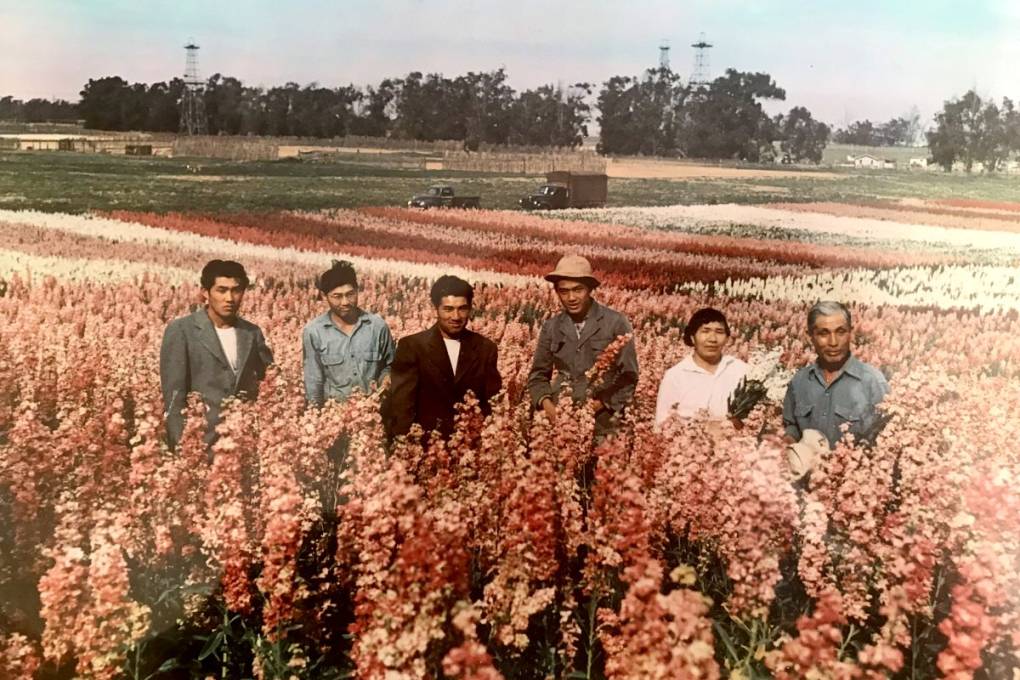
"caption": "James Hatano (third from left) with his family on the land they farmed in Redondo Beach, circa early 1950s, before he headed out to farm on his own.",
"description": null,
"title": "m-japanese-american-farmers-agriculture-california-history-1-family-portrait",
"credit": "Courtesy of the Hatano family",
"status": "inherit",
"altTag": "A group of Japanese farmers stand in a field.",
"isLoading": false,
"fetchFailed": false
},
"news_11915613": {
"type": "attachments",
"id": "news_11915613",
"meta": {
"index": "attachments_1716263798",
"site": "news",
"id": "11915613",
"found": true
},
"parent": 11915583,
"imgSizes": {
"twentyfourteen-full-width": {
"file": "https://ww2.kqed.org/app/uploads/sites/10/2022/05/JapaneseTeaGarden-1038x576.jpg",
"width": 1038,
"mimeType": "image/jpeg",
"height": 576
},
"thumbnail": {
"file": "https://ww2.kqed.org/app/uploads/sites/10/2022/05/JapaneseTeaGarden-160x107.jpg",
"width": 160,
"mimeType": "image/jpeg",
"height": 107
},
"post-thumbnail": {
"file": "https://ww2.kqed.org/app/uploads/sites/10/2022/05/JapaneseTeaGarden-672x372.jpg",
"width": 672,
"mimeType": "image/jpeg",
"height": 372
},
"kqedFullSize": {
"file": "https://ww2.kqed.org/app/uploads/sites/10/2022/05/JapaneseTeaGarden.jpg",
"width": 1920,
"height": 1280
},
"large": {
"file": "https://ww2.kqed.org/app/uploads/sites/10/2022/05/JapaneseTeaGarden-1020x680.jpg",
"width": 1020,
"mimeType": "image/jpeg",
"height": 680
},
"1536x1536": {
"file": "https://ww2.kqed.org/app/uploads/sites/10/2022/05/JapaneseTeaGarden-1536x1024.jpg",
"width": 1536,
"mimeType": "image/jpeg",
"height": 1024
},
"medium": {
"file": "https://ww2.kqed.org/app/uploads/sites/10/2022/05/JapaneseTeaGarden-800x533.jpg",
"width": 800,
"mimeType": "image/jpeg",
"height": 533
}
},
"publishDate": 1654038653,
"modified": 1654038874,
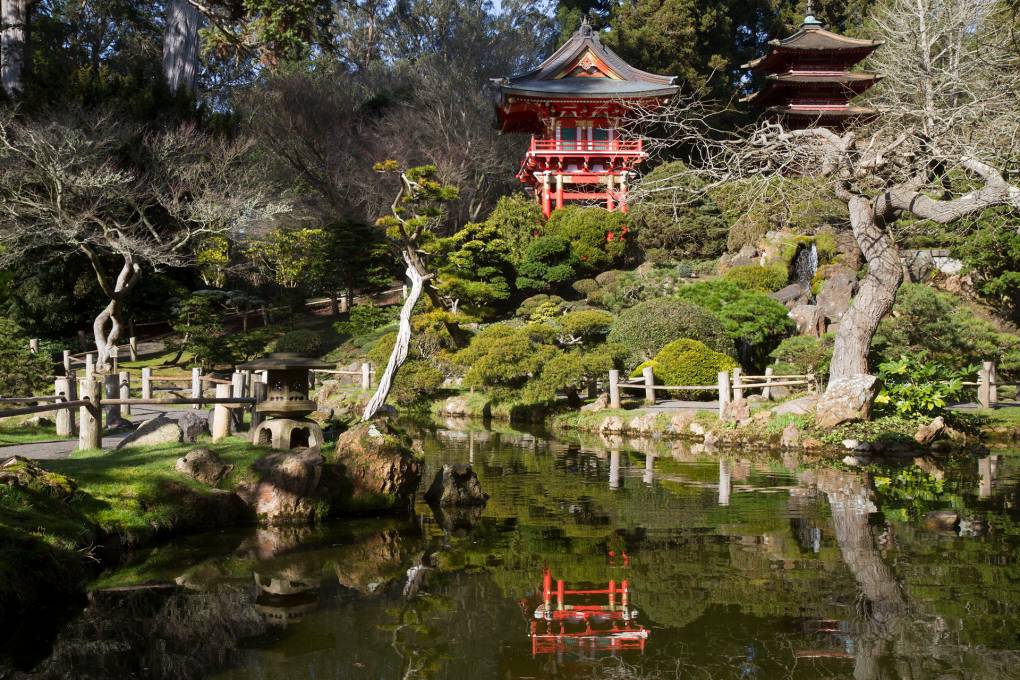
"caption": "A pond in San Francisco's Japanese Tea Garden reflects an orange pagoda.",
"description": null,
"title": "JapaneseTeaGarden",
"credit": "\u003ca href=\"https://www.flickr.com/photos/nathaninsandiego/24965174616/in/photolist-E363D7-27MgbLZ-2aGGrwR-TwoXmp-24Bf5sX-5Dht9L-6cjRdR-AwpgCy-2kJgfvk-dCo6NJ-24TnJ6b-6bmTUp-h3nQZh-wzDeeC-2kQnHKd-3hQDfT-7wFVB6-RzawZf-2kzykYH-pYyact-o2MeGN-TgAbSv-b9NEW4-pGaA8q-xpofHy-pG8uVg-4HfDbY-dkdVqj-wuG3Zd-jyDFPT-2FN8cE-QP63q9-GAT1aJ-wuGiR7-Fxd9oo-4XxT3j-xHXWU-7aHmGW-2aZwWbm-69FuyD-xHXH2-2irmswy-7aDyhn-afUcb-2iriNcZ-2irmred-2irnAT7-2irnAKS-2irmrYp-2irmrcV\">Nathan Rupert/Flickr\u003c/a>",
"status": "inherit",
"altTag": "A tranquil pond sits in the foreground with lush greenery rising into a hill beyond. On top of the hill is an orange pagoda.",
"isLoading": false,
"fetchFailed": false
},
"news_11886964": {
"type": "attachments",
"id": "news_11886964",
"meta": {
"index": "attachments_1716263798",
"site": "news",
"id": "11886964",
"found": true
},
"parent": 11886880,
"imgSizes": {
"twentyfourteen-full-width": {
"file": "https://ww2.kqed.org/app/uploads/sites/10/2021/08/IMG_0781-1038x576.jpeg",
"width": 1038,
"mimeType": "image/jpeg",
"height": 576
},
"thumbnail": {
"file": "https://ww2.kqed.org/app/uploads/sites/10/2021/08/IMG_0781-160x121.jpeg",
"width": 160,
"mimeType": "image/jpeg",
"height": 121
},
"post-thumbnail": {
"file": "https://ww2.kqed.org/app/uploads/sites/10/2021/08/IMG_0781-672x372.jpeg",
"width": 672,
"mimeType": "image/jpeg",
"height": 372
},
"kqedFullSize": {
"file": "https://ww2.kqed.org/app/uploads/sites/10/2021/08/IMG_0781-scaled.jpeg",
"width": 2560,
"height": 1932
},
"2048x2048": {
"file": "https://ww2.kqed.org/app/uploads/sites/10/2021/08/IMG_0781-2048x1545.jpeg",
"width": 2048,
"mimeType": "image/jpeg",
"height": 1545
},
"large": {
"file": "https://ww2.kqed.org/app/uploads/sites/10/2021/08/IMG_0781-1020x770.jpeg",
"width": 1020,
"mimeType": "image/jpeg",
"height": 770
},
"1536x1536": {
"file": "https://ww2.kqed.org/app/uploads/sites/10/2021/08/IMG_0781-1536x1159.jpeg",
"width": 1536,
"mimeType": "image/jpeg",
"height": 1159
},
"full-width": {
"file": "https://ww2.kqed.org/app/uploads/sites/10/2021/08/IMG_0781-1920x1449.jpeg",
"width": 1920,
"mimeType": "image/jpeg",
"height": 1449
},
"medium": {
"file": "https://ww2.kqed.org/app/uploads/sites/10/2021/08/IMG_0781-800x604.jpeg",
"width": 800,
"mimeType": "image/jpeg",
"height": 604
}
},
"publishDate": 1630422876,
"modified": 1632530649,
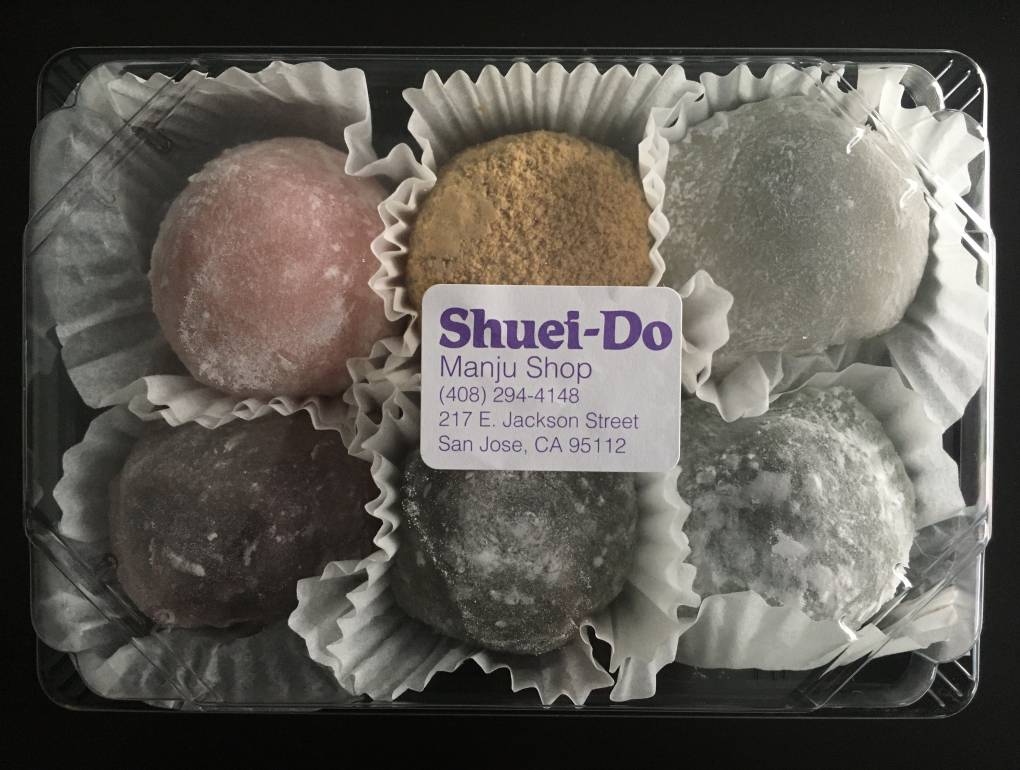
"caption": "For close to 70 years, Shuei-Do Manju Shop has been delighting customers with its \"country-style\" mochi, so soft, so fresh, that eating one is like eating a baby cheek — but in a good way.",
"description": "For close to 70 years, Shuei-do Manju Shop has been delighting customers with its \"country-style\" mochi, so soft, so fresh, eating one is like eating a baby cheek, but in a good way.",
"title": "IMG_0781",
"credit": "Rachael Myrow/KQED",
"status": "inherit",
"altTag": "A box of six colorful mochi, with a plastic top and the shop's label on it.",
"isLoading": false,
"fetchFailed": false
},
"news_11861198": {
"type": "attachments",
"id": "news_11861198",
"meta": {
"index": "attachments_1716263798",
"site": "news",
"id": "11861198",
"found": true
},
"parent": 11861010,
"imgSizes": {
"apple_news_ca_landscape_5_5": {
"file": "https://ww2.kqed.org/app/uploads/sites/10/2021/02/RS47225_IMG_5086-qut-1044x783.jpg",
"width": 1044,
"mimeType": "image/jpeg",
"height": 783
},
"apple_news_ca_square_4_0": {
"file": "https://ww2.kqed.org/app/uploads/sites/10/2021/02/RS47225_IMG_5086-qut-470x470.jpg",
"width": 470,
"mimeType": "image/jpeg",
"height": 470
},
"twentyfourteen-full-width": {
"file": "https://ww2.kqed.org/app/uploads/sites/10/2021/02/RS47225_IMG_5086-qut-1038x576.jpg",
"width": 1038,
"mimeType": "image/jpeg",
"height": 576
},
"thumbnail": {
"file": "https://ww2.kqed.org/app/uploads/sites/10/2021/02/RS47225_IMG_5086-qut-160x120.jpg",
"width": 160,
"mimeType": "image/jpeg",
"height": 120
},
"post-thumbnail": {
"file": "https://ww2.kqed.org/app/uploads/sites/10/2021/02/RS47225_IMG_5086-qut-672x372.jpg",
"width": 672,
"mimeType": "image/jpeg",
"height": 372
},
"kqedFullSize": {
"file": "https://ww2.kqed.org/app/uploads/sites/10/2021/02/RS47225_IMG_5086-qut.jpg",
"width": 1920,
"height": 1440
},
"apple_news_ca_landscape_4_7": {
"file": "https://ww2.kqed.org/app/uploads/sites/10/2021/02/RS47225_IMG_5086-qut-632x474.jpg",
"width": 632,
"mimeType": "image/jpeg",
"height": 474
},
"large": {
"file": "https://ww2.kqed.org/app/uploads/sites/10/2021/02/RS47225_IMG_5086-qut-1020x765.jpg",
"width": 1020,
"mimeType": "image/jpeg",
"height": 765
},
"apple_news_ca_landscape_4_0": {
"file": "https://ww2.kqed.org/app/uploads/sites/10/2021/02/RS47225_IMG_5086-qut-536x402.jpg",
"width": 536,
"mimeType": "image/jpeg",
"height": 402
},
"apple_news_ca_portrait_12_9": {
"file": "https://ww2.kqed.org/app/uploads/sites/10/2021/02/RS47225_IMG_5086-qut-1122x1440.jpg",
"width": 1122,
"mimeType": "image/jpeg",
"height": 1440
},
"medium": {
"file": "https://ww2.kqed.org/app/uploads/sites/10/2021/02/RS47225_IMG_5086-qut-800x600.jpg",
"width": 800,
"mimeType": "image/jpeg",
"height": 600
},
"apple_news_ca_portrait_4_0": {
"file": "https://ww2.kqed.org/app/uploads/sites/10/2021/02/RS47225_IMG_5086-qut-354x472.jpg",
"width": 354,
"mimeType": "image/jpeg",
"height": 472
},
"apple_news_ca_portrait_9_7": {
"file": "https://ww2.kqed.org/app/uploads/sites/10/2021/02/RS47225_IMG_5086-qut-840x1120.jpg",
"width": 840,
"mimeType": "image/jpeg",
"height": 1120
},
"apple_news_ca_landscape_12_9": {
"file": "https://ww2.kqed.org/app/uploads/sites/10/2021/02/RS47225_IMG_5086-qut-1832x1374.jpg",
"width": 1832,
"mimeType": "image/jpeg",
"height": 1374
},
"apple_news_ca_square_9_7": {
"file": "https://ww2.kqed.org/app/uploads/sites/10/2021/02/RS47225_IMG_5086-qut-1104x1104.jpg",
"width": 1104,
"mimeType": "image/jpeg",
"height": 1104
},
"1536x1536": {
"file": "https://ww2.kqed.org/app/uploads/sites/10/2021/02/RS47225_IMG_5086-qut-1536x1152.jpg",
"width": 1536,
"mimeType": "image/jpeg",
"height": 1152
},
"apple_news_ca_portrait_4_7": {
"file": "https://ww2.kqed.org/app/uploads/sites/10/2021/02/RS47225_IMG_5086-qut-414x552.jpg",
"width": 414,
"mimeType": "image/jpeg",
"height": 552
},
"apple_news_ca_square_12_9": {
"file": "https://ww2.kqed.org/app/uploads/sites/10/2021/02/RS47225_IMG_5086-qut-1472x1440.jpg",
"width": 1472,
"mimeType": "image/jpeg",
"height": 1440
},
"apple_news_ca_portrait_5_5": {
"file": "https://ww2.kqed.org/app/uploads/sites/10/2021/02/RS47225_IMG_5086-qut-687x916.jpg",
"width": 687,
"mimeType": "image/jpeg",
"height": 916
},
"apple_news_ca_square_4_7": {
"file": "https://ww2.kqed.org/app/uploads/sites/10/2021/02/RS47225_IMG_5086-qut-550x550.jpg",
"width": 550,
"mimeType": "image/jpeg",
"height": 550
},
"apple_news_ca_landscape_9_7": {
"file": "https://ww2.kqed.org/app/uploads/sites/10/2021/02/RS47225_IMG_5086-qut-1376x1032.jpg",
"width": 1376,
"mimeType": "image/jpeg",
"height": 1032
},
"apple_news_ca_square_5_5": {
"file": "https://ww2.kqed.org/app/uploads/sites/10/2021/02/RS47225_IMG_5086-qut-912x912.jpg",
"width": 912,
"mimeType": "image/jpeg",
"height": 912
}
},
"publishDate": 1613764623,
"modified": 1613778292,
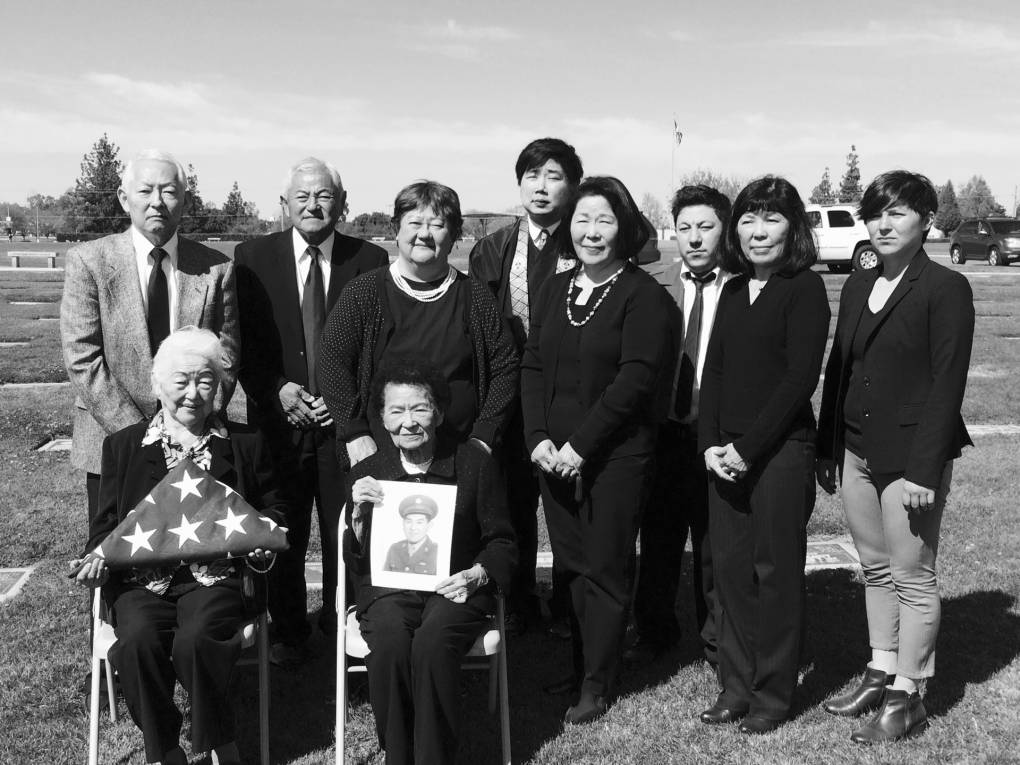
"caption": "Generations of the Masumoto family gathered in Selma, CA in 2017 for a memorial service. Yoshi Masumoto Yamagiwa (center) is holding a photo of her brother, George Masumoto, who was killed fighting for the U.S. in World War 2, while his family was incarcerated in a prison camp for Japanese Americans in Gila River, Arizona. ",
"description": "Generations of the Masumoto family gathered in Selma, California, in 2017 for a memorial service. Yoshi Masumoto Yamagiwa (center) is holding a photo of her brother, George Masumoto, who was killed fighting for the U.S. in World War II, while his family was incarcerated in a prison camp for Japanese Americans in Gila River, Arizona. ",
"title": "RS47225_IMG_5086-qut",
"credit": "Courtesy Masumoto Family",
"status": "inherit",
"altTag": null,
"isLoading": false,
"fetchFailed": false
},
"news_11821307": {
"type": "attachments",
"id": "news_11821307",
"meta": {
"index": "attachments_1716263798",
"site": "news",
"id": "11821307",
"found": true
},
"parent": 11821133,
"imgSizes": {
"apple_news_ca_landscape_5_5": {
"file": "https://ww2.kqed.org/app/uploads/sites/10/2020/05/Pages-from-Kakuro-Shigenaga-File-1-NARA-San-Bruno-1044x783.jpg",
"width": 1044,
"mimeType": "image/jpeg",
"height": 783
},
"apple_news_ca_square_4_0": {
"file": "https://ww2.kqed.org/app/uploads/sites/10/2020/05/Pages-from-Kakuro-Shigenaga-File-1-NARA-San-Bruno-470x470.jpg",
"width": 470,
"mimeType": "image/jpeg",
"height": 470
},
"twentyfourteen-full-width": {
"file": "https://ww2.kqed.org/app/uploads/sites/10/2020/05/Pages-from-Kakuro-Shigenaga-File-1-NARA-San-Bruno-1038x576.jpg",
"width": 1038,
"mimeType": "image/jpeg",
"height": 576
},
"thumbnail": {
"file": "https://ww2.kqed.org/app/uploads/sites/10/2020/05/Pages-from-Kakuro-Shigenaga-File-1-NARA-San-Bruno-160x74.jpg",
"width": 160,
"mimeType": "image/jpeg",
"height": 74
},
"post-thumbnail": {
"file": "https://ww2.kqed.org/app/uploads/sites/10/2020/05/Pages-from-Kakuro-Shigenaga-File-1-NARA-San-Bruno-672x372.jpg",
"width": 672,
"mimeType": "image/jpeg",
"height": 372
},
"kqedFullSize": {
"file": "https://ww2.kqed.org/app/uploads/sites/10/2020/05/Pages-from-Kakuro-Shigenaga-File-1-NARA-San-Bruno.jpg",
"width": 1755,
"height": 807
},
"apple_news_ca_landscape_4_7": {
"file": "https://ww2.kqed.org/app/uploads/sites/10/2020/05/Pages-from-Kakuro-Shigenaga-File-1-NARA-San-Bruno-632x474.jpg",
"width": 632,
"mimeType": "image/jpeg",
"height": 474
},
"large": {
"file": "https://ww2.kqed.org/app/uploads/sites/10/2020/05/Pages-from-Kakuro-Shigenaga-File-1-NARA-San-Bruno-1020x469.jpg",
"width": 1020,
"mimeType": "image/jpeg",
"height": 469
},
"apple_news_ca_landscape_4_0": {
"file": "https://ww2.kqed.org/app/uploads/sites/10/2020/05/Pages-from-Kakuro-Shigenaga-File-1-NARA-San-Bruno-536x402.jpg",
"width": 536,
"mimeType": "image/jpeg",
"height": 402
},
"apple_news_ca_portrait_12_9": {
"file": "https://ww2.kqed.org/app/uploads/sites/10/2020/05/Pages-from-Kakuro-Shigenaga-File-1-NARA-San-Bruno-1122x807.jpg",
"width": 1122,
"mimeType": "image/jpeg",
"height": 807
},
"medium": {
"file": "https://ww2.kqed.org/app/uploads/sites/10/2020/05/Pages-from-Kakuro-Shigenaga-File-1-NARA-San-Bruno-800x368.jpg",
"width": 800,
"mimeType": "image/jpeg",
"height": 368
},
"apple_news_ca_portrait_4_0": {
"file": "https://ww2.kqed.org/app/uploads/sites/10/2020/05/Pages-from-Kakuro-Shigenaga-File-1-NARA-San-Bruno-354x472.jpg",
"width": 354,
"mimeType": "image/jpeg",
"height": 472
},
"apple_news_ca_portrait_9_7": {
"file": "https://ww2.kqed.org/app/uploads/sites/10/2020/05/Pages-from-Kakuro-Shigenaga-File-1-NARA-San-Bruno-840x807.jpg",
"width": 840,
"mimeType": "image/jpeg",
"height": 807
},
"apple_news_ca_square_9_7": {
"file": "https://ww2.kqed.org/app/uploads/sites/10/2020/05/Pages-from-Kakuro-Shigenaga-File-1-NARA-San-Bruno-1104x807.jpg",
"width": 1104,
"mimeType": "image/jpeg",
"height": 807
},
"apple_news_ca_portrait_4_7": {
"file": "https://ww2.kqed.org/app/uploads/sites/10/2020/05/Pages-from-Kakuro-Shigenaga-File-1-NARA-San-Bruno-414x552.jpg",
"width": 414,
"mimeType": "image/jpeg",
"height": 552
},
"apple_news_ca_square_12_9": {
"file": "https://ww2.kqed.org/app/uploads/sites/10/2020/05/Pages-from-Kakuro-Shigenaga-File-1-NARA-San-Bruno-1472x807.jpg",
"width": 1472,
"mimeType": "image/jpeg",
"height": 807
},
"apple_news_ca_portrait_5_5": {
"file": "https://ww2.kqed.org/app/uploads/sites/10/2020/05/Pages-from-Kakuro-Shigenaga-File-1-NARA-San-Bruno-687x807.jpg",
"width": 687,
"mimeType": "image/jpeg",
"height": 807
},
"apple_news_ca_square_4_7": {
"file": "https://ww2.kqed.org/app/uploads/sites/10/2020/05/Pages-from-Kakuro-Shigenaga-File-1-NARA-San-Bruno-550x550.jpg",
"width": 550,
"mimeType": "image/jpeg",
"height": 550
},
"apple_news_ca_landscape_9_7": {
"file": "https://ww2.kqed.org/app/uploads/sites/10/2020/05/Pages-from-Kakuro-Shigenaga-File-1-NARA-San-Bruno-1376x807.jpg",
"width": 1376,
"mimeType": "image/jpeg",
"height": 807
},
"apple_news_ca_square_5_5": {
"file": "https://ww2.kqed.org/app/uploads/sites/10/2020/05/Pages-from-Kakuro-Shigenaga-File-1-NARA-San-Bruno-912x807.jpg",
"width": 912,
"mimeType": "image/jpeg",
"height": 807
}
},
"publishDate": 1590643349,
"modified": 1593030896,
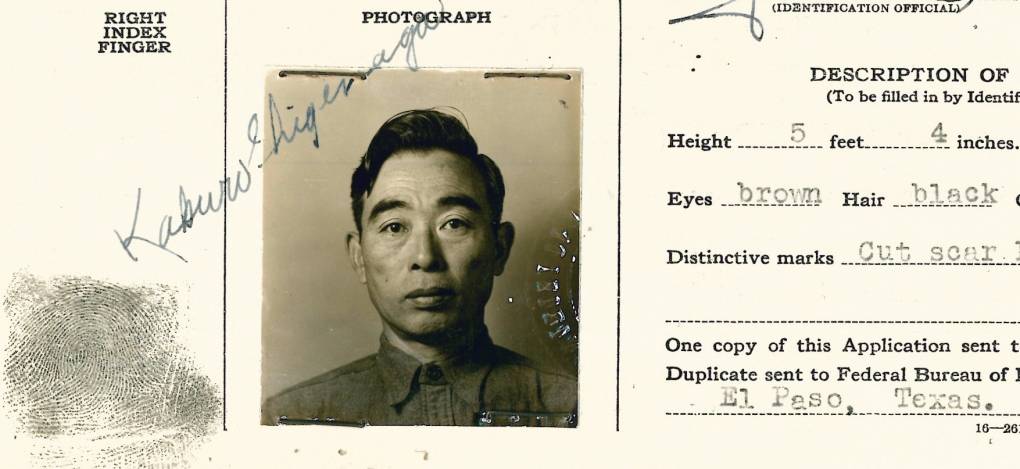
"caption": "Kakuro Shigenaga, aged 47, photographed and fingerprinted in an identification card. He was among the men who spent time on Angel Island before being sent to a number of inland internment camps. ",
"description": "Photograph and documents for Kakuro Shigenaga.",
"title": "Pages from Kakuro Shigenaga File 1 - NARA San Bruno",
"credit": "Courtesy of the Shigenaga family",
"status": "inherit",
"isLoading": false,
"fetchFailed": false
},
"news_11802711": {
"type": "attachments",
"id": "news_11802711",
"meta": {
"index": "attachments_1716263798",
"site": "news",
"id": "11802711",
"found": true
},
"parent": 11802066,
"imgSizes": {
"apple_news_ca_landscape_5_5": {
"file": "https://ww2.kqed.org/app/uploads/sites/10/2020/02/RS41450_ChildrenOfHeartMountain_CourtesyOkumotoCollectionHMWF-qut-1044x783.jpg",
"width": 1044,
"mimeType": "image/jpeg",
"height": 783
},
"apple_news_ca_square_4_0": {
"file": "https://ww2.kqed.org/app/uploads/sites/10/2020/02/RS41450_ChildrenOfHeartMountain_CourtesyOkumotoCollectionHMWF-qut-470x470.jpg",
"width": 470,
"mimeType": "image/jpeg",
"height": 470
},
"twentyfourteen-full-width": {
"file": "https://ww2.kqed.org/app/uploads/sites/10/2020/02/RS41450_ChildrenOfHeartMountain_CourtesyOkumotoCollectionHMWF-qut-1038x576.jpg",
"width": 1038,
"mimeType": "image/jpeg",
"height": 576
},
"thumbnail": {
"file": "https://ww2.kqed.org/app/uploads/sites/10/2020/02/RS41450_ChildrenOfHeartMountain_CourtesyOkumotoCollectionHMWF-qut-160x132.jpg",
"width": 160,
"mimeType": "image/jpeg",
"height": 132
},
"post-thumbnail": {
"file": "https://ww2.kqed.org/app/uploads/sites/10/2020/02/RS41450_ChildrenOfHeartMountain_CourtesyOkumotoCollectionHMWF-qut-672x372.jpg",
"width": 672,
"mimeType": "image/jpeg",
"height": 372
},
"kqedFullSize": {
"file": "https://ww2.kqed.org/app/uploads/sites/10/2020/02/RS41450_ChildrenOfHeartMountain_CourtesyOkumotoCollectionHMWF-qut.jpg",
"width": 1516,
"height": 1247
},
"apple_news_ca_landscape_4_7": {
"file": "https://ww2.kqed.org/app/uploads/sites/10/2020/02/RS41450_ChildrenOfHeartMountain_CourtesyOkumotoCollectionHMWF-qut-632x474.jpg",
"width": 632,
"mimeType": "image/jpeg",
"height": 474
},
"large": {
"file": "https://ww2.kqed.org/app/uploads/sites/10/2020/02/RS41450_ChildrenOfHeartMountain_CourtesyOkumotoCollectionHMWF-qut-1020x839.jpg",
"width": 1020,
"mimeType": "image/jpeg",
"height": 839
},
"apple_news_ca_landscape_4_0": {
"file": "https://ww2.kqed.org/app/uploads/sites/10/2020/02/RS41450_ChildrenOfHeartMountain_CourtesyOkumotoCollectionHMWF-qut-536x402.jpg",
"width": 536,
"mimeType": "image/jpeg",
"height": 402
},
"apple_news_ca_portrait_12_9": {
"file": "https://ww2.kqed.org/app/uploads/sites/10/2020/02/RS41450_ChildrenOfHeartMountain_CourtesyOkumotoCollectionHMWF-qut-1122x1247.jpg",
"width": 1122,
"mimeType": "image/jpeg",
"height": 1247
},
"medium": {
"file": "https://ww2.kqed.org/app/uploads/sites/10/2020/02/RS41450_ChildrenOfHeartMountain_CourtesyOkumotoCollectionHMWF-qut-800x658.jpg",
"width": 800,
"mimeType": "image/jpeg",
"height": 658
},
"apple_news_ca_portrait_4_0": {
"file": "https://ww2.kqed.org/app/uploads/sites/10/2020/02/RS41450_ChildrenOfHeartMountain_CourtesyOkumotoCollectionHMWF-qut-354x472.jpg",
"width": 354,
"mimeType": "image/jpeg",
"height": 472
},
"apple_news_ca_portrait_9_7": {
"file": "https://ww2.kqed.org/app/uploads/sites/10/2020/02/RS41450_ChildrenOfHeartMountain_CourtesyOkumotoCollectionHMWF-qut-840x1120.jpg",
"width": 840,
"mimeType": "image/jpeg",
"height": 1120
},
"apple_news_ca_square_9_7": {
"file": "https://ww2.kqed.org/app/uploads/sites/10/2020/02/RS41450_ChildrenOfHeartMountain_CourtesyOkumotoCollectionHMWF-qut-1104x1104.jpg",
"width": 1104,
"mimeType": "image/jpeg",
"height": 1104
},
"apple_news_ca_portrait_4_7": {
"file": "https://ww2.kqed.org/app/uploads/sites/10/2020/02/RS41450_ChildrenOfHeartMountain_CourtesyOkumotoCollectionHMWF-qut-414x552.jpg",
"width": 414,
"mimeType": "image/jpeg",
"height": 552
},
"apple_news_ca_square_12_9": {
"file": "https://ww2.kqed.org/app/uploads/sites/10/2020/02/RS41450_ChildrenOfHeartMountain_CourtesyOkumotoCollectionHMWF-qut-1472x1247.jpg",
"width": 1472,
"mimeType": "image/jpeg",
"height": 1247
},
"apple_news_ca_portrait_5_5": {
"file": "https://ww2.kqed.org/app/uploads/sites/10/2020/02/RS41450_ChildrenOfHeartMountain_CourtesyOkumotoCollectionHMWF-qut-687x916.jpg",
"width": 687,
"mimeType": "image/jpeg",
"height": 916
},
"apple_news_ca_square_4_7": {
"file": "https://ww2.kqed.org/app/uploads/sites/10/2020/02/RS41450_ChildrenOfHeartMountain_CourtesyOkumotoCollectionHMWF-qut-550x550.jpg",
"width": 550,
"mimeType": "image/jpeg",
"height": 550
},
"apple_news_ca_landscape_9_7": {
"file": "https://ww2.kqed.org/app/uploads/sites/10/2020/02/RS41450_ChildrenOfHeartMountain_CourtesyOkumotoCollectionHMWF-qut-1376x1032.jpg",
"width": 1376,
"mimeType": "image/jpeg",
"height": 1032
},
"apple_news_ca_square_5_5": {
"file": "https://ww2.kqed.org/app/uploads/sites/10/2020/02/RS41450_ChildrenOfHeartMountain_CourtesyOkumotoCollectionHMWF-qut-912x912.jpg",
"width": 912,
"mimeType": "image/jpeg",
"height": 912
}
},
"publishDate": 1582247769,
"modified": 1582247836,
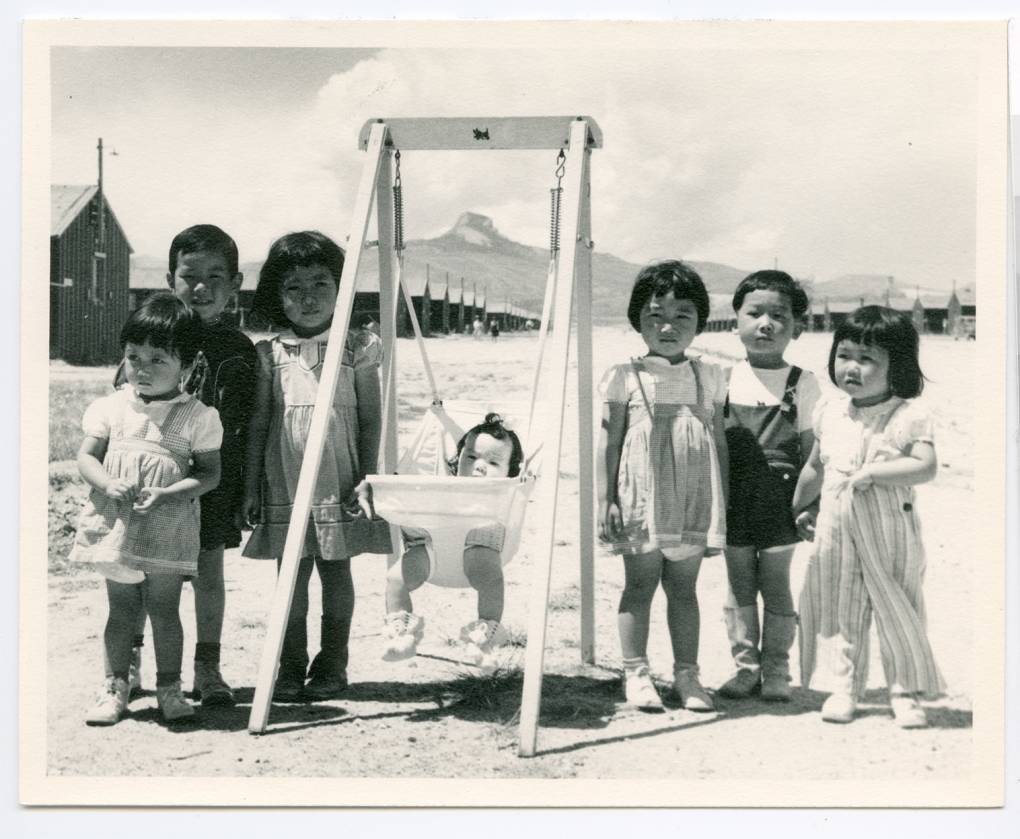
"caption": "Children pose with barracks and Heart Mountain in background.",
"description": "Children pose with barracks and Heart Mountain in background.",
"title": "RS41450_ChildrenOfHeartMountain_CourtesyOkumotoCollectionHMWF-qut",
"credit": "Courtesty of Yoshio Okumoto/Heart Mountain Wyoming Foundation",
"status": "inherit",
"isLoading": false,
"fetchFailed": false
},
"news_11802591": {
"type": "attachments",
"id": "news_11802591",
"meta": {
"index": "attachments_1716263798",
"site": "news",
"id": "11802591",
"found": true
},
"parent": 11802590,
"imgSizes": {
"apple_news_ca_landscape_5_5": {
"file": "https://ww2.kqed.org/app/uploads/sites/10/2020/02/ap_20046154739524-7b4db8ddefe1429d2887e6a1038452451fff2a6d-1044x783.jpg",
"width": 1044,
"mimeType": "image/jpeg",
"height": 783
},
"apple_news_ca_square_4_0": {
"file": "https://ww2.kqed.org/app/uploads/sites/10/2020/02/ap_20046154739524-7b4db8ddefe1429d2887e6a1038452451fff2a6d-470x470.jpg",
"width": 470,
"mimeType": "image/jpeg",
"height": 470
},
"twentyfourteen-full-width": {
"file": "https://ww2.kqed.org/app/uploads/sites/10/2020/02/ap_20046154739524-7b4db8ddefe1429d2887e6a1038452451fff2a6d-1038x576.jpg",
"width": 1038,
"mimeType": "image/jpeg",
"height": 576
},
"thumbnail": {
"file": "https://ww2.kqed.org/app/uploads/sites/10/2020/02/ap_20046154739524-7b4db8ddefe1429d2887e6a1038452451fff2a6d-160x120.jpg",
"width": 160,
"mimeType": "image/jpeg",
"height": 120
},
"post-thumbnail": {
"file": "https://ww2.kqed.org/app/uploads/sites/10/2020/02/ap_20046154739524-7b4db8ddefe1429d2887e6a1038452451fff2a6d-672x372.jpg",
"width": 672,
"mimeType": "image/jpeg",
"height": 372
},
"kqedFullSize": {
"file": "https://ww2.kqed.org/app/uploads/sites/10/2020/02/ap_20046154739524-7b4db8ddefe1429d2887e6a1038452451fff2a6d-e1582227312183.jpg",
"width": 1290,
"height": 967
},
"apple_news_ca_landscape_4_7": {
"file": "https://ww2.kqed.org/app/uploads/sites/10/2020/02/ap_20046154739524-7b4db8ddefe1429d2887e6a1038452451fff2a6d-632x474.jpg",
"width": 632,
"mimeType": "image/jpeg",
"height": 474
},
"large": {
"file": "https://ww2.kqed.org/app/uploads/sites/10/2020/02/ap_20046154739524-7b4db8ddefe1429d2887e6a1038452451fff2a6d-1020x765.jpg",
"width": 1020,
"mimeType": "image/jpeg",
"height": 765
},
"apple_news_ca_landscape_4_0": {
"file": "https://ww2.kqed.org/app/uploads/sites/10/2020/02/ap_20046154739524-7b4db8ddefe1429d2887e6a1038452451fff2a6d-536x402.jpg",
"width": 536,
"mimeType": "image/jpeg",
"height": 402
},
"apple_news_ca_portrait_12_9": {
"file": "https://ww2.kqed.org/app/uploads/sites/10/2020/02/ap_20046154739524-7b4db8ddefe1429d2887e6a1038452451fff2a6d-1122x1496.jpg",
"width": 1122,
"mimeType": "image/jpeg",
"height": 1496
},
"medium": {
"file": "https://ww2.kqed.org/app/uploads/sites/10/2020/02/ap_20046154739524-7b4db8ddefe1429d2887e6a1038452451fff2a6d-800x600.jpg",
"width": 800,
"mimeType": "image/jpeg",
"height": 600
},
"apple_news_ca_portrait_4_0": {
"file": "https://ww2.kqed.org/app/uploads/sites/10/2020/02/ap_20046154739524-7b4db8ddefe1429d2887e6a1038452451fff2a6d-354x472.jpg",
"width": 354,
"mimeType": "image/jpeg",
"height": 472
},
"apple_news_ca_portrait_9_7": {
"file": "https://ww2.kqed.org/app/uploads/sites/10/2020/02/ap_20046154739524-7b4db8ddefe1429d2887e6a1038452451fff2a6d-840x1120.jpg",
"width": 840,
"mimeType": "image/jpeg",
"height": 1120
},
"apple_news_ca_landscape_12_9": {
"file": "https://ww2.kqed.org/app/uploads/sites/10/2020/02/ap_20046154739524-7b4db8ddefe1429d2887e6a1038452451fff2a6d-1832x1374.jpg",
"width": 1832,
"mimeType": "image/jpeg",
"height": 1374
},
"apple_news_ca_square_9_7": {
"file": "https://ww2.kqed.org/app/uploads/sites/10/2020/02/ap_20046154739524-7b4db8ddefe1429d2887e6a1038452451fff2a6d-1104x1104.jpg",
"width": 1104,
"mimeType": "image/jpeg",
"height": 1104
},
"apple_news_ca_portrait_4_7": {
"file": "https://ww2.kqed.org/app/uploads/sites/10/2020/02/ap_20046154739524-7b4db8ddefe1429d2887e6a1038452451fff2a6d-414x552.jpg",
"width": 414,
"mimeType": "image/jpeg",
"height": 552
},
"apple_news_ca_square_12_9": {
"file": "https://ww2.kqed.org/app/uploads/sites/10/2020/02/ap_20046154739524-7b4db8ddefe1429d2887e6a1038452451fff2a6d-1472x1472.jpg",
"width": 1472,
"mimeType": "image/jpeg",
"height": 1472
},
"apple_news_ca_portrait_5_5": {
"file": "https://ww2.kqed.org/app/uploads/sites/10/2020/02/ap_20046154739524-7b4db8ddefe1429d2887e6a1038452451fff2a6d-687x916.jpg",
"width": 687,
"mimeType": "image/jpeg",
"height": 916
},
"full-width": {
"file": "https://ww2.kqed.org/app/uploads/sites/10/2020/02/ap_20046154739524-7b4db8ddefe1429d2887e6a1038452451fff2a6d-1920x1440.jpg",
"width": 1920,
"mimeType": "image/jpeg",
"height": 1440
},
"apple_news_ca_square_4_7": {
"file": "https://ww2.kqed.org/app/uploads/sites/10/2020/02/ap_20046154739524-7b4db8ddefe1429d2887e6a1038452451fff2a6d-550x550.jpg",
"width": 550,
"mimeType": "image/jpeg",
"height": 550
},
"apple_news_ca_landscape_9_7": {
"file": "https://ww2.kqed.org/app/uploads/sites/10/2020/02/ap_20046154739524-7b4db8ddefe1429d2887e6a1038452451fff2a6d-1376x1032.jpg",
"width": 1376,
"mimeType": "image/jpeg",
"height": 1032
},
"apple_news_ca_square_5_5": {
"file": "https://ww2.kqed.org/app/uploads/sites/10/2020/02/ap_20046154739524-7b4db8ddefe1429d2887e6a1038452451fff2a6d-912x912.jpg",
"width": 912,
"mimeType": "image/jpeg",
"height": 912
}
},
"publishDate": 1582225826,
"modified": 1582227121,
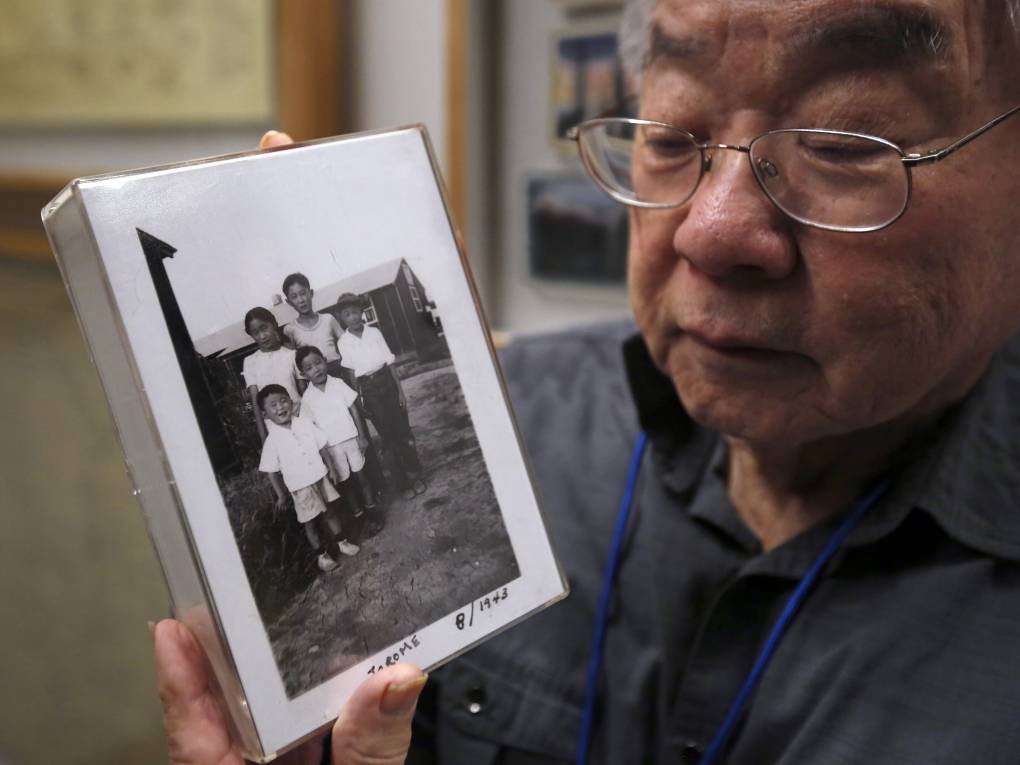
"caption": "During a visit last week to the California Museum in Sacramento, Les Ouchida holds a 1943 photo of himself (front row center) and his siblings taken at the internment camp in Jerome, Ark., that his family was moved to from their home near Sacramento in 1942.",
"description": null,
"title": "During a visit last week to the California Museum in Sacramento, Les Ouchida holds a 1943 photo of himself (front row center) and his siblings taken at the internment camp in Jerome, Ark., that his family was moved to from their home near Sacramento in 1942.",
"credit": "Rich Pedroncelli/AP",
"status": "inherit",
"isLoading": false,
"fetchFailed": false
},
"news_10868642": {
"type": "attachments",
"id": "news_10868642",
"meta": {
"index": "attachments_1716263798",
"site": "news",
"id": "10868642",
"found": true
},
"parent": 10868581,
"imgSizes": {
"twentyfourteen-full-width": {
"file": "https://ww2.kqed.org/app/uploads/sites/10/2016/02/DorotheaWomanInternment-1038x576.jpg",
"width": 1038,
"mimeType": "image/jpeg",
"height": 576
},
"thumbnail": {
"file": "https://ww2.kqed.org/app/uploads/sites/10/2016/02/DorotheaWomanInternment-400x294.jpg",
"width": 400,
"mimeType": "image/jpeg",
"height": 294
},
"fd-sm": {
"file": "https://ww2.kqed.org/app/uploads/sites/10/2016/02/DorotheaWomanInternment-960x706.jpg",
"width": 960,
"mimeType": "image/jpeg",
"height": 706
},
"post-thumbnail": {
"file": "https://ww2.kqed.org/app/uploads/sites/10/2016/02/DorotheaWomanInternment-672x372.jpg",
"width": 672,
"mimeType": "image/jpeg",
"height": 372
},
"kqedFullSize": {
"file": "https://ww2.kqed.org/app/uploads/sites/10/2016/02/DorotheaWomanInternment.jpg",
"width": 1920,
"height": 1411
},
"large": {
"file": "https://ww2.kqed.org/app/uploads/sites/10/2016/02/DorotheaWomanInternment-1920x1411.jpg",
"width": 1920,
"mimeType": "image/jpeg",
"height": 1411
},
"guest-author-96": {
"file": "https://ww2.kqed.org/app/uploads/sites/10/2016/02/DorotheaWomanInternment-96x96.jpg",
"width": 96,
"mimeType": "image/jpeg",
"height": 96
},
"medium": {
"file": "https://ww2.kqed.org/app/uploads/sites/10/2016/02/DorotheaWomanInternment-800x588.jpg",
"width": 800,
"mimeType": "image/jpeg",
"height": 588
},
"guest-author-64": {
"file": "https://ww2.kqed.org/app/uploads/sites/10/2016/02/DorotheaWomanInternment-64x64.jpg",
"width": 64,
"mimeType": "image/jpeg",
"height": 64
},
"guest-author-32": {
"file": "https://ww2.kqed.org/app/uploads/sites/10/2016/02/DorotheaWomanInternment-32x32.jpg",
"width": 32,
"mimeType": "image/jpeg",
"height": 32
},
"jmtc-small-thumb": {
"file": "https://ww2.kqed.org/app/uploads/sites/10/2016/02/DorotheaWomanInternment-280x150.jpg",
"width": 280,
"mimeType": "image/jpeg",
"height": 150
},
"fd-lrg": {
"file": "https://ww2.kqed.org/app/uploads/sites/10/2016/02/DorotheaWomanInternment-1920x1411.jpg",
"width": 1920,
"mimeType": "image/jpeg",
"height": 1411
},
"fd-med": {
"file": "https://ww2.kqed.org/app/uploads/sites/10/2016/02/DorotheaWomanInternment-1180x867.jpg",
"width": 1180,
"mimeType": "image/jpeg",
"height": 867
},
"detail": {
"file": "https://ww2.kqed.org/app/uploads/sites/10/2016/02/DorotheaWomanInternment-75x75.jpg",
"width": 75,
"mimeType": "image/jpeg",
"height": 75
},
"guest-author-128": {
"file": "https://ww2.kqed.org/app/uploads/sites/10/2016/02/DorotheaWomanInternment-128x128.jpg",
"width": 128,
"mimeType": "image/jpeg",
"height": 128
}
},
"publishDate": 1455755382,
"modified": 1582052704,
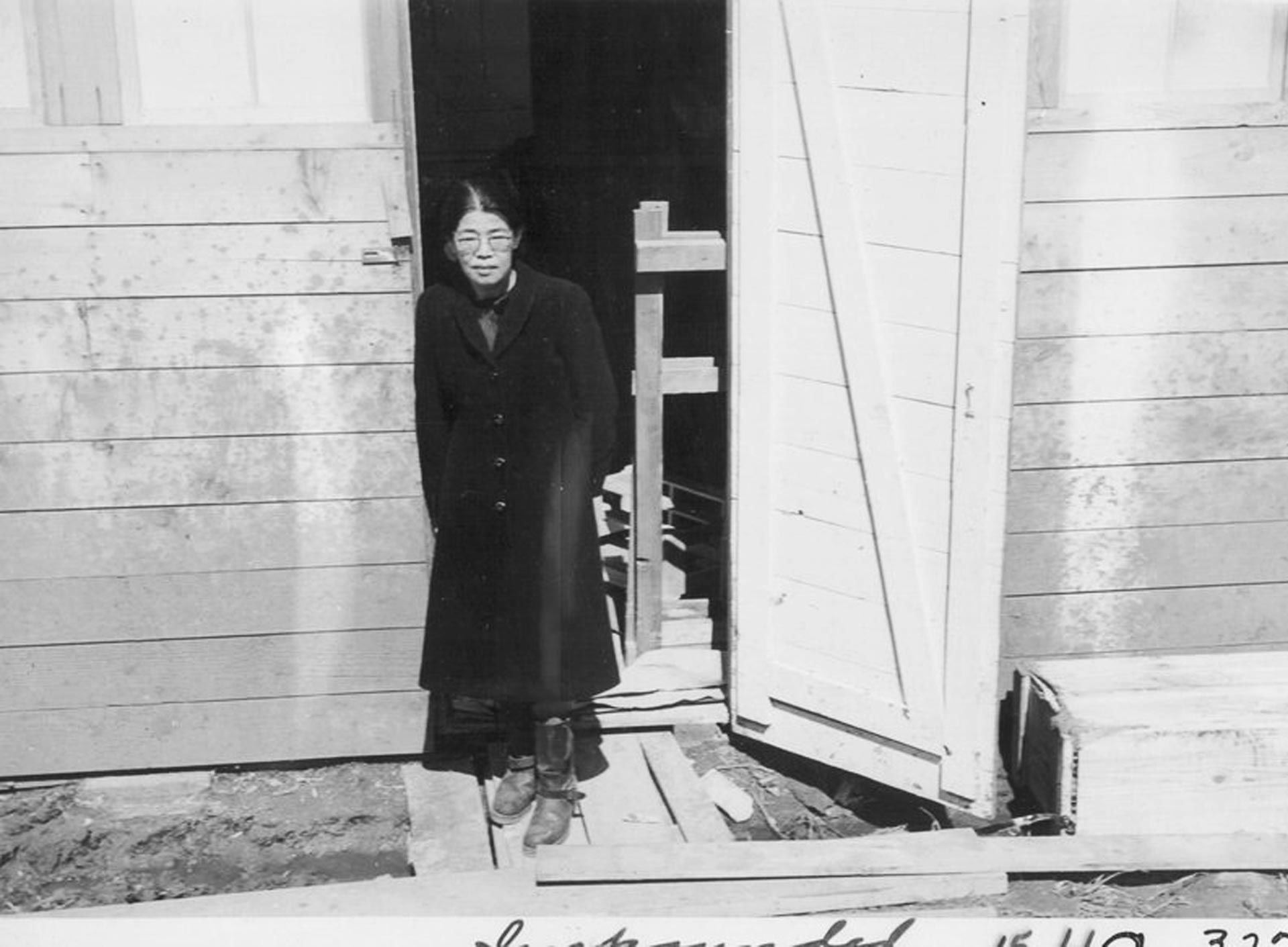
"caption": "A Japanese woman in the door of her living quarters at a detention camp in San Bruno.",
"description": "A Japanese woman in the door of her living quarters in San Bruno.",
"title": "DorotheaWomanInternment",
"credit": "Dorothea Lange/Courtesy of the Bancroft Library, UC Berkeley",
"status": "inherit",
"isLoading": false,
"fetchFailed": false
},
"news_11692617": {
"type": "attachments",
"id": "news_11692617",
"meta": {
"index": "attachments_1716263798",
"site": "news",
"id": "11692617",
"found": true
},
"parent": 11692512,
"imgSizes": {
"small": {
"file": "https://ww2.kqed.org/app/uploads/sites/10/2018/09/SoniaAndFamily-520x376.jpg",
"width": 520,
"mimeType": "image/jpeg",
"height": 376
},
"twentyfourteen-full-width": {
"file": "https://ww2.kqed.org/app/uploads/sites/10/2018/09/SoniaAndFamily-1038x576.jpg",
"width": 1038,
"mimeType": "image/jpeg",
"height": 576
},
"thumbnail": {
"file": "https://ww2.kqed.org/app/uploads/sites/10/2018/09/SoniaAndFamily-160x116.jpg",
"width": 160,
"mimeType": "image/jpeg",
"height": 116
},
"fd-sm": {
"file": "https://ww2.kqed.org/app/uploads/sites/10/2018/09/SoniaAndFamily-960x695.jpg",
"width": 960,
"mimeType": "image/jpeg",
"height": 695
},
"post-thumbnail": {
"file": "https://ww2.kqed.org/app/uploads/sites/10/2018/09/SoniaAndFamily-672x372.jpg",
"width": 672,
"mimeType": "image/jpeg",
"height": 372
},
"xsmall": {
"file": "https://ww2.kqed.org/app/uploads/sites/10/2018/09/SoniaAndFamily-375x271.jpg",
"width": 375,
"mimeType": "image/jpeg",
"height": 271
},
"kqedFullSize": {
"file": "https://ww2.kqed.org/app/uploads/sites/10/2018/09/SoniaAndFamily.jpg",
"width": 1920,
"height": 1389
},
"large": {
"file": "https://ww2.kqed.org/app/uploads/sites/10/2018/09/SoniaAndFamily-1020x738.jpg",
"width": 1020,
"mimeType": "image/jpeg",
"height": 738
},
"xlarge": {
"file": "https://ww2.kqed.org/app/uploads/sites/10/2018/09/SoniaAndFamily-1180x854.jpg",
"width": 1180,
"mimeType": "image/jpeg",
"height": 854
},
"complete_open_graph": {
"file": "https://ww2.kqed.org/app/uploads/sites/10/2018/09/SoniaAndFamily-1200x868.jpg",
"width": 1200,
"mimeType": "image/jpeg",
"height": 868
},
"guest-author-50": {
"file": "https://ww2.kqed.org/app/uploads/sites/10/2018/09/SoniaAndFamily-50x50.jpg",
"width": 50,
"mimeType": "image/jpeg",
"height": 50
},
"guest-author-96": {
"file": "https://ww2.kqed.org/app/uploads/sites/10/2018/09/SoniaAndFamily-96x96.jpg",
"width": 96,
"mimeType": "image/jpeg",
"height": 96
},
"medium": {
"file": "https://ww2.kqed.org/app/uploads/sites/10/2018/09/SoniaAndFamily-800x579.jpg",
"width": 800,
"mimeType": "image/jpeg",
"height": 579
},
"guest-author-64": {
"file": "https://ww2.kqed.org/app/uploads/sites/10/2018/09/SoniaAndFamily-64x64.jpg",
"width": 64,
"mimeType": "image/jpeg",
"height": 64
},
"guest-author-32": {
"file": "https://ww2.kqed.org/app/uploads/sites/10/2018/09/SoniaAndFamily-32x32.jpg",
"width": 32,
"mimeType": "image/jpeg",
"height": 32
},
"fd-lrg": {
"file": "https://ww2.kqed.org/app/uploads/sites/10/2018/09/SoniaAndFamily-1920x1389.jpg",
"width": 1920,
"mimeType": "image/jpeg",
"height": 1389
},
"fd-med": {
"file": "https://ww2.kqed.org/app/uploads/sites/10/2018/09/SoniaAndFamily-1180x854.jpg",
"width": 1180,
"mimeType": "image/jpeg",
"height": 854
},
"full-width": {
"file": "https://ww2.kqed.org/app/uploads/sites/10/2018/09/SoniaAndFamily-1920x1389.jpg",
"width": 1920,
"mimeType": "image/jpeg",
"height": 1389
},
"detail": {
"file": "https://ww2.kqed.org/app/uploads/sites/10/2018/09/SoniaAndFamily-150x150.jpg",
"width": 150,
"mimeType": "image/jpeg",
"height": 150
},
"guest-author-128": {
"file": "https://ww2.kqed.org/app/uploads/sites/10/2018/09/SoniaAndFamily-128x128.jpg",
"width": 128,
"mimeType": "image/jpeg",
"height": 128
},
"xxsmall": {
"file": "https://ww2.kqed.org/app/uploads/sites/10/2018/09/SoniaAndFamily-240x174.jpg",
"width": 240,
"mimeType": "image/jpeg",
"height": 174
}
},
"publishDate": 1536965819,
"modified": 1536965839,
"caption": "Sonia Prasad Quesada with her family.",
"description": "Sonia Prasad Quesada with her family.",
"title": "SoniaAndFamily",
"credit": "Courtesy Sonia Prasad Quesada",
"status": "inherit",
"isLoading": false,
"fetchFailed": false
},
"news_11662130": {
"type": "attachments",
"id": "news_11662130",
"meta": {
"index": "attachments_1716263798",
"site": "news",
"id": "11662130",
"found": true
},
"parent": 11662128,
"imgSizes": {
"small": {
"file": "https://ww2.kqed.org/app/uploads/sites/10/2018/04/RS30442_unknown-trio-set-57-qut-520x399.jpg",
"width": 520,
"mimeType": "image/jpeg",
"height": 399
},
"twentyfourteen-full-width": {
"file": "https://ww2.kqed.org/app/uploads/sites/10/2018/04/RS30442_unknown-trio-set-57-qut-1038x576.jpg",
"width": 1038,
"mimeType": "image/jpeg",
"height": 576
},
"thumbnail": {
"file": "https://ww2.kqed.org/app/uploads/sites/10/2018/04/RS30442_unknown-trio-set-57-qut-160x123.jpg",
"width": 160,
"mimeType": "image/jpeg",
"height": 123
},
"fd-sm": {
"file": "https://ww2.kqed.org/app/uploads/sites/10/2018/04/RS30442_unknown-trio-set-57-qut-960x738.jpg",
"width": 960,
"mimeType": "image/jpeg",
"height": 738
},
"post-thumbnail": {
"file": "https://ww2.kqed.org/app/uploads/sites/10/2018/04/RS30442_unknown-trio-set-57-qut-672x372.jpg",
"width": 672,
"mimeType": "image/jpeg",
"height": 372
},
"xsmall": {
"file": "https://ww2.kqed.org/app/uploads/sites/10/2018/04/RS30442_unknown-trio-set-57-qut-375x288.jpg",
"width": 375,
"mimeType": "image/jpeg",
"height": 288
},
"kqedFullSize": {
"file": "https://ww2.kqed.org/app/uploads/sites/10/2018/04/RS30442_unknown-trio-set-57-qut.jpg",
"width": 1920,
"height": 1475
},
"large": {
"file": "https://ww2.kqed.org/app/uploads/sites/10/2018/04/RS30442_unknown-trio-set-57-qut-1020x784.jpg",
"width": 1020,
"mimeType": "image/jpeg",
"height": 784
},
"xlarge": {
"file": "https://ww2.kqed.org/app/uploads/sites/10/2018/04/RS30442_unknown-trio-set-57-qut-1180x907.jpg",
"width": 1180,
"mimeType": "image/jpeg",
"height": 907
},
"complete_open_graph": {
"file": "https://ww2.kqed.org/app/uploads/sites/10/2018/04/RS30442_unknown-trio-set-57-qut-1200x922.jpg",
"width": 1200,
"mimeType": "image/jpeg",
"height": 922
},
"guest-author-50": {
"file": "https://ww2.kqed.org/app/uploads/sites/10/2018/04/RS30442_unknown-trio-set-57-qut-50x50.jpg",
"width": 50,
"mimeType": "image/jpeg",
"height": 50
},
"guest-author-96": {
"file": "https://ww2.kqed.org/app/uploads/sites/10/2018/04/RS30442_unknown-trio-set-57-qut-96x96.jpg",
"width": 96,
"mimeType": "image/jpeg",
"height": 96
},
"medium": {
"file": "https://ww2.kqed.org/app/uploads/sites/10/2018/04/RS30442_unknown-trio-set-57-qut-800x615.jpg",
"width": 800,
"mimeType": "image/jpeg",
"height": 615
},
"guest-author-64": {
"file": "https://ww2.kqed.org/app/uploads/sites/10/2018/04/RS30442_unknown-trio-set-57-qut-64x64.jpg",
"width": 64,
"mimeType": "image/jpeg",
"height": 64
},
"guest-author-32": {
"file": "https://ww2.kqed.org/app/uploads/sites/10/2018/04/RS30442_unknown-trio-set-57-qut-32x32.jpg",
"width": 32,
"mimeType": "image/jpeg",
"height": 32
},
"fd-lrg": {
"file": "https://ww2.kqed.org/app/uploads/sites/10/2018/04/RS30442_unknown-trio-set-57-qut-1920x1475.jpg",
"width": 1920,
"mimeType": "image/jpeg",
"height": 1475
},
"fd-med": {
"file": "https://ww2.kqed.org/app/uploads/sites/10/2018/04/RS30442_unknown-trio-set-57-qut-1180x907.jpg",
"width": 1180,
"mimeType": "image/jpeg",
"height": 907
},
"full-width": {
"file": "https://ww2.kqed.org/app/uploads/sites/10/2018/04/RS30442_unknown-trio-set-57-qut-1920x1475.jpg",
"width": 1920,
"mimeType": "image/jpeg",
"height": 1475
},
"detail": {
"file": "https://ww2.kqed.org/app/uploads/sites/10/2018/04/RS30442_unknown-trio-set-57-qut-150x150.jpg",
"width": 150,
"mimeType": "image/jpeg",
"height": 150
},
"guest-author-128": {
"file": "https://ww2.kqed.org/app/uploads/sites/10/2018/04/RS30442_unknown-trio-set-57-qut-128x128.jpg",
"width": 128,
"mimeType": "image/jpeg",
"height": 128
},
"xxsmall": {
"file": "https://ww2.kqed.org/app/uploads/sites/10/2018/04/RS30442_unknown-trio-set-57-qut-240x184.jpg",
"width": 240,
"mimeType": "image/jpeg",
"height": 184
}
},
"publishDate": 1523653143,
"modified": 1524015062,
"caption": "Unknown trio with their souped-up car, Southern California 1957.",
"description": "Unknown trio with their souped-up car, Southern California 1957.",
"title": "RS30442_unknown trio set 57-qut",
"credit": "Courtesy of Oliver Wang",
"status": "inherit",
"isLoading": false,
"fetchFailed": false
},
"news_11660480": {
"type": "attachments",
"id": "news_11660480",
"meta": {
"index": "attachments_1716263798",
"site": "news",
"id": "11660480",
"found": true
},
"title": "RS30329_5D3_9543-qut",
"publishDate": 1523058875,
"status": "inherit",
"parent": 11660424,
"modified": 1719593772,
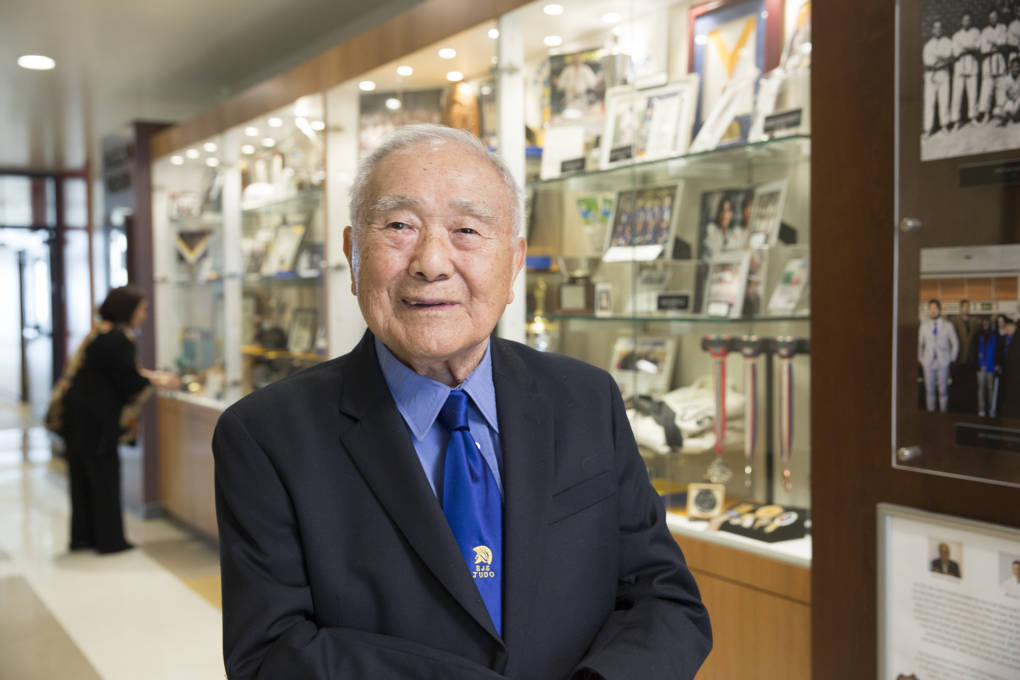
"caption": "Coach Yoshihiro 'Yosh' Uchida standing in front a case of judo medals outside the dojo in a building named after him at San José State.",
"credit": "Courtesy of David Schmitz",
"altTag": "Coach Yoshihiro \"Yosh\" Uchida standing in front a case of judo medals outside the dojo in a building named after him at San Jose State.",
"description": "Coach Yoshihiro \"Yosh\" Uchida standing in front a case of judo medals outside the dojo in a building named after him at San Jose State.",
"imgSizes": {
"thumbnail": {
"file": "https://cdn.kqed.org/wp-content/uploads/sites/10/2018/04/RS30329_5D3_9543-qut-160x107.jpg",
"width": 160,
"height": 107,
"mimeType": "image/jpeg"
},
"medium": {
"file": "https://cdn.kqed.org/wp-content/uploads/sites/10/2018/04/RS30329_5D3_9543-qut-800x533.jpg",
"width": 800,
"height": 533,
"mimeType": "image/jpeg"
},
"large": {
"file": "https://cdn.kqed.org/wp-content/uploads/sites/10/2018/04/RS30329_5D3_9543-qut-1020x680.jpg",
"width": 1020,
"height": 680,
"mimeType": "image/jpeg"
},
"fd-lrg": {
"file": "https://cdn.kqed.org/wp-content/uploads/sites/10/2018/04/RS30329_5D3_9543-qut-1920x1280.jpg",
"width": 1920,
"height": 1280,
"mimeType": "image/jpeg"
},
"fd-med": {
"file": "https://cdn.kqed.org/wp-content/uploads/sites/10/2018/04/RS30329_5D3_9543-qut-1180x787.jpg",
"width": 1180,
"height": 787,
"mimeType": "image/jpeg"
},
"fd-sm": {
"file": "https://cdn.kqed.org/wp-content/uploads/sites/10/2018/04/RS30329_5D3_9543-qut-960x640.jpg",
"width": 960,
"height": 640,
"mimeType": "image/jpeg"
},
"post-thumbnail": {
"file": "https://cdn.kqed.org/wp-content/uploads/sites/10/2018/04/RS30329_5D3_9543-qut-672x372.jpg",
"width": 672,
"height": 372,
"mimeType": "image/jpeg"
},
"twentyfourteen-full-width": {
"file": "https://cdn.kqed.org/wp-content/uploads/sites/10/2018/04/RS30329_5D3_9543-qut-1038x576.jpg",
"width": 1038,
"height": 576,
"mimeType": "image/jpeg"
},
"xxsmall": {
"file": "https://cdn.kqed.org/wp-content/uploads/sites/10/2018/04/RS30329_5D3_9543-qut-240x160.jpg",
"width": 240,
"height": 160,
"mimeType": "image/jpeg"
},
"xsmall": {
"file": "https://cdn.kqed.org/wp-content/uploads/sites/10/2018/04/RS30329_5D3_9543-qut-375x250.jpg",
"width": 375,
"height": 250,
"mimeType": "image/jpeg"
},
"small": {
"file": "https://cdn.kqed.org/wp-content/uploads/sites/10/2018/04/RS30329_5D3_9543-qut-520x347.jpg",
"width": 520,
"height": 347,
"mimeType": "image/jpeg"
},
"xlarge": {
"file": "https://cdn.kqed.org/wp-content/uploads/sites/10/2018/04/RS30329_5D3_9543-qut-1180x787.jpg",
"width": 1180,
"height": 787,
"mimeType": "image/jpeg"
},
"full-width": {
"file": "https://cdn.kqed.org/wp-content/uploads/sites/10/2018/04/RS30329_5D3_9543-qut-1920x1280.jpg",
"width": 1920,
"height": 1280,
"mimeType": "image/jpeg"
},
"guest-author-32": {
"file": "https://cdn.kqed.org/wp-content/uploads/sites/10/2018/04/RS30329_5D3_9543-qut-32x32.jpg",
"width": 32,
"height": 32,
"mimeType": "image/jpeg"
},
"guest-author-50": {
"file": "https://cdn.kqed.org/wp-content/uploads/sites/10/2018/04/RS30329_5D3_9543-qut-50x50.jpg",
"width": 50,
"height": 50,
"mimeType": "image/jpeg"
},
"guest-author-64": {
"file": "https://cdn.kqed.org/wp-content/uploads/sites/10/2018/04/RS30329_5D3_9543-qut-64x64.jpg",
"width": 64,
"height": 64,
"mimeType": "image/jpeg"
},
"guest-author-96": {
"file": "https://cdn.kqed.org/wp-content/uploads/sites/10/2018/04/RS30329_5D3_9543-qut-96x96.jpg",
"width": 96,
"height": 96,
"mimeType": "image/jpeg"
},
"guest-author-128": {
"file": "https://cdn.kqed.org/wp-content/uploads/sites/10/2018/04/RS30329_5D3_9543-qut-128x128.jpg",
"width": 128,
"height": 128,
"mimeType": "image/jpeg"
},
"detail": {
"file": "https://cdn.kqed.org/wp-content/uploads/sites/10/2018/04/RS30329_5D3_9543-qut-150x150.jpg",
"width": 150,
"height": 150,
"mimeType": "image/jpeg"
},
"kqedFullSize": {
"file": "https://cdn.kqed.org/wp-content/uploads/sites/10/2018/04/RS30329_5D3_9543-qut.jpg",
"width": 1920,
"height": 1280
}
},
"isLoading": false,
"fetchFailed": false
},
"news_11636022": {
"type": "attachments",
"id": "news_11636022",
"meta": {
"index": "attachments_1716263798",
"site": "news",
"id": "11636022",
"found": true
},
"parent": 11636018,
"imgSizes": {
"small": {
"file": "https://ww2.kqed.org/app/uploads/sites/10/2017/12/RS28447_Photo-Dec-07-3-31-23-PM-2-qut-520x293.jpg",
"width": 520,
"mimeType": "image/jpeg",
"height": 293
},
"twentyfourteen-full-width": {
"file": "https://ww2.kqed.org/app/uploads/sites/10/2017/12/RS28447_Photo-Dec-07-3-31-23-PM-2-qut-1038x576.jpg",
"width": 1038,
"mimeType": "image/jpeg",
"height": 576
},
"thumbnail": {
"file": "https://ww2.kqed.org/app/uploads/sites/10/2017/12/RS28447_Photo-Dec-07-3-31-23-PM-2-qut-160x90.jpg",
"width": 160,
"mimeType": "image/jpeg",
"height": 90
},
"fd-sm": {
"file": "https://ww2.kqed.org/app/uploads/sites/10/2017/12/RS28447_Photo-Dec-07-3-31-23-PM-2-qut-960x540.jpg",
"width": 960,
"mimeType": "image/jpeg",
"height": 540
},
"post-thumbnail": {
"file": "https://ww2.kqed.org/app/uploads/sites/10/2017/12/RS28447_Photo-Dec-07-3-31-23-PM-2-qut-672x372.jpg",
"width": 672,
"mimeType": "image/jpeg",
"height": 372
},
"xsmall": {
"file": "https://ww2.kqed.org/app/uploads/sites/10/2017/12/RS28447_Photo-Dec-07-3-31-23-PM-2-qut-375x211.jpg",
"width": 375,
"mimeType": "image/jpeg",
"height": 211
},
"kqedFullSize": {
"file": "https://ww2.kqed.org/app/uploads/sites/10/2017/12/RS28447_Photo-Dec-07-3-31-23-PM-2-qut.jpg",
"width": 1920,
"height": 1080
},
"large": {
"file": "https://ww2.kqed.org/app/uploads/sites/10/2017/12/RS28447_Photo-Dec-07-3-31-23-PM-2-qut-1020x574.jpg",
"width": 1020,
"mimeType": "image/jpeg",
"height": 574
},
"xlarge": {
"file": "https://ww2.kqed.org/app/uploads/sites/10/2017/12/RS28447_Photo-Dec-07-3-31-23-PM-2-qut-1180x664.jpg",
"width": 1180,
"mimeType": "image/jpeg",
"height": 664
},
"guest-author-50": {
"file": "https://ww2.kqed.org/app/uploads/sites/10/2017/12/RS28447_Photo-Dec-07-3-31-23-PM-2-qut-50x50.jpg",
"width": 50,
"mimeType": "image/jpeg",
"height": 50
},
"guest-author-96": {
"file": "https://ww2.kqed.org/app/uploads/sites/10/2017/12/RS28447_Photo-Dec-07-3-31-23-PM-2-qut-96x96.jpg",
"width": 96,
"mimeType": "image/jpeg",
"height": 96
},
"medium": {
"file": "https://ww2.kqed.org/app/uploads/sites/10/2017/12/RS28447_Photo-Dec-07-3-31-23-PM-2-qut-800x450.jpg",
"width": 800,
"mimeType": "image/jpeg",
"height": 450
},
"guest-author-64": {
"file": "https://ww2.kqed.org/app/uploads/sites/10/2017/12/RS28447_Photo-Dec-07-3-31-23-PM-2-qut-64x64.jpg",
"width": 64,
"mimeType": "image/jpeg",
"height": 64
},
"guest-author-32": {
"file": "https://ww2.kqed.org/app/uploads/sites/10/2017/12/RS28447_Photo-Dec-07-3-31-23-PM-2-qut-32x32.jpg",
"width": 32,
"mimeType": "image/jpeg",
"height": 32
},
"fd-lrg": {
"file": "https://ww2.kqed.org/app/uploads/sites/10/2017/12/RS28447_Photo-Dec-07-3-31-23-PM-2-qut-1920x1080.jpg",
"width": 1920,
"mimeType": "image/jpeg",
"height": 1080
},
"fd-med": {
"file": "https://ww2.kqed.org/app/uploads/sites/10/2017/12/RS28447_Photo-Dec-07-3-31-23-PM-2-qut-1180x664.jpg",
"width": 1180,
"mimeType": "image/jpeg",
"height": 664
},
"full-width": {
"file": "https://ww2.kqed.org/app/uploads/sites/10/2017/12/RS28447_Photo-Dec-07-3-31-23-PM-2-qut-1920x1080.jpg",
"width": 1920,
"mimeType": "image/jpeg",
"height": 1080
},
"detail": {
"file": "https://ww2.kqed.org/app/uploads/sites/10/2017/12/RS28447_Photo-Dec-07-3-31-23-PM-2-qut-150x150.jpg",
"width": 150,
"mimeType": "image/jpeg",
"height": 150
},
"guest-author-128": {
"file": "https://ww2.kqed.org/app/uploads/sites/10/2017/12/RS28447_Photo-Dec-07-3-31-23-PM-2-qut-128x128.jpg",
"width": 128,
"mimeType": "image/jpeg",
"height": 128
},
"xxsmall": {
"file": "https://ww2.kqed.org/app/uploads/sites/10/2017/12/RS28447_Photo-Dec-07-3-31-23-PM-2-qut-240x135.jpg",
"width": 240,
"mimeType": "image/jpeg",
"height": 135
}
},
"publishDate": 1512799889,
"modified": 1512832716,
"caption": "Chester and Amy Nozaki of the San Jose Tofu Company are feeling ready to retire.",
"description": "Chester and Amy Nozaki of the San Jose Tofu Company are feeling ready to retire.",
"title": "RS28447_Photo Dec 07, 3 31 23 PM 2-qut",
"credit": "Rachael Myrow/KQED",
"status": "inherit",
"isLoading": false,
"fetchFailed": false
}
},
"audioPlayerReducer": {
"postId": "stream_live",
"isPaused": true,
"isPlaying": false,
"pfsActive": false,
"pledgeModalIsOpen": true,
"playerDrawerIsOpen": false,
"liveAudioPlayStartedAt": 0,
"liveAudioPlayContext": ""
},
"authorsReducer": {
"byline_news_11927282": {
"type": "authors",
"id": "byline_news_11927282",
"meta": {
"override": true
},
"slug": "byline_news_11927282",
"name": "\u003ca href=\"https://civileats.com/author/chatano/\">Caroline Hatano\u003c/a>",
"isLoading": false
},
"byline_news_11802590": {
"type": "authors",
"id": "byline_news_11802590",
"meta": {
"override": true
},
"slug": "byline_news_11802590",
"name": "Laurel Wamsley and Colin Dwyer \u003cbr /> NPR",
"isLoading": false
},
"byline_news_11802043": {
"type": "authors",
"id": "byline_news_11802043",
"meta": {
"override": true
},
"slug": "byline_news_11802043",
"name": "Cuneyt Dil",
"isLoading": false
},
"byline_news_11692512": {
"type": "authors",
"id": "byline_news_11692512",
"meta": {
"override": true
},
"slug": "byline_news_11692512",
"name": "Sonia Prasad Quesada",
"isLoading": false
},
"ohubertallen": {
"type": "authors",
"id": "102",
"meta": {
"index": "authors_1716337520",
"id": "102",
"found": true
},
"name": "Olivia Allen-Price",
"firstName": "Olivia",
"lastName": "Allen-Price",
"slug": "ohubertallen",
"email": "oallenprice@kqed.org",
"display_author_email": false,
"staff_mastheads": [
"news"
],
"title": "Senior Editor",
"bio": "Olivia Allen-Price is senior editor and host of the award-winning Bay Curious podcast. Prior to joining KQED in 2013, Olivia worked at The Baltimore Sun and The Virginian-Pilot in Norfolk, Va. She holds degrees in journalism and political science from Elon University. Her work has earned awards from the Society of Professional Journalists, the Hearst Foundation and Hearken. She loves to talk about running and curly hair.\r\n\r\nFollow: \u003ca href=\"https://twitter.com/oallenprice\">@oallenprice\u003c/a>\r\nEmail: \u003ca href=\"mailto:oallenprice@kqed.org\">oallenprice@kqed.org\u003c/a>",
"avatar": "https://secure.gravatar.com/avatar/07f7803c1f6be56f3be58ef276dfa64dce898502e0554408ef4858451a8294f7?s=600&d=blank&r=g",
"twitter": "oallenprice",
"bluesky": null,
"facebook": null,
"instagram": null,
"linkedin": null,
"sites": [
{
"site": "",
"roles": [
"editor"
]
},
{
"site": "arts",
"roles": [
"subscriber"
]
},
{
"site": "news",
"roles": [
"administrator"
]
},
{
"site": "pop",
"roles": [
"administrator"
]
},
{
"site": "bayareabites",
"roles": [
"contributor"
]
},
{
"site": "stateofhealth",
"roles": [
"administrator"
]
},
{
"site": "science",
"roles": [
"editor"
]
}
],
"headData": {
"title": "Olivia Allen-Price | KQED",
"description": "Senior Editor",
"ogImgSrc": "https://secure.gravatar.com/avatar/07f7803c1f6be56f3be58ef276dfa64dce898502e0554408ef4858451a8294f7?s=600&d=blank&r=g",
"twImgSrc": "https://secure.gravatar.com/avatar/07f7803c1f6be56f3be58ef276dfa64dce898502e0554408ef4858451a8294f7?s=600&d=blank&r=g"
},
"isLoading": false,
"link": "/author/ohubertallen"
},
"rachael-myrow": {
"type": "authors",
"id": "251",
"meta": {
"index": "authors_1716337520",
"id": "251",
"found": true
},
"name": "Rachael Myrow",
"firstName": "Rachael",
"lastName": "Myrow",
"slug": "rachael-myrow",
"email": "rmyrow@kqed.org",
"display_author_email": true,
"staff_mastheads": [
"news"
],
"title": "Senior Editor of KQED's Silicon Valley News Desk",
"bio": "• I write and edit stories about how Silicon Valley power and policies shape everyday life in California. I’m also passionate about making Bay Area history and culture more accessible to a broad public. • I’ve been a journalist for most of my life, starting in high school with The Franklin Press in Los Angeles, where I grew up. While earning my first degree in English at UC Berkeley, I got my start in public radio at KALX-FM. After completing a second degree in journalism at Cal, I landed my first professional job at Marketplace, then moved on to KPCC (now LAist), and then KQED, where I hosted The California Report for more than seven years. • My reporting has appeared on NPR, The World, WBUR’s \u003ci>Here & Now\u003c/i>, and the BBC. I also guest host for KQED’s \u003ci>Forum\u003c/i>, as well as the Commonwealth Club in San Francisco. • I speak periodically on media, democracy and technology issues, and do voiceover work for documentaries and educational video projects. • Outside of the studio, you'll find me hiking Bay Area trails and whipping up Insta-ready meals in my kitchen. • I do not accept gifts, money, or favors from anyone connected to my reporting, I don't pay people for information, and I do not support or donate to political causes. • I strive to treat the people I report on with fairness, honesty, and respect. I also recognize there are often multiple sides to a story and work to verify information through multiple sources and documentation. If I get something wrong, I correct it.",
"avatar": "https://secure.gravatar.com/avatar/3ed8a3c5f26025e4a805ba634cda8cd764906b97438a6d9ce216b044e340da4e?s=600&d=blank&r=g",
"twitter": "rachaelmyrow",
"bluesky": null,
"facebook": null,
"instagram": null,
"linkedin": "https://www.linkedin.com/in/rachaelmyrow/",
"sites": [
{
"site": "arts",
"roles": [
"administrator"
]
},
{
"site": "news",
"roles": [
"edit_others_posts",
"editor"
]
},
{
"site": "futureofyou",
"roles": [
"editor"
]
},
{
"site": "bayareabites",
"roles": [
"editor"
]
},
{
"site": "stateofhealth",
"roles": [
"editor"
]
},
{
"site": "science",
"roles": [
"editor"
]
},
{
"site": "food",
"roles": [
"editor"
]
},
{
"site": "forum",
"roles": [
"editor"
]
},
{
"site": "liveblog",
"roles": [
"author"
]
}
],
"headData": {
"title": "Rachael Myrow | KQED",
"description": "Senior Editor of KQED's Silicon Valley News Desk",
"ogImgSrc": "https://secure.gravatar.com/avatar/3ed8a3c5f26025e4a805ba634cda8cd764906b97438a6d9ce216b044e340da4e?s=600&d=blank&r=g",
"twImgSrc": "https://secure.gravatar.com/avatar/3ed8a3c5f26025e4a805ba634cda8cd764906b97438a6d9ce216b044e340da4e?s=600&d=blank&r=g"
},
"isLoading": false,
"link": "/author/rachael-myrow"
},
"sasha-khokha": {
"type": "authors",
"id": "254",
"meta": {
"index": "authors_1716337520",
"id": "254",
"found": true
},
"name": "Sasha Khokha",
"firstName": "Sasha",
"lastName": "Khokha",
"slug": "sasha-khokha",
"email": "skhokha@kqed.org",
"display_author_email": true,
"staff_mastheads": [
"news"
],
"title": "Host, The California Report Magazine",
"bio": "Sasha Khokha is the host of \u003cem>The California Report's \u003c/em> weekly magazine program, which takes listeners on sound-rich excursions to meet the people that make the Golden State unique -- through audio documentaries and long-form stories. As \u003cem>The California Report's\u003c/em> Central Valley Bureau Chief based in Fresno for nearly a dozen years, Sasha brought the lives and concerns of rural Californians to listeners around the state. Her reporting helped expose the hidden price immigrant women janitors and farmworkers may pay to keep their jobs: sexual assault at work. It inspired two new California laws to protect them from sexual harassment. She was a key member of the reporting team for the Frontline film \u003cem>Rape on the Night Shift, \u003c/em>which was nominated for two national Emmys. Sasha has also won a national Edward R. Murrow and a national PRNDI award for investigative reporting, as well as multiple prizes from the Society for Professional Journalists. Sasha is a proud alum of the UC Berkeley Graduate School of Journalism and Brown University and a member of the South Asian Journalists Association.",
"avatar": "https://secure.gravatar.com/avatar/e4b5e1541aaeea2aa356aa1fb2a68950?s=600&d=blank&r=g",
"twitter": "KQEDSashaKhokha",
"facebook": null,
"instagram": null,
"linkedin": null,
"sites": [
{
"site": "news",
"roles": [
"editor"
]
},
{
"site": "stateofhealth",
"roles": [
"author"
]
},
{
"site": "science",
"roles": [
"author"
]
},
{
"site": "quest",
"roles": [
"subscriber"
]
}
],
"headData": {
"title": "Sasha Khokha | KQED",
"description": "Host, The California Report Magazine",
"ogImgSrc": "https://secure.gravatar.com/avatar/e4b5e1541aaeea2aa356aa1fb2a68950?s=600&d=blank&r=g",
"twImgSrc": "https://secure.gravatar.com/avatar/e4b5e1541aaeea2aa356aa1fb2a68950?s=600&d=blank&r=g"
},
"isLoading": false,
"link": "/author/sasha-khokha"
},
"clei": {
"type": "authors",
"id": "8617",
"meta": {
"index": "authors_1716337520",
"id": "8617",
"found": true
},
"name": "Cecilia Lei",
"firstName": "Cecilia",
"lastName": "Lei",
"slug": "clei",
"email": "clei@KQED.org",
"display_author_email": false,
"staff_mastheads": [],
"title": "KQED Contributor",
"bio": "Cecilia Lei is an on-call host and producer for KQED News and Podcasts. Previously, she was the executive producer and host of the San Francisco Chronicle's daily news podcast, 'Fifth and Mission'. Cecilia is a graduate of UC Berkeley’s Graduate School of Journalism and the former president of the Asian American Journalists Association San Francisco Bay Area chapter.",
"avatar": "https://secure.gravatar.com/avatar/40975f1f88fccf628ee537bf6ffc2af8?s=600&d=blank&r=g",
"twitter": null,
"facebook": null,
"instagram": null,
"linkedin": null,
"sites": [
{
"site": "arts",
"roles": [
"contributor"
]
},
{
"site": "news",
"roles": [
"author",
"read_private_posts"
]
},
{
"site": "about",
"roles": [
"editor"
]
}
],
"headData": {
"title": "Cecilia Lei | KQED",
"description": "KQED Contributor",
"ogImgSrc": "https://secure.gravatar.com/avatar/40975f1f88fccf628ee537bf6ffc2af8?s=600&d=blank&r=g",
"twImgSrc": "https://secure.gravatar.com/avatar/40975f1f88fccf628ee537bf6ffc2af8?s=600&d=blank&r=g"
},
"isLoading": false,
"link": "/author/clei"
},
"afont": {
"type": "authors",
"id": "8637",
"meta": {
"index": "authors_1716337520",
"id": "8637",
"found": true
},
"name": "Amanda Font",
"firstName": "Amanda",
"lastName": "Font",
"slug": "afont",
"email": "afont@kqed.org",
"display_author_email": false,
"staff_mastheads": [],
"title": "KQED Contributor",
"bio": "Amanda Font is a producer on \u003cem>The Latest\u003c/em> podcast, and the host and co-producer of the series \u003cem>Audible Cosmos\u003c/em>. She has previously worked as a producer and reporter on the \u003cem>Bay Curious\u003c/em> podcast, and director of \u003cem>The California Report Magazine\u003c/em>. She grew up in the deserts of Southern California and moved north for the trees. Amanda earned a B.A. from the BECA program at San Francisco State, where she worked in the university's radio station. Amanda Font is represented by SAG-AFTRA.",
"avatar": "https://secure.gravatar.com/avatar/d9e81cf0117d5849b9cfb7ab4b1422f1?s=600&d=blank&r=g",
"twitter": null,
"facebook": null,
"instagram": null,
"linkedin": null,
"sites": [
{
"site": "news",
"roles": [
"add_users",
"create_users"
]
},
{
"site": "science",
"roles": []
},
{
"site": "forum",
"roles": [
"administrator"
]
},
{
"site": "perspectives",
"roles": [
"administrator"
]
},
{
"site": "radio",
"roles": [
"administrator"
]
}
],
"headData": {
"title": "Amanda Font | KQED",
"description": "KQED Contributor",
"ogImgSrc": "https://secure.gravatar.com/avatar/d9e81cf0117d5849b9cfb7ab4b1422f1?s=600&d=blank&r=g",
"twImgSrc": "https://secure.gravatar.com/avatar/d9e81cf0117d5849b9cfb7ab4b1422f1?s=600&d=blank&r=g"
},
"isLoading": false,
"link": "/author/afont"
}
},
"pagesReducer": {
"news_tag_japanese-americans": {
"type": "terms",
"id": "news_17856",
"meta": {
"index": "terms_1716263798",
"site": "news",
"id": "17856",
"score": 10.403838
},
"featImg": null,
"name": "Japanese Americans",
"description": null,
"taxonomy": "tag",
"headData": {
"twImgId": null,
"twTitle": null,
"ogTitle": null,
"ogImgId": null,
"twDescription": null,
"description": null,
"title": "Japanese Americans Archives | KQED News",
"ogDescription": null
},
"ttid": 17890,
"slug": "japanese-americans",
"isLoading": false,
"title": "Japanese Americans",
"pageMeta": {
"site": "news",
"WpPageTemplate": "page-topic-editorial",
"currentPage": 2
},
"blocks": [
{
"blockName": "kqed/post-list",
"attrs": {
"layout": "cardArticle2",
"query": "posts/news?tag=japanese-americans",
"seeMore": false,
"paginated": true,
"page": 2
}
},
{
"blockName": "kqed/ad"
}
]
}
},
"pfsSessionReducer": {},
"postsReducer": {
"stream_live": {
"type": "live",
"id": "stream_live",
"audioUrl": "https://streams.kqed.org/kqedradio",
"title": "Live Stream",
"excerpt": "Live Stream information currently unavailable.",
"link": "/radio",
"featImg": "",
"label": {
"name": "KQED Live",
"link": "/"
}
},
"stream_kqedNewscast": {
"type": "posts",
"id": "stream_kqedNewscast",
"audioUrl": "https://www.kqed.org/.stream/anon/radio/RDnews/newscast.mp3?_=1",
"title": "KQED Newscast",
"featImg": "",
"label": {
"name": "88.5 FM",
"link": "/"
}
},
"news_11927282": {
"type": "posts",
"id": "news_11927282",
"meta": {
"index": "posts_1716263798",
"site": "news",
"id": "11927282",
"score": null,
"sort": [
1664583538000
]
},
"guestAuthors": [],
"slug": "the-loss-of-my-familys-farm-is-a-loss-for-californias-japanese-agricultural-legacy",
"title": "The Loss of My Family's Farm Is a Loss for California's Japanese Agricultural Legacy",
"publishDate": 1664583538,
"format": "standard",
"headTitle": "The Loss of My Family’s Farm Is a Loss for California’s Japanese Agricultural Legacy | KQED",
"labelTerm": {
"term": 26731,
"site": "news"
},
"content": "\u003cp>\u003cem>This story comes to us as part of a collaboration with \u003ca href=\"https://civileats.com/\">Civil Eats\u003c/a>, a daily news source for critical thought about the American food system.\u003c/em>\u003c/p>\n\u003cp>For much of my 20s, I fantasized about working on a farm. I’d wake up with the birds and spend most of my time outdoors, learning about the basics like soil composition, pest management and tractor safety. The plants themselves would teach the more conceptual subjects, on tenacity and growth. This version of myself would be more attuned to nature and to herself — the kind of knowing that I imagined could only come from true solitude, away from technology and the white noise of everyday life. The farm would be my “Walden.”\u003c/p>\n\u003cp>I didn’t realize it then, but my daydreaming wasn’t just a coping mechanism — it was largely a yearning for connection with my Japanese heritage, and the side of my family I share it with. They’d been farming in California since immigrating, and, when I was growing up, our relationship had mostly boiled down to annual pleasantries (not including my bachan, my grandma, who attended all of my horse shows and volleyball games with a bag of salty Tengu beef jerky in hand).\u003c/p>\n\u003cfigure id=\"attachment_11927398\" class=\"wp-caption alignright\" style=\"max-width: 800px\">\u003ca href=\"https://ww2.kqed.org/app/uploads/sites/10/2022/09/panese-american-farmers-agriculture-california-history-3-caroline-sunflowers.jpg\">\u003cimg loading=\"lazy\" decoding=\"async\" class=\"size-medium wp-image-11927398\" src=\"https://ww2.kqed.org/app/uploads/sites/10/2022/09/panese-american-farmers-agriculture-california-history-3-caroline-sunflowers-800x1067.jpg\" alt=\"A woman on a farm holding cut sunflowers.\" width=\"800\" height=\"1067\" srcset=\"https://cdn.kqed.org/wp-content/uploads/sites/10/2022/09/panese-american-farmers-agriculture-california-history-3-caroline-sunflowers-800x1067.jpg 800w, https://cdn.kqed.org/wp-content/uploads/sites/10/2022/09/panese-american-farmers-agriculture-california-history-3-caroline-sunflowers-160x213.jpg 160w, https://cdn.kqed.org/wp-content/uploads/sites/10/2022/09/panese-american-farmers-agriculture-california-history-3-caroline-sunflowers.jpg 900w\" sizes=\"(max-width: 800px) 100vw, 800px\">\u003c/a>\u003cfigcaption class=\"wp-caption-text\">Caroline Hatano harvesting her first sunflowers at Siena Farms in Sudbury, Massachusetts, in 2021. \u003ccite>(Courtesy of Caroline Hatano)\u003c/cite>\u003c/figcaption>\u003c/figure>\n\u003cp>It wasn’t until last year, on the brink of turning 30, that I finally got the nerve to hit pause on the college-to-corporate-America pipeline to work on a vegetable farm just outside Boston. At my 9-to-5 job, I’d been a senior editor at a small content agency. On the farm, I was just another Carhartt-clad apprentice plastering bandages on my tender, cracked hands. Each week, we’d seed new plants in the greenhouse, transplant and maintain seedlings in the fields, harvest as fast as we could, and pack boxes for the weekly CSA (community-supported agriculture) in an assembly line, with someone’s playlist setting the pace.\u003c/p>\n\u003cp>Before I ever even touched a harvest knife, I knew my favorite crop would be sunflowers. And sure enough, every time I worked my way down a towering row, tilting each flower’s belly down to check how many petals had popped, stumbling out of the field with as many as I could sling across each arm, infant-style, I was reminded of my jichan — my grandpa.\u003c/p>\n\u003cdiv class=\"post-simple\">\n\u003cp>Some 70 years ago, he had sized up his newly leased plot of land and \u003ca href=\"https://www.dailybreeze.com/2021/11/24/the-last-japanese-american-farm-on-the-palos-verdes-peninsula-will-close-this-is-why/\">decided to gamble on the very same flower\u003c/a>. His farm was across the country in Rancho Palos Verdes, California, a coastal Los Angeles suburb that looks like a California tourism poster, with dramatic rolling hills and cliffs to match. When he died in 2015, just a year after retiring, I had a kind of awakening, realizing I’d missed my opportunity to connect with him in any kind of meaningful adult way.\u003c/p>\n\u003cp>Not long after I wrapped up my apprenticeship and moved to Brooklyn, I learned that his farm, which had continued to operate under his longtime foreman, \u003ca href=\"https://abc7.com/rancho-palos-verdes-hatano-farm-facing-shut-down-land-use/11569082/\">would soon be forced to close\u003c/a>. Like many farmers in the U.S., he’d rented his land, and \u003ca href=\"https://www.dailybreeze.com/2021/11/24/the-last-japanese-american-farm-on-the-palos-verdes-peninsula-will-close-this-is-why/\">under pressure\u003c/a> from the National Park Service, the city of Rancho Palos Verdes was terminating the lease. It would have meant the end of an era for my family regardless, but his farm also happens to hold a larger, more significant legacy: It’s the last Japanese American-founded farm on a peninsula that was once home to hundreds of them — and on Aug. 16, 2022, it ceased to exist.\u003c/p>\n\u003cfigure id=\"attachment_11927395\" class=\"wp-caption alignnone\" style=\"max-width: 800px\">\u003ca href=\"https://ww2.kqed.org/app/uploads/sites/10/2022/09/japanese-american-farmers-agriculture-california-history-5-unloading-flowers.jpg\">\u003cimg loading=\"lazy\" decoding=\"async\" class=\"size-medium wp-image-11927395\" src=\"https://ww2.kqed.org/app/uploads/sites/10/2022/09/japanese-american-farmers-agriculture-california-history-5-unloading-flowers-800x590.jpg\" alt=\"A man holding baby's breath flowers, while standing beside a white van.\" width=\"800\" height=\"590\" srcset=\"https://cdn.kqed.org/wp-content/uploads/sites/10/2022/09/japanese-american-farmers-agriculture-california-history-5-unloading-flowers-800x590.jpg 800w, https://cdn.kqed.org/wp-content/uploads/sites/10/2022/09/japanese-american-farmers-agriculture-california-history-5-unloading-flowers-1020x752.jpg 1020w, https://cdn.kqed.org/wp-content/uploads/sites/10/2022/09/japanese-american-farmers-agriculture-california-history-5-unloading-flowers-160x118.jpg 160w, https://cdn.kqed.org/wp-content/uploads/sites/10/2022/09/japanese-american-farmers-agriculture-california-history-5-unloading-flowers.jpg 1075w\" sizes=\"(max-width: 800px) 100vw, 800px\">\u003c/a>\u003cfigcaption class=\"wp-caption-text\">James Hatano favored baby’s breath on his Rancho Palos Verdes ranch, for its slight drought resistance. \u003ccite>(Courtesy of the Hatano family)\u003c/cite>\u003c/figcaption>\u003c/figure>\n\u003cp>I grew up hearing stories about what the peninsula used to be like, back when it was crowded with strawberry and garbanzo bean farms run by Japanese Americans, and my dad would go pigeon hunting with the rest of the farm kids as a method of pest control. Now the area is home to a Trump golf course, a luxury coastal resort and neat rows of identical houses. That’s all thanks to the Japanese American community, which first leased the land in 1882 and transformed it from desert into \u003ca href=\"https://www.sunset.com/home-garden/brief-history-of-japanese-american-farmers-in-the-west\">fertile farmland\u003c/a>. Together, many of the farmers pioneered dry-farming techniques that are still in use today, and increasingly important as California’s climate grows increasingly arid.\u003c/p>\n\u003cp>I’ve since learned that a similar story played out up and down the West Coast, despite Japanese immigrants not being able to legally own agricultural land in California until 1952. By the 1910s, nearly two-thirds of residents with Japanese ancestry on the West Coast worked in farming. And they were incredibly successful at it — \u003ca href=\"https://www.archives.gov/files/research/japanese-americans/justice-denied/chapter-4.pdf\">the average value per acre was $280\u003c/a> for Japanese farms, versus an average $38 for all West Coast farms. In Los Angeles County, where my jichan raised sunflowers and baby’s breath, Japanese American farmers generated $16 million of the $25 million flower market business.\u003c/p>\n\u003cfigure id=\"attachment_11927394\" class=\"wp-caption alignnone\" style=\"max-width: 800px\">\u003ca href=\"https://ww2.kqed.org/app/uploads/sites/10/2022/09/220811-rancho-palos-verdes-farm-japanese-american-farmers-agriculture-california-history-4-yearbook-scan.jpeg\">\u003cimg loading=\"lazy\" decoding=\"async\" class=\"size-medium wp-image-11927394\" src=\"https://ww2.kqed.org/app/uploads/sites/10/2022/09/220811-rancho-palos-verdes-farm-japanese-american-farmers-agriculture-california-history-4-yearbook-scan-800x524.jpeg\" alt=\"An newsletter description about the Future Farmers of America, showing a photo of young Japanese men.\" width=\"800\" height=\"524\" srcset=\"https://cdn.kqed.org/wp-content/uploads/sites/10/2022/09/220811-rancho-palos-verdes-farm-japanese-american-farmers-agriculture-california-history-4-yearbook-scan-800x524.jpeg 800w, https://cdn.kqed.org/wp-content/uploads/sites/10/2022/09/220811-rancho-palos-verdes-farm-japanese-american-farmers-agriculture-california-history-4-yearbook-scan-1020x668.jpeg 1020w, https://cdn.kqed.org/wp-content/uploads/sites/10/2022/09/220811-rancho-palos-verdes-farm-japanese-american-farmers-agriculture-california-history-4-yearbook-scan-160x105.jpeg 160w, https://cdn.kqed.org/wp-content/uploads/sites/10/2022/09/220811-rancho-palos-verdes-farm-japanese-american-farmers-agriculture-california-history-4-yearbook-scan.jpeg 1400w\" sizes=\"(max-width: 800px) 100vw, 800px\">\u003c/a>\u003cfigcaption class=\"wp-caption-text\">While incarcerated at the Poston, Arizona, camp, James Hatano was a member of the Future Farmers of America organization. \u003ccite>(Courtesy of the Hatano family)\u003c/cite>\u003c/figcaption>\u003c/figure>\n\u003cp>It makes sense, then, that in 1942, when 120,000 Japanese people on the West Coast (\u003ca href=\"https://qz.com/1201502/japanese-internment-camps-during-world-war-ii-are-a-lesson-in-the-scary-economics-of-racial-resentment/\">the vast majority of whom were American citizens\u003c/a>) were incarcerated in concentration camps following Executive Order 9066, white growers were the ones who benefited from commodity price spikes due to shortages. And it’s no coincidence that today, white landowners still control an estimated 98% of farmland in the U.S. I was reminded of this fact every time I toured another organic farm last summer — each grew the same things, used the same tools, shared the same foundational history.\u003c/p>\n\u003cp>In the subsequent years of incarceration, many Japanese Americans \u003ca href=\"https://www.sunset.com/home-garden/brief-history-of-japanese-american-farmers-in-the-west\">lost their land, had their equipment stolen, and were forced into agricultural work at camps\u003c/a>. Most never returned to their former agrarian lives. After the war, the U.S. Department of Agriculture estimates that Japanese American farm ownership, including leases, dropped to \u003ca href=\"https://www.npr.org/sections/thesalt/2017/02/19/515822019/farming-behind-barbed-wire-japanese-americans-remember-wwii-incarceration\">less than a quarter\u003c/a> of what it had been.\u003c/p>\n\u003cp>My jichan was incarcerated in the Poston, Arizona, camp as a teenager, eventually escaping by enlisting in the military. It wasn’t until the 1950s that he leased his peninsula plot from the military, \u003ca href=\"https://www.visualcapitalist.com/how-much-land-does-the-u-s-military-control-in-each-state/\">which still controls 1.7 million acres of land in California\u003c/a>. When the city of Rancho Palos Verdes was incorporated in 1973, part of the land-transfer agreement mandated that the parcel he was on be converted to recreational use.\u003c/p>\n\u003cp>Whether it was out of guilt, respect or plain-old bureaucratic disorganization, the city allowed my jichan to renew his lease anyway until 2014. That was the year he retired and transferred the lease to Martin Martinez, who had started working with him at the farm as a teenage immigrant from Mexico. Allowing his legacy to live on through Martinez would have been especially meaningful, as he represents another oppressed community that now forms the backbone of California agriculture.\u003c/p>\n\u003cp>When my jichan’s lease expires, with it will go our community’s only tangible tie to the land we nurtured and made viable, land that provided Japanese Americans with livelihoods, camaraderie and an anchor in times of great turbulence and terror. And although Rancho Palos Verdes is pursuing a historical designation with the intention of preserving that history in some way, it doesn’t feel equitable in any sense. A plaque doesn’t maintain a sense of place.\u003c/p>\n\u003cp>\u003ca href=\"https://www.seattletimes.com/life/food-drink/meet-bainbridge-islands-last-japanese-american-farmer/#:~:text=Across%20the%20island%2C%20Japanese%20American,community%20of%20Japanese%20American%20farmers.\">And this story isn’t singular\u003c/a>, which naturally leads me to a string of what-ifs: If Executive Order 9066 had never been issued, if Japanese Americans didn’t suffer devastating economic setbacks as a result, if we didn’t continue to face discriminatory laws after the war ended, would my jichan have been able to buy land? Would property ownership alone have dramatically changed California’s agricultural landscape?\u003c/p>\n\u003cp>Of course, leasing farmland is still common practice today: In 2016, the USDA reported that \u003ca href=\"https://www.ers.usda.gov/topics/farm-economy/land-use-land-value-tenure/farmland-ownership-and-tenure/#:~:text=Approximately%2039%20percent%20of%20the,over%2025%20percent%20of%20pastureland\">more than half of cropland in the U.S. is rented\u003c/a>. An inability to acquire land is one of the \u003ca href=\"https://www.agriculture.com/news/business/barriers-for-beginning-farmers\">biggest barriers to entry for new farmers\u003c/a>, and because many white families already own farmland or other land they can sell to acquire it, farming remains a predominantly white industry. Like many things in this country, the hierarchy — with white landowners at the top and immigrant laborers at the bottom — stays intact by structural design.\u003c/p>\n\u003cfigure id=\"attachment_11927399\" class=\"wp-caption alignnone\" style=\"max-width: 800px\">\u003ca href=\"https://ww2.kqed.org/app/uploads/sites/10/2022/09/rdes-farm-japanese-american-farmers-agriculture-california-history-2-nopales.jpg\">\u003cimg loading=\"lazy\" decoding=\"async\" class=\"size-full wp-image-11927399\" src=\"https://ww2.kqed.org/app/uploads/sites/10/2022/09/rdes-farm-japanese-american-farmers-agriculture-california-history-2-nopales.jpg\" alt=\"Three farmers pose in a crop of nopales.\" width=\"800\" height=\"589\" srcset=\"https://cdn.kqed.org/wp-content/uploads/sites/10/2022/09/rdes-farm-japanese-american-farmers-agriculture-california-history-2-nopales.jpg 800w, https://cdn.kqed.org/wp-content/uploads/sites/10/2022/09/rdes-farm-japanese-american-farmers-agriculture-california-history-2-nopales-160x118.jpg 160w\" sizes=\"(max-width: 800px) 100vw, 800px\">\u003c/a>\u003cfigcaption class=\"wp-caption-text\">Nopales were also a common crop on Hatano’s farm, which sold well to Mexican restaurants in the area. \u003ccite>(Courtesy of the Hatano family)\u003c/cite>\u003c/figcaption>\u003c/figure>\n\u003cp>Before I started my apprenticeship, I wondered if one season of farming would be enough to fulfill my agrarian fantasy. Now, a full year out, I find myself mentally drifting back to the easy routine of last summer — of spending all day with my hands in the dirt, playing Marco Polo in the sunflower fields, driving home in silence with the windows down, smelling like sweat and tomato plants. I recognize in farming and gardening an opportunity to feed people, but also to build collective knowledge, establish traditions and honor shared history. And, eventually, I hope, to challenge the status quo.\u003c/p>\n\u003cp>One of the things I like most about farming is that you’re always building on your own work. Over time you create the kind of soil you want, and each season you review last year’s notes and make adjustments to improve yield. It’s a practice that rewards patience. In some ways, turning soil over is almost like burying our dead — cover crops and sunflower stalks become food for the next generation. Which means that long after you’ve left land behind, there’s always evidence you were there.\u003c/p>\n\u003cp>My jichan’s farm might no longer exist in name after this month, but in every plant that blooms up and down the peninsula, there will be a small piece of him and the community he belonged to. And that’s something no one can take away.\u003c/p>\n\u003c/div>\n\n\u003cp>[ad fullwidth]\u003c/p>\u003cp>[ad floatright]\u003c/p>\n",
"blocks": [],
"excerpt": "An ode to the Japanese American community that transformed Southern California into the agricultural hub it is today. ",
"status": "publish",
"parent": 0,
"modified": 1721135028,
"stats": {
"hasAudio": false,
"hasVideo": false,
"hasChartOrMap": false,
"iframeSrcs": [],
"hasGoogleForm": false,
"hasGallery": false,
"hasHearkenModule": false,
"hasPolis": false,
"paragraphCount": 21,
"wordCount": 1737
},
"headData": {
"title": "The Loss of My Family's Farm Is a Loss for California's Japanese Agricultural Legacy | KQED",
"description": "An ode to the Japanese American community that transformed Southern California into the agricultural hub it is today. ",
"ogTitle": "",
"ogDescription": "",
"ogImgId": "",
"twTitle": "",
"twDescription": "",
"twImgId": "",
"schema": {
"@context": "https://schema.org",
"@type": "NewsArticle",
"headline": "The Loss of My Family's Farm Is a Loss for California's Japanese Agricultural Legacy",
"datePublished": "2022-09-30T17:18:58-07:00",
"dateModified": "2024-07-16T06:03:48-07:00",
"image": "https://cdn.kqed.org/wp-content/uploads/2020/02/KQED-OG-Image@1x.png",
"isAccessibleForFree": "True",
"publisher": {
"@type": "NewsMediaOrganization",
"@id": "https://www.kqed.org/#organization",
"name": "KQED",
"logo": "https://cdn.kqed.org/wp-content/uploads/2020/02/KQED-OG-Image@1x.png",
"url": "https://www.kqed.org",
"sameAs": [
"https://www.facebook.com/KQED",
"https://twitter.com/KQED",
"https://www.instagram.com/kqed/",
"https://www.tiktok.com/@kqedofficial",
"https://www.linkedin.com/company/kqed",
"https://www.youtube.com/channel/UCeC0IOo7i1P_61zVUWbJ4nw"
]
}
}
},
"audioUrl": "https://traffic.omny.fm/d/clips/0af137ef-751e-4b19-a055-aaef00d2d578/ffca7e9f-6831-41c5-bcaf-aaef00f5a073/a92a8b54-87e6-483a-a29e-af200152defe/audio.mp3",
"sticky": false,
"nprByline": "\u003ca href=\"https://civileats.com/author/chatano/\">Caroline Hatano\u003c/a>",
"excludeFromSiteSearch": "Include",
"showOnAuthorArchivePages": "No",
"path": "/news/11927282/the-loss-of-my-familys-farm-is-a-loss-for-californias-japanese-agricultural-legacy",
"audioTrackLength": null,
"parsedContent": [
{
"type": "contentString",
"content": "\u003cdiv class=\"post-body\">\u003cp>\u003cp>\u003cem>This story comes to us as part of a collaboration with \u003ca href=\"https://civileats.com/\">Civil Eats\u003c/a>, a daily news source for critical thought about the American food system.\u003c/em>\u003c/p>\n\u003cp>For much of my 20s, I fantasized about working on a farm. I’d wake up with the birds and spend most of my time outdoors, learning about the basics like soil composition, pest management and tractor safety. The plants themselves would teach the more conceptual subjects, on tenacity and growth. This version of myself would be more attuned to nature and to herself — the kind of knowing that I imagined could only come from true solitude, away from technology and the white noise of everyday life. The farm would be my “Walden.”\u003c/p>\n\u003cp>I didn’t realize it then, but my daydreaming wasn’t just a coping mechanism — it was largely a yearning for connection with my Japanese heritage, and the side of my family I share it with. They’d been farming in California since immigrating, and, when I was growing up, our relationship had mostly boiled down to annual pleasantries (not including my bachan, my grandma, who attended all of my horse shows and volleyball games with a bag of salty Tengu beef jerky in hand).\u003c/p>\n\u003cfigure id=\"attachment_11927398\" class=\"wp-caption alignright\" style=\"max-width: 800px\">\u003ca href=\"https://ww2.kqed.org/app/uploads/sites/10/2022/09/panese-american-farmers-agriculture-california-history-3-caroline-sunflowers.jpg\">\u003cimg loading=\"lazy\" decoding=\"async\" class=\"size-medium wp-image-11927398\" src=\"https://ww2.kqed.org/app/uploads/sites/10/2022/09/panese-american-farmers-agriculture-california-history-3-caroline-sunflowers-800x1067.jpg\" alt=\"A woman on a farm holding cut sunflowers.\" width=\"800\" height=\"1067\" srcset=\"https://cdn.kqed.org/wp-content/uploads/sites/10/2022/09/panese-american-farmers-agriculture-california-history-3-caroline-sunflowers-800x1067.jpg 800w, https://cdn.kqed.org/wp-content/uploads/sites/10/2022/09/panese-american-farmers-agriculture-california-history-3-caroline-sunflowers-160x213.jpg 160w, https://cdn.kqed.org/wp-content/uploads/sites/10/2022/09/panese-american-farmers-agriculture-california-history-3-caroline-sunflowers.jpg 900w\" sizes=\"(max-width: 800px) 100vw, 800px\">\u003c/a>\u003cfigcaption class=\"wp-caption-text\">Caroline Hatano harvesting her first sunflowers at Siena Farms in Sudbury, Massachusetts, in 2021. \u003ccite>(Courtesy of Caroline Hatano)\u003c/cite>\u003c/figcaption>\u003c/figure>\n\u003cp>It wasn’t until last year, on the brink of turning 30, that I finally got the nerve to hit pause on the college-to-corporate-America pipeline to work on a vegetable farm just outside Boston. At my 9-to-5 job, I’d been a senior editor at a small content agency. On the farm, I was just another Carhartt-clad apprentice plastering bandages on my tender, cracked hands. Each week, we’d seed new plants in the greenhouse, transplant and maintain seedlings in the fields, harvest as fast as we could, and pack boxes for the weekly CSA (community-supported agriculture) in an assembly line, with someone’s playlist setting the pace.\u003c/p>\n\u003cp>Before I ever even touched a harvest knife, I knew my favorite crop would be sunflowers. And sure enough, every time I worked my way down a towering row, tilting each flower’s belly down to check how many petals had popped, stumbling out of the field with as many as I could sling across each arm, infant-style, I was reminded of my jichan — my grandpa.\u003c/p>\n\u003cdiv class=\"post-simple\">\n\u003cp>Some 70 years ago, he had sized up his newly leased plot of land and \u003ca href=\"https://www.dailybreeze.com/2021/11/24/the-last-japanese-american-farm-on-the-palos-verdes-peninsula-will-close-this-is-why/\">decided to gamble on the very same flower\u003c/a>. His farm was across the country in Rancho Palos Verdes, California, a coastal Los Angeles suburb that looks like a California tourism poster, with dramatic rolling hills and cliffs to match. When he died in 2015, just a year after retiring, I had a kind of awakening, realizing I’d missed my opportunity to connect with him in any kind of meaningful adult way.\u003c/p>\n\u003cp>Not long after I wrapped up my apprenticeship and moved to Brooklyn, I learned that his farm, which had continued to operate under his longtime foreman, \u003ca href=\"https://abc7.com/rancho-palos-verdes-hatano-farm-facing-shut-down-land-use/11569082/\">would soon be forced to close\u003c/a>. Like many farmers in the U.S., he’d rented his land, and \u003ca href=\"https://www.dailybreeze.com/2021/11/24/the-last-japanese-american-farm-on-the-palos-verdes-peninsula-will-close-this-is-why/\">under pressure\u003c/a> from the National Park Service, the city of Rancho Palos Verdes was terminating the lease. It would have meant the end of an era for my family regardless, but his farm also happens to hold a larger, more significant legacy: It’s the last Japanese American-founded farm on a peninsula that was once home to hundreds of them — and on Aug. 16, 2022, it ceased to exist.\u003c/p>\n\u003cfigure id=\"attachment_11927395\" class=\"wp-caption alignnone\" style=\"max-width: 800px\">\u003ca href=\"https://ww2.kqed.org/app/uploads/sites/10/2022/09/japanese-american-farmers-agriculture-california-history-5-unloading-flowers.jpg\">\u003cimg loading=\"lazy\" decoding=\"async\" class=\"size-medium wp-image-11927395\" src=\"https://ww2.kqed.org/app/uploads/sites/10/2022/09/japanese-american-farmers-agriculture-california-history-5-unloading-flowers-800x590.jpg\" alt=\"A man holding baby's breath flowers, while standing beside a white van.\" width=\"800\" height=\"590\" srcset=\"https://cdn.kqed.org/wp-content/uploads/sites/10/2022/09/japanese-american-farmers-agriculture-california-history-5-unloading-flowers-800x590.jpg 800w, https://cdn.kqed.org/wp-content/uploads/sites/10/2022/09/japanese-american-farmers-agriculture-california-history-5-unloading-flowers-1020x752.jpg 1020w, https://cdn.kqed.org/wp-content/uploads/sites/10/2022/09/japanese-american-farmers-agriculture-california-history-5-unloading-flowers-160x118.jpg 160w, https://cdn.kqed.org/wp-content/uploads/sites/10/2022/09/japanese-american-farmers-agriculture-california-history-5-unloading-flowers.jpg 1075w\" sizes=\"(max-width: 800px) 100vw, 800px\">\u003c/a>\u003cfigcaption class=\"wp-caption-text\">James Hatano favored baby’s breath on his Rancho Palos Verdes ranch, for its slight drought resistance. \u003ccite>(Courtesy of the Hatano family)\u003c/cite>\u003c/figcaption>\u003c/figure>\n\u003cp>I grew up hearing stories about what the peninsula used to be like, back when it was crowded with strawberry and garbanzo bean farms run by Japanese Americans, and my dad would go pigeon hunting with the rest of the farm kids as a method of pest control. Now the area is home to a Trump golf course, a luxury coastal resort and neat rows of identical houses. That’s all thanks to the Japanese American community, which first leased the land in 1882 and transformed it from desert into \u003ca href=\"https://www.sunset.com/home-garden/brief-history-of-japanese-american-farmers-in-the-west\">fertile farmland\u003c/a>. Together, many of the farmers pioneered dry-farming techniques that are still in use today, and increasingly important as California’s climate grows increasingly arid.\u003c/p>\n\u003cp>I’ve since learned that a similar story played out up and down the West Coast, despite Japanese immigrants not being able to legally own agricultural land in California until 1952. By the 1910s, nearly two-thirds of residents with Japanese ancestry on the West Coast worked in farming. And they were incredibly successful at it — \u003ca href=\"https://www.archives.gov/files/research/japanese-americans/justice-denied/chapter-4.pdf\">the average value per acre was $280\u003c/a> for Japanese farms, versus an average $38 for all West Coast farms. In Los Angeles County, where my jichan raised sunflowers and baby’s breath, Japanese American farmers generated $16 million of the $25 million flower market business.\u003c/p>\n\u003cfigure id=\"attachment_11927394\" class=\"wp-caption alignnone\" style=\"max-width: 800px\">\u003ca href=\"https://ww2.kqed.org/app/uploads/sites/10/2022/09/220811-rancho-palos-verdes-farm-japanese-american-farmers-agriculture-california-history-4-yearbook-scan.jpeg\">\u003cimg loading=\"lazy\" decoding=\"async\" class=\"size-medium wp-image-11927394\" src=\"https://ww2.kqed.org/app/uploads/sites/10/2022/09/220811-rancho-palos-verdes-farm-japanese-american-farmers-agriculture-california-history-4-yearbook-scan-800x524.jpeg\" alt=\"An newsletter description about the Future Farmers of America, showing a photo of young Japanese men.\" width=\"800\" height=\"524\" srcset=\"https://cdn.kqed.org/wp-content/uploads/sites/10/2022/09/220811-rancho-palos-verdes-farm-japanese-american-farmers-agriculture-california-history-4-yearbook-scan-800x524.jpeg 800w, https://cdn.kqed.org/wp-content/uploads/sites/10/2022/09/220811-rancho-palos-verdes-farm-japanese-american-farmers-agriculture-california-history-4-yearbook-scan-1020x668.jpeg 1020w, https://cdn.kqed.org/wp-content/uploads/sites/10/2022/09/220811-rancho-palos-verdes-farm-japanese-american-farmers-agriculture-california-history-4-yearbook-scan-160x105.jpeg 160w, https://cdn.kqed.org/wp-content/uploads/sites/10/2022/09/220811-rancho-palos-verdes-farm-japanese-american-farmers-agriculture-california-history-4-yearbook-scan.jpeg 1400w\" sizes=\"(max-width: 800px) 100vw, 800px\">\u003c/a>\u003cfigcaption class=\"wp-caption-text\">While incarcerated at the Poston, Arizona, camp, James Hatano was a member of the Future Farmers of America organization. \u003ccite>(Courtesy of the Hatano family)\u003c/cite>\u003c/figcaption>\u003c/figure>\n\u003cp>It makes sense, then, that in 1942, when 120,000 Japanese people on the West Coast (\u003ca href=\"https://qz.com/1201502/japanese-internment-camps-during-world-war-ii-are-a-lesson-in-the-scary-economics-of-racial-resentment/\">the vast majority of whom were American citizens\u003c/a>) were incarcerated in concentration camps following Executive Order 9066, white growers were the ones who benefited from commodity price spikes due to shortages. And it’s no coincidence that today, white landowners still control an estimated 98% of farmland in the U.S. I was reminded of this fact every time I toured another organic farm last summer — each grew the same things, used the same tools, shared the same foundational history.\u003c/p>\n\u003cp>In the subsequent years of incarceration, many Japanese Americans \u003ca href=\"https://www.sunset.com/home-garden/brief-history-of-japanese-american-farmers-in-the-west\">lost their land, had their equipment stolen, and were forced into agricultural work at camps\u003c/a>. Most never returned to their former agrarian lives. After the war, the U.S. Department of Agriculture estimates that Japanese American farm ownership, including leases, dropped to \u003ca href=\"https://www.npr.org/sections/thesalt/2017/02/19/515822019/farming-behind-barbed-wire-japanese-americans-remember-wwii-incarceration\">less than a quarter\u003c/a> of what it had been.\u003c/p>\n\u003cp>My jichan was incarcerated in the Poston, Arizona, camp as a teenager, eventually escaping by enlisting in the military. It wasn’t until the 1950s that he leased his peninsula plot from the military, \u003ca href=\"https://www.visualcapitalist.com/how-much-land-does-the-u-s-military-control-in-each-state/\">which still controls 1.7 million acres of land in California\u003c/a>. When the city of Rancho Palos Verdes was incorporated in 1973, part of the land-transfer agreement mandated that the parcel he was on be converted to recreational use.\u003c/p>\n\u003cp>Whether it was out of guilt, respect or plain-old bureaucratic disorganization, the city allowed my jichan to renew his lease anyway until 2014. That was the year he retired and transferred the lease to Martin Martinez, who had started working with him at the farm as a teenage immigrant from Mexico. Allowing his legacy to live on through Martinez would have been especially meaningful, as he represents another oppressed community that now forms the backbone of California agriculture.\u003c/p>\n\u003cp>When my jichan’s lease expires, with it will go our community’s only tangible tie to the land we nurtured and made viable, land that provided Japanese Americans with livelihoods, camaraderie and an anchor in times of great turbulence and terror. And although Rancho Palos Verdes is pursuing a historical designation with the intention of preserving that history in some way, it doesn’t feel equitable in any sense. A plaque doesn’t maintain a sense of place.\u003c/p>\n\u003cp>\u003ca href=\"https://www.seattletimes.com/life/food-drink/meet-bainbridge-islands-last-japanese-american-farmer/#:~:text=Across%20the%20island%2C%20Japanese%20American,community%20of%20Japanese%20American%20farmers.\">And this story isn’t singular\u003c/a>, which naturally leads me to a string of what-ifs: If Executive Order 9066 had never been issued, if Japanese Americans didn’t suffer devastating economic setbacks as a result, if we didn’t continue to face discriminatory laws after the war ended, would my jichan have been able to buy land? Would property ownership alone have dramatically changed California’s agricultural landscape?\u003c/p>\n\u003cp>Of course, leasing farmland is still common practice today: In 2016, the USDA reported that \u003ca href=\"https://www.ers.usda.gov/topics/farm-economy/land-use-land-value-tenure/farmland-ownership-and-tenure/#:~:text=Approximately%2039%20percent%20of%20the,over%2025%20percent%20of%20pastureland\">more than half of cropland in the U.S. is rented\u003c/a>. An inability to acquire land is one of the \u003ca href=\"https://www.agriculture.com/news/business/barriers-for-beginning-farmers\">biggest barriers to entry for new farmers\u003c/a>, and because many white families already own farmland or other land they can sell to acquire it, farming remains a predominantly white industry. Like many things in this country, the hierarchy — with white landowners at the top and immigrant laborers at the bottom — stays intact by structural design.\u003c/p>\n\u003cfigure id=\"attachment_11927399\" class=\"wp-caption alignnone\" style=\"max-width: 800px\">\u003ca href=\"https://ww2.kqed.org/app/uploads/sites/10/2022/09/rdes-farm-japanese-american-farmers-agriculture-california-history-2-nopales.jpg\">\u003cimg loading=\"lazy\" decoding=\"async\" class=\"size-full wp-image-11927399\" src=\"https://ww2.kqed.org/app/uploads/sites/10/2022/09/rdes-farm-japanese-american-farmers-agriculture-california-history-2-nopales.jpg\" alt=\"Three farmers pose in a crop of nopales.\" width=\"800\" height=\"589\" srcset=\"https://cdn.kqed.org/wp-content/uploads/sites/10/2022/09/rdes-farm-japanese-american-farmers-agriculture-california-history-2-nopales.jpg 800w, https://cdn.kqed.org/wp-content/uploads/sites/10/2022/09/rdes-farm-japanese-american-farmers-agriculture-california-history-2-nopales-160x118.jpg 160w\" sizes=\"(max-width: 800px) 100vw, 800px\">\u003c/a>\u003cfigcaption class=\"wp-caption-text\">Nopales were also a common crop on Hatano’s farm, which sold well to Mexican restaurants in the area. \u003ccite>(Courtesy of the Hatano family)\u003c/cite>\u003c/figcaption>\u003c/figure>\n\u003cp>Before I started my apprenticeship, I wondered if one season of farming would be enough to fulfill my agrarian fantasy. Now, a full year out, I find myself mentally drifting back to the easy routine of last summer — of spending all day with my hands in the dirt, playing Marco Polo in the sunflower fields, driving home in silence with the windows down, smelling like sweat and tomato plants. I recognize in farming and gardening an opportunity to feed people, but also to build collective knowledge, establish traditions and honor shared history. And, eventually, I hope, to challenge the status quo.\u003c/p>\n\u003cp>One of the things I like most about farming is that you’re always building on your own work. Over time you create the kind of soil you want, and each season you review last year’s notes and make adjustments to improve yield. It’s a practice that rewards patience. In some ways, turning soil over is almost like burying our dead — cover crops and sunflower stalks become food for the next generation. Which means that long after you’ve left land behind, there’s always evidence you were there.\u003c/p>\n\u003cp>My jichan’s farm might no longer exist in name after this month, but in every plant that blooms up and down the peninsula, there will be a small piece of him and the community he belonged to. And that’s something no one can take away.\u003c/p>\n\u003c/div>\n\n\u003cp>\u003c/p>\u003c/div>",
"attributes": {
"named": {},
"numeric": []
}
},
{
"type": "component",
"content": "",
"name": "ad",
"attributes": {
"named": {
"label": "fullwidth"
},
"numeric": [
"fullwidth"
]
}
},
{
"type": "contentString",
"content": "\u003cdiv class=\"post-body\">\u003cp>\u003c/p>\u003cp>\u003c/p>\u003c/div>",
"attributes": {
"named": {},
"numeric": []
}
},
{
"type": "component",
"content": "",
"name": "ad",
"attributes": {
"named": {
"label": "floatright"
},
"numeric": [
"floatright"
]
}
},
{
"type": "contentString",
"content": "\u003cdiv class=\"post-body\">\u003cp>\u003c/p>\n\u003c/div>\u003c/p>",
"attributes": {
"named": {},
"numeric": []
}
}
],
"link": "/news/11927282/the-loss-of-my-familys-farm-is-a-loss-for-californias-japanese-agricultural-legacy",
"authors": [
"byline_news_11927282"
],
"programs": [
"news_26731"
],
"categories": [
"news_223",
"news_8"
],
"tags": [
"news_4092",
"news_18538",
"news_18163",
"news_6431",
"news_17856"
],
"featImg": "news_11927397",
"label": "news_26731"
},
"news_11915583": {
"type": "posts",
"id": "news_11915583",
"meta": {
"index": "posts_1716263798",
"site": "news",
"id": "11915583",
"score": null,
"sort": [
1654081304000
]
},
"parent": 0,
"labelTerm": {},
"blocks": [],
"publishDate": 1654081304,
"format": "standard",
"title": "The Complicated Origins of SF's Beloved Japanese Tea Garden",
"headTitle": "The Complicated Origins of SF’s Beloved Japanese Tea Garden | KQED",
"content": "\u003cp>\u003cem>This story is part of the Bay Curious series “\u003ca href=\"https://www.kqed.org/news/11915065/take-a-very-curious-golden-gate-park-walking-tour\">A Very Curious Walking Tour of Golden Gate Park\u003c/a>.”\u003c/em>\u003c/p>\n\u003cp>The Japanese Tea Garden is one of the most magical corners of Golden Gate Park. Pass through its elaborate front gate, and the serene landscape welcomes you to take a deep breath and let life’s stresses melt away.\u003c/p>\n\u003cp>Stepping-stone paths weave through beds of well-tended plants, koi fish swim beneath an arched drum bridge and benches invite visitors to sit and admire the blooming cherry blossom trees.\u003c/p>\n\u003cp>[baycuriouspodcastinfo]\u003c/p>\n\u003cp>It’s an oasis from the hustle and bustle of daily life, which makes it a hard pill to swallow that the history of this garden is full of racism toward Asian Americans.\u003c/p>\n\u003ch2>A fair comes to Golden Gate Park\u003c/h2>\n\u003cp>If you were living in the United States at the end of the 19th century, it was a tough time. The country was trying to rebound from an economic depression that shuttered about 15,000 businesses and sent unemployment soaring to nearly 25 percent. Congress was looking for anything to spur a little economic growth. In 1893, they decided to hold a World’s Fair in Chicago, called the World’s Columbian Exposition. It drew millions of visitors — and their dollars — and was, by all accounts, a huge success.\u003c/p>\n\u003cp>[ad fullwidth]\u003c/p>\n\u003cp>Michael H. de Young, publisher of The San Francisco Chronicle, was a national commissioner for the Chicago fair and was inspired by what he saw. Before long, he was lobbying to hold a fair in San Francisco.\u003c/p>\n\u003cp>“He really wanted to point out that San Francisco was as good as every other city on the East Coast,” said Nicole Meldahl, executive director of the Western Neighborhoods Project, a nonprofit focused on the history of the west side of San Francisco.\u003c/p>\n\u003cp>But de Young’s interests weren’t only for the city.\u003c/p>\n\u003cp>“[De Young] also owned a bunch of land in the Sunset District, which was totally undeveloped at the time. So he thought, ‘Why don’t we put a midwinter exposition in Golden Gate Park? It’ll show how good the weather is here in California. And also it would be bringing tons of people out here,'” said Meldahl.\u003c/p>\n\u003cp>The city would need to build transportation and make other infrastructure improvements around the park — all things that would make the property de Young was hoping to sell more attractive to buyers.\u003c/p>\n\u003cp>Ultimately, de Young was successful in his bid to bring a fair to San Francisco. With Congress and local leaders on board, the California Midwinter International Exposition of 1894 came to be. Over the course of eight months, organizers transformed a portion of quiet, tree-studded Golden Gate Park into a boisterous fair.\u003c/p>\n\u003ch2>The Midwinter fair\u003c/h2>\n\u003cp>Most of the fair’s attractions surrounded the Grand Court, which you can still see today in Golden Gate Park. It’s the plaza between the de Young Museum and the California Academy of Sciences, also known as the Music Concourse.\u003c/p>\n\u003cfigure id=\"attachment_11915614\" class=\"wp-caption aligncenter\" style=\"max-width: 1719px\">\u003ca href=\"https://digitalsf.org/islandora/object/islandora%3A118128?solr_nav%5Bid%5D=33b26e9e7c761f3cf72f&solr_nav%5Bpage%5D=0&solr_nav%5Boffset%5D=3\">\u003cimg decoding=\"async\" loading=\"lazy\" class=\"size-full wp-image-11915614\" src=\"https://ww2.kqed.org/app/uploads/sites/10/2022/05/midwinter-fair.png\" alt=\"A night time shot of a tall tower lit up and beaming a light across the night. A little ways off is a round pavilion also brilliantly lit up.\" width=\"1719\" height=\"719\" srcset=\"https://ww2.kqed.org/app/uploads/sites/10/2022/05/midwinter-fair.png 1719w, https://ww2.kqed.org/app/uploads/sites/10/2022/05/midwinter-fair-800x335.png 800w, https://ww2.kqed.org/app/uploads/sites/10/2022/05/midwinter-fair-1020x427.png 1020w, https://ww2.kqed.org/app/uploads/sites/10/2022/05/midwinter-fair-160x67.png 160w, https://ww2.kqed.org/app/uploads/sites/10/2022/05/midwinter-fair-1536x642.png 1536w\" sizes=\"(max-width: 1719px) 100vw, 1719px\">\u003c/a>\u003cfigcaption class=\"wp-caption-text\">A night view of the Midwinter International Exhibition of 1894 in Golden Gate Park. The Electric Tower stood at the center of the Grand Court, now known as the Music Concourse, and offered visitors views across the park. \u003ccite>(San Francisco History Center/San Francisco Library)\u003c/cite>\u003c/figcaption>\u003c/figure>\n\u003cp>Situated in the middle of the Grand Court was the Electric Tower, where visitors could climb up and get a view out over the fairgrounds. Food was the main attraction at the Agricultural and Horticultural buildings. There was also an ostrich farm, a scenic railway and a mining camp where guests could pretend to be gold miners. Oh, and a 100-foot-tall Firth wheel.\u003c/p>\n\u003cp>” … which is a Ferris wheel, but ‘Ferris Wheel’ was copyrighted. So some guy named Firth built this one,” said Meldahl.\u003c/p>\n\u003cp>There were also a lot of cultural exhibitions about faraway places like Egypt, Hungary, China and Japan. These attractions were supposed to showcase art, food and culture from other countries — places San Franciscans were unlikely to visit themselves during the 1890s. But it was often done in a way that was problematic.\u003c/p>\n\u003cp>“It was advertised to white people as a visit to authentic countries and cultures, and it was just kinda a sketch,” said Sango Tajima, a performer and writer who has been researching the history of the Japanese Tea Garden for an upcoming performance there.\u003c/p>\n\u003cp>Fairgoers were invited to view the lifestyles of Native Americans on display at the Eskimo Village — where Inuit people were made to live in plaster igloos.\u003c/p>\n\u003cp>“There was an Indian Village with wooden lean-tos and straw huts. And there was an African Village where you could meet members of the Dahomey tribe — who were actually just actors from Oakland,” said Tajima.\u003c/p>\n\u003cp>And then there was the Japanese Village.\u003c/p>\n\u003cfigure id=\"attachment_11915619\" class=\"wp-caption aligncenter\" style=\"max-width: 1719px\">\u003ca href=\"https://digitalsf.org/islandora/object/islandora%3A117954?solr_nav%5Bid%5D=8be6806e44bf968d2e5b&solr_nav%5Bpage%5D=9&solr_nav%5Boffset%5D=11\">\u003cimg decoding=\"async\" loading=\"lazy\" class=\"size-full wp-image-11915619\" src=\"https://ww2.kqed.org/app/uploads/sites/10/2022/05/first-japanese-tea-garden.png\" alt=\"A black and white photo shows a small rounded bridge built of lashed together logs and a small thach roofed building in the distance.\" width=\"1719\" height=\"719\" srcset=\"https://ww2.kqed.org/app/uploads/sites/10/2022/05/first-japanese-tea-garden.png 1719w, https://ww2.kqed.org/app/uploads/sites/10/2022/05/first-japanese-tea-garden-800x335.png 800w, https://ww2.kqed.org/app/uploads/sites/10/2022/05/first-japanese-tea-garden-1020x427.png 1020w, https://ww2.kqed.org/app/uploads/sites/10/2022/05/first-japanese-tea-garden-160x67.png 160w, https://ww2.kqed.org/app/uploads/sites/10/2022/05/first-japanese-tea-garden-1536x642.png 1536w\" sizes=\"(max-width: 1719px) 100vw, 1719px\">\u003c/a>\u003cfigcaption class=\"wp-caption-text\">The Japanese Tea Garden in Golden Gate Park, circa 1894, when it made its debut as part of the California Midwinter International Exhibition. People loved the tea garden so much that organizers left it when they demolished the rest of the fair. Later, a Japanese landscape architect named Makoto Hagiwara took over care of the garden, building it out and importing plants and animals to make it more authentic. \u003ccite>(San Francisco History Center/San Francisco Library)\u003c/cite>\u003c/figcaption>\u003c/figure>\n\u003cp>Organizers had plans for fairgoers to ride around in a fleet of rickshaws, pulled by Japanese men. This plan did not sit well with Japanese Americans in San Francisco. They wrote a letter to the fair committee that said: “The custom of requiring the jinrikisha to be drawn by men instead of animals is degrading. … We, consequently, respectfully and earnestly protest against its use in this manner in the Park or upon public streets during the Fair.”\u003c/p>\n\u003cp>Organizers responded by having white men, who wore yellowface and were dressed in Japanese garb, do the job instead.\u003c/p>\n\u003cp>There were also aspects of these exhibitions that showcased culture in less problematic ways. The Japanese Village had a theater where Japanese dancers and acrobats performed, a studio with an artist creating live paintings, and a house where tea was served.\u003c/p>\n\u003cp>“It was just kind of a taste of Japan, and what it would be like to ride a jinrikisha passenger car and visit a tea garden and enjoy some Japanese treats,” Tajima said.\u003c/p>\n\u003cp>Of the many exhibits at the fair, the Japanese Village was a crowd favorite. It was so beloved that when the rest of the fair was disassembled in July 1894, it remained.\u003c/p>\n\u003ch2>The Tea Garden’s many lives\u003c/h2>\n\u003cp>After the fair closed, the design and operation of the garden was taken over by Makoto Hagiwara, a landscape architect who immigrated from Japan in 1878. He nurtured its grounds, importing plants, birds and fish from Japan, reportedly at his own expense. He also tripled the size of the garden.\u003c/p>\n\u003cfigure id=\"attachment_11915647\" class=\"wp-caption aligncenter\" style=\"max-width: 1719px\">\u003ca href=\"https://digitalsf.org/islandora/object/islandora%3A142735?solr_nav%5Bid%5D=34fdfb99b9b8f3492b06&solr_nav%5Bpage%5D=0&solr_nav%5Boffset%5D=4\">\u003cimg decoding=\"async\" loading=\"lazy\" class=\"size-full wp-image-11915647\" src=\"https://ww2.kqed.org/app/uploads/sites/10/2022/05/Hagiwara.png\" alt=\"Black and white photo of an older Asian man in a suit looking at a card. A younger Asian woman reads over his shoulder. They are dressed in clothes typical of the early 20th century.\" width=\"1719\" height=\"719\" srcset=\"https://ww2.kqed.org/app/uploads/sites/10/2022/05/Hagiwara.png 1719w, https://ww2.kqed.org/app/uploads/sites/10/2022/05/Hagiwara-800x335.png 800w, https://ww2.kqed.org/app/uploads/sites/10/2022/05/Hagiwara-1020x427.png 1020w, https://ww2.kqed.org/app/uploads/sites/10/2022/05/Hagiwara-160x67.png 160w, https://ww2.kqed.org/app/uploads/sites/10/2022/05/Hagiwara-1536x642.png 1536w\" sizes=\"(max-width: 1719px) 100vw, 1719px\">\u003c/a>\u003cfigcaption class=\"wp-caption-text\">Makoto Hagiwara, manager of the Japanese Tea Garden, and his daughter look at a card after returning from a vacation to Japan. \u003ccite>(San Francisco History Center/San Francisco Library)\u003c/cite>\u003c/figcaption>\u003c/figure>\n\u003cp>“He hired a bunch of Japanese craftsmen to build the garden,” said Tajima. “And [they] kind of made it a little bit more authentic to what a Japanese garden in Japan might look like.”\u003c/p>\n\u003cp>Eventually, Hagiwara built a house on the grounds and moved in with his family. They joined him in caring for the garden, dedicating their lives and talents to its upkeep. When Hagiwara died in 1925, his daughter, Takano Hagiwara, and her children continued to care for the grounds.\u003c/p>\n\u003cp>But in 1942, at the start of World War II, they were evicted from their home and sent to the Japanese concentration camp at Tanforan (near where the Tanforan Mall is today).\u003c/p>\n\u003cp>The garden was scrubbed of its Japanese affiliations: Structures were demolished, a Shinto shrine was removed, and the garden itself was renamed “The Oriental Tea Garden.” Chinese women replaced the Japanese workers. In a matter of months, the work of the Hagiwara family was almost completely erased.\u003c/p>\n\u003cp>The Hagiwaras were held in concentration camps until the end of the war. When they were finally released, San Francisco leaders did not allow the family to return to their home in the garden.\u003c/p>\n\u003cp>It took years, but slowly, Japanese elements were returned to the garden and the name was changed back to the “Japanese Tea Garden.” The city also is recognizing the work and passion of Hagiwara and his family more. San Francisco Recreation and Parks put up a plaque honoring the Hagiwara family, designed by revered sculptor Ruth Asawa. And the road in front of the garden is now named Hagiwara Tea Garden Drive.\u003c/p>\n\u003cp>If you make the trip to the Japanese Tea Garden today, enjoy the beautiful plants, peaceful places to sit, and delightful treats served in the teahouse. They are all a reminder that even in the face of hatred, beauty can endure.\u003c/p>\n\u003cp>[ad floatright]\u003c/p>\n\u003cp>[baycuriousquestion]\u003c/p>\n\n",
"stats": {
"hasVideo": false,
"hasChartOrMap": false,
"hasAudio": false,
"hasPolis": false,
"wordCount": 1513,
"hasGoogleForm": false,
"hasGallery": false,
"hasHearkenModule": true,
"iframeSrcs": [],
"paragraphCount": 36
},
"modified": 1700532598,
"excerpt": "The Japanese Tea Garden in San Francisco's Golden Gate Park was first conceived as part of the Midwinter International Exhibition of 1894. The public loved it, and the garden remained after the fair was dismantled. A Japanese gardener named Makoto Hagiwara took on the task of making it more authentic. Go there today, and you're walking through his legacy.",
"headData": {
"twImgId": "",
"twTitle": "",
"ogTitle": "",
"ogImgId": "",
"twDescription": "",
"description": "The Japanese Tea Garden in San Francisco's Golden Gate Park was first conceived as part of the Midwinter International Exhibition of 1894. The public loved it, and the garden remained after the fair was dismantled. A Japanese gardener named Makoto Hagiwara took on the task of making it more authentic. Go there today, and you're walking through his legacy.",
"title": "The Complicated Origins of SF's Beloved Japanese Tea Garden | KQED",
"ogDescription": "",
"schema": {
"@context": "https://schema.org",
"@type": "NewsArticle",
"headline": "The Complicated Origins of SF's Beloved Japanese Tea Garden",
"datePublished": "2022-06-01T04:01:44-07:00",
"dateModified": "2023-11-20T18:09:58-08:00",
"image": "https://cdn.kqed.org/wp-content/uploads/2020/02/KQED-OG-Image@1x.png",
"isAccessibleForFree": "True",
"publisher": {
"@type": "NewsMediaOrganization",
"@id": "https://www.kqed.org/#organization",
"name": "KQED",
"logo": "https://cdn.kqed.org/wp-content/uploads/2020/02/KQED-OG-Image@1x.png",
"url": "https://www.kqed.org",
"sameAs": [
"https://www.facebook.com/KQED",
"https://twitter.com/KQED",
"https://www.instagram.com/kqed/",
"https://www.tiktok.com/@kqedofficial",
"https://www.linkedin.com/company/kqed",
"https://www.youtube.com/channel/UCeC0IOo7i1P_61zVUWbJ4nw"
]
}
}
},
"guestAuthors": [],
"slug": "the-japanese-tea-garden-a-beloved-s-f-landmark-with-a-troubling-past",
"status": "publish",
"sourceUrl": "https://www.kqed.org/podcasts/baycurious",
"audioUrl": "https://dcs.megaphone.fm/KQINC4203093917.mp3?key=ad322f5050740e710970eafc759c809b",
"excludeFromSiteSearch": "Include",
"source": "Bay Curious",
"path": "/news/11915583/the-japanese-tea-garden-a-beloved-s-f-landmark-with-a-troubling-past",
"audioTrackLength": null,
"parsedContent": [
{
"type": "contentString",
"content": "\u003cdiv class=\"post-body\">\u003cp>\u003cp>\u003cem>This story is part of the Bay Curious series “\u003ca href=\"https://www.kqed.org/news/11915065/take-a-very-curious-golden-gate-park-walking-tour\">A Very Curious Walking Tour of Golden Gate Park\u003c/a>.”\u003c/em>\u003c/p>\n\u003cp>The Japanese Tea Garden is one of the most magical corners of Golden Gate Park. Pass through its elaborate front gate, and the serene landscape welcomes you to take a deep breath and let life’s stresses melt away.\u003c/p>\n\u003cp>Stepping-stone paths weave through beds of well-tended plants, koi fish swim beneath an arched drum bridge and benches invite visitors to sit and admire the blooming cherry blossom trees.\u003c/p>\n\u003cp>\u003c/p>\u003cp>\u003caside class=\"alignleft utils-parseShortcode-shortcodes-__bayCuriousPodcastShortcode__bayCurious\">\u003cimg src=https://cdn.kqed.org/wp-content/uploads/2023/02/bayCuriousLogo.png alt=\"Bay Curious Podcast\" loading=\"lazy\" />\n \u003ca href=\"/news/series/baycurious\">Bay Curious\u003c/a> is a podcast that answers your questions about the Bay Area.\n Subscribe on \u003ca href=\"https://itunes.apple.com/us/podcast/bay-curious/id1172473406\" target=\"_blank\" rel=\"noopener noreferrer\">Apple Podcasts\u003c/a>,\n \u003ca href=\"http://www.npr.org/podcasts/500557090/bay-curious\" target=\"_blank\" rel=\"noopener noreferrer\">NPR One\u003c/a> or your favorite podcast platform.\u003c/aside>\u003c/p>\u003cp>\u003c/p>\n\u003cp>It’s an oasis from the hustle and bustle of daily life, which makes it a hard pill to swallow that the history of this garden is full of racism toward Asian Americans.\u003c/p>\n\u003ch2>A fair comes to Golden Gate Park\u003c/h2>\n\u003cp>If you were living in the United States at the end of the 19th century, it was a tough time. The country was trying to rebound from an economic depression that shuttered about 15,000 businesses and sent unemployment soaring to nearly 25 percent. Congress was looking for anything to spur a little economic growth. In 1893, they decided to hold a World’s Fair in Chicago, called the World’s Columbian Exposition. It drew millions of visitors — and their dollars — and was, by all accounts, a huge success.\u003c/p>\n\u003cp>\u003c/p>\u003c/div>",
"attributes": {
"named": {},
"numeric": []
}
},
{
"type": "component",
"content": "",
"name": "ad",
"attributes": {
"named": {
"label": "fullwidth"
},
"numeric": [
"fullwidth"
]
}
},
{
"type": "contentString",
"content": "\u003cdiv class=\"post-body\">\u003cp>\u003c/p>\n\u003cp>Michael H. de Young, publisher of The San Francisco Chronicle, was a national commissioner for the Chicago fair and was inspired by what he saw. Before long, he was lobbying to hold a fair in San Francisco.\u003c/p>\n\u003cp>“He really wanted to point out that San Francisco was as good as every other city on the East Coast,” said Nicole Meldahl, executive director of the Western Neighborhoods Project, a nonprofit focused on the history of the west side of San Francisco.\u003c/p>\n\u003cp>But de Young’s interests weren’t only for the city.\u003c/p>\n\u003cp>“[De Young] also owned a bunch of land in the Sunset District, which was totally undeveloped at the time. So he thought, ‘Why don’t we put a midwinter exposition in Golden Gate Park? It’ll show how good the weather is here in California. And also it would be bringing tons of people out here,'” said Meldahl.\u003c/p>\n\u003cp>The city would need to build transportation and make other infrastructure improvements around the park — all things that would make the property de Young was hoping to sell more attractive to buyers.\u003c/p>\n\u003cp>Ultimately, de Young was successful in his bid to bring a fair to San Francisco. With Congress and local leaders on board, the California Midwinter International Exposition of 1894 came to be. Over the course of eight months, organizers transformed a portion of quiet, tree-studded Golden Gate Park into a boisterous fair.\u003c/p>\n\u003ch2>The Midwinter fair\u003c/h2>\n\u003cp>Most of the fair’s attractions surrounded the Grand Court, which you can still see today in Golden Gate Park. It’s the plaza between the de Young Museum and the California Academy of Sciences, also known as the Music Concourse.\u003c/p>\n\u003cfigure id=\"attachment_11915614\" class=\"wp-caption aligncenter\" style=\"max-width: 1719px\">\u003ca href=\"https://digitalsf.org/islandora/object/islandora%3A118128?solr_nav%5Bid%5D=33b26e9e7c761f3cf72f&solr_nav%5Bpage%5D=0&solr_nav%5Boffset%5D=3\">\u003cimg decoding=\"async\" loading=\"lazy\" class=\"size-full wp-image-11915614\" src=\"https://ww2.kqed.org/app/uploads/sites/10/2022/05/midwinter-fair.png\" alt=\"A night time shot of a tall tower lit up and beaming a light across the night. A little ways off is a round pavilion also brilliantly lit up.\" width=\"1719\" height=\"719\" srcset=\"https://ww2.kqed.org/app/uploads/sites/10/2022/05/midwinter-fair.png 1719w, https://ww2.kqed.org/app/uploads/sites/10/2022/05/midwinter-fair-800x335.png 800w, https://ww2.kqed.org/app/uploads/sites/10/2022/05/midwinter-fair-1020x427.png 1020w, https://ww2.kqed.org/app/uploads/sites/10/2022/05/midwinter-fair-160x67.png 160w, https://ww2.kqed.org/app/uploads/sites/10/2022/05/midwinter-fair-1536x642.png 1536w\" sizes=\"(max-width: 1719px) 100vw, 1719px\">\u003c/a>\u003cfigcaption class=\"wp-caption-text\">A night view of the Midwinter International Exhibition of 1894 in Golden Gate Park. The Electric Tower stood at the center of the Grand Court, now known as the Music Concourse, and offered visitors views across the park. \u003ccite>(San Francisco History Center/San Francisco Library)\u003c/cite>\u003c/figcaption>\u003c/figure>\n\u003cp>Situated in the middle of the Grand Court was the Electric Tower, where visitors could climb up and get a view out over the fairgrounds. Food was the main attraction at the Agricultural and Horticultural buildings. There was also an ostrich farm, a scenic railway and a mining camp where guests could pretend to be gold miners. Oh, and a 100-foot-tall Firth wheel.\u003c/p>\n\u003cp>” … which is a Ferris wheel, but ‘Ferris Wheel’ was copyrighted. So some guy named Firth built this one,” said Meldahl.\u003c/p>\n\u003cp>There were also a lot of cultural exhibitions about faraway places like Egypt, Hungary, China and Japan. These attractions were supposed to showcase art, food and culture from other countries — places San Franciscans were unlikely to visit themselves during the 1890s. But it was often done in a way that was problematic.\u003c/p>\n\u003cp>“It was advertised to white people as a visit to authentic countries and cultures, and it was just kinda a sketch,” said Sango Tajima, a performer and writer who has been researching the history of the Japanese Tea Garden for an upcoming performance there.\u003c/p>\n\u003cp>Fairgoers were invited to view the lifestyles of Native Americans on display at the Eskimo Village — where Inuit people were made to live in plaster igloos.\u003c/p>\n\u003cp>“There was an Indian Village with wooden lean-tos and straw huts. And there was an African Village where you could meet members of the Dahomey tribe — who were actually just actors from Oakland,” said Tajima.\u003c/p>\n\u003cp>And then there was the Japanese Village.\u003c/p>\n\u003cfigure id=\"attachment_11915619\" class=\"wp-caption aligncenter\" style=\"max-width: 1719px\">\u003ca href=\"https://digitalsf.org/islandora/object/islandora%3A117954?solr_nav%5Bid%5D=8be6806e44bf968d2e5b&solr_nav%5Bpage%5D=9&solr_nav%5Boffset%5D=11\">\u003cimg decoding=\"async\" loading=\"lazy\" class=\"size-full wp-image-11915619\" src=\"https://ww2.kqed.org/app/uploads/sites/10/2022/05/first-japanese-tea-garden.png\" alt=\"A black and white photo shows a small rounded bridge built of lashed together logs and a small thach roofed building in the distance.\" width=\"1719\" height=\"719\" srcset=\"https://ww2.kqed.org/app/uploads/sites/10/2022/05/first-japanese-tea-garden.png 1719w, https://ww2.kqed.org/app/uploads/sites/10/2022/05/first-japanese-tea-garden-800x335.png 800w, https://ww2.kqed.org/app/uploads/sites/10/2022/05/first-japanese-tea-garden-1020x427.png 1020w, https://ww2.kqed.org/app/uploads/sites/10/2022/05/first-japanese-tea-garden-160x67.png 160w, https://ww2.kqed.org/app/uploads/sites/10/2022/05/first-japanese-tea-garden-1536x642.png 1536w\" sizes=\"(max-width: 1719px) 100vw, 1719px\">\u003c/a>\u003cfigcaption class=\"wp-caption-text\">The Japanese Tea Garden in Golden Gate Park, circa 1894, when it made its debut as part of the California Midwinter International Exhibition. People loved the tea garden so much that organizers left it when they demolished the rest of the fair. Later, a Japanese landscape architect named Makoto Hagiwara took over care of the garden, building it out and importing plants and animals to make it more authentic. \u003ccite>(San Francisco History Center/San Francisco Library)\u003c/cite>\u003c/figcaption>\u003c/figure>\n\u003cp>Organizers had plans for fairgoers to ride around in a fleet of rickshaws, pulled by Japanese men. This plan did not sit well with Japanese Americans in San Francisco. They wrote a letter to the fair committee that said: “The custom of requiring the jinrikisha to be drawn by men instead of animals is degrading. … We, consequently, respectfully and earnestly protest against its use in this manner in the Park or upon public streets during the Fair.”\u003c/p>\n\u003cp>Organizers responded by having white men, who wore yellowface and were dressed in Japanese garb, do the job instead.\u003c/p>\n\u003cp>There were also aspects of these exhibitions that showcased culture in less problematic ways. The Japanese Village had a theater where Japanese dancers and acrobats performed, a studio with an artist creating live paintings, and a house where tea was served.\u003c/p>\n\u003cp>“It was just kind of a taste of Japan, and what it would be like to ride a jinrikisha passenger car and visit a tea garden and enjoy some Japanese treats,” Tajima said.\u003c/p>\n\u003cp>Of the many exhibits at the fair, the Japanese Village was a crowd favorite. It was so beloved that when the rest of the fair was disassembled in July 1894, it remained.\u003c/p>\n\u003ch2>The Tea Garden’s many lives\u003c/h2>\n\u003cp>After the fair closed, the design and operation of the garden was taken over by Makoto Hagiwara, a landscape architect who immigrated from Japan in 1878. He nurtured its grounds, importing plants, birds and fish from Japan, reportedly at his own expense. He also tripled the size of the garden.\u003c/p>\n\u003cfigure id=\"attachment_11915647\" class=\"wp-caption aligncenter\" style=\"max-width: 1719px\">\u003ca href=\"https://digitalsf.org/islandora/object/islandora%3A142735?solr_nav%5Bid%5D=34fdfb99b9b8f3492b06&solr_nav%5Bpage%5D=0&solr_nav%5Boffset%5D=4\">\u003cimg decoding=\"async\" loading=\"lazy\" class=\"size-full wp-image-11915647\" src=\"https://ww2.kqed.org/app/uploads/sites/10/2022/05/Hagiwara.png\" alt=\"Black and white photo of an older Asian man in a suit looking at a card. A younger Asian woman reads over his shoulder. They are dressed in clothes typical of the early 20th century.\" width=\"1719\" height=\"719\" srcset=\"https://ww2.kqed.org/app/uploads/sites/10/2022/05/Hagiwara.png 1719w, https://ww2.kqed.org/app/uploads/sites/10/2022/05/Hagiwara-800x335.png 800w, https://ww2.kqed.org/app/uploads/sites/10/2022/05/Hagiwara-1020x427.png 1020w, https://ww2.kqed.org/app/uploads/sites/10/2022/05/Hagiwara-160x67.png 160w, https://ww2.kqed.org/app/uploads/sites/10/2022/05/Hagiwara-1536x642.png 1536w\" sizes=\"(max-width: 1719px) 100vw, 1719px\">\u003c/a>\u003cfigcaption class=\"wp-caption-text\">Makoto Hagiwara, manager of the Japanese Tea Garden, and his daughter look at a card after returning from a vacation to Japan. \u003ccite>(San Francisco History Center/San Francisco Library)\u003c/cite>\u003c/figcaption>\u003c/figure>\n\u003cp>“He hired a bunch of Japanese craftsmen to build the garden,” said Tajima. “And [they] kind of made it a little bit more authentic to what a Japanese garden in Japan might look like.”\u003c/p>\n\u003cp>Eventually, Hagiwara built a house on the grounds and moved in with his family. They joined him in caring for the garden, dedicating their lives and talents to its upkeep. When Hagiwara died in 1925, his daughter, Takano Hagiwara, and her children continued to care for the grounds.\u003c/p>\n\u003cp>But in 1942, at the start of World War II, they were evicted from their home and sent to the Japanese concentration camp at Tanforan (near where the Tanforan Mall is today).\u003c/p>\n\u003cp>The garden was scrubbed of its Japanese affiliations: Structures were demolished, a Shinto shrine was removed, and the garden itself was renamed “The Oriental Tea Garden.” Chinese women replaced the Japanese workers. In a matter of months, the work of the Hagiwara family was almost completely erased.\u003c/p>\n\u003cp>The Hagiwaras were held in concentration camps until the end of the war. When they were finally released, San Francisco leaders did not allow the family to return to their home in the garden.\u003c/p>\n\u003cp>It took years, but slowly, Japanese elements were returned to the garden and the name was changed back to the “Japanese Tea Garden.” The city also is recognizing the work and passion of Hagiwara and his family more. San Francisco Recreation and Parks put up a plaque honoring the Hagiwara family, designed by revered sculptor Ruth Asawa. And the road in front of the garden is now named Hagiwara Tea Garden Drive.\u003c/p>\n\u003cp>If you make the trip to the Japanese Tea Garden today, enjoy the beautiful plants, peaceful places to sit, and delightful treats served in the teahouse. They are all a reminder that even in the face of hatred, beauty can endure.\u003c/p>\n\u003cp>\u003c/p>\u003c/div>",
"attributes": {
"named": {},
"numeric": []
}
},
{
"type": "component",
"content": "",
"name": "ad",
"attributes": {
"named": {
"label": "floatright"
},
"numeric": [
"floatright"
]
}
},
{
"type": "contentString",
"content": "\u003cdiv class=\"post-body\">\u003cp>\u003c/p>\n\u003cp>\u003c/p>\u003c/div>",
"attributes": {
"named": {},
"numeric": []
}
},
{
"type": "component",
"content": "",
"name": "baycuriousquestion",
"attributes": {
"named": {
"label": ""
},
"numeric": []
}
},
{
"type": "contentString",
"content": "\u003cdiv class=\"post-body\">\u003cp>\u003c/p>\n\n\u003c/div>\u003c/p>",
"attributes": {
"named": {},
"numeric": []
}
}
],
"link": "/news/11915583/the-japanese-tea-garden-a-beloved-s-f-landmark-with-a-troubling-past",
"authors": [
"102"
],
"programs": [
"news_33523"
],
"series": [
"news_17986"
],
"categories": [
"news_8",
"news_33520"
],
"tags": [
"news_823",
"news_17856",
"news_31164",
"news_31163",
"news_6627"
],
"featImg": "news_11915613",
"label": "source_news_11915583"
},
"news_11886880": {
"type": "posts",
"id": "news_11886880",
"meta": {
"index": "posts_1716263798",
"site": "news",
"id": "11886880",
"score": null,
"sort": [
1632571210000
]
},
"guestAuthors": [],
"slug": "how-shuei-do-manju-shop-in-san-jose-inspires-a-cult-following-with-its-soft-pillowy-mochi",
"title": "How Shuei-Do Manju Shop in San José Inspires a Cult Following With Its Soft, Pillowy Mochi",
"publishDate": 1632571210,
"format": "standard",
"headTitle": "How Shuei-Do Manju Shop in San José Inspires a Cult Following With Its Soft, Pillowy Mochi | KQED",
"labelTerm": {},
"content": "\u003cul>\n\u003cli>\u003cstrong>\u003ca href=\"https://www.kqed.org/news/tag/hidden-gems\">\u003cem>Read more from The California Report Magazine’s ‘Hidden Gems’ series.\u003c/em>\u003c/a>\u003c/strong>\u003c/li>\n\u003c/ul>\n\u003cp>To be honest, The Shuei-Do Manju Shop is not quite a \u003cem>hidden\u003c/em> gem. It was established in 1953, and word has been out for almost 70 years now. But hidden or not, it’s certainly a \u003cem>gem — \u003c/em>There’s almost always a line at this little shop on Jackson Street, the main drag in San José’s Japantown.\u003c/p>\n\u003cp>The mochi made here by hand is so soft, so pillowy, one Instagram follower described them as “baby cheeks,” and this journalist (cough) can confirm the description is accurate.\u003c/p>\n\u003cp>“They’re some of the best I’ve ever had. It’s always nice and fresh,” said Gene Takahashi from the Takahashi Market in San Mateo (\u003cem>another\u003c/em> hidden gem, by the way). “I have a legion of addicts that come shopping at my store, looking for this.” He drives down twice a week to pick up 40 pieces of mochi for his store on Thursdays, and 80 to 90 on Saturdays.\u003c/p>\n\u003cp>If Takahashi miscalculates demand, and the treats don’t sell out, he’ll be unable to resist eating what’s left, especially the Kinako (top row, center in the photo below): That’s the mochi filled with white lima bean paste, covered on the outside with a blizzard of soybean flour.\u003c/p>\n\u003cp>“There’s a trick to eating it,” Takahashi advised. “You have to make sure and take a breath first before you bite it, so you don’t inhale, and sneeze, and get brown powder in the air!”\u003c/p>\n\u003cfigure id=\"attachment_11886965\" class=\"wp-caption aligncenter\" style=\"max-width: 2560px\">\u003cimg loading=\"lazy\" decoding=\"async\" class=\"wp-image-11886965 size-full\" src=\"https://ww2.kqed.org/app/uploads/sites/10/2021/08/IMG_0783-scaled.jpeg\" alt=\"Six pieces of mochi, from top left, pink, sandy-colored with powder topping, white, dark gray, and two gray mochis with white sugar powder topping.\" width=\"2560\" height=\"1919\" srcset=\"https://cdn.kqed.org/wp-content/uploads/sites/10/2021/08/IMG_0783-scaled.jpeg 2560w, https://cdn.kqed.org/wp-content/uploads/sites/10/2021/08/IMG_0783-800x600.jpeg 800w, https://cdn.kqed.org/wp-content/uploads/sites/10/2021/08/IMG_0783-1020x765.jpeg 1020w, https://cdn.kqed.org/wp-content/uploads/sites/10/2021/08/IMG_0783-160x120.jpeg 160w, https://cdn.kqed.org/wp-content/uploads/sites/10/2021/08/IMG_0783-1536x1151.jpeg 1536w, https://cdn.kqed.org/wp-content/uploads/sites/10/2021/08/IMG_0783-2048x1535.jpeg 2048w, https://cdn.kqed.org/wp-content/uploads/sites/10/2021/08/IMG_0783-1920x1439.jpeg 1920w\" sizes=\"(max-width: 2560px) 100vw, 2560px\">\u003cfigcaption class=\"wp-caption-text\">Which to pick? There’s no wrong choice at Shuei-Do Manju Shop in San José’s Japantown. \u003ccite>(Rachael Myrow/KQED)\u003c/cite>\u003c/figcaption>\u003c/figure>\n\u003cp>Japanese teatime sweets are called \u003ca href=\"https://sakura.co/blog/what-is-japanese-wagashi/\" target=\"_blank\" rel=\"noopener noreferrer\">wagashi,\u003c/a> and there are hundreds of varieties, many regional and seasonal. Here in the U.S., much of what you’ll find in supermarkets has been shipped directly from Japan. There are even Japanese chains like \u003ca href=\"https://www.kitchoan.com/shop/all/in-store-pickup/\" target=\"_blank\" rel=\"noopener noreferrer\">K. Minamoto\u003c/a> that feature stores in California and beyond.\u003c/p>\n\u003cp>[ad fullwidth]\u003c/p>\n\u003cp>But stores run by Japanese Americans are a special breed, and there are a vanishing few. \u003ca href=\"http://www.benkyodocompany.com\" target=\"_blank\" rel=\"noopener noreferrer\">Benkyodo\u003c/a> in San Francisco’s Japantown is expected to close at the end of the year. More widely, \u003ca href=\"https://www.kqed.org/news/11837511/whats-lost-in-bay-area-asian-culture-when-sf-eviction-moratorium-ends\">the Japantown mall has had a rough pandemic\u003c/a>.\u003c/p>\n\u003cp>Tom and Judy Kumamaru, the owners at Shuei-Do, specialize in mochi. Those are the sweets made with glutinous rice pounded into a paste and steamed, sometimes flavored and cut into squares, more often molded into something the size of a golf ball, filled with white lima or red adzuki bean paste, and lightly dusted so they don’t stick to your hand or the little paper cups they come in.\u003c/p>\n\u003cp>The Kumamarus also make manju (baked) and chichi dango (made with rice flour, versus rice). On the day I visited, wobbly pink squares of strawberry chichi dango were the featured special.\u003c/p>\n\u003cp>Their kitchen is tiny, packed with ancient copper kettles, giant steaming baskets, a baker’s oven and a simple wooden table for assembly. The two of them move with steady, practiced ease: pinching off the mochi paste, pressing with fingers to make a space for the filling.\u003c/p>\n\u003cfigure id=\"attachment_11886968\" class=\"wp-caption aligncenter\" style=\"max-width: 2560px\">\u003cimg loading=\"lazy\" decoding=\"async\" class=\"wp-image-11886968 size-full\" src=\"https://ww2.kqed.org/app/uploads/sites/10/2021/08/Photo-Aug-19-9-06-20-AM-scaled.jpeg\" alt='A whiteboard details the treats at Shuei-Do, saying \"chichidango flavors\" in multicolored marker, with a drawing of a bear with a mask on top of a mochi pastry. ' width=\"2560\" height=\"1920\" srcset=\"https://cdn.kqed.org/wp-content/uploads/sites/10/2021/08/Photo-Aug-19-9-06-20-AM-scaled.jpeg 2560w, https://cdn.kqed.org/wp-content/uploads/sites/10/2021/08/Photo-Aug-19-9-06-20-AM-800x600.jpeg 800w, https://cdn.kqed.org/wp-content/uploads/sites/10/2021/08/Photo-Aug-19-9-06-20-AM-1020x765.jpeg 1020w, https://cdn.kqed.org/wp-content/uploads/sites/10/2021/08/Photo-Aug-19-9-06-20-AM-160x120.jpeg 160w, https://cdn.kqed.org/wp-content/uploads/sites/10/2021/08/Photo-Aug-19-9-06-20-AM-1536x1152.jpeg 1536w, https://cdn.kqed.org/wp-content/uploads/sites/10/2021/08/Photo-Aug-19-9-06-20-AM-2048x1536.jpeg 2048w, https://cdn.kqed.org/wp-content/uploads/sites/10/2021/08/Photo-Aug-19-9-06-20-AM-1920x1440.jpeg 1920w\" sizes=\"(max-width: 2560px) 100vw, 2560px\">\u003cfigcaption class=\"wp-caption-text\">The teatime treats at Shuei-Do are made fresh, sans preservatives. Plan to eat them within three days, presuming you make it home without having finished them all. \u003ccite>(Rachael Myrow/KQED)\u003c/cite>\u003c/figcaption>\u003c/figure>\n\u003cp>“There’s no real recipe. Everything is by look, feel and timing,” said Judy.\u003c/p>\n\u003cp>[aside postID=\"news_10459596,news_11636018,arts_13814125\" label=\"Related Coverage\"]The Kumamarus didn’t start out in sweets. Judy was a dental technician. Tom worked for an electronics company. It so happens, Judy’s parents were pals with the original husband-and-wife team, the Ozawas, who launched Shuei-Do Manju Shop in 1953. So when they were ready to retire, in the late 1980s, Judy’s parents lined up a transfer of ownership.\u003c/p>\n\u003cp>“The shop was well known,” Tom explained. “It was already established. No competition. No other shops are around, until you go to San Francisco or LA or Fresno.” In short, they knew there was already an established, loyal customer base.\u003c/p>\n\u003cp>But Tom and Judy had to say yes to taking over the business before the Ozawas taught them the trade, and it turns out to be a lot of work. “I get here about 5 [a.m.], and I don’t get home till 8, 9 [p.m.],” said Tom. The couple downsized the menu of varieties from around 20 to around a dozen, but still struggle to meet consumer demand. They pull all-nighters ahead of major holidays.\u003c/p>\n\u003cp>While there are \u003ca href=\"https://www.taiwantrade.com/product/commercial-mochi-maker-machine-high-quality-good-design-1142679.html#\">machines now that can churn out thousands of mochi in an hour\u003c/a>, the Kumamarus looked into them years ago, and decided against the mechanical mochi-makers. They didn’t like the prospect of just running a wholesale business, spending their days on the computer, on the phone, managing accounts.\u003c/p>\n\u003cfigure id=\"attachment_11886969\" class=\"wp-caption aligncenter\" style=\"max-width: 2560px\">\u003cimg loading=\"lazy\" decoding=\"async\" class=\"size-full wp-image-11886969\" src=\"https://ww2.kqed.org/app/uploads/sites/10/2021/08/Photo-Aug-19-9-58-20-AM-scaled.jpeg\" alt=\"Tom and Judy Kumamaru make the peanut butter mochi, introduced into their lineup by customer demand.\" width=\"2560\" height=\"1922\" srcset=\"https://cdn.kqed.org/wp-content/uploads/sites/10/2021/08/Photo-Aug-19-9-58-20-AM-scaled.jpeg 2560w, https://cdn.kqed.org/wp-content/uploads/sites/10/2021/08/Photo-Aug-19-9-58-20-AM-800x601.jpeg 800w, https://cdn.kqed.org/wp-content/uploads/sites/10/2021/08/Photo-Aug-19-9-58-20-AM-1020x766.jpeg 1020w, https://cdn.kqed.org/wp-content/uploads/sites/10/2021/08/Photo-Aug-19-9-58-20-AM-160x120.jpeg 160w, https://cdn.kqed.org/wp-content/uploads/sites/10/2021/08/Photo-Aug-19-9-58-20-AM-1536x1153.jpeg 1536w, https://cdn.kqed.org/wp-content/uploads/sites/10/2021/08/Photo-Aug-19-9-58-20-AM-2048x1538.jpeg 2048w, https://cdn.kqed.org/wp-content/uploads/sites/10/2021/08/Photo-Aug-19-9-58-20-AM-1920x1442.jpeg 1920w\" sizes=\"(max-width: 2560px) 100vw, 2560px\">\u003cfigcaption class=\"wp-caption-text\">Tom and Judy Kumamaru make the peanut butter mochi, introduced into their lineup by customer demand. \u003ccite>(Rachael Myrow/KQED)\u003c/cite>\u003c/figcaption>\u003c/figure>\n\u003cp>Also, in a world where many mochi can be prettier to look at than tasty to eat, it matters to the Kumamarus that their preservative-free, “country-style” mochi tastes the way they like it: soft, fresh, not too sweet. They’re so particular, so focused on quality, they get relatives in Japan to ship them specialty ingredients that aren’t available in the U.S.\u003c/p>\n\u003cp>The Kumamarus like the simple delight it brings customers. “I love it when someone bites into it and they just go, ‘Ooooh.’ They like it, you know?” said Judy. She added she’s seen people open their boxes right outside the store and down several mochi immediately, unable to wait until they get home. They get customers from Los Angeles and Japan. NHK, Japan’s public broadcaster, \u003ca href=\"https://www.facebook.com/shueidomanju/posts/flashbackfriday-when-former-us-secretary-of-transportation-norman-mineta-and-act/10158660461832679/\" target=\"_blank\" rel=\"noopener noreferrer\">profiled the shop\u003c/a> a few years back, delighting Judy’s relatives in Japan.\u003c/p>\n\u003cfigure id=\"attachment_11886974\" class=\"wp-caption aligncenter\" style=\"max-width: 1920px\">\u003cimg loading=\"lazy\" decoding=\"async\" class=\"wp-image-11886974\" src=\"https://ww2.kqed.org/app/uploads/sites/10/2021/08/Photo-Aug-19-10-43-06-AM-scaled.jpeg\" alt=\"The outside of Shuei-Do, a mochi shop, with its door wide open. It has blue awning and beige lettering. \" width=\"1920\" height=\"1334\" srcset=\"https://cdn.kqed.org/wp-content/uploads/sites/10/2021/08/Photo-Aug-19-10-43-06-AM-scaled.jpeg 2560w, https://cdn.kqed.org/wp-content/uploads/sites/10/2021/08/Photo-Aug-19-10-43-06-AM-800x556.jpeg 800w, https://cdn.kqed.org/wp-content/uploads/sites/10/2021/08/Photo-Aug-19-10-43-06-AM-1020x709.jpeg 1020w, https://cdn.kqed.org/wp-content/uploads/sites/10/2021/08/Photo-Aug-19-10-43-06-AM-160x111.jpeg 160w, https://cdn.kqed.org/wp-content/uploads/sites/10/2021/08/Photo-Aug-19-10-43-06-AM-1536x1068.jpeg 1536w, https://cdn.kqed.org/wp-content/uploads/sites/10/2021/08/Photo-Aug-19-10-43-06-AM-2048x1424.jpeg 2048w, https://cdn.kqed.org/wp-content/uploads/sites/10/2021/08/Photo-Aug-19-10-43-06-AM-1920x1335.jpeg 1920w\" sizes=\"(max-width: 1920px) 100vw, 1920px\">\u003cfigcaption class=\"wp-caption-text\">When they first started, Tom and Judy Kumamaru were open six days a week, from 9 a.m. to 6 p.m. Now, it’s four days a week, from 10 a.m. to 4 p.m. \u003ccite>(Rachael Myrow/KQED)\u003c/cite>\u003c/figcaption>\u003c/figure>\n\u003cp>Somehow, 34 years have passed since the Kumamarus started. The original owners, the Ozawas, lasted 35 years. Who is going to continue this critical community service if Tom and Judy can’t convince their kids to?\u003c/p>\n\u003cp>There are four kids to choose from. Like other family members, the Kumamaru “children” (they’re grown now) already help, when they aren’t busy with their own jobs. Like that \u003ca href=\"https://www.instagram.com/shueidomanju/\">Instagram account\u003c/a> keeping Shuei-Do current with younger foodies? That’s the kids. But it’s not a sure bet one of them wants do this for another 35 years.\u003c/p>\n\u003cp>[ad floatright]\u003c/p>\n\u003cp>“The minute we get in here, it’s nonstop till we close. It’s hard for just one to take over. You would need a few people, in order to get all this done. So it’s still up in the air. They’re still not saying!” Judy said.\u003c/p>\n\n",
"blocks": [],
"excerpt": "Shuei-Do (the name means \"gathering place\") is one of a handful of Japanese mochi makers left in the San Francisco Bay Area.",
"status": "publish",
"parent": 0,
"modified": 1721133204,
"stats": {
"hasAudio": false,
"hasVideo": false,
"hasChartOrMap": false,
"iframeSrcs": [],
"hasGoogleForm": false,
"hasGallery": false,
"hasHearkenModule": false,
"hasPolis": false,
"paragraphCount": 22,
"wordCount": 1238
},
"headData": {
"title": "How Shuei-Do Manju Shop in San José Inspires a Cult Following With Its Soft, Pillowy Mochi | KQED",
"description": "Shuei-Do (the name means "gathering place") is one of a handful of Japanese mochi makers left in the San Francisco Bay Area.",
"ogTitle": "",
"ogDescription": "",
"ogImgId": "",
"twTitle": "",
"twDescription": "",
"twImgId": "",
"schema": {
"@context": "https://schema.org",
"@type": "NewsArticle",
"headline": "How Shuei-Do Manju Shop in San José Inspires a Cult Following With Its Soft, Pillowy Mochi",
"datePublished": "2021-09-25T05:00:10-07:00",
"dateModified": "2024-07-16T05:33:24-07:00",
"image": "https://cdn.kqed.org/wp-content/uploads/2020/02/KQED-OG-Image@1x.png",
"isAccessibleForFree": "True",
"publisher": {
"@type": "NewsMediaOrganization",
"@id": "https://www.kqed.org/#organization",
"name": "KQED",
"logo": "https://cdn.kqed.org/wp-content/uploads/2020/02/KQED-OG-Image@1x.png",
"url": "https://www.kqed.org",
"sameAs": [
"https://www.facebook.com/KQED",
"https://twitter.com/KQED",
"https://www.instagram.com/kqed/",
"https://www.tiktok.com/@kqedofficial",
"https://www.linkedin.com/company/kqed",
"https://www.youtube.com/channel/UCeC0IOo7i1P_61zVUWbJ4nw"
]
}
}
},
"source": "Food",
"sourceUrl": "/food/",
"audioUrl": "https://ww2.kqed.org/app/uploads/sites/10/2021/09/TCRPM-20210924_Myrow_webLeveled_1.mp3",
"sticky": false,
"excludeFromSiteSearch": "Include",
"path": "/news/11886880/how-shuei-do-manju-shop-in-san-jose-inspires-a-cult-following-with-its-soft-pillowy-mochi",
"audioTrackLength": null,
"parsedContent": [
{
"type": "contentString",
"content": "\u003cdiv class=\"post-body\">\u003cp>\u003cul>\n\u003cli>\u003cstrong>\u003ca href=\"https://www.kqed.org/news/tag/hidden-gems\">\u003cem>Read more from The California Report Magazine’s ‘Hidden Gems’ series.\u003c/em>\u003c/a>\u003c/strong>\u003c/li>\n\u003c/ul>\n\u003cp>To be honest, The Shuei-Do Manju Shop is not quite a \u003cem>hidden\u003c/em> gem. It was established in 1953, and word has been out for almost 70 years now. But hidden or not, it’s certainly a \u003cem>gem — \u003c/em>There’s almost always a line at this little shop on Jackson Street, the main drag in San José’s Japantown.\u003c/p>\n\u003cp>The mochi made here by hand is so soft, so pillowy, one Instagram follower described them as “baby cheeks,” and this journalist (cough) can confirm the description is accurate.\u003c/p>\n\u003cp>“They’re some of the best I’ve ever had. It’s always nice and fresh,” said Gene Takahashi from the Takahashi Market in San Mateo (\u003cem>another\u003c/em> hidden gem, by the way). “I have a legion of addicts that come shopping at my store, looking for this.” He drives down twice a week to pick up 40 pieces of mochi for his store on Thursdays, and 80 to 90 on Saturdays.\u003c/p>\n\u003cp>If Takahashi miscalculates demand, and the treats don’t sell out, he’ll be unable to resist eating what’s left, especially the Kinako (top row, center in the photo below): That’s the mochi filled with white lima bean paste, covered on the outside with a blizzard of soybean flour.\u003c/p>\n\u003cp>“There’s a trick to eating it,” Takahashi advised. “You have to make sure and take a breath first before you bite it, so you don’t inhale, and sneeze, and get brown powder in the air!”\u003c/p>\n\u003cfigure id=\"attachment_11886965\" class=\"wp-caption aligncenter\" style=\"max-width: 2560px\">\u003cimg loading=\"lazy\" decoding=\"async\" class=\"wp-image-11886965 size-full\" src=\"https://ww2.kqed.org/app/uploads/sites/10/2021/08/IMG_0783-scaled.jpeg\" alt=\"Six pieces of mochi, from top left, pink, sandy-colored with powder topping, white, dark gray, and two gray mochis with white sugar powder topping.\" width=\"2560\" height=\"1919\" srcset=\"https://cdn.kqed.org/wp-content/uploads/sites/10/2021/08/IMG_0783-scaled.jpeg 2560w, https://cdn.kqed.org/wp-content/uploads/sites/10/2021/08/IMG_0783-800x600.jpeg 800w, https://cdn.kqed.org/wp-content/uploads/sites/10/2021/08/IMG_0783-1020x765.jpeg 1020w, https://cdn.kqed.org/wp-content/uploads/sites/10/2021/08/IMG_0783-160x120.jpeg 160w, https://cdn.kqed.org/wp-content/uploads/sites/10/2021/08/IMG_0783-1536x1151.jpeg 1536w, https://cdn.kqed.org/wp-content/uploads/sites/10/2021/08/IMG_0783-2048x1535.jpeg 2048w, https://cdn.kqed.org/wp-content/uploads/sites/10/2021/08/IMG_0783-1920x1439.jpeg 1920w\" sizes=\"(max-width: 2560px) 100vw, 2560px\">\u003cfigcaption class=\"wp-caption-text\">Which to pick? There’s no wrong choice at Shuei-Do Manju Shop in San José’s Japantown. \u003ccite>(Rachael Myrow/KQED)\u003c/cite>\u003c/figcaption>\u003c/figure>\n\u003cp>Japanese teatime sweets are called \u003ca href=\"https://sakura.co/blog/what-is-japanese-wagashi/\" target=\"_blank\" rel=\"noopener noreferrer\">wagashi,\u003c/a> and there are hundreds of varieties, many regional and seasonal. Here in the U.S., much of what you’ll find in supermarkets has been shipped directly from Japan. There are even Japanese chains like \u003ca href=\"https://www.kitchoan.com/shop/all/in-store-pickup/\" target=\"_blank\" rel=\"noopener noreferrer\">K. Minamoto\u003c/a> that feature stores in California and beyond.\u003c/p>\n\u003cp>\u003c/p>\u003c/div>",
"attributes": {
"named": {},
"numeric": []
}
},
{
"type": "component",
"content": "",
"name": "ad",
"attributes": {
"named": {
"label": "fullwidth"
},
"numeric": [
"fullwidth"
]
}
},
{
"type": "contentString",
"content": "\u003cdiv class=\"post-body\">\u003cp>\u003c/p>\n\u003cp>But stores run by Japanese Americans are a special breed, and there are a vanishing few. \u003ca href=\"http://www.benkyodocompany.com\" target=\"_blank\" rel=\"noopener noreferrer\">Benkyodo\u003c/a> in San Francisco’s Japantown is expected to close at the end of the year. More widely, \u003ca href=\"https://www.kqed.org/news/11837511/whats-lost-in-bay-area-asian-culture-when-sf-eviction-moratorium-ends\">the Japantown mall has had a rough pandemic\u003c/a>.\u003c/p>\n\u003cp>Tom and Judy Kumamaru, the owners at Shuei-Do, specialize in mochi. Those are the sweets made with glutinous rice pounded into a paste and steamed, sometimes flavored and cut into squares, more often molded into something the size of a golf ball, filled with white lima or red adzuki bean paste, and lightly dusted so they don’t stick to your hand or the little paper cups they come in.\u003c/p>\n\u003cp>The Kumamarus also make manju (baked) and chichi dango (made with rice flour, versus rice). On the day I visited, wobbly pink squares of strawberry chichi dango were the featured special.\u003c/p>\n\u003cp>Their kitchen is tiny, packed with ancient copper kettles, giant steaming baskets, a baker’s oven and a simple wooden table for assembly. The two of them move with steady, practiced ease: pinching off the mochi paste, pressing with fingers to make a space for the filling.\u003c/p>\n\u003cfigure id=\"attachment_11886968\" class=\"wp-caption aligncenter\" style=\"max-width: 2560px\">\u003cimg loading=\"lazy\" decoding=\"async\" class=\"wp-image-11886968 size-full\" src=\"https://ww2.kqed.org/app/uploads/sites/10/2021/08/Photo-Aug-19-9-06-20-AM-scaled.jpeg\" alt='A whiteboard details the treats at Shuei-Do, saying \"chichidango flavors\" in multicolored marker, with a drawing of a bear with a mask on top of a mochi pastry. ' width=\"2560\" height=\"1920\" srcset=\"https://cdn.kqed.org/wp-content/uploads/sites/10/2021/08/Photo-Aug-19-9-06-20-AM-scaled.jpeg 2560w, https://cdn.kqed.org/wp-content/uploads/sites/10/2021/08/Photo-Aug-19-9-06-20-AM-800x600.jpeg 800w, https://cdn.kqed.org/wp-content/uploads/sites/10/2021/08/Photo-Aug-19-9-06-20-AM-1020x765.jpeg 1020w, https://cdn.kqed.org/wp-content/uploads/sites/10/2021/08/Photo-Aug-19-9-06-20-AM-160x120.jpeg 160w, https://cdn.kqed.org/wp-content/uploads/sites/10/2021/08/Photo-Aug-19-9-06-20-AM-1536x1152.jpeg 1536w, https://cdn.kqed.org/wp-content/uploads/sites/10/2021/08/Photo-Aug-19-9-06-20-AM-2048x1536.jpeg 2048w, https://cdn.kqed.org/wp-content/uploads/sites/10/2021/08/Photo-Aug-19-9-06-20-AM-1920x1440.jpeg 1920w\" sizes=\"(max-width: 2560px) 100vw, 2560px\">\u003cfigcaption class=\"wp-caption-text\">The teatime treats at Shuei-Do are made fresh, sans preservatives. Plan to eat them within three days, presuming you make it home without having finished them all. \u003ccite>(Rachael Myrow/KQED)\u003c/cite>\u003c/figcaption>\u003c/figure>\n\u003cp>“There’s no real recipe. Everything is by look, feel and timing,” said Judy.\u003c/p>\n\u003cp>\u003c/p>\u003c/div>",
"attributes": {
"named": {},
"numeric": []
}
},
{
"type": "component",
"content": "",
"name": "aside",
"attributes": {
"named": {
"postid": "news_10459596,news_11636018,arts_13814125",
"label": "Related Coverage "
},
"numeric": []
}
},
{
"type": "contentString",
"content": "\u003cdiv class=\"post-body\">\u003cp>The Kumamarus didn’t start out in sweets. Judy was a dental technician. Tom worked for an electronics company. It so happens, Judy’s parents were pals with the original husband-and-wife team, the Ozawas, who launched Shuei-Do Manju Shop in 1953. So when they were ready to retire, in the late 1980s, Judy’s parents lined up a transfer of ownership.\u003c/p>\n\u003cp>“The shop was well known,” Tom explained. “It was already established. No competition. No other shops are around, until you go to San Francisco or LA or Fresno.” In short, they knew there was already an established, loyal customer base.\u003c/p>\n\u003cp>But Tom and Judy had to say yes to taking over the business before the Ozawas taught them the trade, and it turns out to be a lot of work. “I get here about 5 [a.m.], and I don’t get home till 8, 9 [p.m.],” said Tom. The couple downsized the menu of varieties from around 20 to around a dozen, but still struggle to meet consumer demand. They pull all-nighters ahead of major holidays.\u003c/p>\n\u003cp>While there are \u003ca href=\"https://www.taiwantrade.com/product/commercial-mochi-maker-machine-high-quality-good-design-1142679.html#\">machines now that can churn out thousands of mochi in an hour\u003c/a>, the Kumamarus looked into them years ago, and decided against the mechanical mochi-makers. They didn’t like the prospect of just running a wholesale business, spending their days on the computer, on the phone, managing accounts.\u003c/p>\n\u003cfigure id=\"attachment_11886969\" class=\"wp-caption aligncenter\" style=\"max-width: 2560px\">\u003cimg loading=\"lazy\" decoding=\"async\" class=\"size-full wp-image-11886969\" src=\"https://ww2.kqed.org/app/uploads/sites/10/2021/08/Photo-Aug-19-9-58-20-AM-scaled.jpeg\" alt=\"Tom and Judy Kumamaru make the peanut butter mochi, introduced into their lineup by customer demand.\" width=\"2560\" height=\"1922\" srcset=\"https://cdn.kqed.org/wp-content/uploads/sites/10/2021/08/Photo-Aug-19-9-58-20-AM-scaled.jpeg 2560w, https://cdn.kqed.org/wp-content/uploads/sites/10/2021/08/Photo-Aug-19-9-58-20-AM-800x601.jpeg 800w, https://cdn.kqed.org/wp-content/uploads/sites/10/2021/08/Photo-Aug-19-9-58-20-AM-1020x766.jpeg 1020w, https://cdn.kqed.org/wp-content/uploads/sites/10/2021/08/Photo-Aug-19-9-58-20-AM-160x120.jpeg 160w, https://cdn.kqed.org/wp-content/uploads/sites/10/2021/08/Photo-Aug-19-9-58-20-AM-1536x1153.jpeg 1536w, https://cdn.kqed.org/wp-content/uploads/sites/10/2021/08/Photo-Aug-19-9-58-20-AM-2048x1538.jpeg 2048w, https://cdn.kqed.org/wp-content/uploads/sites/10/2021/08/Photo-Aug-19-9-58-20-AM-1920x1442.jpeg 1920w\" sizes=\"(max-width: 2560px) 100vw, 2560px\">\u003cfigcaption class=\"wp-caption-text\">Tom and Judy Kumamaru make the peanut butter mochi, introduced into their lineup by customer demand. \u003ccite>(Rachael Myrow/KQED)\u003c/cite>\u003c/figcaption>\u003c/figure>\n\u003cp>Also, in a world where many mochi can be prettier to look at than tasty to eat, it matters to the Kumamarus that their preservative-free, “country-style” mochi tastes the way they like it: soft, fresh, not too sweet. They’re so particular, so focused on quality, they get relatives in Japan to ship them specialty ingredients that aren’t available in the U.S.\u003c/p>\n\u003cp>The Kumamarus like the simple delight it brings customers. “I love it when someone bites into it and they just go, ‘Ooooh.’ They like it, you know?” said Judy. She added she’s seen people open their boxes right outside the store and down several mochi immediately, unable to wait until they get home. They get customers from Los Angeles and Japan. NHK, Japan’s public broadcaster, \u003ca href=\"https://www.facebook.com/shueidomanju/posts/flashbackfriday-when-former-us-secretary-of-transportation-norman-mineta-and-act/10158660461832679/\" target=\"_blank\" rel=\"noopener noreferrer\">profiled the shop\u003c/a> a few years back, delighting Judy’s relatives in Japan.\u003c/p>\n\u003cfigure id=\"attachment_11886974\" class=\"wp-caption aligncenter\" style=\"max-width: 1920px\">\u003cimg loading=\"lazy\" decoding=\"async\" class=\"wp-image-11886974\" src=\"https://ww2.kqed.org/app/uploads/sites/10/2021/08/Photo-Aug-19-10-43-06-AM-scaled.jpeg\" alt=\"The outside of Shuei-Do, a mochi shop, with its door wide open. It has blue awning and beige lettering. \" width=\"1920\" height=\"1334\" srcset=\"https://cdn.kqed.org/wp-content/uploads/sites/10/2021/08/Photo-Aug-19-10-43-06-AM-scaled.jpeg 2560w, https://cdn.kqed.org/wp-content/uploads/sites/10/2021/08/Photo-Aug-19-10-43-06-AM-800x556.jpeg 800w, https://cdn.kqed.org/wp-content/uploads/sites/10/2021/08/Photo-Aug-19-10-43-06-AM-1020x709.jpeg 1020w, https://cdn.kqed.org/wp-content/uploads/sites/10/2021/08/Photo-Aug-19-10-43-06-AM-160x111.jpeg 160w, https://cdn.kqed.org/wp-content/uploads/sites/10/2021/08/Photo-Aug-19-10-43-06-AM-1536x1068.jpeg 1536w, https://cdn.kqed.org/wp-content/uploads/sites/10/2021/08/Photo-Aug-19-10-43-06-AM-2048x1424.jpeg 2048w, https://cdn.kqed.org/wp-content/uploads/sites/10/2021/08/Photo-Aug-19-10-43-06-AM-1920x1335.jpeg 1920w\" sizes=\"(max-width: 1920px) 100vw, 1920px\">\u003cfigcaption class=\"wp-caption-text\">When they first started, Tom and Judy Kumamaru were open six days a week, from 9 a.m. to 6 p.m. Now, it’s four days a week, from 10 a.m. to 4 p.m. \u003ccite>(Rachael Myrow/KQED)\u003c/cite>\u003c/figcaption>\u003c/figure>\n\u003cp>Somehow, 34 years have passed since the Kumamarus started. The original owners, the Ozawas, lasted 35 years. Who is going to continue this critical community service if Tom and Judy can’t convince their kids to?\u003c/p>\n\u003cp>There are four kids to choose from. Like other family members, the Kumamaru “children” (they’re grown now) already help, when they aren’t busy with their own jobs. Like that \u003ca href=\"https://www.instagram.com/shueidomanju/\">Instagram account\u003c/a> keeping Shuei-Do current with younger foodies? That’s the kids. But it’s not a sure bet one of them wants do this for another 35 years.\u003c/p>\n\u003cp>\u003c/p>\u003c/div>",
"attributes": {
"named": {},
"numeric": []
}
},
{
"type": "component",
"content": "",
"name": "ad",
"attributes": {
"named": {
"label": "floatright"
},
"numeric": [
"floatright"
]
}
},
{
"type": "contentString",
"content": "\u003cdiv class=\"post-body\">\u003cp>\u003c/p>\n\u003cp>“The minute we get in here, it’s nonstop till we close. It’s hard for just one to take over. You would need a few people, in order to get all this done. So it’s still up in the air. They’re still not saying!” Judy said.\u003c/p>\n\n\u003c/div>\u003c/p>",
"attributes": {
"named": {},
"numeric": []
}
}
],
"link": "/news/11886880/how-shuei-do-manju-shop-in-san-jose-inspires-a-cult-following-with-its-soft-pillowy-mochi",
"authors": [
"251"
],
"programs": [
"news_72"
],
"categories": [
"news_223",
"news_24114",
"news_8"
],
"tags": [
"news_333",
"news_19623",
"news_17856",
"news_23056",
"news_2011",
"news_18541"
],
"featImg": "news_11886964",
"label": "source_news_11886880"
},
"news_11861010": {
"type": "posts",
"id": "news_11861010",
"meta": {
"index": "posts_1716263798",
"site": "news",
"id": "11861010",
"score": null,
"sort": [
1613776252000
]
},
"guestAuthors": [],
"slug": "memories-of-japanese-american-incarceration-across-generations",
"title": "Memories of Japanese American Incarceration, Across Generations",
"publishDate": 1613776252,
"format": "audio",
"headTitle": "Memories of Japanese American Incarceration, Across Generations | KQED",
"labelTerm": {
"term": 26731,
"site": "news"
},
"content": "\u003cp>For Japanese Americans across California, Feb. 19 marks the Day of Remembrance, the solemn anniversary of the day in 1942 when President Franklin Roosevelt signed \u003ca href=\"https://www.kqed.org/news/11802883/california-apologizes-but-scars-remain\">Executive Order 9066\u003c/a>, which led to the forced relocation and incarceration of more than 120,000 Japanese Americans in prison camps across the U.S.\u003c/p>\n\u003cp>As the Japanese Americans who experienced imprisonment get older, a California project wants to preserve their memories of what happened, while it’s still possible.\u003c/p>\n\u003cp>\u003ca href=\"https://www.yonseimemoryproject.com/\">The Yonsei Memory Project\u003c/a>, based in Fresno, is an intergenerational effort to capture family stories of World War II and beyond — and the diversity of the Japanese American experience in the Central Valley.\u003c/p>\n\u003cp>Today, Gov. Gavin Newsom \u003ca href=\"https://www.gov.ca.gov/2021/02/19/governor-newsom-issues-proclamation-declaring-a-day-of-remembrance-japanese-american-evacuation-2/\">signed a proclamation\u003c/a> to make Feb. 19 an official Day of Remembrance, calling the executive order “a decision motivated by discrimination and xenophobia” and “a betrayal of our most sacred values as a nation that we must never repeat.”\u003c/p>\n\u003cp>On this day in 2020, shortly before COVID-19 lockdowns began, Yonsei Memory Project organizers collaborated with \u003ca href=\"https://storycorps.org/\">StoryCorps\u003c/a> to record conversations between family members and friends across generations.\u003c/p>\n\u003cp>\u003ci>These interviews have been edited for brevity and clarity.\u003c/i>\u003c/p>\n\u003ch3>Gary Tsudama and Yutaka Yamamoto\u003c/h3>\n\u003cfigure id=\"attachment_11861094\" class=\"wp-caption aligncenter\" style=\"max-width: 800px\">\u003ca href=\"https://ww2.kqed.org/app/uploads/sites/10/2021/02/Gary-and-Yutaka.jpg\">\u003cimg loading=\"lazy\" decoding=\"async\" class=\"wp-image-11861094 size-medium\" src=\"https://ww2.kqed.org/app/uploads/sites/10/2021/02/Gary-and-Yutaka-800x503.jpg\" alt=\"\" width=\"800\" height=\"503\" srcset=\"https://cdn.kqed.org/wp-content/uploads/sites/10/2021/02/Gary-and-Yutaka-800x503.jpg 800w, https://cdn.kqed.org/wp-content/uploads/sites/10/2021/02/Gary-and-Yutaka-1020x641.jpg 1020w, https://cdn.kqed.org/wp-content/uploads/sites/10/2021/02/Gary-and-Yutaka-160x101.jpg 160w, https://cdn.kqed.org/wp-content/uploads/sites/10/2021/02/Gary-and-Yutaka-1536x966.jpg 1536w, https://cdn.kqed.org/wp-content/uploads/sites/10/2021/02/Gary-and-Yutaka.jpg 1920w\" sizes=\"(max-width: 800px) 100vw, 800px\">\u003c/a>\u003cfigcaption class=\"wp-caption-text\">Yutaka Yamamoto (left) and Gary Tsudama (right) have been friends since 1951. Both men were sent to incarceration camps as children during World War II. (Courtesy of StoryCorps)\u003c/figcaption>\u003c/figure>\n\u003cp>\u003cem>Lifelong friends Gary Tsudama, 95, and Yutaka Yamamoto, 88, on memories of the days after Japanese Americans were ordered to leave their homes:\u003c/em>\u003c/p>\n\u003cp>\u003cstrong>Gary\u003c/strong>: My dad came over from Hiroshima when he was 16 years old. He came into the city of Stockton and opened up a grocery store. When the war broke out, we were given the notice of one week to clean up our business, so my dad went around Stockton to find us some grocer who’d buy the stock that was in the store. He found a man to buy it for 60 cents on the dollar. My dad had to agree to it, and then he waited and waited for them to come pick it up. [The] day before we had to leave, he came and gave my dad 15 cents on the dollar. And my dad had no way to get out of it, so he took it.\u003c/p>\n\u003cp>\u003cstrong>Yutaka\u003c/strong>: At that time, nobody said we were Japanese. They used the nickname ‘Jap.’ That was one of the things that, to this day, I have never forgotten. It’s very painful to hear people call you a ‘Jap.’ I remember that was a big shock. I remember going to school. I was in the fourth grade then, and I told my teacher, who was a Caucasian, I wouldn’t be coming to school from tomorrow. And her only reply was, “Oh.” No, not goodbye or nothing.\u003c/p>\n\u003ch3>Harumi Sasaki\u003c/h3>\n\u003cfigure id=\"attachment_11861187\" class=\"wp-caption aligncenter\" style=\"max-width: 800px\">\u003ca href=\"https://ww2.kqed.org/app/uploads/sites/10/2021/02/Harumi-and-Nadine.jpg\">\u003cimg loading=\"lazy\" decoding=\"async\" class=\"wp-image-11861187 size-medium\" src=\"https://ww2.kqed.org/app/uploads/sites/10/2021/02/Harumi-and-Nadine-800x533.jpg\" alt=\"\" width=\"800\" height=\"533\" srcset=\"https://cdn.kqed.org/wp-content/uploads/sites/10/2021/02/Harumi-and-Nadine-800x533.jpg 800w, https://cdn.kqed.org/wp-content/uploads/sites/10/2021/02/Harumi-and-Nadine-1020x680.jpg 1020w, https://cdn.kqed.org/wp-content/uploads/sites/10/2021/02/Harumi-and-Nadine-160x107.jpg 160w, https://cdn.kqed.org/wp-content/uploads/sites/10/2021/02/Harumi-and-Nadine-1536x1024.jpg 1536w, https://cdn.kqed.org/wp-content/uploads/sites/10/2021/02/Harumi-and-Nadine.jpg 1920w\" sizes=\"(max-width: 800px) 100vw, 800px\">\u003c/a>\u003cfigcaption class=\"wp-caption-text\">Nadine Takeuchi with her mother Harumi Sasaki. Harumi was born in California, but her family returned to Japan during World War II, and witnessed the bombing of Hiroshima from the nearby countryside where they lived. (Courtesy of StoryCorps)\u003c/figcaption>\u003c/figure>\n\u003cp>\u003cem>Harumi Sasaki, 88, telling her daughter, Nadine Takeuchi, about watching the bombing of Hiroshima, from a cave in the mountains:\u003c/em>\u003c/p>\n\u003cp>\u003cstrong>Nadine\u003c/strong>: I know you were born in El Centro, California, but you never said what it was like. What did your parents do in El Centro?\u003c/p>\n\u003cp>\u003cstrong>Harumi\u003c/strong>: Picked strawberries. It was real hot. We played outside, and no shoes. [aside tag=\"internment,japanese-americans\" label=\"more coverage\"]\u003c/p>\n\u003cp>\u003cstrong>Nadine\u003c/strong>: How old were you when you moved to Japan?\u003c/p>\n\u003cp>\u003cstrong>Harumi\u003c/strong>: 4 or 5 years old.\u003c/p>\n\u003cp>\u003cstrong>Nadine\u003c/strong>: So as you were growing up, World War II was going on. [You were living in the countryside.] So what happened right before they dropped the bomb? Do you remember? Did you hear airplanes?\u003c/p>\n\u003cp>\u003cstrong>Harumi\u003c/strong>: Everybody was scared and hiding [in the cave]. A little later, we couldn’t hear the noise. So we thought, oh, OK. And then, the bomb came out, boom!\u003c/p>\n\u003cp>\u003cstrong>Nadine\u003c/strong>: You heard a big boom! Did you see it? What did it look like?\u003c/p>\n\u003cp>\u003cstrong>Harumi\u003c/strong>: Smoke, like a mushroom cloud. People are running into our village, little ones, adults, skin hanging, burned.\u003c/p>\n\u003cp>\u003cstrong>Nadine\u003c/strong>: [After the war] I remember you had a hard time getting back to California. Even though you were a United States citizen, and so was Dad. Why?\u003c/p>\n\u003cp>\u003cstrong>Harumi\u003c/strong>: Because they think we were a spy.\u003c/p>\n\u003cp>\u003cstrong>Nadine\u003c/strong>: Part of the reason was because Dad was in the camps and answered the questionnaire. He said he would not serve in the army and he would not be loyal to the United States because he was mad [about the treatment of Japanese Americans]. [ad fullwidth]\u003c/p>\n\u003ch3>\u003cstrong>The Masumoto Family\u003c/strong>\u003c/h3>\n\u003cfigure id=\"attachment_11861049\" class=\"wp-caption aligncenter\" style=\"max-width: 800px\">\u003ca href=\"https://ww2.kqed.org/app/uploads/sites/10/2021/02/RS47226_IMG_4620-qut.jpg\">\u003cimg loading=\"lazy\" decoding=\"async\" class=\"size-medium wp-image-11861049\" src=\"https://ww2.kqed.org/app/uploads/sites/10/2021/02/RS47226_IMG_4620-qut-800x600.jpg\" alt=\"\" width=\"800\" height=\"600\" srcset=\"https://cdn.kqed.org/wp-content/uploads/sites/10/2021/02/RS47226_IMG_4620-qut-800x600.jpg 800w, https://cdn.kqed.org/wp-content/uploads/sites/10/2021/02/RS47226_IMG_4620-qut-1020x765.jpg 1020w, https://cdn.kqed.org/wp-content/uploads/sites/10/2021/02/RS47226_IMG_4620-qut-160x120.jpg 160w, https://cdn.kqed.org/wp-content/uploads/sites/10/2021/02/RS47226_IMG_4620-qut-1536x1152.jpg 1536w, https://cdn.kqed.org/wp-content/uploads/sites/10/2021/02/RS47226_IMG_4620-qut-1832x1374.jpg 1832w, https://cdn.kqed.org/wp-content/uploads/sites/10/2021/02/RS47226_IMG_4620-qut-1376x1032.jpg 1376w, https://cdn.kqed.org/wp-content/uploads/sites/10/2021/02/RS47226_IMG_4620-qut-1044x783.jpg 1044w, https://cdn.kqed.org/wp-content/uploads/sites/10/2021/02/RS47226_IMG_4620-qut-632x474.jpg 632w, https://cdn.kqed.org/wp-content/uploads/sites/10/2021/02/RS47226_IMG_4620-qut-536x402.jpg 536w, https://cdn.kqed.org/wp-content/uploads/sites/10/2021/02/RS47226_IMG_4620-qut.jpg 1920w\" sizes=\"(max-width: 800px) 100vw, 800px\">\u003c/a>\u003cfigcaption class=\"wp-caption-text\">Nikiko Masumoto (pictured right), with her grandmother Carol and younger brother Korio in 2020. Carol met their grandfather as a teenager in an incarceration camp in Gila River, Arizona. \u003ccite>(Courtey of the Masumoto Family)\u003c/cite>\u003c/figcaption>\u003c/figure>\n\u003cp>\u003cem>Nikiko Masumoto, peach farmer, author, queer activist and co-founder of the Yonsei Memory Project:\u003c/em>\u003c/p>\n\u003cp>\u003cstrong>Nikiko\u003c/strong>: I’m Yonsei, which means fourth-generation Japanese American. My great grandparents immigrated from Japan. [We’re] this tipping point generation, because in most of our families, we’re the last generation to know personally the survivors of World War II and incarceration camps. Storytelling implores us to listen deeply. I think when we’re able to develop our skills of listening deeply, we can bear witness to each other’s pain and then, in turn, we can no longer become vectors of violence. We keep on trying to invite people in to listen. Because I think once someone’s story touches your heart, it transforms you in a way that you can no longer hate them. My wish is that we can continue to do those brave acts of deep listening.\u003c/p>\n\u003cp>\u003cem>Carol Masumoto, Nikiko’s grandmother, on lessons for the next generation\u003c/em>\u003c/p>\n\u003cp>\u003cstrong>Nikiko\u003c/strong>: What do you want me and my generation to remember about camp, and after camp?\u003c/p>\n\u003cp>\u003cstrong>Carol\u003c/strong>: It was a bad thing. My brother got wounded and died [in the war]. I mean, here we were in camp and then they died for our country.\u003c/p>\n\u003cp>\u003cstrong>Nikiko\u003c/strong>: Hopefully we’ll learn as a human population to be better to one another.\u003c/p>\n\u003cp>\u003cstrong>Carol\u003c/strong>: The younger generation is a lot more understanding, I noticed. Of course, there are more mixed-race people. You get a lot of good understanding, so we all get close to each other.\u003c/p>\n\u003cfigure id=\"attachment_11861090\" class=\"wp-caption aligncenter\" style=\"max-width: 800px\">\u003ca href=\"https://ww2.kqed.org/app/uploads/sites/10/2021/02/Mas-and-Marcy-Then-and-Now.jpg\">\u003cimg loading=\"lazy\" decoding=\"async\" class=\"wp-image-11861090 size-medium\" src=\"https://ww2.kqed.org/app/uploads/sites/10/2021/02/Mas-and-Marcy-Then-and-Now-800x450.jpg\" alt=\"\" width=\"800\" height=\"450\" srcset=\"https://cdn.kqed.org/wp-content/uploads/sites/10/2021/02/Mas-and-Marcy-Then-and-Now-800x450.jpg 800w, https://cdn.kqed.org/wp-content/uploads/sites/10/2021/02/Mas-and-Marcy-Then-and-Now-1020x574.jpg 1020w, https://cdn.kqed.org/wp-content/uploads/sites/10/2021/02/Mas-and-Marcy-Then-and-Now-160x90.jpg 160w, https://cdn.kqed.org/wp-content/uploads/sites/10/2021/02/Mas-and-Marcy-Then-and-Now-1536x864.jpg 1536w, https://cdn.kqed.org/wp-content/uploads/sites/10/2021/02/Mas-and-Marcy-Then-and-Now.jpg 1920w\" sizes=\"(max-width: 800px) 100vw, 800px\">\u003c/a>\u003cfigcaption class=\"wp-caption-text\">Marcy and David Mas Masumoto standing in a vineyard shortly after they became engaged in the early 80s (left) and in 2020 (right). \u003ccite>(Courtesy of the Masumoto Family)\u003c/cite>\u003c/figcaption>\u003c/figure>\n\u003cp>\u003cem>Marcy and Mas Masumoto (Nikiko’s parents) on the challenges of navigating racism against Japanese Americans in Marcy’s German American family\u003c/em>\u003c/p>\n\u003cp>\u003cstrong>Marcy\u003c/strong>: [My father’s] formative years were during World War II. He carried some very, very strong biases against Japanese, in particular, stemming from the war. The fact that you were Japanese American, he could not separate that. After about 30 years [of our marriage], on the outside, he seemed to be much more accepting. I’m not sure if actually he ever really was on the inside.\u003c/p>\n\u003cp>\u003cstrong>Mas\u003c/strong>: I think he represented a lot of America, especially during the war, when ‘these people were aliens and foreigners.’ Suddenly we were the enemy, based on how you looked. That led up to internment and Japanese American relocation during World War II. Your understanding of that story, that legacy part of our family history, and that part of me — when you could grasp that, understand it, it was love.\u003c/p>\n\u003ch3>\u003cstrong>Yuriko Uno Kaku\u003c/strong>\u003c/h3>\n\u003cfigure id=\"attachment_11861186\" class=\"wp-caption aligncenter\" style=\"max-width: 800px\">\u003ca href=\"https://ww2.kqed.org/app/uploads/sites/10/2021/02/Kaku.jpg\">\u003cimg loading=\"lazy\" decoding=\"async\" class=\"wp-image-11861186 size-medium\" src=\"https://ww2.kqed.org/app/uploads/sites/10/2021/02/Kaku-800x533.jpg\" alt=\"\" width=\"800\" height=\"533\" srcset=\"https://cdn.kqed.org/wp-content/uploads/sites/10/2021/02/Kaku-800x533.jpg 800w, https://cdn.kqed.org/wp-content/uploads/sites/10/2021/02/Kaku-1020x680.jpg 1020w, https://cdn.kqed.org/wp-content/uploads/sites/10/2021/02/Kaku-160x107.jpg 160w, https://cdn.kqed.org/wp-content/uploads/sites/10/2021/02/Kaku-1536x1024.jpg 1536w, https://cdn.kqed.org/wp-content/uploads/sites/10/2021/02/Kaku.jpg 1920w\" sizes=\"(max-width: 800px) 100vw, 800px\">\u003c/a>\u003cfigcaption class=\"wp-caption-text\">Yuriko Uno Kaku with her grandson, Karl Kaku, and granddaughter-in-law, Sasha Khokha. (Courtesy of StoryCorps)\u003c/figcaption>\u003c/figure>\n\u003cp>\u003cem>The California Report’s Sasha Khokha also participated in an interview with her own grandmother-in-law. \u003c/em>\u003cem>Yuriko Uno Kaku, 97, spoke with Khokha and Karl Kaku about living through the war in Japan as a Japanese American\u003c/em>\u003c/p>\n\u003cp>\u003cstrong>Yuriko\u003c/strong>: I was born in Oakland, grew up in Alameda until I was 9 years old. My dad was a good painter, did lots of watercolor. He painted this picture of Lake Merritt in 1914. Back then, there were no homes on the hills, it was wide open space.\u003c/p>\n\u003cfigure id=\"attachment_11861192\" class=\"wp-caption aligncenter\" style=\"max-width: 800px\">\u003ca href=\"https://ww2.kqed.org/app/uploads/sites/10/2021/02/Lake-Merritt-Painting.jpg\">\u003cimg loading=\"lazy\" decoding=\"async\" class=\"wp-image-11861192 size-medium\" src=\"https://ww2.kqed.org/app/uploads/sites/10/2021/02/Lake-Merritt-Painting-800x590.jpg\" alt=\"\" width=\"800\" height=\"590\" srcset=\"https://cdn.kqed.org/wp-content/uploads/sites/10/2021/02/Lake-Merritt-Painting-800x590.jpg 800w, https://cdn.kqed.org/wp-content/uploads/sites/10/2021/02/Lake-Merritt-Painting-1020x752.jpg 1020w, https://cdn.kqed.org/wp-content/uploads/sites/10/2021/02/Lake-Merritt-Painting-160x118.jpg 160w, https://cdn.kqed.org/wp-content/uploads/sites/10/2021/02/Lake-Merritt-Painting-1536x1132.jpg 1536w, https://cdn.kqed.org/wp-content/uploads/sites/10/2021/02/Lake-Merritt-Painting.jpg 1920w\" sizes=\"(max-width: 800px) 100vw, 800px\">\u003c/a>\u003cfigcaption class=\"wp-caption-text\">A watercolor painting of Oakland’s Lake Merritt, circa 1914, by Yuriko Uno Kaku’s father, Masamichi Uno. (Sasha Khoka/KQED)\u003c/figcaption>\u003c/figure>\n\u003cp>\u003cstrong>Sasha\u003c/strong>: Your family went back to live in Japan when you were 9, and when you were a young woman, the war broke out.\u003c/p>\n\u003cp>\u003cstrong>Yuriko\u003c/strong>: Born in the United States, [the Japanese government] thought we were the enemy. They came to check on us, the [Japanese equivalent of the] FBI. We just hid that we had anything to do with America.\u003c/p>\n\u003cp>\u003cstrong>Sasha\u003c/strong>: Did you stop speaking English during that time?\u003c/p>\n\u003cp>\u003cstrong>Yuriko\u003c/strong>: Yes, we did.\u003c/p>\n\u003cp>\u003cstrong>Sasha\u003c/strong>: At the same time that your family was trying to hide your Americanness in Tokyo, your family back here in California, incarcerated in the camps all around the country, were trying to prove their Americanness.\u003c/p>\n\u003cp>\u003cstrong>Yuriko\u003c/strong>: Yeah, my cousin \u003ca href=\"https://encyclopedia.densho.org/Edison_Uno/\">Edison Uno\u003c/a> did a big job with the Japanese American Citizens League [to help launch efforts to get reparations] for Japanese Americans.\u003c/p>\n\u003cp>[ad floatright]\u003c/p>\n",
"blocks": [],
"excerpt": "Shortly before COVID-19 lockdowns began, Yonsei Memory Project organizers collaborated with StoryCorps to record conversations between family members and friends to capture the complexity of Japanese American identity across generations. ",
"status": "publish",
"parent": 0,
"modified": 1721152416,
"stats": {
"hasAudio": false,
"hasVideo": false,
"hasChartOrMap": false,
"iframeSrcs": [],
"hasGoogleForm": false,
"hasGallery": false,
"hasHearkenModule": false,
"hasPolis": false,
"paragraphCount": 40,
"wordCount": 1546
},
"headData": {
"title": "Memories of Japanese American Incarceration, Across Generations | KQED",
"description": "Shortly before COVID-19 lockdowns began, Yonsei Memory Project organizers collaborated with StoryCorps to record conversations between family members and friends to capture the complexity of Japanese American identity across generations. ",
"ogTitle": "",
"ogDescription": "",
"ogImgId": "",
"twTitle": "",
"twDescription": "",
"twImgId": "",
"schema": {
"@context": "https://schema.org",
"@type": "NewsArticle",
"headline": "Memories of Japanese American Incarceration, Across Generations",
"datePublished": "2021-02-19T15:10:52-08:00",
"dateModified": "2024-07-16T10:53:36-07:00",
"image": "https://cdn.kqed.org/wp-content/uploads/2020/02/KQED-OG-Image@1x.png",
"isAccessibleForFree": "True",
"publisher": {
"@type": "NewsMediaOrganization",
"@id": "https://www.kqed.org/#organization",
"name": "KQED",
"logo": "https://cdn.kqed.org/wp-content/uploads/2020/02/KQED-OG-Image@1x.png",
"url": "https://www.kqed.org",
"sameAs": [
"https://www.facebook.com/KQED",
"https://twitter.com/KQED",
"https://www.instagram.com/kqed/",
"https://www.tiktok.com/@kqedofficial",
"https://www.linkedin.com/company/kqed",
"https://www.youtube.com/channel/UCeC0IOo7i1P_61zVUWbJ4nw"
]
}
}
},
"audioUrl": "https://www.podtrac.com/pts/redirect.mp3/traffic.megaphone.fm/KQINC3030064749.mp3",
"sticky": false,
"path": "/news/11861010/memories-of-japanese-american-incarceration-across-generations",
"audioTrackLength": null,
"parsedContent": [
{
"type": "contentString",
"content": "\u003cdiv class=\"post-body\">\u003cp>\u003cp>For Japanese Americans across California, Feb. 19 marks the Day of Remembrance, the solemn anniversary of the day in 1942 when President Franklin Roosevelt signed \u003ca href=\"https://www.kqed.org/news/11802883/california-apologizes-but-scars-remain\">Executive Order 9066\u003c/a>, which led to the forced relocation and incarceration of more than 120,000 Japanese Americans in prison camps across the U.S.\u003c/p>\n\u003cp>As the Japanese Americans who experienced imprisonment get older, a California project wants to preserve their memories of what happened, while it’s still possible.\u003c/p>\n\u003cp>\u003ca href=\"https://www.yonseimemoryproject.com/\">The Yonsei Memory Project\u003c/a>, based in Fresno, is an intergenerational effort to capture family stories of World War II and beyond — and the diversity of the Japanese American experience in the Central Valley.\u003c/p>\n\u003cp>Today, Gov. Gavin Newsom \u003ca href=\"https://www.gov.ca.gov/2021/02/19/governor-newsom-issues-proclamation-declaring-a-day-of-remembrance-japanese-american-evacuation-2/\">signed a proclamation\u003c/a> to make Feb. 19 an official Day of Remembrance, calling the executive order “a decision motivated by discrimination and xenophobia” and “a betrayal of our most sacred values as a nation that we must never repeat.”\u003c/p>\n\u003cp>On this day in 2020, shortly before COVID-19 lockdowns began, Yonsei Memory Project organizers collaborated with \u003ca href=\"https://storycorps.org/\">StoryCorps\u003c/a> to record conversations between family members and friends across generations.\u003c/p>\n\u003cp>\u003ci>These interviews have been edited for brevity and clarity.\u003c/i>\u003c/p>\n\u003ch3>Gary Tsudama and Yutaka Yamamoto\u003c/h3>\n\u003cfigure id=\"attachment_11861094\" class=\"wp-caption aligncenter\" style=\"max-width: 800px\">\u003ca href=\"https://ww2.kqed.org/app/uploads/sites/10/2021/02/Gary-and-Yutaka.jpg\">\u003cimg loading=\"lazy\" decoding=\"async\" class=\"wp-image-11861094 size-medium\" src=\"https://ww2.kqed.org/app/uploads/sites/10/2021/02/Gary-and-Yutaka-800x503.jpg\" alt=\"\" width=\"800\" height=\"503\" srcset=\"https://cdn.kqed.org/wp-content/uploads/sites/10/2021/02/Gary-and-Yutaka-800x503.jpg 800w, https://cdn.kqed.org/wp-content/uploads/sites/10/2021/02/Gary-and-Yutaka-1020x641.jpg 1020w, https://cdn.kqed.org/wp-content/uploads/sites/10/2021/02/Gary-and-Yutaka-160x101.jpg 160w, https://cdn.kqed.org/wp-content/uploads/sites/10/2021/02/Gary-and-Yutaka-1536x966.jpg 1536w, https://cdn.kqed.org/wp-content/uploads/sites/10/2021/02/Gary-and-Yutaka.jpg 1920w\" sizes=\"(max-width: 800px) 100vw, 800px\">\u003c/a>\u003cfigcaption class=\"wp-caption-text\">Yutaka Yamamoto (left) and Gary Tsudama (right) have been friends since 1951. Both men were sent to incarceration camps as children during World War II. (Courtesy of StoryCorps)\u003c/figcaption>\u003c/figure>\n\u003cp>\u003cem>Lifelong friends Gary Tsudama, 95, and Yutaka Yamamoto, 88, on memories of the days after Japanese Americans were ordered to leave their homes:\u003c/em>\u003c/p>\n\u003cp>\u003cstrong>Gary\u003c/strong>: My dad came over from Hiroshima when he was 16 years old. He came into the city of Stockton and opened up a grocery store. When the war broke out, we were given the notice of one week to clean up our business, so my dad went around Stockton to find us some grocer who’d buy the stock that was in the store. He found a man to buy it for 60 cents on the dollar. My dad had to agree to it, and then he waited and waited for them to come pick it up. [The] day before we had to leave, he came and gave my dad 15 cents on the dollar. And my dad had no way to get out of it, so he took it.\u003c/p>\n\u003cp>\u003cstrong>Yutaka\u003c/strong>: At that time, nobody said we were Japanese. They used the nickname ‘Jap.’ That was one of the things that, to this day, I have never forgotten. It’s very painful to hear people call you a ‘Jap.’ I remember that was a big shock. I remember going to school. I was in the fourth grade then, and I told my teacher, who was a Caucasian, I wouldn’t be coming to school from tomorrow. And her only reply was, “Oh.” No, not goodbye or nothing.\u003c/p>\n\u003ch3>Harumi Sasaki\u003c/h3>\n\u003cfigure id=\"attachment_11861187\" class=\"wp-caption aligncenter\" style=\"max-width: 800px\">\u003ca href=\"https://ww2.kqed.org/app/uploads/sites/10/2021/02/Harumi-and-Nadine.jpg\">\u003cimg loading=\"lazy\" decoding=\"async\" class=\"wp-image-11861187 size-medium\" src=\"https://ww2.kqed.org/app/uploads/sites/10/2021/02/Harumi-and-Nadine-800x533.jpg\" alt=\"\" width=\"800\" height=\"533\" srcset=\"https://cdn.kqed.org/wp-content/uploads/sites/10/2021/02/Harumi-and-Nadine-800x533.jpg 800w, https://cdn.kqed.org/wp-content/uploads/sites/10/2021/02/Harumi-and-Nadine-1020x680.jpg 1020w, https://cdn.kqed.org/wp-content/uploads/sites/10/2021/02/Harumi-and-Nadine-160x107.jpg 160w, https://cdn.kqed.org/wp-content/uploads/sites/10/2021/02/Harumi-and-Nadine-1536x1024.jpg 1536w, https://cdn.kqed.org/wp-content/uploads/sites/10/2021/02/Harumi-and-Nadine.jpg 1920w\" sizes=\"(max-width: 800px) 100vw, 800px\">\u003c/a>\u003cfigcaption class=\"wp-caption-text\">Nadine Takeuchi with her mother Harumi Sasaki. Harumi was born in California, but her family returned to Japan during World War II, and witnessed the bombing of Hiroshima from the nearby countryside where they lived. (Courtesy of StoryCorps)\u003c/figcaption>\u003c/figure>\n\u003cp>\u003cem>Harumi Sasaki, 88, telling her daughter, Nadine Takeuchi, about watching the bombing of Hiroshima, from a cave in the mountains:\u003c/em>\u003c/p>\n\u003cp>\u003cstrong>Nadine\u003c/strong>: I know you were born in El Centro, California, but you never said what it was like. What did your parents do in El Centro?\u003c/p>\n\u003cp>\u003cstrong>Harumi\u003c/strong>: Picked strawberries. It was real hot. We played outside, and no shoes. \u003c/p>\u003c/div>",
"attributes": {
"named": {},
"numeric": []
}
},
{
"type": "component",
"content": "",
"name": "aside",
"attributes": {
"named": {
"tag": "internment,japanese-americans",
"label": "more coverage "
},
"numeric": []
}
},
{
"type": "contentString",
"content": "\u003cdiv class=\"post-body\">\u003cp>\u003c/p>\n\u003cp>\u003cstrong>Nadine\u003c/strong>: How old were you when you moved to Japan?\u003c/p>\n\u003cp>\u003cstrong>Harumi\u003c/strong>: 4 or 5 years old.\u003c/p>\n\u003cp>\u003cstrong>Nadine\u003c/strong>: So as you were growing up, World War II was going on. [You were living in the countryside.] So what happened right before they dropped the bomb? Do you remember? Did you hear airplanes?\u003c/p>\n\u003cp>\u003cstrong>Harumi\u003c/strong>: Everybody was scared and hiding [in the cave]. A little later, we couldn’t hear the noise. So we thought, oh, OK. And then, the bomb came out, boom!\u003c/p>\n\u003cp>\u003cstrong>Nadine\u003c/strong>: You heard a big boom! Did you see it? What did it look like?\u003c/p>\n\u003cp>\u003cstrong>Harumi\u003c/strong>: Smoke, like a mushroom cloud. People are running into our village, little ones, adults, skin hanging, burned.\u003c/p>\n\u003cp>\u003cstrong>Nadine\u003c/strong>: [After the war] I remember you had a hard time getting back to California. Even though you were a United States citizen, and so was Dad. Why?\u003c/p>\n\u003cp>\u003cstrong>Harumi\u003c/strong>: Because they think we were a spy.\u003c/p>\n\u003cp>\u003cstrong>Nadine\u003c/strong>: Part of the reason was because Dad was in the camps and answered the questionnaire. He said he would not serve in the army and he would not be loyal to the United States because he was mad [about the treatment of Japanese Americans]. \u003c/p>\u003c/div>",
"attributes": {
"named": {},
"numeric": []
}
},
{
"type": "component",
"content": "",
"name": "ad",
"attributes": {
"named": {
"label": "fullwidth"
},
"numeric": [
"fullwidth"
]
}
},
{
"type": "contentString",
"content": "\u003cdiv class=\"post-body\">\u003cp>\u003c/p>\n\u003ch3>\u003cstrong>The Masumoto Family\u003c/strong>\u003c/h3>\n\u003cfigure id=\"attachment_11861049\" class=\"wp-caption aligncenter\" style=\"max-width: 800px\">\u003ca href=\"https://ww2.kqed.org/app/uploads/sites/10/2021/02/RS47226_IMG_4620-qut.jpg\">\u003cimg loading=\"lazy\" decoding=\"async\" class=\"size-medium wp-image-11861049\" src=\"https://ww2.kqed.org/app/uploads/sites/10/2021/02/RS47226_IMG_4620-qut-800x600.jpg\" alt=\"\" width=\"800\" height=\"600\" srcset=\"https://cdn.kqed.org/wp-content/uploads/sites/10/2021/02/RS47226_IMG_4620-qut-800x600.jpg 800w, https://cdn.kqed.org/wp-content/uploads/sites/10/2021/02/RS47226_IMG_4620-qut-1020x765.jpg 1020w, https://cdn.kqed.org/wp-content/uploads/sites/10/2021/02/RS47226_IMG_4620-qut-160x120.jpg 160w, https://cdn.kqed.org/wp-content/uploads/sites/10/2021/02/RS47226_IMG_4620-qut-1536x1152.jpg 1536w, https://cdn.kqed.org/wp-content/uploads/sites/10/2021/02/RS47226_IMG_4620-qut-1832x1374.jpg 1832w, https://cdn.kqed.org/wp-content/uploads/sites/10/2021/02/RS47226_IMG_4620-qut-1376x1032.jpg 1376w, https://cdn.kqed.org/wp-content/uploads/sites/10/2021/02/RS47226_IMG_4620-qut-1044x783.jpg 1044w, https://cdn.kqed.org/wp-content/uploads/sites/10/2021/02/RS47226_IMG_4620-qut-632x474.jpg 632w, https://cdn.kqed.org/wp-content/uploads/sites/10/2021/02/RS47226_IMG_4620-qut-536x402.jpg 536w, https://cdn.kqed.org/wp-content/uploads/sites/10/2021/02/RS47226_IMG_4620-qut.jpg 1920w\" sizes=\"(max-width: 800px) 100vw, 800px\">\u003c/a>\u003cfigcaption class=\"wp-caption-text\">Nikiko Masumoto (pictured right), with her grandmother Carol and younger brother Korio in 2020. Carol met their grandfather as a teenager in an incarceration camp in Gila River, Arizona. \u003ccite>(Courtey of the Masumoto Family)\u003c/cite>\u003c/figcaption>\u003c/figure>\n\u003cp>\u003cem>Nikiko Masumoto, peach farmer, author, queer activist and co-founder of the Yonsei Memory Project:\u003c/em>\u003c/p>\n\u003cp>\u003cstrong>Nikiko\u003c/strong>: I’m Yonsei, which means fourth-generation Japanese American. My great grandparents immigrated from Japan. [We’re] this tipping point generation, because in most of our families, we’re the last generation to know personally the survivors of World War II and incarceration camps. Storytelling implores us to listen deeply. I think when we’re able to develop our skills of listening deeply, we can bear witness to each other’s pain and then, in turn, we can no longer become vectors of violence. We keep on trying to invite people in to listen. Because I think once someone’s story touches your heart, it transforms you in a way that you can no longer hate them. My wish is that we can continue to do those brave acts of deep listening.\u003c/p>\n\u003cp>\u003cem>Carol Masumoto, Nikiko’s grandmother, on lessons for the next generation\u003c/em>\u003c/p>\n\u003cp>\u003cstrong>Nikiko\u003c/strong>: What do you want me and my generation to remember about camp, and after camp?\u003c/p>\n\u003cp>\u003cstrong>Carol\u003c/strong>: It was a bad thing. My brother got wounded and died [in the war]. I mean, here we were in camp and then they died for our country.\u003c/p>\n\u003cp>\u003cstrong>Nikiko\u003c/strong>: Hopefully we’ll learn as a human population to be better to one another.\u003c/p>\n\u003cp>\u003cstrong>Carol\u003c/strong>: The younger generation is a lot more understanding, I noticed. Of course, there are more mixed-race people. You get a lot of good understanding, so we all get close to each other.\u003c/p>\n\u003cfigure id=\"attachment_11861090\" class=\"wp-caption aligncenter\" style=\"max-width: 800px\">\u003ca href=\"https://ww2.kqed.org/app/uploads/sites/10/2021/02/Mas-and-Marcy-Then-and-Now.jpg\">\u003cimg loading=\"lazy\" decoding=\"async\" class=\"wp-image-11861090 size-medium\" src=\"https://ww2.kqed.org/app/uploads/sites/10/2021/02/Mas-and-Marcy-Then-and-Now-800x450.jpg\" alt=\"\" width=\"800\" height=\"450\" srcset=\"https://cdn.kqed.org/wp-content/uploads/sites/10/2021/02/Mas-and-Marcy-Then-and-Now-800x450.jpg 800w, https://cdn.kqed.org/wp-content/uploads/sites/10/2021/02/Mas-and-Marcy-Then-and-Now-1020x574.jpg 1020w, https://cdn.kqed.org/wp-content/uploads/sites/10/2021/02/Mas-and-Marcy-Then-and-Now-160x90.jpg 160w, https://cdn.kqed.org/wp-content/uploads/sites/10/2021/02/Mas-and-Marcy-Then-and-Now-1536x864.jpg 1536w, https://cdn.kqed.org/wp-content/uploads/sites/10/2021/02/Mas-and-Marcy-Then-and-Now.jpg 1920w\" sizes=\"(max-width: 800px) 100vw, 800px\">\u003c/a>\u003cfigcaption class=\"wp-caption-text\">Marcy and David Mas Masumoto standing in a vineyard shortly after they became engaged in the early 80s (left) and in 2020 (right). \u003ccite>(Courtesy of the Masumoto Family)\u003c/cite>\u003c/figcaption>\u003c/figure>\n\u003cp>\u003cem>Marcy and Mas Masumoto (Nikiko’s parents) on the challenges of navigating racism against Japanese Americans in Marcy’s German American family\u003c/em>\u003c/p>\n\u003cp>\u003cstrong>Marcy\u003c/strong>: [My father’s] formative years were during World War II. He carried some very, very strong biases against Japanese, in particular, stemming from the war. The fact that you were Japanese American, he could not separate that. After about 30 years [of our marriage], on the outside, he seemed to be much more accepting. I’m not sure if actually he ever really was on the inside.\u003c/p>\n\u003cp>\u003cstrong>Mas\u003c/strong>: I think he represented a lot of America, especially during the war, when ‘these people were aliens and foreigners.’ Suddenly we were the enemy, based on how you looked. That led up to internment and Japanese American relocation during World War II. Your understanding of that story, that legacy part of our family history, and that part of me — when you could grasp that, understand it, it was love.\u003c/p>\n\u003ch3>\u003cstrong>Yuriko Uno Kaku\u003c/strong>\u003c/h3>\n\u003cfigure id=\"attachment_11861186\" class=\"wp-caption aligncenter\" style=\"max-width: 800px\">\u003ca href=\"https://ww2.kqed.org/app/uploads/sites/10/2021/02/Kaku.jpg\">\u003cimg loading=\"lazy\" decoding=\"async\" class=\"wp-image-11861186 size-medium\" src=\"https://ww2.kqed.org/app/uploads/sites/10/2021/02/Kaku-800x533.jpg\" alt=\"\" width=\"800\" height=\"533\" srcset=\"https://cdn.kqed.org/wp-content/uploads/sites/10/2021/02/Kaku-800x533.jpg 800w, https://cdn.kqed.org/wp-content/uploads/sites/10/2021/02/Kaku-1020x680.jpg 1020w, https://cdn.kqed.org/wp-content/uploads/sites/10/2021/02/Kaku-160x107.jpg 160w, https://cdn.kqed.org/wp-content/uploads/sites/10/2021/02/Kaku-1536x1024.jpg 1536w, https://cdn.kqed.org/wp-content/uploads/sites/10/2021/02/Kaku.jpg 1920w\" sizes=\"(max-width: 800px) 100vw, 800px\">\u003c/a>\u003cfigcaption class=\"wp-caption-text\">Yuriko Uno Kaku with her grandson, Karl Kaku, and granddaughter-in-law, Sasha Khokha. (Courtesy of StoryCorps)\u003c/figcaption>\u003c/figure>\n\u003cp>\u003cem>The California Report’s Sasha Khokha also participated in an interview with her own grandmother-in-law. \u003c/em>\u003cem>Yuriko Uno Kaku, 97, spoke with Khokha and Karl Kaku about living through the war in Japan as a Japanese American\u003c/em>\u003c/p>\n\u003cp>\u003cstrong>Yuriko\u003c/strong>: I was born in Oakland, grew up in Alameda until I was 9 years old. My dad was a good painter, did lots of watercolor. He painted this picture of Lake Merritt in 1914. Back then, there were no homes on the hills, it was wide open space.\u003c/p>\n\u003cfigure id=\"attachment_11861192\" class=\"wp-caption aligncenter\" style=\"max-width: 800px\">\u003ca href=\"https://ww2.kqed.org/app/uploads/sites/10/2021/02/Lake-Merritt-Painting.jpg\">\u003cimg loading=\"lazy\" decoding=\"async\" class=\"wp-image-11861192 size-medium\" src=\"https://ww2.kqed.org/app/uploads/sites/10/2021/02/Lake-Merritt-Painting-800x590.jpg\" alt=\"\" width=\"800\" height=\"590\" srcset=\"https://cdn.kqed.org/wp-content/uploads/sites/10/2021/02/Lake-Merritt-Painting-800x590.jpg 800w, https://cdn.kqed.org/wp-content/uploads/sites/10/2021/02/Lake-Merritt-Painting-1020x752.jpg 1020w, https://cdn.kqed.org/wp-content/uploads/sites/10/2021/02/Lake-Merritt-Painting-160x118.jpg 160w, https://cdn.kqed.org/wp-content/uploads/sites/10/2021/02/Lake-Merritt-Painting-1536x1132.jpg 1536w, https://cdn.kqed.org/wp-content/uploads/sites/10/2021/02/Lake-Merritt-Painting.jpg 1920w\" sizes=\"(max-width: 800px) 100vw, 800px\">\u003c/a>\u003cfigcaption class=\"wp-caption-text\">A watercolor painting of Oakland’s Lake Merritt, circa 1914, by Yuriko Uno Kaku’s father, Masamichi Uno. (Sasha Khoka/KQED)\u003c/figcaption>\u003c/figure>\n\u003cp>\u003cstrong>Sasha\u003c/strong>: Your family went back to live in Japan when you were 9, and when you were a young woman, the war broke out.\u003c/p>\n\u003cp>\u003cstrong>Yuriko\u003c/strong>: Born in the United States, [the Japanese government] thought we were the enemy. They came to check on us, the [Japanese equivalent of the] FBI. We just hid that we had anything to do with America.\u003c/p>\n\u003cp>\u003cstrong>Sasha\u003c/strong>: Did you stop speaking English during that time?\u003c/p>\n\u003cp>\u003cstrong>Yuriko\u003c/strong>: Yes, we did.\u003c/p>\n\u003cp>\u003cstrong>Sasha\u003c/strong>: At the same time that your family was trying to hide your Americanness in Tokyo, your family back here in California, incarcerated in the camps all around the country, were trying to prove their Americanness.\u003c/p>\n\u003cp>\u003cstrong>Yuriko\u003c/strong>: Yeah, my cousin \u003ca href=\"https://encyclopedia.densho.org/Edison_Uno/\">Edison Uno\u003c/a> did a big job with the Japanese American Citizens League [to help launch efforts to get reparations] for Japanese Americans.\u003c/p>\n\u003cp>\u003c/p>\u003c/div>",
"attributes": {
"named": {},
"numeric": []
}
},
{
"type": "component",
"content": "",
"name": "ad",
"attributes": {
"named": {
"label": "floatright"
},
"numeric": [
"floatright"
]
}
},
{
"type": "contentString",
"content": "\u003cdiv class=\"post-body\">\u003cp>\u003c/p>\n\u003c/div>\u003c/p>",
"attributes": {
"named": {},
"numeric": []
}
}
],
"link": "/news/11861010/memories-of-japanese-american-incarceration-across-generations",
"authors": [
"254",
"8637"
],
"programs": [
"news_72",
"news_26731"
],
"categories": [
"news_223",
"news_8"
],
"tags": [
"news_29182",
"news_24788",
"news_20397",
"news_37",
"news_2842",
"news_17856",
"news_2266",
"news_6501",
"news_28704"
],
"affiliates": [
"news_29183"
],
"featImg": "news_11861198",
"label": "news_26731"
},
"news_11821133": {
"type": "posts",
"id": "news_11821133",
"meta": {
"index": "posts_1716263798",
"site": "news",
"id": "11821133",
"score": null,
"sort": [
1590660059000
]
},
"parent": 0,
"labelTerm": {},
"blocks": [],
"publishDate": 1590660059,
"format": "image",
"title": "The Little-Known History of Japanese Internment on Angel Island",
"headTitle": "The Little-Known History of Japanese Internment on Angel Island | KQED",
"content": "\u003cp>Off the coast of Tiburon, jutting out of the San Francisco Bay, is Angel Island. Accessible only by a ferry, it’s a large, hilly state park that offers sweeping views and miles of hiking trails. But it’s most famous for something less picturesque: its history as an immigration processing and detention center during the early 20th century.\u003c/p>\n\u003cfigure id=\"attachment_11821181\" class=\"wp-caption alignright\" style=\"max-width: 300px\">\u003ca href=\"https://ww2.kqed.org/app/uploads/sites/10/2020/05/IMG_4471.jpg\">\u003cimg decoding=\"async\" loading=\"lazy\" class=\"wp-image-11821181\" src=\"https://ww2.kqed.org/app/uploads/sites/10/2020/05/IMG_4471-800x1067.jpg\" alt=\"\" width=\"300\" height=\"400\" srcset=\"https://ww2.kqed.org/app/uploads/sites/10/2020/05/IMG_4471.jpg 800w, https://ww2.kqed.org/app/uploads/sites/10/2020/05/IMG_4471-160x213.jpg 160w, https://ww2.kqed.org/app/uploads/sites/10/2020/05/IMG_4471-687x916.jpg 687w, https://ww2.kqed.org/app/uploads/sites/10/2020/05/IMG_4471-414x552.jpg 414w, https://ww2.kqed.org/app/uploads/sites/10/2020/05/IMG_4471-354x472.jpg 354w\" sizes=\"(max-width: 300px) 100vw, 300px\">\u003c/a>\u003cfigcaption class=\"wp-caption-text\">Japanese internees stayed in Angel Island’s immigration barracks where Chinese immigrants had carved poems of sadness and anguish on the walls decades earlier. \u003ccite>(Cecilia Lei/KQED)\u003c/cite>\u003c/figcaption>\u003c/figure>\n\u003cp>I grew up in the Bay Area and visited the island with my class in middle school. We learned about the \u003ca href=\"https://www.kqed.org/news/11443320/as-chinese-exclusion-act-turns-135-experts-point-to-parallels-today\">Chinese Exclusion Act of 1882\u003c/a> and the discrimination Chinese immigrants faced on Angel Island \u003ca href=\"https://www.aiisf.org/history\">from 1910-1940\u003c/a>. They were subjected to interrogations and invasive medical exams. Some were detained for months, or even years, in the crowded barracks. The poignant poems carved by Chinese immigrants onto the walls of Angel Island’s Immigration Station are still visible to visitors today.\u003c/p>\n\u003cp>[baycuriouspodcastinfo]\u003c/p>\n\u003cp>Recently, a Bay Curious listener mused about \u003cem>another\u003c/em> part of the island’s past — something I hadn’t heard of before: “I wonder about Angel Island and the history of Japanese internment camps.”\u003c/p>\n\u003cp>As a Chinese American, learning about the island’s immigration history had felt personally important, but this listener’s question about Japanese internees made me contemplate if I truly understood the full extent of Asian American history on the island.\u003c/p>\n\u003ch2>FBI Deems Those With Cultural Ties to Japan as ‘Enemy Aliens’\u003c/h2>\n\u003cp>Until very recently, Angel Island’s Japanese internment history eluded even the island’s park rangers and tour guides. I met with Grant Din, a researcher and former volunteer with the Angel Island Immigration Station Foundation, who is virtually the only expert on the topic.\u003c/p>\n\u003cp>Through a National Park Service grant, Din spent about five years digging into Angel Island’s role in the internment of Japanese people during World War II. Many are already familiar with this \u003ca href=\"https://www.kqed.org/news/10868581/photos-3-very-different-views-of-japanese-internment\">dark chapter of American history\u003c/a>, which remains to this day one of the most egregious examples of large-scale, federally sanctioned racial profiling.\u003c/p>\n\u003cfigure id=\"attachment_11821185\" class=\"wp-caption aligncenter\" style=\"max-width: 800px\">\u003cimg decoding=\"async\" loading=\"lazy\" class=\"wp-image-11821185 size-medium\" src=\"https://ww2.kqed.org/app/uploads/sites/10/2020/05/IMG_4473-800x571.jpg\" alt=\"\" width=\"800\" height=\"571\" srcset=\"https://ww2.kqed.org/app/uploads/sites/10/2020/05/IMG_4473-800x571.jpg 800w, https://ww2.kqed.org/app/uploads/sites/10/2020/05/IMG_4473-160x114.jpg 160w, https://ww2.kqed.org/app/uploads/sites/10/2020/05/IMG_4473-1020x729.jpg 1020w, https://ww2.kqed.org/app/uploads/sites/10/2020/05/IMG_4473.jpg 1782w\" sizes=\"(max-width: 800px) 100vw, 800px\">\u003cfigcaption class=\"wp-caption-text\">Grant Din (right), volunteer with the Angel Island Immigration Station Foundation, researched Angel Island’s Japanese internment history with the help of student researcher Marissa Shoji (left). \u003ccite>(Cecilia Lei/KQED)\u003c/cite>\u003c/figcaption>\u003c/figure>\n\u003cp>After Japan attacked Pearl Harbor in December 1941, the U.S. government arrested and detained more than 110,000 U.S. residents and citizens of Japanese descent along the West Coast. Authorized through \u003ca href=\"https://www.ourdocuments.gov/doc.php?flash=false&doc=74\">Executive Order 9066\u003c/a>, the decision was deemed a necessary precaution in case any people with Japanese ancestry living in the United States were secretly colluding with Japan’s war efforts.\u003c/p>\n\u003caside class=\"alignleft\">\u003ca href=\"https://www.pbs.org/show/asian-americans/\">\u003cbr>\n\u003cimg decoding=\"async\" loading=\"lazy\" class=\"aligncenter size-full wp-image-11821314\" src=\"https://ww2.kqed.org/app/uploads/sites/10/2020/05/asianamericans-1.jpg\" alt=\"\" width=\"500\" height=\"281\" srcset=\"https://ww2.kqed.org/app/uploads/sites/10/2020/05/asianamericans-1.jpg 500w, https://ww2.kqed.org/app/uploads/sites/10/2020/05/asianamericans-1-160x90.jpg 160w\" sizes=\"(max-width: 500px) 100vw, 500px\">\u003c/a>\u003cbr>\nPBS has a new documentary series called Asian Americans, about the identity, contributions and challenges experienced throughout American history. Watch it at \u003ca href=\"https://www.pbs.org/show/asian-americans/\">PBS.org\u003c/a>, using the PBS app or at \u003ca href=\"https://video.kqed.org/\">video.kqed.org\u003c/a>.\u003c/aside>\n\u003cp>Japanese civilians, including families with young children, were uprooted from their homes and businesses. They were relocated to internment camps in remote areas throughout the U.S. Close to two-thirds of them were American-born and thus legal U.S. citizens.\u003c/p>\n\u003cp>And then, there was the group that Din researched: another category of Japanese internees who had secretly been under close scrutiny by the Department of Justice and FBI for months, even years before Japan attacked Pearl Harbor.\u003c/p>\n\u003cp>About 17,000 Japanese issei immigrants (first generation residents born in Japan) were suspected of “subversive activities” and deemed the most “dangerous” threat to American security. The U.S. government called them “enemy aliens.”\u003c/p>\n\u003cp>[ad fullwidth]\u003c/p>\n\u003cp>After digging through national archives and researching historical accounts, Din compiled a database of these internees. About \u003ca href=\"https://www.aiisf.org/wwiidetainees\">700 West Coast Japanese residents\u003c/a>, mostly from Hawaii, were briefly interned on Angel Island beginning in February 1942. The island was one of several temporary locations — another Bay Area location includes \u003ca href=\"https://encyclopedia.densho.org/Sharp%20Park%20(detention%20facility)/\">Sharp Park in Pacifica\u003c/a> — where internees stayed for a week or so until being relocated to more permanent camps throughout the U.S.\u003c/p>\n\u003cfigure id=\"attachment_11821306\" class=\"wp-caption aligncenter\" style=\"max-width: 800px\">\u003cimg decoding=\"async\" loading=\"lazy\" class=\"size-medium wp-image-11821306\" src=\"https://ww2.kqed.org/app/uploads/sites/10/2020/05/download-800x601.jpeg\" alt=\"\" width=\"800\" height=\"601\" srcset=\"https://ww2.kqed.org/app/uploads/sites/10/2020/05/download.jpeg 800w, https://ww2.kqed.org/app/uploads/sites/10/2020/05/download-160x120.jpeg 160w, https://ww2.kqed.org/app/uploads/sites/10/2020/05/download-632x474.jpeg 632w, https://ww2.kqed.org/app/uploads/sites/10/2020/05/download-536x402.jpeg 536w\" sizes=\"(max-width: 800px) 100vw, 800px\">\u003cfigcaption class=\"wp-caption-text\">When Japanese internees arrived at Angel Island, they were housed in the same facilities where Chinese immigrants had been detained over previous decades. \u003ccite>(Courtesy of the National Archives)\u003c/cite>\u003c/figcaption>\u003c/figure>\n\u003cp>The U.S. government was suspicious of this group of people because of their perceived ties to Japan or Japanese culture. The FBI tracked their movements, collected intel from informants and kept secret dossiers. Some of these individuals were community leaders, Buddhist and Shinto ministers or members of kendo and other martial arts clubs. Others had contributed to organizations deemed “pro-Japan” by the U.S. government or worked in Japanese consulates.\u003c/p>\n\u003cp>Or sometimes, Din discovered, it was simply their hobbies: “I found that just the fact that one photographer had photographs of the Golden Gate Bridge, and a dam near Fresno under construction, was enough for them to label him a potential spy.”\u003c/p>\n\u003cp>In his research findings, Din adds: “I didn’t find any concrete examples of any sabotage by any Japanese immigrants or Japanese Americans.”\u003c/p>\n\u003ch2>Diary Entries Lead to Internment on Angel Island\u003c/h2>\n\u003cp>One of these “enemy aliens” was a 46-year-old Japanese immigrant named Kakuro Shigenaga. A father of four young children and a salesman at a general store in Maui, Shigenaga was arrested by the FBI on Jan. 7, 1942.\u003c/p>\n\u003cfigure id=\"attachment_11821228\" class=\"wp-caption aligncenter\" style=\"max-width: 800px\">\u003cimg decoding=\"async\" loading=\"lazy\" class=\"size-medium wp-image-11821228\" src=\"https://ww2.kqed.org/app/uploads/sites/10/2020/05/LorraineWInstonRuthSallyGreatgrandpaKakuroYoshie-1955-800x999.jpg\" alt=\"\" width=\"800\" height=\"999\" srcset=\"https://ww2.kqed.org/app/uploads/sites/10/2020/05/LorraineWInstonRuthSallyGreatgrandpaKakuroYoshie-1955-800x999.jpg 800w, https://ww2.kqed.org/app/uploads/sites/10/2020/05/LorraineWInstonRuthSallyGreatgrandpaKakuroYoshie-1955-160x200.jpg 160w, https://ww2.kqed.org/app/uploads/sites/10/2020/05/LorraineWInstonRuthSallyGreatgrandpaKakuroYoshie-1955-1020x1274.jpg 1020w, https://ww2.kqed.org/app/uploads/sites/10/2020/05/LorraineWInstonRuthSallyGreatgrandpaKakuroYoshie-1955-1920x2398.jpg 1920w\" sizes=\"(max-width: 800px) 100vw, 800px\">\u003cfigcaption class=\"wp-caption-text\">Kakuro Shigenaga (front, center) with his family in 1955. When he was arrested by the FBI, Kakuro was separated from his wife (front, right), father in law Toyokichi Kuwano (front, left) and four children (back row: Lorraine, Winston, Winston’s wife Ruth and Sally. Not pictured: Kakuro’s son Akira) for the duration of the war. \u003ccite>(Courtesy of Mark Shigenaga)\u003c/cite>\u003c/figcaption>\u003c/figure>\n\u003cp>Kakuro’s grandson, San Rafael resident Mark Shigenaga, discovered that both his grandfather and great uncle had passed through Angel Island while digging into his family history.\u003c/p>\n\u003cp>A month after Pearl Harbor was attacked, the FBI seized Kakuro’s diary during a sweep when Kakuro happened to be visiting his brother, Shigeo Shigenaga, in Honolulu. The FBI claimed the diary’s entries contained anti-American and pro-Japanese writings. They became the centerpiece of Kakuro’s hearing, in which he was interrogated about his potential allegiance to Japan.\u003c/p>\n\u003cp>In the \u003ca href=\"#transcript\">transcript of his hearing\u003c/a>, Kakuro expressed regret for writing sentiments that were perceived as anti-American. Through a Japanese translator, and without legal counsel, he insisted the writings were just a part of his daily, mindless exercise and that he was “earnestly desirous of peace” between Japan and the U.S.\u003c/p>\n\u003cfigure id=\"attachment_11821213\" class=\"wp-caption alignright\" style=\"max-width: 300px\">\u003ca href=\"https://ww2.kqed.org/app/uploads/sites/10/2020/05/Screen-Shot-2020-05-27-at-4.40.29-PM.png\">\u003cimg decoding=\"async\" loading=\"lazy\" class=\"wp-image-11821213\" src=\"https://ww2.kqed.org/app/uploads/sites/10/2020/05/Screen-Shot-2020-05-27-at-4.40.29-PM.png\" alt=\"\" width=\"300\" height=\"379\" srcset=\"https://ww2.kqed.org/app/uploads/sites/10/2020/05/Screen-Shot-2020-05-27-at-4.40.29-PM.png 536w, https://ww2.kqed.org/app/uploads/sites/10/2020/05/Screen-Shot-2020-05-27-at-4.40.29-PM-160x202.png 160w\" sizes=\"(max-width: 300px) 100vw, 300px\">\u003c/a>\u003cfigcaption class=\"wp-caption-text\">Kakuro Shigenaga’s internment card follows his journey to camps around the United States. \u003ccite>( Courtesy of Mark Shigenaga)\u003c/cite>\u003c/figcaption>\u003c/figure>\n\u003cp>In one critical round of questioning, Kakuro said he was not “for Japan,” but he also answered “no” when he was asked if he was against Japan.\u003c/p>\n\u003cp>“That answer may have gotten him interned. If he had said yes, it would have changed the fate of our whole family,” Mark said. He says his grandfather’s testimony reflects a radically honest assessment of what it meant to be a Japanese immigrant in the U.S. at that time.\u003c/p>\n\u003cp>“So here he was, this person that was born in Japan, who immigrated to Hawaii. And then having the country of where he was born start a war with his new home,” Mark said. “And I think a lot of Japanese at the time were conflicted that way. It’s like, how could the country we were born from, where our ancestors are from, attack us?”\u003c/p>\n\u003cp>Kakuro was found to be “a subject of the Japanese empire” and “disloyal to the U.S.” He was among the first group of 172 Japanese Hawaiian immigrants who boarded the USS Ulysses Grant in late February 1942 headed for Angel Island.\u003c/p>\n\u003cp>Kakuro Shigenaga endured an uncomfortable 10-day sea voyage crammed into compartments below sea level. Author Patsy Saiki described the trip Kakuro and the other internees took as “days of humiliation and suffering” in a historical account of the journey.\u003c/p>\n\u003cblockquote>\u003cp>“In all, about eight ships…formed a convoy which zigzagged its way to San Francisco. There were no portholes for they were below sea-level…What made the internees miserable was that they were locked, eight or ten in a room, for three hours at a time. At the end of three hours the door was unlocked and a guard escorted the men to a makeshift oil barrel latrine…It was continued days of humiliation and suffering…Transferred into small tugboats, they sailed … to Angel Island, which housed the Quarantine Station. Some of the men had never seen San Francisco, and this glimpse of the city and its environs reminded them of the misty hills of Japan.\u003c/p>\u003c/blockquote>\n\u003cp>Upon arrival to Angel Island, Kakuro and the other men were photographed, fingerprinted and examined in the nude for “infectious diseases.” Then they were each given two blankets and were told to go upstairs to rest.\u003c/p>\n\u003cp>“It was extremely crowded and the odors were pretty strong and just the fact that, you know, 150 to 200 people were in this room designed really to hold about 60 was pretty overwhelming,” Din said. The room is 36 feet by 70 feet, and was lined with three tiered bunk beds. Men also slept on the floor.\u003c/p>\n\u003cp>Most stays on the island were short, as men were quickly moved to inland internment camps.\u003c/p>\n\u003cp>Kakuro stayed on Angel Island from March 1-9 in 1942, and for the next three years, he moved to five different camps across the country, including in New Mexico, Louisiana, Wisconsin and Tennessee before being released when the war ended.\u003c/p>\n\u003cp>Unlike other civilian internees, Kakuro and other “enemy alien” internees were separated from their families for the entire duration of their internment.\u003c/p>\n\u003cfigure id=\"attachment_11821206\" class=\"wp-caption aligncenter\" style=\"max-width: 800px\">\u003cimg decoding=\"async\" loading=\"lazy\" class=\"size-medium wp-image-11821206\" src=\"https://ww2.kqed.org/app/uploads/sites/10/2020/05/Kakuro-Shigenaga-at-Santa-Fe-DOJ-Camp-1944-45-800x1200.jpg\" alt=\"\" width=\"800\" height=\"1200\" srcset=\"https://ww2.kqed.org/app/uploads/sites/10/2020/05/Kakuro-Shigenaga-at-Santa-Fe-DOJ-Camp-1944-45-800x1200.jpg 800w, https://ww2.kqed.org/app/uploads/sites/10/2020/05/Kakuro-Shigenaga-at-Santa-Fe-DOJ-Camp-1944-45-160x240.jpg 160w, https://ww2.kqed.org/app/uploads/sites/10/2020/05/Kakuro-Shigenaga-at-Santa-Fe-DOJ-Camp-1944-45-1020x1530.jpg 1020w, https://ww2.kqed.org/app/uploads/sites/10/2020/05/Kakuro-Shigenaga-at-Santa-Fe-DOJ-Camp-1944-45.jpg 1317w\" sizes=\"(max-width: 800px) 100vw, 800px\">\u003cfigcaption class=\"wp-caption-text\">Kakuro Shigenaga at the Department of Justice internment camp in Santa Fe, New Mexico, where he was held from 1944-1945. After leaving Angel Island, Kakuro Shigenaga was transferred to five different camps throughout the United States. \u003ccite>(Courtesy of the Shigenaga family)\u003c/cite>\u003c/figcaption>\u003c/figure>\n\u003ch2>A Legacy of Not Belonging\u003c/h2>\n\u003cp>Learning that his grandfather had been interned on Angel Island, just miles from where he lives now, was revelatory for Mark. “I take hikes on Angel Island! I had no idea that he was here, decades before I landed here,” he said.\u003c/p>\n\u003cp>Kakuro didn’t talk about his internment experience or the circumstances that led to his arrest when Mark was growing up. But discovering the way his grandfather navigated his cultural identity in the face of such high stakes added a new dimension to the man he remembers as a serious, yet gentle grandfather who he’d spend summers with as a child in Maui.\u003c/p>\n\u003cfigure id=\"attachment_11821198\" class=\"wp-caption aligncenter\" style=\"max-width: 711px\">\u003cimg decoding=\"async\" loading=\"lazy\" class=\"wp-image-11821198 size-full\" src=\"https://ww2.kqed.org/app/uploads/sites/10/2020/05/Kakuro-and-Mark-Kihei-Maui-1958.jpg\" alt=\"\" width=\"711\" height=\"888\" srcset=\"https://ww2.kqed.org/app/uploads/sites/10/2020/05/Kakuro-and-Mark-Kihei-Maui-1958.jpg 711w, https://ww2.kqed.org/app/uploads/sites/10/2020/05/Kakuro-and-Mark-Kihei-Maui-1958-160x200.jpg 160w\" sizes=\"(max-width: 711px) 100vw, 711px\">\u003cfigcaption class=\"wp-caption-text\">Mark Shigenaga with his grandfather Kakuro in Kihei, Maui, in 1958. As a first-born grandson, Mark spent summers in Hawaii with Kakuro, hanging out in the general store where he worked. Mark says he was “one of the hardest working people I’ve ever seen.” \u003ccite>(Courtesy of Mark Shigenaga)\u003c/cite>\u003c/figcaption>\u003c/figure>\n\u003cp>“The realization that my grandfather was on Angel Island sort of opens up this curiosity about what his experience was, not only Angel Island, but every other part of his experience and moving from camp to camp,” Mark said.\u003c/p>\n\u003cp>He says Kakuro urged his own kids to move off the island of Maui to the mainland to find new opportunities, despite the country’s imperfections.\u003c/p>\n\u003cfigure id=\"attachment_11821225\" class=\"wp-caption aligncenter\" style=\"max-width: 800px\">\u003cimg decoding=\"async\" loading=\"lazy\" class=\"size-medium wp-image-11821225\" src=\"https://ww2.kqed.org/app/uploads/sites/10/2020/05/MarkArleneLaurie-with-Grandpa-Kakuro-1962-800x802.jpg\" alt=\"\" width=\"800\" height=\"802\" srcset=\"https://ww2.kqed.org/app/uploads/sites/10/2020/05/MarkArleneLaurie-with-Grandpa-Kakuro-1962-800x802.jpg 800w, https://ww2.kqed.org/app/uploads/sites/10/2020/05/MarkArleneLaurie-with-Grandpa-Kakuro-1962-160x160.jpg 160w, https://ww2.kqed.org/app/uploads/sites/10/2020/05/MarkArleneLaurie-with-Grandpa-Kakuro-1962-1020x1022.jpg 1020w, https://ww2.kqed.org/app/uploads/sites/10/2020/05/MarkArleneLaurie-with-Grandpa-Kakuro-1962-1920x1925.jpg 1920w, https://ww2.kqed.org/app/uploads/sites/10/2020/05/MarkArleneLaurie-with-Grandpa-Kakuro-1962-550x550.jpg 550w, https://ww2.kqed.org/app/uploads/sites/10/2020/05/MarkArleneLaurie-with-Grandpa-Kakuro-1962-470x470.jpg 470w\" sizes=\"(max-width: 800px) 100vw, 800px\">\u003cfigcaption class=\"wp-caption-text\">Kakuro Shigenaga (right) with his grandson Mark (left) and other grandchildren Arlene and Laurie Naito in 1962. \u003ccite>(Courtesy of Mark Shigenaga)\u003c/cite>\u003c/figcaption>\u003c/figure>\n\u003cp>“I think about how the war experience shaped the way we were brought up,” Mark said. “Basically to be as American as possible, as American and apple pie as possible.”\u003c/p>\n\u003cp>Today, \u003ca href=\"http://www.asianpacificpolicyandplanningcouncil.org/wp-content/uploads/STOP_AAPI_HATE_MONTHLY_REPORT_4_23_20.pdf\">anti-Asian verbal and physical attacks\u003c/a> are taking place across the country as some people blame Asian Americans for the coronavirus pandemic. I think about how that longing to be perceived as simply American — not as foreigners, “enemy aliens” or pandemic starters — is a core part of the modern-day Asian American experience.\u003c/p>\n\u003cp>Perhaps the legacy of Angel Island isn’t only the important history it teaches us; it represents the persistent anxiety that many Asian Americans feel about belonging in America, and the high stakes of perpetually being perceived as “other.” It’s a feeling that’s lasted through generations, and it continues to inform how Asian Americans negotiate their identities today.\u003c/p>\n\u003cp>\u003cem>\u003cstrong>Additional Resources\u003c/strong>\u003c/em>\u003c/p>\n\u003cp>\u003cem>For more on Kakuro Shigenaga’s internment history, as well as profiles of other Japanese internees who stayed on Angel Island, check out Grant Din’s research \u003ca href=\"https://www.immigrant-voices.aiisf.org/?sfid=9152&_sf_s=JACS\">here\u003c/a>.\u003c/em>\u003c/p>\n\u003cp>\u003cem>To search through Department of Justice case files of “enemy aliens” during World War II, visit the \u003ca href=\"https://www.archives.gov/research/japanese-americans/internment-files\">National Archives website\u003c/a> where you can find documents including transcripts, FBI reports and other records. \u003c/em>\u003c/p>\n\u003cp>\u003cem>Think you may have had a family member who was interned on Angel Island during World War II? Check out this \u003ca href=\"https://www.aiisf.org/s/WWII-Detainees-on-Angel-Island-for-web.xlsx\">database of Angel Island Japanese internees\u003c/a> and contact Grant Din: \u003ca href=\"mailto:grant@tonaidin.net\">grant@tonaidin.net\u003c/a>\u003c/em>\u003c/p>\n\u003cp>\u003cem>\u003cstrong id=\"transcript\">Transcript of Kakuro Shigenaga Internment Hearing\u003c/strong>\u003cem>\u003cbr>\n[documentcloud url=“https://www.documentcloud.org/documents/6929486-KakuroShigenagaTestimonyTranscript.html” responsive=true]\u003c/em>\u003c/em>\u003c/p>\n\u003cp>[ad floatright]\u003c/p>\n",
"stats": {
"hasVideo": false,
"hasChartOrMap": false,
"hasAudio": false,
"hasPolis": false,
"wordCount": 2265,
"hasGoogleForm": false,
"hasGallery": false,
"hasHearkenModule": false,
"iframeSrcs": [],
"paragraphCount": 44
},
"modified": 1700590673,
"excerpt": null,
"headData": {
"twImgId": "",
"twTitle": "",
"ogTitle": "",
"ogImgId": "",
"twDescription": "",
"description": "Off the coast of Tiburon, jutting out of the San Francisco Bay, is Angel Island. Accessible only by a ferry, it’s a large, hilly state park that offers sweeping views and miles of hiking trails. But it’s most famous for something less picturesque: its history as an immigration processing and detention center during the early",
"title": "The Little-Known History of Japanese Internment on Angel Island | KQED",
"ogDescription": "",
"schema": {
"@context": "https://schema.org",
"@type": "NewsArticle",
"headline": "The Little-Known History of Japanese Internment on Angel Island",
"datePublished": "2020-05-28T03:00:59-07:00",
"dateModified": "2023-11-21T10:17:53-08:00",
"image": "https://cdn.kqed.org/wp-content/uploads/2020/02/KQED-OG-Image@1x.png",
"isAccessibleForFree": "True",
"publisher": {
"@type": "NewsMediaOrganization",
"@id": "https://www.kqed.org/#organization",
"name": "KQED",
"logo": "https://cdn.kqed.org/wp-content/uploads/2020/02/KQED-OG-Image@1x.png",
"url": "https://www.kqed.org",
"sameAs": [
"https://www.facebook.com/KQED",
"https://twitter.com/KQED",
"https://www.instagram.com/kqed/",
"https://www.tiktok.com/@kqedofficial",
"https://www.linkedin.com/company/kqed",
"https://www.youtube.com/channel/UCeC0IOo7i1P_61zVUWbJ4nw"
]
}
}
},
"guestAuthors": [],
"slug": "the-little-known-history-of-japanese-internment-on-angel-island",
"status": "publish",
"sourceUrl": "https://www.kqed.org/podcasts/baycurious",
"audioUrl": "https://traffic.megaphone.fm/KQINC2105243508.mp3",
"source": "Bay Curious",
"path": "/news/11821133/the-little-known-history-of-japanese-internment-on-angel-island",
"audioTrackLength": null,
"parsedContent": [
{
"type": "contentString",
"content": "\u003cdiv class=\"post-body\">\u003cp>\u003cp>Off the coast of Tiburon, jutting out of the San Francisco Bay, is Angel Island. Accessible only by a ferry, it’s a large, hilly state park that offers sweeping views and miles of hiking trails. But it’s most famous for something less picturesque: its history as an immigration processing and detention center during the early 20th century.\u003c/p>\n\u003cfigure id=\"attachment_11821181\" class=\"wp-caption alignright\" style=\"max-width: 300px\">\u003ca href=\"https://ww2.kqed.org/app/uploads/sites/10/2020/05/IMG_4471.jpg\">\u003cimg decoding=\"async\" loading=\"lazy\" class=\"wp-image-11821181\" src=\"https://ww2.kqed.org/app/uploads/sites/10/2020/05/IMG_4471-800x1067.jpg\" alt=\"\" width=\"300\" height=\"400\" srcset=\"https://ww2.kqed.org/app/uploads/sites/10/2020/05/IMG_4471.jpg 800w, https://ww2.kqed.org/app/uploads/sites/10/2020/05/IMG_4471-160x213.jpg 160w, https://ww2.kqed.org/app/uploads/sites/10/2020/05/IMG_4471-687x916.jpg 687w, https://ww2.kqed.org/app/uploads/sites/10/2020/05/IMG_4471-414x552.jpg 414w, https://ww2.kqed.org/app/uploads/sites/10/2020/05/IMG_4471-354x472.jpg 354w\" sizes=\"(max-width: 300px) 100vw, 300px\">\u003c/a>\u003cfigcaption class=\"wp-caption-text\">Japanese internees stayed in Angel Island’s immigration barracks where Chinese immigrants had carved poems of sadness and anguish on the walls decades earlier. \u003ccite>(Cecilia Lei/KQED)\u003c/cite>\u003c/figcaption>\u003c/figure>\n\u003cp>I grew up in the Bay Area and visited the island with my class in middle school. We learned about the \u003ca href=\"https://www.kqed.org/news/11443320/as-chinese-exclusion-act-turns-135-experts-point-to-parallels-today\">Chinese Exclusion Act of 1882\u003c/a> and the discrimination Chinese immigrants faced on Angel Island \u003ca href=\"https://www.aiisf.org/history\">from 1910-1940\u003c/a>. They were subjected to interrogations and invasive medical exams. Some were detained for months, or even years, in the crowded barracks. The poignant poems carved by Chinese immigrants onto the walls of Angel Island’s Immigration Station are still visible to visitors today.\u003c/p>\n\u003cp>\u003c/p>\u003cp>\u003caside class=\"alignleft utils-parseShortcode-shortcodes-__bayCuriousPodcastShortcode__bayCurious\">\u003cimg src=https://cdn.kqed.org/wp-content/uploads/2023/02/bayCuriousLogo.png alt=\"Bay Curious Podcast\" loading=\"lazy\" />\n \u003ca href=\"/news/series/baycurious\">Bay Curious\u003c/a> is a podcast that answers your questions about the Bay Area.\n Subscribe on \u003ca href=\"https://itunes.apple.com/us/podcast/bay-curious/id1172473406\" target=\"_blank\" rel=\"noopener noreferrer\">Apple Podcasts\u003c/a>,\n \u003ca href=\"http://www.npr.org/podcasts/500557090/bay-curious\" target=\"_blank\" rel=\"noopener noreferrer\">NPR One\u003c/a> or your favorite podcast platform.\u003c/aside>\u003c/p>\u003cp>\u003c/p>\n\u003cp>Recently, a Bay Curious listener mused about \u003cem>another\u003c/em> part of the island’s past — something I hadn’t heard of before: “I wonder about Angel Island and the history of Japanese internment camps.”\u003c/p>\n\u003cp>As a Chinese American, learning about the island’s immigration history had felt personally important, but this listener’s question about Japanese internees made me contemplate if I truly understood the full extent of Asian American history on the island.\u003c/p>\n\u003ch2>FBI Deems Those With Cultural Ties to Japan as ‘Enemy Aliens’\u003c/h2>\n\u003cp>Until very recently, Angel Island’s Japanese internment history eluded even the island’s park rangers and tour guides. I met with Grant Din, a researcher and former volunteer with the Angel Island Immigration Station Foundation, who is virtually the only expert on the topic.\u003c/p>\n\u003cp>Through a National Park Service grant, Din spent about five years digging into Angel Island’s role in the internment of Japanese people during World War II. Many are already familiar with this \u003ca href=\"https://www.kqed.org/news/10868581/photos-3-very-different-views-of-japanese-internment\">dark chapter of American history\u003c/a>, which remains to this day one of the most egregious examples of large-scale, federally sanctioned racial profiling.\u003c/p>\n\u003cfigure id=\"attachment_11821185\" class=\"wp-caption aligncenter\" style=\"max-width: 800px\">\u003cimg decoding=\"async\" loading=\"lazy\" class=\"wp-image-11821185 size-medium\" src=\"https://ww2.kqed.org/app/uploads/sites/10/2020/05/IMG_4473-800x571.jpg\" alt=\"\" width=\"800\" height=\"571\" srcset=\"https://ww2.kqed.org/app/uploads/sites/10/2020/05/IMG_4473-800x571.jpg 800w, https://ww2.kqed.org/app/uploads/sites/10/2020/05/IMG_4473-160x114.jpg 160w, https://ww2.kqed.org/app/uploads/sites/10/2020/05/IMG_4473-1020x729.jpg 1020w, https://ww2.kqed.org/app/uploads/sites/10/2020/05/IMG_4473.jpg 1782w\" sizes=\"(max-width: 800px) 100vw, 800px\">\u003cfigcaption class=\"wp-caption-text\">Grant Din (right), volunteer with the Angel Island Immigration Station Foundation, researched Angel Island’s Japanese internment history with the help of student researcher Marissa Shoji (left). \u003ccite>(Cecilia Lei/KQED)\u003c/cite>\u003c/figcaption>\u003c/figure>\n\u003cp>After Japan attacked Pearl Harbor in December 1941, the U.S. government arrested and detained more than 110,000 U.S. residents and citizens of Japanese descent along the West Coast. Authorized through \u003ca href=\"https://www.ourdocuments.gov/doc.php?flash=false&doc=74\">Executive Order 9066\u003c/a>, the decision was deemed a necessary precaution in case any people with Japanese ancestry living in the United States were secretly colluding with Japan’s war efforts.\u003c/p>\n\u003caside class=\"alignleft\">\u003ca href=\"https://www.pbs.org/show/asian-americans/\">\u003cbr>\n\u003cimg decoding=\"async\" loading=\"lazy\" class=\"aligncenter size-full wp-image-11821314\" src=\"https://ww2.kqed.org/app/uploads/sites/10/2020/05/asianamericans-1.jpg\" alt=\"\" width=\"500\" height=\"281\" srcset=\"https://ww2.kqed.org/app/uploads/sites/10/2020/05/asianamericans-1.jpg 500w, https://ww2.kqed.org/app/uploads/sites/10/2020/05/asianamericans-1-160x90.jpg 160w\" sizes=\"(max-width: 500px) 100vw, 500px\">\u003c/a>\u003cbr>\nPBS has a new documentary series called Asian Americans, about the identity, contributions and challenges experienced throughout American history. Watch it at \u003ca href=\"https://www.pbs.org/show/asian-americans/\">PBS.org\u003c/a>, using the PBS app or at \u003ca href=\"https://video.kqed.org/\">video.kqed.org\u003c/a>.\u003c/aside>\n\u003cp>Japanese civilians, including families with young children, were uprooted from their homes and businesses. They were relocated to internment camps in remote areas throughout the U.S. Close to two-thirds of them were American-born and thus legal U.S. citizens.\u003c/p>\n\u003cp>And then, there was the group that Din researched: another category of Japanese internees who had secretly been under close scrutiny by the Department of Justice and FBI for months, even years before Japan attacked Pearl Harbor.\u003c/p>\n\u003cp>About 17,000 Japanese issei immigrants (first generation residents born in Japan) were suspected of “subversive activities” and deemed the most “dangerous” threat to American security. The U.S. government called them “enemy aliens.”\u003c/p>\n\u003cp>\u003c/p>\u003c/div>",
"attributes": {
"named": {},
"numeric": []
}
},
{
"type": "component",
"content": "",
"name": "ad",
"attributes": {
"named": {
"label": "fullwidth"
},
"numeric": [
"fullwidth"
]
}
},
{
"type": "contentString",
"content": "\u003cdiv class=\"post-body\">\u003cp>\u003c/p>\n\u003cp>After digging through national archives and researching historical accounts, Din compiled a database of these internees. About \u003ca href=\"https://www.aiisf.org/wwiidetainees\">700 West Coast Japanese residents\u003c/a>, mostly from Hawaii, were briefly interned on Angel Island beginning in February 1942. The island was one of several temporary locations — another Bay Area location includes \u003ca href=\"https://encyclopedia.densho.org/Sharp%20Park%20(detention%20facility)/\">Sharp Park in Pacifica\u003c/a> — where internees stayed for a week or so until being relocated to more permanent camps throughout the U.S.\u003c/p>\n\u003cfigure id=\"attachment_11821306\" class=\"wp-caption aligncenter\" style=\"max-width: 800px\">\u003cimg decoding=\"async\" loading=\"lazy\" class=\"size-medium wp-image-11821306\" src=\"https://ww2.kqed.org/app/uploads/sites/10/2020/05/download-800x601.jpeg\" alt=\"\" width=\"800\" height=\"601\" srcset=\"https://ww2.kqed.org/app/uploads/sites/10/2020/05/download.jpeg 800w, https://ww2.kqed.org/app/uploads/sites/10/2020/05/download-160x120.jpeg 160w, https://ww2.kqed.org/app/uploads/sites/10/2020/05/download-632x474.jpeg 632w, https://ww2.kqed.org/app/uploads/sites/10/2020/05/download-536x402.jpeg 536w\" sizes=\"(max-width: 800px) 100vw, 800px\">\u003cfigcaption class=\"wp-caption-text\">When Japanese internees arrived at Angel Island, they were housed in the same facilities where Chinese immigrants had been detained over previous decades. \u003ccite>(Courtesy of the National Archives)\u003c/cite>\u003c/figcaption>\u003c/figure>\n\u003cp>The U.S. government was suspicious of this group of people because of their perceived ties to Japan or Japanese culture. The FBI tracked their movements, collected intel from informants and kept secret dossiers. Some of these individuals were community leaders, Buddhist and Shinto ministers or members of kendo and other martial arts clubs. Others had contributed to organizations deemed “pro-Japan” by the U.S. government or worked in Japanese consulates.\u003c/p>\n\u003cp>Or sometimes, Din discovered, it was simply their hobbies: “I found that just the fact that one photographer had photographs of the Golden Gate Bridge, and a dam near Fresno under construction, was enough for them to label him a potential spy.”\u003c/p>\n\u003cp>In his research findings, Din adds: “I didn’t find any concrete examples of any sabotage by any Japanese immigrants or Japanese Americans.”\u003c/p>\n\u003ch2>Diary Entries Lead to Internment on Angel Island\u003c/h2>\n\u003cp>One of these “enemy aliens” was a 46-year-old Japanese immigrant named Kakuro Shigenaga. A father of four young children and a salesman at a general store in Maui, Shigenaga was arrested by the FBI on Jan. 7, 1942.\u003c/p>\n\u003cfigure id=\"attachment_11821228\" class=\"wp-caption aligncenter\" style=\"max-width: 800px\">\u003cimg decoding=\"async\" loading=\"lazy\" class=\"size-medium wp-image-11821228\" src=\"https://ww2.kqed.org/app/uploads/sites/10/2020/05/LorraineWInstonRuthSallyGreatgrandpaKakuroYoshie-1955-800x999.jpg\" alt=\"\" width=\"800\" height=\"999\" srcset=\"https://ww2.kqed.org/app/uploads/sites/10/2020/05/LorraineWInstonRuthSallyGreatgrandpaKakuroYoshie-1955-800x999.jpg 800w, https://ww2.kqed.org/app/uploads/sites/10/2020/05/LorraineWInstonRuthSallyGreatgrandpaKakuroYoshie-1955-160x200.jpg 160w, https://ww2.kqed.org/app/uploads/sites/10/2020/05/LorraineWInstonRuthSallyGreatgrandpaKakuroYoshie-1955-1020x1274.jpg 1020w, https://ww2.kqed.org/app/uploads/sites/10/2020/05/LorraineWInstonRuthSallyGreatgrandpaKakuroYoshie-1955-1920x2398.jpg 1920w\" sizes=\"(max-width: 800px) 100vw, 800px\">\u003cfigcaption class=\"wp-caption-text\">Kakuro Shigenaga (front, center) with his family in 1955. When he was arrested by the FBI, Kakuro was separated from his wife (front, right), father in law Toyokichi Kuwano (front, left) and four children (back row: Lorraine, Winston, Winston’s wife Ruth and Sally. Not pictured: Kakuro’s son Akira) for the duration of the war. \u003ccite>(Courtesy of Mark Shigenaga)\u003c/cite>\u003c/figcaption>\u003c/figure>\n\u003cp>Kakuro’s grandson, San Rafael resident Mark Shigenaga, discovered that both his grandfather and great uncle had passed through Angel Island while digging into his family history.\u003c/p>\n\u003cp>A month after Pearl Harbor was attacked, the FBI seized Kakuro’s diary during a sweep when Kakuro happened to be visiting his brother, Shigeo Shigenaga, in Honolulu. The FBI claimed the diary’s entries contained anti-American and pro-Japanese writings. They became the centerpiece of Kakuro’s hearing, in which he was interrogated about his potential allegiance to Japan.\u003c/p>\n\u003cp>In the \u003ca href=\"#transcript\">transcript of his hearing\u003c/a>, Kakuro expressed regret for writing sentiments that were perceived as anti-American. Through a Japanese translator, and without legal counsel, he insisted the writings were just a part of his daily, mindless exercise and that he was “earnestly desirous of peace” between Japan and the U.S.\u003c/p>\n\u003cfigure id=\"attachment_11821213\" class=\"wp-caption alignright\" style=\"max-width: 300px\">\u003ca href=\"https://ww2.kqed.org/app/uploads/sites/10/2020/05/Screen-Shot-2020-05-27-at-4.40.29-PM.png\">\u003cimg decoding=\"async\" loading=\"lazy\" class=\"wp-image-11821213\" src=\"https://ww2.kqed.org/app/uploads/sites/10/2020/05/Screen-Shot-2020-05-27-at-4.40.29-PM.png\" alt=\"\" width=\"300\" height=\"379\" srcset=\"https://ww2.kqed.org/app/uploads/sites/10/2020/05/Screen-Shot-2020-05-27-at-4.40.29-PM.png 536w, https://ww2.kqed.org/app/uploads/sites/10/2020/05/Screen-Shot-2020-05-27-at-4.40.29-PM-160x202.png 160w\" sizes=\"(max-width: 300px) 100vw, 300px\">\u003c/a>\u003cfigcaption class=\"wp-caption-text\">Kakuro Shigenaga’s internment card follows his journey to camps around the United States. \u003ccite>( Courtesy of Mark Shigenaga)\u003c/cite>\u003c/figcaption>\u003c/figure>\n\u003cp>In one critical round of questioning, Kakuro said he was not “for Japan,” but he also answered “no” when he was asked if he was against Japan.\u003c/p>\n\u003cp>“That answer may have gotten him interned. If he had said yes, it would have changed the fate of our whole family,” Mark said. He says his grandfather’s testimony reflects a radically honest assessment of what it meant to be a Japanese immigrant in the U.S. at that time.\u003c/p>\n\u003cp>“So here he was, this person that was born in Japan, who immigrated to Hawaii. And then having the country of where he was born start a war with his new home,” Mark said. “And I think a lot of Japanese at the time were conflicted that way. It’s like, how could the country we were born from, where our ancestors are from, attack us?”\u003c/p>\n\u003cp>Kakuro was found to be “a subject of the Japanese empire” and “disloyal to the U.S.” He was among the first group of 172 Japanese Hawaiian immigrants who boarded the USS Ulysses Grant in late February 1942 headed for Angel Island.\u003c/p>\n\u003cp>Kakuro Shigenaga endured an uncomfortable 10-day sea voyage crammed into compartments below sea level. Author Patsy Saiki described the trip Kakuro and the other internees took as “days of humiliation and suffering” in a historical account of the journey.\u003c/p>\n\u003cblockquote>\u003cp>“In all, about eight ships…formed a convoy which zigzagged its way to San Francisco. There were no portholes for they were below sea-level…What made the internees miserable was that they were locked, eight or ten in a room, for three hours at a time. At the end of three hours the door was unlocked and a guard escorted the men to a makeshift oil barrel latrine…It was continued days of humiliation and suffering…Transferred into small tugboats, they sailed … to Angel Island, which housed the Quarantine Station. Some of the men had never seen San Francisco, and this glimpse of the city and its environs reminded them of the misty hills of Japan.\u003c/p>\u003c/blockquote>\n\u003cp>Upon arrival to Angel Island, Kakuro and the other men were photographed, fingerprinted and examined in the nude for “infectious diseases.” Then they were each given two blankets and were told to go upstairs to rest.\u003c/p>\n\u003cp>“It was extremely crowded and the odors were pretty strong and just the fact that, you know, 150 to 200 people were in this room designed really to hold about 60 was pretty overwhelming,” Din said. The room is 36 feet by 70 feet, and was lined with three tiered bunk beds. Men also slept on the floor.\u003c/p>\n\u003cp>Most stays on the island were short, as men were quickly moved to inland internment camps.\u003c/p>\n\u003cp>Kakuro stayed on Angel Island from March 1-9 in 1942, and for the next three years, he moved to five different camps across the country, including in New Mexico, Louisiana, Wisconsin and Tennessee before being released when the war ended.\u003c/p>\n\u003cp>Unlike other civilian internees, Kakuro and other “enemy alien” internees were separated from their families for the entire duration of their internment.\u003c/p>\n\u003cfigure id=\"attachment_11821206\" class=\"wp-caption aligncenter\" style=\"max-width: 800px\">\u003cimg decoding=\"async\" loading=\"lazy\" class=\"size-medium wp-image-11821206\" src=\"https://ww2.kqed.org/app/uploads/sites/10/2020/05/Kakuro-Shigenaga-at-Santa-Fe-DOJ-Camp-1944-45-800x1200.jpg\" alt=\"\" width=\"800\" height=\"1200\" srcset=\"https://ww2.kqed.org/app/uploads/sites/10/2020/05/Kakuro-Shigenaga-at-Santa-Fe-DOJ-Camp-1944-45-800x1200.jpg 800w, https://ww2.kqed.org/app/uploads/sites/10/2020/05/Kakuro-Shigenaga-at-Santa-Fe-DOJ-Camp-1944-45-160x240.jpg 160w, https://ww2.kqed.org/app/uploads/sites/10/2020/05/Kakuro-Shigenaga-at-Santa-Fe-DOJ-Camp-1944-45-1020x1530.jpg 1020w, https://ww2.kqed.org/app/uploads/sites/10/2020/05/Kakuro-Shigenaga-at-Santa-Fe-DOJ-Camp-1944-45.jpg 1317w\" sizes=\"(max-width: 800px) 100vw, 800px\">\u003cfigcaption class=\"wp-caption-text\">Kakuro Shigenaga at the Department of Justice internment camp in Santa Fe, New Mexico, where he was held from 1944-1945. After leaving Angel Island, Kakuro Shigenaga was transferred to five different camps throughout the United States. \u003ccite>(Courtesy of the Shigenaga family)\u003c/cite>\u003c/figcaption>\u003c/figure>\n\u003ch2>A Legacy of Not Belonging\u003c/h2>\n\u003cp>Learning that his grandfather had been interned on Angel Island, just miles from where he lives now, was revelatory for Mark. “I take hikes on Angel Island! I had no idea that he was here, decades before I landed here,” he said.\u003c/p>\n\u003cp>Kakuro didn’t talk about his internment experience or the circumstances that led to his arrest when Mark was growing up. But discovering the way his grandfather navigated his cultural identity in the face of such high stakes added a new dimension to the man he remembers as a serious, yet gentle grandfather who he’d spend summers with as a child in Maui.\u003c/p>\n\u003cfigure id=\"attachment_11821198\" class=\"wp-caption aligncenter\" style=\"max-width: 711px\">\u003cimg decoding=\"async\" loading=\"lazy\" class=\"wp-image-11821198 size-full\" src=\"https://ww2.kqed.org/app/uploads/sites/10/2020/05/Kakuro-and-Mark-Kihei-Maui-1958.jpg\" alt=\"\" width=\"711\" height=\"888\" srcset=\"https://ww2.kqed.org/app/uploads/sites/10/2020/05/Kakuro-and-Mark-Kihei-Maui-1958.jpg 711w, https://ww2.kqed.org/app/uploads/sites/10/2020/05/Kakuro-and-Mark-Kihei-Maui-1958-160x200.jpg 160w\" sizes=\"(max-width: 711px) 100vw, 711px\">\u003cfigcaption class=\"wp-caption-text\">Mark Shigenaga with his grandfather Kakuro in Kihei, Maui, in 1958. As a first-born grandson, Mark spent summers in Hawaii with Kakuro, hanging out in the general store where he worked. Mark says he was “one of the hardest working people I’ve ever seen.” \u003ccite>(Courtesy of Mark Shigenaga)\u003c/cite>\u003c/figcaption>\u003c/figure>\n\u003cp>“The realization that my grandfather was on Angel Island sort of opens up this curiosity about what his experience was, not only Angel Island, but every other part of his experience and moving from camp to camp,” Mark said.\u003c/p>\n\u003cp>He says Kakuro urged his own kids to move off the island of Maui to the mainland to find new opportunities, despite the country’s imperfections.\u003c/p>\n\u003cfigure id=\"attachment_11821225\" class=\"wp-caption aligncenter\" style=\"max-width: 800px\">\u003cimg decoding=\"async\" loading=\"lazy\" class=\"size-medium wp-image-11821225\" src=\"https://ww2.kqed.org/app/uploads/sites/10/2020/05/MarkArleneLaurie-with-Grandpa-Kakuro-1962-800x802.jpg\" alt=\"\" width=\"800\" height=\"802\" srcset=\"https://ww2.kqed.org/app/uploads/sites/10/2020/05/MarkArleneLaurie-with-Grandpa-Kakuro-1962-800x802.jpg 800w, https://ww2.kqed.org/app/uploads/sites/10/2020/05/MarkArleneLaurie-with-Grandpa-Kakuro-1962-160x160.jpg 160w, https://ww2.kqed.org/app/uploads/sites/10/2020/05/MarkArleneLaurie-with-Grandpa-Kakuro-1962-1020x1022.jpg 1020w, https://ww2.kqed.org/app/uploads/sites/10/2020/05/MarkArleneLaurie-with-Grandpa-Kakuro-1962-1920x1925.jpg 1920w, https://ww2.kqed.org/app/uploads/sites/10/2020/05/MarkArleneLaurie-with-Grandpa-Kakuro-1962-550x550.jpg 550w, https://ww2.kqed.org/app/uploads/sites/10/2020/05/MarkArleneLaurie-with-Grandpa-Kakuro-1962-470x470.jpg 470w\" sizes=\"(max-width: 800px) 100vw, 800px\">\u003cfigcaption class=\"wp-caption-text\">Kakuro Shigenaga (right) with his grandson Mark (left) and other grandchildren Arlene and Laurie Naito in 1962. \u003ccite>(Courtesy of Mark Shigenaga)\u003c/cite>\u003c/figcaption>\u003c/figure>\n\u003cp>“I think about how the war experience shaped the way we were brought up,” Mark said. “Basically to be as American as possible, as American and apple pie as possible.”\u003c/p>\n\u003cp>Today, \u003ca href=\"http://www.asianpacificpolicyandplanningcouncil.org/wp-content/uploads/STOP_AAPI_HATE_MONTHLY_REPORT_4_23_20.pdf\">anti-Asian verbal and physical attacks\u003c/a> are taking place across the country as some people blame Asian Americans for the coronavirus pandemic. I think about how that longing to be perceived as simply American — not as foreigners, “enemy aliens” or pandemic starters — is a core part of the modern-day Asian American experience.\u003c/p>\n\u003cp>Perhaps the legacy of Angel Island isn’t only the important history it teaches us; it represents the persistent anxiety that many Asian Americans feel about belonging in America, and the high stakes of perpetually being perceived as “other.” It’s a feeling that’s lasted through generations, and it continues to inform how Asian Americans negotiate their identities today.\u003c/p>\n\u003cp>\u003cem>\u003cstrong>Additional Resources\u003c/strong>\u003c/em>\u003c/p>\n\u003cp>\u003cem>For more on Kakuro Shigenaga’s internment history, as well as profiles of other Japanese internees who stayed on Angel Island, check out Grant Din’s research \u003ca href=\"https://www.immigrant-voices.aiisf.org/?sfid=9152&_sf_s=JACS\">here\u003c/a>.\u003c/em>\u003c/p>\n\u003cp>\u003cem>To search through Department of Justice case files of “enemy aliens” during World War II, visit the \u003ca href=\"https://www.archives.gov/research/japanese-americans/internment-files\">National Archives website\u003c/a> where you can find documents including transcripts, FBI reports and other records. \u003c/em>\u003c/p>\n\u003cp>\u003cem>Think you may have had a family member who was interned on Angel Island during World War II? Check out this \u003ca href=\"https://www.aiisf.org/s/WWII-Detainees-on-Angel-Island-for-web.xlsx\">database of Angel Island Japanese internees\u003c/a> and contact Grant Din: \u003ca href=\"mailto:grant@tonaidin.net\">grant@tonaidin.net\u003c/a>\u003c/em>\u003c/p>\n\u003cp>\u003cem>\u003cstrong id=\"transcript\">Transcript of Kakuro Shigenaga Internment Hearing\u003c/strong>\u003cem>\u003cbr>\n\u003c/p>\u003c/div>",
"attributes": {
"named": {},
"numeric": []
}
},
{
"type": "component",
"content": "",
"name": "documentcloud",
"attributes": {
"named": {
"url": "“https://www.documentcloud.org/documents/6929486-KakuroShigenagaTestimonyTranscript.html”",
"responsive": "true",
"label": ""
},
"numeric": []
}
},
{
"type": "contentString",
"content": "\u003cdiv class=\"post-body\">\u003cp>\u003c/em>\u003c/em>\u003c/p>\n\u003cp>\u003c/p>\u003c/div>",
"attributes": {
"named": {},
"numeric": []
}
},
{
"type": "component",
"content": "",
"name": "ad",
"attributes": {
"named": {
"label": "floatright"
},
"numeric": [
"floatright"
]
}
},
{
"type": "contentString",
"content": "\u003cdiv class=\"post-body\">\u003cp>\u003c/p>\n\u003c/div>\u003c/p>",
"attributes": {
"named": {},
"numeric": []
}
}
],
"link": "/news/11821133/the-little-known-history-of-japanese-internment-on-angel-island",
"authors": [
"8617"
],
"programs": [
"news_33523"
],
"series": [
"news_17986"
],
"categories": [
"news_8",
"news_33520"
],
"tags": [
"news_28025",
"news_24788",
"news_6431",
"news_17856",
"news_2267",
"news_236"
],
"featImg": "news_11821307",
"label": "source_news_11821133"
},
"news_11802066": {
"type": "posts",
"id": "news_11802066",
"meta": {
"index": "posts_1716263798",
"site": "news",
"id": "11802066",
"score": null,
"sort": [
1582327833000
]
},
"parent": 0,
"labelTerm": {
"site": "news",
"term": 26731
},
"blocks": [],
"publishDate": 1582327833,
"format": "standard",
"disqusTitle": "The US Imprisoned California Kids in World War II. Heart Mountain Bears the Scars",
"title": "The US Imprisoned California Kids in World War II. Heart Mountain Bears the Scars",
"headTitle": "The California Report Magazine | KQED News",
"content": "\u003cp>The California Assembly's \u003ca href=\"https://www.kqed.org/news/11802590/california-lawmakers-expected-to-apologize-for-u-s-internment-of-japanese-americans\">official apology\u003c/a> for the state's role in the incarceration of Japanese Americans comes after many of those formerly incarcerated have passed away. But some of the survivors who were children during World War II continue to make annual pilgrimages to their former incarceration site each year.\u003c/p>\n\u003cp>[pullquote size=\"medium\" align=\"right\" citation=\"Ester Abe, a former incarceree at Heart Mountain\"]'I saw that Heart Mountain on the horizon and I kind of choked up. It came to life for my daughter.'[/pullquote]\u003c/p>\n\u003cp>Many Japanese Americans from Los Angeles, Santa Clara and San Francisco were sent to \u003ca href=\"https://heartmountain.org/\">Heart Mountain\u003c/a>, Wyoming. Anna Sale of WNYC’s \"\u003ca href=\"https://www.wnycstudios.org/podcasts/deathsexmoney\">Death, Sex & Money\u003c/a>\" recently traveled to Heart Mountain to talk to incarcerees and their family members for an episode of her podcast.\u003c/p>\n\u003cp>\u003cem>The California Report Magazine's host Sasha Khokha spoke with Sale, in a conversation that's been edited for brevity and clarity.\u003c/em>\u003c/p>\n\u003ch3>\u003cstrong>On Why 'Death, Sex & Money' Visited Heart Mountain\u003c/strong>\u003c/h3>\n\u003cp>We say our show is about the things we think about a lot and need to talk about more. I'd heard about the pilgrimages to these former incarceration sites, and just the scraps that I picked up, I thought, 'This is a story that's about just that.' It's often the children and grandchildren are piecing together the stories, and they drip, drip, drip out. So I wanted to hear what it was like when people who live at this site in Heart Mountain, what do they talk about? What kinds of questions do their children and grandchildren have for them?\u003c/p>\n\u003cfigure id=\"attachment_11802068\" class=\"wp-caption alignnone\" style=\"max-width: 1920px\">\u003cimg class=\"size-full wp-image-11802068\" src=\"https://ww2.kqed.org/app/uploads/sites/10/2020/02/RS41368_Shig-talking-in-the-barrack-qut.jpg\" alt=\"\" width=\"1920\" height=\"1092\" srcset=\"https://ww2.kqed.org/app/uploads/sites/10/2020/02/RS41368_Shig-talking-in-the-barrack-qut.jpg 1920w, https://ww2.kqed.org/app/uploads/sites/10/2020/02/RS41368_Shig-talking-in-the-barrack-qut-160x91.jpg 160w, https://ww2.kqed.org/app/uploads/sites/10/2020/02/RS41368_Shig-talking-in-the-barrack-qut-800x455.jpg 800w, https://ww2.kqed.org/app/uploads/sites/10/2020/02/RS41368_Shig-talking-in-the-barrack-qut-1020x580.jpg 1020w\" sizes=\"(max-width: 1920px) 100vw, 1920px\">\u003cfigcaption class=\"wp-caption-text\">Shigeru Yabu gives a tour of a new replica barrack onsite at Heart Mountain. \u003ccite>(Darrell Kunitomi)\u003c/cite>\u003c/figcaption>\u003c/figure>\n\u003ch3>\u003cstrong>On Talking to Survivors Returning for the First Time\u003c/strong>\u003c/h3>\n\u003cp>Ester Abe was the first person I met when we got off the school bus [from the hotel in Cody]. This was her first time back since she was a young girl and she’d brought her two adult children with her. I was struck by talking to her. She looked up on the horizon. It's called Heart Mountain because there are these two rounded peaks and I wanted to know why she had returned with her two adult children.\u003c/p>\n\u003cp>\u003cem>Speaking with Sale in the \"\u003ca href=\"https://www.wnycstudios.org/podcasts/deathsexmoney\">Death, Sex & Money\u003c/a>\" episode, Ester Abe said, \"I saw that Heart Mountain on the horizon and I kind of choked up. It came to life for my daughter. She saw our name in the registrar of books and it kind of woke her up. She thought, oh, this is true. For us to be here and talk about it freely, everybody’s memories are coming out, it's big.\" \u003c/em>\u003c/p>\n\u003ch3>\u003cstrong>On Experiencing Incarceration as a Child \u003c/strong>\u003c/h3>\n\u003cp>It was really striking to me that the people who were able to narrate first-person accounts of Heart Mountain were youth. I met a lot of people who said, 'My memories of this place were kid memories.' They didn’t experience what adults felt, having to step away from businesses from their role in the community. They were kids. You heard a lot of stories about how fun it was to play in the river or exploring the animals and the wildlife that lived near Heart Mountain. It was interesting to hear these childlike memories on top of the meaning of what it was to be an American citizen and sent away.\u003c/p>\n\u003cp>\u003cem>\"This sounds kind of idiotic, but as a kid, there was no fear,\" Shigeru Yabu told Sale. \"As a youngster, we're looking for adventure. We didn't think about the guard towers, we didn't think about the barbed wires. We just wanted excitement,\" said Yabu, who was forced from his home in San Francisco at age 10.\u003c/em>\u003c/p>\n\u003cfigure id=\"attachment_11802867\" class=\"wp-caption alignnone\" style=\"max-width: 1484px\">\u003cimg class=\"size-full wp-image-11802867\" src=\"https://ww2.kqed.org/app/uploads/sites/10/2020/02/RS41469_1.-Setsuko-and-Bill-in-class-picture-qut.jpg\" alt=\"Shirley Ann Higuchi's parents\" width=\"1484\" height=\"1071\" srcset=\"https://ww2.kqed.org/app/uploads/sites/10/2020/02/RS41469_1.-Setsuko-and-Bill-in-class-picture-qut.jpg 1484w, https://ww2.kqed.org/app/uploads/sites/10/2020/02/RS41469_1.-Setsuko-and-Bill-in-class-picture-qut-160x115.jpg 160w, https://ww2.kqed.org/app/uploads/sites/10/2020/02/RS41469_1.-Setsuko-and-Bill-in-class-picture-qut-800x577.jpg 800w, https://ww2.kqed.org/app/uploads/sites/10/2020/02/RS41469_1.-Setsuko-and-Bill-in-class-picture-qut-1020x736.jpg 1020w\" sizes=\"(max-width: 1484px) 100vw, 1484px\">\u003cfigcaption class=\"wp-caption-text\">A photo of Shirley Ann Higuchi's parents at Heart Mountain where they met. Setsuko, her mother, is fourth from the right on the front row, and Bill, her father, is sitting to her left. \u003ccite>(Courtesty of Heart Mountain Wyoming Foundation)\u003c/cite>\u003c/figcaption>\u003c/figure>\n\u003ch3>\u003cb>On What It'\u003c/b>\u003cb>s Like for the Children and Grandchildren of Incarcerees to Visit Heart Mountain \u003c/b>\u003c/h3>\n\u003cp>It was a different tone when you got them off to the side and asked them what it was like to be there. It was less swapping of memories and light. It was more trying to piece together the more why and how. Some people were there with their elderly parents, but some people were there who’ve lost their parents and were there to learn more about what had happened from what they pieced together from family stories.\u003c/p>\n\u003cp>Like Shirley Ann Higuchi. She now at once recognizes that [incarceration] is how her parents came together.\u003c/p>\n\u003cp>\u003cem>\"But [if it wasn't] for that incarceration, I wouldn’t be here talking to you. When they bumped into each other years later at UC Berkeley, their faces looked identical to when they were kids. That recognition turned into a love affair and marriage,\" Higuchi told Sale.\u003c/em>\u003c/p>\n\u003cp>But she was able to feel more anger about the incarceration than her mother was ever able to express during her lifetime. She talked a lot about how her mother was controlling, even when Shirley was an adult.\u003c/p>\n\u003cfigure id=\"attachment_11802878\" class=\"wp-caption alignright\" style=\"max-width: 1920px\">\u003cimg class=\"size-full wp-image-11802878\" src=\"https://ww2.kqed.org/app/uploads/sites/10/2020/02/RS41471_ShirleySpeaking_Photo-by-Julie-Abo-qut.jpg\" alt=\"\" width=\"1920\" height=\"1277\" srcset=\"https://ww2.kqed.org/app/uploads/sites/10/2020/02/RS41471_ShirleySpeaking_Photo-by-Julie-Abo-qut.jpg 1920w, https://ww2.kqed.org/app/uploads/sites/10/2020/02/RS41471_ShirleySpeaking_Photo-by-Julie-Abo-qut-160x106.jpg 160w, https://ww2.kqed.org/app/uploads/sites/10/2020/02/RS41471_ShirleySpeaking_Photo-by-Julie-Abo-qut-800x532.jpg 800w, https://ww2.kqed.org/app/uploads/sites/10/2020/02/RS41471_ShirleySpeaking_Photo-by-Julie-Abo-qut-1020x678.jpg 1020w\" sizes=\"(max-width: 1920px) 100vw, 1920px\">\u003cfigcaption class=\"wp-caption-text\">Shirley Ann Higuchi addresses attendees at the annual pilgrimage to Heart Mountain. \u003ccite>(Courtesty of Heart Mountain Wyoming Foundation)\u003c/cite>\u003c/figcaption>\u003c/figure>\n\u003cp>\u003cem>\"The psychologist turned to me, and says, 'Shirley, of course your mother's controlling. She was ripped from her home and put in a prison camp pre-adolesence, and she walked everything, and you're wondering why she's controlling? It would be strange if your mother wasn't controlling,'\" \u003c/em>\u003cem>Higuchi told Sale.\u003c/em>\u003c/p>\n\u003cp>I actually said to Shirley, 'I love that you come to these pilgrimages and one of the things you talk to other children of incarcerees is 'How do your parents drive you crazy?' It wasn't something that I intuitively anticipated hearing. But of course, the ways people who were incarcerated at Heart Mountain raised their children affected not just Shirley's family, but lots of families.\u003c/p>\n\u003cp>[After hearing her mother gloss over her experiences at Heart Mountain for so many years,] Shirley learned something surprising after her mother's death. [She] had been sending money to create a memorial and museum at the site of the former incarceration center [which was built in 2011]. Shirley discovered that her mother had stayed in touch and had been quite active in the effort to remember what had happened there.\u003c/p>\n\u003cp>The conversation that was happening at the pilgrimage was not just about the past. It was about what this means today. I heard from former incarcerees and their children and grandchildren talking about the ways the current political environment makes them think about this history and the obligation and responsibility they have to talk about what happened, and to make sure this doesn't happen again.\u003c/p>\n\u003cp>[ad fullwidth]\u003c/p>\n\u003cp>[ad floatright]\u003c/p>\n",
"disqusIdentifier": "11802066 https://ww2.kqed.org/news/?p=11802066",
"disqusUrl": "https://ww2.kqed.org/news/2020/02/21/the-us-imprisoned-california-kids-in-world-war-ii-heart-mountain-bears-the-scars/",
"stats": {
"hasVideo": false,
"hasChartOrMap": false,
"hasAudio": false,
"hasPolis": false,
"wordCount": 1159,
"hasGoogleForm": false,
"hasGallery": false,
"hasHearkenModule": false,
"iframeSrcs": [],
"paragraphCount": 19
},
"modified": 1582330158,
"excerpt": "Death, Sex & Money's Anna Sale talks with Japanese-Americans from California who were incarcerated as children at Heart Mountain, Wyoming. ",
"headData": {
"twImgId": "",
"twTitle": "",
"ogTitle": "",
"ogImgId": "",
"twDescription": "",
"description": "Death, Sex & Money's Anna Sale talks with Japanese-Americans from California who were incarcerated as children at Heart Mountain, Wyoming. ",
"title": "The US Imprisoned California Kids in World War II. Heart Mountain Bears the Scars | KQED",
"ogDescription": "",
"schema": {
"@context": "https://schema.org",
"@type": "NewsArticle",
"headline": "The US Imprisoned California Kids in World War II. Heart Mountain Bears the Scars",
"datePublished": "2020-02-21T15:30:33-08:00",
"dateModified": "2020-02-21T16:09:18-08:00",
"image": "https://cdn.kqed.org/wp-content/uploads/2020/02/KQED-OG-Image@1x.png",
"isAccessibleForFree": "True",
"publisher": {
"@type": "NewsMediaOrganization",
"@id": "https://www.kqed.org/#organization",
"name": "KQED",
"logo": "https://cdn.kqed.org/wp-content/uploads/2020/02/KQED-OG-Image@1x.png",
"url": "https://www.kqed.org",
"sameAs": [
"https://www.facebook.com/KQED",
"https://twitter.com/KQED",
"https://www.instagram.com/kqed/",
"https://www.tiktok.com/@kqedofficial",
"https://www.linkedin.com/company/kqed",
"https://www.youtube.com/channel/UCeC0IOo7i1P_61zVUWbJ4nw"
]
}
}
},
"guestAuthors": [],
"slug": "the-us-imprisoned-california-kids-in-world-war-ii-heart-mountain-bears-the-scars",
"status": "publish",
"audioTrackLength": 903,
"path": "/news/11802066/the-us-imprisoned-california-kids-in-world-war-ii-heart-mountain-bears-the-scars",
"audioUrl": "https://traffic.omny.fm/d/clips/0af137ef-751e-4b19-a055-aaef00d2d578/ffca7e9f-6831-41c5-bcaf-aaef00f5a073/f8900592-6ec1-421d-ba88-ab680188fd10/audio.mp3",
"audioDuration": 903000,
"parsedContent": [
{
"type": "contentString",
"content": "\u003cdiv class=\"post-body\">\u003cp>\u003cp>The California Assembly's \u003ca href=\"https://www.kqed.org/news/11802590/california-lawmakers-expected-to-apologize-for-u-s-internment-of-japanese-americans\">official apology\u003c/a> for the state's role in the incarceration of Japanese Americans comes after many of those formerly incarcerated have passed away. But some of the survivors who were children during World War II continue to make annual pilgrimages to their former incarceration site each year.\u003c/p>\n\u003cp>\u003c/p>\u003c/div>",
"attributes": {
"named": {},
"numeric": []
}
},
{
"type": "component",
"content": "'I saw that Heart Mountain on the horizon and I kind of choked up. It came to life for my daughter.'",
"name": "pullquote",
"attributes": {
"named": {
"size": "medium",
"align": "right",
"citation": "Ester Abe, a former incarceree at Heart Mountain",
"label": ""
},
"numeric": []
}
},
{
"type": "contentString",
"content": "\u003cdiv class=\"post-body\">\u003cp>\u003c/p>\n\u003cp>Many Japanese Americans from Los Angeles, Santa Clara and San Francisco were sent to \u003ca href=\"https://heartmountain.org/\">Heart Mountain\u003c/a>, Wyoming. Anna Sale of WNYC’s \"\u003ca href=\"https://www.wnycstudios.org/podcasts/deathsexmoney\">Death, Sex & Money\u003c/a>\" recently traveled to Heart Mountain to talk to incarcerees and their family members for an episode of her podcast.\u003c/p>\n\u003cp>\u003cem>The California Report Magazine's host Sasha Khokha spoke with Sale, in a conversation that's been edited for brevity and clarity.\u003c/em>\u003c/p>\n\u003ch3>\u003cstrong>On Why 'Death, Sex & Money' Visited Heart Mountain\u003c/strong>\u003c/h3>\n\u003cp>We say our show is about the things we think about a lot and need to talk about more. I'd heard about the pilgrimages to these former incarceration sites, and just the scraps that I picked up, I thought, 'This is a story that's about just that.' It's often the children and grandchildren are piecing together the stories, and they drip, drip, drip out. So I wanted to hear what it was like when people who live at this site in Heart Mountain, what do they talk about? What kinds of questions do their children and grandchildren have for them?\u003c/p>\n\u003cfigure id=\"attachment_11802068\" class=\"wp-caption alignnone\" style=\"max-width: 1920px\">\u003cimg class=\"size-full wp-image-11802068\" src=\"https://ww2.kqed.org/app/uploads/sites/10/2020/02/RS41368_Shig-talking-in-the-barrack-qut.jpg\" alt=\"\" width=\"1920\" height=\"1092\" srcset=\"https://ww2.kqed.org/app/uploads/sites/10/2020/02/RS41368_Shig-talking-in-the-barrack-qut.jpg 1920w, https://ww2.kqed.org/app/uploads/sites/10/2020/02/RS41368_Shig-talking-in-the-barrack-qut-160x91.jpg 160w, https://ww2.kqed.org/app/uploads/sites/10/2020/02/RS41368_Shig-talking-in-the-barrack-qut-800x455.jpg 800w, https://ww2.kqed.org/app/uploads/sites/10/2020/02/RS41368_Shig-talking-in-the-barrack-qut-1020x580.jpg 1020w\" sizes=\"(max-width: 1920px) 100vw, 1920px\">\u003cfigcaption class=\"wp-caption-text\">Shigeru Yabu gives a tour of a new replica barrack onsite at Heart Mountain. \u003ccite>(Darrell Kunitomi)\u003c/cite>\u003c/figcaption>\u003c/figure>\n\u003ch3>\u003cstrong>On Talking to Survivors Returning for the First Time\u003c/strong>\u003c/h3>\n\u003cp>Ester Abe was the first person I met when we got off the school bus [from the hotel in Cody]. This was her first time back since she was a young girl and she’d brought her two adult children with her. I was struck by talking to her. She looked up on the horizon. It's called Heart Mountain because there are these two rounded peaks and I wanted to know why she had returned with her two adult children.\u003c/p>\n\u003cp>\u003cem>Speaking with Sale in the \"\u003ca href=\"https://www.wnycstudios.org/podcasts/deathsexmoney\">Death, Sex & Money\u003c/a>\" episode, Ester Abe said, \"I saw that Heart Mountain on the horizon and I kind of choked up. It came to life for my daughter. She saw our name in the registrar of books and it kind of woke her up. She thought, oh, this is true. For us to be here and talk about it freely, everybody’s memories are coming out, it's big.\" \u003c/em>\u003c/p>\n\u003ch3>\u003cstrong>On Experiencing Incarceration as a Child \u003c/strong>\u003c/h3>\n\u003cp>It was really striking to me that the people who were able to narrate first-person accounts of Heart Mountain were youth. I met a lot of people who said, 'My memories of this place were kid memories.' They didn’t experience what adults felt, having to step away from businesses from their role in the community. They were kids. You heard a lot of stories about how fun it was to play in the river or exploring the animals and the wildlife that lived near Heart Mountain. It was interesting to hear these childlike memories on top of the meaning of what it was to be an American citizen and sent away.\u003c/p>\n\u003cp>\u003cem>\"This sounds kind of idiotic, but as a kid, there was no fear,\" Shigeru Yabu told Sale. \"As a youngster, we're looking for adventure. We didn't think about the guard towers, we didn't think about the barbed wires. We just wanted excitement,\" said Yabu, who was forced from his home in San Francisco at age 10.\u003c/em>\u003c/p>\n\u003cfigure id=\"attachment_11802867\" class=\"wp-caption alignnone\" style=\"max-width: 1484px\">\u003cimg class=\"size-full wp-image-11802867\" src=\"https://ww2.kqed.org/app/uploads/sites/10/2020/02/RS41469_1.-Setsuko-and-Bill-in-class-picture-qut.jpg\" alt=\"Shirley Ann Higuchi's parents\" width=\"1484\" height=\"1071\" srcset=\"https://ww2.kqed.org/app/uploads/sites/10/2020/02/RS41469_1.-Setsuko-and-Bill-in-class-picture-qut.jpg 1484w, https://ww2.kqed.org/app/uploads/sites/10/2020/02/RS41469_1.-Setsuko-and-Bill-in-class-picture-qut-160x115.jpg 160w, https://ww2.kqed.org/app/uploads/sites/10/2020/02/RS41469_1.-Setsuko-and-Bill-in-class-picture-qut-800x577.jpg 800w, https://ww2.kqed.org/app/uploads/sites/10/2020/02/RS41469_1.-Setsuko-and-Bill-in-class-picture-qut-1020x736.jpg 1020w\" sizes=\"(max-width: 1484px) 100vw, 1484px\">\u003cfigcaption class=\"wp-caption-text\">A photo of Shirley Ann Higuchi's parents at Heart Mountain where they met. Setsuko, her mother, is fourth from the right on the front row, and Bill, her father, is sitting to her left. \u003ccite>(Courtesty of Heart Mountain Wyoming Foundation)\u003c/cite>\u003c/figcaption>\u003c/figure>\n\u003ch3>\u003cb>On What It'\u003c/b>\u003cb>s Like for the Children and Grandchildren of Incarcerees to Visit Heart Mountain \u003c/b>\u003c/h3>\n\u003cp>It was a different tone when you got them off to the side and asked them what it was like to be there. It was less swapping of memories and light. It was more trying to piece together the more why and how. Some people were there with their elderly parents, but some people were there who’ve lost their parents and were there to learn more about what had happened from what they pieced together from family stories.\u003c/p>\n\u003cp>Like Shirley Ann Higuchi. She now at once recognizes that [incarceration] is how her parents came together.\u003c/p>\n\u003cp>\u003cem>\"But [if it wasn't] for that incarceration, I wouldn’t be here talking to you. When they bumped into each other years later at UC Berkeley, their faces looked identical to when they were kids. That recognition turned into a love affair and marriage,\" Higuchi told Sale.\u003c/em>\u003c/p>\n\u003cp>But she was able to feel more anger about the incarceration than her mother was ever able to express during her lifetime. She talked a lot about how her mother was controlling, even when Shirley was an adult.\u003c/p>\n\u003cfigure id=\"attachment_11802878\" class=\"wp-caption alignright\" style=\"max-width: 1920px\">\u003cimg class=\"size-full wp-image-11802878\" src=\"https://ww2.kqed.org/app/uploads/sites/10/2020/02/RS41471_ShirleySpeaking_Photo-by-Julie-Abo-qut.jpg\" alt=\"\" width=\"1920\" height=\"1277\" srcset=\"https://ww2.kqed.org/app/uploads/sites/10/2020/02/RS41471_ShirleySpeaking_Photo-by-Julie-Abo-qut.jpg 1920w, https://ww2.kqed.org/app/uploads/sites/10/2020/02/RS41471_ShirleySpeaking_Photo-by-Julie-Abo-qut-160x106.jpg 160w, https://ww2.kqed.org/app/uploads/sites/10/2020/02/RS41471_ShirleySpeaking_Photo-by-Julie-Abo-qut-800x532.jpg 800w, https://ww2.kqed.org/app/uploads/sites/10/2020/02/RS41471_ShirleySpeaking_Photo-by-Julie-Abo-qut-1020x678.jpg 1020w\" sizes=\"(max-width: 1920px) 100vw, 1920px\">\u003cfigcaption class=\"wp-caption-text\">Shirley Ann Higuchi addresses attendees at the annual pilgrimage to Heart Mountain. \u003ccite>(Courtesty of Heart Mountain Wyoming Foundation)\u003c/cite>\u003c/figcaption>\u003c/figure>\n\u003cp>\u003cem>\"The psychologist turned to me, and says, 'Shirley, of course your mother's controlling. She was ripped from her home and put in a prison camp pre-adolesence, and she walked everything, and you're wondering why she's controlling? It would be strange if your mother wasn't controlling,'\" \u003c/em>\u003cem>Higuchi told Sale.\u003c/em>\u003c/p>\n\u003cp>I actually said to Shirley, 'I love that you come to these pilgrimages and one of the things you talk to other children of incarcerees is 'How do your parents drive you crazy?' It wasn't something that I intuitively anticipated hearing. But of course, the ways people who were incarcerated at Heart Mountain raised their children affected not just Shirley's family, but lots of families.\u003c/p>\n\u003cp>[After hearing her mother gloss over her experiences at Heart Mountain for so many years,] Shirley learned something surprising after her mother's death. [She] had been sending money to create a memorial and museum at the site of the former incarceration center [which was built in 2011]. Shirley discovered that her mother had stayed in touch and had been quite active in the effort to remember what had happened there.\u003c/p>\n\u003cp>The conversation that was happening at the pilgrimage was not just about the past. It was about what this means today. I heard from former incarcerees and their children and grandchildren talking about the ways the current political environment makes them think about this history and the obligation and responsibility they have to talk about what happened, and to make sure this doesn't happen again.\u003c/p>\n\u003cp>\u003c/p>\u003c/div>",
"attributes": {
"named": {},
"numeric": []
}
},
{
"type": "component",
"content": "",
"name": "ad",
"attributes": {
"named": {
"label": "fullwidth"
},
"numeric": [
"fullwidth"
]
}
},
{
"type": "contentString",
"content": "\u003cdiv class=\"post-body\">\u003cp>\u003c/p>\n\u003cp>\u003c/p>\u003c/div>",
"attributes": {
"named": {},
"numeric": []
}
},
{
"type": "component",
"content": "",
"name": "ad",
"attributes": {
"named": {
"label": "floatright"
},
"numeric": [
"floatright"
]
}
},
{
"type": "contentString",
"content": "\u003cdiv class=\"post-body\">\u003cp>\u003c/p>\n\u003c/div>\u003c/p>",
"attributes": {
"named": {},
"numeric": []
}
}
],
"link": "/news/11802066/the-us-imprisoned-california-kids-in-world-war-ii-heart-mountain-bears-the-scars",
"authors": [
"254"
],
"programs": [
"news_72",
"news_26731"
],
"categories": [
"news_6188",
"news_8"
],
"tags": [
"news_18538",
"news_2842",
"news_6431",
"news_17856",
"news_2267"
],
"featImg": "news_11802711",
"label": "news_26731"
},
"news_11802590": {
"type": "posts",
"id": "news_11802590",
"meta": {
"index": "posts_1716263798",
"site": "news",
"id": "11802590",
"score": null,
"sort": [
1582227758000
]
},
"parent": 0,
"labelTerm": {},
"blocks": [],
"publishDate": 1582227758,
"format": "standard",
"disqusTitle": "California Lawmakers Apologize for U.S. Internment of Japanese Americans",
"title": "California Lawmakers Apologize for U.S. Internment of Japanese Americans",
"headTitle": "The California Report | KQED News",
"content": "\u003cp>It has been just over 78 years since President Franklin D. Roosevelt signed an executive order authorizing the internment of Japanese Americans.\u003c/p>\n\u003cp>Now, California lawmakers are apologizing for the role the state played in rounding up \u003ca href=\"https://www.npr.org/sections/thetwo-way/2017/02/19/516115506/75-years-later-americans-still-bear-scars-of-internment-order\">about 120,000 people\u003c/a> — mainly U.S. citizens – and moving them into 10 camps, including two in California.\u003c/p>\n\u003cp>The \u003ca href=\"http://leginfo.legislature.ca.gov/faces/billTextClient.xhtml?bill_id=201920200HR77\" rel=\"noopener\">resolution\u003c/a>, which passed unanimously in the California Assembly Thursday, noted that a number of federal and state laws passed beginning in 1913 that discriminated against people of Japanese descent. The resolution also stated that, \"the Assembly apologizes to all Americans of Japanese ancestry for its past actions in support of the unjust exclusion, removal, and incarceration of Japanese Americans during World War II, and for its failure to support and defend the civil rights and civil liberties of Japanese Americans during this period.\"\u003c/p>\n\u003cp>[pullquote size='medium' align='right' citation=\"Jeffrey Moy, National President of the Japanese American Citizens League\"]'You're talking about folks who were American citizens, who were forced to leave their homes, forced to leave most of their possessions behind, to leave their pets behind.’[/pullquote]\u003c/p>\n\u003cp>It also stated: \"Given recent national events, it is all the more important to learn from the mistakes of the past and to ensure that such an assault on freedom will never again happen to any community in the United States.\"\u003c/p>\n\u003cp>During Thursday's vote, the Assembly welcomed several people who were imprisoned in the camps and their families. \u003c/p>\n\u003cp>\"We are specifically apologizing for wrongs that were committed on this floor,\" Assembly Speaker Anthony Rendon said in the chamber. \"We are apologizing for what we have done.\"\u003c/p>\n\u003cp>Several lawmakers also gave somber statements and gathered at the entrance of the chamber after the vote to hug and shake hands with victims like 96-year-old Kiyo Sato.\u003c/p>\n\u003cp>\"We need to remind [young people] that this can't happen again,\" Sato said.\u003c/p>\n\u003cp>\u003ca href=\"https://www.ourdocuments.gov/doc.php?flash=true&doc=74\">Roosevelt's order\u003c/a>, signed a little more than two months after the Japanese attack at Pearl Harbor, authorized the removal from the West Coast of all persons considered a threat to national security and their relocation to centers inland.\u003c/p>\n\u003cp>\"You're talking about folks who were American citizens, who were forced to leave their homes, forced to leave most of their possessions behind, to leave their pets behind,\" \u003ca href=\"https://jacl.org/\">Jeffrey Moy\u003c/a>, national president of the Japanese American Citizens League, \u003ca href=\"https://www.npr.org/807665162\">told NPR\u003c/a>.\u003c/p>\n\u003cp>Imagine, he added, \"how much of a shock it was for people's rights to just be stripped from them.\"\u003c/p>\n\u003cp>\"I wanted to make sure that we acknowledged our mistakes and hopefully learned from them,\" said Al Muratsuchi, the Assembly member who introduced the resolution.\u003c/p>\n\u003cp>[ad fullwidth]\u003c/p>\n\u003cp>The Democrat, who represents \u003ca href=\"https://a66.asmdc.org/district-map\">a district\u003c/a> southwest of Los Angeles that includes Torrance and Manhattan Beach, said that such a reminder is important not just for the preservation of history. It's also important to note the \"striking parallels between what happened to Japanese Americans before and during World War II and what we see happening today,\" he said.\u003c/p>\n\u003cp>\"Not just the fearmongering rhetoric talking about the caravan [of migrants from Central America], or the images of children and families being held in cages, but we see what's happening to Muslim Americans. You know, after Pearl Harbor, the fear of the 'other' focused on Japanese Americans as potential spies; today, ever since 9/11, that same fear of the other has been focused on Muslim Americans as potential terrorists,\" Muratsuchi said.\u003c/p>\n\u003cp>It bears mentioning that such an apology is not novel.\u003c/p>\n\u003cp>Near the end of Ronald Reagan's presidency, he signed the \u003ca href=\"https://www.congress.gov/bill/100th-congress/house-bill/442\">Civil Liberties Act\u003c/a> of 1988, which acknowledged that the internment of Japanese Americans was \"motivated by racial prejudice, wartime hysteria and a failure of political leadership.\" It provided $20,000 to each eligible survivor.\u003c/p>\n\u003cp>[pullquote size='medium' align='left' citation=\"Al Muratsuchi, California Assemblymember\"]'I wanted to make sure that we acknowledged our mistakes and hopefully learned from them.’[/pullquote]\u003c/p>\n\u003cp>The law also included a direct apology \"on behalf of the Nation.\"\u003c/p>\n\u003cp>\"What is most important in this bill has less to do with property than with honor,\" Reagan said at the time, \"for here, we admit a wrong. Here we reaffirm our commitment as a nation to equal justice under the law.\"\u003c/p>\n\u003cp>Muratsuchi said survivors needed a separate apology from California.\u003c/p>\n\u003cp>\"Unfortunately, during the years leading up to World War II, California was at the forefront and led the nation in so many ways in fanning the flames of racism and immigrant scapegoating against Japanese Americans,\" \u003ca href=\"https://www.npr.org/2020/02/19/807488154/california-legislature-considers-formal-apology-for-world-war-ii-japanese-intern\">he said\u003c/a>, pointing to efforts by state lawmakers decades before the war to \u003ca href=\"https://encyclopedia.densho.org/Alien_land_laws/\">limit or strip the legal rights\u003c/a> of Japanese Americans.\u003c/p>\n\u003cp>\"I felt that it was important to document this uniquely Californian history of racism and immigrant scapegoating against Japanese Americans,\" he said.\u003c/p>\n\u003cp>The Assembly measure is just the latest in a series of apologies the state has issued recently for its historical injustices against minority groups.\u003c/p>\n\u003cp>In an executive order last year, Gov. Gavin Newsom \u003ca href=\"https://www.gov.ca.gov/wp-content/uploads/2019/06/6.18.19-Executive-Order.pdf\">formally apologized\u003c/a> on behalf of California for the state's \u003ca href=\"https://www.gov.ca.gov/2019/06/18/governor-newsom-issues-apology-to-native-americans-for-states-historical-wrongdoings-establishes-truth-and-healing-council/\">\"dark history\"\u003c/a> of violence and discrimination against Native Americans. Earlier this month, he also \u003ca href=\"https://www.gov.ca.gov/2020/02/05/taking-on-historic-homophobia-in-justice-system-california-governor-newsom-launches-process-for-pardoning-people-prosecuted-for-being-gay/\">announced an initiative\u003c/a> to pardon LGBTQ people — including posthumously — who were prosecuted under a state law banning same-sex relationships, which were only \u003ca href=\"https://www.aclu.org/other/getting-rid-sodomy-laws-history-and-strategy-led-lawrence-decision\">decriminalized in 1975\u003c/a>.\u003c/p>\n\u003cp>[pullquote size='medium' align='right' citation=\"Gavin Newsom, California Governor\"]'A decision motivated by discrimination and xenophobia, the internment of Japanese Americans was a betrayal of our most sacred values as a nation that we must never repeat.’[/pullquote]\u003c/p>\n\u003cp>Previously, the state \u003ca href=\"https://www.npr.org/templates/story/story.php?storyId=5079627\">apologized in 2006\u003c/a> for a program of illegal deportation that targeted Mexican Americans in the 1930s and issued \u003ca href=\"http://political-apologies.wlu.ca/details.php?table=doc_primary&id=400\">another apology\u003c/a> several years later to Chinese Americans for racist laws dating back to the 19th century.\u003c/p>\n\u003cp>\"A decision motivated by discrimination and xenophobia, the internment of Japanese Americans was a betrayal of our most sacred values as a nation that we must never repeat,\" Newsom said Wednesday \u003ca href=\"https://www.gov.ca.gov/2020/02/19/governor-newsom-issues-proclamation-declaring-a-day-of-remembrance-japanese-american-evacuation-2-19-20/\">in a proclamation\u003c/a> declaring Feb. 19 — the anniversary of Roosevelt's executive order — to be a day of remembrance in California.\u003c/p>\n\u003cp>\"This stain on our history should remind us to always stand up for our fellow Americans, regardless of their national origin or immigration status, and protect the civil rights and liberties that we hold dear,\" he said.\u003c/p>\n\u003cp>\u003cem>NPR's Ina Jaffe and The Associated Press contributed to this report.\u003c/em>\u003c/p>\n\u003cdiv class=\"fullattribution\">Copyright 2020 NPR. To see more, visit https://www.npr.org.\u003cimg src=\"https://www.google-analytics.com/__utm.gif?utmac=UA-5828686-4&utmdt=California+Lawmakers+Expected+To+Apologize+For+U.S.+Internment+Of+Japanese+Americans&utme=8(APIKey)9(MDAxOTAwOTE4MDEyMTkxMDAzNjczZDljZA004)\">\u003c/div>\n\u003cp>[ad floatright]\u003c/p>\n",
"disqusIdentifier": "11802590 https://ww2.kqed.org/news/?p=11802590",
"disqusUrl": "https://ww2.kqed.org/news/2020/02/20/california-lawmakers-expected-to-apologize-for-u-s-internment-of-japanese-americans/",
"stats": {
"hasVideo": false,
"hasChartOrMap": false,
"hasAudio": false,
"hasPolis": false,
"wordCount": 1080,
"hasGoogleForm": false,
"hasGallery": false,
"hasHearkenModule": false,
"iframeSrcs": [],
"paragraphCount": 32
},
"modified": 1584742688,
"excerpt": "The California Assembly passed a resolution Thursday formally apologizing for the state's role in helping the U.S. government send Japanese Americans to internment camps during World War II.",
"headData": {
"twImgId": "",
"twTitle": "",
"ogTitle": "",
"ogImgId": "",
"twDescription": "",
"description": "The California Assembly passed a resolution Thursday formally apologizing for the state's role in helping the U.S. government send Japanese Americans to internment camps during World War II.",
"title": "California Lawmakers Apologize for U.S. Internment of Japanese Americans | KQED",
"ogDescription": "",
"schema": {
"@context": "https://schema.org",
"@type": "NewsArticle",
"headline": "California Lawmakers Apologize for U.S. Internment of Japanese Americans",
"datePublished": "2020-02-20T11:42:38-08:00",
"dateModified": "2020-03-20T15:18:08-07:00",
"image": "https://cdn.kqed.org/wp-content/uploads/2020/02/KQED-OG-Image@1x.png",
"isAccessibleForFree": "True",
"publisher": {
"@type": "NewsMediaOrganization",
"@id": "https://www.kqed.org/#organization",
"name": "KQED",
"logo": "https://cdn.kqed.org/wp-content/uploads/2020/02/KQED-OG-Image@1x.png",
"url": "https://www.kqed.org",
"sameAs": [
"https://www.facebook.com/KQED",
"https://twitter.com/KQED",
"https://www.instagram.com/kqed/",
"https://www.tiktok.com/@kqedofficial",
"https://www.linkedin.com/company/kqed",
"https://www.youtube.com/channel/UCeC0IOo7i1P_61zVUWbJ4nw"
]
}
}
},
"guestAuthors": [],
"slug": "california-lawmakers-expected-to-apologize-for-u-s-internment-of-japanese-americans",
"status": "publish",
"sourceUrl": "https://www.npr.org/2020/02/20/807428171/california-lawmakers-expected-to-apologize-for-u-s-internment-of-japanese-americ",
"nprApiLink": "http://api.npr.org/query?id=807428171&apiKey=MDAxOTAwOTE4MDEyMTkxMDAzNjczZDljZA004",
"nprByline": "Laurel Wamsley and Colin Dwyer \u003cbr /> NPR",
"nprStoryDate": "Thu, 20 Feb 2020 10:35:50 -0500",
"nprLastModifiedDate": "Thu, 20 Feb 2020 12:07:09 -0500",
"nprHtmlLink": "https://www.npr.org/2020/02/20/807428171/california-lawmakers-expected-to-apologize-for-u-s-internment-of-japanese-americ?ft=nprml&f=807428171",
"nprImageAgency": "AP",
"nprImageCredit": "Rich Pedroncelli",
"source": "NPR",
"nprStoryId": "807428171",
"nprRetrievedStory": "1",
"nprPubDate": "Thu, 20 Feb 2020 12:07:00 -0500",
"path": "/news/11802590/california-lawmakers-expected-to-apologize-for-u-s-internment-of-japanese-americans",
"audioTrackLength": null,
"parsedContent": [
{
"type": "contentString",
"content": "\u003cdiv class=\"post-body\">\u003cp>\u003cp>It has been just over 78 years since President Franklin D. Roosevelt signed an executive order authorizing the internment of Japanese Americans.\u003c/p>\n\u003cp>Now, California lawmakers are apologizing for the role the state played in rounding up \u003ca href=\"https://www.npr.org/sections/thetwo-way/2017/02/19/516115506/75-years-later-americans-still-bear-scars-of-internment-order\">about 120,000 people\u003c/a> — mainly U.S. citizens – and moving them into 10 camps, including two in California.\u003c/p>\n\u003cp>The \u003ca href=\"http://leginfo.legislature.ca.gov/faces/billTextClient.xhtml?bill_id=201920200HR77\" rel=\"noopener\">resolution\u003c/a>, which passed unanimously in the California Assembly Thursday, noted that a number of federal and state laws passed beginning in 1913 that discriminated against people of Japanese descent. The resolution also stated that, \"the Assembly apologizes to all Americans of Japanese ancestry for its past actions in support of the unjust exclusion, removal, and incarceration of Japanese Americans during World War II, and for its failure to support and defend the civil rights and civil liberties of Japanese Americans during this period.\"\u003c/p>\n\u003cp>\u003c/p>\u003c/div>",
"attributes": {
"named": {},
"numeric": []
}
},
{
"type": "component",
"content": "'You're talking about folks who were American citizens, who were forced to leave their homes, forced to leave most of their possessions behind, to leave their pets behind.’",
"name": "pullquote",
"attributes": {
"named": {
"size": "medium",
"align": "right",
"citation": "Jeffrey Moy, National President of the Japanese American Citizens League",
"label": ""
},
"numeric": []
}
},
{
"type": "contentString",
"content": "\u003cdiv class=\"post-body\">\u003cp>\u003c/p>\n\u003cp>It also stated: \"Given recent national events, it is all the more important to learn from the mistakes of the past and to ensure that such an assault on freedom will never again happen to any community in the United States.\"\u003c/p>\n\u003cp>During Thursday's vote, the Assembly welcomed several people who were imprisoned in the camps and their families. \u003c/p>\n\u003cp>\"We are specifically apologizing for wrongs that were committed on this floor,\" Assembly Speaker Anthony Rendon said in the chamber. \"We are apologizing for what we have done.\"\u003c/p>\n\u003cp>Several lawmakers also gave somber statements and gathered at the entrance of the chamber after the vote to hug and shake hands with victims like 96-year-old Kiyo Sato.\u003c/p>\n\u003cp>\"We need to remind [young people] that this can't happen again,\" Sato said.\u003c/p>\n\u003cp>\u003ca href=\"https://www.ourdocuments.gov/doc.php?flash=true&doc=74\">Roosevelt's order\u003c/a>, signed a little more than two months after the Japanese attack at Pearl Harbor, authorized the removal from the West Coast of all persons considered a threat to national security and their relocation to centers inland.\u003c/p>\n\u003cp>\"You're talking about folks who were American citizens, who were forced to leave their homes, forced to leave most of their possessions behind, to leave their pets behind,\" \u003ca href=\"https://jacl.org/\">Jeffrey Moy\u003c/a>, national president of the Japanese American Citizens League, \u003ca href=\"https://www.npr.org/807665162\">told NPR\u003c/a>.\u003c/p>\n\u003cp>Imagine, he added, \"how much of a shock it was for people's rights to just be stripped from them.\"\u003c/p>\n\u003cp>\"I wanted to make sure that we acknowledged our mistakes and hopefully learned from them,\" said Al Muratsuchi, the Assembly member who introduced the resolution.\u003c/p>\n\u003cp>\u003c/p>\u003c/div>",
"attributes": {
"named": {},
"numeric": []
}
},
{
"type": "component",
"content": "",
"name": "ad",
"attributes": {
"named": {
"label": "fullwidth"
},
"numeric": [
"fullwidth"
]
}
},
{
"type": "contentString",
"content": "\u003cdiv class=\"post-body\">\u003cp>\u003c/p>\n\u003cp>The Democrat, who represents \u003ca href=\"https://a66.asmdc.org/district-map\">a district\u003c/a> southwest of Los Angeles that includes Torrance and Manhattan Beach, said that such a reminder is important not just for the preservation of history. It's also important to note the \"striking parallels between what happened to Japanese Americans before and during World War II and what we see happening today,\" he said.\u003c/p>\n\u003cp>\"Not just the fearmongering rhetoric talking about the caravan [of migrants from Central America], or the images of children and families being held in cages, but we see what's happening to Muslim Americans. You know, after Pearl Harbor, the fear of the 'other' focused on Japanese Americans as potential spies; today, ever since 9/11, that same fear of the other has been focused on Muslim Americans as potential terrorists,\" Muratsuchi said.\u003c/p>\n\u003cp>It bears mentioning that such an apology is not novel.\u003c/p>\n\u003cp>Near the end of Ronald Reagan's presidency, he signed the \u003ca href=\"https://www.congress.gov/bill/100th-congress/house-bill/442\">Civil Liberties Act\u003c/a> of 1988, which acknowledged that the internment of Japanese Americans was \"motivated by racial prejudice, wartime hysteria and a failure of political leadership.\" It provided $20,000 to each eligible survivor.\u003c/p>\n\u003cp>\u003c/p>\u003c/div>",
"attributes": {
"named": {},
"numeric": []
}
},
{
"type": "component",
"content": "'I wanted to make sure that we acknowledged our mistakes and hopefully learned from them.’",
"name": "pullquote",
"attributes": {
"named": {
"size": "medium",
"align": "left",
"citation": "Al Muratsuchi, California Assemblymember",
"label": ""
},
"numeric": []
}
},
{
"type": "contentString",
"content": "\u003cdiv class=\"post-body\">\u003cp>\u003c/p>\n\u003cp>The law also included a direct apology \"on behalf of the Nation.\"\u003c/p>\n\u003cp>\"What is most important in this bill has less to do with property than with honor,\" Reagan said at the time, \"for here, we admit a wrong. Here we reaffirm our commitment as a nation to equal justice under the law.\"\u003c/p>\n\u003cp>Muratsuchi said survivors needed a separate apology from California.\u003c/p>\n\u003cp>\"Unfortunately, during the years leading up to World War II, California was at the forefront and led the nation in so many ways in fanning the flames of racism and immigrant scapegoating against Japanese Americans,\" \u003ca href=\"https://www.npr.org/2020/02/19/807488154/california-legislature-considers-formal-apology-for-world-war-ii-japanese-intern\">he said\u003c/a>, pointing to efforts by state lawmakers decades before the war to \u003ca href=\"https://encyclopedia.densho.org/Alien_land_laws/\">limit or strip the legal rights\u003c/a> of Japanese Americans.\u003c/p>\n\u003cp>\"I felt that it was important to document this uniquely Californian history of racism and immigrant scapegoating against Japanese Americans,\" he said.\u003c/p>\n\u003cp>The Assembly measure is just the latest in a series of apologies the state has issued recently for its historical injustices against minority groups.\u003c/p>\n\u003cp>In an executive order last year, Gov. Gavin Newsom \u003ca href=\"https://www.gov.ca.gov/wp-content/uploads/2019/06/6.18.19-Executive-Order.pdf\">formally apologized\u003c/a> on behalf of California for the state's \u003ca href=\"https://www.gov.ca.gov/2019/06/18/governor-newsom-issues-apology-to-native-americans-for-states-historical-wrongdoings-establishes-truth-and-healing-council/\">\"dark history\"\u003c/a> of violence and discrimination against Native Americans. Earlier this month, he also \u003ca href=\"https://www.gov.ca.gov/2020/02/05/taking-on-historic-homophobia-in-justice-system-california-governor-newsom-launches-process-for-pardoning-people-prosecuted-for-being-gay/\">announced an initiative\u003c/a> to pardon LGBTQ people — including posthumously — who were prosecuted under a state law banning same-sex relationships, which were only \u003ca href=\"https://www.aclu.org/other/getting-rid-sodomy-laws-history-and-strategy-led-lawrence-decision\">decriminalized in 1975\u003c/a>.\u003c/p>\n\u003cp>\u003c/p>\u003c/div>",
"attributes": {
"named": {},
"numeric": []
}
},
{
"type": "component",
"content": "'A decision motivated by discrimination and xenophobia, the internment of Japanese Americans was a betrayal of our most sacred values as a nation that we must never repeat.’",
"name": "pullquote",
"attributes": {
"named": {
"size": "medium",
"align": "right",
"citation": "Gavin Newsom, California Governor",
"label": ""
},
"numeric": []
}
},
{
"type": "contentString",
"content": "\u003cdiv class=\"post-body\">\u003cp>\u003c/p>\n\u003cp>Previously, the state \u003ca href=\"https://www.npr.org/templates/story/story.php?storyId=5079627\">apologized in 2006\u003c/a> for a program of illegal deportation that targeted Mexican Americans in the 1930s and issued \u003ca href=\"http://political-apologies.wlu.ca/details.php?table=doc_primary&id=400\">another apology\u003c/a> several years later to Chinese Americans for racist laws dating back to the 19th century.\u003c/p>\n\u003cp>\"A decision motivated by discrimination and xenophobia, the internment of Japanese Americans was a betrayal of our most sacred values as a nation that we must never repeat,\" Newsom said Wednesday \u003ca href=\"https://www.gov.ca.gov/2020/02/19/governor-newsom-issues-proclamation-declaring-a-day-of-remembrance-japanese-american-evacuation-2-19-20/\">in a proclamation\u003c/a> declaring Feb. 19 — the anniversary of Roosevelt's executive order — to be a day of remembrance in California.\u003c/p>\n\u003cp>\"This stain on our history should remind us to always stand up for our fellow Americans, regardless of their national origin or immigration status, and protect the civil rights and liberties that we hold dear,\" he said.\u003c/p>\n\u003cp>\u003cem>NPR's Ina Jaffe and The Associated Press contributed to this report.\u003c/em>\u003c/p>\n\u003cdiv class=\"fullattribution\">Copyright 2020 NPR. To see more, visit https://www.npr.org.\u003cimg src=\"https://www.google-analytics.com/__utm.gif?utmac=UA-5828686-4&utmdt=California+Lawmakers+Expected+To+Apologize+For+U.S.+Internment+Of+Japanese+Americans&utme=8(APIKey)9(MDAxOTAwOTE4MDEyMTkxMDAzNjczZDljZA004)\">\u003c/div>\n\u003cp>\u003c/p>\u003c/div>",
"attributes": {
"named": {},
"numeric": []
}
},
{
"type": "component",
"content": "",
"name": "ad",
"attributes": {
"named": {
"label": "floatright"
},
"numeric": [
"floatright"
]
}
},
{
"type": "contentString",
"content": "\u003cdiv class=\"post-body\">\u003cp>\u003c/p>\n\u003c/div>\u003c/p>",
"attributes": {
"named": {},
"numeric": []
}
}
],
"link": "/news/11802590/california-lawmakers-expected-to-apologize-for-u-s-internment-of-japanese-americans",
"authors": [
"byline_news_11802590"
],
"programs": [
"news_72"
],
"categories": [
"news_6188",
"news_8",
"news_13"
],
"tags": [
"news_2704",
"news_17856",
"news_2267",
"news_17968",
"news_17041"
],
"featImg": "news_11802591",
"label": "source_news_11802590"
},
"news_11802043": {
"type": "posts",
"id": "news_11802043",
"meta": {
"index": "posts_1716263798",
"site": "news",
"id": "11802043",
"score": null,
"sort": [
1581972709000
]
},
"parent": 0,
"labelTerm": {},
"blocks": [],
"publishDate": 1581972709,
"format": "standard",
"disqusTitle": "California to Apologize for Internment of Japanese Americans",
"title": "California to Apologize for Internment of Japanese Americans",
"headTitle": "The California Report | KQED News",
"content": "\u003cp>Les Ouchida was born an American just outside of Sacramento, but his citizenship mattered little after Japan bombed Pearl Harbor and the United States declared war. Based solely on their Japanese ancestry, the 5 year old and his family were taken from their home in 1942 and imprisoned far away in Arkansas.\u003c/p>\n\u003cp>They were among 120,000 Japanese Americans held at 10 internment camps during World War II, their only fault being “we had the wrong last names and wrong faces,” said Ouchida, now 82 and living a short drive from where he grew up and was taken as a boy due to fear that Japanese Americans would side with Japan in the war.\u003c/p>\n\u003cp>On Thursday, California’s Legislature is expected to approve a resolution offering an apology to Ouchida and other internment victims for the state’s role in aiding the U.S. government’s policy and condemning actions that helped fan anti-Japanese discrimination.\u003c/p>\n\u003cp>President Franklin D. Roosevelt’s executive order No. 9066 establishing the camps was signed on Feb. 19, 1942, and 2/19 now is marked by Japanese Americans as a Day of Remembrance.\u003c/p>\n\u003cp>[pullquote size='medium' align='right' citation=\"Al Muratsuchi, California assemblyman\"]'We like to talk a lot about how we lead the nation by example. Unfortunately, in this case, California led the racist anti-Japanese American movement.’[/pullquote]\u003c/p>\n\u003cp>Assemblyman Al Muratsuchi was born in Japan and is one the roughly 430,000 people of Japanese descent living in California, the largest population of any state. The Democrat who represents Manhattan Beach and other beach communities near Los Angeles introduced the resolution.\u003c/p>\n\u003cp>“We like to talk a lot about how we lead the nation by example,” he said. “Unfortunately, in this case, California led the racist anti-Japanese American movement.”\u003c/p>\n\u003cp>A congressional commission in 1983 concluded that the detentions were a result of “racial prejudice, war hysteria and failure of political leadership.” Five years later, the U.S. government formally apologized and paid $20,000 in reparations to each victim.\u003c/p>\n\u003cp>The money didn’t come close to replacing what was lost. Ouchida says his father owned a profitable delivery business with 20 trucks. He never fully recovered from losing his business and died early.\u003c/p>\n\u003cp>The California resolution doesn’t come with any compensation. It targets the actions of the California Legislature at the time for supporting the internments. Two camps were located in the state — Manzanar on the eastern side of the Sierra Nevada in central California and Tule Lake near the Oregon state line, the largest of all the camps.\u003c/p>\n\u003cp>“I want the California Legislature to officially acknowledge and apologize while these camp survivors are still alive,” Muratsuchi said.\u003c/p>\n\u003cp>[ad fullwidth]\u003c/p>\n\u003cp>He said anti-Japanese sentiment began in California as early as 1913, when the state passed the California Alien Land Law, targeting Japanese farmers who some in California’s massive agricultural industry perceived as a threat. Seven years later the state barred anyone with Japanese ancestry from buying farmland.\u003c/p>\n\u003cp>The internment of Ouchida, his older brother and parents began in Fresno, California. Three months later they were sent to Jerome, Arkansas, where they stayed for most of the war.\u003c/p>\n\u003cp>Given their young ages at the time, many living victims such as Ouchida don’t remember much of life in the camps. But he does recall straw-filled mattresses and little privacy.\u003c/p>\n\u003cp>Communal bathrooms had rows of toilets with no barriers between users. “They put a bag over their heads when they went to the bathroom” for privacy, said Ouchida, who teaches about the internments at the California Museum in Sacramento.\u003c/p>\n\u003cp>[pullquote size='medium' align='left' citation=\"Les Ouchida, whose family was held in an internment camp during World War II\"]'Even if it took time, we have the goodness to still apologize.’[/pullquote]\u003c/p>\n\u003cp>Before the last camp was closed in 1946, Ouchida’s family was shipped to a facility in Arizona. When the family was freed, they took a Greyhound bus back to California. When it reached a stop sign near their community outside Sacramento, “I still remember the ladies on the bus started crying,” Ouchida said. “Because they were home.”\u003c/p>\n\u003cp>The resolution, co-introduced by California Assembly Republican Leader Marie Waldron of Escondido, makes a passing reference to “recent national events” and says they serve as a reminder “to learn from the mistakes of the past.”\u003c/p>\n\u003cp>Muratsuchi said the inspiration for that passage were migrant children held in U.S. government custody over the past year.\u003c/p>\n\u003cp>Ouchida said Japanese families like his always considered themselves loyal citizens before and after the internments. He holds no animosity toward the U.S. or California governments, choosing to focus on positive outgrowths like the permanent exhibit at the California Museum that provides an unvarnished view of the internments.\u003c/p>\n\u003cp>“Even if it took time, we have the goodness to still apologize,” he said.\u003c/p>\n\u003cp>\u003c/p>\n",
"disqusIdentifier": "11802043 https://ww2.kqed.org/news/?p=11802043",
"disqusUrl": "https://ww2.kqed.org/news/2020/02/17/california-to-apologize-for-internment-of-japanese-americans/",
"stats": {
"hasVideo": false,
"hasChartOrMap": false,
"hasAudio": false,
"hasPolis": false,
"wordCount": 842,
"hasGoogleForm": false,
"hasGallery": false,
"hasHearkenModule": false,
"iframeSrcs": [],
"paragraphCount": 23
},
"modified": 1582052707,
"excerpt": "On Thursday, California’s Legislature is expected to approve a resolution offering an apology to internment victims for the state’s role in aiding the U.S. government’s policy and condemning actions that helped fan anti-Japanese discrimination.",
"headData": {
"twImgId": "",
"twTitle": "",
"ogTitle": "",
"ogImgId": "",
"twDescription": "",
"description": "On Thursday, California’s Legislature is expected to approve a resolution offering an apology to internment victims for the state’s role in aiding the U.S. government’s policy and condemning actions that helped fan anti-Japanese discrimination.",
"title": "California to Apologize for Internment of Japanese Americans | KQED",
"ogDescription": "",
"schema": {
"@context": "https://schema.org",
"@type": "NewsArticle",
"headline": "California to Apologize for Internment of Japanese Americans",
"datePublished": "2020-02-17T12:51:49-08:00",
"dateModified": "2020-02-18T11:05:07-08:00",
"image": "https://cdn.kqed.org/wp-content/uploads/2020/02/KQED-OG-Image@1x.png",
"isAccessibleForFree": "True",
"publisher": {
"@type": "NewsMediaOrganization",
"@id": "https://www.kqed.org/#organization",
"name": "KQED",
"logo": "https://cdn.kqed.org/wp-content/uploads/2020/02/KQED-OG-Image@1x.png",
"url": "https://www.kqed.org",
"sameAs": [
"https://www.facebook.com/KQED",
"https://twitter.com/KQED",
"https://www.instagram.com/kqed/",
"https://www.tiktok.com/@kqedofficial",
"https://www.linkedin.com/company/kqed",
"https://www.youtube.com/channel/UCeC0IOo7i1P_61zVUWbJ4nw"
]
}
}
},
"guestAuthors": [],
"slug": "california-to-apologize-for-internment-of-japanese-americans",
"status": "publish",
"sourceUrl": "https://apnews.com/34d4c0a707d4ba115e3745d74505600d",
"nprByline": "Cuneyt Dil",
"source": "Associated Press",
"path": "/news/11802043/california-to-apologize-for-internment-of-japanese-americans",
"audioTrackLength": null,
"parsedContent": [
{
"type": "contentString",
"content": "\u003cdiv class=\"post-body\">\u003cp>\u003cp>Les Ouchida was born an American just outside of Sacramento, but his citizenship mattered little after Japan bombed Pearl Harbor and the United States declared war. Based solely on their Japanese ancestry, the 5 year old and his family were taken from their home in 1942 and imprisoned far away in Arkansas.\u003c/p>\n\u003cp>They were among 120,000 Japanese Americans held at 10 internment camps during World War II, their only fault being “we had the wrong last names and wrong faces,” said Ouchida, now 82 and living a short drive from where he grew up and was taken as a boy due to fear that Japanese Americans would side with Japan in the war.\u003c/p>\n\u003cp>On Thursday, California’s Legislature is expected to approve a resolution offering an apology to Ouchida and other internment victims for the state’s role in aiding the U.S. government’s policy and condemning actions that helped fan anti-Japanese discrimination.\u003c/p>\n\u003cp>President Franklin D. Roosevelt’s executive order No. 9066 establishing the camps was signed on Feb. 19, 1942, and 2/19 now is marked by Japanese Americans as a Day of Remembrance.\u003c/p>\n\u003cp>\u003c/p>\u003c/div>",
"attributes": {
"named": {},
"numeric": []
}
},
{
"type": "component",
"content": "'We like to talk a lot about how we lead the nation by example. Unfortunately, in this case, California led the racist anti-Japanese American movement.’",
"name": "pullquote",
"attributes": {
"named": {
"size": "medium",
"align": "right",
"citation": "Al Muratsuchi, California assemblyman",
"label": ""
},
"numeric": []
}
},
{
"type": "contentString",
"content": "\u003cdiv class=\"post-body\">\u003cp>\u003c/p>\n\u003cp>Assemblyman Al Muratsuchi was born in Japan and is one the roughly 430,000 people of Japanese descent living in California, the largest population of any state. The Democrat who represents Manhattan Beach and other beach communities near Los Angeles introduced the resolution.\u003c/p>\n\u003cp>“We like to talk a lot about how we lead the nation by example,” he said. “Unfortunately, in this case, California led the racist anti-Japanese American movement.”\u003c/p>\n\u003cp>A congressional commission in 1983 concluded that the detentions were a result of “racial prejudice, war hysteria and failure of political leadership.” Five years later, the U.S. government formally apologized and paid $20,000 in reparations to each victim.\u003c/p>\n\u003cp>The money didn’t come close to replacing what was lost. Ouchida says his father owned a profitable delivery business with 20 trucks. He never fully recovered from losing his business and died early.\u003c/p>\n\u003cp>The California resolution doesn’t come with any compensation. It targets the actions of the California Legislature at the time for supporting the internments. Two camps were located in the state — Manzanar on the eastern side of the Sierra Nevada in central California and Tule Lake near the Oregon state line, the largest of all the camps.\u003c/p>\n\u003cp>“I want the California Legislature to officially acknowledge and apologize while these camp survivors are still alive,” Muratsuchi said.\u003c/p>\n\u003cp>\u003c/p>\u003c/div>",
"attributes": {
"named": {},
"numeric": []
}
},
{
"type": "component",
"content": "",
"name": "ad",
"attributes": {
"named": {
"label": "fullwidth"
},
"numeric": [
"fullwidth"
]
}
},
{
"type": "contentString",
"content": "\u003cdiv class=\"post-body\">\u003cp>\u003c/p>\n\u003cp>He said anti-Japanese sentiment began in California as early as 1913, when the state passed the California Alien Land Law, targeting Japanese farmers who some in California’s massive agricultural industry perceived as a threat. Seven years later the state barred anyone with Japanese ancestry from buying farmland.\u003c/p>\n\u003cp>The internment of Ouchida, his older brother and parents began in Fresno, California. Three months later they were sent to Jerome, Arkansas, where they stayed for most of the war.\u003c/p>\n\u003cp>Given their young ages at the time, many living victims such as Ouchida don’t remember much of life in the camps. But he does recall straw-filled mattresses and little privacy.\u003c/p>\n\u003cp>Communal bathrooms had rows of toilets with no barriers between users. “They put a bag over their heads when they went to the bathroom” for privacy, said Ouchida, who teaches about the internments at the California Museum in Sacramento.\u003c/p>\n\u003cp>\u003c/p>\u003c/div>",
"attributes": {
"named": {},
"numeric": []
}
},
{
"type": "component",
"content": "'Even if it took time, we have the goodness to still apologize.’",
"name": "pullquote",
"attributes": {
"named": {
"size": "medium",
"align": "left",
"citation": "Les Ouchida, whose family was held in an internment camp during World War II",
"label": ""
},
"numeric": []
}
},
{
"type": "contentString",
"content": "\u003cdiv class=\"post-body\">\u003cp>\u003c/p>\n\u003cp>Before the last camp was closed in 1946, Ouchida’s family was shipped to a facility in Arizona. When the family was freed, they took a Greyhound bus back to California. When it reached a stop sign near their community outside Sacramento, “I still remember the ladies on the bus started crying,” Ouchida said. “Because they were home.”\u003c/p>\n\u003cp>The resolution, co-introduced by California Assembly Republican Leader Marie Waldron of Escondido, makes a passing reference to “recent national events” and says they serve as a reminder “to learn from the mistakes of the past.”\u003c/p>\n\u003cp>Muratsuchi said the inspiration for that passage were migrant children held in U.S. government custody over the past year.\u003c/p>\n\u003cp>Ouchida said Japanese families like his always considered themselves loyal citizens before and after the internments. He holds no animosity toward the U.S. or California governments, choosing to focus on positive outgrowths like the permanent exhibit at the California Museum that provides an unvarnished view of the internments.\u003c/p>\n\u003cp>“Even if it took time, we have the goodness to still apologize,” he said.\u003c/p>\n\u003cp>\u003c/p>\n\u003c/div>\u003c/p>",
"attributes": {
"named": {},
"numeric": []
}
}
],
"link": "/news/11802043/california-to-apologize-for-internment-of-japanese-americans",
"authors": [
"byline_news_11802043"
],
"programs": [
"news_72"
],
"categories": [
"news_8"
],
"tags": [
"news_2704",
"news_6431",
"news_17856"
],
"featImg": "news_10868642",
"label": "source_news_11802043"
},
"news_11692512": {
"type": "posts",
"id": "news_11692512",
"meta": {
"index": "posts_1716263798",
"site": "news",
"id": "11692512",
"score": null,
"sort": [
1536968458000
]
},
"parent": 0,
"labelTerm": {
"site": "news",
"term": 72
},
"blocks": [],
"publishDate": 1536968458,
"format": "audio",
"disqusTitle": "Letter to My California Dreamer: From Japan to California, via Mexico",
"title": "Letter to My California Dreamer: From Japan to California, via Mexico",
"headTitle": "Letter to My CA Dreamer | The California Report | KQED News",
"content": "\u003cp>For our series \u003ca href=\"https://www.kqed.org/news/tag/letters-to-my-california-dreamer\">“Letters To My California Dreamer,”\u003c/a> we’re asking Californians from all walks of life to \u003ca href=\"https://docs.google.com/forms/d/e/1FAIpQLScVZ3sM0H_4keRP1D28mX4gSSd3IAYjzRgpMZ5xyQhF-5mxvA/viewform\">write a short letter\u003c/a> to one of the first people in their family who came to the Golden State. The letter should explain:\u003c/p>\n\u003cp>\u003cstrong>What was their California Dream?\u003cbr>\nWhat happened to it?\u003cbr>\nIs that California Dream still alive for you?\u003c/strong>\u003c/p>\n\u003cp>Here's a letter from Sonia Prasad Quesada. She has lots of immigrant roots in her family: her dad is from India, her mom is Japanese-American, and she's married to a Filipino-American. This is a letter to her Japanese grandfather:\u003c/p>\n\u003cp style=\"font-family: courier\">Dear Ojiichan (Grandfather),\u003c/p>\n\u003cp style=\"font-family: courier\">In 1929, you embarked on a journey that promised economic opportunity in America. You were just 19 years old.\u003c/p>\n\u003cp>[ad fullwidth]\u003c/p>\n\u003cp style=\"font-family: courier\">You left the family farm in Fukuoka, Japan in hopes of getting a higher education, and someday working in an office. But the Immigration Act of 1924 heavily restricted Japanese immigration into the United States. So, upon arrival in San Francisco, immigration officials ushered you onto a train bound for Mexico, where you had bought 10 acres for $1,000. But the deal was a hoax and you had been swindled. So, you stayed in Mexico and labored on a fishing boat.\u003c/p>\n\u003cfigure id=\"attachment_11692619\" class=\"wp-caption alignright\" style=\"max-width: 800px\">\u003cimg class=\"wp-image-11692619 size-medium\" src=\"https://ww2.kqed.org/news/wp-content/uploads/sites/10/2018/09/AtTheTable-800x777.jpg\" alt=\"Sonia’s grandparents Toshiko Nakamura (L) and Naoki (R), in their San Francisco apartment on Union St, 1937.\" width=\"800\" height=\"777\" srcset=\"https://ww2.kqed.org/app/uploads/sites/10/2018/09/AtTheTable-800x777.jpg 800w, https://ww2.kqed.org/app/uploads/sites/10/2018/09/AtTheTable-160x155.jpg 160w, https://ww2.kqed.org/app/uploads/sites/10/2018/09/AtTheTable-1020x990.jpg 1020w, https://ww2.kqed.org/app/uploads/sites/10/2018/09/AtTheTable-1200x1165.jpg 1200w, https://ww2.kqed.org/app/uploads/sites/10/2018/09/AtTheTable.jpg 1920w, https://ww2.kqed.org/app/uploads/sites/10/2018/09/AtTheTable-1180x1146.jpg 1180w, https://ww2.kqed.org/app/uploads/sites/10/2018/09/AtTheTable-960x932.jpg 960w, https://ww2.kqed.org/app/uploads/sites/10/2018/09/AtTheTable-240x233.jpg 240w, https://ww2.kqed.org/app/uploads/sites/10/2018/09/AtTheTable-375x364.jpg 375w, https://ww2.kqed.org/app/uploads/sites/10/2018/09/AtTheTable-520x505.jpg 520w, https://ww2.kqed.org/app/uploads/sites/10/2018/09/AtTheTable-32x32.jpg 32w, https://ww2.kqed.org/app/uploads/sites/10/2018/09/AtTheTable-50x50.jpg 50w\" sizes=\"(max-width: 800px) 100vw, 800px\">\u003cfigcaption class=\"wp-caption-text\">Sonia’s grandparents Toshiko Nakamura (L) and Naoki (R), in their San Francisco apartment on Union Street in 1937. \u003ccite>(Courtesy Sonia Prasad Quesada)\u003c/cite>\u003c/figcaption>\u003c/figure>\n\u003cp style=\"font-family: courier\">Later you located a family friend in California, and after a perilous border crossing made your way back to San Francisco. There you met, courted and married my grandmother. The two of you settled into a small apartment on Union Street above your newly opened dry cleaning business. The California Dream was blossoming in ways you never imagined.\u003c/p>\n\u003cp style=\"font-family: courier\">But after Japan’s attack on Pearl Harbor, Executive Order 9066 dismantled your life and shattered your dreams.\u003c/p>\n\u003cp style=\"font-family: courier\">Within three months, you, your wife and son were herded into internment camps, along with 120,000 other people of Japanese descent. Like your wife and son, two-thirds of them were American citizens.\u003c/p>\n\u003cp style=\"font-family: courier\">After three years of enduring squalid conditions, sweltering heat and killing frost at Topaz -- called “the Jewel of the Desert” -- you and your family were finally released from that dusty desert prison.\u003c/p>\n\u003cfigure id=\"attachment_11692627\" class=\"wp-caption alignright\" style=\"max-width: 500px\">\u003cimg class=\"size-full wp-image-11692627\" src=\"https://ww2.kqed.org/news/wp-content/uploads/sites/10/2018/09/Apartment500.jpg\" alt=\"Sonia’s grandparents Toshiko Nakamura (L) and Naoki (R), in their San Francisco apartment on Union St, 1937.\" width=\"500\" height=\"598\" srcset=\"https://ww2.kqed.org/app/uploads/sites/10/2018/09/Apartment500.jpg 500w, https://ww2.kqed.org/app/uploads/sites/10/2018/09/Apartment500-160x191.jpg 160w, https://ww2.kqed.org/app/uploads/sites/10/2018/09/Apartment500-240x287.jpg 240w, https://ww2.kqed.org/app/uploads/sites/10/2018/09/Apartment500-375x449.jpg 375w\" sizes=\"(max-width: 500px) 100vw, 500px\">\u003cfigcaption class=\"wp-caption-text\">Sonia’s grandparents Toshiko Nakamura (L) and Naoki (R), in their San Francisco apartment on Union St, 1937. \u003ccite>(Courtesy Sonia Prasad Quesada)\u003c/cite>\u003c/figcaption>\u003c/figure>\n\u003cp style=\"font-family: courier\">You then ventured to Chicago to find a job. Through hard work, you were able to buy a business and a house. In 1961 you returned to California and settled in Palo Alto, where Obaachan, my grandmother, now 101 years old, still lives.\u003c/p>\n\u003cp style=\"font-family: courier\">I miss you, Ojiichan. Although you never realized your dreams of getting a college education or coveted office job, your hard work and commitment to family paved the way for your descendants to realize our dreams. Many of us are still here in California.\u003c/p>\n\u003cp style=\"font-family: courier\">We’ve forged careers in government and military service, business, technology, journalism, academia, and pastoral ministry - to name a handful.\u003c/p>\n\u003cp style=\"font-family: courier\">You’d be proud. But more importantly, your quiet strength and kindness still characterize three generations of family that have come after you.\u003c/p>\n\u003cp style=\"font-family: courier\">Love, Sonia\u003c/p>\n\u003cp>\u003cem>We’d love to see your letter to your family’s California Dreamer. Maybe it was a parent, a great-great grandparent or maybe even you were the first in your family to come to California with a dream. Fill out the form \u003ca href=\"https://docs.google.com/forms/d/e/1FAIpQLScVZ3sM0H_4keRP1D28mX4gSSd3IAYjzRgpMZ5xyQhF-5mxvA/viewform\">here\u003c/a> and share your story with us!\u003c/em>\u003c/p>\n\u003cp>\u003c/p>\n\u003cp>Listen to this and more in-depth storytelling by \u003ca href=\"https://itunes.apple.com/us/podcast/the-california-report-magazine/id1314750545?mt=2\">subscribing to The California Report Magazine podcast\u003c/a>.\u003c/p>\n\n",
"disqusIdentifier": "11692512 https://ww2.kqed.org/news/?p=11692512",
"disqusUrl": "https://ww2.kqed.org/news/2018/09/14/letter-to-my-california-dreamer-from-japan-to-california-via-mexico/",
"stats": {
"hasVideo": false,
"hasChartOrMap": false,
"hasAudio": false,
"hasPolis": false,
"wordCount": 604,
"hasGoogleForm": false,
"hasGallery": false,
"hasHearkenModule": false,
"iframeSrcs": [],
"paragraphCount": 7
},
"modified": 1540422748,
"excerpt": "Sonia Prasad Quesada has lots of immigrant roots in her family. Her dad is from India, her mom is Japanese-American, and she's married to a Filipino-American. She shared a letter to her Japanese grandfather.",
"headData": {
"twImgId": "",
"twTitle": "",
"ogTitle": "",
"ogImgId": "",
"twDescription": "",
"description": "Sonia Prasad Quesada has lots of immigrant roots in her family. Her dad is from India, her mom is Japanese-American, and she's married to a Filipino-American. She shared a letter to her Japanese grandfather.",
"title": "Letter to My California Dreamer: From Japan to California, via Mexico | KQED",
"ogDescription": "",
"schema": {
"@context": "https://schema.org",
"@type": "NewsArticle",
"headline": "Letter to My California Dreamer: From Japan to California, via Mexico",
"datePublished": "2018-09-14T16:40:58-07:00",
"dateModified": "2018-10-24T16:12:28-07:00",
"image": "https://cdn.kqed.org/wp-content/uploads/2020/02/KQED-OG-Image@1x.png",
"isAccessibleForFree": "True",
"publisher": {
"@type": "NewsMediaOrganization",
"@id": "https://www.kqed.org/#organization",
"name": "KQED",
"logo": "https://cdn.kqed.org/wp-content/uploads/2020/02/KQED-OG-Image@1x.png",
"url": "https://www.kqed.org",
"sameAs": [
"https://www.facebook.com/KQED",
"https://twitter.com/KQED",
"https://www.instagram.com/kqed/",
"https://www.tiktok.com/@kqedofficial",
"https://www.linkedin.com/company/kqed",
"https://www.youtube.com/channel/UCeC0IOo7i1P_61zVUWbJ4nw"
]
}
}
},
"guestAuthors": [],
"slug": "letter-to-my-california-dreamer-from-japan-to-california-via-mexico",
"status": "publish",
"audioUrl": "https://www.kqed.org/.stream/anon/radio/tcrmag/2018/09/LetterToMyDreamerSonia.mp3",
"nprByline": "Sonia Prasad Quesada",
"audioTrackLength": 273,
"path": "/news/11692512/letter-to-my-california-dreamer-from-japan-to-california-via-mexico",
"audioDuration": 287000,
"parsedContent": [
{
"type": "contentString",
"content": "\u003cdiv class=\"post-body\">\u003cp>\u003cp>For our series \u003ca href=\"https://www.kqed.org/news/tag/letters-to-my-california-dreamer\">“Letters To My California Dreamer,”\u003c/a> we’re asking Californians from all walks of life to \u003ca href=\"https://docs.google.com/forms/d/e/1FAIpQLScVZ3sM0H_4keRP1D28mX4gSSd3IAYjzRgpMZ5xyQhF-5mxvA/viewform\">write a short letter\u003c/a> to one of the first people in their family who came to the Golden State. The letter should explain:\u003c/p>\n\u003cp>\u003cstrong>What was their California Dream?\u003cbr>\nWhat happened to it?\u003cbr>\nIs that California Dream still alive for you?\u003c/strong>\u003c/p>\n\u003cp>Here's a letter from Sonia Prasad Quesada. She has lots of immigrant roots in her family: her dad is from India, her mom is Japanese-American, and she's married to a Filipino-American. This is a letter to her Japanese grandfather:\u003c/p>\n\u003cp style=\"font-family: courier\">Dear Ojiichan (Grandfather),\u003c/p>\n\u003cp style=\"font-family: courier\">In 1929, you embarked on a journey that promised economic opportunity in America. You were just 19 years old.\u003c/p>\n\u003cp>\u003c/p>\u003c/div>",
"attributes": {
"named": {},
"numeric": []
}
},
{
"type": "component",
"content": "",
"name": "ad",
"attributes": {
"named": {
"label": "fullwidth"
},
"numeric": [
"fullwidth"
]
}
},
{
"type": "contentString",
"content": "\u003cdiv class=\"post-body\">\u003cp>\u003c/p>\n\u003cp style=\"font-family: courier\">You left the family farm in Fukuoka, Japan in hopes of getting a higher education, and someday working in an office. But the Immigration Act of 1924 heavily restricted Japanese immigration into the United States. So, upon arrival in San Francisco, immigration officials ushered you onto a train bound for Mexico, where you had bought 10 acres for $1,000. But the deal was a hoax and you had been swindled. So, you stayed in Mexico and labored on a fishing boat.\u003c/p>\n\u003cfigure id=\"attachment_11692619\" class=\"wp-caption alignright\" style=\"max-width: 800px\">\u003cimg class=\"wp-image-11692619 size-medium\" src=\"https://ww2.kqed.org/news/wp-content/uploads/sites/10/2018/09/AtTheTable-800x777.jpg\" alt=\"Sonia’s grandparents Toshiko Nakamura (L) and Naoki (R), in their San Francisco apartment on Union St, 1937.\" width=\"800\" height=\"777\" srcset=\"https://ww2.kqed.org/app/uploads/sites/10/2018/09/AtTheTable-800x777.jpg 800w, https://ww2.kqed.org/app/uploads/sites/10/2018/09/AtTheTable-160x155.jpg 160w, https://ww2.kqed.org/app/uploads/sites/10/2018/09/AtTheTable-1020x990.jpg 1020w, https://ww2.kqed.org/app/uploads/sites/10/2018/09/AtTheTable-1200x1165.jpg 1200w, https://ww2.kqed.org/app/uploads/sites/10/2018/09/AtTheTable.jpg 1920w, https://ww2.kqed.org/app/uploads/sites/10/2018/09/AtTheTable-1180x1146.jpg 1180w, https://ww2.kqed.org/app/uploads/sites/10/2018/09/AtTheTable-960x932.jpg 960w, https://ww2.kqed.org/app/uploads/sites/10/2018/09/AtTheTable-240x233.jpg 240w, https://ww2.kqed.org/app/uploads/sites/10/2018/09/AtTheTable-375x364.jpg 375w, https://ww2.kqed.org/app/uploads/sites/10/2018/09/AtTheTable-520x505.jpg 520w, https://ww2.kqed.org/app/uploads/sites/10/2018/09/AtTheTable-32x32.jpg 32w, https://ww2.kqed.org/app/uploads/sites/10/2018/09/AtTheTable-50x50.jpg 50w\" sizes=\"(max-width: 800px) 100vw, 800px\">\u003cfigcaption class=\"wp-caption-text\">Sonia’s grandparents Toshiko Nakamura (L) and Naoki (R), in their San Francisco apartment on Union Street in 1937. \u003ccite>(Courtesy Sonia Prasad Quesada)\u003c/cite>\u003c/figcaption>\u003c/figure>\n\u003cp style=\"font-family: courier\">Later you located a family friend in California, and after a perilous border crossing made your way back to San Francisco. There you met, courted and married my grandmother. The two of you settled into a small apartment on Union Street above your newly opened dry cleaning business. The California Dream was blossoming in ways you never imagined.\u003c/p>\n\u003cp style=\"font-family: courier\">But after Japan’s attack on Pearl Harbor, Executive Order 9066 dismantled your life and shattered your dreams.\u003c/p>\n\u003cp style=\"font-family: courier\">Within three months, you, your wife and son were herded into internment camps, along with 120,000 other people of Japanese descent. Like your wife and son, two-thirds of them were American citizens.\u003c/p>\n\u003cp style=\"font-family: courier\">After three years of enduring squalid conditions, sweltering heat and killing frost at Topaz -- called “the Jewel of the Desert” -- you and your family were finally released from that dusty desert prison.\u003c/p>\n\u003cfigure id=\"attachment_11692627\" class=\"wp-caption alignright\" style=\"max-width: 500px\">\u003cimg class=\"size-full wp-image-11692627\" src=\"https://ww2.kqed.org/news/wp-content/uploads/sites/10/2018/09/Apartment500.jpg\" alt=\"Sonia’s grandparents Toshiko Nakamura (L) and Naoki (R), in their San Francisco apartment on Union St, 1937.\" width=\"500\" height=\"598\" srcset=\"https://ww2.kqed.org/app/uploads/sites/10/2018/09/Apartment500.jpg 500w, https://ww2.kqed.org/app/uploads/sites/10/2018/09/Apartment500-160x191.jpg 160w, https://ww2.kqed.org/app/uploads/sites/10/2018/09/Apartment500-240x287.jpg 240w, https://ww2.kqed.org/app/uploads/sites/10/2018/09/Apartment500-375x449.jpg 375w\" sizes=\"(max-width: 500px) 100vw, 500px\">\u003cfigcaption class=\"wp-caption-text\">Sonia’s grandparents Toshiko Nakamura (L) and Naoki (R), in their San Francisco apartment on Union St, 1937. \u003ccite>(Courtesy Sonia Prasad Quesada)\u003c/cite>\u003c/figcaption>\u003c/figure>\n\u003cp style=\"font-family: courier\">You then ventured to Chicago to find a job. Through hard work, you were able to buy a business and a house. In 1961 you returned to California and settled in Palo Alto, where Obaachan, my grandmother, now 101 years old, still lives.\u003c/p>\n\u003cp style=\"font-family: courier\">I miss you, Ojiichan. Although you never realized your dreams of getting a college education or coveted office job, your hard work and commitment to family paved the way for your descendants to realize our dreams. Many of us are still here in California.\u003c/p>\n\u003cp style=\"font-family: courier\">We’ve forged careers in government and military service, business, technology, journalism, academia, and pastoral ministry - to name a handful.\u003c/p>\n\u003cp style=\"font-family: courier\">You’d be proud. But more importantly, your quiet strength and kindness still characterize three generations of family that have come after you.\u003c/p>\n\u003cp style=\"font-family: courier\">Love, Sonia\u003c/p>\n\u003cp>\u003cem>We’d love to see your letter to your family’s California Dreamer. Maybe it was a parent, a great-great grandparent or maybe even you were the first in your family to come to California with a dream. Fill out the form \u003ca href=\"https://docs.google.com/forms/d/e/1FAIpQLScVZ3sM0H_4keRP1D28mX4gSSd3IAYjzRgpMZ5xyQhF-5mxvA/viewform\">here\u003c/a> and share your story with us!\u003c/em>\u003c/p>\n\u003cp>\u003c/p>\n\u003cp>Listen to this and more in-depth storytelling by \u003ca href=\"https://itunes.apple.com/us/podcast/the-california-report-magazine/id1314750545?mt=2\">subscribing to The California Report Magazine podcast\u003c/a>.\u003c/p>\n\n\u003c/div>\u003c/p>",
"attributes": {
"named": {},
"numeric": []
}
}
],
"link": "/news/11692512/letter-to-my-california-dreamer-from-japan-to-california-via-mexico",
"authors": [
"byline_news_11692512"
],
"programs": [
"news_72"
],
"series": [
"news_24148"
],
"categories": [
"news_1169",
"news_8"
],
"tags": [
"news_20397",
"news_17856",
"news_2267",
"news_23351"
],
"featImg": "news_11692617",
"label": "news_72"
},
"news_11662128": {
"type": "posts",
"id": "news_11662128",
"meta": {
"index": "posts_1716263798",
"site": "news",
"id": "11662128",
"score": null,
"sort": [
1524015175000
]
},
"guestAuthors": [],
"slug": "from-internment-camps-to-souped-up-chevys-the-rise-of-nikkei-car-clubs",
"title": "From Internment Camps to Souped-Up Chevys: The Rise of Nikkei Car Clubs",
"publishDate": 1524015175,
"format": "audio",
"headTitle": "From Internment Camps to Souped-Up Chevys: The Rise of Nikkei Car Clubs | KQED",
"labelTerm": {
"term": 72,
"site": "news"
},
"content": "\u003cp>\u003cem>\u003ca href=\"http://itunes.apple.com/us/podcast/the-california-report-magazine/id1314750545?mt=2\" rel=\"noopener\" target=\"_blank\">Listen to this and more in-depth storytelling by subscribing to The California Report Magazine podcast.\u003c/a>\u003c/em>\u003c/p>\n\u003cp>Southern California’s love affair with — and growing dependency on — the automobile spurred the rise of car culture around the state and beyond. Teenagers formed car clubs to customize, restore and “soup up” their rides. Cal State Long Beach sociology professor \u003ca href=\"http://www.o-dub.com/wp/\">Oliver Wang\u003c/a> is unearthing the stories behind some unique L.A.-based car clubs that formed in the 1950s and 1960s: Japanese-American, or nikkei, car clubs. Some of these teens had family in internment camps during World War II. And some of them had been interned themselves. Wang is a \u003ca href=\"https://www.dukeupress.edu/Legions-of-Boom\">writer\u003c/a>, scholar, DJ and commentator for NPR, and he talked to \u003cem>The California Report’s\u003c/em> Sasha Khokha about his new oral history project.\u003c/p>\n\u003cp>\u003cstrong>\u003cem>This conversation has been edited for brevity and clarity. \u003c/em>\u003c/strong>\u003c/p>\n\u003cp>\u003cstrong>SASHA KHOKHA:\u003c/strong> So this project started with your father-in-law, Don Mizota, sharing his memories about car clubs when he was a teen.\u003c/p>\n\u003cp>\u003cstrong>OLIVER WANG:\u003c/strong> I had always heard about car clubs in the Japanese-American community, and this project partly arose out of my general interest in the history of Asian-Americans in car culture. It’s a very, very long history; it spans many different communities. But my wife said, “You know, my dad was in a car club when he was in high school,” and I thought, “Oh, really? Let me talk to him about it.”\u003c/p>\n\u003cp>[ad fullwidth]\u003c/p>\n\u003cp>\u003cstrong>KHOKHA:\u003c/strong> Don Mizota’s car club was”Kame,” which means “turtle.” There was even one called “Gohan,” which means “rice ball.”\u003c/p>\n\u003cp>\u003cstrong>WANG: \u003c/strong> It was an opportunity for these teenagers to have a creative outlet. And so a lot of them came up with very fanciful names. Other people who I interviewed included a crew out of the Gardena/Torrance area called the Apostles, because they all met in a Baptist Church. There was another club from the same area called the Shoguns, which had this very bloody and violent-looking logo.\u003c/p>\n\u003cp>\u003cstrong>KHOKHA:\u003c/strong> So there were dozens of these nikkei car clubs in Southern California in the 1950s and 1960s. But I love that in the case of your father-in-law, he was basically souping up his family’s farm pickup [truck].\u003c/p>\n\u003cfigure id=\"attachment_11662766\" class=\"wp-caption aligncenter\" style=\"max-width: 800px\">\u003cimg loading=\"lazy\" decoding=\"async\" class=\"wp-image-11662766 size-medium\" src=\"https://ww2.kqed.org/news/wp-content/uploads/sites/10/2018/04/TRUCK-800x583.jpg\" alt=\"\" width=\"800\" height=\"583\" srcset=\"https://cdn.kqed.org/wp-content/uploads/sites/10/2018/04/TRUCK-800x583.jpg 800w, https://cdn.kqed.org/wp-content/uploads/sites/10/2018/04/TRUCK-160x117.jpg 160w, https://cdn.kqed.org/wp-content/uploads/sites/10/2018/04/TRUCK-1020x743.jpg 1020w, https://cdn.kqed.org/wp-content/uploads/sites/10/2018/04/TRUCK-1200x875.jpg 1200w, https://cdn.kqed.org/wp-content/uploads/sites/10/2018/04/TRUCK-1180x860.jpg 1180w, https://cdn.kqed.org/wp-content/uploads/sites/10/2018/04/TRUCK-960x700.jpg 960w, https://cdn.kqed.org/wp-content/uploads/sites/10/2018/04/TRUCK-240x175.jpg 240w, https://cdn.kqed.org/wp-content/uploads/sites/10/2018/04/TRUCK-375x273.jpg 375w, https://cdn.kqed.org/wp-content/uploads/sites/10/2018/04/TRUCK-520x379.jpg 520w, https://cdn.kqed.org/wp-content/uploads/sites/10/2018/04/TRUCK.jpg 1309w\" sizes=\"(max-width: 800px) 100vw, 800px\">\u003cfigcaption class=\"wp-caption-text\">Mizota family 1955 Ford half-ton truck with emblems removed and customized with a 1956 grill. (Courtesy of Don Mizota)\u003c/figcaption>\u003c/figure>\n\u003cp>\u003cstrong>WANG:\u003c/strong> Yes. And partly it’s because a lot of these kids came from working-class families. My father-in-law came from a flower farming family, so the car that he had access to was the family pickup. He was able to do a little bit of customization on it, which was very simple but it set it apart from your standard stock pickup truck.\u003c/p>\n\u003cp>\u003cstrong>KHOKHA:\u003c/strong> My father-in-law is the same age as your father-in-law and he was also interned in Jerome, Arkansas. What does car culture have to do with finding that sense of belonging after basically being told you’re not American?\u003c/p>\n\u003cp>\u003cstrong>WANG:\u003c/strong> To have a car, especially in the 1950s, was engaging in a very deeply American form of culture because cars symbolized American freedom. To form these clubs was a really important way in which Japanese-American youth were able to form community. So I think the car clubs do very much tap into this larger backdrop of what it means to be an American and trying to reconcile the experiences during the war with trying to rebuild their lives coming out from it.\u003c/p>\n\u003cp>\u003cstrong>KHOKHA:\u003c/strong> You also interviewed a guy named Howard Igasaki. He was born in L.A. and was a young child in an internment camp in Colorado.\u003c/p>\n\u003cfigure id=\"attachment_11662134\" class=\"wp-caption aligncenter\" style=\"max-width: 800px\">\u003cimg loading=\"lazy\" decoding=\"async\" class=\"wp-image-11662134 size-medium\" src=\"https://ww2.kqed.org/news/wp-content/uploads/sites/10/2018/04/RS30440_IMG_0651-qut-800x600.jpg\" alt=\"\" width=\"800\" height=\"600\" srcset=\"https://cdn.kqed.org/wp-content/uploads/sites/10/2018/04/RS30440_IMG_0651-qut-800x600.jpg 800w, https://cdn.kqed.org/wp-content/uploads/sites/10/2018/04/RS30440_IMG_0651-qut-160x120.jpg 160w, https://cdn.kqed.org/wp-content/uploads/sites/10/2018/04/RS30440_IMG_0651-qut-1020x765.jpg 1020w, https://cdn.kqed.org/wp-content/uploads/sites/10/2018/04/RS30440_IMG_0651-qut-1200x900.jpg 1200w, https://cdn.kqed.org/wp-content/uploads/sites/10/2018/04/RS30440_IMG_0651-qut.jpg 1920w, https://cdn.kqed.org/wp-content/uploads/sites/10/2018/04/RS30440_IMG_0651-qut-1180x885.jpg 1180w, https://cdn.kqed.org/wp-content/uploads/sites/10/2018/04/RS30440_IMG_0651-qut-960x720.jpg 960w, https://cdn.kqed.org/wp-content/uploads/sites/10/2018/04/RS30440_IMG_0651-qut-240x180.jpg 240w, https://cdn.kqed.org/wp-content/uploads/sites/10/2018/04/RS30440_IMG_0651-qut-375x281.jpg 375w, https://cdn.kqed.org/wp-content/uploads/sites/10/2018/04/RS30440_IMG_0651-qut-520x390.jpg 520w\" sizes=\"(max-width: 800px) 100vw, 800px\">\u003cfigcaption class=\"wp-caption-text\">Patch from the Gardena car club, the Apostles. Courtesy of Shig Kawashiri. \u003ccite>(Oliver Wang)\u003c/cite>\u003c/figcaption>\u003c/figure>\n\u003cp>\u003cstrong>WANG: \u003c/strong>Howard was a member of the Apostles, out of Gardena High School. They were called the Apostles because everyone in the group had initially met in a local Baptist church down there. They had really one of the best logos I’ve seen. It was an engine block with a halo over it.\u003c/p>\n\u003cp>\u003cstrong>KHOKHA:\u003c/strong> So you’re looking for Japanese-Americans who were teenagers in car clubs in the ’50s and ’60s to collect these stories. What do you plan to do with them?\u003c/p>\n\u003cp>\u003cstrong>WANG:\u003c/strong> I just think it’s important to document this. Unfortunately, these are people who are dying. There [are] many stories that have already been lost and many more that will be lost in the years to come. It’s challenging just trying to find people who are still around who have a decent recollection of something that happened 50 or 60 years ago and are willing to talk about it.\u003c/p>\n\u003cfigure id=\"attachment_11662131\" class=\"wp-caption aligncenter\" style=\"max-width: 800px\">\u003cimg loading=\"lazy\" decoding=\"async\" class=\"wp-image-11662131 size-medium\" style=\"font-weight: bold;background-color: transparent;color: #767676\" src=\"https://ww2.kqed.org/news/wp-content/uploads/sites/10/2018/04/RS30441_Squires-2-qut-800x600.jpg\" alt=\"Plaque from the Squires Car Club of Boyle Heights. (Courtesy of Don Yamamoto. Photo: Oliver Wang) \" width=\"800\" height=\"600\" srcset=\"https://cdn.kqed.org/wp-content/uploads/sites/10/2018/04/RS30441_Squires-2-qut-800x600.jpg 800w, https://cdn.kqed.org/wp-content/uploads/sites/10/2018/04/RS30441_Squires-2-qut-160x120.jpg 160w, https://cdn.kqed.org/wp-content/uploads/sites/10/2018/04/RS30441_Squires-2-qut-1020x765.jpg 1020w, https://cdn.kqed.org/wp-content/uploads/sites/10/2018/04/RS30441_Squires-2-qut-1200x900.jpg 1200w, https://cdn.kqed.org/wp-content/uploads/sites/10/2018/04/RS30441_Squires-2-qut.jpg 1920w, https://cdn.kqed.org/wp-content/uploads/sites/10/2018/04/RS30441_Squires-2-qut-1180x885.jpg 1180w, https://cdn.kqed.org/wp-content/uploads/sites/10/2018/04/RS30441_Squires-2-qut-960x720.jpg 960w, https://cdn.kqed.org/wp-content/uploads/sites/10/2018/04/RS30441_Squires-2-qut-240x180.jpg 240w, https://cdn.kqed.org/wp-content/uploads/sites/10/2018/04/RS30441_Squires-2-qut-375x281.jpg 375w, https://cdn.kqed.org/wp-content/uploads/sites/10/2018/04/RS30441_Squires-2-qut-520x390.jpg 520w\" sizes=\"(max-width: 800px) 100vw, 800px\">\u003cfigcaption class=\"wp-caption-text\">Plaque from the Squires Car Club of Boyle Heights. Courtesy of Don Yamamoto. \u003ccite>(Oliver Wang)\u003c/cite>\u003c/figcaption>\u003c/figure>\n\u003cp>\u003c/p>\n\u003cp>If you or someone in your family was part of one of these nikkei car clubs, \u003ca href=\"calreport@kqed.org\">let us know\u003c/a>. We’ll pass your information along to Oliver Wang.\u003c/p>\n\n",
"blocks": [],
"excerpt": "A new oral history project unearths the little-known history of Japanese-American car clubs.",
"status": "publish",
"parent": 0,
"modified": 1721152919,
"stats": {
"hasAudio": false,
"hasVideo": false,
"hasChartOrMap": false,
"iframeSrcs": [],
"hasGoogleForm": false,
"hasGallery": false,
"hasHearkenModule": false,
"hasPolis": false,
"paragraphCount": 18,
"wordCount": 875
},
"headData": {
"title": "From Internment Camps to Souped-Up Chevys: The Rise of Nikkei Car Clubs | KQED",
"description": "A new oral history project unearths the little-known history of Japanese-American car clubs.",
"ogTitle": "",
"ogDescription": "",
"ogImgId": "",
"twTitle": "",
"twDescription": "",
"twImgId": "",
"schema": {
"@context": "https://schema.org",
"@type": "NewsArticle",
"headline": "From Internment Camps to Souped-Up Chevys: The Rise of Nikkei Car Clubs",
"datePublished": "2018-04-17T18:32:55-07:00",
"dateModified": "2024-07-16T11:01:59-07:00",
"image": "https://cdn.kqed.org/wp-content/uploads/2020/02/KQED-OG-Image@1x.png",
"isAccessibleForFree": "True",
"publisher": {
"@type": "NewsMediaOrganization",
"@id": "https://www.kqed.org/#organization",
"name": "KQED",
"logo": "https://cdn.kqed.org/wp-content/uploads/2020/02/KQED-OG-Image@1x.png",
"url": "https://www.kqed.org",
"sameAs": [
"https://www.facebook.com/KQED",
"https://twitter.com/KQED",
"https://www.instagram.com/kqed/",
"https://www.tiktok.com/@kqedofficial",
"https://www.linkedin.com/company/kqed",
"https://www.youtube.com/channel/UCeC0IOo7i1P_61zVUWbJ4nw"
]
}
}
},
"audioUrl": "https://www.kqed.org/.stream/anon/radio/tcrmag/2018/04/JapaneseAmericanCarClubs.mp3",
"sticky": false,
"path": "/news/11662128/from-internment-camps-to-souped-up-chevys-the-rise-of-nikkei-car-clubs",
"audioDuration": 452000,
"audioTrackLength": null,
"parsedContent": [
{
"type": "contentString",
"content": "\u003cdiv class=\"post-body\">\u003cp>\u003cp>\u003cem>\u003ca href=\"http://itunes.apple.com/us/podcast/the-california-report-magazine/id1314750545?mt=2\" rel=\"noopener\" target=\"_blank\">Listen to this and more in-depth storytelling by subscribing to The California Report Magazine podcast.\u003c/a>\u003c/em>\u003c/p>\n\u003cp>Southern California’s love affair with — and growing dependency on — the automobile spurred the rise of car culture around the state and beyond. Teenagers formed car clubs to customize, restore and “soup up” their rides. Cal State Long Beach sociology professor \u003ca href=\"http://www.o-dub.com/wp/\">Oliver Wang\u003c/a> is unearthing the stories behind some unique L.A.-based car clubs that formed in the 1950s and 1960s: Japanese-American, or nikkei, car clubs. Some of these teens had family in internment camps during World War II. And some of them had been interned themselves. Wang is a \u003ca href=\"https://www.dukeupress.edu/Legions-of-Boom\">writer\u003c/a>, scholar, DJ and commentator for NPR, and he talked to \u003cem>The California Report’s\u003c/em> Sasha Khokha about his new oral history project.\u003c/p>\n\u003cp>\u003cstrong>\u003cem>This conversation has been edited for brevity and clarity. \u003c/em>\u003c/strong>\u003c/p>\n\u003cp>\u003cstrong>SASHA KHOKHA:\u003c/strong> So this project started with your father-in-law, Don Mizota, sharing his memories about car clubs when he was a teen.\u003c/p>\n\u003cp>\u003cstrong>OLIVER WANG:\u003c/strong> I had always heard about car clubs in the Japanese-American community, and this project partly arose out of my general interest in the history of Asian-Americans in car culture. It’s a very, very long history; it spans many different communities. But my wife said, “You know, my dad was in a car club when he was in high school,” and I thought, “Oh, really? Let me talk to him about it.”\u003c/p>\n\u003cp>\u003c/p>\u003c/div>",
"attributes": {
"named": {},
"numeric": []
}
},
{
"type": "component",
"content": "",
"name": "ad",
"attributes": {
"named": {
"label": "fullwidth"
},
"numeric": [
"fullwidth"
]
}
},
{
"type": "contentString",
"content": "\u003cdiv class=\"post-body\">\u003cp>\u003c/p>\n\u003cp>\u003cstrong>KHOKHA:\u003c/strong> Don Mizota’s car club was”Kame,” which means “turtle.” There was even one called “Gohan,” which means “rice ball.”\u003c/p>\n\u003cp>\u003cstrong>WANG: \u003c/strong> It was an opportunity for these teenagers to have a creative outlet. And so a lot of them came up with very fanciful names. Other people who I interviewed included a crew out of the Gardena/Torrance area called the Apostles, because they all met in a Baptist Church. There was another club from the same area called the Shoguns, which had this very bloody and violent-looking logo.\u003c/p>\n\u003cp>\u003cstrong>KHOKHA:\u003c/strong> So there were dozens of these nikkei car clubs in Southern California in the 1950s and 1960s. But I love that in the case of your father-in-law, he was basically souping up his family’s farm pickup [truck].\u003c/p>\n\u003cfigure id=\"attachment_11662766\" class=\"wp-caption aligncenter\" style=\"max-width: 800px\">\u003cimg loading=\"lazy\" decoding=\"async\" class=\"wp-image-11662766 size-medium\" src=\"https://ww2.kqed.org/news/wp-content/uploads/sites/10/2018/04/TRUCK-800x583.jpg\" alt=\"\" width=\"800\" height=\"583\" srcset=\"https://cdn.kqed.org/wp-content/uploads/sites/10/2018/04/TRUCK-800x583.jpg 800w, https://cdn.kqed.org/wp-content/uploads/sites/10/2018/04/TRUCK-160x117.jpg 160w, https://cdn.kqed.org/wp-content/uploads/sites/10/2018/04/TRUCK-1020x743.jpg 1020w, https://cdn.kqed.org/wp-content/uploads/sites/10/2018/04/TRUCK-1200x875.jpg 1200w, https://cdn.kqed.org/wp-content/uploads/sites/10/2018/04/TRUCK-1180x860.jpg 1180w, https://cdn.kqed.org/wp-content/uploads/sites/10/2018/04/TRUCK-960x700.jpg 960w, https://cdn.kqed.org/wp-content/uploads/sites/10/2018/04/TRUCK-240x175.jpg 240w, https://cdn.kqed.org/wp-content/uploads/sites/10/2018/04/TRUCK-375x273.jpg 375w, https://cdn.kqed.org/wp-content/uploads/sites/10/2018/04/TRUCK-520x379.jpg 520w, https://cdn.kqed.org/wp-content/uploads/sites/10/2018/04/TRUCK.jpg 1309w\" sizes=\"(max-width: 800px) 100vw, 800px\">\u003cfigcaption class=\"wp-caption-text\">Mizota family 1955 Ford half-ton truck with emblems removed and customized with a 1956 grill. (Courtesy of Don Mizota)\u003c/figcaption>\u003c/figure>\n\u003cp>\u003cstrong>WANG:\u003c/strong> Yes. And partly it’s because a lot of these kids came from working-class families. My father-in-law came from a flower farming family, so the car that he had access to was the family pickup. He was able to do a little bit of customization on it, which was very simple but it set it apart from your standard stock pickup truck.\u003c/p>\n\u003cp>\u003cstrong>KHOKHA:\u003c/strong> My father-in-law is the same age as your father-in-law and he was also interned in Jerome, Arkansas. What does car culture have to do with finding that sense of belonging after basically being told you’re not American?\u003c/p>\n\u003cp>\u003cstrong>WANG:\u003c/strong> To have a car, especially in the 1950s, was engaging in a very deeply American form of culture because cars symbolized American freedom. To form these clubs was a really important way in which Japanese-American youth were able to form community. So I think the car clubs do very much tap into this larger backdrop of what it means to be an American and trying to reconcile the experiences during the war with trying to rebuild their lives coming out from it.\u003c/p>\n\u003cp>\u003cstrong>KHOKHA:\u003c/strong> You also interviewed a guy named Howard Igasaki. He was born in L.A. and was a young child in an internment camp in Colorado.\u003c/p>\n\u003cfigure id=\"attachment_11662134\" class=\"wp-caption aligncenter\" style=\"max-width: 800px\">\u003cimg loading=\"lazy\" decoding=\"async\" class=\"wp-image-11662134 size-medium\" src=\"https://ww2.kqed.org/news/wp-content/uploads/sites/10/2018/04/RS30440_IMG_0651-qut-800x600.jpg\" alt=\"\" width=\"800\" height=\"600\" srcset=\"https://cdn.kqed.org/wp-content/uploads/sites/10/2018/04/RS30440_IMG_0651-qut-800x600.jpg 800w, https://cdn.kqed.org/wp-content/uploads/sites/10/2018/04/RS30440_IMG_0651-qut-160x120.jpg 160w, https://cdn.kqed.org/wp-content/uploads/sites/10/2018/04/RS30440_IMG_0651-qut-1020x765.jpg 1020w, https://cdn.kqed.org/wp-content/uploads/sites/10/2018/04/RS30440_IMG_0651-qut-1200x900.jpg 1200w, https://cdn.kqed.org/wp-content/uploads/sites/10/2018/04/RS30440_IMG_0651-qut.jpg 1920w, https://cdn.kqed.org/wp-content/uploads/sites/10/2018/04/RS30440_IMG_0651-qut-1180x885.jpg 1180w, https://cdn.kqed.org/wp-content/uploads/sites/10/2018/04/RS30440_IMG_0651-qut-960x720.jpg 960w, https://cdn.kqed.org/wp-content/uploads/sites/10/2018/04/RS30440_IMG_0651-qut-240x180.jpg 240w, https://cdn.kqed.org/wp-content/uploads/sites/10/2018/04/RS30440_IMG_0651-qut-375x281.jpg 375w, https://cdn.kqed.org/wp-content/uploads/sites/10/2018/04/RS30440_IMG_0651-qut-520x390.jpg 520w\" sizes=\"(max-width: 800px) 100vw, 800px\">\u003cfigcaption class=\"wp-caption-text\">Patch from the Gardena car club, the Apostles. Courtesy of Shig Kawashiri. \u003ccite>(Oliver Wang)\u003c/cite>\u003c/figcaption>\u003c/figure>\n\u003cp>\u003cstrong>WANG: \u003c/strong>Howard was a member of the Apostles, out of Gardena High School. They were called the Apostles because everyone in the group had initially met in a local Baptist church down there. They had really one of the best logos I’ve seen. It was an engine block with a halo over it.\u003c/p>\n\u003cp>\u003cstrong>KHOKHA:\u003c/strong> So you’re looking for Japanese-Americans who were teenagers in car clubs in the ’50s and ’60s to collect these stories. What do you plan to do with them?\u003c/p>\n\u003cp>\u003cstrong>WANG:\u003c/strong> I just think it’s important to document this. Unfortunately, these are people who are dying. There [are] many stories that have already been lost and many more that will be lost in the years to come. It’s challenging just trying to find people who are still around who have a decent recollection of something that happened 50 or 60 years ago and are willing to talk about it.\u003c/p>\n\u003cfigure id=\"attachment_11662131\" class=\"wp-caption aligncenter\" style=\"max-width: 800px\">\u003cimg loading=\"lazy\" decoding=\"async\" class=\"wp-image-11662131 size-medium\" style=\"font-weight: bold;background-color: transparent;color: #767676\" src=\"https://ww2.kqed.org/news/wp-content/uploads/sites/10/2018/04/RS30441_Squires-2-qut-800x600.jpg\" alt=\"Plaque from the Squires Car Club of Boyle Heights. (Courtesy of Don Yamamoto. Photo: Oliver Wang) \" width=\"800\" height=\"600\" srcset=\"https://cdn.kqed.org/wp-content/uploads/sites/10/2018/04/RS30441_Squires-2-qut-800x600.jpg 800w, https://cdn.kqed.org/wp-content/uploads/sites/10/2018/04/RS30441_Squires-2-qut-160x120.jpg 160w, https://cdn.kqed.org/wp-content/uploads/sites/10/2018/04/RS30441_Squires-2-qut-1020x765.jpg 1020w, https://cdn.kqed.org/wp-content/uploads/sites/10/2018/04/RS30441_Squires-2-qut-1200x900.jpg 1200w, https://cdn.kqed.org/wp-content/uploads/sites/10/2018/04/RS30441_Squires-2-qut.jpg 1920w, https://cdn.kqed.org/wp-content/uploads/sites/10/2018/04/RS30441_Squires-2-qut-1180x885.jpg 1180w, https://cdn.kqed.org/wp-content/uploads/sites/10/2018/04/RS30441_Squires-2-qut-960x720.jpg 960w, https://cdn.kqed.org/wp-content/uploads/sites/10/2018/04/RS30441_Squires-2-qut-240x180.jpg 240w, https://cdn.kqed.org/wp-content/uploads/sites/10/2018/04/RS30441_Squires-2-qut-375x281.jpg 375w, https://cdn.kqed.org/wp-content/uploads/sites/10/2018/04/RS30441_Squires-2-qut-520x390.jpg 520w\" sizes=\"(max-width: 800px) 100vw, 800px\">\u003cfigcaption class=\"wp-caption-text\">Plaque from the Squires Car Club of Boyle Heights. Courtesy of Don Yamamoto. \u003ccite>(Oliver Wang)\u003c/cite>\u003c/figcaption>\u003c/figure>\n\u003cp>\u003c/p>\n\u003cp>If you or someone in your family was part of one of these nikkei car clubs, \u003ca href=\"calreport@kqed.org\">let us know\u003c/a>. We’ll pass your information along to Oliver Wang.\u003c/p>\n\n\u003c/div>\u003c/p>",
"attributes": {
"named": {},
"numeric": []
}
}
],
"link": "/news/11662128/from-internment-camps-to-souped-up-chevys-the-rise-of-nikkei-car-clubs",
"authors": [
"254"
],
"programs": [
"news_72"
],
"categories": [
"news_223",
"news_8"
],
"tags": [
"news_20397",
"news_6431",
"news_17856",
"news_4",
"news_236"
],
"featImg": "news_11662130",
"label": "news_72"
},
"news_11660424": {
"type": "posts",
"id": "news_11660424",
"meta": {
"index": "posts_1716263798",
"site": "news",
"id": "11660424",
"score": null,
"sort": [
1523110587000
]
},
"guestAuthors": [],
"slug": "san-joses-own-grandfather-of-judo-still-kicking-at-98",
"title": "San Jose's Own 'Grandfather of Judo' Still Kicking at 98",
"publishDate": 1523110587,
"format": "audio",
"headTitle": "San Jose’s Own ‘Grandfather of Judo’ Still Kicking at 98 | KQED",
"labelTerm": {
"site": "news"
},
"content": "\u003cp>If you enjoy watching judo in the Olympics, there’s a local hero you have to thank: a coach who’s inspired several generations of judo champions for over \u003ci>70 years\u003c/i> at \u003ca href=\"http://www.sjsujudo.org\" target=\"_blank\" rel=\"noopener noreferrer\">San Jose State University\u003c/a>.\u003c/p>\n\u003cp>Under Coach Yoshihiro Uchida’s direction, San Jose State has dominated judo since the early 1950s. “Yosh,” as San Jose Spartans call him, coached the first team the US sent to the Olympics in 1964, and he’s been to more than ten Olympics since then, helping students bring back four medals, including the most recent, the bronze \u003ca href=\"https://www.youtube.com/watch?v=EUhClqgbYpg\" target=\"_blank\" rel=\"noopener noreferrer\">Marti Malloy won\u003c/a> in 2012.\u003c/p>\n\u003cp>“Mr. Uchida doesn’t mince words, so if you’re doing something wrong, he’s going to walk across the room, straight up to you and say ‘You’re doing it wrong. Why are you doing it that way? Do it this way and fix it.’ And the people who take what he says every time he tells them something are the ones who end up improving,” Malloy says.\u003c/p>\n\u003cp>But she goes on to say something you hear from just about everyone you talk to about Uchida. The 98-year-old sees judo primarily as a path to personal success off the mat.\u003c/p>\n\u003cfigure id=\"attachment_11660481\" class=\"wp-caption aligncenter\" style=\"max-width: 800px\">\u003cimg loading=\"lazy\" decoding=\"async\" class=\"size-medium wp-image-11660481\" src=\"https://ww2.kqed.org/news/wp-content/uploads/sites/10/2018/04/RS30330_1964OlympicJudoTeam-800x639.jpg\" alt=\"Yoshihiro Uchida at the 1964 Tokyo Olympics with George Lee Harris, Jim Bregman, Paul Maruyama and Ben Nighthorse Campbell.\" width=\"800\" height=\"639\" srcset=\"https://cdn.kqed.org/wp-content/uploads/sites/10/2018/04/RS30330_1964OlympicJudoTeam-800x639.jpg 800w, https://cdn.kqed.org/wp-content/uploads/sites/10/2018/04/RS30330_1964OlympicJudoTeam-160x128.jpg 160w, https://cdn.kqed.org/wp-content/uploads/sites/10/2018/04/RS30330_1964OlympicJudoTeam-1020x815.jpg 1020w, https://cdn.kqed.org/wp-content/uploads/sites/10/2018/04/RS30330_1964OlympicJudoTeam-1920x1533.jpg 1920w, https://cdn.kqed.org/wp-content/uploads/sites/10/2018/04/RS30330_1964OlympicJudoTeam-1180x942.jpg 1180w, https://cdn.kqed.org/wp-content/uploads/sites/10/2018/04/RS30330_1964OlympicJudoTeam-960x767.jpg 960w, https://cdn.kqed.org/wp-content/uploads/sites/10/2018/04/RS30330_1964OlympicJudoTeam-240x192.jpg 240w, https://cdn.kqed.org/wp-content/uploads/sites/10/2018/04/RS30330_1964OlympicJudoTeam-375x299.jpg 375w, https://cdn.kqed.org/wp-content/uploads/sites/10/2018/04/RS30330_1964OlympicJudoTeam-520x415.jpg 520w\" sizes=\"(max-width: 800px) 100vw, 800px\">\u003cfigcaption class=\"wp-caption-text\">Yoshihiro Uchida at the 1964 Tokyo Olympics with George Lee Harris, Jim Bregman, Paul Maruyama and Ben Nighthorse Campbell. \u003ccite>(Photo: Courtesy of Bruno Carmeni's Judo Blog)\u003c/cite>\u003c/figcaption>\u003c/figure>\n\u003cp>“Despite all of the successes and the Olympians and world champions that have come out of the program, it’s the facilitation of something coming later, which is a career, and a life, and probably a family,” says Malloy, who retired from competitive judo last August.\u003c/p>\n\u003cp>[ad fullwidth]\u003c/p>\n\u003cp>“No matter how many Olympian titles you have, that’s not going to put money on the table, and Mr. Uchida recognized that 70 years ago. He’s been pushing people to be educated, intelligent, and impact [the world] outside the sport. I think that’s the thing that makes San Jose State stand out the most from any other training center.”\u003c/p>\n\u003cp>At San Jose State’s Faculty Service Recognition and Awards Luncheon this past week, a delighted Uchida acknowledged a raucous standing ovation. “Thank you! Thank you!” he said, before retiring from the stage to chat with eager fans.\u003c/p>\n\u003cp>Over the years, Uchida has garnered a long list of awards, including the Order of the Sacred Treasure from the emperor of Japan. He has a building named after him on campus, Yoshihiro Uchida Hall, the athletic complex that includes his dojo. Now, there’s also a bench outside bearing his name.\u003c/p>\n\u003cfigure id=\"attachment_11660491\" class=\"wp-caption aligncenter\" style=\"max-width: 800px\">\u003cimg loading=\"lazy\" decoding=\"async\" class=\"size-medium wp-image-11660491\" src=\"https://ww2.kqed.org/news/wp-content/uploads/sites/10/2018/04/RS30335_5D3_9168-qut-800x494.jpg\" alt='Coach Yoshihiro \"Yosh\" Uchida gets a standing ovation at the 2018 San Jose State Faculty Service Recognition and Awards Luncheon, with SJSU President Mary Papazian standing by his side.' width=\"800\" height=\"494\" srcset=\"https://cdn.kqed.org/wp-content/uploads/sites/10/2018/04/RS30335_5D3_9168-qut-800x494.jpg 800w, https://cdn.kqed.org/wp-content/uploads/sites/10/2018/04/RS30335_5D3_9168-qut-160x99.jpg 160w, https://cdn.kqed.org/wp-content/uploads/sites/10/2018/04/RS30335_5D3_9168-qut-1020x630.jpg 1020w, https://cdn.kqed.org/wp-content/uploads/sites/10/2018/04/RS30335_5D3_9168-qut.jpg 1920w, https://cdn.kqed.org/wp-content/uploads/sites/10/2018/04/RS30335_5D3_9168-qut-1180x729.jpg 1180w, https://cdn.kqed.org/wp-content/uploads/sites/10/2018/04/RS30335_5D3_9168-qut-960x593.jpg 960w, https://cdn.kqed.org/wp-content/uploads/sites/10/2018/04/RS30335_5D3_9168-qut-240x148.jpg 240w, https://cdn.kqed.org/wp-content/uploads/sites/10/2018/04/RS30335_5D3_9168-qut-375x232.jpg 375w, https://cdn.kqed.org/wp-content/uploads/sites/10/2018/04/RS30335_5D3_9168-qut-520x321.jpg 520w\" sizes=\"(max-width: 800px) 100vw, 800px\">\u003cfigcaption class=\"wp-caption-text\">Coach Yoshihiro “Yosh” Uchida gets a standing ovation at the 2018 San Jose State Faculty Service Recognition and Awards Luncheon, with SJSU President Mary Papazian standing by his side. \u003ccite>(Photo: Courtesy of David Schmitz)\u003c/cite>\u003c/figcaption>\u003c/figure>\n\u003cp>Uchida was born in 1920, in Calexico. He grew up in Garden Grove, and he says his enthusiasm for American culture made his parents nervous he was out of touch with his heritage. “I was not learning any Japanese culture. They said ‘We gotta change that!'” So they introduced him to judo.\u003c/p>\n\u003cp>In 1940, as a freshman at San Jose State, Uchida was asked to teach judo as a student coach. He taught for two years before being drafted into the Army during World War II — during which his own family was separated and sent to internment camps across the American West.\u003c/p>\n\u003cp>Ironically, San Jose State was one of several processing centers in the Bay Area where Japanese-Americans were sorted and sent away to camps.\u003c/p>\n\u003cp>When Uchida returned from the war in 1947, he picked up where he left off — and then some. Over the years, he helped establish judo in the US. As a result of his advocacy, San Jose State sponsored the first nationwide Amateur Athletic Union championship in 1953. Since then, San Jose State has dominated the sport nationally, winning more competitions than university clubs in the rest of the country combined. Twenty-two San Jose Spartans have gone to the Olympics and four won medals.\u003c/p>\n\u003cp>“Uchida hasn’t just created a judo dynasty coaching at San Jose State. He’s responsible for judo becoming a competitive sport in America,” says ESPN’s Tom Rinaldi in this profile.\u003c/p>\n\u003cp>[youtube https://www.youtube.com/watch?v=6vVKVSySLjo]\u003c/p>\n\u003cp>\u003cspan class=\"Apple-converted-space\">Talking about his long career to reporters at the luncheon, Uchida mentioned Malloy’s win in London as a “recent” highlight. Then he immediately launched into distinctly fatherly praise for her new career in technology as a social media manager for 30 brands. \u003c/span>\u003c/p>\n\u003cp>“They came looking for someone like her,” Uchida says, explaining his long-term conviction about the powerful appeal of demonstrated excellence in sports and academics, starting with its effect on students’ self-confidence. “As students work out and get better and better, it gives confidence to push forward,” the coach says.\u003c/p>\n\u003cp>“I think it’s his joy in life, first of all, his belief in people to achieve and to challenge themselves, and his commitment to helping each and every person do that. It’s genuine, it’s authentic and it’s inspiring,” says San Jose State President Mary Papazian.\u003c/p>\n\u003cfigure id=\"attachment_11660482\" class=\"wp-caption aligncenter\" style=\"max-width: 800px\">\u003cimg loading=\"lazy\" decoding=\"async\" class=\"size-medium wp-image-11660482\" src=\"https://ww2.kqed.org/news/wp-content/uploads/sites/10/2018/04/RS30331_Screen-Shot-2018-04-06-at-4.52.42-PM-qut-800x329.jpg\" alt=\"Another practice begins with San Jose State Coach Uchida at the helm.\" width=\"800\" height=\"329\" srcset=\"https://cdn.kqed.org/wp-content/uploads/sites/10/2018/04/RS30331_Screen-Shot-2018-04-06-at-4.52.42-PM-qut-800x329.jpg 800w, https://cdn.kqed.org/wp-content/uploads/sites/10/2018/04/RS30331_Screen-Shot-2018-04-06-at-4.52.42-PM-qut-160x66.jpg 160w, https://cdn.kqed.org/wp-content/uploads/sites/10/2018/04/RS30331_Screen-Shot-2018-04-06-at-4.52.42-PM-qut-1020x420.jpg 1020w, https://cdn.kqed.org/wp-content/uploads/sites/10/2018/04/RS30331_Screen-Shot-2018-04-06-at-4.52.42-PM-qut-1180x486.jpg 1180w, https://cdn.kqed.org/wp-content/uploads/sites/10/2018/04/RS30331_Screen-Shot-2018-04-06-at-4.52.42-PM-qut-960x395.jpg 960w, https://cdn.kqed.org/wp-content/uploads/sites/10/2018/04/RS30331_Screen-Shot-2018-04-06-at-4.52.42-PM-qut-240x99.jpg 240w, https://cdn.kqed.org/wp-content/uploads/sites/10/2018/04/RS30331_Screen-Shot-2018-04-06-at-4.52.42-PM-qut-375x154.jpg 375w, https://cdn.kqed.org/wp-content/uploads/sites/10/2018/04/RS30331_Screen-Shot-2018-04-06-at-4.52.42-PM-qut-520x214.jpg 520w, https://cdn.kqed.org/wp-content/uploads/sites/10/2018/04/RS30331_Screen-Shot-2018-04-06-at-4.52.42-PM-qut.jpg 1914w\" sizes=\"(max-width: 800px) 100vw, 800px\">\u003cfigcaption class=\"wp-caption-text\">Another practice begins with San Jose State Coach Uchida at the helm. \u003ccite>(Photo: Courtesy of San Jose State University)\u003c/cite>\u003c/figcaption>\u003c/figure>\n\u003cp>Today, Eitan Gelber is the \u003ca href=\"http://www.stanfordsportsmedicine.com/athletic-training/bio-eitan-gelber/\" target=\"_blank\" rel=\"noopener noreferrer\">Director of Athletic Training\u003c/a> at Stanford. In 1999, he was a freshman at San Jose State. Having taken up judo as a child in Israel, Gelber came to San Jose specifically to train with the top judo program in the US, which helped lead him to where he is today.\u003c/p>\n\u003cp>“At the beginning of the year, he usually takes all the students and gives a famous speech about how you should focus on school and judo, don’t have a girlfriend, and stay out of trouble. I want good athletes, but I want better students,” Gelber says.\u003c/p>\n\u003cp>Uchida was not just emotionally invested in his students. He also supported some of them with financial loans, including to Gelber. He explains that students are often juggling judo, school and a job or two to cover their expenses. “[Uchida] understood that, and he was able to help, and willing to help,” Gelber says.\u003c/p>\n\u003cp>“He has shaped the lives of many individuals. A lot of times, people can’t see that until they look backwards and see the opportunity that he has given by creating that program.”\u003c/p>\n\u003cp>[ad floatright]\u003c/p>\n\u003cp>You can still find Yosh most nights at the campus dojo, keeping his students on their toes — with an eye to seeing his charges compete in the 2020 Olympics in Tokyo. Yosh plans to be there, too, even though he’ll be 100 by then.\u003c/p>\n\n",
"blocks": [],
"excerpt": "Coach Yoshihiro Uchida says plans on attending the 2020 Olympics in Tokyo. He'll be 100 then.",
"status": "publish",
"parent": 0,
"modified": 1721103614,
"stats": {
"hasAudio": false,
"hasVideo": true,
"hasChartOrMap": false,
"iframeSrcs": [],
"hasGoogleForm": false,
"hasGallery": false,
"hasHearkenModule": false,
"hasPolis": false,
"paragraphCount": 24,
"wordCount": 1184
},
"headData": {
"title": "San Jose's Own 'Grandfather of Judo' Still Kicking at 98 | KQED",
"description": "Coach Yoshihiro Uchida says plans on attending the 2020 Olympics in Tokyo. He'll be 100 then.",
"ogTitle": "",
"ogDescription": "",
"ogImgId": "",
"twTitle": "",
"twDescription": "",
"twImgId": "",
"schema": {
"@context": "https://schema.org",
"@type": "NewsArticle",
"headline": "San Jose's Own 'Grandfather of Judo' Still Kicking at 98",
"datePublished": "2018-04-07T07:16:27-07:00",
"dateModified": "2024-07-15T21:20:14-07:00",
"image": "https://cdn.kqed.org/wp-content/uploads/2020/02/KQED-OG-Image@1x.png",
"isAccessibleForFree": "True",
"publisher": {
"@type": "NewsMediaOrganization",
"@id": "https://www.kqed.org/#organization",
"name": "KQED",
"logo": "https://cdn.kqed.org/wp-content/uploads/2020/02/KQED-OG-Image@1x.png",
"url": "https://www.kqed.org",
"sameAs": [
"https://www.facebook.com/KQED",
"https://twitter.com/KQED",
"https://www.instagram.com/kqed/",
"https://www.tiktok.com/@kqedofficial",
"https://www.linkedin.com/company/kqed",
"https://www.youtube.com/channel/UCeC0IOo7i1P_61zVUWbJ4nw"
]
}
}
},
"audioUrl": "https://www.kqed.org/.stream/anon/radio/RDnews/2018/04/MyrowJudo.mp3",
"sticky": false,
"path": "/news/11660424/san-joses-own-grandfather-of-judo-still-kicking-at-98",
"audioDuration": 92000,
"audioTrackLength": null,
"parsedContent": [
{
"type": "contentString",
"content": "\u003cdiv class=\"post-body\">\u003cp>\u003cp>If you enjoy watching judo in the Olympics, there’s a local hero you have to thank: a coach who’s inspired several generations of judo champions for over \u003ci>70 years\u003c/i> at \u003ca href=\"http://www.sjsujudo.org\" target=\"_blank\" rel=\"noopener noreferrer\">San Jose State University\u003c/a>.\u003c/p>\n\u003cp>Under Coach Yoshihiro Uchida’s direction, San Jose State has dominated judo since the early 1950s. “Yosh,” as San Jose Spartans call him, coached the first team the US sent to the Olympics in 1964, and he’s been to more than ten Olympics since then, helping students bring back four medals, including the most recent, the bronze \u003ca href=\"https://www.youtube.com/watch?v=EUhClqgbYpg\" target=\"_blank\" rel=\"noopener noreferrer\">Marti Malloy won\u003c/a> in 2012.\u003c/p>\n\u003cp>“Mr. Uchida doesn’t mince words, so if you’re doing something wrong, he’s going to walk across the room, straight up to you and say ‘You’re doing it wrong. Why are you doing it that way? Do it this way and fix it.’ And the people who take what he says every time he tells them something are the ones who end up improving,” Malloy says.\u003c/p>\n\u003cp>But she goes on to say something you hear from just about everyone you talk to about Uchida. The 98-year-old sees judo primarily as a path to personal success off the mat.\u003c/p>\n\u003cfigure id=\"attachment_11660481\" class=\"wp-caption aligncenter\" style=\"max-width: 800px\">\u003cimg loading=\"lazy\" decoding=\"async\" class=\"size-medium wp-image-11660481\" src=\"https://ww2.kqed.org/news/wp-content/uploads/sites/10/2018/04/RS30330_1964OlympicJudoTeam-800x639.jpg\" alt=\"Yoshihiro Uchida at the 1964 Tokyo Olympics with George Lee Harris, Jim Bregman, Paul Maruyama and Ben Nighthorse Campbell.\" width=\"800\" height=\"639\" srcset=\"https://cdn.kqed.org/wp-content/uploads/sites/10/2018/04/RS30330_1964OlympicJudoTeam-800x639.jpg 800w, https://cdn.kqed.org/wp-content/uploads/sites/10/2018/04/RS30330_1964OlympicJudoTeam-160x128.jpg 160w, https://cdn.kqed.org/wp-content/uploads/sites/10/2018/04/RS30330_1964OlympicJudoTeam-1020x815.jpg 1020w, https://cdn.kqed.org/wp-content/uploads/sites/10/2018/04/RS30330_1964OlympicJudoTeam-1920x1533.jpg 1920w, https://cdn.kqed.org/wp-content/uploads/sites/10/2018/04/RS30330_1964OlympicJudoTeam-1180x942.jpg 1180w, https://cdn.kqed.org/wp-content/uploads/sites/10/2018/04/RS30330_1964OlympicJudoTeam-960x767.jpg 960w, https://cdn.kqed.org/wp-content/uploads/sites/10/2018/04/RS30330_1964OlympicJudoTeam-240x192.jpg 240w, https://cdn.kqed.org/wp-content/uploads/sites/10/2018/04/RS30330_1964OlympicJudoTeam-375x299.jpg 375w, https://cdn.kqed.org/wp-content/uploads/sites/10/2018/04/RS30330_1964OlympicJudoTeam-520x415.jpg 520w\" sizes=\"(max-width: 800px) 100vw, 800px\">\u003cfigcaption class=\"wp-caption-text\">Yoshihiro Uchida at the 1964 Tokyo Olympics with George Lee Harris, Jim Bregman, Paul Maruyama and Ben Nighthorse Campbell. \u003ccite>(Photo: Courtesy of Bruno Carmeni's Judo Blog)\u003c/cite>\u003c/figcaption>\u003c/figure>\n\u003cp>“Despite all of the successes and the Olympians and world champions that have come out of the program, it’s the facilitation of something coming later, which is a career, and a life, and probably a family,” says Malloy, who retired from competitive judo last August.\u003c/p>\n\u003cp>\u003c/p>\u003c/div>",
"attributes": {
"named": {},
"numeric": []
}
},
{
"type": "component",
"content": "",
"name": "ad",
"attributes": {
"named": {
"label": "fullwidth"
},
"numeric": [
"fullwidth"
]
}
},
{
"type": "contentString",
"content": "\u003cdiv class=\"post-body\">\u003cp>\u003c/p>\n\u003cp>“No matter how many Olympian titles you have, that’s not going to put money on the table, and Mr. Uchida recognized that 70 years ago. He’s been pushing people to be educated, intelligent, and impact [the world] outside the sport. I think that’s the thing that makes San Jose State stand out the most from any other training center.”\u003c/p>\n\u003cp>At San Jose State’s Faculty Service Recognition and Awards Luncheon this past week, a delighted Uchida acknowledged a raucous standing ovation. “Thank you! Thank you!” he said, before retiring from the stage to chat with eager fans.\u003c/p>\n\u003cp>Over the years, Uchida has garnered a long list of awards, including the Order of the Sacred Treasure from the emperor of Japan. He has a building named after him on campus, Yoshihiro Uchida Hall, the athletic complex that includes his dojo. Now, there’s also a bench outside bearing his name.\u003c/p>\n\u003cfigure id=\"attachment_11660491\" class=\"wp-caption aligncenter\" style=\"max-width: 800px\">\u003cimg loading=\"lazy\" decoding=\"async\" class=\"size-medium wp-image-11660491\" src=\"https://ww2.kqed.org/news/wp-content/uploads/sites/10/2018/04/RS30335_5D3_9168-qut-800x494.jpg\" alt='Coach Yoshihiro \"Yosh\" Uchida gets a standing ovation at the 2018 San Jose State Faculty Service Recognition and Awards Luncheon, with SJSU President Mary Papazian standing by his side.' width=\"800\" height=\"494\" srcset=\"https://cdn.kqed.org/wp-content/uploads/sites/10/2018/04/RS30335_5D3_9168-qut-800x494.jpg 800w, https://cdn.kqed.org/wp-content/uploads/sites/10/2018/04/RS30335_5D3_9168-qut-160x99.jpg 160w, https://cdn.kqed.org/wp-content/uploads/sites/10/2018/04/RS30335_5D3_9168-qut-1020x630.jpg 1020w, https://cdn.kqed.org/wp-content/uploads/sites/10/2018/04/RS30335_5D3_9168-qut.jpg 1920w, https://cdn.kqed.org/wp-content/uploads/sites/10/2018/04/RS30335_5D3_9168-qut-1180x729.jpg 1180w, https://cdn.kqed.org/wp-content/uploads/sites/10/2018/04/RS30335_5D3_9168-qut-960x593.jpg 960w, https://cdn.kqed.org/wp-content/uploads/sites/10/2018/04/RS30335_5D3_9168-qut-240x148.jpg 240w, https://cdn.kqed.org/wp-content/uploads/sites/10/2018/04/RS30335_5D3_9168-qut-375x232.jpg 375w, https://cdn.kqed.org/wp-content/uploads/sites/10/2018/04/RS30335_5D3_9168-qut-520x321.jpg 520w\" sizes=\"(max-width: 800px) 100vw, 800px\">\u003cfigcaption class=\"wp-caption-text\">Coach Yoshihiro “Yosh” Uchida gets a standing ovation at the 2018 San Jose State Faculty Service Recognition and Awards Luncheon, with SJSU President Mary Papazian standing by his side. \u003ccite>(Photo: Courtesy of David Schmitz)\u003c/cite>\u003c/figcaption>\u003c/figure>\n\u003cp>Uchida was born in 1920, in Calexico. He grew up in Garden Grove, and he says his enthusiasm for American culture made his parents nervous he was out of touch with his heritage. “I was not learning any Japanese culture. They said ‘We gotta change that!'” So they introduced him to judo.\u003c/p>\n\u003cp>In 1940, as a freshman at San Jose State, Uchida was asked to teach judo as a student coach. He taught for two years before being drafted into the Army during World War II — during which his own family was separated and sent to internment camps across the American West.\u003c/p>\n\u003cp>Ironically, San Jose State was one of several processing centers in the Bay Area where Japanese-Americans were sorted and sent away to camps.\u003c/p>\n\u003cp>When Uchida returned from the war in 1947, he picked up where he left off — and then some. Over the years, he helped establish judo in the US. As a result of his advocacy, San Jose State sponsored the first nationwide Amateur Athletic Union championship in 1953. Since then, San Jose State has dominated the sport nationally, winning more competitions than university clubs in the rest of the country combined. Twenty-two San Jose Spartans have gone to the Olympics and four won medals.\u003c/p>\n\u003cp>“Uchida hasn’t just created a judo dynasty coaching at San Jose State. He’s responsible for judo becoming a competitive sport in America,” says ESPN’s Tom Rinaldi in this profile.\u003c/p>\n\u003cp>\u003c/p>\u003cp>\u003cspan class='utils-parseShortcode-shortcodes-__youtubeShortcode__embedYoutube'>\n \u003cspan class='utils-parseShortcode-shortcodes-__youtubeShortcode__embedYoutubeInside'>\n \u003ciframe\n loading='lazy'\n class='utils-parseShortcode-shortcodes-__youtubeShortcode__youtubePlayer'\n type='text/html'\n src='//www.youtube.com/embed/6vVKVSySLjo'\n title='//www.youtube.com/embed/6vVKVSySLjo'\n allowfullscreen='true'\n style='border:0;'>\u003c/iframe>\n \u003c/span>\n \u003c/span>\u003c/p>\u003cp>\u003c/p>\n\u003cp>\u003cspan class=\"Apple-converted-space\">Talking about his long career to reporters at the luncheon, Uchida mentioned Malloy’s win in London as a “recent” highlight. Then he immediately launched into distinctly fatherly praise for her new career in technology as a social media manager for 30 brands. \u003c/span>\u003c/p>\n\u003cp>“They came looking for someone like her,” Uchida says, explaining his long-term conviction about the powerful appeal of demonstrated excellence in sports and academics, starting with its effect on students’ self-confidence. “As students work out and get better and better, it gives confidence to push forward,” the coach says.\u003c/p>\n\u003cp>“I think it’s his joy in life, first of all, his belief in people to achieve and to challenge themselves, and his commitment to helping each and every person do that. It’s genuine, it’s authentic and it’s inspiring,” says San Jose State President Mary Papazian.\u003c/p>\n\u003cfigure id=\"attachment_11660482\" class=\"wp-caption aligncenter\" style=\"max-width: 800px\">\u003cimg loading=\"lazy\" decoding=\"async\" class=\"size-medium wp-image-11660482\" src=\"https://ww2.kqed.org/news/wp-content/uploads/sites/10/2018/04/RS30331_Screen-Shot-2018-04-06-at-4.52.42-PM-qut-800x329.jpg\" alt=\"Another practice begins with San Jose State Coach Uchida at the helm.\" width=\"800\" height=\"329\" srcset=\"https://cdn.kqed.org/wp-content/uploads/sites/10/2018/04/RS30331_Screen-Shot-2018-04-06-at-4.52.42-PM-qut-800x329.jpg 800w, https://cdn.kqed.org/wp-content/uploads/sites/10/2018/04/RS30331_Screen-Shot-2018-04-06-at-4.52.42-PM-qut-160x66.jpg 160w, https://cdn.kqed.org/wp-content/uploads/sites/10/2018/04/RS30331_Screen-Shot-2018-04-06-at-4.52.42-PM-qut-1020x420.jpg 1020w, https://cdn.kqed.org/wp-content/uploads/sites/10/2018/04/RS30331_Screen-Shot-2018-04-06-at-4.52.42-PM-qut-1180x486.jpg 1180w, https://cdn.kqed.org/wp-content/uploads/sites/10/2018/04/RS30331_Screen-Shot-2018-04-06-at-4.52.42-PM-qut-960x395.jpg 960w, https://cdn.kqed.org/wp-content/uploads/sites/10/2018/04/RS30331_Screen-Shot-2018-04-06-at-4.52.42-PM-qut-240x99.jpg 240w, https://cdn.kqed.org/wp-content/uploads/sites/10/2018/04/RS30331_Screen-Shot-2018-04-06-at-4.52.42-PM-qut-375x154.jpg 375w, https://cdn.kqed.org/wp-content/uploads/sites/10/2018/04/RS30331_Screen-Shot-2018-04-06-at-4.52.42-PM-qut-520x214.jpg 520w, https://cdn.kqed.org/wp-content/uploads/sites/10/2018/04/RS30331_Screen-Shot-2018-04-06-at-4.52.42-PM-qut.jpg 1914w\" sizes=\"(max-width: 800px) 100vw, 800px\">\u003cfigcaption class=\"wp-caption-text\">Another practice begins with San Jose State Coach Uchida at the helm. \u003ccite>(Photo: Courtesy of San Jose State University)\u003c/cite>\u003c/figcaption>\u003c/figure>\n\u003cp>Today, Eitan Gelber is the \u003ca href=\"http://www.stanfordsportsmedicine.com/athletic-training/bio-eitan-gelber/\" target=\"_blank\" rel=\"noopener noreferrer\">Director of Athletic Training\u003c/a> at Stanford. In 1999, he was a freshman at San Jose State. Having taken up judo as a child in Israel, Gelber came to San Jose specifically to train with the top judo program in the US, which helped lead him to where he is today.\u003c/p>\n\u003cp>“At the beginning of the year, he usually takes all the students and gives a famous speech about how you should focus on school and judo, don’t have a girlfriend, and stay out of trouble. I want good athletes, but I want better students,” Gelber says.\u003c/p>\n\u003cp>Uchida was not just emotionally invested in his students. He also supported some of them with financial loans, including to Gelber. He explains that students are often juggling judo, school and a job or two to cover their expenses. “[Uchida] understood that, and he was able to help, and willing to help,” Gelber says.\u003c/p>\n\u003cp>“He has shaped the lives of many individuals. A lot of times, people can’t see that until they look backwards and see the opportunity that he has given by creating that program.”\u003c/p>\n\u003cp>\u003c/p>\u003c/div>",
"attributes": {
"named": {},
"numeric": []
}
},
{
"type": "component",
"content": "",
"name": "ad",
"attributes": {
"named": {
"label": "floatright"
},
"numeric": [
"floatright"
]
}
},
{
"type": "contentString",
"content": "\u003cdiv class=\"post-body\">\u003cp>\u003c/p>\n\u003cp>You can still find Yosh most nights at the campus dojo, keeping his students on their toes — with an eye to seeing his charges compete in the 2020 Olympics in Tokyo. Yosh plans to be there, too, even though he’ll be 100 by then.\u003c/p>\n\n\u003c/div>\u003c/p>",
"attributes": {
"named": {},
"numeric": []
}
}
],
"link": "/news/11660424/san-joses-own-grandfather-of-judo-still-kicking-at-98",
"authors": [
"251"
],
"categories": [
"news_8",
"news_10"
],
"tags": [
"news_17856",
"news_2808",
"news_2011",
"news_1405",
"news_34078"
],
"featImg": "news_11660480",
"label": "news"
},
"news_11636018": {
"type": "posts",
"id": "news_11636018",
"meta": {
"index": "posts_1716263798",
"site": "news",
"id": "11636018",
"score": null,
"sort": [
1512833427000
]
},
"guestAuthors": [],
"slug": "san-jose-tofu-company-a-japantown-institution-closing-after-71-years",
"title": "San Jose Tofu Company, a Japantown Institution, Closing After 71 Years",
"publishDate": 1512833427,
"format": "standard",
"headTitle": "San Jose Tofu Company, a Japantown Institution, Closing After 71 Years | KQED",
"labelTerm": {
"term": 6944,
"site": "news"
},
"content": "\u003cp>How do you know it’s time to quit? This wasn’t an easy question for Chester and Amy Nozaki of the San Jose Tofu Company. They’re the third generation of Nozakis to run this tiny storefront in San Jose’s Japantown.\u003c/p>\n\u003cp>“The wear and tear started to catch up with us,” Chester says, rubbing the small of his back. “It started to get to the point where our health is a lot more important than making as much money as possible.”\u003c/p>\n\u003cp>Chester’s 61 years old and Amy’s 59, but they say all these years of lugging 50 pound sacks of soybeans — and heavy pots filled with soybeans and water — has taken its toll.\u003c/p>\n\u003cp>“We are getting old. It’s too much physical work for us,” says Amy, who often starts in the kitchen at two in the morning. “It’s so sad to say goodbye, but nothing lasts forever.”\u003c/p>\n\u003cp>\u003cem>Back in 2007, reporter Lita Martinez profiled San Jose Tofu for the KQED program “Pacific Time.” Listen here.\u003c/em>\u003c/p>\n\u003cp>[ad fullwidth]\u003c/p>\n\u003cp>[soundcloud url=”https://api.soundcloud.com/tracks/367179839″ params=”color=#ff5500&auto_play=false&hide_related=false&show_comments=true&show_user=true&show_reposts=false&show_teaser=true” width=”100%” height=”166″ iframe=”true” /]\u003c/p>\n\u003cp>Amy married Chester Nozaki 25 years ago, so she hasn’t put in quite as many hours as Chester has. He grew up in the store his father ran before him, and his grandfather before that. Amy was part-time until Chester’s dad stopped working in 2007.\u003c/p>\n\u003cp>Chester’s dad made him takeover the family business. “Yeah, I was dragged into it. My dad convinced me not to continue with my college education and help out, because it’s a family business.”\u003c/p>\n\u003cp>They have two grown children, but neither of them wants to make tofu. “You know, we don’t want to put any pressure on the kids. It’s just going to end here,” Chester says.\u003c/p>\n\u003cp>Just the same, San Jose is sorry to see them go.\u003c/p>\n\u003cp>A steady stream of locals pop into the store to offer their rueful congratulations, and ask if there’s any tofu left. The store will stay open until the end of the month, but so many people are keen to get one last taste, the Nozakis run out of tofu daily around 11 a.m.\u003c/p>\n\u003cp>[audio src=\"https://www.kqed.org/.stream/anon/radio/RDnews/2017/12/MyrowSanJoseTofu.mp3\" Image=\"https://ww2.kqed.org/news/wp-content/uploads/sites/10/2017/12/RS28448_Photo-Dec-07-3-41-42-PM-2-qut-800x450.jpg\" Title=\"San Jose Tofu Closing After 71 Years\" program=\"KQED News\"]\u003c/p>\n\u003cp>Most tofu makers use machines now, that can make up to 300 tofu bricks an hour. The Nozakis make 42 — and they use no preservatives, so their tofu lasts only two to three days. But the tofu melts in your mouth.\u003c/p>\n\u003cp>I ask about their favorite preparations. Chester likes mabo tofu: tofu in a garlicky, spicy meat sauce. Amy likes to eat it with a little finely chopped green onion, ground ginger and soy sauce. “You can really taste the tofu flavor.”\u003c/p>\n\u003cp>They do make enough to send some tofu to Santo Market in San Jose, Marukai Market in Cupertino, local Nijiya Markets, Berkeley Bowl and Tokyo Fish. That is, until the end of December.\u003c/p>\n\u003cp>\u003c/p>\n\u003cp>Maybe local hipsters will want to revive the ancient tradition. If they’re hoping for a tutorial from the Nozakis, they’ll have to wait till the couple gets back from their first extended vacation in living memory.\u003c/p>\n\n",
"blocks": [],
"excerpt": "How do you know it's time to quit? This wasn't an easy question for Chester and Amy Nozaki. ",
"status": "publish",
"parent": 0,
"modified": 1721133208,
"stats": {
"hasAudio": true,
"hasVideo": false,
"hasChartOrMap": false,
"iframeSrcs": [],
"hasGoogleForm": false,
"hasGallery": false,
"hasHearkenModule": false,
"hasPolis": false,
"paragraphCount": 17,
"wordCount": 646
},
"headData": {
"title": "San Jose Tofu Company, a Japantown Institution, Closing After 71 Years | KQED",
"description": "How do you know it's time to quit? This wasn't an easy question for Chester and Amy Nozaki. ",
"ogTitle": "",
"ogDescription": "",
"ogImgId": "",
"twTitle": "",
"twDescription": "",
"twImgId": "",
"schema": {
"@context": "https://schema.org",
"@type": "NewsArticle",
"headline": "San Jose Tofu Company, a Japantown Institution, Closing After 71 Years",
"datePublished": "2017-12-09T07:30:27-08:00",
"dateModified": "2024-07-16T05:33:28-07:00",
"image": "https://cdn.kqed.org/wp-content/uploads/2020/02/KQED-OG-Image@1x.png",
"isAccessibleForFree": "True",
"publisher": {
"@type": "NewsMediaOrganization",
"@id": "https://www.kqed.org/#organization",
"name": "KQED",
"logo": "https://cdn.kqed.org/wp-content/uploads/2020/02/KQED-OG-Image@1x.png",
"url": "https://www.kqed.org",
"sameAs": [
"https://www.facebook.com/KQED",
"https://twitter.com/KQED",
"https://www.instagram.com/kqed/",
"https://www.tiktok.com/@kqedofficial",
"https://www.linkedin.com/company/kqed",
"https://www.youtube.com/channel/UCeC0IOo7i1P_61zVUWbJ4nw"
]
}
}
},
"sticky": false,
"excludeFromSiteSearch": "Include",
"path": "/news/11636018/san-jose-tofu-company-a-japantown-institution-closing-after-71-years",
"audioTrackLength": null,
"parsedContent": [
{
"type": "contentString",
"content": "\u003cdiv class=\"post-body\">\u003cp>\u003cp>How do you know it’s time to quit? This wasn’t an easy question for Chester and Amy Nozaki of the San Jose Tofu Company. They’re the third generation of Nozakis to run this tiny storefront in San Jose’s Japantown.\u003c/p>\n\u003cp>“The wear and tear started to catch up with us,” Chester says, rubbing the small of his back. “It started to get to the point where our health is a lot more important than making as much money as possible.”\u003c/p>\n\u003cp>Chester’s 61 years old and Amy’s 59, but they say all these years of lugging 50 pound sacks of soybeans — and heavy pots filled with soybeans and water — has taken its toll.\u003c/p>\n\u003cp>“We are getting old. It’s too much physical work for us,” says Amy, who often starts in the kitchen at two in the morning. “It’s so sad to say goodbye, but nothing lasts forever.”\u003c/p>\n\u003cp>\u003cem>Back in 2007, reporter Lita Martinez profiled San Jose Tofu for the KQED program “Pacific Time.” Listen here.\u003c/em>\u003c/p>\n\u003cp>\u003c/p>\u003c/div>",
"attributes": {
"named": {},
"numeric": []
}
},
{
"type": "component",
"content": "",
"name": "ad",
"attributes": {
"named": {
"label": "fullwidth"
},
"numeric": [
"fullwidth"
]
}
},
{
"type": "contentString",
"content": "\u003cdiv class=\"post-body\">\u003cp>\u003c/p>\n\u003cp>\u003c/p>\u003cp>\u003cdiv class='utils-parseShortcode-shortcodes-__shortcodes__shortcodeWrapper'>\n \u003ciframe width='”100%”' height='”166″'\n scrolling='no' frameborder='no'\n src='https://w.soundcloud.com/player/?url=”https://api.soundcloud.com/tracks/367179839″&visual=true&”color=#ff5500&auto_play=false&hide_related=false&show_comments=true&show_user=true&show_reposts=false&show_teaser=true”'\n title='”https://api.soundcloud.com/tracks/367179839″'>\n \u003c/iframe>\n \u003c/div>\u003c/p>\u003cp>\u003c/p>\n\u003cp>Amy married Chester Nozaki 25 years ago, so she hasn’t put in quite as many hours as Chester has. He grew up in the store his father ran before him, and his grandfather before that. Amy was part-time until Chester’s dad stopped working in 2007.\u003c/p>\n\u003cp>Chester’s dad made him takeover the family business. “Yeah, I was dragged into it. My dad convinced me not to continue with my college education and help out, because it’s a family business.”\u003c/p>\n\u003cp>They have two grown children, but neither of them wants to make tofu. “You know, we don’t want to put any pressure on the kids. It’s just going to end here,” Chester says.\u003c/p>\n\u003cp>Just the same, San Jose is sorry to see them go.\u003c/p>\n\u003cp>A steady stream of locals pop into the store to offer their rueful congratulations, and ask if there’s any tofu left. The store will stay open until the end of the month, but so many people are keen to get one last taste, the Nozakis run out of tofu daily around 11 a.m.\u003c/p>\n\u003cp>\u003c/p>\u003c/div>",
"attributes": {
"named": {},
"numeric": []
}
},
{
"type": "component",
"content": "",
"name": "audio",
"attributes": {
"named": {
"src": "https://www.kqed.org/.stream/anon/radio/RDnews/2017/12/MyrowSanJoseTofu.mp3",
"image": "https://ww2.kqed.org/news/wp-content/uploads/sites/10/2017/12/RS28448_Photo-Dec-07-3-41-42-PM-2-qut-800x450.jpg",
"title": "San Jose Tofu Closing After 71 Years",
"program": "KQED News",
"label": ""
},
"numeric": []
}
},
{
"type": "contentString",
"content": "\u003cdiv class=\"post-body\">\u003cp>\u003c/p>\n\u003cp>Most tofu makers use machines now, that can make up to 300 tofu bricks an hour. The Nozakis make 42 — and they use no preservatives, so their tofu lasts only two to three days. But the tofu melts in your mouth.\u003c/p>\n\u003cp>I ask about their favorite preparations. Chester likes mabo tofu: tofu in a garlicky, spicy meat sauce. Amy likes to eat it with a little finely chopped green onion, ground ginger and soy sauce. “You can really taste the tofu flavor.”\u003c/p>\n\u003cp>They do make enough to send some tofu to Santo Market in San Jose, Marukai Market in Cupertino, local Nijiya Markets, Berkeley Bowl and Tokyo Fish. That is, until the end of December.\u003c/p>\n\u003cp>\u003c/p>\n\u003cp>Maybe local hipsters will want to revive the ancient tradition. If they’re hoping for a tutorial from the Nozakis, they’ll have to wait till the couple gets back from their first extended vacation in living memory.\u003c/p>\n\n\u003c/div>\u003c/p>",
"attributes": {
"named": {},
"numeric": []
}
}
],
"link": "/news/11636018/san-jose-tofu-company-a-japantown-institution-closing-after-71-years",
"authors": [
"251"
],
"programs": [
"news_6944"
],
"categories": [
"news_223",
"news_8"
],
"tags": [
"news_333",
"news_17856",
"news_23056",
"news_2011",
"news_18541"
],
"featImg": "news_11636022",
"label": "news_6944"
}
},
"podcastsReducer": {
"isFetching": false,
"fetchFailed": false,
"hasFetched": false,
"podcasts": {}
},
"radioProgramsReducer": {
"isFetching": false,
"fetchFailed": false,
"hasFetched": false,
"radioPrograms": {}
},
"radioSearchSegmentsReducer": {},
"programsReducer": {
"all-things-considered": {
"id": "all-things-considered",
"title": "All Things Considered",
"info": "Every weekday, \u003cem>All Things Considered\u003c/em> hosts Robert Siegel, Audie Cornish, Ari Shapiro, and Kelly McEvers present the program's trademark mix of news, interviews, commentaries, reviews, and offbeat features. Michel Martin hosts on the weekends.",
"airtime": "MON-FRI 1pm-2pm, 4:30pm-6:30pm\u003cbr />SAT-SUN 5pm-6pm",
"imageSrc": "https://cdn.kqed.org/wp-content/uploads/2024/04/All-Things-Considered-Podcast-Tile-360x360-1.jpg",
"officialWebsiteLink": "https://www.npr.org/programs/all-things-considered/",
"meta": {
"site": "news",
"source": "npr"
},
"link": "/radio/program/all-things-considered"
},
"american-suburb-podcast": {
"id": "american-suburb-podcast",
"title": "American Suburb: The Podcast",
"tagline": "The flip side of gentrification, told through one town",
"info": "Gentrification is changing cities across America, forcing people from neighborhoods they have long called home. Call them the displaced. Now those priced out of the Bay Area are looking for a better life in an unlikely place. American Suburb follows this migration to one California town along the Delta, 45 miles from San Francisco. But is this once sleepy suburb ready for them?",
"imageSrc": "https://cdn.kqed.org/wp-content/uploads/2024/04/American-Suburb-Podcast-Tile-703x703-1.jpg",
"officialWebsiteLink": "/news/series/american-suburb-podcast",
"meta": {
"site": "news",
"source": "kqed",
"order": 19
},
"link": "/news/series/american-suburb-podcast/",
"subscribe": {
"npr": "https://rpb3r.app.goo.gl/RBrW",
"apple": "https://itunes.apple.com/WebObjects/MZStore.woa/wa/viewPodcast?mt=2&id=1287748328",
"tuneIn": "https://tunein.com/radio/American-Suburb-p1086805/",
"rss": "https://ww2.kqed.org/news/series/american-suburb-podcast/feed/podcast",
"google": "https://podcasts.google.com/feed/aHR0cHM6Ly9mZWVkcy5tZWdhcGhvbmUuZm0vS1FJTkMzMDExODgxNjA5"
}
},
"baycurious": {
"id": "baycurious",
"title": "Bay Curious",
"tagline": "Exploring the Bay Area, one question at a time",
"info": "KQED’s new podcast, Bay Curious, gets to the bottom of the mysteries — both profound and peculiar — that give the Bay Area its unique identity. And we’ll do it with your help! You ask the questions. You decide what Bay Curious investigates. And you join us on the journey to find the answers.",
"imageSrc": "https://cdn.kqed.org/wp-content/uploads/2024/04/Bay-Curious-Podcast-Tile-703x703-1.jpg",
"imageAlt": "KQED Bay Curious",
"officialWebsiteLink": "/news/series/baycurious",
"meta": {
"site": "news",
"source": "kqed",
"order": 3
},
"link": "/podcasts/baycurious",
"subscribe": {
"apple": "https://podcasts.apple.com/us/podcast/bay-curious/id1172473406",
"npr": "https://www.npr.org/podcasts/500557090/bay-curious",
"rss": "https://ww2.kqed.org/news/category/bay-curious-podcast/feed/podcast",
"amazon": "https://music.amazon.com/podcasts/9a90d476-aa04-455d-9a4c-0871ed6216d4/bay-curious",
"stitcher": "https://www.stitcher.com/podcast/kqed/bay-curious",
"spotify": "https://open.spotify.com/show/6O76IdmhixfijmhTZLIJ8k"
}
},
"bbc-world-service": {
"id": "bbc-world-service",
"title": "BBC World Service",
"info": "The day's top stories from BBC News compiled twice daily in the week, once at weekends.",
"airtime": "MON-FRI 9pm-10pm, TUE-FRI 1am-2am",
"imageSrc": "https://cdn.kqed.org/wp-content/uploads/2024/04/BBC-World-Service-Podcast-Tile-360x360-1.jpg",
"officialWebsiteLink": "https://www.bbc.co.uk/sounds/play/live:bbc_world_service",
"meta": {
"site": "news",
"source": "BBC World Service"
},
"link": "/radio/program/bbc-world-service",
"subscribe": {
"apple": "https://itunes.apple.com/us/podcast/global-news-podcast/id135067274?mt=2",
"tuneIn": "https://tunein.com/radio/BBC-World-Service-p455581/",
"rss": "https://podcasts.files.bbci.co.uk/p02nq0gn.rss"
}
},
"californiareport": {
"id": "californiareport",
"title": "The California Report",
"tagline": "California, day by day",
"info": "KQED’s statewide radio news program providing daily coverage of issues, trends and public policy decisions.",
"imageSrc": "https://cdn.kqed.org/wp-content/uploads/2024/04/The-California-Report-Podcast-Tile-703x703-1.jpg",
"imageAlt": "KQED The California Report",
"officialWebsiteLink": "/californiareport",
"meta": {
"site": "news",
"source": "kqed",
"order": 8
},
"link": "/californiareport",
"subscribe": {
"apple": "https://podcasts.apple.com/us/podcast/kqeds-the-california-report/id79681292",
"amazon": "https://music.amazon.com/podcasts/26099305-72af-4542-9dde-ac1807fe36d5/kqed-s-the-california-report",
"npr": "https://www.npr.org/podcasts/432285393/the-california-report",
"stitcher": "https://www.stitcher.com/podcast/kqedfm-kqeds-the-california-report-podcast-8838",
"rss": "https://ww2.kqed.org/news/tag/tcram/feed/podcast"
}
},
"californiareportmagazine": {
"id": "californiareportmagazine",
"title": "The California Report Magazine",
"tagline": "Your state, your stories",
"info": "Every week, The California Report Magazine takes you on a road trip for the ears: to visit the places and meet the people who make California unique. The in-depth storytelling podcast from the California Report.",
"airtime": "FRI 4:30pm-5pm, 6:30pm-7pm, 11pm-11:30pm",
"imageSrc": "https://cdn.kqed.org/wp-content/uploads/2024/04/The-California-Report-Magazine-Podcast-Tile-703x703-1.jpg",
"imageAlt": "KQED The California Report Magazine",
"officialWebsiteLink": "/californiareportmagazine",
"meta": {
"site": "news",
"source": "kqed",
"order": 10
},
"link": "/californiareportmagazine",
"subscribe": {
"apple": "https://podcasts.apple.com/us/podcast/the-california-report-magazine/id1314750545",
"google": "https://podcasts.google.com/feed/aHR0cHM6Ly9mZWVkcy5tZWdhcGhvbmUuZm0vS1FJTkM3NjkwNjk1OTAz",
"npr": "https://www.npr.org/podcasts/564733126/the-california-report-magazine",
"stitcher": "https://www.stitcher.com/podcast/kqed/the-california-report-magazine",
"rss": "https://ww2.kqed.org/news/tag/tcrmag/feed/podcast"
}
},
"city-arts": {
"id": "city-arts",
"title": "City Arts & Lectures",
"info": "A one-hour radio program to hear celebrated writers, artists and thinkers address contemporary ideas and values, often discussing the creative process. Please note: tapes or transcripts are not available",
"imageSrc": "https://ww2.kqed.org/radio/wp-content/uploads/sites/50/2018/05/cityartsandlecture-300x300.jpg",
"officialWebsiteLink": "https://www.cityarts.net/",
"airtime": "SUN 1pm-2pm, TUE 10pm, WED 1am",
"meta": {
"site": "news",
"source": "City Arts & Lectures"
},
"link": "https://www.cityarts.net",
"subscribe": {
"tuneIn": "https://tunein.com/radio/City-Arts-and-Lectures-p692/",
"rss": "https://www.cityarts.net/feed/"
}
},
"closealltabs": {
"id": "closealltabs",
"title": "Close All Tabs",
"tagline": "Your irreverent guide to the trends redefining our world",
"info": "Close All Tabs breaks down how digital culture shapes our world through thoughtful insights and irreverent humor.",
"imageSrc": "https://cdn.kqed.org/wp-content/uploads/2025/02/CAT_2_Tile-scaled.jpg",
"imageAlt": "KQED Close All Tabs",
"officialWebsiteLink": "/podcasts/closealltabs",
"meta": {
"site": "news",
"source": "kqed",
"order": 1
},
"link": "/podcasts/closealltabs",
"subscribe": {
"apple": "https://podcasts.apple.com/us/podcast/close-all-tabs/id214663465",
"rss": "https://feeds.megaphone.fm/KQINC6993880386",
"amazon": "https://music.amazon.com/podcasts/92d9d4ac-67a3-4eed-b10a-fb45d45b1ef2/close-all-tabs",
"spotify": "https://open.spotify.com/show/6LAJFHnGK1pYXYzv6SIol6?si=deb0cae19813417c"
}
},
"code-switch-life-kit": {
"id": "code-switch-life-kit",
"title": "Code Switch / Life Kit",
"info": "\u003cem>Code Switch\u003c/em>, which listeners will hear in the first part of the hour, has fearless and much-needed conversations about race. Hosted by journalists of color, the show tackles the subject of race head-on, exploring how it impacts every part of society — from politics and pop culture to history, sports and more.\u003cbr />\u003cbr />\u003cem>Life Kit\u003c/em>, which will be in the second part of the hour, guides you through spaces and feelings no one prepares you for — from finances to mental health, from workplace microaggressions to imposter syndrome, from relationships to parenting. The show features experts with real world experience and shares their knowledge. Because everyone needs a little help being human.\u003cbr />\u003cbr />\u003ca href=\"https://www.npr.org/podcasts/510312/codeswitch\">\u003cem>Code Switch\u003c/em> offical site and podcast\u003c/a>\u003cbr />\u003ca href=\"https://www.npr.org/lifekit\">\u003cem>Life Kit\u003c/em> offical site and podcast\u003c/a>\u003cbr />",
"airtime": "SUN 9pm-10pm",
"imageSrc": "https://cdn.kqed.org/wp-content/uploads/2024/04/Code-Switch-Life-Kit-Podcast-Tile-360x360-1.jpg",
"meta": {
"site": "radio",
"source": "npr"
},
"link": "/radio/program/code-switch-life-kit",
"subscribe": {
"apple": "https://podcasts.apple.com/podcast/1112190608?mt=2&at=11l79Y&ct=nprdirectory",
"google": "https://podcasts.google.com/feed/aHR0cHM6Ly93d3cubnByLm9yZy9yc3MvcG9kY2FzdC5waHA_aWQ9NTEwMzEy",
"spotify": "https://open.spotify.com/show/3bExJ9JQpkwNhoHvaIIuyV",
"rss": "https://feeds.npr.org/510312/podcast.xml"
}
},
"commonwealth-club": {
"id": "commonwealth-club",
"title": "Commonwealth Club of California Podcast",
"info": "The Commonwealth Club of California is the nation's oldest and largest public affairs forum. As a non-partisan forum, The Club brings to the public airwaves diverse viewpoints on important topics. The Club's weekly radio broadcast - the oldest in the U.S., dating back to 1924 - is carried across the nation on public radio stations and is now podcasting. Our website archive features audio of our recent programs, as well as selected speeches from our long and distinguished history. This podcast feed is usually updated twice a week and is always un-edited.",
"airtime": "THU 10pm, FRI 1am",
"imageSrc": "https://cdn.kqed.org/wp-content/uploads/2024/04/Commonwealth-Club-Podcast-Tile-360x360-1.jpg",
"officialWebsiteLink": "https://www.commonwealthclub.org/podcasts",
"meta": {
"site": "news",
"source": "Commonwealth Club of California"
},
"link": "/radio/program/commonwealth-club",
"subscribe": {
"apple": "https://itunes.apple.com/us/podcast/commonwealth-club-of-california-podcast/id976334034?mt=2",
"google": "https://podcasts.google.com/feed/aHR0cDovL3d3dy5jb21tb253ZWFsdGhjbHViLm9yZy9hdWRpby9wb2RjYXN0L3dlZWtseS54bWw",
"tuneIn": "https://tunein.com/radio/Commonwealth-Club-of-California-p1060/"
}
},
"forum": {
"id": "forum",
"title": "Forum",
"tagline": "The conversation starts here",
"info": "KQED’s live call-in program discussing local, state, national and international issues, as well as in-depth interviews.",
"airtime": "MON-FRI 9am-11am, 10pm-11pm",
"imageSrc": "https://cdn.kqed.org/wp-content/uploads/2024/04/Forum-Podcast-Tile-703x703-1.jpg",
"imageAlt": "KQED Forum with Mina Kim and Alexis Madrigal",
"officialWebsiteLink": "/forum",
"meta": {
"site": "news",
"source": "kqed",
"order": 9
},
"link": "/forum",
"subscribe": {
"apple": "https://podcasts.apple.com/us/podcast/kqeds-forum/id73329719",
"google": "https://podcasts.google.com/feed/aHR0cHM6Ly9mZWVkcy5tZWdhcGhvbmUuZm0vS1FJTkM5NTU3MzgxNjMz",
"npr": "https://www.npr.org/podcasts/432307980/forum",
"stitcher": "https://www.stitcher.com/podcast/kqedfm-kqeds-forum-podcast",
"rss": "https://feeds.megaphone.fm/KQINC9557381633"
}
},
"freakonomics-radio": {
"id": "freakonomics-radio",
"title": "Freakonomics Radio",
"info": "Freakonomics Radio is a one-hour award-winning podcast and public-radio project hosted by Stephen Dubner, with co-author Steve Levitt as a regular guest. It is produced in partnership with WNYC.",
"imageSrc": "https://ww2.kqed.org/news/wp-content/uploads/sites/10/2018/05/freakonomicsRadio.png",
"officialWebsiteLink": "http://freakonomics.com/",
"airtime": "SUN 1am-2am, SAT 3pm-4pm",
"meta": {
"site": "radio",
"source": "WNYC"
},
"link": "/radio/program/freakonomics-radio",
"subscribe": {
"npr": "https://rpb3r.app.goo.gl/4s8b",
"apple": "https://itunes.apple.com/us/podcast/freakonomics-radio/id354668519",
"tuneIn": "https://tunein.com/podcasts/WNYC-Podcasts/Freakonomics-Radio-p272293/",
"rss": "https://feeds.feedburner.com/freakonomicsradio"
}
},
"fresh-air": {
"id": "fresh-air",
"title": "Fresh Air",
"info": "Hosted by Terry Gross, \u003cem>Fresh Air from WHYY\u003c/em> is the Peabody Award-winning weekday magazine of contemporary arts and issues. One of public radio's most popular programs, Fresh Air features intimate conversations with today's biggest luminaries.",
"airtime": "MON-FRI 7pm-8pm",
"imageSrc": "https://cdn.kqed.org/wp-content/uploads/2024/04/Fresh-Air-Podcast-Tile-360x360-1.jpg",
"officialWebsiteLink": "https://www.npr.org/programs/fresh-air/",
"meta": {
"site": "radio",
"source": "npr"
},
"link": "/radio/program/fresh-air",
"subscribe": {
"npr": "https://rpb3r.app.goo.gl/4s8b",
"apple": "https://itunes.apple.com/WebObjects/MZStore.woa/wa/viewPodcast?s=143441&mt=2&id=214089682&at=11l79Y&ct=nprdirectory",
"tuneIn": "https://tunein.com/radio/Fresh-Air-p17/",
"rss": "https://feeds.npr.org/381444908/podcast.xml"
}
},
"here-and-now": {
"id": "here-and-now",
"title": "Here & Now",
"info": "A live production of NPR and WBUR Boston, in collaboration with stations across the country, Here & Now reflects the fluid world of news as it's happening in the middle of the day, with timely, in-depth news, interviews and conversation. Hosted by Robin Young, Jeremy Hobson and Tonya Mosley.",
"airtime": "MON-THU 11am-12pm",
"imageSrc": "https://cdn.kqed.org/wp-content/uploads/2024/04/Here-And-Now-Podcast-Tile-360x360-1.jpg",
"officialWebsiteLink": "http://www.wbur.org/hereandnow",
"meta": {
"site": "news",
"source": "npr"
},
"link": "/radio/program/here-and-now",
"subsdcribe": {
"apple": "https://itunes.apple.com/WebObjects/MZStore.woa/wa/viewPodcast?mt=2&id=426698661",
"tuneIn": "https://tunein.com/radio/Here--Now-p211/",
"rss": "https://feeds.npr.org/510051/podcast.xml"
}
},
"hidden-brain": {
"id": "hidden-brain",
"title": "Hidden Brain",
"info": "Shankar Vedantam uses science and storytelling to reveal the unconscious patterns that drive human behavior, shape our choices and direct our relationships.",
"imageSrc": "https://ww2.kqed.org/radio/wp-content/uploads/sites/50/2018/05/hiddenbrain.jpg",
"officialWebsiteLink": "https://www.npr.org/series/423302056/hidden-brain",
"airtime": "SUN 7pm-8pm",
"meta": {
"site": "news",
"source": "NPR"
},
"link": "/radio/program/hidden-brain",
"subscribe": {
"apple": "https://itunes.apple.com/us/podcast/hidden-brain/id1028908750?mt=2",
"tuneIn": "https://tunein.com/podcasts/Science-Podcasts/Hidden-Brain-p787503/",
"rss": "https://feeds.npr.org/510308/podcast.xml"
}
},
"how-i-built-this": {
"id": "how-i-built-this",
"title": "How I Built This with Guy Raz",
"info": "Guy Raz dives into the stories behind some of the world's best known companies. How I Built This weaves a narrative journey about innovators, entrepreneurs and idealists—and the movements they built.",
"imageSrc": "https://ww2.kqed.org/news/wp-content/uploads/sites/10/2018/05/howIBuiltThis.png",
"officialWebsiteLink": "https://www.npr.org/podcasts/510313/how-i-built-this",
"airtime": "SUN 7:30pm-8pm",
"meta": {
"site": "news",
"source": "npr"
},
"link": "/radio/program/how-i-built-this",
"subscribe": {
"npr": "https://rpb3r.app.goo.gl/3zxy",
"apple": "https://itunes.apple.com/us/podcast/how-i-built-this-with-guy-raz/id1150510297?mt=2",
"tuneIn": "https://tunein.com/podcasts/Arts--Culture-Podcasts/How-I-Built-This-p910896/",
"rss": "https://feeds.npr.org/510313/podcast.xml"
}
},
"hyphenacion": {
"id": "hyphenacion",
"title": "Hyphenación",
"tagline": "Where conversation and cultura meet",
"info": "What kind of no sabo word is Hyphenación? For us, it’s about living within a hyphenation. Like being a third-gen Mexican-American from the Texas border now living that Bay Area Chicano life. Like Xorje! Each week we bring together a couple of hyphenated Latinos to talk all about personal life choices: family, careers, relationships, belonging … everything is on the table. ",
"imageSrc": "https://cdn.kqed.org/wp-content/uploads/2025/03/Hyphenacion_FinalAssets_PodcastTile.png",
"imageAlt": "KQED Hyphenación",
"officialWebsiteLink": "/podcasts/hyphenacion",
"meta": {
"site": "news",
"source": "kqed",
"order": 15
},
"link": "/podcasts/hyphenacion",
"subscribe": {
"apple": "https://podcasts.apple.com/us/podcast/hyphenaci%C3%B3n/id1191591838",
"spotify": "https://open.spotify.com/show/2p3Fifq96nw9BPcmFdIq0o?si=39209f7b25774f38",
"youtube": "https://www.youtube.com/c/kqedarts",
"amazon": "https://music.amazon.com/podcasts/6c3dd23c-93fb-4aab-97ba-1725fa6315f1/hyphenaci%C3%B3n",
"rss": "https://feeds.megaphone.fm/KQINC2275451163"
}
},
"jerrybrown": {
"id": "jerrybrown",
"title": "The Political Mind of Jerry Brown",
"tagline": "Lessons from a lifetime in politics",
"info": "The Political Mind of Jerry Brown brings listeners the wisdom of the former Governor, Mayor, and presidential candidate. Scott Shafer interviewed Brown for more than 40 hours, covering the former governor's life and half-century in the political game – and Brown has some lessons he'd like to share. ",
"imageSrc": "https://cdn.kqed.org/wp-content/uploads/2024/04/The-Political-Mind-of-Jerry-Brown-Podcast-Tile-703x703-1.jpg",
"imageAlt": "KQED The Political Mind of Jerry Brown",
"officialWebsiteLink": "/podcasts/jerrybrown",
"meta": {
"site": "news",
"source": "kqed",
"order": 18
},
"link": "/podcasts/jerrybrown",
"subscribe": {
"npr": "https://www.npr.org/podcasts/790253322/the-political-mind-of-jerry-brown",
"apple": "https://itunes.apple.com/us/podcast/id1492194549",
"rss": "https://ww2.kqed.org/news/series/jerrybrown/feed/podcast/",
"tuneIn": "http://tun.in/pjGcK",
"stitcher": "https://www.stitcher.com/podcast/kqed/the-political-mind-of-jerry-brown",
"spotify": "https://open.spotify.com/show/54C1dmuyFyKMFttY6X2j6r?si=K8SgRCoISNK6ZbjpXrX5-w",
"amazon": "https://music.amazon.com/podcasts/44420f75-3b0e-4301-ab3b-16da6b09e543/the-political-mind-of-jerry-brown"
}
},
"latino-usa": {
"id": "latino-usa",
"title": "Latino USA",
"airtime": "MON 1am-2am, SUN 6pm-7pm",
"info": "Latino USA, the radio journal of news and culture, is the only national, English-language radio program produced from a Latino perspective.",
"imageSrc": "https://ww2.kqed.org/radio/wp-content/uploads/sites/50/2018/04/latinoUsa.jpg",
"officialWebsiteLink": "http://latinousa.org/",
"meta": {
"site": "news",
"source": "npr"
},
"link": "/radio/program/latino-usa",
"subscribe": {
"npr": "https://rpb3r.app.goo.gl/xtTd",
"apple": "https://itunes.apple.com/WebObjects/MZStore.woa/wa/viewPodcast?s=143441&mt=2&id=79681317&at=11l79Y&ct=nprdirectory",
"tuneIn": "https://tunein.com/radio/Latino-USA-p621/",
"rss": "https://feeds.npr.org/510016/podcast.xml"
}
},
"marketplace": {
"id": "marketplace",
"title": "Marketplace",
"info": "Our flagship program, helmed by Kai Ryssdal, examines what the day in money delivered, through stories, conversations, newsworthy numbers and more. Updated Monday through Friday at about 3:30 p.m. PT.",
"airtime": "MON-FRI 4pm-4:30pm, MON-WED 6:30pm-7pm",
"imageSrc": "https://cdn.kqed.org/wp-content/uploads/2024/04/Marketplace-Podcast-Tile-360x360-1.jpg",
"officialWebsiteLink": "https://www.marketplace.org/",
"meta": {
"site": "news",
"source": "American Public Media"
},
"link": "/radio/program/marketplace",
"subscribe": {
"apple": "https://itunes.apple.com/WebObjects/MZStore.woa/wa/viewPodcast?s=143441&mt=2&id=201853034&at=11l79Y&ct=nprdirectory",
"tuneIn": "https://tunein.com/radio/APM-Marketplace-p88/",
"rss": "https://feeds.publicradio.org/public_feeds/marketplace-pm/rss/rss"
}
},
"masters-of-scale": {
"id": "masters-of-scale",
"title": "Masters of Scale",
"info": "Masters of Scale is an original podcast in which LinkedIn co-founder and Greylock Partner Reid Hoffman sets out to describe and prove theories that explain how great entrepreneurs take their companies from zero to a gazillion in ingenious fashion.",
"airtime": "Every other Wednesday June 12 through October 16 at 8pm (repeats Thursdays at 2am)",
"imageSrc": "https://cdn.kqed.org/wp-content/uploads/2024/04/Masters-of-Scale-Podcast-Tile-360x360-1.jpg",
"officialWebsiteLink": "https://mastersofscale.com/",
"meta": {
"site": "radio",
"source": "WaitWhat"
},
"link": "/radio/program/masters-of-scale",
"subscribe": {
"apple": "http://mastersofscale.app.link/",
"rss": "https://rss.art19.com/masters-of-scale"
}
},
"mindshift": {
"id": "mindshift",
"title": "MindShift",
"tagline": "A podcast about the future of learning and how we raise our kids",
"info": "The MindShift podcast explores the innovations in education that are shaping how kids learn. Hosts Ki Sung and Katrina Schwartz introduce listeners to educators, researchers, parents and students who are developing effective ways to improve how kids learn. We cover topics like how fed-up administrators are developing surprising tactics to deal with classroom disruptions; how listening to podcasts are helping kids develop reading skills; the consequences of overparenting; and why interdisciplinary learning can engage students on all ends of the traditional achievement spectrum. This podcast is part of the MindShift education site, a division of KQED News. KQED is an NPR/PBS member station based in San Francisco. You can also visit the MindShift website for episodes and supplemental blog posts or tweet us \u003ca href=\"https://twitter.com/MindShiftKQED\">@MindShiftKQED\u003c/a> or visit us at \u003ca href=\"/mindshift\">MindShift.KQED.org\u003c/a>",
"imageSrc": "https://cdn.kqed.org/wp-content/uploads/2024/04/Mindshift-Podcast-Tile-703x703-1.jpg",
"imageAlt": "KQED MindShift: How We Will Learn",
"officialWebsiteLink": "/mindshift/",
"meta": {
"site": "news",
"source": "kqed",
"order": 12
},
"link": "/podcasts/mindshift",
"subscribe": {
"apple": "https://podcasts.apple.com/us/podcast/mindshift-podcast/id1078765985",
"google": "https://podcasts.google.com/feed/aHR0cHM6Ly9mZWVkcy5tZWdhcGhvbmUuZm0vS1FJTkM1NzY0NjAwNDI5",
"npr": "https://www.npr.org/podcasts/464615685/mind-shift-podcast",
"stitcher": "https://www.stitcher.com/podcast/kqed/stories-teachers-share",
"spotify": "https://open.spotify.com/show/0MxSpNYZKNprFLCl7eEtyx"
}
},
"morning-edition": {
"id": "morning-edition",
"title": "Morning Edition",
"info": "\u003cem>Morning Edition\u003c/em> takes listeners around the country and the world with multi-faceted stories and commentaries every weekday. Hosts Steve Inskeep, David Greene and Rachel Martin bring you the latest breaking news and features to prepare you for the day.",
"airtime": "MON-FRI 3am-9am",
"imageSrc": "https://cdn.kqed.org/wp-content/uploads/2024/04/Morning-Edition-Podcast-Tile-360x360-1.jpg",
"officialWebsiteLink": "https://www.npr.org/programs/morning-edition/",
"meta": {
"site": "news",
"source": "npr"
},
"link": "/radio/program/morning-edition"
},
"onourwatch": {
"id": "onourwatch",
"title": "On Our Watch",
"tagline": "Deeply-reported investigative journalism",
"info": "For decades, the process for how police police themselves has been inconsistent – if not opaque. In some states, like California, these proceedings were completely hidden. After a new police transparency law unsealed scores of internal affairs files, our reporters set out to examine these cases and the shadow world of police discipline. On Our Watch brings listeners into the rooms where officers are questioned and witnesses are interrogated to find out who this system is really protecting. Is it the officers, or the public they've sworn to serve?",
"imageSrc": "https://cdn.kqed.org/wp-content/uploads/2024/04/On-Our-Watch-Podcast-Tile-703x703-1.jpg",
"imageAlt": "On Our Watch from NPR and KQED",
"officialWebsiteLink": "/podcasts/onourwatch",
"meta": {
"site": "news",
"source": "kqed",
"order": 11
},
"link": "/podcasts/onourwatch",
"subscribe": {
"apple": "https://podcasts.apple.com/podcast/id1567098962",
"google": "https://podcasts.google.com/feed/aHR0cHM6Ly9mZWVkcy5ucHIub3JnLzUxMDM2MC9wb2RjYXN0LnhtbD9zYz1nb29nbGVwb2RjYXN0cw",
"npr": "https://rpb3r.app.goo.gl/onourwatch",
"spotify": "https://open.spotify.com/show/0OLWoyizopu6tY1XiuX70x",
"tuneIn": "https://tunein.com/radio/On-Our-Watch-p1436229/",
"stitcher": "https://www.stitcher.com/show/on-our-watch",
"rss": "https://feeds.npr.org/510360/podcast.xml"
}
},
"on-the-media": {
"id": "on-the-media",
"title": "On The Media",
"info": "Our weekly podcast explores how the media 'sausage' is made, casts an incisive eye on fluctuations in the marketplace of ideas, and examines threats to the freedom of information and expression in America and abroad. For one hour a week, the show tries to lift the veil from the process of \"making media,\" especially news media, because it's through that lens that we see the world and the world sees us",
"airtime": "SUN 2pm-3pm, MON 12am-1am",
"imageSrc": "https://ww2.kqed.org/radio/wp-content/uploads/sites/50/2018/04/onTheMedia.png",
"officialWebsiteLink": "https://www.wnycstudios.org/shows/otm",
"meta": {
"site": "news",
"source": "wnyc"
},
"link": "/radio/program/on-the-media",
"subscribe": {
"apple": "https://itunes.apple.com/us/podcast/on-the-media/id73330715?mt=2",
"tuneIn": "https://tunein.com/radio/On-the-Media-p69/",
"rss": "http://feeds.wnyc.org/onthemedia"
}
},
"pbs-newshour": {
"id": "pbs-newshour",
"title": "PBS NewsHour",
"info": "Analysis, background reports and updates from the PBS NewsHour putting today's news in context.",
"airtime": "MON-FRI 3pm-4pm",
"imageSrc": "https://cdn.kqed.org/wp-content/uploads/2024/04/PBS-News-Hour-Podcast-Tile-360x360-1.jpg",
"officialWebsiteLink": "https://www.pbs.org/newshour/",
"meta": {
"site": "news",
"source": "pbs"
},
"link": "/radio/program/pbs-newshour",
"subscribe": {
"apple": "https://itunes.apple.com/us/podcast/pbs-newshour-full-show/id394432287?mt=2",
"tuneIn": "https://tunein.com/radio/PBS-NewsHour---Full-Show-p425698/",
"rss": "https://www.pbs.org/newshour/feeds/rss/podcasts/show"
}
},
"perspectives": {
"id": "perspectives",
"title": "Perspectives",
"tagline": "KQED's series of daily listener commentaries since 1991",
"info": "KQED's series of daily listener commentaries since 1991.",
"imageSrc": "https://cdn.kqed.org/wp-content/uploads/2025/01/Perspectives_Tile_Final.jpg",
"imageAlt": "KQED Perspectives",
"officialWebsiteLink": "/perspectives/",
"meta": {
"site": "radio",
"source": "kqed",
"order": 14
},
"link": "/perspectives",
"subscribe": {
"apple": "https://podcasts.apple.com/us/podcast/id73801135",
"npr": "https://www.npr.org/podcasts/432309616/perspectives",
"rss": "https://ww2.kqed.org/perspectives/category/perspectives/feed/",
"google": "https://podcasts.google.com/feed/aHR0cHM6Ly93dzIua3FlZC5vcmcvcGVyc3BlY3RpdmVzL2NhdGVnb3J5L3BlcnNwZWN0aXZlcy9mZWVkLw"
}
},
"planet-money": {
"id": "planet-money",
"title": "Planet Money",
"info": "The economy explained. Imagine you could call up a friend and say, Meet me at the bar and tell me what's going on with the economy. Now imagine that's actually a fun evening.",
"airtime": "SUN 3pm-4pm",
"imageSrc": "https://ww2.kqed.org/radio/wp-content/uploads/sites/50/2018/04/planetmoney.jpg",
"officialWebsiteLink": "https://www.npr.org/sections/money/",
"meta": {
"site": "news",
"source": "npr"
},
"link": "/radio/program/planet-money",
"subscribe": {
"npr": "https://rpb3r.app.goo.gl/M4f5",
"apple": "https://itunes.apple.com/us/podcast/planet-money/id290783428?mt=2",
"tuneIn": "https://tunein.com/podcasts/Business--Economics-Podcasts/Planet-Money-p164680/",
"rss": "https://feeds.npr.org/510289/podcast.xml"
}
},
"politicalbreakdown": {
"id": "politicalbreakdown",
"title": "Political Breakdown",
"tagline": "Politics from a personal perspective",
"info": "Political Breakdown is a new series that explores the political intersection of California and the nation. Each week hosts Scott Shafer and Marisa Lagos are joined with a new special guest to unpack politics -- with personality — and offer an insider’s glimpse at how politics happens.",
"airtime": "THU 6:30pm-7pm",
"imageSrc": "https://cdn.kqed.org/wp-content/uploads/2024/04/Political-Breakdown-2024-Podcast-Tile-703x703-1.jpg",
"imageAlt": "KQED Political Breakdown",
"officialWebsiteLink": "/podcasts/politicalbreakdown",
"meta": {
"site": "radio",
"source": "kqed",
"order": 5
},
"link": "/podcasts/politicalbreakdown",
"subscribe": {
"apple": "https://podcasts.apple.com/us/podcast/political-breakdown/id1327641087",
"amazon": "https://music.amazon.com/podcasts/e0c2d153-ad36-4c8d-901d-f1da6a724824/political-breakdown",
"npr": "https://www.npr.org/podcasts/572155894/political-breakdown",
"stitcher": "https://www.stitcher.com/podcast/kqed/political-breakdown",
"spotify": "https://open.spotify.com/show/07RVyIjIdk2WDuVehvBMoN",
"rss": "https://ww2.kqed.org/news/tag/political-breakdown/feed/podcast"
}
},
"possible": {
"id": "possible",
"title": "Possible",
"info": "Possible is hosted by entrepreneur Reid Hoffman and writer Aria Finger. Together in Possible, Hoffman and Finger lead enlightening discussions about building a brighter collective future. The show features interviews with visionary guests like Trevor Noah, Sam Altman and Janette Sadik-Khan. Possible paints an optimistic portrait of the world we can create through science, policy, business, art and our shared humanity. It asks: What if everything goes right for once? How can we get there? Each episode also includes a short fiction story generated by advanced AI GPT-4, serving as a thought-provoking springboard to speculate how humanity could leverage technology for good.",
"airtime": "SUN 2pm",
"imageSrc": "https://cdn.kqed.org/wp-content/uploads/2024/04/Possible-Podcast-Tile-360x360-1.jpg",
"officialWebsiteLink": "https://www.possible.fm/",
"meta": {
"site": "news",
"source": "Possible"
},
"link": "/radio/program/possible",
"subscribe": {
"apple": "https://podcasts.apple.com/us/podcast/possible/id1677184070",
"spotify": "https://open.spotify.com/show/730YpdUSNlMyPQwNnyjp4k"
}
},
"pri-the-world": {
"id": "pri-the-world",
"title": "PRI's The World: Latest Edition",
"info": "Each weekday, host Marco Werman and his team of producers bring you the world's most interesting stories in an hour of radio that reminds us just how small our planet really is.",
"airtime": "MON-FRI 2pm-3pm",
"imageSrc": "https://cdn.kqed.org/wp-content/uploads/2024/04/The-World-Podcast-Tile-360x360-1.jpg",
"officialWebsiteLink": "https://www.pri.org/programs/the-world",
"meta": {
"site": "news",
"source": "PRI"
},
"link": "/radio/program/pri-the-world",
"subscribe": {
"apple": "https://itunes.apple.com/us/podcast/pris-the-world-latest-edition/id278196007?mt=2",
"tuneIn": "https://tunein.com/podcasts/News--Politics-Podcasts/PRIs-The-World-p24/",
"rss": "http://feeds.feedburner.com/pri/theworld"
}
},
"radiolab": {
"id": "radiolab",
"title": "Radiolab",
"info": "A two-time Peabody Award-winner, Radiolab is an investigation told through sounds and stories, and centered around one big idea. In the Radiolab world, information sounds like music and science and culture collide. Hosted by Jad Abumrad and Robert Krulwich, the show is designed for listeners who demand skepticism, but appreciate wonder. WNYC Studios is the producer of other leading podcasts including Freakonomics Radio, Death, Sex & Money, On the Media and many more.",
"airtime": "SUN 12am-1am, SAT 2pm-3pm",
"imageSrc": "https://ww2.kqed.org/radio/wp-content/uploads/sites/50/2018/04/radiolab1400.png",
"officialWebsiteLink": "https://www.wnycstudios.org/shows/radiolab/",
"meta": {
"site": "science",
"source": "WNYC"
},
"link": "/radio/program/radiolab",
"subscribe": {
"apple": "https://itunes.apple.com/us/podcast/radiolab/id152249110?mt=2",
"tuneIn": "https://tunein.com/radio/RadioLab-p68032/",
"rss": "https://feeds.wnyc.org/radiolab"
}
},
"reveal": {
"id": "reveal",
"title": "Reveal",
"info": "Created by The Center for Investigative Reporting and PRX, Reveal is public radios first one-hour weekly radio show and podcast dedicated to investigative reporting. Credible, fact based and without a partisan agenda, Reveal combines the power and artistry of driveway moment storytelling with data-rich reporting on critically important issues. The result is stories that inform and inspire, arming our listeners with information to right injustices, hold the powerful accountable and improve lives.Reveal is hosted by Al Letson and showcases the award-winning work of CIR and newsrooms large and small across the nation. In a radio and podcast market crowded with choices, Reveal focuses on important and often surprising stories that illuminate the world for our listeners.",
"airtime": "SAT 4pm-5pm",
"imageSrc": "https://ww2.kqed.org/radio/wp-content/uploads/sites/50/2018/04/reveal300px.png",
"officialWebsiteLink": "https://www.revealnews.org/episodes/",
"meta": {
"site": "news",
"source": "npr"
},
"link": "/radio/program/reveal",
"subscribe": {
"apple": "https://itunes.apple.com/us/podcast/reveal/id886009669",
"tuneIn": "https://tunein.com/radio/Reveal-p679597/",
"rss": "http://feeds.revealradio.org/revealpodcast"
}
},
"rightnowish": {
"id": "rightnowish",
"title": "Rightnowish",
"tagline": "Art is where you find it",
"info": "Rightnowish digs into life in the Bay Area right now… ish. Journalist Pendarvis Harshaw takes us to galleries painted on the sides of liquor stores in West Oakland. We'll dance in warehouses in the Bayview, make smoothies with kids in South Berkeley, and listen to classical music in a 1984 Cutlass Supreme in Richmond. Every week, Pen talks to movers and shakers about how the Bay Area shapes what they create, and how they shape the place we call home.",
"imageSrc": "https://cdn.kqed.org/wp-content/uploads/2024/04/Rightnowish-Podcast-Tile-500x500-1.jpg",
"imageAlt": "KQED Rightnowish with Pendarvis Harshaw",
"officialWebsiteLink": "/podcasts/rightnowish",
"meta": {
"site": "arts",
"source": "kqed",
"order": 16
},
"link": "/podcasts/rightnowish",
"subscribe": {
"npr": "https://www.npr.org/podcasts/721590300/rightnowish",
"rss": "https://ww2.kqed.org/arts/programs/rightnowish/feed/podcast",
"apple": "https://podcasts.apple.com/us/podcast/rightnowish/id1482187648",
"stitcher": "https://www.stitcher.com/podcast/kqed/rightnowish",
"google": "https://podcasts.google.com/feed/aHR0cHM6Ly9mZWVkcy5tZWdhcGhvbmUuZm0vS1FJTkMxMjU5MTY3NDc4",
"spotify": "https://open.spotify.com/show/7kEJuafTzTVan7B78ttz1I"
}
},
"science-friday": {
"id": "science-friday",
"title": "Science Friday",
"info": "Science Friday is a weekly science talk show, broadcast live over public radio stations nationwide. Each week, the show focuses on science topics that are in the news and tries to bring an educated, balanced discussion to bear on the scientific issues at hand. Panels of expert guests join host Ira Flatow, a veteran science journalist, to discuss science and to take questions from listeners during the call-in portion of the program.",
"airtime": "FRI 11am-1pm",
"imageSrc": "https://cdn.kqed.org/wp-content/uploads/2024/04/Science-Friday-Podcast-Tile-360x360-1.jpg",
"officialWebsiteLink": "https://www.wnycstudios.org/shows/science-friday",
"meta": {
"site": "news",
"source": "npr"
},
"link": "/radio/program/science-friday",
"subscribe": {
"apple": "https://itunes.apple.com/WebObjects/MZStore.woa/wa/viewPodcast?s=143441&mt=2&id=73329284&at=11l79Y&ct=nprdirectory",
"tuneIn": "https://tunein.com/radio/Science-Friday-p394/",
"rss": "http://feeds.wnyc.org/science-friday"
}
},
"snap-judgment": {
"id": "snap-judgment",
"title": "Snap Judgment",
"tagline": "Real stories with killer beats",
"info": "The Snap Judgment radio show and podcast mixes real stories with killer beats to produce cinematic, dramatic radio. Snap's musical brand of storytelling dares listeners to see the world through the eyes of another. This is storytelling... with a BEAT!! Snap first aired on public radio stations nationwide in July 2010. Today, Snap Judgment airs on over 450 public radio stations and is brought to the airwaves by KQED & PRX.",
"airtime": "SAT 1pm-2pm, 9pm-10pm",
"imageSrc": "https://cdn.kqed.org/wp-content/uploads/2024/05/Snap-Judgment-Podcast-Tile-703x703-1.jpg",
"imageAlt": "KQED Snap Judgment",
"officialWebsiteLink": "https://snapjudgment.org",
"meta": {
"site": "arts",
"source": "kqed",
"order": 4
},
"link": "https://snapjudgment.org",
"subscribe": {
"apple": "https://podcasts.apple.com/us/podcast/snap-judgment/id283657561",
"npr": "https://www.npr.org/podcasts/449018144/snap-judgment",
"stitcher": "https://www.pandora.com/podcast/snap-judgment/PC:241?source=stitcher-sunset",
"spotify": "https://open.spotify.com/show/3Cct7ZWmxHNAtLgBTqjC5v",
"rss": "https://snap.feed.snapjudgment.org/"
}
},
"soldout": {
"id": "soldout",
"title": "SOLD OUT: Rethinking Housing in America",
"tagline": "A new future for housing",
"info": "Sold Out: Rethinking Housing in America",
"imageSrc": "https://cdn.kqed.org/wp-content/uploads/2024/04/Sold-Out-Podcast-Tile-703x703-1.jpg",
"imageAlt": "KQED Sold Out: Rethinking Housing in America",
"officialWebsiteLink": "/podcasts/soldout",
"meta": {
"site": "news",
"source": "kqed",
"order": 13
},
"link": "/podcasts/soldout",
"subscribe": {
"npr": "https://www.npr.org/podcasts/911586047/s-o-l-d-o-u-t-a-new-future-for-housing",
"apple": "https://podcasts.apple.com/us/podcast/introducing-sold-out-rethinking-housing-in-america/id1531354937",
"rss": "https://feeds.megaphone.fm/soldout",
"spotify": "https://open.spotify.com/show/38dTBSk2ISFoPiyYNoKn1X",
"stitcher": "https://www.stitcher.com/podcast/kqed/sold-out-rethinking-housing-in-america",
"tunein": "https://tunein.com/radio/SOLD-OUT-Rethinking-Housing-in-America-p1365871/"
}
},
"spooked": {
"id": "spooked",
"title": "Spooked",
"tagline": "True-life supernatural stories",
"info": "",
"imageSrc": "https://cdn.kqed.org/wp-content/uploads/2024/10/Spooked-Podcast-Tile-703x703-1.jpg",
"imageAlt": "KQED Spooked",
"officialWebsiteLink": "https://spookedpodcast.org/",
"meta": {
"site": "news",
"source": "kqed",
"order": 7
},
"link": "https://spookedpodcast.org/",
"subscribe": {
"apple": "https://podcasts.apple.com/us/podcast/spooked/id1279361017",
"npr": "https://www.npr.org/podcasts/549547848/snap-judgment-presents-spooked",
"spotify": "https://open.spotify.com/show/76571Rfl3m7PLJQZKQIGCT",
"rss": "https://feeds.simplecast.com/TBotaapn"
}
},
"tech-nation": {
"id": "tech-nation",
"title": "Tech Nation Radio Podcast",
"info": "Tech Nation is a weekly public radio program, hosted by Dr. Moira Gunn. Founded in 1993, it has grown from a simple interview show to a multi-faceted production, featuring conversations with noted technology and science leaders, and a weekly science and technology-related commentary.",
"airtime": "FRI 10pm",
"imageSrc": "https://cdn.kqed.org/wp-content/uploads/2024/04/Tech-Nation-Radio-Podcast-Tile-360x360-1.jpg",
"officialWebsiteLink": "http://technation.podomatic.com/",
"meta": {
"site": "science",
"source": "Tech Nation Media"
},
"link": "/radio/program/tech-nation",
"subscribe": {
"rss": "https://technation.podomatic.com/rss2.xml"
}
},
"ted-radio-hour": {
"id": "ted-radio-hour",
"title": "TED Radio Hour",
"info": "The TED Radio Hour is a journey through fascinating ideas, astonishing inventions, fresh approaches to old problems, and new ways to think and create.",
"airtime": "SUN 3pm-4pm, SAT 10pm-11pm",
"imageSrc": "https://ww2.kqed.org/radio/wp-content/uploads/sites/50/2018/04/tedRadioHour.jpg",
"officialWebsiteLink": "https://www.npr.org/programs/ted-radio-hour/?showDate=2018-06-22",
"meta": {
"site": "news",
"source": "npr"
},
"link": "/radio/program/ted-radio-hour",
"subscribe": {
"npr": "https://rpb3r.app.goo.gl/8vsS",
"apple": "https://itunes.apple.com/WebObjects/MZStore.woa/wa/viewPodcast?s=143441&mt=2&id=523121474&at=11l79Y&ct=nprdirectory",
"tuneIn": "https://tunein.com/radio/TED-Radio-Hour-p418021/",
"rss": "https://feeds.npr.org/510298/podcast.xml"
}
},
"thebay": {
"id": "thebay",
"title": "The Bay",
"tagline": "Local news to keep you rooted",
"info": "Host Devin Katayama walks you through the biggest story of the day with reporters and newsmakers.",
"imageSrc": "https://cdn.kqed.org/wp-content/uploads/2024/04/The-Bay-Podcast-Tile-703x703-1.jpg",
"imageAlt": "KQED The Bay",
"officialWebsiteLink": "/podcasts/thebay",
"meta": {
"site": "radio",
"source": "kqed",
"order": 2
},
"link": "/podcasts/thebay",
"subscribe": {
"apple": "https://podcasts.apple.com/us/podcast/the-bay/id1350043452",
"amazon": "https://music.amazon.com/podcasts/d800ea4c-7a2c-42f2-b861-edaf78a5db0b/the-bay",
"npr": "https://www.npr.org/podcasts/586725995/the-bay",
"stitcher": "https://www.stitcher.com/podcast/kqed/the-bay",
"spotify": "https://open.spotify.com/show/4BIKBKIujizLHlIlBNaAqQ",
"rss": "https://feeds.megaphone.fm/KQINC8259786327"
}
},
"thelatest": {
"id": "thelatest",
"title": "The Latest",
"tagline": "Trusted local news in real time",
"info": "",
"imageSrc": "https://cdn.kqed.org/wp-content/uploads/2025/05/The-Latest-2025-Podcast-Tile-703x703-1.jpg",
"imageAlt": "KQED The Latest",
"officialWebsiteLink": "/thelatest",
"meta": {
"site": "news",
"source": "kqed",
"order": 6
},
"link": "/thelatest",
"subscribe": {
"apple": "https://podcasts.apple.com/us/podcast/the-latest-from-kqed/id1197721799",
"npr": "https://www.npr.org/podcasts/1257949365/the-latest-from-k-q-e-d",
"spotify": "https://open.spotify.com/show/5KIIXMgM9GTi5AepwOYvIZ?si=bd3053fec7244dba",
"rss": "https://feeds.megaphone.fm/KQINC9137121918"
}
},
"theleap": {
"id": "theleap",
"title": "The Leap",
"tagline": "What if you closed your eyes, and jumped?",
"info": "Stories about people making dramatic, risky changes, told by award-winning public radio reporter Judy Campbell.",
"imageSrc": "https://cdn.kqed.org/wp-content/uploads/2024/04/The-Leap-Podcast-Tile-703x703-1.jpg",
"imageAlt": "KQED The Leap",
"officialWebsiteLink": "/podcasts/theleap",
"meta": {
"site": "news",
"source": "kqed",
"order": 17
},
"link": "/podcasts/theleap",
"subscribe": {
"apple": "https://podcasts.apple.com/us/podcast/the-leap/id1046668171",
"npr": "https://www.npr.org/podcasts/447248267/the-leap",
"stitcher": "https://www.stitcher.com/podcast/kqed/the-leap",
"spotify": "https://open.spotify.com/show/3sSlVHHzU0ytLwuGs1SD1U",
"rss": "https://ww2.kqed.org/news/programs/the-leap/feed/podcast"
}
},
"the-moth-radio-hour": {
"id": "the-moth-radio-hour",
"title": "The Moth Radio Hour",
"info": "Since its launch in 1997, The Moth has presented thousands of true stories, told live and without notes, to standing-room-only crowds worldwide. Moth storytellers stand alone, under a spotlight, with only a microphone and a roomful of strangers. The storyteller and the audience embark on a high-wire act of shared experience which is both terrifying and exhilarating. Since 2008, The Moth podcast has featured many of our favorite stories told live on Moth stages around the country. For information on all of our programs and live events, visit themoth.org.",
"airtime": "SAT 8pm-9pm and SUN 11am-12pm",
"imageSrc": "https://ww2.kqed.org/radio/wp-content/uploads/sites/50/2018/04/theMoth.jpg",
"officialWebsiteLink": "https://themoth.org/",
"meta": {
"site": "arts",
"source": "prx"
},
"link": "/radio/program/the-moth-radio-hour",
"subscribe": {
"apple": "https://itunes.apple.com/us/podcast/the-moth-podcast/id275699983?mt=2",
"tuneIn": "https://tunein.com/radio/The-Moth-p273888/",
"rss": "http://feeds.themoth.org/themothpodcast"
}
},
"the-new-yorker-radio-hour": {
"id": "the-new-yorker-radio-hour",
"title": "The New Yorker Radio Hour",
"info": "The New Yorker Radio Hour is a weekly program presented by the magazine's editor, David Remnick, and produced by WNYC Studios and The New Yorker. Each episode features a diverse mix of interviews, profiles, storytelling, and an occasional burst of humor inspired by the magazine, and shaped by its writers, artists, and editors. This isn't a radio version of a magazine, but something all its own, reflecting the rich possibilities of audio storytelling and conversation. Theme music for the show was composed and performed by Merrill Garbus of tUnE-YArDs.",
"airtime": "SAT 10am-11am",
"imageSrc": "https://cdn.kqed.org/wp-content/uploads/2024/04/The-New-Yorker-Podcast-Tile-360x360-1.jpg",
"officialWebsiteLink": "https://www.wnycstudios.org/shows/tnyradiohour",
"meta": {
"site": "arts",
"source": "WNYC"
},
"link": "/radio/program/the-new-yorker-radio-hour",
"subscribe": {
"apple": "https://itunes.apple.com/us/podcast/id1050430296",
"tuneIn": "https://tunein.com/podcasts/WNYC-Podcasts/New-Yorker-Radio-Hour-p803804/",
"rss": "https://feeds.feedburner.com/newyorkerradiohour"
}
},
"the-sam-sanders-show": {
"id": "the-sam-sanders-show",
"title": "The Sam Sanders Show",
"info": "One of public radio's most dynamic voices, Sam Sanders helped launch The NPR Politics Podcast and hosted NPR's hit show It's Been A Minute. Now, the award-winning host returns with something brand new, The Sam Sanders Show. Every week, Sam Sanders and friends dig into the culture that shapes our lives: what's driving the biggest trends, how artists really think, and even the memes you can't stop scrolling past. Sam is beloved for his way of unpacking the world and bringing you up close to fresh currents and engaging conversations. The Sam Sanders Show is smart, funny and always a good time.",
"airtime": "FRI 12-1pm AND SAT 11am-12pm",
"imageSrc": "https://cdn.kqed.org/wp-content/uploads/2025/11/The-Sam-Sanders-Show-Podcast-Tile-400x400-1.jpg",
"officialWebsiteLink": "https://www.kcrw.com/shows/the-sam-sanders-show/latest",
"meta": {
"site": "arts",
"source": "KCRW"
},
"link": "https://www.kcrw.com/shows/the-sam-sanders-show/latest",
"subscribe": {
"rss": "https://feed.cdnstream1.com/zjb/feed/download/ac/28/59/ac28594c-e1d0-4231-8728-61865cdc80e8.xml"
}
},
"the-splendid-table": {
"id": "the-splendid-table",
"title": "The Splendid Table",
"info": "\u003cem>The Splendid Table\u003c/em> hosts our nation's conversations about cooking, sustainability and food culture.",
"imageSrc": "https://cdn.kqed.org/wp-content/uploads/2024/04/The-Splendid-Table-Podcast-Tile-360x360-1.jpg",
"officialWebsiteLink": "https://www.splendidtable.org/",
"airtime": "SUN 10-11 pm",
"meta": {
"site": "radio",
"source": "npr"
},
"link": "/radio/program/the-splendid-table"
},
"this-american-life": {
"id": "this-american-life",
"title": "This American Life",
"info": "This American Life is a weekly public radio show, heard by 2.2 million people on more than 500 stations. Another 2.5 million people download the weekly podcast. It is hosted by Ira Glass, produced in collaboration with Chicago Public Media, delivered to stations by PRX The Public Radio Exchange, and has won all of the major broadcasting awards.",
"airtime": "SAT 12pm-1pm, 7pm-8pm",
"imageSrc": "https://ww2.kqed.org/radio/wp-content/uploads/sites/50/2018/04/thisAmericanLife.png",
"officialWebsiteLink": "https://www.thisamericanlife.org/",
"meta": {
"site": "news",
"source": "wbez"
},
"link": "/radio/program/this-american-life",
"subscribe": {
"apple": "https://itunes.apple.com/WebObjects/MZStore.woa/wa/viewPodcast?s=143441&mt=2&id=201671138&at=11l79Y&ct=nprdirectory",
"rss": "https://www.thisamericanlife.org/podcast/rss.xml"
}
},
"tinydeskradio": {
"id": "tinydeskradio",
"title": "Tiny Desk Radio",
"info": "We're bringing the best of Tiny Desk to the airwaves, only on public radio.",
"airtime": "SUN 8pm and SAT 9pm",
"imageSrc": "https://cdn.kqed.org/wp-content/uploads/2025/04/300x300-For-Member-Station-Logo-Tiny-Desk-Radio-@2x.png",
"officialWebsiteLink": "https://www.npr.org/series/g-s1-52030/tiny-desk-radio",
"meta": {
"site": "news",
"source": "npr"
},
"link": "/radio/program/tinydeskradio",
"subscribe": {
"rss": "https://feeds.npr.org/g-s1-52030/rss.xml"
}
},
"wait-wait-dont-tell-me": {
"id": "wait-wait-dont-tell-me",
"title": "Wait Wait... Don't Tell Me!",
"info": "Peter Sagal and Bill Kurtis host the weekly NPR News quiz show alongside some of the best and brightest news and entertainment personalities.",
"airtime": "SUN 10am-11am, SAT 11am-12pm, SAT 6pm-7pm",
"imageSrc": "https://cdn.kqed.org/wp-content/uploads/2024/04/Wait-Wait-Podcast-Tile-300x300-1.jpg",
"officialWebsiteLink": "https://www.npr.org/programs/wait-wait-dont-tell-me/",
"meta": {
"site": "news",
"source": "npr"
},
"link": "/radio/program/wait-wait-dont-tell-me",
"subscribe": {
"npr": "https://rpb3r.app.goo.gl/Xogv",
"apple": "https://itunes.apple.com/WebObjects/MZStore.woa/wa/viewPodcast?s=143441&mt=2&id=121493804&at=11l79Y&ct=nprdirectory",
"tuneIn": "https://tunein.com/radio/Wait-Wait-Dont-Tell-Me-p46/",
"rss": "https://feeds.npr.org/344098539/podcast.xml"
}
},
"weekend-edition-saturday": {
"id": "weekend-edition-saturday",
"title": "Weekend Edition Saturday",
"info": "Weekend Edition Saturday wraps up the week's news and offers a mix of analysis and features on a wide range of topics, including arts, sports, entertainment, and human interest stories. The two-hour program is hosted by NPR's Peabody Award-winning Scott Simon.",
"airtime": "SAT 5am-10am",
"imageSrc": "https://cdn.kqed.org/wp-content/uploads/2024/04/Weekend-Edition-Podcast-Tile-360x360-1.jpg",
"officialWebsiteLink": "https://www.npr.org/programs/weekend-edition-saturday/",
"meta": {
"site": "news",
"source": "npr"
},
"link": "/radio/program/weekend-edition-saturday"
},
"weekend-edition-sunday": {
"id": "weekend-edition-sunday",
"title": "Weekend Edition Sunday",
"info": "Weekend Edition Sunday features interviews with newsmakers, artists, scientists, politicians, musicians, writers, theologians and historians. The program has covered news events from Nelson Mandela's 1990 release from a South African prison to the capture of Saddam Hussein.",
"airtime": "SUN 5am-10am",
"imageSrc": "https://cdn.kqed.org/wp-content/uploads/2024/04/Weekend-Edition-Podcast-Tile-360x360-1.jpg",
"officialWebsiteLink": "https://www.npr.org/programs/weekend-edition-sunday/",
"meta": {
"site": "news",
"source": "npr"
},
"link": "/radio/program/weekend-edition-sunday"
}
},
"racesReducer": {},
"racesGenElectionReducer": {},
"racesGenElection2026Reducer": {},
"radioSchedulesReducer": {},
"listsReducer": {
"posts/news?tag=japanese-americans": {
"isFetching": false,
"latestQuery": {
"from": 12,
"size": 12
},
"vitalsOnly": false,
"totalRequested": 12,
"isLoading": false,
"isLoadingMore": true,
"total": {
"value": 28,
"relation": "eq"
},
"items": [
"news_11927282",
"news_11915583",
"news_11886880",
"news_11861010",
"news_11821133",
"news_11802066",
"news_11802590",
"news_11802043",
"news_11692512",
"news_11662128",
"news_11660424",
"news_11636018"
],
"complete": true
}
},
"recallGuideReducer": {
"intros": {},
"policy": {},
"candidates": {}
},
"savedArticleReducer": {
"articles": [],
"status": {}
},
"newslettersReducer": {
"isFetching": false,
"fetchFailed": false,
"hasFetched": false,
"newsletters": {},
"isSubscribing": false,
"isUnsubscribing": false,
"subscribedNewsletters": {}
},
"termsReducer": {
"about": {
"name": "About",
"type": "terms",
"id": "about",
"slug": "about",
"link": "/about",
"taxonomy": "site"
},
"arts": {
"name": "Arts & Culture",
"grouping": [
"arts",
"pop",
"trulyca"
],
"description": "KQED Arts provides daily in-depth coverage of the Bay Area's music, art, film, performing arts, literature and arts news, as well as cultural commentary and criticism.",
"type": "terms",
"id": "arts",
"slug": "arts",
"link": "/arts",
"taxonomy": "site"
},
"artschool": {
"name": "Art School",
"parent": "arts",
"type": "terms",
"id": "artschool",
"slug": "artschool",
"link": "/artschool",
"taxonomy": "site"
},
"bayareabites": {
"name": "KQED food",
"grouping": [
"food",
"bayareabites",
"checkplease"
],
"parent": "food",
"type": "terms",
"id": "bayareabites",
"slug": "bayareabites",
"link": "/food",
"taxonomy": "site"
},
"bayareahiphop": {
"name": "Bay Area Hiphop",
"type": "terms",
"id": "bayareahiphop",
"slug": "bayareahiphop",
"link": "/bayareahiphop",
"taxonomy": "site"
},
"campaign21": {
"name": "Campaign 21",
"type": "terms",
"id": "campaign21",
"slug": "campaign21",
"link": "/campaign21",
"taxonomy": "site"
},
"careers": {
"name": "Careers",
"type": "terms",
"id": "careers",
"slug": "careers",
"link": "/careers",
"taxonomy": "site"
},
"checkplease": {
"name": "KQED food",
"grouping": [
"food",
"bayareabites",
"checkplease"
],
"parent": "food",
"type": "terms",
"id": "checkplease",
"slug": "checkplease",
"link": "/food",
"taxonomy": "site"
},
"education": {
"name": "Education",
"grouping": [
"education"
],
"type": "terms",
"id": "education",
"slug": "education",
"link": "/education",
"taxonomy": "site"
},
"elections": {
"name": "Elections",
"type": "terms",
"id": "elections",
"slug": "elections",
"link": "/elections",
"taxonomy": "site"
},
"events": {
"name": "Events",
"type": "terms",
"id": "events",
"slug": "events",
"link": "/events",
"taxonomy": "site"
},
"event": {
"name": "Event",
"alias": "events",
"type": "terms",
"id": "event",
"slug": "event",
"link": "/event",
"taxonomy": "site"
},
"filmschoolshorts": {
"name": "Film School Shorts",
"type": "terms",
"id": "filmschoolshorts",
"slug": "filmschoolshorts",
"link": "/filmschoolshorts",
"taxonomy": "site"
},
"food": {
"name": "KQED food",
"grouping": [
"food",
"bayareabites",
"checkplease"
],
"type": "terms",
"id": "food",
"slug": "food",
"link": "/food",
"taxonomy": "site"
},
"forum": {
"name": "Forum",
"relatedContentQuery": "posts/forum?",
"parent": "news",
"type": "terms",
"id": "forum",
"slug": "forum",
"link": "/forum",
"taxonomy": "site"
},
"futureofyou": {
"name": "Future of You",
"grouping": [
"science",
"futureofyou"
],
"parent": "science",
"type": "terms",
"id": "futureofyou",
"slug": "futureofyou",
"link": "/futureofyou",
"taxonomy": "site"
},
"jpepinheart": {
"name": "KQED food",
"relatedContentQuery": "posts/food,bayareabites,checkplease",
"parent": "food",
"type": "terms",
"id": "jpepinheart",
"slug": "jpepinheart",
"link": "/food",
"taxonomy": "site"
},
"liveblog": {
"name": "Live Blog",
"type": "terms",
"id": "liveblog",
"slug": "liveblog",
"link": "/liveblog",
"taxonomy": "site"
},
"livetv": {
"name": "Live TV",
"parent": "tv",
"type": "terms",
"id": "livetv",
"slug": "livetv",
"link": "/livetv",
"taxonomy": "site"
},
"lowdown": {
"name": "The Lowdown",
"relatedContentQuery": "posts/lowdown?",
"parent": "news",
"type": "terms",
"id": "lowdown",
"slug": "lowdown",
"link": "/lowdown",
"taxonomy": "site"
},
"mindshift": {
"name": "Mindshift",
"parent": "news",
"description": "MindShift explores the future of education by highlighting the innovative – and sometimes counterintuitive – ways educators and parents are helping all children succeed.",
"type": "terms",
"id": "mindshift",
"slug": "mindshift",
"link": "/mindshift",
"taxonomy": "site"
},
"news": {
"name": "News",
"grouping": [
"news",
"forum"
],
"type": "terms",
"id": "news",
"slug": "news",
"link": "/news",
"taxonomy": "site"
},
"newsletters": {
"name": "newsletters",
"type": "terms",
"id": "newsletters",
"slug": "newsletters",
"link": "/newsletters",
"taxonomy": "site"
},
"perspectives": {
"name": "Perspectives",
"parent": "radio",
"type": "terms",
"id": "perspectives",
"slug": "perspectives",
"link": "/perspectives",
"taxonomy": "site"
},
"podcasts": {
"name": "Podcasts",
"type": "terms",
"id": "podcasts",
"slug": "podcasts",
"link": "/podcasts",
"taxonomy": "site"
},
"pop": {
"name": "Pop",
"parent": "arts",
"type": "terms",
"id": "pop",
"slug": "pop",
"link": "/pop",
"taxonomy": "site"
},
"pressroom": {
"name": "Pressroom",
"type": "terms",
"id": "pressroom",
"slug": "pressroom",
"link": "/pressroom",
"taxonomy": "site"
},
"quest": {
"name": "Quest",
"parent": "science",
"type": "terms",
"id": "quest",
"slug": "quest",
"link": "/quest",
"taxonomy": "site"
},
"radio": {
"name": "Radio",
"grouping": [
"forum",
"perspectives"
],
"description": "Listen to KQED Public Radio – home of Forum and The California Report – on 88.5 FM in San Francisco, 89.3 FM in Sacramento, 88.3 FM in Santa Rosa and 88.1 FM in Martinez.",
"type": "terms",
"id": "radio",
"slug": "radio",
"link": "/radio",
"taxonomy": "site"
},
"root": {
"name": "KQED",
"image": "https://ww2.kqed.org/app/uploads/2020/02/KQED-OG-Image@1x.png",
"imageWidth": 1200,
"imageHeight": 630,
"headData": {
"title": "KQED | News, Radio, Podcasts, TV | Public Media for Northern California",
"description": "KQED provides public radio, television, and independent reporting on issues that matter to the Bay Area. We’re the NPR and PBS member station for Northern California."
},
"type": "terms",
"id": "root",
"slug": "root",
"link": "/root",
"taxonomy": "site"
},
"science": {
"name": "Science",
"grouping": [
"science",
"futureofyou"
],
"description": "KQED Science brings you award-winning science and environment coverage from the Bay Area and beyond.",
"type": "terms",
"id": "science",
"slug": "science",
"link": "/science",
"taxonomy": "site"
},
"stateofhealth": {
"name": "State of Health",
"parent": "science",
"type": "terms",
"id": "stateofhealth",
"slug": "stateofhealth",
"link": "/stateofhealth",
"taxonomy": "site"
},
"support": {
"name": "Support",
"type": "terms",
"id": "support",
"slug": "support",
"link": "/support",
"taxonomy": "site"
},
"thedolist": {
"name": "The Do List",
"parent": "arts",
"type": "terms",
"id": "thedolist",
"slug": "thedolist",
"link": "/thedolist",
"taxonomy": "site"
},
"trulyca": {
"name": "Truly CA",
"grouping": [
"arts",
"pop",
"trulyca"
],
"parent": "arts",
"type": "terms",
"id": "trulyca",
"slug": "trulyca",
"link": "/trulyca",
"taxonomy": "site"
},
"tv": {
"name": "TV",
"type": "terms",
"id": "tv",
"slug": "tv",
"link": "/tv",
"taxonomy": "site"
},
"voterguide": {
"name": "Voter Guide",
"parent": "elections",
"alias": "elections",
"type": "terms",
"id": "voterguide",
"slug": "voterguide",
"link": "/voterguide",
"taxonomy": "site"
},
"guiaelectoral": {
"name": "Guia Electoral",
"parent": "elections",
"alias": "elections",
"type": "terms",
"id": "guiaelectoral",
"slug": "guiaelectoral",
"link": "/guiaelectoral",
"taxonomy": "site"
},
"news_tag_japanese-americans": {
"isLoading": true
},
"news_17856": {
"type": "terms",
"id": "news_17856",
"meta": {
"index": "terms_1716263798",
"site": "news",
"id": "17856",
"found": true
},
"relationships": {},
"featImg": null,
"name": "Japanese Americans",
"description": null,
"taxonomy": "tag",
"headData": {
"twImgId": null,
"twTitle": null,
"ogTitle": null,
"ogImgId": null,
"twDescription": null,
"description": null,
"title": "Japanese Americans Archives | KQED News",
"ogDescription": null
},
"ttid": 17890,
"slug": "japanese-americans",
"isLoading": false,
"link": "/news/tag/japanese-americans"
},
"source_news_11915583": {
"type": "terms",
"id": "source_news_11915583",
"meta": {
"override": true
},
"name": "Bay Curious",
"link": "https://www.kqed.org/podcasts/baycurious",
"isLoading": false
},
"source_news_11886880": {
"type": "terms",
"id": "source_news_11886880",
"meta": {
"override": true
},
"name": "Food",
"link": "/food/",
"isLoading": false
},
"source_news_11821133": {
"type": "terms",
"id": "source_news_11821133",
"meta": {
"override": true
},
"name": "Bay Curious",
"link": "https://www.kqed.org/podcasts/baycurious",
"isLoading": false
},
"source_news_11802590": {
"type": "terms",
"id": "source_news_11802590",
"meta": {
"override": true
},
"name": "NPR",
"link": "https://www.npr.org/2020/02/20/807428171/california-lawmakers-expected-to-apologize-for-u-s-internment-of-japanese-americ",
"isLoading": false
},
"source_news_11802043": {
"type": "terms",
"id": "source_news_11802043",
"meta": {
"override": true
},
"name": "Associated Press",
"link": "https://apnews.com/34d4c0a707d4ba115e3745d74505600d",
"isLoading": false
},
"news_26731": {
"type": "terms",
"id": "news_26731",
"meta": {
"index": "terms_1716263798",
"site": "news",
"id": "26731",
"found": true
},
"relationships": {},
"featImg": null,
"name": "The California Report Magazine",
"description": null,
"taxonomy": "program",
"headData": {
"twImgId": null,
"twTitle": null,
"ogTitle": null,
"ogImgId": null,
"twDescription": null,
"description": null,
"title": "The California Report Magazine Archives | KQED News",
"ogDescription": null
},
"ttid": 26748,
"slug": "the-california-report-magazine",
"isLoading": false,
"link": "/news/program/the-california-report-magazine"
},
"news_223": {
"type": "terms",
"id": "news_223",
"meta": {
"index": "terms_1716263798",
"site": "news",
"id": "223",
"found": true
},
"relationships": {},
"featImg": null,
"name": "Arts and Culture",
"description": null,
"taxonomy": "category",
"headData": {
"twImgId": null,
"twTitle": null,
"ogTitle": null,
"ogImgId": null,
"twDescription": null,
"description": null,
"title": "Arts and Culture Archives | KQED News",
"ogDescription": null
},
"ttid": 231,
"slug": "arts-and-culture",
"isLoading": false,
"link": "/news/category/arts-and-culture"
},
"news_8": {
"type": "terms",
"id": "news_8",
"meta": {
"index": "terms_1716263798",
"site": "news",
"id": "8",
"found": true
},
"relationships": {},
"featImg": null,
"name": "News",
"description": null,
"taxonomy": "category",
"headData": {
"twImgId": null,
"twTitle": null,
"ogTitle": null,
"ogImgId": null,
"twDescription": null,
"description": null,
"title": "News Archives | KQED News",
"ogDescription": null
},
"ttid": 8,
"slug": "news",
"isLoading": false,
"link": "/news/category/news"
},
"news_4092": {
"type": "terms",
"id": "news_4092",
"meta": {
"index": "terms_1716263798",
"site": "news",
"id": "4092",
"found": true
},
"relationships": {},
"featImg": null,
"name": "agriculture",
"description": null,
"taxonomy": "tag",
"headData": {
"twImgId": null,
"twTitle": null,
"ogTitle": null,
"ogImgId": null,
"twDescription": null,
"description": null,
"title": "agriculture Archives | KQED News",
"ogDescription": null
},
"ttid": 4111,
"slug": "agriculture-2",
"isLoading": false,
"link": "/news/tag/agriculture-2"
},
"news_18538": {
"type": "terms",
"id": "news_18538",
"meta": {
"index": "terms_1716263798",
"site": "news",
"id": "18538",
"found": true
},
"relationships": {},
"featImg": null,
"name": "California",
"description": null,
"taxonomy": "tag",
"headData": {
"twImgId": null,
"twTitle": null,
"ogTitle": null,
"ogImgId": null,
"twDescription": null,
"description": null,
"title": "California Archives | KQED News",
"ogDescription": null
},
"ttid": 31,
"slug": "california",
"isLoading": false,
"link": "/news/tag/california"
},
"news_18163": {
"type": "terms",
"id": "news_18163",
"meta": {
"index": "terms_1716263798",
"site": "news",
"id": "18163",
"found": true
},
"relationships": {},
"featImg": null,
"name": "Farmers",
"description": null,
"taxonomy": "tag",
"headData": {
"twImgId": null,
"twTitle": null,
"ogTitle": null,
"ogImgId": null,
"twDescription": null,
"description": null,
"title": "Farmers Archives | KQED News",
"ogDescription": null
},
"ttid": 18197,
"slug": "farmers",
"isLoading": false,
"link": "/news/tag/farmers"
},
"news_6431": {
"type": "terms",
"id": "news_6431",
"meta": {
"index": "terms_1716263798",
"site": "news",
"id": "6431",
"found": true
},
"relationships": {},
"featImg": null,
"name": "Japanese American internment",
"description": null,
"taxonomy": "tag",
"headData": {
"twImgId": null,
"twTitle": null,
"ogTitle": null,
"ogImgId": null,
"twDescription": null,
"description": null,
"title": "Japanese American internment Archives | KQED News",
"ogDescription": null
},
"ttid": 6455,
"slug": "japanese-american-internment",
"isLoading": false,
"link": "/news/tag/japanese-american-internment"
},
"news_33523": {
"type": "terms",
"id": "news_33523",
"meta": {
"index": "terms_1716263798",
"site": "news",
"id": "33523",
"found": true
},
"relationships": {},
"featImg": null,
"name": "Bay Curious",
"description": null,
"taxonomy": "program",
"headData": {
"twImgId": null,
"twTitle": null,
"ogTitle": null,
"ogImgId": null,
"twDescription": null,
"description": null,
"title": "Bay Curious Archives | KQED News",
"ogDescription": null
},
"ttid": 33540,
"slug": "bay-curious",
"isLoading": false,
"link": "/news/program/bay-curious"
},
"news_17986": {
"type": "terms",
"id": "news_17986",
"meta": {
"index": "terms_1716263798",
"site": "news",
"id": "17986",
"found": true
},
"relationships": {},
"featImg": "https://ww2.kqed.org/app/uploads/sites/10/2016/11/BayCuriousLogoFinal01-e1493662037229.png",
"name": "Bay Curious",
"description": "\u003ch2>A podcast exploring the Bay Area one question at a time\u003c/h2>\r\n\r\n\u003caside>\r\n\u003cdiv style=\"width: 100%; padding-right: 20px;\">\r\n\r\nKQED’s \u003cstrong>Bay Curious\u003c/strong> gets to the bottom of the mysteries — both profound and peculiar — that give the Bay Area its unique identity. And we’ll do it with your help! You ask the questions. You decide what Bay Curious investigates. And you join us on the journey to find the answers.\r\n\u003cbr />\r\n\u003cspan class=\"alignleft\">\u003ca href=\"https://itunes.apple.com/us/podcast/id1172473406\">\u003cimg width=\"75px\" src=\"https://ww2.kqed.org/news/wp-content/uploads/sites/10/2016/11/DownloadOniTunes_100x100.png\">\u003c/a> \u003ca href=\"https://goo.gl/app/playmusic?ibi=com.google.PlayMusic&isi=691797987&ius=googleplaymusic&link=https://play.google.com/music/m/Ipi2mc5aqfen4nr2daayiziiyuy?t%3DBay_Curious\">\u003cimg width=\"75px\" src=\"https://ww2.kqed.org/news/wp-content/uploads/sites/10/2016/11/Google_Play_100x100.png\">\u003c/a>\u003c/span>\u003c/div>\r\n\u003c/aside> \r\n\u003ch2>What's your question?\u003c/h2>\r\n\u003cdiv id=\"huxq6\" class=\"curiosity-module\" data-pym-src=\"//modules.wearehearken.com/kqed/curiosity_modules/133\">\u003c/div>\r\n\u003cscript src=\"//assets.wearehearken.com/production/thirdparty/p.m.js\">\u003c/script>\r\n\u003ch2>Bay Curious monthly newsletter\u003c/h2>\r\nWe're launching it soon! \u003ca href=\"https://docs.google.com/forms/d/e/1FAIpQLSdEtzbyNbSQkRHCCAkKhoGiAl3Bd0zWxhk0ZseJ1KH_o_ZDjQ/viewform\" target=\"_blank\">Sign up\u003c/a> so you don't miss it when it drops.\r\n",
"taxonomy": "series",
"headData": {
"twImgId": null,
"twTitle": null,
"ogTitle": null,
"ogImgId": null,
"twDescription": null,
"description": "A podcast exploring the Bay Area one question at a time KQED’s Bay Curious gets to the bottom of the mysteries — both profound and peculiar — that give the Bay Area its unique identity. And we’ll do it with your help! You ask the questions. You decide what Bay Curious investigates. And you join us on the journey to find the answers. What's your question? Bay Curious monthly newsletter We're launching it soon! Sign up so you don't miss it when it drops.",
"title": "Bay Curious Archives | KQED News",
"ogDescription": null
},
"ttid": 18020,
"slug": "baycurious",
"isLoading": false,
"link": "/news/series/baycurious"
},
"news_33520": {
"type": "terms",
"id": "news_33520",
"meta": {
"index": "terms_1716263798",
"site": "news",
"id": "33520",
"found": true
},
"relationships": {},
"featImg": null,
"name": "Podcast",
"description": null,
"taxonomy": "category",
"headData": {
"twImgId": null,
"twTitle": null,
"ogTitle": null,
"ogImgId": null,
"twDescription": null,
"description": null,
"title": "Podcast Archives | KQED News",
"ogDescription": null
},
"ttid": 33537,
"slug": "podcast",
"isLoading": false,
"link": "/news/category/podcast"
},
"news_823": {
"type": "terms",
"id": "news_823",
"meta": {
"index": "terms_1716263798",
"site": "news",
"id": "823",
"found": true
},
"relationships": {},
"featImg": null,
"name": "Golden Gate Park",
"description": null,
"taxonomy": "tag",
"headData": {
"twImgId": null,
"twTitle": null,
"ogTitle": null,
"ogImgId": null,
"twDescription": null,
"description": null,
"title": "Golden Gate Park Archives | KQED News",
"ogDescription": null
},
"ttid": 833,
"slug": "golden-gate-park",
"isLoading": false,
"link": "/news/tag/golden-gate-park"
},
"news_6627": {
"type": "terms",
"id": "news_6627",
"meta": {
"index": "terms_1716263798",
"site": "news",
"id": "6627",
"found": true
},
"relationships": {},
"featImg": null,
"name": "San Francisco history",
"description": null,
"taxonomy": "tag",
"headData": {
"twImgId": null,
"twTitle": null,
"ogTitle": null,
"ogImgId": null,
"twDescription": null,
"description": null,
"title": "San Francisco history Archives | KQED News",
"ogDescription": null
},
"ttid": 6651,
"slug": "san-francisco-history",
"isLoading": false,
"link": "/news/tag/san-francisco-history"
},
"news_72": {
"type": "terms",
"id": "news_72",
"meta": {
"index": "terms_1716263798",
"site": "news",
"id": "72",
"found": true
},
"relationships": {},
"featImg": "https://ww2.kqed.org/app/uploads/sites/10/2014/10/TCR-2-Logo-Web-Banners-03.png",
"name": "The California Report",
"description": null,
"taxonomy": "program",
"headData": {
"twImgId": null,
"twTitle": null,
"ogTitle": null,
"ogImgId": null,
"twDescription": null,
"description": null,
"title": "The California Report Archives | KQED News",
"ogDescription": null
},
"ttid": 6969,
"slug": "the-california-report",
"isLoading": false,
"link": "/news/program/the-california-report"
},
"news_24114": {
"type": "terms",
"id": "news_24114",
"meta": {
"index": "terms_1716263798",
"site": "news",
"id": "24114",
"found": true
},
"relationships": {},
"featImg": null,
"name": "Food",
"description": null,
"taxonomy": "category",
"headData": {
"twImgId": null,
"twTitle": null,
"ogTitle": null,
"ogImgId": null,
"twDescription": null,
"description": null,
"title": "Food Archives | KQED News",
"ogDescription": null
},
"ttid": 24131,
"slug": "food",
"isLoading": false,
"link": "/news/category/food"
},
"news_333": {
"type": "terms",
"id": "news_333",
"meta": {
"index": "terms_1716263798",
"site": "news",
"id": "333",
"found": true
},
"relationships": {},
"featImg": null,
"name": "Food",
"description": null,
"taxonomy": "tag",
"headData": {
"twImgId": null,
"twTitle": null,
"ogTitle": null,
"ogImgId": null,
"twDescription": null,
"description": null,
"title": "Food Archives | KQED News",
"ogDescription": null
},
"ttid": 341,
"slug": "food",
"isLoading": false,
"link": "/news/tag/food"
},
"news_19623": {
"type": "terms",
"id": "news_19623",
"meta": {
"index": "terms_1716263798",
"site": "news",
"id": "19623",
"found": true
},
"relationships": {},
"featImg": "https://ww2.kqed.org/app/uploads/sites/10/2016/07/Ten-Commandments.jpg",
"name": "Hidden Gems",
"description": "A roller skating rink in a church, a Prohibition-era bowling alley, and a movie set tucked into dunes along the Central Coast. We’ve put together a list of hidden gems in California. ",
"taxonomy": "tag",
"headData": {
"twImgId": null,
"twTitle": null,
"ogTitle": null,
"ogImgId": null,
"twDescription": null,
"description": "A roller skating rink in a church, a Prohibition-era bowling alley, and a movie set tucked into dunes along the Central Coast. We’ve put together a list of hidden gems in California.",
"title": "Hidden Gems Archives | KQED News",
"ogDescription": null
},
"ttid": 19640,
"slug": "hidden-gems",
"isLoading": false,
"link": "/news/tag/hidden-gems"
},
"news_23056": {
"type": "terms",
"id": "news_23056",
"meta": {
"index": "terms_1716263798",
"site": "news",
"id": "23056",
"found": true
},
"relationships": {},
"featImg": null,
"name": "japantown",
"description": null,
"taxonomy": "tag",
"headData": {
"twImgId": null,
"twTitle": null,
"ogTitle": null,
"ogImgId": null,
"twDescription": null,
"description": null,
"title": "japantown Archives | KQED News",
"ogDescription": null
},
"ttid": 23073,
"slug": "japantown",
"isLoading": false,
"link": "/news/tag/japantown"
},
"news_2011": {
"type": "terms",
"id": "news_2011",
"meta": {
"index": "terms_1716263798",
"site": "news",
"id": "2011",
"found": true
},
"relationships": {},
"featImg": null,
"name": "Rachael Myrow",
"description": null,
"taxonomy": "tag",
"headData": {
"twImgId": null,
"twTitle": null,
"ogTitle": null,
"ogImgId": null,
"twDescription": null,
"description": null,
"title": "Rachael Myrow Archives | KQED News",
"ogDescription": null
},
"ttid": 2026,
"slug": "rachael-myrow-2",
"isLoading": false,
"link": "/news/tag/rachael-myrow-2"
},
"news_18541": {
"type": "terms",
"id": "news_18541",
"meta": {
"index": "terms_1716263798",
"site": "news",
"id": "18541",
"found": true
},
"relationships": {},
"featImg": null,
"name": "San Jose",
"description": null,
"taxonomy": "tag",
"headData": {
"twImgId": null,
"twTitle": null,
"ogTitle": null,
"ogImgId": null,
"twDescription": null,
"description": null,
"title": "San Jose Archives | KQED News",
"ogDescription": null
},
"ttid": 91,
"slug": "san-jose",
"isLoading": false,
"link": "/news/tag/san-jose"
},
"news_29182": {
"type": "terms",
"id": "news_29182",
"meta": {
"index": "terms_1716263798",
"site": "news",
"id": "29182",
"found": true
},
"relationships": {},
"featImg": null,
"name": "AAPI",
"description": null,
"taxonomy": "tag",
"headData": {
"twImgId": null,
"twTitle": null,
"ogTitle": null,
"ogImgId": null,
"twDescription": null,
"description": null,
"title": "AAPI Archives | KQED News",
"ogDescription": null
},
"ttid": 29199,
"slug": "aapi",
"isLoading": false,
"link": "/news/tag/aapi"
},
"news_24788": {
"type": "terms",
"id": "news_24788",
"meta": {
"index": "terms_1716263798",
"site": "news",
"id": "24788",
"found": true
},
"relationships": {},
"featImg": null,
"name": "Asian American",
"description": null,
"taxonomy": "tag",
"headData": {
"twImgId": null,
"twTitle": null,
"ogTitle": null,
"ogImgId": null,
"twDescription": null,
"description": null,
"title": "Asian American Archives | KQED News",
"ogDescription": null
},
"ttid": 24805,
"slug": "asian-american",
"isLoading": false,
"link": "/news/tag/asian-american"
},
"news_20397": {
"type": "terms",
"id": "news_20397",
"meta": {
"index": "terms_1716263798",
"site": "news",
"id": "20397",
"found": true
},
"relationships": {},
"featImg": null,
"name": "California history",
"description": null,
"taxonomy": "tag",
"headData": {
"twImgId": null,
"twTitle": null,
"ogTitle": null,
"ogImgId": null,
"twDescription": null,
"description": null,
"title": "California history Archives | KQED News",
"ogDescription": null
},
"ttid": 20414,
"slug": "california-history",
"isLoading": false,
"link": "/news/tag/california-history"
},
"news_37": {
"type": "terms",
"id": "news_37",
"meta": {
"index": "terms_1716263798",
"site": "news",
"id": "37",
"found": true
},
"relationships": {},
"featImg": null,
"name": "Fresno",
"description": null,
"taxonomy": "tag",
"headData": {
"twImgId": null,
"twTitle": null,
"ogTitle": null,
"ogImgId": null,
"twDescription": null,
"description": null,
"title": "Fresno Archives | KQED News",
"ogDescription": null
},
"ttid": 37,
"slug": "fresno",
"isLoading": false,
"link": "/news/tag/fresno"
},
"news_2842": {
"type": "terms",
"id": "news_2842",
"meta": {
"index": "terms_1716263798",
"site": "news",
"id": "2842",
"found": true
},
"relationships": {},
"featImg": null,
"name": "incarceration",
"description": null,
"taxonomy": "tag",
"headData": {
"twImgId": null,
"twTitle": null,
"ogTitle": null,
"ogImgId": null,
"twDescription": null,
"description": null,
"title": "incarceration Archives | KQED News",
"ogDescription": null
},
"ttid": 2860,
"slug": "incarceration",
"isLoading": false,
"link": "/news/tag/incarceration"
},
"news_2266": {
"type": "terms",
"id": "news_2266",
"meta": {
"index": "terms_1716263798",
"site": "news",
"id": "2266",
"found": true
},
"relationships": {},
"featImg": null,
"name": "Oakland history",
"description": null,
"taxonomy": "tag",
"headData": {
"twImgId": null,
"twTitle": null,
"ogTitle": null,
"ogImgId": null,
"twDescription": null,
"description": null,
"title": "Oakland history Archives | KQED News",
"ogDescription": null
},
"ttid": 2281,
"slug": "oakland-history",
"isLoading": false,
"link": "/news/tag/oakland-history"
},
"news_6501": {
"type": "terms",
"id": "news_6501",
"meta": {
"index": "terms_1716263798",
"site": "news",
"id": "6501",
"found": true
},
"relationships": {},
"featImg": null,
"name": "racial profiling",
"description": null,
"taxonomy": "tag",
"headData": {
"twImgId": null,
"twTitle": null,
"ogTitle": null,
"ogImgId": null,
"twDescription": null,
"description": null,
"title": "racial profiling Archives | KQED News",
"ogDescription": null
},
"ttid": 6525,
"slug": "racial-profiling",
"isLoading": false,
"link": "/news/tag/racial-profiling"
},
"news_28704": {
"type": "terms",
"id": "news_28704",
"meta": {
"index": "terms_1716263798",
"site": "news",
"id": "28704",
"found": true
},
"relationships": {},
"name": "storycorps",
"slug": "storycorps",
"taxonomy": "tag",
"description": null,
"featImg": null,
"headData": {
"title": "storycorps | KQED News",
"description": null,
"ogTitle": null,
"ogDescription": null,
"ogImgId": null,
"twTitle": null,
"twDescription": null,
"twImgId": null,
"metaRobotsNoIndex": "noindex"
},
"ttid": 28721,
"isLoading": false,
"link": "/news/tag/storycorps"
},
"news_29183": {
"type": "terms",
"id": "news_29183",
"meta": {
"index": "terms_1716263798",
"site": "news",
"id": "29183",
"found": true
},
"relationships": {},
"featImg": null,
"name": "Storycorps",
"description": null,
"taxonomy": "affiliate",
"headData": {
"twImgId": null,
"twTitle": null,
"ogTitle": null,
"ogImgId": null,
"twDescription": null,
"description": null,
"title": "Storycorps Archives | KQED Arts",
"ogDescription": null
},
"ttid": 29200,
"slug": "storycorps",
"isLoading": false,
"link": "/news/affiliate/storycorps"
},
"news_28025": {
"type": "terms",
"id": "news_28025",
"meta": {
"index": "terms_1716263798",
"site": "news",
"id": "28025",
"found": true
},
"relationships": {},
"featImg": null,
"name": "Angel Island",
"description": null,
"taxonomy": "tag",
"headData": {
"twImgId": null,
"twTitle": null,
"ogTitle": null,
"ogImgId": null,
"twDescription": null,
"description": null,
"title": "Angel Island Archives | KQED News",
"ogDescription": null
},
"ttid": 28042,
"slug": "angel-island",
"isLoading": false,
"link": "/news/tag/angel-island"
},
"news_2267": {
"type": "terms",
"id": "news_2267",
"meta": {
"index": "terms_1716263798",
"site": "news",
"id": "2267",
"found": true
},
"relationships": {},
"featImg": null,
"name": "Japanese internment",
"description": null,
"taxonomy": "tag",
"headData": {
"twImgId": null,
"twTitle": null,
"ogTitle": null,
"ogImgId": null,
"twDescription": null,
"description": null,
"title": "Japanese internment Archives | KQED News",
"ogDescription": null
},
"ttid": 2282,
"slug": "japanese-internment",
"isLoading": false,
"link": "/news/tag/japanese-internment"
},
"news_236": {
"type": "terms",
"id": "news_236",
"meta": {
"index": "terms_1716263798",
"site": "news",
"id": "236",
"found": true
},
"relationships": {},
"featImg": null,
"name": "World War II",
"description": null,
"taxonomy": "tag",
"headData": {
"twImgId": null,
"twTitle": null,
"ogTitle": null,
"ogImgId": null,
"twDescription": null,
"description": null,
"title": "World War II Archives | KQED News",
"ogDescription": null
},
"ttid": 244,
"slug": "world-war-ii",
"isLoading": false,
"link": "/news/tag/world-war-ii"
},
"news_6188": {
"type": "terms",
"id": "news_6188",
"meta": {
"index": "terms_1716263798",
"site": "news",
"id": "6188",
"found": true
},
"relationships": {},
"featImg": null,
"name": "Law and Justice",
"description": null,
"taxonomy": "category",
"headData": {
"twImgId": null,
"twTitle": null,
"ogTitle": null,
"ogImgId": null,
"twDescription": null,
"description": null,
"title": "Law and Justice Archives | KQED News",
"ogDescription": null
},
"ttid": 6212,
"slug": "law-and-justice",
"isLoading": false,
"link": "/news/category/law-and-justice"
},
"news_13": {
"type": "terms",
"id": "news_13",
"meta": {
"index": "terms_1716263798",
"site": "news",
"id": "13",
"found": true
},
"relationships": {},
"name": "Politics",
"slug": "politics",
"taxonomy": "category",
"description": null,
"featImg": null,
"headData": {
"title": "Politics | KQED News",
"description": null,
"ogTitle": null,
"ogDescription": null,
"ogImgId": null,
"twTitle": null,
"twDescription": null,
"twImgId": null
},
"ttid": 13,
"isLoading": false,
"link": "/news/category/politics"
},
"news_2704": {
"type": "terms",
"id": "news_2704",
"meta": {
"index": "terms_1716263798",
"site": "news",
"id": "2704",
"found": true
},
"relationships": {},
"featImg": null,
"name": "California Legislature",
"description": null,
"taxonomy": "tag",
"headData": {
"twImgId": null,
"twTitle": null,
"ogTitle": null,
"ogImgId": null,
"twDescription": null,
"description": null,
"title": "California Legislature Archives | KQED News",
"ogDescription": null
},
"ttid": 2722,
"slug": "california-legislature",
"isLoading": false,
"link": "/news/tag/california-legislature"
},
"news_17968": {
"type": "terms",
"id": "news_17968",
"meta": {
"index": "terms_1716263798",
"site": "news",
"id": "17968",
"found": true
},
"relationships": {},
"name": "Politics",
"slug": "politics",
"taxonomy": "tag",
"description": null,
"featImg": null,
"headData": {
"title": "Politics | KQED News",
"description": null,
"ogTitle": null,
"ogDescription": null,
"ogImgId": null,
"twTitle": null,
"twDescription": null,
"twImgId": null
},
"ttid": 18002,
"isLoading": false,
"link": "/news/tag/politics"
},
"news_17041": {
"type": "terms",
"id": "news_17041",
"meta": {
"index": "terms_1716263798",
"site": "news",
"id": "17041",
"found": true
},
"relationships": {},
"featImg": null,
"name": "the-california-report-featured",
"description": null,
"taxonomy": "tag",
"headData": {
"twImgId": null,
"twTitle": null,
"ogTitle": null,
"ogImgId": null,
"twDescription": null,
"description": null,
"title": "the-california-report-featured Archives | KQED News",
"ogDescription": null
},
"ttid": 17067,
"slug": "the-california-report-featured",
"isLoading": false,
"link": "/news/tag/the-california-report-featured"
},
"news_24148": {
"type": "terms",
"id": "news_24148",
"meta": {
"index": "terms_1716263798",
"site": "news",
"id": "24148",
"found": true
},
"relationships": {},
"featImg": null,
"name": "Letter to My CA Dreamer",
"description": null,
"taxonomy": "series",
"headData": {
"twImgId": null,
"twTitle": null,
"ogTitle": null,
"ogImgId": null,
"twDescription": null,
"description": null,
"title": "Letter to My CA Dreamer Archives | KQED News",
"ogDescription": null
},
"ttid": 24165,
"slug": "letter-to-my-ca-dreamer",
"isLoading": false,
"link": "/news/series/letter-to-my-ca-dreamer"
},
"news_1169": {
"type": "terms",
"id": "news_1169",
"meta": {
"index": "terms_1716263798",
"site": "news",
"id": "1169",
"found": true
},
"relationships": {},
"featImg": null,
"name": "Immigration",
"description": null,
"taxonomy": "category",
"headData": {
"twImgId": null,
"twTitle": null,
"ogTitle": null,
"ogImgId": null,
"twDescription": null,
"description": null,
"title": "Immigration Archives | KQED News",
"ogDescription": null
},
"ttid": 1180,
"slug": "immigration",
"isLoading": false,
"link": "/news/category/immigration"
},
"news_23351": {
"type": "terms",
"id": "news_23351",
"meta": {
"index": "terms_1716263798",
"site": "news",
"id": "23351",
"found": true
},
"relationships": {},
"featImg": null,
"name": "Letters to My California Dreamer",
"description": null,
"taxonomy": "tag",
"headData": {
"twImgId": null,
"twTitle": null,
"ogTitle": null,
"ogImgId": null,
"twDescription": null,
"description": null,
"title": "Letters to My California Dreamer Archives | KQED News",
"ogDescription": null
},
"ttid": 23368,
"slug": "letters-to-my-california-dreamer",
"isLoading": false,
"link": "/news/tag/letters-to-my-california-dreamer"
},
"news_4": {
"type": "terms",
"id": "news_4",
"meta": {
"index": "terms_1716263798",
"site": "news",
"id": "4",
"found": true
},
"relationships": {},
"featImg": null,
"name": "los angeles",
"description": null,
"taxonomy": "tag",
"headData": {
"twImgId": null,
"twTitle": null,
"ogTitle": null,
"ogImgId": null,
"twDescription": null,
"description": null,
"title": "los angeles Archives | KQED News",
"ogDescription": null
},
"ttid": 4,
"slug": "los-angeles",
"isLoading": false,
"link": "/news/tag/los-angeles"
},
"news_10": {
"type": "terms",
"id": "news_10",
"meta": {
"index": "terms_1716263798",
"site": "news",
"id": "10",
"found": true
},
"relationships": {},
"featImg": null,
"name": "Sports",
"description": null,
"taxonomy": "category",
"headData": {
"twImgId": null,
"twTitle": null,
"ogTitle": null,
"ogImgId": null,
"twDescription": null,
"description": null,
"title": "Sports Archives | KQED News",
"ogDescription": null
},
"ttid": 10,
"slug": "sports",
"isLoading": false,
"link": "/news/category/sports"
},
"news_2808": {
"type": "terms",
"id": "news_2808",
"meta": {
"index": "terms_1716263798",
"site": "news",
"id": "2808",
"found": true
},
"relationships": {},
"featImg": null,
"name": "Olympics",
"description": null,
"taxonomy": "tag",
"headData": {
"twImgId": null,
"twTitle": null,
"ogTitle": null,
"ogImgId": null,
"twDescription": null,
"description": null,
"title": "Olympics Archives | KQED News",
"ogDescription": null
},
"ttid": 2826,
"slug": "olympics",
"isLoading": false,
"link": "/news/tag/olympics"
},
"news_1405": {
"type": "terms",
"id": "news_1405",
"meta": {
"index": "terms_1716263798",
"site": "news",
"id": "1405",
"found": true
},
"relationships": {},
"featImg": null,
"name": "San Jose State",
"description": null,
"taxonomy": "tag",
"headData": {
"twImgId": null,
"twTitle": null,
"ogTitle": null,
"ogImgId": null,
"twDescription": null,
"description": null,
"title": "San Jose State Archives | KQED News",
"ogDescription": null
},
"ttid": 1417,
"slug": "san-jose-state",
"isLoading": false,
"link": "/news/tag/san-jose-state"
},
"news_34078": {
"type": "terms",
"id": "news_34078",
"meta": {
"index": "terms_1716263798",
"site": "news",
"id": "34078",
"found": true
},
"relationships": {},
"featImg": null,
"name": "sports",
"description": null,
"taxonomy": "tag",
"headData": {
"twImgId": null,
"twTitle": null,
"ogTitle": null,
"ogImgId": null,
"twDescription": null,
"description": null,
"title": "sports Archives | KQED News",
"ogDescription": null
},
"ttid": 34095,
"slug": "sports",
"isLoading": false,
"link": "/news/tag/sports"
},
"news_6944": {
"type": "terms",
"id": "news_6944",
"meta": {
"index": "terms_1716263798",
"site": "news",
"id": "6944",
"found": true
},
"relationships": {},
"featImg": "https://ww2.kqed.org/app/uploads/sites/10/2014/10/News-Fix-Logo-Web-Banners-04.png",
"name": "News Fix",
"description": null,
"taxonomy": "program",
"headData": {
"twImgId": null,
"twTitle": null,
"ogTitle": null,
"ogImgId": null,
"twDescription": null,
"description": "The News Fix is a daily news podcast from KQED that breaks down the latest headlines and provides in-depth analysis of the stories that matter to the Bay Area.",
"title": "News Fix - Daily Dose of Bay Area News | KQED",
"ogDescription": null
},
"ttid": 6968,
"slug": "news-fix",
"isLoading": false,
"link": "/news/program/news-fix"
}
},
"userPermissionsReducer": {
"wpLoggedIn": false
},
"eventsReducer": {},
"fssReducer": {},
"tvDailyScheduleReducer": {},
"tvWeeklyScheduleReducer": {},
"tvPrimetimeScheduleReducer": {},
"tvMonthlyScheduleReducer": {},
"userAccountReducer": {
"user": {
"email": null,
"emailStatus": "EMAIL_UNVALIDATED",
"loggedStatus": "LOGGED_OUT",
"loggingChecked": false,
"articles": [],
"firstName": null,
"lastName": null,
"phoneNumber": null,
"fetchingMembership": false,
"membershipError": false,
"memberships": [
{
"id": null,
"startDate": null,
"firstName": null,
"lastName": null,
"familyNumber": null,
"memberNumber": null,
"memberSince": null,
"expirationDate": null,
"pfsEligible": false,
"isSustaining": false,
"membershipLevel": "Prospect",
"membershipStatus": "Non Member",
"lastGiftDate": null,
"renewalDate": null,
"lastDonationAmount": null
}
]
},
"authModal": {
"isOpen": false,
"view": "LANDING_VIEW"
},
"error": null
},
"youthMediaReducer": {},
"checkPleaseReducer": {
"filterData": {
"region": {
"key": "Restaurant Region",
"filters": [
"Any Region"
]
},
"cuisine": {
"key": "Restaurant Cuisine",
"filters": [
"Any Cuisine"
]
}
},
"restaurantDataById": {},
"restaurantIdsSorted": [],
"error": null
},
"userAgentReducer": {
"userAgent": "Mozilla/5.0 AppleWebKit/537.36 (KHTML, like Gecko; compatible; ClaudeBot/1.0; +claudebot@anthropic.com)",
"isBot": true
},
"requestOutcomesReducer": {
"notFound": []
}
}