window.__IS_SSR__=true
window.__INITIAL_STATE__={
"attachmentsReducer": {
"audio_0": {
"type": "attachments",
"id": "audio_0",
"imgSizes": {
"kqedFullSize": {
"file": "https://ww2.kqed.org/news/wp-content/themes/KQED-unified/img/audio_bgs/background0.jpg"
}
}
},
"audio_1": {
"type": "attachments",
"id": "audio_1",
"imgSizes": {
"kqedFullSize": {
"file": "https://ww2.kqed.org/news/wp-content/themes/KQED-unified/img/audio_bgs/background1.jpg"
}
}
},
"audio_2": {
"type": "attachments",
"id": "audio_2",
"imgSizes": {
"kqedFullSize": {
"file": "https://ww2.kqed.org/news/wp-content/themes/KQED-unified/img/audio_bgs/background2.jpg"
}
}
},
"audio_3": {
"type": "attachments",
"id": "audio_3",
"imgSizes": {
"kqedFullSize": {
"file": "https://ww2.kqed.org/news/wp-content/themes/KQED-unified/img/audio_bgs/background3.jpg"
}
}
},
"audio_4": {
"type": "attachments",
"id": "audio_4",
"imgSizes": {
"kqedFullSize": {
"file": "https://ww2.kqed.org/news/wp-content/themes/KQED-unified/img/audio_bgs/background4.jpg"
}
}
},
"placeholder": {
"type": "attachments",
"id": "placeholder",
"imgSizes": {
"thumbnail": {
"file": "https://cdn.kqed.org/wp-content/uploads/2024/12/KQED-Default-Image-816638274-2000x1333-1-160x107.jpg",
"width": 160,
"height": 107,
"mimeType": "image/jpeg"
},
"medium": {
"file": "https://cdn.kqed.org/wp-content/uploads/2024/12/KQED-Default-Image-816638274-2000x1333-1-800x533.jpg",
"width": 800,
"height": 533,
"mimeType": "image/jpeg"
},
"medium_large": {
"file": "https://cdn.kqed.org/wp-content/uploads/2024/12/KQED-Default-Image-816638274-2000x1333-1-768x512.jpg",
"width": 768,
"height": 512,
"mimeType": "image/jpeg"
},
"large": {
"file": "https://cdn.kqed.org/wp-content/uploads/2024/12/KQED-Default-Image-816638274-2000x1333-1-1020x680.jpg",
"width": 1020,
"height": 680,
"mimeType": "image/jpeg"
},
"1536x1536": {
"file": "https://cdn.kqed.org/wp-content/uploads/2024/12/KQED-Default-Image-816638274-2000x1333-1-1536x1024.jpg",
"width": 1536,
"height": 1024,
"mimeType": "image/jpeg"
},
"fd-lrg": {
"file": "https://cdn.kqed.org/wp-content/uploads/2024/12/KQED-Default-Image-816638274-2000x1333-1-1536x1024.jpg",
"width": 1536,
"height": 1024,
"mimeType": "image/jpeg"
},
"fd-med": {
"file": "https://cdn.kqed.org/wp-content/uploads/2024/12/KQED-Default-Image-816638274-2000x1333-1-1020x680.jpg",
"width": 1020,
"height": 680,
"mimeType": "image/jpeg"
},
"fd-sm": {
"file": "https://cdn.kqed.org/wp-content/uploads/2024/12/KQED-Default-Image-816638274-2000x1333-1-800x533.jpg",
"width": 800,
"height": 533,
"mimeType": "image/jpeg"
},
"post-thumbnail": {
"file": "https://cdn.kqed.org/wp-content/uploads/2024/12/KQED-Default-Image-816638274-2000x1333-1-672x372.jpg",
"width": 672,
"height": 372,
"mimeType": "image/jpeg"
},
"twentyfourteen-full-width": {
"file": "https://cdn.kqed.org/wp-content/uploads/2024/12/KQED-Default-Image-816638274-2000x1333-1-1038x576.jpg",
"width": 1038,
"height": 576,
"mimeType": "image/jpeg"
},
"xxsmall": {
"file": "https://cdn.kqed.org/wp-content/uploads/2024/12/KQED-Default-Image-816638274-2000x1333-1-160x107.jpg",
"width": 160,
"height": 107,
"mimeType": "image/jpeg"
},
"xsmall": {
"file": "https://cdn.kqed.org/wp-content/uploads/2024/12/KQED-Default-Image-816638274-2000x1333-1-672x372.jpg",
"width": 672,
"height": 372,
"mimeType": "image/jpeg"
},
"small": {
"file": "https://cdn.kqed.org/wp-content/uploads/2024/12/KQED-Default-Image-816638274-2000x1333-1-672x372.jpg",
"width": 672,
"height": 372,
"mimeType": "image/jpeg"
},
"xlarge": {
"file": "https://cdn.kqed.org/wp-content/uploads/2024/12/KQED-Default-Image-816638274-2000x1333-1-1020x680.jpg",
"width": 1020,
"height": 680,
"mimeType": "image/jpeg"
},
"full-width": {
"file": "https://cdn.kqed.org/wp-content/uploads/2024/12/KQED-Default-Image-816638274-2000x1333-1-1920x1280.jpg",
"width": 1920,
"height": 1280,
"mimeType": "image/jpeg"
},
"guest-author-32": {
"file": "https://cdn.kqed.org/wp-content/uploads/2025/01/KQED-Default-Image-816638274-1333x1333-1-160x160.jpg",
"width": 32,
"height": 32,
"mimeType": "image/jpeg"
},
"guest-author-50": {
"file": "https://cdn.kqed.org/wp-content/uploads/2025/01/KQED-Default-Image-816638274-1333x1333-1-160x160.jpg",
"width": 50,
"height": 50,
"mimeType": "image/jpeg"
},
"guest-author-64": {
"file": "https://cdn.kqed.org/wp-content/uploads/2025/01/KQED-Default-Image-816638274-1333x1333-1-160x160.jpg",
"width": 64,
"height": 64,
"mimeType": "image/jpeg"
},
"guest-author-96": {
"file": "https://cdn.kqed.org/wp-content/uploads/2025/01/KQED-Default-Image-816638274-1333x1333-1-160x160.jpg",
"width": 96,
"height": 96,
"mimeType": "image/jpeg"
},
"guest-author-128": {
"file": "https://cdn.kqed.org/wp-content/uploads/2025/01/KQED-Default-Image-816638274-1333x1333-1-160x160.jpg",
"width": 128,
"height": 128,
"mimeType": "image/jpeg"
},
"detail": {
"file": "https://cdn.kqed.org/wp-content/uploads/2025/01/KQED-Default-Image-816638274-1333x1333-1-160x160.jpg",
"width": 160,
"height": 160,
"mimeType": "image/jpeg"
},
"kqedFullSize": {
"file": "https://cdn.kqed.org/wp-content/uploads/2024/12/KQED-Default-Image-816638274-2000x1333-1.jpg",
"width": 2000,
"height": 1333
}
}
},
"news_11980662": {
"type": "attachments",
"id": "news_11980662",
"meta": {
"index": "attachments_1716263798",
"site": "news",
"id": "11980662",
"found": true
},
"parent": 11980661,
"imgSizes": {
"twentyfourteen-full-width": {
"file": "https://cdn.kqed.org/wp-content/uploads/sites/10/2024/03/016_KQED_LondonBreedQA_05232023_qut-1038x576.jpg",
"width": 1038,
"mimeType": "image/jpeg",
"height": 576
},
"thumbnail": {
"file": "https://cdn.kqed.org/wp-content/uploads/sites/10/2024/03/016_KQED_LondonBreedQA_05232023_qut-160x107.jpg",
"width": 160,
"mimeType": "image/jpeg",
"height": 107
},
"post-thumbnail": {
"file": "https://cdn.kqed.org/wp-content/uploads/sites/10/2024/03/016_KQED_LondonBreedQA_05232023_qut-672x372.jpg",
"width": 672,
"mimeType": "image/jpeg",
"height": 372
},
"kqedFullSize": {
"file": "https://cdn.kqed.org/wp-content/uploads/sites/10/2024/03/016_KQED_LondonBreedQA_05232023_qut.jpg",
"width": 1920,
"height": 1280
},
"large": {
"file": "https://cdn.kqed.org/wp-content/uploads/sites/10/2024/03/016_KQED_LondonBreedQA_05232023_qut-1020x680.jpg",
"width": 1020,
"mimeType": "image/jpeg",
"height": 680
},
"1536x1536": {
"file": "https://cdn.kqed.org/wp-content/uploads/sites/10/2024/03/016_KQED_LondonBreedQA_05232023_qut-1536x1024.jpg",
"width": 1536,
"mimeType": "image/jpeg",
"height": 1024
},
"medium": {
"file": "https://cdn.kqed.org/wp-content/uploads/sites/10/2024/03/016_KQED_LondonBreedQA_05232023_qut-800x533.jpg",
"width": 800,
"mimeType": "image/jpeg",
"height": 533
}
},
"publishDate": 1711390809,
"modified": 1711390846,
"caption": "San Francisco Mayor London Breed and San Francisco Board of Supervisors President Aaron Peskin speak with a crowd gathered for a Q&A about the fentanyl drug crisis in San Francisco at UN Plaza on May 23, 2023.",
"description": null,
"title": "016_KQED_LondonBreedQA_05232023_qut",
"credit": "Beth LaBerge/KQED",
"status": "inherit",
"altTag": null,
"isLoading": false,
"fetchFailed": false
},
"news_11980601": {
"type": "attachments",
"id": "news_11980601",
"meta": {
"index": "attachments_1716263798",
"site": "news",
"id": "11980601",
"found": true
},
"parent": 11980592,
"imgSizes": {
"twentyfourteen-full-width": {
"file": "https://cdn.kqed.org/wp-content/uploads/sites/10/2024/03/GettyImages-lpi1681_83-1038x576.jpg",
"width": 1038,
"mimeType": "image/jpeg",
"height": 576
},
"thumbnail": {
"file": "https://cdn.kqed.org/wp-content/uploads/sites/10/2024/03/GettyImages-lpi1681_83-160x104.jpg",
"width": 160,
"mimeType": "image/jpeg",
"height": 104
},
"post-thumbnail": {
"file": "https://cdn.kqed.org/wp-content/uploads/sites/10/2024/03/GettyImages-lpi1681_83-672x372.jpg",
"width": 672,
"mimeType": "image/jpeg",
"height": 372
},
"kqedFullSize": {
"file": "https://cdn.kqed.org/wp-content/uploads/sites/10/2024/03/GettyImages-lpi1681_83.jpg",
"width": 2150,
"height": 1395
},
"2048x2048": {
"file": "https://cdn.kqed.org/wp-content/uploads/sites/10/2024/03/GettyImages-lpi1681_83-2048x1329.jpg",
"width": 2048,
"mimeType": "image/jpeg",
"height": 1329
},
"large": {
"file": "https://cdn.kqed.org/wp-content/uploads/sites/10/2024/03/GettyImages-lpi1681_83-1020x662.jpg",
"width": 1020,
"mimeType": "image/jpeg",
"height": 662
},
"1536x1536": {
"file": "https://cdn.kqed.org/wp-content/uploads/sites/10/2024/03/GettyImages-lpi1681_83-1536x997.jpg",
"width": 1536,
"mimeType": "image/jpeg",
"height": 997
},
"full-width": {
"file": "https://cdn.kqed.org/wp-content/uploads/sites/10/2024/03/GettyImages-lpi1681_83-1920x1246.jpg",
"width": 1920,
"mimeType": "image/jpeg",
"height": 1246
},
"medium": {
"file": "https://cdn.kqed.org/wp-content/uploads/sites/10/2024/03/GettyImages-lpi1681_83-800x519.jpg",
"width": 800,
"mimeType": "image/jpeg",
"height": 519
}
},
"publishDate": 1711156880,
"modified": 1711156965,
"caption": null,
"description": null,
"title": "Houses viewed from Mount Davidson, San Francisco, United States of America",
"credit": "John Elk III/Getty Images",
"status": "inherit",
"altTag": null,
"isLoading": false,
"fetchFailed": false
},
"news_11980500": {
"type": "attachments",
"id": "news_11980500",
"meta": {
"index": "attachments_1716263798",
"site": "news",
"id": "11980500",
"found": true
},
"parent": 11980492,
"imgSizes": {
"twentyfourteen-full-width": {
"file": "https://cdn.kqed.org/wp-content/uploads/sites/10/2024/03/001_KQED_KristaGulbransenBPOA_10252022_qut-1038x576.jpg",
"width": 1038,
"mimeType": "image/jpeg",
"height": 576
},
"thumbnail": {
"file": "https://cdn.kqed.org/wp-content/uploads/sites/10/2024/03/001_KQED_KristaGulbransenBPOA_10252022_qut-160x107.jpg",
"width": 160,
"mimeType": "image/jpeg",
"height": 107
},
"post-thumbnail": {
"file": "https://cdn.kqed.org/wp-content/uploads/sites/10/2024/03/001_KQED_KristaGulbransenBPOA_10252022_qut-672x372.jpg",
"width": 672,
"mimeType": "image/jpeg",
"height": 372
},
"kqedFullSize": {
"file": "https://cdn.kqed.org/wp-content/uploads/sites/10/2024/03/001_KQED_KristaGulbransenBPOA_10252022_qut.jpg",
"width": 1920,
"height": 1280
},
"large": {
"file": "https://cdn.kqed.org/wp-content/uploads/sites/10/2024/03/001_KQED_KristaGulbransenBPOA_10252022_qut-1020x680.jpg",
"width": 1020,
"mimeType": "image/jpeg",
"height": 680
},
"1536x1536": {
"file": "https://cdn.kqed.org/wp-content/uploads/sites/10/2024/03/001_KQED_KristaGulbransenBPOA_10252022_qut-1536x1024.jpg",
"width": 1536,
"mimeType": "image/jpeg",
"height": 1024
},
"medium": {
"file": "https://cdn.kqed.org/wp-content/uploads/sites/10/2024/03/001_KQED_KristaGulbransenBPOA_10252022_qut-800x533.jpg",
"width": 800,
"mimeType": "image/jpeg",
"height": 533
}
},
"publishDate": 1711135726,
"modified": 1711136003,
"caption": "Krista Gulbransen, executive director of the Berkeley Property Owners Association, poses for a portrait at their offices in Berkeley on Oct. 25, 2022.",
"description": null,
"title": "001_KQED_KristaGulbransenBPOA_10252022_qut",
"credit": "Beth LaBerge/KQED",
"status": "inherit",
"altTag": "A middle-aged white woman with a sweater stands in a doorway, behind her a sign that says \"No on 1!\"",
"isLoading": false,
"fetchFailed": false
},
"news_11980424": {
"type": "attachments",
"id": "news_11980424",
"meta": {
"index": "attachments_1716263798",
"site": "news",
"id": "11980424",
"found": true
},
"parent": 11980415,
"imgSizes": {
"twentyfourteen-full-width": {
"file": "https://cdn.kqed.org/wp-content/uploads/sites/10/2024/03/GettyImages-1898123414-1024x576.jpg",
"width": 1024,
"mimeType": "image/jpeg",
"height": 576
},
"thumbnail": {
"file": "https://cdn.kqed.org/wp-content/uploads/sites/10/2024/03/GettyImages-1898123414-160x107.jpg",
"width": 160,
"mimeType": "image/jpeg",
"height": 107
},
"post-thumbnail": {
"file": "https://cdn.kqed.org/wp-content/uploads/sites/10/2024/03/GettyImages-1898123414-672x372.jpg",
"width": 672,
"mimeType": "image/jpeg",
"height": 372
},
"kqedFullSize": {
"file": "https://cdn.kqed.org/wp-content/uploads/sites/10/2024/03/GettyImages-1898123414.jpg",
"width": 1024,
"height": 683
},
"large": {
"file": "https://cdn.kqed.org/wp-content/uploads/sites/10/2024/03/GettyImages-1898123414-1020x680.jpg",
"width": 1020,
"mimeType": "image/jpeg",
"height": 680
},
"medium": {
"file": "https://cdn.kqed.org/wp-content/uploads/sites/10/2024/03/GettyImages-1898123414-800x534.jpg",
"width": 800,
"mimeType": "image/jpeg",
"height": 534
}
},
"publishDate": 1711065100,
"modified": 1711067217,
"caption": "Gov. Gavin Newsom speaks during a press conference on Jan. 3, 2024, at the Los Angeles General Medical Center to urge support for Proposition 1 on the March 5, 2024 ballot.",
"description": null,
"title": "Gov Gavin Newsom press conference for Proposition 1 that would would overhaul California's mental health funding system",
"credit": "Hans Gutknecht/MediaNews Group/Los Angeles Daily News via Getty Images",
"status": "inherit",
"altTag": null,
"isLoading": false,
"fetchFailed": false
},
"news_11980080": {
"type": "attachments",
"id": "news_11980080",
"meta": {
"index": "attachments_1716263798",
"site": "news",
"id": "11980080",
"found": true
},
"parent": 11980019,
"imgSizes": {
"twentyfourteen-full-width": {
"file": "https://cdn.kqed.org/wp-content/uploads/sites/10/2024/03/GettyImages-1468009097-1024x576.jpg",
"width": 1024,
"mimeType": "image/jpeg",
"height": 576
},
"thumbnail": {
"file": "https://cdn.kqed.org/wp-content/uploads/sites/10/2024/03/GettyImages-1468009097-160x107.jpg",
"width": 160,
"mimeType": "image/jpeg",
"height": 107
},
"post-thumbnail": {
"file": "https://cdn.kqed.org/wp-content/uploads/sites/10/2024/03/GettyImages-1468009097-672x372.jpg",
"width": 672,
"mimeType": "image/jpeg",
"height": 372
},
"kqedFullSize": {
"file": "https://cdn.kqed.org/wp-content/uploads/sites/10/2024/03/GettyImages-1468009097.jpg",
"width": 1024,
"height": 683
},
"large": {
"file": "https://cdn.kqed.org/wp-content/uploads/sites/10/2024/03/GettyImages-1468009097-1020x680.jpg",
"width": 1020,
"mimeType": "image/jpeg",
"height": 680
},
"medium": {
"file": "https://cdn.kqed.org/wp-content/uploads/sites/10/2024/03/GettyImages-1468009097-800x534.jpg",
"width": 800,
"mimeType": "image/jpeg",
"height": 534
}
},
"publishDate": 1710952392,
"modified": 1710952488,
"caption": "A 'For Sale' sign posted in front of a home in San Francisco on Feb. 20, 2023.",
"description": null,
"title": "California's Bay Area Sees Largest Drop In Home Prices",
"credit": "Justin Sullivan/Getty Images",
"status": "inherit",
"altTag": "A 'For Sale' sing in front of a grey single-family house.",
"isLoading": false,
"fetchFailed": false
},
"news_11979613": {
"type": "attachments",
"id": "news_11979613",
"meta": {
"index": "attachments_1716263798",
"site": "news",
"id": "11979613",
"found": true
},
"parent": 11979610,
"imgSizes": {
"twentyfourteen-full-width": {
"file": "https://cdn.kqed.org/wp-content/uploads/sites/10/2024/03/0b6a1303-copy_custom-864f680ad25ae05eec6c421e732b539c57149858-s2600-c85-copy-1038x576.jpg",
"width": 1038,
"mimeType": "image/jpeg",
"height": 576
},
"thumbnail": {
"file": "https://cdn.kqed.org/wp-content/uploads/sites/10/2024/03/0b6a1303-copy_custom-864f680ad25ae05eec6c421e732b539c57149858-s2600-c85-copy-160x107.jpg",
"width": 160,
"mimeType": "image/jpeg",
"height": 107
},
"post-thumbnail": {
"file": "https://cdn.kqed.org/wp-content/uploads/sites/10/2024/03/0b6a1303-copy_custom-864f680ad25ae05eec6c421e732b539c57149858-s2600-c85-copy-672x372.jpg",
"width": 672,
"mimeType": "image/jpeg",
"height": 372
},
"kqedFullSize": {
"file": "https://cdn.kqed.org/wp-content/uploads/sites/10/2024/03/0b6a1303-copy_custom-864f680ad25ae05eec6c421e732b539c57149858-s2600-c85-copy-scaled.jpg",
"width": 2560,
"height": 1704
},
"2048x2048": {
"file": "https://cdn.kqed.org/wp-content/uploads/sites/10/2024/03/0b6a1303-copy_custom-864f680ad25ae05eec6c421e732b539c57149858-s2600-c85-copy-2048x1363.jpg",
"width": 2048,
"mimeType": "image/jpeg",
"height": 1363
},
"large": {
"file": "https://cdn.kqed.org/wp-content/uploads/sites/10/2024/03/0b6a1303-copy_custom-864f680ad25ae05eec6c421e732b539c57149858-s2600-c85-copy-1020x679.jpg",
"width": 1020,
"mimeType": "image/jpeg",
"height": 679
},
"1536x1536": {
"file": "https://cdn.kqed.org/wp-content/uploads/sites/10/2024/03/0b6a1303-copy_custom-864f680ad25ae05eec6c421e732b539c57149858-s2600-c85-copy-1536x1023.jpg",
"width": 1536,
"mimeType": "image/jpeg",
"height": 1023
},
"full-width": {
"file": "https://cdn.kqed.org/wp-content/uploads/sites/10/2024/03/0b6a1303-copy_custom-864f680ad25ae05eec6c421e732b539c57149858-s2600-c85-copy-1920x1278.jpg",
"width": 1920,
"mimeType": "image/jpeg",
"height": 1278
},
"medium": {
"file": "https://cdn.kqed.org/wp-content/uploads/sites/10/2024/03/0b6a1303-copy_custom-864f680ad25ae05eec6c421e732b539c57149858-s2600-c85-copy-800x533.jpg",
"width": 800,
"mimeType": "image/jpeg",
"height": 533
}
},
"publishDate": 1710537647,
"modified": 1710537673,
"caption": "Mikey Burke's home was destroyed during the Lahaina fire. She's joined a new effort to create a community land trust to buy properties and keep them in the community.",
"description": null,
"title": "0b6a1303-copy_custom-864f680ad25ae05eec6c421e732b539c57149858-s2600-c85 copy",
"credit": "Ryan Kellman/NPR",
"status": "inherit",
"altTag": null,
"isLoading": false,
"fetchFailed": false
},
"news_11979492": {
"type": "attachments",
"id": "news_11979492",
"meta": {
"index": "attachments_1716263798",
"site": "news",
"id": "11979492",
"found": true
},
"parent": 11979482,
"imgSizes": {
"twentyfourteen-full-width": {
"file": "https://cdn.kqed.org/wp-content/uploads/sites/10/2024/03/GettyImages-1246023661-1024x576.jpg",
"width": 1024,
"mimeType": "image/jpeg",
"height": 576
},
"thumbnail": {
"file": "https://cdn.kqed.org/wp-content/uploads/sites/10/2024/03/GettyImages-1246023661-160x107.jpg",
"width": 160,
"mimeType": "image/jpeg",
"height": 107
},
"post-thumbnail": {
"file": "https://cdn.kqed.org/wp-content/uploads/sites/10/2024/03/GettyImages-1246023661-672x372.jpg",
"width": 672,
"mimeType": "image/jpeg",
"height": 372
},
"kqedFullSize": {
"file": "https://cdn.kqed.org/wp-content/uploads/sites/10/2024/03/GettyImages-1246023661.jpg",
"width": 1024,
"height": 683
},
"large": {
"file": "https://cdn.kqed.org/wp-content/uploads/sites/10/2024/03/GettyImages-1246023661-1020x680.jpg",
"width": 1020,
"mimeType": "image/jpeg",
"height": 680
},
"medium": {
"file": "https://cdn.kqed.org/wp-content/uploads/sites/10/2024/03/GettyImages-1246023661-800x534.jpg",
"width": 800,
"mimeType": "image/jpeg",
"height": 534
}
},
"publishDate": 1710452024,
"modified": 1710452183,
"caption": "San José Mayor Matt Mahan speaks during a press conference on Jan. 4, 2023, in San José.",
"description": null,
"title": "Bay Area Storm",
"credit": "Dai Sugano/MediaNews Group/The Mercury News via Getty Images",
"status": "inherit",
"altTag": "A middle-aged white man with a hat that reads \"SJFD\" speaks at a press conference outdoors, with two blurred men behind him.",
"isLoading": false,
"fetchFailed": false
},
"news_11978681": {
"type": "attachments",
"id": "news_11978681",
"meta": {
"index": "attachments_1716263798",
"site": "news",
"id": "11978681",
"found": true
},
"parent": 11978670,
"imgSizes": {
"twentyfourteen-full-width": {
"file": "https://cdn.kqed.org/wp-content/uploads/sites/10/2024/03/GettyImages-139404582-1038x576.jpg",
"width": 1038,
"mimeType": "image/jpeg",
"height": 576
},
"thumbnail": {
"file": "https://cdn.kqed.org/wp-content/uploads/sites/10/2024/03/GettyImages-139404582-160x120.jpg",
"width": 160,
"mimeType": "image/jpeg",
"height": 120
},
"post-thumbnail": {
"file": "https://cdn.kqed.org/wp-content/uploads/sites/10/2024/03/GettyImages-139404582-672x372.jpg",
"width": 672,
"mimeType": "image/jpeg",
"height": 372
},
"kqedFullSize": {
"file": "https://cdn.kqed.org/wp-content/uploads/sites/10/2024/03/GettyImages-139404582.jpg",
"width": 2272,
"height": 1704
},
"2048x2048": {
"file": "https://cdn.kqed.org/wp-content/uploads/sites/10/2024/03/GettyImages-139404582-2048x1536.jpg",
"width": 2048,
"mimeType": "image/jpeg",
"height": 1536
},
"large": {
"file": "https://cdn.kqed.org/wp-content/uploads/sites/10/2024/03/GettyImages-139404582-1020x765.jpg",
"width": 1020,
"mimeType": "image/jpeg",
"height": 765
},
"1536x1536": {
"file": "https://cdn.kqed.org/wp-content/uploads/sites/10/2024/03/GettyImages-139404582-1536x1152.jpg",
"width": 1536,
"mimeType": "image/jpeg",
"height": 1152
},
"full-width": {
"file": "https://cdn.kqed.org/wp-content/uploads/sites/10/2024/03/GettyImages-139404582-1920x1440.jpg",
"width": 1920,
"mimeType": "image/jpeg",
"height": 1440
},
"medium": {
"file": "https://cdn.kqed.org/wp-content/uploads/sites/10/2024/03/GettyImages-139404582-800x600.jpg",
"width": 800,
"mimeType": "image/jpeg",
"height": 600
}
},
"publishDate": 1709926237,
"modified": 1709942332,
"caption": "As part of the agreement with the state, a small number of vessels will be allowed to remain anchored if they are deemed 'seaworthy,' at least through October 2026. After that, all boats and vessels will be allowed only 72-hour anchorage, according to the San Francisco Bay Conservation and Development Commission. ",
"description": null,
"title": "Sausalito Marina",
"credit": "iStock/Getty Images",
"status": "inherit",
"altTag": "To the left, boats scattered in bay, while to the right, a pier is seen. In the foreground, a bench sits in a field of green grass.",
"isLoading": false,
"fetchFailed": false
},
"news_11978450": {
"type": "attachments",
"id": "news_11978450",
"meta": {
"index": "attachments_1716263798",
"site": "news",
"id": "11978450",
"found": true
},
"parent": 11978448,
"imgSizes": {
"twentyfourteen-full-width": {
"file": "https://cdn.kqed.org/wp-content/uploads/sites/10/2024/03/CMHousingAI01-1038x576.jpg",
"width": 1038,
"mimeType": "image/jpeg",
"height": 576
},
"thumbnail": {
"file": "https://cdn.kqed.org/wp-content/uploads/sites/10/2024/03/CMHousingAI01-160x107.jpg",
"width": 160,
"mimeType": "image/jpeg",
"height": 107
},
"post-thumbnail": {
"file": "https://cdn.kqed.org/wp-content/uploads/sites/10/2024/03/CMHousingAI01-672x372.jpg",
"width": 672,
"mimeType": "image/jpeg",
"height": 372
},
"kqedFullSize": {
"file": "https://cdn.kqed.org/wp-content/uploads/sites/10/2024/03/CMHousingAI01.jpg",
"width": 2000,
"height": 1333
},
"large": {
"file": "https://cdn.kqed.org/wp-content/uploads/sites/10/2024/03/CMHousingAI01-1020x680.jpg",
"width": 1020,
"mimeType": "image/jpeg",
"height": 680
},
"1536x1536": {
"file": "https://cdn.kqed.org/wp-content/uploads/sites/10/2024/03/CMHousingAI01-1536x1024.jpg",
"width": 1536,
"mimeType": "image/jpeg",
"height": 1024
},
"full-width": {
"file": "https://cdn.kqed.org/wp-content/uploads/sites/10/2024/03/CMHousingAI01-1920x1280.jpg",
"width": 1920,
"mimeType": "image/jpeg",
"height": 1280
},
"medium": {
"file": "https://cdn.kqed.org/wp-content/uploads/sites/10/2024/03/CMHousingAI01-800x533.jpg",
"width": 800,
"mimeType": "image/jpeg",
"height": 533
}
},
"publishDate": 1709759665,
"modified": 1709759802,
"caption": "Sandricka Henderson receives support through Los Angeles County's Housing for Health Division's Homeless Prevention program. Feb. 29, 2024.",
"description": null,
"title": "CMHousingAI01",
"credit": "Jules Hotz/CalMatters",
"status": "inherit",
"altTag": null,
"isLoading": false,
"fetchFailed": false
},
"news_11977619": {
"type": "attachments",
"id": "news_11977619",
"meta": {
"index": "attachments_1716263798",
"site": "news",
"id": "11977619",
"found": true
},
"parent": 11977614,
"imgSizes": {
"twentyfourteen-full-width": {
"file": "https://cdn.kqed.org/wp-content/uploads/sites/10/2024/03/021422-FRESNO-HOMELESS-LV-08-CM-1038x576.jpg",
"width": 1038,
"mimeType": "image/jpeg",
"height": 576
},
"thumbnail": {
"file": "https://cdn.kqed.org/wp-content/uploads/sites/10/2024/03/021422-FRESNO-HOMELESS-LV-08-CM-160x107.jpg",
"width": 160,
"mimeType": "image/jpeg",
"height": 107
},
"post-thumbnail": {
"file": "https://cdn.kqed.org/wp-content/uploads/sites/10/2024/03/021422-FRESNO-HOMELESS-LV-08-CM-672x372.jpg",
"width": 672,
"mimeType": "image/jpeg",
"height": 372
},
"kqedFullSize": {
"file": "https://cdn.kqed.org/wp-content/uploads/sites/10/2024/03/021422-FRESNO-HOMELESS-LV-08-CM.jpg",
"width": 2000,
"height": 1333
},
"large": {
"file": "https://cdn.kqed.org/wp-content/uploads/sites/10/2024/03/021422-FRESNO-HOMELESS-LV-08-CM-1020x680.jpg",
"width": 1020,
"mimeType": "image/jpeg",
"height": 680
},
"1536x1536": {
"file": "https://cdn.kqed.org/wp-content/uploads/sites/10/2024/03/021422-FRESNO-HOMELESS-LV-08-CM-1536x1024.jpg",
"width": 1536,
"mimeType": "image/jpeg",
"height": 1024
},
"full-width": {
"file": "https://cdn.kqed.org/wp-content/uploads/sites/10/2024/03/021422-FRESNO-HOMELESS-LV-08-CM-1920x1280.jpg",
"width": 1920,
"mimeType": "image/jpeg",
"height": 1280
},
"medium": {
"file": "https://cdn.kqed.org/wp-content/uploads/sites/10/2024/03/021422-FRESNO-HOMELESS-LV-08-CM-800x533.jpg",
"width": 800,
"mimeType": "image/jpeg",
"height": 533
}
},
"publishDate": 1709240880,
"modified": 1709244112,
"caption": "A man starts a fire in his makeshift tent along a barbed wire fence near Highway 99 in southwest Fresno on Feb. 11, 2022.",
"description": null,
"title": "021422-FRESNO-HOMELESS-LV-08-CM",
"credit": "Larry Valenzuela/CalMatters",
"status": "inherit",
"altTag": "A seated man wearing a hooded jacket starts a fire in his makeshift tent.",
"isLoading": false,
"fetchFailed": false
},
"news_11977459": {
"type": "attachments",
"id": "news_11977459",
"meta": {
"index": "attachments_1716263798",
"site": "news",
"id": "11977459",
"found": true
},
"parent": 0,
"imgSizes": {
"twentyfourteen-full-width": {
"file": "https://cdn.kqed.org/wp-content/uploads/sites/10/2024/02/IMG_2976-1038x576.jpg",
"width": 1038,
"mimeType": "image/jpeg",
"height": 576
},
"thumbnail": {
"file": "https://cdn.kqed.org/wp-content/uploads/sites/10/2024/02/IMG_2976-160x120.jpg",
"width": 160,
"mimeType": "image/jpeg",
"height": 120
},
"post-thumbnail": {
"file": "https://cdn.kqed.org/wp-content/uploads/sites/10/2024/02/IMG_2976-672x372.jpg",
"width": 672,
"mimeType": "image/jpeg",
"height": 372
},
"kqedFullSize": {
"file": "https://cdn.kqed.org/wp-content/uploads/sites/10/2024/02/IMG_2976-scaled.jpg",
"width": 2560,
"height": 1920
},
"2048x2048": {
"file": "https://cdn.kqed.org/wp-content/uploads/sites/10/2024/02/IMG_2976-2048x1536.jpg",
"width": 2048,
"mimeType": "image/jpeg",
"height": 1536
},
"large": {
"file": "https://cdn.kqed.org/wp-content/uploads/sites/10/2024/02/IMG_2976-1020x765.jpg",
"width": 1020,
"mimeType": "image/jpeg",
"height": 765
},
"1536x1536": {
"file": "https://cdn.kqed.org/wp-content/uploads/sites/10/2024/02/IMG_2976-1536x1152.jpg",
"width": 1536,
"mimeType": "image/jpeg",
"height": 1152
},
"full-width": {
"file": "https://cdn.kqed.org/wp-content/uploads/sites/10/2024/02/IMG_2976-1920x1440.jpg",
"width": 1920,
"mimeType": "image/jpeg",
"height": 1440
},
"medium": {
"file": "https://cdn.kqed.org/wp-content/uploads/sites/10/2024/02/IMG_2976-800x600.jpg",
"width": 800,
"mimeType": "image/jpeg",
"height": 600
}
},
"publishDate": 1709155945,
"modified": 1709161095,
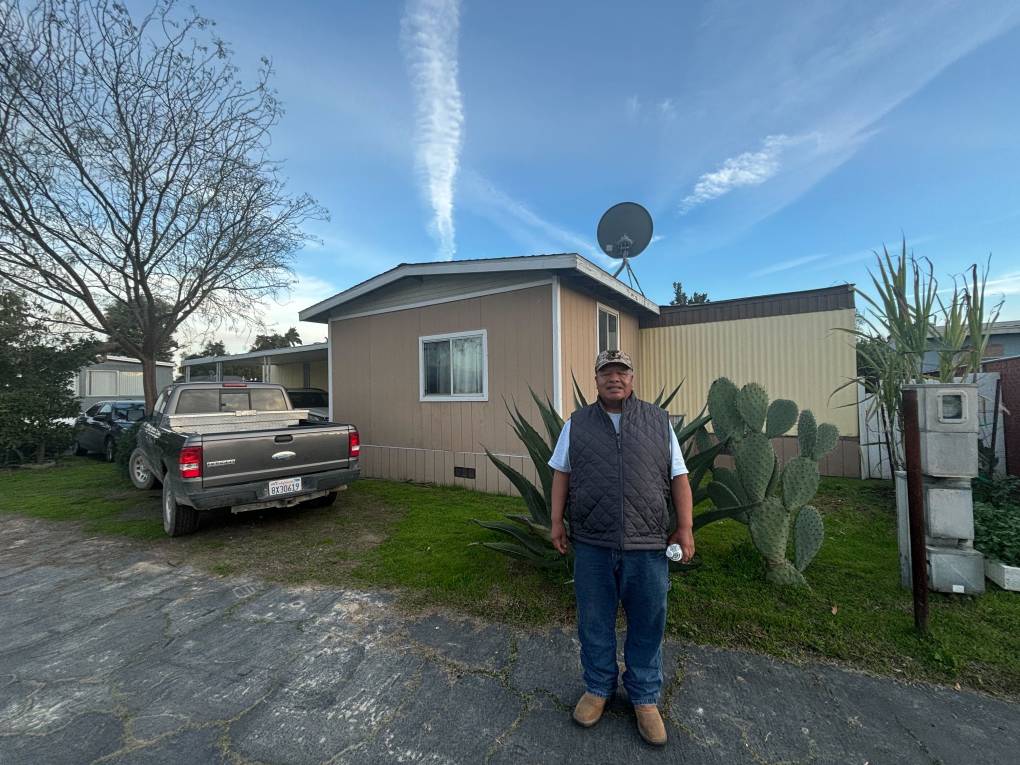
"caption": "Jesús Felipe Sierra López poses for a photo in front of his home at the Shady Lake Mobile Home Park in Fresno County, California, on Wednesday, Feb. 28, 2024. Sierra López is one of 52 homeowners at the park who have formed a co-op to purchase the park from their corporate landlord, Harmony Communities California. ",
"description": null,
"title": "IMG_2976",
"credit": "Madi Bolanos/KQED",
"status": "inherit",
"altTag": "A man wearing a vest, white shirt and jeans stands in front of a house with a car parked to the left.",
"isLoading": false,
"fetchFailed": false
},
"news_11977283": {
"type": "attachments",
"id": "news_11977283",
"meta": {
"index": "attachments_1716263798",
"site": "news",
"id": "11977283",
"found": true
},
"parent": 11977258,
"imgSizes": {
"twentyfourteen-full-width": {
"file": "https://cdn.kqed.org/wp-content/uploads/sites/10/2024/02/GettyImages-1238901343-1024x576.jpg",
"width": 1024,
"mimeType": "image/jpeg",
"height": 576
},
"thumbnail": {
"file": "https://cdn.kqed.org/wp-content/uploads/sites/10/2024/02/GettyImages-1238901343-160x107.jpg",
"width": 160,
"mimeType": "image/jpeg",
"height": 107
},
"post-thumbnail": {
"file": "https://cdn.kqed.org/wp-content/uploads/sites/10/2024/02/GettyImages-1238901343-672x372.jpg",
"width": 672,
"mimeType": "image/jpeg",
"height": 372
},
"kqedFullSize": {
"file": "https://cdn.kqed.org/wp-content/uploads/sites/10/2024/02/GettyImages-1238901343.jpg",
"width": 1024,
"height": 683
},
"large": {
"file": "https://cdn.kqed.org/wp-content/uploads/sites/10/2024/02/GettyImages-1238901343-1020x680.jpg",
"width": 1020,
"mimeType": "image/jpeg",
"height": 680
},
"medium": {
"file": "https://cdn.kqed.org/wp-content/uploads/sites/10/2024/02/GettyImages-1238901343-800x534.jpg",
"width": 800,
"mimeType": "image/jpeg",
"height": 534
}
},
"publishDate": 1709067682,
"modified": 1709067775,
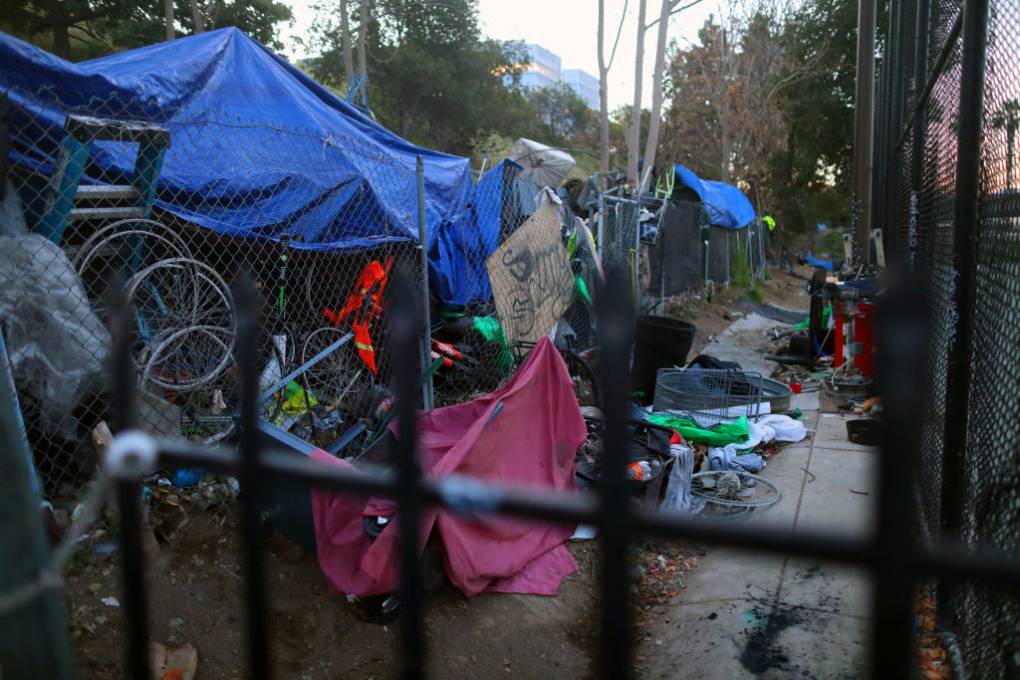
"caption": "A homeless encampment is photographed on Wednesday, Feb. 23, 2022, in San Jose.",
"description": null,
"title": "Point in Time San Jose Count",
"credit": "Aric Crabb/MediaNews Group/East Bay Times via Getty Images",
"status": "inherit",
"altTag": "A collection of bikes, tarps and other materials forming an encampment.",
"isLoading": false,
"fetchFailed": false
}
},
"audioPlayerReducer": {
"postId": "stream_live",
"isPaused": true,
"isPlaying": false,
"pfsActive": false,
"pledgeModalIsOpen": true,
"playerDrawerIsOpen": false,
"liveAudioPlayStartedAt": 0,
"liveAudioPlayContext": ""
},
"authorsReducer": {
"byline_news_11980592": {
"type": "authors",
"id": "byline_news_11980592",
"meta": {
"override": true
},
"slug": "byline_news_11980592",
"name": "\u003ca href=\"https://www.npr.org/people/2788801/scott-horsley\">Scott Horsley\u003c/a>",
"isLoading": false
},
"byline_news_11979610": {
"type": "authors",
"id": "byline_news_11979610",
"meta": {
"override": true
},
"slug": "byline_news_11979610",
"name": "\u003ca href=\"https://www.npr.org/people/803934365/lauren-sommer\">Lauren Sommer\u003c/a>",
"isLoading": false
},
"byline_news_11978670": {
"type": "authors",
"id": "byline_news_11978670",
"meta": {
"override": true
},
"slug": "byline_news_11978670",
"name": "\u003ca href=\"https://twitter.com/BouncerSF\">Katy St. Clair\u003c/a> \u003cbr> Bay City News",
"isLoading": false
},
"byline_news_11978448": {
"type": "authors",
"id": "byline_news_11978448",
"meta": {
"override": true
},
"slug": "byline_news_11978448",
"name": "\u003ca href=\"https://calmatters.org/author/marisa-kendall/\">Marisa Kendall\u003c/a>",
"isLoading": false
},
"byline_news_11977614": {
"type": "authors",
"id": "byline_news_11977614",
"meta": {
"override": true
},
"slug": "byline_news_11977614",
"name": "\u003ca href=\"https://calmatters.org/author/marisa-kendall/\">Marisa Kendall\u003c/a>",
"isLoading": false
},
"gmarzorati": {
"type": "authors",
"id": "227",
"meta": {
"index": "authors_1716337520",
"id": "227",
"found": true
},
"name": "Guy Marzorati",
"firstName": "Guy",
"lastName": "Marzorati",
"slug": "gmarzorati",
"email": "gmarzorati@KQED.org",
"display_author_email": true,
"staff_mastheads": [
"news"
],
"title": "Correspondent",
"bio": "Guy Marzorati is a correspondent on KQED's California Politics and Government Desk, based in San Jose. A graduate of Santa Clara University, Guy joined KQED in 2013. He reports on state and local politics and produces KQED's digital voter guide.",
"avatar": "https://secure.gravatar.com/avatar/e7038b8dbfd55b104369b76b1cd0b9de?s=600&d=blank&r=g",
"twitter": "guymarzorati",
"facebook": null,
"instagram": null,
"linkedin": null,
"sites": [
{
"site": "",
"roles": [
"editor"
]
},
{
"site": "news",
"roles": [
"editor"
]
},
{
"site": "science",
"roles": [
"editor"
]
},
{
"site": "forum",
"roles": [
"editor"
]
},
{
"site": "elections",
"roles": [
"editor"
]
},
{
"site": "liveblog",
"roles": [
"editor"
]
}
],
"headData": {
"title": "Guy Marzorati | KQED",
"description": "Correspondent",
"ogImgSrc": "https://secure.gravatar.com/avatar/e7038b8dbfd55b104369b76b1cd0b9de?s=600&d=blank&r=g",
"twImgSrc": "https://secure.gravatar.com/avatar/e7038b8dbfd55b104369b76b1cd0b9de?s=600&d=blank&r=g"
},
"isLoading": false,
"link": "/author/gmarzorati"
},
"vrancano": {
"type": "authors",
"id": "11276",
"meta": {
"index": "authors_1716337520",
"id": "11276",
"found": true
},
"name": "Vanessa Rancaño",
"firstName": "Vanessa",
"lastName": "Rancaño",
"slug": "vrancano",
"email": "vrancano@kqed.org",
"display_author_email": false,
"staff_mastheads": [
"news"
],
"title": "Reporter",
"bio": "Vanessa Rancaño is a features reporter for KQED. She’s also covered homelessness and education for the station and reported from the Central Valley. Her work has aired across public radio, from flagship national news shows to longform narrative podcasts. Before taking up a mic, she worked as a freelance print journalist. She’s been recognized with a number of national and regional awards. Vanessa grew up in California's Central Valley. She's a former NPR Kroc Fellow, and a graduate of the UC Berkeley Graduate School of Journalism.",
"avatar": "https://secure.gravatar.com/avatar/b3a383dfb0e7ee1c17568f2cf067904ab654d6e3de9743fc661f3c788ade1bed?s=600&d=blank&r=g",
"twitter": "vanessarancano",
"bluesky": null,
"facebook": null,
"instagram": null,
"linkedin": null,
"sites": [
{
"site": "arts",
"roles": [
"editor"
]
},
{
"site": "news",
"roles": [
"editor"
]
},
{
"site": "liveblog",
"roles": [
"contributor"
]
}
],
"headData": {
"title": "Vanessa Rancaño | KQED",
"description": "Reporter",
"ogImgSrc": "https://secure.gravatar.com/avatar/b3a383dfb0e7ee1c17568f2cf067904ab654d6e3de9743fc661f3c788ade1bed?s=600&d=blank&r=g",
"twImgSrc": "https://secure.gravatar.com/avatar/b3a383dfb0e7ee1c17568f2cf067904ab654d6e3de9743fc661f3c788ade1bed?s=600&d=blank&r=g"
},
"isLoading": false,
"link": "/author/vrancano"
},
"abandlamudi": {
"type": "authors",
"id": "11672",
"meta": {
"index": "authors_1716337520",
"id": "11672",
"found": true
},
"name": "Adhiti Bandlamudi",
"firstName": "Adhiti",
"lastName": "Bandlamudi",
"slug": "abandlamudi",
"email": "abandlamudi@kqed.org",
"display_author_email": false,
"staff_mastheads": [
"news"
],
"title": "KQED Housing Reporter",
"bio": "Adhiti Bandlamudi reports for KQED's Housing desk. She focuses on how housing gets built across the Bay Area. Before joining KQED in 2020, she reported for WUNC in Durham, North Carolina, WABE in Atlanta, Georgia and Capital Public Radio in Sacramento. In 2017, she was awarded a Kroc Fellowship at NPR where she reported on everything from sprinkles to the Golden State Killer's arrest. When she's not reporting, she's baking new recipes in her kitchen or watching movies with friends and family. She's originally from Georgia and has strong opinions about Great British Bake Off.",
"avatar": "https://secure.gravatar.com/avatar/868129c8b257bb99a3500e2c86a65400?s=600&d=mm&r=g",
"twitter": "oddity_adhiti",
"facebook": null,
"instagram": null,
"linkedin": null,
"sites": [
{
"site": "arts",
"roles": [
"author"
]
},
{
"site": "news",
"roles": [
"editor"
]
},
{
"site": "liveblog",
"roles": [
"author"
]
}
],
"headData": {
"title": "Adhiti Bandlamudi | KQED",
"description": "KQED Housing Reporter",
"ogImgSrc": "https://secure.gravatar.com/avatar/868129c8b257bb99a3500e2c86a65400?s=600&d=mm&r=g",
"twImgSrc": "https://secure.gravatar.com/avatar/868129c8b257bb99a3500e2c86a65400?s=600&d=mm&r=g"
},
"isLoading": false,
"link": "/author/abandlamudi"
},
"jrodriguez": {
"type": "authors",
"id": "11690",
"meta": {
"index": "authors_1716337520",
"id": "11690",
"found": true
},
"name": "Joe Fitzgerald Rodriguez",
"firstName": "Joe",
"lastName": "Fitzgerald Rodriguez",
"slug": "jrodriguez",
"email": "jrodriguez@kqed.org",
"display_author_email": true,
"staff_mastheads": [
"news"
],
"title": "Reporter and Producer",
"bio": "Joe Fitzgerald Rodriguez is a reporter and digital producer for KQED covering politics. Joe most recently wrote for the \u003cem>San Francisco Examiner\u003c/em> as a political columnist covering The City. He was raised in San Francisco and has spent his reporting career in his beloved, foggy, city by the bay. Joe was 12-years-old when he conducted his first interview in journalism, grilling former San Francisco Mayor Willie Brown for the Marina Middle School newspaper, \u003cem>The Penguin Press, \u003c/em>and he continues to report on the San Francisco Bay Area to this day.",
"avatar": "https://secure.gravatar.com/avatar/2247beb0564c1e9c62228d5649d2edac?s=600&d=blank&r=g",
"twitter": "FitztheReporter",
"facebook": null,
"instagram": "https://www.instagram.com/fitzthereporter/",
"linkedin": null,
"sites": [
{
"site": "",
"roles": [
"editor"
]
},
{
"site": "arts",
"roles": [
"editor"
]
},
{
"site": "news",
"roles": [
"editor"
]
},
{
"site": "science",
"roles": [
"editor"
]
},
{
"site": "elections",
"roles": [
"editor"
]
},
{
"site": "liveblog",
"roles": [
"editor"
]
}
],
"headData": {
"title": "Joe Fitzgerald Rodriguez | KQED",
"description": "Reporter and Producer",
"ogImgSrc": "https://secure.gravatar.com/avatar/2247beb0564c1e9c62228d5649d2edac?s=600&d=blank&r=g",
"twImgSrc": "https://secure.gravatar.com/avatar/2247beb0564c1e9c62228d5649d2edac?s=600&d=blank&r=g"
},
"isLoading": false,
"link": "/author/jrodriguez"
},
"mbolanos": {
"type": "authors",
"id": "11895",
"meta": {
"index": "authors_1716337520",
"id": "11895",
"found": true
},
"name": "Madi Bolaños",
"firstName": "Madi",
"lastName": "Bolaños",
"slug": "mbolanos",
"email": "mbolanos@kqed.org",
"display_author_email": false,
"staff_mastheads": [],
"title": "KQED Contributor",
"bio": null,
"avatar": "https://secure.gravatar.com/avatar/e6df5601c1f2d951e46a3fb42764330f?s=600&d=blank&r=g",
"twitter": null,
"bluesky": null,
"facebook": null,
"instagram": null,
"linkedin": null,
"sites": [
{
"site": "news",
"roles": [
"author"
]
}
],
"headData": {
"title": "Madi Bolaños | KQED",
"description": "KQED Contributor",
"ogImgSrc": "https://secure.gravatar.com/avatar/e6df5601c1f2d951e46a3fb42764330f?s=600&d=blank&r=g",
"twImgSrc": "https://secure.gravatar.com/avatar/e6df5601c1f2d951e46a3fb42764330f?s=600&d=blank&r=g"
},
"isLoading": false,
"link": "/author/mbolanos"
}
},
"pagesReducer": {
"news_tag_housing": {
"type": "terms",
"id": "news_1775",
"meta": {
"index": "terms_1716263798",
"site": "news",
"id": "1775",
"score": 7.0360975
},
"featImg": null,
"name": "housing",
"description": null,
"taxonomy": "tag",
"headData": {
"twImgId": null,
"twTitle": null,
"ogTitle": null,
"ogImgId": null,
"twDescription": null,
"description": null,
"title": "housing Archives | KQED News",
"ogDescription": null
},
"ttid": 1790,
"slug": "housing",
"isLoading": false,
"title": "housing",
"pageMeta": {
"site": "news",
"WpPageTemplate": "page-topic-editorial",
"currentPage": 40
},
"blocks": [
{
"blockName": "kqed/post-list",
"attrs": {
"layout": "cardArticle2",
"query": "posts/news?tag=housing",
"seeMore": false,
"paginated": true,
"page": 40
}
},
{
"blockName": "kqed/ad"
}
]
}
},
"pfsSessionReducer": {},
"postsReducer": {
"stream_live": {
"type": "live",
"id": "stream_live",
"audioUrl": "https://streams.kqed.org/kqedradio",
"title": "Live Stream",
"excerpt": "Live Stream information currently unavailable.",
"link": "/radio",
"featImg": "",
"label": {
"name": "KQED Live",
"link": "/"
}
},
"stream_kqedNewscast": {
"type": "posts",
"id": "stream_kqedNewscast",
"audioUrl": "https://www.kqed.org/.stream/anon/radio/RDnews/newscast.mp3?_=1",
"title": "KQED Newscast",
"featImg": "",
"label": {
"name": "88.5 FM",
"link": "/"
}
},
"news_11980661": {
"type": "posts",
"id": "news_11980661",
"meta": {
"index": "posts_1716263798",
"site": "news",
"id": "11980661",
"score": null,
"sort": [
1711393156000
]
},
"guestAuthors": [],
"slug": "sf-supervisors-vote-on-overturning-breed-veto-peskins-housing-density-law",
"title": "SF Supervisors to Vote on Overturning Breed Veto of Peskin’s Housing Density Law",
"publishDate": 1711393156,
"format": "standard",
"headTitle": "SF Supervisors to Vote on Overturning Breed Veto of Peskin’s Housing Density Law | KQED",
"labelTerm": {
"site": "news"
},
"content": "\u003cp>On Tuesday, the San Francisco Board of Supervisors will consider rejecting Mayor London Breed’s veto of legislation introduced by Aaron Peskin that restricts housing density on the city’s northeast waterfront. The legislation impacts the height of buildings in the Jackson Square Historic District and nearby neighborhoods.[pullquote size=\"medium\" align=\"right\" citation=\"San Francisco Board of Supervisors President Aaron Peskin\"]‘The override of the veto on Tuesday is really going to create precedent as to whether or not San Francisco is going to have sensible planning in the future.’[/pullquote]Breed and Peskin’s sparring on housing is an early salvo in a possible election matchup. Breed is running to retain her seat, and Peskin has said he’s considering joining the race. He would be the only politician from San Francisco’s progressive Democrat wing to run.\u003c/p>\n\u003cp>“The override of the veto on Tuesday is really going to create precedent as to whether or not San Francisco is going to have sensible planning in the future,” Peskin told KQED.\u003c/p>\n\u003cp>\u003cstrong>Catch up fast: \u003c/strong>The current law allows unrestricted construction in the Jackson Square Historic District and Northeast Waterfront Historic District. Peskin’s legislation passed on March 5. A supermajority — 8 out of 11 supervisors — is the threshold to override the veto. If every member of the Board of Supervisors who voted to approve the height limit also votes to overturn Breed’s veto, the legislation will survive.\u003c/p>\n\u003cp>Some Telegraph Hill residents fear recently proposed housing projects will change the character of their neighborhoods. Frances Schreiberg, a neighbor who lives on Vallejo Street, wrote in a February letter to the Board of Supervisors that the community would resemble Miami Beach with a wall of expensive high rises built along the Embarcadero if Peskin’s legislation did not pass.\u003c/p>\n\u003cp>[ad fullwidth]\u003c/p>\n\u003cp>\u003cstrong>The opposing view: \u003c/strong>Breed vetoed Peskin’s legislation on March 14. In a letter to the Board of Supervisors, she said taller and denser housing construction is needed for San Francisco to reach the state’s mandated goal of building 82,000 housing units by 2031.[pullquote size=\"medium\" align=\"right\" citation=\"San Francisco Mayor London Breed\"]‘Many areas of San Francisco, including eastern neighborhoods like the South of Market, Potrero Hill, and the Mission, have also already removed density limits to encourage new housing.’[/pullquote]“Many areas of San Francisco, including eastern neighborhoods like the South of Market, Potrero Hill, and the Mission, have also already removed density limits to encourage new housing,” Breed wrote in the letter.\u003cu> \u003c/u>\u003c/p>\n\u003cp>\u003cstrong>The context: \u003c/strong>The legislation and Breed’s veto clearly stake out \u003ca href=\"https://www.kqed.org/news/11979849/peskins-rumored-mayor-run-has-same-strength-and-weakness-housing\">the two lawmakers’ positions on the future of housing development in San Francisco\u003c/a>. Breed is for building housing in an unrestricted fashion across the city, and Peskin favors building in selective neighborhoods depending on the needs of existing tenants and homeowners.[aside postID=news_11979849 hero='https://cdn.kqed.org/wp-content/uploads/sites/10/2024/03/007_KQED_LondonBreedQA_05232023_qut-1020x680.jpg']Breed said she would veto any “anti-housing” legislation that crossed her desk in her State of the City speech earlier this month. Peskin argued Breed’s housing policies threaten San Francisco’s iconic nature.\u003c/p>\n\u003cp>“San Francisco is the envy of great cities around the world because it is a beautiful place, surrounded by water on three sides and has had a history of smart, careful planning,” he said. “All of that is now in jeopardy, as the mayor has pushed a series of laws to allow high-rise development along San Francisco’s waterfront, which is really a very special zone that needs to be treated with the utmost care.”\u003c/p>\n\u003cp>\u003cstrong>What we are watching: \u003c/strong>Win or lose, Breed and Peskin will be able to use this housing battle on mailers to San Francisco voters to argue their philosophy on new development.\u003c/p>\n\u003cp>\u003c/p>\n",
"blocks": [],
"excerpt": "Mayor London Breed’s veto of legislation introduced by Supervisor Aaron Peskin, which impacts the height of buildings in the Jackson Square Historic District and nearby neighborhoods, reveals a clash between the two over the future of housing development in San Francisco. ",
"status": "publish",
"parent": 0,
"modified": 1725922104,
"stats": {
"hasAudio": false,
"hasVideo": false,
"hasChartOrMap": false,
"iframeSrcs": [],
"hasGoogleForm": false,
"hasGallery": false,
"hasHearkenModule": false,
"hasPolis": false,
"paragraphCount": 10,
"wordCount": 664
},
"headData": {
"title": "SF Supervisors to Vote on Overturning Breed Veto of Peskin’s Housing Density Law | KQED",
"description": "Mayor London Breed’s veto of legislation introduced by Supervisor Aaron Peskin, which impacts the height of buildings in the Jackson Square Historic District and nearby neighborhoods, reveals a clash between the two over the future of housing development in San Francisco. ",
"ogTitle": "",
"ogDescription": "",
"ogImgId": "",
"twTitle": "",
"twDescription": "",
"twImgId": "",
"schema": {
"@context": "https://schema.org",
"@type": "NewsArticle",
"headline": "SF Supervisors to Vote on Overturning Breed Veto of Peskin’s Housing Density Law",
"datePublished": "2024-03-25T11:59:16-07:00",
"dateModified": "2024-09-09T15:48:24-07:00",
"image": "https://cdn.kqed.org/wp-content/uploads/2020/02/KQED-OG-Image@1x.png",
"isAccessibleForFree": "True",
"publisher": {
"@type": "NewsMediaOrganization",
"@id": "https://www.kqed.org/#organization",
"name": "KQED",
"logo": "https://cdn.kqed.org/wp-content/uploads/2020/02/KQED-OG-Image@1x.png",
"url": "https://www.kqed.org",
"sameAs": [
"https://www.facebook.com/KQED",
"https://twitter.com/KQED",
"https://www.instagram.com/kqed/",
"https://www.tiktok.com/@kqedofficial",
"https://www.linkedin.com/company/kqed",
"https://www.youtube.com/channel/UCeC0IOo7i1P_61zVUWbJ4nw"
]
}
}
},
"sticky": false,
"excludeFromSiteSearch": "Include",
"articleAge": "0",
"path": "/news/11980661/sf-supervisors-vote-on-overturning-breed-veto-peskins-housing-density-law",
"audioTrackLength": null,
"parsedContent": [
{
"type": "contentString",
"content": "\u003cdiv class=\"post-body\">\u003cp>\u003cp>On Tuesday, the San Francisco Board of Supervisors will consider rejecting Mayor London Breed’s veto of legislation introduced by Aaron Peskin that restricts housing density on the city’s northeast waterfront. The legislation impacts the height of buildings in the Jackson Square Historic District and nearby neighborhoods.\u003c/p>\u003c/div>",
"attributes": {
"named": {},
"numeric": []
}
},
{
"type": "component",
"content": "‘The override of the veto on Tuesday is really going to create precedent as to whether or not San Francisco is going to have sensible planning in the future.’",
"name": "pullquote",
"attributes": {
"named": {
"size": "medium",
"align": "right",
"citation": "San Francisco Board of Supervisors President Aaron Peskin",
"label": ""
},
"numeric": []
}
},
{
"type": "contentString",
"content": "\u003cdiv class=\"post-body\">\u003cp>Breed and Peskin’s sparring on housing is an early salvo in a possible election matchup. Breed is running to retain her seat, and Peskin has said he’s considering joining the race. He would be the only politician from San Francisco’s progressive Democrat wing to run.\u003c/p>\n\u003cp>“The override of the veto on Tuesday is really going to create precedent as to whether or not San Francisco is going to have sensible planning in the future,” Peskin told KQED.\u003c/p>\n\u003cp>\u003cstrong>Catch up fast: \u003c/strong>The current law allows unrestricted construction in the Jackson Square Historic District and Northeast Waterfront Historic District. Peskin’s legislation passed on March 5. A supermajority — 8 out of 11 supervisors — is the threshold to override the veto. If every member of the Board of Supervisors who voted to approve the height limit also votes to overturn Breed’s veto, the legislation will survive.\u003c/p>\n\u003cp>Some Telegraph Hill residents fear recently proposed housing projects will change the character of their neighborhoods. Frances Schreiberg, a neighbor who lives on Vallejo Street, wrote in a February letter to the Board of Supervisors that the community would resemble Miami Beach with a wall of expensive high rises built along the Embarcadero if Peskin’s legislation did not pass.\u003c/p>\n\u003cp>\u003c/p>\u003c/div>",
"attributes": {
"named": {},
"numeric": []
}
},
{
"type": "component",
"content": "",
"name": "ad",
"attributes": {
"named": {
"label": "fullwidth"
},
"numeric": [
"fullwidth"
]
}
},
{
"type": "contentString",
"content": "\u003cdiv class=\"post-body\">\u003cp>\u003c/p>\n\u003cp>\u003cstrong>The opposing view: \u003c/strong>Breed vetoed Peskin’s legislation on March 14. In a letter to the Board of Supervisors, she said taller and denser housing construction is needed for San Francisco to reach the state’s mandated goal of building 82,000 housing units by 2031.\u003c/p>\u003c/div>",
"attributes": {
"named": {},
"numeric": []
}
},
{
"type": "component",
"content": "‘Many areas of San Francisco, including eastern neighborhoods like the South of Market, Potrero Hill, and the Mission, have also already removed density limits to encourage new housing.’",
"name": "pullquote",
"attributes": {
"named": {
"size": "medium",
"align": "right",
"citation": "San Francisco Mayor London Breed",
"label": ""
},
"numeric": []
}
},
{
"type": "contentString",
"content": "\u003cdiv class=\"post-body\">\u003cp>“Many areas of San Francisco, including eastern neighborhoods like the South of Market, Potrero Hill, and the Mission, have also already removed density limits to encourage new housing,” Breed wrote in the letter.\u003cu> \u003c/u>\u003c/p>\n\u003cp>\u003cstrong>The context: \u003c/strong>The legislation and Breed’s veto clearly stake out \u003ca href=\"https://www.kqed.org/news/11979849/peskins-rumored-mayor-run-has-same-strength-and-weakness-housing\">the two lawmakers’ positions on the future of housing development in San Francisco\u003c/a>. Breed is for building housing in an unrestricted fashion across the city, and Peskin favors building in selective neighborhoods depending on the needs of existing tenants and homeowners.\u003c/p>\u003c/div>",
"attributes": {
"named": {},
"numeric": []
}
},
{
"type": "component",
"content": "",
"name": "aside",
"attributes": {
"named": {
"postid": "news_11979849",
"hero": "https://cdn.kqed.org/wp-content/uploads/sites/10/2024/03/007_KQED_LondonBreedQA_05232023_qut-1020x680.jpg",
"label": ""
},
"numeric": []
}
},
{
"type": "contentString",
"content": "\u003cdiv class=\"post-body\">\u003cp>Breed said she would veto any “anti-housing” legislation that crossed her desk in her State of the City speech earlier this month. Peskin argued Breed’s housing policies threaten San Francisco’s iconic nature.\u003c/p>\n\u003cp>“San Francisco is the envy of great cities around the world because it is a beautiful place, surrounded by water on three sides and has had a history of smart, careful planning,” he said. “All of that is now in jeopardy, as the mayor has pushed a series of laws to allow high-rise development along San Francisco’s waterfront, which is really a very special zone that needs to be treated with the utmost care.”\u003c/p>\n\u003cp>\u003cstrong>What we are watching: \u003c/strong>Win or lose, Breed and Peskin will be able to use this housing battle on mailers to San Francisco voters to argue their philosophy on new development.\u003c/p>\n\u003cp>\u003c/p>\n\u003c/div>\u003c/p>",
"attributes": {
"named": {},
"numeric": []
}
}
],
"link": "/news/11980661/sf-supervisors-vote-on-overturning-breed-veto-peskins-housing-density-law",
"authors": [
"11690"
],
"categories": [
"news_6266",
"news_8"
],
"tags": [
"news_195",
"news_27626",
"news_1775",
"news_6931",
"news_17968",
"news_38",
"news_33177"
],
"featImg": "news_11980662",
"label": "news"
},
"news_11980592": {
"type": "posts",
"id": "news_11980592",
"meta": {
"index": "posts_1716263798",
"site": "news",
"id": "11980592",
"score": null,
"sort": [
1711285220000
]
},
"guestAuthors": [],
"slug": "recently-sold-a-home-you-might-get-part-of-your-realtor-fee-back",
"title": "National Realtors Settlement: What it Means for Buying and Selling a Home",
"publishDate": 1711285220,
"format": "standard",
"headTitle": "National Realtors Settlement: What it Means for Buying and Selling a Home | KQED",
"labelTerm": {
"term": 253,
"site": "news"
},
"content": "\u003cp>Big changes are coming to the way people buy and sell houses in the United States. The National Association of Realtors settled a lawsuit last week that could up-end the way real estate agents are paid, doing away with the traditional agent’s commission of 5–6%. That’s prompting a reckoning for buyers, sellers and real estate agents. Here are six things to know.\u003c/p>\n\u003ch2>What if you already sold a house?\u003c/h2>\n\u003cp>As part of the settlement, the National Association of Realtors agreed to pay $418 million over the next four years. That’s in addition to $210 million that various brokerage firms had already agreed to pay. Lawyers will get a chunk of that money, but the rest will go to people who sold their homes in recent years and paid what critics argue were inflated real estate commissions. Eligibility depends on where you live, but in some parts of the country, the settlement covers people who sold homes as much as a decade ago.\u003c/p>\n\u003cp>“We don’t know the exact number, but we estimate it to be in the neighborhood of 40 or 50 million” people, says Benjamin Brown, co-chair of the anti-trust practice at Cohen Milstein, one of the law firms involved in the class-action case.\u003c/p>\n\u003cp>To find out if they’re entitled to compensation, sellers can check the lawyers’ website: \u003ca href=\"https://www.realestatecommissionlitigation.com/\">www.realestatecommissionlitigation.com\u003c/a>.\u003c/p>\n\u003ch2>How will this change real estate commissions?\u003c/h2>\n\u003cp>For decades, the norm in this country has been for the person selling a home to pay both her own agent and the buyer’s agent. What’s more, the buyer’s share of that commission had to be spelled out in order to advertise the home on the big regional listing sites. Realtors insist they never fixed those commissions, but as a practical matter, the public notice worked to set a standard — often in the neighborhood of 5 or 6%, split between the seller’s agent and the buyer’s agent.\u003c/p>\n\u003cp>[aside postID=news_11980019 hero='https://cdn.kqed.org/wp-content/uploads/sites/10/2024/03/GettyImages-1468009097-1020x680.jpg']For a home priced at $400,000 — which is close to the national average — that works out to $20,000 to $24,000 in commissions — much higher than people in other countries typically pay. In Germany, commissions average 4.5%. In the U.K., they’re under 2%.\u003c/p>\n\u003cp>Starting in July, sellers will no longer have to spell out a commission for the buyer’s agent. Advocates say that should lead to more negotiation, more competition and ultimately lower costs.\u003c/p>\n\u003ch2>What increased negotiations mean for buyers and sellers?\u003c/h2>\n\u003cp>There’s going to be more opportunity to shop around, and likely a wider array of services, from deluxe agents who charge a premium price to discount agents with more limited services — similar to what exists in other markets like stock brokers and travel agents.\u003c/p>\n\u003cp>Sellers may be able to negotiate a flat fee to market their house, not connected to the selling price. Buyers may be able to purchase a la carte services — paying less if they do their own house-hunting on the Internet and more if they want to be chauffeured around to open houses.\u003c/p>\n\u003cp>[ad fullwidth]\u003c/p>\n\u003cp>Many sellers may decide not to pay the buyer’s agent, leaving buyers to shoulder that cost on their own, or go without an agent altogether.\u003c/p>\n\u003cp>Overall expenses are expected to be significantly lower, however. Economists at the \u003ca href=\"https://www.richmondfed.org/publications/research/economic_brief/2024/eb_24-08\">Federal Reserve Bank of Richmond\u003c/a> estimate the changes could save homebuyers $30 billion a year, with most of those savings coming out of the pockets of real estate agents.\u003c/p>\n\u003ch2>What does this mean for agents?\u003c/h2>\n\u003cp>Agents are still sorting out what this might mean for their business. When fees are more negotiable, agents will have to make the case for what they’re worth. But the best agents feel like they do that already.\u003c/p>\n\u003cp>[pullquote align=\"right\" size=\"medium\" citation=\"Kevin Wilson, president, Greater Nashville Realtors\"]‘Do I think that Realtors have to learn to do business in a different way? Absolutely. But I also think this is a wrinkle in the landscape. Not a landmine.’[/pullquote]“Do I think that Realtors have to learn to do business in a different way? Absolutely,” says Kevin Wilson, president of the Greater Nashville Realtors. “But I also think this is a wrinkle in the landscape. Not a landmine.”\u003c/p>\n\u003cp>A drop in commissions might drive some agents into other lines of work, but that’s not necessarily a bad thing. The U.S. has 2.5 to 3 million real estate agents — which is far more than any other country, relative to the size of its housing market. For example, the U.S. has about six times more home sales each year than the U.K. does, but 26 times more agents.\u003c/p>\n\u003cp>“Do we see agents that work with buyers start to phase out of the business because they’re just not getting as many clients?” asks Jovani Ortiz, an agent on Long Island. “These are sort of the unknowns that most agents are looking at right now.”\u003c/p>\n\u003cp>While the commission pie is likely to shrink, it may be cut into fewer slices, so the remaining agents might end up making the same amount of money.\u003c/p>\n\u003ch2>With home prices and mortgage rates already high, how will homebuyers pay for their own agents?\u003c/h2>\n\u003cp>While sellers have traditionally paid buyers’ agents in the U.S. (and built that expense into the sales price of their home), many sellers may opt not to pay buyers’ agents in the future. In that case, buyers will have to pay their own agent out of pocket, on top of a down payment and other closing costs. Finding thousands of dollars to pay an agent could be a challenge, especially for first-time buyers, who typically have limited funds and also the greatest need for an agent’s guidance. First-time buyers accounted for just 26% of existing home sales in February — tying a record low.\u003c/p>\n\u003cp>[pullquote align=\"right\" size=\"medium\" citation=\"Vanessa Perry, professor, George Washington University School of Business\"]‘Many first time buyers are already at the absolute max of what they’re able to borrow. They’re not going to be able to come up with any additional cash to pay their own agent’[/pullquote]“Many first time buyers are already at the absolute max of what they’re able to borrow,” says Vanessa Perry, a professor at George Washington University School of Business and a fellow at the Urban Institute’s Housing Policy Finance Center. “They’re not going to be able to come up with any additional cash to pay their own agent.”\u003c/p>\n\u003cdiv>\n\u003cp>Home sellers could still agree through negotiation to pay the buyer’s agent. But in a hot housing market, sellers may have little incentive to do so. Eventually, buyers may be able to fold the cost of their agent’s commission into their mortgage, stretching the payments out over the life of the loan. But that will require a change in mortgage underwriting rules. Over time, lower real estate commissions should lead to somewhat lower housing prices.\u003c/p>\n\u003ch2>What should people who are thinking of buying or selling in the next six months do?\u003c/h2>\n\u003cp>The settlement’s changes in commission rules take effect in July, just as many people will be shopping for homes ahead of a new school year. But it’s not clear how quickly the landscape will change. Buyers and sellers may want to talk with their agent about the costs and benefits of moving before the deadline or waiting until the new rules are in place. Remember, commissions account for $20,000 to $24,000 on a typical home. Still, that’s just one factor to consider when deciding when to buy or sell — along with interest rates, the supply of homes on the market and life circumstances like a new job or family member.\u003c/p>\n\u003c/div>\n\u003cp>[ad floatright]\u003c/p>\n",
"blocks": [],
"excerpt": null,
"status": "publish",
"parent": 0,
"modified": 1721127626,
"stats": {
"hasAudio": false,
"hasVideo": false,
"hasChartOrMap": false,
"iframeSrcs": [],
"hasGoogleForm": false,
"hasGallery": false,
"hasHearkenModule": false,
"hasPolis": false,
"paragraphCount": 22,
"wordCount": 1385
},
"headData": {
"title": "National Realtors Settlement: What it Means for Buying and Selling a Home | KQED",
"description": "Big changes are coming to the way people buy and sell houses in the United States. The National Association of Realtors settled a lawsuit last week that could up-end the way real estate agents are paid, doing away with the traditional agent’s commission of 5–6%. That’s prompting a reckoning for buyers, sellers and real estate",
"ogTitle": "",
"ogDescription": "",
"ogImgId": "",
"twTitle": "",
"twDescription": "",
"twImgId": "",
"schema": {
"@context": "https://schema.org",
"@type": "NewsArticle",
"headline": "National Realtors Settlement: What it Means for Buying and Selling a Home",
"datePublished": "2024-03-24T06:00:20-07:00",
"dateModified": "2024-07-16T04:00:26-07:00",
"image": "https://cdn.kqed.org/wp-content/uploads/2020/02/KQED-OG-Image@1x.png",
"isAccessibleForFree": "True",
"publisher": {
"@type": "NewsMediaOrganization",
"@id": "https://www.kqed.org/#organization",
"name": "KQED",
"logo": "https://cdn.kqed.org/wp-content/uploads/2020/02/KQED-OG-Image@1x.png",
"url": "https://www.kqed.org",
"sameAs": [
"https://www.facebook.com/KQED",
"https://twitter.com/KQED",
"https://www.instagram.com/kqed/",
"https://www.tiktok.com/@kqedofficial",
"https://www.linkedin.com/company/kqed",
"https://www.youtube.com/channel/UCeC0IOo7i1P_61zVUWbJ4nw"
]
}
}
},
"sticky": false,
"nprByline": "\u003ca href=\"https://www.npr.org/people/2788801/scott-horsley\">Scott Horsley\u003c/a>",
"excludeFromSiteSearch": "Include",
"showOnAuthorArchivePages": "No",
"articleAge": "0",
"path": "/news/11980592/recently-sold-a-home-you-might-get-part-of-your-realtor-fee-back",
"audioTrackLength": null,
"parsedContent": [
{
"type": "contentString",
"content": "\u003cdiv class=\"post-body\">\u003cp>\u003cp>Big changes are coming to the way people buy and sell houses in the United States. The National Association of Realtors settled a lawsuit last week that could up-end the way real estate agents are paid, doing away with the traditional agent’s commission of 5–6%. That’s prompting a reckoning for buyers, sellers and real estate agents. Here are six things to know.\u003c/p>\n\u003ch2>What if you already sold a house?\u003c/h2>\n\u003cp>As part of the settlement, the National Association of Realtors agreed to pay $418 million over the next four years. That’s in addition to $210 million that various brokerage firms had already agreed to pay. Lawyers will get a chunk of that money, but the rest will go to people who sold their homes in recent years and paid what critics argue were inflated real estate commissions. Eligibility depends on where you live, but in some parts of the country, the settlement covers people who sold homes as much as a decade ago.\u003c/p>\n\u003cp>“We don’t know the exact number, but we estimate it to be in the neighborhood of 40 or 50 million” people, says Benjamin Brown, co-chair of the anti-trust practice at Cohen Milstein, one of the law firms involved in the class-action case.\u003c/p>\n\u003cp>To find out if they’re entitled to compensation, sellers can check the lawyers’ website: \u003ca href=\"https://www.realestatecommissionlitigation.com/\">www.realestatecommissionlitigation.com\u003c/a>.\u003c/p>\n\u003ch2>How will this change real estate commissions?\u003c/h2>\n\u003cp>For decades, the norm in this country has been for the person selling a home to pay both her own agent and the buyer’s agent. What’s more, the buyer’s share of that commission had to be spelled out in order to advertise the home on the big regional listing sites. Realtors insist they never fixed those commissions, but as a practical matter, the public notice worked to set a standard — often in the neighborhood of 5 or 6%, split between the seller’s agent and the buyer’s agent.\u003c/p>\n\u003cp>\u003c/p>\u003c/div>",
"attributes": {
"named": {},
"numeric": []
}
},
{
"type": "component",
"content": "",
"name": "aside",
"attributes": {
"named": {
"postid": "news_11980019",
"hero": "https://cdn.kqed.org/wp-content/uploads/sites/10/2024/03/GettyImages-1468009097-1020x680.jpg",
"label": ""
},
"numeric": []
}
},
{
"type": "contentString",
"content": "\u003cdiv class=\"post-body\">\u003cp>For a home priced at $400,000 — which is close to the national average — that works out to $20,000 to $24,000 in commissions — much higher than people in other countries typically pay. In Germany, commissions average 4.5%. In the U.K., they’re under 2%.\u003c/p>\n\u003cp>Starting in July, sellers will no longer have to spell out a commission for the buyer’s agent. Advocates say that should lead to more negotiation, more competition and ultimately lower costs.\u003c/p>\n\u003ch2>What increased negotiations mean for buyers and sellers?\u003c/h2>\n\u003cp>There’s going to be more opportunity to shop around, and likely a wider array of services, from deluxe agents who charge a premium price to discount agents with more limited services — similar to what exists in other markets like stock brokers and travel agents.\u003c/p>\n\u003cp>Sellers may be able to negotiate a flat fee to market their house, not connected to the selling price. Buyers may be able to purchase a la carte services — paying less if they do their own house-hunting on the Internet and more if they want to be chauffeured around to open houses.\u003c/p>\n\u003cp>\u003c/p>\u003c/div>",
"attributes": {
"named": {},
"numeric": []
}
},
{
"type": "component",
"content": "",
"name": "ad",
"attributes": {
"named": {
"label": "fullwidth"
},
"numeric": [
"fullwidth"
]
}
},
{
"type": "contentString",
"content": "\u003cdiv class=\"post-body\">\u003cp>\u003c/p>\n\u003cp>Many sellers may decide not to pay the buyer’s agent, leaving buyers to shoulder that cost on their own, or go without an agent altogether.\u003c/p>\n\u003cp>Overall expenses are expected to be significantly lower, however. Economists at the \u003ca href=\"https://www.richmondfed.org/publications/research/economic_brief/2024/eb_24-08\">Federal Reserve Bank of Richmond\u003c/a> estimate the changes could save homebuyers $30 billion a year, with most of those savings coming out of the pockets of real estate agents.\u003c/p>\n\u003ch2>What does this mean for agents?\u003c/h2>\n\u003cp>Agents are still sorting out what this might mean for their business. When fees are more negotiable, agents will have to make the case for what they’re worth. But the best agents feel like they do that already.\u003c/p>\n\u003cp>\u003c/p>\u003c/div>",
"attributes": {
"named": {},
"numeric": []
}
},
{
"type": "component",
"content": "‘Do I think that Realtors have to learn to do business in a different way? Absolutely. But I also think this is a wrinkle in the landscape. Not a landmine.’",
"name": "pullquote",
"attributes": {
"named": {
"align": "right",
"size": "medium",
"citation": "Kevin Wilson, president, Greater Nashville Realtors",
"label": ""
},
"numeric": []
}
},
{
"type": "contentString",
"content": "\u003cdiv class=\"post-body\">\u003cp>“Do I think that Realtors have to learn to do business in a different way? Absolutely,” says Kevin Wilson, president of the Greater Nashville Realtors. “But I also think this is a wrinkle in the landscape. Not a landmine.”\u003c/p>\n\u003cp>A drop in commissions might drive some agents into other lines of work, but that’s not necessarily a bad thing. The U.S. has 2.5 to 3 million real estate agents — which is far more than any other country, relative to the size of its housing market. For example, the U.S. has about six times more home sales each year than the U.K. does, but 26 times more agents.\u003c/p>\n\u003cp>“Do we see agents that work with buyers start to phase out of the business because they’re just not getting as many clients?” asks Jovani Ortiz, an agent on Long Island. “These are sort of the unknowns that most agents are looking at right now.”\u003c/p>\n\u003cp>While the commission pie is likely to shrink, it may be cut into fewer slices, so the remaining agents might end up making the same amount of money.\u003c/p>\n\u003ch2>With home prices and mortgage rates already high, how will homebuyers pay for their own agents?\u003c/h2>\n\u003cp>While sellers have traditionally paid buyers’ agents in the U.S. (and built that expense into the sales price of their home), many sellers may opt not to pay buyers’ agents in the future. In that case, buyers will have to pay their own agent out of pocket, on top of a down payment and other closing costs. Finding thousands of dollars to pay an agent could be a challenge, especially for first-time buyers, who typically have limited funds and also the greatest need for an agent’s guidance. First-time buyers accounted for just 26% of existing home sales in February — tying a record low.\u003c/p>\n\u003cp>\u003c/p>\u003c/div>",
"attributes": {
"named": {},
"numeric": []
}
},
{
"type": "component",
"content": "‘Many first time buyers are already at the absolute max of what they’re able to borrow. They’re not going to be able to come up with any additional cash to pay their own agent’",
"name": "pullquote",
"attributes": {
"named": {
"align": "right",
"size": "medium",
"citation": "Vanessa Perry, professor, George Washington University School of Business",
"label": ""
},
"numeric": []
}
},
{
"type": "contentString",
"content": "\u003cdiv class=\"post-body\">\u003cp>“Many first time buyers are already at the absolute max of what they’re able to borrow,” says Vanessa Perry, a professor at George Washington University School of Business and a fellow at the Urban Institute’s Housing Policy Finance Center. “They’re not going to be able to come up with any additional cash to pay their own agent.”\u003c/p>\n\u003cdiv>\n\u003cp>Home sellers could still agree through negotiation to pay the buyer’s agent. But in a hot housing market, sellers may have little incentive to do so. Eventually, buyers may be able to fold the cost of their agent’s commission into their mortgage, stretching the payments out over the life of the loan. But that will require a change in mortgage underwriting rules. Over time, lower real estate commissions should lead to somewhat lower housing prices.\u003c/p>\n\u003ch2>What should people who are thinking of buying or selling in the next six months do?\u003c/h2>\n\u003cp>The settlement’s changes in commission rules take effect in July, just as many people will be shopping for homes ahead of a new school year. But it’s not clear how quickly the landscape will change. Buyers and sellers may want to talk with their agent about the costs and benefits of moving before the deadline or waiting until the new rules are in place. Remember, commissions account for $20,000 to $24,000 on a typical home. Still, that’s just one factor to consider when deciding when to buy or sell — along with interest rates, the supply of homes on the market and life circumstances like a new job or family member.\u003c/p>\n\u003c/div>\n\u003cp>\u003c/p>\u003c/div>",
"attributes": {
"named": {},
"numeric": []
}
},
{
"type": "component",
"content": "",
"name": "ad",
"attributes": {
"named": {
"label": "floatright"
},
"numeric": [
"floatright"
]
}
},
{
"type": "contentString",
"content": "\u003cdiv class=\"post-body\">\u003cp>\u003c/p>\n\u003c/div>\u003c/p>",
"attributes": {
"named": {},
"numeric": []
}
}
],
"link": "/news/11980592/recently-sold-a-home-you-might-get-part-of-your-realtor-fee-back",
"authors": [
"byline_news_11980592"
],
"categories": [
"news_1758",
"news_6266",
"news_8"
],
"tags": [
"news_1775",
"news_137"
],
"affiliates": [
"news_253"
],
"featImg": "news_11980601",
"label": "news_253"
},
"news_11980492": {
"type": "posts",
"id": "news_11980492",
"meta": {
"index": "posts_1716263798",
"site": "news",
"id": "11980492",
"score": null,
"sort": [
1711139574000
]
},
"guestAuthors": [],
"slug": "berkeley-voters-could-face-competing-tenant-protection-measures-in-november",
"title": "Berkeley Voters Could Face Competing Tenant Protection Measures in November",
"publishDate": 1711139574,
"format": "standard",
"headTitle": "Berkeley Voters Could Face Competing Tenant Protection Measures in November | KQED",
"labelTerm": {
"site": "news"
},
"content": "\u003cp>Berkeley landlords aim to get a measure on the November ballot that would de-fang the city’s rent board and dedicate more money for rent relief — an initiative that could potentially set the stage for dueling ballot measures between landlord and tenant groups.\u003c/p>\n\u003cp>It’s the latest effort by Bay Area property owners to fight tenant protections at the ballot box. In Concord, a referendum drive is underway to undo the city’s recently adopted rent control plan. A \u003ca href=\"https://www.kqed.org/news/11977071/larkspur-voters-to-decide-future-of-rent-control-in-their-city\">similar referendum\u003c/a> in Larkspur narrowly failed earlier this month.\u003c/p>\n\u003cp>[pullquote align=\"right\" size=\"medium\" citation=\"Krista Gulbransen, executive director, Berkeley Property Owners Association\"]‘I think the voters are ready for a citizens’ initiative like this one. I do believe very strongly that a lot of citizens of Berkeley are pretty fed up with some of the overregulation of the government on small businesses and small property owners.’[/pullquote]Property owners in Berkeley began gathering signatures on Thursday in hopes of putting their own initiative on the ballot that would make sweeping changes to the city’s rent board, modify grounds for evictions, and exempt more properties from the city’s rent stabilization and eviction ordinance. The plan also calls for a rent relief fund for certain tenants who can’t pay, among other changes.\u003c/p>\n\u003cp>“I think the voters are ready for a citizens’ initiative like this one,” said Krista Gulbransen, executive director of the Berkeley Property Owners Association, which is behind the effort. “I do believe very strongly that a lot of citizens of Berkeley are pretty fed up with some of the overregulation of the government on small businesses and small property owners.”\u003c/p>\n\u003cp>The effort follows one from renters’ advocates, who have been collecting signatures since early March for their own measure that would strengthen the city’s tenant protections. In a statement, rent board chair Leah Simon-Weisberg blasted the property owners’ proposal.\u003c/p>\n\u003cp>[ad fullwidth]\u003c/p>\n\u003cp>“I am confident that Berkeley voters will see through the corporate landlords’ strategy of chaos,” Simon-Weisberg said. “Time and again, corporate money flows into Berkeley elections, only to be defeated by community organizing and the grassroots.”\u003c/p>\n\u003cp>The property owners’ initiative would exempt more owner-occupied properties from the city’s rent stabilization and eviction ordinance, raise the rent cap slightly to 7.1%, and allow landlords to negotiate with tenants for even higher increases in exchange for more services or amenities.\u003c/p>\n\u003cp>[pullquote align=\"right\" size=\"medium\" citation=\"Leah Simon-Weisberg, chair, Berkeley Rent Board\"]‘I am confident that Berkeley voters will see through the corporate landlords’ strategy of chaos. Time and again, corporate money flows into Berkeley elections, only to be defeated by community organizing and the grassroots.’[/pullquote]But perhaps the most substantial of its proposed changes are to the city’s rent board. It would strip the rent board of certain powers, including eliminating its ability to reduce rents in the case of tenant relocation or repairs, determine whether property owners comply with health and safety laws, and intervene as an interested party in lawsuits. It would also eliminate commissioners’ salaries and require the board to be audited every three years.\u003c/p>\n\u003cp>Should the proposal be challenged in court, the city must defend the initiative and protect its proponents from damages.\u003c/p>\n\u003cp>For the rent relief fund proposed in the initiative, Gulbransen said property owners are still reeling from rents lost during the pandemic.\u003c/p>\n\u003cp>“This rent relief fund is critical,” she said. “I have property owners who are still struggling.”\u003c/p>\n\u003cp>The proposed program would rely on an existing tax on large landlords that voters approved in 2016, called Measure U1.\u003c/p>\n\u003cp>[aside label=\"Related Stories\" postID=\"news_11977071,news_11970062,news_11975969\"]Gulbransen has \u003ca href=\"https://www.berkeleyside.org/2017/03/31/opinion-berkeley-done-bait-switch-using-housing-funds-buy-new-council-chambers\">criticized city leaders\u003c/a> for misusing money from the measure. The Berkeley Property Owners Association sponsored a competing initiative at the time, Measure DD, that would have implemented a more modest tax increase. Voters rejected that measure \u003ca href=\"https://www.berkeleyside.org/2016/10/12/real-estate-interests-spend-big-in-berkeley-to-defeat-spike-in-rental-tax\">despite landlords spending over $780,000\u003c/a>.\u003c/p>\n\u003cp>The association’s initiative would ensure that a portion of the 2016 tax is dedicated to rent relief, raising an estimated $1.2 million annually and creating a new committee to oversee the program.\u003c/p>\n\u003cp>Berkeley’s current rent relief fund, the \u003ca href=\"https://berkeleyca.gov/community-recreation/affordable-housing-berkeley/housing-retention-program\">Housing Retention Program\u003c/a>, is administered by the Eviction Defense Center. Anne Tamiko Omura, Executive Director of the center, called the program one of the best in the Bay Area.\u003c/p>\n\u003cp>“It has put millions of dollars into landlord pockets and kept hundreds of low-income tenants housed,” she wrote in an email to KQED. “My gut reaction is, ‘If it ain’t broken, don’t fix it.'”\u003c/p>\n\u003cp>Berkeley Rent Board Vice Chair Soli Alpert said he wants to see more money dedicated to the city’s existing rent relief fund, but he’s critical of the association’s proposal, dismissing it as “a distraction.”\u003c/p>\n\u003cp>[pullquote align=\"right\" size=\"medium\" citation=\"Anne Tamiko Omura, executive director, Eviction Defense Center\"]‘My gut reaction is, ‘If it ain’t broken, don’t fix it.”[/pullquote]“I don’t think the landlords should be in charge of what happens with the landlord tax,” he said. “Pardon me if I don’t think that landlords have the best interests of tenants in mind when they’re talking about the use of these funds.”\u003c/p>\n\u003cp>Simon-Weisberg and Alpert are the proponents behind another ballot measure, developed and approved by the rent board. It would strengthen existing renter protections by removing an exception for two-unit rentals that were grandfathered into the Berkeley Rent Stabilization Ordinance, subjecting them to both rent control and just-cause protections.\u003c/p>\n\u003cp>The proposed Berkeley Tenant Protection and Right to Organize Act would also establish the right to form tenant associations. With support from 50% plus one occupied units in a complex, tenants could form a union and demand their landlord negotiate over grievances.\u003c/p>\n\u003cp>San Francisco became the first city in the country to pass such \u003ca href=\"https://www.sf.gov/news/new-legislation-tenant-organizing-and-tenant-associations#:~:text=The%20Right%2DTo%2DOrganize%20legislation,surveys)%20to%20ascertain%20interest%20in\">right-to-organize legislation\u003c/a> in 2022.\u003c/p>\n\u003cp>[pullquote align=\"right\" size=\"medium\" citation=\"Soli Alpert, vice chair, Berkeley Rent Board\"]‘I don’t think the landlords should be in charge of what happens with the landlord tax. Pardon me if I don’t think that landlords have the best interests of tenants in mind when they’re talking about the use of these funds.’[/pullquote]The initiative by the Berkeley Property Owners Association would establish a higher threshold for creating a tenants’ union, requiring two-thirds of occupied rental units to sign on. Owners would have to confer with associations in good faith, but unlike the tenant advocates’ proposal, the rent board wouldn’t have the authority to define the terms of a “good faith” negotiation.\u003c/p>\n\u003cp>The property owners’ proposal also seeks a less restrictive form of eviction protection than what the tenant advocates are seeking. Under the tenants’ plan, renters couldn’t be evicted if they owe less than the equivalent of one month’s fair market rent — an amount determined by the federal Department of Housing and Urban Development.\u003c/p>\n\u003cp>Under the property owners’ proposal, evictions would be prohibited if the tenant owes less than one month of the rent outlined in their lease agreement unless they haven’t paid for more than 90 days, among a few other modifications.\u003c/p>\n\u003cp>Gulbransen said the association added these changes in response to the tenants’ proposed ballot initiative in the hopes that it would entice more voters to support their competing proposal.\u003c/p>\n\u003cp>[ad floatright]\u003c/p>\n",
"blocks": [],
"excerpt": "Landlords and tenant advocates are gathering signatures to put competing rent control and tenant protection measures on the November ballot.",
"status": "publish",
"parent": 0,
"modified": 1738785049,
"stats": {
"hasAudio": false,
"hasVideo": false,
"hasChartOrMap": false,
"iframeSrcs": [],
"hasGoogleForm": false,
"hasGallery": false,
"hasHearkenModule": false,
"hasPolis": false,
"paragraphCount": 27,
"wordCount": 1302
},
"headData": {
"title": "Berkeley Voters Could Face Competing Tenant Protection Measures in November | KQED",
"description": "Landlords and tenant advocates are gathering signatures to put competing rent control and tenant protection measures on the November ballot.",
"ogTitle": "",
"ogDescription": "",
"ogImgId": "",
"twTitle": "",
"twDescription": "",
"twImgId": "",
"schema": {
"@context": "https://schema.org",
"@type": "NewsArticle",
"headline": "Berkeley Voters Could Face Competing Tenant Protection Measures in November",
"datePublished": "2024-03-22T13:32:54-07:00",
"dateModified": "2025-02-05T11:50:49-08:00",
"image": "https://cdn.kqed.org/wp-content/uploads/2020/02/KQED-OG-Image@1x.png",
"isAccessibleForFree": "True",
"publisher": {
"@type": "NewsMediaOrganization",
"@id": "https://www.kqed.org/#organization",
"name": "KQED",
"logo": "https://cdn.kqed.org/wp-content/uploads/2020/02/KQED-OG-Image@1x.png",
"url": "https://www.kqed.org",
"sameAs": [
"https://www.facebook.com/KQED",
"https://twitter.com/KQED",
"https://www.instagram.com/kqed/",
"https://www.tiktok.com/@kqedofficial",
"https://www.linkedin.com/company/kqed",
"https://www.youtube.com/channel/UCeC0IOo7i1P_61zVUWbJ4nw"
]
}
}
},
"sticky": false,
"excludeFromSiteSearch": "Include",
"articleAge": "0",
"path": "/news/11980492/berkeley-voters-could-face-competing-tenant-protection-measures-in-november",
"audioTrackLength": null,
"parsedContent": [
{
"type": "contentString",
"content": "\u003cdiv class=\"post-body\">\u003cp>\u003cp>Berkeley landlords aim to get a measure on the November ballot that would de-fang the city’s rent board and dedicate more money for rent relief — an initiative that could potentially set the stage for dueling ballot measures between landlord and tenant groups.\u003c/p>\n\u003cp>It’s the latest effort by Bay Area property owners to fight tenant protections at the ballot box. In Concord, a referendum drive is underway to undo the city’s recently adopted rent control plan. A \u003ca href=\"https://www.kqed.org/news/11977071/larkspur-voters-to-decide-future-of-rent-control-in-their-city\">similar referendum\u003c/a> in Larkspur narrowly failed earlier this month.\u003c/p>\n\u003cp>\u003c/p>\u003c/div>",
"attributes": {
"named": {},
"numeric": []
}
},
{
"type": "component",
"content": "‘I think the voters are ready for a citizens’ initiative like this one. I do believe very strongly that a lot of citizens of Berkeley are pretty fed up with some of the overregulation of the government on small businesses and small property owners.’",
"name": "pullquote",
"attributes": {
"named": {
"align": "right",
"size": "medium",
"citation": "Krista Gulbransen, executive director, Berkeley Property Owners Association",
"label": ""
},
"numeric": []
}
},
{
"type": "contentString",
"content": "\u003cdiv class=\"post-body\">\u003cp>Property owners in Berkeley began gathering signatures on Thursday in hopes of putting their own initiative on the ballot that would make sweeping changes to the city’s rent board, modify grounds for evictions, and exempt more properties from the city’s rent stabilization and eviction ordinance. The plan also calls for a rent relief fund for certain tenants who can’t pay, among other changes.\u003c/p>\n\u003cp>“I think the voters are ready for a citizens’ initiative like this one,” said Krista Gulbransen, executive director of the Berkeley Property Owners Association, which is behind the effort. “I do believe very strongly that a lot of citizens of Berkeley are pretty fed up with some of the overregulation of the government on small businesses and small property owners.”\u003c/p>\n\u003cp>The effort follows one from renters’ advocates, who have been collecting signatures since early March for their own measure that would strengthen the city’s tenant protections. In a statement, rent board chair Leah Simon-Weisberg blasted the property owners’ proposal.\u003c/p>\n\u003cp>\u003c/p>\u003c/div>",
"attributes": {
"named": {},
"numeric": []
}
},
{
"type": "component",
"content": "",
"name": "ad",
"attributes": {
"named": {
"label": "fullwidth"
},
"numeric": [
"fullwidth"
]
}
},
{
"type": "contentString",
"content": "\u003cdiv class=\"post-body\">\u003cp>\u003c/p>\n\u003cp>“I am confident that Berkeley voters will see through the corporate landlords’ strategy of chaos,” Simon-Weisberg said. “Time and again, corporate money flows into Berkeley elections, only to be defeated by community organizing and the grassroots.”\u003c/p>\n\u003cp>The property owners’ initiative would exempt more owner-occupied properties from the city’s rent stabilization and eviction ordinance, raise the rent cap slightly to 7.1%, and allow landlords to negotiate with tenants for even higher increases in exchange for more services or amenities.\u003c/p>\n\u003cp>\u003c/p>\u003c/div>",
"attributes": {
"named": {},
"numeric": []
}
},
{
"type": "component",
"content": "‘I am confident that Berkeley voters will see through the corporate landlords’ strategy of chaos. Time and again, corporate money flows into Berkeley elections, only to be defeated by community organizing and the grassroots.’",
"name": "pullquote",
"attributes": {
"named": {
"align": "right",
"size": "medium",
"citation": "Leah Simon-Weisberg, chair, Berkeley Rent Board",
"label": ""
},
"numeric": []
}
},
{
"type": "contentString",
"content": "\u003cdiv class=\"post-body\">\u003cp>But perhaps the most substantial of its proposed changes are to the city’s rent board. It would strip the rent board of certain powers, including eliminating its ability to reduce rents in the case of tenant relocation or repairs, determine whether property owners comply with health and safety laws, and intervene as an interested party in lawsuits. It would also eliminate commissioners’ salaries and require the board to be audited every three years.\u003c/p>\n\u003cp>Should the proposal be challenged in court, the city must defend the initiative and protect its proponents from damages.\u003c/p>\n\u003cp>For the rent relief fund proposed in the initiative, Gulbransen said property owners are still reeling from rents lost during the pandemic.\u003c/p>\n\u003cp>“This rent relief fund is critical,” she said. “I have property owners who are still struggling.”\u003c/p>\n\u003cp>The proposed program would rely on an existing tax on large landlords that voters approved in 2016, called Measure U1.\u003c/p>\n\u003cp>\u003c/p>\u003c/div>",
"attributes": {
"named": {},
"numeric": []
}
},
{
"type": "component",
"content": "",
"name": "aside",
"attributes": {
"named": {
"label": "Related Stories ",
"postid": "news_11977071,news_11970062,news_11975969"
},
"numeric": []
}
},
{
"type": "contentString",
"content": "\u003cdiv class=\"post-body\">\u003cp>Gulbransen has \u003ca href=\"https://www.berkeleyside.org/2017/03/31/opinion-berkeley-done-bait-switch-using-housing-funds-buy-new-council-chambers\">criticized city leaders\u003c/a> for misusing money from the measure. The Berkeley Property Owners Association sponsored a competing initiative at the time, Measure DD, that would have implemented a more modest tax increase. Voters rejected that measure \u003ca href=\"https://www.berkeleyside.org/2016/10/12/real-estate-interests-spend-big-in-berkeley-to-defeat-spike-in-rental-tax\">despite landlords spending over $780,000\u003c/a>.\u003c/p>\n\u003cp>The association’s initiative would ensure that a portion of the 2016 tax is dedicated to rent relief, raising an estimated $1.2 million annually and creating a new committee to oversee the program.\u003c/p>\n\u003cp>Berkeley’s current rent relief fund, the \u003ca href=\"https://berkeleyca.gov/community-recreation/affordable-housing-berkeley/housing-retention-program\">Housing Retention Program\u003c/a>, is administered by the Eviction Defense Center. Anne Tamiko Omura, Executive Director of the center, called the program one of the best in the Bay Area.\u003c/p>\n\u003cp>“It has put millions of dollars into landlord pockets and kept hundreds of low-income tenants housed,” she wrote in an email to KQED. “My gut reaction is, ‘If it ain’t broken, don’t fix it.'”\u003c/p>\n\u003cp>Berkeley Rent Board Vice Chair Soli Alpert said he wants to see more money dedicated to the city’s existing rent relief fund, but he’s critical of the association’s proposal, dismissing it as “a distraction.”\u003c/p>\n\u003cp>\u003c/p>\u003c/div>",
"attributes": {
"named": {},
"numeric": []
}
},
{
"type": "component",
"content": "‘My gut reaction is, ‘If it ain’t broken, don’t fix it.”",
"name": "pullquote",
"attributes": {
"named": {
"align": "right",
"size": "medium",
"citation": "Anne Tamiko Omura, executive director, Eviction Defense Center",
"label": ""
},
"numeric": []
}
},
{
"type": "contentString",
"content": "\u003cdiv class=\"post-body\">\u003cp>“I don’t think the landlords should be in charge of what happens with the landlord tax,” he said. “Pardon me if I don’t think that landlords have the best interests of tenants in mind when they’re talking about the use of these funds.”\u003c/p>\n\u003cp>Simon-Weisberg and Alpert are the proponents behind another ballot measure, developed and approved by the rent board. It would strengthen existing renter protections by removing an exception for two-unit rentals that were grandfathered into the Berkeley Rent Stabilization Ordinance, subjecting them to both rent control and just-cause protections.\u003c/p>\n\u003cp>The proposed Berkeley Tenant Protection and Right to Organize Act would also establish the right to form tenant associations. With support from 50% plus one occupied units in a complex, tenants could form a union and demand their landlord negotiate over grievances.\u003c/p>\n\u003cp>San Francisco became the first city in the country to pass such \u003ca href=\"https://www.sf.gov/news/new-legislation-tenant-organizing-and-tenant-associations#:~:text=The%20Right%2DTo%2DOrganize%20legislation,surveys)%20to%20ascertain%20interest%20in\">right-to-organize legislation\u003c/a> in 2022.\u003c/p>\n\u003cp>\u003c/p>\u003c/div>",
"attributes": {
"named": {},
"numeric": []
}
},
{
"type": "component",
"content": "‘I don’t think the landlords should be in charge of what happens with the landlord tax. Pardon me if I don’t think that landlords have the best interests of tenants in mind when they’re talking about the use of these funds.’",
"name": "pullquote",
"attributes": {
"named": {
"align": "right",
"size": "medium",
"citation": "Soli Alpert, vice chair, Berkeley Rent Board",
"label": ""
},
"numeric": []
}
},
{
"type": "contentString",
"content": "\u003cdiv class=\"post-body\">\u003cp>The initiative by the Berkeley Property Owners Association would establish a higher threshold for creating a tenants’ union, requiring two-thirds of occupied rental units to sign on. Owners would have to confer with associations in good faith, but unlike the tenant advocates’ proposal, the rent board wouldn’t have the authority to define the terms of a “good faith” negotiation.\u003c/p>\n\u003cp>The property owners’ proposal also seeks a less restrictive form of eviction protection than what the tenant advocates are seeking. Under the tenants’ plan, renters couldn’t be evicted if they owe less than the equivalent of one month’s fair market rent — an amount determined by the federal Department of Housing and Urban Development.\u003c/p>\n\u003cp>Under the property owners’ proposal, evictions would be prohibited if the tenant owes less than one month of the rent outlined in their lease agreement unless they haven’t paid for more than 90 days, among a few other modifications.\u003c/p>\n\u003cp>Gulbransen said the association added these changes in response to the tenants’ proposed ballot initiative in the hopes that it would entice more voters to support their competing proposal.\u003c/p>\n\u003cp>\u003c/p>\u003c/div>",
"attributes": {
"named": {},
"numeric": []
}
},
{
"type": "component",
"content": "",
"name": "ad",
"attributes": {
"named": {
"label": "floatright"
},
"numeric": [
"floatright"
]
}
},
{
"type": "contentString",
"content": "\u003cdiv class=\"post-body\">\u003cp>\u003c/p>\n\u003c/div>\u003c/p>",
"attributes": {
"named": {},
"numeric": []
}
}
],
"link": "/news/11980492/berkeley-voters-could-face-competing-tenant-protection-measures-in-november",
"authors": [
"11276"
],
"categories": [
"news_6266",
"news_8"
],
"tags": [
"news_3921",
"news_129",
"news_32839",
"news_21883",
"news_27626",
"news_1775",
"news_27208",
"news_3924",
"news_27707"
],
"featImg": "news_11980500",
"label": "news"
},
"news_11980415": {
"type": "posts",
"id": "news_11980415",
"meta": {
"index": "posts_1716263798",
"site": "news",
"id": "11980415",
"score": null,
"sort": [
1711063855000
]
},
"guestAuthors": [],
"slug": "newsom-celebrates-proposition-1-victory-after-sleepless-weeks",
"title": "Newsom Celebrates Proposition 1 Victory After 'Sleepless Weeks'",
"publishDate": 1711063855,
"format": "standard",
"headTitle": "Newsom Celebrates Proposition 1 Victory After ‘Sleepless Weeks’ | KQED",
"labelTerm": {
"site": "news"
},
"content": "\u003cp>Gov. Gavin Newsom celebrated the passage of Proposition 1 on Thursday after his ambitious proposal to reshape care for Californians grappling with behavioral health issues and homelessness won narrow approval from voters following more than two weeks of vote counting.\u003c/p>\n\u003cp>“Change has its enemies, change is tough, change is hard,” Newsom said at a press conference in Los Angeles. “These have been a few long weeks, sleepless weeks.”\u003c/p>\n\u003cp>The measure authorizes the state to borrow nearly $6.4 billion to build residential treatment facilities and affordable apartments while also earmarking a greater share of future mental health dollars for housing.\u003c/p>\n\u003cp>[pullquote align=\"right\" size=\"medium\" citation=\"California Gov. Gavin Newsom\"]‘Change has its enemies, change is tough, change is hard. These have been a few long weeks, sleepless weeks.’[/pullquote]After breathing a sigh of relief that Proposition 1 was able to survive an unfriendly primary electorate, Newsom aimed much of his remarks at the county governments who will be tasked with implementing many of the measure’s provisions. The governor acknowledged his legacy would hinge in part on the rollout of the measure and related programs at the intersection of behavioral health and homelessness.\u003c/p>\n\u003cp>“I’ve got three more years here, roughly, to prove that we can make a dent in this,” Newsom said.\u003c/p>\n\u003cp>The \u003cem>Associated Press\u003c/em> called Proposition 1’s victory late Wednesday. The measure currently leads by just under 30,000 votes — out of more than 7 million ballots cast.\u003c/p>\n\u003cp>A broad bipartisan coalition backed Proposition 1, and supporters vastly outspent a mostly volunteer group of opponents. However, the low turnout in the primary resulted in an electorate that skewed conservative. These voters may have looked askance at the billions in borrowing that the measure proposed, political strategist Marva Diaz said.\u003c/p>\n\u003cp>[ad fullwidth]\u003c/p>\n\u003cp>“They had an uphill climb here with — there’s a budget deficit, prices are pretty high right now for families and we’re asking them to then say yes on a bond,” said Diaz, the owner and publisher of the California Target Book. “That perfect storm just made it very, very difficult but they ended up pulling it off and it passed.”\u003c/p>\n\u003cp>Diaz also pointed to the measure’s complexity: In addition to the bond, Proposition 1 will rework the Mental Health Services Act, in part by expanding services to Californians with substance use challenges and setting aside 30% of the act’s revenue for housing.\u003c/p>\n\u003cp>[aside label=\"Related Stories\" postID=\"news_11980236,news_11979822,news_11977998\"]“It’s always easier to run a ballot measure that is extremely simple and clear to voters,” she said. “The more they have to research, the more they have to unpack, the more they have to figure out themselves, the harder it is to get them to vote yes.”\u003c/p>\n\u003cp>On Thursday, Newsom said voters may have been skeptical that the housing promised by Proposition 1 would be built quickly, citing the slow rollout of previous state bonds. But the governor pointed to language in the measure that will allow projects to skip environmental review.\u003c/p>\n\u003cp>“We’re going to start putting out notices for funding availability in just a matter of months, the first ones come out in October,” Newsom said. “That’s unprecedented in California history.”\u003c/p>\n\u003cp>With funding secured, Newsom turned his attention to California’s county governments, who will largely be tasked with implementing the new behavioral health law.\u003c/p>\n\u003cp>“We’ve done our job, now the cities and counties need to step up,” Newsom said.\u003c/p>\n\u003cp>Many of those same counties opposed Proposition 1, fearing that the new focus on housing would reduce funding for the counseling, screening and preventative programs that counties currently bankroll.\u003c/p>\n\u003cp>Michelle Doty Cabrera, executive director of the County Behavioral Health Directors Association, applauded the new investments in housing but said, “Such a massive shift in our behavioral health care system will take time.”\u003c/p>\n\u003cp>[pullquote align=\"right\" size=\"medium\" citation=\"Paul Simmons, 'no' campaign leader and former executive director, Depression and Bipolar Support Alliance California\"]‘We’re going to try to hold [the Newsom administration’s] feet to the fire to make sure that things aren’t cut or that they have to own up to the cuts that are made.’[/pullquote]“Adding new focus and requirements to fund housing placements and substance use disorder services from a source of funding previously dedicated to mental health services will require counties to work in partnership with the state and local communities to identify solutions for the legacy mental health programs currently funded through the MHSA,” Cabrera said in a statement.\u003c/p>\n\u003cp>Leaders of the campaign against Proposition 1 said they were now bracing for cuts to existing mental health programs, particularly support networks led by Californians with lived experience with behavioral health challenges.\u003c/p>\n\u003cp>“Anything that says ‘peer’ next to it is endangered,” said Paul Simmons, a leader of the no campaign and former executive director of Depression and Bipolar Support Alliance California.\u003c/p>\n\u003cp>“We’re going to try to hold [the Newsom administration’s] feet to the fire to make sure that things aren’t cut or that they have to own up to the cuts that are made,” Simmons said.\u003c/p>\n\u003cp>\u003c/p>\n",
"blocks": [],
"excerpt": "Governor challenges California counties to implement historic bond and changes to mental health funding.",
"status": "publish",
"parent": 0,
"modified": 1725922107,
"stats": {
"hasAudio": false,
"hasVideo": false,
"hasChartOrMap": false,
"iframeSrcs": [],
"hasGoogleForm": false,
"hasGallery": false,
"hasHearkenModule": false,
"hasPolis": false,
"paragraphCount": 22,
"wordCount": 906
},
"headData": {
"title": "Newsom Celebrates Proposition 1 Victory After 'Sleepless Weeks' | KQED",
"description": "Governor challenges California counties to implement historic bond and changes to mental health funding.",
"ogTitle": "",
"ogDescription": "",
"ogImgId": "",
"twTitle": "",
"twDescription": "",
"twImgId": "",
"schema": {
"@context": "https://schema.org",
"@type": "NewsArticle",
"headline": "Newsom Celebrates Proposition 1 Victory After 'Sleepless Weeks'",
"datePublished": "2024-03-21T16:30:55-07:00",
"dateModified": "2024-09-09T15:48:27-07:00",
"image": "https://cdn.kqed.org/wp-content/uploads/2020/02/KQED-OG-Image@1x.png",
"isAccessibleForFree": "True",
"publisher": {
"@type": "NewsMediaOrganization",
"@id": "https://www.kqed.org/#organization",
"name": "KQED",
"logo": "https://cdn.kqed.org/wp-content/uploads/2020/02/KQED-OG-Image@1x.png",
"url": "https://www.kqed.org",
"sameAs": [
"https://www.facebook.com/KQED",
"https://twitter.com/KQED",
"https://www.instagram.com/kqed/",
"https://www.tiktok.com/@kqedofficial",
"https://www.linkedin.com/company/kqed",
"https://www.youtube.com/channel/UCeC0IOo7i1P_61zVUWbJ4nw"
]
}
}
},
"sticky": false,
"excludeFromSiteSearch": "Include",
"articleAge": "0",
"path": "/news/11980415/newsom-celebrates-proposition-1-victory-after-sleepless-weeks",
"audioTrackLength": null,
"parsedContent": [
{
"type": "contentString",
"content": "\u003cdiv class=\"post-body\">\u003cp>\u003cp>Gov. Gavin Newsom celebrated the passage of Proposition 1 on Thursday after his ambitious proposal to reshape care for Californians grappling with behavioral health issues and homelessness won narrow approval from voters following more than two weeks of vote counting.\u003c/p>\n\u003cp>“Change has its enemies, change is tough, change is hard,” Newsom said at a press conference in Los Angeles. “These have been a few long weeks, sleepless weeks.”\u003c/p>\n\u003cp>The measure authorizes the state to borrow nearly $6.4 billion to build residential treatment facilities and affordable apartments while also earmarking a greater share of future mental health dollars for housing.\u003c/p>\n\u003cp>\u003c/p>\u003c/div>",
"attributes": {
"named": {},
"numeric": []
}
},
{
"type": "component",
"content": "‘Change has its enemies, change is tough, change is hard. These have been a few long weeks, sleepless weeks.’",
"name": "pullquote",
"attributes": {
"named": {
"align": "right",
"size": "medium",
"citation": "California Gov. Gavin Newsom",
"label": ""
},
"numeric": []
}
},
{
"type": "contentString",
"content": "\u003cdiv class=\"post-body\">\u003cp>After breathing a sigh of relief that Proposition 1 was able to survive an unfriendly primary electorate, Newsom aimed much of his remarks at the county governments who will be tasked with implementing many of the measure’s provisions. The governor acknowledged his legacy would hinge in part on the rollout of the measure and related programs at the intersection of behavioral health and homelessness.\u003c/p>\n\u003cp>“I’ve got three more years here, roughly, to prove that we can make a dent in this,” Newsom said.\u003c/p>\n\u003cp>The \u003cem>Associated Press\u003c/em> called Proposition 1’s victory late Wednesday. The measure currently leads by just under 30,000 votes — out of more than 7 million ballots cast.\u003c/p>\n\u003cp>A broad bipartisan coalition backed Proposition 1, and supporters vastly outspent a mostly volunteer group of opponents. However, the low turnout in the primary resulted in an electorate that skewed conservative. These voters may have looked askance at the billions in borrowing that the measure proposed, political strategist Marva Diaz said.\u003c/p>\n\u003cp>\u003c/p>\u003c/div>",
"attributes": {
"named": {},
"numeric": []
}
},
{
"type": "component",
"content": "",
"name": "ad",
"attributes": {
"named": {
"label": "fullwidth"
},
"numeric": [
"fullwidth"
]
}
},
{
"type": "contentString",
"content": "\u003cdiv class=\"post-body\">\u003cp>\u003c/p>\n\u003cp>“They had an uphill climb here with — there’s a budget deficit, prices are pretty high right now for families and we’re asking them to then say yes on a bond,” said Diaz, the owner and publisher of the California Target Book. “That perfect storm just made it very, very difficult but they ended up pulling it off and it passed.”\u003c/p>\n\u003cp>Diaz also pointed to the measure’s complexity: In addition to the bond, Proposition 1 will rework the Mental Health Services Act, in part by expanding services to Californians with substance use challenges and setting aside 30% of the act’s revenue for housing.\u003c/p>\n\u003cp>\u003c/p>\u003c/div>",
"attributes": {
"named": {},
"numeric": []
}
},
{
"type": "component",
"content": "",
"name": "aside",
"attributes": {
"named": {
"label": "Related Stories ",
"postid": "news_11980236,news_11979822,news_11977998"
},
"numeric": []
}
},
{
"type": "contentString",
"content": "\u003cdiv class=\"post-body\">\u003cp>“It’s always easier to run a ballot measure that is extremely simple and clear to voters,” she said. “The more they have to research, the more they have to unpack, the more they have to figure out themselves, the harder it is to get them to vote yes.”\u003c/p>\n\u003cp>On Thursday, Newsom said voters may have been skeptical that the housing promised by Proposition 1 would be built quickly, citing the slow rollout of previous state bonds. But the governor pointed to language in the measure that will allow projects to skip environmental review.\u003c/p>\n\u003cp>“We’re going to start putting out notices for funding availability in just a matter of months, the first ones come out in October,” Newsom said. “That’s unprecedented in California history.”\u003c/p>\n\u003cp>With funding secured, Newsom turned his attention to California’s county governments, who will largely be tasked with implementing the new behavioral health law.\u003c/p>\n\u003cp>“We’ve done our job, now the cities and counties need to step up,” Newsom said.\u003c/p>\n\u003cp>Many of those same counties opposed Proposition 1, fearing that the new focus on housing would reduce funding for the counseling, screening and preventative programs that counties currently bankroll.\u003c/p>\n\u003cp>Michelle Doty Cabrera, executive director of the County Behavioral Health Directors Association, applauded the new investments in housing but said, “Such a massive shift in our behavioral health care system will take time.”\u003c/p>\n\u003cp>\u003c/p>\u003c/div>",
"attributes": {
"named": {},
"numeric": []
}
},
{
"type": "component",
"content": "‘We’re going to try to hold [the Newsom administration’s] feet to the fire to make sure that things aren’t cut or that they have to own up to the cuts that are made.’",
"name": "pullquote",
"attributes": {
"named": {
"align": "right",
"size": "medium",
"citation": "Paul Simmons, 'no' campaign leader and former executive director, Depression and Bipolar Support Alliance California",
"label": ""
},
"numeric": []
}
},
{
"type": "contentString",
"content": "\u003cdiv class=\"post-body\">\u003cp>“Adding new focus and requirements to fund housing placements and substance use disorder services from a source of funding previously dedicated to mental health services will require counties to work in partnership with the state and local communities to identify solutions for the legacy mental health programs currently funded through the MHSA,” Cabrera said in a statement.\u003c/p>\n\u003cp>Leaders of the campaign against Proposition 1 said they were now bracing for cuts to existing mental health programs, particularly support networks led by Californians with lived experience with behavioral health challenges.\u003c/p>\n\u003cp>“Anything that says ‘peer’ next to it is endangered,” said Paul Simmons, a leader of the no campaign and former executive director of Depression and Bipolar Support Alliance California.\u003c/p>\n\u003cp>“We’re going to try to hold [the Newsom administration’s] feet to the fire to make sure that things aren’t cut or that they have to own up to the cuts that are made,” Simmons said.\u003c/p>\n\u003cp>\u003c/p>\n\u003c/div>\u003c/p>",
"attributes": {
"named": {},
"numeric": []
}
}
],
"link": "/news/11980415/newsom-celebrates-proposition-1-victory-after-sleepless-weeks",
"authors": [
"227"
],
"categories": [
"news_6266",
"news_8"
],
"tags": [
"news_6317",
"news_32839",
"news_16",
"news_4020",
"news_1775",
"news_2109",
"news_17968",
"news_17101"
],
"featImg": "news_11980424",
"label": "news"
},
"news_11980019": {
"type": "posts",
"id": "news_11980019",
"meta": {
"index": "posts_1716263798",
"site": "news",
"id": "11980019",
"score": null,
"sort": [
1710932425000
]
},
"parent": 0,
"labelTerm": {
"site": "news"
},
"blocks": [],
"publishDate": 1710932425,
"format": "standard",
"title": "Buying and Selling a Home in California Is About to Change: Here's How",
"headTitle": "Buying and Selling a Home in California Is About to Change: Here’s How | KQED",
"content": "\u003cp>The National Association of Realtors, one of the most powerful real estate groups in the country, announced on Friday it would settle a major class-action lawsuit that had accused the group of artificially inflating the commissions its agents make in home sales.\u003c/p>\n\u003cp>In 2021, Americans collectively paid real estate agents around \u003ca href=\"https://www.bloomberg.com/news/articles/2021-07-09/real-estate-agents-eye-record-100-billion-as-home-sales-boom?embedded-checkout=true\">$100 billion in commissions\u003c/a>. But that’s expected to go down by an estimated 20%–50% if a court approves the settlement agreement, Steve Berman, a managing partner at Hagens Berman, which represented the plaintiffs, said in \u003ca href=\"https://www.hbsslaw.com/cases/real-estate-broker-commissions-antitrust\">a statement\u003c/a>.\u003c/p>\n\u003cp>“This is a seismic shift in the real estate market,” he said.\u003c/p>\n\u003cp>[pullquote align=\"right\" size=\"medium\" citation=\"Nykia Wright, interim CEO, NAR\"]‘It has always been our goal to preserve consumer choice and protect our members to the greatest extent possible. This settlement achieves both of those goals.’[/pullquote]Without admitting wrongdoing, the association said it would pay $418 million over approximately four years. It also gave up its right to appeal and agreed to change its practices around setting commissions.\u003c/p>\n\u003cp>“It has always been our goal to preserve consumer choice and protect our members to the greatest extent possible,” Nykia Wright, interim CEO of the NAR, said in \u003ca href=\"https://www.nar.realtor/newsroom/nar-reaches-agreement-to-resolve-nationwide-claims-brought-by-home-sellers\">a statement\u003c/a>. “This settlement achieves both of those goals.”\u003c/p>\n\u003cp>For people looking to buy or sell a home, here’s what this settlement means:\u003c/p>\n\u003ch2>\u003cstrong>How do real estate agents get their commissions today? \u003c/strong>\u003c/h2>\n\u003cp>Imagine you’re on Zillow or Redfin, looking to buy a home. You see the list price for a home, but what you might not realize is that the commission for both the buyer’s and seller’s agents is baked into that price.\u003c/p>\n\u003cp>In the 1990s, the National Association of Realtors made it mandatory to publish in the home listing how much agents stand to make from a sale. While there isn’t a set rule for how much the commission should be, it became industry practice to set it around 5%–6%.\u003c/p>\n\u003cp>[ad fullwidth]\u003c/p>\n\u003cp>The lawsuit, filed in April 2019 by a group of home sellers in Missouri, argued the rule encouraged realtors to steer their clients away from homes with a lower commission and toward more expensive ones — where they could make a larger profit. It also meant home buyers and sellers were sometimes unaware of how the commission rates were set, discouraging them from negotiating that rate.\u003c/p>\n\u003ch2>\u003cstrong>How does the proposed settlement change things? \u003c/strong>\u003c/h2>\n\u003cp>The settlement agreement, slated to go into effect in mid-July, would no longer allow agents to publish the commission in the listing. That rate would be set during negotiations.\u003c/p>\n\u003cp>[pullquote align=\"right\" size=\"medium\" citation=\"Ted Tozer, fellow, Urban Institute\"]‘What the lawsuit was all about was that the sellers felt like they should have more control. I should have the ability to have a say in what I’m paying.’[/pullquote]Previously, the buyer’s and seller’s agents would split the commission, but now, the buyer and seller will both be responsible for paying their respective agents.\u003c/p>\n\u003cp>“What the settlement does is [it] enables both the buyer and the seller to negotiate with the broker upfront of what level of service they want and what their fees are going to be,” said Ted Tozer, a fellow at the Urban Institute, who specializes in housing finance. “I think, in the long run, this is very positive.”\u003c/p>\n\u003ch2>\u003cstrong>How will the world of real estate change? \u003c/strong>\u003c/h2>\n\u003cp>Likely, quite a bit.\u003c/p>\n\u003cp>Because commission rates can’t be set up front, realtors will have to compete for business and may offer lower rates to their clients. But it could also mean bad news for part-time realtors, who have otherwise relied on that 5%–6% commission as an occasional income.\u003c/p>\n\u003cp>“If you’re a realtor and you only sell a couple houses a month, you’re going to have a tough time making it,” Tozer said. “You will probably have less realtors in numbers, but the ones that are doing business are probably going to be more effective at what they’re doing because they’ll have to make it a full-time job.”\u003c/p>\n\u003ch2>\u003cstrong>What does all this mean for me, a home buyer or seller? \u003c/strong>\u003c/h2>\n\u003cp>Firstly, because this is a class-action lawsuit, some home sellers might be entitled to compensation. But it doesn’t include California. It only pertains to metro areas in Arizona, Colorado, Florida, Nevada, North Carolina, Ohio, Texas, Utah, Minnesota, Pennsylvania, Virginia and Washington, D.C.\u003c/p>\n\u003cp>That said, the proposed settlement will likely empower home buyers and sellers to negotiate the commission rate with their agents.\u003c/p>\n\u003cp>“What the lawsuit was all about was that the sellers felt like they should have more control,” Tozer said. “I should have the ability to have a say in what I’m paying.”\u003c/p>\n\u003cp>\u003c/p>\n",
"stats": {
"hasVideo": false,
"hasChartOrMap": false,
"hasAudio": false,
"hasPolis": false,
"wordCount": 840,
"hasGoogleForm": false,
"hasGallery": false,
"hasHearkenModule": false,
"iframeSrcs": [],
"paragraphCount": 20
},
"modified": 1710952495,
"excerpt": "National Association of Realtors, one of the nation's largest real estate groups, has announced they’re settling a major antitrust lawsuit. What does that mean for homebuyers and sellers? ",
"headData": {
"twImgId": "",
"twTitle": "",
"ogTitle": "",
"ogImgId": "",
"twDescription": "",
"description": "National Association of Realtors, one of the nation's largest real estate groups, has announced they’re settling a major antitrust lawsuit. What does that mean for homebuyers and sellers? ",
"title": "Buying and Selling a Home in California Is About to Change: Here's How | KQED",
"ogDescription": "",
"schema": {
"@context": "https://schema.org",
"@type": "NewsArticle",
"headline": "Buying and Selling a Home in California Is About to Change: Here's How",
"datePublished": "2024-03-20T04:00:25-07:00",
"dateModified": "2024-03-20T09:34:55-07:00",
"image": "https://cdn.kqed.org/wp-content/uploads/2020/02/KQED-OG-Image@1x.png",
"isAccessibleForFree": "True",
"publisher": {
"@type": "NewsMediaOrganization",
"@id": "https://www.kqed.org/#organization",
"name": "KQED",
"logo": "https://cdn.kqed.org/wp-content/uploads/2020/02/KQED-OG-Image@1x.png",
"url": "https://www.kqed.org",
"sameAs": [
"https://www.facebook.com/KQED",
"https://twitter.com/KQED",
"https://www.instagram.com/kqed/",
"https://www.tiktok.com/@kqedofficial",
"https://www.linkedin.com/company/kqed",
"https://www.youtube.com/channel/UCeC0IOo7i1P_61zVUWbJ4nw"
]
}
}
},
"guestAuthors": [],
"slug": "national-association-realtors-class-action-lawsuit-buy-sell-house-california-is-about-to-change-heres-how",
"status": "publish",
"excludeFromSiteSearch": "Include",
"sticky": false,
"articleAge": "0",
"path": "/news/11980019/national-association-realtors-class-action-lawsuit-buy-sell-house-california-is-about-to-change-heres-how",
"audioTrackLength": null,
"parsedContent": [
{
"type": "contentString",
"content": "\u003cdiv class=\"post-body\">\u003cp>\u003cp>The National Association of Realtors, one of the most powerful real estate groups in the country, announced on Friday it would settle a major class-action lawsuit that had accused the group of artificially inflating the commissions its agents make in home sales.\u003c/p>\n\u003cp>In 2021, Americans collectively paid real estate agents around \u003ca href=\"https://www.bloomberg.com/news/articles/2021-07-09/real-estate-agents-eye-record-100-billion-as-home-sales-boom?embedded-checkout=true\">$100 billion in commissions\u003c/a>. But that’s expected to go down by an estimated 20%–50% if a court approves the settlement agreement, Steve Berman, a managing partner at Hagens Berman, which represented the plaintiffs, said in \u003ca href=\"https://www.hbsslaw.com/cases/real-estate-broker-commissions-antitrust\">a statement\u003c/a>.\u003c/p>\n\u003cp>“This is a seismic shift in the real estate market,” he said.\u003c/p>\n\u003cp>\u003c/p>\u003c/div>",
"attributes": {
"named": {},
"numeric": []
}
},
{
"type": "component",
"content": "‘It has always been our goal to preserve consumer choice and protect our members to the greatest extent possible. This settlement achieves both of those goals.’",
"name": "pullquote",
"attributes": {
"named": {
"align": "right",
"size": "medium",
"citation": "Nykia Wright, interim CEO, NAR",
"label": ""
},
"numeric": []
}
},
{
"type": "contentString",
"content": "\u003cdiv class=\"post-body\">\u003cp>Without admitting wrongdoing, the association said it would pay $418 million over approximately four years. It also gave up its right to appeal and agreed to change its practices around setting commissions.\u003c/p>\n\u003cp>“It has always been our goal to preserve consumer choice and protect our members to the greatest extent possible,” Nykia Wright, interim CEO of the NAR, said in \u003ca href=\"https://www.nar.realtor/newsroom/nar-reaches-agreement-to-resolve-nationwide-claims-brought-by-home-sellers\">a statement\u003c/a>. “This settlement achieves both of those goals.”\u003c/p>\n\u003cp>For people looking to buy or sell a home, here’s what this settlement means:\u003c/p>\n\u003ch2>\u003cstrong>How do real estate agents get their commissions today? \u003c/strong>\u003c/h2>\n\u003cp>Imagine you’re on Zillow or Redfin, looking to buy a home. You see the list price for a home, but what you might not realize is that the commission for both the buyer’s and seller’s agents is baked into that price.\u003c/p>\n\u003cp>In the 1990s, the National Association of Realtors made it mandatory to publish in the home listing how much agents stand to make from a sale. While there isn’t a set rule for how much the commission should be, it became industry practice to set it around 5%–6%.\u003c/p>\n\u003cp>\u003c/p>\u003c/div>",
"attributes": {
"named": {},
"numeric": []
}
},
{
"type": "component",
"content": "",
"name": "ad",
"attributes": {
"named": {
"label": "fullwidth"
},
"numeric": [
"fullwidth"
]
}
},
{
"type": "contentString",
"content": "\u003cdiv class=\"post-body\">\u003cp>\u003c/p>\n\u003cp>The lawsuit, filed in April 2019 by a group of home sellers in Missouri, argued the rule encouraged realtors to steer their clients away from homes with a lower commission and toward more expensive ones — where they could make a larger profit. It also meant home buyers and sellers were sometimes unaware of how the commission rates were set, discouraging them from negotiating that rate.\u003c/p>\n\u003ch2>\u003cstrong>How does the proposed settlement change things? \u003c/strong>\u003c/h2>\n\u003cp>The settlement agreement, slated to go into effect in mid-July, would no longer allow agents to publish the commission in the listing. That rate would be set during negotiations.\u003c/p>\n\u003cp>\u003c/p>\u003c/div>",
"attributes": {
"named": {},
"numeric": []
}
},
{
"type": "component",
"content": "‘What the lawsuit was all about was that the sellers felt like they should have more control. I should have the ability to have a say in what I’m paying.’",
"name": "pullquote",
"attributes": {
"named": {
"align": "right",
"size": "medium",
"citation": "Ted Tozer, fellow, Urban Institute",
"label": ""
},
"numeric": []
}
},
{
"type": "contentString",
"content": "\u003cdiv class=\"post-body\">\u003cp>Previously, the buyer’s and seller’s agents would split the commission, but now, the buyer and seller will both be responsible for paying their respective agents.\u003c/p>\n\u003cp>“What the settlement does is [it] enables both the buyer and the seller to negotiate with the broker upfront of what level of service they want and what their fees are going to be,” said Ted Tozer, a fellow at the Urban Institute, who specializes in housing finance. “I think, in the long run, this is very positive.”\u003c/p>\n\u003ch2>\u003cstrong>How will the world of real estate change? \u003c/strong>\u003c/h2>\n\u003cp>Likely, quite a bit.\u003c/p>\n\u003cp>Because commission rates can’t be set up front, realtors will have to compete for business and may offer lower rates to their clients. But it could also mean bad news for part-time realtors, who have otherwise relied on that 5%–6% commission as an occasional income.\u003c/p>\n\u003cp>“If you’re a realtor and you only sell a couple houses a month, you’re going to have a tough time making it,” Tozer said. “You will probably have less realtors in numbers, but the ones that are doing business are probably going to be more effective at what they’re doing because they’ll have to make it a full-time job.”\u003c/p>\n\u003ch2>\u003cstrong>What does all this mean for me, a home buyer or seller? \u003c/strong>\u003c/h2>\n\u003cp>Firstly, because this is a class-action lawsuit, some home sellers might be entitled to compensation. But it doesn’t include California. It only pertains to metro areas in Arizona, Colorado, Florida, Nevada, North Carolina, Ohio, Texas, Utah, Minnesota, Pennsylvania, Virginia and Washington, D.C.\u003c/p>\n\u003cp>That said, the proposed settlement will likely empower home buyers and sellers to negotiate the commission rate with their agents.\u003c/p>\n\u003cp>“What the lawsuit was all about was that the sellers felt like they should have more control,” Tozer said. “I should have the ability to have a say in what I’m paying.”\u003c/p>\n\u003cp>\u003c/p>\n\u003c/div>\u003c/p>",
"attributes": {
"named": {},
"numeric": []
}
}
],
"link": "/news/11980019/national-association-realtors-class-action-lawsuit-buy-sell-house-california-is-about-to-change-heres-how",
"authors": [
"11672"
],
"categories": [
"news_6266",
"news_6188",
"news_8"
],
"tags": [
"news_27626",
"news_1775",
"news_137"
],
"featImg": "news_11980080",
"label": "news"
},
"news_11979610": {
"type": "posts",
"id": "news_11979610",
"meta": {
"index": "posts_1716263798",
"site": "news",
"id": "11979610",
"score": null,
"sort": [
1710594054000
]
},
"guestAuthors": [],
"slug": "after-the-fires-a-maui-community-creates-a-land-trust-to-keep-homes-in-local-hands",
"title": "After the Fires, a Maui Community Creates a Land Trust to Keep Homes in Local Hands",
"publishDate": 1710594054,
"format": "standard",
"headTitle": "After the Fires, a Maui Community Creates a Land Trust to Keep Homes in Local Hands | KQED",
"labelTerm": {
"term": 253,
"site": "news"
},
"content": "\u003cp>Several months after Mikey Burke’s house burned down in Lahaina, her husband got a text message out of the blue. It was an offer to buy their property with no inspections.\u003c/p>\n\u003cp>“He’s gotten a couple of those,” Burke says. “Fighting against speculators and large developers coming in is nothing new for us, but we’ve never had it where it’s been this important to our very being as this community.”\u003c/p>\n\u003cp>Burke and her family are among hundreds in Lahaina who are navigating the long and arduous process of rebuilding. More than seven months after the wildfire that took 101 lives, hundreds of properties are still covered in piles of debris.\u003c/p>\n\u003cp>Some fire survivors have \u003ca href=\"https://www.npr.org/2024/02/19/1231191740/maui-fire-survivors-struggle-to-find-long-term-housing-half-a-year-after-the-bla\">moved into rental properties outside Lahaina\u003c/a>. Others are finding new jobs or schools elsewhere on Maui or in the continental U.S. \u003ca href=\"https://www.npr.org/2023/08/23/1195387894/lahaina-residents-worry-developers-will-scoop-up-land-after-the-recent-wildfires#:~:text=Transcript-,NPR's%20Leila%20Fadel%20talks%20to%20Tiare%20Lawrence%2C%20who%20belongs%20to,land%20after%20the%20recent%20wildfires.\">Many Lahaina residents worry\u003c/a> that developers will buy up properties as they become available, changing the makeup of a community that was once the historic capital of the Hawaiian Kingdom.\u003c/p>\n\u003cp>“If we have enough of that happening, the village we grew up in is not going to be the village that we want to raise our kids in,” Burke says. “This community is so important to who we are.”\u003c/p>\n\u003cfigure id=\"attachment_11979614\" class=\"wp-caption alignnone\" style=\"max-width: 2560px\">\u003cimg loading=\"lazy\" decoding=\"async\" class=\"size-full wp-image-11979614\" src=\"https://cdn.kqed.org/wp-content/uploads/sites/10/2024/03/d9a0823-edit-copy_custom-1c8f8b1c2444cf6cb8a2caa95c83485ec1758b99-s2600-c85-copy-scaled.jpg\" alt=\"\" width=\"2560\" height=\"1704\" srcset=\"https://cdn.kqed.org/wp-content/uploads/sites/10/2024/03/d9a0823-edit-copy_custom-1c8f8b1c2444cf6cb8a2caa95c83485ec1758b99-s2600-c85-copy-scaled.jpg 2560w, https://cdn.kqed.org/wp-content/uploads/sites/10/2024/03/d9a0823-edit-copy_custom-1c8f8b1c2444cf6cb8a2caa95c83485ec1758b99-s2600-c85-copy-800x533.jpg 800w, https://cdn.kqed.org/wp-content/uploads/sites/10/2024/03/d9a0823-edit-copy_custom-1c8f8b1c2444cf6cb8a2caa95c83485ec1758b99-s2600-c85-copy-1020x679.jpg 1020w, https://cdn.kqed.org/wp-content/uploads/sites/10/2024/03/d9a0823-edit-copy_custom-1c8f8b1c2444cf6cb8a2caa95c83485ec1758b99-s2600-c85-copy-160x107.jpg 160w, https://cdn.kqed.org/wp-content/uploads/sites/10/2024/03/d9a0823-edit-copy_custom-1c8f8b1c2444cf6cb8a2caa95c83485ec1758b99-s2600-c85-copy-1536x1023.jpg 1536w, https://cdn.kqed.org/wp-content/uploads/sites/10/2024/03/d9a0823-edit-copy_custom-1c8f8b1c2444cf6cb8a2caa95c83485ec1758b99-s2600-c85-copy-2048x1363.jpg 2048w, https://cdn.kqed.org/wp-content/uploads/sites/10/2024/03/d9a0823-edit-copy_custom-1c8f8b1c2444cf6cb8a2caa95c83485ec1758b99-s2600-c85-copy-1920x1278.jpg 1920w\" sizes=\"(max-width: 2560px) 100vw, 2560px\">\u003cfigcaption class=\"wp-caption-text\">West Maui is a center of the tourism industry, raising concerns in the community that developers will buy properties destroyed in the fire as they come up for sale. \u003ccite>(Ryan Kellman/NPR)\u003c/cite>\u003c/figcaption>\u003c/figure>\n\u003cp>Now, some community members are \u003ca href=\"https://lahainacommunitylandtrust.org/\">working on a way to buy properties\u003c/a> so they can remain affordable and available to local residents. It’s a nonprofit community land trust modeled after ones \u003ca href=\"https://www.npr.org/2023/04/09/1168839399/community-land-trusts-are-providing-a-solution-to-gentrification\">used around the country for affordable housing.\u003c/a> Land trusts purchase properties and then sell or rent the houses. When the homes are for purchase, the trust keeps ownership of the land they’re built on, so the overall sale price is less than comparable homes.\u003c/p>\n\u003cp>Community land trusts have emerged in a handful of other places recovering from disasters, like \u003ca href=\"https://nextcity.org/urbanist-news/community-land-trusts-are-building-disaster-resilient-neighborhoods\">Houston\u003c/a> and the \u003ca href=\"https://www.wlrn.org/news/2018-08-16/in-post-irma-keys-one-tiny-new-home-is-cause-for-major-celebration\">Florida Keys\u003c/a> after both places were hit by hurricanes. The challenge is mobilizing financial resources in time to purchase properties in the crucial years post-disaster when properties go up for sale.\u003c/p>\n\u003cp>“The number of units destroyed that are housing people affordably always outnumbers the amount that you rebuild,” says Steve Kirk, president of Rural Communities, an affordable housing nonprofit affiliated with the \u003ca href=\"https://www.affordablekeys.org/\">Florida Keys Community Land Trust\u003c/a>. “There are individuals and corporations with strike capital that can step into that void and acquire that land.”\u003c/p>\n\u003cfigure id=\"attachment_11979616\" class=\"wp-caption alignnone\" style=\"max-width: 2560px\">\u003cimg loading=\"lazy\" decoding=\"async\" class=\"size-full wp-image-11979616\" src=\"https://cdn.kqed.org/wp-content/uploads/sites/10/2024/03/hawaiidip-copy_custom-ccd780a6287ce9de1f7f1dea4eabc316971db35a-s2600-c85-copy-scaled.jpg\" alt=\"\" width=\"2560\" height=\"845\" srcset=\"https://cdn.kqed.org/wp-content/uploads/sites/10/2024/03/hawaiidip-copy_custom-ccd780a6287ce9de1f7f1dea4eabc316971db35a-s2600-c85-copy-scaled.jpg 2560w, https://cdn.kqed.org/wp-content/uploads/sites/10/2024/03/hawaiidip-copy_custom-ccd780a6287ce9de1f7f1dea4eabc316971db35a-s2600-c85-copy-800x264.jpg 800w, https://cdn.kqed.org/wp-content/uploads/sites/10/2024/03/hawaiidip-copy_custom-ccd780a6287ce9de1f7f1dea4eabc316971db35a-s2600-c85-copy-1020x337.jpg 1020w, https://cdn.kqed.org/wp-content/uploads/sites/10/2024/03/hawaiidip-copy_custom-ccd780a6287ce9de1f7f1dea4eabc316971db35a-s2600-c85-copy-160x53.jpg 160w, https://cdn.kqed.org/wp-content/uploads/sites/10/2024/03/hawaiidip-copy_custom-ccd780a6287ce9de1f7f1dea4eabc316971db35a-s2600-c85-copy-1536x507.jpg 1536w, https://cdn.kqed.org/wp-content/uploads/sites/10/2024/03/hawaiidip-copy_custom-ccd780a6287ce9de1f7f1dea4eabc316971db35a-s2600-c85-copy-2048x676.jpg 2048w, https://cdn.kqed.org/wp-content/uploads/sites/10/2024/03/hawaiidip-copy_custom-ccd780a6287ce9de1f7f1dea4eabc316971db35a-s2600-c85-copy-1920x634.jpg 1920w\" sizes=\"(max-width: 2560px) 100vw, 2560px\">\u003cfigcaption class=\"wp-caption-text\">Maui’s striking volcano and scenic beaches are a major draw for tourists. Half of all condo sales on the island are to out-of-state buyers. \u003ccite>(Ryan Kellman/NPR)\u003c/cite>\u003c/figcaption>\u003c/figure>\n\u003ch2>Challenges to rebuilding\u003c/h2>\n\u003cp>Life is still in upheaval for Burke and her family. For months after the fire, her family of four kids and four dogs lived in two hotel rooms. Recently, they moved into a longer-term rental north of Lahaina. Her kids go to a Hawaiian language immersion school right next to the burn zone, so all four are doing distance learning by computer from home.\u003c/p>\n\u003cp>They’re still grappling with memories from the day of the fire. As the smoke approached their house, Burke loaded the kids into the car. But the traffic was at a standstill in the rush to evacuate Lahaina. They watched as the flames kept getting closer.\u003c/p>\n\u003cp>“I was telling the kids: if mommy opens the door, you run straight and you run to the ocean,” she says. “I will never forget that feeling because I didn’t know if it was OK.”\u003c/p>\n\u003cp>[ad fullwidth]\u003c/p>\n\u003cp>Their house was destroyed. The burned debris is still awaiting removal, like hundreds of other properties in Lahaina. But Burke’s family is already navigating the rebuilding process. Burke says they received a dollar estimate for what their insurance company will pay them, but they’re not sure if it will be enough to cover the cost of rebuilding with contractors in such high demand.\u003c/p>\n\u003cp>“Of course in August, everyone was like: yeah, we’re going to rebuild,” Burke says. “But now, we’re looking at the actual money we have to rebuild and have to make a decision. Do we rebuild? What can we even rebuild? Or do we sell?”\u003c/p>\n\u003cp>She’s heard from others from Lahaina going through the same struggle. Some who are older may not be up for the long rebuilding process. Some are underinsured and won’t have enough to rebuild what they had. Burke says she’s determined to stay, but concern is high that the community she grew up in will be forever altered.\u003c/p>\n\u003cfigure id=\"attachment_11979617\" class=\"wp-caption alignnone\" style=\"max-width: 2560px\">\u003cimg loading=\"lazy\" decoding=\"async\" class=\"size-full wp-image-11979617\" src=\"https://cdn.kqed.org/wp-content/uploads/sites/10/2024/03/d9a0816-edit_custom-f6b47bba705382ff21e8ba6a7918ca13555eff0c-s2600-c85-copy-scaled.jpg\" alt=\"\" width=\"2560\" height=\"1704\" srcset=\"https://cdn.kqed.org/wp-content/uploads/sites/10/2024/03/d9a0816-edit_custom-f6b47bba705382ff21e8ba6a7918ca13555eff0c-s2600-c85-copy-scaled.jpg 2560w, https://cdn.kqed.org/wp-content/uploads/sites/10/2024/03/d9a0816-edit_custom-f6b47bba705382ff21e8ba6a7918ca13555eff0c-s2600-c85-copy-800x533.jpg 800w, https://cdn.kqed.org/wp-content/uploads/sites/10/2024/03/d9a0816-edit_custom-f6b47bba705382ff21e8ba6a7918ca13555eff0c-s2600-c85-copy-1020x679.jpg 1020w, https://cdn.kqed.org/wp-content/uploads/sites/10/2024/03/d9a0816-edit_custom-f6b47bba705382ff21e8ba6a7918ca13555eff0c-s2600-c85-copy-160x107.jpg 160w, https://cdn.kqed.org/wp-content/uploads/sites/10/2024/03/d9a0816-edit_custom-f6b47bba705382ff21e8ba6a7918ca13555eff0c-s2600-c85-copy-1536x1023.jpg 1536w, https://cdn.kqed.org/wp-content/uploads/sites/10/2024/03/d9a0816-edit_custom-f6b47bba705382ff21e8ba6a7918ca13555eff0c-s2600-c85-copy-2048x1363.jpg 2048w, https://cdn.kqed.org/wp-content/uploads/sites/10/2024/03/d9a0816-edit_custom-f6b47bba705382ff21e8ba6a7918ca13555eff0c-s2600-c85-copy-1920x1278.jpg 1920w\" sizes=\"(max-width: 2560px) 100vw, 2560px\">\u003cfigcaption class=\"wp-caption-text\">Over 7 months after the fire, most properties that were burned in Lahaina are still covered with debris. \u003ccite>(Ryan Kellman/NPR)\u003c/cite>\u003c/figcaption>\u003c/figure>\n\u003ch2>‘Selling in, instead of selling out’\u003c/h2>\n\u003cp>Keeping the community together was on Burke’s mind when she ran into two people working on a potential way to help: Carolyn Auweloa and Autumn Ness. Having worked on housing policy, Ness and Auweloa were aware of the community land trust model and decided to start one for Lahaina. The goal of land trusts is to keep housing affordable in the long term since the buyer agrees to sell the home at a restricted price whenever they choose to sell.\u003c/p>\n\u003cfigure id=\"attachment_11979618\" class=\"wp-caption alignright\" style=\"max-width: 1000px\">\u003cimg loading=\"lazy\" decoding=\"async\" class=\"size-full wp-image-11979618\" src=\"https://cdn.kqed.org/wp-content/uploads/sites/10/2024/03/0b6a1287-copy_custom-7c5e76759d3a2dbfed0a6152c4ae0608e71982f0-s1000-c85-copy.jpg\" alt=\"\" width=\"1000\" height=\"1501\" srcset=\"https://cdn.kqed.org/wp-content/uploads/sites/10/2024/03/0b6a1287-copy_custom-7c5e76759d3a2dbfed0a6152c4ae0608e71982f0-s1000-c85-copy.jpg 1000w, https://cdn.kqed.org/wp-content/uploads/sites/10/2024/03/0b6a1287-copy_custom-7c5e76759d3a2dbfed0a6152c4ae0608e71982f0-s1000-c85-copy-800x1201.jpg 800w, https://cdn.kqed.org/wp-content/uploads/sites/10/2024/03/0b6a1287-copy_custom-7c5e76759d3a2dbfed0a6152c4ae0608e71982f0-s1000-c85-copy-160x240.jpg 160w\" sizes=\"(max-width: 1000px) 100vw, 1000px\">\u003cfigcaption class=\"wp-caption-text\">Autumn Ness, who has worked on housing and local food policy on Maui, says the land trust would be led by the Lahaina community as it re-envisions its future. \u003ccite>(Ryan Kellman/NPR)\u003c/cite>\u003c/figcaption>\u003c/figure>\n\u003cp>\u003ca href=\"https://cltweb.org/clt-directory/\">Dozens of community land trusts\u003c/a> have been established around the country to boost the affordable housing supply. As climate-driven disasters have taken a bigger and bigger toll, land trusts are getting new attention.\u003c/p>\n\u003cp>Ness says the wildfires only increased the already-existing pressure on Maui’s housing market. With its stunning ocean views and rich history, Lahaina was a tourism hotspot. Short-term rentals, driven by Airbnb and VRBO, \u003ca href=\"https://uhero.hawaii.edu/wp-content/uploads/2023/06/TheHawaiiHousingFactbook.pdf\">made up 40% of the total housing supply (PDF)\u003c/a> in Lahaina’s zip code. And in Maui County more broadly, half of all condominium sales \u003ca href=\"https://uhero.hawaii.edu/wp-content/uploads/2023/06/TheHawaiiHousingFactbook.pdf\">are to out-of-state buyers (PDF)\u003c/a>.\u003c/p>\n\u003cp>“We’ve seen Lahaina be sold to investors parcel by parcel over the last couple of generations, so it was just like: oh my god, we’re super vulnerable,” Ness says.\u003c/p>\n\u003cp>The \u003ca href=\"https://lahainacommunitylandtrust.org/\">Lahaina Community Land Trust\u003c/a>, as they’ve named it, is still in the early stages and is starting to raise money through donations. Ness says it could do more than just build housing. They could buy some properties that are of cultural value to Native Hawaiians and preserve them for the community. They could buy other properties at risk of being flooded by sea level rise and not build on them at all.\u003c/p>\n\u003cp>[pullquote align=\"right\" size=\"medium\" citation=\"Autumn Ness\"]‘We’ve seen Lahaina be sold to investors parcel by parcel over the last couple of generations, so it was just like: oh my god, we’re super vulnerable.’[/pullquote]“People talk about the land trust as a way to sell in, instead of selling out,” Ness says. “If you have to sell — not your fault, no judgment. How can we make sure you have what you need and the land stays in the highest and best interest of the community?”\u003c/p>\n\u003cp>Burke decided to join the effort to develop the land trust, which she says will hopefully lessen the pain for neighbors who choose to leave Lahaina.\u003c/p>\n\u003cp>“We know we can’t save every parcel that’s gonna come up to be sold,” Burke says. “But if we’re an option on somebody’s table so if they have to walk away, they can do it in good conscience, that’s all we’re there for.”\u003c/p>\n\u003ch2>Land trusts are growing after disasters\u003c/h2>\n\u003cp>When hurricanes, floods and wildfires destroy housing, the ensuing upheaval can permanently shift the makeup of a community. In the wake of Hurricane Katrina, which hit New Orleans in 2005, \u003ca href=\"https://www.riskproject.org/wp-content/uploads/2019/02/Graif_Popul_Environ_2016.pdf\">a third of displaced residents (PDF)\u003c/a> still had not returned after three years, and lower-income residents were the most vulnerable to being displaced. Neighborhoods damaged by flooding \u003ca href=\"https://journals.sagepub.com/doi/abs/10.1177/0042098018800445?journalCode=usja\">were also more likely to experience gentrification\u003c/a>.\u003c/p>\n\u003cp>After Hurricane Irma hit the Florida Keys in 2017, the Florida Keys Community Land Trust was established. Like in Lahaina, land values are high there, driven by tourism and restrictions on development.\u003c/p>\n\u003cp>“Vacation rentals command so much money that even in the absence of any storm, we are losing service worker housing on a month-to-month basis,” says Kirk, who works on the land trust as well as affordable housing around Florida.\u003c/p>\n\u003cfigure id=\"attachment_11979619\" class=\"wp-caption alignnone\" style=\"max-width: 2560px\">\u003cimg loading=\"lazy\" decoding=\"async\" class=\"size-full wp-image-11979619\" src=\"https://cdn.kqed.org/wp-content/uploads/sites/10/2024/03/hawaiidip2jpg_custom-d162482bb9927c489db86931714d28f8ea208ad5-s2600-c85-copy-scaled.jpg\" alt=\"\" width=\"2560\" height=\"845\" srcset=\"https://cdn.kqed.org/wp-content/uploads/sites/10/2024/03/hawaiidip2jpg_custom-d162482bb9927c489db86931714d28f8ea208ad5-s2600-c85-copy-scaled.jpg 2560w, https://cdn.kqed.org/wp-content/uploads/sites/10/2024/03/hawaiidip2jpg_custom-d162482bb9927c489db86931714d28f8ea208ad5-s2600-c85-copy-800x264.jpg 800w, https://cdn.kqed.org/wp-content/uploads/sites/10/2024/03/hawaiidip2jpg_custom-d162482bb9927c489db86931714d28f8ea208ad5-s2600-c85-copy-1020x337.jpg 1020w, https://cdn.kqed.org/wp-content/uploads/sites/10/2024/03/hawaiidip2jpg_custom-d162482bb9927c489db86931714d28f8ea208ad5-s2600-c85-copy-160x53.jpg 160w, https://cdn.kqed.org/wp-content/uploads/sites/10/2024/03/hawaiidip2jpg_custom-d162482bb9927c489db86931714d28f8ea208ad5-s2600-c85-copy-1536x507.jpg 1536w, https://cdn.kqed.org/wp-content/uploads/sites/10/2024/03/hawaiidip2jpg_custom-d162482bb9927c489db86931714d28f8ea208ad5-s2600-c85-copy-2048x676.jpg 2048w, https://cdn.kqed.org/wp-content/uploads/sites/10/2024/03/hawaiidip2jpg_custom-d162482bb9927c489db86931714d28f8ea208ad5-s2600-c85-copy-1920x634.jpg 1920w\" sizes=\"(max-width: 2560px) 100vw, 2560px\">\u003cfigcaption class=\"wp-caption-text\">Community land trusts are used widely around the US, but have only recently started in communities hit by disasters like wildfires and hurricanes. \u003ccite>(Ryan Kellman/NPR)\u003c/cite>\u003c/figcaption>\u003c/figure>\n\u003cp>The trust built 31 affordable units on property that went up for sale after the hurricane. It began with a private donation, but the trust eventually secured a \u003ca href=\"https://www.hud.gov/program_offices/comm_planning/cdbg-dr\">federal grant earmarked for disaster recovery\u003c/a>. Kirk says securing funding quickly is key since many properties are put up for sale within just a few years of a disaster.\u003c/p>\n\u003cp>“Public funding is really a necessity in order to preserve land in the aftermath of a disaster, particularly in an affluent location,” Kirk says. “Because in the absence of that, market conditions will cause speculators and others to step into that land and end up serving a completely different income level.”\u003c/p>\n\u003cp>In Lahaina, Burke says organizers aren’t sure how many properties the land trust might be able to buy, but they hope to start within the next six months.\u003c/p>\n\u003cp>“I don’t think we’re at a place where we can’t come back and still make this a beautiful, vibrant community,” Burke says. “We’re gonna need help and we’re going to continue to need help for years.”\u003c/p>\n\u003cp>[ad floatright]\u003c/p>\n",
"blocks": [],
"excerpt": "To ward off speculators and developers, the people of Lahaina have created a nonprofit land trust to keep their community together and rebuild after the devastating fires last year.",
"status": "publish",
"parent": 0,
"modified": 1726000578,
"stats": {
"hasAudio": false,
"hasVideo": false,
"hasChartOrMap": false,
"iframeSrcs": [],
"hasGoogleForm": false,
"hasGallery": false,
"hasHearkenModule": false,
"hasPolis": false,
"paragraphCount": 31,
"wordCount": 1737
},
"headData": {
"title": "After the Fires, a Maui Community Creates a Land Trust to Keep Homes in Local Hands | KQED",
"description": "To ward off speculators and developers, the people of Lahaina have created a nonprofit land trust to keep their community together and rebuild after the devastating fires last year.",
"ogTitle": "",
"ogDescription": "",
"ogImgId": "",
"twTitle": "",
"twDescription": "",
"twImgId": "",
"schema": {
"@context": "https://schema.org",
"@type": "NewsArticle",
"headline": "After the Fires, a Maui Community Creates a Land Trust to Keep Homes in Local Hands",
"datePublished": "2024-03-16T06:00:54-07:00",
"dateModified": "2024-09-10T13:36:18-07:00",
"image": "https://cdn.kqed.org/wp-content/uploads/2020/02/KQED-OG-Image@1x.png",
"isAccessibleForFree": "True",
"publisher": {
"@type": "NewsMediaOrganization",
"@id": "https://www.kqed.org/#organization",
"name": "KQED",
"logo": "https://cdn.kqed.org/wp-content/uploads/2020/02/KQED-OG-Image@1x.png",
"url": "https://www.kqed.org",
"sameAs": [
"https://www.facebook.com/KQED",
"https://twitter.com/KQED",
"https://www.instagram.com/kqed/",
"https://www.tiktok.com/@kqedofficial",
"https://www.linkedin.com/company/kqed",
"https://www.youtube.com/channel/UCeC0IOo7i1P_61zVUWbJ4nw"
]
}
}
},
"sticky": false,
"nprByline": "\u003ca href=\"https://www.npr.org/people/803934365/lauren-sommer\">Lauren Sommer\u003c/a>",
"excludeFromSiteSearch": "Include",
"showOnAuthorArchivePages": "No",
"articleAge": "0",
"path": "/news/11979610/after-the-fires-a-maui-community-creates-a-land-trust-to-keep-homes-in-local-hands",
"audioTrackLength": null,
"parsedContent": [
{
"type": "contentString",
"content": "\u003cdiv class=\"post-body\">\u003cp>\u003cp>Several months after Mikey Burke’s house burned down in Lahaina, her husband got a text message out of the blue. It was an offer to buy their property with no inspections.\u003c/p>\n\u003cp>“He’s gotten a couple of those,” Burke says. “Fighting against speculators and large developers coming in is nothing new for us, but we’ve never had it where it’s been this important to our very being as this community.”\u003c/p>\n\u003cp>Burke and her family are among hundreds in Lahaina who are navigating the long and arduous process of rebuilding. More than seven months after the wildfire that took 101 lives, hundreds of properties are still covered in piles of debris.\u003c/p>\n\u003cp>Some fire survivors have \u003ca href=\"https://www.npr.org/2024/02/19/1231191740/maui-fire-survivors-struggle-to-find-long-term-housing-half-a-year-after-the-bla\">moved into rental properties outside Lahaina\u003c/a>. Others are finding new jobs or schools elsewhere on Maui or in the continental U.S. \u003ca href=\"https://www.npr.org/2023/08/23/1195387894/lahaina-residents-worry-developers-will-scoop-up-land-after-the-recent-wildfires#:~:text=Transcript-,NPR's%20Leila%20Fadel%20talks%20to%20Tiare%20Lawrence%2C%20who%20belongs%20to,land%20after%20the%20recent%20wildfires.\">Many Lahaina residents worry\u003c/a> that developers will buy up properties as they become available, changing the makeup of a community that was once the historic capital of the Hawaiian Kingdom.\u003c/p>\n\u003cp>“If we have enough of that happening, the village we grew up in is not going to be the village that we want to raise our kids in,” Burke says. “This community is so important to who we are.”\u003c/p>\n\u003cfigure id=\"attachment_11979614\" class=\"wp-caption alignnone\" style=\"max-width: 2560px\">\u003cimg loading=\"lazy\" decoding=\"async\" class=\"size-full wp-image-11979614\" src=\"https://cdn.kqed.org/wp-content/uploads/sites/10/2024/03/d9a0823-edit-copy_custom-1c8f8b1c2444cf6cb8a2caa95c83485ec1758b99-s2600-c85-copy-scaled.jpg\" alt=\"\" width=\"2560\" height=\"1704\" srcset=\"https://cdn.kqed.org/wp-content/uploads/sites/10/2024/03/d9a0823-edit-copy_custom-1c8f8b1c2444cf6cb8a2caa95c83485ec1758b99-s2600-c85-copy-scaled.jpg 2560w, https://cdn.kqed.org/wp-content/uploads/sites/10/2024/03/d9a0823-edit-copy_custom-1c8f8b1c2444cf6cb8a2caa95c83485ec1758b99-s2600-c85-copy-800x533.jpg 800w, https://cdn.kqed.org/wp-content/uploads/sites/10/2024/03/d9a0823-edit-copy_custom-1c8f8b1c2444cf6cb8a2caa95c83485ec1758b99-s2600-c85-copy-1020x679.jpg 1020w, https://cdn.kqed.org/wp-content/uploads/sites/10/2024/03/d9a0823-edit-copy_custom-1c8f8b1c2444cf6cb8a2caa95c83485ec1758b99-s2600-c85-copy-160x107.jpg 160w, https://cdn.kqed.org/wp-content/uploads/sites/10/2024/03/d9a0823-edit-copy_custom-1c8f8b1c2444cf6cb8a2caa95c83485ec1758b99-s2600-c85-copy-1536x1023.jpg 1536w, https://cdn.kqed.org/wp-content/uploads/sites/10/2024/03/d9a0823-edit-copy_custom-1c8f8b1c2444cf6cb8a2caa95c83485ec1758b99-s2600-c85-copy-2048x1363.jpg 2048w, https://cdn.kqed.org/wp-content/uploads/sites/10/2024/03/d9a0823-edit-copy_custom-1c8f8b1c2444cf6cb8a2caa95c83485ec1758b99-s2600-c85-copy-1920x1278.jpg 1920w\" sizes=\"(max-width: 2560px) 100vw, 2560px\">\u003cfigcaption class=\"wp-caption-text\">West Maui is a center of the tourism industry, raising concerns in the community that developers will buy properties destroyed in the fire as they come up for sale. \u003ccite>(Ryan Kellman/NPR)\u003c/cite>\u003c/figcaption>\u003c/figure>\n\u003cp>Now, some community members are \u003ca href=\"https://lahainacommunitylandtrust.org/\">working on a way to buy properties\u003c/a> so they can remain affordable and available to local residents. It’s a nonprofit community land trust modeled after ones \u003ca href=\"https://www.npr.org/2023/04/09/1168839399/community-land-trusts-are-providing-a-solution-to-gentrification\">used around the country for affordable housing.\u003c/a> Land trusts purchase properties and then sell or rent the houses. When the homes are for purchase, the trust keeps ownership of the land they’re built on, so the overall sale price is less than comparable homes.\u003c/p>\n\u003cp>Community land trusts have emerged in a handful of other places recovering from disasters, like \u003ca href=\"https://nextcity.org/urbanist-news/community-land-trusts-are-building-disaster-resilient-neighborhoods\">Houston\u003c/a> and the \u003ca href=\"https://www.wlrn.org/news/2018-08-16/in-post-irma-keys-one-tiny-new-home-is-cause-for-major-celebration\">Florida Keys\u003c/a> after both places were hit by hurricanes. The challenge is mobilizing financial resources in time to purchase properties in the crucial years post-disaster when properties go up for sale.\u003c/p>\n\u003cp>“The number of units destroyed that are housing people affordably always outnumbers the amount that you rebuild,” says Steve Kirk, president of Rural Communities, an affordable housing nonprofit affiliated with the \u003ca href=\"https://www.affordablekeys.org/\">Florida Keys Community Land Trust\u003c/a>. “There are individuals and corporations with strike capital that can step into that void and acquire that land.”\u003c/p>\n\u003cfigure id=\"attachment_11979616\" class=\"wp-caption alignnone\" style=\"max-width: 2560px\">\u003cimg loading=\"lazy\" decoding=\"async\" class=\"size-full wp-image-11979616\" src=\"https://cdn.kqed.org/wp-content/uploads/sites/10/2024/03/hawaiidip-copy_custom-ccd780a6287ce9de1f7f1dea4eabc316971db35a-s2600-c85-copy-scaled.jpg\" alt=\"\" width=\"2560\" height=\"845\" srcset=\"https://cdn.kqed.org/wp-content/uploads/sites/10/2024/03/hawaiidip-copy_custom-ccd780a6287ce9de1f7f1dea4eabc316971db35a-s2600-c85-copy-scaled.jpg 2560w, https://cdn.kqed.org/wp-content/uploads/sites/10/2024/03/hawaiidip-copy_custom-ccd780a6287ce9de1f7f1dea4eabc316971db35a-s2600-c85-copy-800x264.jpg 800w, https://cdn.kqed.org/wp-content/uploads/sites/10/2024/03/hawaiidip-copy_custom-ccd780a6287ce9de1f7f1dea4eabc316971db35a-s2600-c85-copy-1020x337.jpg 1020w, https://cdn.kqed.org/wp-content/uploads/sites/10/2024/03/hawaiidip-copy_custom-ccd780a6287ce9de1f7f1dea4eabc316971db35a-s2600-c85-copy-160x53.jpg 160w, https://cdn.kqed.org/wp-content/uploads/sites/10/2024/03/hawaiidip-copy_custom-ccd780a6287ce9de1f7f1dea4eabc316971db35a-s2600-c85-copy-1536x507.jpg 1536w, https://cdn.kqed.org/wp-content/uploads/sites/10/2024/03/hawaiidip-copy_custom-ccd780a6287ce9de1f7f1dea4eabc316971db35a-s2600-c85-copy-2048x676.jpg 2048w, https://cdn.kqed.org/wp-content/uploads/sites/10/2024/03/hawaiidip-copy_custom-ccd780a6287ce9de1f7f1dea4eabc316971db35a-s2600-c85-copy-1920x634.jpg 1920w\" sizes=\"(max-width: 2560px) 100vw, 2560px\">\u003cfigcaption class=\"wp-caption-text\">Maui’s striking volcano and scenic beaches are a major draw for tourists. Half of all condo sales on the island are to out-of-state buyers. \u003ccite>(Ryan Kellman/NPR)\u003c/cite>\u003c/figcaption>\u003c/figure>\n\u003ch2>Challenges to rebuilding\u003c/h2>\n\u003cp>Life is still in upheaval for Burke and her family. For months after the fire, her family of four kids and four dogs lived in two hotel rooms. Recently, they moved into a longer-term rental north of Lahaina. Her kids go to a Hawaiian language immersion school right next to the burn zone, so all four are doing distance learning by computer from home.\u003c/p>\n\u003cp>They’re still grappling with memories from the day of the fire. As the smoke approached their house, Burke loaded the kids into the car. But the traffic was at a standstill in the rush to evacuate Lahaina. They watched as the flames kept getting closer.\u003c/p>\n\u003cp>“I was telling the kids: if mommy opens the door, you run straight and you run to the ocean,” she says. “I will never forget that feeling because I didn’t know if it was OK.”\u003c/p>\n\u003cp>\u003c/p>\u003c/div>",
"attributes": {
"named": {},
"numeric": []
}
},
{
"type": "component",
"content": "",
"name": "ad",
"attributes": {
"named": {
"label": "fullwidth"
},
"numeric": [
"fullwidth"
]
}
},
{
"type": "contentString",
"content": "\u003cdiv class=\"post-body\">\u003cp>\u003c/p>\n\u003cp>Their house was destroyed. The burned debris is still awaiting removal, like hundreds of other properties in Lahaina. But Burke’s family is already navigating the rebuilding process. Burke says they received a dollar estimate for what their insurance company will pay them, but they’re not sure if it will be enough to cover the cost of rebuilding with contractors in such high demand.\u003c/p>\n\u003cp>“Of course in August, everyone was like: yeah, we’re going to rebuild,” Burke says. “But now, we’re looking at the actual money we have to rebuild and have to make a decision. Do we rebuild? What can we even rebuild? Or do we sell?”\u003c/p>\n\u003cp>She’s heard from others from Lahaina going through the same struggle. Some who are older may not be up for the long rebuilding process. Some are underinsured and won’t have enough to rebuild what they had. Burke says she’s determined to stay, but concern is high that the community she grew up in will be forever altered.\u003c/p>\n\u003cfigure id=\"attachment_11979617\" class=\"wp-caption alignnone\" style=\"max-width: 2560px\">\u003cimg loading=\"lazy\" decoding=\"async\" class=\"size-full wp-image-11979617\" src=\"https://cdn.kqed.org/wp-content/uploads/sites/10/2024/03/d9a0816-edit_custom-f6b47bba705382ff21e8ba6a7918ca13555eff0c-s2600-c85-copy-scaled.jpg\" alt=\"\" width=\"2560\" height=\"1704\" srcset=\"https://cdn.kqed.org/wp-content/uploads/sites/10/2024/03/d9a0816-edit_custom-f6b47bba705382ff21e8ba6a7918ca13555eff0c-s2600-c85-copy-scaled.jpg 2560w, https://cdn.kqed.org/wp-content/uploads/sites/10/2024/03/d9a0816-edit_custom-f6b47bba705382ff21e8ba6a7918ca13555eff0c-s2600-c85-copy-800x533.jpg 800w, https://cdn.kqed.org/wp-content/uploads/sites/10/2024/03/d9a0816-edit_custom-f6b47bba705382ff21e8ba6a7918ca13555eff0c-s2600-c85-copy-1020x679.jpg 1020w, https://cdn.kqed.org/wp-content/uploads/sites/10/2024/03/d9a0816-edit_custom-f6b47bba705382ff21e8ba6a7918ca13555eff0c-s2600-c85-copy-160x107.jpg 160w, https://cdn.kqed.org/wp-content/uploads/sites/10/2024/03/d9a0816-edit_custom-f6b47bba705382ff21e8ba6a7918ca13555eff0c-s2600-c85-copy-1536x1023.jpg 1536w, https://cdn.kqed.org/wp-content/uploads/sites/10/2024/03/d9a0816-edit_custom-f6b47bba705382ff21e8ba6a7918ca13555eff0c-s2600-c85-copy-2048x1363.jpg 2048w, https://cdn.kqed.org/wp-content/uploads/sites/10/2024/03/d9a0816-edit_custom-f6b47bba705382ff21e8ba6a7918ca13555eff0c-s2600-c85-copy-1920x1278.jpg 1920w\" sizes=\"(max-width: 2560px) 100vw, 2560px\">\u003cfigcaption class=\"wp-caption-text\">Over 7 months after the fire, most properties that were burned in Lahaina are still covered with debris. \u003ccite>(Ryan Kellman/NPR)\u003c/cite>\u003c/figcaption>\u003c/figure>\n\u003ch2>‘Selling in, instead of selling out’\u003c/h2>\n\u003cp>Keeping the community together was on Burke’s mind when she ran into two people working on a potential way to help: Carolyn Auweloa and Autumn Ness. Having worked on housing policy, Ness and Auweloa were aware of the community land trust model and decided to start one for Lahaina. The goal of land trusts is to keep housing affordable in the long term since the buyer agrees to sell the home at a restricted price whenever they choose to sell.\u003c/p>\n\u003cfigure id=\"attachment_11979618\" class=\"wp-caption alignright\" style=\"max-width: 1000px\">\u003cimg loading=\"lazy\" decoding=\"async\" class=\"size-full wp-image-11979618\" src=\"https://cdn.kqed.org/wp-content/uploads/sites/10/2024/03/0b6a1287-copy_custom-7c5e76759d3a2dbfed0a6152c4ae0608e71982f0-s1000-c85-copy.jpg\" alt=\"\" width=\"1000\" height=\"1501\" srcset=\"https://cdn.kqed.org/wp-content/uploads/sites/10/2024/03/0b6a1287-copy_custom-7c5e76759d3a2dbfed0a6152c4ae0608e71982f0-s1000-c85-copy.jpg 1000w, https://cdn.kqed.org/wp-content/uploads/sites/10/2024/03/0b6a1287-copy_custom-7c5e76759d3a2dbfed0a6152c4ae0608e71982f0-s1000-c85-copy-800x1201.jpg 800w, https://cdn.kqed.org/wp-content/uploads/sites/10/2024/03/0b6a1287-copy_custom-7c5e76759d3a2dbfed0a6152c4ae0608e71982f0-s1000-c85-copy-160x240.jpg 160w\" sizes=\"(max-width: 1000px) 100vw, 1000px\">\u003cfigcaption class=\"wp-caption-text\">Autumn Ness, who has worked on housing and local food policy on Maui, says the land trust would be led by the Lahaina community as it re-envisions its future. \u003ccite>(Ryan Kellman/NPR)\u003c/cite>\u003c/figcaption>\u003c/figure>\n\u003cp>\u003ca href=\"https://cltweb.org/clt-directory/\">Dozens of community land trusts\u003c/a> have been established around the country to boost the affordable housing supply. As climate-driven disasters have taken a bigger and bigger toll, land trusts are getting new attention.\u003c/p>\n\u003cp>Ness says the wildfires only increased the already-existing pressure on Maui’s housing market. With its stunning ocean views and rich history, Lahaina was a tourism hotspot. Short-term rentals, driven by Airbnb and VRBO, \u003ca href=\"https://uhero.hawaii.edu/wp-content/uploads/2023/06/TheHawaiiHousingFactbook.pdf\">made up 40% of the total housing supply (PDF)\u003c/a> in Lahaina’s zip code. And in Maui County more broadly, half of all condominium sales \u003ca href=\"https://uhero.hawaii.edu/wp-content/uploads/2023/06/TheHawaiiHousingFactbook.pdf\">are to out-of-state buyers (PDF)\u003c/a>.\u003c/p>\n\u003cp>“We’ve seen Lahaina be sold to investors parcel by parcel over the last couple of generations, so it was just like: oh my god, we’re super vulnerable,” Ness says.\u003c/p>\n\u003cp>The \u003ca href=\"https://lahainacommunitylandtrust.org/\">Lahaina Community Land Trust\u003c/a>, as they’ve named it, is still in the early stages and is starting to raise money through donations. Ness says it could do more than just build housing. They could buy some properties that are of cultural value to Native Hawaiians and preserve them for the community. They could buy other properties at risk of being flooded by sea level rise and not build on them at all.\u003c/p>\n\u003cp>\u003c/p>\u003c/div>",
"attributes": {
"named": {},
"numeric": []
}
},
{
"type": "component",
"content": "‘We’ve seen Lahaina be sold to investors parcel by parcel over the last couple of generations, so it was just like: oh my god, we’re super vulnerable.’",
"name": "pullquote",
"attributes": {
"named": {
"align": "right",
"size": "medium",
"citation": "Autumn Ness",
"label": ""
},
"numeric": []
}
},
{
"type": "contentString",
"content": "\u003cdiv class=\"post-body\">\u003cp>“People talk about the land trust as a way to sell in, instead of selling out,” Ness says. “If you have to sell — not your fault, no judgment. How can we make sure you have what you need and the land stays in the highest and best interest of the community?”\u003c/p>\n\u003cp>Burke decided to join the effort to develop the land trust, which she says will hopefully lessen the pain for neighbors who choose to leave Lahaina.\u003c/p>\n\u003cp>“We know we can’t save every parcel that’s gonna come up to be sold,” Burke says. “But if we’re an option on somebody’s table so if they have to walk away, they can do it in good conscience, that’s all we’re there for.”\u003c/p>\n\u003ch2>Land trusts are growing after disasters\u003c/h2>\n\u003cp>When hurricanes, floods and wildfires destroy housing, the ensuing upheaval can permanently shift the makeup of a community. In the wake of Hurricane Katrina, which hit New Orleans in 2005, \u003ca href=\"https://www.riskproject.org/wp-content/uploads/2019/02/Graif_Popul_Environ_2016.pdf\">a third of displaced residents (PDF)\u003c/a> still had not returned after three years, and lower-income residents were the most vulnerable to being displaced. Neighborhoods damaged by flooding \u003ca href=\"https://journals.sagepub.com/doi/abs/10.1177/0042098018800445?journalCode=usja\">were also more likely to experience gentrification\u003c/a>.\u003c/p>\n\u003cp>After Hurricane Irma hit the Florida Keys in 2017, the Florida Keys Community Land Trust was established. Like in Lahaina, land values are high there, driven by tourism and restrictions on development.\u003c/p>\n\u003cp>“Vacation rentals command so much money that even in the absence of any storm, we are losing service worker housing on a month-to-month basis,” says Kirk, who works on the land trust as well as affordable housing around Florida.\u003c/p>\n\u003cfigure id=\"attachment_11979619\" class=\"wp-caption alignnone\" style=\"max-width: 2560px\">\u003cimg loading=\"lazy\" decoding=\"async\" class=\"size-full wp-image-11979619\" src=\"https://cdn.kqed.org/wp-content/uploads/sites/10/2024/03/hawaiidip2jpg_custom-d162482bb9927c489db86931714d28f8ea208ad5-s2600-c85-copy-scaled.jpg\" alt=\"\" width=\"2560\" height=\"845\" srcset=\"https://cdn.kqed.org/wp-content/uploads/sites/10/2024/03/hawaiidip2jpg_custom-d162482bb9927c489db86931714d28f8ea208ad5-s2600-c85-copy-scaled.jpg 2560w, https://cdn.kqed.org/wp-content/uploads/sites/10/2024/03/hawaiidip2jpg_custom-d162482bb9927c489db86931714d28f8ea208ad5-s2600-c85-copy-800x264.jpg 800w, https://cdn.kqed.org/wp-content/uploads/sites/10/2024/03/hawaiidip2jpg_custom-d162482bb9927c489db86931714d28f8ea208ad5-s2600-c85-copy-1020x337.jpg 1020w, https://cdn.kqed.org/wp-content/uploads/sites/10/2024/03/hawaiidip2jpg_custom-d162482bb9927c489db86931714d28f8ea208ad5-s2600-c85-copy-160x53.jpg 160w, https://cdn.kqed.org/wp-content/uploads/sites/10/2024/03/hawaiidip2jpg_custom-d162482bb9927c489db86931714d28f8ea208ad5-s2600-c85-copy-1536x507.jpg 1536w, https://cdn.kqed.org/wp-content/uploads/sites/10/2024/03/hawaiidip2jpg_custom-d162482bb9927c489db86931714d28f8ea208ad5-s2600-c85-copy-2048x676.jpg 2048w, https://cdn.kqed.org/wp-content/uploads/sites/10/2024/03/hawaiidip2jpg_custom-d162482bb9927c489db86931714d28f8ea208ad5-s2600-c85-copy-1920x634.jpg 1920w\" sizes=\"(max-width: 2560px) 100vw, 2560px\">\u003cfigcaption class=\"wp-caption-text\">Community land trusts are used widely around the US, but have only recently started in communities hit by disasters like wildfires and hurricanes. \u003ccite>(Ryan Kellman/NPR)\u003c/cite>\u003c/figcaption>\u003c/figure>\n\u003cp>The trust built 31 affordable units on property that went up for sale after the hurricane. It began with a private donation, but the trust eventually secured a \u003ca href=\"https://www.hud.gov/program_offices/comm_planning/cdbg-dr\">federal grant earmarked for disaster recovery\u003c/a>. Kirk says securing funding quickly is key since many properties are put up for sale within just a few years of a disaster.\u003c/p>\n\u003cp>“Public funding is really a necessity in order to preserve land in the aftermath of a disaster, particularly in an affluent location,” Kirk says. “Because in the absence of that, market conditions will cause speculators and others to step into that land and end up serving a completely different income level.”\u003c/p>\n\u003cp>In Lahaina, Burke says organizers aren’t sure how many properties the land trust might be able to buy, but they hope to start within the next six months.\u003c/p>\n\u003cp>“I don’t think we’re at a place where we can’t come back and still make this a beautiful, vibrant community,” Burke says. “We’re gonna need help and we’re going to continue to need help for years.”\u003c/p>\n\u003cp>\u003c/p>\u003c/div>",
"attributes": {
"named": {},
"numeric": []
}
},
{
"type": "component",
"content": "",
"name": "ad",
"attributes": {
"named": {
"label": "floatright"
},
"numeric": [
"floatright"
]
}
},
{
"type": "contentString",
"content": "\u003cdiv class=\"post-body\">\u003cp>\u003c/p>\n\u003c/div>\u003c/p>",
"attributes": {
"named": {},
"numeric": []
}
}
],
"link": "/news/11979610/after-the-fires-a-maui-community-creates-a-land-trust-to-keep-homes-in-local-hands",
"authors": [
"byline_news_11979610"
],
"categories": [
"news_34165",
"news_6266",
"news_8",
"news_356"
],
"tags": [
"news_255",
"news_27626",
"news_1775",
"news_17996",
"news_137",
"news_3187"
],
"affiliates": [
"news_253"
],
"featImg": "news_11979613",
"label": "news_253"
},
"news_11979482": {
"type": "posts",
"id": "news_11979482",
"meta": {
"index": "posts_1716263798",
"site": "news",
"id": "11979482",
"score": null,
"sort": [
1710453652000
]
},
"parent": 0,
"labelTerm": {
"site": "news"
},
"blocks": [],
"publishDate": 1710453652,
"format": "standard",
"title": "San José Mayor Matt Mahan Calls For 'Urgent Action' on Homelessness in City Budget Plan",
"headTitle": "San José Mayor Matt Mahan Calls For ‘Urgent Action’ on Homelessness in City Budget Plan | KQED",
"content": "\u003cp>Days after \u003ca href=\"https://www.kqed.org/liveblog/election-2024#matt-mahan-sails-to-second-term-as-mayor-of-san-jose\">winning reelection to a four-year term beginning next year\u003c/a>, San José Mayor Matt Mahan doubled down on his push to spend more city dollars to move residents experiencing homelessness into temporary housing and shelter — potentially at the cost of funding permanent affordable housing.\u003c/p>\n\u003cp>The budget plan unveiled by Mahan on Wednesday is likely to breathe new life into the debate over the best approach to reducing homelessness in San José. That fight was central to budget discussions last year when the council \u003ca href=\"https://www.kqed.org/news/11952913/san-jose-council-approves-modest-shift-toward-temporary-homeless-housing\">agreed to shift some funds from building apartments to standing up\u003c/a> interim housing facilities.\u003c/p>\n\u003cp>Under San José’s governance structure, the mayor has one vote on ordinances before the council but has broader powers in the budget process to shape city spending. Mahan’s budget proposal, which lays out his spending vision, will go before the council for a vote next week.\u003c/p>\n\u003cp>Compared to other large cities around the Bay Area, San José is in good fiscal shape. City analysts projected a small $3.4 million deficit in the budget year beginning on July 1. But Mahan and the council could face some complications: the city manager said an urgent $25 million cleanup of homeless encampments is needed to avoid fines from water regulators, and many city programs that were funded on a one-time basis last year, to the tune of $23.5 million, are not included in this year’s base budget.\u003c/p>\n\u003cp>[ad fullwidth]\u003c/p>\n\u003cp>Mahan sat down with KQED’s Politics & Government Correspondent Guy Marzorati to discuss his spending plan.\u003c/p>\n\u003cp>\u003cem>This interview has been edited for length and clarity. \u003c/em>\u003c/p>\n\u003cp>\u003cstrong>Guy Marzorati: It seemed like the budget was more or less balanced, and then the city manager said there has to be immediate action taken at a cost of potentially up to $25 million to reduce pollutants coming from encampments into waterways. What has to be done now, and what’s at stake for the city in this? \u003c/strong>\u003c/p>\n\u003cp>\u003cstrong>Matt Mahan: \u003c/strong>Well, there’s a lot at stake, Guy. The regional board [San Francisco Bay Regional Water Quality Control Board] has told us that we are not on track to being compliant with the requirements of our stormwater permit. This is serious business. This is about whether or not we’re complying with the nation’s Clean Water Act. If we are found over time to be out of compliance, the board can actually fine us up to $60,000 per day per pollutant found in the waterway. And what they pointed to in this latest rejection of our plan was the encampments along the waterways.\u003c/p>\n\u003cp>Our own independent analysis shows that about 90% of the trash and biowaste going into the waterways is due to unmanaged encampments. And so essentially, the water board is going to force us to do what I think is the right thing. It will not be easy. It will not be cheap. But, I frankly welcome the accountability because we have got to do a better job of providing safe, managed alternatives to encampments for the homeless residents in our community. And this, I hope, is the push that we needed, that our county, water district and other partners needed to scale up basic, dignified shelter and require that people come indoors.\u003c/p>\n\u003cp>\u003cstrong>In this budget proposal, you are putting forward a potential shift within a pot of money dedicated to reducing homelessness — the Measure E transfer tax — from paying for permanent housing to interim housing and shelter. This \u003c/strong>\u003ca href=\"https://www.kqed.org/news/11953006/sf-san-jose-mayors-push-to-fund-shelters-as-pressure-builds-on-encampments\">\u003cstrong>was a huge debate in the budget process last year\u003c/strong>\u003c/a>\u003cstrong>. From a policy perspective, but then also maybe from a tactical or political perspective, how are you approaching this differently this year?\u003c/strong>\u003c/p>\n\u003cp>What I’m trying to do is give the council a genuine choice. There are different ways to fund the urgent action we need on homelessness. If the council prefers to reduce service levels in other departments and cut other city programs, depending on what those are, that may be something I can support and maybe the direction that we collectively go in.\u003c/p>\n\u003cp>[pullquote align=\"right\" size=\"medium\" citation=\"San José Mayor Matt Mahan\"]‘There are a lot of other things we need to put money into, but I think that we have to treat the homelessness crisis truly as a crisis and take emergency action.’[/pullquote]The alternative, as I pointed out last year, is to take the dollars we already have for addressing homelessness and use them in more efficient and scalable ways. And don’t get me wrong, these trade-offs aren’t easy. We need more affordable housing. We need more money for prevention. There are a lot of other things we need to put money into, but I think that we have to treat the homelessness crisis truly as a crisis and take emergency action. We have to scale up basic, dignified shelter and get people indoors.\u003c/p>\n\u003cp>I suppose the third option would be raising revenue, but frankly, for most forms of new revenue, you have to go to the voters, and the community already feels that they’re overtaxed and maybe not getting as much impact and the outcomes they want for the dollars that they’re already sending government.\u003c/p>\n\u003cp>\u003cstrong>You’re also proposing a safe sleeping site in this budget, known in some forms as a managed encampment. I wonder if that’s an implicit acknowledgment that interim housing, which you and other supporters have referred to as “quick-build,” is maybe not getting built quickly enough? \u003c/strong>\u003c/p>\n\u003cp>Well, it’s a lot quicker than what we were doing. So what we’ve been spending most of our money on is brand new apartment buildings, which unfortunately take $1 million a door of public subsidy and over five years to build. So that’s about as slow as it gets. Then we pivoted to these modular units, but they still take a year easily, sometimes longer. And when you’re all in with the site development, utility hookups, parking, common space, it can easily be $100,000 a door.\u003c/p>\n\u003cfigure id=\"attachment_11979494\" class=\"wp-caption alignright\" style=\"max-width: 1920px\">\u003cimg loading=\"lazy\" decoding=\"async\" class=\"size-full wp-image-11979494\" src=\"https://cdn.kqed.org/wp-content/uploads/sites/10/2024/03/231219-Homeless-Deaths-Data-MD-11_qut.jpg\" alt=\"A white middle-aged man stands in a moment of silence with mural behind him outdoors under a tent.\" width=\"1920\" height=\"1280\" srcset=\"https://cdn.kqed.org/wp-content/uploads/sites/10/2024/03/231219-Homeless-Deaths-Data-MD-11_qut.jpg 1920w, https://cdn.kqed.org/wp-content/uploads/sites/10/2024/03/231219-Homeless-Deaths-Data-MD-11_qut-800x533.jpg 800w, https://cdn.kqed.org/wp-content/uploads/sites/10/2024/03/231219-Homeless-Deaths-Data-MD-11_qut-1020x680.jpg 1020w, https://cdn.kqed.org/wp-content/uploads/sites/10/2024/03/231219-Homeless-Deaths-Data-MD-11_qut-160x107.jpg 160w, https://cdn.kqed.org/wp-content/uploads/sites/10/2024/03/231219-Homeless-Deaths-Data-MD-11_qut-1536x1024.jpg 1536w\" sizes=\"(max-width: 1920px) 100vw, 1920px\">\u003cfigcaption class=\"wp-caption-text\">San José Mayor Matt Mahan attends a memorial at the Home First offices in San José commemorating the 201 unhoused people who died in Santa Clara County in 2023 on Dec. 19, 2023. \u003ccite>(Martin do Nascimento/KQED)\u003c/cite>\u003c/figcaption>\u003c/figure>\n\u003cp>And when you look at the scale of the crisis, if we’re going to truly treat this as an emergency and say, ‘We need to triage the situation, get people stabilized, give people access to services, including basic sanitation, a safe place to sleep at night,’ [then] we need solutions that are on the scale of thousands of people.\u003c/p>\n\u003cp>The truth is, we need more scalable forms of shelter. And we have to look at things like safe sleeping and safe parking. We cannot let the perfect be the enemy of the good.\u003c/p>\n\u003cp>\u003cstrong>When it comes to safe sleeping sites or sanctioned encampments, won’t you face the same challenges in finding sites that you do for interim housing?\u003c/strong>\u003c/p>\n\u003cp>Well, we will. I think the reality is that we don’t have a choice if we’re going to come into compliance with the Clean Water Act and retain our stormwater permit and not face what would be crippling fines and liability; we are going to have to find places for people to go as we move folks away from the waterways.\u003c/p>\n\u003cp>We have two choices. As a community, we can either simply say, you can’t live along the waterways and good luck, and you’ll end up in neighborhoods and parks, commercial districts, industrial districts, wherever else. Or we can take responsibility for providing basic, dignified shelter, safe places to sleep with some very basic services like sanitation and security. And hopefully, over time, we can scale the case management and behavioral health services in partnership with the county.\u003c/p>\n\u003cp>\u003cstrong>There’s an interesting proposal in this budget around city parks. You want to potentially go to the ballot in November and ask voters to let the city lease park land for retail or commercial establishments in order to bring in new revenue. What’s an example of what this could potentially look like in San José? \u003c/strong>\u003c/p>\n\u003cp>Yes, well, I want to study it. I think it’s something for us to look at. Our parks, as I point out in the budget message, have a deferred maintenance backlog that runs into the hundreds of millions of dollars. We hear from people that they want parks to be cleaner, to have more amenities and that they feel they’ve been underinvested in.\u003c/p>\n\u003cp>[aside label=\"Related Stories\" postID=\"forum_2010101904386,news_11977258,forum_2010101904706\"]As we just pointed out, we’re in a budget crunch this year, particularly because of what we need to do around our stormwater permit. And so, we need to look at other ways of providing amenities, activating our parks and funding their long-term maintenance. When you go to New York, you visit Bryant Park, that has long-term commercial leases and commercial uses, but it also adds to the vibrancy of the park. It’s beloved; it’s heavily utilized.\u003c/p>\n\u003cp>I think, particularly for downtown urban parks near large venues in our entertainment district in the downtown — having private operators run a restaurant a cafe, adding amenities and being able to charge a reasonable rate to the public to be able to operate added amenities is a way to activate the space, make our parks more interesting for folks and then fund their operations and maintenance.\u003c/p>\n\u003cp>[ad floatright]\u003c/p>\n",
"stats": {
"hasVideo": false,
"hasChartOrMap": false,
"hasAudio": false,
"hasPolis": false,
"wordCount": 1640,
"hasGoogleForm": false,
"hasGallery": false,
"hasHearkenModule": false,
"iframeSrcs": [],
"paragraphCount": 26
},
"modified": 1710457337,
"excerpt": "Mahan discusses the budget proposal he unveiled on Wednesday, doubling down on shifting funding toward temporary housing and shelter.",
"headData": {
"twImgId": "",
"twTitle": "",
"ogTitle": "",
"ogImgId": "",
"twDescription": "",
"description": "Mahan discusses the budget proposal he unveiled on Wednesday, doubling down on shifting funding toward temporary housing and shelter.",
"title": "San José Mayor Matt Mahan Calls For 'Urgent Action' on Homelessness in City Budget Plan | KQED",
"ogDescription": "",
"schema": {
"@context": "https://schema.org",
"@type": "NewsArticle",
"headline": "San José Mayor Matt Mahan Calls For 'Urgent Action' on Homelessness in City Budget Plan",
"datePublished": "2024-03-14T15:00:52-07:00",
"dateModified": "2024-03-14T16:02:17-07:00",
"image": "https://cdn.kqed.org/wp-content/uploads/2020/02/KQED-OG-Image@1x.png",
"isAccessibleForFree": "True",
"publisher": {
"@type": "NewsMediaOrganization",
"@id": "https://www.kqed.org/#organization",
"name": "KQED",
"logo": "https://cdn.kqed.org/wp-content/uploads/2020/02/KQED-OG-Image@1x.png",
"url": "https://www.kqed.org",
"sameAs": [
"https://www.facebook.com/KQED",
"https://twitter.com/KQED",
"https://www.instagram.com/kqed/",
"https://www.tiktok.com/@kqedofficial",
"https://www.linkedin.com/company/kqed",
"https://www.youtube.com/channel/UCeC0IOo7i1P_61zVUWbJ4nw"
]
}
}
},
"guestAuthors": [],
"slug": "san-jose-mayor-matt-mahan-calls-for-urgent-action-on-homelessness-in-city-budget-plan",
"status": "publish",
"excludeFromSiteSearch": "Include",
"sticky": false,
"articleAge": "0",
"path": "/news/11979482/san-jose-mayor-matt-mahan-calls-for-urgent-action-on-homelessness-in-city-budget-plan",
"audioTrackLength": null,
"parsedContent": [
{
"type": "contentString",
"content": "\u003cdiv class=\"post-body\">\u003cp>\u003cp>Days after \u003ca href=\"https://www.kqed.org/liveblog/election-2024#matt-mahan-sails-to-second-term-as-mayor-of-san-jose\">winning reelection to a four-year term beginning next year\u003c/a>, San José Mayor Matt Mahan doubled down on his push to spend more city dollars to move residents experiencing homelessness into temporary housing and shelter — potentially at the cost of funding permanent affordable housing.\u003c/p>\n\u003cp>The budget plan unveiled by Mahan on Wednesday is likely to breathe new life into the debate over the best approach to reducing homelessness in San José. That fight was central to budget discussions last year when the council \u003ca href=\"https://www.kqed.org/news/11952913/san-jose-council-approves-modest-shift-toward-temporary-homeless-housing\">agreed to shift some funds from building apartments to standing up\u003c/a> interim housing facilities.\u003c/p>\n\u003cp>Under San José’s governance structure, the mayor has one vote on ordinances before the council but has broader powers in the budget process to shape city spending. Mahan’s budget proposal, which lays out his spending vision, will go before the council for a vote next week.\u003c/p>\n\u003cp>Compared to other large cities around the Bay Area, San José is in good fiscal shape. City analysts projected a small $3.4 million deficit in the budget year beginning on July 1. But Mahan and the council could face some complications: the city manager said an urgent $25 million cleanup of homeless encampments is needed to avoid fines from water regulators, and many city programs that were funded on a one-time basis last year, to the tune of $23.5 million, are not included in this year’s base budget.\u003c/p>\n\u003cp>\u003c/p>\u003c/div>",
"attributes": {
"named": {},
"numeric": []
}
},
{
"type": "component",
"content": "",
"name": "ad",
"attributes": {
"named": {
"label": "fullwidth"
},
"numeric": [
"fullwidth"
]
}
},
{
"type": "contentString",
"content": "\u003cdiv class=\"post-body\">\u003cp>\u003c/p>\n\u003cp>Mahan sat down with KQED’s Politics & Government Correspondent Guy Marzorati to discuss his spending plan.\u003c/p>\n\u003cp>\u003cem>This interview has been edited for length and clarity. \u003c/em>\u003c/p>\n\u003cp>\u003cstrong>Guy Marzorati: It seemed like the budget was more or less balanced, and then the city manager said there has to be immediate action taken at a cost of potentially up to $25 million to reduce pollutants coming from encampments into waterways. What has to be done now, and what’s at stake for the city in this? \u003c/strong>\u003c/p>\n\u003cp>\u003cstrong>Matt Mahan: \u003c/strong>Well, there’s a lot at stake, Guy. The regional board [San Francisco Bay Regional Water Quality Control Board] has told us that we are not on track to being compliant with the requirements of our stormwater permit. This is serious business. This is about whether or not we’re complying with the nation’s Clean Water Act. If we are found over time to be out of compliance, the board can actually fine us up to $60,000 per day per pollutant found in the waterway. And what they pointed to in this latest rejection of our plan was the encampments along the waterways.\u003c/p>\n\u003cp>Our own independent analysis shows that about 90% of the trash and biowaste going into the waterways is due to unmanaged encampments. And so essentially, the water board is going to force us to do what I think is the right thing. It will not be easy. It will not be cheap. But, I frankly welcome the accountability because we have got to do a better job of providing safe, managed alternatives to encampments for the homeless residents in our community. And this, I hope, is the push that we needed, that our county, water district and other partners needed to scale up basic, dignified shelter and require that people come indoors.\u003c/p>\n\u003cp>\u003cstrong>In this budget proposal, you are putting forward a potential shift within a pot of money dedicated to reducing homelessness — the Measure E transfer tax — from paying for permanent housing to interim housing and shelter. This \u003c/strong>\u003ca href=\"https://www.kqed.org/news/11953006/sf-san-jose-mayors-push-to-fund-shelters-as-pressure-builds-on-encampments\">\u003cstrong>was a huge debate in the budget process last year\u003c/strong>\u003c/a>\u003cstrong>. From a policy perspective, but then also maybe from a tactical or political perspective, how are you approaching this differently this year?\u003c/strong>\u003c/p>\n\u003cp>What I’m trying to do is give the council a genuine choice. There are different ways to fund the urgent action we need on homelessness. If the council prefers to reduce service levels in other departments and cut other city programs, depending on what those are, that may be something I can support and maybe the direction that we collectively go in.\u003c/p>\n\u003cp>\u003c/p>\u003c/div>",
"attributes": {
"named": {},
"numeric": []
}
},
{
"type": "component",
"content": "‘There are a lot of other things we need to put money into, but I think that we have to treat the homelessness crisis truly as a crisis and take emergency action.’",
"name": "pullquote",
"attributes": {
"named": {
"align": "right",
"size": "medium",
"citation": "San José Mayor Matt Mahan",
"label": ""
},
"numeric": []
}
},
{
"type": "contentString",
"content": "\u003cdiv class=\"post-body\">\u003cp>The alternative, as I pointed out last year, is to take the dollars we already have for addressing homelessness and use them in more efficient and scalable ways. And don’t get me wrong, these trade-offs aren’t easy. We need more affordable housing. We need more money for prevention. There are a lot of other things we need to put money into, but I think that we have to treat the homelessness crisis truly as a crisis and take emergency action. We have to scale up basic, dignified shelter and get people indoors.\u003c/p>\n\u003cp>I suppose the third option would be raising revenue, but frankly, for most forms of new revenue, you have to go to the voters, and the community already feels that they’re overtaxed and maybe not getting as much impact and the outcomes they want for the dollars that they’re already sending government.\u003c/p>\n\u003cp>\u003cstrong>You’re also proposing a safe sleeping site in this budget, known in some forms as a managed encampment. I wonder if that’s an implicit acknowledgment that interim housing, which you and other supporters have referred to as “quick-build,” is maybe not getting built quickly enough? \u003c/strong>\u003c/p>\n\u003cp>Well, it’s a lot quicker than what we were doing. So what we’ve been spending most of our money on is brand new apartment buildings, which unfortunately take $1 million a door of public subsidy and over five years to build. So that’s about as slow as it gets. Then we pivoted to these modular units, but they still take a year easily, sometimes longer. And when you’re all in with the site development, utility hookups, parking, common space, it can easily be $100,000 a door.\u003c/p>\n\u003cfigure id=\"attachment_11979494\" class=\"wp-caption alignright\" style=\"max-width: 1920px\">\u003cimg loading=\"lazy\" decoding=\"async\" class=\"size-full wp-image-11979494\" src=\"https://cdn.kqed.org/wp-content/uploads/sites/10/2024/03/231219-Homeless-Deaths-Data-MD-11_qut.jpg\" alt=\"A white middle-aged man stands in a moment of silence with mural behind him outdoors under a tent.\" width=\"1920\" height=\"1280\" srcset=\"https://cdn.kqed.org/wp-content/uploads/sites/10/2024/03/231219-Homeless-Deaths-Data-MD-11_qut.jpg 1920w, https://cdn.kqed.org/wp-content/uploads/sites/10/2024/03/231219-Homeless-Deaths-Data-MD-11_qut-800x533.jpg 800w, https://cdn.kqed.org/wp-content/uploads/sites/10/2024/03/231219-Homeless-Deaths-Data-MD-11_qut-1020x680.jpg 1020w, https://cdn.kqed.org/wp-content/uploads/sites/10/2024/03/231219-Homeless-Deaths-Data-MD-11_qut-160x107.jpg 160w, https://cdn.kqed.org/wp-content/uploads/sites/10/2024/03/231219-Homeless-Deaths-Data-MD-11_qut-1536x1024.jpg 1536w\" sizes=\"(max-width: 1920px) 100vw, 1920px\">\u003cfigcaption class=\"wp-caption-text\">San José Mayor Matt Mahan attends a memorial at the Home First offices in San José commemorating the 201 unhoused people who died in Santa Clara County in 2023 on Dec. 19, 2023. \u003ccite>(Martin do Nascimento/KQED)\u003c/cite>\u003c/figcaption>\u003c/figure>\n\u003cp>And when you look at the scale of the crisis, if we’re going to truly treat this as an emergency and say, ‘We need to triage the situation, get people stabilized, give people access to services, including basic sanitation, a safe place to sleep at night,’ [then] we need solutions that are on the scale of thousands of people.\u003c/p>\n\u003cp>The truth is, we need more scalable forms of shelter. And we have to look at things like safe sleeping and safe parking. We cannot let the perfect be the enemy of the good.\u003c/p>\n\u003cp>\u003cstrong>When it comes to safe sleeping sites or sanctioned encampments, won’t you face the same challenges in finding sites that you do for interim housing?\u003c/strong>\u003c/p>\n\u003cp>Well, we will. I think the reality is that we don’t have a choice if we’re going to come into compliance with the Clean Water Act and retain our stormwater permit and not face what would be crippling fines and liability; we are going to have to find places for people to go as we move folks away from the waterways.\u003c/p>\n\u003cp>We have two choices. As a community, we can either simply say, you can’t live along the waterways and good luck, and you’ll end up in neighborhoods and parks, commercial districts, industrial districts, wherever else. Or we can take responsibility for providing basic, dignified shelter, safe places to sleep with some very basic services like sanitation and security. And hopefully, over time, we can scale the case management and behavioral health services in partnership with the county.\u003c/p>\n\u003cp>\u003cstrong>There’s an interesting proposal in this budget around city parks. You want to potentially go to the ballot in November and ask voters to let the city lease park land for retail or commercial establishments in order to bring in new revenue. What’s an example of what this could potentially look like in San José? \u003c/strong>\u003c/p>\n\u003cp>Yes, well, I want to study it. I think it’s something for us to look at. Our parks, as I point out in the budget message, have a deferred maintenance backlog that runs into the hundreds of millions of dollars. We hear from people that they want parks to be cleaner, to have more amenities and that they feel they’ve been underinvested in.\u003c/p>\n\u003cp>\u003c/p>\u003c/div>",
"attributes": {
"named": {},
"numeric": []
}
},
{
"type": "component",
"content": "",
"name": "aside",
"attributes": {
"named": {
"label": "Related Stories ",
"postid": "forum_2010101904386,news_11977258,forum_2010101904706"
},
"numeric": []
}
},
{
"type": "contentString",
"content": "\u003cdiv class=\"post-body\">\u003cp>As we just pointed out, we’re in a budget crunch this year, particularly because of what we need to do around our stormwater permit. And so, we need to look at other ways of providing amenities, activating our parks and funding their long-term maintenance. When you go to New York, you visit Bryant Park, that has long-term commercial leases and commercial uses, but it also adds to the vibrancy of the park. It’s beloved; it’s heavily utilized.\u003c/p>\n\u003cp>I think, particularly for downtown urban parks near large venues in our entertainment district in the downtown — having private operators run a restaurant a cafe, adding amenities and being able to charge a reasonable rate to the public to be able to operate added amenities is a way to activate the space, make our parks more interesting for folks and then fund their operations and maintenance.\u003c/p>\n\u003cp>\u003c/p>\u003c/div>",
"attributes": {
"named": {},
"numeric": []
}
},
{
"type": "component",
"content": "",
"name": "ad",
"attributes": {
"named": {
"label": "floatright"
},
"numeric": [
"floatright"
]
}
},
{
"type": "contentString",
"content": "\u003cdiv class=\"post-body\">\u003cp>\u003c/p>\n\u003c/div>\u003c/p>",
"attributes": {
"named": {},
"numeric": []
}
}
],
"link": "/news/11979482/san-jose-mayor-matt-mahan-calls-for-urgent-action-on-homelessness-in-city-budget-plan",
"authors": [
"227"
],
"categories": [
"news_6266",
"news_8",
"news_13"
],
"tags": [
"news_4020",
"news_1775",
"news_31197",
"news_18541"
],
"featImg": "news_11979492",
"label": "news"
},
"news_11978670": {
"type": "posts",
"id": "news_11978670",
"meta": {
"index": "posts_1716263798",
"site": "news",
"id": "11978670",
"score": null,
"sort": [
1709935214000
]
},
"guestAuthors": [],
"slug": "sausalitos-last-anchor-out-floating-home-removed-from-richardson-bay",
"title": "Sausalito's Last Floating Anchored Homes Removed From Richardson Bay",
"publishDate": 1709935214,
"format": "standard",
"headTitle": "Sausalito’s Last Floating Anchored Homes Removed From Richardson Bay | KQED",
"labelTerm": {
"site": "news"
},
"content": "\u003cp>The last floating home in Marin County’s ecologically fragile Richardson Bay has been removed following a state mandate to protect area eelgrass that is a vital part of the water’s ecosystem, a spokesperson for the Richardson Bay Regional Agency said Thursday.\u003c/p>\n\u003cp>The removal is also a coda to what had been a controversial floating subculture of boaters living on the waters off Sausalito.\u003c/p>\n\u003cp>In 2021, the San Francisco Bay Conservation and Development Commission entered into an agreement with the Richardson Bay Regional Agency, ordering that all illegally anchored vessels and floating homes be removed from the Bay by Oct. 15, 2026. The arrangement was also largely driven by the need to protect the vulnerable eelgrass ecosystem in the area.[aside postID=news_11739421 hero='https://ww2.kqed.org/app/uploads/sites/10/2019/04/RS36515_DSC_2298-qut-1020x676.jpg']Brad Gross, the executive director of Richardson Bay Regional Agency, stressed to KQED that there are still boats out in the bay, but the last floating home, which he said is a different designation from a recreational or commercial boat, was identified as one of four vessels for removal.\u003c/p>\n\u003cp>“A boat is a boat that you can transport yourself on the water for recreation or commerce, whereas a floating home is like those houses that are strictly for living that you see off in Sausalito,” Gross said. “These floating homes were out anchored independently in Richardson Bay. That’s what has been removed.”\u003c/p>\n\u003cp>But the decision to remove the array of floating homes manned by people termed “anchor-outs,” who have lived rent-free on the water in a subculture that romantics might call aquatic-bohemian, but others describe as an eyesore, resulted in at least one lawsuit and accusations that the county and RBRA were throwing people off the Bay and onto the street.\u003c/p>\n\u003cp>[ad fullwidth]\u003c/p>\n\u003cp>Local agencies raised nearly $6 million to facilitate housing transitions and restore the Bay’s eelgrass. Last year, the county housing authority approved vouchers for those living on boats, who would otherwise face homelessness, to relocate to land-based residences. Many boat residents were moored illegally.\u003c/p>\n\u003cp>As of March, Gross estimated about 32 boats left in the anchorage.\u003c/p>\n\u003cp>One such anchor out was Daniel Knight, who won a preliminary injunction against the RBRA last year when it tried to remove his vessel first through offering a voucher — he said the amount would be far less than the boat’s worth — and then tried to remove his boat by calling it “marine debris.”\u003c/p>\n\u003cp>According to Knight’s attorneys, he eventually settled the case for an undisclosed amount.\u003c/p>\n\u003cp>The environmental impact the boats and vessels had on the eelgrass in the area, however, was indeed significant.[pullquote size=\"medium\" align=\"right\" citation=\"Richardson Bay Regional Agency\"]‘[Eelgrass] supports herring runs, reduces erosion, sequesters carbon and is a crucial ecological resource for harbor porpoises and sea lions.’[/pullquote]“Eelgrass is a critical component of a healthy and vibrant Richardson Bay,” said a statement released Thursday by the RBRA. “It supports herring runs, reduces erosion, sequesters carbon and is a crucial ecological resource for harbor porpoises and sea lions.”\u003c/p>\n\u003cp>Thousands of migratory birds also rely on the eelgrass for feeding and resting along the Pacific Flyway.\u003c/p>\n\u003cp>RBRA officials said that when anchors, chains and other ground tackle from vessels scrape the bottom of the Bay, they act as a “lawn mower” for any living plants and create areas where eelgrass cannot grow.\u003c/p>\n\u003cp>An area “four times the size of Alcatraz” now exists where the grass has been destroyed, the agency said.\u003c/p>\n\u003cp>In addition to the housing vouchers, 16 vessels were removed with the help of a buyback program funded by the RBRA.\u003c/p>\n\u003cp>As part of the agreement with the state, a small number of vessels will be allowed to remain anchored if they are deemed “seaworthy,” at least through October 2026. After that, all boats and vessels will be allowed only 72-hour anchorage, according to BCDC.\u003c/p>\n\u003cp>\u003cem>This story includes reporting from\u003ca href=\"https://www.kqed.org/author/opalma\"> KQED’s Oscar Palma\u003c/a>.\u003c/em>\u003c/p>\n\u003cp>\u003c/p>\n",
"blocks": [],
"excerpt": "State and regional environmental regulators agreed several years ago to clear all illegally anchored vessels and floating homes in the bay, primarily to protect the eelgrass that is vital to its ecologically fragile ecosystem.",
"status": "publish",
"parent": 0,
"modified": 1726000584,
"stats": {
"hasAudio": false,
"hasVideo": false,
"hasChartOrMap": false,
"iframeSrcs": [],
"hasGoogleForm": false,
"hasGallery": false,
"hasHearkenModule": false,
"hasPolis": false,
"paragraphCount": 18,
"wordCount": 697
},
"headData": {
"title": "Sausalito's Last Floating Anchored Homes Removed From Richardson Bay | KQED",
"description": "State and regional environmental regulators agreed several years ago to clear all illegally anchored vessels and floating homes in the bay, primarily to protect the eelgrass that is vital to its ecologically fragile ecosystem.",
"ogTitle": "",
"ogDescription": "",
"ogImgId": "",
"twTitle": "",
"twDescription": "",
"twImgId": "",
"schema": {
"@context": "https://schema.org",
"@type": "NewsArticle",
"headline": "Sausalito's Last Floating Anchored Homes Removed From Richardson Bay",
"datePublished": "2024-03-08T14:00:14-08:00",
"dateModified": "2024-09-10T13:36:24-07:00",
"image": "https://cdn.kqed.org/wp-content/uploads/2020/02/KQED-OG-Image@1x.png",
"isAccessibleForFree": "True",
"publisher": {
"@type": "NewsMediaOrganization",
"@id": "https://www.kqed.org/#organization",
"name": "KQED",
"logo": "https://cdn.kqed.org/wp-content/uploads/2020/02/KQED-OG-Image@1x.png",
"url": "https://www.kqed.org",
"sameAs": [
"https://www.facebook.com/KQED",
"https://twitter.com/KQED",
"https://www.instagram.com/kqed/",
"https://www.tiktok.com/@kqedofficial",
"https://www.linkedin.com/company/kqed",
"https://www.youtube.com/channel/UCeC0IOo7i1P_61zVUWbJ4nw"
]
}
}
},
"sticky": false,
"nprByline": "\u003ca href=\"https://twitter.com/BouncerSF\">Katy St. Clair\u003c/a> \u003cbr> Bay City News",
"excludeFromSiteSearch": "Include",
"showOnAuthorArchivePages": "No",
"articleAge": "0",
"path": "/news/11978670/sausalitos-last-anchor-out-floating-home-removed-from-richardson-bay",
"audioTrackLength": null,
"parsedContent": [
{
"type": "contentString",
"content": "\u003cdiv class=\"post-body\">\u003cp>\u003cp>The last floating home in Marin County’s ecologically fragile Richardson Bay has been removed following a state mandate to protect area eelgrass that is a vital part of the water’s ecosystem, a spokesperson for the Richardson Bay Regional Agency said Thursday.\u003c/p>\n\u003cp>The removal is also a coda to what had been a controversial floating subculture of boaters living on the waters off Sausalito.\u003c/p>\n\u003cp>In 2021, the San Francisco Bay Conservation and Development Commission entered into an agreement with the Richardson Bay Regional Agency, ordering that all illegally anchored vessels and floating homes be removed from the Bay by Oct. 15, 2026. The arrangement was also largely driven by the need to protect the vulnerable eelgrass ecosystem in the area.\u003c/p>\u003c/div>",
"attributes": {
"named": {},
"numeric": []
}
},
{
"type": "component",
"content": "",
"name": "aside",
"attributes": {
"named": {
"postid": "news_11739421",
"hero": "https://ww2.kqed.org/app/uploads/sites/10/2019/04/RS36515_DSC_2298-qut-1020x676.jpg",
"label": ""
},
"numeric": []
}
},
{
"type": "contentString",
"content": "\u003cdiv class=\"post-body\">\u003cp>Brad Gross, the executive director of Richardson Bay Regional Agency, stressed to KQED that there are still boats out in the bay, but the last floating home, which he said is a different designation from a recreational or commercial boat, was identified as one of four vessels for removal.\u003c/p>\n\u003cp>“A boat is a boat that you can transport yourself on the water for recreation or commerce, whereas a floating home is like those houses that are strictly for living that you see off in Sausalito,” Gross said. “These floating homes were out anchored independently in Richardson Bay. That’s what has been removed.”\u003c/p>\n\u003cp>But the decision to remove the array of floating homes manned by people termed “anchor-outs,” who have lived rent-free on the water in a subculture that romantics might call aquatic-bohemian, but others describe as an eyesore, resulted in at least one lawsuit and accusations that the county and RBRA were throwing people off the Bay and onto the street.\u003c/p>\n\u003cp>\u003c/p>\u003c/div>",
"attributes": {
"named": {},
"numeric": []
}
},
{
"type": "component",
"content": "",
"name": "ad",
"attributes": {
"named": {
"label": "fullwidth"
},
"numeric": [
"fullwidth"
]
}
},
{
"type": "contentString",
"content": "\u003cdiv class=\"post-body\">\u003cp>\u003c/p>\n\u003cp>Local agencies raised nearly $6 million to facilitate housing transitions and restore the Bay’s eelgrass. Last year, the county housing authority approved vouchers for those living on boats, who would otherwise face homelessness, to relocate to land-based residences. Many boat residents were moored illegally.\u003c/p>\n\u003cp>As of March, Gross estimated about 32 boats left in the anchorage.\u003c/p>\n\u003cp>One such anchor out was Daniel Knight, who won a preliminary injunction against the RBRA last year when it tried to remove his vessel first through offering a voucher — he said the amount would be far less than the boat’s worth — and then tried to remove his boat by calling it “marine debris.”\u003c/p>\n\u003cp>According to Knight’s attorneys, he eventually settled the case for an undisclosed amount.\u003c/p>\n\u003cp>The environmental impact the boats and vessels had on the eelgrass in the area, however, was indeed significant.\u003c/p>\u003c/div>",
"attributes": {
"named": {},
"numeric": []
}
},
{
"type": "component",
"content": "‘[Eelgrass] supports herring runs, reduces erosion, sequesters carbon and is a crucial ecological resource for harbor porpoises and sea lions.’",
"name": "pullquote",
"attributes": {
"named": {
"size": "medium",
"align": "right",
"citation": "Richardson Bay Regional Agency",
"label": ""
},
"numeric": []
}
},
{
"type": "contentString",
"content": "\u003cdiv class=\"post-body\">\u003cp>“Eelgrass is a critical component of a healthy and vibrant Richardson Bay,” said a statement released Thursday by the RBRA. “It supports herring runs, reduces erosion, sequesters carbon and is a crucial ecological resource for harbor porpoises and sea lions.”\u003c/p>\n\u003cp>Thousands of migratory birds also rely on the eelgrass for feeding and resting along the Pacific Flyway.\u003c/p>\n\u003cp>RBRA officials said that when anchors, chains and other ground tackle from vessels scrape the bottom of the Bay, they act as a “lawn mower” for any living plants and create areas where eelgrass cannot grow.\u003c/p>\n\u003cp>An area “four times the size of Alcatraz” now exists where the grass has been destroyed, the agency said.\u003c/p>\n\u003cp>In addition to the housing vouchers, 16 vessels were removed with the help of a buyback program funded by the RBRA.\u003c/p>\n\u003cp>As part of the agreement with the state, a small number of vessels will be allowed to remain anchored if they are deemed “seaworthy,” at least through October 2026. After that, all boats and vessels will be allowed only 72-hour anchorage, according to BCDC.\u003c/p>\n\u003cp>\u003cem>This story includes reporting from\u003ca href=\"https://www.kqed.org/author/opalma\"> KQED’s Oscar Palma\u003c/a>.\u003c/em>\u003c/p>\n\u003cp>\u003c/p>\n\u003c/div>\u003c/p>",
"attributes": {
"named": {},
"numeric": []
}
}
],
"link": "/news/11978670/sausalitos-last-anchor-out-floating-home-removed-from-richardson-bay",
"authors": [
"byline_news_11978670"
],
"categories": [
"news_34165",
"news_6266",
"news_8"
],
"tags": [
"news_18538",
"news_255",
"news_20023",
"news_1775",
"news_3729",
"news_30111",
"news_1861",
"news_655"
],
"featImg": "news_11978681",
"label": "news"
},
"news_11978448": {
"type": "posts",
"id": "news_11978448",
"meta": {
"index": "posts_1716263798",
"site": "news",
"id": "11978448",
"score": null,
"sort": [
1709825423000
]
},
"guestAuthors": [],
"slug": "los-angeles-county-uses-ai-to-prevent-homelessness-and-offers-assistance",
"title": "Los Angeles County Uses AI to Prevent Homelessness and Offers Assistance",
"publishDate": 1709825423,
"format": "standard",
"headTitle": "Los Angeles County Uses AI to Prevent Homelessness and Offers Assistance | KQED",
"labelTerm": {},
"content": "\u003cp>You’ve likely heard about AI powering driverless cars, writing term papers and creating unsettling deep fakes.\u003c/p>\n\u003cp>Can that same technology also prevent people from becoming homeless?\u003c/p>\n\u003cp>That’s what Los Angeles County is trying to find out. Officials there are using \u003ca href=\"https://calmatters.org/politics/elections/2024/02/ai-elections-bill-package/\">AI technology\u003c/a> to predict who in the county is most likely to lose their housing — and then stepping in to help those people with their rent, utility bills, car payments and more.[pullquote size=\"medium\" align=\"right\" citation=\"Dana Vanderford, associate director of homelessness prevention, LA County’s Department of Health Services\"]‘If we know who people are who unfortunately are going to have that experience … it’s a real opportunity to do something early on in their lives to prevent that from happening.’[/pullquote]It’s still an experimental strategy. But the program has served more than 700 clients since 2021, and 86% have retained their housing. It comes at a time when \u003ca href=\"https://calmatters.org/housing/homelessness/2024/01/california-homeless-point-in-time-count-2024/\">more than 180,000 Californians have no place to call home\u003c/a>, and people are ending up on the streets faster than government agencies and nonprofits can get them into housing. Officials all over the state are turning to methods aimed at preventing homelessness before it happens.\u003c/p>\n\u003cp>LA County’s algorithm analyzes data from residents’ emergency room visits, jail stays, use of food assistance and more, and has sparked interest from Silicon Valley to San Diego. Final data on the program — which has roughly $26 million in federal COVID funds and is expected to end in 2026 — aren’t yet out. If it’s successful, it could have major implications for helping cities and counties spend their limited resources more efficiently.\u003c/p>\n\u003cp>“If we know who people are who unfortunately are going to have that experience, and they’re already county clients, it’s a real opportunity to do something early on in their lives to prevent that from happening,” said Dana Vanderford, associate director of homelessness prevention for LA County’s Department of Health Services.\u003c/p>\n\u003cfigure id=\"attachment_11978466\" class=\"wp-caption aligncenter\" style=\"max-width: 2000px\">\u003cimg loading=\"lazy\" decoding=\"async\" class=\"size-full wp-image-11978466\" src=\"https://cdn.kqed.org/wp-content/uploads/sites/10/2024/03/CMHousingAI02.jpg\" alt=\"\" width=\"2000\" height=\"1333\" srcset=\"https://cdn.kqed.org/wp-content/uploads/sites/10/2024/03/CMHousingAI02.jpg 2000w, https://cdn.kqed.org/wp-content/uploads/sites/10/2024/03/CMHousingAI02-800x533.jpg 800w, https://cdn.kqed.org/wp-content/uploads/sites/10/2024/03/CMHousingAI02-1020x680.jpg 1020w, https://cdn.kqed.org/wp-content/uploads/sites/10/2024/03/CMHousingAI02-160x107.jpg 160w, https://cdn.kqed.org/wp-content/uploads/sites/10/2024/03/CMHousingAI02-1536x1024.jpg 1536w, https://cdn.kqed.org/wp-content/uploads/sites/10/2024/03/CMHousingAI02-1920x1280.jpg 1920w\" sizes=\"(max-width: 2000px) 100vw, 2000px\">\u003cfigcaption class=\"wp-caption-text\">Dana Vanderford, Associate Director of Homelessness Prevention at Housing for Health at Los Angeles County Department of Health Services, in Los Angeles, on Feb. 29, 2024. \u003ccite>(Jules Hotz/CalMatters)\u003c/cite>\u003c/figcaption>\u003c/figure>\n\u003ch2>How does artificial intelligence predict homelessness?\u003c/h2>\n\u003cp>The idea started in 2019, when UCLA’s California Policy Lab began experimenting to see if it could use machine learning, combined with LA County data, to predict homelessness. Then, the county paired that with money to intervene before people ended up on the street — the program is predominantly funded with $26 million in COVID-era \u003ca href=\"https://www.whitehouse.gov/american-rescue-plan/\">funds from the federal American Rescue Plan\u003c/a>.\u003c/p>\n\u003cp>The UCLA researchers start with a list of 90,000 people who recently used services from the county’s Health Services or Mental Health departments. Using 580 factors, the computer ranks those people from 1 to 90,000 based on their risk of becoming homeless. The people deemed to be highest-risk tend to show up in emergency rooms and jails at high rates and have high usage of services such as CalFresh food benefits. However, the model considers many more data points.\u003c/p>\n\u003cp>[ad fullwidth]\u003c/p>\n\u003cp>For example, if people receive services in many different geographic areas, it could mean they’re couch surfing — bouncing from one precarious living situation to the next.\u003c/p>\n\u003cp>“You sort of let the computer learn what it finds to be predictive over time,” said Janey Rountree, executive director of the California Policy Lab at UCLA.\u003c/p>\n\u003cp>To train the algorithm, the researchers showed it a list of people who became homeless along with the services they used before losing their housing. Then, they had the algorithm practice “predicting” homelessness using old data and checked to see if it was accurate. When they were satisfied, they started using it for real predictions.\u003c/p>\n\u003cp>How well does it work? Among the 90,000 people the researchers started with, 7% became homeless in 18 months. Among the 10,000 people the algorithm deemed to be the highest risk, 24% became homeless.\u003c/p>\n\u003cp>If they were targeting fewer people (say 1,000 instead of 10,000), it would be even more accurate, Rountree said. But social workers aren’t able to get in touch with many of the people on the list, and others don’t agree to participate in the aid program, so they have to cast a broader net.[pullquote size=\"medium\" align=\"right\" citation=\"Janey Rountree, executive director, UCLA’s California Policy Lab\"]‘You sort of let the computer learn what it finds to be predictive over time.’[/pullquote]Is a computer really better at guessing who will become homeless than human social workers trained in this work? Rountree says yes — 3.5 times better, to be exact.\u003c/p>\n\u003cp>The problem with humans, she said, is that they’re biased toward the people they know.\u003c/p>\n\u003cp>“It’s just human nature to want to help the people that you’re in contact with,” she said. “They all seem housing-unstable and at high risk. You want to help those individuals or those families in front of you. But not all of them are going to become homeless and be on the street or use shelter if they don’t get assistance.”\u003c/p>\n\u003cp>Caseworkers also often prioritize people with lower needs, Rountree said. Someone who recently lost their job but otherwise is stable gets preference over someone facing ongoing struggles with their mental health or addiction because the stable person is easier to help. However, the stable person may not be the one who needs the help the most.\u003c/p>\n\u003cp>Rountree said there’s also a belief that people with higher needs will not spend the money they’re given wisely. But AI doesn’t have that bias, so it ensures the money goes to those who need it most.\u003c/p>\n\u003cp>The results are apparent. People the algorithm targets are much more likely to have been incarcerated, sought substance use treatment, had mental health issues or been hospitalized than the people who seek aid through LA County’s other homelessness prevention programs, Rountree said. In that way, this program fills a hole in LA County’s net of services, she said.\u003c/p>\n\u003cp>LA County’s other, more traditional programs geared to prevent homelessness rely on people reaching out to request help or on caseworkers referring clients.\u003c/p>\n\u003cp>Interestingly, they aren’t duplicating efforts. There’s almost no overlap between the people targeted by the AI algorithm and those served by traditional prevention programs, Vanderford said.\u003c/p>\n\u003cp>“We know there’s a significant population of folks, who if somebody doesn’t reach out to them to offer assistance, they might lose their housing right out from under them without reaching out for assistance themselves,” she said.\u003c/p>\n\u003ch2>Then, a human steps in\u003c/h2>\n\u003cp>Four times a year, the Policy Lab researchers send LA County a list of residents the AI program has deemed most likely to become homeless. The county then mails those people letters, telling them they’ve been selected to participate in the program. After that, a social worker cold-calls them to tell them the good news.\u003c/p>\n\u003cp>The person at the other end of the line is often convinced it’s a scam. After all, how often does someone legitimate call out of the blue to offer free money?\u003c/p>\n\u003cp>When that happens, case worker Genice Brown usually asks if she can email them—a move she hopes lends a bit more credence to her pitch. Once she convinces them the program is real, nine out of 10 people agree to sign up, she said.\u003c/p>\n\u003cfigure id=\"attachment_11978489\" class=\"wp-caption aligncenter\" style=\"max-width: 2000px\">\u003cimg loading=\"lazy\" decoding=\"async\" class=\"size-full wp-image-11978489\" src=\"https://cdn.kqed.org/wp-content/uploads/sites/10/2024/03/CMHousingAI03.jpg\" alt=\"\" width=\"2000\" height=\"1333\" srcset=\"https://cdn.kqed.org/wp-content/uploads/sites/10/2024/03/CMHousingAI03.jpg 2000w, https://cdn.kqed.org/wp-content/uploads/sites/10/2024/03/CMHousingAI03-800x533.jpg 800w, https://cdn.kqed.org/wp-content/uploads/sites/10/2024/03/CMHousingAI03-1020x680.jpg 1020w, https://cdn.kqed.org/wp-content/uploads/sites/10/2024/03/CMHousingAI03-160x107.jpg 160w, https://cdn.kqed.org/wp-content/uploads/sites/10/2024/03/CMHousingAI03-1536x1024.jpg 1536w, https://cdn.kqed.org/wp-content/uploads/sites/10/2024/03/CMHousingAI03-1920x1280.jpg 1920w\" sizes=\"(max-width: 2000px) 100vw, 2000px\">\u003cfigcaption class=\"wp-caption-text\">Genice Brown, a medical case worker with the Housing Stabilization and Homelessness Prevention Unit, in Los Angeles on Feb. 29, 2024. \u003ccite>(Jules Hotz/CalMatters)\u003c/cite>\u003c/figcaption>\u003c/figure>\n\u003cp>Individuals enrolled in the program receive a base sum of either $4,000 or $6,000 (the amount is randomly assigned so researchers can assess the impacts of different amounts of money). Families start at $6,000 or $8,000, with larger families receiving more.\u003c/p>\n\u003cp>Brown can use that money for whatever her clients need most. Usually, rent comes first, but it also can cover other bills. In addition, she helps connect her clients to doctors, dentists and mental health services. If they’re looking for work, Brown gets them gift cards for interview outfits, helps them with their resumes and role-plays interview questions.\u003c/p>\n\u003cp>She works with each client for three or four months.\u003c/p>\n\u003ch2>‘I just really needed the help’\u003c/h2>\n\u003cp>For 38-year-old Sandricka Henderson, help came just in time.\u003c/p>\n\u003cp>Diagnosed with lupus at the start of the COVID-19 pandemic, Henderson could no longer work her physically demanding warehouse job. Disability benefits gave her barely more than $1,000 a month — just a quarter of what she made while she was working. With an 8-year-old son to support, Henderson found she was at least $400 behind on her bills every month.\u003c/p>\n\u003cp>Just before Christmas last year, Henderson received a call from a woman offering free money. Henderson was sure it was a scam and braced for the woman to ask for her Social Security number.[aside label='More Stories on Artificial Intelligence' tag='artificial-intelligence']But the social worker (who turned out to be Genice Brown) didn’t, and Henderson eventually realized the program was real. The first thing Brown gave her was a $100 gift card to a local grocery store — a blessing, Henderson said because she had nothing in her refrigerator.\u003c/p>\n\u003cp>Shortly after, Henderson’s landlord sent her a letter warning she had 10 days to pay her rent or be evicted. About a week later, Brown sent the rent money and helped Henderson avoid catastrophe. She also helped Henderson catch up on her car payment.\u003c/p>\n\u003cp>Now, Henderson no longer feels like she’s teetering on the edge of homelessness. She has some money in her savings account, and her rent is prepaid for several months.\u003c/p>\n\u003cp>“I just really needed the help,” Henderson said. Because she’s used to working hard and taking care of herself, she added, she never would have reached out and asked for it.\u003c/p>\n\u003cp>“It really did change my whole circumstances,” she said. “My son had a Christmas that I didn’t think I was going to be able to give him.”\u003c/p>\n\u003ch2>The future of AI in homelessness services\u003c/h2>\n\u003cp>Throughout California, new people are becoming homeless faster than aid workers can find existing homeless residents housing. \u003ca href=\"https://destinationhomesv.org/community-plan/\">In Santa Clara County, for example, for every one homeless household that moved into housing last year, another 1.7 became newly homeless\u003c/a>, according to \u003ca href=\"https://destinationhomesv.org/who-we-are/\">Destination: Home, a Santa Clara County-based organization focused on ending homelessness\u003c/a>.[pullquote size=\"medium\" align=\"right\" citation=\"Consuelo Hernandez, director, LA County’s Office of Supportive Housing\"]‘Without having additional resources, what is the true benefit of knowing there are more people out there who are in need?’[/pullquote]The LA County team has met with government agencies from all over the country who are interested in its AI model, including Santa Clara and San Diego counties, Vanderford said.\u003c/p>\n\u003cp>San Diego County is working on a plan for homelessness prevention, Tim McClain, spokesman for the county’s Health and Human Services Agency, said in an email to CalMatters. He wouldn’t provide any additional updates.\u003c/p>\n\u003cp>Santa Clara County met with the California Policy Lab earlier this year and hopes to schedule another informational meeting soon, said Consuelo Hernandez, director of the county’s Office of Supportive Housing. The county’s homelessness prevention program relies on humans triaging clients. If artificial intelligence can do that work more efficiently, it’s worth exploring, Hernandez said.\u003c/p>\n\u003cp>But at the end of the day, what they want is more money to help the people who already fill their queues.\u003c/p>\n\u003cp>“Without having additional resources,” Hernandez said, “what is the true benefit of knowing there are more people out there who are in need?”\u003c/p>\n\u003cp>[ad floatright]\u003c/p>\n",
"blocks": [],
"excerpt": "It’s an experiment still in progress: machine learning predicts who will end up on the street — and then social workers step in to offer help. So far, nearly 90% of participants kept their housing. ",
"status": "publish",
"parent": 0,
"modified": 1726245156,
"stats": {
"hasAudio": false,
"hasVideo": false,
"hasChartOrMap": false,
"iframeSrcs": [],
"hasGoogleForm": false,
"hasGallery": false,
"hasHearkenModule": false,
"hasPolis": false,
"paragraphCount": 40,
"wordCount": 2049
},
"headData": {
"title": "Los Angeles County Uses AI to Prevent Homelessness and Offers Assistance | KQED",
"description": "It’s an experiment still in progress: machine learning predicts who will end up on the street — and then social workers step in to offer help. So far, nearly 90% of participants kept their housing. ",
"ogTitle": "",
"ogDescription": "",
"ogImgId": "",
"twTitle": "",
"twDescription": "",
"twImgId": "",
"schema": {
"@context": "https://schema.org",
"@type": "NewsArticle",
"headline": "Los Angeles County Uses AI to Prevent Homelessness and Offers Assistance",
"datePublished": "2024-03-07T07:30:23-08:00",
"dateModified": "2024-09-13T09:32:36-07:00",
"image": "https://cdn.kqed.org/wp-content/uploads/2020/02/KQED-OG-Image@1x.png",
"isAccessibleForFree": "True",
"publisher": {
"@type": "NewsMediaOrganization",
"@id": "https://www.kqed.org/#organization",
"name": "KQED",
"logo": "https://cdn.kqed.org/wp-content/uploads/2020/02/KQED-OG-Image@1x.png",
"url": "https://www.kqed.org",
"sameAs": [
"https://www.facebook.com/KQED",
"https://twitter.com/KQED",
"https://www.instagram.com/kqed/",
"https://www.tiktok.com/@kqedofficial",
"https://www.linkedin.com/company/kqed",
"https://www.youtube.com/channel/UCeC0IOo7i1P_61zVUWbJ4nw"
]
}
}
},
"source": "CalMatters",
"sourceUrl": "https://calmatters.org/",
"sticky": false,
"nprByline": "\u003ca href=\"https://calmatters.org/author/marisa-kendall/\">Marisa Kendall\u003c/a>",
"excludeFromSiteSearch": "Include",
"showOnAuthorArchivePages": "No",
"articleAge": "0",
"path": "/news/11978448/los-angeles-county-uses-ai-to-prevent-homelessness-and-offers-assistance",
"audioTrackLength": null,
"parsedContent": [
{
"type": "contentString",
"content": "\u003cdiv class=\"post-body\">\u003cp>\u003cp>You’ve likely heard about AI powering driverless cars, writing term papers and creating unsettling deep fakes.\u003c/p>\n\u003cp>Can that same technology also prevent people from becoming homeless?\u003c/p>\n\u003cp>That’s what Los Angeles County is trying to find out. Officials there are using \u003ca href=\"https://calmatters.org/politics/elections/2024/02/ai-elections-bill-package/\">AI technology\u003c/a> to predict who in the county is most likely to lose their housing — and then stepping in to help those people with their rent, utility bills, car payments and more.\u003c/p>\u003c/div>",
"attributes": {
"named": {},
"numeric": []
}
},
{
"type": "component",
"content": "‘If we know who people are who unfortunately are going to have that experience … it’s a real opportunity to do something early on in their lives to prevent that from happening.’",
"name": "pullquote",
"attributes": {
"named": {
"size": "medium",
"align": "right",
"citation": "Dana Vanderford, associate director of homelessness prevention, LA County’s Department of Health Services",
"label": ""
},
"numeric": []
}
},
{
"type": "contentString",
"content": "\u003cdiv class=\"post-body\">\u003cp>It’s still an experimental strategy. But the program has served more than 700 clients since 2021, and 86% have retained their housing. It comes at a time when \u003ca href=\"https://calmatters.org/housing/homelessness/2024/01/california-homeless-point-in-time-count-2024/\">more than 180,000 Californians have no place to call home\u003c/a>, and people are ending up on the streets faster than government agencies and nonprofits can get them into housing. Officials all over the state are turning to methods aimed at preventing homelessness before it happens.\u003c/p>\n\u003cp>LA County’s algorithm analyzes data from residents’ emergency room visits, jail stays, use of food assistance and more, and has sparked interest from Silicon Valley to San Diego. Final data on the program — which has roughly $26 million in federal COVID funds and is expected to end in 2026 — aren’t yet out. If it’s successful, it could have major implications for helping cities and counties spend their limited resources more efficiently.\u003c/p>\n\u003cp>“If we know who people are who unfortunately are going to have that experience, and they’re already county clients, it’s a real opportunity to do something early on in their lives to prevent that from happening,” said Dana Vanderford, associate director of homelessness prevention for LA County’s Department of Health Services.\u003c/p>\n\u003cfigure id=\"attachment_11978466\" class=\"wp-caption aligncenter\" style=\"max-width: 2000px\">\u003cimg loading=\"lazy\" decoding=\"async\" class=\"size-full wp-image-11978466\" src=\"https://cdn.kqed.org/wp-content/uploads/sites/10/2024/03/CMHousingAI02.jpg\" alt=\"\" width=\"2000\" height=\"1333\" srcset=\"https://cdn.kqed.org/wp-content/uploads/sites/10/2024/03/CMHousingAI02.jpg 2000w, https://cdn.kqed.org/wp-content/uploads/sites/10/2024/03/CMHousingAI02-800x533.jpg 800w, https://cdn.kqed.org/wp-content/uploads/sites/10/2024/03/CMHousingAI02-1020x680.jpg 1020w, https://cdn.kqed.org/wp-content/uploads/sites/10/2024/03/CMHousingAI02-160x107.jpg 160w, https://cdn.kqed.org/wp-content/uploads/sites/10/2024/03/CMHousingAI02-1536x1024.jpg 1536w, https://cdn.kqed.org/wp-content/uploads/sites/10/2024/03/CMHousingAI02-1920x1280.jpg 1920w\" sizes=\"(max-width: 2000px) 100vw, 2000px\">\u003cfigcaption class=\"wp-caption-text\">Dana Vanderford, Associate Director of Homelessness Prevention at Housing for Health at Los Angeles County Department of Health Services, in Los Angeles, on Feb. 29, 2024. \u003ccite>(Jules Hotz/CalMatters)\u003c/cite>\u003c/figcaption>\u003c/figure>\n\u003ch2>How does artificial intelligence predict homelessness?\u003c/h2>\n\u003cp>The idea started in 2019, when UCLA’s California Policy Lab began experimenting to see if it could use machine learning, combined with LA County data, to predict homelessness. Then, the county paired that with money to intervene before people ended up on the street — the program is predominantly funded with $26 million in COVID-era \u003ca href=\"https://www.whitehouse.gov/american-rescue-plan/\">funds from the federal American Rescue Plan\u003c/a>.\u003c/p>\n\u003cp>The UCLA researchers start with a list of 90,000 people who recently used services from the county’s Health Services or Mental Health departments. Using 580 factors, the computer ranks those people from 1 to 90,000 based on their risk of becoming homeless. The people deemed to be highest-risk tend to show up in emergency rooms and jails at high rates and have high usage of services such as CalFresh food benefits. However, the model considers many more data points.\u003c/p>\n\u003cp>\u003c/p>\u003c/div>",
"attributes": {
"named": {},
"numeric": []
}
},
{
"type": "component",
"content": "",
"name": "ad",
"attributes": {
"named": {
"label": "fullwidth"
},
"numeric": [
"fullwidth"
]
}
},
{
"type": "contentString",
"content": "\u003cdiv class=\"post-body\">\u003cp>\u003c/p>\n\u003cp>For example, if people receive services in many different geographic areas, it could mean they’re couch surfing — bouncing from one precarious living situation to the next.\u003c/p>\n\u003cp>“You sort of let the computer learn what it finds to be predictive over time,” said Janey Rountree, executive director of the California Policy Lab at UCLA.\u003c/p>\n\u003cp>To train the algorithm, the researchers showed it a list of people who became homeless along with the services they used before losing their housing. Then, they had the algorithm practice “predicting” homelessness using old data and checked to see if it was accurate. When they were satisfied, they started using it for real predictions.\u003c/p>\n\u003cp>How well does it work? Among the 90,000 people the researchers started with, 7% became homeless in 18 months. Among the 10,000 people the algorithm deemed to be the highest risk, 24% became homeless.\u003c/p>\n\u003cp>If they were targeting fewer people (say 1,000 instead of 10,000), it would be even more accurate, Rountree said. But social workers aren’t able to get in touch with many of the people on the list, and others don’t agree to participate in the aid program, so they have to cast a broader net.\u003c/p>\u003c/div>",
"attributes": {
"named": {},
"numeric": []
}
},
{
"type": "component",
"content": "‘You sort of let the computer learn what it finds to be predictive over time.’",
"name": "pullquote",
"attributes": {
"named": {
"size": "medium",
"align": "right",
"citation": "Janey Rountree, executive director, UCLA’s California Policy Lab",
"label": ""
},
"numeric": []
}
},
{
"type": "contentString",
"content": "\u003cdiv class=\"post-body\">\u003cp>Is a computer really better at guessing who will become homeless than human social workers trained in this work? Rountree says yes — 3.5 times better, to be exact.\u003c/p>\n\u003cp>The problem with humans, she said, is that they’re biased toward the people they know.\u003c/p>\n\u003cp>“It’s just human nature to want to help the people that you’re in contact with,” she said. “They all seem housing-unstable and at high risk. You want to help those individuals or those families in front of you. But not all of them are going to become homeless and be on the street or use shelter if they don’t get assistance.”\u003c/p>\n\u003cp>Caseworkers also often prioritize people with lower needs, Rountree said. Someone who recently lost their job but otherwise is stable gets preference over someone facing ongoing struggles with their mental health or addiction because the stable person is easier to help. However, the stable person may not be the one who needs the help the most.\u003c/p>\n\u003cp>Rountree said there’s also a belief that people with higher needs will not spend the money they’re given wisely. But AI doesn’t have that bias, so it ensures the money goes to those who need it most.\u003c/p>\n\u003cp>The results are apparent. People the algorithm targets are much more likely to have been incarcerated, sought substance use treatment, had mental health issues or been hospitalized than the people who seek aid through LA County’s other homelessness prevention programs, Rountree said. In that way, this program fills a hole in LA County’s net of services, she said.\u003c/p>\n\u003cp>LA County’s other, more traditional programs geared to prevent homelessness rely on people reaching out to request help or on caseworkers referring clients.\u003c/p>\n\u003cp>Interestingly, they aren’t duplicating efforts. There’s almost no overlap between the people targeted by the AI algorithm and those served by traditional prevention programs, Vanderford said.\u003c/p>\n\u003cp>“We know there’s a significant population of folks, who if somebody doesn’t reach out to them to offer assistance, they might lose their housing right out from under them without reaching out for assistance themselves,” she said.\u003c/p>\n\u003ch2>Then, a human steps in\u003c/h2>\n\u003cp>Four times a year, the Policy Lab researchers send LA County a list of residents the AI program has deemed most likely to become homeless. The county then mails those people letters, telling them they’ve been selected to participate in the program. After that, a social worker cold-calls them to tell them the good news.\u003c/p>\n\u003cp>The person at the other end of the line is often convinced it’s a scam. After all, how often does someone legitimate call out of the blue to offer free money?\u003c/p>\n\u003cp>When that happens, case worker Genice Brown usually asks if she can email them—a move she hopes lends a bit more credence to her pitch. Once she convinces them the program is real, nine out of 10 people agree to sign up, she said.\u003c/p>\n\u003cfigure id=\"attachment_11978489\" class=\"wp-caption aligncenter\" style=\"max-width: 2000px\">\u003cimg loading=\"lazy\" decoding=\"async\" class=\"size-full wp-image-11978489\" src=\"https://cdn.kqed.org/wp-content/uploads/sites/10/2024/03/CMHousingAI03.jpg\" alt=\"\" width=\"2000\" height=\"1333\" srcset=\"https://cdn.kqed.org/wp-content/uploads/sites/10/2024/03/CMHousingAI03.jpg 2000w, https://cdn.kqed.org/wp-content/uploads/sites/10/2024/03/CMHousingAI03-800x533.jpg 800w, https://cdn.kqed.org/wp-content/uploads/sites/10/2024/03/CMHousingAI03-1020x680.jpg 1020w, https://cdn.kqed.org/wp-content/uploads/sites/10/2024/03/CMHousingAI03-160x107.jpg 160w, https://cdn.kqed.org/wp-content/uploads/sites/10/2024/03/CMHousingAI03-1536x1024.jpg 1536w, https://cdn.kqed.org/wp-content/uploads/sites/10/2024/03/CMHousingAI03-1920x1280.jpg 1920w\" sizes=\"(max-width: 2000px) 100vw, 2000px\">\u003cfigcaption class=\"wp-caption-text\">Genice Brown, a medical case worker with the Housing Stabilization and Homelessness Prevention Unit, in Los Angeles on Feb. 29, 2024. \u003ccite>(Jules Hotz/CalMatters)\u003c/cite>\u003c/figcaption>\u003c/figure>\n\u003cp>Individuals enrolled in the program receive a base sum of either $4,000 or $6,000 (the amount is randomly assigned so researchers can assess the impacts of different amounts of money). Families start at $6,000 or $8,000, with larger families receiving more.\u003c/p>\n\u003cp>Brown can use that money for whatever her clients need most. Usually, rent comes first, but it also can cover other bills. In addition, she helps connect her clients to doctors, dentists and mental health services. If they’re looking for work, Brown gets them gift cards for interview outfits, helps them with their resumes and role-plays interview questions.\u003c/p>\n\u003cp>She works with each client for three or four months.\u003c/p>\n\u003ch2>‘I just really needed the help’\u003c/h2>\n\u003cp>For 38-year-old Sandricka Henderson, help came just in time.\u003c/p>\n\u003cp>Diagnosed with lupus at the start of the COVID-19 pandemic, Henderson could no longer work her physically demanding warehouse job. Disability benefits gave her barely more than $1,000 a month — just a quarter of what she made while she was working. With an 8-year-old son to support, Henderson found she was at least $400 behind on her bills every month.\u003c/p>\n\u003cp>Just before Christmas last year, Henderson received a call from a woman offering free money. Henderson was sure it was a scam and braced for the woman to ask for her Social Security number.\u003c/p>\u003c/div>",
"attributes": {
"named": {},
"numeric": []
}
},
{
"type": "component",
"content": "",
"name": "aside",
"attributes": {
"named": {
"label": "More Stories on Artificial Intelligence ",
"tag": "artificial-intelligence"
},
"numeric": []
}
},
{
"type": "contentString",
"content": "\u003cdiv class=\"post-body\">\u003cp>But the social worker (who turned out to be Genice Brown) didn’t, and Henderson eventually realized the program was real. The first thing Brown gave her was a $100 gift card to a local grocery store — a blessing, Henderson said because she had nothing in her refrigerator.\u003c/p>\n\u003cp>Shortly after, Henderson’s landlord sent her a letter warning she had 10 days to pay her rent or be evicted. About a week later, Brown sent the rent money and helped Henderson avoid catastrophe. She also helped Henderson catch up on her car payment.\u003c/p>\n\u003cp>Now, Henderson no longer feels like she’s teetering on the edge of homelessness. She has some money in her savings account, and her rent is prepaid for several months.\u003c/p>\n\u003cp>“I just really needed the help,” Henderson said. Because she’s used to working hard and taking care of herself, she added, she never would have reached out and asked for it.\u003c/p>\n\u003cp>“It really did change my whole circumstances,” she said. “My son had a Christmas that I didn’t think I was going to be able to give him.”\u003c/p>\n\u003ch2>The future of AI in homelessness services\u003c/h2>\n\u003cp>Throughout California, new people are becoming homeless faster than aid workers can find existing homeless residents housing. \u003ca href=\"https://destinationhomesv.org/community-plan/\">In Santa Clara County, for example, for every one homeless household that moved into housing last year, another 1.7 became newly homeless\u003c/a>, according to \u003ca href=\"https://destinationhomesv.org/who-we-are/\">Destination: Home, a Santa Clara County-based organization focused on ending homelessness\u003c/a>.\u003c/p>\u003c/div>",
"attributes": {
"named": {},
"numeric": []
}
},
{
"type": "component",
"content": "‘Without having additional resources, what is the true benefit of knowing there are more people out there who are in need?’",
"name": "pullquote",
"attributes": {
"named": {
"size": "medium",
"align": "right",
"citation": "Consuelo Hernandez, director, LA County’s Office of Supportive Housing",
"label": ""
},
"numeric": []
}
},
{
"type": "contentString",
"content": "\u003cdiv class=\"post-body\">\u003cp>The LA County team has met with government agencies from all over the country who are interested in its AI model, including Santa Clara and San Diego counties, Vanderford said.\u003c/p>\n\u003cp>San Diego County is working on a plan for homelessness prevention, Tim McClain, spokesman for the county’s Health and Human Services Agency, said in an email to CalMatters. He wouldn’t provide any additional updates.\u003c/p>\n\u003cp>Santa Clara County met with the California Policy Lab earlier this year and hopes to schedule another informational meeting soon, said Consuelo Hernandez, director of the county’s Office of Supportive Housing. The county’s homelessness prevention program relies on humans triaging clients. If artificial intelligence can do that work more efficiently, it’s worth exploring, Hernandez said.\u003c/p>\n\u003cp>But at the end of the day, what they want is more money to help the people who already fill their queues.\u003c/p>\n\u003cp>“Without having additional resources,” Hernandez said, “what is the true benefit of knowing there are more people out there who are in need?”\u003c/p>\n\u003cp>\u003c/p>\u003c/div>",
"attributes": {
"named": {},
"numeric": []
}
},
{
"type": "component",
"content": "",
"name": "ad",
"attributes": {
"named": {
"label": "floatright"
},
"numeric": [
"floatright"
]
}
},
{
"type": "contentString",
"content": "\u003cdiv class=\"post-body\">\u003cp>\u003c/p>\n\u003c/div>\u003c/p>",
"attributes": {
"named": {},
"numeric": []
}
}
],
"link": "/news/11978448/los-angeles-county-uses-ai-to-prevent-homelessness-and-offers-assistance",
"authors": [
"byline_news_11978448"
],
"categories": [
"news_6266",
"news_8"
],
"tags": [
"news_25184",
"news_18538",
"news_4020",
"news_1775",
"news_1631"
],
"affiliates": [
"news_18481"
],
"featImg": "news_11978450",
"label": "source_news_11978448"
},
"news_11977614": {
"type": "posts",
"id": "news_11977614",
"meta": {
"index": "posts_1716263798",
"site": "news",
"id": "11977614",
"score": null,
"sort": [
1709323228000
]
},
"guestAuthors": [],
"slug": "its-now-significantly-more-deadly-to-be-homeless-why-are-so-many-people-dying",
"title": "Death Rate Among America's Unhoused Population Akin to 'Natural Disaster or War,' New Study Finds",
"publishDate": 1709323228,
"format": "standard",
"headTitle": "Death Rate Among America’s Unhoused Population Akin to ‘Natural Disaster or War,’ New Study Finds | KQED",
"labelTerm": {
"term": 18481,
"site": "news"
},
"content": "\u003cp>For many people, living on the streets of California is a death sentence.\u003c/p>\n\u003cp>That’s according to a \u003ca href=\"https://www.healthaffairs.org/doi/full/10.1377/hlthaff.2023.01039\">recent study\u003c/a> that took the first deep look into mortality rates in unhoused communities throughout the country. It found the death rate more than tripled between 2011 and 2020. The findings make clear that as the number of unhoused Californians is soaring, it’s also becoming more dangerous to be unhoused. And it means the stakes are sky-high when it comes to state and local efforts to combat the crisis: People’s lives are on the line.\u003c/p>\n\u003cp>The study’s co-author, Matthew Fowle of the University of Pennsylvania, said the 238% increase was “astonishing.”\u003c/p>\n\u003cp>“It’s unlike any other mortality trend that we really see in demography,” he said. “It’s comparable to something like a natural disaster or war.”[pullquote align=\"right\" size=\"medium\" citation=\"Dr. Margot Kushel, director of UCSF Benioff Homelessness and Housing Initiative\"]‘There is increasing evidence that you can prevent a lot of these deaths just by getting people housed.’[/pullquote]Overdoses played a major role in the deaths studied. But people also are dying at increased rates of things that might be avoided if they had a home or regular access to preventative medical care, such as exposure to heat and cold, traffic injuries, cardiovascular disease and diabetes.\u003c/p>\n\u003cp>“It’s just so hard to do that when you’re living on the streets or living in a shelter,” said Fowle, a postdoctoral fellow at the university’s Housing Initiative at Penn program. “Your main concern is, ‘Can I stay warm and dry for the night? Can I get enough food to eat?’ You can’t think about these other longer-term things that might be affecting your health until, in many cases, it’s too late.”\u003c/p>\n\u003cp>Some of the increase in the mortality rate may be attributable to county death records keeping better track of who is unhoused, Fowle said. Other than that, he and his team aren’t sure what else is behind the rising death rates — more research is needed, he said.\u003c/p>\n\u003cp>“Clearly, something is occurring across the country,” Fowle said.\u003c/p>\n\u003cp>The study, published this month in the health policy research journal Health Affairs, appears to be the first to look at death rates and causes of death in homeless communities nationwide. Data on this subject is spotty, as the feds and most states (including California) don’t require medical examiners to list someone’s housing status in their death records.\u003c/p>\n\u003cp>Fowle’s study looked at 22,143 deaths of unhoused residents in 22 localities across 10 states and Washington, D.C. — including eight California counties. The death rate among unhoused residents across all 22 localities increased from 814 per 100,000 in 2011 to 2,752 per 100,000 in 2020.\u003c/p>\n\u003cp>Among the general population, the nationwide mortality rate was much lower: 1,027 deaths per 100,000 people in 2020, \u003ca href=\"https://wonder.cdc.gov/controller/datarequest/D158;jsessionid=1D9C4FFB8CB6C9272489654C4B6A\">according to the Centers for Disease Control and Prevention\u003c/a>.\u003c/p>\n\u003cp>In California, the study looked at Alameda, Los Angeles, Orange, Sacramento, San Diego, San Mateo, Santa Clara and Solano counties. In those counties, the mortality rate more than doubled between 2015 and 2020. Some of those counties didn’t start collecting data until 2015.\u003c/p>\n\u003cp>Like most information on unhoused populations, the data has limitations. For example, it uses mortality rates based on the \u003ca href=\"https://calmatters.org/housing/2024/01/california-homeless-point-in-time-count-2024/\">federally mandated point-in-time population counts\u003c/a>, which are inexact estimates of the country’s homeless communities.\u003c/p>\n\u003cp>[ad fullwidth]\u003c/p>\n\u003cp>Nationwide, drug and alcohol overdoses were the leading cause of fatalities among unhoused people, accounting for nearly a third of all deaths. Overdoses caused 986 deaths per 100,000 unhoused people in 2020, a 488% increase from 2011.\u003c/p>\n\u003cp>The \u003ca href=\"https://calmatters.org/explainers/california-opioid-crisis/\">opioid crisis and the increased prevalence of fentanyl\u003c/a> played a huge role in those numbers, Fowle said. But deaths also may be driven by \u003ca href=\"https://calmatters.org/housing/2023/04/california-homeless-city-laws/\">new efforts throughout California and beyond to crack down on people sleeping in public places\u003c/a>, he said. When people use drugs in a homeless encampment surrounded by people they know and trust, or even alone on a busy downtown street, there’s a greater chance someone will see them and intervene if they overdose. If law enforcement breaks up their camps and pushes them out of downtown, they often go to isolated areas such as creek beds, where they’re harder to help in an emergency.\u003c/p>\n\u003cp>When someone is displaced from their camp, they also become less able to access a safe supply of drugs — putting them at greater risk for consuming something laced with fentanyl, said Dr. Margot Kushel, director of the UCSF Benioff Homelessness and Housing Initiative.\u003c/p>\n\u003cp>Another reason being homeless has become more deadly? The homeless population is getting older, Kushel said.\u003c/p>\n\u003cp>\u003ca href=\"https://calmatters.org/health/2023/02/california-homeless-seniors/\">The number of Californians 55 and older who sought homelessness services soared 84% between 2017 and 2021\u003c/a>, according to the state’s Homeless Data Integration System. That’s compared to a 43% increase across all age groups. In other words, more people older than 50 are becoming unhoused for the first time.\u003c/p>\n\u003cp>“As the homeless population continues to age, you’re just going to see death rates keep going up and up and up,” Kushel said. “You expect that, and it’s horrendous.”[aside label=\"more homelessness coverage\" tag=\"homelessness\"]The average age of death in the University of Pennsylvania study was 51 — more than 27 years younger than the average U.S. life expectancy during that period.\u003c/p>\n\u003cp>Deaths attributed to cardiovascular disease, the second-leading cause of death, increased 172% between 2011 and 2020. Other causes that saw major increases include diabetes, infection, cancer, homicide and exposure.\u003c/p>\n\u003cp>Being homeless is incredibly bad for your health, Kushel said. As soon as someone loses their housing, everything else starts to fall apart. Drug use tends to get worse, people lose the medication that treats their chronic illnesses, and they don’t go to the doctor for preventative care because they’re too busy worrying about where they’ll sleep or what they’ll eat. That means something like a small infection can turn life-threatening quickly.\u003c/p>\n\u003cp>And once someone is diagnosed with a serious illness, treatment is much harder on the street. A \u003ca href=\"https://www.healthaffairs.org/doi/full/10.1377/hlthaff.2023.01003\">recent study of veterans with cancer, co-authored by Kushel\u003c/a>, found that those without housing were 10% to 20% more likely to die than those with housing. And among formerly unhoused veterans who had since found housing, the risk of dying plummeted, the study found.\u003c/p>\n\u003cp>“There is increasing evidence that you can prevent a lot of these deaths just by getting people housed,” Kushel said.\u003c/p>\n\u003cp>Clinicians who treat people on the street watch in real time as conditions for their patients become more deadly. Whenever outreach workers call Dr. Susan Partovi, medical director of Homeless Health Care Los Angeles and author of the memoir \u003cem>Renegade MD\u003c/em>, the first thing she asks is, “Who died?”\u003c/p>\n\u003cp>All too often, it’s someone she knew.\u003c/p>\n\u003cp>“It’s really heartbreaking when you know someone, and you know their humor, and you know their dreams, and you know their past history, and you know their ups and downs in life,” she said. “And you’re kind of in the trenches with them and their struggles. And then they die. It’s just so disheartening. It’s just so sad.”\u003c/p>\n\u003cp>[ad floatright]\u003c/p>\n",
"blocks": [],
"excerpt": "The death rate among unhoused people throughout the country more than tripled between 2011 and 2020, with overdoses playing a major role, according to the report.",
"status": "publish",
"parent": 0,
"modified": 1726004410,
"stats": {
"hasAudio": false,
"hasVideo": false,
"hasChartOrMap": false,
"iframeSrcs": [],
"hasGoogleForm": false,
"hasGallery": false,
"hasHearkenModule": false,
"hasPolis": false,
"paragraphCount": 27,
"wordCount": 1286
},
"headData": {
"title": "Death Rate Among America's Unhoused Population Akin to 'Natural Disaster or War,' New Study Finds | KQED",
"description": "The death rate among unhoused people throughout the country more than tripled between 2011 and 2020, with overdoses playing a major role, according to the report.",
"ogTitle": "",
"ogDescription": "",
"ogImgId": "",
"twTitle": "",
"twDescription": "",
"twImgId": "",
"schema": {
"@context": "https://schema.org",
"@type": "NewsArticle",
"headline": "Death Rate Among America's Unhoused Population Akin to 'Natural Disaster or War,' New Study Finds",
"datePublished": "2024-03-01T12:00:28-08:00",
"dateModified": "2024-09-10T14:40:10-07:00",
"image": "https://cdn.kqed.org/wp-content/uploads/2020/02/KQED-OG-Image@1x.png",
"isAccessibleForFree": "True",
"publisher": {
"@type": "NewsMediaOrganization",
"@id": "https://www.kqed.org/#organization",
"name": "KQED",
"logo": "https://cdn.kqed.org/wp-content/uploads/2020/02/KQED-OG-Image@1x.png",
"url": "https://www.kqed.org",
"sameAs": [
"https://www.facebook.com/KQED",
"https://twitter.com/KQED",
"https://www.instagram.com/kqed/",
"https://www.tiktok.com/@kqedofficial",
"https://www.linkedin.com/company/kqed",
"https://www.youtube.com/channel/UCeC0IOo7i1P_61zVUWbJ4nw"
]
}
}
},
"sticky": false,
"nprByline": "\u003ca href=\"https://calmatters.org/author/marisa-kendall/\">Marisa Kendall\u003c/a>",
"excludeFromSiteSearch": "Include",
"showOnAuthorArchivePages": "No",
"articleAge": "0",
"path": "/news/11977614/its-now-significantly-more-deadly-to-be-homeless-why-are-so-many-people-dying",
"audioTrackLength": null,
"parsedContent": [
{
"type": "contentString",
"content": "\u003cdiv class=\"post-body\">\u003cp>\u003cp>For many people, living on the streets of California is a death sentence.\u003c/p>\n\u003cp>That’s according to a \u003ca href=\"https://www.healthaffairs.org/doi/full/10.1377/hlthaff.2023.01039\">recent study\u003c/a> that took the first deep look into mortality rates in unhoused communities throughout the country. It found the death rate more than tripled between 2011 and 2020. The findings make clear that as the number of unhoused Californians is soaring, it’s also becoming more dangerous to be unhoused. And it means the stakes are sky-high when it comes to state and local efforts to combat the crisis: People’s lives are on the line.\u003c/p>\n\u003cp>The study’s co-author, Matthew Fowle of the University of Pennsylvania, said the 238% increase was “astonishing.”\u003c/p>\n\u003cp>“It’s unlike any other mortality trend that we really see in demography,” he said. “It’s comparable to something like a natural disaster or war.”\u003c/p>\u003c/div>",
"attributes": {
"named": {},
"numeric": []
}
},
{
"type": "component",
"content": "‘There is increasing evidence that you can prevent a lot of these deaths just by getting people housed.’",
"name": "pullquote",
"attributes": {
"named": {
"align": "right",
"size": "medium",
"citation": "Dr. Margot Kushel, director of UCSF Benioff Homelessness and Housing Initiative",
"label": ""
},
"numeric": []
}
},
{
"type": "contentString",
"content": "\u003cdiv class=\"post-body\">\u003cp>Overdoses played a major role in the deaths studied. But people also are dying at increased rates of things that might be avoided if they had a home or regular access to preventative medical care, such as exposure to heat and cold, traffic injuries, cardiovascular disease and diabetes.\u003c/p>\n\u003cp>“It’s just so hard to do that when you’re living on the streets or living in a shelter,” said Fowle, a postdoctoral fellow at the university’s Housing Initiative at Penn program. “Your main concern is, ‘Can I stay warm and dry for the night? Can I get enough food to eat?’ You can’t think about these other longer-term things that might be affecting your health until, in many cases, it’s too late.”\u003c/p>\n\u003cp>Some of the increase in the mortality rate may be attributable to county death records keeping better track of who is unhoused, Fowle said. Other than that, he and his team aren’t sure what else is behind the rising death rates — more research is needed, he said.\u003c/p>\n\u003cp>“Clearly, something is occurring across the country,” Fowle said.\u003c/p>\n\u003cp>The study, published this month in the health policy research journal Health Affairs, appears to be the first to look at death rates and causes of death in homeless communities nationwide. Data on this subject is spotty, as the feds and most states (including California) don’t require medical examiners to list someone’s housing status in their death records.\u003c/p>\n\u003cp>Fowle’s study looked at 22,143 deaths of unhoused residents in 22 localities across 10 states and Washington, D.C. — including eight California counties. The death rate among unhoused residents across all 22 localities increased from 814 per 100,000 in 2011 to 2,752 per 100,000 in 2020.\u003c/p>\n\u003cp>Among the general population, the nationwide mortality rate was much lower: 1,027 deaths per 100,000 people in 2020, \u003ca href=\"https://wonder.cdc.gov/controller/datarequest/D158;jsessionid=1D9C4FFB8CB6C9272489654C4B6A\">according to the Centers for Disease Control and Prevention\u003c/a>.\u003c/p>\n\u003cp>In California, the study looked at Alameda, Los Angeles, Orange, Sacramento, San Diego, San Mateo, Santa Clara and Solano counties. In those counties, the mortality rate more than doubled between 2015 and 2020. Some of those counties didn’t start collecting data until 2015.\u003c/p>\n\u003cp>Like most information on unhoused populations, the data has limitations. For example, it uses mortality rates based on the \u003ca href=\"https://calmatters.org/housing/2024/01/california-homeless-point-in-time-count-2024/\">federally mandated point-in-time population counts\u003c/a>, which are inexact estimates of the country’s homeless communities.\u003c/p>\n\u003cp>\u003c/p>\u003c/div>",
"attributes": {
"named": {},
"numeric": []
}
},
{
"type": "component",
"content": "",
"name": "ad",
"attributes": {
"named": {
"label": "fullwidth"
},
"numeric": [
"fullwidth"
]
}
},
{
"type": "contentString",
"content": "\u003cdiv class=\"post-body\">\u003cp>\u003c/p>\n\u003cp>Nationwide, drug and alcohol overdoses were the leading cause of fatalities among unhoused people, accounting for nearly a third of all deaths. Overdoses caused 986 deaths per 100,000 unhoused people in 2020, a 488% increase from 2011.\u003c/p>\n\u003cp>The \u003ca href=\"https://calmatters.org/explainers/california-opioid-crisis/\">opioid crisis and the increased prevalence of fentanyl\u003c/a> played a huge role in those numbers, Fowle said. But deaths also may be driven by \u003ca href=\"https://calmatters.org/housing/2023/04/california-homeless-city-laws/\">new efforts throughout California and beyond to crack down on people sleeping in public places\u003c/a>, he said. When people use drugs in a homeless encampment surrounded by people they know and trust, or even alone on a busy downtown street, there’s a greater chance someone will see them and intervene if they overdose. If law enforcement breaks up their camps and pushes them out of downtown, they often go to isolated areas such as creek beds, where they’re harder to help in an emergency.\u003c/p>\n\u003cp>When someone is displaced from their camp, they also become less able to access a safe supply of drugs — putting them at greater risk for consuming something laced with fentanyl, said Dr. Margot Kushel, director of the UCSF Benioff Homelessness and Housing Initiative.\u003c/p>\n\u003cp>Another reason being homeless has become more deadly? The homeless population is getting older, Kushel said.\u003c/p>\n\u003cp>\u003ca href=\"https://calmatters.org/health/2023/02/california-homeless-seniors/\">The number of Californians 55 and older who sought homelessness services soared 84% between 2017 and 2021\u003c/a>, according to the state’s Homeless Data Integration System. That’s compared to a 43% increase across all age groups. In other words, more people older than 50 are becoming unhoused for the first time.\u003c/p>\n\u003cp>“As the homeless population continues to age, you’re just going to see death rates keep going up and up and up,” Kushel said. “You expect that, and it’s horrendous.”\u003c/p>\u003c/div>",
"attributes": {
"named": {},
"numeric": []
}
},
{
"type": "component",
"content": "",
"name": "aside",
"attributes": {
"named": {
"label": "more homelessness coverage ",
"tag": "homelessness"
},
"numeric": []
}
},
{
"type": "contentString",
"content": "\u003cdiv class=\"post-body\">\u003cp>The average age of death in the University of Pennsylvania study was 51 — more than 27 years younger than the average U.S. life expectancy during that period.\u003c/p>\n\u003cp>Deaths attributed to cardiovascular disease, the second-leading cause of death, increased 172% between 2011 and 2020. Other causes that saw major increases include diabetes, infection, cancer, homicide and exposure.\u003c/p>\n\u003cp>Being homeless is incredibly bad for your health, Kushel said. As soon as someone loses their housing, everything else starts to fall apart. Drug use tends to get worse, people lose the medication that treats their chronic illnesses, and they don’t go to the doctor for preventative care because they’re too busy worrying about where they’ll sleep or what they’ll eat. That means something like a small infection can turn life-threatening quickly.\u003c/p>\n\u003cp>And once someone is diagnosed with a serious illness, treatment is much harder on the street. A \u003ca href=\"https://www.healthaffairs.org/doi/full/10.1377/hlthaff.2023.01003\">recent study of veterans with cancer, co-authored by Kushel\u003c/a>, found that those without housing were 10% to 20% more likely to die than those with housing. And among formerly unhoused veterans who had since found housing, the risk of dying plummeted, the study found.\u003c/p>\n\u003cp>“There is increasing evidence that you can prevent a lot of these deaths just by getting people housed,” Kushel said.\u003c/p>\n\u003cp>Clinicians who treat people on the street watch in real time as conditions for their patients become more deadly. Whenever outreach workers call Dr. Susan Partovi, medical director of Homeless Health Care Los Angeles and author of the memoir \u003cem>Renegade MD\u003c/em>, the first thing she asks is, “Who died?”\u003c/p>\n\u003cp>All too often, it’s someone she knew.\u003c/p>\n\u003cp>“It’s really heartbreaking when you know someone, and you know their humor, and you know their dreams, and you know their past history, and you know their ups and downs in life,” she said. “And you’re kind of in the trenches with them and their struggles. And then they die. It’s just so disheartening. It’s just so sad.”\u003c/p>\n\u003cp>\u003c/p>\u003c/div>",
"attributes": {
"named": {},
"numeric": []
}
},
{
"type": "component",
"content": "",
"name": "ad",
"attributes": {
"named": {
"label": "floatright"
},
"numeric": [
"floatright"
]
}
},
{
"type": "contentString",
"content": "\u003cdiv class=\"post-body\">\u003cp>\u003c/p>\n\u003c/div>\u003c/p>",
"attributes": {
"named": {},
"numeric": []
}
}
],
"link": "/news/11977614/its-now-significantly-more-deadly-to-be-homeless-why-are-so-many-people-dying",
"authors": [
"byline_news_11977614"
],
"categories": [
"news_457",
"news_6266",
"news_8"
],
"tags": [
"news_27626",
"news_18543",
"news_4020",
"news_1775"
],
"affiliates": [
"news_18481"
],
"featImg": "news_11977619",
"label": "news_18481"
},
"news_11977464": {
"type": "posts",
"id": "news_11977464",
"meta": {
"index": "posts_1716263798",
"site": "news",
"id": "11977464",
"score": null,
"sort": [
1709294412000
]
},
"guestAuthors": [],
"slug": "to-fight-rising-rents-these-fresno-county-residents-bought-their-mobile-home-park",
"title": "To Fight Rising Rents, These Fresno County Residents Bought Their Mobile Home Park",
"publishDate": 1709294412,
"format": "standard",
"headTitle": "To Fight Rising Rents, These Fresno County Residents Bought Their Mobile Home Park | KQED",
"labelTerm": {
"site": "news"
},
"content": "\u003cp>After years of fighting rising rents, a group of mostly Oaxacan farmworkers in Fresno County have done the seemingly impossible: purchased their mobile home park from its corporate landlord.\u003c/p>\n\u003cp>The group officially closed escrow on the park Thursday.\u003c/p>\n\u003cp>Previously called Shady Lakes Mobile Home Park, it will now be known as Nuevo Lago Mobile Home Park. The park will be run by a board of directors, made up of residents. Each household will have a small ownership interest in the park, which will be operated as a limited equity housing co-op. They’ll be able to make decisions about how much rent to charge, park finances and operating rules.\u003c/p>\n\u003cp>[pullquote size=\"medium\" align=\"right\" citation=\"Marcelino Santos, park resident\"]‘What we’ve accomplished, it’s stressful. But I hope we serve as an example that if we can do it, other communities can, too.’[/pullquote]“This is a dream,” said board member Juanita Pérez Sierra. “The people who live here are very humble and hardworking. So, to become the owners of the park where they live and to be able to take part in the decisions and the rules here, it’s something I haven’t fully wrapped my mind around yet.”\u003c/p>\n\u003cp>Amid California’s high priced housing market, mobile home parks \u003ca href=\"https://www.urban.org/sites/default/files/2022-07/The%20Role%20of%20Manufactured%20Housing%20in%20Increasing%20the%20Supply%20of%20Affordable%20Housing.pdf\">offer an affordable refuge for residents\u003c/a>, who are often low-income and at risk of homelessness. But that’s changed in recent years as \u003ca href=\"https://www.nytimes.com/2022/03/27/us/mobile-home-park-ownership-costs.html\">corporations have begun buying mobile home parks \u003c/a>across the country – and raising rents.\u003c/p>\n\u003cp>[ad fullwidth]\u003c/p>\n\u003cp>Taking control of their park wasn’t easy: It required five years of organizing on the part of residents, pro bono legal help and funding from both a national nonprofit and the state. But, residents at Nuevo Lago say it can be replicated.\u003c/p>\n\u003cp>[aside postID=\"news_11960237,news_11947567,news_11945257\" label=\"Related Stories\"]“What we’ve accomplished, it’s stressful,” said park resident Marcelino Santos. “But I hope we serve as an example that if we can do it, other communities can, too.”\u003c/p>\n\u003ch2>A Community Forms\u003c/h2>\n\u003cp>Pérez Sierra was seven years old when her parents moved her and her five siblings from San Miguel Cuevas, Oaxaca, to Fresno County. They lived out of a van their first few weeks. Eventually Pérez Sierra’s parents, who worked in the fields, were able to purchase a home at Shady Lakes Mobile Home Park.\u003c/p>\n\u003cp>“We were so happy to finally have a place to live,” she said in Spanish. “That’s why I still have so much love for this place.”\u003c/p>\n\u003cp>The Pérez Sierra family was one of the first from San Miguel Cuevas to move to the park 30 years ago. Now, most of the families who live there – about 52 out of the 60 who occupy the park – are from the same Oaxacan village. Many of them also share familiar ties, with grandparents, aunts and uncles, and cousins who have made the park home.\u003c/p>\n\u003cfigure id=\"attachment_11977457\" class=\"wp-caption aligncenter\" style=\"max-width: 2560px\">\u003ca href=\"https://cdn.kqed.org/wp-content/uploads/sites/10/2024/02/IMG_0206-scaled.jpg\">\u003cimg loading=\"lazy\" decoding=\"async\" class=\"size-full wp-image-11977457\" src=\"https://cdn.kqed.org/wp-content/uploads/sites/10/2024/02/IMG_0206-scaled.jpg\" alt='Three men and one woman stand in front of a sign that reads \"Shady Lakes\" next to some trees outside.' width=\"2560\" height=\"1920\" srcset=\"https://cdn.kqed.org/wp-content/uploads/sites/10/2024/02/IMG_0206-scaled.jpg 2560w, https://cdn.kqed.org/wp-content/uploads/sites/10/2024/02/IMG_0206-800x600.jpg 800w, https://cdn.kqed.org/wp-content/uploads/sites/10/2024/02/IMG_0206-1020x765.jpg 1020w, https://cdn.kqed.org/wp-content/uploads/sites/10/2024/02/IMG_0206-160x120.jpg 160w, https://cdn.kqed.org/wp-content/uploads/sites/10/2024/02/IMG_0206-1536x1152.jpg 1536w, https://cdn.kqed.org/wp-content/uploads/sites/10/2024/02/IMG_0206-2048x1536.jpg 2048w, https://cdn.kqed.org/wp-content/uploads/sites/10/2024/02/IMG_0206-1920x1440.jpg 1920w\" sizes=\"auto, (max-width: 2560px) 100vw, 2560px\">\u003c/a>\u003cfigcaption class=\"wp-caption-text\">From right to left, Juanita Pérez Sierra, Jesús Felipe Sierra López, Marcelino Santos and Margarito Solano Pérez pose for a photo in front of a sign for the Shady Lake Mobile Home Park in Fresno County, on Wednesday, Feb. 21, 2024. They are part of the board of directors for the park, which will be renamed the Nuevo Lago Mobile Home Park. Residents there formed a housing co-op to purchase the park from their corporate landlord, Harmony Communities California. \u003ccite>(Madi Bolanos/KQED)\u003c/cite>\u003c/figcaption>\u003c/figure>\n\u003cp>Situated outside of Fresno city limits, the park is surrounded by fallow fields and rows of grape vines. In the summertime, Pérez Sierra said the smell of grapes laying out to dry permeates the air.\u003c/p>\n\u003cp>When she was younger, Pérez Sierra said there used to be two lakes near the back of the park. Families would gather around them to fish and barbeque.\u003c/p>\n\u003cp>“It was beautiful,” she said. “We really felt like a community, not just neighbors living in the park.”\u003c/p>\n\u003cp>They were drawn to the park because of the low rent. In 2018, Pérez Sierra’s family paid $395. That same year, the average rent for a \u003ca href=\"https://www.deptofnumbers.com/rent/california/fresno/\">1-bedroom apartment in Fresno \u003c/a>was $1,034. Pérez Sierra, 37, lives with her parents.\u003c/p>\n\u003cp>“I can’t afford to live on my own,” Pérez Sierra said. “My parents would likely have to move in with one of my siblings, and I’d have to rent a room somewhere else.”\u003c/p>\n\u003cp>In 2019, the Stockton-based investment company, Harmony Communities California, purchased the park from its previous owners and the management style quickly changed, Pérez Sierra recalled. The previous owners were friendly and approachable, she said, and generally didn’t get ask much of residents.\u003c/p>\n\u003cp>“[Harmony] started enforcing these new rules, but all of the paperwork was in English,” she said. Many of the residents who live at the park speak Spanish or Mixteco, an indigenous Oaxacan language.\u003c/p>\n\u003cp>Harmony Communities’ Matt Davies did not respond to questions regarding these allegations.\u003c/p>\n\u003cfigure id=\"attachment_11977460\" class=\"wp-caption aligncenter\" style=\"max-width: 2560px\">\u003ca href=\"https://cdn.kqed.org/wp-content/uploads/sites/10/2024/02/IMG_2990-scaled.jpg\">\u003cimg loading=\"lazy\" decoding=\"async\" class=\"size-full wp-image-11977460\" src=\"https://cdn.kqed.org/wp-content/uploads/sites/10/2024/02/IMG_2990-scaled.jpg\" alt=\"A man wearing a hat and dark hoodie stands in front of a home.\" width=\"2560\" height=\"1920\" srcset=\"https://cdn.kqed.org/wp-content/uploads/sites/10/2024/02/IMG_2990-scaled.jpg 2560w, https://cdn.kqed.org/wp-content/uploads/sites/10/2024/02/IMG_2990-800x600.jpg 800w, https://cdn.kqed.org/wp-content/uploads/sites/10/2024/02/IMG_2990-1020x765.jpg 1020w, https://cdn.kqed.org/wp-content/uploads/sites/10/2024/02/IMG_2990-160x120.jpg 160w, https://cdn.kqed.org/wp-content/uploads/sites/10/2024/02/IMG_2990-1536x1152.jpg 1536w, https://cdn.kqed.org/wp-content/uploads/sites/10/2024/02/IMG_2990-2048x1536.jpg 2048w, https://cdn.kqed.org/wp-content/uploads/sites/10/2024/02/IMG_2990-1920x1440.jpg 1920w\" sizes=\"auto, (max-width: 2560px) 100vw, 2560px\">\u003c/a>\u003cfigcaption class=\"wp-caption-text\">Margarito Solano Pérez poses for a photo in front of his home at the Shady Lake Mobile Home Park in Fresno County, California, on Wednesday, February 28th, 2024. Solano Pérez is a member of the board of directors for the Nuevo Lago Mobile Home Park. \u003ccite>(Madi Bolanos/KQED)\u003c/cite>\u003c/figcaption>\u003c/figure>\n\u003cp>“We had no idea where we would go if we were evicted,” Santos said. “We lived in constant fear, thinking, ‘If they do kick us out, where will we go?’”\u003c/p>\n\u003ch2>Residents Unite\u003c/h2>\n\u003cp>Several cities and counties across California have enacted rent control for mobile home parks, but Fresno County, where Nuevo Lago is located, has not.\u003c/p>\n\u003cp>So, the residents banded together to fight back and formed the Grupo Comunitario de San Miguel Cuevas. They reached out to California Rural Legal Assistance (CRLA) with their complaints. The organization helped residents sue Harmony.\u003c/p>\n\u003cp>According to the \u003ca href=\"https://cdn.kqed.org/wp-content/uploads/sites/10/2024/02/19CECG04575-Complaint.pdf\">initial complaint filed in Fresno County Superior Court (PDF)\u003c/a>, residents alleged Harmony raised rents by 32%, maintained the park in “offensive, noxious, and unhealthy” conditions, retaliated against residents who voiced concerns, and failed to provide residents information in their languages.\u003c/p>\n\u003cp>Harmony, in \u003ca href=\"https://cdn.kqed.org/wp-content/uploads/sites/10/2024/02/19CECG04575-Notice-of-Motion-To-Strike.pdf\">court filings (PDF)\u003c/a>, described the eviction threats and illegal rent increases as “irrelevant” to the case. And ultimately, a judge \u003ca href=\"https://cdn.kqed.org/wp-content/uploads/sites/10/2024/02/19CECG04575-Proposed-Order-on-Motion-to-Strike.pdf\">agreed to strike them\u003c/a> from the complaint.\u003c/p>\n\u003cp>As the lawsuit progressed, the nonprofit California Center for Cooperative Development (CCCD) approached the group and offered a solution: They could help the residents buy the land and form a limited equity housing co-op.\u003c/p>\n\u003cp>Harmony ultimately agreed to sell the property as part of a settlement with residents, who agreed to drop their lawsuit.\u003c/p>\n\u003cp>Davies said he was happy with this outcome and felt that it vindicated the company’s denial of what he characterized as false accusations against it.\u003c/p>\n\u003cp>The California Center for Cooperative Development is a part of ROC USA’s network, a national nonprofit. ROC USA’s mission is to provide financing and management support to residents who are interested in forming housing cooperatives with the goal of taking mobile home parks off the private investment market.\u003c/p>\n\u003cp>Under this model, each resident would have a small ownership interest in the park and could only sell the park to another cooperative or non-profit. This ensures the mobile home park remains affordable and allows low-income households autonomy over decisions at the park, according to the \u003ca href=\"https://www.lincolninst.edu/sites/default/files/pubfiles/2485_1831_Ehlenz%20WP14ME1.pdf\">Lincoln Institute of Land Policy\u003c/a>.\u003c/p>\n\u003cp>“If you belong to a limited equity housing cooperative in California, you are agreeing when you come into the deal, you get a good price for the [park] and then you pass that on to the next person by limiting the appreciation on the [park] when you sell it.” said E. Kim Coontz, Executive Director of CCCD. “We’ve got this model that’s very, very successful and it preserves affordability. Why aren’t we doing more of this in California?”\u003c/p>\n\u003cp>Residents, however, were hesitant. They had never heard about this kind of co-op before, and there was a lot lost in translation between the Spanish- and Mixtec-speaking residents and English-speaking nonprofit workers.\u003c/p>\n\u003cp>“Our meetings resembled a United Nations meeting,” said Mariah Thompson, an attorney for CRLA representing the residents. “We had 52 households, members from CRLA, the lawyers representing residents in the purchase, and translators all in one Zoom meeting.”\u003c/p>\n\u003ch2>The Long Journey to Ownership\u003c/h2>\n\u003cp>Beyond the language barriers, there were other obstacles residents at Nuevo Lago faced. It required buy-in from all stakeholders. Harmony had to be willing to sell the property, and the residents had to take on the responsibility of owning and operating a park, which can be daunting for low-income households.\u003c/p>\n\u003cfigure id=\"attachment_11977461\" class=\"wp-caption aligncenter\" style=\"max-width: 2560px\">\u003ca href=\"https://cdn.kqed.org/wp-content/uploads/sites/10/2024/02/IMG_3017-scaled.jpg\">\u003cimg loading=\"lazy\" decoding=\"async\" class=\"size-full wp-image-11977461\" src=\"https://cdn.kqed.org/wp-content/uploads/sites/10/2024/02/IMG_3017-scaled.jpg\" alt=\"A man wearing a hat black and white striped shirt is seated at a table holding a microphone as four other people look at him.\" width=\"2560\" height=\"1920\" srcset=\"https://cdn.kqed.org/wp-content/uploads/sites/10/2024/02/IMG_3017-scaled.jpg 2560w, https://cdn.kqed.org/wp-content/uploads/sites/10/2024/02/IMG_3017-800x600.jpg 800w, https://cdn.kqed.org/wp-content/uploads/sites/10/2024/02/IMG_3017-1020x765.jpg 1020w, https://cdn.kqed.org/wp-content/uploads/sites/10/2024/02/IMG_3017-160x120.jpg 160w, https://cdn.kqed.org/wp-content/uploads/sites/10/2024/02/IMG_3017-1536x1152.jpg 1536w, https://cdn.kqed.org/wp-content/uploads/sites/10/2024/02/IMG_3017-2048x1536.jpg 2048w, https://cdn.kqed.org/wp-content/uploads/sites/10/2024/02/IMG_3017-1920x1440.jpg 1920w\" sizes=\"auto, (max-width: 2560px) 100vw, 2560px\">\u003c/a>\u003cfigcaption class=\"wp-caption-text\">Marcelino Santos, right, holds a microphone at a meeting for homeowners at the Shady Lake Mobile Home Park in Fresno County, California, on Wednesday, Feb. 21, 2024. The board members met to discuss final details for purchasing the park from their corporate landlord, Harmony Communities California. \u003ccite>(Madi Bolanos/KQED)\u003c/cite>\u003c/figcaption>\u003c/figure>\n\u003cp>“There are many meetings we had to attend, and paperwork that we had to familiarize ourselves with,” Santos said.\u003c/p>\n\u003cp>Then there was the matter of state funding. ROC USA could help the residents with a bridge loan, but only at a high interest rate, which could have raised the rents beyond what residents could pay.\u003c/p>\n\u003cp>So, yet another organization – the \u003ca href=\"https://www.law.uci.edu/academics/real-life-learning/clinics/ced.html\">UC Irvine Community & Economic Development Clinic\u003c/a> – helped park residents secure funding for the purchase through California’s \u003ca href=\"https://www.hcd.ca.gov/grants-and-funding/programs-active/manufactured-housing-opportunity-and-revitalization-program\">Manufactured Housing Opportunity & Revitalization Program\u003c/a> program and the \u003ca href=\"https://www.hcd.ca.gov/grants-and-funding/programs-active/joe-serna-jr-farmworker-housing-grant\">Farmworker Housing Grant Program\u003c/a>.\u003c/p>\n\u003cp>These programs, which provided $4.5 million and $3.25 million, respectively, along with a bridge loan from ROC USA, allowed the residents to purchase the park for a little more than $7.6 million, said Adam Cowing, a law professor at the clinic.\u003c/p>\n\u003cp>“This project would not be possible without the state funding,” Cowing said. “Part of the goal of the purchase of the park is to keep their rents affordable. In order to do that you need some form of subsidy. And that comes in the form of low interest loans from the state.”\u003c/p>\n\u003cp>These loans offer lower interest rates and allow the park to keep rents low, according to Cowing. He estimated the residents will pay closer to $500 in rent and other fees.\u003c/p>\n\u003cp>Cowing said that with the right amount of government funding, the limited housing co-op model is replicable, but it may not be right for every park. More legislation is needed, he said, to protect mobile home park residents and ensure they have decent housing conditions and affordable housing.\u003c/p>\n\u003cp>“We need to make sure that residents, where they don’t necessarily set up this type of ownership structure, are still protected,” he said.\u003c/p>\n\u003cp>In all, the entire process took five years, three organizations and countless hours from residents. But despite the hurdles, Santos said it was worth it.\u003c/p>\n\u003cp>[ad floatright]\u003c/p>\n\u003cp>“If we can do it,” he said, “anyone can.”\u003c/p>\n\n",
"blocks": [],
"excerpt": "As Californians deal with rising rents and a housing shortage, one group of mobile home park residents in Fresno County secured affordable housing for themselves by purchasing the land from the park’s corporate landlord. ",
"status": "publish",
"parent": 0,
"modified": 1738787254,
"stats": {
"hasAudio": false,
"hasVideo": false,
"hasChartOrMap": false,
"iframeSrcs": [],
"hasGoogleForm": false,
"hasGallery": false,
"hasHearkenModule": false,
"hasPolis": false,
"paragraphCount": 44,
"wordCount": 1911
},
"headData": {
"title": "To Fight Rising Rents, These Fresno County Residents Bought Their Mobile Home Park | KQED",
"description": "As Californians deal with rising rents and a housing shortage, one group of mobile home park residents in Fresno County secured affordable housing for themselves by purchasing the land from the park’s corporate landlord. ",
"ogTitle": "",
"ogDescription": "",
"ogImgId": "",
"twTitle": "",
"twDescription": "",
"twImgId": "",
"schema": {
"@context": "https://schema.org",
"@type": "NewsArticle",
"headline": "To Fight Rising Rents, These Fresno County Residents Bought Their Mobile Home Park",
"datePublished": "2024-03-01T04:00:12-08:00",
"dateModified": "2025-02-05T12:27:34-08:00",
"image": "https://cdn.kqed.org/wp-content/uploads/2020/02/KQED-OG-Image@1x.png",
"isAccessibleForFree": "True",
"publisher": {
"@type": "NewsMediaOrganization",
"@id": "https://www.kqed.org/#organization",
"name": "KQED",
"logo": "https://cdn.kqed.org/wp-content/uploads/2020/02/KQED-OG-Image@1x.png",
"url": "https://www.kqed.org",
"sameAs": [
"https://www.facebook.com/KQED",
"https://twitter.com/KQED",
"https://www.instagram.com/kqed/",
"https://www.tiktok.com/@kqedofficial",
"https://www.linkedin.com/company/kqed",
"https://www.youtube.com/channel/UCeC0IOo7i1P_61zVUWbJ4nw"
]
}
}
},
"audioUrl": "https://traffic.omny.fm/d/clips/0af137ef-751e-4b19-a055-aaef00d2d578/ffca7e9f-6831-41c5-bcaf-aaef00f5a073/20cabaad-7635-466a-8b99-b12600fe0e84/audio.mp3",
"sticky": false,
"excludeFromSiteSearch": "Include",
"showOnAuthorArchivePages": "No",
"articleAge": "0",
"path": "/news/11977464/to-fight-rising-rents-these-fresno-county-residents-bought-their-mobile-home-park",
"audioTrackLength": null,
"parsedContent": [
{
"type": "contentString",
"content": "\u003cdiv class=\"post-body\">\u003cp>\u003cp>After years of fighting rising rents, a group of mostly Oaxacan farmworkers in Fresno County have done the seemingly impossible: purchased their mobile home park from its corporate landlord.\u003c/p>\n\u003cp>The group officially closed escrow on the park Thursday.\u003c/p>\n\u003cp>Previously called Shady Lakes Mobile Home Park, it will now be known as Nuevo Lago Mobile Home Park. The park will be run by a board of directors, made up of residents. Each household will have a small ownership interest in the park, which will be operated as a limited equity housing co-op. They’ll be able to make decisions about how much rent to charge, park finances and operating rules.\u003c/p>\n\u003cp>\u003c/p>\u003c/div>",
"attributes": {
"named": {},
"numeric": []
}
},
{
"type": "component",
"content": "‘What we’ve accomplished, it’s stressful. But I hope we serve as an example that if we can do it, other communities can, too.’",
"name": "pullquote",
"attributes": {
"named": {
"size": "medium",
"align": "right",
"citation": "Marcelino Santos, park resident",
"label": ""
},
"numeric": []
}
},
{
"type": "contentString",
"content": "\u003cdiv class=\"post-body\">\u003cp>“This is a dream,” said board member Juanita Pérez Sierra. “The people who live here are very humble and hardworking. So, to become the owners of the park where they live and to be able to take part in the decisions and the rules here, it’s something I haven’t fully wrapped my mind around yet.”\u003c/p>\n\u003cp>Amid California’s high priced housing market, mobile home parks \u003ca href=\"https://www.urban.org/sites/default/files/2022-07/The%20Role%20of%20Manufactured%20Housing%20in%20Increasing%20the%20Supply%20of%20Affordable%20Housing.pdf\">offer an affordable refuge for residents\u003c/a>, who are often low-income and at risk of homelessness. But that’s changed in recent years as \u003ca href=\"https://www.nytimes.com/2022/03/27/us/mobile-home-park-ownership-costs.html\">corporations have begun buying mobile home parks \u003c/a>across the country – and raising rents.\u003c/p>\n\u003cp>\u003c/p>\u003c/div>",
"attributes": {
"named": {},
"numeric": []
}
},
{
"type": "component",
"content": "",
"name": "ad",
"attributes": {
"named": {
"label": "fullwidth"
},
"numeric": [
"fullwidth"
]
}
},
{
"type": "contentString",
"content": "\u003cdiv class=\"post-body\">\u003cp>\u003c/p>\n\u003cp>Taking control of their park wasn’t easy: It required five years of organizing on the part of residents, pro bono legal help and funding from both a national nonprofit and the state. But, residents at Nuevo Lago say it can be replicated.\u003c/p>\n\u003cp>\u003c/p>\u003c/div>",
"attributes": {
"named": {},
"numeric": []
}
},
{
"type": "component",
"content": "",
"name": "aside",
"attributes": {
"named": {
"postid": "news_11960237,news_11947567,news_11945257",
"label": "Related Stories "
},
"numeric": []
}
},
{
"type": "contentString",
"content": "\u003cdiv class=\"post-body\">\u003cp>“What we’ve accomplished, it’s stressful,” said park resident Marcelino Santos. “But I hope we serve as an example that if we can do it, other communities can, too.”\u003c/p>\n\u003ch2>A Community Forms\u003c/h2>\n\u003cp>Pérez Sierra was seven years old when her parents moved her and her five siblings from San Miguel Cuevas, Oaxaca, to Fresno County. They lived out of a van their first few weeks. Eventually Pérez Sierra’s parents, who worked in the fields, were able to purchase a home at Shady Lakes Mobile Home Park.\u003c/p>\n\u003cp>“We were so happy to finally have a place to live,” she said in Spanish. “That’s why I still have so much love for this place.”\u003c/p>\n\u003cp>The Pérez Sierra family was one of the first from San Miguel Cuevas to move to the park 30 years ago. Now, most of the families who live there – about 52 out of the 60 who occupy the park – are from the same Oaxacan village. Many of them also share familiar ties, with grandparents, aunts and uncles, and cousins who have made the park home.\u003c/p>\n\u003cfigure id=\"attachment_11977457\" class=\"wp-caption aligncenter\" style=\"max-width: 2560px\">\u003ca href=\"https://cdn.kqed.org/wp-content/uploads/sites/10/2024/02/IMG_0206-scaled.jpg\">\u003cimg loading=\"lazy\" decoding=\"async\" class=\"size-full wp-image-11977457\" src=\"https://cdn.kqed.org/wp-content/uploads/sites/10/2024/02/IMG_0206-scaled.jpg\" alt='Three men and one woman stand in front of a sign that reads \"Shady Lakes\" next to some trees outside.' width=\"2560\" height=\"1920\" srcset=\"https://cdn.kqed.org/wp-content/uploads/sites/10/2024/02/IMG_0206-scaled.jpg 2560w, https://cdn.kqed.org/wp-content/uploads/sites/10/2024/02/IMG_0206-800x600.jpg 800w, https://cdn.kqed.org/wp-content/uploads/sites/10/2024/02/IMG_0206-1020x765.jpg 1020w, https://cdn.kqed.org/wp-content/uploads/sites/10/2024/02/IMG_0206-160x120.jpg 160w, https://cdn.kqed.org/wp-content/uploads/sites/10/2024/02/IMG_0206-1536x1152.jpg 1536w, https://cdn.kqed.org/wp-content/uploads/sites/10/2024/02/IMG_0206-2048x1536.jpg 2048w, https://cdn.kqed.org/wp-content/uploads/sites/10/2024/02/IMG_0206-1920x1440.jpg 1920w\" sizes=\"auto, (max-width: 2560px) 100vw, 2560px\">\u003c/a>\u003cfigcaption class=\"wp-caption-text\">From right to left, Juanita Pérez Sierra, Jesús Felipe Sierra López, Marcelino Santos and Margarito Solano Pérez pose for a photo in front of a sign for the Shady Lake Mobile Home Park in Fresno County, on Wednesday, Feb. 21, 2024. They are part of the board of directors for the park, which will be renamed the Nuevo Lago Mobile Home Park. Residents there formed a housing co-op to purchase the park from their corporate landlord, Harmony Communities California. \u003ccite>(Madi Bolanos/KQED)\u003c/cite>\u003c/figcaption>\u003c/figure>\n\u003cp>Situated outside of Fresno city limits, the park is surrounded by fallow fields and rows of grape vines. In the summertime, Pérez Sierra said the smell of grapes laying out to dry permeates the air.\u003c/p>\n\u003cp>When she was younger, Pérez Sierra said there used to be two lakes near the back of the park. Families would gather around them to fish and barbeque.\u003c/p>\n\u003cp>“It was beautiful,” she said. “We really felt like a community, not just neighbors living in the park.”\u003c/p>\n\u003cp>They were drawn to the park because of the low rent. In 2018, Pérez Sierra’s family paid $395. That same year, the average rent for a \u003ca href=\"https://www.deptofnumbers.com/rent/california/fresno/\">1-bedroom apartment in Fresno \u003c/a>was $1,034. Pérez Sierra, 37, lives with her parents.\u003c/p>\n\u003cp>“I can’t afford to live on my own,” Pérez Sierra said. “My parents would likely have to move in with one of my siblings, and I’d have to rent a room somewhere else.”\u003c/p>\n\u003cp>In 2019, the Stockton-based investment company, Harmony Communities California, purchased the park from its previous owners and the management style quickly changed, Pérez Sierra recalled. The previous owners were friendly and approachable, she said, and generally didn’t get ask much of residents.\u003c/p>\n\u003cp>“[Harmony] started enforcing these new rules, but all of the paperwork was in English,” she said. Many of the residents who live at the park speak Spanish or Mixteco, an indigenous Oaxacan language.\u003c/p>\n\u003cp>Harmony Communities’ Matt Davies did not respond to questions regarding these allegations.\u003c/p>\n\u003cfigure id=\"attachment_11977460\" class=\"wp-caption aligncenter\" style=\"max-width: 2560px\">\u003ca href=\"https://cdn.kqed.org/wp-content/uploads/sites/10/2024/02/IMG_2990-scaled.jpg\">\u003cimg loading=\"lazy\" decoding=\"async\" class=\"size-full wp-image-11977460\" src=\"https://cdn.kqed.org/wp-content/uploads/sites/10/2024/02/IMG_2990-scaled.jpg\" alt=\"A man wearing a hat and dark hoodie stands in front of a home.\" width=\"2560\" height=\"1920\" srcset=\"https://cdn.kqed.org/wp-content/uploads/sites/10/2024/02/IMG_2990-scaled.jpg 2560w, https://cdn.kqed.org/wp-content/uploads/sites/10/2024/02/IMG_2990-800x600.jpg 800w, https://cdn.kqed.org/wp-content/uploads/sites/10/2024/02/IMG_2990-1020x765.jpg 1020w, https://cdn.kqed.org/wp-content/uploads/sites/10/2024/02/IMG_2990-160x120.jpg 160w, https://cdn.kqed.org/wp-content/uploads/sites/10/2024/02/IMG_2990-1536x1152.jpg 1536w, https://cdn.kqed.org/wp-content/uploads/sites/10/2024/02/IMG_2990-2048x1536.jpg 2048w, https://cdn.kqed.org/wp-content/uploads/sites/10/2024/02/IMG_2990-1920x1440.jpg 1920w\" sizes=\"auto, (max-width: 2560px) 100vw, 2560px\">\u003c/a>\u003cfigcaption class=\"wp-caption-text\">Margarito Solano Pérez poses for a photo in front of his home at the Shady Lake Mobile Home Park in Fresno County, California, on Wednesday, February 28th, 2024. Solano Pérez is a member of the board of directors for the Nuevo Lago Mobile Home Park. \u003ccite>(Madi Bolanos/KQED)\u003c/cite>\u003c/figcaption>\u003c/figure>\n\u003cp>“We had no idea where we would go if we were evicted,” Santos said. “We lived in constant fear, thinking, ‘If they do kick us out, where will we go?’”\u003c/p>\n\u003ch2>Residents Unite\u003c/h2>\n\u003cp>Several cities and counties across California have enacted rent control for mobile home parks, but Fresno County, where Nuevo Lago is located, has not.\u003c/p>\n\u003cp>So, the residents banded together to fight back and formed the Grupo Comunitario de San Miguel Cuevas. They reached out to California Rural Legal Assistance (CRLA) with their complaints. The organization helped residents sue Harmony.\u003c/p>\n\u003cp>According to the \u003ca href=\"https://cdn.kqed.org/wp-content/uploads/sites/10/2024/02/19CECG04575-Complaint.pdf\">initial complaint filed in Fresno County Superior Court (PDF)\u003c/a>, residents alleged Harmony raised rents by 32%, maintained the park in “offensive, noxious, and unhealthy” conditions, retaliated against residents who voiced concerns, and failed to provide residents information in their languages.\u003c/p>\n\u003cp>Harmony, in \u003ca href=\"https://cdn.kqed.org/wp-content/uploads/sites/10/2024/02/19CECG04575-Notice-of-Motion-To-Strike.pdf\">court filings (PDF)\u003c/a>, described the eviction threats and illegal rent increases as “irrelevant” to the case. And ultimately, a judge \u003ca href=\"https://cdn.kqed.org/wp-content/uploads/sites/10/2024/02/19CECG04575-Proposed-Order-on-Motion-to-Strike.pdf\">agreed to strike them\u003c/a> from the complaint.\u003c/p>\n\u003cp>As the lawsuit progressed, the nonprofit California Center for Cooperative Development (CCCD) approached the group and offered a solution: They could help the residents buy the land and form a limited equity housing co-op.\u003c/p>\n\u003cp>Harmony ultimately agreed to sell the property as part of a settlement with residents, who agreed to drop their lawsuit.\u003c/p>\n\u003cp>Davies said he was happy with this outcome and felt that it vindicated the company’s denial of what he characterized as false accusations against it.\u003c/p>\n\u003cp>The California Center for Cooperative Development is a part of ROC USA’s network, a national nonprofit. ROC USA’s mission is to provide financing and management support to residents who are interested in forming housing cooperatives with the goal of taking mobile home parks off the private investment market.\u003c/p>\n\u003cp>Under this model, each resident would have a small ownership interest in the park and could only sell the park to another cooperative or non-profit. This ensures the mobile home park remains affordable and allows low-income households autonomy over decisions at the park, according to the \u003ca href=\"https://www.lincolninst.edu/sites/default/files/pubfiles/2485_1831_Ehlenz%20WP14ME1.pdf\">Lincoln Institute of Land Policy\u003c/a>.\u003c/p>\n\u003cp>“If you belong to a limited equity housing cooperative in California, you are agreeing when you come into the deal, you get a good price for the [park] and then you pass that on to the next person by limiting the appreciation on the [park] when you sell it.” said E. Kim Coontz, Executive Director of CCCD. “We’ve got this model that’s very, very successful and it preserves affordability. Why aren’t we doing more of this in California?”\u003c/p>\n\u003cp>Residents, however, were hesitant. They had never heard about this kind of co-op before, and there was a lot lost in translation between the Spanish- and Mixtec-speaking residents and English-speaking nonprofit workers.\u003c/p>\n\u003cp>“Our meetings resembled a United Nations meeting,” said Mariah Thompson, an attorney for CRLA representing the residents. “We had 52 households, members from CRLA, the lawyers representing residents in the purchase, and translators all in one Zoom meeting.”\u003c/p>\n\u003ch2>The Long Journey to Ownership\u003c/h2>\n\u003cp>Beyond the language barriers, there were other obstacles residents at Nuevo Lago faced. It required buy-in from all stakeholders. Harmony had to be willing to sell the property, and the residents had to take on the responsibility of owning and operating a park, which can be daunting for low-income households.\u003c/p>\n\u003cfigure id=\"attachment_11977461\" class=\"wp-caption aligncenter\" style=\"max-width: 2560px\">\u003ca href=\"https://cdn.kqed.org/wp-content/uploads/sites/10/2024/02/IMG_3017-scaled.jpg\">\u003cimg loading=\"lazy\" decoding=\"async\" class=\"size-full wp-image-11977461\" src=\"https://cdn.kqed.org/wp-content/uploads/sites/10/2024/02/IMG_3017-scaled.jpg\" alt=\"A man wearing a hat black and white striped shirt is seated at a table holding a microphone as four other people look at him.\" width=\"2560\" height=\"1920\" srcset=\"https://cdn.kqed.org/wp-content/uploads/sites/10/2024/02/IMG_3017-scaled.jpg 2560w, https://cdn.kqed.org/wp-content/uploads/sites/10/2024/02/IMG_3017-800x600.jpg 800w, https://cdn.kqed.org/wp-content/uploads/sites/10/2024/02/IMG_3017-1020x765.jpg 1020w, https://cdn.kqed.org/wp-content/uploads/sites/10/2024/02/IMG_3017-160x120.jpg 160w, https://cdn.kqed.org/wp-content/uploads/sites/10/2024/02/IMG_3017-1536x1152.jpg 1536w, https://cdn.kqed.org/wp-content/uploads/sites/10/2024/02/IMG_3017-2048x1536.jpg 2048w, https://cdn.kqed.org/wp-content/uploads/sites/10/2024/02/IMG_3017-1920x1440.jpg 1920w\" sizes=\"auto, (max-width: 2560px) 100vw, 2560px\">\u003c/a>\u003cfigcaption class=\"wp-caption-text\">Marcelino Santos, right, holds a microphone at a meeting for homeowners at the Shady Lake Mobile Home Park in Fresno County, California, on Wednesday, Feb. 21, 2024. The board members met to discuss final details for purchasing the park from their corporate landlord, Harmony Communities California. \u003ccite>(Madi Bolanos/KQED)\u003c/cite>\u003c/figcaption>\u003c/figure>\n\u003cp>“There are many meetings we had to attend, and paperwork that we had to familiarize ourselves with,” Santos said.\u003c/p>\n\u003cp>Then there was the matter of state funding. ROC USA could help the residents with a bridge loan, but only at a high interest rate, which could have raised the rents beyond what residents could pay.\u003c/p>\n\u003cp>So, yet another organization – the \u003ca href=\"https://www.law.uci.edu/academics/real-life-learning/clinics/ced.html\">UC Irvine Community & Economic Development Clinic\u003c/a> – helped park residents secure funding for the purchase through California’s \u003ca href=\"https://www.hcd.ca.gov/grants-and-funding/programs-active/manufactured-housing-opportunity-and-revitalization-program\">Manufactured Housing Opportunity & Revitalization Program\u003c/a> program and the \u003ca href=\"https://www.hcd.ca.gov/grants-and-funding/programs-active/joe-serna-jr-farmworker-housing-grant\">Farmworker Housing Grant Program\u003c/a>.\u003c/p>\n\u003cp>These programs, which provided $4.5 million and $3.25 million, respectively, along with a bridge loan from ROC USA, allowed the residents to purchase the park for a little more than $7.6 million, said Adam Cowing, a law professor at the clinic.\u003c/p>\n\u003cp>“This project would not be possible without the state funding,” Cowing said. “Part of the goal of the purchase of the park is to keep their rents affordable. In order to do that you need some form of subsidy. And that comes in the form of low interest loans from the state.”\u003c/p>\n\u003cp>These loans offer lower interest rates and allow the park to keep rents low, according to Cowing. He estimated the residents will pay closer to $500 in rent and other fees.\u003c/p>\n\u003cp>Cowing said that with the right amount of government funding, the limited housing co-op model is replicable, but it may not be right for every park. More legislation is needed, he said, to protect mobile home park residents and ensure they have decent housing conditions and affordable housing.\u003c/p>\n\u003cp>“We need to make sure that residents, where they don’t necessarily set up this type of ownership structure, are still protected,” he said.\u003c/p>\n\u003cp>In all, the entire process took five years, three organizations and countless hours from residents. But despite the hurdles, Santos said it was worth it.\u003c/p>\n\u003cp>\u003c/p>\u003c/div>",
"attributes": {
"named": {},
"numeric": []
}
},
{
"type": "component",
"content": "",
"name": "ad",
"attributes": {
"named": {
"label": "floatright"
},
"numeric": [
"floatright"
]
}
},
{
"type": "contentString",
"content": "\u003cdiv class=\"post-body\">\u003cp>\u003c/p>\n\u003cp>“If we can do it,” he said, “anyone can.”\u003c/p>\n\n\u003c/div>\u003c/p>",
"attributes": {
"named": {},
"numeric": []
}
}
],
"link": "/news/11977464/to-fight-rising-rents-these-fresno-county-residents-bought-their-mobile-home-park",
"authors": [
"11895"
],
"categories": [
"news_6266",
"news_8"
],
"tags": [
"news_18269",
"news_27626",
"news_21216",
"news_1775",
"news_4652",
"news_20967"
],
"featImg": "news_11977459",
"label": "news"
},
"news_11977258": {
"type": "posts",
"id": "news_11977258",
"meta": {
"index": "posts_1716263798",
"site": "news",
"id": "11977258",
"score": null,
"sort": [
1709071234000
]
},
"parent": 0,
"labelTerm": {
"site": "news"
},
"blocks": [],
"publishDate": 1709071234,
"format": "standard",
"title": "Despite Progress, Santa Clara County Sees Sharp Rise in First-Time Homelessness",
"headTitle": "Despite Progress, Santa Clara County Sees Sharp Rise in First-Time Homelessness | KQED",
"content": "\u003cp>The rate of new people falling into homelessness in Santa Clara County spiked 24% last year, even as the county housed more people than ever before in a single year, according to a \u003ca href=\"https://destinationhomesv.org/documents/2024/02/2023-year-end-progress-report.pdf/\">report released Tuesday\u003c/a>.\u003c/p>\n\u003cp>The report from The Santa Clara County Continuum of Care and Destination Home details the county’s progress toward meeting the goals of its 2020–25 Community Plan to End Homelessness. It found that the county was able to place nearly 4,500 people into permanent homes in 2023, a 29% increase from 2022. But more people were falling into homelessness.\u003c/p>\n\u003cp>“What this data tells us is families are under a great deal of stress,” said Jennifer Loving, CEO of Destination Home, a research and advocacy organization that helps implement the county plan.\u003c/p>\n\u003cp>[pullquote size=\"medium\" align=\"right\" citation=\"Consuelo Hernandez, director, Santa Clara County Office of Supportive Housing\"]‘Our countywide efforts to create new housing and end experiences of homelessness are clearly working, but we need more investments in these scalable solutions to keep pace with the increase in people being pushed into homelessness.’[/pullquote]The number of households becoming unhoused for the first time in Santa Clara County rose by 824. Loving said the jump is the result of ongoing rent increases, stagnant wages, and the expiration of pandemic-era protections that aren’t just impacting Santa Clara County but the entire nation. A \u003ca href=\"https://www.jchs.harvard.edu/americas-rental-housing-2024\">recent report\u003c/a> from Harvard’s Joint Center for Housing Studies found half of Americans cannot pay their rent.\u003c/p>\n\u003cp>“It’s not a surprise because we as a nation have not ever in our nation’s history prioritized the building of deeply affordable housing at scale,” she said. “This is not about individual failings. This is not about crime. This is not about any of the myths that people like to throw in the way of simply addressing our affordable housing crisis.”\u003c/p>\n\u003cp>[ad fullwidth]\u003c/p>\n\u003cp>[aside postID=\"news_11974385,news_11975319,news_11973859\" label=\"Related Stories\"]Despite the recent spike in people becoming unhoused, Tuesday’s report shows the rate is still an improvement since 2019. For every household placed into housing in 2019, 2.5 became unhoused. In 2023, the ratio was 1 to 1.7. Officials credit those gains to a significant investment in housing production and subsidies over the past decade.\u003c/p>\n\u003cp>“We will never be able to catch up to the need if we don’t get more pragmatic with our approach,” San Jose Mayor Matt Mahan said in a statement. “We need to treat homelessness like the crisis it is — and that means challenging the status quo approach that says the only solution to the situation on our streets is standing up brand new apartments that cost $1 million per door and take five-plus years to build. We need to pivot fast and prioritize prevention and basic, safe shelter that takes a fraction of the time and cost.”\u003c/p>\n\u003cp>Since 2020, the county has moved 13,817 people into permanent housing, 19,575 people into temporary housing and shelter, and provided homelessness prevention assistance to 28,235 people. Shelter options have increased 44% since 2020.\u003c/p>\n\u003cp>“Our countywide efforts to create new housing and end experiences of homelessness are clearly working, but we need more investments in these scalable solutions to keep pace with the increase in people being pushed into homelessness,” Consuelo Hernandez, director of the Santa Clara County Office of Supportive Housing, said in a statement.\u003c/p>\n\u003cp>Loving is an advocate for cash aid and guaranteed income programs that prevent homelessness. A \u003ca href=\"https://destinationhomesv.org/news/2023/08/02/new-6-year-randomized-control-trial-prevention-is-a-proven-solution-to-keeping-families-from-becoming-homeless/\">six-year study\u003c/a> of the Santa Clara County Homelessness Prevention System, which Destination Home helps administer, found that giving $2,000 each month to people who were at imminent risk of getting evicted or becoming homeless reduced their chances of ending up unhoused by 81% within six months and 73% within a year.\u003c/p>\n\u003cp>“It’s far cheaper than what it costs to address the needs of a family once they become unhoused, and it is far more humane to keep a family home rather than having them enter homelessness,” Loving said, noting that Santa Clara County is investing in a number of guaranteed income pilot programs.\u003c/p>\n\u003cp>\u003c/p>\n\u003cp>The Community Plan to End Homelessness calls for reducing the annual inflow into homelessness by 30%, doubling temporary housing and shelter capacity, and housing 20,000 people by 2025.\u003c/p>\n\n",
"stats": {
"hasVideo": false,
"hasChartOrMap": false,
"hasAudio": false,
"hasPolis": false,
"wordCount": 744,
"hasGoogleForm": false,
"hasGallery": false,
"hasHearkenModule": false,
"iframeSrcs": [],
"paragraphCount": 14
},
"modified": 1709168747,
"excerpt": "The number of households becoming homeless for the first time spiked last year. Advocates say ongoing rent increases, stagnant wages and the expiration of pandemic-era protections are to blame.",
"headData": {
"twImgId": "",
"twTitle": "",
"ogTitle": "",
"ogImgId": "",
"twDescription": "",
"description": "The number of households becoming homeless for the first time spiked last year. Advocates say ongoing rent increases, stagnant wages and the expiration of pandemic-era protections are to blame.",
"title": "Despite Progress, Santa Clara County Sees Sharp Rise in First-Time Homelessness | KQED",
"ogDescription": "",
"schema": {
"@context": "https://schema.org",
"@type": "NewsArticle",
"headline": "Despite Progress, Santa Clara County Sees Sharp Rise in First-Time Homelessness",
"datePublished": "2024-02-27T14:00:34-08:00",
"dateModified": "2024-02-28T17:05:47-08:00",
"image": "https://cdn.kqed.org/wp-content/uploads/2020/02/KQED-OG-Image@1x.png",
"isAccessibleForFree": "True",
"publisher": {
"@type": "NewsMediaOrganization",
"@id": "https://www.kqed.org/#organization",
"name": "KQED",
"logo": "https://cdn.kqed.org/wp-content/uploads/2020/02/KQED-OG-Image@1x.png",
"url": "https://www.kqed.org",
"sameAs": [
"https://www.facebook.com/KQED",
"https://twitter.com/KQED",
"https://www.instagram.com/kqed/",
"https://www.tiktok.com/@kqedofficial",
"https://www.linkedin.com/company/kqed",
"https://www.youtube.com/channel/UCeC0IOo7i1P_61zVUWbJ4nw"
]
}
}
},
"guestAuthors": [],
"slug": "despite-progress-santa-clara-county-sees-sharp-rise-in-first-time-homelessness",
"status": "publish",
"excludeFromSiteSearch": "Include",
"sticky": false,
"articleAge": "0",
"path": "/news/11977258/despite-progress-santa-clara-county-sees-sharp-rise-in-first-time-homelessness",
"audioTrackLength": null,
"parsedContent": [
{
"type": "contentString",
"content": "\u003cdiv class=\"post-body\">\u003cp>\u003cp>The rate of new people falling into homelessness in Santa Clara County spiked 24% last year, even as the county housed more people than ever before in a single year, according to a \u003ca href=\"https://destinationhomesv.org/documents/2024/02/2023-year-end-progress-report.pdf/\">report released Tuesday\u003c/a>.\u003c/p>\n\u003cp>The report from The Santa Clara County Continuum of Care and Destination Home details the county’s progress toward meeting the goals of its 2020–25 Community Plan to End Homelessness. It found that the county was able to place nearly 4,500 people into permanent homes in 2023, a 29% increase from 2022. But more people were falling into homelessness.\u003c/p>\n\u003cp>“What this data tells us is families are under a great deal of stress,” said Jennifer Loving, CEO of Destination Home, a research and advocacy organization that helps implement the county plan.\u003c/p>\n\u003cp>\u003c/p>\u003c/div>",
"attributes": {
"named": {},
"numeric": []
}
},
{
"type": "component",
"content": "‘Our countywide efforts to create new housing and end experiences of homelessness are clearly working, but we need more investments in these scalable solutions to keep pace with the increase in people being pushed into homelessness.’",
"name": "pullquote",
"attributes": {
"named": {
"size": "medium",
"align": "right",
"citation": "Consuelo Hernandez, director, Santa Clara County Office of Supportive Housing",
"label": ""
},
"numeric": []
}
},
{
"type": "contentString",
"content": "\u003cdiv class=\"post-body\">\u003cp>The number of households becoming unhoused for the first time in Santa Clara County rose by 824. Loving said the jump is the result of ongoing rent increases, stagnant wages, and the expiration of pandemic-era protections that aren’t just impacting Santa Clara County but the entire nation. A \u003ca href=\"https://www.jchs.harvard.edu/americas-rental-housing-2024\">recent report\u003c/a> from Harvard’s Joint Center for Housing Studies found half of Americans cannot pay their rent.\u003c/p>\n\u003cp>“It’s not a surprise because we as a nation have not ever in our nation’s history prioritized the building of deeply affordable housing at scale,” she said. “This is not about individual failings. This is not about crime. This is not about any of the myths that people like to throw in the way of simply addressing our affordable housing crisis.”\u003c/p>\n\u003cp>\u003c/p>\u003c/div>",
"attributes": {
"named": {},
"numeric": []
}
},
{
"type": "component",
"content": "",
"name": "ad",
"attributes": {
"named": {
"label": "fullwidth"
},
"numeric": [
"fullwidth"
]
}
},
{
"type": "contentString",
"content": "\u003cdiv class=\"post-body\">\u003cp>\u003c/p>\n\u003cp>\u003c/p>\u003c/div>",
"attributes": {
"named": {},
"numeric": []
}
},
{
"type": "component",
"content": "",
"name": "aside",
"attributes": {
"named": {
"postid": "news_11974385,news_11975319,news_11973859",
"label": "Related Stories "
},
"numeric": []
}
},
{
"type": "contentString",
"content": "\u003cdiv class=\"post-body\">\u003cp>Despite the recent spike in people becoming unhoused, Tuesday’s report shows the rate is still an improvement since 2019. For every household placed into housing in 2019, 2.5 became unhoused. In 2023, the ratio was 1 to 1.7. Officials credit those gains to a significant investment in housing production and subsidies over the past decade.\u003c/p>\n\u003cp>“We will never be able to catch up to the need if we don’t get more pragmatic with our approach,” San Jose Mayor Matt Mahan said in a statement. “We need to treat homelessness like the crisis it is — and that means challenging the status quo approach that says the only solution to the situation on our streets is standing up brand new apartments that cost $1 million per door and take five-plus years to build. We need to pivot fast and prioritize prevention and basic, safe shelter that takes a fraction of the time and cost.”\u003c/p>\n\u003cp>Since 2020, the county has moved 13,817 people into permanent housing, 19,575 people into temporary housing and shelter, and provided homelessness prevention assistance to 28,235 people. Shelter options have increased 44% since 2020.\u003c/p>\n\u003cp>“Our countywide efforts to create new housing and end experiences of homelessness are clearly working, but we need more investments in these scalable solutions to keep pace with the increase in people being pushed into homelessness,” Consuelo Hernandez, director of the Santa Clara County Office of Supportive Housing, said in a statement.\u003c/p>\n\u003cp>Loving is an advocate for cash aid and guaranteed income programs that prevent homelessness. A \u003ca href=\"https://destinationhomesv.org/news/2023/08/02/new-6-year-randomized-control-trial-prevention-is-a-proven-solution-to-keeping-families-from-becoming-homeless/\">six-year study\u003c/a> of the Santa Clara County Homelessness Prevention System, which Destination Home helps administer, found that giving $2,000 each month to people who were at imminent risk of getting evicted or becoming homeless reduced their chances of ending up unhoused by 81% within six months and 73% within a year.\u003c/p>\n\u003cp>“It’s far cheaper than what it costs to address the needs of a family once they become unhoused, and it is far more humane to keep a family home rather than having them enter homelessness,” Loving said, noting that Santa Clara County is investing in a number of guaranteed income pilot programs.\u003c/p>\n\u003cp>\u003c/p>\n\u003cp>The Community Plan to End Homelessness calls for reducing the annual inflow into homelessness by 30%, doubling temporary housing and shelter capacity, and housing 20,000 people by 2025.\u003c/p>\n\n\u003c/div>\u003c/p>",
"attributes": {
"named": {},
"numeric": []
}
}
],
"link": "/news/11977258/despite-progress-santa-clara-county-sees-sharp-rise-in-first-time-homelessness",
"authors": [
"11276"
],
"categories": [
"news_6266",
"news_8"
],
"tags": [
"news_3921",
"news_27626",
"news_4020",
"news_1775",
"news_18188"
],
"featImg": "news_11977283",
"label": "news"
}
},
"podcastsReducer": {
"isFetching": false,
"fetchFailed": false,
"hasFetched": false,
"podcasts": {}
},
"radioProgramsReducer": {
"isFetching": false,
"fetchFailed": false,
"hasFetched": false,
"radioPrograms": {}
},
"radioSearchSegmentsReducer": {},
"programsReducer": {
"all-things-considered": {
"id": "all-things-considered",
"title": "All Things Considered",
"info": "Every weekday, \u003cem>All Things Considered\u003c/em> hosts Robert Siegel, Audie Cornish, Ari Shapiro, and Kelly McEvers present the program's trademark mix of news, interviews, commentaries, reviews, and offbeat features. Michel Martin hosts on the weekends.",
"airtime": "MON-FRI 1pm-2pm, 4:30pm-6:30pm\u003cbr />SAT-SUN 5pm-6pm",
"imageSrc": "https://cdn.kqed.org/wp-content/uploads/2024/04/All-Things-Considered-Podcast-Tile-360x360-1.jpg",
"officialWebsiteLink": "https://www.npr.org/programs/all-things-considered/",
"meta": {
"site": "news",
"source": "npr"
},
"link": "/radio/program/all-things-considered"
},
"american-suburb-podcast": {
"id": "american-suburb-podcast",
"title": "American Suburb: The Podcast",
"tagline": "The flip side of gentrification, told through one town",
"info": "Gentrification is changing cities across America, forcing people from neighborhoods they have long called home. Call them the displaced. Now those priced out of the Bay Area are looking for a better life in an unlikely place. American Suburb follows this migration to one California town along the Delta, 45 miles from San Francisco. But is this once sleepy suburb ready for them?",
"imageSrc": "https://cdn.kqed.org/wp-content/uploads/2024/04/American-Suburb-Podcast-Tile-703x703-1.jpg",
"officialWebsiteLink": "/news/series/american-suburb-podcast",
"meta": {
"site": "news",
"source": "kqed",
"order": 19
},
"link": "/news/series/american-suburb-podcast/",
"subscribe": {
"npr": "https://rpb3r.app.goo.gl/RBrW",
"apple": "https://itunes.apple.com/WebObjects/MZStore.woa/wa/viewPodcast?mt=2&id=1287748328",
"tuneIn": "https://tunein.com/radio/American-Suburb-p1086805/",
"rss": "https://ww2.kqed.org/news/series/american-suburb-podcast/feed/podcast",
"google": "https://podcasts.google.com/feed/aHR0cHM6Ly9mZWVkcy5tZWdhcGhvbmUuZm0vS1FJTkMzMDExODgxNjA5"
}
},
"baycurious": {
"id": "baycurious",
"title": "Bay Curious",
"tagline": "Exploring the Bay Area, one question at a time",
"info": "KQED’s new podcast, Bay Curious, gets to the bottom of the mysteries — both profound and peculiar — that give the Bay Area its unique identity. And we’ll do it with your help! You ask the questions. You decide what Bay Curious investigates. And you join us on the journey to find the answers.",
"imageSrc": "https://cdn.kqed.org/wp-content/uploads/2024/04/Bay-Curious-Podcast-Tile-703x703-1.jpg",
"imageAlt": "KQED Bay Curious",
"officialWebsiteLink": "/news/series/baycurious",
"meta": {
"site": "news",
"source": "kqed",
"order": 3
},
"link": "/podcasts/baycurious",
"subscribe": {
"apple": "https://podcasts.apple.com/us/podcast/bay-curious/id1172473406",
"npr": "https://www.npr.org/podcasts/500557090/bay-curious",
"rss": "https://ww2.kqed.org/news/category/bay-curious-podcast/feed/podcast",
"amazon": "https://music.amazon.com/podcasts/9a90d476-aa04-455d-9a4c-0871ed6216d4/bay-curious",
"stitcher": "https://www.stitcher.com/podcast/kqed/bay-curious",
"spotify": "https://open.spotify.com/show/6O76IdmhixfijmhTZLIJ8k"
}
},
"bbc-world-service": {
"id": "bbc-world-service",
"title": "BBC World Service",
"info": "The day's top stories from BBC News compiled twice daily in the week, once at weekends.",
"airtime": "MON-FRI 9pm-10pm, TUE-FRI 1am-2am",
"imageSrc": "https://cdn.kqed.org/wp-content/uploads/2024/04/BBC-World-Service-Podcast-Tile-360x360-1.jpg",
"officialWebsiteLink": "https://www.bbc.co.uk/sounds/play/live:bbc_world_service",
"meta": {
"site": "news",
"source": "BBC World Service"
},
"link": "/radio/program/bbc-world-service",
"subscribe": {
"apple": "https://itunes.apple.com/us/podcast/global-news-podcast/id135067274?mt=2",
"tuneIn": "https://tunein.com/radio/BBC-World-Service-p455581/",
"rss": "https://podcasts.files.bbci.co.uk/p02nq0gn.rss"
}
},
"californiareport": {
"id": "californiareport",
"title": "The California Report",
"tagline": "California, day by day",
"info": "KQED’s statewide radio news program providing daily coverage of issues, trends and public policy decisions.",
"imageSrc": "https://cdn.kqed.org/wp-content/uploads/2024/04/The-California-Report-Podcast-Tile-703x703-1.jpg",
"imageAlt": "KQED The California Report",
"officialWebsiteLink": "/californiareport",
"meta": {
"site": "news",
"source": "kqed",
"order": 8
},
"link": "/californiareport",
"subscribe": {
"apple": "https://podcasts.apple.com/us/podcast/kqeds-the-california-report/id79681292",
"amazon": "https://music.amazon.com/podcasts/26099305-72af-4542-9dde-ac1807fe36d5/kqed-s-the-california-report",
"npr": "https://www.npr.org/podcasts/432285393/the-california-report",
"stitcher": "https://www.stitcher.com/podcast/kqedfm-kqeds-the-california-report-podcast-8838",
"rss": "https://ww2.kqed.org/news/tag/tcram/feed/podcast"
}
},
"californiareportmagazine": {
"id": "californiareportmagazine",
"title": "The California Report Magazine",
"tagline": "Your state, your stories",
"info": "Every week, The California Report Magazine takes you on a road trip for the ears: to visit the places and meet the people who make California unique. The in-depth storytelling podcast from the California Report.",
"airtime": "FRI 4:30pm-5pm, 6:30pm-7pm, 11pm-11:30pm",
"imageSrc": "https://cdn.kqed.org/wp-content/uploads/2024/04/The-California-Report-Magazine-Podcast-Tile-703x703-1.jpg",
"imageAlt": "KQED The California Report Magazine",
"officialWebsiteLink": "/californiareportmagazine",
"meta": {
"site": "news",
"source": "kqed",
"order": 10
},
"link": "/californiareportmagazine",
"subscribe": {
"apple": "https://podcasts.apple.com/us/podcast/the-california-report-magazine/id1314750545",
"google": "https://podcasts.google.com/feed/aHR0cHM6Ly9mZWVkcy5tZWdhcGhvbmUuZm0vS1FJTkM3NjkwNjk1OTAz",
"npr": "https://www.npr.org/podcasts/564733126/the-california-report-magazine",
"stitcher": "https://www.stitcher.com/podcast/kqed/the-california-report-magazine",
"rss": "https://ww2.kqed.org/news/tag/tcrmag/feed/podcast"
}
},
"city-arts": {
"id": "city-arts",
"title": "City Arts & Lectures",
"info": "A one-hour radio program to hear celebrated writers, artists and thinkers address contemporary ideas and values, often discussing the creative process. Please note: tapes or transcripts are not available",
"imageSrc": "https://ww2.kqed.org/radio/wp-content/uploads/sites/50/2018/05/cityartsandlecture-300x300.jpg",
"officialWebsiteLink": "https://www.cityarts.net/",
"airtime": "SUN 1pm-2pm, TUE 10pm, WED 1am",
"meta": {
"site": "news",
"source": "City Arts & Lectures"
},
"link": "https://www.cityarts.net",
"subscribe": {
"tuneIn": "https://tunein.com/radio/City-Arts-and-Lectures-p692/",
"rss": "https://www.cityarts.net/feed/"
}
},
"closealltabs": {
"id": "closealltabs",
"title": "Close All Tabs",
"tagline": "Your irreverent guide to the trends redefining our world",
"info": "Close All Tabs breaks down how digital culture shapes our world through thoughtful insights and irreverent humor.",
"imageSrc": "https://cdn.kqed.org/wp-content/uploads/2025/02/CAT_2_Tile-scaled.jpg",
"imageAlt": "KQED Close All Tabs",
"officialWebsiteLink": "/podcasts/closealltabs",
"meta": {
"site": "news",
"source": "kqed",
"order": 1
},
"link": "/podcasts/closealltabs",
"subscribe": {
"apple": "https://podcasts.apple.com/us/podcast/close-all-tabs/id214663465",
"rss": "https://feeds.megaphone.fm/KQINC6993880386",
"amazon": "https://music.amazon.com/podcasts/92d9d4ac-67a3-4eed-b10a-fb45d45b1ef2/close-all-tabs",
"spotify": "https://open.spotify.com/show/6LAJFHnGK1pYXYzv6SIol6?si=deb0cae19813417c"
}
},
"code-switch-life-kit": {
"id": "code-switch-life-kit",
"title": "Code Switch / Life Kit",
"info": "\u003cem>Code Switch\u003c/em>, which listeners will hear in the first part of the hour, has fearless and much-needed conversations about race. Hosted by journalists of color, the show tackles the subject of race head-on, exploring how it impacts every part of society — from politics and pop culture to history, sports and more.\u003cbr />\u003cbr />\u003cem>Life Kit\u003c/em>, which will be in the second part of the hour, guides you through spaces and feelings no one prepares you for — from finances to mental health, from workplace microaggressions to imposter syndrome, from relationships to parenting. The show features experts with real world experience and shares their knowledge. Because everyone needs a little help being human.\u003cbr />\u003cbr />\u003ca href=\"https://www.npr.org/podcasts/510312/codeswitch\">\u003cem>Code Switch\u003c/em> offical site and podcast\u003c/a>\u003cbr />\u003ca href=\"https://www.npr.org/lifekit\">\u003cem>Life Kit\u003c/em> offical site and podcast\u003c/a>\u003cbr />",
"airtime": "SUN 9pm-10pm",
"imageSrc": "https://cdn.kqed.org/wp-content/uploads/2024/04/Code-Switch-Life-Kit-Podcast-Tile-360x360-1.jpg",
"meta": {
"site": "radio",
"source": "npr"
},
"link": "/radio/program/code-switch-life-kit",
"subscribe": {
"apple": "https://podcasts.apple.com/podcast/1112190608?mt=2&at=11l79Y&ct=nprdirectory",
"google": "https://podcasts.google.com/feed/aHR0cHM6Ly93d3cubnByLm9yZy9yc3MvcG9kY2FzdC5waHA_aWQ9NTEwMzEy",
"spotify": "https://open.spotify.com/show/3bExJ9JQpkwNhoHvaIIuyV",
"rss": "https://feeds.npr.org/510312/podcast.xml"
}
},
"commonwealth-club": {
"id": "commonwealth-club",
"title": "Commonwealth Club of California Podcast",
"info": "The Commonwealth Club of California is the nation's oldest and largest public affairs forum. As a non-partisan forum, The Club brings to the public airwaves diverse viewpoints on important topics. The Club's weekly radio broadcast - the oldest in the U.S., dating back to 1924 - is carried across the nation on public radio stations and is now podcasting. Our website archive features audio of our recent programs, as well as selected speeches from our long and distinguished history. This podcast feed is usually updated twice a week and is always un-edited.",
"airtime": "THU 10pm, FRI 1am",
"imageSrc": "https://cdn.kqed.org/wp-content/uploads/2024/04/Commonwealth-Club-Podcast-Tile-360x360-1.jpg",
"officialWebsiteLink": "https://www.commonwealthclub.org/podcasts",
"meta": {
"site": "news",
"source": "Commonwealth Club of California"
},
"link": "/radio/program/commonwealth-club",
"subscribe": {
"apple": "https://itunes.apple.com/us/podcast/commonwealth-club-of-california-podcast/id976334034?mt=2",
"google": "https://podcasts.google.com/feed/aHR0cDovL3d3dy5jb21tb253ZWFsdGhjbHViLm9yZy9hdWRpby9wb2RjYXN0L3dlZWtseS54bWw",
"tuneIn": "https://tunein.com/radio/Commonwealth-Club-of-California-p1060/"
}
},
"forum": {
"id": "forum",
"title": "Forum",
"tagline": "The conversation starts here",
"info": "KQED’s live call-in program discussing local, state, national and international issues, as well as in-depth interviews.",
"airtime": "MON-FRI 9am-11am, 10pm-11pm",
"imageSrc": "https://cdn.kqed.org/wp-content/uploads/2024/04/Forum-Podcast-Tile-703x703-1.jpg",
"imageAlt": "KQED Forum with Mina Kim and Alexis Madrigal",
"officialWebsiteLink": "/forum",
"meta": {
"site": "news",
"source": "kqed",
"order": 9
},
"link": "/forum",
"subscribe": {
"apple": "https://podcasts.apple.com/us/podcast/kqeds-forum/id73329719",
"google": "https://podcasts.google.com/feed/aHR0cHM6Ly9mZWVkcy5tZWdhcGhvbmUuZm0vS1FJTkM5NTU3MzgxNjMz",
"npr": "https://www.npr.org/podcasts/432307980/forum",
"stitcher": "https://www.stitcher.com/podcast/kqedfm-kqeds-forum-podcast",
"rss": "https://feeds.megaphone.fm/KQINC9557381633"
}
},
"freakonomics-radio": {
"id": "freakonomics-radio",
"title": "Freakonomics Radio",
"info": "Freakonomics Radio is a one-hour award-winning podcast and public-radio project hosted by Stephen Dubner, with co-author Steve Levitt as a regular guest. It is produced in partnership with WNYC.",
"imageSrc": "https://ww2.kqed.org/news/wp-content/uploads/sites/10/2018/05/freakonomicsRadio.png",
"officialWebsiteLink": "http://freakonomics.com/",
"airtime": "SUN 1am-2am, SAT 3pm-4pm",
"meta": {
"site": "radio",
"source": "WNYC"
},
"link": "/radio/program/freakonomics-radio",
"subscribe": {
"npr": "https://rpb3r.app.goo.gl/4s8b",
"apple": "https://itunes.apple.com/us/podcast/freakonomics-radio/id354668519",
"tuneIn": "https://tunein.com/podcasts/WNYC-Podcasts/Freakonomics-Radio-p272293/",
"rss": "https://feeds.feedburner.com/freakonomicsradio"
}
},
"fresh-air": {
"id": "fresh-air",
"title": "Fresh Air",
"info": "Hosted by Terry Gross, \u003cem>Fresh Air from WHYY\u003c/em> is the Peabody Award-winning weekday magazine of contemporary arts and issues. One of public radio's most popular programs, Fresh Air features intimate conversations with today's biggest luminaries.",
"airtime": "MON-FRI 7pm-8pm",
"imageSrc": "https://cdn.kqed.org/wp-content/uploads/2024/04/Fresh-Air-Podcast-Tile-360x360-1.jpg",
"officialWebsiteLink": "https://www.npr.org/programs/fresh-air/",
"meta": {
"site": "radio",
"source": "npr"
},
"link": "/radio/program/fresh-air",
"subscribe": {
"npr": "https://rpb3r.app.goo.gl/4s8b",
"apple": "https://itunes.apple.com/WebObjects/MZStore.woa/wa/viewPodcast?s=143441&mt=2&id=214089682&at=11l79Y&ct=nprdirectory",
"tuneIn": "https://tunein.com/radio/Fresh-Air-p17/",
"rss": "https://feeds.npr.org/381444908/podcast.xml"
}
},
"here-and-now": {
"id": "here-and-now",
"title": "Here & Now",
"info": "A live production of NPR and WBUR Boston, in collaboration with stations across the country, Here & Now reflects the fluid world of news as it's happening in the middle of the day, with timely, in-depth news, interviews and conversation. Hosted by Robin Young, Jeremy Hobson and Tonya Mosley.",
"airtime": "MON-THU 11am-12pm",
"imageSrc": "https://cdn.kqed.org/wp-content/uploads/2024/04/Here-And-Now-Podcast-Tile-360x360-1.jpg",
"officialWebsiteLink": "http://www.wbur.org/hereandnow",
"meta": {
"site": "news",
"source": "npr"
},
"link": "/radio/program/here-and-now",
"subsdcribe": {
"apple": "https://itunes.apple.com/WebObjects/MZStore.woa/wa/viewPodcast?mt=2&id=426698661",
"tuneIn": "https://tunein.com/radio/Here--Now-p211/",
"rss": "https://feeds.npr.org/510051/podcast.xml"
}
},
"hidden-brain": {
"id": "hidden-brain",
"title": "Hidden Brain",
"info": "Shankar Vedantam uses science and storytelling to reveal the unconscious patterns that drive human behavior, shape our choices and direct our relationships.",
"imageSrc": "https://ww2.kqed.org/radio/wp-content/uploads/sites/50/2018/05/hiddenbrain.jpg",
"officialWebsiteLink": "https://www.npr.org/series/423302056/hidden-brain",
"airtime": "SUN 7pm-8pm",
"meta": {
"site": "news",
"source": "NPR"
},
"link": "/radio/program/hidden-brain",
"subscribe": {
"apple": "https://itunes.apple.com/us/podcast/hidden-brain/id1028908750?mt=2",
"tuneIn": "https://tunein.com/podcasts/Science-Podcasts/Hidden-Brain-p787503/",
"rss": "https://feeds.npr.org/510308/podcast.xml"
}
},
"how-i-built-this": {
"id": "how-i-built-this",
"title": "How I Built This with Guy Raz",
"info": "Guy Raz dives into the stories behind some of the world's best known companies. How I Built This weaves a narrative journey about innovators, entrepreneurs and idealists—and the movements they built.",
"imageSrc": "https://ww2.kqed.org/news/wp-content/uploads/sites/10/2018/05/howIBuiltThis.png",
"officialWebsiteLink": "https://www.npr.org/podcasts/510313/how-i-built-this",
"airtime": "SUN 7:30pm-8pm",
"meta": {
"site": "news",
"source": "npr"
},
"link": "/radio/program/how-i-built-this",
"subscribe": {
"npr": "https://rpb3r.app.goo.gl/3zxy",
"apple": "https://itunes.apple.com/us/podcast/how-i-built-this-with-guy-raz/id1150510297?mt=2",
"tuneIn": "https://tunein.com/podcasts/Arts--Culture-Podcasts/How-I-Built-This-p910896/",
"rss": "https://feeds.npr.org/510313/podcast.xml"
}
},
"hyphenacion": {
"id": "hyphenacion",
"title": "Hyphenación",
"tagline": "Where conversation and cultura meet",
"info": "What kind of no sabo word is Hyphenación? For us, it’s about living within a hyphenation. Like being a third-gen Mexican-American from the Texas border now living that Bay Area Chicano life. Like Xorje! Each week we bring together a couple of hyphenated Latinos to talk all about personal life choices: family, careers, relationships, belonging … everything is on the table. ",
"imageSrc": "https://cdn.kqed.org/wp-content/uploads/2025/03/Hyphenacion_FinalAssets_PodcastTile.png",
"imageAlt": "KQED Hyphenación",
"officialWebsiteLink": "/podcasts/hyphenacion",
"meta": {
"site": "news",
"source": "kqed",
"order": 15
},
"link": "/podcasts/hyphenacion",
"subscribe": {
"apple": "https://podcasts.apple.com/us/podcast/hyphenaci%C3%B3n/id1191591838",
"spotify": "https://open.spotify.com/show/2p3Fifq96nw9BPcmFdIq0o?si=39209f7b25774f38",
"youtube": "https://www.youtube.com/c/kqedarts",
"amazon": "https://music.amazon.com/podcasts/6c3dd23c-93fb-4aab-97ba-1725fa6315f1/hyphenaci%C3%B3n",
"rss": "https://feeds.megaphone.fm/KQINC2275451163"
}
},
"jerrybrown": {
"id": "jerrybrown",
"title": "The Political Mind of Jerry Brown",
"tagline": "Lessons from a lifetime in politics",
"info": "The Political Mind of Jerry Brown brings listeners the wisdom of the former Governor, Mayor, and presidential candidate. Scott Shafer interviewed Brown for more than 40 hours, covering the former governor's life and half-century in the political game – and Brown has some lessons he'd like to share. ",
"imageSrc": "https://cdn.kqed.org/wp-content/uploads/2024/04/The-Political-Mind-of-Jerry-Brown-Podcast-Tile-703x703-1.jpg",
"imageAlt": "KQED The Political Mind of Jerry Brown",
"officialWebsiteLink": "/podcasts/jerrybrown",
"meta": {
"site": "news",
"source": "kqed",
"order": 18
},
"link": "/podcasts/jerrybrown",
"subscribe": {
"npr": "https://www.npr.org/podcasts/790253322/the-political-mind-of-jerry-brown",
"apple": "https://itunes.apple.com/us/podcast/id1492194549",
"rss": "https://ww2.kqed.org/news/series/jerrybrown/feed/podcast/",
"tuneIn": "http://tun.in/pjGcK",
"stitcher": "https://www.stitcher.com/podcast/kqed/the-political-mind-of-jerry-brown",
"spotify": "https://open.spotify.com/show/54C1dmuyFyKMFttY6X2j6r?si=K8SgRCoISNK6ZbjpXrX5-w",
"amazon": "https://music.amazon.com/podcasts/44420f75-3b0e-4301-ab3b-16da6b09e543/the-political-mind-of-jerry-brown"
}
},
"latino-usa": {
"id": "latino-usa",
"title": "Latino USA",
"airtime": "MON 1am-2am, SUN 6pm-7pm",
"info": "Latino USA, the radio journal of news and culture, is the only national, English-language radio program produced from a Latino perspective.",
"imageSrc": "https://ww2.kqed.org/radio/wp-content/uploads/sites/50/2018/04/latinoUsa.jpg",
"officialWebsiteLink": "http://latinousa.org/",
"meta": {
"site": "news",
"source": "npr"
},
"link": "/radio/program/latino-usa",
"subscribe": {
"npr": "https://rpb3r.app.goo.gl/xtTd",
"apple": "https://itunes.apple.com/WebObjects/MZStore.woa/wa/viewPodcast?s=143441&mt=2&id=79681317&at=11l79Y&ct=nprdirectory",
"tuneIn": "https://tunein.com/radio/Latino-USA-p621/",
"rss": "https://feeds.npr.org/510016/podcast.xml"
}
},
"marketplace": {
"id": "marketplace",
"title": "Marketplace",
"info": "Our flagship program, helmed by Kai Ryssdal, examines what the day in money delivered, through stories, conversations, newsworthy numbers and more. Updated Monday through Friday at about 3:30 p.m. PT.",
"airtime": "MON-FRI 4pm-4:30pm, MON-WED 6:30pm-7pm",
"imageSrc": "https://cdn.kqed.org/wp-content/uploads/2024/04/Marketplace-Podcast-Tile-360x360-1.jpg",
"officialWebsiteLink": "https://www.marketplace.org/",
"meta": {
"site": "news",
"source": "American Public Media"
},
"link": "/radio/program/marketplace",
"subscribe": {
"apple": "https://itunes.apple.com/WebObjects/MZStore.woa/wa/viewPodcast?s=143441&mt=2&id=201853034&at=11l79Y&ct=nprdirectory",
"tuneIn": "https://tunein.com/radio/APM-Marketplace-p88/",
"rss": "https://feeds.publicradio.org/public_feeds/marketplace-pm/rss/rss"
}
},
"masters-of-scale": {
"id": "masters-of-scale",
"title": "Masters of Scale",
"info": "Masters of Scale is an original podcast in which LinkedIn co-founder and Greylock Partner Reid Hoffman sets out to describe and prove theories that explain how great entrepreneurs take their companies from zero to a gazillion in ingenious fashion.",
"airtime": "Every other Wednesday June 12 through October 16 at 8pm (repeats Thursdays at 2am)",
"imageSrc": "https://cdn.kqed.org/wp-content/uploads/2024/04/Masters-of-Scale-Podcast-Tile-360x360-1.jpg",
"officialWebsiteLink": "https://mastersofscale.com/",
"meta": {
"site": "radio",
"source": "WaitWhat"
},
"link": "/radio/program/masters-of-scale",
"subscribe": {
"apple": "http://mastersofscale.app.link/",
"rss": "https://rss.art19.com/masters-of-scale"
}
},
"mindshift": {
"id": "mindshift",
"title": "MindShift",
"tagline": "A podcast about the future of learning and how we raise our kids",
"info": "The MindShift podcast explores the innovations in education that are shaping how kids learn. Hosts Ki Sung and Katrina Schwartz introduce listeners to educators, researchers, parents and students who are developing effective ways to improve how kids learn. We cover topics like how fed-up administrators are developing surprising tactics to deal with classroom disruptions; how listening to podcasts are helping kids develop reading skills; the consequences of overparenting; and why interdisciplinary learning can engage students on all ends of the traditional achievement spectrum. This podcast is part of the MindShift education site, a division of KQED News. KQED is an NPR/PBS member station based in San Francisco. You can also visit the MindShift website for episodes and supplemental blog posts or tweet us \u003ca href=\"https://twitter.com/MindShiftKQED\">@MindShiftKQED\u003c/a> or visit us at \u003ca href=\"/mindshift\">MindShift.KQED.org\u003c/a>",
"imageSrc": "https://cdn.kqed.org/wp-content/uploads/2024/04/Mindshift-Podcast-Tile-703x703-1.jpg",
"imageAlt": "KQED MindShift: How We Will Learn",
"officialWebsiteLink": "/mindshift/",
"meta": {
"site": "news",
"source": "kqed",
"order": 12
},
"link": "/podcasts/mindshift",
"subscribe": {
"apple": "https://podcasts.apple.com/us/podcast/mindshift-podcast/id1078765985",
"google": "https://podcasts.google.com/feed/aHR0cHM6Ly9mZWVkcy5tZWdhcGhvbmUuZm0vS1FJTkM1NzY0NjAwNDI5",
"npr": "https://www.npr.org/podcasts/464615685/mind-shift-podcast",
"stitcher": "https://www.stitcher.com/podcast/kqed/stories-teachers-share",
"spotify": "https://open.spotify.com/show/0MxSpNYZKNprFLCl7eEtyx"
}
},
"morning-edition": {
"id": "morning-edition",
"title": "Morning Edition",
"info": "\u003cem>Morning Edition\u003c/em> takes listeners around the country and the world with multi-faceted stories and commentaries every weekday. Hosts Steve Inskeep, David Greene and Rachel Martin bring you the latest breaking news and features to prepare you for the day.",
"airtime": "MON-FRI 3am-9am",
"imageSrc": "https://cdn.kqed.org/wp-content/uploads/2024/04/Morning-Edition-Podcast-Tile-360x360-1.jpg",
"officialWebsiteLink": "https://www.npr.org/programs/morning-edition/",
"meta": {
"site": "news",
"source": "npr"
},
"link": "/radio/program/morning-edition"
},
"onourwatch": {
"id": "onourwatch",
"title": "On Our Watch",
"tagline": "Deeply-reported investigative journalism",
"info": "For decades, the process for how police police themselves has been inconsistent – if not opaque. In some states, like California, these proceedings were completely hidden. After a new police transparency law unsealed scores of internal affairs files, our reporters set out to examine these cases and the shadow world of police discipline. On Our Watch brings listeners into the rooms where officers are questioned and witnesses are interrogated to find out who this system is really protecting. Is it the officers, or the public they've sworn to serve?",
"imageSrc": "https://cdn.kqed.org/wp-content/uploads/2024/04/On-Our-Watch-Podcast-Tile-703x703-1.jpg",
"imageAlt": "On Our Watch from NPR and KQED",
"officialWebsiteLink": "/podcasts/onourwatch",
"meta": {
"site": "news",
"source": "kqed",
"order": 11
},
"link": "/podcasts/onourwatch",
"subscribe": {
"apple": "https://podcasts.apple.com/podcast/id1567098962",
"google": "https://podcasts.google.com/feed/aHR0cHM6Ly9mZWVkcy5ucHIub3JnLzUxMDM2MC9wb2RjYXN0LnhtbD9zYz1nb29nbGVwb2RjYXN0cw",
"npr": "https://rpb3r.app.goo.gl/onourwatch",
"spotify": "https://open.spotify.com/show/0OLWoyizopu6tY1XiuX70x",
"tuneIn": "https://tunein.com/radio/On-Our-Watch-p1436229/",
"stitcher": "https://www.stitcher.com/show/on-our-watch",
"rss": "https://feeds.npr.org/510360/podcast.xml"
}
},
"on-the-media": {
"id": "on-the-media",
"title": "On The Media",
"info": "Our weekly podcast explores how the media 'sausage' is made, casts an incisive eye on fluctuations in the marketplace of ideas, and examines threats to the freedom of information and expression in America and abroad. For one hour a week, the show tries to lift the veil from the process of \"making media,\" especially news media, because it's through that lens that we see the world and the world sees us",
"airtime": "SUN 2pm-3pm, MON 12am-1am",
"imageSrc": "https://ww2.kqed.org/radio/wp-content/uploads/sites/50/2018/04/onTheMedia.png",
"officialWebsiteLink": "https://www.wnycstudios.org/shows/otm",
"meta": {
"site": "news",
"source": "wnyc"
},
"link": "/radio/program/on-the-media",
"subscribe": {
"apple": "https://itunes.apple.com/us/podcast/on-the-media/id73330715?mt=2",
"tuneIn": "https://tunein.com/radio/On-the-Media-p69/",
"rss": "http://feeds.wnyc.org/onthemedia"
}
},
"pbs-newshour": {
"id": "pbs-newshour",
"title": "PBS NewsHour",
"info": "Analysis, background reports and updates from the PBS NewsHour putting today's news in context.",
"airtime": "MON-FRI 3pm-4pm",
"imageSrc": "https://cdn.kqed.org/wp-content/uploads/2024/04/PBS-News-Hour-Podcast-Tile-360x360-1.jpg",
"officialWebsiteLink": "https://www.pbs.org/newshour/",
"meta": {
"site": "news",
"source": "pbs"
},
"link": "/radio/program/pbs-newshour",
"subscribe": {
"apple": "https://itunes.apple.com/us/podcast/pbs-newshour-full-show/id394432287?mt=2",
"tuneIn": "https://tunein.com/radio/PBS-NewsHour---Full-Show-p425698/",
"rss": "https://www.pbs.org/newshour/feeds/rss/podcasts/show"
}
},
"perspectives": {
"id": "perspectives",
"title": "Perspectives",
"tagline": "KQED's series of daily listener commentaries since 1991",
"info": "KQED's series of daily listener commentaries since 1991.",
"imageSrc": "https://cdn.kqed.org/wp-content/uploads/2025/01/Perspectives_Tile_Final.jpg",
"imageAlt": "KQED Perspectives",
"officialWebsiteLink": "/perspectives/",
"meta": {
"site": "radio",
"source": "kqed",
"order": 14
},
"link": "/perspectives",
"subscribe": {
"apple": "https://podcasts.apple.com/us/podcast/id73801135",
"npr": "https://www.npr.org/podcasts/432309616/perspectives",
"rss": "https://ww2.kqed.org/perspectives/category/perspectives/feed/",
"google": "https://podcasts.google.com/feed/aHR0cHM6Ly93dzIua3FlZC5vcmcvcGVyc3BlY3RpdmVzL2NhdGVnb3J5L3BlcnNwZWN0aXZlcy9mZWVkLw"
}
},
"planet-money": {
"id": "planet-money",
"title": "Planet Money",
"info": "The economy explained. Imagine you could call up a friend and say, Meet me at the bar and tell me what's going on with the economy. Now imagine that's actually a fun evening.",
"airtime": "SUN 3pm-4pm",
"imageSrc": "https://ww2.kqed.org/radio/wp-content/uploads/sites/50/2018/04/planetmoney.jpg",
"officialWebsiteLink": "https://www.npr.org/sections/money/",
"meta": {
"site": "news",
"source": "npr"
},
"link": "/radio/program/planet-money",
"subscribe": {
"npr": "https://rpb3r.app.goo.gl/M4f5",
"apple": "https://itunes.apple.com/us/podcast/planet-money/id290783428?mt=2",
"tuneIn": "https://tunein.com/podcasts/Business--Economics-Podcasts/Planet-Money-p164680/",
"rss": "https://feeds.npr.org/510289/podcast.xml"
}
},
"politicalbreakdown": {
"id": "politicalbreakdown",
"title": "Political Breakdown",
"tagline": "Politics from a personal perspective",
"info": "Political Breakdown is a new series that explores the political intersection of California and the nation. Each week hosts Scott Shafer and Marisa Lagos are joined with a new special guest to unpack politics -- with personality — and offer an insider’s glimpse at how politics happens.",
"airtime": "THU 6:30pm-7pm",
"imageSrc": "https://cdn.kqed.org/wp-content/uploads/2024/04/Political-Breakdown-2024-Podcast-Tile-703x703-1.jpg",
"imageAlt": "KQED Political Breakdown",
"officialWebsiteLink": "/podcasts/politicalbreakdown",
"meta": {
"site": "radio",
"source": "kqed",
"order": 5
},
"link": "/podcasts/politicalbreakdown",
"subscribe": {
"apple": "https://podcasts.apple.com/us/podcast/political-breakdown/id1327641087",
"amazon": "https://music.amazon.com/podcasts/e0c2d153-ad36-4c8d-901d-f1da6a724824/political-breakdown",
"npr": "https://www.npr.org/podcasts/572155894/political-breakdown",
"stitcher": "https://www.stitcher.com/podcast/kqed/political-breakdown",
"spotify": "https://open.spotify.com/show/07RVyIjIdk2WDuVehvBMoN",
"rss": "https://ww2.kqed.org/news/tag/political-breakdown/feed/podcast"
}
},
"possible": {
"id": "possible",
"title": "Possible",
"info": "Possible is hosted by entrepreneur Reid Hoffman and writer Aria Finger. Together in Possible, Hoffman and Finger lead enlightening discussions about building a brighter collective future. The show features interviews with visionary guests like Trevor Noah, Sam Altman and Janette Sadik-Khan. Possible paints an optimistic portrait of the world we can create through science, policy, business, art and our shared humanity. It asks: What if everything goes right for once? How can we get there? Each episode also includes a short fiction story generated by advanced AI GPT-4, serving as a thought-provoking springboard to speculate how humanity could leverage technology for good.",
"airtime": "SUN 2pm",
"imageSrc": "https://cdn.kqed.org/wp-content/uploads/2024/04/Possible-Podcast-Tile-360x360-1.jpg",
"officialWebsiteLink": "https://www.possible.fm/",
"meta": {
"site": "news",
"source": "Possible"
},
"link": "/radio/program/possible",
"subscribe": {
"apple": "https://podcasts.apple.com/us/podcast/possible/id1677184070",
"spotify": "https://open.spotify.com/show/730YpdUSNlMyPQwNnyjp4k"
}
},
"pri-the-world": {
"id": "pri-the-world",
"title": "PRI's The World: Latest Edition",
"info": "Each weekday, host Marco Werman and his team of producers bring you the world's most interesting stories in an hour of radio that reminds us just how small our planet really is.",
"airtime": "MON-FRI 2pm-3pm",
"imageSrc": "https://cdn.kqed.org/wp-content/uploads/2024/04/The-World-Podcast-Tile-360x360-1.jpg",
"officialWebsiteLink": "https://www.pri.org/programs/the-world",
"meta": {
"site": "news",
"source": "PRI"
},
"link": "/radio/program/pri-the-world",
"subscribe": {
"apple": "https://itunes.apple.com/us/podcast/pris-the-world-latest-edition/id278196007?mt=2",
"tuneIn": "https://tunein.com/podcasts/News--Politics-Podcasts/PRIs-The-World-p24/",
"rss": "http://feeds.feedburner.com/pri/theworld"
}
},
"radiolab": {
"id": "radiolab",
"title": "Radiolab",
"info": "A two-time Peabody Award-winner, Radiolab is an investigation told through sounds and stories, and centered around one big idea. In the Radiolab world, information sounds like music and science and culture collide. Hosted by Jad Abumrad and Robert Krulwich, the show is designed for listeners who demand skepticism, but appreciate wonder. WNYC Studios is the producer of other leading podcasts including Freakonomics Radio, Death, Sex & Money, On the Media and many more.",
"airtime": "SUN 12am-1am, SAT 2pm-3pm",
"imageSrc": "https://ww2.kqed.org/radio/wp-content/uploads/sites/50/2018/04/radiolab1400.png",
"officialWebsiteLink": "https://www.wnycstudios.org/shows/radiolab/",
"meta": {
"site": "science",
"source": "WNYC"
},
"link": "/radio/program/radiolab",
"subscribe": {
"apple": "https://itunes.apple.com/us/podcast/radiolab/id152249110?mt=2",
"tuneIn": "https://tunein.com/radio/RadioLab-p68032/",
"rss": "https://feeds.wnyc.org/radiolab"
}
},
"reveal": {
"id": "reveal",
"title": "Reveal",
"info": "Created by The Center for Investigative Reporting and PRX, Reveal is public radios first one-hour weekly radio show and podcast dedicated to investigative reporting. Credible, fact based and without a partisan agenda, Reveal combines the power and artistry of driveway moment storytelling with data-rich reporting on critically important issues. The result is stories that inform and inspire, arming our listeners with information to right injustices, hold the powerful accountable and improve lives.Reveal is hosted by Al Letson and showcases the award-winning work of CIR and newsrooms large and small across the nation. In a radio and podcast market crowded with choices, Reveal focuses on important and often surprising stories that illuminate the world for our listeners.",
"airtime": "SAT 4pm-5pm",
"imageSrc": "https://ww2.kqed.org/radio/wp-content/uploads/sites/50/2018/04/reveal300px.png",
"officialWebsiteLink": "https://www.revealnews.org/episodes/",
"meta": {
"site": "news",
"source": "npr"
},
"link": "/radio/program/reveal",
"subscribe": {
"apple": "https://itunes.apple.com/us/podcast/reveal/id886009669",
"tuneIn": "https://tunein.com/radio/Reveal-p679597/",
"rss": "http://feeds.revealradio.org/revealpodcast"
}
},
"rightnowish": {
"id": "rightnowish",
"title": "Rightnowish",
"tagline": "Art is where you find it",
"info": "Rightnowish digs into life in the Bay Area right now… ish. Journalist Pendarvis Harshaw takes us to galleries painted on the sides of liquor stores in West Oakland. We'll dance in warehouses in the Bayview, make smoothies with kids in South Berkeley, and listen to classical music in a 1984 Cutlass Supreme in Richmond. Every week, Pen talks to movers and shakers about how the Bay Area shapes what they create, and how they shape the place we call home.",
"imageSrc": "https://cdn.kqed.org/wp-content/uploads/2024/04/Rightnowish-Podcast-Tile-500x500-1.jpg",
"imageAlt": "KQED Rightnowish with Pendarvis Harshaw",
"officialWebsiteLink": "/podcasts/rightnowish",
"meta": {
"site": "arts",
"source": "kqed",
"order": 16
},
"link": "/podcasts/rightnowish",
"subscribe": {
"npr": "https://www.npr.org/podcasts/721590300/rightnowish",
"rss": "https://ww2.kqed.org/arts/programs/rightnowish/feed/podcast",
"apple": "https://podcasts.apple.com/us/podcast/rightnowish/id1482187648",
"stitcher": "https://www.stitcher.com/podcast/kqed/rightnowish",
"google": "https://podcasts.google.com/feed/aHR0cHM6Ly9mZWVkcy5tZWdhcGhvbmUuZm0vS1FJTkMxMjU5MTY3NDc4",
"spotify": "https://open.spotify.com/show/7kEJuafTzTVan7B78ttz1I"
}
},
"science-friday": {
"id": "science-friday",
"title": "Science Friday",
"info": "Science Friday is a weekly science talk show, broadcast live over public radio stations nationwide. Each week, the show focuses on science topics that are in the news and tries to bring an educated, balanced discussion to bear on the scientific issues at hand. Panels of expert guests join host Ira Flatow, a veteran science journalist, to discuss science and to take questions from listeners during the call-in portion of the program.",
"airtime": "FRI 11am-1pm",
"imageSrc": "https://cdn.kqed.org/wp-content/uploads/2024/04/Science-Friday-Podcast-Tile-360x360-1.jpg",
"officialWebsiteLink": "https://www.wnycstudios.org/shows/science-friday",
"meta": {
"site": "news",
"source": "npr"
},
"link": "/radio/program/science-friday",
"subscribe": {
"apple": "https://itunes.apple.com/WebObjects/MZStore.woa/wa/viewPodcast?s=143441&mt=2&id=73329284&at=11l79Y&ct=nprdirectory",
"tuneIn": "https://tunein.com/radio/Science-Friday-p394/",
"rss": "http://feeds.wnyc.org/science-friday"
}
},
"snap-judgment": {
"id": "snap-judgment",
"title": "Snap Judgment",
"tagline": "Real stories with killer beats",
"info": "The Snap Judgment radio show and podcast mixes real stories with killer beats to produce cinematic, dramatic radio. Snap's musical brand of storytelling dares listeners to see the world through the eyes of another. This is storytelling... with a BEAT!! Snap first aired on public radio stations nationwide in July 2010. Today, Snap Judgment airs on over 450 public radio stations and is brought to the airwaves by KQED & PRX.",
"airtime": "SAT 1pm-2pm, 9pm-10pm",
"imageSrc": "https://cdn.kqed.org/wp-content/uploads/2024/05/Snap-Judgment-Podcast-Tile-703x703-1.jpg",
"imageAlt": "KQED Snap Judgment",
"officialWebsiteLink": "https://snapjudgment.org",
"meta": {
"site": "arts",
"source": "kqed",
"order": 4
},
"link": "https://snapjudgment.org",
"subscribe": {
"apple": "https://podcasts.apple.com/us/podcast/snap-judgment/id283657561",
"npr": "https://www.npr.org/podcasts/449018144/snap-judgment",
"stitcher": "https://www.pandora.com/podcast/snap-judgment/PC:241?source=stitcher-sunset",
"spotify": "https://open.spotify.com/show/3Cct7ZWmxHNAtLgBTqjC5v",
"rss": "https://snap.feed.snapjudgment.org/"
}
},
"soldout": {
"id": "soldout",
"title": "SOLD OUT: Rethinking Housing in America",
"tagline": "A new future for housing",
"info": "Sold Out: Rethinking Housing in America",
"imageSrc": "https://cdn.kqed.org/wp-content/uploads/2024/04/Sold-Out-Podcast-Tile-703x703-1.jpg",
"imageAlt": "KQED Sold Out: Rethinking Housing in America",
"officialWebsiteLink": "/podcasts/soldout",
"meta": {
"site": "news",
"source": "kqed",
"order": 13
},
"link": "/podcasts/soldout",
"subscribe": {
"npr": "https://www.npr.org/podcasts/911586047/s-o-l-d-o-u-t-a-new-future-for-housing",
"apple": "https://podcasts.apple.com/us/podcast/introducing-sold-out-rethinking-housing-in-america/id1531354937",
"rss": "https://feeds.megaphone.fm/soldout",
"spotify": "https://open.spotify.com/show/38dTBSk2ISFoPiyYNoKn1X",
"stitcher": "https://www.stitcher.com/podcast/kqed/sold-out-rethinking-housing-in-america",
"tunein": "https://tunein.com/radio/SOLD-OUT-Rethinking-Housing-in-America-p1365871/"
}
},
"spooked": {
"id": "spooked",
"title": "Spooked",
"tagline": "True-life supernatural stories",
"info": "",
"imageSrc": "https://cdn.kqed.org/wp-content/uploads/2024/10/Spooked-Podcast-Tile-703x703-1.jpg",
"imageAlt": "KQED Spooked",
"officialWebsiteLink": "https://spookedpodcast.org/",
"meta": {
"site": "news",
"source": "kqed",
"order": 7
},
"link": "https://spookedpodcast.org/",
"subscribe": {
"apple": "https://podcasts.apple.com/us/podcast/spooked/id1279361017",
"npr": "https://www.npr.org/podcasts/549547848/snap-judgment-presents-spooked",
"spotify": "https://open.spotify.com/show/76571Rfl3m7PLJQZKQIGCT",
"rss": "https://feeds.simplecast.com/TBotaapn"
}
},
"tech-nation": {
"id": "tech-nation",
"title": "Tech Nation Radio Podcast",
"info": "Tech Nation is a weekly public radio program, hosted by Dr. Moira Gunn. Founded in 1993, it has grown from a simple interview show to a multi-faceted production, featuring conversations with noted technology and science leaders, and a weekly science and technology-related commentary.",
"airtime": "FRI 10pm",
"imageSrc": "https://cdn.kqed.org/wp-content/uploads/2024/04/Tech-Nation-Radio-Podcast-Tile-360x360-1.jpg",
"officialWebsiteLink": "http://technation.podomatic.com/",
"meta": {
"site": "science",
"source": "Tech Nation Media"
},
"link": "/radio/program/tech-nation",
"subscribe": {
"rss": "https://technation.podomatic.com/rss2.xml"
}
},
"ted-radio-hour": {
"id": "ted-radio-hour",
"title": "TED Radio Hour",
"info": "The TED Radio Hour is a journey through fascinating ideas, astonishing inventions, fresh approaches to old problems, and new ways to think and create.",
"airtime": "SUN 3pm-4pm, SAT 10pm-11pm",
"imageSrc": "https://ww2.kqed.org/radio/wp-content/uploads/sites/50/2018/04/tedRadioHour.jpg",
"officialWebsiteLink": "https://www.npr.org/programs/ted-radio-hour/?showDate=2018-06-22",
"meta": {
"site": "news",
"source": "npr"
},
"link": "/radio/program/ted-radio-hour",
"subscribe": {
"npr": "https://rpb3r.app.goo.gl/8vsS",
"apple": "https://itunes.apple.com/WebObjects/MZStore.woa/wa/viewPodcast?s=143441&mt=2&id=523121474&at=11l79Y&ct=nprdirectory",
"tuneIn": "https://tunein.com/radio/TED-Radio-Hour-p418021/",
"rss": "https://feeds.npr.org/510298/podcast.xml"
}
},
"thebay": {
"id": "thebay",
"title": "The Bay",
"tagline": "Local news to keep you rooted",
"info": "Host Devin Katayama walks you through the biggest story of the day with reporters and newsmakers.",
"imageSrc": "https://cdn.kqed.org/wp-content/uploads/2024/04/The-Bay-Podcast-Tile-703x703-1.jpg",
"imageAlt": "KQED The Bay",
"officialWebsiteLink": "/podcasts/thebay",
"meta": {
"site": "radio",
"source": "kqed",
"order": 2
},
"link": "/podcasts/thebay",
"subscribe": {
"apple": "https://podcasts.apple.com/us/podcast/the-bay/id1350043452",
"amazon": "https://music.amazon.com/podcasts/d800ea4c-7a2c-42f2-b861-edaf78a5db0b/the-bay",
"npr": "https://www.npr.org/podcasts/586725995/the-bay",
"stitcher": "https://www.stitcher.com/podcast/kqed/the-bay",
"spotify": "https://open.spotify.com/show/4BIKBKIujizLHlIlBNaAqQ",
"rss": "https://feeds.megaphone.fm/KQINC8259786327"
}
},
"thelatest": {
"id": "thelatest",
"title": "The Latest",
"tagline": "Trusted local news in real time",
"info": "",
"imageSrc": "https://cdn.kqed.org/wp-content/uploads/2025/05/The-Latest-2025-Podcast-Tile-703x703-1.jpg",
"imageAlt": "KQED The Latest",
"officialWebsiteLink": "/thelatest",
"meta": {
"site": "news",
"source": "kqed",
"order": 6
},
"link": "/thelatest",
"subscribe": {
"apple": "https://podcasts.apple.com/us/podcast/the-latest-from-kqed/id1197721799",
"npr": "https://www.npr.org/podcasts/1257949365/the-latest-from-k-q-e-d",
"spotify": "https://open.spotify.com/show/5KIIXMgM9GTi5AepwOYvIZ?si=bd3053fec7244dba",
"rss": "https://feeds.megaphone.fm/KQINC9137121918"
}
},
"theleap": {
"id": "theleap",
"title": "The Leap",
"tagline": "What if you closed your eyes, and jumped?",
"info": "Stories about people making dramatic, risky changes, told by award-winning public radio reporter Judy Campbell.",
"imageSrc": "https://cdn.kqed.org/wp-content/uploads/2024/04/The-Leap-Podcast-Tile-703x703-1.jpg",
"imageAlt": "KQED The Leap",
"officialWebsiteLink": "/podcasts/theleap",
"meta": {
"site": "news",
"source": "kqed",
"order": 17
},
"link": "/podcasts/theleap",
"subscribe": {
"apple": "https://podcasts.apple.com/us/podcast/the-leap/id1046668171",
"npr": "https://www.npr.org/podcasts/447248267/the-leap",
"stitcher": "https://www.stitcher.com/podcast/kqed/the-leap",
"spotify": "https://open.spotify.com/show/3sSlVHHzU0ytLwuGs1SD1U",
"rss": "https://ww2.kqed.org/news/programs/the-leap/feed/podcast"
}
},
"the-moth-radio-hour": {
"id": "the-moth-radio-hour",
"title": "The Moth Radio Hour",
"info": "Since its launch in 1997, The Moth has presented thousands of true stories, told live and without notes, to standing-room-only crowds worldwide. Moth storytellers stand alone, under a spotlight, with only a microphone and a roomful of strangers. The storyteller and the audience embark on a high-wire act of shared experience which is both terrifying and exhilarating. Since 2008, The Moth podcast has featured many of our favorite stories told live on Moth stages around the country. For information on all of our programs and live events, visit themoth.org.",
"airtime": "SAT 8pm-9pm and SUN 11am-12pm",
"imageSrc": "https://ww2.kqed.org/radio/wp-content/uploads/sites/50/2018/04/theMoth.jpg",
"officialWebsiteLink": "https://themoth.org/",
"meta": {
"site": "arts",
"source": "prx"
},
"link": "/radio/program/the-moth-radio-hour",
"subscribe": {
"apple": "https://itunes.apple.com/us/podcast/the-moth-podcast/id275699983?mt=2",
"tuneIn": "https://tunein.com/radio/The-Moth-p273888/",
"rss": "http://feeds.themoth.org/themothpodcast"
}
},
"the-new-yorker-radio-hour": {
"id": "the-new-yorker-radio-hour",
"title": "The New Yorker Radio Hour",
"info": "The New Yorker Radio Hour is a weekly program presented by the magazine's editor, David Remnick, and produced by WNYC Studios and The New Yorker. Each episode features a diverse mix of interviews, profiles, storytelling, and an occasional burst of humor inspired by the magazine, and shaped by its writers, artists, and editors. This isn't a radio version of a magazine, but something all its own, reflecting the rich possibilities of audio storytelling and conversation. Theme music for the show was composed and performed by Merrill Garbus of tUnE-YArDs.",
"airtime": "SAT 10am-11am",
"imageSrc": "https://cdn.kqed.org/wp-content/uploads/2024/04/The-New-Yorker-Podcast-Tile-360x360-1.jpg",
"officialWebsiteLink": "https://www.wnycstudios.org/shows/tnyradiohour",
"meta": {
"site": "arts",
"source": "WNYC"
},
"link": "/radio/program/the-new-yorker-radio-hour",
"subscribe": {
"apple": "https://itunes.apple.com/us/podcast/id1050430296",
"tuneIn": "https://tunein.com/podcasts/WNYC-Podcasts/New-Yorker-Radio-Hour-p803804/",
"rss": "https://feeds.feedburner.com/newyorkerradiohour"
}
},
"the-sam-sanders-show": {
"id": "the-sam-sanders-show",
"title": "The Sam Sanders Show",
"info": "One of public radio's most dynamic voices, Sam Sanders helped launch The NPR Politics Podcast and hosted NPR's hit show It's Been A Minute. Now, the award-winning host returns with something brand new, The Sam Sanders Show. Every week, Sam Sanders and friends dig into the culture that shapes our lives: what's driving the biggest trends, how artists really think, and even the memes you can't stop scrolling past. Sam is beloved for his way of unpacking the world and bringing you up close to fresh currents and engaging conversations. The Sam Sanders Show is smart, funny and always a good time.",
"airtime": "FRI 12-1pm AND SAT 11am-12pm",
"imageSrc": "https://cdn.kqed.org/wp-content/uploads/2025/11/The-Sam-Sanders-Show-Podcast-Tile-400x400-1.jpg",
"officialWebsiteLink": "https://www.kcrw.com/shows/the-sam-sanders-show/latest",
"meta": {
"site": "arts",
"source": "KCRW"
},
"link": "https://www.kcrw.com/shows/the-sam-sanders-show/latest",
"subscribe": {
"rss": "https://feed.cdnstream1.com/zjb/feed/download/ac/28/59/ac28594c-e1d0-4231-8728-61865cdc80e8.xml"
}
},
"the-splendid-table": {
"id": "the-splendid-table",
"title": "The Splendid Table",
"info": "\u003cem>The Splendid Table\u003c/em> hosts our nation's conversations about cooking, sustainability and food culture.",
"imageSrc": "https://cdn.kqed.org/wp-content/uploads/2024/04/The-Splendid-Table-Podcast-Tile-360x360-1.jpg",
"officialWebsiteLink": "https://www.splendidtable.org/",
"airtime": "SUN 10-11 pm",
"meta": {
"site": "radio",
"source": "npr"
},
"link": "/radio/program/the-splendid-table"
},
"this-american-life": {
"id": "this-american-life",
"title": "This American Life",
"info": "This American Life is a weekly public radio show, heard by 2.2 million people on more than 500 stations. Another 2.5 million people download the weekly podcast. It is hosted by Ira Glass, produced in collaboration with Chicago Public Media, delivered to stations by PRX The Public Radio Exchange, and has won all of the major broadcasting awards.",
"airtime": "SAT 12pm-1pm, 7pm-8pm",
"imageSrc": "https://ww2.kqed.org/radio/wp-content/uploads/sites/50/2018/04/thisAmericanLife.png",
"officialWebsiteLink": "https://www.thisamericanlife.org/",
"meta": {
"site": "news",
"source": "wbez"
},
"link": "/radio/program/this-american-life",
"subscribe": {
"apple": "https://itunes.apple.com/WebObjects/MZStore.woa/wa/viewPodcast?s=143441&mt=2&id=201671138&at=11l79Y&ct=nprdirectory",
"rss": "https://www.thisamericanlife.org/podcast/rss.xml"
}
},
"tinydeskradio": {
"id": "tinydeskradio",
"title": "Tiny Desk Radio",
"info": "We're bringing the best of Tiny Desk to the airwaves, only on public radio.",
"airtime": "SUN 8pm and SAT 9pm",
"imageSrc": "https://cdn.kqed.org/wp-content/uploads/2025/04/300x300-For-Member-Station-Logo-Tiny-Desk-Radio-@2x.png",
"officialWebsiteLink": "https://www.npr.org/series/g-s1-52030/tiny-desk-radio",
"meta": {
"site": "news",
"source": "npr"
},
"link": "/radio/program/tinydeskradio",
"subscribe": {
"rss": "https://feeds.npr.org/g-s1-52030/rss.xml"
}
},
"wait-wait-dont-tell-me": {
"id": "wait-wait-dont-tell-me",
"title": "Wait Wait... Don't Tell Me!",
"info": "Peter Sagal and Bill Kurtis host the weekly NPR News quiz show alongside some of the best and brightest news and entertainment personalities.",
"airtime": "SUN 10am-11am, SAT 11am-12pm, SAT 6pm-7pm",
"imageSrc": "https://cdn.kqed.org/wp-content/uploads/2024/04/Wait-Wait-Podcast-Tile-300x300-1.jpg",
"officialWebsiteLink": "https://www.npr.org/programs/wait-wait-dont-tell-me/",
"meta": {
"site": "news",
"source": "npr"
},
"link": "/radio/program/wait-wait-dont-tell-me",
"subscribe": {
"npr": "https://rpb3r.app.goo.gl/Xogv",
"apple": "https://itunes.apple.com/WebObjects/MZStore.woa/wa/viewPodcast?s=143441&mt=2&id=121493804&at=11l79Y&ct=nprdirectory",
"tuneIn": "https://tunein.com/radio/Wait-Wait-Dont-Tell-Me-p46/",
"rss": "https://feeds.npr.org/344098539/podcast.xml"
}
},
"weekend-edition-saturday": {
"id": "weekend-edition-saturday",
"title": "Weekend Edition Saturday",
"info": "Weekend Edition Saturday wraps up the week's news and offers a mix of analysis and features on a wide range of topics, including arts, sports, entertainment, and human interest stories. The two-hour program is hosted by NPR's Peabody Award-winning Scott Simon.",
"airtime": "SAT 5am-10am",
"imageSrc": "https://cdn.kqed.org/wp-content/uploads/2024/04/Weekend-Edition-Podcast-Tile-360x360-1.jpg",
"officialWebsiteLink": "https://www.npr.org/programs/weekend-edition-saturday/",
"meta": {
"site": "news",
"source": "npr"
},
"link": "/radio/program/weekend-edition-saturday"
},
"weekend-edition-sunday": {
"id": "weekend-edition-sunday",
"title": "Weekend Edition Sunday",
"info": "Weekend Edition Sunday features interviews with newsmakers, artists, scientists, politicians, musicians, writers, theologians and historians. The program has covered news events from Nelson Mandela's 1990 release from a South African prison to the capture of Saddam Hussein.",
"airtime": "SUN 5am-10am",
"imageSrc": "https://cdn.kqed.org/wp-content/uploads/2024/04/Weekend-Edition-Podcast-Tile-360x360-1.jpg",
"officialWebsiteLink": "https://www.npr.org/programs/weekend-edition-sunday/",
"meta": {
"site": "news",
"source": "npr"
},
"link": "/radio/program/weekend-edition-sunday"
}
},
"racesReducer": {},
"racesGenElectionReducer": {},
"racesGenElection2026Reducer": {},
"radioSchedulesReducer": {},
"listsReducer": {
"posts/news?tag=housing": {
"isFetching": false,
"latestQuery": {
"from": 468,
"size": 12
},
"vitalsOnly": false,
"totalRequested": 12,
"isLoading": false,
"isLoadingMore": true,
"total": {
"value": 907,
"relation": "eq"
},
"items": [
"news_11980661",
"news_11980592",
"news_11980492",
"news_11980415",
"news_11980019",
"news_11979610",
"news_11979482",
"news_11978670",
"news_11978448",
"news_11977614",
"news_11977464",
"news_11977258"
],
"complete": true
}
},
"recallGuideReducer": {
"intros": {},
"policy": {},
"candidates": {}
},
"savedArticleReducer": {
"articles": [],
"status": {}
},
"newslettersReducer": {
"isFetching": false,
"fetchFailed": false,
"hasFetched": false,
"newsletters": {},
"isSubscribing": false,
"isUnsubscribing": false,
"subscribedNewsletters": {}
},
"termsReducer": {
"about": {
"name": "About",
"type": "terms",
"id": "about",
"slug": "about",
"link": "/about",
"taxonomy": "site"
},
"arts": {
"name": "Arts & Culture",
"grouping": [
"arts",
"pop",
"trulyca"
],
"description": "KQED Arts provides daily in-depth coverage of the Bay Area's music, art, film, performing arts, literature and arts news, as well as cultural commentary and criticism.",
"type": "terms",
"id": "arts",
"slug": "arts",
"link": "/arts",
"taxonomy": "site"
},
"artschool": {
"name": "Art School",
"parent": "arts",
"type": "terms",
"id": "artschool",
"slug": "artschool",
"link": "/artschool",
"taxonomy": "site"
},
"bayareabites": {
"name": "KQED food",
"grouping": [
"food",
"bayareabites",
"checkplease"
],
"parent": "food",
"type": "terms",
"id": "bayareabites",
"slug": "bayareabites",
"link": "/food",
"taxonomy": "site"
},
"bayareahiphop": {
"name": "Bay Area Hiphop",
"type": "terms",
"id": "bayareahiphop",
"slug": "bayareahiphop",
"link": "/bayareahiphop",
"taxonomy": "site"
},
"campaign21": {
"name": "Campaign 21",
"type": "terms",
"id": "campaign21",
"slug": "campaign21",
"link": "/campaign21",
"taxonomy": "site"
},
"careers": {
"name": "Careers",
"type": "terms",
"id": "careers",
"slug": "careers",
"link": "/careers",
"taxonomy": "site"
},
"checkplease": {
"name": "KQED food",
"grouping": [
"food",
"bayareabites",
"checkplease"
],
"parent": "food",
"type": "terms",
"id": "checkplease",
"slug": "checkplease",
"link": "/food",
"taxonomy": "site"
},
"education": {
"name": "Education",
"grouping": [
"education"
],
"type": "terms",
"id": "education",
"slug": "education",
"link": "/education",
"taxonomy": "site"
},
"elections": {
"name": "Elections",
"type": "terms",
"id": "elections",
"slug": "elections",
"link": "/elections",
"taxonomy": "site"
},
"events": {
"name": "Events",
"type": "terms",
"id": "events",
"slug": "events",
"link": "/events",
"taxonomy": "site"
},
"event": {
"name": "Event",
"alias": "events",
"type": "terms",
"id": "event",
"slug": "event",
"link": "/event",
"taxonomy": "site"
},
"filmschoolshorts": {
"name": "Film School Shorts",
"type": "terms",
"id": "filmschoolshorts",
"slug": "filmschoolshorts",
"link": "/filmschoolshorts",
"taxonomy": "site"
},
"food": {
"name": "KQED food",
"grouping": [
"food",
"bayareabites",
"checkplease"
],
"type": "terms",
"id": "food",
"slug": "food",
"link": "/food",
"taxonomy": "site"
},
"forum": {
"name": "Forum",
"relatedContentQuery": "posts/forum?",
"parent": "news",
"type": "terms",
"id": "forum",
"slug": "forum",
"link": "/forum",
"taxonomy": "site"
},
"futureofyou": {
"name": "Future of You",
"grouping": [
"science",
"futureofyou"
],
"parent": "science",
"type": "terms",
"id": "futureofyou",
"slug": "futureofyou",
"link": "/futureofyou",
"taxonomy": "site"
},
"jpepinheart": {
"name": "KQED food",
"relatedContentQuery": "posts/food,bayareabites,checkplease",
"parent": "food",
"type": "terms",
"id": "jpepinheart",
"slug": "jpepinheart",
"link": "/food",
"taxonomy": "site"
},
"liveblog": {
"name": "Live Blog",
"type": "terms",
"id": "liveblog",
"slug": "liveblog",
"link": "/liveblog",
"taxonomy": "site"
},
"livetv": {
"name": "Live TV",
"parent": "tv",
"type": "terms",
"id": "livetv",
"slug": "livetv",
"link": "/livetv",
"taxonomy": "site"
},
"lowdown": {
"name": "The Lowdown",
"relatedContentQuery": "posts/lowdown?",
"parent": "news",
"type": "terms",
"id": "lowdown",
"slug": "lowdown",
"link": "/lowdown",
"taxonomy": "site"
},
"mindshift": {
"name": "Mindshift",
"parent": "news",
"description": "MindShift explores the future of education by highlighting the innovative – and sometimes counterintuitive – ways educators and parents are helping all children succeed.",
"type": "terms",
"id": "mindshift",
"slug": "mindshift",
"link": "/mindshift",
"taxonomy": "site"
},
"news": {
"name": "News",
"grouping": [
"news",
"forum"
],
"type": "terms",
"id": "news",
"slug": "news",
"link": "/news",
"taxonomy": "site"
},
"newsletters": {
"name": "newsletters",
"type": "terms",
"id": "newsletters",
"slug": "newsletters",
"link": "/newsletters",
"taxonomy": "site"
},
"perspectives": {
"name": "Perspectives",
"parent": "radio",
"type": "terms",
"id": "perspectives",
"slug": "perspectives",
"link": "/perspectives",
"taxonomy": "site"
},
"podcasts": {
"name": "Podcasts",
"type": "terms",
"id": "podcasts",
"slug": "podcasts",
"link": "/podcasts",
"taxonomy": "site"
},
"pop": {
"name": "Pop",
"parent": "arts",
"type": "terms",
"id": "pop",
"slug": "pop",
"link": "/pop",
"taxonomy": "site"
},
"pressroom": {
"name": "Pressroom",
"type": "terms",
"id": "pressroom",
"slug": "pressroom",
"link": "/pressroom",
"taxonomy": "site"
},
"quest": {
"name": "Quest",
"parent": "science",
"type": "terms",
"id": "quest",
"slug": "quest",
"link": "/quest",
"taxonomy": "site"
},
"radio": {
"name": "Radio",
"grouping": [
"forum",
"perspectives"
],
"description": "Listen to KQED Public Radio – home of Forum and The California Report – on 88.5 FM in San Francisco, 89.3 FM in Sacramento, 88.3 FM in Santa Rosa and 88.1 FM in Martinez.",
"type": "terms",
"id": "radio",
"slug": "radio",
"link": "/radio",
"taxonomy": "site"
},
"root": {
"name": "KQED",
"image": "https://ww2.kqed.org/app/uploads/2020/02/KQED-OG-Image@1x.png",
"imageWidth": 1200,
"imageHeight": 630,
"headData": {
"title": "KQED | News, Radio, Podcasts, TV | Public Media for Northern California",
"description": "KQED provides public radio, television, and independent reporting on issues that matter to the Bay Area. We’re the NPR and PBS member station for Northern California."
},
"type": "terms",
"id": "root",
"slug": "root",
"link": "/root",
"taxonomy": "site"
},
"science": {
"name": "Science",
"grouping": [
"science",
"futureofyou"
],
"description": "KQED Science brings you award-winning science and environment coverage from the Bay Area and beyond.",
"type": "terms",
"id": "science",
"slug": "science",
"link": "/science",
"taxonomy": "site"
},
"stateofhealth": {
"name": "State of Health",
"parent": "science",
"type": "terms",
"id": "stateofhealth",
"slug": "stateofhealth",
"link": "/stateofhealth",
"taxonomy": "site"
},
"support": {
"name": "Support",
"type": "terms",
"id": "support",
"slug": "support",
"link": "/support",
"taxonomy": "site"
},
"thedolist": {
"name": "The Do List",
"parent": "arts",
"type": "terms",
"id": "thedolist",
"slug": "thedolist",
"link": "/thedolist",
"taxonomy": "site"
},
"trulyca": {
"name": "Truly CA",
"grouping": [
"arts",
"pop",
"trulyca"
],
"parent": "arts",
"type": "terms",
"id": "trulyca",
"slug": "trulyca",
"link": "/trulyca",
"taxonomy": "site"
},
"tv": {
"name": "TV",
"type": "terms",
"id": "tv",
"slug": "tv",
"link": "/tv",
"taxonomy": "site"
},
"voterguide": {
"name": "Voter Guide",
"parent": "elections",
"alias": "elections",
"type": "terms",
"id": "voterguide",
"slug": "voterguide",
"link": "/voterguide",
"taxonomy": "site"
},
"guiaelectoral": {
"name": "Guia Electoral",
"parent": "elections",
"alias": "elections",
"type": "terms",
"id": "guiaelectoral",
"slug": "guiaelectoral",
"link": "/guiaelectoral",
"taxonomy": "site"
},
"news_tag_housing": {
"isLoading": true
},
"news_1775": {
"type": "terms",
"id": "news_1775",
"meta": {
"index": "terms_1716263798",
"site": "news",
"id": "1775",
"found": true
},
"relationships": {},
"featImg": null,
"name": "housing",
"description": null,
"taxonomy": "tag",
"headData": {
"twImgId": null,
"twTitle": null,
"ogTitle": null,
"ogImgId": null,
"twDescription": null,
"description": null,
"title": "housing Archives | KQED News",
"ogDescription": null
},
"ttid": 1790,
"slug": "housing",
"isLoading": false,
"link": "/news/tag/housing"
},
"source_news_11978448": {
"type": "terms",
"id": "source_news_11978448",
"meta": {
"override": true
},
"name": "CalMatters",
"link": "https://calmatters.org/",
"isLoading": false
},
"news_6266": {
"type": "terms",
"id": "news_6266",
"meta": {
"index": "terms_1716263798",
"site": "news",
"id": "6266",
"found": true
},
"relationships": {},
"featImg": null,
"name": "Housing",
"description": null,
"taxonomy": "category",
"headData": {
"twImgId": null,
"twTitle": null,
"ogTitle": null,
"ogImgId": null,
"twDescription": null,
"description": null,
"title": "Housing Archives | KQED News",
"ogDescription": null
},
"ttid": 6290,
"slug": "housing",
"isLoading": false,
"link": "/news/category/housing"
},
"news_8": {
"type": "terms",
"id": "news_8",
"meta": {
"index": "terms_1716263798",
"site": "news",
"id": "8",
"found": true
},
"relationships": {},
"featImg": null,
"name": "News",
"description": null,
"taxonomy": "category",
"headData": {
"twImgId": null,
"twTitle": null,
"ogTitle": null,
"ogImgId": null,
"twDescription": null,
"description": null,
"title": "News Archives | KQED News",
"ogDescription": null
},
"ttid": 8,
"slug": "news",
"isLoading": false,
"link": "/news/category/news"
},
"news_195": {
"type": "terms",
"id": "news_195",
"meta": {
"index": "terms_1716263798",
"site": "news",
"id": "195",
"found": true
},
"relationships": {},
"featImg": null,
"name": "Aaron Peskin",
"description": null,
"taxonomy": "tag",
"headData": {
"twImgId": null,
"twTitle": null,
"ogTitle": null,
"ogImgId": null,
"twDescription": null,
"description": null,
"title": "Aaron Peskin Archives | KQED News",
"ogDescription": null
},
"ttid": 203,
"slug": "aaron-peskin",
"isLoading": false,
"link": "/news/tag/aaron-peskin"
},
"news_27626": {
"type": "terms",
"id": "news_27626",
"meta": {
"index": "terms_1716263798",
"site": "news",
"id": "27626",
"found": true
},
"relationships": {},
"featImg": null,
"name": "featured-news",
"description": null,
"taxonomy": "tag",
"headData": {
"twImgId": null,
"twTitle": null,
"ogTitle": null,
"ogImgId": null,
"twDescription": null,
"description": null,
"title": "featured-news Archives | KQED News",
"ogDescription": null
},
"ttid": 27643,
"slug": "featured-news",
"isLoading": false,
"link": "/news/tag/featured-news"
},
"news_6931": {
"type": "terms",
"id": "news_6931",
"meta": {
"index": "terms_1716263798",
"site": "news",
"id": "6931",
"found": true
},
"relationships": {},
"featImg": null,
"name": "London Breed",
"description": null,
"taxonomy": "tag",
"headData": {
"twImgId": null,
"twTitle": null,
"ogTitle": null,
"ogImgId": null,
"twDescription": null,
"description": null,
"title": "London Breed Archives | KQED News",
"ogDescription": null
},
"ttid": 6955,
"slug": "london-breed",
"isLoading": false,
"link": "/news/tag/london-breed"
},
"news_17968": {
"type": "terms",
"id": "news_17968",
"meta": {
"index": "terms_1716263798",
"site": "news",
"id": "17968",
"found": true
},
"relationships": {},
"name": "Politics",
"slug": "politics",
"taxonomy": "tag",
"description": null,
"featImg": null,
"headData": {
"title": "Politics | KQED News",
"description": null,
"ogTitle": null,
"ogDescription": null,
"ogImgId": null,
"twTitle": null,
"twDescription": null,
"twImgId": null
},
"ttid": 18002,
"isLoading": false,
"link": "/news/tag/politics"
},
"news_38": {
"type": "terms",
"id": "news_38",
"meta": {
"index": "terms_1716263798",
"site": "news",
"id": "38",
"found": true
},
"relationships": {},
"featImg": null,
"name": "San Francisco",
"description": null,
"taxonomy": "tag",
"headData": {
"twImgId": null,
"twTitle": null,
"ogTitle": null,
"ogImgId": null,
"twDescription": null,
"description": null,
"title": "San Francisco Archives | KQED News",
"ogDescription": null
},
"ttid": 58,
"slug": "san-francisco",
"isLoading": false,
"link": "/news/tag/san-francisco"
},
"news_33177": {
"type": "terms",
"id": "news_33177",
"meta": {
"index": "terms_1716263798",
"site": "news",
"id": "33177",
"found": true
},
"relationships": {},
"name": "San Francisco waterfront",
"slug": "san-francisco-waterfront",
"taxonomy": "tag",
"description": null,
"featImg": null,
"headData": {
"title": "San Francisco waterfront | KQED News",
"description": null,
"ogTitle": null,
"ogDescription": null,
"ogImgId": null,
"twTitle": null,
"twDescription": null,
"twImgId": null,
"metaRobotsNoIndex": "noindex"
},
"ttid": 33194,
"isLoading": false,
"link": "/news/tag/san-francisco-waterfront"
},
"news_33739": {
"type": "terms",
"id": "news_33739",
"meta": {
"index": "terms_1716263798",
"site": "news",
"id": "33739",
"found": true
},
"relationships": {},
"featImg": null,
"name": "Housing",
"description": null,
"taxonomy": "interest",
"headData": {
"twImgId": null,
"twTitle": null,
"ogTitle": null,
"ogImgId": null,
"twDescription": null,
"description": null,
"title": "Housing Archives | KQED News",
"ogDescription": null
},
"ttid": 33756,
"slug": "housing",
"isLoading": false,
"link": "/news/interest/housing"
},
"news_33734": {
"type": "terms",
"id": "news_33734",
"meta": {
"index": "terms_1716263798",
"site": "news",
"id": "33734",
"found": true
},
"relationships": {},
"featImg": null,
"name": "Local Politics",
"description": null,
"taxonomy": "interest",
"headData": {
"twImgId": null,
"twTitle": null,
"ogTitle": null,
"ogImgId": null,
"twDescription": null,
"description": null,
"title": "Local Politics Archives | KQED News",
"ogDescription": null
},
"ttid": 33751,
"slug": "local-politics",
"isLoading": false,
"link": "/news/interest/local-politics"
},
"news_33733": {
"type": "terms",
"id": "news_33733",
"meta": {
"index": "terms_1716263798",
"site": "news",
"id": "33733",
"found": true
},
"relationships": {},
"featImg": null,
"name": "News",
"description": null,
"taxonomy": "interest",
"headData": {
"twImgId": null,
"twTitle": null,
"ogTitle": null,
"ogImgId": null,
"twDescription": null,
"description": null,
"title": "News Archives | KQED News",
"ogDescription": null
},
"ttid": 33750,
"slug": "news",
"isLoading": false,
"link": "/news/interest/news"
},
"news_1758": {
"type": "terms",
"id": "news_1758",
"meta": {
"index": "terms_1716263798",
"site": "news",
"id": "1758",
"found": true
},
"relationships": {},
"featImg": null,
"name": "Economy",
"description": null,
"taxonomy": "category",
"headData": {
"twImgId": null,
"twTitle": null,
"ogTitle": null,
"ogImgId": null,
"twDescription": null,
"description": "Full coverage of the economy",
"title": "Economy Archives | KQED News",
"ogDescription": null
},
"ttid": 2648,
"slug": "economy",
"isLoading": false,
"link": "/news/category/economy"
},
"news_137": {
"type": "terms",
"id": "news_137",
"meta": {
"index": "terms_1716263798",
"site": "news",
"id": "137",
"found": true
},
"relationships": {},
"featImg": null,
"name": "real estate",
"description": null,
"taxonomy": "tag",
"headData": {
"twImgId": null,
"twTitle": null,
"ogTitle": null,
"ogImgId": null,
"twDescription": null,
"description": null,
"title": "real estate Archives | KQED News",
"ogDescription": null
},
"ttid": 141,
"slug": "real-estate",
"isLoading": false,
"link": "/news/tag/real-estate"
},
"news_253": {
"type": "terms",
"id": "news_253",
"meta": {
"index": "terms_1716263798",
"site": "news",
"id": "253",
"found": true
},
"relationships": {},
"featImg": null,
"name": "NPR",
"description": null,
"taxonomy": "affiliate",
"headData": {
"twImgId": null,
"twTitle": null,
"ogTitle": null,
"ogImgId": null,
"twDescription": null,
"description": "KQED is the NPR station for the Bay Area, providing award-winning news, programming, and community engagement.",
"title": "NPR Archives - Get the Latest News and Reports from California | KQED",
"ogDescription": null
},
"ttid": 7083,
"slug": "npr",
"isLoading": false,
"link": "/news/affiliate/npr"
},
"news_33738": {
"type": "terms",
"id": "news_33738",
"meta": {
"index": "terms_1716263798",
"site": "news",
"id": "33738",
"found": true
},
"relationships": {},
"featImg": null,
"name": "California",
"description": null,
"taxonomy": "interest",
"headData": {
"twImgId": null,
"twTitle": null,
"ogTitle": null,
"ogImgId": null,
"twDescription": null,
"description": null,
"title": "California Archives | KQED News",
"ogDescription": null
},
"ttid": 33755,
"slug": "california",
"isLoading": false,
"link": "/news/interest/california"
},
"news_3921": {
"type": "terms",
"id": "news_3921",
"meta": {
"index": "terms_1716263798",
"site": "news",
"id": "3921",
"found": true
},
"relationships": {},
"featImg": null,
"name": "affordable housing",
"description": null,
"taxonomy": "tag",
"headData": {
"twImgId": null,
"twTitle": null,
"ogTitle": null,
"ogImgId": null,
"twDescription": null,
"description": null,
"title": "affordable housing Archives | KQED News",
"ogDescription": null
},
"ttid": 3940,
"slug": "affordable-housing",
"isLoading": false,
"link": "/news/tag/affordable-housing"
},
"news_129": {
"type": "terms",
"id": "news_129",
"meta": {
"index": "terms_1716263798",
"site": "news",
"id": "129",
"found": true
},
"relationships": {},
"featImg": null,
"name": "Berkeley",
"description": null,
"taxonomy": "tag",
"headData": {
"twImgId": null,
"twTitle": null,
"ogTitle": null,
"ogImgId": null,
"twDescription": null,
"description": null,
"title": "Berkeley Archives | KQED News",
"ogDescription": null
},
"ttid": 133,
"slug": "berkeley",
"isLoading": false,
"link": "/news/tag/berkeley"
},
"news_32839": {
"type": "terms",
"id": "news_32839",
"meta": {
"index": "terms_1716263798",
"site": "news",
"id": "32839",
"found": true
},
"relationships": {},
"featImg": null,
"name": "Election 2024",
"description": null,
"taxonomy": "tag",
"headData": {
"twImgId": null,
"twTitle": null,
"ogTitle": null,
"ogImgId": null,
"twDescription": null,
"description": null,
"title": "Election 2024 Archives | KQED News",
"ogDescription": null
},
"ttid": 32856,
"slug": "election-2024",
"isLoading": false,
"link": "/news/tag/election-2024"
},
"news_21883": {
"type": "terms",
"id": "news_21883",
"meta": {
"index": "terms_1716263798",
"site": "news",
"id": "21883",
"found": true
},
"relationships": {},
"featImg": null,
"name": "eviction",
"description": null,
"taxonomy": "tag",
"headData": {
"twImgId": null,
"twTitle": null,
"ogTitle": null,
"ogImgId": null,
"twDescription": null,
"description": null,
"title": "eviction Archives | KQED News",
"ogDescription": null
},
"ttid": 21900,
"slug": "eviction",
"isLoading": false,
"link": "/news/tag/eviction"
},
"news_27208": {
"type": "terms",
"id": "news_27208",
"meta": {
"index": "terms_1716263798",
"site": "news",
"id": "27208",
"found": true
},
"relationships": {},
"featImg": null,
"name": "housing affordability",
"description": null,
"taxonomy": "tag",
"headData": {
"twImgId": null,
"twTitle": null,
"ogTitle": null,
"ogImgId": null,
"twDescription": null,
"description": null,
"title": "housing affordability Archives | KQED News",
"ogDescription": null
},
"ttid": 27225,
"slug": "housing-affordability",
"isLoading": false,
"link": "/news/tag/housing-affordability"
},
"news_3924": {
"type": "terms",
"id": "news_3924",
"meta": {
"index": "terms_1716263798",
"site": "news",
"id": "3924",
"found": true
},
"relationships": {},
"name": "Rent Control",
"slug": "rent-control",
"taxonomy": "tag",
"description": null,
"featImg": null,
"headData": {
"title": "Rent Control | KQED News",
"description": null,
"ogTitle": null,
"ogDescription": null,
"ogImgId": null,
"twTitle": null,
"twDescription": null,
"twImgId": null
},
"ttid": 3943,
"isLoading": false,
"link": "/news/tag/rent-control"
},
"news_27707": {
"type": "terms",
"id": "news_27707",
"meta": {
"index": "terms_1716263798",
"site": "news",
"id": "27707",
"found": true
},
"relationships": {},
"featImg": null,
"name": "tenants",
"description": null,
"taxonomy": "tag",
"headData": {
"twImgId": null,
"twTitle": null,
"ogTitle": null,
"ogImgId": null,
"twDescription": null,
"description": null,
"title": "tenants Archives | KQED News",
"ogDescription": null
},
"ttid": 27724,
"slug": "tenants",
"isLoading": false,
"link": "/news/tag/tenants"
},
"news_33742": {
"type": "terms",
"id": "news_33742",
"meta": {
"index": "terms_1716263798",
"site": "news",
"id": "33742",
"found": true
},
"relationships": {},
"featImg": null,
"name": "Berkeley",
"description": null,
"taxonomy": "interest",
"headData": {
"twImgId": null,
"twTitle": null,
"ogTitle": null,
"ogImgId": null,
"twDescription": null,
"description": null,
"title": "Berkeley Archives | KQED News",
"ogDescription": null
},
"ttid": 33759,
"slug": "berkeley",
"isLoading": false,
"link": "/news/interest/berkeley"
},
"news_6317": {
"type": "terms",
"id": "news_6317",
"meta": {
"index": "terms_1716263798",
"site": "news",
"id": "6317",
"found": true
},
"relationships": {},
"featImg": null,
"name": "California primary",
"description": null,
"taxonomy": "tag",
"headData": {
"twImgId": null,
"twTitle": null,
"ogTitle": null,
"ogImgId": null,
"twDescription": null,
"description": null,
"title": "California primary Archives | KQED News",
"ogDescription": null
},
"ttid": 6341,
"slug": "california-primary",
"isLoading": false,
"link": "/news/tag/california-primary"
},
"news_16": {
"type": "terms",
"id": "news_16",
"meta": {
"index": "terms_1716263798",
"site": "news",
"id": "16",
"found": true
},
"relationships": {},
"featImg": null,
"name": "Gavin Newsom",
"description": null,
"taxonomy": "tag",
"headData": {
"twImgId": null,
"twTitle": null,
"ogTitle": null,
"ogImgId": null,
"twDescription": null,
"description": null,
"title": "Gavin Newsom Archives | KQED News",
"ogDescription": null
},
"ttid": 16,
"slug": "gavin-newsom",
"isLoading": false,
"link": "/news/tag/gavin-newsom"
},
"news_4020": {
"type": "terms",
"id": "news_4020",
"meta": {
"index": "terms_1716263798",
"site": "news",
"id": "4020",
"found": true
},
"relationships": {},
"name": "Homelessness",
"slug": "homelessness",
"taxonomy": "tag",
"description": null,
"featImg": null,
"headData": {
"title": "Homelessness | KQED News",
"description": null,
"ogTitle": null,
"ogDescription": null,
"ogImgId": null,
"twTitle": null,
"twDescription": null,
"twImgId": null,
"metaRobotsNoIndex": "index"
},
"ttid": 4039,
"isLoading": false,
"link": "/news/tag/homelessness"
},
"news_2109": {
"type": "terms",
"id": "news_2109",
"meta": {
"index": "terms_1716263798",
"site": "news",
"id": "2109",
"found": true
},
"relationships": {},
"featImg": null,
"name": "mental health",
"description": null,
"taxonomy": "tag",
"headData": {
"twImgId": null,
"twTitle": null,
"ogTitle": null,
"ogImgId": null,
"twDescription": null,
"description": null,
"title": "mental health Archives | KQED News",
"ogDescription": null
},
"ttid": 2124,
"slug": "mental-health",
"isLoading": false,
"link": "/news/tag/mental-health"
},
"news_17101": {
"type": "terms",
"id": "news_17101",
"meta": {
"index": "terms_1716263798",
"site": "news",
"id": "17101",
"found": true
},
"relationships": {},
"featImg": null,
"name": "Proposition 1",
"description": null,
"taxonomy": "tag",
"headData": {
"twImgId": null,
"twTitle": null,
"ogTitle": null,
"ogImgId": null,
"twDescription": null,
"description": null,
"title": "Proposition 1 Archives | KQED News",
"ogDescription": null
},
"ttid": 17130,
"slug": "proposition-1",
"isLoading": false,
"link": "/news/tag/proposition-1"
},
"news_33747": {
"type": "terms",
"id": "news_33747",
"meta": {
"index": "terms_1716263798",
"site": "news",
"id": "33747",
"found": true
},
"relationships": {},
"featImg": null,
"name": "Health",
"description": null,
"taxonomy": "interest",
"headData": {
"twImgId": null,
"twTitle": null,
"ogTitle": null,
"ogImgId": null,
"twDescription": null,
"description": null,
"title": "Health Archives | KQED News",
"ogDescription": null
},
"ttid": 33764,
"slug": "health",
"isLoading": false,
"link": "/news/interest/health"
},
"news_6188": {
"type": "terms",
"id": "news_6188",
"meta": {
"index": "terms_1716263798",
"site": "news",
"id": "6188",
"found": true
},
"relationships": {},
"featImg": null,
"name": "Law and Justice",
"description": null,
"taxonomy": "category",
"headData": {
"twImgId": null,
"twTitle": null,
"ogTitle": null,
"ogImgId": null,
"twDescription": null,
"description": null,
"title": "Law and Justice Archives | KQED News",
"ogDescription": null
},
"ttid": 6212,
"slug": "law-and-justice",
"isLoading": false,
"link": "/news/category/law-and-justice"
},
"news_34165": {
"type": "terms",
"id": "news_34165",
"meta": {
"index": "terms_1716263798",
"site": "news",
"id": "34165",
"found": true
},
"relationships": {},
"name": "Climate",
"slug": "climate",
"taxonomy": "category",
"description": null,
"featImg": null,
"headData": {
"title": "Climate Archives | KQED News",
"description": null,
"ogTitle": null,
"ogDescription": null,
"ogImgId": null,
"twTitle": null,
"twDescription": null,
"twImgId": null
},
"ttid": 34182,
"isLoading": false,
"link": "/news/category/climate"
},
"news_356": {
"type": "terms",
"id": "news_356",
"meta": {
"index": "terms_1716263798",
"site": "news",
"id": "356",
"found": true
},
"relationships": {},
"featImg": null,
"name": "Science",
"description": null,
"taxonomy": "category",
"headData": {
"twImgId": null,
"twTitle": null,
"ogTitle": null,
"ogImgId": null,
"twDescription": null,
"description": null,
"title": "Science Archives | KQED News",
"ogDescription": null
},
"ttid": 364,
"slug": "science",
"isLoading": false,
"link": "/news/category/science"
},
"news_255": {
"type": "terms",
"id": "news_255",
"meta": {
"index": "terms_1716263798",
"site": "news",
"id": "255",
"found": true
},
"relationships": {},
"featImg": null,
"name": "climate change",
"description": null,
"taxonomy": "tag",
"headData": {
"twImgId": null,
"twTitle": null,
"ogTitle": null,
"ogImgId": null,
"twDescription": null,
"description": null,
"title": "climate change Archives | KQED News",
"ogDescription": null
},
"ttid": 263,
"slug": "climate-change",
"isLoading": false,
"link": "/news/tag/climate-change"
},
"news_17996": {
"type": "terms",
"id": "news_17996",
"meta": {
"index": "terms_1716263798",
"site": "news",
"id": "17996",
"found": true
},
"relationships": {},
"featImg": null,
"name": "News",
"description": null,
"taxonomy": "tag",
"headData": {
"twImgId": null,
"twTitle": null,
"ogTitle": null,
"ogImgId": null,
"twDescription": null,
"description": null,
"title": "News Archives | KQED News",
"ogDescription": null
},
"ttid": 18030,
"slug": "news",
"isLoading": false,
"link": "/news/tag/news"
},
"news_3187": {
"type": "terms",
"id": "news_3187",
"meta": {
"index": "terms_1716263798",
"site": "news",
"id": "3187",
"found": true
},
"relationships": {},
"featImg": null,
"name": "science",
"description": null,
"taxonomy": "tag",
"headData": {
"twImgId": null,
"twTitle": null,
"ogTitle": null,
"ogImgId": null,
"twDescription": null,
"description": null,
"title": "science Archives | KQED News",
"ogDescription": null
},
"ttid": 3205,
"slug": "science-2",
"isLoading": false,
"link": "/news/tag/science-2"
},
"news_33750": {
"type": "terms",
"id": "news_33750",
"meta": {
"index": "terms_1716263798",
"site": "news",
"id": "33750",
"found": true
},
"relationships": {},
"featImg": null,
"name": "Climate",
"description": null,
"taxonomy": "interest",
"headData": {
"twImgId": null,
"twTitle": null,
"ogTitle": null,
"ogImgId": null,
"twDescription": null,
"description": null,
"title": "Climate Archives | KQED News",
"ogDescription": null
},
"ttid": 33767,
"slug": "climate",
"isLoading": false,
"link": "/news/interest/climate"
},
"news_33737": {
"type": "terms",
"id": "news_33737",
"meta": {
"index": "terms_1716263798",
"site": "news",
"id": "33737",
"found": true
},
"relationships": {},
"featImg": null,
"name": "Science",
"description": null,
"taxonomy": "interest",
"headData": {
"twImgId": null,
"twTitle": null,
"ogTitle": null,
"ogImgId": null,
"twDescription": null,
"description": null,
"title": "Science Archives | KQED News",
"ogDescription": null
},
"ttid": 33754,
"slug": "science",
"isLoading": false,
"link": "/news/interest/science"
},
"news_13": {
"type": "terms",
"id": "news_13",
"meta": {
"index": "terms_1716263798",
"site": "news",
"id": "13",
"found": true
},
"relationships": {},
"name": "Politics",
"slug": "politics",
"taxonomy": "category",
"description": null,
"featImg": null,
"headData": {
"title": "Politics | KQED News",
"description": null,
"ogTitle": null,
"ogDescription": null,
"ogImgId": null,
"twTitle": null,
"twDescription": null,
"twImgId": null
},
"ttid": 13,
"isLoading": false,
"link": "/news/category/politics"
},
"news_31197": {
"type": "terms",
"id": "news_31197",
"meta": {
"index": "terms_1716263798",
"site": "news",
"id": "31197",
"found": true
},
"relationships": {},
"name": "Matt Mahan",
"slug": "matt-mahan",
"taxonomy": "tag",
"description": null,
"featImg": null,
"headData": {
"title": "Matt Mahan | KQED News",
"description": null,
"ogTitle": null,
"ogDescription": null,
"ogImgId": null,
"twTitle": null,
"twDescription": null,
"twImgId": null
},
"ttid": 31214,
"isLoading": false,
"link": "/news/tag/matt-mahan"
},
"news_18541": {
"type": "terms",
"id": "news_18541",
"meta": {
"index": "terms_1716263798",
"site": "news",
"id": "18541",
"found": true
},
"relationships": {},
"featImg": null,
"name": "San Jose",
"description": null,
"taxonomy": "tag",
"headData": {
"twImgId": null,
"twTitle": null,
"ogTitle": null,
"ogImgId": null,
"twDescription": null,
"description": null,
"title": "San Jose Archives | KQED News",
"ogDescription": null
},
"ttid": 91,
"slug": "san-jose",
"isLoading": false,
"link": "/news/tag/san-jose"
},
"news_33731": {
"type": "terms",
"id": "news_33731",
"meta": {
"index": "terms_1716263798",
"site": "news",
"id": "33731",
"found": true
},
"relationships": {},
"featImg": null,
"name": "South Bay",
"description": null,
"taxonomy": "interest",
"headData": {
"twImgId": null,
"twTitle": null,
"ogTitle": null,
"ogImgId": null,
"twDescription": null,
"description": null,
"title": "South Bay Archives | KQED News",
"ogDescription": null
},
"ttid": 33748,
"slug": "south-bay",
"isLoading": false,
"link": "/news/interest/south-bay"
},
"news_18538": {
"type": "terms",
"id": "news_18538",
"meta": {
"index": "terms_1716263798",
"site": "news",
"id": "18538",
"found": true
},
"relationships": {},
"featImg": null,
"name": "California",
"description": null,
"taxonomy": "tag",
"headData": {
"twImgId": null,
"twTitle": null,
"ogTitle": null,
"ogImgId": null,
"twDescription": null,
"description": null,
"title": "California Archives | KQED News",
"ogDescription": null
},
"ttid": 31,
"slug": "california",
"isLoading": false,
"link": "/news/tag/california"
},
"news_20023": {
"type": "terms",
"id": "news_20023",
"meta": {
"index": "terms_1716263798",
"site": "news",
"id": "20023",
"found": true
},
"relationships": {},
"featImg": null,
"name": "environment",
"description": null,
"taxonomy": "tag",
"headData": {
"twImgId": null,
"twTitle": null,
"ogTitle": null,
"ogImgId": null,
"twDescription": null,
"description": null,
"title": "environment Archives | KQED News",
"ogDescription": null
},
"ttid": 20040,
"slug": "environment",
"isLoading": false,
"link": "/news/tag/environment"
},
"news_3729": {
"type": "terms",
"id": "news_3729",
"meta": {
"index": "terms_1716263798",
"site": "news",
"id": "3729",
"found": true
},
"relationships": {},
"featImg": null,
"name": "Marin County",
"description": null,
"taxonomy": "tag",
"headData": {
"twImgId": null,
"twTitle": null,
"ogTitle": null,
"ogImgId": null,
"twDescription": null,
"description": null,
"title": "Marin County Archives | KQED News",
"ogDescription": null
},
"ttid": 3747,
"slug": "marin-county",
"isLoading": false,
"link": "/news/tag/marin-county"
},
"news_30111": {
"type": "terms",
"id": "news_30111",
"meta": {
"index": "terms_1716263798",
"site": "news",
"id": "30111",
"found": true
},
"relationships": {},
"name": "Richardson Bay",
"slug": "richardson-bay",
"taxonomy": "tag",
"description": null,
"featImg": null,
"headData": {
"title": "Richardson Bay | KQED News",
"description": null,
"ogTitle": null,
"ogDescription": null,
"ogImgId": null,
"twTitle": null,
"twDescription": null,
"twImgId": null,
"metaRobotsNoIndex": "noindex"
},
"ttid": 30128,
"isLoading": false,
"link": "/news/tag/richardson-bay"
},
"news_1861": {
"type": "terms",
"id": "news_1861",
"meta": {
"index": "terms_1716263798",
"site": "news",
"id": "1861",
"found": true
},
"relationships": {},
"featImg": null,
"name": "San Francisco Bay",
"description": null,
"taxonomy": "tag",
"headData": {
"twImgId": null,
"twTitle": null,
"ogTitle": null,
"ogImgId": null,
"twDescription": null,
"description": null,
"title": "San Francisco Bay Archives | KQED News",
"ogDescription": null
},
"ttid": 1876,
"slug": "san-francisco-bay",
"isLoading": false,
"link": "/news/tag/san-francisco-bay"
},
"news_655": {
"type": "terms",
"id": "news_655",
"meta": {
"index": "terms_1716263798",
"site": "news",
"id": "655",
"found": true
},
"relationships": {},
"featImg": null,
"name": "Sausalito",
"description": null,
"taxonomy": "tag",
"headData": {
"twImgId": null,
"twTitle": null,
"ogTitle": null,
"ogImgId": null,
"twDescription": null,
"description": null,
"title": "Sausalito Archives | KQED News",
"ogDescription": null
},
"ttid": 664,
"slug": "sausalito",
"isLoading": false,
"link": "/news/tag/sausalito"
},
"news_25184": {
"type": "terms",
"id": "news_25184",
"meta": {
"index": "terms_1716263798",
"site": "news",
"id": "25184",
"found": true
},
"relationships": {},
"featImg": null,
"name": "AI",
"description": null,
"taxonomy": "tag",
"headData": {
"twImgId": null,
"twTitle": null,
"ogTitle": null,
"ogImgId": null,
"twDescription": null,
"description": null,
"title": "AI Archives | KQED News",
"ogDescription": null
},
"ttid": 25201,
"slug": "ai",
"isLoading": false,
"link": "/news/tag/ai"
},
"news_1631": {
"type": "terms",
"id": "news_1631",
"meta": {
"index": "terms_1716263798",
"site": "news",
"id": "1631",
"found": true
},
"relationships": {},
"name": "Technology",
"slug": "technology",
"taxonomy": "tag",
"description": null,
"featImg": null,
"headData": {
"title": "Technology | KQED News",
"description": null,
"ogTitle": null,
"ogDescription": null,
"ogImgId": null,
"twTitle": null,
"twDescription": null,
"twImgId": null
},
"ttid": 1643,
"isLoading": false,
"link": "/news/tag/technology"
},
"news_18481": {
"type": "terms",
"id": "news_18481",
"meta": {
"index": "terms_1716263798",
"site": "news",
"id": "18481",
"found": true
},
"relationships": {},
"featImg": null,
"name": "CALmatters",
"description": null,
"taxonomy": "affiliate",
"headData": {
"twImgId": null,
"twTitle": null,
"ogTitle": null,
"ogImgId": null,
"twDescription": null,
"description": null,
"title": "CALmatters Archives | KQED Arts",
"ogDescription": null
},
"ttid": 18515,
"slug": "calmatters",
"isLoading": false,
"link": "/news/affiliate/calmatters"
},
"news_457": {
"type": "terms",
"id": "news_457",
"meta": {
"index": "terms_1716263798",
"site": "news",
"id": "457",
"found": true
},
"relationships": {},
"featImg": null,
"name": "Health",
"description": null,
"taxonomy": "category",
"headData": {
"twImgId": null,
"twTitle": null,
"ogTitle": null,
"ogImgId": null,
"twDescription": null,
"description": null,
"title": "Health Archives | KQED News",
"ogDescription": null
},
"ttid": 16998,
"slug": "health",
"isLoading": false,
"link": "/news/category/health"
},
"news_18543": {
"type": "terms",
"id": "news_18543",
"meta": {
"index": "terms_1716263798",
"site": "news",
"id": "18543",
"found": true
},
"relationships": {},
"featImg": null,
"name": "Health",
"description": null,
"taxonomy": "tag",
"headData": {
"twImgId": null,
"twTitle": null,
"ogTitle": null,
"ogImgId": null,
"twDescription": null,
"description": null,
"title": "Health Archives | KQED News",
"ogDescription": null
},
"ttid": 466,
"slug": "health",
"isLoading": false,
"link": "/news/tag/health"
},
"news_18269": {
"type": "terms",
"id": "news_18269",
"meta": {
"index": "terms_1716263798",
"site": "news",
"id": "18269",
"found": true
},
"relationships": {},
"featImg": null,
"name": "farmworkers",
"description": null,
"taxonomy": "tag",
"headData": {
"twImgId": null,
"twTitle": null,
"ogTitle": null,
"ogImgId": null,
"twDescription": null,
"description": null,
"title": "farmworkers Archives | KQED News",
"ogDescription": null
},
"ttid": 18303,
"slug": "farmworkers",
"isLoading": false,
"link": "/news/tag/farmworkers"
},
"news_21216": {
"type": "terms",
"id": "news_21216",
"meta": {
"index": "terms_1716263798",
"site": "news",
"id": "21216",
"found": true
},
"relationships": {},
"featImg": null,
"name": "Fresno County",
"description": null,
"taxonomy": "tag",
"headData": {
"twImgId": null,
"twTitle": null,
"ogTitle": null,
"ogImgId": null,
"twDescription": null,
"description": null,
"title": "Fresno County Archives | KQED News",
"ogDescription": null
},
"ttid": 21233,
"slug": "fresno-county",
"isLoading": false,
"link": "/news/tag/fresno-county"
},
"news_4652": {
"type": "terms",
"id": "news_4652",
"meta": {
"index": "terms_1716263798",
"site": "news",
"id": "4652",
"found": true
},
"relationships": {},
"featImg": null,
"name": "mobile homes",
"description": null,
"taxonomy": "tag",
"headData": {
"twImgId": null,
"twTitle": null,
"ogTitle": null,
"ogImgId": null,
"twDescription": null,
"description": null,
"title": "mobile homes Archives | KQED News",
"ogDescription": null
},
"ttid": 4671,
"slug": "mobile-homes",
"isLoading": false,
"link": "/news/tag/mobile-homes"
},
"news_20967": {
"type": "terms",
"id": "news_20967",
"meta": {
"index": "terms_1716263798",
"site": "news",
"id": "20967",
"found": true
},
"relationships": {},
"featImg": null,
"name": "Rent",
"description": null,
"taxonomy": "tag",
"headData": {
"twImgId": null,
"twTitle": null,
"ogTitle": null,
"ogImgId": null,
"twDescription": null,
"description": null,
"title": "Rent Archives | KQED News",
"ogDescription": null
},
"ttid": 20984,
"slug": "rent",
"isLoading": false,
"link": "/news/tag/rent"
},
"news_33748": {
"type": "terms",
"id": "news_33748",
"meta": {
"index": "terms_1716263798",
"site": "news",
"id": "33748",
"found": true
},
"relationships": {},
"featImg": null,
"name": "Immigration",
"description": null,
"taxonomy": "interest",
"headData": {
"twImgId": null,
"twTitle": null,
"ogTitle": null,
"ogImgId": null,
"twDescription": null,
"description": null,
"title": "Immigration Archives | KQED News",
"ogDescription": null
},
"ttid": 33765,
"slug": "immigration",
"isLoading": false,
"link": "/news/interest/immigration"
},
"news_18188": {
"type": "terms",
"id": "news_18188",
"meta": {
"index": "terms_1716263798",
"site": "news",
"id": "18188",
"found": true
},
"relationships": {},
"featImg": null,
"name": "Santa Clara County",
"description": null,
"taxonomy": "tag",
"headData": {
"twImgId": null,
"twTitle": null,
"ogTitle": null,
"ogImgId": null,
"twDescription": null,
"description": null,
"title": "Santa Clara County Archives | KQED News",
"ogDescription": null
},
"ttid": 18222,
"slug": "santa-clara-county",
"isLoading": false,
"link": "/news/tag/santa-clara-county"
}
},
"userPermissionsReducer": {
"wpLoggedIn": false
},
"eventsReducer": {},
"fssReducer": {},
"tvDailyScheduleReducer": {},
"tvWeeklyScheduleReducer": {},
"tvPrimetimeScheduleReducer": {},
"tvMonthlyScheduleReducer": {},
"userAccountReducer": {
"user": {
"email": null,
"emailStatus": "EMAIL_UNVALIDATED",
"loggedStatus": "LOGGED_OUT",
"loggingChecked": false,
"articles": [],
"firstName": null,
"lastName": null,
"phoneNumber": null,
"fetchingMembership": false,
"membershipError": false,
"memberships": [
{
"id": null,
"startDate": null,
"firstName": null,
"lastName": null,
"familyNumber": null,
"memberNumber": null,
"memberSince": null,
"expirationDate": null,
"pfsEligible": false,
"isSustaining": false,
"membershipLevel": "Prospect",
"membershipStatus": "Non Member",
"lastGiftDate": null,
"renewalDate": null,
"lastDonationAmount": null
}
]
},
"authModal": {
"isOpen": false,
"view": "LANDING_VIEW"
},
"error": null
},
"youthMediaReducer": {},
"checkPleaseReducer": {
"filterData": {
"region": {
"key": "Restaurant Region",
"filters": [
"Any Region"
]
},
"cuisine": {
"key": "Restaurant Cuisine",
"filters": [
"Any Cuisine"
]
}
},
"restaurantDataById": {},
"restaurantIdsSorted": [],
"error": null
},
"userAgentReducer": {
"userAgent": "Mozilla/5.0 AppleWebKit/537.36 (KHTML, like Gecko; compatible; ClaudeBot/1.0; +claudebot@anthropic.com)",
"isBot": true
},
"requestOutcomesReducer": {
"notFound": []
}
}