window.__IS_SSR__=true
window.__INITIAL_STATE__={
"attachmentsReducer": {
"audio_0": {
"type": "attachments",
"id": "audio_0",
"imgSizes": {
"kqedFullSize": {
"file": "https://ww2.kqed.org/news/wp-content/themes/KQED-unified/img/audio_bgs/background0.jpg"
}
}
},
"audio_1": {
"type": "attachments",
"id": "audio_1",
"imgSizes": {
"kqedFullSize": {
"file": "https://ww2.kqed.org/news/wp-content/themes/KQED-unified/img/audio_bgs/background1.jpg"
}
}
},
"audio_2": {
"type": "attachments",
"id": "audio_2",
"imgSizes": {
"kqedFullSize": {
"file": "https://ww2.kqed.org/news/wp-content/themes/KQED-unified/img/audio_bgs/background2.jpg"
}
}
},
"audio_3": {
"type": "attachments",
"id": "audio_3",
"imgSizes": {
"kqedFullSize": {
"file": "https://ww2.kqed.org/news/wp-content/themes/KQED-unified/img/audio_bgs/background3.jpg"
}
}
},
"audio_4": {
"type": "attachments",
"id": "audio_4",
"imgSizes": {
"kqedFullSize": {
"file": "https://ww2.kqed.org/news/wp-content/themes/KQED-unified/img/audio_bgs/background4.jpg"
}
}
},
"placeholder": {
"type": "attachments",
"id": "placeholder",
"imgSizes": {
"thumbnail": {
"file": "https://cdn.kqed.org/wp-content/uploads/2024/12/KQED-Default-Image-816638274-2000x1333-1-160x107.jpg",
"width": 160,
"height": 107,
"mimeType": "image/jpeg"
},
"medium": {
"file": "https://cdn.kqed.org/wp-content/uploads/2024/12/KQED-Default-Image-816638274-2000x1333-1-800x533.jpg",
"width": 800,
"height": 533,
"mimeType": "image/jpeg"
},
"medium_large": {
"file": "https://cdn.kqed.org/wp-content/uploads/2024/12/KQED-Default-Image-816638274-2000x1333-1-768x512.jpg",
"width": 768,
"height": 512,
"mimeType": "image/jpeg"
},
"large": {
"file": "https://cdn.kqed.org/wp-content/uploads/2024/12/KQED-Default-Image-816638274-2000x1333-1-1020x680.jpg",
"width": 1020,
"height": 680,
"mimeType": "image/jpeg"
},
"1536x1536": {
"file": "https://cdn.kqed.org/wp-content/uploads/2024/12/KQED-Default-Image-816638274-2000x1333-1-1536x1024.jpg",
"width": 1536,
"height": 1024,
"mimeType": "image/jpeg"
},
"fd-lrg": {
"file": "https://cdn.kqed.org/wp-content/uploads/2024/12/KQED-Default-Image-816638274-2000x1333-1-1536x1024.jpg",
"width": 1536,
"height": 1024,
"mimeType": "image/jpeg"
},
"fd-med": {
"file": "https://cdn.kqed.org/wp-content/uploads/2024/12/KQED-Default-Image-816638274-2000x1333-1-1020x680.jpg",
"width": 1020,
"height": 680,
"mimeType": "image/jpeg"
},
"fd-sm": {
"file": "https://cdn.kqed.org/wp-content/uploads/2024/12/KQED-Default-Image-816638274-2000x1333-1-800x533.jpg",
"width": 800,
"height": 533,
"mimeType": "image/jpeg"
},
"post-thumbnail": {
"file": "https://cdn.kqed.org/wp-content/uploads/2024/12/KQED-Default-Image-816638274-2000x1333-1-672x372.jpg",
"width": 672,
"height": 372,
"mimeType": "image/jpeg"
},
"twentyfourteen-full-width": {
"file": "https://cdn.kqed.org/wp-content/uploads/2024/12/KQED-Default-Image-816638274-2000x1333-1-1038x576.jpg",
"width": 1038,
"height": 576,
"mimeType": "image/jpeg"
},
"xxsmall": {
"file": "https://cdn.kqed.org/wp-content/uploads/2024/12/KQED-Default-Image-816638274-2000x1333-1-160x107.jpg",
"width": 160,
"height": 107,
"mimeType": "image/jpeg"
},
"xsmall": {
"file": "https://cdn.kqed.org/wp-content/uploads/2024/12/KQED-Default-Image-816638274-2000x1333-1-672x372.jpg",
"width": 672,
"height": 372,
"mimeType": "image/jpeg"
},
"small": {
"file": "https://cdn.kqed.org/wp-content/uploads/2024/12/KQED-Default-Image-816638274-2000x1333-1-672x372.jpg",
"width": 672,
"height": 372,
"mimeType": "image/jpeg"
},
"xlarge": {
"file": "https://cdn.kqed.org/wp-content/uploads/2024/12/KQED-Default-Image-816638274-2000x1333-1-1020x680.jpg",
"width": 1020,
"height": 680,
"mimeType": "image/jpeg"
},
"full-width": {
"file": "https://cdn.kqed.org/wp-content/uploads/2024/12/KQED-Default-Image-816638274-2000x1333-1-1920x1280.jpg",
"width": 1920,
"height": 1280,
"mimeType": "image/jpeg"
},
"guest-author-32": {
"file": "https://cdn.kqed.org/wp-content/uploads/2025/01/KQED-Default-Image-816638274-1333x1333-1-160x160.jpg",
"width": 32,
"height": 32,
"mimeType": "image/jpeg"
},
"guest-author-50": {
"file": "https://cdn.kqed.org/wp-content/uploads/2025/01/KQED-Default-Image-816638274-1333x1333-1-160x160.jpg",
"width": 50,
"height": 50,
"mimeType": "image/jpeg"
},
"guest-author-64": {
"file": "https://cdn.kqed.org/wp-content/uploads/2025/01/KQED-Default-Image-816638274-1333x1333-1-160x160.jpg",
"width": 64,
"height": 64,
"mimeType": "image/jpeg"
},
"guest-author-96": {
"file": "https://cdn.kqed.org/wp-content/uploads/2025/01/KQED-Default-Image-816638274-1333x1333-1-160x160.jpg",
"width": 96,
"height": 96,
"mimeType": "image/jpeg"
},
"guest-author-128": {
"file": "https://cdn.kqed.org/wp-content/uploads/2025/01/KQED-Default-Image-816638274-1333x1333-1-160x160.jpg",
"width": 128,
"height": 128,
"mimeType": "image/jpeg"
},
"detail": {
"file": "https://cdn.kqed.org/wp-content/uploads/2025/01/KQED-Default-Image-816638274-1333x1333-1-160x160.jpg",
"width": 160,
"height": 160,
"mimeType": "image/jpeg"
},
"kqedFullSize": {
"file": "https://cdn.kqed.org/wp-content/uploads/2024/12/KQED-Default-Image-816638274-2000x1333-1.jpg",
"width": 2000,
"height": 1333
}
}
},
"news_11985409": {
"type": "attachments",
"id": "news_11985409",
"meta": {
"index": "attachments_1716263798",
"site": "news",
"id": "11985409",
"found": true
},
"parent": 11985408,
"imgSizes": {
"twentyfourteen-full-width": {
"file": "https://cdn.kqed.org/wp-content/uploads/sites/10/2024/05/240416-NontraditionalFamilies-02-BL_qut-1038x576.jpg",
"width": 1038,
"mimeType": "image/jpeg",
"height": 576
},
"thumbnail": {
"file": "https://cdn.kqed.org/wp-content/uploads/sites/10/2024/05/240416-NontraditionalFamilies-02-BL_qut-160x107.jpg",
"width": 160,
"mimeType": "image/jpeg",
"height": 107
},
"post-thumbnail": {
"file": "https://cdn.kqed.org/wp-content/uploads/sites/10/2024/05/240416-NontraditionalFamilies-02-BL_qut-672x372.jpg",
"width": 672,
"mimeType": "image/jpeg",
"height": 372
},
"kqedFullSize": {
"file": "https://cdn.kqed.org/wp-content/uploads/sites/10/2024/05/240416-NontraditionalFamilies-02-BL_qut.jpg",
"width": 1920,
"height": 1280
},
"large": {
"file": "https://cdn.kqed.org/wp-content/uploads/sites/10/2024/05/240416-NontraditionalFamilies-02-BL_qut-1020x680.jpg",
"width": 1020,
"mimeType": "image/jpeg",
"height": 680
},
"1536x1536": {
"file": "https://cdn.kqed.org/wp-content/uploads/sites/10/2024/05/240416-NontraditionalFamilies-02-BL_qut-1536x1024.jpg",
"width": 1536,
"mimeType": "image/jpeg",
"height": 1024
},
"medium": {
"file": "https://cdn.kqed.org/wp-content/uploads/sites/10/2024/05/240416-NontraditionalFamilies-02-BL_qut-800x533.jpg",
"width": 800,
"mimeType": "image/jpeg",
"height": 533
}
},
"publishDate": 1715201509,
"modified": 1715201523,
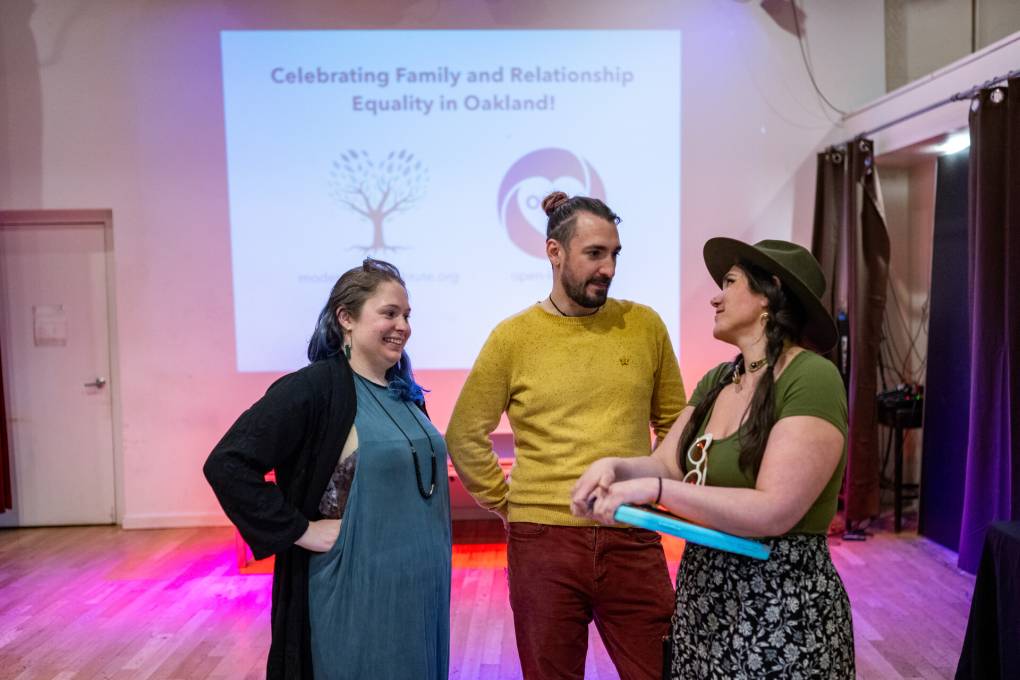
"caption": "John Owens speaks with his partners Emily Savage (left) and Alejandra Bravo Ducey at a celebration party at the East Bay Community Space in Oakland on April 16, 2024, after a bill prohibiting discrimination of non-monogamous families passed in the Oakland City Council.",
"description": null,
"title": "240416-NontraditionalFamilies-02-BL_qut",
"credit": "Beth LaBerge/KQED",
"status": "inherit",
"altTag": null,
"isLoading": false,
"fetchFailed": false
},
"news_11985221": {
"type": "attachments",
"id": "news_11985221",
"meta": {
"index": "attachments_1716263798",
"site": "news",
"id": "11985221",
"found": true
},
"title": "City Hall in San Francisco on Aug. 8, 2023.",
"publishDate": 1715109990,
"status": "inherit",
"parent": 11985194,
"modified": 1722460152,
"caption": "City Hall in San Francisco on Aug. 8, 2023. Before Kyla Worthy was hired to run SF SAFE, she led For Richmond, which was also accused of falsifying invoices and failing to provide services.",
"credit": "Beth LaBerge/KQED",
"altTag": null,
"description": null,
"imgSizes": {
"medium": {
"file": "https://cdn.kqed.org/wp-content/uploads/sites/10/2024/05/230808-SanFranciscoCityHall-25-BL_qut-800x533.jpg",
"width": 800,
"height": 533,
"mimeType": "image/jpeg"
},
"large": {
"file": "https://cdn.kqed.org/wp-content/uploads/sites/10/2024/05/230808-SanFranciscoCityHall-25-BL_qut-1020x680.jpg",
"width": 1020,
"height": 680,
"mimeType": "image/jpeg"
},
"thumbnail": {
"file": "https://cdn.kqed.org/wp-content/uploads/sites/10/2024/05/230808-SanFranciscoCityHall-25-BL_qut-160x107.jpg",
"width": 160,
"height": 107,
"mimeType": "image/jpeg"
},
"1536x1536": {
"file": "https://cdn.kqed.org/wp-content/uploads/sites/10/2024/05/230808-SanFranciscoCityHall-25-BL_qut-1536x1024.jpg",
"width": 1536,
"height": 1024,
"mimeType": "image/jpeg"
},
"post-thumbnail": {
"file": "https://cdn.kqed.org/wp-content/uploads/sites/10/2024/05/230808-SanFranciscoCityHall-25-BL_qut-672x372.jpg",
"width": 672,
"height": 372,
"mimeType": "image/jpeg"
},
"twentyfourteen-full-width": {
"file": "https://cdn.kqed.org/wp-content/uploads/sites/10/2024/05/230808-SanFranciscoCityHall-25-BL_qut-1038x576.jpg",
"width": 1038,
"height": 576,
"mimeType": "image/jpeg"
},
"kqedFullSize": {
"file": "https://cdn.kqed.org/wp-content/uploads/sites/10/2024/05/230808-SanFranciscoCityHall-25-BL_qut.jpg",
"width": 1920,
"height": 1280
}
},
"isLoading": false,
"fetchFailed": false
},
"news_11985077": {
"type": "attachments",
"id": "news_11985077",
"meta": {
"index": "attachments_1716263798",
"site": "news",
"id": "11985077",
"found": true
},
"parent": 11985069,
"imgSizes": {
"twentyfourteen-full-width": {
"file": "https://cdn.kqed.org/wp-content/uploads/sites/10/2024/05/110722-Secretary-of-State-MG-CM-03-2-1038x576.jpg",
"width": 1038,
"mimeType": "image/jpeg",
"height": 576
},
"thumbnail": {
"file": "https://cdn.kqed.org/wp-content/uploads/sites/10/2024/05/110722-Secretary-of-State-MG-CM-03-2-160x107.jpg",
"width": 160,
"mimeType": "image/jpeg",
"height": 107
},
"post-thumbnail": {
"file": "https://cdn.kqed.org/wp-content/uploads/sites/10/2024/05/110722-Secretary-of-State-MG-CM-03-2-672x372.jpg",
"width": 672,
"mimeType": "image/jpeg",
"height": 372
},
"kqedFullSize": {
"file": "https://cdn.kqed.org/wp-content/uploads/sites/10/2024/05/110722-Secretary-of-State-MG-CM-03-2.jpg",
"width": 2000,
"height": 1333
},
"large": {
"file": "https://cdn.kqed.org/wp-content/uploads/sites/10/2024/05/110722-Secretary-of-State-MG-CM-03-2-1020x680.jpg",
"width": 1020,
"mimeType": "image/jpeg",
"height": 680
},
"1536x1536": {
"file": "https://cdn.kqed.org/wp-content/uploads/sites/10/2024/05/110722-Secretary-of-State-MG-CM-03-2-1536x1024.jpg",
"width": 1536,
"mimeType": "image/jpeg",
"height": 1024
},
"full-width": {
"file": "https://cdn.kqed.org/wp-content/uploads/sites/10/2024/05/110722-Secretary-of-State-MG-CM-03-2-1920x1280.jpg",
"width": 1920,
"mimeType": "image/jpeg",
"height": 1280
},
"medium": {
"file": "https://cdn.kqed.org/wp-content/uploads/sites/10/2024/05/110722-Secretary-of-State-MG-CM-03-2-800x533.jpg",
"width": 800,
"mimeType": "image/jpeg",
"height": 533
}
},
"publishDate": 1715019570,
"modified": 1715019641,
"caption": "The Secretary of State building in Sacramento on Nov. 7, 2022. ",
"description": null,
"title": "110722-Secretary-of-State-MG-CM-03-2",
"credit": "Miguel Gutierrez Jr./CalMatters",
"status": "inherit",
"altTag": "The front of a building that reads \"State of California Secretary of State.\"",
"isLoading": false,
"fetchFailed": false
},
"news_11984981": {
"type": "attachments",
"id": "news_11984981",
"meta": {
"index": "attachments_1716263798",
"site": "news",
"id": "11984981",
"found": true
},
"parent": 11984830,
"imgSizes": {
"twentyfourteen-full-width": {
"file": "https://cdn.kqed.org/wp-content/uploads/sites/10/2024/05/240502-CaliforniaForever-01-BL_qut-1038x576.jpg",
"width": 1038,
"mimeType": "image/jpeg",
"height": 576
},
"thumbnail": {
"file": "https://cdn.kqed.org/wp-content/uploads/sites/10/2024/05/240502-CaliforniaForever-01-BL_qut-160x107.jpg",
"width": 160,
"mimeType": "image/jpeg",
"height": 107
},
"post-thumbnail": {
"file": "https://cdn.kqed.org/wp-content/uploads/sites/10/2024/05/240502-CaliforniaForever-01-BL_qut-672x372.jpg",
"width": 672,
"mimeType": "image/jpeg",
"height": 372
},
"kqedFullSize": {
"file": "https://cdn.kqed.org/wp-content/uploads/sites/10/2024/05/240502-CaliforniaForever-01-BL_qut.jpg",
"width": 1920,
"height": 1280
},
"large": {
"file": "https://cdn.kqed.org/wp-content/uploads/sites/10/2024/05/240502-CaliforniaForever-01-BL_qut-1020x680.jpg",
"width": 1020,
"mimeType": "image/jpeg",
"height": 680
},
"1536x1536": {
"file": "https://cdn.kqed.org/wp-content/uploads/sites/10/2024/05/240502-CaliforniaForever-01-BL_qut-1536x1024.jpg",
"width": 1536,
"mimeType": "image/jpeg",
"height": 1024
},
"medium": {
"file": "https://cdn.kqed.org/wp-content/uploads/sites/10/2024/05/240502-CaliforniaForever-01-BL_qut-800x533.jpg",
"width": 800,
"mimeType": "image/jpeg",
"height": 533
}
},
"publishDate": 1714755761,
"modified": 1714755991,
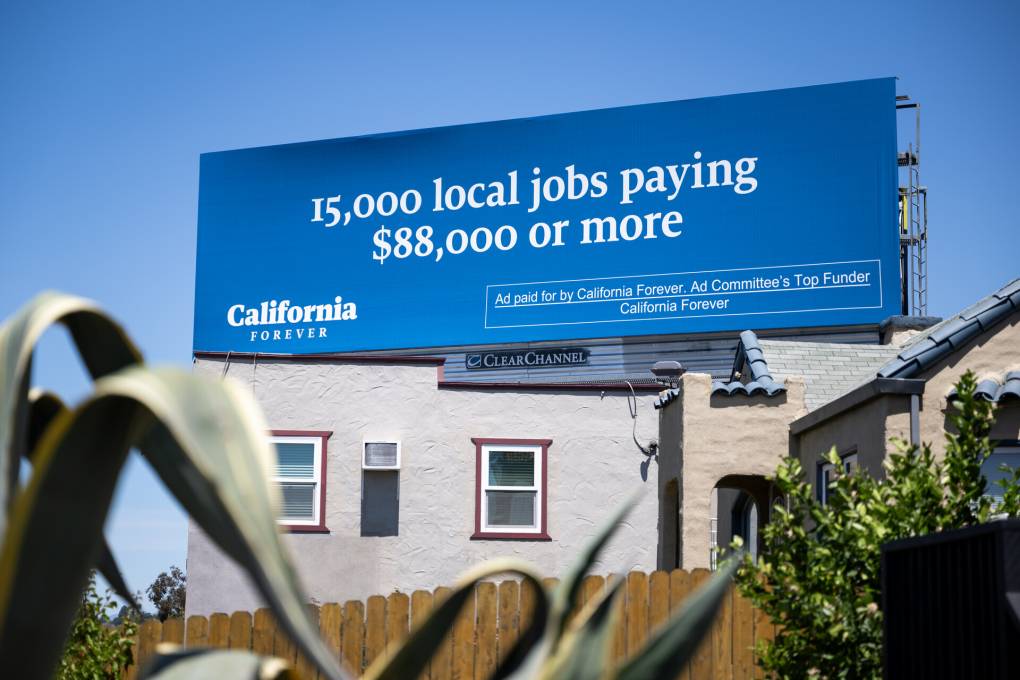
"caption": "A billboard for California Forever sits on top of an apartment building along I-80 in Vallejo on May 2, 2024.",
"description": null,
"title": "240502-CaliforniaForever-01-BL_qut",
"credit": "Beth LaBerge/KQED",
"status": "inherit",
"altTag": null,
"isLoading": false,
"fetchFailed": false
},
"news_10816492": {
"type": "attachments",
"id": "news_10816492",
"meta": {
"index": "attachments_1716263798",
"site": "news",
"id": "10816492",
"found": true
},
"parent": 10809415,
"imgSizes": {
"twentyfourteen-full-width": {
"file": "https://cdn.kqed.org/wp-content/uploads/sites/10/2015/12/14289_transform-1038x576.jpg",
"width": 1038,
"mimeType": "image/jpeg",
"height": 576
},
"thumbnail": {
"file": "https://cdn.kqed.org/wp-content/uploads/sites/10/2015/12/14289_transform-400x267.jpg",
"width": 400,
"mimeType": "image/jpeg",
"height": 267
},
"fd-sm": {
"file": "https://cdn.kqed.org/wp-content/uploads/sites/10/2015/12/14289_transform-960x640.jpg",
"width": 960,
"mimeType": "image/jpeg",
"height": 640
},
"post-thumbnail": {
"file": "https://cdn.kqed.org/wp-content/uploads/sites/10/2015/12/14289_transform-672x372.jpg",
"width": 672,
"mimeType": "image/jpeg",
"height": 372
},
"kqedFullSize": {
"file": "https://cdn.kqed.org/wp-content/uploads/sites/10/2015/12/14289_transform.jpg",
"width": 1920,
"height": 1280
},
"large": {
"file": "https://cdn.kqed.org/wp-content/uploads/sites/10/2015/12/14289_transform-1440x960.jpg",
"width": 1440,
"mimeType": "image/jpeg",
"height": 960
},
"guest-author-96": {
"file": "https://cdn.kqed.org/wp-content/uploads/sites/10/2015/12/14289_transform-96x96.jpg",
"width": 96,
"mimeType": "image/jpeg",
"height": 96
},
"medium": {
"file": "https://cdn.kqed.org/wp-content/uploads/sites/10/2015/12/14289_transform-800x533.jpg",
"width": 800,
"mimeType": "image/jpeg",
"height": 533
},
"guest-author-64": {
"file": "https://cdn.kqed.org/wp-content/uploads/sites/10/2015/12/14289_transform-64x64.jpg",
"width": 64,
"mimeType": "image/jpeg",
"height": 64
},
"guest-author-32": {
"file": "https://cdn.kqed.org/wp-content/uploads/sites/10/2015/12/14289_transform-32x32.jpg",
"width": 32,
"mimeType": "image/jpeg",
"height": 32
},
"jmtc-small-thumb": {
"file": "https://cdn.kqed.org/wp-content/uploads/sites/10/2015/12/14289_transform-280x150.jpg",
"width": 280,
"mimeType": "image/jpeg",
"height": 150
},
"fd-lrg": {
"file": "https://cdn.kqed.org/wp-content/uploads/sites/10/2015/12/14289_transform-1920x1280.jpg",
"width": 1920,
"mimeType": "image/jpeg",
"height": 1280
},
"fd-med": {
"file": "https://cdn.kqed.org/wp-content/uploads/sites/10/2015/12/14289_transform-1180x787.jpg",
"width": 1180,
"mimeType": "image/jpeg",
"height": 787
},
"detail": {
"file": "https://cdn.kqed.org/wp-content/uploads/sites/10/2015/12/14289_transform-75x75.jpg",
"width": 75,
"mimeType": "image/jpeg",
"height": 75
},
"medium_large": {
"file": "https://cdn.kqed.org/wp-content/uploads/sites/10/2015/12/14289_transform-768x512.jpg",
"width": 768,
"mimeType": "image/jpeg",
"height": 512
},
"guest-author-128": {
"file": "https://cdn.kqed.org/wp-content/uploads/sites/10/2015/12/14289_transform-128x128.jpg",
"width": 128,
"mimeType": "image/jpeg",
"height": 128
}
},
"publishDate": 1451601199,
"modified": 1714680162,
"caption": "Residents of the 14-room Mission District house made an eviction-proof deal.",
"description": null,
"title": "14289_transform",
"credit": "Jeremy Raff/KQED",
"status": "inherit",
"altTag": "A woman holding the hands of two small children walks down the street past a large home.",
"isLoading": false,
"fetchFailed": false
},
"news_11984614": {
"type": "attachments",
"id": "news_11984614",
"meta": {
"index": "attachments_1716263798",
"site": "news",
"id": "11984614",
"found": true
},
"parent": 11984610,
"imgSizes": {
"twentyfourteen-full-width": {
"file": "https://cdn.kqed.org/wp-content/uploads/sites/10/2024/05/CMInsurance01-1038x576.jpg",
"width": 1038,
"mimeType": "image/jpeg",
"height": 576
},
"thumbnail": {
"file": "https://cdn.kqed.org/wp-content/uploads/sites/10/2024/05/CMInsurance01-160x107.jpg",
"width": 160,
"mimeType": "image/jpeg",
"height": 107
},
"post-thumbnail": {
"file": "https://cdn.kqed.org/wp-content/uploads/sites/10/2024/05/CMInsurance01-672x372.jpg",
"width": 672,
"mimeType": "image/jpeg",
"height": 372
},
"kqedFullSize": {
"file": "https://cdn.kqed.org/wp-content/uploads/sites/10/2024/05/CMInsurance01.jpg",
"width": 2000,
"height": 1333
},
"large": {
"file": "https://cdn.kqed.org/wp-content/uploads/sites/10/2024/05/CMInsurance01-1020x680.jpg",
"width": 1020,
"mimeType": "image/jpeg",
"height": 680
},
"1536x1536": {
"file": "https://cdn.kqed.org/wp-content/uploads/sites/10/2024/05/CMInsurance01-1536x1024.jpg",
"width": 1536,
"mimeType": "image/jpeg",
"height": 1024
},
"full-width": {
"file": "https://cdn.kqed.org/wp-content/uploads/sites/10/2024/05/CMInsurance01-1920x1280.jpg",
"width": 1920,
"mimeType": "image/jpeg",
"height": 1280
},
"medium": {
"file": "https://cdn.kqed.org/wp-content/uploads/sites/10/2024/05/CMInsurance01-800x533.jpg",
"width": 800,
"mimeType": "image/jpeg",
"height": 533
}
},
"publishDate": 1714584301,
"modified": 1714584340,
"caption": "Donna Yutzy cleans the gutters of her home from flammable debris on Nov. 4, 2023. State law prohibits the use of landscaping plants and any flammable materials within a five-foot radius of the house.",
"description": null,
"title": "CMInsurance01",
"credit": "Manuel Orbegozo/CalMatters",
"status": "inherit",
"altTag": null,
"isLoading": false,
"fetchFailed": false
},
"news_11909167": {
"type": "attachments",
"id": "news_11909167",
"meta": {
"index": "attachments_1716263798",
"site": "news",
"id": "11909167",
"found": true
},
"parent": 11909141,
"imgSizes": {
"twentyfourteen-full-width": {
"file": "https://cdn.kqed.org/wp-content/uploads/sites/10/2022/03/RS50490_007_SanFrancisco_Housing_07292021-qut-1038x576.jpg",
"width": 1038,
"mimeType": "image/jpeg",
"height": 576
},
"thumbnail": {
"file": "https://cdn.kqed.org/wp-content/uploads/sites/10/2022/03/RS50490_007_SanFrancisco_Housing_07292021-qut-160x107.jpg",
"width": 160,
"mimeType": "image/jpeg",
"height": 107
},
"post-thumbnail": {
"file": "https://cdn.kqed.org/wp-content/uploads/sites/10/2022/03/RS50490_007_SanFrancisco_Housing_07292021-qut-672x372.jpg",
"width": 672,
"mimeType": "image/jpeg",
"height": 372
},
"kqedFullSize": {
"file": "https://cdn.kqed.org/wp-content/uploads/sites/10/2022/03/RS50490_007_SanFrancisco_Housing_07292021-qut.jpg",
"width": 1920,
"height": 1280
},
"large": {
"file": "https://cdn.kqed.org/wp-content/uploads/sites/10/2022/03/RS50490_007_SanFrancisco_Housing_07292021-qut-1020x680.jpg",
"width": 1020,
"mimeType": "image/jpeg",
"height": 680
},
"1536x1536": {
"file": "https://cdn.kqed.org/wp-content/uploads/sites/10/2022/03/RS50490_007_SanFrancisco_Housing_07292021-qut-1536x1024.jpg",
"width": 1536,
"mimeType": "image/jpeg",
"height": 1024
},
"medium": {
"file": "https://cdn.kqed.org/wp-content/uploads/sites/10/2022/03/RS50490_007_SanFrancisco_Housing_07292021-qut-800x533.jpg",
"width": 800,
"mimeType": "image/jpeg",
"height": 533
}
},
"publishDate": 1648154076,
"modified": 1714503292,
"caption": "A 'For Rent' sign hangs in the window of an apartment building in Nob Hill in San Francisco on July 29, 2021.",
"description": "A 'For Rent' sign hangs in the window of an apartment building in Nob Hill in San Francisco on July 29, 2021. In the first full year of the pandemic, San Francisco, New York, Los Angeles and Chicago saw the greatest population losses in the nation, according to data from the U.S. Census Bureau released Thursday.",
"title": "RS50490_007_SanFrancisco_Housing_07292021-qut",
"credit": "Beth LaBerge/KQED",
"status": "inherit",
"altTag": "A red 'for rent' sign hangs in the window of a classic SF Victorian building, with the downtown skyline in the background.",
"isLoading": false,
"fetchFailed": false
},
"news_11984452": {
"type": "attachments",
"id": "news_11984452",
"meta": {
"index": "attachments_1716263798",
"site": "news",
"id": "11984452",
"found": true
},
"parent": 0,
"imgSizes": {
"twentyfourteen-full-width": {
"file": "https://cdn.kqed.org/wp-content/uploads/sites/10/2024/04/240429-SOLAR-MOSAIC-MD-02-KQED-1038x576.jpg",
"width": 1038,
"mimeType": "image/jpeg",
"height": 576
},
"thumbnail": {
"file": "https://cdn.kqed.org/wp-content/uploads/sites/10/2024/04/240429-SOLAR-MOSAIC-MD-02-KQED-160x107.jpg",
"width": 160,
"mimeType": "image/jpeg",
"height": 107
},
"post-thumbnail": {
"file": "https://cdn.kqed.org/wp-content/uploads/sites/10/2024/04/240429-SOLAR-MOSAIC-MD-02-KQED-672x372.jpg",
"width": 672,
"mimeType": "image/jpeg",
"height": 372
},
"kqedFullSize": {
"file": "https://cdn.kqed.org/wp-content/uploads/sites/10/2024/04/240429-SOLAR-MOSAIC-MD-02-KQED.jpg",
"width": 2000,
"height": 1333
},
"large": {
"file": "https://cdn.kqed.org/wp-content/uploads/sites/10/2024/04/240429-SOLAR-MOSAIC-MD-02-KQED-1020x680.jpg",
"width": 1020,
"mimeType": "image/jpeg",
"height": 680
},
"1536x1536": {
"file": "https://cdn.kqed.org/wp-content/uploads/sites/10/2024/04/240429-SOLAR-MOSAIC-MD-02-KQED-1536x1024.jpg",
"width": 1536,
"mimeType": "image/jpeg",
"height": 1024
},
"full-width": {
"file": "https://cdn.kqed.org/wp-content/uploads/sites/10/2024/04/240429-SOLAR-MOSAIC-MD-02-KQED-1920x1280.jpg",
"width": 1920,
"mimeType": "image/jpeg",
"height": 1280
},
"medium": {
"file": "https://cdn.kqed.org/wp-content/uploads/sites/10/2024/04/240429-SOLAR-MOSAIC-MD-02-KQED-800x533.jpg",
"width": 800,
"mimeType": "image/jpeg",
"height": 533
}
},
"publishDate": 1714490256,
"modified": 1714500603,
"caption": "Nancy Villanueva and others with the Alliance of Californians for Community Empowerment took over the lobby of 601 12th St. in Oakland, where Solar Mosaic is headquartered. They accused the company of having issued millions in fraudulent loans to California homeowners and demanded that they be canceled on April 29, 2024.",
"description": null,
"title": "240429-SOLAR MOSAIC-MD-02-KQED",
"credit": "Martin do Nascimento/KQED",
"status": "inherit",
"altTag": "A woman wearing sunglasses and a yellow shirt holds up an object in one hand and a water bottle in the other with people in the background.",
"isLoading": false,
"fetchFailed": false
},
"news_11984434": {
"type": "attachments",
"id": "news_11984434",
"meta": {
"index": "attachments_1716263798",
"site": "news",
"id": "11984434",
"found": true
},
"parent": 11984408,
"imgSizes": {
"twentyfourteen-full-width": {
"file": "https://cdn.kqed.org/wp-content/uploads/sites/10/2024/04/231205-SolanoCountyFarmers-68-BL_qut-1038x576.jpg",
"width": 1038,
"mimeType": "image/jpeg",
"height": 576
},
"thumbnail": {
"file": "https://cdn.kqed.org/wp-content/uploads/sites/10/2024/04/231205-SolanoCountyFarmers-68-BL_qut-160x107.jpg",
"width": 160,
"mimeType": "image/jpeg",
"height": 107
},
"post-thumbnail": {
"file": "https://cdn.kqed.org/wp-content/uploads/sites/10/2024/04/231205-SolanoCountyFarmers-68-BL_qut-672x372.jpg",
"width": 672,
"mimeType": "image/jpeg",
"height": 372
},
"kqedFullSize": {
"file": "https://cdn.kqed.org/wp-content/uploads/sites/10/2024/04/231205-SolanoCountyFarmers-68-BL_qut.jpg",
"width": 1920,
"height": 1280
},
"large": {
"file": "https://cdn.kqed.org/wp-content/uploads/sites/10/2024/04/231205-SolanoCountyFarmers-68-BL_qut-1020x680.jpg",
"width": 1020,
"mimeType": "image/jpeg",
"height": 680
},
"1536x1536": {
"file": "https://cdn.kqed.org/wp-content/uploads/sites/10/2024/04/231205-SolanoCountyFarmers-68-BL_qut-1536x1024.jpg",
"width": 1536,
"mimeType": "image/jpeg",
"height": 1024
},
"medium": {
"file": "https://cdn.kqed.org/wp-content/uploads/sites/10/2024/04/231205-SolanoCountyFarmers-68-BL_qut-800x533.jpg",
"width": 800,
"mimeType": "image/jpeg",
"height": 533
}
},
"publishDate": 1714434593,
"modified": 1714499595,
"caption": "Residents fill a town hall meeting in Rio Vista on Dec. 5, 2023, for California Forever, a proposed California city backed by Silicon Valley investors on farmland in eastern Solano County.",
"description": null,
"title": "231205-SolanoCountyFarmers-68-BL_qut",
"credit": "Beth LaBerge/KQED",
"status": "inherit",
"altTag": null,
"isLoading": false,
"fetchFailed": false
},
"news_11984069": {
"type": "attachments",
"id": "news_11984069",
"meta": {
"index": "attachments_1716263798",
"site": "news",
"id": "11984069",
"found": true
},
"parent": 11984016,
"imgSizes": {
"twentyfourteen-full-width": {
"file": "https://cdn.kqed.org/wp-content/uploads/sites/10/2024/04/016_KQED_AlamedaAffordableHousing_01122023_qut-1038x576.jpg",
"width": 1038,
"mimeType": "image/jpeg",
"height": 576
},
"thumbnail": {
"file": "https://cdn.kqed.org/wp-content/uploads/sites/10/2024/04/016_KQED_AlamedaAffordableHousing_01122023_qut-160x107.jpg",
"width": 160,
"mimeType": "image/jpeg",
"height": 107
},
"post-thumbnail": {
"file": "https://cdn.kqed.org/wp-content/uploads/sites/10/2024/04/016_KQED_AlamedaAffordableHousing_01122023_qut-672x372.jpg",
"width": 672,
"mimeType": "image/jpeg",
"height": 372
},
"kqedFullSize": {
"file": "https://cdn.kqed.org/wp-content/uploads/sites/10/2024/04/016_KQED_AlamedaAffordableHousing_01122023_qut.jpg",
"width": 1920,
"height": 1280
},
"large": {
"file": "https://cdn.kqed.org/wp-content/uploads/sites/10/2024/04/016_KQED_AlamedaAffordableHousing_01122023_qut-1020x680.jpg",
"width": 1020,
"mimeType": "image/jpeg",
"height": 680
},
"1536x1536": {
"file": "https://cdn.kqed.org/wp-content/uploads/sites/10/2024/04/016_KQED_AlamedaAffordableHousing_01122023_qut-1536x1024.jpg",
"width": 1536,
"mimeType": "image/jpeg",
"height": 1024
},
"medium": {
"file": "https://cdn.kqed.org/wp-content/uploads/sites/10/2024/04/016_KQED_AlamedaAffordableHousing_01122023_qut-800x533.jpg",
"width": 800,
"mimeType": "image/jpeg",
"height": 533
}
},
"publishDate": 1714077079,
"modified": 1714077110,
"caption": "Single family homes in Alameda on Jan. 12, 2023.",
"description": null,
"title": "Single family homes in Alameda on Jan. 12, 2023.",
"credit": "Beth LaBerge/KQED",
"status": "inherit",
"altTag": "Single family houses in a suburban neighborhood.",
"isLoading": false,
"fetchFailed": false
},
"news_11976223": {
"type": "attachments",
"id": "news_11976223",
"meta": {
"index": "attachments_1716263798",
"site": "news",
"id": "11976223",
"found": true
},
"parent": 11976218,
"imgSizes": {
"twentyfourteen-full-width": {
"file": "https://cdn.kqed.org/wp-content/uploads/sites/10/2024/02/GettyImages-1823257059-1038x576.jpg",
"width": 1038,
"mimeType": "image/jpeg",
"height": 576
},
"thumbnail": {
"file": "https://cdn.kqed.org/wp-content/uploads/sites/10/2024/02/GettyImages-1823257059-160x113.jpg",
"width": 160,
"mimeType": "image/jpeg",
"height": 113
},
"post-thumbnail": {
"file": "https://cdn.kqed.org/wp-content/uploads/sites/10/2024/02/GettyImages-1823257059-672x372.jpg",
"width": 672,
"mimeType": "image/jpeg",
"height": 372
},
"kqedFullSize": {
"file": "https://cdn.kqed.org/wp-content/uploads/sites/10/2024/02/GettyImages-1823257059-scaled.jpg",
"width": 2560,
"height": 1812
},
"2048x2048": {
"file": "https://cdn.kqed.org/wp-content/uploads/sites/10/2024/02/GettyImages-1823257059-2048x1449.jpg",
"width": 2048,
"mimeType": "image/jpeg",
"height": 1449
},
"large": {
"file": "https://cdn.kqed.org/wp-content/uploads/sites/10/2024/02/GettyImages-1823257059-1020x722.jpg",
"width": 1020,
"mimeType": "image/jpeg",
"height": 722
},
"1536x1536": {
"file": "https://cdn.kqed.org/wp-content/uploads/sites/10/2024/02/GettyImages-1823257059-1536x1087.jpg",
"width": 1536,
"mimeType": "image/jpeg",
"height": 1087
},
"full-width": {
"file": "https://cdn.kqed.org/wp-content/uploads/sites/10/2024/02/GettyImages-1823257059-1920x1359.jpg",
"width": 1920,
"mimeType": "image/jpeg",
"height": 1359
},
"medium": {
"file": "https://cdn.kqed.org/wp-content/uploads/sites/10/2024/02/GettyImages-1823257059-800x566.jpg",
"width": 800,
"mimeType": "image/jpeg",
"height": 566
}
},
"publishDate": 1708116716,
"modified": 1708127585,
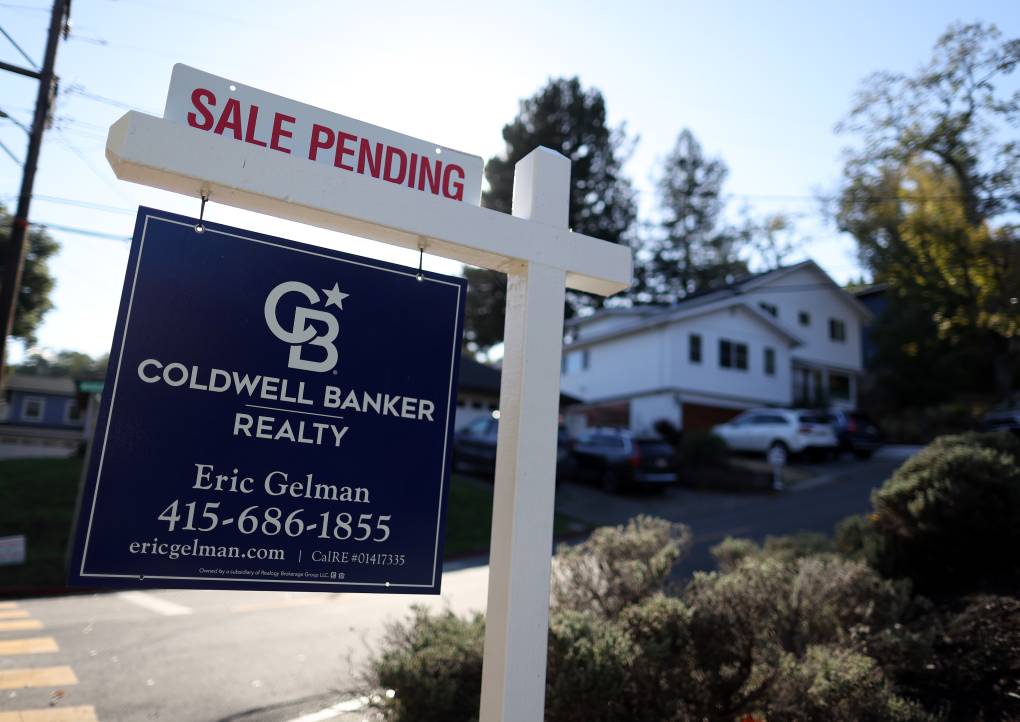
"caption": "A 'sale pending' sign is posted in front of a home in San Anselmo, Marin County. ",
"description": null,
"title": "Pending Home Sales Fall To Record Low",
"credit": "Justin Sullivan/Getty Images",
"status": "inherit",
"altTag": "A 'sale pending' sign in front of a house.",
"isLoading": false,
"fetchFailed": false
},
"news_11983945": {
"type": "attachments",
"id": "news_11983945",
"meta": {
"index": "attachments_1716263798",
"site": "news",
"id": "11983945",
"found": true
},
"parent": 0,
"imgSizes": {
"twentyfourteen-full-width": {
"file": "https://cdn.kqed.org/wp-content/uploads/sites/10/2024/04/2024_01-Fresno-White-1038x576.jpg",
"width": 1038,
"mimeType": "image/jpeg",
"height": 576
},
"thumbnail": {
"file": "https://cdn.kqed.org/wp-content/uploads/sites/10/2024/04/2024_01-Fresno-White-160x73.jpg",
"width": 160,
"mimeType": "image/jpeg",
"height": 73
},
"post-thumbnail": {
"file": "https://cdn.kqed.org/wp-content/uploads/sites/10/2024/04/2024_01-Fresno-White-672x372.jpg",
"width": 672,
"mimeType": "image/jpeg",
"height": 372
},
"kqedFullSize": {
"file": "https://cdn.kqed.org/wp-content/uploads/sites/10/2024/04/2024_01-Fresno-White-scaled.jpg",
"width": 2560,
"height": 1174
},
"2048x2048": {
"file": "https://cdn.kqed.org/wp-content/uploads/sites/10/2024/04/2024_01-Fresno-White-2048x939.jpg",
"width": 2048,
"mimeType": "image/jpeg",
"height": 939
},
"large": {
"file": "https://cdn.kqed.org/wp-content/uploads/sites/10/2024/04/2024_01-Fresno-White-1020x468.jpg",
"width": 1020,
"mimeType": "image/jpeg",
"height": 468
},
"1536x1536": {
"file": "https://cdn.kqed.org/wp-content/uploads/sites/10/2024/04/2024_01-Fresno-White-1536x704.jpg",
"width": 1536,
"mimeType": "image/jpeg",
"height": 704
},
"full-width": {
"file": "https://cdn.kqed.org/wp-content/uploads/sites/10/2024/04/2024_01-Fresno-White-1920x880.jpg",
"width": 1920,
"mimeType": "image/jpeg",
"height": 880
},
"medium": {
"file": "https://cdn.kqed.org/wp-content/uploads/sites/10/2024/04/2024_01-Fresno-White-800x367.jpg",
"width": 800,
"mimeType": "image/jpeg",
"height": 367
}
},
"publishDate": 1713989284,
"modified": 1713989441,
"caption": "A 2024 rendering of the high-speed rail station in Fresno. Four stations in the Central Valley will be the first to be constructed. Trains are slated to start running in 2030.",
"description": null,
"title": "2024_01-Fresno White",
"credit": "Courtesy California High-Speed Rail Authority",
"status": "inherit",
"altTag": null,
"isLoading": false,
"fetchFailed": false
}
},
"audioPlayerReducer": {
"postId": "stream_live",
"isPaused": true,
"isPlaying": false,
"pfsActive": false,
"pledgeModalIsOpen": true,
"playerDrawerIsOpen": false,
"liveAudioPlayStartedAt": 0,
"liveAudioPlayContext": ""
},
"authorsReducer": {
"byline_news_11985069": {
"type": "authors",
"id": "byline_news_11985069",
"meta": {
"override": true
},
"slug": "byline_news_11985069",
"name": "Ben Christopher, CalMatters",
"isLoading": false
},
"byline_news_11984610": {
"type": "authors",
"id": "byline_news_11984610",
"meta": {
"override": true
},
"slug": "byline_news_11984610",
"name": "Levi Sumagaysay, CalMatters",
"isLoading": false
},
"lesleymcclurg": {
"type": "authors",
"id": "11229",
"meta": {
"index": "authors_1716337520",
"id": "11229",
"found": true
},
"name": "Lesley McClurg",
"firstName": "Lesley",
"lastName": "McClurg",
"slug": "lesleymcclurg",
"email": "lmcclurg@KQED.org",
"display_author_email": false,
"staff_mastheads": [
"news",
"science"
],
"title": "KQED Health Correspondent",
"bio": "Lesley McClurg is a health correspondent and fill-in host whose work is regularly rebroadcast on NPR and PBS programs. She’s earned multiple regional Emmy awards, a national and a regional Edward R. Murrow award, and was named Best Beat Reporter by the Association of Health Care Journalists. The Society of Professional Journalists has recognized her work several times, and the Society of Environmental Journalists spotlighted her coverage of California’s historic drought.\r\n\r\nBefore joining KQED in 2016, Lesley covered food and sustainability for Capital Public Radio, environmental issues for Colorado Public Radio, and reported for KUOW and KCTS 9 in Seattle. Away from the newsroom, she loves skiing with her daughter, mountain biking with her partner, and playing with Ollie, the family’s goldendoodle. On deadline, she runs almost entirely on chocolate chips.\r\n\r\n ",
"avatar": "https://secure.gravatar.com/avatar/bab49e972ea10c774fe0f5e29dba1722b158f7c0d58a360923d1389d380b2978?s=600&d=blank&r=g",
"twitter": "lesleywmcclurg",
"bluesky": null,
"facebook": null,
"instagram": null,
"linkedin": null,
"sites": [
{
"site": "arts",
"roles": [
"author"
]
},
{
"site": "news",
"roles": [
"editor"
]
},
{
"site": "futureofyou",
"roles": [
"editor"
]
},
{
"site": "stateofhealth",
"roles": [
"author"
]
},
{
"site": "science",
"roles": [
"editor"
]
},
{
"site": "quest",
"roles": [
"subscriber"
]
},
{
"site": "forum",
"roles": [
"administrator"
]
},
{
"site": "liveblog",
"roles": [
"author"
]
}
],
"headData": {
"title": "Lesley McClurg | KQED",
"description": "KQED Health Correspondent",
"ogImgSrc": "https://secure.gravatar.com/avatar/bab49e972ea10c774fe0f5e29dba1722b158f7c0d58a360923d1389d380b2978?s=600&d=blank&r=g",
"twImgSrc": "https://secure.gravatar.com/avatar/bab49e972ea10c774fe0f5e29dba1722b158f7c0d58a360923d1389d380b2978?s=600&d=blank&r=g"
},
"isLoading": false,
"link": "/author/lesleymcclurg"
},
"vrancano": {
"type": "authors",
"id": "11276",
"meta": {
"index": "authors_1716337520",
"id": "11276",
"found": true
},
"name": "Vanessa Rancaño",
"firstName": "Vanessa",
"lastName": "Rancaño",
"slug": "vrancano",
"email": "vrancano@kqed.org",
"display_author_email": false,
"staff_mastheads": [
"news"
],
"title": "Reporter",
"bio": "Vanessa Rancaño is a features reporter for KQED. She’s also covered homelessness and education for the station and reported from the Central Valley. Her work has aired across public radio, from flagship national news shows to longform narrative podcasts. Before taking up a mic, she worked as a freelance print journalist. She’s been recognized with a number of national and regional awards. Vanessa grew up in California's Central Valley. She's a former NPR Kroc Fellow, and a graduate of the UC Berkeley Graduate School of Journalism.",
"avatar": "https://secure.gravatar.com/avatar/b3a383dfb0e7ee1c17568f2cf067904ab654d6e3de9743fc661f3c788ade1bed?s=600&d=blank&r=g",
"twitter": "vanessarancano",
"bluesky": null,
"facebook": null,
"instagram": null,
"linkedin": null,
"sites": [
{
"site": "arts",
"roles": [
"editor"
]
},
{
"site": "news",
"roles": [
"editor"
]
},
{
"site": "liveblog",
"roles": [
"contributor"
]
}
],
"headData": {
"title": "Vanessa Rancaño | KQED",
"description": "Reporter",
"ogImgSrc": "https://secure.gravatar.com/avatar/b3a383dfb0e7ee1c17568f2cf067904ab654d6e3de9743fc661f3c788ade1bed?s=600&d=blank&r=g",
"twImgSrc": "https://secure.gravatar.com/avatar/b3a383dfb0e7ee1c17568f2cf067904ab654d6e3de9743fc661f3c788ade1bed?s=600&d=blank&r=g"
},
"isLoading": false,
"link": "/author/vrancano"
},
"ebaldassari": {
"type": "authors",
"id": "11652",
"meta": {
"index": "authors_1716337520",
"id": "11652",
"found": true
},
"name": "Erin Baldassari",
"firstName": "Erin",
"lastName": "Baldassari",
"slug": "ebaldassari",
"email": "ebaldassari@KQED.org",
"display_author_email": true,
"staff_mastheads": [
"news"
],
"title": "Staff Writer",
"bio": "Erin Baldassari covers housing for KQED. She's a former print journalist and most recently worked as the transportation reporter for the \u003cem>Mercury News\u003c/em> and \u003cem>East Bay Times. \u003c/em>There, she focused on how the Bay Area’s housing shortage has changed the way people move around the region. She also served on the \u003cem>East Bay Times\u003c/em>’ 2017 Pulitzer Prize-winning team for coverage of the Ghost Ship Fire in Oakland. Prior to that, Erin worked as a breaking news and general assignment reporter for a variety of outlets in the Bay Area and the greater Boston area. A Tufts University alumna, Erin grew up in the foothills of the Sierra Nevada mountains and in Sonoma County. She is a life-long KQED listener.",
"avatar": "https://secure.gravatar.com/avatar/5e95cad64a8ca08288082212e199d2b0cbeb4fd8e8ef5339395f361032bbe005?s=600&d=blank&r=g",
"twitter": "e_baldi",
"bluesky": null,
"facebook": null,
"instagram": null,
"linkedin": null,
"sites": [
{
"site": "news",
"roles": [
"edit_others_posts",
"editor"
]
},
{
"site": "science",
"roles": [
"editor"
]
},
{
"site": "liveblog",
"roles": [
"editor"
]
}
],
"headData": {
"title": "Erin Baldassari | KQED",
"description": "Staff Writer",
"ogImgSrc": "https://secure.gravatar.com/avatar/5e95cad64a8ca08288082212e199d2b0cbeb4fd8e8ef5339395f361032bbe005?s=600&d=blank&r=g",
"twImgSrc": "https://secure.gravatar.com/avatar/5e95cad64a8ca08288082212e199d2b0cbeb4fd8e8ef5339395f361032bbe005?s=600&d=blank&r=g"
},
"isLoading": false,
"link": "/author/ebaldassari"
},
"abandlamudi": {
"type": "authors",
"id": "11672",
"meta": {
"index": "authors_1716337520",
"id": "11672",
"found": true
},
"name": "Adhiti Bandlamudi",
"firstName": "Adhiti",
"lastName": "Bandlamudi",
"slug": "abandlamudi",
"email": "abandlamudi@kqed.org",
"display_author_email": false,
"staff_mastheads": [
"news"
],
"title": "KQED Housing Reporter",
"bio": "Adhiti Bandlamudi reports for KQED's Housing desk. She focuses on how housing gets built across the Bay Area. Before joining KQED in 2020, she reported for WUNC in Durham, North Carolina, WABE in Atlanta, Georgia and Capital Public Radio in Sacramento. In 2017, she was awarded a Kroc Fellowship at NPR where she reported on everything from sprinkles to the Golden State Killer's arrest. When she's not reporting, she's baking new recipes in her kitchen or watching movies with friends and family. She's originally from Georgia and has strong opinions about Great British Bake Off.",
"avatar": "https://secure.gravatar.com/avatar/868129c8b257bb99a3500e2c86a65400?s=600&d=mm&r=g",
"twitter": "oddity_adhiti",
"facebook": null,
"instagram": null,
"linkedin": null,
"sites": [
{
"site": "arts",
"roles": [
"author"
]
},
{
"site": "news",
"roles": [
"editor"
]
},
{
"site": "liveblog",
"roles": [
"author"
]
}
],
"headData": {
"title": "Adhiti Bandlamudi | KQED",
"description": "KQED Housing Reporter",
"ogImgSrc": "https://secure.gravatar.com/avatar/868129c8b257bb99a3500e2c86a65400?s=600&d=mm&r=g",
"twImgSrc": "https://secure.gravatar.com/avatar/868129c8b257bb99a3500e2c86a65400?s=600&d=mm&r=g"
},
"isLoading": false,
"link": "/author/abandlamudi"
},
"sjohnson": {
"type": "authors",
"id": "11840",
"meta": {
"index": "authors_1716337520",
"id": "11840",
"found": true
},
"name": "Sydney Johnson",
"firstName": "Sydney",
"lastName": "Johnson",
"slug": "sjohnson",
"email": "sjohnson@kqed.org",
"display_author_email": false,
"staff_mastheads": [
"news"
],
"title": "KQED Reporter",
"bio": "Sydney Johnson is a general assignment reporter at KQED. She previously reported on public health and city government at the San Francisco Examiner, and before that, she covered statewide education policy for EdSource. Her reporting has won multiple local, state and national awards. Sydney is a graduate of the University of California, Berkeley and lives in San Francisco.",
"avatar": "https://secure.gravatar.com/avatar/97855f2719b72ad6190b7c535fe642c8?s=600&d=blank&r=g",
"twitter": "sydneyfjohnson",
"facebook": null,
"instagram": null,
"linkedin": null,
"sites": [
{
"site": "news",
"roles": [
"editor"
]
}
],
"headData": {
"title": "Sydney Johnson | KQED",
"description": "KQED Reporter",
"ogImgSrc": "https://secure.gravatar.com/avatar/97855f2719b72ad6190b7c535fe642c8?s=600&d=blank&r=g",
"twImgSrc": "https://secure.gravatar.com/avatar/97855f2719b72ad6190b7c535fe642c8?s=600&d=blank&r=g"
},
"isLoading": false,
"link": "/author/sjohnson"
},
"mbolanos": {
"type": "authors",
"id": "11895",
"meta": {
"index": "authors_1716337520",
"id": "11895",
"found": true
},
"name": "Madi Bolaños",
"firstName": "Madi",
"lastName": "Bolaños",
"slug": "mbolanos",
"email": "mbolanos@kqed.org",
"display_author_email": false,
"staff_mastheads": [],
"title": "KQED Contributor",
"bio": null,
"avatar": "https://secure.gravatar.com/avatar/e6df5601c1f2d951e46a3fb42764330f?s=600&d=blank&r=g",
"twitter": null,
"bluesky": null,
"facebook": null,
"instagram": null,
"linkedin": null,
"sites": [
{
"site": "news",
"roles": [
"author"
]
}
],
"headData": {
"title": "Madi Bolaños | KQED",
"description": "KQED Contributor",
"ogImgSrc": "https://secure.gravatar.com/avatar/e6df5601c1f2d951e46a3fb42764330f?s=600&d=blank&r=g",
"twImgSrc": "https://secure.gravatar.com/avatar/e6df5601c1f2d951e46a3fb42764330f?s=600&d=blank&r=g"
},
"isLoading": false,
"link": "/author/mbolanos"
},
"kdebenedetti": {
"type": "authors",
"id": "11913",
"meta": {
"index": "authors_1716337520",
"id": "11913",
"found": true
},
"name": "Katie DeBenedetti",
"firstName": "Katie",
"lastName": "DeBenedetti",
"slug": "kdebenedetti",
"email": "kdebenedetti@kqed.org",
"display_author_email": false,
"staff_mastheads": [
"news",
"science"
],
"title": "KQED Contributor",
"bio": "Katie DeBenedetti is a digital reporter covering daily news for the Express Desk. Prior to joining KQED as a culture reporting intern in January 2024, she covered education and city government for the Napa Valley Register.",
"avatar": "https://secure.gravatar.com/avatar/6e31073cb8f7e4214ab03f42771d0f45?s=600&d=blank&r=g",
"twitter": null,
"facebook": null,
"instagram": null,
"linkedin": null,
"sites": [
{
"site": "news",
"roles": [
"author"
]
},
{
"site": "science",
"roles": [
"author"
]
},
{
"site": "liveblog",
"roles": [
"author"
]
}
],
"headData": {
"title": "Katie DeBenedetti | KQED",
"description": "KQED Contributor",
"ogImgSrc": "https://secure.gravatar.com/avatar/6e31073cb8f7e4214ab03f42771d0f45?s=600&d=blank&r=g",
"twImgSrc": "https://secure.gravatar.com/avatar/6e31073cb8f7e4214ab03f42771d0f45?s=600&d=blank&r=g"
},
"isLoading": false,
"link": "/author/kdebenedetti"
}
},
"pagesReducer": {
"news_tag_housing": {
"type": "terms",
"id": "news_1775",
"meta": {
"index": "terms_1716263798",
"site": "news",
"id": "1775",
"score": 7.0360975
},
"featImg": null,
"name": "housing",
"description": null,
"taxonomy": "tag",
"headData": {
"twImgId": null,
"twTitle": null,
"ogTitle": null,
"ogImgId": null,
"twDescription": null,
"description": null,
"title": "housing Archives | KQED News",
"ogDescription": null
},
"ttid": 1790,
"slug": "housing",
"isLoading": false,
"title": "housing",
"pageMeta": {
"site": "news",
"WpPageTemplate": "page-topic-editorial",
"currentPage": 37
},
"blocks": [
{
"blockName": "kqed/post-list",
"attrs": {
"layout": "cardArticle2",
"query": "posts/news?tag=housing",
"seeMore": false,
"paginated": true,
"page": 37
}
},
{
"blockName": "kqed/ad"
}
]
}
},
"pfsSessionReducer": {},
"postsReducer": {
"stream_live": {
"type": "live",
"id": "stream_live",
"audioUrl": "https://streams.kqed.org/kqedradio",
"title": "Live Stream",
"excerpt": "Live Stream information currently unavailable.",
"link": "/radio",
"featImg": "",
"label": {
"name": "KQED Live",
"link": "/"
}
},
"stream_kqedNewscast": {
"type": "posts",
"id": "stream_kqedNewscast",
"audioUrl": "https://www.kqed.org/.stream/anon/radio/RDnews/newscast.mp3?_=1",
"title": "KQED Newscast",
"featImg": "",
"label": {
"name": "88.5 FM",
"link": "/"
}
},
"news_11985408": {
"type": "posts",
"id": "news_11985408",
"meta": {
"index": "posts_1716263798",
"site": "news",
"id": "11985408",
"score": null,
"sort": [
1715209298000
]
},
"parent": 0,
"labelTerm": {
"site": "news"
},
"blocks": [],
"publishDate": 1715209298,
"format": "standard",
"title": "Berkeley Passes Legal Protections for Polyamory, Joining Oakland",
"headTitle": "Berkeley Passes Legal Protections for Polyamory, Joining Oakland | KQED",
"content": "\u003cp>Berkeley is on tap to approve legal protections for polyamorous families, moving to shield people in “diverse family structures” from discrimination in housing, businesses, and civil services.\u003c/p>\n\u003cp>On first reading Tuesday night the regulations passed the City Council. They cover multi-partner families, step-families, single parents, multi-generational households and \u003ca href=\"https://lgbt.ucsf.edu/glossary-terms#:~:text=Asexuality%3A%20Generally%20characterized%20by%20not,deliberate%20abstention%20from%20sexual%20activity.\">asexual relationships\u003c/a>. A final vote on the legislation is next Tuesday, May 21.\u003c/p>\n\u003cp>“Berkeley must stand united against discrimination of all kinds,” said Berkeley City Councilmember Terry Taplin, who introduced the bill. “As a gay Black Berkeleyan raised by a single mother, protecting our community’s diversity will always be a key goal in my public service, and families with nontraditional structures deserve our protection.”\u003c/p>\n\u003cp>Similar legislation \u003ca href=\"https://www.kqed.org/science/1992460/bay-area-cities-push-to-legally-validate-polyamorous-families\">passed in Oakland last month\u003c/a>, spearheaded by Janani Ramachandran, the city’s first LGBTQ councilwoman of color. The votes are believed to be the first of their kind on the West Coast. In recent years, the Massachusetts cities of Somerville and Cambridge passed \u003ca href=\"https://www.nytimes.com/2023/05/16/style/polyamory-somerville.html\">laws granting rights to nontraditional families\u003c/a>.\u003c/p>\n\u003cp>“This is a really exciting moment for the nonmonogamy movement because it helps validate and protect families and relationships that for a long time have existed in the shadows or at the margins of societies,” said Brett Chamberlin, founder and executive director of the Organization for Polyamory and Ethical Non-monogamy, a nonprofit advocacy group.\u003c/p>\n\u003cp>[ad fullwidth]\u003c/p>\n\u003cp>Research shows that \u003ca href=\"https://url.us.m.mimecastprotect.com/s/6E8_Cqx2JmsXW3ozsZT-YX?domain=journals.sagepub.com\">two-thirds of people engaged in consensual nonmonogamy report feeling stigmatized\u003c/a>, which leads many to hide that they are polyamorous because they fear \u003ca href=\"https://deepblue.lib.umich.edu/bitstream/handle/2027.42/102091/asap1286.pdf;jsessionid=85415879310B01D865F7EF9FB330883F?sequence=1\">negative perceptions\u003c/a>.\u003c/p>\n\u003cp>“Stigma and discrimination can show up in a range of domains: housing, employment, \u003ca href=\"https://pubmed.ncbi.nlm.nih.gov/30621924/\">health care\u003c/a> and immigration,” Chamberlin said. “Courts have \u003ca href=\"https://casetext.com/case/vb-v-jeb\">revoked custody from parents\u003c/a> who have multiple partners.”\u003c/p>\n\u003cp>Some religious groups are openly critical of nontraditional family structures. The California Family Council, a Christian faith-based organization, is vehemently opposed to any measure that affirms polyamorous relationships.\u003c/p>\n\u003cp>“The push by Oakland and Berkeley to formalize polyamorous families is cultural suicide,” Greg Burt, vice president of CFC, \u003ca href=\"https://www.californiafamily.org/2024/02/two-ca-cities-push-to-formally-recognize-polyamory/\">said in a statement\u003c/a>. “History and experience have shown children thrive best in nuclear father, mother and child families. A civilization that rejects this biblical model for family life is hell-bent on its own destruction.”\u003c/p>\n\u003cp>Yet the country may be trending away from the nuclear family.\u003c/p>\n\u003cp>\u003ca href=\"https://www.tandfonline.com/doi/abs/10.1080/0092623X.2016.1178675?journalCode=usmt20\">Research shows\u003c/a> that one in five single people in the U.S. have participated in some type of nonmonogamy. A \u003ca href=\"https://d3nkl3psvxxpe9.cloudfront.net/documents/Monogamy_NonMonogamy_Relationships_Toplines_crosstabs.pdf\">2023 poll conducted by YouGov\u003c/a>, an international analytics group, found that approximately a third of U.S. adults said that their ideal relationship is nonmonogamous to some degree.\u003c/p>\n\u003cp>\u003c/p>\n\u003cp>“These laws raise awareness about the many forms of modern family and declares discrimination against them unacceptable and unlawful,” said Diana Adams, the executive director of Chosen Family Law Center. “That reduces stigma for us everywhere.”\u003c/p>\n\n",
"stats": {
"hasVideo": false,
"hasChartOrMap": false,
"hasAudio": false,
"hasPolis": false,
"wordCount": 482,
"hasGoogleForm": false,
"hasGallery": false,
"hasHearkenModule": false,
"iframeSrcs": [],
"paragraphCount": 14
},
"modified": 1715634667,
"excerpt": "Advocates see the legal protections for people in \"diverse family structures\" as a significant step to reduce stigma.",
"headData": {
"twImgId": "",
"twTitle": "",
"ogTitle": "",
"ogImgId": "",
"twDescription": "",
"description": "Advocates see the legal protections for people in "diverse family structures" as a significant step to reduce stigma.",
"title": "Berkeley Passes Legal Protections for Polyamory, Joining Oakland | KQED",
"ogDescription": "",
"schema": {
"@context": "https://schema.org",
"@type": "NewsArticle",
"headline": "Berkeley Passes Legal Protections for Polyamory, Joining Oakland",
"datePublished": "2024-05-08T16:01:38-07:00",
"dateModified": "2024-05-13T14:11:07-07:00",
"image": "https://cdn.kqed.org/wp-content/uploads/2020/02/KQED-OG-Image@1x.png",
"isAccessibleForFree": "True",
"publisher": {
"@type": "NewsMediaOrganization",
"@id": "https://www.kqed.org/#organization",
"name": "KQED",
"logo": "https://cdn.kqed.org/wp-content/uploads/2020/02/KQED-OG-Image@1x.png",
"url": "https://www.kqed.org",
"sameAs": [
"https://www.facebook.com/KQED",
"https://twitter.com/KQED",
"https://www.instagram.com/kqed/",
"https://www.tiktok.com/@kqedofficial",
"https://www.linkedin.com/company/kqed",
"https://www.youtube.com/channel/UCeC0IOo7i1P_61zVUWbJ4nw"
]
}
}
},
"guestAuthors": [],
"slug": "berkeley-passes-legal-protections-for-polyamory-joining-oakland",
"status": "publish",
"excludeFromSiteSearch": "Include",
"sticky": false,
"articleAge": "0",
"nprStoryId": "kqed-11985408",
"path": "/news/11985408/berkeley-passes-legal-protections-for-polyamory-joining-oakland",
"audioTrackLength": null,
"parsedContent": [
{
"type": "contentString",
"content": "\u003cdiv class=\"post-body\">\u003cp>\u003cp>Berkeley is on tap to approve legal protections for polyamorous families, moving to shield people in “diverse family structures” from discrimination in housing, businesses, and civil services.\u003c/p>\n\u003cp>On first reading Tuesday night the regulations passed the City Council. They cover multi-partner families, step-families, single parents, multi-generational households and \u003ca href=\"https://lgbt.ucsf.edu/glossary-terms#:~:text=Asexuality%3A%20Generally%20characterized%20by%20not,deliberate%20abstention%20from%20sexual%20activity.\">asexual relationships\u003c/a>. A final vote on the legislation is next Tuesday, May 21.\u003c/p>\n\u003cp>“Berkeley must stand united against discrimination of all kinds,” said Berkeley City Councilmember Terry Taplin, who introduced the bill. “As a gay Black Berkeleyan raised by a single mother, protecting our community’s diversity will always be a key goal in my public service, and families with nontraditional structures deserve our protection.”\u003c/p>\n\u003cp>Similar legislation \u003ca href=\"https://www.kqed.org/science/1992460/bay-area-cities-push-to-legally-validate-polyamorous-families\">passed in Oakland last month\u003c/a>, spearheaded by Janani Ramachandran, the city’s first LGBTQ councilwoman of color. The votes are believed to be the first of their kind on the West Coast. In recent years, the Massachusetts cities of Somerville and Cambridge passed \u003ca href=\"https://www.nytimes.com/2023/05/16/style/polyamory-somerville.html\">laws granting rights to nontraditional families\u003c/a>.\u003c/p>\n\u003cp>“This is a really exciting moment for the nonmonogamy movement because it helps validate and protect families and relationships that for a long time have existed in the shadows or at the margins of societies,” said Brett Chamberlin, founder and executive director of the Organization for Polyamory and Ethical Non-monogamy, a nonprofit advocacy group.\u003c/p>\n\u003cp>\u003c/p>\u003c/div>",
"attributes": {
"named": {},
"numeric": []
}
},
{
"type": "component",
"content": "",
"name": "ad",
"attributes": {
"named": {
"label": "fullwidth"
},
"numeric": [
"fullwidth"
]
}
},
{
"type": "contentString",
"content": "\u003cdiv class=\"post-body\">\u003cp>\u003c/p>\n\u003cp>Research shows that \u003ca href=\"https://url.us.m.mimecastprotect.com/s/6E8_Cqx2JmsXW3ozsZT-YX?domain=journals.sagepub.com\">two-thirds of people engaged in consensual nonmonogamy report feeling stigmatized\u003c/a>, which leads many to hide that they are polyamorous because they fear \u003ca href=\"https://deepblue.lib.umich.edu/bitstream/handle/2027.42/102091/asap1286.pdf;jsessionid=85415879310B01D865F7EF9FB330883F?sequence=1\">negative perceptions\u003c/a>.\u003c/p>\n\u003cp>“Stigma and discrimination can show up in a range of domains: housing, employment, \u003ca href=\"https://pubmed.ncbi.nlm.nih.gov/30621924/\">health care\u003c/a> and immigration,” Chamberlin said. “Courts have \u003ca href=\"https://casetext.com/case/vb-v-jeb\">revoked custody from parents\u003c/a> who have multiple partners.”\u003c/p>\n\u003cp>Some religious groups are openly critical of nontraditional family structures. The California Family Council, a Christian faith-based organization, is vehemently opposed to any measure that affirms polyamorous relationships.\u003c/p>\n\u003cp>“The push by Oakland and Berkeley to formalize polyamorous families is cultural suicide,” Greg Burt, vice president of CFC, \u003ca href=\"https://www.californiafamily.org/2024/02/two-ca-cities-push-to-formally-recognize-polyamory/\">said in a statement\u003c/a>. “History and experience have shown children thrive best in nuclear father, mother and child families. A civilization that rejects this biblical model for family life is hell-bent on its own destruction.”\u003c/p>\n\u003cp>Yet the country may be trending away from the nuclear family.\u003c/p>\n\u003cp>\u003ca href=\"https://www.tandfonline.com/doi/abs/10.1080/0092623X.2016.1178675?journalCode=usmt20\">Research shows\u003c/a> that one in five single people in the U.S. have participated in some type of nonmonogamy. A \u003ca href=\"https://d3nkl3psvxxpe9.cloudfront.net/documents/Monogamy_NonMonogamy_Relationships_Toplines_crosstabs.pdf\">2023 poll conducted by YouGov\u003c/a>, an international analytics group, found that approximately a third of U.S. adults said that their ideal relationship is nonmonogamous to some degree.\u003c/p>\n\u003cp>\u003c/p>\n\u003cp>“These laws raise awareness about the many forms of modern family and declares discrimination against them unacceptable and unlawful,” said Diana Adams, the executive director of Chosen Family Law Center. “That reduces stigma for us everywhere.”\u003c/p>\n\n\u003c/div>\u003c/p>",
"attributes": {
"named": {},
"numeric": []
}
}
],
"link": "/news/11985408/berkeley-passes-legal-protections-for-polyamory-joining-oakland",
"authors": [
"11229"
],
"categories": [
"news_457",
"news_8",
"news_13"
],
"tags": [
"news_129",
"news_18543",
"news_1775"
],
"featImg": "news_11985409",
"label": "news"
},
"news_11985194": {
"type": "posts",
"id": "news_11985194",
"meta": {
"index": "posts_1716263798",
"site": "news",
"id": "11985194",
"score": null,
"sort": [
1715110668000
]
},
"guestAuthors": [],
"slug": "sf-homeless-services-provider-accused-of-nepotism-100k-fraud",
"title": "SF Homeless Services Provider Accused of Nepotism, $100k Fraud",
"publishDate": 1715110668,
"format": "standard",
"headTitle": "SF Homeless Services Provider Accused of Nepotism, $100k Fraud | KQED",
"labelTerm": {
"site": "news"
},
"content": "\u003cp>A San Francisco homeless services provider accused of falsifying $105,000 in invoices is cut off from future city funding, the city attorney’s office said in its latest move against alleged nonprofit fraud.\u003c/p>\n\u003cp>Providence Foundation of San Francisco never carried out shelter maintenance work that it billed for, an investigation by City Attorney David Chiu’s office found, adding that the misused taxpayer funds remain unaccounted for. The investigation also found that the foundation violated its contracts with the city despite warnings over nepotism and other offenses.\u003c/p>\n\u003cp>Providence denies the allegations, calling them “unfounded and baseless,” according to Vernon Goins, an Oakland-based attorney representing the foundation. Goins said the nonprofit is cooperating fully with the investigation “and will take remedial action where appropriate.”\u003c/p>\n\u003cp>“The Providence Foundation of San Francisco is confident that it will successfully prove that it never engaged in any willful misconduct as to any city grant or contract,” Goins wrote in an email to KQED.\u003c/p>\n\u003cfigure id=\"attachment_11928222\" class=\"wp-caption alignright\" style=\"max-width: 800px\">\u003cimg loading=\"lazy\" decoding=\"async\" class=\"size-medium wp-image-11928222\" src=\"https://cdn.kqed.org/wp-content/uploads/sites/10/2022/10/RS59200_DSC09553-qut-800x533.jpg\" alt=\"A man dressed in a business suit stands in front of a microphone with a large sign behind him.\" width=\"800\" height=\"533\" srcset=\"https://cdn.kqed.org/wp-content/uploads/sites/10/2022/10/RS59200_DSC09553-qut-800x533.jpg 800w, https://cdn.kqed.org/wp-content/uploads/sites/10/2022/10/RS59200_DSC09553-qut-1020x680.jpg 1020w, https://cdn.kqed.org/wp-content/uploads/sites/10/2022/10/RS59200_DSC09553-qut-160x107.jpg 160w, https://cdn.kqed.org/wp-content/uploads/sites/10/2022/10/RS59200_DSC09553-qut-1536x1024.jpg 1536w, https://cdn.kqed.org/wp-content/uploads/sites/10/2022/10/RS59200_DSC09553-qut.jpg 1920w\" sizes=\"(max-width: 800px) 100vw, 800px\">\u003cfigcaption class=\"wp-caption-text\">San Francisco City Attorney David Chiu at City Hall on October 9, 2022. \u003ccite>(Aryk Copley/KQED)\u003c/cite>\u003c/figcaption>\u003c/figure>\n\u003cp>Chiu announced Monday that he \u003ca href=\"https://www.sfcityattorney.org/wp-content/uploads/2024/05/2024.05.06-Counts-and-Allegations-Seeking-Debarment-and-Order-of-Suspension.pdf\">launched debarment proceedings\u003c/a> against Providence while immediately suspending it from bidding on or receiving new contracts or grants from the city.\u003c/p>\n\u003cp>“There’s a difference between having challenges with financial compliance and intentionally defrauding the city and its taxpayers,” Chiu said in a statement. “My office’s work to root out bad actors who take advantage of our public resources continues. We will find out about your misdeeds, cut off your funding, and hold you accountable.”\u003c/p>\n\u003cp>The action follows rising scrutiny of the city’s nonprofits in recent years and \u003ca href=\"https://www.kqed.org/news/11981767/audit-finds-sf-homeless-housing-provider-misspent-taxpayer-money\">comes on the heels of a city audit released last month\u003c/a> that found HomeRise, a leading developer of housing for people exiting homelessness in San Francisco, has been “careless and irresponsible” with taxpayer money, spending $12,500 on a social event and handing out $200,000 in bonuses, among other improprieties.\u003c/p>\n\u003cp>Providence’s contracts with the city, through the Department of Homelessness and Supportive Housing, include one to run the Oasis Hotel, a shelter for families experiencing homelessness; another to run a navigation center; and others to operate supportive services and housing voucher programs, according to Chiu’s office.\u003c/p>\n\u003cp>[ad fullwidth]\u003c/p>\n\u003cp>The alleged fraud involves falsified invoices related to maintenance at the Oasis Hotel. The city attorney claims the hotel was never painted nor had locks removed as reported on invoices, which also allegedly list a false contractor’s license number.\u003c/p>\n\u003cp>Providence Foundation Executive Director Patricia Doyle signed off on these bills, according to Chiu’s office, and should have known they were fake.\u003c/p>\n\u003cp>“The lack of new exterior paint is obvious to any person who views the Oasis, let alone the executive director and director of operations of the nonprofit in charge of operating the hotel,” according to a press release from the office. “In fact, a facilities report that the city commissioned after the Oasis had purportedly been painted lists ‘exterior paint’ as one of the shelter’s most pressing needs due to rust and fungus on the exterior of the building.”\u003c/p>\n\u003cp>[aside label=\"related coverage\" tag=\"homelessness\"]Chiu is also accusing the nonprofit of hiring “members of at least seven different families,” including children of the executive director and vice president of the board, in violation of the anti-nepotism provision in the grant agreement.\u003c/p>\n\u003cp>The Department of Homelessness and Supportive Housing called Providence out on its hiring practices and other contract violations starting in March 2023.\u003c/p>\n\u003cp>“HSH has received complaints from Providence staff about personnel mismanagement, personnel oversight and inappropriate hiring practices,” \u003ca href=\"https://www.sfcityattorney.org/wp-content/uploads/2024/05/HSH-Corrective-Action-Letters.pdf\">one letter to the nonprofit reads\u003c/a>. The letter also lists complaints of wage theft, inadequate staffing, nepotism and accusations that Providence Foundation Director of Operations Kenisha Roach video-recorded guests and staff at the Oasis without permission during private conversations.\u003c/p>\n\u003cp>Providence could be barred from getting city contracts or grants for up to five years through the debarment process, which is an administrative rather than legal procedure and is expected to take several months. At the city attorney’s request, the controller will appoint an independent hearing officer to hear arguments from both sides and decide. Debarment requires a finding of “willful misconduct.”\u003c/p>\n\u003cp>The suspension will stay in place until the debarment proceeding is resolved. It doesn’t put an end to Providence’s current city contracts but could be grounds for terminating them.\u003c/p>\n\u003cp>\u003c/p>\n",
"blocks": [],
"excerpt": "Providence Foundation of San Francisco is blocked from city funding after an investigation found it falsified over $100,000 in invoices. The foundation has called the allegations \"baseless.\"",
"status": "publish",
"parent": 0,
"modified": 1725922059,
"stats": {
"hasAudio": false,
"hasVideo": false,
"hasChartOrMap": false,
"iframeSrcs": [],
"hasGoogleForm": false,
"hasGallery": false,
"hasHearkenModule": false,
"hasPolis": false,
"paragraphCount": 18,
"wordCount": 768
},
"headData": {
"title": "SF Homeless Services Provider Accused of Nepotism, $100k Fraud | KQED",
"description": "Providence Foundation of San Francisco is blocked from city funding after an investigation found it falsified over $100,000 in invoices. The foundation has called the allegations "baseless."",
"ogTitle": "",
"ogDescription": "",
"ogImgId": "",
"twTitle": "",
"twDescription": "",
"twImgId": "",
"schema": {
"@context": "https://schema.org",
"@type": "NewsArticle",
"headline": "SF Homeless Services Provider Accused of Nepotism, $100k Fraud",
"datePublished": "2024-05-07T12:37:48-07:00",
"dateModified": "2024-09-09T15:47:39-07:00",
"image": "https://cdn.kqed.org/wp-content/uploads/2020/02/KQED-OG-Image@1x.png",
"isAccessibleForFree": "True",
"publisher": {
"@type": "NewsMediaOrganization",
"@id": "https://www.kqed.org/#organization",
"name": "KQED",
"logo": "https://cdn.kqed.org/wp-content/uploads/2020/02/KQED-OG-Image@1x.png",
"url": "https://www.kqed.org",
"sameAs": [
"https://www.facebook.com/KQED",
"https://twitter.com/KQED",
"https://www.instagram.com/kqed/",
"https://www.tiktok.com/@kqedofficial",
"https://www.linkedin.com/company/kqed",
"https://www.youtube.com/channel/UCeC0IOo7i1P_61zVUWbJ4nw"
]
}
}
},
"sticky": false,
"nprStoryId": "kqed-11985194",
"excludeFromSiteSearch": "Include",
"articleAge": "0",
"path": "/news/11985194/sf-homeless-services-provider-accused-of-nepotism-100k-fraud",
"audioTrackLength": null,
"parsedContent": [
{
"type": "contentString",
"content": "\u003cdiv class=\"post-body\">\u003cp>\u003cp>A San Francisco homeless services provider accused of falsifying $105,000 in invoices is cut off from future city funding, the city attorney’s office said in its latest move against alleged nonprofit fraud.\u003c/p>\n\u003cp>Providence Foundation of San Francisco never carried out shelter maintenance work that it billed for, an investigation by City Attorney David Chiu’s office found, adding that the misused taxpayer funds remain unaccounted for. The investigation also found that the foundation violated its contracts with the city despite warnings over nepotism and other offenses.\u003c/p>\n\u003cp>Providence denies the allegations, calling them “unfounded and baseless,” according to Vernon Goins, an Oakland-based attorney representing the foundation. Goins said the nonprofit is cooperating fully with the investigation “and will take remedial action where appropriate.”\u003c/p>\n\u003cp>“The Providence Foundation of San Francisco is confident that it will successfully prove that it never engaged in any willful misconduct as to any city grant or contract,” Goins wrote in an email to KQED.\u003c/p>\n\u003cfigure id=\"attachment_11928222\" class=\"wp-caption alignright\" style=\"max-width: 800px\">\u003cimg loading=\"lazy\" decoding=\"async\" class=\"size-medium wp-image-11928222\" src=\"https://cdn.kqed.org/wp-content/uploads/sites/10/2022/10/RS59200_DSC09553-qut-800x533.jpg\" alt=\"A man dressed in a business suit stands in front of a microphone with a large sign behind him.\" width=\"800\" height=\"533\" srcset=\"https://cdn.kqed.org/wp-content/uploads/sites/10/2022/10/RS59200_DSC09553-qut-800x533.jpg 800w, https://cdn.kqed.org/wp-content/uploads/sites/10/2022/10/RS59200_DSC09553-qut-1020x680.jpg 1020w, https://cdn.kqed.org/wp-content/uploads/sites/10/2022/10/RS59200_DSC09553-qut-160x107.jpg 160w, https://cdn.kqed.org/wp-content/uploads/sites/10/2022/10/RS59200_DSC09553-qut-1536x1024.jpg 1536w, https://cdn.kqed.org/wp-content/uploads/sites/10/2022/10/RS59200_DSC09553-qut.jpg 1920w\" sizes=\"(max-width: 800px) 100vw, 800px\">\u003cfigcaption class=\"wp-caption-text\">San Francisco City Attorney David Chiu at City Hall on October 9, 2022. \u003ccite>(Aryk Copley/KQED)\u003c/cite>\u003c/figcaption>\u003c/figure>\n\u003cp>Chiu announced Monday that he \u003ca href=\"https://www.sfcityattorney.org/wp-content/uploads/2024/05/2024.05.06-Counts-and-Allegations-Seeking-Debarment-and-Order-of-Suspension.pdf\">launched debarment proceedings\u003c/a> against Providence while immediately suspending it from bidding on or receiving new contracts or grants from the city.\u003c/p>\n\u003cp>“There’s a difference between having challenges with financial compliance and intentionally defrauding the city and its taxpayers,” Chiu said in a statement. “My office’s work to root out bad actors who take advantage of our public resources continues. We will find out about your misdeeds, cut off your funding, and hold you accountable.”\u003c/p>\n\u003cp>The action follows rising scrutiny of the city’s nonprofits in recent years and \u003ca href=\"https://www.kqed.org/news/11981767/audit-finds-sf-homeless-housing-provider-misspent-taxpayer-money\">comes on the heels of a city audit released last month\u003c/a> that found HomeRise, a leading developer of housing for people exiting homelessness in San Francisco, has been “careless and irresponsible” with taxpayer money, spending $12,500 on a social event and handing out $200,000 in bonuses, among other improprieties.\u003c/p>\n\u003cp>Providence’s contracts with the city, through the Department of Homelessness and Supportive Housing, include one to run the Oasis Hotel, a shelter for families experiencing homelessness; another to run a navigation center; and others to operate supportive services and housing voucher programs, according to Chiu’s office.\u003c/p>\n\u003cp>\u003c/p>\u003c/div>",
"attributes": {
"named": {},
"numeric": []
}
},
{
"type": "component",
"content": "",
"name": "ad",
"attributes": {
"named": {
"label": "fullwidth"
},
"numeric": [
"fullwidth"
]
}
},
{
"type": "contentString",
"content": "\u003cdiv class=\"post-body\">\u003cp>\u003c/p>\n\u003cp>The alleged fraud involves falsified invoices related to maintenance at the Oasis Hotel. The city attorney claims the hotel was never painted nor had locks removed as reported on invoices, which also allegedly list a false contractor’s license number.\u003c/p>\n\u003cp>Providence Foundation Executive Director Patricia Doyle signed off on these bills, according to Chiu’s office, and should have known they were fake.\u003c/p>\n\u003cp>“The lack of new exterior paint is obvious to any person who views the Oasis, let alone the executive director and director of operations of the nonprofit in charge of operating the hotel,” according to a press release from the office. “In fact, a facilities report that the city commissioned after the Oasis had purportedly been painted lists ‘exterior paint’ as one of the shelter’s most pressing needs due to rust and fungus on the exterior of the building.”\u003c/p>\n\u003cp>\u003c/p>\u003c/div>",
"attributes": {
"named": {},
"numeric": []
}
},
{
"type": "component",
"content": "",
"name": "aside",
"attributes": {
"named": {
"label": "related coverage ",
"tag": "homelessness"
},
"numeric": []
}
},
{
"type": "contentString",
"content": "\u003cdiv class=\"post-body\">\u003cp>Chiu is also accusing the nonprofit of hiring “members of at least seven different families,” including children of the executive director and vice president of the board, in violation of the anti-nepotism provision in the grant agreement.\u003c/p>\n\u003cp>The Department of Homelessness and Supportive Housing called Providence out on its hiring practices and other contract violations starting in March 2023.\u003c/p>\n\u003cp>“HSH has received complaints from Providence staff about personnel mismanagement, personnel oversight and inappropriate hiring practices,” \u003ca href=\"https://www.sfcityattorney.org/wp-content/uploads/2024/05/HSH-Corrective-Action-Letters.pdf\">one letter to the nonprofit reads\u003c/a>. The letter also lists complaints of wage theft, inadequate staffing, nepotism and accusations that Providence Foundation Director of Operations Kenisha Roach video-recorded guests and staff at the Oasis without permission during private conversations.\u003c/p>\n\u003cp>Providence could be barred from getting city contracts or grants for up to five years through the debarment process, which is an administrative rather than legal procedure and is expected to take several months. At the city attorney’s request, the controller will appoint an independent hearing officer to hear arguments from both sides and decide. Debarment requires a finding of “willful misconduct.”\u003c/p>\n\u003cp>The suspension will stay in place until the debarment proceeding is resolved. It doesn’t put an end to Providence’s current city contracts but could be grounds for terminating them.\u003c/p>\n\u003cp>\u003c/p>\n\u003c/div>\u003c/p>",
"attributes": {
"named": {},
"numeric": []
}
}
],
"link": "/news/11985194/sf-homeless-services-provider-accused-of-nepotism-100k-fraud",
"authors": [
"11276"
],
"categories": [
"news_6266",
"news_8"
],
"tags": [
"news_27626",
"news_4020",
"news_1775",
"news_38"
],
"featImg": "news_11985221",
"label": "news"
},
"news_11985069": {
"type": "posts",
"id": "news_11985069",
"meta": {
"index": "posts_1716263798",
"site": "news",
"id": "11985069",
"score": null,
"sort": [
1715022015000
]
},
"guestAuthors": [],
"slug": "who-owns-the-apartment-next-door-california-agency-says-it-will-take-millions-to-find-out",
"title": "Who Owns the Apartment Next Door? California Agency Says it Will Take Millions to Find Out",
"publishDate": 1715022015,
"format": "standard",
"headTitle": "Who Owns the Apartment Next Door? California Agency Says it Will Take Millions to Find Out | KQED",
"labelTerm": {
"term": 18481,
"site": "news"
},
"content": "\u003cp>Who is the flesh-and-blood landlord with a city-spanning portfolio of apartments concealed behind an obscurely named limited liability company? Who is the proprietor of a local restaurant, hotel or regional car wash chain shrouded beneath a corporate veil?\u003c/p>\n\u003cp>Who actually owns what in California?\u003c/p>\n\u003cp>For three years, a coalition of anti-eviction advocates, unions, legal aid organizations, affordable housing boosters, workers rights groups and pro-transparency activists have been demanding that the state make it easier to answer those questions.\u003c/p>\n\u003cp>And for three years, those efforts have failed in the Legislature.\u003c/p>\n\u003cp>Supporters of this year’s version, \u003ca href=\"https://digitaldemocracy.calmatters.org/bills/ca_202320240sb1201?slug=CA_202320240SB1201\">Senate Bill 1201,\u003c/a> authored by \u003ca href=\"https://digitaldemocracy.calmatters.org/legislators/maria-elena-durazo-165445\">Sen. María Elena Durazo\u003c/a>, a Los Angeles Democrat, now worry that their fourth effort will soon meet a similar fate.\u003c/p>\n\u003cp>[ad fullwidth]\u003c/p>\n\u003cp>Businesses operating in California must regularly submit documents to the Secretary of State that list the company’s name and address, along with those of its top managers and anyone responsible for receiving legal filings on the company’s behalf. That information is publicly available on the \u003ca href=\"https://bizfileonline.sos.ca.gov/search/business\">Secretary of State’s website\u003c/a>.\u003c/p>\n\u003cp>Durazo’s bill would add an additional disclosure requirement: The names and home or business addresses of “beneficial owners” — defined as anyone who “exercises substantial control” or owns at least 25% of a company.\u003c/p>\n\u003cp>[aside postID=\"news_11983000,news_11945744,news_11984610\" label=\"Related Stories\"]As Durazo \u003ca href=\"https://digitaldemocracy.calmatters.org/hearings/257789?t=1504&f=9894c3d5281deb91c62d4cf1b0cd7321\">explained at a recent Senate committee hearing\u003c/a>, the bill is “simply adding one line on the forms that anybody fills out…It’s not asking for any more.”\u003c/p>\n\u003cp>Yet last week, the Senate Appropriations Committee, tasked with putting a fiscal price tag on pending legislation, said implementing the bill would cost the state $9.3 million in its first year and nearly $3 million every year after that. The majority of those ongoing expenses would go toward paying the estimated 24 state employees that Secretary of State analysts say are needed to make the bill work. That would represent \u003ca href=\"https://admin.cdn.sos.ca.gov/reports/2024/bus-filing-processing-time-report-march-2024.pdf\">roughly 10% of the agency’s workforce \u003c/a>that now processes business filings.\u003c/p>\n\u003cp>Though $9 million is \u003ca href=\"https://calmatters.org/politics/capitol/2024/04/budget-deficit-california-deal/\">couch cushion change by California budgetary standards\u003c/a>, the bill’s supporters say the number mystifies them. For a 2020 bill requiring the Secretary of State to \u003ca href=\"https://leginfo.legislature.ca.gov/faces/billTextClient.xhtml?bill_id=201920200AB3075\">add a different question to the same form\u003c/a>, the fiscal estimate was a mere $561,000 in the first year and $79,000 thereafter.\u003c/p>\n\u003cp>“This is an example of a good governance bill that will fail because of bad governance,” said Jyotswaroop Bawa with the progressive nonprofit Rise Economy, which is sponsoring the bill. “By not collecting beneficial owner information, the Secretary of State’s office is allowing chaos to continue with impunity.”\u003c/p>\n\u003cp>Bawa and other supporters of the bill say publishing ownership information will make it easier for tenants, workers and regulators to track down scofflaw landlords and other business owners.\u003c/p>\n\u003cp>Opponents of the bill, which include state and local landlord groups, the California Association of Realtors and the California Chamber of Commerce, argue that it is already easy enough to contact a business and that disclosing the identities of individual owners would violate their privacy and enable harassment.\u003c/p>\n\u003ch3>The Secretary of State’s office refused to break down sky-high estimate\u003c/h3>\n\u003cp>Once a bill receives a big cost estimate, it’s put in a list known\u003ca href=\"https://calmatters.org/politics/2017/09/capitol-suspense-california-bills-vanish-almost-without-trace/\"> as the “suspense file.”\u003c/a> Then, in marathon sessions held twice a year, the Assembly and Senate appropriations committees rapidly tick through every bill on that list, passing some along and killing others without debate or a public vote. The first legislative culling of the year is set for mid-May.\u003c/p>\n\u003cp>With its seven-digit cost estimate, Bawa said she worries SB 1201 will be the latest victim of “death by price tag,” especially when the state is \u003ca href=\"https://calmatters.org/politics/capitol/2024/04/budget-deficit-california-deal/\">facing a multibillion-dollar deficit\u003c/a>. And it wouldn’t be the first time this idea has died a quiet procedural death.\u003c/p>\n\u003cp>In 2021, a bill that would have required companies to unveil their human owners when filing business records with the state \u003ca href=\"https://leginfo.legislature.ca.gov/faces/billTextClient.xhtml?bill_id=202120220AB1199\">didn’t get a hearing\u003c/a>. A \u003ca href=\"https://leginfo.legislature.ca.gov/faces/billVotesClient.xhtml?bill_id=202120220AB889\">revived attempt\u003c/a> the next year failed in the Senate after a majority on a key committee \u003ca href=\"https://calmatters.org/digital-democracy/2024/04/california-democrats-no-votes/\">declined to cast a vote “yes” or “no” but simply abstained\u003c/a>. Last year, a third try succumbed to the suspense file after the bill was dinged with a $9 million cost estimate from the Secretary of State’s office.\u003c/p>\n\u003cp>In coming up with this year’s figure, the Senate \u003ca href=\"https://calmatters.org/wp-content/uploads/2024/05/202320240SB1201_Senate-Appropriations.pdf\">committee’s fiscal analysis\u003c/a> said it got the estimates from the Secretary of State. Itemized totals include $3 million in “IT project costs” and more than $2 million in “mailing costs.”\u003c/p>\n\u003cp>The Secretary of State’s office refused to answer specific questions from CalMatters about the bill’s cost estimate but instead responded by email with an unsigned statement.\u003c/p>\n\u003cp>“The Office of the Secretary of State continues to be involved in deliberations and ongoing discussions with legislative staff related to SB 1201. In furtherance of this process, we must respectfully decline to publicly comment on the substantive or fiscal issues associated with the bill at this early point in the legislative process,” the statement said.\u003c/p>\n\u003cp>While the office “did not provide context” for its fiscal breakdown, the committee analysis says, the Secretary of State expressed more detailed concerns over last year’s version of the bill. Back then, the office warned that investigating and verifying the ownership information through a modified form would be costly.\u003c/p>\n\u003cp>The bill, as currently written, does not require the Secretary of State to perform that due diligence, which led an earlier Senate committee to \u003ca href=\"https://leginfo.legislature.ca.gov/faces/billAnalysisClient.xhtml?bill_id=202320240SB1201#\">raise concerns about the bill’s effectiveness.\u003c/a>\u003c/p>\n\u003ch3>‘We could do it for $200’\u003c/h3>\n\u003cp>Corporations and limited liability companies exist in part to ensure that investors in a company aren’t held directly legally responsible for the things that that company does or doesn’t do. If a company maintains unsafe conditions at a rental property, a tenant can sue the company itself, seeking damages from the corporate treasury but not from the business owner’s personal checking account.\u003c/p>\n\u003cp>Publicizing an owner’s name and address, then, doesn’t serve an obvious legal purpose, said Debra Carlton, a spokesperson for the California Apartment Association. Landlords can always be reached through the property management companies they employ. Lawsuits can always be served to a company’s \u003ca href=\"https://www.sos.ca.gov/business-programs/business-entities/service-process\">listed representative.\u003c/a>\u003c/p>\n\u003cp>“The point of the corporate veil is that you go after the corporation’s assets” in a lawsuit, said Carlton, but it doesn’t prevent landlords from getting sued. “You see lawsuits every day being brought against the industry.”\u003c/p>\n\u003cp>Matthew Silver, a lawyer who represents cities and counties in substandard housing cases, agreed that Durazo’s bill isn’t likely to make his work easier going after negligent landlords. It’s often quicker to serve court papers to a corporation or LLC than “an individual slumlord” who doesn’t have a paper trail or web presence, he said.\u003c/p>\n\u003cp>“There’s a path that leads you from the corporate name to the people who actually own it, ultimately, and we will find them and hold them responsible,” he said.\u003c/p>\n\u003cp>But there are times when it’s crucial to track down a human business owner quickly, long before matters end up at court, said Larry Brooks, who runs the residential lead prevention program for Alameda County.\u003c/p>\n\u003cp>He remembers a case in 2022 when twin toddlers were found living in an old apartment with flaking paint. Lead levels in their blood were so high the children were immediately hospitalized. The twins’ parents, undocumented immigrants, initially refused to put Brooks and his team in touch with the building’s property management company, fearing eviction or deportation, he said.\u003c/p>\n\u003cp>So Brooks began hunting on his own. He turned first to the county assessor’s office to find the property owner’s name, then plugged that name into the Secretary of State’s database. The corporate documents there only listed a street address. Brooks struggled to connect that address with a phone number or email address.\u003c/p>\n\u003cp>Finally, a county nurse persuaded the twins’ mother to share the phone number of a Sacramento-based property management company. That company put Brooks in touch with the owner, a corporation in Texas, he said. The entire process took two weeks.\u003c/p>\n\u003cp>“I wish that there were some state or federal law that required every corporate landlord to have a local contact,” said Brooks, who has also advised Human Impact Partners, a public health nonprofit that supports Durazo’s bill. “In a situation like with the twins, where the blood lead levels were so high they were life-threatening, and the kids had to be rushed to the hospital, you want to be able to call somebody immediately.”\u003c/p>\n\u003cp>Brooks said he couldn’t share additional information about the children or the landlord, citing medical privacy laws and pending litigation. CalMatters was unable to verify the details of the story independently.\u003c/p>\n\u003cp>Making it easier to find the name and address of a business owner would provide a treasure trove of data for tenant rights organizations, housing researchers and \u003ca href=\"https://www.latimes.com/opinion/story/2021-02-24/rental-housing-shell-companies-landlords\">investigative reporters\u003c/a>.\u003c/p>\n\u003cp>But it would also be a boon for would-be harassers and activists, said Carlton. “I can’t figure out what their true purpose is,” she said of the bill’s sponsors. “They want to shame people publicly, maybe.”\u003c/p>\n\u003cp>[ad floatright]\u003c/p>\n\u003cp>But Carlton was also puzzled by the $9 million cost estimate: “I almost felt like saying, ‘We could do it,’” she said. “We could do it for $200.”\u003c/p>\n\n",
"blocks": [],
"excerpt": "A legislative effort to force LLCs and corporations to publicly disclose their owners publicly faces a surprising obstacle: A massive cost estimate from the Secretary of State.",
"status": "publish",
"parent": 0,
"modified": 1721126195,
"stats": {
"hasAudio": false,
"hasVideo": false,
"hasChartOrMap": false,
"iframeSrcs": [],
"hasGoogleForm": false,
"hasGallery": false,
"hasHearkenModule": false,
"hasPolis": false,
"paragraphCount": 37,
"wordCount": 1673
},
"headData": {
"title": "Who Owns the Apartment Next Door? California Agency Says it Will Take Millions to Find Out | KQED",
"description": "A legislative effort to force LLCs and corporations to publicly disclose their owners publicly faces a surprising obstacle: A massive cost estimate from the Secretary of State.",
"ogTitle": "",
"ogDescription": "",
"ogImgId": "",
"twTitle": "",
"twDescription": "",
"twImgId": "",
"schema": {
"@context": "https://schema.org",
"@type": "NewsArticle",
"headline": "Who Owns the Apartment Next Door? California Agency Says it Will Take Millions to Find Out",
"datePublished": "2024-05-06T12:00:15-07:00",
"dateModified": "2024-07-16T03:36:35-07:00",
"image": "https://cdn.kqed.org/wp-content/uploads/2020/02/KQED-OG-Image@1x.png",
"isAccessibleForFree": "True",
"publisher": {
"@type": "NewsMediaOrganization",
"@id": "https://www.kqed.org/#organization",
"name": "KQED",
"logo": "https://cdn.kqed.org/wp-content/uploads/2020/02/KQED-OG-Image@1x.png",
"url": "https://www.kqed.org",
"sameAs": [
"https://www.facebook.com/KQED",
"https://twitter.com/KQED",
"https://www.instagram.com/kqed/",
"https://www.tiktok.com/@kqedofficial",
"https://www.linkedin.com/company/kqed",
"https://www.youtube.com/channel/UCeC0IOo7i1P_61zVUWbJ4nw"
]
}
}
},
"sticky": false,
"nprByline": "Ben Christopher, CalMatters",
"nprStoryId": "kqed-11985069",
"excludeFromSiteSearch": "Include",
"showOnAuthorArchivePages": "No",
"articleAge": "0",
"path": "/news/11985069/who-owns-the-apartment-next-door-california-agency-says-it-will-take-millions-to-find-out",
"audioTrackLength": null,
"parsedContent": [
{
"type": "contentString",
"content": "\u003cdiv class=\"post-body\">\u003cp>\u003cp>Who is the flesh-and-blood landlord with a city-spanning portfolio of apartments concealed behind an obscurely named limited liability company? Who is the proprietor of a local restaurant, hotel or regional car wash chain shrouded beneath a corporate veil?\u003c/p>\n\u003cp>Who actually owns what in California?\u003c/p>\n\u003cp>For three years, a coalition of anti-eviction advocates, unions, legal aid organizations, affordable housing boosters, workers rights groups and pro-transparency activists have been demanding that the state make it easier to answer those questions.\u003c/p>\n\u003cp>And for three years, those efforts have failed in the Legislature.\u003c/p>\n\u003cp>Supporters of this year’s version, \u003ca href=\"https://digitaldemocracy.calmatters.org/bills/ca_202320240sb1201?slug=CA_202320240SB1201\">Senate Bill 1201,\u003c/a> authored by \u003ca href=\"https://digitaldemocracy.calmatters.org/legislators/maria-elena-durazo-165445\">Sen. María Elena Durazo\u003c/a>, a Los Angeles Democrat, now worry that their fourth effort will soon meet a similar fate.\u003c/p>\n\u003cp>\u003c/p>\u003c/div>",
"attributes": {
"named": {},
"numeric": []
}
},
{
"type": "component",
"content": "",
"name": "ad",
"attributes": {
"named": {
"label": "fullwidth"
},
"numeric": [
"fullwidth"
]
}
},
{
"type": "contentString",
"content": "\u003cdiv class=\"post-body\">\u003cp>\u003c/p>\n\u003cp>Businesses operating in California must regularly submit documents to the Secretary of State that list the company’s name and address, along with those of its top managers and anyone responsible for receiving legal filings on the company’s behalf. That information is publicly available on the \u003ca href=\"https://bizfileonline.sos.ca.gov/search/business\">Secretary of State’s website\u003c/a>.\u003c/p>\n\u003cp>Durazo’s bill would add an additional disclosure requirement: The names and home or business addresses of “beneficial owners” — defined as anyone who “exercises substantial control” or owns at least 25% of a company.\u003c/p>\n\u003cp>\u003c/p>\u003c/div>",
"attributes": {
"named": {},
"numeric": []
}
},
{
"type": "component",
"content": "",
"name": "aside",
"attributes": {
"named": {
"postid": "news_11983000,news_11945744,news_11984610",
"label": "Related Stories "
},
"numeric": []
}
},
{
"type": "contentString",
"content": "\u003cdiv class=\"post-body\">\u003cp>As Durazo \u003ca href=\"https://digitaldemocracy.calmatters.org/hearings/257789?t=1504&f=9894c3d5281deb91c62d4cf1b0cd7321\">explained at a recent Senate committee hearing\u003c/a>, the bill is “simply adding one line on the forms that anybody fills out…It’s not asking for any more.”\u003c/p>\n\u003cp>Yet last week, the Senate Appropriations Committee, tasked with putting a fiscal price tag on pending legislation, said implementing the bill would cost the state $9.3 million in its first year and nearly $3 million every year after that. The majority of those ongoing expenses would go toward paying the estimated 24 state employees that Secretary of State analysts say are needed to make the bill work. That would represent \u003ca href=\"https://admin.cdn.sos.ca.gov/reports/2024/bus-filing-processing-time-report-march-2024.pdf\">roughly 10% of the agency’s workforce \u003c/a>that now processes business filings.\u003c/p>\n\u003cp>Though $9 million is \u003ca href=\"https://calmatters.org/politics/capitol/2024/04/budget-deficit-california-deal/\">couch cushion change by California budgetary standards\u003c/a>, the bill’s supporters say the number mystifies them. For a 2020 bill requiring the Secretary of State to \u003ca href=\"https://leginfo.legislature.ca.gov/faces/billTextClient.xhtml?bill_id=201920200AB3075\">add a different question to the same form\u003c/a>, the fiscal estimate was a mere $561,000 in the first year and $79,000 thereafter.\u003c/p>\n\u003cp>“This is an example of a good governance bill that will fail because of bad governance,” said Jyotswaroop Bawa with the progressive nonprofit Rise Economy, which is sponsoring the bill. “By not collecting beneficial owner information, the Secretary of State’s office is allowing chaos to continue with impunity.”\u003c/p>\n\u003cp>Bawa and other supporters of the bill say publishing ownership information will make it easier for tenants, workers and regulators to track down scofflaw landlords and other business owners.\u003c/p>\n\u003cp>Opponents of the bill, which include state and local landlord groups, the California Association of Realtors and the California Chamber of Commerce, argue that it is already easy enough to contact a business and that disclosing the identities of individual owners would violate their privacy and enable harassment.\u003c/p>\n\u003ch3>The Secretary of State’s office refused to break down sky-high estimate\u003c/h3>\n\u003cp>Once a bill receives a big cost estimate, it’s put in a list known\u003ca href=\"https://calmatters.org/politics/2017/09/capitol-suspense-california-bills-vanish-almost-without-trace/\"> as the “suspense file.”\u003c/a> Then, in marathon sessions held twice a year, the Assembly and Senate appropriations committees rapidly tick through every bill on that list, passing some along and killing others without debate or a public vote. The first legislative culling of the year is set for mid-May.\u003c/p>\n\u003cp>With its seven-digit cost estimate, Bawa said she worries SB 1201 will be the latest victim of “death by price tag,” especially when the state is \u003ca href=\"https://calmatters.org/politics/capitol/2024/04/budget-deficit-california-deal/\">facing a multibillion-dollar deficit\u003c/a>. And it wouldn’t be the first time this idea has died a quiet procedural death.\u003c/p>\n\u003cp>In 2021, a bill that would have required companies to unveil their human owners when filing business records with the state \u003ca href=\"https://leginfo.legislature.ca.gov/faces/billTextClient.xhtml?bill_id=202120220AB1199\">didn’t get a hearing\u003c/a>. A \u003ca href=\"https://leginfo.legislature.ca.gov/faces/billVotesClient.xhtml?bill_id=202120220AB889\">revived attempt\u003c/a> the next year failed in the Senate after a majority on a key committee \u003ca href=\"https://calmatters.org/digital-democracy/2024/04/california-democrats-no-votes/\">declined to cast a vote “yes” or “no” but simply abstained\u003c/a>. Last year, a third try succumbed to the suspense file after the bill was dinged with a $9 million cost estimate from the Secretary of State’s office.\u003c/p>\n\u003cp>In coming up with this year’s figure, the Senate \u003ca href=\"https://calmatters.org/wp-content/uploads/2024/05/202320240SB1201_Senate-Appropriations.pdf\">committee’s fiscal analysis\u003c/a> said it got the estimates from the Secretary of State. Itemized totals include $3 million in “IT project costs” and more than $2 million in “mailing costs.”\u003c/p>\n\u003cp>The Secretary of State’s office refused to answer specific questions from CalMatters about the bill’s cost estimate but instead responded by email with an unsigned statement.\u003c/p>\n\u003cp>“The Office of the Secretary of State continues to be involved in deliberations and ongoing discussions with legislative staff related to SB 1201. In furtherance of this process, we must respectfully decline to publicly comment on the substantive or fiscal issues associated with the bill at this early point in the legislative process,” the statement said.\u003c/p>\n\u003cp>While the office “did not provide context” for its fiscal breakdown, the committee analysis says, the Secretary of State expressed more detailed concerns over last year’s version of the bill. Back then, the office warned that investigating and verifying the ownership information through a modified form would be costly.\u003c/p>\n\u003cp>The bill, as currently written, does not require the Secretary of State to perform that due diligence, which led an earlier Senate committee to \u003ca href=\"https://leginfo.legislature.ca.gov/faces/billAnalysisClient.xhtml?bill_id=202320240SB1201#\">raise concerns about the bill’s effectiveness.\u003c/a>\u003c/p>\n\u003ch3>‘We could do it for $200’\u003c/h3>\n\u003cp>Corporations and limited liability companies exist in part to ensure that investors in a company aren’t held directly legally responsible for the things that that company does or doesn’t do. If a company maintains unsafe conditions at a rental property, a tenant can sue the company itself, seeking damages from the corporate treasury but not from the business owner’s personal checking account.\u003c/p>\n\u003cp>Publicizing an owner’s name and address, then, doesn’t serve an obvious legal purpose, said Debra Carlton, a spokesperson for the California Apartment Association. Landlords can always be reached through the property management companies they employ. Lawsuits can always be served to a company’s \u003ca href=\"https://www.sos.ca.gov/business-programs/business-entities/service-process\">listed representative.\u003c/a>\u003c/p>\n\u003cp>“The point of the corporate veil is that you go after the corporation’s assets” in a lawsuit, said Carlton, but it doesn’t prevent landlords from getting sued. “You see lawsuits every day being brought against the industry.”\u003c/p>\n\u003cp>Matthew Silver, a lawyer who represents cities and counties in substandard housing cases, agreed that Durazo’s bill isn’t likely to make his work easier going after negligent landlords. It’s often quicker to serve court papers to a corporation or LLC than “an individual slumlord” who doesn’t have a paper trail or web presence, he said.\u003c/p>\n\u003cp>“There’s a path that leads you from the corporate name to the people who actually own it, ultimately, and we will find them and hold them responsible,” he said.\u003c/p>\n\u003cp>But there are times when it’s crucial to track down a human business owner quickly, long before matters end up at court, said Larry Brooks, who runs the residential lead prevention program for Alameda County.\u003c/p>\n\u003cp>He remembers a case in 2022 when twin toddlers were found living in an old apartment with flaking paint. Lead levels in their blood were so high the children were immediately hospitalized. The twins’ parents, undocumented immigrants, initially refused to put Brooks and his team in touch with the building’s property management company, fearing eviction or deportation, he said.\u003c/p>\n\u003cp>So Brooks began hunting on his own. He turned first to the county assessor’s office to find the property owner’s name, then plugged that name into the Secretary of State’s database. The corporate documents there only listed a street address. Brooks struggled to connect that address with a phone number or email address.\u003c/p>\n\u003cp>Finally, a county nurse persuaded the twins’ mother to share the phone number of a Sacramento-based property management company. That company put Brooks in touch with the owner, a corporation in Texas, he said. The entire process took two weeks.\u003c/p>\n\u003cp>“I wish that there were some state or federal law that required every corporate landlord to have a local contact,” said Brooks, who has also advised Human Impact Partners, a public health nonprofit that supports Durazo’s bill. “In a situation like with the twins, where the blood lead levels were so high they were life-threatening, and the kids had to be rushed to the hospital, you want to be able to call somebody immediately.”\u003c/p>\n\u003cp>Brooks said he couldn’t share additional information about the children or the landlord, citing medical privacy laws and pending litigation. CalMatters was unable to verify the details of the story independently.\u003c/p>\n\u003cp>Making it easier to find the name and address of a business owner would provide a treasure trove of data for tenant rights organizations, housing researchers and \u003ca href=\"https://www.latimes.com/opinion/story/2021-02-24/rental-housing-shell-companies-landlords\">investigative reporters\u003c/a>.\u003c/p>\n\u003cp>But it would also be a boon for would-be harassers and activists, said Carlton. “I can’t figure out what their true purpose is,” she said of the bill’s sponsors. “They want to shame people publicly, maybe.”\u003c/p>\n\u003cp>\u003c/p>\u003c/div>",
"attributes": {
"named": {},
"numeric": []
}
},
{
"type": "component",
"content": "",
"name": "ad",
"attributes": {
"named": {
"label": "floatright"
},
"numeric": [
"floatright"
]
}
},
{
"type": "contentString",
"content": "\u003cdiv class=\"post-body\">\u003cp>\u003c/p>\n\u003cp>But Carlton was also puzzled by the $9 million cost estimate: “I almost felt like saying, ‘We could do it,’” she said. “We could do it for $200.”\u003c/p>\n\n\u003c/div>\u003c/p>",
"attributes": {
"named": {},
"numeric": []
}
}
],
"link": "/news/11985069/who-owns-the-apartment-next-door-california-agency-says-it-will-take-millions-to-find-out",
"authors": [
"byline_news_11985069"
],
"categories": [
"news_6266",
"news_8"
],
"tags": [
"news_1775",
"news_1852",
"news_17968"
],
"affiliates": [
"news_18481"
],
"featImg": "news_11985077",
"label": "news_18481"
},
"news_11984830": {
"type": "posts",
"id": "news_11984830",
"meta": {
"index": "posts_1716263798",
"site": "news",
"id": "11984830",
"score": null,
"sort": [
1714754572000
]
},
"parent": 0,
"labelTerm": {
"site": "news"
},
"blocks": [],
"publishDate": 1714754572,
"format": "standard",
"title": "California Forever Shells out $2M in Campaign to Build City from Scratch",
"headTitle": "California Forever Shells out $2M in Campaign to Build City from Scratch | KQED",
"content": "\u003cp>California Forever spent some $2 million in the first three months of the year on its campaign to convince voters it should be allowed to build a city from scratch in Eastern Solano County, newly released campaign finance records show.\u003c/p>\n\u003cp>That money includes funds it has budgeted but has yet to pay out to contractors and around $1 million of in-kind contributions. The company has thus far been the sole contributor to its campaign, according to the records.\u003c/p>\n\u003cp>When he\u003ca href=\"https://www.kqed.org/news/11972769/not-just-a-crazy-idea-california-forever-releases-ballot-details-for-new-bay-area-city\"> introduced the initiative\u003c/a> in January, California Forever CEO Jan Sramek promised to spend “as much [money] as we need to win.”\u003c/p>\n\u003cp>[ad fullwidth]\u003c/p>\n\u003cp>The filings show California Forever has so far spent the largest portion of its money — more than $330,000 — on firms hired to collect the more than 20,400 signatures it submitted to the Solano County Registrar’s Office \u003ca href=\"https://www.kqed.org/news/11984408/billionaire-backed-bid-for-new-solano-county-city-is-closer-to-november-ballot\">earlier this week\u003c/a>. More than $200,000 went toward campaign workers’ salaries, and nearly $210,000 was spent on campaign websites and emails.\u003c/p>\n\u003cp>However, the payments also show more than $238,000 paid to consultant firms headed by highly connected political campaigners, including several former strategists and aides to Gov. Gavin Newsom and the wife of a current Fairfield councilmember.\u003c/p>\n\u003cp>\u003c!-- iframe plugin v.4.3 wordpress.org/plugins/iframe/ -->\u003cbr>\n\u003ciframe loading=\"lazy\" title=\"California Forever's Campaign Payments\" aria-label=\"Pie Chart\" id=\"datawrapper-chart-oaHsx\" src=\"https://datawrapper.dwcdn.net/oaHsx/2/\" scrolling=\"no\" frameborder=\"0\" style=\"width: 0; min-width: 100% !important; border: none;\" height=\"850\" data-external=\"1\" width=\"100%\" class=\"iframe-class\">\u003c/iframe>\u003c/p>\n\u003cp>For a countywide ballot initiative, the spending is “robust,” said political and election lawyer Bradley Hertz, but “not terribly over the top.”\u003c/p>\n\u003cp>“If it were LA County, for example, with 5 million voters, [the budget] would be at least five or 10 times this amount to gather signatures and get the necessary publicity going,” Hertz said. “The big money needs to be spent at this stage for signature gathering.”[aside postID=news_11984656 hero='https://cdn.kqed.org/wp-content/uploads/sites/10/2015/12/14289_transform-1440x960.jpg']A representative from California Forever did not comment on its spending, but said the team is “feeling good” and that the company will have more updates on its plan in the coming week.\u003c/p>\n\u003cp>The company is relying on several high-profile political strategists to get initiative to the November election, including \u003ca href=\"https://www.gov.ca.gov/2022/03/14/legislative-affairs-secretary-angie-wei-to-depart-new-legislative-affairs-secretary-appointed/\">Angie Wei\u003c/a>, a former legislative aide to Newsom; \u003ca href=\"https://www.rodriguezstrategies.com/\">Matt Rodriguez\u003c/a>, who worked with the governor in 2022 to oppose Proposition 30; and \u003ca href=\"https://www.themediacompany.llc/\">Brian Brokaw\u003c/a> and \u003ca href=\"https://brianbrokaw.com/bio/\">Dan Newman\u003c/a>, two longtime campaign advisers to Newsom. Brokaw also served as Vice President Kamala Harris’s former campaign manager when she ran for Attorney General in 2010.\u003c/p>\n\u003cp>California Forever also paid Sue Vaccaro, wife of Fairfield Councilmember Rick Vaccaro, $4,000 for campaign consulting. Councilmember Vacarro has not responded to KQED’s request for comment.\u003c/p>\n\u003cp>\u003c!-- iframe plugin v.4.3 wordpress.org/plugins/iframe/ -->\u003cbr>\n\u003ciframe loading=\"lazy\" title=\"California Forever Campaign Payments\" aria-label=\"Column Chart\" id=\"datawrapper-chart-yF2wI\" src=\"https://datawrapper.dwcdn.net/yF2wI/1/\" scrolling=\"no\" frameborder=\"0\" style=\"width: 0; min-width: 100% !important; border: none;\" height=\"614\" data-external=\"1\" width=\"100%\" class=\"iframe-class\">\u003c/iframe>\u003c/p>\n\u003cp>The Registrar’s Office is now verifying California Forever’s submitted signatures. If they all check out, the Registrar will pass the initiative along to the Solano County Board of Supervisors, which must decide whether to approve it outright or put it to voters.\u003c/p>\n\u003cp>Supervisor Mitch Mashburn, a critic of the plan, said Wednesday that if the initiative qualifies for the election, he would call for a special report assessing the proposed city’s impacts, both positive and negative. But Hertz suspected California Forever has accounted for the added delay this report would require. The supervisors have until Aug. 9 to vote to place the initiative on the November ballot.\u003c/p>\n\u003cp>The next set of campaign finance reports is due by the end of July. Paul Mitchell, owner of polling firm Redistricting Partners, said California Forever’s spending on getting the ballot measure to voters is likely a drop in the bucket compared to what it will take to build the proposed city.\u003c/p>\n\u003cp>“Just because it gets passed by voters isn’t going to build a house,” Mitchell said. “[The amount spent so far] is not an enormous sum for what they’re looking to do, and it’s probably not going to break records.”\u003c/p>\n\u003cp>\u003c/p>\n",
"stats": {
"hasVideo": false,
"hasChartOrMap": true,
"hasAudio": false,
"hasPolis": false,
"wordCount": 655,
"hasGoogleForm": false,
"hasGallery": false,
"hasHearkenModule": false,
"iframeSrcs": [
"https://datawrapper.dwcdn.net/oaHsx/2/",
"https://datawrapper.dwcdn.net/yF2wI/1/"
],
"paragraphCount": 17
},
"modified": 1714777743,
"excerpt": "The billionaire-backed company promised to spend big bucks in its plan to build a new city in Eastern Solano County. So far, it’s doing just that, according to newly released campaign finance records.",
"headData": {
"twImgId": "",
"twTitle": "",
"ogTitle": "",
"ogImgId": "",
"twDescription": "",
"description": "The billionaire-backed company promised to spend big bucks in its plan to build a new city in Eastern Solano County. So far, it’s doing just that, according to newly released campaign finance records.",
"title": "California Forever Shells out $2M in Campaign to Build City from Scratch | KQED",
"ogDescription": "",
"schema": {
"@context": "https://schema.org",
"@type": "NewsArticle",
"headline": "California Forever Shells out $2M in Campaign to Build City from Scratch",
"datePublished": "2024-05-03T09:42:52-07:00",
"dateModified": "2024-05-03T16:09:03-07:00",
"image": "https://cdn.kqed.org/wp-content/uploads/2020/02/KQED-OG-Image@1x.png",
"isAccessibleForFree": "True",
"publisher": {
"@type": "NewsMediaOrganization",
"@id": "https://www.kqed.org/#organization",
"name": "KQED",
"logo": "https://cdn.kqed.org/wp-content/uploads/2020/02/KQED-OG-Image@1x.png",
"url": "https://www.kqed.org",
"sameAs": [
"https://www.facebook.com/KQED",
"https://twitter.com/KQED",
"https://www.instagram.com/kqed/",
"https://www.tiktok.com/@kqedofficial",
"https://www.linkedin.com/company/kqed",
"https://www.youtube.com/channel/UCeC0IOo7i1P_61zVUWbJ4nw"
]
}
}
},
"guestAuthors": [],
"slug": "california-forever-shells-out-2m-in-campaign-to-build-city-from-scratch",
"status": "publish",
"excludeFromSiteSearch": "Include",
"sticky": false,
"articleAge": "0",
"nprStoryId": "kqed-11984830",
"path": "/news/11984830/california-forever-shells-out-2m-in-campaign-to-build-city-from-scratch",
"audioTrackLength": null,
"parsedContent": [
{
"type": "contentString",
"content": "\u003cdiv class=\"post-body\">\u003cp>\u003cp>California Forever spent some $2 million in the first three months of the year on its campaign to convince voters it should be allowed to build a city from scratch in Eastern Solano County, newly released campaign finance records show.\u003c/p>\n\u003cp>That money includes funds it has budgeted but has yet to pay out to contractors and around $1 million of in-kind contributions. The company has thus far been the sole contributor to its campaign, according to the records.\u003c/p>\n\u003cp>When he\u003ca href=\"https://www.kqed.org/news/11972769/not-just-a-crazy-idea-california-forever-releases-ballot-details-for-new-bay-area-city\"> introduced the initiative\u003c/a> in January, California Forever CEO Jan Sramek promised to spend “as much [money] as we need to win.”\u003c/p>\n\u003cp>\u003c/p>\u003c/div>",
"attributes": {
"named": {},
"numeric": []
}
},
{
"type": "component",
"content": "",
"name": "ad",
"attributes": {
"named": {
"label": "fullwidth"
},
"numeric": [
"fullwidth"
]
}
},
{
"type": "contentString",
"content": "\u003cdiv class=\"post-body\">\u003cp>\u003c/p>\n\u003cp>The filings show California Forever has so far spent the largest portion of its money — more than $330,000 — on firms hired to collect the more than 20,400 signatures it submitted to the Solano County Registrar’s Office \u003ca href=\"https://www.kqed.org/news/11984408/billionaire-backed-bid-for-new-solano-county-city-is-closer-to-november-ballot\">earlier this week\u003c/a>. More than $200,000 went toward campaign workers’ salaries, and nearly $210,000 was spent on campaign websites and emails.\u003c/p>\n\u003cp>However, the payments also show more than $238,000 paid to consultant firms headed by highly connected political campaigners, including several former strategists and aides to Gov. Gavin Newsom and the wife of a current Fairfield councilmember.\u003c/p>\n\u003cp>\u003c!-- iframe plugin v.4.3 wordpress.org/plugins/iframe/ -->\u003cbr>\n\u003ciframe loading=\"lazy\" title=\"California Forever's Campaign Payments\" aria-label=\"Pie Chart\" id=\"datawrapper-chart-oaHsx\" src=\"https://datawrapper.dwcdn.net/oaHsx/2/\" scrolling=\"no\" frameborder=\"0\" style=\"width: 0; min-width: 100% !important; border: none;\" height=\"850\" data-external=\"1\" width=\"100%\" class=\"iframe-class\">\u003c/iframe>\u003c/p>\n\u003cp>For a countywide ballot initiative, the spending is “robust,” said political and election lawyer Bradley Hertz, but “not terribly over the top.”\u003c/p>\n\u003cp>“If it were LA County, for example, with 5 million voters, [the budget] would be at least five or 10 times this amount to gather signatures and get the necessary publicity going,” Hertz said. “The big money needs to be spent at this stage for signature gathering.”\u003c/p>\u003c/div>",
"attributes": {
"named": {},
"numeric": []
}
},
{
"type": "component",
"content": "",
"name": "aside",
"attributes": {
"named": {
"postid": "news_11984656",
"hero": "https://cdn.kqed.org/wp-content/uploads/sites/10/2015/12/14289_transform-1440x960.jpg",
"label": ""
},
"numeric": []
}
},
{
"type": "contentString",
"content": "\u003cdiv class=\"post-body\">\u003cp>A representative from California Forever did not comment on its spending, but said the team is “feeling good” and that the company will have more updates on its plan in the coming week.\u003c/p>\n\u003cp>The company is relying on several high-profile political strategists to get initiative to the November election, including \u003ca href=\"https://www.gov.ca.gov/2022/03/14/legislative-affairs-secretary-angie-wei-to-depart-new-legislative-affairs-secretary-appointed/\">Angie Wei\u003c/a>, a former legislative aide to Newsom; \u003ca href=\"https://www.rodriguezstrategies.com/\">Matt Rodriguez\u003c/a>, who worked with the governor in 2022 to oppose Proposition 30; and \u003ca href=\"https://www.themediacompany.llc/\">Brian Brokaw\u003c/a> and \u003ca href=\"https://brianbrokaw.com/bio/\">Dan Newman\u003c/a>, two longtime campaign advisers to Newsom. Brokaw also served as Vice President Kamala Harris’s former campaign manager when she ran for Attorney General in 2010.\u003c/p>\n\u003cp>California Forever also paid Sue Vaccaro, wife of Fairfield Councilmember Rick Vaccaro, $4,000 for campaign consulting. Councilmember Vacarro has not responded to KQED’s request for comment.\u003c/p>\n\u003cp>\u003c!-- iframe plugin v.4.3 wordpress.org/plugins/iframe/ -->\u003cbr>\n\u003ciframe loading=\"lazy\" title=\"California Forever Campaign Payments\" aria-label=\"Column Chart\" id=\"datawrapper-chart-yF2wI\" src=\"https://datawrapper.dwcdn.net/yF2wI/1/\" scrolling=\"no\" frameborder=\"0\" style=\"width: 0; min-width: 100% !important; border: none;\" height=\"614\" data-external=\"1\" width=\"100%\" class=\"iframe-class\">\u003c/iframe>\u003c/p>\n\u003cp>The Registrar’s Office is now verifying California Forever’s submitted signatures. If they all check out, the Registrar will pass the initiative along to the Solano County Board of Supervisors, which must decide whether to approve it outright or put it to voters.\u003c/p>\n\u003cp>Supervisor Mitch Mashburn, a critic of the plan, said Wednesday that if the initiative qualifies for the election, he would call for a special report assessing the proposed city’s impacts, both positive and negative. But Hertz suspected California Forever has accounted for the added delay this report would require. The supervisors have until Aug. 9 to vote to place the initiative on the November ballot.\u003c/p>\n\u003cp>The next set of campaign finance reports is due by the end of July. Paul Mitchell, owner of polling firm Redistricting Partners, said California Forever’s spending on getting the ballot measure to voters is likely a drop in the bucket compared to what it will take to build the proposed city.\u003c/p>\n\u003cp>“Just because it gets passed by voters isn’t going to build a house,” Mitchell said. “[The amount spent so far] is not an enormous sum for what they’re looking to do, and it’s probably not going to break records.”\u003c/p>\n\u003cp>\u003c/p>\n\u003c/div>\u003c/p>",
"attributes": {
"named": {},
"numeric": []
}
}
],
"link": "/news/11984830/california-forever-shells-out-2m-in-campaign-to-build-city-from-scratch",
"authors": [
"11672"
],
"categories": [
"news_6266",
"news_8"
],
"tags": [
"news_18538",
"news_33689",
"news_1775",
"news_21358",
"news_23938"
],
"featImg": "news_11984981",
"label": "news"
},
"news_11984656": {
"type": "posts",
"id": "news_11984656",
"meta": {
"index": "posts_1716263798",
"site": "news",
"id": "11984656",
"score": null,
"sort": [
1714665606000
]
},
"parent": 0,
"labelTerm": {
"site": "news"
},
"blocks": [],
"publishDate": 1714665606,
"format": "standard",
"title": "California Housing Is Even Less Affordable Than You Think, UC Berkeley Study Says",
"headTitle": "California Housing Is Even Less Affordable Than You Think, UC Berkeley Study Says | KQED",
"content": "\u003cp>As California tries to claw its way out of its housing affordability crisis, policymakers have been asking the wrong question, according to a new study from UC Berkeley.\u003c/p>\n\u003cp>\u003ca href=\"https://url.us.m.mimecastprotect.com/s/3YtGCn5zDjCmJQVlu9g94t?domain=ternercenter.berkeley.edu\">The study\u003c/a>, published Thursday by researchers at the Terner Center for Housing Innovation, argues the classic question — “Is a place affordable?” — should instead be supplanted with a new one: “Who can afford this place?”\u003c/p>\n\u003cp>That might seem like a subtle distinction, said Issi Romem, co-author and founder of economics research firm, \u003ca href=\"https://metrosight.com/\" target=\"_blank\" rel=\"noopener\">MetroSight\u003c/a>. But its implications are enormous.\u003c/p>\n\u003cp>“The differences are just really stark,” Romem said. “We have been, on a grand scale, misleading ourselves with our current metrics to think they are much more affordable than they are.”\u003c/p>\n\u003cp>The problem, Romem said, is that those metrics don’t account for a simple truth: People who can’t afford rent or mortgage payments in a place often don’t live there.\u003c/p>\n\u003cp>[ad fullwidth]\u003c/p>\n\u003cp>“In other words, we’ve been saying Beverly Hills is perfectly affordable because the people who live there can afford it,” Romem said. “And we’ve been doing that for a broader geography than just Beverly Hills.”\u003c/p>\n\u003cp>To determine whether a given county is affordable, policymakers might look at how many people earning the area’s median income can afford to rent or buy a median-priced home. A home is considered “affordable” if the household’s earners are paying no more than 30% of their income on rent.\u003c/p>\n\u003cp>To craft a new definition of affordability, Romem, and co-author, Dan Shoag looked at responses to a Census questionnaire that asked whether people felt they could afford their expenses after paying for housing costs comfortably, were doing OK, just getting by, or having difficulty. They then looked at a broader set of Census respondents’ incomes and housing costs and used that as the basis for determining the affordability of each county for all Californians, including those not living in the county.\u003c/p>\n\u003cp>The \u003ca href=\"https://url.us.m.mimecastprotect.com/s/o_suCo2OEkuv7Jmlszepp4?domain=ternercenter.berkeley.edu\">result is an interactive map\u003c/a> that shows how many Californians could afford to live in each county — which paints a much bleaker picture of the state’s most expensive areas than had previously been shown.\u003c/p>\n\u003cp>Take San Francisco, for example, where the median household income was close to \u003ca href=\"https://www.census.gov/quickfacts/fact/table/sanfranciscocitycalifornia/PST045222\">$137,000 in 2022.\u003c/a> Under the classic definition of affordability, 67% of renters are “comfortable” or “doing OK.” However, under the definition Romem and his colleagues created, only 23% of Californians would be able to rent there either comfortably or OK.\u003c/p>\n\u003cp>It’s an idea that resonates with 31-year-old software developer Nick Fallon. Until December, when he was laid off from his job, he was making $120,000 and paying $2,650 per month in rent for a one-bedroom apartment in the Castro District. He could afford it but felt like it was impossible to save any money.\u003c/p>\n\u003cp>“I can’t see a future where I could retire here,” Fallon said. “I don’t see a future where I could have children if I wanted them. Buying a house is completely out of the picture. Ever.”\u003c/p>\n\u003cp>[aside label='More Housing Coverage' tag='housing']But rather than simply showing that expensive places like San Francisco are indeed expensive, the Terner Center’s new tool goes further. It allows users to add transportation and childcare costs and accounts for relative differences in incomes across counties, providing a more nuanced picture of rural areas than had previously been shown.\u003c/p>\n\u003cp>It shows that access to public transportation makes urban areas more affordable than they might otherwise be, and rural places — where transit is scarce and incomes are relatively lower — end up being less affordable than they would otherwise seem.\u003c/p>\n\u003cp>That’s something Colin Sanders experienced firsthand when he moved from Oakland to Twain Harte, a small mountain community in Tuolumne County. The 34-year-old mechanic had been splitting a master bedroom in a West Oakland home for $1,600 per month. In 2020, Sanders bought a 900-square-foot, off-grid home in Twain Harte for around $100,000.\u003c/p>\n\u003cp>Although he can afford the home, Sanders said he was forced to buy a newer, more reliable truck since public transportation is nearly nonexistent, and constantly repairing an older vehicle cost him work. He travels around the county, working as a handyman and electrician, and now pays around $1,100 a month in car payments and fuel, he said.\u003c/p>\n\u003cp>“I really underestimated how much I’d be driving and how much I’d be spending on fuel,” Sanders said. “I’m not making much more out here than I did there (in Oakland), and I thought that it would go further, but it’s not.”\u003c/p>\n\u003cp>If policymakers chose to adopt the new definition of affordability, publicly funded affordable housing developers would consider not just the incomes of people who live in the area but also those who might want or need to live there, Romem said.\u003c/p>\n\u003cp>It would help solve a problem Teri Baldwin said she sees in her role as a kindergarten teacher and president of the Palo Alto Educators Association. The union is currently working with a developer on a project to \u003ca href=\"https://www.paloaltoonline.com/news/2023/04/21/new-housing-proposal-looks-to-aid-palo-alto-teachers/\">build affordable housing for Palo Alto teachers\u003c/a>.\u003c/p>\n\u003cp>A fifth of the development’s 44 apartments will be available to teachers, making between 50% to 80% of Palo Alto’s median income, which was \u003ca href=\"https://www.census.gov/quickfacts/fact/table/paloaltocitycalifornia/PST045222\">$214,118 in 2022\u003c/a>. The remaining apartments will be reserved for people making between 80% and 120% of the median income. But what counts as an “affordable” rent for people within those income bands is still pretty expensive, Baldwin said.\u003c/p>\n\u003cp>“It’s still pretty high,” she said. “It’s a high percentage of your salary going towards rent.”\u003c/p>\n\u003cp>She said even this “affordable” housing is out of reach for many of the district’s support staff, who make even less than teachers. Baldwin is hoping the state can provide deeper subsidies to developers.\u003c/p>\n\u003cp>“I would like the state to give incentives, more tax breaks or something like that to developers who want to help,” she said, adding the state should look at ways to build housing that doesn’t tie rents to the median income.\u003c/p>\n\u003cp>Doing that will be difficult this year, as the state faces an \u003ca href=\"https://lao.ca.gov/Publications/Report/4850#:~:text=Under%20LAO%20Revenue%20Update%2C%20Budget,budget%20was%20proposed%20in%20January.\">estimated $73 billion deficit\u003c/a>, said Matthew Schwartz, president and CEO of the California Housing Partnership, an affordable housing policy and advocacy organization.\u003c/p>\n\u003cp>Deepening subsidies to make it more affordable to some will mean providing less of that housing, he said.\u003c/p>\n\u003cp>“That’s a pretty Hobbesian choice, and I don’t think most of us would be in favor of it,” he said.\u003c/p>\n\u003cp>The state already saw affordable housing production shrink last year — dropping from more than 23,500 below-market-rate units in 2022 to just under 14,000 in 2023, \u003ca href=\"https://chpc.net/wp-content/uploads/2024/03/California-Affordable-Housing-Needs-Report-2024-1.pdf\">according to the partnership\u003c/a>.\u003c/p>\n\u003cp>Remedying the situation will require more money, he said. Schwartz hopes the legislature will support Assemblymember Buffy Wicks’ proposal to put a statewide \u003ca href=\"https://a14.asmdc.org/press-releases/20230425-assemblymember-wicks-announces-aim-put-10b-housing-bond-2024-primary-ballot\">$10 billion affordable housing bond\u003c/a> on the November ballot. A separate \u003ca href=\"https://mtc.ca.gov/about-mtc/authorities/bay-area-housing-finance-authority/bay-area-affordable-housing-bond\">$10 billion to $20 billion bond measure\u003c/a> is also being proposed for the Bay Area.\u003c/p>\n\u003cp>“We saw production last year decline by almost one third,” Schwartz said, adding that a big reason for that was the exhaustion of an earlier statewide affordable housing bond.\u003c/p>\n\u003cp>Building more deeply affordable housing is not the only solution, Romem argues. Instead, he said the state should encourage developers to build more housing for people at all income levels, which will slow the growth in home prices.\u003c/p>\n\u003cp>But ensuring that the housing that gets built is actually affordable requires a different approach than one the federal government and California have taken so far, he said.\u003c/p>\n\u003cp>[ad floatright]\u003c/p>\n\u003cp>“We value what we measure, and that means that we want to be measuring the right thing,” Romem said. And that requires asking the right question, he said: “How affordable San Francisco or Beverly Hills or Los Angeles are — not just to the people who have been able to make it there — but to the people who would make it there if they could.”\u003c/p>\n\n",
"stats": {
"hasVideo": false,
"hasChartOrMap": false,
"hasAudio": false,
"hasPolis": false,
"wordCount": 1418,
"hasGoogleForm": false,
"hasGallery": false,
"hasHearkenModule": false,
"iframeSrcs": [],
"paragraphCount": 34
},
"modified": 1714683809,
"excerpt": "A few major flaws exist in defining whether housing is affordable for Californians. A new study from UC Berkeley’s Terner Center for Housing Innovation seeks to remedy that.",
"headData": {
"twImgId": "",
"twTitle": "",
"ogTitle": "",
"ogImgId": "",
"twDescription": "",
"description": "A few major flaws exist in defining whether housing is affordable for Californians. A new study from UC Berkeley’s Terner Center for Housing Innovation seeks to remedy that.",
"title": "California Housing Is Even Less Affordable Than You Think, UC Berkeley Study Says | KQED",
"ogDescription": "",
"schema": {
"@context": "https://schema.org",
"@type": "NewsArticle",
"headline": "California Housing Is Even Less Affordable Than You Think, UC Berkeley Study Says",
"datePublished": "2024-05-02T09:00:06-07:00",
"dateModified": "2024-05-02T14:03:29-07:00",
"image": "https://cdn.kqed.org/wp-content/uploads/2020/02/KQED-OG-Image@1x.png",
"isAccessibleForFree": "True",
"publisher": {
"@type": "NewsMediaOrganization",
"@id": "https://www.kqed.org/#organization",
"name": "KQED",
"logo": "https://cdn.kqed.org/wp-content/uploads/2020/02/KQED-OG-Image@1x.png",
"url": "https://www.kqed.org",
"sameAs": [
"https://www.facebook.com/KQED",
"https://twitter.com/KQED",
"https://www.instagram.com/kqed/",
"https://www.tiktok.com/@kqedofficial",
"https://www.linkedin.com/company/kqed",
"https://www.youtube.com/channel/UCeC0IOo7i1P_61zVUWbJ4nw"
]
}
}
},
"guestAuthors": [],
"slug": "california-housing-is-even-less-affordable-than-you-think-uc-berkeley-study-says",
"status": "publish",
"excludeFromSiteSearch": "Include",
"sticky": false,
"articleAge": "0",
"nprStoryId": "kqed-11984656",
"path": "/news/11984656/california-housing-is-even-less-affordable-than-you-think-uc-berkeley-study-says",
"audioTrackLength": null,
"parsedContent": [
{
"type": "contentString",
"content": "\u003cdiv class=\"post-body\">\u003cp>\u003cp>As California tries to claw its way out of its housing affordability crisis, policymakers have been asking the wrong question, according to a new study from UC Berkeley.\u003c/p>\n\u003cp>\u003ca href=\"https://url.us.m.mimecastprotect.com/s/3YtGCn5zDjCmJQVlu9g94t?domain=ternercenter.berkeley.edu\">The study\u003c/a>, published Thursday by researchers at the Terner Center for Housing Innovation, argues the classic question — “Is a place affordable?” — should instead be supplanted with a new one: “Who can afford this place?”\u003c/p>\n\u003cp>That might seem like a subtle distinction, said Issi Romem, co-author and founder of economics research firm, \u003ca href=\"https://metrosight.com/\" target=\"_blank\" rel=\"noopener\">MetroSight\u003c/a>. But its implications are enormous.\u003c/p>\n\u003cp>“The differences are just really stark,” Romem said. “We have been, on a grand scale, misleading ourselves with our current metrics to think they are much more affordable than they are.”\u003c/p>\n\u003cp>The problem, Romem said, is that those metrics don’t account for a simple truth: People who can’t afford rent or mortgage payments in a place often don’t live there.\u003c/p>\n\u003cp>\u003c/p>\u003c/div>",
"attributes": {
"named": {},
"numeric": []
}
},
{
"type": "component",
"content": "",
"name": "ad",
"attributes": {
"named": {
"label": "fullwidth"
},
"numeric": [
"fullwidth"
]
}
},
{
"type": "contentString",
"content": "\u003cdiv class=\"post-body\">\u003cp>\u003c/p>\n\u003cp>“In other words, we’ve been saying Beverly Hills is perfectly affordable because the people who live there can afford it,” Romem said. “And we’ve been doing that for a broader geography than just Beverly Hills.”\u003c/p>\n\u003cp>To determine whether a given county is affordable, policymakers might look at how many people earning the area’s median income can afford to rent or buy a median-priced home. A home is considered “affordable” if the household’s earners are paying no more than 30% of their income on rent.\u003c/p>\n\u003cp>To craft a new definition of affordability, Romem, and co-author, Dan Shoag looked at responses to a Census questionnaire that asked whether people felt they could afford their expenses after paying for housing costs comfortably, were doing OK, just getting by, or having difficulty. They then looked at a broader set of Census respondents’ incomes and housing costs and used that as the basis for determining the affordability of each county for all Californians, including those not living in the county.\u003c/p>\n\u003cp>The \u003ca href=\"https://url.us.m.mimecastprotect.com/s/o_suCo2OEkuv7Jmlszepp4?domain=ternercenter.berkeley.edu\">result is an interactive map\u003c/a> that shows how many Californians could afford to live in each county — which paints a much bleaker picture of the state’s most expensive areas than had previously been shown.\u003c/p>\n\u003cp>Take San Francisco, for example, where the median household income was close to \u003ca href=\"https://www.census.gov/quickfacts/fact/table/sanfranciscocitycalifornia/PST045222\">$137,000 in 2022.\u003c/a> Under the classic definition of affordability, 67% of renters are “comfortable” or “doing OK.” However, under the definition Romem and his colleagues created, only 23% of Californians would be able to rent there either comfortably or OK.\u003c/p>\n\u003cp>It’s an idea that resonates with 31-year-old software developer Nick Fallon. Until December, when he was laid off from his job, he was making $120,000 and paying $2,650 per month in rent for a one-bedroom apartment in the Castro District. He could afford it but felt like it was impossible to save any money.\u003c/p>\n\u003cp>“I can’t see a future where I could retire here,” Fallon said. “I don’t see a future where I could have children if I wanted them. Buying a house is completely out of the picture. Ever.”\u003c/p>\n\u003cp>\u003c/p>\u003c/div>",
"attributes": {
"named": {},
"numeric": []
}
},
{
"type": "component",
"content": "",
"name": "aside",
"attributes": {
"named": {
"label": "More Housing Coverage ",
"tag": "housing"
},
"numeric": []
}
},
{
"type": "contentString",
"content": "\u003cdiv class=\"post-body\">\u003cp>But rather than simply showing that expensive places like San Francisco are indeed expensive, the Terner Center’s new tool goes further. It allows users to add transportation and childcare costs and accounts for relative differences in incomes across counties, providing a more nuanced picture of rural areas than had previously been shown.\u003c/p>\n\u003cp>It shows that access to public transportation makes urban areas more affordable than they might otherwise be, and rural places — where transit is scarce and incomes are relatively lower — end up being less affordable than they would otherwise seem.\u003c/p>\n\u003cp>That’s something Colin Sanders experienced firsthand when he moved from Oakland to Twain Harte, a small mountain community in Tuolumne County. The 34-year-old mechanic had been splitting a master bedroom in a West Oakland home for $1,600 per month. In 2020, Sanders bought a 900-square-foot, off-grid home in Twain Harte for around $100,000.\u003c/p>\n\u003cp>Although he can afford the home, Sanders said he was forced to buy a newer, more reliable truck since public transportation is nearly nonexistent, and constantly repairing an older vehicle cost him work. He travels around the county, working as a handyman and electrician, and now pays around $1,100 a month in car payments and fuel, he said.\u003c/p>\n\u003cp>“I really underestimated how much I’d be driving and how much I’d be spending on fuel,” Sanders said. “I’m not making much more out here than I did there (in Oakland), and I thought that it would go further, but it’s not.”\u003c/p>\n\u003cp>If policymakers chose to adopt the new definition of affordability, publicly funded affordable housing developers would consider not just the incomes of people who live in the area but also those who might want or need to live there, Romem said.\u003c/p>\n\u003cp>It would help solve a problem Teri Baldwin said she sees in her role as a kindergarten teacher and president of the Palo Alto Educators Association. The union is currently working with a developer on a project to \u003ca href=\"https://www.paloaltoonline.com/news/2023/04/21/new-housing-proposal-looks-to-aid-palo-alto-teachers/\">build affordable housing for Palo Alto teachers\u003c/a>.\u003c/p>\n\u003cp>A fifth of the development’s 44 apartments will be available to teachers, making between 50% to 80% of Palo Alto’s median income, which was \u003ca href=\"https://www.census.gov/quickfacts/fact/table/paloaltocitycalifornia/PST045222\">$214,118 in 2022\u003c/a>. The remaining apartments will be reserved for people making between 80% and 120% of the median income. But what counts as an “affordable” rent for people within those income bands is still pretty expensive, Baldwin said.\u003c/p>\n\u003cp>“It’s still pretty high,” she said. “It’s a high percentage of your salary going towards rent.”\u003c/p>\n\u003cp>She said even this “affordable” housing is out of reach for many of the district’s support staff, who make even less than teachers. Baldwin is hoping the state can provide deeper subsidies to developers.\u003c/p>\n\u003cp>“I would like the state to give incentives, more tax breaks or something like that to developers who want to help,” she said, adding the state should look at ways to build housing that doesn’t tie rents to the median income.\u003c/p>\n\u003cp>Doing that will be difficult this year, as the state faces an \u003ca href=\"https://lao.ca.gov/Publications/Report/4850#:~:text=Under%20LAO%20Revenue%20Update%2C%20Budget,budget%20was%20proposed%20in%20January.\">estimated $73 billion deficit\u003c/a>, said Matthew Schwartz, president and CEO of the California Housing Partnership, an affordable housing policy and advocacy organization.\u003c/p>\n\u003cp>Deepening subsidies to make it more affordable to some will mean providing less of that housing, he said.\u003c/p>\n\u003cp>“That’s a pretty Hobbesian choice, and I don’t think most of us would be in favor of it,” he said.\u003c/p>\n\u003cp>The state already saw affordable housing production shrink last year — dropping from more than 23,500 below-market-rate units in 2022 to just under 14,000 in 2023, \u003ca href=\"https://chpc.net/wp-content/uploads/2024/03/California-Affordable-Housing-Needs-Report-2024-1.pdf\">according to the partnership\u003c/a>.\u003c/p>\n\u003cp>Remedying the situation will require more money, he said. Schwartz hopes the legislature will support Assemblymember Buffy Wicks’ proposal to put a statewide \u003ca href=\"https://a14.asmdc.org/press-releases/20230425-assemblymember-wicks-announces-aim-put-10b-housing-bond-2024-primary-ballot\">$10 billion affordable housing bond\u003c/a> on the November ballot. A separate \u003ca href=\"https://mtc.ca.gov/about-mtc/authorities/bay-area-housing-finance-authority/bay-area-affordable-housing-bond\">$10 billion to $20 billion bond measure\u003c/a> is also being proposed for the Bay Area.\u003c/p>\n\u003cp>“We saw production last year decline by almost one third,” Schwartz said, adding that a big reason for that was the exhaustion of an earlier statewide affordable housing bond.\u003c/p>\n\u003cp>Building more deeply affordable housing is not the only solution, Romem argues. Instead, he said the state should encourage developers to build more housing for people at all income levels, which will slow the growth in home prices.\u003c/p>\n\u003cp>But ensuring that the housing that gets built is actually affordable requires a different approach than one the federal government and California have taken so far, he said.\u003c/p>\n\u003cp>\u003c/p>\u003c/div>",
"attributes": {
"named": {},
"numeric": []
}
},
{
"type": "component",
"content": "",
"name": "ad",
"attributes": {
"named": {
"label": "floatright"
},
"numeric": [
"floatright"
]
}
},
{
"type": "contentString",
"content": "\u003cdiv class=\"post-body\">\u003cp>\u003c/p>\n\u003cp>“We value what we measure, and that means that we want to be measuring the right thing,” Romem said. And that requires asking the right question, he said: “How affordable San Francisco or Beverly Hills or Los Angeles are — not just to the people who have been able to make it there — but to the people who would make it there if they could.”\u003c/p>\n\n\u003c/div>\u003c/p>",
"attributes": {
"named": {},
"numeric": []
}
}
],
"link": "/news/11984656/california-housing-is-even-less-affordable-than-you-think-uc-berkeley-study-says",
"authors": [
"11652"
],
"categories": [
"news_6266",
"news_8"
],
"tags": [
"news_3921",
"news_27626",
"news_1775",
"news_21358",
"news_17597"
],
"featImg": "news_10816492",
"label": "news"
},
"news_11984610": {
"type": "posts",
"id": "news_11984610",
"meta": {
"index": "posts_1716263798",
"site": "news",
"id": "11984610",
"score": null,
"sort": [
1714597247000
]
},
"guestAuthors": [],
"slug": "an-insurance-crisis-persists-despite-californians-efforts-to-protect-themselves-from-wildfires",
"title": "An Insurance Crisis Persists Despite Californians' Efforts to Protect Themselves from Wildfires",
"publishDate": 1714597247,
"format": "standard",
"headTitle": "An Insurance Crisis Persists Despite Californians’ Efforts to Protect Themselves from Wildfires | KQED",
"labelTerm": {},
"content": "\u003cp>Spend any time thinking or talking about insurance in California these days, and you’ll hear the word “mitigation.”\u003c/p>\n\u003cp>Fire officials, lawmakers, insurance agents and others are asking homeowners to help lower the risk of devastating wildfires by improving their properties — sometimes at great expense — and often in the context of trying to hang on to their insurance policies. The state has spent about $3.7 billion on forest management in the past seven years. Communities, fire districts and others are doing their part, too.\u003c/p>\n\u003cp>However, some insurance companies, citing growing risks and costs, have paused or stopped writing new policies in California, causing a crisis of home insurance affordability and availability. Some homeowners have \u003ca href=\"https://calmatters.org/housing/2023/11/fire-insurance-california/\">seen their premiums spike\u003c/a> or are being priced out, while others have been forced to turn to the \u003ca href=\"https://calmatters.org/economy/2024/01/california-fire-insurance-2/\">ever-growing FAIR Plan\u003c/a>, the insurer of last resort that offers less coverage but higher insurance premiums anyway.\u003c/p>\n\u003cp>As Insurance Commissioner Ricardo Lara \u003ca href=\"https://calmatters.org/economy/2024/03/california-home-insurance-market/\">rolls out his plan\u003c/a> to try to reverse that trend, three state lawmakers are pushing for mitigation to be taken into account when insurers set premiums or when they decide whether to offer policies at all. Or they want mitigation to be more effectively tracked and strategized.\u003c/p>\n\u003cp>[ad fullwidth]\u003c/p>\n\u003cp>“We believe that if you do the homework, you should get the credit,” said state Sen. Josh Becker, the Democrat representing Menlo Park. “As a state, we’re doing that homework.”\u003c/p>\n\u003cp>Becker’s staff cites the billions of dollars the state has spent on reducing fuel and managing vegetation since 2017, when wildfires consumed many parts of California. The sum doesn’t include other spending on fire engines, air tankers and increasing staff for Cal Fire, which has added about 4,500 positions in the past decade.\u003c/p>\n\u003cp>A bill authored by Becker seeks to incorporate mitigation into insurance companies’ underwriting decisions — when they consider whether to write or renew policies. \u003ca href=\"https://digitaldemocracy.calmatters.org/bills/ca_202320240sb1060?slug=CA_202320240SB1060\">Senate Bill 1060\u003c/a> awaits a hearing in the Senate Appropriations Committee.\u003c/p>\n\u003cp>One of the regulations Lara has unveiled as part of his plan to try to fix the state’s insurance market involves allowing insurers to use catastrophe models in rate-making, which includes taking mitigation into account. But some say that’s not enough to address the availability of insurance.\u003c/p>\n\u003cp>Former state Insurance Commissioner Dave Jones recently told CalMatters that Becker’s bill is needed specifically for underwriting because the insurance commissioner’s authority is limited to rate-making.\u003c/p>\n\u003cp>“Local, state and federal governments are spending billions of dollars in forest treatments, so homeowners ought to see a benefit,” Jones said. “That’s not happening now, but should happen.”\u003c/p>\n\u003ch2>Wildfire mitigation and risk\u003c/h2>\n\u003cp>Studies show that mitigation reduces wildfire risks. A recent \u003ca href=\"https://content.naic.org/sites/default/files/cipr_report_wildfire_mitigation.pdf\">study by the National Association of Insurance Commissioners\u003c/a> found that structural modifications can reduce wildfire risk by 40% and, when combined with vegetation modifications, can reduce risk by 75%. A subsequent Moody’s study found that utility Southern California Edison’s actions to harden its power grid reduced the \u003ca href=\"https://www.rms.com/sites/default/files/2023-04/2023_MoodysRMS_SoCalEdison_CaseStudy.pdf\">risk of catastrophic wildfire losses\u003c/a> by 75% to 80%.\u003c/p>\n\u003cp>However, insurance industry experts are concerned about Becker’s bill. For one thing, they say incorporating mitigation into underwriting shifts more financial risk to insurers.\u003c/p>\n\u003cp>In addition, they say they already use models that account for mitigation.\u003c/p>\n\u003cp>Sheri Lee Scott, an actuary for a Milliman Property & Casualty practice in Orange County, said the bill is yet another regulation that could “exacerbate” the insurance crisis.\u003c/p>\n\u003cp>“Insurance companies are trying their best to incorporate [mitigation] already,” Scott said, pointing to a recent state regulation directing insurers to incorporate mitigation into determining premiums — which Scott wrote in a report “presents tremendous challenges for insurers in terms of compliance and the potential erosion of adequate rates for wildfire risk.”\u003c/p>\n\u003cp>The insurance commissioner said his office \u003ca href=\"https://www.insurance.ca.gov/0250-insurers/0800-rate-filings/0200-prior-approval-factors/upload/FAQ-Mitigation-in-Rating-Plans-and-Wildfire-Risk-Models-Regulation_2023-02-16.pdf\">started enforcing that rule on considering mitigation last year\u003c/a>, but homeowners, insurance agents, fire chiefs and other lawmakers say the different ways everyone is trying to reduce wildfire risk isn’t making enough of a dent in the state’s insurance crisis.\u003c/p>\n\u003cp>Bernard Molloy, fire chief of Murrieta, said during a public workshop hosted by the Insurance Department last week that “residents don’t receive credit” for the “tremendous amount of work” they put into trying to reduce wildfire risk. Jorge Escobar, a Bay Area resident, said during the same workshop that he had just asked the Moraga fire district whether insurance companies are taking mitigation into account. “The answer was, surprisingly, no … Why isn’t this being mandated?” he asked.\u003c/p>\n\u003cp>Tina Purwin, an insurance agent in Northridge, told CalMatters that her clients get notices that they’re not being renewed despite taking action to avoid wildfire risk.\u003c/p>\n\u003cfigure id=\"attachment_11984619\" class=\"wp-caption aligncenter\" style=\"max-width: 2000px\">\u003cimg loading=\"lazy\" decoding=\"async\" class=\"size-full wp-image-11984619\" src=\"https://cdn.kqed.org/wp-content/uploads/sites/10/2024/05/CMInsurance02.jpg\" alt=\"\" width=\"2000\" height=\"1333\" srcset=\"https://cdn.kqed.org/wp-content/uploads/sites/10/2024/05/CMInsurance02.jpg 2000w, https://cdn.kqed.org/wp-content/uploads/sites/10/2024/05/CMInsurance02-800x533.jpg 800w, https://cdn.kqed.org/wp-content/uploads/sites/10/2024/05/CMInsurance02-1020x680.jpg 1020w, https://cdn.kqed.org/wp-content/uploads/sites/10/2024/05/CMInsurance02-160x107.jpg 160w, https://cdn.kqed.org/wp-content/uploads/sites/10/2024/05/CMInsurance02-1536x1024.jpg 1536w, https://cdn.kqed.org/wp-content/uploads/sites/10/2024/05/CMInsurance02-1920x1280.jpg 1920w\" sizes=\"(max-width: 2000px) 100vw, 2000px\">\u003cfigcaption class=\"wp-caption-text\">State law Ab3074 prohibits the use of landscaping plants and any flammable materials within a 5-foot radius of the house. Nov. 4, 2023. \u003ccite>(Manuel Orbegozo/CalMatters)\u003c/cite>\u003c/figcaption>\u003c/figure>\n\u003cp>“Carriers are being ultra picky,” Purwin said. “They’re looking for any way to not take the risks.”\u003c/p>\n\u003cp>At another public hearing on insurance issues last week — by the Little Hoover Commission, the independent state oversight agency — Nevada County Supervisor Heidi Hall said the Sierra Nevada-area residents she represents are spending “tens of thousands of dollars” on hardening their homes and that the “county itself has put in millions of dollars, with the help of Cal Fire, to put in fire breaks.”\u003c/p>\n\u003cp>Yet, she said, “we’re not seeing discounts from insurance companies. They’re still leaving.”\u003c/p>\n\u003cp>Assemblymember Freddie Rodriguez, a Democrat representing Chino, authored another bill related to mitigation. \u003ca href=\"https://digitaldemocracy.calmatters.org/bills/ca_202320240ab2983?slug=CA_202320240AB2983\">Assembly Bill 2983\u003c/a> calls for the Insurance Department and the California Office of Emergency Services to work together on figuring out whether investments in mitigation are helping insurance availability.\u003c/p>\n\u003cp>Project assessments would have to be published on state websites. A representative of the Insurance Department would be added to the board of the California Wildfire Mitigation Program.\u003c/p>\n\u003cp>“Some people think [mitigation is already taken into account], some don’t,” Rodriguez said. “We need to bring everyone together. We need to talk about it.”\u003c/p>\n\u003cp>Rodriguez’s staff said both the Insurance Department and the mitigation program appear to be open to the board-representative idea. The Insurance Department did not answer questions, and the emergency services agency did not respond to questions in time for publication.\u003c/p>\n\u003cp>Earlier this month, the Assembly Insurance Committee approved AB 2983 and re-referred it to the Assembly Appropriations Committee.\u003c/p>\n\u003ch2>‘They should not be losing their insurance’\u003c/h2>\n\u003cp>Another bill would require the Insurance Department to evaluate every three years whether to update its \u003ca href=\"https://www.insurance.ca.gov/01-consumers/200-wrr/Safer-from-Wildfires.cfm\">Safer from Wildfires\u003c/a> regulation, which identifies steps property owners and officials can take to protect their homes and communities. The steps include installing fire-rated roofs, upgrading windows, removing combustible sheds and more. The department adopted the regulation in 2022 and said on its website that taking these measures “can help you save money on your insurance.”\u003c/p>\n\u003cp>Assemblymember Damon Connolly, a Democrat representing San Rafael, authored \u003ca href=\"https://digitaldemocracy.calmatters.org/bills/ca_202320240ab2416?slug=CA_202320240AB2416\">AB 2416\u003c/a>, which he said would “lock in periodic updates to the program so it’s most effectively serving consumers.”\u003c/p>\n\u003cp>Connolly said his staff is in talks with the Insurance Department, which he said is open to discussing his bill. He also said he had made amendments to address insurance industry concerns. The Insurance Department did not answer questions about the bill.[aside label='Related Coverage' tag='housing']The assemblymember also said that not only should property owners get discounts when they take the steps outlined in the regulation, “I would say if consumers are doing these steps, they should not be losing their insurance.”\u003c/p>\n\u003cp>The Assembly Insurance Committee has referred his bill to the Assembly Appropriations Committee.\u003c/p>\n\u003cp>Lawmakers representing California in Congress are trying to make mitigation measures matter, too. U.S. Rep. Mike Thompson, the Democrat who represents Napa and other counties, said during a press conference last week in Santa Rosa that his bill, \u003ca href=\"https://www.congress.gov/bill/118th-congress/house-bill/7849/text\">HR 7849\u003c/a>, would establish a program for individual homeowners in certain areas to receive grants of up to $10,000, as well as tax credits for homeowners and businesses, for mitigation.\u003c/p>\n\u003cp>The legislation, co-authored by U.S. Rep. Doug LaMalfa, the Republican representing rural Northern California, was introduced in March and referred to the House Ways and Means Committee and the Transportation and Infrastructure Committee.\u003c/p>\n\u003cp>Thompson said that as he and his colleagues tried to figure out how they could help on a national level, “what we heard repeatedly from insurance companies was: Make sure there’s disaster resilience in building, that homeowners [are doing] everything necessary to protect their homes.”\u003c/p>\n\u003cp>[ad floatright]\u003c/p>\n",
"blocks": [],
"excerpt": "California lawmakers want mitigation measures to be tracked, updated and accounted for to help with insurance availability and affordability.",
"status": "publish",
"parent": 0,
"modified": 1722631914,
"stats": {
"hasAudio": false,
"hasVideo": false,
"hasChartOrMap": false,
"iframeSrcs": [],
"hasGoogleForm": false,
"hasGallery": false,
"hasHearkenModule": false,
"hasPolis": false,
"paragraphCount": 35,
"wordCount": 1510
},
"headData": {
"title": "An Insurance Crisis Persists Despite Californians' Efforts to Protect Themselves from Wildfires | KQED",
"description": "California lawmakers want mitigation measures to be tracked, updated and accounted for to help with insurance availability and affordability.",
"ogTitle": "",
"ogDescription": "",
"ogImgId": "",
"twTitle": "",
"twDescription": "",
"twImgId": "",
"schema": {
"@context": "https://schema.org",
"@type": "NewsArticle",
"headline": "An Insurance Crisis Persists Despite Californians' Efforts to Protect Themselves from Wildfires",
"datePublished": "2024-05-01T14:00:47-07:00",
"dateModified": "2024-08-02T13:51:54-07:00",
"image": "https://cdn.kqed.org/wp-content/uploads/2020/02/KQED-OG-Image@1x.png",
"isAccessibleForFree": "True",
"publisher": {
"@type": "NewsMediaOrganization",
"@id": "https://www.kqed.org/#organization",
"name": "KQED",
"logo": "https://cdn.kqed.org/wp-content/uploads/2020/02/KQED-OG-Image@1x.png",
"url": "https://www.kqed.org",
"sameAs": [
"https://www.facebook.com/KQED",
"https://twitter.com/KQED",
"https://www.instagram.com/kqed/",
"https://www.tiktok.com/@kqedofficial",
"https://www.linkedin.com/company/kqed",
"https://www.youtube.com/channel/UCeC0IOo7i1P_61zVUWbJ4nw"
]
}
}
},
"source": "CalMatters",
"sourceUrl": "https://calmatters.org/",
"sticky": false,
"nprByline": "Levi Sumagaysay, CalMatters",
"excludeFromSiteSearch": "Include",
"showOnAuthorArchivePages": "No",
"articleAge": "0",
"path": "/news/11984610/an-insurance-crisis-persists-despite-californians-efforts-to-protect-themselves-from-wildfires",
"audioTrackLength": null,
"parsedContent": [
{
"type": "contentString",
"content": "\u003cdiv class=\"post-body\">\u003cp>\u003cp>Spend any time thinking or talking about insurance in California these days, and you’ll hear the word “mitigation.”\u003c/p>\n\u003cp>Fire officials, lawmakers, insurance agents and others are asking homeowners to help lower the risk of devastating wildfires by improving their properties — sometimes at great expense — and often in the context of trying to hang on to their insurance policies. The state has spent about $3.7 billion on forest management in the past seven years. Communities, fire districts and others are doing their part, too.\u003c/p>\n\u003cp>However, some insurance companies, citing growing risks and costs, have paused or stopped writing new policies in California, causing a crisis of home insurance affordability and availability. Some homeowners have \u003ca href=\"https://calmatters.org/housing/2023/11/fire-insurance-california/\">seen their premiums spike\u003c/a> or are being priced out, while others have been forced to turn to the \u003ca href=\"https://calmatters.org/economy/2024/01/california-fire-insurance-2/\">ever-growing FAIR Plan\u003c/a>, the insurer of last resort that offers less coverage but higher insurance premiums anyway.\u003c/p>\n\u003cp>As Insurance Commissioner Ricardo Lara \u003ca href=\"https://calmatters.org/economy/2024/03/california-home-insurance-market/\">rolls out his plan\u003c/a> to try to reverse that trend, three state lawmakers are pushing for mitigation to be taken into account when insurers set premiums or when they decide whether to offer policies at all. Or they want mitigation to be more effectively tracked and strategized.\u003c/p>\n\u003cp>\u003c/p>\u003c/div>",
"attributes": {
"named": {},
"numeric": []
}
},
{
"type": "component",
"content": "",
"name": "ad",
"attributes": {
"named": {
"label": "fullwidth"
},
"numeric": [
"fullwidth"
]
}
},
{
"type": "contentString",
"content": "\u003cdiv class=\"post-body\">\u003cp>\u003c/p>\n\u003cp>“We believe that if you do the homework, you should get the credit,” said state Sen. Josh Becker, the Democrat representing Menlo Park. “As a state, we’re doing that homework.”\u003c/p>\n\u003cp>Becker’s staff cites the billions of dollars the state has spent on reducing fuel and managing vegetation since 2017, when wildfires consumed many parts of California. The sum doesn’t include other spending on fire engines, air tankers and increasing staff for Cal Fire, which has added about 4,500 positions in the past decade.\u003c/p>\n\u003cp>A bill authored by Becker seeks to incorporate mitigation into insurance companies’ underwriting decisions — when they consider whether to write or renew policies. \u003ca href=\"https://digitaldemocracy.calmatters.org/bills/ca_202320240sb1060?slug=CA_202320240SB1060\">Senate Bill 1060\u003c/a> awaits a hearing in the Senate Appropriations Committee.\u003c/p>\n\u003cp>One of the regulations Lara has unveiled as part of his plan to try to fix the state’s insurance market involves allowing insurers to use catastrophe models in rate-making, which includes taking mitigation into account. But some say that’s not enough to address the availability of insurance.\u003c/p>\n\u003cp>Former state Insurance Commissioner Dave Jones recently told CalMatters that Becker’s bill is needed specifically for underwriting because the insurance commissioner’s authority is limited to rate-making.\u003c/p>\n\u003cp>“Local, state and federal governments are spending billions of dollars in forest treatments, so homeowners ought to see a benefit,” Jones said. “That’s not happening now, but should happen.”\u003c/p>\n\u003ch2>Wildfire mitigation and risk\u003c/h2>\n\u003cp>Studies show that mitigation reduces wildfire risks. A recent \u003ca href=\"https://content.naic.org/sites/default/files/cipr_report_wildfire_mitigation.pdf\">study by the National Association of Insurance Commissioners\u003c/a> found that structural modifications can reduce wildfire risk by 40% and, when combined with vegetation modifications, can reduce risk by 75%. A subsequent Moody’s study found that utility Southern California Edison’s actions to harden its power grid reduced the \u003ca href=\"https://www.rms.com/sites/default/files/2023-04/2023_MoodysRMS_SoCalEdison_CaseStudy.pdf\">risk of catastrophic wildfire losses\u003c/a> by 75% to 80%.\u003c/p>\n\u003cp>However, insurance industry experts are concerned about Becker’s bill. For one thing, they say incorporating mitigation into underwriting shifts more financial risk to insurers.\u003c/p>\n\u003cp>In addition, they say they already use models that account for mitigation.\u003c/p>\n\u003cp>Sheri Lee Scott, an actuary for a Milliman Property & Casualty practice in Orange County, said the bill is yet another regulation that could “exacerbate” the insurance crisis.\u003c/p>\n\u003cp>“Insurance companies are trying their best to incorporate [mitigation] already,” Scott said, pointing to a recent state regulation directing insurers to incorporate mitigation into determining premiums — which Scott wrote in a report “presents tremendous challenges for insurers in terms of compliance and the potential erosion of adequate rates for wildfire risk.”\u003c/p>\n\u003cp>The insurance commissioner said his office \u003ca href=\"https://www.insurance.ca.gov/0250-insurers/0800-rate-filings/0200-prior-approval-factors/upload/FAQ-Mitigation-in-Rating-Plans-and-Wildfire-Risk-Models-Regulation_2023-02-16.pdf\">started enforcing that rule on considering mitigation last year\u003c/a>, but homeowners, insurance agents, fire chiefs and other lawmakers say the different ways everyone is trying to reduce wildfire risk isn’t making enough of a dent in the state’s insurance crisis.\u003c/p>\n\u003cp>Bernard Molloy, fire chief of Murrieta, said during a public workshop hosted by the Insurance Department last week that “residents don’t receive credit” for the “tremendous amount of work” they put into trying to reduce wildfire risk. Jorge Escobar, a Bay Area resident, said during the same workshop that he had just asked the Moraga fire district whether insurance companies are taking mitigation into account. “The answer was, surprisingly, no … Why isn’t this being mandated?” he asked.\u003c/p>\n\u003cp>Tina Purwin, an insurance agent in Northridge, told CalMatters that her clients get notices that they’re not being renewed despite taking action to avoid wildfire risk.\u003c/p>\n\u003cfigure id=\"attachment_11984619\" class=\"wp-caption aligncenter\" style=\"max-width: 2000px\">\u003cimg loading=\"lazy\" decoding=\"async\" class=\"size-full wp-image-11984619\" src=\"https://cdn.kqed.org/wp-content/uploads/sites/10/2024/05/CMInsurance02.jpg\" alt=\"\" width=\"2000\" height=\"1333\" srcset=\"https://cdn.kqed.org/wp-content/uploads/sites/10/2024/05/CMInsurance02.jpg 2000w, https://cdn.kqed.org/wp-content/uploads/sites/10/2024/05/CMInsurance02-800x533.jpg 800w, https://cdn.kqed.org/wp-content/uploads/sites/10/2024/05/CMInsurance02-1020x680.jpg 1020w, https://cdn.kqed.org/wp-content/uploads/sites/10/2024/05/CMInsurance02-160x107.jpg 160w, https://cdn.kqed.org/wp-content/uploads/sites/10/2024/05/CMInsurance02-1536x1024.jpg 1536w, https://cdn.kqed.org/wp-content/uploads/sites/10/2024/05/CMInsurance02-1920x1280.jpg 1920w\" sizes=\"(max-width: 2000px) 100vw, 2000px\">\u003cfigcaption class=\"wp-caption-text\">State law Ab3074 prohibits the use of landscaping plants and any flammable materials within a 5-foot radius of the house. Nov. 4, 2023. \u003ccite>(Manuel Orbegozo/CalMatters)\u003c/cite>\u003c/figcaption>\u003c/figure>\n\u003cp>“Carriers are being ultra picky,” Purwin said. “They’re looking for any way to not take the risks.”\u003c/p>\n\u003cp>At another public hearing on insurance issues last week — by the Little Hoover Commission, the independent state oversight agency — Nevada County Supervisor Heidi Hall said the Sierra Nevada-area residents she represents are spending “tens of thousands of dollars” on hardening their homes and that the “county itself has put in millions of dollars, with the help of Cal Fire, to put in fire breaks.”\u003c/p>\n\u003cp>Yet, she said, “we’re not seeing discounts from insurance companies. They’re still leaving.”\u003c/p>\n\u003cp>Assemblymember Freddie Rodriguez, a Democrat representing Chino, authored another bill related to mitigation. \u003ca href=\"https://digitaldemocracy.calmatters.org/bills/ca_202320240ab2983?slug=CA_202320240AB2983\">Assembly Bill 2983\u003c/a> calls for the Insurance Department and the California Office of Emergency Services to work together on figuring out whether investments in mitigation are helping insurance availability.\u003c/p>\n\u003cp>Project assessments would have to be published on state websites. A representative of the Insurance Department would be added to the board of the California Wildfire Mitigation Program.\u003c/p>\n\u003cp>“Some people think [mitigation is already taken into account], some don’t,” Rodriguez said. “We need to bring everyone together. We need to talk about it.”\u003c/p>\n\u003cp>Rodriguez’s staff said both the Insurance Department and the mitigation program appear to be open to the board-representative idea. The Insurance Department did not answer questions, and the emergency services agency did not respond to questions in time for publication.\u003c/p>\n\u003cp>Earlier this month, the Assembly Insurance Committee approved AB 2983 and re-referred it to the Assembly Appropriations Committee.\u003c/p>\n\u003ch2>‘They should not be losing their insurance’\u003c/h2>\n\u003cp>Another bill would require the Insurance Department to evaluate every three years whether to update its \u003ca href=\"https://www.insurance.ca.gov/01-consumers/200-wrr/Safer-from-Wildfires.cfm\">Safer from Wildfires\u003c/a> regulation, which identifies steps property owners and officials can take to protect their homes and communities. The steps include installing fire-rated roofs, upgrading windows, removing combustible sheds and more. The department adopted the regulation in 2022 and said on its website that taking these measures “can help you save money on your insurance.”\u003c/p>\n\u003cp>Assemblymember Damon Connolly, a Democrat representing San Rafael, authored \u003ca href=\"https://digitaldemocracy.calmatters.org/bills/ca_202320240ab2416?slug=CA_202320240AB2416\">AB 2416\u003c/a>, which he said would “lock in periodic updates to the program so it’s most effectively serving consumers.”\u003c/p>\n\u003cp>Connolly said his staff is in talks with the Insurance Department, which he said is open to discussing his bill. He also said he had made amendments to address insurance industry concerns. The Insurance Department did not answer questions about the bill.\u003c/p>\u003c/div>",
"attributes": {
"named": {},
"numeric": []
}
},
{
"type": "component",
"content": "",
"name": "aside",
"attributes": {
"named": {
"label": "Related Coverage ",
"tag": "housing"
},
"numeric": []
}
},
{
"type": "contentString",
"content": "\u003cdiv class=\"post-body\">\u003cp>The assemblymember also said that not only should property owners get discounts when they take the steps outlined in the regulation, “I would say if consumers are doing these steps, they should not be losing their insurance.”\u003c/p>\n\u003cp>The Assembly Insurance Committee has referred his bill to the Assembly Appropriations Committee.\u003c/p>\n\u003cp>Lawmakers representing California in Congress are trying to make mitigation measures matter, too. U.S. Rep. Mike Thompson, the Democrat who represents Napa and other counties, said during a press conference last week in Santa Rosa that his bill, \u003ca href=\"https://www.congress.gov/bill/118th-congress/house-bill/7849/text\">HR 7849\u003c/a>, would establish a program for individual homeowners in certain areas to receive grants of up to $10,000, as well as tax credits for homeowners and businesses, for mitigation.\u003c/p>\n\u003cp>The legislation, co-authored by U.S. Rep. Doug LaMalfa, the Republican representing rural Northern California, was introduced in March and referred to the House Ways and Means Committee and the Transportation and Infrastructure Committee.\u003c/p>\n\u003cp>Thompson said that as he and his colleagues tried to figure out how they could help on a national level, “what we heard repeatedly from insurance companies was: Make sure there’s disaster resilience in building, that homeowners [are doing] everything necessary to protect their homes.”\u003c/p>\n\u003cp>\u003c/p>\u003c/div>",
"attributes": {
"named": {},
"numeric": []
}
},
{
"type": "component",
"content": "",
"name": "ad",
"attributes": {
"named": {
"label": "floatright"
},
"numeric": [
"floatright"
]
}
},
{
"type": "contentString",
"content": "\u003cdiv class=\"post-body\">\u003cp>\u003c/p>\n\u003c/div>\u003c/p>",
"attributes": {
"named": {},
"numeric": []
}
}
],
"link": "/news/11984610/an-insurance-crisis-persists-despite-californians-efforts-to-protect-themselves-from-wildfires",
"authors": [
"byline_news_11984610"
],
"categories": [
"news_6266",
"news_8"
],
"tags": [
"news_1775",
"news_18159",
"news_4463"
],
"affiliates": [
"news_18481"
],
"featImg": "news_11984614",
"label": "source_news_11984610"
},
"news_11984467": {
"type": "posts",
"id": "news_11984467",
"meta": {
"index": "posts_1716263798",
"site": "news",
"id": "11984467",
"score": null,
"sort": [
1714503624000
]
},
"guestAuthors": [],
"slug": "thousands-of-san-francisco-residents-saved-from-eviction-by-2018-legal-aid-measure",
"title": "Thousands of San Francisco Residents Saved From Eviction by 2018 Legal Aid Measure",
"publishDate": 1714503624,
"format": "standard",
"headTitle": "Thousands of San Francisco Residents Saved From Eviction by 2018 Legal Aid Measure | KQED",
"labelTerm": {
"site": "news"
},
"content": "\u003cp>More than 5,400 San Franciscans have avoided homelessness since 2019 because of the Tenant Right to Counsel (TRC) program, new data shows.\u003c/p>\n\u003cp>In 2018, San Francisco voters passed Proposition F, which gives residential tenants access to legal representation within 30 days of receiving an eviction notice. The measure went into effect in July 2019.\u003c/p>\n\u003cp>San Francisco Supervisor Dean Preston, who reviewed the outcomes of the program in a committee meeting on Monday, said that \u003ca href=\"https://sfgov.legistar.com/View.ashx?M=F&ID=12884642&GUID=A36EC077-730C-4BD0-B4EA-869B23842BF4\">92% of tenants who have utilized the legal services remained housed\u003c/a>, and 63% were able to stay in their original units.\u003c/p>\n\u003cp>“The data shows very clearly that the right-to-counsel program is saving thousands of renters from losing their homes,” Preston, who wrote the measure before becoming a supervisor, told KQED. “It has been an incredibly effective program in saving people from homelessness, saving the city a lot of money and really has been a resounding success.”\u003c/p>\n\u003cp>San Francisco is the only city in California that guarantees legal counsel for tenants at risk of eviction.\u003c/p>\n\u003cp>[ad fullwidth]\u003c/p>\n\u003cp>Ora Prochovnick, director of litigation and policy at the Eviction Defense Collaborative (EDC), which is the program’s lead service provider, said that there is an extreme discrepancy in the number of tenants and landlords who have legal representation.\u003c/p>\n\u003cp>“The power imbalance is obvious,” Prochovnick said. “What our program lets us do is we’re able to advocate for tenants and be in court with them to at the very least hold their hands through a very traumatizing process and, better still, help them negotiate that process to assert their rights, present defenses if they have them, or work out a safe exit if that’s necessary.”[aside label=\"more housing coverage\" tag=\"tenants-rights\"]The National Coalition for a Civil Right to Counsel \u003ca href=\"http://civilrighttocounsel.org/uploaded_files/280/Landlord_and_tenant_eviction_rep_stats__NCCRC_.pdf\">estimates\u003c/a> that less than 5% of tenants facing eviction have representation nationwide. Meanwhile, about 80% of landlords use attorneys.\u003c/p>\n\u003cp>Having a lawyer makes a difference, Prochovnick said. Between 2022 and 2023, the most recent fiscal year that data was available, TRC provided legal services to about 1,800 tenants, according to the Mayor’s Office of Housing and Community Development. More than 1,600 received favorable outcomes and remained housed.\u003c/p>\n\u003cp>Who gets full representation is determined by a vulnerability scoring system, Prochovnick said. Tenants at the highest risk, including those who are elderly, have young children, or deal with mental or physical disabilities or language barriers, are prioritized.\u003c/p>\n\u003cp>EDC works with seven other nonprofits to provide representation for eviction cases, including the Tenderloin Housing Clinic and Open Door Legal. The program is currently able to provide full legal representation to 84% of people seeking services, according to the city. The other 16% are eligible for limited support.\u003c/p>\n\u003cp>Of TRC’s clients during the 2022–23 fiscal year, 95% were low income, including 83% who qualified as extremely low income. The Tenderloin, Mission and South of Market neighborhoods had the highest client rates.\u003c/p>\n\u003cp>During Monday’s hearing, Preston said that the program still has gaps, including the 16% of clients who cannot get full-scope services.\u003c/p>\n\u003cp>Prochovnick said that for all clients, TRC submits the initial paperwork responding to eviction notices so that they do not lose their housing by default and assigns an attorney to accompany them to hearings.\u003c/p>\n\u003cp>The biggest barrier to providing everyone with full services is staffing. Currently, the program has eight vacant attorney positions. Prochovnick said that the program has adjusted salaries and introduced a training pipeline to increase its staff. Currently, it has nine legal fellows it plans to take on as supervising attorneys within the next fiscal year.\u003c/p>\n\u003cp>Both Prochovnick and Preston said that the long-term goal is to grow the program’s funding to meet increasing demand and fill in gaps. Since \u003ca href=\"https://www.kqed.org/news/11971908/as-california-evictions-boom-whether-tenants-get-lawyers-depends-on-where-they-live\">San Francisco’s COVID-19 eviction moratorium\u003c/a> expired last June, the number of evictions filed in the city has risen. In 2019, about 2,500 eviction notices were filed. That number dipped during the pandemic, but Prochovnick said this year, evictions are “inching toward 3,000.”\u003c/p>\n\u003cp>For the fiscal year that begins in July, though, EDC is solely focused on maintaining its full budget, as the city is expected to make cuts across departments to address a significant \u003ca href=\"https://sfethics.org/commission/budget#:~:text=Budget%20for%20Fiscal%20Year%202024&text=The%20City%20is%20projecting%20a%20budget%20shortfall%20of%20approximately%20%24728.3,budget%20of%20approximately%20%246.8%20billion.\">deficit\u003c/a>. Prochovnick said it would be a mistake for any cuts to affect TRC.\u003c/p>\n\u003cp>\u003c/p>\n\u003cp>“Our average cost per case is about $6,300. With our 92% success rate, that’s $6,300 to prevent homelessness, while a shelter bed is about $70,000 a year,” she said. “That expense that we’re saving the city is huge.”\u003c/p>\n\n",
"blocks": [],
"excerpt": "Proposition F, a voter-approved measure that provides legal representation to tenants facing eviction, has helped more than 5,400 residents avoid homelessness since 2019, according to new city data.",
"status": "publish",
"parent": 0,
"modified": 1738784534,
"stats": {
"hasAudio": false,
"hasVideo": false,
"hasChartOrMap": false,
"iframeSrcs": [],
"hasGoogleForm": false,
"hasGallery": false,
"hasHearkenModule": false,
"hasPolis": false,
"paragraphCount": 19,
"wordCount": 787
},
"headData": {
"title": "Thousands of San Francisco Residents Saved From Eviction by 2018 Legal Aid Measure | KQED",
"description": "Proposition F, a voter-approved measure that provides legal representation to tenants facing eviction, has helped more than 5,400 residents avoid homelessness since 2019, according to new city data.",
"ogTitle": "",
"ogDescription": "",
"ogImgId": "",
"twTitle": "",
"twDescription": "",
"twImgId": "",
"schema": {
"@context": "https://schema.org",
"@type": "NewsArticle",
"headline": "Thousands of San Francisco Residents Saved From Eviction by 2018 Legal Aid Measure",
"datePublished": "2024-04-30T12:00:24-07:00",
"dateModified": "2025-02-05T11:42:14-08:00",
"image": "https://cdn.kqed.org/wp-content/uploads/2020/02/KQED-OG-Image@1x.png",
"isAccessibleForFree": "True",
"publisher": {
"@type": "NewsMediaOrganization",
"@id": "https://www.kqed.org/#organization",
"name": "KQED",
"logo": "https://cdn.kqed.org/wp-content/uploads/2020/02/KQED-OG-Image@1x.png",
"url": "https://www.kqed.org",
"sameAs": [
"https://www.facebook.com/KQED",
"https://twitter.com/KQED",
"https://www.instagram.com/kqed/",
"https://www.tiktok.com/@kqedofficial",
"https://www.linkedin.com/company/kqed",
"https://www.youtube.com/channel/UCeC0IOo7i1P_61zVUWbJ4nw"
]
}
}
},
"sticky": false,
"nprStoryId": "kqed-11984467",
"excludeFromSiteSearch": "Include",
"showOnAuthorArchivePages": "No",
"articleAge": "0",
"path": "/news/11984467/thousands-of-san-francisco-residents-saved-from-eviction-by-2018-legal-aid-measure",
"audioTrackLength": null,
"parsedContent": [
{
"type": "contentString",
"content": "\u003cdiv class=\"post-body\">\u003cp>\u003cp>More than 5,400 San Franciscans have avoided homelessness since 2019 because of the Tenant Right to Counsel (TRC) program, new data shows.\u003c/p>\n\u003cp>In 2018, San Francisco voters passed Proposition F, which gives residential tenants access to legal representation within 30 days of receiving an eviction notice. The measure went into effect in July 2019.\u003c/p>\n\u003cp>San Francisco Supervisor Dean Preston, who reviewed the outcomes of the program in a committee meeting on Monday, said that \u003ca href=\"https://sfgov.legistar.com/View.ashx?M=F&ID=12884642&GUID=A36EC077-730C-4BD0-B4EA-869B23842BF4\">92% of tenants who have utilized the legal services remained housed\u003c/a>, and 63% were able to stay in their original units.\u003c/p>\n\u003cp>“The data shows very clearly that the right-to-counsel program is saving thousands of renters from losing their homes,” Preston, who wrote the measure before becoming a supervisor, told KQED. “It has been an incredibly effective program in saving people from homelessness, saving the city a lot of money and really has been a resounding success.”\u003c/p>\n\u003cp>San Francisco is the only city in California that guarantees legal counsel for tenants at risk of eviction.\u003c/p>\n\u003cp>\u003c/p>\u003c/div>",
"attributes": {
"named": {},
"numeric": []
}
},
{
"type": "component",
"content": "",
"name": "ad",
"attributes": {
"named": {
"label": "fullwidth"
},
"numeric": [
"fullwidth"
]
}
},
{
"type": "contentString",
"content": "\u003cdiv class=\"post-body\">\u003cp>\u003c/p>\n\u003cp>Ora Prochovnick, director of litigation and policy at the Eviction Defense Collaborative (EDC), which is the program’s lead service provider, said that there is an extreme discrepancy in the number of tenants and landlords who have legal representation.\u003c/p>\n\u003cp>“The power imbalance is obvious,” Prochovnick said. “What our program lets us do is we’re able to advocate for tenants and be in court with them to at the very least hold their hands through a very traumatizing process and, better still, help them negotiate that process to assert their rights, present defenses if they have them, or work out a safe exit if that’s necessary.”\u003c/p>\u003c/div>",
"attributes": {
"named": {},
"numeric": []
}
},
{
"type": "component",
"content": "",
"name": "aside",
"attributes": {
"named": {
"label": "more housing coverage ",
"tag": "tenants-rights"
},
"numeric": []
}
},
{
"type": "contentString",
"content": "\u003cdiv class=\"post-body\">\u003cp>The National Coalition for a Civil Right to Counsel \u003ca href=\"http://civilrighttocounsel.org/uploaded_files/280/Landlord_and_tenant_eviction_rep_stats__NCCRC_.pdf\">estimates\u003c/a> that less than 5% of tenants facing eviction have representation nationwide. Meanwhile, about 80% of landlords use attorneys.\u003c/p>\n\u003cp>Having a lawyer makes a difference, Prochovnick said. Between 2022 and 2023, the most recent fiscal year that data was available, TRC provided legal services to about 1,800 tenants, according to the Mayor’s Office of Housing and Community Development. More than 1,600 received favorable outcomes and remained housed.\u003c/p>\n\u003cp>Who gets full representation is determined by a vulnerability scoring system, Prochovnick said. Tenants at the highest risk, including those who are elderly, have young children, or deal with mental or physical disabilities or language barriers, are prioritized.\u003c/p>\n\u003cp>EDC works with seven other nonprofits to provide representation for eviction cases, including the Tenderloin Housing Clinic and Open Door Legal. The program is currently able to provide full legal representation to 84% of people seeking services, according to the city. The other 16% are eligible for limited support.\u003c/p>\n\u003cp>Of TRC’s clients during the 2022–23 fiscal year, 95% were low income, including 83% who qualified as extremely low income. The Tenderloin, Mission and South of Market neighborhoods had the highest client rates.\u003c/p>\n\u003cp>During Monday’s hearing, Preston said that the program still has gaps, including the 16% of clients who cannot get full-scope services.\u003c/p>\n\u003cp>Prochovnick said that for all clients, TRC submits the initial paperwork responding to eviction notices so that they do not lose their housing by default and assigns an attorney to accompany them to hearings.\u003c/p>\n\u003cp>The biggest barrier to providing everyone with full services is staffing. Currently, the program has eight vacant attorney positions. Prochovnick said that the program has adjusted salaries and introduced a training pipeline to increase its staff. Currently, it has nine legal fellows it plans to take on as supervising attorneys within the next fiscal year.\u003c/p>\n\u003cp>Both Prochovnick and Preston said that the long-term goal is to grow the program’s funding to meet increasing demand and fill in gaps. Since \u003ca href=\"https://www.kqed.org/news/11971908/as-california-evictions-boom-whether-tenants-get-lawyers-depends-on-where-they-live\">San Francisco’s COVID-19 eviction moratorium\u003c/a> expired last June, the number of evictions filed in the city has risen. In 2019, about 2,500 eviction notices were filed. That number dipped during the pandemic, but Prochovnick said this year, evictions are “inching toward 3,000.”\u003c/p>\n\u003cp>For the fiscal year that begins in July, though, EDC is solely focused on maintaining its full budget, as the city is expected to make cuts across departments to address a significant \u003ca href=\"https://sfethics.org/commission/budget#:~:text=Budget%20for%20Fiscal%20Year%202024&text=The%20City%20is%20projecting%20a%20budget%20shortfall%20of%20approximately%20%24728.3,budget%20of%20approximately%20%246.8%20billion.\">deficit\u003c/a>. Prochovnick said it would be a mistake for any cuts to affect TRC.\u003c/p>\n\u003cp>\u003c/p>\n\u003cp>“Our average cost per case is about $6,300. With our 92% success rate, that’s $6,300 to prevent homelessness, while a shelter bed is about $70,000 a year,” she said. “That expense that we’re saving the city is huge.”\u003c/p>\n\n\u003c/div>\u003c/p>",
"attributes": {
"named": {},
"numeric": []
}
}
],
"link": "/news/11984467/thousands-of-san-francisco-residents-saved-from-eviction-by-2018-legal-aid-measure",
"authors": [
"11913"
],
"categories": [
"news_6266",
"news_8"
],
"tags": [
"news_21883",
"news_27626",
"news_1775",
"news_38",
"news_27707"
],
"featImg": "news_11909167",
"label": "news"
},
"news_11984466": {
"type": "posts",
"id": "news_11984466",
"meta": {
"index": "posts_1716263798",
"site": "news",
"id": "11984466",
"score": null,
"sort": [
1714500039000
]
},
"guestAuthors": [],
"slug": "california-homeowners-say-oakland-lender-scammed-them-out-of-3m-in-home-improvements",
"title": "California Homeowners Say Oakland Lender Scammed Them Out of $3M in Home Improvements",
"publishDate": 1714500039,
"format": "standard",
"headTitle": "California Homeowners Say Oakland Lender Scammed Them Out of $3M in Home Improvements | KQED",
"labelTerm": {
"site": "news"
},
"content": "\u003cp>Dozens of California homeowners allege an Oakland-based lending company conspired with contractors to issue fraudulent loans for home improvement projects that were never completed.\u003c/p>\n\u003cp>Nearly 160 complaints have been filed against the financial lending platform, Solar Mosaic, since 2019, according to data from the \u003ca href=\"https://www.consumerfinance.gov/data-research/consumer-complaints/search/?date_received_max=2024-04-28&date_received_min=2011-12-01&has_narrative=true&page=1&searchField=all&searchText=solar%20mosaic&size=100&sort=created_date_desc&tab=List\">Consumer Financial Protection Bureau\u003c/a>. And on Monday, a group of nearly 100 people drove from Los Angeles to protest outside Solar Mosaic’s headquarters in downtown Oakland, demanding to meet with the company and seek loan forgiveness and repayments.\u003c/p>\n\u003cp>An executive assistant for Solar Mosaic met the protestors on Monday, agreeing to set up a meeting or another resolution in the next week. \u003c/p>\n\u003cp>“Mosaic takes homeowner safeguards seriously. We strive to create a positive customer experience for every homeowner who chooses Mosaic to finance their sustainable home improvements,” a spokesperson for Mosaic told KQED in an email. “In the event a homeowner complains, we work with the homeowner to understand their concerns and seek to resolve such concerns.”\u003c/p>\n\u003cp>Julie Robles was among Monday’s demonstrators. The Los Angeles homeowner said Viridi Construction, a construction company working to build an accessory dwelling unit, or in-law apartment, on her property requested $75,000 from Solar Mosaic, which the lender allegedly granted without any prior authorization from her. \u003c/p>\n\u003cp>[ad fullwidth]\u003c/p>\n\u003cp>“I’m already retired, so if something happened, I wouldn’t be able to recover the money,” said Robles, who is trying to get out of a $75,000 loan, plus nearly $3,000 in interest and fees. “I trusted them.”\u003c/p>\n\u003cp>Mosaic is currently in litigation with Viridi Construction — which several of the homeowners at Monday’s protest said they had worked with — for breach of contract and “unjust enrichment,” a legal term referring to when one party receives a benefit at the expense of the other.\u003c/p>\n\u003cp>“Mosaic disbursed significant loan funds to Viridi Construction, yet Viridi Construction failed to complete the work it agreed to perform on all projects,” reads the complaint filed on April 22.\u003c/p>\n\u003cp>The homeowners are demanding that Solar Mosaic cancel more than $3 million in alleged fraudulent loans and reimburse families who have made payments. Mosaic has canceled some, but very few of the loans, homeowners alleged at Monday’s protest.\u003c/p>\n\u003cfigure id=\"attachment_11984457\" class=\"wp-caption aligncenter\" style=\"max-width: 2000px\">\u003ca href=\"https://cdn.kqed.org/wp-content/uploads/sites/10/2024/04/240429-SOLAR-MOSAIC-MD-07-KQED.jpg\">\u003cimg loading=\"lazy\" decoding=\"async\" class=\"size-full wp-image-11984457\" src=\"https://cdn.kqed.org/wp-content/uploads/sites/10/2024/04/240429-SOLAR-MOSAIC-MD-07-KQED.jpg\" alt=\"A man wearing a denim jean jacket is seen yelling among a group of people wearing yellow shirts leaving a building.\" width=\"2000\" height=\"1333\" srcset=\"https://cdn.kqed.org/wp-content/uploads/sites/10/2024/04/240429-SOLAR-MOSAIC-MD-07-KQED.jpg 2000w, https://cdn.kqed.org/wp-content/uploads/sites/10/2024/04/240429-SOLAR-MOSAIC-MD-07-KQED-800x533.jpg 800w, https://cdn.kqed.org/wp-content/uploads/sites/10/2024/04/240429-SOLAR-MOSAIC-MD-07-KQED-1020x680.jpg 1020w, https://cdn.kqed.org/wp-content/uploads/sites/10/2024/04/240429-SOLAR-MOSAIC-MD-07-KQED-160x107.jpg 160w, https://cdn.kqed.org/wp-content/uploads/sites/10/2024/04/240429-SOLAR-MOSAIC-MD-07-KQED-1536x1024.jpg 1536w, https://cdn.kqed.org/wp-content/uploads/sites/10/2024/04/240429-SOLAR-MOSAIC-MD-07-KQED-1920x1280.jpg 1920w\" sizes=\"(max-width: 2000px) 100vw, 2000px\">\u003c/a>\u003cfigcaption class=\"wp-caption-text\">Sergio Vargas (center) and others leave 601 12th St. in Oakland after taking over the building’s lobby, accusing Solar Mosaic of having issued millions in fraudulent loans to California homeowners and demanding they be canceled on April 29, 2024. \u003ccite>(Martin do Nascimento/KQED)\u003c/cite>\u003c/figcaption>\u003c/figure>\n\u003cp>“These homeowners are grappling with the immense stress of fraudulent loans taken out in their names and being unwittingly involved in home improvement scams,” reads the groups’ demand letter, which they sent to Solar Mosaic executives. “With homes demolished and families facing the specter of foreclosure, the threat of losing their homes looms large, casting a shadow of uncertainty and anxiety over their lives.”\u003c/p>\n\u003cp>Robles and nearly 20 other families said they have filed multiple police and FBI reports against the lender. Many homeowners who have issued complaints against Solar Mosaic with the Consumer Financial Protection Bureau are based in California, as well as Florida, Texas and nearly 30 other states.[aside postID=\"news_11982884,science_1991404\" label=\"Related Stories\"]\u003c/p>\n\u003cp>“I have requested a stop payment and refund from all three companies until the solar panels are working. They agreed to reimburse me. However, I have not heard from them in three months. They have, however, continued to deduct money from my bank account each month,” reads one complaint to the Consumer Financial Protection Bureau from a homeowner based on the Peninsula.\u003c/p>\n\u003cp>In March, Minnesota Attorney General Keith Ellison \u003ca href=\"https://www.ag.state.mn.us/Office/Communications/2024/docs/SolarLending_Complaint.pdf\">sued four solar lending companies\u003c/a>, including Solar Mosaic, for allegedly misleading customers into taking out loans, hiding fees and other deceptive trade practices.\u003c/p>\n\u003cp>“The lenders I sued today seriously misled consumers by promising cheap credit for solar installation, only to charge huge upfront fees that consumers didn’t know about,” Ellison said in a press release announcing the lawsuit. “Let this lawsuit serve as a warning that I will not tolerate deceptive practices, particularly in an industry that is so important to our collective future.”\u003c/p>\n\u003cfigure id=\"attachment_11984454\" class=\"wp-caption aligncenter\" style=\"max-width: 2000px\">\u003ca href=\"https://cdn.kqed.org/wp-content/uploads/sites/10/2024/04/240429-SOLAR-MOSAIC-MD-04-KQED.jpg\">\u003cimg loading=\"lazy\" decoding=\"async\" class=\"size-full wp-image-11984454\" src=\"https://cdn.kqed.org/wp-content/uploads/sites/10/2024/04/240429-SOLAR-MOSAIC-MD-04-KQED.jpg\" alt=\"Several people wearing yellow shirts holds up pieces of paper and signs.\" width=\"2000\" height=\"1333\" srcset=\"https://cdn.kqed.org/wp-content/uploads/sites/10/2024/04/240429-SOLAR-MOSAIC-MD-04-KQED.jpg 2000w, https://cdn.kqed.org/wp-content/uploads/sites/10/2024/04/240429-SOLAR-MOSAIC-MD-04-KQED-800x533.jpg 800w, https://cdn.kqed.org/wp-content/uploads/sites/10/2024/04/240429-SOLAR-MOSAIC-MD-04-KQED-1020x680.jpg 1020w, https://cdn.kqed.org/wp-content/uploads/sites/10/2024/04/240429-SOLAR-MOSAIC-MD-04-KQED-160x107.jpg 160w, https://cdn.kqed.org/wp-content/uploads/sites/10/2024/04/240429-SOLAR-MOSAIC-MD-04-KQED-1536x1024.jpg 1536w, https://cdn.kqed.org/wp-content/uploads/sites/10/2024/04/240429-SOLAR-MOSAIC-MD-04-KQED-1920x1280.jpg 1920w\" sizes=\"(max-width: 2000px) 100vw, 2000px\">\u003c/a>\u003cfigcaption class=\"wp-caption-text\">Maria Amaya (center) and others from the Alliance of Californians for Community Empowerment occupy the lobby of 601 12th St. in Oakland, where Solar Mosaic is headquartered. They accuse the company of having issued millions in fraudulent loans to California homeowners and demand that they be canceled on April 29, 2024. \u003ccite>(Martin do Nascimento/KQED)\u003c/cite>\u003c/figcaption>\u003c/figure>\n\u003cp>Maria Amaya drove from her home in Hollywood to Oakland to join Monday’s protest. She paid thousands of dollars for her loan in cash and now wonders if she’ll be able to recoup the money.\u003c/p>\n\u003cp>“They sent an email showing me blueprints of the plans they had finished, but when I went to the city, they had not received any plans or approved a permit or anything,” Amaya said through a Spanish translator on Monday. “That was my life savings, my retirement.”\u003c/p>\n\u003cp>Amaya found others were in her position after her daughter discovered a \u003ca href=\"https://www.tiktok.com/@tonirobinhoooood?is_from_webapp=1&sender_device=pc\">TikTok\u003c/a> with other Solar Mosaic victims.\u003c/p>\n\u003cp>Members of the statewide community advocacy organization, the Alliance of Californians for Community Empowerment Action, organized Monday’s protest. Members said Solar Mosaic allegedly approved loans without proper inspections and paid money to contractors but not homeowners, whose names were on the loans.\u003c/p>\n\u003cp>\u003c/p>\n\u003cp>“We will continue until they cancel the loans,” Robles said. She told KQED as the protest ended, “I hope we don’t have to come back. If not, you’ll see us more.”\u003c/p>\n\n",
"blocks": [],
"excerpt": "Nearly 100 homeowners and families from Los Angeles drove up to protest outside Solar Mosaic’s Oakland headquarters on Monday.",
"status": "publish",
"parent": 0,
"modified": 1725928032,
"stats": {
"hasAudio": false,
"hasVideo": false,
"hasChartOrMap": false,
"iframeSrcs": [],
"hasGoogleForm": false,
"hasGallery": false,
"hasHearkenModule": false,
"hasPolis": false,
"paragraphCount": 21,
"wordCount": 964
},
"headData": {
"title": "California Homeowners Say Oakland Lender Scammed Them Out of $3M in Home Improvements | KQED",
"description": "Nearly 100 homeowners and families from Los Angeles drove up to protest outside Solar Mosaic’s Oakland headquarters on Monday.",
"ogTitle": "",
"ogDescription": "",
"ogImgId": "",
"twTitle": "",
"twDescription": "",
"twImgId": "",
"schema": {
"@context": "https://schema.org",
"@type": "NewsArticle",
"headline": "California Homeowners Say Oakland Lender Scammed Them Out of $3M in Home Improvements",
"datePublished": "2024-04-30T11:00:39-07:00",
"dateModified": "2024-09-09T17:27:12-07:00",
"image": "https://cdn.kqed.org/wp-content/uploads/2020/02/KQED-OG-Image@1x.png",
"isAccessibleForFree": "True",
"publisher": {
"@type": "NewsMediaOrganization",
"@id": "https://www.kqed.org/#organization",
"name": "KQED",
"logo": "https://cdn.kqed.org/wp-content/uploads/2020/02/KQED-OG-Image@1x.png",
"url": "https://www.kqed.org",
"sameAs": [
"https://www.facebook.com/KQED",
"https://twitter.com/KQED",
"https://www.instagram.com/kqed/",
"https://www.tiktok.com/@kqedofficial",
"https://www.linkedin.com/company/kqed",
"https://www.youtube.com/channel/UCeC0IOo7i1P_61zVUWbJ4nw"
]
}
}
},
"audioUrl": "https://omny.fm/shows/kqed-segmented-audio/kqed-newscast-5c76bded-df66-4948-9854-680e2ea5c006",
"sticky": false,
"nprStoryId": "kqed-11984466",
"excludeFromSiteSearch": "Include",
"articleAge": "0",
"path": "/news/11984466/california-homeowners-say-oakland-lender-scammed-them-out-of-3m-in-home-improvements",
"audioTrackLength": null,
"parsedContent": [
{
"type": "contentString",
"content": "\u003cdiv class=\"post-body\">\u003cp>\u003cp>Dozens of California homeowners allege an Oakland-based lending company conspired with contractors to issue fraudulent loans for home improvement projects that were never completed.\u003c/p>\n\u003cp>Nearly 160 complaints have been filed against the financial lending platform, Solar Mosaic, since 2019, according to data from the \u003ca href=\"https://www.consumerfinance.gov/data-research/consumer-complaints/search/?date_received_max=2024-04-28&date_received_min=2011-12-01&has_narrative=true&page=1&searchField=all&searchText=solar%20mosaic&size=100&sort=created_date_desc&tab=List\">Consumer Financial Protection Bureau\u003c/a>. And on Monday, a group of nearly 100 people drove from Los Angeles to protest outside Solar Mosaic’s headquarters in downtown Oakland, demanding to meet with the company and seek loan forgiveness and repayments.\u003c/p>\n\u003cp>An executive assistant for Solar Mosaic met the protestors on Monday, agreeing to set up a meeting or another resolution in the next week. \u003c/p>\n\u003cp>“Mosaic takes homeowner safeguards seriously. We strive to create a positive customer experience for every homeowner who chooses Mosaic to finance their sustainable home improvements,” a spokesperson for Mosaic told KQED in an email. “In the event a homeowner complains, we work with the homeowner to understand their concerns and seek to resolve such concerns.”\u003c/p>\n\u003cp>Julie Robles was among Monday’s demonstrators. The Los Angeles homeowner said Viridi Construction, a construction company working to build an accessory dwelling unit, or in-law apartment, on her property requested $75,000 from Solar Mosaic, which the lender allegedly granted without any prior authorization from her. \u003c/p>\n\u003cp>\u003c/p>\u003c/div>",
"attributes": {
"named": {},
"numeric": []
}
},
{
"type": "component",
"content": "",
"name": "ad",
"attributes": {
"named": {
"label": "fullwidth"
},
"numeric": [
"fullwidth"
]
}
},
{
"type": "contentString",
"content": "\u003cdiv class=\"post-body\">\u003cp>\u003c/p>\n\u003cp>“I’m already retired, so if something happened, I wouldn’t be able to recover the money,” said Robles, who is trying to get out of a $75,000 loan, plus nearly $3,000 in interest and fees. “I trusted them.”\u003c/p>\n\u003cp>Mosaic is currently in litigation with Viridi Construction — which several of the homeowners at Monday’s protest said they had worked with — for breach of contract and “unjust enrichment,” a legal term referring to when one party receives a benefit at the expense of the other.\u003c/p>\n\u003cp>“Mosaic disbursed significant loan funds to Viridi Construction, yet Viridi Construction failed to complete the work it agreed to perform on all projects,” reads the complaint filed on April 22.\u003c/p>\n\u003cp>The homeowners are demanding that Solar Mosaic cancel more than $3 million in alleged fraudulent loans and reimburse families who have made payments. Mosaic has canceled some, but very few of the loans, homeowners alleged at Monday’s protest.\u003c/p>\n\u003cfigure id=\"attachment_11984457\" class=\"wp-caption aligncenter\" style=\"max-width: 2000px\">\u003ca href=\"https://cdn.kqed.org/wp-content/uploads/sites/10/2024/04/240429-SOLAR-MOSAIC-MD-07-KQED.jpg\">\u003cimg loading=\"lazy\" decoding=\"async\" class=\"size-full wp-image-11984457\" src=\"https://cdn.kqed.org/wp-content/uploads/sites/10/2024/04/240429-SOLAR-MOSAIC-MD-07-KQED.jpg\" alt=\"A man wearing a denim jean jacket is seen yelling among a group of people wearing yellow shirts leaving a building.\" width=\"2000\" height=\"1333\" srcset=\"https://cdn.kqed.org/wp-content/uploads/sites/10/2024/04/240429-SOLAR-MOSAIC-MD-07-KQED.jpg 2000w, https://cdn.kqed.org/wp-content/uploads/sites/10/2024/04/240429-SOLAR-MOSAIC-MD-07-KQED-800x533.jpg 800w, https://cdn.kqed.org/wp-content/uploads/sites/10/2024/04/240429-SOLAR-MOSAIC-MD-07-KQED-1020x680.jpg 1020w, https://cdn.kqed.org/wp-content/uploads/sites/10/2024/04/240429-SOLAR-MOSAIC-MD-07-KQED-160x107.jpg 160w, https://cdn.kqed.org/wp-content/uploads/sites/10/2024/04/240429-SOLAR-MOSAIC-MD-07-KQED-1536x1024.jpg 1536w, https://cdn.kqed.org/wp-content/uploads/sites/10/2024/04/240429-SOLAR-MOSAIC-MD-07-KQED-1920x1280.jpg 1920w\" sizes=\"(max-width: 2000px) 100vw, 2000px\">\u003c/a>\u003cfigcaption class=\"wp-caption-text\">Sergio Vargas (center) and others leave 601 12th St. in Oakland after taking over the building’s lobby, accusing Solar Mosaic of having issued millions in fraudulent loans to California homeowners and demanding they be canceled on April 29, 2024. \u003ccite>(Martin do Nascimento/KQED)\u003c/cite>\u003c/figcaption>\u003c/figure>\n\u003cp>“These homeowners are grappling with the immense stress of fraudulent loans taken out in their names and being unwittingly involved in home improvement scams,” reads the groups’ demand letter, which they sent to Solar Mosaic executives. “With homes demolished and families facing the specter of foreclosure, the threat of losing their homes looms large, casting a shadow of uncertainty and anxiety over their lives.”\u003c/p>\n\u003cp>Robles and nearly 20 other families said they have filed multiple police and FBI reports against the lender. Many homeowners who have issued complaints against Solar Mosaic with the Consumer Financial Protection Bureau are based in California, as well as Florida, Texas and nearly 30 other states.\u003c/p>\u003c/div>",
"attributes": {
"named": {},
"numeric": []
}
},
{
"type": "component",
"content": "",
"name": "aside",
"attributes": {
"named": {
"postid": "news_11982884,science_1991404",
"label": "Related Stories "
},
"numeric": []
}
},
{
"type": "contentString",
"content": "\u003cdiv class=\"post-body\">\u003cp>\u003c/p>\n\u003cp>“I have requested a stop payment and refund from all three companies until the solar panels are working. They agreed to reimburse me. However, I have not heard from them in three months. They have, however, continued to deduct money from my bank account each month,” reads one complaint to the Consumer Financial Protection Bureau from a homeowner based on the Peninsula.\u003c/p>\n\u003cp>In March, Minnesota Attorney General Keith Ellison \u003ca href=\"https://www.ag.state.mn.us/Office/Communications/2024/docs/SolarLending_Complaint.pdf\">sued four solar lending companies\u003c/a>, including Solar Mosaic, for allegedly misleading customers into taking out loans, hiding fees and other deceptive trade practices.\u003c/p>\n\u003cp>“The lenders I sued today seriously misled consumers by promising cheap credit for solar installation, only to charge huge upfront fees that consumers didn’t know about,” Ellison said in a press release announcing the lawsuit. “Let this lawsuit serve as a warning that I will not tolerate deceptive practices, particularly in an industry that is so important to our collective future.”\u003c/p>\n\u003cfigure id=\"attachment_11984454\" class=\"wp-caption aligncenter\" style=\"max-width: 2000px\">\u003ca href=\"https://cdn.kqed.org/wp-content/uploads/sites/10/2024/04/240429-SOLAR-MOSAIC-MD-04-KQED.jpg\">\u003cimg loading=\"lazy\" decoding=\"async\" class=\"size-full wp-image-11984454\" src=\"https://cdn.kqed.org/wp-content/uploads/sites/10/2024/04/240429-SOLAR-MOSAIC-MD-04-KQED.jpg\" alt=\"Several people wearing yellow shirts holds up pieces of paper and signs.\" width=\"2000\" height=\"1333\" srcset=\"https://cdn.kqed.org/wp-content/uploads/sites/10/2024/04/240429-SOLAR-MOSAIC-MD-04-KQED.jpg 2000w, https://cdn.kqed.org/wp-content/uploads/sites/10/2024/04/240429-SOLAR-MOSAIC-MD-04-KQED-800x533.jpg 800w, https://cdn.kqed.org/wp-content/uploads/sites/10/2024/04/240429-SOLAR-MOSAIC-MD-04-KQED-1020x680.jpg 1020w, https://cdn.kqed.org/wp-content/uploads/sites/10/2024/04/240429-SOLAR-MOSAIC-MD-04-KQED-160x107.jpg 160w, https://cdn.kqed.org/wp-content/uploads/sites/10/2024/04/240429-SOLAR-MOSAIC-MD-04-KQED-1536x1024.jpg 1536w, https://cdn.kqed.org/wp-content/uploads/sites/10/2024/04/240429-SOLAR-MOSAIC-MD-04-KQED-1920x1280.jpg 1920w\" sizes=\"(max-width: 2000px) 100vw, 2000px\">\u003c/a>\u003cfigcaption class=\"wp-caption-text\">Maria Amaya (center) and others from the Alliance of Californians for Community Empowerment occupy the lobby of 601 12th St. in Oakland, where Solar Mosaic is headquartered. They accuse the company of having issued millions in fraudulent loans to California homeowners and demand that they be canceled on April 29, 2024. \u003ccite>(Martin do Nascimento/KQED)\u003c/cite>\u003c/figcaption>\u003c/figure>\n\u003cp>Maria Amaya drove from her home in Hollywood to Oakland to join Monday’s protest. She paid thousands of dollars for her loan in cash and now wonders if she’ll be able to recoup the money.\u003c/p>\n\u003cp>“They sent an email showing me blueprints of the plans they had finished, but when I went to the city, they had not received any plans or approved a permit or anything,” Amaya said through a Spanish translator on Monday. “That was my life savings, my retirement.”\u003c/p>\n\u003cp>Amaya found others were in her position after her daughter discovered a \u003ca href=\"https://www.tiktok.com/@tonirobinhoooood?is_from_webapp=1&sender_device=pc\">TikTok\u003c/a> with other Solar Mosaic victims.\u003c/p>\n\u003cp>Members of the statewide community advocacy organization, the Alliance of Californians for Community Empowerment Action, organized Monday’s protest. Members said Solar Mosaic allegedly approved loans without proper inspections and paid money to contractors but not homeowners, whose names were on the loans.\u003c/p>\n\u003cp>\u003c/p>\n\u003cp>“We will continue until they cancel the loans,” Robles said. She told KQED as the protest ended, “I hope we don’t have to come back. If not, you’ll see us more.”\u003c/p>\n\n\u003c/div>\u003c/p>",
"attributes": {
"named": {},
"numeric": []
}
}
],
"link": "/news/11984466/california-homeowners-say-oakland-lender-scammed-them-out-of-3m-in-home-improvements",
"authors": [
"11840"
],
"categories": [
"news_6266",
"news_8"
],
"tags": [
"news_3921",
"news_27626",
"news_1775",
"news_27208",
"news_20704",
"news_32169"
],
"featImg": "news_11984452",
"label": "news"
},
"news_11984408": {
"type": "posts",
"id": "news_11984408",
"meta": {
"index": "posts_1716263798",
"site": "news",
"id": "11984408",
"score": null,
"sort": [
1714496457000
]
},
"guestAuthors": [],
"slug": "billionaire-backed-bid-for-new-solano-county-city-is-closer-to-november-ballot",
"title": "Billionaire-Backed Bid for New Solano County City Is Closer to November Ballot",
"publishDate": 1714496457,
"format": "standard",
"headTitle": "Billionaire-Backed Bid for New Solano County City Is Closer to November Ballot | KQED",
"labelTerm": {
"site": "news"
},
"content": "\u003cp>\u003cem>\u003cstrong>This story was updated on April 30, 2024, at 11:15 a.m.\u003c/strong>\u003c/em>\u003c/p>\n\u003cp>\u003ca href=\"https://www.kqed.org/news/11970694/california-forever-lawsuit-looms-as-solano-county-farmers-fight-back\">California Forever\u003c/a> has gathered enough signatures to qualify its measure for the November ballot, representatives for the billionaire-backed company said Tuesday.\u003c/p>\n\u003cp>The company, which hopes to transform farmland in Eastern Solano County into a dense, walkable city, must first get its plan approved by voters. However, California Forever had to submit just over 13,000 signatures to get on the ballot.\u003c/p>\n\u003cp>The Solano County Registrar’s Office confirmed with KQED that they had received the signatures early Tuesday morning. The company claims it collected over 20,000 signatures, but the registrar’s office will spend the next five days counting each signature individually to make sure they have enough to qualify.\u003c/p>\n\u003cp>Tuesday’s announcement marked a turning point in a campaign that’s been controversial from the start. Despite \u003ca href=\"https://www.kqed.org/news/11972769/not-just-a-crazy-idea-california-forever-releases-ballot-details-for-new-bay-area-city\">revealing the ballot initiative\u003c/a> in mid-January, California Forever didn’t begin collecting signatures until late March due to back-and-forth with the registrar’s office over the ballot language. The company also faced accusations that the firm it hired to gather signatures, PCI Consultants, was misrepresenting the initiative and manipulating voters into signing it.\u003c/p>\n\u003cp>[ad fullwidth]\u003c/p>\n\u003cp>California Forever has denied those allegations.\u003c/p>\n\u003cp>On Tuesday, Jan Sramek, CEO of California Forever, characterized the speedy signature-gathering effort as an endorsement for the plan itself, noting workers gathered 7,000 more signatures than required.\u003c/p>\n\u003cp>“That number reflects the breadth and depth of support for the East Solano plan across Solano County, from all walks of life, all parts of the county who are saying the same thing: Yes,” he said.\u003c/p>\n\u003cp>But Paul Mitchell, who heads the political polling organization Redistricting Partners, said signature gathering can be done quickly — if you’re willing to pay for it.\u003c/p>\n\u003cp>“These signature firms, when they have the resources to hire staff, don’t fail in collecting signatures,” he said. “The signature-gathering process is very mechanical. So if you have the resources to pay for all those mechanics, you’ll be fine.”\u003c/p>\n\u003cp>While the Secretary of State’s Office did not confirm or deny whether it was investigating any formal complaints against California Forever, a spokesperson at the Solano County Registrar’s Office said at least nine people had emailed the office, complaining about misconduct.\u003c/p>\n\u003cp>Vacaville resident Tina Collins said she saw that conduct first-hand in early April from a signature gatherer standing outside a Walmart Supercenter in Dixon. She said the worker handed her several pieces of paper to sign, but she was confused about what she was approving. When she refused to sign the documents, she said the signature gatherer followed her to her car.\u003c/p>\n\u003cp>“I felt extremely uncomfortable,” she said. “I haven’t heard much about [California Forever], but from what I’ve heard, I don’t think it’s promising.”[aside label='Related Coverage' tag='housing']California Forever may have an uphill battle ahead of them as they seek approval from voters, who have been deeply skeptical of the plan since it was unveiled last August. It, along with its parent company, Flannery Associates, were forced to reveal their identities after spending the past six years \u003ca href=\"https://www.kqed.org/news/11970694/california-forever-lawsuit-looms-as-solano-county-farmers-fight-back\">discreetly buying about 60,000 acres of land\u003c/a> in the Montezuma Hills. Since going public, California Forever has been met with harsh criticism from \u003ca href=\"https://www.kqed.org/news/11976108/california-forever-faces-resistance-from-federal-lawmakers-and-local-leaders-in-solano-county\">several lawmakers\u003c/a>, affordable housing advocates and residents.\u003c/p>\n\u003cp>A poll conducted in early March by FM3 Research on behalf of the Greenbelt Alliance, an organization staunchly opposed to the project, found that 60% of people aware of the company’s plan opposed it.\u003c/p>\n\u003cp>But despite vocal naysayers, some Solano County voters are supportive. Tyree Carrie lives in Suisun City, a few miles from the proposed new town. He said if it makes it to the November ballot, he’ll vote “Yes.”\u003c/p>\n\u003cp>“I feel it’s something that’s very necessary,” he said. “There’s a lot of people who are struggling with housing in general, so I think it’s awesome when there are more options available and being able to generate income in an area, as far as giving people work.”\u003c/p>\n\u003cp>Among the myriad of promises California Forever has tied to its proposal, the company said it would bring 15,000 new jobs with higher-than-average pay. A recent \u003ca href=\"https://assets.ctfassets.net/ivxuf0dn6dhw/7d88UkQMImn6Q01yvy1RWM/76e2a1e38c16fc52ab3b758f6caf71b0/CMC_Solano_Analysis.pdf\">study\u003c/a> conducted by Michael Genest, the former California Director of Finance, found a “significant economic gap between Solano County and its neighbors in the Bay Area,” with a 30% gap in average household income between Solano County residents and other Bay Area residents, based on 2022 numbers.\u003c/p>\n\u003cp>“In cities like Fairfield and [others], there’s not a lot of good-paying jobs and not a lot of affordable housing either,” said Niyah Proctor, a Fairfield resident. “The state of California is really expensive, so I feel like we should add more places for people to be able to afford.”\u003c/p>\n\u003cp>To woo more voters like Carrie and Proctor and get its initiative approved, California Forever promised to spend big bucks on its campaign. Just how much won’t be publicly available until the company files its campaign finance statements.\u003c/p>\n\u003cp>Bob Stern, who served on the first council of the Fair Political Practices Commission, said deep pockets don’t necessarily guarantee a “Yes” vote.\u003c/p>\n\u003cp>“Just because you spend a lot of money doesn’t mean you’re going to win an election,” he said. “It does mean you’re going to get on the ballot.”\u003c/p>\n\u003cp>\u003c/p>\n",
"blocks": [],
"excerpt": "On Tuesday, California Forever, a company with a controversial vision to transform Eastern Solano County farmland into a dense, walkable city, moved one step closer to appearing on the November ballot.",
"status": "publish",
"parent": 0,
"modified": 1729027234,
"stats": {
"hasAudio": false,
"hasVideo": false,
"hasChartOrMap": false,
"iframeSrcs": [],
"hasGoogleForm": false,
"hasGallery": false,
"hasHearkenModule": false,
"hasPolis": false,
"paragraphCount": 23,
"wordCount": 963
},
"headData": {
"title": "Billionaire-Backed Bid for New Solano County City Is Closer to November Ballot | KQED",
"description": "On Tuesday, California Forever, a company with a controversial vision to transform Eastern Solano County farmland into a dense, walkable city, moved one step closer to appearing on the November ballot.",
"ogTitle": "",
"ogDescription": "",
"ogImgId": "",
"twTitle": "",
"twDescription": "",
"twImgId": "",
"schema": {
"@context": "https://schema.org",
"@type": "NewsArticle",
"headline": "Billionaire-Backed Bid for New Solano County City Is Closer to November Ballot",
"datePublished": "2024-04-30T10:00:57-07:00",
"dateModified": "2024-10-15T14:20:34-07:00",
"image": "https://cdn.kqed.org/wp-content/uploads/2020/02/KQED-OG-Image@1x.png",
"isAccessibleForFree": "True",
"publisher": {
"@type": "NewsMediaOrganization",
"@id": "https://www.kqed.org/#organization",
"name": "KQED",
"logo": "https://cdn.kqed.org/wp-content/uploads/2020/02/KQED-OG-Image@1x.png",
"url": "https://www.kqed.org",
"sameAs": [
"https://www.facebook.com/KQED",
"https://twitter.com/KQED",
"https://www.instagram.com/kqed/",
"https://www.tiktok.com/@kqedofficial",
"https://www.linkedin.com/company/kqed",
"https://www.youtube.com/channel/UCeC0IOo7i1P_61zVUWbJ4nw"
]
}
}
},
"audioUrl": "https://traffic.omny.fm/d/clips/0af137ef-751e-4b19-a055-aaef00d2d578/ffca7e9f-6831-41c5-bcaf-aaef00f5a073/d76cead7-2a90-48c4-b65b-b1640101d218/audio.mp3",
"sticky": false,
"nprStoryId": "kqed-11984408",
"excludeFromSiteSearch": "Include",
"articleAge": "0",
"path": "/news/11984408/billionaire-backed-bid-for-new-solano-county-city-is-closer-to-november-ballot",
"audioTrackLength": null,
"parsedContent": [
{
"type": "contentString",
"content": "\u003cdiv class=\"post-body\">\u003cp>\u003cp>\u003cem>\u003cstrong>This story was updated on April 30, 2024, at 11:15 a.m.\u003c/strong>\u003c/em>\u003c/p>\n\u003cp>\u003ca href=\"https://www.kqed.org/news/11970694/california-forever-lawsuit-looms-as-solano-county-farmers-fight-back\">California Forever\u003c/a> has gathered enough signatures to qualify its measure for the November ballot, representatives for the billionaire-backed company said Tuesday.\u003c/p>\n\u003cp>The company, which hopes to transform farmland in Eastern Solano County into a dense, walkable city, must first get its plan approved by voters. However, California Forever had to submit just over 13,000 signatures to get on the ballot.\u003c/p>\n\u003cp>The Solano County Registrar’s Office confirmed with KQED that they had received the signatures early Tuesday morning. The company claims it collected over 20,000 signatures, but the registrar’s office will spend the next five days counting each signature individually to make sure they have enough to qualify.\u003c/p>\n\u003cp>Tuesday’s announcement marked a turning point in a campaign that’s been controversial from the start. Despite \u003ca href=\"https://www.kqed.org/news/11972769/not-just-a-crazy-idea-california-forever-releases-ballot-details-for-new-bay-area-city\">revealing the ballot initiative\u003c/a> in mid-January, California Forever didn’t begin collecting signatures until late March due to back-and-forth with the registrar’s office over the ballot language. The company also faced accusations that the firm it hired to gather signatures, PCI Consultants, was misrepresenting the initiative and manipulating voters into signing it.\u003c/p>\n\u003cp>\u003c/p>\u003c/div>",
"attributes": {
"named": {},
"numeric": []
}
},
{
"type": "component",
"content": "",
"name": "ad",
"attributes": {
"named": {
"label": "fullwidth"
},
"numeric": [
"fullwidth"
]
}
},
{
"type": "contentString",
"content": "\u003cdiv class=\"post-body\">\u003cp>\u003c/p>\n\u003cp>California Forever has denied those allegations.\u003c/p>\n\u003cp>On Tuesday, Jan Sramek, CEO of California Forever, characterized the speedy signature-gathering effort as an endorsement for the plan itself, noting workers gathered 7,000 more signatures than required.\u003c/p>\n\u003cp>“That number reflects the breadth and depth of support for the East Solano plan across Solano County, from all walks of life, all parts of the county who are saying the same thing: Yes,” he said.\u003c/p>\n\u003cp>But Paul Mitchell, who heads the political polling organization Redistricting Partners, said signature gathering can be done quickly — if you’re willing to pay for it.\u003c/p>\n\u003cp>“These signature firms, when they have the resources to hire staff, don’t fail in collecting signatures,” he said. “The signature-gathering process is very mechanical. So if you have the resources to pay for all those mechanics, you’ll be fine.”\u003c/p>\n\u003cp>While the Secretary of State’s Office did not confirm or deny whether it was investigating any formal complaints against California Forever, a spokesperson at the Solano County Registrar’s Office said at least nine people had emailed the office, complaining about misconduct.\u003c/p>\n\u003cp>Vacaville resident Tina Collins said she saw that conduct first-hand in early April from a signature gatherer standing outside a Walmart Supercenter in Dixon. She said the worker handed her several pieces of paper to sign, but she was confused about what she was approving. When she refused to sign the documents, she said the signature gatherer followed her to her car.\u003c/p>\n\u003cp>“I felt extremely uncomfortable,” she said. “I haven’t heard much about [California Forever], but from what I’ve heard, I don’t think it’s promising.”\u003c/p>\u003c/div>",
"attributes": {
"named": {},
"numeric": []
}
},
{
"type": "component",
"content": "",
"name": "aside",
"attributes": {
"named": {
"label": "Related Coverage ",
"tag": "housing"
},
"numeric": []
}
},
{
"type": "contentString",
"content": "\u003cdiv class=\"post-body\">\u003cp>California Forever may have an uphill battle ahead of them as they seek approval from voters, who have been deeply skeptical of the plan since it was unveiled last August. It, along with its parent company, Flannery Associates, were forced to reveal their identities after spending the past six years \u003ca href=\"https://www.kqed.org/news/11970694/california-forever-lawsuit-looms-as-solano-county-farmers-fight-back\">discreetly buying about 60,000 acres of land\u003c/a> in the Montezuma Hills. Since going public, California Forever has been met with harsh criticism from \u003ca href=\"https://www.kqed.org/news/11976108/california-forever-faces-resistance-from-federal-lawmakers-and-local-leaders-in-solano-county\">several lawmakers\u003c/a>, affordable housing advocates and residents.\u003c/p>\n\u003cp>A poll conducted in early March by FM3 Research on behalf of the Greenbelt Alliance, an organization staunchly opposed to the project, found that 60% of people aware of the company’s plan opposed it.\u003c/p>\n\u003cp>But despite vocal naysayers, some Solano County voters are supportive. Tyree Carrie lives in Suisun City, a few miles from the proposed new town. He said if it makes it to the November ballot, he’ll vote “Yes.”\u003c/p>\n\u003cp>“I feel it’s something that’s very necessary,” he said. “There’s a lot of people who are struggling with housing in general, so I think it’s awesome when there are more options available and being able to generate income in an area, as far as giving people work.”\u003c/p>\n\u003cp>Among the myriad of promises California Forever has tied to its proposal, the company said it would bring 15,000 new jobs with higher-than-average pay. A recent \u003ca href=\"https://assets.ctfassets.net/ivxuf0dn6dhw/7d88UkQMImn6Q01yvy1RWM/76e2a1e38c16fc52ab3b758f6caf71b0/CMC_Solano_Analysis.pdf\">study\u003c/a> conducted by Michael Genest, the former California Director of Finance, found a “significant economic gap between Solano County and its neighbors in the Bay Area,” with a 30% gap in average household income between Solano County residents and other Bay Area residents, based on 2022 numbers.\u003c/p>\n\u003cp>“In cities like Fairfield and [others], there’s not a lot of good-paying jobs and not a lot of affordable housing either,” said Niyah Proctor, a Fairfield resident. “The state of California is really expensive, so I feel like we should add more places for people to be able to afford.”\u003c/p>\n\u003cp>To woo more voters like Carrie and Proctor and get its initiative approved, California Forever promised to spend big bucks on its campaign. Just how much won’t be publicly available until the company files its campaign finance statements.\u003c/p>\n\u003cp>Bob Stern, who served on the first council of the Fair Political Practices Commission, said deep pockets don’t necessarily guarantee a “Yes” vote.\u003c/p>\n\u003cp>“Just because you spend a lot of money doesn’t mean you’re going to win an election,” he said. “It does mean you’re going to get on the ballot.”\u003c/p>\n\u003cp>\u003c/p>\n\u003c/div>\u003c/p>",
"attributes": {
"named": {},
"numeric": []
}
}
],
"link": "/news/11984408/billionaire-backed-bid-for-new-solano-county-city-is-closer-to-november-ballot",
"authors": [
"11672"
],
"categories": [
"news_6266",
"news_8",
"news_248"
],
"tags": [
"news_18538",
"news_33689",
"news_27626",
"news_1775",
"news_21358",
"news_23938",
"news_1631",
"news_27264",
"news_273"
],
"featImg": "news_11984434",
"label": "news"
},
"news_11984016": {
"type": "posts",
"id": "news_11984016",
"meta": {
"index": "posts_1716263798",
"site": "news",
"id": "11984016",
"score": null,
"sort": [
1714079477000
]
},
"guestAuthors": [],
"slug": "judge-rules-california-split-lot-housing-law-unconstitutional",
"title": "California Law Letting Property Owners Split Lots to Build New Homes Is 'Unconstitutional,' Judge Rules",
"publishDate": 1714079477,
"format": "standard",
"headTitle": "California Law Letting Property Owners Split Lots to Build New Homes Is ‘Unconstitutional,’ Judge Rules | KQED",
"labelTerm": {
"site": "news"
},
"content": "\u003cp>A \u003ca href=\"https://www.kqed.org/news/11860308/why-just-allowing-fourplexes-wont-solve-californias-housing-affordability-crisis\">controversial 2021 law\u003c/a> that allows property owners in California to split their lots and build up to two new homes is unconstitutional, a Los Angeles Superior Court judge ruled this week.\u003c/p>\n\u003cp>\u003ca href=\"https://cdn.kqed.org/wp-content/uploads/sites/10/2024/04/20240422-Los-Angeles-Superior-Court-Judge-ruling-on-SB-9.pdf\" target=\"_blank\" rel=\"noopener\">The ruling\u003c/a> striking down \u003ca href=\"https://focus.senate.ca.gov/sb9\">Senate Bill 9\u003c/a> only applies to the five Southern California charter cities that were parties to the case: Redondo Beach, Whittier, Carson, Del Mar and Torrance. However, if the case is appealed, the appellate court’s ruling will apply to \u003ca href=\"https://www.cacities.org/UploadedFiles/LeagueInternet/6b/6bbb4ee3-88f9-4d8f-93ad-0075a7b486c4.pdf\">charter cities\u003c/a> statewide, including San Francisco, Oakland and San José.\u003c/p>\n\u003cp>The decision, issued on Monday, is a blow to key state leaders, who \u003ca href=\"https://www.gov.ca.gov/2021/09/16/governor-newsom-signs-historic-legislation-to-boost-californias-housing-supply-and-fight-the-housing-crisis/\">hailed the law\u003c/a> as a way to \u003ca href=\"https://www.kqed.org/news/11840548/the-racist-history-of-single-family-home-zoning\">open single-family neighborhoods\u003c/a> to desperately needed housing.\u003c/p>\n\u003cp>And it’s an endorsement of an opposing idea: that suburban neighborhoods should be reserved for single-family homes, said Chris Elmendorf, a law professor at UC Davis.\u003c/p>\n\u003cp>“It’s an indication of unease or discomfort with housing laws that are trying to transform single-family-home neighborhoods,” he said.\u003c/p>\n\u003cp>[ad fullwidth]\u003c/p>\n\u003cp>A spokesperson for state Attorney General Rob Bonta, the named defendant in the case, said his office is reviewing the case and would “consider all options in defense of SB 9.” The office of Gov. Gavin Newsom, a supporter of the law, did not respond to a request for comment.\u003c/p>\n\u003cp>Pam Lee, an attorney with Aleshire & Wynder, who represented the plaintiffs in the case, said the ruling came as a surprise.\u003c/p>\n\u003cp>“We knew that the stakes were high, but we also knew that it was an uphill battle,” Lee said. “So many of the [housing] laws that have been challenged — in particular, cases against charter cities — have just not been met with a favorable fate.”[aside label=\"more housing coverage\" tag=\"affordable-housing\"]Charter cities have special privileges under the state Constitution, Lee said, including the right to enact their own laws. When the state Legislature wants its laws to apply to those charter cities, Lee said lawmakers have to demonstrate the law addresses a statewide concern.\u003c/p>\n\u003cp>In his decision, Judge Curtis Kin said the Legislature didn’t do that in this case. Specifically, SB 9 says its purpose is to “ensure access to affordable housing.” Lee and her colleagues argued that “affordable housing” means something very specific: below-market-rate, deed-restricted housing.\u003c/p>\n\u003cp>Since the law doesn’t specifically require property owners to develop that kind of housing, the law is unconstitutional, Kin ruled.\u003c/p>\n\u003cp>Elmendorf called that interpretation “kind of silly.”\u003c/p>\n\u003cp>By allowing property owners to split their lots and build up to two homes on each new one, the law promotes the construction of homes that are smaller and therefore relatively more affordable, he said.\u003c/p>\n\u003cp>“The Legislature is not a house full of idiots,” Elmendorf said, adding the law itself clearly states the Legislature’s intent.\u003c/p>\n\u003cp>In a statement, state Sen. Toni Atkins (D-San Diego), who authored SB 9, called the judge’s ruling “sadly misguided” and vowed to “remedy any loopholes biased city governments might utilize” to block new housing.\u003c/p>\n\u003cp>“The assertion by NIMBY city governments that SB 9 is only about subsidized housing is a stretch at best,” said Atkins, who recently stepped down as Senate President Pro Tempore. “The goal of SB 9 has always been to increase equity and accessibility in our neighborhoods while growing our housing supply and production across the state.”\u003c/p>\n\u003cp>Since it went into effect in 2022, however, the law has produced little in the way of new lots or housing. A \u003ca href=\"https://www.kqed.org/news/11980785/these-california-companies-want-to-buy-your-backyard-and-build-a-house\">KQED survey\u003c/a> of 16 cities of varying sizes found that between 2022 and 2023, the cities collectively approved 75 lot-split applications and 112 applications for new units under the law. That’s compared to more than 8,800 accessory dwelling units, or in-law apartments, the cities permitted during the same time frame.\u003c/p>\n\u003cp>Developers have generally supported the bill but have criticized anti-speculation provisions in the law that require a property owner requesting a lot split to agree to live in the house for at least three years. They have also argued that fees and other barriers cities have imposed have prevented the law from working as intended.\u003c/p>\n\u003cp>Atkins authored a second bill, SB 450, to address some of those issues, but it is currently on hold.\u003c/p>\n\u003cp>Elmendorf said the Legislature’s unwillingness to address those issues demonstrates a certain unease with the law’s intent to open single-family neighborhoods to more housing — even among lawmakers who voted to approve it.\u003c/p>\n\u003cp>“That unease is reflected in SB 9 itself,” he said. “SB 9 is written with loopholes.”\u003c/p>\n\u003cp>The state could easily fix those loopholes, Elmendorf said, just as it can easily remedy the error Kin identified in his ruling. How swiftly it does so will demonstrate how serious lawmakers are about dismantling barriers to housing in single-family neighborhoods.\u003c/p>\n\u003cp>“I think it’s worth watching the legislative response to this case,” he said.\u003c/p>\n\u003cp>\u003c/p>\n\u003cp>Doing so will better answer the question underlying SB 9, Elmendorf added. “Do we really want these traditional single-family home neighborhoods to be transformed into something that’s a little bit different?”\u003c/p>\n\n",
"blocks": [],
"excerpt": "A Los Angeles Superior Court judge this week struck down SB 9, a 2021 California law allowing property owners to split their lots and build up to two new homes.",
"status": "publish",
"parent": 0,
"modified": 1725922064,
"stats": {
"hasAudio": false,
"hasVideo": false,
"hasChartOrMap": false,
"iframeSrcs": [],
"hasGoogleForm": false,
"hasGallery": false,
"hasHearkenModule": false,
"hasPolis": false,
"paragraphCount": 25,
"wordCount": 896
},
"headData": {
"title": "California Law Letting Property Owners Split Lots to Build New Homes Is 'Unconstitutional,' Judge Rules | KQED",
"description": "A Los Angeles Superior Court judge this week struck down SB 9, a 2021 California law allowing property owners to split their lots and build up to two new homes.",
"ogTitle": "",
"ogDescription": "",
"ogImgId": "",
"twTitle": "",
"twDescription": "",
"twImgId": "",
"schema": {
"@context": "https://schema.org",
"@type": "NewsArticle",
"headline": "California Law Letting Property Owners Split Lots to Build New Homes Is 'Unconstitutional,' Judge Rules",
"datePublished": "2024-04-25T14:11:17-07:00",
"dateModified": "2024-09-09T15:47:44-07:00",
"image": "https://cdn.kqed.org/wp-content/uploads/2020/02/KQED-OG-Image@1x.png",
"isAccessibleForFree": "True",
"publisher": {
"@type": "NewsMediaOrganization",
"@id": "https://www.kqed.org/#organization",
"name": "KQED",
"logo": "https://cdn.kqed.org/wp-content/uploads/2020/02/KQED-OG-Image@1x.png",
"url": "https://www.kqed.org",
"sameAs": [
"https://www.facebook.com/KQED",
"https://twitter.com/KQED",
"https://www.instagram.com/kqed/",
"https://www.tiktok.com/@kqedofficial",
"https://www.linkedin.com/company/kqed",
"https://www.youtube.com/channel/UCeC0IOo7i1P_61zVUWbJ4nw"
]
}
}
},
"sticky": false,
"excludeFromSiteSearch": "Include",
"articleAge": "0",
"path": "/news/11984016/judge-rules-california-split-lot-housing-law-unconstitutional",
"audioTrackLength": null,
"parsedContent": [
{
"type": "contentString",
"content": "\u003cdiv class=\"post-body\">\u003cp>\u003cp>A \u003ca href=\"https://www.kqed.org/news/11860308/why-just-allowing-fourplexes-wont-solve-californias-housing-affordability-crisis\">controversial 2021 law\u003c/a> that allows property owners in California to split their lots and build up to two new homes is unconstitutional, a Los Angeles Superior Court judge ruled this week.\u003c/p>\n\u003cp>\u003ca href=\"https://cdn.kqed.org/wp-content/uploads/sites/10/2024/04/20240422-Los-Angeles-Superior-Court-Judge-ruling-on-SB-9.pdf\" target=\"_blank\" rel=\"noopener\">The ruling\u003c/a> striking down \u003ca href=\"https://focus.senate.ca.gov/sb9\">Senate Bill 9\u003c/a> only applies to the five Southern California charter cities that were parties to the case: Redondo Beach, Whittier, Carson, Del Mar and Torrance. However, if the case is appealed, the appellate court’s ruling will apply to \u003ca href=\"https://www.cacities.org/UploadedFiles/LeagueInternet/6b/6bbb4ee3-88f9-4d8f-93ad-0075a7b486c4.pdf\">charter cities\u003c/a> statewide, including San Francisco, Oakland and San José.\u003c/p>\n\u003cp>The decision, issued on Monday, is a blow to key state leaders, who \u003ca href=\"https://www.gov.ca.gov/2021/09/16/governor-newsom-signs-historic-legislation-to-boost-californias-housing-supply-and-fight-the-housing-crisis/\">hailed the law\u003c/a> as a way to \u003ca href=\"https://www.kqed.org/news/11840548/the-racist-history-of-single-family-home-zoning\">open single-family neighborhoods\u003c/a> to desperately needed housing.\u003c/p>\n\u003cp>And it’s an endorsement of an opposing idea: that suburban neighborhoods should be reserved for single-family homes, said Chris Elmendorf, a law professor at UC Davis.\u003c/p>\n\u003cp>“It’s an indication of unease or discomfort with housing laws that are trying to transform single-family-home neighborhoods,” he said.\u003c/p>\n\u003cp>\u003c/p>\u003c/div>",
"attributes": {
"named": {},
"numeric": []
}
},
{
"type": "component",
"content": "",
"name": "ad",
"attributes": {
"named": {
"label": "fullwidth"
},
"numeric": [
"fullwidth"
]
}
},
{
"type": "contentString",
"content": "\u003cdiv class=\"post-body\">\u003cp>\u003c/p>\n\u003cp>A spokesperson for state Attorney General Rob Bonta, the named defendant in the case, said his office is reviewing the case and would “consider all options in defense of SB 9.” The office of Gov. Gavin Newsom, a supporter of the law, did not respond to a request for comment.\u003c/p>\n\u003cp>Pam Lee, an attorney with Aleshire & Wynder, who represented the plaintiffs in the case, said the ruling came as a surprise.\u003c/p>\n\u003cp>“We knew that the stakes were high, but we also knew that it was an uphill battle,” Lee said. “So many of the [housing] laws that have been challenged — in particular, cases against charter cities — have just not been met with a favorable fate.”\u003c/p>\u003c/div>",
"attributes": {
"named": {},
"numeric": []
}
},
{
"type": "component",
"content": "",
"name": "aside",
"attributes": {
"named": {
"label": "more housing coverage ",
"tag": "affordable-housing"
},
"numeric": []
}
},
{
"type": "contentString",
"content": "\u003cdiv class=\"post-body\">\u003cp>Charter cities have special privileges under the state Constitution, Lee said, including the right to enact their own laws. When the state Legislature wants its laws to apply to those charter cities, Lee said lawmakers have to demonstrate the law addresses a statewide concern.\u003c/p>\n\u003cp>In his decision, Judge Curtis Kin said the Legislature didn’t do that in this case. Specifically, SB 9 says its purpose is to “ensure access to affordable housing.” Lee and her colleagues argued that “affordable housing” means something very specific: below-market-rate, deed-restricted housing.\u003c/p>\n\u003cp>Since the law doesn’t specifically require property owners to develop that kind of housing, the law is unconstitutional, Kin ruled.\u003c/p>\n\u003cp>Elmendorf called that interpretation “kind of silly.”\u003c/p>\n\u003cp>By allowing property owners to split their lots and build up to two homes on each new one, the law promotes the construction of homes that are smaller and therefore relatively more affordable, he said.\u003c/p>\n\u003cp>“The Legislature is not a house full of idiots,” Elmendorf said, adding the law itself clearly states the Legislature’s intent.\u003c/p>\n\u003cp>In a statement, state Sen. Toni Atkins (D-San Diego), who authored SB 9, called the judge’s ruling “sadly misguided” and vowed to “remedy any loopholes biased city governments might utilize” to block new housing.\u003c/p>\n\u003cp>“The assertion by NIMBY city governments that SB 9 is only about subsidized housing is a stretch at best,” said Atkins, who recently stepped down as Senate President Pro Tempore. “The goal of SB 9 has always been to increase equity and accessibility in our neighborhoods while growing our housing supply and production across the state.”\u003c/p>\n\u003cp>Since it went into effect in 2022, however, the law has produced little in the way of new lots or housing. A \u003ca href=\"https://www.kqed.org/news/11980785/these-california-companies-want-to-buy-your-backyard-and-build-a-house\">KQED survey\u003c/a> of 16 cities of varying sizes found that between 2022 and 2023, the cities collectively approved 75 lot-split applications and 112 applications for new units under the law. That’s compared to more than 8,800 accessory dwelling units, or in-law apartments, the cities permitted during the same time frame.\u003c/p>\n\u003cp>Developers have generally supported the bill but have criticized anti-speculation provisions in the law that require a property owner requesting a lot split to agree to live in the house for at least three years. They have also argued that fees and other barriers cities have imposed have prevented the law from working as intended.\u003c/p>\n\u003cp>Atkins authored a second bill, SB 450, to address some of those issues, but it is currently on hold.\u003c/p>\n\u003cp>Elmendorf said the Legislature’s unwillingness to address those issues demonstrates a certain unease with the law’s intent to open single-family neighborhoods to more housing — even among lawmakers who voted to approve it.\u003c/p>\n\u003cp>“That unease is reflected in SB 9 itself,” he said. “SB 9 is written with loopholes.”\u003c/p>\n\u003cp>The state could easily fix those loopholes, Elmendorf said, just as it can easily remedy the error Kin identified in his ruling. How swiftly it does so will demonstrate how serious lawmakers are about dismantling barriers to housing in single-family neighborhoods.\u003c/p>\n\u003cp>“I think it’s worth watching the legislative response to this case,” he said.\u003c/p>\n\u003cp>\u003c/p>\n\u003cp>Doing so will better answer the question underlying SB 9, Elmendorf added. “Do we really want these traditional single-family home neighborhoods to be transformed into something that’s a little bit different?”\u003c/p>\n\n\u003c/div>\u003c/p>",
"attributes": {
"named": {},
"numeric": []
}
}
],
"link": "/news/11984016/judge-rules-california-split-lot-housing-law-unconstitutional",
"authors": [
"11652"
],
"categories": [
"news_6266",
"news_8"
],
"tags": [
"news_3921",
"news_24805",
"news_1775",
"news_17968"
],
"featImg": "news_11984069",
"label": "news"
},
"news_11976218": {
"type": "posts",
"id": "news_11976218",
"meta": {
"index": "posts_1716263798",
"site": "news",
"id": "11976218",
"score": null,
"sort": [
1714071347000
]
},
"guestAuthors": [],
"slug": "california-will-help-fund-the-down-payment-for-your-first-house-heres-how-to-apply",
"title": "Just Days Left to Apply for California Program That Helps Pay for Your First House",
"publishDate": 1714071347,
"format": "standard",
"headTitle": "Just Days Left to Apply for California Program That Helps Pay for Your First House | KQED",
"labelTerm": {
"site": "news"
},
"content": "\u003cp>\u003ca href=\"https://www.kqed.org/news/11981458/ayuda-a-comprar-su-primera-casa-california-2023\">\u003cem>Leer en español\u003c/em>\u003c/a>\u003c/p>\n\u003cp>When it rolled out last year, the California Dream for All program — a loan application for first-time home buyers — exhausted its approximately $300 million of funding within 11 days.\u003c/p>\n\u003cp>That prompted some changes this year for when the down payment assistance program opened again to California residents on April 3. The state has about $250 million on the table, which is expected to assist between 1,600–2,000 new applicants, said Eric Johnson, a spokesperson for the California Housing Finance Agency (CalHFA).\u003c/p>\n\u003cp>\u003ca href=\"https://www.calhfa.ca.gov/dream/\">The program — officially called the California Dream for All Shared Appreciation Loan\u003c/a> — is designed to have the state step into the role of a parent or grandparent in assisting their offspring buy a home.\u003c/p>\n\u003cp>“The program is designed to help those who may not have had the benefit of generational wealth in buying their first home,” Johnson said.\u003c/p>\n\u003cp>If you’re hoping to \u003ca href=\"https://www.calhfa.ca.gov/dream/\">apply for the California Dream for All program\u003c/a> in 2024, keep reading to see who is eligible, how the program has changed this year, and what you need to do. But hurry: \u003ca href=\"https://www.calhfa.ca.gov/dream/\">Applications for the program\u003c/a> officially close at 5 p.m. Pacific Time on Monday, April 29.\u003c/p>\n\u003cp>\u003cstrong>Jump straight to:\u003c/strong>\u003c/p>\n\u003cul>\n\u003cli>\u003cstrong>\u003ca href=\"#californiadream\">How does the California Dream for All program work?\u003c/a>\u003c/strong>\u003c/li>\n\u003cli>\u003cstrong>\u003ca href=\"#eligible\">Who is eligible to apply in 2024?\u003c/a>\u003c/strong>\u003c/li>\n\u003c/ul>\n\u003ch2>Who got the money in 2023?\u003c/h2>\n\u003cp>While wildly popular, the California Dream for All program didn’t have the geographic reach its designers had hoped for — nor did it reach its intended demographic target, said Adam Briones, the CEO of California Community Builders, a nonprofit housing research and advocacy organization.\u003c/p>\n\u003cp>Briones and his team did the research that helped design the program to close the racial homeownership gap in the state. In California, nearly 37% of Black households own their homes compared to 63% of white households, \u003ca href=\"https://www.ppic.org/blog/californias-housing-divide/\">according to the Public Policy Institute of California\u003c/a>.\u003c/p>\n\u003cp>“The original hope of the program had been that \u003ca href=\"https://www.kqed.org/news/11952984/reparations-commentary\">formerly redlined communities\u003c/a>, low-wealth communities … [would] be disproportionately supported by this program,” Briones said, “because they’ve been disproportionately held back by inequalities, both in terms of public policy and the way that our economic system works.”\u003c/p>\n\u003cp>[pullquote size=\"medium\" align=\"right\" citation=\"Eric Johnson, California Housing Finance Agency\"]‘The program is designed to help those who may not have had the benefit of generational wealth in buying their first home.’[/pullquote]“And we didn’t see that.”\u003c/p>\n\u003cp>The first round of California Dream For All funding helped nearly 2,200 new homeowners purchase homes. But of those, only 3% of the grantees were Black, \u003ca href=\"https://www.calhfa.ca.gov/dream/images/dfa-phase-I-outcomes.png\">according to CalHFA\u003c/a>. That’s compared to 35% of white recipients, 33% Latino and 19% Asian American and Pacific Islander.\u003c/p>\n\u003cp>Nor were the California Dream for All funds distributed equally on a geographic basis, Briones said. A disproportionate share went to Sacramento residents, he said.\u003c/p>\n\u003cp>“A lot of that had to do with informal knowledge access and understanding of a large program that was going to be rolled out,” Briones said. But he cautioned, “If Californians throughout the state don’t benefit from the program, it’s going to be really hard to \u003ca href=\"https://www.kqed.org/news/11917267/california-legislators-propose-helping-people-buy-homes-in-exchange-for-partial-ownership\">make the argument to voters that they should continue investing in these types of things\u003c/a>.”\u003c/p>\n\u003cp>This time around, changes to the 2024 California Dream for All program are meant to address those disparities, Johnson said. Here’s what you need to know to apply.\u003c/p>\n\u003ch2>\u003ca id=\"californiadream\">\u003c/a>What is the California Dream For All program, and how does it work?\u003c/h2>\n\u003cp>Under the California Dream For All program, the state will put down up to 20% of the cost of the home, or up to $150,000.\u003c/p>\n\u003cp>That money does have to be repaid, just not right away. It gets repaid — without interest — when you sell the home.\u003c/p>\n\u003cp>However, there’s a catch. You also have to pay back 20% of any appreciation on the home’s value (which is why the program is called a Shared Appreciation Loan). So, if you buy a $600,000 home and then sell it 10 years later for $700,000, you would have to pay back the initial $120,000 down payment, along with an additional $20,000.\u003c/p>\n\u003cp>[aside postID=news_11917267,news_11946353 label='California Dream for All']In December, the median price of homes in California was nearly $820,000, \u003ca href=\"https://www.car.org/en/marketdata/data/countysalesactivity\">according to the California Association of Realtors\u003c/a>.\u003c/p>\n\u003cp>“Basically, in return for an investment from the state into your down payment, when you sell the home, you should share that appreciation with the state,” Briones said, adding that the money homebuyers repay will go toward funding future California Dream for All loans.\u003c/p>\n\u003cp>“As an organization working to close the racial wealth gap we thought that trade-off is fair, to ensure that we can support families now and in the future.”\u003c/p>\n\u003cp>Applicants can \u003ca href=\"https://www.calhfa.ca.gov/dream/\">apply for the California Dream for All program before it closes at 5 p.m. on Monday, April 29 at calhfa.ca.gov/dream\u003c/a>.\u003c/p>\n\u003cp>[ad fullwidth]\u003c/p>\n\u003ch2>\u003c/h2>\n\u003ch2>\u003ca id=\"eligible\">\u003c/a>Who is eligible to apply for California Dream for All?\u003c/h2>\n\u003cp>“Who’s eligible” is where some of the program’s changes this year come into play.\u003c/p>\n\u003cp>Like last year, California Dream for All applicants must be California residents — who are either citizens, permanent residents or \u003ca href=\"https://uscode.house.gov/view.xhtml?req=(title:8%20section:1641%20edition:prelim)\">otherwise defined as a “Qualified Alien”\u003c/a> — and first-time home buyers.\u003c/p>\n\u003cp>But unlike last year, at least one person on the application must also be a first-generation home buyer — meaning their parents do not currently own a home in the United States. Applicants who have ever been in foster care also qualify.\u003c/p>\n\u003cp>Briones said he was skeptical at first about this requirement that applicants be first-generation home buyers. But, given how quickly the money flew out the door last year, he’s now in favor of the idea.\u003c/p>\n\u003cp>“I do think that this is probably a needed additional step to make sure that this program truly is targeted to people that really do need the funds,” he said.\u003c/p>\n\u003cp>Last year, residents making up to 150% of the area’s median income could apply. But this year, that threshold has been reduced to 120% of the area median income. Those income limits now range from $287,000 in Santa Clara County to $132,000 in some of the more rural or agricultural parts of the state, such as Humboldt and Fresno counties. \u003ca href=\"https://www.calhfa.ca.gov/homeownership/limits/income/income-cadfa.pdf\">Check out the full list of county income limits here (PDF)\u003c/a>.\u003c/p>\n\u003cp>Johnson said that CalHFA (California Housing Finance Agency) relies on \u003ca href=\"https://ami-lookup-tool.fanniemae.com/\">the income the lender uses to qualify the homebuyers\u003c/a>. So, if, for example, a married couple applies, then the lender uses their combined income. If a single person applies to the program, the lender only uses one income.\u003c/p>\n\u003cp>Applicants must also have a credit score of 680 and a debt-to-income ratio of no more than 45%. \u003ca href=\"https://www.calhfa.ca.gov/homeownership/programs/loans-cadfa.pdf\">Read the full list of eligibility requirements for California Dream for All (PDF)\u003c/a>.\u003c/p>\n\u003ch2>I think I qualify for the California Dream for All program. What’s next?\u003c/h2>\n\u003cp>Don’t start picking out your dream home just yet. Johnson said the first thing to do is to find \u003ca href=\"https://www.calhfa.ca.gov/homebuyer/lenders.htm\">a CalHFA-approved lender\u003c/a> who is offering the California Dream for All program and can get you pre-approved. This is because you’ll need that \u003ca href=\"https://www.calhfa.ca.gov/homeownership/forms/pre-approval-letter-cadfa.pdf\">pre-approval letter (PDF)\u003c/a> from them to register for the program in April.\u003c/p>\n\u003cp>“Figure out how much home you can qualify for,” Johnson said. “Then work with a loan officer to make sure your application is ready.”\u003c/p>\n\u003cp>The \u003ca href=\"https://www.calhfa.ca.gov/dream/\" target=\"_blank\" rel=\"noopener\">online California Dream for All application \u003c/a>portal will open at 8 a.m. on April 3 and will remain open until 5 p.m. on April 29.\u003c/p>\n\u003cp>After that, you’ll need to take a five- to six-hour home-buyer education course and a second one-hour course about how a shared appreciation mortgage works. You can register at \u003ca href=\"https://www.calhfadreamforall.com/\">calhfadreamforall.com\u003c/a>, and the classes are online and free.\u003c/p>\n\u003cp>If you do end up getting selected for a loan under the program, then you have 90 days to find that dream house, enter into a contract to purchase a home and have the lender reserve the loan through CalHFA’s Mortgage Access System.\u003c/p>\n\u003cp>If you aren’t quite ready to talk to a loan officer yet, Johnson said you can also \u003ca href=\"https://www.hud.gov/states/california/homeownership/hsgcounseling\">talk to a free HUD-approved housing counselor\u003c/a>, who can dig into your finances and figure out what you need to do to get ready to buy a home.\u003c/p>\n\u003ch2>What happens after I apply for California Dream for All?\u003c/h2>\n\u003cp>This is another way the 2024 application differs from last year’s: Unlike 2023’s first round of funding, when loans were given on a first-come, first-served basis, this year, there will be a lottery.\u003c/p>\n\u003cp>This means you don’t need to worry about getting your application in right when the program opens up. Johnson confirmed that you will have until the end of April to submit.\u003c/p>\n\u003cp>[pullquote size=\"medium\" align=\"right\"]How to apply\u003c/p>\n\u003cul>\n\u003cli>Find \u003ca href=\"https://www.calhfa.ca.gov/homebuyer/lenders.htm\">an approved loan officer\u003c/a> or talk with \u003ca href=\"https://www.hud.gov/states/california/homeownership/hsgcounseling\">a HUD-approved housing counselor\u003c/a>\u003c/li>\n\u003cli>Get a pre-approval letter\u003c/li>\n\u003cli>Register before \u003ca href=\"https://www.calhfa.ca.gov/dream/\">the program lottery deadline on April 29\u003c/a>\u003c/li>\n\u003c/ul>\n\u003cp>[/pullquote]After that, Johnson said CalHFA has separated the state into nine geographic zones. The number of applicants selected for the California Dream for All loans will be based on the number of households in each zone. “We really wanted to make sure these funds were distributed equitably,” he said.\u003c/p>\n\u003cp>“Some people didn’t have time to get their paperwork together [last year],” Johnson said. “We wanted to make sure we had done everything we possibly could and for people to get their finances in order, to make sure they could be successful this year.”\u003c/p>\n\u003cp>Johnson said it’s OK if the applicant makes an honest mistake or there’s an error on the application: They won’t be rejected outright. CalHFA will work with the applicant to correct any mistakes.\u003c/p>\n\u003cp>“We have a very robust customer service platform in place,” he said. “We help people get through the process.”\u003c/p>\n\u003cp>But he also said starting early to prepare for the application process is important. So, if you haven’t already, \u003ca href=\"https://www.calhfa.ca.gov/homebuyer/lenders.htm\">find a loan officer\u003c/a> who can help assist you.\u003c/p>\n\u003cp>And, if it doesn’t happen this year, Johnson said you might also qualify for some of the state’s other home-buyer-assistance programs.\u003c/p>\n\u003chr>\n\u003ch2>\u003ca id=\"tellus\">\u003c/a>Tell us: What else do you need information about?\u003c/h2>\n\u003cp>At KQED News, we know that it can sometimes be hard to track down the answers to navigate life in the Bay Area in 2024. We’ve published \u003ca href=\"https://www.kqed.org/news/tag/coronavirus-resources-and-explainers\">clear, helpful explainers and guides about issues like COVID-19\u003c/a>, \u003ca href=\"https://www.kqed.org/news/11936674/how-to-prepare-for-this-weeks-atmospheric-river-storm-sandbags-emergency-kits-and-more\">how to cope with intense winter weather\u003c/a>, and \u003ca href=\"https://www.kqed.org/news/11821950/how-to-safely-attend-a-protest-in-the-bay-area\">how to exercise your right to protest safely\u003c/a>.\u003c/p>\n\u003cp>So tell us: What do you need to know more about? Tell us, and you could see your question answered online or on social media. What you submit will make our reporting stronger and help us decide what to cover here on our site and on KQED Public Radio, too.\u003c/p>\n\u003cp>[hearken id=\"10483\" src=\"https://modules.wearehearken.com/kqed/embed/10483.js\"]\u003c/p>\n\u003cp>\u003cem>The original version of this story published on Feb. 19, 2024.\u003c/em>\u003c/p>\n\u003cp>[ad floatright]\u003c/p>\n",
"blocks": [],
"excerpt": "Applications for the state’s high-demand loan program for first-time home buyers will close on Monday, April 29 at 5 p.m.",
"status": "publish",
"parent": 0,
"modified": 1726011941,
"stats": {
"hasAudio": false,
"hasVideo": false,
"hasChartOrMap": false,
"iframeSrcs": [],
"hasGoogleForm": false,
"hasGallery": false,
"hasHearkenModule": true,
"hasPolis": false,
"paragraphCount": 51,
"wordCount": 1939
},
"headData": {
"title": "Just Days Left to Apply for California Program That Helps Pay for Your First House | KQED",
"description": "Applications for the state’s high-demand loan program for first-time home buyers will close on Monday, April 29 at 5 p.m.",
"ogTitle": "",
"ogDescription": "",
"ogImgId": "",
"twTitle": "",
"twDescription": "",
"twImgId": "",
"schema": {
"@context": "https://schema.org",
"@type": "NewsArticle",
"headline": "Just Days Left to Apply for California Program That Helps Pay for Your First House",
"datePublished": "2024-04-25T11:55:47-07:00",
"dateModified": "2024-09-10T16:45:41-07:00",
"image": "https://cdn.kqed.org/wp-content/uploads/2020/02/KQED-OG-Image@1x.png",
"isAccessibleForFree": "True",
"publisher": {
"@type": "NewsMediaOrganization",
"@id": "https://www.kqed.org/#organization",
"name": "KQED",
"logo": "https://cdn.kqed.org/wp-content/uploads/2020/02/KQED-OG-Image@1x.png",
"url": "https://www.kqed.org",
"sameAs": [
"https://www.facebook.com/KQED",
"https://twitter.com/KQED",
"https://www.instagram.com/kqed/",
"https://www.tiktok.com/@kqedofficial",
"https://www.linkedin.com/company/kqed",
"https://www.youtube.com/channel/UCeC0IOo7i1P_61zVUWbJ4nw"
]
}
}
},
"sticky": false,
"excludeFromSiteSearch": "Include",
"articleAge": "0",
"path": "/news/11976218/california-will-help-fund-the-down-payment-for-your-first-house-heres-how-to-apply",
"audioTrackLength": null,
"parsedContent": [
{
"type": "contentString",
"content": "\u003cdiv class=\"post-body\">\u003cp>\u003cp>\u003ca href=\"https://www.kqed.org/news/11981458/ayuda-a-comprar-su-primera-casa-california-2023\">\u003cem>Leer en español\u003c/em>\u003c/a>\u003c/p>\n\u003cp>When it rolled out last year, the California Dream for All program — a loan application for first-time home buyers — exhausted its approximately $300 million of funding within 11 days.\u003c/p>\n\u003cp>That prompted some changes this year for when the down payment assistance program opened again to California residents on April 3. The state has about $250 million on the table, which is expected to assist between 1,600–2,000 new applicants, said Eric Johnson, a spokesperson for the California Housing Finance Agency (CalHFA).\u003c/p>\n\u003cp>\u003ca href=\"https://www.calhfa.ca.gov/dream/\">The program — officially called the California Dream for All Shared Appreciation Loan\u003c/a> — is designed to have the state step into the role of a parent or grandparent in assisting their offspring buy a home.\u003c/p>\n\u003cp>“The program is designed to help those who may not have had the benefit of generational wealth in buying their first home,” Johnson said.\u003c/p>\n\u003cp>If you’re hoping to \u003ca href=\"https://www.calhfa.ca.gov/dream/\">apply for the California Dream for All program\u003c/a> in 2024, keep reading to see who is eligible, how the program has changed this year, and what you need to do. But hurry: \u003ca href=\"https://www.calhfa.ca.gov/dream/\">Applications for the program\u003c/a> officially close at 5 p.m. Pacific Time on Monday, April 29.\u003c/p>\n\u003cp>\u003cstrong>Jump straight to:\u003c/strong>\u003c/p>\n\u003cul>\n\u003cli>\u003cstrong>\u003ca href=\"#californiadream\">How does the California Dream for All program work?\u003c/a>\u003c/strong>\u003c/li>\n\u003cli>\u003cstrong>\u003ca href=\"#eligible\">Who is eligible to apply in 2024?\u003c/a>\u003c/strong>\u003c/li>\n\u003c/ul>\n\u003ch2>Who got the money in 2023?\u003c/h2>\n\u003cp>While wildly popular, the California Dream for All program didn’t have the geographic reach its designers had hoped for — nor did it reach its intended demographic target, said Adam Briones, the CEO of California Community Builders, a nonprofit housing research and advocacy organization.\u003c/p>\n\u003cp>Briones and his team did the research that helped design the program to close the racial homeownership gap in the state. In California, nearly 37% of Black households own their homes compared to 63% of white households, \u003ca href=\"https://www.ppic.org/blog/californias-housing-divide/\">according to the Public Policy Institute of California\u003c/a>.\u003c/p>\n\u003cp>“The original hope of the program had been that \u003ca href=\"https://www.kqed.org/news/11952984/reparations-commentary\">formerly redlined communities\u003c/a>, low-wealth communities … [would] be disproportionately supported by this program,” Briones said, “because they’ve been disproportionately held back by inequalities, both in terms of public policy and the way that our economic system works.”\u003c/p>\n\u003cp>\u003c/p>\u003c/div>",
"attributes": {
"named": {},
"numeric": []
}
},
{
"type": "component",
"content": "‘The program is designed to help those who may not have had the benefit of generational wealth in buying their first home.’",
"name": "pullquote",
"attributes": {
"named": {
"size": "medium",
"align": "right",
"citation": "Eric Johnson, California Housing Finance Agency",
"label": ""
},
"numeric": []
}
},
{
"type": "contentString",
"content": "\u003cdiv class=\"post-body\">\u003cp>“And we didn’t see that.”\u003c/p>\n\u003cp>The first round of California Dream For All funding helped nearly 2,200 new homeowners purchase homes. But of those, only 3% of the grantees were Black, \u003ca href=\"https://www.calhfa.ca.gov/dream/images/dfa-phase-I-outcomes.png\">according to CalHFA\u003c/a>. That’s compared to 35% of white recipients, 33% Latino and 19% Asian American and Pacific Islander.\u003c/p>\n\u003cp>Nor were the California Dream for All funds distributed equally on a geographic basis, Briones said. A disproportionate share went to Sacramento residents, he said.\u003c/p>\n\u003cp>“A lot of that had to do with informal knowledge access and understanding of a large program that was going to be rolled out,” Briones said. But he cautioned, “If Californians throughout the state don’t benefit from the program, it’s going to be really hard to \u003ca href=\"https://www.kqed.org/news/11917267/california-legislators-propose-helping-people-buy-homes-in-exchange-for-partial-ownership\">make the argument to voters that they should continue investing in these types of things\u003c/a>.”\u003c/p>\n\u003cp>This time around, changes to the 2024 California Dream for All program are meant to address those disparities, Johnson said. Here’s what you need to know to apply.\u003c/p>\n\u003ch2>\u003ca id=\"californiadream\">\u003c/a>What is the California Dream For All program, and how does it work?\u003c/h2>\n\u003cp>Under the California Dream For All program, the state will put down up to 20% of the cost of the home, or up to $150,000.\u003c/p>\n\u003cp>That money does have to be repaid, just not right away. It gets repaid — without interest — when you sell the home.\u003c/p>\n\u003cp>However, there’s a catch. You also have to pay back 20% of any appreciation on the home’s value (which is why the program is called a Shared Appreciation Loan). So, if you buy a $600,000 home and then sell it 10 years later for $700,000, you would have to pay back the initial $120,000 down payment, along with an additional $20,000.\u003c/p>\n\u003cp>\u003c/p>\u003c/div>",
"attributes": {
"named": {},
"numeric": []
}
},
{
"type": "component",
"content": "",
"name": "aside",
"attributes": {
"named": {
"postid": "news_11917267,news_11946353",
"label": "California Dream for All "
},
"numeric": []
}
},
{
"type": "contentString",
"content": "\u003cdiv class=\"post-body\">\u003cp>In December, the median price of homes in California was nearly $820,000, \u003ca href=\"https://www.car.org/en/marketdata/data/countysalesactivity\">according to the California Association of Realtors\u003c/a>.\u003c/p>\n\u003cp>“Basically, in return for an investment from the state into your down payment, when you sell the home, you should share that appreciation with the state,” Briones said, adding that the money homebuyers repay will go toward funding future California Dream for All loans.\u003c/p>\n\u003cp>“As an organization working to close the racial wealth gap we thought that trade-off is fair, to ensure that we can support families now and in the future.”\u003c/p>\n\u003cp>Applicants can \u003ca href=\"https://www.calhfa.ca.gov/dream/\">apply for the California Dream for All program before it closes at 5 p.m. on Monday, April 29 at calhfa.ca.gov/dream\u003c/a>.\u003c/p>\n\u003cp>\u003c/p>\u003c/div>",
"attributes": {
"named": {},
"numeric": []
}
},
{
"type": "component",
"content": "",
"name": "ad",
"attributes": {
"named": {
"label": "fullwidth"
},
"numeric": [
"fullwidth"
]
}
},
{
"type": "contentString",
"content": "\u003cdiv class=\"post-body\">\u003cp>\u003c/p>\n\u003ch2>\u003c/h2>\n\u003ch2>\u003ca id=\"eligible\">\u003c/a>Who is eligible to apply for California Dream for All?\u003c/h2>\n\u003cp>“Who’s eligible” is where some of the program’s changes this year come into play.\u003c/p>\n\u003cp>Like last year, California Dream for All applicants must be California residents — who are either citizens, permanent residents or \u003ca href=\"https://uscode.house.gov/view.xhtml?req=(title:8%20section:1641%20edition:prelim)\">otherwise defined as a “Qualified Alien”\u003c/a> — and first-time home buyers.\u003c/p>\n\u003cp>But unlike last year, at least one person on the application must also be a first-generation home buyer — meaning their parents do not currently own a home in the United States. Applicants who have ever been in foster care also qualify.\u003c/p>\n\u003cp>Briones said he was skeptical at first about this requirement that applicants be first-generation home buyers. But, given how quickly the money flew out the door last year, he’s now in favor of the idea.\u003c/p>\n\u003cp>“I do think that this is probably a needed additional step to make sure that this program truly is targeted to people that really do need the funds,” he said.\u003c/p>\n\u003cp>Last year, residents making up to 150% of the area’s median income could apply. But this year, that threshold has been reduced to 120% of the area median income. Those income limits now range from $287,000 in Santa Clara County to $132,000 in some of the more rural or agricultural parts of the state, such as Humboldt and Fresno counties. \u003ca href=\"https://www.calhfa.ca.gov/homeownership/limits/income/income-cadfa.pdf\">Check out the full list of county income limits here (PDF)\u003c/a>.\u003c/p>\n\u003cp>Johnson said that CalHFA (California Housing Finance Agency) relies on \u003ca href=\"https://ami-lookup-tool.fanniemae.com/\">the income the lender uses to qualify the homebuyers\u003c/a>. So, if, for example, a married couple applies, then the lender uses their combined income. If a single person applies to the program, the lender only uses one income.\u003c/p>\n\u003cp>Applicants must also have a credit score of 680 and a debt-to-income ratio of no more than 45%. \u003ca href=\"https://www.calhfa.ca.gov/homeownership/programs/loans-cadfa.pdf\">Read the full list of eligibility requirements for California Dream for All (PDF)\u003c/a>.\u003c/p>\n\u003ch2>I think I qualify for the California Dream for All program. What’s next?\u003c/h2>\n\u003cp>Don’t start picking out your dream home just yet. Johnson said the first thing to do is to find \u003ca href=\"https://www.calhfa.ca.gov/homebuyer/lenders.htm\">a CalHFA-approved lender\u003c/a> who is offering the California Dream for All program and can get you pre-approved. This is because you’ll need that \u003ca href=\"https://www.calhfa.ca.gov/homeownership/forms/pre-approval-letter-cadfa.pdf\">pre-approval letter (PDF)\u003c/a> from them to register for the program in April.\u003c/p>\n\u003cp>“Figure out how much home you can qualify for,” Johnson said. “Then work with a loan officer to make sure your application is ready.”\u003c/p>\n\u003cp>The \u003ca href=\"https://www.calhfa.ca.gov/dream/\" target=\"_blank\" rel=\"noopener\">online California Dream for All application \u003c/a>portal will open at 8 a.m. on April 3 and will remain open until 5 p.m. on April 29.\u003c/p>\n\u003cp>After that, you’ll need to take a five- to six-hour home-buyer education course and a second one-hour course about how a shared appreciation mortgage works. You can register at \u003ca href=\"https://www.calhfadreamforall.com/\">calhfadreamforall.com\u003c/a>, and the classes are online and free.\u003c/p>\n\u003cp>If you do end up getting selected for a loan under the program, then you have 90 days to find that dream house, enter into a contract to purchase a home and have the lender reserve the loan through CalHFA’s Mortgage Access System.\u003c/p>\n\u003cp>If you aren’t quite ready to talk to a loan officer yet, Johnson said you can also \u003ca href=\"https://www.hud.gov/states/california/homeownership/hsgcounseling\">talk to a free HUD-approved housing counselor\u003c/a>, who can dig into your finances and figure out what you need to do to get ready to buy a home.\u003c/p>\n\u003ch2>What happens after I apply for California Dream for All?\u003c/h2>\n\u003cp>This is another way the 2024 application differs from last year’s: Unlike 2023’s first round of funding, when loans were given on a first-come, first-served basis, this year, there will be a lottery.\u003c/p>\n\u003cp>This means you don’t need to worry about getting your application in right when the program opens up. Johnson confirmed that you will have until the end of April to submit.\u003c/p>\n\u003cp>\u003c/p>\u003c/div>",
"attributes": {
"named": {},
"numeric": []
}
},
{
"type": "component",
"content": "How to apply\u003c/p>\n\u003cul>\n\u003cli>Find \u003ca href=\"https://www.calhfa.ca.gov/homebuyer/lenders.htm\">an approved loan officer\u003c/a> or talk with \u003ca href=\"https://www.hud.gov/states/california/homeownership/hsgcounseling\">a HUD-approved housing counselor\u003c/a>\u003c/li>\n\u003cli>Get a pre-approval letter\u003c/li>\n\u003cli>Register before \u003ca href=\"https://www.calhfa.ca.gov/dream/\">the program lottery deadline on April 29\u003c/a>\u003c/li>\n\u003c/ul>\n\u003cp>",
"name": "pullquote",
"attributes": {
"named": {
"size": "medium",
"align": "right",
"label": ""
},
"numeric": []
}
},
{
"type": "contentString",
"content": "\u003cdiv class=\"post-body\">\u003cp>After that, Johnson said CalHFA has separated the state into nine geographic zones. The number of applicants selected for the California Dream for All loans will be based on the number of households in each zone. “We really wanted to make sure these funds were distributed equitably,” he said.\u003c/p>\n\u003cp>“Some people didn’t have time to get their paperwork together [last year],” Johnson said. “We wanted to make sure we had done everything we possibly could and for people to get their finances in order, to make sure they could be successful this year.”\u003c/p>\n\u003cp>Johnson said it’s OK if the applicant makes an honest mistake or there’s an error on the application: They won’t be rejected outright. CalHFA will work with the applicant to correct any mistakes.\u003c/p>\n\u003cp>“We have a very robust customer service platform in place,” he said. “We help people get through the process.”\u003c/p>\n\u003cp>But he also said starting early to prepare for the application process is important. So, if you haven’t already, \u003ca href=\"https://www.calhfa.ca.gov/homebuyer/lenders.htm\">find a loan officer\u003c/a> who can help assist you.\u003c/p>\n\u003cp>And, if it doesn’t happen this year, Johnson said you might also qualify for some of the state’s other home-buyer-assistance programs.\u003c/p>\n\u003chr>\n\u003ch2>\u003ca id=\"tellus\">\u003c/a>Tell us: What else do you need information about?\u003c/h2>\n\u003cp>At KQED News, we know that it can sometimes be hard to track down the answers to navigate life in the Bay Area in 2024. We’ve published \u003ca href=\"https://www.kqed.org/news/tag/coronavirus-resources-and-explainers\">clear, helpful explainers and guides about issues like COVID-19\u003c/a>, \u003ca href=\"https://www.kqed.org/news/11936674/how-to-prepare-for-this-weeks-atmospheric-river-storm-sandbags-emergency-kits-and-more\">how to cope with intense winter weather\u003c/a>, and \u003ca href=\"https://www.kqed.org/news/11821950/how-to-safely-attend-a-protest-in-the-bay-area\">how to exercise your right to protest safely\u003c/a>.\u003c/p>\n\u003cp>So tell us: What do you need to know more about? Tell us, and you could see your question answered online or on social media. What you submit will make our reporting stronger and help us decide what to cover here on our site and on KQED Public Radio, too.\u003c/p>\n\u003cp>\u003c/p>\u003c/div>",
"attributes": {
"named": {},
"numeric": []
}
},
{
"type": "component",
"content": "",
"name": "hearken",
"attributes": {
"named": {
"id": "10483",
"src": "https://modules.wearehearken.com/kqed/embed/10483.js",
"label": ""
},
"numeric": []
}
},
{
"type": "contentString",
"content": "\u003cdiv class=\"post-body\">\u003cp>\u003c/p>\n\u003cp>\u003cem>The original version of this story published on Feb. 19, 2024.\u003c/em>\u003c/p>\n\u003cp>\u003c/p>\u003c/div>",
"attributes": {
"named": {},
"numeric": []
}
},
{
"type": "component",
"content": "",
"name": "ad",
"attributes": {
"named": {
"label": "floatright"
},
"numeric": [
"floatright"
]
}
},
{
"type": "contentString",
"content": "\u003cdiv class=\"post-body\">\u003cp>\u003c/p>\n\u003c/div>\u003c/p>",
"attributes": {
"named": {},
"numeric": []
}
}
],
"link": "/news/11976218/california-will-help-fund-the-down-payment-for-your-first-house-heres-how-to-apply",
"authors": [
"11652"
],
"categories": [
"news_34168",
"news_6266",
"news_8"
],
"tags": [
"news_32707",
"news_27626",
"news_1775"
],
"featImg": "news_11976223",
"label": "news"
},
"news_11983907": {
"type": "posts",
"id": "news_11983907",
"meta": {
"index": "posts_1716263798",
"site": "news",
"id": "11983907",
"score": null,
"sort": [
1714042842000
]
},
"guestAuthors": [],
"slug": "in-fresnos-chinatown-high-speed-rail-sparks-hope-and-debate-within-residents",
"title": "In Fresno’s Chinatown, High-Speed Rail Sparks Hope and Debate Within Residents",
"publishDate": 1714042842,
"format": "image",
"headTitle": "In Fresno’s Chinatown, High-Speed Rail Sparks Hope and Debate Within Residents | KQED",
"labelTerm": {
"term": 72,
"site": "news"
},
"content": "\u003cp>On a recent weekday in Fresno’s Chinatown, a steady stream of customers flow into the Central Fish Company. The Japanese grocery store doubles as a modest restaurant, where owner Morgan Doizaki serves up catfish nuggets and fish and chips.\u003c/p>\n\u003cp>This business is bustling, but around the shop, there’s not a lot of activity.\u003c/p>\n\u003cp>“When my great uncle opened the store, this was the downtown for communities of color,” Doizaki said. “Then, it became a ghost town.”\u003c/p>\n\u003cp>That’s because, in the 1960s, Fresno’s Chinatown was hit hard by \u003ca href=\"https://www.urbandisplacement.org/wp-content/uploads/2022/03/Fresno.pdf\">urban renewal\u003c/a>. A major highway cut through the once-vibrant neighborhood, resulting in demolished buildings and shuttered stores.\u003c/p>\n\u003cp>Now, the California High-Speed Rail Authority promises to bring economic prosperity back to this area by constructing a new station — one of the first to be built along the line.\u003c/p>\n\u003cp>[ad fullwidth]\u003c/p>\n\u003cp>But while some Chinatown residents said this station will be a boon to the local economy, others worry it will be a catalyst for gentrification, ultimately pushing out the very people and businesses the new station aims to benefit.\u003c/p>\n\u003cp>Margaret Cederoth, the director of planning and sustainability at the California High-Speed Rail Authority, said that after decades of segregation, she hopes the new station — with entrances on both the Chinatown and downtown sides of the tracks — will be a bridge to reknit the two neighborhoods.\u003c/p>\n\u003cp>“It’s actually a fantastic opportunity for reconnecting downtown and Chinatown,” Cederoth said.\u003c/p>\n\u003cfigure id=\"attachment_11983935\" class=\"wp-caption aligncenter\" style=\"max-width: 800px\">\u003cimg loading=\"lazy\" decoding=\"async\" class=\"size-medium wp-image-11983935\" src=\"https://cdn.kqed.org/wp-content/uploads/sites/10/2024/04/2024_01-Fresno-Crossing-Path-800x533.jpg\" alt=\"\" width=\"800\" height=\"533\" srcset=\"https://cdn.kqed.org/wp-content/uploads/sites/10/2024/04/2024_01-Fresno-Crossing-Path-800x533.jpg 800w, https://cdn.kqed.org/wp-content/uploads/sites/10/2024/04/2024_01-Fresno-Crossing-Path-1020x680.jpg 1020w, https://cdn.kqed.org/wp-content/uploads/sites/10/2024/04/2024_01-Fresno-Crossing-Path-160x107.jpg 160w, https://cdn.kqed.org/wp-content/uploads/sites/10/2024/04/2024_01-Fresno-Crossing-Path-1536x1024.jpg 1536w, https://cdn.kqed.org/wp-content/uploads/sites/10/2024/04/2024_01-Fresno-Crossing-Path.jpg 1920w\" sizes=\"(max-width: 800px) 100vw, 800px\">\u003cfigcaption class=\"wp-caption-text\">A 2024 rendering of the high-speed rail station in Fresno. \u003ccite>(Courtesy California High-Speed Rail Authority)\u003c/cite>\u003c/figcaption>\u003c/figure>\n\u003cp>To jumpstart economic activity, the authority secured a \u003ca href=\"https://hsr.ca.gov/wp-content/uploads/2023/08/RAISE-2023-Factsheet-Revised-A11Y.pdf\">$20 million grant\u003c/a> from the federal government to build a plaza in front of the new station that will host food trucks and street vendors.\u003c/p>\n\u003cp>The plaza, which will sit on the downtown side of the tracks, is slated to open in 2026, a full four years before trains are expected to start running. On the Chinatown side, the authority plans to build an electric vehicle charging station for residents. The funding will also help restore the historic train depot, which will be incorporated into the new station’s design and is believed to be one of Fresno’s oldest buildings, according to the High-Speed Rail Authority.\u003c/p>\n\u003cp>“[Fresno] was a city that was really born out of the railway, and having that historic station next to the future high-speed rail station creates this real chemistry between old and new,” Cederoth said. “We want these to be places that are enjoyed by the public, even in advance of high-speed rail service.”\u003c/p>\n\u003ch2>The history of Fresno’s Chinatown\u003c/h2>\n\u003cp>Chinese immigrants were among the first to settle in Fresno after they helped build the transcontinental railroad in the 1860s. When white landlords in the city agreed not to sell or lease homes east of the railroad to Chinese residents, they were forced to relocate to the west side of the tracks, where Chinatown is now, separating downtown Fresno from Chinese residents.\u003c/p>\n\u003cp>These residents created a bustling neighborhood filled with shops, restaurants and civic organizations. But, Jan Minami, director of the Chinatown Fresno Foundation Project, said it was also a locus of illicit activity, which took place inside a warren of underground tunnels.\u003c/p>\n\u003cp>“At one point, Chinatown was a red light district,” Minami said. “Many of the underground tunnels and basements were created to escape the heat, but they were also used to essentially hide gambling and prostitution.”\u003c/p>\n\u003cp>Chinese immigrants continued to move to the neighborhood and began working at nearby farms, picking figs, grapes, cotton and wheat.\u003c/p>\n\u003cp>Then, in the 1880s, the Chinese Exclusion Act diminished the Chinese workforce. Japanese immigrants, including Doizaki’s family, moved in with many replacing Chinese workers in the region.\u003c/p>\n\u003cfigure id=\"attachment_11983937\" class=\"wp-caption aligncenter\" style=\"max-width: 1024px\">\u003cimg loading=\"lazy\" decoding=\"async\" class=\"size-full wp-image-11983937\" src=\"https://cdn.kqed.org/wp-content/uploads/sites/10/2024/04/8A450199-F2F2-4509-AAE8-C6ED1F7A34D1_1_105_c_qut.jpg\" alt=\"\" width=\"1024\" height=\"769\" srcset=\"https://cdn.kqed.org/wp-content/uploads/sites/10/2024/04/8A450199-F2F2-4509-AAE8-C6ED1F7A34D1_1_105_c_qut.jpg 1024w, https://cdn.kqed.org/wp-content/uploads/sites/10/2024/04/8A450199-F2F2-4509-AAE8-C6ED1F7A34D1_1_105_c_qut-800x601.jpg 800w, https://cdn.kqed.org/wp-content/uploads/sites/10/2024/04/8A450199-F2F2-4509-AAE8-C6ED1F7A34D1_1_105_c_qut-1020x766.jpg 1020w, https://cdn.kqed.org/wp-content/uploads/sites/10/2024/04/8A450199-F2F2-4509-AAE8-C6ED1F7A34D1_1_105_c_qut-160x120.jpg 160w\" sizes=\"(max-width: 1024px) 100vw, 1024px\">\u003cfigcaption class=\"wp-caption-text\">Morgan Doizaki stands outside his family business, Central Fish Company, in Fresno’s Chinatown on March 26, 2024. Doizaki’s family has run the shop since 1950. \u003ccite>(Madi Bolanos/KQED)\u003c/cite>\u003c/figcaption>\u003c/figure>\n\u003cp>Doizaki’s great-grandpa first moved from Japan to Fowler, a small rural town south of Fresno, in 1898. He and his family relocated to Fresno’s Chinatown years later and began creating a life there — until World War II when Japanese immigrants were forced into internment camps.\u003c/p>\n\u003cp>Doizaki’s family was one of the few that was able to rebuild and maintain a business in the area. Over time, Fresno’s Chinatown would become home to 11 different cultures.\u003c/p>\n\u003cp>“We’ve had our ups and downs, but we’re starting to see improvements,” Doizaki said of his neighborhood. ” High-speed rail definitely has helped put a lot of focus into Chinatown.”\u003c/p>\n\u003ch2>Chinatown revitalization\u003c/h2>\n\u003cp>The High-Speed Rail Authority estimates it will spend more than \u003ca href=\"https://hsr.ca.gov/2023/06/28/news-release-high-speed-rail-authority-receives-20-million-from-federal-government-to-revitalize-historic-fresno-train-depot/#:~:text=NEWS%20RELEASE%3A%E2%80%8B%20High%2DSpeed,Revitalize%20Historic%20Fresno%20Train%20Depot&text=FRESNO%2C%20Calif.\">$33 million\u003c/a> on the plaza and other early work near the new station — an investment that’s also prompting city officials to get in on the revitalization effort.\u003c/p>\n\u003cp>Fresno City Council members recently approved a $10 million contract, with funding from the \u003ca href=\"https://sgc.ca.gov/grant-programs/tcc/\">Transforming Climate Communities Program\u003c/a>, to construct median islands with greenery and new sidewalks, as well as install street lights with Chinese lanterns to honor the neighborhood’s culture.\u003c/p>\n\u003cfigure id=\"attachment_11983940\" class=\"wp-caption aligncenter\" style=\"max-width: 800px\">\u003cimg loading=\"lazy\" decoding=\"async\" class=\"size-medium wp-image-11983940\" src=\"https://cdn.kqed.org/wp-content/uploads/sites/10/2024/04/2024_01-Fresno-800x533.jpg\" alt=\"\" width=\"800\" height=\"533\" srcset=\"https://cdn.kqed.org/wp-content/uploads/sites/10/2024/04/2024_01-Fresno-800x533.jpg 800w, https://cdn.kqed.org/wp-content/uploads/sites/10/2024/04/2024_01-Fresno-1020x680.jpg 1020w, https://cdn.kqed.org/wp-content/uploads/sites/10/2024/04/2024_01-Fresno-160x107.jpg 160w, https://cdn.kqed.org/wp-content/uploads/sites/10/2024/04/2024_01-Fresno-1536x1024.jpg 1536w, https://cdn.kqed.org/wp-content/uploads/sites/10/2024/04/2024_01-Fresno.jpg 1920w\" sizes=\"(max-width: 800px) 100vw, 800px\">\u003cfigcaption class=\"wp-caption-text\">A 2024 rendering of the high-speed rail station in Fresno. \u003ccite>(Courtesy California High-Speed Rail Authority)\u003c/cite>\u003c/figcaption>\u003c/figure>\n\u003cp>In the last year, the city has opened an apartment building with \u003ca href=\"https://fresnohousing.org/properties/the-monarch-chinatown/\">57 affordable units\u003c/a> just three blocks from the Chinatown station. Councilmember Miguel Arias, who represents the district, said the city has also acquired old motels and historic buildings that will eventually be converted into market-rate and affordable housing.\u003c/p>\n\u003cp>“We have a responsibility to these communities to not allow the next modern transit system to continue that historical redlining because the freeway system, the train system fundamentally killed Chinatown,” Arias said. “Our goal is to have about half a dozen housing projects be opened or in the final stages of construction by 2026.” [aside label='Related Coverage' tag='central-valley']But housing advocates said building more is just one piece of a much larger puzzle. Marisa Moraza, a campaign director with Power California, said the city needs to ensure that all this new development does not price out tenants and business owners.\u003c/p>\n\u003cp>For that, she’s advocating for the city to impose a rent cap, increase tenant protections and institute a new oversight board to oversee these efforts.\u003c/p>\n\u003cp>The state’s Department of Housing and Community Development has mandated that Fresno build nearly \u003ca href=\"https://fresnocog.wpenginepowered.com/wp-content/uploads/2022/11/FCOG_RHNP_Public_Review_Final_November_2022_Compiled.pdf\">37,000 new homes and apartments\u003c/a> by 2031 as part of California’s broader goal to construct \u003ca href=\"https://statewide-housing-plan-cahcd.hub.arcgis.com/\">2.5 million homes\u003c/a> in that time. And in a \u003ca href=\"https://drive.google.com/file/d/1eZOB6B6RPRgSnWfKu27p8iYwbPij2vaU/view?usp=sharing\">letter to the city\u003c/a> (PDF), the department recommended it listen and incorporate comments from community groups, such as Power California, as it plans for its share of that new housing.\u003c/p>\n\u003cp>“We want to continue to see the city of Fresno grow,” Moraza said. “However, we want to ensure that we are not increasing displacement in downtown and in southwest Fresno as well.”\u003c/p>\n\u003cp>For Doizaki, whose family business has been in Chinatown since 1950, he hopes the city and businesses can work together to provide enough housing for residents with a healthy range of incomes and backgrounds.\u003c/p>\n\u003cp>“Some of the plans that I’m seeing right now is to fill Chinatown with affordable housing. That’s not how you build a thriving community,” he said. “It’s 2024; we should be able to foresee that this is not how you treat a cultural minority district that was born through racism.”\u003c/p>\n\u003cp>[ad floatright]\u003c/p>\n",
"blocks": [],
"excerpt": "California High-Speed Rail Authorities are promising to revitalize Fresno’s Chinatown years before the first trains leave the station, intending to spur economic growth for the struggling neighborhood.",
"status": "publish",
"parent": 0,
"modified": 1725922067,
"stats": {
"hasAudio": false,
"hasVideo": false,
"hasChartOrMap": false,
"iframeSrcs": [],
"hasGoogleForm": false,
"hasGallery": false,
"hasHearkenModule": false,
"hasPolis": false,
"paragraphCount": 30,
"wordCount": 1296
},
"headData": {
"title": "In Fresno’s Chinatown, High-Speed Rail Sparks Hope and Debate Within Residents | KQED",
"description": "California High-Speed Rail Authorities are promising to revitalize Fresno’s Chinatown years before the first trains leave the station, intending to spur economic growth for the struggling neighborhood.",
"ogTitle": "",
"ogDescription": "",
"ogImgId": "",
"twTitle": "",
"twDescription": "",
"twImgId": "",
"schema": {
"@context": "https://schema.org",
"@type": "NewsArticle",
"headline": "In Fresno’s Chinatown, High-Speed Rail Sparks Hope and Debate Within Residents",
"datePublished": "2024-04-25T04:00:42-07:00",
"dateModified": "2024-09-09T15:47:47-07:00",
"image": "https://cdn.kqed.org/wp-content/uploads/2020/02/KQED-OG-Image@1x.png",
"isAccessibleForFree": "True",
"publisher": {
"@type": "NewsMediaOrganization",
"@id": "https://www.kqed.org/#organization",
"name": "KQED",
"logo": "https://cdn.kqed.org/wp-content/uploads/2020/02/KQED-OG-Image@1x.png",
"url": "https://www.kqed.org",
"sameAs": [
"https://www.facebook.com/KQED",
"https://twitter.com/KQED",
"https://www.instagram.com/kqed/",
"https://www.tiktok.com/@kqedofficial",
"https://www.linkedin.com/company/kqed",
"https://www.youtube.com/channel/UCeC0IOo7i1P_61zVUWbJ4nw"
]
}
}
},
"audioUrl": "https://traffic.omny.fm/d/clips/0af137ef-751e-4b19-a055-aaef00d2d578/ffca7e9f-6831-41c5-bcaf-aaef00f5a073/5fe27eaf-26a1-4ef5-bdf2-b15c00f545df/audio.mp3",
"sticky": false,
"excludeFromSiteSearch": "Include",
"articleAge": "0",
"path": "/news/11983907/in-fresnos-chinatown-high-speed-rail-sparks-hope-and-debate-within-residents",
"audioTrackLength": null,
"parsedContent": [
{
"type": "contentString",
"content": "\u003cdiv class=\"post-body\">\u003cp>\u003cp>On a recent weekday in Fresno’s Chinatown, a steady stream of customers flow into the Central Fish Company. The Japanese grocery store doubles as a modest restaurant, where owner Morgan Doizaki serves up catfish nuggets and fish and chips.\u003c/p>\n\u003cp>This business is bustling, but around the shop, there’s not a lot of activity.\u003c/p>\n\u003cp>“When my great uncle opened the store, this was the downtown for communities of color,” Doizaki said. “Then, it became a ghost town.”\u003c/p>\n\u003cp>That’s because, in the 1960s, Fresno’s Chinatown was hit hard by \u003ca href=\"https://www.urbandisplacement.org/wp-content/uploads/2022/03/Fresno.pdf\">urban renewal\u003c/a>. A major highway cut through the once-vibrant neighborhood, resulting in demolished buildings and shuttered stores.\u003c/p>\n\u003cp>Now, the California High-Speed Rail Authority promises to bring economic prosperity back to this area by constructing a new station — one of the first to be built along the line.\u003c/p>\n\u003cp>\u003c/p>\u003c/div>",
"attributes": {
"named": {},
"numeric": []
}
},
{
"type": "component",
"content": "",
"name": "ad",
"attributes": {
"named": {
"label": "fullwidth"
},
"numeric": [
"fullwidth"
]
}
},
{
"type": "contentString",
"content": "\u003cdiv class=\"post-body\">\u003cp>\u003c/p>\n\u003cp>But while some Chinatown residents said this station will be a boon to the local economy, others worry it will be a catalyst for gentrification, ultimately pushing out the very people and businesses the new station aims to benefit.\u003c/p>\n\u003cp>Margaret Cederoth, the director of planning and sustainability at the California High-Speed Rail Authority, said that after decades of segregation, she hopes the new station — with entrances on both the Chinatown and downtown sides of the tracks — will be a bridge to reknit the two neighborhoods.\u003c/p>\n\u003cp>“It’s actually a fantastic opportunity for reconnecting downtown and Chinatown,” Cederoth said.\u003c/p>\n\u003cfigure id=\"attachment_11983935\" class=\"wp-caption aligncenter\" style=\"max-width: 800px\">\u003cimg loading=\"lazy\" decoding=\"async\" class=\"size-medium wp-image-11983935\" src=\"https://cdn.kqed.org/wp-content/uploads/sites/10/2024/04/2024_01-Fresno-Crossing-Path-800x533.jpg\" alt=\"\" width=\"800\" height=\"533\" srcset=\"https://cdn.kqed.org/wp-content/uploads/sites/10/2024/04/2024_01-Fresno-Crossing-Path-800x533.jpg 800w, https://cdn.kqed.org/wp-content/uploads/sites/10/2024/04/2024_01-Fresno-Crossing-Path-1020x680.jpg 1020w, https://cdn.kqed.org/wp-content/uploads/sites/10/2024/04/2024_01-Fresno-Crossing-Path-160x107.jpg 160w, https://cdn.kqed.org/wp-content/uploads/sites/10/2024/04/2024_01-Fresno-Crossing-Path-1536x1024.jpg 1536w, https://cdn.kqed.org/wp-content/uploads/sites/10/2024/04/2024_01-Fresno-Crossing-Path.jpg 1920w\" sizes=\"(max-width: 800px) 100vw, 800px\">\u003cfigcaption class=\"wp-caption-text\">A 2024 rendering of the high-speed rail station in Fresno. \u003ccite>(Courtesy California High-Speed Rail Authority)\u003c/cite>\u003c/figcaption>\u003c/figure>\n\u003cp>To jumpstart economic activity, the authority secured a \u003ca href=\"https://hsr.ca.gov/wp-content/uploads/2023/08/RAISE-2023-Factsheet-Revised-A11Y.pdf\">$20 million grant\u003c/a> from the federal government to build a plaza in front of the new station that will host food trucks and street vendors.\u003c/p>\n\u003cp>The plaza, which will sit on the downtown side of the tracks, is slated to open in 2026, a full four years before trains are expected to start running. On the Chinatown side, the authority plans to build an electric vehicle charging station for residents. The funding will also help restore the historic train depot, which will be incorporated into the new station’s design and is believed to be one of Fresno’s oldest buildings, according to the High-Speed Rail Authority.\u003c/p>\n\u003cp>“[Fresno] was a city that was really born out of the railway, and having that historic station next to the future high-speed rail station creates this real chemistry between old and new,” Cederoth said. “We want these to be places that are enjoyed by the public, even in advance of high-speed rail service.”\u003c/p>\n\u003ch2>The history of Fresno’s Chinatown\u003c/h2>\n\u003cp>Chinese immigrants were among the first to settle in Fresno after they helped build the transcontinental railroad in the 1860s. When white landlords in the city agreed not to sell or lease homes east of the railroad to Chinese residents, they were forced to relocate to the west side of the tracks, where Chinatown is now, separating downtown Fresno from Chinese residents.\u003c/p>\n\u003cp>These residents created a bustling neighborhood filled with shops, restaurants and civic organizations. But, Jan Minami, director of the Chinatown Fresno Foundation Project, said it was also a locus of illicit activity, which took place inside a warren of underground tunnels.\u003c/p>\n\u003cp>“At one point, Chinatown was a red light district,” Minami said. “Many of the underground tunnels and basements were created to escape the heat, but they were also used to essentially hide gambling and prostitution.”\u003c/p>\n\u003cp>Chinese immigrants continued to move to the neighborhood and began working at nearby farms, picking figs, grapes, cotton and wheat.\u003c/p>\n\u003cp>Then, in the 1880s, the Chinese Exclusion Act diminished the Chinese workforce. Japanese immigrants, including Doizaki’s family, moved in with many replacing Chinese workers in the region.\u003c/p>\n\u003cfigure id=\"attachment_11983937\" class=\"wp-caption aligncenter\" style=\"max-width: 1024px\">\u003cimg loading=\"lazy\" decoding=\"async\" class=\"size-full wp-image-11983937\" src=\"https://cdn.kqed.org/wp-content/uploads/sites/10/2024/04/8A450199-F2F2-4509-AAE8-C6ED1F7A34D1_1_105_c_qut.jpg\" alt=\"\" width=\"1024\" height=\"769\" srcset=\"https://cdn.kqed.org/wp-content/uploads/sites/10/2024/04/8A450199-F2F2-4509-AAE8-C6ED1F7A34D1_1_105_c_qut.jpg 1024w, https://cdn.kqed.org/wp-content/uploads/sites/10/2024/04/8A450199-F2F2-4509-AAE8-C6ED1F7A34D1_1_105_c_qut-800x601.jpg 800w, https://cdn.kqed.org/wp-content/uploads/sites/10/2024/04/8A450199-F2F2-4509-AAE8-C6ED1F7A34D1_1_105_c_qut-1020x766.jpg 1020w, https://cdn.kqed.org/wp-content/uploads/sites/10/2024/04/8A450199-F2F2-4509-AAE8-C6ED1F7A34D1_1_105_c_qut-160x120.jpg 160w\" sizes=\"(max-width: 1024px) 100vw, 1024px\">\u003cfigcaption class=\"wp-caption-text\">Morgan Doizaki stands outside his family business, Central Fish Company, in Fresno’s Chinatown on March 26, 2024. Doizaki’s family has run the shop since 1950. \u003ccite>(Madi Bolanos/KQED)\u003c/cite>\u003c/figcaption>\u003c/figure>\n\u003cp>Doizaki’s great-grandpa first moved from Japan to Fowler, a small rural town south of Fresno, in 1898. He and his family relocated to Fresno’s Chinatown years later and began creating a life there — until World War II when Japanese immigrants were forced into internment camps.\u003c/p>\n\u003cp>Doizaki’s family was one of the few that was able to rebuild and maintain a business in the area. Over time, Fresno’s Chinatown would become home to 11 different cultures.\u003c/p>\n\u003cp>“We’ve had our ups and downs, but we’re starting to see improvements,” Doizaki said of his neighborhood. ” High-speed rail definitely has helped put a lot of focus into Chinatown.”\u003c/p>\n\u003ch2>Chinatown revitalization\u003c/h2>\n\u003cp>The High-Speed Rail Authority estimates it will spend more than \u003ca href=\"https://hsr.ca.gov/2023/06/28/news-release-high-speed-rail-authority-receives-20-million-from-federal-government-to-revitalize-historic-fresno-train-depot/#:~:text=NEWS%20RELEASE%3A%E2%80%8B%20High%2DSpeed,Revitalize%20Historic%20Fresno%20Train%20Depot&text=FRESNO%2C%20Calif.\">$33 million\u003c/a> on the plaza and other early work near the new station — an investment that’s also prompting city officials to get in on the revitalization effort.\u003c/p>\n\u003cp>Fresno City Council members recently approved a $10 million contract, with funding from the \u003ca href=\"https://sgc.ca.gov/grant-programs/tcc/\">Transforming Climate Communities Program\u003c/a>, to construct median islands with greenery and new sidewalks, as well as install street lights with Chinese lanterns to honor the neighborhood’s culture.\u003c/p>\n\u003cfigure id=\"attachment_11983940\" class=\"wp-caption aligncenter\" style=\"max-width: 800px\">\u003cimg loading=\"lazy\" decoding=\"async\" class=\"size-medium wp-image-11983940\" src=\"https://cdn.kqed.org/wp-content/uploads/sites/10/2024/04/2024_01-Fresno-800x533.jpg\" alt=\"\" width=\"800\" height=\"533\" srcset=\"https://cdn.kqed.org/wp-content/uploads/sites/10/2024/04/2024_01-Fresno-800x533.jpg 800w, https://cdn.kqed.org/wp-content/uploads/sites/10/2024/04/2024_01-Fresno-1020x680.jpg 1020w, https://cdn.kqed.org/wp-content/uploads/sites/10/2024/04/2024_01-Fresno-160x107.jpg 160w, https://cdn.kqed.org/wp-content/uploads/sites/10/2024/04/2024_01-Fresno-1536x1024.jpg 1536w, https://cdn.kqed.org/wp-content/uploads/sites/10/2024/04/2024_01-Fresno.jpg 1920w\" sizes=\"(max-width: 800px) 100vw, 800px\">\u003cfigcaption class=\"wp-caption-text\">A 2024 rendering of the high-speed rail station in Fresno. \u003ccite>(Courtesy California High-Speed Rail Authority)\u003c/cite>\u003c/figcaption>\u003c/figure>\n\u003cp>In the last year, the city has opened an apartment building with \u003ca href=\"https://fresnohousing.org/properties/the-monarch-chinatown/\">57 affordable units\u003c/a> just three blocks from the Chinatown station. Councilmember Miguel Arias, who represents the district, said the city has also acquired old motels and historic buildings that will eventually be converted into market-rate and affordable housing.\u003c/p>\n\u003cp>“We have a responsibility to these communities to not allow the next modern transit system to continue that historical redlining because the freeway system, the train system fundamentally killed Chinatown,” Arias said. “Our goal is to have about half a dozen housing projects be opened or in the final stages of construction by 2026.” \u003c/p>\u003c/div>",
"attributes": {
"named": {},
"numeric": []
}
},
{
"type": "component",
"content": "",
"name": "aside",
"attributes": {
"named": {
"label": "Related Coverage ",
"tag": "central-valley"
},
"numeric": []
}
},
{
"type": "contentString",
"content": "\u003cdiv class=\"post-body\">\u003cp>But housing advocates said building more is just one piece of a much larger puzzle. Marisa Moraza, a campaign director with Power California, said the city needs to ensure that all this new development does not price out tenants and business owners.\u003c/p>\n\u003cp>For that, she’s advocating for the city to impose a rent cap, increase tenant protections and institute a new oversight board to oversee these efforts.\u003c/p>\n\u003cp>The state’s Department of Housing and Community Development has mandated that Fresno build nearly \u003ca href=\"https://fresnocog.wpenginepowered.com/wp-content/uploads/2022/11/FCOG_RHNP_Public_Review_Final_November_2022_Compiled.pdf\">37,000 new homes and apartments\u003c/a> by 2031 as part of California’s broader goal to construct \u003ca href=\"https://statewide-housing-plan-cahcd.hub.arcgis.com/\">2.5 million homes\u003c/a> in that time. And in a \u003ca href=\"https://drive.google.com/file/d/1eZOB6B6RPRgSnWfKu27p8iYwbPij2vaU/view?usp=sharing\">letter to the city\u003c/a> (PDF), the department recommended it listen and incorporate comments from community groups, such as Power California, as it plans for its share of that new housing.\u003c/p>\n\u003cp>“We want to continue to see the city of Fresno grow,” Moraza said. “However, we want to ensure that we are not increasing displacement in downtown and in southwest Fresno as well.”\u003c/p>\n\u003cp>For Doizaki, whose family business has been in Chinatown since 1950, he hopes the city and businesses can work together to provide enough housing for residents with a healthy range of incomes and backgrounds.\u003c/p>\n\u003cp>“Some of the plans that I’m seeing right now is to fill Chinatown with affordable housing. That’s not how you build a thriving community,” he said. “It’s 2024; we should be able to foresee that this is not how you treat a cultural minority district that was born through racism.”\u003c/p>\n\u003cp>\u003c/p>\u003c/div>",
"attributes": {
"named": {},
"numeric": []
}
},
{
"type": "component",
"content": "",
"name": "ad",
"attributes": {
"named": {
"label": "floatright"
},
"numeric": [
"floatright"
]
}
},
{
"type": "contentString",
"content": "\u003cdiv class=\"post-body\">\u003cp>\u003c/p>\n\u003c/div>\u003c/p>",
"attributes": {
"named": {},
"numeric": []
}
}
],
"link": "/news/11983907/in-fresnos-chinatown-high-speed-rail-sparks-hope-and-debate-within-residents",
"authors": [
"11895"
],
"programs": [
"news_72"
],
"categories": [
"news_6266",
"news_1169",
"news_8"
],
"tags": [
"news_307",
"news_20290",
"news_311",
"news_23152",
"news_27626",
"news_37",
"news_309",
"news_1775",
"news_20202",
"news_20517"
],
"featImg": "news_11983945",
"label": "news_72"
}
},
"podcastsReducer": {
"isFetching": false,
"fetchFailed": false,
"hasFetched": false,
"podcasts": {}
},
"radioProgramsReducer": {
"isFetching": false,
"fetchFailed": false,
"hasFetched": false,
"radioPrograms": {}
},
"radioSearchSegmentsReducer": {},
"programsReducer": {
"all-things-considered": {
"id": "all-things-considered",
"title": "All Things Considered",
"info": "Every weekday, \u003cem>All Things Considered\u003c/em> hosts Robert Siegel, Audie Cornish, Ari Shapiro, and Kelly McEvers present the program's trademark mix of news, interviews, commentaries, reviews, and offbeat features. Michel Martin hosts on the weekends.",
"airtime": "MON-FRI 1pm-2pm, 4:30pm-6:30pm\u003cbr />SAT-SUN 5pm-6pm",
"imageSrc": "https://cdn.kqed.org/wp-content/uploads/2024/04/All-Things-Considered-Podcast-Tile-360x360-1.jpg",
"officialWebsiteLink": "https://www.npr.org/programs/all-things-considered/",
"meta": {
"site": "news",
"source": "npr"
},
"link": "/radio/program/all-things-considered"
},
"american-suburb-podcast": {
"id": "american-suburb-podcast",
"title": "American Suburb: The Podcast",
"tagline": "The flip side of gentrification, told through one town",
"info": "Gentrification is changing cities across America, forcing people from neighborhoods they have long called home. Call them the displaced. Now those priced out of the Bay Area are looking for a better life in an unlikely place. American Suburb follows this migration to one California town along the Delta, 45 miles from San Francisco. But is this once sleepy suburb ready for them?",
"imageSrc": "https://cdn.kqed.org/wp-content/uploads/2024/04/American-Suburb-Podcast-Tile-703x703-1.jpg",
"officialWebsiteLink": "/news/series/american-suburb-podcast",
"meta": {
"site": "news",
"source": "kqed",
"order": 19
},
"link": "/news/series/american-suburb-podcast/",
"subscribe": {
"npr": "https://rpb3r.app.goo.gl/RBrW",
"apple": "https://itunes.apple.com/WebObjects/MZStore.woa/wa/viewPodcast?mt=2&id=1287748328",
"tuneIn": "https://tunein.com/radio/American-Suburb-p1086805/",
"rss": "https://ww2.kqed.org/news/series/american-suburb-podcast/feed/podcast",
"google": "https://podcasts.google.com/feed/aHR0cHM6Ly9mZWVkcy5tZWdhcGhvbmUuZm0vS1FJTkMzMDExODgxNjA5"
}
},
"baycurious": {
"id": "baycurious",
"title": "Bay Curious",
"tagline": "Exploring the Bay Area, one question at a time",
"info": "KQED’s new podcast, Bay Curious, gets to the bottom of the mysteries — both profound and peculiar — that give the Bay Area its unique identity. And we’ll do it with your help! You ask the questions. You decide what Bay Curious investigates. And you join us on the journey to find the answers.",
"imageSrc": "https://cdn.kqed.org/wp-content/uploads/2024/04/Bay-Curious-Podcast-Tile-703x703-1.jpg",
"imageAlt": "KQED Bay Curious",
"officialWebsiteLink": "/news/series/baycurious",
"meta": {
"site": "news",
"source": "kqed",
"order": 3
},
"link": "/podcasts/baycurious",
"subscribe": {
"apple": "https://podcasts.apple.com/us/podcast/bay-curious/id1172473406",
"npr": "https://www.npr.org/podcasts/500557090/bay-curious",
"rss": "https://ww2.kqed.org/news/category/bay-curious-podcast/feed/podcast",
"amazon": "https://music.amazon.com/podcasts/9a90d476-aa04-455d-9a4c-0871ed6216d4/bay-curious",
"stitcher": "https://www.stitcher.com/podcast/kqed/bay-curious",
"spotify": "https://open.spotify.com/show/6O76IdmhixfijmhTZLIJ8k"
}
},
"bbc-world-service": {
"id": "bbc-world-service",
"title": "BBC World Service",
"info": "The day's top stories from BBC News compiled twice daily in the week, once at weekends.",
"airtime": "MON-FRI 9pm-10pm, TUE-FRI 1am-2am",
"imageSrc": "https://cdn.kqed.org/wp-content/uploads/2024/04/BBC-World-Service-Podcast-Tile-360x360-1.jpg",
"officialWebsiteLink": "https://www.bbc.co.uk/sounds/play/live:bbc_world_service",
"meta": {
"site": "news",
"source": "BBC World Service"
},
"link": "/radio/program/bbc-world-service",
"subscribe": {
"apple": "https://itunes.apple.com/us/podcast/global-news-podcast/id135067274?mt=2",
"tuneIn": "https://tunein.com/radio/BBC-World-Service-p455581/",
"rss": "https://podcasts.files.bbci.co.uk/p02nq0gn.rss"
}
},
"californiareport": {
"id": "californiareport",
"title": "The California Report",
"tagline": "California, day by day",
"info": "KQED’s statewide radio news program providing daily coverage of issues, trends and public policy decisions.",
"imageSrc": "https://cdn.kqed.org/wp-content/uploads/2024/04/The-California-Report-Podcast-Tile-703x703-1.jpg",
"imageAlt": "KQED The California Report",
"officialWebsiteLink": "/californiareport",
"meta": {
"site": "news",
"source": "kqed",
"order": 8
},
"link": "/californiareport",
"subscribe": {
"apple": "https://podcasts.apple.com/us/podcast/kqeds-the-california-report/id79681292",
"amazon": "https://music.amazon.com/podcasts/26099305-72af-4542-9dde-ac1807fe36d5/kqed-s-the-california-report",
"npr": "https://www.npr.org/podcasts/432285393/the-california-report",
"stitcher": "https://www.stitcher.com/podcast/kqedfm-kqeds-the-california-report-podcast-8838",
"rss": "https://ww2.kqed.org/news/tag/tcram/feed/podcast"
}
},
"californiareportmagazine": {
"id": "californiareportmagazine",
"title": "The California Report Magazine",
"tagline": "Your state, your stories",
"info": "Every week, The California Report Magazine takes you on a road trip for the ears: to visit the places and meet the people who make California unique. The in-depth storytelling podcast from the California Report.",
"airtime": "FRI 4:30pm-5pm, 6:30pm-7pm, 11pm-11:30pm",
"imageSrc": "https://cdn.kqed.org/wp-content/uploads/2024/04/The-California-Report-Magazine-Podcast-Tile-703x703-1.jpg",
"imageAlt": "KQED The California Report Magazine",
"officialWebsiteLink": "/californiareportmagazine",
"meta": {
"site": "news",
"source": "kqed",
"order": 10
},
"link": "/californiareportmagazine",
"subscribe": {
"apple": "https://podcasts.apple.com/us/podcast/the-california-report-magazine/id1314750545",
"google": "https://podcasts.google.com/feed/aHR0cHM6Ly9mZWVkcy5tZWdhcGhvbmUuZm0vS1FJTkM3NjkwNjk1OTAz",
"npr": "https://www.npr.org/podcasts/564733126/the-california-report-magazine",
"stitcher": "https://www.stitcher.com/podcast/kqed/the-california-report-magazine",
"rss": "https://ww2.kqed.org/news/tag/tcrmag/feed/podcast"
}
},
"city-arts": {
"id": "city-arts",
"title": "City Arts & Lectures",
"info": "A one-hour radio program to hear celebrated writers, artists and thinkers address contemporary ideas and values, often discussing the creative process. Please note: tapes or transcripts are not available",
"imageSrc": "https://ww2.kqed.org/radio/wp-content/uploads/sites/50/2018/05/cityartsandlecture-300x300.jpg",
"officialWebsiteLink": "https://www.cityarts.net/",
"airtime": "SUN 1pm-2pm, TUE 10pm, WED 1am",
"meta": {
"site": "news",
"source": "City Arts & Lectures"
},
"link": "https://www.cityarts.net",
"subscribe": {
"tuneIn": "https://tunein.com/radio/City-Arts-and-Lectures-p692/",
"rss": "https://www.cityarts.net/feed/"
}
},
"closealltabs": {
"id": "closealltabs",
"title": "Close All Tabs",
"tagline": "Your irreverent guide to the trends redefining our world",
"info": "Close All Tabs breaks down how digital culture shapes our world through thoughtful insights and irreverent humor.",
"imageSrc": "https://cdn.kqed.org/wp-content/uploads/2025/02/CAT_2_Tile-scaled.jpg",
"imageAlt": "KQED Close All Tabs",
"officialWebsiteLink": "/podcasts/closealltabs",
"meta": {
"site": "news",
"source": "kqed",
"order": 1
},
"link": "/podcasts/closealltabs",
"subscribe": {
"apple": "https://podcasts.apple.com/us/podcast/close-all-tabs/id214663465",
"rss": "https://feeds.megaphone.fm/KQINC6993880386",
"amazon": "https://music.amazon.com/podcasts/92d9d4ac-67a3-4eed-b10a-fb45d45b1ef2/close-all-tabs",
"spotify": "https://open.spotify.com/show/6LAJFHnGK1pYXYzv6SIol6?si=deb0cae19813417c"
}
},
"code-switch-life-kit": {
"id": "code-switch-life-kit",
"title": "Code Switch / Life Kit",
"info": "\u003cem>Code Switch\u003c/em>, which listeners will hear in the first part of the hour, has fearless and much-needed conversations about race. Hosted by journalists of color, the show tackles the subject of race head-on, exploring how it impacts every part of society — from politics and pop culture to history, sports and more.\u003cbr />\u003cbr />\u003cem>Life Kit\u003c/em>, which will be in the second part of the hour, guides you through spaces and feelings no one prepares you for — from finances to mental health, from workplace microaggressions to imposter syndrome, from relationships to parenting. The show features experts with real world experience and shares their knowledge. Because everyone needs a little help being human.\u003cbr />\u003cbr />\u003ca href=\"https://www.npr.org/podcasts/510312/codeswitch\">\u003cem>Code Switch\u003c/em> offical site and podcast\u003c/a>\u003cbr />\u003ca href=\"https://www.npr.org/lifekit\">\u003cem>Life Kit\u003c/em> offical site and podcast\u003c/a>\u003cbr />",
"airtime": "SUN 9pm-10pm",
"imageSrc": "https://cdn.kqed.org/wp-content/uploads/2024/04/Code-Switch-Life-Kit-Podcast-Tile-360x360-1.jpg",
"meta": {
"site": "radio",
"source": "npr"
},
"link": "/radio/program/code-switch-life-kit",
"subscribe": {
"apple": "https://podcasts.apple.com/podcast/1112190608?mt=2&at=11l79Y&ct=nprdirectory",
"google": "https://podcasts.google.com/feed/aHR0cHM6Ly93d3cubnByLm9yZy9yc3MvcG9kY2FzdC5waHA_aWQ9NTEwMzEy",
"spotify": "https://open.spotify.com/show/3bExJ9JQpkwNhoHvaIIuyV",
"rss": "https://feeds.npr.org/510312/podcast.xml"
}
},
"commonwealth-club": {
"id": "commonwealth-club",
"title": "Commonwealth Club of California Podcast",
"info": "The Commonwealth Club of California is the nation's oldest and largest public affairs forum. As a non-partisan forum, The Club brings to the public airwaves diverse viewpoints on important topics. The Club's weekly radio broadcast - the oldest in the U.S., dating back to 1924 - is carried across the nation on public radio stations and is now podcasting. Our website archive features audio of our recent programs, as well as selected speeches from our long and distinguished history. This podcast feed is usually updated twice a week and is always un-edited.",
"airtime": "THU 10pm, FRI 1am",
"imageSrc": "https://cdn.kqed.org/wp-content/uploads/2024/04/Commonwealth-Club-Podcast-Tile-360x360-1.jpg",
"officialWebsiteLink": "https://www.commonwealthclub.org/podcasts",
"meta": {
"site": "news",
"source": "Commonwealth Club of California"
},
"link": "/radio/program/commonwealth-club",
"subscribe": {
"apple": "https://itunes.apple.com/us/podcast/commonwealth-club-of-california-podcast/id976334034?mt=2",
"google": "https://podcasts.google.com/feed/aHR0cDovL3d3dy5jb21tb253ZWFsdGhjbHViLm9yZy9hdWRpby9wb2RjYXN0L3dlZWtseS54bWw",
"tuneIn": "https://tunein.com/radio/Commonwealth-Club-of-California-p1060/"
}
},
"forum": {
"id": "forum",
"title": "Forum",
"tagline": "The conversation starts here",
"info": "KQED’s live call-in program discussing local, state, national and international issues, as well as in-depth interviews.",
"airtime": "MON-FRI 9am-11am, 10pm-11pm",
"imageSrc": "https://cdn.kqed.org/wp-content/uploads/2024/04/Forum-Podcast-Tile-703x703-1.jpg",
"imageAlt": "KQED Forum with Mina Kim and Alexis Madrigal",
"officialWebsiteLink": "/forum",
"meta": {
"site": "news",
"source": "kqed",
"order": 9
},
"link": "/forum",
"subscribe": {
"apple": "https://podcasts.apple.com/us/podcast/kqeds-forum/id73329719",
"google": "https://podcasts.google.com/feed/aHR0cHM6Ly9mZWVkcy5tZWdhcGhvbmUuZm0vS1FJTkM5NTU3MzgxNjMz",
"npr": "https://www.npr.org/podcasts/432307980/forum",
"stitcher": "https://www.stitcher.com/podcast/kqedfm-kqeds-forum-podcast",
"rss": "https://feeds.megaphone.fm/KQINC9557381633"
}
},
"freakonomics-radio": {
"id": "freakonomics-radio",
"title": "Freakonomics Radio",
"info": "Freakonomics Radio is a one-hour award-winning podcast and public-radio project hosted by Stephen Dubner, with co-author Steve Levitt as a regular guest. It is produced in partnership with WNYC.",
"imageSrc": "https://ww2.kqed.org/news/wp-content/uploads/sites/10/2018/05/freakonomicsRadio.png",
"officialWebsiteLink": "http://freakonomics.com/",
"airtime": "SUN 1am-2am, SAT 3pm-4pm",
"meta": {
"site": "radio",
"source": "WNYC"
},
"link": "/radio/program/freakonomics-radio",
"subscribe": {
"npr": "https://rpb3r.app.goo.gl/4s8b",
"apple": "https://itunes.apple.com/us/podcast/freakonomics-radio/id354668519",
"tuneIn": "https://tunein.com/podcasts/WNYC-Podcasts/Freakonomics-Radio-p272293/",
"rss": "https://feeds.feedburner.com/freakonomicsradio"
}
},
"fresh-air": {
"id": "fresh-air",
"title": "Fresh Air",
"info": "Hosted by Terry Gross, \u003cem>Fresh Air from WHYY\u003c/em> is the Peabody Award-winning weekday magazine of contemporary arts and issues. One of public radio's most popular programs, Fresh Air features intimate conversations with today's biggest luminaries.",
"airtime": "MON-FRI 7pm-8pm",
"imageSrc": "https://cdn.kqed.org/wp-content/uploads/2024/04/Fresh-Air-Podcast-Tile-360x360-1.jpg",
"officialWebsiteLink": "https://www.npr.org/programs/fresh-air/",
"meta": {
"site": "radio",
"source": "npr"
},
"link": "/radio/program/fresh-air",
"subscribe": {
"npr": "https://rpb3r.app.goo.gl/4s8b",
"apple": "https://itunes.apple.com/WebObjects/MZStore.woa/wa/viewPodcast?s=143441&mt=2&id=214089682&at=11l79Y&ct=nprdirectory",
"tuneIn": "https://tunein.com/radio/Fresh-Air-p17/",
"rss": "https://feeds.npr.org/381444908/podcast.xml"
}
},
"here-and-now": {
"id": "here-and-now",
"title": "Here & Now",
"info": "A live production of NPR and WBUR Boston, in collaboration with stations across the country, Here & Now reflects the fluid world of news as it's happening in the middle of the day, with timely, in-depth news, interviews and conversation. Hosted by Robin Young, Jeremy Hobson and Tonya Mosley.",
"airtime": "MON-THU 11am-12pm",
"imageSrc": "https://cdn.kqed.org/wp-content/uploads/2024/04/Here-And-Now-Podcast-Tile-360x360-1.jpg",
"officialWebsiteLink": "http://www.wbur.org/hereandnow",
"meta": {
"site": "news",
"source": "npr"
},
"link": "/radio/program/here-and-now",
"subsdcribe": {
"apple": "https://itunes.apple.com/WebObjects/MZStore.woa/wa/viewPodcast?mt=2&id=426698661",
"tuneIn": "https://tunein.com/radio/Here--Now-p211/",
"rss": "https://feeds.npr.org/510051/podcast.xml"
}
},
"hidden-brain": {
"id": "hidden-brain",
"title": "Hidden Brain",
"info": "Shankar Vedantam uses science and storytelling to reveal the unconscious patterns that drive human behavior, shape our choices and direct our relationships.",
"imageSrc": "https://ww2.kqed.org/radio/wp-content/uploads/sites/50/2018/05/hiddenbrain.jpg",
"officialWebsiteLink": "https://www.npr.org/series/423302056/hidden-brain",
"airtime": "SUN 7pm-8pm",
"meta": {
"site": "news",
"source": "NPR"
},
"link": "/radio/program/hidden-brain",
"subscribe": {
"apple": "https://itunes.apple.com/us/podcast/hidden-brain/id1028908750?mt=2",
"tuneIn": "https://tunein.com/podcasts/Science-Podcasts/Hidden-Brain-p787503/",
"rss": "https://feeds.npr.org/510308/podcast.xml"
}
},
"how-i-built-this": {
"id": "how-i-built-this",
"title": "How I Built This with Guy Raz",
"info": "Guy Raz dives into the stories behind some of the world's best known companies. How I Built This weaves a narrative journey about innovators, entrepreneurs and idealists—and the movements they built.",
"imageSrc": "https://ww2.kqed.org/news/wp-content/uploads/sites/10/2018/05/howIBuiltThis.png",
"officialWebsiteLink": "https://www.npr.org/podcasts/510313/how-i-built-this",
"airtime": "SUN 7:30pm-8pm",
"meta": {
"site": "news",
"source": "npr"
},
"link": "/radio/program/how-i-built-this",
"subscribe": {
"npr": "https://rpb3r.app.goo.gl/3zxy",
"apple": "https://itunes.apple.com/us/podcast/how-i-built-this-with-guy-raz/id1150510297?mt=2",
"tuneIn": "https://tunein.com/podcasts/Arts--Culture-Podcasts/How-I-Built-This-p910896/",
"rss": "https://feeds.npr.org/510313/podcast.xml"
}
},
"hyphenacion": {
"id": "hyphenacion",
"title": "Hyphenación",
"tagline": "Where conversation and cultura meet",
"info": "What kind of no sabo word is Hyphenación? For us, it’s about living within a hyphenation. Like being a third-gen Mexican-American from the Texas border now living that Bay Area Chicano life. Like Xorje! Each week we bring together a couple of hyphenated Latinos to talk all about personal life choices: family, careers, relationships, belonging … everything is on the table. ",
"imageSrc": "https://cdn.kqed.org/wp-content/uploads/2025/03/Hyphenacion_FinalAssets_PodcastTile.png",
"imageAlt": "KQED Hyphenación",
"officialWebsiteLink": "/podcasts/hyphenacion",
"meta": {
"site": "news",
"source": "kqed",
"order": 15
},
"link": "/podcasts/hyphenacion",
"subscribe": {
"apple": "https://podcasts.apple.com/us/podcast/hyphenaci%C3%B3n/id1191591838",
"spotify": "https://open.spotify.com/show/2p3Fifq96nw9BPcmFdIq0o?si=39209f7b25774f38",
"youtube": "https://www.youtube.com/c/kqedarts",
"amazon": "https://music.amazon.com/podcasts/6c3dd23c-93fb-4aab-97ba-1725fa6315f1/hyphenaci%C3%B3n",
"rss": "https://feeds.megaphone.fm/KQINC2275451163"
}
},
"jerrybrown": {
"id": "jerrybrown",
"title": "The Political Mind of Jerry Brown",
"tagline": "Lessons from a lifetime in politics",
"info": "The Political Mind of Jerry Brown brings listeners the wisdom of the former Governor, Mayor, and presidential candidate. Scott Shafer interviewed Brown for more than 40 hours, covering the former governor's life and half-century in the political game – and Brown has some lessons he'd like to share. ",
"imageSrc": "https://cdn.kqed.org/wp-content/uploads/2024/04/The-Political-Mind-of-Jerry-Brown-Podcast-Tile-703x703-1.jpg",
"imageAlt": "KQED The Political Mind of Jerry Brown",
"officialWebsiteLink": "/podcasts/jerrybrown",
"meta": {
"site": "news",
"source": "kqed",
"order": 18
},
"link": "/podcasts/jerrybrown",
"subscribe": {
"npr": "https://www.npr.org/podcasts/790253322/the-political-mind-of-jerry-brown",
"apple": "https://itunes.apple.com/us/podcast/id1492194549",
"rss": "https://ww2.kqed.org/news/series/jerrybrown/feed/podcast/",
"tuneIn": "http://tun.in/pjGcK",
"stitcher": "https://www.stitcher.com/podcast/kqed/the-political-mind-of-jerry-brown",
"spotify": "https://open.spotify.com/show/54C1dmuyFyKMFttY6X2j6r?si=K8SgRCoISNK6ZbjpXrX5-w",
"amazon": "https://music.amazon.com/podcasts/44420f75-3b0e-4301-ab3b-16da6b09e543/the-political-mind-of-jerry-brown"
}
},
"latino-usa": {
"id": "latino-usa",
"title": "Latino USA",
"airtime": "MON 1am-2am, SUN 6pm-7pm",
"info": "Latino USA, the radio journal of news and culture, is the only national, English-language radio program produced from a Latino perspective.",
"imageSrc": "https://ww2.kqed.org/radio/wp-content/uploads/sites/50/2018/04/latinoUsa.jpg",
"officialWebsiteLink": "http://latinousa.org/",
"meta": {
"site": "news",
"source": "npr"
},
"link": "/radio/program/latino-usa",
"subscribe": {
"npr": "https://rpb3r.app.goo.gl/xtTd",
"apple": "https://itunes.apple.com/WebObjects/MZStore.woa/wa/viewPodcast?s=143441&mt=2&id=79681317&at=11l79Y&ct=nprdirectory",
"tuneIn": "https://tunein.com/radio/Latino-USA-p621/",
"rss": "https://feeds.npr.org/510016/podcast.xml"
}
},
"marketplace": {
"id": "marketplace",
"title": "Marketplace",
"info": "Our flagship program, helmed by Kai Ryssdal, examines what the day in money delivered, through stories, conversations, newsworthy numbers and more. Updated Monday through Friday at about 3:30 p.m. PT.",
"airtime": "MON-FRI 4pm-4:30pm, MON-WED 6:30pm-7pm",
"imageSrc": "https://cdn.kqed.org/wp-content/uploads/2024/04/Marketplace-Podcast-Tile-360x360-1.jpg",
"officialWebsiteLink": "https://www.marketplace.org/",
"meta": {
"site": "news",
"source": "American Public Media"
},
"link": "/radio/program/marketplace",
"subscribe": {
"apple": "https://itunes.apple.com/WebObjects/MZStore.woa/wa/viewPodcast?s=143441&mt=2&id=201853034&at=11l79Y&ct=nprdirectory",
"tuneIn": "https://tunein.com/radio/APM-Marketplace-p88/",
"rss": "https://feeds.publicradio.org/public_feeds/marketplace-pm/rss/rss"
}
},
"masters-of-scale": {
"id": "masters-of-scale",
"title": "Masters of Scale",
"info": "Masters of Scale is an original podcast in which LinkedIn co-founder and Greylock Partner Reid Hoffman sets out to describe and prove theories that explain how great entrepreneurs take their companies from zero to a gazillion in ingenious fashion.",
"airtime": "Every other Wednesday June 12 through October 16 at 8pm (repeats Thursdays at 2am)",
"imageSrc": "https://cdn.kqed.org/wp-content/uploads/2024/04/Masters-of-Scale-Podcast-Tile-360x360-1.jpg",
"officialWebsiteLink": "https://mastersofscale.com/",
"meta": {
"site": "radio",
"source": "WaitWhat"
},
"link": "/radio/program/masters-of-scale",
"subscribe": {
"apple": "http://mastersofscale.app.link/",
"rss": "https://rss.art19.com/masters-of-scale"
}
},
"mindshift": {
"id": "mindshift",
"title": "MindShift",
"tagline": "A podcast about the future of learning and how we raise our kids",
"info": "The MindShift podcast explores the innovations in education that are shaping how kids learn. Hosts Ki Sung and Katrina Schwartz introduce listeners to educators, researchers, parents and students who are developing effective ways to improve how kids learn. We cover topics like how fed-up administrators are developing surprising tactics to deal with classroom disruptions; how listening to podcasts are helping kids develop reading skills; the consequences of overparenting; and why interdisciplinary learning can engage students on all ends of the traditional achievement spectrum. This podcast is part of the MindShift education site, a division of KQED News. KQED is an NPR/PBS member station based in San Francisco. You can also visit the MindShift website for episodes and supplemental blog posts or tweet us \u003ca href=\"https://twitter.com/MindShiftKQED\">@MindShiftKQED\u003c/a> or visit us at \u003ca href=\"/mindshift\">MindShift.KQED.org\u003c/a>",
"imageSrc": "https://cdn.kqed.org/wp-content/uploads/2024/04/Mindshift-Podcast-Tile-703x703-1.jpg",
"imageAlt": "KQED MindShift: How We Will Learn",
"officialWebsiteLink": "/mindshift/",
"meta": {
"site": "news",
"source": "kqed",
"order": 12
},
"link": "/podcasts/mindshift",
"subscribe": {
"apple": "https://podcasts.apple.com/us/podcast/mindshift-podcast/id1078765985",
"google": "https://podcasts.google.com/feed/aHR0cHM6Ly9mZWVkcy5tZWdhcGhvbmUuZm0vS1FJTkM1NzY0NjAwNDI5",
"npr": "https://www.npr.org/podcasts/464615685/mind-shift-podcast",
"stitcher": "https://www.stitcher.com/podcast/kqed/stories-teachers-share",
"spotify": "https://open.spotify.com/show/0MxSpNYZKNprFLCl7eEtyx"
}
},
"morning-edition": {
"id": "morning-edition",
"title": "Morning Edition",
"info": "\u003cem>Morning Edition\u003c/em> takes listeners around the country and the world with multi-faceted stories and commentaries every weekday. Hosts Steve Inskeep, David Greene and Rachel Martin bring you the latest breaking news and features to prepare you for the day.",
"airtime": "MON-FRI 3am-9am",
"imageSrc": "https://cdn.kqed.org/wp-content/uploads/2024/04/Morning-Edition-Podcast-Tile-360x360-1.jpg",
"officialWebsiteLink": "https://www.npr.org/programs/morning-edition/",
"meta": {
"site": "news",
"source": "npr"
},
"link": "/radio/program/morning-edition"
},
"onourwatch": {
"id": "onourwatch",
"title": "On Our Watch",
"tagline": "Deeply-reported investigative journalism",
"info": "For decades, the process for how police police themselves has been inconsistent – if not opaque. In some states, like California, these proceedings were completely hidden. After a new police transparency law unsealed scores of internal affairs files, our reporters set out to examine these cases and the shadow world of police discipline. On Our Watch brings listeners into the rooms where officers are questioned and witnesses are interrogated to find out who this system is really protecting. Is it the officers, or the public they've sworn to serve?",
"imageSrc": "https://cdn.kqed.org/wp-content/uploads/2024/04/On-Our-Watch-Podcast-Tile-703x703-1.jpg",
"imageAlt": "On Our Watch from NPR and KQED",
"officialWebsiteLink": "/podcasts/onourwatch",
"meta": {
"site": "news",
"source": "kqed",
"order": 11
},
"link": "/podcasts/onourwatch",
"subscribe": {
"apple": "https://podcasts.apple.com/podcast/id1567098962",
"google": "https://podcasts.google.com/feed/aHR0cHM6Ly9mZWVkcy5ucHIub3JnLzUxMDM2MC9wb2RjYXN0LnhtbD9zYz1nb29nbGVwb2RjYXN0cw",
"npr": "https://rpb3r.app.goo.gl/onourwatch",
"spotify": "https://open.spotify.com/show/0OLWoyizopu6tY1XiuX70x",
"tuneIn": "https://tunein.com/radio/On-Our-Watch-p1436229/",
"stitcher": "https://www.stitcher.com/show/on-our-watch",
"rss": "https://feeds.npr.org/510360/podcast.xml"
}
},
"on-the-media": {
"id": "on-the-media",
"title": "On The Media",
"info": "Our weekly podcast explores how the media 'sausage' is made, casts an incisive eye on fluctuations in the marketplace of ideas, and examines threats to the freedom of information and expression in America and abroad. For one hour a week, the show tries to lift the veil from the process of \"making media,\" especially news media, because it's through that lens that we see the world and the world sees us",
"airtime": "SUN 2pm-3pm, MON 12am-1am",
"imageSrc": "https://ww2.kqed.org/radio/wp-content/uploads/sites/50/2018/04/onTheMedia.png",
"officialWebsiteLink": "https://www.wnycstudios.org/shows/otm",
"meta": {
"site": "news",
"source": "wnyc"
},
"link": "/radio/program/on-the-media",
"subscribe": {
"apple": "https://itunes.apple.com/us/podcast/on-the-media/id73330715?mt=2",
"tuneIn": "https://tunein.com/radio/On-the-Media-p69/",
"rss": "http://feeds.wnyc.org/onthemedia"
}
},
"pbs-newshour": {
"id": "pbs-newshour",
"title": "PBS NewsHour",
"info": "Analysis, background reports and updates from the PBS NewsHour putting today's news in context.",
"airtime": "MON-FRI 3pm-4pm",
"imageSrc": "https://cdn.kqed.org/wp-content/uploads/2024/04/PBS-News-Hour-Podcast-Tile-360x360-1.jpg",
"officialWebsiteLink": "https://www.pbs.org/newshour/",
"meta": {
"site": "news",
"source": "pbs"
},
"link": "/radio/program/pbs-newshour",
"subscribe": {
"apple": "https://itunes.apple.com/us/podcast/pbs-newshour-full-show/id394432287?mt=2",
"tuneIn": "https://tunein.com/radio/PBS-NewsHour---Full-Show-p425698/",
"rss": "https://www.pbs.org/newshour/feeds/rss/podcasts/show"
}
},
"perspectives": {
"id": "perspectives",
"title": "Perspectives",
"tagline": "KQED's series of daily listener commentaries since 1991",
"info": "KQED's series of daily listener commentaries since 1991.",
"imageSrc": "https://cdn.kqed.org/wp-content/uploads/2025/01/Perspectives_Tile_Final.jpg",
"imageAlt": "KQED Perspectives",
"officialWebsiteLink": "/perspectives/",
"meta": {
"site": "radio",
"source": "kqed",
"order": 14
},
"link": "/perspectives",
"subscribe": {
"apple": "https://podcasts.apple.com/us/podcast/id73801135",
"npr": "https://www.npr.org/podcasts/432309616/perspectives",
"rss": "https://ww2.kqed.org/perspectives/category/perspectives/feed/",
"google": "https://podcasts.google.com/feed/aHR0cHM6Ly93dzIua3FlZC5vcmcvcGVyc3BlY3RpdmVzL2NhdGVnb3J5L3BlcnNwZWN0aXZlcy9mZWVkLw"
}
},
"planet-money": {
"id": "planet-money",
"title": "Planet Money",
"info": "The economy explained. Imagine you could call up a friend and say, Meet me at the bar and tell me what's going on with the economy. Now imagine that's actually a fun evening.",
"airtime": "SUN 3pm-4pm",
"imageSrc": "https://ww2.kqed.org/radio/wp-content/uploads/sites/50/2018/04/planetmoney.jpg",
"officialWebsiteLink": "https://www.npr.org/sections/money/",
"meta": {
"site": "news",
"source": "npr"
},
"link": "/radio/program/planet-money",
"subscribe": {
"npr": "https://rpb3r.app.goo.gl/M4f5",
"apple": "https://itunes.apple.com/us/podcast/planet-money/id290783428?mt=2",
"tuneIn": "https://tunein.com/podcasts/Business--Economics-Podcasts/Planet-Money-p164680/",
"rss": "https://feeds.npr.org/510289/podcast.xml"
}
},
"politicalbreakdown": {
"id": "politicalbreakdown",
"title": "Political Breakdown",
"tagline": "Politics from a personal perspective",
"info": "Political Breakdown is a new series that explores the political intersection of California and the nation. Each week hosts Scott Shafer and Marisa Lagos are joined with a new special guest to unpack politics -- with personality — and offer an insider’s glimpse at how politics happens.",
"airtime": "THU 6:30pm-7pm",
"imageSrc": "https://cdn.kqed.org/wp-content/uploads/2024/04/Political-Breakdown-2024-Podcast-Tile-703x703-1.jpg",
"imageAlt": "KQED Political Breakdown",
"officialWebsiteLink": "/podcasts/politicalbreakdown",
"meta": {
"site": "radio",
"source": "kqed",
"order": 5
},
"link": "/podcasts/politicalbreakdown",
"subscribe": {
"apple": "https://podcasts.apple.com/us/podcast/political-breakdown/id1327641087",
"amazon": "https://music.amazon.com/podcasts/e0c2d153-ad36-4c8d-901d-f1da6a724824/political-breakdown",
"npr": "https://www.npr.org/podcasts/572155894/political-breakdown",
"stitcher": "https://www.stitcher.com/podcast/kqed/political-breakdown",
"spotify": "https://open.spotify.com/show/07RVyIjIdk2WDuVehvBMoN",
"rss": "https://ww2.kqed.org/news/tag/political-breakdown/feed/podcast"
}
},
"possible": {
"id": "possible",
"title": "Possible",
"info": "Possible is hosted by entrepreneur Reid Hoffman and writer Aria Finger. Together in Possible, Hoffman and Finger lead enlightening discussions about building a brighter collective future. The show features interviews with visionary guests like Trevor Noah, Sam Altman and Janette Sadik-Khan. Possible paints an optimistic portrait of the world we can create through science, policy, business, art and our shared humanity. It asks: What if everything goes right for once? How can we get there? Each episode also includes a short fiction story generated by advanced AI GPT-4, serving as a thought-provoking springboard to speculate how humanity could leverage technology for good.",
"airtime": "SUN 2pm",
"imageSrc": "https://cdn.kqed.org/wp-content/uploads/2024/04/Possible-Podcast-Tile-360x360-1.jpg",
"officialWebsiteLink": "https://www.possible.fm/",
"meta": {
"site": "news",
"source": "Possible"
},
"link": "/radio/program/possible",
"subscribe": {
"apple": "https://podcasts.apple.com/us/podcast/possible/id1677184070",
"spotify": "https://open.spotify.com/show/730YpdUSNlMyPQwNnyjp4k"
}
},
"pri-the-world": {
"id": "pri-the-world",
"title": "PRI's The World: Latest Edition",
"info": "Each weekday, host Marco Werman and his team of producers bring you the world's most interesting stories in an hour of radio that reminds us just how small our planet really is.",
"airtime": "MON-FRI 2pm-3pm",
"imageSrc": "https://cdn.kqed.org/wp-content/uploads/2024/04/The-World-Podcast-Tile-360x360-1.jpg",
"officialWebsiteLink": "https://www.pri.org/programs/the-world",
"meta": {
"site": "news",
"source": "PRI"
},
"link": "/radio/program/pri-the-world",
"subscribe": {
"apple": "https://itunes.apple.com/us/podcast/pris-the-world-latest-edition/id278196007?mt=2",
"tuneIn": "https://tunein.com/podcasts/News--Politics-Podcasts/PRIs-The-World-p24/",
"rss": "http://feeds.feedburner.com/pri/theworld"
}
},
"radiolab": {
"id": "radiolab",
"title": "Radiolab",
"info": "A two-time Peabody Award-winner, Radiolab is an investigation told through sounds and stories, and centered around one big idea. In the Radiolab world, information sounds like music and science and culture collide. Hosted by Jad Abumrad and Robert Krulwich, the show is designed for listeners who demand skepticism, but appreciate wonder. WNYC Studios is the producer of other leading podcasts including Freakonomics Radio, Death, Sex & Money, On the Media and many more.",
"airtime": "SUN 12am-1am, SAT 2pm-3pm",
"imageSrc": "https://ww2.kqed.org/radio/wp-content/uploads/sites/50/2018/04/radiolab1400.png",
"officialWebsiteLink": "https://www.wnycstudios.org/shows/radiolab/",
"meta": {
"site": "science",
"source": "WNYC"
},
"link": "/radio/program/radiolab",
"subscribe": {
"apple": "https://itunes.apple.com/us/podcast/radiolab/id152249110?mt=2",
"tuneIn": "https://tunein.com/radio/RadioLab-p68032/",
"rss": "https://feeds.wnyc.org/radiolab"
}
},
"reveal": {
"id": "reveal",
"title": "Reveal",
"info": "Created by The Center for Investigative Reporting and PRX, Reveal is public radios first one-hour weekly radio show and podcast dedicated to investigative reporting. Credible, fact based and without a partisan agenda, Reveal combines the power and artistry of driveway moment storytelling with data-rich reporting on critically important issues. The result is stories that inform and inspire, arming our listeners with information to right injustices, hold the powerful accountable and improve lives.Reveal is hosted by Al Letson and showcases the award-winning work of CIR and newsrooms large and small across the nation. In a radio and podcast market crowded with choices, Reveal focuses on important and often surprising stories that illuminate the world for our listeners.",
"airtime": "SAT 4pm-5pm",
"imageSrc": "https://ww2.kqed.org/radio/wp-content/uploads/sites/50/2018/04/reveal300px.png",
"officialWebsiteLink": "https://www.revealnews.org/episodes/",
"meta": {
"site": "news",
"source": "npr"
},
"link": "/radio/program/reveal",
"subscribe": {
"apple": "https://itunes.apple.com/us/podcast/reveal/id886009669",
"tuneIn": "https://tunein.com/radio/Reveal-p679597/",
"rss": "http://feeds.revealradio.org/revealpodcast"
}
},
"rightnowish": {
"id": "rightnowish",
"title": "Rightnowish",
"tagline": "Art is where you find it",
"info": "Rightnowish digs into life in the Bay Area right now… ish. Journalist Pendarvis Harshaw takes us to galleries painted on the sides of liquor stores in West Oakland. We'll dance in warehouses in the Bayview, make smoothies with kids in South Berkeley, and listen to classical music in a 1984 Cutlass Supreme in Richmond. Every week, Pen talks to movers and shakers about how the Bay Area shapes what they create, and how they shape the place we call home.",
"imageSrc": "https://cdn.kqed.org/wp-content/uploads/2024/04/Rightnowish-Podcast-Tile-500x500-1.jpg",
"imageAlt": "KQED Rightnowish with Pendarvis Harshaw",
"officialWebsiteLink": "/podcasts/rightnowish",
"meta": {
"site": "arts",
"source": "kqed",
"order": 16
},
"link": "/podcasts/rightnowish",
"subscribe": {
"npr": "https://www.npr.org/podcasts/721590300/rightnowish",
"rss": "https://ww2.kqed.org/arts/programs/rightnowish/feed/podcast",
"apple": "https://podcasts.apple.com/us/podcast/rightnowish/id1482187648",
"stitcher": "https://www.stitcher.com/podcast/kqed/rightnowish",
"google": "https://podcasts.google.com/feed/aHR0cHM6Ly9mZWVkcy5tZWdhcGhvbmUuZm0vS1FJTkMxMjU5MTY3NDc4",
"spotify": "https://open.spotify.com/show/7kEJuafTzTVan7B78ttz1I"
}
},
"science-friday": {
"id": "science-friday",
"title": "Science Friday",
"info": "Science Friday is a weekly science talk show, broadcast live over public radio stations nationwide. Each week, the show focuses on science topics that are in the news and tries to bring an educated, balanced discussion to bear on the scientific issues at hand. Panels of expert guests join host Ira Flatow, a veteran science journalist, to discuss science and to take questions from listeners during the call-in portion of the program.",
"airtime": "FRI 11am-1pm",
"imageSrc": "https://cdn.kqed.org/wp-content/uploads/2024/04/Science-Friday-Podcast-Tile-360x360-1.jpg",
"officialWebsiteLink": "https://www.wnycstudios.org/shows/science-friday",
"meta": {
"site": "news",
"source": "npr"
},
"link": "/radio/program/science-friday",
"subscribe": {
"apple": "https://itunes.apple.com/WebObjects/MZStore.woa/wa/viewPodcast?s=143441&mt=2&id=73329284&at=11l79Y&ct=nprdirectory",
"tuneIn": "https://tunein.com/radio/Science-Friday-p394/",
"rss": "http://feeds.wnyc.org/science-friday"
}
},
"snap-judgment": {
"id": "snap-judgment",
"title": "Snap Judgment",
"tagline": "Real stories with killer beats",
"info": "The Snap Judgment radio show and podcast mixes real stories with killer beats to produce cinematic, dramatic radio. Snap's musical brand of storytelling dares listeners to see the world through the eyes of another. This is storytelling... with a BEAT!! Snap first aired on public radio stations nationwide in July 2010. Today, Snap Judgment airs on over 450 public radio stations and is brought to the airwaves by KQED & PRX.",
"airtime": "SAT 1pm-2pm, 9pm-10pm",
"imageSrc": "https://cdn.kqed.org/wp-content/uploads/2024/05/Snap-Judgment-Podcast-Tile-703x703-1.jpg",
"imageAlt": "KQED Snap Judgment",
"officialWebsiteLink": "https://snapjudgment.org",
"meta": {
"site": "arts",
"source": "kqed",
"order": 4
},
"link": "https://snapjudgment.org",
"subscribe": {
"apple": "https://podcasts.apple.com/us/podcast/snap-judgment/id283657561",
"npr": "https://www.npr.org/podcasts/449018144/snap-judgment",
"stitcher": "https://www.pandora.com/podcast/snap-judgment/PC:241?source=stitcher-sunset",
"spotify": "https://open.spotify.com/show/3Cct7ZWmxHNAtLgBTqjC5v",
"rss": "https://snap.feed.snapjudgment.org/"
}
},
"soldout": {
"id": "soldout",
"title": "SOLD OUT: Rethinking Housing in America",
"tagline": "A new future for housing",
"info": "Sold Out: Rethinking Housing in America",
"imageSrc": "https://cdn.kqed.org/wp-content/uploads/2024/04/Sold-Out-Podcast-Tile-703x703-1.jpg",
"imageAlt": "KQED Sold Out: Rethinking Housing in America",
"officialWebsiteLink": "/podcasts/soldout",
"meta": {
"site": "news",
"source": "kqed",
"order": 13
},
"link": "/podcasts/soldout",
"subscribe": {
"npr": "https://www.npr.org/podcasts/911586047/s-o-l-d-o-u-t-a-new-future-for-housing",
"apple": "https://podcasts.apple.com/us/podcast/introducing-sold-out-rethinking-housing-in-america/id1531354937",
"rss": "https://feeds.megaphone.fm/soldout",
"spotify": "https://open.spotify.com/show/38dTBSk2ISFoPiyYNoKn1X",
"stitcher": "https://www.stitcher.com/podcast/kqed/sold-out-rethinking-housing-in-america",
"tunein": "https://tunein.com/radio/SOLD-OUT-Rethinking-Housing-in-America-p1365871/"
}
},
"spooked": {
"id": "spooked",
"title": "Spooked",
"tagline": "True-life supernatural stories",
"info": "",
"imageSrc": "https://cdn.kqed.org/wp-content/uploads/2024/10/Spooked-Podcast-Tile-703x703-1.jpg",
"imageAlt": "KQED Spooked",
"officialWebsiteLink": "https://spookedpodcast.org/",
"meta": {
"site": "news",
"source": "kqed",
"order": 7
},
"link": "https://spookedpodcast.org/",
"subscribe": {
"apple": "https://podcasts.apple.com/us/podcast/spooked/id1279361017",
"npr": "https://www.npr.org/podcasts/549547848/snap-judgment-presents-spooked",
"spotify": "https://open.spotify.com/show/76571Rfl3m7PLJQZKQIGCT",
"rss": "https://feeds.simplecast.com/TBotaapn"
}
},
"tech-nation": {
"id": "tech-nation",
"title": "Tech Nation Radio Podcast",
"info": "Tech Nation is a weekly public radio program, hosted by Dr. Moira Gunn. Founded in 1993, it has grown from a simple interview show to a multi-faceted production, featuring conversations with noted technology and science leaders, and a weekly science and technology-related commentary.",
"airtime": "FRI 10pm",
"imageSrc": "https://cdn.kqed.org/wp-content/uploads/2024/04/Tech-Nation-Radio-Podcast-Tile-360x360-1.jpg",
"officialWebsiteLink": "http://technation.podomatic.com/",
"meta": {
"site": "science",
"source": "Tech Nation Media"
},
"link": "/radio/program/tech-nation",
"subscribe": {
"rss": "https://technation.podomatic.com/rss2.xml"
}
},
"ted-radio-hour": {
"id": "ted-radio-hour",
"title": "TED Radio Hour",
"info": "The TED Radio Hour is a journey through fascinating ideas, astonishing inventions, fresh approaches to old problems, and new ways to think and create.",
"airtime": "SUN 3pm-4pm, SAT 10pm-11pm",
"imageSrc": "https://ww2.kqed.org/radio/wp-content/uploads/sites/50/2018/04/tedRadioHour.jpg",
"officialWebsiteLink": "https://www.npr.org/programs/ted-radio-hour/?showDate=2018-06-22",
"meta": {
"site": "news",
"source": "npr"
},
"link": "/radio/program/ted-radio-hour",
"subscribe": {
"npr": "https://rpb3r.app.goo.gl/8vsS",
"apple": "https://itunes.apple.com/WebObjects/MZStore.woa/wa/viewPodcast?s=143441&mt=2&id=523121474&at=11l79Y&ct=nprdirectory",
"tuneIn": "https://tunein.com/radio/TED-Radio-Hour-p418021/",
"rss": "https://feeds.npr.org/510298/podcast.xml"
}
},
"thebay": {
"id": "thebay",
"title": "The Bay",
"tagline": "Local news to keep you rooted",
"info": "Host Devin Katayama walks you through the biggest story of the day with reporters and newsmakers.",
"imageSrc": "https://cdn.kqed.org/wp-content/uploads/2024/04/The-Bay-Podcast-Tile-703x703-1.jpg",
"imageAlt": "KQED The Bay",
"officialWebsiteLink": "/podcasts/thebay",
"meta": {
"site": "radio",
"source": "kqed",
"order": 2
},
"link": "/podcasts/thebay",
"subscribe": {
"apple": "https://podcasts.apple.com/us/podcast/the-bay/id1350043452",
"amazon": "https://music.amazon.com/podcasts/d800ea4c-7a2c-42f2-b861-edaf78a5db0b/the-bay",
"npr": "https://www.npr.org/podcasts/586725995/the-bay",
"stitcher": "https://www.stitcher.com/podcast/kqed/the-bay",
"spotify": "https://open.spotify.com/show/4BIKBKIujizLHlIlBNaAqQ",
"rss": "https://feeds.megaphone.fm/KQINC8259786327"
}
},
"thelatest": {
"id": "thelatest",
"title": "The Latest",
"tagline": "Trusted local news in real time",
"info": "",
"imageSrc": "https://cdn.kqed.org/wp-content/uploads/2025/05/The-Latest-2025-Podcast-Tile-703x703-1.jpg",
"imageAlt": "KQED The Latest",
"officialWebsiteLink": "/thelatest",
"meta": {
"site": "news",
"source": "kqed",
"order": 6
},
"link": "/thelatest",
"subscribe": {
"apple": "https://podcasts.apple.com/us/podcast/the-latest-from-kqed/id1197721799",
"npr": "https://www.npr.org/podcasts/1257949365/the-latest-from-k-q-e-d",
"spotify": "https://open.spotify.com/show/5KIIXMgM9GTi5AepwOYvIZ?si=bd3053fec7244dba",
"rss": "https://feeds.megaphone.fm/KQINC9137121918"
}
},
"theleap": {
"id": "theleap",
"title": "The Leap",
"tagline": "What if you closed your eyes, and jumped?",
"info": "Stories about people making dramatic, risky changes, told by award-winning public radio reporter Judy Campbell.",
"imageSrc": "https://cdn.kqed.org/wp-content/uploads/2024/04/The-Leap-Podcast-Tile-703x703-1.jpg",
"imageAlt": "KQED The Leap",
"officialWebsiteLink": "/podcasts/theleap",
"meta": {
"site": "news",
"source": "kqed",
"order": 17
},
"link": "/podcasts/theleap",
"subscribe": {
"apple": "https://podcasts.apple.com/us/podcast/the-leap/id1046668171",
"npr": "https://www.npr.org/podcasts/447248267/the-leap",
"stitcher": "https://www.stitcher.com/podcast/kqed/the-leap",
"spotify": "https://open.spotify.com/show/3sSlVHHzU0ytLwuGs1SD1U",
"rss": "https://ww2.kqed.org/news/programs/the-leap/feed/podcast"
}
},
"the-moth-radio-hour": {
"id": "the-moth-radio-hour",
"title": "The Moth Radio Hour",
"info": "Since its launch in 1997, The Moth has presented thousands of true stories, told live and without notes, to standing-room-only crowds worldwide. Moth storytellers stand alone, under a spotlight, with only a microphone and a roomful of strangers. The storyteller and the audience embark on a high-wire act of shared experience which is both terrifying and exhilarating. Since 2008, The Moth podcast has featured many of our favorite stories told live on Moth stages around the country. For information on all of our programs and live events, visit themoth.org.",
"airtime": "SAT 8pm-9pm and SUN 11am-12pm",
"imageSrc": "https://ww2.kqed.org/radio/wp-content/uploads/sites/50/2018/04/theMoth.jpg",
"officialWebsiteLink": "https://themoth.org/",
"meta": {
"site": "arts",
"source": "prx"
},
"link": "/radio/program/the-moth-radio-hour",
"subscribe": {
"apple": "https://itunes.apple.com/us/podcast/the-moth-podcast/id275699983?mt=2",
"tuneIn": "https://tunein.com/radio/The-Moth-p273888/",
"rss": "http://feeds.themoth.org/themothpodcast"
}
},
"the-new-yorker-radio-hour": {
"id": "the-new-yorker-radio-hour",
"title": "The New Yorker Radio Hour",
"info": "The New Yorker Radio Hour is a weekly program presented by the magazine's editor, David Remnick, and produced by WNYC Studios and The New Yorker. Each episode features a diverse mix of interviews, profiles, storytelling, and an occasional burst of humor inspired by the magazine, and shaped by its writers, artists, and editors. This isn't a radio version of a magazine, but something all its own, reflecting the rich possibilities of audio storytelling and conversation. Theme music for the show was composed and performed by Merrill Garbus of tUnE-YArDs.",
"airtime": "SAT 10am-11am",
"imageSrc": "https://cdn.kqed.org/wp-content/uploads/2024/04/The-New-Yorker-Podcast-Tile-360x360-1.jpg",
"officialWebsiteLink": "https://www.wnycstudios.org/shows/tnyradiohour",
"meta": {
"site": "arts",
"source": "WNYC"
},
"link": "/radio/program/the-new-yorker-radio-hour",
"subscribe": {
"apple": "https://itunes.apple.com/us/podcast/id1050430296",
"tuneIn": "https://tunein.com/podcasts/WNYC-Podcasts/New-Yorker-Radio-Hour-p803804/",
"rss": "https://feeds.feedburner.com/newyorkerradiohour"
}
},
"the-sam-sanders-show": {
"id": "the-sam-sanders-show",
"title": "The Sam Sanders Show",
"info": "One of public radio's most dynamic voices, Sam Sanders helped launch The NPR Politics Podcast and hosted NPR's hit show It's Been A Minute. Now, the award-winning host returns with something brand new, The Sam Sanders Show. Every week, Sam Sanders and friends dig into the culture that shapes our lives: what's driving the biggest trends, how artists really think, and even the memes you can't stop scrolling past. Sam is beloved for his way of unpacking the world and bringing you up close to fresh currents and engaging conversations. The Sam Sanders Show is smart, funny and always a good time.",
"airtime": "FRI 12-1pm AND SAT 11am-12pm",
"imageSrc": "https://cdn.kqed.org/wp-content/uploads/2025/11/The-Sam-Sanders-Show-Podcast-Tile-400x400-1.jpg",
"officialWebsiteLink": "https://www.kcrw.com/shows/the-sam-sanders-show/latest",
"meta": {
"site": "arts",
"source": "KCRW"
},
"link": "https://www.kcrw.com/shows/the-sam-sanders-show/latest",
"subscribe": {
"rss": "https://feed.cdnstream1.com/zjb/feed/download/ac/28/59/ac28594c-e1d0-4231-8728-61865cdc80e8.xml"
}
},
"the-splendid-table": {
"id": "the-splendid-table",
"title": "The Splendid Table",
"info": "\u003cem>The Splendid Table\u003c/em> hosts our nation's conversations about cooking, sustainability and food culture.",
"imageSrc": "https://cdn.kqed.org/wp-content/uploads/2024/04/The-Splendid-Table-Podcast-Tile-360x360-1.jpg",
"officialWebsiteLink": "https://www.splendidtable.org/",
"airtime": "SUN 10-11 pm",
"meta": {
"site": "radio",
"source": "npr"
},
"link": "/radio/program/the-splendid-table"
},
"this-american-life": {
"id": "this-american-life",
"title": "This American Life",
"info": "This American Life is a weekly public radio show, heard by 2.2 million people on more than 500 stations. Another 2.5 million people download the weekly podcast. It is hosted by Ira Glass, produced in collaboration with Chicago Public Media, delivered to stations by PRX The Public Radio Exchange, and has won all of the major broadcasting awards.",
"airtime": "SAT 12pm-1pm, 7pm-8pm",
"imageSrc": "https://ww2.kqed.org/radio/wp-content/uploads/sites/50/2018/04/thisAmericanLife.png",
"officialWebsiteLink": "https://www.thisamericanlife.org/",
"meta": {
"site": "news",
"source": "wbez"
},
"link": "/radio/program/this-american-life",
"subscribe": {
"apple": "https://itunes.apple.com/WebObjects/MZStore.woa/wa/viewPodcast?s=143441&mt=2&id=201671138&at=11l79Y&ct=nprdirectory",
"rss": "https://www.thisamericanlife.org/podcast/rss.xml"
}
},
"tinydeskradio": {
"id": "tinydeskradio",
"title": "Tiny Desk Radio",
"info": "We're bringing the best of Tiny Desk to the airwaves, only on public radio.",
"airtime": "SUN 8pm and SAT 9pm",
"imageSrc": "https://cdn.kqed.org/wp-content/uploads/2025/04/300x300-For-Member-Station-Logo-Tiny-Desk-Radio-@2x.png",
"officialWebsiteLink": "https://www.npr.org/series/g-s1-52030/tiny-desk-radio",
"meta": {
"site": "news",
"source": "npr"
},
"link": "/radio/program/tinydeskradio",
"subscribe": {
"rss": "https://feeds.npr.org/g-s1-52030/rss.xml"
}
},
"wait-wait-dont-tell-me": {
"id": "wait-wait-dont-tell-me",
"title": "Wait Wait... Don't Tell Me!",
"info": "Peter Sagal and Bill Kurtis host the weekly NPR News quiz show alongside some of the best and brightest news and entertainment personalities.",
"airtime": "SUN 10am-11am, SAT 11am-12pm, SAT 6pm-7pm",
"imageSrc": "https://cdn.kqed.org/wp-content/uploads/2024/04/Wait-Wait-Podcast-Tile-300x300-1.jpg",
"officialWebsiteLink": "https://www.npr.org/programs/wait-wait-dont-tell-me/",
"meta": {
"site": "news",
"source": "npr"
},
"link": "/radio/program/wait-wait-dont-tell-me",
"subscribe": {
"npr": "https://rpb3r.app.goo.gl/Xogv",
"apple": "https://itunes.apple.com/WebObjects/MZStore.woa/wa/viewPodcast?s=143441&mt=2&id=121493804&at=11l79Y&ct=nprdirectory",
"tuneIn": "https://tunein.com/radio/Wait-Wait-Dont-Tell-Me-p46/",
"rss": "https://feeds.npr.org/344098539/podcast.xml"
}
},
"weekend-edition-saturday": {
"id": "weekend-edition-saturday",
"title": "Weekend Edition Saturday",
"info": "Weekend Edition Saturday wraps up the week's news and offers a mix of analysis and features on a wide range of topics, including arts, sports, entertainment, and human interest stories. The two-hour program is hosted by NPR's Peabody Award-winning Scott Simon.",
"airtime": "SAT 5am-10am",
"imageSrc": "https://cdn.kqed.org/wp-content/uploads/2024/04/Weekend-Edition-Podcast-Tile-360x360-1.jpg",
"officialWebsiteLink": "https://www.npr.org/programs/weekend-edition-saturday/",
"meta": {
"site": "news",
"source": "npr"
},
"link": "/radio/program/weekend-edition-saturday"
},
"weekend-edition-sunday": {
"id": "weekend-edition-sunday",
"title": "Weekend Edition Sunday",
"info": "Weekend Edition Sunday features interviews with newsmakers, artists, scientists, politicians, musicians, writers, theologians and historians. The program has covered news events from Nelson Mandela's 1990 release from a South African prison to the capture of Saddam Hussein.",
"airtime": "SUN 5am-10am",
"imageSrc": "https://cdn.kqed.org/wp-content/uploads/2024/04/Weekend-Edition-Podcast-Tile-360x360-1.jpg",
"officialWebsiteLink": "https://www.npr.org/programs/weekend-edition-sunday/",
"meta": {
"site": "news",
"source": "npr"
},
"link": "/radio/program/weekend-edition-sunday"
}
},
"racesReducer": {},
"racesGenElectionReducer": {},
"racesGenElection2026Reducer": {},
"radioSchedulesReducer": {},
"listsReducer": {
"posts/news?tag=housing": {
"isFetching": false,
"latestQuery": {
"from": 432,
"size": 12
},
"vitalsOnly": false,
"totalRequested": 12,
"isLoading": false,
"isLoadingMore": true,
"total": {
"value": 907,
"relation": "eq"
},
"items": [
"news_11985408",
"news_11985194",
"news_11985069",
"news_11984830",
"news_11984656",
"news_11984610",
"news_11984467",
"news_11984466",
"news_11984408",
"news_11984016",
"news_11976218",
"news_11983907"
],
"complete": true
}
},
"recallGuideReducer": {
"intros": {},
"policy": {},
"candidates": {}
},
"savedArticleReducer": {
"articles": [],
"status": {}
},
"newslettersReducer": {
"isFetching": false,
"fetchFailed": false,
"hasFetched": false,
"newsletters": {},
"isSubscribing": false,
"isUnsubscribing": false,
"subscribedNewsletters": {}
},
"termsReducer": {
"about": {
"name": "About",
"type": "terms",
"id": "about",
"slug": "about",
"link": "/about",
"taxonomy": "site"
},
"arts": {
"name": "Arts & Culture",
"grouping": [
"arts",
"pop",
"trulyca"
],
"description": "KQED Arts provides daily in-depth coverage of the Bay Area's music, art, film, performing arts, literature and arts news, as well as cultural commentary and criticism.",
"type": "terms",
"id": "arts",
"slug": "arts",
"link": "/arts",
"taxonomy": "site"
},
"artschool": {
"name": "Art School",
"parent": "arts",
"type": "terms",
"id": "artschool",
"slug": "artschool",
"link": "/artschool",
"taxonomy": "site"
},
"bayareabites": {
"name": "KQED food",
"grouping": [
"food",
"bayareabites",
"checkplease"
],
"parent": "food",
"type": "terms",
"id": "bayareabites",
"slug": "bayareabites",
"link": "/food",
"taxonomy": "site"
},
"bayareahiphop": {
"name": "Bay Area Hiphop",
"type": "terms",
"id": "bayareahiphop",
"slug": "bayareahiphop",
"link": "/bayareahiphop",
"taxonomy": "site"
},
"campaign21": {
"name": "Campaign 21",
"type": "terms",
"id": "campaign21",
"slug": "campaign21",
"link": "/campaign21",
"taxonomy": "site"
},
"careers": {
"name": "Careers",
"type": "terms",
"id": "careers",
"slug": "careers",
"link": "/careers",
"taxonomy": "site"
},
"checkplease": {
"name": "KQED food",
"grouping": [
"food",
"bayareabites",
"checkplease"
],
"parent": "food",
"type": "terms",
"id": "checkplease",
"slug": "checkplease",
"link": "/food",
"taxonomy": "site"
},
"education": {
"name": "Education",
"grouping": [
"education"
],
"type": "terms",
"id": "education",
"slug": "education",
"link": "/education",
"taxonomy": "site"
},
"elections": {
"name": "Elections",
"type": "terms",
"id": "elections",
"slug": "elections",
"link": "/elections",
"taxonomy": "site"
},
"events": {
"name": "Events",
"type": "terms",
"id": "events",
"slug": "events",
"link": "/events",
"taxonomy": "site"
},
"event": {
"name": "Event",
"alias": "events",
"type": "terms",
"id": "event",
"slug": "event",
"link": "/event",
"taxonomy": "site"
},
"filmschoolshorts": {
"name": "Film School Shorts",
"type": "terms",
"id": "filmschoolshorts",
"slug": "filmschoolshorts",
"link": "/filmschoolshorts",
"taxonomy": "site"
},
"food": {
"name": "KQED food",
"grouping": [
"food",
"bayareabites",
"checkplease"
],
"type": "terms",
"id": "food",
"slug": "food",
"link": "/food",
"taxonomy": "site"
},
"forum": {
"name": "Forum",
"relatedContentQuery": "posts/forum?",
"parent": "news",
"type": "terms",
"id": "forum",
"slug": "forum",
"link": "/forum",
"taxonomy": "site"
},
"futureofyou": {
"name": "Future of You",
"grouping": [
"science",
"futureofyou"
],
"parent": "science",
"type": "terms",
"id": "futureofyou",
"slug": "futureofyou",
"link": "/futureofyou",
"taxonomy": "site"
},
"jpepinheart": {
"name": "KQED food",
"relatedContentQuery": "posts/food,bayareabites,checkplease",
"parent": "food",
"type": "terms",
"id": "jpepinheart",
"slug": "jpepinheart",
"link": "/food",
"taxonomy": "site"
},
"liveblog": {
"name": "Live Blog",
"type": "terms",
"id": "liveblog",
"slug": "liveblog",
"link": "/liveblog",
"taxonomy": "site"
},
"livetv": {
"name": "Live TV",
"parent": "tv",
"type": "terms",
"id": "livetv",
"slug": "livetv",
"link": "/livetv",
"taxonomy": "site"
},
"lowdown": {
"name": "The Lowdown",
"relatedContentQuery": "posts/lowdown?",
"parent": "news",
"type": "terms",
"id": "lowdown",
"slug": "lowdown",
"link": "/lowdown",
"taxonomy": "site"
},
"mindshift": {
"name": "Mindshift",
"parent": "news",
"description": "MindShift explores the future of education by highlighting the innovative – and sometimes counterintuitive – ways educators and parents are helping all children succeed.",
"type": "terms",
"id": "mindshift",
"slug": "mindshift",
"link": "/mindshift",
"taxonomy": "site"
},
"news": {
"name": "News",
"grouping": [
"news",
"forum"
],
"type": "terms",
"id": "news",
"slug": "news",
"link": "/news",
"taxonomy": "site"
},
"newsletters": {
"name": "newsletters",
"type": "terms",
"id": "newsletters",
"slug": "newsletters",
"link": "/newsletters",
"taxonomy": "site"
},
"perspectives": {
"name": "Perspectives",
"parent": "radio",
"type": "terms",
"id": "perspectives",
"slug": "perspectives",
"link": "/perspectives",
"taxonomy": "site"
},
"podcasts": {
"name": "Podcasts",
"type": "terms",
"id": "podcasts",
"slug": "podcasts",
"link": "/podcasts",
"taxonomy": "site"
},
"pop": {
"name": "Pop",
"parent": "arts",
"type": "terms",
"id": "pop",
"slug": "pop",
"link": "/pop",
"taxonomy": "site"
},
"pressroom": {
"name": "Pressroom",
"type": "terms",
"id": "pressroom",
"slug": "pressroom",
"link": "/pressroom",
"taxonomy": "site"
},
"quest": {
"name": "Quest",
"parent": "science",
"type": "terms",
"id": "quest",
"slug": "quest",
"link": "/quest",
"taxonomy": "site"
},
"radio": {
"name": "Radio",
"grouping": [
"forum",
"perspectives"
],
"description": "Listen to KQED Public Radio – home of Forum and The California Report – on 88.5 FM in San Francisco, 89.3 FM in Sacramento, 88.3 FM in Santa Rosa and 88.1 FM in Martinez.",
"type": "terms",
"id": "radio",
"slug": "radio",
"link": "/radio",
"taxonomy": "site"
},
"root": {
"name": "KQED",
"image": "https://ww2.kqed.org/app/uploads/2020/02/KQED-OG-Image@1x.png",
"imageWidth": 1200,
"imageHeight": 630,
"headData": {
"title": "KQED | News, Radio, Podcasts, TV | Public Media for Northern California",
"description": "KQED provides public radio, television, and independent reporting on issues that matter to the Bay Area. We’re the NPR and PBS member station for Northern California."
},
"type": "terms",
"id": "root",
"slug": "root",
"link": "/root",
"taxonomy": "site"
},
"science": {
"name": "Science",
"grouping": [
"science",
"futureofyou"
],
"description": "KQED Science brings you award-winning science and environment coverage from the Bay Area and beyond.",
"type": "terms",
"id": "science",
"slug": "science",
"link": "/science",
"taxonomy": "site"
},
"stateofhealth": {
"name": "State of Health",
"parent": "science",
"type": "terms",
"id": "stateofhealth",
"slug": "stateofhealth",
"link": "/stateofhealth",
"taxonomy": "site"
},
"support": {
"name": "Support",
"type": "terms",
"id": "support",
"slug": "support",
"link": "/support",
"taxonomy": "site"
},
"thedolist": {
"name": "The Do List",
"parent": "arts",
"type": "terms",
"id": "thedolist",
"slug": "thedolist",
"link": "/thedolist",
"taxonomy": "site"
},
"trulyca": {
"name": "Truly CA",
"grouping": [
"arts",
"pop",
"trulyca"
],
"parent": "arts",
"type": "terms",
"id": "trulyca",
"slug": "trulyca",
"link": "/trulyca",
"taxonomy": "site"
},
"tv": {
"name": "TV",
"type": "terms",
"id": "tv",
"slug": "tv",
"link": "/tv",
"taxonomy": "site"
},
"voterguide": {
"name": "Voter Guide",
"parent": "elections",
"alias": "elections",
"type": "terms",
"id": "voterguide",
"slug": "voterguide",
"link": "/voterguide",
"taxonomy": "site"
},
"guiaelectoral": {
"name": "Guia Electoral",
"parent": "elections",
"alias": "elections",
"type": "terms",
"id": "guiaelectoral",
"slug": "guiaelectoral",
"link": "/guiaelectoral",
"taxonomy": "site"
},
"news_tag_housing": {
"isLoading": true
},
"news_1775": {
"type": "terms",
"id": "news_1775",
"meta": {
"index": "terms_1716263798",
"site": "news",
"id": "1775",
"found": true
},
"relationships": {},
"featImg": null,
"name": "housing",
"description": null,
"taxonomy": "tag",
"headData": {
"twImgId": null,
"twTitle": null,
"ogTitle": null,
"ogImgId": null,
"twDescription": null,
"description": null,
"title": "housing Archives | KQED News",
"ogDescription": null
},
"ttid": 1790,
"slug": "housing",
"isLoading": false,
"link": "/news/tag/housing"
},
"source_news_11984610": {
"type": "terms",
"id": "source_news_11984610",
"meta": {
"override": true
},
"name": "CalMatters",
"link": "https://calmatters.org/",
"isLoading": false
},
"news_457": {
"type": "terms",
"id": "news_457",
"meta": {
"index": "terms_1716263798",
"site": "news",
"id": "457",
"found": true
},
"relationships": {},
"featImg": null,
"name": "Health",
"description": null,
"taxonomy": "category",
"headData": {
"twImgId": null,
"twTitle": null,
"ogTitle": null,
"ogImgId": null,
"twDescription": null,
"description": null,
"title": "Health Archives | KQED News",
"ogDescription": null
},
"ttid": 16998,
"slug": "health",
"isLoading": false,
"link": "/news/category/health"
},
"news_8": {
"type": "terms",
"id": "news_8",
"meta": {
"index": "terms_1716263798",
"site": "news",
"id": "8",
"found": true
},
"relationships": {},
"featImg": null,
"name": "News",
"description": null,
"taxonomy": "category",
"headData": {
"twImgId": null,
"twTitle": null,
"ogTitle": null,
"ogImgId": null,
"twDescription": null,
"description": null,
"title": "News Archives | KQED News",
"ogDescription": null
},
"ttid": 8,
"slug": "news",
"isLoading": false,
"link": "/news/category/news"
},
"news_13": {
"type": "terms",
"id": "news_13",
"meta": {
"index": "terms_1716263798",
"site": "news",
"id": "13",
"found": true
},
"relationships": {},
"name": "Politics",
"slug": "politics",
"taxonomy": "category",
"description": null,
"featImg": null,
"headData": {
"title": "Politics | KQED News",
"description": null,
"ogTitle": null,
"ogDescription": null,
"ogImgId": null,
"twTitle": null,
"twDescription": null,
"twImgId": null
},
"ttid": 13,
"isLoading": false,
"link": "/news/category/politics"
},
"news_129": {
"type": "terms",
"id": "news_129",
"meta": {
"index": "terms_1716263798",
"site": "news",
"id": "129",
"found": true
},
"relationships": {},
"featImg": null,
"name": "Berkeley",
"description": null,
"taxonomy": "tag",
"headData": {
"twImgId": null,
"twTitle": null,
"ogTitle": null,
"ogImgId": null,
"twDescription": null,
"description": null,
"title": "Berkeley Archives | KQED News",
"ogDescription": null
},
"ttid": 133,
"slug": "berkeley",
"isLoading": false,
"link": "/news/tag/berkeley"
},
"news_18543": {
"type": "terms",
"id": "news_18543",
"meta": {
"index": "terms_1716263798",
"site": "news",
"id": "18543",
"found": true
},
"relationships": {},
"featImg": null,
"name": "Health",
"description": null,
"taxonomy": "tag",
"headData": {
"twImgId": null,
"twTitle": null,
"ogTitle": null,
"ogImgId": null,
"twDescription": null,
"description": null,
"title": "Health Archives | KQED News",
"ogDescription": null
},
"ttid": 466,
"slug": "health",
"isLoading": false,
"link": "/news/tag/health"
},
"news_33742": {
"type": "terms",
"id": "news_33742",
"meta": {
"index": "terms_1716263798",
"site": "news",
"id": "33742",
"found": true
},
"relationships": {},
"featImg": null,
"name": "Berkeley",
"description": null,
"taxonomy": "interest",
"headData": {
"twImgId": null,
"twTitle": null,
"ogTitle": null,
"ogImgId": null,
"twDescription": null,
"description": null,
"title": "Berkeley Archives | KQED News",
"ogDescription": null
},
"ttid": 33759,
"slug": "berkeley",
"isLoading": false,
"link": "/news/interest/berkeley"
},
"news_33738": {
"type": "terms",
"id": "news_33738",
"meta": {
"index": "terms_1716263798",
"site": "news",
"id": "33738",
"found": true
},
"relationships": {},
"featImg": null,
"name": "California",
"description": null,
"taxonomy": "interest",
"headData": {
"twImgId": null,
"twTitle": null,
"ogTitle": null,
"ogImgId": null,
"twDescription": null,
"description": null,
"title": "California Archives | KQED News",
"ogDescription": null
},
"ttid": 33755,
"slug": "california",
"isLoading": false,
"link": "/news/interest/california"
},
"news_33741": {
"type": "terms",
"id": "news_33741",
"meta": {
"index": "terms_1716263798",
"site": "news",
"id": "33741",
"found": true
},
"relationships": {},
"featImg": null,
"name": "East Bay",
"description": null,
"taxonomy": "interest",
"headData": {
"twImgId": null,
"twTitle": null,
"ogTitle": null,
"ogImgId": null,
"twDescription": null,
"description": null,
"title": "East Bay Archives | KQED News",
"ogDescription": null
},
"ttid": 33758,
"slug": "east-bay",
"isLoading": false,
"link": "/news/interest/east-bay"
},
"news_33747": {
"type": "terms",
"id": "news_33747",
"meta": {
"index": "terms_1716263798",
"site": "news",
"id": "33747",
"found": true
},
"relationships": {},
"featImg": null,
"name": "Health",
"description": null,
"taxonomy": "interest",
"headData": {
"twImgId": null,
"twTitle": null,
"ogTitle": null,
"ogImgId": null,
"twDescription": null,
"description": null,
"title": "Health Archives | KQED News",
"ogDescription": null
},
"ttid": 33764,
"slug": "health",
"isLoading": false,
"link": "/news/interest/health"
},
"news_33739": {
"type": "terms",
"id": "news_33739",
"meta": {
"index": "terms_1716263798",
"site": "news",
"id": "33739",
"found": true
},
"relationships": {},
"featImg": null,
"name": "Housing",
"description": null,
"taxonomy": "interest",
"headData": {
"twImgId": null,
"twTitle": null,
"ogTitle": null,
"ogImgId": null,
"twDescription": null,
"description": null,
"title": "Housing Archives | KQED News",
"ogDescription": null
},
"ttid": 33756,
"slug": "housing",
"isLoading": false,
"link": "/news/interest/housing"
},
"news_33733": {
"type": "terms",
"id": "news_33733",
"meta": {
"index": "terms_1716263798",
"site": "news",
"id": "33733",
"found": true
},
"relationships": {},
"featImg": null,
"name": "News",
"description": null,
"taxonomy": "interest",
"headData": {
"twImgId": null,
"twTitle": null,
"ogTitle": null,
"ogImgId": null,
"twDescription": null,
"description": null,
"title": "News Archives | KQED News",
"ogDescription": null
},
"ttid": 33750,
"slug": "news",
"isLoading": false,
"link": "/news/interest/news"
},
"news_33730": {
"type": "terms",
"id": "news_33730",
"meta": {
"index": "terms_1716263798",
"site": "news",
"id": "33730",
"found": true
},
"relationships": {},
"featImg": null,
"name": "Oakland",
"description": null,
"taxonomy": "interest",
"headData": {
"twImgId": null,
"twTitle": null,
"ogTitle": null,
"ogImgId": null,
"twDescription": null,
"description": null,
"title": "Oakland Archives | KQED News",
"ogDescription": null
},
"ttid": 33747,
"slug": "oakland",
"isLoading": false,
"link": "/news/interest/oakland"
},
"news_6266": {
"type": "terms",
"id": "news_6266",
"meta": {
"index": "terms_1716263798",
"site": "news",
"id": "6266",
"found": true
},
"relationships": {},
"featImg": null,
"name": "Housing",
"description": null,
"taxonomy": "category",
"headData": {
"twImgId": null,
"twTitle": null,
"ogTitle": null,
"ogImgId": null,
"twDescription": null,
"description": null,
"title": "Housing Archives | KQED News",
"ogDescription": null
},
"ttid": 6290,
"slug": "housing",
"isLoading": false,
"link": "/news/category/housing"
},
"news_27626": {
"type": "terms",
"id": "news_27626",
"meta": {
"index": "terms_1716263798",
"site": "news",
"id": "27626",
"found": true
},
"relationships": {},
"featImg": null,
"name": "featured-news",
"description": null,
"taxonomy": "tag",
"headData": {
"twImgId": null,
"twTitle": null,
"ogTitle": null,
"ogImgId": null,
"twDescription": null,
"description": null,
"title": "featured-news Archives | KQED News",
"ogDescription": null
},
"ttid": 27643,
"slug": "featured-news",
"isLoading": false,
"link": "/news/tag/featured-news"
},
"news_4020": {
"type": "terms",
"id": "news_4020",
"meta": {
"index": "terms_1716263798",
"site": "news",
"id": "4020",
"found": true
},
"relationships": {},
"name": "Homelessness",
"slug": "homelessness",
"taxonomy": "tag",
"description": null,
"featImg": null,
"headData": {
"title": "Homelessness | KQED News",
"description": null,
"ogTitle": null,
"ogDescription": null,
"ogImgId": null,
"twTitle": null,
"twDescription": null,
"twImgId": null,
"metaRobotsNoIndex": "index"
},
"ttid": 4039,
"isLoading": false,
"link": "/news/tag/homelessness"
},
"news_38": {
"type": "terms",
"id": "news_38",
"meta": {
"index": "terms_1716263798",
"site": "news",
"id": "38",
"found": true
},
"relationships": {},
"featImg": null,
"name": "San Francisco",
"description": null,
"taxonomy": "tag",
"headData": {
"twImgId": null,
"twTitle": null,
"ogTitle": null,
"ogImgId": null,
"twDescription": null,
"description": null,
"title": "San Francisco Archives | KQED News",
"ogDescription": null
},
"ttid": 58,
"slug": "san-francisco",
"isLoading": false,
"link": "/news/tag/san-francisco"
},
"news_33729": {
"type": "terms",
"id": "news_33729",
"meta": {
"index": "terms_1716263798",
"site": "news",
"id": "33729",
"found": true
},
"relationships": {},
"featImg": null,
"name": "San Francisco",
"description": null,
"taxonomy": "interest",
"headData": {
"twImgId": null,
"twTitle": null,
"ogTitle": null,
"ogImgId": null,
"twDescription": null,
"description": null,
"title": "San Francisco Archives | KQED News",
"ogDescription": null
},
"ttid": 33746,
"slug": "san-francisco",
"isLoading": false,
"link": "/news/interest/san-francisco"
},
"news_1852": {
"type": "terms",
"id": "news_1852",
"meta": {
"index": "terms_1716263798",
"site": "news",
"id": "1852",
"found": true
},
"relationships": {},
"featImg": null,
"name": "legislature",
"description": null,
"taxonomy": "tag",
"headData": {
"twImgId": null,
"twTitle": null,
"ogTitle": null,
"ogImgId": null,
"twDescription": null,
"description": null,
"title": "legislature Archives | KQED News",
"ogDescription": null
},
"ttid": 1867,
"slug": "legislature",
"isLoading": false,
"link": "/news/tag/legislature"
},
"news_17968": {
"type": "terms",
"id": "news_17968",
"meta": {
"index": "terms_1716263798",
"site": "news",
"id": "17968",
"found": true
},
"relationships": {},
"name": "Politics",
"slug": "politics",
"taxonomy": "tag",
"description": null,
"featImg": null,
"headData": {
"title": "Politics | KQED News",
"description": null,
"ogTitle": null,
"ogDescription": null,
"ogImgId": null,
"twTitle": null,
"twDescription": null,
"twImgId": null
},
"ttid": 18002,
"isLoading": false,
"link": "/news/tag/politics"
},
"news_18481": {
"type": "terms",
"id": "news_18481",
"meta": {
"index": "terms_1716263798",
"site": "news",
"id": "18481",
"found": true
},
"relationships": {},
"featImg": null,
"name": "CALmatters",
"description": null,
"taxonomy": "affiliate",
"headData": {
"twImgId": null,
"twTitle": null,
"ogTitle": null,
"ogImgId": null,
"twDescription": null,
"description": null,
"title": "CALmatters Archives | KQED Arts",
"ogDescription": null
},
"ttid": 18515,
"slug": "calmatters",
"isLoading": false,
"link": "/news/affiliate/calmatters"
},
"news_18538": {
"type": "terms",
"id": "news_18538",
"meta": {
"index": "terms_1716263798",
"site": "news",
"id": "18538",
"found": true
},
"relationships": {},
"featImg": null,
"name": "California",
"description": null,
"taxonomy": "tag",
"headData": {
"twImgId": null,
"twTitle": null,
"ogTitle": null,
"ogImgId": null,
"twDescription": null,
"description": null,
"title": "California Archives | KQED News",
"ogDescription": null
},
"ttid": 31,
"slug": "california",
"isLoading": false,
"link": "/news/tag/california"
},
"news_33689": {
"type": "terms",
"id": "news_33689",
"meta": {
"index": "terms_1716263798",
"site": "news",
"id": "33689",
"found": true
},
"relationships": {},
"featImg": null,
"name": "california forever",
"description": null,
"taxonomy": "tag",
"headData": {
"twImgId": null,
"twTitle": null,
"ogTitle": null,
"ogImgId": null,
"twDescription": null,
"description": null,
"title": "california forever Archives | KQED News",
"ogDescription": null
},
"ttid": 33706,
"slug": "california-forever",
"isLoading": false,
"link": "/news/tag/california-forever"
},
"news_21358": {
"type": "terms",
"id": "news_21358",
"meta": {
"index": "terms_1716263798",
"site": "news",
"id": "21358",
"found": true
},
"relationships": {},
"featImg": null,
"name": "housing crisis",
"description": null,
"taxonomy": "tag",
"headData": {
"twImgId": null,
"twTitle": null,
"ogTitle": null,
"ogImgId": null,
"twDescription": null,
"description": null,
"title": "housing crisis Archives | KQED News",
"ogDescription": null
},
"ttid": 21375,
"slug": "housing-crisis",
"isLoading": false,
"link": "/news/tag/housing-crisis"
},
"news_23938": {
"type": "terms",
"id": "news_23938",
"meta": {
"index": "terms_1716263798",
"site": "news",
"id": "23938",
"found": true
},
"relationships": {},
"featImg": null,
"name": "Solano County",
"description": null,
"taxonomy": "tag",
"headData": {
"twImgId": null,
"twTitle": null,
"ogTitle": null,
"ogImgId": null,
"twDescription": null,
"description": null,
"title": "Solano County Archives | KQED News",
"ogDescription": null
},
"ttid": 23955,
"slug": "solano-county",
"isLoading": false,
"link": "/news/tag/solano-county"
},
"news_3921": {
"type": "terms",
"id": "news_3921",
"meta": {
"index": "terms_1716263798",
"site": "news",
"id": "3921",
"found": true
},
"relationships": {},
"featImg": null,
"name": "affordable housing",
"description": null,
"taxonomy": "tag",
"headData": {
"twImgId": null,
"twTitle": null,
"ogTitle": null,
"ogImgId": null,
"twDescription": null,
"description": null,
"title": "affordable housing Archives | KQED News",
"ogDescription": null
},
"ttid": 3940,
"slug": "affordable-housing",
"isLoading": false,
"link": "/news/tag/affordable-housing"
},
"news_17597": {
"type": "terms",
"id": "news_17597",
"meta": {
"index": "terms_1716263798",
"site": "news",
"id": "17597",
"found": true
},
"relationships": {},
"featImg": null,
"name": "UC Berkeley",
"description": null,
"taxonomy": "tag",
"headData": {
"twImgId": null,
"twTitle": null,
"ogTitle": null,
"ogImgId": null,
"twDescription": null,
"description": null,
"title": "UC Berkeley Archives | KQED News",
"ogDescription": null
},
"ttid": 17631,
"slug": "uc-berkeley",
"isLoading": false,
"link": "/news/tag/uc-berkeley"
},
"news_18159": {
"type": "terms",
"id": "news_18159",
"meta": {
"index": "terms_1716263798",
"site": "news",
"id": "18159",
"found": true
},
"relationships": {},
"featImg": null,
"name": "insurance",
"description": null,
"taxonomy": "tag",
"headData": {
"twImgId": null,
"twTitle": null,
"ogTitle": null,
"ogImgId": null,
"twDescription": null,
"description": null,
"title": "insurance Archives | KQED News",
"ogDescription": null
},
"ttid": 18193,
"slug": "insurance",
"isLoading": false,
"link": "/news/tag/insurance"
},
"news_4463": {
"type": "terms",
"id": "news_4463",
"meta": {
"index": "terms_1716263798",
"site": "news",
"id": "4463",
"found": true
},
"relationships": {},
"featImg": null,
"name": "wildfires",
"description": null,
"taxonomy": "tag",
"headData": {
"twImgId": null,
"twTitle": null,
"ogTitle": null,
"ogImgId": null,
"twDescription": null,
"description": null,
"title": "wildfires Archives | KQED News",
"ogDescription": null
},
"ttid": 4482,
"slug": "wildfires",
"isLoading": false,
"link": "/news/tag/wildfires"
},
"news_21883": {
"type": "terms",
"id": "news_21883",
"meta": {
"index": "terms_1716263798",
"site": "news",
"id": "21883",
"found": true
},
"relationships": {},
"featImg": null,
"name": "eviction",
"description": null,
"taxonomy": "tag",
"headData": {
"twImgId": null,
"twTitle": null,
"ogTitle": null,
"ogImgId": null,
"twDescription": null,
"description": null,
"title": "eviction Archives | KQED News",
"ogDescription": null
},
"ttid": 21900,
"slug": "eviction",
"isLoading": false,
"link": "/news/tag/eviction"
},
"news_27707": {
"type": "terms",
"id": "news_27707",
"meta": {
"index": "terms_1716263798",
"site": "news",
"id": "27707",
"found": true
},
"relationships": {},
"featImg": null,
"name": "tenants",
"description": null,
"taxonomy": "tag",
"headData": {
"twImgId": null,
"twTitle": null,
"ogTitle": null,
"ogImgId": null,
"twDescription": null,
"description": null,
"title": "tenants Archives | KQED News",
"ogDescription": null
},
"ttid": 27724,
"slug": "tenants",
"isLoading": false,
"link": "/news/tag/tenants"
},
"news_27208": {
"type": "terms",
"id": "news_27208",
"meta": {
"index": "terms_1716263798",
"site": "news",
"id": "27208",
"found": true
},
"relationships": {},
"featImg": null,
"name": "housing affordability",
"description": null,
"taxonomy": "tag",
"headData": {
"twImgId": null,
"twTitle": null,
"ogTitle": null,
"ogImgId": null,
"twDescription": null,
"description": null,
"title": "housing affordability Archives | KQED News",
"ogDescription": null
},
"ttid": 27225,
"slug": "housing-affordability",
"isLoading": false,
"link": "/news/tag/housing-affordability"
},
"news_20704": {
"type": "terms",
"id": "news_20704",
"meta": {
"index": "terms_1716263798",
"site": "news",
"id": "20704",
"found": true
},
"relationships": {},
"featImg": null,
"name": "predatory lending",
"description": null,
"taxonomy": "tag",
"headData": {
"twImgId": null,
"twTitle": null,
"ogTitle": null,
"ogImgId": null,
"twDescription": null,
"description": null,
"title": "predatory lending Archives | KQED News",
"ogDescription": null
},
"ttid": 20721,
"slug": "predatory-lending",
"isLoading": false,
"link": "/news/tag/predatory-lending"
},
"news_32169": {
"type": "terms",
"id": "news_32169",
"meta": {
"index": "terms_1716263798",
"site": "news",
"id": "32169",
"found": true
},
"relationships": {},
"name": "rooftop solar panels",
"slug": "rooftop-solar-panels",
"taxonomy": "tag",
"description": null,
"featImg": null,
"headData": {
"title": "rooftop solar panels | KQED News",
"description": null,
"ogTitle": null,
"ogDescription": null,
"ogImgId": null,
"twTitle": null,
"twDescription": null,
"twImgId": null,
"metaRobotsNoIndex": "noindex"
},
"ttid": 32186,
"isLoading": false,
"link": "/news/tag/rooftop-solar-panels"
},
"news_33745": {
"type": "terms",
"id": "news_33745",
"meta": {
"index": "terms_1716263798",
"site": "news",
"id": "33745",
"found": true
},
"relationships": {},
"featImg": null,
"name": "Criminal Justice",
"description": null,
"taxonomy": "interest",
"headData": {
"twImgId": null,
"twTitle": null,
"ogTitle": null,
"ogImgId": null,
"twDescription": null,
"description": null,
"title": "Criminal Justice Archives | KQED News",
"ogDescription": null
},
"ttid": 33762,
"slug": "criminal-justice",
"isLoading": false,
"link": "/news/interest/criminal-justice"
},
"news_248": {
"type": "terms",
"id": "news_248",
"meta": {
"index": "terms_1716263798",
"site": "news",
"id": "248",
"found": true
},
"relationships": {},
"featImg": null,
"name": "Technology",
"description": null,
"taxonomy": "category",
"headData": {
"twImgId": null,
"twTitle": null,
"ogTitle": null,
"ogImgId": null,
"twDescription": null,
"description": null,
"title": "Technology Archives | KQED News",
"ogDescription": null
},
"ttid": 256,
"slug": "technology",
"isLoading": false,
"link": "/news/category/technology"
},
"news_1631": {
"type": "terms",
"id": "news_1631",
"meta": {
"index": "terms_1716263798",
"site": "news",
"id": "1631",
"found": true
},
"relationships": {},
"name": "Technology",
"slug": "technology",
"taxonomy": "tag",
"description": null,
"featImg": null,
"headData": {
"title": "Technology | KQED News",
"description": null,
"ogTitle": null,
"ogDescription": null,
"ogImgId": null,
"twTitle": null,
"twDescription": null,
"twImgId": null
},
"ttid": 1643,
"isLoading": false,
"link": "/news/tag/technology"
},
"news_27264": {
"type": "terms",
"id": "news_27264",
"meta": {
"index": "terms_1716263798",
"site": "news",
"id": "27264",
"found": true
},
"relationships": {},
"featImg": null,
"name": "Vacaville",
"description": null,
"taxonomy": "tag",
"headData": {
"twImgId": null,
"twTitle": null,
"ogTitle": null,
"ogImgId": null,
"twDescription": null,
"description": null,
"title": "Vacaville Archives | KQED News",
"ogDescription": null
},
"ttid": 27281,
"slug": "vacaville",
"isLoading": false,
"link": "/news/tag/vacaville"
},
"news_273": {
"type": "terms",
"id": "news_273",
"meta": {
"index": "terms_1716263798",
"site": "news",
"id": "273",
"found": true
},
"relationships": {},
"featImg": null,
"name": "Vallejo",
"description": null,
"taxonomy": "tag",
"headData": {
"twImgId": null,
"twTitle": null,
"ogTitle": null,
"ogImgId": null,
"twDescription": null,
"description": null,
"title": "Vallejo Archives | KQED News",
"ogDescription": null
},
"ttid": 281,
"slug": "vallejo",
"isLoading": false,
"link": "/news/tag/vallejo"
},
"news_24805": {
"type": "terms",
"id": "news_24805",
"meta": {
"index": "terms_1716263798",
"site": "news",
"id": "24805",
"found": true
},
"relationships": {},
"featImg": null,
"name": "affordable housing crisis",
"description": null,
"taxonomy": "tag",
"headData": {
"twImgId": null,
"twTitle": null,
"ogTitle": null,
"ogImgId": null,
"twDescription": null,
"description": null,
"title": "affordable housing crisis Archives | KQED News",
"ogDescription": null
},
"ttid": 24822,
"slug": "affordable-housing-crisis",
"isLoading": false,
"link": "/news/tag/affordable-housing-crisis"
},
"news_34168": {
"type": "terms",
"id": "news_34168",
"meta": {
"index": "terms_1716263798",
"site": "news",
"id": "34168",
"found": true
},
"relationships": {},
"name": "Guides and Explainers",
"slug": "guides-and-explainers",
"taxonomy": "category",
"description": null,
"featImg": null,
"headData": {
"title": "Guides and Explainers Archives | KQED News",
"description": null,
"ogTitle": null,
"ogDescription": null,
"ogImgId": null,
"twTitle": null,
"twDescription": null,
"twImgId": null
},
"ttid": 34185,
"isLoading": false,
"link": "/news/category/guides-and-explainers"
},
"news_32707": {
"type": "terms",
"id": "news_32707",
"meta": {
"index": "terms_1716263798",
"site": "news",
"id": "32707",
"found": true
},
"relationships": {},
"featImg": null,
"name": "audience-news",
"description": null,
"taxonomy": "tag",
"headData": {
"twImgId": null,
"twTitle": null,
"ogTitle": null,
"ogImgId": null,
"twDescription": null,
"description": null,
"title": "audience-news Archives | KQED News",
"ogDescription": null
},
"ttid": 32724,
"slug": "audience-news",
"isLoading": false,
"link": "/news/tag/audience-news"
},
"news_72": {
"type": "terms",
"id": "news_72",
"meta": {
"index": "terms_1716263798",
"site": "news",
"id": "72",
"found": true
},
"relationships": {},
"featImg": "https://ww2.kqed.org/app/uploads/sites/10/2014/10/TCR-2-Logo-Web-Banners-03.png",
"name": "The California Report",
"description": null,
"taxonomy": "program",
"headData": {
"twImgId": null,
"twTitle": null,
"ogTitle": null,
"ogImgId": null,
"twDescription": null,
"description": null,
"title": "The California Report Archives | KQED News",
"ogDescription": null
},
"ttid": 6969,
"slug": "the-california-report",
"isLoading": false,
"link": "/news/program/the-california-report"
},
"news_1169": {
"type": "terms",
"id": "news_1169",
"meta": {
"index": "terms_1716263798",
"site": "news",
"id": "1169",
"found": true
},
"relationships": {},
"featImg": null,
"name": "Immigration",
"description": null,
"taxonomy": "category",
"headData": {
"twImgId": null,
"twTitle": null,
"ogTitle": null,
"ogImgId": null,
"twDescription": null,
"description": null,
"title": "Immigration Archives | KQED News",
"ogDescription": null
},
"ttid": 1180,
"slug": "immigration",
"isLoading": false,
"link": "/news/category/immigration"
},
"news_307": {
"type": "terms",
"id": "news_307",
"meta": {
"index": "terms_1716263798",
"site": "news",
"id": "307",
"found": true
},
"relationships": {},
"featImg": null,
"name": "California High Speed Rail Authority",
"description": null,
"taxonomy": "tag",
"headData": {
"twImgId": null,
"twTitle": null,
"ogTitle": null,
"ogImgId": null,
"twDescription": null,
"description": null,
"title": "California High Speed Rail Authority Archives | KQED News",
"ogDescription": null
},
"ttid": 315,
"slug": "california-high-speed-rail-authority",
"isLoading": false,
"link": "/news/tag/california-high-speed-rail-authority"
},
"news_20290": {
"type": "terms",
"id": "news_20290",
"meta": {
"index": "terms_1716263798",
"site": "news",
"id": "20290",
"found": true
},
"relationships": {},
"featImg": null,
"name": "California High-Speed Rail",
"description": null,
"taxonomy": "tag",
"headData": {
"twImgId": null,
"twTitle": null,
"ogTitle": null,
"ogImgId": null,
"twDescription": null,
"description": null,
"title": "California High-Speed Rail Archives | KQED News",
"ogDescription": null
},
"ttid": 20307,
"slug": "california-high-speed-rail",
"isLoading": false,
"link": "/news/tag/california-high-speed-rail"
},
"news_311": {
"type": "terms",
"id": "news_311",
"meta": {
"index": "terms_1716263798",
"site": "news",
"id": "311",
"found": true
},
"relationships": {},
"featImg": null,
"name": "Central Valley",
"description": null,
"taxonomy": "tag",
"headData": {
"twImgId": null,
"twTitle": null,
"ogTitle": null,
"ogImgId": null,
"twDescription": null,
"description": null,
"title": "Central Valley Archives | KQED News",
"ogDescription": null
},
"ttid": 319,
"slug": "central-valley",
"isLoading": false,
"link": "/news/tag/central-valley"
},
"news_23152": {
"type": "terms",
"id": "news_23152",
"meta": {
"index": "terms_1716263798",
"site": "news",
"id": "23152",
"found": true
},
"relationships": {},
"featImg": null,
"name": "Chinese immigrants",
"description": null,
"taxonomy": "tag",
"headData": {
"twImgId": null,
"twTitle": null,
"ogTitle": null,
"ogImgId": null,
"twDescription": null,
"description": null,
"title": "Chinese immigrants Archives | KQED News",
"ogDescription": null
},
"ttid": 23169,
"slug": "chinese-immigrants",
"isLoading": false,
"link": "/news/tag/chinese-immigrants"
},
"news_37": {
"type": "terms",
"id": "news_37",
"meta": {
"index": "terms_1716263798",
"site": "news",
"id": "37",
"found": true
},
"relationships": {},
"featImg": null,
"name": "Fresno",
"description": null,
"taxonomy": "tag",
"headData": {
"twImgId": null,
"twTitle": null,
"ogTitle": null,
"ogImgId": null,
"twDescription": null,
"description": null,
"title": "Fresno Archives | KQED News",
"ogDescription": null
},
"ttid": 37,
"slug": "fresno",
"isLoading": false,
"link": "/news/tag/fresno"
},
"news_309": {
"type": "terms",
"id": "news_309",
"meta": {
"index": "terms_1716263798",
"site": "news",
"id": "309",
"found": true
},
"relationships": {},
"featImg": null,
"name": "high-speed rail",
"description": null,
"taxonomy": "tag",
"headData": {
"twImgId": null,
"twTitle": null,
"ogTitle": null,
"ogImgId": null,
"twDescription": null,
"description": null,
"title": "high-speed rail Archives | KQED News",
"ogDescription": null
},
"ttid": 317,
"slug": "high-speed-rail",
"isLoading": false,
"link": "/news/tag/high-speed-rail"
},
"news_20202": {
"type": "terms",
"id": "news_20202",
"meta": {
"index": "terms_1716263798",
"site": "news",
"id": "20202",
"found": true
},
"relationships": {},
"featImg": null,
"name": "immigration",
"description": null,
"taxonomy": "tag",
"headData": {
"twImgId": null,
"twTitle": null,
"ogTitle": null,
"ogImgId": null,
"twDescription": null,
"description": null,
"title": "immigration Archives | KQED News",
"ogDescription": null
},
"ttid": 20219,
"slug": "immigration",
"isLoading": false,
"link": "/news/tag/immigration"
},
"news_20517": {
"type": "terms",
"id": "news_20517",
"meta": {
"index": "terms_1716263798",
"site": "news",
"id": "20517",
"found": true
},
"relationships": {},
"featImg": null,
"name": "transportation",
"description": null,
"taxonomy": "tag",
"headData": {
"twImgId": null,
"twTitle": null,
"ogTitle": null,
"ogImgId": null,
"twDescription": null,
"description": null,
"title": "transportation Archives | KQED News",
"ogDescription": null
},
"ttid": 20534,
"slug": "transportation",
"isLoading": false,
"link": "/news/tag/transportation"
}
},
"userPermissionsReducer": {
"wpLoggedIn": false
},
"eventsReducer": {},
"fssReducer": {},
"tvDailyScheduleReducer": {},
"tvWeeklyScheduleReducer": {},
"tvPrimetimeScheduleReducer": {},
"tvMonthlyScheduleReducer": {},
"userAccountReducer": {
"user": {
"email": null,
"emailStatus": "EMAIL_UNVALIDATED",
"loggedStatus": "LOGGED_OUT",
"loggingChecked": false,
"articles": [],
"firstName": null,
"lastName": null,
"phoneNumber": null,
"fetchingMembership": false,
"membershipError": false,
"memberships": [
{
"id": null,
"startDate": null,
"firstName": null,
"lastName": null,
"familyNumber": null,
"memberNumber": null,
"memberSince": null,
"expirationDate": null,
"pfsEligible": false,
"isSustaining": false,
"membershipLevel": "Prospect",
"membershipStatus": "Non Member",
"lastGiftDate": null,
"renewalDate": null,
"lastDonationAmount": null
}
]
},
"authModal": {
"isOpen": false,
"view": "LANDING_VIEW"
},
"error": null
},
"youthMediaReducer": {},
"checkPleaseReducer": {
"filterData": {
"region": {
"key": "Restaurant Region",
"filters": [
"Any Region"
]
},
"cuisine": {
"key": "Restaurant Cuisine",
"filters": [
"Any Cuisine"
]
}
},
"restaurantDataById": {},
"restaurantIdsSorted": [],
"error": null
},
"userAgentReducer": {
"userAgent": "Mozilla/5.0 AppleWebKit/537.36 (KHTML, like Gecko; compatible; ClaudeBot/1.0; +claudebot@anthropic.com)",
"isBot": true
},
"requestOutcomesReducer": {
"notFound": []
}
}