window.__IS_SSR__=true
window.__INITIAL_STATE__={
"attachmentsReducer": {
"audio_0": {
"type": "attachments",
"id": "audio_0",
"imgSizes": {
"kqedFullSize": {
"file": "https://ww2.kqed.org/news/wp-content/themes/KQED-unified/img/audio_bgs/background0.jpg"
}
}
},
"audio_1": {
"type": "attachments",
"id": "audio_1",
"imgSizes": {
"kqedFullSize": {
"file": "https://ww2.kqed.org/news/wp-content/themes/KQED-unified/img/audio_bgs/background1.jpg"
}
}
},
"audio_2": {
"type": "attachments",
"id": "audio_2",
"imgSizes": {
"kqedFullSize": {
"file": "https://ww2.kqed.org/news/wp-content/themes/KQED-unified/img/audio_bgs/background2.jpg"
}
}
},
"audio_3": {
"type": "attachments",
"id": "audio_3",
"imgSizes": {
"kqedFullSize": {
"file": "https://ww2.kqed.org/news/wp-content/themes/KQED-unified/img/audio_bgs/background3.jpg"
}
}
},
"audio_4": {
"type": "attachments",
"id": "audio_4",
"imgSizes": {
"kqedFullSize": {
"file": "https://ww2.kqed.org/news/wp-content/themes/KQED-unified/img/audio_bgs/background4.jpg"
}
}
},
"placeholder": {
"type": "attachments",
"id": "placeholder",
"imgSizes": {
"thumbnail": {
"file": "https://cdn.kqed.org/wp-content/uploads/2024/12/KQED-Default-Image-816638274-2000x1333-1-160x107.jpg",
"width": 160,
"height": 107,
"mimeType": "image/jpeg"
},
"medium": {
"file": "https://cdn.kqed.org/wp-content/uploads/2024/12/KQED-Default-Image-816638274-2000x1333-1-800x533.jpg",
"width": 800,
"height": 533,
"mimeType": "image/jpeg"
},
"medium_large": {
"file": "https://cdn.kqed.org/wp-content/uploads/2024/12/KQED-Default-Image-816638274-2000x1333-1-768x512.jpg",
"width": 768,
"height": 512,
"mimeType": "image/jpeg"
},
"large": {
"file": "https://cdn.kqed.org/wp-content/uploads/2024/12/KQED-Default-Image-816638274-2000x1333-1-1020x680.jpg",
"width": 1020,
"height": 680,
"mimeType": "image/jpeg"
},
"1536x1536": {
"file": "https://cdn.kqed.org/wp-content/uploads/2024/12/KQED-Default-Image-816638274-2000x1333-1-1536x1024.jpg",
"width": 1536,
"height": 1024,
"mimeType": "image/jpeg"
},
"fd-lrg": {
"file": "https://cdn.kqed.org/wp-content/uploads/2024/12/KQED-Default-Image-816638274-2000x1333-1-1536x1024.jpg",
"width": 1536,
"height": 1024,
"mimeType": "image/jpeg"
},
"fd-med": {
"file": "https://cdn.kqed.org/wp-content/uploads/2024/12/KQED-Default-Image-816638274-2000x1333-1-1020x680.jpg",
"width": 1020,
"height": 680,
"mimeType": "image/jpeg"
},
"fd-sm": {
"file": "https://cdn.kqed.org/wp-content/uploads/2024/12/KQED-Default-Image-816638274-2000x1333-1-800x533.jpg",
"width": 800,
"height": 533,
"mimeType": "image/jpeg"
},
"post-thumbnail": {
"file": "https://cdn.kqed.org/wp-content/uploads/2024/12/KQED-Default-Image-816638274-2000x1333-1-672x372.jpg",
"width": 672,
"height": 372,
"mimeType": "image/jpeg"
},
"twentyfourteen-full-width": {
"file": "https://cdn.kqed.org/wp-content/uploads/2024/12/KQED-Default-Image-816638274-2000x1333-1-1038x576.jpg",
"width": 1038,
"height": 576,
"mimeType": "image/jpeg"
},
"xxsmall": {
"file": "https://cdn.kqed.org/wp-content/uploads/2024/12/KQED-Default-Image-816638274-2000x1333-1-160x107.jpg",
"width": 160,
"height": 107,
"mimeType": "image/jpeg"
},
"xsmall": {
"file": "https://cdn.kqed.org/wp-content/uploads/2024/12/KQED-Default-Image-816638274-2000x1333-1-672x372.jpg",
"width": 672,
"height": 372,
"mimeType": "image/jpeg"
},
"small": {
"file": "https://cdn.kqed.org/wp-content/uploads/2024/12/KQED-Default-Image-816638274-2000x1333-1-672x372.jpg",
"width": 672,
"height": 372,
"mimeType": "image/jpeg"
},
"xlarge": {
"file": "https://cdn.kqed.org/wp-content/uploads/2024/12/KQED-Default-Image-816638274-2000x1333-1-1020x680.jpg",
"width": 1020,
"height": 680,
"mimeType": "image/jpeg"
},
"full-width": {
"file": "https://cdn.kqed.org/wp-content/uploads/2024/12/KQED-Default-Image-816638274-2000x1333-1-1920x1280.jpg",
"width": 1920,
"height": 1280,
"mimeType": "image/jpeg"
},
"guest-author-32": {
"file": "https://cdn.kqed.org/wp-content/uploads/2025/01/KQED-Default-Image-816638274-1333x1333-1-160x160.jpg",
"width": 32,
"height": 32,
"mimeType": "image/jpeg"
},
"guest-author-50": {
"file": "https://cdn.kqed.org/wp-content/uploads/2025/01/KQED-Default-Image-816638274-1333x1333-1-160x160.jpg",
"width": 50,
"height": 50,
"mimeType": "image/jpeg"
},
"guest-author-64": {
"file": "https://cdn.kqed.org/wp-content/uploads/2025/01/KQED-Default-Image-816638274-1333x1333-1-160x160.jpg",
"width": 64,
"height": 64,
"mimeType": "image/jpeg"
},
"guest-author-96": {
"file": "https://cdn.kqed.org/wp-content/uploads/2025/01/KQED-Default-Image-816638274-1333x1333-1-160x160.jpg",
"width": 96,
"height": 96,
"mimeType": "image/jpeg"
},
"guest-author-128": {
"file": "https://cdn.kqed.org/wp-content/uploads/2025/01/KQED-Default-Image-816638274-1333x1333-1-160x160.jpg",
"width": 128,
"height": 128,
"mimeType": "image/jpeg"
},
"detail": {
"file": "https://cdn.kqed.org/wp-content/uploads/2025/01/KQED-Default-Image-816638274-1333x1333-1-160x160.jpg",
"width": 160,
"height": 160,
"mimeType": "image/jpeg"
},
"kqedFullSize": {
"file": "https://cdn.kqed.org/wp-content/uploads/2024/12/KQED-Default-Image-816638274-2000x1333-1.jpg",
"width": 2000,
"height": 1333
}
}
},
"news_12072669": {
"type": "attachments",
"id": "news_12072669",
"meta": {
"index": "attachments_1716263798",
"site": "news",
"id": "12072669",
"found": true
},
"title": "020526SJ Tiny Homes_GH_009_qed",
"publishDate": 1770411705,
"status": "inherit",
"parent": 12072666,
"modified": 1770411737,
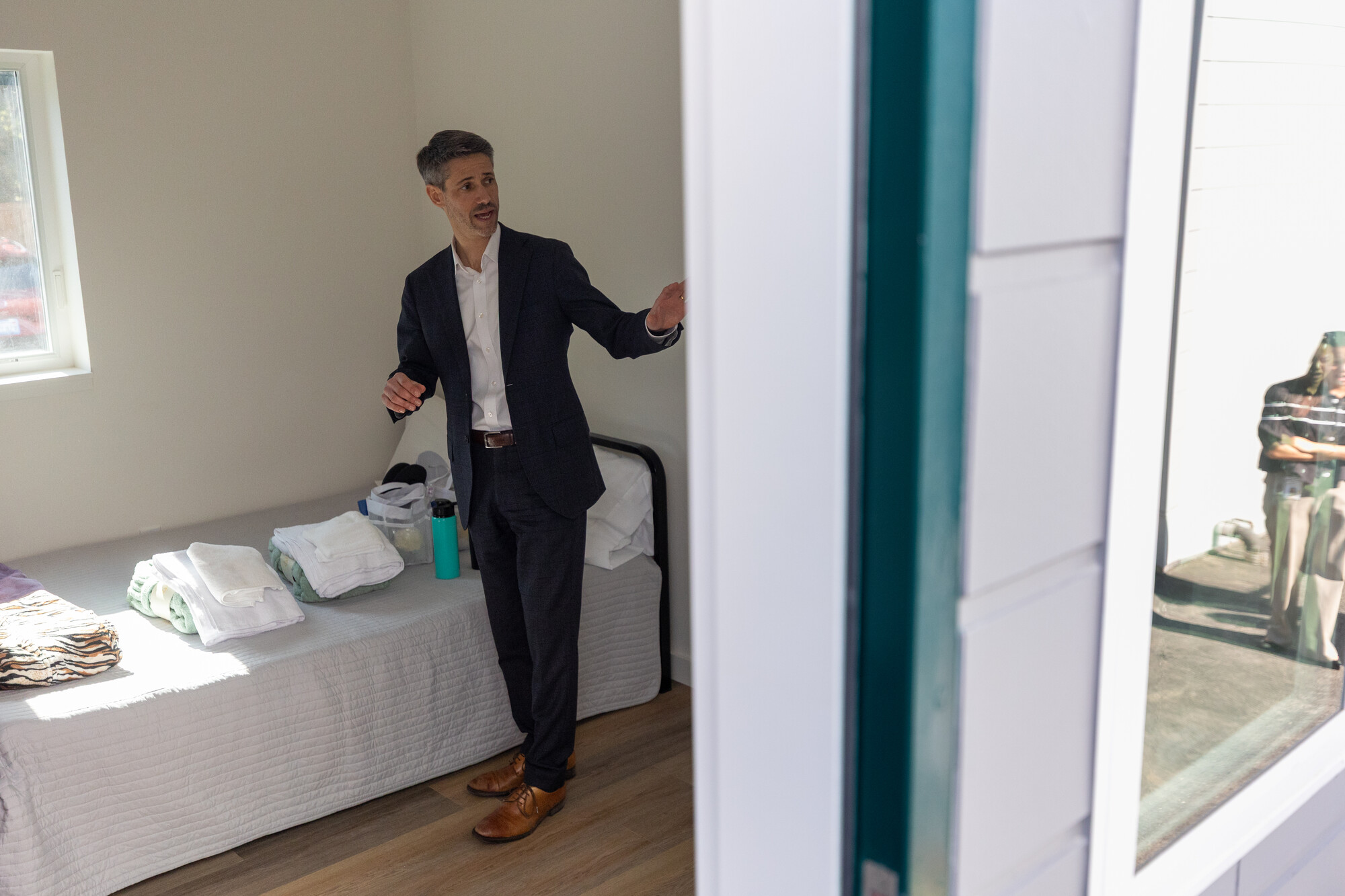
"caption": "San Jose Mayor Matt Mahan tours a completed unit at the Cerone Interim Housing Community on Feb. 5, 2026, in San Jose.",
"credit": "KQED/Gustavo Hernandez",
"altTag": null,
"description": null,
"imgSizes": {
"thumbnail": {
"file": "https://cdn.kqed.org/wp-content/uploads/sites/10/2026/02/020526SJ-Tiny-Homes_GH_009_qed-160x107.jpg",
"width": 160,
"height": 107,
"mimeType": "image/jpeg"
},
"1536x1536": {
"file": "https://cdn.kqed.org/wp-content/uploads/sites/10/2026/02/020526SJ-Tiny-Homes_GH_009_qed-1536x1024.jpg",
"width": 1536,
"height": 1024,
"mimeType": "image/jpeg"
},
"post-thumbnail": {
"file": "https://cdn.kqed.org/wp-content/uploads/sites/10/2026/02/020526SJ-Tiny-Homes_GH_009_qed-672x372.jpg",
"width": 672,
"height": 372,
"mimeType": "image/jpeg"
},
"twentyfourteen-full-width": {
"file": "https://cdn.kqed.org/wp-content/uploads/sites/10/2026/02/020526SJ-Tiny-Homes_GH_009_qed-1038x576.jpg",
"width": 1038,
"height": 576,
"mimeType": "image/jpeg"
},
"npr-cds-wide": {
"file": "https://cdn.kqed.org/wp-content/uploads/sites/10/2026/02/020526SJ-Tiny-Homes_GH_009_qed-1200x675.jpg",
"width": 1200,
"height": 675,
"mimeType": "image/jpeg"
},
"kqedFullSize": {
"file": "https://cdn.kqed.org/wp-content/uploads/sites/10/2026/02/020526SJ-Tiny-Homes_GH_009_qed.jpg",
"width": 2000,
"height": 1333
}
},
"isLoading": false,
"fetchFailed": false
},
"news_12072184": {
"type": "attachments",
"id": "news_12072184",
"meta": {
"index": "attachments_1716263798",
"site": "news",
"id": "12072184",
"found": true
},
"title": "020226SUPER BOWL HOMELESSNESS _GH_007-KQED",
"publishDate": 1770167025,
"status": "inherit",
"parent": 12096431,
"modified": 1787428558,
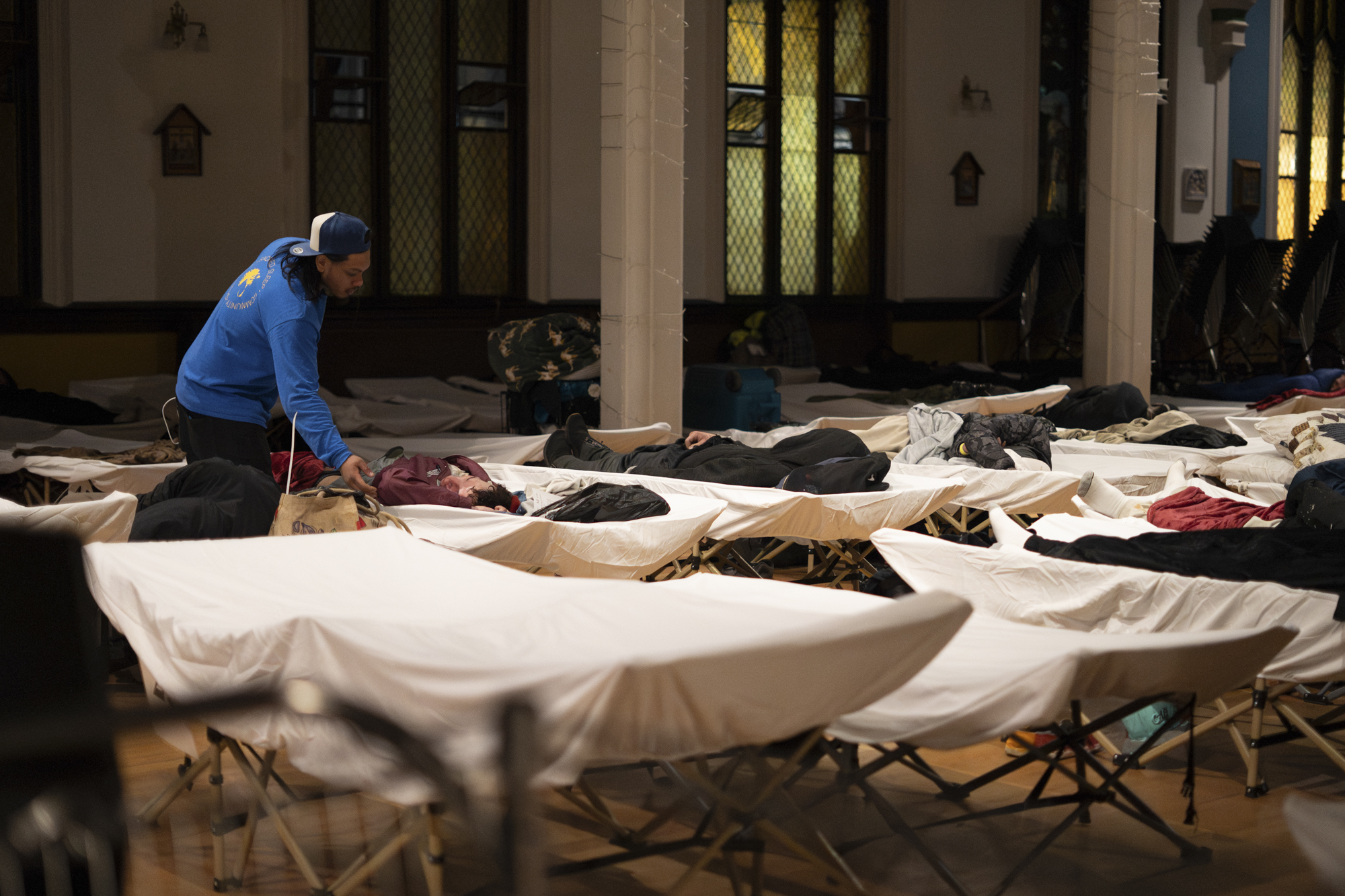
"caption": "Rows of cots fill the sanctuary at Saint John’s the Evangelist Episcopal Church as the Gubbio Project temporarily provides overnight shelter on Feb. 2, 2026, in San Francisco. The program normally offers daytime rest without barriers to entry.",
"credit": "Gustavo Hernandez/KQED",
"altTag": null,
"description": null,
"imgSizes": {
"thumbnail": {
"file": "https://cdn.kqed.org/wp-content/uploads/sites/10/2026/02/020226SUPER-BOWL-HOMELESSNESS-_GH_007-KQED-160x107.jpg",
"width": 160,
"height": 107,
"mimeType": "image/jpeg"
},
"1536x1536": {
"file": "https://cdn.kqed.org/wp-content/uploads/sites/10/2026/02/020226SUPER-BOWL-HOMELESSNESS-_GH_007-KQED-1536x1024.jpg",
"width": 1536,
"height": 1024,
"mimeType": "image/jpeg"
},
"post-thumbnail": {
"file": "https://cdn.kqed.org/wp-content/uploads/sites/10/2026/02/020226SUPER-BOWL-HOMELESSNESS-_GH_007-KQED-672x372.jpg",
"width": 672,
"height": 372,
"mimeType": "image/jpeg"
},
"twentyfourteen-full-width": {
"file": "https://cdn.kqed.org/wp-content/uploads/sites/10/2026/02/020226SUPER-BOWL-HOMELESSNESS-_GH_007-KQED-1038x576.jpg",
"width": 1038,
"height": 576,
"mimeType": "image/jpeg"
},
"npr-cds-wide": {
"file": "https://cdn.kqed.org/wp-content/uploads/sites/10/2026/02/020226SUPER-BOWL-HOMELESSNESS-_GH_007-KQED-1200x675.jpg",
"width": 1200,
"height": 675,
"mimeType": "image/jpeg"
},
"kqedFullSize": {
"file": "https://cdn.kqed.org/wp-content/uploads/sites/10/2026/02/020226SUPER-BOWL-HOMELESSNESS-_GH_007-KQED.jpg",
"width": 2000,
"height": 1333
}
},
"isLoading": false,
"fetchFailed": false
},
"news_12070942": {
"type": "attachments",
"id": "news_12070942",
"meta": {
"index": "attachments_1716263798",
"site": "news",
"id": "12070942",
"found": true
},
"title": "GettyImages-2172084857-KQED",
"publishDate": 1769201605,
"status": "inherit",
"parent": 12070918,
"modified": 1769204710,
"caption": "Defensive lineman Kevin Johnson #94 of the Philadelphia Eagles looks on from the sideline during a game against the Washington Redskins at Veterans Stadium on Oct. 8, 1995, in Philadelphia, Pennsylvania. Johnson would go on to play for the Raiders in Oakland. ",
"credit": "George Gojkovich/Getty Images",
"altTag": null,
"description": null,
"imgSizes": {
"thumbnail": {
"file": "https://cdn.kqed.org/wp-content/uploads/sites/10/2026/01/GettyImages-2172084857-KQED-160x107.jpg",
"width": 160,
"height": 107,
"mimeType": "image/jpeg"
},
"1536x1536": {
"file": "https://cdn.kqed.org/wp-content/uploads/sites/10/2026/01/GettyImages-2172084857-KQED-1536x1025.jpg",
"width": 1536,
"height": 1025,
"mimeType": "image/jpeg"
},
"post-thumbnail": {
"file": "https://cdn.kqed.org/wp-content/uploads/sites/10/2026/01/GettyImages-2172084857-KQED-672x372.jpg",
"width": 672,
"height": 372,
"mimeType": "image/jpeg"
},
"twentyfourteen-full-width": {
"file": "https://cdn.kqed.org/wp-content/uploads/sites/10/2026/01/GettyImages-2172084857-KQED-1038x576.jpg",
"width": 1038,
"height": 576,
"mimeType": "image/jpeg"
},
"npr-cds-wide": {
"file": "https://cdn.kqed.org/wp-content/uploads/sites/10/2026/01/GettyImages-2172084857-KQED-1200x675.jpg",
"width": 1200,
"height": 675,
"mimeType": "image/jpeg"
},
"kqedFullSize": {
"file": "https://cdn.kqed.org/wp-content/uploads/sites/10/2026/01/GettyImages-2172084857-KQED.jpg",
"width": 2000,
"height": 1334
}
},
"isLoading": false,
"fetchFailed": false
},
"news_12067030": {
"type": "attachments",
"id": "news_12067030",
"meta": {
"index": "attachments_1716263798",
"site": "news",
"id": "12067030",
"found": true
},
"title": "20251211_YOUTHHOMELESSNESS_DECEMBER_GH-5-KQED",
"publishDate": 1765585032,
"status": "inherit",
"parent": 0,
"modified": 1765585088,
"caption": "Lavain Henderson, a youth mentor with Youth United for Community Action (YUCA), sits outside the organization’s office in East Palo Alto on Dec. 11, 2025. Henderson, who previously experienced homelessness, works with young people as YUCA faces uncertainty tied to federal cuts to permanent supportive housing funding.",
"credit": "Gustavo Hernandez/KQED",
"altTag": null,
"description": null,
"imgSizes": {
"thumbnail": {
"file": "https://cdn.kqed.org/wp-content/uploads/sites/10/2025/12/20251211_YOUTHHOMELESSNESS_DECEMBER_GH-5-KQED-160x107.jpg",
"width": 160,
"height": 107,
"mimeType": "image/jpeg"
},
"1536x1536": {
"file": "https://cdn.kqed.org/wp-content/uploads/sites/10/2025/12/20251211_YOUTHHOMELESSNESS_DECEMBER_GH-5-KQED-1536x1024.jpg",
"width": 1536,
"height": 1024,
"mimeType": "image/jpeg"
},
"post-thumbnail": {
"file": "https://cdn.kqed.org/wp-content/uploads/sites/10/2025/12/20251211_YOUTHHOMELESSNESS_DECEMBER_GH-5-KQED-672x372.jpg",
"width": 672,
"height": 372,
"mimeType": "image/jpeg"
},
"twentyfourteen-full-width": {
"file": "https://cdn.kqed.org/wp-content/uploads/sites/10/2025/12/20251211_YOUTHHOMELESSNESS_DECEMBER_GH-5-KQED-1038x576.jpg",
"width": 1038,
"height": 576,
"mimeType": "image/jpeg"
},
"npr-cds-wide": {
"file": "https://cdn.kqed.org/wp-content/uploads/sites/10/2025/12/20251211_YOUTHHOMELESSNESS_DECEMBER_GH-5-KQED-1200x675.jpg",
"width": 1200,
"height": 675,
"mimeType": "image/jpeg"
},
"kqedFullSize": {
"file": "https://cdn.kqed.org/wp-content/uploads/sites/10/2025/12/20251211_YOUTHHOMELESSNESS_DECEMBER_GH-5-KQED.jpg",
"width": 2000,
"height": 1333
}
},
"isLoading": false,
"fetchFailed": false
},
"news_12067390": {
"type": "attachments",
"id": "news_12067390",
"meta": {
"index": "attachments_1716263798",
"site": "news",
"id": "12067390",
"found": true
},
"title": "Migrants At The US-Mexico Border As Crossings Increase",
"publishDate": 1765898422,
"status": "inherit",
"parent": 12067389,
"modified": 1765898473,
"caption": "SAN DIEGO, CA - NOVEMBER 28: Asylum seekers wrapped in blankets are seen at a makeshift camp after crossing the nearby border with Mexico near the Jacumba Hot Springs on November 28, 2023 in San Diego, California. ",
"credit": "Photo by Qian Weizhong/VCG via Getty Images",
"altTag": null,
"description": null,
"imgSizes": {
"medium": {
"file": "https://cdn.kqed.org/wp-content/uploads/sites/10/2025/12/GettyImages-1824008464-2000x1333.jpg",
"width": 2000,
"height": 1333,
"mimeType": "image/jpeg"
},
"large": {
"file": "https://cdn.kqed.org/wp-content/uploads/sites/10/2025/12/GettyImages-1824008464-2000x1333.jpg",
"width": 2000,
"height": 1333,
"mimeType": "image/jpeg"
},
"thumbnail": {
"file": "https://cdn.kqed.org/wp-content/uploads/sites/10/2025/12/GettyImages-1824008464-160x107.jpg",
"width": 160,
"height": 107,
"mimeType": "image/jpeg"
},
"1536x1536": {
"file": "https://cdn.kqed.org/wp-content/uploads/sites/10/2025/12/GettyImages-1824008464-1536x1024.jpg",
"width": 1536,
"height": 1024,
"mimeType": "image/jpeg"
},
"2048x2048": {
"file": "https://cdn.kqed.org/wp-content/uploads/sites/10/2025/12/GettyImages-1824008464-2048x1365.jpg",
"width": 2048,
"height": 1365,
"mimeType": "image/jpeg"
},
"post-thumbnail": {
"file": "https://cdn.kqed.org/wp-content/uploads/sites/10/2025/12/GettyImages-1824008464-672x372.jpg",
"width": 672,
"height": 372,
"mimeType": "image/jpeg"
},
"twentyfourteen-full-width": {
"file": "https://cdn.kqed.org/wp-content/uploads/sites/10/2025/12/GettyImages-1824008464-1038x576.jpg",
"width": 1038,
"height": 576,
"mimeType": "image/jpeg"
},
"full-width": {
"file": "https://cdn.kqed.org/wp-content/uploads/sites/10/2025/12/GettyImages-1824008464-2000x1333.jpg",
"width": 2000,
"height": 1333,
"mimeType": "image/jpeg"
},
"npr-cds-wide": {
"file": "https://cdn.kqed.org/wp-content/uploads/sites/10/2025/12/GettyImages-1824008464-1200x675.jpg",
"width": 1200,
"height": 675,
"mimeType": "image/jpeg"
},
"kqedFullSize": {
"file": "https://cdn.kqed.org/wp-content/uploads/sites/10/2025/12/GettyImages-1824008464-scaled.jpg",
"width": 2560,
"height": 1707
}
},
"isLoading": false,
"fetchFailed": false
},
"news_12066835": {
"type": "attachments",
"id": "news_12066835",
"meta": {
"index": "attachments_1716263798",
"site": "news",
"id": "12066835",
"found": true
},
"title": "251211-PEOPLES PARK RENDERINGS-01-KQED",
"publishDate": 1765491591,
"status": "inherit",
"parent": 0,
"modified": 1765495122,
"caption": "These renderings show initial concepts for a permanent supportive housing project will include at least 100 units for people exiting homelessness and low-income residents and will include onsite services, including case management. The developer, Satellite Affordable Housing Associates, will finalize the design in the coming months.",
"credit": "LMS Architects/Hood Design Studio",
"altTag": null,
"description": null,
"imgSizes": {
"thumbnail": {
"file": "https://cdn.kqed.org/wp-content/uploads/sites/10/2025/12/251211-PEOPLES-PARK-RENDERINGS-01-KQED-160x100.jpg",
"width": 160,
"height": 100,
"mimeType": "image/jpeg"
},
"1536x1536": {
"file": "https://cdn.kqed.org/wp-content/uploads/sites/10/2025/12/251211-PEOPLES-PARK-RENDERINGS-01-KQED-1536x960.jpg",
"width": 1536,
"height": 960,
"mimeType": "image/jpeg"
},
"post-thumbnail": {
"file": "https://cdn.kqed.org/wp-content/uploads/sites/10/2025/12/251211-PEOPLES-PARK-RENDERINGS-01-KQED-672x372.jpg",
"width": 672,
"height": 372,
"mimeType": "image/jpeg"
},
"twentyfourteen-full-width": {
"file": "https://cdn.kqed.org/wp-content/uploads/sites/10/2025/12/251211-PEOPLES-PARK-RENDERINGS-01-KQED-1038x576.jpg",
"width": 1038,
"height": 576,
"mimeType": "image/jpeg"
},
"npr-cds-wide": {
"file": "https://cdn.kqed.org/wp-content/uploads/sites/10/2025/12/251211-PEOPLES-PARK-RENDERINGS-01-KQED-1200x675.jpg",
"width": 1200,
"height": 675,
"mimeType": "image/jpeg"
},
"kqedFullSize": {
"file": "https://cdn.kqed.org/wp-content/uploads/sites/10/2025/12/251211-PEOPLES-PARK-RENDERINGS-01-KQED.jpg",
"width": 2000,
"height": 1250
}
},
"isLoading": false,
"fetchFailed": false
},
"news_12053763": {
"type": "attachments",
"id": "news_12053763",
"meta": {
"index": "attachments_1716263798",
"site": "news",
"id": "12053763",
"found": true
},
"title": "250820-HOUSINGFIRST_02179_TV-KQED",
"publishDate": 1756230694,
"status": "inherit",
"parent": 12054270,
"modified": 1756928252,
"caption": "The Laguna Commons supportive housing stands on 41152 Fremont Blvd., in Fremont, on Aug. 20, 2025. ",
"credit": "Tâm Vũ/KQED",
"altTag": null,
"description": null,
"imgSizes": {
"thumbnail": {
"file": "https://cdn.kqed.org/wp-content/uploads/sites/10/2025/08/250820-HOUSINGFIRST_02179_TV-KQED-160x107.jpg",
"width": 160,
"height": 107,
"mimeType": "image/jpeg"
},
"1536x1536": {
"file": "https://cdn.kqed.org/wp-content/uploads/sites/10/2025/08/250820-HOUSINGFIRST_02179_TV-KQED-1536x1024.jpg",
"width": 1536,
"height": 1024,
"mimeType": "image/jpeg"
},
"post-thumbnail": {
"file": "https://cdn.kqed.org/wp-content/uploads/sites/10/2025/08/250820-HOUSINGFIRST_02179_TV-KQED-672x372.jpg",
"width": 672,
"height": 372,
"mimeType": "image/jpeg"
},
"twentyfourteen-full-width": {
"file": "https://cdn.kqed.org/wp-content/uploads/sites/10/2025/08/250820-HOUSINGFIRST_02179_TV-KQED-1038x576.jpg",
"width": 1038,
"height": 576,
"mimeType": "image/jpeg"
},
"kqedFullSize": {
"file": "https://cdn.kqed.org/wp-content/uploads/sites/10/2025/08/250820-HOUSINGFIRST_02179_TV-KQED.jpg",
"width": 2000,
"height": 1333
}
},
"isLoading": false,
"fetchFailed": false
},
"news_12065387": {
"type": "attachments",
"id": "news_12065387",
"meta": {
"index": "attachments_1716263798",
"site": "news",
"id": "12065387",
"found": true
},
"title": "251124-SJHUDCUTS-JG-05-KQED",
"publishDate": 1764111364,
"status": "inherit",
"parent": 0,
"modified": 1764111398,
"caption": "Kaytana Alvarido, center, with her son Lucius and her husband Alberto Barragan, speaks during a press conference in San José about changes to a federal housing program’s funding by the Trump administration on Nov. 24, 2025, shortly before moving into a new, affordable apartment complex.",
"credit": "Joseph Geha/KQED",
"altTag": null,
"description": null,
"imgSizes": {
"thumbnail": {
"file": "https://cdn.kqed.org/wp-content/uploads/sites/10/2025/11/251124-SJHUDCUTS-JG-05-KQED-160x107.jpg",
"width": 160,
"height": 107,
"mimeType": "image/jpeg"
},
"1536x1536": {
"file": "https://cdn.kqed.org/wp-content/uploads/sites/10/2025/11/251124-SJHUDCUTS-JG-05-KQED-1536x1024.jpg",
"width": 1536,
"height": 1024,
"mimeType": "image/jpeg"
},
"post-thumbnail": {
"file": "https://cdn.kqed.org/wp-content/uploads/sites/10/2025/11/251124-SJHUDCUTS-JG-05-KQED-672x372.jpg",
"width": 672,
"height": 372,
"mimeType": "image/jpeg"
},
"twentyfourteen-full-width": {
"file": "https://cdn.kqed.org/wp-content/uploads/sites/10/2025/11/251124-SJHUDCUTS-JG-05-KQED-1038x576.jpg",
"width": 1038,
"height": 576,
"mimeType": "image/jpeg"
},
"npr-cds-wide": {
"file": "https://cdn.kqed.org/wp-content/uploads/sites/10/2025/11/251124-SJHUDCUTS-JG-05-KQED-1200x675.jpg",
"width": 1200,
"height": 675,
"mimeType": "image/jpeg"
},
"kqedFullSize": {
"file": "https://cdn.kqed.org/wp-content/uploads/sites/10/2025/11/251124-SJHUDCUTS-JG-05-KQED.jpg",
"width": 2000,
"height": 1333
}
},
"isLoading": false,
"fetchFailed": false
},
"news_12058500": {
"type": "attachments",
"id": "news_12058500",
"meta": {
"index": "attachments_1716263798",
"site": "news",
"id": "12058500",
"found": true
},
"title": "251001_BAYAREASHELTER_-17-KQED",
"publishDate": 1759447814,
"status": "inherit",
"parent": 0,
"modified": 1759447933,
"caption": "Sarah Spillane, a resident of the DignityMoves tiny home cabins, outside the entrance in SoMa in San Francisco on Oct. 1, 2025.",
"credit": "Gustavo Hernandez/KQED",
"altTag": null,
"description": null,
"imgSizes": {
"thumbnail": {
"file": "https://cdn.kqed.org/wp-content/uploads/sites/10/2025/10/251001_BAYAREASHELTER_-17-KQED-160x107.jpg",
"width": 160,
"height": 107,
"mimeType": "image/jpeg"
},
"1536x1536": {
"file": "https://cdn.kqed.org/wp-content/uploads/sites/10/2025/10/251001_BAYAREASHELTER_-17-KQED-1536x1024.jpg",
"width": 1536,
"height": 1024,
"mimeType": "image/jpeg"
},
"post-thumbnail": {
"file": "https://cdn.kqed.org/wp-content/uploads/sites/10/2025/10/251001_BAYAREASHELTER_-17-KQED-672x372.jpg",
"width": 672,
"height": 372,
"mimeType": "image/jpeg"
},
"twentyfourteen-full-width": {
"file": "https://cdn.kqed.org/wp-content/uploads/sites/10/2025/10/251001_BAYAREASHELTER_-17-KQED-1038x576.jpg",
"width": 1038,
"height": 576,
"mimeType": "image/jpeg"
},
"kqedFullSize": {
"file": "https://cdn.kqed.org/wp-content/uploads/sites/10/2025/10/251001_BAYAREASHELTER_-17-KQED.jpg",
"width": 2000,
"height": 1333
}
},
"isLoading": false,
"fetchFailed": false
},
"news_12062249": {
"type": "attachments",
"id": "news_12062249",
"meta": {
"index": "attachments_1716263798",
"site": "news",
"id": "12062249",
"found": true
},
"title": "RV1",
"publishDate": 1761844485,
"status": "inherit",
"parent": 12062202,
"modified": 1761844565,
"caption": "A collage that show the entrances of RVs that have begun to appear more and more on the street near Lake Merced in San Francisco, California, on April 9, 2025. After a uniquely working immigrant RV community was displaced in the nearby street of Winston, some families opted for Lake Merced or the Bayview.",
"credit": "Pablo Unzueta for El Tecolote/CatchLight Local",
"altTag": null,
"description": null,
"imgSizes": {
"thumbnail": {
"file": "https://cdn.kqed.org/wp-content/uploads/sites/10/2025/10/RV1-160x207.jpg",
"width": 160,
"height": 207,
"mimeType": "image/jpeg"
},
"1536x1536": {
"file": "https://cdn.kqed.org/wp-content/uploads/sites/10/2025/10/RV1-1187x1536.jpg",
"width": 1187,
"height": 1536,
"mimeType": "image/jpeg"
},
"2048x2048": {
"file": "https://cdn.kqed.org/wp-content/uploads/sites/10/2025/10/RV1-1583x2048.jpg",
"width": 1583,
"height": 2048,
"mimeType": "image/jpeg"
},
"post-thumbnail": {
"file": "https://cdn.kqed.org/wp-content/uploads/sites/10/2025/10/RV1-672x372.jpg",
"width": 672,
"height": 372,
"mimeType": "image/jpeg"
},
"twentyfourteen-full-width": {
"file": "https://cdn.kqed.org/wp-content/uploads/sites/10/2025/10/RV1-1038x576.jpg",
"width": 1038,
"height": 576,
"mimeType": "image/jpeg"
},
"npr-cds-wide": {
"file": "https://cdn.kqed.org/wp-content/uploads/sites/10/2025/10/RV1-1600x900.jpg",
"width": 1600,
"height": 900,
"mimeType": "image/jpeg"
},
"kqedFullSize": {
"file": "https://cdn.kqed.org/wp-content/uploads/sites/10/2025/10/RV1-scaled.jpg",
"width": 1978,
"height": 2560
}
},
"isLoading": false,
"fetchFailed": false
},
"news_12044676": {
"type": "attachments",
"id": "news_12044676",
"meta": {
"index": "attachments_1716263798",
"site": "news",
"id": "12044676",
"found": true
},
"title": "20250616_UNHOUSEDCREEKRESTORATION_GC-37-KQED",
"publishDate": 1750184018,
"status": "inherit",
"parent": 12058952,
"modified": 1760397367,
"caption": "Eric Adams, a participant of the Pinole Creek Unhoused Stewards Pilot Program, listens during a classroom session outside of Pinole Library in Pinole on June 16, 2025.",
"credit": "Gina Castro/KQED",
"altTag": null,
"description": null,
"imgSizes": {
"thumbnail": {
"file": "https://cdn.kqed.org/wp-content/uploads/sites/10/2025/06/20250616_UNHOUSEDCREEKRESTORATION_GC-37-KQED-160x107.jpg",
"width": 160,
"height": 107,
"mimeType": "image/jpeg"
},
"1536x1536": {
"file": "https://cdn.kqed.org/wp-content/uploads/sites/10/2025/06/20250616_UNHOUSEDCREEKRESTORATION_GC-37-KQED-1536x1024.jpg",
"width": 1536,
"height": 1024,
"mimeType": "image/jpeg"
},
"post-thumbnail": {
"file": "https://cdn.kqed.org/wp-content/uploads/sites/10/2025/06/20250616_UNHOUSEDCREEKRESTORATION_GC-37-KQED-672x372.jpg",
"width": 672,
"height": 372,
"mimeType": "image/jpeg"
},
"twentyfourteen-full-width": {
"file": "https://cdn.kqed.org/wp-content/uploads/sites/10/2025/06/20250616_UNHOUSEDCREEKRESTORATION_GC-37-KQED-1038x576.jpg",
"width": 1038,
"height": 576,
"mimeType": "image/jpeg"
},
"kqedFullSize": {
"file": "https://cdn.kqed.org/wp-content/uploads/sites/10/2025/06/20250616_UNHOUSEDCREEKRESTORATION_GC-37-KQED.jpg",
"width": 2000,
"height": 1333
}
},
"isLoading": false,
"fetchFailed": false
},
"news_11927447": {
"type": "attachments",
"id": "news_11927447",
"meta": {
"index": "attachments_1716263798",
"site": "news",
"id": "11927447",
"found": true
},
"parent": 11927434,
"imgSizes": {
"twentyfourteen-full-width": {
"file": "https://ww2.kqed.org/app/uploads/sites/10/2022/10/RS50006_047_SanFrancisco_JuneteenthKickoffRally_06172021-qut-1038x576.jpg",
"width": 1038,
"mimeType": "image/jpeg",
"height": 576
},
"thumbnail": {
"file": "https://ww2.kqed.org/app/uploads/sites/10/2022/10/RS50006_047_SanFrancisco_JuneteenthKickoffRally_06172021-qut-160x107.jpg",
"width": 160,
"mimeType": "image/jpeg",
"height": 107
},
"post-thumbnail": {
"file": "https://ww2.kqed.org/app/uploads/sites/10/2022/10/RS50006_047_SanFrancisco_JuneteenthKickoffRally_06172021-qut-672x372.jpg",
"width": 672,
"mimeType": "image/jpeg",
"height": 372
},
"kqedFullSize": {
"file": "https://ww2.kqed.org/app/uploads/sites/10/2022/10/RS50006_047_SanFrancisco_JuneteenthKickoffRally_06172021-qut.jpg",
"width": 1920,
"height": 1278
},
"large": {
"file": "https://ww2.kqed.org/app/uploads/sites/10/2022/10/RS50006_047_SanFrancisco_JuneteenthKickoffRally_06172021-qut-1020x679.jpg",
"width": 1020,
"mimeType": "image/jpeg",
"height": 679
},
"1536x1536": {
"file": "https://ww2.kqed.org/app/uploads/sites/10/2022/10/RS50006_047_SanFrancisco_JuneteenthKickoffRally_06172021-qut-1536x1022.jpg",
"width": 1536,
"mimeType": "image/jpeg",
"height": 1022
},
"medium": {
"file": "https://ww2.kqed.org/app/uploads/sites/10/2022/10/RS50006_047_SanFrancisco_JuneteenthKickoffRally_06172021-qut-800x533.jpg",
"width": 800,
"mimeType": "image/jpeg",
"height": 533
}
},
"publishDate": 1664654554,
"modified": 1664654887,
"caption": "San Francisco Board of Supervisors President Shamann Walton and his fellow supervisors are challenging Mayor Breed and the Navy over Bayview-Hunters Point.",
"description": "SF Board of Supervisors President Shamann Walton",
"title": "RS50006_047_SanFrancisco_JuneteenthKickoffRally_06172021-qut",
"credit": "Beth LaBerge/KQED",
"status": "inherit",
"altTag": "A man in a suit with a blue tie speaks at a rally in front of a microphone.",
"isLoading": false,
"fetchFailed": false
}
},
"audioPlayerReducer": {
"postId": "stream_live",
"isPaused": true,
"isPlaying": false,
"pfsActive": false,
"pledgeModalIsOpen": true,
"playerDrawerIsOpen": false,
"liveAudioPlayStartedAt": 0,
"liveAudioPlayContext": ""
},
"authorsReducer": {
"byline_news_12062202": {
"type": "authors",
"id": "byline_news_12062202",
"meta": {
"override": true
},
"slug": "byline_news_12062202",
"name": "Mariana Duran, Pablo Unzueta, Yesica Prado, El Tecolote",
"isLoading": false
},
"gmarzorati": {
"type": "authors",
"id": "227",
"meta": {
"index": "authors_1716337520",
"id": "227",
"found": true
},
"name": "Guy Marzorati",
"firstName": "Guy",
"lastName": "Marzorati",
"slug": "gmarzorati",
"email": "gmarzorati@KQED.org",
"display_author_email": true,
"staff_mastheads": [
"news"
],
"title": "Correspondent",
"bio": "Guy Marzorati is a correspondent on KQED's California Politics and Government Desk, based in San Jose. A graduate of Santa Clara University, Guy joined KQED in 2013. He reports on state and local politics and produces KQED's digital voter guide.",
"avatar": "https://secure.gravatar.com/avatar/771cddf45ce3a8ed533d82dcc214e9ef925d76d2af5794a33da1ce439eb54a32?s=600&d=blank&r=g",
"twitter": "guymarzorati",
"bluesky": null,
"facebook": null,
"instagram": null,
"linkedin": null,
"sites": [
{
"site": "",
"roles": [
"editor"
]
},
{
"site": "news",
"roles": [
"editor"
]
},
{
"site": "science",
"roles": [
"editor"
]
},
{
"site": "forum",
"roles": [
"editor"
]
},
{
"site": "elections",
"roles": [
"editor"
]
},
{
"site": "liveblog",
"roles": [
"editor"
]
}
],
"headData": {
"title": "Guy Marzorati | KQED",
"description": "Correspondent",
"ogImgSrc": "https://secure.gravatar.com/avatar/771cddf45ce3a8ed533d82dcc214e9ef925d76d2af5794a33da1ce439eb54a32?s=600&d=blank&r=g",
"twImgSrc": "https://secure.gravatar.com/avatar/771cddf45ce3a8ed533d82dcc214e9ef925d76d2af5794a33da1ce439eb54a32?s=600&d=blank&r=g"
},
"isLoading": false,
"link": "/author/gmarzorati"
},
"scottshafer": {
"type": "authors",
"id": "255",
"meta": {
"index": "authors_1716337520",
"id": "255",
"found": true
},
"name": "Scott Shafer",
"firstName": "Scott",
"lastName": "Shafer",
"slug": "scottshafer",
"email": "sshafer@kqed.org",
"display_author_email": false,
"staff_mastheads": [
"news"
],
"title": "KQED Contributor",
"bio": "Scott Shafer is the senior politics correspondent with the KQED Politics and Government desk. He is co-host of \u003cem>Political Breakdown\u003c/em>, the award-winning radio show and podcast with a personal take on the world of politics. Scott came to KQED in 1998 to host the statewide \u003cem>California Report\u003c/em>. Prior to that he had extended stints in politics and government. He uses that inside experience at KQED in his, reporting, hosting and analysis for the politics desk. Scott recently completed a 5-part podcast titled \u003cem>The Speaker\u003c/em>, examining Rep. Nancy Pelosi's life and legacy. Previously he collaborated on \u003cem>Political Breakdown\u003c/em> and on \u003cem>The Political Mind of Jerry Brown\u003c/em>, an eight-part series about the life and extraordinary political career of the former governor. For fun, he plays water polo and swims with the San Francisco Tsunami.",
"avatar": "https://secure.gravatar.com/avatar/a269f2db8e99b39bacd3dfb517e1aea56c8d9706cde1d375abfd9fba57eede2c?s=600&d=blank&r=g",
"twitter": "scottshafer",
"bluesky": null,
"facebook": null,
"instagram": null,
"linkedin": null,
"sites": [
{
"site": "news",
"roles": [
"editor"
]
},
{
"site": "stateofhealth",
"roles": [
"author"
]
},
{
"site": "science",
"roles": [
"author"
]
},
{
"site": "forum",
"roles": [
"subscriber"
]
},
{
"site": "liveblog",
"roles": [
"author"
]
}
],
"headData": {
"title": "Scott Shafer | KQED",
"description": "KQED Contributor",
"ogImgSrc": "https://secure.gravatar.com/avatar/a269f2db8e99b39bacd3dfb517e1aea56c8d9706cde1d375abfd9fba57eede2c?s=600&d=blank&r=g",
"twImgSrc": "https://secure.gravatar.com/avatar/a269f2db8e99b39bacd3dfb517e1aea56c8d9706cde1d375abfd9fba57eede2c?s=600&d=blank&r=g"
},
"isLoading": false,
"link": "/author/scottshafer"
},
"ecruzguevarra": {
"type": "authors",
"id": "8654",
"meta": {
"index": "authors_1716337520",
"id": "8654",
"found": true
},
"name": "Ericka Cruz Guevarra",
"firstName": "Ericka",
"lastName": "Cruz Guevarra",
"slug": "ecruzguevarra",
"email": "ecruzguevarra@kqed.org",
"display_author_email": true,
"staff_mastheads": [
"news"
],
"title": "Producer, The Bay Podcast",
"bio": "Ericka Cruz Guevarra is host of \u003ca href=\"https://www.kqed.org/podcasts/thebay\">\u003cem>The Bay\u003c/em>\u003c/a> podcast at KQED. Before host, she was the show’s producer. Her work in that capacity includes a three-part reported series on policing in Vallejo, which won a 2020 excellence in journalism award from the Society of Professional Journalists. Ericka has worked as a breaking news reporter at Oregon Public Broadcasting, helped produce the Code Switch podcast, and was KQED’s inaugural Raul Ramirez Diversity Fund intern. She’s also an alumna of NPR’s Next Generation Radio program. Send her an email if you have strong feelings about whether Fairfield and Suisun City are the Bay. Ericka is represented by SAG-AFTRA.",
"avatar": "https://secure.gravatar.com/avatar/accefc1de4bafc7e234b69bcb9b6f6536c130fd84709bc3069ef11a78787e1bb?s=600&d=blank&r=g",
"twitter": "NotoriousECG",
"bluesky": null,
"facebook": null,
"instagram": null,
"linkedin": null,
"sites": [
{
"site": "arts",
"roles": [
"subscriber"
]
},
{
"site": "news",
"roles": [
"editor",
"manage_categories"
]
},
{
"site": "futureofyou",
"roles": [
"subscriber"
]
},
{
"site": "stateofhealth",
"roles": [
"subscriber"
]
},
{
"site": "science",
"roles": [
"editor"
]
},
{
"site": "forum",
"roles": [
"subscriber"
]
}
],
"headData": {
"title": "Ericka Cruz Guevarra | KQED",
"description": "Producer, The Bay Podcast",
"ogImgSrc": "https://secure.gravatar.com/avatar/accefc1de4bafc7e234b69bcb9b6f6536c130fd84709bc3069ef11a78787e1bb?s=600&d=blank&r=g",
"twImgSrc": "https://secure.gravatar.com/avatar/accefc1de4bafc7e234b69bcb9b6f6536c130fd84709bc3069ef11a78787e1bb?s=600&d=blank&r=g"
},
"isLoading": false,
"link": "/author/ecruzguevarra"
},
"vrancano": {
"type": "authors",
"id": "11276",
"meta": {
"index": "authors_1716337520",
"id": "11276",
"found": true
},
"name": "Vanessa Rancaño",
"firstName": "Vanessa",
"lastName": "Rancaño",
"slug": "vrancano",
"email": "vrancano@kqed.org",
"display_author_email": false,
"staff_mastheads": [
"news"
],
"title": "Reporter",
"bio": "Vanessa Rancaño is a features reporter for KQED. She’s also covered homelessness and education for the station and reported from the Central Valley. Her work has aired across public radio, from flagship national news shows to longform narrative podcasts. Before taking up a mic, she worked as a freelance print journalist. She’s been recognized with a number of national and regional awards. Vanessa grew up in California's Central Valley. She's a former NPR Kroc Fellow, and a graduate of the UC Berkeley Graduate School of Journalism.",
"avatar": "https://secure.gravatar.com/avatar/b3a383dfb0e7ee1c17568f2cf067904ab654d6e3de9743fc661f3c788ade1bed?s=600&d=blank&r=g",
"twitter": "vanessarancano",
"bluesky": null,
"facebook": null,
"instagram": null,
"linkedin": null,
"sites": [
{
"site": "arts",
"roles": [
"editor"
]
},
{
"site": "news",
"roles": [
"editor"
]
},
{
"site": "liveblog",
"roles": [
"contributor"
]
}
],
"headData": {
"title": "Vanessa Rancaño | KQED",
"description": "Reporter",
"ogImgSrc": "https://secure.gravatar.com/avatar/b3a383dfb0e7ee1c17568f2cf067904ab654d6e3de9743fc661f3c788ade1bed?s=600&d=blank&r=g",
"twImgSrc": "https://secure.gravatar.com/avatar/b3a383dfb0e7ee1c17568f2cf067904ab654d6e3de9743fc661f3c788ade1bed?s=600&d=blank&r=g"
},
"isLoading": false,
"link": "/author/vrancano"
},
"amontecillo": {
"type": "authors",
"id": "11649",
"meta": {
"index": "authors_1716337520",
"id": "11649",
"found": true
},
"name": "Alan Montecillo",
"firstName": "Alan",
"lastName": "Montecillo",
"slug": "amontecillo",
"email": "amontecillo@kqed.org",
"display_author_email": false,
"staff_mastheads": [
"news"
],
"title": "KQED Contributor",
"bio": "Alan Montecillo is the senior editor of \u003cem>\u003ca href=\"http://kqed.org/thebay\">The Bay\u003c/a>, \u003c/em> KQED's local news podcast. Before moving to the Bay Area, he worked as a senior talk show producer for WILL in Champaign-Urbana, Illinois and at Oregon Public Broadcasting in Portland, Oregon. He has won journalism awards from the Society of Professional Journalists Northern California, the Public Media Journalists Association, The Signal Awards, and has also received a regional Edward R. Murrow award. Alan is a Filipino American from Hong Kong and a graduate of Reed College.",
"avatar": "https://secure.gravatar.com/avatar/268f53a2066899ea9efdd8a5900218b17c822d9862cbc9326cccec53ef41d349?s=600&d=blank&r=g",
"twitter": "alanmontecillo",
"bluesky": null,
"facebook": null,
"instagram": null,
"linkedin": null,
"sites": [
{
"site": "",
"roles": [
"editor"
]
},
{
"site": "news",
"roles": [
"editor",
"manage_categories"
]
}
],
"headData": {
"title": "Alan Montecillo | KQED",
"description": "KQED Contributor",
"ogImgSrc": "https://secure.gravatar.com/avatar/268f53a2066899ea9efdd8a5900218b17c822d9862cbc9326cccec53ef41d349?s=600&d=blank&r=g",
"twImgSrc": "https://secure.gravatar.com/avatar/268f53a2066899ea9efdd8a5900218b17c822d9862cbc9326cccec53ef41d349?s=600&d=blank&r=g"
},
"isLoading": false,
"link": "/author/amontecillo"
},
"ebaldassari": {
"type": "authors",
"id": "11652",
"meta": {
"index": "authors_1716337520",
"id": "11652",
"found": true
},
"name": "Erin Baldassari",
"firstName": "Erin",
"lastName": "Baldassari",
"slug": "ebaldassari",
"email": "ebaldassari@KQED.org",
"display_author_email": true,
"staff_mastheads": [
"news"
],
"title": "Senior Editor",
"bio": "Erin Baldassari oversees the housing and early childhood education and care desks, as well as several of the station’s enterprise and accountability reporters. She joined KQED in 2020 to cover housing and co-host its housing podcast, \u003cem>SOLD OUT: Rethinking Housing in America\u003c/em>. Prior to that, she worked as a print journalist for roughly a decade, most recently at the \u003cem>Mercury News\u003c/em> and \u003cem>East Bay Times\u003c/em>, where she served on its 2017 Pulitzer Prize-winning team for coverage of the Ghost Ship Fire in Oakland. A Tufts University alumna, Erin grew up in the foothills of the Sierra Nevada mountains and in Sonoma County.",
"avatar": "https://secure.gravatar.com/avatar/5e95cad64a8ca08288082212e199d2b0cbeb4fd8e8ef5339395f361032bbe005?s=600&d=blank&r=g",
"twitter": null,
"bluesky": null,
"facebook": null,
"instagram": null,
"linkedin": null,
"sites": [
{
"site": "news",
"roles": [
"edit_others_posts",
"editor"
]
},
{
"site": "science",
"roles": [
"editor"
]
},
{
"site": "liveblog",
"roles": [
"editor"
]
}
],
"headData": {
"title": "Erin Baldassari | KQED",
"description": "Senior Editor",
"ogImgSrc": "https://secure.gravatar.com/avatar/5e95cad64a8ca08288082212e199d2b0cbeb4fd8e8ef5339395f361032bbe005?s=600&d=blank&r=g",
"twImgSrc": "https://secure.gravatar.com/avatar/5e95cad64a8ca08288082212e199d2b0cbeb4fd8e8ef5339395f361032bbe005?s=600&d=blank&r=g"
},
"isLoading": false,
"link": "/author/ebaldassari"
},
"abandlamudi": {
"type": "authors",
"id": "11672",
"meta": {
"index": "authors_1716337520",
"id": "11672",
"found": true
},
"name": "Adhiti Bandlamudi",
"firstName": "Adhiti",
"lastName": "Bandlamudi",
"slug": "abandlamudi",
"email": "abandlamudi@kqed.org",
"display_author_email": false,
"staff_mastheads": [
"news"
],
"title": "KQED Housing Reporter",
"bio": "Adhiti Bandlamudi reports for KQED's Housing desk. She focuses on how housing gets built across the Bay Area. Before joining KQED in 2020, she reported for WUNC in Durham, North Carolina, WABE in Atlanta, Georgia and Capital Public Radio in Sacramento. In 2017, she was awarded a Kroc Fellowship at NPR where she reported on everything from sprinkles to the Golden State Killer's arrest. When she's not reporting, she's baking new recipes in her kitchen or watching movies with friends and family. She's originally from Georgia and has strong opinions about Great British Bake Off.",
"avatar": "https://secure.gravatar.com/avatar/868129c8b257bb99a3500e2c86a65400?s=600&d=mm&r=g",
"twitter": "oddity_adhiti",
"facebook": null,
"instagram": null,
"linkedin": null,
"sites": [
{
"site": "arts",
"roles": [
"author"
]
},
{
"site": "news",
"roles": [
"editor"
]
},
{
"site": "liveblog",
"roles": [
"author"
]
}
],
"headData": {
"title": "Adhiti Bandlamudi | KQED",
"description": "KQED Housing Reporter",
"ogImgSrc": "https://secure.gravatar.com/avatar/868129c8b257bb99a3500e2c86a65400?s=600&d=mm&r=g",
"twImgSrc": "https://secure.gravatar.com/avatar/868129c8b257bb99a3500e2c86a65400?s=600&d=mm&r=g"
},
"isLoading": false,
"link": "/author/abandlamudi"
},
"kmizuguchi": {
"type": "authors",
"id": "11739",
"meta": {
"index": "authors_1716337520",
"id": "11739",
"found": true
},
"name": "Keith Mizuguchi",
"firstName": "Keith",
"lastName": "Mizuguchi",
"slug": "kmizuguchi",
"email": "kmizuguchi@kqed.org",
"display_author_email": false,
"staff_mastheads": [],
"title": "KQED Contributor",
"bio": null,
"avatar": "https://secure.gravatar.com/avatar/64d8a7de0723d4099b9fe4e915136103febcc20809abce228ee4415bcb237023?s=600&d=blank&r=g",
"twitter": null,
"bluesky": null,
"facebook": null,
"instagram": null,
"linkedin": null,
"sites": [
{
"site": "news",
"roles": [
"editor"
]
},
{
"site": "science",
"roles": [
"editor"
]
}
],
"headData": {
"title": "Keith Mizuguchi | KQED",
"description": "KQED Contributor",
"ogImgSrc": "https://secure.gravatar.com/avatar/64d8a7de0723d4099b9fe4e915136103febcc20809abce228ee4415bcb237023?s=600&d=blank&r=g",
"twImgSrc": "https://secure.gravatar.com/avatar/64d8a7de0723d4099b9fe4e915136103febcc20809abce228ee4415bcb237023?s=600&d=blank&r=g"
},
"isLoading": false,
"link": "/author/kmizuguchi"
},
"jessicakariisa": {
"type": "authors",
"id": "11831",
"meta": {
"index": "authors_1716337520",
"id": "11831",
"found": true
},
"name": "Jessica Kariisa",
"firstName": "Jessica",
"lastName": "Kariisa",
"slug": "jessicakariisa",
"email": "jkariisa@kqed.org",
"display_author_email": false,
"staff_mastheads": [],
"title": "Producer, The Bay",
"bio": "Jessica Kariisa is the producer of The Bay. She first joined KQED as an intern for The California Report Magazine, after which she became an on-call producer. She reported a Bay Curious episode on the use of rap lyrics in criminal trials which won a Society of Professional Journalists award in 2023 for Excellence in Features Journalism and the 2023 Signal Award for Best Conversation Starter. She’s worked on podcasts for Snap Judgment and American Public Media. Before embarking on her audio career, she was a music journalist.\r\n\r\nJessica Kariisa is represented by SAG-AFTRA.",
"avatar": "https://secure.gravatar.com/avatar/522e97b28ac0b3d411621c0fde8f3419c7b71ea2c5c262c57c4bb600963f328c?s=600&d=blank&r=g",
"twitter": null,
"bluesky": null,
"facebook": null,
"instagram": null,
"linkedin": null,
"sites": [
{
"site": "arts",
"roles": [
"author"
]
},
{
"site": "news",
"roles": [
"editor",
"manage_categories"
]
}
],
"headData": {
"title": "Jessica Kariisa | KQED",
"description": "Producer, The Bay",
"ogImgSrc": "https://secure.gravatar.com/avatar/522e97b28ac0b3d411621c0fde8f3419c7b71ea2c5c262c57c4bb600963f328c?s=600&d=blank&r=g",
"twImgSrc": "https://secure.gravatar.com/avatar/522e97b28ac0b3d411621c0fde8f3419c7b71ea2c5c262c57c4bb600963f328c?s=600&d=blank&r=g"
},
"isLoading": false,
"link": "/author/jessicakariisa"
},
"sjohnson": {
"type": "authors",
"id": "11840",
"meta": {
"index": "authors_1716337520",
"id": "11840",
"found": true
},
"name": "Sydney Johnson",
"firstName": "Sydney",
"lastName": "Johnson",
"slug": "sjohnson",
"email": "sjohnson@kqed.org",
"display_author_email": false,
"staff_mastheads": [
"news"
],
"title": "KQED Reporter",
"bio": "Sydney Johnson is a general assignment reporter at KQED. She previously reported on public health and city government at the San Francisco Examiner, and before that, she covered statewide education policy for EdSource. Her reporting has won multiple local, state and national awards. Sydney is a graduate of the University of California, Berkeley and lives in San Francisco.",
"avatar": "https://secure.gravatar.com/avatar/97855f2719b72ad6190b7c535fe642c8?s=600&d=blank&r=g",
"twitter": "sydneyfjohnson",
"facebook": null,
"instagram": null,
"linkedin": null,
"sites": [
{
"site": "news",
"roles": [
"editor"
]
}
],
"headData": {
"title": "Sydney Johnson | KQED",
"description": "KQED Reporter",
"ogImgSrc": "https://secure.gravatar.com/avatar/97855f2719b72ad6190b7c535fe642c8?s=600&d=blank&r=g",
"twImgSrc": "https://secure.gravatar.com/avatar/97855f2719b72ad6190b7c535fe642c8?s=600&d=blank&r=g"
},
"isLoading": false,
"link": "/author/sjohnson"
},
"jgeha": {
"type": "authors",
"id": "11906",
"meta": {
"index": "authors_1716337520",
"id": "11906",
"found": true
},
"name": "Joseph Geha",
"firstName": "Joseph",
"lastName": "Geha",
"slug": "jgeha",
"email": "jgeha@kqed.org",
"display_author_email": false,
"staff_mastheads": [
"news",
"science"
],
"title": "KQED Contributor",
"bio": null,
"avatar": "https://secure.gravatar.com/avatar/ea84d2b6dd93d6369d453edf19dd583f117cd1759d2d9c9c92f9de77017354fe?s=600&d=blank&r=g",
"twitter": null,
"bluesky": null,
"facebook": null,
"instagram": null,
"linkedin": null,
"sites": [
{
"site": "news",
"roles": [
"editor"
]
},
{
"site": "liveblog",
"roles": [
"author"
]
}
],
"headData": {
"title": "Joseph Geha | KQED",
"description": "KQED Contributor",
"ogImgSrc": "https://secure.gravatar.com/avatar/ea84d2b6dd93d6369d453edf19dd583f117cd1759d2d9c9c92f9de77017354fe?s=600&d=blank&r=g",
"twImgSrc": "https://secure.gravatar.com/avatar/ea84d2b6dd93d6369d453edf19dd583f117cd1759d2d9c9c92f9de77017354fe?s=600&d=blank&r=g"
},
"isLoading": false,
"link": "/author/jgeha"
},
"kdebenedetti": {
"type": "authors",
"id": "11913",
"meta": {
"index": "authors_1716337520",
"id": "11913",
"found": true
},
"name": "Katie DeBenedetti",
"firstName": "Katie",
"lastName": "DeBenedetti",
"slug": "kdebenedetti",
"email": "kdebenedetti@kqed.org",
"display_author_email": false,
"staff_mastheads": [
"news",
"science"
],
"title": "KQED Contributor",
"bio": "Katie DeBenedetti is a digital reporter covering daily news for the Express Desk. Prior to joining KQED as a culture reporting intern in January 2024, she covered education and city government for the Napa Valley Register.",
"avatar": "https://secure.gravatar.com/avatar/6e31073cb8f7e4214ab03f42771d0f45?s=600&d=blank&r=g",
"twitter": null,
"facebook": null,
"instagram": null,
"linkedin": null,
"sites": [
{
"site": "news",
"roles": [
"author"
]
},
{
"site": "science",
"roles": [
"author"
]
},
{
"site": "liveblog",
"roles": [
"author"
]
}
],
"headData": {
"title": "Katie DeBenedetti | KQED",
"description": "KQED Contributor",
"ogImgSrc": "https://secure.gravatar.com/avatar/6e31073cb8f7e4214ab03f42771d0f45?s=600&d=blank&r=g",
"twImgSrc": "https://secure.gravatar.com/avatar/6e31073cb8f7e4214ab03f42771d0f45?s=600&d=blank&r=g"
},
"isLoading": false,
"link": "/author/kdebenedetti"
},
"nsuliman": {
"type": "authors",
"id": "11985",
"meta": {
"index": "authors_1716337520",
"id": "11985",
"found": true
},
"name": "Nibras Suliman",
"firstName": "Nibras",
"lastName": "Suliman",
"slug": "nsuliman",
"email": "nsuliman@kqed.org",
"display_author_email": false,
"staff_mastheads": [],
"title": "KQED Contributor",
"bio": null,
"avatar": "https://secure.gravatar.com/avatar/581946774e0249b1fcdfb01d4f143d12?s=600&d=blank&r=g",
"twitter": null,
"facebook": null,
"instagram": null,
"linkedin": null,
"sites": [
{
"site": "news",
"roles": []
}
],
"headData": {
"title": "Nibras Suliman | KQED",
"description": "KQED Contributor",
"ogImgSrc": "https://secure.gravatar.com/avatar/581946774e0249b1fcdfb01d4f143d12?s=600&d=blank&r=g",
"twImgSrc": "https://secure.gravatar.com/avatar/581946774e0249b1fcdfb01d4f143d12?s=600&d=blank&r=g"
},
"isLoading": false,
"link": "/author/nsuliman"
}
},
"pagesReducer": {
"news_tag_homelessness": {
"type": "terms",
"id": "news_4020",
"meta": {
"index": "terms_1716263798",
"site": "news",
"id": "4020",
"score": 8.561366
},
"name": "Homelessness",
"slug": "homelessness",
"taxonomy": "tag",
"description": null,
"featImg": null,
"headData": {
"title": "Homelessness | KQED News",
"description": null,
"ogTitle": null,
"ogDescription": null,
"ogImgId": null,
"twTitle": null,
"twDescription": null,
"twImgId": null,
"metaRobotsNoIndex": "index"
},
"ttid": 4039,
"isLoading": false,
"title": "Homelessness",
"pageMeta": {
"site": "news",
"WpPageTemplate": "page-topic-editorial",
"currentPage": 3
},
"blocks": [
{
"blockName": "kqed/post-list",
"attrs": {
"layout": "cardArticle2",
"query": "posts/news?tag=homelessness",
"seeMore": false,
"paginated": true,
"page": 3
}
},
{
"blockName": "kqed/ad"
}
]
}
},
"pfsSessionReducer": {},
"postsReducer": {
"stream_live": {
"type": "live",
"id": "stream_live",
"audioUrl": "https://hls.kqed.org/hls/kqed_app/playlist.m3u8",
"title": "Live Stream",
"excerpt": "Live Stream information currently unavailable.",
"link": "/radio",
"featImg": "",
"label": {
"name": "KQED Live",
"link": "/"
}
},
"stream_kqedNewscast": {
"type": "posts",
"id": "stream_kqedNewscast",
"audioUrl": "https://www.kqed.org/.stream/anon/radio/RDnews/newscast.mp3?_=1",
"title": "KQED Newscast",
"featImg": "",
"label": {
"name": "88.5 FM",
"link": "/"
}
},
"news_12072666": {
"type": "posts",
"id": "news_12072666",
"meta": {
"index": "posts_1716263798",
"site": "news",
"id": "12072666",
"score": null,
"sort": [
1770634802000
]
},
"guestAuthors": [],
"slug": "san-jose-mayor-matt-mahan-wants-to-be-governor-heres-a-look-into-his-signature-homelessness-program",
"title": "San José Mayor Matt Mahan Wants to Be Governor. Here’s a Look Into His Signature Homelessness Program",
"publishDate": 1770634802,
"format": "audio",
"headTitle": "San José Mayor Matt Mahan Wants to Be Governor. Here’s a Look Into His Signature Homelessness Program | KQED",
"labelTerm": {},
"content": "\u003cp>Since San José Mayor Matt Mahan took office in 2023, the city has dramatically shifted the city’s approach to homelessness from building permanent affordable housing to building more temporary shelters, with the goal of getting people off the street faster.\u003c/p>\n\u003cp>Now, \u003ca href=\"https://www.kqed.org/news/12071306/san-jose-mayor-matt-mahan-announces-run-for-california-governor\">as he eyes the governor’s office\u003c/a>, we look into how his signature homelessness program is going.\u003c/p>\n\u003cp>\u003c!-- iframe plugin v.4.3 wordpress.org/plugins/iframe/ -->\u003cbr>\n\u003ciframe loading=\"lazy\" frameborder=\"0\" height=\"200\" scrolling=\"no\" src=\"https://playlist.megaphone.fm?e=KQINC1899974463&light=true\" width=\"100%\" class=\"iframe-class\">\u003c/iframe>\u003c/p>\n\u003cp>\u003ci>Some members of the KQED podcast team are represented by The Screen Actors Guild, American Federation of Television and Radio Artists, San Francisco-Northern California Local.\u003c/i>\u003c/p>\n\u003cp>\u003cstrong>Ericka Cruz Guevarra \u003c/strong>[00:00:00] I’m Ericka Cruz Guevara and welcome to The Bay, local news to keep you rooted.\u003c/p>\n\u003cp>[ad fullwidth]\u003c/p>\n\u003cp>\u003cstrong>Matt Mahan \u003c/strong>[00:00:05] Thank you all for being here today in North San Jose. San Jose’s District 4…\u003c/p>\n\u003cp>\u003cstrong>Ericka Cruz Guevarra \u003c/strong>[00:00:11] Last week, San Jose Mayor Matt Mahan appeared at a ribbon-cutting ceremony for a 200-bed, tiny home community for the city’s unhoused residents. It’s going to be the city 23rd temporary housing site, way up from the seven that were there when Mahan first took office.\u003c/p>\n\u003cp>\u003cstrong>Matt Mahan \u003c/strong>[00:00:33] When I ran, I promised that we would change our approach to homelessness, that we would get more people indoors faster, that we would stop letting the perfect be the enemy of the good because it was costing us lives, threatening the livelihoods of our small business owners, and worsening quality of life for all of us.\u003c/p>\n\u003cp>\u003cstrong>Ericka Cruz Guevarra \u003c/strong>[00:00:55] Mahan turned San Jose’s approach to homelessness upside down when he shifted the city’s focus on building permanent affordable housing to quick interim shelter instead. Now, Mahan wants to be California’s governor and he’s pointing to his track record on homelessness as a success.\u003c/p>\n\u003cp>\u003cstrong>Guy Marzorati \u003c/strong>[00:01:20] I do think if you’re looking at him as a politician based on his time in San Jose, this tiny home program really is a good place to look because this has been really his signature initiative during his time at office.\u003c/p>\n\u003cp>\u003cstrong>Ericka Cruz Guevarra \u003c/strong>[00:01:33] Today, I sit down with KQED politics and government correspondent Guy Marzorati to unpack Mayor Matt Mahan’s signature homelessness program.\u003c/p>\n\u003cp>\u003cstrong>Ericka Cruz Guevarra \u003c/strong>[00:01:50] All right, Guy. So I understand you went to a ribbon cutting ceremony for a tiny home in San Jose yesterday. Can you tell me a little bit about this ceremony you went to?\u003c/p>\n\u003cp>\u003cstrong>Guy Marzorati \u003c/strong>[00:02:01] Yeah, so this was the ribbon cutting for a tiny home community that opened in North San Jose at the Cerone VTA Yard. This is a dirt parcel that’s owned by the Valley Transportation Authority that they’re leasing to San Jose to build a 200-bed tiny home community.\u003c/p>\n\u003cp>\u003cstrong>Matt Mahan \u003c/strong>[00:02:23] Even though we’ve all been together at grand openings like this many times before, this site is very special. It’s also the first site I fought hard for after becoming mayor.\u003c/p>\n\u003cp>\u003cstrong>Guy Marzorati \u003c/strong>[00:02:37] This was a notable ribbon cutting because it marked the last tiny home project in the city’s pipeline. This has been a huge initiative under the current mayor, Matt Mahan and the city council, and the opening of this tiny home community at the Cerone VTA yard was a milestone in that effort.\u003c/p>\n\u003cp>\u003cstrong>Matt Mahan \u003c/strong>[00:02:59] This phase of shelter expansion may be over for now, but our fight to end unsheltered homelessness continues.\u003c/p>\n\u003cp>\u003cstrong>Guy Marzorati \u003c/strong>[00:03:09] The city has basically reached the end of the line as far as the new tiny homes and shelters that they can fund. Mahan has said they just don’t have enough money to continue building this system out. And he’s described it now as a time to optimize these beds that they do have in order to meet the need.\u003c/p>\n\u003cp>\u003cstrong>Ericka Cruz Guevarra \u003c/strong>[00:03:27] I’m curious what these tiny homes actually looked like. Can you describe them for me?\u003c/p>\n\u003cp>\u003cstrong>Guy Marzorati \u003c/strong>[00:03:32] Yeah, so in the case of this new facility in North San Jose, they’re basically just single rooms with a door that locks on top of what looked like large metal risers. So you can almost think of like really large shipping containers on top of these metal riser with individual rooms and then on site different facilities for laundry, communal kitchen, places for staff to work for supportive services to either connect them with medical services they might need. To try to find them housing placements in the future. There’s often also county health workers that will come visit on site as well. Sometimes they’ll also have help with any like pet needs because people are allowed to bring their pets as well, it’s a lot of those kind of like supportive services that are available on site.\u003c/p>\n\u003cp>\u003cstrong>Ericka Cruz Guevarra \u003c/strong>[00:04:18] What is it actually like for folks living in one of these interim housing sites?\u003c/p>\n\u003cp>\u003cstrong>Guy Marzorati \u003c/strong>[00:04:26] You know, I think for the folks that I’ve talked to that are staying in the interim housing communities, I think it’s two things. On one hand, many of the people I talked to and including this man named Miguel Torres who lives at the Rue Ferrari interim housing complex, it’s a lot better than what they had thought of traditionally as shelter.\u003c/p>\n\u003cp>\u003cstrong>Miguel Torres \u003c/strong>[00:04:47] Here it’s like peaceful, you get your own room. You know, for me, because I get like a little anxiety, it’s perfect for me.\u003c/p>\n\u003cp>\u003cstrong>Guy Marzorati \u003c/strong>[00:04:54] These you know images of congregate shelter where people in large facilities and bunk beds and there’s no privacy and there are often cases of abuse or crime. This is something very different. This offers a level of privacy and as Miguel described it just like a way to kind of breathe.\u003c/p>\n\u003cp>\u003cstrong>Miguel Torres \u003c/strong>[00:05:14] I don’t have to worry about being in the street or anything. So I’m focusing on a career, on a job, trying to just move forward, you know, be independent and get my own spot.\u003c/p>\n\u003cp>\u003cstrong>Guy Marzorati \u003c/strong>[00:05:21] He’d only moved in a little while ago, but he already had it decked out with, you know, 49er blankets everywhere and he had his speaker system set up. He was able to make the place his own. At the same time, he said, like, this is not my ultimate dream for myself.\u003c/p>\n\u003cp>\u003cstrong>Guy Marzorati \u003c/strong>[00:05:39] What’s your dream for your own, like, spot?\u003c/p>\n\u003cp>\u003cstrong>Miguel Torres \u003c/strong>[00:05:42] Oh man, if I told you…a big house, cars, boat, motorcycle, you don’t know. No – just a regular little house, you know, I got kids so hopefully I can bring them in with me too. That’s pretty much my goal, just to get a stable job, you know, affordable housing and my kids with me.\u003c/p>\n\u003cp>\u003cstrong>Ericka Cruz Guevarra \u003c/strong>[00:06:04] What is supposed to happen to folks who stay in these tiny homes? Like how long are they supposed to be living in these?\u003c/p>\n\u003cp>\u003cstrong>Guy Marzorati \u003c/strong>[00:06:13] I think initially when this plan was envisioned in San Jose, it would be that maybe a six-month stay or thereabouts before people could move on to permanent housing, whether that’s moving into a supportive housing project, getting a rental voucher, and going and finding their own apartment, whatever the case may be, that in practice has not turned out to be a strict rule, and in many cases people do stay at these interim housing facilities for more than six months. But the goal of the program overall is to get people off of the streets so they’re not sleeping in tents or along river beds and move them towards a more permanent form of housing.\u003c/p>\n\u003cp>\u003cstrong>Ericka Cruz Guevarra \u003c/strong>[00:06:57] And you mentioned, Guy, that this project was sort of the last phase of this sort of broader effort by Mayor Matt Mahan to address homelessness by really focusing on interim housing. Can you remind us a little bit how different that focus on interim housing is from San approaches to homelessness in the past.\u003c/p>\n\u003cp>\u003cstrong>Guy Marzorati \u003c/strong>[00:07:23] Yeah, that’s a great question, because when Mahan took office at the beginning of 2023, San Jose, Santa Clara, the South Bay, writ large, public officials were really focused on ending homelessness largely through spending money to build permanent affordable housing. Every year Mahan has been mayor, he’s put forward these plans where he wants to spend more and more of dedicated city homelessness dollars towards shelter. First time he proposed it was the first year he was mayor, it got rejected. He came back the next year, got more money towards shelter, and then it got to a point where last year, where the city council voted to basically spend all of this dedicated homeless money, 90% of it, towards interim housing and shelter. So. It’s gone from when he took office, 90% of this money was on affordable housing, now 90% on shelter. This is now a really robust system of more than 2,100 beds across the city. It’s been a complete turnaround in the way in which local government, and specifically in San Jose, has tried to reduce homelessness, and it has not been without controversy because we’ve seen, again and again, funding fights over whether to use city dollars towards shelter. Or whether to use it towards more permanent affordable housing.\u003c/p>\n\u003cp>\u003cstrong>Ericka Cruz Guevarra \u003c/strong>[00:08:41] And obviously, the goal for someone like Mahan is to very quickly get people off of streets to sort of end that visible form of homelessness. So Guy, it’s been three years since Mahan took office. I mean, how’s it going?\u003c/p>\n\u003cp>\u003cstrong>Guy Marzorati \u003c/strong>[00:08:59] Yeah, I mean, I think when you look at the tiny home program mayhem would point to unsheltered homelessness being down 10% in San Jose since he took office and that being the North Star of success for why the shelter build out is working. That being said, it is still early and I think there are some open questions about this initiative going forward.\u003c/p>\n\u003cp>\u003cstrong>Ericka Cruz Guevarra \u003c/strong>[00:09:26] While visible forms of homelessness have gone down during Mahan’s time as mayor, experts have argued you can’t solve homelessness for good without permanent, affordable housing. It remains to be seen how many people living in these temporary shelters actually move into something more permanent. And that could all depend on whether the city can even continue paying to keep these tiny homes open.\u003c/p>\n\u003cp>\u003cstrong>Guy Marzorati \u003c/strong>[00:10:04] This interim housing system is still not completely funded in the years to come, the operating costs. There was a budget report that came out from the city last week that found this system is about $17 million short in the coming budget year. It’s gonna need $30 million. The following year, it’s gonna need $58 million by 2029. Now, Mahan argues the city can get the cost down at these sites, they can optimize services. Or money will come from the state government or from the county government but if it doesn’t that money to keep these tiny homes operating will come from the city general fund and that’s what pays for all the rest of the basic services of the city like police, like fire.\u003c/p>\n\u003cp>\u003cstrong>Ericka Cruz Guevarra \u003c/strong>[00:10:48] Yeah, that is so interesting. And I wonder what the conversations within local government have been around this. That is such a shift in the region’s approach to homelessness.\u003c/p>\n\u003cp>\u003cstrong>Guy Marzorati \u003c/strong>[00:11:01] Yeah, it’s certainly not been without controversy. I think at the city level, Mahan and the city council got to a point where they had committed themselves to building out this system. Once that became the case, they were stuck looking for, okay, we need to find a way to pay for it. And this Measure E money, this money that’s raised every year through attacks on real estate transactions, that became pot they were looking for to build out this shelter system. There have been a lot of criticism of that.\u003c/p>\n\u003cp>\u003cstrong>Sylvia Arenas \u003c/strong>[00:11:28] I think to build tiny homes and then you forget, oh, we needed to also put in some money to operate is not respecting the taxpayers and also not being true to what you’re actually providing.\u003c/p>\n\u003cp>\u003cstrong>Guy Marzorati \u003c/strong>[00:11:42] And I talked to supervisor Sylvia Arenas who said she honestly felt like it was a mistake or perhaps irresponsible to build out a system without a clear way of paying for it in the years to come.\u003c/p>\n\u003cp>\u003cstrong>Sylvia Arenas \u003c/strong>[00:11:55] Are operating costs of interim housing, like those costs were going to outrun the revenue that we were receiving. So how on earth were we going to continue to provide the service?\u003c/p>\n\u003cp>\u003cstrong>Guy Marzorati \u003c/strong>[00:12:09] What Mahan has said is, well, I need to see other parts of government come in and help support these costs. I need the state to help me. I need a county government to come and help me, and county leaders have said, well wait a second, we never agreed with building out this system in the first place. I will say that there has been more collaboration between Santa Clara County and San Jose in recent months on providing services to people living in temporary housing. But there’s still no guarantee that the county is going to help pick up the tab, pick up the operating costs for these tiny homes.\u003c/p>\n\u003cp>\u003cstrong>Sylvia Arenas \u003c/strong>[00:12:42] It is not meant for a permanent place for folks to live. And so unless we are going to feed the pipeline and the pipeline at the end of this is more affordable housing, we’re just creating more places for people to live, not interim, but for a longer period of time. So the question is, is this really interim or is this more permanent housing for folks who are unhoused?\u003c/p>\n\u003cp>\u003cstrong>Ericka Cruz Guevarra \u003c/strong>[00:13:12] Yeah, it sounds like Matt Mahan is sort of celebrating the media and stuff, but it does sound like there might be some sort of long-term impacts that we have yet to see in San Jose.\u003c/p>\n\u003cp>\u003cstrong>Guy Marzorati \u003c/strong>[00:13:27] Yeah, and I think this is, you know, experts that I’ve talked about with this, about building out shelter systems. And I heard this from Benjamin Henwood, who leads the Homelessness Policy Research Institute at USC, is that these shelter systems, once they’re built, can really be costly.\u003c/p>\n\u003cp>\u003cstrong>Benjamin Henwood \u003c/strong>[00:13:47] I think the question becomes, are we designing a shelter system to sort of permanently manage a homelessness problem?\u003c/p>\n\u003cp>\u003cstrong>Guy Marzorati \u003c/strong>[00:13:55] If you think about an affordable housing project, the people who are living there are contributing some portion of the rent, or maybe if they’re unable to, they’re having a federal voucher that’s gonna pay for some portion the rent. So the operators of those apartments are getting some kind of revenue. When you look at a shelter or a tiny home, no one is paying anything who’s staying there. So there’s really no revenue that’s coming in to support this, yet the city has committed itself. To pay these operating costs year after year after year. And so Henwood said, yeah, look, this is one of the risks of building out a shelter system like this is that you end up with these kind of ongoing escalating costs for years to come.\u003c/p>\n\u003cp>\u003cstrong>Benjamin Henwood \u003c/strong>[00:14:36] The issue is that we just don’t have enough housing, and so I think people have struggled with how best to address that, because I think that people want something done in the short term, but those short term solutions are not going to lead to kind of a long-term resolution of the problem. So it’s an important dilemma when you have limited resources on how you’re going use them.\u003c/p>\n\u003cp>\u003cstrong>Ericka Cruz Guevarra \u003c/strong>[00:14:58] Well, that’s really interesting, Guy, because now you have Matt Mahan running for governor of the state of California. I mean, how does that change the way that you are looking at this program, really his signature program on homelessness in San Jose?\u003c/p>\n\u003cp>\u003cstrong>Guy Marzorati \u003c/strong>[00:15:18] Yeah, no, that’s exactly it. Like this is his signature program as mayor. Some mayors have bridges, tunnels, others have downtown arenas. Matt Mahan has tiny homes. This is going to be fascinating to watch in the context of the governor’s race, because I do think Mahan will frame much of his campaign as a story of San Jose.\u003c/p>\n\u003cp>\u003cstrong>Matt Mahan \u003c/strong>[00:15:36] I want to lead the state in a way that is less focused on partisanship and more focused on results.\u003c/p>\n\u003cp>[ad floatright]\u003c/p>\n\u003cp>\u003cstrong>Guy Marzorati \u003c/strong>[00:15:44] Look to San Jose for a place that actually has achieved results on something that we set out to achieve. Voters, elected mayhem, unsheltered homelessness was probably the biggest issue in the campaign. He vowed to reduce it. It’s coming down. But I do think if you’re looking at him as a politician based on his time in San Jose, this tiny home program really is a good place to look because this has been really his signature initiative during his time office. The question now is, how much more progress can be made? Because as I said, this was kind of the end of the line for building out the shelter system, yet roughly 4,000 people are still sleeping on the streets in San Jose every night. So if this is the finish line, what other steps are gonna be taken to reach that goal of actually ending unsheltered homelessness?\u003c/p>\n\n",
"blocks": [],
"excerpt": "Since taking office in 2023, Mahan has dramatically shifted the city’s approach to homelessness from building permanent affordable housing to building temporary shelters.",
"status": "publish",
"parent": 0,
"modified": 1770671436,
"stats": {
"hasAudio": true,
"hasVideo": false,
"hasChartOrMap": false,
"iframeSrcs": [],
"hasGoogleForm": false,
"hasGallery": false,
"hasHearkenModule": false,
"hasPolis": false,
"paragraphCount": 53,
"wordCount": 3135
},
"headData": {
"title": "San José Mayor Matt Mahan Wants to Be Governor. Here’s a Look Into His Signature Homelessness Program | KQED",
"description": "Since taking office in 2023, Mahan has dramatically shifted the city’s approach to homelessness from building permanent affordable housing to building temporary shelters.",
"ogTitle": "",
"ogDescription": "",
"ogImgId": "",
"twTitle": "",
"twDescription": "",
"twImgId": "",
"schema": {
"@context": "https://schema.org",
"@type": "NewsArticle",
"headline": "San José Mayor Matt Mahan Wants to Be Governor. Here’s a Look Into His Signature Homelessness Program",
"datePublished": "2026-02-09T03:00:02-08:00",
"dateModified": "2026-02-09T13:10:36-08:00",
"image": "https://cdn.kqed.org/wp-content/uploads/2020/02/KQED-OG-Image@1x.png",
"isAccessibleForFree": "True",
"publisher": {
"@type": "NewsMediaOrganization",
"@id": "https://www.kqed.org/#organization",
"name": "KQED",
"logo": "https://cdn.kqed.org/wp-content/uploads/2020/02/KQED-OG-Image@1x.png",
"url": "https://www.kqed.org",
"sameAs": [
"https://www.facebook.com/KQED",
"https://twitter.com/KQED",
"https://www.instagram.com/kqed/",
"https://www.tiktok.com/@kqedofficial",
"https://www.linkedin.com/company/kqed",
"https://www.youtube.com/channel/UCeC0IOo7i1P_61zVUWbJ4nw"
]
}
}
},
"primaryCategory": {
"termId": 13,
"slug": "politics",
"name": "Politics"
},
"source": "The Bay",
"sourceUrl": "https://www.kqed.org/podcasts/thebay",
"audioUrl": "https://www.podtrac.com/pts/redirect.mp3/traffic.megaphone.fm/KQINC1899974463.mp3",
"sticky": false,
"nprStoryId": "kqed-12072666",
"templateType": "standard",
"featuredImageType": "standard",
"excludeFromSiteSearch": "Include",
"articleAge": "0",
"path": "/news/12072666/san-jose-mayor-matt-mahan-wants-to-be-governor-heres-a-look-into-his-signature-homelessness-program",
"audioTrackLength": null,
"parsedContent": [
{
"type": "contentString",
"content": "\u003cdiv class=\"post-body\">\u003cp>\u003cp>Since San José Mayor Matt Mahan took office in 2023, the city has dramatically shifted the city’s approach to homelessness from building permanent affordable housing to building more temporary shelters, with the goal of getting people off the street faster.\u003c/p>\n\u003cp>Now, \u003ca href=\"https://www.kqed.org/news/12071306/san-jose-mayor-matt-mahan-announces-run-for-california-governor\">as he eyes the governor’s office\u003c/a>, we look into how his signature homelessness program is going.\u003c/p>\n\u003cp>\u003c!-- iframe plugin v.4.3 wordpress.org/plugins/iframe/ -->\u003cbr>\n\u003ciframe loading=\"lazy\" frameborder=\"0\" height=\"200\" scrolling=\"no\" src=\"https://playlist.megaphone.fm?e=KQINC1899974463&light=true\" width=\"100%\" class=\"iframe-class\">\u003c/iframe>\u003c/p>\n\u003cp>\u003ci>Some members of the KQED podcast team are represented by The Screen Actors Guild, American Federation of Television and Radio Artists, San Francisco-Northern California Local.\u003c/i>\u003c/p>\n\u003cp>\u003cstrong>Ericka Cruz Guevarra \u003c/strong>[00:00:00] I’m Ericka Cruz Guevara and welcome to The Bay, local news to keep you rooted.\u003c/p>\n\u003cp>\u003c/p>\u003c/div>",
"attributes": {
"named": {},
"numeric": []
}
},
{
"type": "component",
"content": "",
"name": "ad",
"attributes": {
"named": {
"label": "fullwidth"
},
"numeric": [
"fullwidth"
]
}
},
{
"type": "contentString",
"content": "\u003cdiv class=\"post-body\">\u003cp>\u003c/p>\n\u003cp>\u003cstrong>Matt Mahan \u003c/strong>[00:00:05] Thank you all for being here today in North San Jose. San Jose’s District 4…\u003c/p>\n\u003cp>\u003cstrong>Ericka Cruz Guevarra \u003c/strong>[00:00:11] Last week, San Jose Mayor Matt Mahan appeared at a ribbon-cutting ceremony for a 200-bed, tiny home community for the city’s unhoused residents. It’s going to be the city 23rd temporary housing site, way up from the seven that were there when Mahan first took office.\u003c/p>\n\u003cp>\u003cstrong>Matt Mahan \u003c/strong>[00:00:33] When I ran, I promised that we would change our approach to homelessness, that we would get more people indoors faster, that we would stop letting the perfect be the enemy of the good because it was costing us lives, threatening the livelihoods of our small business owners, and worsening quality of life for all of us.\u003c/p>\n\u003cp>\u003cstrong>Ericka Cruz Guevarra \u003c/strong>[00:00:55] Mahan turned San Jose’s approach to homelessness upside down when he shifted the city’s focus on building permanent affordable housing to quick interim shelter instead. Now, Mahan wants to be California’s governor and he’s pointing to his track record on homelessness as a success.\u003c/p>\n\u003cp>\u003cstrong>Guy Marzorati \u003c/strong>[00:01:20] I do think if you’re looking at him as a politician based on his time in San Jose, this tiny home program really is a good place to look because this has been really his signature initiative during his time at office.\u003c/p>\n\u003cp>\u003cstrong>Ericka Cruz Guevarra \u003c/strong>[00:01:33] Today, I sit down with KQED politics and government correspondent Guy Marzorati to unpack Mayor Matt Mahan’s signature homelessness program.\u003c/p>\n\u003cp>\u003cstrong>Ericka Cruz Guevarra \u003c/strong>[00:01:50] All right, Guy. So I understand you went to a ribbon cutting ceremony for a tiny home in San Jose yesterday. Can you tell me a little bit about this ceremony you went to?\u003c/p>\n\u003cp>\u003cstrong>Guy Marzorati \u003c/strong>[00:02:01] Yeah, so this was the ribbon cutting for a tiny home community that opened in North San Jose at the Cerone VTA Yard. This is a dirt parcel that’s owned by the Valley Transportation Authority that they’re leasing to San Jose to build a 200-bed tiny home community.\u003c/p>\n\u003cp>\u003cstrong>Matt Mahan \u003c/strong>[00:02:23] Even though we’ve all been together at grand openings like this many times before, this site is very special. It’s also the first site I fought hard for after becoming mayor.\u003c/p>\n\u003cp>\u003cstrong>Guy Marzorati \u003c/strong>[00:02:37] This was a notable ribbon cutting because it marked the last tiny home project in the city’s pipeline. This has been a huge initiative under the current mayor, Matt Mahan and the city council, and the opening of this tiny home community at the Cerone VTA yard was a milestone in that effort.\u003c/p>\n\u003cp>\u003cstrong>Matt Mahan \u003c/strong>[00:02:59] This phase of shelter expansion may be over for now, but our fight to end unsheltered homelessness continues.\u003c/p>\n\u003cp>\u003cstrong>Guy Marzorati \u003c/strong>[00:03:09] The city has basically reached the end of the line as far as the new tiny homes and shelters that they can fund. Mahan has said they just don’t have enough money to continue building this system out. And he’s described it now as a time to optimize these beds that they do have in order to meet the need.\u003c/p>\n\u003cp>\u003cstrong>Ericka Cruz Guevarra \u003c/strong>[00:03:27] I’m curious what these tiny homes actually looked like. Can you describe them for me?\u003c/p>\n\u003cp>\u003cstrong>Guy Marzorati \u003c/strong>[00:03:32] Yeah, so in the case of this new facility in North San Jose, they’re basically just single rooms with a door that locks on top of what looked like large metal risers. So you can almost think of like really large shipping containers on top of these metal riser with individual rooms and then on site different facilities for laundry, communal kitchen, places for staff to work for supportive services to either connect them with medical services they might need. To try to find them housing placements in the future. There’s often also county health workers that will come visit on site as well. Sometimes they’ll also have help with any like pet needs because people are allowed to bring their pets as well, it’s a lot of those kind of like supportive services that are available on site.\u003c/p>\n\u003cp>\u003cstrong>Ericka Cruz Guevarra \u003c/strong>[00:04:18] What is it actually like for folks living in one of these interim housing sites?\u003c/p>\n\u003cp>\u003cstrong>Guy Marzorati \u003c/strong>[00:04:26] You know, I think for the folks that I’ve talked to that are staying in the interim housing communities, I think it’s two things. On one hand, many of the people I talked to and including this man named Miguel Torres who lives at the Rue Ferrari interim housing complex, it’s a lot better than what they had thought of traditionally as shelter.\u003c/p>\n\u003cp>\u003cstrong>Miguel Torres \u003c/strong>[00:04:47] Here it’s like peaceful, you get your own room. You know, for me, because I get like a little anxiety, it’s perfect for me.\u003c/p>\n\u003cp>\u003cstrong>Guy Marzorati \u003c/strong>[00:04:54] These you know images of congregate shelter where people in large facilities and bunk beds and there’s no privacy and there are often cases of abuse or crime. This is something very different. This offers a level of privacy and as Miguel described it just like a way to kind of breathe.\u003c/p>\n\u003cp>\u003cstrong>Miguel Torres \u003c/strong>[00:05:14] I don’t have to worry about being in the street or anything. So I’m focusing on a career, on a job, trying to just move forward, you know, be independent and get my own spot.\u003c/p>\n\u003cp>\u003cstrong>Guy Marzorati \u003c/strong>[00:05:21] He’d only moved in a little while ago, but he already had it decked out with, you know, 49er blankets everywhere and he had his speaker system set up. He was able to make the place his own. At the same time, he said, like, this is not my ultimate dream for myself.\u003c/p>\n\u003cp>\u003cstrong>Guy Marzorati \u003c/strong>[00:05:39] What’s your dream for your own, like, spot?\u003c/p>\n\u003cp>\u003cstrong>Miguel Torres \u003c/strong>[00:05:42] Oh man, if I told you…a big house, cars, boat, motorcycle, you don’t know. No – just a regular little house, you know, I got kids so hopefully I can bring them in with me too. That’s pretty much my goal, just to get a stable job, you know, affordable housing and my kids with me.\u003c/p>\n\u003cp>\u003cstrong>Ericka Cruz Guevarra \u003c/strong>[00:06:04] What is supposed to happen to folks who stay in these tiny homes? Like how long are they supposed to be living in these?\u003c/p>\n\u003cp>\u003cstrong>Guy Marzorati \u003c/strong>[00:06:13] I think initially when this plan was envisioned in San Jose, it would be that maybe a six-month stay or thereabouts before people could move on to permanent housing, whether that’s moving into a supportive housing project, getting a rental voucher, and going and finding their own apartment, whatever the case may be, that in practice has not turned out to be a strict rule, and in many cases people do stay at these interim housing facilities for more than six months. But the goal of the program overall is to get people off of the streets so they’re not sleeping in tents or along river beds and move them towards a more permanent form of housing.\u003c/p>\n\u003cp>\u003cstrong>Ericka Cruz Guevarra \u003c/strong>[00:06:57] And you mentioned, Guy, that this project was sort of the last phase of this sort of broader effort by Mayor Matt Mahan to address homelessness by really focusing on interim housing. Can you remind us a little bit how different that focus on interim housing is from San approaches to homelessness in the past.\u003c/p>\n\u003cp>\u003cstrong>Guy Marzorati \u003c/strong>[00:07:23] Yeah, that’s a great question, because when Mahan took office at the beginning of 2023, San Jose, Santa Clara, the South Bay, writ large, public officials were really focused on ending homelessness largely through spending money to build permanent affordable housing. Every year Mahan has been mayor, he’s put forward these plans where he wants to spend more and more of dedicated city homelessness dollars towards shelter. First time he proposed it was the first year he was mayor, it got rejected. He came back the next year, got more money towards shelter, and then it got to a point where last year, where the city council voted to basically spend all of this dedicated homeless money, 90% of it, towards interim housing and shelter. So. It’s gone from when he took office, 90% of this money was on affordable housing, now 90% on shelter. This is now a really robust system of more than 2,100 beds across the city. It’s been a complete turnaround in the way in which local government, and specifically in San Jose, has tried to reduce homelessness, and it has not been without controversy because we’ve seen, again and again, funding fights over whether to use city dollars towards shelter. Or whether to use it towards more permanent affordable housing.\u003c/p>\n\u003cp>\u003cstrong>Ericka Cruz Guevarra \u003c/strong>[00:08:41] And obviously, the goal for someone like Mahan is to very quickly get people off of streets to sort of end that visible form of homelessness. So Guy, it’s been three years since Mahan took office. I mean, how’s it going?\u003c/p>\n\u003cp>\u003cstrong>Guy Marzorati \u003c/strong>[00:08:59] Yeah, I mean, I think when you look at the tiny home program mayhem would point to unsheltered homelessness being down 10% in San Jose since he took office and that being the North Star of success for why the shelter build out is working. That being said, it is still early and I think there are some open questions about this initiative going forward.\u003c/p>\n\u003cp>\u003cstrong>Ericka Cruz Guevarra \u003c/strong>[00:09:26] While visible forms of homelessness have gone down during Mahan’s time as mayor, experts have argued you can’t solve homelessness for good without permanent, affordable housing. It remains to be seen how many people living in these temporary shelters actually move into something more permanent. And that could all depend on whether the city can even continue paying to keep these tiny homes open.\u003c/p>\n\u003cp>\u003cstrong>Guy Marzorati \u003c/strong>[00:10:04] This interim housing system is still not completely funded in the years to come, the operating costs. There was a budget report that came out from the city last week that found this system is about $17 million short in the coming budget year. It’s gonna need $30 million. The following year, it’s gonna need $58 million by 2029. Now, Mahan argues the city can get the cost down at these sites, they can optimize services. Or money will come from the state government or from the county government but if it doesn’t that money to keep these tiny homes operating will come from the city general fund and that’s what pays for all the rest of the basic services of the city like police, like fire.\u003c/p>\n\u003cp>\u003cstrong>Ericka Cruz Guevarra \u003c/strong>[00:10:48] Yeah, that is so interesting. And I wonder what the conversations within local government have been around this. That is such a shift in the region’s approach to homelessness.\u003c/p>\n\u003cp>\u003cstrong>Guy Marzorati \u003c/strong>[00:11:01] Yeah, it’s certainly not been without controversy. I think at the city level, Mahan and the city council got to a point where they had committed themselves to building out this system. Once that became the case, they were stuck looking for, okay, we need to find a way to pay for it. And this Measure E money, this money that’s raised every year through attacks on real estate transactions, that became pot they were looking for to build out this shelter system. There have been a lot of criticism of that.\u003c/p>\n\u003cp>\u003cstrong>Sylvia Arenas \u003c/strong>[00:11:28] I think to build tiny homes and then you forget, oh, we needed to also put in some money to operate is not respecting the taxpayers and also not being true to what you’re actually providing.\u003c/p>\n\u003cp>\u003cstrong>Guy Marzorati \u003c/strong>[00:11:42] And I talked to supervisor Sylvia Arenas who said she honestly felt like it was a mistake or perhaps irresponsible to build out a system without a clear way of paying for it in the years to come.\u003c/p>\n\u003cp>\u003cstrong>Sylvia Arenas \u003c/strong>[00:11:55] Are operating costs of interim housing, like those costs were going to outrun the revenue that we were receiving. So how on earth were we going to continue to provide the service?\u003c/p>\n\u003cp>\u003cstrong>Guy Marzorati \u003c/strong>[00:12:09] What Mahan has said is, well, I need to see other parts of government come in and help support these costs. I need the state to help me. I need a county government to come and help me, and county leaders have said, well wait a second, we never agreed with building out this system in the first place. I will say that there has been more collaboration between Santa Clara County and San Jose in recent months on providing services to people living in temporary housing. But there’s still no guarantee that the county is going to help pick up the tab, pick up the operating costs for these tiny homes.\u003c/p>\n\u003cp>\u003cstrong>Sylvia Arenas \u003c/strong>[00:12:42] It is not meant for a permanent place for folks to live. And so unless we are going to feed the pipeline and the pipeline at the end of this is more affordable housing, we’re just creating more places for people to live, not interim, but for a longer period of time. So the question is, is this really interim or is this more permanent housing for folks who are unhoused?\u003c/p>\n\u003cp>\u003cstrong>Ericka Cruz Guevarra \u003c/strong>[00:13:12] Yeah, it sounds like Matt Mahan is sort of celebrating the media and stuff, but it does sound like there might be some sort of long-term impacts that we have yet to see in San Jose.\u003c/p>\n\u003cp>\u003cstrong>Guy Marzorati \u003c/strong>[00:13:27] Yeah, and I think this is, you know, experts that I’ve talked about with this, about building out shelter systems. And I heard this from Benjamin Henwood, who leads the Homelessness Policy Research Institute at USC, is that these shelter systems, once they’re built, can really be costly.\u003c/p>\n\u003cp>\u003cstrong>Benjamin Henwood \u003c/strong>[00:13:47] I think the question becomes, are we designing a shelter system to sort of permanently manage a homelessness problem?\u003c/p>\n\u003cp>\u003cstrong>Guy Marzorati \u003c/strong>[00:13:55] If you think about an affordable housing project, the people who are living there are contributing some portion of the rent, or maybe if they’re unable to, they’re having a federal voucher that’s gonna pay for some portion the rent. So the operators of those apartments are getting some kind of revenue. When you look at a shelter or a tiny home, no one is paying anything who’s staying there. So there’s really no revenue that’s coming in to support this, yet the city has committed itself. To pay these operating costs year after year after year. And so Henwood said, yeah, look, this is one of the risks of building out a shelter system like this is that you end up with these kind of ongoing escalating costs for years to come.\u003c/p>\n\u003cp>\u003cstrong>Benjamin Henwood \u003c/strong>[00:14:36] The issue is that we just don’t have enough housing, and so I think people have struggled with how best to address that, because I think that people want something done in the short term, but those short term solutions are not going to lead to kind of a long-term resolution of the problem. So it’s an important dilemma when you have limited resources on how you’re going use them.\u003c/p>\n\u003cp>\u003cstrong>Ericka Cruz Guevarra \u003c/strong>[00:14:58] Well, that’s really interesting, Guy, because now you have Matt Mahan running for governor of the state of California. I mean, how does that change the way that you are looking at this program, really his signature program on homelessness in San Jose?\u003c/p>\n\u003cp>\u003cstrong>Guy Marzorati \u003c/strong>[00:15:18] Yeah, no, that’s exactly it. Like this is his signature program as mayor. Some mayors have bridges, tunnels, others have downtown arenas. Matt Mahan has tiny homes. This is going to be fascinating to watch in the context of the governor’s race, because I do think Mahan will frame much of his campaign as a story of San Jose.\u003c/p>\n\u003cp>\u003cstrong>Matt Mahan \u003c/strong>[00:15:36] I want to lead the state in a way that is less focused on partisanship and more focused on results.\u003c/p>\n\u003cp>\u003c/p>\u003c/div>",
"attributes": {
"named": {},
"numeric": []
}
},
{
"type": "component",
"content": "",
"name": "ad",
"attributes": {
"named": {
"label": "floatright"
},
"numeric": [
"floatright"
]
}
},
{
"type": "contentString",
"content": "\u003cdiv class=\"post-body\">\u003cp>\u003c/p>\n\u003cp>\u003cstrong>Guy Marzorati \u003c/strong>[00:15:44] Look to San Jose for a place that actually has achieved results on something that we set out to achieve. Voters, elected mayhem, unsheltered homelessness was probably the biggest issue in the campaign. He vowed to reduce it. It’s coming down. But I do think if you’re looking at him as a politician based on his time in San Jose, this tiny home program really is a good place to look because this has been really his signature initiative during his time office. The question now is, how much more progress can be made? Because as I said, this was kind of the end of the line for building out the shelter system, yet roughly 4,000 people are still sleeping on the streets in San Jose every night. So if this is the finish line, what other steps are gonna be taken to reach that goal of actually ending unsheltered homelessness?\u003c/p>\n\n\u003c/div>\u003c/p>",
"attributes": {
"named": {},
"numeric": []
}
}
],
"link": "/news/12072666/san-jose-mayor-matt-mahan-wants-to-be-governor-heres-a-look-into-his-signature-homelessness-program",
"authors": [
"8654",
"227",
"11831",
"11649"
],
"categories": [
"news_8",
"news_13"
],
"tags": [
"news_4020",
"news_1775",
"news_33812",
"news_31197",
"news_17968",
"news_18541",
"news_22598"
],
"featImg": "news_12072669",
"label": "source_news_12072666"
},
"news_12072054": {
"type": "posts",
"id": "news_12072054",
"meta": {
"index": "posts_1716263798",
"site": "news",
"id": "12072054",
"score": null,
"sort": [
1770206407000
]
},
"guestAuthors": [],
"slug": "san-francisco-opens-shelter-beds-for-unhoused-people-forced-to-move-during-super-bowl-week",
"title": "San Francisco Opens Homeless Shelter for People Forced to Move During Super Bowl",
"publishDate": 1770206407,
"format": "standard",
"headTitle": "San Francisco Opens Homeless Shelter for People Forced to Move During Super Bowl | KQED",
"labelTerm": {
"site": "news"
},
"content": "\u003cp>As thousands of people descend upon \u003ca href=\"https://www.kqed.org/news/tag/san-francisco\">San Francisco\u003c/a> this week for \u003ca href=\"https://www.kqed.org/news/tag/super-bowl\">Super Bowl\u003c/a> LX, the city is looking to put on a sparkly show for tourists and locals alike — and telling unhoused individuals to move along to make way for activities downtown.\u003c/p>\n\u003cp>In addition to running existing interfaith winter shelters, the city is funding additional shelter beds specifically during the week of the Super Bowl, KQED has confirmed. Many homeless advocates and unhoused people say the efforts are merely pushing the issue out of view of Super Bowl fans.\u003c/p>\n\u003cp>“They’re trying to cover up a problem that, you know, exists. It’s dehumanizing. If you don’t have anywhere else to go, they’ll still tell you, ‘We don’t want you here,’ because it makes the city look bad,” said Jered Thomas, a 33-year-old who is homeless and recently was sleeping near the South of Market and Mission neighborhoods. “But I don’t really feel like they’re solving the problem by moving us around or policing us, making it illegal to be homeless. It just makes the problem even worse.”\u003c/p>\n\u003cp>[ad fullwidth]\u003c/p>\n\u003cp>More than 8,300 people are homeless in San Francisco, according to the \u003ca href=\"https://www.sf.gov/data--point-time-count-dashboard\">2024 Point-in-Time count\u003c/a>, a biennial snapshot of the city’s unhoused population. Just over half of the people included in the count were unsheltered. While the city has made a number of changes to its policies for addressing homelessness, affordable housing and access to subsidies remain out of reach for many.\u003c/p>\n\u003cp>On Monday night, Thomas slept at the Gubbio Project. The nonprofit typically only offers respite and services for people who are unhoused during the day. But the week of the Super Bowl, the city is helping the program operate 24 hours a day to prepare meals for guests and oversee 80 beds (60 beds for people who drop in themselves, and 20 reserved for people dropped off by police or the city’s street response teams).\u003c/p>\n\u003cfigure id=\"attachment_12072187\" class=\"wp-caption aligncenter\" style=\"max-width: 2000px\">\u003cimg loading=\"lazy\" decoding=\"async\" class=\"size-full wp-image-12072187\" src=\"https://cdn.kqed.org/wp-content/uploads/sites/10/2026/02/020226SUPER-BOWL-HOMELESSNESS-_GH_015-KQED.jpg\" alt=\"\" width=\"2000\" height=\"1333\" srcset=\"https://cdn.kqed.org/wp-content/uploads/sites/10/2026/02/020226SUPER-BOWL-HOMELESSNESS-_GH_015-KQED.jpg 2000w, https://cdn.kqed.org/wp-content/uploads/sites/10/2026/02/020226SUPER-BOWL-HOMELESSNESS-_GH_015-KQED-160x107.jpg 160w, https://cdn.kqed.org/wp-content/uploads/sites/10/2026/02/020226SUPER-BOWL-HOMELESSNESS-_GH_015-KQED-1536x1024.jpg 1536w\" sizes=\"auto, (max-width: 2000px) 100vw, 2000px\">\u003cfigcaption class=\"wp-caption-text\">Jered Thomas sits inside the sanctuary at St. John’s the Evangelist Episcopal Church, home to the Gubbio Project, on Feb. 2, 2026, in San Francisco. The program provides guests a place to rest with no sign-in process and no one turned away. \u003ccite>(Gustavo Hernandez/KQED)\u003c/cite>\u003c/figcaption>\u003c/figure>\n\u003cp>This year’s Super Bowl will be played at Levi’s Stadium in Santa Clara, but it is expected to draw thousands of tourists from all over the globe to San Francisco, about 45 miles north. City leaders see the event, which is \u003ca href=\"https://www.kqed.org/news/12071211/super-bowl-lx-promises-big-bucks-for-the-bay-area-cities-are-trying-to-cash-in\">projected to bring more than $600 million\u003c/a> to the region, as a catapult for the city’s post-pandemic economic rebound. Mayor Daniel Lurie has seized the opportunity to charm visitors and TV viewers, and change the negative narrative many conservative media pundits have spun about San Francisco.\u003c/p>\n\u003cp>“Next month, we will once again welcome people from across the globe for Super Bowl LX,” Lurie said during his State of the City address in January. “And I have no doubt that our city will once again rise to the occasion as the spotlight of the world shines on San Francisco.”\u003c/p>\n\u003cp>It’s not unexpected that San Francisco will clear sidewalks of encampments ahead of the major event, which also came to the Bay Area in 2016, when major sweeps took place around the Embarcadero and other areas where Super Bowl festivities were happening. The city took a similar approach with other events, like the Asia-Pacific Economic Cooperation (APEC) conference, when high-security levels prompted the closure of several streets downtown and restricted foot traffic.\u003c/p>\n\u003cp>This week, the city is shutting down blocks downtown around the Moscone Center, where the NFL is hosting events for football fans.\u003c/p>\n\u003cblockquote>\u003cp>\u003cstrong>\u003cem>California is an expensive place to live. Are you feeling the pinch? \u003ca href=\"#Shareyourstory\">Share your story\u003c/a> with KQED by leaving us a voicemail at \u003ca href=\"tel:4155532115\">415-553-2115\u003c/a> or \u003ca href=\"https://docs.google.com/forms/d/e/1FAIpQLSe5v6Atf-zIWjJr8ZXgyOmDSRVu2kSdv4_RdPTIWLdBmnVoXg/viewform?usp=header\">clicking here\u003c/a>.\u003c/em>\u003c/strong>\u003c/p>\u003c/blockquote>\n\u003cp>Officials at the Department of Emergency Management, which oversees the city’s street crews that respond to homeless encampments, said they are continuing with their regular schedule and are not ramping up enforcement efforts.\u003c/p>\n\u003cp>“San Francisco’s work to bring people indoors and improve street conditions is ongoing every day — regardless of whether a major event is happening in the Bay Area,” a spokesperson from DEM said. “Neighborhood Street Teams are extending hours and proactively encouraging people to accept services, as they do every day. The message is simple: help is available, and today is a good day to come inside.”\u003c/p>\n\u003cp>Other cities in the Bay Area looking to lure tourists are also continuing to clear encampments ahead of the event and maintaining that they are not ramping up enforcement around any particular event.\u003c/p>\n\u003cp>“These efforts are part of San José’s ongoing, year-round strategy to reduce homelessness with compassion, dignity and long-term solutions — not a one-time response tied to any single event,” said Sarah Fields, deputy director of public affairs for San José’s Housing Department.\u003c/p>\n\u003cfigure id=\"attachment_12072189\" class=\"wp-caption aligncenter\" style=\"max-width: 2000px\">\u003cimg loading=\"lazy\" decoding=\"async\" class=\"size-full wp-image-12072189\" src=\"https://cdn.kqed.org/wp-content/uploads/sites/10/2026/02/260127-SUPERBOWLHOMELESSNESS-08-BL-KQED.jpg\" alt=\"\" width=\"2000\" height=\"1333\" srcset=\"https://cdn.kqed.org/wp-content/uploads/sites/10/2026/02/260127-SUPERBOWLHOMELESSNESS-08-BL-KQED.jpg 2000w, https://cdn.kqed.org/wp-content/uploads/sites/10/2026/02/260127-SUPERBOWLHOMELESSNESS-08-BL-KQED-160x107.jpg 160w, https://cdn.kqed.org/wp-content/uploads/sites/10/2026/02/260127-SUPERBOWLHOMELESSNESS-08-BL-KQED-1536x1024.jpg 1536w\" sizes=\"auto, (max-width: 2000px) 100vw, 2000px\">\u003cfigcaption class=\"wp-caption-text\">Department of Public Works employees clean up debris after a sweep of an encampment on Merlin Street in San Francisco’s South of Market neighborhood on Jan. 27, 2026. \u003ccite>(Beth LaBerge/KQED)\u003c/cite>\u003c/figcaption>\u003c/figure>\n\u003cp>Tent clearings and citations for people sleeping outside have increased across San Francisco in the last year, especially after the 2024 U.S. Supreme Court ruling in the Grants Pass case that made it easier for cities to force homeless people to move, even if shelter is unavailable.\u003c/p>\n\u003cp>“There’s certainly been an uptick in operations for months now,” said John Do, an ACLU attorney who worked on a lawsuit against San Francisco over how it conducted homeless sweeps. The $2.8 million settlement for the case was officially finalized in September 2025. “The city wants to hide their homelessness crisis by displacing people … But those are temporary measures, which don’t, of course, address the underlying issues.”\u003c/p>\n\u003cp>This year’s Super Bowl also comes as nearly \u003ca href=\"https://www.sf.gov/data--check-your-position-adult-shelter-waitlist\">400 residents remain on San Francisco’s waitlist\u003c/a> for a bed at one of the city’s \u003ca href=\"https://www.sf.gov/data--shelter-and-crisis-interventions\">53 shelter sites\u003c/a>, while others struggle to obtain permanent housing.\u003c/p>\n\u003cp>As the city opens up additional beds at Gubbio in the Mission District, it’s also winding down more than 100 beds at the Monarch and Adante hotels downtown. At the same time, dozens of displaced residents of a Tenderloin building that burned in December say they are struggling to find shelter even months after the blaze.\u003c/p>\n\u003cfigure id=\"attachment_12072185\" class=\"wp-caption aligncenter\" style=\"max-width: 2000px\">\u003cimg loading=\"lazy\" decoding=\"async\" class=\"size-full wp-image-12072185\" src=\"https://cdn.kqed.org/wp-content/uploads/sites/10/2026/02/020226SUPER-BOWL-HOMELESSNESS-_GH_008-KQED.jpg\" alt=\"\" width=\"2000\" height=\"1333\" srcset=\"https://cdn.kqed.org/wp-content/uploads/sites/10/2026/02/020226SUPER-BOWL-HOMELESSNESS-_GH_008-KQED.jpg 2000w, https://cdn.kqed.org/wp-content/uploads/sites/10/2026/02/020226SUPER-BOWL-HOMELESSNESS-_GH_008-KQED-160x107.jpg 160w, https://cdn.kqed.org/wp-content/uploads/sites/10/2026/02/020226SUPER-BOWL-HOMELESSNESS-_GH_008-KQED-1536x1024.jpg 1536w\" sizes=\"auto, (max-width: 2000px) 100vw, 2000px\">\u003cfigcaption class=\"wp-caption-text\">Guests sleep on cots arranged throughout the sanctuary at St. John’s the Evangelist Episcopal Church, where the Gubbio Project is operating an overnight shelter during Super Bowl weekend on Feb. 2, 2026, in San Francisco. \u003ccite>(Gustavo Hernandez/KQED)\u003c/cite>\u003c/figcaption>\u003c/figure>\n\u003cp>“Shelters are full. All of the sudden, the city is providing additional beds when we have been asking for this for months,” said Gardenia Zuniga-Haro, an advocate for the residents who previously lived at the burned building. “It’s convenient for the mayor to make it look like everything is peaches and cream, but that’s not the case. He has done nothing but spend millions on bringing in celebrities and promoting Taco Bell.”\u003c/p>\n\u003cp>Lydia Bransten, executive director at the Gubbio Project, said the city’s decision to open additional beds at their site during Super Bowl week was a welcome change from past responses to major events, when the city cleared streets of homeless residents but offered them nowhere to go.\u003c/p>\n\u003cp>“As much as the city is being really hard on our folks who are experiencing homelessness, this is a good move to say we understand that people are going to be displaced and we’re going to respond to it by giving people an option of someplace to be,” Bransten said. “We can’t serve everybody, but we’ll maybe serve 80 people a night. That’s a lot of people.”\u003c/p>\n\u003cp>On Monday night, several dozen guests lingered around the quiet courtyard at the Gubbio Project. Gubbio staff, who are working 12-hour shifts this week to take on the new 24-hour model, prepared chicken alfredo pasta with broccoli and buttered biscuits.\u003c/p>\n\u003cfigure id=\"attachment_12072186\" class=\"wp-caption aligncenter\" style=\"max-width: 2000px\">\u003cimg loading=\"lazy\" decoding=\"async\" class=\"size-full wp-image-12072186\" src=\"https://cdn.kqed.org/wp-content/uploads/sites/10/2026/02/020226SUPER-BOWL-HOMELESSNESS-_GH_012-KQED.jpg\" alt=\"\" width=\"2000\" height=\"1333\" srcset=\"https://cdn.kqed.org/wp-content/uploads/sites/10/2026/02/020226SUPER-BOWL-HOMELESSNESS-_GH_012-KQED.jpg 2000w, https://cdn.kqed.org/wp-content/uploads/sites/10/2026/02/020226SUPER-BOWL-HOMELESSNESS-_GH_012-KQED-160x107.jpg 160w, https://cdn.kqed.org/wp-content/uploads/sites/10/2026/02/020226SUPER-BOWL-HOMELESSNESS-_GH_012-KQED-1536x1024.jpg 1536w\" sizes=\"auto, (max-width: 2000px) 100vw, 2000px\">\u003cfigcaption class=\"wp-caption-text\">Joshua Wagner sits in the courtyard at St. John’s the Evangelist Episcopal Church on Feb. 2, 2026, in San Francisco. The program allows unhoused guests to rest inside the church without intake forms or barriers, emphasizing dignity, accessibility and safety. \u003ccite>(Gustavo Hernandez/KQED)\u003c/cite>\u003c/figcaption>\u003c/figure>\n\u003cp>Rows of cot beds lined the inside of the church where the Gubbio Project is based, with soft sounds of snoring from those who had gone to sleep early.\u003c/p>\n\u003cp>The quiet shelter offered a place to finally relax for Joshua Wagner, who had been asked to move off the sidewalk on 11th Street in the South of Market neighborhood earlier that day.\u003c/p>\n\u003cp>“Me and several people that I’ve been with were told that we were not allowed to be out when the Super Bowl is happening this week, whatever the hell that means. We’re homeless. How can we not be allowed out?” Wagner said. “I can’t even rest for five minutes without somebody telling me to get up and go. I have health problems causing me great distress every time I have to battle gravity just to move along.”\u003c/p>\n\u003cp>Thomas arrived at the shelter after city outreach workers told him about the beds that would be available that night.[aside postID=news_12068047 hero='https://cdn.kqed.org/wp-content/uploads/sites/10/2025/12/20251211_YOUTHHOMELESSNESS_DECEMBER_GH-5-KQED.jpg']“They said that the church is opening the shelter for the week of the Super Bowl, because the city wants the homeless people off the streets for all the fans coming from the East Coast to see the city and celebrate for the Super Bowl,” Thomas said.\u003c/p>\n\u003cp>Born in San Francisco, Thomas said street crews have asked him to move along before. He’s stayed in shelters, but has experienced harassment and had his items stolen in those spaces before, so he sticks by himself on the street.\u003c/p>\n\u003cp>Lately, however, he said there’s been even more shuffling around. “There’s increased police, and an obvious police presence today to say the least,” he said Monday evening.\u003c/p>\n\u003cp>He hopes to one day do outreach himself for people in his situation. He has an idea of what could get him there: “What would be helpful for me is an opportunity for housing without all the hoops you have to go through for federal assistance.”\u003c/p>\n\u003cp>Even though he’s had negative experiences at some shelters, he was feeling good about his stay at Gubbio on Monday.\u003c/p>\n\u003cp>“I like it so far. The dinner’s good. The beds are, you know, they’re comfortable. They let you bring in your things. They don’t have so many restrictions. And I feel like the staff is more understanding here than at other shelters,” he said. “It’s like a breath of fresh air.”\u003c/p>\n\u003ch2>\u003ca id=\"Shareyourstory\">\u003c/a>California is expensive. Share your story of how you get by\u003c/h2>\n\u003cp>https://docs.google.com/forms/d/e/1FAIpQLSe5v6Atf-zIWjJr8ZXgyOmDSRVu2kSdv4_RdPTIWLdBmnVoXg/viewform?usp=header\u003c/p>\n\u003cp>[ad floatright]\u003c/p>\n",
"blocks": [],
"excerpt": "Bay Area cities are clearing sidewalks to boost their public image during Super Bowl LX, which is expected to draw thousands of tourists to the region and millions of TV viewers.",
"status": "publish",
"parent": 0,
"modified": 1770428628,
"stats": {
"hasAudio": false,
"hasVideo": false,
"hasChartOrMap": false,
"iframeSrcs": [],
"hasGoogleForm": true,
"hasGallery": false,
"hasHearkenModule": false,
"hasPolis": false,
"paragraphCount": 33,
"wordCount": 1925
},
"headData": {
"title": "San Francisco Opens Homeless Shelter for People Forced to Move During Super Bowl | KQED",
"description": "Bay Area cities are clearing sidewalks to boost their public image during Super Bowl LX, which is expected to draw thousands of tourists to the region and millions of TV viewers.",
"ogTitle": "",
"ogDescription": "",
"ogImgId": "",
"twTitle": "",
"twDescription": "",
"twImgId": "",
"schema": {
"@context": "https://schema.org",
"@type": "NewsArticle",
"headline": "San Francisco Opens Homeless Shelter for People Forced to Move During Super Bowl",
"datePublished": "2026-02-04T04:00:07-08:00",
"dateModified": "2026-02-06T17:43:48-08:00",
"image": "https://cdn.kqed.org/wp-content/uploads/2020/02/KQED-OG-Image@1x.png",
"isAccessibleForFree": "True",
"publisher": {
"@type": "NewsMediaOrganization",
"@id": "https://www.kqed.org/#organization",
"name": "KQED",
"logo": "https://cdn.kqed.org/wp-content/uploads/2020/02/KQED-OG-Image@1x.png",
"url": "https://www.kqed.org",
"sameAs": [
"https://www.facebook.com/KQED",
"https://twitter.com/KQED",
"https://www.instagram.com/kqed/",
"https://www.tiktok.com/@kqedofficial",
"https://www.linkedin.com/company/kqed",
"https://www.youtube.com/channel/UCeC0IOo7i1P_61zVUWbJ4nw"
]
}
}
},
"primaryCategory": {
"termId": 6266,
"slug": "housing",
"name": "Housing"
},
"audioUrl": "https://traffic.omny.fm/d/clips/0af137ef-751e-4b19-a055-aaef00d2d578/ffca7e9f-6831-41c5-bcaf-aaef00f5a073/1d90e69a-27db-455f-bbe0-b3ea001a5c24/audio.mp3",
"sticky": false,
"nprStoryId": "kqed-12072054",
"templateType": "standard",
"featuredImageType": "standard",
"excludeFromSiteSearch": "Include",
"articleAge": "0",
"path": "/news/12072054/san-francisco-opens-shelter-beds-for-unhoused-people-forced-to-move-during-super-bowl-week",
"audioTrackLength": null,
"parsedContent": [
{
"type": "contentString",
"content": "\u003cdiv class=\"post-body\">\u003cp>\u003cp>As thousands of people descend upon \u003ca href=\"https://www.kqed.org/news/tag/san-francisco\">San Francisco\u003c/a> this week for \u003ca href=\"https://www.kqed.org/news/tag/super-bowl\">Super Bowl\u003c/a> LX, the city is looking to put on a sparkly show for tourists and locals alike — and telling unhoused individuals to move along to make way for activities downtown.\u003c/p>\n\u003cp>In addition to running existing interfaith winter shelters, the city is funding additional shelter beds specifically during the week of the Super Bowl, KQED has confirmed. Many homeless advocates and unhoused people say the efforts are merely pushing the issue out of view of Super Bowl fans.\u003c/p>\n\u003cp>“They’re trying to cover up a problem that, you know, exists. It’s dehumanizing. If you don’t have anywhere else to go, they’ll still tell you, ‘We don’t want you here,’ because it makes the city look bad,” said Jered Thomas, a 33-year-old who is homeless and recently was sleeping near the South of Market and Mission neighborhoods. “But I don’t really feel like they’re solving the problem by moving us around or policing us, making it illegal to be homeless. It just makes the problem even worse.”\u003c/p>\n\u003cp>\u003c/p>\u003c/div>",
"attributes": {
"named": {},
"numeric": []
}
},
{
"type": "component",
"content": "",
"name": "ad",
"attributes": {
"named": {
"label": "fullwidth"
},
"numeric": [
"fullwidth"
]
}
},
{
"type": "contentString",
"content": "\u003cdiv class=\"post-body\">\u003cp>\u003c/p>\n\u003cp>More than 8,300 people are homeless in San Francisco, according to the \u003ca href=\"https://www.sf.gov/data--point-time-count-dashboard\">2024 Point-in-Time count\u003c/a>, a biennial snapshot of the city’s unhoused population. Just over half of the people included in the count were unsheltered. While the city has made a number of changes to its policies for addressing homelessness, affordable housing and access to subsidies remain out of reach for many.\u003c/p>\n\u003cp>On Monday night, Thomas slept at the Gubbio Project. The nonprofit typically only offers respite and services for people who are unhoused during the day. But the week of the Super Bowl, the city is helping the program operate 24 hours a day to prepare meals for guests and oversee 80 beds (60 beds for people who drop in themselves, and 20 reserved for people dropped off by police or the city’s street response teams).\u003c/p>\n\u003cfigure id=\"attachment_12072187\" class=\"wp-caption aligncenter\" style=\"max-width: 2000px\">\u003cimg loading=\"lazy\" decoding=\"async\" class=\"size-full wp-image-12072187\" src=\"https://cdn.kqed.org/wp-content/uploads/sites/10/2026/02/020226SUPER-BOWL-HOMELESSNESS-_GH_015-KQED.jpg\" alt=\"\" width=\"2000\" height=\"1333\" srcset=\"https://cdn.kqed.org/wp-content/uploads/sites/10/2026/02/020226SUPER-BOWL-HOMELESSNESS-_GH_015-KQED.jpg 2000w, https://cdn.kqed.org/wp-content/uploads/sites/10/2026/02/020226SUPER-BOWL-HOMELESSNESS-_GH_015-KQED-160x107.jpg 160w, https://cdn.kqed.org/wp-content/uploads/sites/10/2026/02/020226SUPER-BOWL-HOMELESSNESS-_GH_015-KQED-1536x1024.jpg 1536w\" sizes=\"auto, (max-width: 2000px) 100vw, 2000px\">\u003cfigcaption class=\"wp-caption-text\">Jered Thomas sits inside the sanctuary at St. John’s the Evangelist Episcopal Church, home to the Gubbio Project, on Feb. 2, 2026, in San Francisco. The program provides guests a place to rest with no sign-in process and no one turned away. \u003ccite>(Gustavo Hernandez/KQED)\u003c/cite>\u003c/figcaption>\u003c/figure>\n\u003cp>This year’s Super Bowl will be played at Levi’s Stadium in Santa Clara, but it is expected to draw thousands of tourists from all over the globe to San Francisco, about 45 miles north. City leaders see the event, which is \u003ca href=\"https://www.kqed.org/news/12071211/super-bowl-lx-promises-big-bucks-for-the-bay-area-cities-are-trying-to-cash-in\">projected to bring more than $600 million\u003c/a> to the region, as a catapult for the city’s post-pandemic economic rebound. Mayor Daniel Lurie has seized the opportunity to charm visitors and TV viewers, and change the negative narrative many conservative media pundits have spun about San Francisco.\u003c/p>\n\u003cp>“Next month, we will once again welcome people from across the globe for Super Bowl LX,” Lurie said during his State of the City address in January. “And I have no doubt that our city will once again rise to the occasion as the spotlight of the world shines on San Francisco.”\u003c/p>\n\u003cp>It’s not unexpected that San Francisco will clear sidewalks of encampments ahead of the major event, which also came to the Bay Area in 2016, when major sweeps took place around the Embarcadero and other areas where Super Bowl festivities were happening. The city took a similar approach with other events, like the Asia-Pacific Economic Cooperation (APEC) conference, when high-security levels prompted the closure of several streets downtown and restricted foot traffic.\u003c/p>\n\u003cp>This week, the city is shutting down blocks downtown around the Moscone Center, where the NFL is hosting events for football fans.\u003c/p>\n\u003cblockquote>\u003cp>\u003cstrong>\u003cem>California is an expensive place to live. Are you feeling the pinch? \u003ca href=\"#Shareyourstory\">Share your story\u003c/a> with KQED by leaving us a voicemail at \u003ca href=\"tel:4155532115\">415-553-2115\u003c/a> or \u003ca href=\"https://docs.google.com/forms/d/e/1FAIpQLSe5v6Atf-zIWjJr8ZXgyOmDSRVu2kSdv4_RdPTIWLdBmnVoXg/viewform?usp=header\">clicking here\u003c/a>.\u003c/em>\u003c/strong>\u003c/p>\u003c/blockquote>\n\u003cp>Officials at the Department of Emergency Management, which oversees the city’s street crews that respond to homeless encampments, said they are continuing with their regular schedule and are not ramping up enforcement efforts.\u003c/p>\n\u003cp>“San Francisco’s work to bring people indoors and improve street conditions is ongoing every day — regardless of whether a major event is happening in the Bay Area,” a spokesperson from DEM said. “Neighborhood Street Teams are extending hours and proactively encouraging people to accept services, as they do every day. The message is simple: help is available, and today is a good day to come inside.”\u003c/p>\n\u003cp>Other cities in the Bay Area looking to lure tourists are also continuing to clear encampments ahead of the event and maintaining that they are not ramping up enforcement around any particular event.\u003c/p>\n\u003cp>“These efforts are part of San José’s ongoing, year-round strategy to reduce homelessness with compassion, dignity and long-term solutions — not a one-time response tied to any single event,” said Sarah Fields, deputy director of public affairs for San José’s Housing Department.\u003c/p>\n\u003cfigure id=\"attachment_12072189\" class=\"wp-caption aligncenter\" style=\"max-width: 2000px\">\u003cimg loading=\"lazy\" decoding=\"async\" class=\"size-full wp-image-12072189\" src=\"https://cdn.kqed.org/wp-content/uploads/sites/10/2026/02/260127-SUPERBOWLHOMELESSNESS-08-BL-KQED.jpg\" alt=\"\" width=\"2000\" height=\"1333\" srcset=\"https://cdn.kqed.org/wp-content/uploads/sites/10/2026/02/260127-SUPERBOWLHOMELESSNESS-08-BL-KQED.jpg 2000w, https://cdn.kqed.org/wp-content/uploads/sites/10/2026/02/260127-SUPERBOWLHOMELESSNESS-08-BL-KQED-160x107.jpg 160w, https://cdn.kqed.org/wp-content/uploads/sites/10/2026/02/260127-SUPERBOWLHOMELESSNESS-08-BL-KQED-1536x1024.jpg 1536w\" sizes=\"auto, (max-width: 2000px) 100vw, 2000px\">\u003cfigcaption class=\"wp-caption-text\">Department of Public Works employees clean up debris after a sweep of an encampment on Merlin Street in San Francisco’s South of Market neighborhood on Jan. 27, 2026. \u003ccite>(Beth LaBerge/KQED)\u003c/cite>\u003c/figcaption>\u003c/figure>\n\u003cp>Tent clearings and citations for people sleeping outside have increased across San Francisco in the last year, especially after the 2024 U.S. Supreme Court ruling in the Grants Pass case that made it easier for cities to force homeless people to move, even if shelter is unavailable.\u003c/p>\n\u003cp>“There’s certainly been an uptick in operations for months now,” said John Do, an ACLU attorney who worked on a lawsuit against San Francisco over how it conducted homeless sweeps. The $2.8 million settlement for the case was officially finalized in September 2025. “The city wants to hide their homelessness crisis by displacing people … But those are temporary measures, which don’t, of course, address the underlying issues.”\u003c/p>\n\u003cp>This year’s Super Bowl also comes as nearly \u003ca href=\"https://www.sf.gov/data--check-your-position-adult-shelter-waitlist\">400 residents remain on San Francisco’s waitlist\u003c/a> for a bed at one of the city’s \u003ca href=\"https://www.sf.gov/data--shelter-and-crisis-interventions\">53 shelter sites\u003c/a>, while others struggle to obtain permanent housing.\u003c/p>\n\u003cp>As the city opens up additional beds at Gubbio in the Mission District, it’s also winding down more than 100 beds at the Monarch and Adante hotels downtown. At the same time, dozens of displaced residents of a Tenderloin building that burned in December say they are struggling to find shelter even months after the blaze.\u003c/p>\n\u003cfigure id=\"attachment_12072185\" class=\"wp-caption aligncenter\" style=\"max-width: 2000px\">\u003cimg loading=\"lazy\" decoding=\"async\" class=\"size-full wp-image-12072185\" src=\"https://cdn.kqed.org/wp-content/uploads/sites/10/2026/02/020226SUPER-BOWL-HOMELESSNESS-_GH_008-KQED.jpg\" alt=\"\" width=\"2000\" height=\"1333\" srcset=\"https://cdn.kqed.org/wp-content/uploads/sites/10/2026/02/020226SUPER-BOWL-HOMELESSNESS-_GH_008-KQED.jpg 2000w, https://cdn.kqed.org/wp-content/uploads/sites/10/2026/02/020226SUPER-BOWL-HOMELESSNESS-_GH_008-KQED-160x107.jpg 160w, https://cdn.kqed.org/wp-content/uploads/sites/10/2026/02/020226SUPER-BOWL-HOMELESSNESS-_GH_008-KQED-1536x1024.jpg 1536w\" sizes=\"auto, (max-width: 2000px) 100vw, 2000px\">\u003cfigcaption class=\"wp-caption-text\">Guests sleep on cots arranged throughout the sanctuary at St. John’s the Evangelist Episcopal Church, where the Gubbio Project is operating an overnight shelter during Super Bowl weekend on Feb. 2, 2026, in San Francisco. \u003ccite>(Gustavo Hernandez/KQED)\u003c/cite>\u003c/figcaption>\u003c/figure>\n\u003cp>“Shelters are full. All of the sudden, the city is providing additional beds when we have been asking for this for months,” said Gardenia Zuniga-Haro, an advocate for the residents who previously lived at the burned building. “It’s convenient for the mayor to make it look like everything is peaches and cream, but that’s not the case. He has done nothing but spend millions on bringing in celebrities and promoting Taco Bell.”\u003c/p>\n\u003cp>Lydia Bransten, executive director at the Gubbio Project, said the city’s decision to open additional beds at their site during Super Bowl week was a welcome change from past responses to major events, when the city cleared streets of homeless residents but offered them nowhere to go.\u003c/p>\n\u003cp>“As much as the city is being really hard on our folks who are experiencing homelessness, this is a good move to say we understand that people are going to be displaced and we’re going to respond to it by giving people an option of someplace to be,” Bransten said. “We can’t serve everybody, but we’ll maybe serve 80 people a night. That’s a lot of people.”\u003c/p>\n\u003cp>On Monday night, several dozen guests lingered around the quiet courtyard at the Gubbio Project. Gubbio staff, who are working 12-hour shifts this week to take on the new 24-hour model, prepared chicken alfredo pasta with broccoli and buttered biscuits.\u003c/p>\n\u003cfigure id=\"attachment_12072186\" class=\"wp-caption aligncenter\" style=\"max-width: 2000px\">\u003cimg loading=\"lazy\" decoding=\"async\" class=\"size-full wp-image-12072186\" src=\"https://cdn.kqed.org/wp-content/uploads/sites/10/2026/02/020226SUPER-BOWL-HOMELESSNESS-_GH_012-KQED.jpg\" alt=\"\" width=\"2000\" height=\"1333\" srcset=\"https://cdn.kqed.org/wp-content/uploads/sites/10/2026/02/020226SUPER-BOWL-HOMELESSNESS-_GH_012-KQED.jpg 2000w, https://cdn.kqed.org/wp-content/uploads/sites/10/2026/02/020226SUPER-BOWL-HOMELESSNESS-_GH_012-KQED-160x107.jpg 160w, https://cdn.kqed.org/wp-content/uploads/sites/10/2026/02/020226SUPER-BOWL-HOMELESSNESS-_GH_012-KQED-1536x1024.jpg 1536w\" sizes=\"auto, (max-width: 2000px) 100vw, 2000px\">\u003cfigcaption class=\"wp-caption-text\">Joshua Wagner sits in the courtyard at St. John’s the Evangelist Episcopal Church on Feb. 2, 2026, in San Francisco. The program allows unhoused guests to rest inside the church without intake forms or barriers, emphasizing dignity, accessibility and safety. \u003ccite>(Gustavo Hernandez/KQED)\u003c/cite>\u003c/figcaption>\u003c/figure>\n\u003cp>Rows of cot beds lined the inside of the church where the Gubbio Project is based, with soft sounds of snoring from those who had gone to sleep early.\u003c/p>\n\u003cp>The quiet shelter offered a place to finally relax for Joshua Wagner, who had been asked to move off the sidewalk on 11th Street in the South of Market neighborhood earlier that day.\u003c/p>\n\u003cp>“Me and several people that I’ve been with were told that we were not allowed to be out when the Super Bowl is happening this week, whatever the hell that means. We’re homeless. How can we not be allowed out?” Wagner said. “I can’t even rest for five minutes without somebody telling me to get up and go. I have health problems causing me great distress every time I have to battle gravity just to move along.”\u003c/p>\n\u003cp>Thomas arrived at the shelter after city outreach workers told him about the beds that would be available that night.\u003c/p>\u003c/div>",
"attributes": {
"named": {},
"numeric": []
}
},
{
"type": "component",
"content": "",
"name": "aside",
"attributes": {
"named": {
"postid": "news_12068047",
"hero": "https://cdn.kqed.org/wp-content/uploads/sites/10/2025/12/20251211_YOUTHHOMELESSNESS_DECEMBER_GH-5-KQED.jpg",
"label": ""
},
"numeric": []
}
},
{
"type": "contentString",
"content": "\u003cdiv class=\"post-body\">\u003cp>“They said that the church is opening the shelter for the week of the Super Bowl, because the city wants the homeless people off the streets for all the fans coming from the East Coast to see the city and celebrate for the Super Bowl,” Thomas said.\u003c/p>\n\u003cp>Born in San Francisco, Thomas said street crews have asked him to move along before. He’s stayed in shelters, but has experienced harassment and had his items stolen in those spaces before, so he sticks by himself on the street.\u003c/p>\n\u003cp>Lately, however, he said there’s been even more shuffling around. “There’s increased police, and an obvious police presence today to say the least,” he said Monday evening.\u003c/p>\n\u003cp>He hopes to one day do outreach himself for people in his situation. He has an idea of what could get him there: “What would be helpful for me is an opportunity for housing without all the hoops you have to go through for federal assistance.”\u003c/p>\n\u003cp>Even though he’s had negative experiences at some shelters, he was feeling good about his stay at Gubbio on Monday.\u003c/p>\n\u003cp>“I like it so far. The dinner’s good. The beds are, you know, they’re comfortable. They let you bring in your things. They don’t have so many restrictions. And I feel like the staff is more understanding here than at other shelters,” he said. “It’s like a breath of fresh air.”\u003c/p>\n\u003ch2>\u003ca id=\"Shareyourstory\">\u003c/a>California is expensive. Share your story of how you get by\u003c/h2>\u003c/p>\u003cp>\u003cdiv class='utils-parseShortcode-shortcodes-__shortcodes__shortcodeWrapper'>\n \u003ciframe\n src='https://docs.google.com/forms/d/e/1FAIpQLSe5v6Atf-zIWjJr8ZXgyOmDSRVu2kSdv4_RdPTIWLdBmnVoXg/viewform?usp=header?embedded=true'\n title='https://docs.google.com/forms/d/e/1FAIpQLSe5v6Atf-zIWjJr8ZXgyOmDSRVu2kSdv4_RdPTIWLdBmnVoXg/viewform?usp=header'\n width='760' height='500'\n frameborder='0'\n marginheight='0' marginwidth='0'>\u003c/iframe>\u003c/div>\u003c/p>\u003cp>\u003cp>\u003c/p>\u003c/div>",
"attributes": {
"named": {},
"numeric": []
}
},
{
"type": "component",
"content": "",
"name": "ad",
"attributes": {
"named": {
"label": "floatright"
},
"numeric": [
"floatright"
]
}
},
{
"type": "contentString",
"content": "\u003cdiv class=\"post-body\">\u003cp>\u003c/p>\n\u003c/div>\u003c/p>",
"attributes": {
"named": {},
"numeric": []
}
}
],
"link": "/news/12072054/san-francisco-opens-shelter-beds-for-unhoused-people-forced-to-move-during-super-bowl-week",
"authors": [
"11840"
],
"categories": [
"news_6266",
"news_28250",
"news_8"
],
"tags": [
"news_3921",
"news_1386",
"news_35213",
"news_4020",
"news_1775",
"news_38",
"news_36245",
"news_783"
],
"featImg": "news_12072184",
"label": "news"
},
"news_12070918": {
"type": "posts",
"id": "news_12070918",
"meta": {
"index": "posts_1716263798",
"site": "news",
"id": "12070918",
"score": null,
"sort": [
1769200242000
]
},
"guestAuthors": [],
"slug": "former-oakland-raider-kevin-johnson-is-killed-at-la-encampment",
"title": "Former Oakland Raider Kevin Johnson Is Killed at LA Encampment",
"publishDate": 1769200242,
"format": "aside",
"headTitle": "Former Oakland Raider Kevin Johnson Is Killed at LA Encampment | KQED",
"labelTerm": {
"site": "news"
},
"content": "\u003cdiv class=\"mceTemp\">\u003c/div>\n\u003cfigure id=\"attachment_12070938\" class=\"wp-caption aligncenter\" style=\"max-width: 1656px\">\u003cimg loading=\"lazy\" decoding=\"async\" class=\"size-full wp-image-12070938\" src=\"https://cdn.kqed.org/wp-content/uploads/sites/10/2026/01/GETTYIMAGES-1359135581-KQED-1.jpg\" alt=\"\" width=\"1656\" height=\"1861\" srcset=\"https://cdn.kqed.org/wp-content/uploads/sites/10/2026/01/GETTYIMAGES-1359135581-KQED-1.jpg 1656w, https://cdn.kqed.org/wp-content/uploads/sites/10/2026/01/GETTYIMAGES-1359135581-KQED-1-160x180.jpg 160w, https://cdn.kqed.org/wp-content/uploads/sites/10/2026/01/GETTYIMAGES-1359135581-KQED-1-1367x1536.jpg 1367w\" sizes=\"auto, (max-width: 1656px) 100vw, 1656px\">\u003cfigcaption class=\"wp-caption-text\">Raiders DT Kevin Johnson hauls down Broncos QB John Elway on Oct. 19, 1997. Johnson was believed to have been living at a Los Angeles homeless encampment when he was found dead in January 2026 with stab wounds. \u003ccite>(Meri Simon/MediaNews Group/Mercury News via Getty Images)\u003c/cite>\u003c/figcaption>\u003c/figure>\n\u003cp>A former \u003ca href=\"https://www.kqed.org/news/tag/oakland\">Oakland\u003c/a> Raiders player was stabbed to death at a Los Angeles homeless encampment this week, authorities said Friday.\u003c/p>\n\u003cp>Investigators found the body of Kevin Johnson, who played one season with the Raiders in the late ’90s, unconscious near the encampment on Wednesday morning, suffering from stab wounds and blunt head trauma. Johnson was identified on Friday, and his death is being investigated as a homicide, according to the Los Angeles County medical examiner’s office.\u003c/p>\n\u003cp>Johnson, who grew up in Los Angeles, played as a defensive tackle for the Philadelphia Eagles for two years before joining the Raiders for 15 games in 1997.\u003c/p>\n\u003cp>[ad fullwidth]\u003c/p>\n\u003cp>Investigators believe that he had been living at the encampment in the unincorporated Willowbrook area of South Los Angeles. \u003cem>The Associated Press\u003c/em> reported that friends said Johnson had health issues later in life that contributed to his situation.\u003c/p>\n\u003cp>Some told \u003ca href=\"https://abc7.com/post/former-nfl-player-kevin-johnson-found-dead-la-homeless-encampment-apparent-murder/18452626/\">\u003cem>ABC7\u003c/em> in Los Angeles\u003c/a> that they believed those issues could have been the result of chronic traumatic encephalopathy (CTE), a degenerative brain disease that’s become common among former football players.\u003c/p>\n\u003cfigure id=\"attachment_12070930\" class=\"wp-caption alignright\" style=\"max-width: 1252px\">\u003cimg loading=\"lazy\" decoding=\"async\" class=\"wp-image-12070930 size-full\" src=\"https://cdn.kqed.org/wp-content/uploads/sites/10/2026/01/GettyImages-2172084857-scaled-e1769200104311.jpg\" alt=\"\" width=\"1252\" height=\"2000\">\u003cfigcaption class=\"wp-caption-text\">Defensive lineman Kevin Johnson #94 of the Philadelphia Eagles looks on from the sideline during a game against the Washington Redskins at Veterans Stadium on Oct. 8, 1995, in Philadelphia, Pennsylvania. Johnson would go on to play for the Raiders in Oakland. \u003ccite>(George Gojkovich/Getty Images)\u003c/cite>\u003c/figcaption>\u003c/figure>\n\u003cp>The condition is the result of repeated traumatic brain injuries, which can happen repeatedly over the course of a football season. According to Dr. Daniel Daneshvar, a Harvard University professor and co-director of sports concussion at Mass General Brigham in Boston, CTE easily flies under the radar because it can only be diagnosed via brain analysis after a person’s death.\u003c/p>\n\u003cp>After another former Raiders player, Doug Martin, \u003ca href=\"https://www.kqed.org/news/12060707/reported-death-of-ex-raider-doug-martin-in-oakland-police-custody-raises-questions\">died in Oakland police custody\u003c/a> in October, investigators told \u003ca href=\"https://www.mercurynews.com/2025/10/21/former-nfl-running-back-doug-martins-brain-to-be-tested-for-cte-authorities-confirm/\">\u003cem>the Mercury News\u003c/em>\u003c/a> that his brain was being preserved for CTE testing.\u003c/p>\n\u003cp>Before his death, Martin had experienced mental health challenges that affected his personal and professional life, according to his former agent Brian Murphy. On the night of his arrest, his parents had been seeking medical assistance for him. He fled his home and entered a neighbor’s two doors down, where he was taken into police custody.\u003c/p>\n\u003cp>Daneshvar told KQED at the time that it’s common for people suffering from CTE to experience depression or emotional dysregulation. In addition to mental health challenges, CTE can cause problems with thinking, decision-making and memory.\u003c/p>\n\u003cp>“The areas of the brain that are affected with CTE are the areas responsible for our thinking and our behavior and our mood,” he said.\u003c/p>\n\u003cp>It’s not clear if Johnson will be evaluated for CTE. No motive for his killing or potential suspect information has been released at this time.\u003c/p>\n\u003cp>\u003c/p>\n",
"blocks": [],
"excerpt": "Johnson, who was found suffering from stab wounds and blunt head trauma, was believed to have been living at the encampment. Some friends said he may have had CTE.",
"status": "publish",
"parent": 0,
"modified": 1769204712,
"stats": {
"hasAudio": false,
"hasVideo": false,
"hasChartOrMap": false,
"iframeSrcs": [],
"hasGoogleForm": false,
"hasGallery": false,
"hasHearkenModule": false,
"hasPolis": false,
"paragraphCount": 13,
"wordCount": 515
},
"headData": {
"title": "Former Oakland Raider Kevin Johnson Is Killed at LA Encampment | KQED",
"description": "Johnson, who was found suffering from stab wounds and blunt head trauma, was believed to have been living at the encampment. Some friends said he may have had CTE.",
"ogTitle": "",
"ogDescription": "",
"ogImgId": "",
"twTitle": "",
"twDescription": "",
"twImgId": "",
"schema": {
"@context": "https://schema.org",
"@type": "NewsArticle",
"headline": "Former Oakland Raider Kevin Johnson Is Killed at LA Encampment",
"datePublished": "2026-01-23T12:30:42-08:00",
"dateModified": "2026-01-23T13:45:12-08:00",
"image": "https://cdn.kqed.org/wp-content/uploads/2020/02/KQED-OG-Image@1x.png",
"isAccessibleForFree": "True",
"publisher": {
"@type": "NewsMediaOrganization",
"@id": "https://www.kqed.org/#organization",
"name": "KQED",
"logo": "https://cdn.kqed.org/wp-content/uploads/2020/02/KQED-OG-Image@1x.png",
"url": "https://www.kqed.org",
"sameAs": [
"https://www.facebook.com/KQED",
"https://twitter.com/KQED",
"https://www.instagram.com/kqed/",
"https://www.tiktok.com/@kqedofficial",
"https://www.linkedin.com/company/kqed",
"https://www.youtube.com/channel/UCeC0IOo7i1P_61zVUWbJ4nw"
]
}
}
},
"primaryCategory": {
"termId": 34167,
"slug": "criminal-justice",
"name": "Criminal Justice"
},
"sticky": false,
"nprStoryId": "kqed-12070918",
"templateType": "standard",
"featuredImageType": "standard",
"excludeFromSiteSearch": "Include",
"articleAge": "0",
"path": "/news/12070918/former-oakland-raider-kevin-johnson-is-killed-at-la-encampment",
"audioTrackLength": null,
"parsedContent": [
{
"type": "contentString",
"content": "\u003cdiv class=\"post-body\">\u003cp>\u003cdiv class=\"mceTemp\">\u003c/div>\n\u003cfigure id=\"attachment_12070938\" class=\"wp-caption aligncenter\" style=\"max-width: 1656px\">\u003cimg loading=\"lazy\" decoding=\"async\" class=\"size-full wp-image-12070938\" src=\"https://cdn.kqed.org/wp-content/uploads/sites/10/2026/01/GETTYIMAGES-1359135581-KQED-1.jpg\" alt=\"\" width=\"1656\" height=\"1861\" srcset=\"https://cdn.kqed.org/wp-content/uploads/sites/10/2026/01/GETTYIMAGES-1359135581-KQED-1.jpg 1656w, https://cdn.kqed.org/wp-content/uploads/sites/10/2026/01/GETTYIMAGES-1359135581-KQED-1-160x180.jpg 160w, https://cdn.kqed.org/wp-content/uploads/sites/10/2026/01/GETTYIMAGES-1359135581-KQED-1-1367x1536.jpg 1367w\" sizes=\"auto, (max-width: 1656px) 100vw, 1656px\">\u003cfigcaption class=\"wp-caption-text\">Raiders DT Kevin Johnson hauls down Broncos QB John Elway on Oct. 19, 1997. Johnson was believed to have been living at a Los Angeles homeless encampment when he was found dead in January 2026 with stab wounds. \u003ccite>(Meri Simon/MediaNews Group/Mercury News via Getty Images)\u003c/cite>\u003c/figcaption>\u003c/figure>\n\u003cp>A former \u003ca href=\"https://www.kqed.org/news/tag/oakland\">Oakland\u003c/a> Raiders player was stabbed to death at a Los Angeles homeless encampment this week, authorities said Friday.\u003c/p>\n\u003cp>Investigators found the body of Kevin Johnson, who played one season with the Raiders in the late ’90s, unconscious near the encampment on Wednesday morning, suffering from stab wounds and blunt head trauma. Johnson was identified on Friday, and his death is being investigated as a homicide, according to the Los Angeles County medical examiner’s office.\u003c/p>\n\u003cp>Johnson, who grew up in Los Angeles, played as a defensive tackle for the Philadelphia Eagles for two years before joining the Raiders for 15 games in 1997.\u003c/p>\n\u003cp>\u003c/p>\u003c/div>",
"attributes": {
"named": {},
"numeric": []
}
},
{
"type": "component",
"content": "",
"name": "ad",
"attributes": {
"named": {
"label": "fullwidth"
},
"numeric": [
"fullwidth"
]
}
},
{
"type": "contentString",
"content": "\u003cdiv class=\"post-body\">\u003cp>\u003c/p>\n\u003cp>Investigators believe that he had been living at the encampment in the unincorporated Willowbrook area of South Los Angeles. \u003cem>The Associated Press\u003c/em> reported that friends said Johnson had health issues later in life that contributed to his situation.\u003c/p>\n\u003cp>Some told \u003ca href=\"https://abc7.com/post/former-nfl-player-kevin-johnson-found-dead-la-homeless-encampment-apparent-murder/18452626/\">\u003cem>ABC7\u003c/em> in Los Angeles\u003c/a> that they believed those issues could have been the result of chronic traumatic encephalopathy (CTE), a degenerative brain disease that’s become common among former football players.\u003c/p>\n\u003cfigure id=\"attachment_12070930\" class=\"wp-caption alignright\" style=\"max-width: 1252px\">\u003cimg loading=\"lazy\" decoding=\"async\" class=\"wp-image-12070930 size-full\" src=\"https://cdn.kqed.org/wp-content/uploads/sites/10/2026/01/GettyImages-2172084857-scaled-e1769200104311.jpg\" alt=\"\" width=\"1252\" height=\"2000\">\u003cfigcaption class=\"wp-caption-text\">Defensive lineman Kevin Johnson #94 of the Philadelphia Eagles looks on from the sideline during a game against the Washington Redskins at Veterans Stadium on Oct. 8, 1995, in Philadelphia, Pennsylvania. Johnson would go on to play for the Raiders in Oakland. \u003ccite>(George Gojkovich/Getty Images)\u003c/cite>\u003c/figcaption>\u003c/figure>\n\u003cp>The condition is the result of repeated traumatic brain injuries, which can happen repeatedly over the course of a football season. According to Dr. Daniel Daneshvar, a Harvard University professor and co-director of sports concussion at Mass General Brigham in Boston, CTE easily flies under the radar because it can only be diagnosed via brain analysis after a person’s death.\u003c/p>\n\u003cp>After another former Raiders player, Doug Martin, \u003ca href=\"https://www.kqed.org/news/12060707/reported-death-of-ex-raider-doug-martin-in-oakland-police-custody-raises-questions\">died in Oakland police custody\u003c/a> in October, investigators told \u003ca href=\"https://www.mercurynews.com/2025/10/21/former-nfl-running-back-doug-martins-brain-to-be-tested-for-cte-authorities-confirm/\">\u003cem>the Mercury News\u003c/em>\u003c/a> that his brain was being preserved for CTE testing.\u003c/p>\n\u003cp>Before his death, Martin had experienced mental health challenges that affected his personal and professional life, according to his former agent Brian Murphy. On the night of his arrest, his parents had been seeking medical assistance for him. He fled his home and entered a neighbor’s two doors down, where he was taken into police custody.\u003c/p>\n\u003cp>Daneshvar told KQED at the time that it’s common for people suffering from CTE to experience depression or emotional dysregulation. In addition to mental health challenges, CTE can cause problems with thinking, decision-making and memory.\u003c/p>\n\u003cp>“The areas of the brain that are affected with CTE are the areas responsible for our thinking and our behavior and our mood,” he said.\u003c/p>\n\u003cp>It’s not clear if Johnson will be evaluated for CTE. No motive for his killing or potential suspect information has been released at this time.\u003c/p>\n\u003cp>\u003c/p>\n\u003c/div>\u003c/p>",
"attributes": {
"named": {},
"numeric": []
}
}
],
"link": "/news/12070918/former-oakland-raider-kevin-johnson-is-killed-at-la-encampment",
"authors": [
"11913"
],
"categories": [
"news_34167",
"news_6188",
"news_8",
"news_13"
],
"tags": [
"news_1386",
"news_17725",
"news_18352",
"news_4020",
"news_4",
"news_34054",
"news_366"
],
"featImg": "news_12070942",
"label": "news"
},
"news_12068047": {
"type": "posts",
"id": "news_12068047",
"meta": {
"index": "posts_1716263798",
"site": "news",
"id": "12068047",
"score": null,
"sort": [
1767614446000
]
},
"guestAuthors": [],
"slug": "youth-homelessness-is-declining-in-california-funding-cuts-threaten-progress",
"title": "Youth Homelessness Is Declining in California. Funding Cuts Threaten Progress",
"publishDate": 1767614446,
"format": "standard",
"headTitle": "Youth Homelessness Is Declining in California. Funding Cuts Threaten Progress | KQED",
"labelTerm": {
"site": "news"
},
"content": "\u003cp>Tucked between the homes of an \u003ca href=\"https://www.kqed.org/news/tag/east-palo-alto\">East Palo Alto\u003c/a> neighborhood, there’s a small yellow building.\u003c/p>\n\u003cp>Inside, on a weekday in late November, young people — ranging in age from adolescence to early adulthood — were busy at work. They helped each other with homework, met with therapists, and hosted discussions about leadership and political education.\u003c/p>\n\u003cp>Although Youth United for Community Action (YUCA) has all the hallmarks of a typical community center, the nonprofit’s mission is more specific: to serve homeless youth.\u003c/p>\n\u003cp>[ad fullwidth]\u003c/p>\n\u003cp>Out back, youth mentor Lavain Henderson, 22, showed off a vegetable garden and chicken den, where members can harvest produce and gather freshly-laid eggs.\u003c/p>\n\u003cp>Henderson became homeless when he was around 18 and, over a five-year span, bounced between at least four different homeless organizations throughout California. But he struggled to find community. YUCA was different, he said, because it was run by and for young people.\u003c/p>\n\u003cp>“There weren’t spaces where I could learn the skills that I need to survive,” he said.\u003c/p>\n\u003cfigure id=\"attachment_12067031\" class=\"wp-caption aligncenter\" style=\"max-width: 2000px\">\u003cimg loading=\"lazy\" decoding=\"async\" class=\"size-full wp-image-12067031\" src=\"https://cdn.kqed.org/wp-content/uploads/sites/10/2025/12/20251211_YOUTHHOMELESSNESS_DECEMBER_GH-8-KQED.jpg\" alt=\"\" width=\"2000\" height=\"1333\" srcset=\"https://cdn.kqed.org/wp-content/uploads/sites/10/2025/12/20251211_YOUTHHOMELESSNESS_DECEMBER_GH-8-KQED.jpg 2000w, https://cdn.kqed.org/wp-content/uploads/sites/10/2025/12/20251211_YOUTHHOMELESSNESS_DECEMBER_GH-8-KQED-160x107.jpg 160w, https://cdn.kqed.org/wp-content/uploads/sites/10/2025/12/20251211_YOUTHHOMELESSNESS_DECEMBER_GH-8-KQED-1536x1024.jpg 1536w\" sizes=\"auto, (max-width: 2000px) 100vw, 2000px\">\u003cfigcaption class=\"wp-caption-text\">Lavain Henderson, a youth mentor with Youth United for Community Action (YUCA), holds a chicken raised and cared for at the organization’s East Palo Alto site on Dec. 11, 2025. YUCA incorporates urban agriculture into its youth programming. \u003ccite>(Gustavo Hernandez/KQED)\u003c/cite>\u003c/figcaption>\u003c/figure>\n\u003cp>Organizations like YUCA are credited with contributing to a recent drop in youth homelessness in California — a 24% reduction between 2019 and 2024 — according to a \u003ca href=\"https://jbay.org/resources/investing-in-impact-2025/\">November report by nonprofit John Burton Advocates for Youth\u003c/a>. The data is a silver lining amid rising homelessness nationwide, but advocates warn that recent state and federal funding changes could threaten that progress.\u003c/p>\n\u003cp>Simone Tureck Lee, one of the authors of the report, said that while the data used in the report is widely considered an undercount, it remains useful for tracking trends over time. She largely attributed the decline in youth homelessness to California’s investments in specifically addressing young people’s needs.\u003c/p>\n\u003cp>In fiscal year 2018, California began reserving 5% of homelessness funding for youth — what it calls the “youth set aside.” And by fiscal year 2021, the state had increased that set-aside to 10%.\u003c/p>\n\u003cp>During the same time period, it also increased the total amount of funding dedicated to addressing homelessness, with about $5 billion going into its Homeless Housing, Assistance and Prevention Program (HHAP) since fiscal year 2019, \u003ca href=\"https://lao.ca.gov/Publications/Report/5082\">according to the state’s Legislative Analyst’s Office\u003c/a>. With the funding, youth homelessness organizations can support young adults in a way organizations that cater to adults cannot, Tureck Lee said.[aside postID=news_12066469 hero='https://cdn.kqed.org/wp-content/uploads/sites/10/2025/08/250820-HOUSINGFIRST_02179_TV-KQED.jpg']“We’re seeing something different than what’s happening nationally and what’s happening among the general population in California,” Tureck Lee said. “We really attribute those changes to these major state investments that came after years of lack of investment.”\u003c/p>\n\u003cp>According to Henderson, the other shelters and community centers he once relied on rarely provided him with the resources he needed.\u003c/p>\n\u003cp>That changed when he found YUCA. Unlike other programs, Henderson said, YUCA was better able to meet his needs.\u003c/p>\n\u003cp>“I don’t think I was able to care for myself like how I’m supposed to,” he said. “There was a lot of things falling through the cracks. I’m still working on myself as a person, but I’ve definitely come a long way.”\u003c/p>\n\u003cp>For Henderson, those needs weren’t just physical, like food and shelter; they were emotional, as well. YUCA gave him a sense of community that he hadn’t experienced with other organizations.\u003c/p>\n\u003cp>“I didn’t believe that I deserved to have community,” he said, adding that YUCA “definitely opened my eyes to how important having a community is.”\u003c/p>\n\u003cp>But in November, the U.S. Department of Housing and Urban Development (HUD) issued \u003ca href=\"https://www.kqed.org/news/12064324/its-devastating-more-than-100m-for-housing-homeless-at-risk-under-new-hud-policy\">new guidelines for homelessness funding\u003c/a>. The changes include tighter restrictions on which organizations qualify for support and how funds can be used, a change that Tureck Lee said could impact youth homelessness organizations in California.\u003c/p>\n\u003cfigure id=\"attachment_11990403\" class=\"wp-caption aligncenter\" style=\"max-width: 1920px\">\u003cimg loading=\"lazy\" decoding=\"async\" class=\"wp-image-11990403 size-full\" src=\"https://cdn.kqed.org/wp-content/uploads/sites/10/2024/06/240610-HomelessFamilies-23-BL_qut.jpg\" alt=\"A pink suitcase, shoes and a unicorn toy lie next to and on a blue bed.\" width=\"1920\" height=\"1280\" srcset=\"https://cdn.kqed.org/wp-content/uploads/sites/10/2024/06/240610-HomelessFamilies-23-BL_qut.jpg 1920w, https://cdn.kqed.org/wp-content/uploads/sites/10/2024/06/240610-HomelessFamilies-23-BL_qut-800x533.jpg 800w, https://cdn.kqed.org/wp-content/uploads/sites/10/2024/06/240610-HomelessFamilies-23-BL_qut-1020x680.jpg 1020w, https://cdn.kqed.org/wp-content/uploads/sites/10/2024/06/240610-HomelessFamilies-23-BL_qut-160x107.jpg 160w, https://cdn.kqed.org/wp-content/uploads/sites/10/2024/06/240610-HomelessFamilies-23-BL_qut-1536x1024.jpg 1536w\" sizes=\"auto, (max-width: 1920px) 100vw, 1920px\">\u003cfigcaption class=\"wp-caption-text\">A child’s belongings sit next to a shelter bed set up in an auditorium at Buena Vista Horace Mann Community School on June 10. The school operates as one of San Francisco’s largest shelters for families experiencing homelessness. \u003ccite>(Beth LaBerge/KQED)\u003c/cite>\u003c/figcaption>\u003c/figure>\n\u003cp>And in the current state budget, lawmakers set aside \u003ca href=\"https://www.kqed.org/news/12045673/newsom-slashes-funding-for-homelessness-in-state-budget-leaving-cities-scrambling\">no new funding for HHAP\u003c/a>, though they earmarked $500 million for the program in fiscal year 2026.\u003c/p>\n\u003cp>Tureck Lee said she expects the loss of HHAP funds this year to have a greater impact on youth-specific organizations than the loss of federal funding in California. But she’s still concerned about what the federal changes might mean for counties like Alameda or Los Angeles, which she said will now have to compete for federal funding, rather than being able to take advantage of the youth set-aside in HHAP.\u003c/p>\n\u003cp>The federal government has said it will penalize organizations that provide benefits to people who are undocumented or that recognize transgender people, for instance, Tureck Lee said.\u003c/p>\n\u003cp>“All of these values that the Trump administration is very attached to are inserted into the criteria for scoring applications from all these communities,” she said.[aside postID=news_12064324 hero='https://cdn.kqed.org/wp-content/uploads/sites/10/2025/11/240522-ERPressure-09-BL_qed.jpg']Katie Barnett, a community organizer with the policy and advocacy organization, All Home, said the changes pose a serious risk to the progress made in reducing youth homelessness, as well as to the entire homeless population across California.\u003c/p>\n\u003cp>“This is going to have catastrophic ripple effects for every single community in the country, absolutely here in California, where we have not only the Bay Area, but also the Los Angeles area, which has some of the highest rates of specifically chronic and unsheltered homelessness nationwide,” she said.\u003c/p>\n\u003cp>Coco Auerswald, a UC Berkeley professor and homelessness researcher, said she expects the impact of the changes to be disastrous.\u003c/p>\n\u003cp>According to Auerswald, the real key to addressing overall homelessness is addressing youth homelessness, because homelessness among adults often begins in their youth.\u003c/p>\n\u003cp>“If we had been able to change their trajectory,” she said, “the numbers of people experiencing homelessness would be dramatically different.”\u003c/p>\n\u003cp>But, she said, the federal government hasn’t done enough to prioritize youth, comparing its approach to using a mop to clean a flooded floor, rather than turning off the faucet.\u003c/p>\n\u003cp>“We can’t keep up because the inflow of water is greater than our ability to remove water,” she said. “We have to turn off the faucet.”\u003c/p>\n\u003cp>In late November, Gov. Gavin Newsom’s administration sued the federal government over the funding changes, and in December, HUD subsequently rescinded the guidelines. But the agency has yet to issue new ones — leaving nonprofits like YUCA in limbo. In the meantime, Newsom announced $56 million in state grants specifically to \u003ca href=\"https://www.gov.ca.gov/2025/11/25/during-national-youth-homelessness-awareness-month-governor-newsom-provides-local-funding-to-help-strengthen-housing-access-for-foster-youth/\">address youth homelessness\u003c/a>.\u003c/p>\n\u003cp>For Henderson, the stakes are personal. YUCA helped him develop the skills he needed as a young adult.\u003c/p>\n\u003cp>“I feel like that’s a lot of the work that we do,” he said. “Trying to get the youth to grow as people, to be future leaders. At the end of the day, they’re the future of everything.”\u003c/p>\n\u003cp>[ad floatright]\u003c/p>\n",
"blocks": [],
"excerpt": "A recent report found youth homelessness dropped 24% between 2019 and 2024 in California, thanks in large part to dedicated state funding.",
"status": "publish",
"parent": 0,
"modified": 1767637569,
"stats": {
"hasAudio": false,
"hasVideo": false,
"hasChartOrMap": false,
"iframeSrcs": [],
"hasGoogleForm": false,
"hasGallery": false,
"hasHearkenModule": false,
"hasPolis": false,
"paragraphCount": 31,
"wordCount": 1276
},
"headData": {
"title": "Youth Homelessness Is Declining in California. Funding Cuts Threaten Progress | KQED",
"description": "A recent report found youth homelessness dropped 24% between 2019 and 2024 in California, thanks in large part to dedicated state funding.",
"ogTitle": "",
"ogDescription": "",
"ogImgId": "",
"twTitle": "",
"twDescription": "",
"twImgId": "",
"schema": {
"@context": "https://schema.org",
"@type": "NewsArticle",
"headline": "Youth Homelessness Is Declining in California. Funding Cuts Threaten Progress",
"datePublished": "2026-01-05T04:00:46-08:00",
"dateModified": "2026-01-05T10:26:09-08:00",
"image": "https://cdn.kqed.org/wp-content/uploads/2020/02/KQED-OG-Image@1x.png",
"isAccessibleForFree": "True",
"publisher": {
"@type": "NewsMediaOrganization",
"@id": "https://www.kqed.org/#organization",
"name": "KQED",
"logo": "https://cdn.kqed.org/wp-content/uploads/2020/02/KQED-OG-Image@1x.png",
"url": "https://www.kqed.org",
"sameAs": [
"https://www.facebook.com/KQED",
"https://twitter.com/KQED",
"https://www.instagram.com/kqed/",
"https://www.tiktok.com/@kqedofficial",
"https://www.linkedin.com/company/kqed",
"https://www.youtube.com/channel/UCeC0IOo7i1P_61zVUWbJ4nw"
]
}
}
},
"primaryCategory": {
"termId": 6266,
"slug": "housing",
"name": "Housing"
},
"audioUrl": "https://traffic.omny.fm/d/clips/0af137ef-751e-4b19-a055-aaef00d2d578/ffca7e9f-6831-41c5-bcaf-aaef00f5a073/6852e488-aa6d-4c10-884c-b3c9011e4726/audio.mp3",
"sticky": false,
"nprStoryId": "kqed-12068047",
"templateType": "standard",
"featuredImageType": "standard",
"excludeFromSiteSearch": "Include",
"articleAge": "0",
"path": "/news/12068047/youth-homelessness-is-declining-in-california-funding-cuts-threaten-progress",
"audioTrackLength": null,
"parsedContent": [
{
"type": "contentString",
"content": "\u003cdiv class=\"post-body\">\u003cp>\u003cp>Tucked between the homes of an \u003ca href=\"https://www.kqed.org/news/tag/east-palo-alto\">East Palo Alto\u003c/a> neighborhood, there’s a small yellow building.\u003c/p>\n\u003cp>Inside, on a weekday in late November, young people — ranging in age from adolescence to early adulthood — were busy at work. They helped each other with homework, met with therapists, and hosted discussions about leadership and political education.\u003c/p>\n\u003cp>Although Youth United for Community Action (YUCA) has all the hallmarks of a typical community center, the nonprofit’s mission is more specific: to serve homeless youth.\u003c/p>\n\u003cp>\u003c/p>\u003c/div>",
"attributes": {
"named": {},
"numeric": []
}
},
{
"type": "component",
"content": "",
"name": "ad",
"attributes": {
"named": {
"label": "fullwidth"
},
"numeric": [
"fullwidth"
]
}
},
{
"type": "contentString",
"content": "\u003cdiv class=\"post-body\">\u003cp>\u003c/p>\n\u003cp>Out back, youth mentor Lavain Henderson, 22, showed off a vegetable garden and chicken den, where members can harvest produce and gather freshly-laid eggs.\u003c/p>\n\u003cp>Henderson became homeless when he was around 18 and, over a five-year span, bounced between at least four different homeless organizations throughout California. But he struggled to find community. YUCA was different, he said, because it was run by and for young people.\u003c/p>\n\u003cp>“There weren’t spaces where I could learn the skills that I need to survive,” he said.\u003c/p>\n\u003cfigure id=\"attachment_12067031\" class=\"wp-caption aligncenter\" style=\"max-width: 2000px\">\u003cimg loading=\"lazy\" decoding=\"async\" class=\"size-full wp-image-12067031\" src=\"https://cdn.kqed.org/wp-content/uploads/sites/10/2025/12/20251211_YOUTHHOMELESSNESS_DECEMBER_GH-8-KQED.jpg\" alt=\"\" width=\"2000\" height=\"1333\" srcset=\"https://cdn.kqed.org/wp-content/uploads/sites/10/2025/12/20251211_YOUTHHOMELESSNESS_DECEMBER_GH-8-KQED.jpg 2000w, https://cdn.kqed.org/wp-content/uploads/sites/10/2025/12/20251211_YOUTHHOMELESSNESS_DECEMBER_GH-8-KQED-160x107.jpg 160w, https://cdn.kqed.org/wp-content/uploads/sites/10/2025/12/20251211_YOUTHHOMELESSNESS_DECEMBER_GH-8-KQED-1536x1024.jpg 1536w\" sizes=\"auto, (max-width: 2000px) 100vw, 2000px\">\u003cfigcaption class=\"wp-caption-text\">Lavain Henderson, a youth mentor with Youth United for Community Action (YUCA), holds a chicken raised and cared for at the organization’s East Palo Alto site on Dec. 11, 2025. YUCA incorporates urban agriculture into its youth programming. \u003ccite>(Gustavo Hernandez/KQED)\u003c/cite>\u003c/figcaption>\u003c/figure>\n\u003cp>Organizations like YUCA are credited with contributing to a recent drop in youth homelessness in California — a 24% reduction between 2019 and 2024 — according to a \u003ca href=\"https://jbay.org/resources/investing-in-impact-2025/\">November report by nonprofit John Burton Advocates for Youth\u003c/a>. The data is a silver lining amid rising homelessness nationwide, but advocates warn that recent state and federal funding changes could threaten that progress.\u003c/p>\n\u003cp>Simone Tureck Lee, one of the authors of the report, said that while the data used in the report is widely considered an undercount, it remains useful for tracking trends over time. She largely attributed the decline in youth homelessness to California’s investments in specifically addressing young people’s needs.\u003c/p>\n\u003cp>In fiscal year 2018, California began reserving 5% of homelessness funding for youth — what it calls the “youth set aside.” And by fiscal year 2021, the state had increased that set-aside to 10%.\u003c/p>\n\u003cp>During the same time period, it also increased the total amount of funding dedicated to addressing homelessness, with about $5 billion going into its Homeless Housing, Assistance and Prevention Program (HHAP) since fiscal year 2019, \u003ca href=\"https://lao.ca.gov/Publications/Report/5082\">according to the state’s Legislative Analyst’s Office\u003c/a>. With the funding, youth homelessness organizations can support young adults in a way organizations that cater to adults cannot, Tureck Lee said.\u003c/p>\u003c/div>",
"attributes": {
"named": {},
"numeric": []
}
},
{
"type": "component",
"content": "",
"name": "aside",
"attributes": {
"named": {
"postid": "news_12066469",
"hero": "https://cdn.kqed.org/wp-content/uploads/sites/10/2025/08/250820-HOUSINGFIRST_02179_TV-KQED.jpg",
"label": ""
},
"numeric": []
}
},
{
"type": "contentString",
"content": "\u003cdiv class=\"post-body\">\u003cp>“We’re seeing something different than what’s happening nationally and what’s happening among the general population in California,” Tureck Lee said. “We really attribute those changes to these major state investments that came after years of lack of investment.”\u003c/p>\n\u003cp>According to Henderson, the other shelters and community centers he once relied on rarely provided him with the resources he needed.\u003c/p>\n\u003cp>That changed when he found YUCA. Unlike other programs, Henderson said, YUCA was better able to meet his needs.\u003c/p>\n\u003cp>“I don’t think I was able to care for myself like how I’m supposed to,” he said. “There was a lot of things falling through the cracks. I’m still working on myself as a person, but I’ve definitely come a long way.”\u003c/p>\n\u003cp>For Henderson, those needs weren’t just physical, like food and shelter; they were emotional, as well. YUCA gave him a sense of community that he hadn’t experienced with other organizations.\u003c/p>\n\u003cp>“I didn’t believe that I deserved to have community,” he said, adding that YUCA “definitely opened my eyes to how important having a community is.”\u003c/p>\n\u003cp>But in November, the U.S. Department of Housing and Urban Development (HUD) issued \u003ca href=\"https://www.kqed.org/news/12064324/its-devastating-more-than-100m-for-housing-homeless-at-risk-under-new-hud-policy\">new guidelines for homelessness funding\u003c/a>. The changes include tighter restrictions on which organizations qualify for support and how funds can be used, a change that Tureck Lee said could impact youth homelessness organizations in California.\u003c/p>\n\u003cfigure id=\"attachment_11990403\" class=\"wp-caption aligncenter\" style=\"max-width: 1920px\">\u003cimg loading=\"lazy\" decoding=\"async\" class=\"wp-image-11990403 size-full\" src=\"https://cdn.kqed.org/wp-content/uploads/sites/10/2024/06/240610-HomelessFamilies-23-BL_qut.jpg\" alt=\"A pink suitcase, shoes and a unicorn toy lie next to and on a blue bed.\" width=\"1920\" height=\"1280\" srcset=\"https://cdn.kqed.org/wp-content/uploads/sites/10/2024/06/240610-HomelessFamilies-23-BL_qut.jpg 1920w, https://cdn.kqed.org/wp-content/uploads/sites/10/2024/06/240610-HomelessFamilies-23-BL_qut-800x533.jpg 800w, https://cdn.kqed.org/wp-content/uploads/sites/10/2024/06/240610-HomelessFamilies-23-BL_qut-1020x680.jpg 1020w, https://cdn.kqed.org/wp-content/uploads/sites/10/2024/06/240610-HomelessFamilies-23-BL_qut-160x107.jpg 160w, https://cdn.kqed.org/wp-content/uploads/sites/10/2024/06/240610-HomelessFamilies-23-BL_qut-1536x1024.jpg 1536w\" sizes=\"auto, (max-width: 1920px) 100vw, 1920px\">\u003cfigcaption class=\"wp-caption-text\">A child’s belongings sit next to a shelter bed set up in an auditorium at Buena Vista Horace Mann Community School on June 10. The school operates as one of San Francisco’s largest shelters for families experiencing homelessness. \u003ccite>(Beth LaBerge/KQED)\u003c/cite>\u003c/figcaption>\u003c/figure>\n\u003cp>And in the current state budget, lawmakers set aside \u003ca href=\"https://www.kqed.org/news/12045673/newsom-slashes-funding-for-homelessness-in-state-budget-leaving-cities-scrambling\">no new funding for HHAP\u003c/a>, though they earmarked $500 million for the program in fiscal year 2026.\u003c/p>\n\u003cp>Tureck Lee said she expects the loss of HHAP funds this year to have a greater impact on youth-specific organizations than the loss of federal funding in California. But she’s still concerned about what the federal changes might mean for counties like Alameda or Los Angeles, which she said will now have to compete for federal funding, rather than being able to take advantage of the youth set-aside in HHAP.\u003c/p>\n\u003cp>The federal government has said it will penalize organizations that provide benefits to people who are undocumented or that recognize transgender people, for instance, Tureck Lee said.\u003c/p>\n\u003cp>“All of these values that the Trump administration is very attached to are inserted into the criteria for scoring applications from all these communities,” she said.\u003c/p>\u003c/div>",
"attributes": {
"named": {},
"numeric": []
}
},
{
"type": "component",
"content": "",
"name": "aside",
"attributes": {
"named": {
"postid": "news_12064324",
"hero": "https://cdn.kqed.org/wp-content/uploads/sites/10/2025/11/240522-ERPressure-09-BL_qed.jpg",
"label": ""
},
"numeric": []
}
},
{
"type": "contentString",
"content": "\u003cdiv class=\"post-body\">\u003cp>Katie Barnett, a community organizer with the policy and advocacy organization, All Home, said the changes pose a serious risk to the progress made in reducing youth homelessness, as well as to the entire homeless population across California.\u003c/p>\n\u003cp>“This is going to have catastrophic ripple effects for every single community in the country, absolutely here in California, where we have not only the Bay Area, but also the Los Angeles area, which has some of the highest rates of specifically chronic and unsheltered homelessness nationwide,” she said.\u003c/p>\n\u003cp>Coco Auerswald, a UC Berkeley professor and homelessness researcher, said she expects the impact of the changes to be disastrous.\u003c/p>\n\u003cp>According to Auerswald, the real key to addressing overall homelessness is addressing youth homelessness, because homelessness among adults often begins in their youth.\u003c/p>\n\u003cp>“If we had been able to change their trajectory,” she said, “the numbers of people experiencing homelessness would be dramatically different.”\u003c/p>\n\u003cp>But, she said, the federal government hasn’t done enough to prioritize youth, comparing its approach to using a mop to clean a flooded floor, rather than turning off the faucet.\u003c/p>\n\u003cp>“We can’t keep up because the inflow of water is greater than our ability to remove water,” she said. “We have to turn off the faucet.”\u003c/p>\n\u003cp>In late November, Gov. Gavin Newsom’s administration sued the federal government over the funding changes, and in December, HUD subsequently rescinded the guidelines. But the agency has yet to issue new ones — leaving nonprofits like YUCA in limbo. In the meantime, Newsom announced $56 million in state grants specifically to \u003ca href=\"https://www.gov.ca.gov/2025/11/25/during-national-youth-homelessness-awareness-month-governor-newsom-provides-local-funding-to-help-strengthen-housing-access-for-foster-youth/\">address youth homelessness\u003c/a>.\u003c/p>\n\u003cp>For Henderson, the stakes are personal. YUCA helped him develop the skills he needed as a young adult.\u003c/p>\n\u003cp>“I feel like that’s a lot of the work that we do,” he said. “Trying to get the youth to grow as people, to be future leaders. At the end of the day, they’re the future of everything.”\u003c/p>\n\u003cp>\u003c/p>\u003c/div>",
"attributes": {
"named": {},
"numeric": []
}
},
{
"type": "component",
"content": "",
"name": "ad",
"attributes": {
"named": {
"label": "floatright"
},
"numeric": [
"floatright"
]
}
},
{
"type": "contentString",
"content": "\u003cdiv class=\"post-body\">\u003cp>\u003c/p>\n\u003c/div>\u003c/p>",
"attributes": {
"named": {},
"numeric": []
}
}
],
"link": "/news/12068047/youth-homelessness-is-declining-in-california-funding-cuts-threaten-progress",
"authors": [
"11985"
],
"categories": [
"news_31795",
"news_6266",
"news_28250",
"news_8"
],
"tags": [
"news_3921",
"news_1386",
"news_18538",
"news_1323",
"news_27626",
"news_35063",
"news_34927",
"news_4020",
"news_1775",
"news_23943",
"news_98"
],
"featImg": "news_12067030",
"label": "news"
},
"news_12067389": {
"type": "posts",
"id": "news_12067389",
"meta": {
"index": "posts_1716263798",
"site": "news",
"id": "12067389",
"score": null,
"sort": [
1765915968000
]
},
"guestAuthors": [],
"slug": "the-trump-admin-has-all-but-stopped-reuniting-detained-migrant-children-with-their-families",
"title": "The Trump Admin Has All But Stopped Reuniting Detained Migrant Children With Their Families",
"publishDate": 1765915968,
"format": "audio",
"headTitle": "The Trump Admin Has All But Stopped Reuniting Detained Migrant Children With Their Families | KQED",
"labelTerm": {},
"content": "\u003cp>\u003cb>Here are the morning’s top stories on Tuesday, December 16, 2025…\u003c/b>\u003c/p>\n\u003cul>\n\u003cli style=\"font-weight: 400\">\u003cspan style=\"font-weight: 400\">For the last six weeks, children who crossed the US-Mexico border alone have been inexplicably stuck in federal custody at shelters across the country. The Trump administration has virtually stopped releasing these kids to their families and loved ones. It’s not saying why. But sources in the government agency that’s in charge of unaccompanied kids — and lawyers who help them — say they’ve never seen anything like this. \u003c/span>\u003c/li>\n\u003cli style=\"font-weight: 400\">\u003cspan style=\"font-weight: 400\">Federal authorities say they’ve \u003ca href=\"https://apnews.com/article/los-angeles-new-years-eve-turtle-liberation-arrests-a84a26742ecbd5fe813ab959162268d2\">thwarted a plot to bomb five locations\u003c/a> around Southern California on New Year’s Eve. The FBI has arrested four people who they say belong to an extremist anti-government group. \u003c/span>\u003c/li>\n\u003cli style=\"font-weight: 400\">\u003cspan style=\"font-weight: 400\">After a Supreme Court decision that allowed authorities to penalize people for sleeping outdoors, the City of Fresno was one of the first to enact its own anti-camping law. Now, \u003ca href=\"https://www.kvpr.org/local-news/2025-12-12/fresno-attorney-mounts-federal-legal-fight-against-citys-anti-camping-law\">a class action lawsuit\u003c/a> is challenging its legality.\u003c/span>\u003c/li>\n\u003c/ul>\n\u003ch2>\u003cstrong>Trump Administration Not Releasing Migrant Children To Families, Sponsors\u003c/strong>\u003c/h2>\n\u003cp>For more than a month, children who crossed the US-Mexico border alone have been inexplicably stuck in federal custody at shelters across the country. The Trump administration has all but stopped releasing these kids to their families and loved ones.\u003c/p>\n\u003cp>But sources in the government agency that’s in charge of unaccompanied kids — and lawyers who help them — tell The California Newsroom’s Mark Betancourt, they’ve never seen anything like this.\u003c/p>\n\u003cp>These kids crossed the border without a parent or guardian. And when they’re apprehended by immigration officials, they’re handed over to the Office of Refugee Resettlement, ORR, who generally puts them in group shelters across the country. In California, there are about 30 of these shelters, with about 300 kids.\u003c/p>\n\u003cp>Many of these kids actually came to the U.S. to join their parents or other family members. In immigration speak these adults are called sponsors, and they have to be vetted by the government to make sure they’re safe before the kids are released to them. But a source inside ORR said that since the start of November, the government has pretty much stopped releasing kids to sponsors, even those who had cleared the vetting process.\u003c/p>\n\u003cp>[ad fullwidth]\u003c/p>\n\u003cp>In the month of October, before this apparent moratorium, the government was releasing about four kids per day to sponsors – that’s like 115 kids for the month. But over the last month and a half, they’ve released only four kids total to sponsors.\u003c/p>\n\u003cp>\u003cb data-stringify-type=\"bold\">UPDATE: In a response received Wednesday after this episode aired, the Administration for Children and Families, which oversees ORR, said the office “has not issued a moratorium” on sponsor releases, but alluded to “enhanced vetting policies” for adults who will be caring for the children after their release. “ORR continues to discharge children to vetted sponsors when all statutory and safety requirements are fully met and when release is assessed to be appropriate given the child’s individual needs and circumstances,” ACF told the California Newsroom. “Each case is evaluated individually, and decisions are made based on child welfare best practices.”\u003c/b>\u003c/p>\n\u003ch2 class=\"Page-headline\">\u003ca href=\"https://apnews.com/article/los-angeles-new-years-eve-turtle-liberation-arrests-a84a26742ecbd5fe813ab959162268d2\">\u003cstrong>4 Charged With Plotting New Year’s Eve Attacks In Southern California\u003c/strong>\u003c/a>\u003c/h2>\n\u003cp>Federal authorities said Monday that \u003ca href=\"https://www.kvcrnews.org/local-news/2025-12-15/fbi-stops-new-years-eve-bomb-plot-in-lucerne-valley\">they foiled a plot to bomb multiple sites of two U.S. companies\u003c/a> on New Year’s Eve in Southern California after arresting members of an extremist anti-capitalist and anti-government group.\u003c/p>\n\u003cp>The four suspects were arrested Friday in the Mojave Desert east of Los Angeles as they were rehearsing their plot, First Assistant U.S. Attorney Bill Essayli said during a news conference. Officials showed reporters surveillance aerial footage of the suspects moving a large black object in the desert to a table. Officials said they were able to make the arrests before the suspects assembled a functional explosive device.\u003c/p>\n\u003cp>In the criminal complaint, the four suspects named are Audrey Illeene Carroll, 30; Zachary Aaron Page, 32; Dante Gaffield, 24; and Tina Lai, 41. They are all from the Los Angeles area, Essayli said.\u003c/p>\n\u003cp>Officials did not describe a motive but said they are members of an offshoot of a group dubbed the Turtle Island Liberation Front. The group calls for decolonization, tribal sovereignty and “the working class to rise up and fight back against capitalism,” according to the criminal complaint.\u003c/p>\n\u003ch2 class=\"ArtP-headline\">\u003ca href=\"https://www.kvpr.org/local-news/2025-12-12/fresno-attorney-mounts-federal-legal-fight-against-citys-anti-camping-law\">\u003cstrong>Fresno Attorney Mounts Federal Legal Fight Against City’s Anti-Camping Law\u003c/strong>\u003c/a>\u003c/h2>\n\u003cp>A Fresno-based attorney is mounting a class action lawsuit against the city over its anti-encampment law.\u003c/p>\n\u003cp>Attorney Kevin Little is challenging the constitutionality of the City of Fresno’s anti-encampment policy in the U.S District Court for the Eastern District of California. The lawsuit, filed last week, names Wickey TwoHands and Joseph Quinney as plaintiffs.\u003c/p>\n\u003cp>TwoHands made headlines earlier this year as the first unhoused person to be prosecuted by the City Attorney’s Office under the new law. TwoHands’ case was thrown out of court after a judge ruled that \u003ca class=\"Link\" href=\"https://fresnoland.org/2025/04/10/two-hands/\" target=\"_blank\" rel=\"noopener\">city prosecutors violated TwoHands’ right\u003c/a> to a speedy trial.\u003c/p>\n\u003cp>\u003c/p>\n\u003cp>The lawsuit alleges that the camping ban violates unhoused people’s civil rights. And it accuses authorities of discriminating against the elderly and the disabled when making arrests. “People’s mere existence is becoming illegal and this is now even worse for the unhoused community, which demographics show is disproportionately elderly and disabled,” Little said. Fresno City Attorney Andrew Janz responded that he looks forward to taking this case to the Supreme Court.\u003c/p>\n\n",
"blocks": [],
"excerpt": "The Trump administration has stopped releasing these kids to their families and loved ones, and is not saying why.",
"status": "publish",
"parent": 0,
"modified": 1766062557,
"stats": {
"hasAudio": false,
"hasVideo": false,
"hasChartOrMap": false,
"iframeSrcs": [],
"hasGoogleForm": false,
"hasGallery": false,
"hasHearkenModule": false,
"hasPolis": false,
"paragraphCount": 17,
"wordCount": 957
},
"headData": {
"title": "The Trump Admin Has All But Stopped Reuniting Detained Migrant Children With Their Families | KQED",
"description": "The Trump administration has stopped releasing these kids to their families and loved ones, and is not saying why.",
"ogTitle": "",
"ogDescription": "",
"ogImgId": "",
"twTitle": "",
"twDescription": "",
"twImgId": "",
"schema": {
"@context": "https://schema.org",
"@type": "NewsArticle",
"headline": "The Trump Admin Has All But Stopped Reuniting Detained Migrant Children With Their Families",
"datePublished": "2025-12-16T12:12:48-08:00",
"dateModified": "2025-12-18T04:55:57-08:00",
"image": "https://cdn.kqed.org/wp-content/uploads/2020/02/KQED-OG-Image@1x.png",
"isAccessibleForFree": "True",
"publisher": {
"@type": "NewsMediaOrganization",
"@id": "https://www.kqed.org/#organization",
"name": "KQED",
"logo": "https://cdn.kqed.org/wp-content/uploads/2020/02/KQED-OG-Image@1x.png",
"url": "https://www.kqed.org",
"sameAs": [
"https://www.facebook.com/KQED",
"https://twitter.com/KQED",
"https://www.instagram.com/kqed/",
"https://www.tiktok.com/@kqedofficial",
"https://www.linkedin.com/company/kqed",
"https://www.youtube.com/channel/UCeC0IOo7i1P_61zVUWbJ4nw"
]
}
}
},
"primaryCategory": {
"termId": 33520,
"slug": "podcast",
"name": "Podcast"
},
"source": "The California Report",
"sourceUrl": "https://www.kqed.org/news/tag/tcrarchive/",
"audioUrl": "https://www.podtrac.com/pts/redirect.mp3/traffic.megaphone.fm/KQINC3179956805.mp3?updated=1765899497",
"sticky": false,
"WpOldSlug": "most-unaccompanied-migrant-children-stuck-in-federal-custody",
"nprStoryId": "kqed-12067389",
"templateType": "standard",
"featuredImageType": "standard",
"excludeFromSiteSearch": "Include",
"articleAge": "0",
"path": "/news/12067389/the-trump-admin-has-all-but-stopped-reuniting-detained-migrant-children-with-their-families",
"audioTrackLength": null,
"parsedContent": [
{
"type": "contentString",
"content": "\u003cdiv class=\"post-body\">\u003cp>\u003cp>\u003cb>Here are the morning’s top stories on Tuesday, December 16, 2025…\u003c/b>\u003c/p>\n\u003cul>\n\u003cli style=\"font-weight: 400\">\u003cspan style=\"font-weight: 400\">For the last six weeks, children who crossed the US-Mexico border alone have been inexplicably stuck in federal custody at shelters across the country. The Trump administration has virtually stopped releasing these kids to their families and loved ones. It’s not saying why. But sources in the government agency that’s in charge of unaccompanied kids — and lawyers who help them — say they’ve never seen anything like this. \u003c/span>\u003c/li>\n\u003cli style=\"font-weight: 400\">\u003cspan style=\"font-weight: 400\">Federal authorities say they’ve \u003ca href=\"https://apnews.com/article/los-angeles-new-years-eve-turtle-liberation-arrests-a84a26742ecbd5fe813ab959162268d2\">thwarted a plot to bomb five locations\u003c/a> around Southern California on New Year’s Eve. The FBI has arrested four people who they say belong to an extremist anti-government group. \u003c/span>\u003c/li>\n\u003cli style=\"font-weight: 400\">\u003cspan style=\"font-weight: 400\">After a Supreme Court decision that allowed authorities to penalize people for sleeping outdoors, the City of Fresno was one of the first to enact its own anti-camping law. Now, \u003ca href=\"https://www.kvpr.org/local-news/2025-12-12/fresno-attorney-mounts-federal-legal-fight-against-citys-anti-camping-law\">a class action lawsuit\u003c/a> is challenging its legality.\u003c/span>\u003c/li>\n\u003c/ul>\n\u003ch2>\u003cstrong>Trump Administration Not Releasing Migrant Children To Families, Sponsors\u003c/strong>\u003c/h2>\n\u003cp>For more than a month, children who crossed the US-Mexico border alone have been inexplicably stuck in federal custody at shelters across the country. The Trump administration has all but stopped releasing these kids to their families and loved ones.\u003c/p>\n\u003cp>But sources in the government agency that’s in charge of unaccompanied kids — and lawyers who help them — tell The California Newsroom’s Mark Betancourt, they’ve never seen anything like this.\u003c/p>\n\u003cp>These kids crossed the border without a parent or guardian. And when they’re apprehended by immigration officials, they’re handed over to the Office of Refugee Resettlement, ORR, who generally puts them in group shelters across the country. In California, there are about 30 of these shelters, with about 300 kids.\u003c/p>\n\u003cp>Many of these kids actually came to the U.S. to join their parents or other family members. In immigration speak these adults are called sponsors, and they have to be vetted by the government to make sure they’re safe before the kids are released to them. But a source inside ORR said that since the start of November, the government has pretty much stopped releasing kids to sponsors, even those who had cleared the vetting process.\u003c/p>\n\u003cp>\u003c/p>\u003c/div>",
"attributes": {
"named": {},
"numeric": []
}
},
{
"type": "component",
"content": "",
"name": "ad",
"attributes": {
"named": {
"label": "fullwidth"
},
"numeric": [
"fullwidth"
]
}
},
{
"type": "contentString",
"content": "\u003cdiv class=\"post-body\">\u003cp>\u003c/p>\n\u003cp>In the month of October, before this apparent moratorium, the government was releasing about four kids per day to sponsors – that’s like 115 kids for the month. But over the last month and a half, they’ve released only four kids total to sponsors.\u003c/p>\n\u003cp>\u003cb data-stringify-type=\"bold\">UPDATE: In a response received Wednesday after this episode aired, the Administration for Children and Families, which oversees ORR, said the office “has not issued a moratorium” on sponsor releases, but alluded to “enhanced vetting policies” for adults who will be caring for the children after their release. “ORR continues to discharge children to vetted sponsors when all statutory and safety requirements are fully met and when release is assessed to be appropriate given the child’s individual needs and circumstances,” ACF told the California Newsroom. “Each case is evaluated individually, and decisions are made based on child welfare best practices.”\u003c/b>\u003c/p>\n\u003ch2 class=\"Page-headline\">\u003ca href=\"https://apnews.com/article/los-angeles-new-years-eve-turtle-liberation-arrests-a84a26742ecbd5fe813ab959162268d2\">\u003cstrong>4 Charged With Plotting New Year’s Eve Attacks In Southern California\u003c/strong>\u003c/a>\u003c/h2>\n\u003cp>Federal authorities said Monday that \u003ca href=\"https://www.kvcrnews.org/local-news/2025-12-15/fbi-stops-new-years-eve-bomb-plot-in-lucerne-valley\">they foiled a plot to bomb multiple sites of two U.S. companies\u003c/a> on New Year’s Eve in Southern California after arresting members of an extremist anti-capitalist and anti-government group.\u003c/p>\n\u003cp>The four suspects were arrested Friday in the Mojave Desert east of Los Angeles as they were rehearsing their plot, First Assistant U.S. Attorney Bill Essayli said during a news conference. Officials showed reporters surveillance aerial footage of the suspects moving a large black object in the desert to a table. Officials said they were able to make the arrests before the suspects assembled a functional explosive device.\u003c/p>\n\u003cp>In the criminal complaint, the four suspects named are Audrey Illeene Carroll, 30; Zachary Aaron Page, 32; Dante Gaffield, 24; and Tina Lai, 41. They are all from the Los Angeles area, Essayli said.\u003c/p>\n\u003cp>Officials did not describe a motive but said they are members of an offshoot of a group dubbed the Turtle Island Liberation Front. The group calls for decolonization, tribal sovereignty and “the working class to rise up and fight back against capitalism,” according to the criminal complaint.\u003c/p>\n\u003ch2 class=\"ArtP-headline\">\u003ca href=\"https://www.kvpr.org/local-news/2025-12-12/fresno-attorney-mounts-federal-legal-fight-against-citys-anti-camping-law\">\u003cstrong>Fresno Attorney Mounts Federal Legal Fight Against City’s Anti-Camping Law\u003c/strong>\u003c/a>\u003c/h2>\n\u003cp>A Fresno-based attorney is mounting a class action lawsuit against the city over its anti-encampment law.\u003c/p>\n\u003cp>Attorney Kevin Little is challenging the constitutionality of the City of Fresno’s anti-encampment policy in the U.S District Court for the Eastern District of California. The lawsuit, filed last week, names Wickey TwoHands and Joseph Quinney as plaintiffs.\u003c/p>\n\u003cp>TwoHands made headlines earlier this year as the first unhoused person to be prosecuted by the City Attorney’s Office under the new law. TwoHands’ case was thrown out of court after a judge ruled that \u003ca class=\"Link\" href=\"https://fresnoland.org/2025/04/10/two-hands/\" target=\"_blank\" rel=\"noopener\">city prosecutors violated TwoHands’ right\u003c/a> to a speedy trial.\u003c/p>\n\u003cp>\u003c/p>\n\u003cp>The lawsuit alleges that the camping ban violates unhoused people’s civil rights. And it accuses authorities of discriminating against the elderly and the disabled when making arrests. “People’s mere existence is becoming illegal and this is now even worse for the unhoused community, which demographics show is disproportionately elderly and disabled,” Little said. Fresno City Attorney Andrew Janz responded that he looks forward to taking this case to the Supreme Court.\u003c/p>\n\n\u003c/div>\u003c/p>",
"attributes": {
"named": {},
"numeric": []
}
}
],
"link": "/news/12067389/the-trump-admin-has-all-but-stopped-reuniting-detained-migrant-children-with-their-families",
"authors": [
"11739"
],
"programs": [
"news_72"
],
"categories": [
"news_33520",
"news_34018"
],
"tags": [
"news_36242",
"news_36243",
"news_34431",
"news_36244",
"news_425",
"news_37",
"news_4020",
"news_23524",
"news_36245",
"news_21998",
"news_21268"
],
"featImg": "news_12067390",
"label": "source_news_12067389"
},
"news_12066766": {
"type": "posts",
"id": "news_12066766",
"meta": {
"index": "posts_1716263798",
"site": "news",
"id": "12066766",
"score": null,
"sort": [
1765495788000
]
},
"guestAuthors": [],
"slug": "uc-berkeleys-affordable-housing-project-at-peoples-park-finally-has-a-developer",
"title": "UC Berkeley’s Affordable Housing Project at People’s Park Finally Has a Developer",
"publishDate": 1765495788,
"format": "standard",
"headTitle": "UC Berkeley’s Affordable Housing Project at People’s Park Finally Has a Developer | KQED",
"labelTerm": {
"site": "news"
},
"content": "\u003cp>\u003ca href=\"https://www.kqed.org/news/tag/uc-berkeley\">UC Berkeley\u003c/a> selected nonprofit housing developer Satellite Affordable Housing Associates on Thursday to build a 100-unit permanent supportive housing facility on People’s Park.\u003c/p>\n\u003cp>The move marks a step forward in a decades-long battle, involving \u003ca href=\"https://www.kqed.org/news/11981358/uc-berkeleys-plan-to-build-housing-on-peoples-park-heads-to-california-supreme-court\">lengthy legal disputes\u003c/a> and \u003ca href=\"https://www.kqed.org/news/11971858/berkeley-locals-lament-the-closure-of-peoples-park-as-shipping-container-barricades-go-up\">charged protests\u003c/a> between neighbors, activists and university police, over repurposing some of the park’s space, which remains a symbol of political activism at the university.\u003c/p>\n\u003cp>The development will house people exiting homelessness and those who qualify for low-income housing.\u003c/p>\n\u003cp>[ad fullwidth]\u003c/p>\n\u003cp>“This project has been in development since 2018, when our former Chancellor, Carol Christ, really took the initiative to create a new vision and future for People’s Park,” UC Berkeley spokesperson Kyle Gibson said. “Through an extensive amount of community engagement and planning, [we] put together a very comprehensive plan to really meet the needs of the community.”\u003c/p>\n\u003cp>The nonprofit developer will now finalize the project’s plans and will present them to the university in the coming months. The supportive housing project promises to provide residents with on-site services, including case management.\u003c/p>\n\u003cfigure id=\"attachment_12066836\" class=\"wp-caption aligncenter\" style=\"max-width: 2000px\">\u003cimg loading=\"lazy\" decoding=\"async\" class=\"size-full wp-image-12066836\" src=\"https://cdn.kqed.org/wp-content/uploads/sites/10/2025/12/251211-PEOPLES-PARK-RENDERINGS-02-KQED.jpg\" alt=\"\" width=\"2000\" height=\"1134\" srcset=\"https://cdn.kqed.org/wp-content/uploads/sites/10/2025/12/251211-PEOPLES-PARK-RENDERINGS-02-KQED.jpg 2000w, https://cdn.kqed.org/wp-content/uploads/sites/10/2025/12/251211-PEOPLES-PARK-RENDERINGS-02-KQED-160x91.jpg 160w, https://cdn.kqed.org/wp-content/uploads/sites/10/2025/12/251211-PEOPLES-PARK-RENDERINGS-02-KQED-1536x871.jpg 1536w\" sizes=\"auto, (max-width: 2000px) 100vw, 2000px\">\u003cfigcaption class=\"wp-caption-text\">The university will work with Satellite Affordable Housing Associates, a Bay Area nonprofit, to build the permanent supportive housing project on Berkeley’s People’s Park. A rendering of the proposed permanent supportive housing project that will include at least 100 units for people exiting homelessness and for low-income residents. \u003ccite>(LMS Architects/Hood Design Studio)\u003c/cite>\u003c/figcaption>\u003c/figure>\n\u003cp>The supportive housing facility will stand next door to an 11-story student dormitory that the university \u003ca href=\"https://www.kqed.org/news/11998188/uc-berkeley-quietly-starts-construction-at-peoples-park-capping-decades-of-conflict\">quietly started constructing\u003c/a> in July 2024. The dorm, called the \u003ca href=\"https://news.berkeley.edu/2025/08/28/student-housing-at-peoples-park-to-be-named-after-judith-heumann-disability-rights-leader/\">Judith E. Heumann House\u003c/a>, is expected to provide housing for more than 1,100 undergraduates and is slated to open in the fall of 2027.\u003c/p>\n\u003cp>The university is also preparing to start construction on another dorm on Bancroft Way, called the Bancroft-Fulton Student Housing project, which would replace an administrative building. It is slated to bring more than 1,600 beds online when it is expected to open in summer 2028.\u003c/p>\n\u003cp>Gibson said those projects will increase the university’s housing capacity by more than 50% since it launched its student housing initiative in 2018.\u003c/p>\n\u003cp>The university plans to preserve more than 60% of the green space in People’s Park, Gibson said. UC Berkeley professor and landscape architect Walter Hood is designing the park space, which will commemorate the park’s history.[aside postID=news_11998188 hero='https://cdn.kqed.org/wp-content/uploads/sites/10/2024/07/240731-PEOPLES-PARK-CONSTRUCTION-MD-01-KQED-1020x680.jpg']Some of the \u003ca href=\"https://peoplesparkhousing.berkeley.edu/history-commemoration\">ideas\u003c/a> Hood’s firm is considering include a memorial walkway mimicking the path protestors walked in May 1969, murals on the outside of buildings and displays of historic photos. The firm is expected to share those plans next year, according to university officials.\u003c/p>\n\u003cp>Gibson said the permanent supportive housing facility will begin construction only after the student housing and park is completed.\u003c/p>\n\u003cp>He estimated the project would cost about $55 million to complete. It already has an estimated $31.1 million in earmarked funding from local and state sources. Gibson said the nonprofit developer has started applying for additional cash from county, state and federal funds that support affordable housing projects.\u003c/p>\n\u003cp>Originally, Berkeley-based developer Resources for Community Development was slated to develop the supportive housing project, but \u003ca href=\"https://www.kqed.org/news/11972108/uc-berkeleys-housing-project-in-peoples-park-still-needs-a-developer\">quit\u003c/a> shortly after an appellate court ruled the university couldn’t move forward until it evaluated other possible development sites and assessed potential noise impacts to students and other neighbors as part of its environmental review.\u003c/p>\n\u003cp>At the time, university officials said the project’s legal issues brought costly delays to developers working on it. Months after the appellate court’s decision, the \u003ca href=\"https://www.kqed.org/news/11989237/uc-berkeley-can-start-building-on-peoples-park-california-supreme-court-rules\">California Supreme Court \u003c/a>overturned that decision and cleared the way for construction to start.\u003c/p>\n\u003cp>“Satellite Affordable Housing Associates is honored to have been selected by UC Berkeley to develop and operate supportive and affordable housing as a key component of the People’s Park housing project,” Susan Friedland, CEO of Satellite Affordable Housing Associates, said in an emailed statement.\u003c/p>\n\u003cp>\u003c/p>\n",
"blocks": [],
"excerpt": "The university will work with Satellite Affordable Housing Associates, a Bay Area nonprofit, to build the permanent supportive housing project on Berkeley’s People’s Park.",
"status": "publish",
"parent": 0,
"modified": 1765497099,
"stats": {
"hasAudio": false,
"hasVideo": false,
"hasChartOrMap": false,
"iframeSrcs": [],
"hasGoogleForm": false,
"hasGallery": false,
"hasHearkenModule": false,
"hasPolis": false,
"paragraphCount": 16,
"wordCount": 693
},
"headData": {
"title": "UC Berkeley’s Affordable Housing Project at People’s Park Finally Has a Developer | KQED",
"description": "The university will work with Satellite Affordable Housing Associates, a Bay Area nonprofit, to build the permanent supportive housing project on Berkeley’s People’s Park.",
"ogTitle": "",
"ogDescription": "",
"ogImgId": "",
"twTitle": "",
"twDescription": "",
"twImgId": "",
"schema": {
"@context": "https://schema.org",
"@type": "NewsArticle",
"headline": "UC Berkeley’s Affordable Housing Project at People’s Park Finally Has a Developer",
"datePublished": "2025-12-11T15:29:48-08:00",
"dateModified": "2025-12-11T15:51:39-08:00",
"image": "https://cdn.kqed.org/wp-content/uploads/2020/02/KQED-OG-Image@1x.png",
"isAccessibleForFree": "True",
"publisher": {
"@type": "NewsMediaOrganization",
"@id": "https://www.kqed.org/#organization",
"name": "KQED",
"logo": "https://cdn.kqed.org/wp-content/uploads/2020/02/KQED-OG-Image@1x.png",
"url": "https://www.kqed.org",
"sameAs": [
"https://www.facebook.com/KQED",
"https://twitter.com/KQED",
"https://www.instagram.com/kqed/",
"https://www.tiktok.com/@kqedofficial",
"https://www.linkedin.com/company/kqed",
"https://www.youtube.com/channel/UCeC0IOo7i1P_61zVUWbJ4nw"
]
}
}
},
"primaryCategory": {
"termId": 6266,
"slug": "housing",
"name": "Housing"
},
"sticky": false,
"nprStoryId": "kqed-12066766",
"templateType": "standard",
"featuredImageType": "standard",
"excludeFromSiteSearch": "Include",
"articleAge": "0",
"path": "/news/12066766/uc-berkeleys-affordable-housing-project-at-peoples-park-finally-has-a-developer",
"audioTrackLength": null,
"parsedContent": [
{
"type": "contentString",
"content": "\u003cdiv class=\"post-body\">\u003cp>\u003cp>\u003ca href=\"https://www.kqed.org/news/tag/uc-berkeley\">UC Berkeley\u003c/a> selected nonprofit housing developer Satellite Affordable Housing Associates on Thursday to build a 100-unit permanent supportive housing facility on People’s Park.\u003c/p>\n\u003cp>The move marks a step forward in a decades-long battle, involving \u003ca href=\"https://www.kqed.org/news/11981358/uc-berkeleys-plan-to-build-housing-on-peoples-park-heads-to-california-supreme-court\">lengthy legal disputes\u003c/a> and \u003ca href=\"https://www.kqed.org/news/11971858/berkeley-locals-lament-the-closure-of-peoples-park-as-shipping-container-barricades-go-up\">charged protests\u003c/a> between neighbors, activists and university police, over repurposing some of the park’s space, which remains a symbol of political activism at the university.\u003c/p>\n\u003cp>The development will house people exiting homelessness and those who qualify for low-income housing.\u003c/p>\n\u003cp>\u003c/p>\u003c/div>",
"attributes": {
"named": {},
"numeric": []
}
},
{
"type": "component",
"content": "",
"name": "ad",
"attributes": {
"named": {
"label": "fullwidth"
},
"numeric": [
"fullwidth"
]
}
},
{
"type": "contentString",
"content": "\u003cdiv class=\"post-body\">\u003cp>\u003c/p>\n\u003cp>“This project has been in development since 2018, when our former Chancellor, Carol Christ, really took the initiative to create a new vision and future for People’s Park,” UC Berkeley spokesperson Kyle Gibson said. “Through an extensive amount of community engagement and planning, [we] put together a very comprehensive plan to really meet the needs of the community.”\u003c/p>\n\u003cp>The nonprofit developer will now finalize the project’s plans and will present them to the university in the coming months. The supportive housing project promises to provide residents with on-site services, including case management.\u003c/p>\n\u003cfigure id=\"attachment_12066836\" class=\"wp-caption aligncenter\" style=\"max-width: 2000px\">\u003cimg loading=\"lazy\" decoding=\"async\" class=\"size-full wp-image-12066836\" src=\"https://cdn.kqed.org/wp-content/uploads/sites/10/2025/12/251211-PEOPLES-PARK-RENDERINGS-02-KQED.jpg\" alt=\"\" width=\"2000\" height=\"1134\" srcset=\"https://cdn.kqed.org/wp-content/uploads/sites/10/2025/12/251211-PEOPLES-PARK-RENDERINGS-02-KQED.jpg 2000w, https://cdn.kqed.org/wp-content/uploads/sites/10/2025/12/251211-PEOPLES-PARK-RENDERINGS-02-KQED-160x91.jpg 160w, https://cdn.kqed.org/wp-content/uploads/sites/10/2025/12/251211-PEOPLES-PARK-RENDERINGS-02-KQED-1536x871.jpg 1536w\" sizes=\"auto, (max-width: 2000px) 100vw, 2000px\">\u003cfigcaption class=\"wp-caption-text\">The university will work with Satellite Affordable Housing Associates, a Bay Area nonprofit, to build the permanent supportive housing project on Berkeley’s People’s Park. A rendering of the proposed permanent supportive housing project that will include at least 100 units for people exiting homelessness and for low-income residents. \u003ccite>(LMS Architects/Hood Design Studio)\u003c/cite>\u003c/figcaption>\u003c/figure>\n\u003cp>The supportive housing facility will stand next door to an 11-story student dormitory that the university \u003ca href=\"https://www.kqed.org/news/11998188/uc-berkeley-quietly-starts-construction-at-peoples-park-capping-decades-of-conflict\">quietly started constructing\u003c/a> in July 2024. The dorm, called the \u003ca href=\"https://news.berkeley.edu/2025/08/28/student-housing-at-peoples-park-to-be-named-after-judith-heumann-disability-rights-leader/\">Judith E. Heumann House\u003c/a>, is expected to provide housing for more than 1,100 undergraduates and is slated to open in the fall of 2027.\u003c/p>\n\u003cp>The university is also preparing to start construction on another dorm on Bancroft Way, called the Bancroft-Fulton Student Housing project, which would replace an administrative building. It is slated to bring more than 1,600 beds online when it is expected to open in summer 2028.\u003c/p>\n\u003cp>Gibson said those projects will increase the university’s housing capacity by more than 50% since it launched its student housing initiative in 2018.\u003c/p>\n\u003cp>The university plans to preserve more than 60% of the green space in People’s Park, Gibson said. UC Berkeley professor and landscape architect Walter Hood is designing the park space, which will commemorate the park’s history.\u003c/p>\u003c/div>",
"attributes": {
"named": {},
"numeric": []
}
},
{
"type": "component",
"content": "",
"name": "aside",
"attributes": {
"named": {
"postid": "news_11998188",
"hero": "https://cdn.kqed.org/wp-content/uploads/sites/10/2024/07/240731-PEOPLES-PARK-CONSTRUCTION-MD-01-KQED-1020x680.jpg",
"label": ""
},
"numeric": []
}
},
{
"type": "contentString",
"content": "\u003cdiv class=\"post-body\">\u003cp>Some of the \u003ca href=\"https://peoplesparkhousing.berkeley.edu/history-commemoration\">ideas\u003c/a> Hood’s firm is considering include a memorial walkway mimicking the path protestors walked in May 1969, murals on the outside of buildings and displays of historic photos. The firm is expected to share those plans next year, according to university officials.\u003c/p>\n\u003cp>Gibson said the permanent supportive housing facility will begin construction only after the student housing and park is completed.\u003c/p>\n\u003cp>He estimated the project would cost about $55 million to complete. It already has an estimated $31.1 million in earmarked funding from local and state sources. Gibson said the nonprofit developer has started applying for additional cash from county, state and federal funds that support affordable housing projects.\u003c/p>\n\u003cp>Originally, Berkeley-based developer Resources for Community Development was slated to develop the supportive housing project, but \u003ca href=\"https://www.kqed.org/news/11972108/uc-berkeleys-housing-project-in-peoples-park-still-needs-a-developer\">quit\u003c/a> shortly after an appellate court ruled the university couldn’t move forward until it evaluated other possible development sites and assessed potential noise impacts to students and other neighbors as part of its environmental review.\u003c/p>\n\u003cp>At the time, university officials said the project’s legal issues brought costly delays to developers working on it. Months after the appellate court’s decision, the \u003ca href=\"https://www.kqed.org/news/11989237/uc-berkeley-can-start-building-on-peoples-park-california-supreme-court-rules\">California Supreme Court \u003c/a>overturned that decision and cleared the way for construction to start.\u003c/p>\n\u003cp>“Satellite Affordable Housing Associates is honored to have been selected by UC Berkeley to develop and operate supportive and affordable housing as a key component of the People’s Park housing project,” Susan Friedland, CEO of Satellite Affordable Housing Associates, said in an emailed statement.\u003c/p>\n\u003cp>\u003c/p>\n\u003c/div>\u003c/p>",
"attributes": {
"named": {},
"numeric": []
}
}
],
"link": "/news/12066766/uc-berkeleys-affordable-housing-project-at-peoples-park-finally-has-a-developer",
"authors": [
"11672"
],
"categories": [
"news_6266",
"news_28250",
"news_8"
],
"tags": [
"news_3921",
"news_129",
"news_21863",
"news_35095",
"news_21214",
"news_4020",
"news_1775",
"news_21308",
"news_29198"
],
"featImg": "news_12066835",
"label": "news"
},
"news_12066469": {
"type": "posts",
"id": "news_12066469",
"meta": {
"index": "posts_1716263798",
"site": "news",
"id": "12066469",
"score": null,
"sort": [
1765326956000
]
},
"guestAuthors": [],
"slug": "how-trump-is-reshaping-homelessness-policy",
"title": "How Trump Is Reshaping Homelessness Policy",
"publishDate": 1765326956,
"format": "audio",
"headTitle": "How Trump Is Reshaping Homelessness Policy | KQED",
"labelTerm": {},
"content": "\u003cp>The Trump administration is cracking down on street homelessness by \u003ca href=\"https://www.kqed.org/news/12064324/its-devastating-more-than-100m-for-housing-homeless-at-risk-under-new-hud-policy\">directing funding away from permanent supportive housing\u003c/a> toward short-term programs with work and employment requirements. If the funding cuts go through, it would be a major setback for the Housing First movement, which prioritizes getting people into housing without preconditions. Policy experts also worry about the impact on agencies that recognize transgender people and use harm reduction practices.\u003c/p>\n\u003cp>However, \u003cspan style=\"font-weight: 400;\">lawsuits filed by cities, states and non-profit organizations seem to be giving the administration second thoughts. Scott is joined by Erin Baldassari, KQED’s senior editor of housing affordability.\u003c/span>\u003c/p>\n\u003cp>Check out \u003ca class=\"c-link c-link--underline\" href=\"https://www.kqed.org/newsletters/political-breakdown\" target=\"_blank\" rel=\"noopener noreferrer\" data-stringify-link=\"https://www.kqed.org/newsletters/political-breakdown\" data-sk=\"tooltip_parent\">Political Breakdown’s weekly newsletter\u003c/a>, delivered straight to your inbox.\u003c/p>\n\u003cp>[ad fullwidth]\u003c/p>\u003cp>\u003c/p>\n",
"blocks": [],
"excerpt": "Severe threats to federal funding for \"housing first\" programs are causing near-panic in California. Experts say the cuts would reverse progress made getting the most vulnerable people off the streets and into permanent housing.",
"status": "publish",
"parent": 0,
"modified": 1765326908,
"stats": {
"hasAudio": false,
"hasVideo": false,
"hasChartOrMap": false,
"iframeSrcs": [],
"hasGoogleForm": false,
"hasGallery": false,
"hasHearkenModule": false,
"hasPolis": false,
"paragraphCount": 5,
"wordCount": 117
},
"headData": {
"title": "How Trump Is Reshaping Homelessness Policy | KQED",
"description": "Severe threats to federal funding for "housing first" programs are causing near-panic in California. Experts say the cuts would reverse progress made getting the most vulnerable people off the streets and into permanent housing.",
"ogTitle": "",
"ogDescription": "",
"ogImgId": "",
"twTitle": "",
"twDescription": "",
"twImgId": "",
"schema": {
"@context": "https://schema.org",
"@type": "NewsArticle",
"headline": "How Trump Is Reshaping Homelessness Policy",
"datePublished": "2025-12-09T16:35:56-08:00",
"dateModified": "2025-12-09T16:35:08-08:00",
"image": "https://cdn.kqed.org/wp-content/uploads/2020/02/KQED-OG-Image@1x.png",
"isAccessibleForFree": "True",
"publisher": {
"@type": "NewsMediaOrganization",
"@id": "https://www.kqed.org/#organization",
"name": "KQED",
"logo": "https://cdn.kqed.org/wp-content/uploads/2020/02/KQED-OG-Image@1x.png",
"url": "https://www.kqed.org",
"sameAs": [
"https://www.facebook.com/KQED",
"https://twitter.com/KQED",
"https://www.instagram.com/kqed/",
"https://www.tiktok.com/@kqedofficial",
"https://www.linkedin.com/company/kqed",
"https://www.youtube.com/channel/UCeC0IOo7i1P_61zVUWbJ4nw"
]
}
}
},
"primaryCategory": {
"termId": 13,
"slug": "politics",
"name": "Politics"
},
"source": "Political Breakdown",
"audioUrl": "https://www.podtrac.com/pts/redirect.mp3/traffic.megaphone.fm/KQINC8676832630.mp3",
"sticky": false,
"nprStoryId": "kqed-12066469",
"templateType": "standard",
"featuredImageType": "standard",
"excludeFromSiteSearch": "Include",
"articleAge": "0",
"path": "/news/12066469/how-trump-is-reshaping-homelessness-policy",
"audioTrackLength": null,
"parsedContent": [
{
"type": "contentString",
"content": "\u003cdiv class=\"post-body\">\u003cp>\u003cp>The Trump administration is cracking down on street homelessness by \u003ca href=\"https://www.kqed.org/news/12064324/its-devastating-more-than-100m-for-housing-homeless-at-risk-under-new-hud-policy\">directing funding away from permanent supportive housing\u003c/a> toward short-term programs with work and employment requirements. If the funding cuts go through, it would be a major setback for the Housing First movement, which prioritizes getting people into housing without preconditions. Policy experts also worry about the impact on agencies that recognize transgender people and use harm reduction practices.\u003c/p>\n\u003cp>However, \u003cspan style=\"font-weight: 400;\">lawsuits filed by cities, states and non-profit organizations seem to be giving the administration second thoughts. Scott is joined by Erin Baldassari, KQED’s senior editor of housing affordability.\u003c/span>\u003c/p>\n\u003cp>Check out \u003ca class=\"c-link c-link--underline\" href=\"https://www.kqed.org/newsletters/political-breakdown\" target=\"_blank\" rel=\"noopener noreferrer\" data-stringify-link=\"https://www.kqed.org/newsletters/political-breakdown\" data-sk=\"tooltip_parent\">Political Breakdown’s weekly newsletter\u003c/a>, delivered straight to your inbox.\u003c/p>\n\u003cp>\u003c/p>\u003c/div>",
"attributes": {
"named": {},
"numeric": []
}
},
{
"type": "component",
"content": "",
"name": "ad",
"attributes": {
"named": {
"label": "fullwidth"
},
"numeric": [
"fullwidth"
]
}
},
{
"type": "contentString",
"content": "\u003cdiv class=\"post-body\">\u003cp>\u003c/p>\u003cp>\u003c/p>\n\u003c/div>\u003c/p>",
"attributes": {
"named": {},
"numeric": []
}
}
],
"link": "/news/12066469/how-trump-is-reshaping-homelessness-policy",
"authors": [
"255",
"11652"
],
"programs": [
"news_33544"
],
"categories": [
"news_8",
"news_13"
],
"tags": [
"news_34377",
"news_4020",
"news_1775",
"news_35856",
"news_22235",
"news_17968"
],
"featImg": "news_12053763",
"label": "source_news_12066469"
},
"news_12065271": {
"type": "posts",
"id": "news_12065271",
"meta": {
"index": "posts_1716263798",
"site": "news",
"id": "12065271",
"score": null,
"sort": [
1764112304000
]
},
"guestAuthors": [],
"slug": "trump-hud-cuts-dampen-new-affordable-apartment-openings-in-south-bay",
"title": "Trump HUD Cuts Dampen New Affordable Apartment Openings in South Bay",
"publishDate": 1764112304,
"format": "standard",
"headTitle": "Trump HUD Cuts Dampen New Affordable Apartment Openings in South Bay | KQED",
"labelTerm": {
"site": "news"
},
"content": "\u003cp>\u003ca href=\"https://www.kqed.org/news/tag/south-bay\">South Bay\u003c/a> housing officials are cheering the opening of a new affordable apartment complex adjacent to a once massive homeless encampment in \u003ca href=\"https://www.kqed.org/news/tag/san-jose\">San José\u003c/a>, but the celebration has been dampened by looming cuts to federal housing funding by the \u003ca href=\"https://www.kqed.org/news/tag/donald-trump\">Trump administration\u003c/a>.\u003c/p>\n\u003cp>Elected leaders and advocates for the unhoused in the region say changes to a longstanding federal homelessness support program will make it harder to get and keep people housed, and threaten the stability of thousands of families in pricey Silicon Valley.\u003c/p>\n\u003cp>“We are not going to get more people off the street by pushing others onto it,” Rep. Sam Liccardo said Monday while standing in front of a new building for formerly homeless and lower-income families in the Little Saigon district. “This strategy by the Trump administration amounts to cutting one end of the fabric and stapling it onto the other and calling it one big, beautiful blanket. It is not going to cover us.”\u003c/p>\n\u003cp>[ad fullwidth]\u003c/p>\n\u003cp>Liccardo, a Democrat whose district runs from Los Gatos up through parts of the Peninsula, made the comments this week outside The Charles, a new building opening for occupancy this month, just minutes before 23-year-old Kaytana Alvarido and her family were shown their brand-new, two-bedroom apartment for the first time.\u003c/p>\n\u003cp>Alvarido teared up with joy as she and her husband, Alberto Barragan, 28, and their 1-year-old son Lucius walked through the door into the living room.\u003c/p>\n\u003cp>“Wow, it’s beautiful. This is your new home, baby,” Alvarido said to the toddler.\u003c/p>\n\u003cfigure id=\"attachment_12065390\" class=\"wp-caption aligncenter\" style=\"max-width: 2000px\">\u003cimg loading=\"lazy\" decoding=\"async\" class=\"size-full wp-image-12065390\" src=\"https://cdn.kqed.org/wp-content/uploads/sites/10/2025/11/251124-SJHUDCUTS-JG-13-KQED.jpg\" alt=\"\" width=\"2000\" height=\"1333\" srcset=\"https://cdn.kqed.org/wp-content/uploads/sites/10/2025/11/251124-SJHUDCUTS-JG-13-KQED.jpg 2000w, https://cdn.kqed.org/wp-content/uploads/sites/10/2025/11/251124-SJHUDCUTS-JG-13-KQED-160x107.jpg 160w, https://cdn.kqed.org/wp-content/uploads/sites/10/2025/11/251124-SJHUDCUTS-JG-13-KQED-1536x1024.jpg 1536w\" sizes=\"auto, (max-width: 2000px) 100vw, 2000px\">\u003cfigcaption class=\"wp-caption-text\">A view of The Charles, a 99-unit affordable apartment complex in San José, on Nov. 24, 2025. \u003ccite>(Joseph Geha/KQED)\u003c/cite>\u003c/figcaption>\u003c/figure>\n\u003cp>The family’s apartment is one of 99 at the complex, which is named in honor of the late Dr. Charles Preston, the former Director of Psychology Services for the Valley Homeless Healthcare Program in Santa Clara County.\u003c/p>\n\u003cp>“I think the most important thing I’m looking forward to is setting up our son’s room because we never thought that we would even have the space for that,” Alvarido said. “Just having his own space to play and be free is so important and so exciting.”\u003c/p>\n\u003cp>She and Barragan lived in a shelter for the past year with Lucius, and before that, the couple spent time living on the streets, in their car, and in motels while Alvarido was pregnant.\u003c/p>\n\u003cp>“There were a lot of times where my husband would go even without eating to make sure that I would eat and that we could pay for a room to not have to sleep outside,” Alvarido said.[aside postID=news_12064324 hero='https://cdn.kqed.org/wp-content/uploads/sites/10/2025/11/240522-ERPressure-09-BL_qed.jpg']The building is located less than a block away from the site of a formerly sprawling homeless encampment infamously dubbed The Jungle, where hundreds of people lived in rough conditions, exemplifying the region’s harsh wealth gaps and intense unaffordability.\u003c/p>\n\u003cp>While The Charles was built using a substantial mix of funding from a local homelessness tax measure, state and city grants and credits, officials say the money to support rental subsidies for tenants and building operations is largely paid for by the federal funding that is being redirected.\u003c/p>\n\u003cp>The move hangs a cloud of uncertainty around the future of existing housing projects like The Charles, and could prevent other similar projects in the region from opening.\u003c/p>\n\u003cp>The U.S. Department of Housing and Urban Development, headed by Secretary Scott Turner, issued new guidelines earlier this month that will shift the majority of the $3.9 billion program\u003c/p>\n\u003cp>funding away from permanent housing and rapid rehousing efforts, toward more temporary or transitional housing and supportive services for substance abuse and mental health.\u003c/p>\n\u003cp>In Santa Clara and San Mateo counties, that could amount to as much as a cumulative $35 million loss annually, amid a potential $100 million hit across the entire Bay Area.\u003c/p>\n\u003cp>Turner, in a statement, called the program a “Biden-era slush fund that fueled the homelessness crisis,” and said the change “restores accountability to homelessness programs and promotes self-sufficiency among vulnerable Americans.”\u003c/p>\n\u003cfigure id=\"attachment_12065392\" class=\"wp-caption aligncenter\" style=\"max-width: 1999px\">\u003cimg loading=\"lazy\" decoding=\"async\" class=\"size-full wp-image-12065392\" src=\"https://cdn.kqed.org/wp-content/uploads/sites/10/2025/11/251124-SJHUDCUTS-JG-06_qed.jpg\" alt=\"\" width=\"1999\" height=\"1333\" srcset=\"https://cdn.kqed.org/wp-content/uploads/sites/10/2025/11/251124-SJHUDCUTS-JG-06_qed.jpg 1999w, https://cdn.kqed.org/wp-content/uploads/sites/10/2025/11/251124-SJHUDCUTS-JG-06_qed-160x107.jpg 160w, https://cdn.kqed.org/wp-content/uploads/sites/10/2025/11/251124-SJHUDCUTS-JG-06_qed-1536x1024.jpg 1536w\" sizes=\"auto, (max-width: 1999px) 100vw, 1999px\">\u003cfigcaption class=\"wp-caption-text\">Vivian Wan, CEO of the nonprofit housing provider Abode Services, speaks about the impacts of changes to a federal housing program’s funding by the Trump administration on Nov. 24, 2025, during a press conference in San José. \u003ccite>(Joseph Geha/KQED)\u003c/cite>\u003c/figcaption>\u003c/figure>\n\u003cp>Vivian Wan, the CEO of Abode Services, a Fremont-based nonprofit housing provider in the Bay Area, said the federal government’s move away from “housing first” approaches to helping people get off the street isn’t just a policy change, it’s a moral shift.\u003c/p>\n\u003cp>“Everyone in our community deserves a stable place to call home, regardless of how much money they make,” Wan said during a press conference on Monday. “We must continue to invest in permanent housing solutions or people will just get stuck in shelters, transitional housing, interim housing, and many people will stay outside and be pushed outside.”\u003c/p>\n\u003cp>Liccardo sent a letter to federal housing officials on Monday. More than 30 other members of Congress, including Zoe Lofgren and Speaker Emerita Nancy Pelosi, signed onto the letter, which challenges the administration’s decision and asks for more information.\u003c/p>\n\u003cp>“It does not move the ball forward a single inch to be pushing hundreds of thousands of people out of their existing homes and claiming that we’re going to come up with better solutions for homelessness,” Liccardo said. “We need to keep people housed while we are working on these more intractable challenges.”\u003c/p>\n\u003cfigure id=\"attachment_12065389\" class=\"wp-caption aligncenter\" style=\"max-width: 2000px\">\u003cimg loading=\"lazy\" decoding=\"async\" class=\"size-full wp-image-12065389\" src=\"https://cdn.kqed.org/wp-content/uploads/sites/10/2025/11/251124-SJHUDCUTS-JG-07-KQED.jpg\" alt=\"\" width=\"2000\" height=\"1333\" srcset=\"https://cdn.kqed.org/wp-content/uploads/sites/10/2025/11/251124-SJHUDCUTS-JG-07-KQED.jpg 2000w, https://cdn.kqed.org/wp-content/uploads/sites/10/2025/11/251124-SJHUDCUTS-JG-07-KQED-160x107.jpg 160w, https://cdn.kqed.org/wp-content/uploads/sites/10/2025/11/251124-SJHUDCUTS-JG-07-KQED-1536x1024.jpg 1536w\" sizes=\"auto, (max-width: 2000px) 100vw, 2000px\">\u003cfigcaption class=\"wp-caption-text\">Rep. Sam Liccardo speaks during a press conference in San José about changes to a federal housing program’s funding by the Trump administration on Nov. 24, 2025. \u003ccite>(Joseph Geha/KQED)\u003c/cite>\u003c/figcaption>\u003c/figure>\n\u003cp>He also said he plans to talk to his Republican counterparts whose districts are also affected by the changes to “see if we could put together legislation to reverse the administration’s decision.”\u003c/p>\n\u003cp>Gov. Gavin Newsom on Tuesday announced that California, as part of a 20-state coalition, filed a lawsuit over the changes.\u003c/p>\n\u003cp>“The Trump administration’s callous and unlawful decision threatens to upend generational progress and strategies that are making a difference in turning the nationwide homelessness crisis around and jeopardize housing access for American families,” Newsom’s office said in a statement.\u003c/p>\n\u003cp>Alvarido said she hopes the funding for programs like the one supporting her family can continue.\u003c/p>\n\u003cp>“Because all families, especially families with children, they deserve to have a chance to have this security and the feeling of safety that we get to feel now,” she said.\u003c/p>\n\u003cp>The first day in their new home was one filled with excitement and possibilities. She and Barragan talked about how important it is to have a space they can properly baby-proof, how she is looking forward to making a big batch of brownies in their new kitchen, and taking a shower in a private bathroom.\u003c/p>\n\u003cp>“My husband was saying that we should host Christmas, so I guess that might be on the table,” Alvarido said. “And definitely having our friends and family over to enjoy the new space with us and start creating memories.”\u003c/p>\n\u003cp>[ad floatright]\u003c/p>\n",
"blocks": [],
"excerpt": "Regional leaders say housing for thousands of people in Silicon Valley is threatened by the Trump administration’s new homeless funding changes. ",
"status": "publish",
"parent": 0,
"modified": 1764114341,
"stats": {
"hasAudio": false,
"hasVideo": false,
"hasChartOrMap": false,
"iframeSrcs": [],
"hasGoogleForm": false,
"hasGallery": false,
"hasHearkenModule": false,
"hasPolis": false,
"paragraphCount": 29,
"wordCount": 1252
},
"headData": {
"title": "Trump HUD Cuts Dampen New Affordable Apartment Openings in South Bay | KQED",
"description": "Regional leaders say housing for thousands of people in Silicon Valley is threatened by the Trump administration’s new homeless funding changes. ",
"ogTitle": "",
"ogDescription": "",
"ogImgId": "",
"twTitle": "",
"twDescription": "",
"twImgId": "",
"schema": {
"@context": "https://schema.org",
"@type": "NewsArticle",
"headline": "Trump HUD Cuts Dampen New Affordable Apartment Openings in South Bay",
"datePublished": "2025-11-25T15:11:44-08:00",
"dateModified": "2025-11-25T15:45:41-08:00",
"image": "https://cdn.kqed.org/wp-content/uploads/2020/02/KQED-OG-Image@1x.png",
"isAccessibleForFree": "True",
"publisher": {
"@type": "NewsMediaOrganization",
"@id": "https://www.kqed.org/#organization",
"name": "KQED",
"logo": "https://cdn.kqed.org/wp-content/uploads/2020/02/KQED-OG-Image@1x.png",
"url": "https://www.kqed.org",
"sameAs": [
"https://www.facebook.com/KQED",
"https://twitter.com/KQED",
"https://www.instagram.com/kqed/",
"https://www.tiktok.com/@kqedofficial",
"https://www.linkedin.com/company/kqed",
"https://www.youtube.com/channel/UCeC0IOo7i1P_61zVUWbJ4nw"
]
}
}
},
"primaryCategory": {
"termId": 6266,
"slug": "housing",
"name": "Housing"
},
"sticky": false,
"nprStoryId": "kqed-12065271",
"templateType": "standard",
"featuredImageType": "standard",
"excludeFromSiteSearch": "Include",
"articleAge": "0",
"path": "/news/12065271/trump-hud-cuts-dampen-new-affordable-apartment-openings-in-south-bay",
"audioTrackLength": null,
"parsedContent": [
{
"type": "contentString",
"content": "\u003cdiv class=\"post-body\">\u003cp>\u003cp>\u003ca href=\"https://www.kqed.org/news/tag/south-bay\">South Bay\u003c/a> housing officials are cheering the opening of a new affordable apartment complex adjacent to a once massive homeless encampment in \u003ca href=\"https://www.kqed.org/news/tag/san-jose\">San José\u003c/a>, but the celebration has been dampened by looming cuts to federal housing funding by the \u003ca href=\"https://www.kqed.org/news/tag/donald-trump\">Trump administration\u003c/a>.\u003c/p>\n\u003cp>Elected leaders and advocates for the unhoused in the region say changes to a longstanding federal homelessness support program will make it harder to get and keep people housed, and threaten the stability of thousands of families in pricey Silicon Valley.\u003c/p>\n\u003cp>“We are not going to get more people off the street by pushing others onto it,” Rep. Sam Liccardo said Monday while standing in front of a new building for formerly homeless and lower-income families in the Little Saigon district. “This strategy by the Trump administration amounts to cutting one end of the fabric and stapling it onto the other and calling it one big, beautiful blanket. It is not going to cover us.”\u003c/p>\n\u003cp>\u003c/p>\u003c/div>",
"attributes": {
"named": {},
"numeric": []
}
},
{
"type": "component",
"content": "",
"name": "ad",
"attributes": {
"named": {
"label": "fullwidth"
},
"numeric": [
"fullwidth"
]
}
},
{
"type": "contentString",
"content": "\u003cdiv class=\"post-body\">\u003cp>\u003c/p>\n\u003cp>Liccardo, a Democrat whose district runs from Los Gatos up through parts of the Peninsula, made the comments this week outside The Charles, a new building opening for occupancy this month, just minutes before 23-year-old Kaytana Alvarido and her family were shown their brand-new, two-bedroom apartment for the first time.\u003c/p>\n\u003cp>Alvarido teared up with joy as she and her husband, Alberto Barragan, 28, and their 1-year-old son Lucius walked through the door into the living room.\u003c/p>\n\u003cp>“Wow, it’s beautiful. This is your new home, baby,” Alvarido said to the toddler.\u003c/p>\n\u003cfigure id=\"attachment_12065390\" class=\"wp-caption aligncenter\" style=\"max-width: 2000px\">\u003cimg loading=\"lazy\" decoding=\"async\" class=\"size-full wp-image-12065390\" src=\"https://cdn.kqed.org/wp-content/uploads/sites/10/2025/11/251124-SJHUDCUTS-JG-13-KQED.jpg\" alt=\"\" width=\"2000\" height=\"1333\" srcset=\"https://cdn.kqed.org/wp-content/uploads/sites/10/2025/11/251124-SJHUDCUTS-JG-13-KQED.jpg 2000w, https://cdn.kqed.org/wp-content/uploads/sites/10/2025/11/251124-SJHUDCUTS-JG-13-KQED-160x107.jpg 160w, https://cdn.kqed.org/wp-content/uploads/sites/10/2025/11/251124-SJHUDCUTS-JG-13-KQED-1536x1024.jpg 1536w\" sizes=\"auto, (max-width: 2000px) 100vw, 2000px\">\u003cfigcaption class=\"wp-caption-text\">A view of The Charles, a 99-unit affordable apartment complex in San José, on Nov. 24, 2025. \u003ccite>(Joseph Geha/KQED)\u003c/cite>\u003c/figcaption>\u003c/figure>\n\u003cp>The family’s apartment is one of 99 at the complex, which is named in honor of the late Dr. Charles Preston, the former Director of Psychology Services for the Valley Homeless Healthcare Program in Santa Clara County.\u003c/p>\n\u003cp>“I think the most important thing I’m looking forward to is setting up our son’s room because we never thought that we would even have the space for that,” Alvarido said. “Just having his own space to play and be free is so important and so exciting.”\u003c/p>\n\u003cp>She and Barragan lived in a shelter for the past year with Lucius, and before that, the couple spent time living on the streets, in their car, and in motels while Alvarido was pregnant.\u003c/p>\n\u003cp>“There were a lot of times where my husband would go even without eating to make sure that I would eat and that we could pay for a room to not have to sleep outside,” Alvarido said.\u003c/p>\u003c/div>",
"attributes": {
"named": {},
"numeric": []
}
},
{
"type": "component",
"content": "",
"name": "aside",
"attributes": {
"named": {
"postid": "news_12064324",
"hero": "https://cdn.kqed.org/wp-content/uploads/sites/10/2025/11/240522-ERPressure-09-BL_qed.jpg",
"label": ""
},
"numeric": []
}
},
{
"type": "contentString",
"content": "\u003cdiv class=\"post-body\">\u003cp>The building is located less than a block away from the site of a formerly sprawling homeless encampment infamously dubbed The Jungle, where hundreds of people lived in rough conditions, exemplifying the region’s harsh wealth gaps and intense unaffordability.\u003c/p>\n\u003cp>While The Charles was built using a substantial mix of funding from a local homelessness tax measure, state and city grants and credits, officials say the money to support rental subsidies for tenants and building operations is largely paid for by the federal funding that is being redirected.\u003c/p>\n\u003cp>The move hangs a cloud of uncertainty around the future of existing housing projects like The Charles, and could prevent other similar projects in the region from opening.\u003c/p>\n\u003cp>The U.S. Department of Housing and Urban Development, headed by Secretary Scott Turner, issued new guidelines earlier this month that will shift the majority of the $3.9 billion program\u003c/p>\n\u003cp>funding away from permanent housing and rapid rehousing efforts, toward more temporary or transitional housing and supportive services for substance abuse and mental health.\u003c/p>\n\u003cp>In Santa Clara and San Mateo counties, that could amount to as much as a cumulative $35 million loss annually, amid a potential $100 million hit across the entire Bay Area.\u003c/p>\n\u003cp>Turner, in a statement, called the program a “Biden-era slush fund that fueled the homelessness crisis,” and said the change “restores accountability to homelessness programs and promotes self-sufficiency among vulnerable Americans.”\u003c/p>\n\u003cfigure id=\"attachment_12065392\" class=\"wp-caption aligncenter\" style=\"max-width: 1999px\">\u003cimg loading=\"lazy\" decoding=\"async\" class=\"size-full wp-image-12065392\" src=\"https://cdn.kqed.org/wp-content/uploads/sites/10/2025/11/251124-SJHUDCUTS-JG-06_qed.jpg\" alt=\"\" width=\"1999\" height=\"1333\" srcset=\"https://cdn.kqed.org/wp-content/uploads/sites/10/2025/11/251124-SJHUDCUTS-JG-06_qed.jpg 1999w, https://cdn.kqed.org/wp-content/uploads/sites/10/2025/11/251124-SJHUDCUTS-JG-06_qed-160x107.jpg 160w, https://cdn.kqed.org/wp-content/uploads/sites/10/2025/11/251124-SJHUDCUTS-JG-06_qed-1536x1024.jpg 1536w\" sizes=\"auto, (max-width: 1999px) 100vw, 1999px\">\u003cfigcaption class=\"wp-caption-text\">Vivian Wan, CEO of the nonprofit housing provider Abode Services, speaks about the impacts of changes to a federal housing program’s funding by the Trump administration on Nov. 24, 2025, during a press conference in San José. \u003ccite>(Joseph Geha/KQED)\u003c/cite>\u003c/figcaption>\u003c/figure>\n\u003cp>Vivian Wan, the CEO of Abode Services, a Fremont-based nonprofit housing provider in the Bay Area, said the federal government’s move away from “housing first” approaches to helping people get off the street isn’t just a policy change, it’s a moral shift.\u003c/p>\n\u003cp>“Everyone in our community deserves a stable place to call home, regardless of how much money they make,” Wan said during a press conference on Monday. “We must continue to invest in permanent housing solutions or people will just get stuck in shelters, transitional housing, interim housing, and many people will stay outside and be pushed outside.”\u003c/p>\n\u003cp>Liccardo sent a letter to federal housing officials on Monday. More than 30 other members of Congress, including Zoe Lofgren and Speaker Emerita Nancy Pelosi, signed onto the letter, which challenges the administration’s decision and asks for more information.\u003c/p>\n\u003cp>“It does not move the ball forward a single inch to be pushing hundreds of thousands of people out of their existing homes and claiming that we’re going to come up with better solutions for homelessness,” Liccardo said. “We need to keep people housed while we are working on these more intractable challenges.”\u003c/p>\n\u003cfigure id=\"attachment_12065389\" class=\"wp-caption aligncenter\" style=\"max-width: 2000px\">\u003cimg loading=\"lazy\" decoding=\"async\" class=\"size-full wp-image-12065389\" src=\"https://cdn.kqed.org/wp-content/uploads/sites/10/2025/11/251124-SJHUDCUTS-JG-07-KQED.jpg\" alt=\"\" width=\"2000\" height=\"1333\" srcset=\"https://cdn.kqed.org/wp-content/uploads/sites/10/2025/11/251124-SJHUDCUTS-JG-07-KQED.jpg 2000w, https://cdn.kqed.org/wp-content/uploads/sites/10/2025/11/251124-SJHUDCUTS-JG-07-KQED-160x107.jpg 160w, https://cdn.kqed.org/wp-content/uploads/sites/10/2025/11/251124-SJHUDCUTS-JG-07-KQED-1536x1024.jpg 1536w\" sizes=\"auto, (max-width: 2000px) 100vw, 2000px\">\u003cfigcaption class=\"wp-caption-text\">Rep. Sam Liccardo speaks during a press conference in San José about changes to a federal housing program’s funding by the Trump administration on Nov. 24, 2025. \u003ccite>(Joseph Geha/KQED)\u003c/cite>\u003c/figcaption>\u003c/figure>\n\u003cp>He also said he plans to talk to his Republican counterparts whose districts are also affected by the changes to “see if we could put together legislation to reverse the administration’s decision.”\u003c/p>\n\u003cp>Gov. Gavin Newsom on Tuesday announced that California, as part of a 20-state coalition, filed a lawsuit over the changes.\u003c/p>\n\u003cp>“The Trump administration’s callous and unlawful decision threatens to upend generational progress and strategies that are making a difference in turning the nationwide homelessness crisis around and jeopardize housing access for American families,” Newsom’s office said in a statement.\u003c/p>\n\u003cp>Alvarido said she hopes the funding for programs like the one supporting her family can continue.\u003c/p>\n\u003cp>“Because all families, especially families with children, they deserve to have a chance to have this security and the feeling of safety that we get to feel now,” she said.\u003c/p>\n\u003cp>The first day in their new home was one filled with excitement and possibilities. She and Barragan talked about how important it is to have a space they can properly baby-proof, how she is looking forward to making a big batch of brownies in their new kitchen, and taking a shower in a private bathroom.\u003c/p>\n\u003cp>“My husband was saying that we should host Christmas, so I guess that might be on the table,” Alvarido said. “And definitely having our friends and family over to enjoy the new space with us and start creating memories.”\u003c/p>\n\u003cp>\u003c/p>\u003c/div>",
"attributes": {
"named": {},
"numeric": []
}
},
{
"type": "component",
"content": "",
"name": "ad",
"attributes": {
"named": {
"label": "floatright"
},
"numeric": [
"floatright"
]
}
},
{
"type": "contentString",
"content": "\u003cdiv class=\"post-body\">\u003cp>\u003c/p>\n\u003c/div>\u003c/p>",
"attributes": {
"named": {},
"numeric": []
}
}
],
"link": "/news/12065271/trump-hud-cuts-dampen-new-affordable-apartment-openings-in-south-bay",
"authors": [
"11906"
],
"categories": [
"news_6266",
"news_28250",
"news_8"
],
"tags": [
"news_3921",
"news_1323",
"news_35063",
"news_35213",
"news_4020",
"news_1775",
"news_17968",
"news_18188",
"news_21285"
],
"featImg": "news_12065387",
"label": "news"
},
"news_12059460": {
"type": "posts",
"id": "news_12059460",
"meta": {
"index": "posts_1716263798",
"site": "news",
"id": "12059460",
"score": null,
"sort": [
1762862459000
]
},
"guestAuthors": [],
"slug": "bay-area-cities-expand-homeless-shelters-winning-over-neighbors-is-the-hard-part",
"title": "Bay Area Cities Expand Homeless Shelters. Winning Over Neighbors Is the Hard Part",
"publishDate": 1762862459,
"format": "standard",
"headTitle": "Bay Area Cities Expand Homeless Shelters. Winning Over Neighbors Is the Hard Part | KQED",
"labelTerm": {
"site": "news"
},
"content": "\u003cp>Sarah Spillane is a proud native of \u003ca href=\"https://www.kqed.org/news/tag/san-francisco\">San Francisco\u003c/a>’s Sunset District. “Born and raised, Sunset,” she said while standing outside of her current residence, a modest, tiny cabin near Mid-Market, several miles from the foggy avenues where she grew up.\u003c/p>\n\u003cp>Spillane has lived in this homeless shelter with 70 private cabins for nearly two years, since being picked up by the city’s Homeless Outreach Team nearly a decade after she lost her housing on the westside.\u003c/p>\n\u003cp>Before that, “I did primarily stay in the Sunset when I was homeless,” Spillane said.\u003c/p>\n\u003cp>[ad fullwidth]\u003c/p>\n\u003cp>While her tiny home offers some privacy in the form of her own unit with a lock and key, her goal is to move closer to the Sunset, where her son, who is about to enter high school, still lives. But Spillane can’t afford to live in the neighborhood and the city’s homeless services are primarily concentrated downtown.\u003c/p>\n\u003cp>“Even though I’m from the city, it can get really ugly down here,” she said.\u003c/p>\n\u003cp>As Bay Area cities like San Francisco, San José and Oakland look to curb homelessness, many are turning their focus to expanding transitional housing like this tiny home site, in order to move people off the street quicker.\u003c/p>\n\u003cfigure id=\"attachment_12058494\" class=\"wp-caption aligncenter\" style=\"max-width: 2000px\">\u003cimg loading=\"lazy\" decoding=\"async\" class=\"size-full wp-image-12058494\" src=\"https://cdn.kqed.org/wp-content/uploads/sites/10/2025/10/251001_BAYAREASHELTER_-2-KQED.jpg\" alt=\"\" width=\"2000\" height=\"1333\" srcset=\"https://cdn.kqed.org/wp-content/uploads/sites/10/2025/10/251001_BAYAREASHELTER_-2-KQED.jpg 2000w, https://cdn.kqed.org/wp-content/uploads/sites/10/2025/10/251001_BAYAREASHELTER_-2-KQED-160x107.jpg 160w, https://cdn.kqed.org/wp-content/uploads/sites/10/2025/10/251001_BAYAREASHELTER_-2-KQED-1536x1024.jpg 1536w\" sizes=\"auto, (max-width: 2000px) 100vw, 2000px\">\u003cfigcaption class=\"wp-caption-text\">RVs and trailers parked on Lake Merced Boulevard and State Drive near San Francisco State University in San Francisco on Oct. 1, 2025. \u003ccite>(Gustavo Hernandez/KQED)\u003c/cite>\u003c/figcaption>\u003c/figure>\n\u003cp>But as community and government leaders push to add shelter space in neighborhoods where it’s traditionally been absent, they are grappling with fresh resistance from residents concerned that placing services for homeless people nearby will upend their community.\u003c/p>\n\u003cp>The debate comes on the heels of a Supreme Court ruling in 2024, the \u003cem>City of Grants Pass v. Johnson\u003c/em>, that now allows cities to force unhoused people to move off sidewalks, regardless of whether shelter is available.\u003c/p>\n\u003cp>Cities can cite or arrest individuals who refuse offers of shelter, and instances of both have ramped up across the Bay Area since the ruling, particularly in \u003ca href=\"https://www.kqed.org/news/12051236/an-unhoused-san-francisco-resident-navigates-a-new-era-of-street-enforcement\">major cities like San Francisco\u003c/a> and \u003ca href=\"https://sanjosespotlight.com/san-jose-homeless-housing-wont-be-ready-ahead-of-big-sweep/\">San José\u003c/a>.\u003c/p>\n\u003ch2>San Francisco, San José look to put shelters in new neighborhoods\u003c/h2>\n\u003cp>In San Francisco, as elsewhere, political opposition and constraints on land and transportation have long kept shelters out of many neighborhoods, including single-family home communities like the Sunset. But that dynamic has angered many residents who live in areas like the Tenderloin, Bayview and Mission District, which have a higher concentration of shelters than other parts of the city.\u003c/p>\n\u003cp>The issue recently spurred some local elected leaders to \u003ca href=\"https://www.kqed.org/news/12059519/empty-tiny-homes-headed-to-the-bayview-ruffle-feathers-in-city-hall\">push for greater geographic equity\u003c/a> as more temporary housing is built.\u003c/p>\n\u003cfigure id=\"attachment_12051931\" class=\"wp-caption aligncenter\" style=\"max-width: 2000px\">\u003cimg loading=\"lazy\" decoding=\"async\" class=\"size-full wp-image-12051931\" src=\"https://cdn.kqed.org/wp-content/uploads/sites/10/2025/08/250812-TNDC-UNION-MD-07-KQED.jpg\" alt=\"\" width=\"2000\" height=\"1334\" srcset=\"https://cdn.kqed.org/wp-content/uploads/sites/10/2025/08/250812-TNDC-UNION-MD-07-KQED.jpg 2000w, https://cdn.kqed.org/wp-content/uploads/sites/10/2025/08/250812-TNDC-UNION-MD-07-KQED-160x107.jpg 160w, https://cdn.kqed.org/wp-content/uploads/sites/10/2025/08/250812-TNDC-UNION-MD-07-KQED-1536x1025.jpg 1536w\" sizes=\"auto, (max-width: 2000px) 100vw, 2000px\">\u003cfigcaption class=\"wp-caption-text\">Supervisor Bilal Mahmood speaks at an event celebrating the creation of a union by the workers at the Tenderloin Neighborhood Development Corporation at Boeddeker Park in San Francisco on Aug. 12, 2025. \u003ccite>(Martin do Nascimento/KQED)\u003c/cite>\u003c/figcaption>\u003c/figure>\n\u003cp>“Neighborhoods like the Tenderloin have more resources than unsheltered residents. Other parts of the city are unable to provide life-saving services to those that need it most,” said San Francisco Supervisor Bilal Mahmood, who represents the Tenderloin and recently sponsored an ordinance that requires the city to build shelter in areas where they are lacking.\u003c/p>\n\u003cp>A Budget and Legislative Office analysis shows which parts of the city have the greatest discrepancy between services and people who need them. The Sunset, for example, accounted for 3.8% of the total unhoused population according to 2024 federal data, but provides 0% of year-round shelter. That’s compared to the Tenderloin, which has 19.4% of the unsheltered population and 33.8% of the city’s shelters.\u003c/p>\n\u003cp>San Francisco Mayor Daniel Lurie signed Mahmood’s legislation this fall. Beginning in January, the city will be prohibited from opening new shelters or transitional housing facilities in neighborhoods where the number of existing beds and services exceeds the number of unhoused residents.[aside postID=news_12059519 hero='https://ww2.kqed.org/app/uploads/sites/10/2022/10/RS50006_047_SanFrancisco_JuneteenthKickoffRally_06172021-qut-1020x679.jpg']“Why should someone have to move across the city to access help?” said Edie Irons, director of communications at All Home, a nonprofit that works on regional approaches to solving homelessness. “They might turn down shelter for many reasons. One could be they are far away from where they became homeless.”\u003c/p>\n\u003cp>In San Francisco, proponents of the ordinance hope the legislation will help win over reluctant homeowners, which hasn’t proven easy.\u003c/p>\n\u003cp>Vera Genkin lives in the Sunset and said she “has a big heart for all these people,” but she worries unhoused people from other places will come to her quiet neighborhood looking for services, despite \u003ca href=\"https://www.sf.gov/reports--september-2024--2024-point-time-count\">evidence\u003c/a> showing people often live in the neighborhoods and cities where they became homeless.\u003c/p>\n\u003cp>“Why are we being expected to pick up problems of homelessness that did not start here?” she said. “Why is this county supposed to pay with city municipal funds for some other county’s homelessness? I don’t understand that either, so the same equation applies to me between districts.”\u003c/p>\n\u003cp>Efforts to expand shelters to new neighborhoods have been fraught across the Bay Area.\u003c/p>\n\u003cp>At a town hall meeting earlier this summer, San José’s housing director Erik Soliván presented a plan to open the first temporary housing site in the city’s sleepy Cambrian neighborhood: a converted motel that would provide shelter for senior women and mothers with children.\u003c/p>\n\u003cfigure id=\"attachment_12058493\" class=\"wp-caption aligncenter\" style=\"max-width: 2000px\">\u003cimg loading=\"lazy\" decoding=\"async\" class=\"size-full wp-image-12058493\" src=\"https://cdn.kqed.org/wp-content/uploads/sites/10/2025/10/251001_BAYAREASHELTER_-1-KQED.jpg\" alt=\"\" width=\"2000\" height=\"1333\" srcset=\"https://cdn.kqed.org/wp-content/uploads/sites/10/2025/10/251001_BAYAREASHELTER_-1-KQED.jpg 2000w, https://cdn.kqed.org/wp-content/uploads/sites/10/2025/10/251001_BAYAREASHELTER_-1-KQED-160x107.jpg 160w, https://cdn.kqed.org/wp-content/uploads/sites/10/2025/10/251001_BAYAREASHELTER_-1-KQED-1536x1024.jpg 1536w\" sizes=\"auto, (max-width: 2000px) 100vw, 2000px\">\u003cfigcaption class=\"wp-caption-text\">An RV trailer parked on Lake Merced Boulevard and State Drive near San Francisco State University in San Francisco on Oct. 1, 2025. \u003ccite>(Gustavo Hernandez/KQED)\u003c/cite>\u003c/figcaption>\u003c/figure>\n\u003cp>He was met with jeers.\u003c/p>\n\u003cp>“Put it in your backyard!” one man yelled, in a video \u003ca href=\"https://www.tiktok.com/@sanjosespotlight/video/7515232924657143082\">recorded by the San Jose Spotlight\u003c/a>.\u003c/p>\n\u003cp>“I live in downtown, and I have three of them,” Soliván replied.\u003c/p>\n\u003cp>San José Mayor Matt Mahan and the city council have embarked on an \u003ca href=\"https://www.kqed.org/news/12042688/mahan-unveils-final-san-jose-budget-plan\">aggressive expansion \u003c/a>of short-term shelter in recent years — building out a system of tiny home villages, RV parking lots and sanctioned encampments that have amounted to nearly 1,900 placements across 22 locations as of June.\u003c/p>\n\u003cp>As in San Francisco, most of them remain clustered in the city’s downtown core, or in South San José near Monterey Road. Meanwhile, more upscale neighborhoods such as West San José and Evergreen have no shelter sites.\u003c/p>\n\u003cfigure id=\"attachment_12063652\" class=\"wp-caption aligncenter\" style=\"max-width: 1999px\">\u003cimg loading=\"lazy\" decoding=\"async\" class=\"size-full wp-image-12063652\" src=\"https://cdn.kqed.org/wp-content/uploads/sites/10/2025/11/250512-DAY-WITHOUT-CHILDCARE-MD-06_qed.jpg\" alt=\"\" width=\"1999\" height=\"1333\" srcset=\"https://cdn.kqed.org/wp-content/uploads/sites/10/2025/11/250512-DAY-WITHOUT-CHILDCARE-MD-06_qed.jpg 1999w, https://cdn.kqed.org/wp-content/uploads/sites/10/2025/11/250512-DAY-WITHOUT-CHILDCARE-MD-06_qed-160x107.jpg 160w, https://cdn.kqed.org/wp-content/uploads/sites/10/2025/11/250512-DAY-WITHOUT-CHILDCARE-MD-06_qed-1536x1024.jpg 1536w\" sizes=\"auto, (max-width: 1999px) 100vw, 1999px\">\u003cfigcaption class=\"wp-caption-text\">San José City Councilmember Pamela Campos speaks the Day Without Childcare rally in front of the Federal Building in San José on May 12, 2025. \u003ccite>(Martin do Nascimento/KQED)\u003c/cite>\u003c/figcaption>\u003c/figure>\n\u003cp>“These emergency interim housing sites are one part of what is needed in the continuum of housing, and so we need to make sure that we are distributing them equitably throughout the city,” said Councilmember Pamela Campos, whose District 2 seat includes much of South San José. “Every district in San José is affected by homelessness; therefore, every district should be playing their part in addressing our homelessness crisis.”\u003c/p>\n\u003cp>Earlier this month, the Rue Ferrari interim housing site, in Campos’ district, was expanded from 122 to 266 beds, making it the largest tiny home community in the city. Campos celebrated the move but worried that her sprawling district lacks public transit for residents of Rue Ferrari to easily access jobs and services.\u003c/p>\n\u003cp>“If there’s a way to ensure that we are not putting more than the fair share of emergency interim housing in one district than others, that’s definitely a policy that is worth exploring,” she said. “It cannot continue to be the same neighborhoods and the same places, especially when we’re going into neighborhoods that are severely lacking in the resources and amenities that are needed to support people who are working hard to stabilize their lives and move forward in an upward trajectory.”\u003c/p>\n\u003ch2>Resistance isn’t the only barrier\u003c/h2>\n\u003cp>Mahan has said he would like to see shelters expand into every council district in the city. But he pointed to barriers beyond community pushback. In District 1, for example, which borders Sunnyvale and Cupertino, Mahan said available land is simply too scarce.\u003c/p>\n\u003cp>“That is one of the most densely built-out and expensive places in the city, where it is very hard to secure land. We just don’t have a good parcel that is city-owned to build a solution there,” he said. “And it can’t be a tiny parcel because we need enough scale to make it worth taxpayers’ investment in providing services. So there are just many factors.”\u003c/p>\n\u003cfigure id=\"attachment_12050503\" class=\"wp-caption aligncenter\" style=\"max-width: 2000px\">\u003cimg loading=\"lazy\" decoding=\"async\" class=\"wp-image-12050503 size-full\" src=\"https://cdn.kqed.org/wp-content/uploads/sites/10/2025/07/250731-DEPORTBILL-JG-3_qed.jpg\" alt=\"\" width=\"2000\" height=\"1333\" srcset=\"https://cdn.kqed.org/wp-content/uploads/sites/10/2025/07/250731-DEPORTBILL-JG-3_qed.jpg 2000w, https://cdn.kqed.org/wp-content/uploads/sites/10/2025/07/250731-DEPORTBILL-JG-3_qed-160x107.jpg 160w, https://cdn.kqed.org/wp-content/uploads/sites/10/2025/07/250731-DEPORTBILL-JG-3_qed-1536x1024.jpg 1536w\" sizes=\"auto, (max-width: 2000px) 100vw, 2000px\">\u003cfigcaption class=\"wp-caption-text\">San José Mayor Matt Mahan speaks during a press conference outside City Hall on July 31, 2025. \u003ccite>(Joseph Geha/KQED)\u003c/cite>\u003c/figcaption>\u003c/figure>\n\u003cp>And he said any ordinance governing shelter placement, such as the one passed in San Francisco, could limit opportunities to quickly move people off the street. Mahan pointed to another South San José tiny home site that opened earlier this year, on private land owned by developer John Sobrato, who leased it to the city at virtually no cost.\u003c/p>\n\u003cp>“If we had had a restriction on having a second site within half a mile, we would not have been able to move forward [with] that site,” Mahan said. “So if you create a straitjacket through policy, you start missing opportunities.”\u003c/p>\n\u003cp>Mahan and the council have instead sought to placate the concerns of residents living near existing shelters by instituting a no-encampment zone around each site, granting first preference for beds to people living in the immediate area, and starting community advisory groups to solicit feedback after a shelter opens.[aside postID=news_12058952 hero='https://cdn.kqed.org/wp-content/uploads/sites/10/2025/06/20250616_UNHOUSEDCREEKRESTORATION_GC-37-KQED.jpg']Still, there’s a danger to this approach of trying to convince residents to “share the burden” of homelessness, said Marlene Bennett, an adjunct professor of health law at Santa Clara University.\u003c/p>\n\u003cp>“That unfortunately just propels these negative stereotypes and misinformation about the housing crisis and folks who are experiencing homelessness or maybe living with mental illness or using substances or all three,” Bennett said.\u003c/p>\n\u003cp>There’s also the issue of funding. In San Francisco, Lurie shifted some of the city’s funding for permanent housing toward interim housing in the latest budget cycle, a move that was met with pushback from housing advocates and experts, pointing out that homelessness doesn’t end with shelter.\u003c/p>\n\u003cp>But supporters say the funding is needed to build out temporary options where people can move off the street.\u003c/p>\n\u003cp>“The reality is that they both have the same problem, which is there is not enough funding for shelter,” said Elizabeth Funk, CEO of Dignity Moves, which contracts with both San José and San Francisco to build tiny home shelters. “From HUD all the way down, they’ve decided shelter doesn’t work. We’re trying to change that form of shelter, what you think of as a big warehouse of bunk beds, and focus on interim housing. There needs to be funding for that.”\u003c/p>\n\u003cp>Oakland has not expanded shelter as aggressively because of funding challenges, even as Alameda County is increasing resources for homelessness services.\u003c/p>\n\u003cfigure id=\"attachment_11986458\" class=\"wp-caption aligncenter\" style=\"max-width: 2000px\">\u003cimg loading=\"lazy\" decoding=\"async\" class=\"size-full wp-image-11986458\" src=\"https://cdn.kqed.org/wp-content/uploads/sites/10/2024/05/GettyImages-1247572601-scaled-e1760372488675.jpg\" alt=\"Tents line a city street.\" width=\"2000\" height=\"1334\">\u003cfigcaption class=\"wp-caption-text\">A large tent encampment where people live in West Oakland in February 2023. \u003ccite>(Tayfun CoÅkun/Anadolu Agency via Getty Images)\u003c/cite>\u003c/figcaption>\u003c/figure>\n\u003cp>“We have observed that siting is often the most challenging part of the process of standing up new shelter, due to community pushback,” Irons, with All Home, said, pointing out that many smaller cities are not yet trying to build shelters in neighborhoods where they have historically been absent.\u003c/p>\n\u003cp>In Alameda County, millions of dollars from Measure W, a 2020 ballot measure that authorized a 10-year sales tax, will soon go to a variety of homeless resources across the county, including for transitional housing and shelter.\u003c/p>\n\u003cp>“We are really trying to have a county-wide approach and distribute these resources,” Supervisor Nikki Fortunato Bas said. As a councilmember in Oakland, Fortunato Bas oversaw a tiny home project in her district, which has since transformed into an affordable housing project. “We know that it’s largely African-American residents and more and more seniors.”\u003c/p>\n\u003cp>Oakland is facing cuts to shelter services in the short term before those Measure W funds become available, however.\u003c/p>\n\u003cfigure id=\"attachment_12024498\" class=\"wp-caption aligncenter\" style=\"max-width: 2000px\">\u003cimg loading=\"lazy\" decoding=\"async\" class=\"size-full wp-image-12024498\" src=\"https://cdn.kqed.org/wp-content/uploads/sites/10/2025/01/027_KQED_WoodStreetEncampment_07192022_qed.jpg\" alt=\"\" width=\"2000\" height=\"1333\" srcset=\"https://cdn.kqed.org/wp-content/uploads/sites/10/2025/01/027_KQED_WoodStreetEncampment_07192022_qed.jpg 2000w, https://cdn.kqed.org/wp-content/uploads/sites/10/2025/01/027_KQED_WoodStreetEncampment_07192022_qed-800x533.jpg 800w, https://cdn.kqed.org/wp-content/uploads/sites/10/2025/01/027_KQED_WoodStreetEncampment_07192022_qed-1020x680.jpg 1020w, https://cdn.kqed.org/wp-content/uploads/sites/10/2025/01/027_KQED_WoodStreetEncampment_07192022_qed-160x107.jpg 160w, https://cdn.kqed.org/wp-content/uploads/sites/10/2025/01/027_KQED_WoodStreetEncampment_07192022_qed-1536x1024.jpg 1536w, https://cdn.kqed.org/wp-content/uploads/sites/10/2025/01/027_KQED_WoodStreetEncampment_07192022_qed-1920x1280.jpg 1920w\" sizes=\"auto, (max-width: 2000px) 100vw, 2000px\">\u003cfigcaption class=\"wp-caption-text\">A sign says, “Housing is a Human Right” at the Cob on Wood Project at the Wood Street encampment in West Oakland on July 19, 2022. \u003ccite>(Beth LaBerge/KQED)\u003c/cite>\u003c/figcaption>\u003c/figure>\n\u003cp>Homelessness experts there say that the increased policing that stems from the Grants Pass ruling has not significantly decreased the unhoused population.\u003c/p>\n\u003cp>“We are seeing more and more of an attempt to solve homelessness through the enforcement-forward approach, and a belief that [unhoused] people who are in our community are not from here,” said Sasha Hauswald, interim chief homelessness solutions officer for Oakland. “Those two things actually are positively reinforcing of one another, because the more you have enforcement without real housing options for people to move into, the more people have to move.”\u003c/p>\n\u003cp>In Oakland, just as in San Francisco and Santa Clara counties, most unhoused residents became homeless in the city where they were living.\u003c/p>\n\u003cfigure id=\"attachment_12063655\" class=\"wp-caption aligncenter\" style=\"max-width: 2000px\">\u003cimg loading=\"lazy\" decoding=\"async\" class=\"size-full wp-image-12063655\" src=\"https://cdn.kqed.org/wp-content/uploads/sites/10/2025/11/251001_BayAreaShelter_-16_qed.jpg\" alt=\"\" width=\"2000\" height=\"1333\" srcset=\"https://cdn.kqed.org/wp-content/uploads/sites/10/2025/11/251001_BayAreaShelter_-16_qed.jpg 2000w, https://cdn.kqed.org/wp-content/uploads/sites/10/2025/11/251001_BayAreaShelter_-16_qed-160x107.jpg 160w, https://cdn.kqed.org/wp-content/uploads/sites/10/2025/11/251001_BayAreaShelter_-16_qed-1536x1024.jpg 1536w\" sizes=\"auto, (max-width: 2000px) 100vw, 2000px\">\u003cfigcaption class=\"wp-caption-text\">Sarah Spillane, a resident of the DignityMoves tiny home cabins, outside the entrance in SoMa on Oct. 1, 2025. \u003ccite>(Gustavo Hernandez/KQED)\u003c/cite>\u003c/figcaption>\u003c/figure>\n\u003cp>“Each person is someone’s child, sister, brother — often whole families who have nowhere to go and could use a helping hand,” Mahmood, the San Francisco supervisor, said.\u003c/p>\n\u003cp>Spillane, the Sunset native, hopes that as San Francisco expands shelter options across the city, she’ll be able to move to the neighborhood she considers home.\u003c/p>\n\u003cp>She said having a space like where she’s living now, but closer to her family in the Sunset, “would be an answer to my prayers, big time.”\u003c/p>\n\u003cp>She goes back to the neighborhood as often as she can. “That’s where my heart is.”\u003c/p>\n\u003cp>[ad floatright]\u003c/p>\n",
"blocks": [],
"excerpt": "San Francisco and San José are looking to expand shelters and transitional housing in new neighborhoods to move people off the street quicker, but resistance remains high. ",
"status": "publish",
"parent": 0,
"modified": 1764709520,
"stats": {
"hasAudio": false,
"hasVideo": false,
"hasChartOrMap": false,
"iframeSrcs": [],
"hasGoogleForm": false,
"hasGallery": false,
"hasHearkenModule": false,
"hasPolis": false,
"paragraphCount": 50,
"wordCount": 2401
},
"headData": {
"title": "Bay Area Cities Expand Homeless Shelters. Winning Over Neighbors Is the Hard Part | KQED",
"description": "San Francisco and San José are looking to expand shelters and transitional housing in new neighborhoods to move people off the street quicker, but resistance remains high. ",
"ogTitle": "",
"ogDescription": "",
"ogImgId": "",
"twTitle": "",
"twDescription": "",
"twImgId": "",
"schema": {
"@context": "https://schema.org",
"@type": "NewsArticle",
"headline": "Bay Area Cities Expand Homeless Shelters. Winning Over Neighbors Is the Hard Part",
"datePublished": "2025-11-11T04:00:59-08:00",
"dateModified": "2025-12-02T13:05:20-08:00",
"image": "https://cdn.kqed.org/wp-content/uploads/2020/02/KQED-OG-Image@1x.png",
"isAccessibleForFree": "True",
"publisher": {
"@type": "NewsMediaOrganization",
"@id": "https://www.kqed.org/#organization",
"name": "KQED",
"logo": "https://cdn.kqed.org/wp-content/uploads/2020/02/KQED-OG-Image@1x.png",
"url": "https://www.kqed.org",
"sameAs": [
"https://www.facebook.com/KQED",
"https://twitter.com/KQED",
"https://www.instagram.com/kqed/",
"https://www.tiktok.com/@kqedofficial",
"https://www.linkedin.com/company/kqed",
"https://www.youtube.com/channel/UCeC0IOo7i1P_61zVUWbJ4nw"
]
}
}
},
"primaryCategory": {
"termId": 6266,
"slug": "housing",
"name": "Housing"
},
"audioUrl": "https://traffic.omny.fm/d/clips/0af137ef-751e-4b19-a055-aaef00d2d578/ffca7e9f-6831-41c5-bcaf-aaef00f5a073/30aa3e27-b2da-4d99-beb4-b3a7011d3019/audio.mp3",
"sticky": false,
"nprStoryId": "kqed-12059460",
"templateType": "standard",
"featuredImageType": "standard",
"excludeFromSiteSearch": "Include",
"articleAge": "0",
"path": "/news/12059460/bay-area-cities-expand-homeless-shelters-winning-over-neighbors-is-the-hard-part",
"audioTrackLength": null,
"parsedContent": [
{
"type": "contentString",
"content": "\u003cdiv class=\"post-body\">\u003cp>\u003cp>Sarah Spillane is a proud native of \u003ca href=\"https://www.kqed.org/news/tag/san-francisco\">San Francisco\u003c/a>’s Sunset District. “Born and raised, Sunset,” she said while standing outside of her current residence, a modest, tiny cabin near Mid-Market, several miles from the foggy avenues where she grew up.\u003c/p>\n\u003cp>Spillane has lived in this homeless shelter with 70 private cabins for nearly two years, since being picked up by the city’s Homeless Outreach Team nearly a decade after she lost her housing on the westside.\u003c/p>\n\u003cp>Before that, “I did primarily stay in the Sunset when I was homeless,” Spillane said.\u003c/p>\n\u003cp>\u003c/p>\u003c/div>",
"attributes": {
"named": {},
"numeric": []
}
},
{
"type": "component",
"content": "",
"name": "ad",
"attributes": {
"named": {
"label": "fullwidth"
},
"numeric": [
"fullwidth"
]
}
},
{
"type": "contentString",
"content": "\u003cdiv class=\"post-body\">\u003cp>\u003c/p>\n\u003cp>While her tiny home offers some privacy in the form of her own unit with a lock and key, her goal is to move closer to the Sunset, where her son, who is about to enter high school, still lives. But Spillane can’t afford to live in the neighborhood and the city’s homeless services are primarily concentrated downtown.\u003c/p>\n\u003cp>“Even though I’m from the city, it can get really ugly down here,” she said.\u003c/p>\n\u003cp>As Bay Area cities like San Francisco, San José and Oakland look to curb homelessness, many are turning their focus to expanding transitional housing like this tiny home site, in order to move people off the street quicker.\u003c/p>\n\u003cfigure id=\"attachment_12058494\" class=\"wp-caption aligncenter\" style=\"max-width: 2000px\">\u003cimg loading=\"lazy\" decoding=\"async\" class=\"size-full wp-image-12058494\" src=\"https://cdn.kqed.org/wp-content/uploads/sites/10/2025/10/251001_BAYAREASHELTER_-2-KQED.jpg\" alt=\"\" width=\"2000\" height=\"1333\" srcset=\"https://cdn.kqed.org/wp-content/uploads/sites/10/2025/10/251001_BAYAREASHELTER_-2-KQED.jpg 2000w, https://cdn.kqed.org/wp-content/uploads/sites/10/2025/10/251001_BAYAREASHELTER_-2-KQED-160x107.jpg 160w, https://cdn.kqed.org/wp-content/uploads/sites/10/2025/10/251001_BAYAREASHELTER_-2-KQED-1536x1024.jpg 1536w\" sizes=\"auto, (max-width: 2000px) 100vw, 2000px\">\u003cfigcaption class=\"wp-caption-text\">RVs and trailers parked on Lake Merced Boulevard and State Drive near San Francisco State University in San Francisco on Oct. 1, 2025. \u003ccite>(Gustavo Hernandez/KQED)\u003c/cite>\u003c/figcaption>\u003c/figure>\n\u003cp>But as community and government leaders push to add shelter space in neighborhoods where it’s traditionally been absent, they are grappling with fresh resistance from residents concerned that placing services for homeless people nearby will upend their community.\u003c/p>\n\u003cp>The debate comes on the heels of a Supreme Court ruling in 2024, the \u003cem>City of Grants Pass v. Johnson\u003c/em>, that now allows cities to force unhoused people to move off sidewalks, regardless of whether shelter is available.\u003c/p>\n\u003cp>Cities can cite or arrest individuals who refuse offers of shelter, and instances of both have ramped up across the Bay Area since the ruling, particularly in \u003ca href=\"https://www.kqed.org/news/12051236/an-unhoused-san-francisco-resident-navigates-a-new-era-of-street-enforcement\">major cities like San Francisco\u003c/a> and \u003ca href=\"https://sanjosespotlight.com/san-jose-homeless-housing-wont-be-ready-ahead-of-big-sweep/\">San José\u003c/a>.\u003c/p>\n\u003ch2>San Francisco, San José look to put shelters in new neighborhoods\u003c/h2>\n\u003cp>In San Francisco, as elsewhere, political opposition and constraints on land and transportation have long kept shelters out of many neighborhoods, including single-family home communities like the Sunset. But that dynamic has angered many residents who live in areas like the Tenderloin, Bayview and Mission District, which have a higher concentration of shelters than other parts of the city.\u003c/p>\n\u003cp>The issue recently spurred some local elected leaders to \u003ca href=\"https://www.kqed.org/news/12059519/empty-tiny-homes-headed-to-the-bayview-ruffle-feathers-in-city-hall\">push for greater geographic equity\u003c/a> as more temporary housing is built.\u003c/p>\n\u003cfigure id=\"attachment_12051931\" class=\"wp-caption aligncenter\" style=\"max-width: 2000px\">\u003cimg loading=\"lazy\" decoding=\"async\" class=\"size-full wp-image-12051931\" src=\"https://cdn.kqed.org/wp-content/uploads/sites/10/2025/08/250812-TNDC-UNION-MD-07-KQED.jpg\" alt=\"\" width=\"2000\" height=\"1334\" srcset=\"https://cdn.kqed.org/wp-content/uploads/sites/10/2025/08/250812-TNDC-UNION-MD-07-KQED.jpg 2000w, https://cdn.kqed.org/wp-content/uploads/sites/10/2025/08/250812-TNDC-UNION-MD-07-KQED-160x107.jpg 160w, https://cdn.kqed.org/wp-content/uploads/sites/10/2025/08/250812-TNDC-UNION-MD-07-KQED-1536x1025.jpg 1536w\" sizes=\"auto, (max-width: 2000px) 100vw, 2000px\">\u003cfigcaption class=\"wp-caption-text\">Supervisor Bilal Mahmood speaks at an event celebrating the creation of a union by the workers at the Tenderloin Neighborhood Development Corporation at Boeddeker Park in San Francisco on Aug. 12, 2025. \u003ccite>(Martin do Nascimento/KQED)\u003c/cite>\u003c/figcaption>\u003c/figure>\n\u003cp>“Neighborhoods like the Tenderloin have more resources than unsheltered residents. Other parts of the city are unable to provide life-saving services to those that need it most,” said San Francisco Supervisor Bilal Mahmood, who represents the Tenderloin and recently sponsored an ordinance that requires the city to build shelter in areas where they are lacking.\u003c/p>\n\u003cp>A Budget and Legislative Office analysis shows which parts of the city have the greatest discrepancy between services and people who need them. The Sunset, for example, accounted for 3.8% of the total unhoused population according to 2024 federal data, but provides 0% of year-round shelter. That’s compared to the Tenderloin, which has 19.4% of the unsheltered population and 33.8% of the city’s shelters.\u003c/p>\n\u003cp>San Francisco Mayor Daniel Lurie signed Mahmood’s legislation this fall. Beginning in January, the city will be prohibited from opening new shelters or transitional housing facilities in neighborhoods where the number of existing beds and services exceeds the number of unhoused residents.\u003c/p>\u003c/div>",
"attributes": {
"named": {},
"numeric": []
}
},
{
"type": "component",
"content": "",
"name": "aside",
"attributes": {
"named": {
"postid": "news_12059519",
"hero": "https://ww2.kqed.org/app/uploads/sites/10/2022/10/RS50006_047_SanFrancisco_JuneteenthKickoffRally_06172021-qut-1020x679.jpg",
"label": ""
},
"numeric": []
}
},
{
"type": "contentString",
"content": "\u003cdiv class=\"post-body\">\u003cp>“Why should someone have to move across the city to access help?” said Edie Irons, director of communications at All Home, a nonprofit that works on regional approaches to solving homelessness. “They might turn down shelter for many reasons. One could be they are far away from where they became homeless.”\u003c/p>\n\u003cp>In San Francisco, proponents of the ordinance hope the legislation will help win over reluctant homeowners, which hasn’t proven easy.\u003c/p>\n\u003cp>Vera Genkin lives in the Sunset and said she “has a big heart for all these people,” but she worries unhoused people from other places will come to her quiet neighborhood looking for services, despite \u003ca href=\"https://www.sf.gov/reports--september-2024--2024-point-time-count\">evidence\u003c/a> showing people often live in the neighborhoods and cities where they became homeless.\u003c/p>\n\u003cp>“Why are we being expected to pick up problems of homelessness that did not start here?” she said. “Why is this county supposed to pay with city municipal funds for some other county’s homelessness? I don’t understand that either, so the same equation applies to me between districts.”\u003c/p>\n\u003cp>Efforts to expand shelters to new neighborhoods have been fraught across the Bay Area.\u003c/p>\n\u003cp>At a town hall meeting earlier this summer, San José’s housing director Erik Soliván presented a plan to open the first temporary housing site in the city’s sleepy Cambrian neighborhood: a converted motel that would provide shelter for senior women and mothers with children.\u003c/p>\n\u003cfigure id=\"attachment_12058493\" class=\"wp-caption aligncenter\" style=\"max-width: 2000px\">\u003cimg loading=\"lazy\" decoding=\"async\" class=\"size-full wp-image-12058493\" src=\"https://cdn.kqed.org/wp-content/uploads/sites/10/2025/10/251001_BAYAREASHELTER_-1-KQED.jpg\" alt=\"\" width=\"2000\" height=\"1333\" srcset=\"https://cdn.kqed.org/wp-content/uploads/sites/10/2025/10/251001_BAYAREASHELTER_-1-KQED.jpg 2000w, https://cdn.kqed.org/wp-content/uploads/sites/10/2025/10/251001_BAYAREASHELTER_-1-KQED-160x107.jpg 160w, https://cdn.kqed.org/wp-content/uploads/sites/10/2025/10/251001_BAYAREASHELTER_-1-KQED-1536x1024.jpg 1536w\" sizes=\"auto, (max-width: 2000px) 100vw, 2000px\">\u003cfigcaption class=\"wp-caption-text\">An RV trailer parked on Lake Merced Boulevard and State Drive near San Francisco State University in San Francisco on Oct. 1, 2025. \u003ccite>(Gustavo Hernandez/KQED)\u003c/cite>\u003c/figcaption>\u003c/figure>\n\u003cp>He was met with jeers.\u003c/p>\n\u003cp>“Put it in your backyard!” one man yelled, in a video \u003ca href=\"https://www.tiktok.com/@sanjosespotlight/video/7515232924657143082\">recorded by the San Jose Spotlight\u003c/a>.\u003c/p>\n\u003cp>“I live in downtown, and I have three of them,” Soliván replied.\u003c/p>\n\u003cp>San José Mayor Matt Mahan and the city council have embarked on an \u003ca href=\"https://www.kqed.org/news/12042688/mahan-unveils-final-san-jose-budget-plan\">aggressive expansion \u003c/a>of short-term shelter in recent years — building out a system of tiny home villages, RV parking lots and sanctioned encampments that have amounted to nearly 1,900 placements across 22 locations as of June.\u003c/p>\n\u003cp>As in San Francisco, most of them remain clustered in the city’s downtown core, or in South San José near Monterey Road. Meanwhile, more upscale neighborhoods such as West San José and Evergreen have no shelter sites.\u003c/p>\n\u003cfigure id=\"attachment_12063652\" class=\"wp-caption aligncenter\" style=\"max-width: 1999px\">\u003cimg loading=\"lazy\" decoding=\"async\" class=\"size-full wp-image-12063652\" src=\"https://cdn.kqed.org/wp-content/uploads/sites/10/2025/11/250512-DAY-WITHOUT-CHILDCARE-MD-06_qed.jpg\" alt=\"\" width=\"1999\" height=\"1333\" srcset=\"https://cdn.kqed.org/wp-content/uploads/sites/10/2025/11/250512-DAY-WITHOUT-CHILDCARE-MD-06_qed.jpg 1999w, https://cdn.kqed.org/wp-content/uploads/sites/10/2025/11/250512-DAY-WITHOUT-CHILDCARE-MD-06_qed-160x107.jpg 160w, https://cdn.kqed.org/wp-content/uploads/sites/10/2025/11/250512-DAY-WITHOUT-CHILDCARE-MD-06_qed-1536x1024.jpg 1536w\" sizes=\"auto, (max-width: 1999px) 100vw, 1999px\">\u003cfigcaption class=\"wp-caption-text\">San José City Councilmember Pamela Campos speaks the Day Without Childcare rally in front of the Federal Building in San José on May 12, 2025. \u003ccite>(Martin do Nascimento/KQED)\u003c/cite>\u003c/figcaption>\u003c/figure>\n\u003cp>“These emergency interim housing sites are one part of what is needed in the continuum of housing, and so we need to make sure that we are distributing them equitably throughout the city,” said Councilmember Pamela Campos, whose District 2 seat includes much of South San José. “Every district in San José is affected by homelessness; therefore, every district should be playing their part in addressing our homelessness crisis.”\u003c/p>\n\u003cp>Earlier this month, the Rue Ferrari interim housing site, in Campos’ district, was expanded from 122 to 266 beds, making it the largest tiny home community in the city. Campos celebrated the move but worried that her sprawling district lacks public transit for residents of Rue Ferrari to easily access jobs and services.\u003c/p>\n\u003cp>“If there’s a way to ensure that we are not putting more than the fair share of emergency interim housing in one district than others, that’s definitely a policy that is worth exploring,” she said. “It cannot continue to be the same neighborhoods and the same places, especially when we’re going into neighborhoods that are severely lacking in the resources and amenities that are needed to support people who are working hard to stabilize their lives and move forward in an upward trajectory.”\u003c/p>\n\u003ch2>Resistance isn’t the only barrier\u003c/h2>\n\u003cp>Mahan has said he would like to see shelters expand into every council district in the city. But he pointed to barriers beyond community pushback. In District 1, for example, which borders Sunnyvale and Cupertino, Mahan said available land is simply too scarce.\u003c/p>\n\u003cp>“That is one of the most densely built-out and expensive places in the city, where it is very hard to secure land. We just don’t have a good parcel that is city-owned to build a solution there,” he said. “And it can’t be a tiny parcel because we need enough scale to make it worth taxpayers’ investment in providing services. So there are just many factors.”\u003c/p>\n\u003cfigure id=\"attachment_12050503\" class=\"wp-caption aligncenter\" style=\"max-width: 2000px\">\u003cimg loading=\"lazy\" decoding=\"async\" class=\"wp-image-12050503 size-full\" src=\"https://cdn.kqed.org/wp-content/uploads/sites/10/2025/07/250731-DEPORTBILL-JG-3_qed.jpg\" alt=\"\" width=\"2000\" height=\"1333\" srcset=\"https://cdn.kqed.org/wp-content/uploads/sites/10/2025/07/250731-DEPORTBILL-JG-3_qed.jpg 2000w, https://cdn.kqed.org/wp-content/uploads/sites/10/2025/07/250731-DEPORTBILL-JG-3_qed-160x107.jpg 160w, https://cdn.kqed.org/wp-content/uploads/sites/10/2025/07/250731-DEPORTBILL-JG-3_qed-1536x1024.jpg 1536w\" sizes=\"auto, (max-width: 2000px) 100vw, 2000px\">\u003cfigcaption class=\"wp-caption-text\">San José Mayor Matt Mahan speaks during a press conference outside City Hall on July 31, 2025. \u003ccite>(Joseph Geha/KQED)\u003c/cite>\u003c/figcaption>\u003c/figure>\n\u003cp>And he said any ordinance governing shelter placement, such as the one passed in San Francisco, could limit opportunities to quickly move people off the street. Mahan pointed to another South San José tiny home site that opened earlier this year, on private land owned by developer John Sobrato, who leased it to the city at virtually no cost.\u003c/p>\n\u003cp>“If we had had a restriction on having a second site within half a mile, we would not have been able to move forward [with] that site,” Mahan said. “So if you create a straitjacket through policy, you start missing opportunities.”\u003c/p>\n\u003cp>Mahan and the council have instead sought to placate the concerns of residents living near existing shelters by instituting a no-encampment zone around each site, granting first preference for beds to people living in the immediate area, and starting community advisory groups to solicit feedback after a shelter opens.\u003c/p>\u003c/div>",
"attributes": {
"named": {},
"numeric": []
}
},
{
"type": "component",
"content": "",
"name": "aside",
"attributes": {
"named": {
"postid": "news_12058952",
"hero": "https://cdn.kqed.org/wp-content/uploads/sites/10/2025/06/20250616_UNHOUSEDCREEKRESTORATION_GC-37-KQED.jpg",
"label": ""
},
"numeric": []
}
},
{
"type": "contentString",
"content": "\u003cdiv class=\"post-body\">\u003cp>Still, there’s a danger to this approach of trying to convince residents to “share the burden” of homelessness, said Marlene Bennett, an adjunct professor of health law at Santa Clara University.\u003c/p>\n\u003cp>“That unfortunately just propels these negative stereotypes and misinformation about the housing crisis and folks who are experiencing homelessness or maybe living with mental illness or using substances or all three,” Bennett said.\u003c/p>\n\u003cp>There’s also the issue of funding. In San Francisco, Lurie shifted some of the city’s funding for permanent housing toward interim housing in the latest budget cycle, a move that was met with pushback from housing advocates and experts, pointing out that homelessness doesn’t end with shelter.\u003c/p>\n\u003cp>But supporters say the funding is needed to build out temporary options where people can move off the street.\u003c/p>\n\u003cp>“The reality is that they both have the same problem, which is there is not enough funding for shelter,” said Elizabeth Funk, CEO of Dignity Moves, which contracts with both San José and San Francisco to build tiny home shelters. “From HUD all the way down, they’ve decided shelter doesn’t work. We’re trying to change that form of shelter, what you think of as a big warehouse of bunk beds, and focus on interim housing. There needs to be funding for that.”\u003c/p>\n\u003cp>Oakland has not expanded shelter as aggressively because of funding challenges, even as Alameda County is increasing resources for homelessness services.\u003c/p>\n\u003cfigure id=\"attachment_11986458\" class=\"wp-caption aligncenter\" style=\"max-width: 2000px\">\u003cimg loading=\"lazy\" decoding=\"async\" class=\"size-full wp-image-11986458\" src=\"https://cdn.kqed.org/wp-content/uploads/sites/10/2024/05/GettyImages-1247572601-scaled-e1760372488675.jpg\" alt=\"Tents line a city street.\" width=\"2000\" height=\"1334\">\u003cfigcaption class=\"wp-caption-text\">A large tent encampment where people live in West Oakland in February 2023. \u003ccite>(Tayfun CoÅkun/Anadolu Agency via Getty Images)\u003c/cite>\u003c/figcaption>\u003c/figure>\n\u003cp>“We have observed that siting is often the most challenging part of the process of standing up new shelter, due to community pushback,” Irons, with All Home, said, pointing out that many smaller cities are not yet trying to build shelters in neighborhoods where they have historically been absent.\u003c/p>\n\u003cp>In Alameda County, millions of dollars from Measure W, a 2020 ballot measure that authorized a 10-year sales tax, will soon go to a variety of homeless resources across the county, including for transitional housing and shelter.\u003c/p>\n\u003cp>“We are really trying to have a county-wide approach and distribute these resources,” Supervisor Nikki Fortunato Bas said. As a councilmember in Oakland, Fortunato Bas oversaw a tiny home project in her district, which has since transformed into an affordable housing project. “We know that it’s largely African-American residents and more and more seniors.”\u003c/p>\n\u003cp>Oakland is facing cuts to shelter services in the short term before those Measure W funds become available, however.\u003c/p>\n\u003cfigure id=\"attachment_12024498\" class=\"wp-caption aligncenter\" style=\"max-width: 2000px\">\u003cimg loading=\"lazy\" decoding=\"async\" class=\"size-full wp-image-12024498\" src=\"https://cdn.kqed.org/wp-content/uploads/sites/10/2025/01/027_KQED_WoodStreetEncampment_07192022_qed.jpg\" alt=\"\" width=\"2000\" height=\"1333\" srcset=\"https://cdn.kqed.org/wp-content/uploads/sites/10/2025/01/027_KQED_WoodStreetEncampment_07192022_qed.jpg 2000w, https://cdn.kqed.org/wp-content/uploads/sites/10/2025/01/027_KQED_WoodStreetEncampment_07192022_qed-800x533.jpg 800w, https://cdn.kqed.org/wp-content/uploads/sites/10/2025/01/027_KQED_WoodStreetEncampment_07192022_qed-1020x680.jpg 1020w, https://cdn.kqed.org/wp-content/uploads/sites/10/2025/01/027_KQED_WoodStreetEncampment_07192022_qed-160x107.jpg 160w, https://cdn.kqed.org/wp-content/uploads/sites/10/2025/01/027_KQED_WoodStreetEncampment_07192022_qed-1536x1024.jpg 1536w, https://cdn.kqed.org/wp-content/uploads/sites/10/2025/01/027_KQED_WoodStreetEncampment_07192022_qed-1920x1280.jpg 1920w\" sizes=\"auto, (max-width: 2000px) 100vw, 2000px\">\u003cfigcaption class=\"wp-caption-text\">A sign says, “Housing is a Human Right” at the Cob on Wood Project at the Wood Street encampment in West Oakland on July 19, 2022. \u003ccite>(Beth LaBerge/KQED)\u003c/cite>\u003c/figcaption>\u003c/figure>\n\u003cp>Homelessness experts there say that the increased policing that stems from the Grants Pass ruling has not significantly decreased the unhoused population.\u003c/p>\n\u003cp>“We are seeing more and more of an attempt to solve homelessness through the enforcement-forward approach, and a belief that [unhoused] people who are in our community are not from here,” said Sasha Hauswald, interim chief homelessness solutions officer for Oakland. “Those two things actually are positively reinforcing of one another, because the more you have enforcement without real housing options for people to move into, the more people have to move.”\u003c/p>\n\u003cp>In Oakland, just as in San Francisco and Santa Clara counties, most unhoused residents became homeless in the city where they were living.\u003c/p>\n\u003cfigure id=\"attachment_12063655\" class=\"wp-caption aligncenter\" style=\"max-width: 2000px\">\u003cimg loading=\"lazy\" decoding=\"async\" class=\"size-full wp-image-12063655\" src=\"https://cdn.kqed.org/wp-content/uploads/sites/10/2025/11/251001_BayAreaShelter_-16_qed.jpg\" alt=\"\" width=\"2000\" height=\"1333\" srcset=\"https://cdn.kqed.org/wp-content/uploads/sites/10/2025/11/251001_BayAreaShelter_-16_qed.jpg 2000w, https://cdn.kqed.org/wp-content/uploads/sites/10/2025/11/251001_BayAreaShelter_-16_qed-160x107.jpg 160w, https://cdn.kqed.org/wp-content/uploads/sites/10/2025/11/251001_BayAreaShelter_-16_qed-1536x1024.jpg 1536w\" sizes=\"auto, (max-width: 2000px) 100vw, 2000px\">\u003cfigcaption class=\"wp-caption-text\">Sarah Spillane, a resident of the DignityMoves tiny home cabins, outside the entrance in SoMa on Oct. 1, 2025. \u003ccite>(Gustavo Hernandez/KQED)\u003c/cite>\u003c/figcaption>\u003c/figure>\n\u003cp>“Each person is someone’s child, sister, brother — often whole families who have nowhere to go and could use a helping hand,” Mahmood, the San Francisco supervisor, said.\u003c/p>\n\u003cp>Spillane, the Sunset native, hopes that as San Francisco expands shelter options across the city, she’ll be able to move to the neighborhood she considers home.\u003c/p>\n\u003cp>She said having a space like where she’s living now, but closer to her family in the Sunset, “would be an answer to my prayers, big time.”\u003c/p>\n\u003cp>She goes back to the neighborhood as often as she can. “That’s where my heart is.”\u003c/p>\n\u003cp>\u003c/p>\u003c/div>",
"attributes": {
"named": {},
"numeric": []
}
},
{
"type": "component",
"content": "",
"name": "ad",
"attributes": {
"named": {
"label": "floatright"
},
"numeric": [
"floatright"
]
}
},
{
"type": "contentString",
"content": "\u003cdiv class=\"post-body\">\u003cp>\u003c/p>\n\u003c/div>\u003c/p>",
"attributes": {
"named": {},
"numeric": []
}
}
],
"link": "/news/12059460/bay-area-cities-expand-homeless-shelters-winning-over-neighbors-is-the-hard-part",
"authors": [
"11840",
"227"
],
"categories": [
"news_31795",
"news_6266",
"news_28250",
"news_8",
"news_13"
],
"tags": [
"news_3921",
"news_1386",
"news_34055",
"news_18352",
"news_27626",
"news_34377",
"news_35213",
"news_4020",
"news_1775",
"news_31197",
"news_34054",
"news_17968",
"news_38",
"news_18541",
"news_21285",
"news_31584"
],
"featImg": "news_12058500",
"label": "news"
},
"news_12062202": {
"type": "posts",
"id": "news_12062202",
"meta": {
"index": "posts_1716263798",
"site": "news",
"id": "12062202",
"score": null,
"sort": [
1761915602000
]
},
"guestAuthors": [],
"slug": "this-is-our-home-san-francisco-families-in-rvs-brace-for-new-city-crackdown",
"title": "‘This Is Our Home’: San Francisco Families in RVs Brace for New City Crackdown",
"publishDate": 1761915602,
"format": "standard",
"headTitle": "‘This Is Our Home’: San Francisco Families in RVs Brace for New City Crackdown | KQED",
"labelTerm": {
"term": 28184,
"site": "news"
},
"content": "\u003cp>\u003ca href=\"https://eltecolote.org/content/en/sf-rv-crackdown-fallout/\">\u003cem>El Tecolote originally published this story.\u003c/em>\u003c/a>\u003c/p>\n\u003cp>Along John Muir Drive, a winding road in \u003ca href=\"https://www.kqed.org/news/tag/san-francisco\">San Francisco\u003c/a>’s quiet Lake Merced neighborhood, more than a \u003ca href=\"https://www.kqed.org/news/12047562/please-just-let-us-be-san-francisco-rv-crackdown-advances-despite-families-pleas\">dozen RVs line the curb\u003c/a>. Inside one of them, Jessica Cuevas, 32, lives with her 8-year-old son.\u003c/p>\n\u003cp>After being evicted from her $3,800-a-month rental in late January, she bought an RV on Facebook Marketplace and parked near her son’s school in the Bayview. When parking tickets began piling up, she moved across the city to Lake Merced, joining other RV residents who, once again, may soon have to leave, this time having nowhere else to go.\u003c/p>\n\u003cp>As San Francisco steps up efforts to curb vehicular \u003ca href=\"https://www.kqed.org/news/tag/homelessness\">homelessness\u003c/a>, safe parking options for RV residents have dwindled. The crisis, which disproportionately impacts Latino\u003ca href=\"https://www.kqed.org/news/tag/immigrants\"> immigrants\u003c/a>, has pushed longtime residents hit hard by pandemic job loss and newcomers seeking sanctuary into two distinct neighborhoods: Lake Merced and the Bayview.\u003c/p>\n\u003cp>[ad fullwidth]\u003c/p>\n\u003cp>At the same time, more people are turning to oversized vehicles for shelter as San Francisco’s cost of living soars. Driven onto the same few streets, many RV residents have formed small communities of support.\u003c/p>\n\u003cp>Now, a new citywide policy could decide the future of hundreds of people and families who call RVs home. Starting Nov. 1, 2025, San Francisco will enforce a two-hour parking limit for large vehicles. Residents must obtain a \u003ca href=\"https://www.sf.gov/large-vehicle-refuge-permit-program\">Large Vehicle Refuge Permit\u003c/a> or face tickets and towing.\u003c/p>\n\u003cfigure id=\"attachment_12062252\" class=\"wp-caption aligncenter\" style=\"max-width: 2000px\">\u003cimg loading=\"lazy\" decoding=\"async\" class=\"wp-image-12062252 size-full\" src=\"https://cdn.kqed.org/wp-content/uploads/sites/10/2025/10/RV2.jpg\" alt=\"\" width=\"2000\" height=\"1330\" srcset=\"https://cdn.kqed.org/wp-content/uploads/sites/10/2025/10/RV2.jpg 2000w, https://cdn.kqed.org/wp-content/uploads/sites/10/2025/10/RV2-160x106.jpg 160w, https://cdn.kqed.org/wp-content/uploads/sites/10/2025/10/RV2-1536x1021.jpg 1536w\" sizes=\"auto, (max-width: 2000px) 100vw, 2000px\">\u003cfigcaption class=\"wp-caption-text\">The Lakewood Apartments serve as a backdrop to a row of RVs parked along the street near Lake Merced in San Francisco, California, on April 9, 2025. Some neighbors have voiced concerns about the RVs in online forums such as Reddit. \u003ccite>(Pablo Unzueta for El Tecolote/CatchLight Local)\u003c/cite>\u003c/figcaption>\u003c/figure>\n\u003cp>City officials say the program will connect eligible residents to housing assistance, but advocates warn it will uproot families and worsen conditions for working-class immigrants, seniors and people with disabilities already weathering the physical and mental health toll of displacement.\u003c/p>\n\u003cp>Over the past year, \u003cem>El Tecolote\u003c/em> has documented the informal support systems forged by RV residents in Lake Merced and the Bayview in the absence of city aid. Firsthand accounts and public records reveal that, despite the promised support, the city’s upcoming crackdown threatens to dismantle the fragile stability these households have found.\u003c/p>\n\u003ch2>This isn’t forever: Families find refuge in Lake Merced\u003c/h2>\n\u003cp>When Cuevas worked as a DoorDash delivery driver last year, she often drove past dozens of parked RVs around Lake Merced. The Mexican mother worked three jobs and shared a Visitacion Valley home with two roommates to cover $3,800 rent.\u003c/p>\n\u003cp>She had already been homeless once, when she first moved to the Bay Area in 2018 with a pending asylum application. After time in San Mateo County’s shelter system, a social worker helped her find housing in San Francisco.\u003c/p>\n\u003cfigure id=\"attachment_12062256\" class=\"wp-caption aligncenter\" style=\"max-width: 2000px\">\u003cimg loading=\"lazy\" decoding=\"async\" class=\"wp-image-12062256 size-full\" src=\"https://cdn.kqed.org/wp-content/uploads/sites/10/2025/10/RV3.jpg\" alt=\"\" width=\"2000\" height=\"1330\" srcset=\"https://cdn.kqed.org/wp-content/uploads/sites/10/2025/10/RV3.jpg 2000w, https://cdn.kqed.org/wp-content/uploads/sites/10/2025/10/RV3-160x106.jpg 160w, https://cdn.kqed.org/wp-content/uploads/sites/10/2025/10/RV3-1536x1021.jpg 1536w\" sizes=\"auto, (max-width: 2000px) 100vw, 2000px\">\u003cfigcaption class=\"wp-caption-text\">Jessica Cuevas, 32, stands outside her RV near Lake Merced holding her two guinea pigs in San Francisco, California, on April 9, 2025. “I like staying on this street because it feels safer than the Bayview, where we stayed for a short time,” she said. “It’s been really difficult to get any type of resources.” \u003ccite>(Pablo Unzueta for El Tecolote/CatchLight Local)\u003c/cite>\u003c/figcaption>\u003c/figure>\n\u003cp>By late January, an eviction over missed rent payments pushed her family back to the streets. Cuevas bought an RV and started parking near her 8-year-old son’s school in the Bayview, moving every 72 hours to avoid tickets. As the citations piled up, Cuevas remembered the motorhomes she’d seen in Lake Merced and headed west.\u003c/p>\n\u003cp>In March, Cuevas found a spot on John Muir Drive, a wide, quiet street facing the lake where dozens of other RVs were parked.\u003c/p>\n\u003cp>“We’re still here,” Cuevas said. “We’re trying to look for a better place. But we have to wait.”\u003c/p>\n\u003cfigure id=\"attachment_12062269\" class=\"wp-caption aligncenter\" style=\"max-width: 2000px\">\u003cimg loading=\"lazy\" decoding=\"async\" class=\"wp-image-12062269 size-full\" src=\"https://cdn.kqed.org/wp-content/uploads/sites/10/2025/10/RV4.jpg\" alt=\"\" width=\"2000\" height=\"1330\" srcset=\"https://cdn.kqed.org/wp-content/uploads/sites/10/2025/10/RV4.jpg 2000w, https://cdn.kqed.org/wp-content/uploads/sites/10/2025/10/RV4-160x106.jpg 160w, https://cdn.kqed.org/wp-content/uploads/sites/10/2025/10/RV4-1536x1021.jpg 1536w\" sizes=\"auto, (max-width: 2000px) 100vw, 2000px\">\u003cfigcaption class=\"wp-caption-text\">Nathan, 8, holds his guinea pig outside the RV he shares with his mother, Jessica Cuevas, near Lake Merced in San Francisco, California, on April 9, 2025. \u003ccite>(Pablo Unzueta for El Tecolote/CatchLight Local)\u003c/cite>\u003c/figcaption>\u003c/figure>\n\u003cp>Her RV is small and poorly insulated, and rain seeps through the roof. Inside, a single mattress fills most of the floor, and a plastic box holds her son’s two guinea pigs, Pepe and Greñas. Without electricity or plumbing, they rely on the park’s public restrooms and a propane stove.\u003c/p>\n\u003cp>This kind of unstable housing puts residents at greater risk of poor health outcomes, including respiratory and cardiac diseases, \u003ca href=\"https://pmc.ncbi.nlm.nih.gov/articles/PMC10203673/#Sec16\">public health experts warn\u003c/a>. It also makes it harder to manage chronic conditions.[aside postID=news_12062042 hero='https://cdn.kqed.org/wp-content/uploads/sites/10/2025/10/250519-AffordableHousingFile-13-BL_qed-1.jpg']San Francisco’s promise of housing support to RV residents is what Cuevas said she needs, though those options seem far from reach.\u003c/p>\n\u003cp>She’s been on the city’s backlogged family-shelter waitlist since January. In June, the Department of Homelessness and Supportive Housing \u003ca href=\"https://media.api.sf.gov/documents/Agenda_Item_8_Directors_Report_June_2025.pdf\">reported\u003c/a> that 295 families were waiting for shelter.\u003c/p>\n\u003cp>For now, Lake Merced feels more peaceful than anywhere else she’s parked.\u003c/p>\n\u003cp>The area is quiet, aside from chirping birds and the occasional car driving by. Between the line of RVs and the lake, residents take evening strolls along a walking path.\u003c/p>\n\u003cp>Many parked along the road have formed a sense of community. They look out for one another — Cuevas said she once drove a neighbor to the hospital after noticing she was limping — and work together to keep the area clean.\u003c/p>\n\u003cfigure id=\"attachment_12062280\" class=\"wp-caption aligncenter\" style=\"max-width: 2000px\">\u003cimg loading=\"lazy\" decoding=\"async\" class=\"wp-image-12062280 size-full\" src=\"https://cdn.kqed.org/wp-content/uploads/sites/10/2025/10/RV5.jpg\" alt=\"\" width=\"2000\" height=\"1330\" srcset=\"https://cdn.kqed.org/wp-content/uploads/sites/10/2025/10/RV5.jpg 2000w, https://cdn.kqed.org/wp-content/uploads/sites/10/2025/10/RV5-160x106.jpg 160w, https://cdn.kqed.org/wp-content/uploads/sites/10/2025/10/RV5-1536x1021.jpg 1536w\" sizes=\"auto, (max-width: 2000px) 100vw, 2000px\">\u003cfigcaption class=\"wp-caption-text\">The work boots of Rubén, 23, a Mexican immigrant who lives in an RV near Lake Merced, an area that has become a refuge for displaced working families in San Francisco, California, on April 9, 2025. \u003ccite>(Pablo Unzueta for El Tecolote/CatchLight Local)\u003c/cite>\u003c/figcaption>\u003c/figure>\n\u003cp>“This place is nice and we try to take care of it, because they’re letting us stay here,” said Rubén, a 23-year-old Mexican immigrant who lives a few RVs down. Unlike Cuevas, Rubén chose to move out of a shared apartment and invest in an RV, saving the wages he earns from a street-repavement company.\u003c/p>\n\u003cp>Residents are able to park on John Muir Drive for months largely due to sparse enforcement, moving their vehicles only for biweekly street sweeping.\u003c/p>\n\u003cp>Yet even that schedule brings stress, affecting their mental health.\u003c/p>\n\u003cfigure id=\"attachment_12062288\" class=\"wp-caption aligncenter\" style=\"max-width: 2000px\">\u003cimg loading=\"lazy\" decoding=\"async\" class=\"size-full wp-image-12062288\" src=\"https://cdn.kqed.org/wp-content/uploads/sites/10/2025/10/RV6.jpg\" alt=\"\" width=\"2000\" height=\"1330\" srcset=\"https://cdn.kqed.org/wp-content/uploads/sites/10/2025/10/RV6.jpg 2000w, https://cdn.kqed.org/wp-content/uploads/sites/10/2025/10/RV6-160x106.jpg 160w, https://cdn.kqed.org/wp-content/uploads/sites/10/2025/10/RV6-1536x1021.jpg 1536w\" sizes=\"auto, (max-width: 2000px) 100vw, 2000px\">\u003cfigcaption class=\"wp-caption-text\">Yuri S., 40, stands outside her RV near Lake Merced, an area that has become a parking refuge for working families in San Francisco, California, on April 9, 2025. \u003ccite>(Pablo Unzueta for El Tecolote/CatchLight Local)\u003c/cite>\u003c/figcaption>\u003c/figure>\n\u003cp>Yuri S., 40, watches her 1-year-old daughter during the day while her husband works, so she’s often in charge of moving the RV every other Monday, despite not knowing how to drive.\u003c/p>\n\u003cp>When spaces fill up after street sweeping, she sometimes has to park in other parts of Lake Merced that feel less safe, with heavier traffic and unfamiliar neighbors.\u003c/p>\n\u003cp>“Sometimes I just want to leave as fast as I can,” said Yuri, whose family was pushed out of a shared apartment in Daly City after having a baby last October. “I’m not used to this. Living here in the United States is completely different from anything I was used to.”\u003c/p>\n\u003ch2>Echoes of a displaced community\u003c/h2>\n\u003cp>Some residents now parked along John Muir Drive had previously spent years in even more established RV communities nearby, along Winston Drive and Lake Merced Boulevard. There, they had systems in place to discard water waste, organize trash pickups and coordinate child care.\u003c/p>\n\u003cp>But last summer, the tight-knit community of predominantly Latino families was dispersed to different parts of the city after one of San Francisco’s \u003ca href=\"https://eltecolote.org/content/en/sf-rv-crackdown-six-takeaways/\">most controversial crackdowns\u003c/a>. According to Lukas Illa, an organizer with the Coalition on Homelessness, the displacement placed them in even more precarious situations.\u003c/p>\n\u003cfigure id=\"attachment_12062289\" class=\"wp-caption aligncenter\" style=\"max-width: 2000px\">\u003cimg loading=\"lazy\" decoding=\"async\" class=\"size-full wp-image-12062289\" src=\"https://cdn.kqed.org/wp-content/uploads/sites/10/2025/10/RV8.jpg\" alt=\"\" width=\"2000\" height=\"1330\" srcset=\"https://cdn.kqed.org/wp-content/uploads/sites/10/2025/10/RV8.jpg 2000w, https://cdn.kqed.org/wp-content/uploads/sites/10/2025/10/RV8-160x106.jpg 160w, https://cdn.kqed.org/wp-content/uploads/sites/10/2025/10/RV8-1536x1021.jpg 1536w\" sizes=\"auto, (max-width: 2000px) 100vw, 2000px\">\u003cfigcaption class=\"wp-caption-text\">A row of RVs, where many working immigrant families live, lines a street near Lake Merced in San Francisco, California, on April 9, 2025. \u003ccite>(Pablo Unzueta for El Tecolote/CatchLight Local)\u003c/cite>\u003c/figcaption>\u003c/figure>\n\u003cp>“Sweeps are not only a means to displace people from a sidewalk, it is a means to break down communities and break down political power,” Illa told \u003cem>El Tecolote.\u003c/em> “It breaks down communication channels. It breaks down the community of trust and resource sharing.”\u003c/p>\n\u003cp>Illa said the mass eviction of a working-class community of families with children on Winston Drive exposed the limits of the city’s goodwill to find compassionate solutions. “We had the most humanizing population,” he said. “And still, nothing was done. It was seen as acceptable to displace them.”\u003c/p>\n\u003cp>District 7 Supervisor Myrna Melgar, who represents the neighborhood, has since become a leading voice in regulating and banning RVs citywide. Melgar has framed enforcement as a way to protect RV residents, who she said have faced harassment, vandalism and frequent calls to law enforcement, including Immigration and Customs Enforcement ICE.\u003c/p>\n\u003cfigure id=\"attachment_12062292\" class=\"wp-caption aligncenter\" style=\"max-width: 2000px\">\u003cimg loading=\"lazy\" decoding=\"async\" class=\"size-full wp-image-12062292\" src=\"https://cdn.kqed.org/wp-content/uploads/sites/10/2025/10/RV9.jpg\" alt=\"\" width=\"2000\" height=\"1330\" srcset=\"https://cdn.kqed.org/wp-content/uploads/sites/10/2025/10/RV9.jpg 2000w, https://cdn.kqed.org/wp-content/uploads/sites/10/2025/10/RV9-160x106.jpg 160w, https://cdn.kqed.org/wp-content/uploads/sites/10/2025/10/RV9-1536x1021.jpg 1536w\" sizes=\"auto, (max-width: 2000px) 100vw, 2000px\">\u003cfigcaption class=\"wp-caption-text\">Juan Sebastián, 25, a newcomer from Colombia, shows his neck tattoo in the Bayview neighborhood of San Francisco, California, on April 24, 2025. “I carried my two daughters in front of me with my suitcase on my back,” Sebastián said, recalling his migration through the Darién Gap from Colombia. He and his wife later saved enough money to apply for political asylum and obtain Social Security numbers. “It’s all been thanks to the RV,” he said. \u003ccite>(Pablo Unzueta for El Tecolote/CatchLight Local)\u003c/cite>\u003c/figcaption>\u003c/figure>\n\u003cp>“We do not have a system to not just regulate but also support these families in an adequate way,” Melgar said \u003ca href=\"https://sanfrancisco.granicus.com/player/clip/50412?view_id=10&redirect=true\">on July 15\u003c/a>, ahead of the vote to approve the new RV policy. “I think it’s on us to build the system to support people to success, and not pretend that by leaving them on the streets we are doing the progressive thing.”\u003c/p>\n\u003cp>Even in Lake Merced, where \u003ca href=\"https://journaliststudio.google.com/pinpoint/document-view?collection=d25e221763f99bd4&p=1&docid=2b28caa7a019a360_d25e221763f99bd4&page=1&capvm=2&dapvm=2\">complaints from neighbors\u003c/a> are driving an uptick in enforcement on certain streets, RV residents have continued to park and accrue tickets. Vidal Drive, for instance, limits parking to four hours without a permit but remains a refuge for residents like Beriuska Acosta.\u003c/p>\n\u003cp>“The tickets are piling up, but we have nowhere else to park,” Acosta said. Each one costs $102. “I get stressed out when I see the parking officers coming because you don’t know who you are going to get that day.”\u003c/p>\n\u003ch2>In the Bayview, RV residents are pushed to the brink\u003c/h2>\n\u003cp>While Lake Merced’s RVs sit near water and family housing, those in Bayview–Hunters Point make do in industrial corridors lined with warehouses and empty lots.\u003c/p>\n\u003cp>Along Jerrold and Barneveld avenues, rows of RVs sit wheel-to-wheel. Children’s bikes and barbecue grills rest outside. On Toland Street, a massive Amazon logo looms over the rows of vehicular homes.\u003c/p>\n\u003cp>For Laura C., 37, living in an RV is the only option for her family. She rents her vehicle for $1,000 a month from another resident and has been parking along the same Bayview Avenue for months.\u003c/p>\n\u003cfigure id=\"attachment_12062293\" class=\"wp-caption aligncenter\" style=\"max-width: 2000px\">\u003cimg loading=\"lazy\" decoding=\"async\" class=\"size-full wp-image-12062293\" src=\"https://cdn.kqed.org/wp-content/uploads/sites/10/2025/10/RV11.jpg\" alt=\"\" width=\"2000\" height=\"1333\" srcset=\"https://cdn.kqed.org/wp-content/uploads/sites/10/2025/10/RV11.jpg 2000w, https://cdn.kqed.org/wp-content/uploads/sites/10/2025/10/RV11-160x107.jpg 160w, https://cdn.kqed.org/wp-content/uploads/sites/10/2025/10/RV11-1536x1024.jpg 1536w\" sizes=\"auto, (max-width: 2000px) 100vw, 2000px\">\u003cfigcaption class=\"wp-caption-text\">RVs are parked in front of an Amazon warehouse in the industrial Bayview neighborhood, where a concentration of families are living inside their RVs, many who are working immigrants, in San Francisco, California, on Jan. 17, 2025. \u003ccite>(Pablo Unzueta for El Tecolote/CatchLight Local)\u003c/cite>\u003c/figcaption>\u003c/figure>\n\u003cp>“On one occasion, the city came to clear us out,” Laura said. “But to tell you the truth, we came back. There is nowhere else to park.”\u003c/p>\n\u003cp>District 10 Supervisor Shaman Walton, who oversees the Bayview, was one of two supervisors to vote against the new RV policy, arguing that an enforcement-first approach won’t solve the housing crisis that made RV living necessary.\u003c/p>\n\u003cp>“To say that someone living in a vehicle does not have a home is malicious when they have no other form of shelter,” Walton said during the board’s vote. “This legislation is alluding to supporting brick and mortar as the only possible home in the most expensive city on the planet.”\u003c/p>\n\u003cp>With 55% of the city’s RVs parked in the Bayview, Walton’s district is the epicenter of San Francisco’s RV crisis. In \u003ca href=\"https://journaliststudio.google.com/pinpoint/document-view?collection=d25e221763f99bd4&p=1&docid=7763a74df0eb275f_d25e221763f99bd4&page=1&capvm=2&dapvm=2\">emails obtained\u003c/a> by \u003cem>El Tecolote\u003c/em>, residents described RVs blocking hydrants and generating trash and noise, which they fear deters potential tenants.\u003c/p>\n\u003cfigure id=\"attachment_12062296\" class=\"wp-caption aligncenter\" style=\"max-width: 2000px\">\u003cimg loading=\"lazy\" decoding=\"async\" class=\"size-full wp-image-12062296\" src=\"https://cdn.kqed.org/wp-content/uploads/sites/10/2025/10/RV10.jpg\" alt=\"\" width=\"2000\" height=\"1330\" srcset=\"https://cdn.kqed.org/wp-content/uploads/sites/10/2025/10/RV10.jpg 2000w, https://cdn.kqed.org/wp-content/uploads/sites/10/2025/10/RV10-160x106.jpg 160w, https://cdn.kqed.org/wp-content/uploads/sites/10/2025/10/RV10-1536x1021.jpg 1536w\" sizes=\"auto, (max-width: 2000px) 100vw, 2000px\">\u003cfigcaption class=\"wp-caption-text\">Inside the RV the Clavejo family rents for $1,000 a month in the industrial Bayview neighborhood of San Francisco, California, on April 3, 2025. \u003ccite>(Pablo Unzueta for El Tecolote/CatchLight Local)\u003c/cite>\u003c/figcaption>\u003c/figure>\n\u003cp>Despite numerous 311 reports, many cases are quickly closed as “invalid” or “canceled,” fueling accusations of unequal enforcement compared with wealthier Lake Merced.\u003c/p>\n\u003cp>Meanwhile, along a number of streets in the Bayview, RV neighbors say they help each other find jobs, resources and care for each other’s pets. Some, like Laura, lend their shower or kitchen to neighbors living in cars.\u003c/p>\n\u003cp>In September, the SFMTA began taping notices on the windshields of the RVs, warning that vehicles longer than 22 feet or taller than seven feet will risk being towed. The flyers invited residents to informational events and permit workshops.\u003c/p>\n\u003cfigure id=\"attachment_12062298\" class=\"wp-caption aligncenter\" style=\"max-width: 2000px\">\u003cimg loading=\"lazy\" decoding=\"async\" class=\"size-full wp-image-12062298\" src=\"https://cdn.kqed.org/wp-content/uploads/sites/10/2025/10/RV12.jpg\" alt=\"\" width=\"2000\" height=\"1330\" srcset=\"https://cdn.kqed.org/wp-content/uploads/sites/10/2025/10/RV12.jpg 2000w, https://cdn.kqed.org/wp-content/uploads/sites/10/2025/10/RV12-160x106.jpg 160w, https://cdn.kqed.org/wp-content/uploads/sites/10/2025/10/RV12-1536x1021.jpg 1536w\" sizes=\"auto, (max-width: 2000px) 100vw, 2000px\">\u003cfigcaption class=\"wp-caption-text\">Sofía, 7, plays on a smartphone inside the RV her parents rent for $1,000 a month in the industrial Bayview neighborhood in San Francisco, California, on April 3, 2025. \u003ccite>(Pablo Unzueta for El Tecolote/CatchLight Local)\u003c/cite>\u003c/figcaption>\u003c/figure>\n\u003cp>The agency is offering six-month parking permits for people who were found parked in the city on May 31, as well as a limited number of housing subsidies.\u003c/p>\n\u003cp>Permits could be revoked if residents decline shelter services. The city will also have an optional buyback program, paying $175 per linear foot — $1,000 upfront, with the remainder after residents secure housing.\u003c/p>\n\u003cp>Laura and her husband said they feel reassured by the permit but are anxious that they might be required to give up their RV to qualify for housing, a rumor that has circled among RV communities.\u003c/p>\n\u003cfigure id=\"attachment_12062299\" class=\"wp-caption aligncenter\" style=\"max-width: 2000px\">\u003cimg loading=\"lazy\" decoding=\"async\" class=\"size-full wp-image-12062299\" src=\"https://cdn.kqed.org/wp-content/uploads/sites/10/2025/10/RV14.jpg\" alt=\"\" width=\"2000\" height=\"1330\" srcset=\"https://cdn.kqed.org/wp-content/uploads/sites/10/2025/10/RV14.jpg 2000w, https://cdn.kqed.org/wp-content/uploads/sites/10/2025/10/RV14-160x106.jpg 160w, https://cdn.kqed.org/wp-content/uploads/sites/10/2025/10/RV14-1536x1021.jpg 1536w\" sizes=\"auto, (max-width: 2000px) 100vw, 2000px\">\u003cfigcaption class=\"wp-caption-text\">Laura C., 37, checks her DoorDash app from her car in the Bayview neighborhood of San Francisco, California, on April 3, 2025. \u003ccite>(Pablo Unzueta for El Tecolote/CatchLight Local)\u003c/cite>\u003c/figcaption>\u003c/figure>\n\u003cp>A spokesperson with the Department of Emergency Management \u003ca href=\"https://drive.google.com/file/d/1v0axnUbwmWfMXKqYU3BFw7fvR6Dq_aaj/view?usp=drive_link\">clarified in an email\u003c/a> that residents can keep their RVs, though they must move them to storage or parking outside the city once the ban begins.\u003c/p>\n\u003cp>Still, Laura worries that housing subsidies won’t provide lasting relief. She and her husband have struggled to find steady work to cover a full month’s rent, and their rental assistance is \u003ca href=\"https://www.sf.gov/strategy-to-address-vehicular-homelessness-and-restore-public-spaces?\">temporary\u003c/a>.\u003c/p>\n\u003cp>“You adapt to a place,” Laura said. “We’ve already adapted to the calmness here. So going to a different place is difficult because you’re not sure if you can trust it, you can’t leave your children alone.”\u003c/p>\n\u003ch2>The toll of displacement on fragile communities\u003c/h2>\n\u003cp>As the ban looms closer, many RV residents feel mounting anxiety about their future. Lupe Velez, communications director at the Coalition on Homelessness, said some elderly immigrants she’s spoken with are so stressed they can’t sleep, unsure if they’ll qualify for permits.\u003c/p>\n\u003cp>“There’s really just so many barriers that they’re facing just to receive this information: cultural, language, generational,” she said. “It’s just really devastating.”\u003c/p>\n\u003cfigure id=\"attachment_12062302\" class=\"wp-caption aligncenter\" style=\"max-width: 2000px\">\u003cimg loading=\"lazy\" decoding=\"async\" class=\"size-full wp-image-12062302\" src=\"https://cdn.kqed.org/wp-content/uploads/sites/10/2025/10/RV15.jpg\" alt=\"\" width=\"2000\" height=\"1330\" srcset=\"https://cdn.kqed.org/wp-content/uploads/sites/10/2025/10/RV15.jpg 2000w, https://cdn.kqed.org/wp-content/uploads/sites/10/2025/10/RV15-160x106.jpg 160w, https://cdn.kqed.org/wp-content/uploads/sites/10/2025/10/RV15-1536x1021.jpg 1536w\" sizes=\"auto, (max-width: 2000px) 100vw, 2000px\">\u003cfigcaption class=\"wp-caption-text\">Laura C., 37, pours a spoonful of Gatorade into a cup while her two children eat lunch inside their RV in the Bayview neighborhood of San Francisco, California, on April 3, 2025. \u003ccite>(Pablo Unzueta for El Tecolote/CatchLight Local)\u003c/cite>\u003c/figcaption>\u003c/figure>\n\u003cp>For some residents, giving up their vehicle would mean surrendering their only source of stability. And frequent displacement can disrupt access to medication and healthcare visits, as well as take a steep mental toll.\u003c/p>\n\u003cp>A 2021 study on Oakland’s RV population, for instance, found that \u003ca href=\"https://homelessness.ucsf.edu/sites/default/files/resources/UCSF%20BHHI%20Oversized%20Vehicle%20Report.pdf\">RV residents were often reluctant\u003c/a> to seek healthcare or social services because they feared their vehicles might be towed while they were gone.\u003c/p>\n\u003cp>For Daniela, 37, who lost most of her belongings during a tent sweep five years ago, those fears are constant. She fears leaving her RV for too long, worried that it might get towed. She can’t fathom giving it up for a shelter bed, leaving her five pet dogs behind.\u003c/p>\n\u003cfigure id=\"attachment_12062315\" class=\"wp-caption aligncenter\" style=\"max-width: 2000px\">\u003cimg loading=\"lazy\" decoding=\"async\" class=\"size-full wp-image-12062315\" src=\"https://cdn.kqed.org/wp-content/uploads/sites/10/2025/10/RV16.jpg\" alt=\"\" width=\"2000\" height=\"1330\" srcset=\"https://cdn.kqed.org/wp-content/uploads/sites/10/2025/10/RV16.jpg 2000w, https://cdn.kqed.org/wp-content/uploads/sites/10/2025/10/RV16-160x106.jpg 160w, https://cdn.kqed.org/wp-content/uploads/sites/10/2025/10/RV16-1536x1021.jpg 1536w\" sizes=\"auto, (max-width: 2000px) 100vw, 2000px\">\u003cfigcaption class=\"wp-caption-text\">Samir, 8, walks past the RV where he lives with his family in the Bayview neighborhood of San Francisco, California, on April 24, 2025. He attends Buena Vista Horace Mann K–8 Community School, which operates an overnight shelter for students and families experiencing homelessness. \u003ccite>(Pablo Unzueta for El Tecolote/CatchLight Local)\u003c/cite>\u003c/figcaption>\u003c/figure>\n\u003cp>“Sometimes I have enough to eat, sometimes I don’t,” said Daniela, who parks her RV in the Bayview by an Amazon warehouse. “I’m always worried about the police coming and taking away my home because it’s the only thing I have.”\u003c/p>\n\u003cp>Others are cautiously optimistic. Asylum seeker Alexander, 33, and his wife live with their dog in an RV. Increased enforcement pushed them from Vidal Drive to John Muir Drive, and they’re now weighing the city’s permit program — or even its RV buyback offer.\u003c/p>\n\u003cp>“It’s nice that they’re giving us opportunities,” Alexander told \u003cem>El Tecolote\u003c/em>. “That they’re not just putting rules but that they’re giving us a way to move forward.”\u003c/p>\n\u003cfigure id=\"attachment_12062316\" class=\"wp-caption aligncenter\" style=\"max-width: 2000px\">\u003cimg loading=\"lazy\" decoding=\"async\" class=\"size-full wp-image-12062316\" src=\"https://cdn.kqed.org/wp-content/uploads/sites/10/2025/10/RV18.jpg\" alt=\"\" width=\"2000\" height=\"1330\" srcset=\"https://cdn.kqed.org/wp-content/uploads/sites/10/2025/10/RV18.jpg 2000w, https://cdn.kqed.org/wp-content/uploads/sites/10/2025/10/RV18-160x106.jpg 160w, https://cdn.kqed.org/wp-content/uploads/sites/10/2025/10/RV18-1536x1021.jpg 1536w\" sizes=\"auto, (max-width: 2000px) 100vw, 2000px\">\u003cfigcaption class=\"wp-caption-text\">Samir, 8, tries to juggle his soccer ball with his feet in the Bayview neighborhood in San Francisco, California, on April 24, 2025. \u003ccite>(Pablo Unzueta for El Tecolote/CatchLight Local)\u003c/cite>\u003c/figcaption>\u003c/figure>\n\u003cp>A few vehicles down, Mario and Nancy Guardin are more skeptical. They plan to apply for the permit but are wary of selling their RV, worried that once housing subsidies expire, they’ll face homelessness again.\u003c/p>\n\u003cp>“With a safe parking site, they would be able to solve all these problems,” Mario said. “But they don’t want that.”\u003c/p>\n\u003cp>With an enforcement deadline looming, the city is deciding where to place the new two-hour parking signs. Mayoral staffer Eufern Pan advised the SFMTA in \u003ca href=\"https://journaliststudio.google.com/pinpoint/document-view?collection=d25e221763f99bd4&p=1&docid=6a366498aa6e6557_d25e221763f99bd4&page=1&capvm=2&dapvm=2\">an email\u003c/a> to base the locations on four factors: where RVs are concentrated, where constituents complain most, 311 data, and input from police and parking officers who work on homelessness.\u003c/p>\n\u003cfigure id=\"attachment_12062324\" class=\"wp-caption aligncenter\" style=\"max-width: 2000px\">\u003cimg loading=\"lazy\" decoding=\"async\" class=\"size-full wp-image-12062324\" src=\"https://cdn.kqed.org/wp-content/uploads/sites/10/2025/10/RV19.jpg\" alt=\"\" width=\"2000\" height=\"1333\" srcset=\"https://cdn.kqed.org/wp-content/uploads/sites/10/2025/10/RV19.jpg 2000w, https://cdn.kqed.org/wp-content/uploads/sites/10/2025/10/RV19-160x107.jpg 160w, https://cdn.kqed.org/wp-content/uploads/sites/10/2025/10/RV19-1536x1024.jpg 1536w\" sizes=\"auto, (max-width: 2000px) 100vw, 2000px\">\u003cfigcaption class=\"wp-caption-text\">Pairs of shoes dangle above the Bayview neighborhood where a concentration of families are living inside their RVs, many who are working immigrants, in San Francisco, California, on Jan. 17, 2025. \u003ccite>(Pablo Unzueta for El Tecolote/CatchLight Local)\u003c/cite>\u003c/figcaption>\u003c/figure>\n\u003cp>For the dense communities of families living in RVs in Lake Merced and the Bayview, it’s unclear whether the new policy will stabilize their lives with more housing opportunities or uproot them entirely through constant tows.\u003c/p>\n\u003cp>“They have consolidated the RVs to two different spots. It’s the Bayview, it’s Lake Merced,” Illa said. “[It’ll make it easy] for cops to monitor every two hours.”\u003c/p>\n\u003cp>Illa said a ban on large RVs, a “visible sign of poverty,” will only encourage housed residents to report RVs in their neighborhoods and push families to seek refuge in cars and smaller vehicles.\u003c/p>\n\u003cfigure id=\"attachment_12062320\" class=\"wp-caption aligncenter\" style=\"max-width: 2000px\">\u003cimg loading=\"lazy\" decoding=\"async\" class=\"size-full wp-image-12062320\" src=\"https://cdn.kqed.org/wp-content/uploads/sites/10/2025/10/RV17.jpg\" alt=\"\" width=\"2000\" height=\"1330\" srcset=\"https://cdn.kqed.org/wp-content/uploads/sites/10/2025/10/RV17.jpg 2000w, https://cdn.kqed.org/wp-content/uploads/sites/10/2025/10/RV17-160x106.jpg 160w, https://cdn.kqed.org/wp-content/uploads/sites/10/2025/10/RV17-1536x1021.jpg 1536w\" sizes=\"auto, (max-width: 2000px) 100vw, 2000px\">\u003cfigcaption class=\"wp-caption-text\">Laura C., 37, looks out from the RV she rents for $1,000 a month in the Bayview neighborhood of San Francisco, California, on April 24, 2025. \u003ccite>(Pablo Unzueta for El Tecolote/CatchLight Local)\u003c/cite>\u003c/figcaption>\u003c/figure>\n\u003cp>“It’s a lot harder to stay vehicularly housed in an RV versus like a sedan because the image of an RV is so stigmatized, is so hyper policed, that it is reported the second that it is seen,” Illa said.\u003c/p>\n\u003cp>From the living room of her RV in the Bayview, Laura looks out over an industrial landscape. Her eyes widen when she thinks about a backup plan.\u003c/p>\n\u003cp>“This is our home. If they take our homes, we will end up in the street,” she said. “For me, this is my home.”\u003c/p>\n\u003cp>\u003cem>This project was supported by the USC Annenberg Center for Health Journalism, and is part of “Healing California,” a yearlong reporting Ethnic Media Collaborative venture with print, online and broadcast outlets across California.\u003c/em>\u003c/p>\n\u003cp>[ad floatright]\u003c/p>\n",
"blocks": [],
"excerpt": "Along Lake Merced and in the Bayview, families who turned to RVs for shelter face new city rules that could uproot the fragile communities they’ve built.",
"status": "publish",
"parent": 0,
"modified": 1761922410,
"stats": {
"hasAudio": false,
"hasVideo": false,
"hasChartOrMap": false,
"iframeSrcs": [],
"hasGoogleForm": false,
"hasGallery": false,
"hasHearkenModule": false,
"hasPolis": false,
"paragraphCount": 69,
"wordCount": 3450
},
"headData": {
"title": "‘This Is Our Home’: San Francisco Families in RVs Brace for New City Crackdown | KQED",
"description": "Along Lake Merced and in the Bayview, families who turned to RVs for shelter face new city rules that could uproot the fragile communities they’ve built.",
"ogTitle": "",
"ogDescription": "",
"ogImgId": "",
"twTitle": "",
"twDescription": "",
"twImgId": "",
"schema": {
"@context": "https://schema.org",
"@type": "NewsArticle",
"headline": "‘This Is Our Home’: San Francisco Families in RVs Brace for New City Crackdown",
"datePublished": "2025-10-31T06:00:02-07:00",
"dateModified": "2025-10-31T07:53:30-07:00",
"image": "https://cdn.kqed.org/wp-content/uploads/2020/02/KQED-OG-Image@1x.png",
"isAccessibleForFree": "True",
"publisher": {
"@type": "NewsMediaOrganization",
"@id": "https://www.kqed.org/#organization",
"name": "KQED",
"logo": "https://cdn.kqed.org/wp-content/uploads/2020/02/KQED-OG-Image@1x.png",
"url": "https://www.kqed.org",
"sameAs": [
"https://www.facebook.com/KQED",
"https://twitter.com/KQED",
"https://www.instagram.com/kqed/",
"https://www.tiktok.com/@kqedofficial",
"https://www.linkedin.com/company/kqed",
"https://www.youtube.com/channel/UCeC0IOo7i1P_61zVUWbJ4nw"
]
}
}
},
"primaryCategory": {
"termId": 6266,
"slug": "housing",
"name": "Housing"
},
"sticky": false,
"nprByline": "Mariana Duran, Pablo Unzueta, Yesica Prado, El Tecolote",
"nprStoryId": "kqed-12062202",
"templateType": "standard",
"featuredImageType": "standard",
"excludeFromSiteSearch": "Include",
"showOnAuthorArchivePages": "No",
"articleAge": "0",
"path": "/news/12062202/this-is-our-home-san-francisco-families-in-rvs-brace-for-new-city-crackdown",
"audioTrackLength": null,
"parsedContent": [
{
"type": "contentString",
"content": "\u003cdiv class=\"post-body\">\u003cp>\u003cp>\u003ca href=\"https://eltecolote.org/content/en/sf-rv-crackdown-fallout/\">\u003cem>El Tecolote originally published this story.\u003c/em>\u003c/a>\u003c/p>\n\u003cp>Along John Muir Drive, a winding road in \u003ca href=\"https://www.kqed.org/news/tag/san-francisco\">San Francisco\u003c/a>’s quiet Lake Merced neighborhood, more than a \u003ca href=\"https://www.kqed.org/news/12047562/please-just-let-us-be-san-francisco-rv-crackdown-advances-despite-families-pleas\">dozen RVs line the curb\u003c/a>. Inside one of them, Jessica Cuevas, 32, lives with her 8-year-old son.\u003c/p>\n\u003cp>After being evicted from her $3,800-a-month rental in late January, she bought an RV on Facebook Marketplace and parked near her son’s school in the Bayview. When parking tickets began piling up, she moved across the city to Lake Merced, joining other RV residents who, once again, may soon have to leave, this time having nowhere else to go.\u003c/p>\n\u003cp>As San Francisco steps up efforts to curb vehicular \u003ca href=\"https://www.kqed.org/news/tag/homelessness\">homelessness\u003c/a>, safe parking options for RV residents have dwindled. The crisis, which disproportionately impacts Latino\u003ca href=\"https://www.kqed.org/news/tag/immigrants\"> immigrants\u003c/a>, has pushed longtime residents hit hard by pandemic job loss and newcomers seeking sanctuary into two distinct neighborhoods: Lake Merced and the Bayview.\u003c/p>\n\u003cp>\u003c/p>\u003c/div>",
"attributes": {
"named": {},
"numeric": []
}
},
{
"type": "component",
"content": "",
"name": "ad",
"attributes": {
"named": {
"label": "fullwidth"
},
"numeric": [
"fullwidth"
]
}
},
{
"type": "contentString",
"content": "\u003cdiv class=\"post-body\">\u003cp>\u003c/p>\n\u003cp>At the same time, more people are turning to oversized vehicles for shelter as San Francisco’s cost of living soars. Driven onto the same few streets, many RV residents have formed small communities of support.\u003c/p>\n\u003cp>Now, a new citywide policy could decide the future of hundreds of people and families who call RVs home. Starting Nov. 1, 2025, San Francisco will enforce a two-hour parking limit for large vehicles. Residents must obtain a \u003ca href=\"https://www.sf.gov/large-vehicle-refuge-permit-program\">Large Vehicle Refuge Permit\u003c/a> or face tickets and towing.\u003c/p>\n\u003cfigure id=\"attachment_12062252\" class=\"wp-caption aligncenter\" style=\"max-width: 2000px\">\u003cimg loading=\"lazy\" decoding=\"async\" class=\"wp-image-12062252 size-full\" src=\"https://cdn.kqed.org/wp-content/uploads/sites/10/2025/10/RV2.jpg\" alt=\"\" width=\"2000\" height=\"1330\" srcset=\"https://cdn.kqed.org/wp-content/uploads/sites/10/2025/10/RV2.jpg 2000w, https://cdn.kqed.org/wp-content/uploads/sites/10/2025/10/RV2-160x106.jpg 160w, https://cdn.kqed.org/wp-content/uploads/sites/10/2025/10/RV2-1536x1021.jpg 1536w\" sizes=\"auto, (max-width: 2000px) 100vw, 2000px\">\u003cfigcaption class=\"wp-caption-text\">The Lakewood Apartments serve as a backdrop to a row of RVs parked along the street near Lake Merced in San Francisco, California, on April 9, 2025. Some neighbors have voiced concerns about the RVs in online forums such as Reddit. \u003ccite>(Pablo Unzueta for El Tecolote/CatchLight Local)\u003c/cite>\u003c/figcaption>\u003c/figure>\n\u003cp>City officials say the program will connect eligible residents to housing assistance, but advocates warn it will uproot families and worsen conditions for working-class immigrants, seniors and people with disabilities already weathering the physical and mental health toll of displacement.\u003c/p>\n\u003cp>Over the past year, \u003cem>El Tecolote\u003c/em> has documented the informal support systems forged by RV residents in Lake Merced and the Bayview in the absence of city aid. Firsthand accounts and public records reveal that, despite the promised support, the city’s upcoming crackdown threatens to dismantle the fragile stability these households have found.\u003c/p>\n\u003ch2>This isn’t forever: Families find refuge in Lake Merced\u003c/h2>\n\u003cp>When Cuevas worked as a DoorDash delivery driver last year, she often drove past dozens of parked RVs around Lake Merced. The Mexican mother worked three jobs and shared a Visitacion Valley home with two roommates to cover $3,800 rent.\u003c/p>\n\u003cp>She had already been homeless once, when she first moved to the Bay Area in 2018 with a pending asylum application. After time in San Mateo County’s shelter system, a social worker helped her find housing in San Francisco.\u003c/p>\n\u003cfigure id=\"attachment_12062256\" class=\"wp-caption aligncenter\" style=\"max-width: 2000px\">\u003cimg loading=\"lazy\" decoding=\"async\" class=\"wp-image-12062256 size-full\" src=\"https://cdn.kqed.org/wp-content/uploads/sites/10/2025/10/RV3.jpg\" alt=\"\" width=\"2000\" height=\"1330\" srcset=\"https://cdn.kqed.org/wp-content/uploads/sites/10/2025/10/RV3.jpg 2000w, https://cdn.kqed.org/wp-content/uploads/sites/10/2025/10/RV3-160x106.jpg 160w, https://cdn.kqed.org/wp-content/uploads/sites/10/2025/10/RV3-1536x1021.jpg 1536w\" sizes=\"auto, (max-width: 2000px) 100vw, 2000px\">\u003cfigcaption class=\"wp-caption-text\">Jessica Cuevas, 32, stands outside her RV near Lake Merced holding her two guinea pigs in San Francisco, California, on April 9, 2025. “I like staying on this street because it feels safer than the Bayview, where we stayed for a short time,” she said. “It’s been really difficult to get any type of resources.” \u003ccite>(Pablo Unzueta for El Tecolote/CatchLight Local)\u003c/cite>\u003c/figcaption>\u003c/figure>\n\u003cp>By late January, an eviction over missed rent payments pushed her family back to the streets. Cuevas bought an RV and started parking near her 8-year-old son’s school in the Bayview, moving every 72 hours to avoid tickets. As the citations piled up, Cuevas remembered the motorhomes she’d seen in Lake Merced and headed west.\u003c/p>\n\u003cp>In March, Cuevas found a spot on John Muir Drive, a wide, quiet street facing the lake where dozens of other RVs were parked.\u003c/p>\n\u003cp>“We’re still here,” Cuevas said. “We’re trying to look for a better place. But we have to wait.”\u003c/p>\n\u003cfigure id=\"attachment_12062269\" class=\"wp-caption aligncenter\" style=\"max-width: 2000px\">\u003cimg loading=\"lazy\" decoding=\"async\" class=\"wp-image-12062269 size-full\" src=\"https://cdn.kqed.org/wp-content/uploads/sites/10/2025/10/RV4.jpg\" alt=\"\" width=\"2000\" height=\"1330\" srcset=\"https://cdn.kqed.org/wp-content/uploads/sites/10/2025/10/RV4.jpg 2000w, https://cdn.kqed.org/wp-content/uploads/sites/10/2025/10/RV4-160x106.jpg 160w, https://cdn.kqed.org/wp-content/uploads/sites/10/2025/10/RV4-1536x1021.jpg 1536w\" sizes=\"auto, (max-width: 2000px) 100vw, 2000px\">\u003cfigcaption class=\"wp-caption-text\">Nathan, 8, holds his guinea pig outside the RV he shares with his mother, Jessica Cuevas, near Lake Merced in San Francisco, California, on April 9, 2025. \u003ccite>(Pablo Unzueta for El Tecolote/CatchLight Local)\u003c/cite>\u003c/figcaption>\u003c/figure>\n\u003cp>Her RV is small and poorly insulated, and rain seeps through the roof. Inside, a single mattress fills most of the floor, and a plastic box holds her son’s two guinea pigs, Pepe and Greñas. Without electricity or plumbing, they rely on the park’s public restrooms and a propane stove.\u003c/p>\n\u003cp>This kind of unstable housing puts residents at greater risk of poor health outcomes, including respiratory and cardiac diseases, \u003ca href=\"https://pmc.ncbi.nlm.nih.gov/articles/PMC10203673/#Sec16\">public health experts warn\u003c/a>. It also makes it harder to manage chronic conditions.\u003c/p>\u003c/div>",
"attributes": {
"named": {},
"numeric": []
}
},
{
"type": "component",
"content": "",
"name": "aside",
"attributes": {
"named": {
"postid": "news_12062042",
"hero": "https://cdn.kqed.org/wp-content/uploads/sites/10/2025/10/250519-AffordableHousingFile-13-BL_qed-1.jpg",
"label": ""
},
"numeric": []
}
},
{
"type": "contentString",
"content": "\u003cdiv class=\"post-body\">\u003cp>San Francisco’s promise of housing support to RV residents is what Cuevas said she needs, though those options seem far from reach.\u003c/p>\n\u003cp>She’s been on the city’s backlogged family-shelter waitlist since January. In June, the Department of Homelessness and Supportive Housing \u003ca href=\"https://media.api.sf.gov/documents/Agenda_Item_8_Directors_Report_June_2025.pdf\">reported\u003c/a> that 295 families were waiting for shelter.\u003c/p>\n\u003cp>For now, Lake Merced feels more peaceful than anywhere else she’s parked.\u003c/p>\n\u003cp>The area is quiet, aside from chirping birds and the occasional car driving by. Between the line of RVs and the lake, residents take evening strolls along a walking path.\u003c/p>\n\u003cp>Many parked along the road have formed a sense of community. They look out for one another — Cuevas said she once drove a neighbor to the hospital after noticing she was limping — and work together to keep the area clean.\u003c/p>\n\u003cfigure id=\"attachment_12062280\" class=\"wp-caption aligncenter\" style=\"max-width: 2000px\">\u003cimg loading=\"lazy\" decoding=\"async\" class=\"wp-image-12062280 size-full\" src=\"https://cdn.kqed.org/wp-content/uploads/sites/10/2025/10/RV5.jpg\" alt=\"\" width=\"2000\" height=\"1330\" srcset=\"https://cdn.kqed.org/wp-content/uploads/sites/10/2025/10/RV5.jpg 2000w, https://cdn.kqed.org/wp-content/uploads/sites/10/2025/10/RV5-160x106.jpg 160w, https://cdn.kqed.org/wp-content/uploads/sites/10/2025/10/RV5-1536x1021.jpg 1536w\" sizes=\"auto, (max-width: 2000px) 100vw, 2000px\">\u003cfigcaption class=\"wp-caption-text\">The work boots of Rubén, 23, a Mexican immigrant who lives in an RV near Lake Merced, an area that has become a refuge for displaced working families in San Francisco, California, on April 9, 2025. \u003ccite>(Pablo Unzueta for El Tecolote/CatchLight Local)\u003c/cite>\u003c/figcaption>\u003c/figure>\n\u003cp>“This place is nice and we try to take care of it, because they’re letting us stay here,” said Rubén, a 23-year-old Mexican immigrant who lives a few RVs down. Unlike Cuevas, Rubén chose to move out of a shared apartment and invest in an RV, saving the wages he earns from a street-repavement company.\u003c/p>\n\u003cp>Residents are able to park on John Muir Drive for months largely due to sparse enforcement, moving their vehicles only for biweekly street sweeping.\u003c/p>\n\u003cp>Yet even that schedule brings stress, affecting their mental health.\u003c/p>\n\u003cfigure id=\"attachment_12062288\" class=\"wp-caption aligncenter\" style=\"max-width: 2000px\">\u003cimg loading=\"lazy\" decoding=\"async\" class=\"size-full wp-image-12062288\" src=\"https://cdn.kqed.org/wp-content/uploads/sites/10/2025/10/RV6.jpg\" alt=\"\" width=\"2000\" height=\"1330\" srcset=\"https://cdn.kqed.org/wp-content/uploads/sites/10/2025/10/RV6.jpg 2000w, https://cdn.kqed.org/wp-content/uploads/sites/10/2025/10/RV6-160x106.jpg 160w, https://cdn.kqed.org/wp-content/uploads/sites/10/2025/10/RV6-1536x1021.jpg 1536w\" sizes=\"auto, (max-width: 2000px) 100vw, 2000px\">\u003cfigcaption class=\"wp-caption-text\">Yuri S., 40, stands outside her RV near Lake Merced, an area that has become a parking refuge for working families in San Francisco, California, on April 9, 2025. \u003ccite>(Pablo Unzueta for El Tecolote/CatchLight Local)\u003c/cite>\u003c/figcaption>\u003c/figure>\n\u003cp>Yuri S., 40, watches her 1-year-old daughter during the day while her husband works, so she’s often in charge of moving the RV every other Monday, despite not knowing how to drive.\u003c/p>\n\u003cp>When spaces fill up after street sweeping, she sometimes has to park in other parts of Lake Merced that feel less safe, with heavier traffic and unfamiliar neighbors.\u003c/p>\n\u003cp>“Sometimes I just want to leave as fast as I can,” said Yuri, whose family was pushed out of a shared apartment in Daly City after having a baby last October. “I’m not used to this. Living here in the United States is completely different from anything I was used to.”\u003c/p>\n\u003ch2>Echoes of a displaced community\u003c/h2>\n\u003cp>Some residents now parked along John Muir Drive had previously spent years in even more established RV communities nearby, along Winston Drive and Lake Merced Boulevard. There, they had systems in place to discard water waste, organize trash pickups and coordinate child care.\u003c/p>\n\u003cp>But last summer, the tight-knit community of predominantly Latino families was dispersed to different parts of the city after one of San Francisco’s \u003ca href=\"https://eltecolote.org/content/en/sf-rv-crackdown-six-takeaways/\">most controversial crackdowns\u003c/a>. According to Lukas Illa, an organizer with the Coalition on Homelessness, the displacement placed them in even more precarious situations.\u003c/p>\n\u003cfigure id=\"attachment_12062289\" class=\"wp-caption aligncenter\" style=\"max-width: 2000px\">\u003cimg loading=\"lazy\" decoding=\"async\" class=\"size-full wp-image-12062289\" src=\"https://cdn.kqed.org/wp-content/uploads/sites/10/2025/10/RV8.jpg\" alt=\"\" width=\"2000\" height=\"1330\" srcset=\"https://cdn.kqed.org/wp-content/uploads/sites/10/2025/10/RV8.jpg 2000w, https://cdn.kqed.org/wp-content/uploads/sites/10/2025/10/RV8-160x106.jpg 160w, https://cdn.kqed.org/wp-content/uploads/sites/10/2025/10/RV8-1536x1021.jpg 1536w\" sizes=\"auto, (max-width: 2000px) 100vw, 2000px\">\u003cfigcaption class=\"wp-caption-text\">A row of RVs, where many working immigrant families live, lines a street near Lake Merced in San Francisco, California, on April 9, 2025. \u003ccite>(Pablo Unzueta for El Tecolote/CatchLight Local)\u003c/cite>\u003c/figcaption>\u003c/figure>\n\u003cp>“Sweeps are not only a means to displace people from a sidewalk, it is a means to break down communities and break down political power,” Illa told \u003cem>El Tecolote.\u003c/em> “It breaks down communication channels. It breaks down the community of trust and resource sharing.”\u003c/p>\n\u003cp>Illa said the mass eviction of a working-class community of families with children on Winston Drive exposed the limits of the city’s goodwill to find compassionate solutions. “We had the most humanizing population,” he said. “And still, nothing was done. It was seen as acceptable to displace them.”\u003c/p>\n\u003cp>District 7 Supervisor Myrna Melgar, who represents the neighborhood, has since become a leading voice in regulating and banning RVs citywide. Melgar has framed enforcement as a way to protect RV residents, who she said have faced harassment, vandalism and frequent calls to law enforcement, including Immigration and Customs Enforcement ICE.\u003c/p>\n\u003cfigure id=\"attachment_12062292\" class=\"wp-caption aligncenter\" style=\"max-width: 2000px\">\u003cimg loading=\"lazy\" decoding=\"async\" class=\"size-full wp-image-12062292\" src=\"https://cdn.kqed.org/wp-content/uploads/sites/10/2025/10/RV9.jpg\" alt=\"\" width=\"2000\" height=\"1330\" srcset=\"https://cdn.kqed.org/wp-content/uploads/sites/10/2025/10/RV9.jpg 2000w, https://cdn.kqed.org/wp-content/uploads/sites/10/2025/10/RV9-160x106.jpg 160w, https://cdn.kqed.org/wp-content/uploads/sites/10/2025/10/RV9-1536x1021.jpg 1536w\" sizes=\"auto, (max-width: 2000px) 100vw, 2000px\">\u003cfigcaption class=\"wp-caption-text\">Juan Sebastián, 25, a newcomer from Colombia, shows his neck tattoo in the Bayview neighborhood of San Francisco, California, on April 24, 2025. “I carried my two daughters in front of me with my suitcase on my back,” Sebastián said, recalling his migration through the Darién Gap from Colombia. He and his wife later saved enough money to apply for political asylum and obtain Social Security numbers. “It’s all been thanks to the RV,” he said. \u003ccite>(Pablo Unzueta for El Tecolote/CatchLight Local)\u003c/cite>\u003c/figcaption>\u003c/figure>\n\u003cp>“We do not have a system to not just regulate but also support these families in an adequate way,” Melgar said \u003ca href=\"https://sanfrancisco.granicus.com/player/clip/50412?view_id=10&redirect=true\">on July 15\u003c/a>, ahead of the vote to approve the new RV policy. “I think it’s on us to build the system to support people to success, and not pretend that by leaving them on the streets we are doing the progressive thing.”\u003c/p>\n\u003cp>Even in Lake Merced, where \u003ca href=\"https://journaliststudio.google.com/pinpoint/document-view?collection=d25e221763f99bd4&p=1&docid=2b28caa7a019a360_d25e221763f99bd4&page=1&capvm=2&dapvm=2\">complaints from neighbors\u003c/a> are driving an uptick in enforcement on certain streets, RV residents have continued to park and accrue tickets. Vidal Drive, for instance, limits parking to four hours without a permit but remains a refuge for residents like Beriuska Acosta.\u003c/p>\n\u003cp>“The tickets are piling up, but we have nowhere else to park,” Acosta said. Each one costs $102. “I get stressed out when I see the parking officers coming because you don’t know who you are going to get that day.”\u003c/p>\n\u003ch2>In the Bayview, RV residents are pushed to the brink\u003c/h2>\n\u003cp>While Lake Merced’s RVs sit near water and family housing, those in Bayview–Hunters Point make do in industrial corridors lined with warehouses and empty lots.\u003c/p>\n\u003cp>Along Jerrold and Barneveld avenues, rows of RVs sit wheel-to-wheel. Children’s bikes and barbecue grills rest outside. On Toland Street, a massive Amazon logo looms over the rows of vehicular homes.\u003c/p>\n\u003cp>For Laura C., 37, living in an RV is the only option for her family. She rents her vehicle for $1,000 a month from another resident and has been parking along the same Bayview Avenue for months.\u003c/p>\n\u003cfigure id=\"attachment_12062293\" class=\"wp-caption aligncenter\" style=\"max-width: 2000px\">\u003cimg loading=\"lazy\" decoding=\"async\" class=\"size-full wp-image-12062293\" src=\"https://cdn.kqed.org/wp-content/uploads/sites/10/2025/10/RV11.jpg\" alt=\"\" width=\"2000\" height=\"1333\" srcset=\"https://cdn.kqed.org/wp-content/uploads/sites/10/2025/10/RV11.jpg 2000w, https://cdn.kqed.org/wp-content/uploads/sites/10/2025/10/RV11-160x107.jpg 160w, https://cdn.kqed.org/wp-content/uploads/sites/10/2025/10/RV11-1536x1024.jpg 1536w\" sizes=\"auto, (max-width: 2000px) 100vw, 2000px\">\u003cfigcaption class=\"wp-caption-text\">RVs are parked in front of an Amazon warehouse in the industrial Bayview neighborhood, where a concentration of families are living inside their RVs, many who are working immigrants, in San Francisco, California, on Jan. 17, 2025. \u003ccite>(Pablo Unzueta for El Tecolote/CatchLight Local)\u003c/cite>\u003c/figcaption>\u003c/figure>\n\u003cp>“On one occasion, the city came to clear us out,” Laura said. “But to tell you the truth, we came back. There is nowhere else to park.”\u003c/p>\n\u003cp>District 10 Supervisor Shaman Walton, who oversees the Bayview, was one of two supervisors to vote against the new RV policy, arguing that an enforcement-first approach won’t solve the housing crisis that made RV living necessary.\u003c/p>\n\u003cp>“To say that someone living in a vehicle does not have a home is malicious when they have no other form of shelter,” Walton said during the board’s vote. “This legislation is alluding to supporting brick and mortar as the only possible home in the most expensive city on the planet.”\u003c/p>\n\u003cp>With 55% of the city’s RVs parked in the Bayview, Walton’s district is the epicenter of San Francisco’s RV crisis. In \u003ca href=\"https://journaliststudio.google.com/pinpoint/document-view?collection=d25e221763f99bd4&p=1&docid=7763a74df0eb275f_d25e221763f99bd4&page=1&capvm=2&dapvm=2\">emails obtained\u003c/a> by \u003cem>El Tecolote\u003c/em>, residents described RVs blocking hydrants and generating trash and noise, which they fear deters potential tenants.\u003c/p>\n\u003cfigure id=\"attachment_12062296\" class=\"wp-caption aligncenter\" style=\"max-width: 2000px\">\u003cimg loading=\"lazy\" decoding=\"async\" class=\"size-full wp-image-12062296\" src=\"https://cdn.kqed.org/wp-content/uploads/sites/10/2025/10/RV10.jpg\" alt=\"\" width=\"2000\" height=\"1330\" srcset=\"https://cdn.kqed.org/wp-content/uploads/sites/10/2025/10/RV10.jpg 2000w, https://cdn.kqed.org/wp-content/uploads/sites/10/2025/10/RV10-160x106.jpg 160w, https://cdn.kqed.org/wp-content/uploads/sites/10/2025/10/RV10-1536x1021.jpg 1536w\" sizes=\"auto, (max-width: 2000px) 100vw, 2000px\">\u003cfigcaption class=\"wp-caption-text\">Inside the RV the Clavejo family rents for $1,000 a month in the industrial Bayview neighborhood of San Francisco, California, on April 3, 2025. \u003ccite>(Pablo Unzueta for El Tecolote/CatchLight Local)\u003c/cite>\u003c/figcaption>\u003c/figure>\n\u003cp>Despite numerous 311 reports, many cases are quickly closed as “invalid” or “canceled,” fueling accusations of unequal enforcement compared with wealthier Lake Merced.\u003c/p>\n\u003cp>Meanwhile, along a number of streets in the Bayview, RV neighbors say they help each other find jobs, resources and care for each other’s pets. Some, like Laura, lend their shower or kitchen to neighbors living in cars.\u003c/p>\n\u003cp>In September, the SFMTA began taping notices on the windshields of the RVs, warning that vehicles longer than 22 feet or taller than seven feet will risk being towed. The flyers invited residents to informational events and permit workshops.\u003c/p>\n\u003cfigure id=\"attachment_12062298\" class=\"wp-caption aligncenter\" style=\"max-width: 2000px\">\u003cimg loading=\"lazy\" decoding=\"async\" class=\"size-full wp-image-12062298\" src=\"https://cdn.kqed.org/wp-content/uploads/sites/10/2025/10/RV12.jpg\" alt=\"\" width=\"2000\" height=\"1330\" srcset=\"https://cdn.kqed.org/wp-content/uploads/sites/10/2025/10/RV12.jpg 2000w, https://cdn.kqed.org/wp-content/uploads/sites/10/2025/10/RV12-160x106.jpg 160w, https://cdn.kqed.org/wp-content/uploads/sites/10/2025/10/RV12-1536x1021.jpg 1536w\" sizes=\"auto, (max-width: 2000px) 100vw, 2000px\">\u003cfigcaption class=\"wp-caption-text\">Sofía, 7, plays on a smartphone inside the RV her parents rent for $1,000 a month in the industrial Bayview neighborhood in San Francisco, California, on April 3, 2025. \u003ccite>(Pablo Unzueta for El Tecolote/CatchLight Local)\u003c/cite>\u003c/figcaption>\u003c/figure>\n\u003cp>The agency is offering six-month parking permits for people who were found parked in the city on May 31, as well as a limited number of housing subsidies.\u003c/p>\n\u003cp>Permits could be revoked if residents decline shelter services. The city will also have an optional buyback program, paying $175 per linear foot — $1,000 upfront, with the remainder after residents secure housing.\u003c/p>\n\u003cp>Laura and her husband said they feel reassured by the permit but are anxious that they might be required to give up their RV to qualify for housing, a rumor that has circled among RV communities.\u003c/p>\n\u003cfigure id=\"attachment_12062299\" class=\"wp-caption aligncenter\" style=\"max-width: 2000px\">\u003cimg loading=\"lazy\" decoding=\"async\" class=\"size-full wp-image-12062299\" src=\"https://cdn.kqed.org/wp-content/uploads/sites/10/2025/10/RV14.jpg\" alt=\"\" width=\"2000\" height=\"1330\" srcset=\"https://cdn.kqed.org/wp-content/uploads/sites/10/2025/10/RV14.jpg 2000w, https://cdn.kqed.org/wp-content/uploads/sites/10/2025/10/RV14-160x106.jpg 160w, https://cdn.kqed.org/wp-content/uploads/sites/10/2025/10/RV14-1536x1021.jpg 1536w\" sizes=\"auto, (max-width: 2000px) 100vw, 2000px\">\u003cfigcaption class=\"wp-caption-text\">Laura C., 37, checks her DoorDash app from her car in the Bayview neighborhood of San Francisco, California, on April 3, 2025. \u003ccite>(Pablo Unzueta for El Tecolote/CatchLight Local)\u003c/cite>\u003c/figcaption>\u003c/figure>\n\u003cp>A spokesperson with the Department of Emergency Management \u003ca href=\"https://drive.google.com/file/d/1v0axnUbwmWfMXKqYU3BFw7fvR6Dq_aaj/view?usp=drive_link\">clarified in an email\u003c/a> that residents can keep their RVs, though they must move them to storage or parking outside the city once the ban begins.\u003c/p>\n\u003cp>Still, Laura worries that housing subsidies won’t provide lasting relief. She and her husband have struggled to find steady work to cover a full month’s rent, and their rental assistance is \u003ca href=\"https://www.sf.gov/strategy-to-address-vehicular-homelessness-and-restore-public-spaces?\">temporary\u003c/a>.\u003c/p>\n\u003cp>“You adapt to a place,” Laura said. “We’ve already adapted to the calmness here. So going to a different place is difficult because you’re not sure if you can trust it, you can’t leave your children alone.”\u003c/p>\n\u003ch2>The toll of displacement on fragile communities\u003c/h2>\n\u003cp>As the ban looms closer, many RV residents feel mounting anxiety about their future. Lupe Velez, communications director at the Coalition on Homelessness, said some elderly immigrants she’s spoken with are so stressed they can’t sleep, unsure if they’ll qualify for permits.\u003c/p>\n\u003cp>“There’s really just so many barriers that they’re facing just to receive this information: cultural, language, generational,” she said. “It’s just really devastating.”\u003c/p>\n\u003cfigure id=\"attachment_12062302\" class=\"wp-caption aligncenter\" style=\"max-width: 2000px\">\u003cimg loading=\"lazy\" decoding=\"async\" class=\"size-full wp-image-12062302\" src=\"https://cdn.kqed.org/wp-content/uploads/sites/10/2025/10/RV15.jpg\" alt=\"\" width=\"2000\" height=\"1330\" srcset=\"https://cdn.kqed.org/wp-content/uploads/sites/10/2025/10/RV15.jpg 2000w, https://cdn.kqed.org/wp-content/uploads/sites/10/2025/10/RV15-160x106.jpg 160w, https://cdn.kqed.org/wp-content/uploads/sites/10/2025/10/RV15-1536x1021.jpg 1536w\" sizes=\"auto, (max-width: 2000px) 100vw, 2000px\">\u003cfigcaption class=\"wp-caption-text\">Laura C., 37, pours a spoonful of Gatorade into a cup while her two children eat lunch inside their RV in the Bayview neighborhood of San Francisco, California, on April 3, 2025. \u003ccite>(Pablo Unzueta for El Tecolote/CatchLight Local)\u003c/cite>\u003c/figcaption>\u003c/figure>\n\u003cp>For some residents, giving up their vehicle would mean surrendering their only source of stability. And frequent displacement can disrupt access to medication and healthcare visits, as well as take a steep mental toll.\u003c/p>\n\u003cp>A 2021 study on Oakland’s RV population, for instance, found that \u003ca href=\"https://homelessness.ucsf.edu/sites/default/files/resources/UCSF%20BHHI%20Oversized%20Vehicle%20Report.pdf\">RV residents were often reluctant\u003c/a> to seek healthcare or social services because they feared their vehicles might be towed while they were gone.\u003c/p>\n\u003cp>For Daniela, 37, who lost most of her belongings during a tent sweep five years ago, those fears are constant. She fears leaving her RV for too long, worried that it might get towed. She can’t fathom giving it up for a shelter bed, leaving her five pet dogs behind.\u003c/p>\n\u003cfigure id=\"attachment_12062315\" class=\"wp-caption aligncenter\" style=\"max-width: 2000px\">\u003cimg loading=\"lazy\" decoding=\"async\" class=\"size-full wp-image-12062315\" src=\"https://cdn.kqed.org/wp-content/uploads/sites/10/2025/10/RV16.jpg\" alt=\"\" width=\"2000\" height=\"1330\" srcset=\"https://cdn.kqed.org/wp-content/uploads/sites/10/2025/10/RV16.jpg 2000w, https://cdn.kqed.org/wp-content/uploads/sites/10/2025/10/RV16-160x106.jpg 160w, https://cdn.kqed.org/wp-content/uploads/sites/10/2025/10/RV16-1536x1021.jpg 1536w\" sizes=\"auto, (max-width: 2000px) 100vw, 2000px\">\u003cfigcaption class=\"wp-caption-text\">Samir, 8, walks past the RV where he lives with his family in the Bayview neighborhood of San Francisco, California, on April 24, 2025. He attends Buena Vista Horace Mann K–8 Community School, which operates an overnight shelter for students and families experiencing homelessness. \u003ccite>(Pablo Unzueta for El Tecolote/CatchLight Local)\u003c/cite>\u003c/figcaption>\u003c/figure>\n\u003cp>“Sometimes I have enough to eat, sometimes I don’t,” said Daniela, who parks her RV in the Bayview by an Amazon warehouse. “I’m always worried about the police coming and taking away my home because it’s the only thing I have.”\u003c/p>\n\u003cp>Others are cautiously optimistic. Asylum seeker Alexander, 33, and his wife live with their dog in an RV. Increased enforcement pushed them from Vidal Drive to John Muir Drive, and they’re now weighing the city’s permit program — or even its RV buyback offer.\u003c/p>\n\u003cp>“It’s nice that they’re giving us opportunities,” Alexander told \u003cem>El Tecolote\u003c/em>. “That they’re not just putting rules but that they’re giving us a way to move forward.”\u003c/p>\n\u003cfigure id=\"attachment_12062316\" class=\"wp-caption aligncenter\" style=\"max-width: 2000px\">\u003cimg loading=\"lazy\" decoding=\"async\" class=\"size-full wp-image-12062316\" src=\"https://cdn.kqed.org/wp-content/uploads/sites/10/2025/10/RV18.jpg\" alt=\"\" width=\"2000\" height=\"1330\" srcset=\"https://cdn.kqed.org/wp-content/uploads/sites/10/2025/10/RV18.jpg 2000w, https://cdn.kqed.org/wp-content/uploads/sites/10/2025/10/RV18-160x106.jpg 160w, https://cdn.kqed.org/wp-content/uploads/sites/10/2025/10/RV18-1536x1021.jpg 1536w\" sizes=\"auto, (max-width: 2000px) 100vw, 2000px\">\u003cfigcaption class=\"wp-caption-text\">Samir, 8, tries to juggle his soccer ball with his feet in the Bayview neighborhood in San Francisco, California, on April 24, 2025. \u003ccite>(Pablo Unzueta for El Tecolote/CatchLight Local)\u003c/cite>\u003c/figcaption>\u003c/figure>\n\u003cp>A few vehicles down, Mario and Nancy Guardin are more skeptical. They plan to apply for the permit but are wary of selling their RV, worried that once housing subsidies expire, they’ll face homelessness again.\u003c/p>\n\u003cp>“With a safe parking site, they would be able to solve all these problems,” Mario said. “But they don’t want that.”\u003c/p>\n\u003cp>With an enforcement deadline looming, the city is deciding where to place the new two-hour parking signs. Mayoral staffer Eufern Pan advised the SFMTA in \u003ca href=\"https://journaliststudio.google.com/pinpoint/document-view?collection=d25e221763f99bd4&p=1&docid=6a366498aa6e6557_d25e221763f99bd4&page=1&capvm=2&dapvm=2\">an email\u003c/a> to base the locations on four factors: where RVs are concentrated, where constituents complain most, 311 data, and input from police and parking officers who work on homelessness.\u003c/p>\n\u003cfigure id=\"attachment_12062324\" class=\"wp-caption aligncenter\" style=\"max-width: 2000px\">\u003cimg loading=\"lazy\" decoding=\"async\" class=\"size-full wp-image-12062324\" src=\"https://cdn.kqed.org/wp-content/uploads/sites/10/2025/10/RV19.jpg\" alt=\"\" width=\"2000\" height=\"1333\" srcset=\"https://cdn.kqed.org/wp-content/uploads/sites/10/2025/10/RV19.jpg 2000w, https://cdn.kqed.org/wp-content/uploads/sites/10/2025/10/RV19-160x107.jpg 160w, https://cdn.kqed.org/wp-content/uploads/sites/10/2025/10/RV19-1536x1024.jpg 1536w\" sizes=\"auto, (max-width: 2000px) 100vw, 2000px\">\u003cfigcaption class=\"wp-caption-text\">Pairs of shoes dangle above the Bayview neighborhood where a concentration of families are living inside their RVs, many who are working immigrants, in San Francisco, California, on Jan. 17, 2025. \u003ccite>(Pablo Unzueta for El Tecolote/CatchLight Local)\u003c/cite>\u003c/figcaption>\u003c/figure>\n\u003cp>For the dense communities of families living in RVs in Lake Merced and the Bayview, it’s unclear whether the new policy will stabilize their lives with more housing opportunities or uproot them entirely through constant tows.\u003c/p>\n\u003cp>“They have consolidated the RVs to two different spots. It’s the Bayview, it’s Lake Merced,” Illa said. “[It’ll make it easy] for cops to monitor every two hours.”\u003c/p>\n\u003cp>Illa said a ban on large RVs, a “visible sign of poverty,” will only encourage housed residents to report RVs in their neighborhoods and push families to seek refuge in cars and smaller vehicles.\u003c/p>\n\u003cfigure id=\"attachment_12062320\" class=\"wp-caption aligncenter\" style=\"max-width: 2000px\">\u003cimg loading=\"lazy\" decoding=\"async\" class=\"size-full wp-image-12062320\" src=\"https://cdn.kqed.org/wp-content/uploads/sites/10/2025/10/RV17.jpg\" alt=\"\" width=\"2000\" height=\"1330\" srcset=\"https://cdn.kqed.org/wp-content/uploads/sites/10/2025/10/RV17.jpg 2000w, https://cdn.kqed.org/wp-content/uploads/sites/10/2025/10/RV17-160x106.jpg 160w, https://cdn.kqed.org/wp-content/uploads/sites/10/2025/10/RV17-1536x1021.jpg 1536w\" sizes=\"auto, (max-width: 2000px) 100vw, 2000px\">\u003cfigcaption class=\"wp-caption-text\">Laura C., 37, looks out from the RV she rents for $1,000 a month in the Bayview neighborhood of San Francisco, California, on April 24, 2025. \u003ccite>(Pablo Unzueta for El Tecolote/CatchLight Local)\u003c/cite>\u003c/figcaption>\u003c/figure>\n\u003cp>“It’s a lot harder to stay vehicularly housed in an RV versus like a sedan because the image of an RV is so stigmatized, is so hyper policed, that it is reported the second that it is seen,” Illa said.\u003c/p>\n\u003cp>From the living room of her RV in the Bayview, Laura looks out over an industrial landscape. Her eyes widen when she thinks about a backup plan.\u003c/p>\n\u003cp>“This is our home. If they take our homes, we will end up in the street,” she said. “For me, this is my home.”\u003c/p>\n\u003cp>\u003cem>This project was supported by the USC Annenberg Center for Health Journalism, and is part of “Healing California,” a yearlong reporting Ethnic Media Collaborative venture with print, online and broadcast outlets across California.\u003c/em>\u003c/p>\n\u003cp>\u003c/p>\u003c/div>",
"attributes": {
"named": {},
"numeric": []
}
},
{
"type": "component",
"content": "",
"name": "ad",
"attributes": {
"named": {
"label": "floatright"
},
"numeric": [
"floatright"
]
}
},
{
"type": "contentString",
"content": "\u003cdiv class=\"post-body\">\u003cp>\u003c/p>\n\u003c/div>\u003c/p>",
"attributes": {
"named": {},
"numeric": []
}
}
],
"link": "/news/12062202/this-is-our-home-san-francisco-families-in-rvs-brace-for-new-city-crackdown",
"authors": [
"byline_news_12062202"
],
"categories": [
"news_31795",
"news_6266",
"news_28250",
"news_8"
],
"tags": [
"news_3921",
"news_1386",
"news_5706",
"news_27626",
"news_4020",
"news_1775",
"news_35558",
"news_35825",
"news_28313",
"news_38"
],
"affiliates": [
"news_28184"
],
"featImg": "news_12062249",
"label": "news_28184"
},
"news_12058952": {
"type": "posts",
"id": "news_12058952",
"meta": {
"index": "posts_1716263798",
"site": "news",
"id": "12058952",
"score": null,
"sort": [
1760716847000
]
},
"guestAuthors": [],
"slug": "encampments-are-polluting-bay-area-creeks-can-those-who-live-there-help-restore-them",
"title": "How a Bay Area Program Helps Unhoused Residents Become Protectors of Their Environment",
"publishDate": 1760716847,
"format": "standard",
"headTitle": "How a Bay Area Program Helps Unhoused Residents Become Protectors of Their Environment | KQED",
"labelTerm": {
"site": "news"
},
"content": "\u003cp>Outside his tent, among the dead leaves and saplings, Eric Adams keeps a neat stack of bags stuffed with garbage.\u003c/p>\n\u003cp>“I just try to pick it up and try to do the best that I can,” he said.\u003c/p>\n\u003cp>Adams is one of twenty-some people who live on a wooded strip of land tucked between a freeway and a busy street in \u003ca href=\"https://www.kqed.org/news/tag/el-sobrante\">El Sobrante\u003c/a>.\u003c/p>\n\u003cp>The 48-year-old keeps his patch tidy, but all around him the ground is strewn with plastic bags, food wrappers, even a mattress and a tire. He’s so fed up that he’s started confronting his neighbors.\u003c/p>\n\u003cp>[ad fullwidth]\u003c/p>\n\u003cp>“I’m like, ‘This is nasty,’” he said. “‘I don’t want to pick up this mess for you to throw it all back.’”\u003c/p>\n\u003cp>Adams doesn’t just pick up garbage. He pulls debris from the creek nearby and yanks out invasive ivy, “because I enjoy it,” he said.\u003c/p>\n\u003cp>He wasn’t always like this.\u003c/p>\n\u003cp>“I never thought I would give a damn,” he said. “I’m aware now.”\u003c/p>\n\u003cfigure id=\"attachment_12044675\" class=\"wp-caption aligncenter\" style=\"max-width: 2000px\">\u003cimg loading=\"lazy\" decoding=\"async\" class=\"size-full wp-image-12044675\" src=\"https://cdn.kqed.org/wp-content/uploads/sites/10/2025/06/20250616_UNHOUSEDCREEKRESTORATION_GC-34-KQED.jpg\" alt=\"\" width=\"2000\" height=\"1333\" srcset=\"https://cdn.kqed.org/wp-content/uploads/sites/10/2025/06/20250616_UNHOUSEDCREEKRESTORATION_GC-34-KQED.jpg 2000w, https://cdn.kqed.org/wp-content/uploads/sites/10/2025/06/20250616_UNHOUSEDCREEKRESTORATION_GC-34-KQED-160x107.jpg 160w, https://cdn.kqed.org/wp-content/uploads/sites/10/2025/06/20250616_UNHOUSEDCREEKRESTORATION_GC-34-KQED-1536x1024.jpg 1536w\" sizes=\"auto, (max-width: 2000px) 100vw, 2000px\">\u003cfigcaption class=\"wp-caption-text\">Participants of the Pinole Creek Unhoused Stewards Pilot Program remove English Ivy, an invasive species, along Pinole Creek, in Pinole on June 16, 2025. \u003ccite>(Gina Castro/KQED)\u003c/cite>\u003c/figcaption>\u003c/figure>\n\u003cp>That changed after Adams joined a pilot program teaching unhoused residents ecological literacy and creek restoration. It’s a novel approach to addressing the environmental harms brought on by the growing number of people setting up camp along creeks and canals as homelessness surges in California.\u003c/p>\n\u003cp>The eight-week program was put on this summer by the Contra Costa Resource Conservation District, the nonprofit \u003ca href=\"https://www.motherjones.com/politics/2025/05/sos-richmond-housing-crisis-california-homelessness/\">Safe Organized Spaces Richmond\u003c/a> and a pair of researchers. It’s part of \u003ca href=\"https://pasternack.ucdavis.edu/research/projects/stream-side-encampments\">a larger study\u003c/a> examining the intersection of homelessness, climate change, and urban streams across the Bay Area’s nine counties.\u003c/p>\n\u003cp>The researchers estimate 10% of California’s unhoused population — about 18,700 people — lives along waterways. In the absence of enough affordable housing and shelter, it feels like the best of bad options for many.\u003c/p>\n\u003cfigure id=\"attachment_12044669\" class=\"wp-caption aligncenter\" style=\"max-width: 2000px\">\u003cimg loading=\"lazy\" decoding=\"async\" class=\"wp-image-12044669 size-full\" src=\"https://cdn.kqed.org/wp-content/uploads/sites/10/2025/06/20250616_UNHOUSEDCREEKRESTORATION_GC-13-KQED.jpg\" alt=\"\" width=\"2000\" height=\"1333\" srcset=\"https://cdn.kqed.org/wp-content/uploads/sites/10/2025/06/20250616_UNHOUSEDCREEKRESTORATION_GC-13-KQED.jpg 2000w, https://cdn.kqed.org/wp-content/uploads/sites/10/2025/06/20250616_UNHOUSEDCREEKRESTORATION_GC-13-KQED-160x107.jpg 160w, https://cdn.kqed.org/wp-content/uploads/sites/10/2025/06/20250616_UNHOUSEDCREEKRESTORATION_GC-13-KQED-1536x1024.jpg 1536w\" sizes=\"auto, (max-width: 2000px) 100vw, 2000px\">\u003cfigcaption class=\"wp-caption-text\">A sign reading “Pinole Creek don’t trash it” is posted by Pinole Creek in Pinole on June 16, 2025. \u003ccite>(Gina Castro/KQED)\u003c/cite>\u003c/figcaption>\u003c/figure>\n\u003cp>“People like to be along streams because they’re out of sight, out of mind,” said Costanza Rampini, an environmental studies professor at San José State University and one of the study leads. She and her students interviewed more than 300 people living along waterways. “They’re not on our sidewalks where they’re going to be confronted more with local residents, with local law enforcement.”\u003c/p>\n\u003cp>That’s even more true since cities started cracking down on encampments last year. But people are also seeking out water for drinking, bathing and washing clothes, and for shade and softer ground to sleep on.\u003c/p>\n\u003cp>“The problem is it’s polluting the water,” said Eileen White, executive officer of the San Francisco Bay Regional Water Quality Control Board. “We want to protect our waterways, for the beauty, for the environment, for the wildlife.”\u003c/p>\n\u003ch2>Stewards of their streams\u003c/h2>\n\u003cp>The pilot program Adams joined was designed to test whether encampment residents could become partners in protecting streams.\u003c/p>\n\u003cp>Rampini’s hope is that the program can benefit the environment while improving people’s well-being and helping them stabilize their lives. “Can we provide opportunities for them to maybe make some income and feel a sense of usefulness and agency?” she said.\u003c/p>\n\u003cfigure id=\"attachment_12044672\" class=\"wp-caption aligncenter\" style=\"max-width: 2000px\">\u003cimg loading=\"lazy\" decoding=\"async\" class=\"size-full wp-image-12044672\" src=\"https://cdn.kqed.org/wp-content/uploads/sites/10/2025/06/20250616_UNHOUSEDCREEKRESTORATION_GC-20-KQED.jpg\" alt=\"\" width=\"2000\" height=\"1333\" srcset=\"https://cdn.kqed.org/wp-content/uploads/sites/10/2025/06/20250616_UNHOUSEDCREEKRESTORATION_GC-20-KQED.jpg 2000w, https://cdn.kqed.org/wp-content/uploads/sites/10/2025/06/20250616_UNHOUSEDCREEKRESTORATION_GC-20-KQED-160x107.jpg 160w, https://cdn.kqed.org/wp-content/uploads/sites/10/2025/06/20250616_UNHOUSEDCREEKRESTORATION_GC-20-KQED-1536x1024.jpg 1536w\" sizes=\"auto, (max-width: 2000px) 100vw, 2000px\">\u003cfigcaption class=\"wp-caption-text\">Ronnie Walker, a participant of the Pinole Creek Unhoused Stewards Pilot Program, pulls out English Ivy, an invasive species, along Pinole Creek in Pinole on June 16, 2025. \u003ccite>(Gina Castro/KQED)\u003c/cite>\u003c/figcaption>\u003c/figure>\n\u003cp>On a Friday afternoon this summer, Adams and a group of unhoused and formerly homeless men and women gathered along a stream behind the Pinole Library. They had just finished a class on erosion control and were putting it into practice.\u003c/p>\n\u003cp>Standing in the shade of tall trees, they trimmed willow branches into stakes and hammered them into the soil to stabilize the banks.\u003c/p>\n\u003cp>“Ooh! This is the kid in me now,” Adams said, scrambling down to the water.\u003c/p>\n\u003cp>Knee-deep in the creek, he and classmates Brianni Peters and Ronnie Walker scouted spots to drive the stakes.\u003c/p>\n\u003cp>“Hey, Eric! Look where I put mine,” Peters shouted. “I did it!”\u003c/p>\n\u003cfigure id=\"attachment_12044674\" class=\"wp-caption aligncenter\" style=\"max-width: 2000px\">\u003cimg loading=\"lazy\" decoding=\"async\" class=\"size-full wp-image-12044674\" src=\"https://cdn.kqed.org/wp-content/uploads/sites/10/2025/06/20250616_UNHOUSEDCREEKRESTORATION_GC-31-KQED.jpg\" alt=\"\" width=\"2000\" height=\"1333\" srcset=\"https://cdn.kqed.org/wp-content/uploads/sites/10/2025/06/20250616_UNHOUSEDCREEKRESTORATION_GC-31-KQED.jpg 2000w, https://cdn.kqed.org/wp-content/uploads/sites/10/2025/06/20250616_UNHOUSEDCREEKRESTORATION_GC-31-KQED-160x107.jpg 160w, https://cdn.kqed.org/wp-content/uploads/sites/10/2025/06/20250616_UNHOUSEDCREEKRESTORATION_GC-31-KQED-1536x1024.jpg 1536w\" sizes=\"auto, (max-width: 2000px) 100vw, 2000px\">\u003cfigcaption class=\"wp-caption-text\">Brianni Peters, a participant of the Pinole Creek Unhoused Stewards Pilot Program, right, speaks during a classroom session, outside of the Pinole Library, in Pinole on June 16, 2025. \u003ccite>(Gina Castro/KQED)\u003c/cite>\u003c/figcaption>\u003c/figure>\n\u003cp>They laughed as water splashed into Walker’s boots.\u003c/p>\n\u003cp>“My bad!” Adams said with a mischievous grin.\u003c/p>\n\u003cp>“I’m having fun, man,” Walker said. “I’m here for the journey.”\u003c/p>\n\u003cp>The group has also learned about steelhead trout and their habitat, studied invasive and native plants, and practiced other restoration techniques.\u003c/p>\n\u003cp>“I feel like I’m halfway a botanist right now,” said Walker, who’s 36 and has been homeless for three years. “I love the environment. I love being outside.”\u003c/p>\n\u003ch2>A dire need for cleanups\u003c/h2>\n\u003cp>As more encampments spring up along streams and canals, trash, human waste and chemicals are taking a toll on water quality, drawing pressure from regulators.\u003c/p>\n\u003cp>Nowhere in the Bay Area is this challenge more evident than in San José, where \u003ca href=\"https://sanjose.legistar.com/View.ashx?M=F&ID=14775079&GUID=75AEB53E-EE69-472A-AF32-C23354EC09CA\">at least 1,200 people\u003c/a> were living along streams earlier this year.\u003c/p>\n\u003cfigure id=\"attachment_12044671\" class=\"wp-caption aligncenter\" style=\"max-width: 2000px\">\u003cimg loading=\"lazy\" decoding=\"async\" class=\"size-full wp-image-12044671\" src=\"https://cdn.kqed.org/wp-content/uploads/sites/10/2025/06/20250616_UNHOUSEDCREEKRESTORATION_GC-18-KQED.jpg\" alt=\"\" width=\"2000\" height=\"1333\" srcset=\"https://cdn.kqed.org/wp-content/uploads/sites/10/2025/06/20250616_UNHOUSEDCREEKRESTORATION_GC-18-KQED.jpg 2000w, https://cdn.kqed.org/wp-content/uploads/sites/10/2025/06/20250616_UNHOUSEDCREEKRESTORATION_GC-18-KQED-160x107.jpg 160w, https://cdn.kqed.org/wp-content/uploads/sites/10/2025/06/20250616_UNHOUSEDCREEKRESTORATION_GC-18-KQED-1536x1024.jpg 1536w\" sizes=\"auto, (max-width: 2000px) 100vw, 2000px\">\u003cfigcaption class=\"wp-caption-text\">Participants of the Pinole Creek Unhoused Stewards Pilot Program remove English Ivy, an invasive species, along Pinole Creek, in Pinole on June 16, 2025. \u003ccite>(Gina Castro/KQED)\u003c/cite>\u003c/figcaption>\u003c/figure>\n\u003cp>“It was just unmanageable,” said Rajani Nair, deputy director of the Watershed Protection Division of the city’s Environmental Services Department. “The best solution was really to ensure these encampments are not living in the waterways.”\u003c/p>\n\u003cp>Under pressure from regulators, the \u003ca href=\"https://sanjose.legistar.com/LegislationDetail.aspx?ID=7652910&GUID=D042E67C-69C8-4595-9BD6-00019551F223&Options=&Search=\">city cleared encampments\u003c/a> from 16 miles of waterways last fiscal year. Workers hauled away almost 2,000 tons of trash and set up no-encampment zones.\u003c/p>\n\u003cp>It cost the city nearly $64 million, including the cost of building new shelters.\u003c/p>\n\u003cp>Officials say their efforts have led to healthier streams. But despite new shelter investments, there are still \u003ca href=\"https://news.santaclaracounty.gov/county-santa-clara-releases-preliminary-results-2025-point-time-homeless-count\">far more unsheltered people\u003c/a> than \u003ca href=\"https://sanjosespotlight.com/santa-clara-county-has-1-shelter-bed-for-every-3-homeless-people/\">beds in San José\u003c/a> and across the state. And, advocates say, what is available doesn’t work for everyone.\u003c/p>\n\u003cp>For some, the city’s tiny homes, motel shelters and sanctioned campgrounds offer a welcome alternative to creekside life. For others, giving up their belongings for a short-term placement is a losing bet, said Tristia Bauman, directing attorney of housing at the Law Foundation of Silicon Valley. “There are also many people who are in far worse situations, who will be far less able to be self-sufficient, who lost a lot of money and lost a lot of trust in the system,” Bauman said.\u003c/p>\n\u003cfigure id=\"attachment_12044668\" class=\"wp-caption aligncenter\" style=\"max-width: 2000px\">\u003cimg loading=\"lazy\" decoding=\"async\" class=\"size-full wp-image-12044668\" src=\"https://cdn.kqed.org/wp-content/uploads/sites/10/2025/06/20250616_UNHOUSEDCREEKRESTORATION_GC-10-KQED.jpg\" alt=\"\" width=\"2000\" height=\"1333\" srcset=\"https://cdn.kqed.org/wp-content/uploads/sites/10/2025/06/20250616_UNHOUSEDCREEKRESTORATION_GC-10-KQED.jpg 2000w, https://cdn.kqed.org/wp-content/uploads/sites/10/2025/06/20250616_UNHOUSEDCREEKRESTORATION_GC-10-KQED-160x107.jpg 160w, https://cdn.kqed.org/wp-content/uploads/sites/10/2025/06/20250616_UNHOUSEDCREEKRESTORATION_GC-10-KQED-1536x1024.jpg 1536w\" sizes=\"auto, (max-width: 2000px) 100vw, 2000px\">\u003cfigcaption class=\"wp-caption-text\">Adam Gelfand, Habitat Restoration Manager at Contra Costa Resource Conservation District, center, leads a classroom session for Pinole Creek Unhoused Stewards Pilot Program participants, outside of the Pinole Library, in Pinole on June 16, 2025. \u003ccite>(Gina Castro/KQED)\u003c/cite>\u003c/figcaption>\u003c/figure>\n\u003cp>As long as that’s the case, the researchers say people will find their way back to waterways.\u003c/p>\n\u003cp>“People are voting with their feet where they want to be,” UC Davis hydrology professor and study co-lead Greg Pasternack said. That’s why he and Rampini are looking for a way to work with encampment residents where they are.\u003c/p>\n\u003cp>“We have to find a way that the environmental goals of our society and the social goals of our society can coexist,” he said.\u003c/p>\n\u003cp>As a scientist who’s spent nearly three decades working in environmental restoration, Pasternack admits he didn’t always see things this way.\u003c/p>\n\u003cp>“I’ve dedicated my life — made major sacrifices — to try to help support the environment,” he said.\u003c/p>\n\u003cp>The time he’s spent studying encampments and talking with the people who live in them, shifted his perspective.\u003c/p>\n\u003cp>“I can’t look at the suffering of people and say that we should just ignore that, that the stream in and of itself is more important,” he said.\u003c/p>\n\u003ch2>Restoration as recovery\u003c/h2>\n\u003cp>There’s plenty of evidence that spending time in nature improves mental and physical health.\u003c/p>\n\u003cp>But, Rampini pointed out, “We haven’t really extended that idea to people experiencing homelessness, who may actually be dealing with … more mental and physical health issues than a majority of housed folks.”\u003c/p>\n\u003cp>She said the goal isn’t to turn restoration into a career track out of homelessness, but to test whether it can be beneficial for those living along waterways and at the fringes of society.\u003c/p>\n\u003cfigure id=\"attachment_12044670\" class=\"wp-caption aligncenter\" style=\"max-width: 2000px\">\u003cimg loading=\"lazy\" decoding=\"async\" class=\"size-full wp-image-12044670\" src=\"https://cdn.kqed.org/wp-content/uploads/sites/10/2025/06/20250616_UNHOUSEDCREEKRESTORATION_GC-14-KQED.jpg\" alt=\"\" width=\"2000\" height=\"1333\" srcset=\"https://cdn.kqed.org/wp-content/uploads/sites/10/2025/06/20250616_UNHOUSEDCREEKRESTORATION_GC-14-KQED.jpg 2000w, https://cdn.kqed.org/wp-content/uploads/sites/10/2025/06/20250616_UNHOUSEDCREEKRESTORATION_GC-14-KQED-160x107.jpg 160w, https://cdn.kqed.org/wp-content/uploads/sites/10/2025/06/20250616_UNHOUSEDCREEKRESTORATION_GC-14-KQED-1536x1024.jpg 1536w\" sizes=\"auto, (max-width: 2000px) 100vw, 2000px\">\u003cfigcaption class=\"wp-caption-text\">Participants of the Pinole Creek Unhoused Stewards Pilot Program do a group activity during a classroom session, outside of the Pinole Library, in Pinole on June 16, 2025. \u003ccite>(Gina Castro/KQED)\u003c/cite>\u003c/figcaption>\u003c/figure>\n\u003cp>Walker and Adams say it has.\u003c/p>\n\u003cp>“I never thought in a million years I’d be out here doing what I’m doing now. It’s so surreal. And it’s so relaxing,” Adams said. “There are a lot of things that went on in my lifetime, and I just get to sit here and just think about it and realize everything’s not all that bad.”\u003c/p>\n\u003cp>A few years ago, Adams said he was working as a substitute teacher. He has a college degree, a teenage son and he had a partner. Then his life unraveled. He said he got shot, his relationship fell apart, and he lost his closest family members.\u003c/p>\n\u003cp>“I lost my crutch, my grandmother, and I lost my dad, who was my best friend,” he said. His father had himself been homeless for much of Adams’ life.[aside postID=news_12054270 hero='https://cdn.kqed.org/wp-content/uploads/sites/10/2025/08/250820-HOUSINGFIRST_02100_TV-KQED.jpg']After his father’s death, Adams began spending more time on the streets with people who’d known him. He went from couch surfing to sleeping in his car to pitching a tent. He stopped working, and his drug problem got worse.\u003c/p>\n\u003cp>“I literally just gave up. I sat down,” he said.\u003c/p>\n\u003cp>After five years of homelessness and often-debilitating depression, he said the creek restoration program has given him motivation again. He was one of three participants kept on after the initial training and now earns $19 an hour doing part-time restoration work.\u003c/p>\n\u003cp>“They saw something inside of us, regardless of our living situation,” he said.\u003c/p>\n\u003cp>So far, the part-time work isn’t enough to get Adams out of his tent. But it’s given him something else.\u003c/p>\n\u003cp>“I feel like I got a purpose now in life,” he said.\u003c/p>\n\u003cp>Adams said he wants to keep learning ecology. He knows jobs in the field aren’t easy to come by, but if he could, he’d work full-time for the county conservation district — restoring the same creek he lives beside.\u003c/p>\n\u003cp>“I want this to be my creek,” he said. “I want to take pride in cleaning up this creek.”\u003c/p>\n\u003cp>[ad floatright]\u003c/p>\n",
"blocks": [],
"excerpt": "Thousands of unhoused Californians live along streams, creeks and canals, often in conflict with environmental goals. A Bay Area program is betting it can be part of the solution.",
"status": "publish",
"parent": 0,
"modified": 1760717039,
"stats": {
"hasAudio": false,
"hasVideo": false,
"hasChartOrMap": false,
"iframeSrcs": [],
"hasGoogleForm": false,
"hasGallery": false,
"hasHearkenModule": false,
"hasPolis": false,
"paragraphCount": 56,
"wordCount": 1934
},
"headData": {
"title": "How a Bay Area Program Helps Unhoused Residents Become Protectors of Their Environment | KQED",
"description": "Thousands of unhoused Californians live along streams, creeks and canals, often in conflict with environmental goals. A Bay Area program is betting it can be part of the solution.",
"ogTitle": "",
"ogDescription": "",
"ogImgId": "",
"twTitle": "",
"twDescription": "",
"twImgId": "",
"schema": {
"@context": "https://schema.org",
"@type": "NewsArticle",
"headline": "How a Bay Area Program Helps Unhoused Residents Become Protectors of Their Environment",
"datePublished": "2025-10-17T09:00:47-07:00",
"dateModified": "2025-10-17T09:03:59-07:00",
"image": "https://cdn.kqed.org/wp-content/uploads/2020/02/KQED-OG-Image@1x.png",
"isAccessibleForFree": "True",
"publisher": {
"@type": "NewsMediaOrganization",
"@id": "https://www.kqed.org/#organization",
"name": "KQED",
"logo": "https://cdn.kqed.org/wp-content/uploads/2020/02/KQED-OG-Image@1x.png",
"url": "https://www.kqed.org",
"sameAs": [
"https://www.facebook.com/KQED",
"https://twitter.com/KQED",
"https://www.instagram.com/kqed/",
"https://www.tiktok.com/@kqedofficial",
"https://www.linkedin.com/company/kqed",
"https://www.youtube.com/channel/UCeC0IOo7i1P_61zVUWbJ4nw"
]
}
}
},
"primaryCategory": {
"termId": 6266,
"slug": "housing",
"name": "Housing"
},
"audioUrl": "https://traffic.omny.fm/d/clips/0af137ef-751e-4b19-a055-aaef00d2d578/ffca7e9f-6831-41c5-bcaf-aaef00f5a073/4bab00d8-e94f-45c9-9602-b376011051e0/audio.mp3",
"sticky": false,
"nprStoryId": "kqed-12058952",
"templateType": "standard",
"featuredImageType": "standard",
"excludeFromSiteSearch": "Include",
"articleAge": "0",
"path": "/news/12058952/encampments-are-polluting-bay-area-creeks-can-those-who-live-there-help-restore-them",
"audioTrackLength": null,
"parsedContent": [
{
"type": "contentString",
"content": "\u003cdiv class=\"post-body\">\u003cp>\u003cp>Outside his tent, among the dead leaves and saplings, Eric Adams keeps a neat stack of bags stuffed with garbage.\u003c/p>\n\u003cp>“I just try to pick it up and try to do the best that I can,” he said.\u003c/p>\n\u003cp>Adams is one of twenty-some people who live on a wooded strip of land tucked between a freeway and a busy street in \u003ca href=\"https://www.kqed.org/news/tag/el-sobrante\">El Sobrante\u003c/a>.\u003c/p>\n\u003cp>The 48-year-old keeps his patch tidy, but all around him the ground is strewn with plastic bags, food wrappers, even a mattress and a tire. He’s so fed up that he’s started confronting his neighbors.\u003c/p>\n\u003cp>\u003c/p>\u003c/div>",
"attributes": {
"named": {},
"numeric": []
}
},
{
"type": "component",
"content": "",
"name": "ad",
"attributes": {
"named": {
"label": "fullwidth"
},
"numeric": [
"fullwidth"
]
}
},
{
"type": "contentString",
"content": "\u003cdiv class=\"post-body\">\u003cp>\u003c/p>\n\u003cp>“I’m like, ‘This is nasty,’” he said. “‘I don’t want to pick up this mess for you to throw it all back.’”\u003c/p>\n\u003cp>Adams doesn’t just pick up garbage. He pulls debris from the creek nearby and yanks out invasive ivy, “because I enjoy it,” he said.\u003c/p>\n\u003cp>He wasn’t always like this.\u003c/p>\n\u003cp>“I never thought I would give a damn,” he said. “I’m aware now.”\u003c/p>\n\u003cfigure id=\"attachment_12044675\" class=\"wp-caption aligncenter\" style=\"max-width: 2000px\">\u003cimg loading=\"lazy\" decoding=\"async\" class=\"size-full wp-image-12044675\" src=\"https://cdn.kqed.org/wp-content/uploads/sites/10/2025/06/20250616_UNHOUSEDCREEKRESTORATION_GC-34-KQED.jpg\" alt=\"\" width=\"2000\" height=\"1333\" srcset=\"https://cdn.kqed.org/wp-content/uploads/sites/10/2025/06/20250616_UNHOUSEDCREEKRESTORATION_GC-34-KQED.jpg 2000w, https://cdn.kqed.org/wp-content/uploads/sites/10/2025/06/20250616_UNHOUSEDCREEKRESTORATION_GC-34-KQED-160x107.jpg 160w, https://cdn.kqed.org/wp-content/uploads/sites/10/2025/06/20250616_UNHOUSEDCREEKRESTORATION_GC-34-KQED-1536x1024.jpg 1536w\" sizes=\"auto, (max-width: 2000px) 100vw, 2000px\">\u003cfigcaption class=\"wp-caption-text\">Participants of the Pinole Creek Unhoused Stewards Pilot Program remove English Ivy, an invasive species, along Pinole Creek, in Pinole on June 16, 2025. \u003ccite>(Gina Castro/KQED)\u003c/cite>\u003c/figcaption>\u003c/figure>\n\u003cp>That changed after Adams joined a pilot program teaching unhoused residents ecological literacy and creek restoration. It’s a novel approach to addressing the environmental harms brought on by the growing number of people setting up camp along creeks and canals as homelessness surges in California.\u003c/p>\n\u003cp>The eight-week program was put on this summer by the Contra Costa Resource Conservation District, the nonprofit \u003ca href=\"https://www.motherjones.com/politics/2025/05/sos-richmond-housing-crisis-california-homelessness/\">Safe Organized Spaces Richmond\u003c/a> and a pair of researchers. It’s part of \u003ca href=\"https://pasternack.ucdavis.edu/research/projects/stream-side-encampments\">a larger study\u003c/a> examining the intersection of homelessness, climate change, and urban streams across the Bay Area’s nine counties.\u003c/p>\n\u003cp>The researchers estimate 10% of California’s unhoused population — about 18,700 people — lives along waterways. In the absence of enough affordable housing and shelter, it feels like the best of bad options for many.\u003c/p>\n\u003cfigure id=\"attachment_12044669\" class=\"wp-caption aligncenter\" style=\"max-width: 2000px\">\u003cimg loading=\"lazy\" decoding=\"async\" class=\"wp-image-12044669 size-full\" src=\"https://cdn.kqed.org/wp-content/uploads/sites/10/2025/06/20250616_UNHOUSEDCREEKRESTORATION_GC-13-KQED.jpg\" alt=\"\" width=\"2000\" height=\"1333\" srcset=\"https://cdn.kqed.org/wp-content/uploads/sites/10/2025/06/20250616_UNHOUSEDCREEKRESTORATION_GC-13-KQED.jpg 2000w, https://cdn.kqed.org/wp-content/uploads/sites/10/2025/06/20250616_UNHOUSEDCREEKRESTORATION_GC-13-KQED-160x107.jpg 160w, https://cdn.kqed.org/wp-content/uploads/sites/10/2025/06/20250616_UNHOUSEDCREEKRESTORATION_GC-13-KQED-1536x1024.jpg 1536w\" sizes=\"auto, (max-width: 2000px) 100vw, 2000px\">\u003cfigcaption class=\"wp-caption-text\">A sign reading “Pinole Creek don’t trash it” is posted by Pinole Creek in Pinole on June 16, 2025. \u003ccite>(Gina Castro/KQED)\u003c/cite>\u003c/figcaption>\u003c/figure>\n\u003cp>“People like to be along streams because they’re out of sight, out of mind,” said Costanza Rampini, an environmental studies professor at San José State University and one of the study leads. She and her students interviewed more than 300 people living along waterways. “They’re not on our sidewalks where they’re going to be confronted more with local residents, with local law enforcement.”\u003c/p>\n\u003cp>That’s even more true since cities started cracking down on encampments last year. But people are also seeking out water for drinking, bathing and washing clothes, and for shade and softer ground to sleep on.\u003c/p>\n\u003cp>“The problem is it’s polluting the water,” said Eileen White, executive officer of the San Francisco Bay Regional Water Quality Control Board. “We want to protect our waterways, for the beauty, for the environment, for the wildlife.”\u003c/p>\n\u003ch2>Stewards of their streams\u003c/h2>\n\u003cp>The pilot program Adams joined was designed to test whether encampment residents could become partners in protecting streams.\u003c/p>\n\u003cp>Rampini’s hope is that the program can benefit the environment while improving people’s well-being and helping them stabilize their lives. “Can we provide opportunities for them to maybe make some income and feel a sense of usefulness and agency?” she said.\u003c/p>\n\u003cfigure id=\"attachment_12044672\" class=\"wp-caption aligncenter\" style=\"max-width: 2000px\">\u003cimg loading=\"lazy\" decoding=\"async\" class=\"size-full wp-image-12044672\" src=\"https://cdn.kqed.org/wp-content/uploads/sites/10/2025/06/20250616_UNHOUSEDCREEKRESTORATION_GC-20-KQED.jpg\" alt=\"\" width=\"2000\" height=\"1333\" srcset=\"https://cdn.kqed.org/wp-content/uploads/sites/10/2025/06/20250616_UNHOUSEDCREEKRESTORATION_GC-20-KQED.jpg 2000w, https://cdn.kqed.org/wp-content/uploads/sites/10/2025/06/20250616_UNHOUSEDCREEKRESTORATION_GC-20-KQED-160x107.jpg 160w, https://cdn.kqed.org/wp-content/uploads/sites/10/2025/06/20250616_UNHOUSEDCREEKRESTORATION_GC-20-KQED-1536x1024.jpg 1536w\" sizes=\"auto, (max-width: 2000px) 100vw, 2000px\">\u003cfigcaption class=\"wp-caption-text\">Ronnie Walker, a participant of the Pinole Creek Unhoused Stewards Pilot Program, pulls out English Ivy, an invasive species, along Pinole Creek in Pinole on June 16, 2025. \u003ccite>(Gina Castro/KQED)\u003c/cite>\u003c/figcaption>\u003c/figure>\n\u003cp>On a Friday afternoon this summer, Adams and a group of unhoused and formerly homeless men and women gathered along a stream behind the Pinole Library. They had just finished a class on erosion control and were putting it into practice.\u003c/p>\n\u003cp>Standing in the shade of tall trees, they trimmed willow branches into stakes and hammered them into the soil to stabilize the banks.\u003c/p>\n\u003cp>“Ooh! This is the kid in me now,” Adams said, scrambling down to the water.\u003c/p>\n\u003cp>Knee-deep in the creek, he and classmates Brianni Peters and Ronnie Walker scouted spots to drive the stakes.\u003c/p>\n\u003cp>“Hey, Eric! Look where I put mine,” Peters shouted. “I did it!”\u003c/p>\n\u003cfigure id=\"attachment_12044674\" class=\"wp-caption aligncenter\" style=\"max-width: 2000px\">\u003cimg loading=\"lazy\" decoding=\"async\" class=\"size-full wp-image-12044674\" src=\"https://cdn.kqed.org/wp-content/uploads/sites/10/2025/06/20250616_UNHOUSEDCREEKRESTORATION_GC-31-KQED.jpg\" alt=\"\" width=\"2000\" height=\"1333\" srcset=\"https://cdn.kqed.org/wp-content/uploads/sites/10/2025/06/20250616_UNHOUSEDCREEKRESTORATION_GC-31-KQED.jpg 2000w, https://cdn.kqed.org/wp-content/uploads/sites/10/2025/06/20250616_UNHOUSEDCREEKRESTORATION_GC-31-KQED-160x107.jpg 160w, https://cdn.kqed.org/wp-content/uploads/sites/10/2025/06/20250616_UNHOUSEDCREEKRESTORATION_GC-31-KQED-1536x1024.jpg 1536w\" sizes=\"auto, (max-width: 2000px) 100vw, 2000px\">\u003cfigcaption class=\"wp-caption-text\">Brianni Peters, a participant of the Pinole Creek Unhoused Stewards Pilot Program, right, speaks during a classroom session, outside of the Pinole Library, in Pinole on June 16, 2025. \u003ccite>(Gina Castro/KQED)\u003c/cite>\u003c/figcaption>\u003c/figure>\n\u003cp>They laughed as water splashed into Walker’s boots.\u003c/p>\n\u003cp>“My bad!” Adams said with a mischievous grin.\u003c/p>\n\u003cp>“I’m having fun, man,” Walker said. “I’m here for the journey.”\u003c/p>\n\u003cp>The group has also learned about steelhead trout and their habitat, studied invasive and native plants, and practiced other restoration techniques.\u003c/p>\n\u003cp>“I feel like I’m halfway a botanist right now,” said Walker, who’s 36 and has been homeless for three years. “I love the environment. I love being outside.”\u003c/p>\n\u003ch2>A dire need for cleanups\u003c/h2>\n\u003cp>As more encampments spring up along streams and canals, trash, human waste and chemicals are taking a toll on water quality, drawing pressure from regulators.\u003c/p>\n\u003cp>Nowhere in the Bay Area is this challenge more evident than in San José, where \u003ca href=\"https://sanjose.legistar.com/View.ashx?M=F&ID=14775079&GUID=75AEB53E-EE69-472A-AF32-C23354EC09CA\">at least 1,200 people\u003c/a> were living along streams earlier this year.\u003c/p>\n\u003cfigure id=\"attachment_12044671\" class=\"wp-caption aligncenter\" style=\"max-width: 2000px\">\u003cimg loading=\"lazy\" decoding=\"async\" class=\"size-full wp-image-12044671\" src=\"https://cdn.kqed.org/wp-content/uploads/sites/10/2025/06/20250616_UNHOUSEDCREEKRESTORATION_GC-18-KQED.jpg\" alt=\"\" width=\"2000\" height=\"1333\" srcset=\"https://cdn.kqed.org/wp-content/uploads/sites/10/2025/06/20250616_UNHOUSEDCREEKRESTORATION_GC-18-KQED.jpg 2000w, https://cdn.kqed.org/wp-content/uploads/sites/10/2025/06/20250616_UNHOUSEDCREEKRESTORATION_GC-18-KQED-160x107.jpg 160w, https://cdn.kqed.org/wp-content/uploads/sites/10/2025/06/20250616_UNHOUSEDCREEKRESTORATION_GC-18-KQED-1536x1024.jpg 1536w\" sizes=\"auto, (max-width: 2000px) 100vw, 2000px\">\u003cfigcaption class=\"wp-caption-text\">Participants of the Pinole Creek Unhoused Stewards Pilot Program remove English Ivy, an invasive species, along Pinole Creek, in Pinole on June 16, 2025. \u003ccite>(Gina Castro/KQED)\u003c/cite>\u003c/figcaption>\u003c/figure>\n\u003cp>“It was just unmanageable,” said Rajani Nair, deputy director of the Watershed Protection Division of the city’s Environmental Services Department. “The best solution was really to ensure these encampments are not living in the waterways.”\u003c/p>\n\u003cp>Under pressure from regulators, the \u003ca href=\"https://sanjose.legistar.com/LegislationDetail.aspx?ID=7652910&GUID=D042E67C-69C8-4595-9BD6-00019551F223&Options=&Search=\">city cleared encampments\u003c/a> from 16 miles of waterways last fiscal year. Workers hauled away almost 2,000 tons of trash and set up no-encampment zones.\u003c/p>\n\u003cp>It cost the city nearly $64 million, including the cost of building new shelters.\u003c/p>\n\u003cp>Officials say their efforts have led to healthier streams. But despite new shelter investments, there are still \u003ca href=\"https://news.santaclaracounty.gov/county-santa-clara-releases-preliminary-results-2025-point-time-homeless-count\">far more unsheltered people\u003c/a> than \u003ca href=\"https://sanjosespotlight.com/santa-clara-county-has-1-shelter-bed-for-every-3-homeless-people/\">beds in San José\u003c/a> and across the state. And, advocates say, what is available doesn’t work for everyone.\u003c/p>\n\u003cp>For some, the city’s tiny homes, motel shelters and sanctioned campgrounds offer a welcome alternative to creekside life. For others, giving up their belongings for a short-term placement is a losing bet, said Tristia Bauman, directing attorney of housing at the Law Foundation of Silicon Valley. “There are also many people who are in far worse situations, who will be far less able to be self-sufficient, who lost a lot of money and lost a lot of trust in the system,” Bauman said.\u003c/p>\n\u003cfigure id=\"attachment_12044668\" class=\"wp-caption aligncenter\" style=\"max-width: 2000px\">\u003cimg loading=\"lazy\" decoding=\"async\" class=\"size-full wp-image-12044668\" src=\"https://cdn.kqed.org/wp-content/uploads/sites/10/2025/06/20250616_UNHOUSEDCREEKRESTORATION_GC-10-KQED.jpg\" alt=\"\" width=\"2000\" height=\"1333\" srcset=\"https://cdn.kqed.org/wp-content/uploads/sites/10/2025/06/20250616_UNHOUSEDCREEKRESTORATION_GC-10-KQED.jpg 2000w, https://cdn.kqed.org/wp-content/uploads/sites/10/2025/06/20250616_UNHOUSEDCREEKRESTORATION_GC-10-KQED-160x107.jpg 160w, https://cdn.kqed.org/wp-content/uploads/sites/10/2025/06/20250616_UNHOUSEDCREEKRESTORATION_GC-10-KQED-1536x1024.jpg 1536w\" sizes=\"auto, (max-width: 2000px) 100vw, 2000px\">\u003cfigcaption class=\"wp-caption-text\">Adam Gelfand, Habitat Restoration Manager at Contra Costa Resource Conservation District, center, leads a classroom session for Pinole Creek Unhoused Stewards Pilot Program participants, outside of the Pinole Library, in Pinole on June 16, 2025. \u003ccite>(Gina Castro/KQED)\u003c/cite>\u003c/figcaption>\u003c/figure>\n\u003cp>As long as that’s the case, the researchers say people will find their way back to waterways.\u003c/p>\n\u003cp>“People are voting with their feet where they want to be,” UC Davis hydrology professor and study co-lead Greg Pasternack said. That’s why he and Rampini are looking for a way to work with encampment residents where they are.\u003c/p>\n\u003cp>“We have to find a way that the environmental goals of our society and the social goals of our society can coexist,” he said.\u003c/p>\n\u003cp>As a scientist who’s spent nearly three decades working in environmental restoration, Pasternack admits he didn’t always see things this way.\u003c/p>\n\u003cp>“I’ve dedicated my life — made major sacrifices — to try to help support the environment,” he said.\u003c/p>\n\u003cp>The time he’s spent studying encampments and talking with the people who live in them, shifted his perspective.\u003c/p>\n\u003cp>“I can’t look at the suffering of people and say that we should just ignore that, that the stream in and of itself is more important,” he said.\u003c/p>\n\u003ch2>Restoration as recovery\u003c/h2>\n\u003cp>There’s plenty of evidence that spending time in nature improves mental and physical health.\u003c/p>\n\u003cp>But, Rampini pointed out, “We haven’t really extended that idea to people experiencing homelessness, who may actually be dealing with … more mental and physical health issues than a majority of housed folks.”\u003c/p>\n\u003cp>She said the goal isn’t to turn restoration into a career track out of homelessness, but to test whether it can be beneficial for those living along waterways and at the fringes of society.\u003c/p>\n\u003cfigure id=\"attachment_12044670\" class=\"wp-caption aligncenter\" style=\"max-width: 2000px\">\u003cimg loading=\"lazy\" decoding=\"async\" class=\"size-full wp-image-12044670\" src=\"https://cdn.kqed.org/wp-content/uploads/sites/10/2025/06/20250616_UNHOUSEDCREEKRESTORATION_GC-14-KQED.jpg\" alt=\"\" width=\"2000\" height=\"1333\" srcset=\"https://cdn.kqed.org/wp-content/uploads/sites/10/2025/06/20250616_UNHOUSEDCREEKRESTORATION_GC-14-KQED.jpg 2000w, https://cdn.kqed.org/wp-content/uploads/sites/10/2025/06/20250616_UNHOUSEDCREEKRESTORATION_GC-14-KQED-160x107.jpg 160w, https://cdn.kqed.org/wp-content/uploads/sites/10/2025/06/20250616_UNHOUSEDCREEKRESTORATION_GC-14-KQED-1536x1024.jpg 1536w\" sizes=\"auto, (max-width: 2000px) 100vw, 2000px\">\u003cfigcaption class=\"wp-caption-text\">Participants of the Pinole Creek Unhoused Stewards Pilot Program do a group activity during a classroom session, outside of the Pinole Library, in Pinole on June 16, 2025. \u003ccite>(Gina Castro/KQED)\u003c/cite>\u003c/figcaption>\u003c/figure>\n\u003cp>Walker and Adams say it has.\u003c/p>\n\u003cp>“I never thought in a million years I’d be out here doing what I’m doing now. It’s so surreal. And it’s so relaxing,” Adams said. “There are a lot of things that went on in my lifetime, and I just get to sit here and just think about it and realize everything’s not all that bad.”\u003c/p>\n\u003cp>A few years ago, Adams said he was working as a substitute teacher. He has a college degree, a teenage son and he had a partner. Then his life unraveled. He said he got shot, his relationship fell apart, and he lost his closest family members.\u003c/p>\n\u003cp>“I lost my crutch, my grandmother, and I lost my dad, who was my best friend,” he said. His father had himself been homeless for much of Adams’ life.\u003c/p>\u003c/div>",
"attributes": {
"named": {},
"numeric": []
}
},
{
"type": "component",
"content": "",
"name": "aside",
"attributes": {
"named": {
"postid": "news_12054270",
"hero": "https://cdn.kqed.org/wp-content/uploads/sites/10/2025/08/250820-HOUSINGFIRST_02100_TV-KQED.jpg",
"label": ""
},
"numeric": []
}
},
{
"type": "contentString",
"content": "\u003cdiv class=\"post-body\">\u003cp>After his father’s death, Adams began spending more time on the streets with people who’d known him. He went from couch surfing to sleeping in his car to pitching a tent. He stopped working, and his drug problem got worse.\u003c/p>\n\u003cp>“I literally just gave up. I sat down,” he said.\u003c/p>\n\u003cp>After five years of homelessness and often-debilitating depression, he said the creek restoration program has given him motivation again. He was one of three participants kept on after the initial training and now earns $19 an hour doing part-time restoration work.\u003c/p>\n\u003cp>“They saw something inside of us, regardless of our living situation,” he said.\u003c/p>\n\u003cp>So far, the part-time work isn’t enough to get Adams out of his tent. But it’s given him something else.\u003c/p>\n\u003cp>“I feel like I got a purpose now in life,” he said.\u003c/p>\n\u003cp>Adams said he wants to keep learning ecology. He knows jobs in the field aren’t easy to come by, but if he could, he’d work full-time for the county conservation district — restoring the same creek he lives beside.\u003c/p>\n\u003cp>“I want this to be my creek,” he said. “I want to take pride in cleaning up this creek.”\u003c/p>\n\u003cp>\u003c/p>\u003c/div>",
"attributes": {
"named": {},
"numeric": []
}
},
{
"type": "component",
"content": "",
"name": "ad",
"attributes": {
"named": {
"label": "floatright"
},
"numeric": [
"floatright"
]
}
},
{
"type": "contentString",
"content": "\u003cdiv class=\"post-body\">\u003cp>\u003c/p>\n\u003c/div>\u003c/p>",
"attributes": {
"named": {},
"numeric": []
}
}
],
"link": "/news/12058952/encampments-are-polluting-bay-area-creeks-can-those-who-live-there-help-restore-them",
"authors": [
"11276"
],
"categories": [
"news_31795",
"news_6266",
"news_8"
],
"tags": [
"news_3921",
"news_1386",
"news_18538",
"news_20447",
"news_25968",
"news_18352",
"news_20023",
"news_31830",
"news_27626",
"news_4020",
"news_1775",
"news_26225",
"news_483"
],
"featImg": "news_12044676",
"label": "news"
},
"news_12059519": {
"type": "posts",
"id": "news_12059519",
"meta": {
"index": "posts_1716263798",
"site": "news",
"id": "12059519",
"score": null,
"sort": [
1760131827000
]
},
"guestAuthors": [],
"slug": "empty-tiny-homes-headed-to-the-bayview-ruffle-feathers-in-city-hall",
"title": "Empty Tiny Homes Headed to the Bayview Ruffle Feathers in City Hall",
"publishDate": 1760131827,
"format": "standard",
"headTitle": "Empty Tiny Homes Headed to the Bayview Ruffle Feathers in City Hall | KQED",
"labelTerm": {
"site": "news"
},
"content": "\u003cp>\u003ca href=\"https://www.kqed.org/news/tag/san-francisco\">San Francisco\u003c/a> officials plan to move 60 now-vacant cabins for homeless people from \u003ca href=\"https://www.kqed.org/news/11637875/new-program-pitches-tiny-homes-as-solution-to-s-f-homelessness\">a former shelter site in the Mission District\u003c/a> to Jerrold Commons, a temporary shelter site in the Bayview neighborhood. While the cabins aren’t slated to be occupied anytime soon, the decision has drawn ire from Bayview leaders who say it takes advantage of their community.\u003c/p>\n\u003cp>Jerrold Commons is part of a broader debate over where to locate services for homeless people as the city seeks to expand transitional housing and shelters across the city.\u003c/p>\n\u003cp>Supervisor Shamann Walton, who represents the historically Black neighborhood on the southeast edge of the city, blasted the decision to store the unused cabins at Jerrold Commons, saying he was not notified and that the move goes against agreements the Board of Supervisors made earlier this year.\u003c/p>\n\u003cp>[ad fullwidth]\u003c/p>\n\u003cp>“First, the mayor tried to turn Jerrold into a 200-bed shelter site with no RV parking and no community input. Now, he’s trying to quietly drop in cabins from the Mission and talk about expansion later,” Walton said. “At no point has this administration come back to the community in good faith for this decision.”\u003c/p>\n\u003cp>About 60 tiny home cabins are currently housing residents at Jerrold Commons, according to Emily Cohen, deputy director for communications and legislative affairs at the city’s Department of Homelessness and Supportive Housing (HSH).\u003c/p>\n\u003cfigure id=\"attachment_10483076\" class=\"wp-caption aligncenter\" style=\"max-width: 1920px\">\u003cimg loading=\"lazy\" decoding=\"async\" class=\"size-full wp-image-10483076\" src=\"https://cdn.kqed.org/wp-content/uploads/sites/10/2015/04/BART-e1428532843522.jpg\" alt=\"The BART station at 16th and Mission streets in San Francisco.\" width=\"1920\" height=\"1280\">\u003cfigcaption class=\"wp-caption-text\">The BART station at 16th and Mission streets in San Francisco. \u003ccite>(Deborah Svoboda/KQED)\u003c/cite>\u003c/figcaption>\u003c/figure>\n\u003cp>The city is now planning to relocate 60 empty cabins from a former shelter site near the 16th Street BART station because the parcel is slated to be developed into affordable housing.\u003c/p>\n\u003cp>“With thousands of people sleeping on the streets every night, we need these cabins available to offer those people somewhere inside to sleep,” Cohen said. “But until these cabins have a long-term site, we have a simple choice: dispose of them entirely, delay a critical affordable housing project in the Mission, or store them temporarily.”\u003c/p>\n\u003cp>Officials said they are working to identify a long-term site and use for the now-empty cabins, which Cohen said will remain unused while they are stored at Jerrold Commons. It’s unclear how long they will be stored at the site.[aside postID=news_12050263 hero='https://cdn.kqed.org/wp-content/uploads/sites/10/2025/07/250722-ShelterFamilies-09-BL_qed.jpg']The department said it intends to notify and work with current residents at Jerrold Commons and community members for any future efforts to fill the cabins or make other changes to the site.\u003c/p>\n\u003cp>“The city will conduct a robust community engagement process before activating the cabins at any future site or making any changes to the operations at Jerrold,” Cohen said.\u003c/p>\n\u003cp>The mayor’s office declined to provide a comment for this story.\u003c/p>\n\u003cp>Walton’s district has been \u003ca href=\"https://www.sfchronicle.com/sf/article/lawmaker-blasts-mayor-over-bayview-homeless-plan-20246317.php\">at the center of much debate\u003c/a> over where the city should build out new shelters and transitional housing. The supervisor earlier this year \u003ca href=\"https://www.kqed.org/news/12050263/a-new-san-francisco-plan-would-spread-out-homeless-shelters-more-evenly\">supported legislation\u003c/a> that would require the city to build new facilities in neighborhoods where data shows there are more unhoused people than services available, and avoid over-concentrating services in a few communities.\u003c/p>\n\u003cp>District 10 is home to a large portion of the city’s unhoused population as well as residents living in cars and RVs. But the supervisor and residents say their community hosts a disproportionate amount of the city’s homeless facilities and resources, while other neighborhoods lack services.\u003c/p>\n\u003cfigure id=\"attachment_11999676\" class=\"wp-caption aligncenter\" style=\"max-width: 2000px\">\u003cimg loading=\"lazy\" decoding=\"async\" class=\"size-full wp-image-11999676\" src=\"https://cdn.kqed.org/wp-content/uploads/sites/10/2024/08/020_KQED_OneLoveBlackCommunity_11132022_qed.jpg\" alt=\"\" width=\"2000\" height=\"1333\" srcset=\"https://cdn.kqed.org/wp-content/uploads/sites/10/2024/08/020_KQED_OneLoveBlackCommunity_11132022_qed.jpg 2000w, https://cdn.kqed.org/wp-content/uploads/sites/10/2024/08/020_KQED_OneLoveBlackCommunity_11132022_qed-800x533.jpg 800w, https://cdn.kqed.org/wp-content/uploads/sites/10/2024/08/020_KQED_OneLoveBlackCommunity_11132022_qed-1020x680.jpg 1020w, https://cdn.kqed.org/wp-content/uploads/sites/10/2024/08/020_KQED_OneLoveBlackCommunity_11132022_qed-160x107.jpg 160w, https://cdn.kqed.org/wp-content/uploads/sites/10/2024/08/020_KQED_OneLoveBlackCommunity_11132022_qed-1536x1024.jpg 1536w, https://cdn.kqed.org/wp-content/uploads/sites/10/2024/08/020_KQED_OneLoveBlackCommunity_11132022_qed-1920x1280.jpg 1920w\" sizes=\"auto, (max-width: 2000px) 100vw, 2000px\">\u003cfigcaption class=\"wp-caption-text\">View of the San Francisco skyline in the Bayview-Hunters Point neighborhood on Nov. 13, 2022. \u003ccite>(Beth LaBerge/KQED)\u003c/cite>\u003c/figcaption>\u003c/figure>\n\u003cp>“We have three navigation centers in District 10. Two are in the Bayview,” Walton said. “We had a safe sleeping site. We have the site at Jerrold now. So we’ve been working hard to obviously address the concerns and needs of the unhoused community. But most certainly, you have to have conversations that include the community about the best way to do anything, particularly when we’re bringing in more sites because services are needed.”\u003c/p>\n\u003cp>Walton has supported a plan developed over a year with community members and HSH to use Jerrold Avenue to house 68 cabins and 20 RV parking sites, after the city closed the Candlestick safe parking site during the pandemic.[aside postID=news_12057616 hero='https://cdn.kqed.org/wp-content/uploads/sites/10/2025/08/250826_SFHARMREDUCTION00437_TV-KQED-1.jpg']During this year’s budget negotiations, supervisors agreed on legislation that would allow PG&E to expand services for additional shelter at the Jerrold site. According to Walton, “the mayor and his team agreed that if we allow the PG&E expansion, that anything they did at the Jerrold site moving forward would be a community conversation.”\u003c/p>\n\u003cp>The city has also moved to \u003ca href=\"https://www.kqed.org/news/12007425/san-francisco-bans-overnight-parking-for-rvs-on-most-city-streets\">ban overnight RV parking\u003c/a> and is initiating a two-hour parking limit \u003ca href=\"https://www.sf.gov/large-vehicle-refuge-permit-program\">beginning in November\u003c/a>, scattering many families and RV dwellers across the region.\u003c/p>\n\u003cp>The supervisor said the city’s decision to move the cabins for storage to Jerrold Commons “directly contradicts every promise made by the mayor and his administration to the Bayview community.”\u003c/p>\n\u003cp>Officials defended the cabin relocation, saying it utilizes storage space on land that the city leases and that no new residents are moving in at this time.\u003c/p>\n\u003cp>Walton is now calling for the city to halt the relocation of the empty cabins to Jerrold Avenue and work with the community there before any changes to the site are announced. The city plans to begin moving the cabins over the next few weeks.\u003c/p>\n\u003cp>\u003c/p>\n",
"blocks": [],
"excerpt": "The city is now planning to move 60 empty cabins off a former shelter site near the 16th Street BART station that is slated to be developed into affordable housing. ",
"status": "publish",
"parent": 0,
"modified": 1760133531,
"stats": {
"hasAudio": false,
"hasVideo": false,
"hasChartOrMap": false,
"iframeSrcs": [],
"hasGoogleForm": false,
"hasGallery": false,
"hasHearkenModule": false,
"hasPolis": false,
"paragraphCount": 20,
"wordCount": 951
},
"headData": {
"title": "Empty Tiny Homes Headed to the Bayview Ruffle Feathers in City Hall | KQED",
"description": "The city is now planning to move 60 empty cabins off a former shelter site near the 16th Street BART station that is slated to be developed into affordable housing. ",
"ogTitle": "",
"ogDescription": "",
"ogImgId": "",
"twTitle": "",
"twDescription": "",
"twImgId": "",
"schema": {
"@context": "https://schema.org",
"@type": "NewsArticle",
"headline": "Empty Tiny Homes Headed to the Bayview Ruffle Feathers in City Hall",
"datePublished": "2025-10-10T14:30:27-07:00",
"dateModified": "2025-10-10T14:58:51-07:00",
"image": "https://cdn.kqed.org/wp-content/uploads/2020/02/KQED-OG-Image@1x.png",
"isAccessibleForFree": "True",
"publisher": {
"@type": "NewsMediaOrganization",
"@id": "https://www.kqed.org/#organization",
"name": "KQED",
"logo": "https://cdn.kqed.org/wp-content/uploads/2020/02/KQED-OG-Image@1x.png",
"url": "https://www.kqed.org",
"sameAs": [
"https://www.facebook.com/KQED",
"https://twitter.com/KQED",
"https://www.instagram.com/kqed/",
"https://www.tiktok.com/@kqedofficial",
"https://www.linkedin.com/company/kqed",
"https://www.youtube.com/channel/UCeC0IOo7i1P_61zVUWbJ4nw"
]
}
}
},
"primaryCategory": {
"termId": 13,
"slug": "politics",
"name": "Politics"
},
"sticky": false,
"nprStoryId": "kqed-12059519",
"templateType": "standard",
"featuredImageType": "standard",
"excludeFromSiteSearch": "Include",
"articleAge": "0",
"path": "/news/12059519/empty-tiny-homes-headed-to-the-bayview-ruffle-feathers-in-city-hall",
"audioTrackLength": null,
"parsedContent": [
{
"type": "contentString",
"content": "\u003cdiv class=\"post-body\">\u003cp>\u003cp>\u003ca href=\"https://www.kqed.org/news/tag/san-francisco\">San Francisco\u003c/a> officials plan to move 60 now-vacant cabins for homeless people from \u003ca href=\"https://www.kqed.org/news/11637875/new-program-pitches-tiny-homes-as-solution-to-s-f-homelessness\">a former shelter site in the Mission District\u003c/a> to Jerrold Commons, a temporary shelter site in the Bayview neighborhood. While the cabins aren’t slated to be occupied anytime soon, the decision has drawn ire from Bayview leaders who say it takes advantage of their community.\u003c/p>\n\u003cp>Jerrold Commons is part of a broader debate over where to locate services for homeless people as the city seeks to expand transitional housing and shelters across the city.\u003c/p>\n\u003cp>Supervisor Shamann Walton, who represents the historically Black neighborhood on the southeast edge of the city, blasted the decision to store the unused cabins at Jerrold Commons, saying he was not notified and that the move goes against agreements the Board of Supervisors made earlier this year.\u003c/p>\n\u003cp>\u003c/p>\u003c/div>",
"attributes": {
"named": {},
"numeric": []
}
},
{
"type": "component",
"content": "",
"name": "ad",
"attributes": {
"named": {
"label": "fullwidth"
},
"numeric": [
"fullwidth"
]
}
},
{
"type": "contentString",
"content": "\u003cdiv class=\"post-body\">\u003cp>\u003c/p>\n\u003cp>“First, the mayor tried to turn Jerrold into a 200-bed shelter site with no RV parking and no community input. Now, he’s trying to quietly drop in cabins from the Mission and talk about expansion later,” Walton said. “At no point has this administration come back to the community in good faith for this decision.”\u003c/p>\n\u003cp>About 60 tiny home cabins are currently housing residents at Jerrold Commons, according to Emily Cohen, deputy director for communications and legislative affairs at the city’s Department of Homelessness and Supportive Housing (HSH).\u003c/p>\n\u003cfigure id=\"attachment_10483076\" class=\"wp-caption aligncenter\" style=\"max-width: 1920px\">\u003cimg loading=\"lazy\" decoding=\"async\" class=\"size-full wp-image-10483076\" src=\"https://cdn.kqed.org/wp-content/uploads/sites/10/2015/04/BART-e1428532843522.jpg\" alt=\"The BART station at 16th and Mission streets in San Francisco.\" width=\"1920\" height=\"1280\">\u003cfigcaption class=\"wp-caption-text\">The BART station at 16th and Mission streets in San Francisco. \u003ccite>(Deborah Svoboda/KQED)\u003c/cite>\u003c/figcaption>\u003c/figure>\n\u003cp>The city is now planning to relocate 60 empty cabins from a former shelter site near the 16th Street BART station because the parcel is slated to be developed into affordable housing.\u003c/p>\n\u003cp>“With thousands of people sleeping on the streets every night, we need these cabins available to offer those people somewhere inside to sleep,” Cohen said. “But until these cabins have a long-term site, we have a simple choice: dispose of them entirely, delay a critical affordable housing project in the Mission, or store them temporarily.”\u003c/p>\n\u003cp>Officials said they are working to identify a long-term site and use for the now-empty cabins, which Cohen said will remain unused while they are stored at Jerrold Commons. It’s unclear how long they will be stored at the site.\u003c/p>\u003c/div>",
"attributes": {
"named": {},
"numeric": []
}
},
{
"type": "component",
"content": "",
"name": "aside",
"attributes": {
"named": {
"postid": "news_12050263",
"hero": "https://cdn.kqed.org/wp-content/uploads/sites/10/2025/07/250722-ShelterFamilies-09-BL_qed.jpg",
"label": ""
},
"numeric": []
}
},
{
"type": "contentString",
"content": "\u003cdiv class=\"post-body\">\u003cp>The department said it intends to notify and work with current residents at Jerrold Commons and community members for any future efforts to fill the cabins or make other changes to the site.\u003c/p>\n\u003cp>“The city will conduct a robust community engagement process before activating the cabins at any future site or making any changes to the operations at Jerrold,” Cohen said.\u003c/p>\n\u003cp>The mayor’s office declined to provide a comment for this story.\u003c/p>\n\u003cp>Walton’s district has been \u003ca href=\"https://www.sfchronicle.com/sf/article/lawmaker-blasts-mayor-over-bayview-homeless-plan-20246317.php\">at the center of much debate\u003c/a> over where the city should build out new shelters and transitional housing. The supervisor earlier this year \u003ca href=\"https://www.kqed.org/news/12050263/a-new-san-francisco-plan-would-spread-out-homeless-shelters-more-evenly\">supported legislation\u003c/a> that would require the city to build new facilities in neighborhoods where data shows there are more unhoused people than services available, and avoid over-concentrating services in a few communities.\u003c/p>\n\u003cp>District 10 is home to a large portion of the city’s unhoused population as well as residents living in cars and RVs. But the supervisor and residents say their community hosts a disproportionate amount of the city’s homeless facilities and resources, while other neighborhoods lack services.\u003c/p>\n\u003cfigure id=\"attachment_11999676\" class=\"wp-caption aligncenter\" style=\"max-width: 2000px\">\u003cimg loading=\"lazy\" decoding=\"async\" class=\"size-full wp-image-11999676\" src=\"https://cdn.kqed.org/wp-content/uploads/sites/10/2024/08/020_KQED_OneLoveBlackCommunity_11132022_qed.jpg\" alt=\"\" width=\"2000\" height=\"1333\" srcset=\"https://cdn.kqed.org/wp-content/uploads/sites/10/2024/08/020_KQED_OneLoveBlackCommunity_11132022_qed.jpg 2000w, https://cdn.kqed.org/wp-content/uploads/sites/10/2024/08/020_KQED_OneLoveBlackCommunity_11132022_qed-800x533.jpg 800w, https://cdn.kqed.org/wp-content/uploads/sites/10/2024/08/020_KQED_OneLoveBlackCommunity_11132022_qed-1020x680.jpg 1020w, https://cdn.kqed.org/wp-content/uploads/sites/10/2024/08/020_KQED_OneLoveBlackCommunity_11132022_qed-160x107.jpg 160w, https://cdn.kqed.org/wp-content/uploads/sites/10/2024/08/020_KQED_OneLoveBlackCommunity_11132022_qed-1536x1024.jpg 1536w, https://cdn.kqed.org/wp-content/uploads/sites/10/2024/08/020_KQED_OneLoveBlackCommunity_11132022_qed-1920x1280.jpg 1920w\" sizes=\"auto, (max-width: 2000px) 100vw, 2000px\">\u003cfigcaption class=\"wp-caption-text\">View of the San Francisco skyline in the Bayview-Hunters Point neighborhood on Nov. 13, 2022. \u003ccite>(Beth LaBerge/KQED)\u003c/cite>\u003c/figcaption>\u003c/figure>\n\u003cp>“We have three navigation centers in District 10. Two are in the Bayview,” Walton said. “We had a safe sleeping site. We have the site at Jerrold now. So we’ve been working hard to obviously address the concerns and needs of the unhoused community. But most certainly, you have to have conversations that include the community about the best way to do anything, particularly when we’re bringing in more sites because services are needed.”\u003c/p>\n\u003cp>Walton has supported a plan developed over a year with community members and HSH to use Jerrold Avenue to house 68 cabins and 20 RV parking sites, after the city closed the Candlestick safe parking site during the pandemic.\u003c/p>\u003c/div>",
"attributes": {
"named": {},
"numeric": []
}
},
{
"type": "component",
"content": "",
"name": "aside",
"attributes": {
"named": {
"postid": "news_12057616",
"hero": "https://cdn.kqed.org/wp-content/uploads/sites/10/2025/08/250826_SFHARMREDUCTION00437_TV-KQED-1.jpg",
"label": ""
},
"numeric": []
}
},
{
"type": "contentString",
"content": "\u003cdiv class=\"post-body\">\u003cp>During this year’s budget negotiations, supervisors agreed on legislation that would allow PG&E to expand services for additional shelter at the Jerrold site. According to Walton, “the mayor and his team agreed that if we allow the PG&E expansion, that anything they did at the Jerrold site moving forward would be a community conversation.”\u003c/p>\n\u003cp>The city has also moved to \u003ca href=\"https://www.kqed.org/news/12007425/san-francisco-bans-overnight-parking-for-rvs-on-most-city-streets\">ban overnight RV parking\u003c/a> and is initiating a two-hour parking limit \u003ca href=\"https://www.sf.gov/large-vehicle-refuge-permit-program\">beginning in November\u003c/a>, scattering many families and RV dwellers across the region.\u003c/p>\n\u003cp>The supervisor said the city’s decision to move the cabins for storage to Jerrold Commons “directly contradicts every promise made by the mayor and his administration to the Bayview community.”\u003c/p>\n\u003cp>Officials defended the cabin relocation, saying it utilizes storage space on land that the city leases and that no new residents are moving in at this time.\u003c/p>\n\u003cp>Walton is now calling for the city to halt the relocation of the empty cabins to Jerrold Avenue and work with the community there before any changes to the site are announced. The city plans to begin moving the cabins over the next few weeks.\u003c/p>\n\u003cp>\u003c/p>\n\u003c/div>\u003c/p>",
"attributes": {
"named": {},
"numeric": []
}
}
],
"link": "/news/12059519/empty-tiny-homes-headed-to-the-bayview-ruffle-feathers-in-city-hall",
"authors": [
"11840"
],
"categories": [
"news_6266",
"news_28250",
"news_8",
"news_13"
],
"tags": [
"news_3921",
"news_1386",
"news_34055",
"news_35213",
"news_4020",
"news_1775",
"news_17968",
"news_38",
"news_3327"
],
"featImg": "news_11927447",
"label": "news"
}
},
"podcastsReducer": {
"isFetching": false,
"fetchFailed": false,
"hasFetched": false,
"podcasts": {}
},
"radioProgramsReducer": {
"isFetching": false,
"fetchFailed": false,
"hasFetched": false,
"radioPrograms": {}
},
"radioSearchSegmentsReducer": {},
"programsReducer": {
"all-things-considered": {
"id": "all-things-considered",
"title": "All Things Considered",
"info": "Every weekday, \u003cem>All Things Considered\u003c/em> hosts Robert Siegel, Audie Cornish, Ari Shapiro, and Kelly McEvers present the program's trademark mix of news, interviews, commentaries, reviews, and offbeat features. Michel Martin hosts on the weekends.",
"airtime": "MON-FRI 1pm-2pm, 4:30pm-6:30pm\u003cbr />SAT-SUN 5pm-6pm",
"imageSrc": "https://cdn.kqed.org/wp-content/uploads/2024/04/All-Things-Considered-Podcast-Tile-360x360-1.jpg",
"officialWebsiteLink": "https://www.npr.org/programs/all-things-considered/",
"meta": {
"site": "news",
"source": "npr"
},
"link": "/radio/program/all-things-considered"
},
"american-suburb-podcast": {
"id": "american-suburb-podcast",
"title": "American Suburb: The Podcast",
"tagline": "The flip side of gentrification, told through one town",
"info": "Gentrification is changing cities across America, forcing people from neighborhoods they have long called home. Call them the displaced. Now those priced out of the Bay Area are looking for a better life in an unlikely place. American Suburb follows this migration to one California town along the Delta, 45 miles from San Francisco. But is this once sleepy suburb ready for them?",
"imageSrc": "https://cdn.kqed.org/wp-content/uploads/2024/04/American-Suburb-Podcast-Tile-703x703-1.jpg",
"officialWebsiteLink": "/news/series/american-suburb-podcast",
"meta": {
"site": "news",
"source": "kqed",
"order": 19
},
"link": "/news/series/american-suburb-podcast/",
"subscribe": {
"npr": "https://rpb3r.app.goo.gl/RBrW",
"apple": "https://itunes.apple.com/WebObjects/MZStore.woa/wa/viewPodcast?mt=2&id=1287748328",
"tuneIn": "https://tunein.com/radio/American-Suburb-p1086805/",
"rss": "https://ww2.kqed.org/news/series/american-suburb-podcast/feed/podcast",
"google": "https://podcasts.google.com/feed/aHR0cHM6Ly9mZWVkcy5tZWdhcGhvbmUuZm0vS1FJTkMzMDExODgxNjA5"
}
},
"baycurious": {
"id": "baycurious",
"title": "Bay Curious",
"tagline": "Exploring the Bay Area, one question at a time",
"info": "KQED’s new podcast, Bay Curious, gets to the bottom of the mysteries — both profound and peculiar — that give the Bay Area its unique identity. And we’ll do it with your help! You ask the questions. You decide what Bay Curious investigates. And you join us on the journey to find the answers.",
"imageSrc": "https://cdn.kqed.org/wp-content/uploads/2024/04/Bay-Curious-Podcast-Tile-703x703-1.jpg",
"imageAlt": "KQED Bay Curious",
"officialWebsiteLink": "/news/series/baycurious",
"meta": {
"site": "news",
"source": "kqed",
"order": 3
},
"link": "/podcasts/baycurious",
"subscribe": {
"apple": "https://podcasts.apple.com/us/podcast/bay-curious/id1172473406",
"npr": "https://www.npr.org/podcasts/500557090/bay-curious",
"rss": "https://ww2.kqed.org/news/category/bay-curious-podcast/feed/podcast",
"amazon": "https://music.amazon.com/podcasts/9a90d476-aa04-455d-9a4c-0871ed6216d4/bay-curious",
"stitcher": "https://www.stitcher.com/podcast/kqed/bay-curious",
"spotify": "https://open.spotify.com/show/6O76IdmhixfijmhTZLIJ8k"
}
},
"bbc-world-service": {
"id": "bbc-world-service",
"title": "BBC World Service",
"info": "The day's top stories from BBC News compiled twice daily in the week, once at weekends.",
"airtime": "MON-FRI 9pm-10pm, TUE-FRI 1am-2am",
"imageSrc": "https://cdn.kqed.org/wp-content/uploads/2024/04/BBC-World-Service-Podcast-Tile-360x360-1.jpg",
"officialWebsiteLink": "https://www.bbc.co.uk/sounds/play/live:bbc_world_service",
"meta": {
"site": "news",
"source": "BBC World Service"
},
"link": "/radio/program/bbc-world-service",
"subscribe": {
"apple": "https://itunes.apple.com/us/podcast/global-news-podcast/id135067274?mt=2",
"tuneIn": "https://tunein.com/radio/BBC-World-Service-p455581/",
"rss": "https://podcasts.files.bbci.co.uk/p02nq0gn.rss"
}
},
"californiareport": {
"id": "californiareport",
"title": "The California Report",
"tagline": "California, day by day",
"info": "KQED’s statewide radio news program providing daily coverage of issues, trends and public policy decisions.",
"imageSrc": "https://cdn.kqed.org/wp-content/uploads/2024/04/The-California-Report-Podcast-Tile-703x703-1.jpg",
"imageAlt": "KQED The California Report",
"officialWebsiteLink": "/californiareport",
"meta": {
"site": "news",
"source": "kqed",
"order": 8
},
"link": "/californiareport",
"subscribe": {
"apple": "https://podcasts.apple.com/us/podcast/kqeds-the-california-report/id79681292",
"amazon": "https://music.amazon.com/podcasts/26099305-72af-4542-9dde-ac1807fe36d5/kqed-s-the-california-report",
"npr": "https://www.npr.org/podcasts/432285393/the-california-report",
"stitcher": "https://www.stitcher.com/podcast/kqedfm-kqeds-the-california-report-podcast-8838",
"rss": "https://ww2.kqed.org/news/tag/tcram/feed/podcast"
}
},
"californiareportmagazine": {
"id": "californiareportmagazine",
"title": "The California Report Magazine",
"tagline": "Your state, your stories",
"info": "Every week, The California Report Magazine takes you on a road trip for the ears: to visit the places and meet the people who make California unique. The in-depth storytelling podcast from the California Report.",
"airtime": "FRI 4:30pm-5pm, 6:30pm-7pm, 11pm-11:30pm",
"imageSrc": "https://cdn.kqed.org/wp-content/uploads/2024/04/The-California-Report-Magazine-Podcast-Tile-703x703-1.jpg",
"imageAlt": "KQED The California Report Magazine",
"officialWebsiteLink": "/californiareportmagazine",
"meta": {
"site": "news",
"source": "kqed",
"order": 10
},
"link": "/californiareportmagazine",
"subscribe": {
"apple": "https://podcasts.apple.com/us/podcast/the-california-report-magazine/id1314750545",
"google": "https://podcasts.google.com/feed/aHR0cHM6Ly9mZWVkcy5tZWdhcGhvbmUuZm0vS1FJTkM3NjkwNjk1OTAz",
"npr": "https://www.npr.org/podcasts/564733126/the-california-report-magazine",
"stitcher": "https://www.stitcher.com/podcast/kqed/the-california-report-magazine",
"rss": "https://ww2.kqed.org/news/tag/tcrmag/feed/podcast"
}
},
"city-arts": {
"id": "city-arts",
"title": "City Arts & Lectures",
"info": "A one-hour radio program to hear celebrated writers, artists and thinkers address contemporary ideas and values, often discussing the creative process. Please note: tapes or transcripts are not available",
"imageSrc": "https://ww2.kqed.org/radio/wp-content/uploads/sites/50/2018/05/cityartsandlecture-300x300.jpg",
"officialWebsiteLink": "https://www.cityarts.net/",
"airtime": "SUN 1pm-2pm, TUE 10pm, WED 1am",
"meta": {
"site": "news",
"source": "City Arts & Lectures"
},
"link": "https://www.cityarts.net",
"subscribe": {
"tuneIn": "https://tunein.com/radio/City-Arts-and-Lectures-p692/",
"rss": "https://www.cityarts.net/feed/"
}
},
"closealltabs": {
"id": "closealltabs",
"title": "Close All Tabs",
"tagline": "Your irreverent guide to the trends redefining our world",
"info": "Close All Tabs breaks down how digital culture shapes our world through thoughtful insights and irreverent humor.",
"imageSrc": "https://cdn.kqed.org/wp-content/uploads/2025/02/CAT_2_Tile-scaled.jpg",
"imageAlt": "KQED Close All Tabs",
"officialWebsiteLink": "/podcasts/closealltabs",
"meta": {
"site": "news",
"source": "kqed",
"order": 1
},
"link": "/podcasts/closealltabs",
"subscribe": {
"apple": "https://podcasts.apple.com/us/podcast/close-all-tabs/id214663465",
"rss": "https://feeds.megaphone.fm/KQINC6993880386",
"amazon": "https://music.amazon.com/podcasts/92d9d4ac-67a3-4eed-b10a-fb45d45b1ef2/close-all-tabs",
"spotify": "https://open.spotify.com/show/6LAJFHnGK1pYXYzv6SIol6?si=deb0cae19813417c"
}
},
"code-switch-life-kit": {
"id": "code-switch-life-kit",
"title": "Code Switch / Life Kit",
"info": "\u003cem>Code Switch\u003c/em>, which listeners will hear in the first part of the hour, has fearless and much-needed conversations about race. Hosted by journalists of color, the show tackles the subject of race head-on, exploring how it impacts every part of society — from politics and pop culture to history, sports and more.\u003cbr />\u003cbr />\u003cem>Life Kit\u003c/em>, which will be in the second part of the hour, guides you through spaces and feelings no one prepares you for — from finances to mental health, from workplace microaggressions to imposter syndrome, from relationships to parenting. The show features experts with real world experience and shares their knowledge. Because everyone needs a little help being human.\u003cbr />\u003cbr />\u003ca href=\"https://www.npr.org/podcasts/510312/codeswitch\">\u003cem>Code Switch\u003c/em> offical site and podcast\u003c/a>\u003cbr />\u003ca href=\"https://www.npr.org/lifekit\">\u003cem>Life Kit\u003c/em> offical site and podcast\u003c/a>\u003cbr />",
"airtime": "SUN 9pm-10pm",
"imageSrc": "https://cdn.kqed.org/wp-content/uploads/2024/04/Code-Switch-Life-Kit-Podcast-Tile-360x360-1.jpg",
"meta": {
"site": "radio",
"source": "npr"
},
"link": "/radio/program/code-switch-life-kit",
"subscribe": {
"apple": "https://podcasts.apple.com/podcast/1112190608?mt=2&at=11l79Y&ct=nprdirectory",
"google": "https://podcasts.google.com/feed/aHR0cHM6Ly93d3cubnByLm9yZy9yc3MvcG9kY2FzdC5waHA_aWQ9NTEwMzEy",
"spotify": "https://open.spotify.com/show/3bExJ9JQpkwNhoHvaIIuyV",
"rss": "https://feeds.npr.org/510312/podcast.xml"
}
},
"commonwealth-club": {
"id": "commonwealth-club",
"title": "Commonwealth Club of California Podcast",
"info": "The Commonwealth Club of California is the nation's oldest and largest public affairs forum. As a non-partisan forum, The Club brings to the public airwaves diverse viewpoints on important topics. The Club's weekly radio broadcast - the oldest in the U.S., dating back to 1924 - is carried across the nation on public radio stations and is now podcasting. Our website archive features audio of our recent programs, as well as selected speeches from our long and distinguished history. This podcast feed is usually updated twice a week and is always un-edited.",
"airtime": "THU 10pm, FRI 1am",
"imageSrc": "https://cdn.kqed.org/wp-content/uploads/2024/04/Commonwealth-Club-Podcast-Tile-360x360-1.jpg",
"officialWebsiteLink": "https://www.commonwealthclub.org/podcasts",
"meta": {
"site": "news",
"source": "Commonwealth Club of California"
},
"link": "/radio/program/commonwealth-club",
"subscribe": {
"apple": "https://itunes.apple.com/us/podcast/commonwealth-club-of-california-podcast/id976334034?mt=2",
"google": "https://podcasts.google.com/feed/aHR0cDovL3d3dy5jb21tb253ZWFsdGhjbHViLm9yZy9hdWRpby9wb2RjYXN0L3dlZWtseS54bWw",
"tuneIn": "https://tunein.com/radio/Commonwealth-Club-of-California-p1060/"
}
},
"forum": {
"id": "forum",
"title": "Forum",
"tagline": "The conversation starts here",
"info": "KQED’s live call-in program discussing local, state, national and international issues, as well as in-depth interviews.",
"airtime": "MON-FRI 9am-11am, 10pm-11pm",
"imageSrc": "https://cdn.kqed.org/wp-content/uploads/2024/04/Forum-Podcast-Tile-703x703-1.jpg",
"imageAlt": "KQED Forum with Mina Kim and Alexis Madrigal",
"officialWebsiteLink": "/forum",
"meta": {
"site": "news",
"source": "kqed",
"order": 9
},
"link": "/forum",
"subscribe": {
"apple": "https://podcasts.apple.com/us/podcast/kqeds-forum/id73329719",
"google": "https://podcasts.google.com/feed/aHR0cHM6Ly9mZWVkcy5tZWdhcGhvbmUuZm0vS1FJTkM5NTU3MzgxNjMz",
"npr": "https://www.npr.org/podcasts/432307980/forum",
"stitcher": "https://www.stitcher.com/podcast/kqedfm-kqeds-forum-podcast",
"rss": "https://feeds.megaphone.fm/KQINC9557381633"
}
},
"freakonomics-radio": {
"id": "freakonomics-radio",
"title": "Freakonomics Radio",
"info": "Freakonomics Radio is a one-hour award-winning podcast and public-radio project hosted by Stephen Dubner, with co-author Steve Levitt as a regular guest. It is produced in partnership with WNYC.",
"imageSrc": "https://ww2.kqed.org/news/wp-content/uploads/sites/10/2018/05/freakonomicsRadio.png",
"officialWebsiteLink": "http://freakonomics.com/",
"airtime": "SUN 1am-2am, SAT 3pm-4pm",
"meta": {
"site": "radio",
"source": "WNYC"
},
"link": "/radio/program/freakonomics-radio",
"subscribe": {
"npr": "https://rpb3r.app.goo.gl/4s8b",
"apple": "https://itunes.apple.com/us/podcast/freakonomics-radio/id354668519",
"tuneIn": "https://tunein.com/podcasts/WNYC-Podcasts/Freakonomics-Radio-p272293/",
"rss": "https://feeds.feedburner.com/freakonomicsradio"
}
},
"fresh-air": {
"id": "fresh-air",
"title": "Fresh Air",
"info": "Hosted by Terry Gross, \u003cem>Fresh Air from WHYY\u003c/em> is the Peabody Award-winning weekday magazine of contemporary arts and issues. One of public radio's most popular programs, Fresh Air features intimate conversations with today's biggest luminaries.",
"airtime": "MON-FRI 7pm-8pm",
"imageSrc": "https://cdn.kqed.org/wp-content/uploads/2024/04/Fresh-Air-Podcast-Tile-360x360-1.jpg",
"officialWebsiteLink": "https://www.npr.org/programs/fresh-air/",
"meta": {
"site": "radio",
"source": "npr"
},
"link": "/radio/program/fresh-air",
"subscribe": {
"npr": "https://rpb3r.app.goo.gl/4s8b",
"apple": "https://itunes.apple.com/WebObjects/MZStore.woa/wa/viewPodcast?s=143441&mt=2&id=214089682&at=11l79Y&ct=nprdirectory",
"tuneIn": "https://tunein.com/radio/Fresh-Air-p17/",
"rss": "https://feeds.npr.org/381444908/podcast.xml"
}
},
"here-and-now": {
"id": "here-and-now",
"title": "Here & Now",
"info": "A live production of NPR and WBUR Boston, in collaboration with stations across the country, Here & Now reflects the fluid world of news as it's happening in the middle of the day, with timely, in-depth news, interviews and conversation. Hosted by Robin Young, Jeremy Hobson and Tonya Mosley.",
"airtime": "MON-THU 11am-12pm",
"imageSrc": "https://cdn.kqed.org/wp-content/uploads/2024/04/Here-And-Now-Podcast-Tile-360x360-1.jpg",
"officialWebsiteLink": "http://www.wbur.org/hereandnow",
"meta": {
"site": "news",
"source": "npr"
},
"link": "/radio/program/here-and-now",
"subsdcribe": {
"apple": "https://itunes.apple.com/WebObjects/MZStore.woa/wa/viewPodcast?mt=2&id=426698661",
"tuneIn": "https://tunein.com/radio/Here--Now-p211/",
"rss": "https://feeds.npr.org/510051/podcast.xml"
}
},
"hidden-brain": {
"id": "hidden-brain",
"title": "Hidden Brain",
"info": "Shankar Vedantam uses science and storytelling to reveal the unconscious patterns that drive human behavior, shape our choices and direct our relationships.",
"imageSrc": "https://ww2.kqed.org/radio/wp-content/uploads/sites/50/2018/05/hiddenbrain.jpg",
"officialWebsiteLink": "https://www.npr.org/series/423302056/hidden-brain",
"airtime": "SUN 7pm-8pm",
"meta": {
"site": "news",
"source": "NPR"
},
"link": "/radio/program/hidden-brain",
"subscribe": {
"apple": "https://itunes.apple.com/us/podcast/hidden-brain/id1028908750?mt=2",
"tuneIn": "https://tunein.com/podcasts/Science-Podcasts/Hidden-Brain-p787503/",
"rss": "https://feeds.npr.org/510308/podcast.xml"
}
},
"how-i-built-this": {
"id": "how-i-built-this",
"title": "How I Built This with Guy Raz",
"info": "Guy Raz dives into the stories behind some of the world's best known companies. How I Built This weaves a narrative journey about innovators, entrepreneurs and idealists—and the movements they built.",
"imageSrc": "https://ww2.kqed.org/news/wp-content/uploads/sites/10/2018/05/howIBuiltThis.png",
"officialWebsiteLink": "https://www.npr.org/podcasts/510313/how-i-built-this",
"airtime": "SUN 7:30pm-8pm",
"meta": {
"site": "news",
"source": "npr"
},
"link": "/radio/program/how-i-built-this",
"subscribe": {
"npr": "https://rpb3r.app.goo.gl/3zxy",
"apple": "https://itunes.apple.com/us/podcast/how-i-built-this-with-guy-raz/id1150510297?mt=2",
"tuneIn": "https://tunein.com/podcasts/Arts--Culture-Podcasts/How-I-Built-This-p910896/",
"rss": "https://feeds.npr.org/510313/podcast.xml"
}
},
"hyphenacion": {
"id": "hyphenacion",
"title": "Hyphenación",
"tagline": "Where conversation and cultura meet",
"info": "What kind of no sabo word is Hyphenación? For us, it’s about living within a hyphenation. Like being a third-gen Mexican-American from the Texas border now living that Bay Area Chicano life. Like Xorje! Each week we bring together a couple of hyphenated Latinos to talk all about personal life choices: family, careers, relationships, belonging … everything is on the table. ",
"imageSrc": "https://cdn.kqed.org/wp-content/uploads/2025/03/Hyphenacion_FinalAssets_PodcastTile.png",
"imageAlt": "KQED Hyphenación",
"officialWebsiteLink": "/podcasts/hyphenacion",
"meta": {
"site": "news",
"source": "kqed",
"order": 15
},
"link": "/podcasts/hyphenacion",
"subscribe": {
"apple": "https://podcasts.apple.com/us/podcast/hyphenaci%C3%B3n/id1191591838",
"spotify": "https://open.spotify.com/show/2p3Fifq96nw9BPcmFdIq0o?si=39209f7b25774f38",
"youtube": "https://www.youtube.com/c/kqedarts",
"amazon": "https://music.amazon.com/podcasts/6c3dd23c-93fb-4aab-97ba-1725fa6315f1/hyphenaci%C3%B3n",
"rss": "https://feeds.megaphone.fm/KQINC2275451163"
}
},
"jerrybrown": {
"id": "jerrybrown",
"title": "The Political Mind of Jerry Brown",
"tagline": "Lessons from a lifetime in politics",
"info": "The Political Mind of Jerry Brown brings listeners the wisdom of the former Governor, Mayor, and presidential candidate. Scott Shafer interviewed Brown for more than 40 hours, covering the former governor's life and half-century in the political game – and Brown has some lessons he'd like to share. ",
"imageSrc": "https://cdn.kqed.org/wp-content/uploads/2024/04/The-Political-Mind-of-Jerry-Brown-Podcast-Tile-703x703-1.jpg",
"imageAlt": "KQED The Political Mind of Jerry Brown",
"officialWebsiteLink": "/podcasts/jerrybrown",
"meta": {
"site": "news",
"source": "kqed",
"order": 18
},
"link": "/podcasts/jerrybrown",
"subscribe": {
"npr": "https://www.npr.org/podcasts/790253322/the-political-mind-of-jerry-brown",
"apple": "https://itunes.apple.com/us/podcast/id1492194549",
"rss": "https://ww2.kqed.org/news/series/jerrybrown/feed/podcast/",
"tuneIn": "http://tun.in/pjGcK",
"stitcher": "https://www.stitcher.com/podcast/kqed/the-political-mind-of-jerry-brown",
"spotify": "https://open.spotify.com/show/54C1dmuyFyKMFttY6X2j6r?si=K8SgRCoISNK6ZbjpXrX5-w",
"amazon": "https://music.amazon.com/podcasts/44420f75-3b0e-4301-ab3b-16da6b09e543/the-political-mind-of-jerry-brown"
}
},
"latino-usa": {
"id": "latino-usa",
"title": "Latino USA",
"airtime": "MON 1am-2am, SUN 6pm-7pm",
"info": "Latino USA, the radio journal of news and culture, is the only national, English-language radio program produced from a Latino perspective.",
"imageSrc": "https://ww2.kqed.org/radio/wp-content/uploads/sites/50/2018/04/latinoUsa.jpg",
"officialWebsiteLink": "http://latinousa.org/",
"meta": {
"site": "news",
"source": "npr"
},
"link": "/radio/program/latino-usa",
"subscribe": {
"npr": "https://rpb3r.app.goo.gl/xtTd",
"apple": "https://itunes.apple.com/WebObjects/MZStore.woa/wa/viewPodcast?s=143441&mt=2&id=79681317&at=11l79Y&ct=nprdirectory",
"tuneIn": "https://tunein.com/radio/Latino-USA-p621/",
"rss": "https://feeds.npr.org/510016/podcast.xml"
}
},
"marketplace": {
"id": "marketplace",
"title": "Marketplace",
"info": "Our flagship program, helmed by Kai Ryssdal, examines what the day in money delivered, through stories, conversations, newsworthy numbers and more. Updated Monday through Friday at about 3:30 p.m. PT.",
"airtime": "MON-FRI 4pm-4:30pm, MON-WED 6:30pm-7pm",
"imageSrc": "https://cdn.kqed.org/wp-content/uploads/2024/04/Marketplace-Podcast-Tile-360x360-1.jpg",
"officialWebsiteLink": "https://www.marketplace.org/",
"meta": {
"site": "news",
"source": "American Public Media"
},
"link": "/radio/program/marketplace",
"subscribe": {
"apple": "https://itunes.apple.com/WebObjects/MZStore.woa/wa/viewPodcast?s=143441&mt=2&id=201853034&at=11l79Y&ct=nprdirectory",
"tuneIn": "https://tunein.com/radio/APM-Marketplace-p88/",
"rss": "https://feeds.publicradio.org/public_feeds/marketplace-pm/rss/rss"
}
},
"masters-of-scale": {
"id": "masters-of-scale",
"title": "Masters of Scale",
"info": "Masters of Scale is an original podcast in which LinkedIn co-founder and Greylock Partner Reid Hoffman sets out to describe and prove theories that explain how great entrepreneurs take their companies from zero to a gazillion in ingenious fashion.",
"airtime": "Every other Wednesday June 12 through October 16 at 8pm (repeats Thursdays at 2am)",
"imageSrc": "https://cdn.kqed.org/wp-content/uploads/2024/04/Masters-of-Scale-Podcast-Tile-360x360-1.jpg",
"officialWebsiteLink": "https://mastersofscale.com/",
"meta": {
"site": "radio",
"source": "WaitWhat"
},
"link": "/radio/program/masters-of-scale",
"subscribe": {
"apple": "http://mastersofscale.app.link/",
"rss": "https://rss.art19.com/masters-of-scale"
}
},
"mindshift": {
"id": "mindshift",
"title": "MindShift",
"tagline": "A podcast about the future of learning and how we raise our kids",
"info": "The MindShift podcast explores the innovations in education that are shaping how kids learn. Hosts Ki Sung and Katrina Schwartz introduce listeners to educators, researchers, parents and students who are developing effective ways to improve how kids learn. We cover topics like how fed-up administrators are developing surprising tactics to deal with classroom disruptions; how listening to podcasts are helping kids develop reading skills; the consequences of overparenting; and why interdisciplinary learning can engage students on all ends of the traditional achievement spectrum. This podcast is part of the MindShift education site, a division of KQED News. KQED is an NPR/PBS member station based in San Francisco. You can also visit the MindShift website for episodes and supplemental blog posts or tweet us \u003ca href=\"https://twitter.com/MindShiftKQED\">@MindShiftKQED\u003c/a> or visit us at \u003ca href=\"/mindshift\">MindShift.KQED.org\u003c/a>",
"imageSrc": "https://cdn.kqed.org/wp-content/uploads/2024/04/Mindshift-Podcast-Tile-703x703-1.jpg",
"imageAlt": "KQED MindShift: How We Will Learn",
"officialWebsiteLink": "/mindshift/",
"meta": {
"site": "news",
"source": "kqed",
"order": 12
},
"link": "/podcasts/mindshift",
"subscribe": {
"apple": "https://podcasts.apple.com/us/podcast/mindshift-podcast/id1078765985",
"google": "https://podcasts.google.com/feed/aHR0cHM6Ly9mZWVkcy5tZWdhcGhvbmUuZm0vS1FJTkM1NzY0NjAwNDI5",
"npr": "https://www.npr.org/podcasts/464615685/mind-shift-podcast",
"stitcher": "https://www.stitcher.com/podcast/kqed/stories-teachers-share",
"spotify": "https://open.spotify.com/show/0MxSpNYZKNprFLCl7eEtyx"
}
},
"morning-edition": {
"id": "morning-edition",
"title": "Morning Edition",
"info": "\u003cem>Morning Edition\u003c/em> takes listeners around the country and the world with multi-faceted stories and commentaries every weekday. Hosts Steve Inskeep, David Greene and Rachel Martin bring you the latest breaking news and features to prepare you for the day.",
"airtime": "MON-FRI 3am-9am",
"imageSrc": "https://cdn.kqed.org/wp-content/uploads/2024/04/Morning-Edition-Podcast-Tile-360x360-1.jpg",
"officialWebsiteLink": "https://www.npr.org/programs/morning-edition/",
"meta": {
"site": "news",
"source": "npr"
},
"link": "/radio/program/morning-edition"
},
"onourwatch": {
"id": "onourwatch",
"title": "On Our Watch",
"tagline": "Deeply-reported investigative journalism",
"info": "For decades, the process for how police police themselves has been inconsistent – if not opaque. In some states, like California, these proceedings were completely hidden. After a new police transparency law unsealed scores of internal affairs files, our reporters set out to examine these cases and the shadow world of police discipline. On Our Watch brings listeners into the rooms where officers are questioned and witnesses are interrogated to find out who this system is really protecting. Is it the officers, or the public they've sworn to serve?",
"imageSrc": "https://cdn.kqed.org/wp-content/uploads/2024/04/On-Our-Watch-Podcast-Tile-703x703-1.jpg",
"imageAlt": "On Our Watch from NPR and KQED",
"officialWebsiteLink": "/podcasts/onourwatch",
"meta": {
"site": "news",
"source": "kqed",
"order": 11
},
"link": "/podcasts/onourwatch",
"subscribe": {
"apple": "https://podcasts.apple.com/podcast/id1567098962",
"google": "https://podcasts.google.com/feed/aHR0cHM6Ly9mZWVkcy5ucHIub3JnLzUxMDM2MC9wb2RjYXN0LnhtbD9zYz1nb29nbGVwb2RjYXN0cw",
"npr": "https://rpb3r.app.goo.gl/onourwatch",
"spotify": "https://open.spotify.com/show/0OLWoyizopu6tY1XiuX70x",
"tuneIn": "https://tunein.com/radio/On-Our-Watch-p1436229/",
"stitcher": "https://www.stitcher.com/show/on-our-watch",
"rss": "https://feeds.npr.org/510360/podcast.xml"
}
},
"on-the-media": {
"id": "on-the-media",
"title": "On The Media",
"info": "Our weekly podcast explores how the media 'sausage' is made, casts an incisive eye on fluctuations in the marketplace of ideas, and examines threats to the freedom of information and expression in America and abroad. For one hour a week, the show tries to lift the veil from the process of \"making media,\" especially news media, because it's through that lens that we see the world and the world sees us",
"airtime": "SUN 2pm-3pm, MON 12am-1am",
"imageSrc": "https://ww2.kqed.org/radio/wp-content/uploads/sites/50/2018/04/onTheMedia.png",
"officialWebsiteLink": "https://www.wnycstudios.org/shows/otm",
"meta": {
"site": "news",
"source": "wnyc"
},
"link": "/radio/program/on-the-media",
"subscribe": {
"apple": "https://itunes.apple.com/us/podcast/on-the-media/id73330715?mt=2",
"tuneIn": "https://tunein.com/radio/On-the-Media-p69/",
"rss": "http://feeds.wnyc.org/onthemedia"
}
},
"pbs-newshour": {
"id": "pbs-newshour",
"title": "PBS NewsHour",
"info": "Analysis, background reports and updates from the PBS NewsHour putting today's news in context.",
"airtime": "MON-FRI 3pm-4pm",
"imageSrc": "https://cdn.kqed.org/wp-content/uploads/2024/04/PBS-News-Hour-Podcast-Tile-360x360-1.jpg",
"officialWebsiteLink": "https://www.pbs.org/newshour/",
"meta": {
"site": "news",
"source": "pbs"
},
"link": "/radio/program/pbs-newshour",
"subscribe": {
"apple": "https://itunes.apple.com/us/podcast/pbs-newshour-full-show/id394432287?mt=2",
"tuneIn": "https://tunein.com/radio/PBS-NewsHour---Full-Show-p425698/",
"rss": "https://www.pbs.org/newshour/feeds/rss/podcasts/show"
}
},
"perspectives": {
"id": "perspectives",
"title": "Perspectives",
"tagline": "KQED's series of daily listener commentaries since 1991",
"info": "KQED's series of daily listener commentaries since 1991.",
"imageSrc": "https://cdn.kqed.org/wp-content/uploads/2025/01/Perspectives_Tile_Final.jpg",
"imageAlt": "KQED Perspectives",
"officialWebsiteLink": "/perspectives/",
"meta": {
"site": "radio",
"source": "kqed",
"order": 14
},
"link": "/perspectives",
"subscribe": {
"apple": "https://podcasts.apple.com/us/podcast/id73801135",
"npr": "https://www.npr.org/podcasts/432309616/perspectives",
"rss": "https://ww2.kqed.org/perspectives/category/perspectives/feed/",
"google": "https://podcasts.google.com/feed/aHR0cHM6Ly93dzIua3FlZC5vcmcvcGVyc3BlY3RpdmVzL2NhdGVnb3J5L3BlcnNwZWN0aXZlcy9mZWVkLw"
}
},
"planet-money": {
"id": "planet-money",
"title": "Planet Money",
"info": "The economy explained. Imagine you could call up a friend and say, Meet me at the bar and tell me what's going on with the economy. Now imagine that's actually a fun evening.",
"airtime": "SUN 3pm-4pm",
"imageSrc": "https://ww2.kqed.org/radio/wp-content/uploads/sites/50/2018/04/planetmoney.jpg",
"officialWebsiteLink": "https://www.npr.org/sections/money/",
"meta": {
"site": "news",
"source": "npr"
},
"link": "/radio/program/planet-money",
"subscribe": {
"npr": "https://rpb3r.app.goo.gl/M4f5",
"apple": "https://itunes.apple.com/us/podcast/planet-money/id290783428?mt=2",
"tuneIn": "https://tunein.com/podcasts/Business--Economics-Podcasts/Planet-Money-p164680/",
"rss": "https://feeds.npr.org/510289/podcast.xml"
}
},
"politicalbreakdown": {
"id": "politicalbreakdown",
"title": "Political Breakdown",
"tagline": "Politics from a personal perspective",
"info": "Political Breakdown is a new series that explores the political intersection of California and the nation. Each week hosts Scott Shafer and Marisa Lagos are joined with a new special guest to unpack politics -- with personality — and offer an insider’s glimpse at how politics happens.",
"airtime": "THU 6:30pm-7pm",
"imageSrc": "https://cdn.kqed.org/wp-content/uploads/2024/04/Political-Breakdown-2024-Podcast-Tile-703x703-1.jpg",
"imageAlt": "KQED Political Breakdown",
"officialWebsiteLink": "/podcasts/politicalbreakdown",
"meta": {
"site": "radio",
"source": "kqed",
"order": 5
},
"link": "/podcasts/politicalbreakdown",
"subscribe": {
"apple": "https://podcasts.apple.com/us/podcast/political-breakdown/id1327641087",
"amazon": "https://music.amazon.com/podcasts/e0c2d153-ad36-4c8d-901d-f1da6a724824/political-breakdown",
"npr": "https://www.npr.org/podcasts/572155894/political-breakdown",
"stitcher": "https://www.stitcher.com/podcast/kqed/political-breakdown",
"spotify": "https://open.spotify.com/show/07RVyIjIdk2WDuVehvBMoN",
"rss": "https://ww2.kqed.org/news/tag/political-breakdown/feed/podcast"
}
},
"possible": {
"id": "possible",
"title": "Possible",
"info": "Possible is hosted by entrepreneur Reid Hoffman and writer Aria Finger. Together in Possible, Hoffman and Finger lead enlightening discussions about building a brighter collective future. The show features interviews with visionary guests like Trevor Noah, Sam Altman and Janette Sadik-Khan. Possible paints an optimistic portrait of the world we can create through science, policy, business, art and our shared humanity. It asks: What if everything goes right for once? How can we get there? Each episode also includes a short fiction story generated by advanced AI GPT-4, serving as a thought-provoking springboard to speculate how humanity could leverage technology for good.",
"airtime": "SUN 2pm",
"imageSrc": "https://cdn.kqed.org/wp-content/uploads/2024/04/Possible-Podcast-Tile-360x360-1.jpg",
"officialWebsiteLink": "https://www.possible.fm/",
"meta": {
"site": "news",
"source": "Possible"
},
"link": "/radio/program/possible",
"subscribe": {
"apple": "https://podcasts.apple.com/us/podcast/possible/id1677184070",
"spotify": "https://open.spotify.com/show/730YpdUSNlMyPQwNnyjp4k"
}
},
"pri-the-world": {
"id": "pri-the-world",
"title": "PRI's The World: Latest Edition",
"info": "Each weekday, host Marco Werman and his team of producers bring you the world's most interesting stories in an hour of radio that reminds us just how small our planet really is.",
"airtime": "MON-FRI 2pm-3pm",
"imageSrc": "https://cdn.kqed.org/wp-content/uploads/2024/04/The-World-Podcast-Tile-360x360-1.jpg",
"officialWebsiteLink": "https://www.pri.org/programs/the-world",
"meta": {
"site": "news",
"source": "PRI"
},
"link": "/radio/program/pri-the-world",
"subscribe": {
"apple": "https://itunes.apple.com/us/podcast/pris-the-world-latest-edition/id278196007?mt=2",
"tuneIn": "https://tunein.com/podcasts/News--Politics-Podcasts/PRIs-The-World-p24/",
"rss": "http://feeds.feedburner.com/pri/theworld"
}
},
"radiolab": {
"id": "radiolab",
"title": "Radiolab",
"info": "A two-time Peabody Award-winner, Radiolab is an investigation told through sounds and stories, and centered around one big idea. In the Radiolab world, information sounds like music and science and culture collide. Hosted by Jad Abumrad and Robert Krulwich, the show is designed for listeners who demand skepticism, but appreciate wonder. WNYC Studios is the producer of other leading podcasts including Freakonomics Radio, Death, Sex & Money, On the Media and many more.",
"airtime": "SUN 12am-1am, SAT 2pm-3pm",
"imageSrc": "https://ww2.kqed.org/radio/wp-content/uploads/sites/50/2018/04/radiolab1400.png",
"officialWebsiteLink": "https://www.wnycstudios.org/shows/radiolab/",
"meta": {
"site": "science",
"source": "WNYC"
},
"link": "/radio/program/radiolab",
"subscribe": {
"apple": "https://itunes.apple.com/us/podcast/radiolab/id152249110?mt=2",
"tuneIn": "https://tunein.com/radio/RadioLab-p68032/",
"rss": "https://feeds.wnyc.org/radiolab"
}
},
"reveal": {
"id": "reveal",
"title": "Reveal",
"info": "Created by The Center for Investigative Reporting and PRX, Reveal is public radios first one-hour weekly radio show and podcast dedicated to investigative reporting. Credible, fact based and without a partisan agenda, Reveal combines the power and artistry of driveway moment storytelling with data-rich reporting on critically important issues. The result is stories that inform and inspire, arming our listeners with information to right injustices, hold the powerful accountable and improve lives.Reveal is hosted by Al Letson and showcases the award-winning work of CIR and newsrooms large and small across the nation. In a radio and podcast market crowded with choices, Reveal focuses on important and often surprising stories that illuminate the world for our listeners.",
"airtime": "SAT 4pm-5pm",
"imageSrc": "https://ww2.kqed.org/radio/wp-content/uploads/sites/50/2018/04/reveal300px.png",
"officialWebsiteLink": "https://www.revealnews.org/episodes/",
"meta": {
"site": "news",
"source": "npr"
},
"link": "/radio/program/reveal",
"subscribe": {
"apple": "https://itunes.apple.com/us/podcast/reveal/id886009669",
"tuneIn": "https://tunein.com/radio/Reveal-p679597/",
"rss": "http://feeds.revealradio.org/revealpodcast"
}
},
"rightnowish": {
"id": "rightnowish",
"title": "Rightnowish",
"tagline": "Art is where you find it",
"info": "Rightnowish digs into life in the Bay Area right now… ish. Journalist Pendarvis Harshaw takes us to galleries painted on the sides of liquor stores in West Oakland. We'll dance in warehouses in the Bayview, make smoothies with kids in South Berkeley, and listen to classical music in a 1984 Cutlass Supreme in Richmond. Every week, Pen talks to movers and shakers about how the Bay Area shapes what they create, and how they shape the place we call home.",
"imageSrc": "https://cdn.kqed.org/wp-content/uploads/2024/04/Rightnowish-Podcast-Tile-500x500-1.jpg",
"imageAlt": "KQED Rightnowish with Pendarvis Harshaw",
"officialWebsiteLink": "/podcasts/rightnowish",
"meta": {
"site": "arts",
"source": "kqed",
"order": 16
},
"link": "/podcasts/rightnowish",
"subscribe": {
"npr": "https://www.npr.org/podcasts/721590300/rightnowish",
"rss": "https://ww2.kqed.org/arts/programs/rightnowish/feed/podcast",
"apple": "https://podcasts.apple.com/us/podcast/rightnowish/id1482187648",
"stitcher": "https://www.stitcher.com/podcast/kqed/rightnowish",
"google": "https://podcasts.google.com/feed/aHR0cHM6Ly9mZWVkcy5tZWdhcGhvbmUuZm0vS1FJTkMxMjU5MTY3NDc4",
"spotify": "https://open.spotify.com/show/7kEJuafTzTVan7B78ttz1I"
}
},
"science-friday": {
"id": "science-friday",
"title": "Science Friday",
"info": "Science Friday is a weekly science talk show, broadcast live over public radio stations nationwide. Each week, the show focuses on science topics that are in the news and tries to bring an educated, balanced discussion to bear on the scientific issues at hand. Panels of expert guests join host Ira Flatow, a veteran science journalist, to discuss science and to take questions from listeners during the call-in portion of the program.",
"airtime": "FRI 11am-1pm",
"imageSrc": "https://cdn.kqed.org/wp-content/uploads/2024/04/Science-Friday-Podcast-Tile-360x360-1.jpg",
"officialWebsiteLink": "https://www.wnycstudios.org/shows/science-friday",
"meta": {
"site": "news",
"source": "npr"
},
"link": "/radio/program/science-friday",
"subscribe": {
"apple": "https://itunes.apple.com/WebObjects/MZStore.woa/wa/viewPodcast?s=143441&mt=2&id=73329284&at=11l79Y&ct=nprdirectory",
"tuneIn": "https://tunein.com/radio/Science-Friday-p394/",
"rss": "http://feeds.wnyc.org/science-friday"
}
},
"snap-judgment": {
"id": "snap-judgment",
"title": "Snap Judgment",
"tagline": "Real stories with killer beats",
"info": "The Snap Judgment radio show and podcast mixes real stories with killer beats to produce cinematic, dramatic radio. Snap's musical brand of storytelling dares listeners to see the world through the eyes of another. This is storytelling... with a BEAT!! Snap first aired on public radio stations nationwide in July 2010. Today, Snap Judgment airs on over 450 public radio stations and is brought to the airwaves by KQED & PRX.",
"airtime": "SAT 1pm-2pm, 9pm-10pm",
"imageSrc": "https://cdn.kqed.org/wp-content/uploads/2024/05/Snap-Judgment-Podcast-Tile-703x703-1.jpg",
"imageAlt": "KQED Snap Judgment",
"officialWebsiteLink": "https://snapjudgment.org",
"meta": {
"site": "arts",
"source": "kqed",
"order": 4
},
"link": "https://snapjudgment.org",
"subscribe": {
"apple": "https://podcasts.apple.com/us/podcast/snap-judgment/id283657561",
"npr": "https://www.npr.org/podcasts/449018144/snap-judgment",
"stitcher": "https://www.pandora.com/podcast/snap-judgment/PC:241?source=stitcher-sunset",
"spotify": "https://open.spotify.com/show/3Cct7ZWmxHNAtLgBTqjC5v",
"rss": "https://snap.feed.snapjudgment.org/"
}
},
"soldout": {
"id": "soldout",
"title": "SOLD OUT: Rethinking Housing in America",
"tagline": "A new future for housing",
"info": "Sold Out: Rethinking Housing in America",
"imageSrc": "https://cdn.kqed.org/wp-content/uploads/2024/04/Sold-Out-Podcast-Tile-703x703-1.jpg",
"imageAlt": "KQED Sold Out: Rethinking Housing in America",
"officialWebsiteLink": "/podcasts/soldout",
"meta": {
"site": "news",
"source": "kqed",
"order": 13
},
"link": "/podcasts/soldout",
"subscribe": {
"npr": "https://www.npr.org/podcasts/911586047/s-o-l-d-o-u-t-a-new-future-for-housing",
"apple": "https://podcasts.apple.com/us/podcast/introducing-sold-out-rethinking-housing-in-america/id1531354937",
"rss": "https://feeds.megaphone.fm/soldout",
"spotify": "https://open.spotify.com/show/38dTBSk2ISFoPiyYNoKn1X",
"stitcher": "https://www.stitcher.com/podcast/kqed/sold-out-rethinking-housing-in-america",
"tunein": "https://tunein.com/radio/SOLD-OUT-Rethinking-Housing-in-America-p1365871/"
}
},
"spooked": {
"id": "spooked",
"title": "Spooked",
"tagline": "True-life supernatural stories",
"info": "",
"imageSrc": "https://cdn.kqed.org/wp-content/uploads/2024/10/Spooked-Podcast-Tile-703x703-1.jpg",
"imageAlt": "KQED Spooked",
"officialWebsiteLink": "https://spookedpodcast.org/",
"meta": {
"site": "news",
"source": "kqed",
"order": 7
},
"link": "https://spookedpodcast.org/",
"subscribe": {
"apple": "https://podcasts.apple.com/us/podcast/spooked/id1279361017",
"npr": "https://www.npr.org/podcasts/549547848/snap-judgment-presents-spooked",
"spotify": "https://open.spotify.com/show/76571Rfl3m7PLJQZKQIGCT",
"rss": "https://feeds.simplecast.com/TBotaapn"
}
},
"tech-nation": {
"id": "tech-nation",
"title": "Tech Nation Radio Podcast",
"info": "Tech Nation is a weekly public radio program, hosted by Dr. Moira Gunn. Founded in 1993, it has grown from a simple interview show to a multi-faceted production, featuring conversations with noted technology and science leaders, and a weekly science and technology-related commentary.",
"airtime": "FRI 10pm",
"imageSrc": "https://cdn.kqed.org/wp-content/uploads/2024/04/Tech-Nation-Radio-Podcast-Tile-360x360-1.jpg",
"officialWebsiteLink": "http://technation.podomatic.com/",
"meta": {
"site": "science",
"source": "Tech Nation Media"
},
"link": "/radio/program/tech-nation",
"subscribe": {
"rss": "https://technation.podomatic.com/rss2.xml"
}
},
"ted-radio-hour": {
"id": "ted-radio-hour",
"title": "TED Radio Hour",
"info": "The TED Radio Hour is a journey through fascinating ideas, astonishing inventions, fresh approaches to old problems, and new ways to think and create.",
"airtime": "SUN 3pm-4pm, SAT 10pm-11pm",
"imageSrc": "https://ww2.kqed.org/radio/wp-content/uploads/sites/50/2018/04/tedRadioHour.jpg",
"officialWebsiteLink": "https://www.npr.org/programs/ted-radio-hour/?showDate=2018-06-22",
"meta": {
"site": "news",
"source": "npr"
},
"link": "/radio/program/ted-radio-hour",
"subscribe": {
"npr": "https://rpb3r.app.goo.gl/8vsS",
"apple": "https://itunes.apple.com/WebObjects/MZStore.woa/wa/viewPodcast?s=143441&mt=2&id=523121474&at=11l79Y&ct=nprdirectory",
"tuneIn": "https://tunein.com/radio/TED-Radio-Hour-p418021/",
"rss": "https://feeds.npr.org/510298/podcast.xml"
}
},
"thebay": {
"id": "thebay",
"title": "The Bay",
"tagline": "Local news to keep you rooted",
"info": "Host Devin Katayama walks you through the biggest story of the day with reporters and newsmakers.",
"imageSrc": "https://cdn.kqed.org/wp-content/uploads/2024/04/The-Bay-Podcast-Tile-703x703-1.jpg",
"imageAlt": "KQED The Bay",
"officialWebsiteLink": "/podcasts/thebay",
"meta": {
"site": "radio",
"source": "kqed",
"order": 2
},
"link": "/podcasts/thebay",
"subscribe": {
"apple": "https://podcasts.apple.com/us/podcast/the-bay/id1350043452",
"amazon": "https://music.amazon.com/podcasts/d800ea4c-7a2c-42f2-b861-edaf78a5db0b/the-bay",
"npr": "https://www.npr.org/podcasts/586725995/the-bay",
"stitcher": "https://www.stitcher.com/podcast/kqed/the-bay",
"spotify": "https://open.spotify.com/show/4BIKBKIujizLHlIlBNaAqQ",
"rss": "https://feeds.megaphone.fm/KQINC8259786327"
}
},
"thelatest": {
"id": "thelatest",
"title": "The Latest",
"tagline": "Trusted local news in real time",
"info": "",
"imageSrc": "https://cdn.kqed.org/wp-content/uploads/2025/05/The-Latest-2025-Podcast-Tile-703x703-1.jpg",
"imageAlt": "KQED The Latest",
"officialWebsiteLink": "/thelatest",
"meta": {
"site": "news",
"source": "kqed",
"order": 6
},
"link": "/thelatest",
"subscribe": {
"apple": "https://podcasts.apple.com/us/podcast/the-latest-from-kqed/id1197721799",
"npr": "https://www.npr.org/podcasts/1257949365/the-latest-from-k-q-e-d",
"spotify": "https://open.spotify.com/show/5KIIXMgM9GTi5AepwOYvIZ?si=bd3053fec7244dba",
"rss": "https://feeds.megaphone.fm/KQINC9137121918"
}
},
"theleap": {
"id": "theleap",
"title": "The Leap",
"tagline": "What if you closed your eyes, and jumped?",
"info": "Stories about people making dramatic, risky changes, told by award-winning public radio reporter Judy Campbell.",
"imageSrc": "https://cdn.kqed.org/wp-content/uploads/2024/04/The-Leap-Podcast-Tile-703x703-1.jpg",
"imageAlt": "KQED The Leap",
"officialWebsiteLink": "/podcasts/theleap",
"meta": {
"site": "news",
"source": "kqed",
"order": 17
},
"link": "/podcasts/theleap",
"subscribe": {
"apple": "https://podcasts.apple.com/us/podcast/the-leap/id1046668171",
"npr": "https://www.npr.org/podcasts/447248267/the-leap",
"stitcher": "https://www.stitcher.com/podcast/kqed/the-leap",
"spotify": "https://open.spotify.com/show/3sSlVHHzU0ytLwuGs1SD1U",
"rss": "https://ww2.kqed.org/news/programs/the-leap/feed/podcast"
}
},
"the-moth-radio-hour": {
"id": "the-moth-radio-hour",
"title": "The Moth Radio Hour",
"info": "Since its launch in 1997, The Moth has presented thousands of true stories, told live and without notes, to standing-room-only crowds worldwide. Moth storytellers stand alone, under a spotlight, with only a microphone and a roomful of strangers. The storyteller and the audience embark on a high-wire act of shared experience which is both terrifying and exhilarating. Since 2008, The Moth podcast has featured many of our favorite stories told live on Moth stages around the country. For information on all of our programs and live events, visit themoth.org.",
"airtime": "SAT 8pm-9pm and SUN 11am-12pm",
"imageSrc": "https://ww2.kqed.org/radio/wp-content/uploads/sites/50/2018/04/theMoth.jpg",
"officialWebsiteLink": "https://themoth.org/",
"meta": {
"site": "arts",
"source": "prx"
},
"link": "/radio/program/the-moth-radio-hour",
"subscribe": {
"apple": "https://itunes.apple.com/us/podcast/the-moth-podcast/id275699983?mt=2",
"tuneIn": "https://tunein.com/radio/The-Moth-p273888/",
"rss": "http://feeds.themoth.org/themothpodcast"
}
},
"the-new-yorker-radio-hour": {
"id": "the-new-yorker-radio-hour",
"title": "The New Yorker Radio Hour",
"info": "The New Yorker Radio Hour is a weekly program presented by the magazine's editor, David Remnick, and produced by WNYC Studios and The New Yorker. Each episode features a diverse mix of interviews, profiles, storytelling, and an occasional burst of humor inspired by the magazine, and shaped by its writers, artists, and editors. This isn't a radio version of a magazine, but something all its own, reflecting the rich possibilities of audio storytelling and conversation. Theme music for the show was composed and performed by Merrill Garbus of tUnE-YArDs.",
"airtime": "SAT 10am-11am",
"imageSrc": "https://cdn.kqed.org/wp-content/uploads/2024/04/The-New-Yorker-Podcast-Tile-360x360-1.jpg",
"officialWebsiteLink": "https://www.wnycstudios.org/shows/tnyradiohour",
"meta": {
"site": "arts",
"source": "WNYC"
},
"link": "/radio/program/the-new-yorker-radio-hour",
"subscribe": {
"apple": "https://itunes.apple.com/us/podcast/id1050430296",
"tuneIn": "https://tunein.com/podcasts/WNYC-Podcasts/New-Yorker-Radio-Hour-p803804/",
"rss": "https://feeds.feedburner.com/newyorkerradiohour"
}
},
"the-sam-sanders-show": {
"id": "the-sam-sanders-show",
"title": "The Sam Sanders Show",
"info": "One of public radio's most dynamic voices, Sam Sanders helped launch The NPR Politics Podcast and hosted NPR's hit show It's Been A Minute. Now, the award-winning host returns with something brand new, The Sam Sanders Show. Every week, Sam Sanders and friends dig into the culture that shapes our lives: what's driving the biggest trends, how artists really think, and even the memes you can't stop scrolling past. Sam is beloved for his way of unpacking the world and bringing you up close to fresh currents and engaging conversations. The Sam Sanders Show is smart, funny and always a good time.",
"airtime": "FRI 12-1pm AND SAT 11am-12pm",
"imageSrc": "https://cdn.kqed.org/wp-content/uploads/2025/11/The-Sam-Sanders-Show-Podcast-Tile-400x400-1.jpg",
"officialWebsiteLink": "https://www.kcrw.com/shows/the-sam-sanders-show/latest",
"meta": {
"site": "arts",
"source": "KCRW"
},
"link": "https://www.kcrw.com/shows/the-sam-sanders-show/latest",
"subscribe": {
"rss": "https://feed.cdnstream1.com/zjb/feed/download/ac/28/59/ac28594c-e1d0-4231-8728-61865cdc80e8.xml"
}
},
"the-splendid-table": {
"id": "the-splendid-table",
"title": "The Splendid Table",
"info": "\u003cem>The Splendid Table\u003c/em> hosts our nation's conversations about cooking, sustainability and food culture.",
"imageSrc": "https://cdn.kqed.org/wp-content/uploads/2024/04/The-Splendid-Table-Podcast-Tile-360x360-1.jpg",
"officialWebsiteLink": "https://www.splendidtable.org/",
"airtime": "SUN 10-11 pm",
"meta": {
"site": "radio",
"source": "npr"
},
"link": "/radio/program/the-splendid-table"
},
"this-american-life": {
"id": "this-american-life",
"title": "This American Life",
"info": "This American Life is a weekly public radio show, heard by 2.2 million people on more than 500 stations. Another 2.5 million people download the weekly podcast. It is hosted by Ira Glass, produced in collaboration with Chicago Public Media, delivered to stations by PRX The Public Radio Exchange, and has won all of the major broadcasting awards.",
"airtime": "SAT 12pm-1pm, 7pm-8pm",
"imageSrc": "https://ww2.kqed.org/radio/wp-content/uploads/sites/50/2018/04/thisAmericanLife.png",
"officialWebsiteLink": "https://www.thisamericanlife.org/",
"meta": {
"site": "news",
"source": "wbez"
},
"link": "/radio/program/this-american-life",
"subscribe": {
"apple": "https://itunes.apple.com/WebObjects/MZStore.woa/wa/viewPodcast?s=143441&mt=2&id=201671138&at=11l79Y&ct=nprdirectory",
"rss": "https://www.thisamericanlife.org/podcast/rss.xml"
}
},
"tinydeskradio": {
"id": "tinydeskradio",
"title": "Tiny Desk Radio",
"info": "We're bringing the best of Tiny Desk to the airwaves, only on public radio.",
"airtime": "SUN 8pm and SAT 9pm",
"imageSrc": "https://cdn.kqed.org/wp-content/uploads/2025/04/300x300-For-Member-Station-Logo-Tiny-Desk-Radio-@2x.png",
"officialWebsiteLink": "https://www.npr.org/series/g-s1-52030/tiny-desk-radio",
"meta": {
"site": "news",
"source": "npr"
},
"link": "/radio/program/tinydeskradio",
"subscribe": {
"rss": "https://feeds.npr.org/g-s1-52030/rss.xml"
}
},
"wait-wait-dont-tell-me": {
"id": "wait-wait-dont-tell-me",
"title": "Wait Wait... Don't Tell Me!",
"info": "Peter Sagal and Bill Kurtis host the weekly NPR News quiz show alongside some of the best and brightest news and entertainment personalities.",
"airtime": "SUN 10am-11am, SAT 11am-12pm, SAT 6pm-7pm",
"imageSrc": "https://cdn.kqed.org/wp-content/uploads/2024/04/Wait-Wait-Podcast-Tile-300x300-1.jpg",
"officialWebsiteLink": "https://www.npr.org/programs/wait-wait-dont-tell-me/",
"meta": {
"site": "news",
"source": "npr"
},
"link": "/radio/program/wait-wait-dont-tell-me",
"subscribe": {
"npr": "https://rpb3r.app.goo.gl/Xogv",
"apple": "https://itunes.apple.com/WebObjects/MZStore.woa/wa/viewPodcast?s=143441&mt=2&id=121493804&at=11l79Y&ct=nprdirectory",
"tuneIn": "https://tunein.com/radio/Wait-Wait-Dont-Tell-Me-p46/",
"rss": "https://feeds.npr.org/344098539/podcast.xml"
}
},
"weekend-edition-saturday": {
"id": "weekend-edition-saturday",
"title": "Weekend Edition Saturday",
"info": "Weekend Edition Saturday wraps up the week's news and offers a mix of analysis and features on a wide range of topics, including arts, sports, entertainment, and human interest stories. The two-hour program is hosted by NPR's Peabody Award-winning Scott Simon.",
"airtime": "SAT 5am-10am",
"imageSrc": "https://cdn.kqed.org/wp-content/uploads/2024/04/Weekend-Edition-Podcast-Tile-360x360-1.jpg",
"officialWebsiteLink": "https://www.npr.org/programs/weekend-edition-saturday/",
"meta": {
"site": "news",
"source": "npr"
},
"link": "/radio/program/weekend-edition-saturday"
},
"weekend-edition-sunday": {
"id": "weekend-edition-sunday",
"title": "Weekend Edition Sunday",
"info": "Weekend Edition Sunday features interviews with newsmakers, artists, scientists, politicians, musicians, writers, theologians and historians. The program has covered news events from Nelson Mandela's 1990 release from a South African prison to the capture of Saddam Hussein.",
"airtime": "SUN 5am-10am",
"imageSrc": "https://cdn.kqed.org/wp-content/uploads/2024/04/Weekend-Edition-Podcast-Tile-360x360-1.jpg",
"officialWebsiteLink": "https://www.npr.org/programs/weekend-edition-sunday/",
"meta": {
"site": "news",
"source": "npr"
},
"link": "/radio/program/weekend-edition-sunday"
}
},
"racesReducer": {},
"racesGenElectionReducer": {},
"racesGenElection2026Reducer": {},
"racesGeneralEl2026Reducer": {},
"radioSchedulesReducer": {},
"listsReducer": {
"posts/news?tag=homelessness": {
"isFetching": false,
"latestQuery": {
"from": 24,
"size": 12
},
"vitalsOnly": false,
"totalRequested": 12,
"isLoading": false,
"isLoadingMore": true,
"total": {
"value": 804,
"relation": "eq"
},
"items": [
"news_12072666",
"news_12072054",
"news_12070918",
"news_12068047",
"news_12067389",
"news_12066766",
"news_12066469",
"news_12065271",
"news_12059460",
"news_12062202",
"news_12058952",
"news_12059519"
],
"complete": true
}
},
"recallGuideReducer": {
"intros": {},
"policy": {},
"candidates": {}
},
"savedArticleReducer": {
"articles": [],
"status": {}
},
"newslettersReducer": {
"isFetching": false,
"fetchFailed": false,
"hasFetched": false,
"newsletters": {},
"isSubscribing": false,
"isUnsubscribing": false,
"subscribedNewsletters": {}
},
"termsReducer": {
"about": {
"name": "About",
"type": "terms",
"id": "about",
"slug": "about",
"link": "/about",
"taxonomy": "site"
},
"arts": {
"name": "Arts & Culture",
"grouping": [
"arts",
"pop",
"trulyca"
],
"description": "KQED Arts provides daily in-depth coverage of the Bay Area's music, art, film, performing arts, literature and arts news, as well as cultural commentary and criticism.",
"type": "terms",
"id": "arts",
"slug": "arts",
"link": "/arts",
"taxonomy": "site"
},
"artschool": {
"name": "Art School",
"parent": "arts",
"type": "terms",
"id": "artschool",
"slug": "artschool",
"link": "/artschool",
"taxonomy": "site"
},
"bayareabites": {
"name": "KQED food",
"grouping": [
"food",
"bayareabites",
"checkplease"
],
"parent": "food",
"type": "terms",
"id": "bayareabites",
"slug": "bayareabites",
"link": "/food",
"taxonomy": "site"
},
"bayareahiphop": {
"name": "Bay Area Hiphop",
"type": "terms",
"id": "bayareahiphop",
"slug": "bayareahiphop",
"link": "/bayareahiphop",
"taxonomy": "site"
},
"campaign21": {
"name": "Campaign 21",
"type": "terms",
"id": "campaign21",
"slug": "campaign21",
"link": "/campaign21",
"taxonomy": "site"
},
"careers": {
"name": "Careers",
"type": "terms",
"id": "careers",
"slug": "careers",
"link": "/careers",
"taxonomy": "site"
},
"checkplease": {
"name": "KQED food",
"grouping": [
"food",
"bayareabites",
"checkplease"
],
"parent": "food",
"type": "terms",
"id": "checkplease",
"slug": "checkplease",
"link": "/food",
"taxonomy": "site"
},
"education": {
"name": "Education",
"grouping": [
"education"
],
"type": "terms",
"id": "education",
"slug": "education",
"link": "/education",
"taxonomy": "site"
},
"elections": {
"name": "Elections",
"type": "terms",
"id": "elections",
"slug": "elections",
"link": "/elections",
"taxonomy": "site"
},
"events": {
"name": "Events",
"type": "terms",
"id": "events",
"slug": "events",
"link": "/events",
"taxonomy": "site"
},
"event": {
"name": "Event",
"alias": "events",
"type": "terms",
"id": "event",
"slug": "event",
"link": "/event",
"taxonomy": "site"
},
"filmschoolshorts": {
"name": "Film School Shorts",
"type": "terms",
"id": "filmschoolshorts",
"slug": "filmschoolshorts",
"link": "/filmschoolshorts",
"taxonomy": "site"
},
"food": {
"name": "KQED food",
"grouping": [
"food",
"bayareabites",
"checkplease"
],
"type": "terms",
"id": "food",
"slug": "food",
"link": "/food",
"taxonomy": "site"
},
"forum": {
"name": "Forum",
"relatedContentQuery": "posts/forum?",
"parent": "news",
"type": "terms",
"id": "forum",
"slug": "forum",
"link": "/forum",
"taxonomy": "site"
},
"futureofyou": {
"name": "Future of You",
"grouping": [
"science",
"futureofyou"
],
"parent": "science",
"type": "terms",
"id": "futureofyou",
"slug": "futureofyou",
"link": "/futureofyou",
"taxonomy": "site"
},
"jpepinheart": {
"name": "KQED food",
"relatedContentQuery": "posts/food,bayareabites,checkplease",
"parent": "food",
"type": "terms",
"id": "jpepinheart",
"slug": "jpepinheart",
"link": "/food",
"taxonomy": "site"
},
"liveblog": {
"name": "Live Blog",
"type": "terms",
"id": "liveblog",
"slug": "liveblog",
"link": "/liveblog",
"taxonomy": "site"
},
"livetv": {
"name": "Live TV",
"parent": "tv",
"type": "terms",
"id": "livetv",
"slug": "livetv",
"link": "/livetv",
"taxonomy": "site"
},
"lowdown": {
"name": "The Lowdown",
"relatedContentQuery": "posts/lowdown?",
"parent": "news",
"type": "terms",
"id": "lowdown",
"slug": "lowdown",
"link": "/lowdown",
"taxonomy": "site"
},
"mindshift": {
"name": "Mindshift",
"parent": "news",
"description": "MindShift explores the future of education by highlighting the innovative – and sometimes counterintuitive – ways educators and parents are helping all children succeed.",
"type": "terms",
"id": "mindshift",
"slug": "mindshift",
"link": "/mindshift",
"taxonomy": "site"
},
"news": {
"name": "News",
"grouping": [
"news",
"forum"
],
"type": "terms",
"id": "news",
"slug": "news",
"link": "/news",
"taxonomy": "site"
},
"newsletters": {
"name": "newsletters",
"type": "terms",
"id": "newsletters",
"slug": "newsletters",
"link": "/newsletters",
"taxonomy": "site"
},
"perspectives": {
"name": "Perspectives",
"parent": "radio",
"type": "terms",
"id": "perspectives",
"slug": "perspectives",
"link": "/perspectives",
"taxonomy": "site"
},
"podcasts": {
"name": "Podcasts",
"type": "terms",
"id": "podcasts",
"slug": "podcasts",
"link": "/podcasts",
"taxonomy": "site"
},
"pop": {
"name": "Pop",
"parent": "arts",
"type": "terms",
"id": "pop",
"slug": "pop",
"link": "/pop",
"taxonomy": "site"
},
"pressroom": {
"name": "Pressroom",
"type": "terms",
"id": "pressroom",
"slug": "pressroom",
"link": "/pressroom",
"taxonomy": "site"
},
"quest": {
"name": "Quest",
"parent": "science",
"type": "terms",
"id": "quest",
"slug": "quest",
"link": "/quest",
"taxonomy": "site"
},
"radio": {
"name": "Radio",
"grouping": [
"forum",
"perspectives"
],
"description": "Listen to KQED Public Radio – home of Forum and The California Report – on 88.5 FM in San Francisco, 89.3 FM in Sacramento, 88.3 FM in Santa Rosa and 88.1 FM in Martinez.",
"type": "terms",
"id": "radio",
"slug": "radio",
"link": "/radio",
"taxonomy": "site"
},
"root": {
"name": "KQED",
"image": "https://ww2.kqed.org/app/uploads/2020/02/KQED-OG-Image@1x.png",
"imageWidth": 1200,
"imageHeight": 630,
"headData": {
"title": "KQED | News, Radio, Podcasts, TV | Public Media for Northern California",
"description": "KQED provides public radio, television, and independent reporting on issues that matter to the Bay Area. We’re the NPR and PBS member station for Northern California."
},
"type": "terms",
"id": "root",
"slug": "root",
"link": "/root",
"taxonomy": "site"
},
"science": {
"name": "Science",
"grouping": [
"science",
"futureofyou"
],
"description": "KQED Science brings you award-winning science and environment coverage from the Bay Area and beyond.",
"type": "terms",
"id": "science",
"slug": "science",
"link": "/science",
"taxonomy": "site"
},
"stateofhealth": {
"name": "State of Health",
"parent": "science",
"type": "terms",
"id": "stateofhealth",
"slug": "stateofhealth",
"link": "/stateofhealth",
"taxonomy": "site"
},
"support": {
"name": "Support",
"type": "terms",
"id": "support",
"slug": "support",
"link": "/support",
"taxonomy": "site"
},
"thedolist": {
"name": "The Do List",
"parent": "arts",
"type": "terms",
"id": "thedolist",
"slug": "thedolist",
"link": "/thedolist",
"taxonomy": "site"
},
"trulyca": {
"name": "Truly CA",
"grouping": [
"arts",
"pop",
"trulyca"
],
"parent": "arts",
"type": "terms",
"id": "trulyca",
"slug": "trulyca",
"link": "/trulyca",
"taxonomy": "site"
},
"tv": {
"name": "TV",
"type": "terms",
"id": "tv",
"slug": "tv",
"link": "/tv",
"taxonomy": "site"
},
"voterguide": {
"name": "Voter Guide",
"parent": "elections",
"alias": "elections",
"type": "terms",
"id": "voterguide",
"slug": "voterguide",
"link": "/voterguide",
"taxonomy": "site"
},
"guiaelectoral": {
"name": "Guia Electoral",
"parent": "elections",
"alias": "elections",
"type": "terms",
"id": "guiaelectoral",
"slug": "guiaelectoral",
"link": "/guiaelectoral",
"taxonomy": "site"
},
"news_tag_homelessness": {
"isLoading": true
},
"news_4020": {
"type": "terms",
"id": "news_4020",
"meta": {
"index": "terms_1716263798",
"site": "news",
"id": "4020",
"found": true
},
"relationships": {},
"name": "Homelessness",
"slug": "homelessness",
"taxonomy": "tag",
"description": null,
"featImg": null,
"headData": {
"title": "Homelessness | KQED News",
"description": null,
"ogTitle": null,
"ogDescription": null,
"ogImgId": null,
"twTitle": null,
"twDescription": null,
"twImgId": null,
"metaRobotsNoIndex": "index"
},
"ttid": 4039,
"isLoading": false,
"link": "/news/tag/homelessness"
},
"source_news_12072666": {
"type": "terms",
"id": "source_news_12072666",
"meta": {
"override": true
},
"name": "The Bay",
"link": "https://www.kqed.org/podcasts/thebay",
"isLoading": false
},
"source_news_12067389": {
"type": "terms",
"id": "source_news_12067389",
"meta": {
"override": true
},
"name": "The California Report",
"link": "https://www.kqed.org/news/tag/tcrarchive/",
"isLoading": false
},
"source_news_12066469": {
"type": "terms",
"id": "source_news_12066469",
"meta": {
"override": true
},
"name": "Political Breakdown",
"isLoading": false
},
"news_8": {
"type": "terms",
"id": "news_8",
"meta": {
"index": "terms_1716263798",
"site": "news",
"id": "8",
"found": true
},
"relationships": {},
"featImg": null,
"name": "News",
"description": null,
"taxonomy": "category",
"headData": {
"twImgId": null,
"twTitle": null,
"ogTitle": null,
"ogImgId": null,
"twDescription": null,
"description": null,
"title": "News Archives | KQED News",
"ogDescription": null
},
"ttid": 8,
"slug": "news",
"isLoading": false,
"link": "/news/category/news"
},
"news_13": {
"type": "terms",
"id": "news_13",
"meta": {
"index": "terms_1716263798",
"site": "news",
"id": "13",
"found": true
},
"relationships": {},
"name": "Politics",
"slug": "politics",
"taxonomy": "category",
"description": null,
"featImg": null,
"headData": {
"title": "Politics | KQED News",
"description": null,
"ogTitle": null,
"ogDescription": null,
"ogImgId": null,
"twTitle": null,
"twDescription": null,
"twImgId": null
},
"ttid": 13,
"isLoading": false,
"link": "/news/category/politics"
},
"news_1775": {
"type": "terms",
"id": "news_1775",
"meta": {
"index": "terms_1716263798",
"site": "news",
"id": "1775",
"found": true
},
"relationships": {},
"featImg": null,
"name": "housing",
"description": null,
"taxonomy": "tag",
"headData": {
"twImgId": null,
"twTitle": null,
"ogTitle": null,
"ogImgId": null,
"twDescription": null,
"description": null,
"title": "housing Archives | KQED News",
"ogDescription": null
},
"ttid": 1790,
"slug": "housing",
"isLoading": false,
"link": "/news/tag/housing"
},
"news_33812": {
"type": "terms",
"id": "news_33812",
"meta": {
"index": "terms_1716263798",
"site": "news",
"id": "33812",
"found": true
},
"relationships": {},
"featImg": null,
"name": "Interests",
"description": null,
"taxonomy": "tag",
"headData": {
"twImgId": null,
"twTitle": null,
"ogTitle": null,
"ogImgId": null,
"twDescription": null,
"description": null,
"title": "Interests Archives | KQED News",
"ogDescription": null
},
"ttid": 33829,
"slug": "interests",
"isLoading": false,
"link": "/news/tag/interests"
},
"news_31197": {
"type": "terms",
"id": "news_31197",
"meta": {
"index": "terms_1716263798",
"site": "news",
"id": "31197",
"found": true
},
"relationships": {},
"name": "Matt Mahan",
"slug": "matt-mahan",
"taxonomy": "tag",
"description": null,
"featImg": null,
"headData": {
"title": "Matt Mahan | KQED News",
"description": null,
"ogTitle": null,
"ogDescription": null,
"ogImgId": null,
"twTitle": null,
"twDescription": null,
"twImgId": null
},
"ttid": 31214,
"isLoading": false,
"link": "/news/tag/matt-mahan"
},
"news_17968": {
"type": "terms",
"id": "news_17968",
"meta": {
"index": "terms_1716263798",
"site": "news",
"id": "17968",
"found": true
},
"relationships": {},
"name": "Politics",
"slug": "politics",
"taxonomy": "tag",
"description": null,
"featImg": null,
"headData": {
"title": "Politics | KQED News",
"description": null,
"ogTitle": null,
"ogDescription": null,
"ogImgId": null,
"twTitle": null,
"twDescription": null,
"twImgId": null
},
"ttid": 18002,
"isLoading": false,
"link": "/news/tag/politics"
},
"news_18541": {
"type": "terms",
"id": "news_18541",
"meta": {
"index": "terms_1716263798",
"site": "news",
"id": "18541",
"found": true
},
"relationships": {},
"featImg": null,
"name": "San Jose",
"description": null,
"taxonomy": "tag",
"headData": {
"twImgId": null,
"twTitle": null,
"ogTitle": null,
"ogImgId": null,
"twDescription": null,
"description": null,
"title": "San Jose Archives | KQED News",
"ogDescription": null
},
"ttid": 91,
"slug": "san-jose",
"isLoading": false,
"link": "/news/tag/san-jose"
},
"news_22598": {
"type": "terms",
"id": "news_22598",
"meta": {
"index": "terms_1716263798",
"site": "news",
"id": "22598",
"found": true
},
"relationships": {},
"featImg": null,
"name": "The Bay",
"description": "\u003cimg class=\"alignnone size-medium wp-image-11638190\" src=\"https://ww2.kqed.org/news/wp-content/uploads/sites/10/2018/02/TheBay_1200x6301.png\" alt=\"\" />\r\n\u003cbr/>\r\n\r\nEvery good story starts local. So that’s where we start. \u003ci>The Bay\u003c/i> is storytelling for daily news. KQED host Devin Katayama talks with reporters to help us make sense of what’s happening in the Bay Area. One story. One conversation. One idea.\r\n\r\n\u003cstrong>Subscribe to The Bay:\u003c/strong>\r\n\r\n\u003ca href=\"https://itunes.apple.com/us/podcast/the-bay/id1350043452?mt=2\">\u003cimg src=\"https://ww2.kqed.org/news/wp-content/uploads/sites/10/2018/01/Listen_on_Apple_Podcasts_sRGB_US-e1515635079510.png\" />\u003c/a>",
"taxonomy": "tag",
"headData": {
"twImgId": null,
"twTitle": null,
"ogTitle": null,
"ogImgId": null,
"twDescription": null,
"description": "Every good story starts local. So that’s where we start. The Bay is storytelling for daily news. KQED host Devin Katayama talks with reporters to help us make sense of what’s happening in the Bay Area. One story. One conversation. One idea. Subscribe to The Bay:",
"title": "The Bay Archives | KQED News",
"ogDescription": null
},
"ttid": 22615,
"slug": "the-bay",
"isLoading": false,
"link": "/news/tag/the-bay"
},
"news_6266": {
"type": "terms",
"id": "news_6266",
"meta": {
"index": "terms_1716263798",
"site": "news",
"id": "6266",
"found": true
},
"relationships": {},
"featImg": null,
"name": "Housing",
"description": null,
"taxonomy": "category",
"headData": {
"twImgId": null,
"twTitle": null,
"ogTitle": null,
"ogImgId": null,
"twDescription": null,
"description": null,
"title": "Housing Archives | KQED News",
"ogDescription": null
},
"ttid": 6290,
"slug": "housing",
"isLoading": false,
"link": "/news/category/housing"
},
"news_28250": {
"type": "terms",
"id": "news_28250",
"meta": {
"index": "terms_1716263798",
"site": "news",
"id": "28250",
"found": true
},
"relationships": {},
"featImg": null,
"name": "Local",
"description": null,
"taxonomy": "category",
"headData": {
"twImgId": null,
"twTitle": null,
"ogTitle": null,
"ogImgId": null,
"twDescription": null,
"description": null,
"title": "Local Archives | KQED News",
"ogDescription": null
},
"ttid": 28267,
"slug": "local",
"isLoading": false,
"link": "/news/category/local"
},
"news_3921": {
"type": "terms",
"id": "news_3921",
"meta": {
"index": "terms_1716263798",
"site": "news",
"id": "3921",
"found": true
},
"relationships": {},
"featImg": null,
"name": "affordable housing",
"description": null,
"taxonomy": "tag",
"headData": {
"twImgId": null,
"twTitle": null,
"ogTitle": null,
"ogImgId": null,
"twDescription": null,
"description": null,
"title": "affordable housing Archives | KQED News",
"ogDescription": null
},
"ttid": 3940,
"slug": "affordable-housing",
"isLoading": false,
"link": "/news/tag/affordable-housing"
},
"news_1386": {
"type": "terms",
"id": "news_1386",
"meta": {
"index": "terms_1716263798",
"site": "news",
"id": "1386",
"found": true
},
"relationships": {},
"featImg": null,
"name": "Bay Area",
"description": null,
"taxonomy": "tag",
"headData": {
"twImgId": null,
"twTitle": null,
"ogTitle": null,
"ogImgId": null,
"twDescription": null,
"description": null,
"title": "Bay Area Archives | KQED News",
"ogDescription": null
},
"ttid": 1398,
"slug": "bay-area",
"isLoading": false,
"link": "/news/tag/bay-area"
},
"news_35213": {
"type": "terms",
"id": "news_35213",
"meta": {
"index": "terms_1716263798",
"site": "news",
"id": "35213",
"found": true
},
"relationships": {},
"name": "homeless shelters",
"slug": "homeless-shelters",
"taxonomy": "tag",
"description": null,
"featImg": null,
"headData": {
"title": "homeless shelters | KQED News",
"description": null,
"ogTitle": null,
"ogDescription": null,
"ogImgId": null,
"twTitle": null,
"twDescription": null,
"twImgId": null
},
"ttid": 35230,
"isLoading": false,
"link": "/news/tag/homeless-shelters"
},
"news_38": {
"type": "terms",
"id": "news_38",
"meta": {
"index": "terms_1716263798",
"site": "news",
"id": "38",
"found": true
},
"relationships": {},
"featImg": null,
"name": "San Francisco",
"description": null,
"taxonomy": "tag",
"headData": {
"twImgId": null,
"twTitle": null,
"ogTitle": null,
"ogImgId": null,
"twDescription": null,
"description": null,
"title": "San Francisco Archives | KQED News",
"ogDescription": null
},
"ttid": 58,
"slug": "san-francisco",
"isLoading": false,
"link": "/news/tag/san-francisco"
},
"news_36245": {
"type": "terms",
"id": "news_36245",
"meta": {
"index": "terms_1716263798",
"site": "news",
"id": "36245",
"found": true
},
"relationships": {},
"name": "shelters",
"slug": "shelters",
"taxonomy": "tag",
"description": null,
"featImg": null,
"headData": {
"title": "shelters | KQED News",
"description": null,
"ogTitle": null,
"ogDescription": null,
"ogImgId": null,
"twTitle": null,
"twDescription": null,
"twImgId": null
},
"ttid": 36262,
"isLoading": false,
"link": "/news/tag/shelters"
},
"news_783": {
"type": "terms",
"id": "news_783",
"meta": {
"index": "terms_1716263798",
"site": "news",
"id": "783",
"found": true
},
"relationships": {},
"featImg": null,
"name": "Super Bowl",
"description": null,
"taxonomy": "tag",
"headData": {
"twImgId": null,
"twTitle": null,
"ogTitle": null,
"ogImgId": null,
"twDescription": null,
"description": null,
"title": "Super Bowl Archives | KQED News",
"ogDescription": null
},
"ttid": 792,
"slug": "super-bowl",
"isLoading": false,
"link": "/news/tag/super-bowl"
},
"news_33739": {
"type": "terms",
"id": "news_33739",
"meta": {
"index": "terms_1716263798",
"site": "news",
"id": "33739",
"found": true
},
"relationships": {},
"featImg": null,
"name": "Housing",
"description": null,
"taxonomy": "interest",
"headData": {
"twImgId": null,
"twTitle": null,
"ogTitle": null,
"ogImgId": null,
"twDescription": null,
"description": null,
"title": "Housing Archives | KQED News",
"ogDescription": null
},
"ttid": 33756,
"slug": "housing",
"isLoading": false,
"link": "/news/interest/housing"
},
"news_33733": {
"type": "terms",
"id": "news_33733",
"meta": {
"index": "terms_1716263798",
"site": "news",
"id": "33733",
"found": true
},
"relationships": {},
"featImg": null,
"name": "News",
"description": null,
"taxonomy": "interest",
"headData": {
"twImgId": null,
"twTitle": null,
"ogTitle": null,
"ogImgId": null,
"twDescription": null,
"description": null,
"title": "News Archives | KQED News",
"ogDescription": null
},
"ttid": 33750,
"slug": "news",
"isLoading": false,
"link": "/news/interest/news"
},
"news_33729": {
"type": "terms",
"id": "news_33729",
"meta": {
"index": "terms_1716263798",
"site": "news",
"id": "33729",
"found": true
},
"relationships": {},
"featImg": null,
"name": "San Francisco",
"description": null,
"taxonomy": "interest",
"headData": {
"twImgId": null,
"twTitle": null,
"ogTitle": null,
"ogImgId": null,
"twDescription": null,
"description": null,
"title": "San Francisco Archives | KQED News",
"ogDescription": null
},
"ttid": 33746,
"slug": "san-francisco",
"isLoading": false,
"link": "/news/interest/san-francisco"
},
"news_34167": {
"type": "terms",
"id": "news_34167",
"meta": {
"index": "terms_1716263798",
"site": "news",
"id": "34167",
"found": true
},
"relationships": {},
"name": "Criminal Justice",
"slug": "criminal-justice",
"taxonomy": "category",
"description": null,
"featImg": null,
"headData": {
"title": "Criminal Justice Archives | KQED News",
"description": null,
"ogTitle": null,
"ogDescription": null,
"ogImgId": null,
"twTitle": null,
"twDescription": null,
"twImgId": null
},
"ttid": 34184,
"isLoading": false,
"link": "/news/category/criminal-justice"
},
"news_6188": {
"type": "terms",
"id": "news_6188",
"meta": {
"index": "terms_1716263798",
"site": "news",
"id": "6188",
"found": true
},
"relationships": {},
"featImg": null,
"name": "Law and Justice",
"description": null,
"taxonomy": "category",
"headData": {
"twImgId": null,
"twTitle": null,
"ogTitle": null,
"ogImgId": null,
"twDescription": null,
"description": null,
"title": "Law and Justice Archives | KQED News",
"ogDescription": null
},
"ttid": 6212,
"slug": "law-and-justice",
"isLoading": false,
"link": "/news/category/law-and-justice"
},
"news_17725": {
"type": "terms",
"id": "news_17725",
"meta": {
"index": "terms_1716263798",
"site": "news",
"id": "17725",
"found": true
},
"relationships": {},
"featImg": null,
"name": "criminal justice",
"description": null,
"taxonomy": "tag",
"headData": {
"twImgId": null,
"twTitle": null,
"ogTitle": null,
"ogImgId": null,
"twDescription": null,
"description": null,
"title": "criminal justice Archives | KQED News",
"ogDescription": null
},
"ttid": 17759,
"slug": "criminal-justice",
"isLoading": false,
"link": "/news/tag/criminal-justice"
},
"news_18352": {
"type": "terms",
"id": "news_18352",
"meta": {
"index": "terms_1716263798",
"site": "news",
"id": "18352",
"found": true
},
"relationships": {},
"featImg": null,
"name": "East Bay",
"description": null,
"taxonomy": "tag",
"headData": {
"twImgId": null,
"twTitle": null,
"ogTitle": null,
"ogImgId": null,
"twDescription": null,
"description": null,
"title": "East Bay Archives | KQED News",
"ogDescription": null
},
"ttid": 18386,
"slug": "east-bay",
"isLoading": false,
"link": "/news/tag/east-bay"
},
"news_4": {
"type": "terms",
"id": "news_4",
"meta": {
"index": "terms_1716263798",
"site": "news",
"id": "4",
"found": true
},
"relationships": {},
"featImg": null,
"name": "los angeles",
"description": null,
"taxonomy": "tag",
"headData": {
"twImgId": null,
"twTitle": null,
"ogTitle": null,
"ogImgId": null,
"twDescription": null,
"description": null,
"title": "los angeles Archives | KQED News",
"ogDescription": null
},
"ttid": 4,
"slug": "los-angeles",
"isLoading": false,
"link": "/news/tag/los-angeles"
},
"news_34054": {
"type": "terms",
"id": "news_34054",
"meta": {
"index": "terms_1716263798",
"site": "news",
"id": "34054",
"found": true
},
"relationships": {},
"featImg": null,
"name": "oakland",
"description": null,
"taxonomy": "tag",
"headData": {
"twImgId": null,
"twTitle": null,
"ogTitle": null,
"ogImgId": null,
"twDescription": null,
"description": null,
"title": "oakland Archives | KQED News",
"ogDescription": null
},
"ttid": 34071,
"slug": "oakland",
"isLoading": false,
"link": "/news/tag/oakland"
},
"news_366": {
"type": "terms",
"id": "news_366",
"meta": {
"index": "terms_1716263798",
"site": "news",
"id": "366",
"found": true
},
"relationships": {},
"featImg": null,
"name": "Oakland Raiders",
"description": null,
"taxonomy": "tag",
"headData": {
"twImgId": null,
"twTitle": null,
"ogTitle": null,
"ogImgId": null,
"twDescription": null,
"description": null,
"title": "Oakland Raiders Archives | KQED News",
"ogDescription": null
},
"ttid": 374,
"slug": "oakland-raiders",
"isLoading": false,
"link": "/news/tag/oakland-raiders"
},
"news_33745": {
"type": "terms",
"id": "news_33745",
"meta": {
"index": "terms_1716263798",
"site": "news",
"id": "33745",
"found": true
},
"relationships": {},
"featImg": null,
"name": "Criminal Justice",
"description": null,
"taxonomy": "interest",
"headData": {
"twImgId": null,
"twTitle": null,
"ogTitle": null,
"ogImgId": null,
"twDescription": null,
"description": null,
"title": "Criminal Justice Archives | KQED News",
"ogDescription": null
},
"ttid": 33762,
"slug": "criminal-justice",
"isLoading": false,
"link": "/news/interest/criminal-justice"
},
"news_33741": {
"type": "terms",
"id": "news_33741",
"meta": {
"index": "terms_1716263798",
"site": "news",
"id": "33741",
"found": true
},
"relationships": {},
"featImg": null,
"name": "East Bay",
"description": null,
"taxonomy": "interest",
"headData": {
"twImgId": null,
"twTitle": null,
"ogTitle": null,
"ogImgId": null,
"twDescription": null,
"description": null,
"title": "East Bay Archives | KQED News",
"ogDescription": null
},
"ttid": 33758,
"slug": "east-bay",
"isLoading": false,
"link": "/news/interest/east-bay"
},
"news_31795": {
"type": "terms",
"id": "news_31795",
"meta": {
"index": "terms_1716263798",
"site": "news",
"id": "31795",
"found": true
},
"relationships": {},
"featImg": null,
"name": "California",
"description": null,
"taxonomy": "category",
"headData": {
"twImgId": null,
"twTitle": null,
"ogTitle": null,
"ogImgId": null,
"twDescription": null,
"description": null,
"title": "California Archives | KQED News",
"ogDescription": null
},
"ttid": 31812,
"slug": "california",
"isLoading": false,
"link": "/news/category/california"
},
"news_18538": {
"type": "terms",
"id": "news_18538",
"meta": {
"index": "terms_1716263798",
"site": "news",
"id": "18538",
"found": true
},
"relationships": {},
"featImg": null,
"name": "California",
"description": null,
"taxonomy": "tag",
"headData": {
"twImgId": null,
"twTitle": null,
"ogTitle": null,
"ogImgId": null,
"twDescription": null,
"description": null,
"title": "California Archives | KQED News",
"ogDescription": null
},
"ttid": 31,
"slug": "california",
"isLoading": false,
"link": "/news/tag/california"
},
"news_1323": {
"type": "terms",
"id": "news_1323",
"meta": {
"index": "terms_1716263798",
"site": "news",
"id": "1323",
"found": true
},
"relationships": {},
"featImg": null,
"name": "Donald Trump",
"description": null,
"taxonomy": "tag",
"headData": {
"twImgId": null,
"twTitle": null,
"ogTitle": null,
"ogImgId": null,
"twDescription": null,
"description": null,
"title": "Donald Trump Archives | KQED News",
"ogDescription": null
},
"ttid": 1335,
"slug": "donald-trump",
"isLoading": false,
"link": "/news/tag/donald-trump"
},
"news_27626": {
"type": "terms",
"id": "news_27626",
"meta": {
"index": "terms_1716263798",
"site": "news",
"id": "27626",
"found": true
},
"relationships": {},
"featImg": null,
"name": "featured-news",
"description": null,
"taxonomy": "tag",
"headData": {
"twImgId": null,
"twTitle": null,
"ogTitle": null,
"ogImgId": null,
"twDescription": null,
"description": null,
"title": "featured-news Archives | KQED News",
"ogDescription": null
},
"ttid": 27643,
"slug": "featured-news",
"isLoading": false,
"link": "/news/tag/featured-news"
},
"news_35063": {
"type": "terms",
"id": "news_35063",
"meta": {
"index": "terms_1716263798",
"site": "news",
"id": "35063",
"found": true
},
"relationships": {},
"name": "federal funding",
"slug": "federal-funding",
"taxonomy": "tag",
"description": null,
"featImg": null,
"headData": {
"title": "federal funding | KQED News",
"description": null,
"ogTitle": null,
"ogDescription": null,
"ogImgId": null,
"twTitle": null,
"twDescription": null,
"twImgId": null
},
"ttid": 35080,
"isLoading": false,
"link": "/news/tag/federal-funding"
},
"news_34927": {
"type": "terms",
"id": "news_34927",
"meta": {
"index": "terms_1716263798",
"site": "news",
"id": "34927",
"found": true
},
"relationships": {},
"name": "federal funds",
"slug": "federal-funds",
"taxonomy": "tag",
"description": null,
"featImg": null,
"headData": {
"title": "federal funds | KQED News",
"description": null,
"ogTitle": null,
"ogDescription": null,
"ogImgId": null,
"twTitle": null,
"twDescription": null,
"twImgId": null
},
"ttid": 34944,
"isLoading": false,
"link": "/news/tag/federal-funds"
},
"news_23943": {
"type": "terms",
"id": "news_23943",
"meta": {
"index": "terms_1716263798",
"site": "news",
"id": "23943",
"found": true
},
"relationships": {},
"featImg": null,
"name": "US Department of Housing and Urban Development",
"description": null,
"taxonomy": "tag",
"headData": {
"twImgId": null,
"twTitle": null,
"ogTitle": null,
"ogImgId": null,
"twDescription": null,
"description": null,
"title": "US Department of Housing and Urban Development Archives | KQED News",
"ogDescription": null
},
"ttid": 23960,
"slug": "us-department-of-housing-and-urban-development",
"isLoading": false,
"link": "/news/tag/us-department-of-housing-and-urban-development"
},
"news_98": {
"type": "terms",
"id": "news_98",
"meta": {
"index": "terms_1716263798",
"site": "news",
"id": "98",
"found": true
},
"relationships": {},
"featImg": null,
"name": "Youth",
"description": null,
"taxonomy": "tag",
"headData": {
"twImgId": null,
"twTitle": null,
"ogTitle": null,
"ogImgId": null,
"twDescription": null,
"description": null,
"title": "Youth Archives | KQED News",
"ogDescription": null
},
"ttid": 101,
"slug": "youth",
"isLoading": false,
"link": "/news/tag/youth"
},
"news_33738": {
"type": "terms",
"id": "news_33738",
"meta": {
"index": "terms_1716263798",
"site": "news",
"id": "33738",
"found": true
},
"relationships": {},
"featImg": null,
"name": "California",
"description": null,
"taxonomy": "interest",
"headData": {
"twImgId": null,
"twTitle": null,
"ogTitle": null,
"ogImgId": null,
"twDescription": null,
"description": null,
"title": "California Archives | KQED News",
"ogDescription": null
},
"ttid": 33755,
"slug": "california",
"isLoading": false,
"link": "/news/interest/california"
},
"news_72": {
"type": "terms",
"id": "news_72",
"meta": {
"index": "terms_1716263798",
"site": "news",
"id": "72",
"found": true
},
"relationships": {},
"featImg": "https://ww2.kqed.org/app/uploads/sites/10/2014/10/TCR-2-Logo-Web-Banners-03.png",
"name": "The California Report",
"description": null,
"taxonomy": "program",
"headData": {
"twImgId": null,
"twTitle": null,
"ogTitle": null,
"ogImgId": null,
"twDescription": null,
"description": null,
"title": "The California Report Archives | KQED News",
"ogDescription": null
},
"ttid": 6969,
"slug": "the-california-report",
"isLoading": false,
"link": "/news/program/the-california-report"
},
"news_33520": {
"type": "terms",
"id": "news_33520",
"meta": {
"index": "terms_1716263798",
"site": "news",
"id": "33520",
"found": true
},
"relationships": {},
"featImg": null,
"name": "Podcast",
"description": null,
"taxonomy": "category",
"headData": {
"twImgId": null,
"twTitle": null,
"ogTitle": null,
"ogImgId": null,
"twDescription": null,
"description": null,
"title": "Podcast Archives | KQED News",
"ogDescription": null
},
"ttid": 33537,
"slug": "podcast",
"isLoading": false,
"link": "/news/category/podcast"
},
"news_34018": {
"type": "terms",
"id": "news_34018",
"meta": {
"index": "terms_1716263798",
"site": "news",
"id": "34018",
"found": true
},
"relationships": {},
"featImg": null,
"name": "tcr",
"description": null,
"taxonomy": "category",
"headData": {
"twImgId": null,
"twTitle": null,
"ogTitle": null,
"ogImgId": null,
"twDescription": null,
"description": null,
"title": "tcr Archives | KQED News",
"ogDescription": null
},
"ttid": 34035,
"slug": "tcr",
"isLoading": false,
"link": "/news/category/tcr"
},
"news_36242": {
"type": "terms",
"id": "news_36242",
"meta": {
"index": "terms_1716263798",
"site": "news",
"id": "36242",
"found": true
},
"relationships": {},
"name": "anti-government group",
"slug": "anti-government-group",
"taxonomy": "tag",
"description": null,
"featImg": null,
"headData": {
"title": "anti-government group | KQED News",
"description": null,
"ogTitle": null,
"ogDescription": null,
"ogImgId": null,
"twTitle": null,
"twDescription": null,
"twImgId": null
},
"ttid": 36259,
"isLoading": false,
"link": "/news/tag/anti-government-group"
},
"news_36243": {
"type": "terms",
"id": "news_36243",
"meta": {
"index": "terms_1716263798",
"site": "news",
"id": "36243",
"found": true
},
"relationships": {},
"name": "bomb plot",
"slug": "bomb-plot",
"taxonomy": "tag",
"description": null,
"featImg": null,
"headData": {
"title": "bomb plot | KQED News",
"description": null,
"ogTitle": null,
"ogDescription": null,
"ogImgId": null,
"twTitle": null,
"twDescription": null,
"twImgId": null
},
"ttid": 36260,
"isLoading": false,
"link": "/news/tag/bomb-plot"
},
"news_34431": {
"type": "terms",
"id": "news_34431",
"meta": {
"index": "terms_1716263798",
"site": "news",
"id": "34431",
"found": true
},
"relationships": {},
"name": "camping ordinance",
"slug": "camping-ordinance",
"taxonomy": "tag",
"description": null,
"featImg": null,
"headData": {
"title": "camping ordinance | KQED News",
"description": null,
"ogTitle": null,
"ogDescription": null,
"ogImgId": null,
"twTitle": null,
"twDescription": null,
"twImgId": null
},
"ttid": 34448,
"isLoading": false,
"link": "/news/tag/camping-ordinance"
},
"news_36244": {
"type": "terms",
"id": "news_36244",
"meta": {
"index": "terms_1716263798",
"site": "news",
"id": "36244",
"found": true
},
"relationships": {},
"name": "custody",
"slug": "custody",
"taxonomy": "tag",
"description": null,
"featImg": null,
"headData": {
"title": "custody | KQED News",
"description": null,
"ogTitle": null,
"ogDescription": null,
"ogImgId": null,
"twTitle": null,
"twDescription": null,
"twImgId": null
},
"ttid": 36261,
"isLoading": false,
"link": "/news/tag/custody"
},
"news_425": {
"type": "terms",
"id": "news_425",
"meta": {
"index": "terms_1716263798",
"site": "news",
"id": "425",
"found": true
},
"relationships": {},
"featImg": null,
"name": "FBI",
"description": null,
"taxonomy": "tag",
"headData": {
"twImgId": null,
"twTitle": null,
"ogTitle": null,
"ogImgId": null,
"twDescription": null,
"description": null,
"title": "FBI Archives | KQED News",
"ogDescription": null
},
"ttid": 434,
"slug": "fbi",
"isLoading": false,
"link": "/news/tag/fbi"
},
"news_37": {
"type": "terms",
"id": "news_37",
"meta": {
"index": "terms_1716263798",
"site": "news",
"id": "37",
"found": true
},
"relationships": {},
"featImg": null,
"name": "Fresno",
"description": null,
"taxonomy": "tag",
"headData": {
"twImgId": null,
"twTitle": null,
"ogTitle": null,
"ogImgId": null,
"twDescription": null,
"description": null,
"title": "Fresno Archives | KQED News",
"ogDescription": null
},
"ttid": 37,
"slug": "fresno",
"isLoading": false,
"link": "/news/tag/fresno"
},
"news_23524": {
"type": "terms",
"id": "news_23524",
"meta": {
"index": "terms_1716263798",
"site": "news",
"id": "23524",
"found": true
},
"relationships": {},
"featImg": null,
"name": "migrant children",
"description": null,
"taxonomy": "tag",
"headData": {
"twImgId": null,
"twTitle": null,
"ogTitle": null,
"ogImgId": null,
"twDescription": null,
"description": null,
"title": "migrant children Archives | KQED News",
"ogDescription": null
},
"ttid": 23541,
"slug": "migrant-children",
"isLoading": false,
"link": "/news/tag/migrant-children"
},
"news_21998": {
"type": "terms",
"id": "news_21998",
"meta": {
"index": "terms_1716263798",
"site": "news",
"id": "21998",
"found": true
},
"relationships": {},
"featImg": null,
"name": "TCRAM",
"description": null,
"taxonomy": "tag",
"headData": {
"twImgId": null,
"twTitle": null,
"ogTitle": null,
"ogImgId": null,
"twDescription": null,
"description": null,
"title": "TCRAM Archives | KQED News",
"ogDescription": null
},
"ttid": 22015,
"slug": "tcram",
"isLoading": false,
"link": "/news/tag/tcram"
},
"news_21268": {
"type": "terms",
"id": "news_21268",
"meta": {
"index": "terms_1716263798",
"site": "news",
"id": "21268",
"found": true
},
"relationships": {},
"featImg": null,
"name": "tcrarchive",
"description": null,
"taxonomy": "tag",
"headData": {
"twImgId": null,
"twTitle": null,
"ogTitle": null,
"ogImgId": null,
"twDescription": null,
"description": null,
"title": "tcrarchive Archives | KQED News",
"ogDescription": null
},
"ttid": 21285,
"slug": "tcrarchive",
"isLoading": false,
"link": "/news/tag/tcrarchive"
},
"news_129": {
"type": "terms",
"id": "news_129",
"meta": {
"index": "terms_1716263798",
"site": "news",
"id": "129",
"found": true
},
"relationships": {},
"featImg": null,
"name": "Berkeley",
"description": null,
"taxonomy": "tag",
"headData": {
"twImgId": null,
"twTitle": null,
"ogTitle": null,
"ogImgId": null,
"twDescription": null,
"description": null,
"title": "Berkeley Archives | KQED News",
"ogDescription": null
},
"ttid": 133,
"slug": "berkeley",
"isLoading": false,
"link": "/news/tag/berkeley"
},
"news_21863": {
"type": "terms",
"id": "news_21863",
"meta": {
"index": "terms_1716263798",
"site": "news",
"id": "21863",
"found": true
},
"relationships": {},
"featImg": null,
"name": "development",
"description": null,
"taxonomy": "tag",
"headData": {
"twImgId": null,
"twTitle": null,
"ogTitle": null,
"ogImgId": null,
"twDescription": null,
"description": null,
"title": "development Archives | KQED News",
"ogDescription": null
},
"ttid": 21880,
"slug": "development",
"isLoading": false,
"link": "/news/tag/development"
},
"news_35095": {
"type": "terms",
"id": "news_35095",
"meta": {
"index": "terms_1716263798",
"site": "news",
"id": "35095",
"found": true
},
"relationships": {},
"name": "encampments",
"slug": "encampments",
"taxonomy": "tag",
"description": null,
"featImg": null,
"headData": {
"title": "encampments | KQED News",
"description": null,
"ogTitle": null,
"ogDescription": null,
"ogImgId": null,
"twTitle": null,
"twDescription": null,
"twImgId": null
},
"ttid": 35112,
"isLoading": false,
"link": "/news/tag/encampments"
},
"news_21214": {
"type": "terms",
"id": "news_21214",
"meta": {
"index": "terms_1716263798",
"site": "news",
"id": "21214",
"found": true
},
"relationships": {},
"featImg": null,
"name": "homeless encampments",
"description": null,
"taxonomy": "tag",
"headData": {
"twImgId": null,
"twTitle": null,
"ogTitle": null,
"ogImgId": null,
"twDescription": null,
"description": null,
"title": "homeless encampments Archives | KQED News",
"ogDescription": null
},
"ttid": 21231,
"slug": "homeless-encampments",
"isLoading": false,
"link": "/news/tag/homeless-encampments"
},
"news_21308": {
"type": "terms",
"id": "news_21308",
"meta": {
"index": "terms_1716263798",
"site": "news",
"id": "21308",
"found": true
},
"relationships": {},
"featImg": null,
"name": "low-income",
"description": null,
"taxonomy": "tag",
"headData": {
"twImgId": null,
"twTitle": null,
"ogTitle": null,
"ogImgId": null,
"twDescription": null,
"description": null,
"title": "low-income Archives | KQED News",
"ogDescription": null
},
"ttid": 21325,
"slug": "low-income",
"isLoading": false,
"link": "/news/tag/low-income"
},
"news_29198": {
"type": "terms",
"id": "news_29198",
"meta": {
"index": "terms_1716263798",
"site": "news",
"id": "29198",
"found": true
},
"relationships": {},
"featImg": null,
"name": "people's park",
"description": null,
"taxonomy": "tag",
"headData": {
"twImgId": null,
"twTitle": null,
"ogTitle": null,
"ogImgId": null,
"twDescription": null,
"description": null,
"title": "people's park Archives | KQED News",
"ogDescription": null
},
"ttid": 29215,
"slug": "peoples-park",
"isLoading": false,
"link": "/news/tag/peoples-park"
},
"news_33742": {
"type": "terms",
"id": "news_33742",
"meta": {
"index": "terms_1716263798",
"site": "news",
"id": "33742",
"found": true
},
"relationships": {},
"featImg": null,
"name": "Berkeley",
"description": null,
"taxonomy": "interest",
"headData": {
"twImgId": null,
"twTitle": null,
"ogTitle": null,
"ogImgId": null,
"twDescription": null,
"description": null,
"title": "Berkeley Archives | KQED News",
"ogDescription": null
},
"ttid": 33759,
"slug": "berkeley",
"isLoading": false,
"link": "/news/interest/berkeley"
},
"news_33544": {
"type": "terms",
"id": "news_33544",
"meta": {
"index": "terms_1716263798",
"site": "news",
"id": "33544",
"found": true
},
"relationships": {},
"featImg": null,
"name": "Political Breakdown",
"description": null,
"taxonomy": "program",
"headData": {
"twImgId": null,
"twTitle": null,
"ogTitle": null,
"ogImgId": null,
"twDescription": null,
"description": null,
"title": "Political Breakdown Archives | KQED News",
"ogDescription": null
},
"ttid": 33561,
"slug": "political-breakdown",
"isLoading": false,
"link": "/news/program/political-breakdown"
},
"news_34377": {
"type": "terms",
"id": "news_34377",
"meta": {
"index": "terms_1716263798",
"site": "news",
"id": "34377",
"found": true
},
"relationships": {},
"name": "featured-politics",
"slug": "featured-politics",
"taxonomy": "tag",
"description": null,
"featImg": null,
"headData": {
"title": "featured-politics Archives | KQED News",
"description": null,
"ogTitle": null,
"ogDescription": null,
"ogImgId": null,
"twTitle": null,
"twDescription": null,
"twImgId": null
},
"ttid": 34394,
"isLoading": false,
"link": "/news/tag/featured-politics"
},
"news_35856": {
"type": "terms",
"id": "news_35856",
"meta": {
"index": "terms_1716263798",
"site": "news",
"id": "35856",
"found": true
},
"relationships": {},
"name": "Housing First",
"slug": "housing-first",
"taxonomy": "tag",
"description": null,
"featImg": null,
"headData": {
"title": "Housing First | KQED News",
"description": null,
"ogTitle": null,
"ogDescription": null,
"ogImgId": null,
"twTitle": null,
"twDescription": null,
"twImgId": null
},
"ttid": 35873,
"isLoading": false,
"link": "/news/tag/housing-first"
},
"news_22235": {
"type": "terms",
"id": "news_22235",
"meta": {
"index": "terms_1716263798",
"site": "news",
"id": "22235",
"found": true
},
"relationships": {},
"featImg": null,
"name": "Political Breakdown",
"description": "\u003cimg class=\"alignnone size-medium wp-image-11638190\" src=\"https://ww2.kqed.org/news/wp-content/uploads/sites/10/2018/01/PB-for-FB-links.png\" alt=\"\" />\r\n\r\nJoin hosts\u003cstrong> Scott Shafer\u003c/strong> and \u003cstrong>Marisa Lagos\u003c/strong> as they unpack the week in politics with a California perspective. Featuring interviews with reporters and other insiders involved in the craft of politics—including elected officials, candidates, pollsters, campaign managers, fundraisers, and other political players—\u003ci>Political Breakdown \u003c/i>pulls back the curtain to offer an insider’s glimpse at how politics works today.\r\n\r\n\u003ca href=\"https://itunes.apple.com/us/podcast/political-breakdown/id1327641087?mt=2\">\u003cimg src=\"https://ww2.kqed.org/news/wp-content/uploads/sites/10/2018/01/Listen_on_Apple_Podcasts_sRGB_US-e1515635079510.png\" />\u003c/a>",
"taxonomy": "tag",
"headData": {
"twImgId": null,
"twTitle": null,
"ogTitle": null,
"ogImgId": null,
"twDescription": null,
"description": "Join hosts Scott Shafer and Marisa Lagos as they unpack the week in politics with a California perspective. Featuring interviews with reporters and other insiders involved in the craft of politics—including elected officials, candidates, pollsters, campaign managers, fundraisers, and other political players—Political Breakdown pulls back the curtain to offer an insider’s glimpse at how politics works today.",
"title": "Political Breakdown Archives | KQED News",
"ogDescription": null
},
"ttid": 22252,
"slug": "political-breakdown",
"isLoading": false,
"link": "/news/tag/political-breakdown"
},
"news_33734": {
"type": "terms",
"id": "news_33734",
"meta": {
"index": "terms_1716263798",
"site": "news",
"id": "33734",
"found": true
},
"relationships": {},
"featImg": null,
"name": "Local Politics",
"description": null,
"taxonomy": "interest",
"headData": {
"twImgId": null,
"twTitle": null,
"ogTitle": null,
"ogImgId": null,
"twDescription": null,
"description": null,
"title": "Local Politics Archives | KQED News",
"ogDescription": null
},
"ttid": 33751,
"slug": "local-politics",
"isLoading": false,
"link": "/news/interest/local-politics"
},
"news_18188": {
"type": "terms",
"id": "news_18188",
"meta": {
"index": "terms_1716263798",
"site": "news",
"id": "18188",
"found": true
},
"relationships": {},
"featImg": null,
"name": "Santa Clara County",
"description": null,
"taxonomy": "tag",
"headData": {
"twImgId": null,
"twTitle": null,
"ogTitle": null,
"ogImgId": null,
"twDescription": null,
"description": null,
"title": "Santa Clara County Archives | KQED News",
"ogDescription": null
},
"ttid": 18222,
"slug": "santa-clara-county",
"isLoading": false,
"link": "/news/tag/santa-clara-county"
},
"news_21285": {
"type": "terms",
"id": "news_21285",
"meta": {
"index": "terms_1716263798",
"site": "news",
"id": "21285",
"found": true
},
"relationships": {},
"featImg": null,
"name": "South Bay",
"description": null,
"taxonomy": "tag",
"headData": {
"twImgId": null,
"twTitle": null,
"ogTitle": null,
"ogImgId": null,
"twDescription": null,
"description": null,
"title": "South Bay Archives | KQED News",
"ogDescription": null
},
"ttid": 21302,
"slug": "south-bay",
"isLoading": false,
"link": "/news/tag/south-bay"
},
"news_33731": {
"type": "terms",
"id": "news_33731",
"meta": {
"index": "terms_1716263798",
"site": "news",
"id": "33731",
"found": true
},
"relationships": {},
"featImg": null,
"name": "South Bay",
"description": null,
"taxonomy": "interest",
"headData": {
"twImgId": null,
"twTitle": null,
"ogTitle": null,
"ogImgId": null,
"twDescription": null,
"description": null,
"title": "South Bay Archives | KQED News",
"ogDescription": null
},
"ttid": 33748,
"slug": "south-bay",
"isLoading": false,
"link": "/news/interest/south-bay"
},
"news_34055": {
"type": "terms",
"id": "news_34055",
"meta": {
"index": "terms_1716263798",
"site": "news",
"id": "34055",
"found": true
},
"relationships": {},
"name": "Daniel Lurie",
"slug": "daniel-lurie",
"taxonomy": "tag",
"description": null,
"featImg": null,
"headData": {
"title": "Daniel Lurie | KQED News",
"description": null,
"ogTitle": null,
"ogDescription": null,
"ogImgId": null,
"twTitle": null,
"twDescription": null,
"twImgId": null
},
"ttid": 34072,
"isLoading": false,
"link": "/news/tag/daniel-lurie"
},
"news_31584": {
"type": "terms",
"id": "news_31584",
"meta": {
"index": "terms_1716263798",
"site": "news",
"id": "31584",
"found": true
},
"relationships": {},
"featImg": null,
"name": "sunset district",
"description": null,
"taxonomy": "tag",
"headData": {
"twImgId": null,
"twTitle": null,
"ogTitle": null,
"ogImgId": null,
"twDescription": null,
"description": null,
"title": "sunset district Archives | KQED News",
"ogDescription": null
},
"ttid": 31601,
"slug": "sunset-district",
"isLoading": false,
"link": "/news/tag/sunset-district"
},
"news_5706": {
"type": "terms",
"id": "news_5706",
"meta": {
"index": "terms_1716263798",
"site": "news",
"id": "5706",
"found": true
},
"relationships": {},
"featImg": null,
"name": "Bayview",
"description": null,
"taxonomy": "tag",
"headData": {
"twImgId": null,
"twTitle": null,
"ogTitle": null,
"ogImgId": null,
"twDescription": null,
"description": null,
"title": "Bayview Archives | KQED News",
"ogDescription": null
},
"ttid": 5730,
"slug": "bayview",
"isLoading": false,
"link": "/news/tag/bayview"
},
"news_35558": {
"type": "terms",
"id": "news_35558",
"meta": {
"index": "terms_1716263798",
"site": "news",
"id": "35558",
"found": true
},
"relationships": {},
"name": "immigrant families",
"slug": "immigrant-families",
"taxonomy": "tag",
"description": null,
"featImg": null,
"headData": {
"title": "immigrant families | KQED News",
"description": null,
"ogTitle": null,
"ogDescription": null,
"ogImgId": null,
"twTitle": null,
"twDescription": null,
"twImgId": null
},
"ttid": 35575,
"isLoading": false,
"link": "/news/tag/immigrant-families"
},
"news_35825": {
"type": "terms",
"id": "news_35825",
"meta": {
"index": "terms_1716263798",
"site": "news",
"id": "35825",
"found": true
},
"relationships": {},
"name": "immigrant workers",
"slug": "immigrant-workers",
"taxonomy": "tag",
"description": null,
"featImg": null,
"headData": {
"title": "immigrant workers | KQED News",
"description": null,
"ogTitle": null,
"ogDescription": null,
"ogImgId": null,
"twTitle": null,
"twDescription": null,
"twImgId": null
},
"ttid": 35842,
"isLoading": false,
"link": "/news/tag/immigrant-workers"
},
"news_28313": {
"type": "terms",
"id": "news_28313",
"meta": {
"index": "terms_1716263798",
"site": "news",
"id": "28313",
"found": true
},
"relationships": {},
"name": "Lake Merced",
"slug": "lake-merced",
"taxonomy": "tag",
"description": null,
"featImg": null,
"headData": {
"title": "Lake Merced | KQED News",
"description": null,
"ogTitle": null,
"ogDescription": null,
"ogImgId": null,
"twTitle": null,
"twDescription": null,
"twImgId": null,
"metaRobotsNoIndex": "noindex"
},
"ttid": 28330,
"isLoading": false,
"link": "/news/tag/lake-merced"
},
"news_28184": {
"type": "terms",
"id": "news_28184",
"meta": {
"index": "terms_1716263798",
"site": "news",
"id": "28184",
"found": true
},
"relationships": {},
"featImg": null,
"name": "El Tecolote",
"description": null,
"taxonomy": "affiliate",
"headData": {
"twImgId": null,
"twTitle": null,
"ogTitle": null,
"ogImgId": null,
"twDescription": null,
"description": null,
"title": "El Tecolote Archives | KQED Arts",
"ogDescription": null
},
"ttid": 28201,
"slug": "el-tecolote",
"isLoading": false,
"link": "/news/affiliate/el-tecolote"
},
"news_20447": {
"type": "terms",
"id": "news_20447",
"meta": {
"index": "terms_1716263798",
"site": "news",
"id": "20447",
"found": true
},
"relationships": {},
"featImg": null,
"name": "California water",
"description": null,
"taxonomy": "tag",
"headData": {
"twImgId": null,
"twTitle": null,
"ogTitle": null,
"ogImgId": null,
"twDescription": null,
"description": null,
"title": "California water Archives | KQED News",
"ogDescription": null
},
"ttid": 20464,
"slug": "california-water",
"isLoading": false,
"link": "/news/tag/california-water"
},
"news_25968": {
"type": "terms",
"id": "news_25968",
"meta": {
"index": "terms_1716263798",
"site": "news",
"id": "25968",
"found": true
},
"relationships": {},
"featImg": null,
"name": "drug addiction",
"description": null,
"taxonomy": "tag",
"headData": {
"twImgId": null,
"twTitle": null,
"ogTitle": null,
"ogImgId": null,
"twDescription": null,
"description": null,
"title": "drug addiction Archives | KQED News",
"ogDescription": null
},
"ttid": 25985,
"slug": "drug-addiction",
"isLoading": false,
"link": "/news/tag/drug-addiction"
},
"news_20023": {
"type": "terms",
"id": "news_20023",
"meta": {
"index": "terms_1716263798",
"site": "news",
"id": "20023",
"found": true
},
"relationships": {},
"featImg": null,
"name": "environment",
"description": null,
"taxonomy": "tag",
"headData": {
"twImgId": null,
"twTitle": null,
"ogTitle": null,
"ogImgId": null,
"twDescription": null,
"description": null,
"title": "environment Archives | KQED News",
"ogDescription": null
},
"ttid": 20040,
"slug": "environment",
"isLoading": false,
"link": "/news/tag/environment"
},
"news_31830": {
"type": "terms",
"id": "news_31830",
"meta": {
"index": "terms_1716263798",
"site": "news",
"id": "31830",
"found": true
},
"relationships": {},
"featImg": null,
"name": "environmental pollution",
"description": null,
"taxonomy": "tag",
"headData": {
"twImgId": null,
"twTitle": null,
"ogTitle": null,
"ogImgId": null,
"twDescription": null,
"description": null,
"title": "environmental pollution Archives | KQED News",
"ogDescription": null
},
"ttid": 31847,
"slug": "environmental-pollution",
"isLoading": false,
"link": "/news/tag/environmental-pollution"
},
"news_26225": {
"type": "terms",
"id": "news_26225",
"meta": {
"index": "terms_1716263798",
"site": "news",
"id": "26225",
"found": true
},
"relationships": {},
"name": "Pinole",
"slug": "pinole",
"taxonomy": "tag",
"description": null,
"featImg": null,
"headData": {
"title": "Pinole | KQED News",
"description": null,
"ogTitle": null,
"ogDescription": null,
"ogImgId": null,
"twTitle": null,
"twDescription": null,
"twImgId": null,
"metaRobotsNoIndex": "noindex"
},
"ttid": 26242,
"isLoading": false,
"link": "/news/tag/pinole"
},
"news_483": {
"type": "terms",
"id": "news_483",
"meta": {
"index": "terms_1716263798",
"site": "news",
"id": "483",
"found": true
},
"relationships": {},
"featImg": null,
"name": "water",
"description": null,
"taxonomy": "tag",
"headData": {
"twImgId": null,
"twTitle": null,
"ogTitle": null,
"ogImgId": null,
"twDescription": null,
"description": null,
"title": "water Archives | KQED News",
"ogDescription": null
},
"ttid": 492,
"slug": "water-2",
"isLoading": false,
"link": "/news/tag/water-2"
},
"news_3327": {
"type": "terms",
"id": "news_3327",
"meta": {
"index": "terms_1716263798",
"site": "news",
"id": "3327",
"found": true
},
"relationships": {},
"featImg": null,
"name": "shelter",
"description": null,
"taxonomy": "tag",
"headData": {
"twImgId": null,
"twTitle": null,
"ogTitle": null,
"ogImgId": null,
"twDescription": null,
"description": null,
"title": "shelter Archives | KQED News",
"ogDescription": null
},
"ttid": 3345,
"slug": "shelter",
"isLoading": false,
"link": "/news/tag/shelter"
}
},
"userPermissionsReducer": {
"wpLoggedIn": false
},
"eventsReducer": {},
"fssReducer": {},
"tvDailyScheduleReducer": {},
"tvWeeklyScheduleReducer": {},
"tvPrimetimeScheduleReducer": {},
"tvMonthlyScheduleReducer": {},
"userAccountReducer": {
"user": {
"email": null,
"emailStatus": "EMAIL_UNVALIDATED",
"loggedStatus": "LOGGED_OUT",
"loggingChecked": false,
"articles": [],
"firstName": null,
"lastName": null,
"phoneNumber": null,
"fetchingMembership": false,
"membershipError": false,
"memberships": [
{
"id": null,
"startDate": null,
"firstName": null,
"lastName": null,
"familyNumber": null,
"memberNumber": null,
"memberSince": null,
"expirationDate": null,
"pfsEligible": false,
"isSustaining": false,
"membershipLevel": "Prospect",
"membershipStatus": "Non Member",
"lastGiftDate": null,
"renewalDate": null,
"lastDonationAmount": null
}
]
},
"authModal": {
"isOpen": false,
"view": "LANDING_VIEW"
},
"error": null
},
"youthMediaReducer": {},
"checkPleaseReducer": {
"filterData": {
"region": {
"key": "Restaurant Region",
"filters": [
"Any Region"
]
},
"cuisine": {
"key": "Restaurant Cuisine",
"filters": [
"Any Cuisine"
]
}
},
"restaurantDataById": {},
"restaurantIdsSorted": [],
"error": null
},
"userAgentReducer": {
"userAgent": "Mozilla/5.0 AppleWebKit/537.36 (KHTML, like Gecko; compatible; ClaudeBot/1.0; +claudebot@anthropic.com)",
"isBot": true
},
"requestOutcomesReducer": {
"notFound": []
},
"navPromosReducer": {
"isFetching": false,
"fetchFailed": false,
"hasFetched": true,
"promos": {
"news": {
"name": "2026 Voter Guide",
"link": "/voterguide",
"imageURL": "https://cdn.kqed.org/wp-content/uploads/2026/10/Nav-News-Nov2026ElectionCoverage@2x-7bd4aad4.png",
"description": "Get informed in minutes with our Voter Guide for California’s November 3 election."
},
"podcasts-radio": {},
"video-tv": {},
"events": {},
"support": {}
}
}
}